

Naar de inhoud

Romenu

Over literatuur, gedichten, kunst en cultuur
akke.beakke.be

Berichten van 21 september 2010 tot 22 september 2010

Uri Zvi Greenberg, Rosamunde Pilcher, Hans Leip, Barthold Heinrich Brockes
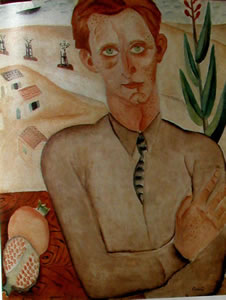
De Israëlische Hebreeuwse en Jiddische dichter en politicus Uri Zvi Greenberg  werd geboren op 22 september 1896 in Bialikamin, Lviv, in Galicië, destijds behorend tot Oostenrijk-Hongarije. Greenberg stamde uit een beroemde chassidische familie. Van 1915 tot 1917 was hij een soldaat in het Oostenrijks-Hongaarse leger. Toen deserteerde hij. Terug in Lviv (Dt: Lemberg) in 1918 was hij getuige van de pogroms, iets wat hem diep beïnvloed heeft. Hij woonde daarna in Berlijn en Warschau, waar hij begon te schrijven in het Jiddisch en Hebreeuws. In 1924 emigreerde Greenberg naar het Britse mandaatgebied Palestina. Daar werd hij enthousiast over de kibboetsbeweging en schreef hij alleen nog in het Hebreeuws, eerst voor het tijdschrift Davar, een belangrijk orgaan van de zionistische linkse arbeidersbeweging. Na het bloedbad in Hebron in 1929 werd Greenberg steeds militanter. Hij bekritiseerde de passiviteit van de Britse autoriteiten ten aanzien van het geweld in het Palestijnse Mandaatgebied. Hij werd lid van de rechtse Irgun en de ondergrondse organisatie Lehi, een afsplitsing van de Irgun. Sinds 1930 was hij een fervent voorstander van de revisionistische vleugel van het zionisme, en vertegenwoordigde de revisionistische zionistische beweging tijdens verschillende bijeenkomsten in Polen. Bij het uitbreken van de Tweede Wereldoorlog was hij toevallig in Polen, maar hij was in staat om terug naar Palestina te gaan. De rest van zijn familie kwam tijdens de Holocaust om het leven. Na de stichting van Israël in 1948 tradGreenbergtoe tot de Herut Partij van Menachem Begin en in 1949 werd hij in de Knesset gekozen.


A Land Lost

Trusting their folly though their pilot is out
Blind to what's written on the walls all about
Written by a hand moved by G-d's ire
Hubris of traitors that to lead aspire.


My people obey them like sheep in human attire
Multitudes drifting to their funeral pyre
Their herders know not, but I know what they do
Pray G-d, a miracle, save, their doom undo

Lord, bare are all rocks and on the heather no dew.

For most are in the pit and the rest at its portal
I know, for I totter with my feet on its edge
dragging myself as the most wretched of prophets
of land lost by the guilt of its leaders.


The Great Sad One


The Almighty has dealt bitterly with me

That I did not believe him until my punishment,

Till he welled up in my tears, from the midst of my wounds.

And behold he is very lonely,

And he also lacks someone to confess to,

In whose arms he might sob his unbearable misery,

And this G-d walks about, without a body, without blood,

And his grief is double the grief of flesh,

Flesh that can warm another body of a third,

That can sit and smoke a cigarette

And drink coffee and wine,

And sleep and dream until the sun —

For him it is impossible for he is G-d.


 742715-b22369d2e658de0589c13bf44e54710d.jpg

Uri Zvi Greenberg (22 september 1896 – 8 mei 1981)


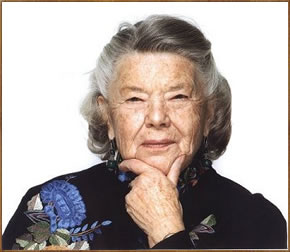
De Britse schrijfster Rosamunde Pilcher werd op 22 september 1924 geboren in Lelant, Cornwall, Groot-Brittannië. Zie ook mijn blog van 22 september 2009.


Uit: September


“Death is nothing at all. It does not count. I have only slipped away into the next room. Nothing has happened. Everything remains exactly as it was. I am I, and you are you, and the old life that we lived so fondly together is untouched, unchanged. Whatever we were to each other, that we are still. Call me by my old familiar name. Speak of me in the easy way which you always used. Put no difference into your tone. Wear no forced air of solemnity of sorrow. Laugh as we always laughed at the jokes that we enjoyed together. Play, smile, think of me, pray for me. Let my name be ever the household word that it always was. Let it be spoken without an effort, without the ghost of a shadow upon it. Life means all that it ever meant. It is the same as it ever was. There is absolute and unbroken continuity. What is this death but a negligible accident? Why should I be out of mind because I am out of sight? I am but waiting for you, for an interval, somewhere very near, just around the corner. All is well.”


 742715-060bcbb587bee23cea860483e550e3ed.jpg

Rosamunde Pilcher (Lelant, 22 september 1924)


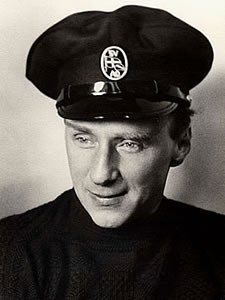
De Duitse dichter en schrijver Hans Leip werd geboren op 22 september 1893 in Hamburg. Zie ook mijn blog van 22 september 2008.


Uit: Hamburg, Juli 1943


„So sah mans in Blankenese vom Bismarckstein aus, als die Bomber davonwaren; ich stand und zeichnete dies Blatt, und die brennende Stadt leuchtete über viele Kilometer hin genug, so daß ichs hinkriegen konnte mit dem schwarzen Kreidestift. Es war der dritte große Angriff gewesen. Den Nachmittag war ich vom Bodensee nach Hause gelangt. Am anderen Morgen fuhr ich mit Baurat Müller in die Stadt (dem Vater Gesas, der Freundin meiner ältesten Tochter Mule). An manchen Stellen brannte es noch. Ich sah einen verstörten Mann im Schlafanzug umherirren, einen Band Gedichte in der Hand. Er beschäftigte meine Phantasie so sehr, daß ich ihn Herr Pambel nannte und sein Schicksal beschrieb.“

„Hab und Gut häufte sich auf den Straßen, als sollte eine Auktion in freier Luft stattfinden. Der große deutsche Ausverkauf hatte begonnen. In mir sagten sich die ersten Zeilen des „Liedes im Schutt“ her. Ich zeichnete dabei, was ich sah, obwohl es verboten war ...“


742715-b57b1e05757545fd0daa3cd39b260960.jpg
Hans Leip (22 september 1893 – 6 juni 1983)

Leip in 1936


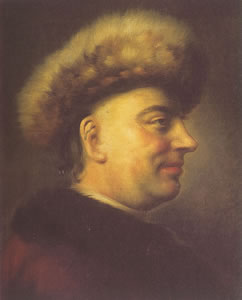
De Duitse dichter Barthold Heinrich Brockes werd geboren in Hamburg op 22 september 1680. Brockes studeerde rechtsgeleerdheid in Halle en maakte reizen naar Italië, Frankrijk en Nederland. Hij vestigde zich vanaf 1704 in Hamburg. In 1720 werd hij benoemd als lid van de Hamburgse gemeenteraad, en bekleedde diverse functies in het bestuur van de stad. Hij was 6 jaar (van 1735 tot 1741) magistraat in Ritzebüttel. Gedichten van Brockes werden in 9 banden gepubliceerd onder de titel Irdisches Vergnügen in Gott (1721-1748). Hij vertaalde Giambattista Marini's La Strage degli innocenti (1715), Alexander Pope's Essay on Man (1740) en James Thomson's Seasons (1745). Het libretto Der für die Sünden der Welt gemarterte und sterbende Jesus (1712) was één der eerste passie-oratoria, een vrije en poëtische meditatie op het passieverhaal zonder gebruik van een evangelisch karakter. Het was een populair werk, en werd op muziek gezet door onder andere Reinhard Keiser, Georg Philipp Telemann, Georg Friedrich Händel enJohann Mattheson.


Falschheit


Es herrschet in der Welt die Falschheit aller Orten;

die Wahrheit ist verbannt, die Redlichkeit verjagt;

die Freunde dieser Zeit sind Freunde bloß in Worten:

der Allerehrlichste tut anders, als er sagt.


Der, so dich herzt und küsst, wird dich ohnfehlbar fällen,

So bald er glaubt, dein Fall könn' ihm erspriesslich sein.

Kein Mensch ist, was er scheint: man weiss sich zu verstellen,

Nie stimmt mit dem Gemüt das Ansehn überein.


Doch dieses alles muß man nicht von Weibern meinen,

Weil ihrer keine fasst uns je betrogen hat,

Indem sie insgemein von aussen boshaft scheinen:

Und wenn man's untersucht, so sind sie's in der Tat.


742715-47756ab95c9a692a6318830074b10bd6.jpg 

Barthold Heinrich Brockes (22 september 1680 - 16 januari 1747)

Portret door Dominicus van der Smissen

Geschreven door Romenu om 19:28 Reageer op dit bericht

Dannie Abse, Lodewijk van Deyssel, Fay Weldon, György Faludy

De Britse dichter en schrijver Dannie Abse werd geboren op 22 september 1923 in Cardiff, Wales. Zie ook mijn blog van 22 september 2007 en mijn blog van 22 september 2008 en ook mijn blog van 22 september 2009.


Winter


What is more intimate

than a lover's demure whisper?

Like the moment before Klimt's The Kiss.

What's more conspiratorial

than two people in love?

So it was all our eager summers

but now the yellow leaf has fallen

and the old rooted happiness

plucked out. Must I rejoice when

teardrops on a wire turn to ice?

Last night, lying in bed,

I remembered how, pensioners both,

before sleep, winter come,

your warm foot suddenly

would console my cold one.


X-Ray


Dannie AbseSome prowl sea-beds, some hurtle to a star

and, mother, some obsessed turn over every stone   

or open graves to let that starlight in.

There are men who would open anything.


Harvey, the circulation of the blood,

and Freud, the circulation of our dreams,   

pried honourably and honoured are   

like all explorers. Men who’d open men.


And those others, mother, with diseases

like great streets named after them: Addison,   

Parkinson, Hodgkin—physicians who’d arrive   

fast and first on any sour death-bed scene.


I am their slowcoach colleague, half afraid,   

incurious. As a boy it was so: you know how   

my small hand never teased to pieces   

an alarm clock or flensed a perished mouse.


And this larger hand’s the same. It stretches now   

out from a white sleeve to hold up, mother,   

your X-ray to the glowing screen. My eyes look   

but don’t want to; I still don’t want to know.


742723-991cdb25d5cf33dda396bf7dec47941a.jpg 

Dannie Abse (Cardiff, 22 september 1923)


De Nederlandse schrijver Lodewijk van Deyssel werd geboren op 22 september 1864 in Amsterdam. Zie ook mijn blog van 22 september 2006 en ook mijn blog van 22 september 2007 en mijn blog van 22 september 2008 en ook mijn blog van 22 september 2009.


Uit: De kleine republiek


"In de koude kerk ging elk naar zijn vaste plaats, op de smalle vaalstoffige knielplankjes [...]. Toen alle jongens er waren, begon achter op de bovenkerkvloer, in de felste aflichting der waterklare hoog-vensters, tegen het groote altaar op, de mis van den direkteur, het zwarte achterhoofd boven de witte en goudig-gele miskleêren, staand midden voor de hooge smalle altaartafel, en in eht half uur een enkele maal, geel en wit, naar den rechter hoek gaand en naar den linker hoek, zich enkele malen keerend naar kerk, de handen recht-op open voor de schouders en weêr lang uit in de hoogte samengehouden voor kin en borst, en al het zilverig witte licht uit den hooge afgekaatst op den effen kwart-bol van het helwit weêrschijnende voorhoofd als een zon door een regenlucht. De donkere jongenslijven waren beneden, in diepe verte naar het altaar, dat hoog en breed boven hun samen-donkerte was in zijn alleen geel en wit. Twee jongens in zwarte toogjes dienden de direkteurs-mis, knielend op de bovenste treê van de omrondende altaartrappen. En telkens kwam er uit een muurdeur rechts van het altaar, een jongen, in zijn gewone pakje, de handen voor de borst om een kerkboek heen, en, drie pas achter hem, een professer in miskleêren, blinkend geel en wit, waardig matig aankomend over de lange wit en blauw ruitige steenen vloer, daalden de smalle trapjes af en gingen naar links, naar rechts, voor de gebankten heen, bezijde de gebankten langs, en stil aan de kleine altaartjes in de zijbeuken en achter de zijbeuken, in de open kapellen die de zijbeuken voortzetten rechts en links van de bovenkerk, en elk zijn mis aan 't doen. Door de hoog-sombere stilte der boven-kerkruimten ging het geprevel en het geschel van de altaartjes op, zware fluisteringen van alle kanten.

(…)


"Zij gingen zitten op de onderste tree, luisterden of er niet iemand kwam, maar de hoge kerkstilte bleef onbewogen achter hen. Dan schoof Willem zich zo, dat zijn rechterdij helemaal de geliefde raakte. Dan pakte hij hem aan, met zijn grove jongenslinksheid, zijn rechterarm langs de grijze rug doend, zijn linkerarm over de linker van de geliefde en over zijn borst, tot zijn handen vreemd elkaar voelden en samenvatten op die rechterschouder. Dan drukte hij zich tegen hem aan en zoende hem op zijn wangen en zijn mond."


742723-4cda228cce7798f297ab37dadd151f9d.jpg
Lodewijk van Deyssel  (22 september 1864 - 26 januari 1952)

Een nog jonge van Deyssel


De Britse schrijfster Fay Weldon werd geboren op 22 september 1931 in Alvechurch, Engeland. Zie ook mijn blog van 22 september 2006 en ook mijn blog van 22 september 2007 en mijn blog van 22 september 2008 en ook mijn blog van 22 september 2009.


Uit: The Life and Loves of a She-Devil


„Mary Fisher lives in a High Tower, on the edge of the sea: she writes a great deal about the nature of love. She tells lies.
Mary Fisher is forty-three, and accustomed to love. There has always been a man around to love her, sometimes quite desperately, and she has on occasion returned this love, but never, I think, with desperation. She is a writer of romantic fiction. She tells lies to herself, and to the world.
Mary Fisher has $ (US) 754,300 on deposit in a bank in Cyprus, where the tax laws are lax. This is the equivalent of ý502,867 sterling, 1,931,009 German marks, 1,599,117 Swiss francs, 185,055,050 yen, and so forth, it hardly matters which. A woman's life is what it is, in any corner of the world. And wherever you go it is the same -- to them that hath, such as Mary Fisher, shall be given, and to them that hath not, such as myself, even that which they have shall be taken away.

Mary Fisher earned all her money herself. Her first husband, Jonah, told her that capitalism was immoral, and she believed him, having a gentle and pliable nature. Otherwise no doubt by now Mary Fisher would have a substantial portfolio of investments. As it is, she owns four houses and these are cumulatively worth -- depending on the state of the property market -- anything between half a million and a million dollars. A house, of course, only means anything in financial terms if there is anyone to buy it, or if you can bear to sell it. Otherwise a house can only be somewhere to live, or somewhere where those connected with you can live. With luck, the ownership of property brings peace of mind; without this luck it brings aggravation and discontent. I wish unluck in property matters on Mary Fisher.
Mary Fisher is small and pretty and delicately formed, prone to fainting and weeping and sleeping with men while pretending that she doesn't.
Mary Fisher is loved by my husband, who is her accountant.
I love my husband and I hate Mary Fisher.“


 742723-79ca52ec8b447efcd80b04bb3600c9c1.jpg

 Fay Weldon (Alvechurch, 22 september 1931)


De Hongaarse dichter en schrijver György Faludy werd geboren op 22 september 1910 in Boedapest. Zie ook mijn blog van 22 september 2009.


The Cabbage Moth


My eyes are on the tiny terrace garden

under a forebodingly dark sky.

From the left a white cabbage moth

comes flying in between the high

supporting walls. Most likely this

morning gave him these carefree wings,

but he should know this evening will

see the end of his happy flutterings.

And soon he exits to the right,

his visit to earth a hurried one,

just like ours, his schedule tight.

The clouds are heavy with rain to pour.

Two drops, and the moth will be gone.

Funny, I think. For me, it’ll take no more.


The Seventy-Sixth


Aladdin’s lamps, the stars above

the city have long lost their sheen.

The field has turned into a highway,

and the forest a magazine.

Oil is consumed by marshes,

and oxygen by industry,

the lakes are spawning rotting fish,

sulfur spices up the sea.

But the placid public mood

can’t see the knife not so far off,

our son will starve tomorrow,

for us plenty is not enough.

We’ve conquered nature all right,

but it’s our nature we should rise above.


Vertaald door Paul Sohar


 742723-d0c2a0a602472561ddfad1bf2f8e20a6.jpg

György Faludy (22 september 1910 – 1 september 2006)


Zie voor nog meer schrijvers van de 22e september ook
mijn vorige blog van vandaag.

Geschreven door Romenu om 00:00 Reageer op dit bericht

Leonard Cohen, Stephen King, Frédéric Beigbeder, Fannie Flag, H.G. Wells, Johann Peter Eckermann

De Canadese dichter, folk singer-songwriter en schrijver Leonard Cohen werd geboren op  21 september 1934 te Montréal. Zie ook mijn blog van 21 september 2007 en ook mijn blog van 21 september 2008 en ook mijn blog van 21 september 2009.


Uit: The favorite game


“For all the bodies in and out of bathing suits, clothes, water, going between rooms, lying on grass, taking the print of grass, dancing discipline, leaping over horses, growing in mirrors, felt like treasure, slobbered over, cheated for, all of them, the great ballet line, the cream in them, the sun on them, the oil anointed.
A thousand shadows, a single fire, everything that happened, twisted by telling, served the vision, and when he saw it, he was in the very center of things.
Blindly he climbed the wooden steps that led up the side of the mountain. He was stopped by the high walls of the hospital. Its Italian towers looked sinister. His mother was sleeping in one of them.
He turned and looked at the city below him.
The heart of the city wasn't down there among the new buildings and widened streets. It was right over there at the Allan, which, with drugs and electricity, was keeping the businessmen sane and their wives from suicide and their children free from hatred. The hospital was the true heart, pumping stability and erections and orgasms and sleep into all the withering commercial limbs. His mother was sleeping in one of the towers. With windows that didn't quite open.
The restaurant bathed the corner of Stanley and St. Catherine in a light that made your skin yellow and the veins show through. It was a big place, mirrored, crowded as usual. There wasn't a woman he could see. Breavman noted that a lot of the men used hair tonic; the sides of their heads seemed shiny and wet. Most of them were thin. And there seemed to be a uniform, almost. Tight chinos with belts in the back, V-neck sweaters without shirts.
He sat at a table. He was very thirsty. He felt in his pocket. Shell was right. He didn't have much money.
No, he wouldn't go to New York. He knew that. But he must always be connected to her. That must never be severed. Everything was simple as long as he was connected to her, as long as they remembered.
One day what he did to her, to the child, would enter his understanding with such a smash of guilt that he would sit motionless for days, until others carried him and medical machines brought him back to speech.
But that was not today.”


 741984-fc2536c5ea8abe192fb5a54209bc100e.jpg

Leonard Cohen (Montréal, 21 september 1934)


De Amerikaanse schrijver
Stephen Edwin King werd geboren in Portland, Maine, op 21 september 1947. Zie ook mijn blog van 21 september 2008 en ook mijn blog van 21 september 2009.


Uit: It


„The terror, which would not end for another twenty-eight years – if it ever did end – began, so far as I know or can tell, with a boat made from a sheet of newspaper floating down a gutter swollen with rain.

The boat bobbed, listed, righted itself again, dived bravely through treacherous whirlpools, and continued on its way down Witcham Street toward the traffic light which marked the intersection of Witcham and Jackson. The three vertical lenses on all sides of the traffic light were dark this afternoon in the fall of 1957, and the houses were all dark, too. There had been steady rain for a week now, and two days ago the winds had come as well. Most sections of Derry had lost their power then, and it was not back on yet.

A small boy in a yellow slicker and red galoshes ran cheerfully along beside the newspaper boat. The rain had not stopped, but it was finally slackening. It tapped on the yellow hood of the boy’s slicker, sounding to his ears like rain on a shed roof … a comfortable, almost cozy sound. The boy in the yellow slicker was George Denbrough. He was six. His brother William, known to most of the kids at Derry Elementary School (and even to the teachers, who would never have used the nickname to his face) as Stuttering Bill, was at home, hacking out the last of a nasty case of influenza. In that autumn of 1957, eight months before the real horrors began, and twenty-eight years before the final showdown, Stuttering Bill was ten years old.

Bill had made the boat beside which George now ran. He had made it sitting up in bed, his back propped against a pile of pillows, while their mother played Fur Elise on the piano in the parlor and rain swept restlessly against his bedroom window.“


741984-e6b3c540930bf635d1ca10ae4b945767.jpg
Stephen King (Portland, 21 september 1947)


De Franse schrijver Frédéric Beigbeder werd geboren op 21 september 1965 in Neuilly-sur-Seine.Zie ook mijn blog van 21 september 2008 en ook mijn blog van 21 september 2009.


Uit: Nouvelles sous ecstasy


„"L'hymne des plages, selon moi, n'est pas Sea, Sex and Sun de Serge Gainsbourg mais plutôt J'aime regarder les filles de Patrick Coutin. C'est une chanson magnifique : "J'aime regarder les filles qui marchent sur la plage / Quand elles se déshabillent et font semblant d'être sages." Chaque fois que je m'allonge sur du sable, j'entends cette ode à la frustration sexuelle, cette apologie du voyeurisme balnéaire. Je pense à ces milliers d'après-midi écrasants, passés à observer les demoiselles dorées, en monokini, à Bidart, Biarritz ou St Tropez, sans jamais oser les aborder. Je suis convaincu que ces inombrables heures de contemplation timide ont fait de moi l'ignoble obsédé sexuel que je suis devenu.

Leur poitrine gonflée par le désir de vivre / Leurs yeux qui se demandent : mais quel est ce garçon ? Il y a un crescendo violent dans la chanson de Coutin qui traduit bien l'impuissance exaspérée du vacancier hétérosexuel, anéanti par la chaleur, cerné par une atroce beauté incontrôlée. Les filles gambadent, soulèvent le sable brûlant, crient des prénoms de garçons plus bronzés que lui. Elles sortent de l'eau les tétons mauves ; les poils taillés de leur sexe se collent contre le slip de bain. Elles embrassent des surfeurs australiens, ou des disc-jokeys camarguais.
Elles ignorent les garçons malingres et verdâtres qui lisent des livres, la bite enfoncée dans leur serviette éponge. (...) Pourquoi laisse-t-on les filles de seize ans se balader en liberté sur les bords de mer ?"


 741984-a231390495ebe0b923698ca9edd4f21b.jpg

Frédéric Beigbeder (Neuilly-sur-Seine, 21 september 1965)


De Amerikaanse schrijfster en actrice Fannie Flagg (eig. Patricia Neal) werd geboren op 21 september in Birmingham (Alabama). Zie ook mijn blog van 21 september 2009.


Uit: Standing in the Rainbow


‚Almost everyone in town that had an extra room took in a boarder. There were no apartment buildings or hotels as of yet. The Howard Johnson was built a few years later but in the meantime bachelors needed to be looked after and single women certainly had to have a respectable place to live. Most people considered it their Christian duty to take them in whether they needed the few extra dollars a week or not, and some of the boarders stayed on for years. Mr. Pruiet, a bachelor from Kentucky with long thin feet, boarded with the Haygoods so long that they eventually forgot he was not family. Whenever they moved, he moved. When he finally did die at seventy-eight, he was buried in the Haygood family plot with a headstone that read:


MR. PRUIET

STILL WITH US

PAID IN FULL


The homes on First Avenue North were located within walking distance of town and school and were where most of the town's boarders lived.

At present the Smith family's boarder is Jimmy Head, the short-order cook at the Trolley Car Diner; the Robinsons next door have Beatrice Woods, the Little Blind Songbird; the Whatleys up the street have Miss Tuttle, the high school English teacher. Ernest Koonitz, the school's band director and tuba soloist, boards with Miss Alma, who, as luck would have it, has a hearing problem. But soon the Smith family will take in a new boarder who will set in action a chain of events that should eventually wind up in the pages of history books. Of course they won't know it at the time, especially their ten-year-old son, Bobby. He is at the moment downtown standing outside the barbershop with his friend Monroe Newberry, staring at the revolving red and white stripes on the electric barber's pole“

.


741984-84cbbbc5d9e25f003ffadeeedf431fb9.jpg
Fannie Flag
(Birmingham, 21 september 1944)

DVD Cover


De Britse schrijver Herbert George Wells werd geboren op 21 september 1866 in Bromley, Kent. Zie ook mijn blog van 21 september 2007 en ook mijn blog van 21 september 2008 en ook mijn blog van 21 september 2009.


Uit: The War of the Worlds


„The planet Mars, I scarcely need remind the reader, revolves about the sun at a mean distance of 140,000,000 miles, and the light and heat it receives from the sun is barely half of that received by this world. It must be, if the nebular hypothesis has any truth, older than our world; and long before this earth ceased to be molten, life upon its surface must have begun its course. The fact that it is scarcely one seventh of the volume of the earth must have accelerated its cooling to the temperature at which life could begin. It has air and water and all that is necessary for the support of animated existence.
Yet so vain is man and so blinded by his vanity, that no writer up to the very end of the nineteenth century expressed any idea that intelligent life might have developed there far, or indeed at all, beyond its earthly level. Nor was it generally understood that since Mars is older than our earth, with scarcely a quarter of the superficial area and remoter from the sun, it necessarily follows that Mars is not only more distant from life’s beginning but also nearer its end.
The secular cooling that must someday overtake our planet has already gone far indeed with our neighbor. Its physical condition is still largely a mystery, but we know now that even in its equatorial region the midday temperature barely approaches that of our coldest winter. Its air is much more attenuated than ours, its oceans have shrunk until they cover but a third of its surface, and as its slow seasons change huge snowcaps gather and melt about either pole and periodically inundate its temperate zones. That last stage of exhaustion, which to us is still incredibly remote, has become a present-day problem for the inhabitants of Mars. The immediate pressure of necessity has brightened their intellects, enlarged their powers, and hardened their hearts. And looking across space with instruments, and with intelligences such as we have scarcely dreamed of they see, at its nearest distance only 35,000,000 of miles sunward of them, a morning star of hope—our own warmer planet, green with vegetation and gray with water, with a cloudy atmosphere eloquent of fertility, with glimpses through drifting cloud-wisps of broad stretches of populous country and narrow navy-crowded seas.“


741984-d9e02d9b099d10142d953dd09d1ed7b8.jpg
H. G. Wells (21 september 1866 - 13 augustus 1946)


De Duitse dichter Johann Peter Eckermann werd geboren op 21 september 1792 in Winsen (Luhe). Hij was bovenal de medewerker en vriend van Johann Wolfgang von Goethe. Zie ook mijn blog van 21 september 2007. Zie ook mijn blog van 21 september 2007 en ook mijn blog van 21 september 2008. en ook mijn blog van 21 september 2009.


Weimar


Glücklich Weimar! - Von den Städten allen

Bist du, kleine, wunderbar bedacht;

Man wird stets zu deinen Toren wallen,

Angezogen von der heil'gen Macht;

Und man wird nach großen Männern fragen,

Die in schönen Zeiten hier gestrebt,

Und mit edlem Neid wird man beklagen,

Dass man mit den Edlen nicht gelebt.


Musengunst


Musst kein Gedicht durch tiefes Sinnen

Dem Geiste mühsam abgewinnen:


Dem Dichter muss zumute sein,

Als flög' eine Taube zum Fenster herein

Gebraten, wo er nichts braucht dazu,

Als sie zu schmausen in guter Ruh.


Wer so das edle Dichten treibt,

Der stets ein lust'ger Geselle bleibt;

Wer's aber auf solche Weise nicht kann,

Tut besser, er fängt was anders an.


741984-9f1ed0dbed1e3b2ab81b1ba76babd145.jpg
Johann Peter Eckermann (21 september 1792 - 3 december 1854)

Getekend door Ernst Förster, 1825

Geschreven door Romenu om 19:34 Reageer op dit bericht

Meer van Romenu

↑ Terug naar de berichten