Naar de inhoud

Romenu

Over literatuur, gedichten, kunst en cultuur
seniorennet.beseniorennet.be

Berichten van 24 augustus 2010 tot 25 augustus 2010

Frederick Forsyth, Charles Wright, Maxim Biller, Martin Amis
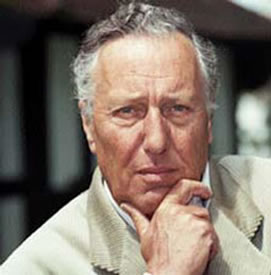
De Engelse schrijver Frederick Forsyth werd geboren in Ashford, Kent, op 25 augustus 1938. Hij werd geplaatst op de beroemde Engelse Tonbridge School, een kostschool die deel uitmaakt van de Etongroup. Na Tonbridge studeerde Forsyth aan de Universiteit van Granada in Spanje. Al na vijf maanden staakte hij zijn studie en keerde terug naar Engeland. In mei 1956 sloot hij zich op zijn negentiende aan bij de RAF als één van de jongste piloten. In 1958 zwaaide hij af en werd journalist bij de Eastern Daily Press in Norfolk. In 1961 ging hij bij Reuters werken, eerst in Parijs en later in Oost-Europa. In 1965 keerde hij terug naar Engeland en werd verslaggever voor de BBC. In 1967 brak er in Nigeria een burgeroorlog uit. De provincie Biafra was in opstand gekomen en er woedde een strijd tussen rebellen en regeringstroepen. Forsyth verbleef van juli tot september in Biafra en versloeg de oorlog voor zijn werkgever. In 1970 had hij genoeg van de oorlog en keerde weer terug naar Engeland. Hij begon te werken aan een roman over een huurmoordenaar die in opdracht van de OAS een aanslag wil plegen op president De Gaulle. Forsyth gebruikte voor zijn roman de kennis die hij had opgedaan toen hij als correspondent voor Reuters in Parijs werkte. Elk feitje is gecontroleerd, elke straat, plein, regeringsinstelling of functionaris klopt. Ondanks al deze moeite werd het boek aanvankelijk geweigerd totdat uitgeverij Hutchinson het manuscript aankocht en uitgaf onder de titel, The Day of the Jackal. Het boek werd een bestseller en is inmiddels twee keer verfilmd. Na “The Day Of The Jackal” schreef Forsyth nog een groot aantal romans en verhalenbundels., waarbij steeds zijn voorliefde voor feiten wordt vermengd met spannende, thrillerachtige verhalen.


Uit: The Day of the Jackal


„Colonel Marc Rodin stared at the man from London. The visitor, apparently in his early thirties, was about six feet tall, with a lean athletic build. The face was suntanned, with regular but not remarkable features. He looked like a man who retained control of himself, but the eyes bothered Rodin. The flecked grey irises seemed smoky, and it took Rodin a few seconds to realise that they had no expression at all. Whatever thoughts did go on behind the smoke screen, nothing came through, and Rodin felt a worm of unease.
‘We know who you are,’ he began abruptly. ‘I had better introduce myself. I am Colonel Marc Rodin’
‘I know,’ said the Englishman. ‘You are chief of operations of the OAS. You are Major René Montclair, treasurer, and you are Monsieur André Casson, head of the underground.’ He stared at each in turn as he spoke, and reached for a cigarette. Then he lit up, leaned back and blew out the first stream of smoke.
‘Gentlemen, let us be frank. I know what you are and you know what I am. We both have unusual occupations. I operate for money, you for idealism. But we are all professionals. Therefore we do not need to fence. You have been making enquiries. It was important to me to know who was so interested in me. As soon as I discovered the identity of the organisation, two days among the French newspaper files in the British Museum were enough to tell me about you. Bon. What I would like to know is what you want.’
There was a silence for several moments; then Rodin spoke. ‘I will not bore you with the motivations behind our organisation. We believe France is now ruled by a dictator and can only be restored to Frenchmen if he dies. Our attempts to eliminate him so far have misfired. We are now considering engaging the services of a professional. However, we do not wish to waste our money. The first thing we would like to know is if it is possible.’


721771-ebbc27258fcf6103d705bb330798a44c.jpg
Frederick Forsyth (Ashford, 25 augustus 1938)


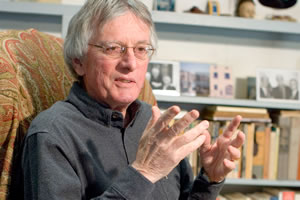
De Amerikaanse dichter Charles Wright werd geboren op 25 augustus 1935 in Pickwick Dam, Tennessee. Zie ook mijn blog van 25 augustus 2008 en ook mijn blog van 25 augustus 2009.


Body and Soul II    

(for Coleman Hawkins)


The structure of landscape is infinitesimal,

Like the structure of music,

                            seamless, invisible.

Even the rain has larger sutures.

What holds the landscape together, and what holds music together,

Is faith, it appears--faith of the eye, faith of the ear.

Nothing like that in language,

However, clouds chugging from west to east like blossoms

Blown by the wind.

                 April, and anything's possible.


Here is the story of Hsuan Tsang.

A Buddhist monk, he went from Xian to southern India

And back--on horseback, on camel-back, on elephant-back, and on

                                                               foot.

Ten thousand miles it took him, from 629 to 645,

Mountains and deserts,

In search of the Truth,

                    the heart of the heart of Reality,

The Law that would help him escape it,

And all its attendant and inescapable suffering.

                                               And he found it.


These days, I look at things, not through them,

And sit down low, as far away from the sky as I can get.

The reef of the weeping cherry flourishes coral,

The neighbor's back porch light bulbs glow like anemones.

Squid-eyed Venus floats forth overhead.

This is the half hour, half-light, half-dark,

                            when everything starts to shine out,

And aphorisms skulk in the trees,

Their wings folded, their heads bowed.


Every true poem is a spark,

              and aspires to the condition of the original fire

Arising out of the emptiness.

It is that same emptiness it wants to reignite.

It is that same engendering it wants to be re-engendered by.

Shooting stars.

April's identical,

             celestial, wordless, burning down.

Its light is the light we commune by.

Its destination's our own, its hope is the hope we live with.


Wang Wei, on the other hand,

Before he was 30 years old bought his famous estate on the Wang River

Just east of the east end of the Southern Mountains,

                                                     and lived there,

Off and on, for the rest of his life.

He never travelled the landscape, but stayed inside it,

A part of nature himself, he thought.
And who would say no

To someone so bound up in solitude,

                           in failure, he thought, and suffering.


Afternoon sky the color of Cream of Wheat, a small

Dollop of butter hazily at the western edge.

Getting too old and lazy to write poems,

                                      I watch the snowfall

From the apple trees.

Landscape, as Wang Wei says, softens the sharp edges of isolation.


 721771-994f7349ccfc1097f78819a72937a7d9.jpg

Charles Wright (Pickwick Dam,  25 augustus 1935)


De Duitse schrijver Maxim Biller werd geboren op 25 augustus 1960 in Praag. Zie ook mijn blog van 25 augustus 2007 en ook mijn blog van 25 augustus 2008 en ook mijn blog van 25 augustus 2009.


Uit: Wenn ich einmal reich und tot bin


“Ich mag keine Gedichte, sie sind mir fremd, und ich verstehe auch nichts von bisexuellen russischen Poetessen à la Marina Zwetajewa. Bei meiner Mutter jedoch liegt der Fall anders, und obwohl man mit der Behauptung vorsichtig sein sollte, sie lebe ganz allein und für sich in einer kleinen, engen Welt aus Jamben, Trochäen und Daktylen, ist doch etwas dran, denn Lyrik bedeutet ihr sehr viel.

Früher, erinnere ich mich, verschwand sie manchmal für ganze Nachmittage im Schlafzimmer, um zu lesen. Wenn sie mich dann plötzlich von dort rief, wußte ich genau, daß sie mich an ihren Versabenteuern beteiligen wollte. So stand ich in der Tür, trat von einem Fuß auf den anderen und sah sie an. Die Gardinen waren zugezogen, nur die Bettlampe gab ein gedrängtes, ockergelbes Licht ab. Meine Mutter lag am äußersten Rand des Ehebettes, im Morgenrock, zugedeckt, den Rücken von dicken Kissen hochgestützt, die Beine angewinkelt. Auf ihren Knien ruhte ein Buch von Mandelstam, das sie seit Wochen studierte. Bestimmt las sie schön, und ich hatte auch nie etwas gegen ihre russischen Gedichte — aber sie interessierten mich eben nicht. Manchmal ließ ich das Ganze über mich ergehen, manchmal nicht, weshalb ich dann sofort angeödet die Schlafzimmertür von außen schloß.

Die Mandelstam-Phase ist längst vorbei. Ich lebe jetzt in München, doch meine Eltern wohnen nach wie vor in dem alten Bürgerhaus am Hamburger Rotherbaum, wo wir 1974 auf unserem Weg von Moskau über Wien, Israel und New York schließlich untergekommen waren, zufrieden über jene lebensnotwendige Portion materieller und ziviler Sicherheit, die Deutschland uns bot.”



721771-3ee9248f2957d0f9cc3fa741e63998ff.jpg
Maxim Biller (Praag, 25 augustus 1960)


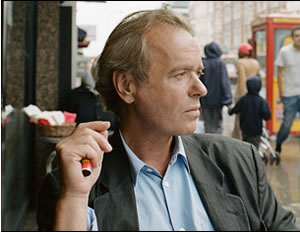
De Engelse schrijver Martin Amis werd geboren op 25 augustus 1949 in Cardiff, South Wales. Zie ook mijn blog van 25 augustus 2007 en ook mijn blog van 25 augustus 2008 en ook mijn blog van 25 augustus 2009.


Uit: The War Against Cliché


„What happened, El?' said Vernon Presley to his son, one day in 1956. Elvis was twenty-one at the time, and a multimillionaire. 'The last thing I can remember is I was working in a can factory and you were driving a truck.' Elvis laughed. 'I don't know what it is,' he later told a reporter. 'I just fell into it, really.'

What happened was this. The Presleys were Depression-shoved nomads from the deep rural South. Elvis's uncle, Vester Presley, was a teenager before he owned his first pair of shoes. Looking for work, the family straggled into Memphis. Elvis was a half-employed slum spiv when he did his first audition. He recorded the rockabilly classic 'That's All Right, Mama'—and suddenly the tenement Okies found themselves in Graceland, a Doric mansion at the far end of Elvis Presley Boulevard.

It was during Elvis's much-publicized stint of military service in Germany that the present writers came into the story. Dee Stanley was the wife of a morose sergeant stationed in Bad Nauheim. On a bored impulse Dee gave El a call, to offer him some Southern hospitality. They arranged to meet for coffee. As it happened, Elvis was on manoeuvres; but Dee was greeted and squired by the courtly, personable and recently widowed Vernon... On her return to the US, Dee got a divorce and ensconced herself at Graceland, with her three small sons, Billy, Rick and David.

Elvis, We Love You Tender is their story, cobbled together twenty years on with the excitable help of journalist Martin Torgoff. Elvis's entourage was divided into TCBers and TLCers: those who Took Care of Business and those who gave Tender Loving Care when the exhausted menfolk returned from the road.“


721771-c5db5cf749ea08e9417a0943cfb3cd94.jpg
Martin Amis (Cardiff, 25 augustus 1949)


Zie voor nog meerschrijvers van de 25e augustus ook mijn vorige blog van vandaag.
Geschreven door Romenu om 22:11 Reageer op dit bericht

Jógvan Isaksen, U Tchicaya Tam'si, Thea Astley, Brian Moore, Johann Herder

De Faeröerse schrijver Jógvan Isaksen werd geboren op 25 augustus 1950 in 25/08/1950 in Tórshavn, Faröer Eilanden. Na zijn afstuderen in 1970 in Tórshavn studeerde hij Scandinavistiek aan de universiteit van Aarhus n werd hij  in 1982 Master in de Scandinavische literatuur. Sinds 1986 is hij docent aan de Universiteit van Kopenhagen en doceert hij Faeröisch. Sinds 2000 is hij redacteur van het tijdschrift Nordisk literatuur van de Noordse Raad. Sinds 1978 is Isaksen actief als schrijver. In 1994 kreeg hij de Literatuurprijs van de Faeröer voor zijn leerboek Literaturwissenschaftliches Í hornatøkum vid Procrustes over de schrijver Andreassen Hanus (Hanus Kamban), maar ook voor zijn hoofdwerk, dat de Faeröer literatuur als belangrijkste onderwerp heeft. De detective Blid á Føroyalandi summarnátt uit 1990 was de eerste misdaadroman ooit in de Faeröische taal en werd onmiddellijk vertaald in het Deens en IJslands en later in het Duits en Engels.


Uit: Endstation Färöer (Vertaald door Christel Hildebrandt)


„Das Feuer loderte zum dämmrigen Himmel empor. Die Flammen rissen sich von ihrem heißen Ursprung los und führten für einen kurzen Augenblick ihr eigenes Leben. Der Nachtwind kam langsam herangestrichen und mit ihm stieg und fiel der Funkenregen, tanzte umher und verschwand gen Himmel. Die Gesänge waren verstummt und die Meisten standen nur da und starrten ins Feuer. Sie versuchte, etwas zu finden, wohinter sie sich hocken konnte. Nun hatte sie so lange ausgehalten, jetzt war sie an der Reihe. Sie war etwas unsicher auf den Beinen und sagte zu sich selbst, dass sie aufpassen musste, wenn sie noch etwas von der Nacht haben wollte. Und sie wollte viel haben. Mehr als irgendeiner dieser Ignoranten, die jetzt damit angefangen hatten, aus dem Liederbuch des Färöischen Volkes zu singen, sich erträumen konnte. Aber sie musste aufpassen und einen klaren Kopf bewahren. Warum war die Hochebene nur so kahl? Es gab nicht einmal einen passenden Stein, um sich dahinter zu verstecken. Sie war jetzt so weit von den anderen entfernt, dass sie meinte, hier würde auch ein kleinerer Stein genügen. Während sie dasaß, hörte sie es irgendwo im Dunkeln atmen. Eine Gänsehaut überlief sie, aber das war nicht der richtige Augenblick für schwache Nerven. Wahrscheinlich war es ein Schaf. Oder ein Mensch, der wie sie nach einem Ort suchte, an dem er der Natur freien Lauf lassen konnte. Die Götter waren Zeuge, dass reichlich getrunken wurde. Auf dem Weg zurück sah sie auf dem nördlichen Ende der Hochebene die Umrisse einer Person sich gegen den Himmel abzeichnen. Jetzt ist die Stunde gekommen, dachte sie plötzlich. Und ihr wurde im gleichen Moment klar, dass man weit davon entfernt ist, nüchtern zu sein, wenn einem solche Worte einfallen. Sie blieb stehen. Hatte sie Schritte auf dem Kies gehört? Nein, da war nichts. Nur von der Versammlung dröhnte es herüber: Und Menschen verschwinden wie Schatten von Pfaden und taufeuchten Grasmatten …“


 721761-fa240d93e81e079eee93565efa8f0e4a.jpg

Jógvan Isaksen (Tórshavn, 25. augustus 1950)


De Congolese dichter en schrijver U Tchicaya Tam'si werd geboren op 25 augustus 1931 in Mpili. Zijn officiële naam is Gerald-Felix Tchicaya; zijn artiestennaambetekent zoiets als: een kleine krant die namens een land in Kikongo. U Tam'si bracht zijn jeugd door in Frankrijk, waar hij werkte als journalist, totdat hij in 1960 terugkeerde naar zijn vaderland. Terug in Congo bleef hij werken als journalist en tijdens deze periode heeft hij contact onderhouden met de politicus Patrice Lumumba. In 1961, begon hij te werken voor de UNESCO. Sinds 1989 wordt in de kleine Marokkaanse stad Asilah om de twee jaar de Tchicaya U Tam'si-Award uitgereikt voor Afrikaanse poëzie.  U Tam'si's poëzie bevat elementen van het surrealisme, heeft vaak levendige historische beelden en geeft commentaar op het Afrikaanse leven en de Afrikaanse maatschappij, evenals op de mensheid in het algemeen.


The Belly Remains


Sure the belly remains chaste

under a treasure of white bones

then open to a fighter's song

lost body and soul

in the flames of his passion

As at Mont Ségur

As elsewhere where

a feast of fallow bodies

invents tortures.


Bannered at the spectacle made of it

one hears chimings a-rattle

from one song to the other

under an own sky

when one no longer knows

in what night were lost

the body and wherewithal of a crown

got it in the spine and on the chine.


Sure, the belly remains.

Is it more filthy than chaste?

Because of certain heartbreaks?

Love for love's

sake is as depressing as the rest.

But love for life's sake

the one one gives with the belly

the earth takes charge of it

Thank god the visionaries fall

most often on their backs

most often with arms open wide

most often

with their belly skyward!


Vertaald door Pierre Joris


Forest, Part III (of V)


- Where are the flowers that smell
of the warm flesh under the armpits?
- In paradise on the victim's burial mound
Those that as a child I lapped
closed my burning eyes
the sun itself on my cropped head
through it was all red lead
ah! I still danced though I had no woman
hilarious toads and astounding pythons
as if my dead returned through them


 721761-77f2a6960a83db8e30d8965db806c28a.jpg

 U Tchicaya Tam'si (25 augustus 1931 - 22 april 1988)


De Australische schrijfster Thea Astley werd geboren op 25 augustus 1925 in Brisbane. Ze was een productief schrijfster, die vanaf 1958 meer dan 40 jaar bleef publiceren. Op het moment van haar dood, had ze meer Miles Franklin Awards, de belangrijkste literaire onderscheiding in Australië, gewonnen dan welke andere schrijver ook. Astley werd opgeleid aan de All Hallows 'School, studeerde kunsten aan de Universiteit van Queensland en werd vervolgens opgeleid om leraar te worden.  Na haar huwelijk met Jack Gregson in 1948 verhuisde ze naar Sydney waar ze doceerde aan verschillende middelbare scholen, maar zij bleef ook altijd schrijven..Ze begeleidde studenten aan de Macquarie University van 1968 tot 1980, toen zij full-time ging schrijven en zij en haar man verhuisden naar Kuranda in Noord-Queensland. In de late jaren 1980 verhuisden ze naar Nowra op de NSW South Coast, en, na de dood van haar man in 2003, verhuisde ze naar Byron Bay.  Astley vond haar materiaal in de krant en op haar reizen, maar meestal in de verschillende gemeenschappen waarin zij en haar man woonden.


Uit: It's Raining in Mango


„Cornelius Laffey had slipped ashore, father told her often enough, from the dinghy of the sailing ship Jeannie Dove, one steamy late March day, onto burning sand in a place that would later be called Bowen.     The nothingness appalled him, quite apart from the heat, the man­groves, the flies.     His soft northern skin, attuned to the Canadian maritime provinces, crisped as if it had been placed on a griddle. He thought momentarily of the grey waterfront of St. John, but flies alone kept him busy. For days the ship's party had been camped offshore on Stone Island, because the mainland natives-foolishly, all the crew agreed-were preventing their landing.     Stone Island was nothing like the tropical nirvana his dreamy Celtic soul had imagined. His hands were pulpy from trapping fish in reef pools, his feet skinned and bleeding from coral. He was con­vinced of error, of misjudgement. He had celebrated his twenty fourth birthday gutting mackerel hauled from the shallows of the most vir­ulent blue waters he had ever seen. His scaling knife slipped and cut his thumb. Scales clung like spangles. From across the channel came the sound of rifle fire as officious colonisers showed the indigenous people what's what in a ratatat, idiot anticipation of another civil war half a world and half a week away.     It was 1861.     That early day in April when the township, cleared of black land­owners, was proclaimed, Cornelius was looking for and expecting a frontier magic he still failed to find a month later. Scowling at the hopeless canvas village that scabbed the bay-line, he resolved his stay would be the shortest. He had come to this new southern land as a journalist, trained for something more than sandflies and heat, he thought aggrievedly. With a yearning affection he recalled his old newspaper offices in St. John.“


721761-6c43b08a306bde635f4dafb2d0cda424.jpg
Thea Astley (25 augustus 1925 – 17 augustus 2004)


De Ierse schrijver Brian Moore werd geboren in Belfast op 25 augustus 1921. Zie ook mijn blog van 25 augustus 2008 en ook mijn blog van 25 augustus 2009.


Uit: The Lonely Passion of Judith Hearne


“The first thing Miss Judith Hearne unpacked in her new lodgings was the silver-gramed photograph of her aunt. The place for her aunt, ever since the sad day of the funeral, was on the mantelpiece of whatever bed-sitting-room Miss Hearne happened to be living in. And as she put her up now, the photograph eyes were stern and questioning, sharing Miss Hearne's own misgivings about the condition of the bed-springs, the shabbiness of the furniture and the run-down part of Belfast in which the room was situated.
After she had arranged the photograph so that her dear aunt could look at her from the exact centre of the mantelpiece, Miss Hearne unwrapped the white tissue paper which covered the coloured oleograph of the Sacred Herat. His place was at the head of the bed, His fingers raised in benediction. His eyes kindly yet accusing. He was old and the painted halo around His head was beginning to show little cracks. He had looked down on Miss Hearne for a long time, almost half her lifetime. The trouble about hanging the Sacred Heart, Miss Hearne discovered, was that there was no picture hook in the right place. She had bought some picture hooks but she had no hammer. So she laid the Sacred Heart down on the bed and went to the bay window to see how the room looked from there.
The street outisde was a university bywater, once a good residential area, which had lately been reduced to the level of taking in paying guests. Miss Hearne stared at the houses opposite and thought of her aunt's day when there were only private families in this street, at least one maid to every house, and dinner was at night, not at noon. All gone now, all those people dead and all the houses partitioned off into flats, the bedrooms cut in two, kitchenettes jammed into linen closets, linoleum on the floors and 'To Let' cards in the bay windows. Like this house, she thought.”


721761-000dc874f8727b7cf52e39b5f082c488.jpg
Brian Moore
(25 augustus 1921 – 10 januari 1999)


De Duitse dichter, schrijver, theoloog en cultuur-filosoof Johann Gottfried von Herder werd geboren in Mohrungen op 25 augustus 1744. Zie ook mijn blog van 25 augustus 2006 en ook mijn blog van 25 augustus 2007 en ook mijn blog van 25 augustus 2008 en ook mijn blog van 25 augustus 2009.


Lied des Lebens


Flüchtiger als Wind und Welle

Flieht die Zeit; was hält sie auf?

Sie genießen auf der Stelle,

Sie ergreifen schnell im Lauf;

Das, ihr Brüder, hält ihr Schweben,

Hält die Flucht der Tage ein.

Schneller Gang ist unser Leben,

Laßt uns Rosen auf ihn streun.


Rosen; denn die Tage sinken

In des Winters Nebelmeer.

Rosen; denn sie blühn und blinken

Links und rechts noch um uns her.

Rosen stehn auf jedem Zweige

Jeder schönen Jugendtat.

Wohl ihm, der bis auf die Neige

Rein gelebt sein Leben hat.


Tage, werdet uns zum Kranze

Der des Greises Schläf' umzieht

Und um sie in frischem Glanze

Wie ein Traum der Jugend blüht.

Auch die dunkeln Blumen kühlen

Uns mit Ruhe, doppelt-süß;

Und die lauen Lüfte spielen

Freundlich uns ins Paradies.


 721761-037f64a85ad79126e2afe0c54c931984.jpg

Johann Gottfried von Herder (25 augustus 1744 – 18 december 1803)

Monument in Bückeburg

Geschreven door Romenu om 22:04 Reageer op dit bericht

Drs. P, Marion Bloem, Stephen Fry, Jorge Luis Borges

De Nederlands-Zwitserse schrijver, tekstschrijver, componist, zanger en pianist Drs. P (eig. Heinz Hermann Polzer werd geboren in het Zwitserse Thun op  24 augustus 1919. Zie ook mijn blog van 24 augustus 2007 en ook mijn blog van 24 augustus 2008 en ook mijn blog van 24 augustus 2009.


Herderslied


Ziehier, een liefelijke vertelling

Omtrent een herder en een fluit

Wij zien de herder op een helling
Daar laat hij al zijn schaapjes uit
Ze grazen nu eens naar beneden
En dan weer grazen zij omhoog

Maar overal zijn zij tevreden

Dit was deel 1 van mijn betoog


'Het wordt eentonig’ zegt de herder

‘Ik denk dat ik eens verder trek’

Helaas, daar is een wegversperder
Een huizenhoog metalen hek

De herder zegt: ‘We moeten stoppen’
De schaapjes stoppen allemaal

En blaten droevig met hun koppen

Maar ik ga door met mijn verhaal


En wat doet nu de slimme herder?
Wat hij moet doen bedenkt hij vlug

Hij zegt: ‘We kunnen hier niet verder’

'En daarom gaan we maar terug'

En om de schaapjes op te fleuren

Blaast hij een wijsje op zijn fluit

Dat hoort u binnenkort gebeuren

Want deze fabel is nu uit.


De afsluitdijk (1932)


Scheepvaartbedrijvigeid!

Talloze zeedieren!

Toen kwam de afsluitdijk -

Ging de zaak dicht


Pech voor de zeldzame

Coloratuurgarnaal

Die men te laat, helaas

In had gelicht.


Het goede boek


Het goede boek - je kunt het zomaar kopen
Je neemt het mee, je zet het in een kast
Het zal je nimmer voor de voeten lopen
Maar legt, zodra je wilt, een wereld open
En daarin ben je dan zijn eregast.


720886-d66a88b55fffbe14a19106dbd5b10e33.jpg
rs. P (Thun, 24 augustus 1919)


De Nederlandse dichteres en schrijfster Marion Bloem werd op 24 augustus 1952 geboren in Arnhem. Zie ook mijn blog van 24 augustus 2006 en ook mijn blog van 24 augustus 2007 en ook mijn blog van 24 augustus 2008  en ook mijn blog van 24 augustus 2009.


Ik was bij de een


Ik was bij de een
en dacht na over de
ander toen ik schreef
over de zon
Ik kan niet kiezen
tussen passie of
geluk. Lik mijn oor
Kus mijn schouder
Wees plat wees vloers
Bijt mijn hart
heb ik met potlood
in jouw oksels
gefluisterd
Maar je was blind
voor de regen
in mijn zon-
negedicht
Elke zin
is een traan die
het dansen
heeft gemist


Bij hem


Terwijl hij zijn schoenveter
strikte keek ik
uit het raam en
zag hoe de zon al verdween
achter het dak van de buren

nu wij zo lang
vruchteloos hadden
zitten praten over
een later dat ontbreekt
in ons verschiet
Kijk,

het betrekt, zei ik
Hij lachte, niet
vrolijk, niet triest
en we gingen tóch naar
buiten omdat het binnen
donker was


 720886-8e9dcf54c004f3d23c4151d65a3b6dbe.jpg

Marion Bloem (Arnhem, 24 augustus 1952)


De Engelse komiek, schrijver, acteur en presentator Stephen John Fry werd geboren in Londen op 24 augustus 1957. Zie ook mijn blog van 24 augustus 2007 en ook mijn blog van 24 augustus 2008 en en ook mijn blog van 24 augustus 2009.


Uit: Stephen Fry in America


„I have often felt a hot flare of shame inside me when I listen to my fellow Britons casually jeering at the perceived depth of American ignorance, American crassness, American isolationism, American materialism, American lack of irony and American vulgarity. Aside from the sheer rudeness of such open and unapologetic mockery, it seems to me to reveal very little about America and a great deal about the rather feeble need of some Britons to feel superior. All right, they seem to be saying, we no longer have an Empire, power, prestige or respect in the world, but we do have ‘taste’ and ’subtlety’ and ‘broad general knowledge’, unlike those poor Yanks.

What silly, self-deluding rubbish! What dreadfully small-minded stupidity! Such Britons hug themselves with the thought that they are more cosmopolitan and sophisticated than Americans because they think they know more about geography and world culture, as if firstly being cosmopolitan and sophisticated can be scored in a quiz and as if secondly (and much more importantly) being cosmopolitan and sophisticated is in any way desirable or admirable to begin with. Sophistication is not a moral quality, nor is it a criterion by which one would choose one’s friends. Why do we like people? Because they are knowledgeable, cosmopolitan and sophisticated? No, because they are charming, kind, considerate, exciting to be with, amusing … there is a long list, but knowing what the capital of Kazakhstan is will not be on it.“


 720886-253f503b48257b10fe1c8ec4c7dd41f1.jpg

Stephen Fry (Londen, 24 augustus 1957)


De Argentijnse schrijver Jorge Luis Borges werd geboren op 24 augustus 1899  in Buenos Aires. Zie ook mijn blog van 24 augustus 2006 en ook mijn blog van 24 augustus 2007 en ook mijn blog van 24 augustus 2008 en ook mijn blog van 24 augustus 2009.


Uit: The Book of Sand and Shakespeare's Memory (Vertaald door Andrew Hurley)


The Disk

I am a woodcutter. My name doesn't matter. The hut I was born in, and where I'm soon to die, sits at the edge of the woods. They say these woods go on and on, right to the ocean that surrounds the entire world; they say that wooden houses like mine travel on that ocean. I wouldn't know; I've never seen it. I've not seen the other side of the woods, either. My older brother, when we were boys he made me swear that between the two of us we'd hack away at this woods till there wasn't a tree left standing. My brother is dead now, and now it's something else I'm after, and always will be. Over in the direction where the sun goes down there's a creek I fish in with my hands. There are wolves in the woods, but the wolves don't scare me, and my ax has never failed me. I've not kept track of how old I am, but I know I'm old—my eyes don't see anymore. Down in the village, which I don't venture into anymore because I'd lose my way, everyone says I'm a miser, but how much could a woodcutter have saved up?

I keep the door of my house shut with a rock so the snow won't get in. One evening I heard heavy, dragging footsteps and then a knock. I opened the door and a stranger came in. He was a tall, elderly man all wrapped up in a worn-out old blanket. A scar sliced across his face. The years looked to have given him more authority than frailty, but even so I saw it was hard for him to walk without leaning on his stick. We exchanged a few words I don't recall now. The finally the man said:

“I am without a home, and I sleep wherever I can. I have wandered all across Saxony.”

His words befitted his age. My father always talked about “Saxony”; now people call it England.

There was bread and some fish in the house. While we ate, we didn't talk. It started raining. I took some skins and made him a pallet on the dirt floor where my brother had died. When night came we slept.


 720886-638d141984e1d551f4316c2fb6ff2901.jpg

Jorge Luis Borges (24 augustus 1899 – 14 juni 1986)


Zie voor nog meer schrijvers van de 24e augustus ook mijn vorige blog van vandaag en eveneens mijn eerste blog van vandaag.
Geschreven door Romenu om 20:08 Reageer op dit bericht

Sascha Anderson, Linton Kwesi Johnson, A. S. Byatt, Arthur West

De Duitse dichter en schrijver Sascha Anderson werd geboren op 24 augustus 1953 in Weimar. In

de jaren 1980  was hij een belangrijke voorvechter van de alternatieve schrijvers en kunstscène in Prenzlauer Berg. In de vroege jaren 1990 werd hij ontmaskerd als een voormalige medewerker van het ministerie van Staatsveiligheid. Van 1969 tot 1971, leerde hij het beroep van een letterzetter in Dresden. In 1972 werkte hij o.a. als assistent in een tweedehands boekhandel. Van 1974 tot 1975 liep hij stage bij de DEFA studio's in Babelsberg, van 1976-1978 was Anderson auteur aan de School voor Film en Televisie Potsdam. Sinds 1981 is Anderson freelance schrijver in Berlijn. Anderson heeft in 1990 mede de poëzie-uitgeverij drukkerij Galrev opgericht. Sinds 1975 was  Anderson onder het pseudoniem David Menzer, Fritz Müller en Peters medewerker van het Ministerie voor Staatsveiligheid. Hij bespioneerde speciaal collega-kunstenaars en vrienden in de wijk Prenzlauer Berg. Zijn ontmaskering door Wolf Biermann en Jürgen Fuchs was aanleiding tot een heftig en uitgebreid debat.


Uit: Jeder Satellit hat einen Killersatelliten


alle dinge liegen klar in meinem herzen das modell der schwarze vogel februar tanzt auf den wochen & ich habe angst dass er eines tages im august alles zurück dreht um es wieder september zu nennen 


alle dinge liegen klar in meinem herzen denn die gelegenheitsstunde an der weissen parkuhr unschuld hat zwei zeiger die jedes lied sechzig mal teilen & das ist auch das alibi für das ende der zeit 


alle dinge liegen klar in meinem herzen nichts wird vergessen werden denn der punkt am ende ist nach zwei der menschlichen seiten offen & nur auf den pfauenaugen taut der schnee zum mittag restlos 


alle dinge liegen klar in meinem herzen so dass mir nichts bleibt als an den abenden wenn ich der graue spiegel über dem wortefluss bin jenes schwarze recht eck nacht auf die namen & reime zu legen 


alle dinge liegen klar in meinem herzen zeugen wird es nicht geben mutter sag dass der krieg eine erfindung ist & alles wurde nur 

erfunden um in den spielhöllen die väterlichen taschen zu wechseln 


alle dinge liegen klar in meinem herzen das modell der weisse vogel november tanzt auf den wochen & ich habe angst dass er eines tages im februar alles zurück dreht um es wieder frühling zu nennen 


 720876-3d163ef4d06b58e480288784f9b34b10.jpg

Sascha Anderson (Weimar, 24 augustus 1953)


De Britse dichter en musicus Linton Kwesi Johnson werd geboren in Chapelton (Jamaica) op 24 augustus 1952. Toen hij nog jong was vertrok hij naar Groot-Brittannië om daar succes te krijgen als dichter. Hij ontdekte daar echter dat in Engeland buitenlanders slecht werk konden krijgen. Hij kreeg grote bekendheid toen hij zijn gedichten met reggaemuziek combineerde. Zijn bekendste plaat is Bass Culture, met de kleine hit Englan is a Bitch.Het meeste dichtwerk van Johnson is politiek georiënteerd en handelt voornamelijk over de ervaringen als Britse Afrikaans-Cariben in Groot Brittannië. Zijn meest bekende gedichten schreef hij tijdens het bewind van premier Margaret Thatcher. De gedichten bevatten beschrijvingen van de racistische wreedheden van de politie in die tijd. Johnsons gedichten verschenen voor het eerst in het tijdschrift Race Today, die zijn eerste gedichtenbundel Voices of the Living and the Dead in 1974 uitbracht. Zijn tweede bundel, Dread Beat An' Blood, verscheen in 1975 bij Bogle-L'Ouverture. Een verzameling gedichten van hem verscheen onder de titel Mi Revalueshanary Fren bij Penguin Modern Classics. Johnson is daarmee een van de drie dichters waarvan ooit bij leven werk is gepubliceerd door Penguin Modern Classics.


Inglan is a bitch


W'en mi jus' come to Landan toun

mi use to work pan di andahgroun

but workin' pan di andahgroun

y'u don't get fi know your way aroun'


Inglan is a bitch

dere's no escapin' it

Inglan is a bitch

dere's no runnin' whey fram it


mi get a lickle jab in a big 'otell

an' awftah a while, mi woz doin' quite well

dem staat mi aaf as a dish-washah

but w'en mi tek a stack, mi noh tun clack-watchah!


Inglan is a bitch

dere's no escapin it

Inglan is a bitch

noh baddah try fi hide fram it


w'en dem gi' you di lickle wage packit

fus dem rab it wid dem big tax rackit

y'u haffi struggle fi mek en's meet

an' w'en y'u goh a y'u bed y'u jus' cant sleep


Inglan is a bitch

dere's no escapin it

Inglan is a bitch fi true

a noh lie mi a tell, a true


mi use to work dig ditch w'en it cowl noh bitch

mi did strang like a mule, but, bwoy, mi did fool

den awftah a while mi jus' stap dhu ovahtime

den aftah a while mi jus' phu dung mi tool


Inglan is a bitch

dere's no escapin it

Inglan is a bitch

y'u haffi know how fi suvvive in it


well mi dhu day wok an' mid dhu nite wok

mi dhu clean wok an' mid dhu dutty wok

dem seh dat black man is very lazy

but it y'u si how mi wok y'u woulda sey mi crazy


Inglan is a bitch

dere's no escapin it

Inglan is a bitch

y'u bettah face up to it


dem have a lickle facktri up inna Brackly

inna disya facktri all dem dhu is pack crackry

fi di laas fifteen years dem get mi laybah

now awftah fiteen years mi fall out a fayvah


Inglan is a bitch

dere's no escapin it

Inglan is a bitch

dere's no runnin' whey fram it


mi know dem have work, work in abundant

yet still, dem mek mi redundant

now, at fifty-five mi gettin' quite ol'

yet still, dem sen' mi fi goh draw dole


Inglan is a bitch

dere's no escapin it

Inglan is a bitch fi true

is whey wi a goh dhu 'bout it?


 720876-96ab6ab1c12fee2bd1b7618974596be7.jpg

Linton Kwesi Johnson (Chapelton, 24 augustus 1952)


De Engelse schrijfster A. S. Byatt werd geboren als Antonia Susan Drabble op 24 augustus 1936 in Sheffield. Met haar roman Obsessie (oorspr. Possession, 1990) won ze in 1990 de Booker Prize. A.S. Byatt werd onder meer bekend door haar kritiek op de boeken van J.K. Rowling. In 2004 sprak Byatt in Leiden de 33e Huizingalezing uit ('From soul to heart to psyche to personality). Op 8 februari 2010 ontving ze een eredoctoraat van de Universiteit Leiden.

Uit: Babel Tower


„The thrush has his anvil or altar on one fallen stone in a heap, gold and grey, roughly squared and shaped, hot in the sun and mossy in the shade. The massive rubble is in a clearing on a high hill. Below is the canopy of the forest. There is a spring, of course, and a little river flowing from it.
The thrush appears to be listening to the earth. In fact he is looking, with his sideways stare, for his secret prey in the grass, in the fallen leaves. He stabs, he pierces, he carries the shell with its soft centre to his stone. He lifts the shell, he cracks it down. He repeats. He repeats. He extracts the bruised flesh, he sips, he juggles, he swallows. His throat ripples. He sings. His song is liquid syllables, short cries, serial trills. His feathers gleam, creamy and brown-spotted. He repeats. He repeats.
Characters are carved on the stones. Maybe runes, maybe cuneiform, maybe ideograms of a bird's eye or a creature walking, or pricking spears and hatchets. Here are broken alphabets, a and ?, C and T, A and G. Round the stones are the broken shells, helical whorls like empty ears in which no hammer beats on no anvil. They nestle. Their sound is brittle. Their lips are pure white (Helix hortensis) and shining black (Helix nemoralis). They are striped and coiled, gold, rose, chalk, umber; they rattle together as the quick bird steps among them. In the stones are the coiled remains of their congeners, millions of years old.
The thrush sings his limited lovely notes. He stands on the stone, which we call his anvil or altar, and repeats his song. Why does his song give us such pleasure?“


 720876-3a44db67da54521e8ad0a7acc6c6f577.jpg

A. S. Byatt (Sheffield, 24 augustus 1936)


De Oostenrijkse dichter, schrijver en politiek journalist Arthur West werd geboren op 24 augustus 1922 in Wenen. Door de vorming van een anti-fascistische verzetsgroep in zijn school was Arthur West aan het eind van het schooljaar 1938 als onwaardig raciaal uitgesloten van school. West vluchtte eind januari 1939 met zijn ouders uit Oostenrijk naar Engeland. Daar werkte hij als arbeider in een schoenenfabriek. In 1940, hij was een zogenaamde "vijandelijke buitenlander (Duits paspoort) werd hij gedeporteerd en geïnterneerd in een kamp in New South Wales, Australië. In 1941 werd hij vrijgelaten, keerde terug naar Engeland en werkte hij o.a. als metaalbewerker. In 1942 werd hij lid van de Communistische Jeugd Liga. Zijn eerste literaire pogingen werden gepubliceerd in de organen van deze jeugdorganisatie. In 1944 werd hij ingezet tijdens de landing in Normandië en nam hij deel aan de oorlog in Italië. Net als vele andere repatrianten ging hij in november 1946 terug naar Wenen. West was lid van de Oostenrijkse Communistische Partij en werkte als redacteur en corrector in de uitgeverij van de KPO Globus. Zijn persoonlijke contacten en vriendschappen met Oostenrijkse kunstenaars, in het bijzonder auteurs, omvatten onder meer namen als Elfriede Jelinek, Peter Turrini, Erika Danneberg, Ernst Hinterberger, Francis Kaïn, Marie-Therèse Kerschbaumer, Karl Paryla, Erwin Riess, Gerhard Ruiss, Michael Scharang Heinz Rudolf Unger, Helmut Zenker.


Haiku’s


Stadt bräunlich in Weiß;
Frost ringt um ihre Unschuld,
doch Tau befleckt sie.


Scheerosenjunge
spreizen die Schnäbel: Es taut
Eiszapfentröpfchen.


Wolke aus Staren
kreuzt den Blick auf durchsonnte
Flugspur des Menschen.


Herbst in der Schwebe:
Erntegold schmückt die Scheune;
der Acker ist kahl.


 720876-ec5a3fbb6a669757107cbdebbaa4ad6c.jpg

Arthur West (24 augustus 1922 - 16 augustus 2000)

Geschreven door Romenu om 20:00 Reageer op dit bericht

Johan Fabricius, Alexander McCall Smith, Paulo Coelho

De Nederlandse schrijver Johan Johannes Fabricius werd op 24 augustus 1899 in Bandoeng in Nederlands-Indië geboren. Zie ook mijn blog van 24 augustus 2006 en ook mijn blog van 24 augustus 2007 en ook mijn blog van 24 augustus 2008 en ook mijn blog van 24 augustus 2009.


Uit: De scheepsjongens van Bontekoe


„Baas Wouter meesmuilde.

Maar zijn gezicht betrok toen zijn boze vrouw de smidse binnenstoof en snauwde: ‘Ben je doof? D'r is al driemaal volk geroepen in de winkel, en m'n bieten staan aan te branden!’

De hoefsmid uit ‘De IJzeren Man’ keek verbluft naar de deur, die alweer met een slag dichtgevallen was, zette toen grommend de voorhamer neer. Peter Hajo bleef alleen, - tuurde in de vlammen van de oven.

‘Kom maar eens terug als je zestien bent...’ - Over twee jaar! Alsof hij niet het werk van een zestienjarige jongen zou kunnen doen! Hij zétte het alle zestienjarige jongens in Hoorn om die bout vast te houden zoals hij dat daareven had gedaan! Was er één bij, die hem aandurfde? Had hij Peer den Vos geen pak slaag gegeven als hij in zijn leven niet had gehad, omdat hij (zonder het te vragen!) in de bijt was gaan vissen die Peter Hajo in het ijs had gekapt? Peer den Vos, die wel een hoofd groter was dan hij!

't Was een gemene streek om hem als landkikker te laten rondspringen, hem, die, toen hij nauwelijks lopen kon, de touwen die de binnenzeilende vissers zijn oudere vrienden toewierpen al met een echte zeemansknoop om de meerpalen sloeg; hem, die zich op z'n vijfde jaar stiekem in vaders botter had verscholen en mee ter haringvangst was gegaan!

Hoe snakte hij ernaar op zee te zwalken zonder een streepje land mijlen in de omtrek; hoe snakte hij ernaar de wijde wereld te zien en met echte zeebenen terug te komen en op te snijden net als die bruingebrande pikbroeken die met Jan Pieterszoon Coen naar de Oost waren getogen en nu de waarheid spraken of logen, juist als het hun inviel, zonder dat een landrot zeggen kon: ‘Je zuigt uit je duim!’ - De Oost... daar was voorlopig helemáál geen kans op. Misschien later, als hij eerst een paar reizen met een walvisvaarder had gemaakt; als het vel van zijn handen was gebarsten door het zout; als de traanlucht in z'n haar en in z'n kleren hing, - misschien zouden ze hem dan willen meenemen. Jandorie! Peter Hajo zag een beeld opdoemen van bergen, fladderende papegaaien, dansende wilden, van apen, tijgers, krokodillen...

Weg was het beeld.“


720873-9707f014190f3839d29d1c5e33606012.jpg
Johan Fabricius (24 augustus 1899 – 21 juni 1981)

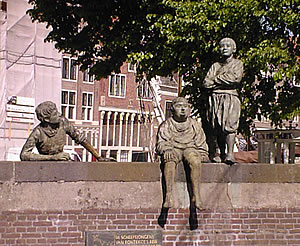
Beeld van de scheepsjongens van Bontekoe door beeldhouwer Jan van Druten in Hoorn.


De Schotse schrijver en jurist Alexander McCall Smith werd geboren in Bulayawo in het toenmalige Rhodesië (nu Zimbabwe) op 24 augustus 1948. Zie ook mijn blog van 24 augustus 2009.


Uit: Corduroy Mansions


„Passing off, thought William. Spanish sparkling wine—filthy stuff, he thought, filthy—passed itself off as champagne. Japanese whisky—Glen Yakomoto!—was served as Scotch. Inferior hard cheese—from Mafia-run factories in Catania—was sold to the unsuspecting as Parmesan.
Lots of things were passed off in one way or another, and now, as he stood before the bathroom mirror, he wondered if he could be passed off too. He looked at himself, or such part of himself as the small mirror encompassed-just his face, really, and a bit of neck. It was a fifty-one-year-old face chronologically, but would it pass, he wondered, for a forty-something-year-old face?
He looked more closely: there were lines around the eyes and at the edge of the mouth but the cheeks were smooth enough. He pulled at the skin around the eyes and the lines disappeared. There were doctors who could do that for you, of course: tighten things up; nip and tuck. But the results, he thought, were usually risible. He had a customer who had gone off to some clinic and come back with a face like a Noh-play mask-all smoothed out and flat. It was sad, really. And as for male wigs, with their stark, obvious hairlines, all one wanted to do was to reach forward and give them a tug. It was quite hard to resist, actually, and once, as a student-and when drunk-he had done just that. He had tugged at the wig of a man in a bar and . . . the man had cried. He still felt ashamed of himself for that. Best not to think about it.
No, he was weathering well enough and it was far more dignified to let nature take its course, to weather in a National Trust sort of way. He looked again at his face. Not bad. The sort of face, he thought, that would be hard to describe on the Wanted poster, if he were ever to do anything to merit the attention of the police-which he had not, of course. Apart from the usual sort of thing that made a criminal of everybody: "Wanted for illegal parking," he muttered. "William Edward French (51). Average height, very slightly overweight (if you don't mind our saying so), no distinguishing features. Not dangerous, but approach with caution."


720873-59cb17e3dfbbca56fb6a4427a53c6c26.jpg
Alexander McCall Smith (Bulayawo, 24 augustus 1948)


De Braziliaanse schrijver Paulo Coelho werd geboren in Rio de Janeiro op 24 augustus 1947. Zie en ook mijn blog van 24 augustus 2009.


Uit: The Alchemist


„The boy's name was Santiago. Dusk was falling as the boy arrived with his herd at an abandoned church. The roof had fallen in long ago, and an enormous sycamore had grown on the spot where the sacristy had once stood.

He decided to spend the night there. He saw to it that all the sheep entered through the ruined gate, and then laid some planks across it to prevent the flock from wandering away during the night. There were no wolves in the region, but once an animal had strayed during the night, and the boy had had to spend the entire next day searching for it.

He swept the floor with his jacket and lay down, using the book he had just finished reading as a pillow. He told himself that he would have to start reading thicker books: they lasted longer, and made more comfortable pillows.

It was still dark when he awoke, and, looking up, he could see the stars through the half-destroyed roof.

I wanted to sleep a little longer, he thought. He had the same dream that night as a week ago, and once again he had awakened before it ended.

He arose and, taking up his crook, began to awaken the sheep that still slept. He had noticed that, as soon as he awoke, most of his animals also began to stir. It was as if some mysterious energy bound his life to that of the sheep, with whom he had spent the past two years, leading them through the countryside in search of food and water. "They are so used to me that they know my schedule," he muttered. Thinking about that for a moment, he realized that it could be the other way around: that it was he who had become accustomed to "their" schedule.“


 720873-b85201bc5dee94b0ed3f2add7e9e28b2.jpg

Paulo Coelho (Rio de Janeiro, 24 augustus 1947)

Geschreven door Romenu om 19:55 Reageer op dit bericht

Meer van Romenu

↑ Terug naar de berichten