The purpose of this blog is the creation of an open, international, independent and free forum, where every UFO-researcher can publish the results of his/her research. The languagues, used for this blog, are Dutch, English and French.You can find the articles of a collegue by selecting his category. Each author stays resposable for the continue of his articles. As blogmaster I have the right to refuse an addition or an article, when it attacks other collegues or UFO-groupes.
Druk op onderstaande knop om te reageren in mijn forum
Zoeken in blog
Deze blog is opgedragen aan mijn overleden echtgenote Lucienne.
In 2012 verloor ze haar moedige strijd tegen kanker!
In 2011 startte ik deze blog, omdat ik niet mocht stoppen met mijn UFO-onderzoek.
BEDANKT!!!
Een interessant adres?
UFO'S of UAP'S, ASTRONOMIE, RUIMTEVAART, ARCHEOLOGIE, OUDHEIDKUNDE, SF-SNUFJES EN ANDERE ESOTERISCHE WETENSCHAPPEN - DE ALLERLAATSTE NIEUWTJES
UFO's of UAP'S in België en de rest van de wereld Ontdek de Fascinerende Wereld van UFO's en UAP's: Jouw Bron voor Onthullende Informatie!
Ben jij ook gefascineerd door het onbekende? Wil je meer weten over UFO's en UAP's, niet alleen in België, maar over de hele wereld? Dan ben je op de juiste plek!
België: Het Kloppend Hart van UFO-onderzoek
In België is BUFON (Belgisch UFO-Netwerk) dé autoriteit op het gebied van UFO-onderzoek. Voor betrouwbare en objectieve informatie over deze intrigerende fenomenen, bezoek je zeker onze Facebook-pagina en deze blog. Maar dat is nog niet alles! Ontdek ook het Belgisch UFO-meldpunt en Caelestia, twee organisaties die diepgaand onderzoek verrichten, al zijn ze soms kritisch of sceptisch.
Nederland: Een Schat aan Informatie
Voor onze Nederlandse buren is er de schitterende website www.ufowijzer.nl, beheerd door Paul Harmans. Deze site biedt een schat aan informatie en artikelen die je niet wilt missen!
Internationaal: MUFON - De Wereldwijde Autoriteit
Neem ook een kijkje bij MUFON (Mutual UFO Network Inc.), een gerenommeerde Amerikaanse UFO-vereniging met afdelingen in de VS en wereldwijd. MUFON is toegewijd aan de wetenschappelijke en analytische studie van het UFO-fenomeen, en hun maandelijkse tijdschrift, The MUFON UFO-Journal, is een must-read voor elke UFO-enthousiasteling. Bezoek hun website op www.mufon.com voor meer informatie.
Samenwerking en Toekomstvisie
Sinds 1 februari 2020 is Pieter niet alleen ex-president van BUFON, maar ook de voormalige nationale directeur van MUFON in Vlaanderen en Nederland. Dit creëert een sterke samenwerking met de Franse MUFON Reseau MUFON/EUROP, wat ons in staat stelt om nog meer waardevolle inzichten te delen.
Let op: Nepprofielen en Nieuwe Groeperingen
Pas op voor een nieuwe groepering die zich ook BUFON noemt, maar geen enkele connectie heeft met onze gevestigde organisatie. Hoewel zij de naam geregistreerd hebben, kunnen ze het rijke verleden en de expertise van onze groep niet evenaren. We wensen hen veel succes, maar we blijven de autoriteit in UFO-onderzoek!
Blijf Op De Hoogte!
Wil jij de laatste nieuwtjes over UFO's, ruimtevaart, archeologie, en meer? Volg ons dan en duik samen met ons in de fascinerende wereld van het onbekende! Sluit je aan bij de gemeenschap van nieuwsgierige geesten die net als jij verlangen naar antwoorden en avonturen in de sterren!
Heb je vragen of wil je meer weten? Aarzel dan niet om contact met ons op te nemen! Samen ontrafelen we het mysterie van de lucht en daarbuiten.
19-02-2026
Een wetenschapper beweert het mysterie van de "Bermudadriehoek" te hebben opgelost.
Een wetenschapper beweert het mysterie van de "Bermudadriehoek" te hebben opgelost.
De "Bermudadriehoek" heeft decennialang zowel dromen als angsten opgeroepen, gevoed door verhalen over onverklaarbare verdwijningen en spectaculaire theorieën. Nu beweert een Australische wetenschapper dat dit raadsel wellicht veel minder mysterieus is dan eerder werd gedacht.
Een gebied dat legendarisch is geworden.
De Bermuda-driehoek ligt in de Atlantische Oceaan, tussen Florida, Puerto Rico en de Bermuda-archipel, en beslaat een gebied van ongeveer 500.000 vierkante kilometer. De term werd in 1964 populair gemaakt door journalist Vincent Gaddis, voordat schrijver Charles Berlitz het gebied tien jaar later tot een object van wereldwijde fascinatie maakte.
Door de jaren heen hebben verhalen over verdwenen schepen, vliegtuigen en verdwijningen van bemanningen talloze hypotheses aangewakkerd: paranormale verschijnselen, verzonken beschavingen, magnetische anomalieën, zeedieren of tijdsverstoringen. De collectieve verbeelding is op hol geslagen en heeft dit stuk oceaan omgetoverd tot een symbool van absoluut mysterie.
Een veel rationelere verklaring
Karl Kruszelnicki, een gerenommeerd Australisch wetenschapper, biedt een pragmatischer perspectief. Volgens hem is er niets echt uitzonderlijks aan dit gebied. De reden is simpel: de Bermudadriehoek is extreem druk, met zowel commerciële schepen als vliegtuigen. Hoe dichter het verkeer, hoe meer incidenten er kunnen plaatsvinden. Relatief gezien, ten opzichte van het verkeersvolume, is het aantal verdwijningen niet hoger dan in andere maritieme gebieden.
Met andere woorden, het mysterie komt minder voort uit de geografie zelf dan uit de berichtgeving in de media eromheen. De legende is gegroeid door sensationele verhalen, terwijl de wetenschappelijke feiten vrij gewoon blijven.
Officiële instellingen en gegevens: niets abnormaals
Officiële analyses bevestigen deze rationele aanpak. De National Oceanic and Atmospheric Administration (NOAA) heeft inderdaad geen abnormale frequentie van ongevallen in de regio geregistreerd. De weersomstandigheden kunnen echter complex zijn: de Golfstroom veroorzaakt snelle veranderingen en onvoorspelbare stromingen, terwijl de geografische configuratie – met zijn talrijke eilanden en smalle doorgangen – de navigatie lastiger maakt. Zelfs de maritieme verzekeraar Lloyd's of London is van mening dat het gebied statistisch gezien geen groter gevaar oplevert dan andere veelgebruikte scheepvaartroutes.
Magnetisme, weer en menselijke fouten
Sommige verschijnselen zijn zeer reëel, maar perfect gedocumenteerd. Kleine variaties in het aardmagnetisch veld kunnen navigatie-instrumenten tijdelijk ontregelen. Daarbij komen nog bekende factoren: menselijke fouten, technische problemen en extreme weersomstandigheden. Samen verklaren deze de meeste ongelukken. Er zijn dus geen verborgen geheimen, geen mysterieuze wervels en geen legendarische zeedieren. De wetenschap toont aan dat de oorzaken klassiek, rationeel en begrijpelijk zijn.
Wanneer de mythe de cijfers overstijgt
Ondanks deze duidelijke verklaringen blijft de Bermudadriehoek fascineren. Het gebied bevindt zich op het kruispunt van wetenschap en verhalen, tussen tastbare cijfers en buitengewone vertellingen. Verdwijningen uit het verleden, of ze nu per ongeluk plaatsvonden of door legendes zijn versterkt, hebben een blijvende indruk achtergelaten op de collectieve verbeelding.
Voor Karl Kruszelnicki is de boodschap duidelijk: er zijn geen bovennatuurlijke verschijnselen geverifieerd. Wat wij als een mysterie ervaren, is in de eerste plaats een verhaal, maar paradoxaal genoeg is juist dit legendarische element wat de Bermudadriehoek zo fascinerend maakt.
Uiteindelijk bewijst de Bermudadriehoek dat wetenschap en verbeelding hand in hand kunnen gaan. Wetenschappelijke gegevens ontrafelen de mysteries van het gebied, maar de fascinatie blijft. Er is niets onverklaarbaars, niets magisch... gewoon een veelbezochte plek, onderworpen aan dezelfde natuurwetten als de rest van de oceaan. En misschien is het juist deze subtiele mix van feit en fictie die de verhalen, films en gepassioneerde discussies rondom deze uithoek van de Atlantische Oceaan blijft voeden.
De harde realiteit van demonische bezetenheid en exorcismes
De harde realiteit van demonische bezetenheid en exorcismes
Hoewel veel mensen denken dat exorcismes vooral in films voorkomen, is de realiteit anders. In het echte leven vinden regelmatige pogingen plaats om demonen uit mensen te verdrijven, vaak met tragische gevolgen. Vaak wordt gedacht dat films zoals The Exorcist gebaseerd zijn op ware gebeurtenissen, wat ook echt het geval is: dergelijke gevallen inspireren nog steeds horrorverhalen en films. Toch verschillen deze incidenten sterk, qua omstandigheden en locatie. Sommige gevallen blijven vaag, terwijl anderen leiden tot ingrijpende en dramatische nasleep.
Het ontstaan van de beroemde exorcismeverhalen
De bekendste film, The Exorcist, is gebaseerd op boeken en gebeurtenissen uit het echte leven. Het verhaal begint in 1949, toen in Cottage City, Maryland, een jongen uit een Lutherse familie, vaak “Robbie” genoemd, werd beschuldigd van bezetenheid na de dood van zijn tante die hem had geïntroduceerd in spiritualiteit met onder meer een Ouija-board. Na haar overlijden begonnen huiselijke en paranormale verschijnselen: meubels die bewogen, geluiden die te horen waren, en levitatie van de jongen.
De familie wendde zich tot hun pastoor, Luther Miles Schulze, die de situatie onderzocht en waarnam dat de gebeurtenissen zich ook thuis herhaalden. Op aanraden van Schulze werd een katholieke priester ingeschakeld voor een exorcisme. Tijdens een poging in het Georgetown University Hospital ontstond chaos toen Robbie zichzelf loswiek en een bedspriet gebruikte om de priester te verwonden.
De familie besloot daarop zelf actie te ondernemen en verhuisde met Robbie naar St. Louis. Daar werd opnieuw een exorcisme uitgevoerd door de jezuïet William Bowdern, met hulp van Walter Halloran. Tijdens de exorcisme werden onverklaarbare teksten in vreemde talen gezongen, en verschenen tekenen en krassen op Robbie’s lichaam. De gebeurtenissen zouden succes hebben gehad, en Robbie leek daarna afwezig te zijn van verdere paranormale activiteiten.
Skeptiek en interpretaties
Niet iedereen gelooft volledig in de authenticiteit van deze gebeurtenissen. Kritiek komt onder meer van skeptici zoals Mark Opsasnick, die twijfelde of Robbie’s stem en de vreemde teksten echt buitenaards waren, of dat ze door de priesters waren ingeoefend. Ook parapsycholoog J.B. Rhine waarschuwde dat de gebeurtenissen mogelijk door de familie en omstanders waren overdreven of verkeerd geïnterpreteerd.
De onzekerheid rondom de zaak roept vragen op: was het een echte demonische bezetting, of speelden psychische problemen en suggestie een grote rol? Veel incidenten kunnen ook verklaard worden door mentale gezondheidsproblemen, zoals schizofrenie of andere stoornissen. Toch voeden zulke verhalen de mythe dat demonen echt bestaan en dat exorcismes soms nodig zijn.
Inspiratie uit andere historische gevallen
Een ander beroemde geval dat mogelijk als inspiratie diende voor The Exorcist stammen uit Loudun, Frankrijk, uit 1634. Nuns raakten daar geïnfecteerd door ’s werelds toenmalige angst voor geestesziekten en religie. Zij vertoonden bewuste, blasphemische uitingen en seksuele bewegingen tijdens exorcismes, gevolgd door arrestaties en martelingen van de priester Urbain Grandier. Deze casus bracht een beeld over demonische bezetenheid dat langdurig invloed uitoefende.
Het tragische verhaal van Anneliese Michel
Een van de bekendste en meest aangrijpende gevallen is die van Anneliese Michel uit Duitsland, in 1975-1976. Als streng katholiek meisje miljoen haar leven lang last van epilepsie, maar in haar puberteit verergerden haar symptomen en begon ze te hallucinerende demonische gezichten te zien en stemmen te horen. Haar familie geloofde dat ze bezeten was, ondanks medische diagnoses zoals temporale kwab epilepsie.
Anneliese Michel
Omdat haar symptomen toenamen en de medicatie niet meer werkte, geloofde ze dat een demon haar had overgenomen. Haar gedrag werd extreem: ze verbraste haar kleren, kroop onder meubels, en nam deel aan lange, intense exorcismsessies met meerdere priesters. Ze beweerde dat ze door demonische entiteiten werd bezeten, waaronder Lucifer en bekende historische figuren, en ze sprak in vreemde talen.
Anneliese tijdens haar vermeende bezetenheid
Twaalf maanden van herhaaldelijk exorcisme en lichamelijke uitputting eindigden tragisch toen Anneliese op 1 juli 1976 overleed aan dehydratie en ondervoeding. Haar ouders en de priesters Ernst Alt en Arnold Renz werden later veroordeeld wegens nalatigheid en meermalen verwijt dat ze niet tijdig medische hulp hadden ingeschakeld. Het incident schokte de publieke opinie en leidde tot strengere regelgeving rondom exorcismes in Duitsland.
De ethische en wetenschappelijke discussie
Het verhaal van Anneliese roept veel vragen op: was ze echt bezeten, of had ze een ernstige psychische aandoening? De artsen en rechters concludeerden dat haar toestand vooral begrijpelijk was vanuit een medisch perspectief, en dat de exorcismes haar situatie verslechterden. Desondanks bleef de kerk lang bij de overtuiging dat zij bezeten was, wat het debat over de grens tussen geloof en wetenschap weer aanwakkerde.
In 2013 werd haar huis getroffen door een brand die door sommigen werd geïnterpreteerd als een ‘spiritueel’ teken, hoewel het waarschijnlijk om een incident ging. Haar tragische verhaal blijft hangen als een waarschuwing voor de gevaarlijke samensmelting van religie en onwetendheid.
Het gruwelijke geval uit Engeland: Michael Taylor
Tegelijkertijd met de zaak van Anneliese kwam in Ossett, Engeland, een andere gruwelijke gebeurtenis aan het licht. Michael Taylor, een vleesliefhebber en vader van vijf, werd in 1974 verdacht van ongewone gedragingen. Hoewel hij in de omgeving als vriendelijk bekendstond, zette zijn depressie, mede door lichamelijke problemen, hem aan tot vreemd gedrag. Een vriend adviseerde hem om deel te nemen aan een churchgroep en zo mogelijk hulp te zoeken.
Hoewel deze case minder bekend is, illustreert hij dat de angst voor demonische bezetenheid en de invloed van religieuze overtuigingen ook in West-Europa diepe wortels kunnen hebben. Het verhaal van Taylor laat zien hoe dergelijke overtuigingen kunnen leiden tot gevaarlijke en destructieve situaties.
Conclusie
De verhalen over demonische bezetenheid en exorcismes zijn vaak complex, met veel onzekerheden en interpretaties. Sommige gevallen, zoals dat van Robbie en Anneliese, lijken bewijs te leveren dat er meer speelt dan medische aandoeningen alleen. Toch blijven sceptici en wetenschappers benadrukken dat veel symptomen verklaard kunnen worden met psychische ziekten en sociale factoren.
Wat onomstotelijk is gebleven, is dat deze verhalen invloed blijven uitoefenen op popcultuur en religieuze praktijken. Ze herinneren ons eraan dat de grens tussen geloof en wetenschap kwetsbaar is, en dat de menselijke psyche soms de meest onbegrepen gebieden bevat. De strijd tussen de verlangen naar het bovennatuurlijke en de wetenschappelijke verklaring blijft actueel, en deze gevallen blijven een aangrijpend bewijs dat de menselijke geest en overtuigingen eenmachtige, soms gevaarlijke kracht kunnen zijn.
De onderstaande video bekijkt enkele van de meest intrigerende en tot nadenken stemmende gevallen van demonische bezetenheid en uitdrijvingen in de geschiedenis.
OPMERKING - Deskundig oordeel
Demonische bezetenheid blijft een zeer controversieel fenomeen, waarbij gelovigen wijzen op huiveringwekkende gevallen zoals de zaak in Maryland uit 1949 die invloed had op The Exorcist, evenals de tragische ervaringen van Anneliese Michel en anderen. Op verschillende locaties en door de decennia heen hebben vermeende slachtoffers extreem gedrag vertoond—ogenschijnlijk aangewakkerd door dreigende entiteiten—terwijl exorcismes werden uitgevoerd met de intentie om gekwelde zielen te redden, en sommigen geloven dat deze rituelen erin geslaagd zijn bovennatuurlijke indringers te verdrijven.
Critici stellen dat psychologische factoren, zoals epilepsie, schizofrenie of extreme stress, vaak de zogenaamde indringing van geesten verklaren. Diverse gerapporteerde “bezetenheden” bevatten tegenstrijdig bewijs, waaronder de mogelijkheid van gebrekkige herinneringen en beïnvloedbare getuigen. Toch blijven deze onverklaarbare episodes, vanuit historisch perspectief, medische professionals en theologen evenzeer fascineren, waardoor de blijvende vraag openblijft of er echte demonische beïnvloeding bestaat.
1. De Bermudadriehoek De Bermudadriehoek, gelegen in het westelijke deel van de Noord-Atlantische Oceaan, is een fenomeen dat wordt beschouwd als een stedelijke legende. Het betreft een gebied waar volgens de verhalen een aantal vliegtuigen en schepen onder mysterieuze omstandigheden zijn verdwenen. Het idee van dit gebied als een plaats waar verdwijningen plaatsvinden, ontstond in het midden van de 20e eeuw.
Ongedefinieerd driehoekig gebied Terwijl verschillende schrijvers de punten van de driehoek hebben geplaatst in Miami, San Juan (Puerto Rico) en Bermuda, hebben anderen andere grenzen en hoekpunten gesuggereerd, waaronder zelfs de kust van Ierland. Hierdoor is de verslaglegging van welke incidenten zich binnen de driehoek hebben voorgedaan afhankelijk van de schrijver die ze heeft gerapporteerd.
Kompassen werkten niet meer Volgens sommige schrijvers stopten kompassen met werken, werden schepen meegesleurd door stromingen en verslonden wolken vliegtuigen bij het passeren van de Bermudadriehoek.
Door La Ilustracion Espanola y Americana, 30 april 1880 / Wikimedia
De verdwijning van Atalanta Het eerste grote incident dat vaak wordt genoemd in verband met de Bermudadriehoek is de verdwijning van het schip Atalanta. Op 31 januari 1880 vertrok het schip vanaf de Royal Naval Dockyard in Bermuda en verdween het samen met de gehele bemanning.
Volg ons op MSN om elke dag de beste artikelen te ontvangen
Vlucht 19 Er is ook veel aandacht besteed aan Vlucht 19, een trainingsvlucht die in 1945 vanaf de basis in Fort Lauderdale, Florida vertrok, en nooit meer terugkeerde. Bovendien verdween een van de zoek- en reddingsvliegtuigen die werden ingezet om hen te zoeken ook.
Het boek dat de mythe populair maakte In 1973 publiceerde Charles Berlitz een boek waarin hij de Bermudadriehoek introduceerde. Hij verzamelde mysterieuze verhalen van piloten en matrozen die het gebied als "vervloekt" beschouwden. Hij verzamelde de verhalen en bundelde ze tot een verzameling van raadselachtige gebeurtenissen die werden geassocieerd met de Bermudadriehoek.
Het concept van tijd is anders binnen de driehoek In een interview met The New York Times in 1977 legde Charles Berlitz uit hoe het weer veranderde wanneer men de Bermudadriehoek betrad. Hij merkte op dat sommige piloten dachten dat ze slechts enkele minuten hadden gevlogen, maar ontdekten dat hun brandstoftank leeg was omdat er in werkelijkheid uren waren verstreken.
Waar is de tijd gebleven? Volgens Berlitz, "kwamen vliegtuigen soms twee uur eerder dan verwacht aan op hun bestemming, terwijl in andere gevallen schepen en vliegtuigen nooit op hun bestemming arriveerden."
De Bermudadriehoek: de film Deze angstaanjagende verhalen dienden als inspiratie voor de film 'The Bermuda Triangle', geregisseerd door de Mexicaanse filmmaker René Cardona Jr., met in de hoofdrol John Huston, bekend als regisseur van klassiekers zoals 'The African Queen', 'The Asphalt Jungle' en 'Annie'.
Verdwijningen komen niet meer voor Deze legende, die ooit prominent aanwezig was in de mysterieuze folklore van de jaren zestig en zeventig, is echter geleidelijk aan naar de achtergrond verdwenen. Er zijn tegenwoordig geen meldingen meer van schepen en vliegtuigen die verdwijnen in de Bermuda Driehoek. Als er zich incidenten voordoen, kunnen deze worden verklaard op basis van wetenschappelijke inzichten.
De Golfstroom en andere verklaarbare verschijnselen Een voorbeeld van natuurlijke magnetische variaties die in verband staan met de polen, is dat kompassen op diverse locaties plotseling van positie veranderen. Bovendien wordt de Bermudadriehoek beïnvloed door de Golfstroom, wat de navigatie kan beïnvloeden.
2. De verloren stad Atlantis Charles Berlitz verwees in zijn interview met The New York Times naar de mogelijkheid dat de verloren stad Atlantis zich onder de wateren van de Bermudadriehoek bevindt. Wat als deze hypothese waar zou zijn?
Het verloren continent De oorsprong van de Atlantis-mythe kan worden teruggevoerd op een tekst van Plato. Al jarenlang wordt er gespeculeerd over het bestaan en de mogelijke locatie van Atlantis. Sommige theorieën wijzen naar de Spaanse Canarische Eilanden als het laatste overblijfsel van Atlantis onder de wateren. Recentelijk waren er zelfs mensen die beweerden bewijs te hebben gevonden van het bestaan van Atlantis.
The Sun kondigde de "ontdekking" van Atlantis aan In 2009 beweerde The Sun, op basis van een afbeelding van Google Ocean (het mariene equivalent van Google Earth), dat bepaalde lijnen op de bodem van de oceaan de ruïnes waren van menselijke constructies, wat als bewijs diende voor het bestaan van Atlantis.
Google verduidelijkt Het duurde niet lang voordat Google duidelijk maakte dat de groeven op de afbeelding simpelweg veroorzaakt werden door bootnavigatie en een optische illusie, wat betekende dat de theorie van Atlantis opnieuw werd afgedaan als een legende.
3. Yeti: De verschrikkelijke sneeuwman Vóór de opkomst van de globalisering was de yeti een veelbesproken onderwerp, een wezen dat vermeend werd aangetroffen te worden in het Himalayagebergte en aangeduid werd als een aapachtig schepsel.
Een aapachtig beest voor elke regio Er zijn ontdekkingsreizigers die beweren de yeti te hebben waargenomen tijdens sneeuwstormen. In Tibet wordt dit legendarische wezen Jigou genoemd. Vergelijkbare wezens zijn te vinden in andere delen van de wereld, zoals de Australische Yowie, de kunk in de Zuid-Amerikaanse Andes en de Siberische chuchunga.
Yeti-waarnemingen zijn onbetrouwbaar Waarnemingen van de yeti waren altijd afkomstig van individuen en vonden plaats onder extreme weersomstandigheden. Vanwege deze factoren hecht de wetenschap weinig waarde aan dergelijke waarnemingen. Volgens een artikel in The Washington Post uit 2017 werd uit een DNA-onderzoek met vermeende overblijfselen van een yeti geconcludeerd dat het om beren ging.
Bekendheden Sir Edmund Hillary en Sherpa Tenzing Norgay (afgebeeld) behoren tot de opmerkelijke getuigen van de yeti. Zij waren de dappere ontdekkingsreizigers die als eersten de top van de Mount Everest bereikten. Evenzo heeft Reinhold Messner, die zonder zuurstof 14 toppen in de Himalaya bedwong, gesproken over de aanwezigheid van de yeti.
4. Big Foot: Noord-Amerikaanse folklore De Amerikaanse tegenhanger van de yeti, bekend als Bigfoot, is een vergelijkbare legende. Het verhaal gaat dat Bigfoot een wezen is dat lijkt op een kruising tussen een beer en een gorilla, en dat hij leeft in de bossen van Noord-Amerika.
Een echte Bigfoot foto? In de 20e eeuw waren er nog ongerepte en onbekende gebieden in de Verenigde Staten waar volgens de legende Bigfoot zijn toevlucht zou hebben gezocht. In Eureka, Californië, werd een beeld vastgelegd dat zogenaamd grafisch bewijs zou zijn van het vermeende bestaan van dit mythische wezen.
Bigfoot waarnemingen Gedurende de 20e eeuw verspreidden waarnemingen van Bigfoot zich over heel Noord-Amerika. In de 21e eeuw zijn er echter nauwelijks of geen meldingen van waarnemingen geweest.
5. Het monster van Loch Ness Bij het monster van Loch Ness in Schotland is er een vergelijkbaar patroon waar te nemen. Voorheen beweerden mensen foto's van het monster te hebben gemaakt, zoals deze, maar tegenwoordig worden er geen meldingen meer gemaakt van waarnemingen.
6. Graancirkels Een ander mysterie is dat van graancirkels. In de jaren zestig en zeventig waren ze bekend en werden ze vaak toegeschreven aan buitenaardse wezens. Vooral in Australië en het Verenigd Koninkrijk waren graancirkels opvallend. In 1991 gaven de Britten Doug Bower en Dave Chorley aan dat ze gedurende meer dan twee decennia ongeveer 200 graancirkels hadden gemaakt.
7. Nazca-lijnen De beroemde Nazca-lijnen in Peru zijn niet gemaakt door twee excentriekelingen. Het zijn zeer oude geogliefen. Deze tekeningen kunnen alleen vanuit de lucht, op aanzienlijke hoogte, worden gezien. Ze worden beschouwd als vermeende boodschappen aan de goden, gemaakt door de Nazca-cultuur (een pre-Columbiaanse cultuur), tussen 200 en 600 voor Christus.
8. Op zoek naar de ark van Noach Zelfs in 2010 was er bij National Geographic sprake van de vraag: "Is de Ark van Noach gevonden in Turkije?" Het idee dat er ergens een overblijfsel verborgen zou zijn van het bijbelse schip is iets waar mensen graag in willen geloven.
De berg Ararat In het eerder genoemde artikel uit 2010 werd verwezen naar een expeditie die beweerde overblijfselen te hebben ontdekt van de ark van Noach op de berg Ararat, gelegen in het grensgebied tussen Turkije, Armenië en Iran. Deze berg wordt doorgaans genoemd als de plek waar Noach volgens de overlevering strandde na de zondvloed.
De ark De expeditie van 2010 onthulde aan The Daily Mail dat er zeven grote houten compartimenten waren ontdekt, begraven op een hoogte van 4.000 meter nabij de top van de berg Ararat. De ontdekking werd echter niet wetenschappelijk onderbouwd en, zoals vaak het geval is bij mysteries, raakte het geleidelijk in de vergetelheid.
9. Geesten Spoken hebben inmiddels een moderne transformatie ondergaan. Het iconische witte laken heeft plaatsgemaakt voor andere verschijningsvormen. Al in 1982 toonde de beroemde horrorfilm 'Poltergeist' hoe de geestenwereld zich manifesteert aan de levenden.
Een raadselachtige wereld Mythen, folklore, populaire overtuigingen, fantasieën of mogelijk zelfs mysterieuze werkelijkheden. De onbekende facetten van het universum worden soms samengevat in raadsels, die soms een fabelachtige en poëtische vorm aannemen. Op andere momenten vervagen deze raadsels door de tijd, zonder dat we precies weten waarom.
Major questions the Bible leaves unanswered The Bible remains the best-selling book of all time, but to this day scholars and theologists debate on a number of inconsistencies. Indeed, many parts of the Bible have been confirmed to be true by science. As for others, well, not quite. In fact, some parts of the Bible remain a complete mystery. Curious to learn what the biggest unanswered questions in the Bible are? Then click through!
1. The location of the Garden of Eden The original home of Adam and Eve, from where they were cast out by God, remains one of the mysterious locations in the Bible.
The location of the Garden of Eden It is true that the whole story can be interpreted as a metaphor, but what if one interprets it literally? Where would the Garden of Eden be located, after all? We can find some hints in Genesis 2.
The location of the Garden of Eden Genesis 2:10 says that, “A river flowed out of Eden to water the garden, and there it divided and became four rivers” (the specific wording depends on the Bible translation). And then it mentions their names: Pishon, Gihon, Hiddekel (the Tigris), and Phirat (the Euphrates).
The location of the Garden of Eden This hint has led to speculations that the Garden of Eden was located either in Mesopotamia (present-day Iraq and Kuwait), or modern-day Turkey or Armenia. Though the specific location has, thus far, not been located.
2. There are two creation stories In Genesis 1, God creates male and female at the same time. But then, in the very next chapter, Genesis 2, God created a woman from a man’s rib.
There are two creation stories Not only that, but even God himself is described as having two different names: Elohim in the first account, and YHWH in the second.
Metaphorical interpretation aside, there are indeed two different versions of the creation story. Sure, these may have been an editorial mistake when putting the Bible together, but still, which story should we trust and why?
3. Who were the "sons of God?" Genesis 6:2 says that, “The sons of God saw that the daughters of humans were beautiful, and they married any of them they chose.” So who were these “sons of God,” after all?
Who were the "sons of God?" There are various interpretations of who the "sons of God" were. Some theories point to fallen angels, while others say they might be the descendants of Seth (one of Adam and Eve's children). The Bible, however, doesn’t really tell us who they were for sure.
4. What really happened to the Ark of the Covenant? The Ark of the Covenant, which is mentioned in both the Old and New Testaments, contains the Ten Commandments tablets. But whatever happened to such an important piece of Biblical history?
What really happened to the Ark of the Covenant? There is a theory that the Ark ended up in Ethiopia and it’s in Aksum today, where it’s guarded by a monk. Other theories point to the Ark being hidden somewhere beneath Jerusalem. To this day, no one has found it.
5. Who is Lucifer? He’s Satan, right? Well, there’s more to it, actually. Isaiah 14:12-17 mentions the story of Lucifer, however, you won’t find any connection to Satan or the Devil. Just that he’s a fallen angel who was cast down to earth by God for wanting to be above him.
Who is Lucifer? But then Luke 10:18-20 mentions Satan falling "like lightning from heaven." So, yes, it seems like Lucifer and Satan fell down from heaven, but are they the same? It is possible that the connection between the two was made after the Bible was written.
Who is Lucifer? So, who is Lucifer, after all? Some theories point to the hypothesis that Lucifer was a reference to a Babylonian ruler. Another theory says that Lucifer was simply the Latin word for “morning star,” but the truth is that no one knows for sure
6. What happened during the "lost years" of Jesus? Not much is documented in the Bible about Jesus’ so-called "lost years." So what was Jesus up to between the ages of 12 and 30, after all?
What happened during the "lost years" of Jesus? Some theories say Jesus stayed in Nazareth, while others say he went to study elsewhere. Locations range from Alexandria, in Egypt, to India.
What happened during the "lost years" of Jesus? It is possible that Jesus studied with the Jewish mystic group the Essenes, or that he traveled as far as Britain with his uncle Joseph of Arimathea, who was a tin trader. The truth is that there is no solid evidence of any of these hypotheses.
7. How did humanity multiply? Okay, so Adam and Eve were cast out of the Garden of Eden and went on to have babies. But then for humans to multiply they had to intermarry, right? After all, there were no other humans around.
How did humanity multiply? Not only does it sound wrong, but scientifically speaking this wouldn’t have worked out. We need genetic diversity to thrive as healthy humans. So what gives?
How did humanity multiply? Well, one theory says that God either prevented genetic disorders that would likely happen from incestuous relationships, or that, indeed, he created more than two humans.
8. What happened to the lost tribes of Israel? Both the Kingdom of Israel and the Kingdom of Judah were formed by 12 tribes of Hebrew people. While there is historical evidence of the tribes of Judah and Benjamin (which formed the Kingdom of Judah and are considered the ancestors of modern Jews), the remaining 10 tribes are not well documented.
What happened to the lost tribes of Israel? The tribes were reportedly overtaken by Assyria and exiled from the Kingdom of Israel. But where did they go? Some theories say they traveled to Persia, the Arabian Peninsula, Ethiopia, and even as far as Asia and North America.
What happened to the lost tribes of Israel? It is also possible that they merged with other non-Hebraic cultures and their traditions faded away over the years. Despite all the theories, no one knows for sure what happened to the lost tribes of Israel.
9. Where is Noah’s Ark? It is true that the Great Flood might have happened (though not on a global scale as the Bible mentions). But if Noah’s Ark did, too, what happened to it?
Where is Noah’s Ark? Over the years, numerous theories have emerged, and 'evidence' has been found, though none was robust enough or indeed conclusive.
Where is Noah’s Ark? One example includes wooden fragments discovered on Turkey's Mount Ararat. Being made of wood, it’s very possible that if the Ark ever existed, it rotted and disappeared over the years.
10. What happened to Enoch and Elijah? The Bible says that Enoch (the father of the 969-year-old Methuselah), one of the 'two witnesses,' "walked faithfully with God; then he was no more, because God took him away." But what does that mean? Did he die? Did he join God in heaven?
What happened to Enoch and Elijah? According to Kings 2 2:1, Elijah, the other witness, who was a prophet, “Went up by a whirlwind into heaven” in a chariot of fire. If indeed this was a description of his death, why did he ascend to heaven? He was a man, after all.
Centuries before his birth, the Old Testament foretold hundreds of prophecies about Jesus, every single one fulfilled according to the New Testament.
These predictions have long raised questions among scholars and scientists about how one person could accidentally match so many specific details.
Mathematician Peter W Stoner tackled this question in his 1960 book Science Speaks, calculating the odds of a single first-century individual fulfilling just 48 of these prophecies by chance.
The result was staggering: one in 10 followed by 157 zeros, a number so vast it far exceeds the total number of electrons in the observable universe.
To make the math easier to grasp, Stoner began with eight key prophecies, including being born in Bethlehem, descending from David, and performing miracles.
Using simple probability, multiplying the chance of each prophecy occurring randomly, he found that even fulfilling these eight by accident alone is about one in 100 million.
Extending the calculation to all 48 prophecies, the odds shrank to levels almost impossible to imagine. Stoner illustrated this with a real-world analogy, as covering the state of Texas two feet deep with silver dollars, mark one coin, and try to pick that coin blindfolded, a feat roughly as likely as one person fulfilling all eight prophecies by chance.
In 2025, researchers Will Best and Robin Lovgren from Belmont University revisited Stoner's work, confirming that even under very conservative assumptions, the probability of a single individual fulfilling these prophecies by chance is 'staggeringly low.'
They added that this analysis 'highlights the remarkable alignment between the predicted characteristics and the historical record of Jesus' life, death, and resurrection.'
The Sermon on the Mount (PICTURED) was one of the many prophies foretold in the Old Testement
For many believers, these calculations provide compelling evidence that Jesus of Nazareth was the fulfillment of prophecy, rather than a random person who happened to match the descriptions.
Critics note that the results depend on which prophecies are chosen and how strictly they are interpreted, but even with conservative assumptions, the odds remain extraordinarily small.
Jesus' life is said to have fulfilled dozens of these predictions, among the most striking included that he was born in Bethlehem (Micah 5:2), born of a virgin (Isaiah 7:14), descended from Abraham and David (Genesis 12:3; 2 Samuel 7:12–13), and conducted a miraculous ministry of healing (Isaiah 35:5–6).
His life also matched prophecies about suffering: he was betrayed by a friend, crucified with his hands and feet pierced, and buried in a rich man's tomb (Psalm 41:9; Psalm 22:16; Isaiah 53:9).
Even events after his death, such as the resurrection (Psalm 16:10) and ascension into heaven (Psalm 68:18), correspond to ancient predictions.
To understand the math in simple terms, Stoner estimated the probability of each prophecy occurring by chance.
For example, being born in Bethlehem has a one in 280,000 chance, being betrayed for 30 pieces of silver has about one in 100,000, and the money being returned for another purchase is also about one in 100,000.
He then used compound probability, multiplying the likelihood of each independent event.
Jesus dying on the cross was also a prophecy in the Old Testament
For instance, if one prophecy has a one in 10 chance and another a one in 100 chance, the odds of both happening by accident are one in 1,000.
Applying this to the eight key prophecies produces a number so tiny it is nearly impossible to imagine.
Extending it to all 48 prophecies, Stoner adjusted for the relative difficulty of each prediction and found the probability to be one followed by 157 zeros, smaller than the number of electrons in the universe.
Even counting billions per second, it would take far longer than the age of the universe to reach that number.
Best and Lovgren focused specifically on eight prophecies drawn from Isaiah 53, a chapter long seen by many Christians as describing the coming Messiah centuries before Jesus.
These include being 'high and lifted up' (Isaiah 52:13), 'marred beyond human semblance' (Isaiah 52:14), coming from a humble background (Isaiah 53:2), being despised and rejected (Isaiah 53:3), and being crucified (Isaiah 53:5).
Some are extremely unlikely to occur by chance, such as crucifixion, about one in a million, and remaining silent at trial, one in 10,000.
When the odds of all eight are multiplied, the probability of a single person fulfilling them by accident is effectively zero.
Best and Lovgren echo Stoner's logic, saying that multiplying the probabilities shows numbers so tiny that they challenge ordinary understanding, drawing attention from scientists and statisticians even outside religious circles.
The secret beneath Mount Nemrut: Ancient tomb or alien craft?
The secret beneath Mount Nemrut: Ancient tomb or alien craft?
Mount Nemrut in southeastern Turkey, featuring 1st-century BC colossal heads built by King Antiochus I, is often discussed in alternative history circles for its "cosmic" connections. While not officially tied to extraterrestrials, the site’s mysterious, 50-meter-high artificial tumulus and the "sky-facing" statues lead to speculation regarding ancient connections to the heavens and UFOs.
But what's really buried under Mount Nemrut? Ground-penetrating radar detected chambers sealed for 2,000 years and the same Leo-Orion pattern from Giza appears here too.
A UFO contactee with validated footage claims beings told him an ancient spacecraft lies beneath.
About UFOs eventually connected to Mount Nemrut; between 2007 and 2009, Turkish night security guard Yalcin Yalman filmed multiple disc-shaped objects over the Sea of Marmara that appeared to show humanoid beings inside a cockpit-like structure.
In this investigation, Lehto Files connect ancient archaeology, modern UAP phenomena, and the scanning technology that could reveal the truth.
2012 GPR findings detecting underground anomalies
Yalçin Yalman's claim about Mount Nemrut (Turkey's most famous UFO case) Below a new improved quality version of the 2009 Turkey UFO sighting.
The Leo-Orion "Gate of Heaven" pattern linking Giza and Nemrut
SAR and Muon scanning technology (interview with Dr. Filippo Biondi)
This isn't ancient aliens speculation. This is documented evidence, peer-reviewed research, and validated UFO footage - all pointing to one mysterious mountain in Turkey.
Illustration by Tag Hartman-Simkins / Futurism. Source: Getty Images
How the most massive objects in the universe first formed is one of the biggest headscratchers in astrophysics. With more advanced telescopes, astronomers have found fully formed galaxies and colossal black holesearlier and earlier in the cosmos, just a few hundred million years after the Big Bang. This shouldn’t be enough time for these structures to reach their incredible size; to astronomers, it’s like stumbling on a fully-grown oak tree that’s only a year old.
The dilemma was put into hyperdrive by the James Webb Space Telescope’s discovery of extremely bright “Little Red Dots” that were present when the universe was less than a billion years old, and are nowhere to be seen today. Though they’re suspected to be some kind of compact galaxy, they would be almost impossibly dense at the mass they appear to have, wall-to-wall with stars, according to Vadim Rusakov, an astronomer at the University of Manchester and lead author of a new study investigating the red objects published in the journal Nature.
“They would need to produce stars at 100 percent efficiency, and that’s not what we’re used to seeing,” he told Ars Technica. “Galaxies cannot produce stars at more than 20 percent efficiency, at least that’s what our current knowledge is.”
Another proposed explanation is that they’re some kind of supermassive black hole. But this, too, is fraught: the red dots show no signs of the x-ray emissions produced by these objects. And if they were black holes, they would be “overmassive,” weighing nearly as much as their entire surrounding galaxy, something that’s never been observed in a conventional galaxy. How such an enormous monstrosity could form when the universe was still in its infancy is equally baffling.
Thankfully, there may be a very tidy explanation. In his study, Rusakov and his team found that the gasses observed in the Little Red Dots, which astronomers use to infer the mass of invisible black holes, weren’t moving as quickly as once thought. If so, that means that the black holes are around 100 times less massive than previously estimated.
The upshot is that the supposedly “overmassive” behemoths are actually just young supermassive black holes. But if that’s the case, why don’t they resemble any black holes that we’re seeing today? The astronomers suggests that we may be witnessing a previously unknown “cocoon” stage of their evolution, during which they feed off of a dense, protective shell of ionized gas.
“They look like a [developing] butterfly or something in this young state that kind of grows wrapped in some sort of gas that also feeds it,” Rusakov told Ars. “It’s definitely new in the sense people didn’t predict there should be such a cocoon phase in the supermassive black holes’ lifecycle.”
In addition to feeding the black hole, the cocoon would also block the x-ray emissions we would expect to see, explaining their absence.
It’s probably one of the tidiest solutions out there to the Little Red Dots mystery, though there are more than a few. Other research suggests that they’re galaxies which are unusually tiny because they haven’t spun up to speed. An even bolder hypothesis proposes they’re “black hole stars” consisting of a black hole core surrounded by a sphere of gas so dense that it resembles the outer layers of a star. But if Rusakov and his team are on the right track, it raises another significant question that’s been haunting astronomers. “Does the galaxy start with the supermassive black hole or with the stars?” Rusakov pondered. “Is that a chicken or the egg?”
“We don’t know exactly what happens in this first sort of stage of galaxy formation,” he added. “But our model gives us a new way to look at this kind of object.
In our mature cosmos, black holes are formed from the collapse of dying star, but in the earliest moments of its existence, the extreme conditions may have given birth to these objects all around, long before the first stars would be born.
Long-lost Egyptian scroll fuels debate over real-life biblical giants
Long-lost Egyptian scroll fuels debate over real-life biblical giants
By ROB WAUGH
An ancient Egyptian papyrus held by the British Museum has been cited as possible evidence supporting some of the Bible's most controversial claims about giants.
The 3,300-year-old document, known as Anastasi I, has been in the museum's collection since 1839 and has recently resurfaced on the Associates for Biblical Research, renewing interest in its possible links to biblical accounts.
The papyrus describes encounters with the Shosu people, said to stand 'four cubits or five cubits' tall, up to eight feet in height.
Supporters of the theory say the text provides rare non-biblical corroboration of Old Testament accounts of giants, which appear repeatedly beyond the familiar story of David and Goliath.
An Egyptian cubit measured roughly 20 inches, meaning the Shosu would have towered over most people of the era.
The papyrus takes the form of a letter written during a time of war, detailing hostile terrain and military challenges.
Critics argue the text is a satirical instructional letter from scribe Hori to another scribe, Amenemope, mocking his lack of knowledge of geography, military strategy, and logistics.
The late Bible scholar Dr Michael Heiser noted that heights of six feet eight inches or more would be comparable to tall individuals today, rather than evidence of supernatural beings.
A papyrus (known as 'Anastasi I' sold by merchant and antiquities trader Giovanni d'Anastasi contains references to Shosu people who are 'of five cubits' in height
Scholars noted that the papyrus likely dates to the New Kingdom period of Egypt, roughly the 13th century BCE, providing historical context for these encounters.
Several passages describe entire races or tribes of exceptionally large people, some of whom were said to have terrified the Israelites.
In Genesis chapter 6, the Bible states, 'There were giants in the earth in those days; and also after that, when the sons of God came in unto the daughters of men, and they bare children to them, the same became mighty men which were of old, men of renown.'
The Hebrew word used in this passage, Nephilim, is commonly translated as either 'giants' or 'fallen ones.' According to biblical tradition, the Nephilim were wiped out in the Flood, though later texts describe their descendants appearing in future generations.
One such account appears in Numbers 13:33, which describes the Israelites encountering enormous people during their journey: 'And there we saw the giants, the sons of Anak, which come of the giants: and we were in our own sight as grasshoppers, and so we were in their sight.'
Advocates of the giant theory argue that the Anastasi I papyrus provides evidence outside the Bible that such people may have existed.
The papyrus was sold by merchant and antiquities trader Giovanni d'Anastasi and is written as a letter from one scribe to another.
In the text, the writer Hori warns of danger along a narrow mountain pass, stating: 'The narrow defile is infested with Shosu concealed beneath the bushes; some of them are of four cubits or of five cubits, from head to foot, fierce of face, their heart is not mild, and they hearken not to coaxing.
'Thou art alone, there is no helper with thee, no army behind thee.'
David and Goliath, one of the smaller giants in the Bible (1650-1660)
Associates for Biblical Research highlighted this passage as evidence that the Shosu, who may have been Canaanites, were of exceptional size.
'This would mean that the height of those encountered varied from at least six feet eight inches to eight feet six inches,' the researchers wrote.
'This is particularly interesting when you consider that a main point in the letter regards the need for accuracy.'
Other experts noted, however, that the Shosu (or Shasu) are widely understood by historians to have been a nomadic group in the Levant, suggesting the papyrus may reflect military observations rather than literal claims of supernatural giants.
Other ancient Egyptian texts have also been cited in support of biblical giant narratives.
The Egyptian Execration Texts, which list enemies on clay vessels, reference 'ly anaq,' or 'people of Anak,' a name linked to giants mentioned in the Bible.
Some Egyptologists caution that while these inscriptions demonstrate awareness of foreign tribes, their interpretations as literal giants remain speculative.
Additional claims point to Egyptian wall reliefs from the Battle of Kadesh, dated to around 1274 BCE, which depict captured Shasu spies who appear unusually large.
Another biblical figure often cited is Og, king of Bashan, described in Deuteronomy 3.
The carving seems to show extremely large Shasu people being carried by the Egyptians
The Bible states:' For only Og king of Bashan remained of the remnant of the giants. Indeed his bedstead was an iron bedstead. (Is it not in Rabbah of the people of Ammon?) Nine cubits is its length and four cubits its width, according to the standard cubit.'
Some Bible archaeologists have argued that references to Og align with ancient Near Eastern texts.
A Canaanite tablet reads: 'May Rapiu, King of Eternity, drink wine … the god enthroned in Ashtarat, the god who rules in Edrei.'
The names correspond to the Rephaim and cities Og is said to have ruled.
Christopher Eames of the Armstrong Institute of Biblical Archaeology wrote: 'The combination of names Rapia, Ashtaroth and Edrei is a remarkable link to the biblical account of Og and the Rephaim.
'Could it even be a reference to this king himself? It has been suggested that 'Og' was simply a regnal title meaning 'man of valor,' paralleling other Ugaritic and Canaanite titles. The list of extra-biblical parallels could go on.'
Skeptics, including Dr Heiser, remain unconvinced. They note there is no archaeological evidence of giants, such as skeletal remains or oversized dwellings.
The British Museum has described the papyrus as a historical document illustrating military life and geographic awareness, without concluding supernatural beings. The existing evidence consists entirely of inscriptions and textual references, with no physical proof to support the existence of a race of giants.
Few topics stir as much curiosity, fear, and misunderstanding as hell, with movies exaggerating it, social media joking about it, and some sermons weaponizing it.
Yet when you return to the Gospels themselves, Jesus speaks about hell in a far more serious, thoughtful, and compassionate way than most people expect. He never used the subject for shock value. He used it to call people toward reflection, responsibility, and hope.
Hell is a real spiritual consequence, not a fictional threat Jesus referred to hell using the word Gehenna, a well-known valley outside Jerusalem associated with destruction and rejection. His audience recognized it as a powerful symbol of loss and judgment.
By using this term repeatedly, Jesus made clear that He spoke about a genuine spiritual outcome, not a poetic metaphor meant to entertain. He wanted people to understand that life carries eternal significance and that human choices ripple beyond the present moment.
Jesus treated hell as a serious reality tied to moral responsibility.
Every day choices quietly shape a person’s eternal direction Jesus consistently connected behavior to destiny. He taught that love for others, forgiveness, honesty, humility, and obedience matter deeply. Spiritual life was never just about belief in the mind, but transformation in action.
He warned that selfishness, cruelty, and persistent rejection of God slowly harden the heart and redirect a person’s path.
God’s desire is rescue, not punishment Throughout His teachings, Jesus described God as a Father who runs toward lost children, searches for missing sheep, and welcomes those who turn back home.
Warnings about hell always appeared alongside invitations to repentance and renewal. Judgment existed, but it was never God’s first choice.
A religious image cannot replace a changed heart Jesus confronted religious leaders who looked holy on the outside but lacked compassion, justice, and humility on the inside. He warned that rituals, titles, and public reputation offer no protection when the heart resists truth.
For Jesus, faith meant a life shaped by love, integrity, and obedience, not by religious performance.
The deepest pain of hell is separation from God Jesus described judgment primarily as exclusion from God’s kingdom, resulting in the loss of joy, peace, and wholeness found in God’s presence.
The tragedy was relational before anything else. To be cut off from the source of life itself was the ultimate loss.
Jesus warned people because He cared deeply about them He spoke firmly, sometimes urgently, because He loved. Just as a doctor speaks plainly about a deadly illness, Jesus spoke honestly about spiritual danger to protect people, not to control them.
Forgiveness always remained possible Jesus never portrayed anyone as beyond hope. He welcomed sinners, doubters, failures, and outsiders. As long as someone was willing to turn back, grace remained available.
Hell was never described as God’s desire, only the result of persistent refusal to accept life with Him.
Key Takeaways Jesus did not preach fear; he preached responsibility wrapped in mercy. His teachings about hell pointed people toward a better path, one marked by love, humility, and reconciliation with God.
The message was never, “Be afraid”, it was, “Come home.”
Disclosure: This article was developed with the assistance of AI and was subsequently reviewed, revised, and approved by our editorial team.
Disclaimer: This list is solely the author’s opinion based on research and publicly available information. It is not intended to be professional advice.
There is a hidden battlefield within our world, where forces of light and darkness collide, believers say, in a conflict that sometimes spills into everyday life.
In its most extreme form, the clash is described as possession: a person seemingly seized by demonic beings, their body overtaken, their voice and movements warped into something not quite human.
For Anglican reverend Chris Lee, 43, this is not a theological abstraction but a reality he has lived with for nearly two decades.
Speaking to the Daily Mail, Lee said he first began witnessing exorcisms after moving to rural Tanzania aged 24 for mission work while training to become a priest.
It was there, he said, that he encountered what he described as 'profound things, miracles and movements of darkness and light' that convinced him he was being called into ministry.
Within just a month of arriving, Lee said he received an urgent call about a student who was violently ill, screaming, vomiting and convulsing in a way he believed went far beyond any normal sickness.
Other encounters followed, as Lee recalled a teenage boy inside a church who suddenly 'leapt up into the sky,' screamed like a beast, and bolted into the woods, his body moving in a 'puppet-like' way, as if controlled by an unseen force.
In another case, one that left a deep impression on him, Lee said a girl from a Muslim family began convulsing and speaking in a male voice, declaring, 'I'm one of nine here… this is my house,' as pastors struggled to drive out what they believed was an entity.
Reverend Chris Lee shared chilling exorcism causes, detailing how the experiences gave him a purpose since giving his life to God at the age of 24
Despite the intensity of these encounters, Lee said he does not feel afraid. Instead, he described feeling purposeful, and at times angry, at what he sees as an invasion of something sacred.
'It's like a burglar in a house,' he said. 'Get out. You don't have this right.'
For Lee, prayer and faith are not symbolic gestures but sources of authority, and he believes he is standing on the side of Christ in a spiritual battle he says is as real as any physical one.
His early spiritual awakening began after he abandoned a conventional life at age 21 and moved to Tanzania.
'I was 24 when I was ordained, so I was one of the youngest in the Church of England at the time,' Lee said, explaining how quickly his calling took root.
He left a career in property development, sold his house and moved into a remote Maasai region without electricity or running water.
While his new home was far from a lap of luxury, it was where he knew he wanted to dedicate his life to the ministry.
'It was there that I was able to ask big, profound questions of life, and it was there that I discovered my love for God, and felt His presence so much more in my life,' said Lee.
He moved from England to Tanzania for mission work and within only a month, he performed his first exorcism (stock)
When he asked his bishop if he could begin theological training, he was told to start almost immediately. 'He said, yes, you can start on Thursday,' Lee recalled, noting this moment marked the beginning of a long ministry in which he repeatedly confronted spiritual forces he believes are very real.
His first encounter came when he was in charge of students in Tanzania, and was called to see a student who was very ill.
'I came into the room of this person, and I was expecting them to be lying down and being sick, but the person was screaming around the room and vomiting at the same time,' he said.
The sight caught Lee completely off guard, as he was not witnessing a normal sickness.
'I didn't have a spectrum of understanding of what was going on,' the reverend admitted. 'So in that moment I just prayed, "Lord, give me what I need to help this girl."'
After praying in the room, Lee contacted a German missionary who was in the area, hoping to get assistance.
'When he arrived, just before we went in, I said, "Be aware, it's very disturbing. She's screaming, moving around the room, and vomiting,"' said Lee.
'He said, "Okay, fine." We walked in, and she was suddenly completely normal. She was sitting up and talking. I was actually quite embarrassed. I thought, "What is going on?"'
He believes possession come after some kind of trauma that opens a dark door into the person's life, allowing demonic beings to take over
The German missionary asked other students about the girl, who said she was someone afflicted by the demonic.
Lee believes this was his first encounter with evil, but by no means his last.
He recalled another chilling case that occurred while he was traveling to another church in the area, a church made of sticks.
The bishop at the time was performing baptisms for the children, laying his hands on their heads for a blessing.
'He was going along the line, laying his hands to bless the children,' said Lee. 'It was a teenage boy who suddenly leapt up into the sky just before the bishop was about to lay his hands on him.
'He started screaming, like a beast, like a lion, and then he ran into the wall.'
The boy was taken out of the church and placed on the ground with a blanket pulled over his head.
As Lee and others approached quietly across the sand to pray, he said the boy began to tremble. Lee said the shaking intensified the closer they came, which he interpreted as a sign that whatever was afflicting the child was aware of their presence and reacting to it.
'He picked up and ran away from us, screaming, into the woods. As he was running, it was very strange, because the way he moved was not like a normal person,' Lee said.
'It was as if he were one of those puppets on strings, his limbs were being used, but not in the correct way.
'It was a very surreal experience, watching him flee in this almost puppeteered way, as if something inside him was controlling him, but not the way a normal human being would be controlled.'
The boy was brought back to the church, where the crowd surrounded him in prayer.
'I remember his eyes burning, with a real blackness, a darkness in his eyes, and we were commanding the spirit in him to leave, and he was growling, and barking at us,' the reverend recalled.
Lee and the bishop laid their hands on the boy, commanding the demonic entity leave his small body, and in a moment, the child fell to the ground and began hyperventilating.
Then there was his experience with the young Muslim girl who would stay at his church.
One day, the girl mysteriously fell to the floor and began shaking and screaming. 'What was interesting was that voices were speaking out of her,' Lee said.
'The main voice was a male voice speaking in Swahili to the pastor who was leading the deliverance at that moment.
'It said, "I'm one of nine here, and she's let us in." The language the demon used was, "This is my house. You have no claim over her. She's ours." 'We were saying, "No, in the name of Jesus, you need to get out."'
Another pastor came, telling Lee and the others to stop the exorcism.
'He said she hadn't yet accepted Christ in her heart, and if we delivered her now, it could be made worse,' said Lee.
'Biblically, he explained, if you clear the house, seven more can come back in unless the person has received Christ. His concern was that we might clear space for more to enter her.
'So it was stopped in that moment. Her parents were informed, and they collected her.
'My understanding is that she returned to school a few weeks later, which suggests her parents took her to a deliverance expert in Dar es Salaam or Morogoro, where I believe she was delivered.
'She was an interesting case because she would come off the ground in violent surges, then stand up and contort, speaking in a male voice. That was one of the more severe cases.'
Lee suggested that these children may have suffered some kind of trauma in their lives, which opened a dark door for the demonic entities.
'These experiences have made the realities of what I read in the Bible more real to me, the realities of the spiritual realm and the fact that we aren't just physical beings,' he explained.
'We are spiritual beings, and our spirit is wrapped up in the physical. We are both of these things held as one.'
'The realities of darkness and light became more pronounced. In a world where we're struggling to seek and find truth, and where people say 'my truth' and 'your truth,' this cuts through that. It's quite clear: there is evil, there is good, there is truth, and there are lies.'
'I think it wakes you up to that reality, and it makes my faith more pronounced in myself. In a way, it strengthened my faith rather than wounded it.'
RELATED VIDEOS
10 Real Life Cases of Exorcism and Demon Possession
Scary Exorcism and Real Demonic Possession! (Top 5)
The first humans created by God Genesis begins with the creation of Adam from dust and Eve from Adam’s rib, providing the biblical account of the origin of humanity. This divine creation is a clear departure from other creation myths, as it stresses that human beings were the only beings created by God. Moreover, this lesson on Adam and Eve presents a unique perspective on human origins, emphasizing a divine meaning.
Many scholars, as cited in the Journal of Creation and The Bible and Science Journal, argue that this narrative suggests that humans were created with inherent dignity and a unique purpose that sets them apart from other creatures.
Although the evolution and scientific findings on the human genome have painted a new picture of how human beings developed biologically, the religious interpretation has maintained that the creation story holds the ultimate truth about how we developed spiritually and about our relation with the divine.
The first humans created by God Genesis begins with the creation of Adam from dust and Eve from Adam’s rib, providing the biblical account of the origin of humanity. This divine creation is a clear departure from other creation myths, as it stresses that human beings were the only beings created by God. Moreover, this lesson on Adam and Eve presents a unique perspective on human origins, emphasizing a divine meaning.
Many scholars, as cited in the Journal of Creation and The Bible and Science Journal, argue that this narrative suggests that humans were created with inherent dignity and a unique purpose that sets them apart from other creatures.
Although the evolution and scientific findings on the human genome have painted a new picture of how human beings developed biologically, the religious interpretation has maintained that the creation story holds the ultimate truth about how we developed spiritually and about our relation with the divine.
Made in God's image According to Gen 1:27, human beings are created in the image of God, a reality with far-reaching consequences. This verse means that Adam and Eve, and by extension everyone in the world, have something in common with God- they possess qualities like reason, creativity, and the ability to make moral judgments. The idea of creating in the image of God is still central to the equality and dignity of the entire human race in the modern world.
This lesson addresses contemporary challenges in human rights, social justice, and equality. According to theologians like Alister McGrath and articles in Psychology Today, it is these divine attributes that place humans in a special position in the created world and identify them as bearers of moral responsibility and ethical consciousness.
Placed in Eden Adam and Eve began their lives in the Garden of Eden, a paradise described in Genesis 2:8 as full of beauty and abundance. The garden was a physical place, but above all, it represented harmony between man and creation. It is this ideal environment that gives the impression of how the world should have been as a harmonious, peaceful, and communicative place with God.
Nowadays, this biblical story can be heard in terms of environmental and sustainability conversations. The fact that humanity was initially put in a garden to enjoy the fruit and take care of it is consistent with contemporary ecological stewardship programs. Indeed, environmental groups, such as the World Wildlife Fund, state that biblical ideas of stewardship can serve as a helpful guide for current conservation efforts.
Given responsibility God assigned Adam the duty of taking care of the earth by giving him the responsibility to work and maintain the Garden of Eden (Genesis 2:15). This notion is not limited to physical work. Still, it extends to the greater duty that human beings have to the creation and to one another. This concept of stewardship in a modern context can be applied to preserving the environment and conducting ethical business.
ResearchGate reports that society is increasingly aware of the importance of living obligingly, in which responsibility and ethical conduct are essential to the well-being of future generations. The religious appeal to human beings to defend and care for the earth is a timeless call that still resonates in the new debates over sustainable practices, urban planning, and social responsibility.
Marriage covenant The Bible mentions in Genesis 2:22-24 the story of the creation of Eve from Adam’s rib, and this was always understood as a representation of equality and unity in marriage. The text emphasizes the value of companionship, implying that human relationships should be defined by mutual respect, partnership, and love. Even today, marriage is considered one of the most important social institutions, but attitudes toward it have shifted.
A Pew Research Center study found that half of U.S. adults believe that marriage is a vital social institution. Still, website trends indicate that a significant segment of the population is delaying marriage or choosing other forms of cohabitation. Nevertheless, even with the changes to these values, the biblical concept of marriage as the unity and equality still serves as a reference point in religious circles and affects the modern debate concerning gender roles and family units.
Command of obedience God commanded Adam and Eve not to eat the fruit of the tree of the knowledge of good and evil, but they disobeyed. This is a turning point (Genesis 2:17) when the concept of free will and moral decision-making in human existence was introduced. The order to obey was not a limitation but a challenge to have faith in God’s wisdom. The tension between individual responsibility and societal responsibility is discussed in modern ethical discourse, including law and psychology.
According to The Atlantic, the desire and duty conflict, and being in this situation is not new; the case of Adam and Eve is when they chose to listen to their desire rather than God’s order. This motif of obedience remains prominent in the human experience, particularly in moral decision-making today.
Temptation and fall The temptation of Eve by the serpent and her consequent decision to taste the forbidden fruit and the involvement of Adam is what is popularly known as the Fall of Man (Genesis 3:1-6). This is a fundamental incident in Christian theology: the introduction of sin into the world. It has been viewed as an allegory of human nature: being tempted to choose something that results in something not so good.
This is corroborated by studies in behavioral science, such as those conducted by psychologist Roy Baumeister, who demonstrate that human beings are generally prone to temptation, particularly when it comes to short-term gratification rather than long-term rewards.
Consequences of sin After being disobedient, Adam and Eve were severely punished with pain and suffering, and they were later sent to their deaths (Genesis 3:16-19). The effects of these repercussions brought a new reality to humankind, in which work, pain, and death became part of the human condition. Theologically, this is usually regarded as the cause of human suffering.
Recent sociological research, including that published in The Journal of Pain and Symptom Management, indicates that suffering is a global experience that prompts us to question the meaning of life and its purpose. The Bible insists that this was not the end of the world; even in light of the dismal outcomes of their deeds, the human race could still be redeemed.
Promise of redemption Although this was already anticipated in the Fall, Genesis 3:15 outlined the promise of redemption, stating that God would triumph over evil in the future. The verse has been believed to be the first prophecy of the messiah coming to bring back the lost. The Christians view this promise as fulfilled in the life, death, and resurrection of Jesus Christ.
The issue of redemption remains one of the principal themes of contemporary Christian theology and has been applied to numerous cultural stories concerning how to triumph over evil. According to The Gospel Coalition, the idea of redemption resonates with individuals seeking meaning in their difficulties, which explains its continued relevance today.
Parents of humanity Adam and Eve were the parents of all humanity, and Eve is also referred to as the mother of all living (Genesis 3:20). The concept emphasizes the interconnectedness of all individuals, regardless of background or race. The similarity in the origin of all humans is supported by scientific research in genetics and anthropology, thus providing a scientific basis for this biblical fact.
Scientists, such as those at National Geographic, have discussed the idea of the most recent common matrilineal ancestor of all modern humans, known as mitochondrial Eve, which highlights the relationship between the Bible’s stories and scientific discoveries.
Key takeawayf The Adam and Eve narrative offers profound insights into the human condition, the creation of humanity, the fall, and the promise of redemption. These biblical realities are still applicable in the modern world and help us understand what it means to be responsible human beings, to build relationships, and to make moral decisions that define our humanity.
The story of Adam and Eve still reverberates, whether in environmental stewardship, marriage, or the repercussions of sin. Through these facts, we are reminded of the common cause we share and of our ability to be redeemed and renewed.
Disclosure: This article was developed with the assistance of AI and was subsequently reviewed, revised, and approved by our editorial team.
Disclaimer – This list is solely the author’s opinion based on research and publicly available information. It is not intended to be professional advice.
TRLATED VIDEOS
The Shocking Truth About Adam & Eve
ADAM and EVE Bible Story | The Creation and The Fall
The Shocking Truth About Adam & Eve That No One Told You
An Egyptologist has proposed a new theory that the Ark of the Covenant was not merely a sacred container for the Ten Commandments, but a radical reimagining of ancient religious symbols.
David Falk, who holds a PhD in Egyptology from the University of Liverpool, argued the Ark was modeled on Egyptian ritual furniture, specifically shrines designed to hold a statue or idol.
But unlike Egyptian shrines, the Ark contained no idol, meaning it was built to show that God's presence did not require a physical representation, Falk suggested.
In ancient Egypt, sacred chests and shrines were often decorated with uraeus cobras that spat fire, symbols meant to protect and sanctify holy space.
Winged goddesses also appeared on Egyptian thrones and shrines, their outstretched wings signifying protection and divine power.
Falk argued the Ark borrowed this visual language but flipped it, creating sacred space not inside the box but above it, between the wings of the cherubim on the mercy seat.
If Falk is correct, the Ark's design reveals a deliberate theological innovation: a sacred object built to reject the religious norms of its time, while still using their symbols to mark it as holy.
The theory implies that the Israelites did not just abandon Egyptian religion, but they intentionally weaponized its symbols against it through the Ark.
A new theory has suggested that the Ark was built using ancient Egyptian religious symbols as a theological rebuke, a statement that the Israelite God was superior to Egyptian gods because he required no idol, and because his presence was not confined to a statue
The Bible states that the Israelites spent generations in Egypt, which would have led to absorbing all aspects of its culture and religious imagery.
Falk's theory suggested that, rather than simply abandoning these influences, the Israelites intentionally borrowed and reworked them.
The biblical relic would then function as a theological rebuke, a statement that the Israelite God was superior to Egyptian gods because He required no idol, and because His presence was not confined to a statue.
According to scripture, Moses placed the Ten Commandments inside the Ark, which was kept in the Tabernacle, a sanctuary built shortly after the Israelites' Exodus from Egypt, traditionally dated by some scholars to around 1445 BC.
The Book of Exodus describes the Ark as a gold-covered acacia wood chest with precise dimensions and carrying poles.
Its lid was topped with two cherubim facing one another, their wings outstretched to form a sacred space known as the 'mercy seat,' where God would commune with Moses.
The theory pointed to ancient Egyptian chests, noting how similar they are to the Ark
Falk noted in Biblical Archaeology that 'the Ark was constructed using a visual language that everyone knew 3,300 years ago, but is mostly lost to us today.'
His theory centers on the idea that the Ark was intentionally modeled on Egyptian 'shrine' furniture, which was often built to house a statue or idol of a deity.
These shrines were typically gold-covered and decorated with protective imagery.
The most common protective figures were the uraeus cobra, often depicted spitting fire, and winged goddesses, whose outstretched wings signified divine protection and power.
Falk argued that these symbols were not mere decoration, but active markers of sanctity, a way of announcing that a sacred presence was contained within.
However, rather than containing a physical god, the Ark may have been designed to create a holy space above its lid, between the wings of the cherubim on the mercy seat.
The mercy seat, a golden cover placed atop the Ark, featured two cherubim facing each other.
Their wings form a protective canopy, suggesting a sacred 'throne room' in the space between them. This, Falk argued, is a deliberate rejection of idol worship, a way of saying that God's presence cannot be captured in a statue.
According to scripture, Moses placed the Ten Commandments inside the Ark , which was kept in the Tabernacle, a portable sanctuary built shortly after the Israelites' Exodus from Egypt , traditionally dated by some scholars to around 1445 BC
The Ark's carrying poles also support Falk's argument, as in the Exodus description, the Ark was transported using poles that ran through rings attached to its sides.
Falk noted that this is consistent with Egyptian ritual chests, which were similarly designed to be carried by poles.
However, the Egyptian versions were built to carry idols, while the Ark was built to carry nothing inside.
This, Falk said, is the key difference: it retains the form of Egyptian sacred furniture, but removes its defining function.
If Falk's interpretation is correct, the Ark becomes a powerful symbol of Israelite identity and resistance.
The Book of Enoch Explained: Why It Was Removed From the Bible The Book of Enoch is one of the most mysterious and debated texts associated with early Jewish and Christian traditions. Often referenced but rarely included in mainstream scripture, it offers visions of angels, fallen watchers, and cosmic judgment that are both fascinating and unsettling. Its vivid imagery and unconventional theology have made scholars and mystics alike question its place in the biblical canon. Here, we explore seven key ways to understand the Book of Enoch and examine why it was ultimately removed from the Bible, shedding light on its historical, spiritual, and symbolic significance.
1. Enoch as a Bridge Between Humans and Angels One of the most distinctive features of the Book of Enoch is its portrayal of Enoch himself as a mediator between humanity and celestial beings.
Unlike most figures in the Hebrew Bible, Enoch is taken directly into the heavens, guided by angels, and given knowledge of cosmic secrets.
The book describes “watchers,” angels who descended to Earth, interacted with humans, and shared forbidden knowledge.
This interaction between the divine and human worlds challenges traditional biblical boundaries, offering a vision of spirituality that is both expansive and controversial.
By presenting a human figure who directly experiences divine wisdom, the text blurs the line between mortal and celestial realms, a theme that may have made religious authorities wary of including it in scripture.
2. Detailed Accounts of Fallen Angels The Book of Enoch is perhaps best known for its detailed account of the fallen angels, also called watchers, who rebelled against God.
These beings descended to Earth, taught humanity forbidden knowledge, and took human wives, producing a race of giants.
Such stories offer a vivid explanation for the presence of evil and corruption in the world, but they also challenge conventional theology.
The notion that angels could sin, reproduce, and dramatically influence human history was radical, and it conflicted with emerging orthodox views that emphasised strict separation between divine and mortal spheres.
The dramatic narratives of rebellion and judgment in Enoch may have been considered too speculative or sensational for inclusion in the canonical Bible.
3. Cosmic Visions of Heaven and Hell The Book of Enoch contains extensive descriptions of heaven, hell, and the structure of the cosmos.
Enoch is shown the places where angels dwell, the paths of celestial bodies, and the punishment awaiting sinful spirits.
These visionary accounts are much more detailed than most biblical texts, blending prophetic insight with apocalyptic imagery.
While this richness makes the book a treasure for mystics and esoteric traditions, it may have seemed incompatible with the theological frameworks being established during the formation of the Bible.
Church authorities might have viewed such elaborate cosmology as speculative, difficult to verify, or potentially misleading to believers.
4. Emphasis on Judgment and the End Times The Book of Enoch heavily emphasises divine judgment, the punishment of the wicked, and the eventual restoration of righteousness.
These apocalyptic themes were influential in shaping later Christian eschatology but were presented in ways that were strikingly different from canonical texts.
Enoch describes the final fate of the fallen angels, the coming flood, and the resurrection of the righteous, often with intense symbolism and graphic detail.
This intense focus on judgment, while spiritually compelling, may have been seen as too extreme or too divergent from mainstream theological narratives.
Its unique apocalyptic vision positioned it outside the bounds of accepted scripture, even as it influenced later biblical writings indirectly.
5. Unique Interpretations of Sin and Knowledge In Enoch, sin is often linked to the transmission of forbidden knowledge rather than simple disobedience.
The watchers teach humans metalworking, astrology, and other arts that, while useful, corrupt the natural order and lead to moral decay.
This portrayal contrasts with the canonical Bible, where sin is more often a matter of disobedience, rebellion, or idolatry.
By presenting knowledge itself as potentially corrupting, the Book of Enoch raises challenging theological questions.
It implies that curiosity, learning, or divine insight can be dangerous, which may have conflicted with the emerging focus on moral instruction and obedience in the canonical texts.
6. Influence on Early Christianity and Controversy Despite its exclusion from the Bible, the Book of Enoch influenced early Christian thought. The Epistle of Jude in the New Testament directly references Enoch, and early church fathers were aware of its existence.
However, its inclusion sparked debate. Some early Christian leaders admired its moral teachings and apocalyptic vision, while others criticised its speculative nature and angelic focus.
The text’s ambiguity and complexity made it difficult to regulate, and its sensational stories risked misinterpretation.
As the canon solidified, church authorities likely chose to exclude it to maintain theological consistency and control over accepted doctrine.
7. Preservation and Continued Mystical Appeal Though removed from the canonical Bible, the Book of Enoch survived through careful preservation in Jewish and Ethiopian traditions.
It was translated into multiple languages and studied by mystics, scholars, and occultists for centuries.
Its enduring appeal lies in its imaginative cosmology, moral lessons, and vivid portrayal of angels, demons, and human destiny.
By exploring forbidden knowledge, divine justice, and the structure of the universe, the text continues to inspire curiosity and spiritual reflection.
The reasons for its exclusion only add to its mysterious and mystical aura, making it a unique window into ancient spiritual imagination.
The legendary creature is said to suck blood from livestock with multiple sightings across North, Central, and South America.
Key Takeaways
The Chupacabra, a blood-sucking vampire beast, is a legendary creature that has sparked fear and curiosity in Latin America and the southwestern United States.
Reports of livestock killings with telltale puncture wounds on their necks have fueled the Chupacabra myth, with sightings dating back to the 1950s and ongoing reports in South America.
Expert findings attribute alleged Chupacabra sightings to animals with skin diseases like mange.
What lurks in the shadows, bearing red eyes and a thirst for blood? The name "Chupacabra," or "goat sucker" in English, may sound whimsical, but for many in Latin America and the southwestern United States, it's a word that evokes fear, curiosity and disbelief.
With the bloodsucking monster's mysterious origins, conflicting descriptions and the chilling consistency of its telltale attacks, the Chupacabra has transcended urban legends like that of La Llorona to become a symbol of the unknown. But is it merely a figment of the imagination, or is there something more tangible lurking behind the myth?
The name "Chupacabra" comes from two Spanish words: "chupar," which means "to suck," and "cabra," meaning "goat." So, "Chupacabra" can be literally translated as "goat sucker."
Many reports of attacks and incidents perpetrated by the Chupacabra legend involve livestock killings, including goats and slain domestic animals or wild prey with telltale puncture wounds on their necks, indicating a blood-sucking vampire beast roaming the night. This is how the famed cryptid got its namesake.
2. Alleged Evidence of Chupacabra Attacks
Historical Chupacabra Sightings
Originally, owners of the victims thought the Chupacabra to be a half-human, half-vampire beast. Stories around the original Chupacabra began in newspapers dating back to the 1950s.
In fact, the first reported case in North America was in Arizona sometime around 1956, which means this heavy creature has been on the radar of cryptozoologists (scientists who study animals that may or may not be real) in North and South America for nearly 70 years.
This menacing entity was first introduced to the realm of mythical creatures in 1975, following the brutal killings of numerous farm animals in the small town of Moca Puerto Rico. It gained notorious prominence in the 1990s as the attacks escalated in both occurrence and magnitude and was called "el vampiro de Moca" or the 'the vampire of Moca' in english.
Many trace the tale back to a Puerto Rican woman named Madelyne Tolentino, whose description of the creature seen outside of her window in San Juan in 1995 became the basis for most other accounts of the cryptid. Some accounts detail incidents where hundreds of animals were massacred at once—including goats, chickens, ducks, and dogs—indicating the Chupacabras' voracious appetite for diverse prey.
Initial encounters with this three-foot-tall creature, characterized by its sharp teeth and fiery eyes, originated in Puerto Rico but soon proliferated to Central America and the Southern United States. It has been predominantly sighted in South America, with ongoing reports, especially in Chile, maintaining its presence in contemporary folklore.
Recently Claimed Sightings
2023 - A cryptic entity has been reportedly observed in Bolivia, coinciding with instances of livestock found lifeless, seemingly drained of blood, leading to heightened concerns of a legendary demon wreaking havoc in the vicinity. The eerie drone footage, captured near Oru city, reveals a shadowy figure, wandering through a field. This enigmatic appearance aligns with the demise of multiple cows, llamas, and alpacas in the region, their unique neck injuries prompting local speculation of an attack by a Chupacabra.
2022 - A perplexing "object" was recorded by security cameras at the Amarillo Zoo in Texas, prompting the city to seek public assistance in identifying it. The unusual image was captured around 1:25 a.m. on May 21, within the zoo's perimeter fence. The city is left wondering whether the entity was a nocturnal individual donning an odd hat, a large coyote standing on its hind legs, or possibly a Chupacabra, leaving the identification of this mysterious figure an open question for the residents of Amarillo to resolve.
2019 - An individual observed a peculiar entity roaming around the west side corridor of Houston. The creature, captured on film, remains unidentified definitively, but some speculate that it bears resemblance to the legendary, though mythical, Chupacabra.
2014 - In 2014, a family from Ratcliffe, Texas, reported that they had trapped what they believed to be a Chupacabra in a cage.
3. The Location of the Alleged Beast
Although incidents have been reported in Arizona, Oregon, Michigan, Illinois, New Jersey, New Mexico, Florida, and parts of Chile, Brazil and Mexico, the majority of activity has occurred in Puerto Rico. A rash of alleged attacks plagued various regions of Puerto Rico in 1995 — in Canovanas alone, several hundred livestock fatalities were attributed to the Chupacabra.
With reported sightings in various regions of Latin America and the United States, this is one well-traveled beast. The Chupacabra was at its height of notoriety in the 1990s, even surpassing such longtime favorites as Nessie (the Loch Ness monster) and Bigfoot.
4. Characteristics and Origins of the Urban Legend
Reported incidents of these sorts of monsters vary somewhat, but there are several basic characteristics that pop up over and over again. In most cases, the eyewitnesses describe a beast that is 4.5 to 5.5 feet (137 to 168 cm) tall, allegedly the size of a small bear. It was said to have an oval-shaped head bearing glowing eyes with an alien-like shape. Most descriptions claim that the creature has long, sharp spines that run from the back of its head down the spine, ending at the rump.
The Chupacabra is a mythical creature that has become notorious for slaying farm animals and draining the dead bodies of their blood.
Big_Ryan / Getty Images
Many eyewitnesses report a strong, unpleasant, sulfur-type odor, but others say that the creature has no smell. Some say the skin is similar to a frog's — green in color with mottled specks; others claim that it has the appearance of furry lizard with scaly skin.
Although the bipedal creature generally ambles on two legs, it has been known to run on all four. Many assert kangaroo-like qualities, saying that the Chupacabra uses its strong hind legs to jump rather than walk. Others suggest a more ape-like quality to the creature's gait.
The origins of the Chupacabra are a subject of debate, as well. Some people believe that this creature is the left-behind pet of visitors from outer space — hence their uncanny resemblance to space aliens known as "grays." Both reportedly have large, oval heads with enormous eyes.
The alien theory doesn't end there, however. Others speculate an alien-animal crossbreed created by scientists at NASA, suggesting that the creatures are escaped experiments gone awry. One veterinarian in South America believes that the Chupacabra is a genetically modified vampire bat.
Whatever the case, it's interesting to witness people's reactions to phenomena like this. People are particularly interested in the Chupacabra for the same reason they are fascinated by humanoid extraterrestrials: We are drawn to the idea of human-like creatures, with human-like intelligence, because it means that we are not alone in the universe.
5. The Unfortunate Reality of Skin Disease
Mange results in severe hair loss in animals, resembling the descriptions given by individuals who allege to have witnessed a Chupacabra. Additionally, dehydration and exposure to the sun, following hair loss due to mange mite bites, can cause the skin to retract and darken.Jaap Hooijkaas / Getty Images
So far geneticists and wildlife biologists have identified all of the alleged Chupacabra carcasses as those of known animal species — mostly dogs with allergic reactions causing hair loss, and coyotes with severe cases of sarcoptic mange which gived their skin a grey scaly look and may make the remaining hair appear spikey like noted in prior sightings.
If you think you've found one, be careful as severe mange can be highly contagious. While mange is not as prevalent in humans, it has the potential to be transmitted to people and is referred to as scabies in humans. Though dead animals were reported to have been drained of blood when professionally autopsied, they were revealed to contain plenty of blood.
6. Expert Findings
If there ever was an expert in Chupacabras it would likely be Benjamin Radford who spent five years tracking down the beast and wrote a book about it called: "Tracking the Chupacabra (unmpress.com)" back in 2011. After his investigation he determined that the monster sightings were influenced by the 1995 movie "Species," and that these accounts were further fueled by unreliable eyewitness testimonies, a deficiency in forensic understanding, and collective hysteria for lost livestock.
In 2010, Barry O'Connor, a biologist from the University of Michigan, deduced that Chupacabra reports in the U.S. were likely coyotes afflicted with the Sarcoptes scabiei parasite. The symptoms of this infection—sparse fur, thickened skin, and a distinct odor—align with typical Chupacabra descriptions. O'Connor suggested that these weakened animals might attack livestock, like goats, as it's easier than pursuing wild prey like rabbits or deer. Both dogs and coyotes can sometimes kill without eating their prey, due to inexperience, injury, or challenges during the hunt. The prey might endure the initial attack but later succumb to internal injuries or shock. The characteristic two puncture marks on the prey's neck align with the canine teeth of predators, a common method used by many carnivores to seize their prey.
7. Fact or Fiction?
So according to the few experts on Chupacabras, they do not exist however it is important to note that some creatures, once deemed to be cryptids, proved to be real new species. Indiana University Bloomington for example, found a minimum of seven species, once categorized as cryptids, have since been confirmed real. These include the now-familiar Komodo dragon, giant squid, and kangaroo.
Whether the Chupacabra is a real animal or only a product of hoaxes and imagination, its effect on human beings is the same. If somebody does finally prove the existence of Chupacabras, the legend surrounding them will die out, replaced by scientific analysis. But if the creatures remain a mystery, there will always be believers.
For centuries, many ancient civilizations were truly fascinated by mythical beings and beliefs that they thought were nothing short of real. In fact, mythical creatures are present in virtually every ancient culture, and span from believable to those bordering something truly alien. From dragons, sea monsters, and griffins, all the way to fauns, centaurs, and minotaurs, these fantastical beings usually mirrored the fears, beliefs, and aspirations of ancient societies. In this way, they often shaped their literature, art, and lifestyles, showing how ideals can be embodied in things imagined. But could there be a real-life origin to these beliefs and creatures? Could they have been inspired by real-world phenomena, or simply misinterpreted natural events?
Amongst the most enduring mythical creatures, which were present in so many ancient cultures, are the dragons. Appearing frequently in folklore and tales from China in the east to Europe in the west, and elsewhere, these mighty creatures continue to captivate even today, in the modern age. What makes them so popular, and how did they influence cultures? In China for example, and in East Asia in general, where civilizations flourished for thousands of years, the dragon (known as lóng (loong)) usually symbolized wisdom, wealth, prosperity, and power. Usually depicted as serpentine and brooding, they were connected with the water, rain, fertility, and good fortune in general. Their influence was so great that even emperors adopted them as symbols of divine authority and might. Their garments, thrones, and palaces were decorated with flowing dragons, both carved and painted. In this way, the dragons became intermediaries between the heavens and the earth.
In stark contrast, however, the dragons of the Western world were not benevolent creatures. Instead, they were often seen as destructive and greedy, hoarding great treasures and devastating the peaceful countryside. In many European legends, heroes arose to slay dragons and put an end to their devastation. Notable such legends are Siegfried in the German heroic tales, or Saint George the Dragonslayer. Their victories over dragons symbolize the triumph of good over evil and the human conquest of chaos. These contrasting perceptions highlight cultural differences in humanity’s relationship with nature: Eastern traditions revered balance, while Western myths often portrayed nature as a force to be subdued.
Saint George and the Dragon by Gustave Moreau, 1889/1890.
The myth of the dragons often had real-life origins. In Europe, the ancient cultures personified the destructive nature of the summer sun, which caused droughts and crop failures, with dragons - fire breathing monsters. Their appearance, which endures to this day, could have been inspired by fossils of large prehistoric animals, or through exaggerated tales of encounters with crocodiles and monitor lizards. Early mapmakers placed dragon illustrations in unexplored territories, reinforcing fears of the unknown and cautioning against venturing into uncharted lands.
The Fear of the Unknown
Mythical creatures in the ancient world often influenced real-life experiences as symbols of danger or something to be cautious about. This often pertains to early maritime navigation, as the oceans - and the lands beyond them - were often perilous to explore. This gave birth to the myths of sea monsters. In imaginations of ancient maritime cultures, these beings were aplenty, symbolizing the dangers of the sea. In Greek mythology, for example, there were creatures such as Scylla and Charybdis, posing as major threats to all sailors, just as seen in the Odyssey. These tales, however, were reflected in real life. They highlighted themes of perseverance and ingenuity, teaching mariners to respect the unpredictable power of the ocean and to, paradoxically, motivate them to persevere in maritime exploration.
Painting of Odysseus's boat passing between mythical creatures, the six-headed monster Scylla and the whirlpool Charybdis. Scylla has plucked Five of Odysseus's men from the boat. The painting is an Italian fresco.
Such myths existed even in the murky ages before the Greeks arose. In Mesopotamian mythology, the sea monster Tiamat represented the primordial chaos, the salt water, and the creation. Her defeat by the god Marduk, as recounted in the epic tale Enūma Eliš, marked the establishment of order and the birth of the cosmos. Similarly, the Leviathan in Hebrew scriptures symbolized divine power and judgment, underscoring humanity’s vulnerability in the face of the divine.
There is no doubt that many of these sea monster myths were inspired by real-life encounters with large marine creatures. For example, ancient mariners who sighted giant squids or the enormous oarfish, might have described mighty krakens. Similarly, sightings of whales, walruses, or narwhals could have sparked the imaginations of any who saw them. But ultimately, they served as cautionary tales for would-be navigators, and influenced ancient cultures to preserve their own territories, instead of venturing into the great unknown.
Imagination Running Wild
To better convey real-life lessons and concepts, ancient mythical creatures were often larger-than-life, extraordinary beings, with inexplicable and impossible features. How else were the people to fear them and, after all, believe in their existence? And so it was that unique, “hybrid” creatures, which combined the elements of several beings, came to play a significant role in ancient art and belief. A notable example is the griffin, a mythical creature with origins in Ancient Greece. With the body of a lion and the head and wings of an eagle, this mighty being symbolized strength and vigilance. Revered in Persian, Greek, and Scythian cultures, griffins were often depicted guarding treasures or sacred sites. Their protective role extended to royal power, as seen in gold artifacts adorned with griffin motifs. Interestingly, the Greeks fervently believed that these creatures actually existed, particularly in the northern lands, amongst the Scythians.
A similar creature is the chimera, also originating in Greece, which had the heads of a lion, goat, and serpent. This abhorrent being represented chaos and danger, serving as a warning in real-life concepts. Mythical heroes such as Bellerophon, who defeated the chimera with the help of the horse Pegasus, embodied the virtues of bravery and resourcefulness. In this way, these mythical beings served as a way to promote good virtues in real life, contributing to an orderly and noble society. By reinforcing cultural values and providing tales of human triumph over evil and hardship, these creatures influenced men to always strive to do better, and to fight and protect what was their own.
Such creatures were present in other major cultures of the ancient world, usually having protective roles. In Ancient Egypt, the lion-human hybrids - the Sphinxes - guarded temples and protected the people, while in ancient Assyria the similarly-looking Lamassu stood proudly as sentinels near city gates. By blending artistry with spirituality, these majestic beings conveyed a sense of awe, fear, and inspiration, ensuring protection and instilling fear in all opponents. As such, they were an effective deterrent of enemies, many of whom believed in the wrath of these guardian beings.
Cast from the original in Iraq, this is one of a pair of five-legged lamassu with lion's feet in Berlin
There are many popular theories indicating that the mythical creatures of ancient history have origins in something natural, or some real-world phenomena. It is possible that ancient peoples, having discovered fossils and large animal bones, having no knowledge about prehistoric creatures, crafted imaginary tales of giants, dragons, and centaurs. A notable example is the theory that Protoceratops dinosaur fossils found in Central Asia could have influenced the legends of the griffins. Their skeletons resemble winged creatures, and the people could simply have built their myths upon such remains. There are those, however, who dispute this theory.
“Invoking a role for dinosaurs in griffin lore, especially species from distant lands like Protoceratops, not only introduces unnecessary complexity and inconsistencies to their origins, but also relies on interpretations and proposals that don’t withstand scrutiny. It is important to distinguish between fossil folklore with a factual basis - that is, connections between fossils and myth evidenced by archaeological discoveries or compelling references in literature and artwork - and speculated connections based on intuition. There is nothing inherently wrong with the idea that ancient peoples found dinosaur bones and incorporated them into their mythology, but we need to root such proposals in realities of history, geography and paleontology. Otherwise, they are just speculation.”
Dr. Richard Hing, University of Portsmouth (Source)
Encounters with unfamiliar animals also fueled myths. The narwhal’s tusk, often mistaken for a unicorn horn, contributed to the enduring legend of the unicorn. Similarly, the exaggerated accounts of sailors encountering manatees may have given rise to mermaid stories. These examples highlight how human curiosity and imagination transformed natural observations into fantastical narratives. We can only imagine the shock and awe an ancient person could have experienced upon seeing an exotic animal. Ancient Greek explorers, venturing into Africa or Asia, could have seen elephants, rhinoceroses, giraffes, pythons, crocodiles, or any other odd-looking animals and - being in disbelief - instantly characterize them as beings of myth and legend.
The Influence of Mythical Creatures on Art and Literature
Just one glimpse at ancient art of major civilizations, such as the Greeks, the Minoans, the Romans, or Egyptians, is enough to tell us that their myths were very important to them. From pottery to frescoes, to complex sculptures and architecture, the mythical creatures of old are represented everywhere. And they weren’t mere decorative elements, but served as cultural symbols as well. A notable example is the famed Ishtar Gate of Babylon, adorned with dragons and bulls, which clearly showed the integration of mythical creatures into monumental architecture.
Epic literature was likewise heavily influenced by mythology, with many references to mythical beings. The Sumerian Epic of Gilgamesh features Humbaba, a guardian monster, while Beowulf recounts the hero’s battles with the monstrous Grendel and a dragon. These stories not only entertained but also imparted moral lessons and preserved cultural values. Ancient Greek literature was likewise heavily steeped in mythology, containing many encounters with beings such as centaurs, unicorns, minotaurs, the Medusa, the cyclops, and many others. And in all of these tales a unified message was contained - the man’s fight against the forces of evil.
And even today, real life is influenced by ancient mythical creatures. Popular movies often contain many of these creatures, and old legends still serve as inspiration, centuries later. Dragons, elves, giants, unicorns, and phoenixes remain a staple in literature, films, and art, embodying themes of power, purity, and resilience. Their enduring appeal clearly reflects humanity’s deep-seated fascination with the unknown and the extraordinary, which endures for thousands of years.
Myth and Reality, Entwined
In ancient cultures, mythical creatures were more than imaginary beings, they were mirrors of human fears, hopes, and beliefs. Whether as symbols of divine power, representations of natural phenomena, or lessons in morality, these creatures shaped the cultural and spiritual landscapes of civilizations. And as we explore their origins and significance, we gain a richer understanding of the ancient world and the timeless power of myth.
Looking back at our own histories, of our respective nations, we can quickly stumble upon odd myths and unique creatures that have far-reaching roots. All that is left is to ask ourselves - how did they influence or inspire us?
Top image: Myth of Tiamat the primordial goddess of the ocean rising from the waters ancient Mesopotamian myth swirling sea serpents chaos and creation.
Burkert, W. 1982. Structure and History in Greek Mythology and Ritual. University of California Press. Krensky, S. 2020. The Book of Mythical Beasts and Magical Creatures: Meet your favorite monsters, fairies, heroes, and tricksters from all around the world. Dorling Kindersley Limited.
Rosen, B. 2009. The Mythical Creatures Bible: The Definitive Guide to Legendary Beings Volume 14. Sterling Publishing Company, Inc.
King of the Jinn figure and serpent-like head structures found in remote Patagonia
King of the Jinn figure and serpent-like head structures found in remote Patagonia
What exactly are we looking at in these remote area of Tierra del Fuego, an extremely rugged, uninhabited landmass far south of Patagonia, where the terrain appears to reveal a giant humanoid figure structure. They have nicknamed it the “King of the Jinn.” Even stranger, in the same area two massive serpent-like heads appear to emerge from the fractal cliffs as well as another unknown structures perfectly aligned. How can all of this be a coincidence?
If these formations are truly ancient, then who shaped them and what purpose did this remote location serve?
Skeptics will immediately default to the usual: symmetrical map mirroring, visual glitches, compression artifacts, or simple pareidolia, the brain interpreting random shapes as faces. But I’m not convinced. If this were true mirroring, both sides should line up with mathematical precision and they don’t. They only approximate symmetry, which makes it far stranger, not less.
Then there’s the name itself: “King of the Jinn.” In Middle Eastern esoteric tradition, the title refers to powerful jinn rulers, non-human intelligences associated with boundaries, thresholds, portals, forbidden zones and abandoned places. In occult lore the jinn operate in liminal regions between worlds, often tied to landscapes that feel otherworldly or “off.”
But the rabbit hole goes deeper: Ask yourself: why would someone choose a mythic Near Eastern occult title for a remote Patagonian outcrop containing humanoid and serpent iconography? It suggests the author understood the symbolism or recognized it.
So whoever labeled this site “King of the Jinn” did so deliberately, selecting a mythic and symbolic name for an extremely remote location that appears to show humanoid shapes and serpent heads, along with other anomalous structures. That submission was intended for global visibility , suggesting the author believed this was not merely natural geology, but evidence of something artificial, ancient, occult, or at least unexplained.
Once you factor Antarctica into the equation, the Tierra del Fuego anomaly becomes harder to wave away. The region isn’t an isolated curiosity, it sits at the Antarctic gateway, the transition zone between Patagonia and the polar continent.
If the “King of the Jinn” formation functions as a portal or transit marker, its placement is strategic, not symbolic — positioned near the Drake Passage, the South Sandwich Trench, subglacial Antarctic ridges, and geomagnetic anomalies linked to the South Atlantic Magnetic Anomaly (SAMA). These are exactly the kinds of zones extraterrestrial intelligences would use if their movement relies on bathymetry, geomagnetic, or plasma-conductive pathways.
In that light, the Tierra del Fuego structures may not be a monument, but an index marker pointing toward Antarctic nodes. If Earth is a transit hub rather than a habitat, Antarctica may be the infrastructure and Tierra del Fuego the signage, visible only from orbit.
So the question isn’t just “What’s in Tierra del Fuego?” but “What exactly is Antarctica hiding, and why are its most anomalous regions so heavily off-limits?”
The fact that someone flagged it, suggests intent, a subtle signal that something is here, and it’s not natural.
Biblical figures validated by archaeological finds Science has confirmed that many parts of the Bible are indeed true, but how about its characters? The quest for evidence when it comes to biblical characters continues, but several archeological finds suggest that many of these people may have actually existed. These inscriptions, artifacts, and historical texts all amount to possible evidence that many biblical characters lived.
Curious? Click through the gallery to find out what has been discovered and how compelling the evidence is.
King David The archeological evidence that proved the existence of King David was not unearthed until 1993 in Israel. A piece of stone known as the Tel Dan stele dating from the 9th century BCE contained a reference to the “House of David."
King Solomon There are a number of archeological finds that confirm the existence of King Solomon, namely in ancient Israeli cities such as Hazor, Megiddo, and Gezer. Six official clay seals found in 2014 also support the existence of the biblical king (and of his father, King David).
King Hezekiah Multiple pieces of evidence that confirm the existence of King Hezekiah have been found. First, the Taylor Prism in the 1830s, where Assyrian King Sennacherib wrote about the failed siege of Jerusalem in 701 BCE. There was also an inscription found in 1880 in the Siloam Tunnel in Jerusalem.
Pontius Pilate Evidence of the existence of the Roman governor who ordered Jesus’ crucifixion was found in 1961. The “Pilate Stone” was found at Caesarea Maritima, an ancient Roman Judea city, containing a Latin inscription that made reference to “Pontius Pilate, Prefect of Judea.”
Herod the Great The King of Judea left quite a legacy across Israel. His tomb was found in the 1800s in Herodium, a fortress near Bethlehem. He was also the man behind constructions such as Jerusalem’s Second Temple and the Antonia Fortress.
Cyrus the Great There is archeological evidence that the founder of the Persian Achaemenid Empire lived. In 1879, archaeologists discovered a clay cylinder from Babylon’s ruins dating back to 539 BCE. The cylinder contained a text praising Cyrus and his rule.
Nebuchadnezzar II The Babylonian Chronicles, a series of clay tablets from 590 BCE, make reference to major Babylonian events, including King Nebuchadnezzar II’s capture of Jerusalem in 586 BCE.
Pharaoh Shishak (Sheshonq I) There is also evidence that the Pharaoh who attacked Jerusalem (1 Kings 14:25–26) lived. This can be found in inscriptions inside Egypt’s Karnak Temple.
Judas Maccabeus Judas Maccabeus, or Judah Maccabee, is yet another biblical figure whose existence was proven by archeology. There are some coins and pottery fragments that make reference to the Jewish priest and how he defeated the Syrian armies between 166 and 160 BCE.
Caiaphas The bones of the High Priest of Israel who played a role at the trial of Jesus are evidence of his existence. An ossuary bearing the words “Joseph son of Caiaphas” was found in 1990.
Pontius Sergius Paulus The Roman official was Proconsul of Cyprus. Inscriptions found in Paphos, on the Mediterranean island of Cyprus, match the account found in Acts.
King Ahab A basalt monument called the Mesha Stele was unearthed in Jordan in 1868. The stone’s inscriptions make reference to King Mesha of Moab’s victories against Israel’s King Ahab, as per 1 Kings. Ahab also left an ivory palace complex in Samaria behind, providing further proof of his existence.
King Jehoiakim There are a number of archeological finds that prove the existence of the King of Judah. These include the Babylonian Chronicles (clay tablets), as well as seals with King Jehoiakim’s name.
Hiram of Tyre Proof that Hiram I, the Phoenician king of Tyre, lived was found in Sidon, Lebanon, in 1855. The Phoenician text in Eshmunazar II's sarcophagus makes reference to King Hiram of Tyre.
King Josiah A seal stamp with the name “Nathan-Melech” from the 7th century BCE was discovered in the City of David archeological site. In 2 Kings 23:11 we find reference to this man as one of King Josiah’s officials.
King Zedekiah The Babylonian Chronicles detail King Zedekiah’s attempt to save Jerusalem from Nebuchadnezzar’s men. In addition, an unearthed clay tablet from Sippar makes reference to Zedekiah’s children among the exiles in Babylon.
Sennacherib The Neo-Assyrian king is mentioned on the Taylor Prism (an early cuneiform artifact). More specifically, it details his siege of Jerusalem in 701 BCE.
King Ahaz The Kurkh Monolith lists King Ahaz’s tribute to Tiglath-Pileser III. Royal seals also add to the veracity of the biblical character mentioned in 2 Kings 16 and 2 Chronicles 28.
Nehemiah Evidence that Governor Nehemiah lived can be found in the Elephantine Papyri. Archaeologists also found sections of walls rebuilt by Nehemiah under the streets of modern-day Jerusalem.
Peter (Simon Peter) There are a few artifacts that support that the disciple of Jesus lived, including early Christian documents. In addition, graffiti that reads “Peter is here” was found at a tomb beneath St. Peter’s Basilica, dating back to the 1st century, which suggests this is his resting place.
James, Son of Zebedee Jewish historian Flavius Josephus wrote in ‘Antiquities of the Jews’ about the execution of James in 62 CE, which is a remarkable non-Christian piece of evidence that he existed.
John the Evangelist There are historical accounts of John’s life in Irenaeus’ book ‘Against Heresies.’ Justin Martyr’s ‘Dialogue with Trypho’ also makes reference to “John, one of the Apostles of Christ” who lived in Ephesus.
Andrew the Apostle The historian Eusebius’ book ‘Ecclesiastical History,’ also known as ‘Church History,’ mentions Andrew’s missionary work. His remains are believed to be held in the Cathedral of St. Andrew in Patras, Greece. Christian symbols discovered in Sinope and Nicea also support Andrew’s presence in the region.
Thomas the Apostle It’s believed that Thomas traveled to India and preached there. His tomb is believed to be located at the Santhome Basilica in Chennai, India. Crosses, coins, and other archeological finds also add weight to the veracity of his story.
Philip the Apostle This Apostle of Jesus spread the gospel across Asia Minor. Evidence includes early Christian artifacts found in Hierapolis (modern-day Pamukkale, Turkey), including the Martyrion of St. Philip, which is believed to be the place where Philip died.
Bartholomew the Apostle The ruins of Saint Bartholomew Monastery in Vaspurakan, Armenia, are believed to be the final resting place of the Apostle. Christian symbols have also been unearthed along India’s Konkan coast, which also match his story.
Matthew the Apostle An old manuscript called GG 00039, held at the Gunda Gunde Monastery in Ethiopia, contains the first part of Matthew’s Gospel. Christian objects were also found in Persia, which suggests a Christian community was active in the area Matthew traveled to. A ceramic pot found in a lake in Kyrgyzstan is also believed to be linked to Matthew.
Jesus of Nazareth Many archeological finds point to the possibility that Jesus existed. This includes houses from his period found in Nazareth, the Pilate Stone, which proves that Pontius Pilate existed, and proof that Roman crucifixion practices matched the ones described in the Bible.
Jesus of Nazareth Another piece of the puzzle includes a letter Roman governor Pliny the Younger wrote to Emperor Trajan, where he makes reference to early Christians singing “hymns to Christ as to a god.”
Belgian scientist Bernard Heuvelmans is considered to be the father of cryptozoology, the study of creatures rumored to exist. lain BENAINOUS/Gamma-Rapho via Getty Images
Cryptozoology is the study of creatures that are rumored to exist, but whose existence has not been substantiated using the scientific method. These include new species and legendary beasts such as Bigfoot and the Loch Ness monster, as well as other lesser-known animals and entities around the world. A few of these creatures may have a basis in reality, while others seemingly do not.
Either way, the aim of cryptozoologists is to prove that these entities really exist in the wild, and some people dedicate years of their lives to these quests. In doing so, they find biologists and other established scientific types scoffing at them. While some cryptozoologists may apply critical thinking principles to their investigations, the field itself often draws skepticism from a vast majority of those in mainstream science.
Because cryptozoology pursues creatures based mostly on rumor or folklore, it's considered a pseudoscience. That is, it's not regarded as "real" science because it doesn't use the scientific method as part of its investigations. Instead, cryptozoologists rely on historical documents, eyewitness accounts and their own observations in their attempts to prove what often seems unprovable. As you can probably guess, their efforts frequently come up empty-handed.
As a discipline, cryptozoology has its roots in the 1950s, thanks largely to Belgian scientist Bernard Heuvelmans and Scottish biologist and writer Ivan T. Sanderson. Both men had formal scientific degrees but also found themselves fascinated with rare creatures and paranormal subjects. Sanderson even claimed to have been personally attacked by an Olitiau, a legendary giant bat with a 12-foot (3.6-meter) wingspan that supposedly exists somewhere in Central Africa.
Likewise, Heuvelmans was always hot on the trail of mysterious animals. His 1958 book, "On the Track of Unknown Animals," is often regarded as a watershed moment for the cryptozoology subculture. Surely, Heuvelmans speculated in his tome, there could be pockets of dinosaurs still hidden in remote parts of the world. It was just a matter of finding them.
Both researchers drew minor fame from their various investigations, as well as scorn from mainstream scientists who were perturbed about its reliance on anecdotal evidence and eyewitness testimony (which can be unreliable). And although they never officially found any of their fantastical creatures, their pursuits live on in the adventure of many other wannabe cryptozoologists. Looking for Bigfoot? Don't kid yourself — you're not the only one.
13 Famous Cryptids of Folklore
Mystery animals have captured the imagination and curiosity of people worldwide for centuries. The potential existence of such creatures in the modern world continues to inspire passionate debates as well as new tales and legends.
1. Marozi
With a maned lion's face fronting a jaguar-like body, the Marozi (also known as the spotted lion) was reported several times in the 1930s in Kenya's mountains but hasn't been mentioned much since.
The Natural History Museum in Great Britain is said to be in possession of the spotted skin of a marozi, but many experts think the specimen represents a jaguar that bred with common, spotless plains lions.
2. Kamchatka Giant Bear
Swedish zoologist Sten Bergman, working in Russia's Kamchatka Peninsula in the 1920s, discovered a paw print that measured a full square foot, suggesting a bear of remarkable size.
Similar sightings tell of an ursine almost twice the size of a typical North American grizzly bear, measuring 6 feet at the shoulder. Some Russian biologists believe there is a small group of Kamchatka Giant Bears that survived the most recent ice age.
3. Bigfoot
Bigfoot, also known as Sasquatch, is a big, hairy, two-legged beast that arose in North America, and first received the "Bigfoot" nickname in California in the late 1950s. What started with a flurry of local stories turned into a full-fledged media sensation and ultimately a legend that's now known around the world.
Many people claim to have caught glimpses of Bigfoot, and the Patterson-Gimlin film, which supposedly shows one creature fleeing through the forest, is probably the most iconic bit of evidence in the entire library of 20th-century cryptozoology.
4. Yeti, aka Abominable Snowman
The Himalayan Mountains are reportedly home to the Yeti (or in Western culture, the Abominable Snowman), a bear-like or ape-like creature that's been part of Eastern lore for centuries. Covered with long hair and built for rugged, cold environments, the Yeti is as evasive and mysterious as Bigfoot.
5. Skunk Ape
Bigfoot's smelly Southern cousin has been reported a number of times in Florida's swamps, most convincingly in 2000 by a couple who took an excellent snapshot of what looked to be a 6-foot-6-inch (2-meter) orangutan. The picture didn't capture its scent, of course, but the couple attested to its atrocity.
6. Lizard Man
This scaly green hominid, the resident mysterious beast of Escape Ore Swamp in South Carolina, has long been at the center of local lore. While many consider the creature a hoax, others swear they've encountered it face to face.
Lizard Man has had several brushes with fame: A local radio station once offered $1 million for a live capture, and in 1988, a South Carolina Republican leader labeled Lizard Man a staunch Democrat.
7. Jersey Devil
According to most reports, New Jersey's cryptozoological curiosity has wings, a horse's face, a pig's hooves, and a kangaroo's body. The legend of the Jersey Devil was born in the 1700s — based on a tale of a cursed baby-turned-demon that flew off into the night — and boomed in the early 1900s, with people seeing it all over the state.
To this day, people report Jersey Devil sightings, mostly in the spooky Pine Barrens of southern New Jersey. While some locals think the creature is truly a supernatural beast, others say it's probably a misidentified sandhill crane.
8. El Chupacabra
<source "="" dataEl Chupacabra differs in appearance according to sightings, but some characteristics — like the spiny back and prominent fangs — are consistent.
Latin America's legendary "goat sucker" is a fanged and clawed beast that performs vampirism on livestock.
The first accounts of its victims — often goats, chickens, horses, cows and even domestic pets — were reported in the 1950s by farmers who found animals drained of blood, with several large puncture marks.
Some who have allegedly sighted the chupacabra describe it as a short, kangaroo-like monster with oversize teeth and an oval head, but others liken it to a large reptile or bat.
9. Kraken
The Kraken is a legendary monstrous creature in the deep ocean waters near Scandinavian regions. It's described as an enormous, octopus-like animal that's big enough to attack ships and frighten sailors.
This one might have basis in reality, thanks to the existence of giant squids (a former cryptid) that can grow up to 50 feet (15 meters) long.
10. Loch Ness Monster
Also known as Nessie, the Loch Ness monster is another world-famous creature that's appeared in countless headlines and movies. It's an ancient legend, too, appearing in historical records dating to 1,500 years ago. It's supposedly a large marine animal with a slender neck that lives in Loch Ness, a 23-mile (37-kilometer)- long lake in Scotland.
Nearly 800 feet (244 meters) deep in some places, the lake (the largest body of fresh water in the United Kingdom) would make a sufficient hiding place for a shy creature, but aside from a few famous (and blurry) photographs and unreliable eyewitness accounts, there's no proof that Nessie exists. A 2019 Washington Post article says scientists now think Nessie might have been a giant eel.
11. Tahoe Tessie
Deep in Lake Tahoe on the California-Nevada border lurks a storied sea creature that's the Sierra Nevada cousin of the Loch Ness Monster. It's alleged that after a submarine expedition, undersea explorer Jacques Cousteau said, "The world isn't ready for what's down there." (He could, of course, have been referring to anything odd.)
Popular descriptions portray Tessie as either a freshwater relative of a whale or a 20-foot (6-meter) sea serpent with a humped back.
12. Mogollon Monster
In eastern Arizona there's a long, rocky ridge, called the Mogollon Rim, that runs deep through a thick forest. That's the reported home of the Mogollon Monster, which is described as a tall, two-legged monster with thick hair and a rancid stench.
Although amateur hunters have produced various bits of so-called evidence over the past century, there's no reason to think this famous cryptid really exists.
13. Champy
Like Tessie, Champy is named for the body of water in which it purportedly lurks — in this case, Lake Champlain, a body of water on the New York-Vermont border.
Several hundred recorded sightings typically describe the beast as a serpentlike black sea monster with scales, measuring about 50 feet (15 meters) in length. One investigative group believes the oft-sighted Champy is actually a surviving plesiosaur, a dinosaur that died off over 60 million years ago.
6 Cryptids That Mainstream Science Confirmed as Real
From the depths of the ocean to the heart of the rainforest, the realm of cryptids has witnessed remarkable transformations as real creatures have emerged from the shadows of legend to become validated and recognized as real species by mainstream scientists.
1. Giant Squids
Once the stuff of legends and maritime lore, giant squids were long considered mythical monsters. However, scientific exploration and advancements in deep-sea technology led to the first documented encounter with a live giant squid in 2004.
Subsequent expeditions have since captured more sightings and even footage of these elusive cephalopods, shedding light on their mysterious lives.
2. Coelacanth
The term "cryptid" doesn't only refer to mythical creatures with magical properties. It also describes creatures that were thought to have gone extinct but have reappeared, like the coelacanth, which was rediscovered in 1938 after disappearing in the Cretaceous period of the dinosaur age.
This primitive fish, with its lobed fins and unique physiology, challenged the scientific community's understanding of evolution and the fossil record.
3. Okapi
Native to the dense rainforests of the Democratic Republic of Congo, the Okapi remained unknown to the Western world until the early 20th century. It had been dismissed as a myth until a British explorer encountered the elusive creature in 1901, revealing a fascinating relative of the giraffe.
4. Komodo Dragons
Legends of monstrous dragons dwelling on remote Indonesian islands were validated with the discovery of the Komodo dragon. These formidable reptiles, known for their size and venomous bite, were officially recognized as a distinct species in the early 20th century.
5. Mountain Gorillas
Once considered a myth, the mountain gorilla was discovered by Western scientists in the early 20th century. Their remote habitats in the mountains of Central Africa and the elusive nature of these very real animals had kept them hidden from scientific exploration until their existence was confirmed.
6. Goblin Shark
Resembling a creature from nightmares, the goblin shark was known only through fragmented reports until its first live specimen was captured in 1898. This deep-sea shark with its protruding jaws and eerie appearance has since been studied and recognized as a real species.
Portions of this article were adapted from "The Book of Incredible Information," published by West Side Publishing, a division of Publications International, Ltd. HowStuffWorks earns a small affiliate commission when you purchase through links on our site.
This article was updated in conjunction with AI technology, then fact-checked and edited by a HowStuffWorks editor.
Swiss author Erich von Däniken, whose groundbreaking 1968 book Chariots of the Gods? spawned the modern ancient astronaut movement and sold over 70 million copies worldwide, has died at age 90. His representatives announced his death on his website, stating that he passed away on Saturday, January 11, 2026, in a hospital in central Switzerland. Von Däniken's radical theories about extraterrestrial visitors shaping human civilization brought him both fame and fierce criticism, but his influence on popular culture remains undeniable.
Revolutionary Book Challenged Scientific Orthodoxy
Born in Schaffhausen, Switzerland, in 1935, von Däniken rose to prominence when he published Chariots of the Gods? while working as a hotel manager in Davos. The book posed a provocative question that would define his career: "Was God an astronaut?" According to The New York Times, von Däniken argued that ancient civilizations like the Maya and Egyptians were visited by alien astronauts who provided them with advanced technology to construct monumental structures. His theories suggested that the Egyptian pyramids could only have been built with extraterrestrial assistance, pointing to mathematical relationships and engineering feats that seemed beyond ancient capabilities.
The book arrived at a pivotal moment in 1968, when humanity was on the cusp of landing on the Moon and counterculture movements questioned established authority. Von Däniken's blend of biblical interpretation, ancient mythology, and speculative archaeology resonated with readers seeking alternative explanations for human history. He reinterpreted religious texts, suggesting that Ezekiel's vision of "fiery wheels in the sky" was actually a description of alien spacecraft, and argued that the Nazca Lines in Peru served as landing strips for extraterrestrial visitors.
Von Däniken's theories faced much criticism from the scientific establishment. Renowned astrophysicist Carl Sagan dismissed his work, stating that von Däniken attributed everything he couldn't understand to extraterrestrial intelligence”. Anthropologists and archaeologists accused him of misrepresenting evidence, selective quotation, and promoting pseudoarchaeology that undermined legitimate scholarship.
In 1991, von Däniken became the first recipient of the Ig Nobel Prize for literature "for raising the public awareness of science through questionable experiments or claims." When confronted with fabricated evidence in a British television documentary, he refused to recant, insisting that minor discrepancies aside, his fundamental theories remained sound. His critics pointed to his criminal past - he served time in prison twice for fraud and embezzlement related to falsifying hotel financial records - as evidence of a broader pattern of deception.
However, raise public awareness he did, of the fact that what you read in the mainstream academic accounts is far from the whole story in many areas.
Lasting Cultural Impact Despite Academic Rejection
Despite scholarly disdain, von Däniken's influence permeated popular culture. He published more than 40 books over five decades, translated into 32 languages, establishing himself as one of Switzerland's most widely read authors. His ancient astronaut hypothesis prompted a whole new area of investigation, opening people’s eyes to the possibility of alternatives to the mainstream theories that were largely accepted as difinitive.
His work inspired Marvel Comics' The Eternals series, influenced Ridley Scott's Prometheus, and provided conceptual foundations for the Indiana Jones franchise. Most significantly, his work directly led to the creation of the History Channel's long-running series Ancient Aliens, which debuted in 2009 and featured von Däniken as a frequent commentator.
According to the AP News report, von Däniken traveled over 100,000 miles annually at the peak of his fame, surveying archaeological sites worldwide and lecturing to devoted followers. In 2003, he opened Mystery Park near Interlaken, Switzerland, a theme park based on his theories featuring replica pyramids and exhibition spaces. The venture struggled financially and was later renamed JungfrauPark, symbolizing the complex relationship between von Däniken's popular appeal and commercial sustainability.
The Giza pyramid complex in Egypt, which von Däniken claimed could only have been built with alien assistance.
Controversial Legacy Shapes Modern Mystery Culture
A 2018 Chapman University poll revealed that more than 40 percent of Americans believed aliens visited Earth in prehistory, testament to von Däniken's enduring impact on public consciousness. While mainstream archaeologists and historians continue to reject his theories as scientifically baseless, his work fundamentally changed how millions of people think about ancient civilizations and humanity's place in the cosmos. He remained active into his final years, refusing to retire and expressing unwavering confidence in his beliefs.
In the foreword to the 50th anniversary edition of Chariots of the Gods?, von Däniken wrote:
"Today, I know definitively that Earth, our home, has been visited by extraterrestrials in the distant past. I also know that those visitors promised our forebears they will return to Earth."
Von Däniken is survived by his wife of 65 years, Elisabeth Skaja, his daughter Cornelia, and two grandchildren. His son Peter died in 1962 at age two.
Von Däniken's groundbreaking 1968 book that launched the ancient astronaut movement, available from Amazon.com
Does An Ancient Letter From Flavius Josephus Reveal That Jesus Was Real? Some people swear Jesus never existed. That he is just a fairytale or just a clever early-Christian marketing pitch that got out of hand. It’s a spicy claim, and if you only stick to “the Bible says so,” you’ll end up in a shouting match with someone who thinks every ancient text comes with a hidden agenda.
Here’s the part that tends to surprise people: you don’t need to start with the New Testament at all. You can start with a Jewish historian who didn’t write sermons, didn’t join a church, and still dropped Jesus into his history books.Flavius Josephus reveals that Jesus was a real person and that he did exist.
The “zero evidence” line falls apart When someone says there’s “zero evidence” for Jesus outside the Bible, what they’re really saying is, “I haven’t seen anything that looks like a modern blog.” Ancient history doesn’t work that way. You don’t get bylines or headshots from 30 AD. You sift through surviving texts, check motives, and notice who mentions Jesus without preaching. Roman and Jewish writers did exactly that. They were people referencing a real man tied to real events.
Flavius Josephus lived close to the action and the time of Jesus Josephus was born around 37 or 38 AD in Jerusalem, which puts him one generation away from people who remembered Jesus. By his twenties, Flavius Josephus had priestly credentials, political instincts, and a front-row seat to the Jewish revolt that exploded in 66 AD. He surrendered, switched patrons, and kept writing. In his mid-50s, around 93 AD, he finishedAntiquities of the Jews.
Josephus did not write his history as Christian propaganda By AD 71, Josephus had settled in Rome under the watchful eye of Vespasian, writing for Romans who cared about power, order, and what happens when leadership fails. Josephus drops names as cultural markers, not praise. When he does, you’re seeing what people accepted as public knowledge, even stuff they didn’t like admitting.
Josephus mentions Jesus The strongest Josephan reference sits in Antiquities Book 20, Chapter 9, 1, where Josephus talks about the high priest Ananus assembling the Sanhedrin and condemning James. He identifies the James in question as “the brother of Jesus, who was called Christ, whose name was James”.
Josephus doesn’t preach. He doesn’t stop to convince you that Jesus existed. He uses Jesus as a label to clarify which James he means, since “James” and “Jesus” were common names.
The James story also shows how power worked in Jerusalem around AD 62 Josephus places James’ death in the political gap after Porcius Festus died and while Lucceius Albinus traveled to take over, which lets Ananus act before Rome clamps down. Josephus says Ananus “assembled the sanhedrin of judges” and pushed through executions by stoning. People complained. They contacted the king. They even intercepted Albinus to say Ananus had no right to call the council without Roman consent.
King Agrippa removed Ananus after about three months and replaced him with Jesus, the son of Damneus.
The Testimonium Flavianum Josephus also mentions Jesus in Antiquities Book 18 in the passage people call the Testimonium Flavianum. The version preserved in Greek manuscripts includes lines that sound like a Christian confession of faith, including language that treats Jesus as the Messiah and hints at resurrection claims.
Most scholars don’t buy that Josephus, a Jew writing for Romans, suddenly started talking like he became a Christian. Instead, many accept a simpler idea: Josephus likely wrote something about Jesus, and later Christian copyists “touched up” parts of it over time. Or maybe they didn’t and he suddenly decided to join the faith.
Even if you strip away the praise, Josephus still talks about Jesus Once you strip out the lines that sound like worship, the remaining shape looks like something Josephus would write: Jesus as a teacher, a known figure, executed under Pontius Pilate, followed by a movement that kept going. Scholars disagree about the exact wording, because we don’t own Josephus’ original draft.
James D. G. Dunn’s reconstruction captures the kind of plain tone many scholars expect, and it flows into the later James reference in Book 20 without forcing Josephus to confess faith. You don’t need a perfect sentence-by-sentence recovery to see the bigger point. Even a modest reference from Josephus lands outside Christian storytelling.
The manuscript trail explains why people fight over wording We don’t have surviving manuscripts of Josephus from the first century. The oldest known Greek manuscript that contains the Testimonium comes from the eleventh century, the Ambrosianus 370 (F 128) in Milan. That gap invites debate, because Christian monks copied the texts that survived.
Still, you don’t need to panic and throw everything out. Josephus exists in about 120 Greek manuscripts, with dozens predating the fourteenth century, plus roughly 170 Latin translations, some reaching back to the sixth century. Scholars compare these traditions to catch copyist fingerprints, confirm names, and spot odd insertions.
A non-Christian author (Flavius Josephus) talks about Jesus Josephus won’t hand you a modern lab report for miracles or resurrection. Ancient history won’t work that way. Josephus does give you something more basic and more useful: an independent, non-Christian author tying early Christian leadership to a historical Jesus.
So if someone tells you Jesus was invented by a group of fishermen and tax collectors, you can now respond with the truth. Jesus existed. History says so. And here’s all the proof you need.
Beste bezoeker, Heb je zelf al ooit een vreemde waarneming gedaan, laat dit dan even weten via email aan Frederick Delaere opwww.ufomeldpunt.be. Deze onderzoekers behandelen jouw melding in volledige anonimiteit en met alle respect voor jouw privacy. Ze zijn kritisch, objectief maar open minded aangelegd en zullen jou steeds een verklaring geven voor jouw waarneming! DUS AARZEL NIET, ALS JE EEN ANTWOORD OP JOUW VRAGEN WENST, CONTACTEER FREDERICK. BIJ VOORBAAT DANK...
Druk op onderstaande knop om je bestand , jouw artikel naar mij te verzenden. INDIEN HET DE MOEITE WAARD IS, PLAATS IK HET OP DE BLOG ONDER DIVERSEN MET JOUW NAAM...
Druk op onderstaande knop om een berichtje achter te laten in mijn gastenboek
Alvast bedankt voor al jouw bezoekjes en jouw reacties. Nog een prettige dag verder!!!
Over mijzelf
Ik ben Pieter, en gebruik soms ook wel de schuilnaam Peter2011.
Ik ben een man en woon in Linter (België) en mijn beroep is Ik ben op rust..
Ik ben geboren op 18/10/1950 en ben nu dus 75 jaar jong.
Mijn hobby's zijn: Ufologie en andere esoterische onderwerpen.
Op deze blog vind je onder artikels, werk van mezelf. Mijn dank gaat ook naar André, Ingrid, Oliver, Paul, Vincent, Georges Filer en MUFON voor de bijdragen voor de verschillende categorieën...
Veel leesplezier en geef je mening over deze blog.





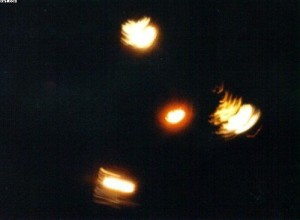
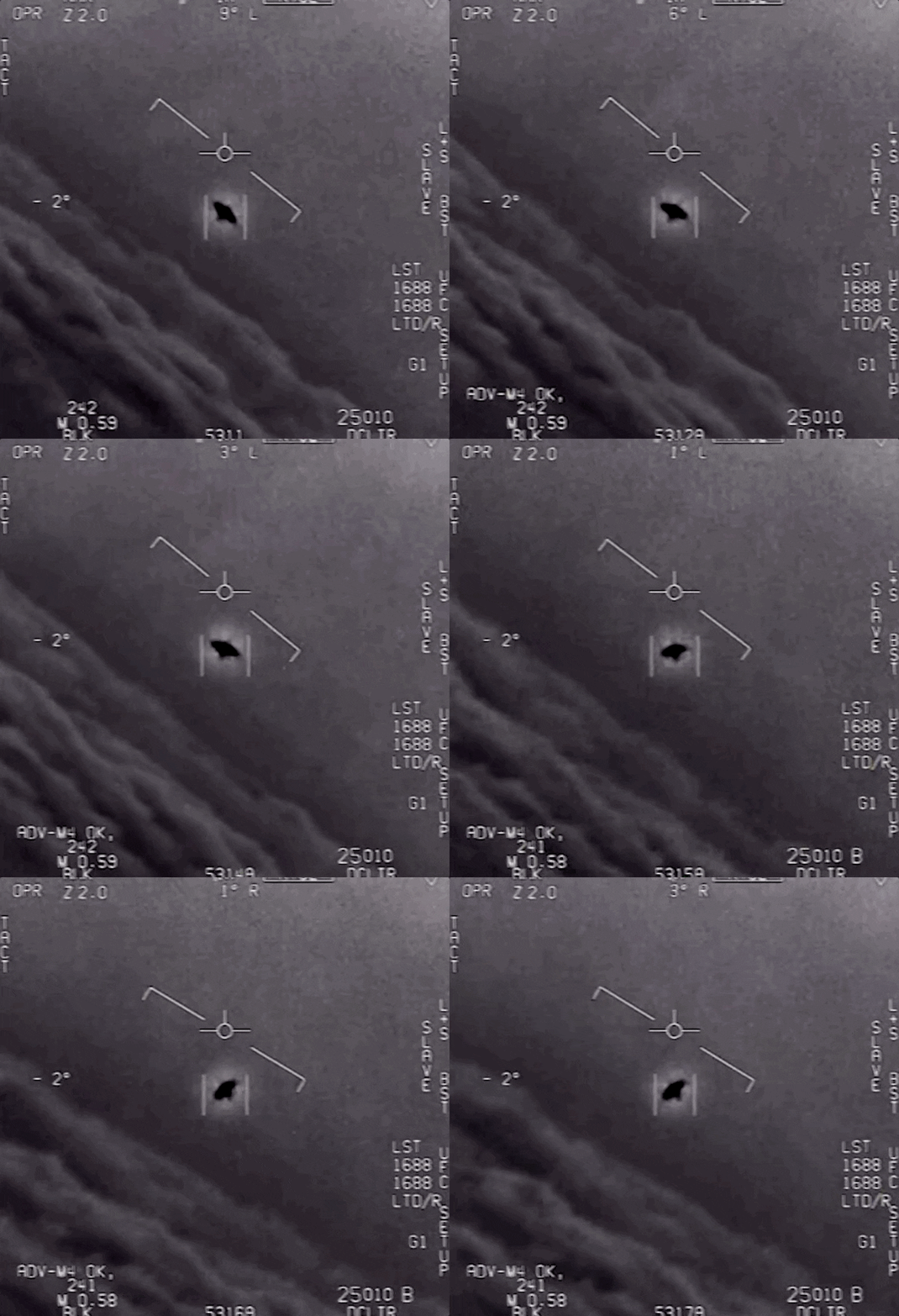



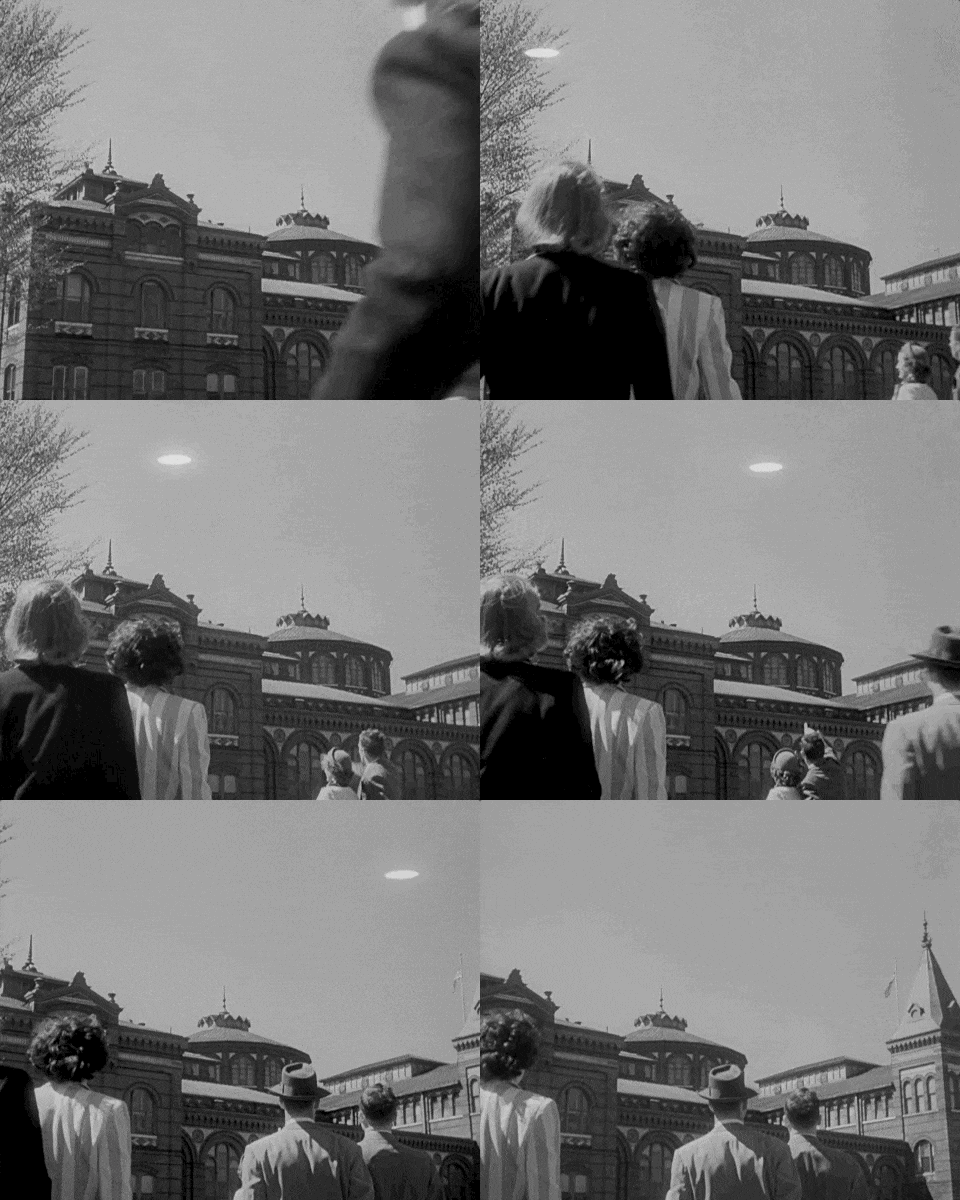







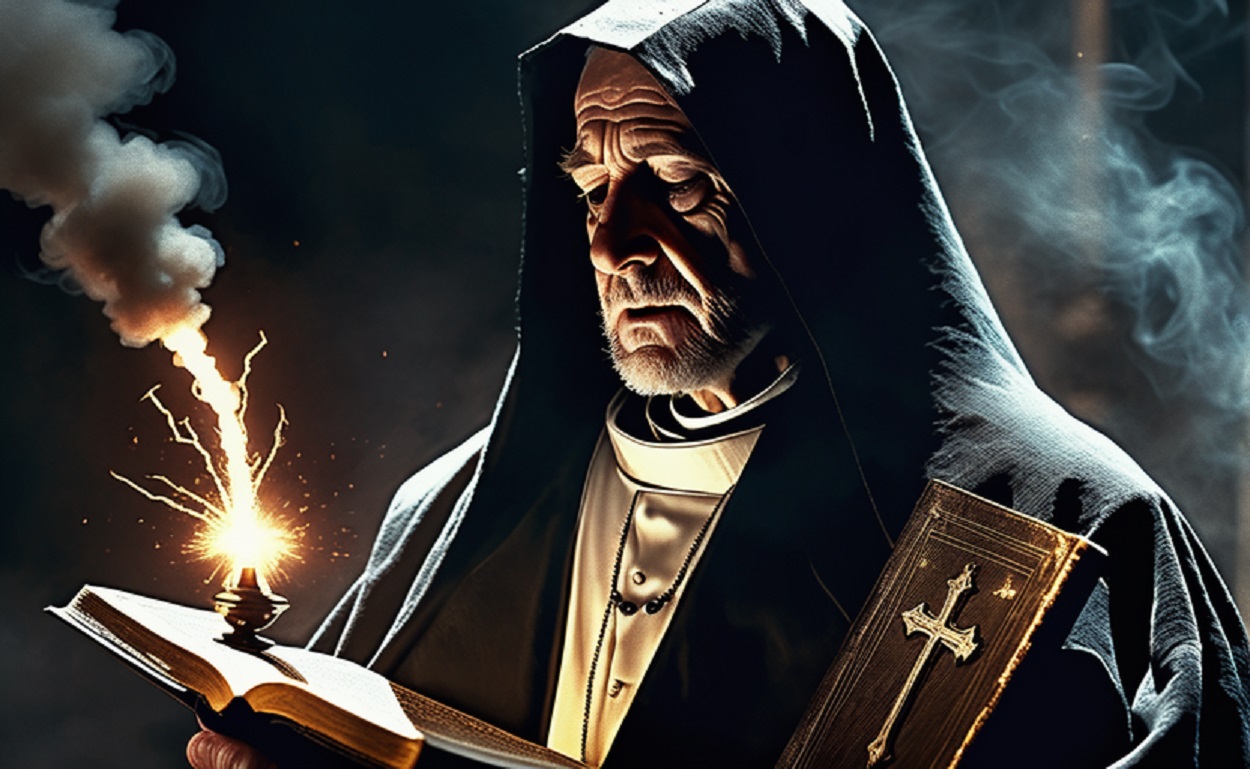




.jpg)
.jpg)






.jpg)
.jpg)
.jpg)