Documentary Filmmaking in Rio Favelas
By Sarah Bultema Freeman, Contributing Reporter
RIO DE JANEIRO, BRAZIL – With compelling stories unfolding against a stunning backdrop, Rio de Janeiro sets the perfect scene for many documentary filmmakers from around the world. Yet bringing a film to fruition here isn’t easy, and filmmakers must patiently – and sometimes dangerously – integrate themselves into the culture before cracking the window into the world of their subjects.
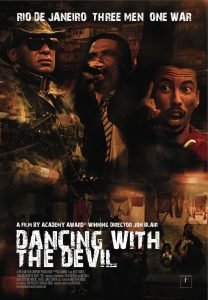
Movie poster for "Dancing with the Devil," a documentary focusing on the drug wars in the favela Coréia.
Only through a steadfast commitment to the story are some foreign filmmakers able to showcase perspectives that would otherwise be unseen by the masses, and amplify the voices of those who live them everyday.
One such film is the 2009 documentary “Dancing with the Devil,” which focuses on the drug wars unfolding in the Rio de Janeiro favela Coréia, as seen through the eyes of law enforcers, a pastor and the drug lords themselves.
For co-producer Tom Philips, the film was made possible through his relationship with Pastor Dione dos Santos, who worked closely with the favela’s drug traffickers.
Even with one contact directly intertwined in the story, earning enough trust to film in these environments and interview the subjects came at a slow pass. “It took us several years to gain the trust of our characters and to convince them to open their lives to our cameras,” Philips said.
Patricia Maresch of the Netherlands, who directed and produced “Cruzeiro,” a 2008 documentary about growing up in a favela agrees: “It’s not always easy to work here as a filmmaker … You can’t just fly in, film for two months, [and] then go back home.”
Maresch had to patiently win the faith of those involved in the film – not only from the main subjects, but from others in the community who saw the outsider with a camera. “People are afraid to be on camera,” she said, noting that many Brazilians are leery of how filmmakers will portray them. “They think ‘you’ll just show what bad people we are.’”
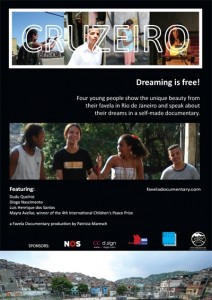
Movie poster for "Cruzeiro," a documentary covering the difficulties of growing up in Rio's favelas.
Even once the hard-won trust and access are granted, the filmmakers have plenty of obstacles to overcome to complete the documentary, sometimes including Rio’s notorious violence.
Maresch often had her filming put on hold during violent eruptions in the area. “There were weeks when we couldn’t do anything because of the shooting,” she said, noting that it was too dangerous for the film’s subjects to go outside.
Philips and the “Dancing with the Devil” team found themselves thrust into violent situations, too. With cameras rolling, they endured a bloody shootout between the drug squads and drug lords that left others around them dead.
Yet through the hardships of creating real-life films in Rio de Janeiro, the finished work often offers more than simply entertainment. Manydocumentaries can bring about social awareness and change.
“If a solution is to be found, these stories need to be told, even if that makes some people uncomfortable,” Philips said.
Filmmakers, like Marsech, are proud to share the lives of people who might not otherwise be noticed among the larger social issues. “We really tried to show what it was like (growing up in a favela),” she said. “It was their story to tell. I just helped them tell it.”
“Cruzeiro” can be purchased at Amazon.com. For more information about “Dancing with the Devil,” visit http://dancingwiththedevilthemovie.com.
thanks amigos, Wayn


 PIERRE-JOSEPH PROUDHON 1809-1865 -ANARCHIST

 thanks, Wayn


