Ontdek de Fascinerende Wereld van UFO's en UAP's: Jouw Bron voor Onthullende Informatie!
Ben jij ook gefascineerd door het onbekende? Wil je meer weten over UFO's en UAP's, niet alleen in België, maar over de hele wereld? Dan ben je op de juiste plek!
België: Het Kloppend Hart van UFO-onderzoek
In België is BUFON (Belgisch UFO-Netwerk) dé autoriteit op het gebied van UFO-onderzoek. Voor betrouwbare en objectieve informatie over deze intrigerende fenomenen, bezoek je zeker onze Facebook-pagina en deze blog. Maar dat is nog niet alles! Ontdek ook het Belgisch UFO-meldpunt en Caelestia, twee organisaties die diepgaand onderzoek verrichten, al zijn ze soms kritisch of sceptisch.
Nederland: Een Schat aan Informatie
Voor onze Nederlandse buren is er de schitterende website www.ufowijzer.nl, beheerd door Paul Harmans. Deze site biedt een schat aan informatie en artikelen die je niet wilt missen!
Internationaal: MUFON - De Wereldwijde Autoriteit
Neem ook een kijkje bij MUFON (Mutual UFO Network Inc.), een gerenommeerde Amerikaanse UFO-vereniging met afdelingen in de VS en wereldwijd. MUFON is toegewijd aan de wetenschappelijke en analytische studie van het UFO-fenomeen, en hun maandelijkse tijdschrift, The MUFON UFO-Journal, is een must-read voor elke UFO-enthousiasteling. Bezoek hun website op www.mufon.com voor meer informatie.
Samenwerking en Toekomstvisie
Sinds 1 februari 2020 is Pieter niet alleen ex-president van BUFON, maar ook de voormalige nationale directeur van MUFON in Vlaanderen en Nederland. Dit creëert een sterke samenwerking met de Franse MUFON Reseau MUFON/EUROP, wat ons in staat stelt om nog meer waardevolle inzichten te delen.
Let op: Nepprofielen en Nieuwe Groeperingen
Pas op voor een nieuwe groepering die zich ook BUFON noemt, maar geen enkele connectie heeft met onze gevestigde organisatie. Hoewel zij de naam geregistreerd hebben, kunnen ze het rijke verleden en de expertise van onze groep niet evenaren. We wensen hen veel succes, maar we blijven de autoriteit in UFO-onderzoek!
Blijf Op De Hoogte!
Wil jij de laatste nieuwtjes over UFO's, ruimtevaart, archeologie, en meer? Volg ons dan en duik samen met ons in de fascinerende wereld van het onbekende! Sluit je aan bij de gemeenschap van nieuwsgierige geesten die net als jij verlangen naar antwoorden en avonturen in de sterren!
Heb je vragen of wil je meer weten? Aarzel dan niet om contact met ons op te nemen! Samen ontrafelen we het mysterie van de lucht en daarbuiten.
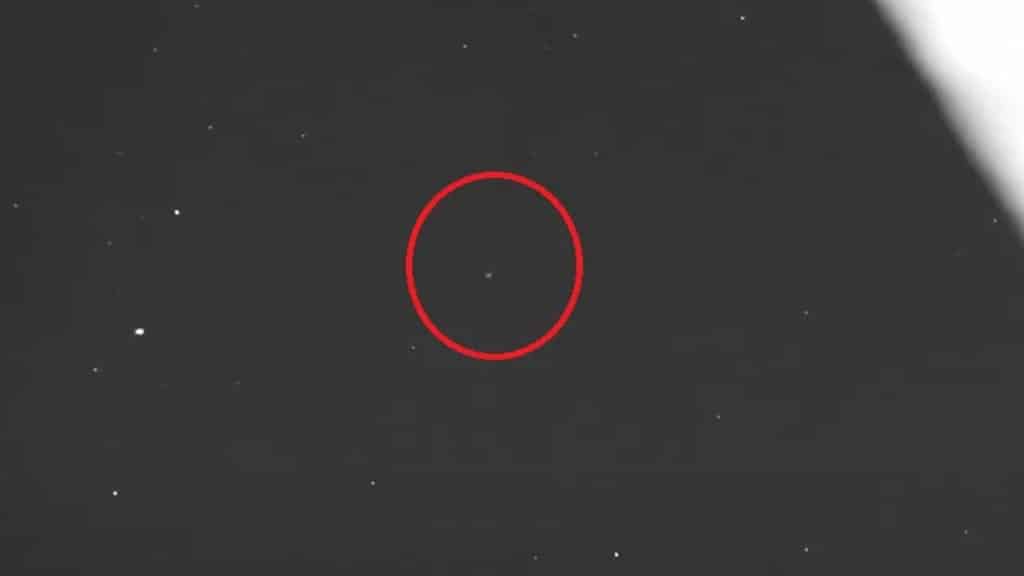
Check this out! NASA just posted a picture of the day that happens to show an object which might suggest life exists on Mars. The object looks like a ball of strings, similar to a tumbleweed or worm-like animal. Its hard to say because this is only a photo not a video. We need video of this thing lasting a day so that we can determine what this is 100% but to me, my professional opinion is that this is some sort of tiny lifeform. The shape, color and fine testure all suggest this is not string since it has no tattered ends. It has a thin tangled body as if it is protecting itself while sleeping. Awesome discovery for sure whatever it is.
Kinda looks like a giant parasite, let me post a video below of some similar life forms. Video is below.
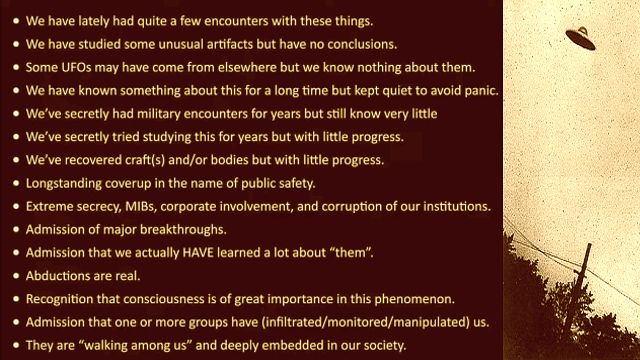
Another Facelift for the UFO Coverup 'Same Playbook' Again!
On the 70th anniversary of the famous UFO fly-overs of Washington, DC in 1952, our culture has finally come back to the level of "openness" of UFOs that existed at that time.
After all, even then the U.S. military acknowledged that something was being reported, but they had it all under control. This is exactly where we are now in 2022. The Pentagon knew the truth about UFOS back in 1952 but now in 2022 they use the same playbook again, it is just another facelift for the UFO cover-up.
And despite the DoD's July 15, 2022 announcement regarding the establishment of the All-domain Anomaly Resolution Office (AARO) with the mission to synchronize efforts across the Department of Defense, and with other U.S. federal departments and agencies, to detect, identify and attribute objects of interest in, on or near military installations, operating areas, training areas, special use airspace and other areas of interest, and, as necessary, to mitigate any associated threats to safety of operations and national security. This includes anomalous, unidentified space, airborne, submerged and transmedium objects, their plan is NEVER to reveal any more than what's already come out, and in fact the military is trying to "put the toothpaste back in the tube."
NASA wil op 29 augustus weer naar de Maan te vliegen
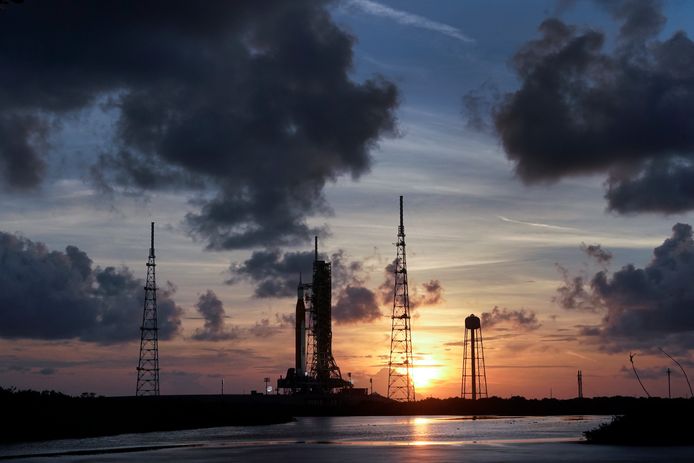
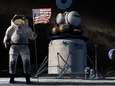
Artemis-1, de eerste missie waarmee de Amerikanen terug naar de Maan reizen, kan op 29 augustus vertrekken, zo heeft de NASA meegedeeld, uitgerekend de dag waarop 53 jaar geleden voor het eerst een mens voet zette op de Maan. Alternatieve data zijn 2 of 5 september.
Het Artemis-programma beoogt, ten vroegste in 2025, opnieuw mensen op de Maan neer te zetten en terug te halen, waarbij voor het eerst een vrouw en een kleurling. Het Amerikaanse ruimtevaartbureau NASA wil dit, naar analogie van het Apollo-programma, stapsgewijs bereiken. Artemis zal dus een onbemande missie zijn, in het bijzonder om de gigantische nieuwe draagraket te testen, net als de Orion-capsule die in 2024 bij de tweede missie wel bemand zal zijn.
De lancering vindt plaats op Cape Canaveral. De SLS-draagraket moet de Orion naar onze natuurlijke satelliet slingeren. De capsule komt in een baan rond de Maan en komt dan naar de Aarde terug. Naargelang de precieze lanceringsdatum zou de vlucht 39 tot 42 dagen duren.
De Orion is in 2014 al eens in de ruimte getest, na lancering met een Delta-IV draagraket. De capsule maakte twee omlopen rond onze planeet, om in het bijzonder het hitteschild uit te testen.
De laatste keer dat een mens over het oppervlak van de Maan wandelde was met Apollo-17 in 1972.
Japanese Researchers Show how Microgravity Affects Astronauts’ Muscles and Nerves
It’s well-known that spending long periods in microgravity can adversely affect astronaut health and physiology. According to decades of research performed aboard the International Space Station (ISS), like NASA’s much-popularized Twins Study, these effects include the loss of muscle mass and bone density, as well as changes to cardiovascular health, eyesight, organ function, and gene expression. There’s even the possibility that astronauts will experience mood swings and psychological problems while in space or during recovery here on Earth.
According to a recent study by a team of Japanese researchers, one of the lesser-studied effects is how long periods spent in microgravity can damage the skeletal muscles that are important to maintaining our posture. This group of muscles – located mostly in our limbs, back, and neck – are rightly known as our “anti-gravity” muscles because they are load-bearing and allow us to stand upright and move against the force of gravity. This research and the countermeasures they propose could have significant implications for astronauts returning from long-term stays in space.
The research was led by Dr. Yoshinobu Ohira, a Professor of space medicine at Doshisha University’s Research Center for Space and Medical Sciences (RCSMC) in Kyoto, Japan. He was joined by fellow researchers with the RCSMC, the Organization for Research Initiatives and Development (ORID) at Doshisha University, the Kindai University Faculty of Medicine (Osaka), Matsumoto University (Nagano), and Toyohashi SOZO University (Aichi). The paper that describes their findings recently appeared in the journal Neuroscience & Biobehavioral Reviews.
Expedition 38/39 astronaut Koichi Wakata (JAXA) uses the advanced Resistive Exercise Device (aRED) in the Tranquility module of the International Space Station in February 2014. Credit: NASA
As they indicated in their study, the team reviewed the neuromuscular properties of the soleus and adductor longus muscles (and their respective dorsal ganglia) in astronauts who had spent extended periods in space. These muscles are located in the calf and inner thigh (respectively) and are responsible for load-bearing and helping us remain upright in normal gravity. When subjected to microgravity, these muscles are “unloaded” and have nothing to work against, leading to the gradual atrophy of their fibers and nerves.
Their study considered how the neuromuscular system’s morphological, functional, and metabolic properties respond to gravitational unloading in microgravity and lower gravity environments. This consisted of running human and rodent simulation models and examining how motoneuron signals between the skeletal muscle and central nervous system (afferent and efferent activity, respectively) regulated neuromuscular properties. Their research appeared in a special issue titled “Space Neurosciences” that commemorates the Moon Landing (NASA’s Apollo 11mission).
Their analysis confirmed that these signals play a key role in regulating muscle properties and brain activity. This consists of a decrease in the structural unit of muscles (sarcomeres), resulting in a decrease in their development, eventually leading to muscular atrophy – as seen in the soleus and the adductor longus muscles. Their results indicate that exposure to low-gravity environments affects the muscles and nerves, leading to the deterioration of motor control.
This is consistent with symptoms reported by astronauts upon returning to Earth, where they experienced difficulty walking despite regular exercise aboard the ISS – using treadmills, cycles, and resistance training. Their work also showed that additional challenges might arise when astronauts are exposed to microgravity for six months or more, such as they would be while in transit to Mars. In summary, their review indicates that existing countermeasures are inadequate when combatting the effects of gravitational unloading.
Habitats grouped together on the rim of a lunar crater known as the Lunar Village. Credit: ESA
Luckily, their research also points the way toward some possible solutions. For starters, they recommend stimulating the soleus muscle during exercise, which can be done by running or walking slowly on a treadmill with a rear foot-strike landing. Adding bungee cords for added resistance and periodic passive stretching of the soleus muscle also appears to reduce the risk of atrophy. This research could play an important role in developing appropriate countermeasures for future long-duration space missions.
These include continued operations aboard the ISS, which were recently extended to January 2031 (according to NASA’s latest announcement). It will also come in handy as astronauts begin to conduct long-term missions to the Moon, which will entail the creation of lunar habitats – like Artemis Base Camp, the International Moon Village, and the Sino-Russian International Lunar Research Station (ILRS). Then there are the crewed missions that NASA and China plan to send to Mars in the next decade, which will involve 6 to 9-month transits.
Ensuring the long-term health of astronauts is part of a constellation of research that will help ensure the health and safety of astronauts as we venture farther from Earth. This research is especially important considering that someday (perhaps sooner other than later) civilians and potential settlers will follow. If humanity’s future does lie in space, every aspect of living and working beyond Earth must be taken into account, and potential solutions devised.
A Dormant Black Hole has Been Discovered Just Outside the Milky Way
What happens when a massive star dies? Conventional wisdom (and observational evidence) say that it can collapse to form a “stellar-mass” black hole. Astronomers detect black holes by the X-ray emissions they emit.
But, what if the black hole isn’t giving off high levels of X-ray emissions? Then, it could be a very rare object indeed: a dormant black hole. Not many of these have been seen. So, it’s exciting to know that a team of astronomers has found one. It’s called VFTS 243. They detected it in Very Large Telescope observations of stars in the Tarantula Nebula, in the neighboring Large Magellanic Cloud.
Finding a Needle in a Galactic Haystack
VFTS 243 is the first dormant black hole to be unambiguously detected outside the Milky Way Galaxy. While there are likely billions of stellar-mass black holes out there, dormant ones are much harder to find. “We identified a ‘needle in a haystack’,” said team leader Tomer Shenar, a Marie-Curie Fellow at Amsterdam University, the Netherlands.
It’s not for lack of looking, and astronomers have searched. “It is incredible that we hardly know of any dormant black holes, given how common astronomers believe them to be”, said team member Pablo Marchant of KU Leuven.
This newly found dormant black hole is at least nine times the mass of our Sun. It’s in a 10.4-day orbital dance with a hot, blue star 25 times the mass of the Sun. The black hole itself has about 9 solar masses. It’s considered dormant because it’s not emitting large amounts of X-rays. Normally, that would happen as material spirals into its accretion disk from the nearby companion star.
This artist’s impression shows what the binary system VFTS 243 might look like if we were observing it up close. The sizes of the two binary components are not to scale: in reality, the blue star is about 200 000 times larger than the black hole. Note that the ‘lensing’ effect around the so-called “dormant” black hole is shown for illustration purposes only, to make this dark object more noticeable in the image. The inclination of the system means that, when looking at it from Earth, we cannot observe the black hole eclipsing the star. Credit: ESO/L. Calçada
Implications for Black Hole Formation
Although astronomers know the general story about how a massive star evolves to become a stellar-mass black hole, there are many details of the process to explore. This discovery gives the team a new way to look at the black hole “factory”. Typically, a stellar-mass black hole forms as the core of a dying massive star collapses. However, for a dormant black hole, it’s not clear if the collapse was followed by a powerful supernova explosion. This new one may have taken a very different route to “black hole-hood”. In fact, there are some interesting clues that point to an alternate evolutionary path. First, it’s in a near-circular orbit and its motions indicate there was little ejected material from an explosion. In addition, there’s no evidence of a form of rebound called a “black hole kick” as the object collapsed. So, what happened?
“The star that formed the black hole in VFTS 243 appears to have collapsed entirely, with no sign of a previous explosion,” said Shenar, who noted that the team’s discovery has implications for understanding the properties of core-collapse supernovae as well as gravitational-wave detections. “Evidence for this ‘direct-collapse’ scenario has been emerging recently, but our study arguably provides one of the most direct indications. This has enormous implications for the origin of black-hole mergers in the cosmos.”
Calling the Black Hole Police
There’s more than a bit of irony in this discovery since team members are sometimes referred to as the “black hole police.” That’s because Shenar and other colleagues have frequently debunked proposed sightings of other black holes. So, the fact that they searched for and found this dormant black hole is an interesting experience. And, their search took a while and a lot of data.
To find VFTS 243, the collaboration used observations of nearly a thousand massive stars in the Tarantula Nebula. The data came from the VLT FLAMES Tarantula Survey, and team members used it to identify stars that might have black holes as companions. Because alternative explanations exist for such objects, identifying these companions as dormant black holes is extremely difficult.
“As a researcher who has debunked potential black holes in recent years, I was extremely skeptical regarding this discovery,” said Shenar. His skepticism was shared by co-author Kareem El-Badry of the Center for Astrophysics at Harvard, in the USA. Thanks to El-Badry’s reputation as a skeptic, Shenar calls him the ‘black hole destroyer’. “When Tomer asked me to double check his findings, I had my doubts,” said El-Badry. “But I could not find a plausible explanation for the data that did not involve a black hole.”
Next Steps
Despite the nickname ‘black hole police’, the team expects very active scrutiny of their dormant black-hole discovery. They also hope that their work will enable the discovery of other stellar-mass black holes orbiting massive stars. As an example of just how plentiful these objects are, the team predicts thousands of them exist in Milky Way and the Magellanic Clouds.
“Of course I expect others in the field to pore over our analysis carefully, and to try to cook up alternative models,” said El-Badry. “It’s a very exciting project to be involved in.”
The Animal Kingdom is full of surprising creatures. There’s millions of crazy critters and some nightmarish animals swiftly crawling around the face of earth we don’t know about. Some of the animals are fearsome whereas others may just look normal. Some of these may seem outrageous for having gigantic size and others may possess distinct features that make them look like aliens. Some animals possess sharp teeth or fangs or numerous legs while other can slither away at super speed. Most of these animals are considered to harmless to mankind.
Here’s M74 Like You’ve Never Seen it Before, Thanks to Judy Schmidt and JWST
The JWST is grabbing headlines and eyeballs as its mission gains momentum. The telescope recently imaged M74 (NGC 628) with its Mid-Infrared Instrument (MIRI.) Judy Schmidt, a well-known amateur astronomy image processor, has worked on the image to bring out more detail.
M74 is a large spiral galaxy that holds somewhere in the neighbourhood of 100 billion stars. It’s about 32 million light-years away from us and is a great example of a Grand Design Spiral Galaxy. The JWST imaged the galaxy as part of the PHANG Survey. PHANG (Physics at High Angular resolution in Nearby GalaxieS) studies nearby galaxies in high resolution and is intended to “… understand the interplay of the small-scale physics of gas and star formation with galactic structure and galaxy evolution,” according to the PHANG website.
The survey uses several telescopes to study galaxies, but now that the JWST is operating, it’s making a huge contribution to the effort.
This is the original JWST image of M 74 that made the rounds on social media before Judy Schmidt processed it. Image Credit: NASA/ESA/CSA/STSCI
Judy Schmidt (Judy Schmidt@SpaceGeck on Twitter) is involved with the Planetary Society and is one of those rare people who looks at an astounding image from the JWST and thinks, “Hmmmm…Not bad, but I can improve it.” (We’re just kidding and don’t mean to speak for her.) But it does speak to her rare skill set.
In the image description on Judy’s Flickr page, she writes, “Squeezing some color out of the various filters showing all the glowing dust in the center of NGC628.”
She lists the filters as:
Red (screen layer mode): MIRI F2100W
Orange: MIRI F1130W
Cyan: MIRI F770W
Extra overall brightness in grayscale: MIRI F1000W
To understand the impact the JWST is having, compare a Hubble image of M74 to Judy’s processed JWST image. The Hubble image is a composite of the telescope’s Advanced Camera for Surveys data taken in 2003 and 2005.
On the left is a composite Hubble image of M 74 made with the space telescope’s Advanced Camera for Surveys. On the right is the JWST image processed by Judy Schmidt. Image Credit: (l) NASA, ESA, and the Hubble Heritage (STScI/AURA)-ESA/Hubble Collaboration;Acknowledgment: R. Chandar (University of Toledo) and J. Miller (University of Michigan). (r) NASA/ESA/CSA/STSCI/JUDY SCHMIDT CC BY 2.0
Visit Schmidt’s Flickr feed for more of her work. She’s also on Twitter as @SpaceGeck, and her website is https://geckzilla.com/.
“A very processed (maybe even over-processed) version of Jupiter from JWST,” Schmidt writes in her description. “Here, we’re viewing the planet only in infrared, and the ring, usually invisible, is plain for all to see. The colors are definitely unusual.”
“There is some discussion over what the red blip at the south pole and the disconnected layer of atmosphere on the eastern limb are. Real? Artifacts? We’ll wait for the scientists to figure it out, but I’m leaning toward real. ”
An incredibly realistic footage of a 'UFO' Goes Viral. A bewildered TikTok user believes she spotted a UFO in plain sight.
Nesha Higgins (@neshahiggins) shared the viral footage of the 'unidentified object' on the platform, leaving over 3 million viewers as baffled as her.
The video shows Nesha driving along a highway in Arizona when she spots a peculiar-looking object near the clouds in the shape of a UFO spaceship.
"What the f**k is that? That is the craziest thing I've ever seen in my life, bro," she said, as her friend responded: "That's so cool."
Thousands of viewers headed to the comments to debate what it could, or could not, be. Creative theories were rife, with many comparing its appearance to a portal.
"I would’ve stood under it bc I’m done with this planet," one joked, while another added: "They really pulled up this time."
Some realists shut it down, claiming that if it were a UFO, the plane wouldn't have flown near it. The airport tower would have had the plane standby if something is in its airspace," one said.
While we admire the creativity in the comments, it does appear to be a lenticular cloud which often looks like a flying saucer .
The Met Office defines lenticular cloud as "lens-shaped orographic wave clouds form when the air is stable and winds blow across hills and mountains from the same or similar direction at different heights through the troposphere."
The man who revealed the existence of UFOs in Area 51 in the 1970s has gained a lot more credibility
Bob Lazar has provided information that has now been verified, decades after he blew the whistle. The UFO phenomenon is no longer taboo to talk about. People like this deserve to be heard now without ridicule.
Meer van UFO'S of UAP'S, ASTRONOMIE, RUIMTEVAART, ARCHEOLOGIE, OUDHEIDKUNDE, SF-SNUFJES EN ANDERE ESOTERISCHE WETENSCHAPPEN - DE ALLERLAATSTE NIEUWTJES



 Is This Life On Mars Or Debris? July 22, 2022, Video, UFO Sighting News.




 ”


