Naar de inhoud

UFO'S of UAP'S, ASTRONOMIE, RUIMTEVAART, ARCHEOLOGIE, OUDHEIDKUNDE, SF-SNUFJES EN ANDERE ESOTERISCHE WETENSCHAPPEN - DE ALLERLAATSTE NIEUWTJES

UFO's of UAP'S in België en de rest van de wereld
akke.beakke.be
Ontdek de Fascinerende Wereld van UFO's en UAP's: Jouw Bron voor Onthullende Informatie! Ben jij ook gefascineerd door het onbekende? Wil je meer weten over UFO's en UAP's, niet alleen in België, maar over de hele wereld? Dan ben je op de juiste plek! België: Het Kloppend Hart van UFO-onderzoek In België is BUFON (Belgisch UFO-Netwerk) dé autoriteit op het gebied van UFO-onderzoek. Voor betrouwbare en objectieve informatie over deze intrigerende fenomenen, bezoek je zeker onze Facebook-pagina en deze blog. Maar dat is nog niet alles! Ontdek ook het Belgisch UFO-meldpunt en Caelestia, twee organisaties die diepgaand onderzoek verrichten, al zijn ze soms kritisch of sceptisch. Nederland: Een Schat aan Informatie Voor onze Nederlandse buren is er de schitterende website www.ufowijzer.nl, beheerd door Paul Harmans. Deze site biedt een schat aan informatie en artikelen die je niet wilt missen! Internationaal: MUFON - De Wereldwijde Autoriteit Neem ook een kijkje bij MUFON (Mutual UFO Network Inc.), een gerenommeerde Amerikaanse UFO-vereniging met afdelingen in de VS en wereldwijd. MUFON is toegewijd aan de wetenschappelijke en analytische studie van het UFO-fenomeen, en hun maandelijkse tijdschrift, The MUFON UFO-Journal, is een must-read voor elke UFO-enthousiasteling. Bezoek hun website op www.mufon.com voor meer informatie. Samenwerking en Toekomstvisie Sinds 1 februari 2020 is Pieter niet alleen ex-president van BUFON, maar ook de voormalige nationale directeur van MUFON in Vlaanderen en Nederland. Dit creëert een sterke samenwerking met de Franse MUFON Reseau MUFON/EUROP, wat ons in staat stelt om nog meer waardevolle inzichten te delen. Let op: Nepprofielen en Nieuwe Groeperingen Pas op voor een nieuwe groepering die zich ook BUFON noemt, maar geen enkele connectie heeft met onze gevestigde organisatie. Hoewel zij de naam geregistreerd hebben, kunnen ze het rijke verleden en de expertise van onze groep niet evenaren. We wensen hen veel succes, maar we blijven de autoriteit in UFO-onderzoek! Blijf Op De Hoogte! Wil jij de laatste nieuwtjes over UFO's, ruimtevaart, archeologie, en meer? Volg ons dan en duik samen met ons in de fascinerende wereld van het onbekende! Sluit je aan bij de gemeenschap van nieuwsgierige geesten die net als jij verlangen naar antwoorden en avonturen in de sterren! Heb je vragen of wil je meer weten? Aarzel dan niet om contact met ons op te nemen! Samen ontrafelen we het mysterie van de lucht en daarbuiten.

Categorie: MYSTERIES ( Fr, Nl, E)

Voelen dieren UFO's voor mensen? Vreemde ontmoetingen suggereren dat ze dat misschien wel doen

Voelen dieren UFO's voor mensen? Vreemde ontmoetingen suggereren dat ze dat misschien wel doen

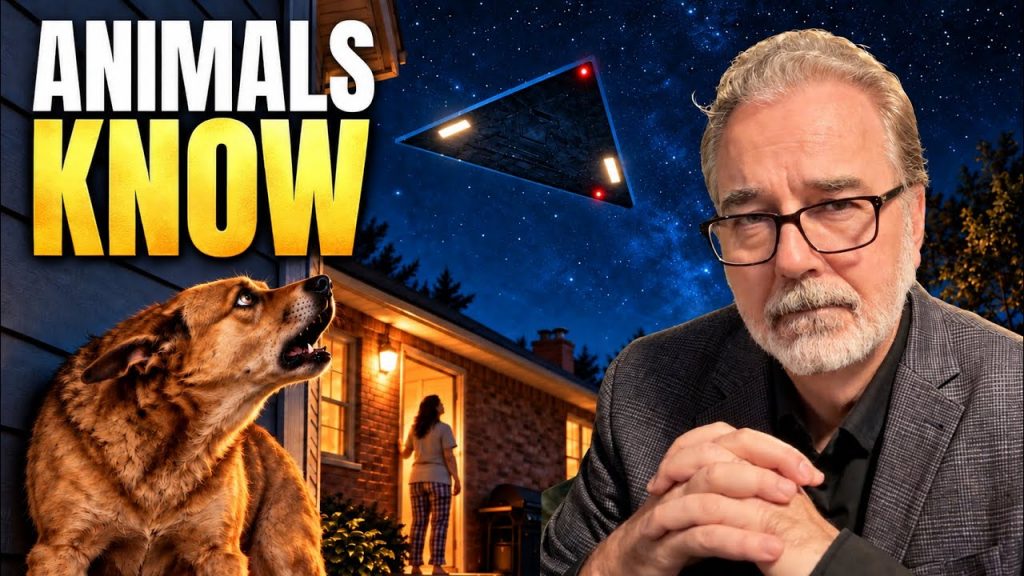
Dieren kunnen soms vreemd reageren op gebeurtenissen in hun omgeving, en dit geldt mogelijk ook voor ongeïdentificeerde vliegende objecten (UFO's). Historisch gezien zijn er talrijke verslagen over hoe honden, paarden en ander vee zich vreemd gedroegen vóór of tijdens waarnemingen van dergelijke mysterieuze objecten. Dit artikel verkent verschillende getuigenissen en onderzoekt de mogelijke verklaringen hiervoor, en benadrukt de vraag of dieren wellicht iets opmerken dat mensen niet kunnen waarnemen.

8BBf2BblwO4_maxres-1024x576.jpg

Ongebruikelijke gedragingen van dieren

De McDonald familie in Ohio, 1965

Op 20 mei 1965 was de familie McDonald getuige van een vreemd object dat boven hun woning in Leroy Township, Ohio, hing. Dit object, een zilver-witte schijf ter grootte van een auto, zond een lage zoemtoon uit. Wat deze gebeurtenis bijzonder maakte, was de paniek van de huisdieren van de familie. Hun hond vluchtte het veld in en hun paard deed hetzelfde, terwijl het zich wild gedroeg aan de lijn. Opmerkelijk was dat de dieren gewend waren aan vliegtuigen; de familie woonde onder vluchtwegen van nabijgelegen luchthavens. Bovendien rapporteerden buren op dat moment storingen op televisie en radio. Dit roept de vraag op: Reageerde de dieren op iets dat mensen niet konden waarnemen?

Een Duitse herder in Nieuw-Zeeland, 1969

Een ander intrigerend rapport kwam van beveiligingsagent John Cudby, die op 30 oktober 1969 het Waipukurau Aerodrome in Nieuw-Zeeland patrouilleerde met zijn Duitse herder. Rond 3:10 uur 's nachts merkte hij vreemde lichten op die in een glazen deur weerkaatsten. Toen hij zich omdraaide, zag hij een metallic, schotelvormig voorwerp dichtbij een hangar zweven. Terwijl het voorwerp een lagere mechanische geluid produceerde, begon de hond zich extreem te agiteren; hij negeerde alle commando's en vertoonde een bizar gedrag. Het lijkt erop dat de hond iets waarnam dat Cudby niet kon horen, wat de mogelijkheid ondersteunt dat dieren scherpe geluiden kunnen detecteren die mensen ontgaan.

Beangstigende veestapel in Australië, 1980

Op 30 september 1980 meldde boerderijcaretaker George Blackwell een opmerkelijke ontmoeting in Victoria, Australië. Omstreeks 1:00 uur 's nachts werd hij wakker van een vreemd mechanisch fluittonde geluid. Terwijl hij buiten ging kijken, hoorde hij het gebrul van vee en zag hij een paard dat in paniek rondliep. Blackwell ontdekte een object dat naar verluidt ongeveer 7,5 tot 8,5 meter breed was en wit, oranje en blauw licht uitstraalde. De geluiden die het object produceerde, veroorzaakten een intens gevoel van angst bij de dieren, wat erop wijst dat de leefomgeving en misschien ook elektromagnetische verstoringen hun gedrag beïnvloedden.

Elektrische storingen in Denemarken, 1995

Op 29 september 1995, terwijl Klaus Lund met zijn zwarte Labrador reed, begon de hond plotseling te blaffen en tegen de deur van het voertuig te krabben. Niet veel later ondervond het voertuig meerdere elektrische storingen, zoals het onverwachts inschakelen van de ruitenwissers en het falen van de motor. Terwijl de hond agiteerde, verscheen er een krachtige blauwe-omlicht aan de bovenkant van de auto. Dit getuigenis is opmerkelijk omdat het aantoont dat dieren in staat zijn om te reageren op situaties voordat mensen dit opmerken, wat de vraag oproept of de hond mogelijk een elektromagnetische storing heeft waargenomen.

De opmerkelijke ervaring in Pennsylvania, 2014

Op 28 juli 2014 rapporteerde een vrouw in Lewistown, Pennsylvania, dat ze met haar hond naar buiten ging en dat de hond meteen wegrende terwijl de hond van de buurman binnen begon te janken. De vrouw merkte een zilverblauwe schijf op die boven een nabijgelegen dak hing. De honden reageerden voordat de vrouw zelf het object opmerkte, wat opnieuw de mogelijkheid suggereert dat dieren iets waarnemen dat buiten het bereik van menselijke zintuigen ligt.

Kunnen dieren UFO's horen?

Een van de meest voorkomende verklaringen voor de vreemde reacties van dieren bij UFO-waarnemingen ligt in de verschillen tussen het gehoor van dieren en dat van mensen. Honden kunnen hoge frequentiegeluiden waarnemen die voor mensen onhoorbaar zijn. Evenzo hebben dieren zoals katten, paarden en runderen unieke hoorcapaciteiten die hen in staat stellen om te reageren op geluiden van ongeïdentificeerde objecten voordat mensen deze opmerken.

Onderzoek naar geluiden en dierenreacties

UFO-onderzoeker James McCampbell heeft in het verleden de mogelijkheid verkend dat ongebruikelijke geluiden of elektromagnetische straling de reacties van dieren beïnvloeden. In zijn boek "Ufologie" uit 1973 onderzocht hij honderddertig rapporten waarbij dieren betrokken waren en stelde verschillende hypothesen voor die de paniek van dieren konden verklaren. Although this speculation is intriguing, het biedt nog geen concreet bewijs dat UFO's zulke frequenties daadwerkelijk uitstralen.

Hebben dieren een zesde zintuig?

Andere onderzoekers, zoals Richard Dolan, hebben door speculatie sugereert dat dieren mogelijk een soort van bewustzijn of intuïtie hebben waardoor ze gebeurtenissen kunnen anticiperen voordat mensen dit kunnen. Voorbeelden hiervan zijn honden die zich opwindend gedragen voordat hun eigenaars thuiskomen of katten die zich verstoppen vóór een bezoek aan de dierenarts. Dit onderwerp blijft een controversieel wetenschappelijk vraagstuk en er is momenteel geen betrouwbare wetenschappelijke basis die suggereert dat dieren telepathisch UFO's of buitenaardse intelligentie kunnen detecteren.

De rol van mariene dieren

De meeste meldingen van dierenreacties met betrekking tot UFO's komen van landdieren, maar andere diersoorten, zoals dolfijnen, kunnen ook opmerkelijke reacties vertonen. Er zijn beschrijvingen van dolfijnen die mensen richting vreemde gloeiende objecten onderwater leiden. Dit roept vragen op over hoe ongebruikelijke verschijnselen onder het wateroppervlak het gedrag van dieren kunnen beïnvloeden, maar er zijn nog geen concrete bewijzen of vaststellingen die deze claims bevestigen.

Zijn dierreacties betrouwbare bewijs van UFO-activiteit?

Hoewel de reacties van dieren waardevolle context kunnen bieden bij UFO-onderzoeken, moeten er enkele belangrijke beperkingen in overweging worden genomen. Dieren kunnen op tal van gewone stimuli reageren, zoals:

  • Hogerfrequente geluiden van elektrische apparatuur of andere dieren.
  • Veranderingen in het weer en atmosferische druk.
  • Onbekende geuren of trillingen.
  • Veraf gelegen voertuigen of vliegtuigen.

Bovendien zijn de meeste historische UFO-gevallen gebaseerd op getuigenverslagen in plaats van gecontroleerde metingen. Een dier dat zich angstig gedraagt tijdens een vermeende UFO-waarneming betekent nog niet automatisch dat er daadwerkelijk een ongeïdentificeerd object aanwezig was.

De noodzaak voor systematisch onderzoek

Om de complexe dynamiek tussen UFO-waarnemingen en dierelijk gedrag beter te begrijpen, zou verder onderzoek moeten plaatsvinden met behulp van gecoördineerde videoregistraties, milieu-geluidmetingen, elektromagnetische monitoring en veterinaire observaties. Hierdoor kunnen onderzoekers mogelijk gewone milieutriggers onderscheiden van werkelijk onverklaarde gebeurtenissen.

Conclusie: Voelen dieren iets wat wij niet kunnen?

De geschiedenis van UFO-waarnemingen bevat talloze verslagen van vreemde dierreacties voorafgaand aan of tijdens ontmoetingen met onbekende objecten. Deze fenomenen, van angstige paarden in Ohio tot agitated honden in Nieuw-Zeeland en Denemarken, wijzen op een terugkerend thema dat het waard is om verder te onderzoeken. Het belangrijkste blijft de vraag of deze dieren daadwerkelijk iets detecteren wat mensen niet kunnen waarnemen, of dat ze simpelweg reageren op prikkels die wij niet goed begrijpen. De uitdaging voor onderzoekers ligt in het systematisch documenteren van dierlijk gedrag in combinatie met fysische metingen, wat de onderzoeksgemeenschap mogelijk kan helpen om de mysteries rond UFO's te ontrafelen.

{ PETER2011 MET A.I. }

Hoe vind je dit bericht?
Geschreven door peter om 12:58 Stuur door

“We Don’t Know What We Don’t Know”: New Study Uncovers a Concerning “Blind Spot” in Modern Scientific Research

jellyfish scientific blind spot

(Image Credit: Unsplash)

“We Don’t Know What We Don’t Know”: New Study Uncovers a Concerning “Blind Spot” in Modern Scientific Research

How much of what we know about the world around us is influenced by things we see in popular media, and could that mean trouble for science?

The short answer is yes, according to new research by researchers at the University of New South Wales (UNSW), which reveals a concerning trend in modern scientific

According to a pair of recent UNSW studies, the topics that often become the research focus of many career scientists are largely driven by exposure to popular media like films, television shows, and other cultural factors that cause areas of the sciences that receive less attention to remain unexplored.

The result, according to the UNSW research team, suggests that some of the most important phenomena in the natural world remain unexplored.

“We don’t know what we don’t know,” says Dr Pietro Pollo, a UNSW researcher and lead author of one of the new studies.

A Scientific “Blind Spot”

Along with researcher Michael M. Kasumovic, Pollo says that people’s fascination with animal species that appear in popular films may drive their scientific interest to the point of influencing their career trajectories. However, that presents problems when the majority of the media addressing such topics focuses on larger mammals, birds, and other more obvious species.

As a result, Pollo argues that some of the remaining big questions about smaller and often less attractive species often fall to the wayside.

“In nature documentaries, the focus is usually on polar bears, lions, elephants, and other mammals,” Pollo recently said of the phenomenon he and Kasumovic characterize in their research. “And that is where most research interest and funding ends up.”

Presently, the largest populations of unknown animal species belong primarily to insects, microscopic roundworms, and marine invertebrates or fish. According to some estimates, up to as much as 80% to 86% of all species on Earth—roughly 7 to 8 million species—remain unnamed and undescribed.

Pollo and Kasumovic say that among these species, creatures like spiders, slugs, insects, and worms receive less attention for fairly obvious reasons: they are smaller, less attractive, and receive far less attention in popular media.

The result, however, could be more damaging for science than many are aware, since these cultural factors that drive people’s research focus appear to be leaving major gaps in our knowledge about the world around us.

An Unpredictable Issue

Further complicating things is the fact that, according to Pollo and Kasumovic, this apparent “blind spot” emerges in ways that researchers can’t easily predict, due to the difficulty in attempting to predict long-term outcomes from essential, yet often very basic research efforts.

One example they point to involves research into saliva from lizards, which became instrumental in creating modern weight-loss drugs like Ozempic. Another example involves fluorescent proteins discovered in jellyfish that helped transform the study of individual cells.

jellyfish.jpg

(Image Credit: Unsplash)

Such seemingly obscure research focuses reveal how often unlikely areas of study can have a significant impact on scientific advancements that may include more than just knowledge about the natural world: they may also drive innovations in technology, treatments for various diseases, and a range of other beneficial scientific advancements.

“The next major discovery could be in an organism we currently ignore because we don’t find it cute or exciting,” Pollo said in a statement.

A Call for Diversification

In their research, Pollo and Kasumovic looked at more than one million science papers in the fields of ecology and evolution. What they found was alarming: in more than half of all these publications, the focus was primarily on vertebrates, with a main focus on larger mammals that make up less than 5% of all known types of animal species.

The research suggests that vertebrate studies not only become the focus for many researchers in their careers, but also that they garner more citations and greater amounts of media attention, thereby compounding the problem.

By contrast, studies and related media exposure of invertebrates remains overwhelmingly low by contrast. Fundamentally, Pollo and Kasumovic argue that science training needs to focus on helping to broaden scientific interests and emphasize the possibilities in the lesser-explored areas of invertebrate biology and related fields.

“We have millions of species and limited time and funding,” Pollo says. “So we need to diversify our research as much as we can.”

The recent research article, “Drivers of Taxonomic Bias in Ecology and Evolution: Insights From Ethologists and Behavioural Ecologists,” appeared in Ecology and Evolution.

  • Micah Hanks is the Editor-in-Chief and Co-Founder of The Debrief. A longtime reporter on science, defense, and technology with a focus on space and astronomy, he can be reached at micah@thedebrief.org. Follow him on X @MicahHanks, and at micahhanks.com.

{ https://thedebrief.org/category/science/ }

Hoe vind je dit bericht?
Geschreven door peter om 23:19 Stuur door

Is this why the world's most mysterious text is yet to be cracked? 600-year-old Voynich manuscript may have been bound out of order, experts claim

Is this why the world's most mysterious text is yet to be cracked? 600-year-old Voynich manuscript may have been bound out of order, experts claim

The Voynich Manuscript has baffled the world's greatest codebreakers, translators and historians for over 600 years, but its secrets may soon be revealed.

Created in the early 15th century, this 240-page text contains 38,000 words in a mysterious script known as 'Voynichese' alongside dozens of surreal illustrations.

Now, scientists claim that the real reason no one has ever managed to decipher the elusive text is that its pages have been bound out of order.

If researchers discover the right way of putting it back together, it could finally unlock the solution to this centuries-old puzzle.

Using modern statistical analysis techniques, researchers compared chunks of text on different pages to see if they were similar or disconnected.

They discovered that pages that appear to follow one after the other actually have very low levels of similarity.

Meanwhile, seemingly disconnected chunks of text share a striking statistical similarity, suggesting they were originally meant to be read together.

Co-author Dr Lisa Davis, of Harvard University, told Live Science: 'It doesn't get us there [to a full translation], but it moves the ball because you can't make sense out of a book where all the pages are mixed up.'

Experts say the reason the Voynich Manuscript (pictured) has not been translated is that its pages have been put in the wrong order

Experts say the reason the Voynich Manuscript (pictured) has not been translated is that its pages have been put in the wrong order 

The Voynich Manuscript is widely regarded as one of the world's most mysterious medieval manuscripts, due to its completely unique language and enigmatic illustrations.

The text is made from leaves of parchment carbon-dated to the early 15th century, while the earliest known records show that it was purchased by Holy Roman Emperor Rudolf II over 100 years later.

The book was later purchased by the Polish antiquarian bookseller Wilfrid Voynich, for whom it is named, and then entered the collection of Yale University's rare book library in 1969.

Many academics have tried to figure out whether there is a hidden message beneath the bizarre imagery and strange text, and their conclusions have proven extremely controversial.

Academics have claimed the text contains censored information on sex, contraception and gynaecology, herbal remedies, secrets of pagan religions, and even magical spells.

However, Dr Davis and her co-author Dr Colin Layfield, from the University of Malta, now believe that everyone has been getting it wrong.

When doing research into the number of scribes that originally copied out the text, Dr Davis noticed that the writers' handwriting alternated from page to page in a way that didn't make sense.

Dr Davis says: 'We don't know if it's a code, but there are some odd characteristics of the Voynich manuscript in terms of its physical structure.

Researchers found examples of illustrations that run between two pages that don't actually face each other in the manuscript (pictured)

Researchers found examples of illustrations that run between two pages that don't actually face each other in the manuscript (pictured)

In the manuscript's current layout (pictured), these illustrations aren't facing their matching page, suggesting they have been put in the wrong order

In the manuscript's current layout (pictured), these illustrations aren't facing their matching page, suggesting they have been put in the wrong order 

Created in the early 15th century, this 240-page text contains 38,000 words in a mysterious script known as 'Voynichese' (pictured) that has remained impossible to translate

Created in the early 15th century, this 240-page text contains 38,000 words in a mysterious script known as 'Voynichese' (pictured) that has remained impossible to translate 

'There are several examples where the image goes off the page in the middle and comes out on the other side, even though there are a bunch of pages in between.'

Typically, medieval books were made by folding pieces of parchment, usually made of animal skin, in half to make something called a 'bifolium'.

Five of these 'bifolia' were then stacked together into a group known as a quire, and multiple quires were then stitched together along the spine to make a book.

But the researchers don't believe that the Voynich Manuscript was ever meant to be put together this way.

Instead, the researchers think that the manuscript was meant to be a stack of individual folded bifolia, known as singulons, that were meant to be read one at a time like a stack of small pamphlets.

The manuscript's current form likely comes from a later scribe or owner incorrectly binding a book they had no idea how to read.

Dr Davis says: 'When you start to think about it in the context of the other strange features of the manuscript, all of those problems are resolved.

'It solves the problem of each scribe writing one sheet. It solves the problem of the images crossing the gutter.'

Experts now say that they might be able to put the manuscript (pictured) back in the right order, potentially revealing any secrets that it may be hiding

Experts now say that they might be able to put the manuscript (pictured) back in the right order, potentially revealing any secrets that it may be hiding 

In their paper, published in the journal Digital Medievalist, the researchers say they hope 'linguists and cryptologists will revisit past work in the light of this hypothesis, ushering in a new era of Voynich Studies'.

However, there is still a lot more work to be done before scientists are able to put the Voynich Manuscript back in the right order.

To start with, Dr Davis wants to focus on some of the large water stains that appear in the middle of the manuscript.

These stains should be symmetrical from one page to the next, but don't seem to match up at all.

If experts can find a way of comparing these stain shapes, it might finally help put some of the pages back together as they were originally meant to be read.

THE MYSTERIOUS HISTORY OF THE VOYNICH MANUSCRIPT

The first confirmed owner of the Voynich manuscript was George Baresch, an alchemist from Prague who had mentioned in a letter that he had found it in his library 'taking up his space'.

He learned that Jesuit scholar Athanasius Kircher, in Rome, had published a Coptic dictionary and claimed to have deciphered the Egyptian hieroglyphs.

Baresch sent a sample copy of the script to Kircher, asking for clues to reveal what the mysterious manuscript meant. 

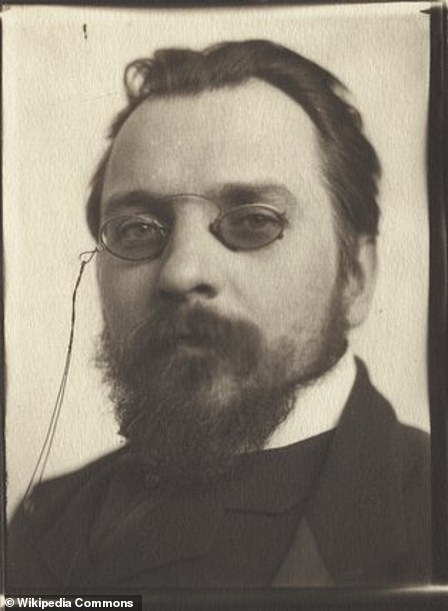
It was purchased in 1912 by a Polish-American antiquarian book dealer, named Wilfred Voynich (pictured) (1865–1930), from whom it gets its name

It was purchased in 1912 by a Polish-American antiquarian book dealer, named Wilfred Voynich (pictured) (1865–1930), from whom it gets its name

His 1639 letter to Kircher is the earliest confirmed mention of the manuscript that has been found to date.

Kircher asked for the book, but Baresch would not yield it as he prized owning it over knowing its true meaning. 

Upon Baresch's death, the manuscript passed to his friend Jan Marek Marci, who worked at Charles University in Prague.

A few years later, Kircher finally got his hands on the book when Marci sent it to him as he was a longtime friend and correspondent.

When Johannes Marcus sent it to Kircher, they found a letter written on August 19, 1665 or 1666 inside the cover.

It claims that the book once belonged to Emperor Rudolph II (1552-1612), who paid 600 gold ducats (about 4.5 pounds of gold) for it.

The letter was written in Latin and has been translated into English.

The litany list of previous owners trying to unpick its secrets continues even further, as the manuscript embedded itself further into European folklore. 

The manuscript is also thought to have once been in the possession of 'Jacobj aTepen', or Jakub Horcicky of Tepenec, a medical doctor who lived from 1575-1622 and was known far and wide for his herbal medicinal use.

No records of the book for the next 200 years have been found, but in all likelihood, it was stored with the rest of Kircher's correspondence in the library of the Collegio Romeo.

It likely remained there until the troops of Victor Emmanuel II of Italy captured the city in 1870 and annexed the Papal States.

It was purchased in 1912 by a Polish-American antiquarian book dealer, named Wilfred Voynich (1865–1930), from where it gets its name. 

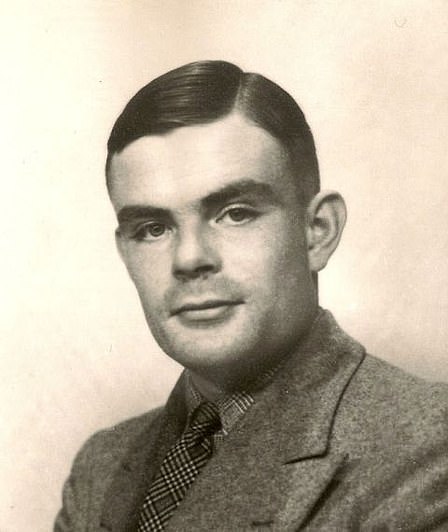
Alan Turing (pictured), the brilliant mind who spearheaded the campaign to crack the Enigma code at Bletchley Park during the Second World War, attempted to understand it, but found it impenetrable

Alan Turing (pictured), the brilliant mind who spearheaded the campaign to crack the Enigma code at Bletchley Park during the Second World War, attempted to understand it, but found it impenetrable

His acquisition of the manuscript is different to its previous owners, from whom it was passed from hand to hand. 

According to folklore, he happened upon a trunk that contained the rare manuscript now known as the Voynich manuscript while on an acquisitions trip.

He had it in his possession until he died, and put it on display to the public for the first time ever in 1915.

It further etched itself into folklore and the mystery surrounding it deepened from this point onward as its uncrackable code attracted the greatest minds for decades - all trying to uncover its meaning.   

Wilfred subsequently relocated from Europe to New York and, following his death, the manuscript's custodian became his wife Ethel Voynich (1864–1960).

Following her death, the manuscript found its way into the hands of another dealer named Hans P. Kraus (1907–88), who eventually donated it to the Yale library in 1969.

Alan Turing, the brilliant mind who spearheaded the campaign to crack the Enigma code at Bletchley Park during the Second World War, attempted to understand it, but found it impenetrable. 

Theodore C Peterson, a priest, embarked on the project of making a hand copy of the Voynich manuscript.

He completed it in 1944 and each page of the replica points out unusual features, which may be of interest in trying to decipher it, such as odd character sequences and frequently used words.

He worked on the Voynich until his death and it helped a Danish botanist and zoologist, Theodore Holm of the Catholic University, tentatively identify 16 plant species in the Voynich.

William  Friedman (1891-1969) is remembered as one of the world's foremost cryptologists and became involved with the Voynich in the early 1920s when he corresponded with its namesake.

During his work, he developed the theory that the Voynich manuscript represented a text in a synthetic language (using or describing inflexion).

John Tiltman was a British intelligence specialist, working in association with William Friedman.

Friedman asked Tiltman for his opinion on the Voynich MS text, and sent him copies of the final quire.

He concluded that the text is far too complicated to be the result of a simple cipher and to be the result of applying a standard cypher to some plain text.

He spent some time discussing the option of a synthetic or 'universal' language as proposed by Friedman.

The FBI also tried during the Cold War, apparently thinking it may have been Communist propaganda.

The US National Security Agency collaborated with German code-breaker Erich Hüttenhain based on the earlier work of British code-breaker John Tiltman because they had a notion that it might contain communist propaganda.

Ultimately, a consensus emerged: that the manuscript was either impossible to solve or else written in gibberish, as an elaborate practical joke.

Dr Gerard Cheshire, a researcher at the University of Bristol, claimed that it was written in a dead language - proto-Romance - and then by studying symbols and their descriptions he deciphered the meaning of the letters and words. 

However, Dr Cheshire's supposed translation was widely criticised by experts in the field, with Voynich Manuscript expert Dr Lisa Davis, of Harvard University, branding it 'gibberish'.

The University of Bristol subsequently published a statement distancing itself from Dr Cheshire's study, saying that it was 'entirely the author's own work and is not affiliated with the University of Bristol, the Faculty of Arts or the Centre for Medieval Studies.' 

RELATED

Why the Voynich Manuscript Is Still Impossible to Read
After 600 Years, AI Finally Decoded the Voynich Manuscript—What It Revealed Shocked Scientists!
An AI Just Attempted to Decode the Voynich Manuscript — the World's Most Mysterious Book

{ https://www.dailymail.com/sciencetech/index.html }

Hoe vind je dit bericht?
Geschreven door peter om 14:39 Stuur door

Kogi Tribe Raises Selected Children in Darkness for Nine Years to Connect With an Invisible Cosmic Consciousness

Kogi tribe children raised in darkness

Kogi Tribe Raises Selected Children in Darkness for Nine Years to Connect With an Invisible Cosmic Consciousness

Deep in the mountains of Colombia, an Indigenous community has preserved an extraordinary tradition in which certain children are selected to spend years of their childhood without seeing sunlight or even the light of a full moon. These children are being prepared to become spiritual leaders who, according to Kogi beliefs, can communicate with an invisible cosmic consciousness believed to be the source of all life and intelligence.

The Kogi people believe the physical universe is not the beginning of existence. They say that everything we see, including mountains, rivers, animals, trees, and human beings, first exists in a spiritual realm called Aluna, where reality takes shape as thought before becoming physical. Their spiritual leaders, known as Mamas, undergo years of unusual training intended to develop a connection with this invisible world.

They are raised in dark ceremonial houses or caves, where elder Mamas teach them about the physical world through stories, songs, sounds, and spiritual instruction. The children learn about sunlight, animals, rivers, and mountains without being allowed to experience these things in daylight.

This practice was documented by anthropologist Gerardo Reichel-Dolmatoff, who studied the Kogi and published a detailed account of their spiritual education in 1976. His research describes a demanding training process that could last 18 years, beginning with nine years in which the  child lives a nocturnal existence, deliberately separated from the ordinary visual experiences of childhood.

The Kogi live in the Sierra Nevada de Santa Marta, a mountainous region near Colombia’s Caribbean coast. Their ancestors belonged to the ancient Tairona civilization, which existed long before the arrival of Spanish conquerors. During the colonial period, Indigenous communities retreated into the mountains, preserving many of their traditions, religious beliefs, and ways of life.

Kogi woman A Kogi woman with a child at Ciudad Perdida in Colombia’s Sierra Nevada de Santa Marta mountains, photographed in March 2017. Image credit: Dwayne Reilander / Wikimedia Commons / CC BY-SA 4.0. Unlike modern societies that generally understand nature through scientific observation, the Kogi interpret the world through a spiritual system in which everything is interconnected. They consider themselves responsible for maintaining the balance of the Earth, a task they believe was given to them by the Great Mother, the spiritual source of creation.

According to the Tairona Heritage Trust, an organization dedicated to supporting the Kogi and preserving their culture, the traditional ideal was to select a child at birth and begin preparing him for the role of Mama. The child would be cared for by his mother and elder spiritual teachers, but his early environment would be deliberately restricted to darkness.

Reichel-Dolmatoff’s anthropological account describes children more commonly beginning formal priestly training around the age of two or three. They were taken to isolated ceremonial centers in the mountains, where they lived with an experienced Mama and his family. During the first nine years of their instruction, they were not permitted to see daylight or even the light of a full moon.

The restrictions were not simply intended to keep the children physically isolated. The Kogi believed that their future spiritual leaders needed to develop a different understanding of reality, one that did not depend primarily on what the eyes could see.

Their daily routine was also unusual. The children were trained to sleep during the day and remain awake at night, when they received instruction in sacred songs, dances, religious language, and the stories explaining how the universe was created. Their teachers wanted them to become familiar with the spiritual structure of the world before becoming accustomed to ordinary physical appearances.

The children were sometimes taken outside at night, with their exposure to moonlight restricted. Historical descriptions also refer to the use of torches and low-burning fires during instruction, meaning the tradition should not be understood as nine uninterrupted years without any source of light whatsoever. It was primarily a strict separation from daylight and the normal visual environment.

One account preserved by the Tairona Heritage Trust describes how a mother could visit the doorway of the ceremonial house where her child was being raised. She would sing to him while he danced, after which he would return to his secluded environment. As the child grew older,  spiritual instructors gradually assumed greater responsibility for his education.

The same account describes  children receiving specially prepared foods and blessed water. They were also taught to pay attention to small details such as bubbles appearing in water, which carried spiritual significance within Kogi teachings. Their education involved learning to observe, remember, listen, and interpret the natural world according to the community’s traditional beliefs.

Reichel-Dolmatoff’s research explained that the early years were intended to alter the child’s ordinary perception of time and space. By changing sleeping patterns, limiting exposure to daylight, and emphasizing spiritual instruction, the Kogi sought to prepare future Mamas for the religious responsibilities they would eventually assume.

The training could continue long after the initial nine years. According to the 1976 anthropological study archived by Yale University’s Human Relations Area Files, a young trainee could briefly return to his family around puberty before undertaking another nine years of instruction. The later period focused more heavily on moral teachings, mythology, and the responsibilities of spiritual leadership.

The entire process was meant to produce someone who understood the world differently from other members of the community. A Mama was expected to interpret spiritual signs, conduct ceremonies, guide important decisions, and help maintain the relationship between human society and the forces believed to govern nature.

At the center of this system is Aluna, perhaps the most extraordinary aspect of Kogi cosmology.

The Kogi believe that before the physical universe existed, there was a state of consciousness without material form. This consciousness is associated with the Great Mother, who conceived the world  spiritually before it appeared as physical reality. Mountains, oceans, animals, plants, and human beings were first imagined within Aluna.

The 2012 documentary Aluna: An Ecological Warning from the Kogi People, directed by British filmmaker Alan Ereira, presents the Great Mother as pure thought without physical form, and the world comes into existence through her act of thinking.

According to this understanding, thought is not merely something produced by human brains. It is part of the underlying reality from which physical existence emerges. The visible universe is the expression of an invisible spiritual order that the Kogi believe continues to influence everything taking place in the world.

This is why the practice of raising selected children in darkness carries such importance within their culture. The Mamas are trained to concentrate on the invisible spiritual relationships behind nature rather than becoming entirely occupied with its physical appearances.

For the Kogi, Aluna is not simply another dimension somewhere beyond Earth. It is the spiritual foundation of the world itself, present in the processes that allow rivers to flow, plants to grow, animals to reproduce, and human communities to survive.

Their belief is that every living thing has a spiritual origin and that human actions can disturb the balance between the physical world and its invisible foundation. The Mamas believe they have a responsibility to understand these relationships and perform ceremonies intended to preserve them.

This spiritual responsibility extends to agriculture, marriage, and the use of natural resources. The Tairona Heritage Trust explains that the Kogi traditionally bless seeds in Aluna before planting them, conduct ceremonies associated with fertility, and make offerings to spiritual guardians connected with different aspects of the environment.

The Mamas also visit sacred locations known as Ezuamas, which the Kogi regard as important points of connection with the spiritual powers associated with nature. These places may be connected with particular mountains, rivers, forests, or other geographical features, and the ceremonies performed there are intended to protect the balance of the surrounding environment.

The Kogi describe the Earth as a living body whose different parts depend upon one another. In their understanding, damaging a sacred site is not merely destroying a piece of land. It is interfering with a relationship that helps sustain the wider natural world.

Read also:

Ereira first worked with the Kogi during the production of the 1990 BBC documentary From the Heart of the World: The Elder Brothers’ Warning. In that film, the Kogi warned that humanity was damaging the Earth through deforestation, mining, pollution, and the destruction of important natural environments.

The Kogi call themselves the Elder Brothers and describe modern industrialized humanity as the Younger Brothers. Their explanation is that the Elder Brothers were entrusted with understanding and protecting the world, while the Younger Brothers became increasingly concerned with changing and exploiting it.

They believe that the Younger Brothers have forgotten the  spiritual relationships that make life possible. According to the Mamas, this separation from nature has led humanity to damage the environment without understanding the wider consequences.

After their first warning received international attention, the Kogi waited to see whether people would change their behavior. When the environmental destruction they were witnessing continued, they invited Ereira back to make another documentary.

This second film, Aluna, was intended to do more than repeat their warning. The Mamas wanted to demonstrate what they meant when they said that places separated by great distances could nevertheless be connected.

One of the documentary’s most unusual sequences involves a plan to use approximately 400 kilometers of golden thread to represent an invisible network connecting sacred locations along Colombia’s Caribbean coast and the Sierra Nevada mountains.

The Kogi believe that these sites are linked through Aluna, even when the connections cannot be observed directly. A particular location near the mouth of a river might have a spiritual relationship with another location high in the mountains, and damage to one could affect the other.

Gold carries special meaning within their beliefs because of its enduring nature and its association with the creative forces of the Earth. By using golden thread, the Mamas wanted to make their invisible understanding of the landscape visible to people who were unfamiliar with it.

The documentary also follows one of their senior spiritual leaders, Mama Shibulata, during a visit to England. There, he meets an astronomer and encounters  scientific ideas about the universe that are very different from those traditionally taught among the Kogi.

ironmental balance of the surrounding region.

Scientists appearing in the documentary explain that coastal and inland ecosystems are indeed connected through physical processes, including water movement, evaporation, salinity, and the movement of nutrients. Altering wetlands can have consequences beyond the immediate location where the disturbance occurs.

Marine biologist Alex Rogers, associated with the University of Oxford, discusses how environmental damage along Colombia’s coast reflects problems affecting other regions of the Caribbean and the wider planet. He agrees that human activities can produce effects across interconnected ecosystems, lending scientific support to the general environmental concern expressed by the Kogi.

Alex Rogers University of Oxford

Another scientific discussion focuses on the importance of particular habitats that serve as refuges for species over long periods. Destroying such areas might not cause an immediate visible catastrophe, but the long-term consequences can be serious because animals and plants may lose locations essential for their survival.

The Kogi have long regarded particular places as especially important, although their explanations involve spiritual relationships rather than the ecological mechanisms described by scientists. The documentary suggests that Indigenous environmental knowledge can sometimes identify relationships and vulnerabilities that deserve scientific investigation.

The distinction is important because evidence that ecosystems are interconnected does not establish the existence of Aluna as a cosmic consciousness. The Kogi’s spiritual explanation and the scientific explanation are different, even when both emphasize the importance of protecting the natural environment.

Their traditional training nevertheless raises other questions, particularly about what prolonged separation from sunlight might mean for a developing  child.

Modern medical research shows that insufficient sunlight can increase the risk of vitamin D deficiency, which can lead to rickets and problems with bone development. Vitamin D can also be obtained through certain foods, so the absence of sunlight does not automatically mean a child will develop the condition.

However, reliable medical evidence explaining how Kogi  children undergoing this training maintained adequate vitamin D levels is limited. It is therefore difficult to determine whether the traditional practice caused particular health problems or whether dietary and environmental factors provided some protection.

Prolonged visual deprivation can also interfere with normal visual development, particularly during early childhood. This makes the distinction between near-total darkness and absolute darkness significant when describing the training. Historical accounts establish severe restrictions on daylight, but they do not justify assuming that every child experienced an uninterrupted absence of all light.

There is also no scientific evidence that raising children in darkness gives them the ability to communicate with a cosmic intelligence. The purpose and spiritual significance of the training are documented features of Kogi culture, but the abilities attributed to the Mamas belong to their religious understanding of the world.

The Kogi’s message is not limited to what happens during those childhood years. Their larger concern is that humanity has become so focused on material progress that it no longer recognizes how deeply its survival depends on the natural world.

Their warning about damaged forests, disappearing wildlife, altered rivers, and disturbed ecosystems is connected to a belief that human beings have responsibilities toward the Earth rather than unlimited authority over it.

Near the end of Aluna, the Mamas continue their journey despite the destruction they have witnessed. Their purpose is not simply to predict disaster but to persuade the outside world that protecting rivers, forests, and sacred landscapes is necessary if future generations are to survive.

For the Kogi, the unusual childhood training of the Mamas and their warning to modern civilization are parts of the same worldview. Both begin with the belief that the physical world cannot be understood by examining isolated objects alone, because every living thing belongs to a larger network of relationships.

Their  spiritual explanation remains a matter of belief, but their concern about the destruction of interconnected ecosystems raises a question that modern environmental science also takes seriously: how much of the natural world are human beings changing before they fully understand the consequences?

{ https://howandwhys.com/ }

Hoe vind je dit bericht?
Geschreven door peter om 15:15 Stuur door

Search for Jesus' tomb leads to discovery of ancient structure marking his burial site

Search for Jesus' tomb leads to discovery of ancient structure marking his burial site

At the heart of an ancient church in Jerusalem lies a rock-cut burial chamber that millions believe once held the body of Jesus Christ.

The tomb sits inside a small shrine within the Church of the Holy Sepulchre, which Christians have revered as the site of Jesus' crucifixion, burial and resurrection for nearly 1,700 years.

Now, archaeologists have uncovered the remains of a 20-foot-wide circular marble monument built around the burial chamber, offering new physical evidence of how this particular tomb was singled out and honored in antiquity.

Researchers found that the surrounding rock had been deliberately cut away, leaving behind what archaeologist Francesca Romana Stasolla described as 'the chamber in which tradition recalled the deposition of Christ.'

The discovery raises the possibility that the monument was built around this particular tomb because early Christians knew it was Jesus' burial place, a belief that may have been passed down through generations.

Fragments of the ancient structure were discovered beneath the present-day shrine, with researchers suggesting its circular design may reflect that of the original monument commissioned by Roman emperor Constantine nearly 1,700 years ago.

Stasolla explained that 'the monumentalization was kept to a minimum, in an effort to preserve as far as possible the original appearance of the venerated Tomb.'

Although the surviving marble may belong to a later phase of construction, researchers described the discovery as 'the earliest archaeologically documented monument built around the venerated tomb.'

Archaeologists have uncovered the remains of a 20-foot-wide circular marble monument built around the burial chamber, offering new physical evidence of how this particular tomb was singled out and honored in antiquity.

Archaeologists have uncovered the remains of a 20-foot-wide circular marble monument built around the burial chamber, offering new physical evidence of how this particular tomb was singled out and honored in antiquity.

Stasolla also suggested that the tomb's identification with Jesus may have survived through an ancient chain of memory.

'It is nonetheless possible that the memory of this tomb had crystallized within the early community and had been transmitted across generations,' she wrote in the excavation report.

The Church of the Holy Sepulchre attracts an estimated four million visitors each year.

The original church was dedicated in AD 335 after Roman buildings at the site, traditionally described as a temple to the goddess Venus, were demolished.

During the work, builders uncovered a rock-cut chamber that was identified as the burial place of Jesus, who had died nearly 300 years earlier.

Emperor Constantine's workers focused on one particular tomb that was already being venerated as Christ's burial place, excavating around it to separate it from the surrounding graves. 

The second church at the Church of the Holy Sepulchre, which stands today, was built and restored starting around 614 to 626 AD, following the destruction and fire caused by the Persian Sassanid invasion.

Many scholars support the Church of the Holy Sepulchre as the site, citing the presence of rock-cut tombs from the first century. 

Archaeologists have found evidence beneath  the Church of the Holy Sepulchre that aligns with what the Bible says about where Jesus was buried

Archaeologists have found evidence beneath  the Church of the Holy Sepulchre that aligns with what the Bible says about where Jesus was buried

Others argue that the Garden Tomb, another ancient burial site in Jerusalem, better matches biblical descriptions.

The latest findings are detailed in a new 605-page report resulting from excavations conducted from May 2022 to October 2025.

The surviving structure was constructed from recycled marble slabs, carefully shaped and joined with mortar to form a circular platform centered on the burial chamber.

Archaeologists also identified a narrow channel carved into the marble, apparently designed to carry water around the monument and into a nearby collection system.

But the marble itself holds another clue to the shrine's turbulent past.

Archeologists were excavating the floor of the church (pictured) when they uncovered signs of an ancient garden that is mentioned in the Bible as where Jesus was laid to rest

Archeologists were excavating the floor of the church (pictured) when they uncovered signs of an ancient garden that is mentioned in the Bible as where Jesus was laid to rest

In first-century Jerusalem (during the Second Temple period), more than 98% of Jewish burial caves were sealed using heavy, square, or plug-type blocking stones rather than round disks

In first-century Jerusalem (during the Second Temple period), more than 98% of Jewish burial caves were sealed using heavy, square, or plug-type blocking stones rather than round disks

Two of the surviving slabs bear faint traces of ancient decorative patterns that appear to date from after Constantine's reign, suggesting the structure may have been rebuilt or repaired centuries after its original construction.

Stasolla raised the possibility that the surviving marble belonged to restoration work carried out following the Persian attack on Jerusalem in 614 AD.

Researchers are now examining the mortar used to join the slabs in an effort to establish when different parts of the structure were assembled.

Despite those uncertainties, the monument's circular shape closely matches early depictions of the shrine, leading archaeologists to believe that the original fourth-century structure may have followed the same design.

That early monument may also have featured a ring of small columns, an arrangement depicted in ancient representations of the tomb and echoed in descriptions left by later pilgrims.

However, only a portion of the marble base has survived, preventing researchers from determining exactly how the original structure appeared.

Archaeologists uncovered an ancient road under the church, which could have been taken by Jesus to the cross nearly 2,000 years ago

Archaeologists uncovered an ancient road under the church, which could have been taken by Jesus to the cross nearly 2,000 years ago

The report also included the discovery of an ancient road leading out of where the church stands, which archaeologists speculated could have been a path of execution.

The surviving section measures roughly 10 by 12 feet and lies beneath a Crusader-era walkway inside the church. Its original edges no longer survive, but its curve and pronounced slope suggest it climbed toward the southwest.

Professor Francesca Romana Stasolla, who leads the excavation, wrote: 'One possibility – at present no more than a hypothesis – is that this was a suburban road ascending toward the area of the Calvary, assuming that the site functioned as a place of public executions.' The Bible says Jesus was crucified on Calvary.

Stasolla considered whether it served Roman construction crews, but the step would have hindered carts hauling heavy building materials. Its construction and dimensions also made it unlikely to have been merely a small path leading to nearby tombs.

Roman executions were public spectacles, and an approach road needed to accommodate spectators whose presence added to the humiliation of the condemned.

What Lies Beneath Christ's Tomb? New Dig ⛪

{ https://www.dailymail.com/sciencetech/index.html }

Hoe vind je dit bericht?
Geschreven door peter om 14:24 Stuur door

This Man With Reportedly 210 IQ Claims Death Is Not the End and All Your Lifetimes Could Exist Simultaneously

Christopher Langan on life after death

This Man With Reportedly 210 IQ Claims Death Is Not the End and All Your Lifetimes Could Exist Simultaneously

ByVicky Verma

A man with a reportedly 210 IQ claims that death does not actually end human existence. Instead, consciousness, or what people traditionally call the soul, may continue existing within the deeper computational structure of reality, even after the physical body stops functioning.

Christopher Michael Langan, often described as one of the smartest men in America, believes that death is not the destruction of consciousness but a transition into another state of existence. His theory suggests that reincarnations could exist simultaneously, meaning the lives we experience as past, present, and future may not be separated by time at a deeper level of reality.

Langan discussed these ideas during a lengthy July 2021 appearance on the Theories of Everything podcast with Curt Jaimungal, where he explained his unusual understanding of consciousness, the universe, God, and what happens when someone dies. He describes a reality in which consciousness and physical existence are interconnected parts of a much larger system that continuously processes information and determines how reality develops.

Langan became widely known for his exceptionally high intelligence, with reported IQ estimates ranging from 195 to 210. His life attracted considerable attention because, despite his intellectual abilities, he spent years working in physically demanding jobs, including as a nightclub bouncer. Journalist Malcolm Gladwell later discussed Langan in his 2008 book Outliers, examining how intelligence alone does not guarantee conventional success.

Christopher Michael Langan Christopher Michael Langan

Langan developed much of his intellectual work independently, studying mathematics, physics, philosophy, and other subjects outside the traditional academic system.  During the 1980s, he began developing what he calls the Cognitive-Theoretic Model of the Universe, or CTMU, an ambitious philosophical and mathematical framework intended to explain the relationship between consciousness and reality.

He argues that a genuine theory of everything cannot simply describe particles, forces, and the physical laws governing the universe. It must also explain why consciousness exists, how intelligence is possible, and how the universe can contain beings capable of understanding their own existence.

In the interview, Langan explained that conventional theories of everything generally attempt to unify the fundamental forces of nature into a single physical framework. However, he believes such theories address only part of the problem because they do not fully explain cognition or the relationship between an observer and the reality being observed. His CTMU attempts to approach the entire question from a metaphysical perspective, treating consciousness and physical existence as interconnected rather than completely separate phenomena.

One of his most unusual statements concerns the possibility that reality itself operates like a language. Langan describes the CTMU as the “language that reality speaks to itself about itself.” In his view, the universe is not merely a collection of physical objects interacting according to mathematical equations. Reality also has an underlying logical structure through which information is organized, interpreted, and processed. He believes this structure allows reality to recognize itself and participate in its own evolution.

Langan argues that language should not be understood merely as something humans use to communicate. In mathematics and logic, a language can consist of symbols, rules, relationships, and operations that determine how information is structured. He applies this idea to existence itself, proposing that reality possesses something resembling an internal grammar. Within this framework, physical events are not separate from information but are expressions of the underlying structure that makes those events possible.

During the interview, he explained the difference between syntax and semantics, two concepts that play an important role in his theory. Syntax concerns the rules and structures through which symbols are organized, while semantics concerns their meaning and interpretation. He used the example of looking at a book written in an unfamiliar language such as Sanskrit. Someone who cannot understand the language might see only unfamiliar shapes on a page, even though those symbols contain information that becomes meaningful once the reader understands the underlying system.

Langan believes something similar occurs when human beings observe the universe. People perceive objects, movement, matter, and physical events, but understanding what they observe requires a system capable of interpreting information. His theory attempts to connect this act of interpretation with the structure of reality itself. He argues that intelligence and intelligibility are mutually connected, meaning reality must possess a structure that can be understood while also containing the capacity for understanding.

This leads to another extraordinary part of his theory. Langan proposes that reality is fundamentally a self-simulating system, meaning it does not necessarily require an external computer, programmer, or intelligence existing outside everything else. Instead, reality is capable of organizing and processing itself through its own underlying structure. He explored this argument in his 2020 paper, The Reality Self-Simulation Principle: Reality is a Self-Simulation, published in the journal Cosmos and History.

The distinction is important because Langan is not simply claiming that human beings are characters inside a computer simulation created by an advanced civilization. His argument concerns the ultimate nature of existence itself. If reality includes everything that exists, he reasons that its fundamental structure cannot depend on something completely outside reality. According to the CTMU, the universe must therefore be capable of containing the principles that explain its own existence and development.

Langan also believes that this relationship between information, intelligence, and reality provides a way to understand consciousness. Within his framework, consciousness is not treated merely as an accidental feature produced by biological activity. Instead, cognition is part of the larger structure through which reality recognizes and processes itself. This does not establish that consciousness can survive without the brain, but it explains why Langan considers the possibility of survival after physical death a natural consequence of his model.

His explanation becomes particularly unusual when Jaimungal asks him what happens after death. Rather than immediately describing an afterlife, Langan first explains what he believes death actually means. According to him, dying terminates the relationship between consciousness and the particular physical body a person currently possesses. In other words, the body stops functioning, but that does not necessarily mean the conscious aspect of existence is permanently destroyed.

Langan describes physical existence as a form of instantiation, meaning that something becomes expressed in a particular form within the world we experience. In his terminology, our ordinary physical reality belongs to what he calls the terminal domain. The human body is one way in which consciousness can participate in this domain, but his theory allows for the possibility that consciousness has a deeper existence not restricted to that particular physical form.

He claims that when someone dies, consciousness is withdrawn from its present physical existence and moves back toward what he calls the origin of reality. This should not be confused with a literal journey through space, because he is describing a change in the underlying state of existence rather than movement from one physical location to another. The body remains part of the physical world, while the conscious identity is understood within his model as having a relationship with a deeper structure.

A December 2024 article published by Anomalien describes this possibility as the soul moving into another dimension or plane of existence within the computational structure of reality. This is a way of interpreting Langan’s ideas, although his own explanation is more technical. He does not provide a description of an identifiable supernatural location where souls gather after death. Instead, he d iscusses a level of reality that is not subject to the same physical and temporal conditions experienced by human beings.

Another remarkable aspect of his explanation is the possibility of receiving a new physical body. Langan suggests that after consciousness is withdrawn from its current form, it could be provided with a substitute body, another kind of terminal existence through which it can continue experiencing reality. In this interpretation, death would represent the end of one physical relationship rather than the permanent disappearance of the individual from existence.

However, this raises another question that Jaimungal brings up during the interview. If consciousness continues after the body dies and later becomes associated with another form, what happens to the memories of the previous life? Would a person remember their family, relationships, experiences, and identity, or would everything associated with that existence be erased?

Langan’s response introduces one of the strangest concepts in his theory. He argues that information does not simply disappear from what he calls the conspansive manifold, a mathematical structure associated with the CTMU. According to his explanation, memories belonging to a previous existence could remain recoverable within this larger structure of reality. The fact that a person no longer has access to those memories would not necessarily mean the information itself has been destroyed.

He also suggests that remembering previous lives may not always be necessary. Once consciousness is no longer associated with a particular physical existence, memories connected with that former life might have little relevance to its new circumstances. From this perspective, a person could continue existing in another form without consciously remembering who they were before, even though information associated with their former existence remains part of reality’s underlying structure.

This is different from the familiar idea that reincarnation requires a person to carry recognizable memories from one body into another. Langan’s explanation allows for a distinction between the continued existence of information and the ability of an individual to consciously retrieve it. He also refers to psychological changes associated with the moment of death, suggesting that the transition itself could alter the way consciousness relates to memories and personal identity.

But his theory becomes even more unusual when he discusses time. Langan argues that asking what happens after death may be misleading because the word “after” assumes that consciousness continues to experience time in the same way it does while attached to a physical body. In his framework, leaving the terminal domain also means leaving the ordinary temporal conditions associated with physical existence.

Read also:

He uses the term metatemporal to describe this different relationship with time. In the familiar physical world, people experience events as a sequence in which the past has already happened, the present is occurring now, and the future has yet to arrive. Langan proposes that this arrangement may not apply in the same way beyond the terminal domain, where different physical histories could have a relationship that cannot be understood through ordinary chronological order.

The idea leads to his extraordinary suggestion about reincarnation. Langan argues that if a person experiences multiple lifetimes, those reincarnations could be meta-simultaneous. Rather than unfolding as completely separate events within a single universal timeline, different lifetimes could coexist at a deeper level of reality. He describes a non-terminal domain in which there is a sense that those reincarnations all occur at once.

His claim concerns a deeper relationship between different lifetimes outside the conventional experience of time. Someone living in one particular body would still experience their own existence as a normal sequence of events, even if the wider structure containing that lifetime was not organized according to the same chronological limitations.

One particularly strange implication of this explanation is that a person’s relationship with past and future lives might be completely different from how reincarnation is commonly imagined. Instead of consciousness finishing one life, waiting for another birth, and then beginning a new existence, Langan’s theory allows the possibility that these lives belong to a larger structure in which their apparent separation depends on the perspective from which they are experienced.

His statement that consciousness already exists in this metatemporal relationship while a person is alive makes the idea even more unusual. Within the CTMU, ordinary physical existence would represent only one aspect of a much broader reality. A person experiences the present moment through their current body, while the deeper structure of reality may not be confined to that individual’s experience of time.

Langan also connects his theory with religious questions, including the existence of God, the soul, free will, and the afterlife. He has argued that the CTMU can provide a logical and mathematical foundation for these concepts. However, this is not the same as an independently accepted scientific demonstration that God or an afterlife exists. The mathematical and philosophical arguments belong to Langan’s own framework, and experimental evidence has not established their conclusions.

His views on death therefore differ from traditional descriptions of heaven and hell. Rather than presenting death as a simple departure from Earth to a fixed spiritual destination, he describes a fundamental change in the relationship between consciousness, physical existence, and time. The possibility of another body, the recoverability of memories, and the coexistence of different lifetimes are all connected to his broader argument that reality possesses a self-processing informational structure.

Interestingly, Langan’s views share similarities with those of physicist Thomas Campbell, who also believes that consciousness is fundamental to reality. As discussed in our previous article, Campbell suggests that the physical universe is like a virtual reality, where human bodies serve as temporary avatars for consciousness. Both believe that consciousness exists beyond the physical body and that death may not be the end of our existence.

Similarly, neurosurgeon Dr. Eben Alexander, who reported a remarkable near-death experience, argues that the brain does not create consciousness but acts more like a filter through which we experience physical reality. Although their explanations differ, Alexander and Langan both suggest that consciousness may continue after death. What makes Langan’s theory particularly unusual is his claim that reality has a computational structure and that all our different lifetimes could exist simultaneously beyond ordinary time. However, these ideas remain speculative and have not been scientifically proven.

{ https://howandwhys.com/ }                                                                           

Hoe vind je dit bericht?
Geschreven door peter om 22:01 Stuur door

The Shipwreck in the Atlantic That May Not Be the Titanic

The Shipwreck in the Atlantic That May Not Be the Titanic

In 1911, the Olympic was the largest ship in the world, until a collision with a Navy cruiser damaged its hull and reportedly bent its keel. Its owner, J. P. Morgan, faced a costly repair bill and struggled to find anyone willing to cover the damage. 
Titanic%20or%20Olympic.png

But the Olympic had an almost identical sister ship sitting unfinished in a Belfast shipyard: the Titanic. According to the theory, the two ships were secretly switched over an empty weekend, and the insurance coverage on the supposedly damaged vessel was increased to $12.5 million. 
Morgan cancelled his suite aboard the Titanic, as did dozens of his associates. Meanwhile, three of the wealthiest men in America, John Jacob Astor IV, Isidor Straus, and Benjamin Guggenheim, were invited and boarded the ship and died during its sinking. 
It is worth noting that these three men are often portrayed in theories as standing between Morgan and the creation of a central bank. Morgan was one of the most influential bankers in the United States, and the financial system in which he operated played a significant role in creating political pressure for banking reform. In the aftermath of the disaster, the theory suggests, the removal of these alleged opponents helped clear the way for the establishment of the U.S. Federal Reserve (the Fed). 
The Why Files examines persistent historical theories surrounding the Titanic disaster of April 15, 1912. This investigation explores long-standing allegations of insurance fraud, a possible vessel switch, and the hidden motives of powerful financiers, examining the evidence to determine how much truth lies behind these enduring maritime mysteries.
 

RELATED


The Latest Titanic Wreck Footage Has Scientists Concerned
Mapping Every Famous Shipwreck in History | 1545–2026

The Titanic Wreck Was Re-analyzed by AI - What It Found Changes Everything

{ https://ufosightingshotspot.blogspot.com/ }

Hoe vind je dit bericht?
Geschreven door peter om 21:15 Stuur door

https://vragenlijstinvullen.nl/interrupt/pre/pinl55514103d5cb-1453803f5963Inscription on ancient tomb chest sheds new light on man who helped carry Jesus' cross

Inscription on ancient tomb chest sheds new light on man who helped carry Jesus' cross 

The name of the man who helped Jesus carry the cross may have survived for 2,000 years, carved into an ancient burial chest.

The limestone chest, known as an ossuary used to hold human bones, bears the inscription 'Alexander, son of Simon,' matching the father-and-son pairing recorded in the Gospel of Mark. It was found in a Jerusalem tomb in 1941.

For decades, scholars have debated whether the inscription refers to the biblical family or simply people who shared the same names. 

New Testament scholar Dr Jeremiah Johnston believes the clues point toward a real connection.

He told the Daily Mail: 'So we have a Simon, a son named Alexander, and a Cyrenian family, buried in Jerusalem in the right period, before 70 AD. Is it the same family? I think it is very plausible, if not likely.'

A further clue appears on the lid - a Hebrew marking interpreted as a reference to Cyrene, the same North African city associated with Simon in the Bible.

Mark describes Simon as a passerby coming in from the countryside when soldiers forced him to help Jesus carry the cross through Jerusalem.

'The convergence of the name, the son, the Cyrenian origin, and the date is striking,' said Johnston. 'In my judgment it tips toward a real connection.'

The limestone chest, known as an ossuary used to hold human bones, bears the inscription 'Alexander, son of Simon,' matching the father-and-son pairing recorded in the Gospel of Mark

The limestone chest, known as an ossuary used to hold human bones, bears the inscription 'Alexander, son of Simon,' matching the father-and-son pairing recorded in the Gospel of Mark

While many biblical scholars believe the ossuary likely bears the name of the biblical character, Johnston told the Daily Mail that caution is warranted.

'Simon was the most common Jewish name of the time, and Alexander was popular too,' he said.

A total of 11 ossuaries were found inside that Jerusalem tomb.

Johnston, author of the #1 New York Times bestseller The Jesus Discoveries, further explained that the tomb where the ossuary was found lacked a bone box dedicated to Alexander's brother, Rufus.

In the Bible, Mark 15:21 states: 'A certain man from Cyrene, Simon, the father of Alexander and Rufus, was passing by on his way in from the country, and they forced him to carry the cross.' 

With the missing ossuaries, Johnston said: 'So we cannot call it proven with certainty, but high probability.'

He added: 'What is not in doubt is what Mark is doing. He names Simon's sons because his first readers knew them. 

'He is pointing to living witnesses who could confirm the story. Ancient legends don't work that way. Eyewitness history does. And this ossuary shows that Mark's details fit real people in real Jerusalem.'

Some biblical scholars believe the box may have held the remains of the son of Simon, the man mentioned in the Bible as helping Jesus carry the cross before the crucifixion

Some biblical scholars believe the box may have held the remains of the son of Simon, the man mentioned in the Bible as helping Jesus carry the cross before the crucifixion

The chest carries three separate inscriptions on its front, back and lid, with Alexander and Simon’s names appearing more than once.

Writing about the artifact in 2003, Biblical Archaeology Review contributor Tom Powers described an apparent engraving mistake: the writer began adding Alexander’s name beside Simon’s before starting again on the lines below.

The lid contains lettering in both Greek and Hebrew. The Greek inscription translates as ‘of Alexander,’ while 'QRNYT' alongside his name has been interpreted as a reference to Cyrene.

That reading remains uncertain, but Powers suggested that the engraver may have made a one-letter error when writing the Hebrew word for ‘Cyrenian.’

Powers reported that Israeli historian Tal Ilan, an expert on ancient Jewish names, considered it ‘very likely’ that the chest belonged to the Alexander mentioned in Mark’s Gospel.

For Powers, the names, family relationship, apparent North African origins and first-century Jerusalem setting create a compelling parallel with Mark’s account. 

They do not, however, establish that the chest belonged to the biblical family.

Powers raised an even more intriguing possibility: the chest may once have held the remains of both Alexander and his father, Simon.

In a follow-up analysis published in 2006, he argued that differences in the lettering could reveal how the chest was reused and its inscriptions added over time.

One clue is the name Simon, carved near the upper center of the chest’s back in noticeably deeper lines than the surrounding lettering.

The inscription identifying Alexander as Simon’s son appears below it in much shallower strokes. Powers interpreted this as evidence that Simon’s name was carved first and Alexander’s added later.

Another clue appears on the opposite side, where the two names were written on separate lines in green chalk or a similar substance.

Powers argued that the Greek wording there could be read as a list of two individuals whose remains shared the chest. Burial boxes containing more than one person are known from the period.

Under his proposed sequence, Simon’s bones were placed inside first. Alexander’s remains were added later, prompting someone to expand the inscription.

When the chest was repositioned within the family tomb, Powers suggested, its exposed side received the chalk label identifying both men.

The theory remains disputed, as many scholars rejected an earlier suggestion of a shared burial, arguing that the inscriptions identified only one buried person - Alexander.

Powers also noted that the excavation report did not document bones recovered from inside the chests or establish whether any analysis had determined how many individuals they contained.

Other evidence helps place the burial in the period described by Johnston, no more than 40 years after Jesus' death.

Pottery found in the tomb, including a distinctive Herodian oil lamp, supported dating its final use to the first century AD, before Jerusalem fell to the Romans in AD 70.

RELATED


Why Jesus Needed a BLACK Man to Help Him Carry The Cross? (Full Bible Movie 4K)

Who Really Helped Jesus Carry the Cross? Hidden Story

{ https://www.dailymail.com/sciencetech/index.html }

Hoe vind je dit bericht?
Geschreven door peter om 16:37 Stuur door

Scientists uncover hidden force deep inside Earth that is changing the length of our days

Scientists uncover hidden force deep inside Earth that is changing the length of our days

Scientists have identified a hidden force deep inside Earth that has been changing the length of our days for decades. 

A new study suggests that a gravitational tug between the planet’s solid inner core and its rocky mantle can alter Earth’s rotational speed, making days longer or shorter by a few milliseconds. 

The changes are too small for people to feel, but they matter for GPS navigation and global timekeeping, which depend on precise measurements of Earth’s rotation. 

Researchers at the University of Alberta analyzed records spanning 1964 to 2019 to investigate what drives these tiny changes. 

Earth's inner core, a hot, dense ball made mostly of iron and nickel, is not perfectly spherical. 

As it rotates, its gravitational pull interacts with uneven concentrations of mass in the mantle. 

That interaction creates a twisting force, known as ‘gravitational torque,’ that can slightly speed up or slow down the mantle, changing how long Earth takes to complete a rotation. 

The researchers linked this gravitational tug to changes in Earth’s rotation that unfold over a roughly 70-year cycle. 

Scientists have identified a hidden force deep inside Earth that has been changing the length of our days for decades

Scientists have identified a hidden force deep inside Earth that has been changing the length of our days for decades

{ https://www.dailymail.com/sciencetech/index.html }

Hoe vind je dit bericht?
Geschreven door peter om 23:55 Stuur door

DNA discovery on Shroud of Turin corroborates biblical account of Jesus's resurrection

DNA discovery on Shroud of Turin corroborates biblical account of Jesus's resurrection

The burial cloth believed to have wrapped the body of Jesus following the crucifixion is one of the most studied and fiercely debated artifacts in history.

Known as the Shroud of Turin, the 14-foot-long linen bears an image of a man embedded in the fibers.

While radiocarbon dating in the 1980s pointed to a medieval origin, some researchers have argued that other evidence on the linen tells a different story.

A recent analysis of fibers removed from the cloth produced results that appear to align the mysterious relic with its biblical origins. 

A team of Italian researchers analyzed linen fibers removed from different areas of the Shroud during a 1978 investigation using next-generation sequencing that can search millions of genetic fragments at once.

They detected a rare human genetic lineage found mainly in the Near East, particularly among the Druze people of the Holy Land, Jordan, Lebanon and Syria.

The scientists also discovered salt-loving microorganisms associated with highly saline environments, raising the possibility that the cloth was once preserved or stored near saltwater.

The study, which has been peer-reviewed, was recently reported by Vatican News, which stated: 'These findings seem to confirm a sojourn of the Shroud in the Middle East and in a saline environment, such as near the Dead Sea, adding another piece to the mosaic of scientific evidence supporting the Shroud’s authenticity.'

The relic is believed to be the burial cloth that wrapped Jesus after he died on the cross and is said to bear his image left after the resurrection. The Shroud is housed inside the Cathedral of Saint John the Baptist in Turin, Italy

The relic is believed to be the burial cloth that wrapped Jesus after he died on the cross and is said to bear his image left after the resurrection. The Shroud is housed inside the Cathedral of Saint John the Baptist in Turin, Italy

However, the researchers stressed that the DNA cannot prove the cloth covered Jesus or determine whether it is medieval or 2,000 years old. 

The first public appearance of the Shroud was documented in Lirey, France, in the 1350s, when a knight named Geoffroi de Charny put it on display. How he acquired the cloth is unknown.

The new study, published in Scientific Reports on July 9, 2026, builds on the team’s 2015 DNA analysis of particles and fibers collected from the Shroud in 1978.

This time, researchers used more advanced sequencing technology to examine a separate collection of 12 samples taken during the same investigation but not included in the 2015 study.

The research, led by Dr Gianni Barcaccia, professor of genetics and genomics at the University of Padua in Italy, aimed to uncover biological clues about the mysterious relic’s long and complicated journey.

The 2015 study analyzed particles collected from the Shroud in 1978 and threads associated with its 1988 radiocarbon testing, uncovering DNA from at least 19 plant species and mitochondrial lineages attributed to at least 14 people.

Researchers reported that 55.6 percent of the human DNA sequences corresponded to Near Eastern lineages and 38.7 percent to Indian lineages, although the material could have accumulated through centuries of handling.

Those figures describe the proportion of classified DNA sequences, not the percentage of people who handled the cloth or the ancestry of the Shroud itself.

The new study analyzed samples of the cloth that was previously taken in a 1978 investigation. This allowed them to use advanced technology for a new DNA analysis

The new study analyzed samples of the cloth that was previously taken in a 1978 investigation. This allowed them to use advanced technology for a new DNA analysis  

Above are samples taken from the Shroud in 1988 to determine the age. The pieces were removed from the edges of the cloth

Above are samples taken from the Shroud in 1988 to determine the age. The pieces were removed from the edges of the cloth

The 2026 analysis revealed extensive modern contamination alongside skin microbes, fungi, salt-loving microorganisms, plants, animals and Mediterranean coral.

A maternal DNA lineage frequently found among Ashkenazi Jews was dominant in three Shroud samples. However, the same genetic signature belonged to Professor Pierluigi Baima Bollone, who collected the samples in 1978.

article image

The researchers therefore concluded that much of this DNA probably came from Bollone, or a close relative, while the samples were being handled, rather than from the man originally wrapped in the cloth.

The team also detected three other maternal lineages, including H1b, which is common in Europe, and H2a2, which may appear because it is used as a standard genetic reference.

The rare H33 lineage was also identified. It is found today in Near Eastern groups, especially among the Druze, an Arabic-speaking ethno-religious minority living in the Holy Land, Jordan, Lebanon and Syria.

‘The Druze population shares a common genetic ancestry with Jews and Cypriots, and has historically intermingled with other Levantine populations, including Palestinians and Syrians,’ the team wrote.

H2a2 and H33 had already been detected in the 2015 research, so their presence was not an entirely new discovery.

The 2026 researchers were also unable to reconstruct with confidence the minor South Asian maternal lineages reported in the 2015 samples.

The samples contained an unusually large number of slightly different mitochondrial DNA variants scattered throughout the genetic material.

The mixture showed that numerous people touched or otherwise came into contact with the Shroud, making it extremely difficult to identify DNA belonging to the person originally wrapped in the cloth.

Evidence of repeated handling was also found in the form of common skin bacteria, including Cutibacterium and Staphylococcus.

Researcher detected a rare human genetic lineage found mainly in the Near East, particularly among the Druze people of the Holy Land, Jordan, Lebanon and Syria

Researcher detected a rare human genetic lineage found mainly in the Near East, particularly among the Druze people of the Holy Land, Jordan, Lebanon and Syria

Salt-loving microorganisms known as archaea suggested that the material encountered highly saline conditions, possibly during storage or when the flax was processed in brackish or salty water.

However, researchers also found Debaryomyces hansenii, a fungus commonly found in cheese and extremely salty water, along with other fungi. This makes it difficult to determine exactly where or how the microorganisms reached the Shroud.

Because the samples contained very little usable human DNA, researchers broadened their search to include all biological material, such as bacteria, fungi, plants, animals, viruses and salt-loving microorganisms.

Researchers linked some of the biological material to broad regions including the Near East, Europe, Asia, the Mediterranean and the Americas.

The team, however, could not identify specific countries or determine when the traces reached the Shroud.

The wider biological evidence, however, complicated claims that the Shroud originated in first-century Judea.

Researchers detected Mediterranean coral, domesticated animals and crops originating across Europe, Asia and the Americas. 

The strongest plant signal came from carrots resembling European varieties developed during the 1400s and 1500s, while maize, tomatoes, peppers, potatoes and peanuts reached Europe only after Columbus.

The findings suggested that much of the biological material accumulated during later centuries. 

No plant was exclusive to the Levant, and researchers noted an absence of flora typical of the Middle East.

Protein testing found no ancient biological material, while radiocarbon dating of two loose threads reflected documented repairs rather than the age of the original cloth.

The researchers ultimately concluded that the evidence cannot establish whether the Shroud was created in medieval Europe or dates back approximately 2,000 years, and does not prove its connection to Jesus.

RELATED VIDEOS

New DNA Study Shocks the Vatican — Shroud of Turin, Jesus’ Blood & Crucifixion Decoded

New DNA Evidence on the Shroud: Proof of the Resurrection? | LA Marzulli Shroud of Turin, Holy Fire,

"Impossible to Fake"; NEW Research on the Shroud of Turin That Points to Jesus' Resurrectio

{ https://www.dailymail.com/sciencetech/index.html }

Hoe vind je dit bericht?
Geschreven door peter om 16:02 Stuur door

Meer van UFO'S of UAP'S, ASTRONOMIE, RUIMTEVAART, ARCHEOLOGIE, OUDHEIDKUNDE, SF-SNUFJES EN ANDERE ESOTERISCHE WETENSCHAPPEN - DE ALLERLAATSTE NIEUWTJES

↑ Terug naar de berichten