Ontdek de Fascinerende Wereld van UFO's en UAP's: Jouw Bron voor Onthullende Informatie!
Ben jij ook gefascineerd door het onbekende? Wil je meer weten over UFO's en UAP's, niet alleen in België, maar over de hele wereld? Dan ben je op de juiste plek!
België: Het Kloppend Hart van UFO-onderzoek
In België is BUFON (Belgisch UFO-Netwerk) dé autoriteit op het gebied van UFO-onderzoek. Voor betrouwbare en objectieve informatie over deze intrigerende fenomenen, bezoek je zeker onze Facebook-pagina en deze blog. Maar dat is nog niet alles! Ontdek ook het Belgisch UFO-meldpunt en Caelestia, twee organisaties die diepgaand onderzoek verrichten, al zijn ze soms kritisch of sceptisch.
Nederland: Een Schat aan Informatie
Voor onze Nederlandse buren is er de schitterende website www.ufowijzer.nl, beheerd door Paul Harmans. Deze site biedt een schat aan informatie en artikelen die je niet wilt missen!
Internationaal: MUFON - De Wereldwijde Autoriteit
Neem ook een kijkje bij MUFON (Mutual UFO Network Inc.), een gerenommeerde Amerikaanse UFO-vereniging met afdelingen in de VS en wereldwijd. MUFON is toegewijd aan de wetenschappelijke en analytische studie van het UFO-fenomeen, en hun maandelijkse tijdschrift, The MUFON UFO-Journal, is een must-read voor elke UFO-enthousiasteling. Bezoek hun website op www.mufon.com voor meer informatie.
Samenwerking en Toekomstvisie
Sinds 1 februari 2020 is Pieter niet alleen ex-president van BUFON, maar ook de voormalige nationale directeur van MUFON in Vlaanderen en Nederland. Dit creëert een sterke samenwerking met de Franse MUFON Reseau MUFON/EUROP, wat ons in staat stelt om nog meer waardevolle inzichten te delen.
Let op: Nepprofielen en Nieuwe Groeperingen
Pas op voor een nieuwe groepering die zich ook BUFON noemt, maar geen enkele connectie heeft met onze gevestigde organisatie. Hoewel zij de naam geregistreerd hebben, kunnen ze het rijke verleden en de expertise van onze groep niet evenaren. We wensen hen veel succes, maar we blijven de autoriteit in UFO-onderzoek!
Blijf Op De Hoogte!
Wil jij de laatste nieuwtjes over UFO's, ruimtevaart, archeologie, en meer? Volg ons dan en duik samen met ons in de fascinerende wereld van het onbekende! Sluit je aan bij de gemeenschap van nieuwsgierige geesten die net als jij verlangen naar antwoorden en avonturen in de sterren!
Heb je vragen of wil je meer weten? Aarzel dan niet om contact met ons op te nemen! Samen ontrafelen we het mysterie van de lucht en daarbuiten.
Vrijdag 2 oktober 2026
Scientists uncover hidden force deep inside Earth that is changing the length of our days
Scientists uncover hidden force deep inside Earth that is changing the length of our days
Scientists have identified a hidden force deep inside Earth that has been changing the length of our days for decades.
A new study suggests that a gravitational tug between the planet’s solid inner core and its rocky mantle can alter Earth’s rotational speed, making days longer or shorter by a few milliseconds.
The changes are too small for people to feel, but they matter for GPS navigation and global timekeeping, which depend on precise measurements of Earth’s rotation.
Researchers at the University of Alberta analyzed records spanning 1964 to 2019 to investigate what drives these tiny changes.
Earth's inner core, a hot, dense ball made mostly of iron and nickel, is not perfectly spherical.
As it rotates, its gravitational pull interacts with uneven concentrations of mass in the mantle.
That interaction creates a twisting force, known as ‘gravitational torque,’ that can slightly speed up or slow down the mantle, changing how long Earth takes to complete a rotation.
The researchers linked this gravitational tug to changes in Earth’s rotation that unfold over a roughly 70-year cycle.
Scientists have identified a hidden force deep inside Earth that has been changing the length of our days for decades
That flexibility proved important when the researchers tested their calculations.
A rigid inner core produced changes with the wrong timing, while allowing it to deform brought the predictions into closer agreement with the observed shifts in day length.
Their best estimates suggest this adjustment happens over roughly eight to 10 years, although the wider range of possible timescales stretched from about two to 31 years.
The study, published in Nature on September 23, was conducted by University of Alberta physicists Huifeng Zhang and Mathieu Dumberry.
They combined earlier research that used earthquake waves to track the inner core's rotation with models of movement in the liquid outer core, reconstructed from changes in Earth's magnetic field.
To isolate the effects of the planet's interior, the team removed contributions from atmospheric winds, ocean movements and longer-term processes, including the moon's gradual braking effect on Earth's rotation.
They then compared predictions from three competing mechanisms against the remaining changes in day length.
A new study suggests that a gravitational tug between the planet’s solid inner core and its rocky mantle can alter Earth’s rotational speed, making days longer or shorter by a few milliseconds
Magnetic forces and pressure against uneven surfaces at the boundary between the core and mantle produced patterns broadly opposite to those recorded.
The gravitational mechanism provided a much closer match.
The best results came when gravity acted as the main driver and the other forces pushed back, leaving a small imbalance that changed the planet's rotation.
The calculations also offered clues about material hidden near the bottom of the mantle.
They are consistent with an electrically conducting, iron-rich layer about 1.2 miles thick, although the researchers did not directly discover or sample such a layer.
Their findings also support the presence of large accumulations of chemically distinct, warmer material.
The material's composition would make it denser, but its higher temperature counteracts that effect, leaving it close to the density of its surroundings.
The shifts amount to a few thousandths of a second, too small for people to feel but important for GPS navigation and global timekeeping
The results additionally favor a form of mantle mineral that deforms relatively easily, helping explain how conditions deep inside Earth influence the gravitational interaction.
However, the researchers cautioned that the roughly 70-year pattern should not yet be treated as a reliably repeating cycle.
'Whether this flow structure is periodic and repeats over time, or whether it only reflects the dynamics over the past seven decades, is unknown,' the authors wrote.
Their conclusions also depend on the accuracy of existing models of the inner core's rotation and liquid core flows.
Some numerical estimates changed by up to 30 percent when different flow models were used.
The study does not fully explain shorter fluctuations in day length unfolding over 10 to 30 years.
Those changes may be driven more strongly by forces acting at the boundary between the core and mantle.
The authors said better models are needed to resolve these remaining uncertainties.
Their findings nevertheless show how tiny variations measured at Earth's surface can reveal information about the movement, composition and physical behavior of regions deep beneath our feet.
RELATED
The Strange Thing Happening Inside Earth That Changes Our Days
How Earth's Deep Core Changes The Length Of Our Day Over Decades
Scientists CONFIRMED: Something Just Changed Deep Inside the Earth
An Air Force veteran turned government whistleblower has shared startling new claims about an alleged UFO base hidden at the bottom of the ocean.
David Grusch, a former intelligence officer who now assists lawmakers with UFO transparency, testified under oath in 2023 that the US government possesses multi-decade secret programs recovering and reverse-engineering crashed non-human spacecraft.
He recently made more claims about the government's knowledge of extraterrestrials, telling Joe Rogan that officials are aware of at least one giant underwater facility used by extraterrestrials as a 'base of operations' for their craft.
'I'm going to be careful because it gets into sensitive Navy underwater things,' Grusch said.
'There's clearly some sort of base of operations in certain locations. It's large. Don't know when it got there... Like multiple city blocks type stuff.'
He added that 'stuff comes and goes' from the base.
Grusch also claimed that his information came from files on top-secret programs, videos and confessions from government and military insiders.
However, the US military and the White House have maintained for decades that no physical evidence has been found that proves UFOs and alien life exist.
Former Air Force Major David Grusch, a UFO whistleblower, was interviewed by podcast host Joe Rogan on September 30
Grusch did not reveal how the military discovered the base or its location, only saying that the tracking methods were sensitive to national security, but added that he was sure the US had been studying what was taking place at the facility.
He then told Rogan that US naval officials had described the secret facility as the inspiration for the 1989 film The Abyss, in which an oil rig crew encounters non-human beings living in a vast underwater structure.
'I will tell you, underwater people, I know that come from that community, they're always like, "You know, the Abyss, Dave, it's kind of a docudrama." And I'm like, "Holy f***,"' he said during the September 30 episode.
Grusch spent 14 years in the Air Force before working as an intelligence officer for the National Reconnaissance Office (NRO), which builds and launches surveillance satellites for the Pentagon.
From 2019 to 2021, he represented NRO on the task force investigating UFOs, but eventually became a whistleblower after allegedly learning that elements of the US government had prevented Congressional oversight on matters related to extraterrestrials.
He then brought his claims to Congress, testifying to what he claimed the US government knew about non-human intelligence.
Grusch's bombshell claims on Rogan's podcast echoed similar allegations made by Tennessee congressman Tim Burchett, a member of the House Oversight Committee overseeing UFO reports, who said last year that alien 'entities' were currently living in deep-water areas on Earth.
Burchett said in a widely shared interview that there have been frequent sightings of unidentified craft around five or six specific deep-sea areas. These sites were believed to be in the Atlantic Ocean near the Bahamas.
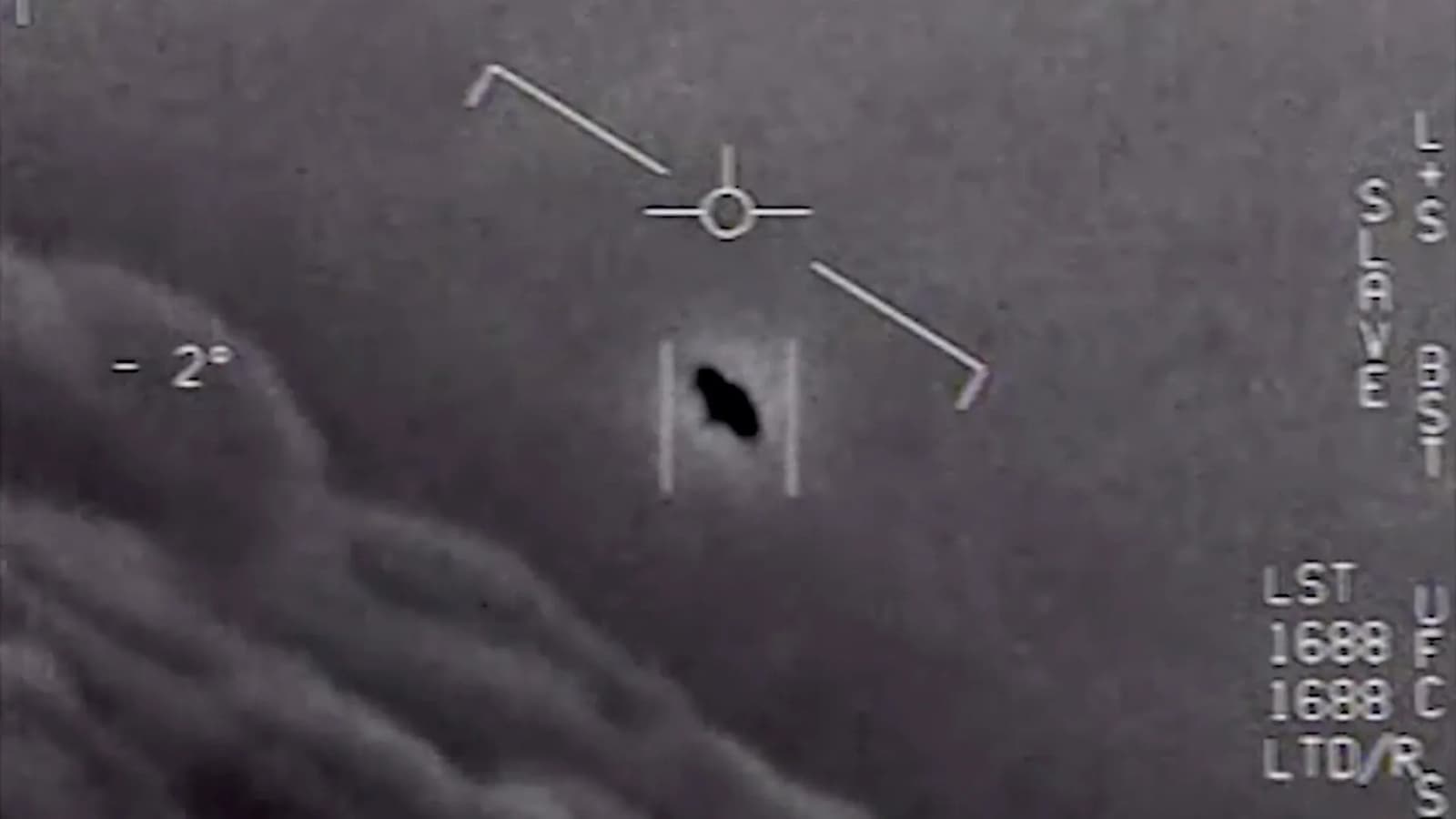
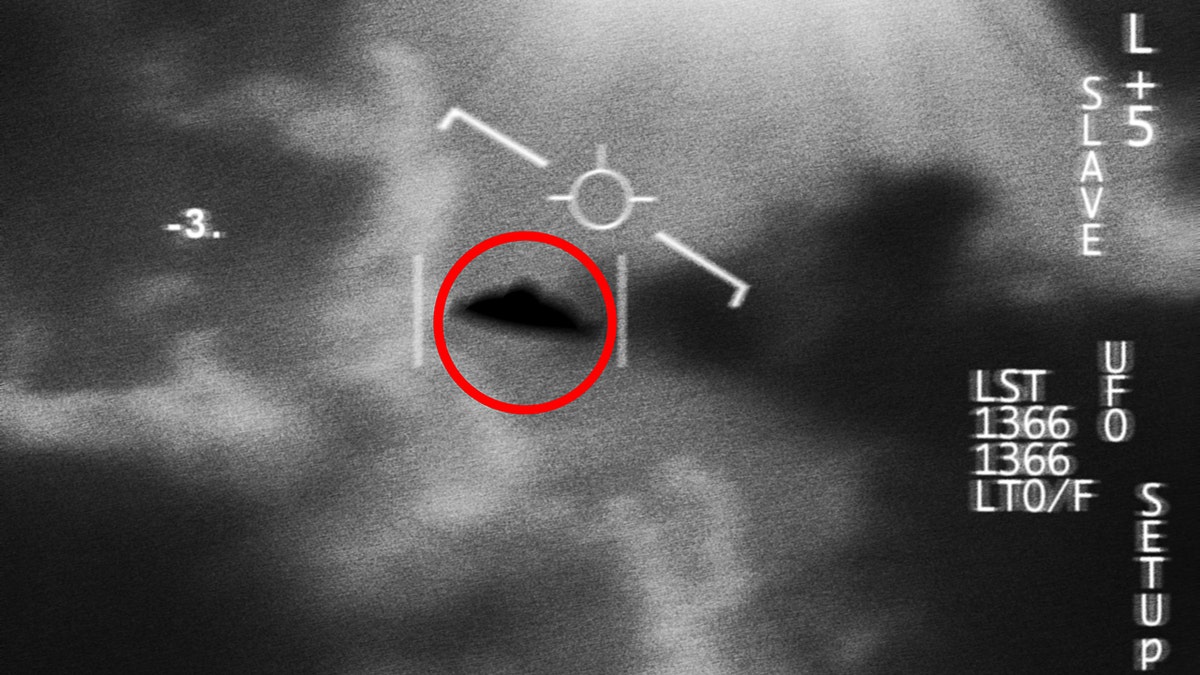
Grusch told Rogan that the US government is aware of at least one underwater UFO base where 'stuff comes and goes.' Above is a screenshot of a video, which UFO insiders claims captures a UFO hovering over the Pacific Ocean
Burchett said in an interview with journalist Matt Laslo: 'We have naval personnel telling me we have these sightings, these underwater craft they're chasing that go hundreds of miles an hour, and the best we got is something that does maybe a little under forty miles an hour.'
Grusch also told Rogan that he was shown video of dead bodies recovered from the crash site of an alleged alien spacecraft. This top-secret footage was said to be 'contemporary' and not grainy, unreliable recordings from the 1950s.
He alleged that the beings he saw were 'very beautiful' with pale, bluish-white skin, which were now being kept in a frozen storage facility for further examination.
Rogan asked: 'This video, do you think this will be a part of disclosure, that we'll get to see this video of these dead bodies?'
'Probably. There's a lot of audio-visual stuff. The problem with the current climate like you're going to have to wheel out the physical evidence, too, because the trust in government is so low right now,' Grusch claimed.
A UFO whistleblower has claimed that 'at least a dozen' craft have crashed during apparent battles between gray and reptilian aliens, leaving Joe Rogan stunned.
David Grusch, a former intelligence officer who now assists lawmakers with UFO transparency, made the extraordinary claim during a recent appearance on The Joe Rogan Experience.
Grusch testified under oath in 2023 that the US government has secretly operated programs to recover and reverse-engineer non-human spacecraft for decades.
Asked about a possible war between non-human intelligence (NHI) in Earth's skies, he said: 'We've documented that... what we perceive as warfare. It looks like conflict. It smells like conflict.'
Grusch said he had been briefed on the recovery of dead reptilian and grey alien bodies at crash sites. 'So the grays and reptilians were duking it out,' Rogan said.
'I guess,' Grusch replied, raising his arms. A wide-eyed Rogan responded: 'Whoa. It sounds f****** crazy, David.'
Grusch repeatedly explained that he has never seen the UFO crashes or alien bodies and was only conveying that his information came from files on top-secret programs, videos and confessions from government and military insiders.
However, the US military and the White House have maintained for decades that no physical evidence has been found that proves UFOs and alien life exist.
A UFO whistleblower has claimed that 'at least a dozen' craft have crashed during apparent battles between grey and reptilian aliens (above, artist impression), leaving Joe Rogan stunned
Grusch told Rogan he knew of 'at least a dozen or two' crashes linked to apparent conflicts between non-human beings.
Rogan then asked what type of craft had reportedly been found alongside a dead reptilian body. Grusch said it was a Tic Tac.
Measuring roughly 40 to 45 feet long, it reportedly had no visible wings, tail, control surfaces or exhaust.
The discussion then turned to the alleged appearance of the reptilian beings, with Grusch relaying a description he attributed to a friend.
'Seven-foot-plus, sort of gorilla-looking skin,' he said. 'But there are multiple types. There's ones that are more humanoid-looking.'
Grusch also discussed reports of grays of different sizes, including taller beings and 'little tiny ones.'
When Rogan suggested the smaller figures might be androids, Grusch said that hypothesis had also been discussed within the program.
The reptilian theory, claiming shape-shifting reptilian aliens secretly control Earth, surged in popularity through conspiracy theorist David Icke in the late 20th century (Stock Image)
Grusch emphasized that he had never seen the alleged reptilian beings in person, saying he was relying on other people's experiences and audiovisual material.
Asked how he had viewed the footage, he declined to explain the arrangements, describing them as 'kind of sketchy' and saying they were intended to 'keep everybody safe.'
He also said he was withholding details to protect people who had supplied information, claiming some had been physically threatened.
In a briefing, physicist Dr Eric Davis, known for his work on top-secret Pentagon projects, stunned listeners by referencing alleged alien species, 'Grays, Nordics, Insectoids, and Reptilians,' as potential operators of unidentified craft.
Former Air Force Major David Grusch, a UFO whistleblower, was interviewed by podcast host Joe Rogan on September 30
An alleged alien race known as the Nordics is said to have human-like features (Stock Image)
Davis described these entities as humanoid, approximately human-sized, and possibly linked to classified reverse-engineering programs.
Missouri Representative Eric Burlison, a member of the House Oversight Committee and UAP caucus, prompted the discussion, revealing on The Endless Void with Kristin Fisher that he had heard these same four classifications in private briefings.
'I've heard those four classifications discussed in meetings in this office by others,' Burlison said.
'But what I wasn't expecting was for him to say it. I wasn't expecting Eric Davis, you know, a respected scientist, to say that.'
Burlison, a self-described skeptic, admitted uncertainty about Davis's sources, noting the physicist's comments may stem from firsthand knowledge or secondhand reports.
'If true, this would be a paradigm-shifting moment,' Burlison said. 'But if it is true, the government has no right to keep such a secret from the public it serves.'
It's one of the biggest unanswered questions in astronomy: has life ever existed on Mars – and could it still be there today?
We may finally find out in just two years, when the European Space Agency's (ESA) Rosalind Franklin rover makes the 140 million–mile journey to the Red Planet.
However, before the £1 billion rover can make that epic journey, scientists need to test that everything is working exactly as it should.
That is why I travelled out to the Tabernas Desert in Southeast Andalusia to see how ESA and Airbus are getting ready for what's tipped to be the most important mission in space exploration history.
With its barren landscape, soft clay soils, and incredibly dry conditions, Europe's only real desert is about as close to the rover's Martian landing site – Oxia Planum – as you can get without a trip in a rocket.
And as I watched a rover crunch its way across the dusty ground, I was almost convinced that we'd already touched down on the Martian surface.
Before the European Space Agency's Rosalind Franklin rover can travel to Mars, scientists have taken its replica, Charlie, out to Spain's Tabernas Desert for testing
The Daily Mail's Wiliam Hunter (pictured) travelled out to Southeast Andalusia to see how ESA and Airbus are getting Rosalind Franklin ready for its big mission
The Rosalind Franklin Rover represents over a decade of preparation and around $1.3 billion (£980 million) in investment.
Built by Airbus in Stevenage, the rover combines cutting–edge tools built by researchers from all over Europe and ground–breaking autonomous navigation systems.
Originally planned to launch in the early 2020s, the project has been set back multiple times, first by Covid–19 and then by the Russian invasion of Ukraine, which required all the Russian components to be replaced.
As a result, there is a lot riding on the success of Europe's first Mars rover – and scientists cannot afford any mistakes.
It takes at least 20 minutes for a signal to travel from ESA's command centre to the rover on Mars, and if something goes wrong, there's no chance of repair or recovery.
That is why it is so crucial that scientists conduct what they call 'emulations', taking a replica rover out into a simulated Mars environment on Earth to see how it all works out.
So, while the real Rosalind Franklin sits safely in an ultra–clean room in Turin, Italy, scientists have made a near–exact copy, known as Charlie, to test here on Earth.
Charlie is functionally just like the real Mars rover in almost every way, except that it's made of cheaper parts that can be repaired and replaced as needed.
While the real Rosalind Franklin stays safe in a clean room, scientists have prepared an 'emulation' version called Charlie to test on Earth
Charlie is functionally identical to the real Rosalind Franklin, except that it has been made with cheaper parts that can easily be repaired or replaced
Rosalind Franklin: Europe's first Mars rover
Mission: ExoMars
Targeted launch date: 2028
Target landing site: Oxia Planum
Aim:Search for signs of life
Estimated cost: $1.3bn (£0.98bn)
Weight: 310 kg
Size:3.5m x 2m x 2 m
Key feature:Drill box capable of sampling 2m beneath the surface
Scientific instruments:
* CLUPI: Close–UP Imager
* Enfys: Infrared Spectrometer for ExoMars
* Ma_MISS: Mars Multispectral Imager for Subsurface Studies
* MicrOmega: visible plus infrared imaging spectrometer
+ MOMA: Mars Organic Molecule Analyser
* PanCam: Panoramic Camera
* RLS: Raman Spectrometer
* WISDOM: Water Ice and Subsurface Deposit Observation On Mar
Every day for the last three weeks, scientists have been carting Charlie out into the middle of the Tabernas Desert to put it through its paces.
With its deep valleys, wind–carved cliffs, and barren ground, this desert once served as the backdrop for countless Spaghetti Westerns, scenes in Indiana Jones, and even parts of Game of Thrones.
But as we bounce over a winding dirt road further and further from civilisation, it seems that those film studios missed a trick by not shooting a few science fiction films instead.
If you learn to ignore the odd power pylon in the background, and the small horde of journalists getting in the way, it's easy to forget you're actually on Earth and not on Mars' Oxia Planum.
Professor Susanne Schwenzer, a planetary mineralogist from the Open University and the field geologist for the ExoMars field tests in Spain, told the Daily Mail: 'We know quite a lot about Oxia Planum from orbital investigations and mapping, so we know it is a layered terrain where you have older layers on the bottom and younger layers on the top.
'We have a similar situation here if you look all around you, and so it is visually very, very similar to Mars.'
In fact, that strikingly alien quality is why it's worth lugging all this expensive equipment out into the blazing heat of the Tabernas Desert.
While it's important to check that all the equipment works as intended, these tests are really about giving the team a taste of what it will be like to drive a rover on Mars.
'You have three factors,' Professor Schwenzer explains.
'You have the science, that the scientists take care of; you have the engineering, which the engineers take care of, and you have the link between what the scientists want to do and what the machine can actually do.
'And they all need to work to get the best science return, and that's what we're doing here; testing and training people to actually use this to the best effect before we get to Mars.'
The Tabernas Desert is the perfect place to test a rover because it looks very similar to the Martian surface
It is extremely important that the test area actually looks like Mars, so that the scientists controlling the rover can practice navigating Martian terrain
Because of that, it matters that the landscape really does look like Mars, and the team go to great lengths to ensure it stays that way.
As Charlie gets ready to undertake the day's procedures, Professor Schwenzer follows along with a broom, sweeping away the footprints that would ruin the illusion for the control team peering out through the rover's cameras.
While a footprint might seem inconsequential, it provides the operators with an all–too–easy–to–use reference point that they would never have on Mars.
We've joined the team for a test of one of Charlie's critical instruments, the WISDOM ground–penetrating rover.
Dr Wolf–Stefan Benedix, an engineer from TU Dresden who co–developed WISDOM's antenna, says: 'It's a radar that is looking into the soil. We transmit some EM waves, and we receive some EM waves, and from that we see what is beneath the surface.'
In particular, WISDOM is tuned to look for layers in the Martian soil that might contain certain minerals created by water, or even layers of ice trapped beneath the ground.
That's absolutely critical, because the real Rosalind Franklin isn't just concerned with searching the Martian surface, but rather, what lies deep below.
Just like the Tabernas Desert, the part of Mars where the rover is scheduled to land, the Oxia Planum, is made up of layers upon layers of clay sediments.
Scientists know that these clays are an extremely good sign that water was once present.
In fact, research suggests that the entire area may have once been covered by an enormous ocean several miles deep, which dried up about four billion years ago.
To ensure the images that the crew see (pictured) are as close to the real thing as possible, scientists sweep the desert to remove any footprints or car tracks before testing
Rosalind Franklin's key piece of equipment is the drill, which will be able to collect samples from two metres beneath the surface. That is deep enough to retrieve material undamaged by radiation
However, since Mars has such a thin atmosphere, intense radiation from the sun has long since destroyed any signs of life in the top half a metre or so of soil.
That is why the Rosalind Franklin has been equipped with a newly designed drill, capable of taking pristine soil samples from up to two metres below the surface.
Since Mars doesn't have tectonic activity or erosion from water, these deep soil layers might have been undisturbed for billions of years, preserving a record of a time when Mars was warm, wet, and potentially habitable.
Unlike previous rovers, Rosalind Franklin is also equipped with an onboard suite of analytic instruments that can test that soil for the chemical signs of life – known as biosignatures.
Everything else, from the WISDOM radar to the specialised geological cameras, is designed to ensure the rover finds the perfect place to drill, and has the best chance of finding signs of life.
That means, if there are signs of alien lifeforms hiding beneath the barren surface, Rosalind Franklin stands a good chance of finding them.
Dr Nicolas Oudart, an astrophysicist at the University of Versailles and part of the WISDOM team, explains that one key biomarker the rover is looking for is called 'chirality'.
Like your hands, molecules often come in one of two mirror arrangements – a left and right–handed version.
While you'd expect the left and right versions to be fairly equally abundant, Dr Oudart says 'life is known to favour one over the other'.
So, if the rover finds a lot more left–handed molecules than right–handed ones, or vice versa, it could be a good sign that biological processes have been at play.
Rosalind Franklin will also be equipped with a set of cameras developed by British scientists at Aberystwyth University
The rover is equipped with a ground–penetrating radar to search for the perfect place to drill, and give scientists the best chance of finding signs of life
That would be just one piece of evidence that would form a wider picture in the search for signs of life, and scientists won't be eager to call the discovery too soon.
It will take a lot of tests, and a lot of potential biomarkers together to show that life really might have thrived on the Red Planet.
But, by doing practice tests like these out in the desert, the researchers are doing everything they can to give Rosalind Franklin the best chance possible.
And, if they do find signs of ancient life, it would change everything about the way we look at the universe.
Dr Oudert says: 'Right now, the only example of life we know is the one on Earth, so we don't actually know how likely it is for life to appear on a planet when you have the right conditions.
'If we find that there was life on Mars, it would mean that in the solar system you have two planets with the right conditions and on those two planets, you have life.
'That would mean that the Earth is not that unique, and it's more likely that we have many planets in the galaxy with life.
'So we don't know for sure what we will find, but if we find life, the implications are very interesting.'
SpaceX reached another historic milestone on Monday after launching Starship, the world’s most powerful rocket, into orbit. But only minutes into the mission, something unexpected appeared in the live stream: an unidentified object that some viewers interpreted as a large UFO while others suggested that it was a gas emission from the rocket.
In his latest video, UFO investigator Michael Salla has raised a far more provocative possibility. Given the rapidly expanding role of SpaceX and commercial launch systems in opening access to space, Salla has suggested that unexplained objects seen around these missions could potentially be connected to alleged secret space programs such as Solar Warden or a covert United Space Command.
If such claims were ever substantiated, they could fundamentally change the way we understand and track unexplained objects operating beyond Earth.
There is another, even more controversial question surrounding the phenomenon: how much information about UFOs, advanced aerospace technology, and secret space programs is actually being withheld from the public?
Critics of government transparency argue that certain agencies or elements within government may continue to restrict the release of classified UFO files and information concerning advanced propulsion and aerospace technologies.
Could it be possible that a highly classified international organization, perhaps even a “United Earth Space Command”, is operating quietly behind the scenes? If such a hidden organization were ever proven to exist, the question would no longer be simply what was captured on camera, but something far more profound: what else is operating in space that we have never been told about?
RELATED
UFO chases Starship? The SpaceX Flight 14 Analysis you HAVEN'T seen!
The Mysterious UFO Spotted on SpaceX’s Livestream: Explained
A team scanning a boat-shaped hill in eastern Turkey has announced that new radar images show a large man-made structure underground, not just natural rock.
On Wednesday, private research group Noah’s Ark Scans released a preliminary report about their work at the Durupınar Formation in Turkey's Ağrı Province, claiming that the 515-foot boat-shaped mound contained a 'man-made object.'
The scans were conducted by Dr Khosrow Bakhtar, an engineer who spent decades building detection systems for US defense agencies, including the Air Force, Navy and NORAD.
He used a system he invented called BakhtarRadar, originally developed to find buried tunnels and hidden structures, to scan beneath the boat-shaped Durupınar mound and see whether it was solid natural rock or a man-made structure.
That process has now concluded that the object under the Durupınar mound is not a natural rock formation, but a large organized man-made object with corridors, chambers and hallways inside.
In a statement sent to the Daily Mail, Dr Bakhtar said: 'Whatever the object is beneath the surface is extraordinary.'
'In forty years of this work, I have never seen anything like it. It could be a ship. It could be a spaceship. What I can say from the radar is that it is organized, it is structural, and a solid geological mass would not have returned such a strong signature.'
According to the Bible, the massive vessel saved humanity and every kind of animal from annihilation during a catastrophic flood that some biblical chronologies place more than 4,300 years ago.
The ship-shaped mound believed to be the rest place of Noah's Ark in Turkey
New scans of the Noah's Ark site revealed material that was determined to be something other than natural geological material such as rock
Bakhtar said the new radar images do not look like ordinary rock, mudflow or a solid natural hill in Turkey.
Instead, they showed organized internal features, including repeating lines and angles, open passageways, corridors, chambers and hallway-like spaces running the length of the alleged vessel trapped underground.
Bakhtar told the Daily Mail in a statement that the radar is designed to hide ordinary natural features such as rock and highlight buried structures, open spaces and man-made materials.
Since those complex patterns still appeared strongly in the scans, the team concluded the object was not a natural geological formation, pointing to the belief that this is the site of the ship constructed to survive the biblical Great Flood being true.
'Natural ground does not organize itself into corridors, chambers and hallways,' Dr Bakhtar explained.
'The system was built to separate buried structure from host geology, tunnels, voids, worked materials, discontinuities. That is what it is seeing here. A solid geological mass would not have returned this signature.'
The first major radar survey in 2019 detected linear and angular anomalies the team interpreted as possible walls, passageways and separate compartments.
Core drilling for samples of the structure began in late September 2026 under the direction of a Turkish university-led field program.
The Durupınar Formation in Turkey, believed to be the resting place of Noah's Ark from the biblical Great Flood
New scans of the Noah's Ark site revealed what looked like passageways and other chambers similar to a ship
The first holes drilled struck a very hard layer about 12 to 15 feet down inside the Durupınar Formation. Those samples are being sent to outside labs for further testing.
The team previously revealed to the Daily Mail that those drilling samples of rich in organic material were being tested to determine whether it contained decayed wood.
The full radar scan is expected to be completed by November 2026, with more lab results coming later.
The next major step in this ongoing investigation will be testing for animal DNA inside the structure.
In the Bible’s Book of Genesis, chapter 6, verses 19-20, the flood story says God told Noah to bring male and female pairs of each kind of animal onto the ark so they could survive.
Noah’s Ark Scans revealed that they are in talks with scientists who specialize in recovering and reconstructing ancient and extinct animal DNA from pieces of deteriorating material, such as old bones, teeth or other remains that have been buried for millennia.
An international team are '100 percent confident' that the formation is a 'man-made object'
New scans of the Noah's Ark site revealed material that was determined to be something other than natural geological material such as rock
Andrew Jones, Vice President of the Noah’s Ark Research Project and founder of Noah’s Ark Scans, said in Wednesday's announcement: 'We now know we are looking at a massive, 515-foot, boat-shaped man-made structure with organized patterns and corridors in the Mountains of Ararat, where Genesis places the Ark.'
'The challenge is how we prove this is the vessel that preserved living creation through a catastrophic flood. That proof will not come from another scan. It will come from identifying and confirming ancient animal DNA inside the voids Dr Bakhtar mapped inside the structure.'
RELATED
They Finally Found Noah’s Ark? New Drilling Begins at Turkey’s Mysterious Durupinar Site | World
They Drilled Into Noah's Ark: The 6 Discoveries Nobody Expected to Find
What if the world's smartest chatbot really did wake up one day?
While it may sound like science fiction, a leading consciousness scientist says we urgently need to start thinking about the possibility.
We currently have no reliable test to determine whether an AI system is conscious, Megan Peters, a lecturer in Computational Cognition at University College London, said.
And if it does one day become aware of its own thoughts, humans face a significant moral dilemma – whether to turn it off.
Professor Peters argues that the biggest problem is not that scientists have found evidence of conscious AI, but that they currently have no agreed way to look for it.
The topic will form the basis of a talk she will be giving at New Scientist Live this month (10-12 Oct).
‘We need to have something better than vibes,’ she told the Daily Mail.
‘You can't just go look for signs or indicators or markers of consciousness in an artificial system because we don't know what they are.’
We currently have no reliable test to determine whether an AI system is conscious, Megan Peters, a lecturer in Computational Cognition at University College London, said
The difficulty is that consciousness remains one of science's greatest mysteries, even in humans, Professor Peters said.
Researchers can ask a person whether they are conscious and receive a meaningful answer, but AI systems are different.
‘If we ask AI systems, we can't really trust the answer in the same way,’ she explained.
The issue has become increasingly urgent as chatbots grow more sophisticated and AI companies invest heavily in research into so-called AI welfare.
‘A huge amount of money is being spent on thinking about AI welfare in some of the biggest AI companies,’ Professor Peters said.
She warned that people often mistake the fluency of modern chatbots for genuine awareness, adding: ‘It's very easy to speak with these agents and to kind of get a feeling that someone's in there.’
That perception is already shaping real-world debates around AI rights, responsibility and autonomy, despite a lack of evidence that today's systems possess any subjective experience.
While Professor Peters said she does not believe current AI models are conscious, she said it does not mean the question can be ignored.
‘If AI is conscious and we treat it as not conscious, then there is a potential for morally significant harms,’ she said.
One future concern is whether deleting, retraining or switching off a conscious AI could be equivalent to causing harm to a sentient being.
‘Just going around switching things off that are sentient… if that is akin to killing them, then that doesn't seem great,’ Professor Peters said.
‘We want to not be torturing creatures that have conscious awareness.’
The expert warned that the risks run in both directions.
A genuinely conscious AI could potentially be harmed if humans treated it as nothing more than a machine.
But wrongly assuming a chatbot is sentient could also distort public policy, influence regulation and encourage people to place excessive trust in systems that merely mimic human conversation.
‘If we get it wrong the other way around, there's also very real consequences,’ she said.
To tackle the problem, her team is developing a framework that would compare dozens, or even hundreds, of potential consciousness tests, identifying which might work not only in humans but also in animals and artificial systems.
Rather than jumping straight from people to machines, Professor Peters believes scientists should gradually test their ideas across species with different brains and behaviours before applying them to AI.
For now, she urges caution whenever bold claims emerge that a chatbot has become self-aware.
‘Just because you see someone claiming that they have or have not detected artificial consciousness, you need to go and ask why,’ she said.
RELATED
The dangers of accidentally creating a conscious AI | The Economist
The Man Behind AI Safety Thinks AI Is Conscious
AI Pioneer Geoffrey Hinton: AI Is Conscious, Superintelligence is Coming, And We Should Be Worried
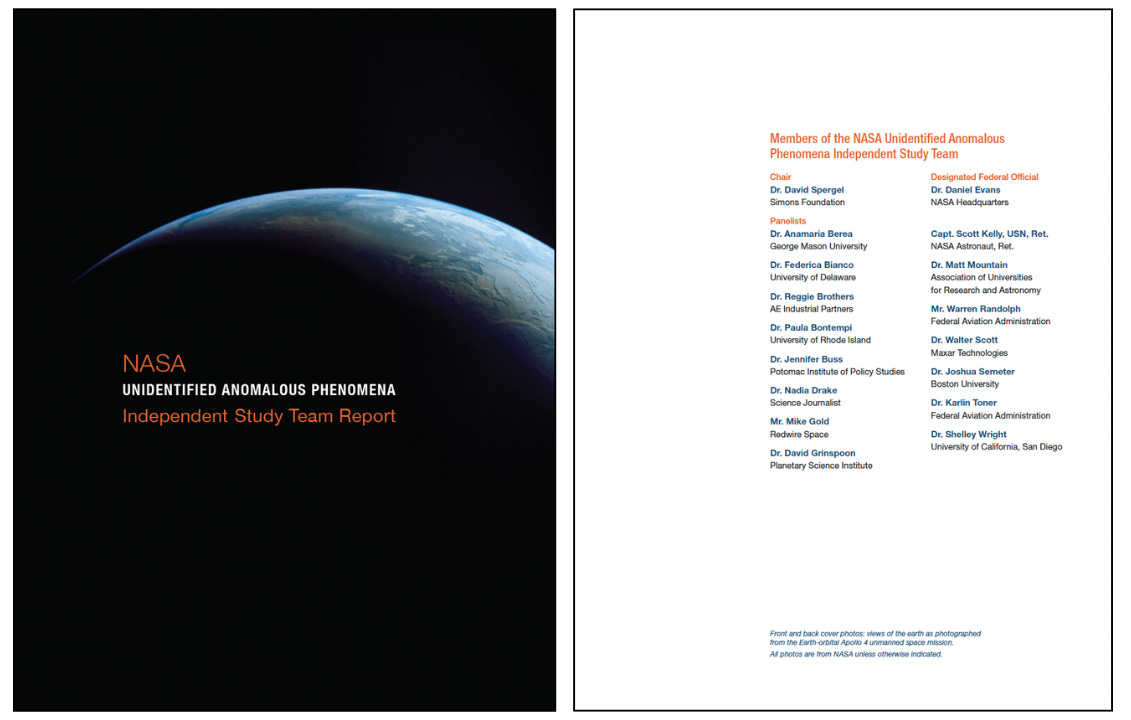
NASA Claimed They Had Zero UAP Records. A 3,668-Page FOIA Release Tells a More Complex Story
Agency officials indicated that NASA held no official UAP records. However, a new FOIA release reveals thousands of pages of internal administrative research and library inquiries.
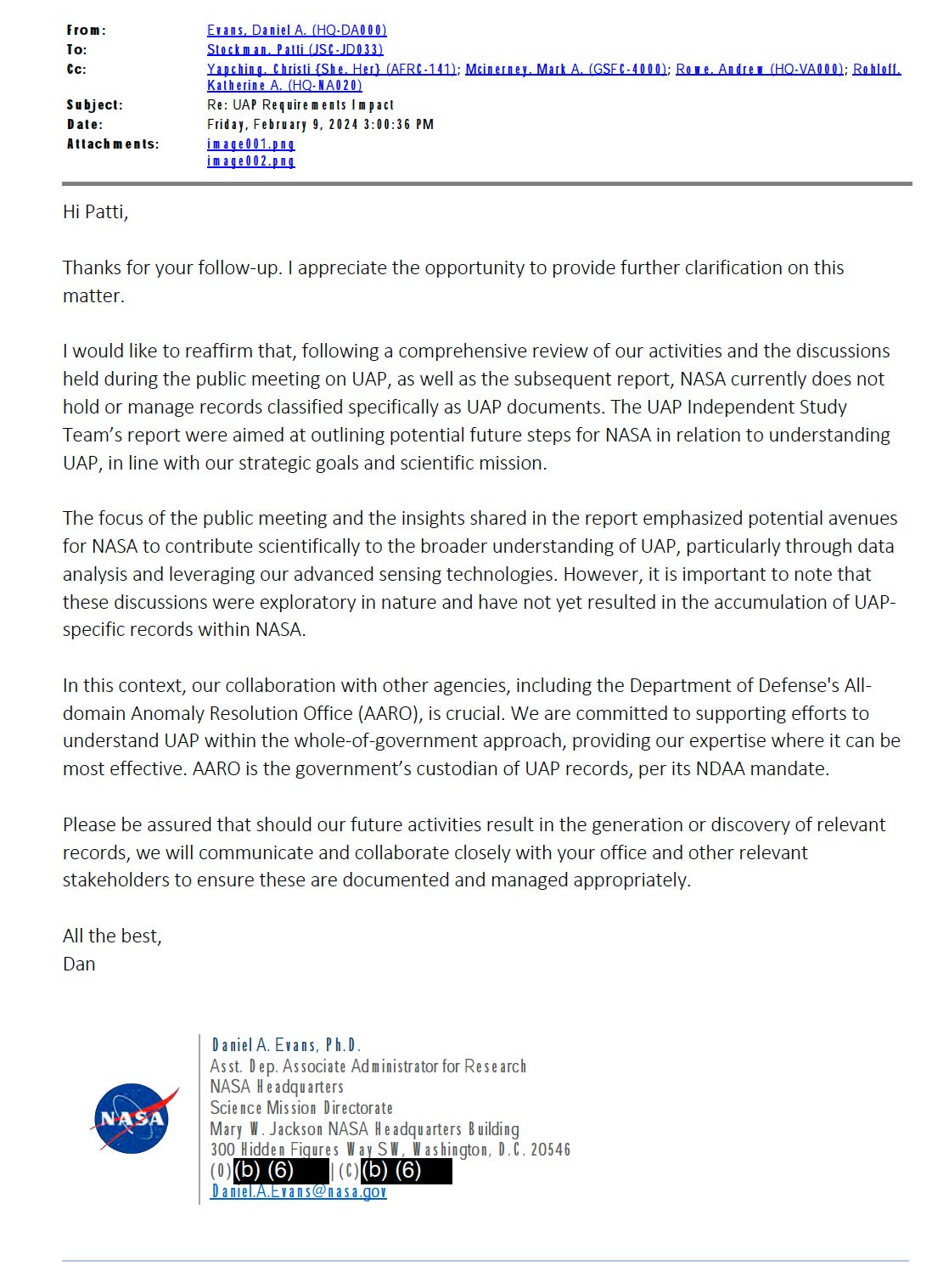
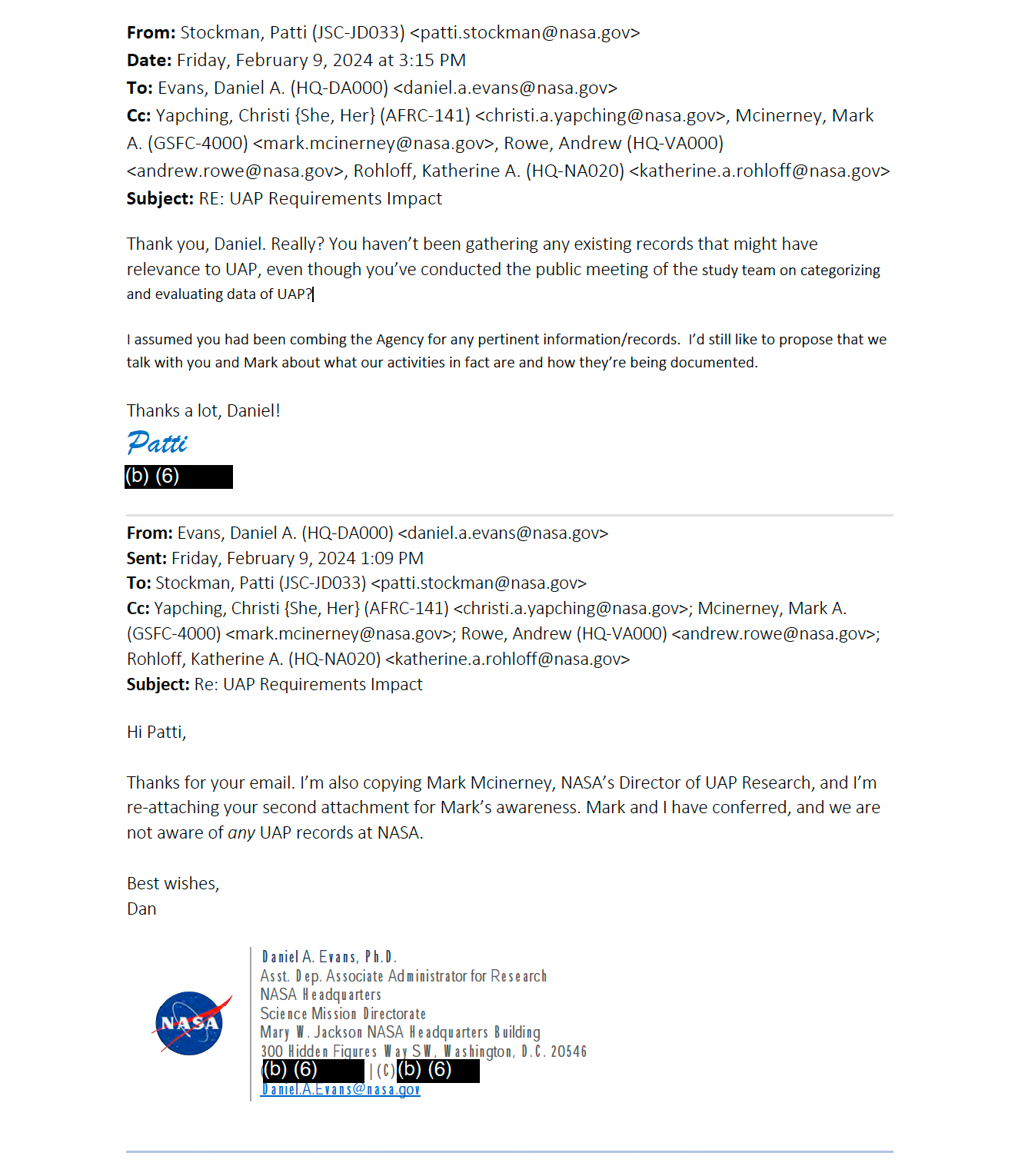
When navigating the federal bureaucracy for transparency on Unidentified Anomalous Phenomena (UAP), researchers frequently encounter conflicting administrative positions. A prominent example emerged in documents secured through the Freedom of Information Act (FOIA). In NASA FOIA case 26-00029-F-HQ, NASA official Dr. Daniel Evans - who served as the Designated Federal Officer for the NASA UAP Independent Study Team (IST) - formally stated in email correspondence that “NASA currently does not hold or manage records classified specifically as UAP documents.”
Source: NASA FOIA 26-00029-F-HQ
This statement aligned with NASA’s broader public messaging regarding its approach to UAP. During a 14 September 2023 media briefing announcing the IST's final report and recommendations, NASA Administrator Bill Nelson and Dr. Evans repeatedly emphasised the agency’s commitment to openness, transparency, and the rigorous application of the scientific method to UAP data.
Source: NASA Science
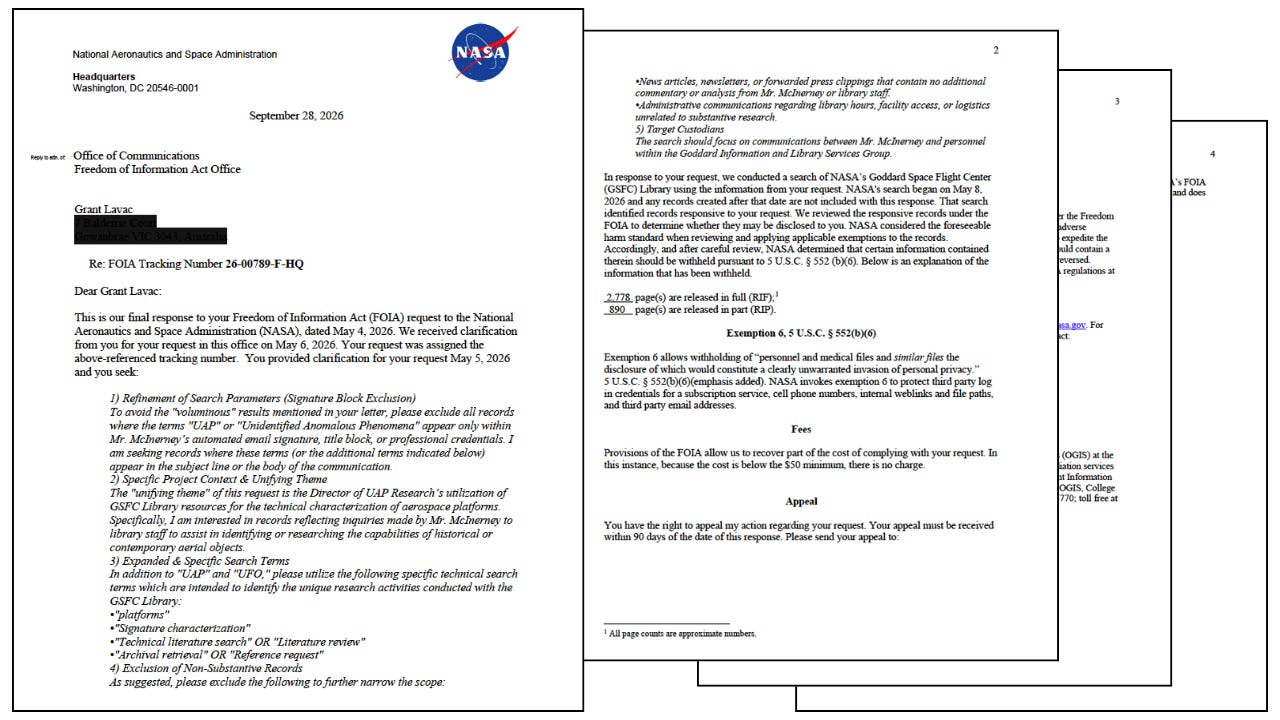
However, a separate FOIA request, 26-00789-F-HQ (available for download at article end) originally filed on 4 May 2026 and received on 28 September 2026 - targeting communications between Mark McInerney, NASA’s Director of UAP Research, and research librarians at the Goddard Space Flight Center (GSFC) - has yielded a substantial paper trail.
Final Response for NASA 26-00789-F-HQ
NASA returned a staggering 3,668 pages (2,778 pages released in full and 890 pages released in part). These documents illustrate a distinct administrative reality: while leadership maintained that the agency held no formal UAP records, the newly appointed Director of UAP Research was actively engaging internal library resources to compile technical literature on advanced aerospace platforms, propulsion, and perceptual phenomena.
Researching Platforms, Propulsion, and Perception
The newly disclosed emails outline a methodical, literature-based research effort conducted through the GSFC Library during the latter half of 2023. The records detail five distinct areas of inquiry:
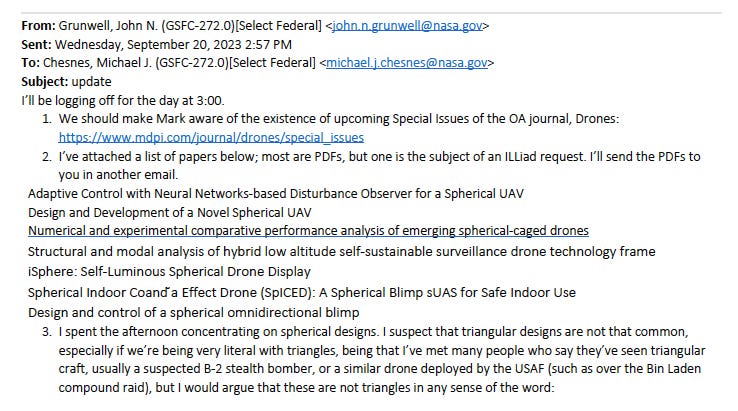
Advanced Airframes:In September 2023, McInerney requested academic and industry literature regarding state-of-the-art spherical or triangular drones. Library staff curated literature on spherical Unmanned Aerial Vehicles (UAVs) and Coanda-effect drones, while noting that true triangular designs were scarce in public literature, often overlapping with conventional military platforms like the B-2 stealth bomber.
Source: NASA FOIA 26-00789-F-HQ
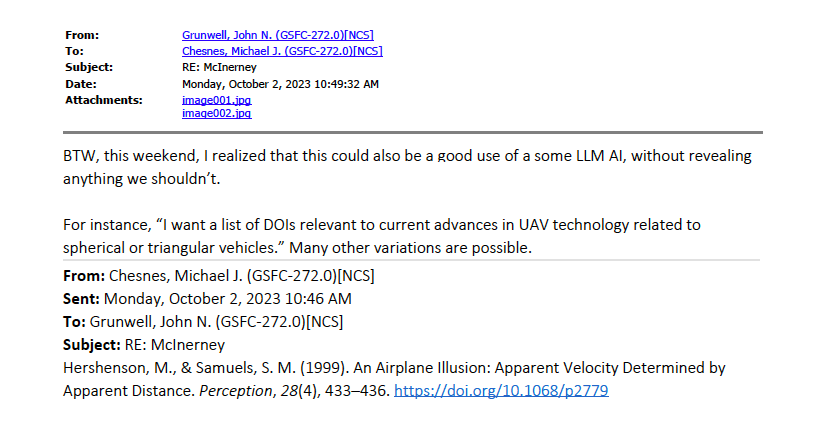
Artificial Intelligence and Operational Security: The research load became so vast that library staff discussed utilizing Large Language Models (LLMs) to assist the data hunt. However, even while conducting unclassified literature searches, NASA contractors inherently understood the sensitivity of the UAP Director's specific interests. On 2 October 2023, GSFC librarian John Grunwell suggested using AI to find literature on spherical and triangular drones, but explicitly warned his colleague to do so "without revealing anything we shouldn't."
Source: NASA FOIA 26-00789-F-HQ
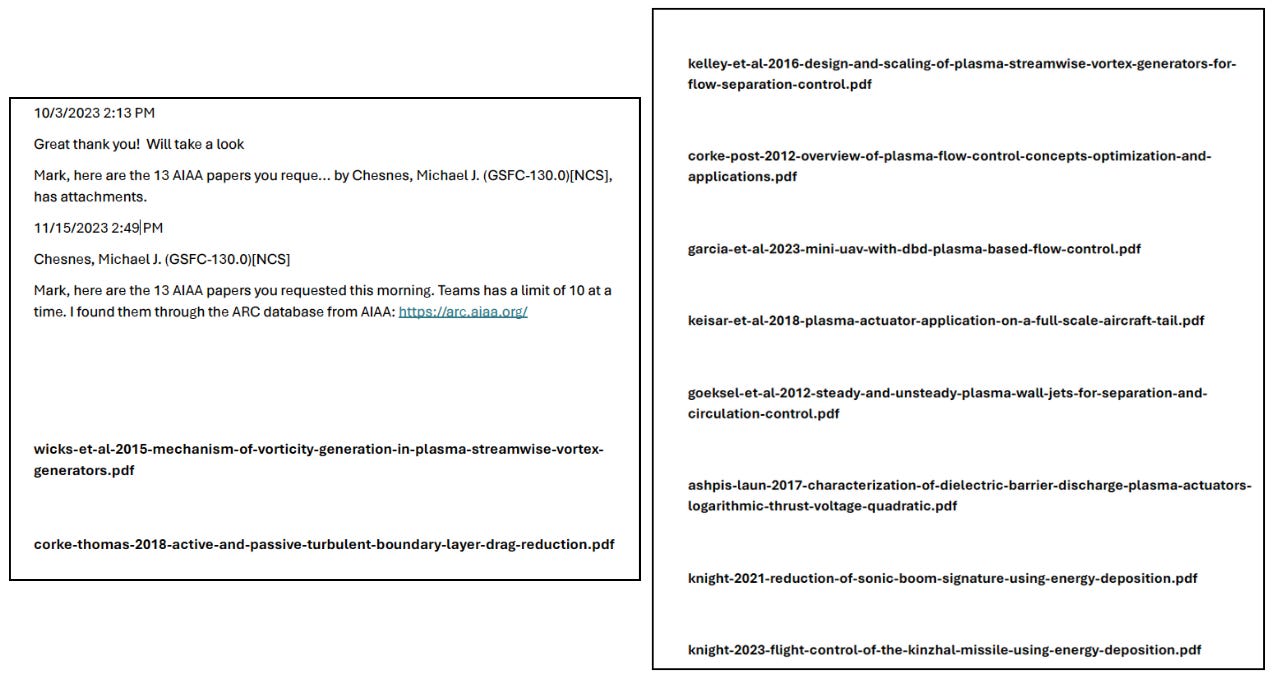
Exotic Propulsion: McInerney subsequently expanded his inquiries into commercial ion propulsion and electromagnetic propulsion. Library personnel provided technical papers from the American Institute of Aeronautics and Astronautics (AIAA) covering plasma flow control, dielectric barrier discharge (DBD) actuators, and energy deposition methods for sonic boom reduction.
Source: NASA FOIA 26-00789-F-HQ
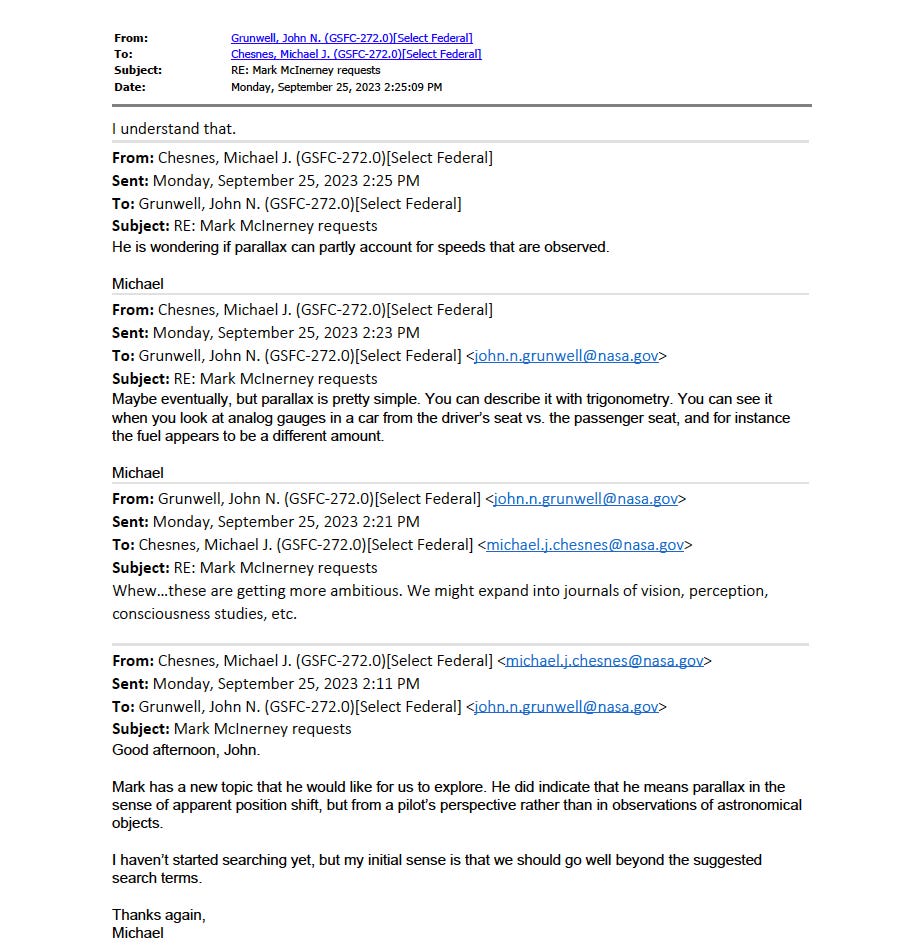
Human Factors: To examine observational data, McInerney requested literature on parallax and apparent position shift to help explain sightings where a pilot sees an object flying below them that appears to move "faster than reality." The requests pushed so far past standard aerospace parameters that it prompted a candid reaction from GSFC librarian John Grunwell, who noted the inquiries might require expanding into "journals of vision, perception, consciousness studies, etc."
Source: NASA FOIA 26-00789-F-HQ
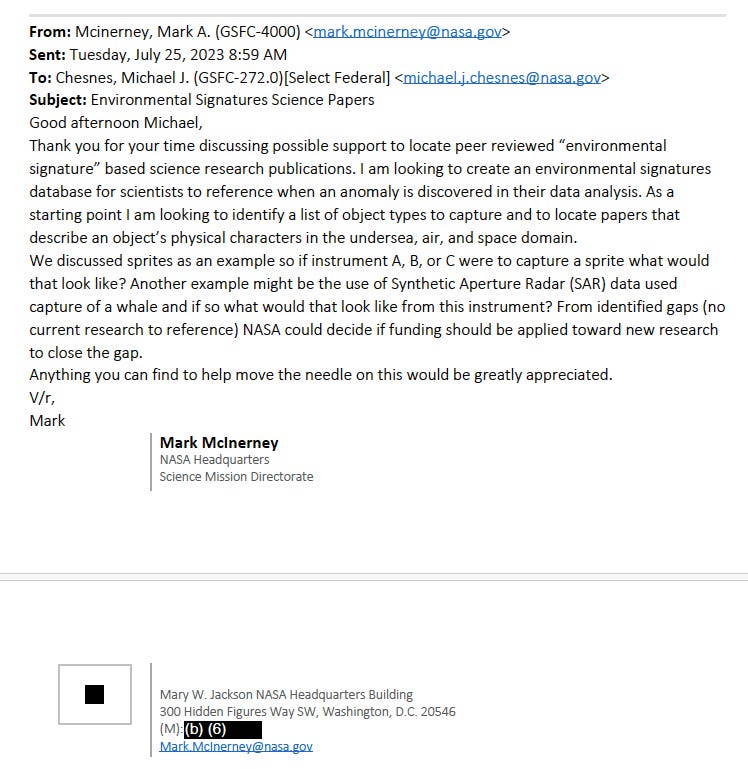
Environmental Signatures Database: A few months earlier in July 2023, McInerney initiated a project to explore creating an environmental signatures database. The objective was to help scientists distinguish known natural phenomena - such as atmospheric sprites or marine life tracked via Synthetic Aperture Radar (SAR) - from genuine anomalies. This initiative aligned with public statements made by IST members like Dr. David Spergel regarding the need to leverage NASA’s high-resolution data assets.
Source: NASA FOIA 26-00789-F-HQ
The GSFC library compiled extensive Zotero bibliographies spanning multiple scientific disciplines to support this database, though the initiative was paused by September 2023 due to resource limitations. Zotero bibliographies are curated, formatted lists of academic citations and research materials compiled using specialised reference management software.
NASA’s UAP Director of Research and Public Visibility
The timeline of these internal research requests ran parallel to NASA’s highly anticipated UAP Independent Study Team (IST) Report, released on 14 September 2023.
Source: NASA
During the media teleconference accompanying the report’s release, NASA leadership faced questions regarding the newly created Director of UAP Research position. Initially, officials expressed reluctance to publicly identify the individual holding the role due to concerns over cyber-harassment and stigma. Ultimately, later that day, NASA publicly confirmed Mark McInerney’s appointment.
Source: NASA Science
Despite the public visibility surrounding the appointment, the administrative reality of the position appears to have been temporary. Internal communications from early 2025 confirmed that McInerney’s detail to the Department of Defense’s All-domain Anomaly Resolution Office (AARO) concluded in the fall of 2024, and the Director of UAP Research role was left without a permanent backfill.
According to his LinkedIn profile, Mark McInerney has since stepped away from his federal duties, having officially retired from NASA in July 2025. His departure coincided with the agency's delayed resignation program, quietly bringing an end to his tenure as the first Director of UAP Research.
Internal Record-Keeping and Interagency Routing
The internal correspondence within the FOIA release also documents candid discussions between agency leadership and NASA Records Officer Patti Stockman regarding how UAP-related materials are categorised and retained. When informed that NASA claimed to hold no UAP records, Stockman expressed surprise regarding the lack of documentation given the agency’s recent public-facing studies.
Source: NASA FOIA 26-00029-F-HQ
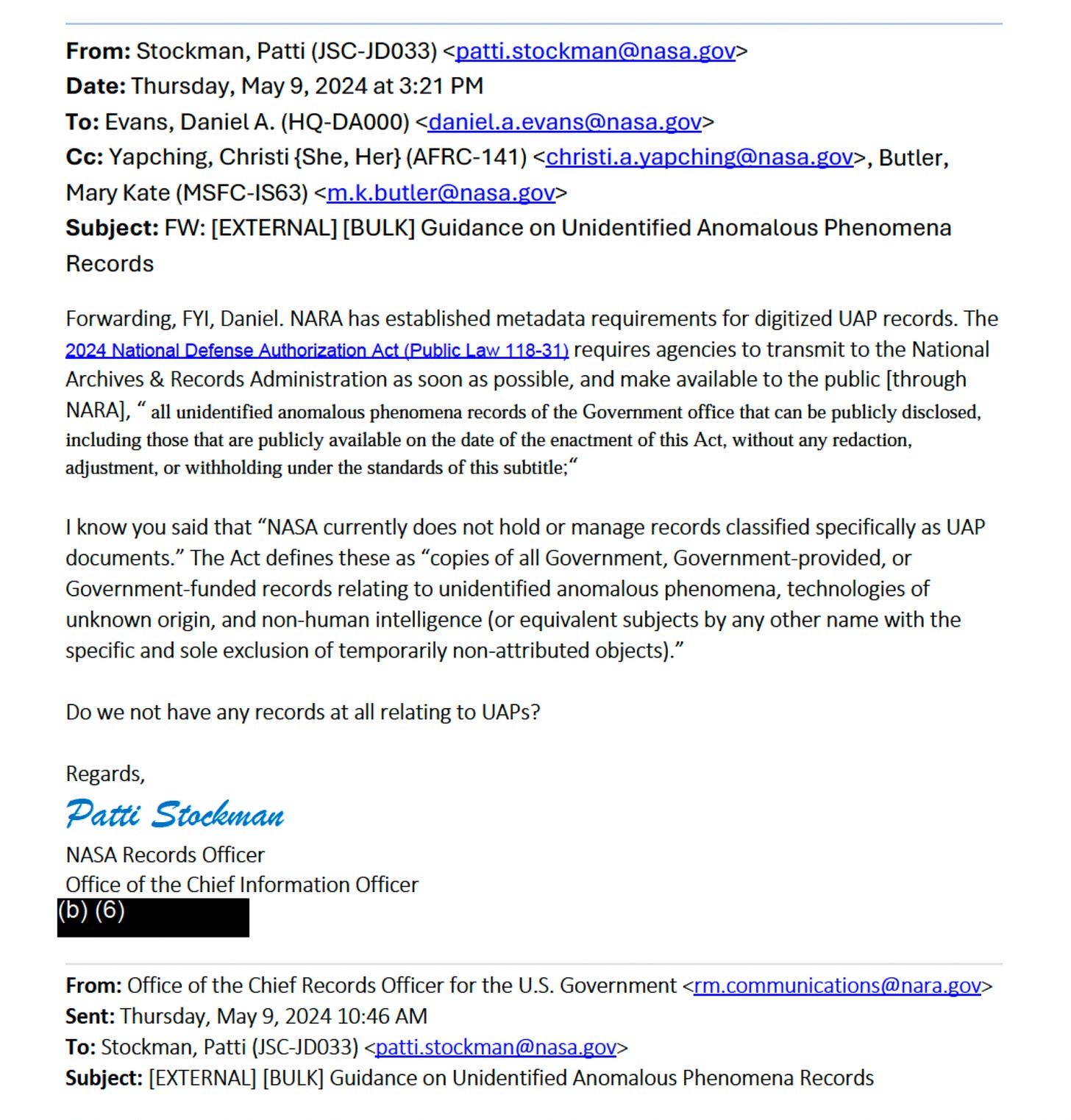
The conversation deepened when Stockman forwarded guidance from the National Archives and Records Administration (NARA) explicitly detailing the federal metadata requirements for digitised UAP records. She directly questioned how NASA could reconcile NARA’s requirements with the assertion that the agency possessed zero UAP records.
Source: NASA FOIA 26-00029-F-HQ
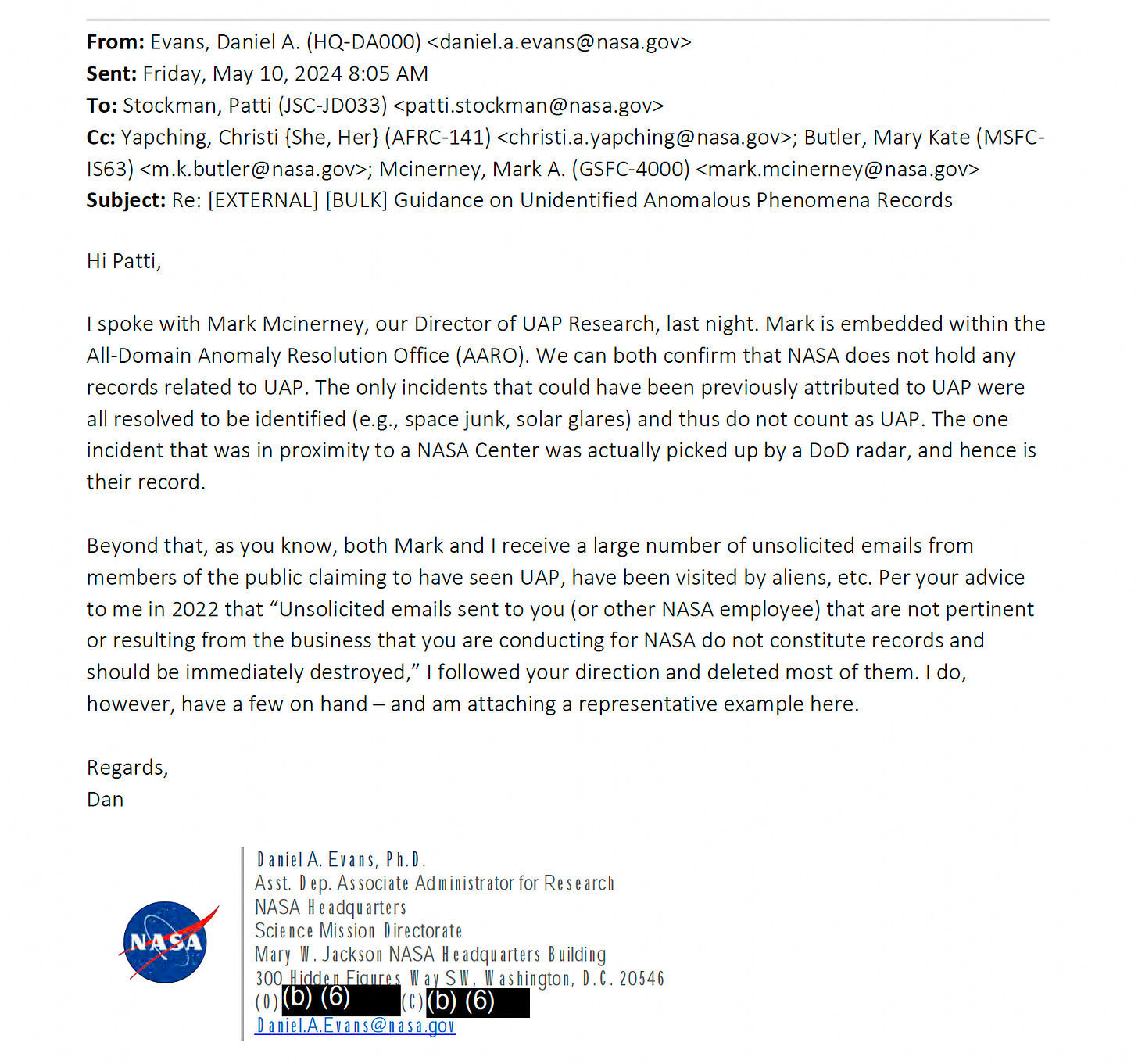
In response, Evans reiterated that NASA did not hold records related to UAP, noting that previous incidents investigated near NASA centers were ultimately identified or tracked by DoD assets. Regarding his own inbox, Evans noted that he received a large volume of unsolicited emails from the public. He stated that, following previous guidance regarding non-pertinent agency business, he had routinely deleted these communications, thereby resulting in no retained records.
Source: NASA FOIA 26-00029-F-HQ
Additionally, in handling subsequent FOIA requests, NASA referred portions of its files to external bodies: 26 pages to the Department of Defense and 15 pages to the Government Accountability Office (GAO). Because the GAO operates as an investigative arm of Congress, it is legally exempt from statutory FOIA timelines under 4 CFR Part 81. By routing records through these interagency channels, public access is managed outside of standard FOIA frameworks, highlighting the complex web of jurisdiction governing federal records on sensitive topics.
The Quiet Closure of the Goddard Library
Established alongside the Goddard Space Flight Center when it opened in 1959 as NASA’s first space flight complex, the GSFC Library grew to become the agency’s largest research library. For over six decades, it served as a vital intellectual hub, offering scientists, engineers, and administrators unparalleled access to technical aerospace literature and invaluable historical archives - including primary source documents dating back to the facility’s early high-altitude balloon research. As demonstrated by the UAP Director’s extensive 2023 inquiries, the library’s dedicated staff and expansive collections were instrumental in conducting the kind of deep-dive, multi-disciplinary research that standard digital searches simply could not replicate.
Despite its critical role in advancing aerospace research, the GSFC Library was permanently closed on 2 January 2026. The shuttering of the historic facility was part of a sweeping, Goddard-wide campus transformation and cost-cutting initiative aimed at consolidating operations. Driven by broader federal reorganisation mandates, the closure plan involved shuttering over a dozen buildings and more than 100 laboratories. While NASA indicated that a small percentage of the rarest materials would be saved or digitised, thousands of physical volumes and historical records were reportedly slated for disposal or transfer to the General Services Administration, effectively marking the end of an era for one of NASA’s most significant repositories of scientific history.
Conclusion
The release of these 3,668 pages demonstrates a fundamental tension within federal science administration. While executive-level public statements and internal emails stressed that NASA held no formal UAP documentation, the day-to-day operations revealed active data gathering and technical exploration of aerospace anomalies through the GSFC library.
As researchers continue to examine the remaining X-drive spreadsheets and Zotero databases referenced in the emails, this documentation serves as a valuable reminder: in the pursuit of transparency, tracking administrative workflows and library requests often provides the clearest picture of an agency’s true engagement with the UAP topic.
About Grant Lavac Grant is a UAP activist, researcher and podcaster residing in Melbourne, Australia. Grant frequently leverages the Freedom of Information Act to better understand Australia’s involvement (or rather, lack thereof) on the UAP issue, and engages both his elected representatives and the legacy media in the hope they’ll take the topic seriously and treat it with the respect it deserves. Grant reports on his FOIA findings and engagement efforts via his podcast, The Unexplained Rundown, which is freely available on Spotify and YouTube. To follow Grant’s ongoing research, visit grantlavac.com.
UFO Disclosure 2026: Fifth Batch Of 41 Classified Files Released; Here's How To Access
The oldest file in the latest release dates to 1950, while the latest was generated this year. This is the fifth release since President Donald Trump ordered federal agencies in February to identify and release classified records related to unidentified aerial phenomena (UAPs).
The US Department of War released a fifth batch of declassified UFO files on Friday, adding 41 new documents, images, and videos to its public disclosure website. The files went live around 6:36 PM IST. Records in this tranche of documents come from the Pentagon, FBI, CIA, State Department, and the Executive Office of the President. The oldest file dates to 1950; the newest was generated this year. This is the fifth release since President Donald Trump ordered federal agencies in February to identify and release records related to unidentified aerial phenomena. The first batch went live on May 8 with 158 files. Four more have followed since then on a rolling basis, with no fixed schedule between each of the subsequent releases.
In his statement announcing the release, Assistant to the Secretary of War for Public Affairs Sean Parnell said the department and its agency partners are actively working on the next set of files.
How to Access UFO Files?
The files are hosted on the US government portal called PURSUE, short for the Presidential Unsealing and Reporting System for UAP Encounters. The Department of War has not published individual summaries for this batch. Researchers and lay folks shifting through the 41 files are a bit bummed that there are no decent releases in the cache.
UFO Files 2026: The Department of War has put out a fresh batch of UFO, or UAP, records on its PURSUE website. This is the fifth release so far. It adds 41 new files and mixes together documents, images, and videos. The records come from the Pentagon, FBI, CIA, the State Department, and the Executive Office of the President. The oldest file in the set is from 1950. The newest one was created this year. The release page says these are unresolved cases, which means the government still does not have a final answer for them
Browse the documents, images, and videos under that release.
Click a file to view or download it as a PDF, image, or video.
Report back if you find anything anomalous out there.
Several FBI interview forms are also in the release, many with redactions and hand-drawn pictures of what witnesses said they saw. One report records a former military pilot talking about lights he saw while flying from Massachusetts to Ireland in October 2023. He said the lights were white, started dim, got brighter, and then faded out. He said the full cycle lasted from 10 seconds to one minute, and that he saw them about 10 times after the first sighting.
Fresh vegetables and salad may become part of the diet of future Moon residents. The space agencies of the United States and Canada, together with the German Aerospace Center, have agreed to prepare a ground-based prototype of a plant-growing module for a lunar base. They want to test how crops grow under reduced pressure and how the greenhouse exchanges oxygen, carbon dioxide, and water with the living module. Long-duration expeditions to the Moon, and later to Mars, will largely depend on this.
Artist’s illustration of the ground demonstrator of the Lunar Agricultural Module (LAM-GTD). Such a module could supplement the diet of residents of a permanent lunar base with fresh vegetables and salad. Credit: German Aerospace Center (DLR), Kyunghwan
Preparatory Stage of the Project
NASA, the Canadian Space Agency (CSA), and the German Aerospace Center (DLR) signed a memorandum of understanding in August 2026. As DLR reports, the document currently concerns only preparatory work on the ground demonstrator of the Lunar Agricultural Module (LAM-GTD). The parties will decide later whether it should be built. If so, the facility is expected to be completed no later than 2032.
According to the concept, the greenhouse for growing high-density crops will be connected to the crew living module through an airlock chamber that will regulate pressure and gas composition. The crew compartment itself will not be reproduced separately; it will be replaced by the HabSim simulator. Teams from several DLR institutes, NASA, CSA, and the National Research Council of Canada are working on the project.
Diagram of the ground prototype of the Lunar Agricultural Module (LAM-GTD). The concept combines a habitat simulator with a plant-growing module, and the facility could be built by 2032. Credit: LIQUIFER Space Systems GmbH, René Waclavicek
Reduced-Pressure Conditions
The project is intended to show how plants grow in a controlled environment at pressure lower than that on Earth. Similar conditions are expected at the future base near the Moon’s south pole, which NASA and its partners plan to build under the Moon Base project.
This choice is not accidental. NASA has studied an atmosphere for lunar habitat modules with a pressure of about 56 kPa, slightly more than half of Earth’s 101 kPa at sea level. In a spacesuit, the pressure is even lower, about 30 kPa. The smaller the difference between the pressure inside the module and inside the spacesuit, the shorter the preparation time for going outside, because with a large pressure difference an astronaut must breathe pure oxygen for a long time to avoid decompression sickness.
Researchers will also separately study the exchange of air and water between the greenhouse and the crew compartment. Plants absorb carbon dioxide, release oxygen, and return water to the circulation cycle, so part of the load on life-support systems can be transferred to them.
Experience from Antarctica
DLR has already experimented with growing food in isolation. Beginning in 2018, the EDEN ISS Antarctic greenhouse team spent five years collecting data on equipment reliability, crop yields, microbiology, and food safety.
A diverse harvest in the EDEN ISS Antarctic greenhouse of the German Aerospace Center. Since 2018, the team spent five years collecting data on system operation, plant cultivation, food safety, the crew’s psychological state, and electricity and water consumption. Credit: German Aerospace Center (DLR), CC-BY 3.0
Engineers recorded how much electricity, water, and working time such a facility requires. These resources will be limited on a lunar base, so such figures will be needed already at the design stage.
All of these data were obtained under normal Earth pressure. How plants will behave in the rarefied atmosphere of a lunar base will be shown by the new prototype.
More Than Calories
Fresh greens will not replace astronauts’ usual diet but will supplement it. Long-life packaged rations will continue to form the basis of their food, while plants will add variety.
Their benefits are not limited to nutrition. DLR emphasizes that plants support the psychological well-being of the crew. The EDEN ISS team in Antarctica studied this aspect as well. The farther expeditions travel from Earth, the more important such capabilities will become.
Greenhouses for Deserts
The project’s results may also prove useful on Earth. Specialized greenhouse designs could be suitable for dry desert regions where water must be conserved.
Controlled food cultivation offers another advantage. DLR expects that such technologies could help reduce pesticide use and improve food quality, although the mechanism behind this effect is not explained in the announcement.
Humanity plans to establish a colony on Mars, although it remains unclear whether such a settlement could survive without continuous supplies from Earth. To investigate this question, we examined the full range of human needs, from air and food to the mission’s underlying purpose. Our findings indicate that even aboard an orbital station, it is not yet possible to recover half of the oxygen; on Mars, one meter of soil overhead blocks only a quarter of cosmic radiation; and unexpected psychological challenges may arise among an isolated crew.
What people need to live on Mars and the Moon without assistance from Earth. Source: Universe Space Tech YouTube channel
Five steps to Mars
In visualizations, a city on Mars is typically depicted as a cluster of domes, solar panels, and rockets on the horizon. However, a dome alone does not constitute a colony. A colony begins when its inhabitants can produce their own air, water, and food, and repair equipment failures without relying on spare parts from Earth.
Elon Musk articulated this distinction with considerable precision. In a May 2025 interview with Fox News, he described Mars as a “life insurance policy” for humanity in the event of an asteroid strike, nuclear war, or climate catastrophe. He immediately added that a settlement unable to function without a continuous supply of resources from Earth would not constitute a backup plan; it would remain a branch.
Let us consider what the colony will be able to provide for itself in terms of life’s necessities. The hierarchy of needs proposed by psychologist Abraham Maslow offers a useful framework for organizing this discussion. It is commonly represented as a pyramid, although Maslow himself never drew such a diagram. For our purposes, the essential point is the progression from basic survival to the sources of meaning in our actions.
The five levels of needs for a colony on Mars — from air, water, and food to the purpose for which people travel to another planet. Authored by: Universe Space Tech
There are five steps. The first involve air, water, and food; the next involve safety, the people around us, work, and, finally, our goals. On Earth, we move through most of them without even noticing. On Mars, we will have to build each one from scratch, beginning with what we breathe.
Essential needs
The initial step appears to have already been taken, as people have been breathing, drinking, and bathing aboard the International Space Station for more than twenty years. Virtually no water is lost there. Condensate from the air, wastewater generated through personal hygiene, and even urine undergo distillation and filtration. A few years ago, a unit was added to extract moisture from the concentrate, which had previously been discarded. Approximately 98% of the water is recycled.
JAXA astronaut Koichi Wakato (center) and NASA astronauts Frank Rubio (left) and Josh Cassada (right) aboard the ISS. Source: nasa.gov
Oxygen recovery is a more complex process. Oxygen is extracted from water through electrolysis, and the resulting hydrogen is combined with the carbon dioxide exhaled by the astronauts. This process produces water, which is returned to the cycle, and methane. The methane, along with some of the hydrogen, is jettisoned overboard, making it impossible to recycle all of the exhaled gas. Consequently, only about 50% of the oxygen can be recovered, despite NASA’s requirement that at least 75% be recovered for missions beyond Earth’s orbit.
Both figures should be interpreted with certain caveats. The station orbits at an altitude of approximately 400 km, and cargo ships regularly deliver water, breathing gases, filters, and spare parts. Accordingly, these figures reflect the effectiveness of the recycling process rather than the station’s ability to operate independently of Earth.
The prospects for obtaining water on Mars are more favorable than one might expect, as extensive deposits of ice lie beneath the planet’s surface. In addition, oxygen can be extracted from the atmosphere, which consists primarily of carbon dioxide. Colonists require oxygen both for respiration and as an oxidizer in rocket fuel; without it, they would be unable to launch from the planet. In 2021, this capability was tested using the MOXIE instrument aboard the Perseverance rover. Martian air was heated inside the device and separated into oxygen and carbon monoxide. Over a two-year period, sixteen sessions were conducted, producing 122 grams of oxygen — enough to sustain an adult’s breathing for five hours. The experiment’s purpose was to demonstrate that this process was feasible.
Water on Mars. Source: ESA / DLR / FU Berlin (G. Neukum)
To support the crew and refuel the rocket for the return journey, a system approximately 200 times larger will be required. It will need about 30 kW, while the entire Perseverance rover is powered by a 110-watt source. The oxidizer required for the return flight alone weighs nearly 30 metric tons and must be produced continuously for almost a year and a half before the crew arrives. No such equipment currently exists; only the MOXIE team’s calculations are available.
In this image, the gold-plated Mars Oxygen In-Situ Resource Utilization Experiment (MOXIE) instrument is shown glistening after its installation inside the Perseverance rover. Credit: NASA / JPL-Caltech
Efforts have previously been undertaken on Earth to establish a fully self-sustaining system in which people produce their own air, water, and food. On September 26, 1991, in the Arizona desert, the airtight doors of Biosphere 2 — a glass complex spanning one and a half hectares and containing a forest, a section of ocean, and a farm — were sealed behind eight participants. They were scheduled to emerge two years later.
Their own harvest supplied approximately four-fifths of their food requirements; however, over the course of the experiment, the crew lost an average of 16% of their body weight. The most unusual developments began approximately one year after the spacecraft was sealed. During routine activities, participants began experiencing shortness of breath; some were unable to complete a sentence without pausing to breathe, and one participant fell asleep during lunch. Over a sixteen-month period, the oxygen concentration declined from just over 20% to 14.5%. For context, this is comparable to the oxygen level at an altitude of four kilometers.
Participants in the Biosphere 2 experiment — Jane Poynter, Linda Leigh, Mark Van Thillo, Taber MacCallum, Roy Walford (in the foreground), Abigail Alling, Sally Silverstone, and Bernd Zabel — inside the complex in 1990. Source: Neon
It could not have disappeared without a trace. Living organisms convert oxygen into carbon dioxide; therefore, the concentration of this compound should have increased in direct proportion to the decrease in oxygen. However, measurements did not indicate such an increase. Two explanations emerged. Soil microbes — in soil that was exceptionally rich in organic matter and had been prepared for the crop — consumed oxygen far more intensively than the designers had anticipated, meaning that carbon dioxide levels were indeed rising. In addition, fresh concrete in the structures absorbed carbon dioxide, preventing it from accumulating in the air. Ultimately, the oxygen shortfall had to be offset by pumping oxygen in from outside.
Safety
The second factor, safety, is naturally provided on Earth. Earth’s magnetic field deflects most of the Sun’s charged particles, while its thick atmosphere absorbs the remainder. Mars has a very weak magnetic field, and its surface atmospheric pressure is approximately 160 times lower than Earth’s. This thin atmosphere offers almost no protection, allowing radiation to reach the surface.
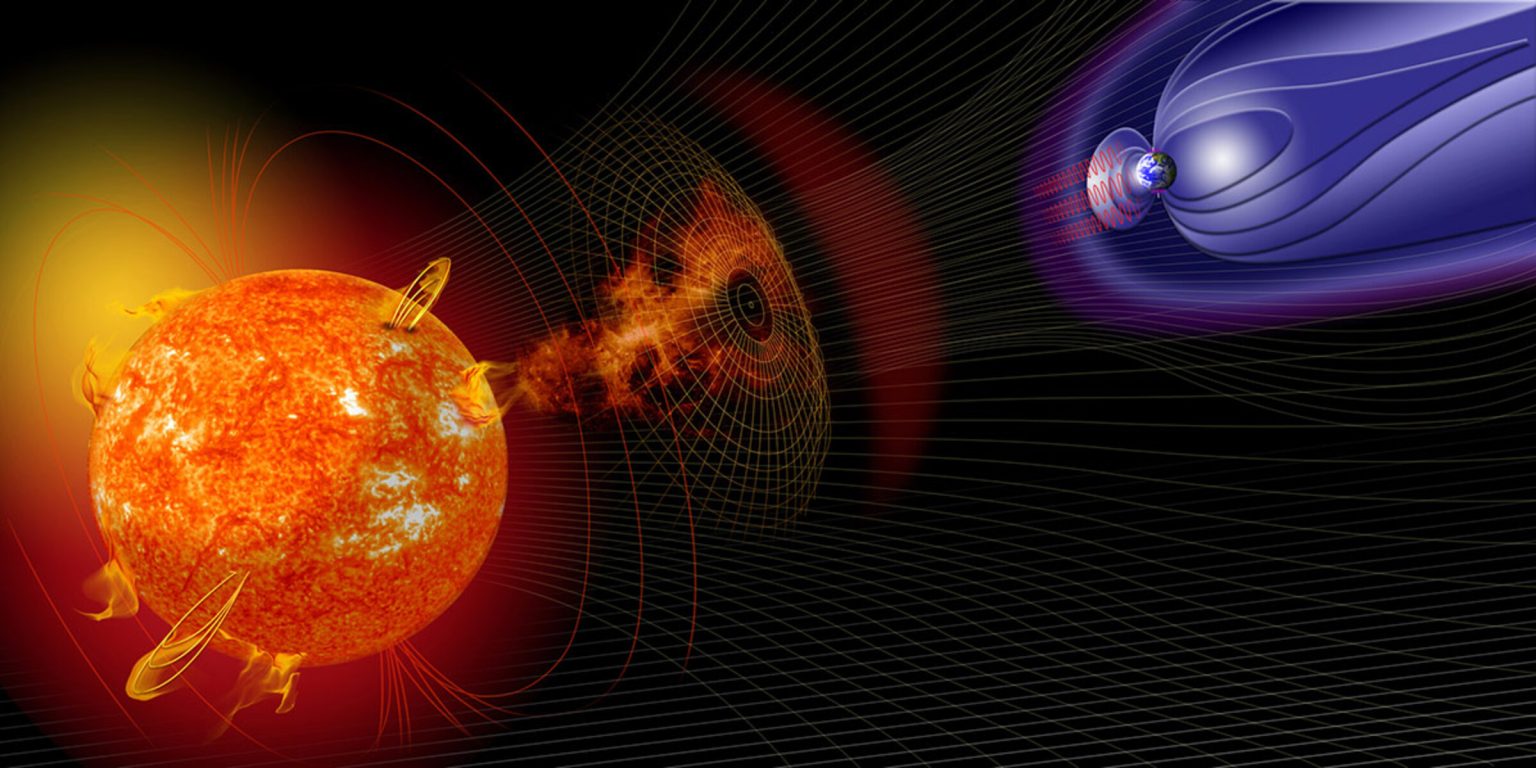
An artist’s rendering of coronal mass ejections approaching Earth and interacting with its magnetic field. Credit: NASA.
In this context, there are two types of hazards, each requiring a distinct protective approach. During solar flares, the Sun emits a stream of particles that persists for hours or days, resulting in a sharp increase in radiation exposure. Galactic rays, by contrast, originate continuously in interstellar space, arrive from all directions, and possess significantly higher energy.
The most straightforward solution is to construct habitats underground. This approach is highly effective against solar flares, and a few dozen centimeters of regolith can reduce radiation exposure to below the safe threshold for astronauts. Galactic cosmic rays, however, present a different challenge. According to a study published in late 2024, a meter of rock overhead reduces radiation exposure by only approximately one-quarter.
The reason is that the layer itself becomes a source of radiation. Galactic rays strike the nuclei of regolith atoms, dislodging secondary particles that then penetrate deeper into the material. The precise amount of soil required to reduce radiation to Earth’s background level is unknown. Estimates range from two and a half to eight meters, and all of this material would need to be deposited using equipment brought from Earth, together with the power source required to operate it.
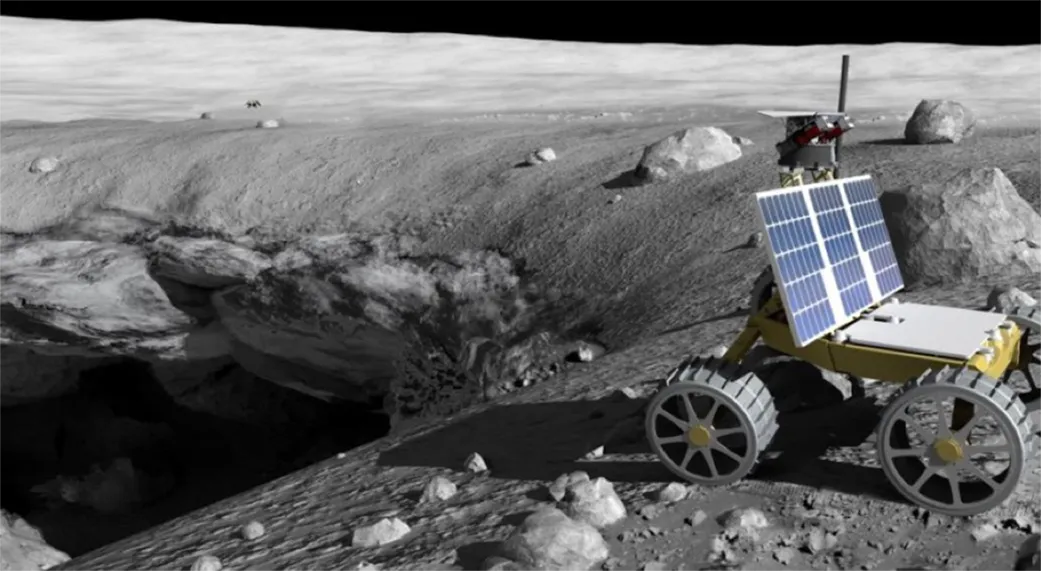
However, ready-made shelters on the Moon and Mars may already exist. Billions of years ago, lava flowed across these bodies, including beneath their surfaces, leaving hollow tunnels beneath the solidified crust. On the Moon, sinkholes tens of meters in diameter are visible where the ceilings of these cavities have collapsed, and the tunnels themselves may extend for hundreds of kilometers. Their interiors remain unexplored, as the equipment required to investigate them is still under development.
An artist’s rendering of a microvehicle exploring the entrance to a lunar lava tube. Illustration by William Whittaker, Carnegie Mellon University
Although the radiation problem can theoretically be resolved, another threat remains, even beneath a rock ceiling: the astronaut’s own body. Throughout the history of spaceflight, no cardiac arrests have been recorded. However, astronauts who have flown have been carefully selected, healthy professionals receiving daily medical supervision, and their missions have generally lasted only a few months. For long-duration missions, statistical estimates suggest approximately one serious medical event per 900 days spent off Earth, per person. A round trip to Mars takes years.
Cardiopulmonary resuscitation in microgravity presents an engineering challenge. On Earth, a rescuer uses their body weight to apply pressure to the chest; in orbit, however, the rescuer is displaced after the first compression. In 2025, these techniques were tested aboard an aircraft conducting parabolic flights, which provide brief periods of free fall. Only one technique proved effective: an unusual position in which the rescuer braces their feet against the ceiling. However, only an automated piston device consistently achieved the required compression depth. Mars has gravity, although it is less than half that of Earth, so techniques designed for weightlessness are unsuitable there. Standard Earth-based procedures were tested in suspension systems simulating the gravity of Mars and proved less effective. Consequently, no distinct protocol for these conditions is currently available.
Cardiopulmonary resuscitation (CPR) in space: This method involves securing a foothold on the ceiling of the ISS directly opposite the victim’s chest, enabling pressure to be applied to the chest.
Cardiac complications represent only one category of risk. Appendicitis, fractures, renal colic, dental abscesses, or severe bleeding — conditions that would warrant an ambulance on Earth — would need to be managed independently, 200 million kilometers from an operating room. Medical guidance from Earth takes approximately 20 minutes to arrive after a question is sent, and returning home is not an option when one begins to feel unwell. Crew members return from the International Space Station within hours; travel from the Moon takes several days, while opportunities to travel from Mars arise only once every 26 months, when the planets are suitably aligned. At other times, support is limited to the small number of people nearby.
Social connections
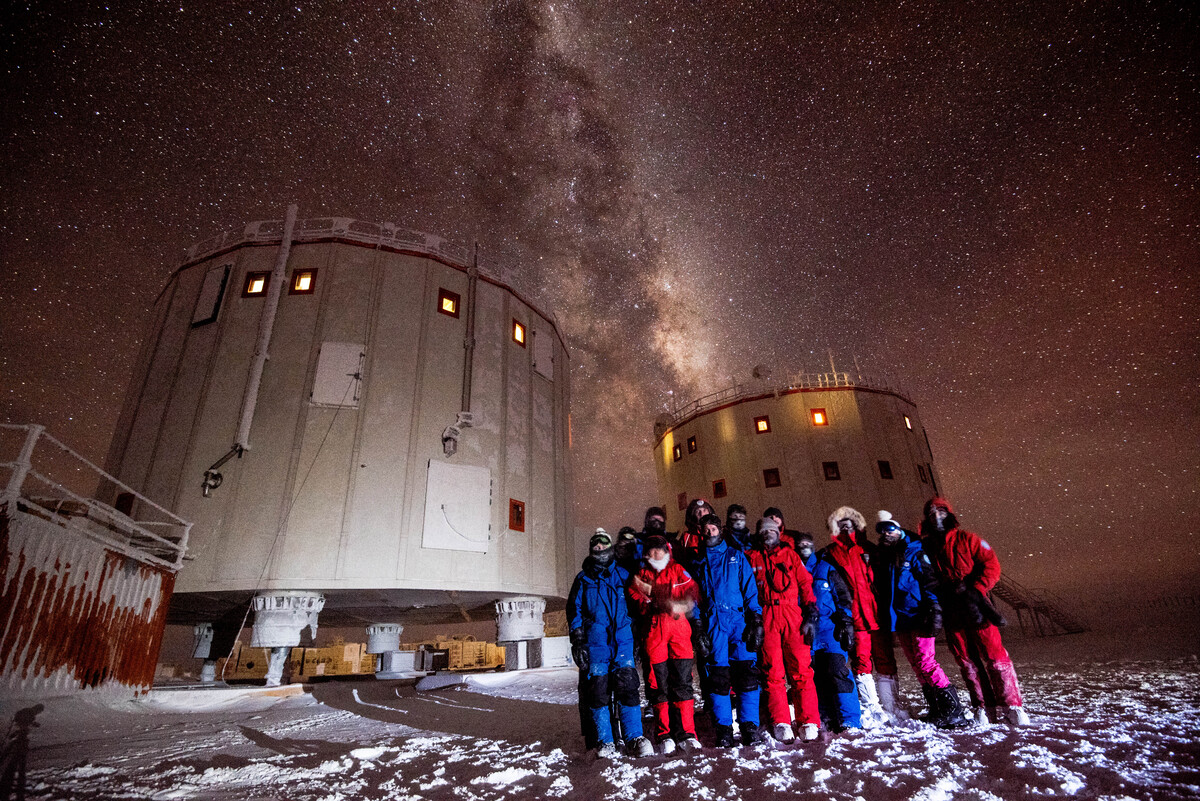
The third step — the individuals in your immediate surroundings — poses the most difficult threat to predict. The most revealing data on this threat were collected at Concordia Antarctic Station, and the findings run counter to intuition.
The French-Italian base is situated at an altitude of more than three thousand meters, higher than Mount Hoverla, and the body is therefore subjected to a persistent lack of oxygen. During winter, temperatures can fall to minus eighty degrees. The nearest neighbors are more than five hundred kilometers away, and departure is impossible for nine months of the year. Approximately fifteen people remain at the base throughout the winter.
Psychologists observed the team over a ten-month period. Each polar explorer wore a sensor that recorded whom they spent time with and for how long. During the same period, participants completed surveys four times per season assessing loneliness, trust, team cohesion, and self-reported productivity.
By the end of the study, feelings of isolation and the number of disagreements had increased, while trust, cohesion, and job satisfaction had declined. The team had divided along linguistic lines, with the French participants on one side and the Italian participants on the other. This outcome was expected. However, the sensor data revealed an unexpected finding: those who spent the most time in close proximity to their colleagues reported the greatest distress, and greater physical proximity was associated with a stronger sense of loneliness.
The winter crew at the Franco-Italian Concordia Station in Antarctica comprised thirteen individuals. Credit: ESA, IPEV, PNRA, Beth Gili
Isolation is often understood as a state of emptiness and a lack of contact. At Concordia, however, it took a different form. The same small group of people appeared each day at breakfast, at work, and in the evening — both in the present and six months later — and there was no opportunity to step outside and encounter strangers. As a result, people had little variety in their interactions.
At least the conflict is apparent. Another Antarctic study, which examined how overwintering members of other groups cope with stress, found that the response can disappear entirely. Around the third quarter of their stay, the polar explorers ceased both fighting and avoidance. Their emotions settled into apathy, without depression or aggression. The authors described this as “psychological hibernation” and emphasized that this was merely their interpretation. Such a team member does not cause conflict and continues to perform their duties; therefore, the most dangerous state within a closed group may show no outward signs at all.
An Antarctic overwintering expedition concludes on a predetermined date. In the event of a serious emergency, a medical evacuation team can be dispatched to provide assistance. By contrast, a return journey from Mars takes several years and depends on the planets’ positions; therefore, a rapid evacuation would not be possible.
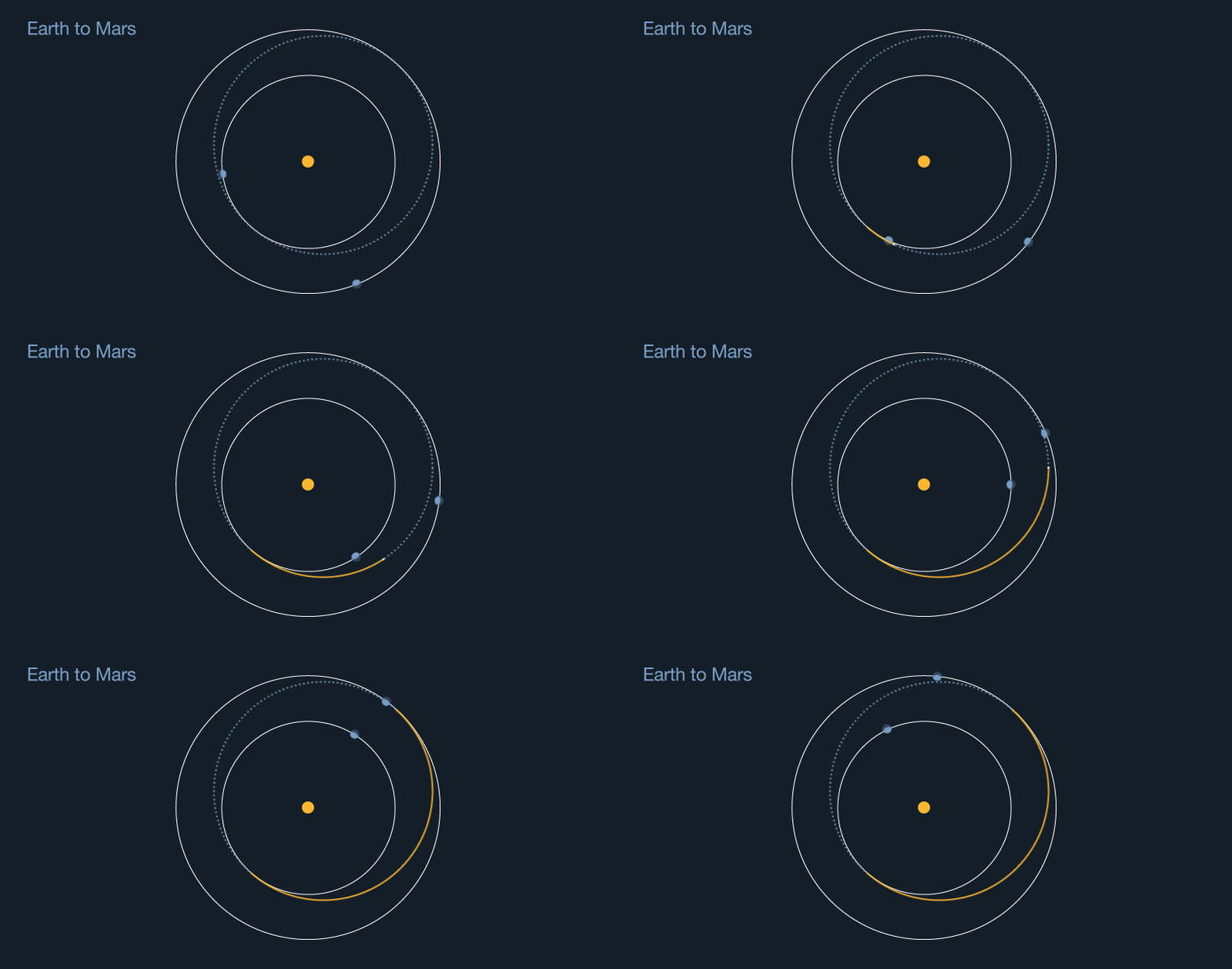
A flight from Earth to Mars via the orbit that requires the least energy
At this stage, engineering reaches its limits. Although calculations can address breathing requirements and radiation protection, there is no clear solution if, eight months into the mission, one crew member stops communicating with another. No shipment from Earth would resolve this situation. The only option is to select candidates rigorously, although Concordia’s crew members were not selected at random either.
The meaning and significance of work
The fourth step — work and its purpose — appears to be the simplest, as there will be no shortage of tasks on Mars. The question is whether humans are truly necessary to carry them out. All the listed threats become critical only when a crew is present; therefore, it is worth determining which tasks cannot be performed without one.
The primary rationale is scientific. In late June 2026, a ten-year survey of the sky commenced at the Vera Rubin Observatory. On the Moon, such an instrument would be unaffected by atmospheric interference or space debris. We asked Professor Agnieszka Pollo, Deputy Director for Scientific Research at Poland’s National Center for Nuclear Research and coordinator of Poland’s participation in the observatory project, whether constructing it there would be worthwhile. Her response, which includes an unexpected caveat concerning large observatories, is available in the video on our YouTube channel.
The Vera Rubin Observatory building is located atop Cerro Pachón in northern Chile, where the 10-year LSST survey began in 2026. The image combines a photograph with a computer-generated rendering. Source: rubinobservatory.org
However, a telescope on the Moon would require maintenance, and no one would be nearby to repair it if it malfunctioned. Among space telescopes, only the Hubble Space Telescope has been repaired by astronauts. It was launched into orbit in 1990 with a defective primary mirror. In December 1993, the crew of the space shuttle Endeavour installed corrective optics while working in open space. Every subsequent repair through 2009 required a separate mission.
Equipment malfunctions occur more frequently on the Moon than on Earth. Each year, the lunar surface is struck by approximately one hundred objects weighing up to one metric ton, as well as countless micrometeorites. In addition, sharp, electrically charged dust adheres to surfaces, scratches mirrors, and obstructs mechanisms. Engineers have developed methods to remotely address some of these malfunctions, enabling rovers on Mars and the Moon to remain operational for years, sometimes through remarkably inventive solutions. Large observatories are more complex, however, and the limits of their automation remain uncertain.
The search for life appears to provide a compelling justification for sending humans to Mars. The Martian surface is sterilized by solar radiation; consequently, scientists are seeking traces of microorganisms at a depth of approximately two metres. In our video, Professor Carlo Baccigalupi, a cosmologist and coordinator of the astrophysics and cosmology group at the International School for Advanced Studies in Trieste, explains why a permanent base may be necessary for this type of drilling. However, automated missions are already being planned to explore these depths. The European Rosalind Franklin rover is scheduled to launch in 2028, and, around the same time, China plans to launch the “Tianwen-3” mission to return samples to Earth.
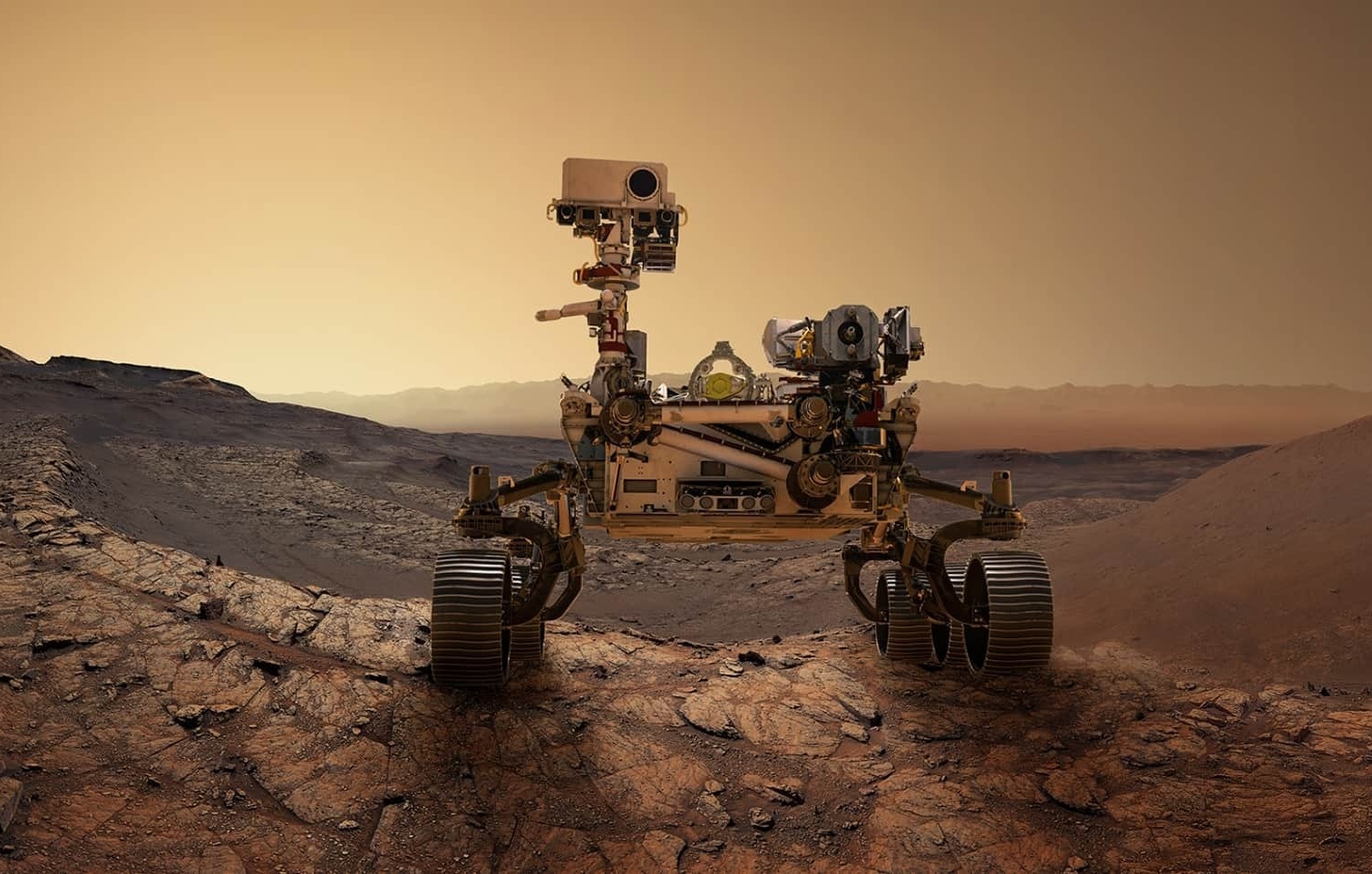
NASA’s Curiosity and Perseverance rovers are searching for evidence of life on Mars. Source: science.nasa.gov
This leaves the most pragmatic consideration: resources, particularly financial resources. The Moon contains helium-3, an isotope that is virtually nonexistent on Earth. It is considered a promising fuel for fusion power and is already used in the cooling systems of quantum computers. A liter of this gas costs thousands of dollars, while its concentration in lunar regolith is minuscule — only parts per billion. Accordingly, the prototype of a lunar excavator unveiled in May 2025 is designed to extract 100 metric tons of soil per hour. The excavator is robotic, so a future lunar mine could operate without human personnel, just as drilling operations on Mars are likely to do.
Purpose
Regarding the fifth step — the goal — the answer appears to have been publicly stated for quite some time. Elon Musk describes Mars as a backup plan for humanity; however, according to his own criteria, the only viable backup would be a colony capable of sustaining itself without supplies from Earth. None of the lower rungs currently meet this condition. Therefore, humanity is planning something more akin to a branch office supported by headquarters.
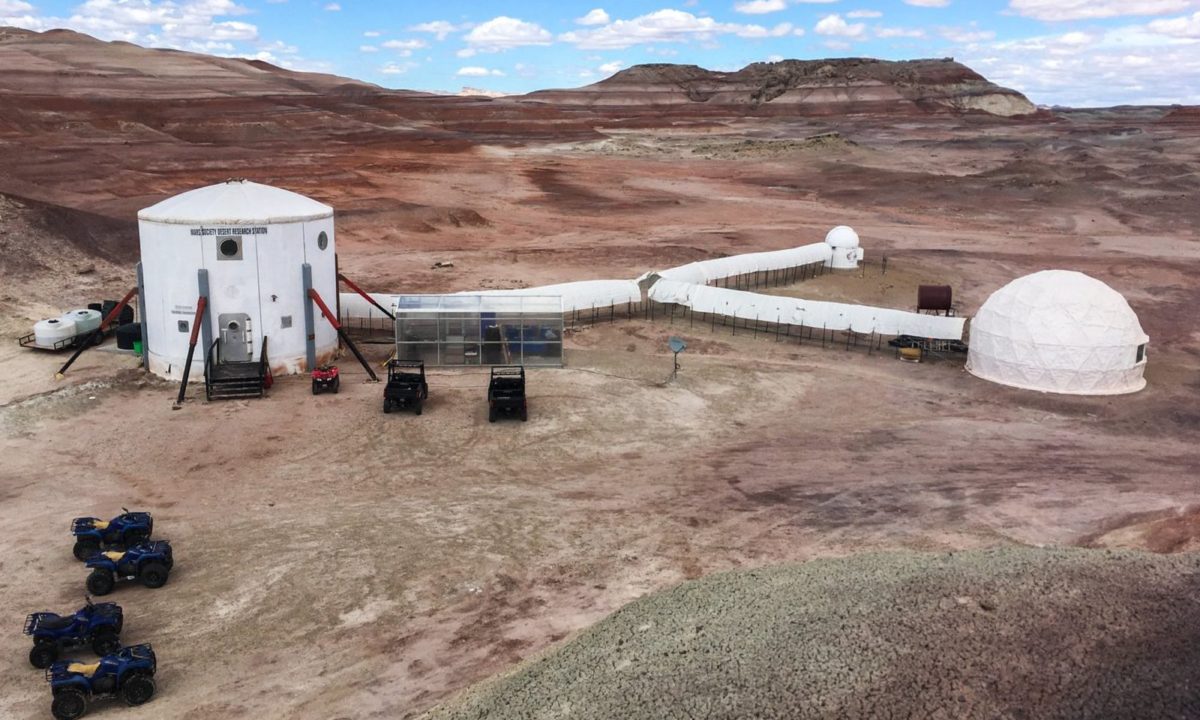
A Martian desert research station in Utah, where the Mars Society is evaluating living conditions for future colonists. Source: marssociety.org
It is noteworthy that the Mars Society does not advance this argument. The organization, which has promoted the idea of colonization since 1998, was founded by Robert Zubrin, whose calculations underpin modern Mars expedition projects. Its declaration lists seven reasons for going to Mars, and a “spare planet” is not among them. We discussed this omission with Serhii Danylenko, head of the Mars Society in Ukraine.
However, we should not regard the goal as a summit to be reached after ascending four lower steps. It is precisely in pursuit of this goal that we began seeking solutions to all the problems explored above. In its service, we calculate how much oxygen can be recovered at the station, measure the radiation dose beneath a meter of regolith, and equip polar researchers in Antarctica with sensors. These issues matter only because humanity has resolved to undertake a mission to Mars.
The colonization of Mars. Illustration: SpaceX
However, one fact remains unchanged: the pyramid’s roots still extend from Earth. Oxygen, water, medicine, spare parts, solutions, and people continue to come from here. A self-sufficient colony exists only in science fiction books and films, and it is impossible to calculate what it would take to build one today, as we are not yet aware of certain threats. We will have to develop solutions as we proceed.
A recent discovery by NASA’s Perseverance rover has uncovered evidence that water shaped certain regions of Mars in more complex ways than researchers previously thought.
While NASA has confirmed the presence of water on Mars in the past, mostly in the form of surface ice and possible deep reservoirs of liquid water, the new research revealed multiple episodes of ancient lake activity, groundwater, and heated underground fluids helping to shape the Martian environment.
The discovery comes from the rover’s exploration of the “Margin Unit,” a geological region along the inner edge of Jezero Crater. Perseverance reached the area in September 2023, where scientists initially expected to find sedimentary rocks formed from material deposited in an ancient lake.
Instead, the rover found igneous rock that recorded repeated interactions with water.
Published in Communications Earth & Environment, the study suggests the Margin Unit became a kind of geological crossroads where different water systems interacted with the Martian surface and subsurface at different points in the planet’s history.
“Before we arrived at the Margin Unit, the main hypothesis — derived from orbital observations — was that the carbonate seen from orbit formed from interaction with the lake that existed in Jezero Crater,” Candice Bedford, a research scientist at Purdue University in West Lafayette, Indiana, and the study’s lead author, says in a statement.
“But now we know that this location became a sort of crossroads for aqueous systems. The Margin Unit findings are important because Jezero Crater sits inside one of the largest exposures of carbonate on Mars, so what we learn here reaches well beyond this crater,” Bedford adds.
The evidence comes from Perseverance’s SuperCam instrument, which analyzes rocks by firing laser pulses and studying the resulting plasma to determine chemical composition. In total, the rover has reviewed 185 bedrock targets across the Margin Unit.
Recent investigations by Perseverance revealed coarse-grained, olivine-rich rock that showed little evidence of water alteration. Scientists believe this rock originally formed deep underground as magma slowly cooled, allowing large mineral crystals to develop. It was later exposed at the surface as overlying material eroded.
“If there is one thing I have learned after 10 years working with Mars rovers, it is that Mars constantly throws surprises at you,” said Bedford. “It is very rare that things are as we expect them to be from orbital data.”
When looking at the geological sequence, however, the rocks do indeed tell a different story.
The olivine grains were fractured and surrounded by silica and carbonate minerals, evidence that water had interacted with the rock. Here on Earth, similar reactions involving olivine can produce hydrogen, which some microorganisms can use as an energy source. Carbonate and silica can also preserve chemical evidence of ancient environments.
Carbon-rich groundwater altered the olivine, while Jezero’s ancient lake left silica-rich minerals behind. Additionally, Perseverance found fluorite and calcium sulfate veins, suggesting Mars’ region experienced a later episode of hot, hydrothermal water activity.
Understanding these findings could help scientists reconstruct Mars’ water history, climate, and potential habitability.
“I hope this work helps reshape how scientists view the history of water in Jezero Crater and across Mars,” Bedford said.
“Ultimately, I hope it helps planetary scientists reconstruct the changing climate and habitability of early Mars.”
Chrissy Newton is a PR professional and the founder of VOCAB Communications. She currently appears on The Discovery Channel and Max and hosts the Rebelliously Curious podcast, which can be found on YouTube and on all audio podcast streaming platforms. Follow her on X: @ChrissyNewton, Instagram: @BeingChrissyNewton, and chrissynewton.com. To contact Chrissy with a story, please email chrissy @ thedebrief.org.
RELATED
NASA's Curiosity Rover Just Found New Clues to Mars' Watery Past | New Mars Discovery
Scientists Just Discovered Mars Was Nothing Like We Thought
Michael Bohlander looks at what the existing rules on civilian and military aircraft imply for unidentified anomalous phenomena, and argues that in the absence of evidence of hostile intent, the default should be protection rather than destruction.
In February 2023, a Chinese spy balloon was shot down over South Carolina. This was followed by three other objects which, however, reportedly flew without any apparent propulsion system. They were also shot down. The head of NORAD stated that he was “not going to categorise them as balloons. We’re calling them objects for a reason.” He specifically did not initially rule out an extraterrestrial origin, either. Recordings of the pilots’ conversations engaging the third object over Lake Huron on 12 February 2023 showed their uncertainty as to how to classify it. These events followed other encounters such as the ones in 2004 with the USS Nimitz carrier strike group or the 2015USS Roosevelt encounter. They are part of a wider development described by military and civilian pilots reporting objects which defy identification and the known laws of physics. During a congressional hearing on unidentified anomalous phenomena (UAP) in 2025, a video was shown of US drones attacking a UAP with a Hellfire missile with little effect.
Which legal framework is relevant to determining whether the destruction of UAP is permitted, whether on land, sea, or in the air? Is it possible to establish general principles based on the rules applicable in peacetime or war? The publicly known and observable UAP behaviour makes it difficult to classify them (all) unambiguously as military, civilian, or something in between, or whether they are hostile or benevolent. This post gives a brief overview of some relevant considerations.
Possible factual scenarios
A UAP could be a (secret) human military or a civilian object. It may belong to a state or a citizen of a state over which it is detected, or it may have had permission of overflight. This could be deduced from transponder signals, nationality markings, or other decals human craft must display. Human origin might be excluded by extraordinary displays of capacities clearly pointing to a non-human origin of the technology. Finally, it is important whether there is a crew of biological entities on board. It may be permissible to shoot down a machine, but not living beings. In reality, this will be very difficult to ascertain due to both government secrecy and the elusive nature of the UAP.
The law
There is little hope of any open official discussion of principled legal thinking about destroying non-human UAP. There is no transparency about any Rules of Engagement (RoE) to begin with. The planned research exercise based on the paper “UK readiness for black swan scientific events: Case Study – The discovery of life beyond Earth” by the UK Department for Science, Innovation and Technology from 2023 was paused indefinitely in the second half of 2024. The US intelligence community has an iron grip on the entire UAP environment and seems unwilling to relinquish control. We will thus have to rely on general inter-human regulations and extrapolate. The main distinction relevant for our purposes is between civilian and military objects. However, modern technology has made this distinction difficult. One example are unmarked drones of state and non-state actors, which carry no transponder that would allow such a classification. Even mere human drone activity seems far from being well-regulated under international or domestic law.
Civilian nature
Attacking civilian aircraft is as a rule prohibited under the Convention on International Civil Aviation of 7 December 1944. A similar result follows from the application of international humanitarian law on the protection of civilians from war crimes or crimes against humanity. However, as state practice has shown, the rule about civilian craft is not considered absolute, especially if serious risks might arise from a civilian aircraft that poses an actual threat akin to a military one, as exemplified by the attacks with civilian planes on the World Trade Centre and the Pentagon on 11 September 2001. Yet, such a view is not uniformly held, either, and domestic protections may have a wider reach, as demonstrated by the 2006 decision of the German Federal Constitutional Court which partially struck down the Air Traffic Security Act 2005 as unconstitutional, section 14(3) of which would have allowed “[t]he direct use of weapons … only … if under the circumstances it must be assumed that the airplane will be used against the lives of human beings and that such use is the only means of averting that present danger.” (my translation).
Military nature
Assuming a UAP is non-human and of a military nature and especially if it behaves in a hostile manner, the rules might shift to a lower threshold for reaction in line with general military or even law enforcement rules, such as, for example, the RoE, the general law of armed conflict, and the law of self-defence, or general public order policing laws. However, the relationship between these is again anything but well-delineated. The US military in particular seems to consider such concerns irrelevant. This is amply illustrated by the above-mentioned attack on what was very likely a legitimate candidate for a non-human UAP. The object was travelling over non-US territory, displaying no threat or hostility, and still the US fired a Hellfire missile at it. The effect of the strike was negligible. The object continued on its course with a few minor pieces of debris continuing to fly along on the same trajectory, making it even more probable that it was highly advanced technology.
Transferring concepts and distinction in practice
Can we transfer the civilian/military distinction to non-human species who might be behind UAP? Can we know if the UAP is crewed or not? Much may depend on whether they display any threat or hostile intentions. The record of the UAP observed so far is mostly pointing towards purely defensive action, mainly either evading human weapon systems by outrunning them through sheer speed or superior manoeuvring capabilities, by employing defence mechanisms rendering them ineffective even if hitting their target, or by disabling weapon guidance systems. Incidents of aggressive behaviour initiated by UAP are very rare. A clear verdict of a military nature or threat will thus be very difficult to reach in virtually all cases, an argument in favour of classifying UAP by default as non-aggressive and falling under the same protection as human civilian objects. They should not be attacked, unless they show hostile intent.
Conclusion
While the behaviour of the UAP observed to date tends to support an overall non-aggressive nature – excluding, of course, reports of abductions – prior state practice of engaging them is proof that governments are not prepared to abide by this realisation and opt instead for views based on a default characterisation as a general threat and on an enforcement of territoriality or other state interests. Any efforts towards an international consensus are therefore currently bound to fall prey to geopolitical and -strategic parameters. The wisdom of the current attitude is moreover rather doubtful: While UAP so far seem to have been restrained in their reaction to human aggressive behaviour, there is no guarantee that this will continue to be the case, for example, if the attack was not against a small, unmanned probe, but against one of the larger observed craft that may well be carrying crew. Some of them may carry weapon systems equally advanced as their overall technology. We should not test them without good reason and a colourable case that we would prevail.
This post is based on a chapter entitled “Destroying non-human unidentified anomalous phenomena – A chance for regulation or a perennial legal black box?”, forthcoming in 2027 in a book about the future research agenda for international criminal law, edited by Anna Marie Bren
RELATED
US shoots down 4 UFOs, military officials won't rule out aliens
Hellfire missile smacks 'UFO' and 'bounces right off,' revealed at US congressional hearing
Enceladus, one of Saturn's many moons, is one of the most promising places for exploration and astrobiology today. Like other "Ocean Worlds" in our Solar System, this moon has an ocean located between its icy surface and its rocky, metallic core. Due to tidal flexing in this core, the result of interaction with Saturn's gravitational pull, Enceladus also experiences hydrothermal activity at its core-mantle boundary.
With the success of the Cassini-Huygens mission, scientists hope to send a dedicated mission to explore Enceladus for signs of life. Recently, researchers from the Planetary Sciences and Remote Sensing group at Freie Universität Berlin published two studies examining the prospects of such a mission. They conclude that an Enceladus mission would have an easier time detecting biosignatures than previously thought, based on the dynamics of the moon's plumes.
The research was led by Prof. Frank Postberg and Dr. Vanessa Helmbrecht, researchers from the Institute of Geological Sciences at Freie Universität Berlin and the Department of Earth and Environmental Sciences at Ludwig-Maximilians-Universität, respectively. The results of their study are published in two papers that appeared in Science Advances.
Within Enceladus, tidal heating keeps the moon warm and drives the movement of water.
What makes Enceladus an especially promising candidate is the plumes that regularly erupt from its southern polar region, sending ice particles hundreds of kilometers into space. NASA's Cassini spacecraft examined these plumes by flying through them during a series of flybys. During these encounters, Cassini detected salts and organic compounds, strong indications that the interior ocean could support life.
In their first study, the team showed that ocean droplets can freeze more slowly than previously thought as they move through cracks in Enceladus’ ice shell. As the droplets freeze, the salts and organic compounds they contain are distributed into different regions. These can then fragment as they are accelerated into space, creating ice grains that may contain highly concentrated substances, making biosignatures easier to detect.
In their second study, the team showed that methane-producing bacteria (methanogens) could survive and produce methane under simulated conditions present on Enceladus. These findings suggest that a probe passing through Enceladus' plumes could easily detect potential biomarkers that could result from life and biological processes in the interior.
These results will inform several missions currently in development, such as the proposed NASA Flagship mission called the Enceladus Orbilander. As the name suggests, this mission would spend a year and a half orbiting Enceladus and sampling its water plumes before landing on the surface for a two-year mission to study materials for evidence of life.
Similarly, the European Space Agency is working on its L4 Enceladus Mission, which was selected under the Voyage 2050 plan with a proposed launch date for the early 2040s. Like its NASA counterpart, this mission would conduct multiple flybys through the plumes and land at the south pole to analyze a geyser.
Breakthrough Initiatives also has a plan in place for a low-cost, privately funded mission: Breakthrough Enceladus. All of these efforts highlight the importance of Enceladus as an eventual destination for an astrobiology mission. As efforts to search for possible extraterrestrial life expand beyond Mars, and with missions bound for Jupiter, Saturn's little icy moon has already established itself as the next step.
Unveiling the Alien Agenda: Why UFOs Are Truly Here
The concept of UFOs and extraterrestrial beings has long intrigued humanity, sparking debates, conspiracy theories, and extensive research. While many view aliens as benevolent beings with advanced technologies, an alternative perspective raises unsettling questions: Why are they here? What are their motives? This article delves into the potentially terrifying agendas behind extraterrestrial encounters, exploring the evidence and theories that suggest humanity may be part of a larger, hidden plan.
Earth: A Unique Target
Earth is a rare gem in the universe. It boasts abundant liquid water, a diverse ecosystem, and unique minerals, making it an irresistible target for any advanced species seeking resources. Unlike other celestial bodies where water exists as ice, Earth’s readily available liquid water and rich biodiversity make it a one-stop shop for exploration, colonization, or exploitation. This planetary abundance could explain why extraterrestrial interest in Earth persists.
Humanity’s Role: Slave Race or Resource?
Ancient texts and modern theories suggest that humans may have been created or altered by an advanced extraterrestrial race. The Sumerian accounts of the Anunnaki, for example, describe these beings as gods who genetically engineered humans to serve them. According to this narrative, humans were designed to mine resources like gold for their creators. This theory implies that humanity’s sudden leap in intelligence, often referred to as the “missing link,” could be the result of genetic manipulation by an alien species.
More unsettling is the idea that humans might still be a resource for extraterrestrial agendas. Alien abduction accounts frequently involve invasive medical procedures, often focused on reproductive systems. These activities suggest that aliens may be harvesting genetic material to create hybrids or for other purposes unknown to us.
Missing Persons: A Sinister Explanation?
Each year, hundreds of thousands of people go missing worldwide. While many cases are explained as voluntary disappearances or criminal activities, a fraction remains unaccounted for. Could some of these individuals be victims of extraterrestrial abduction? Given the vast number of reports and the similarities in abduction narratives, it is plausible that these missing persons are part of an alien agenda involving genetic or biological experiments.
Advanced Technology and UFO Sightings
Modern UFO sightings reveal technology far beyond human capabilities. These craft can maneuver in ways that defy the laws of physics as we understand them—instant stops, right-angle turns at high speeds, and seamless transitions between air and water. If these sightings represent actual extraterrestrial craft, they indicate a level of technological advancement that humanity cannot yet comprehend.
The surge in UFO sightings coincides with humanity’s development of nuclear technology. Some theorists suggest that nuclear detonations in the 1940s drew increased extraterrestrial attention, as these explosions could disrupt the fabric of space-time. This connection raises the question: Are UFOs here to monitor or even intervene in humanity’s use of destructive technologies?
Benevolence or Malevolence?
The motivations of extraterrestrial visitors remain unclear. Some theories posit that aliens are here to help humanity evolve, offering spiritual guidance and technological insights. Others suggest a darker agenda: resource extraction, colonization, or even the use of humans as commodities—whether as slaves, genetic material, or food.
Religious and cultural beliefs often frame aliens as saviors or destroyers, reflecting humanity’s hope and fear of the unknown. Ancient art and modern spiritual movements depict aliens as advanced beings—either benevolent space brothers or malevolent overlords. These contrasting interpretations mirror the duality in theories about their intentions.
The Influence of Governments
The role of governments in the UFO phenomenon is another contentious issue. Some believe that secret agreements between extraterrestrial beings and world leaders exist, involving the exchange of technology for the right to abduct humans. The alleged 1954 meeting between President Eisenhower and extraterrestrials is often cited as evidence of such a pact. Whether true or not, the secrecy surrounding UFOs and the suppression of related information fuels speculation that governments may be complicit in alien agendas.
A Planetary Experiment?
Another perspective suggests that Earth is a biological experiment, with humans as test subjects. Aliens may be observing humanity to assess our development, documenting our successes and failures. The frequent depiction of apocalyptic scenarios in abduction accounts—nuclear wars, environmental disasters—could be warnings intended to steer humanity away from self-destruction. Alternatively, these warnings might signal preparations for a post-apocalyptic world, where alien-human hybrids or genetically modified humans could inherit the planet.
Conclusion: A Mystery Unresolved
The true reasons behind extraterrestrial interest in Earth remain speculative. Are aliens here to help or harm us? Are we an experiment, a resource, or merely a passing curiosity? Until open contact occurs or governments disclose what they know, humanity can only theorize about the alien agenda.
What is clear is that the phenomenon of UFOs and extraterrestrial encounters has profound implications for humanity. Whether these visitors are saviors, oppressors, or observers, their presence challenges our understanding of existence and our place in the universe. For now, the alien agenda remains one of the greatest mysteries of our time, leaving us to ponder whether their plans align with our survival—or our doom.
For as long as humans have gazed up at the stars, questions about extraterrestrial life have captured the human imagination. While most UFO sightings have been easily explained, a few remain unexplained and have sparked curiosity, debate, and wonder. This article dives into four landmark UFO sightings—the Roswell crash, the Battle of Los Angeles, the Rendlesham Forest incident, and the Marfa Lights—that continue to challenge our understanding of the universe. These iconic encounters, filled with gripping eyewitness accounts and intriguing expert analyses, have inspired countless theories about the mysteries that may lie beyond our world.
1. The Roswell Crash: The “Cosmic Watergate”
The Roswell Incident of 1947 remains one of the most famous UFO cases in history. When an unknown object crashed on a ranch near Roswell, New Mexico, the U.S. military initially reported it as a “flying disc.” However, this statement was quickly retracted, with officials claiming the debris was from a weather balloon. This reversal only fueled public suspicion, leading many to believe that the government was hiding evidence of extraterrestrial life. Witnesses reported strange materials at the crash site, including what they described as “memory metal” that would return to its original shape. Over the years, Roswell has become synonymous with UFO lore, spawning countless theories about what actually crashed in the desert and whether it was truly extraterrestrial in nature.
2. The Battle of Los Angeles: An Unsolved WWII Mystery
In the early hours of February 25, 1942, less than three months after the attack on Pearl Harbor, the city of Los Angeles was gripped with fear. An unidentified object appeared on military radar, sparking an intense anti-aircraft barrage that lit up the night sky. Thousands of rounds were fired at the mysterious object, which remained undamaged and eventually disappeared without a trace. The official explanation later suggested the object was a weather balloon, but the public was not convinced. Some witnesses described a large oval shape caught in the crossfire, a detail that continues to fuel theories of an extraterrestrial encounter. The Battle of Los Angeles remains one of the most intense and well-documented UFO sightings, and its mystery continues to resonate with historians and UFO enthusiasts alike.
3. The Rendlesham Forest Incident: Britain’s Roswell
Known as “Britain’s Roswell,” the Rendlesham Forest incident took place over several nights in December 1980 near RAF Woodbridge in Suffolk, England. Military personnel reported seeing strange lights in the forest, and some claimed to have encountered a triangular craft emitting beams of light. Deputy Base Commander Colonel Charles Halt recorded his observations on an audio device, describing the eerie red and blue lights in detail. Radiation was reportedly detected at the landing site, and broken tree branches suggested something had indeed descended through the forest canopy. While some skeptics attribute the lights to a nearby lighthouse, many witnesses, including Colonel Halt, insist that what they saw was not a lighthouse but a structured craft of unknown origin. This high-profile case has led to extensive investigations and remains a prominent event in British UFO history.
4. The Marfa Lights: An Enigmatic Light Show in the Texas Desert
For over a century, mysterious lights have appeared in the desert near Marfa, Texas. Known as the Marfa Lights, these orbs have mystified locals and scientists alike. Witnesses describe seeing colorful lights that move against the wind, change direction, and sometimes vanish suddenly. While some scientists speculate that the lights may be caused by atmospheric conditions or natural gases, no theory has fully explained this phenomenon. Reports of the Marfa Lights date back to the late 1800s, before modern technology or vehicles could have been responsible. The lights have become a popular tourist attraction, drawing thousands of visitors each year to watch the glowing orbs dance across the dark Texas sky. The Marfa Lights continue to puzzle scientists and remain one of the most enduring mysteries in UFO lore.
VIDEO: The Most Chilling UFO Encounters Ever Documented!
Each of these four iconic UFO encounters has captivated the public’s imagination, challenging what we know—or think we know—about the universe. The Roswell crash, the Battle of Los Angeles, the Rendlesham Forest incident, and the Marfa Lights each provide compelling evidence that there may be more to the UFO phenomenon than meets the eye. Whether these incidents are proof of extraterrestrial visitors or natural phenomena beyond our current scientific understanding, they continue to inspire questions about the mysteries of the cosmos. With new advancements in science and technology, perhaps one day we will finally uncover the truth behind these chilling encounters. Until then, these events remain a reminder of the boundless mysteries that lie in the unexplored realms of space and in our own understanding of reality.
RELATED
The Most Shocking Alien Encounters Ever | Ancient Aliens
Earth's life support systems are failing, scientists have warned – as seven out of nine planetary boundaries have now been breached.
A new report, called Planetary Health Check 2026, was written by more than 60 international scientists and assesses the state of our planet's health.
They analysed a range of measures including climate change, ocean acidification, stratospheric ozone depletion, land system changes and biosphere integrity.
Four are in the 'high–risk' red zone and three are in the 'increasing–risk' yellow zone – while only two remain in the 'safe' green zone.
'The impact of transgressing planetary boundaries are becoming increasingly clear all around us,' the report reads.
'Results published in the last year show that climate change is progressing faster than previously expected, causing unprecedented heatwaves on land and in the ocean and fuelling destructive extreme weather events.
'Tropical coral reefs have experienced their most severe mass bleaching event to date, a shutdown of the main Atlantic overturning circulation is now considered a credible risk even under low– to medium emission scenarios, and major Antarctic ice masses may have already begun their slide into the ocean.
'With seven out of nine boundaries transgressed, we have pushed Earth outside of its Safe Operating Space – meaning that we are turning Earth from a safe home into one full of hazards that threaten people across the world.'
Seven out of Earth's nine 'life support' systems have been breached, the Planetary Health Check report warned
Experts warned we have 'pushed Earth out of its Safe Operating Space', turning our planet into 'one full of hazards'
According to the report, the red zone indicates that 'severe, irreversible damage to key planetary functions' has become likely.
It reveals that climate change is in this category, meaning immediate action must be taken to prevent locking in permanent changes.
It also sounds the alarm over the 'introduction of novel entities', referring to the release of man–made substances including plastic, synthetic chemicals, pesticides and other pollutants.
Biochemical flows are likewise in the red, indicating the severe disruption of nature's nutrient cycles.
The Earth's biosphere is also in the danger zone, meaning there has been a significant loss of the species, ecosystems and ecological functions that sustain life on our planet.
Life support systems that are currently in the yellow zone are Earth's freshwater systems, our land use and the acidification of the ocean.
The only two measures still in the green zone are stratospheric ozone depletion – the thinning of the ozone layer – and atmospheric aerosol loading, which refers to airborne particles that influence climate, rainfall patterns and human health.
Boundaries that now sit in the dangerous 'red zone' include climate change, the introduction of novel entities, biochemical flows and the biosphere
This map shows the most impactful extreme weather events between April 2025 and April 2026. Most can be attributed to climate change
Specific ecosystems highlighted in the report include the Amazon rainforest, which is close to passing a critical threshold.
'If it crosses its tipping point, up to 70 per cent of the Amazon forest could transition from lush rainforest to dry tropical savanna,' lead author Professor Carlos Nobre, from the University of Sao Paulo, wrote.
'[This would] release hundreds of billions of tons of carbon dioxide, irretrievably losing myriad species, and diminishing Earth's natural heritage.
'The resulting impacts would extend far beyond the Amazon itself, with serious implications for climate stability, food and water security, and human health around the world, such as an increased risk of epidemics.
'Besides an ecological catastrophe, losing the Amazon would be a moral injury: a sign that we had allowed one of Earth's great living worlds to disappear under our care.'
The report also specifically mentions the sea floor, which is being damaged by bottom trawling and faces the developing threat of deep–sea mining.
Scientists warned the outlook has worsened since last year, as pressure on several key life support systems continues to grow.
Specific ecosystems highlighted in the report include the Amazon rainforest, which is close to passing a critical threshold
The report, compiled by the Planetary Boundaries Science Lab, also warns that efforts to tackle climate change will fail unless nature is protected and restored.
Scientists said forests, wetlands and other ecosystems currently absorb vast amounts of carbon dioxide, but these natural carbon sinks are showing signs of weakening as environmental damage worsens.
Researchers also raised concerns about chemical pollution, warning that microplastics, PFAS 'forever chemicals' and thousands of other synthetic substances are being released into the environment faster than their impacts can be properly understood.
Despite the bleak outlook, the report says there is still hope.
'The science is clear: We have pushed the planet far beyond its Safe Operating Space,' it concludes.
'Despite some positive developments, our current efforts are far from sufficient. The window of opportunity to act and avoid irreversible change is narrowing – but it is still open.
'Through urgent and decisive action, we can change our trajectory towards sustainability. Returning to the Safe Operating Space is the defining task for a stable and liveable future.'
RELATED
Official Planetary Health Check 2026 with Johan Rockström
Planetary Alignment 2026 — What’s Really Happening in the Sky
Our Planet’s Vital Signs are Flashing Red: Planetary Health Check 2025
The petroglyph, possibly depicting a Kushite ruler, image enhanced.
Credit: C. Calaforra-Rzepka, from Antiquity (2026).
DOI: 10.15184/aqy.2026.10427
For centuries, a life-size petroglyph has stood over the rocky landscape of Miseeda in northern Sudan. Exactly who the figure carved into a granite hill represents remains uncertain, but researchers suspect it may depict an ancient Kushite ruler. In the 7th century CE, local builders constructed a Christian church directly around it.
In a new study published in the journal Antiquity, scientists investigated both the petroglyph and the church to understand what these connected monuments reveal about the area's history.
"The church at Miseeda, erected in the seventh century around the much older petroglyph, appears to have developed around a site that had retained social significance over millennia," wrote the researchers.
While the church and the carving were the main focus of the project, they were far from the only features studied. In all, the study authors surveyed nearly 300 archaeological sites across the Miseeda area, part of the Mahas region.
On the granite hill around the church, the team documented other rock carvings, including animals like lions, elephants and cattle, alongside later Christian symbols such as crosses and carved ships.
Elsewhere, the team led by Dr. Joanna A. Ciesielska of the University of Warsaw studied pottery from the area. Analysis of various styles revealed several periods of human activity, peaking in the ancient Mesolithic period (12,000–8,200 years ago), the Late Neolithic/pre-Kerma period (c. 3000–2500 BCE) and later medieval Christian times (c. 6th–15th centuries CE).
The church of Miseeda with the petroglyph visible on the rock behind it.
Credit: S. Lenarczyk, from Antiquity (2026).
DOI: 10.15184/aqy.2026.10427
Who does the petroglyph represent?
To better understand who the giant rock carving might represent, the researchers looked at similar monuments in the region. One example is at a site called Gebel Qeili, which features a giant carving of King Sherkarer, an ancient ruler from the Kingdom of Kush. Such monumental carvings are rare in this part of Africa. The scientists suggest that the Miseeda carving may depict a ruler and could have served as a marker of a borderland.
"This reinforces the interpretation of the Miseeda representation as a marker of a borderland; however, a more precise date remains to be established," commented the study authors.
Local beliefs
The researchers also collected accounts from local people to understand how the community views these ancient ruins today.
The community used to view the church as a sacred place for pilgrimages, but over time that changed. Today, some locals call the church "Beit Kitchiner" or "Beit Sheitan" and consider it both a cursed and miraculous space. Meanwhile, the main sacred site is now a nearby shrine dedicated to a local holy man named Sheikh Kuman.
While the exact identity of the carved figure remains a mystery, the work has revealed much more about the civilizations that lived in the region.
Written for you by our author Paul Arnold, edited by Lisa Lock, and fact-checked and reviewed by Robert Egan—this article is the result of careful human work. We rely on readers like you to keep independent science journalism alive. If this reporting matters to you, please consider a donation (especially monthly). You'll get an ad-free account as a thank-you.
Publication details
Joanna A. Ciesielska et al, Miseeda: between kingdoms, through epochs—reconstructing a history of the Mahas region (Sudan), Antiquity (2026).
Michigan is home to nearly 4,000 reported UFO sightings.
(Danie Franco/Unsplash)
As the Trump administration has declassified files related to unidentified flying objects (UFOs), interest in potential extraterrestrial encounters has only grown. The administration released the sixth tranche of files in early September 2026, including reports and video evidence of flying saucers from the 1950s.
Michigan has reported more than 3,800 UFO sightings since 1995. The "flying saucer" entered the cultural conversation in 1947, with a private pilot, Kenneth Arnold, saw something while flying past Mt. Rainier on June 24, 1947. He spent the rest of his life trying to explain, added the words “flying saucer” to the vocabularies of millions of people around the world.
(Advance Local archive)
UFO reports and sightings have been around for decades, including some very famous UFO sightings in Michigan. Read on to learn more about some of the most interesting—and sometimes eerier—UFO sightings in Michigan.
And if you’re curious about keeping up-to-date on the latest UFO sightings in Michigan, you can check the National UFO Reporting Center Michigan database—anyone can report a UFO sighting and add details of what they witnessed. The database is a public nonprofit, and it reviews claims and investigates based on evidence.
Top 10 Michigan cities with most UFO sightings
1. The 1966 “swamp gas” incident
The 1966 Dexter, Mich., UFO sightings may be just the state’s most famous. The report started at the farm of Frank Manor, who reported seeing a large brown saucer with pulsating lights and a “quilted” surface hover near a marsh in his field. The object hovered, then disappeared, then reappeared 500 yards away in an instant before finally appearing to float over them before disappearing out of sight again.
Dozens of witnesses in the area—including law enforcement—also reportedly saw disc-like objects moving swiftly in the sky, changing colors, and hovering, while students at Hillsdale College reported lights soaring above their dorms. The sightings caused such a frenzy that the U.S. government sent Air Force representative Dr. J. Allen Hynek to investigate.
Swamp Gas: The Michigan UFO Flap of 1966 | Episode 311
The “official” U.S. government explanation was that the lights were caused by a release of methane gas from a nearby swamp, but controversy still swirls over the incident, as another retired Air Force Engineer, Ray Szymanski, allegedly interviewed pilots from the area and claimed the government was covering something up. Locals were so outraged at being dismissed that President Gerald Ford even called for a congressional investigation.
That investigation never happened, but a local sheriff who witnessed the flying saucers called them “the weirdest things” he had ever seen, and that’s still the story many stick to today. Some haven’t accepted the “official” government explanation, so it’s a UFO sighting that remains up in the air (no pun intended) for many Michiganders.
2. The 1994 Lake Michigan mass sightings
If you’re an extraterrestrial skeptic, this story might just make you change your mind. In March 1994, a shocking total of over 300 witnesses reported seeing strange, unexplained lights and sights in the sky over West Michigan. People in Holland, Ottawa, Muskegon, and Allegan counties all recounted sightings, and some even called emergency services over what they witnessed.
Holland Sentinel sports writer Lee Lamberts was the first to report a string of strange red and white lights accompanied by loud “humming” that he spotted over the local high school, followed by a woman 20 miles north who reported similar red and white lights.
An investigative reporter assigned to look into the story went in as a skeptic—until he listened to the 911 calls made that night. The sheer volume of callers, along with the genuine fear and synchrony of accounts describing four or five lighted objects, made even the skeptic wonder what was going on.
Local meteorologist Jack Bushong was even tasked with checking the radar by the Ottawa County Dispatch after they became overwhelmed with calls. He found what he described as the “biggest airplane ever detected on radar,” moving directions and altitudes incredibly rapidly and, at one point, flying directly over the largest, iced-over portion of the Great Lakes.
Bushong recounted that he was banned from talking to the media at the time, brushed off by his superiors, and eventually even moved jobs to try to distance himself from the event. He later said he felt “vindicated” when the Pentagon eventually released the UFO files and footage from that night that corroborated his story.
3. Petoskey UFO sightings
Although we couldn’t find any official reports to corroborate it, one Redditor said an unexplained UFO incident occurred near Petoskey around 1978, when a man was enjoying Lake Manuka with his friend. Suddenly, the area around them went unnaturally and eerily silent.
If you’ve ever spent time outdoors in Michigan, you know it’s never actually quiet—the bugs and animals and frogs are always loud—so the silence stood out.
As the silence fell around them, a sudden white light burst across the sky. As soon as it crossed, the silence resumed to the typical sounds of nature. According to Reddit, local news stations reported the incident the following morning, and it has never been explained.
4. The “moaning” UFOs
In 1966, a string of UFO reports flew in from the Pellston-Alanson area. Similar to some of the other reports of UFO sightings in Michigan, people described seeing red and white lights that rotated and moved in unusual directions. Strangely enough, they also claimed to have heard strange “moaning” noises accompanying the UFOs.
State police arrived on the scene to investigate, but the lights had moved on by the time they arrived, so no official investigation or explanation has ever been given.
5. The Thumb encounter
Michigan writer Jane Stein captured the firsthand account of an anonymous farm girl in Ruth, located in the Thumb, who claimed to have come eerily close to a UFO in 1951. The eyewitness, then 8 years old and working in the field with her two brothers, witnessed what she described as a saucer that looked like “two pie plates fastened together.”
The saucer was round, gray, and hovered in the air with no sound or wind around it. There were no windows on the contraption, but it did have an antenna and flashing lights.
At one point, the eyewitness claimed the craft also released a protruding ladder from the bottom of the saucer. You can read the story and others in Stein’s book, “Musings of a Country Girl: A Collection of Short Stories from Small-Town America.”
6. The strange Sanillac County craft
Four farmers in Sanillac County in 1953 described what looked like a “giant star” hovering near the treelines. The farmers were not associated with each other, reports said, and were very reluctant to even share what they saw, adding credibility to their accounts.
All the men shared similar reports of lights on the UFOs that changed colors, from green to white to red, and one farmer even followed it for over a mile, fearing it was an aircraft in distress, before it disappeared from sight.
7. The Lake Superior sighting
Also in 1953 (it’s strange how so many of the sightings line up, isn’t it?), a Michigan Air Force base sent an F-89 Scorpion jet after an unidentified flying object that appeared on the radar in restricted airspace over the Soo Locks.
The jet followed the UFO through snowy weather for around 30 minutes before the two appeared to converge. The jet lost communication on both radar and radio as the UFO suddenly went in another direction, then vanished from sight completely.
Official reports claimed the UFO was a Royal Canadian aircraft, despite the Royal Canadian logs showing no aircraft flights that night. Conspiracies over the UFO swirled even further when wreckage from the American jet was never recovered, and divers found evidence of a metal “saucer” and what appeared to be an F-89 jet in the waters of Lake Superior.
However, the site was reportedly quarantined, and no one was ever allowed to explore the area, adding to the controversy about what actually happened that snowy night.
8. The Holland hovercraft
Just a year later, in 1954, two parents looked out of their window in Holland, Mich., after their kids alerted them to something strange, only to be shocked by what they saw.
The duo described a large, circular craft “just sitting there,” hovering near the trees. Unmoving but filled with lights that didn’t blink, the husband-and-wife pair watched for about 10 minutes as the object spun in place but didn’t move; then it slowly began to move south.
The National Weather Service later confirmed that its radar had picked up activity exactly where the family had described the craft, but no official explanation was ever given.
9. The “woo” of Wurtsmith
A UFO was spotted at the Wurtsmith Air Force Base on “Devil’s Night,” the night before Halloween in 1975. The UFO first appeared shortly after 10 p.m., and reports say it sounded like a helicopter but moved too erratically and was too low to be one.
The UFO also had no lights until it was farther out of sight, and no radio contact was ever made with the craft. One of the base’s captains, Captain Higgin-Botham, was questioned by the OSI and cautioned against discussing the incident. The event took place during a wave of other UFO sightings by the military.
10. The Lake Huron takedown
One of the most interesting yet-to-be-explained UFO sightings in Michigan was fairly recent, having only occurred in 2023. Following a string of UFO sightings in February, including two UFOs that were shot down by the United States, a third UFO was spotted and shot down in the Upper Peninsula.
The UFO was taken down by Air Force and National Guard pilots on Feb. 12, 2023. The military claimed the UFO’s low altitude posed a risk, but even after it was shot down, it was never fully recovered.
The Pentagon stated that it believed the UFO was “benign,” but did not provide an exact explanation for any of the UFOs. Later findings from the Canadian government said some wreckage from the shot UFO had been found and confirmed to be from a weather surveillance company, but a full search was called off due to “weather conditions.”
This article first appeared on Good Info News Wire and is republished here under a Creative Commons license.
You know me, have to search the Mars photos for anomalies. I just love doing it. Like some people love watching sports on TV, I just love shifting through photos to learn more, understand more and hopefully come out understanding something new about aliens. The only option to this is sitting on the sofa at home waiting for the US gov to release something actually good, but thats never going to happen. So, its up to us, Joe Public to get out there and find the truth.
I love this elongated cranium skull I found today. It has the longest cranium I have ever found before. If this is a sculpture and not a real fossil (can't discount the possibility) then it was probably made to celebrate the intelligence of some noble or important leader of the species. Yes, I find faces, but yes, I hold a masters degree in counseling and understand the difference from real and imaginary. Don't believe the CIA propaganda about finding faces...they rely on controlling the publics way of thinking. Do they control you?
Meer van UFO'S of UAP'S, ASTRONOMIE, RUIMTEVAART, ARCHEOLOGIE, OUDHEIDKUNDE, SF-SNUFJES EN ANDERE ESOTERISCHE WETENSCHAPPEN - DE ALLERLAATSTE NIEUWTJES


 Scientists uncover hidden force deep inside Earth that is changing the length of our days