

Naar de inhoud

UFO'S of UAP'S, ASTRONOMIE, RUIMTEVAART, ARCHEOLOGIE, OUDHEIDKUNDE, SF-SNUFJES EN ANDERE ESOTERISCHE WETENSCHAPPEN - DE ALLERLAATSTE NIEUWTJES

UFO's of UAP'S in België en de rest van de wereld
BerichtenArchiefGastenboekContact
seniorennet.beseniorennet.be
Ontdek de Fascinerende Wereld van UFO's en UAP's: Jouw Bron voor Onthullende Informatie! Ben jij ook gefascineerd door het onbekende? Wil je meer weten over UFO's en UAP's, niet alleen in België, maar over de hele wereld? Dan ben je op de juiste plek! België: Het Kloppend Hart van UFO-onderzoek In België is BUFON (Belgisch UFO-Netwerk) dé autoriteit op het gebied van UFO-onderzoek. Voor betrouwbare en objectieve informatie over deze intrigerende fenomenen, bezoek je zeker onze Facebook-pagina en deze blog. Maar dat is nog niet alles! Ontdek ook het Belgisch UFO-meldpunt en Caelestia, twee organisaties die diepgaand onderzoek verrichten, al zijn ze soms kritisch of sceptisch. Nederland: Een Schat aan Informatie Voor onze Nederlandse buren is er de schitterende website www.ufowijzer.nl, beheerd door Paul Harmans. Deze site biedt een schat aan informatie en artikelen die je niet wilt missen! Internationaal: MUFON - De Wereldwijde Autoriteit Neem ook een kijkje bij MUFON (Mutual UFO Network Inc.), een gerenommeerde Amerikaanse UFO-vereniging met afdelingen in de VS en wereldwijd. MUFON is toegewijd aan de wetenschappelijke en analytische studie van het UFO-fenomeen, en hun maandelijkse tijdschrift, The MUFON UFO-Journal, is een must-read voor elke UFO-enthousiasteling. Bezoek hun website op www.mufon.com voor meer informatie. Samenwerking en Toekomstvisie Sinds 1 februari 2020 is Pieter niet alleen ex-president van BUFON, maar ook de voormalige nationale directeur van MUFON in Vlaanderen en Nederland. Dit creëert een sterke samenwerking met de Franse MUFON Reseau MUFON/EUROP, wat ons in staat stelt om nog meer waardevolle inzichten te delen. Let op: Nepprofielen en Nieuwe Groeperingen Pas op voor een nieuwe groepering die zich ook BUFON noemt, maar geen enkele connectie heeft met onze gevestigde organisatie. Hoewel zij de naam geregistreerd hebben, kunnen ze het rijke verleden en de expertise van onze groep niet evenaren. We wensen hen veel succes, maar we blijven de autoriteit in UFO-onderzoek! Blijf Op De Hoogte! Wil jij de laatste nieuwtjes over UFO's, ruimtevaart, archeologie, en meer? Volg ons dan en duik samen met ons in de fascinerende wereld van het onbekende! Sluit je aan bij de gemeenschap van nieuwsgierige geesten die net als jij verlangen naar antwoorden en avonturen in de sterren! Heb je vragen of wil je meer weten? Aarzel dan niet om contact met ons op te nemen! Samen ontrafelen we het mysterie van de lucht en daarbuiten.

Categorie: ARCHEOLOGIE ( E, Nl, Fr )

Woensdag 14 oktober 2026

'A time capsule at the bottom of the sea': World’s oldest shipwreck that sank 4,700 YEARS ago discovered off the coast of Turkey

'A time capsule at the bottom of the sea': World’s oldest shipwreck that sank 4,700 YEARS ago discovered off the coast of Turkey

By XANTHA LEATHAM, EXECUTIVE SCIENCE EDITOR

Having sunk to the bottom of the sea when the pyramids were being built, its treasures could have been lost to the sands of time.

But a wave of luck has swept over archeologists after they discovered what is believed to be the world's oldest known shipwreck off Turkey's coast - dating back an astonishing 4,700 years.

The vessel was found near Kekova Island in Antalya and is thought to have sunk between 2600 BC and 2400 BC, around the same time the Great Pyramid of Giza was being built.

Although the ship's wooden hull has long since decayed, divers uncovered a cargo of ancient storage pots and stone anchors resting nearly 100ft (30m) below the surface.

Researchers say the discovery predates the famous Dokos wreck in Greece, previously regarded as the world's oldest known shipwreck.

The archaeologists who found the ship say it was about 32ft (10m) in length and was a trade vessel carrying cargo.

‘The shipwreck is a time capsule at the bottom of the sea,’ Professor Hakan Oniz, from Akdeniz University in Turkey, who led the Mediterranean Archaeology Association expedition, said.

Although the ship's wooden hull has long since decayed, divers uncovered a cargo of ancient storage pots and stone anchors resting nearly 100ft (30m) below the surface

Although the ship's wooden hull has long since decayed, divers uncovered a cargo of ancient storage pots and stone anchors resting nearly 100ft (30m) below the surface

More than 30 ceramic pots called amphorae were identified, along with three stone anchors

More than 30 ceramic pots called amphorae were identified, along with three stone anchors

The newly identified wreck lies in an area of the Mediterranean that contains several ancient shipwrecks from different periods, including Roman vessels

The newly identified wreck lies in an area of the Mediterranean that contains several ancient shipwrecks from different periods, including Roman vessels

In total, more than 30 ceramic pots called amphorae were identified at the site, along with three stone anchors.

Experts believe the vessel was a trading ship carrying goods such as olive oil or wine across the eastern Mediterranean.

Analysis of the clay suggests the amphorae were probably produced in workshops in the Jordan Valley before being transported by sea.

Similar vessels have previously been found near the Egyptian pyramids at Giza, Saqqara and Abusir, as well as at Troy and on Crete, hinting at extensive Bronze Age trade networks.

According to the researchers, the ship may have departed from a port on the Levantine coast and been sailing west towards Troy or Crete when disaster struck.

In their study published in the Journal of Maritime Archaeology, the team wrote: ‘Current information suggests that the shipwreck is from a small vessel that sank while sailing east to west during the Early Bronze Age.’

Analysis of the clay suggests the amphorae were probably produced in workshops in the Jordan Valley before being transported by sea

 Analysis of the clay suggests the amphorae were probably produced in workshops in the Jordan Valley before being transported by sea

According to the researchers, the ship may have departed from a port on the Levantine coast and been sailing west towards Troy or Crete when disaster struck

According to the researchers, the ship may have departed from a port on the Levantine coast and been sailing west towards Troy or Crete when disaster struck

Experts believe the vessel was a trading ship carrying goods such as olive oil or wine across the eastern Mediterranean

Experts believe the vessel was a trading ship carrying goods such as olive oil or wine across the eastern Mediterranean

Experts described the find as a 'time capsule at the bottom of the sea'. Their discovery suggests sailors may have produced their own food during voyages

Experts described the find as a 'time capsule at the bottom of the sea'. Their discovery suggests sailors may have produced their own food during voyages

Turkey's Culture and Tourism Minister, Mehmet Nuri Ersoy, hailed the find as evidence of the world's oldest shipwreck and said it sheds new light on Anatolia's maritime past.

‘We are bringing to light the traces of the world’s oldest shipwreck,’ he said.

‘Clay analyses indicate that the amphorae were probably produced in workshops in the Jordan Valley.
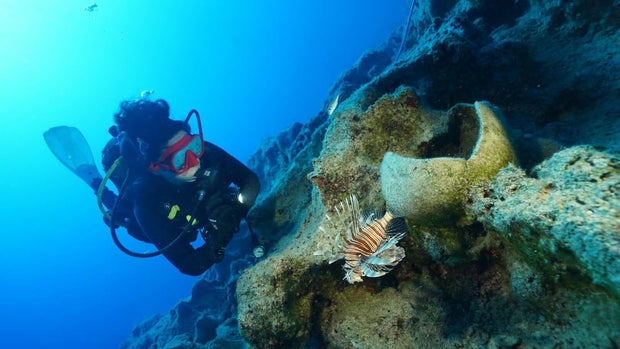
A diver explores an area off Turkey's coast where archaeologists say the world's oldest shipwreck has been found.

A diver explores an area off Turkey's coast where archaeologists say the world's oldest shipwreck has been found.

Hakan Öniz

‘The discovery of similar examples in Egypt, Troy and Crete is of great importance for understanding the trade networks that connected different regions by sea.’

He added: ‘Among the finds, one amphora stands out, featuring nine different markings and two holes in its body.

‘Thought to have possibly been used as a churn in cheese or butter production, this vessel offers clues that sailors may have produced their own food during long voyages.’

RELATED

They Found a Shipwreck Older Than Rome (And Can't Explain It)

World’s oldest shipwreck discovered off Turkey’s Mediterranean coast

{ https://www.dailymail.com/sciencetech/index.html }

ARCHEOLOGIE ( E, Nl, Fr )

Hoe vind je dit bericht? 0 stemmen
Geschreven door peter om 20:10 Stuur door
Vrijdag 9 oktober 2026

Mystery man-made mounds in the Deep South are older than the Great Pyramid... and leave experts baffled over their creation

Mystery man-made mounds in the Deep South are older than the Great Pyramid... and leave experts baffled over their creation

  • READ MORE: I'm a Harvard physicist. I believed in evolution my whole life… until I found God and uncovered something science still can't explain

By STACY LIBERATORE, US SCIENCE & TECHNOLOGY EDITOR

Ancient mounds in Louisiana that predate Egypt’s Great Pyramid are still puzzling scientists roughly 5,500 years after construction began.

Native American hunter-gatherers built the eleven earthworks at Watson Brake, near Monroe, around 3500 BC, nearly 1,000 years before the pyramid.

‘It is unclear why Watson Brake and other Middle Archaic mounds were built,’ archaeologist Rebecca Saunders wrote for the Louisiana Endowment for the Humanities.

The complex was mapped in the 1980s, but scientific dating in the 1990s revealed its remarkable age. Construction continued in stages for 600 to 700 years, with the builders connecting the mounds with ridges to create an oval enclosure roughly 1,000 feet across.

Using baskets, deer antlers and their bare hands, they raised eleven mounds without draft animals, a feat that likely required large groups working across generations. 

The tallest mound rises 25 feet above the surrounding ground.

The discovery helped overturn the belief that only farming societies could build large monuments, revealing that hunter-gatherers could organize and sustain major construction projects. 

Archaeologist Vincas Steponaitis, an expert in Native American mounds, said: 'It's rare that archaeologists ever find something that so totally changes our picture of what happened in the past, as is true for this case.'

Native American hunter-gatherers built the eleven earthworks at Watson Brake, near Monroe, around 3500 BC, nearly 1,000 years before the pyramid

Native American hunter-gatherers built the eleven earthworks at Watson Brake, near Monroe, around 3500 BC, nearly 1,000 years before the pyramid

Although identified decades ago, Watson Brake was featured in a video published by YouTube channel The Silent Ruins on September 10.

The mounds have long been hidden in a dense forest, but local amateur archaeologist Reca Jones recognized the earthworks after timber clearing exposed parts of the site in the early 1980s. 

She worked with Harvard graduate student John Belmont to produce the first map of the complex.

Researchers initially associated the mounds with the much younger Poverty Point culture, best known for another Louisiana earthwork complex built around 1700 to 1100 BC.

Investigations in the early 1990s by archaeologist Joe Saunders, soil scientist E Thurman Allen and colleagues revealed evidence that Watson Brake was considerably older.

Strongly developed soils suggested the earthworks had been weathering for thousands of years. 

The team used radiocarbon analysis and an independent technique called luminescence dating to investigate their age.

Radiocarbon analysis dates carbon-bearing remains such as charcoal, while luminescence estimates when mineral grains in sediment were last exposed to daylight.

The findings, published in Science on September 19, 1997, placed Watson Brake roughly 1,900 years before other then-known North American mound complexes with earthen enclosures.

The mounds have long been hidden in a dense forest near, but local amateur archaeologist Reca Jones recognized the earthworks after timber clearing exposed parts of the site in the early 1980

The mounds have long been hidden in a dense forest near, but local amateur archaeologist Reca Jones recognized the earthworks after timber clearing exposed parts of the site in the early 1980

A detailed study published in American Antiquity in 2005 reinforced the chronology using 25 radiocarbon dates and six luminescence dates.

Food remains show that the builders relied on fish, shellfish, deer, nuts and other wild plants, rather than cultivated crops.

Stone tools, beads and fired-earth objects offer clues about their daily lives, but the reason they devoted so much labor to the mounds remains uncertain.

One possibility is that construction helped bring scattered communities together.

'It could have been a way to reinforce relationships and cooperation,' Diana Greenlee, station archaeologist at Poverty Point and an adjunct professor at the University of Louisiana at Monroe, told Heart of Louisiana in an article published in 2022.

She also suggested that the earthworks could demonstrate a community's resources and ability to undertake major construction.

Archaeologists have uncovered ancient arrow heads or spear points found at Watson Brake

Archaeologists have uncovered ancient arrow heads or spear points found at Watson Brake

Small bricks made of dirt have also been found at the mound site

Small bricks made of dirt have also been found at the mound site

The 2005 study proposed that mound building may have been a communal response to droughts and flooding that made food supplies less predictable. That remains a hypothesis.

The mystery has parallels at Poverty Point, a separate Louisiana site whose main complex was built around 1700 to 1100 BC, centuries after Egypt's Great Pyramid.

Its largest mound stands 72 feet high and contains enough earth to fill roughly 31,000 modern dump trucks. A 2013 study suggested it was built in fewer than 90 days, possibly as little as 30.

In research published in 2025, Tristram 'T R' Kidder and colleagues proposed that Poverty Point was a temporary gathering place for trade, socializing and worship. 

They suggested mound building and offerings may have been a shared religious response to severe weather and flooding.

Those interpretations remain proposals, while Watson Brake's original purpose is still unresolved.

Watson Brake is not open to the public. Some of its mounds stand on privately owned land, although Louisiana has acquired part of the site for preservation.

RELATED


The Smithsonian Cover-Up: What's Buried in Louisiana Is OLDER Than Egypt

A Million Mounds Across America and Nobody Is Talking About Them

15 Ancient Structures in Florida No One Can Explain!

{ https://www.dailymail.com/sciencetech/index.html }

ARCHEOLOGIE ( E, Nl, Fr )

Hoe vind je dit bericht? 0 stemmen
Geschreven door peter om 15:02 Stuur door
Donderdag 8 oktober 2026

Forget stone tools! Neanderthals were master woodworkers who crafted spears, trays and even tripods, scientists discover

Forget stone tools! Neanderthals were master woodworkers who crafted spears, trays and even tripods, scientists discover

By WILIAM HUNTER, SENIOR SCIENCE & TECHNOLOGY REPORTER

Neanderthals might be famous for their use of sophisticated stone tools, but new evidence suggests that they were also accomplished carpenters.

Archaeologists investigating the site of Abric Romaní in Spain discovered evidence of wooden tools, structures, and woodworking dating from 40,000 to 62,000 years ago.

The researchers uncovered the imprints and charred remains of 13 objects ranging from spears and a club to trays and tripods.

It appears that Neanderthals even specifically sought out different types of wood for different applications, displaying a surprising level of technical know-how.

A collection of small trays, for example, were shaped from the flexible bark of the juniper tree – perfect for lightweight, flexible equipment.

Meanwhile, the Neanderthal carpenters sought out Scots pine for their harder-wearing tools, selecting a wood which is 'relatively compact and resistant, yet easy to work with'.

In their paper, published in Science Advances, the researchers say that this small collection of artefacts shows 'a remarkable technological versatility and the diversified exploitation of wood as a raw material'.

Archaeologists have uncovered wooden tools created by Neanderthals, including a club that could have been used as a weapon in war or hunting. Pictured: The preserved impression of a club in the ground and a model of what it would have looked like

Archaeologists have uncovered wooden tools created by Neanderthals, including a club that could have been used as a weapon in war or hunting. Pictured: The preserved impression of a club in the ground and a model of what it would have looked like

The remains of wooden tools were found in the Abric Romaní, an enormous sheltered area covering more than 300 metres squared, where our ancient relatives once took shelter

The remains of wooden tools were found in the Abric Romaní, an enormous sheltered area covering more than 300 metres squared, where our ancient relatives once took shelter

Researchers also discovered trays, expertly shaped from the light, flexible bark of mulbury trees (pictured)

Researchers also discovered trays, expertly shaped from the light, flexible bark of mulbury trees

(pictured) 

The Abric Romaní is an important archaeological site tucked beneath a dense limestone cliff known as Cinglera del Capelló.

It comprises an enormous sheltered area covering more than 300m squared, where our ancient relatives once took refuge.

In the Middle Palaeolithic period, 300,000 to 30,000 years ago, the site was a vital corridor connecting inland Catalonia with the coast, attracting both Neanderthals and early Homo sapiens.

Excavations began in 1983, but what makes this site so important is the fact that it is one of the few places to preserve evidence of ancient woodwork.

Scientists have observed that even our distant primate relatives, such as chimpanzees, are capable of using simple wooden tools to crack nuts or catch ants.

This means that the evolution of wooden technology likely plays an extremely important role in the development of human society.

However, unlike stone tools which can survive for millennia, wood rapidly breaks down and decays, making evidence extremely rare.

Luckily, at Abric Romaní, researchers have found charred remains preserved by carbonisation and imprints preserved by a process called travertine incrustation.

The wooden works were mainly found as impressions in the surrounding ground, preserved through a process called travertine incrustation

The wooden works were mainly found as impressions in the surrounding ground, preserved through a process called travertine incrustation

Archaeologists say that Neanderthals could have used the club and wooden spear to hunt down animals such as deer and horses (artist's impression)

Archaeologists say that Neanderthals could have used the club and wooden spear to hunt down animals such as deer and horses

(artist's impression) 

This is a process by which calcium carbonate from the surrounding rock builds up in a layer around the wooden artefact as it slowly decays.

This leaves an impression on the rock which can preserve fine details, even down to the cellular level.

Using these remains, archaeologists have found extensive evidence of Neanderthal woodwork at the site, spanning a period of 22,000 years.

Some of the simplest are a collection of wooden trays crafted from bark that have been preserved in a carbonised state.

The researcher suggests that these may have 'functioned as containers for transporting food or as scoops or ladles, perhaps for collecting embers or ashes'.

The excavations have also revealed a collection of pointed sticks that appear to bear the marks of deliberate shaping.

These sticks could have been used as spears for hunting, fishing and warfare, or as simple tools for digging holes.

However, the archaeologists also uncovered evidence of more elaborate woodwork, including structural features.

In one part of the site, researchers found fragments of three sticks, each over a metre in length, that likely came together to form an elevated structure or tripod that could have been used in food processing.

In another, the team found a 16.7-feet-long (5.1m) tree that had been stripped of its branches, apparently intended to function as a 'structural element and as part of a resting area'.

Neanderthals also appear to have carved large pieces of wood to create structures, either for shelter or to help with processing food

Neanderthals also appear to have carved large pieces of wood to create structures, either for shelter or to help with processing food 

But the most advanced object of all is a unique wooden club carved from a single piece of wood.

Shaped almost like a kitchen knife, the club features a clear handle and head section that show a 'deliberate and technically controlled shaping process'.

The handle is wider towards the bottom end, making it more secure in the hand during a swing, and there is a sharp transition between handle and head which would have stopped the hand from slipping on impact.

Likewise, the 'blade' section is carefully tapered to a point to form a working point.

Wooden Neanderthal clubs like this are astonishingly rare, with only one other possible example dating from around 400,000 years ago, making it hard to determine what it was used for.

However, the researchers say that its shape suggests it might have been used as a weapon against other Neanderthals or for 'dispatching' animals like deer and horses.

So, although they might have lived in the Stone Age, the researchers say Neanderthals' craftwork may have been a lot more diverse than you would expect.

The researchers conclude: 'Beyond their deftness with stone, Neanderthals had a remarkable ability to work with organic materials such as bone, shell, fiber, and wood.'

RELATED


Neanderthals Weren't Supposed to Do This | Documentary

Neanderthals Were Physically Superior to Us — So What Actually Caused Their Extinction?

NEANDERTHAL TECHNIQUE - THE SECRET OF A MASTER TOOL

{ https://www.dailymail.com/sciencetech/index.html }

ARCHEOLOGIE ( E, Nl, Fr )

Hoe vind je dit bericht? 0 stemmen
Geschreven door peter om 16:50 Stuur door
Donderdag 8 oktober 2026

EXCLUSIVE - Scholars hail 2,000-year-old burial chest as first 'direct connection' to Jesus: Extraordinary etching clues after owner acquitted of forgery... as DNA tests begin on ancient bones

EXCLUSIVE - Scholars hail 2,000-year-old burial chest as first 'direct connection' to Jesus: Extraordinary etching clues after owner acquitted of forgery... as DNA tests begin on ancient bones

By STACY LIBERATORE, US SCIENCE & TECHNOLOGY EDITOR

Some deem it 'the most significant item ever found' from the time of Christ.

The 2,000-year-old limestone chest, known as the James ossuary, measures roughly one foot nine inches long and ten inches wide and bears the inscription 'James, son of Joseph, brother of Jesus,' written in ancient Aramaic. Bone fragments have been recovered from inside the box.

But the inscription has been at the center of a decades-long forgery controversy. In 2003, the Israel Antiquities Authority (IAA) declared it a modern forgery carved into a genuine ancient burial box.

Its owner, Israeli collector Oded Golan, who says he acquired the box in the 1970s, was accused of adding the words 'brother of Jesus.' He was acquitted of forgery in 2012, although the judge stressed that the verdict did not establish the inscription's authenticity or its connection to the biblical Jesus.

Biblical scholar Dr Jeremiah Johnston, however, points to the acquittal and the support of leading experts in ancient inscriptions as evidence of its authenticity. 

Johnston also rejects the suggestion that a Christian added the words centuries later, arguing that the practice of collecting bones in burial boxes had disappeared from Jerusalem after AD 70. 

He and a team of experts plan to conduct a DNA analysis on the bone fragments in 2027.

'If it is truly his, we are looking at the only known archaeological artifact directly connected to the family of Jesus of Nazareth,' Johnston told the Daily Mail. 

A stunning 2,000-year-old ossuary could be the first link to Jesus' family

A stunning 2,000-year-old ossuary could be the first link to Jesus' family

The limestone burial chest is engraved with 'James, son of Joseph, brother of Jesus'

The limestone burial chest is engraved with 'James, son of Joseph, brother of Jesus'

Golan reportedly found the ossuary in an antiquities shop in Silwan, just outside Jerusalem's Old City, near the Siloam Spring.

He paid $200 for it, and years later had one of the world's leading experts on ancient Hebrew and Aramaic script, André Lemaire, analyze the limestone box.

'Its inscription read Ya'akov bar Yosef, akhui di Yeshua: "James, son of Joseph, brother of Jesus,"' Johnston wrote in his book The Jesus Discoveries. 

'Oded had always assumed it named three generations of one family. Lemaire reminded him that Jesus of Nazareth had a brother named James.'

Johnston, who has a PhD from Middlesex University in the UK and studied the James ossuary extensively, explained that the box fits a burial custom practiced in first-century Jerusalem: Families placed the deceased in a tomb, then returned about a year later to collect the bones and transfer them into a limestone ossuary.

James, Joseph and Jesus were all common names at the time. But Johnston argued that naming a brother makes this inscription particularly significant.

Of roughly 900 ossuaries in the catalog he cites, only about a quarter carry inscriptions, and Johnston said just one other names a brother. He believes the unusual addition suggests that the brother was a prominent figure.

Johnston also pointed to the first-century Jewish historian Josephus, who recorded the stoning of James, identified as 'the brother of Jesus who was called the Christ,' in AD 62.

According to the Bible, Jesus' brother, James, did not believe he was the Messiah throughout their lives

According to the Bible, Jesus' brother, James, did not believe he was the Messiah throughout their lives

Some experts believe 'brother of Jesus' was added later as a forgery

Some experts believe 'brother of Jesus' was added later as a forgery

Dr Jeremiah Johnston and a team of experts plan to conduct a DNA analysis on the bone fragments recovered from the ossuary

Dr Jeremiah Johnston and a team of experts plan to conduct a DNA analysis on the bone fragments recovered from the ossuary

'If James died in AD 62, custom says his bones were gathered about a year later, around AD 63,' Johnston said. 'That is precisely the window the ossuary’s style and epigraphy point to.'

Early examinations by two Geological Survey of Israel researchers supported the case for authenticity. 

However, the agency later endorsed findings that the mineral coating inside the inscription could not have formed under the region's natural conditions, highlighting the scientific disagreement.

The ossuary went on public display in 2002, attracting international attention and scrutiny from the IAA.

Golan was subsequently accused of adding 'brother of Jesus' to an ancient inscription reading 'James, son of Joseph,' and applying a coating to make the new lettering appear old.

'What followed was one of the most unusual trials in the history of archaeology,' Johnston said.

Experts challenged the forgery allegations, including the respected scholar of ancient handwriting Ada Yardeni, whom Johnston said defended the inscription’s authenticity in court.

A 1976 family photograph showing the box and its disputed inscription also became part of Golan’s defense. A photographic expert testified that the paper and fading were consistent with its age and found no evidence of tampering.

When Golan was acquitted of forgery the judge said that the verdict did not establish the inscription's authenticity.

Johnston nevertheless believes the evidence makes a compelling case.

'So where do I land? Exactly where honest history always lands: not absolute certainty, but historical probability,' he said.

The Daily Mail has contacted IAA for comment. 

RELATED


Scientists Opened A 2,000 Year Old Jewish Tomb — The DNA Told A Different Story

This 2,000-Year-Old Tomb Reveals Exactly How Jesus Was Buried

AI Just Read 2,000-Year-Old Herculaneum Scrolls Without Opening Them — And What It Revealed Was....

{ https://www.dailymail.com/sciencetech/index.html }

ARCHEOLOGIE ( E, Nl, Fr )

Hoe vind je dit bericht? 0 stemmen
Geschreven door peter om 16:31 Stuur door
Donderdag 8 oktober 2026

The Sphinx’s secret: Egyptian monument was built from rocks filled with the hidden fossils of ancient crocodiles, scientists discover

The Sphinx’s secret: Egyptian monument was built from rocks filled with the hidden fossils of ancient crocodiles, scientists discover

By WILIAM HUNTER, SENIOR SCIENCE & TECHNOLOGY REPORTER

The Sphinx is one of ancient Egypt's most enigmatic monuments, and now scientists have found that it could be hiding a very unusual secret.

According to new research, the legendary half-human-half-lion was built from rocks filled with the hidden fossils of ancient crocodiles.

Scientists discovered a new species of extinct crocodile in the rocks of the Mokattam Formation in northern Egypt, which are 54million years old.

This ancient predator has been dubbed Herugavialis cairensis, after the ancient Egyptian god Heru, which the Sphinx is believed to depict.

The fossil crocodile was found in the very same limestone rocks that had been quarried over 4,000 years ago to construct the legendary Great Sphinx of Giza.

And the scientists even think that the Sphinx itself might now contain fossils of these long-extinct crocs.

Lead author Dr Paul Burke, of the Swedish Museum of Natural History, told the Daily Mail: 'It could! It was built from the same rocks where Herugavialis was found, so who knows.

'What I don’t recommend is tearing apart the Sphinx to see if there is!'

According to new research, the Great Sphinx of Giza was built using rocks filled with the fossilised remains of ancient crocodiles

According to new research, the Great Sphinx of Giza was built using rocks filled with the fossilised remains of ancient crocodiles 

Scientists discovered a new species of extinct crocodile in the 54-million-year-old rocks of the Mokattam Formation in Egypt that were used to make the Sphinx, naming it Herugavialis cairensis (artist's impression)

Scientists discovered a new species of extinct crocodile in the 54-million-year-old rocks of the Mokattam Formation in Egypt that were used to make the Sphinx, naming it Herugavialis cairensis (artist's impression)

Co-author Professor Philip Mannion, of University College London, says: 'Given this coincidence with the famously missing nose of the Great Sphinx, we decided to name the new crocodile after the Egyptian god Heru, who was possibly the inspiration for this iconic monument.'

Herugavialis is a member of the gavial family, a group of crocodiles characterised by their long, thin snouts.

Today, there are only two living species, which are found in freshwater environments across the Indian subcontinent and Southeast Asia.

The fossilised skull of Herugavialis was actually discovered all the way back in the 1920s, during excavations on the Mokattam Formation.

However, scientists initially thought that the skull belonged to the 'false gharial', or Tomistoma schlegelii, one of the living species of gavials.

But today, analytical advances in palaeontology, including the use of CT scanning to look inside the skull, have allowed researchers to find key differences between the false gharial and the ancient fossil.

That meant the skull was from an entirely new, previously undiscovered species of extinct crocodile, described in a paper published in Royal Society Open Science. 

And, just like the Sphinx is famously missing its nose, the fossilised skull is missing the tip of its snout.

Scientists say that the Sphinx itself might contain more fossils of Herugavialis cairensis (artist's impression), but don't recommend taking it apart to find them

Scientists say that the Sphinx itself might contain more fossils of Herugavialis cairensis (artist's impression), but don't recommend taking it apart to find them

Just as the Great Sphinx is famously missing its nose, the fossilised skull of this ancient predator is missing the tip of its snout

Just as the Great Sphinx is famously missing its nose, the fossilised skull of this ancient predator is missing the tip of its snout 

Even though that part of the fossil is slightly damaged, this distinctive skull shape gives palaeontologists a clue as to how the animal might have once lived.

Dr Burke says: 'Herugavialis has a long, thin snout with razor-sharp, pointed teeth, similar to the extant Indian gharial, Gavialis.

'The Indian gharial feeds primarily on fish, so we think that Herugavialis did the same. In addition, the Mokattam Formation where Herugavialis was recovered from, also preserves plenty of fish fossils, so we assume they fed on these species.'

While the gavials have now vanished from the Mediterranean, the fossil records show that these aquatic hunters once spanned nearly the entire globe for more than 100million years, with many living in shallow marine habitats.

In fact, scientists think that Herugavialis would have once shared its home with at least two other species of long-snouted gavials.

Dr Paul Burke, of the Swedish Museum of Natural History, says: 'Throughout much of the last 50million years, the Mediterranean region hosted a high diversity of crocodiles, including gavials.

'However, this diversity fluctuated over time, seemingly corresponding to changes in global temperature and sea level, before the loss of all crocodiles in this region as a result of the drying of the Mediterranean approximately six million years ago.'

RELATED


What Archaeologists Found Near the Sphinx Changes Everything

Ancient Egypt’s Biggest Secret: The Sphinx Underground Mystery | HistoryVanta.
The Sphinx Mystery: Everything That Doesn’t Add Up in the Official Story

{ https://www.dailymail.com/sciencetech/index.html }

ARCHEOLOGIE ( E, Nl, Fr )

Hoe vind je dit bericht? 0 stemmen
Geschreven door peter om 15:46 Stuur door
Dinsdag 6 oktober 2026

Before the Pharaohs: The Mystery of Machine-Made Artifacts

Before the Pharaohs: The Mystery of Machine-Made Artifacts

How did the ancient Egyptians create objects of such extraordinary precision — thousands of years before modern machinery, power tools, and computer-controlled manufacturing? 
Pharaohs%20aliens%20machine%20made%20artififacts.jpg

Across Egypt, archaeologists have discovered hard-stone vessels with remarkably thin walls, perfectly polished surfaces, circular grooves, and astonishingly symmetrical forms. Massive granite sarcophagi appear to have been shaped and finished with a level of precision that seems, at first glance, almost impossible for their time. 
Then there are the drill cores, mysterious machining-like marks, and complex stone forms that raise an even deeper question: What tools were the ancient Egyptians actually using? 
Were these objects created entirely with the tools and techniques known from the archaeological record, using copper, stone abrasives, sand, pounding, grinding, and enormous amounts of time and skilled labor? Or do some of these artifacts preserve evidence of techniques that we have yet to fully understand? 
Modern experiments have demonstrated that surprisingly sophisticated stoneworking can be achieved using relatively simple tools when combined with abrasive materials, patience, skill, and careful technique. Yet some examples continue to provoke debate because of their extraordinary precision and the difficulty of reproducing certain features. 
In this documentary, we go beyond the mystery and examine the physical evidence. 
We will look closely at the sarcophagi, hard-stone vessels, Schist Disk, drill cores, circular grooves, thin walls, and geometric surfaces, comparing them with both ancient-tool experiments and modern manufacturing techniques. 
The question is not simply whether the ancient Egyptians were capable of remarkable craftsmanship but how such precision could have been achieved without modern machinery, were these techniques uniquely Egyptian or could ancient civilizations have received knowledge, guidance, or even direct assistance from an unknown intelligence, perhaps an advanced extraterrestrial civilization?
 

RELATED

Before the Egyptians The Forgotten Civilization That Taught Them Everything History for Sleep 1

Egypt Before the Pharaohs: The Forgotten Civilization That Changed History

{ https://ufosightingshotspot.blogspot.com/ }

ARCHEOLOGIE ( E, Nl, Fr )

Hoe vind je dit bericht? 0 stemmen
Geschreven door peter om 20:47 Stuur door
Maandag 5 oktober 2026

The dark secret of Egypt’s ancient kings: 5,000-year-old skulls suggest royal servants were bludgeoned to death so they could follow their ruler into the afterlife

The dark secret of Egypt’s ancient kings: 5,000-year-old skulls suggest royal servants were bludgeoned to death so they could follow their ruler into the afterlife

By XANTHA LEATHAM, EXECUTIVE SCIENCE EDITOR

When Egypt's earliest kings died, they may not have gone to the afterlife alone.

Archaeologists examining the remains of people buried around royal tombs have discovered many had suffered devastating blows to the head.

This suggests trusted servants were killed and entombed alongside their rulers in a brutal ritual dating back 5,000 years.

And these sacrifices would have been made to ensure kings had attendants in the afterlife, experts said.

‘Retainer sacrifice is a type of human sacrifice where those close to a ruler are killed when the ruler dies,’ lead author Dr Roselyn Campbell, from Purdue University, said.

‘In many cultures, retainer sacrifice is practised because of beliefs that the sacrificed individuals will continue to serve the ruler in some kind of afterlife, but retainer sacrifice can also be a visceral display of the ruler's power.

‘Some retainers might have volunteered to die to achieve eternal life or honour; others may have been chosen or even forced.’

Researchers re-examined 46 skulls belonging to servants and officials buried around the funerary enclosures of three First Dynasty rulers at Abydos in southern Egypt

Researchers re-examined 46 skulls belonging to servants and officials buried around the funerary enclosures of three First Dynasty rulers at Abydos in southern Egypt

A fresco depicting a funeral procession in ancient Egypt. The study suggests trusted servants were killed and entombed alongside their rulers in a brutal ritual dating back 5,000 years

A fresco depicting a funeral procession in ancient Egypt. The study suggests trusted servants were killed and entombed alongside their rulers in a brutal ritual dating back 5,000 years

Plan of the royal tombs (left) and funerary enclosures (right) at Umm el-Qaab in Abydos, southern Egypt. The diagrams show the tombs of First Dynasty rulers surrounded by rows of subsidiary burials, where researchers believe some royal retainers may have been sacrificed to accompany their rulers into the afterlife

Plan of the royal tombs (left) and funerary enclosures (right) at Umm el-Qaab in Abydos, southern Egypt. The diagrams show the tombs of First Dynasty rulers surrounded by rows of subsidiary burials, where researchers believe some royal retainers may have been sacrificed to accompany their rulers into the afterlife

For their investigation, researchers re-examined 46 skulls belonging to servants and officials buried around the funerary enclosures of three First Dynasty rulers at Abydos in southern Egypt.

The remains, originally excavated in the 1920s by British archaeologist Sir Flinders Petrie, are now housed in the University of Cambridge's Duckworth Collections.

When they were first discovered, experts believed they may have been an example of human sacrifice – but the remains showed no signs of trauma.

Now, using modern forensic techniques unavailable to earlier archaeologists, the team looked for hints of injuries that occurred around the time of death.

They found evidence of potentially fatal cranial trauma in 18 of the skulls, including fractures and, in one case, a chopping wound near the eye.

The researchers concluded that at least 39 per cent of the individuals examined may have been deliberately killed by blows to the head, providing fresh evidence that some royal retainers were sacrificed when their ruler died.

These linear fractures may have initially been mistaken for naturally caused damage, the team said.

A detail from a wooden label discovered in the tomb of an official at the Saqqara cemetery, which appears to depict a bound individual being stabbed in the chest while another figure collects the blood in a vessel... the findings add to previous evidence that ancient Egyptians carried out sacrificial practices

A detail from a wooden label discovered in the tomb of an official at the Saqqara cemetery, which appears to depict a bound individual being stabbed in the chest while another figure collects the blood in a vessel... the findings add to previous evidence that ancient Egyptians carried out sacrificial practices

An ancient Egyptian tomb painting showing a funerary or offering scene. The new study showed 39 per cent of servants and officials buried near the funerary enclosures of kings had potentially fatal head wounds

An ancient Egyptian tomb painting showing a funerary or offering scene. The new study showed 39 per cent of servants and officials buried near the funerary enclosures of kings had potentially fatal head wounds

‘The injuries on the preserved crania are generally linear fractures, which would likely cause rapid unconsciousness, internal bleeding and death,’ Dr Campbell said.

The research, published in the journal Frontiers in Environmental Archaeology, states it remains unclear exactly how the individuals were killed.

Ancient Egyptian rulers are frequently depicted striking enemies with maces, but the injuries seen on the retainers' skulls do not match the type of damage such weapons would typically cause.

Instead, the fractures suggest they were struck with a broad, flat object, although the possibility of accidental falls cannot be ruled out entirely.

RELATED

The Rise and Fall of Ancient Egypt | 5000 BC – 30 BC (4K Documentary)

{ https://www.dailymail.com/sciencetech/index.html }

ARCHEOLOGIE ( E, Nl, Fr )

Hoe vind je dit bericht? 0 stemmen
Geschreven door peter om 18:03 Stuur door
Zaterdag 3 oktober 2026

Hidden for Centuries Near Machu Picchu, an Ancient System of Unknown Inca Roadways Has Resurfaced

Machu Picchu

Machu Picchu (Image Credit: D. Leon)

Hidden for Centuries Near Machu Picchu, an Ancient System of Unknown Inca Roadways Has Resurfaced

Micah Hanks

More than a mile of ancient Inca roadways, hidden beneath dense tropical vegetation for centuries, have been discovered near Machu Picchu, archaeologists have revealed.

Using drone-mounted laser technology, a Polish-Peruvian research team reports the discovery of more than 1.6 miles of previously unknown roads located across the valley from the famous Peruvian site, offering new insights into ancient .

The discoveries were made during research the international collaboration was undertaking within Peru’s Machu Picchu National Archaeological Park, and required the use of drones equipped with light detection and ranging, or LiDAR technologies, which rely on laser pulses to generate remarkably detailed maps of terrain, even when it is obscured by vegetation or other features when seen from above.

The recent surveys, which were undertaken in July and August of this year, have helped uncover a system of roads that once led toward platforms and terraces located near the so-called Mandor Wall, a feature located across the Urubamba Valley from the Machu Picchu complex.

The recent drone-based LiDAR survey was led by Bartłomiej Ćmielewski, and Peruvian archaeologist Jeff Rocky Contreras Soto participated in the fieldwork, along with other specialists.

Machu Picchu

The recently discovered roadways near Machu Picchu, as revealed by LiDAR surveys

(Image edited by Bartłomiej Ćmielewski)

New Insights into an Ancient Inca Enigma

The research team says its discoveries add new insights into the extensive network of roads and settlements that surround the area known as Llaqta de Machu Picchu.

In the past, more than 60 archaeological sites have already been documented in the park, many of which were connected by a complex system of roads at the height of their use centuries ago. Each of the individual sites served different purposes and functions related to the primary settlement.

Most of the sites uncovered in the area were located on the left bank of the Urubamba River, which is a headwater of the Amazon River and served as a major waterway for the Inca many centuries ago.

Wall of Mandor Machu Picchu

An archaeologist examines the Wall of Mandor near Peru’s Machu Picchu (Image Credit: Jeff Contreras)

However, the newly documented roadways, platforms, and terraces offer additional evidence that supports past discoveries suggesting there had been significant Inca construction and activity that also occurred on the opposite side of the valley.

More work remains for the international collaboration, and a future field campaign planned for the 2027 field season is expected to complete the team’s remote-sensing surveys of the area. After that, partial excavations of some of the newly uncovered roadways and other features will also be undertaken.

“There will definitely be at least twice as many,” said Prof. Mariusz Ziółkowski of the team’s forthcoming work in a recent statement.

  • stone sphere Pasha Tepe
See Also

Mysterious Stone Sphere Unearthed at Ancient Site in Azerbaijan Baffles Archaeologists, Raises New Questions About Neolithic Technology

“LiDAR is a technology that requires many hours of analysis using complex software. It’s very tedious work, so we’ve only completed the first stage of analysis,” Ziółkowski added.

For now, the research team, consisting of archaeologists from the University of Warsaw, Wrocław University of Science and Technology, Wrocław University of Environmental and Life Sciences, and institutions in Peru, says the precise locations of the recent discoveries have not yet been revealed due to concerns over looting and potential damage to the ancient sites.

“This discovery complements and significantly modifies hypotheses regarding the functioning of the entire complex,” Ziółkowski said of the team’s recent discoveries, adding that the researchers plan to expand their investigations into the surrounding research area next year.

“We will seek permission, together with Peruvian colleagues, to conduct at least spot excavations of the discovered routes,” Ziółkowski said.

  • Micah Hanks is the Editor-in-Chief and Co-Founder of The Debrief. A longtime reporter on science, defense, and technology with a focus on space and astronomy, he can be reached at micah@thedebrief.org. Follow him on X @MicahHanks, and at micahhanks.com.
RELATED

Scientists Found A Hidden Structure Under Machu Picchu That Rewrites Inca History

Machu Picchu and the Inca Genius Behind the Impossible | Full Documentary

{ https://thedebrief.org/category/science/ }

ARCHEOLOGIE ( E, Nl, Fr )

Hoe vind je dit bericht? 0 stemmen
Geschreven door peter om 20:26 Stuur door
Woensdag 30 september 2026

Mysterious giant carving may show a Kushite ruler and mark an ancient borderland

Mysterious giant carving may show a Kushite ruler and mark an ancient borderland

by Paul Arnold, Phys.org

edited by Lisa Lock, reviewed by Robert Egan

Mysterious giant carving may depict an ancient Sudanese ruler
The petroglyph, possibly depicting a Kushite ruler, image enhanced.
Credit: C. Calaforra-Rzepka, from Antiquity (2026).
DOI: 10.15184/aqy.2026.10427
For centuries, a life-size petroglyph has stood over the rocky landscape of Miseeda in northern Sudan. Exactly who the figure carved into a granite hill represents remains uncertain, but researchers suspect it may depict an ancient Kushite ruler. In the 7th century CE, local builders constructed a Christian church directly around it.

In a new study published in the journal Antiquity, scientists investigated both the petroglyph and the church to understand what these connected monuments reveal about the area's history.

"The church at Miseeda, erected in the seventh century around the much older petroglyph, appears to have developed around a site that had retained social significance over millennia," wrote the researchers.

While the church and the carving were the main focus of the project, they were far from the only features studied. In all, the study authors surveyed nearly 300 archaeological sites across the Miseeda area, part of the Mahas region.

On the granite hill around the church, the team documented other rock carvings, including animals like lions, elephants and cattle, alongside later Christian symbols such as crosses and carved ships.

Elsewhere, the team led by Dr. Joanna A. Ciesielska of the University of Warsaw studied pottery from the area. Analysis of various styles revealed several periods of human activity, peaking in the ancient Mesolithic period (12,000–8,200 years ago), the Late Neolithic/pre-Kerma period (c. 3000–2500 BCE) and later medieval Christian times (c. 6th–15th centuries CE).

Mysterious giant carving may depict an ancient Sudanese ruler
The church of Miseeda with the petroglyph visible on the rock behind it.
Credit: S. Lenarczyk, from Antiquity (2026).
DOI: 10.15184/aqy.2026.10427

Who does the petroglyph represent?

To better understand who the giant rock carving might represent, the researchers looked at similar monuments in the region. One example is at a site called Gebel Qeili, which features a giant carving of King Sherkarer, an ancient ruler from the Kingdom of Kush. Such monumental carvings are rare in this part of Africa. The scientists suggest that the Miseeda carving may depict a ruler and could have served as a marker of a borderland.

"This reinforces the interpretation of the Miseeda representation as a marker of a borderland; however, a more precise date remains to be established," commented the study authors.

Local beliefs

The researchers also collected accounts from local people to understand how the community views these ancient ruins today.

The community used to view the church as a sacred place for pilgrimages, but over time that changed. Today, some locals call the church "Beit Kitchiner" or "Beit Sheitan" and consider it both a cursed and miraculous space. Meanwhile, the main sacred site is now a nearby shrine dedicated to a local holy man named Sheikh Kuman.

While the exact identity of the carved figure remains a mystery, the work has revealed much more about the civilizations that lived in the region.

Written for you by our author Paul Arnold, edited by Lisa Lock, and fact-checked and reviewed by Robert Egan—this article is the result of careful human work. We rely on readers like you to keep independent science journalism alive. If this reporting matters to you, please consider a donation (especially monthly). You'll get an ad-free account as a thank-you.

Publication details
  • Joanna A. Ciesielska et al, Miseeda: between kingdoms, through epochs—reconstructing a history of the Mahas region (Sudan), Antiquity (2026).

DOI: 10.15184/aqy.2026.10427

Journal information:

  • Antiquity 
RELATED

The Kingdom of Kush – Africa’s Civilization Before Ancient Egypt
{ https://phys.org/science-news/ }

ARCHEOLOGIE ( E, Nl, Fr )

Hoe vind je dit bericht? 0 stemmen
Geschreven door peter om 16:02 Stuur door
Maandag 28 september 2026

Egyptologists uncover 4,000-year-old tomb of the 'keeper of the king's secrets' – with a mysterious 'portal to the afterlife'

Egyptologists uncover 4,000-year-old tomb of the 'keeper of the king's secrets' – with a mysterious 'portal to the afterlife'

By XANTHA LEATHAM, EXECUTIVE SCIENCE EDITOR

Archaeologists have uncovered a 4,000–year–old tomb that belonged to one of ancient Egypt's most powerful officials – with a mysterious 'portal to the afterlife'.

The discovery was made at the Bubasteion Necropolis in Saqqara, one of Egypt's most important archaeological sites.

Hieroglyphs reveal the tomb belonged to a senior official named Sakhnetio-Btah, who lived during the time of the Old Kingdom.

Inscriptions identified him as the 'keeper of the king's secrets', highlighting his privileged access to the pharaoh's inner circle.

Despite the mysterious name, the title probably did not mean guarding hidden treasures or religious mysteries.

Experts believe it referred to a high-ranking official who handled confidential royal documents and decrees on behalf of an Old Kingdom pharaoh.

He also served as a royal chamberlain, a priest of the goddess Maat and supervisor of the royal library.

'The hieroglyphic inscriptions… helped to determine the name of the owner of the cemetery and the number of his titles, including the keeper of royal secrets, which reflect the high status he held in the administrative system of the ancient state,' Egypt's Ministry of Tourism and Antiquities said.

The tomb also includes the remains of a funerary chapel and a false door, which ancient Egyptians believed was a portal to the afterlife

The tomb also includes the remains of a funerary chapel and a false door, which ancient Egyptians believed was a portal to the afterlife

Inscriptions reveal the tomb belonged to the ¿keeper of the king¿s secrets¿, highlighting his privileged access to the pharaoh¿s inner circle

Inscriptions reveal the tomb belonged to the 'keeper of the king's secrets', highlighting his privileged access to the pharaoh's inner circle

The tomb includes the remains of a funerary chapel and a false door – a symbolic niche which the ancient Egyptians believed was a magical threshold between the world of the living and the realm of the dead. 

Archaeologists also discovered a funerary ritual objects including an offering table, an offering slab and a purification basin.

Experts say finding the objects exactly where they were originally placed provides a rare glimpse into Old Kingdom funerary practices.

The dig also uncovered an interconnected network of burial shafts surrounding the tomb.

Inside were numerous human burials and large quantities of painted funerary cartonnage – a colourful papier-mache-like covering placed over a mummy, often decorated with images of Egyptian gods, hieroglyphics and scenes intended to protect the dead on their journey to the afterlife.

More than 100 ushabti figurines, which were intended to serve the dead in the afterlife, were also recovered.

Among the most spectacular finds were three stone sarcophagi discovered sealed and intact in their original positions.

Archaeologists also found a wooden falcon statue and a wide range of pottery vessels and other artefacts.

Archaeologists also discovered funerary ritual objects including an offering table, an offering slab and a purification basin   The dig also uncovered an interconnected network of burial shafts surrounding the tomb
Archaeologists also discovered funerary ritual objects including an offering table, an offering slab and a purification basin (left) and an interconnected network of burial shafts surrounding the tomb (right)

Preliminary investigations suggest that some parts of the burial complex were looted by tomb robbers in ancient times.

Despite this, many of the surviving finds remain in remarkably good condition.

Researchers believe the discoveries will help them better understand how the site was reused over different periods of Egyptian history.

Excavations are continuing, with experts convinced that the vast necropolis still has many more secrets waiting to be uncovered.

Saqqara, where the tomb was found, is one of Egypt's most significant archaeological sites.

It is the home of Egypt's oldest pyramid – the step pyramid of Djoser – which was built around 4,700 years ago.

The site also contains thousands of tombs belonging to pharaohs, nobles, priests and high-ranking officials from multiple dynasties.

In recent years archaeologists at Saqqara have uncovered dozens of sealed coffins, extensive animal cemeteries, workshops used for mummification, and richly decorated burial shafts packed with statues and artefacts. 

These discoveries have transformed understanding of everyday religious life in ancient Egypt.

RELATED


Archaeologists Opened a 4,000-Year-Old Tomb… What They Found Shocked Scientists

They Opened a 4,000-Year-Old Tomb — And Regretted It

{https://www.dailymail.com/sciencetech/index.html }

ARCHEOLOGIE ( E, Nl, Fr )

Hoe vind je dit bericht? 0 stemmen
Geschreven door peter om 18:46 Stuur door
Meer berichten

Meer van UFO'S of UAP'S, ASTRONOMIE, RUIMTEVAART, ARCHEOLOGIE, OUDHEIDKUNDE, SF-SNUFJES EN ANDERE ESOTERISCHE WETENSCHAPPEN - DE ALLERLAATSTE NIEUWTJES

 FORUM 

Kan een afbeelding zijn van drank

Kan een afbeelding zijn van hond

5 juni 2025 , DAN BESTAAT MIJN BLOG AL 14 JAAR!!!

Carl Sagan Space GIF by Feliks Tomasz Konczakowski

X Files Ufo GIF by SeeRoswell.com

1990: Petit-Rechain, Belgium triangle UFO photograph - Think AboutIts

Ufo Pentagon GIF

Alberta_meteor_GIF_%283%29.gif

Asteroid_sitecard.gif

ufo abduction GIF by Ski Mask The Slump God

Flying Sci-Fi GIF by Feliks Tomasz Konczakowski

Season 3 Ufo GIF by Paramount+

DEAR VISITOR,


MY BLOG EXISTS TODAY 6 - 10 - 2026 15 YEARS AND 4 MONTHS  = 5.622 days.

ON 06/10/2026 MORE THAN 4.434.000 bezoekers..

VISITORS FROM 135 DIFFERENT NATIONS ALREADY FOUND THEIR WAY TO MY BLOG.

THAT IS AN AVERAGE OF 789 GUESTS PER DAY.

THANK YOU FOR VISITING  MY BLOG AND HOPE YOU ENJOY EACH TIME.


Goodbye and thanks
PETER2011

De bronafbeelding bekijken

De bronafbeelding bekijken

Beste bezoeker, bedankt voor uw bezoek.

Dear visitor, thank you for your visit.

Cher visiteur, je vous remercie de votre visite.

Liebe Besucher, vielen Dank für Ihren Besuch.

Estimado visitante, gracias por su visita.

Gentile visitatore, grazie per la vostra visita.

Inhoud blog

  • Giant Red Sprite illuminates the night sky above Montemaggiore
  • Meet Britain's 'Space Binman'! Giant robotic claw will hunt down defunct spacecraft and drag them to a fiery death in Earth's atmosphere
  • Giant 'UFO mothership' spotted shooting across Earth's sun at 'near light speed', claims UFOlogist
  • “More Dune Than Avatar”: Scientists Say These Nearby Exoplanets Could Be Home to Alien Life
  • Scientists Discover a Mysterious Microbe That Challenges Our Understanding of Life
  • Eyewitness tells Joe Rogan about meeting and communicating through telepathy with an alien, UFO UAP Sighting News.
  • 'A time capsule at the bottom of the sea': World’s oldest shipwreck that sank 4,700 YEARS ago discovered off the coast of Turkey
  • From the Shroud of Turin to Noah's Ark... experts reveal science that proves the Bible is true
  • Say cheese! NASA reveals stunning image of giant ‘cosmic smile’ created by warped spacetime
  • This Man Claims Aliens Can Move Humans Through Solid Walls Using Quantum Phenomenon, Says Eight Military Veterans Reported Abductions
  • AI Can Be Aware, But Humans Draw the Line at Consciousness, New Study Finds
  • The Shipwreck in the Atlantic That May Not Be the Titanic
  • EXCLUSIVE - I was secretly poisoned by my husband and died. Then I met Jesus and made a shocking discovery in heaven
  • NASA astronaut cites biblical warning as proof that UFOs are 'demonic'
  • Apollo astronaut Charlie Duke believes UFOs are demonic, not alien
  • Segmented UFO Seen On Live Cam Over Rhodes International Airport, Greece, Oct 12, 2026, UAP Sighting News.
  • 3 Mile Doorway To Underground City On Mars Found! Ancient aliens city. UFO UAP Sighting News.
  • 2.5 Mile UFO Passes Through Our Solar System, NASA Is Mum About It, UAP Sighting News.
  • Wetenschappers constateren een onverwachte verschuiving van de magnetische noordpool
  • Bigfoot sightings across 14 US states reveal an eerie pattern sparking claims a creature is hiding nearby

Categorieën

  • ALIEN LIFE, UFO- CRASHES, ABDUCTIONS, MEN IN BLACK, ed ( FR. , NL; E ) 3736
  • André's Hoekje (ENG) 745
  • André's Snelkoppelingen (ENG) 383
  • ARCHEOLOGIE ( E, Nl, Fr ) 2080
  • ARTICLES of MUFON ( ENG) 478
  • Artikels / PETER2011 (NL EN.) 174
  • ASTRONOMIE / RUIMTEVAART 13982
  • Before it's news (ENG.) 5702
  • Belgisch UFO-meldpunt / Frederick Delaere ( NL) 23
  • Diversen (Eng, NL en Fr) 4374
  • FILER FILES - overzicht met foto's met dank aan Georges Filer en WWW.nationalUFOCenter.com (ENG) 930
  • Frederick's NEWS ITEMS (ENG en NL) 112
  • HLN.be - Het Laatste Nieuws ( NL) 1717
  • INGRID's WEETJES (NL) 6
  • Kathleen Marden 's News about Abductions... ( ENG) 36
  • LATEST ( UFO ) VIDEO NEWS ( ENG) 11938
  • Michel GRANGER - a French researcher ( Fr) 22
  • MYSTERIES ( Fr, Nl, E) 2251
  • MYSTERIES , Complot Theories, ed ( EN, FR, NL ) 513
  • Myths, legends, unknown cultures and civilizations 228
  • National UFO Center {NUFOC} 110
  • News from the FRIENDS of facebook ( ENG ) 6019
  • NIEUWS VAN JAN ( NL) 42
  • Nieuws van Paul ( NL) 17
  • NineForNews. nl ( new ipv NIBURU.nl) (NL) 3711
  • Oliver's WebLog ( ENG en NL) 118
  • Paul SCHROEDER ( ENG) 98
  • Reseau Francophone MUFON / EUROPE ( FR) 87
  • références - MAGONIE (Fr) 486
  • Ruins, strange artifacts on other planets, moons, ed ( Fr, EN, NL ) 653
  • SF-snufjes }, Robotics and A.I. Artificiel Intelligence ( E, F en NL ) 970
  • UFO DIGEST / a Weekly Newsletter - thanks that I may publish this on my blog (ENG) 125
  • UFOs , UAPs , USOS 3190
  • Vincent'snieuws ( ENG en NL) 5
  • Who is Stanton FRIEDMAN - follow his news (ENG) 16
  • WHO IS WHO? ( ENG en NL) 5

Zoeken in blog

Beoordeel dit blog

Bekijk de resultaten

8:44:48 AM

Uitgeslapen vandaag? Goede morgen!

Er is nu 1 bezoeker op dit blog.
Record tot nu toe: 845

Vrijdag16oktober2026

The purpose of  this blog is the creation of an open, international, independent and  free forum, where every UFO-researcher can publish the results of his/her research. The languagues, used for this blog, are Dutch, English and French.You can find the articles of a collegue by selecting his category.
Each author stays resposable for the continue of his articles. As blogmaster I have the right to refuse an addition or an article, when it attacks other collegues or UFO-groupes.
 

Archief per maand

  • Oktober 2026
  • September 2026
  • Augustus 2026
  • Juli 2026
  • Juni 2026
  • Mei 2026
  • April 2026
  • Maart 2026
  • Februari 2026
  • Januari 2026
  • December 2025
  • November 2025
  • Oktober 2025
  • September 2025
  • Augustus 2025
  • Juli 2025
  • Juni 2025
  • Mei 2025
  • April 2025
  • Maart 2025
  • Februari 2025
  • Januari 2025
  • December 2024
  • November 2024
  • Oktober 2024
  • September 2024
  • Augustus 2024
  • Juli 2024
  • Juni 2024
  • Mei 2024
  • April 2024
  • Maart 2024
  • Februari 2024
  • Januari 2024
  • December 2023
  • November 2023
  • Oktober 2023
  • September 2023
  • Augustus 2023
  • Juli 2023
  • Juni 2023
  • Mei 2023
  • April 2023
  • Maart 2023
  • Februari 2023
  • Januari 2023
  • December 2022
  • November 2022
  • Oktober 2022
  • September 2022
  • Augustus 2022
  • Juli 2022
  • Juni 2022
  • Mei 2022
  • April 2022
  • Maart 2022
  • Februari 2022
  • Januari 2022
  • December 2021
  • November 2021
  • Oktober 2021
  • September 2021
  • Augustus 2021
  • Juli 2021
  • Juni 2021
  • Mei 2021
  • April 2021
  • Maart 2021
  • Februari 2021
  • Januari 2021
  • December 2020
  • November 2020
  • Oktober 2020
  • September 2020
  • Augustus 2020
  • Juli 2020
  • Juni 2020
  • Mei 2020
  • April 2020
  • Maart 2020
  • Februari 2020
  • Januari 2020
  • December 2019
  • November 2019
  • Oktober 2019
  • September 2019
  • Augustus 2019
  • Juli 2019
  • Juni 2019
  • Mei 2019
  • April 2019
  • Maart 2019
  • Februari 2019
  • Januari 2019
  • December 2018
  • November 2018
  • Oktober 2018
  • September 2018
  • Augustus 2018
  • Juli 2018
  • Juni 2018
  • Mei 2018
  • April 2018
  • Maart 2018
  • Februari 2018
  • Januari 2018
  • December 2017
  • November 2017
  • Oktober 2017
  • September 2017
  • Augustus 2017
  • Juli 2017
  • Juni 2017
  • Mei 2017
  • April 2017
  • Maart 2017
  • Februari 2017
  • Januari 2017
  • December 2016
  • November 2016
  • Oktober 2016
  • September 2016
  • Augustus 2016
  • Juli 2016
  • Juni 2016
  • Mei 2016
  • April 2016
  • Maart 2016
  • Februari 2016
  • Januari 2016
  • December 2015
  • November 2015
  • Oktober 2015
  • September 2015
  • Augustus 2015
  • Juli 2015
  • Juni 2015
  • Mei 2015
  • April 2015
  • Maart 2015
  • Februari 2015
  • Januari 2015
  • December 2014
  • November 2014
  • Oktober 2014
  • September 2014
  • Augustus 2014
  • Juli 2014
  • Juni 2014
  • Mei 2014
  • April 2014
  • Maart 2014
  • Februari 2014
  • Januari 2014
  • December 2013
  • November 2013
  • Oktober 2013
  • September 2013
  • Augustus 2013
  • Juli 2013
  • Juni 2013
  • Mei 2013
  • April 2013
  • Maart 2013
  • Februari 2013
  • Januari 2013
  • December 2012
  • November 2012
  • Oktober 2012
  • September 2012
  • Augustus 2012
  • Juli 2012
  • Juni 2012
  • Mei 2012
  • April 2012
  • Maart 2012
  • Februari 2012
  • Januari 2012
  • December 2011
  • November 2011
  • Oktober 2011
  • September 2011
  • Augustus 2011
  • Juli 2011
  • Juni 2011

Rondvraag / Poll

Bestaan UFO's echt? Are UFOs real?Les OVNIS existent-ils vraiement?

Bekijk resultaat

Rondvraag / Poll

Denk Jij dat UFO's buitenaards zijn? Do You think that UFOs are extraterrestrial? Les OVNIS sont- ils ET?

Bekijk resultaat

E-mail mij

Druk oponderstaande knop om mij te e-mailen.
E-mail mij!

Zoeken in blog

Deze blog is opgedragen aan mijn overleden echtgenote Lucienne.

In 2012 verloor ze haar moedige strijd tegen kanker!

In 2011 startte ik deze blog, omdat ik niet mocht stoppen met mijn UFO-onderzoek.

BEDANKT!!!

Een interessant adres?

Hello GIFs – Fun Animated Images to Greet Anyone - Funimada.com

Item preview, Colorful UFO Design with Hello Text designed and sold by Rue Market.

Ufo GIFs | Tenor

De bronafbeelding bekijken

MUFON’s New Social Network

full-blackMUFON-logo-copy.png

Mijn favorieten

  • Verhalen TINNY * SF
  • IFO-databank van Belgisch UFO meldpunt
  • Belgisch UFO meldpunt
  • The Black Vault
  • Terry's Theories UFO Sightings. Its a Youtube Channel thats really overlooked, but has a lot of great and recent sightings on it.
  • . UFO Institute: A cool guy who works hard
  • YOUTUBE kanaal van het Belgisch UFO-meldpunt
  • LATEST UFO SIGHTINGS

DES LIENS AVEC LE RESEAU FRANCOPHONE DE MUFON ET MUFONEUROP

  • BELGISCH UFO-NETWERK BUFON
  • RFacebook BUFON
  • MUFONFRANCE
  • MUFON RHÔNE-ALPES
  • MUFON MIDI-PYRÉNNÉES
  • MUFON HAUTE-NORMANDIE
  • MUFON MAROC
  • MUFON ALSACE LORRAINE
  • MUFON USA
  • Site du REUB ASBL

Other links with friends / bloggers # not always UFOs

  • PANGRadio MarcSima
  • Blog 2 Bernward
  • Nederlandse UFO-groep
  • Ufologie Liège
  • NIBURU
  • Disclose TV
  • UFO- Sightings - HOTSPOT
  • Website van BUFON ( Belgisch UFO-Netwerk)
  • The Ciizen Hearing on Disclosure
  • Exopolitics Finland: LINKS

LINKS OF THE BLOGS OF MY FACEBOOK-FRIENDS

  • ufologie -Guillaume Perrot
  • UFOMOTION
  • CENTRE DE RECHERCHE OVNI PARASPYCHOLOGIE SCIENCE - CROPS -
  • SOCIAL PARANORMAL Magazine
  • TJ Morris ACO Associations, Clubs, Organizations - TJ Morris ACO Social Service Club for...
  • C.E.R.P.I. BELGIQUE
  • Attaqued'un Autre Monde - Christian Macé
  • UFOSPOTTINGNEDERLAND
  • homepage UFOSPOTTINGNEDERLAND
  • PARANORMAL JOURNEY GUIDE
WELCOME TO THIS BLOG! I HOPE THAT YOU ENJOY THE LECTURE OF ALL ISSUES. If you did see a UFO, you can always mail it to us. Best wishes.

Beste bezoeker,
Heb je zelf al ooit een vreemde waarneming gedaan, laat dit dan even weten via email aan Frederick Delaere op
 www.ufomeldpunt.be. Deze onderzoekers behandelen jouw melding in volledige anonimiteit en met alle respect voor jouw privacy. Ze zijn kritisch, objectief  maar open minded aangelegd en zullen jou steeds een verklaring geven voor jouw waarneming!
DUS AARZEL NIET, ALS JE EEN ANTWOORD OP JOUW VRAGEN WENST, CONTACTEER FREDERICK.
BIJ VOORBAAT DANK...

Laatste commentaren

  • crop cirkels (herman)
    op UFO'S FORM CROP CIRCLE IN LESS THAN 5 SECONDS - SCOTLAND 1996
  • crop cirkels (herman)
    op UFO'S FORM CROP CIRCLE IN LESS THAN 5 SECONDS - SCOTLAND 1996
  • Een zonnige vrijdag middag en avond (Patricia)
    op MUFON UFO Symposium with Greg Meholic: Advanced Propulsion For Interstellar Travel

Gastenboek

  • Nog een fijne avond
  • Hallo Lieverd
  • kiekeboe
  • Een goeie middag bezoekje
  • Zomaar een blogbezoekje
Druk op onderstaande knop om een berichtje achter te laten in mijn gastenboek Alvast bedankt voor al jouw bezoekjes en jouw reacties. Nog een prettige dag verder!!!
Voeg berichtje toe!

Over mijzelf

Ik ben Pieter, en gebruik soms ook wel de schuilnaam Peter2011.
Ik ben een man en woon in Linter (België) en mijn beroep is Ik ben op rust..
Ik ben geboren op 18/10/1950 en ben nu dus 75 jaar jong.
Mijn hobby's zijn: Ufologie en andere esoterische onderwerpen.

Op deze blog vind je onder artikels, werk van mezelf. Mijn dank gaat ook naar André, Ingrid, Oliver, Paul, Vincent, Georges Filer en MUFON voor de bijdragen voor de verschillende categorieën... Veel leesplezier en geef je mening over deze blog.

Zoeken in blog

LINKS NAAR BEKENDE UFO-VERENIGINGEN - DEEL 1

  • http://www.ufonieuws.nl/
  • http://www.grenswetenschap.nl/
  • http://www.beamsinvestigations.org.uk/
  • http://www.mufon.com/
  • http://www.ufomeldpunt.be/
  • http://www.ufowijzer.nl/
  • http://www.ufoplaza.nl/
  • http://www.ufowereld.nl/
  • http://www.stantonfriedman.com/
  • http://ufo.start.be/

LINKS NAAR BEKENDE UFO-VERENIGINGEN - DEEL 2

  • www.ufo.be
  • www.caelestia.be
  • ufo.startpagina.nl.
  • www.wszechocean.blogspot.com.
  • AsocCivil Unifa
  • UFO DISCLOSURE PROJECT

Een interessant adres?

Mijn favorieten

  • Verhalen
↑ Terug naar de berichten
SeniorenNet BlogsEen blog op SeniorenNet
Maak ook een blog Mijn blog
RSSAtom JavaScript Meld misbruik Privacy