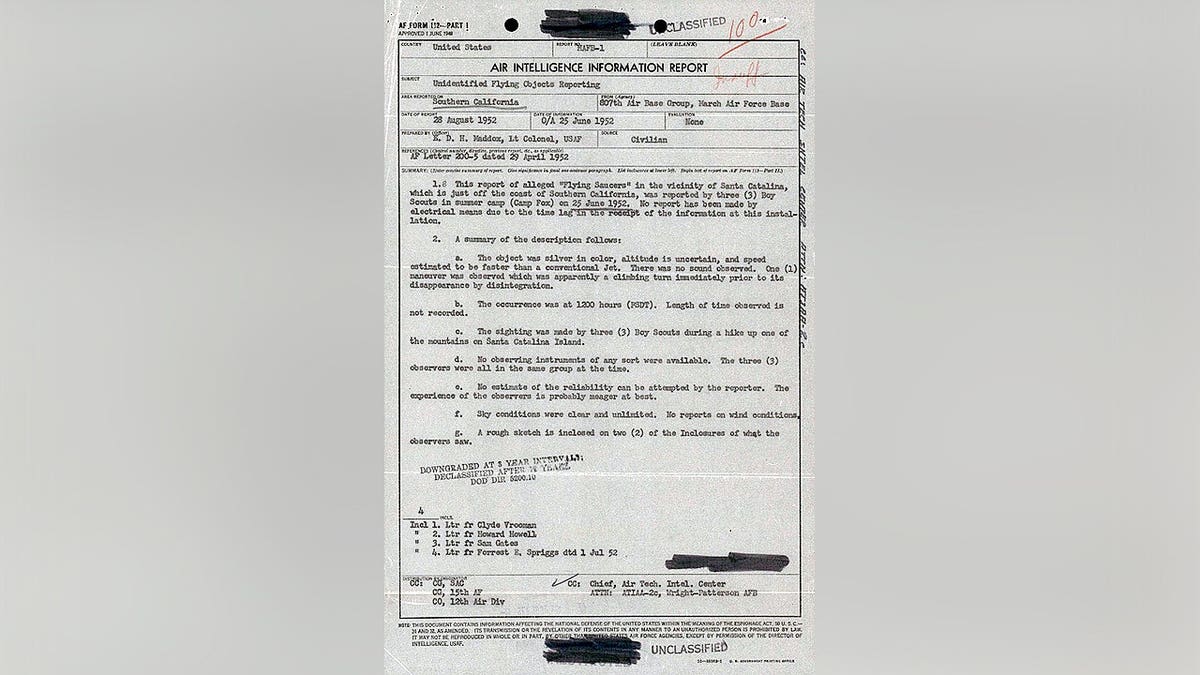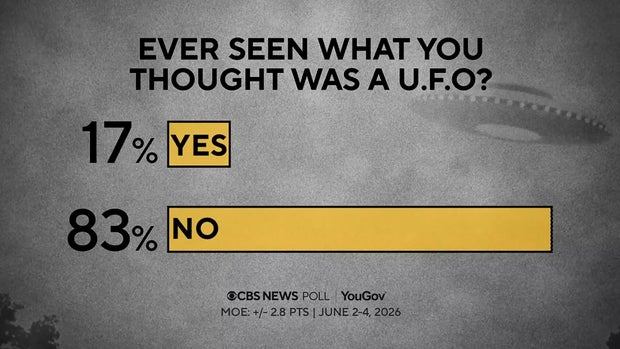
During the 1970s, a bizarre phenomenon spread across ranching regions of the American West and Midwest: cattle and other livestock were being found dead with portions of their bodies apparently removed. Some carcasses appeared to have their eyes, tongues, ears, udders, reproductive organs, rectums, or sections of the hide missing. In some cases, ranchers reported little blood around the carcass, few obvious tracks, and wounds that appeared unusually clean.
The incidents became known as cattle mutilations, and they eventually became one of the most enduring mysteries associated with UFOs and alleged extraterrestrial activity. The subject remains controversial. There is good evidence that large numbers of cattle really were found dead and in unusual condition.
There is not, however, conclusive scientific evidence that extraterrestrials caused those deaths. Investigators have proposed everything from predators and insects to deliberate human activity—and, at the far end of the spectrum, extraterrestrial biological experimentation. Although reports of mysteriously injured or dead livestock existed before the 1970s, the phenomenon became a major national story during the mid-1970s. Colorado became one of the principal centers of the controversy.
In 1975, reports of nearly 200 cattle mutilations between April and October were made in Colorado. The story became sufficiently prominent that Colorado Senator Floyd Haskell asked the FBI to become involved. Reports subsequently appeared throughout New Mexico, Kansas, Nebraska, Wyoming, Montana, South Dakota, Oklahoma, Texas and other areas.
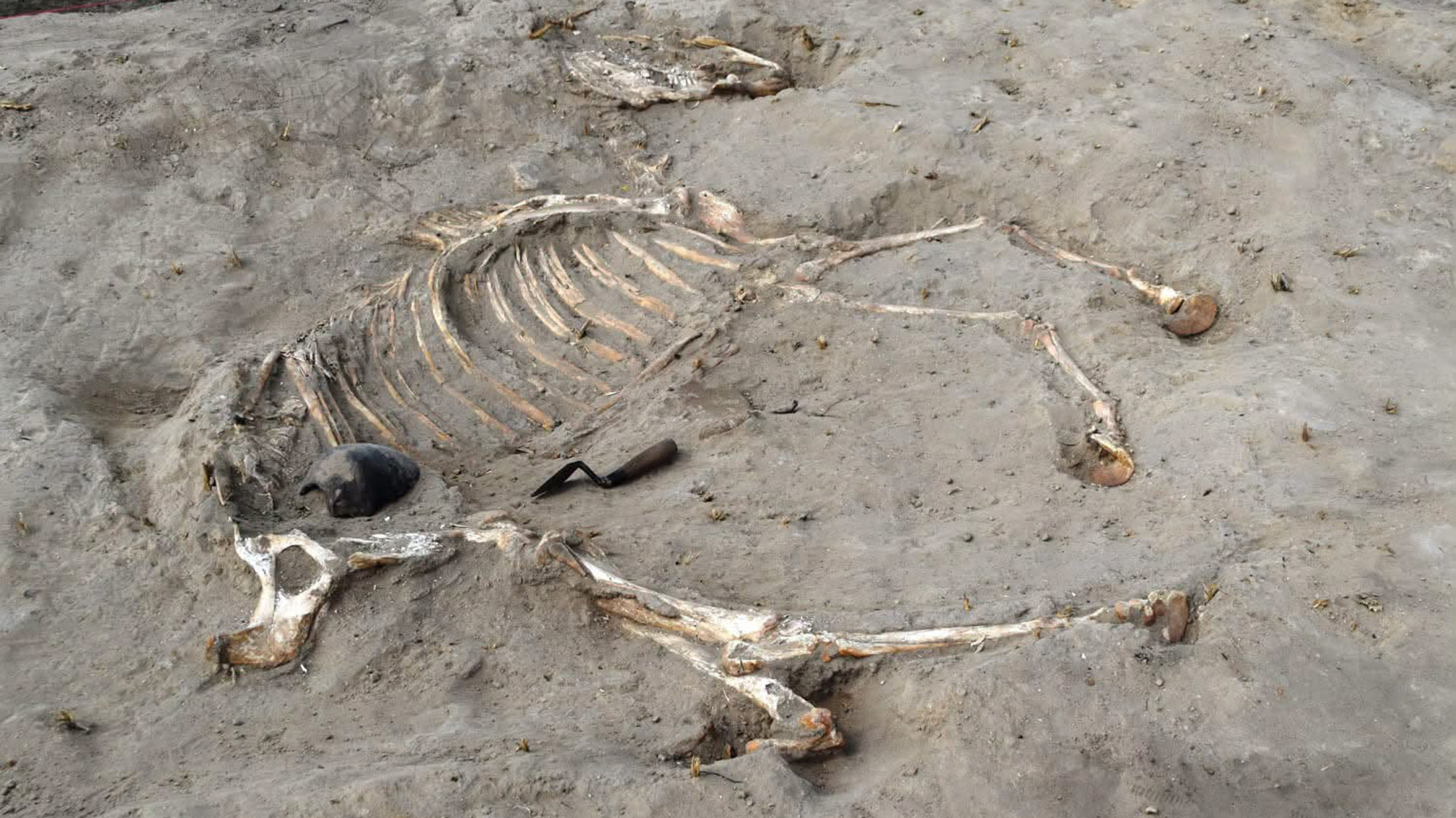
Ranchers often described remarkably similar discoveries: A cow found dead in an isolated pasture. One or both eyes missing. The tongue apparently removed. Portions of the lips or jaw missing. The reproductive organs or udder damaged or removed. The rectal area apparently removed. Patches of hide missing. Little obvious blood. Few or no human footprints around the animal. No obvious indication of a struggle. In some reports, the carcass appeared to have been disturbed very little despite the supposedly extensive injuries. To ranchers accustomed to seeing animals die from disease, injury, weather, predators, and old age, some of these scenes seemed profoundly unusual.
One reason the phenomenon became so mysterious was the appearance of certain wounds. Some ranchers believed the edges of the missing tissue looked too smooth to have been produced by coyotes, wolves or other predators. Others reported what appeared to be circular or extremely precise cuts. There were also claims that certain carcasses appeared to have been completely drained of blood. These observations became central to the extraterrestrial theory.
However, an important distinction must be made: what a carcass looks like several days after death does not necessarily reveal how the animal died. As the body dries, the hide contracts. Soft tissues decompose at different rates, and insects, birds and mammals preferentially consume exposed or easily accessible tissues. The resulting damage can sometimes look surprisingly clean or surgical.
A 1989 study published in the Canadian Veterinary Journal specifically examined alleged cattle mutilations and compared reported mutilation patterns with known scavenging behavior. The researchers concluded that the Alberta cases they studied were consistent with postmortem scavenging and emphasized that scavenging must be excluded before human involvement is proposed.
Why Were the Eyes, Tongues and Genitals So Often Missing? This is one of the most interesting aspects of the mystery. Those areas are composed partly of relatively soft tissue and are attractive to scavengers. Flies and their larvae, birds, coyotes and other animals can concentrate on the eyes, mouth, anus and reproductive areas after an animal dies.
There is another important phenomenon: dehydration and shrinkage. The hide surrounding an opening can contract as the carcass dries. The resulting separation between skin and underlying tissue can produce edges that look remarkably sharp. Thus, an animal that died naturally might initially have had no unusual wound whatsoever, yet several days later its corpse could appear to have been surgically altered. This explanation doesn’t necessarily account for every historical case, but it provides a scientifically documented explanation for at least some alleged mutilations.
The cattle-mutilation controversy eventually reached the federal government. The FBI’s own records confirm that during the mid-1970s reports of livestock mutilations were causing considerable concern. The Bureau notes that it was asked to investigate, although its jurisdiction was limited, particularly to cases involving Indian lands. The FBI’s released files contain correspondence, press reports and other material concerning the phenomenon from roughly 1974–1978.
The FBI’s involvement helped give the mystery an aura of official significance. To many people, the reasoning was simple: If the FBI was investigating cattle mutilations, perhaps there really was something extraordinary happening. But an FBI investigation does not establish an extraterrestrial explanation. The Bureau was responding to reports and allegations, not confirming their cause.
The controversy continued into the late 1970s. New Mexico became particularly important because cattle mutilations were being reported in remote areas, including areas involving Native American lands. In 1979, an investigation into reported mutilations on New Mexico Indian lands received FBI attention. The federal investigation ultimately did not find evidence establishing an exotic cause. Contemporary accounts of the FBI investigation report that the Bureau concluded the examined cases appeared consistent with ordinary predators rather than an unknown mutilating force.
At approximately the same time, however, some local investigators and ranchers remained convinced that something more unusual was occurring. This disagreement became a defining feature of the entire mystery. One of the most important investigations was conducted by Kenneth M. Rommel Jr., a former FBI agent who investigated New Mexico cattle-mutilation reports. Rommel’s work ultimately supported conventional explanations involving predators and scavengers acting upon animals that had generally died naturally. This conclusion was profoundly unsatisfying to people who had personally discovered the carcasses.
A rancher might look at a dead cow and say: “I’ve seen coyotes eat cattle before. This doesn’t look like that.” That testimony is important historically because it demonstrates why the mystery persisted even after official investigations offered conventional explanations.
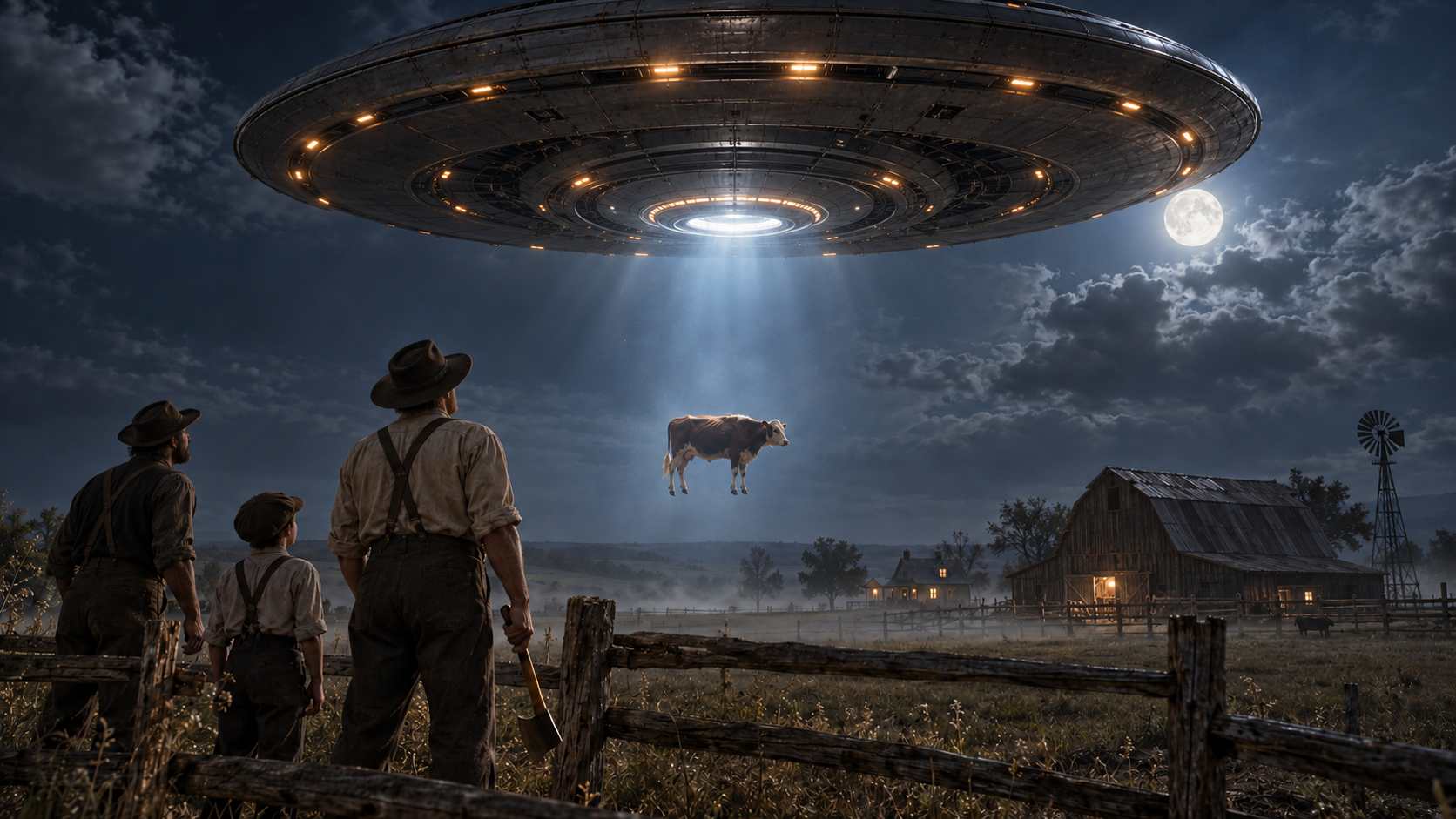
The biggest belief in extraterrestrials responsible comes from a hoax story perpetrated by a certain Alexander Hamilton, a rancher and a former state legislator who fictitious story was published in a newspaper called “The Yates Center Farmer’s Advocate” in Kansas on April 23, 1897, during a time when much of America claimed to see strange airships. Mister Hamilton claimed he, his son, and a hired hand at night were awakened by his barking dogs to observe a massive 300 foot long cigar shaped airship “mystery airship” with a well lit glass carriage that had 6 people inside speaking a gibberish foreign language. Then, a red cable was dropped which lassoed a heifer. Hamilton and the other men tried to cut the cable with axes but to no avail. A loud turbine on the craft was activated and the ship carried the young cow away into the sky. Hamilton claimed the cow’s butchered remains were found the4next day in an adjacent field of a neighboring farmer.
Alex Hamilton had a reputation as a prankster with a gruesome sense of humor. He invented the fable to win T^he Yuma Township’s Liars Club contest for the best sensational; outlandish lie. That club disbanded shortly after the article’s publication. The newspaper’s original editor, Ed F. Hudson admitted in a letter the4 article was a deliberate hoax. (And such hoaxes sold lots and lots of newspapers, of course.)
The extraterrestrial interpretation developed; evolved from several observations and coincidences. During the 1970s, America was experiencing enormous public interest in UFOs. The subject had already been popularized by decades of UFO reports, military investigations and books about flying saucers. When mysterious cattle deaths began receiving national publicity, some investigators naturally asked: “Could UFOs be responsible?”
The theory proposed that extraterrestrial visitors might be using cattle for biological research. According to different versions of the hypothesis, aliens supposedly removed specific tissues to: Study bovine biology. Examine blood. Obtain genetic material. Test terrestrial diseases. Study reproductive organs. Analyze digestive systems. Monitor environmental contaminants.
Conduct biological experiments. Investigate Earth’s food animals.
Some theories proposed that cattle were being temporarily abducted, examined aboard UFOs and then returned to Earth. Others suggested that extraterrestrials were killing the animals directly on the ground. But, there has never been scientifically verified evidence demonstrating that such activities occurred.
One of the most dramatic claims concerned blood. Witnesses sometimes said that a mutilated cow had been completely drained of blood, seemingly without leaving a pool of blood on the ground. This became one of the strongest arguments for an extraordinary explanation. But forensic and veterinary considerations complicate this observation. After death, blood does not necessarily remain where a person expects to see it. It can settle internally through gravity, undergo clotting and decomposition, and be consumed or altered by insects and microorganisms. Furthermore, a carcass lying in the field for days can look dramatically different from a freshly killed animal. Consequently, the absence of a large pool of blood does not by itself demonstrate that an animal was somehow drained by an extraterrestrial device.
The Strange Reports of Helicopters. Another recurring element of the cattle-mutilation mythology involved unidentified helicopters. During the 1970s, ranchers sometimes reported seeing helicopters near areas where mutilated cattle were later discovered. This produced another theory: perhaps mysterious government or military helicopters were secretly collecting biological samples. The story became particularly attractive because the United States was in the midst of the Cold War, when secret military programs and classified experiments were very real.
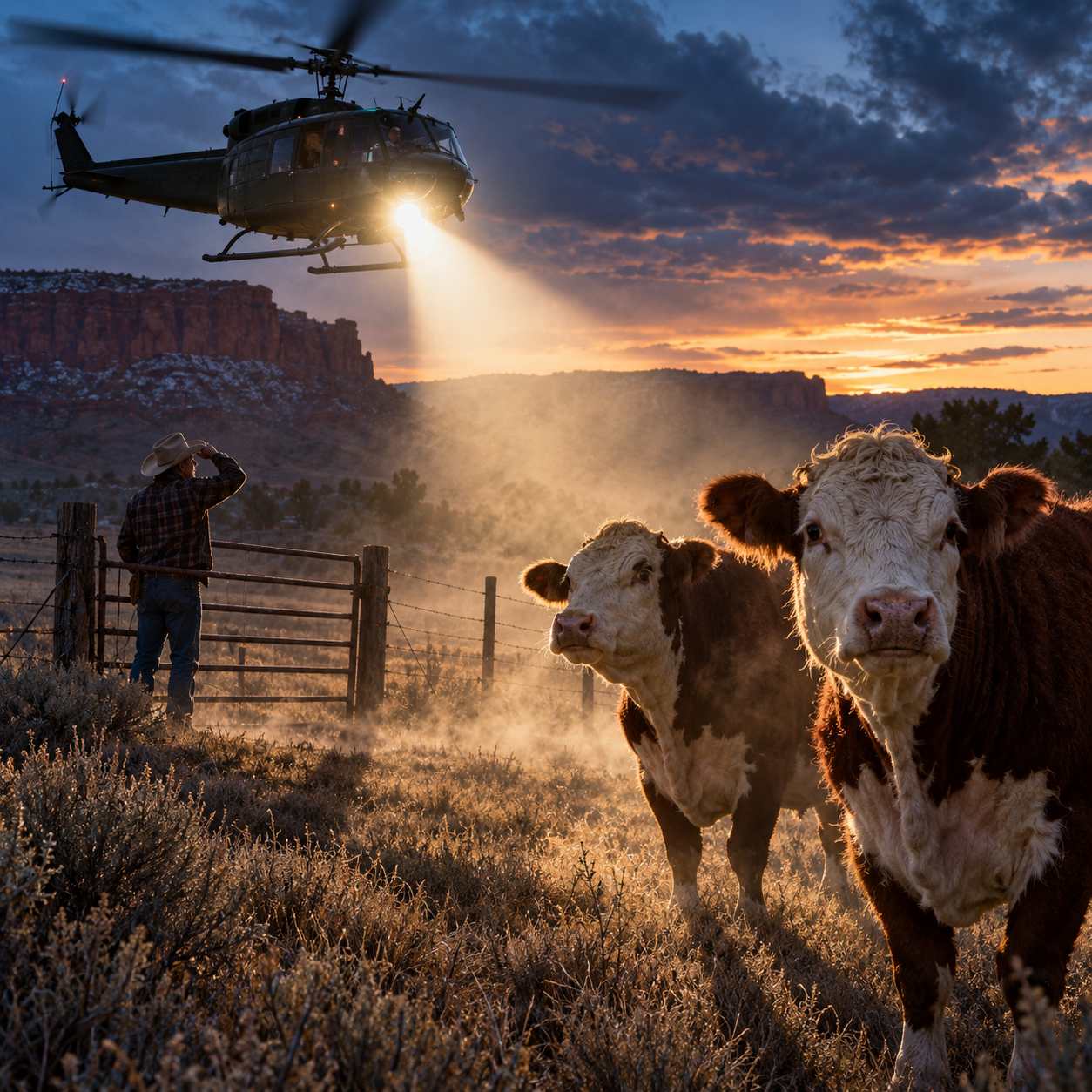
Some researchers therefore proposed that cattle mutilations might have been associated with secret government biological or chemical experiments rather than extraterrestrials. Again, no conclusive evidence established that cattle mutilations were part of a secret nationwide military program. The Government-Experiment Theory. The government explanation became a kind of halfway point between conventional explanations and extraterrestrials.
Some theories proposed that cattle were being used to monitor: Radiation. Chemical contamination. Biological warfare agents. Environmental pollutants. New diseases. Agricultural experiments. The idea was attractive because cattle are excellent biological indicators of environmental conditions. But the theory encountered the same basic problem as the extraterrestrial explanation: there was no convincing chain of physical evidence connecting the carcasses to such programs.
Another possibility was that some mutilations were deliberate acts by people. Possible motives suggested over the years included: Pranks. Criminal acts. Satanic or occult activity. Sexual violence toward animals. Scientific experimentation. Hoaxes. Attempts to conceal ordinary livestock deaths. The difficulty with this explanation is that the reported incidents varied greatly. Some could conceivably have resulted from human activity, while others may simply have been natural deaths followed by scavenging. It is therefore probably a mistake to assume that every reported mutilation had one single cause.
Newspaper stories about mysterious cattle quickly became part of the larger UFO and paranormal culture. The controversy did not simply disappear when the major investigations ended. During the 1980s, books, magazines, television programs and UFO researchers continued discussing cattle mutilations. The subject became closely associated with the broader UFO phenomenon. Later stories about mysterious livestock deaths also helped preserve the legend.
By then, cattle mutilations had become a classic component of UFO folklore alongside: Alien abductions. Crop circles. UFO crashes. Secret government facilities. Missing-time experiences.
Strange lights in the sky. Alleged underground alien bases.
The Most Important Question: Did Extraterrestrials Really Do It? This is where the historical evidence and the legend separate. There is strong evidence that people really did discover dead cattle in unusual conditions. There is also strong evidence that at least some apparent mutilations can be explained through decomposition, insects, birds and terrestrial scavengers. The 1989 veterinary study is particularly important because it experimentally and observationally addressed how cattle carcasses can acquire mutilation-like characteristics. But there is no scientifically confirmed evidence that extraterrestrials caused cattle mutilations.
No alien spacecraft has been recovered in connection with a cattle case. No extraterrestrial instrument has been conclusively identified. No verified extraterrestrial biological material has been demonstrated. No controlled investigation has established an extraterrestrial mechanism for removing the tissues. And no reliable chain of physical evidence has connected a particular mutilated cow to a UFO. That does not mean every historical case has been perfectly explained. It means that “unexplained” and “extraterrestrial” are not the same thing.
Cattle mutilations remain fascinating because they occupy an unusual territory between established facts and unresolved questions. The established facts include the existence of numerous reports, the discovery of genuinely dead and damaged livestock, and extensive concern among ranchers and investigators. The FBI’s own archives document how widespread the controversy became during the 1970s. The unresolved part concerns individual cases in which investigators could not determine exactly what happened.
That uncertainty created an enormous space for speculation. For UFO believers, cattle mutilations became possible evidence of extraterrestrial biological experimentation. But even in alleged cases of human abduction from extraterrestrials who have been returned; the humans were not subject horrible mutilations and were returned whole, living, and generally in good health. For skeptics, they became an example of how ordinary biological processes can appear extraordinarily mysterious when viewed after the fact.
For many ranchers, however, the issue was much more personal: they had found their animals dead in their own fields, sometimes under circumstances that they found impossible to explain. But, very highly knowledgeable people of various studies, some of science, some controversial, did offer their explanations, even, at least, at times as their own personal theories which may or may not be correct.
The cattle-mutilation phenomenon of the 1970s and 1980s therefore has two histories. One is the physical history of dead livestock, decomposition, scavengers, investigations and disputed forensic observations, which the available evidence strongly supports. The other is the cultural history of UFOs, extraterrestrials, government secrecy and the belief that something intelligent and unknown might have been visiting rural America, which requires very strong evidence.
RELATED
{ https://mysticsciences.com/ }


 Buried for 2,600 years beneath Nile mud, a massive ancient Egyptian complex was just found — from space