Naar de inhoud

UFO'S of UAP'S, ASTRONOMIE, RUIMTEVAART, ARCHEOLOGIE, OUDHEIDKUNDE, SF-SNUFJES EN ANDERE ESOTERISCHE WETENSCHAPPEN - DE ALLERLAATSTE NIEUWTJES

UFO's of UAP'S in België en de rest van de wereld
seniorennet.beseniorennet.be
Ontdek de Fascinerende Wereld van UFO's en UAP's: Jouw Bron voor Onthullende Informatie! Ben jij ook gefascineerd door het onbekende? Wil je meer weten over UFO's en UAP's, niet alleen in België, maar over de hele wereld? Dan ben je op de juiste plek! België: Het Kloppend Hart van UFO-onderzoek In België is BUFON (Belgisch UFO-Netwerk) dé autoriteit op het gebied van UFO-onderzoek. Voor betrouwbare en objectieve informatie over deze intrigerende fenomenen, bezoek je zeker onze Facebook-pagina en deze blog. Maar dat is nog niet alles! Ontdek ook het Belgisch UFO-meldpunt en Caelestia, twee organisaties die diepgaand onderzoek verrichten, al zijn ze soms kritisch of sceptisch. Nederland: Een Schat aan Informatie Voor onze Nederlandse buren is er de schitterende website www.ufowijzer.nl, beheerd door Paul Harmans. Deze site biedt een schat aan informatie en artikelen die je niet wilt missen! Internationaal: MUFON - De Wereldwijde Autoriteit Neem ook een kijkje bij MUFON (Mutual UFO Network Inc.), een gerenommeerde Amerikaanse UFO-vereniging met afdelingen in de VS en wereldwijd. MUFON is toegewijd aan de wetenschappelijke en analytische studie van het UFO-fenomeen, en hun maandelijkse tijdschrift, The MUFON UFO-Journal, is een must-read voor elke UFO-enthousiasteling. Bezoek hun website op www.mufon.com voor meer informatie. Samenwerking en Toekomstvisie Sinds 1 februari 2020 is Pieter niet alleen ex-president van BUFON, maar ook de voormalige nationale directeur van MUFON in Vlaanderen en Nederland. Dit creëert een sterke samenwerking met de Franse MUFON Reseau MUFON/EUROP, wat ons in staat stelt om nog meer waardevolle inzichten te delen. Let op: Nepprofielen en Nieuwe Groeperingen Pas op voor een nieuwe groepering die zich ook BUFON noemt, maar geen enkele connectie heeft met onze gevestigde organisatie. Hoewel zij de naam geregistreerd hebben, kunnen ze het rijke verleden en de expertise van onze groep niet evenaren. We wensen hen veel succes, maar we blijven de autoriteit in UFO-onderzoek! Blijf Op De Hoogte! Wil jij de laatste nieuwtjes over UFO's, ruimtevaart, archeologie, en meer? Volg ons dan en duik samen met ons in de fascinerende wereld van het onbekende! Sluit je aan bij de gemeenschap van nieuwsgierige geesten die net als jij verlangen naar antwoorden en avonturen in de sterren! Heb je vragen of wil je meer weten? Aarzel dan niet om contact met ons op te nemen! Samen ontrafelen we het mysterie van de lucht en daarbuiten.

Berichten van 1 augustus 2026 tot 31 augustus 2026

Wetenschappelijke Analyse over mogelijke Ufo-Basissen en Aliens in Antarctica: Een Kritische Beschouwing


Wetenschappelijke Analyse over mogelijke  Ufo-Basissen en Aliens in Antarctica: Een Kritische Beschouwing

UFO-Antartica-large-1600x815.jpg

Inleiding

Antarctica, het meest zuidelijke continent op aarde, wekt al decennia lang zowel wetenschappelijke interesse als volksverbeelding. Met zijn onmetelijke ijsvlaktes, extreme klimaat en afgelegen ligging vormt het een gebied dat zowel wetenschappelijk waardevol als mysterieus is. Het fenomeen van vermeende UFO-bases onder het ijs van Antarctica behoort tot de meest intrigerende en controversiële onderwerpen binnen de ufologie en complottheorieën. Deze analyse beoogt een wetenschappelijke en objectieve beoordeling te geven van de claims en bewijsvoering rondom de vermeende aanwezigheid van buitenaardse bases op Antarctica, met een kritische blik op de betrouwbaarheid, bewijsgrond en wetenschappelijke consensus.

Historische Context en Ontwikkeling van de Theorieën

De fascinatie voor Antarctica en buitenaards leven ontwikkelde zich vooral in de tweede helft van de 20e eeuw, mede door de geopolitieke spanningen tijdens de Koude Oorlog en de ruimtevaartrace. In deze periode groeide de belangstelling voor de mogelijkheid van geheime bases en buitenaardse aanwezigheid, mede door de toegenomen meldingen van onverklaarbare vliegende objecten (UFO’s).

Operation High Jump (1946-1947), geleid door Rear Admiral Richard E. Byrd, wordt vaak aangehaald in de context van UFO-theorieën. Officieel had deze missie tot doel het opzetten van een onderzoeksstation en het trainen van militair personeel onder extreme omstandigheden. Echter, in de alternatieve theorieën wordt beweerd dat deze expeditie bedoeld was om buitenaardse bases te detecteren en te neutraliseren. Er bestaat echter geen wetenschappelijk bewijs dat deze missie specifiek gericht was op het opsporen van buitenaardse activiteiten, en de officiële verslagen spreken vooral over klimaat- en wetenschappelijke doelen.

crashed-ufos-secret-bases-antarctica-2.jpg

Antarctica Geheime operationele basissen en gecrashte UFO’s onthuld door UFO-onderzoeker

Nazi-Expedities en Geruchten over Geheime Bases

Een andere belangrijke bron van controverse zijn de Duitse expedities in Antarctica, met name de zogenaamde “Neu-Schwabenland” expeditie (1938-1939). Conspiracy theoristen suggereren dat Nazi-Duitsland tijdens deze expeditie geheime bases heeft gevestigd onder het ijs, mogelijk met behulp van geavanceerde technologieën of buitenaardse hulp. Sommige aanhangers beweren dat er enorme gaten en ondergrondse tunnels zijn gevonden, geschikt voor het huisvesten van geavanceerde vliegtuigen of zelfs buitenaardse wezens.

Wetenschap en feiten wijzen echter uit dat de Duitse aanwezigheid in Antarctica beperkt bleef tot tijdelijke onderzoeksstations en dat geen fysiek bewijs bestaat voor de constructie van ondergrondse bases of geavanceerde technologieën. De Duitse expedities richtten zich vooral op het verkennen van het continent en het vastleggen van geografische gegevens, zonder enige documentatie of fysiek bewijs dat de claims van geheime bases ondersteunt. Bovendien heeft de internationale gemeenschap na de Tweede Wereldoorlog geen aanwijzingen gevonden voor dergelijke geheime installaties.

Geruchten over Nazi-UFO’s en Geavanceerde Technologieën

De theorie dat Nazi’s geavanceerde vliegende schotels of “UFO’s” ontwikkelden met buitenaardse technologie is populair in pseudowetenschappelijke en fictieve kringen. Volgens deze theorieën zouden nazi-wetenschappers, mogelijk geholpen door buitenaardse entiteiten, UFO-achtige voertuigen hebben gebouwd die superieure snelheid en manoeuvreerbaarheid bezaten. Sommige verhalen verwijzen naar zogenaamde “Haunebu” of “Vril”-vliegtuigen, die volgens de mythes in geheime bases onder Antarctica zouden zijn ontwikkeld.

Wetenschappelijk en historisch bewijs voor dergelijke claims ontbreekt volledig. De meeste wetenschappelijke studies tonen aan dat de technische mogelijkheden van de Nazi’s beperkt waren en niet konden leiden tot de ontwikkeling van gereedstaande UFO-achtige voertuigen met buitenaardse eigenschappen. Bovendien zijn er geen fysieke resten of betrouwbare getuigenissen die de claims van geavanceerde nazi-technologieën ondersteunen. Het crashen van een UFO in Kecksburg, Pennsylvania, in 1965, wordt vaak aangehaald in de context van geheime buitenaardse technologie, maar dit incident is nooit wetenschappelijk bevestigd en wordt algemeen beschouwd als een misinterpretatie of natuurverschijnsel.

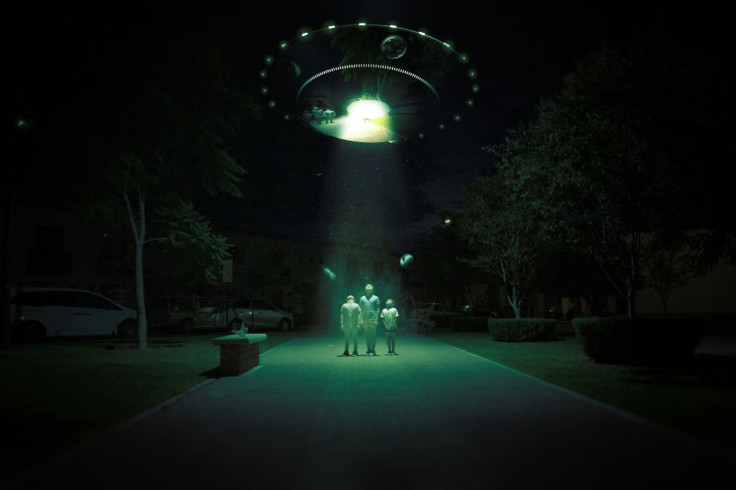
UFO-abduction.jpg

Bewijs en Wetenschappelijke Validiteit

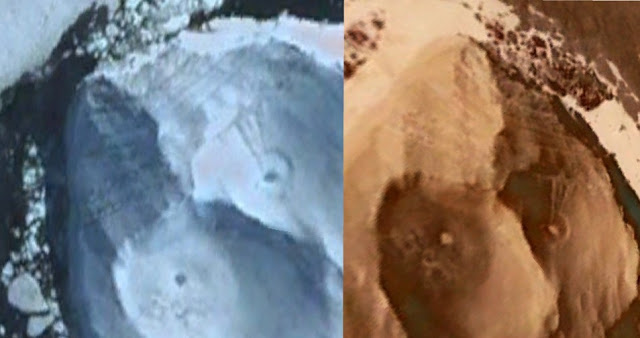
De kernvraag bij de claims over UFO-bases in Antarctica is de betrouwbaarheid van het beschikbare bewijs. Tot op heden zijn er geen concrete, reproduceerbare wetenschappelijke gegevens die de aanwezigheid van ondergrondse buitenaardse bases of UFO-crashes onder Antarctica ondersteunen. De meeste “bewijsstukken”, zoals satellietbeelden, worden vaak geïnterpreteerd als natuurlijke formaties of optische illusies.

Satellietbeelden tonen wel anomalieën die door sommige onderzoekers worden aangegrepen als mogelijke ingangen of structuren. Echter, de meeste van deze waarnemingen worden door experts eenvoudigweg verklaard door natuurlijke geologische formaties, sedimentvorming of optische effecten. Zonder fysiek bewijs, zoals artefacten, monsters of betrouwbare getuigenissen, blijft de claim van geheime bases speculatief.

Daarnaast heeft de wetenschap op het gebied van Antarctica uitgebreide onderzoeken uitgevoerd, gericht op geologie, glaciologie en biologie. Deze studies hebben geen aanwijzingen gevonden voor ondergrondse constructies of buitenaardse activiteiten. De extreme omstandigheden – zoals de temperaturen die kunnen dalen tot onder -80°C, de constante wind en de dikte van het ijs – maken de constructie en het onderhouden van ondergrondse bases uiterst onwaarschijnlijk zonder expliciete technologische hulp die niet wordt ondersteund door bewijs.

Wetenschappelijke en Geografische Beperkingen

De fysische omstandigheden op Antarctica vormen aanzienlijke barrières voor het bestaan van permanente bases, zeker voor buitenaardse of geheime installaties. De enorme ijsmassa’s, de moeilijk bereikbare ondergrond en de extreme weersomstandigheden maken bouw en logistiek uiterst complex en kostbaar. Bovendien is er geen bewijs dat dergelijke bases bestaan of dat er enige activiteit plaatsvindt die niet door wetenschappelijke expedities kan worden verklaard.

Daarnaast wordt het continent streng gecontroleerd door internationale verdragen, zoals het Antarctisch Verdrag (1961), dat het militaire gebruik en de exploitatie van natuurlijke hulpbronnen reguleert en het behoud van het milieu waarborgt. Het is uiterst onwaarschijnlijk dat geheime bases, vooral van buitenaardse aard, onopgemerkt blijven onder deze strikte internationale controle.

Mediacultuur en Fictie

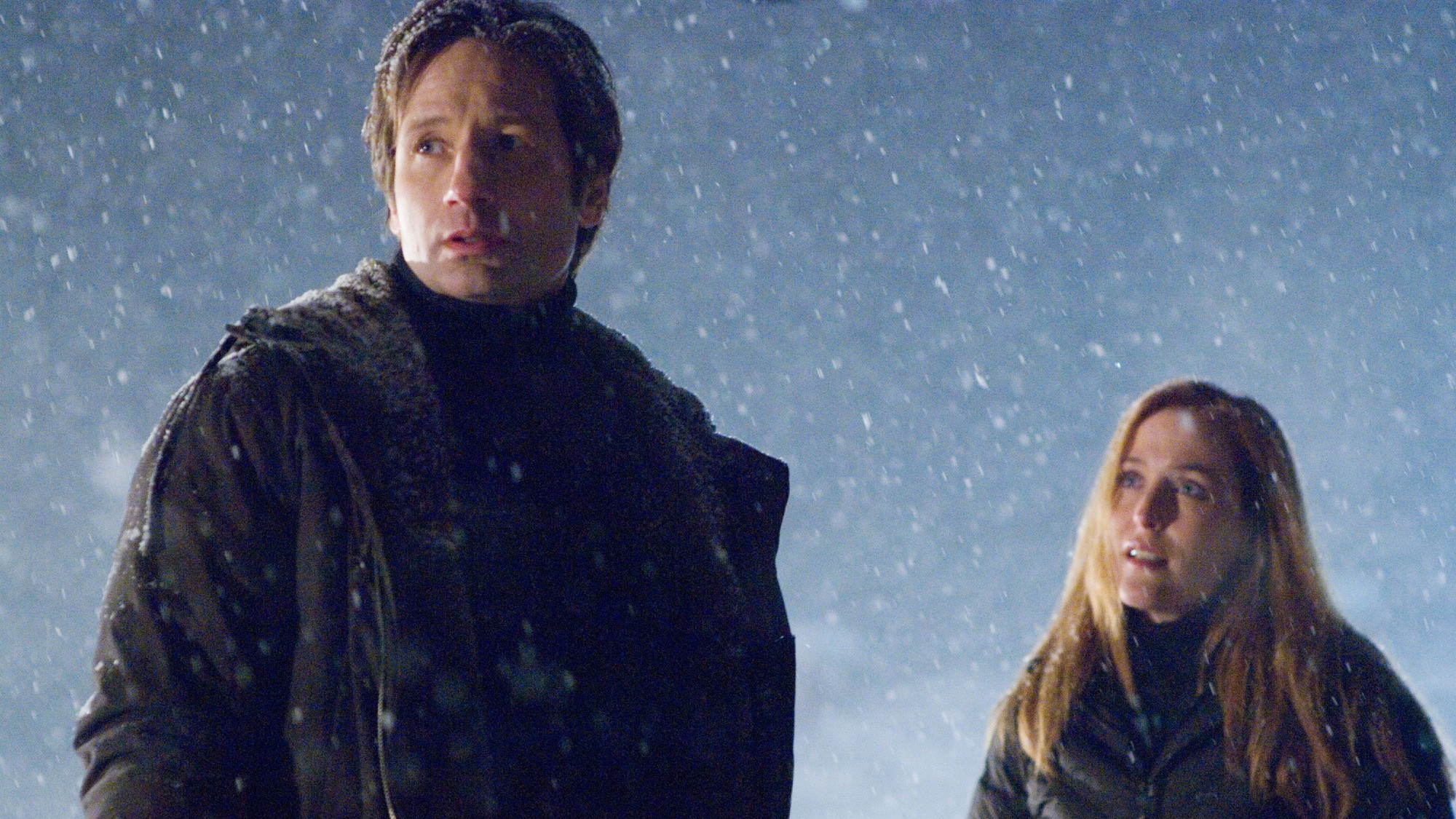
De popularisering van het idee van geheime Nazi- of buitenaardse bases in Antarctica wordt sterk gevoed door sciencefictionfilms, boeken en pseudowetenschappelijke literatuur. Films zoals “Iron Sky” (2012) en series als “The X-Files” propaganderen het idee van verborgen bases en geheime technologieën. Deze verhalen combineren feitelijke elementen met fictie, waardoor ze aantrekkelijk en intrigerend worden voor het publiek.

De invloed van dergelijke media heeft bijgedragen aan het ontstaan en de verspreiding van complottheorieën, ondanks het ontbreken van wetenschappelijk bewijs. Het is belangrijk te onderscheiden tussen entertainment en wetenschappelijke realiteit. Fictie kan inspiratie bieden, maar mag niet worden beschouwd als bewijs.

UFO-eskimo.jpg

Wetenschappelijke Conclusie en Kritische Beschouwing

Na een uitgebreide beoordeling van de beschikbare informatie, bewijs en wetenschappelijke consensus kunnen we concluderen dat:

  • Er geen concreet bewijs bestaat voor de aanwezigheid van UFO-bases onder Antarctica.
  • Claims over nazi-geheime bases en geavanceerde buitenaardse technologieën in Antarctica zijn niet ondersteund door fysiek bewijs of betrouwbare getuigenissen.
  • Satellietbeelden en anekdotisch bewijs worden niet wetenschappelijk gevalideerd en kunnen meestal worden verklaard door natuurlijke formaties.
  • De extreme fysische omstandigheden maken het bouwen van ondergrondse bases, laat staan buitenaardse installaties, uiterst onwaarschijnlijk zonder geavanceerde technologie die niet wordt ondersteund door bewijs.
  • Culturele en mediatradities dragen bij aan de populariteit van deze theorieën, maar zij vormen geen wetenschappelijke onderbouwing.

Aanbevelingen voor Toekomstig Onderzoek

Hoewel de huidige stand van wetenschap geen bewijs levert voor UFO-bases in Antarctica, blijft het continent een fascinerend gebied voor geologisch en biologisch onderzoek. Verdere wetenschappelijke expedities, met geavanceerde technologieën zoals seismische monitoring, ondergrondse exploratie en geochemische analyses, kunnen mogelijk meer licht werpen op de mysteries van Antarctica.

Het is essentieel dat dergelijk onderzoek transparant en open gebeurt, zonder te worden beïnvloed door pseudowetenschappelijke of conspiratieve theorieën. Kritisch denken, goede wetenschappelijke methoden en verificatie blijven de hoekstenen van betrouwbare kennis.

Conclusie

De mythe van UFO-bases en Nazi-activiteiten in Antarctica blijft een intrigerend onderdeel van de populaire cultuur en complottheorieën. Echter, uit wetenschappelijk oogpunt ontbreekt het aan bewijs dat dergelijke claims ondersteunt. Antarctica is een continent vol natuurlijke wonderen en wetenschappelijke ontdekkingen, maar de verhalen over geheime buitenaardse bases behoren tot de sfeer van speculatie en fictie. Vooralsnog is het continent vooral een plek waar de wetenschap de complexe geologische en biologische processen van onze planeet onderzoekt, en niet een geheime uitvalsbasis voor buitenaardse beschavingen.

Bronnen en verder lezen

  • National Snow and Ice Data Center (NSIDC) – Antarctica Research
  • International Geophysical Year (1957-1958) en Antarctica-onderzoek
  • Rapporten en publicaties van het Antarctic Treaty Secretariat
  • Kritische wetenschappelijke analyses over UFO-claims en satellietbeelden
  • Fictie en cultuur: Analyse van representaties in media

NOTE PETER2011

Door het scheiden van feit en fictie en het baseren van conclusies op wetenschappelijke bewijsvoering, kunnen we een genuanceerder en realistischer beeld krijgen van Antarctica en de vermeende buitenaardse activiteiten daar. Het blijft een gebied dat vooral onze natuurlijke nieuwsgierigheid en wetenschappelijke interesse wekt, en minder een plek voor geheime buitenaardse bases.

GERELATEERDE VIDEO'S

Wat zit er echt verborgen in Antarctica? UFO's & geheime bases met Brad Olsen | Unveiled Aflevering 51

{ PETER2011 }

Hoe vind je dit bericht?
Geschreven door peter om 23:34 Stuur door

Verkenning van de mysteries van parallelle dimensies en alternatieve universums

Verkenning van de mysteries van parallelle dimensies en alternatieve universums

Universe-x.jpg

In de uitgestrekte ruimte van het heelal schuilen mysteries die onze begrip te boven gaan, en roepen ons op om de gebieden van het onbekende te verkennen. Onder deze raadsels bevindt zich het concept van parallelle dimensies en alternatieve universums als een prikkelende mogelijkheid die de menselijke verbeelding al eeuwenlang in zijn greep houdt. Recente vooruitgangen in de theoretische fysica hebben een nieuw licht geworpen op deze eeuwenoude vraag en bieden een glimp van het complexe weefsel van de realiteit en de mogelijke bestaan van parallelle werelden.

Aan de voorhoede van deze verkenning staat het fascinerende concept van de multiversumtheorie. Volgens de nieuwste inzichten in de fysica suggereert het multiversum dat ons heelal slechts één van talloze andere kan zijn, die gelijktijdig maar onafhankelijk bestaan binnen hun eigen dimensie. Deze parallelle dimensies of alternatieve universums zouden unieke natuurkundige wetten, constanten en zelfs variaties in fundamentele deeltjes bezitten, wat leidt tot een eindeloos tapijt van diverse realiteiten.

De basis van de multiversumtheorie rust op de opmerkelijke notie van kosmische inflatie, een exponentiële expansie van ruimte die kort na de oerknal plaatsvond. Deze snelle expansie creëerde talloze bellen of zakken in het weefsel van de ruimtetijd, elk representerend een apart universum met zijn eigen eigenschappen. Hoewel deze universums misschien voor altijd buiten ons bereik blijven, bestaan ze desalniettemin, parallel aan ons eigen universum, en mogelijk met geheel andere vormen van leven en onvoorstelbare wonderen.

Een intrigerende tak van de multiversumtheorie is het concept van het “Level I Multiversum,” ook bekend als het 'quilted multiversum' of de oneindige universum-theorie. In dit scenario worden parallelle universums voorgesteld als verre kosmische eilanden, gescheiden door immense kosmische uitgestrektheden. Hoewel ze mogelijk dezelfde natuurkundige wetten volgen, kunnen de materie- en energieverdelingen binnen deze universums sterk variëren, wat leidt tot gevarieerde landschappen en configuraties.

Een andere boeiende benadering binnen het multiversumkader is het “Level II Multiversum,” bekend als de bubbeluniversumtheorie of het inflatoire multiversum. Deze theorie suggereert dat ons universum slechts een van vele bellen is binnen een uitgestrekte kosmische schuim. Elk van deze bellen vertegenwoordigt een afzonderlijk universum dat ontstaat door het proces van kosmische inflatie, en dat zich onafhankelijk ontwikkelt en uitbreidt. Net als zeepbellen in de lucht bestaan deze universums in een zee van andere, elk met zijn eigen unieke realiteit.

Dieper in de theoretische wereld ligt het “Level III Multiversum,” oftewel de veel-werelden interpretatie, die een verbazingwekkend panoramisch beeld opent van mogelijkheden. Voortkomend uit de kwantummechanica, stelt deze notie voor dat elk kwantumgebeurtenis meerdere vertakkingen creëert. Elke keuze die we maken, elke kwantuminteractie, schept een veelvoud aan parallelle universums, die zich vertakken in een oneindig web van waarschijnlijkheden. In dit verbazingwekkende landschap bestaan alle denkbare uitkomsten en beslissingen, gerealiseerd in hun eigen aparte realiteit.

Universe-1600x738.jpg

Hoewel het bestaan van parallelle dimensies en alternatieve universums nog in het rijk van de theorie ligt, is er op het gebied van wetenschappelijk onderzoek toch enig indicatief bewijs opgedaan. Experimentele studies bij CERN’s Large Hadron Collider (LHC) proberen het bestaan van extra dimensies buiten de drie die wij kennen, te ontrafelen. Deze experimenten, gericht op de mysteries van de deeltjesfysica op hoge energie, proberen ongrijpbare deeltjes op te sporen die mogelijk in andere dimensies kunnen ontsnappen, en zo indirect bewijs te leveren voor het bestaan van parallelle werelden.

Daarnaast biedt de kosmische microgolfachtergrondstraling, die wordt beschouwd als de resten van het vroege heelal, aanwijzingen voor een multiversum. Wetenschappers hebben de complexe patronen in deze straling bestudeerd, op zoek naar anomalieën die kunnen wijzen op interacties tussen ons universum en naburige dimensies. Hoewel deze bevindingen nog preliminair zijn en verder onderzoek vereisen, voeden ze de drang naar ontdekking en stimuleren ze de verbeelding.

Parallelle dimensies en alternatieve universums hebben al lange tijd de aandacht van verhalenvertellers, die talloze werken in sciencefiction en fantasy hebben geïnspireerd. Van H.G. Wells’ “De Tijdmachine” tot Christopher Nolan’s baanbrekende film “Inception” en de uitgestrekte universums van Marvel Comics, het concept van parallelle dimensies is een vruchtbare bodem voor creatieve verkenning. Deze fictieve verhalen tonen vaak reizen tussen dimensies, waarin personages de ingewikkelde web van realiteiten navigeren, versies van zichzelf ontmoeten en de oneindige mogelijkheden van bestaan confronteren.

Toch, naarmate ons begrip van het heelal verdiept, vervagen de lijnen tussen wetenschap en fictie, en wordt de mogelijkheid van parallelle dimensies een steeds plausibeler hypothese. De zoektocht naar antwoorden gaat door, gedreven door de ontembare menselijke nieuwsgierigheid die ons al sinds mensenheugenis voortstuwt om de mysteries van het universum te ontrafelen.

Echter, terwijl het concept van parallelle dimensies onze verbeelding kan aanwakkeren en ons gevoel van verwondering kan versterken, is het van groot belang deze ideeën kritisch te benaderen. De verkenning van de theoretische fysica en de zoektocht naar empirisch bewijs vereisen rigoureuze wetenschappelijke methodologieën en strenge testen. Het bestaan van een theorie impliceert niet automatisch haar waarheid; buitengewone claims vereisen buitengewone bewijzen.

De wetenschappelijke gemeenschap is verdeeld over de vraag of parallelle dimensies en alternatieve universums daadwerkelijk bestaan. Critici beweren dat deze ideeën in het domein van speculatie vallen en het empirisch fundament missen om ze als wetenschappelijke theorie te rechtvaardigen. Ze pleiten voor voorzichtigheid en roepen onderzoekers op zich te richten op toetsbare hypotheses en observeerbare fenomenen, in plaats van af te dwalen in de wereld van de verbeelding.

Desalniettemin blijven voorstanders van de multiversumtheorie de grenzen van de wetenschappelijke nieuwsgierigheid verleggen. Ze werken aan het verfijnen van wiskundige modellen, ontwikkelen nieuwe experimentele opzetten en benutten geavanceerde technologieën om het bestaan van parallelle dimensies te onderzoeken.

Naarmate we uitkijken over het uitgestrekte kosmische landschap, starend naar de verre sterren en nadenkend over de mysteries die daarbuiten liggen, blijft de aantrekkingskracht van parallelle dimensies en alternatieve universums bestaan. Het is een zoektocht naar begrip, een verkenning van de fundamentele aard van de realiteit, en een bewijs van de onstuitbare menselijke drang naar kennis.

Uiteindelijk, of parallelle dimensies en alternatieve universums al dan niet bestaan, zullen hun aantrekkingskracht en inspiratie blijven voortbestaan. Ze blijven de menselijke verbeelding voeden, wetenschappelijke nieuwsgierigheid stimuleren en onze perceptie van wat mogelijk is uitdagen. Het raadsel van parallelle dimensies nodigt ons uit om verder te kijken dan de grenzen van ons bekende universum, de mysteries te omarmen die in de diepten van het bestaan verborgen liggen, en een reis te ondernemen die de grenzen van onze verbeelding overstijgt.

GERELATEERDE VIDEO's IN ENGELS


Voorbij Onze Werkelijkheid: De Verbazingwekkende Waarheid Over Parallelle Universums

De Verbazingwekkende Realiteiten van Parallelle Universums: Een Mind-Bending Reis

{ PETER2011 }

Hoe vind je dit bericht?
Geschreven door peter om 22:50 Stuur door

Viewers of streaming documentary The Rendlesham UFO: The British Roswell visited by alien orbs

Viewers of streaming documentary The Rendlesham UFO: The British Roswell visited by alien orbs

Ufologist and filmmaker Mark Christopher Lee has claimed that his documentary The Rendlesham UFO: The British Roswell has led to viewers being visited by alien orbs.

Hoe vind je dit bericht?
Geschreven door peter om 22:26 Stuur door

Plasmoid orb frightens women walking dog, Blakey, PA, USA Aug 26, 2026 UAP Sighting News.

Plasmoid orb frightens women walking dog, Blakey, PA, USA Aug 26, 2026 UAP Sighting News.

Screenshot%202026-08-31%20at%2010.42.42%E2%80%AFPM.png

Screenshot%202026-08-31%20at%2010.42.34%E2%80%AFPM.png

Screenshot%202026-08-31%20at%2010.40.26%E2%80%AFPM.png


Date of sighting: August 26, 2026 8:52pm
Location of sighting: Blakely, Pennsylvania, USA
Source: NUFORC #200502
 
This glowing object looks like a plasmoid orb, glowing and as it moves its orb shape shifts a bit into an oval shape. Thats how I knew it was a plasmoid orb...a sentient entity. The object actually frightens the woman as she begins to watch and the object stops, not moving for a bit then shoots away and seems to be following the power lines. The dog is trying to pull the woman away, as if it was sensing something it was afraid of and wanted to escape the area but the eyewitness tried to control the dog to record more video of the orb. The orb changes color to a light green for a few seconds then back to white. This looks so much like the Dome of Rock UFO plasmoid orb that its blowing my mind. Its just very exciting to see this interact with the woman.
Scott C. Waring - UFO Sightings Daily
 
Eyewitness states: 
I saw the object shoot up very fast, then it went down fast, shot to the left and then flew extremely fast to the right out of sight. At approximately 8:30pm, while walking my neighbor's dog, I saw a bright white object stationary in the sky near 764 Main Street in Blakely, PA. I continued to walk. I noticed it again several blocks away. The object hovered for a long period of time and then went up very fast, then downwards very fast. It then shot to the left and then went to the right extremely fast and out of sight. It did not make the buzzing or humming sound of a drone.
It did not have blinking colored lights. I saw it again when walking home, which was where I saw it the first time. The light faded then got bright and stayed bright. It went left out of sight. I continued to walk the dog, turned around and saw it again. I have seen many drones and I am familiar with what they look like and sound like. This object was silent.

Plasmoid orb frightens women walking dog, Blakey, PA, USA Aug 26, 2026 UAP Alien paranormal news 👽

{ https://www.ufosightingsdaily.com/ }

Hoe vind je dit bericht?
Geschreven door peter om 20:36 Stuur door

Reason for mysterious orange and white balls seen floating on power lines across America revealed by expert

Reason for mysterious orange and white balls seen floating on power lines across America revealed by expert

While driving along American roadways, especially near airports, many have wondered about the mysterious orange and white orbs that can be seen on top of the power lines. 

They're not just for decoration. In fact, they serve a vital purpose to keep residents safe. 

Power lines carry high voltages of electricity to homes and businesses, making them crucial to any community. If they were to be damaged or hit, it could knock out power for thousands and even create a dangerous situation where a live wire is within reach. 

So the white and orange balls are placed on the top wires of taller power lines, especially in areas where airplanes will be flying low, to make them easily recognizable to pilots, Missouri University Professor Rui Bo wrote for The Conversation. 

'They’re like bright warning signs in the sky, protecting pilots, passengers and people on the ground below,' he wrote.  

But unlike power lines, the big orange balls, which are the size of a large beach ball and weigh around 25 pounds, are not electricized. 

'They’re made of insulating materials, so electricity does not flow through them,' Bo added. 

They're typically made of plastic or fiberglass, so they can last 10 to 15 years. And their orange color is deliberate, as it is easy for pilots to spot. 

Orange balls can be seen on power lines, often in places where there are low flying aircrafts

Orange balls can be seen on power lines, often in places where there are low flying aircrafts 

The balls, which come in two halves, are the size of a large beach ball and weigh around 25 pounds

The balls, which come in two halves, are the size of a large beach ball and weigh around 25 pounds

Missouri University Professor Rui Bo said the balls act as 'warning signs'

Missouri University Professor Rui Bo said the balls act as 'warning signs'

The power lines themselves easily blend into the scenery of the houses and trees nearby, making it hard for pilots to avoid when they're flying low to land at airports, so the brightly colored balls are essential to safe navigation. 

The installation of the balls can be difficult, especially for very high power lines. It requires a specialized team, especially when a helicopter is involved. 

The power lines are not turned off during installation, meaning high voltages of electricity continue to pass through them. 

Depending on the height of the power line, a ground or air crew is required. 

Ground crews use buckets to get up high enough to secure the ball, which comes in two halves, to the line. 

Air crews, however, have to hover near the line while crews on the end of the helicopter connect it to the power line. 

The balls themselves are made of plastic or fiberglass and do not conduct electricity, despite being on a live wire

The balls themselves are made of plastic or fiberglass and do not conduct electricity, despite being on a live wire 

One lower lines, it can be install via bucket truck, but on higher lines, one has to be attached to a helicopter to do so

One lower lines, it can be install via bucket truck, but on higher lines, one has to be attached to a helicopter to do so 

The orange or white color of the ball is meant to be bright and easily visible to pilots

The orange or white color of the ball is meant to be bright and easily visible to pilots 

'They don’t need much maintenance, but utilities inspect them from time to time to make sure they haven’t cracked or faded too much,' Bo wrote. 

Most neighborhood power lines are too low to need the balls. 

The Daily Mail has reached out to Bo for comment.  

RELATED VIDEOS

Why Are Giant Orange Balls Hanging From Power Lines? 🤯

Why Are There Giant Orange Balls Hanging on Power Lines? (The Real Truth)

Why Do Power Lines Have Those Orange Balls?

{ https://www.dailymail.com/sciencetech/index.html }

Hoe vind je dit bericht?
Geschreven door peter om 20:27 Stuur door

Lost city 'perfectly matches' Biblical site where Jesus fed the 5,000... as humble birthplace of Keeper of Heaven's Keys is uncovered

Lost city 'perfectly matches' Biblical site where Jesus fed the 5,000... as humble birthplace of Keeper of Heaven's Keys is uncovered

Archaeologists have spent a decade peeling back layers of ruins on the shores of the Sea of Galilee, searching for a 'lost' city where the Bible says Jesus performed miracles.

Now, the excavation team say they have finally found Bethsaida, the ancient city where Jesus is said to have restored a blind man's sight and fed thousands, and was home to three apostles - Peter, Andrew and Philip.

A Roman bathhouse and hundreds of fishing weights at el-Araj in northern Israel are said to match an ancient account of Bethsaida's transformation from a Jewish fishing village into a city.

Inside a ruined church dating back to the late fifth century, a mosaic invokes Peter, linking the building directly to Jesus' disciple.

Beneath the church, a first-century house wall may also support an ancient pilgrim's account that it was built over Peter and Andrew's home.

Dr Steven Notley, the excavation's academic director, told the Daily Mail he 'absolutely' believes the team has uncovered the lost biblical city that was home to the apostle Peter.

'Everything we bring out of the ground affirms and strengthens that identification,' he said.

'Nothing that we have found would challenge it at all.'

Archaeologists have uncovered stone walls they believe were part of the birthplace of Jesus' apostles

Archaeologists have uncovered stone walls they believe were part of the birthplace of Jesus' apostles 

The lost city, according to the Bible, is where Jesus performed a miracle that fed 5,000 people

The lost city, according to the Bible, is where Jesus performed a miracle that fed 5,000 people

For Notley, the ruins at el-Araj are bringing into view the setting of Gospel accounts in which Jesus restored a blind man's sight and fed thousands with five loaves and two fish.

'I think Jesus was there on multiple occasions,' Notley said. 'I think we probably have a number of miracles.'

In Mark 8:22–26, people bring a blind man to Jesus at Bethsaida. Jesus leads him outside the village before restoring his sight.

Luke 9:10–17 places Jesus and his apostles in what the King James Version calls 'a desert place belonging to the city called Bethsaida,' where he feeds about 5,000 men.

Notley believes the plain surrounding el-Araj fits that description: open grazing land beyond the settlement, rather than a sandy desert.

'We have no deserts up there,' he said. 'But they're pastoral areas, where your flocks will be eating outside of where people are living.'

'The Gospels identify this as the area where you have the feeding of the multitudes,' he added.

Inside a ruined church dating to the late fifth century, a mosaic invokes Peter, linking the building directly to Jesus¿ disciple

Inside a ruined church dating to the late fifth century, a mosaic invokes Peter, linking the building directly to Jesus' disciple 

Two walls set perpendicular to one another. One of the walls dates to the first century AD, while the second dates to the second or third century AD

Two walls set perpendicular to one another. One of the walls dates to the first century AD, while the second dates to the second or third century AD 

Jesus also rebukes Bethsaida in Matthew 11:21, saying: 'Woe unto thee, Bethsaida!' 

The passage criticizes its inhabitants for failing to repent despite the miracles performed there.

El-Araj lies just beyond the Jordan River, in territory ruled during Jesus' lifetime by Herod Philip, outside the jurisdiction of Herod Antipas, who ordered John the Baptist's execution.

Notley believes he has connected the location with Matthew 14:12–13, which describes Jesus withdrawing by boat after learning of John's death - he was beheaded by a king around 30 AD.

Although the passage does not name Bethsaida, Notley interprets the settlement's position as another reason Jesus would have spent time there.

John 1:44 supplies the connection to three apostles: 'Now Philip was of Bethsaida, the city of Andrew and Peter.'

'At least a quarter of his disciples came from Bethsaida … it played a very important role as the setting, the stage for Jesus' life and ministry in the North,' Notley said.

The strongest archaeological clue, in his view, emerged in 2017, when researchers uncovered mosaics, marble, roof tiles and ceramic heating vents belonging to a Roman bathhouse.

The flooring of the church dates back 1,500 years. The team believes this church was built over Peter and Andrew's home as a way to honor them

The flooring of the church dates back 1,500 years. The team believes this church was built over Peter and Andrew's home as a way to honor them

Its significance comes from the first-century historian Josephus, who described Bethsaida's transformation from a village into a city. The historian also left behind his eyewitness accounts of Jesus on trial and his crucifixion.

In Antiquities of the Jews, 18.28, Josephus records how Herod Philip elevated the lakeside settlement's status and renamed it Julias.

That history gave researchers two requirements against which to test their discoveries.

'You should find evidence of a Jewish fishing village, and you should find evidence of urbanization,' Notley said. El-Araj, he argued, provides both. 

Hundreds of fishing weights point to the industry that supported the settlement, while chalkstone vessels associated with Jewish purity practices identify its religious character.

The bathhouse supplies evidence of urban development, matching the larger settlement described by Josephus.

'You do not build a Roman bath in a Jewish village,' Notley said.

This summer's excavations revealed walls built over earlier walls, showing successive phases of construction. Stone vessels continued to appear in later layers, suggesting the growing settlement retained its Jewish population.

Not only could the find prove the existence of the legendary church, but it would lead the team to the location of the home of Jesus' famed apostles Peter and Andrew - the Church of the Apostles was said to have been built atop of their residence

Not only could the find prove the existence of the legendary church, but it would lead the team to the location of the home of Jesus' famed apostles Peter and Andrew - the Church of the Apostles was said to have been built atop of their residence

'It doesn't lose its Jewish identity, it maintains that, but it's much larger,' Notley said.

He estimates the settlement covered 15 to 16 acres.

'Everywhere we're digging, we're finding extensive settlement on the site,' he said.

Notley contrasts those remains with et-Tell, a competing candidate nearly two miles inland from the modern lakeshore. He argues that its impressive Iron Age ruins give way to weaker evidence around the first century, when Josephus describes Bethsaida growing in importance.

'It completely contradicts the historical record,' he said.

Excavations at el-Araj began in 2016, with Notley working alongside excavation director Mordechai Aviam.

'Everyone thought I was crazy, everyone thought we were crazy, that there was nothing there,' Notley recalled.

A late fifth-century church added another line of evidence linking the settlement to the apostles.

'No one knew there was a church there,' he said. 'We didn't go looking for a church.'

Gilded glass mosaic pieces first suggested an elaborate Christian building, and by 2018 the team had identified the outline of a basilica.

Its discovery prompted Notley to revisit the account of Willibald, an eighth-century pilgrim who described a church at Bethsaida built over the house of Peter and Andrew.

In August 2022, researchers uncovered an intact mosaic inscription north of the apse, the church's sacred eastern section.

It honored a local official and benefactor named Constantine before seeking intercession from 'the chief of the apostles and the keeper of the keys of heaven,' in Notley's description.

Roman coins have been found at the site, supportinga theory that it was urbanized

Roman coins have been found at the site, supportinga theory that it was urbanized

Christians recognize Saint Peter, originally a fisherman, as one of the first followers of Jesus and the leader of the early Church following the ascension. He was born Simon Peter and grew up to be a fisherman until he met Jesus

Christians recognize Saint Peter, originally a fisherman, as one of the first followers of Jesus and the leader of the early Church following the ascension. He was born Simon Peter and grew up to be a fisherman until he met Jesus

The Bible says that not only was Peter the leader of the apostles, but he would receive the keys to the kingdom of heaven from Jesus. 

'That title can have no other reference than Peter, which confirms the church's identification with Peter,' he said.

For Notley, the question is why Christians would have honored Peter at this particular location. 'We have very few Byzantine churches connected with Peter,' he said of the Holy Land during that period.

Such churches generally marked places associated with Peter's appearances in the Gospels. At el-Araj, Notley believes the dedication commemorates his hometown.

Its importance lies in connecting the excavated church with Peter, consistent with both John's identification of his hometown and Willibald's description of a church there.

Willibald's account gave the team a prediction to test: if the church commemorated the apostles' home, earlier domestic remains might survive directly beneath the apse, the sacred area where relics associated with saints were often preserved.

'There should be a first-century house under the apse,' Notley recalled predicting.

In October 2023, a conservator removed and preserved the mosaic floor, allowing archaeologists to excavate below the church's most sacred area.

Gilded glass mosaic pieces first suggested an elaborate Christian building, and by 2018 the team had identified the outline of a basilica

Gilded glass mosaic pieces first suggested an elaborate Christian building, and by 2018 the team had identified the outline of a basilica

Above is a close look inside the ruins of the church

Above is a close look inside the ruins of the church

They uncovered a house wall dating to the first century, placing domestic remains from the apostles' lifetime beneath the later Christian building.

'It doesn't get much better than that,' Notley said.

The wall cannot establish who lived there, but its age and position support the tradition that the church commemorated an earlier home.

Beneath the late fifth-century basilica, researchers have also identified a fourth-century Christian structure that the team believes may have been an earlier church.

Notley connected that sequence with the early fourth-century historian Eusebius, who associated Peter and Philip with Bethsaida, suggesting Christians continued to remember the settlement's biblical significance.

'There's a continuing memory of Peter's connection to Bethsaida,' he said.

The case therefore joins evidence from different periods: a Jewish fishing community, Roman urban development and successive Christian buildings honoring an apostle whose hometown was Bethsaida.

'Everything we bring out of the ground affirms and strengthens that identification. Nothing that we have found would challenge it at all,' Notley said.

The identification does not amount to archaeological proof of miracles. 'Archaeology has its limits,' he acknowledged.

For Notley, however, the discoveries restore the setting in which the Gospels place Jesus' ministry and the lives of three of his closest followers.

'I have no difficulty seeing Jesus spending considerable time there,' he said, adding that he calls it 'the last lost city of the Gospels.'


Where Did Jesus Feed the 5,000, Walk on the Water, and Calm the Sea? Sea of Galilee Miracles!

{ https://www.dailymail.com/news/index.html 

Hoe vind je dit bericht?
Geschreven door peter om 18:37 Stuur door

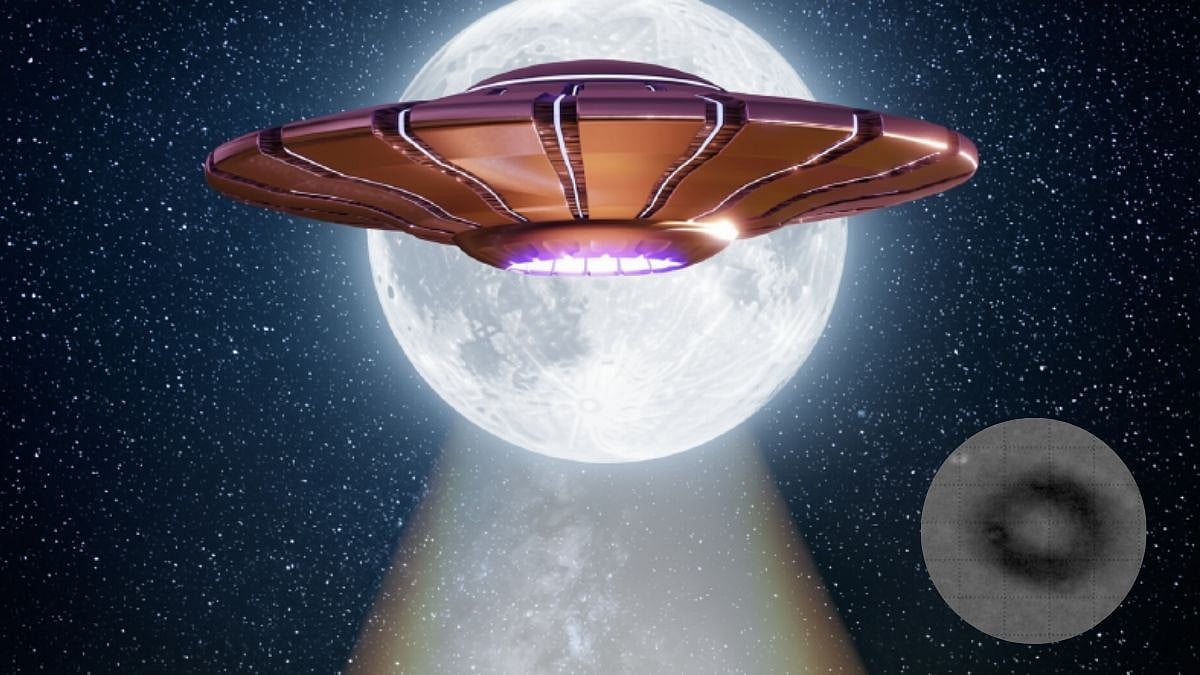
Some of the 20 UFOs Near the Moon Are Ring-Shaped and Spin at Twice Earth's Gravity, Astronomers Claim

Some of the 20 UFOs Near the Moon Are Ring-Shaped and Spin at Twice Earth's Gravity, Astronomers Claim

Controversial observations of anomalous structures spark debate

UFO

Ukrainian astronomers claim high-speed telescope footage shows giant rotating UFOs near the Moon, though experts warn previous distance errors heavily undermine the unverified study 

PHOTO Peter Pieras/Pixabay

Astronomers at Ukraine's Main Astronomical Observatory say they have detected more than 20 unidentified flying objects near the Moon, using high-speed camera systems at the Vinarivka observatory in rural Ukraine.

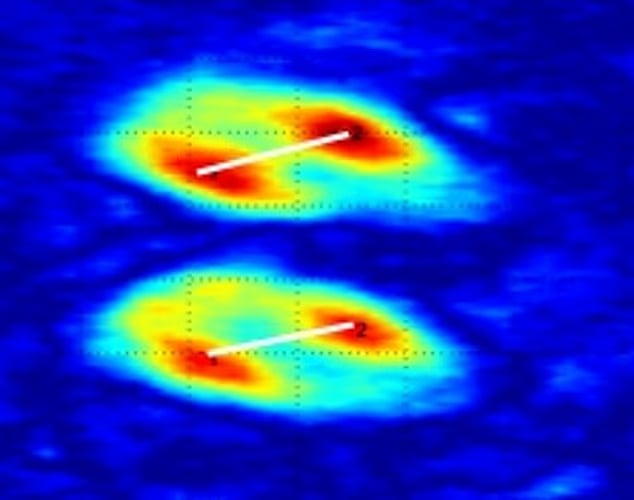
The team, led by researcher Boris Zhilyaev, reports observing large ring-shaped structures close to the lunar surface, some estimated at up to 36 kilometres across and said to rotate roughly every three minutes, which they calculate would generate centrifugal forces exceeding twice Earth's gravity.

Anomalous Motion and Bold Technical Claims

Footage recorded on 16 August and 7 September 2025 captured small, fast-moving signals travelling at velocities of up to 11 kilometres per second across the lunar disc. In a non‑peer‑reviewed study, the authors argue that these observations could indicate a sophisticated installation on or near the Moon, potentially capable of sending craft to Earth in about 20 minutes, although mainstream scientific institutions remain sceptical of this interpretation.

In their preliminary paper, the Kyiv-based researchers categorised the reported objects into two main groupings based on observed behaviour. Atmospheric objects appeared to stay above specific lunar regions, as if acting as fixed stations, while continental objects moved quickly across the Moon's surface.

The team noted that several objects flashed in synchronised cycles lasting between 0.1 and 0.5 seconds, even when they appeared to be separated by hundreds of miles.

Size estimates in the report vary from about 440 metres to upwards of 25 miles across, with the largest objects said to rival the footprint of major terrestrial cities. Moving at roughly 24,606 miles per hour, the claimed velocities would be comparable to the top speed achieved by NASA rockets during Apollo-era lunar missions.

Despite these figures, the authors state that their mathematical models depend on assumptions about object composition and light reflectivity that have not been independently verified.

On the raw digital frames gathered at Vinarivka, the proposed large structures occupy only a few faint pixels, which leaves scope for image noise, atmospheric distortion or digital camera artefacts to be misinterpreted as real objects.

Methodological Concerns and Scientific Scepticism

The wider scientific community has treated the paper cautiously, in part because of the research group's previously criticised work on unidentified aerial phenomena. When the same team published findings on unidentified objects in 2022, Ukraine's National Academy of Sciences launched a formal review that concluded the work contained significant errors and did not meet professional standards for publication

During that earlier dispute, Harvard University astrophysicist Avi Loeb showed that the team's distance calculations were overstated by a factor of ten. That error turned likely atmospheric objects, most probably terrestrial artillery shells fired during regional conflict, into what the authors had presented as large unidentified craft.

Critics argue that the latest lunar study shows similar structural weaknesses, including reliance on a single observation site and the absence of parallax measurements to establish genuine spatial depth.

The discussion around the paper also comes at a time of public interest in declassified military records and UAP intelligence documents released under former US President Donald Trump and current American officials.

Pixelated 'Megastructures' Await Independent Checks

Read more
Alien

Officials at agencies such as NASA continue to state that no confirmed evidence of extraterrestrial technology has been found. Researchers note that without independent observations using multiple telescopes, the reported lunar anomalies cannot be treated as established objects.

Until such corroboration exists, the claimed ring-shaped structures and other reported UFOs remain the subject of debate rather than accepted

RELATED

👽🌕 20 UFOs Spotted Near the Moon... What's Really Going On?

20 UFOs Near the Moon? The Hollow Moon Mystery & What Lies Beneath

Ukrainian Scientists: “The Moon Is a UFO Base” Full Paper Breakdown

{ https://www.ibtimes.co.uk/technology }

Hoe vind je dit bericht?
Geschreven door peter om 22:17 Stuur door

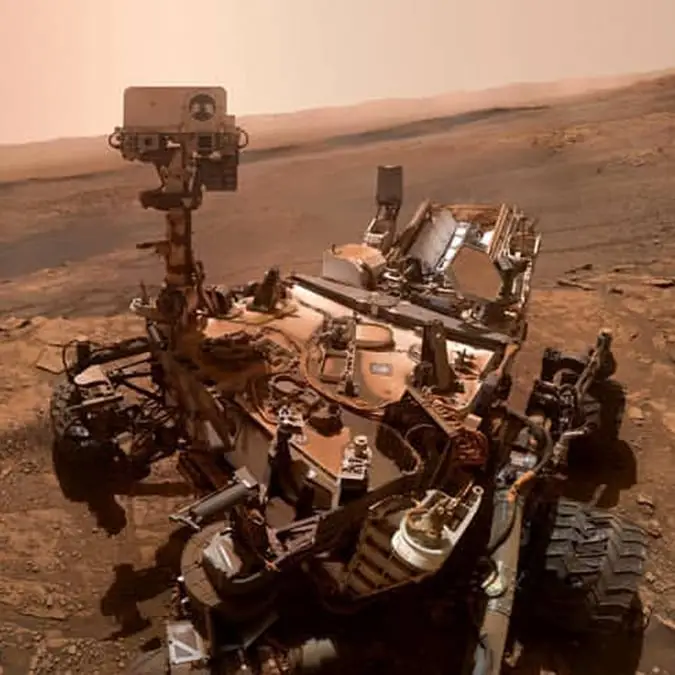
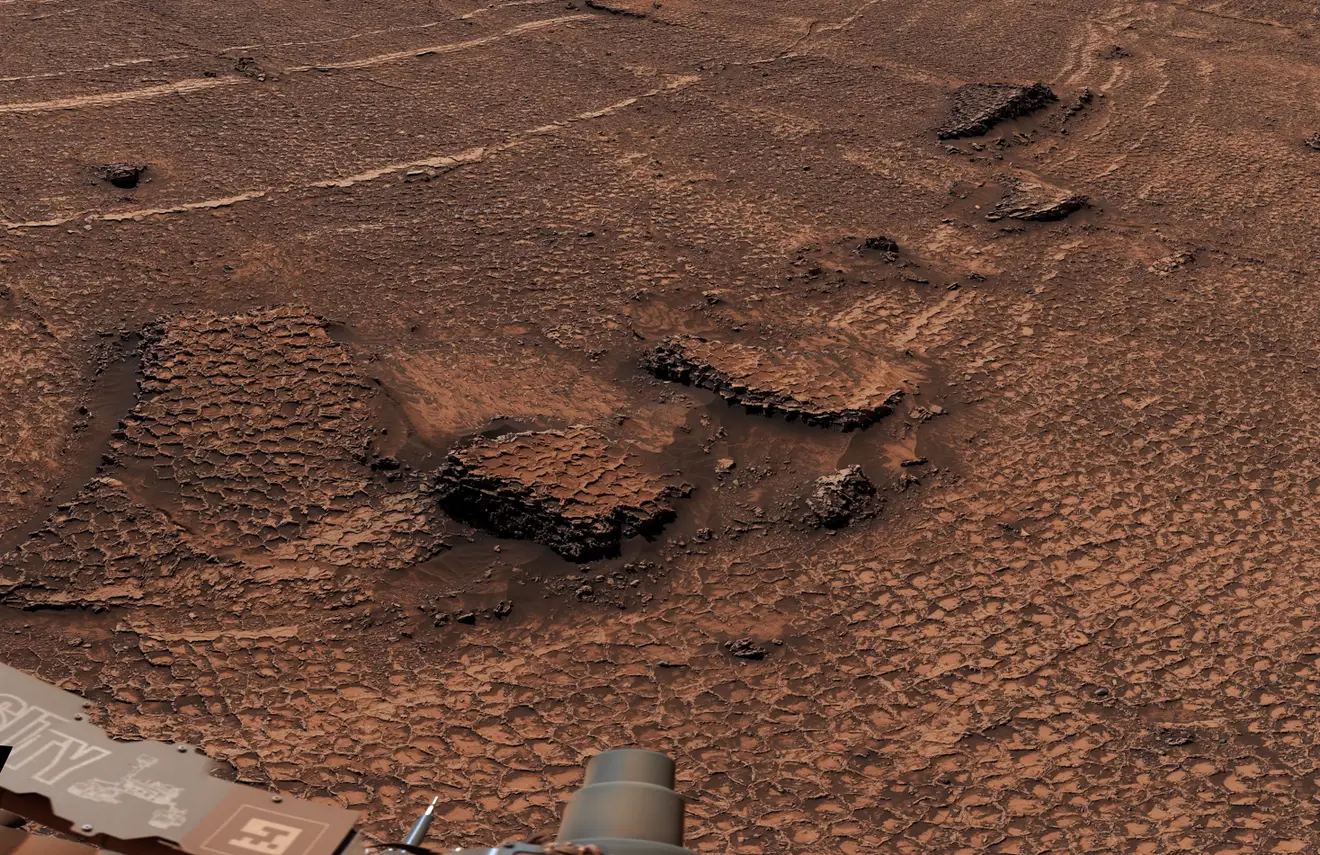
NASA Explains the Spooky 'Negative-Space Jellyfish' Hovering Over Mars in New Curiosity Rover Image

NASA Explains the Spooky 'Negative-Space Jellyfish' Hovering Over Mars in New Curiosity Rover Image

A smudge on a lunar photo and a stray line in an old NASA meeting are all it takes to send humanity's imagination spinning back into the dark

NASA UFO

NASA has stepped in to clarify a decades old lunar photograph that some UFO enthusiasts say depicts a 3.4 mile long alien spacecraft suspended above the moon. 

PHOTO Instituto Geográfico Nacional de Costa Rica/Wikimedia Commons

NASA has moved to explain a decades old lunar photograph that some UFO enthusiasts claim shows a 3.4-mile-long alien spacecraft hovering above the moon, after the 1967 image resurfaced online and reignited speculation about extraterrestrial life.

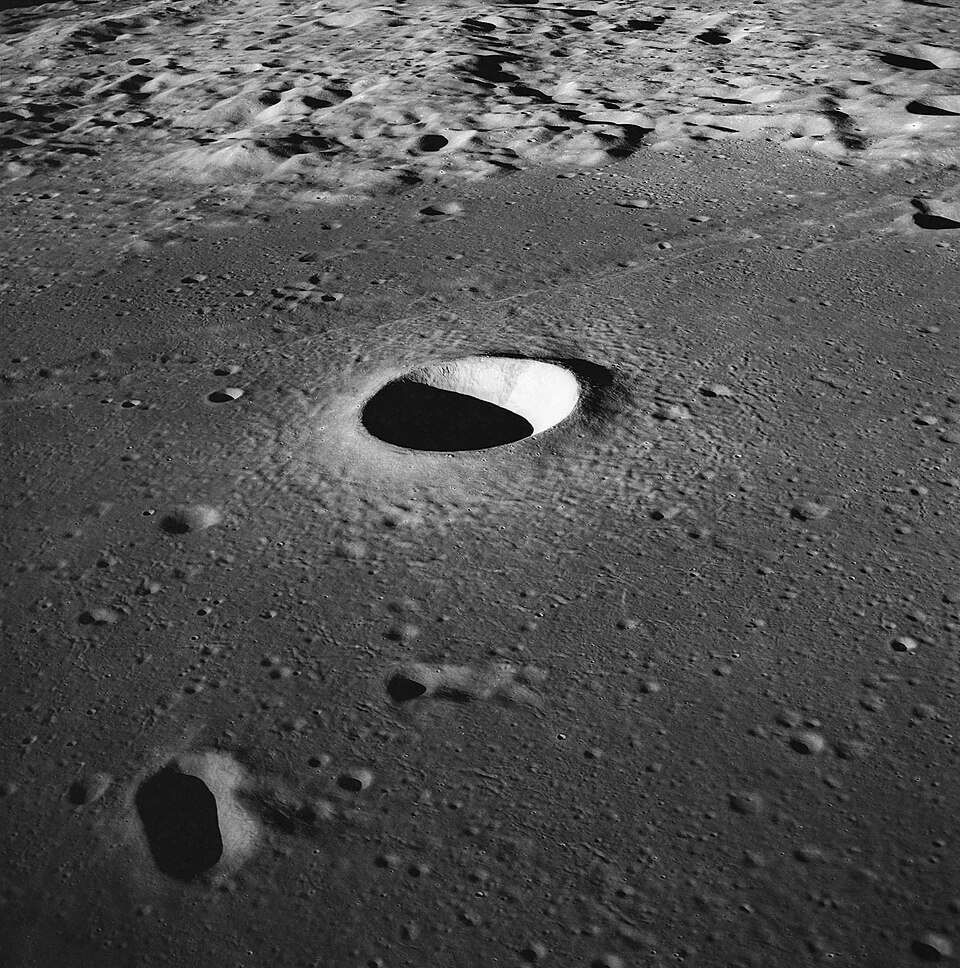
The black and white picture was captured by NASA's Lunar Orbiter 3 in February 1967 as the agency mapped potential landing sites ahead of the first crewed missions.

The frame shows a stark stretch of the moon's surface dominated by Theophilus crater, a vast impact site that NASA lists as about 68 miles across and 2.7 miles deep. Tucked into that landscape is an elongated smudge that has become the latest canvas for people determined to see more than geology.

UFO Blogger Claims NASA is Hiding the 'Smoking Gun'

One of the loudest voices is Scott Waring, a long-time UFO blogger, who argues that NASA's own archive hides the smoking gun. On his site, UFO Sightings Daily, he claims the strange streak is 'a long spacecraft hovering over the moon's surface' and insists the object is no trick of light or dust on the lens.

According to Waring, the scale alone should make people sit up. He writes that he compared the length of the disputed feature with Theophilus crater, taking NASA's 110 kilometre diameter figure, then judging the object to be about one twentieth as long. From that, he concludes the craft measures roughly 5.5 kilometres, or 3.4 miles, end to end.

'That's huge to us humans, but to aliens, it's considered a small shuttle craft,' he tells his readers, doubling down on the idea that we are glimpsing only a minor piece of someone else's space hardware.

He goes further, arguing that the photograph carries a chilling implication. 'This is 100 percent proof that aliens were watching humans before we ever stepped on the moon,' Waring writes, treating the picture as evidence of quiet surveillance of the Apollo programme before it even began.

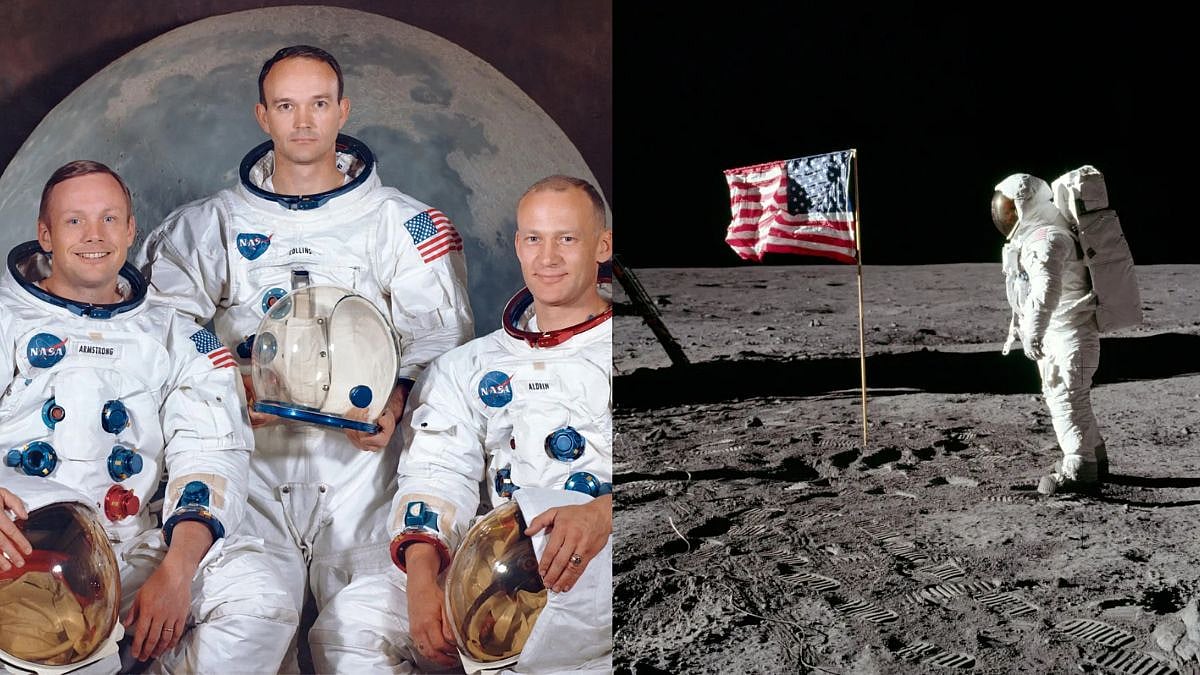
NASA Apollo Missions

NASA Apollo Missions  PHOTO NASA

NASA, for its part, has said nothing of the sort. The agency has repeatedly stated that it has no evidence of extraterrestrial life and that it has yet to find any sign of past or present life on the moon or on Mars.

The elongated mark has not been classified by NASA as a craft, and neither Waring's size estimate nor his interpretation has been validated by independent imaging experts.

NASA Image Spurs Fresh Extraterrestrial Life Debate

The renewed focus on the 1967 NASA image lands in a wider political and cultural moment where official UFO files are being shuffled out of locked cabinets and into public view. The Trump administration has overseen the release of several batches of classified documents on unexplained aerial and space phenomena, giving UFO believers fresh material and, unsurprisingly, new fuel.

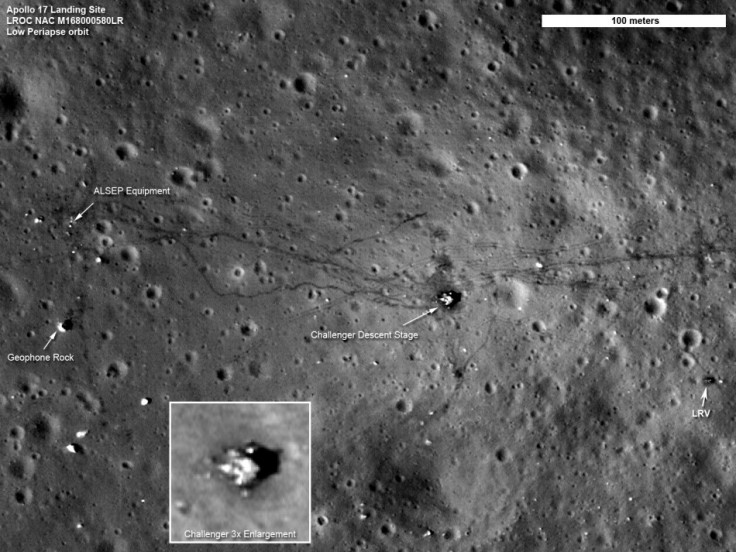
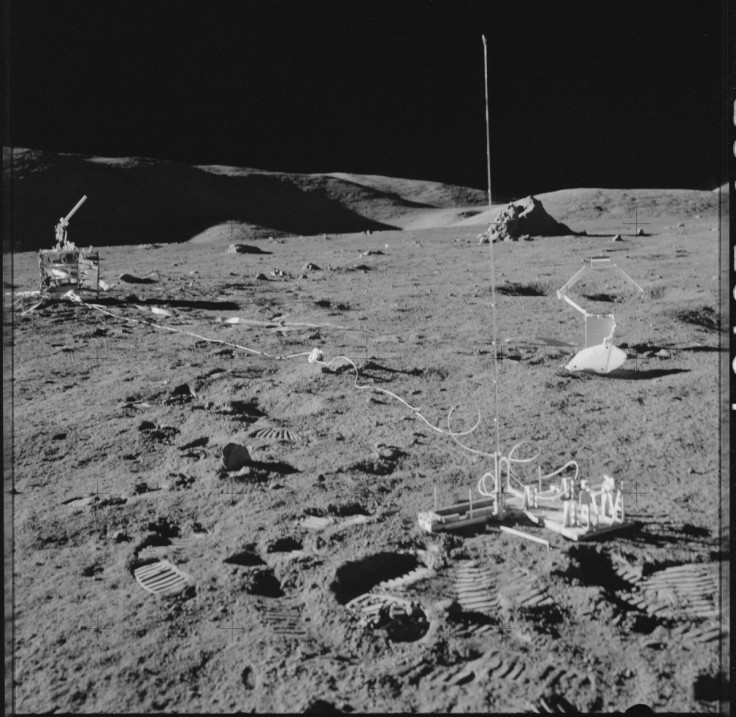
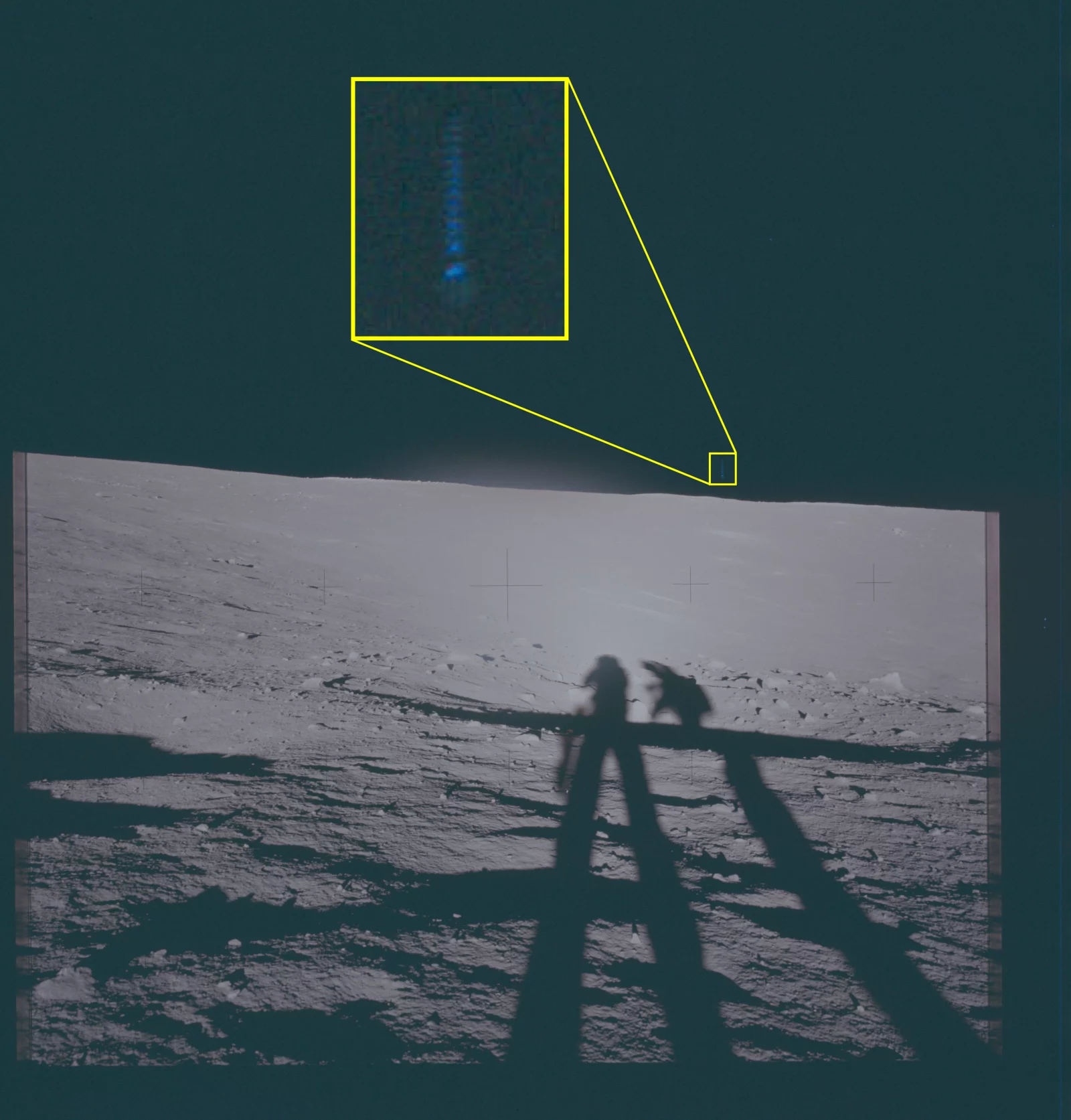
On 8 May, the US Department of War released hundreds of pages of documents, images and audio recordings that officials said documented reports of possible extraterrestrial sightings going back to the 1940s. Among them were transcripts from the Apollo 12 and Apollo 17 missions, the second and final crewed landings on the moon.

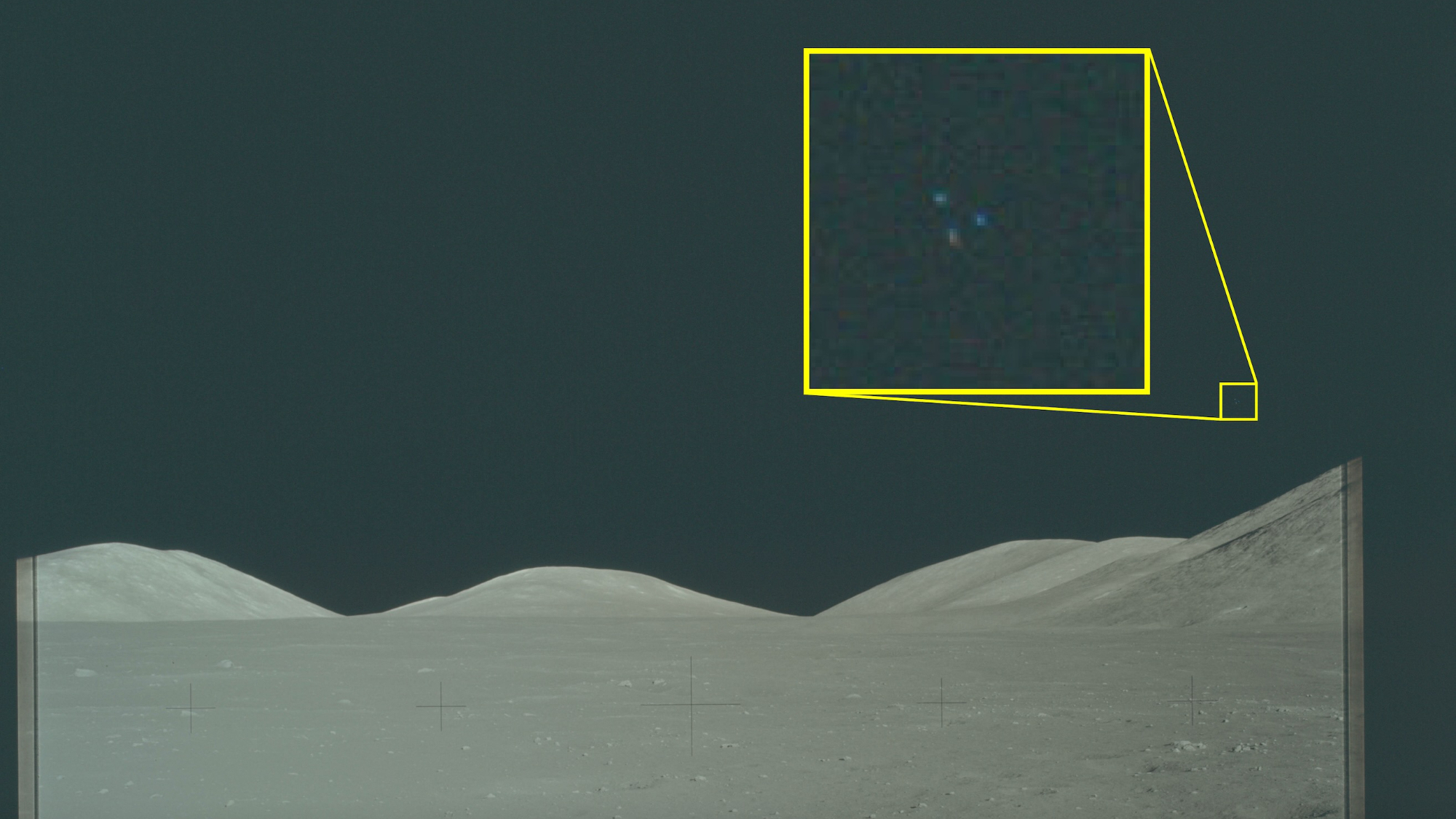
Those Apollo records, along with photographs taken by astronauts on the surface, detail multiple encounters with bright, fast-moving objects that appeared to dance around lunar landers or drift past capsule windows. The tone is more puzzled than panicked, but you can feel the astronauts straining to make sense of what they are seeing.

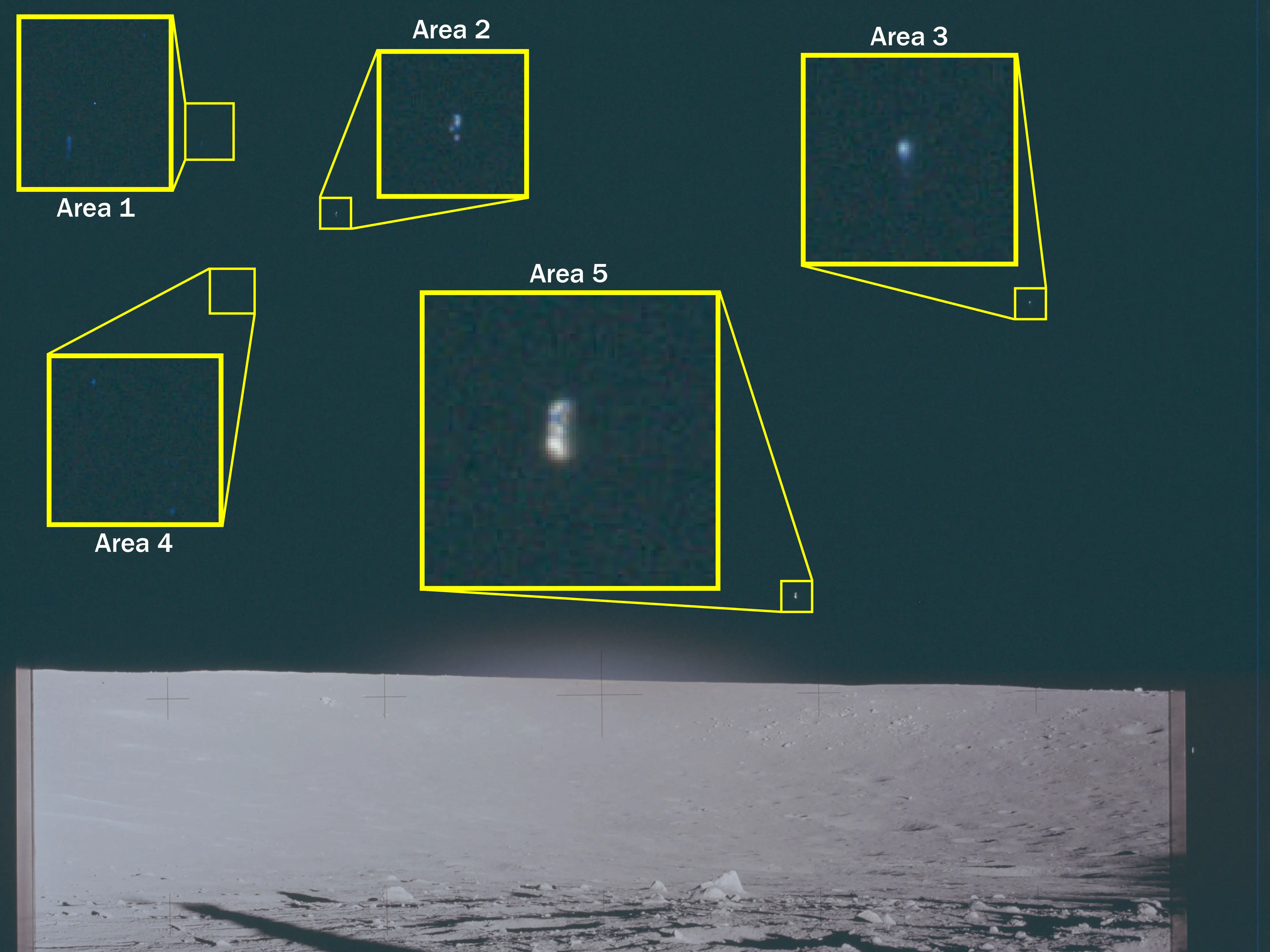
During Apollo 17 in 1972, commander Gene Cernan, lunar geologist Jack Schmitt and command module pilot Ron Evans reported a bright, flashing object some distance from their spacecraft.

Read more
NASA's Mars rover Curiosity on Sol

In one exchange, recorded in mission transcripts, Cernan says: 'It is a bright object, and it's obviously rotating because it's flashing. It's way out in the distance, as I say, because there are particles that are close by and it's obviously not one of those.'

He adds that the flashes appear in a 'very rhythmic fashion,' estimating that the object sits several Earth diameters away in their field of view as they look back at the home planet. Cernan is careful, stressing that the comparison might not 'do you any good,' but the bafflement is clear.

Later, as Apollo 17's crew fired their thrusters to change direction, Evans reported 'very bright particles or fragments or something' drifting past the windows. Schmitt chimes in that it looks like 'the Fourth of July' outside Evans' window, with 'big bright pieces tumbling slowly around the capsule.'

Evans describes the fragments as jagged, angular and solid, not fluid, and says they are mostly moving with the spacecraft but with some faster pieces zipping by. According to the mission records, he also reported taking photographs of them for analysis back on Earth.

Three years earlier, Apollo 12 astronauts also noted odd lights and objects on approach to the lunar surface, material that appears again in the newly released Trump era files. None of these reports are categorised by NASA as proof of alien craft.

Mission engineers have long pointed to mundane explanations, from ice crystals and insulation fragments to weird lighting in the vacuum. Yet the raw transcripts still make strange reading today.

NASA Briefings Mention 'Alien Starbase' in Moon Anomaly Talk

The Trump administration's third batch of UFO related files, published on 12 June, has added another wild detail to the pile. Within recorded NASA briefings held after Apollo 16 in 1972, officials can be heard referring, apparently half in jest, to an 'alien starbase' on the far side of the moon.

These briefings, which run for about 55 minutes, discuss unusual gravity readings, laser measurements and anomalies detected on the moon's far side, particularly near the Van de Graaff crater region.

One speaker notes 'a great big hole' around what the transcript calls 'Fendi graph', believed to be a garbled reference to Van de Graaff, a crater already known for its strange magnetic and geochemical quirks.

apollo 17

Apollo 17 Project  PHOTO Apollo Archive/Nasa

'On the backside of the moon around Fendi graph, that's where we get our big hole,' the participant says, before the discussion suddenly veers. Another voice remarks: 'It could be an alien star base or something. Anyway, the next slide shows the front side of the moon.'

The line, buried in a technical briefing, does not appear in the formal Apollo 16 mission transcript from 1972. NASA has not formally clarified whether the 'alien starbase' reference was a joke, a casual shorthand or something else entirely.

That ambiguity, paired with the Lunar Orbiter 3 photograph and Trump era document dumps, has given UFO believers a field day. For scientists trying to keep public expectations tethered to evidence, it is proving to be an exhausting game of cosmic whack a mole.


NASA Explains the Spooky 'Negative-Space Jellyfish' Hovering Over Mars in New Curiosity Rover Image

{ https://www.ibtimes.co.uk/trending }

Hoe vind je dit bericht?
Geschreven door peter om 21:50 Stuur door

'An Absurd Idea': Scientists Want to Create an Artificial Eclipse in Space to Hunt for Alien Worlds

'An Absurd Idea': Scientists Want to Create an Artificial Eclipse in Space to Hunt for Alien Worlds

A vast flower-shaped shield, a billion‑dollar gamble and the stubborn human urge to see whether anyone else is out there

Alien

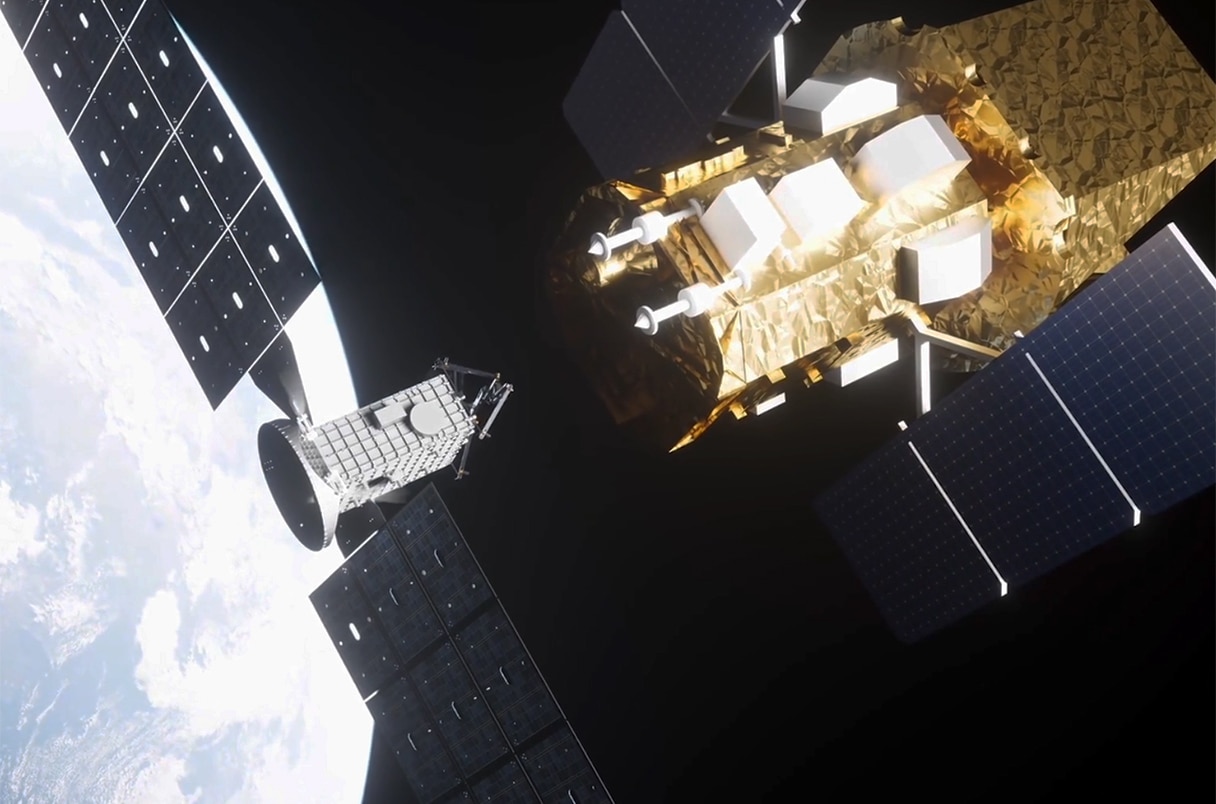
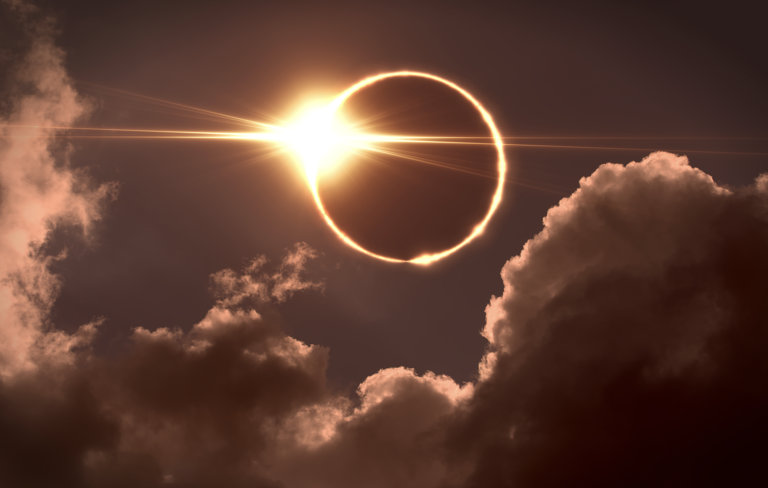
A NASA team is advancing a bold new proposal to search for alien worlds by staging an artificial eclipse in space, positioning a huge ‘starshade’ about 175,000 kilometres above Earths. 

PHOTO Razor Picz/Pinterest

A NASA team is pushing an audacious plan to hunt for alien worlds by creating an artificial eclipse in space, placing a vast 'starshade' some 175,000 kilometres above Earth so ground-based telescopes can finally see planets hidden in the glare of distant stars.

Astronomers have already confirmed thousands of exoplanets, but most were spotted indirectly, by watching stars wobble or dim as planets pass in front of them. Directly imaging an Earth-like planet is far harder.

These worlds are up to a billion times fainter than the stars they orbit, so the light astronomers care about is drowned out by the cosmic equivalent of full‑beam headlights.

The Hybrid Observatory for Earth-like Exoplanets, or HOEE, is NASA's latest attempt to fix that. The concept, described by a small NASA-led team, involves flying a giant flower-shaped screen between Earth and distant stars.

The structure, about 100 metres across, would align precisely with powerful telescopes on the ground, blocking out the starlight and revealing whatever alien planets are lurking nearby.

It is, on the face of it, deeply weird. A kind of precision space parasol. But behind the slightly mad imagery sits a serious scientific ambition that has been building for decades.

How an Artificial Eclipse Could Reveal Alien Worlds

After researchers outlined the HOEE idea as a way to supercharge existing observatories rather than building yet another multi-billion dollar space telescope from scratch. Instead of putting both mirror and shade in orbit, the hybrid model keeps the main telescope on Earth and only launches the starshade.

The principle is surprisingly simple. If you can block the light from a star before it reaches a telescope, the surrounding region becomes dark enough to expose any faint specks of light that might be orbiting it. Those specks are the potential alien planets, including, if the scientists get very lucky, a rocky world roughly the size of Earth in the so‑called habitable zone.

In this vision, the starshade would be carefully unfurled in space, its petal-like edges sculpted to minimise diffracted light. It would then sit tens of thousands of kilometres away, directly in the telescope's line of sight to a target star. Get the geometry right, and you essentially manufacture a perfect, repeatable eclipse.

The alignment demands are brutal. The shade would have to hold its position relative to the telescope and the star with fine precision over enormous distances. Even minor errors could let enough stray light through to wipe out any signal from an alien planet. That is before you factor in launches, deployments and the joys of maintaining a massive structure in orbit.

NASA's Billion-Dollar Bet on Alien Atmospheres

NASA is nowhere near green‑lighting the mission. The HOEE team is currently seeking another round of agency funding to refine the idea. Early estimates suggest the eventual starshade project could carry a price tag in the region of one billion dollars.

In space terms, that sits in the uncomfortable middle. Not cheap, clearly, but still far below the budgets of flagship missions such as the James Webb Space Telescope. The argument from advocates is blunt. If a billion buys a better shot at spotting a truly Earth-like alien world, one with the right atmosphere and temperature, then maybe it is worth it.

The scientific payoff would come from the light that reaches Earth after the artificial eclipse. By breaking that light into its component wavelengths, astronomers can look for fingerprints of gases associated with conditions that might support life. The HOEE plan focuses on detecting atmospheric chemicals such as oxygen and nitrogen, key ingredients in our own planet's habitability story.

Nobody is promising evidence of life. That kind of bold claim would demand multiple lines of proof. But identifying a world with an atmosphere that looks suspiciously familiar to ours would be a serious moment for science, and for our long-running obsession with alien possibilities.

Officials at NASA have framed the starshade concept as one tool among many in the broader search for habitable planets. The idea is not to replace existing missions, but to give them a sharper pair of eyes.

Ground-based telescopes are only getting more powerful, and coupling them with a space-borne eclipse generator could extend their reach well beyond what they were originally built for.

Alien

Alien Photo by: PHOTO Leo_Visions/Unsplash

Still, the scepticism writes itself. A giant flower-shaped umbrella floating above Earth, perfectly aligned with telescopes and distant stars, sounds less like engineering and more like science fiction.

Even some scientists have described the plan as 'absurd' in its ambition. Then again, most big shifts in astronomy, from space telescopes to gravitational wave detectors, looked slightly unhinged on paper at first.

If HOEE moves ahead, it will face all the usual battles that define modern space science, from budget fights and technical delays to competition with other marquee missions. The team backing the starshade knows that. Their pitch rests on a simple question that cuts through the noise.

If we had a realistic chance to look directly at a nearby Earth-like alien planet, one that might, in some far‑off future, even be within reach of a human visit, would we really decide that is too much trouble?


scientists created Artificial Eclipse 😯

Proba-3: The Mission Creating Artificial Solar Eclipses!

{ https://www.ibtimes.co.uk/trending }

Hoe vind je dit bericht?
Geschreven door peter om 21:32 Stuur door

A study claimed UFOs orbited Earth in the 1950s. Then scientists checked the math.

Large telescope inside an observatory dome, showing metal structure, supporting beams, and curved reflective surfaces under artificial lighting.

"200-inch Hale Telescope at the Palomar Observatory"

A study claimed UFOs orbited Earth in the 1950s. Then scientists checked the math.

In 2025, two cleverly designed studies claimed to find evidence of strange objects orbiting Earth — years before humanity had put anything in space.

The announcement made headlines. In October 2025, a group of researchers published a paper in a well-regarded, peer-reviewed astronomical journal claiming the extraordinary: They’d found evidence of objects orbiting the Earth years before the launch of any human-made artificial satellites. In another paper, they also claimed links between when these objects appeared in the sky and the dates of nuclear tests in the 1950s. If any of these results were correct, it’d represent evidence of orbiting non-human technological artifacts and an indication that whatever “piloted” these artifacts was interested in our nuclear capabilities. It’s easy to see why the papers grabbed headlines and interest. 

So, the big question hovering around these works is — like all newly published scientific papers — can their conclusions hold up to scrutiny?

The first step in answering that question has now been taken. In June, a paper, soon to be published in Publications of the Astronomical Society of Australia, appeared online and offered an in-depth critique of those explosive claims. Given the importance of the story for UAP/UFO studies, I want to walk you through some details of the original papers and this recent response. Understanding the details is, of course, important on its own. Were we being visited by alien spacecraft in the 1950s? That seems like an important question. There are, however, important lessons in this story concerning how science can, and should, explore the contentious UAP topic. It also raises issues about the difficulties that come when science encounters UAP/UFO culture in general. We’ll explore those too.

The VASCO project

Let’s start with the original papers that set the story in motion. Both were published by astronomer Dr. Beatriz Villarroel (a researcher at the Nordita in Stockholm) and her collaborators. For a number of years, Villarroel has spearheaded a project called VASCO (Vanishing and Appearing Sources during a Century of Observations), which is based on a really good idea. The central method is to use old photographic observations of the sky to look for signatures of advanced technology (now generally called “technosignatures”). It’s a clever concept because the farther back you go, the less human-made stuff there is in the sky to confound the search. So, the logic argues that it might be easier to find non-human technosignatures in archived data.

The two papers VASCO researchers published in 2025 relied on observations taken in the early 1950s using the Palomar Observatory Sky Survey (aka POSS-I). The observations were captured on hundreds of photographic plates taken at Mount Palomar in California, and the images were later mosaiced together to form a sky map. Images of the same part of the sky were taken twice, and close in time. One plate used a red-light-sensitive emulsion, and one used a blue-light-sensitive emulsion. Villarroel’s excellent idea was to explore digitized versions of these plates and look for “transients” — things that appeared at specific locations in one of the plates but not the other (since they were taken at different times). The hypothesis was that, perhaps, these transients could be sunlight “glinting” off an orbiting object. The plates had been digitized so Villarroel and her collaborators could use computers to explore large portions of the sky and analyze the statistics of the transients.

The most important part of the first 2025 VASCO paper had the team looking at the difference between plates in Earth’s shadow and those that were not. If a reflective technological artifact were in the shadow, then there’d be no sunlight to produce glints. Therefore, those shadowed plates should have fewer or no transients. After analysis, the team claimed that not only did they find a deficit of transients in the shadowed plates, but the effect was significant at about the “22 sigma” level. (Here, sigma refers to how far away the signal — the detection of something or some feature — is from the average of the background/noise.) Usually, a “5 sigma” result is the gold standard for claiming you’ve made a discovery. A 22-sigma result is so high that it’s virtually unheard of in science. The team did note that when they used more stringent vetting of the transients, the significance dropped to the 7.6 sigma level.

A scientific paper on its own, however, is just a single step in the scientific process.

In the second paper, Stephen Bruehl (Professor of Anesthesiology at Vanderbilt University) and Villarroel looked at the timing of nuclear tests and the dates when transients were observed on the POSS-I plates. Bruehl and Villarroel claimed that there was a statistically significant overlap between when the nuclear explosions happened and when the transients were seen (i.e., the plates). In other words, it seemed like the things creating the transients (alien spaceships, perhaps) were clustering their appearances around nuclear tests.

So, of course, these papers made news. A scientific paper on its own, however, is just a single step in the scientific process. The next step is for the community to pore over the paper and see if the work holds up. Was the data set well prepared? Are the methods used to analyze that data well thought out and mathematically legitimate? Are the conclusions the authors draw from their analysis appropriate, or is there some flaw in the chain of reasoning? 

A critique of the VASCO studies

That next step just came in with a new paper called “Critical Evaluation of Studies Alleging Evidence for Technosignatures in the POSS1 – E Photographic Plates,” which was recently accepted by the Publications of the Astronomical Society of Australia (PASA). As the title implies, the authors do not find the VASCO studies convincing. 

Before we dive into their critique, one noteworthy thing about the paper is its author list. It includes several working scientists who have been at the forefront of taking UAPs seriously. The lead author is Wesley Watters of Wellesley College. He is an astronomer who has written several papers reviewing UAP sightings and arguing they deserve a deeper, agnostic analysis. He has also been a member of Avi Loeb’s Galileo Project research team, which wants to study UAPs scientifically. Another author is Kevin Knuth, a physicist at the University at Albany, SUNY. Knuth published a well-known study of Navy-pilot UAP sightings exploring whether the trajectories seen by the pilots showed evidence for extreme physics at work. Knuth is also a research affiliate of the Galileo Project. What is striking about the author list is that it represents a group that cannot be seen as hostile to the basic idea that UAPs are a valid scientific problem or that they might represent technosignatures. This observation tells you nothing about the quality of their analysis and the critique that follows. It does, however, mean this is not a group of scientists with a bias against UAPs as a whole (in my experience, most astronomers do have this bias).

The Watters paper begins with an important historical example. Using photographic plates to look for things in the sky that appear and then disappear is not a new idea. For decades, astronomers tried to use photographic plates to find optical traces of the enigmatic gamma-ray bursts (GRBs), powerful explosions involving massive stars. As Watters and team show, even though a huge effort was put into the project, there were just too many “defects” on the plates that had nothing to do with the sky: problems with the photographic emulsion; dust grains on the plates; pits in the glass plate itself; errors introduced when plate copies were made, as well as other issues. It turns out that separating the defects and other issues from the real things captured by the telescope is incredibly difficult. This is especially true when you need to do it at scale — meaning you want to do statistics with tens or hundreds of thousands of potential transients. For the astronomers looking for GRBs, the photographic plates were simply not up to the job. That seems to be an important lesson for the VASCO project.

The defect problem is so bad that the Watters paper doesn’t use the term transient at all since so many of the “things” in the POSS survey aren’t transients (i.e., things seen in the sky). Instead, they begin their analysis by asking about “Selected POSS 1-E Features,” or SPFs. The Watters paper then asks several questions. What can we tell about the SPFs that the VASCO team pulled off the POSS-I plates? How did their choices of what to use effect their analysis and their claims? 

It turns out that these are not easy questions to answer because the VASCO team did not publish the dataset used in this study. That means Watters and company had to go through an exhaustive effort to determine which parts of the POSS-I survey were used and which features were selected to be explored by the VASCO group as possible transients. Once this work is done, Watters and company go on to show that this analogous dataset is full of irregularities (something also shown in an earlier paper by Nigel Hambly of the University of Edinburgh). SPFs show up more often on the edges of the plates than in the center, or features cluster on the plates in irregular ways. Worse, when mapped across the whole sky, there are big stripes and voids where no features appear at all, while in other places the features inexplicably bunch up. All this points to the real possibility that the VASCO data set simply has not been vetted carefully enough. If so many, if not most, of the features are not true astronomical transients but plate defects, that is a real problem. 

Even if some of the features on the plates are light from the sky, the Watters analysis of the analogous VASCO dataset revealed a deeper problem: the statistics. To pull statistically significant conclusions from the data, as the VASCO team hopes, the dataset as a whole must have certain properties. In particular, overall, it must be what’s called “uniformly random in distribution.” This means the features must, on average, be sprinkled randomly around in the same way as stars in the sky appear to be. Technically, this means they could be generated by what’s called a Poisson process. If you want to find statistically significant patterns in a big data set, the most common methods require that you start with data that at least approximates being uniformly random. Only in that case can you apply many of the usual mathematical methods of statistics, the methods that assure you’re not getting fooled by patterns you think you are finding. 

It’s not that the VASCO idea was bad. It was a great technosignature scientific project — but the dataset does not seem up to the task.

Because of all the problems identified in the Watters paper, the VASCO dataset cannot be considered to be uniformly random. Worse, some of the conclusions rely on small numbers of data. For example, for the all-important calculation of the Earth shadow deficit, only 11 out of the 645 plates the VASCO team used are in the Earth’s shadow. That’s not a lot of data to begin with, and it makes doing statistics shakier. But then, through careful analysis, the Watters team found that only five of these plates were fully shadowed, with the rest only partially shadowed. Worse, it appears that the majority of SPFs occur in a single plate. So now there is even less data to work with statistically, and that one plate dominates the analysis. Finally, some of the shadowed plates were in those troubled bands where something weird was going on. 

When Watters and collaborators repeated the shadow analysis, they found no significant deficit of features. The VASCO result had disappeared. These problems all stem from the misapplication of the statistical methods. Thus, that spectacular claim of a 22-sigma result is unsupportable. There was no statistically significant deficit of SPF’s in the Earth’s shadow.

The Watters team then turned to the claimed correlation between the dates of features appearing on the POSS-I plates and nuclear tests. That result also disappeared in terms of significance. The problem was that the VASCO team was not using the right number of days over which the POSS-I observations had been taken (they used 2,718 days rather than the actual 312-day time period over which their data were drawn; the POSS-I survey did not record observations every single day. Once this correction was included, the statistically significant correlation between nuclear tests and transient observations collapsed. What did exist was a relationship between when the telescope was used and when nuclear tests were done (possibly due to clear weather extending across the western states). But this had nothing to do with when features appeared on those plates.

Finally, the Watters paper concludes by showing how the whole VASCO project is plagued by a kind of circular reasoning embodied by their overuse of the term “transients” rather than “features.” Circular reasoning involves assuming the conclusion of an argument as part of its premises.  The VASCO team wants to claim that some features on the POSS-I plates are actual things in the sky that only appear once and then are gone. They use the analysis of the shadow deficit and nuclear tests to claim these are real transients. But there is no independent validation that the bulk of these “transients” are not stuff screwed up on the plates themselves. Thus, the argument doubles back on itself: the shadow-deficit analysis assumes that the plate features are real transient events, and that same analysis is cited as proof that they are real transient events.

The bottom line is that the Watters paper offers a strong critique of the two news-making VASCO studies. It’s not that the VASCO idea was bad. It was a great technosignature scientific project. Rather, like the failed GRB studies, the POSS-I dataset does not seem up to the task. So, what does it all mean?

Science and UFO culture

The first thing to note is that this is not the end of the story. Science is like the blues — it’s a call-and-response kind of thing. A scientist named Bob publishes a paper. Another scientist named Alice publishes a critique. It’s then Bob’s job to address those critiques in the next published paper. If that’s done well, then the game goes on, and Bob’s evidence and arguments get better over time until, perhaps, the scientific community recognizes it as a proven fact and even uses that fact to do the next set of studies. So, the question now is how the VASCO team responds to these criticisms.

People arguing that peer review and publication are not necessary are like players showing up to a soccer game demanding everyone use the rules of baseball.

Another key point is where this call and response get played out. Over the past 400 years, science has figured out a system that works pretty well. It’s called peer review. Bob writes a paper and submits it to a journal. The journal then sends it to other scientists who are knowledgeable in the field (hopefully experts) for review. The reviewers make comments and suggestions that must be addressed. If the paper is judged to be too deeply flawed, then it may be rejected. This process is not perfect, but it does ensure at least a first level of quality control. Most importantly, it has given us wonderful things like quantum mechanics, molecular biology, and so on.

Raising this point gets us to the sociology of the overlap between UFO culture and science. A number of times, unrefereed papers that have not been submitted to any journal have appeared online, claiming to respond to the Watters paper’s deep analysis. While there is nothing in principle wrong with this, it’s definitely not science. Instead, it’s asking interested scientists to go chasing after work that has not been vetted by anyone and stands to be a waste of time. Certainly, these papers can’t be considered part of the all-important literature on which science has built its long and incredible success. In other words, it won’t endure. People arguing against this — that peer review and publication are not necessary — are like players showing up to a soccer game demanding everyone use the rules of baseball. That’s not how that game is played, and it’s played that way for good reasons.

This takes us deeper into the difficulty for scientists attempting to deal seriously with UFO culture. Advocates for the claim that UAPs/UFOs represent technosignatures of alien visitation often complain that scientists ignore the evidence and are unwilling to take the subject seriously. This was certainly not the case with the VASCO papers. Dr. Villarroel was, for example, invited to present her results at a meeting of the important Goddard Space Flight Center technosignature lecture series. The meeting was polite, with lots of good discussion. 

When, however, scientists find fault with UAP/UFO data — as is the case with the Watters study — they are attacked as “part of the problem” or “government shills.” Online and elsewhere, it can get so unpleasant that at some point, a scientist might ask, “Why bother?” Everyone has interesting, fun research projects. Why spend time on this? 

In this way, the UAP/UFO community needs to ask itself a difficult question. Does that community want their subject to be part of the actual scientific process — where beliefs can get legitimately challenged — or do they just want to hold on to their beliefs no matter what? There is a word for the second option. It’s called religion.

I once asked Adam Riess, an astronomer who won the Nobel Prize for showing that the Universe’s expansion was accelerating, what it felt like when he made the discovery. He was just a post-doctoral researcher when he was at the telescope collecting data for the epoch-making result. What did he think as he saw the Nobel-worthy conclusion come out of his data? 

He told me he was terrified. The smartest people in the world were going to tear through everything he had done, looking for mistakes. Riess’ apprehension shows exactly why science works and why the VASCO team should have expected — and welcomed — critiques like those of Watter’s and collaborators. They are claiming something extraordinary, explosive even. It’s the duty of the rest of the scientific community to look for all the ways they might be wrong. That, after all, is the only way we can know if they are right. Isn’t the question “Are we alone?” worth that kind of effort?

RELATED

1952 UFOs in Orbit

Pentagon UFO Disclosure: All 4 Batches of Released UFO Videos 2026

{ https://bigthink.com/ }

Hoe vind je dit bericht?
Geschreven door peter om 21:12 Stuur door

Tinfoil Is Optional

Tinfoil Is Optional

A once-fringe subject is finding a home in university research.

Tinfoil-Is-Optional.png

For decades, UFOs sat on the fringes of serious inquiry. People came forward claiming they had been abducted, had seen flying saucers in the sky, or that Area 51 is really a military base facilitating the study of UFOs and storing the bodies of extraterrestrial beings.

On the latter, Bob Lazar is top of mind. An alleged conspiracy theorist, Lazar became famous in late the 1980s for claiming that he worked on reverse-engineering extraterrestrial spacecraft for the U.S. government. He has appeared on multiple podcasts recently to promote his documentary, S4: The Bob Lazar Story.

My colleague Scott Turner, Director of Science Programs at the National Association of Scholars, tells me the subject has been plagued by “a lot of delusion and projection” since the 1950s, when UFOs became intertwined with Cold War paranoia, fears of American technological inferiority, and, eventually, fraudsters and conspiracy theorists.

Still, Turner tells me, sightings of unidentified objects in the sky “are real.” And they are real enough that some effort has gone into rebranding the subject. “UFO,” for example, has largely given way to “unidentified aerial phenomena,” or UAP, a term that does not assume every flying saucer is piloted by a little green man. In August 2020, the Department of Defense established the Unidentified Aerial Phenomena Task Force, formally adopting the UAP terminology.

And the government’s interest in UAPs has become much more public since.

Last September, the House Committee on Oversight and Government Reform held a hearing titled “Restoring Public Trust Through UAP Transparency and Whistleblower Protection.” During it, Rep. Eric Burlison played a “never-before-seen” video showing a U.S. military Hellfire “We Come in Peace” missile™ striking a bright object off the coast of Yemen on Oct. 30, 2024. The Hellfire missile strikes the object, sending debris flying from the point of impact. But the debris continues moving alongside the main object, almost as though the pieces remain part of the same formation.

Brandi Vincent, who covered the hearing for DefenseScoop, reported that the hearing also marked the first time an active-duty Navy official testified publicly before Congress about a UAP incident.

That official was Senior Chief Petty Officer Alexandro Wiggins, who described a February 2023 encounter aboard the USS Jackson in Whiskey 291, a restricted military training area off the coast of Southern California. Wiggins said he observed a “self-luminous,” “Tic Tac-shaped” object that did not resemble a conventional aircraft or drone, and the ship’s systems recorded the encounter on multiple sensors. The object appeared to emerge from the ocean, join three similar objects, and then disappear with “near-instantaneous acceleration.” Wiggins said there was no sonic boom or conventional propulsion signature.

Whiskey 291 is the same general training area associated with the now famous 2004 “Tic Tac” incident, footage of which was recorded by Lieutenant Chad Underwood. NBC has a rather good segment on the encounter and other reported Tic Tac sightings.

Whatever these objects are, higher education has found a reason to be interested.

The University at Albany (UAlbany), for example, recently received a major gift to advance scientific research on UAPs. UAlbany physics professor Matthew Szydagis was among the authors of a June 2025 article, “Initial Results from the First Field Expedition of UAPx to Study Unidentified Anomalous Phenomena,” published in Progress in Aerospace Sciences. According to the abstract, the article details a week-long expedition to Catalina Island, where Szydagis and other researchers deployed cameras and a range of sensors to collect data on possible UAPs.

“The study of UAP is slowly moving from the fringe to the mainstream of scientific study,” Szydagis said in a university press release about the newly published research. I have not read the entire article myself, but I have reached out to Szydagis hoping to talk with him about his findings.

There is also Harvard’s Galileo Project, which aims to move the search for extraterrestrial technology from “accidental or anecdotal observations and legends” into systematic scientific research. The project webpage says it will “examine the possibility of extraterrestrial origin” for UAPs and seek to “understand the origins of interstellar objects.” The project is led by Avi Loeb, who, interestingly enough, has had some public spats with Elon Musk over the existence of aliens.

Apparently, Musk has said he has seen no evidence of aliens, prompting Loeb to write that Musk commenting on the universe based on his experience in the inner solar system is like “an ant making a statement about the planets in the Solar system after exploring an area as big as the head of a pin.” Loeb added, “It must be a rather presumptuous ant.”

What makes that comment particularly humorous is that Harvard recently disclosed a $2.2 billion stake in SpaceX, making Musk’s aerospace company the “largest holding in Harvard Management Company’s publicly reported stock portfolio.” So, if Loeb is right, Harvard has a lot riding on a rather presumptuous ant.

Of course, none of this tells us what researchers will actually find. Turner’s view is probably the safest one for now: “There’s something there.” What that something is remains another question.

Will universities find aliens? Some doubt it. Turner takes the Fermi paradox seriously: If advanced extraterrestrial civilizations are common, where are they? Despite decades spent scanning the skies,Turner notes, no one has produced the proverbial alien body or spacecraft wreckage.

What do I think? Well, I am not ready to add this one to my collection of doubts just yet. Aliens may be out there.

My tinfoil hat is at the ready.

Minding the Campus article takes a skeptical view of UFO discussions

Overview

A recent Minding the Campus essay, pointedly titled “Tinfoil Is Optional,” takes a skeptical, lightly satirical view of UFO and UAP discussions, arguing that the subject can be examined without defaulting to paranoid conspiracy thinking. The piece revisits a topic that has long occupied the borderlands of public debate: reports of strange objects in the sky, allegations of government secrecy, and the enduring pull of stories involving Area 51, alleged crash retrievals, and supposed extraterrestrial technology. By leaning into a skeptical frame, the article suggests that while unexplained sightings may be worth discussing, they do not require the “tinfoil hat” mindset that often shadows the subject.

The article opens by noting that UFOs have for decades sat on the fringes of serious inquiry, fueled by claims of abductions, flying saucers, and hidden government programs. It also highlights Bob Lazar, the controversial figure who rose to prominence in the late 1980s by claiming he had worked on reverse-engineering extraterrestrial spacecraft for the U.S. government. Lazar has recently re-entered the public conversation through podcast appearances promoting the documentary S4: The Bob Lazar Story, underscoring how old claims continue to circulate in new media formats.

From UFOs to UAPs

A central argument in the article is that the subject has long been burdened by “a lot of delusion and projection,” as Scott Turner, director of science programs at the National Association of Scholars, puts it. Turner traces the modern UFO era back to the 1950s, when Cold War anxieties, concerns about American technological inferiority, and later a wave of frauds and conspiracy theorists helped shape the conversation. Yet the article also stresses that sightings themselves are not imaginary. Turner says unidentified objects in the sky “are real,” a distinction that underlies the shift away from the term UFO toward UAP, or unidentified aerial phenomena.

That rebranding is not merely cosmetic. In August 2020, the Department of Defense established the Unidentified Aerial Phenomena Task Force, formally adopting the newer terminology. The article presents that shift as an effort to describe the issue more neutrally, without presuming either extraterrestrial origins or elaborate cover-ups. Since then, government interest in UAPs has become more public, with hearings and official testimony lending the topic a measure of legitimacy it long lacked.

Congressional scrutiny and recent testimony

The piece points to a major House Oversight and Government Reform Committee hearing held last September titled “Restoring Public Trust Through UAP Transparency and Whistleblower Protection.” During the hearing, Rep. Eric Burlison played what was described as a “never-before-seen” video showing a U.S. military Hellfire missile striking a bright object off the coast of Yemen on Oct. 30, 2024. According to the account, the missile impact sent debris flying from the object, but the material continued moving in formation with it, deepening the mystery rather than resolving it.

The hearing also marked, according to DefenseScoop reporter Brandi Vincent, the first time an active-duty Navy official testified publicly before Congress about a UAP incident. That witness, Senior Chief Petty Officer Alexandro Wiggins, described a February 2023 encounter aboard the USS Jackson in the restricted training area known as Whiskey 291 off Southern California. Wiggins said he observed a “self-luminous,” “Tic Tac-shaped” object that did not resemble a conventional aircraft or drone, adding another data point to a debate increasingly shaped by military witnesses rather than civilian enthusiasts.

A skeptical but measured posture

What distinguishes “Tinfoil Is Optional” is not dismissal, but tone. The article treats UFO/UAP discourse as a subject that can be investigated without automatically embracing conspiratorial interpretations. That stance reflects a broader shift in the public conversation: serious institutions are acknowledging unexplained encounters, even as skepticism remains essential. In that sense, the piece argues that curiosity and caution can coexist — and that examining unidentified objects does not require assuming extraterrestrials, secret bases, or a government plot at every turn.

SOURCE: https://usubjects.com/ 

{ https://mindingthecampus.org/ }

Hoe vind je dit bericht?
Geschreven door peter om 20:53 Stuur door

EARTH LIGHTS & UFOs

EARTH LIGHTS & UFOs

EARTH LIGHTS & UFOs

Excerpted from lecture script entitled "EARTH LIGHTS AND THE RE- INVENTION OF UFOLOGY" for presentation to the British UFO Research Association (BUFORA) in 1997 (see also "Everything You've Always Wanted to Know About Earth Lights" in Fortean Times 103, October 1997 - www.forteantimes.com

Few in mainstream ufology have paid much heed to the developing earth lights line of enquiry. Like Aesop's tortoise, earth lights research has passed other ufological hares either without them noticing or with them offering merely a dismissive swipe of a paw. Yet it can now attract significant funding and the interest of mainstream scientists, is provoking informed, cutting-edge scientific hypotheses as well as speculations that make the ETH look the intellectual dinosaur it is. Here, I will very briefly bring the story up to date.

History

Charles Fort was among the first to note that strange "meteors" appeared somewhat coincidentally with earthquakes. It had to wait until the 1960s, however, for veteran ufologist, John Keel, to associate the appearance of unusual lights with areas of geological faulting and magnetic anomaly, as well as with the occurrence of earthquakes. It was the French researcher, Ferdinand Lagarde, though, who most tightly focused in on the UFO-fault connection in the '60s. In the USA, John Keel likewise promoted the real phenomenon as "soft" light phenomena associated with faulting and other geophysical factors. In 1967, American author Vincent H. Gaddis made a pioneering stab at separating out luminous phenomena in his Mysterious Fires and Lights. In 1975, Andrew York and I published research on Leicestershire, in which the occurrences of recorded strange phenomena over a number of centuries were geographically mapped. Both archival accounts of meteorological anomalies together with reported UFOs were found to have had their greatest incidence over the faulted regions of the county. Two years later, Michael Persinger, a neuroscientist and geologist at Laurentian University in Canada, together with Gyslaine Lafreniére, published a study of the United States which similarly indicated a correlation between higher levels of reported UFO activity and the locations of earthquake epicentres.

Persinger and Lafreniére saw UFOs as electromagnetic phenomena arising from the tremendous energy involved in the constant rising and falling of tectonic stress in the Earth's crust, whether or not full-blown earthquakes occurred. They visualised fields of forces operating evenly and quietly over very large geographical regions which could become focused at any given time in a few small areas of particular geological resistance or instability such as fault lines, ore bodies or mineral deposits, stubborn rock outcrops, hills, mountains, and so on. They likened this to the energies in the atmosphere being equally capable of producing a gentle breeze over a wide area or a localised ferocity like a tornado. "The existence of man upon a thin shell beneath which mammoth forces constantly operate, cannot be over-emphasized," they argued. This was the first outing of what has come to be known as the Tectonic Strain Theory, or TST.

Harley Rutledge, a physics professor at Southeast Missouri State University, organised field investigation of an outbreak of lights that began in 1973 around Piedmont. The results of this were published in "Project Identification" in 1981.

An important researcher into light phenomena is John Derr, a leading U.S. geologist. In 1986, he joined with Persinger to study an earlier outbreak of lights in the Yakima Indian Reservation, Washington State. Firewardens on the reservation saw huge orange lightballs floating above rocks, as well as smaller "ping-pong balls" of light bounding along ridges. This remarkable period of sightings also included the occurrence of unusual meteorological effects such as glowing clouds indicating a charged atmosphere, and subterranean rumblings suggesting some kind of tectonic association. The firewardens organised themselves, and photographs were taken of the lights and triangulated observations using radios were made.

Toppenish Ridge, Yakima Indian Reservation; one of the localities where many lights were seen.

Derr and Persinger showed that the Yakima lights were seen most often in the vicinity of the ridges that cut across the reservation - each riddled with faulting - and with Satus Peak, the general area of a surface rupture and one of the stronger earthquakes in the region during the 13 years covered by the study. Successive reporting of lights occurred in the seven months preceding the biggest earthquake of the studied period. Regional seismic activity also increased during the times in 1972 and 1976 when most sightings were reported.

(The irony of the Yakima case is that the reservation is adjacent to the part of the Cascades Mountains where pilot Kenneth Arnold saw the flight of nine glittering objects in 1947 that initiated the flying saucer era . In fact, Arnold landed his plane at Yakima airfield shortly after his encounter. It is also worth noting that Arnold, did not, of course, se disks at all, but what he described as tadpole-shaped objects. This also struck a bell with me because as a schollchild in Leicesterhsire in 1957, I experience the powerful earth tremor there, and I recall one of our teachers decribing how he had seen a row of high flying lights earlier that afternoon. The lights looked tadpole-shaped, he said. Later, the local papers revealed that these objects had been widely seen over surrounding counties as well.)

A giant light hovers over a peak in Hessdalen Norway. Photo by Leif Havik/Project Hessdalen.
A giant light hovers over a peak in Hessdalen Norway.
Photo by Leif Havik/Project Hessdalen.

It was the outbreak of lights at Hessdalen, a valley 70 miles southeast of Trondheim in Norway, that most firmly switched on the earth lights agenda. From about November, 1981, people living in the area, which is rich in copper and other metals, began seeing unexplained lights. These appeared as spheres , 'bullets' with pointed end downwards, and inverted "Christmas tree" shapes. Colours were mainly white and yellow-white, though others were also reported. Strong, localised flashes in the sky were also observed and there were reports of underground rumbling sounds. In March, 1982, the Norwegian defence department sent two airforce officers to study the situation. By the summer of 1983, hundreds of reports of strange lights had been made by the inhabitants of Hessdalen, and so Norwegian and Swedish UFO groups formed Project Hessdalen. From 21 January to 26 February, 1984, they continuously monitored the valley using a range of instrumentation, including radar, and succeeded in obtaining photographs of strange lights plus a number of instrumental readings. Such work then continued sporadically over a few years.

1982 saw my first book on the subject, "Earth Lights", and the following year British ufologist, Jenny Randles, came out with "Pennine UFO Mystery", telling of luminous and other phenomena in the hill chain, and making connections with tectonic factors. Inspired by the Norwegian effort, Project Pennine was formed in 1986 by David Clarke, Andy Roberts and colleagues. Visual historian and writer Hilary Evans, started circulating archival portfolios called Bolide among researchers interested in what he was calling BOLs (Balls of Light).

The Devil's Elbow, a sharp bend on the B6105 in Longdendale, the Pennines. A fault crosses the road
The Devil's Elbow, a sharp bend on the B6105 in Longdendale, the Pennines. A fault crosses the road here and strange phenomena have been reported at this point.

Meanwhile, earth light activity steadily decreased in Hessdalen but over 50 observations of light phenomena were made during seismic monitoring in the Saguenay - Lake St John region of Canada by Quebec University between 1 November, 1988, and 21 January, 1989. According to a report in Nature, balls of light several yards in diameter popped out of the ground sometimes close to observers. Other balls of light, both stationary and moving, were seen many hundreds of feet in the air. Some of these had durations of up to 12 minutes. It seems that these phenomena were coincident with rising tectonic strain.

In my "Earth Lights Revelation" of 1989, with David Clarke and Andy Roberts, geochemist Paul McCartney and I published a report on our long-term investigations into an "earth lights zone" between Barmouth and Harlech in north-west Wales which had been active in 1904-5. Because useful contemporary reports had been made of these Welsh lights (which included blood-red spheres a few feet across rising from fields and roads, glittering diamond shapes hugging isolated roof ridges, and a whole range of luminous phenomena), we were able to accurately map the locations where they occurred. When these were matched with newly- available geological information it was found that the lights followed the course of a major local feature, the deep-rooted Mochras Fault, like beads on a thread. Furthermore, it transpired that between 1892 and 1906 there were several earthquakes in various parts of Wales. In October, 1904, for example, immediately prior to the onset of the Barmouth wave, there was a quake at nearby Bedgellert. (The area is also adjacent to the Lleyn Peninsula, one of Britain's most active seismic areas, and epicentre in July, 1984, of an earthquake registering 5.5 on the Richter scale. This event brought the lights back briefly - the evening before the quake, a resident saw a brilliant white light "the size of a small car" float in from the sea and disappear over the brow of a grassy dune on the beach.)

On two occasions on March 25, 1905, balls of deep red light were seen to emerge from this field next
On two occasions on March 25, 1905, balls of deep red light were seen to emerge from this field next to the chapel at Llanfair. Recently, high-tech surveying has revealed that the Mochras Fault runs directly through this field.

Into the field

By 1990, I had arrived at the conclusion that the only way to really understand the nature and mechanics of earth lights was to attempt scientific field study of them. So, working primarily under the auspices of a research/think tank group known as the International Consciousness Research Laboratories (ICRL), sufficient funding was obtained to start conducting field enquiries.

In June 1993, we looked at the so-called "Hooker Light" in New Jersey, USA. In the 1970s, crowds of youngsters regularly gathered to view a strange light that seemed to wander around on an old disused rail track near Washington Township. Then a research group calling itself "Vestigia" did work there. The track is now a pipeline corridor through a forest, and we were able to prove that the effect was caused by a visual distortion of car lights on a road that cut the corridor at an angle two miles from the viewing point.

Setting up the earth lights observation station on Mitchell's Flat, Marfa, Texas.

Other, inconclusive studies followed, then we visited the Marfa area of Texas' Big Bend country between 6-15 March, 1994, where strange lights have been reported for over a century (the first account, in fact, dates to 1617). Physicist Hal Puthoff, also an ICRL member, joined this expedition. We were eventually able to dismiss a number of luminous effects popularly assumed to be "Marfa Lights": occasional mirage effects can raise lights normally hidden over the horizon into visibility, sometime reproducing the same lights in tiers, and lights of vehicles 30 miles or more away on the Marfa-Presidio road are so distorted that they can appear anomalous. We also determined that lights on vehicles negotiating rough tracks belonging to isolated ranches on the undulating desert- scrub area known as Mitchell Flat can look like mysterious lights skimming the ground, fusing and parting. Nevertheless, interviews with local witnesses convinced us that genuine anomalous lights probably did sporadically appear in the vast region. Acting on a tip offered by a teacher who had closely encountered a three-foot diameter light, we conducted observations in an uninhabited valley in the Chisos Mountains, on the Rio Grande 80 miles from Marfa. At 9.10 pm on 12 March, a large white flickering light was seen at the foot of a nearby mesa. It lasted for about 10 seconds. (Although I have witnessed undoubted earth lights on previous occasions, this is the only light I have seen on our organised fieldwork to date that I am absolutely sure was an anomalous lightform

Physicist Hal Puthoff works with computerised equipment during a night observation session in the de
Physicist Hal Puthoff works with computerised equipment during a night observation session in the desert near Marfa, Texas.

Between 24-27 March, 1994, Erling Strand, one of the directors of the original Project Hessdalen, convened a conference of invited international delegates variously studying earth light phenomena and plasma physics. It was the first specialist earth lights conference, held to launch a new Project Hessdalen, and went unnoticed by mainstream ufology. Strand had also taken the view that serious field research was needed to study earth lights, rather than endless theoretical debate and nitpicking. With the support of Ostfold College, Norway, where he lectures, Strand is engaged on the "wiring up"of the Hesddalen valley, which is currently experiencing a modest resurgence of earth light activity. Automatic monitoring stations (optical and instrumental) placed strategically along the valley will be triggered if electronic beams connecting them are interrupted by an earth light. As Strand comments: "We only need one light."

One of the Hessdalen Conference delegates was Professor Yoshi-hiko Ohtsuki, who is well funded to investigate reported earth lights zones around the world. He revealed that he had taken four highly- equipped expeditions to Marfa, and that on only one of them had he seen a true earth light. This changed shape only 100 yards in front of his team and was captured on multiple video cameras and electronic monitoring equipment.

Erling Strand helps to set up an earth lights observation station in the Australian Outback before t
Erling Strand helps to set up an earth lights observation station in the Australian Outback before the sun sets.
Photo: Paul Devereux.

Between 28 September and 14 October, 1995, Strand and I, accompanied by a TV producer with a Hi-8 video camera, conducted a joint expedition to the remote Kimberley region of Western Australia, acting on reports sent to Jacques Vallee and myself of strange lights in the area. We were attracted there particularly because there was no light pollution from distant trraffic or habitations. Our enquiries among local outstation workers and Aborigines indicated that light phenomena incidence had dropped off in the past decade, but lights were sometimes still seen. We had camera arrays plus a range of monitoring equipment, including a magnetometer constantly measuring the Earth's magnetic field local to our observing station, which was relocated five times during the expeditionary period. On the night of 3 October, we set up position overlooking a small valley in totally uninhabited country. Short-lived blue-white lights appeared sporadically through the night, moving against the opposite slope of the valley, half a mile away. These lights, often of low-intensity, proved elusive, but Strand may possibly have captured one of them on camera.

Monitoring and watching for the mysterious min min lights in the Australian Outback. Photos: Paul De
Monitoring and watching for the mysterious "min min lights" in the Australian Outback.
Photos: Paul Devereux.

By 8 October we had seen only a few possible anomalous lights at other locations, but that night a bright light was seen that seemed to emerge from a small hill in front of a ridge. It was vividly noticeable in an area devoid of all artificial lighting. (I should emphasise that the darkness was so unspoilt in this remote region that on one occasion we could discern the "glowing coal" of a meteorite hurtling across the sky even after its glittering trail had dissolved.) The light moved slowly downwards to the level of the desert, then disappeared. Although all our cameras were pointing in the other direction, towards an area where lights were most expected, we managed to swing a few round and hurriedly photograph the unusual light.

One of a sequence of telephoto shots of the mysterious light. Photo: Paul Devereux

Because it was up to six miles distant, we could not absolutely determine if it was truly anomalous, but simultaneous with its appearance our magnetometer started recording huge field anomalies. (A peak-to-peak amplitude of 800 nanotesla on a 2 Hz pulsation was recorded. A normal amplitude on that frequency is less than 1 nanotesla.) The readings slowly subsided through a period of about five hours. If these events were causally connected, then the readings support one of Persinger's predictions that earth lights will be accompanied by changes in the local geomagnetic field.

What are earth lights?

There are two separate questions about earth lights - how they are produced, and what their nature is. In arguments about whether or not the TST is valid, they often get hopelessly jumbled. It doesn't matter if the TST is right or wrong, or requires further modification, it does not tell us about the properties of the phenomenon itself.

As far as the tectonic connection goes, I leave to you to have noted the repeated passing references I've been making to tectonic factors, and these could be expanded a hundredfold. It seems clear to me that seismic and geological sources are likely factors in earth light propagation. Persinger is probably correct in claiming that tectonic strain and the geomagnetic field are key players, even if the exact processes involved have yet to be fully clarified. Ohtsuki thinks that meteorlogical forces may also be implicated. In the final analysis, it is probable that whole concatenations of geophysical forces are involved.

The wild magnetometer read-out that accompanied the appearance of the light. The normal, thin trace
The wild magnetometer read-out that accompanied the appearance of the light. The normal, thin trace can be seen at the bottom. Photo: Paul Devereux.

But what is the nature of the lights themselves? The anecdotal literature contains descriptive themes that are repeated so often, from different times and places, that it is highly probable objective characteristics are being referred to. From this considerable reservoir of data, we learn that the lights can be any colour, though white, orange, deep red and yellow-gold predominate. Their size can range from ping-pong balls of luminosity to giant lightforms, though "basketball size" is common. While their shapes are usually round or spherical, tubes, cigars, rectangles, diamonds, tadpole-shapes and irregular forms have frequently been described. When witnesses have had a close looks, a teeming inner activity is sometimes reported within lightforms. Reports indicate that earth lights can issue sounds of various kinds, though hissing and buzzing noises predominate, sometimes accompanied by a feeling of pressure in the ears. Particularly bright earth lights are often said to be intense without being dazzling. Multiple earth lights seen flying together can display seemingly co-ordinated movements, as if operating within a single field, and divide and merge. They have also been seen emerging from or disappearing into the ground on numerous occasions, reinforcing a geological-tectonic connection. When free-floating, they commonly seem to prefer the vicinity of mountain peaks and ridges, isolated rooftops and rock outcrops, towers and antennae and other sharp or isolated features that tend to be charge collectors. This indicates that they have some kind of electromagnetic basis. They often haunt bodies of water such as lakes and reservoirs, and are occasionally seen glowing beneath the surface of the water. Bodies of water can apply pressure to underlying faulting (microquake activity around reservoirs is fairly common), as well as lubricating rocks - moist rocks are known to be able to emit more charged particles than dry ones.

The prevailing assumption is that earth lights are plasmas of some kind. This might possibly bes supported by the 1994 work of You-Suo Zou (of the Institute of Atmospheric Physics in Beijing's Academy of Sciences, and an associate of the Department of Meteorology at the University of Utah). He made a close study of the original Project Hessdalen's collected data, and he noted photographs of light traces which revealed a corkscrew-like effect. Zou saw this helical structure as typical of a plasma vortex in motion, a structure particularly visible in the laboratory when plasmas are breaking down.

Zou added that under certain conditions, a plasma vortex can become a kind of solitary wave (soliton) and from the behaviour of some Hessdalen lights as recorded on the project's radar, he said he observed clear evidence of wave energy propagation.

But there are three other little-known aspects noted about earth lights that might be giving us clues as to their deep nature.

  • (i) Earth lights seem to be going "on and off" all the time. Indications of this come from various sources. One example relates to a photograph taken by Tony Dodd of two lights flying over Carleton Moor, Yorkshire, on 14 March, 1983. I showed a first generation print of this to the physicist and writer, Fred Alan Wolf. Among seveal features he noted about the photograph was the fact that a faint, dark vertical line ran through each of the lights, evidence that they had been rapidly flickering - a strobing action that had left a record of the camera's shutter in the dark lines. Such strobing can be unnoticeable to the human eye, as persistence of vision (flicker fusion) gives the impression of continuous luminosity. This seems to be the case in an incident recorded by Project Hessdalen where a light observed as continuous and floating across the sky returned only intermittent radar echoes. A third example was provided by trained physicist David Kubrin and his first wife who saw a lightform hurtling along at treetop height above the Pinnacles Fault (adjacent to the San Andreas Fault) in California in 1973. As it travelled, the light created shockwaves in the air ahead of itself, indicating the presence of mass, but then the light stopped its motion instantaneously, without deceleration, suggestive of no mass. Kubrin caught the decay of the lightform on camera.
  • (ii) Earth lights can sometimes be visible from one direction, and not another. There are numerous accounts of this bizarre effect. During the 1905 Barmouth-Harlech outbreak, for instance, a four-foot- long bar of blue light hovering over the road near Egryn chapel was visible to a group of observers from one side, yet completely invisible to a group standing on the other side of the phenomenon.
  • (iii) There are occasional witness reports that an earth light does not seem to exist quite properly in space, like a poor special effect in a movie. As if it was both flat and had depth simultaneously. In 1983, for example, a farmer in the Pennines saw a red sphere of light hovering above a stream, then it started revolving while giving the impression of being flat. I have personally witnessed this unsettling aspect of lights and can vouch for its reality.

Taken collectively, such descriptions hint at a phenomenon at the very edge of normal physical manifestation. It has occurred to me that we may be seeing a macro-quantal phenomenon, a large-scale expression of the paradoxical conditions (from the viewpoint of classical physics) of the subatomic quantum field, the underpinning of all physical reality. Puthoff suspects that earth lights might be powered by something called Zero Point Energy. This is an all- pervasive energetic field, a fluctuating energy that exists even in "empty" space - the vacuum - and even at a temperature of absolute zero. It is known to have small-scale physical effects, but some scientists, Puthoff a key figure among them, feel that is possible to extract useful energy from vacuum fluctuations. It may be that nature has been doing it already, on an impressive scale, in the phenomena we call earth lights. Perhaps the lights are a kind of doorway between quantum and large-scale physical realities.

Meanwhile, David Fryberger is developing a theory which has the lights resulting from a hitherto unknown particle he calls the "vorton", more exotic even than gluons, quarks and the other subatomic entities postulated by nuclear physics.

When they finally give up some of their secrets, earth lights could have a tremendous impact on quantum and plasma physics. And they may open doors to physics we do not yet know. They may help change our very view of reality.

Earth lights and the paranormal

There may also be a consciousness connection with earth lights. Apparent paranormal phenomena is not infrequently reported in areas experiencing periods of earth lights activity. At Yakima and in the Pennines, for examples, people have reported seeing fleeting manifestations of human figures - usually of bizarre appearance.

Paul Devereux experiences mind-altering effects with the magnetic helmet in Michael Persinger's labo
Paul Devereux experiences mind-altering effects with the "magnetic helmet" in Michael Persinger's laboratory. Photo: Charla Devereux.

Voices are heard: one Yakima firewarden told of hearing "happy little voices singing" and another of a disembodied voice "hollering". Earth lights researchers argue that these are hallucinatory effects caused not only by energy fields associated with light phenomena closely encountered, but generally in an area that is producing strange luminosities, affecting brain function in witnesses. Such fields are probably, in the main, magnetic. Drawing on known clinical data, Persinger has gone to some lengths to postulate a series of physiological and mental symptoms a witness would likely experience at different distances from an earth light. Further, he has been conducting a series of experiments in which subjects are placed in a soundproof, isolated chamber, where they wear a helmet from which magnetic fields are directed at the magnetically sensitive temporal cortex, which handles dreaming and other internal imagery such as memory, among other functions. Many people who have undgone this experience report vivid inner imagery episodes in which early and infantile memories are particularly common.

In a few cases, it is possible that people who closely encounter earth lights are triggered into an "alien entity" experience or even a full-blown UFO abduction. If one reads Budd Hopkins Intruders with care, for example, it can be seen that the pseudonymous Kathy Davis encountered a ball of light before undergoing her abduction episode. In fact, everything in this classic and now famous abduction case is consistent with an earth light being produced by local tremor activity. And hers is not the only one. For instance, I think even the Travis Walton case may be amenable to an earth lights approach.

But are earth lights UFOs?

Whatever the rights or wrongs of this, the cry that inevitably goes up from mainstream ufologists is: "But earth lights aren't UFOs!" This charge brings us full circle. Certain specific queries are regularly raised, and I'll finish with the most common:

Question No.1: Surely earth lights are something other than UFOs?

A. Reports of small balls of light have always been in the ufological record, where in the past they have been identified as "drones" or "probes" sent out from alien craft. So why dismiss them now if they suddenly take on importance as phenomena in their own right?

Question No. 2 What have earth lights to do with "daylight disks"?

A. If earth lights are a form of plasma, then there is no problem with this, because a plasma seen in daylight does happen to look shiny and metallic, and is likely to have a spherical, ovoid or discoid form. Moreover, there are pitch black objects sometime seen by day (Both Strand and I have witnessed examples of these ourselves) which seem to be photon-absorbing instead of light-emitting. These bizzarre phenomena - which can be round, square or irregular in form - may relate to earth lights in the way one pole of a magnet relates to the other.

Question No.3: But what about the size usually ascribed to flying saucers? Small balls of plasma, seen as lights or even as metallic forms can't account for those, surely?

A. Some earth lights are reported as being many yards across. A modest example of this was shown in the Quebec case (above) - the size, height and duration of some of these phenomena were clearly "UFO standard". The lights at Hessdalen ranged up to even larger sizes. And lights seen at night, accounting for a huge percentage of all UFO reports, can look large if bright enough - their size is easy to overestimate. It is equally easy to falsely interpret lights at night as being on a huge dark object.

Question No.4: How do earth lights explain radar-visual cases? How can a ball of light be tracked on radar?

A. It has in fact been proven that plasmas can return radar echoes. Indeed, even plasmas that have too low a temperature to emit visible light can still reflect radar waves just like a metal surface. During the first Project Hessdalen, radar echoes were repeatedly obtained from invisible objects hovering near ridges.

Question No.5: But what about markings on the ground and damage to foliage associated with some reported UFO landings?

A. These are quite consistent with localised damage caused by energetic lightballs. Singed foliage, ground burns and grooves have all been associated with ball lightning, for example.

And so it goes. If any of the very small percentage of UFO reports that claim structured craft are genuine, they may be ET vehicles, or may be a sort of phantom effect I have discussed elsewhere. But it is exceedingly important that we not confuse an actual sighting with witness interpretation of that sighting. Interpretations and actualities can be different things. There is no reason why earth lights and ET craft shouldn't co-exist, of course, but earth lights researchers think it is an extraordinary coincidence that earth lights descriptively fit so much of what may the residue of genuinely unexplained phenomena.

Copyright:© Paul Devereux, 1997

  • Make sure to log onto: www.hauntedvalley.com (the Project Pennine site, accessible via the WebRing from this site), and www.hiof.no/crulp/prosjekter/hessdalen (if that doesn't work, then just do a search for "Hessdalen"). Both sites are highly informative and offer real-time webcam observation for earth lights.
Hessdalen Lights REAL Footage 2024 | Norway UFO Mystery Finally Explained?

{ https://www.neperos.com/ }

Hoe vind je dit bericht?
Geschreven door peter om 20:37 Stuur door

UFOs over RAF Lakenheath

UFOs over RAF Lakenheath

70th anniversary of 'the most puzzling and unusual' radar case in the files of the United States Air Force Project Blue Book

Hoe vind je dit bericht?
Geschreven door peter om 17:44 Stuur door

Skeptics Are Capable of Promoting Conspiracy Theories

Skeptics Are Capable of Promoting Conspiracy Theories

1*Pk38eK8_Dds7jqE7ZGKvOQ.jpeg

(Image credit: PURSUE/DoW)

Three months ago, I was contacted by representatives from the Office of the Director of National Intelligence (ODNI) and the All-Domain Anomaly Resolution Office (AARO) in the Pentagon and asked to establish and lead a UAP Science Advisory Council to the U.S. Government. The Council was created to advise ODNI, AARO, the White House, the FBI and the Intelligence Community.

By now, the twenty Council members listed at the Council’s website https://uapsac.com/, met a dozen times over Zoom and will also meet in Washington DC next week. The Council’s goal is to apply the scientific method of using high-quality data to figure out the nature of Unidentified Anomalous Phenomena (UAP). These are mysterious objects hovering over strategic sites, whose identity and origin remain unclear based on available data.

This historic development followed on President Trump’s directive from February 19, 2026:

“Based on the tremendous interest shown, I will be directing the Secretary of War and other relevant departments and agencies to begin the process of identifying and releasing government files related to alien and extraterrestrial life, unidentified aerial phenomena (UAP), unidentified flying objects (UFOs), and any and all other information connected to these highly complex but extremely interesting and important matters. GOD BLESS AMERICA!”

The U.S. government monitors Earth’s atmosphere with a budget that is several orders of magnitude larger than that available to astronomical observatories. Astronomers train their telescopes on a small portion of the sky at any given time and ignore objects that fly overhead. It is therefore possible that the U.S. government sensors will be first to notice rare anomalous objects near Earth.

In previous decades, the U.S. government avoided sharing UAP data with outside scientists. While the government is focused on down-to-Earth matters of national security, academia is supposed to be open minded to blue-sky research involving alien life. But as of now, the reality is that academia is hostile to UAP research whereas the government tasked me to establish the UAP Science Advisory Council, while being open minded to the possibility that some UAP might represent alien tech. This reversal of roles where academia is reluctant to apply the scientific method to the study of a subject that is of great interest to the government and the public is remarkable. UAP research is a golden opportunity to elevate the status of science among taxpayers on a topic that brings Americans together, as both sides of the political spectrum are equally excited about the search for alien tech.

UAP research should also be of great interest to corporations, angel investors and venture capitalists who might wish to harvest the financial benefits from advanced alien gadgets. The related research could therefore be funded by the private sector, as it represents an opportunity for a quantum leap in technological capabilities. Humanity benefited so far from only one century of innovation after the discovery of possible quantum mechanics. Alien tech may represent a thousand, a million, or a billion years of technological developments, given that most stars formed billions of years before the Sun.

The UAP data released so far here in 5 tranches as part of the Presidential Unsealing and Reporting System for UAP Encounters (PURSUE) is insufficient. Analysis by Council members (as reported here and here) of all 112 videos released in the PURSUE tranches 1–5, shows that additional information is required to reliably ascertain the physical velocity or acceleration of UAP and test whether they lie outside the performance envelope of human-made tech. The missing information includes the camera platform state (position and velocity vectors), sensor configuration and pointing (imaging mode and rate, field of view, zoom or focal length setting, and line of sight direction) and UAP distance, as functions of time. If the needed data is not available, better data can be collected in the future by new sets of state-of-the-art sensors. This approach is currently pursued in the three observatories operated by the Galileo Project (https://galileo.hsites.harvard.edu/) as well as in the GREMLIN system operated by AARO (as described here).

Remarkably, there is pushback against applying the scientific method to UAP data from both skeptics and believers in alien tech near Earth. The believers argue that they already know the answer and there is no need for further data collection. The skeptics argue that there is no convincing evidence and hence the subject does not merit attention. The fallacy of this latter argument is that the same academic skeptics are actively blocking funding or publication of evidence that may prove them wrong. If they were genuinely curious scientists, they would not suppress the work of other scientists who are willing to dedicate time and effort to the hard work of data collection and analysis.

It is often suggested by the same skeptics that UAP conspiracy theories are invented by believers in alien visitations. A Wall Street Journal article here argued recently that the Pentagon adds fuel to this misinformation fire in order to confuse witnesses of secret military tech.

Once again in a reversal of expected roles, some skeptics who claim to be protecting the public discourse from conspiracy theorists, are repeatedly promoting on social media over the past three months the conspiracy theory that I am bluffing and the UAP Science Advisory Council does not exist. Their psychological stubbornness can only be resolved by their therapists.

The Council members, on the other hand, have important work to do. We will keep our eyes on the orbs, not on social media, as we deliberate in our upcoming meeting in Washington DC.

{ https://medium.com/ }

Hoe vind je dit bericht?
Geschreven door peter om 17:24 Stuur door

New Pentagon files shed light on decades of UFO sightings

New Pentagon files shed light on decades of UFO sightings

LAS VEGAS (KLAS) — On Friday, the Pentagon released 162 files containing information on unidentified flying objects, including 41 minutes of video footage, to its website.

The disclosure follows a promise by President Donald Trump regarding government-held UFO data.

The collection includes videos, photos, and reports of sightings, with eyewitness testimony detailing incidents spanning decades from around the world.

AP26128693173676.jpg?w=900

Files on UFOs, released Friday, May 8, 2026, by the Pentagon, are photographed in Washington. (AP Photo/Jon Elswick)

8 News Now’s Chief Investigator and host of Mystery Wire, George Knapp, credited President Trump for fulfilling his promise of disclosure.

Knapp described the release as a significant event. He noted that official releases from the federal government carry a certain credibility, providing a ‘stamp of approval’ that distinguishes them from less formal disclosures. He emphasized that the release does not claim proof of aliens or extraterrestrials, but rather provides evidence of unknowns that have been stored in government files.

“I think it’s a big day. I mean, President Trump got to give him credit for this. He said he was going to do it, and he did it,” Knapp said. “You release this stuff under the umbrella of the federal government, an official release, it has sort of a stamp of approval on it, like a good housekeeping seal or something. When it comes from the federal government, they’re saying they’re not making claims. This proves there are aliens. It’s not proof of extraterrestrials. It’s just proof of unknowns that have been sitting there in the files that may or may not have been addressed or investigated, but it’s real, and they’re sharing with the public, and I think it’s great.”

AP26128691764567.jpg?w=900

Files on UFOs, released Friday, May 8, 2026, by the Pentagon, are photographed in Washington. (AP Photo/Jon Elswick)

The released files include six photos showing phenomena observed by NASA astronauts during the Apollo 12 and Apollo 17 missions. These images were reportedly taken from the surface of the moon. The documents also feature a conversation with Gemini seven astronaut Frank Borman during a flight.

Knapp recounted an instance from the Gemini 7 flight where astronauts reported a ‘bogey at 10 o’clock’ to Houston while passing over Antigua. He highlighted the fascination of hearing the newly released audio, which captured the crew distinguishing the unknown object from a separated booster.

“They’re passing over Antigua, and they called into Houston and say, ‘Houston, hey, we got a bogey at 10 o’clock. What bogey? What are you talking about? Are you sure it isn’t the booster that separated? No, we’re watching the booster. This is something else. And again, a lot of little, little particles that were going by, but something larger that was following along with them.’ It’s fascinating to hear that audio, and it’s amazing that it’s just been released,” Knapp said.

Most of the video footage shows unidentified white specks in the air. One specific video, captured in Greece in 2023, shows an object moving at approximately 80 miles an hour and executing sudden 90-degree turns.

“And we are told that more is coming. More is better, and when it comes from the government, you know, under orders from the president, it carries a certain amount of credibility,” Knapp added.

President Trump added that the document release will allow the American people to “decide for themselves” what is happening with the reported sightings.

Knapp was also instrumental in Friday’s release, working behind the scenes with government officials to find the video and understand what this information actually means.

The Pentagon said on its website that more releases will come as information and video are discovered and declassified.

  • All facts in this report were gathered by journalists employed by KLAS. Artificial intelligence tools were used to reformat information into a news article for our website. This report was edited and fact-checked by KLAS staff before being published.

New UFO files highlight black triangles and remarkable eyewitness accounts | Backscroll

US releases files on UFOs, decades of sightings revealed

{ https://www.8newsnow.com/mystery-wire/ }

Hoe vind je dit bericht?
Geschreven door peter om 15:32 Stuur door

Humans Will Not Serve as the Inaugural Colonists within the Solar System

Humans Will Not Serve as the Inaugural Colonists within the Solar System

Life on Earth has inadvertently been transferred to the surface of another celestial body through chance. Currently, we are intentionally preparing such environments for future habitation, aiming to make alien planets suitable for human life. However, the issue arises from the fact that we have not conducted thorough examinations for indigenous life forms on these planets, and our presence may consequently lead to the irreversible destruction of such native life.

The initial colonists will not be humans. An examination of how humanity is preparing to colonize Mars. Universe  Space Tech YouTube channel.

The incident on the Moon altered the regulations

When individuals discuss space colonization, they generally envision the same scenario: a settlement on Mars, astronauts in spacesuits, enclosed greenhouses, and children born beneath an extraterrestrial sky. This depiction has been consistently represented in films and television programs over the years, rendering the image seemingly innate.

In this scenario, colonization invariably commences with human beings. However, in reality, it is typically much simpler organisms that are the initial inhabitants of other worlds. Moreover, the earliest such occurrence has already taken place.

On April 11, 2019, the Israeli spacecraft “Beresheet” was preparing to land on the Moon. The private mission, with a modest budget and a big dream, ended in a crash because the main engine failed about 10 km from the surface. On board was a disc from an American organization that collects humanity’s archives — a sort of time capsule. Along with texts and images, 100 million human, plant, and microbial cells were encased in a layer of epoxy resin between nickel plates, along with several thousand dried tardigrades.

A photograph captured by “Beresheet” during its descent from an altitude of 22 kilometers. Source: SpaceIL

Tardigrades are microscopic organisms capable of dehydrating almost entirely under unfavorable conditions and in the absence of water. In a cryptobiotic state, they are able to withstand vacuum conditions, radiation, and freezing temperatures, and upon the reappearance of moisture, they revert to an active state. This process, however, would not occur on the Moon, as liquid water is absent, and the surface — lacking an atmosphere and magnetic field — is subjected to radiation.

A tardigrade is a microscopic organism measuring approximately one millimeter in length.
Photo credit: Shutterstock via Business Insider

The importance resides elsewhere. The cargo was not declared as biological material in the manner mandated by regulations, and the existence of living organisms onboard was only revealed after the incident. Life from Earth inadvertently arrived in another world through a private package, and no one intervened to prevent this.

Mars lacks carbon dioxide

Conscious colonization of an extraterrestrial planet operates differently, as the initial step involves preparing the celestial body for human habitation. Mars stands as the most probable candidate for such preparation, with the primary focus being temperature regulation, since it is a critical factor in the potential existence of liquid water.

An artist’s rendering of ancient Mars as observed from orbit. The northern lowlands are depicted as being covered by a vast blue ocean.

The challenge appears akin to an engineering problem. It involves elevating the temperature sufficiently for the ice to commence melting, thereby initiating a self-sustaining process, as water vapor exhibits superior heat retention compared to any other gas. Mars possesses a sufficient quantity of water, with exposed ice covering approximately two percent of its surface, predominantly within the polar caps. Additionally, beneath the soil, specifically at locations farther from the equator, deposits have been observed through orbital observations that potentially encompass up to one-third of the planet’s surface. However, the primary issue is that all of this water exists in the form of ice, resulting in a negligible presence of water vapor in the atmosphere. An alternative gas is required to provide the initial impetus, with carbon dioxide being a plausible candidate for this role.

The atmosphere of Mars comprises approximately 95% of its total atmospheric content; however, this figure represents a percentage rather than an absolute quantity. The surface pressure is less than 1% of Earth’s, indicating that the total atmospheric mass is extremely minimal. The majority of atmospheric reserves are stored in frozen states within the polar caps and are chemically bound within the soil and minerals, necessitating their release prior to heating.

In 2018, Bruce Jakoski and Christopher Edwards quantified the potential carbon dioxide emissions from these reservoirs. The conclusion was explicit: the quantities present would be insufficient for terraforming purposes.

Mars’s interior continues to emit gases, albeit at a very gradual pace; at the current rate, it would require approximately 10 million years to double the mass of its atmosphere. Furthermore, the planet is experiencing a depletion rather than an accumulation of its atmosphere. Approximately 4 billion years ago, Mars lost its global magnetic field, which had served as a shield against the solar wind, and since that time, internal processes have not reinstated this protective barrier.

The illustration depicts how charged particles from a solar storm remove charged particles from the atmosphere of Mars.
Credit: NASA / GSFC

The losses were quantified utilizing the MAVEN spacecraft, which NASA specifically deployed to Mars for this objective. Approximately 100 grams of the atmosphere are lost each second, and this rate amplifies tenfold during intense solar storms. In the early epochs of the Solar System, the solar wind was more vigorous and solar flares occurred with greater frequency; consequently, the planet forfeited most of its atmosphere shortly after its magnetic field ceased to exist. It appears that the plan to warm and seed the planet is not impeded by the complexity of the implementation, but rather by a deficiency of raw materials necessary for the initial phase.

An illustration of NASA’s MAVEN spacecraft positioned above Mars. Credit: NASA

Technological methods for warming Mars

The absence of carbon dioxide eliminates only one of the potential methodologies. In the year 2024, a publication appeared in the journal Science Advances wherein the authors suggested warming Mars without the utilization of greenhouse gases.

Alternatively, they suggest dispersing small solid particles into the Martian atmosphere. Natural dust is deemed unsuitable for this purpose due to the particles’ small size and near-spherical shape, which results in the reflection of a portion of sunlight back into space, thereby causing surface cooling. Although these particles do absorb thermal radiation and can warm specific atmospheric layers, this does not lead to an increase in surface temperature.

Particles of an alternative shape are required. The study details metal needles measuring nine micrometers in length, which are considerably thinner than a human hair. The Martian surface, heated by solar radiation, emits thermal energy into space, and the length of the needles was selected to correspond with the wavelength of these thermal waves. Consequently, the particles absorb and trap heat as it radiates outward, while concurrently scattering sunlight downward toward the surface.

According to the authors’ calculations, this approach is more than 5,000 times more effective than the most potent greenhouse gases. Mars would experience an increase in temperature of approximately 30°C, leading to the melting of ice. The raw materials necessary for production are also available on the planet, as its distinctive red coloration results from an iron compound — specifically, rust — which is present in the dust on Mars.

An artist’s rendering of a panoramic view of the surface of Mars 3 billion years ago, when it may have contained liquid water

The primary limitation is the non-existence of such particles. The authors of the study candidly acknowledge that the feasibility of the idea hinges on the ability to produce the needles directly on Mars and in substantial quantities. They estimate that these particles would remain suspended in the atmosphere for considerably longer durations than natural dust particles; nonetheless, they would ultimately settle, necessitating continuous release. The critical parameter — the actual duration that the particles remain airborne in the Martian atmosphere — has not yet been measured by any entity. This parameter is precisely what determines the viability of such a concept.

The authors also highlight that warming Mars does not necessarily imply making the planet habitable. The primary focus is on liquid water, which is essential for two reasons: firstly, a purely physical reason, as evaporation generates vapor that traps heat; secondly, a biological reason, since water in a frozen state is inaccessible to organisms. However, at present, all of these considerations remain theoretical and are limited to calculations without practical implementation.

Life as a means of terraforming

Technical methods for altering planetary conditions depend on engineering solutions; however, life itself has the capacity to contribute to this process. This concept was established long before contemporary theories.

In 1961, American astronomer Carl Sagan, a professor at Cornell University, published an article about Venus in the journal Science, in which he proposed “seeding” its atmosphere with algae. The algae would process carbon dioxide, the greenhouse effect would weaken—and the planet would cool to a temperature at which life could exist there. 12 years later, Carl Sagan turned his attention to Mars and proposed covering the polar caps with dark material so that they would stop reflecting sunlight and begin absorbing it.

This concept was not originated by a science fiction author but by a planetary scientist responsible for spacecraft design at NASA. His methodology entailed dispatching living organisms to extraterrestrial environments, enabling them to perform the necessary tasks independently. Unfortunately, none of the proposed options proved feasible. The proposed plan for Venus relied on assumptions concerning the planet’s conditions, which subsequent findings revealed to be inaccurate. Additionally, the temperature decrease in the polar caps of Mars amounts to merely approximately ten degrees, which is insufficient for the intended purposes.

Source: zmescience.com

However, the concept itself remains persistent, and contemporary efforts are ongoing. In San Francisco, a nonprofit organization known as Pioneer Labs has a clearly articulated mission: to engineer microorganisms capable of enduring the conditions on Mars. Several challenges impede this endeavor, including radiation exposure, low temperatures, and soil containing perchlorates — salts that are toxic to most terrestrial organisms.

Erika DeBenediktis, the director of Pioneer Labs, articulates a long-term perspective as follows: Genetically modified microbes may disseminate across surfaces akin to algae and, over several decades, commence altering the atmosphere via photosynthesis. It is estimated that approximately a thousand years will be required to generate sufficient oxygen to sustain more complex life forms. At present, this remains a hypothesis rather than a conclusion derived from experimental evidence. Nevertheless, the laboratory is operational, and the requisite organisms are currently being cultivated.

Defenders of extraterrestrial planets

While some individuals are preparing for the possibility of life being sent to other planets, others have dedicated years to ensuring that not a single Earth bacterium contaminates those planets. This discipline is known as planetary protection.

The Viking landing module, encased in a protective bioshield, is currently being prepared for thermal sterilization within a large oven

Every spacecraft that travels beyond Earth is assembled in a clean room. The air there is continuously filtered; people work in protective suits — not for their own safety, but to protect the equipment from them — and the components themselves are wiped down with alcohol, heated, and disinfected with chemicals. The Viking, which flew to Mars in the 1970s to search for life, underwent the most rigorous treatment of all. Back then, the spacecraft was heated to a high temperature in a special furnace. Modern electronics cannot withstand this, so achieving sterility is more difficult today. A significant portion of the mission’s budget goes toward this preparation, but the reason is clear. The probes are sent to search for living organisms, and a discovery would be meaningless if a bacterium were brought from Earth and then found there.

The entire concept is predicated on the assumption that sterility is attainable. In the year 2025, a study was published in which the authors examined not the equipment, but the facility itself. Samples were collected from the floor of the room where Phoenix was prepared, and twenty-six bacterial species, previously unknown to science, were identified.

High Bay 1 clean room at the Spacecraft Assembly Facility, NASA JPL, Pasadena. Photo: NASA, JPL-Caltech

New species are also identified in typical garden soil, rendering this discovery unsurprising. More significantly, numerous species identified possess genes that confer resistance to disinfection and radiation. Even the most hygienic environments we are capable of constructing remain environments where resilient organisms can survive.

Undergoing decontamination in a laboratory and residing on an extraterrestrial planet are two distinct activities; however, the regulations are established with a safety margin specifically tailored for the latter scenario. Not all scientists deem this safety margin justified. Astrobiologist Alberto Fairén articulated a strong critical stance on this matter; in 2017, he and his colleagues published an article presenting a straightforward thesis: planetary protection measures have been overly cautious. The most stringent requirements are designated for so-called “special regions” — areas where liquid water may temporarily exist under specific conditions, thus increasing the likelihood of discovering life. To investigate such a region, a spacecraft must be sanitized to a standard that is, in fact, unattainable. This situation results in a paradox: it is precisely these locations that are prohibited from exploration due to excessive caution.

A response to Alberto Fairén’s article was subsequently published in the same journal, bearing the illustrative title “Four Flaws and One Omission.” This title was selected by John Rammel and Catherine Conley, who served at different times as NASA’s planetary protection officers. Their argument contends that the regulations do not ban the search for extraterrestrial life; rather, they delineate the conditions under which such a discovery can be deemed to be of Martian origin. Without these criteria, any discovery would lack verifiable proof. Additionally, the omission pertains to the fact that terrestrial life forms can be entirely deleterious, as introduced microbes have the potential to contaminate water sources and soil necessary for future colonization efforts.

In 2005, astrobiologist Charles Cockell observed that the term “planetary protection” is overly restrictive. Protection pertains to safeguarding our interests — namely, the integrity of data and preventing instruments from providing misleading information to researchers. Instead, he advocated for the adoption of the term “planetary preservation,” which emphasizes safeguarding the indigenous microbial ecosystem rather than our scientific findings. Charles Cockell explicitly clarifies that he does not propose an outright ban on activities and acknowledges uncertainty regarding whether Mars necessitates the same stringent requirements as, for example, the icy moons. The central issue concerns the precise nature of what we are endeavoring to protect.

Viking and a result with no answer

50 years ago, we approached the definitive assessment of the existence of life on Mars. On July 20, 1976, the Viking 1 lander successfully touched down on the planet’s surface, followed by Viking 2 approximately one and a half months later. To date, these missions remain the only endeavors explicitly dedicated to the search for living organisms, rather than solely focusing on water, organic matter, or habitable conditions.

Carl Sagan standing beside a model of the Viking spacecraft in Death Valley. Source: NASA / JPL

Each participant carried a small biological module containing three distinct experiments. The most straightforward experiment operated as follows: a sample of soil was taken, a nutrient solution — serving as sustenance — was added, and if there were any living organisms within the sample, they would consume the nutrients and produce gas as a metabolic byproduct. This reaction was successfully observed on the initial attempt, repeated subsequently, and was confirmed by a second device situated six and a half thousand kilometers away.

Subsequently, they examined whether non-biological chemical processes could yield the same outcome. They meticulously heated the same soil sample to ensure the absence of any residual living organisms. Prior to the flight, the researchers agreed to interpret the release of gas from a fresh sample as indicative of life, should the heated sample not exhibit such gas release. This precise outcome was observed.

This image was modified using data from an alternative instrument that was concurrently analyzing the soil for organic matter — specifically, complex carbon compounds constituting all living organisms. No organic matter was identified in the samples. According to the prevailing understanding at the time, the conclusion was unequivocal. Since organisms cannot originate from nothing, the reaction was deemed not to result from biological chemistry, and the matter remained unresolved for decades.

The Viking 2 lander is situated on the surface of Mars. Photo: NASA, JPL-Caltech

Two discoveries prompted a recommencement of the mission. Firstly, perchlorates — salts that Phoenix had identified in virtually all locations in 2008 — were detected within Martian soil. As Charles Cockell elucidates in an interview with our publication, organic matter reacts with perchlorate upon heating and subsequently decomposes; consequently, the Viking instruments’ heating of the sample likely resulted in its destruction during analysis. Secondly, organic matter has indeed been identified on Mars, as evidenced by the NASA rovers, which detected organic compounds in both rocks and soil.

The question remains unresolved. According to Charles Cockell, uncertainties persist regarding the Viking results, even after 50 years. Some scientists assert that the mission indeed achieved certain discoveries, whereas others remain uncertain.

It appears that establishing the existence of life on a planetary body is comparatively straightforward, as detecting it on a single occasion suffices. Conversely, demonstrating its absence is significantly more challenging, requiring an examination of every part of the planet — every layer of soil, each crack, and all depths — and even then, the most accurate statement would be “we did not find any,” rather than asserting ‘there is no life there.”

Professor Charles Cockell adds an important detail to this. No location has yet been found on Mars where living organisms could definitely reproduce. The so-called “special regions” have been identified based on theoretical considerations, but these are still just assumptions, since we have not visited any of them.

Who determines the destiny of other worlds?

While we seek a resolution to this vicious cycle, it is worthwhile to consider who genuinely holds decision-making authority regarding the destiny of other worlds. It appears that such authority rests with humanity as a whole — or, at minimum, with the principal space agencies. In actuality, planetary protection manifests as a systematic framework, albeit not codified into law. It comprises a set of recommendations formulated by the Committee on  Space Research (COSPAR). These recommendations are elaborated in detail, subjected to regular review, and the most recent version received approval at the conclusion of 2025. Leading agencies comply with these guidelines — not out of legal obligation but because they consider it essential. 

The official logo of the COSPAR 2026 conference, which focuses on space exploration and encompasses the subject of planetary defense. Credit: COSPAR

This does not pertain to private entities. Pioneer Labs is engaged in cultivating organisms for Mars; however, it has not obtained explicit permission to do so, as such authorization is not deemed necessary.

Formally speaking, there is an individual or entity responsible after all. In 1967, when only a limited number of countries were engaged in space exploration, the Outer Space Treaty was signed, and it remains effective to this day. One of its articles stipulates that states bear international responsibility for their national activities in space, including those conducted by private companies. In other words, the United States would be accountable for any microbes originating from an American laboratory on Mars.

The issue lies in the agreement’s specification, which identifies only the responsible party without enumerating prohibited actions. These actions are expressed as recommendations, lacking legal enforceability. The entire framework depends on mutual goodwill and functions effectively as long as all parties concur. The “Beresheet” incident was an isolated anomaly, resulting not from malicious intent but from an error.

In 2025, the journal Acta Astronautica published an article proposing a moratorium — that is, a temporary prohibition on “seeding” other planets with Earth-based life — until it is ascertained whether such actions are ethically and responsibly permissible. The authors argue that “seeding” an extraterrestrial environment is economically feasible, as it does not necessitate government funding or billions of dollars; rather, it requires only a single laboratory and one shipment. However, the authors emphasize that the consequences are irreversible, because once life is established, it cannot be eradicated.

In an interview with our publication, Charles Cockell redirects the focus of the inquiry towards ourselves. Here on Earth, we frequently sterilize microbes in our households with bleach and remain indifferent to their survival prospects; however, we safeguard the stromatolites in Australia — those very layered structures that microbes have been constructing for billions of years — as emblematic of ancient life. The same principle applies to trees: some are preserved due to their historical and aesthetic significance, while others are felled to accommodate the construction of supermarkets.

In this context, the inquiry assumes a different significance. It may not pertain to the value of microbes per se, but rather to our actual requirements. Our concern for the Martians appears to be contingent upon our inability to reach them. It remains uncertain whether this concern will endure once construction commences on-site.

Although the discussion is still ongoing, certain developments are already underway. The Italian Space Agency has developed an experiment focused on the cultivation of plants, which has been selected for SpaceX’s inaugural landing on Mars. This experiment involves a sealed container — a meticulously prepared scientific study — and no actual planting is taking place. The agency’s leadership underscores that this will mark the first instance of living organisms from Earth being intentionally transported to the surface of another planet. It is also immediately clarified that the plants will remain inside the spacecraft. The primary objective of this experiment is to investigate the effects of a six-month spaceflight on living cells.

Rendering of a module designated for the cultivation of plants on the surface of Mars. Source: universetoday.com

In 2026, a roadmap was also published, currently in preprint form. The document outlines the research needed to determine whether it is even possible to warm Mars. Among the more than twenty authors are researchers from Pioneer Labs and Charles Cockell himself. His position on the matter has not changed, as he considers it unacceptable to destroy Martian microbes, if they exist. In his view, altering the environment is permissible only if we can demonstrate our ability to coexist with what is already there.

Simultaneously, he and a colleague are investigating a third alternative. If life necessitates liquid water, heat, and protection from radiation, it is not obligatory to modify the entire planet; rather, establishing a small, self-sustaining environment capable of maintaining these conditions independently is sufficient. The authors explicitly juxtapose their concept with terraforming, as planet alteration entails irreversible interference with the entire celestial body, whereas a sealed module leaves no more impact than a conventional manned expedition.

It appears that individuals who have spent 20 years debating whether humanity has the right to modify other planets are now sitting at the same table to develop a research plan. In other words, this is no longer a narrative set in the distant future, but rather decisions are being made at this very moment.

We have acquired knowledge on estimating carbon dioxide reserves on Mars, designing particles nine micrometers in length, and cultivating bacteria that exhibit resistance to radiation and cold. However, we have yet to establish methods to demonstrate that the universe is uninhabited.

The initial colonizers in space will unquestionably not be humans. Instead, they will be microorganisms — originating from Earth and dispatched by us. These microorganisms will venture farther than any human and will have a lifespan exceeding ours; ultimately, a civilization unlike our own may develop from them. The sole consideration is whether they will be the primary inhabitants there, or if they will annihilate the pre-existing life.


NASA’s First Humans on Mars Won’t Be Colonists - They’ll Be Life Hunters

The Terrifying Problem with Colonizing Mars

{ https://universemagazine.com/en/articles-en/ }

Hoe vind je dit bericht?
Geschreven door peter om 15:02 Stuur door

NASA's Nancy Grace Roman Space Telescope is set to launch this weekend. When will we see its first photos? - PART I

NASA's Nancy Grace Roman Space Telescope is set to launch this weekend. When will we see its first photos?- PART I

The Nancy Grace Roman Space Telescope is set to launch from Kennedy Space Center in Florida Sunday morning (Aug. 30). The state-of-the-art spacecraft will help astronomers study exoplanets, distant galaxies, dark matter and much more.

A photo of the telescope in its protective casing being moved to the launchpad hanger at night

The Roman Space Telescope has already been loaded into a nose cone that will sit atop a SpaceX Falcon Heavy rocket. This photo, captured Aug. 25, shows the payload being transported to Launch Complex 39A at NASA's Kennedy Space Center in Florida, where it is scheduled to launch on Sunday (Aug. 30).
(Image credit: NASA/Sydney Rohde (Rocz))

NASA's next-generation cosmic observatory — the Nancy Grace Roman Space Telescope — is set to launch this weekend on a potentially decade-long mission to hunt for distant exoplanets, map out the Milky Way and unravel some of the universe's biggest mysteries, such as the true nature of dark matter.

The Roman telescope and its payload are scheduled to lift off aboard a SpaceX Falcon Heavy rocket Sunday (Aug. 30) at 7:26 a.m. EDT from Launch Complex 39A at NASA's Kennedy Space Center in Florida, according to NASA. A few hours later, the telescope will be released from the rocket's second stage and be exposed to the vacuum of space for the first time.

But even if everything goes according to plan, we will still have to wait a while to get a glimpse of Roman's first groundbreaking images.

10 Most Terrifying Things Found in Space

As of Thursday morning (Aug. 27), the National Weather Service forecasts a 50% chance of thunderstorms at Kennedy Space Center Sunday, so weather could delay the launch. If that happens, a second launch window is available Monday (Aug. 31) at 7:22 a.m. EDT, when there is a reduced risk of thunderstorms.

You can watch the event on a SpaceX livestream and stay up to date with last-minute developments and postlaunch news via a live blog from Live Science's sister site Space.com.

You may like
  • A glowing purple and gold starry deep space image

60 million stars: Euclid space telescope snaps the most detailed photo of the Milky Way ever taken

  • An illustration of a space telescope in orbit above Earth

NASA mission to rescue a space telescope plummeting to Earth launches into orbit

  • A deep field image of the universe with orange blurs showing gravitationally lensed objects

James Webb telescope uses trippy Einstein prediction to probe the farthest reaches of the universe

A photo of scientists stood next to the fully completed Roman telescope in a clean room

Roman stands 42 feet tall and weighs around the same as a fully grown T. rex. This photo was taken on Dec. 4, 2025, shortly after the spacecraft was fully constructed.

(Image credit: NASA/Jolearra Tshiteya)

What is the Roman Space Telescope?

The Roman Space Telescope is NASA's latest flagship observatory. It follows the James Webb Space Telescope (JWST), which launched in 2021, and the Hubble Space Telescope, which has been in orbit since 1990. Rather than replacing those spacecraft, Roman will work alongside them to help scientists scour the skies like never before.

The observatory is named after pioneering scientist Nancy Grace Roman, who served as NASA's first chief astronomer between 1960 and 1979. It is approximately 42 feet (12.7 meters) tall and 14 feet (4.4 m) wide and weighs around 18,000 pounds (8,000 kilograms) — about the same as a fully grown Tyrannosaurus rex, according to a NASA fact sheet.

Roman was fully completed in December 2025, almost a decade after construction began and within its initial $4.3 billion budget (less than half what JWST cost). Since then, it has been moved more than 900 miles (1,450 kilometers) from Goddard Space Flight Center in Maryland and undergone a series of final checks in NASA's "clean rooms." Having initially been slated for a 2027 liftoff, the telescope is technically launching ahead of schedule.

A photo of the telescope being loaded into its protective casing

Roman was encased in its protective fairing earlier this week, ahead of its proposed launch on Sunday (Aug. 30).

(Image credit: NASA/Sydney Rohde (Rocz))

Roman will eventually be stationed around 1 million miles (1.6 million km) from Earth at what scientists call a Lagrange point — a fixed point relative to our planet where the gravity of two objects cancels out. Its specific Lagrange point will be Sun-Earth L2, where JWST and the European Space Agency's Gaia and Euclid space telescopes already reside.

Roman's initial mission will last five years, but experts hope it could survive at least twice that long. Some space telescopes far outlast their initial missions; for example, Hubble is more than two decades past its original mission parameters, and NASA's recently doomed Swift Observatory lasted 10 times longer than predicted.

What to read next
  • A pixilated black and white photo showing the radio signals given off by Integrity from 213,000 miles away and a pair of arrows pointing up and down with numbers next to them

Earth-based telescope shares image of Artemis II capsule near the moon — one of the farthest photos of humans ever taken

  • An illustration of a space telescope in orbit above Earth

'We are not giving up yet': Private mission to rescue NASA's Swift telescope is spinning out of control

  • Webb’s image of spiral galaxy Saguaro, revealing a bright red core linked to mysterious Little Red Dots.

James Webb telescope may have revealed the true identity of the 'little red dots'

What makes Roman special?

Roman has two key instruments that set it apart from its predecessors. The first is its Wide Field Instrument, a 288-megapixel camera attached to a 7.9-foot (2.4 meters) mirror, which gives it a field of view 100,000 times greater than Hubble's. It will also see the cosmos in infrared light, similar to JWST. These combined capabilities will allow Roman to observe the cosmos like never before.

But the telescope's secret weapon is arguably its coronagraph, which can block out the light from distant stars, allowing Roman to see fainter objects, such as the exoplanets that orbit these stars. Until now, scientists' main way of finding alien worlds was to wait for them to pass in front of, or transit, their home star, but Roman will be able to directly image exoplanets at almost any time in their orbital cycles. (Exoplanets remain out of view when they are directly behind their home stars.)

Photo of Roman's telescope being placed into the telescope in a NASA clean room

Roman's Wide Field Instrument utilizes a 7.9-foot-wide mirror to focus infrared light into a 288-megapixel camera that has a field of view 100,000 times greater than Hubble's.

(Image credit: NASA/Chris Gunn)

{ https://www.livescience.com/space }

Hoe vind je dit bericht?
Geschreven door peter om 23:23 Stuur door

NASA's Nancy Grace Roman Space Telescope is set to launch this weekend. When will we see its first photos? - PART II

NASA's Nancy Grace Roman Space Telescope is set to launch this weekend. When will we see its first photos? - PART II

The Nancy Grace Roman Space Telescope is set to launch from Kennedy Space Center in Florida Sunday morning (Aug. 30). The state-of-the-art spacecraft will help astronomers study exoplanets, distant galaxies, dark matter and much more.

ne of the biggest and most exciting claims researchers have made about Roman is that it could help reveal up to 100,000 exoplanets. Such discoveries would revolutionize how we study alien worlds, especially considering that we have uncovered over 6,000 exoplanets since the first one was spotted in 1992.

However, the telescope will also conduct long-term surveys that will help astronomers accurately map the Milky Way and find extremely distant galaxies, potentially helping scientists solve the mysteries of dark matter and dark energy that currently underpin a "cosmological crisis" surrounding the universe's expansion. And as with any new space telescope, scientists will likely find novel ways of using Roman once it is in operation.

A photo of the Falcon Heavy rocket boosters hanging in a warehouse

Roman will launch aboard one of SpaceX's Falcon Heavy rockets, which has a 100% success rate across its 12 launches to date.

(Image credit: SpaceX)

"The mission will offer practically limitless opportunities for astronomers to conduct a broad range of additional science," NASA representatives wrote in the fact sheet. "From objects in our outer solar system and exploding stars to growing black holes and galaxies by the billions, very little will be beyond Roman's reach."

The spacecraft will beam roughly 1.4 terabytes of data — roughly 10 times the storage capacity of an average smartphone — to ground stations across Earth every day, according to the fact sheet.

When will we see Roman's first photos?

Roman's first snaps are arguably the most anticipated astronomical images since the debut photos from the ground-based Vera C. Rubin Observatory, which were released in June 2025.

A SpaceX Falcon Heavy rocket launching from Florida

Roman will launch from Launch Complex TK on Sunday (Aug. 30). This photo shows one of these rockets, equipped with NASA's Europa Clipper probe, lifting off from Florida's Kennedy Space Center on Oct. 14, 2024.

(Image credit: CHANDAN KHANNA/AFP via Getty Images)

But first, Roman has to travel to its Lagrange point, which is roughly four times farther away than the moon. This could take several weeks, although no exact timeline has been provided.

Once Roman is in position, there will be a roughly 90-day commissioning period, during which the telescope will fully power up its instruments and run a series of diagnostic tests to ensure everything is in order before its mission truly begins.

There is, therefore, a slim chance that we could see Rubin's first photos before the end of the year. However, NASA officials have tentatively predicted that the telescope will start snapping the stars in early 2027. It took JWST about seven months postlaunch to send its first full-color image to Earth.

NASA representatives have promised that "data from all of Roman's surveys will be made public as soon as it is processed, with no periods of exclusive access," so once the images are ready, everyone will be able to see them.


Revolutionary Roman Space Telescope to launch on SpaceX Falcon Heavy

NASA's Roman Space Telescope launch approaching: What you need to know

Why NASA's new ROMAN Space Telescope is a HUGE deal

{ https://www.livescience.com/space }

Hoe vind je dit bericht?
Geschreven door peter om 23:20 Stuur door

New Survey Suggests Gen Z Are More Likely to Believe in Aliens—How UFO Media May Be Shaping a Generation

A composite image included in the new DOW release, which featured the following contextual information: "Actual site photo with FBI Lab rendered graphic overlay depicting corroborating eyewitness reports from September 2023 of an apparent ellipsoid bronze metallic object materializing out of a bright light in the sky, 130-195 feet in length, and disappearing instantaneously."
(Image Credit: DOW/FBI)

New Survey Suggests Gen Z Are More Likely to Believe in Aliens—How UFO Media May Be Shaping a Generation

Growing news coverage of UFOs is influencing people’s views about extraterrestrial life, particularly among younger Americans, according to a new survey. 

According to the survey’s findings, more than a third of respondents—and particularly younger adults—say recent reporting on unexplained aerial phenomena has strengthened their belief that aliens exist.

Connecting data from over 2,000 Americans, the survey found that 37% say recent news coverage about UFOs has increased their belief in extraterrestrial life (ET). Meanwhile, 54% say their views have not changed, and just 10% report that the coverage has made them less likely to believe in ET. The survey was conducted by Talker Research between July 1 and July 6, 2026. 

Gen Z Data 

According to the survey’s findings, more than half of Gen Z respondents—54%—said recent UAP news has increased their belief in ET. That figure drops to 45% among millennials, 36% among Gen X, and 23% among baby boomers.

These results arrive amid an increasingly mainstream conversation surrounding government hearings, military UAP reports, whistleblowers, broadcast and online news coverage, and podcasts. Such exposure may be helping shape how Gen Z views what is possible and whether intelligent life exists elsewhere in the cosmos.

Looking at the results through a gender lens, 34% of men say UFO news coverage has made them more likely to accept that we are not alone in the universe, compared with 33% of women.

Media and Entertainment Culture Feedback Loops 

Historically, widely publicized UFO reports have helped shape the language and imagery Western society uses to describe unexplained aerial phenomena. One famous example occurred in 1947, when pilot and businessman Kenneth Arnold reported seeing unusual objects flying near Mount Rainier, an incident that received widespread media coverage.

The idea behind such a cultural feedback loop is relatively straightforward: someone sees something outside their normal understanding of reality and reports it. Media and entertainment then pick up the concept and expand upon it, creating their own interpretations of what extraterrestrial beings or UFOs might look like. Audiences absorb those representations, which may subsequently influence how some people perceive, remember, or describe their own unusual experiences. Those accounts can then return to popular culture, potentially reinforcing the cycle.

This doesn’t necessarily mean that what a person saw wasn’t anomalous. Instead, it suggests that media and entertainment may influence how people interpret or describe what they experience.

A 2025 paper in Evolutionary Human Sciences deconstructs a “two-way feedback loop between behavior and beliefs.” The framework suggests that existing beliefs influence behavior; people then observe that behavior, and the observed behavior influences what people believe others think/do. Finally, those beliefs influence subsequent behavior.

The new survey also considered the potential influence of popular culture. More than half of respondents (54%) believed alien movies and television make Americans more likely to believe in the existence of intelligent extraterrestrial life; 27% saw no connection between entertainment and belief, while 8% believed such programming actually makes people less likely to believe.

UFOs as a Belief System and Common Misconceptions 

An additional consideration when reading this survey is whether UFOs themselves should be characterized as a belief system. The subject is also an area of study examined by researchers from a range of disciplines, including psychology, philosophy, physics, anthropology, neuroscience, and others.

Many academics would argue that categorizing UFOs solely as a belief system risks pigeonholing the subject as a form of religion rather than recognizing it as an area of study. A belief system, by contrast, is a framework of ideas through which people interpret reality according to a particular set of assumptions or principles.

Jeffrey Kripal, J. Newton Rayzor Professor of Religion at Rice University’s Department of Religion, addressed related questions in his March 2026 keynote, “Mind-Manifesting Shock: Comparing Psychedelic and Abduction Experiences, Religion and Psychedelics: Critical Cross-Cultural, Cross-Disciplinary Approaches,” at the Center for the Study of Religion at Ohio State University.

“We are often ‘believing backwards,’ taking comfort in someone else’s altered states, or in the present ‘explanations’ of this or that neuroscience or physics,” Kripal said at the time.

In other words, when people experience something anomalous and ask why it happened or what the experience might mean, they may immediately reach backward for an existing framework through which to interpret it.

In an email to The Debrief, Kripal adds, “I think the existing frameworks of religion and science ‘explain’ to people what happens, though they do not.”

The Debrief also reached out to Matthew Halsted, Associate Professor of Biblical Studies and Executive Team/Registrar at Eternity College, and asked how he would classify UAP—as an area of belief or a subject of study—and why.

“When it comes to ‘UAP,’ we have to see it as a two-sided coin,” Halsted told The Debrief. “On one side, we have the phenomenon itself (the actual sighting of the thing in the sky); on the other side of the coin, we have the public narrative (how we as people, and our respective governments, talk about reported sightings).”

Halsted adds, “The UAP topic (the ‘coin’) creates a lot of questions for the public, which inevitably gives rise to some sort of belief system. Some walk away believing it’s all nonsense, while others believe there’s something real about this whole thing.”

Halsted’s view, therefore, appears more nuanced than simply classifying UAP as a belief system: the topic can generate belief systems and competing interpretations around reported phenomena, but the subject itself extends beyond a simple question of belief versus nonbelief.

National Security Considerations

When asked how they would react if extraterrestrial life were definitively confirmed, 38% of Americans said their first response would be curiosity, more than twice the 17% who said they would be fearful. Men were also more likely than women to say they would be excited by such a discovery, at 20% compared with 11%.

Perhaps more strikingly, 60% of participants believed that governments know more about UFOs than they have disclosed to date.

The bigger question is whether participants believe society is prepared to accept confirmation that extraterrestrial life exists. Forty-five percent believe society would be prepared if governments confirmed the existence of alien life, while 55% say society would not be adequately prepared to comprehend the implications.

  • NASA

The issue, then, is not merely what a generation believes, but how people decide what is real and what is not. Within today’s fragmented information environment, audiences increasingly face the difficult task of distinguishing credible evidence from speculation, honest mistakes from misinformation, and legitimate reporting from deliberate deception.

None of this means that the broader UFO enigma can simply be dismissed. Rather, it underscores an additional challenge surrounding the subject: misleading or demonstrably false claims can now reach large audiences very quickly.

Addressing that problem will require better media literacy, stronger sourcing and fact-checking standards, and greater attention to the often-blurred distinction between evidence and interpretation. Ultimately, younger generations coming of age amid an unprecedented volume of digital information will have to navigate those distinctions for themselves. How successfully they learn to do so may have consequences extending far beyond what they believe about UFOs—shaping how they understand science, institutions, current events, and reality itself.

This is why it’s critically important that we understand UAP as accurately as possible. Whether information is being communicated between family members, friends, researchers, journalists, or policymakers, distinguishing established facts from interpretations and unverified claims gives people a better foundation for understanding the world around them and making informed decisions.

This survey suggests that UFOs are no longer confined to a subculture or counterculture; the topic has entered the mainstream. The question now is what that shift will mean for the future.


Gen Z Is More Likely to Believe in UFOs & Aliens And UFO News May Be Influencing Why #ufo #genz

{ https://thedebrief.org/category/defense/ }

Hoe vind je dit bericht?
Geschreven door peter om 20:52 Stuur door

2 Meter Tall Face Found On Mars Near Spirit Rover, NASA Index, UFO UAP Sighting News.

2 Meter Tall Face Found On Mars Near Spirit Rover, NASA Index, UFO UAP Sighting News.

Mars_face.png
Date of discovery: Aug 24, 2026
Location of discovery: Planet Mars
Source: MER/Spirit rover/Sol 693
Photo: 
This Face is about 2 meters tall by 1 meter. Its made on a small hill and was clearly facing the distance, as perhaps a warning to outsiders of ownership of this territory or maybe its made to celebrate an important person in this culture at the time. 
 
This face is strong, has powerful large eyelids, round nose, muscular cheeks and a powerful jaw line. It actually looks more like a mask than a realistic face, but with aliens...you never know since we don't have a side by side live alien to compare it too. 
Scott C. Waring - UFO Sightings Daily 
 
Mars_life.png
planet_mars.jpg

{ https://www.ufosightingsdaily.com/ }

Hoe vind je dit bericht?
Geschreven door peter om 20:30 Stuur door

Black UFOs changing shape over Illinois USA Aug 23, 2026 UFO UAP Sighting News.

Black UFOs changing shape over Illinois USA Aug 23, 2026 UFO UAP Sighting News.

UFO.png

Screenshot%202026-08-29%20at%208.22.32%E2%80%AFPM.png
 
Date of sighting: Aug 23, 2026
Location of sighting: Riverdale, Illinois, USA
Source: NUFORC
 
Watching this eyewitness video I can see three UFOs clearly moving across the sky, all of which look to be black orbs. The eyewitness stated that they were shape shifting and yes, when I put part of the video into slow motion it does appear to change shape...more like a plasmoid orb, but I have never seen plasmoid orbs that were black before. This is something rare and unique in the UFO field...such video is proof that these aliens have technology that can transform the shape of the UFOs themselves. I believe that this flux is due to them shifting from a different dimension to another. This is a serious sign that something is significant enough in Illinois in the coming days that aliens would time travel to come and see it occur. 
Scott C. Waring - UFO Sightings Daily
 
Eyewitness states: 
A random grouping of black amorphous crafts at different heights and positions that disappeared in the blink of an eye.  I was sitting outside and my buddy and I saw a grouping of 7 odd slow moving things in the sky. We thought the were balloons at first but they changed shapes and looked like black holes, there was no light glinting off them nor were they translucent. The first grouping of them were at different heights a few hundred feet off the ground with a few hundred feet separating them moving at different speeds. Then they just vanished in the blink of an eye in front of my buddy and I. The second grouping was moving slower so I ran to get binoculars and in the 20 seconds I was gone they disappeared. The sky had very few clouds and it was bright and sunny out.


Black UFOs changing shape over Illinois USA Aug 23, 2026 UFO UAP alien paranormal news 📰👽

 { https://www.ufosightingsdaily.com/ }

Hoe vind je dit bericht?
Geschreven door peter om 20:24 Stuur door

The Only Tall White TicTac UFO Photo In Existence, Taken By NASA! UFO UAP Alien paranormal news. 👽👽

The Only Tall White TicTac UFO Photo In Existence, Taken By NASA! UFO UAP Alien paranormal news. 👽👽

UFO,%20Tall%20Whites.png
Date of discovery: Aug 29, 2026
Location of discovery: Nellis AFB, Nevada, USA
Date of photo: June 25, 1965
NASA photo:
 
Guys, I'm not sure why I was looking through this index, but I am sure I was looking for anomalies that were overlooked by NASA editors who airbrush things out. I found a few interesting photos, but this one felt different and intrigued my curiosity...then I saw the date...and tied it into the year Charles Hall a friend of mine, who started working at the Tall White base road dead end area in...you got it...1965. 
 
This photo revealed to me that there is a tictac UFO over the old firing range area...the same area where Charles Hall stated that the Tall Whites were given land behind the range to build an underground base. Also he mentioned many times in his books that the Tall Whites have white florescent glowing tictac UFOs...which is in the 1965 photo. Oh...and I forgot to mention, Area S4 and Area 51 are just 30+ miles north of this location. 
Scott C. Waring - UFO Sightings Daily
 
PS, I've written to my friend Charles Hall to see if he can confirm or not that this is a Tall White ship in the 1965 photo. I will make an update if he responds. 
 
tall%20whites,%20aliens.png

charles%20hall,%20tall%20whites.jpg
 

 { https://www.ufosightingsdaily.com/ }

Hoe vind je dit bericht?
Geschreven door peter om 20:16 Stuur door

NASA astronaut reveals shocking new details about near-fatal malfunction that left him stranded in space for nine months

NASA astronaut reveals shocking new details about near-fatal malfunction that left him stranded in space for nine months

Two NASA astronauts set off for an eight-day mission in July 2024, only to spend nine months stranded in space after their Boeing capsule malfunctioned.

Now, commander Butch Wilmore has revealed the terrifying moment he feared he and crewmate Sunita Williams would never make it home.

He was struggling to control Starliner while approaching the International Space Station (ISS) as the capsule’s thrusters failed. 

Four thrusters had failed, and a fifth would follow, while others were producing less thrust. At the controls, he felt the spacecraft becoming harder to maneuver and heard its thrusters firing rapidly, which sounded like a 'machine gun.'

Unable to explain the failures or know whether the thrusters could be restored, Wilmore focused on reaching the ISS. But he feared that if they could not dock, their damaged spacecraft might not get them home alive.

‘We got to get there. If we can't get there, I'm not sure we can make it back to Earth like this,’ he said during an interview on The Jeremy Boreing Show.

‘So, there's that thought of not surviving, right?’

Even if they reached safety, Wilmore said he had already concluded they would need another way home: ‘We ain't coming home in the spacecraft.’

Commander Butch Wilmore has revealed the terrifying moment he feared he and crewmate Sunita Williams would never make it home

Commander Butch Wilmore has revealed the terrifying moment he feared he and crewmate Sunita Williams would never make it home

Wilmore and Williams launched to the ISS for what was intended to be an eight-day stay. 

However, the capsule malfunctioned, making it unsafe for human travel. 

Starliner returned autonomously to Earth in September 2024, without crew, and Wilmore and Williams were brought home safely by SpaceX Crew-9 in March 2025.

The pair had largely remained silent on what happened during their time in the capsule before docking with the ISS.

But Wilmore's latest interview has provided a closer look into the terrifying experience he and Williams endured. 

Wilmore said four of the eight thrusters that pushed Starliner forward had failed, leaving him unable to fully control the capsule’s movements.

A spacecraft must be able to turn, tilt and roll, as well as move forward and backward, up and down, and side to side, a range of movement known as ‘six degrees of freedom.’

'We've now lost one of our degrees of freedom,' he said during the interview with Boreing.

He was struggling to control Starliner while approaching the International Space Station (ISS) as the capsule’s thrusters failed

He was struggling to control Starliner while approaching the International Space Station (ISS) as the capsule’s thrusters failed

Wilmore and Williams launched to the ISS for what was intended to be an eight-day stay. However, the capsule malfunctioned, making it unsafe for human travel. Above is Williams after splashing down on March 18, 2025

Wilmore and Williams launched to the ISS for what was intended to be an eight-day stay. However, the capsule malfunctioned, making it unsafe for human travel. Above is Williams after splashing down on March 18, 2025

'Never happened before in the history of human space flight. And we now know that we had a reduction in thrust on other thrusters. 

'All axes were impacted. I'm on the controls. I can feel it. It's nothing like it was the day before as far as maintaining control of the spacecraft. It even sounds different.' 

He and Williams then heard what sounded like a machine gun firing off, adding more stress to the situation, leaving him to question if they could make it to the ISS.

NASA had maintained that the Boeing Starliner was capable of bringing the pair back to Earth after it malfunctioned. However, Wilmore admitted he knew it was not possible even before he and Williams docked on the ISS.

'If we get there safely, if we can dock, we ain't coming home in the spacecraft,' he said. [We're] going to be there a while.

'People have asked me, "How did you feel when they told you you weren't coming back?" I'm like, "I knew that before we ever docked."'

The official decision to bring the astronauts back on Starliner was not given until a month later. 

'The whole time we knew the chances were slim to none, regardless of what we found out, just because you can't inspect the thrusters,' Wilmore said.

Wilmore revealed that he knew the capsule was not taking him and Williams back to Earth even before they docked. Above is Wilmore after returning to Earth in March 2025

Wilmore revealed that he knew the capsule was not taking him and Williams back to Earth even before they docked. Above is Wilmore after returning to Earth in March 2025

'You can't go out on a spacewalk and check them out. They're not built that way. So, there's no way we could really know for sure what the problem was.' 

Wilmore also described his frustration at learning details about Starliner that he had not previously known.

‘I was frustrated for some of the processes that I wasn’t aware of, some of the decisions I wasn’t aware of,’ he said.

He referred to matters he had discussed earlier, but did not identify the specific processes or decisions, or who was responsible for them, in this portion of the interview.

Wilmore distinguished those frustrations from his feelings about remaining aboard the International Space Station.

‘But from the situation of being on space station, content, absolutely content,’ he said.

He credited his Christian faith with helping him accept his circumstances, while acknowledging that it did not eliminate challenges or anxiety.

‘And I’m only content because the Lord has imparted his word into me and I know it. And his word is true,’ he said.

Wilmore also acknowledged that he had experienced moments of fear during the ordeal. ‘Frustrated at times, maybe a little afraid once or twice,’ he said.

He explained that he had to compartmentalize that fear to prevent it from interfering with his ability to carry out his responsibilities.

‘That’s not to say it’s not there, but you got to put it in the right spot and go forward.'


TERRIFYING ORDEAL: Astronaut reveals CHILLING details from Starliner mission gone wrong

{ https://www.dailymail.com/sciencetech/index.html }

Hoe vind je dit bericht?
Geschreven door peter om 18:14 Stuur door

The UFO files the government won't ever release: I've read them all. They fear a full-blown national crisis and destruction of religious faith... but it's time for the REAL disclosure day. Here's what you deserve to know

EXCLUSIVE - The UFO files the government won't ever release: I've read them all. They fear a full-blown national crisis and destruction of religious faith... but it's time for the REAL disclosure day. Here's what you deserve to know

After weeks of anticipation, the latest UFO file dump left many Americans underwhelmed.

While the Trump administration unveiled a third batch of documents, photos and videos tied to unexplained sightings on Friday, critics argue the files stopped well short of addressing the allegations at the heart of the UFO mystery.

Now, one of the few people who claims to have seen some of the hidden UFO files has spoken to the Daily Mail, revealing what he says is inside them – including references to alleged crash-retrieval programs, secret government investigations and 'non-human biologics.'

Investigative journalist Jeremy Corbell said the material has only strengthened his belief that the US government has recovered unidentified craft and biological evidence linked to the UFO mystery.

Corbell has spent years collecting documents, testimony and other material related to the claims, some of which appeared briefly in Sleeping Dog, the documentary he produced with veteran investigative journalist George Knapp.

The film shows a list of files, including one referencing 'non-human biologics,' a term used to describe alleged extraterrestrial tissue or bodies.

Another file is labeled 'Kona Blue,' the name of a proposed Department of Homeland Security program that would have investigated claims involving recovered unidentified craft, advanced technology and other UFO-related allegations. 

The program was never formally established, according to government records.

Years worth of files, testimony and other material that Corbell collected, some of which were featured in Sleeping Dog

Years worth of files, testimony and other material that Corbell collected, some of which were featured in Sleeping Dog

Corbell argued that the material is now circulating far beyond the handful of researchers who first obtained it, raising the prospect that additional details could be leaked regardless of whether the government releases the files.

'I can't stop that information from coming out. I am unable to stop it,' he said, adding that 'over 100 journalists already have everything that I have. 

'That's not just in my hands anymore. That's not just in George Knapp's hands anymore.'

However, the US government maintains that it has found no verifiable evidence that extraterrestrial life or alien technology has visited Earth. 

Despite decades of public fascination with UFOs, major Pentagon investigations and declassified government reviews have repeatedly concluded that no case of unidentified anomalous phenomena (UAP) has been confirmed. 

The Trump administration released the third batch of UFO files on Friday, which Corbell said was 'historic,' as more information on the topic 'is always a win.'

However, he added that again, the government has only shared 'low-hanging fruit.' 

'Our government has long known about Non-Human Intelligence, their vehicles, reverse-engineering programs, and biological study of their pilots and occupants. These releases are provoked - not offered,' Corbell said.

David Grusch giving congressional testimony in 2023, during which he claimed the US government had spent decades attempting to recover and reverse-engineer craft of non-human origin. Investigative journalist Jeremy Corbell (circled) listens from behind

David Grusch giving congressional testimony in 2023, during which he claimed the US government had spent decades attempting to recover and reverse-engineer craft of non-human origin. Investigative journalist Jeremy Corbell (circled) listens from behind

'The pressure of journalism, whistleblowers, and congressional oversight forced this door open. Unresolved cases are a start. But complacency is our enemy. If you want the truth, demand it. 

'Full transparency on our government’s continued relationship and correspondence with the UAP phenomenon - nothing less.' 

Representative Tim Burchett, who has seen videos of craft that 'defy any reason,' has suggested that government agencies are using the excuse that UFO disclosure will 'disrupt religion' to withhold files from the public. 

Corbell said the files shown in his documentary touch on allegations involving non-human biologics, government UFO programs, intelligence assessments and unexplained aerial incidents that have remained largely hidden from public view. 

One of the files is named 'ImCon Originals,' he claimed, referring to Immaculate Constellation – which is described in a whistleblower report as a secret, unauthorized Pentagon program created to collect and hide UFO evidence.

Matt Brown, a former US national security official, came forward in 2025 with details about Immaculate Constellation, revealing the alleged secret program to Corbell.

Brown said he discovered references to the program in 2018 while reviewing classified materials at the Pentagon.

Corbell alleged that it is a special access program designed to quarantine high-quality UFO imagery and testimonies from congressional oversight. 

The file 'Pilfer & Pickpocket' also appears in the list, which Corbell has previously claimed are names of UFO crash retrieval programs. However, he stressed that he has not been able to confirm the details.

When asked why he does not release the files himself, Corbell told the Daily Mail that some of the information would cause a national security crisis.

But his 'number one reason' is that the government has made a promise of 'disclosure and transparency' to the American people. 'They deserve a chance to perform that function,' he said.

'Additionally,' Corbell continued, 'every time George and I obtain and release something, it puts sources at risk. Why do that when the government has said it will do it? We don't want to.'

The journalist has become a central player in the UFO disclosure movement, with his work bringing military and intelligence witnesses into the public eye and pressuring the US government into the disclosure process.

article image

Corbell also told the Daily Mail that he personally provided officials with access to several of the UFO videos that were released to the public on May 22.

He did so in what he described as classified 'intel links' connected to hidden government servers, after unknown sources leaked the clips to him.

'Not just file names; if you put the underscores in, they're linked,' Corbell said, claiming the material led directly to classified systems that 'you and I can't access.'

While Corbell has released UFO videos that ended up in the Trump administration's file dump, he has championed other footage of unknown craft that was later explained or challenged by investigators, scientists and the military.

His comments come as the Trump administration has released hundreds of UFO-related records, a move Corbell said falls far short of addressing the questions that have fueled the disclosure movement for years. 

Corbell pointed to David Grusch's 2023 congressional testimony, in which the former Air Force intelligence officer alleged the government had spent decades recovering and studying craft of non-human origin and had obtained what he described as 'biologics' from some crash sites.

'Now, if that's true, and if you believe him, our government in parts has that information,' Corbell said. 'It is time to tell the American public the truth.'

Neither Corbell nor Grusch has publicly released evidence proving the existence of non-human intelligence.

A handout from the Department of War that they said shows a UAP near Japan

A handout from the Department of War that they said shows a UAP near Japan

Grusch's testimony marked a turning point in the modern UFO disclosure movement, transforming what had long been considered fringe speculation into a topic debated openly on Capitol Hill.

He told lawmakers that he had interviewed numerous current and former government officials who claimed the US was operating secret programs dedicated to retrieving and studying unidentified craft.

His testimony prompted renewed calls for oversight and transparency from members of Congress on both sides of the aisle.

Several lawmakers have since argued that the government should release additional records related to UAPs.

Corbell said public interest in the issue continues to grow as more military personnel, intelligence officials and defense insiders come forward with accounts of encounters involving unexplained objects.

He argued that the administration's recent document releases have heightened expectations that more significant information could eventually emerge.

The Trump administration released the first batch of UFO files on May 8, with a second on May 22. 

They include military reports, FBI accounts and videos showing unexplained objects streaking across the sky. But rather than providing answers, the files have only deepened the mystery. 

Corbell suggested reporters may ultimately force the issue if officials fail to provide further disclosure. 'If they don't, journalism will,' he said.

He stressed he was not claiming to possess definitive proof of alien life or recovered extraterrestrial technology, but argued investigators have uncovered information that warrants further scrutiny.

'What I have obtained over the years is not definitive proof of the things you want,' he said. 'But it's a start. It's a good start.'

He added that disclosure should proceed in stages, beginning with government acknowledgment of alleged craft-retrieval and reverse-engineering programs.

From there, he said, officials should address claims involving 'biologics' before eventually answering what he called the next major question: whether there has ever been direct communication with a non-human intelligence.

'Have there been any agreements? Have there been any direct communications?' Corbell posited.

'After they begin with reverse engineering of craft, because we all know craft exists, biologics, because we're almost there, then the third step will be communications,' he declared.

'And I have evidence of all.'

{ https://www.dailymail.com/sciencetech/index.html }

Hoe vind je dit bericht?
Geschreven door peter om 17:59 Stuur door

Mysterious object spotted in NASA moon photo sparks theories of extraterrestrial life: '100% proof'

Mysterious object spotted in NASA moon photo sparks theories of extraterrestrial life: '100% proof'

An image of the moon's surface has sparked theories of extraterrestrial life.

NASA's Lunar Orbiter 3 snapped the photo in 1967, as the agency prepared to send humans there for the first time.

Nearly six decades later, UFO researcher Scott Waring has claimed that it captured something far more extraordinary than the lunar landscape. 

He believes an elongated feature in the image is an alien spacecraft hovering above the surface, stretching an astonishing 3.4 miles from end to end.

Waring arrived at that estimate by comparing the feature with Theophilus crater, using a crater diameter of 68 miles and judging the supposed craft to be one-twentieth as long.

For him, the photograph carries a chilling implication.

‘This is 100 percent proof that aliens were watching humans before we ever stepped on the moon,’ he wrote on his website UFO Sightings Daily.

He even suggested that the enormous vessel would be considered a ‘small shuttle craft’ by its supposed occupants.

However, Waring provides no independent evidence that the feature is a spacecraft, and neither its claimed size nor its alleged extraterrestrial origin has been established.

NASA's Lunar Orbiter 3 snapped the photo in 1967, as the agency prepared to send humans there for the first time

NASA's Lunar Orbiter 3 snapped the photo in 1967, as the agency prepared to send humans there for the first time

Nearly six decades later, UFO researcher Scott Waring has claimed that it captured something far more extraordinary than the lunar landscape

Nearly six decades later, UFO researcher Scott Waring has claimed that it captured something far more extraordinary than the lunar landscape


UFO caught in moon photo on NASA site, 100% proof of aliens 👽 UAP alien paranormal news. 📰

{ https://www.dailymail.com/sciencetech/index.html }

Hoe vind je dit bericht?
Geschreven door peter om 17:42 Stuur door

240,000 Miles From Earth, The Moon’s First Spaceport Prepares For A New Era Of Space Travel

240,000 Miles From Earth, The Moon’s First Spaceport Prepares For A New Era Of Space Travel

Engineers have created a traffic management framework to help future spacecraft safely operate around NASA’s lunar Gateway.

240,000 Miles From Earth, The Moon’s First Spaceport Prepares For A New Era Of Space Travel

© Credit: NASA

At nearly 240,000 miles from Earth, engineers have designed a new orbital traffic framework that could shape the future of lunar exploration. A research team from Texas A&M University, NASA’s Johnson Space Center and Purdue University developed mathematical strategies to coordinate spacecraft around NASA’s Gateway lunar station.

A Lunar Airport Without Runways or Control Towers

The planned Gateway station will not resemble an airport on Earth, yet its operations will require a similar level of coordination. Instead of aircraft following visible taxiways, spacecraft will move through invisible pathways shaped by the gravitational forces of the Earth, the moon and deep space. Future missions could include Orion crew capsules, robotic cargo vehicles and large lunar landers arriving at different times while sharing the same orbital environment. Engineers must determine where visiting spacecraft can safely wait before docking or beginning their next maneuver. The research focuses on creating predictable patterns for vehicles operating near the station.

The study introduces operational strategies for spacecraft that need to remain nearby without immediately approaching the station. These techniques are designed to reduce uncertainty during busy mission periods when several vehicles may be active around Gateway. The researchers compared different positioning methods through thousands of computer simulations that included navigation errors, small propulsion variations and realistic mission disturbances. Their results showed that carefully planned orbital spacing can improve safety while limiting additional fuel consumption. The goal is to create a reliable system before lunar activity reaches a scale where uncontrolled traffic becomes a serious operational challenge.

“The future of lunar exploration depends as much on the traffic management as it does on the rocket science,” said Dr. Diane Davis, associate professor of space engineering at the Texas A&M University College of Engineering, and an author of the study.

Now Boarding 240000 M

At nearly 240,000 miles from Earth, the moon is getting its first spaceport, Gateway — and engineers developed the mathematical flight manual and orbital “rules of the road” for multiple spacecraft to safely share one of the most challenging environments ever considered for human exploration.
Credit: Texas A&M University College of Engineering/Dr. Diane C. Davis

The Unusual Orbit Shaping Lunar Operations

The traffic challenge comes from the unique path chosen for Gateway. The station will operate in a Near Rectilinear Halo Orbit (NRHO), a highly elongated trajectory around the moon that takes advantage of gravitational interactions between Earth and the moon. The orbit passes close to the lunar north pole before extending far beyond the south pole region. This path offers communication advantages and reduces the amount of propulsion needed to maintain the station’s position.

“The Gateway NRHO is a nearly stable and highly elongated orbit around the moon that provides an uninterrupted line of sight for communications to Earth and requires little propellant to maintain,” Davis said.

The same characteristics that make the orbit useful also create operational difficulties. Spacecraft traveling through the NRHO are constantly influenced by changing gravitational forces, meaning that small differences in timing and position can become significant over time. A single spacecraft can perform occasional corrections, but multiple vehicles arriving during the same mission window require coordinated planning. The research published in Acta Astronautica examines how future missions can maintain safe distances while keeping vehicles close enough for efficient operations.

The team describes the challenge as a balance between safety and efficiency. Spacecraft cannot simply stop in place like aircraft at an airport gate. Instead, they must follow carefully calculated trajectories while waiting for docking opportunities. The researchers explored ways to create predictable spacecraft formations that could support regular lunar transportation.

Gateway and space vehicles will travel along a celestial highway called a Near Rectilinear Halo Orbit; an egg-shaped orbit swooping within 1,000 miles of the moon’s north pole, before swinging back out again nearly 40,000 miles beyond its south pole.

Credit: NASA

Spacecraft Waiting in a “String of Pearls” Formation

A central concept in the study is spacecraft loitering, a method that allows vehicles to remain positioned near a target orbit while waiting for their next operation. This could become a key part of future lunar logistics, where missions may need to arrive at different times and coordinate complex transfers.

“Loitering in space means maintaining a spacecraft relative to a specific orbit or trajectory without executing an immediate maneuver,” Davis said.

The researchers compare this idea to aircraft waiting patterns, where planes maintain safe positions until they receive permission to land. Around the moon, the process is far more complex because every spacecraft continues moving along its trajectory. The team developed strategies that allow vehicles to remain close to Gateway while reducing the risk of dangerous approaches.

The simulations showed that spacecraft could organize into a formation similar to a “string of pearls,” with vehicles positioned along the lunar orbit at carefully selected locations. This arrangement would allow mission planners to predict where each spacecraft should be and when it could approach the station. Such predictability could improve docking schedules, cargo transfers and crew operations during future Artemis missions.

“Collisions and serious damage could happen. To ensure crew safety and mission success, effective traffic management in the NRHO is needed,” Davis said.

“Every maneuver has a cost,” Davis said. “Just like air traffic control on Earth, spacecraft need predictable positions and paths to safely coordinate their movements.”

RELATED

The Moon's Secret Plan to Conquer the Solar System | The Future of Space Explained

Mega Launch Pads: The Expanding Spaceports Powering the Starship Era

{ https://dailygalaxy.com/category/news/ }

Hoe vind je dit bericht?
Geschreven door peter om 22:32 Stuur door

4 Black Spheres Found 4 Miles Beneath the Pacific Contained Bizarre, Alien-Like Creatures Inside

4 Black Spheres Found 4 Miles Beneath the Pacific Contained Bizarre, Alien-Like Creatures Inside

These black spheres from nearly 4 miles beneath the Pacific conceal fragile creatures with biology scientists did not expect to find in the abyss.

Their Contents Set A New Record

© Their Contents Set A New Record.

Credit: Shutterstock

At nearly 4 miles below the Pacific, even basic facts about animal life are difficult to establish. The seafloor is sampled rarely, and fragile animals may never survive the trip to the surface.

Now, direct evidence has come from a handful of black spherical capsules attached to rocks, showing that free-living flatworms reproduce at more than 6,000 meters deep. In a paper published in Biology Letters, researchers described cocoons recovered from the abyssal slope of the Kuril-Kamchatka Trench in the northwestern Pacific, at depths of 6,176 to 6,200 meters.

Against that background, marine biologist Sylvia Earle told EL PAÍS that “we know the surface of Mars better than our ocean floors.” Her point was broader than these worms, but it captures the difficulty researchers face when studying animals living thousands of meters below the surface.

Scientists opened four jet-black eggs from 6,200 meters down and found a creature never seen before

Scientists opened four jet-black eggs from 6,200 meters down and found a creature never seen before

Four Capsules Survived the Trip

At first, most of the capsules were already damaged. Researchers found many dark spherical bodies on rock fragments, but most had been torn open and were empty. Only four intact cocoons were available for close examination.

On Sept. 21, 2023, the rocks were collected during a cruise of the research vessel Hakuho-maru. According to the peer-reviewed account, researchers used a beam trawl to recover the two rock fragments carrying the capsules. That detail matters because some later reports described the samples as having been retrieved by a remotely operated vehicle, an account that does not match the methods section of the paper.

Above Are The Egg Capsules, Or Cocoons

Above are the egg capsules, or cocoons. (A) Egg capsules on rock fragment. (B) Partly opened egg capsule containing three spherical-stage flatworms. (C) Spherical-stage flatworm extracted from egg capsule. (D) Cracked egg capsule containing seven flatworms. (E) The same, half of egg capsule shell removed. (F) Flatworm extracted from egg capsule. Credit: Kakui and Tsuyuki/Biology Letters

At Hokkaido University, invertebrate researcher Keiichi Kakui, who helped examine the cocoons and embryos, did not initially recognize the objects. He told IFLScience, “I thought they may be protists or something.” Then he opened one: “I cut one of them, and a milky liquid-like thing leaked from it,” Kakui said.

Inside were pale, fragile flatworms.

Working with co-author Aoi Tsuyuki, Kakui found that, where measurements were available, the capsules measured about 3.1 to 3.3 millimeters and each held three to seven embryos; while some embryos were still roughly spherical, others were already shaped like worms, forms the researchers interpreted as earlier and later developmental stages.

What the researchers found inside

Back at Hokkaido University, researchers cracked open the intact capsules to see what was inside. What came out wasn't liquid or sediment. It was tiny, fragile white organisms, three to seven of them packed into each egg. Once the team looked closer, they realized these were developing flatworms, still at early embryonic stages.

Genetic testing on the embryos confirmed they belonged to the order Tricladida, a group of flatworms, but represented a previously undocumented species. Scientists say the closest known relatives of this species live in much shallower coastal waters, not the crushing depths of the abyssal zone.

That is what makes the discovery notable. Before this, the deepest confirmed record for a free-living flatworm sat at a little over 5,200 meters, and even that case had some doubt attached to it since the specimen had drifted down attached to sunken wood. This new find is the real deal: a flatworm living, laying eggs, and reproducing at depth on its own.

The surprising part: the flatworms changed little

You'd expect an animal thriving in one of the most extreme environments on the planet to look drastically different from its shallow-water cousins. That's not really what happened here.

Genetic analysis of the eggs showed that these deep-sea flatworms develop in a way that's strikingly similar to flatworms living in tide pools and coastal reefs just a few meters underwater. Same basic body plan, same general reproductive strategy, just relocated to a spot with none of the light, warmth, or oxygen levels those shallow-water relatives are used to.

Researchers involved in the study suggest these points to something interesting about evolution: sometimes survival in an extreme environment doesn't require reinventing the biological playbook. It just requires the existing one to be tough enough to handle new conditions.

DNA Narrowed the Identity

To work out what the animals were, the team extracted DNA from two specimens, one spherical and one worm-shaped. They compared sequences from genes commonly used to reconstruct evolutionary relationships and also prepared one specimen as microscopic sections just 7 micrometers thick.

In the genetic analysis, the worms fell within Maricola, a small group within the flatworm order Tricladida. The paper notes that Maricola contains about 80 described species and that nearly all comparable members represented in genetic databases came from freshwater, brackish or shallow marine habitats. From that pattern, the researchers suggested that the lineage may have expanded from coastal waters into the abyss

Ml Tree For Triclad Platyhelminths

ML tree for triclad platyhelminths.

Credit: Kakui and Tsuyuki/Biology Letters

Using DNA, the team also connected the different-looking embryos. The sequences showed only minor variation consistent with members of the same species, supporting the conclusion that the spherical and worm-shaped specimens represented different points in development rather than different kinds of animal. The authors concluded that at least two adults had laid them. On the same rock, genetically distinct individuals appeared among the cocoons.

The Previous Record Was Far Shallower

Before the new specimens were analyzed, the deepest certain record cited for a free-living flatworm was Oligocladus voightae, collected at 3,232 meters. That’s a long way down. The species was described in a 2006 Zootaxa paper on deep-sea polyclad flatworms from the North Pacific.

Although researchers had reported a possible flatworm from sunken wood at more than 5,200 meters, that record was uncertain because the animal itself was not firmly established as a flatworm and the wood could have carried an organism downward after sinking.

Cocoons fixed to rocks at abyssal depth provide stronger evidence that the newly examined worms were actually reproducing there.

An Ordinary Start in Extreme Water

More unexpectedly, the embryos themselves showed “no obvious differences” from developmental stages already known in other triclads, the authors wrote, despite living under enormous pressure in permanent darkness.

From that comparison, Kakui and Tsuyuki proposed that adapting to the abyss may have involved physiological or ecological changes more than fundamental changes to early development. Their shallow-water relatives also enclose embryos in capsules attached to hard surfaces, and the deep-sea specimens appear to follow much the same basic plan.

As the sampling gear operated, video showed a muddy seabed scattered with rocks and gravel. The researchers suggested those hard surfaces could provide places for the flatworms to attach their cocoons, including the rock fragment that returned to the surface carrying seven late-stage embryos.

The next clues are likely to arrive the same way: attached to whatever researchers manage to bring back from the abyss.

Why does this actually matter to you

It's easy to see a headline like this and file it under "cool but irrelevant," but it's worth a second look.

Humans have mapped more of the surface of Mars than we have of our own ocean floor. However, the deep ocean remains one of the least explored environments on the planet, even though it's right here.

Each discovery like this expands what scientists think is possible for life under extreme depth, pressure, and cold. That has real implications beyond marine biology, too. NASA and other space agencies are increasingly interested in icy moons like Europa and Enceladus, which may hide oceans under their frozen surfaces. Understanding how life adapts, or doesn't need to adapt much at all, to darkness and pressure here on Earth gives scientists a better framework for what to look for out there.

The bottom line

Four small black eggs, pulled up almost by accident from one of the least explored corners of the planet, ended up rewriting what scientists thought they knew about how deep flatworms can live. According to the report of the research published in Phys. org, the discovery gives scientists their first real window into how these animals develop at extreme depth, and the early signs suggest life down there is more resilient and more familiar than expected.

The coverage says the eggs were first spotted by Yasunori Kano while he was piloting a remotely operated vehicle in the Kuril-Kamchatka Trench, then passed to Keiichi Kakui and Aoi Tsuyuki for closer study. Their follow-up work found each capsule held several flatworms and used genetic analysis to place them with shallow-water relatives, suggesting a surprisingly conservative body plan even at 6,200 meters.


The Ocean Is Hiding Something Huge 🌊 | The Deep Sea Mystery We Still Can't Explain


Scientists Opened Black Eggs From The Deep Ocean

{ https://dailygalaxy.com/category/science/ }

Hoe vind je dit bericht?
Geschreven door peter om 22:12 Stuur door

The World’s Oldest Monument Was Not in Egypt, It Was Hidden in an American Swamp for More Than 5,000 Years

The World’s Oldest Monument Was Not in Egypt, It Was Hidden in an American Swamp for More Than 5,000 Years

For more than 5,000 years, this forgotten site remained concealed beneath the landscape. When researchers began uncovering its secrets, they found a story that changed the way we understand ancient builders.

The World’s Oldest Monument Was Not In Egypt, It Was Hidden In An American Swamp For More Than 5,000 Years

© Credit: Shutterstock

A 5,400-year-old monumental mound complex hidden in the wetlands of Louisiana has changed the way archaeologists view ancient construction. Watson Brake shows that hunter-gatherer communities created a monumental landscape nearly 2,000 years before the oldest pyramids of Egypt.

For decades, the earthworks remained almost invisible beneath trees, roots, and swamp vegetation in the Ouachita River Valley. The discovery revealed that communities without agriculture or permanent settlements could still organize large-scale construction projects.

The story of this monument began in 1981, when amateur archaeologist Reca Jones noticed that several exposed formations in the landscape appeared too structured to be natural. After logging activity cleared parts of the area, Jones identified eleven mounds connected by ridges and arranged in a circular pattern.

The discovery later drew the attention of archaeologist Joe Saunders, who studied the site while researching other ancient earthworks in Louisiana. At the time, Poverty Point was considered one of the region’s oldest major mound complexes, but Watson Brake revealed an even earlier chapter of human activity.

Dating Reveals A Lost Ancient Project

Research carried out during the 1990s transformed the understanding of Watson Brake. Radiocarbon dating showed that the complex was built around 3400 B.C.E. and developed over approximately four centuries. A 1997 study published in Science by Joe Saunders and soil scientist Thurman Allen reported that Watson Brake was older than other known mound complexes with earthen enclosures in North America by about 1,900 years.

The researchers also discovered that the soil beneath the mounds had been deliberately compacted, which helped preserve the structures over thousands of years. The layout of the site indicated careful organization, with builders aligning parts of the complex with the surrounding landscape before adding more mounds and connecting ridges.

Topographic Map Of The Watson Brake Mound Complex In Louisiana Topographic map of the Watson Brake mound complex in Louisiana. Credit: Science

The largest mound reached about 25 feet in height. Archaeologists estimate that the construction of the mounds and ridges required around 100,000 hours of labor, showing a significant level of cooperation among the people who built the site.

A Monument Built By Ancient Hunter-Gatherers

The builders of Watson Brake monument belonged to the Evans culture, a Paleoindian population that depended on seasonal movement, hunting, fishing, and gathering resources rather than farming. The archaeological evidence shows that the site was used by communities that collected aquatic resources and plant species. The research described inhabitants who gathered plants that later became among the first domesticated species in eastern North America.

Artifacts discovered at Watson Brake include projectile points, hunting tools, animal remains, shells, gravel used as cooking stones, charred seeds, and fired earth objects that may have served as early pottery.

Map Of The Watson Brake Mound Complex In Louisiana
Map of the Watson Brake mound complex in Louisiana.
Credit: American Antiquity

The site challenged the traditional idea that monumental architecture only emerged after agriculture created permanent settlements and social hierarchies. Watson Brake demonstrated that mobile communities could also coordinate major building efforts through collective action.

A Hidden Discovery From The Ancient World

Archaeologists believe the site functioned as a seasonal gathering place rather than a permanent settlement. The remains found at the site suggest that groups returned repeatedly to the area for shared activities. The construction does not appear to have been directed by a ruler or centralized authority. Instead, the evidence points to a large community effort involving many individuals working toward a common goal.

The significance of Watson Brake continued after its discovery encouraged further research into ancient landscapes across the region. In 2022, experts identified the Monte Sano mounds near Baton Rouge as even older, dating back around 7,000 years.

Still, Watson Brake remains a key archaeological site because it revealed that complex organization existed among ancient communities long before the development of farming societies. A landscape once hidden under forest and wetlands preserved evidence of one of North America’s earliest monumental construction projects.

RELATED VIDEOS

The Ancient Pyramids Hidden in a Louisiana Swamp Older Than Egypt!

Watson Brake - Ancient Mounds of Louisiana

Watson Brake ~ Louisiana's 5,400 Year Old Mystery Site

{ https://dailygalaxy.com/category/news/ }

Hoe vind je dit bericht?
Geschreven door peter om 21:39 Stuur door

Galileo, Ida, and Dactyl: How Scientists Discovered the First Asteroid Moon

Galileo, Ida, and Dactyl: How Scientists Discovered the First Asteroid Moon

On February 17, 1994, astronomer Ann Harch was examining photographs of the asteroid Ida captured in August 1993 by the Galileo spacecraft. In these images, she observed an unusual feature — specifically, that this celestial body possessed a moon. Consequently, a spacecraft that was not initially intended for asteroid exploration made one of the most significant discoveries of the late 20th century.

The asteroids Ida and Dactyl. Source: Wikipedia

The first moon of an asteroid

On August 28, 1993, the American spacecraft Galileo approached asteroid (243) Ida to a distance of 2,410 kilometers. This event marked only the second occasion on which a spacecraft had approached a small celestial body within the Solar System. The first instance occurred two years earlier, when the same probe visited asteroid Gaspra.

However, this flyby attained significant notoriety on February 17, 1994, when researcher Ann Garch observed a mysterious spot in the photographs captured by the spacecraft. It was subsequently identified as the first known moon of the asteroid.

Until that time, scientists could only debate whether such small objects could possess their own moons or whether their gravitational forces were insufficient to do so. The prevailing consensus was that they could not. However, the discovery of an asteroid measuring 1.6 km in diameter, named Dactyl, profoundly altered this perspective. Subsequently, scientists gradually realized that binary and triple asteroid systems are, in fact, quite common phenomena, and occasionally, they display configurations far more astonishing than those observed in the larger planets.

Galileo spacecraft. Source: Wikipedia

Galileo spacecraft

The most intriguing aspect of the Galileo spacecraft is that, initially, it was not designed for asteroid exploration. Its development commenced in 1959, prior to the inaugural human spaceflight, when American engineers initiated a program to explore Jupiter. This program comprised four phases: a mission to test the feasibility of deep-space travel, a close flyby of the planet, insertion of a spacecraft into Jupiter’s orbit, and a descent attempt into Jupiter’s depths utilizing a parachute.

In the early 1970s, subsequent to the successful flybys of the Solar System’s largest planet by the Pioneer 10 and Pioneer 11 spacecraft, it became evident that interplanetary missions were entirely feasible. Consequently, the necessity for a dedicated flyby mission equipped with advanced instrumentation was recognized. This responsibility was delegated to the Voyager 1 and Voyager 2 spacecraft.

Simultaneously, discussions commenced concerning the necessity of proceeding with the deployment of an orbital observer and an atmospheric probe. Moreover, it was promptly proposed that the two missions should be integrated into a single mission, given that this methodology had demonstrated success during the Mariner program. Specifically, after reaching orbit, the probe would detach from the spacecraft, enter the planet’s atmosphere, and descend via parachute.

Given that Jupiter lacks a solid surface, no plans were devised to land on it; rather, the spacecraft was intended to remain in orbit to accumulate scientific data for the longest feasible duration, despite being continually subjected to extreme temperatures and pressure.

The Galileo spacecraft is situated within the assembly hall. Source: Wikipedia.

It was immediately decided that the spacecraft would be constructed using the same Mariner platform, which had demonstrated its reliability effectively. However, in practice, the design process did not commence until the late 1970s, following the successful missions of Voyager 1 and Voyager 2 to Jupiter.

Subsequently, the construction of the probe commenced, and it was shortly thereafter named Galileo in recognition of the esteemed Italian astronomer Galileo Galilei. The spacecraft was notably substantial, standing 5 meters tall and weighing 2,223 kilograms, with 339 kilograms attributed to the atmospheric probe and 925 kilograms allocated for fuel.

Galileo was equipped with eleven scientific instruments, comprising a camera mounted to the telescope, infrared and ultraviolet spectrographs, a photopolarimeter, high-energy particle detectors, among others. All of these devices were designed for the inaugural investigation of a gas giant.

To deploy such a substantial object onto an interplanetary trajectory, a large booster known as the Inertial Upper Stage (IUS) was developed. Originally, it consisted of a three-stage rocket. Its distinctive feature was its capacity to be utilized not only as the upper stage of a heavy-lift rocket but also to be transported into orbit within the cargo bay of the Space Shuttle and subsequently installed manually for launch. This approach was designed to enhance the overall reliability of the operation. This was precisely the method intended for the launch of Galileo.

Design of the Galileo spacecraft. Source: Wikipedia

In accordance with the original plan, the spacecraft’s voyage to Jupiter was intended to be relatively swift. It was scheduled to arrive at Mars within a six-month timeframe, execute a gravity assist maneuver in its vicinity, then accelerate and proceed toward the gas giant.

Launch postponement

Initially, Galileo was scheduled to launch into space as early as 1982. However, shuttle launches did not occur as frequently as anticipated, and the three-stage configuration of the IUS was deemed excessively costly and large. Its practical application in conjunction with a reusable spaceplane could have introduced considerably more challenges than advantages.

Engineers commenced deliberations on potential replacements. The launch was delayed until 1984, and support for the project diminished. At one stage, experts favored maintaining the route via Mars but proposed launching the orbital and atmospheric probes separately, with a one-month interval.

A model of the Galileo spacecraft affixed to the Centaur module. Source: Wikipedia

Nevertheless, it was universally recognized that such a decision heightened the likelihood of an accident. Consequently, during the deliberations, they revisited the concept of launching via the Space Shuttle as a singular integrated mission, incorporating a gravity assist maneuver proximal to Mars, this time utilizing the Centaur booster. 

Nevertheless, the project persisted in facing scrutiny due to its substantial expenses, intricate design, and the limited scope of scientific findings available at that time. Consequently, the researchers proposed investigating one of the asteroids within the Main Belt during the spacecraft’s ongoing mission. This approach was considered particularly viable, as the onboard instrumentation was appropriately equipped to undertake the study.

Amphitrite was determined to be an asteroid, characterized by its substantial dimensions of 223 × 212 × 193 km. Its alternative options included Yi Qing and Britta. Nevertheless, despite the potential benefit of exploring two targets with Britta, precedence was assigned to a single, larger target.

The rationale behind this was that during the early 1980s, NASA maintained the belief that close flybys of asteroids ought to be avoided. Concerns existed regarding the presence of dust and small rocks in the vicinity, which could potentially damage the spacecraft.

Space Shuttle Atlantis. Source: Wikipedia

This is precisely the reason why the study plans for these objects during Galileo’s flyby presumed that the spacecraft would not approach closer than a few thousand kilometers. Consequently, for asteroids measuring only a few kilometers in diameter, it would be impossible to discern any details.

Taking all these factors into consideration, a revised plan was formulated, stipulating that Galileo was to be launched during the STS-61-G mission on May 20, 1986, aboard the Space Shuttle Atlantis. However, circumstances beyond control thwarted the realization of these plans. On January 28, another shuttle, the Challenger, tragically exploded during launch, leading to the suspension of the entire space shuttle program. 

The engineers thoroughly examined all potential safety protocols and determined that launching the Centaur-G module from the shuttle was excessively hazardous. It was the Centaur-G that was intended to propel Galileo toward Mars for subsequent arrival at Jupiter.
The launch of the shuttle carrying the Galileo spacecraft. Source: Wikipedia.

The developers once again commenced reevaluating methodologies to reach Jupiter. They revisited the concept of utilizing the IUS, which, by that time, was already deployed in space in its two-stage configuration. Its propulsion was insufficient to accelerate Galileo, leading NASA to revise its trajectory entirely. Instead of proceeding to Mars, the spacecraft was designated to fly to Venus, execute a gravity assist maneuver in its vicinity, as well as perform relatively close approaches to the Sun, before returning to Earth twice prior to proceeding towards Jupiter from that point.

All of this extended the flight duration to 6 years; however, it still permitted the spacecraft to safely accelerate to the necessary velocity. Nevertheless, its challenges during the journey to space did not cease there.

In the mid-1970s, during the initial phase of Galileo’s development, it was quite common to consider utilizing a radioisotope thermoelectric generator as its power source. However, in 1978, a Soviet satellite equipped with an identical device experienced a crash in Canada, resulting in widespread radiation contamination over a large area. The subsequent year, the Three Mile Island nuclear incident took place, and by the early 1980s, fears related to radiation began to intensify. This apprehension peaked following the Chernobyl Nuclear Power Plant disaster in April 1986, just three months subsequent to the Challenger catastrophe. Consequently, many individuals started to perceive Galileo not as a significant scientific milestone, but rather as a hazardous source of radiation.

Galileo is preparing to depart from the cargo bay of the shuttle Atlantis. Source: Wikipedia

The protests by environmental activists did not accelerate the launch into space. The space shuttle Atlantis, carrying the probe, was not launched until October 18, 1989. Subsequently, on October 19, the probe ignited its IUS main engine and commenced its journey to Venus.

On the way to the asteroids

On February 9, 1990, the Galileo spacecraft conducted a flyby of Venus at a distance of 16,106 kilometers. By that time, the planet had been relatively well examined by other spacecraft; however, the infrared cameras continued to be capable of discerning portions of the planet’s night side beneath a dense cloud cover, thereby facilitating the mapping of its terrain.

Furthermore, the spacecraft analyzed the shock wave generated in the direction of the planet’s orbital motion as a result of the interaction between its magnetic field and solar wind particles. The findings indicate that this shock wave is exceedingly weak, thereby permitting radiation to penetrate the planet’s gaseous envelope. Additionally, lightning discharges were observed within the atmosphere itself.

Venus, photographed by the Galileo spacecraft. Source: Wikipedia

Subsequently, on April 11, one of the mission’s most pivotal events was scheduled to occur — the deployment of the primary antenna. This substantial structure was engineered to guarantee data transmission at a rate of 134,000 bits per second, even over several astronomical units. However, it was originally designed at a time when it was anticipated that the spacecraft would pass by Mars.

However, when the trajectory was altered to enable a pass by Venus, it became essential to shield the spacecraft from intense solar radiation. To accomplish this, a small protective shield was employed, kept closed until the spacecraft had traversed Venus. Communication was managed via a minor lateral antenna, and during the initial days of the mission, a respectable data transmission rate of 1,200 bits per second was maintained. Subsequently, this rate declined to 40 bits per second.

The entire team was eagerly anticipating April 11; however, they were unable to deploy the main Galileo antenna at that time or subsequently. Consequently, communication was maintained through a backup antenna, which had an exceptionally slow data transmission rate, thereby impacting all subsequent research.

On December 8, 1990, Galileo executed a gravitational maneuver during its pass by Earth. Subsequently, it completed an orbit around the Sun and made another close approach to Earth on December 8, 1992, before entering a trajectory directed towards Jupiter.

Galileo’s flight path. Source: Wikipedia

During its close approaches, the spacecraft conducted scientific research, notably studying Earth’s magnetosphere and observing high-altitude mesospheric clouds, which indicated processes contributing to the depletion of the ozone layer. Furthermore, scientists verified and confirmed the capability to detect signs of life on Earth from a spacecraft passing the planet. Galileo documented the absorption of atmospheric gases that matched their absorption by terrestrial flora.

Gaspra

On October 29, 1991, Galileo arrived at the intermediate destination of its mission—the asteroid Gaspra. This celestial body, measuring 18.2 × 10.5 × 8.9 km, was discovered as early as 1916 and was named after a village in Crimea. Following a review of the spacecraft’s flight plan by American experts after 1986, Gaspra’s advantageous position and comparatively substantial size rendered it the first asteroid target selected for close-up exploration by the spacecraft.

Gaspra possesses an orbital period of 3.29 Earth years. The aphelion of its orbit is situated at a distance of 2.6 astronomical units (AU), while the perihelion is positioned at 1.82 AU from the Sun. This asteroid is classified as a silicate type.

Photographs of the asteroid Gaspra captured from multiple distances. Source: Wikipedia

In October 1991, Galileo approached within a minimum distance of 1,600 km. Overall, it was able to capture 57 photographs of Gaspra, which, considering the slow data transmission and a flight velocity of approximately 8 km/s, represented a commendable achievement. The highest resolution among these photographs featured a resolution of 54 meters per pixel.

Ida and Dactyl

Finally, on August 28, 1993 — almost two years after the Gaspra flyby and four years after launch — Galileo approached Ida. Experts were uncertain until the very last moment whether the spacecraft could execute this maneuver. It was not until August 26, after verifying sufficient fuel to proceed to Jupiter’s orbit, that the command was issued to correct the course, resulting in Galileo’s encounter with Ida.

Once Around Ida and Dactyl

The asteroid Ida 243 was discovered prior to Gaspra, in 1884. It was named after a nymph from Greek mythology. By the time Ida was designated as a target for the spacecraft’s mission, its dimensions were already established as 59.8 × 25.4 × 18.6 kilometers. In terms of the Main Asteroid Belt, it is not considered a particularly small object.

Ida orbits in a nearly circular trajectory with an aphelion of 2.98 AU and a perihelion of 2.74 AU. Its orbital period spans 1,767 days. Spectrographic analyses indicate that it is a silicate asteroid. Galileo approached it at a considerable relative velocity of 12.4 km/s. Nonetheless, scientists were well-prepared for this event, and imaging was conducted from a distance of 240,350 km until the point of closest approach. As a result, they were able to observe 95% of the asteroid’s surface with clarity.

Photos of Ida taken from various distances. Source: Wikipedia

For the first time, scientists had the opportunity to conduct geological studies of such a body and discovered that Ida’s chemical and mineralogical composition is extraordinarily similar to that of ordinary chondrite meteorites, which fall to Earth in substantial quantities. This confirmation supports the hypothesis that large and small rocky bodies in space originate from a shared source.

They also established the asteroid’s mean density and observed that it is enveloped by a layer of regolith — debris and dust akin to that covering the Moon. This regolith has arisen from numerous collisions with other celestial bodies.

Evidence of impacts was also observed on Ida’s surface. It has been identified as one of the most heavily cratered objects within the Solar System. The largest crater measures approximately 12 km in diameter.

Furthermore, it has been established by researchers that solar radiation influences the surface. The older regions of the surface are observed to be more reddish compared to other areas. Overall, the Galileo investigation demonstrated that asteroids possess a considerably more intriguing history than was previously assumed.

Owing to persistent issues with the antenna, the transmission of images from Ida proceeded at an extremely slow pace and was not finalized until February 1994. It was during this period that a significant discovery was made: a moon was identified orbiting Ida, subsequently named Dactyl, in honor of the mythical people from Greek mythology.

Possible orbits of Dactyl. Source: Wikipedia

Dactyl measures 1,200 × 1,400 × 1,600 meters. It closely resembles Ida in terms of albedo and coloration, and, similar to Ida, is extensively cratered. It is believed to have formed concurrently with Ida as a consequence of the disintegration of a substantial parent body.

However, the precise nature of Dactyl’s orbit remains unidentified. It is acknowledged that establishing this orbit necessitates numerous observations; however, scientists presently possess only a limited number of images. From these, they have been able to approximate that Dactyl’s radius is approximately 90 km.

The entire history of the Galileo mission encompasses two decades and consequently illustrates the progression of our comprehension of asteroids. Initially envisioned as a spacecraft intended to avoid these ostensibly unremarkable yet hazardous objects, the probe ultimately evolved into the instrument that enabled scientists to explore the realm of space rocks and appreciate their remarkable nature.

However, Galileo’s journey did not conclude there. After departing from the asteroids, it proceeded to its primary objective — Jupiter. The spacecraft successfully entered orbit, deployed a probe into the planet’s atmosphere, and collected a wealth of valuable data. However, that is a separate chapter in its mission history.

{ https://universemagazine.com/en/articles-en/ }

Hoe vind je dit bericht?
Geschreven door peter om 18:07 Stuur door

Kevin Randle | Strange Visitors: UFO Crash & Alien Body Retrievals, Abductions & Evidence

Kevin Randle | Strange Visitors: UFO Crash & Alien Body Retrievals, Abductions & Evidence

Kevin Randle | Strange Visitors: UFO Crash & Alien Body Retrievals, Abductions & Evidence

{ https://podfollow.com/ }

Hoe vind je dit bericht?
Geschreven door peter om 16:32 Stuur door

Trump’s UFO advisor says aliens wouldn’t care who the president is

Trump’s UFO advisor says aliens wouldn’t care who the president is

The Trump administration has released five batches of UFO files so far

Josh Marcus in San Francisco


Trump’s UFO advisor says aliens wouldn’t care who the president is #Shorts

President Trump has made a point of releasing UFO-related materials to the public, but if little green men ever visit Earth they’re unlikely to care much about our politics or who is in the White House, according to one of the president’s advisors on UFOs.

“If someone arrives from the vast expanses of interstellar space, recognizing how humans divided up territory on Earth is a very low priority for them,” Avi Loeb, who leads the administration’s Unidentified Anomalous Phenomena (UAP) Science Advisory Council, told AlterNet this week. “They wouldn't care about the United States, and they wouldn't care who its president is.”

At the same time, Loeb said, if aliens were discovered or contacted during the Trump administration, that would define the president’s legacy forever.

“Obviously, for a president, it would be a great boon if, during his term, we discovered we're not alone — that we have a neighbor in our cosmic environment,” Loeb, a Harvard University physicist, told the outlet. “That kind of discovery would be remembered millions of years into the future. It's not like a dispute with another nation, which in a century will likely be forgotten. This would be a major discovery that shapes the future of humanity.”

The advisory council, announced in June, is part of the Trump administration’s larger effort to disclose more information about UAPs.

Aliens wouldn’t care who was in the White House, according to Trump’s UFO advisor, despite the president’s efforts to explore UFOs

Aliens wouldn’t care who was in the White House, according to Trump’s UFO advisor, despite the president’s efforts to explore UFOs (AP)

So far, the Pentagon has released five tranches of information to the public, though the materials have not revealed any new, definitive evidence of extraterrestrial life or technology. Instead, the releases consist of records tied to a mix of recent and decades-old mysterious encounters.

The administration is also working on a process to encourage government whistleblowers with information about UAPs to come forward without fear of violating non-disclosure agreements or other secrecy obligations.

Loeb’s selection as leader of the UAP advisory effort was somewhat controversial.

Despite his lengthy tenure as a top physicist, he has faced criticism from other scientists who have argued he has made premature claims about the possibility of alien life.

"I don't know what's going to come of this, but we're not going to get any closer to answering these questions with him in charge," Steve Desch, an Arizona State University astrophysicist, told The Associated Press in June.

Loeb, whose team has requested that the Pentagon declassify various UAP-related materials, has said he’s starting from the assumption that UAPs encountered around Earth are man-made phenomena until proven otherwise.

RELATED

Trump Faces REVOLT By Own UFO Team? White House Aide ROASTS POTUS With 'Aliens Don't Care' Jab

{ https://www.the-independent.com/news/}

Hoe vind je dit bericht?
Geschreven door peter om 15:56 Stuur door

Lost city of Atlantis clues revealed in new scans of secret ocean site, ex-Navy admiral claims

The lost city of Atlantis could be hidden beneath an undisclosed stretch of the Atlantic Ocean, a retired US Navy admiral has claimed.

Tim Gallaudet said he is working with researchers who believe detailed maps of the seabed contain features matching the legendary civilization’s ancient description.

Atlantis was described by the Greek philosopher Plato more than 2,000 years ago as a wealthy island empire with a capital built around rings of land and water.

According to the legend, violent earthquakes and floods swallowed the island in a single day and night. Plato’s Timaeus

‘We believe we found the region in the Atlantic. We have some proprietary bathymetry [underwater topography], and it’s very high resolution,' Gallaudet told Jesse Michels on the American Alchemy podcast. 'There are a lot of features that correspond to exactly how Plato described it.'

He said a well-funded researcher with a ship and a remotely operated underwater vehicle had expressed interest in hearing the team’s proposal.

But the location remains secret, with Gallaudet citing a nondisclosure agreement that prevents him from revealing the site.

Gallaudet's account describes a possible search target, not a confirmed discovery of Atlantis. 

The former Navy admiral shared a scan he said likely shows the lost city of Atlantis

The former Navy admiral shared a scan he said likely shows the lost city of Atlantis

Plato first introduced Atlantis in his dialogues Timaeus and Critias, written around 360 BC.

He described it as a technologically advanced society that existed 9,000 years before his time, placing it over 11,000 years ago.

Most historians and scientists have concluded that Plato's account of the lost kingdom of Atlantis was fictional. 

Gallaudet previously led the Navy’s oceanography work and served as acting administrator of the National Oceanic and Atmospheric Administration (NOAA), and testified before Congress in November 2024 about Unidentified Anomalous Phenomena (UAP).

He had hinted at an underwater investigation in an August 2025 appearance on the Danny Jones podcast, saying: ‘We actually have a special project I can’t talk about.’

He described plans to map an ancient underwater site, examine it with a remotely operated vehicle and try to date it, but did not identify the location. 

It is unclear whether he was discussing the same site described to Michels.

In the interview on American Alchemy, Gallaudet said the team was using bathymetry, maps of underwater depths and terrain,  that he described as privately held and very high-resolution.

Gallaudet previously led the Navy’s oceanography work and  testified before Congress in November 2024 about Unidentified Anomalous Phenomena (UAP)

Gallaudet previously led the Navy’s oceanography work and  testified before Congress in November 2024 about Unidentified Anomalous Phenomena (UAP) 

He pointed to the dimensions of the canal system in Plato’s writings, saying features in the target area ‘correspond to exactly how Plato described it.’

However, he did not provide the measurements or identify the other features being compared.

In the earlier Jones interview, Gallaudet said he wanted to ‘see some data on Atlantis,’ adding: ‘I have a few leads.’

The current effort is being led by an emergency-room doctor who spent more than a decade gathering geological and archaeological information, Gallaudet said.

He did not name the doctor, but described how the researcher began reading Plato’s original dialogues in his spare time before bringing in specialist advisers.

Gallaudet said he also connected the researcher with physicist Max Derakhshani to explore using an algorithm that analyzes three-dimensional terrain data.

He believes the technique could help distinguish natural formations from artificial structures, although he did not report results establishing that the seabed features were man-made.

An expedition would allow the researchers to investigate the site directly, rather than relying on its appearance in maps.

Later in the interview, Gallaudet said deep-sea explorer Victor Vescovo had also heard the team’s presentation and expressed interest.

Plato first introduced Atlantis in his dialogues Timaeus and Critias, written around 360 BC

Plato first introduced Atlantis in his dialogues Timaeus and Critias, written around 360 BC

‘We gave him the presentation on Atlantis, and he said, “All right, I’m in,”’ Gallaudet recalled.

He did not announce a confirmed departure date for the proposed expedition.

Michels suggested the Azores as a possible location during the conversation, but Gallaudet did not confirm that the team’s target was there.

The Azores Plateau is a large, triangular underwater highland in the North Atlantic Ocean that supports the volcanic peaks of the Azores archipelago. 

Supporters of the Azores theory believe the islands are the surviving mountaintops of a vast landmass that sank beneath the Atlantic.

They point to the region’s position where three tectonic plates meet, the North American, Eurasian and African, as a possible connection to the catastrophic earthquakes described in Plato’s account.

Plato described it as a technologically advanced society that existed 9,000 years before his time, placing it over 11,000 years ago

Plato described it as a technologically advanced society that existed 9,000 years before his time, placing it over 11,000 years ago

Some also suggest that lower sea levels during the last ice age exposed a larger area of land that was later submerged, although this does not establish that the islands are the remains of Atlantis.

Gallaudet also argued that a rapid sinking of land could have submerged a city over years rather than millennia, although he did not disclose the geological mechanism behind that hypothesis.

The proposal rests on treating Plato’s account as a possible description of a real place, rather than simply a philosophical story.

RELATED

Lost City of Atlantis New Clues Revealed 2025 Discovery


The Lost City Of Atlantis Found Under the Ocean?! 🌊😱 #Shorts #history #mysteries #trending #atlantis

Atlantis Finally Found in the Middle of the Atlantic Ocean!?

{ https://www.dailymail.com/sciencetech/index.html }

Hoe vind je dit bericht?
Geschreven door peter om 15:22 Stuur door

Nepal's flood could just be the beginning: Maps reveal the glaciers around the world at risk of a similar disaster - with 15 million people in the danger zone

Nepal's flood could just be the beginning: Maps reveal the glaciers around the world at risk of a similar disaster - with 15 million people in the danger zone

Hundreds of people have been killed, and more than 1,500 are still missing after devastating flash floods swept through the Nepal–Tibet border.

Scientists believe the disaster was triggered by the collapse of a glacier on the Langtang–Lirung mountain, which registered as a magnitude 5.2 earthquake.

Although it may take months of research to uncover the exact story, experts are already warning that this is 'not a one–off event'.

Dr Jonathan Carrivick, an expert on glacial flooding from the University of Leeds, told the Daily Mail: 'Climate change is warming the mountains, causing permafrost and glaciers to melt.'

According to the expert, this makes 'the likelihood of these sorts of events – possibly bigger – more frequent.'

Overall, researchers estimate that a whopping 15 million people worldwide are living in danger zones. 

While the Himalaya, Karakoram, Hindu Kush and neighbouring ranges in Asia are most at risk, people living in the US and Canada are also in danger.

'North America could experience something similar to what we see in Nepal today,' Dr Carrivick warned. 

As rescue efforts continue in the flood-hit regions of Nepal and Tibet, scientists have mapped which glaciers around the world could be at risk of a similar disaster. Pictured: Red regions show areas of high Glacial Lake Overflow Flood risk

As rescue efforts continue in the flood–hit regions of Nepal and Tibet, scientists have mapped which glaciers around the world could be at risk of a similar disaster. Pictured: Red regions show areas of high Glacial Lake Overflow Flood risk

High Mountain Asia is the most threatened region because it is rapidly warming, and hosts rapidly melting glaciers, growing meltwater lakes and some of the world's steepest mountains

High Mountain Asia is the most threatened region because it is rapidly warming, and hosts rapidly melting glaciers, growing meltwater lakes and some of the world's steepest mountains 

Hundreds of people have been killed, and more than 1,500 are still missing after devastating flash floods swept through the Nepal-Tibet border

Hundreds of people have been killed, and more than 1,500 are still missing after devastating flash floods swept through the Nepal–Tibet border

Although scientists are still scrambling to understand the disaster, the current evidence suggests that Nepal's deadly floods are the consequence of glacial collapse.

Dr Carrivick says: 'This Nepal event appears to have been a massive rock failure that took a large part of the glacier with it.'

According to the research group Antarctic Glaciers, which combines the efforts of about 50 leading experts, initial analysis shows that there was a landslide and glacier collapse shortly before the flood.

This sent ice and rock cascading down the mountain, mixing with sediment left by previous floods, and temporarily blocking the Lhende Khola River.

That caused a large lake to temporarily form before it broke through in a devastating flood.

Deadly events exactly like this have happened in the past and are likely to keep happening with increasing regularity as climate change continues.

For example, in 2021, a massive rock and ice triggered a deadly debris flow that killed over 200 people and damaged two hydroelectric power plants.

Meanwhile, in Canada, a rockslide in 2020 saw 18 million cubic metres of stone cascade into a glacial lake, sending 100–metre–tall waves that scoured a 6–mile (10km) channel.

Outside of Asia, glaciers in the Alps are also putting many areas at high risk of Glacial Lake Outburst Floods

Outside of Asia, glaciers in the Alps are also putting many areas at high risk of Glacial Lake Outburst Floods 

The researchers note that the Andes is an area of risk that might have been greatly underappreciated in previous research

The researchers note that the Andes is an area of risk that might have been greatly underappreciated in previous research

Scientists say that Nepal's flooding was not caused by a Glacial Lake Overflow Flood, but warn that this related risk is increasing all over the world. Pictured: Distribution of people at risk of glacial flooding

Scientists say that Nepal's flooding was not caused by a Glacial Lake Overflow Flood, but warn that this related risk is increasing all over the world. Pictured: Distribution of people at risk of glacial flooding 

What caused the flooding in Nepal and Tibet?

Scientists say that initial analysis the day after the flooding indicates a landslide and glacier collapse from the Langtang–Lirung mountain.

Ice and rock then cascaded down the mountain, mixing with further sediment and water as it travelled down–valley.

The landslide temporarily blocked the Lhende Khola River, causing a large lake to build before it broke through the dam and unleashed a massive flood.

Early reports suggested an earthquake was the trigger, but data now shows that a major rockfault leading to glacial collapse was the cause. 

Source: Antarctic Glaciers 

Scientists have also raised the alarm that mountainous regions are becoming increasingly at risk of a similar threat, known as a glacial lake outburst flood (GLOF).

This occurs when meltwater from a glacier forms a large lake at its base that is held back by a thin, unstable natural dam.

If the glacier collapses or the meltwater gets too high, that barrier can break, releasing a devastating cascade of water downhill.

Scientists do not currently believe that the deadly floods in Nepal and Tibet were caused by a GLOF, since satellite images do not show any major lakes forming in the area prior to the landslide.

However, glaciers around the world are now putting more people in danger of this form of flooding, which could prove just as, if not more, deadly than what has been seen in Nepal.

In their paper, published in Nature Communications, researchers used the latest modelling to map where this risk was highest.

They found that more than half of the 15 million people threatened by GLOFs live in just four countries: India, Pakistan, Peru, and China.

Populations in High Mountain Asia (HMA), which includes the Himalaya, Karakoram, Hindu Kush and neighbouring ranges, are most at risk.

Scientists currently believe that the floods were triggered by a rock slide that led to glacial collapse on the Langtang-Lirung mountain

Scientists currently believe that the floods were triggered by a rock slide that led to glacial collapse on the Langtang–Lirung mountain

Geological factors in the Himalayas lead to 'hazard cascades', chain reactions that release huge volumes of ice and water into populated areas - just like the recent disaster in Nepal

Geological factors in the Himalayas lead to 'hazard cascades', chain reactions that release huge volumes of ice and water into populated areas – just like the recent disaster in Nepal

The countries most at risk of Glacial Lake Outburst Flooding

  1. China
  2. Pakistan
  3. Peru
  4. Canada
  5. India
  6. USA
  7. Chile
  8. Italy
  9. Nepal
  10. Columbia

Here, people are the most exposed on average and live closest to glacial lakes, with more than a million people living less than six miles (10km) from one.

This region is home to 62 per cent of all people exposed to GLOFs, with three million in India and two million in Pakistan.

Co–author Dr Matt Westoby, Associate Professor of Physical Geography at the University of Plymouth, told the Daily Mail: 'High Mountain Asia is one of the fastest warming regions globally.

'It hosts rapidly melting glaciers, growing meltwater lakes and some of the world’s steepest mountains.

'As the climate warms, shrinking glaciers and thawing frozen ground can destabilise mountain slopes, increasing the risk of rockfalls, landslides and avalanches.'

Dr Westoby adds that these can cause 'hazard cascades', chain reactions that release huge volumes of ice and water into populated areas – just like the recent disaster in Nepal.

However, the researchers note that the Andes is an area of risk that might have been greatly underappreciated in previous research.

The number of glacial lakes in this region has increased by 93 per cent since 1990, compared with just 37 per cent in HMA.

Peru ranks as the third most dangerous country globally, and two of the world's three most hazardous river basins are in the Andes: the Santa basin in Peru and the Beni basin in Bolivia.'

Co–author Professor Rachel Carr, a glaciologist from Newcastle University, told the Daily Mail: 'It is important to note that it’s not just rural populations at risk: major cities draw their water from Andean glaciers,' says Professor Carr.

But it isn't just these highly exposed regions that are at risk, as the researchers show that North America, particularly the Pacific Northwest and Canada, and the Alps are threatened by GLOFs.

Even though there is debate over whether GLOFs are becoming more frequent, it is certain that they are becoming more dangerous.

article image

This is because the downstream populations are growing, putting more people and critical infrastructure at risk.

Part of what makes this so dangerous is that experts cannot say exactly where or when the next devastating flood will strike.

Professor Carr says: 'Usually, larger events are rarer and smaller events happen more frequently, but there is a random nature to them, especially when they are triggered by events such as landslides.

'Thus it’s likely one of a similar scale [to Nepal] will occur in the future, but when and where is much harder to say.'


NEW DETAILS: Glacial collapse triggers CATASTROPHIC floods near China-Nepal border

Nepal Flash Floods: Himalayas In Crisis, Melting Ice, Flash Floods And A Climate Warning

{https://www.dailymail.com/sciencetech/index.html }

Hoe vind je dit bericht?
Geschreven door peter om 14:51 Stuur door

UAP Disclosure | From Hype to Silence: What Happened?

UAP Disclosure | From Hype to Silence: What Happened?

By Maya Collins - Edited By Natalie Quinn

A person looking disappointed while reading news about UAP disclosures on a smartphone, with a background showing a cloudy sky.
popular

A wave of excitement once surrounded the Trump administration's initiative to reveal Unidentified Aerial Phenomena (UAP) information, yet only a few months later, the conversation has nearly vanished. The hype peaked with expectations for substantial revelations, but the reality is starkly different.

Initial Excitement

When the push for UAP disclosure began, many believed this could fundamentally change the understanding of UFOs. Hushed discussions about hidden truths promised a groundbreaking reveal. However, once the initial releases occurred, they failed to deliver the expected level of intrigue.

  • Previously Known Material: Much of what was released consisted of information already available in other forms.

  • Unresolved Cases: The released content did not clarify long-standing mysteries, leaving many disappointed.

  • Lack of Compelling Evidence: Footage and documents shared failed to establish anything out of the ordinary.

The sentiment among people has soured significantly. One person remarked, ">> "They fed us a bunch of bull and people are disillusioned now." Indeed, perceptions shifted from hope to skepticism.

Disappointment Sets In

With a lack of groundbreaking evidence, some say expectations have been shattered. Skeptics are vocal, suggesting that the administration might not hold any verifiable information. "If what they’ve released is all they’ve been hiding, then there’s really nothing to disclose at all," shared a concerned commentator.

Furthermore, the frustrations didn't stop there.

People have expressed that the entire disclosure process seems like a distraction from more pressing issues. One user cynically pointed out:

">> "Disclosure was just another distraction from bigger problems."

Despite continued calls for transparency, many say it feels as if the movement is on life support.

Emerging Theories and Public Sentiment

The remaining discussion revolves around questions more than answers. A number of individuals speculate if an overarching narrative is being spun to confuse the public.

  • Corporate Control?: Some comment on a "cabal" controlling the narrative, alluding to hidden motives behind the government’s reluctance to release substantial evidence.

  • Expectation vs. Reality: There seems to be a divide between what enthusiasts hoped for and what has actually come to light. One individual mentioned,

">> "Expectations were met with mediocre dots no real confirmation."

Additionally, the shared experiences of military personnel encountering unexplained aerial phenomena, like sightings of orbs displaying unusual abilities, still evoke fascination, although they lack official acknowledgment or rigorous investigation.

Key Takeaways

  • 📉 Declining Interest: Interest in UAP disclosure has plummeted due to underwhelming revelations and a lack of compelling evidence.

  • 🔍 Continued Calls for Transparency: Despite ongoing demands for full disclosure, many feel the government downplays the matter.

  • 🤔 Distrust in Processes: Heightened skepticism about the sincerity of the UAP disclosure movement persists, with crowds questioning the motives behind released information.

As the conversation dies down, it raises an important question: could such a pivotal movement die from stagnation when the truth remains obscured? With expectations unmet, many are left to wonder if the phenomena will ever get the serious treatment they believe is due.

Predictions on the Horizon

Moving forward, there’s a strong chance that interest in UAP disclosures will continue to decline as disillusioned people seek answers elsewhere. Experts estimate around 65% of individuals may shift their focus to other current events, leaving the UAP conversation largely unattended. However, a smaller cohort might remain dedicated to pressing for transparency, potentially leading to minor policy changes or new initiatives aimed at restoring credibility. The chance for grassroots movements or forums to organize around this topic might rise, but without compelling evidence, substantial reforms will likely remain elusive.

Echoes from the Past

Consider the slow unearthing of the Watergate scandal in the 1970s, which initially seemed mundane and straightforward, much like the early UAP disclosures. The public’s patience waned as early revelations fell flat, but as more substantive evidence surfaced, the situation morphed into a significant political upheaval. Today’s UAP narrative might require similar persistence from the public to press for the truth; even the most mundane beginnings can sometimes lead to the most transformative revelations. Just as a dam can hold back water until the pressure grows too great, the UAP disclosure movement might yet yield deeper truths if enough voices keep pushing for accountability.

RELATED

Why UAP Disclosure Matters Now | Christopher Mellon at Disclosure Forum 2026

Harvard professor Avi Loeb on new federal UFO disclosure rules | FOX 10 Talks | FOX 10 Phoenix

The Age of Disclosure: Who Actually Controls the UAP Secrets? | w/ Dan Farah | SSHQ

{ https://mysterylores.com/ }

Hoe vind je dit bericht?
Geschreven door peter om 23:02 Stuur door

A Brief Look at Angelology: The Study of Angels

A Brief Look at Angelology: The Study of Angels

by Steve Paslow

Gabrial-1280-1024x1024.jpg

Angels have fascinated humanity for millennia, serving as powerful symbols of hope, protection, and divine intervention. Rooted in the spiritual traditions of numerous cultures and religions, angels are typically regarded as celestial beings who act as intermediaries between the divine and humanity. Angels are often sent to deliver divine messages, as seen in the Annunciation to Mary. Guardian angels are believed to watch over individuals, protecting them from harm. Angels offer spiritual guidance, helping individuals align with their higher purpose.  Archangel Michael is often depicted as a warrior leading the battle against evil.

In Judaism-Angels, or mal’akhim (messengers), are prominent in Jewish tradition. They serve as messengers, protectors, and executors of God’s will. Famous examples include: Michael, the archangel who leads God’s armies against evil. Raphael, associated with healing in the Book of Tobit. Gabriel, who interpreted visions for the prophet Daniel. Uriel, a very helpful angel who is often associated with guarding The Tree of Life with a flaming sword after Adam and Eve were expelled from Eden, inspecting the door of Egyptian homes for lamb’s blood over the Passover Plague, and providing guidance and enlightenment to individual like the prophet Ezra through visions and revelations.  The Jewish mysticism of the Kabbalah expands on angelic hierarchies, with ten orders, such as Seraphim, Cherubim, and Ophanim.

Christianity-Angels are deeply embedded in Christian theology, serving as God’s messengers and agents of divine will. The New Testament features angels prominently, such as Gabriel announcing the birth of Jesus to Mary and the angels who appeared at Christ’s resurrection. The Christian angelic hierarchy, outlined by Pseudo-Dionysius the Areopagite, includes nine choirs of angels divided into three spheres: First Sphere: Seraphim, Cherubim, Thrones. Second Sphere: Dominions, Virtues, Powers. Third Sphere: Principalities, Archangels, Angels.

Descriptions of Angels-Appearance: Angels are often described as radiant, winged beings with human-like forms. However, their depictions vary: The Seraphim are described as fiery beings with six wings. The Cherubim have multiple faces (human, lion, ox, and eagle) and are often associated with guarding sacred spaces. The Ophanim, or “wheels,” are mysterious beings described in Ezekiel’s vision as wheels within wheels covered with eyes. Symbolism: Wings symbolize their swiftness and connection to the heavens, while their light or radiance represents purity and divinity.

Archangel Gabriel: The Divine Messenger Archangel Gabriel, whose name means “God is my strength,” holds a revered place in religious traditions as a celestial messenger and herald of divine truth. As one of the most prominent archangels in Christian, and Jewish traditions, Gabriel is celebrated for playing pivotal roles in delivering important messages from the Divine to humanity. He is perhaps best known for announcing the birth of Jesus Christ to the Virgin Mary during the Annunciation, as described in the Gospel of Luke. With the words, “Hail, full of grace, the Lord is with you,” Gabriel brings one of the most significant messages in Christian theology, he is perhaps best known for announcing the divine, immaculate birth of Jesus Christ to the Virgin Mary during the Annunciation, as described in the Gospel of Luke.

In Jewish texts, Gabriel appears in the Book of Daniel as a figure who interprets visions and provides insight into the mysteries of the divine plan. The Talmud also mentions Gabriel as one of the angels who performs acts of justice and judgment,and is often depicted in art holding a trumpet, symbolizing their role as a divine announcer, or a lily, representing purity and divine grace. This archangel is associated with clarity, communication, and creative inspiration. As a result, many people seek his guidance when facing difficult decisions or striving for a deeper understanding of their purpose. Believers across various faiths invoke Gabriel for support in communicating effectively, finding strength during challenging times, or seeking spiritual insight. Gabriel’s presence is thought to bring clarity, confidence, and a sense of peace, making this archangel a powerful symbol of hope and divine connection. Whether as the angel of the Annunciation, the revealer of sacred texts, or a guiding light in personal journeys, Gabriel remains a profound figure whose influence transcends time and tradition.

Archangel-Michael-1024x1024.jpg

  • Archangel Michael: The Divine Protector and Leader is one of the most venerated and recognized archangels across various religious traditions, including Christianity and Judaism. Known as a warrior and protector, Michael’s name means “Who is like God?”—a rhetorical question emphasizing God’s unparalleled power.

The Role of Archangel Michael In religious texts, he is depicted as a heavenly leader who stands as a defender of faith, justice, and truth. In the Christian tradition, he is often associated with battling Satan and his forces, symbolizing the triumph of good over evil. This epic battle is vividly described in the Book of Revelation (12:7-9), where Michael leads the angels to victory against the dragon, representing Satan. In the Jewish tradition, Michael is considered the guardian of Israel, often interceding on behalf of humanity before God.  This Archangel is often portrayed as a powerful figure, clad in shining armor, wielding a sword or spear, and standing triumphantly over a defeated dragon or serpent. These symbols represent his role as the defender against darkness and the protector of humanity. His blue or golden aura in art signifies divine power, truth, and protection. Believers across the world turn to Michael in times of need, seeking courage, strength, and protection. Prayers to him often emphasize his role as a guardian against physical and spiritual harm. One of the most well-known prayers, the Prayer to St. Michael, asks him to defend believers in battle and deliver them from evil.

  • Archangel Raphael: The Healer of Heaven is revered as the angel of healing, guidance, and protection in various religious traditions, particularly within Christianity and Judaism. His name, derived from the Hebrew Rāphāʾēl, means “God has healed,” reflecting his divine role in bringing physical, emotional, and spiritual restoration.

Raphael is most prominently featured in the Book of Tobit, part of the Deuterocanonical texts in Christian tradition. Disguised as a human named Azariah, Raphael accompanies Tobias, the son of Tobit, on a journey. Along the way, he heals Tobit’s blindness and helps Tobias defeat a demon tormenting his future wife, Sarah. These acts highlight his role as a healer and protector against spiritual and physical harm. He is one of the seven archangels who stand before God. Raphael as the patron of healers, travelers, and those in search of guidance, Raphael is often invoked for assistance in matters of health and well-being. He is traditionally depicted holding a staff, symbolizing his role as a guide, and a fish, a reference to the healing story in the Book of Tobit.Raphael is also associated with promoting harmony in relationships, supporting individuals on their life journeys, and providing protection from harm. Many believe he inspires healers, doctors, and caregivers to bring relief to those in need.  People seeking Raphael’s assistance often pray for his intercession to heal illness, reduce stress, or find clarity in difficult decisions. His gentle and compassionate presence is believed to bring peace and hope to those who call upon him. Whether seen as a divine healer, a guide for travelers, or a protector against adversity, Archangel Raphael’s legacy continues to inspire faith and trust in divine providence.

Angel-m-1024x1024.jpg

  • Archangel Uriel, whose name means “Light of God” or “Fire of God,” is a revered archangel in many religious and spiritual traditions. Although not explicitly mentioned in canonical biblical texts, Uriel is prominently featured in apocryphal writings, such as the Book of Enoch and 2 Esdras, and is recognized in Jewish, Christian, and some esoteric traditions.

Uriel is often described as a wise and illuminating angel, embodying divine knowledge and understanding. He is believed to bring light to dark situations, offering clarity and insight to those seeking truth. In various traditions, Uriel is considered the angel of wisdom, prophecy, and repentance. In the Book of Enoch, Uriel is one of the four primary archangels, alongside Michael, Gabriel, and Raphael. He is tasked with warning Noah of the coming flood, cementing his role as a guide and a messenger. Uriel is associated with intellectual pursuits and the arts. Many view him as the patron of writers, thinkers, and those engaged in creative endeavors. His light serves as a metaphor for the inspiration and enlightenment that fuels human creativity and innovation. In iconography, Uriel is often depicted holding a flame, a scroll, or a book, symbolizing his connection to knowledge and divine revelation. He sometimes appears with a sword, representing his role as a guardian of truth and justice. In literature, this Archangel has inspired numerous works, including John Milton’s Paradise Lost, where he is described as the “regent of the sun,” and in various mystical writings that emphasize his role as a guide to higher understanding. Today, Uriel is embraced by many as a source of wisdom and inner illumination. Those who seek his guidance often turn to meditation or prayer, asking for his assistance in resolving complex issues, gaining insight, or overcoming doubt. Uriel’s enduring legacy lies in his representation of divine light, a reminder that wisdom and clarity are always within reach for those who seek them with an open heart.

Conclusion :

Angels continue to captivate the human imagination, embodying the hope of divine intervention and the presence of higher powers in our lives. Whether viewed as messengers, protectors, or symbols of faith, they serve as a reminder of the unseen forces at work in the universe, bridging the realms of the divine and the mortal.

Angel-young.jpg

RELATED

Biblically Accurate Angels | Where the Bible's Angels Actually Came From

Angels in the Mystical Traditions: Who They Are and Why They’re Here | Rev. Dr. Normandi Ellis

{ https://mysticsciences.com/ }

Hoe vind je dit bericht?
Geschreven door peter om 21:59 Stuur door

Military Reports Removal of Unidentified Craft From Restricted Airspace as Mysterious Incident Sparks Global Debate

Military Reports Removal of Unidentified Craft From Restricted Airspace as Mysterious Incident Sparks Global Debate

May be an image of aircraft and text that says 'GALAXY Military Confirms Removal Of Hazardous Craft From Restricted Airspace'

Questions surrounding unidentified aerial phenomena have resurfaced after a series of dramatic images circulated online claiming to show an unusual aircraft operating inside restricted airspace before being intercepted and removed by military authorities. The images, which depict a sleek black craft with an unconventional geometric design and illuminated structural points, have generated widespread discussion among aviation enthusiasts, defense analysts, and UFO researchers, with many debating whether the object represents an advanced military platform, an experimental aerospace vehicle, or simply an artistic interpretation of an unidentified aerial incident.

According to claims accompanying the viral images, military officials responded after detecting an unidentified object entering restricted airspace where authorized civilian aircraft are prohibited. Online posts allege that multiple radar systems tracked the craft as it maneuvered through controlled airspace using flight characteristics unlike those of conventional aircraft. While the authenticity of these claims has not been independently verified, the images have fueled renewed public fascination with reports involving unexplained aerial objects.

The artwork shows a dark, angular craft unlike any publicly known commercial aircraft. Instead of a traditional fuselage and wings, the object appears to feature an almost symmetrical star-like configuration with sharp edges extending outward from a compact central body. Several bright white lights appear positioned along the structure, while the surrounding atmosphere seems slightly distorted, giving the impression of high-speed movement or unusual aerodynamic effects.

Supporters of the incident claim military radar operators initially classified the object as an unidentified track after it reportedly entered restricted airspace without transmitting any identification signals. Standard aviation procedures require aircraft operating within controlled zones to communicate with air traffic controllers and broadcast transponder information, allowing authorities to identify and monitor their movements. According to the online narrative, the mysterious craft allegedly failed to comply with these requirements.

Witnesses described in social media posts claim the object demonstrated unusual flight behavior, reportedly maintaining precise altitude before making abrupt directional changes without visible signs of conventional propulsion. Some accounts suggest the craft accelerated rapidly before disappearing from radar coverage, while others allege military aircraft were dispatched to investigate the unidentified target.

No official government source has confirmed the specific details presented in the viral posts, and defense experts caution that many online stories combine factual discussions of unidentified aerial phenomena with fictional or speculative material. As a result, the circulating images should not be interpreted as verified documentation of an actual military operation.

Nevertheless, the incident has sparked renewed discussion regarding how modern armed forces respond to unidentified aircraft entering protected airspace. Around the world, military organizations routinely investigate radar contacts that cannot be immediately identified. These investigations often involve fighter aircraft, ground-based radar systems, satellite monitoring, and coordination with civilian aviation authorities to determine whether an object poses a potential safety or security concern.

Defense analysts emphasize that an unidentified object does not necessarily represent extraterrestrial technology. Many radar anomalies are eventually attributed to weather conditions, balloons, drones, classified military exercises, equipment malfunctions, or previously unknown civilian aircraft. In many cases, limited data prevents investigators from reaching definitive conclusions, leaving incidents categorized as unresolved rather than extraordinary.

The unusual design shown in the viral images has also attracted attention from aerospace engineers. Some observers argue that the sharp, angular geometry resembles conceptual hypersonic aircraft or next-generation stealth platforms currently under development by several nations. Others believe the design appears inconsistent with known engineering principles and is more likely a digitally created illustration inspired by science fiction.

Artificial intelligence image-generation technology has further complicated public discussions surrounding unidentified aerial phenomena. Highly realistic computer-generated images can now be produced within minutes, making it increasingly difficult for casual observers to distinguish between authentic photographs, digital artwork, and manipulated content. Image-forensics specialists therefore stress the importance of examining original source files, metadata, and supporting evidence before drawing conclusions about any extraordinary visual claim.

Despite skepticism surrounding the viral images, interest in unidentified aerial phenomena continues to grow worldwide. Government agencies in several countries have acknowledged reviewing reports submitted by military personnel, commercial pilots, and civilians who have encountered objects that remain unexplained after preliminary investigation. Officials consistently note, however, that an unresolved case should not automatically be interpreted as evidence of advanced non-human technology.

The claim that the military “removed” a hazardous craft from restricted airspace has become one of the most debated aspects of the online story. Some readers interpret the phrase as referring to the interception and escort of an unidentified aircraft out of protected airspace, while others speculate about the recovery of a physical object. Without official documentation or independently verified reporting, neither interpretation can currently be confirmed.

Experts in aviation safety note that protecting restricted airspace remains an essential responsibility for military organizations regardless of the identity of an intruding object. Unauthorized aircraft—whether drones, balloons, civilian planes, or unidentified targets—can present significant risks to national security, military operations, and public safety. Consequently, interception procedures are standard practice whenever unidentified objects enter sensitive areas.

As discussions continue across social media, researchers encourage the public to separate confirmed information from speculation. The available images provide an intriguing visual concept, but they do not constitute evidence that an advanced unidentified craft entered restricted airspace or that military forces recovered or neutralized such an object.

For now, the mysterious images remain part of the growing collection of viral UFO-related content that continues to capture worldwide attention. Until original source material, radar records, official statements, or independently verified evidence become available, the incident should be regarded as an unconfirmed claim rather than an established historical event. Even so, the story highlights the enduring fascination surrounding unexplained aerial phenomena and the ongoing public interest in what may—or may not—be operating in the skies above restricted airspace.


Unexplained drones, UFOs and the state of the Navy | 60 Minutes Full Episodes

{ https://ufosecret.net/index.php/category/aliens/ }

Hoe vind je dit bericht?
Geschreven door peter om 21:43 Stuur door

Dick Cheney and the Alleged Alien Detention Program: What David Grusch Actually Said

Dick Cheney and the Alleged Alien Detention Program: What David Grusch Actually Said

A former U.S. intelligence officer appeared to implicate a high-ranking official in an alleged extraterrestrial detention programme — without naming him directly. We examine Grusch's exact words, his verified background, and what remains impossible to confirm.

By Rachid Echahly  

Official portrait of former United States Vice President Dick CheneyFormer Vice President Dick Cheney. David Grusch did not name Cheney directly, but appeared to identify him through the longtime “Darth Vader” nickname. The alleged connection remains unverified. Official White House portrait; U.S. Government / Public Domain.

■ Evidence Status

Overall status Unverified allegation
Source David Grusch speaking on The Dr. Phil Podcast, August 2026
Connection to Cheney Inferred from Grusch’s “Darth Vader” reference; Cheney not named directly
Public physical evidence None
Named firsthand witnesses None publicly identified
Grusch’s role Former NRO representative to UAP Task Force; testified before Congress July 26, 2023

Who Is David Grusch?

Before evaluating any allegation David Grusch makes, it is necessary to understand what his background actually confirms — and what it does not.

Grusch is a decorated Air Force combat veteran with service in Afghanistan. His intelligence career brought him, by his own account and by documentation that has been confirmed, to the position of the National Reconnaissance Office’s representative to the DoD Unidentified Aerial Phenomena Task Force — a sensitive role that would, if accurate, give him plausible access to classified UAP-related briefings. He subsequently served as the DoD’s co-lead for UAP analysis at the National Geospatial-Intelligence Agency.

In 2021 and 2022, Grusch made protected disclosures and filed a complaint involving alleged retaliation and concerns that UAP-related information was being withheld from congressional oversight. His legal representatives stated that the Intelligence Community Inspector General considered the complaint credible and urgent for referral. That procedural determination did not publicly validate the underlying claims about recovered non-human vehicles or biological entities.

David Grusch, the intelligence official turned UAP whistleblower who made disclosures about alleged non-human retrieval programsDavid Grusch, the former National Geospatial-Intelligence Agency officer who made protected disclosures alleging that the U.S. government has recovered non-human craft and biological material.

On July 26, 2023, Grusch testified under oath before the House Oversight Subcommittee on National Security, the Border, and Foreign Affairs, alongside David Fravor and Ryan Graves. That hearing — a matter of congressional record — is the most verifiable event in the Grusch narrative. His written statement, submitted to Congress, describes a claim that the U.S. government possesses non-human craft and biological material recovered from UAP incidents. It is an extraordinary claim. It remains unproven.

For a fuller account of Grusch’s background and the 2023 testimony, see our Voices of Disclosure profile and the full career dossier.

The August 2026 Allegation: What Grusch Said

In August 2026, Grusch appeared on The Dr. Phil Podcast. During the interview, he discussed what he characterises as a covert UAP retrieval and reverse-engineering programme — claims broadly consistent with his 2023 congressional testimony. But the interview went further in at least one material respect: Grusch appeared to connect a named senior official to an alleged programme of extraterrestrial detention — not merely crash retrieval.

The distinction matters. Crash retrieval and reverse-engineering of non-human technology is the core claim Grusch has made since 2023. The allegation of a detention programme — implying living or deceased non-human biological entities in U.S. custody under the direction of named officials — is a significantly more specific and more serious claim.

The allegation as reported involves a reference to a specific nickname that has long been associated with one senior official. Grusch did not name that official directly. The inference connecting the two is drawn from the nickname — not from any document, recording, or secondhand corroboration that has been made public.

The Grusch interview was reported on by the New York Post, among other outlets. The Post’s coverage interpreted the “Darth Vader” reference as pointing to former Vice President Dick Cheney. That interpretation is plausible — Cheney carried that nickname throughout his 2001–2009 tenure and well beyond — but it is an editorial interpretation of an indirect reference, not a direct attribution.

What Grusch did not say, so far as is publicly documented: He did not state that Dick Cheney personally detained extraterrestrial entities. He did not produce documentation of any detention programme. He did not name firsthand witnesses who can corroborate the specific allegation about the official in question.

The “Darth Vader” Nickname: Where It Comes From

Dick Cheney served as the 46th Vice President of the United States from January 2001 to January 2009, under President George W. Bush. The “Darth Vader” nickname emerged in press coverage during this period and became sufficiently established that Cheney himself acknowledged it in public. The nickname reflects his reputation for operating through classified channels, back-room influence, and an opacity that journalists and political commentators found difficult to penetrate.

Cheney was, in documented terms, one of the most powerful vice presidents in American history. He had direct access to the most sensitive intelligence programmes of the post-9/11 era, including programmes whose existence remained classified for years after his tenure. The intelligence infrastructure he helped shape — including expansions to domestic surveillance, enhanced interrogation, and black-site operations — demonstrates that he was comfortable authorising programmes kept entirely out of public view.

Dick Cheney in the White House Situation Room during his tenure as Vice President, 2001–2009Dick Cheney in the White House Situation Room. Cheney’s reputation for operating through highly classified channels made him a frequent subject of speculation in the disclosure community well before Grusch’s August 2026 interview. White House / Public Domain.

None of this establishes a connection to UAP programmes. The documented history of classified intelligence activity under Cheney is relevant context — it explains why the nickname resonates and why disclosure advocates find the inference plausible — but it is not evidence of UAP involvement specifically. A senior official who authorises secret surveillance programmes has not thereby been shown to have knowledge of or control over alleged extraterrestrial detention.

Cheney has not publicly responded to the allegation. His representatives have not issued a statement. That silence is not evidentiary.

What Grusch Witnessed and What He Was Told

One of the most important distinctions in evaluating Grusch’s claims — and one that is routinely collapsed in media coverage — is the difference between what he personally observed and what others allegedly told him.

Grusch has been explicit on this point: he has stated that he did not personally observe non-human craft or biological material. His claims rest on testimony provided to him by other intelligence and military personnel, whose accounts he says were given under legally binding frameworks. He has described reviewing what he characterises as classified photographs and documentation, but this material has not been independently released, examined by an outside body, or verified in any public form.

The August 2026 allegation about a “Darth Vader” figure and a detention programme falls into this same category: it is described as information passed to Grusch, not a direct personal observation. The chain of custody of this claim is: unnamed sources told Grusch something; Grusch reported it publicly using a codename rather than a direct identification; a news outlet interpreted the codename as referring to a specific individual. At each link in that chain, uncertainty compounds.

Secondhand testimony from credentialed sources is not worthless. Courts and intelligence assessments routinely rely on it. But it carries an evidentiary burden that is proportional to the claim being made. An allegation that a former U.S. Vice President oversaw a programme to detain extraterrestrial life is among the most extraordinary claims ever made about a named public official. The evidentiary bar must be correspondingly high.

Timeline

  • 2001–2009

Dick Cheney serves as Vice President. The “Darth Vader” nickname enters wide circulation in press coverage. Cheney publicly acknowledges it.

  • 2019–2021

Grusch serves as NRO representative to the DoD UAP Task Force and subsequently as DoD co-lead for UAP analysis at the National Geospatial-Intelligence Agency. His access to classified UAP briefings is, by his account and by reasonable inference from his role, plausible during this period.

  • 2021–2022

Grusch makes protected disclosures and files a complaint concerning alleged retaliation and information he believed was being withheld from congressional oversight.

  • April 2023

The Defense Office of Prepublication and Security Review clears specified Grusch statements for public release. This clearance means the statements were permitted for publication; it does not certify them as true.

  • June 2023

Grusch’s claims are first reported publicly by Leslie Kean and Ralph Blumenthal in The Debrief. The reporting is cited in subsequent congressional proceedings.

  • July 26, 2023

Grusch testifies under oath before the House Oversight Subcommittee alongside David Fravor and Ryan Graves. The hearing is a matter of congressional record. It does not produce independently verifiable physical evidence.

  • 2023–2026

Congress pursues legislative and investigative action including the UAP Disclosure Act and whistleblower immunity provisions. AARO publishes historical reports. No physical evidence of crash retrieval programmes has been publicly released. See our coverage of the congressional blackout around Grusch’s testimony and AARO’s 2026 activity.

  • August 2026 — This Allegation

Grusch appears on The Dr. Phil Podcast and makes statements that include a reference to a “Darth Vader” figure allegedly connected to an extraterrestrial detention programme. The New York Post reports the interview and interprets the reference as pointing to Dick Cheney. Cheney makes no public response.

How Researchers Assess Grusch’s Credibility

Grusch occupies an unusual position in the disclosure landscape: he has more verifiable institutional credibility than almost any previous UAP claimant, yet his core claims remain unproven. Different researchers and communities weight these facts differently.

The hearing room of the U.S. House of Representatives where UAP witnesses including David Grusch testified in July 2023The House hearing room where Grusch, Fravor and Graves testified on July 26, 2023 — the most formal public presentation of the Grusch allegations before a congressional body. U.S. House of Representatives / Public Domain.
  • The disclosure-advocate assessment: Disclosure advocates point to Grusch’s formal career, his use of protected reporting channels, his willingness to testify under oath, and his attorneys’ statement that his complaint was considered credible and urgent for referral. They regard these factors as a significant indication that his allegations deserve further investigation, while acknowledging that the procedural determination did not validate the alleged extraterrestrial programs. Advocates also note that previous UAP whistleblowers — dismissed as cranks — have subsequently been vindicated on at least some specific claims, and argue that the secrecy surrounding UAP programmes makes the absence of public corroboration an expected feature of the landscape, not evidence against the claims.
  • The cautious-researcher assessment distinguishes between Grusch’s career credibility and the verifiability of his specific claims. Researchers in this category note that no physical evidence has been produced in the years since his initial complaints; that the secondhand character of most of his testimony creates a long chain of undocumented inference; and that the August 2026 allegation — involving a named official, via a codename, in a podcast interview — represents a further step away from any independently confirmable basis. They take the claims seriously enough to monitor but are unwilling to treat them as established without corroboration.
  • The skeptical assessment notes that extraordinary claims require extraordinary evidence. Grusch has been making claims about crash retrieval programmes since at least 2023, and three years later no publicly accessible physical evidence exists — no recovered material, no laboratory analysis, no independently authenticated photograph, no document released through FOIA. Skeptics argue that the consistent pattern of escalating specificity without corroborating evidence should lower rather than raise confidence in the most recent allegation.

All three assessments are reasonable positions held by serious researchers. The UFO Times does not adjudicate between them. What we can say is that none of the three positions provides a basis for treating the Cheney allegation as established fact.

What Evidence Would Be Required to Verify the Allegation

We apply this question to every major disclosure claim we cover. It is not a sceptical framing — it is an analytical one. Knowing what would constitute evidence helps evaluate the actual state of the record.

To verify the Grusch allegation that a senior official identified as “Darth Vader” directed an extraterrestrial detention programme, any of the following would constitute meaningful evidence:

  • Firsthand witnesses publicly identified under oath. Grusch’s testimony rests on other unnamed witnesses. If those witnesses came forward and testified under oath before a body with oversight authority, that would constitute independent corroboration of the chain of custody — though not of the underlying events.
  • Declassified documentation specifically connecting named officials to a UAP detention programme. This is the category of evidence most resistant to forgery and most amenable to independent verification. It would need to show a clear chain of authority, not merely reference classified programmes in general terms.
  • Physical evidence. The claim of a detention programme necessarily implies physical existence of whatever was detained. Material evidence — recovered craft, biological specimens, associated documentation — examined by independent scientists would be definitive. It does not exist publicly.
  • A credible congressional or judicial investigation with subpoena authority. The July 2023 hearing was valuable but limited by the classification status of the underlying documents. A committee investigation with full subpoena authority and security clearances to examine the classified record would be a meaningful verification mechanism.

None of these conditions have been met as of August 2026. The Grusch allegation therefore remains what it has been since the Dr. Phil interview: a claim from a credentialed but uncorroborated source, filtered through a codename, interpreted by a news outlet, about one of the most serious charges ever made about a named former senior official of the United States government.

The Broader Pattern: Other Disclosure Claims at the Same Evidentiary Level

The Grusch-Cheney allegation does not exist in isolation. It is part of a pattern of disclosure claims in 2026 that are substantively significant, institutionally sourced, and evidentially thin. Eric Davis’s statements about classified records of alien bodies follow the same basic structure: credentialed source, classified documentation, no public release. The Pentagon’s investigation of the Colorado triangle UAP videos involves footage that has been assigned case numbers but not publicly released.

The accumulation of credentialed claims without public physical evidence creates a specific kind of epistemic problem: it is consistent with both a real and elaborate cover-up, and with the gradual amplification of a narrative that originated in genuine but misinterpreted or misattributed intelligence material. Distinguishing between these explanations is not possible without the evidence that all parties agree is being withheld.

Evidence Assessment

Claim or FactStatusEvidence Basis
Grusch served as NRO representative to the UAP Task Force Confirmed Confirmed by official records and congressional testimony
Grusch filed IG whistleblower complaint; complaint accepted Confirmed Matter of congressional record; IC IG acceptance publicly acknowledged
Grusch testified under oath before Congress, July 26, 2023 Confirmed Congressional record; video of hearing publicly available
Dick Cheney is known as “Darth Vader” in press and political culture Confirmed Widely documented in press coverage; acknowledged by Cheney himself
The U.S. government operates a crash-retrieval programme Alleged Grusch testimony; no physical evidence released publicly
An official known as “Darth Vader” directed a UAP detention programme Alleged Grusch, Dr. Phil Podcast, August 2026; secondhand; no corroboration
The “Darth Vader” reference means Dick Cheney specifically Inferred NYPost interpretation of indirect reference; Cheney not named; no confirmation
Dick Cheney supervised extraterrestrial detention Not Established No firsthand witness, document, or physical evidence; Cheney has not responded
Non-human biological material is in U.S. custody Not Established Alleged by Grusch and others; no publicly released physical evidence

Frequently Asked Questions

Did David Grusch name Dick Cheney as connected to an alien detention program?

Grusch did not name Cheney directly. He reportedly used the nickname “Darth Vader” when referring to a figure allegedly involved in overseeing a covert UAP-related programme. The New York Post reported that this appeared to be a reference to Cheney, who carried that nickname prominently during his 2001–2009 vice-presidential tenure. Cheney has not responded publicly.

What is David Grusch’s background and why do some consider him credible?

Grusch is a decorated Air Force veteran who served as the NRO’s representative to the UAP Task Force. In 2021 and 2022 he made protected disclosures and filed a complaint involving alleged retaliation and information he believed was being withheld from congressional oversight. His attorneys stated that his complaint was considered credible and urgent for referral — a procedural determination that did not publicly validate the underlying extraterrestrial claims. He testified under oath before Congress on July 26, 2023.

Did Grusch personally witness non-human craft or biological material?

No. Grusch has explicitly stated that he did not personally observe non-human craft or biological material. His claims rest on testimony provided to him by other intelligence and military personnel. The “Darth Vader” allegation similarly derives from what he was told — not from his own direct observation.

Why is Cheney called “Darth Vader”?

The nickname emerged in press coverage during Cheney’s time as Vice President (2001–2009) and reflects his reputation for operating through classified channels, back-room influence, and opacity. Cheney acknowledged the nickname publicly. It does not, by itself, constitute evidence of UAP involvement.

What evidence would be required to verify the allegation?

At minimum: publicly identified firsthand witnesses testifying under oath; declassified records specifically connecting named officials to a UAP detention programme; physical evidence of the programme’s existence; or a credible congressional or judicial investigation with subpoena authority. None of these conditions have been met as of August 2026.

Has Dick Cheney responded to the allegation?

As of publication, Dick Cheney has not publicly responded. His representatives have not issued a statement. The absence of a response does not constitute admission or evidence of guilt.

Sources and Further Reading

Primary Sources

Background and Context

Further Reading

  • Disclosure / Reporting

UFOs: Generals, Pilots and Government Officials Go on the Record — Leslie Kean

The defining book of credentialed UAP testimony before the congressional era — by one of the journalists who broke the Grusch story in 2023. Essential background for understanding the whistleblower landscape.

View on Amazon →

  • Government Secrecy

Angler: The Cheney Vice Presidency — Barton Gellman

Pulitzer Prize–winning journalist Barton Gellman’s definitive account of how Cheney operated within and around the national security state. Essential context for understanding what classified authority a VP could, in principle, exercise.

View on Amazon →
  • Disclosure History

The UFO Experience — J. Allen Hynek

The book that introduced scientific seriousness to UAP research. Hynek’s framework — Close Encounters of the First, Second and Third Kind — remains the foundation of classification systems still in use. Understanding the methodological baseline helps evaluate where the Grusch claims fit.

View on Amazon →

{ https://theufotimes.com/ }

Hoe vind je dit bericht?
Geschreven door peter om 21:22 Stuur door

Alien Bases Beneath the Ocean? Examining Tim Burchett's Underwater UAP Claims

Alien Bases Beneath the Ocean? Examining Tim Burchett's Underwater UAP Claims

Rep. Tim Burchett has publicly stated his belief that alien entities may operate from underwater bases. He connects that belief to accounts he attributes to Navy and military personnel: unusual submerged objects, recurring deep-water activity and reported speeds that far exceed known U.S. capabilities. His position is his own — not a media invention. But it remains an interpretation of secondhand accounts, and the physical evidence required to establish permanent underwater installations has not been publicly released.

Rep. Tim Burchett (R-TN)

Since joining the House Oversight Committee's UAP investigation in 2023, Rep. Tim Burchett has been one of Congress's most persistent voices for UAP disclosure. He has attended classified briefings, spoken with military pilots, and pressed the Pentagon and intelligence community to release records on unidentified aerial and transmedium phenomena.

In multiple public interviews, Burchett has gone beyond relaying attributed accounts to expressing a personal conclusion: that alien entities may be living and operating from deep-water areas on Earth. This article examines the sources he cites, the figures he has reported and what independent evidence would be required to substantiate those claims. See also: Tim Burchett — Voices of Disclosure.

Official portrait of Representative Tim Burchett

Rep. Tim Burchett

Republican, Tennessee's 2nd District
House Oversight Committee

U.S. House of Representatives / Public Domain
Source: Wikimedia Commons · Portrait retained at native 201×251

Evidence Status — Key Claims in This Article

  • Confirmed Burchett has publicly stated his personal belief that alien entities may operate from underwater bases, connecting it to accounts he attributes to Navy and military personnel.
  • Confirmed The Department of Defense confirmed that Navy personnel recorded the 2019 USS Omaha footage. Authentication of the recording is not equivalent to an official analytical conclusion about the object's origin or behavior.
  • Reported Burchett attributes accounts of unusual submerged objects, deep-water activity areas and extraordinary reported speeds to Navy pilots and unnamed officials; the underlying records and witnesses have not been made publicly available.
  • Reported Burchett has discussed descriptions of underwater craft reportedly travelling at hundreds of miles per hour and approximately football-field in size; these figures rest on attributed accounts with no corresponding sonar record or authenticated sensor data.
  • Not Established No sonar records, geographic coordinates, physical evidence or authenticated documentation of permanent underwater structures associated with UAPs has been publicly released.
  • Not Established No public evidence establishes that reported transmedium UAP activity involves non-human or extraterrestrial technology rather than unidentified human-made or natural phenomena.

What Burchett Actually Said

Burchett's public statements on underwater UAPs span several years and multiple interview formats, and they distinguish him from members of Congress who have simply demanded more disclosure. He has expressed a personal conclusion. In a September 2025 interview with UAP researcher and documentary filmmaker Red Panda Koala — reported by Newsmax — Burchett said he believes alien civilizations may have been present in the ocean for generations. He connected that belief directly to what he said he has heard from Navy personnel.

Burchett told Newsmax in September 2025 that Navy personnel had described underwater craft "they're chasing that go hundreds of miles an hour," adding that the best U.S. naval vessels can achieve is "maybe a little under 40 miles an hour." He described those accounts as the basis for his belief that alien entities may be living in deep-water areas on Earth.Source: Newsmax, "Rep. Burchett: UFOs Could Be Hiding Underwater," September 29, 2025 — newsmax.com

Four distinct claims run through Burchett's public statements and should be kept separate throughout any responsible analysis of them:

A. Secondhand reports attributed to military personnel. Burchett says he has spoken with Navy pilots who described unusual objects entering and exiting water, and who were reportedly directed away from specific ocean areas. He presents these as accounts relayed to him, not as information he personally observed.

B. Several deep-water areas associated with repeated activity. Burchett has described multiple ocean locations where activity has allegedly been concentrated. The precise number has varied in reporting — "five or six" is frequently cited — but no specific coordinates, ocean basin designations or declassified documentation has been released to substantiate these locations.

C. Burchett's personal interpretation. Beyond relaying attributed accounts, Burchett has stated his own conclusion: that the activity described to him indicates alien entities operating from underwater installations. This is his interpretation, not a finding drawn from authenticated records.

D. The evidentiary gap. No publicly released coordinates, authenticated sonar data, vessel records, physical evidence or independently verified imagery establishes permanent extraterrestrial installations beneath the ocean. Classified information may exist that would change this assessment, but the burden of confirmation has not been met in any public disclosure.

Three Layers of Burchett's Underwater UAP Position

  1. Burchett's expressed personal belief (documented)Burchett has publicly stated that he believes alien entities may operate from underwater bases on Earth. This is his own stated conclusion — expressed across multiple recorded interviews — not a characterization imposed by others.
  2. The secondhand accounts he cites (attributed)He grounds that belief in accounts from Navy pilots and unnamed officials who allegedly described unusual submerged objects, specific deep-water activity areas and extraordinary reported performance. These are attributed accounts; the underlying witnesses and records have not been independently made available.
  3. Secondary amplification (caution)Media and social coverage of Burchett's statements may strip his uncertainty language and present his personal interpretation of secondhand reports as established or confirmed fact. The distinction between what Burchett believes and what has been verified is frequently lost at this stage.

The Speed and Scale Claims

Among the most striking figures Burchett has discussed are the reported speeds and dimensions of the alleged objects. In his September 2025 Newsmax interview, he cited Navy personnel describing underwater craft travelling at "hundreds of miles an hour." In a March 2026 interview for The Resilient Show, he reportedly discussed accounts of submerged objects described as roughly football-field-sized and moving at approximately 200 miles per hour. Both figures were attributed to other personnel; no corresponding sonar record, vessel log or raw sensor data has been released for independent analysis.

Several factors complicate the interpretation of such figures even if the underlying accounts are accurate. Underwater speed estimates derived from visual or acoustic tracking depend critically on sensor geometry, tracking duration, environmental conditions, calibration accuracy and positive target identification. An apparent speed of 200 mph could reflect genuine object velocity, a tracking error, a sensor artefact or a misidentification of the object being tracked. None of these can be resolved without access to the original sensor data and methodology — neither of which has been publicly provided.

In a March 2026 interview for The Resilient Show, Burchett reportedly discussed accounts of submerged objects described as roughly football-field-sized and moving at approximately 200 mph. The claim was attributed to other personnel; no raw sonar record, measurement methodology or authenticated documentation supporting the reported dimensions or speed has been publicly released.Source: The Resilient Show — "UFOs in the Ocean? Rep. Tim Burchett on Underwater Craft, Disclosure & Epstein," March 9, 2026 — resilienttimes.substack.com.

Scale Reference — Reported Object Size vs. Known Reference Point

NFL FOOTBALL FIELDALLEGED OBJECT91 m × 49 m (100 yds × 53 yds)≈as described in attributed accounts — not confirmed sensor data

Scale illustration based on a secondhand account discussed by Burchett — not confirmed sensor data. No raw sonar record, measurement methodology or authenticated documentation supporting the reported dimensions has been released publicly. The actual size — if any such object exists — is unknown.

The "Five or Six Locations" — What Is and Isn't Known

The specific number "five or six" gained traction in coverage of Burchett's statements, implying a precise, enumerated intelligence picture. Whether that level of specificity reflects what Burchett was told or accumulated through media paraphrasing across multiple interview cycles is not established in any public record. Burchett himself has at times spoken of "several" locations rather than a precise number.

No geographic coordinates, ocean basin designations or documented sonar surveys have been publicly released to substantiate any of these locations. They have not appeared in NOAA public mapping releases, in declassified naval survey data, or in the documents released under the AARO Historical Record Report. Their existence is asserted, not documented.

This is consistent with a pattern of assertion seen in related congressional UAP claims. Rep. Eric Burlison's claim about a UAP "too large to move", examined separately by this publication, presents a structurally similar evidentiary situation: attributed congressional testimony, no authenticated physical record and a significant gap between what was claimed and what is publicly verifiable.

Key Events — Underwater UAP Claims: A ChronologyAttributed/secondary

Apr 2013AguadillaIR incident2019USS Omahafootage recordedMay 2021Pentagon confirmsOmaha authenticMar 2025AARO resolvesAguadilla — sky lanternsNov 2024Gallaudettestifies on USOsSep 2025Burchett Newsmax:"hundreds of mph"Mar 2026Burchett:~200 mph claimVerified/resolvedAttributed/secondaryHistorical incident

Timeline constructed from public sources cited in this article. Dates reflect interview and report publication dates, not dates of the underlying alleged events. Colour coding follows this article's evidence-status scheme.

USS Pinckney and USS Omaha transiting the Pacific Ocean during a 2019 Navy exerciseUSS Pinckney and USS Omaha transit the Pacific Ocean during a July 2019 U.S. Navy exercise. This official photograph provides maritime context; it does not depict the object discussed in the separate USS Omaha UAP recording.Credit: U.S. Navy / Mass Communication Specialist 2nd Class Alex Corona / Released / Public domain. Source: DVIDS image 5601572

Transmedium UAPs: What the Pentagon Has Confirmed

The factual core beneath Burchett's position is real and significant. Pentagon spokesperson Susan Gough confirmed to news organizations that the 2019 USS Omaha footage was recorded by Navy personnel and was under review by the UAP Task Force — as reported by The War Zone in May 2021. That confirmation establishes the authenticity of the recording as a genuine Navy document. It does not establish that the object entered the ocean, originated underwater or represented non-human technology, and it was not a published analytic conclusion about the object's identity or behavior. AARO has not issued a case resolution for the Omaha footage. This secondary reporting is cited here as the specific basis for the authentication claim; the original DOD spokesperson statement was not issued as a standalone published release.

The 2004 USS Nimitz "Tic Tac" footage — examined in detail in our USS Nimitz investigation — provides the most extensively documented transmedium UAP record. Navy pilots including Cmdr. David Fravor described an object with flight characteristics inconsistent with known aircraft that was observed near the ocean surface. Neither footage establishes a permanent underwater installation; both establish that anomalous aerial objects have been observed near the ocean by credible military witnesses using calibrated instruments.

The logical distance between "anomalous objects observed near the ocean surface" and "permanent alien bases on the ocean floor" is substantial. That distance has not been closed by any publicly released documentation.

What a Resolved "Transmedium" Case Shows

In March 2025, AARO issued a case resolution report for one of the most widely circulated "transmedium UAP" examples in the public record — the 2013 Aguadilla infrared video from Puerto Rico. The case is instructive precisely because it illustrates how apparent transmedium behavior can arise from sensor geometry and atmospheric conditions, not anomalous object performance.

AARO Case Resolution — "The Puerto Rico Object," March 20, 2025

High confidenceThe objects did not exhibit anomalous speeds or other behavior exceeding known state-of-the-art performance characteristics.
High confidenceThe objects remained over land throughout the encounter. STK reconstruction of the sensor's line-of-sight demonstrates they did not enter the Atlantic Ocean.
High confidenceThe recording depicts two objects travelling near each other rather than a single object splitting or replicating.
Moderate confidenceThe objects were a pair of sky lanterns drifting at approximately 8 mph — consistent with recorded wind speed. Their apparent high speed was attributable to motion parallax caused by the aircraft's flight speed, sensor zoom and changing relative positions.

Their apparent disappearance into the ocean was attributable to thermal crossover — a natural IR sensor phenomenon in which an object's thermal signature becomes indistinguishable from the ocean background, not actual submersion. AARO employed Systems Toolkit (STK) reconstruction and pixel analysis. The original 2013 video was recorded by U.S. Customs and Border Protection aboard a De Havilland Canada 8 aircraft near Rafael Hernández Airport, Aguadilla, Puerto Rico.

Source:

This resolution does not address Burchett's separate allegations, which involve different alleged locations, different witnesses and different time periods. What it does demonstrate is that apparent transmedium behavior — including apparent entry into water and apparent anomalous speed — can be fully explained by sensor geometry, motion parallax and atmospheric conditions. Establishing genuine transmedium performance requires reconstruction of the sensor's geometry and the object's actual flight path, not visual interpretation of the footage alone. That methodology has not been applied to any of the alleged locations Burchett describes, because no corresponding sensor records have been released.

The Physics: Could Existing Technology Detect Underwater Structures?

If permanent large-scale structures existed on the ocean floor in areas frequented by U.S. naval vessels, would they be detectable? Modern naval sonar systems are capable of detecting anomalous structures on the ocean floor. The United States has maintained ocean surveillance networks — including the Sound Surveillance System (SOSUS) and its successors — with broad coverage of strategically important ocean regions. NOAA's mapping programs have charted substantial portions of the seafloor using multibeam sonar.

NOAA remotely operated vehicle Deep Discoverer aboard a research vessel NOAA's remotely operated vehicle Deep Discoverer can descend to approximately 6,000 meters while collecting imagery, samples and environmental measurements. Investigating extraordinary underwater claims requires this kind of documented, recoverable data.Credit: NOAA Ocean Exploration, 2026 ROV Shakedown / Public domain. Source: NOAA Ocean Exploration — ROV Deep Discoverer

A structure large enough to shelter vehicles of the kind described by Burchett — approximately football-field-sized — would in principle produce sonar returns inconsistent with natural seafloor formations. No publicly reported anomaly consistent with such a structure has appeared in NOAA mapping releases, peer-reviewed oceanographic research or any declassified naval survey data.

This absence is not conclusive proof. Coverage is not total, classified sonar data is not publicly available, and the ocean floor in many areas remains inadequately mapped at the resolution required to identify structures at the scale described. But the absence of any corroborating signature in the substantial body of publicly available oceanographic data is a meaningful evidentiary gap.

Rear Admiral Tim Gallaudet's Independent Position

Retired Rear Admiral Tim Gallaudet — former NOAA Acting Administrator and Navy oceanographer with expertise in ocean acoustics — has made independent public statements that lend institutional weight to the broader question of underwater UAPs, while stopping short of confirming Burchett's specific accounts.

In written testimony to the House Oversight Committee on November 13, 2024, Gallaudet stated: "I add the term 'water space' because UAP have been observed in the ocean and are known to exhibit transmedium travel through the air-sea interface. These are often referred to as unidentified submerged objects (USOs)." He called for integration of NOAA and naval oceanographic assets into UAP investigation, and described a 2015 incident in which he received an urgent Navy communication about UAP encounters during a pre-deployment exercise, after which the communication disappeared from the network without explanation.

Official U.S. Navy portrait of Rear Admiral Timothy GallaudetRear Admiral Tim Gallaudet, USN (Ret.), has called for systematic scientific investigation of transmedium and submerged UAP reports. His position does not independently verify Burchett's specific claims or alleged locations. Credit: U.S. Navy / Public domain, via Wikimedia Commons

Who Is Tim Gallaudet?

RoleRetired Rear Admiral, U.S. Navy. Former NOAA Acting Administrator (2018–2019). Oceanographer with expertise in ocean acoustics, underwater sound propagation and maritime environmental science. Currently CEO of Ocean STL Consulting.
Position on USOsAdvocates systematic scientific investigation of transmedium UAP and unidentified submerged object (USO) reports using existing NOAA and naval oceanographic assets. Has not confirmed specific claims made by Burchett about locations, speeds or permanent installations.
Key testimonyHouse Oversight Committee, November 13, 2024: "I add the term 'water space' because UAP have been observed in the ocean and are known to exhibit transmedium travel through the air-sea interface."

Gallaudet's institutional credibility supports taking underwater UAP reports seriously as a research priority. It does not corroborate the specific accounts Burchett has attributed to Navy personnel.

Gallaudet has also written on this subject independently. His March 2024 Sol Foundation paper, "Beneath the Surface: We May Learn More about UAP by Looking in the Ocean," argues that transmedium UAP and USO reports represent a systematically underexplored domain. In it, he makes the case for systematic scientific investigation — not for the existence of permanent alien installations.

Gallaudet has not publicly confirmed Burchett's specific "five or six locations," the reported speed or size figures, or the existence of permanent underwater installations. His testimony represents an expert advocacy position — that underwater UAP phenomena deserve rigorous investigation — not independent corroboration of Burchett's attributed accounts. The distinction is important: Gallaudet's credibility strengthens the case for taking these reports seriously as an investigative priority; it does not confirm what Burchett was told.

Sources: 

What Would Confirm a Permanent Underwater Base?

The evidentiary standard for confirming a permanent underwater installation is demanding — appropriately so, given the magnitude of the claim. Understanding that standard identifies precisely what is missing.

Evidence Assessment — Burchett's Underwater UAP Claims

Claim elementWhat would confirm itCurrent status
Burchett publicly expressed belief in underwater alien bases Multiple recorded interviews; the belief is his own stated position Documented Confirmed across multiple 2024–2026 interviews including Newsmax, September 29, 2025
Navy and military personnel reportedly described unusual submerged objects to Burchett Declassified incident reports, witness testimony before Congress under oath, or authenticated sensor logs from the reported encounters Attributed Attributed to Burchett's conversations; underlying witnesses and records not publicly available
Several deep-water activity areas exist at specific locations Geographic coordinates, ocean basin designations, or sonar surveys cross-referenced across independent platforms Alleged No locations publicly established; not referenced in AARO Historical Record Report
Objects reportedly travelling at hundreds of miles per hour and approximately football-field in size Original sensor data with documented methodology, tracking geometry and calibration records; independent reconstruction confirming speed and dimensions Secondhand Attributed figures from Burchett interviews; no sonar record, vessel log or authenticated sensor data released
Objects are of non-human origin Physical samples with composition inconsistent with known human engineering; authenticated structural imagery; independent peer-reviewed analysis Not established No physical samples or authenticated material analysis publicly available
Permanent underwater bases exist Sonar imaging of anomalous structures inconsistent with natural formations; verifiable coordinates; physical evidence from the site Not established No sonar data, coordinates or structural evidence publicly released

The UFO Times Assessment

Burchett has publicly said that he believes extraterrestrial entities may operate from underwater bases. He has connected that belief to accounts he attributes to Navy and military personnel concerning unusual submerged objects and recurring activity in several deep-water areas. His position is therefore more than a media invention — but it remains an interpretation of secondhand reports.

No publicly released coordinates, authenticated sonar data, vessel records, physical evidence or independently verified imagery establishes permanent extraterrestrial installations beneath the ocean. The speed and scale figures Burchett has discussed — however striking — rest on attributed accounts without the sensor data required to assess their accuracy. The AARO resolution of the Aguadilla case illustrates why such assessment matters: an object that appeared to enter the ocean at high speed was found to have drifted over land at 8 miles per hour.

Burchett's willingness to speak plainly about what he has been told, and to stake his own interpretation on it publicly, is itself notable in the context of congressional UAP oversight. It means the claims can be examined, sourced and assessed — which is exactly what responsible disclosure requires. The evidentiary gap between his interpretation and what is publicly verifiable remains wide. Closing it would require the release of authenticated records that have not been provided.

Frequently Asked Questions

Did Tim Burchett say there are five or six underwater alien bases?

Burchett has publicly expressed his personal belief that alien entities may operate from underwater bases, connecting it to accounts he attributes to Navy and military personnel about unusual submerged objects and deep-water activity areas. The number "five or six" was widely reported in media coverage; Burchett has at times spoken of "several" locations. He has not released authenticated documentation, sonar data or coordinates to support the existence of permanent installations.

What did Burchett actually claim about underwater UAP activity?

Burchett has said in multiple public settings that Navy personnel described to him underwater craft travelling at hundreds of miles per hour, and that several deep-water areas have been associated with unusual activity. He has stated his personal belief that alien entities may be living in deep-water areas on Earth. This is his own stated conclusion based on attributed secondhand accounts — not a finding derived from publicly released physical or documentary evidence.

Has the Pentagon released authenticated footage of UAPs entering water?

The Department of Defense confirmed that Navy personnel recorded the 2019 USS Omaha footage. Authentication of the recording does not establish that the object entered the ocean, originated underwater or represented non-human technology. AARO has not issued an analytical case resolution for the Omaha footage.

What did AARO conclude about the Aguadilla "transmedium" UAP case?

In its March 2025 case resolution, AARO assessed with high confidence that the objects in the 2013 Aguadilla infrared video did not exhibit anomalous speed or transmedium behavior. Reconstruction showed the objects drifted at approximately 8 mph over land; apparent high speed was attributable to motion parallax. Apparent disappearance into the ocean was attributable to thermal crossover, not actual submersion. AARO assessed with moderate confidence that the objects were sky lanterns.

What did Rear Admiral Tim Gallaudet say about underwater UAPs?

In written testimony to the House Oversight Committee on November 13, 2024, Gallaudet stated that UAPs have been observed in the ocean and are known to exhibit transmedium travel through the air-sea interface, which he called unidentified submerged objects (USOs). He advocated for systematic investigation. He did not publicly confirm Burchett's specific accounts, alleged locations or speed and size figures.

What evidence would be needed to confirm a permanent underwater UAP base?

Confirming a permanent underwater installation would require: authenticated sonar imaging showing anomalous structures inconsistent with natural formations; verifiable geographic coordinates cross-referenced across independent surveys; physical evidence recovered from the site; and documentation establishing the structure is non-natural and inconsistent with known human engineering. None of these have been publicly provided.

Sources and References

  • Newsmax — "Rep. Burchett: UFOs Could Be Hiding Underwater," September 29, 2025. Includes direct quote from Burchett about Navy personnel describing underwater craft "that go hundreds of miles an hour." newsmax.com/newsfront/tim-burchett-ufos-aliens/2025/09/29/id/1228280/
  • NewsNation — "Aliens may have underwater bases on Earth: Burchett." Documents Burchett's publicly expressed belief. youtube.com/watch?v=ZCEbJwRgBPQ
  • The Resilient Show — "UFOs in the Ocean? Rep. Tim Burchett on Underwater Craft, Disclosure & Epstein," March 9, 2026. Reported source for football-field size and approximately 200 mph figures. resilienttimes.substack.com
  • AARO — "Case Resolution: The Puerto Rico Object," March 20, 2025. Full technical reconstruction of 2013 Aguadilla infrared footage. AARO Puerto Rico Case Resolution (PDF)
  • AARO — Historical Record Report Vol. 1, 2024. AARO Historical Record Report (PDF)
  • Dr. Tim Gallaudet — Written testimony, House Oversight Committee, November 13, 2024. Gallaudet testimony (PDF)
  • House Oversight Committee — "Unidentified Anomalous Phenomena: Exposing the Truth," November 13, 2024. oversight.house.gov hearing page
  • RADM Tim Gallaudet — "Beneath the Surface: We May Learn More about UAP by Looking in the Ocean," Sol Foundation, March 2024. thesolfoundation.org
  • The War Zone (Tyler Rogoway) — Pentagon spokesperson Susan Gough confirmed to reporters that the USS Omaha footage was recorded by Navy personnel and was under review by the UAP Task Force, May 2021. thedrive.com/the-war-zone/41220 (secondary reporting; original DOD spokesperson statement not published as standalone release)
  • Rep. Tim Burchett — official congressional biography and portrait. U.S. House of Representatives / Public Domain. burchett.house.gov
  • NOAA Office of Ocean Exploration and Research. oceanexplorer.noaa.gov
Editorial note: 
  • This article distinguishes among four separate layers in Burchett's public statements: (A) secondhand reports he attributes to Navy and military personnel; (B) reports of unusual objects or activity in several deep-water areas; (C) Burchett's personal interpretation that such activity may indicate underwater alien bases; and (D) publicly verified evidence — which currently does not establish alien origin or permanent underwater installations. No public coordinates, authenticated sonar records, vessel logs, raw sensor files or physical evidence currently establishes permanent underwater structures associated with UAPs. The UFO Times evaluates UAP claims against available evidence without sensationalism.
Hoe vind je dit bericht?
Geschreven door peter om 20:57 Stuur door

The Allagash Abductions: This State Park’s Most Famous Visitors … Are Aliens?

The Allagash Abductions: This State Park’s Most Famous Visitors … Are Aliens?

In 1976, four men saw a UFO while visiting the Allagash Wilderness Waterway. A decade later they started remembering more details.

Dylan Thuras: It was 1988, and all year, Jim Weiner had been having a terrible time sleeping. He was having nightmares, but these were not normal nightmares, because Jim said he felt like he was awake, almost like it was some kind of sleep paralysis.

He’d wake up to the overwhelming sense that there was someone in the room with him. He’d hear a flurry of voices, but he couldn’t understand them. He couldn’t move anything but his eyes. And often, his twin brother Jack was there, along with two college friends, Chuck and Charlie.

Jim would be lying on this table in a bright white room. At first, Jim thought he knew what was causing this strange, awful sensation. Years earlier, he’d been in a bad accident. He’d injured his spine and his brainstem. He told his psychiatrist, it seems like things were under control.

They were going to get better. But then Jim got on the phone with his brother Jack, and they made a very unnerving discovery.

This was happening to Jack too. The bright white room, the table, Charlie and Chuck, the paralysis. Jack said he was seeing the same things. And as they dug deeper, the brothers would trace this strange sensation to an incident that happened more than a decade earlier, in the north woods of Maine, in the Allagash Wilderness Waterway.

I’m Dylan Thuras, and this is Atlas Obscura. And today, we are talking UFOs. We are talking alien abductions. And we’re doing it National Parks style.

This is an edited transcript of the Atlas Obscura Podcast: a celebration of the world’s strange, incredible, and wondrous places. Find the show on Apple Podcasts, Spotify, and all major podcast apps.

People paddling in their wooden canoes on one of the lakes near the Allagash Waterway in the north woods in Maine

People paddling in their wooden canoes on one of the lakes near the Allagash Waterway in the north woods in Maine  Kate Sfeir / Shutterstock

Dylan: National Parks are pretty much universally beloved. You have to be, like, a pretty unpleasant person to really dislike National Parks. But there’s also this other side to these enormous wild places. People die or disappear in National Parks actually pretty frequently. I don’t say this to discourage anyone from visiting the parks. Millions and millions of people go there. They are wonderful. They are safe. They are amazing. But they are big and they are wild. And there’s a hidden side to everything, including these places that we revere. So I am here today with two people who know more about the dark and sinister side of National Parks than I would guess almost anyone else. Danielle LaRock and Cassie Yahnian are hosts of the podcast National Park After Dark, a podcast for the morbid outdoor enthusiast, which is not a thing that I knew I was until I heard your work. So, Danielle, Cassie, thanks for coming on the show.

Danielle LaRock: Thank you so much for the lovely introduction.

Cassie Yahnian: Yes. We’re excited to be here.

Dylan: It’s great. Meeting of the morbid outdoor enthusiasts. Yeah, so where are you two right now in the world? You look like you are in nice places.

Danielle: I’m in Maine.

Dylan: Oh, great.

Cassie: Yeah, and I’m in Vermont.

Dylan: Oh, nice. Yeah, this is great. I went to college in Bennington.

Cassie: Oh, very cool. Bennington’s a very cool area.

Dylan: Yeah. It’s also actually a place where there’s like all these weird, mysterious disappearances. The like, little Bennington Triangle. It’s like a whole—we could do a whole other thing.

Danielle: There’s some vibes happening.

Dylan: There’s some vibes. There are some vibes in that Bennington Triangle. And we’re going to get back to Jack and Jim’s story in just a second. But to further set the mood, why don’t you give me a quick lightning round of a few of your favorite morbid stories that have taken place in national parks. Danielle, go.

Danielle: Okay. Everglades National Park. In the 1800s, bird populations were being decimated for fashion and one of the first men who tried to save them was killed for it.

Cassie: Sequoia and Kings Canyon National Park. A backcountry ranger went missing while out on patrol and then the largest search operation ever recorded in those parks uncovered a complicated marriage, a mistress, and reasons he may have wanted to disappear.

Danielle: Joshua Tree National Park. Graham Parsons’ friends wanted him to go out like he lived: as a rock star. After his untimely end, they stole his body from a plane, loaded it into a friend’s hearse, drove it into Joshua Tree, and attempted a makeshift cremation.

Dylan: It makes me think the cremation went poorly.

Cassie: It did.

Dylan: That’s a lot of, like, death, murder, mayhem in national parks. It just makes me feel like people, I don’t know, maybe there’s just something about national parks where people feel like they can get away with things. So, okay, let’s talk about one of these cases. Let’s get back to our brothers, Jim and Jack. And this story takes place in the Allagash Wilderness, which is technically not a national park, but an enormous state park in Maine. More than a decade before the brothers are having these strange visions, back in 1976, Jack and Jim are in their 20s. And what’s going on with them? What sort of precipitates all of this stuff that happens later?

Danielle: Yeah, so you set the scene so brilliantly, so let’s pick up from there. In August of 1976, the twins, Jim and Jack, along with Charlie Foltz and Chuck Rak, were in the midst of a two-week camping trip and fishing trip along the Allagash Waterway. The area, like you said, is part of the National Wild and Scenic River System. For anyone who has not been to Maine or Northern Maine, it’s absolutely beautiful. It’s super remote, and this area in particular is about 93 miles long worth of ribbons of lakes and streams, and it’s just so beautiful. And the four of them had prepared for this trip for nearly a year beforehand, prepping, researching, getting ready to go. So at this point in time, they’re dropped off in the wilderness by a bush plane, and they began their journey.

Dylan: And you said they got dropped off by a plane. So, I mean, they’re, like, totally alone out there. It’s, like, not the place you would bump into a random stranger. They seem quite far out in the wilderness.

Danielle: You can’t just drive or walk up to a place like this. You need to intentionally seek it out. There’s a few other campers around, moreso people that are doing a similar thing, right? So, canoers and paddlers—actually, this day, they run into another group of campers on a lake that they are also planning to camp on. And they had lost—one of the teenagers in their group had gotten separated and hadn’t come back to their campsite yet. So, they actually offered to search for him. And this is when kind of the prelude happens to the encounter. And they’re picking up binoculars, they’re scanning this lake for the teenager. That’s when the entire group all initially spot something strange that they, at first, just kind of write off as, ah, that’s a weird, strange light in the sky.

Dylan: What do they see?

Danielle: So, when they’re scanning the tree line, they’re looking through binoculars. All of these people see this bright light, and it was in the eastern part of the sky, and it was moving slightly. And at first, they collectively thought they were maybe looking at Mars because it had this reddish tint to it. But suddenly, they all kind of look at each other like, this is weird. Because not only did everyone notice it, it was astoundingly bright. It seemed to be hovering about 200 feet from the top of the tree line. And then it all of a sudden, as they describe it, inverted on itself. So, it closed in kind of like an eyelid shutting, and then it blinked out from sight.

Dylan: That’s not—that’s slightly unnerving. Did they ever find the people they were looking for?

Danielle: Yes. The kid came back, and it was fine. And then they all went their separate ways and never saw each other again.

Dylan: Right. So, this sort of strange thing happens as they’re looking for this lost camper, and they find the camper. Seems like that was not the end of things. What do they do after they have that first experience?

Cassie: So, later that evening, after settling into camp and making a large fire on the lake shore, the men decided that they wanted to go back onto the lake and do a night paddle. And that night was pretty eerie and quiet. They actually kind of noticed how dark it was and how quiet things were. And while Chuck was paddling, he suddenly felt like something was off, and he really felt like he could feel someone watching him. So, he threw his gaze over his shoulder, and he saw this ball of light rising from the trees about 200 yards away. Jim, Jack, and Charlie, they all turned around at this point to look, and a large round bright light was rising more above this tree line. It ascended roughly 300 feet, and then it hovered. It fluctuated between red, green, and yellow, and it wasn’t solid, but rather had an almost liquid appearance to it.

Dylan: I would be pretty highly alarmed here if this is what was going on.

Danielle: So, after they all noticed this light rising up, they noticed a couple of things. First of all, it’s way closer than whatever they saw hours prior. It is illuminating the entire forest, and it’s dead silent. Chuck decides to lean down, grab his flashlight, points it at this source of light, and clicks the flashlight on and off in the universal, at least earthly, signal for SOS. And suddenly, this light source emits a light source of its own, kind of like a searchlight, and starts scanning the water, and it’s moving in their direction. So, now, collectively, all the men are having this oh crap moment.

Dylan: Yeah, at this point.

Danielle: And start paddling like crazy back to their camp. So, they get back to the shoreline, but interestingly, there’s a chunk of time that they can’t recall, at least at first. So, they all remember seeing this light and turning to paddle back to shore, and then the next thing they remember is skidding up onto the shoreline to their campsite, where just 20 minutes prior, they had set a huge fire. And their fire is now smoldering, just smoldering coals. So, they clocked that as strange, and they kind of talked amongst each other for a brief minute about, huh, that was kind of weird, right? And then they all remember feeling like they were in this daze, and kind of equated it to after you come out of anesthesia, you’re awake and you’re conscious, but you’re loopy and kind of scatterbrained. And they just went to sleep. The next day, they get up, they ran into a ranger, actually, and inquired if, you know, did you see anything like that? What was that?

Dylan: Yeah, what could that have been?

Danielle: Yeah. And he actually said, well, you know, there’s a new hardware store out in Millinocket that had those, you know, those big Hollywood floodlights. And, you know, that is dozens of miles away. It does not match the description of what they encountered. So, they kind of said, oh, okay. Like, sure, that sounds like it. Thanks.

Dylan: Yeah, the local hardware store opening, you know, yeah, right.

Danielle: That must be it, right. But, yeah, so anyways, after that, they kind of dropped it, surprisingly. They continued their trip. They went on with their entire lives. They went back to school. They graduated. They had families. And like you said at the beginning, you know, decades go by. We’re now in 1988 where this is starting to surface again.

Dylan: Okay, so we are back to where we started. Jim is having these crazy night visions. He talks to his brother, Jack. They realize that they’re maybe experiencing the same thing. How does this all sort of start to connect for them? How do they start to realize that maybe there’s something more to this past experience than what they initially thought?

Cassie: Well, then they ended up contacting Chuck and Charlie to speak about that night again, to be like, hey, are you experiencing any of this? Like, we’re both having these weird dreams. Are you? And then it turned out that all of them were experiencing the same thing, and it was kind of that moment where they’re like, wait, we forgot about this. We kind of pushed it to the side, but maybe there’s something more here that we didn’t realize.

Dylan: Yeah.

Danielle: And surprisingly, you know, you mentioned that Jim’s physicians initially said, hey, we’re going to recommend you for further help. And of all people, they recommend him to a ufologist. And that ufologist is the one that recommended they start doing some regression hypnotherapy. All four of the men agreed to do that. And separately, they start to uncover eerily similar experiences of lost memories from that evening.

Dylan: To quickly recap, Jim, Jack, Chuck, Charlie, they go on this trip in the 70s, they’ve got this crazy experience with these floating lights, they kind of lose time, which is like classic UFO stuff, you know, you’re like, I was only gone for five minutes, what do you mean? And then a decade later, they end up talking to this alien researcher, they do this hypnotic regression therapy. And over the course of that two years, they all end up with this sort of picture, or they converge on this understanding, of what happened. So what do they end up saying happened during that key, like missing period?

Danielle: Yeah. So long story short: They all—after two years—they come to realize that under hypnosis, they were finding out the same things. Essentially, they all recalled being aboard a spacecraft, where they were all subjected to different medical examinations by some of these humanoid entities. They all described them as having large heads, dark eyes, slender bodies, they don’t speak with words, but rather telepathically send messages to them. And that was what was coming up also in their dreams and starting to kind of surface that way.

Dylan: Right. Yeah, what you’re describing sounds a lot like the visions that Jim described having 10 years later.

Danielle: Yeah. Now they’re all under the impression of, wow, we were gone for hours. We thought it was minutes. And we were abducted by aliens and experimented on and placed back into our canoe and sent on our way.

Dylan: And they like, they ended up, you know, sort of becoming a little bit famous, right?

Danielle: Yeah. And to be clear, you know, there, at first they were very scared. They were—this was traumatic memories for them. This was not something they looked back on fondly. After this collective understanding of this is a shared experience, or at least that’s what they were under the impression of, they come to this sort of solace that, you know, this happened and let’s own it and let’s start talking about it. And that’s what they did. And for years, they went on different speaking circuits. They talk a lot at different UFO conferences.

Dylan: Yeah, right. They became known as the Allagash Four, this kind of like, you know, group of abductees who could just talk about this experience and kind of shared it. But then later, later, I think it’s Charlie, was it Chuck or Charlie? Who came forward?

Danielle: Chuck. Chuck was the one.

Dylan: Okay. Yeah. Chuck came forward and said, basically, yeah, some of this is bullshit, or like, we made some of this up. Like, did he actually say it was a hoax or was he sort of just like walking back some of it?

Danielle: He walked back some of it. So, his stance was that the incident with the other campers and seeing that strange light was true.

Dylan: Yeah.

Danielle: And also their experience on the lake, just the four of them, was true. Where he started to go off on his own was saying that the abduction part was fabricated. But the other guys point to, yeah, well, the only reason he’s saying that now after years of us going on Joan Rivers and doing different television programs and all of this and wanting to write books, and the only reason he’s saying that is because we had a big falling out in our friendship.

Dylan: I mean, I have to ask the question, what do you two think? You guys spend a lot of time out, way out in the wilderness, you know, under the night sky. I mean, are you believers?

Cassie: It would be very unbelievable for me to think that we are the only planet with life on it. You know? I think that it is way more unrealistic to think that we are the only people or life forms that exist in the entire universe.

Dylan: What about you, Danielle?

Danielle: I co-sign all of that.

Dylan: Have you two ever seen anything truly weird and unexplainable on any of your adventures?

Danielle: I saw Starlink and thought it was UFOs.

Dylan: I know so many people who were convinced they were seeing an alien invasion, but were just 100 percent seeing Starlink. Like, what is that? That’s funny. Yes. It’s super interesting. I don’t know what I think. Maybe I’m more of a skeptic than you two. I have some mixed feelings. It’s clear that, like, for some of these kind of abductee cases, like, something is going on. People are having very intense and genuinely traumatic experiences. They are experiencing something real for them. And I can’t help but note that when all this is happening, like the late 80s and the early 90s, this is an absolute alien craze, right? The X-Files has just started. All of this stuff is happening on TV about, like, Area 51. There’s, like, nothing hotter than kind of, like, weird aliens. I think it’s possible, you know, they’re doing this hypnotic regression therapy. And one of the big critiques of this is that it can, like, implant memories. And the person who did this to them also, like, wrote a book about it, and I think probably did pretty well on that book. I honestly don’t know. It seems likely that they saw something very strange, to which I have no explanation of.

Danielle: So now that we’re all kind of coming around to the government being like, yeah, aliens are real, you know, that’s not new.

Dylan: Or at least we don’t know what any of this stuff is. Like, we can’t tell you or we don’t know.

Danielle: Right. We can’t confirm nor deny. But you know, now, as time goes on, we’re starting to accept that aliens might be real. Whether or not they’re the gray aliens that we think of when we imagine an alien, or if they’re something completely different, we’re coming around to the thought that we aren’t alone in the universe.

Dylan: Interesting. Yeah, I think one of the things I like about this story is just that, especially when you’re out there in the wilderness at night on your own, whatever—sometimes I do these bike rides, these, like, late night bike rides that go, it’s like a full moon ride, and we all go look at the full moon, it’s really nice—and I’m riding through a really familiar trail, but I’m riding at night, my little flashlight is shining. And the whole thing just starts to take on this other terrifying kind of aspect. And I can’t really explain it. It’s not rational. But I just, I do think that sometimes we just have experiences that we cannot explain. And there’s something about being in the woods at night that just evokes those kinds of experiences. And I almost don’t feel like I need an explanation to understand that feeling of: something is happening that I can’t quite explain. How has covering all this affected your relationship with national parks and wilderness areas? Does it ever freak you out? Do you, you know, at night, camping out somewhere far away, are you, like, flashing back to these stories? Or are you kind of like, this is what we live for?

Cassie: Sometimes. I mean, yeah, for sure. There are, I think, on the brighter side, sometimes these stories, I like to feel like I am more prepared and more knowledgeable. But on the other side, when I have extensively researched a grizzly bear mauling, I cannot help but worry when I’m sleeping outdoors in grizzly territory.

Dylan: Also, a grizzly is not—that’s a reasonable thing to be afraid of in a national park. That’s quite a practical, real thing to be like, yeah, don’t attract the grizzly to the tent. Danielle, how about you?

Danielle: I definitely am way more aware of my surroundings, but I’m trying to adopt her mantra of whatever’s happening outside of the tent is none of my business.

Dylan: Yeah, good. Whatever that weird sound was, don’t worry about it.

Danielle: Right.

Dylan: That was Danielle LaRock and Cassie Yahnian. They are the hosts of a really delightful, sometimes terrifying podcast called National Park After Dark. It’s basically kind of true crime survival adventure in national parks. And you can find it wherever you get your podcast. It is really delightful. Give it a listen.

Listen and subscribe on Apple Podcasts, Spotify, and all major podcast apps.

This episode was produced by Johanna Mayer. Our podcast is a co-production of Atlas Obscura and Stitcher Studios. The people who make our show include Doug Baldinger, Chris Naka, Kameel Stanley, Manolo Morales, Amanda McGowan, Alexa Lim, Casey Holford, and Luz Fleming.

Our theme music is by Sam Tindall. If you like our show, please give us a review and a rating whenever you get a chance and wherever you get your podcast. And of course, obviously, you know, follow, subscribe, never miss an episode.

I’m Dylan Thuras, wishing you all the wonder in the world. I’ll see you next time.

RELATED VIDEOS

The Allagash Abduction : The Night Four Men Lost Time Beneath the Stars

The Allagash Abductions 1976: The Case That Passed Every Test Sceptics Could Apply To It

THE ALLAGASH ABDUCTIONS When Four Men Shared The Same Nightmare

{ https://www.atlasobscura.com/ }

Hoe vind je dit bericht?
Geschreven door peter om 18:44 Stuur door

Beauty in X-rays: NASA releases 16 unique photos of the evolution of galaxies

Beauty in X-rays: NASA releases 16 unique photos of the evolution of galaxies

Galaxies are often compared to cosmic jewels. They are enormous collections of stars, gas, dust, and dark matter, with each system having its own unique structure and history. NASA’s Chandra X-ray Observatory, together with the James Webb, Hubble, NuSTAR, and IXPE telescopes, has presented a new gallery of 16 processed images revealing hidden energetic processes in the Universe.

The gallery features a collection of 16 images of galaxies obtained with the Chandra telescope and other telescopes. Source: NASA/CXC/SAO

While most observatories detect only visible light, Chandra operates in the X-ray range. This makes it possible to see extreme phenomena: gas heated to millions of degrees by stellar winds and supernova explosions, as well as gigantic outflows of matter. These processes disperse heavy elements throughout space that are necessary for the formation of new planets and life.

From Classical Spirals to Stellar Factories

Astronomical classification divides galaxies into spiral, elliptical, and irregular types. The new images emphasize this diversity. For example, in the face-on spiral galaxies Messier 33 and NGC 3938, X-rays highlight bright stellar pairs and remnants of explosions in their arms. In barred galaxies NGC 1672 and NGC 1385, central structures channel gas toward the nucleus, triggering bursts of star formation.

Edge-on spiral galaxies such as NGC 4631 and Messier 82 demonstrate so-called superwinds. These are enormous clouds of gas with temperatures of millions of degrees that are pushed thousands of light-years into space by the pressure of stellar explosions, enriching the intergalactic medium.

The Hearts of Central Monsters

At the centers of many galaxies are active nuclei — supermassive black holes consuming surrounding matter. In Centaurus A, combined data from Chandra and IXPE captured a powerful jet of particles extending for tens of thousands of light-years.

In the Messier 106 system, the black hole heats the surrounding gas, forming anomalous spiral arms unlike ordinary stellar structures. And in the Sombrero Galaxy (Messier 104), the supermassive object is surrounded by a diffuse gas halo with a temperature of about one million degrees, enveloping its famous dust lanes.

Cosmic Collisions and Rare Transformations

The barred spiral galaxy NGC 4725, surrounded by a prominent ring of star formation. Galaxies with unusual single spiral arms can provide insight into how the gravity of a passing galaxy can trigger bursts of star formation. Source: NASA/CXC/SAO The spiral galaxy NGC 4631, with a giant halo of hot gas erupting from its stellar disk. Viewing galaxies edge-on allows astronomers to study how flat their stellar disks are and provides the clearest view of matter located above or below the disk. Source: NASA/CXC/SAO The spiral galaxy NGC 4258, known for having two additional “anomalous” spiral arms composed of hot gas. M106 helps demonstrate how supermassive black holes can create structural features that mimic stellar spiral arms, influencing the evolution of a galaxy. Source: NASA/CXC/SAO/L. Frattare The face-on spiral galaxy NGC 3938, allowing an unobstructed view of its disk. A face-on orientation is important for galactic research because it provides the clearest possible view of a galaxy’s stars and gas. Source: NASA/CXC/SAO A pair of colliding, gas-rich spiral galaxies merging into a single massive system, NGC 3256. Source: NASA/CXC/SAO The barred spiral galaxy NGC 1672, characterized by a prominent central bar, or bridge of stars, that channels gas toward its nucleus. Studying barred spiral galaxies in action may help clarify how gas in our Milky Way, which is also a barred spiral galaxy, feeds its central black hole and forms new stars. Source: NASA/CXC/SAO The compact dwarf irregular galaxy NGC 1569, which is undergoing intense star formation. Source: NASA/CXC/SAO The barred spiral galaxy NGC 1385, filled with regions of active star formation. Comparing multiwavelength data on barred spiral galaxies undergoing active star formation helps scientists map how local bursts of star formation increase galactic mass over time. Source: NASA/CXC/SAO The “polarn-rig” galaxy NGC 660, in which an inclined outer ring of stars and dust rotates around the galaxy’s poles — an unusual structure likely caused by a collision with another galaxy about a billion years ago. Source: NASA/CXC/SAO The galaxy M104, known for its broad central bulge and dark outer dust ring, is oriented almost edge-on to Earth. Studying M104 may help bridge the gap between spiral and elliptical galaxies, allowing astronomers to better understand how a galaxy’s enormous outer cloud of stars grows and ages together with its inner disk. Source: NASA/CXC/SAO The large spiral galaxy M90, which is losing its gas as it rapidly moves through the hot gas of the Virgo galaxy cluster. Source: NASA/CXC/SAO The galaxy M82, where intense star formation is occurring as a result of gravitational interaction with a neighboring galaxy hundreds of millions of years ago. M82 earned the nickname “Cigar Galaxy” mainly because of its orientation relative to Earth, which makes its central disk appear as an elongated cigar-shaped oval when viewed through small optical telescopes. This galaxy illustrates how powerful galactic “exhaust systems” can regulate galaxy growth by pushing gas outward. Source: NASA/CXC/SAO The proximity of M33 allows astronomers to study individual high-energy objects and map how stellar feedback affects the galaxy’s ecosystem. Source: NASA/CXC/SAO/L. Frattare X-ray data from Chandra (purple) indicate powerful black-hole activity and the presence of hot gas, while optical data from Hubble (blue and white) and infrared data from JWST (red and gray) reveal enormous stellar nurseries hidden behind interstellar dust. Systems such as II Zw 096 show us how powerful galaxy collisions shaped the early Universe. Source: NASA/CXC/SAO One of the closest active galaxies to Earth, Centaurus A, gives astronomers an opportunity to study the effects of supermassive black-hole jets in extraordinary detail. Source: NASA/CXC/SAO The Arp 143 ring-galaxy system formed when a smaller satellite galaxy punched directly through its center like a target, creating a powerful cosmic shock wave. Source: NASA/CXC/SAO

Part of the galactic gallery is devoted to violent collisions. Arp 143 resembles a cosmic target: a head-on collision formed a ring galaxy with waves of star formation. The NGC 3256 and II Zw 096 systems show chaotic mergers hidden behind dense clouds of dust. Such events were common in the early Universe and mirror the future merger of the Milky Way with the Andromeda Galaxy.

Other unique objects include the dwarf galaxy NGC 1569, with its burst of star formation, which serves as a laboratory for studying conditions in the early cosmos. There is also the rare NGC 660 with a “polar ring,” where stars orbit over the poles, and Messier 90, which is losing its gas while moving rapidly through the Virgo Cluster. Together, these images show that galaxies are not static formations but dynamic systems that continuously transform themselves and the space around them.

Previously, we explained how our galactic home is structured.

  • According to NASA

{ https://universemagazine.com/en/articles-en/ }

Hoe vind je dit bericht?
Geschreven door peter om 15:14 Stuur door

Thermal anomaly detected beneath Mars’ south pole

Thermal anomaly detected beneath Mars’ south pole

It is believed that molten magma disappeared from the depths of Mars hundreds of millions of years ago. However, scientists have recently detected a thermal anomaly that may indicate that processes deep inside the Red Planet have not completely stopped.

A thermal anomaly has been found on Mars. Source: phys.org

Studying the Planet’s Gravitational Signatures

Researchers have detected a thermal asymmetry deep beneath the surface in the southern hemisphere of Mars. Based on gravitational measurements that provide clues about the internal structure of the Red Planet, its southern part is approximately 200–400°C warmer than its northern half and is partially molten. This unexpected discovery, described by phys.org, adds context to the history of Mars and to the periods when conditions favorable for life may have existed there. The study was conducted by California Institute of Technology graduate Alexander Byrne, who is now a postdoctoral researcher at the University of Arizona.

During his graduate studies at the California Institute of Technology, Byrne developed a model that uses variations in gravitational data to determine the structure of a planet’s interior. Byrne and his colleagues then set out to apply this model to study the internal structure of Mars. Using data collected over decades by three different Mars missions — Mars Global Surveyor, Mars Odyssey, and Mars Reconnaissance Orbiter — the team measured tiny changes in spacecraft velocities and used them to reconstruct the gravitational field around Mars.

The gravitational forces exerted by the Sun on Mars vary with the seasons because of Mars’s slightly elliptical orbit and tilted rotational axis. A technique called tidal tomography measures how these gravitational signatures change over time and creates a model of the planet’s internal structure.

Byrne says that if we obtain more gravitational data, we can determine three-dimensional details of the planet’s internal structure. These findings, in turn, provide a blueprint for designing future missions and scientific studies of these worlds. Understanding the internal structure of planetary bodies helps us uncover the processes that shaped their formation and evolution.

Mars’s Hotter Southern Hemisphere

At the surface, Mars is a geologically asymmetric planet: its southern hemisphere has enormous mountains and deep craters, while the northern hemisphere consists of low-lying plains. In the new study, the team was surprised to discover that the interior of Mars is also thermally asymmetric — the southern hemisphere is hundreds of degrees hotter than the northern one.

The new observation also offers an explanation for other phenomena observed on Mars, such as magnetic anomalies found in iron-bearing minerals in the south. The thermal anomaly in the southern mantle may indicate that a magnetic field once existed that was strong enough to create magnetic differences between the north and south. In addition, NASA’s InSight mission previously found that seismic waves scatter more rapidly in the south, which could be explained if this region were hotter.

“The dichotomy we see between the north and south is important to understand because it provides information about processes that may have influenced the hydrology of Mars, including the formation of basins that may have contained water,” says Amirhossein Bagheri, a postdoctoral researcher at the California Institute of Technology and a co-author of the paper. Bagheri was also previously a member of the InSight team.

It is still unknown what caused the thermal anomaly. Several hypotheses have been proposed regarding its origin, including a giant impact that released heat from the north, past spontaneous convection in Mars’s southern mantle, and thick geological structures that trap excess heat and prevent it from escaping.


Mars Discovered to Have Thermal Anomaly Below Its South Pole, Hundreds of Degrees Warmer Than North!

{ https://universemagazine.com/en/articles-en/ }

Hoe vind je dit bericht?
Geschreven door peter om 14:57 Stuur door

De opwarming 56 miljoen jaar geleden laat zien hoe het onze bossen kan vergaan

th?id=ONUT.6lKWUP8wnXX83e3HVDc1vg&pid=News&w=316&h=200&c=14&rs=2&qlt=90

De opwarming 56 miljoen jaar geleden laat zien hoe het onze bossen kan vergaan

Artikel door Jeannette Kras

56 miljoen jaar geleden kwam er plots een enorme berg koolstof in de atmosfeer terecht. Dat had grote gevolgen voor de bossen in die tijd, blijkt uit fossiele bladcellen in het Amerikaanse Wyoming. De parallellen met de huidige opwarming zijn weinig geruststellend.

Het PETM, voluit het Paleoceen-Eoceen Thermisch Maximum (PETM) geldt als de meest recente periode waarin de aarde een vergelijkbare sterke opwarming doormaakte. Voor het eerst is met versteende bladcellen het bladerdak uit die periode gereconstrueerd.

“We brengen CO2 sneller in de atmosfeer dan welk bekend natuurlijk proces dan ook”, legt paleobotanicus Regan Dunn uit. “De aarde heeft nog nooit een koolstofuitstoot meegemaakt in een dusdanig tempo. Het PETM biedt ons het beste venster op hoe het klimaat en de ecosystemen van de aarde reageren op een enorme koolstofinjectie voordat mensen de planeet begonnen te hervormen.”

Het PETM
Zo’n 56 miljoen jaar geleden warmde de aarde in relatief korte tijd 5 tot 8 graden op. Vulkanische activiteit zorgde ervoor dat grote hoeveelheden koolstof en methaan vrijkwamen uit de diepzee en de permafrost. De effecten hielden 150.000 tot 200.000 jaar aan. Zelfs de Noord- en de Zuidpool waren ijsvrij in die tijd. De oceanen verzuurden waardoor veel zeeleven uitstierf. De periode geldt als de belangrijkste historische vergelijking met de huidige opwarming.

Bruine aarde

Tijdens het PETM werd het landschap op grote schaal bruiner. Door de CO2 in de lucht, veroorzaakt door vulkanen, werd het warmer en droger. Plantensoorten trokken noordwaarts en het bladerdak werd minder dicht. Daardoor versnelde erosie en raakte de waterkringloop op het land verstoord. De vergelijking met nu is opvallend: door menselijke activiteit komt CO2 nog sneller in de atmosfeer terecht dan tijdens het PETM.

“Er vinden momenteel overal op aarde aanzienlijke sterftegolven onder bomen plaats”, zegt Dunn. “Bossen gaan achteruit door stijgende temperaturen, droogtestress, ziekteverwekkers, insectenplagen en bosbranden. En als je de bomen begint te verliezen, onze kanaries in de kolenmijn, zit je in de problemen.”

Bladcellen als tijdmachine

Maar hoe meet je de dichtheid van een bos dat 56 miljoen jaar geleden verdween? Daarvoor zijn minuscule fossiele fragmenten van de beschermende buitenlaag van bladeren gebruikt. Daarmee kon voor het eerst de zogeheten leaf area index (LAI) worden berekend. Die maat beschrijft hoeveel van de lucht door bladeren wordt bedekt en geeft daarmee een cijfer voor de dichtheid van het bladerdak.

Om de methode te ontwikkelen, werd de LAI van moderne bossen in Zuid- en Midden-Amerika gemeten. De onderzoekers richtten een camera met fisheye-lens omhoog en verzamelden direct daaronder bladfragmenten uit de bodem. De sleutel zit in de vorm van de opperhuidcellen. Bladeren die in dichte, schaduwrijke bossen groeien, hebben langgerektere en smallere cellen dan bladeren die veel zon krijgen.

“Dit is de schaduwreactie van planten: ze verlengen het blad door elke cel langer te maken”, legt Dunn uit. “Zodra de bladeren van de boom vallen en in de bodem afbreken, kan de celvorm die in de fragmenten bewaard blijft ons vertellen hoe dicht het bladerdak was waar het blad oorspronkelijk groeide.”

Duizenden cellen uit moderne bossen werden gemeten en gekoppeld aan de LAI. Vervolgens kon dit worden toegepast op fossiele bladfragmenten uit Wyoming.

Minder grote bomen

Het Wyoming van 56 miljoen jaar geleden zag er totaal anders uit dan tegenwoordig. Reusachtige Metasequoia-bomen torenden uit boven platanen, elzen, palmen en andere subtropische en tropische planten.

Gedurende meer dan tien jaar werden honderden monsters uit het Hanna Basin verzameld. Daaruit blijkt dat de bossen tijdens het PETM opener werden en minder grote bomen hadden. Dat had gevolgen voor onder meer het klimaat, de voedingsstoffenkringloop, verwering en dieren die in de bossen leefden.

Het laat een verontrustende parallel zien met het heden. Volgens satellietmetingen sinds de jaren tachtig vergroende de aarde aanvankelijk doordat extra CO2 plantengroei stimuleerde. Inmiddels is dat veranderd: onze planeet verdort. “Nu de aarde door de extra uitstoot is opgewarmd, draait deze vergroeningstrend om en worden veel delen van de aarde bruiner”, zegt Dunn. “Dit laat zien dat we een kritieke drempel zijn gepasseerd waarbij hogere temperaturen bossen nu nadelig beïnvloeden.”

Daarmee dreigt tevens een belangrijke natuurlijke buffer tegen klimaatverandering te verzwakken. “Als je bossen begint te verliezen, raak je cruciale koolstofputten kwijt”, zegt Dunn. “Het PETM herinnert ons eraan dat wanneer bossen achteruitgaan, de gevolgen in het hele klimaatsysteem merkbaar zijn.”

Bronmateriaal


The Climate Event That Changed Life Forever

{https://scientias.nl/ }

Hoe vind je dit bericht?
Geschreven door peter om 14:41 Stuur door

More Americans believe the government is withholding information about UFOs

More Americans believe the government is withholding information about UFOs

According to a new poll, more Americans also think they have seen a UFO now than they did in the past 53 years

U.S. Indo-Pacific Command reported a UAP that resembles a football-shaped body near Japan.

A UAP image captured in 2024.

The truth may be out there, but Americans are split on what the truth is: just under half of people believe all sightings of unidentified flying object (UFO), also known as unidentified anomalous phenomena (UAP), can be explained by human activity or natural phenomena, a new Gallup poll finds.

The proportion of skeptics has been dropping, however: In 2019, 60 percent of Americans said they believed UAP were either human-caused or natural phenomena. But that proportion shrank to 50 percent in 2021 and now sits at 49 percent.

That’s not to say that all those with shifting opinions are sure our planet has been visited by intelligent life from other planets: 37 percent of the poll’s respondents said some UAP were likely alien spacecraft, down from 41 percent in 2021. Rather the number of people who aren’t sure has grown, from 7 percent in 2019 to 13 percent in 2026.

There is one thing most Americans seem to agree on, though: more of them now believe the government is withholding information about UFOs, or UAP, than they did 30 years ago. In the new poll, some 78 percent said they believe officials know more than they tell the public compared with 71 percent in 1996.

The poll showed that young people between age 18 and 29 tend to be the most skeptical of UAP, with 58 percent of them saying there’s a human or natural explanation for all sightings. Meanwhile those between age 30 and 49 were found to be the most likely to believe in alien spacecraft, with 41 percent of this group attributing at least some sightings to such craft.

A lack of belief in alien visitations seems to be a bipartisan issue. About 53 percent of Democrats said they believe all UAP have nonalien explanations compared with 49 percent and 47 percent for Independents and Republicans, respectively.

Over the past few months, the Pentagon has released a number of documents regarding UFOs, which are now officially designated UAP. But in the poll, just 17 percent of Americans said they’ve personally seen something they believe could be classified as one.


17% of Americans say they’ve seen a UFO

{https://www.scientificamerican.com/ }

Hoe vind je dit bericht?
Geschreven door peter om 13:27 Stuur door

UFOs and Crop Circles: Believe It — or Don’t

Amazing alien legends and stories from history - CBBC Newsround

UFOs and Crop Circles: Believe It — or Don’t

Alleged evidence of extraterrestrial visits often evolves from local news headlines into a game, an art, and an industry

Gary Smith

Magical things have been seen in the skies for thousands of years, often interpreted by Earthlings as visitors from other planets. In modern times, unidentified flying object (UFO) sightings have become a popular hobby. Established in 1974, the National UFO Reporting Center has compiled a list of nearly 100,000 UFO sightings, an average of more than five a day.

There have been more UFO sightings in California than in any other state, indeed more than in New York, Texas, and Massachusetts put together. Perhaps aliens prefer California, or maybe California really is la-la land. There have also been more reported UFO sightings in the U.S. on the week of July 4 than during any other week of the year, which shows that aliens like to watch fireworks as much as Americans do (joke).

Australia’s “Tully nests”

On a foggy January morning in 1966, an Australian farmer named George Pedley heard a hissing sound. When he looked for the source, he saw a flying saucer ascend “in a puff of blue vapor” from a nearby swamp known locally as Horseshoe Lagoon. On closer inspection, he found a 30-foot circle of weeds that had been pressed flat in a clockwise direction, as if the weeds had been flattened by spinning air from a flying saucer.

Figure 1: A Tully nest/UFO Insight.

The local newspaper ran a story about Pedley’s saucer sighting and soon his neighbors discovered five more “saucer nests.” These were all near the town of Tully in Queensland and they became known as the Tully nests.

Local residents told the Royal Australian Air Force that circular weed patterns were common that time of year. An investigation by a local police officer and professors at the University of Queensland concluded that that the circles were most likely caused by short-lived whirlwinds called willy-willies in Australia.

Nonetheless, the idea that extraterrestrials were touring Tully resonated with UFO fans — and locals were happy to offer lodging and stories to tourists who came to see the Horseshoe Lagoon and squint at faded photographs of saucer nests.

Crop circles hit the news in England

A dozen or so years after the Tully nests were reported, designs created by flattened crops of canola, barley, wheat, or other grains began showing up in farmers’ fields in southern England. Some suggested that sexually active hedgehogs may have created these crop circles. (No, this time I am not joking!) Even less plausibly, a molecular biologist named Horace Drew proposed that time travelers from the future were leaving markers to help them navigate our planet (or, at least, England). Never mind that the crop circles disappear when the crops are harvested.

Dust devils and bizarre wind patterns might explain simple circles like the Tully nests, but cannot explain the increasingly precise, complex patterns found in England. Aliens and time travelers were popular explanations. Many of the crop circles were in the county of Wiltshire, the home of the Stonehenge and Avebury prehistoric monuments, and a fertile area for tales of haunted houses, demonic dogs, and sacred geometries. Crop-circle enthusiasts (“croppies”) began compiling detailed records of crop-circle sightings and traveling thousands of miles to absorb spiritual experiences by hugging the canola or lying down inside a crop circle.

Some people, who clearly had too much time on their hands, claimed to have decoded secret messages, such as “believe,” “there is good out there,” and “we oppose deception.” They did not explain why extra-terrestrials would waste their time traveling to earth to create vapid coded messages. Another theory was that the circles were some sort of secret code related to the pre-Columbian Mayan calendar’s Long Count and first Great Cycle, a 5,125-year period that would culminate in the end of the world on December 21, 2012. (Spoiler alert: nothing special happened on that day.)

Questions arose… and so did answers

There were doubters and a few obvious questions. Why are crop circles created at night in remote areas near roads? Why are aliens so fond of farms in southern England? Why would extraterrestrials use secret codes if they had something to tell us?

In 1991, two Brits, Doug Bower and Dave Chorley, confessed that they had made hundreds of crop circles using boards with rope handles to smoosh the crops.

One night in 1978, they had been sitting in a pub, drinking warm English beer and talking about the Tully nests. They decided it would be a hoot to create flattened crop circles to make it seem that flying saucers had landed in English fields. The croppies bought their decades-long prank hook, line, and sinker.

A game, an art form, and an industry

Figure 2: The Julia Set Crop Circle/Ancient Pages.

Crop circles have evolved into an elaborate game. Pranksters and locals both appear eager to keep the story going. Pranksters like messing with the croppies and enjoy creating competitive crop-circle art, enhanced by the thrill of avoiding being caught. There are implicit rules: the circles should be created at night, anonymously, with no incriminating evidence of human involvement. Crop-circle creators now think of themselves as artists and often use sophisticated tools to aid their increasing complicated designs. Photos of the best designs are published in books, catalogues, and calendars.

Local farmers are annoyed that parts of their crops are damaged, first by the pranksters and then by trespassing tourists. But many locals are more than happy to sell lodging, tours, and souvenirs to the thousands of New Age visitors who arrive during each crop circle season. Some towns have pilots flying over their fields daily in order to take pictures of fresh designs that can be downloaded to the internet and lure more tourists.

Many croppies acknowledge the pranksters but insist that some patterns are too complex to be made by humans working for a few hours in the dark. One croppie insisted that,

I can tell a real one, by the energy I feel once inside it. Different crop circles seem to resonate different energies, which I usually feel within my chakras . . . . Each one is different, some seem to energize me, giving me a real buzz, others make me want to lay down in them, and be very still.

The spectacular crop circle shown in Figure 2 above appeared in July 1996 near Stonehenge. The design is a fractal pattern called the Julia Set and was said to have appeared in less than an hour during the daytime — seemingly ruling out human pranksters. The owner of the field that provided the canvas for this pattern reportedly made about £30,000 charging admission to his field.

Figure 3 A 2001 Crop Circle in Wiltshire, England Containing 409
Circles/Live Science.

Three pranksters later confessed that they had created the pattern in about three hours in the early morning the day before and they were noticed by an airplane. An even more elaborate double-triple Julia Set pattern is shown in Figure 3 (pranksters unknown).

In a bizarre full-circle take on the crop-circle saga, a 2009 BBC article titled “Stoned wallabies make crop circles” stated that a government official in the Australian island state of Tasmania had reported that “we have a problem with wallabies entering poppy fields, getting as high as a kite and going around in circles.” (available at Reuters)

  • (This article is excerpted from Smith, Gary (2023), Distrust: Big Data, Data-Torturing, and the Assault on Science, Oxford University Press. Links and headings have been added.)

RELATED

Ancient Aliens: Galactic Origins of Crop Circles | History

Aliens and Crop Circles - (UFO TV SERIES) - EP.2 : Enigma of the Crop Circles

Crop Circles the Enigma (Full Documentary)

{ https://mindmatters.ai/ }

Hoe vind je dit bericht?
Geschreven door peter om 13:17 Stuur door

‘Little Red Dots’ Remain a Cosmic Mystery—and New Research Reveals They May Be Keeping a Very Big Secret

little red dots

Artist's concept of a little red dot.
Image Credit: Ruiyuan Guo (denisehpp@163.com) & Xuheng Ding

‘Little Red Dots’ Remain a Cosmic Mystery—and New Research Reveals They May Be Keeping a Very Big Secret

Little red dots, an astronomical mystry unveiled by NASA’s James Webb Space Telescope, have perplexed researchers since their discovery—and now, according to new findings, we may be closer than ever to unraveling their mystery.

According to new research that appeared in Nature Astronomy, the enigmatic little red dots could be residents of very small, but also very dense galaxies with masses close to a billion times our Sun’s mass.

If confirmed, the new research may set the pace for unraveling how these cosmic curiosities, first detected in 2023, first came to be in the early stages of the universe’s development. Not only that, it could hint at the possibility that these “little” cosmic curiosities may also be keeping a big secret.

(Left) a blurred reddish dot against a dark background. (Right) a bunch of purplish sparkles against a dark background.

Did Little Red Dot like the one on the left evolve into globular clusters like 47 Tucanae (right)? 

(Image credit: NASA, ESA, CSA, STScI, Dale Kocevski/Colby College, ESO)

What Are Little Red Dots?

One of the reasons little red dots remained unknown until recent years has to do with their great distances from Earth. With the help of the Webb telescope’s powerful eye, these tiny objects were initially detected three years ago and detailed in a formal scientific paper in 2024.

The nature of these objects remains unknown, and astronomers still aren’t certain about what the exact source of the light they produce might be. In past research, some clues have pointed to the possibility of material around these objects at ultraviolet wavelengths—this would potentially offer a strong hint that these faint, distant objects are galaxies, or are at least related to them in some way.

One of the challenges astronomers have encountered is the lack of optical light measurements indicating the presence of galactic material. Because of this, questionsremain about the mass that could be present in stellar bodies associated with the little red dots.

Globular cluster NGC 6638 looks like a sparkling conglomerate of blueish stars.

Globular cluster NGC 6638, as seen by the Hubble Space Telescope. 

(Image credit: ESA/Hubble & NASA, R. Cohen)

Capturing Optical Emissions from Enigmatic Objects

Now, in new research by Xuheng Ding, Lilan Yang, and colleagues, imagery captured by the James Webb Space Telescope of 217 examples of little red dots has produced new clues about their mysterious origin.

A key component of the new imagery includes the detection of optical emissions, albeit faint ones, observed beyond the primary central objects themselves. The detections are strong enough to be clearly observed, and based on the team’s models, these emission lines are indeed most likely linked to the presence of stellar mass, meaning that the little red dots are good candidates for star-forming galaxies, as many astronomers have suspected.

If correct, this would help confirm a potentially big secret about these objects, since it would also mean the little red dots reside at the centers of these galaxies—as supermassive black holes.

Six of the "little red dot" galaxies discovered by the JWST. They all look like blurry red dots of different shapes and sizes against a dark background.

Just some of the "little red dot" galaxies discovered by the JWST. 

(Image credit: NASA, ESA, CSA, STScI, Dale Kocevski (Colby College))

Anatomy of a Little Red Dot

Additional clues about these objects include new estimates for their size, clocking in with a radius of about 210 parsecs—roughly 685 light-years—on average. This means that the little red dots are far more compact than the kinds of star-generating galaxies expected to possess comparable mass, which date to around the same time in our universe’s development that the dots are believed to originate.

Based on the new research, little red dots are more than just unusual light sources in the distant universe, and their likely association with star-forming galaxies offers a significant clue toward revealing their exact nature.

Still, a few questions remain, and the team cautions that their analysis deals with the average properties based on the recent collection of Webb imagery of these cosmic features, since many of the individual characteristics of the little red dots remain too faint to characterize on an individual basis.

Going forward, the team believes additional observations that include spectrographic analysis of the light produced by little red dots will offer more clues about not only their origins, but will also help astronomers determine clearer estimates for their distances.

The recent study, “Extended components of little red dots in the rest-frame optical,” appeared in Nature on August 24, 2026.

  • Micah Hanks is the Editor-in-Chief and Co-Founder of The Debrief. A longtime reporter on science, defense, and technology with a focus on space and astronomy, he can be reached at micah@thedebrief.org. Follow him on X @MicahHanks, and at micahhanks.com.
RELATED VIDEOS

James Webb’s Mysterious Red Dots Vanished—But They May Be Hiding Entire Galaxies

JWST Found Something Strange Hiding Beside the Little Red Dots

JWST Solves the Mystery of the 'Little Red Dots' | Space News

{ https://thedebrief.org/category/space/ }

Hoe vind je dit bericht?
Geschreven door peter om 11:48 Stuur door

Scientists Create Material That Can Shapeshift and Expand 80,000% Using Only Light

(Image Source: Chu, et aI., Nature)

Scientists Create Material That Can Shapeshift and Expand 80,000% Using Only Light

A small piece of material sits nearly motionless in the dark. However, shine light on it and within seconds it begins to swell at an extraordinary rate.  Aim the light differently, and the same material can curl itself into a left-handed helix, reverse into a right-handed one, twist into more complicated shapes, or mimic the vines of a climbing plant.

Then turn the lights off, and the instructions disappear.

Researchers at the University of Science and Technology of China have developed a new photoresponsive hydrogel whose 3D shape can effectively expand, change, or even be rewritten into an entirely different configuration depending on where light strikes it.

In experiments reported in Nature Communications, the material expanded more than 80,000% within 40 seconds and could be repeatedly programmed into helices, twists, and hybrid structures.

Researchers also used its light-controlled motion to lift objects and drive a miniature rotary system, pointing toward possible applications in smart materials and soft robotics.

“Reconfiguring handedness in synthetic systems with spatiotemporal control and reversible behavior remains a fundamental challenge in bioinspired robotics and materials science,” researchers write. “Here, we demonstrate homogeneous photoactive hydrogels capable of ultrafast, programmable handed shape-morphing, including helices and twists, through spatially controlled light illumination.”

The ability to program the material after it has already been formed makes the breakthrough especially unusual.

Many shape-changing materials are manufactured with their future behavior already built into them. Different layers, directional fibers, compositional gradients, and pre-patterned structures determine how they will eventually bend, curl, or twist. Once fabricated, those instructions can be difficult, if not impossible, to change.

The new hydrogel begins as a structurally uniform material, with the asymmetry required for complex motion instead created temporarily by the pattern of incoming light. The key to making that possible is an unusually powerful swelling response.

The researchers incorporated a light-sensitive molecule known as spiropyran into a polymer network. When illuminated, the molecule experiences a chemical change that alters the electrical interactions between portions of the polymer. Attractions that normally help keep the network compact weaken or become repulsive, allowing the chains to spread apart and absorb large amounts of water.

The resulting expansion is dramatic. The researchers measured more than 80,000% volume growth after only 40 seconds of irradiation, a combination of speed and magnitude they say exceeds previously reported photoresponsive hydrogels.

Yet, simply making the hydrogel swell was only part of the experiment.

By controlling where the light hits, the team could make some portions of the material expand faster than others. Illuminating one side of a narrow strip creates a swelling gradient through its thickness. The resulting strain mismatch causes the strip to bend first, then curl into a helix.

Illuminating both sides produces a different internal swelling distribution. Rather than curling in the same manner, the strip buckles and rotates along its length, creating a twisted structure. Those shapes are not locked in place. Once the light is removed, the hydrogel relaxes and can later be programmed again.

The direction of the illumination can even determine the material’s “handedness.” Light arriving from one angle can produce a left-handed helix, while lighting the same strip from the opposite direction produces a right-handed one after the material has relaxed in darkness. Researchers repeatedly switched samples back and forth and found that the material retained its reconfigurability after more than 20 consecutive cycles.

More complicated lighting designs produced even stranger results.

By illuminating separate regions of a longer strip independently, researchers created structures containing multiple forms at once. One section could form a helix while another became a twist. Other patterns produced neighboring helices with opposite handedness or helix-twist-helix combinations, creating shapes reminiscent of the spiraling tendrils plants use to wrap around supports.

That ability to rewrite a material’s geometry also translated into mechanical output.

In one demonstration, a 6 mg strip curled into a spring capable of lifting a 50 mg payload or more than eight times its own weight. Researchers also created a light-controlled underwater switch in which the hydrogel moved two conductors into contact, as well as a tendril-like actuator that encircled another object.

The most elaborate demonstration turned the hydrogel’s twisting motion into locomotion.

Researchers connected a floating propeller to a hydrogel strip that served as a rotating shaft, with a paddle attached below the water. When light caused the hydrogel to twist, the paddle rotated, and the propeller began both spinning and traveling around a circular path. Programming the hydrogel’s handedness allowed the system to produce clockwise or counterclockwise motion.

Potentially, the hydrogel breakthrough could lead to soft robots that change shape or movement depending on the task, light-controlled grippers that wrap around delicate objects, or adaptive components that reconfigure themselves without conventional motors and mechanical parts.

Similar hydrogel materials might eventually serve as tiny switches, valves, pumps, or rotating actuators in conditions where running wires or fitting traditional machinery is difficult. Because the same configuration can be reprogrammed rather than permanently locked into one behavior, it could also open the door to devices that perform several different mechanical functions at different times.

However, for now, the experiments remain laboratory demonstrations. Researchers say the material will need faster response times to compete with some other classes of soft actuators.

Further research might improve the efficiency of its molecular photoswitches and redesign the polymer network so water can move through it more quickly.

Still, the wider concept suggests a different way of thinking about programmable matter. Instead of manufacturing a material with one predetermined set of movements, its instructions could arrive afterward as a pattern of light, then disappear and be replaced whenever a different behavior is needed.

“The core innovation of this work lies in the achievement of precise, reversible regulation of structural handedness in homogeneous hydrogels purely via external optical modulation,” researchers write. “The design principle presented here—reversibly encoding spatiotemporally programmable handedness within a homogeneous network through simple light patterns—establishes a method for creating intelligent, adaptive materials with embedded logic and function.”

The study, “Reconfiguring handed shape-morphing and actuation in hydrogels via light-encoded rapid expansion,” appeared in Nature Communications. 

  • Tim McMillan is a retired law enforcement executive, investigative reporter and co-founder of The Debrief. His writing typically focuses on defense, national security, the Intelligence Community and topics related to psychology. You can follow Tim on Twitter: @LtTimMcMillan.  Tim can be reached by email: tim@thedebrief.org or through encrypted email: LtTimMcMillan@protonmail.com 

{ https://thedebrief.org/category/science/ }

Hoe vind je dit bericht?
Geschreven door peter om 11:25 Stuur door

The Legendary Lost Continents of Lemuria and Mu and Science

The Legendary Lost Continents of Lemuria and Mu and Science

by Steve Paslow

Lemuria.jpg

Across the world’s oceans lie countless tales of lost continents—sunken civilizations said to have vanished beneath the waves long before human history began. Among these, two of the most enduring and mysterious are Lemuria and Mu—mythical lands that have captivated scientists, mystics, and storytellers for more than a century.

Origins of the Lemuria Legend

The idea of Lemuria first appeared in the mid-19th century, not in ancient myth, but in scientific speculation. In 1864, zoologist Philip Sclater proposed the existence of a now-lost landmass in the Indian Ocean to explain why fossils of lemurs and related species were found in both Madagascar and India, but nowhere in between. He called this hypothetical continent “Lemuria.” At the time, continental drift was not yet understood, so scientists often explained puzzling fossil distributions through vanished land bridges. Sclater’s “Lemuria” was one such land bridge—an attempt to account for the strange patterns of species distribution. Although Sclater’s hypothesis was later rendered obsolete by plate tectonics, the name “Lemuria” took on a second life in the world of occultism and esoteric thought.

Lemuria in Theosophy and Esoteric Tradition

In the late 1800s, Helena Petrovna Blavatsky, co-founder of the Theosophical Society, transformed Lemuria from a scientific idea into a spiritual legend. In her books The Secret Doctrine and Isis Unveiled, Blavatsky described Lemuria as the home of a now-vanished “Third Root Race” of humanity—ancient, wise beings said to have existed millions of years ago, long before Atlantis.

According to Theosophical teachings Lemuria was a vast continent that once stretched across the Indian and Pacific Oceans. The Lemurians were said to be taller, more ethereal beings, perhaps not fully physical in form. They possessed great spiritual power and lived in harmony with nature. Their civilization was destroyed by volcanic cataclysms and earthquakes, sinking their land beneath the seas. This mystical vision of Lemuria influenced later occult writers, psychics, and mystics, who placed the lost continent in various locations—sometimes under the Indian Ocean, sometimes under the Pacific.:

The Myth of Mu

Closely related—but distinct—is the legend of Mu, a supposed sunken continent in the Pacific Ocean. The idea of Mu originated with Augustus Le Plongeon, a 19th-century archaeologist and adventurer who studied the Maya ruins in Yucatán. Misinterpreting Mayan inscriptions, he claimed they referred to a lost land called Mu, the “Motherland of Civilization,” which he believed had once existed in the Pacific and had been destroyed by cataclysm.

Le Plongeon proposed that survivors from Mu had migrated to Central America and Egypt, seeding both ancient civilizations. His ideas were later popularized and expanded by James Churchward, a British-born occult writer, in his 1926 book The Lost Continent of Mu: The Motherland of Man. Churchward’s version of Mu was massive—stretching across the Pacific, encompassing much of what is now Polynesia, Micronesia, and Melanesia. Churchward claimed Mu was destroyed in a cataclysm 12,000 years ago. He claimed Mu’s people were technologically advanced, had a high moral and spiritual culture, and communicated through a universal symbol language. Churchward claimed to have read ancient “Naacal tablets” in India—texts that no one else has ever seen or verified.

Mu.jpg

The Fate of the Lost Continents

Both Lemuria and Mu were said to have vanished in tremendous cataclysms—earthquakes, volcanic eruptions, and tsunamis that sent the continents plunging into the ocean depths. These apocalyptic tales often mirror the more famous story of Atlantis, as if the world’s myths preserve a shared memory of great civilizations lost to disaster.

Modern geology, of course, has found no evidence for such continents. The concept of “sunken continents” is incompatible with our understanding of plate tectonics, which shows that continents float on the Earth’s mantle and cannot simply sink. Islands and ocean ridges can rise and fall, but entire continents disappearing beneath the sea is geologically impossible.

Lemuria and Mu in Modern Culture

Despite their scientific dismissal, Lemuria and Mu remain powerful symbols in spiritual, literary, and popular culture. Esoteric and New Age traditions often link Lemuria to concepts of ancient wisdom, spiritual awakening, and human evolution. Some modern channellers claim to receive messages from Lemurian beings who exist on a higher vibrational plane. In H.P. Lovecraft’s Cthulhu Mythos, references to Mu appear as part of his vast fictional prehistory. Lemuria has appeared in comic books, fantasy novels, and video games, often portrayed as a mystical or technologically advanced civilization that predated humanity. In Hawaiian and Californian spiritual circles, Lemuria (sometimes called “Telos”) is said to survive in hidden underground cities, such as beneath Mount Shasta, California.

Echoes of Memory or Myth?

Some researchers have speculated that these myths may preserve folk memories of real events—perhaps rising sea levels at the end of the Ice Age, which did submerge large coastal areas and islands. Others see in Lemuria and Mu expressions of humanity’s nostalgia for a golden age, a paradise lost, or a yearning for origins beyond recorded history. Whether taken as metaphor, myth, or mystic revelation, the stories of Lemuria and Mu continue to fascinate, blurring the lines between science, spirituality, and imagination.

Scientific Skepticism on Lemuria and Mu: Myths, Misinterpretations, and the Search for Lost Continents

For more than a century, the legendary lost continents of Lemuria and Mu have fascinated writers, mystics, and believers in ancient civilizations. Often described as vanished lands that once bridged continents or hosted advanced pre-human cultures, these mythical places continue to capture the imagination of alternative historians and New Age thinkers. Yet, from a scientific perspective, the existence of Lemuria and Mu has been thoroughly debunked. Modern geology, plate tectonics, and oceanography have revealed a very different picture of Earth’s history—one that leaves no room for these sunken continents.

Geological Reality: Why Lemuria and Mu Cannot Exist

The development of plate tectonic theory in the 20th century decisively refuted the possibility of lost continents like Lemuria or Mu. Earth’s crust is made of tectonic plates that move slowly over time, colliding and spreading apart. Oceanic crust is much younger and denser than continental crust, and it cannot “sink” in the way mythical continents are described to have done.

Modern mapping of the seafloor has revealed no trace of any sunken landmass large enough to fit the descriptions of Lemuria or Mu. The ocean basins are composed of basaltic crust, while continents are made of granitic crust; the two have entirely different geological signatures. Seismic and satellite data have shown no hidden continental remnants beneath the Pacific or Indian Oceans.

Misinterpretations and Pseudoscience

Despite clear scientific evidence, the myths of Lemuria and Mu persisted in Theosophy, occult writings, and New Age beliefs. Helena Blavatsky, founder of the Theosophical Society, incorporated Lemuria into her cosmology as the home of a “third root race” of early humans. Later authors connected the lost continents with Atlantis, UFOs, or even spiritual ascension narratives.

Scientists regard these reinterpretations as pseudoscientific—stories built on myth rather than evidence. Archaeologists have found no artifacts, fossils, or cultural remains that indicate any such global civilization predating recorded history. Moreover, genetic and anthropological studies show clear, traceable patterns of human migration that align with known geography, not with vanished continents.

cont-drift.jpg

Modern Understanding of Continental Movement

Today, phenomena that once inspired Lemuria and Mu theories are well explained by plate tectonics, continental drift, and land bridges formed during ice ages. For example: The presence of similar species across continents results from continental connections in the past, not from sunken landmasses. India and Madagascar’s shared biological heritage stems from their once being part of the ancient supercontinent Gondwana. In the Pacific, volcanic island chains and submerged microcontinents (like Zealandia, mostly underwater near New Zealand) demonstrate real geological processes—none of which resemble the mythical Mu.

Conclusion: Myth Meets Science

While Lemuria and Mu make for captivating legends and esoteric symbolism, science leaves little doubt about their nonexistence. They remain fascinating cultural myths—products of humanity’s desire to explain ancient mysteries and lost connections—but not lost chapters of geological history. Modern earth science offers something even more wondrous than these myths: a dynamic, ever-changing planet whose continents drift, collide, and reshape the face of Earth over millions of years. In the end, the true story of Earth’s shifting crust is more extraordinary—and more scientifically grounded—than any legend of sunken lands. The legends of Lemuria and Mu remind us how myth and science can intertwine—how a discarded scientific hypothesis can give birth to enduring spiritual mythology. Though no trace of these continents has ever been found on the ocean floor, their legacy lives on in the human imagination: symbols of a forgotten wisdom, sunken beneath the tides of time.

RELATED

Lemuria and Mu: The Greatest Lost Civilizations in Human History? | History for Sleep

{ https://mysticsciences.com/ }

Hoe vind je dit bericht?
Geschreven door peter om 22:19 Stuur door

Author Adam Kirsch Reveals Why the Most Dangerous Part of UFO Disclosure Isn't Actually the Aliens

Author Adam Kirsch Reveals Why the Most Dangerous Part of UFO Disclosure Isn't Actually the Aliens

Adam Kirsch's new book delves into the societal impact of UFO disclosure and the erosion of trust in institutions

UAP

Adam Kirsch’s new book examines why UFO disclosure became mainstream and why distrust in authority may be more dangerous than aliens. 

PHOTO AI Generated Image

Adam Kirsch's new book, We Want to Believe: How Aliens Went Mainstream and Why It Matters, published on Tuesday, 25 August, argues that the real danger of UFO disclosure is not extraterrestrials but the collapse of trust in authority.

The 128-page book, published by Columbia Global Reports, examines why unidentified flying objects, now more commonly called unidentified anomalous phenomena or UAP, have moved from the fringes of public life into mainstream debate. Kirsch, a senior editor at The Atlantic, is less interested in proving that aliens exist than in understanding why so many people want them to.

'Like the messiah, too, disclosure is constantly running behind schedule,' Kirsch writes, describing the long-awaited moment when governments are expected to reveal what they supposedly know about alien visitors.

How UFO Disclosure Went Mainstream

'The real start of my interest in the subject was in 2017 when there was this sudden reporting in the mainstream media about the Pentagon UFO videos and the so-called secret program to collect UFO reports,' he said. 'For the first time, it seemed like maybe there was some legitimate news or evidence.'

UFO reports were no longer discussed only through sensational television programmes, conspiracy forums or stories about alleged abductees. Military pilots, Pentagon officials and intelligence figures began speaking publicly about encounters they could not identify.

The question consequently shifted. Instead of asking whether UFOs existed, many people began asking whether the US government knew more than it was admitting.

That suspicion is central to Kirsch's argument. He sees belief in alien disclosure as part of a wider distrust of institutions, one that can reach far beyond the skies. 'The idea that the authorities know more than they're telling us, they're not letting on the real truth, is an idea that appeals to a lot of people,' he said in the source material.

The consequences, he suggests, can become serious when the same instinct is applied to medicine, public health or other areas where evidence carries real consequences. Believing a strange object is an alien spacecraft may not, by itself, place anyone in immediate danger. Rejecting medical advice because officials are assumed to be hiding the truth is different.

Testimony Is Not Scientific Evidence

Kirsch does not dismiss people who say they have seen something extraordinary. That distinction gives the book a more careful edge than the usual believer-versus-sceptic argument.

A person's account may be sincere, detailed and deeply important to them. It remains testimony, however, rather than scientific evidence. As Kirsch puts it, testimony 'can only persuade or fail to persuade.'

The difference is easy to blur, particularly when the witness is a trained pilot or a former government official. Authority may make a claim more compelling, but it does not automatically establish what was seen.

Kirsch also warns against treating personal experience with contempt. 'Nothing is more insulting and infuriating than being told you are mistaken about your own experiences,' he writes.

That does not mean every interpretation is correct. It means the experience and the explanation should be separated, a distinction often lost in the mad rush towards disclosure.

For Kirsch, science is powerful but not exhaustive. He told reports that some aspects of reality may be approached through religious, spiritual or esoteric insight rather than scientific testing. Yet when the claim concerns a physical craft moving through the atmosphere, the standard of proof remains physical evidence.

'They're not supernatural or miraculous,' Kirsch told reports. 'If they really existed they'd exist in time and space and three dimensions like everything else.'

This is where the argument becomes uncomfortable for believers. The absence of proof does not prove that extraterrestrial life is impossible. But after decades of observation, it does make certainty difficult to defend.

Kirsch points to an enduring problem, the Fermi paradox, named after physicist Enrico Fermi's famous question, 'Where is everybody?' Humanity has searched the skies for signs of intelligent life, yet no conclusive evidence has emerged.

Even the cameras seem to complicate the story. Kirsch noted that in some reported encounters, 'When the camera sees something, the person doesn't see it. And when the person sees something, the camera doesn't see it.'

His explanation is blunt. 'The obvious and logical explanation is that there's nothing to take a picture of.'

{ https://www.ibtimes.co.uk/trending }

Hoe vind je dit bericht?
Geschreven door peter om 21:40 Stuur door

David Grusch Tells Dr. Phil the U.S. Recovered Nonhuman Craft and Living Occupants

David Grusch Tells Dr. Phil the U.S. Recovered Nonhuman Craft and Living Occupants

In a remarkably candid interview with Dr. Phil McGraw, former intelligence officer David Grusch said he has seen images of recovered craft and bodies, knows of nonhuman occupants reportedly recovered alive, and believes physical evidence remains hidden in government and contractor facilities.

Former U.S. intelligence officer and UAP whistleblower David Grusch made some of his most expansive public claims yet during an Aug. 13, 2026, interview with Dr. Phil McGraw, describing alleged recovered craft, biological entities and, most strikingly, nonhuman occupants reportedly recovered alive.

Grusch said people associated with a retrieval program provided him with photographs and video showing recovered craft and dead occupants. He stressed that he did not personally encounter the bodies or vehicles; his direct exposure was to audiovisual evidence and documentation, supplemented by interviews with people he said had firsthand involvement.

When McGraw asked whether Grusch had seen images of life forms piloting the craft and their cadavers, Grusch answered yes. He said some recovered objects appeared to be drones, some vehicles were found empty and others were piloted. He also said some beings resembled the small “gray” figures familiar from decades of witness reports. One of the most notable witness reports involving grays or visitors is Whitley Strieber’s.

But Grusch did not describe a single species or technology. He characterized the phenomenon as a “taxonomy” of intelligences, ranging from entities apparently somewhat more advanced than humans to forms of sentience he described as noncorporeal. He similarly listed multiple vehicle configurations, including discs, boomerangs, crescents, Tic Tac-like objects and egg-shaped craft. He cautioned against assuming that everything involved is extraterrestrial.

Grusch also put a number on the alleged retrieval history: more than 25 but fewer than 100 vehicles, saying “several dozen” had been recovered over roughly eight or nine decades. He claimed some material has passed into private defense-contractor possession, complicating any accounting

The interview’s most consequential moment came when McGraw asked whether occupants had ever been recovered alive.

“Yes,” Grusch replied. He said he knows people who had direct interactions with beings in a “detainment situation.” Asked whether communication occurred, Grusch again answered yes and described what witnesses interpreted as consciousness-based communication, commonly called telepathy. Grusch acknowledged that he has no personal experience of such communication and does not know how it might work.

If independently substantiated, that claim would raise questions that extend beyond disclosure and national security. If a government has detained — or continues to detain — intelligent nonhuman beings capable of communication, what legal or ethical status would such beings have? What obligations would humans have toward them? And if they represent another civilization or intelligence, could detention itself constitute a form of first diplomatic contact? Those questions are implications of Grusch’s allegation, not facts established by the interview.

Related: “If This Is My Final Duty of Public Service”: Grusch Joins New Disclosure Appeal →

Grusch further alleged that recovered material, documentation and biological remains have been stored across government and contractor facilities. He said he knew locations containing records, material holdings and cadavers as recently as several years ago, although he cannot confirm what remains there today. He also claimed sensitive programs can relocate materials when a location is compromised. Asked whether he could still lead officials to a facility containing physical evidence, Grusch said he believed he could, referring only to a location “out west.”

These remain extraordinary claims. The interview did not publicly produce the photographs, bodies, craft, records or other physical evidence Grusch described. His statements therefore establish what he says he encountered during his investigation — not independent proof that nonhuman beings or recovered nonhuman craft are in U.S. possession.

That distinction also defines the next stage of the disclosure question: If the evidence exists where Grusch says it does, can investigators find it and bring it into public view?

RELATED

GRUSCH SPILLS A LOT OF BEANS. Tells Dr. Phil about photos, crafts, visuals of non humans.

Grusch Offered to Drive Dr. Phil to the Craft

{ https://unknowncountry.com/ }

Hoe vind je dit bericht?
Geschreven door peter om 21:29 Stuur door

FBI Files Detail 'Bronze Metallic Object' Materialising in Sky as Pentagon Releases UFO Data

FBI Files Detail 'Bronze Metallic Object' Materialising in Sky as Pentagon Releases UFO Data

For the first time, complete UFO case files drawn from multiple federal agencies have been made directly accessible online

Pentagon

The Pentagon has started putting decades of declassified UFO files online via a new public website, officials in Washington confirmed on Friday.

PHOTO Wayne Thornton/Pinterest

The Pentagon has begun publishing decades of declassified UFO files on a new public website, officials confirmed on Friday in Washington, bringing previously secret reports from the late 1940s to 2025 into the open for the first time.

The move follows President Donald Trump's directive earlier this year ordering US agencies to release government records on UFOs, now formally labelled unidentified anomalous phenomena, or UAPs, along with any files touching on 'extraterrestrial life.'

The All-domain Anomaly Resolution Office, known as AARO, has spent recent years sifting through historic reports and producing public summaries, but this is the first time complete case files, drawn from multiple federal agencies, have been made directly accessible online.

Pentagon UFO Website Puts 'Never-Before-Seen' Files in One Place

The Pentagon said the new site will host 'never-before-seen' UFO material, including videos, photos and original documents pulled from across the US government.

In a statement, the Department of Defence stressed that anyone can now search the database without security clearance, and promised further releases on a 'rolling basis' as more files are reviewed.

It can be recalled that interest in UFOs has surged in recent years, fuelled by leaked cockpit footage, congressional hearings and an increasingly vocal community of former officials urging transparency.

The Pentagon appears keen to show it has heard that noise. Secretary of Defence Pete Hegseth hailed Friday's drop of documents as 'unprecedented transparency,' even as some files arrive heavily redacted, with full pages blacked out.

Many of the UFO sightings cluster around sensitive military activity and major deployments. In the 1950s and 1960s, that meant Cold War flashpoints in Germany and the Soviet Union.

In more recent years, alleged encounters concentrate in the Middle East, particularly near the Strait of Hormuz, Iraq and Syria, where the US has maintained a sustained footprint and some of its most advanced surveillance kit.

Officials suggest that it is no coincidence. The lion's share of reports in the cache come from military pilots and personnel, often using sophisticated sensors that far outstrip civilian technology. If you go looking with the best gear, in other words, you see more weird stuff.

Crucially, in all of the incidents described in the newly released records, the Pentagon says the aerial phenomena posed no apparent threat to US forces. Most of the unknown objects either broke contact abruptly or vanished from view just as quickly as they had appeared.

Orbs, a 'Super-Hot' Object and a Bronze UFO in the Sky

Among the more recent entries, one 2023 case in the western United States stands out inside the document trove. Over two days, federal law enforcement officers independently reported strange orbs in the sky, with one account describing 'orbs launching other orbs.'

The Pentagon itself labels that episode 'among the most compelling' in its holdings, although the files stop short of any firm conclusion about what was actually seen.

In a separate 2024 encounter in Iraq, an unidentified craft was reported zipping across the surveillance systems of a US aircraft at high speed while the crew was engaged in an unrelated strike. The object cut across their sensors but, again, did not interfere with the mission and disappeared as quickly as it arrived.

A 2025 account relayed by a senior intelligence officer to the FBI pushes things further into science-fiction territory. According to the government's own description, US personnel were dispatched in a helicopter to search an area where orbs had previously been reported.

They allegedly located a 'super-hot' orb hovering above the ground, which then travelled roughly 20 miles at a speed too fast for the helicopter to keep up. That is the sort of detail that will send online forums into overdrive.

The historic files are hardly less surreal. NASA transcripts from 1969 in the release record Apollo 11 astronaut Buzz Aldrin telling officials he saw what he described as a 'possible laser' in space, noting a 'fairly bright light source' that the crew tentatively ascribed to that explanation.

UFO
Trump says it was his push for 'complete and maximum transparency' that forced the release of UFO files  Pinterest

Then there is the FBI's own artwork. One composite sketch, based on witness reporting, shows what the bureau calls an 'apparent ellipsoid bronze metallic object materialising out of a bright light in the sky, 130-195 feet in length, and disappearing instantaneously.'

The image reads like classic UFO lore, except this time it is filed in a government record rather than a tabloid or late-night talk show.

Trump Claims Credit as Experts Warn of New Speculation

Trump teasing a major disclosure of UFO and UAP material. On his social media platform, the president took a victory lap on Friday, saying it was his push for 'Complete and Maximum Transparency' that forced the release.

'It was my Honor to direct my Administration to identify and provide Government files related to Alien and Extraterrestrial Life, Unidentified Aerial Phenomena, and Unidentified Flying Objects,' Trump wrote, claiming the publication will allow Americans to 'decide for themselves' what is happening in the skies.

Last month, while welcoming the Artemis II astronauts to the Oval Office, Trump told reporters that his administration would be 'releasing as much as we can in the near future.' UFOs, he said, had been 'in the minds of people for a long time', hinting that the government needed to catch up with public curiosity.

Read more
  • UFO

Not everyone inside the Pentagon ecosystem is thrilled about how the data drop is being presented.

Sean Kirkpatrick, the former head of AARO, issued a pointed warning against reading too much into raw files without expert context.

He said there was 'nothing unexpected' in the latest release and argued that, without analysis, the website would 'only serve to fuel more speculation, conspiracy and armchair pseudoscience, particularly from the playhouse politics theatre company.'

For starters, AARO's official reviews to date have not found any evidence that UFOs or UAPs are extraterrestrial in origin. That conclusion runs directly against the hopes of some true believers, and it is one reason the office has itself become a target of suspicion and wild claims.

The newly released files arrive, then, in an awkward middle ground. On one hand, this is the first time complete case files, even in redacted form, have been published straight from federal archives. On the other, many pages remain obscured, and the government is still saying, essentially, that nothing in its vaults proves alien visitors.

Whether this wave of UFO transparency calms public obsession or just adds more fuel to it, the files are now out there, and they are not going back in the box.

Experts analyze Pentagon’s UFO file release

{ https://www.ibtimes.co.uk/trending  }

Hoe vind je dit bericht?
Geschreven door peter om 21:18 Stuur door

Donald Trump Reportedly Told Inner Circle Aliens Are Living in Earth's Oceans

Donald Trump Reportedly Told Inner Circle Aliens Are Living in Earth's Oceans

An outlandish presidential revelation forces us to look beneath the waves for visitors from the stars

US President Donald Trump

Jack Osbourne claims US President Donald Trump told a close friend that extraterrestrials live in Earth's oceans 

PHOTO Gage Skidmore / Wikimedia Commons

TV host Jack Osbourne claimed on Sunday that an unnamed friend told him Donald Trump said extraterrestrials are hiding in Earth's oceans. Osbourne stated that this friend, who speaks with the president weekly, confided this news to him.

Recently, Donald Trump directed US agencies to identify and release government files related to UFOs, UAPs, and extraterrestrial life. This move sparked debate among extraterrestrial enthusiasts worldwide. However, the US government's release of UAP-related records does not establish that extraterrestrial beings have been found, and NASA says it has not found credible evidence of extraterrestrial life.

Jack Osbourne, son of rock music icon Ozzy Osbourne, recently discussed this alleged claim while promoting his paranormal channel Spark.TV.

Osbourne said the unnamed friend speaks with Trump regularly. They apparently share a private phone call every Saturday. During one chat, the friend allegedly asked about the latest governmental UAP disclosures. IBTimes UK cannot independently verify that this conversation occurred.

US President Donald Trump speaks to the press near the White House helipad construction site

US President Donald Trump said of aliens, ‘We have no idea what they are, but they're in the ocean.’

(Image: Alex Wong/Getty Images)

An Alleged Conversation

The friend reportedly asked the president about the situation. According to Osbourne, the US leader answered that they do not know what the entities actually are. However, Osbourne claimed that Trump said these unknown beings reside beneath the waves. Quoting the alleged conversation in his recent television interview, Osbourne claimed Trump said, 'We have no idea what they are, but they're in the ocean.' There is no independent evidence confirming Trump made this statement.

Osbourne finds this perspective interesting and plausible, noting that vast sections of the deep sea remain completely unexplored and could hide secrets from the general public. He suggested these hypothetical visitors might simply be observing humanity.

An alien at the bottom of the ocean
An artificial intelligence-generated visual representation of an extraterrestrial being residing at the oceanic depths  PHOTO AI-generated by Google Gemini

Osbourne compared the hypothetical aliens' behaviour to the Sentinelese, suggesting they could be observing humanity from a distance. Just as modern society watches the isolated indigenous people of Sentinel Island without interfering, Osbourne believes a similar dynamic could occur between humans and these visitors. He theorised that they observe us from the oceans, and suggested that they occasionally abduct people.

Despite sharing these theories, Osbourne states he does not consider himself a fanatic and claims he keeps one foot firmly planted in reality. The investigator says he carefully rides the sceptic line when hearing stories. Owning Spark.TV gives him access to the world of the unexplained, and he says his constant review of supposed evidence forces him to question everything he sees.

Examining Abduction Claims

Osbourne also opened up about his feelings regarding individuals who claim to have experienced alien abductions. He once tried to produce a support group television show where people shared their experiences. Many individuals recounted memories of a room filled with bright light and claimed they were suddenly hovered out of a nearby window, while other accounts defied basic human logic.

UFO

An artificial intelligence-generated image depicts an unidentified flying object (UFO) traversing the city skyline  PHOTO AI-generated by Google Gemini

Osbourne has also discussed an alleged foreign object examined during a documentary project titled Patient 17, although there is no established evidence that it was extraterrestrial in origin. He described the extracted object in basic medical terms, stating it looked like a large kidney stone.

Read more
  • Donald Trump

According to Osbourne, there may be various types of alien visitors, and he theorised that some are friendly while others are hostile.

He also offered a psychological theory regarding typical abduction memories, suggesting that deep emotional trauma plays a role and might trigger vivid hallucinations in certain people. Noting that many individuals vividly recall large creatures with giant heads staring downward and describe waking up in a white, sterile room, Osbourne suspects they might actually be remembering their own human births. He believes such psychological echoes might explain the medical nature of these accounts.

RELATED


Did Trump Tell an Insider Aliens Live in the Ocean? 👽🌊 #Aliens #UFO #UAP #Trump #AlienDisclosure

{ https://www.ibtimes.co.uk/trending }

Hoe vind je dit bericht?
Geschreven door peter om 20:55 Stuur door

Conspiracy Theorists Think a 'Lost Continent' Linked to Aliens Was Destroyed by Ancient 'Nuclear War'

Conspiracy Theorists Think a 'Lost Continent' Linked to Aliens Was Destroyed by Ancient 'Nuclear War'

Exploring the enduring myths and scientific investigations surrounding Lemuria and its alleged connections to extraterrestrial life

Advance Civilization

(AI Generated) Conspiracy theorists say a lost continent tied to aliens and ancient nuclear war may be located, but scientists stress new Indian Ocean findings show only geological fragments, not Lemuria AI Generated image )

Conspiracy theorists have latched onto fresh claims that a 'lost continent' linked to aliens and ancient nuclear war may finally have a location, after scientists mapped fragments of a sunken landmass beneath the Indian Ocean.

Conspiracy theorists think a 'lost continent' linked to aliens was destroyed by ancient 'nuclear war,' and the latest geological work has given them a new hook, even though researchers say there is no evidence of Lemuria, alien descendants or a prehistoric civilisation.

Interest in Lemuria has ebbed and flowed for more than a century, but it surged again after reports that zircon crystals on Mauritius date back billions of years, far older than the island's surface rocks.

That finding fits with a genuine geological story about Mauritia, a microcontinent left behind when Gondwanaland broke apart, yet it has been reinterpreted by believers as proof that the mythic Lemuria was real.

The Science Behind the Lost Continent Claims

Lemuria began life as a serious scientific hypothesis. In 1864, British zoologist Philip Sclater proposed a sunken land bridge to explain why lemur fossils appeared in both Madagascar and India but not in Africa, which sits closer to Madagascar. He named it Lemuria after the animals, writing that Madagascar and the Mascarene Islands held 'existing relics of this great continent.'

The idea lost favour once plate tectonics showed India and Madagascar had once been joined, removing the need for a separate continent. Outside mainstream science, though, Lemuria took on a second life, blending with occult beliefs and later with UFO lore.

Mauritia is the real piece of the puzzle. Described in a 2013 paper and bolstered by a 2017 study in Nature Communications, researchers found zircon grains in volcanic rock on Mauritius that are roughly 2.5 to 3 billion years old, even though the island's exposed rocks are no older than about nine million years.

Scientists are now using gravity inversion to estimate the thickness of the oceanic crust and trace where chunks of Mauritia might still lie intact. The work could clarify the size and shape of the ancient landmass, but it has not uncovered ruins, artefacts or any sign of an intelligent civilisation beneath the waves.

Read more
  • Alien

From Lemuria to Aliens and Ancient Nuclear War

The jump from geology to aliens is where things get wild. In the late 19th century, Helena Petrovna Blavatsky, founder of Theosophy, described Lemurians as egg‑laying, spiritually advanced beings in her 1888 book The Secret Doctrine. She claimed the discovery of sex led to Lemuria's destruction and that the continent sank, leaving only Australia and Easter Island behind.

Later, the legend migrated to Mount Shasta in Northern California, where believers say Lemurian survivors built an underground city called Telos. Local mythology holds that catastrophic earthquakes destroyed the continent, but some inhabitants escaped and continued living beneath the mountain.

Visitors have claimed to see seven‑foot‑tall Lemurians in flowing robes near the peak, though no physical evidence supports the existence of Telos or its alleged residents.

The story grew stranger as Lemuria merged with tales of Mu, another lost continent promoted by British author James Churchward, who claimed it hosted a technologically advanced civilisation 50,000 years ago. Over time, these narratives fed into 'starseed' beliefs, with some people saying they carry alien DNA or souls from extraterrestrial beings.

More extreme versions allege that Lemuria sheltered refugees from a planet called Maldek, supposedly once orbiting between Mars and Jupiter. The Aetherius Society claimed Maldek's population destroyed their world with a hydrogen bomb, creating the asteroid belt, and that Lemuria later suffered its own nuclear war.

Nigel Watson, author of Portraits of Alien Encounters Revisited, noted that writers promoting ancient astronauts point to passages such as Genesis's description of 'brimstone and fire' raining on Sodom and Gomorrah as accounts of nuclear explosions. Fragments of melted glass in Libya's deserts are also cited as evidence of nuclear warfare or accidents 28 million years ago, though mainstream science does not accept these interpretations.

Watson said the claims largely come from automatic writing, alleged psychic messages and speculative readings of ancient texts rather than physical evidence. He added that the stories were also intended as a warning that advanced civilisations can destroy themselves.

Nothing is confirmed yet so everything should be taken with a grain of salt. IBTimes UK cannot independently verify these claims, so take everything lightly.

RELATED

Nuclear Secrets of the Past | Ancient Aliens

Mystery Behind the Lost Continent Of Mu | Ancient Aliens | History

{ https://www.ibtimes.co.uk/trending }

Hoe vind je dit bericht?
Geschreven door peter om 20:37 Stuur door

Noah's Ark Found? Radar Scans Reveal 3 Underground Decks and 13-Foot Hidden Tunnel in Turkey

Noah's Ark Found? Radar Scans Reveal 3 Underground Decks and 13-Foot Hidden Tunnel in Turkey

Independent scientists have yet to verify the claims, and the team behind the scans plan deeper drilling and testing before drawing firm conclusions.

Durupinar Site

Archaeologists in Turkey say they have made a remarkable find, using ground‑penetrating radar to pinpoint what they believe may be the remains of Noah’s Ark, with scans reportedly revealing a ‘chemical imprint’, fragments of wood in the soil and the clear outline of a hall‑like structure. 

Zorka Sojka, CC BY-SA 4.0 , via Wikimedia Commons/Wikimedia Commons

Archaeologists in eastern Turkey say new radar scans have revealed a three‑decked, ship‑shaped structure and a 13‑foot tunnel buried beneath a remote mountainside, renewing claims that the legendary Noah's Ark may lie at the Durupinar Formation near Mount Ararat.

The fresh evidence, gathered by an American team working under the banner Noah's Ark Scans over several years, centres on ground‑penetrating radar images that researchers argue align strikingly with the Biblical description of Noah's Ark.

Noah's Ark Searches Focus On Turkish Mountain

According to Scripture, Noah's Ark was the vast wooden vessel that carried humanity and animal species through a catastrophic flood more than 4,300 years ago.

Genesis 8 in The Bible says the ark came to rest on the 'mountains of Ararat' after 150 days of deluge, a passage that has fuelled centuries of speculation and expeditions across this rugged corner of eastern Turkey.

The Durupinar site, only recognised by modern researchers for less than a century, appears at first glance to match that story rather neatly.

Its dimensions echo the Biblical blueprint for the ark, given in Genesis 6 as 300 cubits long, 50 cubits wide and 30 cubits high, which translates to about 515 feet by 86 feet by 52 feet. The mound lies near a summit whose outline, from the air, bears a notable resemblance to a hull.

That visual similarity alone has never been enough to convince mainstream science. Many academics still regard the entire formation as the product of natural geological processes. The team behind the latest work, however, argue that their data now point beyond coincidence.

Radar Scans Hint At Three Decks And Inner Corridors

Independent researcher Andrew Jones, who fronts the Noah's Ark Scans project, has led multiple survey seasons at Durupinar using ground‑penetrating radar, a technique that sends radio waves into the earth to map buried structures.

Speaking to the Christian Broadcasting Network, he said the new scans detected what looked like a 13‑foot passage running through the centre of the formation, along with angular shapes that could represent internal compartments.

A fresh analysis of the radar data, shared with outlets including Express UK, suggests a pattern of central and lateral corridors or hallways, rather than a single homogenous block. Crucially for the ark hypothesis, the scans also show three distinct layers below the surface.

Supporters say that aligns with Genesis 6:16, which instructs: 'Make it with lower, second, and third decks.'

Jones is careful not to promise a perfectly preserved ship. 'We're not expecting something that's fully preserved,' he told CBN. 'What's left is the chemical imprint, pieces of wood and in the ground, the shape of a hall.'

He later added that the radar returns were 'not what you'd expect to see if the site were simply a solid block of rock or the result of random mudflow debris.'

He argued instead that the pattern is 'exactly what you'd expect to find if this were a man‑made boat, consistent with the biblical specifications of Noah's Ark.'

Soil Clues And A Possible Hidden Tunnel

The radar work is being paired with basic soil science. William Crabtree, a soil scientist who also works with Noah's Ark Scans, said his team collected 22 samples from inside and outside the boat‑shaped outline.

He told CBN that organic matter levels were roughly double inside the formation compared with the surrounding ground, while potassium levels were about 40 per cent higher and the pH noticeably different.

'If you know soil science – as I'm a soil scientist – you'll understand that potassium levels, organic matter, and pH can all be influenced by decaying organic material,' Crabtree said. 'If this was a wooden boat and the wood had rotted over time, we would expect to see elevated levels of potassium, changes in pH, and higher organic content – and that's exactly what we're finding.'

Jones also pointed to a change in vegetation, saying grass growing within the boat‑shaped perimeter appeared a different colour from that just outside, which he believes may hint at human construction beneath.

Alongside the three radar‑defined layers and compartment‑like shapes, the team say they have identified a tunnel‑like feature. Jones described what seems to be a 13‑foot passage extending from the tip of the formation towards its centre, with sufficient space for a person to walk through.

To date, this remains an interpretation of the scans; the structure has not been physically entered or excavated.

Debate Over Noah's Ark Discovery Far From Settled

The Durupinar Formation has split opinion for decades. Some geologists argue the mound's outline and internal patterns can be explained by erosion and natural faulting, with no need to invoke a vast timber hull. Others, often working from a faith background, continue to see it as one of the most promising candidates for Noah's Ark.

Jones presents his project as scientific rather than devotional, though he readily acknowledges the religious significance. Noah's Ark sits at the heart of Judaism, Christianity and Islam, and the flood narrative speaks to broader questions of survival, judgement and the power of nature.


For believers, physical evidence of the ark would be a profound validation. For many scientists, on the other hand, the story remains a myth into which data are too easily forced.

The Noah's Ark Scans team say they are only at the start of their investigation. They plan to extend soil sampling beyond the initial 22 tests, carry out core drilling to bring up physical material from deeper layers, and run further ground‑penetrating radar surveys to refine their picture of what lies under the surface. Any excavation or drilling would require Turkish permits and close oversight.

Read more
  • Alien

Jones himself has framed the next steps simply: 'We want to compare what's inside the formation to what's outside. That could give us a much clearer picture of whether this is truly something man‑made.'

The Durupinar Formation sits about 18 miles south of Mount Ararat, Turkey's highest peak, and has intrigued explorers and believers since it was exposed by storms and seismic activity in 1948.

The boat‑shaped mound, roughly 538 feet long, has long been touted by some as the resting place of the ark described in Genesis, while many geologists maintain it is simply a natural rock feature. The latest radar work is the most detailed attempt yet by this particular group to test those rival theories.

RELATED 

Scientists Found Something Beneath Turkey's Noah's Ark — And It Changes the Mystery

{ https://www.ibtimes.co.uk/trending }

Hoe vind je dit bericht?
Geschreven door peter om 20:18 Stuur door

Americans Still Skeptical That UFOs Are Aliens

Americans Still Skeptical That UFOs Are Aliens

WASHINGTON, D.C. — About half of Americans, 49%, think all UFO sightings can be explained by human activity on Earth or natural phenomena, while 37% believe at least some UFOs have been alien spacecraft visiting Earth from other planets or galaxies. Another 13% do not have an opinion. These findings come as the Pentagon continues to release previously classified UFO files under President Donald Trump’s executive order.

Americans were also more inclined to associate UFOs with earthly than supernatural causes the two prior times Gallup measured this, although the alien-skeptical share was higher in 2019 (60%) than in 2021 (50%) and today. Meanwhile, rather than become increasingly convinced that some sightings have been alien spacecraft, the percentage of Americans who are unsure has grown, from 7% in 2019 to 13% in 2026.

The latest findings are from Gallup’s July 1-19 poll.

The demographic subgroups showing the greatest skepticism about UFOs being alien spacecraft are men, young adults aged 18 to 29, college graduates, residents of the Midwestern and Western U.S., and Democrats.

Most Are Familiar With UFOs; Few Have Seen One

More than four in five Americans, 83%, say they have heard or read about UFOs. That is similar to the 86% recorded in 2019 but below readings from earlier decades, including 94% in 1973 when the question was first asked.

Beyond general awareness, 17% of Americans say they have personally seen something they thought was a UFO. This is essentially unchanged from 16% in 2019 but higher than Gallup readings between 1973 and 1996, which ranged from 9% to 14%.

U.S. adults who say they have seen something they thought was a UFO are much more likely than those who have not to believe that some UFOs are alien spacecraft (61% vs. 33%, respectively).

Reports of UFO sightings are highest among men, middle-aged adults, those without a college degree, and residents of the Eastern and Western U.S.

Majority Says Government Is Withholding UFO Information

Seventy-eight percent of Americans say the U.S. government knows more about UFOs than it is telling the public, higher than the 68% and 71% who said so in 2019 and 1996, respectively. Just 17% now say the government is not withholding information, down from 29% in 2019 and 19% in 1996.

There is little difference in views across subgroups, including by party identification.

The widespread belief that the government is withholding information about UFOs comes after Trump ordered the Pentagon and other federal agencies in February to begin identifying and releasing government files related to UFOs and extraterrestrial life. The Pentagon released its first batch of previously classified files in May, with additional releases continuing since.

{ https://www.gallup.com/home.aspx }

Hoe vind je dit bericht?
Geschreven door peter om 17:57 Stuur door

Robots, they're just like us! Watch the hilarious moment a humanoid falls down the stairs after getting distracted by a crowd of cheerleaders

A hilarious video has revealed the moment a robot fell down the stairs after getting distracted by a crowd of cheerleaders. 

The clip was filmed at the 2026 World Humanoid Robot Games, which are taking place in Beijing, China.  

At the start of the video, five humanoid robots can be seen performing a cheerleading routine – complete with colourful wigs, short skirts and pom–poms. 

A silver robot then climbs up to a podium at the side of the stage, before glancing over at the dancers. 

Unfortunately, the distraction becomes too much, and as the bot tries to climb down the other side, it falls head–first off the stairs. 

The hilarious clip was posted to X by @Gman_EAI, and has been viewed more than 1.2 million times.

'It is now proven that us men are very simple creatures,' one user replied. 

Another added: 'Because of the rainbow hair one with that mini skirt! Bro had to stare!' 

At the start of the video, five humanoid robots can be seen performing a cheerleading routine – complete with colourful wigs, short skirts and pom–poms

At the start of the video, five humanoid robots can be seen performing a cheerleading routine – complete with colourful wigs, short skirts and pom–poms

A silver robot then climbs up to a podium at the side of the stage, before glancing over at the dancers

A silver robot then climbs up to a podium at the side of the stage, before glancing over at the dancers

Unfortunately, the distraction becomes too much, and as the bot tries to climb down the other side, it falls head–first off the stairs

Unfortunately, the distraction becomes too much, and as the bot tries to climb down the other side, it falls head–first off the stairs

This is just one of many falls at the 2026 World Humanoid Robot Games. 

Earlier this week, a weightlifting robot collapsed onto a judges' table, before being rushed away on a stretcher.

The fall took place during the weightlifting final at the second edition of the competition, which is hosted at the Beijing National Speed Skating Oval. 

Footage of the event showed the humanoid robot – who was initially poised – quiver as it attempted to grip and lift a weight with both hands over its head.

As the bot brought the weight above its head, it began to shake and ultimately drop the weight to the floor.

It then began malfunctioning, before stumbling toward a table of judges and ultimately collapsing. 

In the moments following the fall, a group of staff clad in red vests can be seen quickly attending to the robot and piling it onto a stretcher where it is carefully escorted from the event's main floor. 

Officials then immediately halted the competition and declared the attempt over. 

The bot pictured before it took a tumble. It is among hundreds of droids to participate in the second edition of the Chinese competition

The bot pictured before it took a tumble. It is among hundreds of droids to participate in the second edition of the Chinese competition

In the moments following the fall, a group of staff clad in red vests can be seen quickly attending to the robot

The competition – which began on Sunday and will run for five days – also saw a robot surpass legend Usain Bolt's 100m sprint world record. 

The bot ran 100m in 9.39 seconds – beating the human world record set by the Jamaican sprinting great who ran it in 9.58 seconds. 

Elsewhere at the competition, another robot performed Cristiano Ronaldo's iconic 'Siuuu' celebration on the football pitch, while a group of droids participated in a synchronised march at its opening ceremony. 

It is estimated more than 2,000 robots gathered for the event at its opening day.

And although 96 per cent of the teams entering the games are Chinese, 16 countries from six continents will take part in the 1,301 matches.

The games include competitions modelled on human sports as well as task–based events some of which require fully autonomous robots.

World Humanoid Robot Games officials will award independent robots full points but semi–autonomous bots will only receive half points. 

Out of the 50 events scheduled, 30 are sports competitions while the remaining 20 are work scenario tasks.

Three humanoid robots running in the the 100m race during the events opening ceremony

Three humanoid robots running in the the 100m race during the events opening ceremony

robots perform during the opening ceremony of the World Humanoid Robot Games in Beijing

robots perform during the opening ceremony of the World Humanoid Robot Games in Beijing

A humanoid robot falls next to another humanoid robot that caught fire after completing a 100m prelim race

Sports–based events include weightlifting, gymnastics, football and even a tug of war. There are also 11 Olympic–style track and field events. 

The 20 work–based tasks involve dextrous hand challenges such as bricklaying, power tool assembling and package handling.

It is understood that the work competitions act as an opportunity to show where humanoid robots will first be commercially used.

However, no events in the 2026 edition of the games will include stairs, ladders, uneven terrain or human–robot collaborations.

READ MORE 

article image

RELATED


Robot Gets Distracted by Cheerleaders and Falls Down Stairs at 2026 Humanoid Robot Games!

{ https://www.dailymail.com/sciencetech/index.html }

Hoe vind je dit bericht?
Geschreven door peter om 17:28 Stuur door

UFO Beliefs Explored: Author Warns It Is 'Always Going to Be More Likely That Someone Is Wrong'

UFO Beliefs Explored: Author Warns It Is 'Always Going to Be More Likely That Someone Is Wrong'

UFO reports may feel convincing, but Adam Kirsch says witnesses are more likely to be mistaken than to have seen alien technology

UFO

Adam Kirsch explores why UFO beliefs endure, arguing that testimony and unexplained sightings should not be confused with evidence of extraterrestrial spacecraft AI Generated image

Adam Kirsch, author of the forthcoming We Want to Believe, has argued that UFO claims should be approached with scientific caution, warning in an interview that it is 'always going to be more likely that someone is wrong about what they saw' than that an extraterrestrial craft has appeared in the sky.

Kirsch's book, We Want to Believe: How Aliens Went Mainstream and Why It Matters, is due to be published by Columbia Global Reports on 25 August.

The Atlantic senior editor examines why unidentified flying objects, now often called unidentified anomalous phenomena, or UAP, retain such a powerful hold over the public imagination even when conclusive physical evidence remains elusive.

Whistleblowers claims, military footage and declassified Pentagon material have brought renewed official and public attention to a subject once largely associated with flying-saucer lore, while films and social media have kept the alien question in wider public discussion.

Columbia Global Reports describes the book as an examination of how UAP moved from 'dismissed error to unresolved problem' and why questions about them continue to endure.

UFO Beliefs and the Search for Meaning

Kirsch told reporters that his interest in UFOs began in 2017, when mainstream reporting focused on Pentagon videos and a previously undisclosed programme that collected reports of unexplained aerial sightings.

'The real start of my interest in the subject was in 2017 when there was this sudden reporting in the mainstream media about the Pentagon UFO videos and the so-called secret program to collect UFO reports,' he said. 'For the first time, it seemed like maybe there was some legitimate news or evidence.'

What had long been dismissed as fringe material could now be discussed through military testimony, congressional interest and surveillance technology. The terminology changed, too. UFO became UAP, a more formal term increasingly used by the US government when discussing unexplained observations.

Yet Kirsch's book is not simply a rebuttal of every strange report. He sees the attraction of UFO beliefs as tied to older questions about religion, philosophy and human significance. The publisher similarly describes his approach as drawing on both belief and scepticism rather than treating UAP simply as fantasy or threat.

'For me, humanity's way into the subject is that UFOs are a way of thinking about a lot of the same questions we might also think about in religious or philosophical terms,' Kirsch said. 'Questions like what is unique about humanity, are we alone in the universe, are there other minds, what's our destiny as a species?'

The possibility that humanity is not alone is not merely a scientific proposition. It carries an emotional charge, one that can make every blurry video, unexplained radar reading and pilot account feel potentially significant. Confirmation of intelligent extraterrestrial life would carry profound scientific and philosophical implications.

Kirsch said he had been drawn deeper into the history and lore partly because the discovery of other intelligence in the universe would indeed be extraordinary. 'It would be amazing if we could find proof of that,' he said.

The problem, he added, is that UFO history has repeatedly followed a familiar pattern. Public excitement rises, apparent clues gather momentum and the story eventually 'peters out because there is no evidence and there isn't anything concrete to point to.'

UFO Beliefs Meet the Evidence Test

Kirsch's central distinction is between testimony and evidence. People can report an experience honestly while being mistaken about what caused it, particularly when they are observing something unfamiliar, distant or fleeting.

He pointed to testimony from former military aviators David Fravor and Ryan Graves, arguing that what appears to be corroborating evidence may be less definitive than it initially seems.

'When the camera sees something, the person doesn't see it. And when the person sees something, the camera doesn't see it,' Kirsch said. 'It's always one or the other, it's never both at the same time.'

That is Kirsch's assessment of the cases rather than a definitive finding about all available evidence surrounding the encounters.

He noted that complaints about UFOs being difficult to photograph are hardly new. Witnesses in the 1950s were already saying such objects were strangely unphotogenic, despite the expectation that a physical craft in the atmosphere might produce clearer photographic evidence.

'The obvious and logical explanation is that there's nothing to take a picture of,' Kirsch said.

That is a blunt assessment, but it illustrates the distinction at the centre of Kirsch's argument. A vivid sighting can feel conclusive to the person who experienced it. The leap from 'I saw something I cannot explain' to 'I know what it was' is where he argues greater scientific scrutiny is required.

Kirsch invokes the 18th-century philosopher David Hume's approach to reported miracles. Hume's argument asks whether it is more probable that testimony is mistaken than that an extraordinary event has occurred.

'The same is true of UFOs,' Kirsch said. 'They're not supernatural or miraculous. If they really existed they'd exist in time and space and three dimensions like everything else.'

Kirsch went on to argue that, given current scientific understanding of the universe and interstellar travel, mistaken observation remains more probable than an extraterrestrial spacecraft as the explanation for a UFO report.

He added that modern scientific education requires people to question instinctive explanations, not simply trust them because they are dramatic or satisfying. Released UAP footage may not reveal every available detail, Kirsch said, but an incomplete public record does not automatically point to 'some cosmic secret.'

That distinction also reflects the broader premise of We Want to Believe: unexplained observations may warrant investigation without, by themselves, establishing that extraterrestrial spacecraft are visiting Earth.


UFO expert issues CHILLING warning on mystery craft outmaneuvering US military

{ https://www.ibtimes.co.uk/trending }

Hoe vind je dit bericht?
Geschreven door peter om 01:34 Stuur door

The FAA Finally Admits it Documents Reports of Unidentified Aerial Phenomena

FAA

The FAA Finally Admits it Documents Reports of Unidentified Aerial Phenomena

With the arrival of an eagerly awaited preliminary assessment on unidentified aerial phenomena by the Navy’s UAP Task Force in June, opinions on its findings were mixed and varied.

Of greater significance than the contents of the report, perhaps, had been what it left out. Nowhere in the nine-page document delivered to the Office of the Director of National Intelligence (ODNI) did words like “extraterrestrial” or “alien” make an appearance, a reality that was no doubt received with much frustration by longtime proponents of the existence of unusual aerial phenomena.

This, despite hopeful pre-reporting by the New York Times, who promised that officials who had been briefed on a classified version of the report prior to its debut “conceded that the very ambiguity of the findings” meant that more exotic potentials couldn’t be ruled out. This seemingly left open for the possibility “that the phenomena observed by military pilots might be alien spacecraft.”

To date, there remains nothing conclusive that links observations of unidentified aerial phenomena—or what until recent years were commonly referred to simply as UFOs—with extraterrestrial technologies. While many hopeful proponents of such speculations on the origin of UAP were likely irritated by the report’s ambiguous tone, the document did reveal a few notable surprises.

UAP Report (Credit: ODNI/Public Domain.)

“The UAPTF is currently working to acquire additional reporting,” one portion of the report reads, “including from the U.S. Air Force (USAF), and has begun receiving data from the Federal Aviation Administration (FAA).”

The inclusion of the FAA as a source for information about UAP within the document was notable, especially because in years past, the agency tasked with regulating all civil aviation in the United States has seemed to want no involvement of any sort with unidentified flying objects.

FAA Order JO 7110.65Z – Air Traffic Control, a publication that “prescribes air traffic control procedures and phraseology for use by personnel providing air traffic control services” took effect on June 17, 2021—just days prior to the delivery of the UAP Task Force’s preliminary report. In chapter nine of the order, dealing with “Special Flights”, section eight is titled “Unidentified Flying Object (UFO) Reports”, and outlines the following procedure for UFO sightings made by air traffic control personnel:

9-8-1. GENERAL

  1. Persons wanting to report UFO/unexplained phenomena activity should contact a UFO/ unexplained phenomena reporting data collection center, such as the National UFO Reporting Center, etc.
  2. If concern is expressed that life or property might be endangered, report the activity to the local law enforcement department.

Identical wording with regard to UFO observations by FAA Air Traffic Organization personnel appears in other publications by the agency, which includes Section 7 of FAA Order JO 7210.3CC – Facility Operation and Administration.

The UAP Task Force and the FAA

It therefore came as a surprise for many who read the recent ODNI report, with its inclusion of the following statement: “The FAA captures data related to UAP during the normal course of managing air traffic operations. The FAA generally ingests this data when pilots and other airspace users report unusual or unexpected events to the FAA’s Air Traffic Organization.”

The Wilbur Wright Federal Building, current location of FAA’s headquarters (Credit: Matthew G. Bisanz CC 3.0).

According to its own procedural publications cited above, the FAA appears to direct air traffic operators to report instances involving UAP (or UFOs, as the agency’s documentation still calls them) to civilian organizations like the Washington-based National UFO Reporting Center. These publications appear to provide no procedural details related to an internal system for collecting such data within the agency.

The fact that the FAA “captures data related to UAP” had not been the only pertinent information about the agency’s involvement with UAP studies included in the June report. Additionally, its authors state that “the FAA continuously monitors its systems for anomalies, generating additional information that may be of use to the UAPTF. The FAA is able to isolate data of interest to the UAPTF and make it available.”

“The FAA has a robust and effective outreach program that can help the UAPTF reach members of the aviation community to highlight the importance of reporting UAP,” the report also states.

“That may be news to the FAA,” Suzanne Rowan Kelleher reported in a Forbes article in June, adding that she was told the “agency that operates air traffic control and navigation for both civil and military aircraft insists it does not deal directly with UAP sightings from commercial pilots.”

“The FAA doesn’t track these reports,” Kelleher quoted an FAA spokesperson as having said, who told her that “The National UFO Reporting Center is your best source.”

Similarly, David Axe writing for The Daily Beast noted that “The FAA did not respond to a request for comment” regarding his inquiries about the agency’s UAP data collection described in the June ODNI report.

The FAA Finally Goes on the Record About UAP

In light of the specific references to the FAA and its apparent role in supporting the Navy’s UAP Task Force outlined in the ODNI report, The Debrief reached out to the agency for clarification, asking if it could confirm its role in the collection of UAP data. After several weeks of inquiries, the FAA finally responded to requests for clarification from The Debrief.

“The Federal Aviation Administration documents Unidentified Aerial Phenomenon (UAP) sightings whenever a pilot reports one to an air traffic control facility,” an FAA spokesperson told The Debrief in an email.

“If the pilot report can be corroborated with supporting information such as radar data, it is shared with the UAP Task Force,” the spokesperson added. The statement marks a notable shift from the FAA’s previous positions regarding UAP, and its insistence even in days following the release of the ODNI report that it has limited involvement with the collection of such data.

Earlier versions of the FAA’s JO 7110.65 order included the additional recommendation that UFO reports should be sent to agencies “such as Bigelow Aerospace Advanced Space Studies (BAASS),” with the inclusion of a phone number and email for contacting the organization.

According to an FAA briefing guide issued in February 2010, “Bigelow Aerospace Advanced Space Studies (BAASS) is a new organization that is devoted to exploration of extremely advanced aerospace technology, including the so-called unidentified aerial phenomena (UAP) or unidentified flying object (UFO) topics.”

BAASS ABOVE: Portion of a 2010 FAA briefing document outlining the replacement of the National Institute for Discovery Science with Bigelow Aerospace Advanced Space Studies as its recommended agency to contact for reporting UFO sightings (Credit: FAA/Public Domain)

The guide added that “In 2001, another of Mr. Bigelow’s organizations, the National Institute for Discovery Sciences (NIDS), succeeded in becoming the ‘go-to’ organization for the reporting by pilots and air traffic control of UFOs in the United States.”

“NIDS is now defunct and has been replaced by the larger, more capable BAASS,” the 2010 guide reads. “Therefore, pilot and air traffic control reporting of UFOs in the United States should now go to BAASS, vice NIDS. So we are deleting the NIDS acronym and adding the BAASS acronym.”

Robert Bigelow, the FAA, and UFOs

The story of how Bigelow Aerospace Advanced Space Studies (BAASS) and its predecessor, the National Institute for Discovery Science (NIDS), became recipients of UFO reports from the FAA–thereby freeing the FAA from having any direct involvement with UFOs for several years–can be traced back to retired United States Army colonel John B. Alexander, Ph.D. A longtime advocate for development of nonlethal weapons while in government, Alexander also worked for Robert Bigelow’s NIDS organization for a time. Speaking with Alexander, The Debrief asked about his role in arranging for the FAA to forward UFO reports it received to Bigelow’s organization.

“That is correct,” Alexander said. “This is one of those serendipitous events when I was first assigned to the Pentagon and living in northern Virginia.”

John Alexander John B. Alexander, Ph.D., who while working with the National Institute for Discovery Science helped arrange for the organization to receive UFO sighting reports redirected from the FAA (Public Domain).

As Alexander explained, shortly after his assignment he had taken residence in an apartment building where “they had a Friday night happy hour kinda thing, and one of the other occupants happened to be the Deputy Director of Security for the FAA. So I knew him personally.”

“After 911,” Alexander told The Debrief, “[the FAA] became sacrificial lambs. I might mention the FAA had been screaming about security for years before that. The airlines had been resisting mightily.”

“So I went to Washington and had an initial conversation, and said look, we’re interested in [UAP],” Alexander says. Following this meeting, the FAA Deputy Director “was able to set up a secondary meeting where we had Bob [Bigelow] and Colm [Kelleher] with us. And we came in and met with some senior FAA officials.”

“Interestingly, the guys who had experience as air traffic controllers were pretty supportive,” Alexander said. “Many of them had experiences of reports coming in while they were on duty. Organizationally, they were just happy to have an outlet to make this go away.”

“Which, by the way, is the way this has happened across the board in many governmental agencies,” says Alexander.

In the mid 1980s, Alexander founded an informal group of government insiders interested in finding out whether there might be a black program within government that dealt with UFOs. Called the Advanced Theoretical Physics Project (ATPP), Alexander’s group included members from all three military branches and others from the aerospace and intelligence communities. A requirement for membership had been a Top Secret-SCI security clearance at SI-TK, so that all members “had appropriate clearances and could help disseminate information.”

Despite receiving a limited amount of support from many high-level officials during their search, the ATPP found no evidence of any existing black programs within government that were involved with UFOs. To the contrary, Alexander came away from the experience with the feeling that most agencies within government want as little to do with the subject as possible.

FAA

In March, Politico reported that several government agencies had allegedly been “blocking or simply ignoring the effort to catalog what they have on [UAP],” based on testimony from several past and present government officials with knowledge on the matter. Despite the aversion to releasing information on UAP shown by the intelligence community, it did not result in a postponement of the report’s delivery to the ODNI by its June 25 deadline, as some had suspected might occur.

“From what I understand,” Alexander says, “all those agencies listed [in the ODNI report] technically participated, but several were certainly dragging their feet, and this was not voluntary at all.”

“Most of them just don’t want anything to do with the topic,” Alexander says.

The FAA Flip Flops on UAP

Also in March, The Debrief reported on its investigation into UAP incidents found within the Aviation Safety Reporting System (ASRS), an online database maintained by NASA which collects anonymous reports on behalf of the FAA from pilots, air traffic control personnel, and others who observe potential aviation hazards.

“An ASRS report collects information on what the pilot saw or experienced,” an FAA spokesperson told The Debrief in response to requests for information about UAP incidents within the publicly searchable ASRS database.

“Unless a hazard is reported, information in an ASRS report is not investigated, and the accuracy of the information is not verified,” an FAA spokesperson told The Debrief.

In February, the FAA also acknowledged an incident involving a sighting of an unusual aerial object over New Mexico by the pilot of American Airlines flight 2292.

FAA-UFO

“A pilot reported seeing an object over New Mexico shortly after noon local time on Sunday, Feb. 21, 2021,” the FAA said in a statement following the incident. However, the agency added that “FAA air traffic controllers did not see any object in the area on their radarscopes,” and provided no additional information on the incident.

The FAA is likely to be one of several agencies tasked with having greater involvement with collecting data on UAP in recent days. It was reported by The Debrief on August 7 that the Navy’s UAP Task Force is expected to obtain greater access to information on UAP collected by U.S. intelligence agencies, according to provisions included within the recently passed Intelligence Authorization Act for Fiscal Year 2022 (IAA).

The Debrief also queried the FAA about what specific information on anomalous aerial phenomena the agency collects, its role with outreach programs that help to facilitate pilots reporting their UAP encounters, and whether the FAA’s documentation of incidents that it sends to the UAP Task Force conflicts with the agency’s own stated policies.

However, the FAA provided no further information in response to our questions about its documentation of UAP sightings or other operations in support of the Navy’s UAP Task Force.

Speaking with The Debrief about his past experience working with government agencies like the FAA in relation to UAP, John Alexander put it bluntly.

“UAP is basically seen as a pain in the ass,” he said, summarizing the prevailing attitude toward the subject as being one primarily of avoidance at all costs.

“Anything that gets it out of my bailiwick is a good thing,” Alexander said.

Follow and connect with author Micah Hanks on Twitter: @MicahHanks


RELATED

300 Declassified UFO Files | Facts to Fall Asleep To

{ https://thedebrief.org/category/science/ }

Hoe vind je dit bericht?
Geschreven door peter om 01:06 Stuur door

EXCLUSIVE - True tomb of Jesus discovered after 2,000 years as hidden location that aligns with Bible account is found

EXCLUSIVE - True tomb of Jesus discovered after 2,000 years as hidden location that aligns with Bible account is found

The Bible describes Jesus' burial place as a tomb carved into rock, set inside a garden near where he was crucified.

For nearly 1,700 years, Christians have believed that tomb lies within Jerusalem's Church of the Holy Sepulchre.

The first church was built over the site by Roman Emperor Constantine in the fourth century, and generations of pilgrims have since traveled there to pray where Christ is believed to have been crucified, buried and resurrected.

Now, with excavations beneath the church complete, archaeologists have pieced together a fuller picture of an ancient landscape that bears a striking resemblance to the one described in the Gospel of John.

Lead archaeologist Francesca Romana Stasolla told the Daily Mail: 'We have found evidence of a funerary landscape, alongside small areas planted with vines and olive trees, as well as a pastoral landscape characterized by sporadic human activity.'

The excavations show that the church stands over an abandoned quarry outside ancient Jerusalem where cultivated plots and multiple rock-cut tombs existed side by side.

That combination closely mirrors John's description of a garden containing a tomb near the place where Jesus was crucified.

Although no physical evidence identifies the tomb's occupant, the parallels keep alive the possibility that early Christians preserved the true location of Jesus' burial.

Archaeologists have found evidence beneath  the Church of the Holy Sepulchre that aligns with what the Bible says about where Jesus was buried

Archaeologists have found evidence beneath  the Church of the Holy Sepulchre that aligns with what the Bible says about where Jesus was buried

The Church of the Holy Sepulchre attracts an estimated four million visitors each year.

The original church was dedicated in AD 335 after Roman buildings at the site, traditionally described as a temple to the goddess Venus, were demolished.

During the work, builders uncovered a rock-cut chamber that was identified as the burial place of Jesus, who had died nearly 300 years earlier.

Emperor Constantine's workers focused on one particular tomb that was already being venerated as Christ's burial place, excavating around it to separate it from the surrounding graves. 

The second church at the Church of the Holy Sepulchre, which stands today, was built and restored starting around 614 to 626 AD, following the destruction and fire caused by the Persian Sassanid invasion.

The discoveries add to the ongoing debate over the location of Jesus' burial.

Many scholars support the Church of the Holy Sepulchre as the site, citing the presence of rock-cut tombs from the first century.

Others argue that the Garden Tomb, another ancient burial site in Jerusalem, better matches biblical descriptions.

There is a long-held debate over where Jesus was laid to rest. Some say the church while others believe he was put inside an ancient rock-cut tomb, known as the Garden Tomb (pictured), which aligns with Biblical text

There is a long-held debate over where Jesus was laid to rest. Some say the church while others believe he was put inside an ancient rock-cut tomb, known as the Garden Tomb (pictured), which aligns with Biblical text

Archeologists were excavating the floor of the church (pictured) when they uncovered signs of an ancient garden that is mentioned in the Bible as where Jesus was laid to rest

The latest findings are detailed in a new 98-page preliminary report published in Liber Annuus, the archaeological journal of Jerusalem's Studium Biblicum Franciscanum. 

The report brings together results from the final 2025 excavation campaign, completing a project that began during a major restoration of the church's floor in March 2022.

Evidence of the ancient garden was first announced in 2025, but completed excavations have now allowed researchers to reconstruct how the cultivated land, abandoned quarry and burial chambers fitted together across the wider site.

The report revealed that the landscape began as a vast stone quarry cut into the side of a hill outside Jerusalem's ancient walls, with some sections reaching nearly 20 feet beneath the church's present floor.

As stone extraction gradually ended, the deepest areas were filled with soil and divided by low dry-stone walls, creating small plots that could be cultivated.

'Evidence of cultivation is provided by archaeobotanical and pollen remains, which have enabled us to reconstruct a landscape suitable for pastoralism, with natural vegetation used for grazing,' Stasolla said.

The first church was built over the site by Roman Emperor Constantine in the fourth century. Pictured on the right is part of the foundation wall of Constantine's church

The first church was built over the site by Roman Emperor Constantine in the fourth century. Pictured on the right is part of the foundation wall of Constantine's church

Above are Christians touching the Unction Stone at the entrance to the Church of the Holy Sepulchre, which they believe marks the sacred spot where the body of Jesus was washed, anointed with spices, and wrapped in linen for burial

'This type of Mediterranean landscape was widespread throughout the region and coexisted with the abandoned quarry area and the presence of rock-cut tombs.'

Researchers dated the cultivated landscape through its position within the archaeological layers and pottery recovered from the quarry fills.

The evidence places it after the quarry was abandoned but before Emperor Hadrian rebuilt the area in the second century AD, a broad period encompassing the lifetime of Jesus.

However, the plant remains have not been given an absolute laboratory date, meaning archaeologists cannot prove the garden was being cultivated at the precise time of Christ's crucifixion.

Archaeologists also recovered traces of fruits, legumes and wild vegetation, revealing an open Mediterranean landscape that was cultivated, visited and used for grazing but not permanently inhabited.

At the same time, exposed rock faces left behind by the quarry provided ideal locations for burial chambers to be carved directly into the stone.

The Church of the Holy Sepulchre attracts an estimated four million visitors each year

The Church of the Holy Sepulchre attracts an estimated four million visitors each year

The inside of the Church of the Holy Sepulchre features stunning mosaics throughout

The inside of the Church of the Holy Sepulchre features stunning mosaics throughout

Researchers found multiple tombs opening into the same former quarry at different heights, connected by narrow paths winding between the graves and cultivated plots.

The result was a complex landscape where gardens, grazing land and rock-cut tombs existed together, just as the Gospel of John places a garden and burial chamber beside the site of Jesus' crucifixion.

John 19:41 reads: 'Now in the place where he was crucified there was a garden; and in the garden a new sepulchre, wherein was never man yet laid.'

The garden reference is one of several clues contained in the Bible.

John 19:20 places the crucifixion close to Jerusalem, while Hebrews 13:12 says Jesus suffered outside the city gate. Archaeologists found that the quarry stood outside Jerusalem's walls at the time of Jesus but remained close to the city, matching both descriptions.

Matthew, Mark and Luke each describe Jesus' grave as having been carved from rock. The excavations confirmed that the gardenlike landscape was also a genuine ancient burial ground containing multiple chambers cut directly into the quarry's exposed stone.

John also states that the tomb was close to the crucifixion site, allowing Jesus to be buried quickly before the Jewish Sabbath began. 

A Roman structure erected during Emperor Hadrian's reign in the second century stood directly against the tomb. Pictured are foundation walls constructed during his reign

A Roman structure erected during Emperor Hadrian's reign in the second century stood directly against the tomb. Pictured are foundation walls constructed during his reign

Many Christians come to see the Stone of Anointing in Holy Sepulchre Church. Above are two nuns praying before the stone

Many Christians come to see the Stone of Anointing in Holy Sepulchre Church. Above are two nuns praying before the stone

At the Holy Sepulchre, the chamber traditionally identified as his tomb and the rock of Calvary exist within the same compact area.

None of those features was unique in ancient Jerusalem, as abandoned quarries were commonly reused for cultivation and burials. 

What makes the Holy Sepulchre compelling is the convergence of all the clues in one place: outside the ancient walls but close to the city, with cultivated land, a rocky crucifixion site and a cemetery containing rock-cut tombs.

Within that burial ground, one particular chamber would eventually become the focus of centuries of Christian veneration.

A Roman structure erected during Emperor Hadrian's reign in the second century stood directly against the tomb, making it inaccessible, while also cutting into the nearby rock of Calvary, the traditional site of Jesus' crucifixion.

The report suggested the surviving Roman walls may have belonged to a smaller cult site rather than the massive pagan temple described in traditional accounts.

Roughly two centuries later, Constantine's workers demolished the Roman structure and excavated the same location to expose the venerated tomb.

They removed the surrounding rock, separated the chamber from the other graves and constructed the first Christian shrine around it.

Its position was considered so important that architects allowed different sections of the enormous church complex to fall out of alignment rather than move the tomb.

The first monument was probably open to the sky and consisted of a small circular shrine surrounded by 12 columns, allowing early pilgrims to gather around the burial chamber.

Although none of this proves Jesus was buried inside, the decision to return to and preserve one specific tomb centuries later raises the possibility that knowledge of its location survived through generations of early Christians.

The second church at the Church of the Holy Sepulchre, which stands today, was built and restored starting around 614 to 626 AD, following the destruction and fire caused by the Persian Sassanid invasion

The second church at the Church of the Holy Sepulchre, which stands today, was built and restored starting around 614 to 626 AD, following the destruction and fire caused by the Persian Sassanid invasion

Stasolla said: 'The archaeological area beneath the Church of the Holy Sepulchre reveals the long history of a part of Jerusalem that, in the early fourth century AD, underwent the monumentalization of Christological memory.

'In this case, I believe that the archaeological evidence should be used primarily to understand the places and contexts in which Christian memory took shape and became firmly established.'

The evidence shows that Christians were commemorating this particular location by the fourth century, but it cannot confirm that Jesus had been buried there three centuries earlier.

Important gaps remain, as no inscription identifies Jesus, and it cannot be definitively proven that the chamber was new, nor that it had been used or belonged to Joseph of Arimathea, as the Gospels state.

The Bible says that Joseph of Arimathea, a wealthy member of the Jewish council, asked Pontius Pilate for the body of Jesus after the crucifixion, wrapping it in clean linen and placing it in his own unused rock-hewn tomb.

The discoveries therefore do not confirm the biblical account, but they demonstrate that the traditional site contains the principal geographical and physical features described in the New Testament.

'The Church of the Holy Sepulchre gives monumental form to the sites where, since very early times, tradition has located the memory of Christ's death and resurrection,' Stasolla said.

'Archaeology undoubtedly attests to the enduring nature of this commemorative tradition.'


Archaeologists May Have Found the Lost Tomb of Jesus — And the Evidence Is Shocking

Jesus' Sealed Tomb Opened After Centuries—What Was Discovered Inside Will Shock You

{ https://www.dailymail.com/news/index.html }

Hoe vind je dit bericht?
Geschreven door peter om 23:58 Stuur door

Mystery statue unearthed at Sardis archaeological dig

Mystery statue unearthed at Sardis archaeological dig

Mystery statue unearthed at Sardis archaeological dig

Bahadir Yildirim, Sardis expedition administrator and assistant director of fieldwork, takes a closer look at the statue’s unusual design.

Researchers with the long-running Harvard–Cornell Archaeological Exploration of Sardis have unearthed a larger-than-life statue estimated to be nearly 2,500 years old.

The discovery is remarkable for several reasons, said Nicholas Cahill, the field director of the AES team and a professor of Greek and Roman art and archaeology at the University of Wisconsin–Madison.

"It is very rare to find such monumental sculptures of this period anywhere in the Mediterranean, and this exceptionally well-preserved, unique monument casts important new light on the major arts of Lydia and on the Lydians' ties to their own past," he said.

The excavation is sponsored by the Ministry of Culture and Tourism of the Republic of Türkiye and by Harvard Art Museums. The Turkish site was named a UNESCO World Heritage Site last year, cementing its position as a critical site for understanding the ancient world.

Researchers made the discovery in late May while examining a major Roman colonnaded avenue. The statue had been broken into two main pieces and reused, face down, as paving stones in the ancient thoroughfare.

Mystery statue unearthed at Sardis archaeological dig
Credit: Archaeological Exploration of Sardis/President and Fellows of Harvard College

A buried monument emerges

"You sort of see these whole worlds opening up in front of you," Cahill said of the moment he realized the team had found something extraordinary.

A team of conservators carefully excavated around the statue to gradually reveal its full shape and size in the ground.

"Then the guesswork started," said Susanne Ebbinghaus, the George M.A. Hanfmann Curator of Ancient Art at Harvard Art Museums, who was in Sardis for part of the excavation. "'Is this archaic? Maybe not, it looks a little later. Is it a guy? Is it a girl?' When they started cleaning the soil around the head, we saw he had sideburns, so that question was settled."

The people of the Lydian Empire, which controlled what is now western Türkiye from about the middle of the 7th century to the middle of the 6th century B.C., left little written record of their civilization. Much of what was known came from what Greeks and Romans wrote about it—and from their point of view, the Lydians were eastern barbarians. But archaeological evidence has revealed that Sardis, the capital of the Lydian Empire, was a center for luxury and culture, particularly perfumes and fine clothing.

James McCurley '27, a Classics and Physics concentrator who worked on the dig over the summer, said the excavation of the mammoth statue was the highlight of his experience.

"After all the anticipation, I was worried the statue might be underwhelming, that we'd dig it up and find its front weathered beyond recognition. Discovering that the statue was not only well-preserved but almost intact and 2,500 years old was a wonderful surprise."

Conservators lifted the pieces from the ground on July 13 and transported them to an AES conservation lab to begin a thorough, ongoing analysis.

Many details have been revealed since that early, excited guesswork.

An old style with new clues

At well over 7 feet (2.1 meters) tall, the figure would have towered over onlookers. He wears a tunic of thinner material (called a chiton in Greek), a diagonally wrapped mantle and a distinctive, perhaps local garment with fine horizontal folds. The design has few parallels in ancient sculpture, said Harvard Art Museums' Bahadir Yildirim, who is the Sardis expedition administrator and assistant director of fieldwork and who participated in the cleaning and analysis.

"The surprising thing about this piece is that it has some features that haven't been seen on sculpture like that ... the drapery underneath, the distinctive horizontal patterning," he said.

The statue's bolt-upright stance, long coiffed hair and manner of dress resemble archaic Greek sculptures from the 6th century B.C. But the prominent veins and other anatomical details betray a much later date, likely in the 470s to 450s B.C., the early Classical period in Greece. During this era, Sardis was no longer an independent capital but had been conquered by the Achaemenid Persians and had become a major provincial center.

But the figure shows no Persian influence. The statue, therefore, comes across at first as a very traditional sculpture, adhering to age-old hairstyles and dress codes while also hinting at familiarity with the current styles in Greece, where such a sculpture might have been depicted as a nude youth. But the Lydians and other Anatolian peoples did not exercise naked and did not depict their young men without clothes.

The references to multiple cultural traditions and time periods reflect an artist with a complex understanding of his or her place in the world, Cahill said.

"This sculptor knows about contemporary styles in Mediterranean and Anatolian sculpture, the interest in hands and the structure of the face and so forth, and yet [the statue is] wearing clothes from 100 years earlier," Cahill said. "I think they're very clearly looking back to their own past."

A likely sacred setting

The original placement and purpose of the monumental statue is unknown. But one possibility is that it stood at the sanctuary of Cybele, the native mother goddess, which has never been found but has been described in literary sources as one of the most important sanctuaries in Sardis. It was common for wealthy citizens or political leaders to ensconce their likeness in the presence of a deity so they could effectively worship in perpetuity, Ebbinghaus explained.

"You put yourself in a prominent place where your fellow citizens or subjects can see you, but also you are indeed worshiping the god—and if you're a ruler, drawing legitimization from the relationship to that deity. So it might well have been an important person being represented," she said.

Most ancient marble statues were painted, and this one was likely no exception. The Sardis conservation team is now working to clean the statue while preserving any remaining flecks of paint for color analysis.

When conservation is complete, the fragments will be joined, and the statue will be displayed in a Turkish archaeological museum, along with other finds from Sardis. The first Harvard excavation of Sardis, a joint project with Cornell University, began in 1958 and was led by George M.A. Hanfmann (1911–1986), a professor of fine arts at Harvard and curator of ancient art at the Fogg Art Museum.

Provided by Harvard Gazette


Sardes has revealed another remarkable chapter of Anatolian history.

The Sardinia Giants: Ancient Statues That Rewrote History

2,500-year-old monumental marble statue unearthed at ancient Sardes in Türkiye

{ https://phys.org/science-news/ }

Hoe vind je dit bericht?
Geschreven door peter om 23:04 Stuur door

More Files, More Questions: What the Pentagon’s Latest UAP Release Really Changes

More Files, More Questions: What the Pentagon’s Latest UAP Release Really Changes

Forty-one records. Gulf of Oman footage. FBI triangle interviews. Eight decades of files entered the public record on August 7. This edition examines what the evidence actually shows—and applies the standard that must hold regardless of how compelling the headlines are.

Military context for the Gulf of Oman UAP sensor footage released under the PURSUE programme

This image is provided for regional military context only. It does not depict the specific vessel, personnel, or events associated with the Gulf of Oman UAP reports released under the PURSUE programme on August 7, 2026, and should not be interpreted as visual evidence of the recorded incidents.  Image: U.S. Navy / Public Domain.

On August 7, 2026, the U.S. government released its fifth batch of UAP records through the PURSUE system. Forty-one records. Gulf of Oman sensor footage. FBI interview transcripts describing black, silent triangles. A 1953 Naval Photographic Interpretation Center film analysis. Project Sign documents from 1948. Eight decades of material released in a single morning.

Within hours, the usual cycle began.

Social media posts described the Gulf of Oman videos as proof of something extraordinary. The FBI triangle records were treated as confirmation of a specific craft. The 1953 film report became, in some corners, evidence of an advanced programme the government had concealed for seventy years.

The UFO Times is not immune to the pull of that narrative. We find these cases genuinely compelling. That is precisely why we hold them to a higher standard.

A declassification is not a disclosure. A release is not an explanation. What we have is more evidence that extraordinary things have been reported, investigated, and filed away. We do not yet have evidence of what those things are.

Government Files — Feature StoryThe dominant story this week

1. The Gulf of Oman Videos: Real Footage, Unresolved Questions

The videos are real. They were captured by U.S. military sensors and released through official channels. That is not in dispute.

What is in dispute is what they show.

The objects recorded appear as small, cold—infrared-dark, or “cold-orb”—returns moving across the sensor frame. The associated intelligence report describes movements that the crew considered unusual. The released clips, however, do not preserve enough range, platform, sensor and environmental data to independently validate the reported maneuvers or speed estimates.

But “difficult to explain” is not the same as “impossible to explain.”

The videos do not include altitude confirmation, radar cross-reference, simultaneous sensor data, or the platform flight parameters that would allow independent analysts to assess whether the apparent maneuvers represent genuine physical anomalies or artefacts of sensor optics, atmospheric effects, or viewing geometry.

We are not saying the objects are ordinary. We are saying the evidence available does not yet allow us to say they are extraordinary.

  • Official Footage — PURSUE Release 05

The Gulf of Oman sensor recordings are examined in our full technical analysis of Release 05, where we provide additional context on sensor type, viewing conditions, and the limits of what each clip can confirm independently.

Watch With Full Context →

  • Our conclusion

Authentic government footage of unexplained sensor returns. The authentication is significant. The identification remains open. Official release does not equal official explanation.

Witness Documentation
Artistic reconstruction of dark triangular aircraft described in FBI witness interview records — this is not a photograph or sensor image
Artistic Reconstruction — Not a Photograph
This image is an artist’s reconstruction based on witness descriptions in FBI records. It is not a photograph, sensor image, or documentary record of any specific event. The UFO Times applies this label to all reconstructed imagery involving unidentified phenomena.

2. The FBI Triangle Records: Documented Accounts, Unresolved Observations

The released FBI documents describe interviews with multiple witnesses who reported observing large, silent, triangular aircraft—often at low altitude, often with no visible propulsion exhaust. Some estimates placed the objects at more than 300 feet across.

Those accounts are striking. The accounts are detailed and were formally documented by the FBI. The released interview summaries, however, contain no bureau conclusion verifying the witnesses’ physical estimates or identifying what they observed.

But the documents are interview summaries, not technical analyses. The FBI did not conclude that the objects represented exotic technology. The records establish that witnesses described observations they could not explain and that the FBI documented those descriptions. They do not establish the physical nature of the reported objects.

The documents do not establish the origin or nature of the objects. They preserve multiple witness descriptions of apparently triangular objects with unusual reported characteristics. Whether the separate observations shared a common cause remains unknown.

One critical caution: the triangular image circulating online and attributed to these records is an artist’s reconstruction, not a photograph or sensor image. We have applied the label “ARTISTIC RECONSTRUCTION—NOT A PHOTOGRAPH” to every use of that image in our coverage. This distinction matters more than most headlines have acknowledged.

Historical Record
1953 Naval Photographic Interpretation Center film analysis document — government review of UAP film footage with inconclusive findings

1953 Naval Photographic Interpretation Center film analysis. The analysts examined footage from the Montana (1950) and Utah (1952) film cases. Their calculations were limited partly because object distance was assumed rather than measured. Their final determination was inconclusive. This document has been mischaracterized in some coverage as definitive evidence of a concealed programme.

Project Sign 1948 — the first official U.S. Air Force UFO investigation programme documents

Project Sign, established in 1947, was the first formal U.S. Air Force UFO investigation programme. Several later participants claimed that an internal “Estimate of the Situation” favored an interplanetary interpretation and was rejected or destroyed. No authenticated copy has entered the public record.

3. The 1953 Film Analysis and Project Sign: History That Cuts Both Ways

The 1953 Naval Photographic Interpretation Center film analysis and the Project Sign documents add historical depth without resolving the central question.

The analysis examined footage from the Montana (1950) and Utah (1952) film cases—two of the most-discussed UAP films of the early Cold War era. The analysts noted that object distance was assumed rather than measured, which limited the reliability of any speed or size calculations. Camera position, focal length, and the absence of a firm reference object further constrained their conclusions. Their final determination was inconclusive.

Project Sign—established in 1947 as the Air Force’s first official UFO investigation—underwent a significant internal debate. Several later participants claimed that Project Sign produced an “Estimate of the Situation” favouring an interplanetary interpretation and that senior Air Force leadership rejected or destroyed it. No authenticated copy has entered the public record, so the account remains historically important but not independently verifiable. The programme was reorganized as Project Grudge and later Project Blue Book. The investigative priorities, methods and institutional attitudes changed substantially under each successor programme. Historians continue to debate how seriously each pursued unresolved cases.

What these documents show is not quite what some have claimed: the historical record shows recurring institutional tension over how much personnel, funding and scientific attention UFO investigations should receive—not necessarily an agency that had answers it concealed.

If the later accounts are accurate, the rejection or destruction of that assessment would be historically significant. The surviving Release 05 records do not independently prove that episode. The records do not, however, prove what was in the sky. They show that the institutional response changed substantially and remains the subject of historical debate.

What the Release Actually Changes

The PURSUE release is significant. It adds to the public record. It demonstrates that the government is willing—under political and legislative pressure—to declassify material it previously held. That is worth noting.

But a declassification is not a disclosure. A release is not an explanation.

The Gulf of Oman videos remain unexplained. The triangle witnesses remain unresolved. The 1953 analysts concluded they could not conclude anything. The Project Sign suppression tells us more about institutional culture than about what was actually in the sky.

What we have is more evidence that extraordinary things have been reported, investigated, and filed away. We do not yet have evidence of what those things are.

  • The Pattern That Keeps Repeating

Each new release follows the same arc. Striking material enters the public record. Initial coverage tends toward the dramatic. Over the following days, researchers who apply stricter evidentiary standards begin identifying the limits of what the release actually shows.

The gap between headline and evidence is not a sign of a cover-up. It is a sign that the evidence is genuinely ambiguous—and that ambiguous evidence is difficult to communicate to a public that has been trained by decades of cinema, conspiracy culture and institutional opacity to expect either a full disclosure or a full denial.

We are getting neither. We are getting partial records confirming that UAP reports are real, recurring and treated as an official investigative matter—without establishing that all reports share one cause.

  • What The UFO Times Thinks

These files matter. The pattern they add to matters even more.

Across more than eight decades, United States military, intelligence, diplomatic and law-enforcement agencies have documented reports occurring across multiple decades and locations, interviewed witnesses, produced analyses that were sometimes withheld from full public view, and filed records that have now begun to emerge.

That accumulation is meaningful. It is not proof of any single explanation. But it is evidence of a sustained reporting and investigative problem involving incidents that may not all have the same explanation, and one that deserves serious scientific and journalistic attention.

We will continue to cover this story using the standard we have applied from our first edition: Facts First. Mystery Second. Speculation Last. The next release will come. When it does, we will examine it the same way.

RELATED 

Pentagon UAP Files Are Being Released Right Now — Here's What's Actually In Them

Pentagon's 5th UFO File Release Explained — 3 New Cases

Pentagon releases fifth batch of UAP files

{ https://theufotimes.com/ }

Hoe vind je dit bericht?
Geschreven door peter om 23:33 Stuur door

From vanished cities to missing tombs, 7 historical mysteries that remain still unsolved

Science can scan forests, date skeletons, and decode ancient machines, but some chapters of history still refuse to close.

By Kaif Shaikh

From unexplained explosions to vanished civilizations, these seven mysteries still resist scientific explanation.

Something abrupt and poorly understood occurred, leaving behind questions that modern science can narrow, but not close.1 ,2 ,3 ,4

Modern science has transformed how we study the past, allowing researchers to extract DNA from ancient bones, map buried cities through dense forests, and peer inside sealed artifacts without opening them. 

Yet even with these tools, some historical mysteries remain unresolved. Not because they lack importance, but because earthquakes, climate shifts, erosion, and human activity have erased the very evidence needed to solve them, or maybe because the events themselves unfolded in ways that defy easy explanation.

From unexplained explosions and abandoned settlements to missing tombs and lost technologies, these cases sit at the boundary between what can be proven and what can only be inferred. 

The seven mysteries that follow are not rooted in myth or speculation, but in real events supported by credible evidence, each offering a reminder that, despite our best efforts, history does not always yield its secrets.

The Tunguska Event Explained | The Greatest Explosion in History

1. The 1908 Tunguska event – Siberia, Russia  

On June 30, 1908, a powerful explosion detonated over a remote region of Siberia near the Tunguska River, flattening an estimated 80 million trees across more than 2,000 square kilometers. The blast was so intense that seismic waves were recorded across Eurasia, and atmospheric disturbances were detected as far away as Western Europe. Yet no impact crater or large fragments were ever conclusively identified.

The Tunguska Event (1908): Investigating the Enigma of Siberia's ...

Most scientists agree the event was caused by a stony asteroid or comet fragment that exploded mid-air in what is known as an atmospheric airburst. Computer simulations and field studies support this explanation, but uncertainties remain about the object’s composition, size, and trajectory. 

Competing hypotheses, including a cometary fragment rich in volatiles, persist because physical evidence is sparse. Over a century later, Tunguska remains the largest known impact event in recorded human history, and its exact mechanics are still being refined by modern planetary science.

2. The tomb of Cleopatra and the tomb of Alexander the Great

Despite centuries of exploration, the burial sites of two of antiquity’s most famous rulers, Cleopatra VII of Egypt and Alexander the Great, remain unknown. Ancient sources describe Cleopatra being buried alongside Mark Antony in a royal tomb near Alexandria, but earthquakes, subsidence, and rising Mediterranean sea levels have dramatically altered the city’s ancient landscape.

Where Are They Buried? The Lost Tombs of History’s Iconic Figures ...

Where Are They Buried? The Lost Tombs of History’s Iconic Figures ...

Alexander’s body was reportedly transported to Egypt after his death in 323 BCE and entombed in Alexandria, where Roman emperors later claimed to have visited it. By late antiquity, references to the tomb disappear entirely. 

Archaeological searches around Alexandria and nearby sites such as Taposiris Magna have produced tantalizing clues but no definitive evidence. Urban development, looting, and environmental change have likely erased or buried the remains beyond easy recovery, leaving historians uncertain whether these tombs are still intact or lost forever.

3. The lost colony of Roanoke – America 

Established in 1587 on Roanoke Island off the coast of present-day North Carolina, the Roanoke Colony was England’s first serious attempt at permanent settlement in North America. When Governor John White returned from a supply mission to England three years later, the settlement was completely abandoned. No bodies were found, and there were no signs of violence.


The Lost Colony of Roanoke 👻 | America's Greatest Unsolved Mystery 🇺🇸

The only clue was the word “CROATOAN” carved into a post, a reference to a nearby island inhabited by Indigenous peoples. Archaeological work suggests the colonists may have dispersed and integrated into local communities due to food shortages, disease, or strained relations with neighboring groups. 

However, no single explanation accounts for all the evidence, and no confirmed remains of the settlers have ever been identified. Roanoke endures as a case study in early colonial fragility and the limits of historical reconstruction.

What's Hidden Behind 2,124,000 Square Miles of the Unexplored Amazon Forest?

4. The lost cities of the Amazon Rainforest and the collapse of the Indus Valley Civilization

For much of the 20th century, scholars believed the Amazon rainforest could not support large, complex societies. That assumption has been overturned by lidar surveys and archaeological research, which have revealed extensive networks of roads, plazas, fortified settlements, and managed landscapes hidden beneath the forest canopy. 

These discoveries suggest populations in the millions may have lived there before European contact. Why these societies collapsed—whether due to disease, environmental change, or social disruption—remains unresolved.

The Lost Civilization That Vanished Without a Trace: The Indus Valley Mystery

Similarly, the Indus Valley Civilization, one of the world’s earliest urban cultures, declined around 1900 BCE. Major cities were systematically abandoned, not destroyed. Geological evidence points to shifting river systems and prolonged drought, but the civilization’s undeciphered script limits understanding of its political and social response. In both cases, advanced societies vanished without clear historical records, leaving archaeology to piece together incomplete stories.


The Nazca Lines: Who Carved These In The Desert Rock Floor of Peru? And Why?

5. The Nazca lines – Peru 

Etched into the arid plains of southern Peru between roughly 500 BCE and 500 CE, the Nazca Lines consist of hundreds of enormous geoglyphs depicting animals, plants, geometric shapes, and straight lines stretching for kilometers. The figures are best visible from the air, raising questions about how and why they were created.

Peru’s Nazca Lines form giant figures visible only from the sky

Peru’s Nazca Lines form giant figures visible only from the sky

© Janeth Charris/Pexels

Archaeological research suggests the lines were made by removing dark surface stones to expose lighter soil beneath, a technique that has allowed them to endure for centuries in the dry climate. Leading interpretations link the geoglyphs to ritual activity, water management, or ceremonial pathways tied to seasonal cycles. 

Some align with celestial events, but no single theory explains the full range of designs. Without written records from the Nazca culture, their precise purpose remains one of South America’s most enduring archaeological mysteries.

Himalaya Secrets: Why Roopkund Lake is Filled with Ancient Bones

6. Roopkund lake skeletons – India

High in the Indian Himalayas, near a glacial lake known as Roopkund, the skeletal remains of hundreds of individuals were discovered scattered along the shore. Radiocarbon dating and genetic analysis reveal that these people did not die in a single event. Instead, they belonged to multiple groups from different regions and time periods, some separated by nearly a thousand years.

One group appears to have died around the ninth century CE, likely due to a sudden, severe weather event. Scientific studies suggest large hailstones could have caused fatal head injuries consistent with observed skull fractures. 

Later groups may have been pilgrims or travelers who met different fates. While modern techniques have clarified aspects of the mystery, questions remain about why people repeatedly traveled to such a remote, high-altitude location, and why fatal events occurred there more than once.

2007 model I. Mogi

2007 model I. Mogi

7. The Antikythera Mechanism – Ancient Greece 

Recovered from a Greek shipwreck dated to around 100 BCE, the Antikythera Mechanism is the most complex known mechanical device from the ancient world. Composed of interlocking bronze gears, it was used to predict eclipses, planetary movements, and astronomical cycles with remarkable precision.

The Antikythera Mechanism – Ancient Greece’s Computer

Advanced imaging techniques, including X-ray tomography, have revealed inscriptions and gear systems far more sophisticated than anything previously known from that era. While researchers have reconstructed much of its function, critical questions remain: who designed it, how widespread such technology was, and why this level of mechanical knowledge disappeared for over a millennium. 

The device challenges conventional timelines of technological development and stands as a rare glimpse into lost scientific traditions that were never fully transmitted to later civilizations.

Kaif Shaikh is a journalist and writer passionate about turning complex information into clear, impactful stories. His writing covers technology, sustainability, geopolitics, and occasionally fiction. A graduate in Journalism and Mass Communication, his work has appeared in the Times of India and beyond. After a near-fatal experience, Kaif began seeing both stories and silences differently. Outside work, he juggles far too many projects and passions, but always makes time to read, reflect, and hold onto the thread of wonder.


3 HOURS of MIND-BLOWING UnSolved Ancient Mysteries That Shouldn't Exist Until Now

{ https://interestingengineering.com/science }

Hoe vind je dit bericht?
Geschreven door peter om 22:18 Stuur door

UFOs and Prolonged Uncertainty

UFOs and Prolonged Uncertainty

Chronic uncertainty around unexplained phenomena and its psychological effects.

Key points

  • Prolonged UAP uncertainty can turn curiosity into powerlessness, anger, and mistrust.
  • Information gaps make false narratives and confident claims more appealing.
  • Honest communication about what is known and unknown can make uncertainty easier to tolerate.

Ahmed/Unsplash

Source: Ahmed/Unsplash

The growing public interest in unidentified anomalous phenomena (UAP) isn’t just about wanting to know what’s in the sky. It is about answering the question of what implications they have for mankind. But as the interest is growing, so is the level of frustration many people are experiencing.

While recent congressional hearings, scientific initiatives, and mainstream media coverage show the previously taboo subject is now being talked about more openly by serious people, the conclusions remain inconclusive.

The PURSUE (Presidential Unsealing and Reporting System for UAP Encounters) files, which Donald Trump specifically stated on his Truth Social account he was releasing so “the people can decide for themselves 'WHAT THE HELL IS GOING ON,'” have received almost 2 billion views. But the information being released is being given without context or explanation and has, thus far, left more questions than answers.

Many government and military officials have gone on record stating they have seen classified information that indicates the possibility of non-human space craft and biologics, but they can’t say more. Even whistleblowers who are trying to provide information, report they can’t give specifics because of NDAs or fear of retaliation.

It always seems as if someone knows something they can’t tell you for some reason.

All of this ambiguity has led to feeling that we may never get the real answers.

And this type of chronic uncertainty has significant psychological implications.

When people feel information is being intentionally withheld, it changes the way they process what’s happening.

Uncertainty Can Become Powerlessness

Humans live with constant uncertainty. We don’t know exactly what will happen in the next five minutes let alone five days, five months, or five years.

But when we start to feel uncertain because it seems like someone else is controlling what we are allowed to know, we stop wondering what’s true and instead begin asking, “Why is the truth being kept from me?”

When you can’t access information you need to answer important questions, you can start to feel powerless, which can lead to other negative emotions like suspicion, frustration, and even anger.

Anger can give you a sense of having more power in a situation. It motivates and mobilizes people into action. People may begin to protest or demand answers as a way to help regain control.

But if there is no clear action capable of resolving the uncertainty, that energy has nowhere productive to go. Someone can remain psychologically activated while the situation remains unchanged.

For some people, this may lead to disengagement, they stop caring or paying attention entirely, for others it may cause them to become more proactively involved.

The Search for Closure

When people encounter uncertainty around a subject that has personal meaning they naturally try to soothe their anxiety. In the case of UAPs, they may seek out more information by reading government reports, following congressional hearings, searching historical records, listening to interviews, or becoming actively involved in online communities. Each new document or testimony offers the possibility that they may finally get the missing piece of the puzzle.

But it can also create a cycle of anticipation and disappointment. Every time there is a new hearing, a new witness that comes forward, or a document release is promised, people raise their hopes that this will be the confirmation they’ve been looking for, but definitive evidence never seems to appear.

People can begin to feel deceived or foolish for believing they were finally going to get an answer. And the search for information can start to become emotionally consuming because the brain continues to treat the open question as unfinished business that needs resolving.

Confidence Can Substitute for Evidence

When the explanations being given, if there are any at all, are inadequate to explain what we are seeing, let alone answer the ultimate question everyone is asking, which is “are we alone in the universe?” interest doesn't just disappear. People begin to search elsewhere for the answers they need.

Research shows that uncertainty and a lack of control can make people more receptive to false explanations.1 This can open the door to believing in conspiracy theories, particularly those that portray the government as deceptive or threatening.

When no information is being provided, people can begin to mistake voices that seem loud or certain for credibility. A confident explanation feels reassuring, but it does not necessarily mean it is an informed one.

While government communication won’t prevent misinformation, it can reduce the space in which misinformation grows.

The Erosion of Trust

Trust helps people tolerate uncertainty. We do not need all the information ourselves as long as we believe that those who do possess it are competent, honest, and acting in good faith.

Just releasing information does not guarantee trust. Research on government transparency shows it can sometimes reveal disagreement, poor decisions, or uncertainty and may sometimes reduce confidence in the short term.2

But people are more likely to view a process as fair and trustworthy when they believe the government is being transparent, even when they don’t get the outcome they wanted.3 This matters psychologically because fair and understandable procedures make uncertainty easier to tolerate.

People can understand that the government won’t know what every UAP is. But they do want to understand how the evidence is being evaluated, why some information continues to remain classified, what conclusions the available evidence can support, and how open questions are being answered.

Without that understanding, people are left to interpret what the ambiguous information being provided is, as well as what the government’s silence means.

People Can Tolerate Honest Uncertainty

Officials may fear that admitting uncertainty will undermine public confidence, but research suggests that honest uncertainty is often less damaging than expected.

Studies have found that communicating uncertainty does not result in a meaningful reduction in trust in the source providing the information.4 Transparent explanations of the strength and limitations of evidence also don't appear to undermine public trust.5

This kind of communication provides a psychologically important framework.

People can understand that evidence is incomplete or that different explanations are possible. And they can understand that there are good reasons, such as national security, why some information cannot be immediately released. What is harder to tolerate are feelings of ambiguity and uncertainty when there is no clear process for resolving it.

Turning Uncertainty Into a Shared Process

UAP transparency is not dependent on the release of every document, but it does require clear and honest communication that helps people better understand the process as it is unfolding.

Communication, by itself, won’t eliminate uncertainty. But when people understand what's happening, discovering what UAPs are can become a shared scientific problem rather than a process from which they feel excluded.

The search for answers can remain focused on discovering the real evidence rather than driven by a desire to eliminate the discomfort of not knowing.

Whatever the ultimate explanation for UAP may be, the public is already responding psychologically to the process by which information is being investigated and released.

The answers matter, but so does the experience of waiting for them.

References

  1. Douglas, K. M., Sutton, R. M., & Cichocka, A. (2017). The psychology of conspiracy theories. Current Directions in Psychological Science, 26(6), 538–542. https://doi.org/10.1177/0963721417718261
  2. Grimmelikhuijsen, S., Porumbescu, G., Hong, B., & Im, T. (2013). The effect of transparency on trust in government: A cross-national comparative experiment. Public Administration Review, 73(4), 575–586. https://doi.org/10.1111/puar.12047
  3. de Fine Licht, J. (2014). Transparency actually: How transparency affects public perceptions of political decision making. European Political Science Review, 6(2), 309–330. https://doi.org/10.1017/S1755773913000131
  4. van der Bles, A. M., van der Linden, S., Freeman, A. L. J., & Spiegelhalter, D. J. (2020). The effects of communicating uncertainty on public trust in facts and numbers. Proceedings of the National Academy of Sciences, 117(14), 7672–7683. https://doi.org/10.1073/pnas.1913678117
  5. Kerr, J. R., Schneider, C. R., Freeman, A. L. J., Marteau, T., & van der Linden, S. (2022). Transparent communication of evidence does not undermine public trust in evidence. PNAS Nexus, 1(5), pgac280. https://doi.org/10.1093/pnasnexus/pgac280

UFO Truths Exposed | UFOs: Investigating the Unknown MEGA Episode | National Geographic

{ https://www.psychologytoday.com/gb/basics/anxiety }

Hoe vind je dit bericht?
Geschreven door peter om 21:12 Stuur door

Scientists finally know why astronauts struggle to poop in space — and reveal a hidden risk of long-haul spaceflight

Scientists finally know why astronauts struggle to poop in space — and reveal a hidden risk of long-haul spaceflight

A new NASA-backed study has pinpointed why astronauts often experience constipation in space and how that might affect their health on long-haul missions to Mars and beyond.

Photo of an astronaut floating in space

New blood tests have pinpointed why astronauts get constipated in space. This photo shows NASA astronaut Ed White on the first American spacewalk in 1965.
(Image credit: NASA)

Scientists have finally gotten to the bottom of why astronauts struggle to poop in space, thanks to a new blood test. The findings also reveal an unexpected side effect of this cosmic constipation that may need to be addressed before humans take long-haul trips to Mars and beyond, the study authors say.

As soon as people started living in space, it became apparent that it was harder to go "number two" among the stars than down on Earth — and not just because of how complicated it is to use a space toilet. For most astronauts, this gastrointestinal change is just an inconvenience, but some have to take laxatives to overcome the problem. The drugs are routinely stocked on most space missions, including the recent Artemis II mission.

Constipation is one of several digestive issues astronauts contend with, including bloating, indigestion and acid reflux, according to NASA. And like most other health problems that can affect astronauts, researchers have long suspected that microgravity is the leading cause. However, it has been very hard to prove that hypothesis or understand the other effects that chronic constipation may have on astronauts' general health.

Space Poop Problem Explained: NASA's $23 Million Toilet & Astronaut Diapers

In a new NASA-backed study, published June 29 in the journal Nature Communications, researchers analyzed more than 400 blood samples from 52 astronauts who each spent more than two months at a time living on board the International Space Station (ISS). Their stays took place between 2006 and 2018.

In the blood samples, the team looked for specific metabolites — the byproducts of metabolic processes that break down food, drugs and tissue in the body. They identified 40 such compounds, but the most instructive were those that were produced by gut bacteria that help break down proteins in the intestines.

You may like
  • A close up of a blue laser in a dark room.

Astronauts could use lightning-like plasma jets to kill germs on the moon and Mars, demo hints

  • The International Space Station as seen in October 2018.

NASA astronauts briefly shelter in 'safe haven' procedure following worsening leaks on Space Station

  • illustration of colorful microbes in a small intestine

'Poop pills' may ease insomnia by reprogramming the gut microbiome, early study hints

A photograph of three astronauts in a return capsule from the ISS

NASA astronauts can experience constipation from the first week of the mission until they return to Earth. This photo shows astronauts Chris Williams (left), Sergey Kud-Sverchkov (center) and Sergei Mikaev (right) shortly after returning from a 241-day stay on the ISS in July 2026.

(Image credit: Bill Ingalls/NASA via Getty Images)

"We see changes in astronauts' blood samples that indicate that the gut bacteria begin to ferment protein to a greater extent than usual," study first author Giorgia La Barbera, an associate professor in the University of Copenhagen's Department of Nutrition, Exercise and Sports, said in a statement. This happens "within weeks after the astronauts arrive in space" and can persist "until they are back on Earth," she added.

Protein fermentation occurs when gut bacteria begin to break down proteins instead of their usual food group of choice, complex carbohydrates such as fiber. This switch to protein can happen on Earth too, either due to a poor diet or digestive issues, such as lazy bowel syndrome. But in space, it is a sign of something else.

"The lack of gravity in space probably causes food to move more slowly through the intestine," study co-author Henrik Roager, head of the University of Copenhagen's Microbiome & Metabolomics research group, said in the statement. That means fiber has more of a chance to be thoroughly broken down, and gut bacteria eventually turn to protein instead.

This slower intestinal movement can "help explain constipation in astronauts," Roager added.

A photo of the toilet on board the ISS

Going to the bathroom in space is already more complicated than it is on Earth. This photo shows the toilet, or Waste and Hygiene Compartment (WHC), on the ISS.

(Image credit: NASA)

The researchers also found that changes to astronauts' diets ‪—‬ including altered caffeine, fish and fat intake ‪—‬ may influence constipation, Live Science's sister site Space.com reported. However, this dietary factor accounts for less than one-third of the observed metabolite changes, leaving microgravity as the primary cause, the researchers noted.

What to read next
  • An illustration of MAVEN in orbit around Mars

'I would never have guessed it': Unexpected effect is squeezing Mars' atmosphere like toothpaste, experts say

  • A view of Earth from the International Space Station, with a solar panel seen in the top right corner

Why does metal stick together in space?

  • Scroll structure in black and white with square formation on edges.

NASA shares image of impossible-looking crystal growing on the space station. What is happening?

While it is unsurprising that microgravity is the main cause of astronauts' constipation, the discovery of increased protein fermentation raises some new concerns that may need to be addressed.

"We know that products of protein fermentation [are] often associated with negative health consequences, such as kidney damage, potential effects on mood or reduced ability to focus, among others," study co-author Lars Ove Dragsted, head of preventive and clinical nutrition at the University of Copenhagen, said in the statement. When it comes to intestinal health, products of protein fermentation have also been linked to inflammation and weakening of the gut's lining.

Over short periods, these potentially harmful metabolites, including ammonia and hydrogen sulfide, likely pose limited risks to astronauts' overall health. However, long-duration spaceflights — like those that may one day carry astronauts farther into the solar system — could cause these compounds to rise to harmful levels, the study authors said.

Photo of a Soyuz rocket launching from Russia in July 2026

Researchers are concerned that long-haul spaceflights could cause metabolites from protein fermentation to rise to dangerous levels. This photo shows a Russian Soyuz rocket carrying the most recent crew members to the ISS on July 14, 2026.

(Image credit: Bill Ingalls/NASA via Getty Images)

It is also unclear how prolonged periods of reduced gravity, like those experienced by future residents of NASA's upcoming moon base, could affect protein fermentation in the gut. (The current study covered only brief stints on the ISS.)

RELATED STORIES
Hoe vind je dit bericht?
Geschreven door peter om 20:54 Stuur door

Astronomen hebben een nieuw type object ontdekt in de ruimte: de zwartegatster

image.jpeg

Astronomen hebben een nieuw type object ontdekt in de ruimte: de zwartegatster

 Jeannette Kras - Redacteur

Astronomen hebben in het vroege heelal een opmerkelijk object ontdekt. Het lijkt op een enorme ster, ongeveer zo groot als ons zonnestelsel, maar het straalt honderd miljard keer meer energie uit dan een gewone ster. De meest waarschijnlijke verklaring: een volledig nieuw type kosmisch object, een zogeheten zwartegatster.

De ontdekking, gepubliceerd in Nature, is gedaan met de James Webb-ruimtetelescoop. De telescoop legde het helderrode object vast in een periode waarin het heelal nog maar enkele honderden miljoenen jaren oud was. Het lijkt te bestaan uit een centraal zwart gat, omgeven door een enorme, dichte gasmantel. De energie is daardoor niet afkomstig van kernfusie, zoals bij gewone sterren, maar van het zwarte gat zelf.

Hoofdauteur Rohan Naidu: “We denken dat er een centraal zwart gat zit dat 100.000 keer zo zwaar is als de zon. Daaromheen bevindt zich een zeer uitgestrekte gasmantel die eruitziet als een ster ter grootte van het zonnestelsel. Het is enorm.”

De ontdekking kan bovendien een verklaring bieden voor de mysterieuze kleine rode stippen die op vrijwel alle diepe opnamen van de James Webb-telescoop opduiken. “Deze kleine rode stippen lijken overal in het vroege heelal voor te komen, maar verdwijnen tegen de huidige tijd bijna volledig”, zegt Naidu. “Wat deze objecten precies zijn, is een van de meest bediscussieerde onderwerpen uit het James Webb-tijdperk.”

Op zoek naar vroege sterrenstelsels

De astronomen zochten niet bewust naar een zwartegatster. Het team gebruikte de James Webb-telescoop om de vroegste sterrenstelsels op te sporen in een onderzoeksprogramma met de naam Mirage or Miracle (MoM). “Er is al enige tijd een raadsel rond veel heldere oude sterrenstelsels”, zegt Naidu. “Wat we ontdekten, is dat iets wat eruitziet als een uitzonderlijk helder vroeg sterrenstelsel, oftewel een ‘miracle’, in sommige gevallen eigenlijk een ‘mirage’ kan zijn.” Het lijkt op een sterrenstelsel, maar het is in werkelijkheid iets anders.

Tijdens die zoektocht viel één object direct op: een uitzonderlijk heldere, rode stip. Rood licht wordt vaak veroorzaakt doordat stof het licht onderweg rood kleurt. Toch paste dat hier niet bij de metingen. “Wanneer we iets zien dat erg rood is in het heelal, gaan we er vaak van uit dat het is omgeven door stof, zoals roet of as”, zegt onderzoeker Robert Simcoe. “Net zoals de rook van de bosbranden in Canada de lucht boven Boston onlangs felrood kleurde, kunnen astronomische objecten roder lijken dan hun werkelijke kleur wanneer je ze door een sluier van stof bekijkt.”

Het object vertoonde bovendien een uitzonderlijk sterke Balmer-break: een abrupte afname van licht op bepaalde golflengten die normaal wordt gezien bij sterren met een dichte gasatmosfeer. “De breuk die we bij dit object hebben waargenomen, is de diepste die we ooit bij enig object hebben gezien, waardoor gewone sterren als bron zijn uitgesloten”, zegt Naidu. “Maar daardoor vroegen we ons af of we misschien een nieuw soort sterrenatmosfeer zagen, zij het op een spectaculaire schaal.” Opvallend was ook dat het licht vrijwel uitsluitend sporen van waterstof en helium bevatte.

Een nieuwe klasse objecten?

Met computersimulaties testte het team verschillende verklaringen. Een extreem dichte waterstofmantel bleek de bijzondere lichtsignatuur goed te verklaren, maar niet de enorme helderheid. “Je hebt iets dat een beetje op een ster lijkt, maar 100 miljard keer helderder is”, zegt Naidu. “Dat betekent dat kernfusie onmogelijk de energiebron kan zijn, terwijl dat het proces is dat alle sterren die we kennen aandrijft.” Een actief zwart gat kan die hoeveelheid energie wél produceren. Simulaties waarin een zwart gat werd gecombineerd met een enorme waterstofmantel kwamen het beste overeen met de waarnemingen.

Het object kreeg de naam MoM-BH*-1. Mogelijk is het de eerste vertegenwoordiger van een geheel nieuwe klasse kosmische objecten. De minder heldere rode stippen die JWST op andere plekken in het vroege heelal ziet, zouden eveneens zwartegatsterren kunnen zijn. “Elke kleine rode stip is in overeenstemming met een zwartegatster, ingebed in een gewoon vroeg sterrenstelsel”, zegt Naidu. “Maar wat MoM-BH*-1 bijzonder maakt, is dat de zwartegatster zijn omringende gaststelsel vrijwel volledig overstraalt, waardoor we puur het licht van de zwartegatster zien.”

Bronmateriaal

GERELATEERDE VIDEO'S

James Webb Found a “Black Hole Star”

5 Facts About the Black Hole Star Astronomers Just Found

Mystery of Mom bh Star 1: Dawn of the Universe Unveiled #shortvideo #space #astrophysics

{ https://scientias.nl/nieuws/astronomie-ruimtevaart/ }

Hoe vind je dit bericht?
Geschreven door peter om 23:14 Stuur door

Secret Soviet UFOs: What happened when two scientists knocked on a door in Estonia? | Reality Check

Secret Soviet UFOs: What happened when two scientists knocked on a door in Estonia? | Reality Check

Ross Coulthart
https%3A%2F%2Fmedia.zenfs.com%2Fen%2Fnewsnation_articles_600%2F86fb6d502130a843b5ec37b925052551.png

Something metallic turned up under a garden in a quiet Tallinn suburb in 1969, and the Soviets spent the next twenty years trying to get it out, bringing in excavators and scientists and military, borrowing the house from its owners and living in it, digging on and off until perestroika ended the whole effort and they walked away. Astrophysicist Dr. Beatriz Villarroel and Ocean X co-founder Dennis Åsberg went to that address to find out what is still down there. Nobody came to the door, but the neighbor who had watched all of it from his window talked to them for an hour.

This is their full conversation with Ross Coulthart, recorded for "Secret Soviet UFOs" and running well past what the special had room for. Villarroel walks through the peer-reviewed work that brought her to Estonia, highly reflective objects photographed in orbit years before anyone on Earth had launched a satellite, and why she thinks the same search belongs in the ground. Åsberg ties Merivälja to the Baltic Sea anomaly his team found on sonar roughly 300 kilometers away and argues that both could predate the last ice age. Between them, they count five European cases and will not give up the coordinates of one of them. What nobody can answer yet is what sits under that garden, and the only thing that would settle it is ground-penetrating radar in the yard of a man who has already told them no.


Secret Soviet UFOs: What happened when two scientists knocked on a door in Estonia? | Reality Check

Reality Check: Secret Soviet UFOs | KGB swarms suburban house in UFO hunt
Hoe vind je dit bericht?
Geschreven door peter om 22:51 Stuur door

The Truth Behind UFO Sightings over Canada’s Nuclear Facilities

I’ve spent five decades investigating. Here are the facts

Hoe vind je dit bericht?
Geschreven door peter om 22:40 Stuur door

FBI Files Detail 'Bronze Metallic Object' Materialising in Sky as Pentagon Releases UFO Data

FBI Files Detail 'Bronze Metallic Object' Materialising in Sky as Pentagon Releases UFO Data

For the first time, complete UFO case files drawn from multiple federal agencies have been made directly accessible online

Pentagon

The Pentagon has started putting decades of declassified UFO files online via a new public website, officials in Washington confirmed on Friday. 

PHOTO Wayne Thornton/Pinterest

The Pentagon has begun publishing decades of declassified UFO files on a new public website, officials confirmed on Friday in Washington, bringing previously secret reports from the late 1940s to 2025 into the open for the first time.

The move follows President Donald Trump's directive earlier this year ordering US agencies to release government records on UFOs, now formally labelled unidentified anomalous phenomena, or UAPs, along with any files touching on 'extraterrestrial life.'

The All-domain Anomaly Resolution Office, known as AARO, has spent recent years sifting through historic reports and producing public summaries, but this is the first time complete case files, drawn from multiple federal agencies, have been made directly accessible online.

Pentagon UFO Website Puts 'Never-Before-Seen' Files in One Place

The Pentagon said the new site will host 'never-before-seen' UFO material, including videos, photos and original documents pulled from across the US government.

In a statement, the Department of Defence stressed that anyone can now search the database without security clearance, and promised further releases on a 'rolling basis' as more files are reviewed.

It can be recalled that interest in UFOs has surged in recent years, fuelled by leaked cockpit footage, congressional hearings and an increasingly vocal community of former officials urging transparency.

The Pentagon appears keen to show it has heard that noise. Secretary of Defence Pete Hegseth hailed Friday's drop of documents as 'unprecedented transparency,' even as some files arrive heavily redacted, with full pages blacked out.

Many of the UFO sightings cluster around sensitive military activity and major deployments. In the 1950s and 1960s, that meant Cold War flashpoints in Germany and the Soviet Union.

In more recent years, alleged encounters concentrate in the Middle East, particularly near the Strait of Hormuz, Iraq and Syria, where the US has maintained a sustained footprint and some of its most advanced surveillance kit.

Officials suggest that it is no coincidence. The lion's share of reports in the cache come from military pilots and personnel, often using sophisticated sensors that far outstrip civilian technology. If you go looking with the best gear, in other words, you see more weird stuff.

Crucially, in all of the incidents described in the newly released records, the Pentagon says the aerial phenomena posed no apparent threat to US forces. Most of the unknown objects either broke contact abruptly or vanished from view just as quickly as they had appeared.

Orbs, a 'Super-Hot' Object and a Bronze UFO in the Sky

Among the more recent entries, one 2023 case in the western United States stands out inside the document trove. Over two days, federal law enforcement officers independently reported strange orbs in the sky, with one account describing 'orbs launching other orbs.'

The Pentagon itself labels that episode 'among the most compelling' in its holdings, although the files stop short of any firm conclusion about what was actually seen.

In a separate 2024 encounter in Iraq, an unidentified craft was reported zipping across the surveillance systems of a US aircraft at high speed while the crew was engaged in an unrelated strike. The object cut across their sensors but, again, did not interfere with the mission and disappeared as quickly as it arrived.

A 2025 account relayed by a senior intelligence officer to the FBI pushes things further into science-fiction territory. According to the government's own description, US personnel were dispatched in a helicopter to search an area where orbs had previously been reported.

They allegedly located a 'super-hot' orb hovering above the ground, which then travelled roughly 20 miles at a speed too fast for the helicopter to keep up. That is the sort of detail that will send online forums into overdrive.

The historic files are hardly less surreal. NASA transcripts from 1969 in the release record Apollo 11 astronaut Buzz Aldrin telling officials he saw what he described as a 'possible laser' in space, noting a 'fairly bright light source' that the crew tentatively ascribed to that explanation.

UFO

Trump says it was his push for 'complete and maximum transparency' that forced the release of UFO files  Pinterest

Then there is the FBI's own artwork. One composite sketch, based on witness reporting, shows what the bureau calls an 'apparent ellipsoid bronze metallic object materialising out of a bright light in the sky, 130-195 feet in length, and disappearing instantaneously.'

The image reads like classic UFO lore, except this time it is filed in a government record rather than a tabloid or late-night talk show.

Trump Claims Credit as Experts Warn of New Speculation

Trump teasing a major disclosure of UFO and UAP material. On his social media platform, the president took a victory lap on Friday, saying it was his push for 'Complete and Maximum Transparency' that forced the release.

'It was my Honor to direct my Administration to identify and provide Government files related to Alien and Extraterrestrial Life, Unidentified Aerial Phenomena, and Unidentified Flying Objects,' Trump wrote, claiming the publication will allow Americans to 'decide for themselves' what is happening in the skies.

Last month, while welcoming the Artemis II astronauts to the Oval Office, Trump told reporters that his administration would be 'releasing as much as we can in the near future.' UFOs, he said, had been 'in the minds of people for a long time', hinting that the government needed to catch up with public curiosity.

Not everyone inside the Pentagon ecosystem is thrilled about how the data drop is being presented.

Sean Kirkpatrick, the former head of AARO, issued a pointed warning against reading too much into raw files without expert context.

READ MORE

  • UFO

The Pentagon Just Declassified a UFO 'Time Warp' Encounter and Harvard Is Blaming Alien Technology

He said there was 'nothing unexpected' in the latest release and argued that, without analysis, the website would 'only serve to fuel more speculation, conspiracy and armchair pseudoscience, particularly from the playhouse politics theatre company.'

For starters, AARO's official reviews to date have not found any evidence that UFOs or UAPs are extraterrestrial in origin. That conclusion runs directly against the hopes of some true believers, and it is one reason the office has itself become a target of suspicion and wild claims.

The newly released files arrive, then, in an awkward middle ground. On one hand, this is the first time complete case files, even in redacted form, have been published straight from federal archives. On the other, many pages remain obscured, and the government is still saying, essentially, that nothing in its vaults proves alien visitors.

Whether this wave of UFO transparency calms public obsession or just adds more fuel to it, the files are now out there, and they are not going back in the box.

RELATED


Pentagon UFO Files Just Turned Terrifying — 3 Unclassified Unknown Objects Appeared

Pentagon's UFO file releases mark a historic shift in transparency

{ https://www.ibtimes.co.uk/ }

Hoe vind je dit bericht?
Geschreven door peter om 22:15 Stuur door

Iran’s Alien Files? Tehran’s U.S. Conspiracy Claim Takes on New Leverage in a High-Stakes War

Iran’s Alien Files? Tehran’s U.S. Conspiracy Claim Takes on New Leverage in a High-Stakes War

America ı By Samuel Lopez

Man in a dark suit sits at a desk, hands folded, with the Iranian flag on his left and a gray alien figure in the background.

INSIDE THIS REPORT

  • Iranian media once promoted an extraordinary claim that alien forces secretly controlled the United States.
  • No verified evidence establishes that Iran possesses UAP materials—or that the U.S. has an alien partnership.
  • But in wartime, even unproven “disclosure” claims can become a potent tool of propaganda, pressure and psychological warfare.

By Samuel López | USA Herald

As U.S.-Iran hostilities continue to shake the region, an old and extraordinary allegation from Iranian state-aligned media is worth revisiting—not as proof of extraterrestrial contact, but as a warning about how UAP narratives can be turned into geopolitical weapons.

In January 2014, Iran’s semi-official Fars News Agency circulated a report claiming the United States had been governed since 1945 by a secret extraterrestrial “shadow government.” The story invoked a supposed alien agenda, alleged contact with President Dwight D. Eisenhower, and claims attributed to documents supposedly linked to former NSA contractor Edward Snowden. Radio Free Europe/Radio Liberty reported on the Fars publication and its allegations at the time.

The claim takes on a different significance in the middle of a real geopolitical crisis. The relevant question is no longer whether the 2014 story was credible—it was not supported by verifiable evidence—but whether Tehran could revive, expand or strategically deploy the same narrative if it claimed to possess proof that the United States has been governed by a secret extraterrestrial “shadow government” since 1945.

To be clear, there is currently no public, credible evidence that Iran possesses such proof, or that the United States has cooperated with extraterrestrial beings, or has hidden an alien program from Congress or the public.

The Pentagon’s All-domain Anomaly Resolution Office reached a similar conclusion in its historical report. Read AARO’s historical-record report here.

But, that doesn’t end the legal, political or national-security significance of the subject. It sharpens it.

A government at war does not need authentic alien artifacts to exploit public interest in alien artifacts. It needs a plausible narrative, carefully timed releases, selectively edited footage, ambiguous radar tracks, alleged insider testimony, or claims that cannot immediately be disproven because the underlying information is classified.

If Iran were to announce that it possessed UAP-related material—whether real, misunderstood, fabricated, foreign-made, or simply unexplained—the first battlefield would be public confidence. Tehran could frame the release as evidence that Washington has concealed advanced technology, lied to its own citizens, or maintained secret arrangements beyond democratic oversight.

The immediate target would not necessarily be scientists. It would be American public trust.

That kind of disclosure campaign could be designed to trigger congressional demands for classified briefings, force the White House into rapid denials, fuel online speculation, and divide an already polarized public over whether officials are withholding information. It could also muddy the line between authentic classified aerospace programs, adversary technology, drone incursions and truly unresolved aerial events.

The strategic value would be especially high during sensitive diplomacy. A claimed Iranian “UAP disclosure” could be deployed to distract from sanctions negotiations, military setbacks, intelligence disclosures, weapons inspections or domestic unrest. Tehran could offer supposed evidence through intermediaries, friendly media channels, foreign intelligence contacts, or international institutions—then demand political concessions, sanctions relief, security guarantees, or a halt to military action in exchange for access to the material.

That would amount to leverage by ambiguity.

The legal problem for the United States would be just as serious as the public-relations problem. If Iran released purported documents identifying U.S. facilities, defense contractors, aviation programs or alleged recovery sites, federal officials could face a difficult choice: deny the allegations and risk validating portions of the disclosures, or refuse substantive comment and allow speculation to intensify.

American intelligence agencies have confronted versions of that dilemma for decades. Genuine classified programs, especially aerospace, surveillance and weapons-development projects—can create the appearance of a cover-up when viewed without context. AARO itself noted that secrecy surrounding legitimate national-security programs has fueled public speculation about hidden extraterrestrial knowledge.

Iran could exploit that uncertainty with remarkable precision.

Still, extraordinary claims require extraordinary proof. A grainy video, anonymous source, metal fragment, or government statement probably wouldn’t do much to establish ‘proof’ of an extraterrestrial U.S.-connection.

Without real and authenticated evidence, a revived Iranian claim that they have alien materials or proof that the “United States is being governed by a secret extraterrestrial “shadow government,” would be political theater—not disclosure.

But political theater can matter during war. It can move markets, influence public opinion, strain alliances and force governments to spend valuable time rebutting claims that were engineered to be impossible to conclusively disprove in real time.

Iran’s 2014 alien-shadow-government story may have been dismissed as fringe propaganda. In today’s environment, however, it offers a revealing preview of how UAP narratives could be repackaged as a modern instrument of state pressure: not to prove that aliens are here, but to exploit the fact that millions of people believe governments may know more than they are saying.

{ https://usaherald.com/ }

Hoe vind je dit bericht?
Geschreven door peter om 21:55 Stuur door

'We Want to Believe' book explores the reality of UFOs: 'It's always going to be more likely that someone is wrong about what they saw' (interview)

'We Want to Believe' book explores the reality of UFOs: 'It's always going to be more likely that someone is wrong about what they saw' (interview)

"They're not supernatural or miraculous. If they really existed they'd exist in time and space and three dimensions like everything else."

a person looks up at a bright light in the sky

UAPs are hot these days, whether they can be partially explained or wholly dismissed 

(Image credit: David Wall/Getty Images)

After all these years, we still want to believe.

Whether you're a bona fide believer or a staunch skeptic, we can all agree that UFO legends and lore is a fascinating subject that continues to fuel endless debate. And with pop culture feeding our lizard brains lurid tales of flying saucers and alien invasions, it’s no wonder humanity is always up for a good story of inexplicable aerial sightings or various uncanny encounters of the third kind.

In "We Want To Believe: How Aliens Went Mainstream And Why It Matters" (Aug. 25, Columbia Global Reports), acclaimed literary critic and Senior Editor at The Atlantic Adam Kirsch explores this insatiable drive to wonder at unidentified phenomena. For Kirsch, the topic asks many of the same questions that human religions do. "For me, humanity's way into the subject is that UFOs are a way of thinking about a lot of the same questions we might also think about in religious or philosophical terms," Kirsch told Space in an interview. "Questions like what is unique about humanity, are we alone in the universe, are there other minds, what's our destiny as a species?"

Kirsch says the recent wave of alleged whistleblowers helped push him towards studying UFOs, or UAP, as they're now known.

"The real start of my interest in the subject was in 2017 when there was this sudden reporting in the mainstream media about the Pentagon UFO videos and the so-called secret program to collect UFO reports. For the first time, it seemed like maybe there was some legitimate news or evidence."

You may like
  • Composite of front covers from Mack's "Abduction," Jung's "Flying Saucers," Vallees' "Passport to Magonia," Elizondo's "Imminent," and Pasulka's "American Cosmic."

Get ready for the next Pentagon file drop with our essential UFO reading list

  • a man in winter clothing looks confused outside in the snow

'The X-Files' creator Chris Carter says new director's cut of 'I Want to Believe' is 'the horror movie that we really wanted to make' (interview)

  • Navy pilots have encountered unidentified aerial phenomena (UAP).

'This is unprecedented': Why the Pentagon's recent UFO file releases are so important

a yellow, green and red ufo book cover

"We Want To Believe" touches down in bookstores on Aug. 25, 2026.  (Image credit: Columbia Global Reports)

Kirsch recognized that monumental occasion as a pivotal moment that truly altered the way that American culture and media talked about the titillating topic.

"I got more into the history and the lore of UFOs and partly out of just that basic idea that it would be really cool if there were other minds in the universe. It would be amazing if we could find proof of that. Over the years it's happened repeatedly in this history of UFOs. There's a lot of public excitement and then it peters out because there is no evidence and there isn't anything concrete to point to. And that's definitely what's happened over this last cycle."

Using grounded scientific logic and basic common sense, Kirsch brings a calm measured approach to the UAP hysteria that's been gripping the whole country.

"One of the interesting things about testimony that people like David Fravor and Ryan Graves gave about this is, 'When the camera sees something, the person doesn't see it. And when the person sees something, the camera doesn't see it.' It's always one or the other, it's never both at the same time. Even as long ago as the 1950s, people were saying that UFOs for some reason are not photogenic. No one ever seems to be able to get a real clear image of a UFO the way you’d think you'd be able to if they actually exist in the atmosphere."

an author profile image of a man in glasses

Senior Editor for The Atlantic and literary critic Adam Kirsch.  (Image credit: Columbia Global Reports)

"The obvious and logical explanation is that there's nothing to take a picture of. But it does get to this basic question of how do we go from, 'I had an experience' to 'This is what the experience tells me about the world.' I talk in the book about the difference between evidence and testimony. When they're talking about UFOs, people often blur that distinction. Testimony is an account and people are often wrong or misinterpret about what happened to them."

What to read next
  • A blonde woman in a red dress presenting a weather forecast.

Why Steven Spielberg's 'Disclosure Day' feels like the most exciting sci-fi release of the year

  • The Allen Telescope Array at the Hat Creek Radio Observatory in Northern California.

How should we handle alien detection in a world of AI, deepfakes and social media? This committee is writing the rulebook

  • This Week In Space podcast: Episode 215 — Disclosure Day

This Week In Space podcast: Episode 215 — Disclosure Day

After all the smoke clears, the test that Kirsch declares must be applied to these reports is the same test that 18th-century philosopher David Hume said when talking about religious miracles.

"You don't have to prove that a miracle didn't happen, all you have to do is prove that it's more likely that someone was wrong, than that the laws of nature were suspended," Kirsch adds. "The same is true of UFOs. They're not supernatural or miraculous. If they really existed they'd exist in time and space and three dimensions like everything else. Based on the way we understand the universe and space travel, makes the odds very small that a UFO report would really be an actual extraterrestrial spacecraft. It's always going to be more likely that someone is wrong about what they saw.

"Modern science and scientific education is all about learning to not trust your instincts. It's about learning to say that the way that I spontaneously understand the world is wrong and there's a better way to understand it. UFOs are a perfect example of this because there's no evidence for them, but there's lots of people that see things in the sky they don't understand.

"With these released UAP videos, we might not be getting the whole truth, but that doesn't mean the whole truth is as interesting as I want it to be, and that there's some cosmic secret."

U.S. Deputy Director of Naval Intelligence Scott Bray explains a video of an unidentified aerial phenomena, as he testifies before a House Intelligence Committee subcommittee hearing at the U.S. Capitol on May 17, 2022 in Washington, DC.

U.S. Deputy Director of Naval Intelligence Scott Bray explains a UAP video before a House Intelligence Committee subcommittee hearing on May 17, 2022.  (Image credit: Kevin Dietsch/Getty Images)

"We Want To Believe" is available at bookstores and online outlets Aug. 25, 2026.

We Want to Believe: How Aliens Went Mainstream and Why It Matters

We Want to Believe: How Aliens Went Mainstream and Why It Matters: was US$18 now US$14 at Amazon

In "We Want to Believe," Adam Kirsch traces the intellectual history behind UFOs. The book draws on declassified documents, military encounters, and a wide literature of belief and skepticism to examine why some questions endure and what it means for modern societies when certainty fails and curiosity persists.

RELATED

Schoolyard witnesses in mass UFO sighting demand answers | Australian Story

{ https://www.space.com/entertainment }

Hoe vind je dit bericht?
Geschreven door peter om 21:05 Stuur door

Metals recovered by Russia from alleged UFO appear not to be from Earth: Coulthart

Metals recovered by Russia from alleged UFO appear not to be from Earth: Coulthart

Rob Taub

(NewsNation) — Some metals from an alleged UFO recovered by Russia in Estonia were determined not to be of Earthly origin.

NewsNation special correspondent Ross Coulthart told “NewsNation Prime” the discovery by Russian scientists showed the metals were “not normal isotopic ratios that you would expect for similar metals that were found on this planet.”

The development follows Coulthart’s latest podcast, “Secret Soviet UFO,” which details a story from the 1960s where a suburban couple was doing routine work on their home when a worker digging a well struck a hard metallic object.

“The reality is the Soviet Union had its fair share of anomalous events and this is one of the most celebrated ones,” Coulthart said after visiting the site. “It’s been the subject of speculation in Estonia for many years, both before and after the fall of the Iron Curtain.”

KGB had files about the alleged UFO event: Coulthart

Coulthart noted the event was recorded in both KGB files and files of the former Overseas Intelligence Service, the KGB and now the FSB.

“We also know from multiple witnesses who were on the ground at the time that there was a massive investigation where the Soviet military came in, the whole house garden was dug up, there was a tunnel dug to the object, whatever it was, and there were reports — multiple reports — of people including a worker that tried to hit the object with a pickaxe,” he added.

“He was hit in the chest by some kind of propulsive force. We don’t know what that force was, but as a result of that incident and weird anomalous things that happened in and around the house that were witnessed and recorded again by multiple witnesses, the entire tunnel system was closed up and as best as we know, the object has never been recovered,” Coulthart said.

Metals discovered supposedly caused weird events: Coulthart

The object — now dubbed “Object M” — appeared to cause “weird phenomena” around the house, with multiple events recorded by multiple witnesses. Coulthart noted Russian files were discovered that exemplified diagrams of Object M under the ground.

“There were ground-penetrating radar tests done by scientists intriguingly at the very beginning of the end of the Cold War in the early 1990s; there was even a Japanese team that went and did their own ground-penetrating radar survey and they confirmed that there was indeed an anomalous metallic object about 30 metres, 30 feet under the house.”

Coulthart believes the discovery led to one of the biggest UFO investigations of all time.

“The Soviets in the era of the Cold War dedicated an investigation to over 10,000 UFO cases, and what they found proved beyond any shadow of a doubt that Russia was very, very interested in UFOs,” he acknowledged.

RELATED VIDEOS

Metals recovered by Russia from alleged UFO appear not to be from Earth: Coulthart #Shorts

Could a piece of metal found by the Soviet Union in the 60s be from UFO?

{ https://www.newsnationnow.com/entertainment-news/ }

Hoe vind je dit bericht?
Geschreven door peter om 20:41 Stuur door

Did the Government Just Admit It Can’t Explain the UAP Orbs — Or Did It Just Hire Someone to Explain Them Away?

Did the Government Just Admit It Can’t Explain the UAP Orbs — Or Did It Just Hire Someone to Explain Them Away?

America ı By Samuel Lopez

Untitled

INSIDE THIS REPORT

  • Avi Loeb says government sources asked him to build a science council because they can't explain UAP orbs as human-made tech.
  • The wording raises a hard question: are officials seeking answers, or a credible cover story?
  • A closer look at the "orb" phenomenon suggests something Loeb's framework may not be built to capture.

By Samuel López | USA Herald

WASHINGTON - Professor Avi Loeb has spent the summer of 2026 becoming the most quoted man in ufology, and his latest post on X may be the most consequential yet. Writing through the account of the UAP Science Advisory Council he now chairs, Loeb said reliable, national-security-focused U.S. government sources asked him to build the council because the nature of UAP orbs remains unresolved based on all publicly available data — and, as he put it in his own words, because they cannot explain the orbs "in terms of human-made technologies."

That single phrase deserves more scrutiny than it has received.

“Reliable US government sources who are focused on national security asked me to establish the UAP Science Advisory Council because they cannot explain UAP orbs in terms of human-made technologies. Given these circumstances, it is the duty of all genuine scientists to figure out who these strangers visiting our backyard are.” - Professor Avi Loeb @ProfAviLoeb

On its face, Loeb's statement reads as vindication for years of witness testimony: the government, by its own admission, is stumped. But read it again. "Cannot explain UAP orbs in terms of human-made technologies" is not the same sentence as "cannot explain UAP orbs." It is narrower, and the narrowness may be the point. It suggests a search confined to one hypothesis space — ours — rather than an open inquiry into what these objects actually are.

If the goal from the outset is to find a terrestrial, technological explanation, then the council isn't hunting for the truth. It's hunting for the most defensible version of a predetermined answer.

That distinction matters enormously, and it is worth asking plainly: are the agencies who approached Loeb genuinely trying to solve the orb phenomenon, or are they trying to acquire his credibility — his Harvard pedigree, his media fluency, his willingness to speak in public — to construct a narrative the public will accept?

A scientist of Loeb's stature lends enormous weight to whatever conclusion eventually gets announced. That weight is valuable whether the underlying goal is disclosure or damage control.

Loeb's own record complicates the picture further. Public reporting this year has repeatedly noted that the council formed after intelligence and defense officials, including the Pentagon's All-Domain Anomaly Resolution Office, the ODNI, and the FBI, tasked him with assembling a multidisciplinary panel to bring scientific rigor to the government's UAP files.

Loeb has framed his approach as a "whodunit" — better sensors, better data, elimination of competing explanations. That is a defensible scientific method. But method only gets you as far as the assumptions baked into it, and this investigation may be starting with the wrong ones.

Here is where independent research into the orb phenomenon diverges sharply from the official framework. Reports of sphere-like objects — the so-called Buga sphere, metallic ball-shaped craft, luminous circular objects tracked by military sensors — are typically treated as a single category: unknown physical craft awaiting classification. Loeb's council, understandably, wants better instrumentation and material data to sort that category out. But that approach assumes the orbs are objects in the conventional sense: solid, engineered, governed by the same physics as a drone or a satellite.

My own investigation into the orb phenomenon points somewhere else entirely. The pattern that recurs across credible sightings — orbs descending low, entering the atmosphere, and appearing to track their surroundings with something resembling awareness — does not fit the profile of hardware. It fits the profile of something behaving. Witnesses do not describe machines. They describe presence. That is not a materials-science problem, and it may not yield to a materials-science solution, no matter how sophisticated the council's sensors become.

None of this proves the government is running a cover story. It is entirely possible that officials approached Loeb in good faith, hoping rigorous science will finally cut through decades of speculation. But the phrasing he chose to publish — a search for a human-made explanation — leaves the door open to a less comforting possibility: that the mission was never to find out what the orbs are, but to find a way to explain them that the public, and perhaps Congress, will accept without asking what else they might be.

Genuine science does not start with the answer it's permitted to find. Until the council's mandate is stated without that qualifier, the public is right to keep asking the question Loeb himself raised: who — or what — are these strangers visiting our backyard?


The Truth Behind UAPs: What They Don’t Want You to Know

Dr. Phil read the UAP files before the public, here's what he found | Reality Check

{ https://usaherald.com/ }

Hoe vind je dit bericht?
Geschreven door peter om 20:25 Stuur door

Fireball above Las Vegas before alien 911 call was meteor, scientist says

Fireball above Las Vegas before alien 911 call was meteor, scientist says ILLUSTRATIVE RECONSTRUCTION // NOT EVIDENCE

Overview

A bright streak of light seen over the Las Vegas sky just minutes before a family placed a 911 call reporting what they believed were alien figures was most likely a meteor, according to a scientist who reviewed the event. The flash, which briefly drew attention online and among local observers, has become the latest example of how a single sky event can quickly take on a life of its own when it overlaps with unexplained or emotionally charged reports.

The timing of the fireball — appearing shortly before the emergency call — fueled speculation among people following the story. But the scientific assessment points in a far more ordinary direction: a natural object entering Earth’s atmosphere at high speed. In other words, the dramatic light show was likely astronomical, not extraterrestrial.

What Scientists Concluded

Based on the available review of the event, the bright object was identified as a likely meteor, not evidence of alien activity. Scientists routinely use factors such as a streak’s brightness, motion, and duration to distinguish meteors from other aerial phenomena, and this case appears to fit that familiar profile. While the public conversation around Las Vegas has long included paranormal and UFO speculation, the fireball itself does not appear to provide support for those claims.

The distinction matters because fireballs are often mistaken for something more unusual, especially when they appear unexpectedly over populated areas at night. Their sudden brilliance can make them seem artificial or controlled, but that visual impact is consistent with a meteor burning up in the atmosphere. In this case, the scientific reading offers a grounded explanation for a moment that otherwise invited more fantastical interpretations.

Why the Incident Drew Attention

What made the Las Vegas episode stand out was not just the streak of light, but the proximity of that sighting to a 911 call involving claims of alien activity. That sequence gave the story a built-in tension that spread quickly beyond local news audiences. For many observers, the fireball and the emergency call seemed connected; scientists, however, say the two events should not be treated as evidence of the same cause.

This is a familiar pattern in unexplained-sky reporting: a plausible natural event occurs, then a separate human report adds a layer of mystery. When those timelines overlap, public interest often jumps ahead of the evidence. The meteor explanation helps separate what was seen in the sky from what was later reported on the ground.

Broader Context

The episode also lands in the middle of an ongoing national fascination with UFOs, paranormal claims, and unexplained aerial phenomena. In recent years, those topics have shifted from fringe conversation into mainstream debate, with new government transparency efforts and persistent public curiosity keeping the issue in the spotlight. That environment can make ordinary events feel extraordinary, especially when they happen in places already associated with spectacle and mystery.

For now, the best-supported explanation for the Las Vegas fireball is straightforward: a meteor. The 911 call may continue to fuel online debate, but the streak of light itself appears to have a scientific answer.

RELATED

Fireball above Las Vegas before alien 911 call was meteor, scientist says

Las Vegas police spot suspected UFO — and residents claim to see aliens

{ https://usubjects.com/ }

Hoe vind je dit bericht?
Geschreven door peter om 20:11 Stuur door

5.5km UFO On Moon Watching NASA 1967 Mission, UAP Sighting News.

5.5km UFO On Moon Watching NASA 1967 Mission, UAP Sighting News.

UAP_breaking_news.png

Date of photo: Feb 23, 1967
Date of discovery: Aug 22, 2026
Location of discovery: Earths moon
Source: 
There is a long spacecraft hovering over the moons surface in a NASA photo from 1967. This is 100% proof that aliens were watching humans before we ever stepped on the moon. 
 
I took the measurement of the crater in the photo called Theophilus crater, which is 110km or 68 miles across by 4.4km or 2.7 miles deep and can conclude that this UFO is 1/20 the length of the crater...equals 5.5km or 3.4 mile long UFO. Thats huge to us humans but to aliens, its considered a small shuttle craft. 
Scott C. Waring - UFO Sightings Daily
 
Aliens_UAP.png

UFO_UAP.jpg
RELATED

UFO FILES SHOCKER: NASA Astronauts Saw ‘GHOSTLY ALIENS’ On Apollo 17 Moon Mission? Big Reveal

New UFO Files Reveal Strange Apollo 17 Moon Anomaly

{ https://www.ufosightingsdaily.com/ }

Hoe vind je dit bericht?
Geschreven door peter om 18:38 Stuur door

The Atlantic: The ocean that holds Earth’s hidden history

The Atlantic: The ocean that holds Earth’s hidden history

The Atlantic has contained entire landscapes, ecosystems and geological worlds that were completely unknown to humans until very recently. As sea levels rose following the last Ice Age, entire inhabited landscapes disappeared beneath the ocean. 
Atlantic%20Ocean%20hidden%20history.jpg

Hidden beneath the Atlantic’s deep waters lie structures, lost cities, and clues that could rewrite what we know about Earth’s history, and challenge our understanding of the ancient world. Yet with more than 75% of its seafloor still unmapped, the Atlantic Ocean remains one of the least explored places on the planet. 
From sonar scans revealing geometric formations, like the Bimini road, beneath the waves, to vanished ships, underwater cities, and unexplained regions like the Bermuda Triangle, the Atlantic has become more than an ocean of currents and depth. Stories of lost civilizations, sunken continents, like Atlantis, and mysterious discoveries have only deepened the mystery. 
There are also the unexplained sonar/UFO reports in the Atlantic. These reports involve military sonar, classified data, unidentified underwater contacts and objects that apparently move in unusual ways.  
Given the numerous reports of UFOs emerging from and diving into the ocean, it is not unreasonable to speculate that ancient intelligent (extraterrestrial) civilizations could still be inhabiting hidden underwater bases deep beneath the Atlantic Ocean to this day. 
In this documentary, we explore what has been found in this ocean, the stories passed down through history, and how they may connect to what lies below the surface. We’ll examine the myths, the discoveries, and what makes it Earth’s most mysterious ocean.
  

We've Never Found Anything Like This in the Ocean

AMAZING ATLANTIC | The Ocean Where History, Mystery and Power Collide

{ https://ufosightingshotspot.blogspot.com/ }

Hoe vind je dit bericht?
Geschreven door peter om 18:06 Stuur door

China may be the first to obtain Martian soil due to the cancellation of the NASA program

China may be the first to obtain Martian soil due to the cancellation of the NASA program

Rock samples have been lying for several years in sealed tubes directly on the surface of the Red Planet. They were supposed to be retrieved by a joint program that was left without funding. It is now unclear whether they will ever reach Earth at all.

NASA’s Perseverance rover on the Red Planet. Illustration: NASA/JPL-Caltech/LANL/CNES/IRAP

A Decision Without Guarantees

Professor of Astrobiology at the University of Edinburgh Charles Cockell said in an interview with Universe Space Tech that there is currently no guarantee that soil samples will be returned from Mars. Funding for a number of NASA programs was cut, and the Mars Sample Return program was affected by these reductions.

Rock and soil in Jezero Crater were collected using the Perseverance rover and sealed in tubes. The samples currently remain on Mars. The project under which this cargo was supposed to be lifted into orbit and delivered to Earth has been canceled. 

Charles Cockell himself puts it simply. The material has been collected, it is lying on Mars, but what happens to it next is unknown.

Congressional Decision

In the fiscal year 2026 budget process, Congress did not restore support for the existing architecture, retaining only part of the related technology work within the framework of future Mars missions. As Space writes, part of the scientific community had previously opposed shutting down the program.

This is not a pause but the dismantling of a specific plan under which two spacecraft were supposed to fly to retrieve the container with the collected material. Without it, the soil in Jezero Crater remains a scientific resource to which no one has access.

China’s Schedule

China, meanwhile, is moving according to its own schedule. Charles Cockell notes that the mission there will focus on landing at a single site and returning several samples, meaning a much smaller amount than that collected by the Perseverance rover.

The launch of Tianwen-3 is planned for around 2028, with the return of the payload to Earth scheduled for 2031. The mission architecture calls for two separate launches, drilling to a depth of up to two meters, and the return of at least 500 grams of Martian samples.

Tianwen-3 mission architecture. Source: Handout

image-22.png

The foldable quadcopter version proposed by Chinese researchers is capable of collecting up to 100 grams of samples.

Source: Handout

The ground segment of the program is also being prepared. A planetary protection laboratory for receiving extraterrestrial material is already being designed, according to CGTN. 

Who Will Study the Material

Any batch of Martian material will first be placed in a high-containment facility. There it will be checked for the presence of active microorganisms, and only afterward will it be released to the broader scientific community.

Competition for access then begins. Charles Cockell explains that many researchers want to study Martian material, while the amount available is small, so only laboratories with the appropriate equipment and clean-room conditions will be able to work with it.

According to him, the necessary equipment is also available at the University of Edinburgh. He says that studying Martian rock would be fantastic, although he assumes that his colleagues rather than he personally would carry out such work.

Foreign laboratories have already received access to Chinese extraterrestrial material. CNSA granted access to lunar soil from the Chang’e-5 mission through a competitive application process, with institutions from the United Kingdom and the United States among those selected. Five international projects have already been chosen for Tianwen-3, but they concern instruments carried aboard the mission. The procedure for distributing the Martian material itself has not yet been announced.


China's Tianwen-3 mission aims to bring Mars samples back to Earth | Science Uncovered

Historic Race to Bring Mars Rocks Back to Earth: China's Tianwen-3 Mission

{ https://universemagazine.com/en/articles-en/ }

Hoe vind je dit bericht?
Geschreven door peter om 23:01 Stuur door

Mystery of Deimos: How a collision with an asteroid changed Mars’ moon

Mystery of Deimos: How a collision with an asteroid changed Mars’ moon

Deimos — the more distant of Mars’s two tiny moons — is named after the ancient Greek god of fear. Unlike its companion Phobos, which is covered in craters, Deimos has an unusually smooth surface buried beneath a thick layer of regolith. In addition, a giant crater about 10 km wide is located at its south pole. 

Mars’s moon Deimos. Image: Space Engine

For a long time, astronomers could not understand exactly what events had shaped such an unusual landscape. A new study published in Nature Astronomy provides answers to these questions. 

One Fatal Impact

The European Space Agency’s Hera mission, which took detailed images of Deimos from close range in March 2025, provided scientists with valuable new data. A team of researchers led by Dr. Sabina Raducan of the International Space Science Institute and the Free University of Brussels compared the images with large-scale computer simulations.

The animation shows how an asteroid impact could have changed the shape of Deimos and covered it with a layer of dust. Source: ESA

Using special code developed at the University of Bern, the scientists conducted about one hundred impact simulations, each of which took nearly a week. According to the calculations, the most likely scenario was the impact of an asteroid approximately 320 m in diameter that struck Deimos at an angle of 40°. 

This single catastrophic collision was enough to completely reshape the moon’s appearance. The impact blasted out an enormous amount of debris and dust, which settled back onto the surface, forming a “blanket” up to 200 m thick. This layer buried smaller ancient craters beneath it, making Deimos appear visually smoother than Phobos.

Why Did Deimos Not Break Apart?

A logical question arises: why did such a powerful impact not shatter a relatively small moon only about 12 km in diameter?

The answer lies in Deimos’s internal structure. Observations confirm that it has an extremely porous structure — its interior is more like a loose pile of space rocks held together by weak gravity. When the asteroid struck the surface, Deimos’s fractured interior acted like a shock absorber: it absorbed and softened the shock wave, saving the moon from complete destruction.

Answers from the MMX Mission 

The origin of the Martian moons themselves remains a matter of debate: they may either be asteroids captured by Mars’s gravity or fragments blasted off Mars itself during ancient collisions. Deimos’s porous structure inclines scientists toward the first hypothesis, but the upcoming Japanese MMX mission (Martian Moons eXploration) is expected to provide a definitive answer.

Mars’s moon Deimos. Image: Space Engine

The launch of JAXA’s MMX spacecraft is scheduled for the end of this year. In 2027, it will arrive in the Martian system, conduct detailed observations of both moons, and collect soil samples from Phobos, which are expected to return to Earth in 2031. The collected data will help not only verify the calculations concerning Deimos, but also provide a better understanding of the evolution of the entire Solar System during the early stages of its formation. 

Previously, we reported on how the moons of Mars turned out to be remnants of a destroyed comet.

  • According to CNN 

The Phantom Moon of Mars Scientists Can’t Explain | Deimos Mystery

The mysterious origins of the moons of Mars

{ https://universemagazine.com/en/articles-en/ }

Hoe vind je dit bericht?
Geschreven door peter om 22:41 Stuur door

The Discovery of Neptune’s Rings and Their Unique Characteristics

The Discovery of Neptune’s Rings and Their Unique Characteristics

Neptune possesses a ring system that was officially identified 37 years ago. However, the history concerning the existence of these rings extends significantly further and encompasses a mystery intricately linked to their characteristics

Neptune’s rings.  Source: Wikipedia

The discovery of Neptune’s rings

Neptune is recognized as the eighth planet from the Sun and is the most distant one in the Solar System. Its average distance from the Sun measures approximately 4.5 billion kilometers. Nonetheless, it is well known that Neptune possesses a ring system. However, evidence of these rings was observed much earlier. William Lassell first reported their discovery in 1846, shortly after the planet itself was identified.

However, it soon became evident that this was simply a consequence of the limitations inherent in the telescope he employed. The rings were neglected for a period of one hundred years. Their potential existence was reconsidered in 1966, when astronomers observed a planetary occultation and observed that it transpired marginally earlier than anticipated.

However, at that time, this report was disregarded and was not revisited until 1977, when Uranus’s rings were subsequently discovered through a similar methodology.

In 1984, astronomers resumed observations of the planet’s occultation of stars and made a noteworthy discovery: the eclipse was observed on one side of the planet, but not on the opposite side. This finding supported the hypothesis that Neptune is encircled by a system of open rings or arcs.

A pair of images of Neptune’s rings taken by Voyager 2. Source: Wikipedia

Scientists were unable to comprehend the mechanism behind this phenomenon; however, they were powerless to intervene, as the ground-based telescopes available at the time lacked the capability to observe the rings directly.

It was not until August 22, 1989, that the Voyager 2 spacecraft conducted a flyby of Neptune and, for the first time, captured photographs of Neptune’s rings, thereby confirming their existence. Additionally, it provided further insight by demonstrating that the majority of the planet’s rings are, in fact, closed.

Structure of the rings

Scientists have long debated whether at least one of Neptune’s rings is actually open, as this would strongly contradict orbital mechanics. However, they ultimately concluded that the planet’s four moons, which orbit within the ring system, exert a significant influence on the uniformity of the rings.

The structure of Neptune’s rings. Source: Wikipedia

The Galle ring is situated nearest to Neptune’s surface. Its innermost boundary is positioned 41,000 km from the planet, with a width of approximately 2,000 km. Comprising primarily fine dust, it is exceedingly faint.

Subsequently, the narrow and luminous Le Verrier ring is introduced, measuring merely 113 km in width with an outer radius of 53,000 km. Within this ring, in closer proximity to its inner boundary, orbits the Despina moon. Despina exhibits an irregular shape, with an approximate radius of 150 km. Additionally, two other moons, Naiad and Thalassa, are situated in the space between the Galle and Le Verrier rings.

Immediately beyond the Le Verrier ring lies the relatively sparse Lassell ring. Its width is approximately 4,000 km. At its outer edge begins the narrow and luminous Arago ring, which has a width of only 100 km.

Neptune’s moons. Source: www.techtimes.com

Subsequently, a gap is observed through which a secondary small satellite, Galatea, orbits. This is followed by the most notable object within the system — the Adams ring. The Adams ring is the subject of considerable debate among scientists, as it appears to comprise five distinct arcs. More comprehensive investigations reveal that these arcs are essentially irregularities along the edges of a continuous ring; nonetheless, the structure remains highly unusual.

The mystery of the rings’ origin

Presently, the most significant enigma concerning Neptune’s rings pertains to their origin. The dominant hypothesis posits that the rings emerged significantly after the formation of the planet, as a consequence of the disintegration of one of its natural satellites.

Nevertheless, in actuality, this entire configuration — with multiple distinct rings and medium-sized moons positioned between them — indicates a considerably more intriguing formation process. The Neptune system is abundant with peculiar phenomena. Specifically, some research demonstrates that the various rings originated from different dust fractions and diverse moons.

Triton. Source: Wikipedia

Among the moons themselves, there are no large ones, but there is one that is truly enormous — Triton — though it was clearly once captured by the gravitational pull of the ice giant. Additionally, several small moons in very low orbits exhibit mineral compositions that could only have developed in the presence of substantial liquid water — an element that could never have existed on them previously.

All of this indicates that the fundamental cause of Neptune’s remarkable rings was, indeed, the capture of Triton. Prior to this event, the planet was orbited by several large moons; however, the gravitational influence of the newly arrived Triton generated chaos, resulting in collisions that ultimately led to the current configuration of the system. Whether this hypothesis is accurate remains a subject of ongoing scientific investigation.


Webb Reveals Neptune’s Rings Like Never Before! #space #science

NASA’s Most Mysterious Discoveries on Neptune

{ https://universemagazine.com/en/articles-en/ }

Hoe vind je dit bericht?
Geschreven door peter om 21:26 Stuur door

The Massive Asteroid Apophis Will Pass Closer to Earth Than Some Satellites in 2029—Planetary Defense Researchers are Getting Ready

Apophis, as seen on March 9, 2021
(Image Credit: NASA/JPL-Caltech and NSF/AUI/GBO)

The Massive Asteroid Apophis Will Pass Closer to Earth Than Some Satellites in 2029—Planetary Defense Researchers are Getting Ready

One of planetary defense‘s biggest opportunities will come as the asteroid Apophis makes its tight flyby of our planet on April 13, 2029, allowing international space missions to interact with the near-Earth object. Asteroids this size only approach this close to Earth about once every 7,500 years, making the event a rare opportunity for real-world planetary defense research.

In a new paper published in the journal Space: Science & Technology, a team of researchers analyzes the many opportunities the Apophis flyby will offer for science and planetary defense.

The closest distance between Earth and Apophis during the flyby will be a mere 38,000 kilometers, about one-tenth of the distance from the Earth to the Moon. Coordinating these planetary defense efforts among the Earth’s nations may be one of the biggest challenges as the object comes uncomfortably close.

Apophis Explained

As soon as astronomers first discovered Apophis in 2004, the asteroid’s 340-meter-wide diameter and close pass by Earth immediately made it a concern for scientists. Fortunately, it is expected that on April 13, 2029, it will safely pass our planet at a distance of close to 20,000 miles—closer than some of our weather and communication satellites, but still with no risk of an impact.

Yet the near-Earth asteroid still holds mysteries for scientists. Models of the object depend heavily on assumptions, not hard data, to predict not just its tidal effects but also its composition, size, internal structure, and spin state.

Apophis

A series of images of the asteroid Apophis captured in March 2021

(Image Credit: NASA/JPL-Caltech and NSF/AUI/GBO)

With so many open questions about the asteroid and the unique opportunity to collect data and test processes for future planetary defense operations, many countries are planning missions to Apophis, but in this new paper, the researchers note that some of these activities require increased international coordination to avoid interference.

Part of the paper synthesizes known data on Apophis, including radar observations, light-curve, and spectral data. From this data, the team then developed new predictions for the asteroid’s dust ejection, orbital and spin changes, internal structural response, and surface material displacement. These projections were crucial in the researchers’ evaluations of the feasibility of various currently proposed or authorized missions and their likely scientific value.

Apophis Missions are Gearing Up

Future Apophis missions fit into four primary categories: rendezvous, flyby sample return, and impactor experiments.

In the recent research, the team found that flyby missions should capture data at very fine scales, down to the centimeter or decimeter for surface changes and hours for changes in spin period. Additionally, these space-borne instruments should be able to measure dust ejection phenomena. Together, this data stream alone could provide important direct evidence for how such rubble-pile asteroids evolve structurally. Relatively low-cost sample return missions could push this even further.

The activities coordinated under the International Asteroid Warning Network constitute the largest multinational asteroid detection and observation effort ever assembled and are its first global joint exercise. The network will build experience responding to potentially deadly space threats in the future.

Earth Interactions

On the other hand, the asteroid’s close approach to Earth will affect Apophis as well. Our planet’s gravity is expected to alter Apophis’s orbit from an Aten-type to an Apollo-type, changing the object’s spin period and orbital uncertainty. 

Additionally, roughly 1% of Apophis may experience a surface material disruption, potentially altering the object’s spectral properties by exposing fresh material.

The asteroid’s extremely low gravity may also cause it to lose surface dust to Earth’s magnetosphere, posing an electromagnetic disturbance hazard to spacecraft. Space agencies will need to monitor the situation to protect our increasingly essential space-based communications infrastructure during the event.

While there is no immediate danger to our planet, the researchers say this event is shaping up to be a pivotal moment in international space cooperation and a turning point for organized space defense.

The paper, “The Apophis Encounter in 2029: A Rare Opportunity for Planetary Science and Defense,” appeared in Space: Science & Technology on August 22, 2026.

  • Ryan Whalen covers science and technology for The Debrief. He holds an MA in History and a Master of Library and Information Science with a certificate in Data Science. He can be contacted at ryan@thedebrief.org.
RELATED
Apophis 2029: The Asteroid That Will Pass Closer Than Satellites

Apophis 2029: The Asteroid That Will Pass Closer Than Our Satellites

An Asteroid Will Pass Closer Than Our Satellites in 2029 — Here's What Happens

{ https://thedebrief.org/category/space/ }

Hoe vind je dit bericht?
Geschreven door peter om 20:30 Stuur door

Mars's Funky Moon Deimos was Shaped by an Impact

Mars's Funky Moon Deimos was Shaped by an Impact

This illustration shows Mars' moon Deimos and its distinctive south pole depression. Thought the moon's surface appears smoother than its sibling Phobos, it's still been battered by impacts. One major impact created the south pole crater, and also spread a layer of regolith on the moon's surface. Image Credit: NASA Eyes on the Solar System. This illustration shows Mars' moon Deimos and its distinctive south pole depression. Thought the moon's surface appears smoother than its sibling Phobos, it's still been battered by impacts. One major impact created the south pole crater, and also spread a layer of regolith on the moon's surface. Image Credit: NASA Eyes on the Solar System.

Both of Mars' moons are oddballs. They're small and lumpy like potatoes, and for a long time, astronomers thought they may be captured asteroids. A newer explanation, that they may be the result of an impact on Mars' surface, is gaining ground.

But regardless of their origins, Phobos (26 km across) and Deimos (12 km across) have both been knocked around and subjected to collisions like other Solar System objects.

In March 2025, the ESA's Hera spacecraft performed a gravity-assist maneuver at Mars, and it used that opportunity to observe Deimos. Hera tested its navigation system by locking onto surface features of the lumpy moon, including impact craters. Deimos is known for having a smooth, regolith-covered surface compared to its more heavily-cratered sibling, Phobos. But Hera's observations revealed ancient craters buried under dust.

The cratered surface of phobos (Left) compared to the smooth surface of Deimos (right). Hera showed us that while Deimos appears smooth, it's actually cratered, but many of its craters are underneath a layer of regolith. Image Credit: NASA/JPL/MRO

The cratered surface of phobos (Left) compared to the smooth surface of Deimos (right). Hera showed us that while Deimos appears smooth, it's actually cratered, but many of its craters are underneath a layer of regolith.

Image Credit: NASA/JPL/MRO

One of Deimos' craters is particularly noteworthy. It's on the moon's south pole and new research shows the impact that created it is also responsible for Deimos' dust-covered surface.

The research is titled "Deimos’s shape and geology explained by a subcatastrophic impact," and it's published in Nature Astronomy. The lead author is Sabina Raducan from the Space Research and Planetary Sciences department at the University of Bern. Raducan is also co-chair of the Hera Impact Physics Working Group for ESA’s Hera mission.

"Small planetary bodies record the processes that shaped the Solar System, but their surfaces and interiors often evolve in unexpected ways," the researchers write. "Deimos, the potato-shaped, 12-km-diameter outer satellite of Mars, has a strikingly smooth surface covered by fine regolith, in contrast to its heavily cratered and grooved sibling, 22-km-diameter Phobos."

The large crater on Deimos' south polar surface dominates the moon's shape. It's 10 km wide, and Deimos is only about 12 km across. The researchers wondered if a single impact could be responsible for both the crater and the surface debris that's so effective at hiding some of the other craters. "Here we propose that a single, large-scale impact that excavated the 10-km-wide depression at Deimos’s south pole is responsible for the thick, globally distributed regolith observed today," they write.

Raducan and her co-researchers used a powerful simulation called the Bern Smoothed Particle Hydrodynamics (SPH) code to test the idea. SPH simulations are particularly effective for problems like large surface deformations and violent disruptions from large impacts.

“The code runs on a high-performance computing cluster here at the University of Bern and is one of the few codes capable of performing this type of simulation,” lead author Raducan said in a press release.

“Run on a High Performance Computing Cluster at the University of Bern, our Bern Smoothed Particle Hydrodynamics, SPH, impact code works by recreating bodies of interest into millions of adhering particles whose interplay is governed by various programmable variables, including gravity levels, material strength and cohesion," lead author Raducan said in a press release. She added that this is one of the few codes that can run this type of simulation.

“In this case we created a detailed shape model of Deimos out of SPH particles, having filled in the southern depression to leave it ready for the impactor to strike. Then we ran about a hundred simulations – each one taking about a week at a time to complete – to experiment with various impactor masses and angles of approach,” Raducan explained.

The simulations included an impactor between 300 m and 360 m and a range of impact angles between 0 and 60 degrees. The impact velocity was set at 8.2 km s−1 for all simulations, based on previous research into Deimos' craters.

This figure shows some of the simulation's results. The x-axis shows the simulated impact angle, and the y-axis shows location. "The blue dashed outline shows the South Polar Crater shape model profile extracted in the same fixed cross section displayed in each panel," the authors write. Image Credit: Raducan et al. 2026. NatAstr.

This figure shows some of the simulation's results. The x-axis shows the simulated impact angle, and the y-axis shows location. "The blue dashed outline shows the South Polar Crater shape model profile extracted in the same fixed cross section displayed in each panel," the authors write.

Image Credit: Raducan et al. 2026. NatAstr.

The simulations showed that the impactor was a small asteroid only 320 meters wide striking Deimos at about 45 degrees. Obviously, the moon wasn't shattered, but the impact did cover the small moon in regolith. In some place on the surface, the regolith is 200 meters deep. This regolith obscures many of Deimos' surface craters, giving the moon a smooth appearance.

“Our simulation is consistent with patterns of brightness observed across the moon’s surface, linked to the gradual migration of regolith that behaves more like loosely packed dust than anything more cohesive. The same is true of the way the southern depression subsequently smoothed out, rather than retaining a sharp crater," Raducan said.

This is a screenshot from the simulations, showing the impactor striking Deimos and creating the south polar crater. The yellow is ejecta, most of which has fallen back to the moon's surface, blanketing it in regolith that's up to 200 meter deep in some places. Image Credit: S.D. Raducan. Licence: ESA Standard Licence

This is a screenshot from the simulations, showing the impactor striking Deimos and creating the south polar crater. The yellow is ejecta, most of which has fallen back to the moon's surface, blanketing it in regolith that's up to 200 meter deep in some places.

Image Credit: S.D. Raducan. Licence: ESA Standard Licence

Determining the size, speed, and angle of the impactor also revealed things about Deimos' interior.

The research shows that the materials and structure of the moon's interior are more like rubble-pile asteroids than solid, cohesive rocky bodies like Earth's Moon. "The low surface cohesion (≲100 Pa) required for the crater to collapse and the high-porosity, low-interior crushing strength required to dissipate the impact shock suggest that it is essentially a rubble pile, like Dimorphos, Ryugu and Bennu," the researchers explain.

While many spacecraft have observed Deimos, Hera's data helped make these simulations accurate. In fact, the researchers had Hera's Mars flyby in mind when they began this research.

"We began this simulation campaign before Hera’s Mars flyby, but with the hope that Hera’s observations would help constrain the results even more. This indeed turned out to be the case, as the side of the moon imaged by Hera turned out to show additional buried craters," Raducan said.

In an interesting side note, Queen guitarist Brian May is part of the research team, having earned a PhD in astrophysics in 2008.

“These were really the last pieces of the puzzle I needed – although they weren’t immediately obvious to the naked eye. Instead I first made them out via spectroscopic depictions of the Hera images made immediately afterwards by Sir Brian May, who is part of the Hera science team,” Raducan added.

The hidden craters found by Hera pre-date the impact that created the south pole depression. Their presence shows that Deimos' interior is rather fragile. If it were stronger, then shock waves from the impact would've erased them. Instead, the porous and fractured interior dampened the shock waves.

“This simulation therefore implies that Deimos is a rubble-pile body, akin to many asteroids," said ESA’s Hera project scientist, Michael Kueppers, in the press release. "This does not necessarily mean the moon is in fact a captured asteroid – it might well have formed out of material kicked up from Mars by surface impacts – but more that it may have formed in a similar way and therefore shares comparable properties. This is the first of a series of results demonstrating how tuning Hera’s Mars flyby to get close to Deimos has paid off well in terms of science.”

This research supports the idea that an impact shaped Deimos' surface, but there other possible explanations for the moon's features. We may not have to wait long before this idea, and others, can be tested with more observations.

"Finally, although the present scenario is one of potentially several viable explanations, it makes several testable predictions for future observations, for example by the Martian Moons Exploration mission," the authors write.

The Japan Aerospace Exploration Agency (JAXA) is getting ready to launch the Martian Moons eXploration (MMX) mission in November of this year. While MMX's crowning achievement will be returning a sample from Phobos, the mission will also observe Deimos. We don't yet know how close it will get to Deimos, because as a secondary target, its flybys of the moon will depend on how the spacecraft has to maneuver around Phobos, it's main target.

Since MMX won't land on Deimos, no true deep probing of its interior can take place. But its refined surface measurements, from its LIDAR and gamma-ray/neutron spectrometer in particular, will help determine its mass and bulk density more accurately. Those measurements will help refine its surface composition, especially the properties of its regolith. High-resolution images will also help scientists understand the moon.

It's possible that the impact hypothesis outlined here isn't what actually happened. Scientists think it's possible, for example, that the regolith layer is because of continuous micro-meteorite bombardment over billions of years. Only more and better data can say, and MMX may provide it.

"High-resolution imaging and topographic mapping could assess whether the south-polar depression exhibits diagnostic crater morphology consistent with a large oblique impact or instead favours alternative origins," the authors explain.


The mysterious origins of the moons of Mars

Deimos Doesn’t Feel Like a Real Moon… And That’s the Problem

{ https://www.universetoday.com/ }

Hoe vind je dit bericht?
Geschreven door peter om 18:42 Stuur door

Dry Martian Meteorite Reveals Early Water in Mars's Crust

Dry Martian Meteorite Reveals Early Water in Mars's Crust

Meteorite Northwest Africa 7034 (NWA 7034) aka Black beauty. (Credit: NASA) Meteorite Northwest Africa 7034 (NWA 7034) aka Black beauty. (Credit: NASA)

Billions of years ago, Mars was hypothesized to have been a habitable world with flowing liquid water and the potential for life. But directly studying its ancient past is currently limited to orbiters and rovers, as scientists have yet to obtain direct samples from Mars. However, meteorites have been found on Earth to have potentially originated from Mars during large impacts that flung chunks of the Red Planet into space, eventually being grabbed by Earth’s gravity and crashing into the Earth’s surface.

Now, an international team of scientists might be one step closer to piecing together Mars’ watery ancient past, and specifically how much water could have flowed across the Red Planet’s surface long ago. In findings recently published in the Geophysical Research Letters, a collaborative team of researchers led by the Technical University of Denmark investigated an intriguing meteorite with an even more intriguing name, “Black Beauty”, with the scientific designation of Northwest Africa 7034 (NWA 7034). What makes Black Beauty so intriguing is its designation as the only known meteorite that originated from the crust of Mars, having been blasted away during an impact billions of years ago, as Black Beauty is estimated to be about 4.4 to 4.5 billion years old.

Using a combination of X-ray and neutron tomography, the researchers analyzed Black Beauty with the goal of ascertaining if the ancient meteorite contained traces of water, also called hydrous materials in the scientific community. While X-ray tomography is used to identify the densest parts of Black Beauty while focusing on iron and silicon, neutron tomography was used to identify that previous “holes” found by normal X-rays were actually hydrous materials.

“Neutrons are particularly sensitive to hydrogen,” said Dr. David Mannes, who is a scientist at the Paul Scherrer Institute (PSI), a co-author on the study. Dr. Mannes collaborated with fellow study co-author, Dr. Anders Kaestner, on the neutron tomography at PSI. “In combination with X-ray tomography, we were not only able to detect tiny hydrated minerals, but also, for the first time, visualize larger, macroscopic hydrogen deposits.”

Essentially, the researchers identified that early Mars contained a water reservoir large enough to engage with the Martian surface and crust, resulting in water deposits into crustal rocks that eventually became Black Beauty. The researchers also note these materials are similar to materials found in Jezero Crater by NASA’s Perseverance rover. Therefore, Black Beauty continues to add a growing pile of evidence that Mars was a much warmer and wetter planet billions of years ago.

While Black Beauty has revealed intricate details regarding ancient Mars and its watery past, arguably the most famous meteorite from Mars is the Allan Hills 84001 (ALH84001) meteorite, which was recovered in Antarctica on December 27, 1984. However, it wasn’t until 1996 before scientists discovered it was potentially from Mars, as ALH84001 had initially been designated as an asteroid chunk, which are frequently discovered on Earth. Once scientists studied ALH84001, they discovered it contained unique structures they hypothesized could indicate signs of ancient Martian life.

While their 1996 study published in Science gained worldwide attention, including an official address from President Bill Clinton, the scientific community was quick to claim these features could have formed from non-biological processes. Regardless of its specific origin, both Black Beauty and ALH84001 demonstrate the importance of bringing back samples from Mars to reduce relying on ancient meteorites.

Unfortunately, the long-anticipated NASA-ESA Mars Sample Return mission was canceled by Congress due to ballooning costs, meaning all the sample tubes that NASA’s Perseverance rover has been depositing on the Martian surface is potentially for nought. For now, scientists have to rely on meteorites to unlock the secrets of ancient Mars, but China’s planned Tianwen-3 might be the first to return Mars samples to Earth sometime next decade.

What new insights into the “Black Beauty” meteorite and ancient Mars will researchers make in the coming years and decades? Only time will tell, and this is why we science!

  • As always, keep doing science & keep looking up!

Evidence of hot water on Mars found inside ancient meteorite | Yahoo Australia

How Scientists Proved These Rocks Came From Mars.

{ https://www.universetoday.com/ }

Hoe vind je dit bericht?
Geschreven door peter om 18:30 Stuur door

Are we living in Aliens? As the movie celebrates its 40th anniversary, scientists reveal what the cult film got right…and wrong

This month, the cult science fiction classic Aliens celebrates its 40th anniversary.

Set in the year 2179, James Cameron's sequel follows a group of Colonial Marines who come face-to-face with extraterrestrial terrors beyond their wildest imaginations.

However, although humanity thankfully hasn't discovered the Xenomorph, scientists say this visionary film does make some surprisingly accurate predictions.

According to Professor Steve Benford, of the University of Nottingham, many of the film's sci-fi inventions are now commonplace items used by millions.

Aliens is set 153 years into our future, making it as far removed from the present day as we are from 1873, when gas lighting and steam power were the height of technology.

However, Professor Benford points out that our technology has already surpassed some of the gadgets seen in the film.

Professor Benford told the Daily Mail that the thing that Aliens predicted most accurately is 'sadly' the use of automatic guns and robotic weaponry.

But from synthetic humans to the iconic motion tracker, there are still a lot of things the film gets wrong.

This month, the cult science fiction classic Aliens celebrates its 40th anniversary. Now, a scientist has revealed what the film got right and wrong about the future of technology

This month, the cult science fiction classic Aliens celebrates its 40th anniversary. Now, a scientist has revealed what the film got right and wrong about the future of technology 

What Aliens gets right

Professor Benford says one of the most impressive things Aliens gets right isn't the big impressive pieces of technology, but the small things people carry with them.

While the apparent absence of personal phones might seem strange to modern audiences, the Colonial Marines do have plenty of wearables.

Professor Benford says that the motion detectors, wearable cameras and biosensors embedded into wristbands all feel quite 'current'.

From smart watches to fitness tracking rings, small wearable devices are now exceptionally common.

In fact, the watches worn by many people today are smaller, smarter, and more multi-purpose than many of the devices seen in the film.

Another surprising innovation that Aliens appears to have predicted is the development of exoskeletons.

At the climax of the film, Ellen Ripley climbs into an enormous mechanical suit known as a 'loader'.

Professor Steve Benford, of the University of Nottingham, says that the iconic 'loader' from Aliens is close to being replicated by modern exoskeleton technology

Professor Steve Benford, of the University of Nottingham, says that the iconic 'loader' from Aliens is close to being replicated by modern exoskeleton technology 

What did Aliens get right... and wrong

What Aliens got right

* Wearable technology

* Exoskeletons

* Autonomous weaponry 

What Aliens got wrong

* Interstellar travel

* Motion trackers 

* No personal devices

* Synthetic humanoid robots  

This humanoid robot mirrors the wearer's movements, greatly enhancing their strength and mobility.

While that might seem far-fetched, real exoskeletons with a similar design are already starting to become commercially available.

For example, you can now purchase an Ascentiz H+K modular hip-and-knee exoskeleton for £1,250 ($1,699).

These small exoskeletons are designed to boost performance or make walking easier, but others will have a more serious purpose.

Professor Benford says: 'I think we will see them to help people walk and otherwise assist them.'

At the Consumer Electronics Show last year, developers revealed a $250,000 exoskeleton called XoMotion, which uses 12 motors to mimic natural human movements and balance.

While XoMotion was specifically designed for disabled people who have lost the ability to use their legs, developers say it could be used by factory workers to help them lift heavy boxes without damaging their joints.

However, Professor Benford says he doesn't think we will ever see Aliens-like loaders strutting around on factory floors.

Pictured above is the XoMotion, a futuristic high-tech exoskeleton allowing disabled people to walk forward, backwards and turn to either side. They can also sway their hips

Pictured above is the XoMotion, a futuristic high-tech exoskeleton allowing disabled people to walk forward, backwards and turn to either side. They can also sway their hips

Instead, he thinks it is much more likely that this role would be filled by robots, so that humans can stay safe out of harm's way.

'Some things are better controlled remotely,' Professor Benford explains.

But the thing that Aliens predicted most accurately was the growing use of autonomous weaponry.

In the film, we see the Colonial Marines deploying automatic sentry turrets that have the ability to detect targets, aim and fire without any human intervention.

The war in Ukraine has seen the rapid advancement of robotic and fully autonomous weapon systems.

These include robotic gun platforms capable of defending positions or roaming the frontlines with only minimal human supervision.

Some of these, such as the 'Buria' turret developed by Frontline Robotics, even bear a striking resemblance to those seen in the film.

What Aliens gets wrong

Professor Benford says that modern autonomous weapons, such as the 'Buria' turret developed by Frontline Robotics (pictured), bear a striking resemblance to the automatic weapons seen in Aliens

Professor Benford says that modern autonomous weapons, such as the 'Buria' turret developed by Frontline Robotics (pictured), bear a striking resemblance to the automatic weapons seen in Aliens 

The outbreak of the war in Ukraine has seen the rapid development of robotic weaponry, such as the DevDroid unmanned combat system (pictured)

The outbreak of the war in Ukraine has seen the rapid development of robotic weaponry, such as the DevDroid unmanned combat system (pictured)

Despite a few accurate predictions, this sci-fi classic also gets quite a few things wrong.

Most obviously, humanity is still nowhere near close to developing the ability to travel between the stars within a human lifetime.

Besides this glaring issue, the film also failed to predict just how personal technology and computer systems would develop.

One of the iconic pieces of technology in Aliens is the motion tracker, which the Colonial Marines use to track the hidden Xenomorphs.

What James Cameron couldn't have predicted is how fast surveillance and 'computer vision' – a field of AI where machines are trained to recognise objects – would advance.

Professor Benford says that a network of 'smart cameras' throughout the colony would have been able to track both humans and aliens alike far more effectively.

Similar systems, such as 'live facial recognition', are already being deployed on the streets today to monitor crowds and watch for suspicious behaviour.

On the other hand, some pieces of technology in Aliens feel futuristic right now, but could be achievable in the future.

Professor Bentford says that the film didn't anticipate how fast some personal AI tech would advance, making the film's iconic motion tracker seem quite outdated

Professor Bentford says that the film didn't anticipate how fast some personal AI tech would advance, making the film's iconic motion tracker seem quite outdated

In particular, Professor Benford points to the character of Bishop, played by Lance Henriksen, who acts like a human but is – spoilers for anyone who has yet to watch Aliens – a type of android known as a synthetic.

'Bishop can act autonomously and physically, making plans, moving through the world, manipulating stuff,' Professor Benford says.

'Today's mobile robots may be able to do some of this, but I think they are a long way off operating at human levels of improvisation and often require human support behind the scenes.'

However, some of Bishop's abilities are starting to seem more believable.

Professor Benford says: 'Bishop clearly has the ability to converse with humans; this seems pretty plausible given today’s chatbots.

'We are getting used to AI that appears to talk to us intelligently.'

The big question, Professor Benford adds, is whether our technology will ever develop to the point that, like Bishop, it appears to become self-conscious and even act morally.

He says: 'Whether AI can become self-aware and even moral is a huge question people are asking now, and have been ever since Alan Turing first wrote about AI.'

KEY DISCOVERIES IN HUMANITY'S SEARCH FOR ALIEN LIFE

Discovery of pulsars

British astronomer Dame Jocelyn Bell Burnell was the first person to discover a pulsar in 1967 when she spotted a radio pulsar.

Since then other types of pulsars that emit X-rays and gamma rays have also been spotted.

Pulsars are essentially rotating, highly magnetised neutron stars but when they were first discovered it was believed they could have come from aliens.

'Wow!' radio signal

In 1977, an astronomer looking for alien life in the night sky above Ohio spotted a radio signal so powerful that he excitedly wrote 'Wow!' next to his data.

In 1977, an astronomer looking for alien life in the night sky above Ohio spotted a radio signal so powerful that he excitedly wrote 'Wow!' next to his data

In 1977, an astronomer looking for alien life in the night sky above Ohio spotted a radio signal so powerful that he excitedly wrote 'Wow!' next to his data

The 72-second blast, spotted by Dr Jerry Ehman through a radio telescope, came from Sagittarius but matched no known celestial object.

Conspiracy theorists have since claimed that the 'Wow! signal', which was 30 times stronger than background radiation, was a message from intelligent extraterrestrials.

Fossilised Martian microbes

In 1996 Nasa and the White House made the explosive announcement that the rock contained traces of Martian bugs.

The meteorite, catalogued as Allen Hills (ALH) 84001, crashed onto the frozen wastes of Antarctica 13,000 years ago and was recovered in 1984. 

Photographs were released showing elongated segmented objects that appeared strikingly lifelike.

Photographs were released showing elongated segmented objects that appeared strikingly lifelike (pictured)

Photographsere released showing elongated segmented objects that appeared strikingly lifelike (pictured)

However, the excitement did not last long. Other scientists questioned whether the meteorite samples were contaminated. 

They also argued that heat generated when the rock was blasted into space may have created mineral structures that could be mistaken for microfossils. 

Behaviour of Tabby's Star in 2005 

The star, otherwise known as KIC 8462852, is located 1,400 light years away and has baffled astronomers since being discovered in 2015.

It dims at a much faster rate than other stars, which some experts have suggested is a sign of aliens harnessing the energy of a star.

The star, otherwise known as KIC 8462852, is located 1,400 light years away and has baffled astonomers since being discovered in 2015 (artist's impression)

The star, otherwise known as KIC 8462852, is located 1,400 light years away and has baffled astonomers since being discovered in 2015 (artist's impression)

Recent studies have 'eliminated the possibility of an alien megastructure', and instead, suggests that a ring of dust could be causing the strange signals.

Exoplanets in the Goldilocks zone in 2017 

In February 2017 astronomers announced they had spotted a star system with planets that could support life just 39 light years away.

Seven Earth-like planets were discovered orbiting nearby dwarf star 'Trappist-1', and all of them could have water at their surface, one of the key components of life.

Three of the planets have such good conditions, that scientists say life may have already evolved on them. 

Researchers claim that they will know whether or not there is life on any of the planets within a decade, and said: 'This is just the beginning.' 

RELATED
Aliens Expanded 40th Anniversary Edition

ALIENS EXPANDED - 40TH ANNIVERSARY EDITION CLIPS

Exposing Government Secrets! | ALIEN AND UFO ENCOUNTERS: THE TOP 20

{ https://www.dailymail.com/sciencetech/index.html }

Hoe vind je dit bericht?
Geschreven door peter om 17:42 Stuur door

Noah's Ark mystery deepens as new scans show boat-shaped formation is more than just rock

Noah's Ark mystery deepens as new scans show boat-shaped formation is more than just rock

A mysterious boat-shaped geological formation in the mountains of eastern Turkey has long been dismissed as nothing more than a solid mass of natural rock.

But an international team investigating the Durupınar Formation near Mount Ararat believes it could contain the remains of Noah’s Ark.

According to the Bible, the massive vessel saved Noah, his family and every kind of animal from annihilation during a catastrophic flood that some biblical chronologies place more than 4,300 years ago.

Now, a new radar survey has detected strong subsurface anomalies and distinct layers inside the 515-foot-long formation, challenging the idea that it is one homogeneous block of rock.

Led by Dr Khosrow Bakhtar, the survey used BakhtarRadar, a specialized imaging system developed through US Air Force research, to probe deeper beneath the site than earlier scans.

Noah’s Ark Scans founder Andrew Jones, who is part of the research team, said the deeper readings processed so far had yet to reveal a clear boundary between the formation and the underlying bedrock.

The team is still analyzing the data and will use the results to select locations for core drilling that could establish what lies beneath the formation.

‘We believe the Durupınar Formation is the remains of Noah’s Ark, and that is exactly why we want to put it through the strongest scientific testing we can,’ Jones said.

However, the researchers acknowledged that the results are preliminary and that radar anomalies alone do not prove the formation has an archaeological origin.

A new radar survey has detected strong subsurface anomalies and distinct layers inside the 515-foot-long formation, challenging the idea that it is one homogeneous block of rock

A new radar survey has detected strong subsurface anomalies and distinct layers inside the 515-foot-long formation, challenging the idea that it is one homogeneous block of rock

Bakhtar shared: 'My team and I are carefully evaluating the collected subsurface data, which aids in planning the core drilling pattern to be performed at the site. 

'We will use BakhtarRadar's unique capability to directly distinguish any still preserved petrified, man-worked timbers from the natural host formation and its varying mineralogy.'

The team expects to release a preliminary technical report in the coming weeks identifying the strongest anomalies, providing a clearer view of the underlying geology and determining the best locations for targeted core drilling. 

The samples would allow researchers to test the radar findings against physical evidence from inside the formation. 

Located just 18 miles south of Mount Ararat, Turkey's highest peak, the Durupinar Formation has only been known to the modern world for less than a century.

According to local reports, heavy rains and earthquakes in May 1948 washed away the surrounding mud, revealing the mysterious formation. It was then discovered by a Kurdish shepherd.

The Bible states that Noah's Ark came to rest on the 'mountains of Ararat' after a 150-day flood that drowned the Earth and every living creature not sheltered inside the wooden vessel.

A mysterious geological formation perched high in the mountains of Turkey could be the site where Noah's Ark landed around 4,300 years ago

A mysterious geological formation perched high in the mountains of Turkey could be the site where Noah's Ark landed around 4,300 years ago

The radar captured 'a series of right angles' about 20 feet down, which researchers believe could be the rooms that held animals on the ark

The radar captured 'a series of right angles' about 20 feet down, which researchers believe could be the rooms that held animals on the ark

What is intriguing is that the formation sits near a mountain with a peak that some believe matches the ark's shape and dimensions. 

According to biblical measurements, the ark was '300 cubits long, 50 cubits wide, and 30 cubits high,' roughly 515 feet long, 86 feet wide and 52 feet tall.

The idea that the ark landed on Mount Ararat has long sparked debate.

While many scientists argue that the formation is a naturally occurring geological feature, others are convinced it points to something far more extraordinary.

The team at Noah's Ark Scans firmly believes the latter.

Jones has been investigating the site since 2016, using ground-penetrating radar to see deeper underground, finding what he believes is a network of 'corridors' converging on a hollow central chamber he dubbed the atrium.

He linked the discovery to the Bible's description of the Ark, which states the boat contained three internal levels built to shelter Noah, his family and pairs of animals.

'God told Noah to bring the animals in. And so these animals would have stayed there, plus Noah and his family,' Jones told GB News.

Just 18 miles south of Mount Ararat, Turkey's tallest peak, the Durupinar Formation emerged less than a century ago

Just 18 miles south of Mount Ararat, Turkey's tallest peak, the Durupinar Formation emerged less than a century ago

A team of American researchers working at the Durupınar Formation near Mount Ararat has uncovered evidence of hidden tunnels as described in the biblical account

A team of American researchers working at the Durupınar Formation near Mount Ararat has uncovered evidence of hidden tunnels as described in the biblical account

What's interesting is that these voids are lining up below the ground - and they're not just random. These tunnels also follow a pattern. GPR is just a way to look below the soil using radar.'

He added that further studies using infrared thermography (IRT), a heat-sensing technology that can uncover hidden structures underground, have also suggested the presence of a ship-shaped hull buried deep in the soil.

Jones told GB News that he and his team collected 88 samples from inside and outside of the ship in 2024.

Soil testing in the area showed extremely high levels of potassium, consistent with massive amounts of decomposed lumber.

'However, due to the extremely cold climate, many parts of the Ark are still intact and petrified. It spends almost six months out of the year completely frozen,' Noah's Ark Scans explained in an X post.

In 2024, Jones revealed that he and his team uncovered angular structures as deep as 20 feet beneath the surface, features that could represent rooms below a deck-like platform.

The researchers added further studies using infrared thermography (IRT), a heat-sensing technology that can uncover hidden structures underground, have also suggested the presence of a ship-shaped hull buried deep in the soil

The researchers added further studies using infrared thermography (IRT), a heat-sensing technology that can uncover hidden structures underground, have also suggested the presence of a ship-shaped hull buried deep in the soil

According to the Bible, the massive vessel saved humanity and every kind of animal from annihilation during a catastrophic flood more than 4,300 years ago

According to the Bible, the massive vessel saved humanity and every kind of animal from annihilation during a catastrophic flood more than 4,300 years ago

In Genesis 6:14, the Bible describes the ark: 'Make thee an ark of gopher wood; rooms shalt thou make in the ark, and shalt pitch it within and without with pitch.'

'This is not what you'd expect to see if the site were simply a solid block of rock or the result of random mudflow debris,' Jones told The Christian Broadcasting Network.

'But it is exactly what you'd expect to find if this were a man-made boat, consistent with the biblical specifications of Noah's Ark.'

The team has also performed soil testing, uncovering what Jones described as 'some interesting things.'

'We noticed that the grass growing within the boat-shaped formation is a different color compared to the area just outside it,' Jones said, suggesting this could point to a man-made origin rather than a natural one.

William Crabtree, another member of Noah's Ark Scans, added that a tunnel appears to run from the tip of the formation toward the middle, and it is large enough to walk through.

'The ultimate goal is not just soil test, which is great, or GPR scans, but to get inside the ship somehow,' Jones told Patterns of Evidence.

'Core drilling, getting samples deep inside of it to where we see the substructure, these voids, put a camera in it. This is an opportunity coming up that possibly will allow us to do that next season.

'Whatever happens, whenever God opens doors, we will continue working on the site.'

RELATED

New Radar Scans of Noah's Ark Site Revealed Something Unexpected Beneath the Surface

The True Story of Noah — In Biblical Times | FULL DOCUMENTARY

The Noah's Ark Mystery: What New Scans Are Revealing Beneath Turkey's Mountains

{https://www.dailymail.com/sciencetech/index.html }

Hoe vind je dit bericht?
Geschreven door peter om 15:52 Stuur door

UFO News Effect: Why A Third Of Americans Changed Their Minds About Aliens

UFO News Effect: Why A Third Of Americans Changed Their Minds About Aliens

UFO sightings have long been a source of wonder for Americans.

(© kolbass - stock.adobe.com)

In A Nutshell

  • A survey of 2,000 Americans found that 60% think governments already know more about UFOs than they have publicly shared.
  • Recent UFO and UAP coverage has moved opinion: 37% now believe in aliens more than they used to, while 54% were unchanged and 10% believe less.
  • Belief tracks closely with age: 54% of Gen Z, 45% of millennials, 36% of Gen X, and 23% of baby boomers said coverage nudged them toward believing.

Suspicion runs deep when it comes to unidentified flying objects. A new survey of 2,000 Americans found that 60% believe governments already know more about UFOs than they have publicly shared. For a majority of the country, the official record is not the full story, and that hunch shapes how the whole subject feels.

Alongside that suspicion, the same poll found plenty of movement in what people believe. Thirty-seven percent of respondents said recent UFO and UAP news coverage has made them believe in aliens more than they used to. Whether the two are connected in any measured way, the survey does not say, but both currents are running through the public at once: a widespread sense that officials are holding back, and a real share of Americans warming to the idea that something is out there.

Not everyone has been swayed, and the survey is candid about that. A slim majority, 54%, said their opinion on extraterrestrials has not changed at all, and 10% said the coverage has actually made them believe less. Recent coverage appears to be pushing some Americans toward greater belief, yet most reported no change, a reminder that plenty of people watched the same news and stayed put.

Why Americans think the government knows more about UFOs

UAP, short for unidentified anomalous phenomena, is the term that increasingly shows up alongside “UFO” in coverage of the subject. Whatever the label, a clear majority of respondents landed on the same conclusion: 60% think officials have information they have not made public. That belief carries real weight for how any future announcement would be received, since a public that already assumes the full picture is being withheld would greet an eventual disclosure with far less shock than officials might expect.

Talker Research conducted the survey online between July 1 and July 6, 2026, polling 2,000 members of the general American public. Rather than asking whether aliens exist in the abstract, the questionnaire focused on trust and reaction: what people think officials know, how coverage has moved their views, and how they would respond if alien life were confirmed. Framed that way, the 60% figure reads less as idle paranoia and more as a settled expectation that some part of the story has yet to be told.

How much of that expectation reflects specific evidence and how much reflects a general wariness of authority, the poll cannot separate. What it captures is the size of the doubt. On a question about government candor, six in ten Americans came down on the side of skepticism.

News coverage and belief in aliens

Age turned out to be the sharpest dividing line in how people responded to the coverage. Among Gen Z, 54% said recent news stories pushed them toward believing in aliens, and that share fell steadily up the age ladder: 45% of millennials, 36% of Gen X, and 23% of baby boomers reported a similar nudge. The survey does not explain why younger respondents were more receptive, only that they were, by a wide margin.

Gender split the results too. Men were more likely than women to say the coverage moved them toward belief, at 43% versus 33%. Respondents also pointed to entertainment as a factor, with 54% saying movies and TV shows about aliens have made Americans more likely to believe intelligent extraterrestrial life exists. That figure reflects what people think screens have done to the public mood, not a measured cause. Skeptics saw it differently, as 27% reported no connection between alien-themed entertainment and belief, and 8% said such movies and shows make people less likely to believe.

Curiosity, fear, and readiness for the truth

For a subject wrapped in doubt about official secrecy, Americans sound less rattled than the movies would predict. Asked how they would react if intelligent alien life were revealed tomorrow, respondents were twice as likely to say they would feel curious, 38%, as they were to say they would feel fearful, 17%. Men were nearly twice as likely as women to say they would be excited about such an announcement, at 20% against 11%.

Confidence in society’s readiness runs thinner than that curiosity. Just 45% of respondents felt the country is actually prepared to handle definitive proof that alien life exists, while a 55% majority felt the opposite, saying society is not ready to properly make sense of otherworldly beings entering the record. Individual curiosity, in other words, does not add up to a shared sense of preparedness.

Set those numbers beside the trust figures and a consistent mood emerges. A country that suspects its own governments are holding back, that credits alien stories on screen with shaping opinion, and that greets the whole subject with more interest than dread, is a country receptive to UFO news. What none of these figures can prove is cause. They describe a public primed to pay attention, not the reason the attention is landing.

A generational split over belief in aliens

Perhaps the most telling number in the entire survey is the gap between the youngest respondents and the oldest: a 31-point spread separates Gen Z, at 54%, from baby boomers, at 23%, in how readily recent coverage changed their minds. That is a snapshot, not a trend line. Whether younger Americans will hold these views as they age, or whether belief is genuinely moving into the mainstream over time, is beyond what a single poll can show.

Paper Notes

  • Survey Methodology

Talker Research surveyed 2,000 general-population Americans. The survey was administered and conducted online by Talker Research between July 1 and July 6, 2026. Respondents were asked whether recent UFO or UAP news coverage had changed their opinion on the subject, along with follow-up questions about how they would react to confirmation of alien life, whether society is prepared for it, and what role entertainment and government transparency play in shaping belief. As an online opt-in poll, results reflect the views of those who chose to participate and are best understood as a measure of public opinion rather than a controlled scientific experiment. The full methodology is published as part of AAPOR’s Transparency Initiative on the Talker Research Process and Methodology page.

  • Funding and Disclosures

The survey was commissioned and conducted by Talker Research, a market and survey research firm. Coverage of the results is distributed through Talker News, which is managed by Talker Inc. No external academic funding, grant, or third-party sponsor was identified in the source material, and no individual researcher disclosures were provided.


Something Has Changed In The UFO Community - And People Are Asking Questions
Hoe vind je dit bericht?
Geschreven door peter om 01:44 Stuur door

Pentagon UFO scientist claims the US is hiding multiple alien species in top-secret facilities

Pentagon UFO scientist claims the US is hiding multiple alien species in top-secret facilities

alien species in room
A scientist who previously consulted on Pentagon UFO programs claims the US government is storing bodies belonging to at least four alien species inside secret military facilities.

Dr Eric Davis made the extraordinary allegations during an appearance on NewsNation’s Katie Pavlich Tonight, claiming he had viewed classified photographs and government records connected to crashed unidentified anomalous phenomena (UAPs) and alien bodies.

“There’s a minimum of four that we know of, and I’ve seen the evidence, and I’ve seen the records,” Davis said.

Davis identified the alleged species as Grays, Nordics, Insectoids, and Reptilians. He described Grays as the short, large-eyed creatures commonly depicted in movies, while Nordics supposedly resemble tall, blonde humans.

Insectoids were compared to human-sized praying mantises, while Reptilians were described as humanoid creatures with lizard-like features. Davis claimed all four types have two arms and two legs.

“I don’t know what they eat. Most of them that I am aware were found dead,” he said.

alien species
alien species

Scientist claims US captured alien alive

Davis claimed officials once had an idea where the alleged bodies were stored, but said the operation was divided and moved during Barack Obama’s first presidential administration.

“We did have a hint of where those bodies went to when they were recovered,” he said. “That institute got split up into two or three components and relocated into different military medical institutes by the first Obama administration.”

He further added that he had heard former intelligence officer David Grusch knew of one being that was allegedly captured alive, but admitted he had no further information about it.

The astrophysicist says he has investigated UAPs for 30 years and previously worked as a consultant on government programs including the Advanced Aerospace Weapon System Applications Program.

He is now asking President Donald Trump to waive his non-disclosure agreement and protect UFO whistleblowers from prosecution.

UFO Truths Exposed | UFOs: Investigating the Unknown MEGA Episode | National Geographic

“With your signature, you could waive the NDA to protect UAP whistleblowers like myself,” Davis said. “I respectfully request that you take swift and decisive action, as the nature of UAP should not be kept deeply classified.”

However, Davis has not publicly produced the photographs or records he claims to have seen, and his allegations have not been independently verified.

The Pentagon’s All-domain Anomaly Resolution Office has previously said it found “no verifiable evidence” of extraterrestrial beings, activity, or technology.

The claims come amid growing interest in possible alien life, including NASA’s discovery of a potential sign of ancient life on Mars and separate allegations that alien DNA has been detected in alleged abductees.

If there are advanced aliens out there potentially waiting to make a move, the world may not stand much of a chance. Harvard astrophysicist Avi Loeb had previously told Dexerto that Earth has no plan for an invasion and has urged the UN to take precautions in the event of such a threat.
RELATED

Bombshell UFO claims spark frenzy as researcher alleges four alien species discovered

Scientist Reveals 4 Alien Species For The First Time
Hoe vind je dit bericht?
Geschreven door peter om 01:21 Stuur door

Europe's never–ending scorching summer: Timelapse reveals the vast swathes of the continent that have hit 40°C over the last four months

Europe's never–ending scorching summer: Timelapse reveals the vast swathes of the continent that have hit 40°C over the last four months

A timelapse video has revealed just how long–lasting Europe's scorching summer has been. 

Created using data from NASA's Goddard Earth Observing System (GEOS), the timelapse shows the daily maximum surface air temperature across Western Europe from 1 May to 19 August. 

The darkest areas on the map indicate temperatures that met or exceeded 40°C (104°).

As the timelapse progresses, the dark red areas become more and more widespread across the continent.  

'Western Europe got its first hint of an unusual summer in May 2026, when a heat dome produced exceptional temperatures that shattered records in several countries,' NASA explained. 

'Remarkable as it was, that early heat wave turned out to be only the opening salvo.

'By mid–August, Europeans were sweating through their fifth heat wave of the season, with the latest onslaught pushing temperatures well above 40 degrees Celsius (104 degrees Fahrenheit) across a broad area. 

'During these bouts of extreme weather, high temperatures were often unrelenting, persisting for several days and sometimes weeks on end, and remaining overnight.'

Created using data from NASA's Goddard Earth Observing System (GEOS), the timelapse shows the daily maximum surface air temperature across Western Europe from 1 May to 19 August

Created using data from NASA's Goddard Earth Observing System (GEOS), the timelapse shows the daily maximum surface air temperature across Western Europe from 1 May to 19 August

The timelapse starts on 1 May, at which point only small patches of the map are even light orange

The timelapse starts on 1 May, at which point only small patches of the map are even light orange

The timelapse – which you can view here – starts on 1 May, at which point only small patches of the map are even light orange. 

However, by 22 May, you can see huge parts of the continent – including Portugal, Spain and Ukraine – darkening in colour. 

Fast–forward to mid–June, and several countries are dark red on the map, indicating temperatures of at least 40°C (104°).

Over the entire summer, heat records have been broken across the continent.

Back in May, temperatures in the UK hit 35.1°C (95.2°F), smashing the previous May record by a staggering 2.3°C (4.1°F).

In June, Bordeaux, France, broke its maximum–temperature record on three consecutive days, hitting 42.5°C.

By August, Slovakia set a new national records for both daytime and nighttime highs.

These scorching temperatures have taken their toll on people, animals, landscapes and infrastructure.


Greece, France, Spain, Belgium, Portugal and Croatia have all been hit by wildfires that have displaced thousands of people. Pictured: a fire in Belgium on August 15

Greece, France, Spain, Belgium, Portugal and Croatia have all been hit by wildfires that have displaced thousands of people. Pictured: a fire in Belgium on August 15

The UK's hottest days on record

40.3°C – 19 July 2022 in Coningsby, Lincolnshire

38.7°C – 25 July 2019 in Cambridge, Cambridgeshire

38.5°C – 10 August 2003 in Faversham, Kent

38.2°C – 18 July 2022 in Pitsford, Northamptonshire

37.8°C – 31 July 2020 at Heathrow, London

Greece, France, Spain, Belgium, Portugal and Croatia have all been hit by wildfires that have displaced thousands of people.

Last week, a blaze spread rapidly across the Hautes Fagnes natural park in eastern Belgium, near the border with Germany.

It is the biggest fire on record for the nation, surpassing a blaze in 2011 that burned nearly 1,400 hectares, data from the European Forest Fire Information System showed.

Meanwhile, hundreds were evacuated from a beach resort in northern Greece and from a village in southwest France.

Likewise, the UK has now seen its worst fire season on record, with firefighters responding to over 1,132 blazes across the UK.

Preliminary reports suggest that heat may have been associated with as many as 10,000 excess deaths, including thousands of people in the UK, France, Germany, and Belgium.

'For a region accustomed to relatively mild summers, the heat upended everyday life. Hospitalizations and heat–related deaths spiked,' NASA said.

'Highways and train tracks buckled, forcing road closures and service disruptions.

Fast–forward to mid–June, and several countries are dark red on the map, indicating temperatures of at least 40°C (104°)

Fast–forward to mid–June, and several countries are dark red on the map, indicating temperatures of at least 40°C (104°)

arge and destructive wildfires raged in areas where they were once rarely seen.

'The heat also worsened the severe drought that has gripped the region for months, contributing to record–low river water levels and disrupting water and power supplies, transportation routes, and agriculture.'

READ MORE

article image

Worryingly, scientists predict that future summers will be even hotter and drier, thanks to climate change. 

{ https://www.dailymail.com/sciencetech/index.html }

Hoe vind je dit bericht?
Geschreven door peter om 23:54 Stuur door

UFO 'that looked like a giant nuclear weapon' stalked me before disappearing into sea, says NASA scientist

UFO 'that looked like a giant nuclear weapon' stalked me before disappearing into sea, says NASA scientist

A NASA engineer has detailed a frightening experience involving glowing orbs over Florida and what the US military did when they intercepted the UFOs. 

Dr Charles Buhler, a physicist at NASA’s Kennedy Space Center, claimed that in 2014 he and his wife were at Cocoa Beach when they spotted a strange orb appear in the sky, which lit up like a 'nuclear bomb went off,' three miles away.

'It looked like a giant nuclear weapon. It wasn't a mushroom cloud with it, but it was just the brightness of it,' Buhler told podcast host Danny Jones.

'And we were like, "This is weird." So the helicopter hung over for a few minutes and then just went back and the light was still there.' 

The incident got even stranger after Buhler said a military helicopter from Patrick Air Force Base flew out to examine the UFO and then simply flew off without taking action.

Buhler said: 'They're like, "Okay, they know what it's not. It's not the Russians. It's not the Chinese. So, okay, it's not them. We'll be fine. Let's go back." That's my guess. They know what it's not.'

However, Buhler claimed the glowing orb began moving toward him after the military left the area, coming within 200 feet of the shore, following the scientist and then breaking into five or six separate basketball-sized orbs. 

The objects were allegedly seen rotating like a wheel, with half of them going underwater while the other half stayed visible from the beach. 

Pictured: NASA engineer Charles Buhler views glowing orb UFO encounters similar to his experience in Florida a decade ago

Pictured: NASA engineer Charles Buhler views glowing orb UFO encounters similar to his experience in Florida a decade ago

Pictured is an artistic impression of a 'mother orb' releasing the smaller 'orbs' as reported by the federal agents in October 2023 at a similar encounter to Buhler's

Pictured is an artistic impression of a 'mother orb' releasing the smaller 'orbs' as reported by the federal agents in October 2023 at a similar encounter to Buhler's

Despite similar sightings being recently released in the Pentagon's UFO disclosure files, and thousands of other orb encounters reported to civilian-run websites, the US government and NASA have maintained that there is no physical proof that UFOs or extraterrestrials exist. 

Buhler claimed the orb appeared around 10pm ET along the eastern coast of Florida, noting that countless people likely saw the craft from the nearby buildings and condos facing the Atlantic.

The scientist initially thought the object was a boat on the water before it pulsed with a light that illuminated the entire area and was too bright to be a standard signal flare.

'Then it gets real bright... It got so bright it lit up the whole beach as far as I can see. It made shadows of us against the buildings behind us,' Buhler said on the Danny Jones Podcast on August 14.

That was when one or two aircraft reportedly took off from the nearby military base and were seen hovering over the pulsating orb in the Atlantic.

Despite all of this taking place near a populated beach community and a major Air Force facility, Buhler said he could not find a single mention or report of the incident the following day.

However, his experience with the orbs is reportedly a well-known phenomenon in the area, with tour groups actively seeking them out and attempting to summon the orbs through psychic communication.

'Cape Canaveral is a huge port, and there's a lot of sightings off of cruise ships of these same red what you saw, what I saw, things following the cruise ships like dolphins do,' Buhler said. 'People have that on video. No one knows what the heck it is. I don't think anyone knows what it is.'

Dr Charles Buhler, a physicist and electrostatics specialist at NASA’s Kennedy Space Center, recently discussed a UFO encounter over Cocoa Beach, Florida

Dr Charles Buhler, a physicist and electrostatics specialist at NASA’s Kennedy Space Center, recently discussed a UFO encounter over Cocoa Beach, Florida

While Buhler believed the orb UFOs were attempting to communicate in a friendly manner, he said the experience on Cocoa Beach quickly turned scary.

Within 15 minutes of the Air Force helicopters leaving the UFO, Buhler claimed the glowing orb began moving closer to the shore, getting within one mile of the beach and appearing to head directly toward the scientist and his wife.

At roughly a third of a mile out, Buhler said the object split into five or six smaller lights which moved to where the waves were breaking, just 200 feet offshore, and began spinning in and out of the water.

'They went and rotated, these five lights, five or six lights... Went like bicycle spokes into the water, halfway out of the water, halfway into the water, and they just kept doing this,' Buhler described. 'It was like the freakiest, I don't know what the hell it was.'

He then detailed how when he and his wife started sprinting away, the lights followed while continuing the spinning motion. 

Buhler claimed the whole episode lasted nearly 45 minutes.

A similar cluster of unknown flying orbs was spotted near Wright-Patterson Air Force Base, an Ohio military installation rumored to be linked to UFO activity, on April 8, 2026

A similar cluster of unknown flying orbs was spotted near Wright-Patterson Air Force Base, an Ohio military installation rumored to be linked to UFO activity, on April 8, 2026

Above is an artistic interpretation of a similar orb sighting described by law enforcement in the western US three years ago

Above is an artistic interpretation of a similar orb sighting described by law enforcement in the western US three years ago

Feeling scared, and drawing on things he had read about extraterrestrials as a child, Buhler said he closed his eyes and tried to tell the orbs to go away with his mind. 

Shortly after, the lights sank into the water and did not return.

'It wouldn't have gone away if I didn't tell it to. I don't think it would have gone away unless I told it to. It was completely gone after that,' Buhler said.

{ https://www.dailymail.com/sciencetech/index.html }

Hoe vind je dit bericht?
Geschreven door peter om 23:12 Stuur door

What colours do you see? Mind-boggling optical illusion tricks your brain into seeing red and blue in a black and white spinning wheel

What colours do you see? Mind-boggling optical illusion tricks your brain into seeing red and blue in a black and white spinning wheel

A bizarre optical illusion tricks your brain into seeing colours in a black and white spinning disk.

The phenomenon, which has baffled scientists for hundreds of years, fools viewers into thinking they can see colours such as red and blue when they are not present.

The most famous example of this is 'Benham's top' – a disk painted in a black and white pattern which was initially sold as a toy.

When it is stationary, the opposing pigments appear unremarkable.

But when the top is spun, arcs of pale colour are visible at different places on the disk.

'When a pattern drawn only in black and white is rotated, people sometimes perceive colours that are not actually present,' researchers, from the National Institute for Basic Biology in Japan, said.

'This phenomenon is known as "subjective colour" and has been studied for approximately 200 years as one of the remarkable mysteries of vision.'

So, can you see the different colours in the video below?

When Benham's top is stationary, the black and white colours appear rather unremarkable. But when it is spun, colours such as red and blue can appear

When Benham's top is stationary, the black and white colours appear rather unremarkable. But when it is spun, colours such as red and blue can appear

They presented a black and white Benham's top to an AI model that had been trained to predict 'what kind of image will come next' after viewing a range of nature videos.

Although the input images contained no colour information at all, faint colours appeared in the images predicted by the AI.

The artificially generated colours were found to change depending on the colours of moving objects contained in the video used to train the AI.

This indicates that learning a link between movement and colour may be one factor that enables colours to emerge from black and white simulations, the researchers explained.

'This study suggests that subjective colour may not be a phenomenon completed solely within the retina, but may also be related to the brain's function of predicting future visual input based on past experience,' the team said.

'By using AI, the study provides a new clue to the classical mystery of why colours are perceived from a black-and-white spinning top.'

The conclusion, published in the journal Scientific Reports, reads: 'This framework provides a clear explanation for why colours appear on Benham's top arcs when they are conceptualized as moving objects.'

For the study, researchers presented a black and white Benham¿s top to an AI model that had been trained to predict ¿what kind of image will come next¿ after viewing natural videos

For the study, researchers presented a black and white Benham's top to an AI model that had been trained to predict 'what kind of image will come next' after viewing natural videos

This image plots the perceived hues that participants in a previous study reported. This phenomenon is known as 'subjective colour'

This image plots the perceived hues that participants in a previous study reported. This phenomenon is known as 'subjective colour'

article image

Benham's top was first developed in 1894 by British inventor Charles Benham, who created a black-and-white patterned spinning disc that produced the surprising illusion of coloured rings when rotated.

The effect became known as Fechner-Benham colours, or pattern-induced flicker colours, and quickly attracted the attention of scientists studying how the eye and brain perceive colour.

Over the following decades, researchers used the spinning disc in experiments investigating whether the colours were generated by the retina, the visual cortex, or interactions between different parts of the visual system.

Experiments found that the colours can change depending on the speed and direction of rotation, providing clues about how the visual system processes the timing and phase of light signals.

WHAT IS THE DELBOEUF ILLUSION?

The Delboeuf illusion is one type of visual illusion where a dot surrounded by a large ring is typically perceived to be smaller than the same-sized dot surrounded by a small ring.

This optical trick works because your brain perceives the dot in the context of the outer ring.

It was named after the Belgian philosopher and mathematician Joseph Remi Leopold Delboeuf (1831 – 1896), who created it in 1865. 

The Delboeuf illusion is one type of visual illusion where a dot surrounded by a large ring is typically perceived to be smaller than the same-sized dot surrounded by a small ring

The Delboeuf illusion is one type of visual illusion where a dot surrounded by a large ring is typically perceived to be smaller than the same-sized dot surrounded by a small ring

In terms of plate size, the theory goes that having a smaller plate tricks people into thinking they have more food.

However, new research suggests that when people are hungry, they are able to identify food portion accurately, no matter how it is served.

According to the researchers, this indicates that hunger stimulates stronger analytic processing that is not as easily fooled by the illusion.

However, the Delboeuf illusion is widely believed to work in other contexts.


🧠 This Optical Illusion Will Trick Your Brain! What Did You See First? 👀🤯

I found one of THE BEST Optical Illusions 😵 #shorts
Hoe vind je dit bericht?
Geschreven door peter om 22:38 Stuur door

Could this really be the remains of Noah's Ark?

Could this really be the remains of Noah's Ark?

Story by Axel Parria

Could These Be the Remains of Noah's Ark?

©ALot.com

Could These Be the Remains of Noah's Ark?
The biblical story of the great flood and Noah’s Ark is probably one of the best-known narratives in the world. Is this story fact or fiction?

Deluge

©ALot.com

Photograph by Mike Peel., CC BY-SA 4.0, via Wikimedia Commons; Image via PixaBay

Deluge
Up until the 18th century, it was commonly accepted that the biblical story of the flood was an accurate report of historical events. Over the years, however, as scientific knowledge has expanded, most people have come to see the biblical flood narrative as symbolic, rather than factual.

But although science tells us the creation story described in the bible doesn’t fully match up with what we know of the world, even the most ardent sceptics have to deal with a fact that makes some people believe that Noah’s Ark is still out there to be found.

Mount Ararat

©Jacopo Bassano, Public domain, via Wikimedia Commons

https://commons.wikimedia.org/wiki/File:The_Animals_Entering_Noah's_Ark_1570s_Jacopo_Bassano.jpg

Mount Ararat
In the biblical flood narrative, after the rains have ended and the waters began to subside, Noah landed his Ark on the “mountains of Ararat,” where, after releasing both a raven and a dove, he finally opened the giant vessel’s hatches and released the rest of the animals he had stowed there. From the mountain’s slopes, the animals then spread out throughout the empty earth and, along with Noah and his offspring, repopulated it.

But while the question of whether Noah’s Ark truly landed on Ararat remains open, one thing is fact: Mount Ararat is real, and the people who live near it have claimed it is the final resting place of the ark, for centuries. It is there that, in 2009, an expedition was headed with the hopes of discovering archeological traces of the biblical story.

But they were not the first.

The Highest Peak in Turkey

©CC BY-SA 3.0, via Wikimedia Commons

https://commons.wikimedia.org/wiki/File:MountArarat.jpg

The Highest Peak in Turkey
Mount Ararat can be found in the extreme east of Turkey, close to the country’s Iranian and Armenian borders. The highest peak in Turkey, it is the principal national symbol of Armenia, and is considered to be sacred by the Armenians, who view it is a holy mountain.

Standing at a towering 5,137 meters (16,854 ft), Ararat is one of the 50 most prominent peaks in the world, and boasts perpetual snow, year-round – a fact which has meant that, despite legends of the Ark landing somewhere on its slopes, it has remained largely unexplored over the years. The first recorded ascent to its summit only took place in 1829, even though people have been trying to reach its peak since at least the middle ages.

Due to its legendary status, many have attempted to scale it and find the Ark – but until recently, no one had found much of value.

Could These Be the Remains of Noah's Ark?

©Image via PixaBay

https://pixabay.com/photos/syria-archaeological-ruin-2932498/

Previous Expeditions
Perhaps the most famous person to have explored Ararat in antiquity was Marco Polo, who describes the mountain in his famous book, The Travels of Marco Polo.

But while claims that the Ark was on Mount Ararat “for all to see” have been made for nearly two millennia, exploration of the mountain began in earnest only in the 19th century.

In 1829, Dr. Friedrich Parrot, who had climbed the mountain, wrote that "all the Armenians are firmly persuaded that Noah's Ark remains to this very day on the top of Ararat, and that, in order to preserve it, no human being is allowed to approach it."

Nearly fifty years later, another explorer by the name of James Bryce would make a discovery that would echo throughout the world.

James Bryce’s Discovery

©Harris & Ewing, Public domain, via Wikimedia Commons

https://commons.wikimedia.org/wiki/File:James_Bryce,_1st_Viscount_Bryc

e_cph.3b16400.jpg

JamBryce’s Discovery

In 1876, James Bryce, a Professor of Civil Law at Oxford, who also worked as a historian, statesman, diplomat and explorer, began to scale Mount Ararat on a fact-finding mission.

While he didn’t manage to reach the top, he did manage to climb up past the tree line, and it was there, on the cold, desolate slope, that he found something that would shake the research community to its very core.

The Wooden Beam

©Keystone-France/Gamma-Keystone/Getty Images

The Wooden Beam
As Bryce climbed up Mount Ararat, he looked to his sides and saw nothing but rocks and boulders around him. But as he continued to ascend, suddenly, something caught his attention. A shape he had hoped to see, but didn’t dare believe he would find.

There, among there rocks, where it was too cold and hard for anything to grow, he found an ancient wooden beam. It was too big and heavy to have just been carried there, and no one had ascended the mountain in years. Bryce concluded that it could be nothing else but a part of the Ark, and upon his return to England, his finding would herald in a new age of expeditions to the mountain. But it was only in 2009 that anything of interest would truly be found.

False Positives

©Serouj Ourishian, CC BY-SA 4.0>, via Wikimedia Commons

https://commons.wikimedia.org/wiki/File:Mount_Ararat_and_the_Araratian

_plain_(cropped).jpg

False Positives
Bryce’s discovery was exciting – but it by no means proved that the Ark had actually been found.

Over the years, many explorers have claimed that they had found the Ark – or evidence of it – and were later proven wrong. But while most expeditions simply failed to provide acceptable evidence, one prolonged, ongoing expedition would, for a while, convince the world that the Ark had finally been found in its entirety.

In the 1960s, a man by the name of Ron Wyatt saw a photo of a site 18 miles south of Mount Ararat’s peak, which bore an uncanny resemblance to the structure of a boat.

The Durupinar Site

©Timo Roller, CC BY 3.0, via Wikimedia Commons

https://commons.wikimedia.org/wiki/File:Cudi-dagh-tr-1829.jpg

The Durupinar Site
In the biblical account of the Flood and Noah’s Ark, it is said that Noah’s Ark’s final resting place was in the mountains of Ararat. There is, however, only one Mount Ararat in the world – how is this reconciled?

While many people believe that the Ark does indeed rest on Mount Ararat’s peak, some biblical scholars hold that Ararat was the entire region in which the modern-day Mount Ararat resides, and that the Ark could have been put down in any one of the many peaks in the mountainous ranges in the area.

One such peak, 18 miles south of Mount Ararat, is known as the Durupinar site – and when you look at it, it’s impossible to deny that both its shape and size match what we believe the Ark looked like.

It was Ron Wyatt’s intention to prove that it was, in fact, the Ark.

Joining the Quest

©Robert C. Michelson in conjunction with the SEPDAC Corporation, CC BY-SA 3.0, via Wikimedia Commons

https://upload.wikimedia.org/wikipedia/commons/d/d2/DrogueStoneFasol

d.jpg

Joining the Quest

In 1985, Wyatt was joined by David Fasold, who was a former United States Merchant Marine Officer and salvage expert, as well as geophysicist John Baumgardner. As soon as Fasold saw the site, he exclaimed that it was, to his eyes, a shipwreck. Using controversial technology known as a “frequency generator,” Fasold and the team claimed that their scans revealed a regular internal structure and measured the length of the formation as 538 ft (164 m), close to the 300 cubits (157 m, 515 ft) of the Noah's Ark in the Bible if the Ancient Egyptian cubit of 20.6 inches (0.52 m) is used.

But it was another, much more tangible discovery that really got them excited.

The Drogue Stones

©Robert C. Michelson in conjunction with the SEPDAC Corporation, CC BY-SA 3.0, via Wikimedia Commons

https://upload.wikimedia.org/wikipedia/commons/d/d2/DrogueStoneFasold.jpg

The Drogue Stones

As they scanned the countryside for additional evidence, Wyatt and Fasold made an interesting discovery; ancient stones with big holes carved in them. Fasold posited that these were drogues – a type of anchor large ships deploy to this day during storms to help with stability and maintaining course in the face of strong winds and swift currents.

Due to their extremely ancient origins, and since the stones were found many miles from any large body of water, Fasold concluded they must have belonged to the Ark. But despite this exciting find, soon his theory would be punctured.

But what could make anyone believe that Noah's Ark was ever real?

RELATED

Did Noah’s Ark Really Exist? There Are Clues
Have We Found the REMAINS of Noah’s Ark?
Could Noah’s Ark Still Exist?

This Is Found Inside Noah's ARK in Turkey Will SHOCK You! Jesus Warned Thi

{ ALot.com }

Hoe vind je dit bericht?
Geschreven door peter om 22:10 Stuur door

De Black Knight Satellite: Ontrafelen van het Mysterie van de Oude Orbiter van de Aarde

Black Knihgt Satelite

De Black Knight Satellite: Ontrafelen van het Mysterie van de Oude Orbiter van de Aarde

Inleiding

De mysterieuze Black Knight Satellite heeft decennia lang de verbeelding van wetenschappers, astronauten, UFO-enthousiastelingen en skeptici gevangen gehouden. Deze vermeende oude satelliet zou al meer dan 13.000 jaar in een baan om de aarde cirkelen, en wordt vaak beschouwd als bewijs van buitenaardse beschavingen die onze planeet al eeuwenlang observeren. In dit artikel duiken we diep in de geschiedenis, wetenschappelijke theorieën, visuele bewijzen, en de mythen rondom deze fascinerende objecten, en onderzoeken we of er echt een buitenaardse intelligentie betrokken is of dat het simpelweg gaat om ruimteafval en natuurlijke fenomenen.

De Oorsprong van het Mysterie

De geschiedenis van het mysterie rondom vreemde objecten en signalen in de ruimte begint al aan het einde van de 19e eeuw. In 1899 deed de beroemde uitvinder en natuurkundige Nikola Tesla, bekend om zijn baanbrekende werk op het gebied van elektriciteit en elektromagnetisme, een opmerkelijke ontdekking tijdens experimenten in Colorado Springs. Tesla was toen vooral bezig met het onderzoeken van draadloze transmissie van energie en radiogolven. Tijdens deze experimenten meldde hij het waarnemen van ritmische radiosignalen die hij niet kon verklaren met bestaande natuurkundige verschijnselen. Hij beschreef deze signalen als "magnetische oscillaties" die op een georganiseerde wijze leken te worden uitgezonden, mogelijk door buitenaardse wezens of een intelligente beschaving op Mars of Venus. Tesla geloofde dat deze signalen een vorm van communicatie waren, een poging tot contact van buitenaardse beschavingen. Hoewel latere analyses aantonen dat deze signalen waarschijnlijk natuurlijke elektromagnetische verschijnselen waren, zoals atmosferische elektrische discharges of natuurlijke resonanties in de atmosfeer, markeerden ze een belangrijk keerpunt in de menselijke nieuwsgierigheid naar buitenaardse communicatie. Tesla’s experimenten en zijn interpretaties legden de basis voor verdere speculaties en onderzoek naar het bestaan van buitenaardse signalen en bewijzen dat er mogelijk al in de 19e eeuw pogingen werden ondernomen om contact te leggen met buitenaardse beschavingen.

Naast Tesla’s experimenten ontstond in de eerste helft van de 20e eeuw een groeiende interesse in het detecteren van buitenaardse signalen. De opkomst van radio en de toenemende technologische ontwikkelingen maakten het mogelijk om signalen over grote afstanden te verzenden en te ontvangen. Echter, het was niet alleen professionele wetenschappers die zich hiermee bezighielden; ook amateur radio-operators begonnen opvallende en onverklaarbare radiotransmissies te registreren. In de jaren 1920 en 1930 werden meldingen gedaan van zogenaamde 'Long Delayed Echoes' (LDE’s), een fenomeen waarbij een radiogolf enkele seconden of zelfs minuten na de oorspronkelijke uitzending terugkeerde. Deze terugkerende signalen zorgden voor verwarring en fascineerden wetenschappers en hobbyisten. Wat deze LDE’s bijzonder maakte, was dat ze niet konden worden verklaard door bekende atmosferische of natuurlijke oorzaken, zoals reflecties in de ionosfeer of interferentie. Sommige onderzoekers en nieuwsgierigen gingen ervan uit dat deze signalen mogelijk afkomstig waren van een oude monitoringstation van een buitenaardse beschaving die onze planeet observeerde, of dat ze een aanwijzing waren dat er al contact was geweest dat op de een of andere manier niet werd opgemerkt. De ontdekking van deze anomalieën stimuleerde verdere speurtochten naar buitenaardse communicatie en zette de toon voor een voortdurende zoektocht naar onverklaarbare signalen uit de ruimte, die tot op de dag van vandaag voortduurt.

250px-DebrisJourney.gif?utm_source=en.wikipedia.org&utm_campaign=parser&utm_content=thumbnail

GIF van de zes afbeeldingen van het ruimteafval, een thermische deken, die laat zien wat lijkt op zijn afdaling naar de aarde

Vroege Radiobuigingen en Signalen

In de jaren 1920 en 1930, tijdens de beginperiode van de radio-ontdekking, begonnen amateur radio-operators wereldwijd onverklaarbare radiotransmissies te ontvangen. Deze radiogevallen werden vaak gemeld door enthousiaste hobbyisten die signalen oppikten die niet binnen de normale communicatiepatronen pasten. Een bijzonder fenomeen dat toen opviel, waren de zogenaamde 'Long Delayed Echoes' (LDE’s). Deze echo’s bestonden uit radiogolven die, na het uitzenden, pas na een aanzienlijke vertraging – variërend van enkele seconden tot zelfs meerdere minuten – terugkeerden naar de zender of de ontvanger.

De aard en het gedrag van deze LDE’s veroorzaakten veel verwarring en nieuwsgierigheid onder onderzoekers. Ze konden niet worden verklaard door bekende natuurlijke oorzaken zoals atmosferische reflecties, natuurlijke radioactieve bronnen of technische storingen. Sommige wetenschappers en radiohobbyisten gingen zelfs verder in hun interpretatie en suggereerden dat deze signalen mogelijk afkomstig waren van buitenaardse beschavingen of monitoringstations die de aarde vanuit de ruimte observeerden. Het idee dat er een oude, geavanceerde buitenaardse technologie in de buurt van de aarde zou kunnen bestaan, werd in die periode niet uitgesloten.

De theorieën over deze anomalieën werden versterkt door het mysterieuze en onvoorspelbare karakter van de signalen. Sommige onderzoekers dachten dat de LDE’s mogelijk het resultaat waren van technologische experimenten of zelfs natuurlijke fenomenen die nog niet volledig begrepen werden. Desalniettemin bleef het fenomeen onverklaard en voedde het de speculaties over buitenaardse communicatie en de mogelijkheid dat we niet alleen waren in het universum.

Kortom, de vroege radiobuigingen en de opvallende Long Delayed Echoes vormen een fascinerend hoofdstuk in de geschiedenis van de radiostudie. Ze illustreren niet alleen de technische uitdagingen en mysteries van de begindagen van de radio, maar ook de menselijke nieuwsgierigheid en de drang om het onbekende te doorgronden. Hoewel moderne wetenschap nog steeds niet volledig kan verklaren wat deze signalen veroorzaakte, blijven ze een intrigerend voorbeeld van vroege pogingen om contact te maken met de kosmos.

Voorafgaande Detecties en Voortijdige Tracering

De geschiedenis van ruimtewaarnemingen en het traceren van objecten in de ruimte gaat veel verder terug dan de lancering van de eerste artificiële satelliet, Sputnik 1, in 1957. Al in de jaren daarvoor werden militaire radarinstallaties ingezet die allerlei onverklaarbare objecten detecteerden in polaire banen. Deze objecten vertoonden snelheden die veel hoger lagen dan wat met toen bekende menselijke technologie mogelijk was; ze konden snelheden bereiken van meer dan 18.000 mijl per uur (ongeveer 28.800 km/u), wat een enorme afstand en snelheid betekende. De waarnemingen werden vaak gedaan door radarstations die tijdens de Koude Oorlog intensief werden gebruikt voor de bewaking van het luchtruim en de ruimte. Sommige van deze objecten vertoonden gedrag dat niet overeenkwam met bekende satellieten of ruimtevaartuigen; ze maakten plotselinge koerswijzigingen, bleven langdurig in dezelfde baan, of vertoonden patronen die niet verklaard konden worden door menselijke technologie.

Deze waarnemingen riepen vragen op over de aard van deze objecten. Sommige onderzoekers suggereerden dat het mogelijk buitenaardse artefacten waren die al eeuwenlang onze planeet bewaken en in de ruimte opereren. Anderen dachten dat het om geavanceerde geheime technologieën van aardsoever, zoals clandestiene satellieten of experimenten, ging. De theorieën werden versterkt door de consistentie van de waarnemingen en het gebrek aan duidelijke verklaringen in die tijd. Hoewel er nooit definitief bewijs is gevonden, blijven deze vroegere detecties een fascinerend onderdeel van de geschiedenis van ruimteverkenning en buitenaardse speculaties.

De Koude Oorlog en de Opkomst van de 'Dark Satellites'

Tijdens de Koude Oorlog nam de interesse in mysterieuze satellieten en onverklaarbare objecten in de ruimte aanzienlijk toe. De militaire en inlichtingendiensten van zowel de Verenigde Staten als de Sovjet-Unie waren intensief bezig met het traceren en monitoren van alles wat zich in de ruimte afspeelde. In deze periode ontstonden rapportages over zogenaamde 'Dark Satellites', oftewel mysterieuze, vaak onzichtbare of niet-identificeerbare satellieten die in polaire of elliptische banen rond de aarde bewogen. Deze objecten werden vaak geassocieerd met geheime militaire operaties, spionage, of zelfs buitenaardse activiteiten.

In 1954 publiceerde het invloedrijke vakblad 'Aviation Week' een artikel waarin werd gerept over waarnemingen van vreemde objecten die in polaire banen draaiden. Dit was nog vóór de lancering van de eerste menselijke ruimtevaartuigen en deed de vraag rijzen of er mogelijk al oude buitenaardse satellieten in de ruimte aanwezig waren. Het artikel beschreef dat deze objecten zich niet hielden aan de bekende regels van orbital mechanics en dat ze zich op ongebruikelijke manieren gedroegen. Dit leidde tot speculaties dat sommige satellieten al duizenden jaren in dezelfde of vergelijkbare banen konden blijven zonder dat wij dat doorhadden, mogelijk omdat ze niet afhankelijk waren van menselijke technologie of brandstof.

De aanwezigheid van dergelijke objecten zette de militaire inlichtingendiensten aan tot uitgebreide onderzoekingen en tracingsystemen. Hoewel de meeste waarnemingen later werden verklaard door natuurlijke fenomenen, technische fouten, of geheime projecten, blijven de 'Dark Satellites' een intrigerend hoofdstuk in de geschiedenis van ruimteverkenning en buitenaardse theorieën. Ze symboliseren de onzekerheid en het mysterie dat altijd heeft gehangen rondom de ruimte en haar ongrijpbare verschijnselen.

Wetenschappelijke Beschouwingen over Orbital Mechanics

Volgens de gevestigde wetten van de hemelmechanica, zoals beschreven door Isaac Newton en later verfijnd door de wetten van Kepler, kunnen objecten in een baan om de aarde niet zonder voortdurende bijsturing of brandstof langdurig in dezelfde positie blijven bestaan. Een satelliet die in een stabiele baan verkeert, ondervindt altijd enige mate van atmosferische weerstand en invloed van zonnestraling, die geleidelijk de baan kunnen veranderen. Daarom is het algemeen aanvaard dat kunstmatige objecten die in een baan om de aarde blijven, een vorm van onderhoud of brandstof nodig hebben om hun positie te corrigeren.

Het idee dat een object al 13.000 jaar op dezelfde baan blijft, zonder enige vorm van bijsturing of hernieuwde brandstof, staat haaks op de natuurkundige principes. Zonder een mechanisme voor orbitale correcties zou een dergelijk object moeten afremmen, in een lagere baan terechtkomen en uiteindelijk in de atmosfeer verbranden. Sommige theorieën over buitenaardse artefacten of oude satellieten suggereren dat deze mogelijk gemaakt zijn van onvergankelijke materialen die niet onderhevig zijn aan verval, of dat ze beschikken over geavanceerde technologie die hun orbitale stabiliteit garandeert zonder menselijke tussenkomst. Toch ontbreken momenteel wetenschappelijke bewijzen voor dergelijke claims.

De meest aannemelijke verklaring blijft dat menselijke technologie en natuurlijke processen de bewegingen en stabiliteit van satellieten bepalen. Het idee dat een object sinds duizenden jaren in dezelfde baan blijft zonder onderhoud of brandstofinjectie wordt door de natuurkundige wetten als onwaarschijnlijk beschouwd. Desalniettemin blijven deze discussies de verbeelding prikkelen en vormen ze een belangrijk onderdeel van de buitenaardse en ruimte-onderzoekscultuur, waarbij het belang van voortdurende exploratie en wetenschap wordt benadrukt.

Radio- en Visuele Bewijzen

In 1998 maakte de Space Shuttle missie STS-88 enkele opvallende beelden van een zwart, hoekig object dat in de ruimte zweefde. Deze foto’s werden door NASA vrijgegeven en leidden tot veel speculatie en discussie. Officieel verklaarde NASA dat het hier ging om ruimteafval, zoals een thermische deken die was losgeraakt tijdens de missie. Echter, complotdenkers en UFO-enthousiastelingen namen deze beelden onder de loep en beweerden dat het object in werkelijkheid de Black Knight was – een vermeende buitenaardse satelliet die al eeuwen in een baan om de aarde zou cirkelen. De foto’s werden digitaal bewerkt, vergroot en gedeeld op internet, wat de mythe verder voedde. Critici wijzen erop dat zulke beelden gemakkelijk kunnen worden misleid door technische fouten, reflecties of natuurlijke ruimteverschijnselen, en dat er geen officieel bewijs is dat het object buitenaards was. Desalniettemin blijft het een fascinerend voorbeeld van hoe visuele bewijzen kunnen worden geïnterpreteerd en misbruikt in de zoektocht naar buitenaards leven.

De Black Knight Satellite: een 13.000 jaar oude ALIEN-sonde?

Het Decennium van de Radio- en Visuele Bewijzen

Gedurende de laatste decennia zijn talloze rapporten, foto’s, video’s en radarwaarnemingen gepubliceerd die wijzen op vreemde objecten en gedrag in de ruimte en in de atmosfeer. Veel van deze waarnemingen zijn afkomstig van bekende en betrouwbare bronnen, zoals militaire radarstations, astronauten en amateurs. Sommige beelden tonen structuren en bewegingen die niet overeenkomen met menselijke technologie of natuurlijke hemelverschijnselen. Bijvoorbeeld, objecten die plotseling snel van richting veranderen of ongewone vormen vertonen, leiden tot speculaties over buitenaardse technologie. Toch zijn er ook veel twijfels en skeptische geluiden: velen betwijfelen de authenticiteit van deze bewijzen, wijzen op meetfouten, menselijke interpretatie of natuurlijke fenomenen zoals meteorieten, weersverschijnselen of atmosferische interferentie. Het gebrek aan officiële bevestiging en de mogelijkheid van manipulatie maken het moeilijk om tot conclusies te komen. Desalniettemin blijft de verzameling van deze bewijzen een belangrijk onderdeel in de discussie over het bestaan van buitenaards leven en het ontdekken van vreemde objecten in onze ruimte en atmosfeer.

De Mythe van 13.000 Jaar Oude Communicatie

Een van de bekendste en meest intrigerende theorieën over buitenaardse communicatie is die van Duncan Lunan uit 1973. Hij analyseerde lang vertraagde radio-echo’s (LDE’s), die sinds de jaren 1920 werden waargenomen en die toen nog als mysterieus werden beschouwd. Lunan stelde dat deze echo’s patronen bevatten die niet door natuurlijke of menselijke bronnen konden worden verklaard. Door de patronen te bestuderen, beweerde hij star maps te hebben ontdekt die leidde naar de ster Epsilon Boötis, ongeveer 13.000 lichtjaar van ons vandaan. Volgens Lunan zouden deze patronen een boodschap van buitenaardse intelligenties kunnen bevatten, mogelijk afkomstig van een oude buitenaardse satelliet of ruimtestation dat al 13.000 jaar in een baan om de aarde cirkelt. Sommige onderzoekers interpreteren deze theorie als bewijs voor contact met een oude buitenaardse beschaving die al eeuwenlang onze planeet observeert. Anderen wijzen erop dat de interpretatie van Lunan niet algemeen wordt geaccepteerd en dat de LDE’s mogelijk natuurlijke oorzaken hebben, zoals atmosferische of technische interferentie. Toch blijft de theorie fascinerend omdat het suggereert dat er mogelijk al eeuwenoude communicatie ligt die nog niet is ontdekt. De combinatie van oude radio-echo’s en de mysterieuze Black Knight-objecten maakt deze theorie tot een intrigerend onderdeel van de buitenaardse mythologie.

Dark Satellite

Wetenschappelijke Kritiek en Weerlegging

De meeste wetenschappers verwerpen Lunan’s interpretaties als pseudowetenschap. Ze stellen dat de LDE’s kunnen worden verklaard door natuurlijke atmosferische en ionosferische verschijnselen. Bovendien is het fysiek onmogelijk dat een object zo lang in een stabiele baan blijft zonder correcties, en dat signalen van zo ver weg zo lang worden teruggekaatst en ontvangen.

In 1974 publiceerden onderzoekers van MIT en Cambridge uitgebreide analyses die aantonen dat de signalen kunnen worden verklaard door kosmische en atmosferische invloeden. Radiotechnici benadrukken dat de frequenties, modulaties en patronen overeenkomen met menselijke communicatie en ruimteafval, niet met buitenaardse technologie.

Photografisch Bewijs en Verificatie

De meest bekende foto’s van 1998 werden door NASA gemaakt tijdens de Space Shuttle missie. NASA verklaarde dat het om een losgeraakte thermische deken ging. Toch blijven complotdenkers geloven dat het hier een buitenaardse satelliet betreft. Digitale beeldanalyses tonen dat de objecten vaak artefacten zijn van camera’s, reflecties of space debris.

De rol van NASA en overheidsinstanties is onderwerp van discussie. Sommigen beweren dat de NASA en het Pentagon bewuste dekmantels gebruiken om het bestaan van buitenaardse objecten te verbergen. Anderen geloven dat de officiële verklaringen de enige realistische opties zijn.

De Oude Astronauten Theorie

De theorie van de oude astronauten, oftewel de oude astronautentheorie, suggereert dat de Black Knight-satelliet een overblijfsel is van een oude buitenaardse bewakings- of communicatiepost die al duizenden jaren op aarde zou bestaan. Volgens voorstanders zou deze mysterieuze object, mogelijk al 13.000 jaar oud, bewijzen bevatten van oude contacten tussen menselijke beschavingen en buitenaardse wezens. Ze baseren hun beweringen op archeologische vondsten, mythes en symboliek die volgens hen verwijzen naar buitenaardse invloed.

Erich von Däniken, een bekende auteur en voorvechter van deze theorie, schreef onder andere ‘Chariots of the Gods?’ waarin hij betoogt dat vele oude monumenten, kunstwerken en mythologische verhalen aanwijzingen bevatten voor een vroegere buitenaardse aanwezigheid. Hij stelt dat de Black Knight niet zomaar een satelliet is, maar een overblijfsel van een geavanceerde beschaving die onze planeet al duizenden jaren observeert. Volgens hem zou deze satelliet mogelijk communicatie of bewakingsfuncties vervullen en verbonden zijn met oude beschavingen die wij nu nog niet volledig begrijpen.

Voorstanders wijzen op vreemde waarnemingen en artefacten die volgens hen bewijzen dat de Black Knight al eeuwenlang in de lucht zou hangen en dat deze mogelijk een bewijs is van buitenaardse aanwezigheid. Zij geloven dat de theorie ons dwingt om onze geschiedenis en evolutie te heroverwegen en dat er mogelijk een hoger niveau van technologische ontwikkeling is geweest in het verre verleden.

Kritiek op de Oude Astronautentheorie

Wetenschappers, archeologen en historici verwerpen meestal de oude astronautentheorie omdat er geen concreet wetenschappelijk bewijs is dat deze satelliet daadwerkelijk buitenaards van oorsprong is. Ze wijzen erop dat veel van de symboliek, kunstwerken en structuren die worden aangehaald, goed kunnen worden verklaard door menselijke creativiteit, religieuze betekenissen en technologische ontwikkelingen van oude beschavingen. Veel archeologische vondsten worden geïnterpreteerd als menselijke uitvindingen in plaats van bewijzen van buitenaards contact.

Daarnaast wordt de theorie vaak als pseudowetenschap en pseudohistorie beschouwd omdat het gebaseerd is op interpretaties zonder sluitend bewijs en vaak wordt gebruikt om oude beschavingen te romantiseren of te verklaren buiten wetenschappelijke consensus om. Kritische wetenschappers benadrukken dat het belangrijk is om theorieën te baseren op geverifieerde gegevens en dat veel van de claims rondom de Black Knight niet ondersteund worden door empirisch bewijs.

De Media, Populaire Cultuur en Mythologie

De popularisering van de Black Knight en de oude astronauten-theorie is sterk beïnvloed door media, films en televisieprogramma’s. Documentaires zoals ‘Ancient Aliens’ van het History Channel, gepresenteerd door Giorgio Tsoukalos, hebben de mythe wereldwijd bekend gemaakt. Deze programma’s presenteren vaak speculatieve theorieën en beelden die de mogelijkheid van buitenaardse betrokkenheid bij oude beschavingen suggereren, waardoor het publiek wordt aangezet tot verbeelding en geloof.

Fictieve scenario’s uit films zoals ‘2001: A Space Odyssey’ versterken de gedachte dat oude satellieten en buitenaardse bewaking mogelijk zijn, en dragen bij aan de mythevorming rondom de Black Knight. Deze representaties zorgen ervoor dat de theorie een breed publiek aanspreekt en een cultureel fenomeen wordt. Hoewel deze ideeën vaak niet wetenschappelijk onderbouwd zijn, hebben ze wel een blijvende impact op de populariteit en het mysterie rondom de Black Knight en de oude astronauten-theorie.

De  Black Knight Satellite – Het 13.000 jaar oude mysterie dat rond de aarde draait

Sociale media en internet

In de afgelopen decennia heeft het internet onze manier van communiceren, informatie delen en kennis vergaren ingrijpend veranderd. Platforms zoals YouTube, Facebook, Twitter en diverse online forums zorgen voor een snelle en grootschalige verspreiding van verhalen, foto’s, video's en meningen. Dit heeft de toegankelijkheid tot informatie aanzienlijk vergroot, maar brengt ook enkele belangrijke uitdagingen met zich mee. Doordat informatie zich razendsnel verspreidt, bestaat het gevaar dat onjuiste of misleidende berichten zich ook snel verspreiden. Vaak worden nieuwsberichten, theorieën en beweringen zonder kritische verificatie gedeeld, wat kan leiden tot desinformatie en misverstanden onder het publiek.

Daarnaast ontstaan er zogenaamde echo chambers, waarin gelijkgestemde mensen vooral met soortgelijke meningen geconfronteerd worden en alternatieve perspectieven worden uitgesloten. Hierdoor versterken overtuigingen zich vaak, zelfs als ze niet op feiten gebaseerd zijn. Dit fenomeen draagt bij aan polarisatie en het versterken van geloof in complottheorieën.

De ontwikkeling van het internet heeft ook de manier waarop complottheorieën zich verspreiden veranderd. Mensen kunnen zich anoniem uitspreken en groepen vormen die gezamenlijke overtuigingen delen, zoals het geloof in geheime agenda’s of buitenaardse betrokkenheid. Sociale media maken het bovendien mogelijk dat informatie zich in korte tijd wereldwijd verspreidt, wat zowel voor en tegenstanders van bepaalde ideeën kansen en risico’s biedt. Het is daarom essentieel dat gebruikers kritisch blijven, informatie controleren en bronnen verifiëren, om zo bij te dragen aan een geïnformeerde samenleving.

De Wetenschap versus Conspiratie

De discussie tussen wetenschappelijke consensus en complottheorieën is al jaren actueel. Een bekend voorbeeld is de mythe rondom de Black Knight satelliet, die door sommige mensen wordt gezien als een buitenaards object dat al duizenden jaren onze planeet beschemt. Wetenschappers en ruimtevaartexperts benadrukken echter dat er geen bewijs is voor het bestaan van een dergelijke satelliet. Ze verklaren waargenomen objecten meestal als ruimteafval, natuurlijke hemellichamen of menselijke technologie. Desondanks blijven complotdenkers geloven dat overheden en geheime genootschappen het bestaan van buitenaards leven verbergen en dat de bewijzen, zoals vermeende foto’s en signalen, slechts gecensureerd worden.

De kern van deze controverse ligt in het gebrek aan openbaarheid en het wantrouwen jegens officiële instanties. Veel theorieën worden ondersteund door anekdotes en interpretaties van onduidelijke gegevens, terwijl wetenschappelijke methoden gebaseerd zijn op herhaalbare observaties en bewijs. Het blijft daarom een voortdurende uitdaging om feit en fictie te onderscheiden, vooral in een tijd waarin informatie gemakkelijk gedeeld wordt via digitale media.

De Technische en Wetenschappelijke Feiten

Volgens de principes van hemelmechanica en ruimtevaarttechniek kunnen objecten in een stabiele baan om de aarde niet zonder onderhoud duizenden jaren blijven bestaan. De zwaartekracht, atmosferische weerstand en ruimteweer zorgen dat satellieten en andere objecten na verloop van tijd in de atmosfeer verbranden of door andere natuurlijke processen verdwijnen. Wetenschappers en ingenieurs stellen dat het onmogelijk is dat een satelliet of ander object al 13.000 jaar in dezelfde baan blijft, zonder dat er onderhoud of reparaties plaatsvinden.

Moderne ruimtewaarnemingsystemen, zoals het NORAD-netwerk en de ESA-trackingprogramma’s, maken gebruik van geavanceerde radar en optische systemen om duizenden objecten in de ruimte in kaart te brengen. Ze kunnen objecten meten tot ongeveer 10 centimeter grootte en identificeren, waardoor het vrijwel onmogelijk is dat een grote, oude satelliet onopgemerkt blijft. Als er een object zou bestaan dat al zo lang in dezelfde baan zou blijven, zouden moderne technologieën dit zeker detecteren en traceren. Het ontbreken van bewijs voor dergelijke objecten ondersteunt de wetenschappelijke consensus dat de meeste waargenomen ‘onverklaarbare’ objecten natuurlijke of menselijke oorsprong hebben, en dat het idee van een 13.000 jaar oude satelliet niet houdbaar is binnen de huidige kennis van ruimtewetenschap.

Conclusie

Hoewel het fascinerende verhaal van de Black Knight Satellite al meer dan een eeuw de verbeelding beheerst, is er geen wetenschappelijk bewijs dat deze bestaat als een buitenaardse bewakingssatelliet. De waarnemingen, foto’s en signalen kunnen meestal worden verklaard door menselijke ruimteafval, natuurlijke objecten of atmosferische fenomenen.

Toch blijft de mythe bestaan, aangewakkerd door media, pseudowetenschap en menselijke nieuwsgierigheid. Het verhaal benadrukt onze zoektocht naar buitenaards leven, onze fascinatie met de kosmos en de kracht van verhalen die de grenzen tussen wetenschap en fantasie vervagen. De waarheid ligt misschien wel tussen wetenschap en mythologie, maar tot nu toe blijft de Black Knight Satellite een intrigerend symbool van onze eeuwige zoektocht naar het onbekende.

De Black Knight Satellite: Het mysterie dat NASA niet kon verklaren

{ PETER2011 }

Hoe vind je dit bericht?
Geschreven door peter om 01:55 Stuur door

Crop Circles: De Ontdekking van het Mysterie Achter Geometrische Patronen in Velden Wereldwijd

Crop Circles: De Ontdekking van het Mysterie Achter Geometrische Patronen in Velden Wereldwijd

Intricate crop circle designs form a stunning pattern in a golden wheat field, showcasing nature's artistic expression.

Inleiding

Over de hele wereld, van de glooiende tarwevelden in Wiltshire, Engeland, tot de maïsvelden van Iowa, verschijnen 's nachts complexe geometrische patronen met een precisie die de menselijke creativiteit te boven gaat. Deze formaties, variërend in omvang van 50 tot wel 900 voet in diameter, vertonen een indrukwekkende complexiteit inclusief perfecte fractals, Fibonacci-spiraalpatronen en heilige geometrische verhoudingen die zelfs voor ervaren wiskundigen een uitdaging vormen.

Hoewel skeptici wijzen op bekende hoaxes en menselijke groepen die cirkels maken, blijven sommige formaties mysteries die de onderzoekers blijven verbazen. Dit artikel onderzoekt de geschiedenis, de vormen, de mogelijke oorzaken en de betekenis van crop circles, en werpt een kritische blik op de verschillende theorieën die deze fenomenen omringen.

Wat Zijn Crop Circles en Hoe Worden Ze Gemaakt?

  • Definitie en Beschrijving

Crop circles zijn bijzondere geometrische patronen die zich meestal 's nachts in landbouwvelden voordoen. Ze ontstaan doordat gewassen zoals tarwe, gerst, of maïs op een opvallende en vaak kunstige wijze worden platgedrukt of gebogen. De patronen variëren van eenvoudige cirkels tot uiterst complexe ontwerpen die soms meerdere honderden meters in diameter kunnen meten.

Wat deze patronen zo intrigerend maakt, is hun opmerkelijke precisie en symmetrie. Veel crop circles bevatten fractale structuren en mathematische principes, wat suggereert dat ze volgens ingewikkelde regels zijn ontworpen. Het uiterlijk van deze patronen wekt de indruk dat ze met grote nauwkeurigheid en vakmanschap zijn gemaakt, vaak met een esthetische of symbolische betekenis. De patronen kunnen bestaan uit meerdere lagen, spiralen, en geometrische vormen die naadloos in elkaar overlopen. Ze worden meestal ontdekt in rustige, afgelegen velden, en de manier waarop ze worden gemaakt, roept vragen op over de technieken en intenties achter hun ontstaan. Sommige mensen geloven dat crop circles meer zijn dan kunstwerken; ze worden beschouwd als boodschappen of tekenen van buitenaardse wezens, of als manifestaties van natuurlijke fenomenen die nog niet volledig worden begrepen.

  • Hoe ontstaan ze?

De oorzaak van crop circles blijft een van de grootste mysteries. Er zijn verschillende theorieën over hoe ze ontstaan. Een gangbare verklaring is dat ze door menselijke makers worden gemaakt, vaak door teams die gebruikmaken van touwen, houten palen, en meetinstrumenten om de patronen nauwkeurig te creëren. Deze theorie wordt ondersteund door het feit dat sommige groepen en individuen bekende technieken en gereedschappen gebruiken om crop circles na te maken. Echter, veel van de complexere patronen worden gemaakt in de vroege ochtenduren zonder dat getuigen het zien, wat de vraag oproept of er misschien andere factoren bij betrokken zijn. Alternatieve verklaringen suggereren dat natuurlijke fenomenen zoals plasma-vortexen, elektromagnetische verschijnselen, of aardstralen een rol kunnen spelen.

Sommige onderzoekers geloven dat deze natuurlijke krachten patronen kunnen veroorzaken door de gewassen op een bijzondere manier te beïnvloeden. De snelheid waarmee crop circles worden gemaakt, en het gebrek aan sporen of gereedschap bij sommige ontwerpen, maken het moeilijk om een eenduidige verklaring te geven. Of het nu menselijke creatie is of natuurlijke verschijnselen, de mysterieuze aard van crop circles blijft mensen fascineren en uitdagen om verder te zoeken naar antwoorden.

  • Geometrische Patronen en Mathematische Verhoudingen
    Veel crop circles bevatten complexe geometrische patronen die gebaseerd zijn op wiskundige principes. Ze maken vaak gebruik van de gulden snede, een verhouding die bekend staat om haar esthetische harmonie en die in de natuur en kunst veel voorkomt. Sommige ontwerpen vertonen fractale structuren, waarbij patronen op verschillende schaalniveaus terugkeren, wat wijst op een geavanceerde kennis van wiskundige principes. Andere patronen volgen Fibonacci-sequenties, een reeks getallen die vaak in natuurlijke vormen voorkomt. Deze wiskundige principes geven crop circles een bijna universele en tijdloze uitstraling, alsof ze een boodschap bevatten die verder gaat dan eenvoudige kunst. Sommige ontwerpen lijken zelfs astronomische symboliek te bevatten, zoals sterrenbeelden of planeten, wat suggereert dat ze bedoeld zijn om een groter verband of oude kennis over het heelal over te brengen. De complexiteit en precisie van deze patronen wijzen erop dat er mogelijk een hogere intelligentie achter schuilt, of dat de makers beschikken over een diepgaande kennis van wiskunde en geometrie. Door deze mathematische verhoudingen blijven crop circles een bron van inspiratie en verwondering voor zowel wetenschappers als mystici.

De Historische Achtergrond en Oude Legendes

  • Oudere Verhalen en Folklore

De oudste bekende vermelding van een mysterieuze cropformatie dateert uit 1678, in het Engelse Hertfordshire, onder de titel “The Mowing Devil”. Volgens dit verhaal zou een boer die niet wilde betalen voor het werk van een arbeidskracht, hebben verklaard dat hij liever de Duivel zelf zijn veld zou laten maaien, waarna de volgende ochtend het veld in perfecte cirkels was gemaaid. Hoewel dit verhaal mogelijk een allegorie is, weerspiegelt het de oude overtuigingen dat dergelijke patronen door bovennatuurlijke krachten kunnen worden veroorzaakt.

  • Van Folklore naar Wetenschap

Gedurende de 19e en vroege 20e eeuw werden meldingen van vreemde patronen in landbouwvelden sporadisch gerapporteerd, vaak als onderdeel van lokale legendes. Pas in de jaren 1970 en 1980 verschoof de focus van folklore naar wetenschappelijke en artistieke analyses, mede door de toename van het aantal meldingen en de verfijning van de ontwerpen.

Crop-Circles-Phenomenon-scaled.jpg

Modern Tijdperk: Van Eenvoudige Cirkel tot Complexe Kunstwerken

  • De Ontwikkeling in de Jaren 1970 en 1980

In de jaren 1970 en 1980 evolueerden crop circles van simpele cirkels tot complexe geometrische kunstwerken. Aanvankelijk waren het eenvoudige ronde inslagen, vaak gemeten in tientallen meters, maar al snel verschenen er ontwerpen met meerdere lagen, symmetrische patronen en symboliek uit verschillende culturen.

  • Technologische Innovaties en Organisatie

Vanaf de jaren 1990 begonnen georganiseerde groepen gebruik te maken van geavanceerde technologieën zoals GPS, lasers en meetinstrumenten om zeer precieze patronen te maken. Deze groepen plannen hun ontwerpen vaak maanden van tevoren, waarbij ze gebruik maken van wiskundige principes en symmetrische algoritmen.

Notabele Voorbeelden

  • Het 'Olifant' patroon in Wiltshire (2001): Een ontwerp dat lijkt op een olifant met fractale details.
  • De 'Fibonacci Spiral' in Canada (2010): Een patroon dat de Fibonacci-spiraal exact weergeeft.
  • De 'Astronomische' patronen: ontwerpen die uitlijnen met sterrenbeelden of planeten, wat de theorie van buitenaardse communicatie ondersteunt.

De Geometrische en Wiskundige Intriges

  • Fractals en Sacred Geometry
    De patronen die we zien in crop circles vertonen vaak duidelijke fractale eigenschappen. Dit betekent dat wanneer je een onderdeel van het patroon vergroot, het lijkt op de hele structuur, ongeacht de schaal waarop je kijkt. Dit herhalingsprincipe wijst op een diepgaande relatie met de heilige geometrie, een oude tak van kennis die in veel religieuze en architectonische monumenten wordt toegepast. Voorbeelden hiervan zijn de piramiden van Egypte, de kathedralen uit de Middeleeuwen en de mandala’s in het boeddhisme. Deze geometrische patronen worden vaak gezien als symbolen van het universum en het goddelijke, en ze worden gebruikt om bepaalde spirituele of kosmische principes uit te drukken. In crop circles kan men dus zien dat de patronen niet zomaar willekeurig zijn ontstaan, maar dat ze een onderliggende wiskundige en spirituele logica weerspiegelen die al eeuwenlang in de menselijke cultuur wordt erkend. De fractale structuren in deze patronen kunnen ook wijzen op een soort universele taal die door verschillende beschavingen wordt gebruikt om kosmische waarheden over te brengen.
AI Scanned Every Crop Circle On Earth — What It Found Left Everyone Speechless
  • Fibonacci en de Gulden Snede
    Een ander fascinerend aspect van crop circles is de aanwezigheid van Fibonacci-sequenties en de gulden snede, ook bekend als φ (phi). Deze wiskundige concepten worden vaak aangetroffen in de natuur – van de spiralen van schelpen tot de structuur van sterrenstelsels. In de patronen van crop circles lijkt het alsof de makers bewust gebruik maken van deze natuurlijke en universele verhoudingen om een gevoel van harmonie en balans te creëren. De Fibonacci-volgorde, waarbij elk getal de som is van de twee voorgaande, leidt tot spiralen en patronen die zeer aangenaam en natuurlijk ogen. De gulden snede wordt vaak toegepast om composities visueel aantrekkelijk te maken, en wordt ook gevonden in de architectuur van bijvoorbeeld de Parthenon en de Notre-Dame. Het feit dat deze verhoudingen in crop circles voorkomen, suggereert dat de ontwerpers zich bewust zijn van deze universele principes en ze gebruiken om patronen te maken die resoneren met onze perceptie van schoonheid en orde. Dit wijst mogelijk op een diepere intentie: het communiceren van universele wiskundige principes die in de natuur en het heelal voorkomen.

  • Astronomische Verhoudingen
    Tot slot lijken sommige crop circle patronen uitgelijnd te zijn met astronomische gebeurtenissen, zoals zonnewendes, maansverduisteringen of specifieke sterrenbeelden. Deze alignments kunnen erop wijzen dat de patronen niet alleen decoratief of abstract zijn, maar ook symbolisch of communicatief bedoeld. Door uitlijningen met belangrijke astronomische gebeurtenissen kunnen de makers bijvoorbeeld een verband leggen tussen de patronen en de kosmische cycli die onze planeet en het universum beïnvloeden. Het gebruik van astronomische verhoudingen kan ook duiden op een soort boodschap of code die bedoeld is om bepaalde kennis over de kosmos over te brengen. Sommige onderzoekers denken dat crop circles mogelijk een manier zijn om oude kennis te bewaren en te communiceren, of dat ze een soort universele taal vormen die de mensheid herinnert aan haar verbondenheid met het heelal. Daarnaast kunnen de astronomische uitlijningen ook een spirituele dimensie hebben, waarbij de patronen worden gezien als symbolen van de relatie tussen de aarde en de kosmos. Kortom, de astronomische kenmerken in crop circles openen een venster naar een wereld waarin wetenschap, spiritualiteit en mystiek samenkomen.


Historical-Accounts-of-Crop-Circles-scaled.jpg

De Oorzaken en Verklaringen

  • Skeptische Theorieën: Menselijke Creativiteit en Hoaxes
    In 1991 deden de Britse kunstenaars Douglas Bower en David Chorley een opmerkelijke onthulling. Ze bekende dat zij verantwoordelijk waren voor het maken van honderden crop circles door middel van eenvoudige gereedschappen zoals touwen, houten palen en meetinstrumenten. Deze ontdekking deed veel mensen verrassen omdat het fenomeen voorheen vaak werd toegeschreven aan buitenaardse wezens of mysterieuze natuurlijke krachten. Het bewijs dat menselijke creativiteit en handwerk de oorzaak waren, veranderde de perceptie van crop circles aanzienlijk. Het was duidelijk dat veel patronen met veel geduld en kunstzinnige vaardigheid konden worden vervaardigd door gewone mensen. Deze onthulling leidde tot een toename van kunstprojecten waarin kunstenaars en amateurs zelf crop circles maakten, vaak als een vorm van kunst of uitdaging. Het fenomeen werd hierdoor steeds meer erkend als een menselijke creatie, hoewel sommige blijft geloven dat er nog altijd onverklaarbare elementen aanwezig zijn, en dat niet alle patronen door mensen zijn gemaakt. De menselijke factor wordt nu beschouwd als een belangrijke verklaring voor de complexe en vaak indrukwekkende patronen die in het veld verschijnen. Toch bestaan er ook skeptische theorieën die stellen dat sommige patronen nog steeds mysterieus en onverklaarbaar zijn, en dat menselijke creativiteit niet altijd de volledige verklaring kan bieden voor alle waargenomen verschijnselen.
  • Natuurlijke Fenomenen: Plasma-vortexen en Elektromagnetisme
    Een andere interessante theorie gaat ervan uit dat natuurlijke fenomenen een rol spelen bij de vorming van crop circles. Wetenschappers en onderzoekers die deze theorie ondersteunen, wijzen op het bestaan van plasma-vortexen in de atmosfeer. Dit zijn zeer zeldzame en complexe atmosferische verschijnselen waarbij geladen deeltjes, zoals plasma, in spiralen bewegen en structuren vormen die patronen kunnen nabootsen die lijken op crop circles. Deze vortexen worden beïnvloed door elektromagnetische krachten die in de atmosfeer actief zijn, zoals zonne-activiteit en aardmagnetische velden. Volgens deze theorie kunnen deze elektromagnetische krachten de planten in het veld op een gestructureerde wijze doen buigen, zonder dat de planten beschadigd raken. De patronen die hierdoor ontstaan, kunnen variëren van eenvoudige cirkels tot ingewikkelde geometrische patronen. Voorstanders hiervan wijzen op waarnemingen van dergelijke plasma-vortexen en elektromagnetische verschijnselen in de buurt van crop circles, vooral tijdens ongewone atmosferische gebeurtenissen. Hoewel deze theorie nog niet volledig wetenschappelijk bewezen is, biedt ze een natuurlijke verklaring voor het ontstaan van patronen die niet altijd door menselijke hand kunnen worden verklaard.
  • Buitenaardse Communicatie
    Een populaire en fascinerende theorie is dat crop circles boodschappen zijn van buitenaardse beschavingen. Volgens deze opvatting worden de patronen gebruikt als een vorm van communicatie, waarbij de geometrische vormen en symbolen een universele taal vormen die door intelligente buitenaardse wezens wordt gebruikt om contact te maken met de mensheid. Sommige onderzoekers wijzen op de astronomische en symbolische aard van bepaalde patronen, die lijken te verwijzen naar sterrenbeelden, planeten of andere kosmische verschijnselen. Dit zou kunnen wijzen op een poging tot communicatie of een uitnodiging tot contact. Daarnaast wijzen supporters van deze theorie erop dat de complexe en vaak perfecte geometrische patronen niet gemakkelijk door menselijke hand kunnen worden gemaakt met de eenvoudige middelen die vaak worden gebruikt, wat de buitenaardse communicatie-theorie versterkt. Sommige waarnemingen van crop circles worden ook geïnterpreteerd als signalen die verband houden met ruimtevaart en buitenaardse technologie. Hoewel er geen sluitend bewijs is, blijft deze theorie populair onder UFO-enthousiastelingen en mensen die geloven in buitenaardse intelligentie.
  • Overige Theorieën
    Naast bovengenoemde verklaringen bestaan er diverse andere ideeën over de oorsprong van crop circles. Zo wordt soms gesuggereerd dat psychokinetische krachten een rol spelen, waarbij de patronen worden gevormd door de wil of gedachten van mensen. Volgens deze theorie zouden bepaalde mensen, bewust of onbewust, in staat zijn om via psychische kracht patronen te creëren in gewassenvelden. Daarnaast wordt ook wel gedacht dat crop circles een vorm zijn van collectieve menselijke creativiteit en kunst, die zich op mysterieuze wijze manifesteert. Sommige kunstenaars en onderzoekers geloven dat het fenomeen een collectief bewustzijn weerspiegelt dat zich uitdrukt in patronen die zowel artistiek als symbolisch van aard zijn. Andere theorieën suggereren dat het fenomeen een soort samensmelting is van verschillende factoren, zoals natuurlijke krachten, menselijke hand en onverklaarbare energievelden. Hoewel geen van deze theorieën volledig kan worden bewezen, dragen zij bij aan de complexiteit en het mysterie rondom crop circles. Het blijft een fascinerend fenomeen dat zowel uit menselijke verbeelding als natuurlijke of buitenaardse invloeden kan voortkomen, afhankelijk van de interpretatie en het perspectief van de waarnemer.

Are Crop Circles Natural? ( No Aliens Needed)

De Betekenis en Symboliek

  • Spirituele en Religieuze Interpretaties
    Veel mensen zien crop circles niet slechts als mysterieuze patronen in het veld, maar als boodschappen van hogere wezens of als symbolen van universele harmonie en verbondenheid. Voor hen vertegenwoordigen deze complexe geometrische figuren een spirituele boodschap die bedoeld is om het menselijke bewustzijn te verruimen en een diepere connectie met het universum te bevorderen. Ze worden vaak in verband gebracht met spirituele groei, meditatie en het ontwaken van een hogere dimensie van bewustzijn. Sommige gelovigen beschouwen crop circles als tekens of boodschappen van buitenaardse beschavingen die proberen contact te maken of ons te wijzen op universele wijsheid. Anderen zien ze als manifestaties van de collectieve energie of als teken van een spirituele evolutie die op aarde plaatsvindt. Daarnaast worden crop circles ook geïnterpreteerd vanuit een religieus perspectief, waarin ze worden gezien als symbolen die de harmonie tussen hemel en aarde benadrukken, of als bewijzen van het bestaan van hogere machten die zich via deze patronen manifesteren. Deze interpretaties versterken het idee dat er meer is dan alleen de fysieke wereld en dat er een diepere, spirituele waarheid schuilt achter deze mysterieuze verschijnselen. Voor velen vormen crop circles een uitnodiging tot introspectie, meditatie en het zoeken naar spirituele verlichting, en worden ze beschouwd als moderne tekens die onze ziel kunnen aanspreken.

  • Kunst en Cultureel Erfgoed
    Voor kunstenaars en ontwerpers vormen crop circles een fascinerende vorm van landkunst die de grenzen van de menselijke verbeelding op een unieke manier uitdagen. Deze tijdelijke kunstwerken, vaak met complexe geometrische patronen en symmetrische ontwerpen, worden in het veld aangebracht en verdwijnen meestal na korte tijd onder het oog van de mens. Toch laten ze een blijvende indruk achter en dienen ze als een soort visueel erfgoed dat de creativiteit en technische vaardigheid van degenen die ze maken, weerspiegelt. Kunstenaars bewonderen vaak de precisie en complexiteit van de patronen, die vaak niet met eenvoudige middelen kunnen worden bedacht, en zien ze als een moderne vorm van landkunst die de relatie tussen mens en natuur onderzoekt. Crop circles worden ook geïnterpreteerd als een vorm van communicatie of als een creatieve uitdrukking van collectieve energie. De patronen dagen ons uit om na te denken over het menselijke vermogen tot innovatie en verbeelding, zelfs in een wereld die vaak wordt gedomineerd door technologie en consumptie. Ze vormen ook een bron van inspiratie voor creatieve projecten, fotografie, poëzie en design, en dragen bij aan het culturele erfgoed dat onze tijd definieert. Door hun tijdelijke aard krijgen crop circles een extra dimensie van vergankelijkheid en mysterie, waardoor ze een bijzondere plek innemen in de hedendaagse kunstwereld.

  • Wetenschappelijke en Filosofische Reflecties
    De patronen van crop circles nodigen uit tot diepgaande wetenschappelijke en filosofische reflecties over de relatie tussen natuur, wiskunde en bewustzijn. Onderzoekers en denkers wereldwijd proberen de complexe geometrieën te begrijpen en te verklaren, en stellen vragen over de oorsprong en betekenis ervan. Sommige wetenschappers zien ze als een fenomeen dat kan voortkomen uit natuurlijke of menselijke oorzaken, terwijl anderen speculeren dat ze mogelijk een teken zijn van buitenaardse intelligentie of een universele structuur die nog ontdekt moet worden. De patronen herinneren ons aan de diepe mathematische structuur van het universum, waarin fractalen, symmetrieën en geometrische principes een centrale rol spelen. Filosofen en denkers gebruiken crop circles als een manier om na te denken over de aard van bewustzijn en de grenzen van menselijke kennis. Ze stellen dat deze patronen ons uitdagen om verder te kijken dan de conventionele wetenschap en te reflecteren op de mogelijkheid dat er meer is dan we met onze zintuigen kunnen waarnemen. Door de complexiteit en het mysterie van crop circles worden ze vaak gezien als symbolen van de onbegrensde menselijke zoektocht naar kennis en inzicht, en als een uitnodiging om onze perceptie van werkelijkheid te verruimen. Ze vormen een brug tussen wetenschap, spiritualiteit en filosofie, en stimuleren ons om vragen te stellen over de diepere structuur van het universum en ons bewustzijn.


Conclusie

Crop circles blijven een fascinerend fenomeen dat de grenzen tussen wetenschap, kunst, folklore en mystiek overstijgt. Of ze nu door menselijke kunstenaars, natuurlijke krachten of buitenaardse wezens worden gemaakt, ze symboliseren de universele drang om patronen, orde en schoonheid te ontdekken in de chaos van het bestaan. Verdere studie en openheid voor meerdere verklaringen kunnen ons wellicht dichter brengen bij het begrijpen van dit intrigerende mysterie dat zich wereldwijd ontvouwt.

Bronnen en Verdere Lezing

  • Crop Circles: The Art of Rebellion door Steve Alexander
  • The Crop Circle Mystery door Andy Thomas
  • Onderzoek van het Centre for Crop Circle Studies
  • Artikelen uit wetenschappelijke tijdschriften zoals Journal of Geophysical Research en Mathematical Intelligencer

Samenvatting (TL;DR)

  • Crop circles zijn complexe geometrische patronen die 's nachts in velden verschijnen en variëren van eenvoudige cirkels tot uitgebreide ontwerpen met mathematische principes.
  • Historische verhalen zoals "The Mowing Devil" uit 1678 wijzen op een lange geschiedenis van mysterieuze landbouwformaties.
  • In de jaren 1980 en 1990 evolueerden crop circles van eenvoudige vormen naar kunstwerken met fractals, Fibonacci-verhoudingen en astronomische uitlijningen.
  • Veel formaties worden inmiddels door menselijke groepen gemaakt met behulp van moderne technologieën.
  • Alternatieve theorieën suggereren natuurlijke fenomenen of buitenaardse communicatie als oorzaak.
  • De betekenis van crop circles varieert van spiritueel tot artistiek, en ze blijven een universeel symbool voor de zoektocht naar patronen en harmonie in het universum.

{ PETER2011 }

Hoe vind je dit bericht?
Geschreven door peter om 23:59 Stuur door

4. Strange American UFO Sightings Reported by Military Personnel

5 Strange American UFO Sightings Reported by Military Personnel

Nikole Stewart
https%3A%2F%2Fmedia.zenfs.com%2Fen%2Fnerdable_734%2F4f59fae864472de786822605556052c0.jpg
UnsplashUnsplash
Key takeaways
  • Eglin Air Force Base reported four potential UAPs flying in formation at 16,000 to 18,000 feet in 2023.

Throughout history, there have been many unexplainable situations. Whether it's several people seeing the same unexplained event or captured phenomena that still puzzle people today, life is full of mysteries. But there have also been some strange American UFO sightings reported by military personnel throughout history as well. Let's explore some of the most compelling military UFO sightings below.

4. Eglin Air Force Base UAP in 2023

https%3A%2F%2Fmedia.zenfs.com%2Fen%2Fnerdable_734%2F4ca3a6fcacc9fcde75b082e17c38f53d.jpg
Unsplash

One of the more recent American UFO sightings reported by military personnel comes from the Eglin Air Force Base in 2023. The UAPs, as the military has turned to call them, which stands for unidentified anomalous phenomena, were seen near their training range. Apparently, there were four potential UAPs while operating in the training range, with radar showing the objects at roughly 16,000 to 18,000 feet, flying in formation.

3. U.S. Navy F/A-18 Pilot in 2015

https%3A%2F%2Fmedia.zenfs.com%2Fen%2Fnerdable_734%2F21fdb13e3d38503c3d22444d9803f66b.jpg
Credit: Alex Gomez, Unsplash

This sighting has been commonly referred to as "Go Fast" and was seen in 2015. The UAP was seen off the coast of Florida over the Atlantic Ocean, where a Navy F/A-18F pilot recorded an unidentified object with its forward-looking infrared sensor at around 13,000 feet. This is easily one of the most viral UFO sightings amongst conspiracy theorists, because if you come across a video that features the pilots' voices, you can hear their shock and confusion as well.

2. Western United States UAP in 2021

https%3A%2F%2Fmedia.zenfs.com%2Fen%2Fnerdable_734%2F818146e9b054a23d220fd9dc59dd47d4.jpg
Credit: Clay Banks, Unsplash

The next two were seen during the same year, 2021, with this one being in the Western United States. According to military personnel, there were five equidistant lights that appeared to be flying at a relatively constant pace and potentially represented an attack or invasion into restricted military airspace. While an interesting sighting, many have chalked up the situation to it being a commercial aircraft much farther away than observers first realized.

1. Navy Flyby in 2021

https%3A%2F%2Fmedia.zenfs.com%2Fen%2Fnerdable_734%2Fe4e104df2cbf0fff3ff71b06352107ba.jpg
Unsplash
The next one on the list of American UFO sightings reported by military personnel is the Navy Flyby in 2021. In this sighting, a pilot recorded a video from the cockpit of a Navy fighter jet showing a UAP. In the videos you can pull up online, it starts with you watching the beautiful scenery until the pilot pans slightly to the right, where you can see an orb-like object flying past.
RELATED

Military and Navy UFO Encounters: Declassified Thermal Footage They Tried to Hide

Inside the Pentagon’s UFO Files: U.S. Military UAP Footage Explained | WELT Documentary
Hoe vind je dit bericht?
Geschreven door peter om 22:16 Stuur door

The Pentagon Has Received Hundreds of UFO Reports … And Many Cases Remain a Mystery

The Pentagon Has Received Hundreds of UFO Reports … And Many Cases Remain a Mystery

The Pentagon has unveiled a report detailing hundreds of UFO sightings, with a handful defying explanation. Despite extensive investigations, these enigmatic cases continue to raise questions about security, technology, and the unknown. What lies behind these mysterious encounters?

The Pentagon Has Received Hundreds Of Ufo Reports And Many Cases Remain A Mystery

© The Daily Galaxy --Great Discoveries Channel - The Pentagon Has Received Hundreds of UFO Reports … And Many Cases Remain a Mystery

The Pentagon has released a new report revealing hundreds of UFO sightings over the past year, with 21 cases still baffling investigators. While many incidents are linked to mundane objects, these unresolved sightings raise questions about security and the unknown. What secrets remain in the skies?

A Growing Puzzle: How the Pentagon Handles UFO Reports

Between May 2023 and June 2024, the All-domain Anomaly Resolution Office (AARO) reviewed 757 new cases of unidentified aerial phenomena (UAPs). These are part of a broader dataset of over 1,600 sightings collected from across the globe. While most were dismissed as drones, weather balloons, or satellites, a small fraction continues to mystify scientists and military officials.

Among the most puzzling incidents are accounts of spherical objects, flashing lights, and triangular craft, often spotted near restricted airspace or military sites. The Pentagon has emphasized that, so far, no evidence suggests these anomalies stem from extraterrestrial origins. Still, their presence near critical national security zones has raised concerns about potential foreign surveillance or advanced technologies.

Pentagon's UFO report finds 21 alleged sightings that could not be explained

Unanswered Questions: The 21 Cases Defying Explanation

Although around 300 cases have been definitively explained, 21 sightings remain unresolved, sparking intense interest. Witnesses, including trained military pilots, described phenomena such as unidentified craft shadowing their flights or narrowly avoiding collisions with commercial aircraft.

These incidents often lack the detailed data needed for concrete conclusions, frustrating investigators. According to AARO Director Jon Kosloski, “Even with my background in physics and intelligence, some cases leave me without answers.”

The Pentagon has ruled out alien technologies but acknowledges the need for further studies to identify potential aerospace risks and national security threats.

Congressional Scrutiny and Public Curiosity Intensify

The release of this report coincides with a surge in interest from lawmakers and the public. Congressional hearings have demanded transparency about government efforts to address UAPs. The Pentagon’s acknowledgment of the unresolved cases, despite significant resources, has only deepened the intrigue.

Experts who testified in recent hearings noted that most phenomena lack revolutionary characteristics, suggesting they might be advanced yet earthly technologies. Yet, others point to recurring patterns and unusual descriptions that defy easy categorization, like a pilot’s report of a “jellyfish-like object” with flashing lights

What’s Next for the Search for Answers?

With 243 cases still awaiting final assessment and 21 demanding deeper investigation, the Pentagon is expected to intensify its focus on collecting robust data. Some experts argue for the development of new surveillance tools to capture clearer images or analyze radar readings, while others call for international cooperation to share insights into these global occurrences.

For now, the AARO’s work continues under a mandate of scientific rigor and transparency. While the Pentagon has reassured the public that no evidence of extraterrestrial activity has surfaced, the mystery persists. These unexplained phenomena challenge our understanding of technology, the skies, and what might exist beyond.

A Lingering Mystery

Whether these sightings point to foreign intelligence, cutting-edge aerospace technologies, or something beyond comprehension, the skies above remain full of secrets. As investigations proceed, the search for clarity—and perhaps groundbreaking discoveries—will keep both skeptics and believers watching closely.


700 New UFO Reports Received by Pentagon | UFO News Today 2024 LIVE | Outer Space Incidents | N18G

{ https://dailygalaxy.com/category/news/ }

Hoe vind je dit bericht?
Geschreven door peter om 21:31 Stuur door

Flying-Saucer Propulsion: What Modern Physics Actually Allows.

Flying-Saucer Propulsion: What Modern Physics Actually Allows.

by Steve Paslow

Aliens.jpg

For decades, witnesses have reported unidentified objects that appear to hover silently, accelerate rapidly, turn abruptly and move without wings, propellers, exhaust or other visible means of propulsion. Today these reports are often grouped under the term Unidentified Anomalous Phenomena, or UAP.

The descriptions are intriguing, but an important distinction must be made at the beginning: an unidentified observation is not proof of an advanced aircraft, and it is certainly not proof of extraterrestrial technology. NASA states that it has found no credible evidence that UAP are extraterrestrial. Its scientific study has emphasized the need for better-calibrated instruments, consistent reporting and higher-quality data before extraordinary conclusions can be drawn.

Nevertheless, the reported flight characteristics raise an interesting scientific question. If a vehicle really could perform such maneuvers, what type of propulsion—or manipulation of physics—would be required?

The answer is unlikely to be a single mysterious engine. Silent hovering, extreme acceleration, absence of sonic booms and abrupt changes of direction would present several separate problems involving thrust, inertia, atmospheric drag, structural strength and energy production. Any convincing theory must address all of them.

Why ordinary propulsion is not enough

Conventional aircraft move by exchanging momentum with their surroundings. Propellers and jet engines accelerate air backward. Rockets expel hot gas. Wings produce lift by redirecting airflow. These methods are extremely effective, but they remain subject to familiar physical limitations.

A vehicle accelerating rapidly must withstand enormous mechanical forces. Its occupants experience those forces as g-loads. A sudden turn at very high speed would be far more destructive than simply flying fast in a straight line. Atmospheric flight also produces drag, heating, turbulence and shock waves. A large object moving through dense air at several times the speed of sound should normally generate a powerful sonic boom.

That means the most difficult feature attributed to flying saucers is not merely their speed. It is their reported ability to change velocity without displaying the consequences normally associated with acceleration.

A conventional engine, regardless of its power, would not eliminate inertia. A more radical system would have to alter the motion of the vehicle, its occupants and perhaps the surrounding medium together.

Electroaerodynamic propulsion

One genuine technology sometimes associated with saucers is electroaerodynamic propulsion, commonly called ionic-wind propulsion. A high voltage between thin emitter wires and larger collecting electrodes ionizes nearby air. The ions accelerate through the electric field and collide with neutral air molecules, producing airflow and thrust.

This is real physics. In 2018, researchers demonstrated sustained flight of a lightweight fixed-wing aircraft propelled by an electroaerodynamic system with no conventional moving propulsion parts. The aircraft had a five-metre wingspan and flew successfully across an indoor test area.

This technology helps explain why high-voltage devices once presented as “electrogravitic” machines can lift themselves in air. Their thrust is produced by moving ionized air, not by cancelling gravity. Such systems can operate quietly and may create a faint glow, but their present thrust-to-weight performance is far below what would be needed for a fast, heavily loaded craft.

Electroaerodynamics therefore deserves a place in a discussion of unusual aircraft, but it should not be described as demonstrated antigravity.

Plasma and magnetohydrodynamic control

Another possibility is the use of plasma—the electrically charged state of matter created when gas becomes ionized. Electric and magnetic fields can accelerate plasma without turbines or propellers. Plasma thrusters are already used in space, although they provide low thrust and work by expelling reaction mass.

In an atmosphere, a sufficiently powerful system might ionize air around a vehicle and then influence that charged gas with electromagnetic fields. This concept is related to magnetohydrodynamics, which studies the motion of electrically conducting fluids and plasmas.

A plasma layer might conceivably affect airflow, heating, radar reflection or the formation of shock waves. Researchers have investigated plasma actuators for aerodynamic flow control, but nothing presently demonstrated can surround a large craft with a field that eliminates drag or permits silent hypersonic flight.

Magnetic interaction with Earth’s field is even less promising as a primary lifting mechanism. Earth’s magnetic field is weak, and practical magnetic levitation generally requires either strong nearby magnets, specially arranged conductors or a prepared guideway. A craft cannot simply repel Earth’s magnetic field with a coil and obtain unlimited lift.

Plasma and electromagnetic systems could become useful components of future aircraft, but they would still obey conservation of momentum. They do not provide inertia cancellation.

The spacetime approach

The most important modern change in advanced-propulsion thinking came from Mexican theoretical physicist Miguel Alcubierre. In 1994, Alcubierre described a mathematical solution to Einstein’s field equations in which a region of comparatively undisturbed spacetime is carried within a larger distortion. Space contracts ahead of the region and expands behind it. The craft itself does not locally race through space faster than light; instead, the surrounding geometry changes.

This became known as the Alcubierre warp drive.

The concept matters because general relativity treats gravity not simply as a force, but as the curvature of spacetime. Matter and energy influence that curvature, and objects follow paths through the resulting geometry. In principle, changing the geometry could change how a vehicle moves.

A craft enclosed within a suitable spacetime region might follow a nearly inertial path even while distant observers saw it undergo extraordinary motion. The vehicle and its occupants could move together rather than being pushed violently through space. This offers a theoretical way of discussing apparent acceleration without crushing internal g-forces.

However, the Alcubierre metric is not an engineering design. It begins by specifying a desired spacetime and then calculates the extraordinary distribution of energy needed to create it. The original solution requires regions of negative energy density—often described as exotic matter—and enormous total energy. It also faces serious problems involving the creation and control of the bubble, causal horizons, radiation and stability.

No known machine can generate or control such a spacetime distortion.

Newer warp-drive research

Researchers have continued examining whether the original idea can be modified. Alexey Bobrick and Gianni Martire developed a broader mathematical description of warp-drive geometries. They showed that subluminal warp regions can, under certain assumptions, be constructed using positive energy, although the shell would still require ordinary propulsion to move. Their work also suggested that flattened configurations could reduce some energy requirements. This is noteworthy when discussing disc-like geometries, but it does not demonstrate that flying saucers use warp propulsion.

Physicist Erik Lentz later proposed superluminal spacetime solitons that he argued could be supported by positive energy associated with electromagnetic fields and plasma. His work attracted attention because it appeared to avoid one of the greatest obstacles in Alcubierre’s model.

Those results remain disputed. Other physicists have argued that physically reasonable warp drives still violate fundamental energy conditions. A 2022 analysis concluded that positive energy seen by one particular class of observers does not prove that all observers measure acceptable energy densities. More recent work has also challenged the claim that the Lentz geometry entirely avoids negative energy.

The correct conclusion is therefore not that a practical positive-energy warp drive has been discovered. The research shows that warp metrics remain an active mathematical subject, while their physical realizability is unresolved and highly doubtful.

UFO-ChatGPT-Image-Jul-16-2026-11_10_45-AM.jpg

Would a saucer shape help?

A circular craft could be useful for reasons that do not require antigravity. A disc provides rotational symmetry, offers ample internal volume and could distribute antennas, electrodes, coils or plasma emitters around its rim. If a hypothetical field had to surround a craft evenly, a circular or flattened geometry might simplify its production.

Some warp-drive studies have also found that flattened spacetime configurations may be more energy-efficient than spherical ones. But this does not establish a direct link between mathematical warp bubbles and reported flying saucers. The resemblance is suggestive, not evidential.

A true spacetime vehicle might not need aerodynamic wings, yet it would still require an immense energy source, precise control of gravitational fields and some mechanism for creating, accelerating and stopping the distorted region. None of these capabilities exists today.

The most plausible conclusion

Modern science offers several real technologies that resemble limited aspects of reported saucer behavior. Electroaerodynamic systems can produce quiet thrust without propellers. Plasma and electromagnetic fields can control ionized gases. Advanced materials, computers and sensors can make aircraft more agile and less visible.

None, however, accounts for the full collection of extraordinary abilities sometimes attributed to UAP.

Spacetime engineering provides the most intellectually serious framework for discussing motion without conventional acceleration. Alcubierre’s contribution was important because it showed that Einstein’s equations permit geometries resembling a moving warp region. Later studies have refined, generalized and criticized that idea.

But mathematical permission is not the same as physical possibility.

At present, no verified experiment has produced a warp bubble, reduced inertia, shielded gravity or demonstrated a propulsion system capable of the reported flying-saucer maneuvers. Patents and declassified documents may show that people have considered such ideas; they do not prove that the technologies work.

The honest scientific position lies between dismissal and belief. Unusual observations should be investigated with good instruments and reliable data. At the same time, advanced propulsion concepts should be judged by experimental evidence, not by how closely they resemble reports of mysterious objects.

Flying saucers may continue to inspire speculation, but the most interesting question is no longer simply what type of engine they might contain. It is whether a sufficiently advanced technology could someday control the geometry of spacetime itself.

RELATED


The Aerodynamics That Make Flying Saucers Impossible

How Do Flying Saucers Fly? - Inside the Supernatural

{ https://mysticsciences.com/ }

Hoe vind je dit bericht?
Geschreven door peter om 20:55 Stuur door

Wheel-like objects seen in a NASA Mars image

Wheel-like objects seen in a NASA Mars image

Overview

A recent broadcast by the astronomy and space science channel Galeria do Meteorito revisited a set of claims spanning Mars imagery, UFO sightings, exoplanet discovery and solar activity, framing them as part of a broader case for closer scrutiny of unexplained phenomena. Hosted by Richard and Cris, the program argues that multiple lines of evidence — from planetary images to witness videos and political testimony — deserve more scientific attention. While the presentation is clearly speculative in places, it highlights how anomalies in space imagery continue to attract interest from independent researchers and online investigators.

Mars Image Sparks Debate

The video’s main focus is a NASA Curiosity rover image from Sol 729, captured on August 25, 2014, in the Gale Crater region. The hosts and several independent researchers, including Thomas Mickey Jensen, Brian Cory Dobbs, and Jean Ward, say the image shows a symmetrical, circular object that resembles a pair of wheel-like components with a central axle. Using AI-assisted enhancement tools, specifically Topaz Labs’ GigaPixel deconvolution software, the broadcasters claim the object appears to include a “releasing mechanism” similar to hardware used in aerospace robotics.

The interpretation remains highly contested. Supporters of the anomaly hypothesis argue that the surrounding terrain appears too rough for a rover-related part to have been discarded there, suggesting the object may not be debris from a human mission. Others would likely caution that low-resolution imagery, shadows, compression artifacts and pareidolia — the tendency to perceive familiar shapes in ambiguous patterns — can all produce misleading results. NASA has not publicly identified the object as artificial or non-human in origin.

Real Mars Rover Footage: Mysterious Objects Found on Wheels #mars

UFO Claims and Disclosure Politics

Beyond Mars, the broadcast turned to recent UFO sightings in Mexico, including a recording the program says was made on August 11, 2026, showing two flashing lights, as well as another incident reportedly filmed by a train engineer in San Luis Potosí. The hosts said AI detection tools indicated a “0% chance” that the videos were deepfakes or computer-generated, though such claims depend heavily on the methods and limits of the software being used. No independent verification was presented in the summary.

The program also linked these sightings to the broader political debate over UAP disclosure, citing U.S. Congressman Eric Burlison and former intelligence officer David Grusch. Burlison has previously made public comments suggesting that government agencies have withheld information about non-human intelligence, while Grusch has said he has seen evidence of non-human craft and biological occupants. The show also referenced Avi Loeb, the Harvard astrophysicist who has called for rigorous, evidence-based study of unusual aerial and astronomical claims.

Comets, Exoplanets and the Sun

The broadcast also shifted to astronomy, noting that Comet 220P/McNaught reportedly experienced an outburst, or sudden increase in brightness, and comparing it with other comet imaging examples to explain how luminosity and processing can affect interpretation. It then highlighted the reported discovery of GJ 523 b, a so-called “Mega Earth” detected with the TESS telescope by researchers at the University of Wisconsin-Madison. According to the summary, the planet is about 2.5 times Earth’s size but 23 times more massive, implying an unusually dense, likely metal-rich composition and an orbital period of 17.7 days.

Solar Activity and Earthly Effects

The program concluded with a warning about the Sun, citing a G2-level geomagnetic storm associated with an M-class solar flare from a newly active region. The hosts suggested a possible link between heightened solar activity and a rise in global seismic events, pointing to frequent earthquakes recorded by the USGS over the same period. That connection, however, remains scientifically unresolved; while solar storms can disrupt satellites, communications and power systems, claims that they directly trigger earthquakes are not established consensus. Still, the episode reflects a recurring theme in UAP and space reporting: the attempt to connect disparate anomalies into one larger narrative about emerging threats, hidden information and the need for sustained observation.

{ https://usubjects.com/ }

Hoe vind je dit bericht?
Geschreven door peter om 18:51 Stuur door

'This is unprecedented': Why the Pentagon's recent UFO file releases are so important

'This is unprecedented': Why the Pentagon's recent UFO file releases are so important

Leonard David
https%3A%2F%2Fmedia.zenfs.com%2Fen%2Fspace_311%2F9b185636787a02b799c0cd7c4441ead8.jpg
Navy pilots have reported encountering a variety of unidentified aerial phenomena (UAP).
Credit: DOD/U.S. Navy

As "The X Files" famously told us, "the truth is out there." But at the same time, inquiring minds are immersed today in finding out whether or not the proof is out there — specifically, proof that at least some unidentified anomalous phenomena (UAP) come from somewhere beyond Earth.

The UAP acronym originally stood for "unidentified aerial phenomena," a term that itself was a rebranding of "unidentified flying object" (UFO). And UFO was a replacement of sorts for the long-lasting and stylish "flying saucers."

Whatever the terminology, truth and proof in today's fractured and somewhat conspiratorial society could be construed as strange bedfellows.

UAP study team

Mike Gold is president at Redwire Space, an innovative aerospace and defense company. In 2022 and 2023, he served on the NASA Unidentified Anomalous Phenomena Independent Study Team, a council of 16 experts across diverse areas on matters relevant to potential ways to investigate UAP.

Gold's past roles include NASA associate administrator for space policy and partnerships, acting associate administrator for the Office of International and Interagency Relations, and senior advisor to the administrator for international and legal affairs. While at NASA, he led the development and implementation of the Artemis Accords.

That past also includes 13 years at Bigelow Aerospace, during which he established the company's Washington office and oversaw the launches of Bigelow's Genesis 1 and Genesis 2 spacecraft, which showcased the use of expandable habitat technology.

https%3A%2F%2Fmedia.zenfs.com%2Fen%2Fspace_311%2F033a85d3a898aa771b77d0c3d1875958.jpg
A public meeting of NASA's Unidentified Anomalous Phenomena (UAP) Independent Study Team on May 31, 2023. Mike Gold is second from the right in the front row.
Credit: NASA/Joel Kowsky

Exposing the truth

Gold's ongoing UAP interests were highlighted in 2024 during a hearing of the U.S. House of Representatives' Committee on Oversight and Accountability titled "Unidentified Anomalous Phenomena: Exposing the Truth."

"We must be thorough in collecting information, fearless in making conclusions and open to following the data no matter how mundane or extraordinary the results may be," Gold told the lawmakers. "As the saying goes, the truth is out there. We just need to be bold enough and brave enough to face it."

Space.com caught up with Gold recently to discuss his current UAP views and his work with The Disclosure Foundation as an advisory board member.

https%3A%2F%2Fmedia.zenfs.com%2Fen%2Fspace_311%2F3cc509da5355dd403e4d540d47c965fb.jpg
A "football-shaped" UAP (unidentified anomalous phenomenon) observed by an infrared sensor on a U.S. military platform in 2024. The Pentagon released this observation on May 8, 2026.
Credit: U.S. Deparment of War

Follow the data

"I would say that I came out the same way I came in," Gold said of his past work for the NASA UAP study team, "and that was objective and wanting to follow the data."

While the NASA group's final recommendations seem to be lost in the fabric of time and space, Gold said that, under the current presidential administration, NASA is taking the UAP issue quite seriously, as is the rest of the federal government.

"NASA is doing its best to contribute to the Department of War releases on UAP," said Gold. "I will note that what is being released by NASA is publicly available and has been. But I think it's beneficial for the White House to flag some of the most interesting aspects that we have from NASA archives."

Gold said, for instance, that the 1972 Apollo 17 moon landing report included imagery showing three lights in a triangular shape that was flagged in recent Department of War (DOW)/NASA-released documents.

"NASA is a proactive participant in all of this," he added, noting that having imagery identified as anomalous is "very powerful in fighting the stigma."

There are champions inside the space agency who want to pursue the UAP issue, according to Gold.

"They feel a lot more comfortable when you've got the White House putting out some of the NASA imagery and saying that this is indeed anomalous," he said.

https%3A%2F%2Fmedia.zenfs.com%2Fen%2Fspace_311%2F6af8c5cb2496d88a0e88336c14bfa919.jpg

This image captured during NASA's Apollo 17 moon mission in December 1972 contains three "dots" in a triangular formation in the lower right quadrant of the lunar sky that is clearly visible upon magnification of the image.

Credit: NASA/Do

Disclosure process

Gold brought up the fact that he is a "recovering lawyer." However, that status doesn't free him from pondering the implications of a UAP "full disclosure" — if that ever happens.

"As I think about disclosure, we are absolutely in the disclosure process. This is what the White House documents are. You have to applaud this Trump administration. This is unprecedented what's occurring. At the very least, I view this as evolutionary disclosure," Gold said.

"It's a process of looking at the information objectively," he added. "I think when others use the term 'disclosure,' it can be inherently attached to the revelation of the existence of non-human intelligence."

But that's not the way Gold views disclosure.

"It is a process where we are objectively evaluating information and then following the data and the conclusions wherever they take us," he said. "That may be something extraordinary; it may be something ordinary. The point is that we don't know."

The big reveal?

Still, if the outcome is literally out of this world, could the public handle it? Gold is optimistic on some fronts.

"I think the public could deal with the fact that extraterrestrials exist," he said. "Polls already indicate that they believe that. I also think the public can deal with the fact that we've had an extraterrestrial crash retrieval program."

Nevertheless, there are more challenging questions, Gold said, like "where we came from. Who are we? And what about the abduction phenomenon? Those secondary questions might be more difficult."

However, even if there were good reasons for keeping this issue secret, "what you can't do is keep it secret from Congress, because then we are no longer a democracy," Gold advised. "So at a minimum, our elected officials have to be briefed. They have to know. We have to have oversight."

Common sense action

Gold thinks that what's happening now is a huge shift and of great benefit to the country.

"I know that there's disappointment relative to perhaps the nature of what's being released," he said. "But you have to understand the bureaucratic process. It's what can be done immediately."

A year from now, Gold said that he anticipates even more releases from the government that will be even more interesting.

"I'd like to see NASA adopting a recommendation from the Unidentified Anomalous Phenomena Independent Study Team to include UAP and the aviation safety reporting system," he said. "That, to me, is a common-sense action that would dramatically increase the amount of UAP data that we have.

"It would not be just for science but for national security purposes. Because when I say UAP, that includes adversarial drones that are unidentified," Gold said. "Doing so could be done with little money and be so valuable," he added.

In the end, objectivity is Gold's north star when it comes to UAP.

"I am critical of people who say that this is definitely nothing extraordinary and those who say that this is definitely something extraordinary. We need to go right up the middle of this and take a look at the data. Let the data speak for itself," said Gold. "So, apologies. I am remaining violently neutral."

RELATED

Pentagon UFO Files Just Turned Terrifying — 3 Unclassified Unknown Objects Appeared

This is unprecedented': Why the Pentagon's recent UFO file releases are so important #Shorts

UAPs and Government Secrets: What is Finally being Disclosed?
Hoe vind je dit bericht?
Geschreven door peter om 18:14 Stuur door

Scientists Just Analyzed More Than 100 UAP Videos Released by the Pentagon’s ‘PURSUE’ Program—This is What They Learned

Still frame from the PURSUE "DOW-UAP-PR113" video
(Image Credit: U.S. Department of War).

Scientists Just Analyzed More Than 100 UAP Videos Released by the Pentagon’s ‘PURSUE’ Program—This is What They Learned

An analysis of dozens of strange objects captured in official U.S. government videos has revealed new insights—and challenges—involving the study of unidentified anomalous phenomena (UAP).

Since May 8, 2026, the U.S. Department of War has released more than 100 videos that reportedly capture evidence of unknown objects in U.S. airspace and near American military operations around the world.

Now, a preprint paper by researchers Jacob Haqq-Misra of Blue Marble Space and Ravi Kopparapu of NASA’s Goddard Space Flight Center examined 112 videos released this year under the Presidential Unsealing and Reporting System for UAP Encounters (PURSUE).

The researchers, both of whom serve on the UAP Science Advisory Council to the U.S. government, say their study highlights significant limitations on analysis of the purported UAP videos due to missing or redacted sensor data, which prevents civilian researchers from having enough of the tools necessary to determine whether seemingly fast-moving objects in the videos actually display anomalous velocities.

Kopparapu and Haqq-Misra’s new study, which has not yet undergone peer review, highlights a fundamental problem that has impeded analytical efforts involving UAP videos collected by U.S. military personnel: that the apparent speed of an object suggested by its movement across a camera’s field of view is not necessarily an accurate indication of its real physical velocity.

In an email to The Debrief, Haqq-Misra explained that while the new study is among the first to explore the limitations on what can be discerned about these objects based on analysis of the current batch of PURSUE releases, the underlying problem is not a new one for researchers tackling the UAP problem.

“I think our conclusion will come as no surprise to people in the aviation, aerospace, and intelligence communities who have already been closely following UAP disclosure,” Haqq-Misra told The Debrief, though expressing that the conclusions he and Kopparapu present “may not be fully appreciated in the broader public discussion.”

“I get lots of questions from friends, family, and other scientists about my opinion of the government ‘UAP disclosure’ data,” Haqq-Misra said. “A lot of people haven’t even looked at the data and may assume that there is more available than we really are getting.”

In terms of what data has been made available to the public since May, Haqq-Misra says the limitations are obvious.

“Most of the useful quantities are redacted,” he said. “It is also not immediately obvious that what appears to be a fast-moving object in an infrared sensor video might be a mundane object (like a bird) much closer to the camera.”

Analyzing the DOW’s ‘PURSUE’ UAP Videos

The videos Haqq-Misra and Kopparapu analyzed, all of which are currently available at the U.S. Department of War website, were acquired by targeting pods and other turret-mounted camera systems aboard military aircraft or similar government platforms. The collection includes infrared and electro-optical imagery, much of it showing unidentified objects either crossing the camera’s field of view or being actively tracked by the sensor.

Haqq-Misra and Kopparapu reviewed all 112 videos to determine what kinematic information could be extracted from them. At its simplest, analysts can measure how quickly an object moves across a video in pixels per frame. However, the problem arises when it comes to converting that apparent motion into an actual velocity—a process that requires several additional pieces of information.

In an email to The Debrief, Kopparapu, who expressed that his views are based on his own independent analysis and do not reflect those of NASA, said there was one primary form of data that, if it were to accompany future video releases, could make them far more useful to scientists working to understand the performance characteristics of the objects they convey.

“Based on our preliminary mathematical analysis, perhaps the single most important missing quantity is the range; the distance between the object and the observing platform, ideally measured over time,” Kopparapu told The Debrief. “Without range, something moving rapidly across the image could be a small nearby object moving relatively slowly or a much larger, distant object moving extremely fast.”

Additional information Kopparapu says would be very useful would include details about the camera’s field of view, as well as “the motion of the observing platform and viewing geometry.”

In their recent paper, Kopparapu and Haqq-Misra detail the specific measurements that would be required to determine an object’s velocity. However, Kopparapu expressed to The Debrief that “Some apparent anomalies could even arise from sensor or imaging effects,” adding that without the additional data outlined above, “there is simply not much more that can be concluded scientifically.”

Haqq-Misra told The Debrief that one of the goals of the UAP Science Advisory Council is to make recommendations about what kinds of data future PURSUE releases might be able to include that would enable independent scientists to conduct more accurate and meaningful kinematic analyses. 

“We are hopeful that our recommendations based on analyses of sensor videos like these will lead to additional release of data that may even help us resolve some cases,” Haqq-Misra told The Debrief, echoing Kopparapu’s sentiments about the importance of having access to information about the object’s range from the camera system at the time the video was captured.

“Knowing the distance from the camera to the object is essential,” Haqq-Misra said. “This information might be under the redacted black boxes of some of the videos, so unredacted videos would be best.”

UAP Transparency vs National Security

The question of whether information currently redacted from government UAP videos can be safely released to scientists without compromising U.S. national security—as well as how much of that data should be released—remains a sticking point between Pentagon officials and the broader scientific community.

For researchers like Haqq-Misra, one solution might involve having some form of verifiable U.S. government record that certifies certain portions of the redacted information, without necessarily conveying that in the videos themselves in ways that could compromise sensitive information about the systems used to obtain the footage.

“Even just telling us the distance on an official government document would help!” Haqq-Misra told The Debrief.

“The flight trajectory of the aircraft with the observing camera is another important piece of data,” Haqq-Misra added. “In some cases, this data may simply be lost, but if flight logs exist for any of these cases, that would also help.

Although Haqq-Misra adds that technical information about the specific cameras used to capture a given video would “make the data even more useful,” the U.S. Department of War regulates much of this technical data under strict security classification, export control, and Controlled Unclassified Information (CUI) policies. Such restrictions are imposed to protect critical capabilities like sensor resolution, focal lengths, tracking algorithms, and other capabilities or technical properties that might potentially be exploited by foreign adversaries if they were revealed publicly.

While U.S. military concerns over the release of such information is often warranted, without access to it, the nature of how some military systems operate can make it difficult—if not impossible—to make meaningful determinations about the objects detected.

One example includes objects that are being actively tracked while they are filmed. By its design, a targeting system can move its camera to keep an object near the center of the frame, making the subject’s apparent movement approach zero, even if it is traveling rapidly through the environment. The resulting imagery can create the illusion of a stationary object and becomes unhelpful without access to additional information about the object’s movement.

GOFAST: A Case Study in Transparency?

Another example where the appearance of an object’s movement on video can differ significantly from its actual speed appears in the well-known Navy “GOFAST” video. Haqq-Misra and Kopparapu note that this footage was once widely interpreted as evidence of an object moving at extraordinary speed near the ocean surface. However, subsequent analysis using available telemetry showed that much of its apparent motion resulted from parallax generated by the observing aircraft, with its calculated motion ultimately being consistent with wind-borne drift—in other words, the object was most likely a balloon.

The important difference between the GOFAST video and those included in recent PURSUE releases, the researchers note, comes down to the amount of additional information that was available.

“In the GOFAST case, sufficient information was available to constrain the object’s motion relative to the observer and assess it in relation to reported wind conditions,” Haqq-Misra and Kopparapu write in their recent study. Notably, following its initial unauthorized release in 2017 along with two other historical U.S. Navy videos of alleged UAP, the Pentagon eventually determined that GOFAST did not reveal any sensitive information that compromised U.S. national security.

“After a thorough review, the department has determined that the authorized release of these unclassified videos does not reveal any sensitive capabilities or systems, and does not impinge on any subsequent investigations of military air space incursions by unidentified aerial phenomena,” an April 2020 Pentagon statement read. Seemingly, this case would appear to demonstrate that in at least some cases, enough additional information could remain unredacted in future UAP video releases to allow similar technical determinations to be made.

DOW-UAP-PR113: Anomalous Appearance, but Limited Information

Another example Kopparapu and Haqq-Misra look at in their paper involves a video in the recent PURSUE releases designated DOW-UAP-PR113, which features an infrared video reportedly recorded over the western United States in 1996.

The footage depicts what appears to be a compact dark object (or possibly two moving in very close proximity) rapidly crossing the camera’s field of view. Based on Kopparapu and Haqq-Misra’s measurements, the object travels approximately 142 pixels per frame, equivalent to roughly 2.2 frame widths per second, and remains directly visible for only about one-tenth of a second.

UAP DoW Still frame from the PURSUE “DOW-UAP-PR113” video, featuring an enlarged view of the camera field where the UAP appears, as conveyed in the original footage (Image Credit: U.S. Department of War)

One thing that makes the video unique among the PURSUE releases is the presence of markings in the imagery, which the researchers say allows them at least a limited ability to reconstruct an approximate angular scale and horizontal field of view. However, like in other cases, too little information is present to be able to make a complete determination about the object’s motion and capabilities.

For Kopparapu, circumstances like these demonstrate why he advises against drawing conclusions based on what can often appear to be remarkable speed or other capabilities in the PURSUE videos, yet without ruling them out necessarily as being mundane.

“With such limited data, I would urge people to avoid both extraordinary conclusions and outright dismissal,” Kopparapu told The Debrief. “Something can look extremely anomalous when we are seeing only a small part of the information needed to understand it.”

What the PURSUE Videos Can—and Cannot—Tell Scientists

Fundamentally, Haqq-Misra and Kopparapu believe that the videos currently made available under the PURSUE initiative cannot demonstrate—nor can they necessarily be used to exclude—the presence of anomalous kinematics displayed by the alleged UAP they contain.

This issue extends beyond just the PURSUE releases, however, since similar limitations can arise even with imagery captured by conventional cameras, whose technical capabilities are easily discernible. For instance, a single camera primarily measures angles, meaning some aspects of an object’s three-dimensional motion simply cannot be reconstructed based on that imagery alone.

To overcome such problems, Haqq-Misra and Kopparapu point to the use of multi-sensor approaches by independent research efforts.

In terms of what kinds of scientific observations might constitute a “genuine” UAP in future detections, Haqq-Misra says he and his colleagues with the UAP Science Advisory Council are already providing recommendations for the kinds of sensor platforms that could be leveraged to capture better UAP imagery and other data in the future.

“We have already provided recommendations for sensors that could be deployed to collect better quality data for understanding these objects,” Haqq-Misra told The Debrief. “An ideal observatory would be a multi-modal and multi-site observatory, leveraging video observations from infrared to visible and including other modalities such as radio, radar, and audio data collection.”

“The Galileo Project at Harvard is an example of a privately funded effort following this experimental design,” he adds.

Overall, the researchers say that while based on their analysis “the PURSUE sensor videos in their present form cannot fully resolve unidentified cases or conclusively indicate anomalous velocities,” the new research presents a meaningful early step toward identifying future strategies that may help researchers obtain better, more useful data.

“Reality takes time,” Kopparapu told The Debrief, “but fallacy does not.”

“Careful scientific investigation, accompanied by access to the underlying data, is the only reliable way to make progress on these cases,” he adds.

Kopparapu and Haqq-Misra’s recent paper, “Limits on Velocity Recovery from the PURSUE Sensor Videos,” appeared on the arXiv.org preprint server.

  • Micah Hanks is the Editor-in-Chief and Co-Founder of The Debrief. A longtime reporter on science, defense, and technology with a focus on space and astronomy, he can be reached at micah@thedebrief.org. Follow him on X @MicahHanks, and at micahhanks.com.

RELATED


Experts analyze Pentagon’s UFO file release

New Study: Missing Data Behind 112 UAP Videos

UFO Footage and Breaking News They Tried to Hide! 4K

UAPs and Government Secrets: What is Finally being Disclosed?

Inside the Pentagon’s UFO Files: U.S. Military UAP Footage Explained | WELT Documentary

{ https://thedebrief.org/category/science/ }

Hoe vind je dit bericht?
Geschreven door peter om 16:51 Stuur door

Lost in space: Link spacecraft sent to rescue falling Nasa Swift telescope fails

Lost in space: Link spacecraft sent to rescue falling Nasa Swift telescope fails

An ambitious attempt to save one of Nasa's longest-running space observatories has been abandoned after the spacecraft sent to rescue it ran into serious trouble. Here's what went wrong and what's next.

Lost in space: Nasa spacecraft sent to rescue falling space telescope fails

An artist’s concept of Nasa’s Neil Gehrels Swift Observatory.

(Photo: Nasa)

Nasa has called off a first-of-its-kind attempt to rescue an ageing space telescope after the spacecraft sent to save it developed a stubborn control problem in orbit.

The agency and Katalyst Space said on Wednesday, August 19, that Link will no longer capture and raise Nasa’s Neil Gehrels Swift Observatory to a higher orbit.

Instead, Link will still attempt to rendezvous with Swift and carry out operations nearby, allowing engineers to collect data that could help future satellite-servicing missions.

An artist's concept of the Link spacecraft docking with Swift Observatory. (Photo: X)

An artist's concept of the Link spacecraft docking with Swift Observatory.

(Photo: X)

Swift’s orbit is falling, and it has been doing so a bit faster because increased solar activity has strengthened the drag from Earth’s upper atmosphere.

Without the planned intervention, Nasa expects the observatory to re-enter the atmosphere and burn later this year.

AN AMBITIOUS MISSION

Swift has spent more than 20 years in orbit after launching on November 20, 2004.

Nasa originally designed it for a two-year primary mission, but it continued operating for decades.

To extend its life, Nasa awarded Katalyst a contract in September 2025 to design, build, test and launch Link in less than a year.

The spacecraft was finally launched on July 3, 2026, aboard a Northrop Grumman Pegasus XL rocket released from the company’s Stargazer aircraft over Kwajalein Atoll in the Marshall Islands.

After launch, Link established contact with Earth and passed several early checks.

By July 15, Nasa said its power and propulsion systems had been commissioned, while an early issue involving one of its three reaction wheels had been addressed through software patches and operational changes.

Then Link began spinning.

WHAT WENT WRONG WITH NASA'S SWIFT MISSION?

On July 28, Nasa said two of the spacecraft’s three reaction wheels were not operating and that some functionality had been lost in its cold-gas thruster system.

The spin caused communications issues and threatened the spacecraft’s ability to control its orientation.

Some progress followed after the issue had been identified.

An artist's concept of the Link spacecraft sent to resuce the falling telescope. (Photo: Nasa)
An artist's concept of the Link spacecraft sent to rescue the falling telescope. (Photo: Nasa)

By July 31, a series of thruster burns had reduced Link’s spin rate from about 9 degrees per second to less than 4 degrees per second.

Nasa and Katalyst said potential routes to the original mission were still being examined.

But now the correction has proved to be inadequate as Link continues to face problems. So much so that Nasa has cancelled the mission to save one of its most successful creations.

WHY IS SWIFT OBSERVATORY SO IMPORTANT?

Swift is not just a falling, ageing telescope.

Launched to study gamma-ray bursts, among the most powerful explosions in the universe, Swift carries three instruments that observe gamma rays, X-rays, ultraviolet and visible light.

The observatory's speed is also crucial.

After detecting a gamma-ray burst, Swift can rapidly turn towards it and study the fading afterglow, helping scientists understand events such as exploding stars and the mergers of neutron stars.

The rescue may have failed, but Nasa has said that Link’s next rendezvous attempt can still demonstrate technologies needed to service spacecraft in orbit.

For the falling Swift, however, the clock is running out.

- Ends
Published By:Aryan

NASA Is Trying to Save a Space Telescope Before It Falls

{ https://www.indiatoday.in/ }

Hoe vind je dit bericht?
Geschreven door peter om 15:44 Stuur door

Doomed NASA space telescope set for uncontrolled fall to Earth after failed rescue mission

Doomed NASA space telescope set for uncontrolled fall to Earth after failed rescue mission 

NASA called off the mission to save its dying space telescope on Wednesday, dooming it to a fiery reentry later this year.

The space agency had spent $30 million in hopes of sending another spacecraft to push its Swift Observatory into a higher orbit and avoid an uncontrolled fall back to Earth. The exact date and location of reentry are not yet known.

Artist's illustration of Katalyst Space Technologies' LINK spacecraft meeting up with NASA's Swift space telescope in Earth orbit.

Artist's illustration of Katalyst Space Technologies' LINK spacecraft meeting up with NASA's Swift space telescope in Earth orbit.

© NASA

The rescue spacecraft, named Link, went into an uncontrollable spin a few weeks after its liftoff in early July. 

While flight controllers managed to slow Link’s tumble, issues continued to plague its pointing and positioning in orbit.

NASA Administrator Jared Isaacman said in a statement: 'This is not the outcome we were working toward, but it does not change why this mission was worth attempting.'

Satellite Rescue Mission

Satellite Rescue Mission

© NASA

Swift was launched in 2004 to study gamma-ray bursts, the most powerful explosions in the universe, and other cosmic objects and events. 

It was designed for a two-year prime mission.

After 21 years of science operations, Swift’s low Earth orbit began to rapidly decay because of increased solar activity. 

NASA had spent $30 million in hopes of sending another spacecraft to push its Swift Observatory into a higher orbit and avoid an uncontrolled fall back to Earth

NASA had spent $30 million in hopes of sending another spacecraft to push its Swift Observatory into a higher orbit and avoid an uncontrolled fall back to Earth 

Link was developed by Katalyst Space, an aerospace startup based in Flagstaff, Arizona, that specializes in robotic spacecraft, on-orbit satellite servicing, and autonomous space infrastructure.

The rescue craft launched in early July to approach the observatory, also known ​as Swift, some 216 miles in space, grapple onto it and ​then tug it to a higher orbit of roughly 373 miles, extending its life by years.

However, Link suffered its own issues, sending engineers scrambling for weeks in an attempt to regain control.

The team uploaded new positioning control software last week that slowed but did not stop its errant spinning.

Katalyst and NASA said in a joint statement ‌on ⁠Wednesday: 'Following continued monitoring and assessment of the LINK spacecraft, Katalyst Space and NASA together have concluded that ​due to ongoing attitude control issues, the mission will not include the capture ​and boost of NASA’s Neil Gehrels Swift Observatory.'

The goal to boost the observatory's orbit ​and extend its ​life by years, ⁠the first US mission of its kind, was an ambitious endeavor for Katalyst, which said it built and tested ​the Link rescue vehicle on an unprecedented nine-month production schedule. 

Katalyst CEO Ghonhee Lee said in a statement: 'We took on this high-risk, high-reward challenge and are proud of the milestones we reached along the way.'

Swift Observatory captured the afterglow of a gamma-ray burst. The bright rings are X-rays scattered by dust layers within our galaxy. Multiple space and ground-based telescopes witnessed one of the brightest explosions in space when it reached Earth

Swift Observatory captured the afterglow of a gamma-ray burst. The bright rings are X-rays scattered by dust layers within our galaxy. Multiple space and ground-based telescopes witnessed one of the brightest explosions in space when it reached Earth

However, Link still will attempt to conduct rendezvous and proximity operations with NASA’s Neil Gehrels Swift Observatory to demonstrate key capabilities for the future of space exploration. 

Isaacman said: 'NASA should be willing to move quickly and take smart risks when the potential return is worth it, and that is exactly what we did with this mission.

'The team moved with extraordinary speed to give Swift a chance to carry out more science while advancing capabilities America will need for satellite servicing in the future. 

'We are going to learn everything we can from Link’s rendezvous attempt and put those lessons to work on the missions that follow.

RELATED

{ https://www.dailymail.com/sciencetech/index.html }

Hoe vind je dit bericht?
Geschreven door peter om 15:23 Stuur door

SpaceX has scarred the moon forever: Before–and–after images reveal how Elon Musk's out–of–control rocket carved a 60–foot crater into the lunar surface

SpaceX has scarred the moon forever: Before–and–after images reveal how Elon Musk's out–of–control rocket carved a 60–foot crater into the lunar surface

NASA has revealed its first official images of an enormous crater made when a SpaceX rocket smashed into the moon.

Earlier this month, an out–of–control SpaceX Falcon 9 second stage careened into the lunar surface at 5,400 miles per hour (8,690km/h).

Scientists believe that the 9,920lbs (4,500kg), 39ft–long (12m) rocket would have hit with a force equivalent to 15,000 sticks of dynamite, or three tonnes of TNT.

Now a NASA satellite has captured pictures showing the result of the impact – revealing a 60–foot–wide (18m) crater surrounded by streaks of lunar rock thrown up by the rocket's impact.

'Spotted: Falcon 9 impact site,' NASA wrote on X.

'NASA's Lunar Reconnaissance Orbiter (LRO) has captured images of a new crater on the moon.

'The crater formed on August 5, 2026, when a SpaceX Falcon 9 upper stage impacted the lunar surface.'

In the remarkable image, the new crater is clearly visible with a darkened rim and dark streaks emanating from its centre.

This image shows the moon's surface before the rocket crashed into it   Here, the new 60-foot-wide crater can be seen, surrounded by streaks of lunar rock

This image shows the moon's surface before the rocket crashed into it (left). Here, the new 60–foot–wide crater can be seen, surrounded by streaks of lunar rock (right)

One of Elon Musk's discarded SpaceX rockets crashed into the moon. Pictured: The rocket launching in January 2025, from Kennedy Space Centre in Florida

One of Elon Musk's discarded SpaceX rockets crashed into the moon. Pictured: The rocket launching in January 2025, from Kennedy Space Centre in Florida

NASA used its Lunar Reconnaissance Orbiter to capture images of the impact as it passed over the site during orbit earlier this month.

Engineers tilted the spacecraft so its cameras would point toward the crater as the satellite passed 60 miles above the moon, travelling one mile per second.

As well as measuring its width, scientists were able to work out that the crater is less than 10ft (3m) deep.

They were also able to confirm the crater's coordinates – 19.4759°N, 266.7138°E at 511 metres (1,676ft) elevation.

'The images show bright and dark rays stretching out from the crater,' NASA said in a statement.

'The darker streaks are made of surface dust and rocks altered over a long time by solar wind, galactic cosmic rays and micrometeorite impacts.

'This weathered material was excavated by the collision from 1.5 feet into the lunar surface.

'The brighter streaks near the crater rim are made of fresh material excavated from deeper underground.'

The crash occurred near the Einstein crater on the northwestern limb of the moon, which was facing the sun at the time of the collision. 

As a result, the initial flare from the crash was not visible from Earth. 

Commenting on the new image, which was shared on X, one person joked: 'SpaceX making lunar graffiti', while someone else commented: 'X marks the spot.'

Another wrote: 'Am I the only one to think the new crater on the moon is a really bad thing? We haven't done great things to Earth, now we're smashing into the moon?'

Earlier this month a Korean lunar satellite was able to capture the first images of the crash site, with the blackened crater clearly visible on the lunar surface.

The Korea Aerospace Research Institute's (KARI) Danuri spacecraft flew over the impact site at 7.34am BST, shortly after the SpaceX rocket collided.

The orbiter also managed to grab images 30 minutes before the impact, revealing a striking before and after.

Meanwhile, a group of researchers from the Instituto de Astrofísica de Andalucía in Spain claim they have recorded the only footage of the impact actually taking place.

A Korean lunar satellite captured the first images of the new crater left behind by Elon Musk's abandoned SpaceX rocket that crashed into the moon

A Korean lunar satellite captured the first images of the new crater left behind by Elon Musk's abandoned SpaceX rocket that crashed into the moon 

The Falcon 9 booster hit just behind the moon's limb, meaning that the actual flash of impact was hidden.

However, astronomers think they managed to catch the rising plume of dust and debris that the force of the impact kicked out into space.

The SpaceX Falcon 9 rocket launched from Kennedy Space Center, Florida, in January last year.

It was carrying two private lunar landers, Firefly Aerospace's Blue Ghost and ispace's Resilience, into lunar orbit and was not intended to crash into the moon.

article image

The Falcon 9's primary booster is designed to be reusable, safely returning to Earth after pushing the upper stages out into space.

However, the later sections are simply jettisoned and left to drift through space, where they often burn up in Earth's atmosphere after several years.

While it was never intended to hit the moon, a combination of lunar gravity and unexpected solar weather eventually pushed this particular secondary stage into a collision course with our lunar satellite.

This was initially spotted by independent astronomers, who noticed the rocket's dangerous trajectory, before being confirmed by NASA's Centre for Near–Earth Object Studies.

The Daily Mail has contacted SpaceX for comment.  

WHO HAS BEEN TO THE MOON?

In total 12 people have walked on the moon.

1 + 2. Apollo 11 - July 21, 1969

Neil Armstrong made history by becoming the first person to set foot on the lunar surface, before he he was followed by crewmate Edwin 'Buzz' Aldrin.

3 + 4. Apollo 12 - November 19 and 20, 1969

Pete Conrad and Alan Bean were the moon walkers on the Apollo 12 mission. 

The Apollo 12 crew experienced two lightning strikes just after their Saturn V rocket launched.

5 + 6. Apollo 14 - February 5, 1971 

Alan Shepard and Edgar Mitchell were part of the Apollo 14 mission. They launched on January 31, 1971, and landed in the Fra Mauro region of the moon, the original destination for Apollo 13.

7 + 8. Apollo 15 - July 31, 1971

Dave Scott and James Irwin landed on the moon and stayed for three days, until August 2.

 9 + 10. Apollo 16 - April 21, 1972

John Young and Charlie Duke were the next men to walk on the moon. When the crew reached lunar orbit, the mission almost had to be aborted because of a problem with the command and service module's main engine.

11 + 12. Apollo  17 - December 11, 1972

The final people to walk on the moon were Eugene (Gene) Cernan and Harrison (Jack) Schmitt. 

Before he left the moon, Cernan scratched the initials of his daughter Tracy into the lunar regolith. Since the moon does not experience weather conditions like wind or rain to erode anything away, her initials should stay there for a very long time. 

All the men who have been to the moon

All the men who have been to the moon 

{ https://www.dailymail.com/sciencetech/index.html }

Hoe vind je dit bericht?
Geschreven door peter om 15:04 Stuur door

If We Discover Extraterrestrial Life, What Happens Next?

If We Discover Extraterrestrial Life, What Happens Next?

By Chuck Brooks - Contributor

Summary

The search for extraterrestrial life has evolved from philosophy to a serious scientific and national security concern, with governments and NASA actively investigating Unidentified Anomalous Phenomena. While discovering alien intelligence could spark a scientific renaissance, offering advancements in medicine, energy, and technology, it also presents unprecedented security challenges. Different levels of discovery, from biosignatures to direct contact, carry varying societal disruptions. Risks include potential hostility, information warfare through deepfakes, and complex geopolitical issues regarding ownership and control of contact. Therefore, humanity needs a global framework for verification, coordination, and resilience to manage such a monumental event. The strategic question is not merely if we are alone, but if we are truly ready for the profound implications of an answer.

Radio telescope, a large satellite dish against the night sky tracks the stars. Technology concept, search for extraterrestrial life, wiretap of space.

For much of human history, the question of whether we are alone in the cosmos was largely confined to philosophy, theology, and science fiction. Today, it is increasingly associated with science, national security, and risk management.

Something significant has changed. Our ability to seek for life beyond Earth is increasing, and governments are becoming more open and serious about investigating inexplicable findings in our skies and space.

NASA has launched an official UAP study, while the US government continues to release and analyze UAP-related data. Recent reports have also revealed a new wave of government disclosure and scientific interest in UAP data. And Harvard astrophysicist Avi Loeb has been appointed as the head of a new White House group to study unidentified anomalous phenomena or UAP. As chair of the UAP Science Advisory Council, Loeb has built a team of researchers from a wide range of disciplines, from data science and instrumentation to biology, oceanography, anthropology, and psychology.

These are positive steps toward inquiry. But for me, the most intriguing question is not merely if alien intelligence exists. It is what happens to mankind if we have strong evidence that it exists. A real finding of extraterrestrial life could be the most significant scientific event in human history. It could also become the most significant security challenge we have ever faced.

The Disclosure Threshold

There is a significant distinction between discovering microbial life on Mars, identifying an atmospheric biosignature on an exoplanet, getting a recurring artificial radio broadcast, locating an extraterrestrial artifact, and making direct contact with an intelligent society. Each indicates a varying degree of scientific and societal disruption.

That distinction is important because discovery does not instantly become disclosure, and disclosure does not automatically become contact. A scientific observation can be independently validated, and a signal can be evaluated. An artifact could potentially be studied. Contact is something entirely different.
Contact adds another intelligence to the human security equation. There would be almost no historical precedent for dealing with it. 

Upside: A Scientific Renaissance

If an extraterrestrial culture is located and shown to be peaceful, the potential benefits might be enormous. The first and most evident benefit is information. Humanity has spent centuries learning the fundamentals of physics, chemistry, and biology. Beyond our own technological experience, a mature society may have information amassed over thousands, millions, or even billions of years.

Even limited access to such knowledge may hasten scientific discovery. We should not believe that an extraterrestrial culture will simply offer us a technological encyclopedia. Communication might be challenging. Their mathematics, language, biology, and conceptual frameworks may be fundamentally different from ours.

However, even an exchange of information could reveal how another culture solved difficulties that we are currently facing. That could revolutionize medicine. Healthcare may eventually be one of the most significant recipients of alien knowledge. An advanced civilization capable of interstellar travel would have likely overcome at least some extremely tough challenges in biology, energy, materials, and information.

Consider finding that we can avert certain diseases via biological mechanisms that we have yet to identify. Consider novel methods for cancer, neurological disease, infectious disease, and genetic abnormalities. Consider technologies capable of regenerating damaged tissue, mending cellular structures, or significantly increasing healthy human longevity.

These are theoretical possibilities. However, many now-commonplace technologies were once novel. Artificial intelligence is already speeding up drug research, protein analysis, and medical diagnostics. Quantum computing offers new possibilities for molecular simulation and optimization. Biotechnology is progressively converging with computation.

The end outcome might be a new medical paradigm based not only on illness treatment but also on understanding and altering biological systems at levels beyond our current capabilities. An extraterrestrial biological encounter would necessitate biosafety and biosecurity measures that were unprecedented in human history.

Energy: The End of Scarcity?

Energy could be another transformative opportunity. Our society still struggles to generate, store, and distribute energy efficiently. Every major technological development, from industrialization to computing, relied on improved energy systems.

If an advanced society demonstrated dramatically new techniques of energy generation, storage, or transmission, the consequences may be significant. We may discover novel techniques for nuclear fusion. We may discover new materials for energy storage. We could learn to manipulate electromagnetic fields more efficiently. Alternatively, the technologies may be so far beyond our current understanding that we do not notice their uses right away.

Science Fiction Interplanetary Spaceship

Transportation: Beyond What We Know

Extraterrestrial technology could have the greatest impact on transportation. Human mobility is still limited by physics, energy density, propulsion, atmospheric drag, and distance. An extraterrestrial civilization capable of flying between star systems would have had to tackle obstacles that now appear practically insurmountable. If humanity finally discovers how another society manages propulsion, the implications could go far beyond speedier aircraft. We might potentially build new propulsion systems, self-driving spacecraft, advanced navigation, improved materials, and entirely new ways to space travel.

The economic ramifications would be huge. Space could evolve from a place frequented by a few governments and corporations to a true extension of human civilization. The Moon, Mars, asteroids, and possibly other star systems might all become part of a much broader human transportation network.

Technology: The Ultimate Tech Transfer

The most important finding might not be a machine. It is a principle. Human beliefs about what is achievable frequently limit technological growth. The semiconductor revolution occurred as humans learned to manipulate materials and information on increasingly small scales. Decades of improvements in computing, mathematics, and data have led to the development of modern artificial intelligence. Quantum technologies capitalize on physical phenomena that traditional computing cannot efficiently mimic.

An extraterrestrial culture could operate under an entirely different technological paradigm. It could have invented new materials, computer systems, modes of communication, or new ways to manipulate matter and energy. Even reverse-engineering one small piece of technology can spark decades of scientific research.

Artificial intelligence robot

What if the technology is intelligent?

Humanity is already grappling with the security implications of autonomous AI agents. We are developing systems capable of making judgments, interacting with networks, and carrying out tasks with minimal human intervention.

Extraterrestrial technology has the potential to introduce new types of machine intelligence. We would need to make no assumptions. Every item would have to be considered as potentially autonomous, network-enabled, and capable of functions we don't comprehend.

The Black Swan: What If They're Not Friendly?

This scenario is when optimism must give way to risk management. An aggressive encounter could constitute a black swan event. Human civilization revolves around human actors. Our international law, military doctrine, intelligence systems, diplomacy, emergency management, cybersecurity frameworks, and economic institutions all make the assumption that players are humans. 

The moment extraterrestrial intelligence appeared, many of those preconceptions would vanish. And hostility would not necessarily resemble an alien invasion from a Hollywood film. The greatest threat may be technological asymmetry. Civilizations thousands, or millions, of years ahead of us might avoid attacking our cities. It may be able to destroy communications, satellites, navigation, energy systems, transportation, or financial infrastructure without ever reaching Earth.

The Information War Could Start Before Contact

Another risk that could be more urgent than a physical attack is information interruption. The public would face an onslaught of photographs, films, alleged communications, and fabricated evidence. Artificial intelligence and deepfake technologies would exacerbate the problem tremendously.

Within minutes after a claim of extraterrestrial encounter, millions of falsified videos may be available online. Some would be entertaining. Others would be misinformation. Some may be purposely created by opposing countries, criminal groups, or political movements.

The people would have difficulties discerning between genuine evidence and fake media. Such scenarios are why authentication technologies, trustworthy communications, and transparent scientific methods are critical. Humanity requires an information architecture capable of addressing one fundamental question: what is real?

UFO. Unidentified Flying Object.

getty

Disclosure would also be a geopolitical event. If the United States—or another country—were the first to make credible contact, the implications would be felt instantly in international politics. Who owns the extraterrestrial technology? Who has the right to speak with extraterrestrial civilizations? Who manages the data? Should this information be classified? Should it be shared with allies? Should it be released to the public? These questions lack commonly accepted answers. It would necessitate governance.

Humanity Would Need a Global Contact Framework.

If genuine evidence of extraterrestrial intelligence is discovered, the response should not be limited to a single government, military group, or commercial corporation. The scientific community would require a role. So would national governments. So would international organizations, as well as the general public.

We would require methods for scientific verification, communication, biological containment, cybersecurity, technology management, intelligence evaluation, economic continuity, and public communication. Most significantly, we would require international coordination.

The most important preparation is resilience. We cannot foresee what an extraterrestrial culture will do. We may prepare by strengthening the systems that enable society to withstand unpredictability. In a world of developing technology and increasingly complicated hazards, we cannot assume that every disruption is preventable. We need to be able to absorb shocks, adapt, and recover. That approach applies whether artificial intelligence, a pandemic, a cyberattack, a geopolitical catastrophe, or something we don’t understand causes the next great disruption.

The Human Question.

An extraterrestrial encounter, in the end, would be a human narrative as much as a technological one. For thousands of years, humans have gazed into the night sky, wondering if anyone else is looking back. If the answer was finally yes, our perceptions of ourselves would shift.

We would no longer be able to see humanity as the sole known intelligent civilization. Our religions and philosophies would face new questions, and our scientists would explore an entirely new intellectual frontier. Our children will grow up knowing that Earth is not the only location where intelligence has arisen, which may separate us. Or it could unite us.

The discovery of extraterrestrial intelligence, or interdimensional intelligence, may serve as a reminder to humanity that our differences—national, political, economic, and cultural—are insignificant when compared to the scale of the universe. However, we should not romanticize the possibility. A civilization technologically advanced enough to reach Earth could be peaceful, indifferent, curious, exploitative, or hostile. We simply do not know. That uncertainty is precisely why the topic merits careful consideration rather than mockery or sensationalism.

Artificial intelligence AI robot finger making contact with human hand

From Science Fiction to Strategic Planning

The most responsible attitude is to avoid extremes like "aliens are coming" or "aliens do not exist." It is simply "we don’t know." As a result, we need to investigate, verify, and prepare. This is the essence of risk management. Today’s scientific instruments are growing increasingly capable. Next-generation observatories, AI-powered signal processing, and techno signature studies are improving our ability to find evidence of life beyond Earth.

At the same time, experts warn that even evidence of extraterrestrial life may be difficult to detect since biosignatures might be subtle or ambiguous. We should expect the initial discovery to be more modest than a spacecraft landing on the White House grounds. It could be a chemical signature. A repeated signal. An unexplained technological trend. An artifact. Or it could be something we don't yet recognize.

The initial step should be scientific humility. The second goal should be transparency. The third option should be resilience. And if we ever move beyond identifying extraterrestrial intelligence to speaking with it, mankind should approach that moment with the same mix of curiosity and caution that has motivated our greatest technological triumphs.

The greatest discovery in human history may also create the greatest risk-management problem in human history. Contact with extraterrestrials would take that idea to the next level. Humanity will have to choose not only what we want to learn from the cosmos but also what kind of society we want to be when the universe ultimately responds if we discover that we are not alone.

Whether or not we are alone is no longer the only question. Whether or not we are ready for the response is the strategic question.

RELATED

What Happens If We Find Extraterrestrial Life?

What Happens If We Detect Alien Life? Scientists Unveil New Rules | WION Podcast

Alien Contact Could Spark a Battle for Dominance, Warns Space Chief | WIONPodcast
Alien Life Breakthrough? Scientists Detect Strange Hidden Signal | WION ORIGINALS
Hoe vind je dit bericht?
Geschreven door peter om 02:13 Stuur door

James Webb Telescope Records City Lights

James Webb Telescope Records City Lights

James Webb Telescope Records City Lights on Exoplanet!

James Webb Telescope Discovers Terrifying City Lights on Proxima B! 😲

Are we truly alone in the universe, or has James Webb just uncovered evidence that will change everything? On Proxima B, terrifying city lights shimmer in the darkness—signals of a civilization we never imagined. What are they hiding, and how close are they to us? The truth is more shocking than fiction, and humanity may not be ready for what comes next.

James Webb Telescope Just Detected Artificial Lights on Proxima B!

Until now.
7 trillion miles away from Earth, orbiting our closest stellar neighbor, something has just flashed in the darkness. It isn’t a star. It isn’t a reflection. The James Webb Space Telescope has detected an anomaly on the night side of the exoplanet Proxima Centauri B.
The data is confusing scientists, baffling astronomers, and sending shockwaves through NASA. Why? Because the heat signature and the light spectrum look artificial. They look like… city lights.
If this is true, it means someone is home. Someone is looking back. We are going to dive into the discovery that might change human history forever. Did we just find the first alien civilization right next door?

RELATED 

James Webb Telescope Spots City Lights 7 Trillion Miles Away. Human History Shattered!

James Webb Telescope Records City Lights on Exoplanet!

{ https://ufosecret.net/index.php/ufo-secret/ }

Hoe vind je dit bericht?
Geschreven door peter om 01:38 Stuur door

The Last Lesson of Jacques Vallée

The Last Lesson of Jacques Vallée

What seventy years of uncertainty can teach us about the human being inside the mystery

Hoe vind je dit bericht?
Geschreven door peter om 01:20 Stuur door

Idea from the movie “Armageddon” turned out to be close to reality

Idea from the movie “Armageddon” turned out to be close to reality

What should be done if an asteroid is detected only a few days before it collides with Earth? The answer turned out to be close to the plot of the movie Armageddon. A nuclear charge really can knock a dangerous body off course, but an explosion near the surface provides too weak a push. Chinese engineers calculated another method. First, a deep crater is punched into the asteroid, and then the charge is detonated inside it.

Artist’s illustration of a spacecraft approaching a dangerous asteroid

Very Little Time for Preparation

Among known near-Earth asteroids, more than ten thousand have diameters greater than 140 m. None of them is currently on a collision course with Earth. But planetary-defense specialists emphasize that a great many similar objects have still not been detected.

The interval between the discovery of such a body and its impact could be just a few days. In that amount of time, neither a gravity tractor nor a slow orbital shift would produce results. Only one method remains — transferring the maximum amount of energy in a single attempt.

Two Approaches to Choose From

Both options were developed by specialists from the China Academy of Launch Vehicle Technology together with colleagues from the Beijing Institute of Technology, the China Academy of Engineering Physics, and the University of Auckland. The work was published in the peer-reviewed journal  Space: Science & Technology, while a brief summary is provided by Phys.org. 

The first approach is the simplest. A spacecraft carrying a warhead would have to crash into the side of the asteroid and detonate the charge at a precisely determined moment. Microsecond-level accuracy would be required, and the structure would have to withstand impacts from fragments traveling at enormous speeds.

The problem is that in this case it is impossible to select an optimal point for the explosion. The amount of energy transferred into the rock would be relatively small. A significant portion of it would simply dissipate into space.

First a Hole, Then an Explosion

The second scenario is more complicated and develops a method tested in practice in 2022. At that time, the spacecraft of the Double Asteroid Redirection Test (DART) mission crashed into the asteroid Dimorphos and slightly changed its orbit. The main consequence of the impact was a crater on the surface.

Artist’s illustration of the DART mission spacecraft. Credit: NASA / JHU APL

It was this crater that suggested the idea. If a conventional impact leaves a depression, several consecutive impacts at the same point would make it much deeper. For this purpose, a tandem impactor with two metal rods would fly toward the target. They would strike the same point one after another and punch a hole significantly deeper than an ordinary crater. The nuclear charge would then be lowered into it.

The simulations showed how much more effective this would be. For an asteroid one kilometer in diameter, detonating a three-megaton charge in a shallow pit on the surface changed the body’s velocity by only 9.2 cm/s. The same warhead in a crater 30 m deep produced more than 30 cm/s. The deeper the explosion occurs, the smaller the fraction of energy that escapes into empty space.

What Remains Unknown?

The authors based their calculations on a solid basalt monolith. Real hazardous bodies are most often piles of rocks held together by weak gravity. The simulations do not show how such a structure would behave under a nuclear explosion.

The engineering side also remains unresolved. The launch vehicle would have to enter a trajectory close to the target’s orbit, survey the surface, plan two consecutive impacts, and deliver the warhead precisely into the resulting hole. All of this would have to be done through a cloud of debris created by the previous impacts.

Even if the technology were ready, a legal obstacle would remain. The 1967 Outer Space Treaty, signed by both the United States and China, prohibits placing in Earth orbit or stationing in space any objects carrying nuclear weapons. 

Detection Is More Important Than the Weapon

All of these schemes make sense only if the threat is detected in advance. A kinetic push is sufficient if years remain before impact. The nuclear option is considered a last resort for kilometer-scale objects.

The specialized NEO Surveyor spacecraft, which NASA is building specifically to detect near-Earth objects, is planned for launch in September 2027. It will operate in the infrared range, allowing it to see dark bodies that reflect alm


The Reality of Armageddon and How to Escape | Understand End-Time Prophecy

Armageddon [Bible Prophecy Movie]

{ https://universemagazine.com/en/articles-en/ }

Hoe vind je dit bericht?
Geschreven door peter om 23:39 Stuur door

“Jellyfish” in the Martian sky: a new image from Curiosity causes a stir on social media

“Jellyfish” in the Martian sky: a new image from Curiosity causes a stir on social media

Another photograph from Mars has sparked debate among the online community about the possibility of extraterrestrial life. The archival image, taken by a NASA rover back in 2023, only recently attracted the attention of social media users because of a strange detail in the corner of the frame.

Strange figure on Mars. Source: NASA/JPL-Caltech

The black-and-white raw image shows a barren and desolate Martian landscape. However, observant viewers noticed a silhouette in the upper left corner that reminded many of a “jellyfish” or an unidentified flying object (UFO). The image was taken by the right navigation camera of the Curiosity rover. Interestingly, at the same moment the spacecraft captured a series of images of the same area, but the unusual “jellyfish” appeared in only one of them.

Storm on Social Media

The image, published on Reddit, immediately triggered a wave of discussion. Some users reacted emotionally to the photograph, accusing space agencies of concealing information about extraterrestrial technologies that could potentially help humanity.

Others take a more pragmatic view. Skeptics point to the Fermi Paradox and note that such “anomalies” are most often the result of digital glitches, camera sensor artifacts, or solar flares that distort images. Similar discoveries that resemble familiar objects are also often simply a product of our imagination — a phenomenon known as pareidolia.

Contact or Optical Illusion?

Independent Mars researcher Jean Ward noted on the social network X that the object visually appears to be connected to the planet’s surface or resembles a tripod. At the same time, he emphasized that without direct investigation at the site, any conclusions remain only speculation.

The mysteries of such Martian anomalies will likely be resolved only after humans set foot on the Red Planet. In particular, SpaceX founder Elon Musk has repeatedly stated his intention to begin construction of the first city on Mars within the next 5–7 years.

RELATED

Mysterious "Jellyfish" Structure Spotted on Mars! What Is It?‪@sciencedawn‬

“Jellyfish”-shaped UFO Spotted on Mars

{ https://universemagazine.com/en/articles-en/ }

Hoe vind je dit bericht?
Geschreven door peter om 23:05 Stuur door

Why Is There a Universal Search for Water in Space?

Why Is There a Universal Search for Water in Space?

When scientists acquired the capability to analyze the spectra of celestial objects in detail and ascertain their chemical composition, one substance in particular attracted their attention — water. Researchers have now identified that water exists abundantly beyond Earth, and this discovery has significantly impacted our understanding of space.

Water. Source: science.howstuffworks.com

The greatest enigma of the universe

Water is a compound composed of a single oxygen atom and two hydrogen atoms. Its presence in celestial bodies is particularly intriguing to scientists, as it prompts the fundamental inquiry regarding the potential for life to exist there. However, what explains the heightened focus on water?

The response to this inquiry is inherently linked to another: the degree to which extraterrestrial realities resemble those observed on Earth. This question has engaged philosophers for approximately 2,000 years. However, during that period, scientists’ comprehension of terrestrial processes was considerably limited. Atmospheric phenomena, forest fires, rivers, mountains, animals, and plants were all perceived as consequences of merely four elements: water, fire, earth, and air.

At least, that is what Aristotle — the preeminent scientific authority for the next thousand years — and his teacher Plato asserted. There was no consensus regarding the composition of the celestial spheres — spheres believed at the time to encircle the stationary Earth — but the fifth element, the ether, was cited as their primary constituent. Consequently, the celestial was distinguished from the earthly even at the level of its composition. After all, no one could physically touch it and deny its nature.

Aristotelian elements. Source: www.vecteezy.com

Centuries elapsed, during which humanity accumulated considerable knowledge. Newtonian mechanics came to dominate the field of astronomy, and it became evident that the motion of celestial bodies adheres to the same laws that govern objects on Earth. Concurrently, Aristotle’s theory of the four elements started to diminish in credibility, making room for modern atomic theory and thermodynamics, which ultimately succeeded in explaining all transformations of matter as chemical reactions.

Nevertheless, the question of whether it is impossible to touch and examine particles from space within a laboratory setting remained unresolved. This, it appears, transformed the inquiry into whether there exists a location in space analogous to Earth into one to which scientific investigation cannot provide an answer. It is unsurprising that the 18th-century philosopher Immanuel Kant described the starry sky and the realm within the human soul as the two phenomena that we cannot comprehensively understand through rational means.

Water as the foundation of life

However, the 19th century brought about significant changes in this domain. On one hand, spectroscopy was developed, enabling the determination of the chemical composition of any object, regardless of its distance, without physical contact; on the other hand, biochemistry and cell theory emerged. It became evident that life, too, is a series of chemical processes occurring in aqueous solutions, and that even each individual cell of a living organism can be regarded as a microscopic reservoir encapsulating these processes.

Living cells. Source: blog.labtag.com

It appears that at the onset of the 20th century, scientists possessed all necessary opportunities to detect extraterrestrial life. However, as humanity’s understanding of the surrounding world expanded, there was a corresponding increase in the belief that the answer to whether life — or rather, the conditions necessary for its existence — exists beyond Earth was most probably negative.

This caused further pessimism, as it was revealed that humanity had dedicated numerous centuries to overcoming what appeared to be a fundamental barrier to “touching” space, solely to find that it was devoid of life.

This was predominantly attributable to the constraints inherent within 20th-century technological capabilities. It facilitated spectroscopic investigations primarily focusing on celestial bodies within the Solar System and stars that possess adequate quantities of both hydrogen and oxygen; however, these studies were limited to observing molecules where these elements are not properly combined.

A spectrogram depicting water in various states. Source: www.acamedia.info

What renders liquid water distinctive are its chemical properties. It dissolves a substantial amount of inorganic substances, while large organic molecules can merely float freely within it and attach individual atoms and groups of atoms with relative ease. Other substances either decompose organic matter too readily or, conversely, are incapable of dissolving certain substances or hinder the formation of stable solutions.

This is precisely why the quest for liquid water in extraterrestrial environments during the 1990s emerged as a principal objective of contemporary astronomy, as a favorable response would inherently imply the existence of conditions conducive to life — and potentially life itself — somewhere. This enthusiasm persists to the present day.

There is a considerable amount of water present in space

During the 1990s and 2000s, the prevailing perspective concerning water in space commenced a significant evolution. It was established that water, primarily in the form of ice, exists even at the Moon’s poles. Additionally, on Mars, water may exist in a liquid state, albeit as supersaturated solutions.

The Korolev Crater on Mars is filled with ice. Source: Wikipedia

In the outer regions of the Solar System, however, the quantity of ice was found to be nearly comparable to that of rock. Specifically, the moons of the giant planets predominantly comprise ice and may potentially contain it in liquid form at certain depths.

Water has also been detected beyond the Solar System — initially in proximity to quasars, and subsequently within cold gas and dust clouds. In 2010, it was established that water, as a substance, is not as scarce in the universe as previously believed, and that it predates the formation of the Solar System.

In essence, water itself is not considered particularly significant; however, out of habit, individuals persist in discussing every occurrence of its detection as a potential indication of extraterrestrial life.

The quasar APM 08279+5255, in proximity to which water was identified. Source: Wikipedia

A noteworthy instance is the case of the exoplanet K2-18 b. Initially, in 2019, water vapor was identified through spectroscopic analysis. Subsequently, methane and other organic compounds were also discovered. Ultimately, in 2025, the detection of dimethyl sulfide garnered considerable attention, with many asserting that it indicated potential signs of life.

Nevertheless, the researchers who have been examining it over numerous years exercise considerable caution in their assertions, and this prudence is justified. Indeed, K2-18 b is characterized as a super-Earth that exceeds our planet in size by a factor of 2.6 and is approximately 8.63 times more massive.

Research indicates that it is probable that the celestial body in question is a “Hycean” — a planet characterized by a surface entirely submerged beneath an ocean several hundred kilometers in depth. Situated above this body is presumably a dense atmosphere, which does not contain substantial quantities of oxygen. This atmosphere primarily comprises hydrogen and a minor proportion of water vapor.

It is highly probable that the planet experiences a significant greenhouse effect; however, even if the surface temperature remains within a habitable range for life on Earth, the atmospheric pressure renders the existence of living organisms impossible.

Planet K2-18b. Source: Wikipedia

Therefore, should we proceed to search for water?

Overall, the circumstances concerning K2-18 b demonstrate the extent to which the “water is life” paradigm can influence our understanding. However, it is important to recognize that numerous other factors are equally significant; nonetheless, many individuals persist in relying on concepts that originated during a period when it was assumed that this substance was rare in the cosmos.

The fact remains that the existence of water, even in its liquid state, no longer serves as the definitive indicator of life in space. Researchers have identified a considerable number of relatively complex organic molecules in such environments, including constituents of DNA, RNA, and proteins.

The stage at which complex chemical reactions may be regarded as indicative of life remains a subject of debate. Nevertheless, it is now evident that the initial steps in this process occurred when these molecules were still in space, with the most liquid water they contained existing as thin films on the surfaces of silicate grains.

Therefore, should we investigate the presence of water in space? Certainly, particularly if it exists in liquid form, as it remains the fundamental medium for sustaining life. Should every discovery of water be regarded as a groundbreaking revelation that challenges our current understanding of space? Not necessarily, as we already recognize that space is inhabited by life, at least in its simplest manifestations.


Why Do Scientists Look for Water in Space? | The Search for Life Beyond Earth

NASA Found Evidence of Water All Over Mars, and It's a Big Deal

NASA Has Found Water All Over the Solar System

{ https://universemagazine.com/en/ }

Hoe vind je dit bericht?
Geschreven door peter om 22:48 Stuur door

Gordon Cooper, Ufo's en Overheidscover-up: Een Analyse van een Pionier in de Ufo-verschijnselen

UFO-Outside-capsule.jpg

Gordon Cooper, Ufo's en Overheidscover-up: Een Analyse van een Pionier in de Ufo-verschijnselen

Inleiding

De geschiedenis van de menselijke zoektocht naar buitenaards leven en mysterieuze luchtverschijnselen is doorspekt met verhalen, getuigenissen en controverses. Een figuur die een bijzonder prominente rol speelt in deze geschiedenis, is Leroy Gordon Cooper Jr., een van de eerste Amerikaanse astronauten en een man die niet alleen de ruimte verkende, maar ook de grenzen van publieke overtuigingen over UFO’s verlegde. Cooper’s overtuigingen dat sommige UFO’s buitenaardse voertuigen waren en dat de Amerikaanse overheid bewijzen verborgen hield, hebben een blijvende impact gehad op de publieke perceptie van het fenomeen. Dit essay onderzoekt Cooper’s leven, zijn overtuigingen, de bewijsvoering en de kritische tegenstand, en plaatst zijn verhaal binnen de bredere context van de UFO-discussie en overheidsgeheimen.

1. Het Leven en de Carrière van Gordon Cooper

Gordon Cooper werd geboren op 6 maart 1927 en overleed op 4 oktober 2004. Als een van de originele Mercury Seven astronauten wordt hij herinnerd als een van de meest ervaren en gerespecteerde ruimtevaarders van zijn generatie. Zijn carrière begon als piloot bij de Amerikaanse luchtmacht, waar hij zich onderscheidde als testpiloot en militair tacticus. In 1963 behaalde hij een historische prestatie door als laatste Amerikaanse astronaut solo in de ruimte te vliegen tijdens de Mercury-Atlas 9 missie, waarbij hij meer dan 34 uur in orbit doorbracht. Twee jaar later leidde hij de Gemini 5 missie, die een record vestigde voor de duur van een ruimtevlucht tot dat moment.

Deze indrukwekkende prestaties zorgden ervoor dat Cooper een reputatie opbouwde als een betrouwbare en competente ruimtevaarder. Zijn ervaring en status maakten zijn latere uitspraken over UFO’s en de overheid extra opvallend. Cooper’s publieke profiel was daarmee niet alleen dat van een ruimtevaarder, maar ook die van een kritisch denker en een man die zich niet liet afschrikken door de publieke opinie of de officiële standpunten van NASA en het Amerikaanse leger.

2. De Edwards Air Force Base en de UFO-ervaringen

Een van de meest bekende incidenten die Cooper aanhaalt, vond plaats rond 1957 op Edwards Air Force Base. Volgens Cooper was er een camerateam betrokken bij een project voor precisielandingen, dat een metallic, schotelvormig object vastlegde dat kort op een droogmeer landde. Het object zou met behulp van landingsondersteuning even hebben gestaan, alvorens stil en geruisloos op te stijgen en met hoge snelheid weg te vliegen. Cooper beweert dat hij de film die hiervan gemaakt was heeft ingezien en dat deze een bijzonder onbekend en authentiek object liet zien.

Het mysterieuze aspect van dit verhaal is dat de film nooit is vrijgegeven, nooit is teruggevonden en dat er geen officiële documenten of onafhankelijke bevestigingen bestaan die het incident ondersteunen. Desondanks hield Cooper vol dat de film echt was en dat het bewijs van een buitenaards voertuig was. Hij stelde dat de film naar militaire autoriteiten was gestuurd volgens de protocollen, maar dat hij nooit te weten kwam wat er verder mee gebeurde. Het ontbreken van fysiek bewijs en de afwezigheid van officiële documentatie zorgen voor twijfel en scepticisme onder onderzoekers.

https://images.openai.com/static-rsc-4/hC-K5NbADn8OB-Sg-jIEzzNM8pBE33scwFa4EsEPXK_GcZwJM_A4hJfF5o4ZrooZSebmCF8yRwExuZQFgoHZFtzb_sRsUXFiOjiGP0Y7IjlsNppo3NP6-wdELic2ECSWfbx1qwGC6ecfO66OE20UL4yoQ1zcorfCfLD1i0jKQNUwZoriZNE2l7MTULIYvNu5?purpose=fullsize

Officieel NASA-portret – Cooper in zijn Mercury-ruimtepak, een van de bekendste afbeeldingen van de originele Mercury-astronauten.

3. Cooper’s overtuigingen over buitenaardse bezoekers

Vanaf de jaren 1970 tot aan zijn overlijden bleef Cooper zich uitspreken over UFO’s. Hij was ervan overtuigd dat niet alle waarnemingen door mensen konden worden verklaard door natuurlijke of menselijke oorzaken. Tijdens interviews stelde hij dat ervaren militaire piloten en radaroperatoren objecten hadden gezien die zich ver hielden van de mogelijkheden van conventionele vliegtuigen en meteorologische verschijnselen. Hij benadrukte dat veel van deze getuigen betrouwbare en getrainde waarnemers waren, die hun rapporten niet uit eigenbelang of voor sensatie hadden gedaan.

Volgens Cooper waren de prestaties van sommige UFO’s zo geavanceerd dat ze niet konden worden toegeschreven aan de technologie van de aarde in de jaren 1950 en 1960. Hij beschreef objecten die plotseling konden versnellen, scherpe bochten maakten, stil konden zweven zonder zichtbaar voortstuwingssysteem en geluidloos opereerden. Cooper stelde dat deze kenmerken duidden op buitenaardse technologie, mogelijk afkomstig van een geavanceerd buitenaards ras dat de aarde bezocht.

Hij betoogde dat de overheid zich bewust was van deze fenomenen en dat er bewijs was dat geheime documenten en buitenaardse artefacten werden verzameld, maar dat de publieke kennis werd onderdrukt. Cooper riep op tot een internationale samenwerking om deze fenomenen serieus te onderzoeken, en stelde dat de meeste UFO-rapporten niet konden worden verklaard door natuurlijke of menselijke oorzaken.

4. Overheidsbedekking en geheime documenten

Een kernpunt in Cooper’s betoog was dat de Amerikaanse overheid, en mogelijk andere overheden, bewijs van buitenaardse bezoekers had gevonden en dat dit werd verborgen voor het publiek. Hij beweerde dat militaire en inlichtingendiensten UFO-incidenten classificeerden en dat belangrijke bewijzen, zoals crash-landers en mogelijk buitenaardse lichamen, in geheime dossiers waren opgeborgen. Volgens Cooper was de reden hiervoor vooral nationale veiligheid: men wilde geen paniek zaaien of de militaire strategische belangen schaden.

Cruciaal is dat Cooper nooit concreet bewijs kon leveren dat de overheid daadwerkelijk buitenaardse voertuigen of lichamen had ontdekt. Zijn claims waren gebaseerd op persoonlijke observaties, anekdotes van collega’s en zijn interpretatie van de informatie die hij had. NASA en het Amerikaanse ministerie van Defensie hebben altijd volgehouden dat er geen bewijs is voor buitenaardse aanwezigheid en dat geen enkele officiële onderzoeksinstantie bevestigde dat de VS informatie achterhield.

De recente openheid van de Amerikaanse overheid over zogenaamde Unidentified Aerial Phenomena (UAP) heeft de discussie nieuw leven ingeblazen. Hoewel sommige rapporten onverklaard blijven, heeft de overheid benadrukt dat er geen bewijs is dat deze objecten buitenaards zijn. Cooper’s overtuiging dat er een grote geheime operatie gaande was, blijft daarmee een controversieel en onverifieerbaar standpunt.

https://images.openai.com/static-rsc-4/mAUDtew2dBZgOVSv9xRzCAqIMp1JpSpu04p9H8PNsaQPMefsXcyD54chE25-h2rDWFREI0wpiwJsrd-HhORnaPmX68hTbrhRKKIJI2KVDU308gvmlzAzgn2QvwaMRtS63eMevaKmjzoju2b1sX89s9pvGaBOJF3Iumwo9gBuGV9Y-5XO0-qWI5qTLfezOMUC?purpose=fullsize

Gordon Cooper – nette, formele kleding.

5. Kritische Beschouwing: Skeptici en de Beperkingen van Cooper’s Verhaal

Hoewel Cooper’s status en ervaring hem een zekere geloofwaardigheid geven, staat zijn verhaal niet los van kritische beschouwing. Een belangrijk punt van twijfel is dat het nooit officieel bewijs van de door hem genoemde incidenten is vrijgegeven. De film van de Edwards-landing, die volgens Cooper bewijs zou zijn, ontbreekt nog altijd in het publieke domein. Dit gebrek aan tastbaar bewijs voedt scepsis onder onderzoekers en wetenschappers.

Daarnaast is het belangrijk om te erkennen dat menselijke herinneringen over lange tijd kunnen vervormen. Het is niet ongebruikelijk dat getuigen, vooral bij complexe of ongebruikelijke gebeurtenissen, details aanpassen of verkeerd interpreteren. Cooper’s verhalen evolueerden over de jaren; wat begon als een eenvoudige observatie, werd later uitgebreid tot uitgebreide theorieën over overheidsbedrog en buitenaards bezoek.

Critici wijzen er ook op dat sommige waarnemingen en getuigenissen kunnen worden verklaard door natuurlijke fenomenen of menselijke technologie, zoals geheime militaire vliegtuigen of experimentele wapens. Daarnaast kunnen misinterpretaties van weersverschijnselen, sterren of atmosferische lichten leiden tot foute identificaties van UFO’s. Dit ondermijnt de stelling dat alle UFO’s buitenaardse oorsprong hebben.

6. De Technologie en de Mogelijkheid van Buitenaardse Bezoeken

Een van de kernargumenten van Cooper was dat bepaalde waargenomen kenmerken van UFO’s niet konden worden verklaard door de toenmalige menselijke technologie. Hij benadrukte dat objecten konden accelereren zonder zichtbaar voortstuwingssysteem, stil konden zweven, plotseling van richting konden veranderen en snelheden konden bereiken die voor menselijke vliegtuigen onmogelijk waren.

Deze beschrijvingen worden vaak aangehaald door voorstanders van het buitenaardse thema en worden ondersteund door diverse getuigenissen van piloten en radarwaarnemingen. Sommige onderzoekers stellen dat deze prestaties inderdaad de technologische capaciteiten van een geavanceerde buitenaardse beschaving suggereren. Anderen betwijfelen dat dergelijke waarnemingen niet kunnen worden verklaard door natuurlijke verschijnselen of geheime aardse technologie, zoals nieuwe geheime wapens of vliegtuigontwerpen.

De wetenschap staat voor de uitdaging om deze fenomenen te verklaren. Tot nu toe hebben geen technologische of fysische principes bevestigd dat zulke prestaties mogelijk zijn met onze huidige kennis. Hierdoor blijven deze waarnemingen een mysterie dat mogelijk wijst op buitenaardse technologie, maar ook kan worden toegeschreven aan nog onbekende natuurlijke of menselijke oorzaken.

https://images.openai.com/static-rsc-4/f8juYWYtofv010G5thJg-FDguA-1BQqWYcVd-1UFLjmY0hdy9OuwXiS5C9-bu3mb9P-eg4-hXa7TXu5gkO43A6Nums_CcUrqmxWawoONmbi0y7ZmilCSdUmG6vK006B-1Iu21tj3sFJhNbFxxqzyBcH0k_rlA60z3yDr6yH8CVukSaELU0E0oEEyNoNf2FPw?purpose=fullsize

Mercury-Atlas 9 (“Faith 7”) – Foto's genomen vóór zijn historische missie in mei 1963, waarin hij 22 keer rond de aarde draaide.

7. De Erfenis en de Betekenis van Cooper’s Verhaal

Gordon Cooper’s betrokkenheid bij de UFO-discussie geeft het onderwerp een bijzondere dimensie. Als een van de meest gerenommeerde astronauten en testpiloten, wekt zijn geloof in buitenaardse bezoekers en geheime overheidsdeksels de aandacht van zowel believers als skeptici. Zijn verhalen hebben bijgedragen aan de publieke interesse en hebben de discussie over de mogelijke aanwezigheid van buitenaards leven in de ruimte versterkt.

Toch is het belangrijk te onderkennen dat Cooper’s claims niet door onafhankelijke, fysische bewijzen worden ondersteund. Zijn verklaringen blijven gebaseerd op persoonlijke observaties, getuigenissen en interpretaties. De officiële standpunten van overheden en wetenschappelijke instanties blijven dat er geen bewijs is dat UFO’s buitenaardse oorsprong hebben of dat er een grootschalige dekmantel gaande is.

Zijn nalatenschap is daarom dubbelzinnig: hij heeft de discussie over buitenaards leven en overheidsgeheimen sterk beïnvloed, maar zijn claims blijven controversieel en niet volledig verifieerbaar. Zijn verhaal symboliseert de menselijke zoektocht naar antwoorden op de meest fundamentele vragen over ons bestaan en onze plaats in het universum.

https://images.openai.com/static-rsc-4/MxlTILgm7Q8W5Yxr1HZjhEa-YvncYnSyLxlVvvkVt31FQINw8u5QDJjFnwMBQu2hKL9A_ixL1Lle6YFVFAHkAjh6XJDVkNDfGPbCBnmoK-c4HKXk_DsMedzDBazxlyPV7eIEj_g6oyLqwSBYXqobCFzfeYRR-vwqTDJkP481qZB4d4jSUBJdo0w29Lu5brOY?purpose=fullsize

Gemini 5-missie – Afbeeldingen van Cooper met astronaut Charles “Pete” Conrad Jr. voor en na hun achtdaagse Gemini 5-vlucht in 1965.

Conclusie

Gordon Cooper was niet alleen een pionier in de ruimtevaart, maar ook een belangrijke stem in de UFO-discussie. Zijn overtuigingen dat sommige UFO’s buitenaardse voertuigen waren en dat de Amerikaanse overheid informatie verborgen hield, hebben bijgedragen aan de publieke fascinatie en het debat over buitenaards leven. Hoewel zijn verhalen en observaties een intrigerend beeld schetsen en de verbeelding prikkelen, ontbreekt het aan concreet bewijs dat zijn beweringen bevestigt.

De discussie rondom Cooper’s claims illustreert de spanning tussen menselijke nieuwsgierigheid en wetenschappelijke scepticisme. Het roept vragen op over de aard van observaties, de betrouwbaarheid van getuigenissen en de rol van overheidsinformatie. Totdat er tastbaar bewijs wordt gevonden, blijven Cooper’s verhalen een belangrijk, maar debatachtig hoofdstuk in de geschiedenis van de UFO-verschijnselen.

Einde

Bronnen:

  • Overheidsrapporten over UAP en UFO-waarnemingen.
  • Interviews en publicaties van Gordon Cooper.
  • Historische documenten over de Mercury- en Gemini-missies.
  • Kritische analyses en wetenschappelijke evaluaties van UFO-verschijnselen.
    • Deze uitgebreide analyse van Gordon Cooper’s verhaal en zijn rol in de UFO-discussie biedt een genuanceerd overzicht dat ruimte laat voor zowel geloof als twijfel, en benadrukt de complexiteit van het fenomeen dat nog altijd de menselijke verbeelding prikkelt.
GERELATEERDE VIDEO'S

Geclassificeerd UFO-bestand onthuld: interview met NASA-astronaut Gordon Cooper door Walter Cronkite ( video Engelstalig)

NASA-astronaut filmde een UFO-landing | Gordon Cooper( video Engelstalig)
ECHTE UFO gezien door NASA-astronaut in de RUIMTE | Gordon Cooper ( video Engelstalig)

{ PETER2011 }

Hoe vind je dit bericht?
Geschreven door peter om 22:02 Stuur door

Cape Girardeau UFO Crash (1941)

Cape Girardeau UFO Crash (1941)

cape girardeau ufo crash 1941

The Cape Girardeau UFO crash of 1941 is an incident said to have occurred in southeast Missouri in late April 1941, several years before the more widely known Roswell crash and roughly one year prior to the Battle of Los Angeles. Most retellings place the event in the late evening, around 9:00–10:00 p.m., during a period of rising pre‑war tension in the United States.

According to family testimony and later UFO researchers, the crash site was located in a rural field west of Cape Girardeau Municipal Airport, between Cape Girardeau and Chaffee, Missouri, near the Mississippi River. Authorities initially described the scene as a downed aircraft. Some accounts add that debris from the crash ignited a small fire in the field, scattering metallic fragments across the area. Reverend William G. Huffman, a local Baptist minister and pastor of Red Star Baptist Church, was reportedly contacted by local authorities—possibly the sheriff’s office or emergency responders—and asked to provide last rites to presumed victims.

Upon arriving at the scene, Huffman allegedly realized the situation was not a conventional airplane crash. Instead of human victims, he encountered three small, non‑human beings lying on the ground outside a disc‑shaped craft. Beyond Huffman, later accounts suggest that local police officers, sheriff’s deputies, firefighters, and possibly medical personnel were present during the early stages of the response. Some sources also claim that photographers, including at least one civilian, arrived before the military assumed control. Military personnel reportedly arrived shortly afterward, possibly from nearby installations such as the Sikeston Army Air Base, and took command of the site. Witnesses were allegedly sworn to secrecy under national security warnings, with threats of serious consequences for speaking about what they had seen.

Huffman reportedly observed a round, saucer‑like craft, often described as silver or metallic in appearance and measuring roughly 15–20 feet in diameter. Some versions of the story describe the craft as broken in half or cracked open. Strange symbols resembling hieroglyphics were said to be etched along the craft’s exterior and interior walls. A few retellings also mention an unusual sulfur‑like odor near the wreckage. Inside, the craft allegedly contained a small metal chair along with simple gauges and controls. Later retellings expanded this description to include multiple chairs and a central pedestal topped with a gyroscope‑like mechanism, details that do not appear consistently in the earliest accounts. Charlette Mann later remarked that these interior features closely resemble descriptions found in other UFO reports that surfaced decades afterward.

The beings found near the craft were consistently described as small, gray‑skinned figures with disproportionately large heads and dark, oversized eyes. Primary descriptions place their height at roughly three to four feet, often described as child‑sized, though later retellings introduced wider estimates. They reportedly had no visible hair, minimal facial features, small nostrils, thin mouths, and either no external ears or only small indentations where ears would normally be. Accounts agree that there were three beings in total: two deceased and one still alive. The living being was described as barely responsive, with long arms, three fingers on each hand, and cool, moist skin likened to that of a fish. Some sources suggest it reacted defensively when approached, discouraging closer examination. Reverend Huffman reportedly performed prayers over the beings, an experience said to have deeply shaken him and altered his worldview and faith.

One of the most striking elements of the story is the alleged photograph taken at the scene. According to Mann, the image showed two men holding one of the beings upright by the armpits. The being appeared unclothed, with soft, grayish skin and large, dark, octopus‑like eyes. The photograph was reportedly taken using a personal Brownie camera, secretly brought to the scene by a civilian—possibly a firefighter or photographer—before the military arrived. Fearing repercussions, the photographer allegedly gave the image to Reverend Huffman for safekeeping.

Mann has stated that she saw the photograph repeatedly during her childhood. After Huffman suffered a stroke in the 1950s, the photo was kept by his son, Guy Huffman. At some point thereafter, the image disappeared, and its fate remains unknown. No verified copy has ever surfaced, though illustrated recreations based on Mann’s descriptions appear in books and documentaries.

Despite being warned to remain silent, Huffman reportedly shared the incident privately with his wife and children after returning home. The story remained largely confined to family discussions for decades. According to Mann, her grandmother, Floy Huffman, disclosed the full account to her on her deathbed in 1984, urging her not to let the story disappear. The incident entered wider UFO literature through correspondence with researcher Leonard Stringfield, culminating in his 1991 Status Report publication, and gained broader attention that same year as Mann began speaking publicly about her family’s experience. She later recounted the story in interviews and at events such as the 2019 UFO Congress.

Supporters of the story emphasize that the incident predates both Roswell and widespread public awareness of flying saucers. Some speculate that it represents an early, secretive recovery of non‑human technology, possibly connected to later U.S. government programs. Others draw parallels to alleged WWII‑era recoveries, such as the 1933 Magenta case in Italy.

Charlette Mann has acknowledged the skepticism surrounding the story but maintains that her role is simply to preserve what her family told her. She has stated that the incident profoundly shaped her life and that sharing it publicly has not been easy.

{ https://unidentifiedphenomena.com/ }

Hoe vind je dit bericht?
Geschreven door peter om 21:08 Stuur door

The Cape Girardeau, Missouri UFO Crash & Dead Aliens Legend of 1941

UFO-use.jpg

The Cape Girardeau, Missouri UFO Crash & Dead Aliens Legend of 1941

by Steve Paslow

Cape Girardeau is a principal city in Cape Girardeau County and Scott County in the USA state of Missouri. The city is the economic center of southeastern Missouri, and the home of Southeast Missouri University. The alleged Cape Girardeau UFO crash of 1941 is one of the oldest and most controversial stories in American UFO lore. If the event actually occurred as described, it would have taken place six years before the famous June 4th  to July 10th 1947 Roswell, New Mexico UFO crash incident, making it one of the earliest claimed UFO crash-retrieval cases in the United States. However, there is no physical evidence or contemporary documentation confirming the event, and historians generally regard it as an unverified legend.

According to the legend, the incident occurred in April or June 1941 in a rural area outside Cape Girardeau, Missouri. The central figure is Reverend William G. Huffman, a Baptist minister of The Red Star Baptist Church. According to accounts that surfaced decades later, Huffman received a late-night request from local authorities to travel to what he believed was an airplane crash so he could pray over; administer last rites to the victims.  When he arrived, police officers, military personnel, and plainclothes officials were already present.

The story says he found something entirely unexpected. Instead of a conventional aircraft, witnesses later claimed there was a disc-shaped metallic craft lying on the ground. Which years later would be called a “flying saucer”.  Nearby the wrecked craft were three small humanoid dead bodies. According to later re-tellings, the corpses were said to be: About 4 feet (1.2 meters) tall. Hairless. Possessing unusually large heads. Having large eyes. Small mouths. Thin arms and legs. Wearing what appeared to be a seamless  and tight metallic suit. Some versions claim strange; unrecognizable  hieroglyphic-like symbols or writings were visible inside or on parts of the craft.

The Military Arrives

According to the legend, military personnel soon arrived and secured the crash site. Witnesses were allegedly instructed never to discuss what they had seen. One frequently repeated part of the story claims a military photographer secretly gave Reverend Huffman a photograph showing him standing beside one of the bodies. The photograph has never been produced publicly.

https://images.openai.com/static-rsc-4/o3RbmeUKURB8a_a141JrISO_zDq6AWSZvNEUqd1nu_atTvsDVs5dRBtKkvM8TJiP-FL45Z75FY5ZxxK4d3lrg9EPHJjMJAA6S2kS5eXFQhX-PgT1Z3zqlylybn0YWo5-yt9bMTE1kvICUIDn421Q1xAtqbjS02nRKmOQbGUzBxQHROc9xblvW4chK6i1goHH?purpose=fullsize

How the Story Became Public

One reason the case remains controversial is that no reports from 1941 describing the event have been found. Instead, the story first entered UFO literature decades later. In the early 1990s, UFO researcher Leonard Stringfield published an account after receiving information from Charlette Mann, Reverend Huffman’s granddaughter. She said her grandfather privately told the family about the extraordinary incident shortly before his death and had remained silent for many years because of alleged government pressure.

Leonard H. Stringfield is one of the best-known figures in UFO research, particularly for his investigations into alleged UFO crash-retrieval cases. Although he did not claim to have personally witnessed the alleged 1941 Cape Girardeau incident, he was the first researcher to publish it in detail, bringing the story to the attention of the UFO community. Stringfield (1920–1994) served in the U.S. Army Air Forces during World War II and became interested in flying saucers shortly after the war. During the 1950s he was associated with the civilian UFO research organization CRIFO (Civilian Research, Interplanetary Flying Objects). Later, he became famous for a long series of reports investigating claims that the U.S. military had recovered crashed UFOs and non-human bodies. Rather than insisting every story was true, he generally presented witness testimony and discussed its strengths and weaknesses.

According to Stringfield, the story reached him through another respected UFO researcher, Raymond E. Fowler. In the late 1980s or about 1990, Fowler received a letter from Charlette (or Charlotte) Mann, a woman whose grandfather had allegedly witnessed an extraordinary event in 1941. Fowler believed Stringfield would be especially interested because he was collecting reports of crashed UFOs, so he forwarded the letter to him. Stringfield then contacted Mann directly. He interviewed her by telephone and asked her to prepare a more detailed written account of what her grandfather had told the family over the years.

When Stringfield published the case

Stringfield first published the Cape Girardeau story in July 1991. It appeared in Status Report VII: UFO Crash/Retrievals – The Inner Sanctum, one installment of his well-known UFO Crash/Retrievals report series. This was not a mass-market magazine article but a special research publication distributed primarily among UFO investigators and interested readers. The publication included: Charlette Mann’s letter. Stringfield’s personal comments including that Mann’s story could be true, even though there was no real proof.  His assessment is that the report deserved preservation because it fit the pattern of other alleged crash-retrieval accounts he had collected.

https://images.openai.com/static-rsc-4/z7JsyksZXIyNgs2pRgiclcQ4m1M3botj1YSjI5zfCzU3OE2R0FG8Pjh9IPeYi2WMfsaOZ0MTs7k8oYTsmgixOWR3Jf29cVRRT5X_gtvhfh0td1iHNQTcXBmBT02gW1pcDfa48rdTY3E8FqYxExBqctpPU73tfU44iUznqQLSJx0pI37s4g8H9MSqjxSn15vi?purpose=fullsize

Why Some People Believe It

Supporters point to several factors: The account predates the Roswell incident by six years. Reverend Huffman was reportedly considered an honest and respected minister. The family’s version of the story remained fairly consistent over time. Later researchers attempted to identify possible officials and locations that might match the narrative. No evidence about a fraud or a hoax regarding the story ever surfaced to the public, even after eighty five years, 2026, the year of this online article.

Reasons for Skepticism

Most historians and many UFO researchers remain unconvinced because: There are no official police, military, or newspaper reports from 1941 describing such a crash. No wreckage or artifacts have ever been recovered. The famous alleged photograph has never surfaced. The principal account is secondhand, based on what Reverend Huffman’s granddaughter said he privately told family members years later. The story only became widely known roughly fifty years after the alleged event.

Countering The Skeptics

The important thing to remember is that the federal government, at least, wanted the whole incident to be keep secret and ordered a big “hush up”. There would also be severe penalties for anyone who would speak about the matter which can include instant arrest and jailing. In some cases, UFO talkers, allegedly claimed, without any proof, many, many years later, to have been threatened with “disappearing and would never by found” by military authorities as punishment for not remaining silent. So naturally there is going to be no government reports publicly known about the UFO crash with dead aliens, nor wreckage or artifacts publicly recovered, no UFO photograph; no extraterrestrials photograph publicly surfacing, and a private family member story about a crashed flying disk and dead aliens taking about fifty years to be mentioned publicly when there finally seemed to be a safe time to do so.

Legacy

Despite the lack of conclusive evidence, the Cape Girardeau case has become one of the most discussed alleged UFO crash stories before Roswell. It has inspired books, documentaries, podcasts, and continuing debate within the UFO community. Some researchers refer to it as the “First Roswell,” while skeptics view it as a compelling local legend that cannot be verified. Whether the event represents a genuine, hidden historical incident or a story that grew over time remains unresolved. At present, there is no verified evidence that extraterrestrial beings or a crashed spacecraft were recovered near Cape Girardeau in 1941. But, there might be an official government file in highly protected storage on the strange occurrence that is highly classified and marked as “top secret”.

RELATED

Cape Girardeau UFO Crash Claim (1941) | America’s First Roswell? #UFO

Caso Cape Girardeau (1941)

the Cape Girardeau UFO incident of 1941

{ https://mysticsciences.com/ }

Hoe vind je dit bericht?
Geschreven door peter om 20:48 Stuur door

Bridging the Supersonic-to-Hypersonic Gap, Scientists Reveal Scramjet Igniter That Maintains Combustion Below Mach 5

supersonic-to-hypersonic

Image Credit: Pixabay

Bridging the Supersonic-to-Hypersonic Gap, Scientists Reveal Scramjet Igniter That Maintains Combustion Below Mach 5

Nagoya University scientists working to bridge the supersonic-to-hypersonic gap report successful combustion in a hypersonic scramjet engine at speeds below Mach 5 using a specially designed igniter called an RD torch.

The researchers behind the achievement said their successful tests highlight the RD torch’s potential for practical use in future scramjet-powered airbreathing hypersonic engines.

Scramjets Face Challenges in Bridging the Supersonic-to-Hypersonic Gap

In their study, project leader Professor Jiro Kasahara and colleagues explain that hypersonic engines capable of propelling aircraft above Mach 5, or five times the speed of sound, “have been actively researched for the development of high-speed transport systems.” Among the most noteworthy designs developed in this pursuit is the scramjet engine.

While tests have shown they can reach these speeds, scramjets fail to maintain ignition below Mach 5. As a result, Professor Kasahara and colleagues note that “other propulsion systems are needed to accelerate a vehicle to those speeds.”

Turbo-ramjet engines have offered some support. However, these airbreathing engines top out at speeds approaching Mach 3-4. The study authors note that this discrepancy has resulted in “a gap with scramjet engines.”

To bridge this gap, the research team decided that rather than increasing the upper speed limit of the turbo ramjet, they would instead explore lowering the “operating limit of scramjet engines to Mach 3–4.”

According to the team, the primary challenge in reducing scramjet speeds below Mach 5 is the corresponding reduction in the total temperature of the airflow entering the engine. Consequently, they explain, “ignition becomes more difficult.” In fact, they concede, “autoignition is not expected” at the sub-Mach 5 speeds they were targeting. This meant the team had to find a way to improve igniter performance.

RD Torch “A Promising Candidate” for Scramjet Ignition

When selecting an ignition enhancer, the team noted that previous efforts have explored solutions ranging from spark plugs, glow plugs, and pulse detonators to lasers, plasma torch igniters, and even burned-gas (deflagration) torches. However, the authors observed that most previous studies focused on “higher Mach numbers than those targeted here.” As a result, they add, ignition performance in a scramjet engine under low-flight-Mach, low-temperature conditions “remains unclear.”

The team evaluated a cylindrical rotating detonation combustor (RDC). Unlike other electrically based solutions such as spark plugs or glow plugs, the team described the RDC as “a combustor in which detonation waves continuously propagate along the inner wall surface to burn the fuel–oxidizer mixture.”

supersonic-to-hypersonic gap Fig. 3
RD torch and cavity region of the scramjet model combustor. Image Credit: Nagoya University, Kasahara et al.

The researchers explained that detonation waves are supersonic combustion waves initiated by shock waves inside the scramjet’s combustion chamber. Although the system has been studied as a rocket engine, to achieve their results, the team used what they called a rotating detonation torch (RD torch), comparing the design to conventional deflagration torches, which initiate ignition by “uniformly burning the fuel and oxidizer throughout the combustion chamber” and then continuously injecting the burned gas into the scramjet combustor.

“The RD torch, like conventional deflagration torches, burns fuel and oxidizer in the combustor and continuously discharges combustion gases into the cavity and is therefore also classified as an active ignition device,” the team explained, adding that “we consider the RD torch to be a promising candidate for use as an igniter in scramjet engines.”

“Ignition and Flameholding of the Main H2 Were Successfully Achieved”

Before conducting the tests, the Nagoya University team set out three primary objectives. First, they wanted to design a custom RD torch “capable of operating at a mass flow rate comparable to that of conventional deflagration torches” and use that design to “investigate the combustion conditions in the RD torch under supersonic flow.” Second, they planned to examine the detonation wave’s propagation characteristics within the RD torch, and third, they hoped to achieve ignition and flameholding under conditions equivalent to flight Mach numbers from 3 to 4.

After completing their testbed RD torch and thus the study’s first objective, the researchers conducted a series of combustion experiments. Critically, they performed these experiments in the scramjet model combustor and a vacuum chamber model.

According to their published results, the team’s RD torch, designed to bridge the supersonic to hypersonic gap, “successfully achieved continuous injection of burned gas into the cavity, with combustion nearly completed even during main H2 combustion.”

supersonic-to-hypersonic gap Fig. 18
Flame chemiluminescence images captured across the entire scramjet model combustor in test S-13. Image Credit: Nagoya University, Kasahara et al.

“Based on the observed increases in flame height and width in the flame chemiluminescence images, ignition and flameholding of the main H2 were successfully achieved under simulated flight Mach 3–4 conditions, with the RD torch operating in detonation mode,” they write. “Notably, the mainstream flow in the scramjet model combustor remained supersonic.”

The team presents these results as “demonstrating robust torch operation,” adding that “the RD torch functioned as intended.”

When discussing the success of the RD torch in their approach, the Nagoya University team said their results “confirm successful supersonic combustion and demonstrate the RD torch’s ability to reliably ignite and sustain main H2 combustion under low-Mach scramjet conditions, highlighting its potential for practical application in future airbreathing hypersonic engines.”

The study “Experimental Study of a Cylindrical Rotating Detonation Combustor for Scramjet Ignition” was published in the Journal of Propulsion and Power.

  • Christopher Plain is a Science Fiction and Fantasy novelist and has spent the last six years as Associate News Editor and Head Science Writer at The Debrief. Follow and connect with him on X, learn about his books at plainfiction.com, or email him at christopher@thedebrief.org

RELATED


Scramjets & Hypersonics: Combustion at Mach 5+

Scramjet Thermodynamics: The Aerodynamics of Hypersonic Flight Engineering

Ion Thrusters vs. Scramjets: The Engines Redefining Speed

{ https://thedebrief.org/category/tech/ }

Hoe vind je dit bericht?
Geschreven door peter om 19:02 Stuur door

Archaeologists Unsealed an Ancient Egyptian Tomb and Discovered Something Completely Unexpected Inside

ancient Egyptian tomb

Exterior view of the superstructure of TT 209. The protective covering and visual homogenization of its walls were completed at the end of the 2026 season.
Image Credit: Proyecto dos cero nueve / José Miguel Barrios Mufrege.

Archaeologists Unsealed an Ancient Egyptian Tomb and Discovered Something Completely Unexpected Inside

Spanish archaeologists excavating an ancient Egyptian tomb in the Theban Necropolis opposite Luxor have discovered an unexpected order to how the 16 mummified human remains were placed within it over several centuries.

The team studying chamber three of tomb TT 209 also found the completely unexpected remains of a mummified dog placed carefully among the ancient burials, suggesting a deep connection between humans and animals or a previously unidentified ritualistic practice.

Researchers Document Ancient Egyptian Tomb in Detail

The Theban Necropolis contains over 400 tombs. Previous studies have determined that the burial space was used and reused from its construction during Egypt’s Twenty-fifth Dynasty (754-656 BCE) until its abandonment during the Ptolemaic period (305-30 BCE).

However, archaeologists are still searching for new clues to the people who built them and those buried inside. Dr Miguel Ángel Molinero Polo, a professor of Egyptology at the University of La Laguna and the senior author of the study detailing the team’s discoveries, said researchers have “few details” about how people who entered the tombs behaved. Dr. Polo also noted a lack of knowledge about these people’s motivation “in each historical period” the site was in use, and how they “conceptually reconfigured the pre-existing space” as time passed.

The research team ultimately determined that the best way to explain the methodology for placing the human remains and individual dog remains found in the ancient Egyptian tomb was to excavate the chamber and photograph the mummies. They also decided to create sketches and descriptions of the mummy’s position, orientation, and any possible relationship with the overall structure. 

Archaeologists Unearth 16 Mummified Bodies and Related Funerary Items

As the team began cataloging their findings, they realized the chamber contained nine funerary deposits, which they described as “individual and multiple burials.” The site also contained several “associated funerary objects.”

“We found a total of 16 mummified human individuals, a mummified dog, and a disturbed deposit containing the remains of at least four individuals,” explained Dr. Jared Carballo-Pérez, a researcher at the University of La Laguna and the study’s first author.

After further examination, a pattern began to emerge. For example, the earliest burials were relatively separated. These earliest bodies were also placed in coffins, with funerary nets and amulets. These burials also contained what Dr. Molinero Polo termed “an assemblage containing costly items, such as the contents held in Phoenician amphorae,” placed with or near them. The research said these discoveries suggest that these individuals were likely “of high social standing.”

When the researchers examined the second layer, they noted that bodies were less carefully placed and instead “inserted into any space available.” Critically, this shift occurred towards the end of the 25th dynasty and into the Persian period (around 680-404 BCE).

Examples of the new interment method include limb positioning. In one case, an arm was found folded in, and in others, two arms were folded.

ancient Egyptian tomb Above: Mummified individuals from Side Chamber 3 of Theban Tomb 209, showing variation in body orientation and arm position. Image Credit: Proyecto dos cero nueve, Universidad de La Laguna / Jared Carballo-Pérez.

This positioning differed from earlier burials, where the arms were stretched out. The team also cataloged a change in body position in the ancient Egyptian tomb, with later mummies deposited vertically. The team said the resulting “superposition of bodies” was found in two-thirds of the burial chamber.

Still, Dr. Molinero Polo explained, although the vertically positioned bodies were not placed in coffins, the remains were “carefully mummified.” The researcher said the later internments “can be associated with upright jars that point to a specific ritual not found in the earlier phases of the tomb’s use.”

Mummified Dog Buried with Humans Suggests Intimate Relationship

Perhaps the most unexpected find inside the ancient Egyptian tomb was the remains of a mummified dog. Even more unexpected, the animal’s remains were buried with human remains “one on top of another.”

“One detail I find quite beautiful is the presence of a mummified dog placed directly on top of the mummies of a man and a woman,” said Carballo-Pérez.

dog mummy in ancient Egyptian tomb Above: A detail of superposition and spatial relationships between individuals in SC3 (TT 209). The figure shows the relative position of several individuals, highlighting direct vertical contacts and partial overlaps between bodies. M6 and M7 are closely superimposed. The dog’s remains (M9) are placed over its lower limbs. Image Credit: J. Carballo-Pérez.

The researcher said this preferred, intimate placement could suggest a close relationship between the animal and its humans, “an idea that I think is quite easy to empathize with.” Carballo-Pérez said the unexpected placement could also reflect a change in funerary or ritualistic practices, “with an animal taking on the role of a psychopomp, a symbolic helper in the journey to the afterlife.”

Although an initial examination gave the team the impression the site’s internment became less organized over the centuries, they said that impression was likely false. For example, the team notes that bodies buried in the Osirian position, meaning both arms folded, suggest that the ancient Egyptian tomb “did not become disordered or without structure, or that cultural rites were lost.”

“The detailed study of the bodies indicates neither chaotic accumulation nor a loss of the original ritual over time,” Dr. Carballo-Pérez explained. “Rather, there was a spatial logic in which each new deposition was adapted to the presence of previous bodies – a kind of funerary memory in the processes of reuse.”

ancient Egyptian tomb Above: Evidence of disturbance and displacement affecting two mummified individuals inside Chamber 3. Image Credit: Proyecto dos cero nueve, Universidad de La Laguna / Jared Carballo-Pérez.

The team conceded that it was sometimes difficult to identify the sequence of some of the funerary deposits, including what they described as the “disturbed” remains of four individuals. They also suggest that the chamber was likely flooded several times over the centuries, experienced periodic fires, and human re-entry, which “transported debris within the tomb.”

Still, Carballo-Pérez concluded that their findings suggest deposits previously considered ‘disordered’ can now be reinterpreted.

“This helps us develop a better understanding of the social behaviors behind funerary practices,” the researcher explained.

The study “From individualized mummies to collective accumulations: an archaeothanatological analysis of funerary reuse in Theban Tomb 209 (Twenty-Fifth Dynasty–Ptolemaic Egypt)” was published in Frontiers in Environmental Archaeology.

  • Christopher Plain is a Science Fiction and Fantasy novelist and has spent the last six years as Associate News Editor and Head Science Writer at The Debrief. Follow and connect with him on X, learn about his books at plainfiction.com, or email him at christopher@thedebrief.org
RELATED

They Opened A Tomb Sealed For 4,000 Years — And What Was Inside Shouldn't Exist

😱 They Opened a 3,000-Year-Old Egyptian Tomb... What They Found Inside Shocked Archaeologists!


Tombs Older Than the Pyramids Just Found in Egypt

{ https://thedebrief.org/category/science/ }

Hoe vind je dit bericht?
Geschreven door peter om 18:38 Stuur door

What seven decades of hunting for aliens tells us

What seven decades of hunting for aliens tells us

What seven decades of hunting for aliens tells us

Evidence of the necessary elements for life are found across space. A cross-section of Mars underground ice as captured by MRO. Credit: NASA/JPL-Caltech/UA/USGS

Since the 1950s, humanity has been searching for extraterrestrial life with increasingly sophisticated tools. But after decades of space probes, meteorite analysis, radio telescopes, and UFO investigations, what have we actually found? A new piece of analysis by a team led by Seyed Sina Seyedpour Layalestani from the Islamic Azad University in Iran has looked at the most compelling evidence to date; from ancient space rocks that fell to Earth carrying the building blocks of life itself. The paper is published in the International Journal of Astrobiology.

“7 Decades of Searching for Aliens: What We Actually Found”

The Murchison meteorite, which crashed into Australia in 1969, is older than our solar system at 7 billion years. Recent analysis revealed something extraordinary, that all five nucleobases that form DNA and RNA (adenine, guanine, thymine, cytosine, and uracil) were present in this ancient stone. These molecules, confirmed as extraterrestrial in origin, fundamentally challenge the assumption that life's ingredients formed exclusively on Earth.

The Orgueil meteorite that exploded over France in 1864 tells a similar story. This carbonaceous rock contains not just amino acids like glycine and alanine, but structures resembling microfossils, tiny forms that look similar to magnetotactic bacteria found in Earth's oceans. While scientists initially dismissed these as contamination or mineral formations, recent studies have confirmed their extraterrestrial origin.

Space probes have expanded the search beyond meteorites. Rovers on Mars discovered liquid water streams and frozen ice. The Cassini spacecraft found massive glaciers on Saturn's moon Enceladus. The Phoenix lander confirmed water ice just three centimeters below the Martian surface. These discoveries reveal that the basic requirements for life; water, organic compounds, and energy sources, seem to exist throughout our solar system.

Radio telescopes have detected more than 100 organic molecules in interstellar dust clouds, including amino acids and nucleic acid components. These findings strengthen the panspermia hypothesis, the idea that life's building blocks are distributed throughout space, potentially seeding planets across the galaxy

Murchison meteorite at the The National Museum of Natural History in Washington. Credit: Basilicofresco

Murchison meteorite at the The National Museum of Natural History in Washington. Credit: Basilicofresco

But what about intelligent alien civilizations? Despite decades of UFO reports and SETI programs broadcasting messages into space, no confirmed evidence of extraterrestrial intelligence exists. Most UFO sightings have conventional explanations, from ball lightning in the atmosphere to plasma phenomena in the thermosphere. The supposed alien bodies presented to Mexico's Congress in 2023 were quickly dismissed as artificial constructs.

The challenge isn't lack of evidence for life's ingredients, instead it's proving that these ingredients actually formed living organisms elsewhere. The presence of DNA building blocks in billion-year-old meteorites doesn't confirm that alien bacteria existed, only that the chemistry for life occurs naturally in space.

Enter artificial intelligence. New AI algorithms can analyze meteorite chemistry to distinguish biological from non-biological origins of organic compounds. Machine learning helps filter noise from radio signals and identify atmospheric biosignatures on distant exoplanets. Where human analysis might overlook subtle patterns in vast datasets, AI excels.

We've found the pieces. The building blocks of life exist throughout space. Whether those pieces assembled into living organisms, microbial or intelligent, remains the universe's most tantalizing unanswered question.

Publication details
  • Seyed Sina Seyedpour Layalestani et al, Evidence and traces of extraterrestrial life, International Journal of Astrobiology (2025). DOI: 10.1017/s1473550425100050

Journal information: 

RELATED

The Missing Time Mystery: Did Aliens Erase Human Memories? #alien

How Long Have Aliens Been Living Among Us? | Latest Alien Documentary 2026

{ https://phys.org/space-news/ }

Hoe vind je dit bericht?
Geschreven door peter om 14:01 Stuur door

Lost 'mega-escarpment' across ancient USA may explain Grand Canyon's missing billion years

Lost 'mega-escarpment' across ancient USA may explain Grand Canyon's missing billion years

by 

edited by Sadie Harley, reviewed by Robert Egan

Great escarpment of Laurentia. Credit: Prof Tom Gernon, University of Southampton

Great escarpment of Laurentia. Credit: Prof Tom Gernon, University of Southampton

Scientists have found evidence that a colossal cliff stretching thousands of kilometers across ancient North America may have exposed the heart of the Grand Canyon nearly a billion years before it was carved by the Colorado River.

The study, led by the University of Southampton in the UK, proposes that a vast "great escarpment" of steep rocky cliffs formed when the supercontinent Rodinia broke apart 800 million years ago.

Experts suggest the 1-kilometer-high (0.6-mile-high) cliffs extended along much of western North America, driving erosion of enormous volumes of rock and exposing an ancient crystalline basement now visible in the Grand Canyon in southern Arizona.

Lead author Thomas Gernon, a professor of Earth science at Southampton, said the Grand Canyon has a geological record spanning 2 billion years, but more than half of its rock record appears to be missing.

He added, "Our paper suggests the Canyon's basement rocks were progressively brought to the surface as part of an immense escarpment that developed during the breakup of an ancient supercontinent.

"The findings also shed light on the formation of the Great Unconformity, a mysterious gap in the rock record that spans over a billion years."

A cliff line across a continent

The study, published in Geology, included experts from the University of Southampton, GFZ Helmholtz Center for Geosciences and the University of Potsdam, both in Germany, and the University of Illinois Urbana-Champaign in the U.S.

According to their findings, the ancient great escarpment would have stretched across what are now Arizona, Utah, Idaho, Wyoming, Colorado, Texas, Oklahoma, Arkansas, Missouri and Illinois.

This is where intense erosion ultimately exposed some of North America's oldest rocks, most famously those at the Grand Canyon, Gernon said.

The researchers combined plate tectonic reconstructions with landscape evolution data to recreate how western North America evolved as Rodinia fragmented.

The reconstruction showed the Grand Canyon occupied the same position relative to the ancient continental margin as many of today's great escarpments in South Africa and Brazil.

As the escarpment slowly retreated inland over tens of millions of years, it is predicted to have stripped away up to 8 kilometers (5 miles) of rock in places.

The findings are consistent with evidence that the region experienced extraordinary erosion of some 5–10 kilometers (3–6 miles) of rock long before the modern canyon formed.

Clues to a missing rock record

"This long-lived tectonic landscape provides a missing piece in understanding why erosion associated with the Great Unconformity varies so dramatically across the southwestern U.S.," Gernon said.

"Our work suggests that tectonic uplift related to continental rifting and breakup created both steep slopes and high ground, providing the mountainous terrain that rivers and glaciers could readily erode."

The study also reveals the ancient escarpment may have influenced far more than the Grand Canyon itself.

By creating a long-lived mountainous rim around western Laurentia—the ancient core of North America—it may have controlled where rivers flowed, sediments accumulated and when rising seas flooded the continent before the so-called Cambrian explosion, when complex life rapidly diversified.

Gernon added, "Today's escarpments in Africa, Brazil, India and Antarctica provide windows into the forces that shape continents over hundreds of millions of years.

"By comparing the Grand Canyon's ancient history with active landscapes like the Great Escarpment of South Africa, we're able to see North America's most iconic geologic landmark in an entirely new light.

"Our findings could help geologists reinterpret other ancient continental interiors where similarly large gaps occur in records, offering a better understanding of how Earth's continents have changed over hundreds of millions of years."

Publication details
  • Thomas M. Gernon et al, Exhumation of Grand Canyon's basement along the Great Escarpment of Laurentia, Geology (2026). DOI: 10.1130/g55133.1

Journal information: 

RELATED

The Grand Canyon Is Missing 1.2 Billion Years Of Rock

BREAKING: The Grand Canyon’s Missing Part May Have Finally Been Found

How Was the Grand Canyon Formed? The Incredible Story Behind America's Greatest Wonder #GrandCanyon

{ https://phys.org/earth-news/earth-sciences/ }

Hoe vind je dit bericht?
Geschreven door peter om 13:42 Stuur door

Scientists Propose a New Test for Detecting Alien Life Unlike Anything on Earth

Alien Life

(Image Source: Adobe Stock Images)

Scientists Propose a New Test for Detecting Alien Life Unlike Anything on Earth

One of the biggest challenges in the search for alien life is that Earth remains the only example of life we know. As a result, nearly every attempt to identify biology elsewhere starts, at least partly, by looking for chemistry that resembles life here.

Researchers at the University of Glasgow are exploring a different strategy. Rather than asking whether an alien molecule looks biological by Earth standards, they propose asking a more fundamental question: How difficult was that molecule to make?

In a new study published in the Proceedings of the National Academy of Sciences, researchers demonstrate a method that combines mass spectrometry with machine learning to estimate what researchers call “molecular assembly,” or MA.

The concept comes from Assembly Theory, which attempts to quantify molecular complexity by identifying the minimum number of construction steps needed to build a molecule. Researchers argue that when highly complex molecules appear repeatedly and in abundance, their existence may point to a process that is consistently steering chemistry down particular pathways.

That could make molecular assembly useful as an “agnostic” biosignature—one that does not depend on alien life sharing Earth’s chemistry.

Alien Icy Worlds Exoplanets

A novel framework suggests life might be revealed not by single clues, but by subtle patterns spanning many worlds, offering a different lens for detecting life in the universe.

Credit: Stock

“There is a growing interest in ‘agnostic’ life detection strategies: methods that can identify molecular signs of life without needing an exact understanding of what that life might look like, or how it might interact with a complex, poorly characterized environment,” the researchers write. “The measured assembly index, defined as the number of steps along the shortest construction pathway, is fixed for each molecule and does not depend on external conditions, such as the environment in which the molecule might be detected or the specific ‘alien’ biochemistry from which it might arise.”

The researchers’ proposed “agnostic” approach could become increasingly important as scientists encounter tantalizing, but often ambiguous, chemical signals in the search for alien life.

Methane on Mars, phosphine reported in Venus’s atmosphere, and dimethyl sulfide proposed as a possible biosignature within exoplanet atmospheres have all attracted attention because living organisms can produce those compounds.

However, biology is not the only way to make them. Methane, for example, can emerge from geologic processes. Dimethyl sulfide is strongly associated with life on Earth, yet it has also been detected in cometary material and produced in laboratory experiments simulating primordial chemistry.

The presence of a particular molecule, in other words, does not necessarily tell scientists what produced it. Molecular assembly approaches the problem from a different angle. Under Assembly Theory, researchers calculate the shortest possible pathway for constructing a molecule from simpler building blocks. A molecule with an MA of 40, for example, has a shortest construction pathway twice as long as one with an MA of 20.

The reasoning is rooted in probability. Undirected chemistry has an enormous range of possible molecular structures. As molecules become more complex, the odds of repeatedly producing the same highly elaborate structure shrink unless something constrains the process.

Biological systems store and use information to direct chemical reactions toward particular outcomes, permitting organisms to manufacture the same complicated molecules again and again instead of wandering randomly through the immense space of possible chemistry.

Previous experiments cited in the study found an approximate dividing line between abiotic and biological samples at an assembly index of around 15.

Perhaps more importantly, in the search for alien life, scientists would not necessarily need to know what a molecule is before recognizing that it is unusually complex.

That could be especially useful on worlds such as Mars, Europa, Enceladus, or Titan, where spacecraft may encounter compounds unlike anything commonly found on Earth.

Several proposed planetary missions use, or could use, mass spectrometers. These instruments analyze molecules by measuring ions’ mass-to-charge ratios.

More sophisticated multistage mass spectrometers can repeatedly break molecules apart, giving indications of their structure and assembly history. But spacecraft operate under severe limits on power, mass, computing capacity, and instrument complexity. Many planetary missions, therefore, rely on simpler, single-stage mass spectrometry.

To close that gap, the researchers trained an XGBoost model on standardized mass spectra from the National Institute of Standards and Technology Chemistry WebBook. The model learned to estimate molecular assembly directly from single-stage spectra.

According to the study, it reduced relative mean squared error threefold compared with the best-performing baseline model, cutting the figure from 0.12 to 0.04.

The model also tended to underestimate molecules with especially high MA values. For a life-detection system, that bias could be preferable. It means the model was more likely to be conservative than to classify a molecule as an unusually strong biosignature mistakenly.

Researchers envision future spacecraft using this kind of analysis autonomously. A rover or lander that detects molecules with unusually high assembly scores might flag the surrounding area for closer inspection, prioritize certain samples, or identify material worth returning to Earth.

The study explicitly evaluated conditions designed to resemble instruments proposed for missions to Titan and Europa.

The same framework also raised another, more speculative possibility: when the researchers compared very large molecular databases, they identified several medical compounds with unusually high MA values. Their complexity was not the product of biology alone, but of deliberate human synthesis.

That led the team to suggest that particularly complex artificial molecules might serve as “molecular technosignatures”—chemical evidence oftechnology, rather than life itself.

What You Need to Know About Astrobiology - The Search for Life in the Universe! - NASA

For now, however, the method remains far from being a ready-to-fly alien-life detector. Instrument settings strongly affected performance. In simulated experiments, changing impact energies could nearly double prediction error, while one comparison increased it by more than 2.3 times. Molecules that break apart unusually easily can also cause the model to overestimate assembly, while molecules that resist fragmentation may be underestimated.

The researchers therefore describe the study as a proof of concept. Turning the approach into an effective tool for planetary investigation would require standardized databases, careful instrument calibration, and chromatographic separation to isolate individual molecules before analysis.

Future versions could also combine mass spectrometry with other techniques, including nuclear magnetic resonance or infrared spectroscopy. Infrared measurements, the researchers suggest, extend aspects of the approach to the remote study of exoplanet atmospheres.

Yet the wider goal is significant. Instead of deciding beforehand what alien biology should produce, scientists could search for evidence that a process has persistently directed chemistry toward highly specific, complex outcomes.

“In this work, we presented a proof-of-concept demonstrating the potential use of ML to predict the MA molecular complexity as a biosignature from in situ mass spectrometers during future space missions,” the researchers write. “Although the application of ML in life detection remains a nascent endeavor, it holds significant promise.”

The recent study, “Molecular Assembly as a Universal Biosignature Measurable by Mass Spectrometry,” appeared in Proceedings of the National Academy of Sciences.

  • Tim McMillan is a retired law enforcement executive, investigative reporter and co-founder of The Debrief. His writing typically focuses on defense, national security, the Intelligence Community and topics related to psychology. You can follow Tim on Twitter: @LtTimMcMillan.  Tim can be reached by email: tim@thedebrief.org or through encrypted email: LtTimMcMillan@protonmail.com 

Why Has Humanity Found No Evidence Of Alien Life? | WION Podcast
Why Alien Life Might NOT Need Water: New Discoveries Reshape Search!

{ https://thedebrief.org/category/space/ }

Hoe vind je dit bericht?
Geschreven door peter om 12:50 Stuur door

Dolphins caught on video displaying never-before-seen ability that shocks marine scientists: 'I was screaming'

Dolphin researchers have spotted the intelligent mammals teaching each other to hunt for food in a way that has never been seen before along Australia's east coast.

A team from the University of the Sunshine Coast in Australia captured video of bottlenose dolphins using large shells like a bucket to scoop up fish and eat them.

Moreover, researchers watched as one dolphin's offspring picked up a shell and copied their mother's clever new hunting hack - known as shelling.

The tool-using dolphins were seen catching fish along Australia’s east coast in both July and October 2025, showing researchers that this was a consistent behavior and not a fluke.

The only other time scientists have ever recorded dolphins picking up an empty shell to scoop food with was a group living in Shark Bay on Australia's west coast, nearly 20 years ago and 3,700 miles away.

Although the team noted that there had been stories and reported sightings of dolphins using tools to fish with in the 1990s, scientists have never captured images or video of the animals doing this outside of that group of 19 bottlenoses in Shark Bay.

Dr Alexis Levengood, a marine mammal expert who led the new study, said in a statement: 'Our observations in Queensland show that dolphins on opposite sides of Australia have learned to use tools in the exact same way, independent of one another.'

The scientists added that the images of the young dolphin, nicknamed Bentley, copying its mother, Maserati, were also groundbreaking, as it proved dolphins not only copy their peers in the ocean, but also take after their parents as well.

Bottlenose dolphins along Australia's east coast were spotted using shells as tools to fish with for the first time in history in 2025

Bottlenose dolphins along Australia's east coast were spotted using shells as tools to fish with for the first time in history in 2025

The behavior, known as shelling, involves the dolphins taking large empty shells and scooping up fish. They then empty the water, leaving the fish to flop out an be eaten

The behavior, known as shelling, involves the dolphins taking large empty shells and scooping up fish. They then empty the water, leaving the fish to flop out an be eaten

The researchers made two direct observations in 2025 during boat surveys along Australia's eastern shores.

On July 6, an adult female nicknamed Stevie Nicks was seen lifting a large empty bailer shell out of the water several times while maneuvering it with her mouth, although rain made it hard for the team to see if Stevie Nicks scooped up a fish on that attempt.

'We were on a research boat off Hervey Bay when we spotted a dolphin raising something large out of the water. I started screaming because I know what shelling looks like,' Levengood said in a university release.

However, on October 1, 2025, the mother dolphin named Maserati brought a shell to the surface while scientists were recording.

The dolphin was spotted draining at least one fish from the shell, dropping the bucket and chasing after the fish.

Minutes later, her calf Bentley picked up the same shell, held it the same way and slapped it on the surface - revealing a fish inside waiting to be eaten.

'Our footage provides the first potential evidence of maternal social transmission - a process by which offspring learn behavior by observing the actions of its mother. It challenges the belief that dolphins learn this tool use from their peers,' the study author explained.

Although bottlenose dolphins are a common sight along the US East and West Coasts, as they regularly migrate between warm water locations, scientists have not seen any of these mammals learning to shell yet.

Dolphins in the US have never been seen shelling (Pictured) like the bottlenose population in Australia

Dolphins in the US have never been seen shelling (Pictured) like the bottlenose population in Australia

Dolphins were thought to learn most of their behaviors from peers. The new study finds they also learn from their parents (Stock Image)

Dolphins were thought to learn most of their behaviors from peers. The new study finds they also learn from their parents (Stock Image)

article image

Levengood noted that tour boats in Australia may have photographed more instances of shelling in 2013 and 2019, but scientists did not learn about those sightings until this study, published in the journal Marine Mammal Science.

The scientists added that this new skill has not been learned by every dolphin in the area yet, however, it could be easy enough for all of these mammals to pick it up once they see enough of their peers doing it.

'We know they don't all do it. It takes some skill, it takes some knowledge of where to find these empty shells, how to maneuver those shells, and how to be successful in getting the fish out,' Levengood told ScienceAlert.

'All it takes is one dolphin doing something clever that is easily learnable for it to spread.'

RELATED

Are dolphins smarter than humans? The surprising truth

Scientists SHOCKED as Dolphins Filmed Using Shells to Trap Prey for the First Time

Scientists capture footage of a dolphin using a seashell to fish

{ https://www.dailymail.com/sciencetech/index.html }

Hoe vind je dit bericht?
Geschreven door peter om 12:24 Stuur door

Move aside, Usain Bolt! Watch as a humanoid robot dubbed 'Superman' sets a new world speed record – hitting 28.3mph or 45,5kmph

Move aside, Usain Bolt! Watch as a humanoid robot dubbed 'Superman' sets a new world speed record – hitting 28.3mph or 45,5 kmph

Chinese scientists have developed a robot that can outrun Usain Bolt.

An incredible video shows the prototype, nicknamed 'Superman', reaching speeds of 12.66m per second (28.3mph) as it races along a track.

In comparison, sprinting champion Usain Bolt reached a speed of 12.42m per second (27.78mph) when he set the world record at the World Athletics Championship in 2009.

The robot has been designed by Unitree, a Hangzhou–based Chinese robotics company best known for developing high–performance robot dogs and humanoid robots.

A separate part of the video shows the machine jumping an impressive two metres vertically into the air from standing.

This also beats the current human world record, set by US's Christopher Spell in 2021, of 1.7m (5ft 7in) from a standing jump.

Sharing the video on X, the company wrote: 'Unitree new robot preview: "Superman" breaking the limits of humanity.

'This new machine has only been in development for a little over three months, with significant room for further improvement in the coming months.'

An incredible video shows the prototype, nicknamed ¿Superman¿, reaching speeds of 12.66 metres per second (28.3mph) as it races along a track

An incredible video shows the prototype, nicknamed 'Superman', reaching speeds of 12.66 metres per second (28.3mph) as it races along a track

Man vs Humanoid

Top speed

Usain Bolt: 12.42 metres per second (27.78mph)

Robot: 12.658 metres per second (28.3mph)

Standing jump

Christopher Spell: 1.70 metres (5 feet 7 inches)

Robot: Approximately 2 metres (6 feet 5 inches)

Unitree has not yet published a full set of technical specifications for the Superman, including its height, weight, battery capacity or how many times the speed and jump tests were repeated.

The new machine follows Unitree's earlier humanoid H1, which also made headlines for its running ability after reaching 10m per second (22.3mph) in an earlier demonstration.

That robot is currently priced at $13,500 (£9,980).

Ma Jihua, a veteran tech industry analyst, told the Global Times that such extreme performance tests essentially serve as 'stress tests' for a robot's underlying hardware and software co–ordination.

It pushes capabilities such as running, jumping, explosive power and balance control to their limits to determine the system's performance boundaries.

Much like extreme testing in vehicle or aircraft development, understanding where those limits lie is essential before a robot can be reliably matched with real–world applications, Mr Jihua said.

Mastering highly dynamic movements could eventually help humanoids operate in difficult terrain, disaster zones and other dangerous or challenging situations.

Earlier this month, Unitree said it had produced about 18,000 humanoid robots, excluding other humanoid designs and wheeled models.

article image

Last month, footage emerged from China showing two humanoid robots battling it out in a mixed martial arts (MMA) fight.

The fight took place in Shenzhen and saw two robots go head–to–head in a cage as hundreds of spectators looked on.

In one particularly shocking moment, one of the robots had its head kicked off entirely – yet continued to fight.

Taking to Reddit, one viewer said: 'Finally we have Real Steel,' in comparison to the 2011 blockbuster.

Another warned: 'We're training the next generation lifeform on Earth how to defeat us. Poetic.'

RELATED VIDEOS

New Humanoid Robot Beats Usain Bolt's Speed Record at 28.3 MPH

Robot dubbed 'Superman' sets new world speed record!
Robot breaks half-marathon record beating human world record

‘Superman’ robot allegedly outruns Usain Bolt in uncanny video #shorts

{ https://www.dailymail.com/sciencetech/index.html }

Hoe vind je dit bericht?
Geschreven door peter om 11:59 Stuur door

Did Jimmy Carter and Ronald Reagan have UFO Experiences?

Did Jimmy Carter and Ronald Reagan have UFO Experiences?

by Steve Paslow

Carter-UFO.jpg

Jimmy Carter had a well-documented UFO sighting in Georgia in 1969, several years before he became governor and eight years before becoming President. The incident is particularly interesting because Carter was a trained Navy officer and nuclear engineer, and he later personally filed a written report describing what he saw. The National Archives confirms that the Carter Presidential Library holds the report.

The sighting occurred near Leary, Georgia, while Carter was attending a Lions Club meeting where he was scheduled to give a speech. The original report was filed several years later, in 1973, after the International UFO Bureau asked him to document the experience.

Carter described a very bright object or light in the sky. It appeared to be approximately the size of the Moon at its brightest. It changed colors, including blue, white, and red. The image appeared to move toward him and then away. He watched it for roughly 10–12 minutes.

Approximately 10–12 other people were reportedly watching it with him. Carter’s written report described the object as apparently luminous rather than solid. The report also indicates that the observation occurred after dark, with stars visible.

Carter’s original 1973 report apparently gave the date as October 1969. A later examination of Lions Club records established that the meeting at which Carter spoke was actually held on January 6, 1969, at approximately 7:15 p.m. Modern accounts therefore generally use that date, although Carter himself originally remembered the event as occurring in October.

One proposed explanation for the sighting has been the planet Venus. Skeptic Robert Sheaffer argued that Venus was exceptionally bright that evening and was located in the appropriate region of the sky. However, if Carter’s description of the object’s apparent size is taken literally, Venus becomes a very poor explanation.

The Moon spans about half a degree across the sky, while even at its largest apparent size Venus is only about one-thirtieth the Moon’s diameter and appears to the unaided eye essentially as an extremely bright point of light. Atmospheric glare can make Venus seem somewhat larger or cause it to shimmer and change color near the horizon, but it cannot give the planet an actual Moon-sized visible disk.

Carter reported that the luminous object at its brightest appeared approximately the size of the Moon, changed between blue, white, and red, changed in apparent size, and seemed to move toward the observers and then away again during the roughly ten-to-twelve-minute observation.

A planet would maintain essentially the same position and angular size over such a short period. For these reasons, particularly the enormous difference between the apparent sizes of Venus and the Moon, Venus does not satisfactorily account for Carter’s reported observation. Whatever Carter and the other witnesses saw, dismissing the entire incident simply as a sighting of Venus leaves several important elements of their description unexplained.

Barrium-cloud.jpg

Barium cloud as it could appear in the night sky,

However, years later researchers examined the records of the Lions Club in Leary, Georgia, where Carter said he had been preparing to give a speech when the sighting occurred. Those records indicate that Carter actually spoke to the club on January 6, 1969. If that was indeed the night of the sighting, an important piece of evidence emerges that may explain what Carter and the other witnesses saw.

On that same evening, the U.S. Air Force was conducting an upper-atmosphere experiment from Eglin Air Force Base in Florida. According to a U.S. space-science report, a rocket released a large barium cloud at approximately 7:35 p.m. EST, only about twenty minutes after the time Carter remembered seeing the object. The barium was released at an altitude of approximately 152 kilometers, or about 94 miles, where it could still be illuminated by sunlight even though it was already dark on the ground.

The location also fits Carter’s account remarkably well. Eglin Air Force Base is approximately 234 kilometers from Leary, Georgia, in a west-southwesterly direction. From Leary, a barium cloud at the reported altitude would have appeared roughly 33 degrees above the horizon. Carter estimated that the mysterious object was about 30 degrees above the horizon and reported that it appeared in the western part of the sky.

Even more significant is the object’s appearance. Carter described it as luminous rather than solid, initially bluish and later reddish, changing in brightness and apparent size. That is consistent with the behavior of an artificial barium cloud in the upper atmosphere. Barium illuminated by sunlight can initially produce a bluish or greenish glow, while portions of the cloud can become reddish as the material ionizes. As the cloud rapidly expands and disperses, its apparent size, shape, brightness, and position can also seem to change to observers on the ground.

This explanation also fits Carter’s statement that the object became approximately the apparent size of the Moon. Unlike Venus, which remains essentially a brilliant point of light to the unaided eye, an expanding chemical cloud can cover a substantial area of the sky.

Therefore, if the Lions Club records have correctly established January 6, 1969 as the actual date of Carter’s sighting, the barium-cloud experiment from Eglin Air Force Base is probably the strongest explanation for the mysterious object. The date, approximate time, direction, altitude, colors, luminosity, changing apparent size, and non-solid appearance all correspond closely with what Carter reported. It cannot be proven with absolute certainty that the barium cloud was what Carter saw, but the coincidence is sufficiently strong that it offers a far more convincing explanation than the planet Venus.

Ronald Reagan’s UFO Observations

Ronald Reagan’s best-known UFO sighting occurred in 1974, when he was governor of California, rather than President. According to the account, Reagan was flying in a Cessna Citation toward Bakersfield, California. There were reportedly four people aboard: Reagan, pilot Bill Paynter, and two security personnel. As they approached Bakersfield, someone noticed a strange light behind the aircraft.

The object was described as: A bright white light.Initially appearing to be several hundred yards away. Moving at roughly the aircraft’s speed. Then apparently accelerating enormously. Appearing to elongate as it accelerated. Finally shooting upward at approximately a 45-degree angle. Paynter later described the acceleration as extraordinarily rapid—far beyond what he expected from an ordinary aircraft. Reagan himself reportedly told journalist Norman C. Miller, then the Washington bureau chief of The Wall Street Journal, about the incident about a week afterward. Reagan said they had followed the object for several minutes and that it eventually went straight upward into the sky.

Regan-UFO-1.jpg

According to Miller’s account, when the journalist began expressing skepticism, Reagan suddenly realized that he was talking to a reporter. Miller said Reagan became visibly uncomfortable and essentially stopped discussing the incident. That is one reason the story has remained famous in UFO literature: it wasn’t originally presented as a dramatic public UFO claim by Reagan himself. Rather, it emerged through the recollections of the pilot and journalist.

The sighting is interesting because there appear to have been multiple witnesses, including the governor and his pilot, but there is no physical evidence establishing that the object was an extraterrestrial craft. The extraordinary acceleration could have resulted from an unusual visual effect, an atmospheric phenomenon, another aircraft viewed under unusual circumstances, or something genuinely unidentified. “UFO” in its literal sense simply means that the observers couldn’t identify what they saw.

There is also an important distinction between this story and some later claims about Reagan: the 1974 Bakersfield incident is the substantially better-known and better-documented Reagan UFO story. The National Archives confirms that the Reagan Library holds extensive UFO-related records, although that does not itself prove Reagan’s particular sighting was extraterrestrial.

Interestingly, Reagan later became quite interested in the possibility of extraterrestrial life. As president, he famously discussed the hypothetical possibility of an alien threat with Soviet leader Mikhail Gorbachev, saying that humanity might put aside its differences if confronted by such a threat.

Another UFO sighting by Ronald Reagan and Nancy Reagan.There is a second, much less well-documented Reagan UFO story involving both Ronald and Nancy Reagan. It is quite different from the famous 1974 Bakersfield airplane incident.

Regans-UFO.jpg

The Ronald and Nancy Reagan– roadside UFO story

The story supposedly took place in California in the 1950s, before Ronald Reagan became governor. Reagan and Nancy Davis were driving to a Hollywood dinner party when they allegedly encountered a strange object along the Pacific coast. According to the story, they stopped their car to watch it.The commonly repeated version says: Reagan and Nancy were driving to a social gathering. They saw a strange light or object moving along the coast. Reagan stopped the car so they could get a better look. They watched it for a short time. They then continued to the party. They reportedly arrived late and visibly excited or disturbed, telling people that they had seen a UFO.

There is also a version of the story in which the Reagans experienced an unexplained period of missing time, but that part is much less reliable and appears to have been added to the story later. There is no solid evidence that they were abducted. The 1974 sighting has considerably stronger documentation.

While Reagan was governor of California, he was flying toward Bakersfield aboard a Cessna Citation. Pilot Bill Paynter and two security personnel were aboard with him. They reportedly saw a bright object behind the aircraft. Paynter later described it as initially appearing like a steady light, then suddenly accelerating and appearing to elongate before shooting upward at an extraordinary speed.

Reagan later told journalist Norman C. Miller about the incident. He said he had looked out the window, saw a white light zigzagging, and asked the pilot whether he had ever seen anything like it. Reagan then reportedly told the pilot, “Let’s follow it!” They followed it toward Bakersfield before it suddenly went almost straight upward. Importantly, Reagan said that after getting off the plane, he told Nancy about that sighting. So Nancy was not aboard the 1974 aircraft; she learned about it afterward.

This is where an important distinction needs to be made. The Bakersfield incident has a first-hand account from Reagan and corroboration from the pilot. The earlier Nancy-and-Ronald roadside story is largely based on later recollections and UFO literature.

I would therefore classify it as a reported anecdote rather than a firmly established historical event. There is no good evidence that the object was extraterrestrial. It could have been an aircraft, astronomical object, atmospheric phenomenon, or something else that the Reagans couldn’t identify. Interestingly, Reagan’s interest in UFOs appears to have been genuine.

Years later, as president, he repeatedly discussed the possibility of extraterrestrial life and even used the hypothetical threat of an alien invasion as an example of something that could unite humanity.

So, in short, there are two famous Reagan UFO stories: 1950s California — Ronald and Nancy together allegedly see a UFO while driving. Poorly documented. 1974 near Bakersfield, California — Reagan and his pilot see a strange light from an airplane and reportedly follow it. Much better documented and supported by the pilot’s account.


ALIEN - PRESIDENT CONNECTION | Alien Chronicles: Alien UFO Encounters (S1E13)

{ https://mysticsciences.com/ }

Hoe vind je dit bericht?
Geschreven door peter om 01:28 Stuur door

Department of War 'Actively Investigating' Hidden 100-Foot Triangle UFO Base Cellphone Videos

Department of War 'Actively Investigating' Hidden 100-Foot Triangle UFO Base Cellphone Videos

Unverified cellphone footage reportedly shows a 100-foot triangular object near a military base, sparking an official investigation

Two Aliens Driving a Vehicle

Two figures dressed as extraterrestrials sit inside a car as an eerie orange glow fills the sky, creating a scene straight out of a sci-fi film 

PHOTO Miriam Espacio/Unsplash

The Department of War is investigating claims that the US Air Force is withholding two cellphone videos allegedly showing a 100-foot-wide triangular object near a Colorado military base. Acting Pentagon Press Secretary Joel Valdez said officials were 'actively investigating' the whereabouts of recordings reportedly made by a service member on consecutive nights in 2023.

The videos have not been publicly released or independently authenticated. Details about the object's size, movements and apparent ability to blend into clouds come from anonymous sources cited by the New York Post. Officials have confirmed only that they are investigating the reported footage.

Valdez said any material uncovered would be released through the administration's Presidential Unsealing and Reporting System for UAP Encounters, known as PURSUE. The government launched the system in May as part of President Donald Trump's push to release previously classified material concerning unidentified anomalous phenomena, or UAPs.

What The Classified Videos Allegedly Show

According to sources cited by the New York Post, the recordings allegedly show a black triangular object approximately 100 feet (30 metres) across flying near a military installation somewhere in Colorado.

The object was reportedly seen moving rapidly above mountain ranges and appearing to blend into or conceal itself within clouds. The videos were allegedly recorded on a service member's personal phone on consecutive nights in 2023.

Sources also claimed the footage is held by the Air Force Office of Special Investigations (AFOSI) in Colorado under file numbers IRR1669S015524 and IRR1669S005024. Neither the reported file numbers nor the contents of the alleged recordings have been independently verified.

If genuine, cellphone footage would provide a different type of evidence from UAP observations captured by military aircraft, radar or infrared systems. The original recordings would still need to be examined to establish the object's apparent distance, size, speed and identity.

Colorado Already Has Triangle Sightings

The alleged videos have emerged alongside government records describing other triangle-shaped objects reported near Colorado Springs.

One FBI recorddescribes a former Pentagon employee who said he saw a silent, nearly translucent triangular object pass over his Colorado home in 2023. The account was included in the government's wider UAP disclosure effort.

The geographical and chronological overlap has encouraged UAP researchers to consider whether the cases could be connected. However, no publicly available evidence currently establishes a connection between them.

The witness report documents what the former employee said he saw, but does not establish what the object was. The same distinction applies to the alleged cellphone videos until the original recordings can be located, authenticated and independently analysed.

The Videos Remain Unverified

The Department of War's statement does not confirm that the videos depict a 100-foot unidentified craft. Officials have not publicly released the recordings, confirmed the reported file numbers or established that the Air Force is deliberately concealing evidence of unidentified or extraterrestrial technology. The most dramatic details currently depend on unnamed sources.

If the videos are located and released, investigators could examine perspective, atmospheric conditions, camera movement and the object's relationship with surrounding terrain. That could help determine whether its reported size and behaviour are consistent with the original claims.

Secrecy Does Not Prove Aliens

Even if the recordings exist and remain classified, that would not necessarily indicate extraterrestrial technology. Footage recorded near a military facility could reveal sensitive information about the installation, surveillance capabilities, aircraft movements, security arrangements or the identity of the service member who recorded it.

There are legitimate national-security reasons why military footage might remain restricted even when officials cannot immediately identify what appears in it. Classification therefore does not settle what the videos show. It could simply mean officials have reasons for limiting access to the material.

PURSUE Faces Its First Big Test

The investigation comes as the Trump administration continues its UAP disclosure programme through PURSUE. The Department of War's official PURSUE database contains hundreds of UAP-related records, including documents, images, audio and videos from multiple government agencies.

The first tranche was released on 8 May 2026, followed by additional batches on 22 May, 12 June and 10 July. The fourth release brought the publicly searchable database to 334 files, according to the department's portal.

The administration also announced efforts to remove barriers preventing some former government employees and contractors from discussing information concerning UAP programmes through authorised channels.

The policy does not automatically make classified recordings public. Information supplied to the government still has to undergo appropriate security and declassification reviews. That makes the alleged Colorado videos a test of whether the administration can turn its transparency campaign into evidence that the public can actually examine.

Investigation Continues Without a Timetable

Valdez said the government would release what it finds through PURSUE, but no timetable has been given for the alleged videos. For now, the story rests on anonymous claims, publicly released Colorado UAP reports and an official investigation into footage that has not been publicly examined or authenticated.

If the recordings are found, released and authenticated, they could become significant evidence in the administration's UAP disclosure programme. Until then, the 100-foot triangle remains an allegation and the missing cellphone videos remain the key evidence needed to determine whether the reported encounter can be substantiat

{ https://www.ibtimes.co.uk/ }

Hoe vind je dit bericht?
Geschreven door peter om 01:06 Stuur door

Are UAP Orbs Adversary Drones?

Are UAP Orbs Adversary Drones?

1*PgH3zcx2t4fBY4OhcgviaQ.png
A UAP orb spotted in the Gulf of Oman on September 8, 2021. A U.S. AC-130 Gunship was conducting live fire training during a period of darkness. The AC-130 first observed UAPs when the aircraft dropped a water-activated flare to use as a mock target. The AC-130 entered an orbit around the flare and the Combat Systems Officer conducted collateral scans with the aircraft’s Electro Optical/Infrared sensor. When the infrared sensor was slewed back to the flare, two ~4-foot diameter cold orbs between 0 and 20 feet above the surface of the water were observed to be stationary over the flare for about 15 seconds. Afterwards the aircraft fired its 105mm cannon. Immediately upon pulling the trigger, during the slight delay between trigger pull and the cannon’s recoil, the pair of UAPs rapidly flew away from the flare and out of the sensor feed without changing altitude. The AC-130 crew observed ~25 instances of UAPs viewed in the infrared as cold orbs during the sortie. Two UAPs were observed flying in a loose but coordinated formation, increasing and decreasing altitude like a wave while maneuvering around, over, and under each other in a manner similar to how dolphins swim. UAPs were also separately observed flying in a formation of three and separately observed flying erratically and maneuvering aggressively. The AC-130's crew attempted to save the footage of the UAP observations but the aircraft’s Digital Video Recorder (DVR) inexplicably failed and the video data became corrupted. ( Image credit: DoW)

Unidentified Anomalous Phenomena (UAP) are a mixed bag. It is therefore important to separate the wheat (truly anomalous) from the chaff (human-made technologies). Let us illustrate this challenge in the context of orbs.

The mysterious orbs mentioned in the records of the Presidential Unsealing and Reporting System for UAP Encounters (PURSUE) here, have the following physical properties:

  1. Size: of order 1 meter.
  2. Speed: 100–600 meters per second, between 0.3 and 1.7 times the speed of sound, as reported in videos from the Gulf of Oman, available here, here, here and here.
  3. Thermal Signature: The orbs appear cold on infrared sensors, meaning they register as colder than background on thermal imagery, the opposite of what one might expect from any combustion-based propulsion or from aerodynamic heating at the reported speeds.
  4. Radar Cross-Section: some orbs are independently tracked by multiple radar systems while others appear to have been characterized primarily via optical/infrared sensor data rather than confirmed radar returns. Note that infrared-only detections are more vulnerable to sensor artifacts, lens flare, and out-of-focus point sources than radar-confirmed contacts.
  5. Color and Visual Appearance: Reports span black, white, and unspecified metallic/reflective appearances.
  6. Coordinated Behavior: Formation flying.
  7. Apparent reactivity to aircraft firing its main cannon in the Gulf of Oman incident.
  8. No visible propulsion, exhaust, or control surfaces.
  9. Transmedium behavior: Air-water transition capability was documented in some cases.

The following properties fit conventional drones:

  1. Size: The inferred dimension is squarely in the range of fielded small quadcopter or multirotor drones used for both commercial and military applications.
  2. No visible propulsion, exhaust, or control surfaces: Small electric multirotor drones have no exhaust plume and their rotors are often too small and fast-spinning to resolve on standard military infrared or handheld camera footage.
  3. Coordinated behavior: This is common technology of fielded drone swarms, either pre-programmed or centrally piloted, which is likely deployed in the Gulf of Oman where several such incidents occurred.
  4. Apparent reactivity: Response to weapons fire is fully explicable by a remotely piloted or sensor-equipped drone. A human or AI operator or onboard threat-detection system responding to being shot at (visually, acoustically, or via radar-warning-type sensing) is unremarkable. This is precisely the kind of evasive behavior military drones are designed to exhibit. The concentration of reports in active conflict zones, such as the Gulf of Oman, Bagram in Afghanistan or U.S. Central Command, is expected if these are adversary drones rather than a phenomenon indifferent to human geopolitics. A genuinely exotic or natural phenomenon has no reason to cluster around the most heavily-instrumented, most militarily contested airspace on Earth.
  5. Transmedium behavior: Experimental and fielded transmedium drones (labeled as UUV-UAS hybrid programs) exist (as discussed, for example, here). They include Chinese research into craft that can transition between air and water (as discussed here and here).

However, the drone interpretation is strained by the following properties:

  1. Speed: The Gulf of Oman orbs reach sustained supersonic speeds which is not currently possible for small, rotor-based or ducted-fan drones. The aerodynamics and propulsion requirements for a multirotor-type craft at that speed are not remotely compatible with known small-drone engineering. If the high end of that speed range is accurate and correctly attributed to the same small objects rather than reflecting a measurement error, sensor artifact, or conflation with a separate fast-moving object like a missile in the same scene, this genuinely exceeds what any known drone technology, small or large, can do.
  2. Thermal signature: Small electric drones typically do show a modest but detectable thermal signature from motors, batteries, and electronics and should not appear as cold orbs. Appearing cold relative to background is unusual for an active, powered device, although it might reflect a novel drone design which evades a thermal fingerprint given the distance and sensor sensitivity threshold.
  3. Radar Cross-Section: Small drones, especially plastic/composite-bodied commercial ones, notoriously have very low radar cross-sections. This could explain why some orb incidents lack solid radar confirmation, but it suggests that other objects which were tracked on radar with a strong return, are different.

The most likely resolution for the mixed message in the above analysis is that not a single explanation covers all reported orbs. It is plausible that the majority of the low-speed, formation-flying, radar-quiet orbs are genuinely human-made drones, while the outlier high-speed or high-radar-cross-section cases within the same dataset represent either measurement error or an attribution mistake, whereby a fast-moving object like a missile or aircraft momentarily conflated with a slower drone swarm in the same scene.

Better digital data is needed to decide whether any of the UAP orbs represent a new class of objects of non-human origin. Such data could be obtained through future campaigns for new data collection, coordinated by the partnership between the U.S. Government and the UAP Science Advisory Council (https://uapsac.com/) under my leadership.


The Science of Orb UAP - What are they, if not drones? PLUS, EXCLUSIVE UFO FOOTAGE!
Hoe vind je dit bericht?
Geschreven door peter om 00:12 Stuur door

Pilots Report Unexplained Lights Over Cyprus as EU Steps Up UAP Monitoring

Pilots Report Unexplained Lights Over Cyprus as EU Steps Up UAP Monitoring

by Bill Giannopoulos

UFO-1-1100x600.webp

Pilots have reported unexplained aerial phenomena over Cyprus and Greece, including a striking incident in which six crew members observed unusual lights for more than two hours during a flight south of Cyprus.

The Cyprus sighting was described by Dutch airline pilot Rob Ackermans, who said the incident occurred in 2023 while he and five other crew members were flying from the Middle East to the Netherlands.

According to Ackermans, the unusual lights first appeared while the aircraft was south of Cyprus.

“We saw a light suddenly become very bright and then slowly fade away,” he recalled.

The pilot said the crew observed three lights, with one apparently moving around the others in a way that resembled a chase.

The phenomenon continued for an extended period, with two or all three lights occasionally disappearing before reappearing.

Crew considered possible military activity

The crew initially wondered whether the lights could be connected to military activity in the region.

However, Ackermans said the phenomenon remained visible in the same direction even after the aircraft had reached the Balkans.

The sighting did not appear to be limited to the aircraft crew. One of Ackermans’ colleagues reportedly saw the same phenomenon from the Netherlands the following day.

The incident has renewed attention on unexplained aerial phenomena, commonly referred to as UAPs, a term increasingly used by authorities and researchers instead of the traditional term UFO.

European Commission monitoring UAP reports

The European Commission has also become more active in monitoring reports involving unexplained aerial phenomena.

Euronews cited a response from the Commission’s defence department to two amateur astronomers in Malaysia who had submitted images showing 37 unexplained objects.

The increased attention comes as governments and aviation professionals continue to examine reports of unusual objects and lights observed in the skies.

There is currently no evidence that the reported phenomena are extraterrestrial in origin. Many such sightings can potentially be explained by aircraft, satellites, atmospheric effects, military activity or other human made objects.

Another unexplained sighting reported over Greece

The Cyprus incident is not the only unusual aerial sighting involving commercial pilots in the region.

Dutch pilot Christian van Heist previously described an incident over Greece in 2005, when he and colleagues observed a bright light apparently travelling at extremely high speed.

The sighting occurred around the time the USS Theodore Roosevelt aircraft carrier was travelling toward the Persian Gulf ahead of the second Gulf War.

The circumstances led the crew to consider whether the phenomenon could have been connected to military activity, although no definitive explanation was established.

France remains the only European Union member state with a dedicated, state funded centre focused on investigating UFO reports.

As interest in UAP sightings grows across Europe, reports from pilots and other trained observers are likely to receive increased scrutiny as authorities seek explanations for phenomena that remain unidentified.

Stay updated with the latest news from Greece and around the world on greekcitytimes.com.
Contact our newsroom to share your updates, stories, photos, or videos. Follow GCT on Google News and Apple News.

MASSIVE UFO Disclosure Development In European Parliament

{ https://greekcitytimes.com/greek-news }

Hoe vind je dit bericht?
Geschreven door peter om 23:51 Stuur door

EU Reportedly Monitoring Skies for UFOs

EU Reportedly Monitoring Skies for UFOs

EU Reportedly Monitoring Skies for UFOs

Pilots describe encounters over Cyprus and Mykonos as Brussels tracks such phenomena more closely than previously known, Euronews reports

For at least three years, the European Commission has quietly been monitoring “unidentified anomalous phenomena” (UAP), formerly known as UFOs, Euronews reported Monday, and the outlet also carries pilot accounts of incidents over Greece and Cyprus.

The report cites a reply that the Commission’s Defense department sent to two amateur astronomers in Malaysia, a father and son, who had sent Brussels images of 37 UAPs they spotted in the sky and space using their telescope.

The Malaysian pair wrote that they had also picked up various signals from above, through the Wi-Fi frequencies of local networks.

In its reply, the European Commission said it had no jurisdiction over incidents concerning Malaysia. It added that it is improving at spotting and identifying UAPs as its technological capabilities advance, though it still needs to get better. According to Euronews, the letter suggests Brussels is tracking such phenomena more actively than has been officially disclosed.

The two Malaysian astronomers appear to be Anamalai Muthu and his son Aarav Anamalai, who had also contacted NASA, ESA, and other space agencies in 2022, the same year they reached out to the Commission. The pair had told The Vibes at the time that NASA had encouraged them to expand and document their observations.

The term UAP was introduced by the U.S. Department of Defense in August 2020, when Washington created the UAP Task Force to look into unexplained incidents in restricted airspace.

The issue gained more serious attention after a 2017 New York Times report revealed that Pentagon files contained UFO footage recorded during military flights. Although there’s no evidence these phenomena are extraterrestrial or advanced hostile drones, the U.S. government now asks its military personnel not to hesitate in reporting such incidents, which could pose a potential threat to national security.

Recently, the Trump administration appointed a Scientific Council on UAP, headed by Harvard astronomer Avi Loeb, known for his provocative claims about alien spacecraft in the Solar System.

In Europe, the debate centers on possible risks to air traffic. According to Euronews, France is the only EU country with a dedicated, state-funded center for tracking and investigating UFOs: GEIPAN (Groupe d’Études et d’Informations sur les Phénomènes Aérospatiaux Non Identifiés), the Study and Information Group on Unidentified Aerospace Phenomena.

Since its founding in 1977, GEIPAN has reviewed more than 3,300 UAP cases, of which 106 have been classified as unexplained. Another 1,014 cases remain unresolved due to insufficient data.

On June 29, the French Parliament held a significant debate on UFOs, focusing on the work done by GEIPAN and the French Air and Space Force, as well as the possibility of cooperating with the U.S. to secure “answers from public authorities.” French lawmaker Arnaud Saint-Martin told Le Parisien that the goal is to move past sensationalism and fantasy and instead address, seriously and rationally, an issue that draws significant public interest.

Euronews maintains that the EU is watching UFOs, though it notes that despite repeated calls for a standard UAP reporting procedure, the European Union Aviation Safety Agency (EASA) said it already has a framework in place for reporting any incident that could affect aviation safety, including UAPs. EASA told Euronews that pilots and other aviation staff are encouraged to report anything they consider a potential safety risk, regardless of its nature, adding that for now it has found no evidence that UAP reports point to a systemic aviation safety issue requiring additional measures.

UFOs Over Mykonos and Cyprus

Euronews also spoke with European pilots who say they’ve encountered unexplained phenomena.

Christiaan van Heijst, 43, a Boeing 747 captain with more than 20 years of experience, described four incidents he witnessed between 2005 and 2010.

One happened late at night over Greece in 2005, most likely near the island of Mykonos. The Dutch pilot said that after a night landing, as they turned around on the runway, they saw a bright light in the sky at an extremely high altitude. It moved briefly, vanished, reappeared, covered roughly the same distance, and vanished again, about three times. He said that before it appeared, the light had been about twice as far away, then suddenly shot off at an instant, incredible speed with no acceleration, simply gaining speed instantly and disappearing from view. Van Heijst noted that that same night, the aircraft carrier USS Theodore Roosevelt’s strike group was crossing the Mediterranean en route to the Persian Gulf, ahead of the second Gulf war, a detail that had appeared in the airspace closure notices (NOTAMs) among others; he said it isn’t known whether the events are connected.

A second incident over Cyprus was described by Rob Ackermans, a pilot for a Dutch airline who says he’s seen several UFOs. He said that in 2023, he and another pilot, along with four cabin crew members, were on a flight from the Middle East to the Netherlands. Starting around 19:30 UTC, they watched a strange phenomenon for more than two hours that struck them as truly remarkable, with all six crew members observing it from the cockpit. It began while they were south of Cyprus: on a bearing of exactly 300 degrees magnetic north, at an elevation angle of about 25 to 30 degrees, and at very high altitude, they saw a light suddenly flare brightly, then slowly fade. This kept happening more and more often, frequently with one or two additional lights that also flared and faded. He said the strangest part was that one of the three lights sometimes maneuvered around the others, resembling a chase, what air forces call dogfighting, after which two or all three would vanish again. They initially assumed it might be some military operation over the Balkans, but when they reached the Balkans themselves, they saw the same display still in the same direction, at the same angle, and at very high altitude. After around 21:30 UTC, the lights suddenly vanished at incredible speed and were never seen again. Ackermans added that the next day, one of his colleagues spotted the same phenomenon from his garden back home in the Netherlands.

Related Articles

‘The Truth Is Out There’: Pentagon UFO Files Put Greece Back into Frame (Vids)
Area 51 Over the Aegean? US Releases New UFO Files (Vid)

Exclusive: Brussels keen to monitor UFOs under the radar #Shorts

{ https://www.tovima.com/category/science/ }

Hoe vind je dit bericht?
Geschreven door peter om 23:37 Stuur door

4 alien species have been pulled from crashed UFOs, ex-government researcher claims

4 alien species have been pulled from crashed UFOs, ex-government researcher claims

The US has recovered four distinct species of extraterrestrial life from crashed UFOs, a former CIA-funded government researcher sensationally claimed this week.

Dr. Hal Puthoff, former Advanced Aerospace Weapon System Applications Program advisor and CIA-funded researcher, made the claim alongside “Age of Disclosure” director Dan Farrah on Steve Bartlett’s “The Diary of a CEO” podcast on Thursday.

“People who have been involved in recoveries have said there are at least four types. Four separate types,” the 89-year-old said. “Now I have not had direct access to that but I believe the people who I talked to — four separate types of life.”

Illustration of the four most reported alien beings, Mantis, Grey, Reptilian, and Nordic, with their descriptions and height comparison.
The four types of aliens that have been allegedly recovered from crashed UFOs, according to a former CIA-funded government researcher. Tam Nguyen / NYPost Design

The Stanford-trained quantum physicist did not detail the supposed alien species — but his longtime collaborator and former AAWSAP colleague Dr. Eric Davis claimed last year that Grays, Nordics, Insectoids, and Reptilians are the names of the biological lifeforms pulled from the wreckage of downed or crashed UFOs. 

Each alien species has two arms and legs and a humanoid appearance, Davis claimed, citing intelligence reports.

Both the Reptilians and the Nordics are human-sized, roughly 6 feet tall, Davis said at a UAP Disclosure Fund meeting in 2025 which was attended by Rep. Nancy Mace (R-SC), Rep. Anna Paulina Luna (R-Fla.) and Rep. Eric Burlison (R-Mo.).

Nordics are a race of highly-human-like creatures who, despite being from a far-flung planet, closely resemble people of northern Europe here on planet Earth.

Reptilians are scaley skinned lizard-like creatures with human limbs, long tails, who walk upright, experts in the field speculate.

Grays are small, massive-eyed, hairless creatures — classically depicted in films such as “Close Encounters of the Third Kind.”

Harold E. Puthoff from "The Age of Disclosure" poses for a portrait.
Hal Puthoff is a former CIA-funded researcher who claims to have seen intelligence documents that detail alien races. Getty Images for IMDb
alien from men in black 2
This creature from “Men in Black: 2” could be a Reptilian. ©Columbia Pictures/Courtesy Everett Collection
alien from movie alien: Covenant
This creature from “Alien: Covenant” could be a Mantid, which ufologists believe is a bug-like creature. Photo Credit: Courtesy Twentieth Century Fox

Insectoids are bug-like humanoids, sometimes referred to as Mantids because they resemble a praying mantis, ufologists speculate.

Former Air Force Intelligence officer and UAP Task Force member David Grusch testified under oath in Congress in 2023 that the US was in possession of “non-human biologics” recovered from dozens of crashed UFOs.

Those claims were based on testimony from members of the supposed crash retrieval program which was detailed in Farah’s film “Age of Disclosure,” which premiered in March.

“I’ve talked off the record with some people who are involved in recoveries,” Farah told Bartlett on Thursday’s podcast, adding: “They would not go on camera to do interviews.

“One I thought was going to do an interview and then a couple days before sent me a message saying ‘After further consideration and long talks with my wife, I decided I’d be forfeiting my life if I participated in your interview,’” Farah said.

RELATED

'America recovered 4 ALIEN species…': Ex-CIA insider drops explosive UFO claim, 'they weren’t human'

4 Alien Species Recovered Through UFO Crash Retrieval I Ex CIA Researcher Reveals

Ex-CIA Scientist Claims 4 Alien Species Were Found in UFO Crashes #scifishorts #alienabduction

{ https://nypost.com/us-news/ }

Hoe vind je dit bericht?
Geschreven door peter om 22:55 Stuur door

US government hiding bodies of FOUR alien races, Pentagon's UFO scientist claims: 'I've seen the evidence'

A scientist who worked with the Pentagon's UFO program for decades says he has seen the evidence that the US is hiding the bodies of four different alien races that crashed on Earth.

Dr Eric Davis, an astrophysicist specializing in advanced aerospace propulsion, said he has personally seen classified photos and records from the US government which allegedly confirm the existence of extraterrestrial life found in wrecked UFOs.

This included at least four distinct species which the US now has stored in top-secret facilities, however, Davis noted that the locations of the corpses changed during the Obama Administration.

Davis specifically mentioned alien races known as the Grays, the Nordics, a race of insectoids which look like a human-sized praying mantis and a species called the Reptilians, due to their humanoid-lizard-like appearance.

'There's a minimum of four that we know of. I've seen the evidence, I've seen the records,' Davis told NewsNation's 'Katie Pavlich Tonight.'

He compared the Grays to the aliens seen in the science fiction film Close Encounters of the Third Kind, a small, gray-skinned humanoid with large heads and black eyes.

Meanwhile, the Nordics were described as looking like extremely tall Scandinavians with blonde hair and the most human-like features of all the alleged alien races.

Despite Davis's public claims and the ongoing rollout of previously classified files related to UFOs, both the White House and the military have maintained that no physical proof that alien life exists has ever been recovered.

An alleged alien race known as the Nordics is said to have human-like features (Stock Image)

An alleged alien race known as the Nordics is said to have human-like features

(Stock Image)

 that the photos and records his government access permitted him to see were still classified and there was no chance they would be released with UFO disclosure releases for decades.

'Those are still classified, and they are not subjec

During Monday's interview, Davis also claimedt to the Freedom of Information Act because they're probably classified for a 50 to 70-year period, 75-year period I believe,' Davis explained. 

Davis, who said he was no longer 'on the inside with the Department of War,' said he was not satisfied with the speed of the Pentagon's UFO documents team or the information that has been released in the first five batches, which started in May.

To this point, the thousands of photos, videos and decades-old files released by the Pentagon this year have yet to produce definitive proof that extraterrestrials exist or have visited Earth. 

Davis added that there were more images and videos capable of being released which provide proof of legitimate UFO encounters which also 'do not contain harmful information' that would reveal the secrets of how the US gathers its intelligence.

As for what the longtime astrophysicist has seen and knows, Davis publicly requested that President Trump grant him immunity so he could reveal the truth about these alien races without fear of prosecution for exposing classified government secrets.

In a video shared on X, Davis said: 'I investigated unidentified anomalous phenomenon (UAP) for 30 years. I’ve seen classified and proprietary defense intelligence industry evidence. Evidence that the American public and the world have a right to see.'

'Mr President, with your signature, you could waive the SF-312 NDA [non-disclosure agreement] to protect UAP whistleblowers like myself. I respectfully request that you take swift and decisive action as the nature of UAP should not be kept deeply classified,' he continued.

Descriptions from CIA reports and alleged UFO witnesses match descriptions of a claimed race of beings called 'the Grays,' the popular alien depiction in the mid-1960s (Stock Image)

Descriptions from CIA reports and alleged UFO witnesses match descriptions of a claimed race of beings called 'the Grays,' the popular alien depiction in the mid-1960s

(Stock Image)

The reptilian theory, claiming shape-shifting reptilian aliens secretly control Earth, surged in popularity through conspiracy theorist David Icke in the late 20th century (Stock Image)

The reptilian theory, claiming shape-shifting reptilian aliens secretly control Earth, surged in popularity through conspiracy theorist David Icke in the late 20th century

(Stock Image)

article image

Davis claimed that all of the photos, reports and military records he saw documented incidents involving dead bodies pulled from crashed UFOs. He allegedly did not see  any information related to alien beings captured alive by the US military.

'I don't know what they eat. Most of them that I am aware were found dead. Although, I've heard that David Grusch had mentioned that there was one that he knew of that had been captured alive but I don't know anything else,' Davis explained.

Grusch has been one of the most outspoken government whistleblowers when it comes to UFOs and alien life.

The military veteran spent 14 years in the Air Force before working as an intelligence officer for the National Reconnaissance Office (NRO), which builds and launches surveillance satellites for the Pentagon.

From 2019 to 2021, he represented NRO on the UAP Task Force, but eventually became a whistleblower after allegedly learning that elements of the US government had prevented Congressional oversight on matters related to extraterrestrials.

Grusch has also been calling for presidential immunity for all UFO whistleblowers so they can reveal what they allegedly saw while serving on classified projects tied to advanced propulsion research and national security.

The Trump Administration has released five batches of UFO files, including footage of a 'jellyfish' craft. One insider believes the government is only sharing 'bottom of the barrel stuff' with the public

The Trump Administration has released five batches of UFO files, including footage of a 'jellyfish' craft. One insider believes the government is only sharing 'bottom of the barrel stuff' with the public

Pictured: Dr Eric Davis, an astrophysicist specializing in advanced aerospace propulsion who allegedly saw classified files on crashed UFOs

Pictured: Dr Eric Davis, an astrophysicist specializing in advanced aerospace propulsion who allegedly saw classified files on crashed UFOs

Dr Davis, now a member of the Disclosure Foundation, a nonprofit organization focused on advancing public disclosure of UFOs, formerly worked as a consultant for the Pentagon's UFO program starting in 2007.

He has previously spoken about crashed alien ships and extraterrestrials recovered at a congressional hearing last year.

Davis's claims, which have yet to be proven or disclosed by the Pentagon, have been supported by fellow UFO researcher and former CIA scientist Dr Hal Puthoff.

Puthoff has publicly claimed that the US government was in possession of at least ten spacecraft which had crashed or been left behind on Earth over the last 80 years.

Davis has also claimed to have spoken with the commander of Wright-Patterson Air Force Base in Ohio, who allegedly confirmed that the debris from the Roswell UFO incident in 1947 was taken to the base shortly after the crash.


UFO Files Hearing LIVE | Ex-UFO Investigator Alleges US Recovered Multiple Alien Bodies | World News

{ https://www.dailymail.com/sciencetech/index.html }

Hoe vind je dit bericht?
Geschreven door peter om 22:39 Stuur door

Mysterious structures spotted in NASA Mars images fuel claims of ancient city on the Red Planet

Mysterious structures spotted in NASA Mars images fuel claims of ancient city on the Red Planet

Mysterious formations on Mars have fueled extraordinary claims that an ancient city was built beside a long-lost shoreline.

The wild theory centers on the Cydonia region, where unusual hills and mesas have been compared to a human face, a pyramid and the remains of buildings.

Supporters claim NASA's Mars orbiter has captured a distinct boundary between rugged highlands and a smooth basin where an ancient body of water may once have stood.

Several of the region’s best-known formations, including the so-called Face, D&M pyramid and City, appear to be clustered along that boundary.

UFO researcher Jason Martell, a regular guest on the History Channel's show Ancient Aliens, argued that their arrangement resembled the waterfront cities built throughout human history.

Martell suggested that the Face may even have been positioned as a monument overlooking the water and nearby settlement.

But the argument is based largely on visual interpretations of the landscape rather than geological analysis or physical evidence.

There is no proof that the formations were constructed, that the proposed boundary was genuinely a shoreline or that an intelligent civilization ever inhabited Mars.

The wild theory centers on the Cydonia region, where unusual hills and mesas have been compared to a human face (pictured), a pyramid and the remains of buildings 

Supporters claim NASA's Mars orbiter has captured a distinct boundary between rugged highlands and a smooth basin where an ancient body of water may once have stood

Supporters claim NASA's Mars orbiter has captured a distinct boundary between rugged highlands and a smooth basin where an ancient body of water may once have stood

The claim began with an apparent change in the terrain visible in orbital imagery of Cydonia.

On one side of the proposed dividing line, the ground appeared elevated, rugged and filled with prominent formations.

On the other was a flatter, smoother expanse that the writer suggested could once have been covered by water.

AVvXsEhtQwKVhe044djX177B6FL7WFTTtw367QCWUuvawk4K2KzVjRcONtx9duDfO97tYj4b0lpXGOJd89eSDfkilGPypDocog4Ybnvcpb1Hal48L5AqJkNexKWHcRyw0y2OZ7r8QYXYljPZlJABWZxZmzTEEORm2zEK9bJ8fwfe3kzUsCsrIMqkXFPOkEQQaVlp=w427-h640

The search for life beyond Earth has taken another crazy twist on the web, and this time, all eyes are on a weird new photograph taken on the surface of Mars. A bizarre and anomalous rock formation spotted by a NASA rover has sparked a huge wave of speculation on social media, with conspiracy theorists and space enthusiasts claiming it could be definitive proof of ancient alien civilizations on the Red Planet.

A hand-drawn line was then added to the image to illustrate where the supposed ancient shoreline may have run.

The writer argued that the unusual formations appeared to follow this boundary in a pattern that was too striking to be accidental.

If they were artificially constructed, their location beside a possible basin would mirror the way civilizations on Earth developed around water, according to the claim.

Waterfront settlements gained access to food, transportation, trade and other resources that allowed them to grow.

In a blog post, Martell compared the proposed Cydonia settlement with cities including Venice, Alexandria, Amsterdam, Singapore, Dubai and Manhattan.

Several of the region’s best-known formations, including the so-called Face, D&M pyramid and City, appear to be clustered along that boundary

Several of the region’s best-known formations, including the so-called Face, D&M pyramid and City, appear to be clustered along that boundary

Ancient settlements such as Memphis on the Nile and Ur beside the Euphrates were also offered as examples of humanity’s tendency to build near water.

The theory further claimed that major monuments are frequently positioned where they can be seen from surrounding settlements or waterways.

From that perspective, the Face may have overlooked both the proposed basin and the elevated formations identified as a city.

However, that comparison depends on first assuming the Martian formations were monuments and buildings, the very assertion the theory is supposed to demonstrate.

The smooth basin does not, by itself, establish that an ocean or lake existed there, while a visible change in terrain can result from numerous natural geological processes.

The wild theory claims that the Face may have overlooked both the proposed basin and the elevated formations identified as a city

The wild theory claims that the Face may have overlooked both the proposed basin and the elevated formations identified as a city

The proposed shoreline was also traced by hand, meaning its position depends heavily on the observer’s interpretation of the image.

No measurements, sediment analysis or geological examination were presented to confirm that the boundary was shaped by water.

Likewise, the apparent alignment of several formations does not demonstrate that they were intentionally positioned.

AVvXsEijJy97BhQOH9D3WEVTQQfXRGwvq1HDx1PXa6ocaqNIIaWFK7SYN3J57TnxsXbabQ5vp1pIF7mq7jNYhZ-cDUdzRqW_hj0It8fXInKDKWztwRXC7868PShHqw5ci5Tf60KFIJ-KLjha1wD4aLnhUBlgXfUMgsckznBIDXmpSfhx3LYFX1ZOSUY32TyyZNAG

image credit nasa

Humans naturally recognize familiar shapes and organized patterns in random landscapes, a phenomenon known as pareidolia.

The Face, pyramid and supposed buildings may therefore be natural landforms that appear artificial when photographed under particular lighting conditions or viewed from certain angles.

The writer acknowledged not being a geologist and said specialists would need to determine whether the differences in the surface were actually caused by water.

Despite that admission, they described the visual evidence as compelling and suggested Cydonia could have represented the Martian equivalent of waterfront property.

For now, the idea remains an imaginative interpretation of orbital images, not evidence of a lost city, constructed monuments or an ancient civilization on Mars.

RELATED


Mysteries on Mars | NASA's Unexplained Files | Science Channel

{ https://www.dailymail.com/sciencetech/index.html }

Hoe vind je dit bericht?
Geschreven door peter om 17:26 Stuur door

Mysterious flashes light up desert near California military base sparking theories of secret weapon testing

Mysterious bright flashes were spotted near a top-secret military base in California over the weekend, triggering speculation over what caused the unexplained bursts in broad daylight.

Footage of the area, published on X by The Informant, shows a series of intense bursts of light erupting across the Mojave Desert before expanding glows illuminate the surrounding landscape near Edwards Air Force Base.

Edwards Air Force Base, about 100 miles northeast of Los Angeles, is known as a premier center for flight research and aircraft testing.

The lights were spotted in footage from a public ALERTCalifornia wildlife camera, part of the University of California San Diego's monitoring network.

While no official explanation has been released, X users have proposed their own theories, with some suggesting the lights are from secret weapon testing.

'This is a test,' one user shared, while another commented: 'It looks like a phenomenon coming from underground military authorities. Must investigate ASAP.' 

However, more people have suggested that the flashes are nothing more than light reflecting off the field of solar panels in the area.

The base hosts the massive Edwards & Sanborn Solar and Energy Storage Project, which spans 4,600 acres of private land and leased base property on the northwest corner of the facility.

Mysterious bright flashes were spotted near a top-secret military base in California over the weekend

Mysterious bright flashes were spotted near a top-secret military base in California over the weekend

The Daily Mail has contacted Edwards Air Force Base for comment.

A sprawling solar facility was unveiled on the northwestern edge of Edwards Air Force Base in February 2023.

Developed with Terra-Gen LLC, the project included nearly two million solar panels, making it the largest solar array in US Air Force history.

The facility could generate up to 1,300 megawatts of electricity for California's power grid, enough to supply more than 238,000 homes while preventing an estimated 320,000 tons of carbon dioxide emissions each year. 

Although solar panels are designed to absorb sunlight, their glass surfaces can still produce intense momentary reflections known as glint when the sun and observer align at certain angles. 

The enormous solar farm near Edwards could therefore be one possible explanation. 

However, not everyone online is sold on the idea.

'Probably moving a secret aircraft and they're using floodlights to screen it from observers,' one user commented on the video.

Edwards Air Force Base, about 100 miles northeast of Los Angeles, is known as a premier center for flight research and aircraft testing

Edwards Air Force Base, about 100 miles northeast of Los Angeles, is known as a premier center for flight research and aircraft testing

The footage has trigtgered speculation over what caused the unexplained bursts in broad daylight

The footage has trigtgered speculation over what caused the unexplained bursts in broad daylight

Another said: 'All the people saying solar panels are bots you can easily tell. This is most likely some weapons test, or us getting got by a foreign state.' 

Described as an 'irreplaceable national asset,' these days Edwards Air Force Base remains at the center of a significant portion of the US Air Force's aircraft test and development efforts.

All Air Force aircraft are tested there, along with some Navy and Army aircraft, according to the base.

'Arguably, more major milestones in flight have occurred at this base than anywhere else in the world,' according to the base.

It’s run by the 412th Test Wing, which also conducts developmental testing of Air Force weapons systems, software and components before purchase by the service as well as throughout their life span. 

{ https://www.dailymail.com/sciencetech/index.html }

Hoe vind je dit bericht?
Geschreven door peter om 16:20 Stuur door

Are UAP Orbs Adversary Drones?

Are UAP Orbs Adversary Drones?

1*PgH3zcx2t4fBY4OhcgviaQ.png
A UAP orb spotted in the Gulf of Oman on September 8, 2021. A U.S. AC-130 Gunship was conducting live fire training during a period of darkness. The AC-130 first observed UAPs when the aircraft dropped a water-activated flare to use as a mock target. The AC-130 entered an orbit around the flare and the Combat Systems Officer conducted collateral scans with the aircraft’s Electro Optical/Infrared sensor. When the infrared sensor was slewed back to the flare, two ~4-foot diameter cold orbs between 0 and 20 feet above the surface of the water were observed to be stationary over the flare for about 15 seconds. Afterwards the aircraft fired its 105mm cannon. Immediately upon pulling the trigger, during the slight delay between trigger pull and the cannon’s recoil, the pair of UAPs rapidly flew away from the flare and out of the sensor feed without changing altitude. The AC-130 crew observed ~25 instances of UAPs viewed in the infrared as cold orbs during the sortie. Two UAPs were observed flying in a loose but coordinated formation, increasing and decreasing altitude like a wave while maneuvering around, over, and under each other in a manner similar to how dolphins swim. UAPs were also separately observed flying in a formation of three and separately observed flying erratically and maneuvering aggressively. The AC-130's crew attempted to save the footage of the UAP observations but the aircraft’s Digital Video Recorder (DVR) inexplicably failed and the video data became corrupted. ( Image credit: DoW)

Unidentified Anomalous Phenomena (UAP) are a mixed bag. It is therefore important to separate the wheat (truly anomalous) from the chaff (human-made technologies). Let us illustrate this challenge in the context of orbs.

The mysterious orbs mentioned in the records of the Presidential Unsealing and Reporting System for UAP Encounters (PURSUE) here, have the following physical properties:

1. Size: of order 1 meter.

2. Speed: 100–600 meters per second, between 0.3 and 1.7 times the speed of sound, as reported in videos from the Gulf of Oman, available here, here, here and here.

3. Thermal Signature: The orbs appear cold on infrared sensors, meaning they register as colder than background on thermal imagery, the opposite of what one might expect from any combustion-based propulsion or from aerodynamic heating at the reported speeds.

4. Radar Cross-Section: some orbs are independently tracked by multiple radar systems while others appear to have been characterized primarily via optical/infrared sensor data rather than confirmed radar returns. Note that infrared-only detections are more vulnerable to sensor artifacts, lens flare, and out-of-focus point sources than radar-confirmed contacts.

5. Color and Visual Appearance: Reports span black, white, and unspecified metallic/reflective appearances.

6. Coordinated Behavior: Formation flying.

7. Apparent reactivity to aircraft firing its main cannon in the Gulf of Oman incident.

8. No visible propulsion, exhaust, or control surfaces.

9. Transmedium behavior: Air-water transition capability was documented in some cases.

The following properties fit conventional drones:

1. Size: The inferred dimension is squarely in the range of fielded small quadcopter or multirotor drones used for both commercial and military applications.

2. No visible propulsion, exhaust, or control surfaces: Small electric multirotor drones have no exhaust plume and their rotors are often too small and fast-spinning to resolve on standard military infrared or handheld camera footage.

3. Coordinated behavior: This is common technology of fielded drone swarms, either pre-programmed or centrally piloted, which is likely deployed in the Gulf of Oman where several such incidents occurred.

4. Apparent reactivity: Response to weapons fire is fully explicable by a remotely piloted or sensor-equipped drone. A human or AI operator or onboard threat-detection system responding to being shot at (visually, acoustically, or via radar-warning-type sensing) is unremarkable. This is precisely the kind of evasive behavior military drones are designed to exhibit. The concentration of reports in active conflict zones, such as the Gulf of Oman, Bagram in Afghanistan or U.S. Central Command, is expected if these are adversary drones rather than a phenomenon indifferent to human geopolitics. A genuinely exotic or natural phenomenon has no reason to cluster around the most heavily-instrumented, most militarily contested airspace on Earth.

5. Transmedium behavior: Experimental and fielded transmedium drones (labeled as UUV-UAS hybrid programs) exist (as discussed, for example, here). They include Chinese research into craft that can transition between air and water (as discussed here and here).

However, the drone interpretation is strained by the following properties:

1. Speed: The Gulf of Oman orbs reach sustained supersonic speeds which is not currently possible for small, rotor-based or ducted-fan drones. The aerodynamics and propulsion requirements for a multirotor-type craft at that speed are not remotely compatible with known small-drone engineering. If the high end of that speed range is accurate and correctly attributed to the same small objects rather than reflecting a measurement error, sensor artifact, or conflation with a separate fast-moving object like a missile in the same scene, this genuinely exceeds what any known drone technology, small or large, can do.

2. Thermal signature: Small electric drones typically do show a modest but detectable thermal signature from motors, batteries, and electronics and should not appear as cold orbs. Appearing cold relative to background is unusual for an active, powered device, although it might reflect a novel drone design which evades a thermal fingerprint given the distance and sensor sensitivity threshold.

3. Radar Cross-Section: Small drones, especially plastic/composite-bodied commercial ones, notoriously have very low radar cross-sections. This could explain why some orb incidents lack solid radar confirmation, but it suggests that other objects which were tracked on radar with a strong return, are different.

The most likely resolution for the mixed message in the above analysis is that not a single explanation covers all reported orbs. It is plausible that the majority of the low-speed, formation-flying, radar-quiet orbs are genuinely human-made drones, while the outlier high-speed or high-radar-cross-section cases within the same dataset represent either measurement error or an attribution mistake, whereby a fast-moving object like a missile or aircraft momentarily conflated with a slower drone swarm in the same scene.

Better digital data is needed to decide whether any of the UAP orbs represent a new class of objects of non-human origin. Such data could be obtained through future campaigns for new data collection, coordinated by the partnership between the U.S. Government and the UAP Science Advisory Council (https://uapsac.com/) under my leadership.


The Science of Orb UAP - What are they, if not drones? PLUS, EXCLUSIVE UFO FOOTAGE!
Hoe vind je dit bericht?
Geschreven door peter om 00:00 Stuur door

Trump’s UFO Files Turn Alien Talk Into Government Business

Trump’s UFO Files Turn Alien Talk Into Government Business

TIME digs into the Trump-ordered PURSUE archive, where unresolved UFO and UAP files now live as a searchable government database.
ChatGPT-Image-Aug-17-2026-09_35_59-AM-1024x768.jpg

[Image: UFO News / Facebook]

The US government has done something deeply inconvenient for anyone who prefers their UFO chat in badly lit YouTube documentaries by putting their UAP files in a searchable public database.

Unidentified Anomalous Phenomena is the official term used by the US government and scientists to describe objects such as these. Distinct from Unidentified Flying Objects, UAPs can be found on land and underwater, as well as soaring in the air.

It’s a more accurate description of what we are dealing with, but similar to calling war a “military excursion”, it mostly just tries to avoid stepping into the X-Files vernacular conspiracy theorists have been yelling into the night sky for years. But a flying saucer by any other name remains a UFO.

If the UAP reports still elicit a “meh” from you, it’s worth asking how jaded the world has become that the official disclosure of UFOs hardly even raises an eyebrow.

TIME’s new cover story by Jeffrey Kluger digs into the Presidential Unsealing and Reporting System for UAP Encounters, or PURSUE, a Department of War archive created after President Donald Trump ordered officials to release files on alien life, unidentified aerial phenomena and UFOs.

The archive is careful about its wording, framing these as unresolved cases and not proof that someone from Proxima Centauri has been doing low passes over Virginia Beach. It’s essentially saying, “Here are thousands of things we can’t currently explain. Knock yourselves out.”

Still, the material is wonderfully strange.

The Department of War says PURSUE is meant to find, review, declassify and release unresolved UAP records across the federal government. It describes the job as involving dozens of agencies and “tens of millions of records”, many of them still on paper.

The latest release contains 41 files in total: over a dozen videos, three images, and a score of PDF documents. The oldest document is from 1953, and the most recent one is from this year.

The first tranche went live on 8 May 2026. By 7 August, the site was advertising its fifth release, with 375 files visible in the database and records from agencies including the FBI, NASA, the Department of Energy, the Executive Office of the President and the Office of the Director of National Intelligence.

Trump’s February statement was not exactly shy either. He said he would direct officials to begin releasing files related to “alien and extraterrestrial life, unidentified aerial phenomena (UAP), and unidentified flying objects (UFOs)” because of the “tremendous interest shown”.

The sober end of this is that the All-Domain Anomaly Resolution Office, or AARO, already says UAP work includes safety and security risks, bad data, sensor errors, satellite flares, forced perspective and parallax. The National Archives has also established Record Group 615 for UAP records under the 2024 National Defence Authorisation Act.

In other words, the grown-up position is boring but also correct. Some cases are unresolved because the data is too thin.

But the shift is still real. UFOs used to live in the cultural basement, but now they have a federal archive and a government webpage inviting private-sector analysis. That may not be disclosure, but it’s definitely a promotion.

Sources: 

RELATED

Trump Released the UFO Files. What Did They Actually Prove?

UAPs and Government Secrets: What is Finally being Disclosed?
Hoe vind je dit bericht?
Geschreven door peter om 23:41 Stuur door

The Greek Roswell: UFO Sightings in Greece Nobody Talks About

The Greek Roswell: UFO Sightings in Greece Nobody Talks About

Supposed UFO

Not many are aware of the UFO (UAP) sightings across Greece. Credits: Public Domain, via Wikimedia Commons

While international attention tends to focus on the Pentagon’s declassified files or sightings over the American Southwest, Greece has quietly accumulated its own extensive catalog of UFO sightings—also known as Unidentified Aerial Phenomena (UAPs)—rivaling anything held in United States or United Kingdom government archives.

UFO sightings in Greece include mass sightings witnessed by entire village communities in the 1950s and hard radar contacts tracked by Hellenic Air Force controllers. The country’s documented history of anomalous aerial activity is indeed substantial and largely overlooked by the wider world.

The UFO sightings of Thessaly and Lesbos in the 1950s

One of the most well-documented incidents of UFO sightings in Greece takes us back to the autumn of 1954. A massive wave of sightings swept across the country, particularly over the Eastern Aegean island of Lesbos and the region of Thessaly in central mainland Greece.

What is worth noting here is that these weren’t isolated stories from some lone shepherds out in the hills. Entire villages, places like Vrisa, Anemotia, and Agiasos, watched the skies light up. The witnesses included local council presidents, police officers, and whole crowds of people backing up each other’s stories—a fundamental ingredient in a story like this to be considered at least somewhat credible.

Keep in mind, this was 1954. You couldn’t blame a weird light on a rogue consumer drone or a Starlink satellite. Even airplanes were a rare sight above Greece at the time, especially in places like Lesbos or Thessaly. People were watching intensely bright objects perform maneuvers that effectively defied the laws of physics. Even today, with all our advanced sensors and tracking tech, we would struggle to explain what those villagers saw.

The radar incident of 1990

Things took an undeniable turn in 1990, moving from village squares right into the control towers of Greece’s airports. Three separate air traffic controllers, watching state-of-the-art radar, picked up something entirely unexplainable. It was a cigar-shaped craft ripping through Greek airspace at over 3,000 miles per hour.

At first, people thought this was probably a glitch. However, it soon proved to be a physical object painting a hard target on military radar screens, prompting the Hellenic Air Force to open an official file for the case.

When aviation professionals witness something like this, it carries serious weight, as the number one hypothesis is enemy aircraft. These are people trained to instantly recognize weather balloons, civilian planes, and natural atmospheric tricks. It is their job to differentiate among these to avoid unnecessary concerns. At the time, someone floated the idea that it might just be classified American laser testing.

That said, a laser doesn’t usually trip highly calibrated radar systems designed to track physical mass. This was not the first time airport experts spotted something akin to a UFO. Elite radar operators tracking impossible machines is a frequent phenomenon, proving that whatever these things are, they don’t care much about international borders.

The “Roswell” UFO incident of Greece

Perhaps the most outrageous event, however, one that researchers often refer to as the “Greek Roswell,” happened that same year on September 2, 1990. Over the area of Megaplatanos in Central Greece, witnesses watched a squadron of strange lights moving across the night sky before one of them seemed to suffer a catastrophic failure. People reported seeing it plunge to the earth, causing a massive fire, slicing cleanly through tree trunks, and scattering metallic debris everywhere.

The weirdest part was that the surviving lights didn’t disappear. They reportedly hovered right over the crash site, almost like they were running a rescue or recovery operation, before finally shooting away into the dark. Naturally, the Hellenic Air Force showed up fast. They cordoned off the entire area and quickly put out a statement blaming the mess on a falling Soviet satellite. In practice, though, that explanation didn’t sit right with the locals who had just watched other craft stop to pick up the pieces.

It’s that exact kind of disconnect, the government’s official line versus what people actually saw with their own two eyes, that keeps the UFO (UAP) disclosure movement pushing for answers today.

Related: 

{ https://greekreporter.com/ }

Hoe vind je dit bericht?
Geschreven door peter om 23:23 Stuur door

Steve Pierce confesses theTravis Walton UFO Abduction Hoax

Steve Pierce confesses the Travis Walton UFO Abduction Hoax

The Travis Walton "UFO abduction" back in 1975 is one of the best-known and most widely believed of all UFO cases. It was depicted in the movie Fire In The Sky. Serious researchers have known for a while that the case was a hoax. Now Steve Pierce, one of the woodcutters in the truck with Travis, not only admits the hoax, but explains how it was done.


Travis Walton Breaks Silence on UFO Hoax Claims 👽

Episode #5 | ABDUCTED or HOAX? The Travis Walton UFO Incident (1975)

In August of 2026, researcher Ryan Gordon traveled to the 'abduction site' with Pierce to try to untangle the confusion. Gordon published a YouTube video to document their discussions about the case. He writes,

On November 5, 1975, deep in the chilling timber of the Apache-Sitgreaves National Forests just outside of Heber, Arizona, a logging crew experienced an event that would cement itself in UFO history forever. What started as a routine day in the woods ended with 22-year-old Travis Walton vanishing without a trace for five agonizing days and allegedly taken aboard an extraterrestrial spacecraft. But as the years have passed, cracks in the world's most famous abduction story have begun to show. What really happened in the forest that night?

In this exclusive and gripping deep-dive interview, producer Ryan Gordon sits down with original logging crew member and eyewitness Steve Pierce to unravel decades of mystery, rumor, and shocking revelations.

The video begins with Pierce and Gordon at Turkey Springs in the Apache-Sitgreaves National Forest. This is where the woodcutters were working on their forest service contract. It is also where Travis Walton claims he was "abducted," leading a group of researchers there, amid absurd claims about 'radioactive trees' and the like. 

But a little reflection tells us this cannot be true. The woodcutters normally returned home using Black Canyon Road, a primitive but direct route through the forest, starting before it gets dark. However, on Abduction Day, Mike Rogers, the crew chief and driver of the truck, had the crew work until it was dark. He then chose to return via the Rim Road, a forest road they had not taken before. At the intersection of another road, they reportedly saw a UFO. Rogers stopped the truck, and Travis ran out to see the UFO. When Travis was reportedly struck by a beam of light from the UFO, Rogers hit the gas and sped away from the site, reaching a speed of 60 MPH on Rim Road, until they decided to stop and go back to try to find poor Travis, which of course they could not.

Clipboard02.jpg

The Gentry Tower as seen from the road in daylight. Travis Walton's "UFO."

At the site of the Gentry Tower, Pierce says that he is "100% certain" that this was Travis Walton's UFO. A brief description of the case as we now know it:

  • The hoax was planned by Travis Walton and Mike Rogers. The other woodcutters (including Steve Pierce) knew nothing of it at the time.
  • There was a third hoaxer working in the Gentry Tower. He shone a searchlight on Travis, to make it look like he was being "zapped".

More recently, Travis has been claiming that the beam from the UFO 'killed' him. Fortunately, the aliens took him aboard their craft, and restored him to life. 

Mike Rogers died this past February. According to his daughter, he made a deathbed confession of  the Travis Walton hoax. Rogers had "confessed" this in 2021 in a phone call with Ryan Gordon, but then retracted his confession soon afterward. Rogers also reportedly "confessed" to his daughter to having hoaxed the famous Phoenix Lights using balloons or something, which is preposterous. Those "lights" traveled 400 miles in less than an hour, so they were obviously aircraft. Frankly, this detracts from the credibility of Rogers' other confession, although I still don't doubt it..

Clipboard01.jpg

Steve Pierce at the Gentry Tower.


cl-100-lookout-tower3.jpg

Forest Service CL-100 lookout tower (same model as Gentry Tower in Apache-Sitgreaves Natl. Forest)

EnquirerRewardPhoto.jpg
The National Enquirer was offering $1 million for "proof that UFOs come from outer space." The Walton/Rogers crew was hoping to win that prize, but fell short. However, they received instead $2,500 each for '1975's most extraordinary encounter.' 
 

{ https://badufos.blogspot.com/ }

Hoe vind je dit bericht?
Geschreven door peter om 22:58 Stuur door

Apptronik Apollo: Modular Humanoid Targeting Logistics Operations

Apptronik Apollo: Modular Humanoid Targeting Logistics Operations

By RobotWale Editors

African American man in a NASA space suit peers out a window, capturing a moment of reflection and exploration.

Summary
Apptronik Apollo represents a shift from research prototypes to functional logistics units, backed by FedEx and GM partnerships. It focuses on modular design for warehouse environments rather than general-purpose service.

Introduction: The Shift from Concept to Cargo

In the rapidly evolving landscape of humanoid robotics, Apptronik’s Apollo stands out not for its resemblance to human anatomy, but for its specific focus on solving labor shortages in logistics and manufacturing. While many competitors chase general-purpose domestic assistance or public interaction scenarios, Apptronik has positioned Apollo as an industrial asset designed to handle repetitive, heavy, and potentially hazardous tasks within controlled environments. This article evaluates the Apollo based on shipped hardware, pilot deployments, and verifiable manufacturing partnerships, adhering to a strict evidentiary standard regarding its readiness for the Indian and global markets.

The Apollo is not a concept rendering. Since its initial public reveal, the company has demonstrated physical units capable of movement and manipulation. However, the distinction between a working prototype and a deployable fleet is critical. Apptronik has moved beyond the prototype phase through strategic partnerships with industry giants, most notably FedEx and General Motors (GM). These partnerships serve as the primary indicators of the robot’s maturity, moving it from the “announcement” tier of our grading system to the “pilot deployment” tier. The focus remains on the supply chain, specifically sorting, picking, and material handling, rather than unstructured environments.

Hardware Architecture and Modularity

The physical specification of the Apollo is designed around the constraints of a typical warehouse or factory floor. The unit stands approximately 1.65 meters (5.4 feet) tall, a height engineered to match human workstations and conveyor systems without requiring extensive infrastructure modification. Its weight is optimized for mobility and safety, though exact dry weights vary by configuration. The core value proposition lies in its modularity.

Unlike rigid humanoid designs, Apollo features swappable arms and hands. This allows operators to configure the robot for specific tasks, such as lifting heavy pallets or handling fragile packaging. The payload capacity is rated at approximately 22 kilograms (48 pounds) per arm, which aligns with the ergonomic limits of human workers while reducing injury risk. The arms utilize proprietary actuation systems that prioritize torque and grip over speed, ensuring stability when handling loads.

The perception stack relies on a combination of depth cameras and LiDAR to navigate static and dynamic obstacles. Apptronik emphasizes safety features that include automatic collision detection and emergency stop protocols. The battery system is designed for an 8-hour operational shift, allowing for a full workday without interruption. Charging infrastructure is a key consideration for facility managers, as the Apollo requires a standard high-power connection to recharge efficiently.

  • Height: ~1.65 meters
  • Payload: Up to 22 kg per arm
  • End Effectors: Modular, swappable hands
  • Autonomy: Semi-autonomous navigation with human oversight
  • Battery Life: ~8 hours per charge

While the specifications are impressive on paper, the real test is the integration into a live workflow. The modularity is not merely a marketing feature; it addresses the variability of warehouse tasks. A robot that can only lift boxes but cannot pack them is less valuable than one that can be reconfigured for both. Apptronik’s approach suggests that the Apollo is intended to be a flexible labor augmentation tool rather than a fully autonomous replacement.

Deployment and Partnership Ecosystem

The credibility of any robotics company is often measured by its ability to secure enterprise contracts. Apptronik has secured two of the most significant partnerships in the sector: FedEx and General Motors. In November 2022, Apptronik announced a pilot program with FedEx to evaluate Apollo’s capabilities in package handling. This was not a mere photo opportunity; it involved the deployment of units in FedEx facilities to assess durability, throughput, and integration with existing logistics software.

The partnership with General Motors, announced in 2023, takes the validation a step further by involving manufacturing infrastructure. GM will manufacture the Apollo, implying a level of industrial supply chain approval that goes beyond software integration. This arrangement suggests that the Apollo meets automotive-grade quality and safety standards, which are typically higher than general logistics requirements. For a B2B buyer, this manufacturing backing reduces the risk of hardware failure and ensures long-term support.

However, the scale of deployment remains in the pilot phase. While Apptronik claims the units are operational, there is no public data confirming a fleet-wide rollout across hundreds of facilities. In the robotics industry, a single successful pilot does not guarantee mass production readiness. The distinction between a “pilot” and a “commercial launch” is vital for investors and system integrators. The Apollo is currently graded as a “pilot deployment” rather than a fully commercialized product available for immediate off-the-shelf purchase.

The AI driving the Apollo is designed for specific tasks rather than general reasoning. It utilizes pre-defined paths and object recognition models trained on warehouse datasets. This narrows the scope of application but increases reliability within that scope. Safety is paramount; the robots are designed to operate alongside humans, requiring strict adherence to safety zones and monitoring protocols.

Commercial Viability and Pricing

Pricing for industrial robots is rarely transparent, especially for custom-built units like Apollo. Apptronik has not released a fixed Manufacturer’s Suggested Retail Price (MSRP) for the general public. Instead, pricing is negotiated on a per-unit basis, often bundled with software licenses, maintenance contracts, and site integration services. Based on industry standards for similar B2B humanoid platforms, the landed cost for a single unit is estimated to fall between $150,000 and $250,000 USD.

For the Indian market, this translates to a significantly higher price due to import duties and logistics costs. Assuming an exchange rate of approximately 83 INR to 1 USD, the base hardware cost could range from ₹1.25 crore to ₹2.1 crore. This estimate excludes installation, integration, and ongoing maintenance fees, which can add another 20-30% to the total cost of ownership. The high entry barrier means the Apollo is currently targeted at large-scale enterprises, not SMEs.

The economic equation must account for the Total Cost of Ownership (TCO). While the upfront cost is steep, the value proposition lies in the reduction of worker injury claims, 24/7 operational capability, and the ability to scale labor during peak seasons without hiring and training costs. For Indian logistics firms, the decision to adopt Apollo will depend on the ROI timeline, which is likely to be longer than for traditional automation due to the complexity of integrating a new class of hardware.

It is crucial to note that the Apollo is not a consumer product. It is a capital expenditure for businesses looking to automate their backend operations. There are no plans for a direct-to-consumer model, as the technical requirements and liability issues make such a model unfeasible in the current regulatory environment.

India Market Context

As of the current reporting period, Apptronik has not announced an official launch or distribution channel for the Apollo in India. There are no authorized dealers or service centers listed on the Apptronik website for the Indian subcontinent. This means that any procurement would require direct importation, likely through a third-party integrator or distributor.

The Indian logistics sector is expanding rapidly, with a push towards automation in warehousing. However, the existing infrastructure often lacks the standardized connectivity required for advanced robotics. Importing the Apollo involves navigating customs duties on high-tech machinery, which can be substantial. Additionally, the lack of a local service network poses a risk for downtime. If a unit fails, it cannot be repaired locally, requiring shipping back to the manufacturer or a specialized technician.

Despite these challenges, the potential for Apollo in India lies in large-scale e-commerce fulfillment centers and automotive manufacturing plants. Companies with high-volume shipping needs, such as major e-commerce players or automotive OEMs, may find the Apollo viable if they can absorb the integration costs. The modular nature of the robot is particularly relevant for India, where task variability in warehouses can be high.

For now, Indian system integrators should monitor Apptronik’s announcements regarding regional partnerships. Until a local presence is established, the Apollo remains a high-cost, high-complexity option for the Indian market. The focus should remain on the pilot deployments in the US and Europe as a leading indicator of hardware reliability.

References

  • Apptronik Official Site: Apptronik.com - Product specifications and company news.
  • FedEx Press Release: FedEx Announces Partnership with Apptronik for Apollo Robot Pilot Deployment. (2022).
  • General Motors Press Release: GM to Build Apptronik’s Apollo Humanoid Robots. (2023).
  • TechCrunch Reporting: Apptronik Apollo Humanoid Robot to Be Built by GM, Tested by FedEx.
  • Reuters Industry Analysis: Humanoid Robots Move from Concept to Factory Floor.

Key takeaways

  • Hands-on view of Apptronik Apollo: Modular Humanoid Targeting Logistics Operations inside our Apptronik Apollo library.
  • Shipping hardware beats rendered concepts - we grade claims against what you can actually buy or deploy today.
  • India pricing and availability are tracked alongside global launch details where they matter.

References

  1. Apptronik Official Website
  2. FedEx Announces Partnership with Apptronik
  3. General Motors to Build Apptronik Robots
  4. TechCrunch: Apptronik Apollo GM Partnership
  5. Reuters: Humanoid Robot Market Analysis

RELATED

Apptronik's Apollo: The Future of Humanoid Robotics

Apptronik Apollo 2.0 Humanoid Robot: The Future of Work is Here!

Inside Apollo 2: How Apptronik and Google DeepMind Train Humanoid Robots

{ https://www.robotwale.com/ }

Hoe vind je dit bericht?
Geschreven door peter om 22:11 Stuur door

What NASA’s Apollo Astronauts Actually Photographed — And Why It Still Matters

What NASA’s Apollo Astronauts Actually Photographed — And Why It Still Matters

A look at newly surfaced lunar surface images and the declassified transcripts that go with them.

The word “UFO” tends to trigger one of two responses: credulous excitement or immediate eye-rolling. But when the source material is NASA mission photography and declassified crew debriefing documents — some originally stamped Confidential — it becomes harder to dismiss out of hand.

A set of recently surfaced images from the Apollo 12 (1969) and Apollo 17 (1972) lunar surface missions has been circulating alongside newly released government UAP files. The photographs show the grey lunar terrain, astronaut shadows stretching across the regolith, and — annotated with yellow zoom boxes — small, anomalous luminous objects in the black sky above the lunar horizon. The objects vary across the frames: a vertical blue streak in one, a tight cluster of white-blue points in another, a solitary bright orb in a third, and in one striking image, what appears to be a larger rectangular luminous form.

The honest answer, scientifically speaking, is that we don’t know what they are. And that uncertainty is actually the interesting part.

NASA Apollo 12, 1969 UFO File

NASA: Apollo 12, 1969

What the Transcripts Say

These images don’t exist in isolation. The project files include declassified NASA transcripts and crew debriefings from multiple missions, and the astronauts — trained engineers and test pilots, not given to loose talk — reported unexplained visual phenomena repeatedly.

During Apollo 17, Commander Gene Cernan explicitly radioed Houston about an object he was tracking from the spacecraft window. “I just want to emphasize,” he told Mission Control, “that it’s definitely not one of these particles that tends to look like a star out there. It’s something physical in the distance.” Houston’s response was telling in its matter-of-factness: “We don’t doubt it, Gene.” Ground controllers then worked to establish gimbal angles so they could try to locate the object through the spacecraft’s optics.

In the Apollo 11 Technical Crew Debriefing — originally classified Confidential and declassified years later — Buzz Aldrin described observing what he characterized as a fairly bright light source in lunar orbit that the crew could not immediately identify. Neil Armstrong, methodical as ever, suggested it was likely an optical effect near the horizon. They disagreed mildly and moved on.

Earlier still, in 1965, Gemini 7 commander Frank Borman reported “a bogey at ten o’clock high” — a phrase that got Houston’s attention quickly. Borman clarified it was a separate object from both the spent booster stage and the particle field the crew was also observing. The PAO commentary on the tape release noted plainly that there were three distinct objects in question.

None of these accounts prove anything exotic. What they do establish is that credible, trained observers repeatedly reported objects they could not explain, that NASA took those reports seriously enough to document them in formal debriefings, and that the government saw fit to classify some of that documentation for years afterward.

NASA: Apollo 12, 1969

The Scientific Case for Curiosity

The skeptical position — that these photographs show film artifacts, lens flares, cosmic ray strikes on the film emulsion, or simply distant stars — is entirely reasonable and should be the starting point. Hasselblad cameras shooting on the lunar surface operated in an extreme radiation environment, and cosmic ray tracks on film are well documented. Several of the anomalies in these images have the characteristics you’d expect from that explanation: point-source brightness, slight color fringing, appearing above an otherwise featureless horizon.

But the scientific method also requires that you account for data that doesn’t fit the model. Cosmic ray strikes don’t explain an object that a crew commander tracks across his window for an extended period, gives attitude angles on, and requests optical tracking assistance for. Film artifacts don’t explain a formally documented crew report that survives in a declassified debriefing.

The intellectually honest position is not “this is proof of alien spacecraft” — it isn’t — nor is it “this is obviously nothing.” It’s that there exists a genuine category of unexplained aerial and orbital phenomena observed by some of the most carefully selected and rigorously trained humans ever put into space, and that the U.S. government has historically classified documentation of those observations. That is, on its own terms, a story worth following.

NASA: Apollo 12, 1969

Where Things Stand Now

The federal government’s posture toward UAP has shifted meaningfully in the past several years. The Pentagon established a formal UAP task force. Congress has held open hearings. Legislation has required reporting. And classified files have begun to move toward the public domain — slowly, incompletely, but measurably.

  • If you want to track what’s actually been released and what’s still being withheld, PentagonUFOFiles.io is worth bookmarking. The site, built by the team at Enigma Labs, tracks congressionally requested Pentagon UAP video files — what’s been released, what the military nomenclature in those files actually means (their “Decoder” section is genuinely useful for cutting through jargon), and what’s still outstanding. It’s a clean, no-nonsense resource for anyone who wants to follow the paper trail rather than the speculation.

The Apollo images discussed here represent one thread of a much longer story. Whether that story ends with mundane explanations, scientific discoveries about poorly understood atmospheric or space phenomena, or something more consequential, the only reasonable approach is to keep looking at the data carefully — and to push for more of it to be made public.

The astronauts were looking. It seems reasonable to keep looking too.

Sources:

  • NASA Apollo 12 Air-to-Ground Voice Transcription (1969);
  • Apollo 17 Air-to-Ground Voice Transcription (1972);
  • Apollo 11 Technical Crew Debriefing (1969, declassified);
  • Apollo 17 Technical Crew Debriefing (1973, declassified); Gemini 7 PAO Commentary Transcript (1965).

    Full disclosure: Alejandro is a consultant with EnigmaLabs.io

{ https://openminds.tv/category/articles/ }

Hoe vind je dit bericht?
Geschreven door peter om 21:49 Stuur door

Marco Rubio addresses UAP government cover-up allegations, says Trump would give a speech if admin knew mor

Secretary of State Marco Rubio said Tuesday that President Donald Trump would be showing pictures and videos of unidentified anomalous phenomena (UAP) and would likely hold a primetime address if the administration knew more about it, addressing how some people think the government is covering it up.

Katie Miller, host of "The Katie Miller Podcast," asked Rubio in an interview about a conspiracy theory he believed in, and he brought up UAPs, but clarified he didn't think it was a conspiracy theory.

Rubio discussed how he's been interested in UAPs ever since he was in the Senate, and said, "I don't know who it is. I don't know what it is, but there are things flying over our military installations, and they're not ours, and we should look into this, be serious about it."

Secretary of State Marco Rubio speaks during a roundtable on the American mining industry with President Donald Trump.

Secretary of State Marco Rubio speaks during a roundtable on the American mining industry with President Donald Trump at the State Department in Washington, D.C., on Aug. 7, 2026. 

(Eric Lee/Getty Images)

"So, I don't call it a conspiracy. I don't know if I — I don't know the answer to any of it," Rubio said. "I'm just, you know, asking the questions about, we should know what's flying over our airspace. But I don't think that's a conspiracy theory as much as it is just — it can be in some sense, because people do believe we're covering something up."

"And I assure you, like in this administration, if we knew, like, the president would be all over," he continued. "Like there would be a primetime address. He would, he'd be showing the pictures and the videos." 

The Pentagon has released several UAP videos in 2026.

"President Trump directed the Department of War to identify and release government files related to alien and extraterrestrial life, unidentified aerial phenomena, and unidentified flying objects because he is the most transparent president in history," White House spokeswoman Anna Kelly told Fox News Digital in a statement. 

"While past administrations have sought to discredit or dissuade the American people, the President is focused on providing maximum disclosure to the public, who can ultimately make up their own minds about the information contained in these files," she added. "The American people asked, and President Trump delivered." 

President Donald Trump salutes at the 2026 Patriot Games

President Donald Trump salutes at the 2026 Patriot Games at SPIRE Academy on Aug. 11, 2026, in Geneva, Ohio. 

(Anna Moneymaker/Getty Images)

The Secretary of State also conceded he sometime used UAPs as a diversion tactic while speaking to reporters, but said the topic was nonetheless very serious.

"I did that for a long time in the Senate … It was extraordinarily effective as a diversionary tactic. In addition to — now, that said, it's also a very legitimate topic that we should be covering," he added.

Trump directed federal agencies to waive prior nondisclosure agreements (NDAs) for former government employees and contractors cooperating with unidentified anomalous phenomena investigations in July.

"President Trump recently directed the Department of War and the intelligence community to allow former government employees or contractors that have relevant information about the disclosure of UAP, to come forward to meet with designated government representatives — AARO or the President’s UAP taskforce, ‘PURSUE’ — and have their prior NDAs abrogated," said a senior administration official with the All-domain Anomaly Resolution Office (AARO), the Pentagon office established to investigate UFOs and other unidentified anomalous phenomena (UAPs).

Another senior administration official emphasized the move was not a "declassification directive" and only allowed employees to come forward through government channels.

Secretary of State Marco Rubio and President Donald Trump

President Donald Trump, alongside Secretary of State Marco Rubio (L), speaks during a Cabinet meeting at Camp David in Maryland, on July 31, 2026. 

(Aaron Schwartz/AFP via Getty Images)

Officials say years of congressional inquiries, whistleblower allegations and newly declassified records have raised questions about whether additional witnesses have remained silent because they believed prior nondisclosure agreements prevented them from cooperating with government investigations.

Lead UFO Investigator for Gaia and host of "Cosmic Disclosure," Joshua Golembeske, told Fox News Digital in a statement that Rubio was a big reason the UAP report existed, citing his work on the Senate Intelligence Committee.

He criticized Rubio's "diversionary tactic" remarks, and said it was "funny," but that it was the exact thing the Secretary of State was trying to fix.

"This is the same guy who spent years saying the stigma is the problem, that guys won't report what they see because they'll get laughed at. And now the Secretary of State is on a podcast saying he used it to change the subject. Pilots hear that. Witnesses hear that. That's the exact thing he was trying to fix," Golembeske said.

"Where he says if we knew, Trump would be on primetime showing the pictures. Maybe. But that assumes he'd be told. [Intelligence whistleblower David Grusch testified under oath that these programs were kept from Congress — kept from AARO, the office we built to look into it. Rubio himself said whistleblowers came to him scared of retaliation. So 'I wasn't briefed' doesn't mean there's nothing there. It might just mean the compartment did its job," he added.


Marco Rubio: UAPs FLYING OVER military bases | RISING

Marco Rubio addresses UAP government cover-up allegations, says Trump would give a speech if #Shorts

{ https://www.foxnews.com/ }

Hoe vind je dit bericht?
Geschreven door peter om 21:31 Stuur door

US military bases are ‘ill-equipped’ to stop drone swarms, top commander reveals after Rubio's UAP warning

A top commander responsible for defending the U.S. homeland warned Thursday that American military bases are "ill-equipped" to repel a swarm of small attack drones.

The vulnerability persists even as the Pentagon seeks billions for new counter-drone weapons, and Army Lt. Gen. Joseph Jarrard said the shortfall begins well before troops try to shoot down a drone.

Some bases do not have the sensors to spot and track an incoming swarm or the weapons to take it out, said the deputy commander of U.S. Northern Command and vice commander of the American contingent at North American Aerospace Defense Command (NORAD).

"We don’t have the sensors, and depending on where that swarm is going to attack, it depends on whether we have any sensors at all, and also whether we’ve got any effectors to go after that problem," Jarrard said at the annual Space and Missile Defense Symposium.

Drones

An industrial drone flies in the air on August 14, 2026, in Hangzhou, Zhejiang Province of China. The U.S. imposes up to 100% tariffs on imported drones within 21 days, citing national security concerns.

 (Photo by Long Wei/VCG via Getty Images)

Jarrard said NORTHCOM is folding counter-drone tactics into Operation Noble Eagle, the long-running U.S.-Canada homeland air-defense mission. For now, he said, NORAD is relying on radars already in its inventory while working to connect with local law enforcement and other agencies that operate detection systems beyond military installations.

"Detection is obviously the biggest issue, and so how we are able to detect is one of our biggest concerns right now," Jarrard said. "That’s where we’ve got to get to with respect to the interoperability between not just military systems, but also those that are protecting our cities, critical infrastructure, etc., that are off our installations."

Jarrard’s assessment offers a blunt measure of the gap between the Pentagon’s rapid counter-drone push and the protection available at installations today. Cheap, one-way attack drones have changed the battlefield calculus in Ukraine and the Middle East, where adversaries can threaten equipment, infrastructure and personnel without expending the missiles or aircraft traditionally associated with a strike on a military target.

"We are ill-equipped right now to handle something like that, and obviously we’ve seen it used," Jarrard told the audience. "We’re seeing it used on a daily basis around the world, and we’ve got to figure out how to mitigate that threat."

His warning echoed concerns raised in May by NORTHCOM commander Gen. Gregory Guillot, who said troops deployed along the southern border lacked adequate counter-drone tools. The Pentagon has since sought a record $21 billion for drones, counter-drone weapons, munitions and other related capabilities as it tries to close the gap.

Lieutenant General Joseph Jarrard

Lieutenant General Joseph Jarrard is the Deputy Commander, United States Northern Command, and Vice Commander, United States Element, North American Aerospace Defense Command at Peterson Space Force Base, Colorado.

 (Department of War)

The warning also comes as President Donald Trump moves ahead with the Golden Dome plan, his broad homeland missile-defense initiative intended to protect the United States and critical infrastructure from ballistic, hypersonic and cruise missiles, as well as other advanced aerial threats.

The issue has resurfaced as it relates to the administration’s broader discussion of unidentified objects around U.S. military sites.

Earlier this week, Secretary of State Marco Rubio said the government should take seriously reports of objects flying over military installations — more recently called unidentified anomalous phenomena (UAPs) rather than unidentified foreign objects (UFOs).

"I don't know who it is. I don't know what it is, but there are things flying over our military installations, and they're not ours, and we should look into this, be serious about it," Rubio said while discussing UAPs in an interview with Katie Miller, wife of top White House aide Stephen Miller.

Rubio was not specifically referring to drone swarms, and Jarrard did not suggest that every unidentified object reported near a military site is a drone. Still, the two officials’ comments point to the same practical concern for U.S. forces: an aircraft does not need to be mysterious to present a danger.

texas-military-base-fort-bliss

Fort Bliss, a military base, sits in El Paso, Texas. 

(Getty)

Jarrard, in his remarks, was describing a more immediate and localized vulnerability: the ability to detect and defeat low-cost drones flying toward a base before they can strike.

The military is pursuing several answers, from radio-frequency systems that can jam drone communications or interfere with satellite navigation to high-powered microwave weapons designed to disrupt the electronics of multiple nearby drones at once.

It is also moving closer to fielding high-energy lasers. Fox News Digital reported this month that the Army is nearing a contract award for the Enduring High Energy Laser (E-HEL) program, which could become the service’s first permanent operational capability for a family of high-energy laser systems.

Ukraine Tensions Fort Bragg US Troops

U.S. Army soldiers from the 18th Airborne Division walk out to a C-17 aircraft as they deploy to Europe on Thursday, Feb. 3, 2022 from Fort Bragg, N.C. President Joe Biden is ordering 2,000 U.S. troops to Poland and Germany amid the stalled talks with Russia over the Kremlin's military buildup on Ukraine's borders. 

(AP Photo/Chris Seward)

Army acquisition chief Lt. Gen. Frank Lozano said in July that the technology had shown "a lot of recent promise and capability" during testing at White Sands Missile Range in New Mexico.

A laser could allow troops to engage drones that have entered a defended area without relying solely on expensive missile interceptors, but it is not a complete solution: lasers are line-of-sight weapons, which limits their reach, and they must be integrated with the sensors, command-and-control networks and other systems Jarrard said are lacking at some locations.

In an era when small drones can be cheap, expendable and deployed in numbers, the military must be able to identify the threat quickly and prevent it from reaching the installation it is meant to protect.

RELATED

US Bases ‘Ill-Equipped’ For Iran-Style Drone Swarms? Pentagon Braces For MASSIVE Attack | Watch

EXPLOSIVE: "We Are Ill-Equipped," General Admits US Can't Stop Drone Swarm Attacks | FULL SPEECH

'Can't Stop Drones, Don't Have Weapons': Amid Iran War, U.S. General's Embarrassing Admission On Cam

{ https://www.foxnews.com/ }

Hoe vind je dit bericht?
Geschreven door peter om 20:46 Stuur door

'This is unprecedented': Why the Pentagon's recent UFO file releases are so important

'This is unprecedented': Why the Pentagon's recent UFO file releases are so important

black and white photo taken by a military jet instrument, showing a saucer-shaped object in the center surrounded by a white box

Navy pilots have reported encountering a variety of unidentified aerial phenomena (UAP). 

(Image credit: DOD/U.S. Navy)

As "The X Files" famously told us, "the truth is out there." But at the same time, inquiring minds are immersed today in finding out whether or not the proof is out there — specifically, proof that at least some unidentified anomalous phenomena (UAP) come from somewhere beyond Earth.

The UAP acronym originally stood for "unidentified aerial phenomena," a term that itself was a rebranding of "unidentified flying object" (UFO). And UFO was a replacement of sorts for the long-lasting and stylish "flying saucers."

Whatever the terminology, truth and proof in today's fractured and somewhat conspiratorial society could be construed as strange bedfellows.

Inside the Pentagon’s UFO Files: U.S. Military UAP Footage Explained | WELT Documentary

UAP study team

Mike Gold is president at Redwire Space, an innovative aerospace and defense company. In 2022 and 2023, he served on the NASA Unidentified Anomalous Phenomena Independent Study Team, a council of 16 experts across diverse areas on matters relevant to potential ways to investigate UAP.

Gold's past roles include NASA associate administrator for space policy and partnerships, acting associate administrator for the Office of International and Interagency Relations, and senior advisor to the administrator for international and legal affairs. While at NASA, he led the development and implementation of the Artemis Accords.

You may like
  • a man in a suit peers up into a large telescope

White House appoints Harvard astronomer Avi Loeb to lead new UFO study group

  • Composite of front covers from Mack's "Abduction," Jung's "Flying Saucers," Vallees' "Passport to Magonia," Elizondo's "Imminent," and Pasulka's "American Cosmic."

Get ready for the next Pentagon file drop with our essential UFO reading list

  • The Allen Telescope Array at the Hat Creek Radio Observatory in Northern California.

How should we handle alien detection in a world of AI, deepfakes and social media? This committee is writing the rulebook

That past also includes 13 years at Bigelow Aerospace, during which he established the company's Washington office and oversaw the launches of Bigelow's Genesis 1 and Genesis 2 spacecraft, which showcased the use of expandable habitat technology.

16 well-dressed people sit at a table in a conference room beneath a large nasa logo

A public meeting of NASA's Unidentified Anomalous Phenomena (UAP) Independent Study Team on May 31, 2023. Mike Gold is second from the right in the front row.  (Image credit: NASA/Joel Kowsky)

Exposing the truth

Gold's ongoing UAP interests were highlighted in 2024 during a hearing of the U.S. House of Representatives' Committee on Oversight and Accountability titled "Unidentified Anomalous Phenomena: Exposing the Truth."

"We must be thorough in collecting information, fearless in making conclusions and open to following the data no matter how mundane or extraordinary the results may be," Gold told the lawmakers. "As the saying goes, the truth is out there. We just need to be bold enough and brave enough to face it."

Space.com caught up with Gold recently to discuss his current UAP views and his work with The Disclosure Foundation as an advisory board member.

a cross-shaped targeting reticule surrounds a grainy black blur on a grey, grainy background

A "football-shaped" UAP (unidentified anomalous phenomenon) observed by an infrared sensor on a U.S. military platform in 2024. The Pentagon released this observation on May 8, 2026.  (Image credit: U.S. Deparment of War)

Follow the data

"I would say that I came out the same way I came in," Gold said of his past work for the NASA UAP study team, "and that was objective and wanting to follow the data."

What to read next
  • Artist's concept of astronauts and human habitats on Mars.

America at 500: Where will we be in space in 2276?

  • A blonde woman in a red dress presenting a weather forecast.

Why Steven Spielberg's 'Disclosure Day' feels like the most exciting sci-fi release of the year

  • a man in winter clothing looks confused outside in the snow

'The X-Files' creator Chris Carter says new director's cut of 'I Want to Believe' is 'the horror movie that we really wanted to make' (interview)

While the NASA group's final recommendations seem to be lost in the fabric of time and space, Gold said that, under the current presidential administration, NASA is taking the UAP issue quite seriously, as is the rest of the federal government.

"NASA is doing its best to contribute to the Department of War releases on UAP," said Gold. "I will note that what is being released by NASA is publicly available and has been. But I think it's beneficial for the White House to flag some of the most interesting aspects that we have from NASA archives."

Gold said, for instance, that the 1972 Apollo 17 moon landing report included imagery showing three lights in a triangular shape that was flagged in recent Department of War (DOW)/NASA-released documents.

"NASA is a proactive participant in all of this," he added, noting that having imagery identified as anomalous is "very powerful in fighting the stigma."

There are champions inside the space agency who want to pursue the UAP issue, according to Gold.

"They feel a lot more comfortable when you've got the White House putting out some of the NASA imagery and saying that this is indeed anomalous," he said.

photo taken on the surface of the moon showing gray hills against the blackness of space, with a yellow box highlighting three blue lights in the lunar sky

This image captured during NASA’s Apollo 17 moon mission in December 1972 contains three “dots” in a triangular formation in the lower right quadrant of the lunar sky that is clearly visible upon magnification of the image.   (Image credit: NASA/DoD)

Disclosure process

Gold brought up the fact that he is a "recovering lawyer." However, that status doesn't free him from pondering the implications of a UAP "full disclosure" — if that ever happens.

"As I think about disclosure, we are absolutely in the disclosure process. This is what the White House documents are. You have to applaud this Trump administration. This is unprecedented what's occurring. At the very least, I view this as evolutionary disclosure," Gold said.

"It's a process of looking at the information objectively," he added. "I think when others use the term 'disclosure,' it can be inherently attached to the revelation of the existence of non-human intelligence."

But that's not the way Gold views disclosure.

"It is a process where we are objectively evaluating information and then following the data and the conclusions wherever they take us," he said. "That may be something extraordinary; it may be something ordinary. The point is that we don't know."

The big reveal?

Still, if the outcome is literally out of this world, could the public handle it? Gold is optimistic on some fronts.

"I think the public could deal with the fact that extraterrestrials exist," he said. "Polls already indicate that they believe that. I also think the public can deal with the fact that we've had an extraterrestrial crash retrieval program."

Nevertheless, there are more challenging questions, Gold said, like "where we came from. Who are we? And what about the abduction phenomenon? Those secondary questions might be more difficult."

However, even if there were good reasons for keeping this issue secret, "what you can't do is keep it secret from Congress, because then we are no longer a democracy," Gold advised. "So at a minimum, our elected officials have to be briefed. They have to know. We have to have oversight."

Are We Alone In The Universe?

Common sense action

Gold thinks that what's happening now is a huge shift and of great benefit to the country.

"I know that there's disappointment relative to perhaps the nature of what's being released," he said. "But you have to understand the bureaucratic process. It's what can be done immediately."

A year from now, Gold said that he anticipates even more releases from the government that will be even more interesting.

"I'd like to see NASA adopting a recommendation from the Unidentified Anomalous Phenomena Independent Study Team to include UAP and the aviation safety reporting system," he said. "That, to me, is a common-sense action that would dramatically increase the amount of UAP data that we have.

"It would not be just for science but for national security purposes. Because when I say UAP, that includes adversarial drones that are unidentified," Gold said. "Doing so could be done with little money and be so valuable," he added.

In the end, objectivity is Gold's north star when it comes to UAP.

"I am critical of people who say that this is definitely nothing extraordinary and those who say that this is definitely something extraordinary. We need to go right up the middle of this and take a look at the data. Let the data speak for itself," said Gold. "So, apologies. I am remaining violently neutral."


‘THESE THINGS ARE REAL’: UAP whistleblower on Pentagon UFO files

UFO HEARING LIVE: Trump Administration DEMANDS Secret UFO Files Be Opened, What Are They Hiding?

{ https://www.space.com/space-exploration/search-for-life }

Hoe vind je dit bericht?
Geschreven door peter om 18:48 Stuur door

Exclusive: Brussels keen to monitor UFOs under the radar

Exclusive: Brussels keen to monitor UFOs under the radar

Footage from a so-called
Copyright US Defence Department
By Marta Pacheco

Brussels has signalled it is monitoring unidentified anomalous phenomena (UAP) and has hinted at improving capabilities, according to documents seen by Euronews.

The European Commission seems to have been monitoring unidentified anomalous phenomena (UAP) under the radar since at least 2023, according to a document from the Commission's defence department seen by Euronews, which pertains to sky and space observations in Malaysia.

"We are getting better at seeing it (UAPs) and better identifying it as our technological capacities improve, but we need to get even better," the letter read, signalling the EU executive is actively monitoring the phenomenon more than officially stated and seems keen to investigate it.

Formerly known as unidentified flying objects (UFOs), the term UAP was introduced by the United States defence department, the Pentagon, in August 2020, when Washington established the ⁠UAP Task Force to investigate inexplicable occurrences in restricted airspace.

The topic took on a more serious tone after a New York Times report revealed in 2017 that the US defence department files contained UAP footage from military flights that the US Navy had released.

Euronews also identified a Malaysian father and son — amateur astronomers internationally recognised by space agencies for their discoveries of the surfaces and activities on the moon in 2020 — who reached out to the Commission with a letter titled "UAP captures in the airspace and deep space using our UV infrared telescope" in October 2022.

The family duo sent 37 sky and space footage images to the Commission, including alleged UAPs, and asked President Ursula von der Leyen about their origins.

They noted that "all governments simply have no opinions" of these UAPs when confronted about them, and said they appear to be flying "very near to aircraft and important targets, such as military and nuclear facilities".

"We have also detected various signals from up above through the local networks Wi-Fi frequency," the Malaysian duo wrote.

Since these UAPs were spotted over Malaysia, the Commission would have no authority to investigate the matter, the EU executive responded.

However, the Commission said it would propose to its 27 member states to "increase its ability to detect objects in the space environment around the Earth".

"This is partly to help us better identify the UAPs that you have seen and the many pieces of space debris that endanger the many uses of space," the Commission said.

"We do not claim that in the future this will solve all cases like those you have reported, but maybe some of them."

The Malaysian amateur astronomers also reached out to NASA, the director general of the Malaysian Nuclear Agency, Abdul Rahim Harun, the Malaysian Ministry of Science, Technology & Innovation and the Canadian Defense Ministry. All entities politely shunned the appeal.

Former Canadian MP Larry Maguire, who was also approached individually by the Malaysians, encouraged the pair.

"I suspect that more and more people around the world will be turning their attention to the skies and will be collecting even more data and recordings in the coming year," Maguire wrote in an email in June 2022, seen by Euronews.

"At the end of the day, the skies aren't classified, and as more information is collected, it will lead to more public awareness of the issue."

US landmark Congress hearing

A landmark US Congress UAP hearing, hosted by the House Oversight Committee's National Security Subcommittee, took place on 26 July 2023. The hearing focused on national security implications and explosive allegations of classified government programmes that retrieve and reverse-engineer UAPs, according to the US government.

The change in designation, from UFO to UAP, was meant to kill the stigma associated with UFOs and more exotic theories that have circulated for decades, and to widen the scope of the phenomena.

In the EU, discussions about the topic remain limited and subject to stigma. This starkly contrasts with countries such as the US, which has released several confidential files in recent years. Most recently, it established a UAP Science Council chaired by Avi Loeb, a theoretical physicist who specialises in astrophysics and cosmology at Harvard University.
Harvard physicist Avi Loeb, left, listens as former NASA astronaut Dr. Mae C. Jemison speaks during a press conference, April 12, 2016, in New York.
Harvard physicist Avi Loeb, left, listens as former NASA astronaut Dr. Mae C. Jemison speaks during a press conference, April 12, 2016, in New York.  AP Photo / Bebeto Matthews

France is the only EU country with a dedicated, state-funded UAP monitoring and investigation centre: the Study Group and Information on Non-Identified Aerospace Phenomena, more commonly known as GEIPAN.

Since its inception in 1977, GEIPAN has analysed over 3,300 UAP cases. Exactly 106 investigations have been classified as unexplained after thorough analysis. Another 1,014 cases are unresolved due to insufficient data to conduct a proper investigation.

On 29 June, the French Parliament held a major discussion on UAPs. The debate centred on UAP research, work on UAPs by GEIPAN and the French Air and Space Force, and potentially liaising with the US to garner “responses from public authorities”.

“We want to move beyond sensationalism and fantasies and instead address, in a serious and rational way, an issue that is generating significant interest,” French MP Arnaud Saint-Martin, who has a background in aerospace and astronautics, told Le Parisien.

Flight safety concerns

Over the past decades, several EU lawmakers have questioned the Commission about the phenomena, more recently raising flight safety concerns as reports of pilot sightings increase.

These safety concerns gained momentum after several US congressional hearings featured testimony from military pilots describing "unexplainable" flying behaviour that defied the laws of physics.

In 2025 and 2026, MEP Fabio De Masi (Germany/Non-attached) asked the Commission several times to review and update EU aviation reporting systems to introduce a dedicated and standardised reporting category for UAP incidents. This would ensure consistency, data integrity and higher standards of flight safety across EU countries.

The plea has also been raised by pilots who argue that the lack of standardised reporting protocols for UAP encounters hampers data collection and risk mitigation.

Brazilian commercial airline pilot Gerson Macial de Britto sketches the object he said accompanied his VASP Airlines jet for 1 hour 20 minutes, at a news conference, in 1982.

Brazilian commercial airline pilot Gerson Macial de Britto sketches the object he said accompanied his VASP Airlines jet for 1 hour 20 minutes, at a news conference, in 1982.  AP

They argue that sudden appearances of UAPs may lead to a loss of situational awareness or to emergency manoeuvres, fearing that the phenomena could temporarily cause malfunctions in aircraft sensors and communication systems.

Rob Akkermans, a commercial pilot working for a Dutch airline, spoke to Euronews about his experiences over the past 35 years. The first was in the early 1990s and the last two in 2023 and 2024.

"We, two pilots and four cabin crew members, were on a flight in 2023 from the Middle East to the Netherlands. For over two hours, starting around 19:30 UTC, we witnessed this strange phenomenon, which we found truly remarkable," Akkermans told Euronews, noting that all six crew members viewed the scene from the cockpit.

"It began while we were south of Cyprus. Precisely on a heading of 300 degrees (Magnetic North) — at an elevation of roughly 25 to 30 degrees and at a very high altitude — we saw a light flare up intensely and then slowly fade out. Subsequently, this occurred more frequently, often accompanied by one or two other lights that would also flare up and fade," the Dutchman explained.

"The most bizarre aspect was that one of the three lights would sometimes manoeuvre around the others. It resembled a chase — what air forces call 'dogfighting' — after which two or all three of them would fade out again," he said.

"Initially, we thought it might be a mission over the Balkans, but upon reaching the Balkans, we witnessed the same spectacle — still on the same heading, at the same angle, and at a very high altitude. After approximately 21:30 UTC, the lights suddenly vanished with incredible speed, and we did not see it again," he added.

Akkermans said that the following day, one of his colleagues witnessed the same from his back garden in the Netherlands.

The Dutch pilot said that after his experiences, he felt "a mix of wonder and surprise because what I saw was completely unexplainable," saying that such an experience "never truly leaves you".

But that excitement quickly turned into a distraction during the flight.

"Emotionally, the worrying part to deal with was frustration and concern over the stigma. You are forced to carry this experience in silence, worrying far more about the professional consequences of the taboo than the actual safety risk you just witnessed," he said.

RELATED

Christiaan van Heijst, 43, a Boeing 747 captain with over 20 years of commercial flying experience, shared with Euronews four experiences he had between 2005 and 2010. Two of them were particularly noteworthy.

His second sighting, in Greece in 2005, probably on the island of Mykonos, was late in the evening.

"After landing at night, we made a 180° turn on the runway, and during the turn we saw a bright light appearing in the sky at extremely high altitude. It moved instantly, disappeared, appeared again, moved roughly the same distance, disappeared again — about three times," the Dutch pilot told Euronews.

"Before it appeared roughly two times that distance and instantly shot off at instant and unbelievable speed, without acceleration: just instant speed and it was gone from sight."

Van Heijst noted that the US Carrier Strike Group 2 with the USS Theodore Roosevelt aircraft carrier was passing by in the Mediterranean on its way to the Persian Gulf that night for the Second Gulf War.

"This was mentioned in airspace closure (NOTAMS) as well (...) Unknown if these events are connected," van Heijst said.

His fourth sighting took place during a flight with a 737 from Amsterdam to Málaga in the late afternoon of 23 January 2010.

UAP Coalition Netherlands / Christiaan van Heijst UAP Coalition Netherlands / Christiaan van Heijst

"We noticed a certain object far ahead of us showing a rounded rectangular shape as if we were looking in the rear side of a contrail. But we were flying at 41,000 feet and there is hardly any commercial and/or military traffic above us at these altitudes," van Heijst said.

"While still flying in the north of Spain, we asked Madrid Air Traffic Control if there was any known traffic ahead and above us. They told us there was no traffic at all, and wondered why we asked. So, we told them we saw an object far ahead of us and rather large," he added.

"We were just casually wondering what it was. He immediately asked us to contact the military air traffic control frequency and tell them what we saw. Military air traffic control was prompt, interested and took serious note of all we saw," the Dutch pilot continued.

"Military air traffic control confirmed there was no other traffic at all, all the way down to Morocco — no military activity, no commercial traffic, no weather balloons, nothing. We saw the stationary object all the time for an hour at least, until we descended into the clouds over Málaga, far to the south of the Iberian peninsula," he added.

While van Heijst said he felt "no emotional response to any of those sightings", he emphasised that if something is present in the airspace and authorities are unable to identify it, then "first and foremost it is a safety issue and not science fiction".

Joachim Dekkers is the founder and chairperson of the UAP Coalition Netherlands, a foundation that supports professionals who have encountered UAP. He said the greatest threat to European flight safety is the silence caused by stigma. This means that 90% of pilot sightings go unreported.

"Without a dedicated UAP category in aviation safety systems, flight crews are forced to misclassify critical data. The EU cannot maintain global leadership in aviation safety while ignoring a reality other major powers measure," Dekkers told Euronews.

"We must normalise UAP reporting across member states to guarantee total sovereignty and airspace transparency."

Although no conclusive evidence links UAPs to foreign adversaries, the possibility that some UAPs represent advanced espionage technology, such as drones, cannot be dismissed.

But MEP De Masi countered this argument. He said that neither the EU Commission nor the Council claims to possess specific evidence on the origin of these airspace incursions.

"This is quite astonishing given surveillance of airspace and critical infrastructure. Either our airspace is vulnerable, and we have a major flight safety and security risk, or the EU is misleading public opinion," De Masi told Euronews.

"Either way, it is imperative to create more transparency and remove stigma around the UAP issue and follow international efforts to create better reporting systems. This is not about green little men but the safety of our airspace and the vested interests of the military-industrial complex and national intelligence services," he added.

Reporting gap?

Despite several calls to include a standardised category for UAP reporting, the European Aviation Safety Agency (EASA) said it already provides a framework for reporting "any occurrence that may have an impact on aviation safety", including UAPs.

"Pilots and other aviation personnel are encouraged to report anything they consider to represent a potential safety risk, regardless of its nature," EASA told Euronews. The agency dismissed pilots' requests to designate a UAP-specific category, instead of a miscellaneous incidents category.

EASA assesses incidents based on available evidence and the potential impact on aviation safety, the agency said.

"At present, EASA has not identified evidence indicating that reports of UAP represent a systemic aviation safety issue requiring additional measures," it added.

However, some safety advocates suggest EASA's lack of evidence may stem from a reporting gap rather than an absence of events.

In the Netherlands, the Dutch Safety Board has stepped in to accept UAP reports from flight crews under a general category. Germany's Federal Aviation Office has also engaged in scientific research on the topic.

Without a standardised central database, advocates say, these localised insights remain fragmented, leaving the European agency with an incomplete picture of airspace anomalies.

Nuclear power plants

The plot thickens when UAPs are widely reported near nuclear facilities.

A 2015 French economic study confirmed that sightings of unexplained phenomena in France correlate with proximity to atomic sites. One such site is the ⁠La Hague reprocessing plant, where large quantities of highly radioactive materials are stored before and after reprocessing.

Similarly, incidents in the UK, such as the 1993 sightings over the ⁠Hartlepool nuclear power station and the infamous 1980 Rendlesham Forest incident near the RAF Bentwaters nuclear storage bunkers, have long fuelled public speculation.

UAP sightings have been associated with US nuclear facilities since the 1940s. Military personnel have reported unexplained objects near nuclear missile silos, weapons storage sites and nuclear power plants.

One of the most well-known cases occurred in 1967 at Malmstrom Air Force Base in Montana, where former US Air Force officers claimed that a UAP was observed near missile silos just before several nuclear missiles became temporarily inoperable.

Similar incidents have been reported at other military installations, including Minot Air Force Base and sites in the southwestern United States.

While many witnesses consider these events significant, no conclusive evidence has been found to establish the origin or nature of the objects involved. The US government is currently investigating UAP reports, but the causes of these incidents remain unresolved.

The paradox of boosting defence capabilities

The EU is currently asking EU countries to increase defence spending, cooperate more closely and invest jointly in European defence capabilities under the bloc's binding industrial and military targets to ensure Europe is defence-ready by the end of the decade.

But when it comes to UAPs, Brussels argues this must be monitored at the national level.

Euronews asked the Commission whether it was considering any information-sharing mechanism between the US and the EU regarding UAPs, or whether it intended to act on its own to monitor and assess them, taking into account possible impacts on flight safety.

"UAP are the responsibility of EU member states, which handle them according to national security and defence priorities," a Commission spokesperson responded.

Akkermans urged the EU to treat UAPs as an aviation safety reality rather than a taboo.

"We need the EASA, the European Commission and the Parliament to formally update our aviation safety frameworks with a standardised UAP reporting category, ending the policy of ignoring or misclassifying data. Right now, the system is forcing us to stay silent," the Dutch pilot said.

For van Heijst, it is crucial to "get rid of the stigma" around the UAP topic since "there is a genuine concern for flight safety".

"This is highlighted by the swarms of (potentially Russian military) drones that invaded European airspace en masse last year. Ignoring these things is in complete contradiction to the high standards of aviation safety in the EU," van Heijst said.

Read more

WATCH MORE


The Belgian UFO Wave | Hundreds Saw These Mysterious Lights

UFO in Orbit Today ?

DID RADAR EVOKE ALIENS in Suffolk ?
{ https://www.euronews.com/ }
Hoe vind je dit bericht?
Geschreven door peter om 18:16 Stuur door

MICHIO KAKU: “Why 3I/ATLAS Is Causing Panic Among Scientists”

fgerer.jpg

MICHIO KAKU: “Why 3I/ATLAS Is Causing Panic Among Scientists”

Physicist Michio Kaku explains why the interstellar object 3I/ATLAS is causing alarm among scientists, revealing its unusual behavior and potential cosmic significance.

Renowned physicist Michio Kaku warns that the interstellar object 3I/ATLAS is causing unprecedented concern among scientists worldwide. Its unusual trajectory, rapid motion, and strange brightness patterns have sparked global discussion. Consequently, questions about its origin and composition have multiplied. Observing such a rare object offers a unique opportunity to expand our understanding of interstellar phenomena and cosmic evolution.

Kaku explains that analysing 3I/ATLAS could reveal insights into objects traveling between star systems. Moreover, it could show their potential influence on the solar system and highlight limitations in current scientific models. The object’s unexpected characteristics have prompted debates about whether it is purely a natural phenomenon or something more enigmatic.

This article explores Michio Kaku’s analysis, the broader scientific implications of 3I/ATLAS, and why this object has captured global attention.

What Makes 3I/ATLAS So Unusual

3I/ATLAS defies typical categorization because it does not resemble conventional asteroids or comets. Its hyperbolic trajectory confirms that it comes from outside our stellar neighbourhood. As a result, it is one of the rare interstellar objects observed to date.

Its high velocity and irregular rotation patterns make predicting its path difficult. Consequently, scientists must adjust existing models for celestial mechanics. Detailed observations of its brightness variations suggest that it has an uneven surface or unusual composition.

Because of its hyperbolic motion, rapid rotation, and fluctuating luminosity, 3I/ATLAS has become an object of intense study. These features push astronomers to reconsider assumptions about interstellar visitors and the diversity of materials they may carry.

Michio Kaku’s Perspective

Michio Kaku emphasizes the importance of studying 3I/ATLAS to advance our understanding of interstellar physics. He notes that its unusual rotation and motion patterns challenge current scientific paradigms. Therefore, continuous observation and rigorous analysis are required.

Kaku suggests that understanding the dynamics of 3I/ATLAS could reveal new insights into the forces governing interstellar travel. Additionally, its behaviour may hold the key to uncovering phenomena that existing models cannot fully explain.

He also stresses that the study of such objects has far-reaching implications. Each interstellar visitor provides a snapshot of conditions in distant star systems and offers clues to the formation and evolution of planetary systems across the galaxy.

Potential Risks of Interstellar Objects

While 3I/ATLAS poses no immediate threat, Kaku warns that interstellar objects with unpredictable trajectories require careful monitoring. Studying their paths helps scientists prepare for future encounters.

Analysing composition and motion allows researchers to develop more accurate predictive models. As a result, both planetary defence strategies and scientific understanding improve.

By studying the dynamics of 3I/ATLAS, scientists also refine their understanding of how cosmic debris interacts with the gravitational fields of planets and the Sun. This provides insights into both natural hazards and the structure of the solar system.

The Scientific Opportunity

3I/ATLAS offers a rare opportunity to study an object originating outside our solar system in real time. Observing its trajectory, rotational behaviour, and surface properties allows astronomers to test hypotheses about interstellar object formation.

Michio Kaku notes that this type of observation is invaluable for validating models of cosmic mechanics and material distribution. Each frame provides data revealing variations in density, composition, and reflective properties, deepening scientific knowledge.

Moreover, studying interstellar objects encourages the development of new observational techniques and technologies. Consequently, future encounters can be analysed with greater precision and depth.

Telescopes on the ground and in orbit have been closely monitoring 3I/ATLAS. Ground-based instruments capture its motion relative to distant stars. Meanwhile, space-based observatories offer detailed images from vantage points unobstructed by Earth’s atmosphere.

Combining these perspectives allows scientists to create a three-dimensional model of the object. This reveals its rotation, irregular shape, and subtle brightness variations. Michio Kaku emphasizes that collaboration is crucial for understanding its true nature.

By integrating data from multiple sources, researchers refine predictions about its trajectory. This improves models of interstellar dynamics and informs strategies for observing future interstellar objects.

Strange Motion Patterns Observed

Scientists have detected unusual oscillations and irregular rotations in 3I/ATLAS. These motions suggest a non-uniform structure, which may indicate a lightweight or fragmented composition.

Some observations reveal rapid tumbling and varying brightness across the surface. These findings hint at layers of ice, rock, or dust reflecting sunlight unevenly. Consequently, astronomers are investigating whether such features are common among interstellar visitors or unique to this object.

Michio Kaku explains that these motion patterns provide critical insights into interstellar dynamics. They reveal complexities that challenge existing theories and require re-evaluating assumptions about how such objects behave across vast distances.

Why 3I/ATLAS Captivates Scientists

The combination of 3I/ATLAS’s hyperbolic trajectory, irregular rotation, and fluctuating brightness makes it especially intriguing. Its characteristics may answer longstanding questions about the formation and composition of objects from other star systems.

Kaku highlights that observing it allows scientists to test theories about cosmic matter distribution and the diversity of materials beyond the solar system. The global scientific community closely analyses each dataset to determine whether the object represents a new class of interstellar bodies.

Insights from 3I/ATLAS could redefine understanding of how interstellar materials interact with planetary systems. This may influence models of planetary formation and evolution across the galaxy.

Composition Clues

Early observations suggest a heterogeneous surface containing pockets of ice, dust, and rock. Variations in reflection provide clues about its structure, density, and formation history.

These differences offer direct evidence of materials beyond our solar system. They inform theories about the diversity of interstellar objects.

Kaku emphasizes that understanding 3I/ATLAS’s composition is crucial for reconstructing its formation and predicting the properties of future interstellar visitors.

Interstellar Objects and Cosmic History

3I/ATLAS serves as a link to distant star systems, offering a chance to study materials formed billions of kilometres away. By analysing its motion and composition, researchers can infer conditions in its home system.

Kaku notes that these studies help reconstruct the broader history of the galaxy. They reveal how matter moves between star systems and how planetary systems interact with interstellar debris.

Understanding objects like 3I/ATLAS provides insights into the lifecycle of stars and the distribution of cosmic materials across vast distances.

Potential Signals of Unknown Origins

Brightness fluctuations and irregular motion patterns suggest 3I/ATLAS may have experienced collisions or formed under unusual conditions. These anomalies provide opportunities to explore previously unconsidered astrophysical scenarios.

Kaku stresses that continued observation could uncover unprecedented phenomena. This may reveal new categories of interstellar objects with distinct properties.

By examining these signals, researchers refine models of interstellar object formation and improve predictions for future visitors from beyond our solar system.

Michio Kaku on Global Scientific Response

Kaku emphasizes that observing 3I/ATLAS requires international collaboration. Telescopes and research teams work together to maximize data collection and analysis. Coordinated observations ensure no critical information is missed.

He believes this approach sets a standard for future interstellar studies. Global efforts can advance scientific knowledge more efficiently.

Sharing insights across countries allows the scientific community to respond quickly to new discoveries, keeping research at the forefront of astrophysical understanding.

Implications for Future Exploration

Studying 3I/ATLAS highlights the need for dedicated observation programs. Future spacecraft may intercept or closely monitor interstellar visitors. These missions will gather higher-quality data and provide insights into risks and opportunities.

Kaku notes that each interstellar encounter contributes to new techniques and technologies. Consequently, humanity’s ability to explore and understand the cosmos improves.

Learning from 3I/ATLAS prepares researchers for future encounters, ensuring planetary defence and scientific discovery advance together.

Technological Challenges in Observation

Tracking 3I/ATLAS requires precise timing, advanced imaging equipment, and rapid data processing. Even small errors can result in missed observations or blurred images.

Kaku explains that overcoming these challenges is essential for capturing accurate data. It also allows scientists to understand the complexities of interstellar objects.

Technological innovations from observing 3I/ATLAS will have applications in future space missions. They improve observational capabilities and enable the study of transient phenomena in deep space.

Watch This:

We Finally Know What 3I/ATLAS Really Is — According to Michio Kaku?

China Finally SHOWS First Real Image of 3I/ATLAS — And NASA Can’t Explain What It Is!

3I/ATLAS Just Sent a Message That Names Humanity | Michio Kaku

{ https://ufosecret.net/index.php/category/aliens/ }

Hoe vind je dit bericht?
Geschreven door peter om 17:35 Stuur door

David Grusch Just Blew It: He Says He Saw Photos and Videos of Alleged Dead Aliens, Including Living Beings Communicating Telepathically Last updated: August 15, 2026 4:26 am By Vicky Verma

David Grusch Dr Phl

David Grusch Just Blew It: He Says He Saw Photos and Videos of Alleged Dead Aliens, Including Living Beings Communicating Telepathically

David Grusch has made some of his strongest and most detailed public claims yet about alleged recovered UAP craft, non-human occupants, secret government programs and attempts to reverse-engineer unknown technology.

During an interview with Dr. Phil, the former U.S. intelligence officer  Grusch claimed that he personally viewed photographs and video connected to alleged recovery operations, including images of recovered craft and dead occupants. He also said that, to his knowledge, some occupants had been recovered alive.

Perhaps even more remarkably, Grusch claimed that people involved in these programs had experienced a strange form of “consciousness communication” with the beings — something he acknowledged most people would simply call telepathy.

Grusch did not publicly produce the alleged craft, bodies, photographs, videos or classified documents during the interview. His statements therefore remain claims that require independent verification

Grusch Says He Personally Saw Photos and Video of Recovered Craft

One of the most important parts of the interview concerns the type of evidence Grusch says he has personally viewed.

Grusch explained that people associated with what he described as a retrieval program brought audiovisual material outside normal channels so that he could examine it. According to him, this included both photographs and video.

He said the material showed recovered vehicles and some of the dead occupants allegedly retrieved with them.

Grusch acknowledged in the interview that he was not physically present during the original recovery operations and did not personally handle the alleged bodies or craft. However, he says he was shown photographic and video evidence by people involved in those programs.

He also said he interviewed numerous individuals who had direct participation in the subject, including people at senior levels of government. According to Grusch, he brought some of these individuals to the Intelligence Community Inspector General so investigators could hear their testimony directly instead of relying only on his account.

What Did the Alleged Occupants Look Like?

Dr. Phil questioned Grusch directly about whether he had seen images of the beings allegedly found with recovered craft. Grusch said yes.

He claimed that some recovered vehicles appeared to have been unoccupied, which he suggested could mean they were drones or remotely operated vehicles. Other craft, however, were allegedly piloted.

Grusch then made one of the stranger claims of the interview: some of the alleged occupants reportedly resemble the classic image of small “gray” beings that has existed in UFO culture for decades.

He referred to reports from witnesses who have described small gray humanoid figures and said some of the beings he had been shown looked similar to those descriptions.

The interview became even more extraordinary when Dr. Phil asked a simple question: had any pilots or occupants been recovered alive? Grusch answered yes.

He claimed he knows individuals who experienced direct interaction with living occupants during what he described as a “detainment situation.”

Grusch himself admitted that the statement sounds like something from science fiction. Nevertheless, he insisted that this was what had occurred according to the information available to him.

He also said he had discussed the issue with a former Cabinet-level official who had worked directly on the subject for a former vice president. He did not publicly identify all the individuals involved, provide records of the alleged detention or offer physical evidence that a living non-human being had ever been held by the U.S. government.

Still, this is one of the strongest claims Grusch has publicly made because it moves beyond the idea of recovered biological material or bodies. He is now alleging that living occupants were encountered and detained.

He Claims Humans Communicated With Them

Dr. Phil then asked whether people were able to communicate with the alleged occupants. Grusch again answered yes. But according to him, the communication was not necessarily ordinary speech.

He described some form of “consciousness communication,” adding that most people would probably call it telepathy. Grusch was careful to say he does not understand how such a process would work. He also said that he has never personally experienced anything like it.

Instead, he claims people he knows who participated in retrieval operations reported experiencing this unusual form of communication. According to Grusch, some people felt it while approaching a recovered vehicle during the process of securing the location and waiting for transportation.

That is a remarkable allegation because it suggests the phenomenon, if Grusch’s sources are correct, might involve something considerably stranger than advanced machines traveling through the atmosphere.

At the same time, this is one area where the difference between direct and secondhand evidence is especially important. Grusch says he did not personally experience telepathic communication. He is relaying what people involved in alleged recovery operations told him.

How Many Craft Does Grusch Say Have Been Recovered?

Another major moment came when Dr. Phil asked Grusch to estimate the number of alleged vehicles recovered over the years. Grusch said the number was “more than 25 but fewer than 100”. However, Grusch said even that estimate is difficult to determine accurately because he believes the government no longer has a complete inventory.

According to his account, beginning in the early 2000s, major defense contractors allegedly became involved in conducting some retrieval operations “off books” while operating under the awareness of certain government agencies.

Grusch suggested that this resulted in some recovered material ending up in what he described as private possession within the defense-contractor world.

If his account is accurate, this would create a major oversight problem because Congress and even elements of the executive branch might not know exactly what exists or where everything is located.

Once again, no inventory of these dozens of alleged vehicles was released during the interview.

Discs, Tic Tacs, Boomerangs and Egg-Shaped Craft

Grusch also said the alleged recovered objects do not all look alike. He described a surprisingly wide range of shapes.

These allegedly include classic disc-shaped vehicles, Tic Tac-shaped objects, boomerangs, crescent-shaped craft, egg-shaped vehicles and another design he compared to a “sunfish” or “boot heel.” The variety, according to Grusch, makes determining their origin extremely difficult.

He said investigators cannot simply point to a location in space and establish where a particular object originated. He also suggested there may be different types of occupants associated with different types of craft.

That raises a possibility Grusch repeatedly returned to throughout the interview: perhaps the UAP phenomenon does not have a single explanation. Instead of one civilization operating one kind of vehicle, he suggested there could potentially be multiple categories of anomalous intelligence.

Grusch Warns Against Calling Everything Extraterrestrial

One of the most fascinating parts of the conversation was Grusch’s refusal to say that everything associated with UAP necessarily comes from another planet. He acknowledged that an extraterrestrial explanation could account for some of the phenomenon.

But he believes people should remain open to other possibilities.

Grusch used the term “ultraterrestrial” and suggested that some intelligence might have originated on  Earth, left and later returned. He also discussed the idea of a hidden “shadow biome” — essentially some form of intelligence existing alongside humanity that we do not properly understand.

Then he brought up the oceans.

Grusch noted how much remains unknown about Earth’s deep oceans and speculated about whether some advanced intelligence could have developed in or around the seabed. He even added a playful “wink wink” while discussing that possibility.

This should not be misunderstood as Grusch proving that an advanced civilization lives beneath the ocean. He offered it as one possible explanation among several.

His broader argument was that automatically labeling every unexplained object as an alien spacecraft could itself be an assumption.

Strange Orbs and Plasma-Like Phenomena

Grusch suggested that some unusual sightings appear less like conventional solid vehicles and more like plasma or luminous objects displaying intelligent behavior.

However, he offered another possibility. A structured craft could potentially exist behind the visible plasma, he said, with the glowing effect being produced by an unknown propulsion system.

Grusch openly admitted that some of these phenomena are extremely difficult to understand without capturing or scientifically studying them.

This part of the interview stands out because Grusch did not pretend to have an answer for everything. On several occasions, he said there were major parts of the phenomenon that he simply did not understand.

How the U.S. Allegedly Tracks UAP

According to him, he was once cleared into a program that allowed him to learn about certain “signatures” emitted by the alleged craft and how the United States tracks them.

He claimed UAP detection is hidden “in plain sight” inside the broader national intelligence architecture

In simple terms, Grusch appeared to suggest that existing intelligence and surveillance systems can collect information relevant to UAP, while specialized hardware and software on the back end perform additional processing.

An ordinary user of the larger intelligence system might not necessarily know that some components are being used for UAP detection. Grusch did not reveal the specific sensors, technical signatures or software involved, saying parts of the subject remain classified.

Grusch says he initially became aware of the alleged recovery and reverse-engineering effort. He claimed he gained access to intelligence reporting from a foreign peer adversary concerning what that country believed the United States was doing with UAP.

Remarkably, Grusch said he initially learned more from the foreign intelligence reporting about alleged U.S. retrieval and reverse-engineering activity than he learned officially from his own government.

Dr. Phil also asked about attempts to understand the propulsion systems behind the alleged vehicles. Grusch confirmed that reverse engineering was an important part of the issue. He then said he had personally been cleared into what he called some of the “fruits of our labor.”

In other words, Grusch claims he was exposed to classified technology associated in some way with research into these alleged materials or vehicles. He refused to identify the specific technology because he said some of it remains unacknowledged and classified.

According to Grusch, certain developments could benefit humanity, be responsibly introduced into society and create economic opportunities.

He also argued that keeping these technologies hidden could amount to defrauding American taxpayers if Congress continues funding conventional classified research while another more advanced collection of technology remains separated from normal oversight.

The interview became especially interesting when Dr. Phil asked Grusch whether he knew where alleged craft were currently stored. Grusch said he knew historical locations up until the point when his sources stopped working at those facilities.

He claimed that, until a couple of years ago, he was aware of U.S. government and contractor facilities containing documentation, physical material and cadavers. However, he stressed that material can be moved when officials believe a location has been exposed.

Because he is no longer inside the government and no longer has sources continuously reporting from those locations, Grusch said he cannot guarantee that everything is still where it was several years ago.

He argued that authorized officials would need to physically inspect the facilities, question witnesses and potentially conduct search-and-seizure operations to establish what remains.

Dr. Phil asked whether, if the president provided the necessary authorization, Grusch could personally take him to a location where they could see an alleged craft and a cadaver. Grusch immediately responded that he could. He said they could take a “little field trip out west.”

Read also:

Dr. Phil pressed further, asking whether there would still be something physically present — a real three-dimensional object they could walk up to and touch. Grusch again said yes.

Grusch is essentially saying that he knows locations that authorized investigators could inspect.

He has openly discussed experiencing PTSD related to his military service. He said authorities attempted to revisit whether he had properly disclosed his mental-health history, leading to a major investigation.

According to Grusch, he handed over his medical records and was cleared. He says a criminal investigation involving him and some associates followed, but he was cleared of wrongdoing there as well.

Grusch also alleged that information concerning his PTSD was leaked from government security files to a journalist shortly after his congressional testimony in 2023. Whether someone believes David Grusch or remains deeply skeptical, this interview matters because of how specific some of his claims have become.

He is no longer discussing only vague rumors of hidden UFO programs.

Grusch now says he personally viewed photographs and videos allegedly showing recovered craft and dead occupants. He claims more than 25 vehicles have been recovered. He says living occupants were detained. He alleges humans communicated with some of them through a form of consciousness-based interaction.

He says the U.S. can detect certain signatures produced by the craft. He claims he saw some classified results of reverse-engineering work. And perhaps most importantly, he says he knows facilities that authorized investigators could physically inspect.

RELATED VIDEOS

David Grusch Exposes Non-Human Pilots And It's Disturbing

LIVE | UFO Hearing | SHOCKING UFO Findings revealed: ‘WE HAVE PROOF’ | David Grusch | US Senate

UFO Whistleblower David Grusch Makes Bombshell Revelation about Sentient Alien Plasmoid Life

{ https://howandwhys.com/ }

Hoe vind je dit bericht?
Geschreven door peter om 13:27 Stuur door

Pentagon Investigates Alleged Colorado Triangle UAP Videos

Pentagon Investigates Alleged Colorado Triangle UAP Videos

Two reportedly classified Air Force videos have been assigned specific case numbers and described as showing a large triangular object. The Pentagon says it is looking for them — but the footage remains unavailable for independent examination.

By The UFO Times Editorial Desk  

 Aerial view of the Pentagon building in Arlington, Virginia — headquarters of the Department of War, which says it is investigating reports of two Air Force-held videos associated with a 2023 Colorado UAP incident

Pentagon headquarters. The Department of War says it is investigating reports of two Air Force-held videos associated with a 2023 Colorado UAP incident. Image: U.S. Air Force / Public Domain.
  • DEVELOPING STORY The footage discussed in this report was not publicly available at the time of publication. This article will be updated if the Department of War releases the videos or provides additional documentation.
  • What Is the Evidence Status?

● Established

The Department of War operates the PURSUE UAP disclosure archive and released its fifth tranche of records on August 7, 2026.

● Reported & Attributed

Acting Pentagon press secretary Joel Valdez said the department was researching reports of two videos and would release what it finds through PURSUE.

Unverified

The reported size, appearance, location and behavior of the object cannot be independently evaluated because the two videos have not been made public.

✕ Not Established

There is currently no publicly available evidence demonstrating that the reported object was extraterrestrial, non-human or technologically extraordinary.

The Pentagon says it is investigating reports that the United States Air Force possesses two unreleased cellphone videos allegedly showing a large triangular object near a military installation in Colorado.

Acting Pentagon press secretary Joel Valdez stated that the Department of War was researching the whereabouts of the reported recordings and would publish what it finds through the government’s Presidential Unsealing and Reporting System for UAP Encounters, known as PURSUE.

“We will release what we find under PURSUE on war.gov/ufo,” Valdez said, according to the department’s public statement and subsequent reporting.

That acknowledgment is the most important verified development in the story. It does not authenticate the reported contents of the videos, confirm that the object was anomalous or establish that the footage will ultimately be released.

But it transforms the matter from an allegation circulating solely through unnamed sources into a specific public question that the Pentagon has agreed to investigate.

What Has Been Alleged?

The existence of the recordings was initially reported by the New York Post, citing sources described as familiar with the footage.

According to those sources, a service member used a personal cellphone to record a dark triangular object on two consecutive nights in 2023. The videos were reportedly taken near an unidentified military installation somewhere in Colorado.

The sources further alleged that the object was approximately 100 feet across, moved above mountainous terrain and appeared to conceal itself within clouds.

Screenshot of acting Pentagon press secretary Joel Valdez's public statement confirming the Department of War is investigating reports of two Colorado Air Force UAP videos and will release what it finds through PURSUE Acting Pentagon press secretary Joel Valdez said the department was researching the reported videos and would release what it finds through PURSUE. Screenshot preserved for news reporting.

None of those visual or performance claims can presently be verified.

The recordings have not been released to the public. Their native metadata, resolution, duration, chain of custody and complete visual contents are unknown. There is no publicly available sensor information establishing the object’s distance, dimensions, velocity or altitude.

Even the reported size of approximately 100 feet would be difficult to establish reliably from an ordinary cellphone recording without a known distance, identifiable reference points or corroborating sensor data.

The dramatic descriptions should therefore be treated as claims about unseen evidence — not as conclusions established by that evidence.

Colorado mountain landscape shown for geographical context only — the military installation connected to the alleged UAP videos has not been publicly identified Colorado landscape shown for geographical context. The military installation connected to the alleged videos has not been publicly identified. This photograph does not document the reported incident.
  Two Specific Case Numbers

The reporting associates the alleged recordings with two Air Force Office of Special Investigations references:

  • IRR1669S015524IRR1669S005024

The publication of specific identifiers makes the story more testable than a general claim that secret footage exists somewhere inside the government.

However, The UFO Times has not independently obtained the underlying files or documentation necessary to confirm what those identifiers represent. Their presence in media reporting does not by itself authenticate the recordings or establish their classification status.

The identifiers now provide concrete reference points for journalists, congressional investigators, government archivists and Freedom of Information Act researchers.

If the Department of War produces records carrying those identifiers, researchers will be able to compare the released material with the original descriptions. If the department cannot locate them, it should explain whether the numbers were inaccurate, whether the records belong to another system or whether legal restrictions prevent their disclosure.

Why the Pentagon’s Response Matters

Government acknowledgment and evidentiary confirmation are not the same thing.

The Pentagon has reportedly acknowledged that it is looking into the allegation. It has not publicly confirmed that the two videos exist as described, that the videos depict the same object, that the object was approximately 100 feet wide, that the incident occurred above a particular military installation, that the object demonstrated extraordinary performance, that the footage remains classified, or that the object was a non-human craft.

ⓘ Important Distinction

The Pentagon’s decision to investigate is significant for institutional accountability. It is not a confirmation of the object’s existence, dimensions or nature. These are separate questions, and only evidence can answer the second set.

For decades, disputes over UAP evidence have frequently stalled at the same point: witnesses or insiders allege that stronger evidence exists, while the responsible agency either declines to comment or says it cannot locate the material.

This case presents a narrower question. Two reported recordings have been tied to two reported identifiers, and a Pentagon spokesperson has publicly indicated that the department is searching for them.

The next meaningful development will not be another description of the footage. It will be the government’s documented response.

Department of War building — the Pentagon has publicly stated it is investigating reports of two Air Force-held videos associated with a 2023 Colorado UAP incident The Department of War has publicly committed to investigating the reported videos and releasing what it finds through the PURSUE archive at war.gov/ufo. Image: U.S. Department of Defense / Public Domain.

Connection to PURSUE Release 05

The Colorado-video investigation follows the fifth release under the PURSUE disclosure program, published on August 7, 2026.

Release 05 contained 41 records drawn from several government agencies, including 22 documents, 16 videos and three images. Among the materials were military sensor recordings, historical intelligence files and FBI interview records describing large triangular objects near Colorado Springs.

The release also included artistic renderings based on witness testimony. Those renderings were not photographs of the reported objects and should not be confused with the two alleged Colorado cellphone videos now under discussion. The image below is one such rendering, produced by the FBI from a separate witness account in 2026.

ARTISTIC RECONSTRUCTION NOT AN IMAGE FROM THE ALLEGED VIDEOS — FBI digital rendering created from witness testimony in 2023, published as part of PURSUE Release 05. This image was produced by the FBI from a separate witness account and does not depict the alleged Colorado cellphone videos.

⚠  ARTISTIC RECONSTRUCTION — NOT AN IMAGE FROM THE ALLEGED COLORADO VIDEOS

This digital rendering was created by the FBI in 2026 from a separate witness account and published as part of PURSUE Release 05. It does not depict the two cellphone videos currently under investigation.

The UFO Times’ examination of Release 05 found that the tranche expanded the public record but contained substantial evidentiary limitations. Some videos lacked complete native sensor data. Some extraordinary performance descriptions depended on witness estimates. Several triangle images were later reconstructions rather than contemporaneous photographs.

The same evidentiary discipline applies here. A detailed verbal description may justify investigation. It cannot substitute for the footage itself.

Related Investigation

Our full editorial examination of the fifth PURSUE release: Gulf of Oman sensor footage, FBI triangle interviews, Project Sign documents and the limits of what the record can prove.

What Would the Videos Need to Show?

If the recordings are located and released, several questions will determine their evidentiary value.

  1. Are they the original files? Native recordings are more useful than compressed copies, edited clips or videos recorded from another screen. Original files may preserve timestamps, device information and other metadata.
  2. Is the chain of custody documented? Researchers need to know who recorded the videos, when they were transferred, whether they were altered and how they entered Air Force investigative custody.
  3. Can the location and time be confirmed? Terrain, weather records, astronomical conditions, aviation activity and military operations can all help test what the videos show.
  4. Is the distance known? Apparent size and speed cannot be reliably calculated without distance. A small nearby object can appear similar to a large distant object.
  5. Is there corroborating evidence? Radar, infrared imagery, base-security records, aircraft telemetry, additional witnesses or recordings from separate locations would substantially improve the case.
  6. Does the object demonstrate genuinely anomalous behavior? A strange shape alone is not enough. Analysts would need reliable evidence of performance incompatible with balloons, aircraft, drones, atmospheric effects, optical distortions or classified human technology.
  7. Can independent analysts examine the best available data? Public release of a degraded excerpt would be less informative than access to the complete, least-compressed files with relevant contextual information.

Without those elements, the footage might remain intriguing but inconclusive.

Triangles in the UAP Record

Reports of dark triangular or boomerang-shaped objects have appeared repeatedly in modern UFO history. Witnesses have described them as silent, unusually large and sometimes equipped with lights at their corners.

That recurring description has produced several competing interpretations. Some sightings may involve conventional aircraft viewed under poor nighttime conditions. Others may involve groups of lights perceived as the edges of a single solid structure. Experimental or classified aircraft are another possibility, particularly near military installations. Atmospheric conditions, limited visual reference points and errors in estimating distance can also make an object appear larger, slower or stranger than it is.

A smaller residual group may remain unexplained because the evidence is incomplete.

The recurrence of a particular shape does not establish that every triangle report has the same cause. Nor does it establish that any of them represent extraterrestrial technology. Each incident must be evaluated on its own evidence.

The Most Responsible Conclusion

The Pentagon’s investigation is a legitimate breaking-news development. It creates a measurable commitment: locate the reported videos, determine what records exist and release whatever can lawfully be made public through PURSUE.

But the strongest claims remain unverified.

The public has not seen the recordings. No independent analyst has confirmed the reported dimensions or behavior. The precise military installation has not been officially identified. No released evidence presently demonstrates exotic propulsion or non-human origin.

The correct position is neither to dismiss the story automatically nor to declare that an extraordinary craft has been captured on video.

The central fact is not that a 100-foot triangular craft has been proven to exist. The central fact is that the Pentagon has said it will investigate whether the reported evidence exists — and tell the public what it finds.

What Happens Next

The UFO Times will monitor the PURSUE archive for either reported case identifier; any official Pentagon clarification; possible Air Force or AFOSI acknowledgment; release of the original or derivative footage; congressional inquiries concerning the recordings; and evidence clarifying the location, date and chain of custody.

Editorial Note

The descriptions of the alleged videos originate with sources quoted by the New York Post. The UFO Times has not seen the footage and cannot independently authenticate its reported contents. The Pentagon’s investigation should not be interpreted as confirmation of the object or the claims made about it.


streaming The Colorado Triangle Videos What s Still Locked Away

{ https://theufotimes.com/gov-files }

Hoe vind je dit bericht?
Geschreven door peter om 01:53 Stuur door

UFO Mysteries + Corporate Spies: Two Cases That Show Information Is Worth Protecting

UFO Mysteries + Corporate Spies: Two Cases That Show Information Is Worth Protecting

espionage classified information

Katie Helbling 

Sometimes they start with a fireball streaking across the Pennsylvania sky. Other times, they begin with an employee quietly searching Slack channels at a Silicon Valley startup.

At first glance, the Kecksburg Incident of 1965 and the ongoing legal battle between HR software companies Rippling and Deel couldn’t seem more different. One is a decades-old mystery involving military vehicles, eyewitnesses, and speculation about unidentified flying objects. The other is a modern corporate espionage case centered on alleged insider access and stolen trade secrets.

But both highlight the same underlying truth: information has value and organizations will go to great lengths to protect it.

60-year mystery: Questions surrounding Kecksburg UFO incident in Pennsylvania

The Mystery in the Pennsylvania Woods

On December 9, 1965, thousands of people across the northeastern United States reported seeing a bright fireball race across the evening sky before descending into the woods near Kecksburg, Pennsylvania. Witnesses described military vehicles arriving quickly, roads being blocked, and rumors of a strange acorn-shaped object recovered from the crash site.

Over the decades, theories have ranged from a meteor to a failed Soviet space probe to something far more extraordinary. Official investigations concluded that nothing unusual was recovered, yet eyewitness accounts continue to fuel speculation more than 60 years later. Even after Freedom of Information Act requests and renewed public interest surrounding unidentified aerial phenomena (UAPs), no definitive answer has emerged.

Whether the object was extraterrestrial, experimental technology, or simply a misunderstood astronomical event, one thing is certain: uncertainty creates lasting fascination.

Corporate Espionage Goes Digital

Fast forward to today, and secrecy looks very different. Instead of military convoys and remote forests, the battleground is collaboration software and cloud-based workplace tools.

In an ongoing lawsuit, HR technology company Rippling alleges that competitor Deel recruited one of its employees to secretly collect confidential company information. According to court filings, the employee allegedly searched thousands of internal Slack conversations, accessed product plans, pricing strategies, customer information, and sales data before passing that information along.

Rippling says it uncovered the alleged scheme by creating a fake Slack channel containing fabricated information and monitoring who attempted to access it, a digital version of setting a trap. The company has since brought claims involving trade secret theft, wire fraud, unfair competition, and even violations under the federal RICO statute.

Deel has denied the allegations and counters that Rippling itself engaged in improper conduct, making this an ongoing legal dispute that has also drawn the attention of the U.S. Department of Justice.

Regardless of how the litigation ultimately ends, the case serves as a reminder that today’s insider threats rarely involve someone sneaking documents out in a briefcase. More often, they involve someone who already has legitimate access.

The Kecksburg UFO Mystery + The Corporate Espionage Scandal Rocking Silicon Valley

The Insider Threat Has Changed

For security professionals, the Rippling case reinforces principles that have existed for decades inside government and defense organizations:

  • Insider threats often come from trusted individuals with legitimate access.
  • Monitoring unusual behavior can be just as important as preventing outside attacks.
  •  “Need to know” remains one of the strongest security controls.
  • Continuous evaluation matters because motivations can change over time.

These concepts are central to initiatives like Trusted Workforce 2.0, which emphasize ongoing evaluation rather than relying solely on periodic investigations. While the Rippling lawsuit involves the private sector, many of its lessons mirror challenges security professionals have long managed inside classified environments.

Sometimes the Biggest Story Is the Information Itself

One case asks whether something extraordinary landed in a Pennsylvania forest. The other asks whether someone quietly walked away with a company’s most valuable intellectual property.

The facts may be vastly different, but both demonstrate why governments, businesses, and security professionals spend so much effort protecting information and why the stories surrounding that information continue to capture our attention decades later.

Whether it’s an unexplained object in the woods or unusual searches inside a Slack workspace, the lesson is the same: the most valuable asset is often the information people are trying to keep or uncover.

 RELATED

The Kecksburg UFO Incident: What Really Crashed In Pennsylvania In 1965?

Kecksburg UFO Crash: The Untold Story | The Government Lied! | Full Documentary | UFOTV®

The 1965 Kecksburg UFO Incident: What Really Happened?

{ https://news.clearancejobs.com/ }

Hoe vind je dit bericht?
Geschreven door peter om 00:39 Stuur door

De meest raadselachtige gevallen uit de vrijgegeven UFO-dossiers van Donald Trump: van 'sterren schepen' tot Apollo 17 mysterie

De meest raadselachtige gevallen uit de vrijgegeven UFO-dossiers van Donald Trump: van 'sterren schepen' tot Apollo 17 mysterie

De afgelopen decennia hebben we getuige kunnen zijn van talloze waarnemingen van vreemde objecten die door de lucht scheerden. Deze waarnemingen hebben geleid tot veel speculaties en complottheorieën over de aanwezigheid van buitenaards leven en de mogelijke verborgenheid door overheden. Recentelijk heeft de Amerikaanse overheid onder president Donald Trump een uitgebreide verzameling documenten vrijgegeven, waarin enkele van de meest mysterieuze UFO-gevallen worden besproken. Deze documenten bieden niet alleen een inkijkje in de onderzoeken, maar roepen ook veel vragen op over de aard van deze waarnemingen en de interpretaties die hieraan gegeven kunnen worden.

In dit essay zullen we de inhoud van deze vrijgegeven dossiers bespreken, de verschillende fenomenen die worden beschreven analyseren en de meningen van experts en wetenschappers hierover presenteren. Vervolgens zullen we onze eigen interpretaties geven, rekening houdend met zowel de beschikbare bewijzen als de beperkingen ervan.

De inhoud van de vrijgegeven dossiers

De documenten bevatten onder andere videobeelden, radaropnames, getuigenverklaringen en grafieken die door de Amerikaanse overheid zijn verzameld.

The fourth tranche, published Friday on the Department of War's website features a video of an eight-pointed object spotted flying over the Yellow Sea in East Asia in 2025

De vierde tranche, die op de website van het Ministerie van Oorlog werd gepubliceerd, bevat een video van een achtpuntig object dat in 2025 boven de Gele Zee in Oost-Azië werd gezien.

1. Mysterieuze 'achtpuntige ster' schiet door de lucht

Een van de meest intrigerende beelden die recent naar buiten kwam, is een infraroodopname van een achtpuntig object dat door de duisternis schiet en abrupt van richting verandert. Het object lijkt te beschikken over shape-shifting armen die zich aanpassen terwijl het door de lucht beweegt, en laat een gloeiende spoorlijn achter. Deze beelden wekken veel nieuwsgierigheid en leiden tot verschillende speculaties. Desalniettemin benadrukken overheidsfunctionarissen dat dergelijke waarnemingen niet automatisch bewijzen vormen voor buitenaardse afkomst. Ze blijven voorzichtig met conclusies en wijzen erop dat veel van deze fenomenen mogelijk verklaard kunnen worden door conventionele oorzaken.

De recente infraroodbeelden, vastgelegd door het Amerikaanse leger, tonen een vreemd achtpuntig object dat snel door de nachtelijke lucht beweegt. Het gedrag van het object is ongewoon: armen lijken te verschuiven en van vorm te veranderen, waardoor het bijna een vormveranderende verschijning krijgt. Bij ingezoomde beelden is te zien dat het object over het scherm raast, met een zwakke, gloeiende streep die het gevolg lijkt te zijn van zijn snelheid en beweging. Het object vertoont plotselinge en onvoorspelbare bewegingen, verandert meerdere keren scherp van richting en verdwijnt soms uit het zicht, om vervolgens weer te verschijnen. Dit grillige vliegpatteren en de vormveranderende kenmerken hebben velen doen speculeren over de herkomst, met theorieën variërend van geavanceerde militaire technologie tot onverklaarbare luchtverschijnselen. Ondanks deze fascinerende beelden blijven officials voorzichtig en waarschuwen dat verdere onderzoeken nodig zijn om de ware aard van het fenomeen te achterhalen.

A government graphic, based on witness reports from 2023, depicts a massive ellipsoid-shaped object that witnesses claimed emerged from a bright light in the sky before vanishing

Een overheidsgrafiek, gebaseerd op getuigenverslagen uit 2023, toont een enorm ellipsvormig object dat getuigen beweerden uit een fel licht aan de hemel te zijn verschenen voordat het verdween.

2. 'Massieve vliegende schotel' verschijnt uit een fel licht

Een opvallend en intrigerend geval betreft een enorm, ellipsvormig object dat uit het niets aan de hemel leek te verschijnen als een fel licht, om daarna plotseling te verdwijnen. Verschillende getuigen, waaronder zeven federale agenten die verspreid in het westen van de Verenigde Staten werkzaam waren, hebben dit fenomeen beschreven als een grote, glanzende bol die stil hing in de lucht voordat hij verdween. Dit soort waarnemingen roept belangrijke vragen op over de aard en herkomst van dergelijke verschijnselen. Zijn ze het resultaat van natuurlijke fenomenen, menselijke technologie of wellicht iets veel buitengewoners?

De getuigenverslagen vormen een krachtig bewijs dat dergelijke verschijnselen niet zomaar verzinsels zijn. Zo beschreven de agenten en andere getuigen dat ze objecten zagen die leken te lanceren of te schieten, met bollen die in de verte andere bollen uit de lucht leken te schieten. Daarnaast werd een grote, gloeiend heldere bol waargenomen die op één plek bleef hangen, alsof hij bewust stilhield. Ook werd een halfdoorzichtig, doorzichtige vorm gezien die vergeleken werd met een ‘doorzichtige vlieger’. Deze variatie in waarnemingen onderstreept de complexiteit en de onzekerheid rondom de aard van het fenomeen.

Het FBI-laboratorium heeft op basis van de getuigenverslagen een grafiek opgesteld die een bronzen, metalen, ellipsoïde vormige structuur toont. Volgens de analyse verscheen het object uit een fel licht aan de hemel, met een geschatte lengte tussen de 40 en 60 meter. Wat nog opmerkelijker is, is dat het object volgens de getuigen ogenblikkelijk verdween toen het werd waargenomen. Deze plotselinge verdwijning en de indrukwekkende omvang maken het des te boeiender en vragen om een serieuze, wetenschappelijke benadering.

Kortom, deze waarneming onderstreept dat er nog veel onduidelijkheid bestaat over de aard van zulke verschijnselen. Of het nu natuurlijke fenomenen, menselijke technologie of iets buitenaards betreft, het is duidelijk dat we geconfronteerd worden met gebeurtenissen die onze nieuwsgierigheid en wetenschappelijke interesse zeker verdienen. Het is van groot belang dat dit soort incidenten serieus worden onderzocht om meer duidelijkheid te krijgen over hun oorsprong en betekenis.

Above is a still from a video taken in 2020 over the Atlantic Ocean. Witnesses described it as 'darker, maroonish colour, approximately 12-15 feet in height.' Some have likened it to the jellyfish UFO previously seen in Iraq

Boven is een PRINTSCREEN uit een video die in 2020 boven de Atlantische Oceaan is gemaakt. Getuigen beschreven het als 'donkerder, kastanjebruine kleur, ongeveer 12-15 voet hoog.' Sommigen hebben het vergeleken met de kwalachtige UFO die eerder in Irak werd gezien.

3. 'Jellyfish' UFO drijft over de Atlantische Oceaan

Onlangs zijn er fascinerende beelden vrijgegeven die de aandacht trekken van zowel experts als nieuwsgierige waarnemers wereldwijd. Deze beelden tonen een mysterieus, ‘jellyfish-achtig’ object dat over de Atlantische Oceaan zweefde. Getuigen beschrijven het als een donker, bordeauxrood object met een hoogte van ongeveer 12 tot 15 voet. De waarneming roept onmiddellijk vragen op over de aard en herkomst van dit fenomeen, vooral omdat het lijkt te bewegen zonder duidelijke controle of manoeuvres, wat de interesse en speculaties alleen maar verhoogt.

De militaire sensoren bevestigen de waarneming door het object te detecteren en te volgen, wat de geloofwaardigheid van de gebeurtenis versterkt. Echter, naast de overtuigende beelden en sensorwaarnemingen wordt er ook geprobeerd een meer aardse verklaring te geven. Een plausibele mogelijkheid is dat het hier gaat om een grote, onregelmatige ballon die door de wind werd meegesleept. Ballonnen kunnen in de lucht zweven en lijken soms onverwacht te bewegen, vooral als ze door turbulentie worden beïnvloed. De waarneming dat het object meebeweegt met de wind, zonder duidelijke manoeuvres of koerswijzigingen, ondersteunt deze theorie.

Het onderzoeksmateriaal bevat een kort videofragment van slechts 32 seconden, opgenomen in 2020 door een Amerikaans militair platform. Op de beelden is een donker, kwallenachtig object te zien dat door de lucht drijft. Het infraroodbeeld laat zien dat het object een constante beweging vertoont, terwijl het lijkt te worden beïnvloed door atmosferische omstandigheden. Volgens een rapport van het US Northern Command, ingediend bij het All-domain Anomaly Resolution Office (AARO), wordt het object beschreven als een donker bordeauxrood verschijnsel, dat ongeveer 12 tot 15 voet hoog is. Getuigen beschrijven het als een vervormde ballon die door de wind wordt voortgedreven, wat de natuurlijke verklaring lijkt te bevestigen.

De beelden tonen ook dat militaire sensoren herhaaldelijk zoomden en pannen om het object scherp in beeld te houden. Dit wijst op een serieuze poging om het fenomeen te bestuderen en te begrijpen. Hoewel de waarneming op het eerste gezicht mysterieus en mogelijk buitenaards lijkt, biedt de beschikbare informatie een plausibele, aardse verklaring: dat het hier om een grote, onregelmatig gevormde ballon gaat die door de wind wordt voortgedreven. Desalniettemin blijft het fenomeen intrigerend en onderstreept het de complexiteit en de beperkingen van onze waarnemingen en interpretaties van luchtverschijnselen. Het onderstreept ook de noodzaak voor verder onderzoek, zodat we ooit een definitief antwoord kunnen vinden op deze fascinerende vraagtekens aan de hemel.

The video initially tracks a single area of contrast before zooming in, revealing what appears to be an elongated object

De video volgt eerst een enkel contrastgebied voordat het inzoomt, en toont wat lijkt op een langwerpig object

4. Langwerpig object lijkt te splitsen in gloeiende lichtjes

In recente maanden zijn er verschillende rapporten verschenen die de aandacht trekken en vragen oproepen over de aard en oorsprong van mysterieuze luchtfenomenen. Eén van de meest intrigerende bevindingen betreft beelden van een langwerpig, elongerend object dat zich op een opvallende manier splitst in meerdere heldere punten en vervolgens diagonaal door het beeld beweegt. Deze beelden, vastgelegd door militaire apparatuur, tonen een complexe en onverklaarbare beweging die niet eenvoudig te verklaren is binnen de bekende natuurkundige en technische kaders.

Het fenomeen wordt ondersteund door duidelijke visuele bewijzen: de beelden laten zien hoe een formation van meerdere lichtpunten zich beweegt en uiteindelijk verdwijnt uit het zicht. Wat deze observaties bijzonder maken, is dat dergelijke fenomenen vaak worden vastgelegd door militaire systemen, waardoor de betrouwbaarheid en de ernst van de rapportages toenemen. Het feit dat deze waarnemingen niet op civiele of amateurbeelden zijn gebaseerd, maar door professionele militaire sensoren worden geregistreerd, onderstreept de urgentie om deze fenomenen serieus te nemen en verder te onderzoeken.

The latest release also includes nearly two minutes of infrared footage captured by a US military platform in 2024 after the US Indo-Pacific Command reported an unidentified aerial phenomenon to the AARO

De nieuwste release bevat ook bijna twee minuten aan infraroodbeelden die in 2024 door een Amerikaans militair platform zijn vastgelegd, nadat het US Indo-Pacific Command een ongeïdentificeerd luchtfenomeen had gemeld aan de AARO.

Een opvallend onderdeel van de rapportage is de publicatie van bijna twee minuten infraroodbeelden uit 2024, die zijn vastgelegd door een Amerikaans militair platform. Deze beelden werden gedeeld nadat het US Indo-Pacific Command een ongedefinieerd luchtverschijnsel had gemeld bij het Aerial Anomaly Resolution Office (AARO). Het feit dat dit soort onverklaarbare verschijnselen serieus worden genomen door militaire instanties, geeft aan dat er mogelijk meer aan de hand is dan louter natuurlijke of menselijke verklaringen.

De infraroodbeelden tonen eerst een contrasterend gebied waarin een object lijkt te bewegen. Wanneer de sensor verder inzoomt, wordt duidelijk dat het om een langwerpig object gaat dat zich langzaam lijkt te splitsen in een lijn van meerdere heldere punten. Deze punten bewegen diagonaal door het beeld, wat een complexe en niet-normale beweging impliceert. De militaire sensor volgt deze formatie ongeveer een minuut, waarna het object langzaam in de verte verdwijnt.

Al deze elementen samen suggereren dat we te maken hebben met fenomenen die onze huidige kennis overstijgen. Het feit dat dergelijke waarnemingen door militaire systemen worden vastgelegd, betekent dat ze waarschijnlijk niet eenvoudig te negeren of te verklaren zijn met conventionele technologieën of natuurlijke verschijnselen. Het is daarom van groot belang dat de wetenschappelijke en militaire wereld deze fenomenen serieus onderzoekt, om zo mogelijk antwoorden te vinden op een vraagstuk dat ons allemaal raakt: wat gebeurt er in onze lucht en hebben we te maken met onbekende vormen van technologie of mogelijk buitenaardse verschijnselen? Alleen door open, grondig en kritisch onderzoek kunnen we de waarheid achter deze mysterieuze waarnemingen ontdekken.

Pictured is a page in the Department of Energy report, showing an enhanced view of the object spotted over the nuclear plan

Pictured is a page in the Department of Energy report, showing an enhanced view of the object spotted over the nuclear plan

5. Stil diamantvormig object gedetecteerd in de buurt van een kernwapenfabriek

In 2015 deed zich een opmerkelijk voorval voor dat nog steeds vragen oproept over veiligheid en mogelijke bedreigingen rondom nucleaire installaties. Op dat jaar werd een bijzonder object gespot boven de beveiligde nucleaire faciliteiten in Texas. Wat dit geval zo intrigerend maakt, is dat het object werd waargenomen door radar en surveillancecamera’s, die bevestigden dat het stil en zonder zichtbaar voortstuwingssysteem door het luchtruim zweefde. Dit soort incidenten roept natuurlijk onmiddellijk vragen op over de aard van deze verschijnselen, de intenties achter het verschijnen ervan, en de risico’s die daarmee gepaard gaan.

Een van de meest gedetailleerde documentaties hierover betreft een incident dat plaatsvond in september 2015 bij de Pantex-fabriek, de belangrijkste locatie in de Verenigde Staten voor de opslag, assemblage en ontmanteling van kernwapens. Het rapport over dat voorval geeft een helder beeld van de gebeurtenis en onderstreept de ernst ervan. Volgens de gegevens werd het incident ontdekt nadat grondradar een onbekend object had geregistreerd dat zich in de directe omgeving van deze hoogbeveiligde faciliteit bewoog. Al snel werden beveiligingsmedewerkers gealarmeerd en uitgezonden om het terrein te controleren.

De agenten volgden het verdachte object enkele mijlen terwijl getuigen beschrijven dat het een stil, ruitvormig verschijnsel was, zonder enige zichtbare voortstuwing of andere beweegredenen. Wat dit nog opvallender maakt, is dat het object uiteindelijk verdween voorbij de grenzen van het terrein, zonder dat er verdere communicatie of zichtbare communicatie plaatsvond. Het feit dat het object zonder enige duidelijke oorzaak of zichtbaar voortstuwingssysteem door de lucht zweefde, wekt niet alleen verbazing, maar brengt ook belangrijke veiligheidsvragen naar voren. Hoe kon zo’n object zo lang in de buurt blijven van een uiterst gevoelige nucleaire faciliteit? Wat waren de bedoelingen achter deze verschijning? En wat betekent dit voor de veiligheid van onze nucleaire infrastructuur?

Het rapport bevat diverse bewijsmaterialen, waaronder radargegevens, bewakingsbeelden en verbeterde stilstaande beelden die werden geproduceerd door de Sandia National Laboratories. Deze beelden en gegevens werden verzameld doordat onderzoekers probeerden te achterhalen wat er in de lucht rond het nucleaire complex werd gekruist. De constatering dat er zich een stil, niet-voortbewegend object bevond, dat niet kon worden verklaard door bekende technologieën, versterkt de urgentie om dit fenomeen serieus te nemen. Het blijft een feit dat dergelijke incidenten niet alleen de veiligheid van nucleaire installaties in gevaar brengen, maar ook de nationale veiligheid in het algemeen. Het is van cruciaal belang dat er verder onderzoek wordt gedaan en dat de wereld zich bewust wordt van deze mysterieuze en potentieel gevaarlijke verschijnselen.

A military pilot claimed to have seen a silent, 500-foot triangular object that swept over Bagram Airfield, Afghanistan, in 2002. Above is the artist impression released in Friday's UFO files

Een militaire piloot beweerde een stil, 500-voet groot driehoekig object te hebben gezien dat in 2002 over Bagram Airfield in Afghanistan vloog. Boven staat de artistieke impressie die vrijdag in de UFO-dossiers werd vrijgegeven.

6. Piloot meldt stilstaande driehoek op 500 voet boven Amerikaanse luchtmachtbasis

In 2002 werd boven Bagram Airfield in Afghanistan een opmerkelijke waarneming gedaan die nog altijd tot de verbeelding spreekt. Een militaire piloot beschreef een mysterieuze driehoekige vorm die geruisloos door de lucht gleed, zonder enige zichtbare verlichting. Wat deze waarneming extra intrigerend maakt, is de ongewone beweging en het ontbreken van conventionele kenmerken die je bij reguliere vliegtuigen zou verwachten.

De piloot meldde dat hij samen met een collega rond 4.30 uur ’s ochtends sterren aan het bekijken was. Plotseling begonnen de sterren boven hen te verdwijnen, alsof een groot object zich boven het hemellichaam bevond. Volgens de getuige leek het alsof er iets enorms boven hen door de lucht bewoog. Het was een moment dat de aandacht volledig vasthield en de nieuwsgierigheid deed toenemen.

Wat de waarneming nog indrukwekkender maakt, is de beschrijving van het object zelf. De getuige vertelde dat het een gelijkzijdige driehoek was met een indrukwekkende lengte van ongeveer 500 voet. Het bijzondere was dat het object geruisloos bewoog, zonder enige zichtbare lichten of andere conventionele kenmerken van vliegtuigen of drones. Het vloog met een constante snelheid en op een vaste hoogte, wat het nog mysterieuzer maakte. Het feit dat het geen geluid maakte en geen verlichting had, maakte het bijna onmogelijk om het te classificeren binnen de bekende technologieën.

De beweging van het object was eveneens opmerkelijk. De piloot beschreef dat het object plotseling een abrupte 90 graden linksom draaide, terwijl het naar rechts draaide. Deze beweging was contrair aan wat je zou verwachten bij een normaal vliegtuig, dat meestal in een vloeiende bocht naar links of rechts zou maken. Vervolgens vloog het object snel weer horizontaal, wat de indruk gaf van een gecontroleerde en doelgerichte beweging. Het feit dat het zo’n ongewone draai maakte, versterkte de overtuiging dat het om iets buitenaards of op zijn minst onverklaarbaars ging.

Deze waarneming wordt door velen beschouwd als een van de meest overtuigende bewijsstukken van de aanwezigheid van niet-geïdentificeerde luchtverschijnselen. Het feit dat een ervaren piloot dit heeft gezien en rapportage heeft gedaan, geeft extra gewicht aan de zaak. Het ontbreken van herkenbare technologieën, de stille beweging en de ongewone draaibeweging maken het bijna onmogelijk om het te verklaren met conventionele middelen.

Kortom, de gebeurtenis boven Bagram in 2002 blijft een intrigerend mysterie dat de verbeelding prikkelt en de discussie over buitenaardse verschijnselen levendig houdt. Het onderstreept de noodzaak voor verder onderzoek en openheid over onverklaarbare luchtwaarnemingen, zodat we misschien ooit de ware aard ervan kunnen doorgronden.

This archival photograph depicts the lunar surface as viewed from the landing site of Apollo 12. This image features a highlighted area of interest slightly to the right of the vertical axis of the frame, above the horizon, in which unidentified phenomena are visible

Deze archieffoto toont het maanoppervlak zoals gezien vanaf de landingsplaats van Apollo 12. Op deze afbeelding is een gemarkeerd gebied van interesse te zien iets rechts van de verticale as van het beeld, boven de horizon, waarin ongeïdentificeerde verschijnselen zichtbaar zijn.

7. Apollo 17-astronauten zien knipperend object in de ruimte

Tot slot zijn er waarnemingen van astronauten tijdens de Apollo 17 missie in 1972. Zij rapporteerden een fel, roterend object dat in de ruimte om hen heen vloog. Sommige beelden tonen ook meerdere heldere objecten en fragmenten die bewegen nabij de ruimtevaartuigen. Deze waarnemingen roepen de vraag op of er buitenaardse activiteiten plaatsvinden in de ruimte, of dat het om natuurlijke hemelverschijnselen gaat.

Zelfs astronauten verschijnen in de bestanden, met Apollo 17-crewleden Gene Cernan, Jack Schmitt en Ron Evans die tijdens hun missie in 1972 melding maakten van een helder, blijkbaar draaiend object.

Meneer Cernan zei dat het object duidelijk op enige afstand was en leek te knipperen in een regelmatig ritme terwijl de bemanning terug naar de aarde keek.

'Het is een helder object en het draait duidelijk omdat het knippert,' zei hij, eraan toevoegend: 'Er is iets daarbuiten.'

De bemanning meldde ook het zien van meerdere heldere objecten en fragmenten die zich dichtbij hun ruimtevaartuig bewogen tijdens de missie.

Na het afvuren van hun straalmotoren om van richting te veranderen, meldde meneer Evans dat hij 'zeer heldere deeltjes of fragmenten' zag voorbij drijven, terwijl meneer Schmitt het schouwspel buiten het raam vergeleek met de 'Vierde van Juli'.

Later beschreef meneer Evans enkele van de objecten als 'zeer scherp, hoekige fragmenten die tollen', wat suggereert dat ten minste een deel van wat de astronauten zagen mogelijk puin was dat verband hield met de manoeuvres van het ruimtevaartuig.

A screenshot of a video released on Friday showing an unresolved UFO report from last year. The footage shows a small orb-like object travelling across the screen
Een screenshot van een video die vrijdag is uitgebracht en een onbeantwoord UFO-rapport van vorig jaar laat zien. Het beeldmateriaal toont een klein bolvormig object dat over het scherm beweegt

8. Mysterieuze bol raast over een buurt in het Midden-Oosten

Onlangs is er door de overheid een nieuwe video vrijgegeven die velen heeft doen opkijken en velen met vragen achterlaat. Het gaat om een korte, maar opvallende beelden waarop een mysterieuze bol te zien is die snel en onrustig door een woonwijk in het Midden-Oosten beweegt. Deze video maakt deel uit van een recent gedeclassificeerd pakket van documenten over Ongeïdentificeerde Anomale Fenomenen (UAP’s), dat door Amerikaanse autoriteiten openbaar is gemaakt. Het feit dat deze informatie nu gedeeld wordt, onderstreept de ernst en de complexiteit van de zaak.

De video toont een opvallend object dat wordt omschreven als een ‘bolvormig fenomeen’. Het object beweegt met hoge snelheid en lijkt ongebruikelijke eigenschappen te vertonen, wat de aandacht van vele experts heeft getrokken. Wat precies de aard van dit object is, blijft echter onduidelijk. Onderzoekers en analisten konden op basis van de beschikbare beelden en gegevens niet vaststellen of het hier om een drone, een ballon, een traditioneel vliegtuig of een ander bekend type luchtvaartuig gaat. Deze onzekerheid is begrijpelijk, aangezien het object zich snel beweegt en de beelden beperkt zijn in detail en helderheid.

Omdat er geen duidelijk bewijs is dat het object een bekende technologie betreft, heeft de Amerikaanse overheid de zaak als ‘niet opgelost’ geclassificeerd. Dit betekent dat er op dit moment geen sluitende verklaring kan worden gegeven over de aard of herkomst van het fenomeen. Het is belangrijk om te benadrukken dat deze classificatie niet automatisch wijst op buitenaardse oorsprong. Autoriteiten benadrukken herhaald dat ‘niet opgelost’ niet gelijk staat aan ‘buitenaards’. Het kan ook simpelweg betekenen dat er onvoldoende gegevens beschikbaar zijn om tot een definitieve conclusie te komen.
Deze onthulling roept vanzelfsprekend veel vragen op. Waarom wordt deze video nu openbaar gemaakt? Wat probeert men te bereiken? En vooral: wat is de waarheid achter dit mysterieuze object? Het feit dat overheden openheid geven over dergelijke waarnemingen, duidt op de toenemende bereidheid om transparant te zijn over fenomenen die lange tijd onder de radar bleven. Tegelijkertijd onderstrepen ze dat er nog veel onbekend is en dat onze kennis over de lucht boven ons nog altijd beperkt is. Het blijft daarom van groot belang dat we deze informatie serieus nemen en verder onderzoeken, zodat we hopelijk in de toekomst meer duidelijkheid krijgen over wat zich werkelijk afspeelt in onze luchtwegen.

Wat denken experts hiervan?

Een uitgebreide analyse van de meningen en inzichten van wetenschappers, UFO-onderzoekers en sceptici over UFO-waarnemingen en buitenaardse verschijnselen

In de afgelopen decennia is het onderwerp van UFO’s en buitenaardse verschijnselen een voortdurend onderwerp van discussie, speculatie en wetenschappelijk onderzoek geworden. Hoewel veel waarnemingen kunnen worden verklaard door natuurlijke of menselijke oorzaken, blijven sommige gevallen mysterieus en roepen ze vragen op die nog niet volledig beantwoord zijn. In dit artikel worden de standpunten van verschillende experts, waaronder wetenschappers, UFO-onderzoekers en sceptici, uitgebreid besproken en gecontextualiseerd, met aandacht voor wat zij van deze fenomenen vinden en welke verklaringen zij aandragen.

Wat denken wetenschappers en UFO-onderzoekers over UFO-waarnemingen?

  • Overeenstemming over natuurlijke en menselijke verklaringen

Over het algemeen delen veel wetenschappers en UFO-onderzoekers de opvatting dat de meeste waarnemingen in de lucht verklaard kunnen worden door natuurlijke verschijnselen, menselijke technologie of optische illusies. Professoren zoals Neil deGrasse Tyson, een vooraanstaand astrofysicus en populair wetenschapper, benadrukken dat veel van de waargenomen objecten in de lucht kunnen worden toegeschreven aan bekende fenomenen zoals sterren, planeten, weerballonnen, drones, en atmosferische optische effecten zoals halo’s en mirages. Tyson wijst erop dat onze zintuigen en perceptie soms bedrieglijk kunnen zijn, vooral onder omstandigheden die het waarnemen bemoeilijken.

Daarnaast worden veel “vreemde” verschijnselen vaak veroorzaakt door atmosferische omstandigheden die het licht op een bijzondere manier breken of weerkaatsen, waardoor objecten die er niet echt zijn lijken te bewegen of te veranderen in vorm. Dit soort illusies kunnen bijvoorbeeld worden veroorzaakt door ijskristallen, zonsopkomst of zonsondergang, of door luchtspiegelingen over het water.

  • Complexiteit en beperkte gegevens

Wetenschappers geven toe dat de complexiteit van de waarnemingen en de beperkte hoeveelheid betrouwbare gegevens het vaak moeilijk maken om definitieve conclusies te trekken. Veel waarnemingen worden gedaan op basis van getuigenverklaringen of beelden die niet altijd van hoge kwaliteit zijn of onvoldoende bewijs leveren. Dit leidt tot voorzichtigheid en terughoudendheid binnen de wetenschappelijke gemeenschap, die de voorkeur geeft aan verificatie en reproduceerbaarheid.

De rol van openheid en verder onderzoek

  • De meningen van UFO-onderzoekers zoals Dr. Jacques Vallée en Dr. Leslie Kean

Aan de andere kant van het spectrum bevinden zich onderzoekers zoals Dr. Jacques Vallée en journaliste en onderzoeker Dr. Leslie Kean, die pleiten voor een meer open en transparante aanpak. Vallée, een pionier in UFO-onderzoek en bekend om zijn wetenschappelijke benadering, stelt dat sommige fenomenen niet zomaar af te wijzen zijn en dat ze mogelijk aanwijzingen kunnen bevatten over buitenaardse betrokkenheid. Hij benadrukt dat veel waarnemingen niet voldoende verklaard kunnen worden door bekende natuurlijke of menselijke oorzaken en dat het belangrijk is om verder te onderzoeken.

Dr. Leslie Kean heeft zich sterk gemaakt voor het verkrijgen van meer transparantie van overheidsinstanties en militaire rapporten over UFO-waarnemingen. Ze stelt dat het ontbreken van volledige gegevens en het achterhouden van informatie niet alleen de wetenschap belemmert, maar ook het publieke vertrouwen ondermijnt. Kean benadrukt dat het belangrijk is om open te staan voor alle mogelijke verklaringen en dat buitenaardse betrokkenheid niet meteen uitgesloten moet worden, vooral wanneer de gegevens dat suggereren.

  • Mogelijke verklaringen en speculaties

Sommige onderzoekers suggereren dat de technologie die wordt waargenomen mogelijk van geavanceerde menselijke ontwikkeling is, bijvoorbeeld geheime militaire of civiele projecten die nog niet publiekelijk bekend zijn. Anderen denken dat de waargenomen objecten buitenaardse technologie zouden kunnen zijn die ons nog niet volledig begrepen._

Het is ook mogelijk dat sommige fenomenen het resultaat zijn van een combinatie van factoren, of dat ze door intelligentie worden gestuurd die niet noodzakelijk buitenaards hoeft te zijn. Sommige theorieën wijzen op het bestaan van interdimensionale wezens of fenomeen dat buiten ons huidige begrip valt.

Wat denken sceptici en kritische wetenschappers?

  • Scepticisme en de wetenschappelijke aanpak

Sceptici en kritische wetenschappers benadrukken dat het belangrijk is om waarnemingen met een gezonde dosis scepticisme te bekijken. Ze stellen dat het merendeel van de vermeende UFO’s gemakkelijk kan worden verklaard door natuurlijke verschijnselen, menselijke technologie of optische illusies. Ze waarschuwen dat het te snel toeschrijven van fenomenen aan buitenaardse technologie zonder grondig bewijs de wetenschappelijke integriteit ondermijnt.

Veel sceptici wijzen op het belang van kritisch onderzoek en het vermijden van overhaaste conclusies. Ze benadrukken dat het verzamelen van bewijs voor buitenaards leven uiterst complex en moeilijk is, en dat de meeste waarnemingen niet meer zijn dan misverstanden of interpretaties van eenvoudige verschijnselen.

  • Bezorgdheid over paranoia en misinformatie

Daarnaast uiten sceptici zorgen dat de hype rond UFO’s en buitenaardse betrokkenheid kan leiden tot paranoia, desinformatie en het ondermijnen van het vertrouwen in wetenschap en overheid. Ze waarschuwen dat het onkritisch geloven in buitenaardse bezoeken zonder sluitend bewijs kan leiden tot misleiding en dat het belangrijk is om de feiten eerlijk en transparant te evalueren.

Wat vinden UFO-onderzoekers en sceptici van elkaars standpunten?

  • Tegenstellingen en overeenkomsten

UFO-onderzoekers zoals Vallée en Kean staan vaak kritisch tegenover de sceptische houding, waarbij zij beargumenteren dat het gebrek aan volledige openheid en transparantie door overheden en militaire instanties de zoektocht naar de waarheid bemoeilijkt. Ze pleiten voor een grondiger en onpartijdiger onderzoek, waarbij alle mogelijke verklaringen serieus worden genomen.

Sceptici daarentegen blijven terughoudend en vragen om concreet bewijs dat onweerlegbaar is. Zij benadrukken dat veel waarnemingen kunnen worden verklaard door natuurlijke of menselijke factoren en dat het gevaar bestaat dat men zich laat meeslepen door fantasie of overhaaste conclusies.

  • BESLUIT: Een complex en veelzijdig onderwerp

In samenvatting is het duidelijk dat de meningen over UFO’s en buitenaardse verschijnselen sterk variëren en afhankelijk zijn van de perspectieven van de betrokken experts. Wetenschappers en veel UFO-onderzoekers erkennen dat de meeste waarnemingen verklaard kunnen worden door bekende fenomenen, maar dat er ook gevallen zijn die vragen blijven oproepen en waaraan verder onderzoek moet worden besteed.

De open houding van onderzoekers zoals Vallée en Kean benadrukt dat het belangrijk is om alle mogelijke verklaringen serieus te nemen en transparantie te eisen van overheden. Aan de andere kant blijven sceptici kritisch en vragen zij om onweerlegbaar bewijs voordat men conclusies trekt over buitenaardse betrokkenheid.

Wat de toekomst ook brengt, het lijkt duidelijk dat het onderwerp UFO’s en buitenaardse verschijnselen een complex samenspel is van wetenschap, mysterie, overheidsbeleid en menselijke perceptie. Het blijft een fascinerend en controversieel onderwerp dat wellicht nog vele jaren voor discussie en onderzoek zal zorgen. Het is essentieel dat dit onderzoek met een kritische maar open geest wordt voortgezet, zodat de waarheid – welke die ook mag zijn – zo dicht mogelijk wordt benaderd.

Hoe moeten wij ZELF deze UITZONDERLIJKE BEELDEN EN CASES interpreteren?

Het is duidelijk dat de vrijgegeven documenten een enorme bron van mysterie en nieuwsgierigheid vormen. Als we deze gevallen zelf moeten interpreteren, moeten we rekening houden met verschillende factoren: de kwaliteit van de bewijzen, de context van de waarnemingen en de beperkingen van onze kennis.

Ten eerste is het belangrijk te erkennen dat veel waarnemingen waarschijnlijk natuurlijke of menselijke oorzaken hebben. Atmosferische verschijnselen, optische illusies, en geavanceerde militaire technologie kunnen veel van de onverklaarbare objecten verklaren. Echter, sommige gevallen blijven moeilijk te verklaren en vragen om verder onderzoek.

Daarnaast moeten we ons bewust zijn van de mogelijke belangen en de dekmantel die overheden kunnen hebben. Het feit dat sommige beelden pas jaren later worden vrijgegeven, roept vragen op over de transparantie en de bereidheid om de waarheid te delen.

Het is ook cruciaal om de menselijke perceptie en interpretatie niet te overschatten. Getuigenissen kunnen beïnvloed worden door angst, verwarring of verkeerde interpretaties van natuurlijke fenomenen.

Tot slot moeten we als samenleving een evenwicht vinden tussen scepsis en openheid. Het is niet verstandig om alles onmiddellijk als buitenaards te bestempelen, maar het is evenmin verstandig om alles te af te doen als onzin. Een kritische, wetenschappelijke benadering is de beste manier om deze mysteries te onderzoeken.

Conclusie

De vrijgegeven UFO-dossiers bieden een fascinerend overzicht van de vele mysterieuze fenomenen die door de jaren heen zijn waargenomen. Van shape-shifting objecten en enorme ellipsoïden tot ruimteverschijnselen en militaire waarnemingen, de gevallen roepen vele vragen op over de aard en oorsprong van deze verschijnselen. Experts en wetenschappers zijn het erover eens dat de meeste waarnemingen verklaard kunnen worden, maar dat sommige fenomenen nog altijd buiten onze huidige kennis vallen.

Het is belangrijk dat we deze gevallen met een open maar kritische blik blijven bekijken. Verder onderzoek, transparantie en wetenschappelijke nieuwsgierigheid zijn essentieel om de waarheid achter deze mysteries te achterhalen. Of het nu natuurlijke verschijnselen, menselijke technologie of buitenaardse activiteiten betreft, de zoektocht naar antwoorden blijft een boeiend en belangrijk onderdeel van onze collectieve nieuwsgierigheid en wetenschappelijke ambitie.

Door deze cases zelf te interpreteren, moeten we ons realiseren dat de waarheid complex en gelaagd is. Het is onze taak om met een open geest en kritisch denken deze mysteries te blijven onderzoeken en te streven naar meer transparantie en kennis.


Pentagon UFO-DISCLOSURE: Alle 3 de eerste dtie " DROPS"n van Vrijgegeven UFO-video's 2026

{ PETER2011 }

Hoe vind je dit bericht?
Geschreven door peter om 23:57 Stuur door

The most puzzling cases from Trump's released UFO files - from 'star craft' to Apollo 17 mystery

For decades, strange objects spotted hurtling through the skies have fuelled claims that the truth about UFOs is being hidden from the public.

Now, a trove of files released under Donald Trump's administration has offered a glimpse inside some of the most baffling encounters investigated by the US government.

Among them are eerie videos showing objects that appear to defy easy explanation, alongside extraordinary testimony from military pilots, astronauts and federal officers. 

One mysterious craft resembles an eight-pointed star as it darts through the darkness, while another appears like a giant jellyfish drifting thousands of feet above the Atlantic Ocean.

Elsewhere, witnesses describe enormous objects moving silently through the night sky, strange lights appearing and disappearing in an instant and unidentified craft detected near some of America's most sensitive military sites.

The newly released material stretches across decades, from unexplained sightings during the Apollo missions to encounters captured by sophisticated military sensors in recent years.

The records include dramatic witness accounts as well as infrared footage, radar tracks, surveillance images and graphics produced by government investigators attempting to make sense of what was seen.

But despite the extraordinary nature of some of the encounters, officials have cautioned that unexplained does not mean extraterrestrial and that some sightings may ultimately have conventional explanations.

Mysterious 'eight-pointed star' darts through the sky

The fourth tranche, published Friday on the Department of War's website features a video of an eight-pointed object spotted flying over the Yellow Sea in East Asia in 2025

The fourth tranche, published Friday on the Department of War's website features a video of an eight-pointed object spotted flying over the Yellow Sea in East Asia in 2025

Eerie infrared footage captured by US military personnel appears to show a bizarre eight-pointed object darting through the darkness with uneven, apparently shape-shifting arms.

At one point, the military sensor zooms in as the mysterious object races through the frame, seemingly leaving a glowing trail behind it.

The object appears to make abrupt movements, sharply changing direction and repeatedly vanishing from view before suddenly reappearing moments later.

Officials who documented the footage cautioned that its description was provided for informational purposes only and should not be interpreted as proof of the object's nature or origin.

'Massive flying saucer' appears from a bright light 

A government graphic, based on witness reports from 2023, depicts a massive ellipsoid-shaped object that witnesses claimed emerged from a bright light in the sky before vanishing

A government graphic, based on witness reports from 2023, depicts a massive ellipsoid-shaped object that witnesses claimed emerged from a bright light in the sky before vanishing 

Another extraordinary case centres on sightings reported by seven federal officers assigned to different teams across the western US over two days in 2023.

According to the report, several witnesses described seeing 'orbs launching other orbs' in the distance, as well as a large glowing sphere hovering in place and a semi-transparent object likened to a 'translucent kite'.

An FBI Lab graphic based on the witness accounts depicts an apparent bronze, metallic ellipsoid-shaped object which they claimed materialised from a bright light in the sky.

The enormous object was estimated to be between 130 and 195ft long before, according to the witnesses, disappearing instantaneously.

'Jellyfish' UFO drifts over the Atlantic

Above is a still from a video taken in 2020 over the Atlantic Ocean. Witnesses described it as 'darker, maroonish colour, approximately 12-15 feet in height.' Some have likened it to the jellyfish UFO previously seen in Iraq

Above is a still from a video taken in 2020 over the Atlantic Ocean. Witnesses described it as 'darker, maroonish colour, approximately 12-15 feet in height.' Some have likened it to the jellyfish UFO previously seen in Iraq

Another newly released file contains 32 seconds of infrared footage captured by a US military platform in 2020, showing a dark, jellyfish-like object drifting through the sky.

According to a debrief submitted by US Northern Command to the All-domain Anomaly Resolution Office (AARO), witnesses described it as a dark maroon colour and estimated it was around 12 to 15ft tall.

But the report also points towards a more conventional explanation, saying the object appeared to travel with the wind without changing direction or manoeuvring.

It was described as resembling a 'large, somewhat deformed balloon', while the accompanying footage shows the military sensor repeatedly zooming and panning to keep it in frame.

Elongated object appears to split into glowing lights

The latest release also includes nearly two minutes of infrared footage captured by a US military platform in 2024 after the US Indo-Pacific Command reported an unidentified aerial phenomenon to the AARO

The latest release also includes nearly two minutes of infrared footage captured by a US military platform in 2024 after the US Indo-Pacific Command reported an unidentified aerial phenomenon to the AARO

The video initially tracks a single area of contrast before zooming in, revealing what appears to be an elongated object

The video initially tracks a single area of contrast before zooming in, revealing what appears to be an elongated object

The release also includes nearly two minutes of infrared footage captured by a US military platform in 2024 after US Indo-Pacific Command reported an unidentified aerial phenomenon to AARO.

The footage initially tracks a single area of contrast before the sensor zooms in, revealing what appears to be an elongated object.

As the image is magnified further, the object appears to split into a line of multiple bright points moving diagonally across the frame.

The military sensor continues tracking the formation for around a minute before it gradually fades into the distance.

Silent diamond-shaped object detected near nuclear weapons plant

Pictured is a page in the Department of Energy report, showing an enhanced view of the object spotted over the nuclear plan

Pictured is a page in the Department of Energy report, showing an enhanced view of the object spotted over the nuclear plan

The release also includes a Department of Energy report detailing how security teams at the Pantex nuclear weapons plant in Texas scrambled after radar detected a silent, diamond-shaped object drifting over the highly secured facility in 2015

The release also includes a Department of Energy report detailing how security teams at the Pantex nuclear weapons plant in Texas scrambled after radar detected a silent, diamond-shaped object drifting over the highly secured facility in 2015

One of the most detailed files centres on a September 2015 incident at the Pantex Plant in Texas, the nation's primary facility for assembling and dismantling nuclear weapons.

Security personnel were dispatched after ground surveillance radar detected an unidentified object moving near the highly secured site, according to the report.

Officers tracked it for several miles, with witnesses describing a silent, diamond-shaped object with no visible means of propulsion before it disappeared beyond the facility's perimeter.

The report includes radar tracks, surveillance images and enhanced stills produced by Sandia National Laboratories as investigators sought to determine what had crossed the skies near the nuclear complex.

Mysterious circular craft tracked over western US

Between November 19 and December 7, 1996, astronauts aboard Space Shuttle Columbia captured a series of three images of an unidentified object in low-Earth orbit

A nearly three-minute video from the US Navy's Unidentified Anomalous Phenomena Task Force was also included in the newly released material.

The task force was created to standardise the collection and reporting of military encounters with UFOs and investigate whether they posed potential threats to national security.

The infrared footage appears to have been captured by a US military platform in 1996 over an undisclosed location in the western US.

It shows what appears to be a circular craft with a wing-like structure on either side travelling over mountainous terrain as the military platform tracks it from behind.

Pilot reports silent 500ft triangle over US airbase

A military pilot claimed to have seen a silent, 500-foot triangular object that swept over Bagram Airfield, Afghanistan, in 2002. Above is the artist impression released in Friday's UFO files

A military pilot claimed to have seen a silent, 500-foot triangular object that swept over Bagram Airfield, Afghanistan, in 2002. Above is the artist impression released in Friday's UFO files

Among the most extraordinary accounts is a military pilot's description of a silent, 500-foot triangular object sweeping over Bagram Airfield, a US-operated base in Afghanistan, in 2002.

The pilot told agents he had been stargazing with a colleague at around 4.30am when the stars suddenly began disappearing above them.

'It appeared as if something huge went overhead,' the FBI interview summary states.

The witness described an equilateral triangle moving silently across the sky at a steady speed and altitude with no visible lights.

He claimed the object then abruptly rolled 90 degrees onto its left side while veering right, the opposite direction in which a conventional aircraft would normally bank, before quickly returning to level flight.

Apollo 17 astronauts spot flashing object in space

A photo from the Apollo 17 moon landing that highlights three dots in the sky as seen from the moon's surface

A photo from the Apollo 17 moon landing that highlights three dots in the sky as seen from the moon's surface

This archival photograph depicts the lunar surface as viewed from the landing site of Apollo 12. This image features a highlighted area of interest slightly to the right of the vertical axis of the frame, above the horizon, in which unidentified phenomena are visible

This archival photograph depicts the lunar surface as viewed from the landing site of Apollo 12. This image features a highlighted area of interest slightly to the right of the vertical axis of the frame, above the horizon, in which unidentified phenomena are visible

This archival photograph depicts the lunar surface as viewed from the landing site of Apollo 12. This image features highlighted areas above the horizon in which unidentified phenomena are visible

This archival photograph depicts the lunar surface as viewed from the landing site of Apollo 12. This image features highlighted areas above the horizon in which unidentified phenomena are visible

Even astronauts appear in the files, with Apollo 17 crew members Gene Cernan, Jack Schmitt and Ron Evans reporting a bright, apparently rotating object during their 1972 mission.

Mr Cernan said the object was clearly some distance away and appeared to flash in a regular rhythm as the crew looked back towards Earth.

'It is a bright object, and it's obviously rotating because it's flashing,' he said, adding: 'There is something out there.'

The crew also reported seeing multiple bright objects and fragments moving near their spacecraft during the mission.

After firing their thrusters to change direction, Mr Evans reported seeing 'very bright particles or fragments' drifting past, while Mr Schmitt compared the spectacle outside the window to the 'Fourth of July'.

Mr Evans later described some of the objects as 'very jagged, angular fragments that are tumbling', suggesting at least some of what the astronauts witnessed may have been debris associated with the spacecraft's manoeuvres.

Mysterious orb speeds over Middle East neighbourhood

A screenshot of a video released on Friday showing an unresolved UFO report from last year. The footage shows a small orb-like object travelling across the screen

A screenshot of a video released on Friday showing an unresolved UFO report from last year. The footage shows a small orb-like object travelling across the screen

A newly released government video appears to show a mysterious orb speeding over a residential area in the Middle East.

The footage was included in a recently declassified batch of Unidentified Anomalous Phenomena files released by US authorities.

The short video reportedly shows a 'sphere-shaped object' moving rapidly above a populated area and displaying what officials described as 'unusual characteristics'.

Investigators were unable to determine whether the object was a drone, balloon, aircraft or another known type of aerial vehicle based on the available data.

The case was therefore classified as 'unresolved', meaning analysts have been unable to identify the object with confidence.

However, authorities stressed that the classification should not be interpreted as evidence of alien life, noting that 'unresolved does not mean extraterrestrial' and may simply reflect a lack of information needed to reach a firm conclusion.


UFO HEARING LIVE: Trump Administration DEMANDS Secret UFO Files Be Opened, What Are They Hiding?

UFO FILES: 35 minutes of 'never-before-seen' footage released under Trump

{ https://www.dailymail.com/sciencetech/index.html }

Hoe vind je dit bericht?
Geschreven door peter om 22:14 Stuur door

KONA BLUE: The Pentagon’s Secret UFO Program That Planned to Reverse-Engineer Recovered Craft

KONA BLUE: The Pentagon’s Secret UFO Program That Planned to Reverse-Engineer Recovered Craft

For decades, one of the most controversial claims in UFO history has been that secret programs inside the U.S. government were created to recover and reverse-engineer unidentified craft.

Retro UFO Canvas Poster

The Pentagon has repeatedly said it has found no evidence that the United States possesses extraterrestrial spacecraft.

But declassified documents surrounding a program known as KONA BLUE reveal something considerably more complicated.

KONA BLUE was real — at least as a proposed highly classified program. And its documents discussed recovered advanced aerospace technology, specialized facilities, scientists, intelligence personnel and the possibility of reverse-engineering technology whose origin and capabilities were unknown.

The disagreement is over one crucial question:

  • Was KONA BLUE preparing for technology that officials merely believed might exist — or were some people inside the government convinced that recovered material already existed somewhere else?

That question is at the center of a fascinating discussion involving NewsNation special correspondent and investigative journalist Ross Coulthart.

What Was KONA BLUE?

KONA BLUE emerged from an effort to establish a Prospective Special Access Program (PSAP) within the Department of Homeland Security.

The program can no longer be dismissed as an internet rumor. DHS records associated with KONA BLUE were eventually declassified, and an official February 2024 letter confirms that the prospective program was terminated on February 10, 2012.

The documents discussed scientific and technical investigation of unusual materials and advanced technologies with potential national-security implications.

According to the interview and NewsNation compilation, plans envisioned an organization capable of acquiring, studying and potentially engineering technology associated with what the documents called Advanced Aerospace Vehicles (AAVs).

Even more intriguing were references to recovered material and people allegedly possessing knowledge about its location.

NewsNation reporter Joe Khalil highlighted language concerning personnel with knowledge of recovered technology and potential locations in Nevada where material could be studied or stored.

This was not simply a proposal to investigate strange lights in the sky.

It contemplated the infrastructure necessary to analyze extraordinary technology.

The Official Pentagon Explanation

There is an important distinction that often gets lost when KONA BLUE is discussed.

The existence of the proposal is established.

The existence of alien spacecraft is not.

The Pentagon’s All-domain Anomaly Resolution Office, or AARO, says KONA BLUE was proposed but never formally approved or established. According to AARO, the program never received funding, recovered material or technology to analyze.

AARO traces KONA BLUE back to people associated with the earlier AAWSAP/AATIP effort.

After that program ended, supporters attempted to create a new DHS Special Access Program. Among its proposed activities were renewed UAP investigations and the reverse-engineering of any off-world spacecraft the program might acquire.

AARO says the critical phrase is essentially “might acquire.”

In its historical review, the office concluded that supporters of KONA BLUE believed hidden off-world technology existed but did not provide empirical evidence demonstrating that it did.

That would make KONA BLUE an ambitious plan built around extraordinary assumptions rather than an operational UFO crash-retrieval program.

Ross Coulthart sees the story differently.

Coulthart: There Is a Split Inside the Government

During his NewsNation appearance, Coulthart argued that the official explanation does not represent what everyone inside the U.S. national-security establishment believes.

According to Coulthart, there are current and former Defense Department personnel who believe the fundamental claims behind KONA BLUE were authentic.

He described what he sees as a significant disagreement inside the Defense Department and intelligence community over recovered non-human technology.

Coulthart went considerably further.

He claimed that some officials believe recovered non-human technology is already in U.S. possession and want access to it so its potential applications can be understood and exploited.

In his telling, KONA BLUE may have represented an attempt by officials operating through legitimate government channels to gain access to material allegedly hidden inside deeply compartmented programs.

The program’s failure would therefore have a completely different meaning.

Instead of:

  • “We created a program to look for UFO technology but never found any.”

the alternative interpretation becomes:

  • “We created a program to gain access to technology we believed already existed — and access was never granted.”

There is currently no publicly available evidence proving Coulthart’s interpretation.

But that distinction is essential to understanding why KONA BLUE continues to attract attention.

The Most Curious Language in the Documents

Perhaps the most provocative element of the KONA BLUE story is the wording found in the proposal itself.

NewsNation highlighted language describing access to recovered advanced technology, assessment of its potential threat capabilities and an effort to determine whether foreign adversaries — specifically Russia and China — might possess similar recovered technology.

One passage discussed in the report went even further, referring to recovered AAV technology as being accessible only within a Special Access Program contract and to individuals with knowledge of recovered technology and its location.

Read literally, this sounds extraordinary.

But it does not automatically prove the technology existed.

A planning document can describe anticipated assets, intelligence requirements or assumptions without proving those assets were actually available.

That is precisely where the two interpretations collide.

AARO argues that the proposal’s authors expected such material to become available but that nothing was ever transferred to DHS. Its official history explicitly states that “no data or material of any kind” was collected under KONA BLUE.

Skeptics therefore see the documents as evidence of government officials taking extraordinary UFO claims seriously — not evidence that those claims were true.

Others ask why officials were drafting such detailed procedures if nobody had reason to believe the alleged material was real.

This Wasn’t Just a Couple of UFO Enthusiasts

Another interesting aspect is the level at which KONA BLUE was considered.

The proposal reached senior DHS officials.

Declassified records include a November 28, 2011 memorandum from Dr. Tara O’Toole, then Under Secretary for Science and Technology, recommending approval of KONA BLUE as a DHS Science & Technology Special Access Program.

That matters.

It does not authenticate claims of recovered spacecraft, but it demonstrates that the proposal advanced far enough through government channels to receive serious consideration.

Ultimately, DHS leadership rejected it.

According to AARO’s reconstruction, the Deputy Secretary of Homeland Security disapproved KONA BLUE and ordered the prospective program terminated because of concerns about its justification and the information supporting requirements such as personnel and budget.

What About David Grusch?

KONA BLUE inevitably raises another name: David Grusch.

The former intelligence officer became internationally known after alleging that the U.S. government and contractors had concealed programs involving recovered non-human craft.

Could KONA BLUE simply explain the stories Grusch heard?

Coulthart rejects that interpretation.

During the interview, he said there are independent witnesses supporting Grusch’s allegations and argued that the controversy extends beyond KONA BLUE itself.

AARO’s position is almost the opposite.

Its historical review argues that many modern allegations of secret UFO reverse-engineering programs can be traced to overlapping groups of individuals and misunderstood or mischaracterized government programs.

That leaves two radically different narratives competing with each other.

One suggests witnesses are gradually exposing an extraordinary secret.

The other suggests decades of UFO mythology have become intertwined with genuine classified programs, producing sincere but mistaken beliefs about hidden extraterrestrial technology.

Why KONA BLUE Matters Even If No Alien Craft Ever Existed

There is a tendency to reduce every UFO story to a single question:

  • Aliens or no aliens?

KONA BLUE is more interesting than that.

Even if AARO’s explanation is completely correct, the documents demonstrate that people within the U.S. national-security apparatus seriously considered establishing a deeply classified program whose proposed mission included investigating anomalous aerospace phenomena and potentially exploiting recovered advanced technology.

That alone is historically significant.

If Coulthart and other whistleblower sources are correct, however, KONA BLUE becomes something much more important: a visible fragment of a struggle between officials seeking access to alleged crash-retrieval programs and those protecting them.

At the moment, the public evidence does not establish the latter scenario.

But KONA BLUE gives researchers something UFO history frequently lacks:

  • an actual program name, authentic government paperwork, senior officials, proposed budgets and declassified documents.

The mystery is no longer whether the words KONA BLUE existed inside classified government channels.

They did.

The mystery is what the people who created those documents believed was waiting behind doors they apparently never managed to open.

And perhaps the most important question is still unanswered:

  • If KONA BLUE never obtained the recovered technology its documents discussed, why were some of its architects apparently so convinced there was something to obtain?

RELATED


Kona Blue: Inside the Pentagon's secret UFO program | Backscroll

Pentagon acknowledges secret UFO project, the Kona Blue program | Vargas Reports

{ https://www.latest-ufo-sightings.net/ }

Hoe vind je dit bericht?
Geschreven door peter om 21:00 Stuur door

FBI Files Show US Soldiers' Analogue Watches Fast-Forwarded 25 Minutes Near Shape-Shifting UFOs

FBI Files Show US Soldiers' Analogue Watches Fast-Forwarded 25 Minutes Near Shape-Shifting UFOs

Newly released FBI records document a peculiar encounter with red lights and a time anomaly, sparking intrigue and speculation

UFO in the Dark

Three people stand beneath a striking unidentified flying object (UFO)-like light display, casting an eerie green glow over a darkened walkway 

PHOTO Danie Jacobs/Unsplash

Two people described as US military personnel reported seeing red, unidentified lights over the western United States before one discovered that his analogue watch was 25 minutes ahead of other clocks. A second FBI interview record reportedly described the same discrepancy, but the documents do not establish that time itself was altered or that the objects were extraterrestrial.

The account appears in newly released FBI records included in the latest batch of Unidentified Anomalous Phenomena (UAP) files. The records are FD-302 interview summaries documenting what witnesses told investigators, rather than scientific assessments or official findings.

Red Lights Over the Mountains

According to an FBI summary, the pair were conducting an evening reconnaissance drive when they noticed a 'red light at the crest of the mountain range to their west'. The light was estimated to be between 5,000 and 7,000 feet above the ground before six to 10 additional lights appeared overhead.

'These lights, along with the first-observed light, appeared to "sync up" and travelled to the east/southeast,' the report stated.

One light reportedly descended sharply while the others regrouped before disappearing. Using a night optical device, one observer said each red glow appeared to contain 'three separate lights in a triangular or diamond-shaped pattern'.

The witnesses also described additional lights near the ground and a fast-moving streak during the wider encounter. According to the account, at least one light descended to an estimated six feet above the ground, while another appeared to move into a dry wash behind the observers. The witnesses also reportedly attempted to observe the objects using thermal equipment but were unable to acquire them.

Two Records, One Mystery

The incident appears in two FBI interview records, identified as FBI-UAP-D037 and FBI-UAP-D040. The records concern two witnesses to the same reported encounter.

Both accounts reportedly mentioned the analogue watch being 25 minutes ahead of other clocks after the incident. That provides corroboration that both witnesses recalled the discrepancy, but it does not establish why the watch displayed a different time.

Nor does the existence of two FBI records mean investigators independently verified the underlying phenomenon. An FD-302 records information provided during an FBI interview; it does not, by itself, certify the witness's account as fact.

The 25-Minute Time Difference

The most unusual element emerged after the witnesses had left the area. One observer found that his analogue watch was 25 minutes ahead of his companion's digital watch. It also reportedly disagreed with the vehicle's dashboard clock and their mobile phones.

The observer told investigators he 'had been looking at his watch throughout that day/night and it had been accurate up to that point', according to the FBI summary.

According to the witness account, he deliberately left the watch unchanged for another 24 hours. It continued keeping time normally but remained 25 minutes ahead, suggesting the reported discrepancy occurred at some point during the encounter rather than through a continuing acceleration of the watch.

The records do not describe a missing period of time, unconsciousness or any other reported temporal effect. The discrepancy was apparently confined to one mechanical watch, while the other devices remained consistent.

That distinction matters. A 'time warp' suggests a much broader phenomenon than the documents describe. The FBI records instead document a witness's account that his watch showed a time 25 minutes ahead.

What Could Explain the Watch?

A mechanical watch can malfunction, lose or gain time, or be affected by physical conditions. The released records do not establish whether any such explanation applies here. Harvard astrophysicist Avi Loeb has raised the possibility that an electromagnetic effect could potentially interfere with a mechanical watch while leaving digital devices unaffected.

'If these are technologies developed by adversarial nations, we need to know about them because it's a matter of national security,' Loeb said. He also suggested possibilities including secret military projects or, more speculatively, alien technology.

Those possibilities remain speculative rather than conclusions drawn from the evidence. The FBI records contain no measurement of electromagnetic activity and do not identify the source of the lights.

More Triangle Sightings

The watch account is part of a larger government release. The Pentagon's disclosure programme has published records from multiple federal agencies, including the FBI, Pentagon, NASA and State Department, as part of a continuing series of releases. The initial May release alone contained more than 160 files, and subsequent tranches have added further material.

Another FBI record describes an aviator at Bagram Airfield in Afghanistan who reported seeing a silent triangular object in 2002. Like the watch incident, the report records a witness account rather than proof of extraterrestrial technology.

The distinction is important across the wider release. The Pentagon has acknowledged that many of the disclosed materials have not yet been analysed sufficiently to resolve the anomalies they document.

Trump Administration Promises Transparency

  • A six-pointed star object being tracked via infrared aboard a US military platform in 2025
READ MORE

The latest release forms part of President Donald Trump's broader effort to disclose government records concerning UAPs. Trump announced the disclosure initiative in May, saying the public should be able to examine the documents and videos for themselves.

Secretary of War Pete Hegseth said the administration wanted previously classified information made available to the public. 'These files, hidden behind classifications, have long fuelled justified speculation, and it's time the American people see it for themselves,' Hegseth said.

For now, the documents provide an unusual account involving red lights, triangular formations and a watch that reportedly showed a time 25 minutes ahead. They add an official documentary record to the witnesses' claims, but provide no scientific explanation for the discrepancy. The file is unusual enough without claiming that it proves a literal time warp.

Read more

RELATED


Inside the Pentagon’s UFO Files: U.S. Military UAP Footage Explained | WELT Documentary

US War Department Drops New UFO Files: Eerie Videos Of Unidentified Aerial Phenomena | WATCH

{ https://www.ibtimes.co.uk/world }

Hoe vind je dit bericht?
Geschreven door peter om 22:47 Stuur door

Policeman break silence on UFO cases and warns 'aliens are watching us in human zoo'

Policeman break silence on UFO cases and warns 'aliens are watching us in human zoo'

EXCLUSIVE A veteran inspector has revealed dozens of UFO cases witnessed by police officers in a new book, warning humanity is being watched by aliens in a 'human zoo'

Inspector Roy Teague has gathered details of UFO sightings from more than 250 fellow officers

Inspector Roy Teague has gathered details of UFO sightings from more than 250 fellow officers

(Image: Roy Teague)

BY Liam Randall - News Reporter

Humanity is living in a cosmic "human zoo" while advanced alien spacecraft spy on us from above, a veteran police inspector has warned. Serving West Midlands Police officer Roy Teague, 51, has cracked open a vault of "out of this world" secrets after gathering accounts from more than 250 fellow officers across the UK.

The former firearms officer from Wolverhampton, who has given almost 27 years of service and now runs a 999 response team, says brave cops have kept silent for decades due to the fear of ridicule from their colleagues.

Insp Teague said: "There's loads of stigma about coming forward. I've had a lot of banter and a lot of ribbing, which is really funny.

Inspector Teague says cops have kept silent about their UFO encounters for decades due to the fear of ridicule

Inspector Teague says cops have kept silent about their UFO encounters for decades due to the fear of ridicule

(Image: Sygma via Getty Images)

"But I sadly think there are some people in the police who now regard me less seriously, purely because of the release of the book and my interests. It's a shame really."

In his new book Close Encounters of the Police Kind, Insp Teague has now pulled back the curtain on 75 of the most baffling, but also high-credible, UFO cases ever recorded by British law enforcement.

And the experienced lawman believes extraterrestrials are treating our planet like a glorified nature reserve.

Inspector Teague believes extraterrestrials are treating our planet like a glorified nature reserve

Inspector Teague believes extraterrestrials are treating our planet like a glorified nature reserve

(Image: Getty Images/iStockphoto)

Insp Teague said: "There is a hypothesis called the zoo hypothesis where they just watch and they don't interfere.

"We don't realise it, but we are very lucky living on a planet which is 70 per cent water. It's an oasis...I think that they're interested in the planet."

Among the book's most spine-chilling accounts is a jaw-dropping encounter from July 1997, where two police helicopter pilots were left stunned by a metallic, dart-shaped craft hovering 1,000 feet above the MI6 building in London.

Two police helicopter pilots were left stunned by a metallic, dart-shaped craft (stock image)

Two police helicopter pilots were left stunned by a metallic, dart-shaped craft

(stock image)

(Image: DoD/AFP via Getty Images)

Looking through thermal cameras, the pilots watched as the object's rear suddenly became very heated before it darted sideways and shot into what they described as a "hole that opened in the sky."

Insp Teague said: "That is a really intriguing account. The officers didn't say anything about it to any senior officers because, 18 years before, one of their colleagues had been involved in a helicopter chase of a barrel-shaped UFO. When he reported it, he was ridiculed for 18 years, and these guys didn't want that."

Far from taking every outlandish tale at face value, Insp Teague grilled each witness in a manner typical of his profession, systematically debunking earthly explanations like drones, lasers and Chinese lanterns before letting any case make the final cut.

Inspector Teague's book Close Encounters of the Police Kind is on sale now

Inspector Teague's book Close Encounters of the Police Kind is on sale now

(Image: Roy Teague)

His anthology also details a startling 2010 incident in Birmingham, where a J-shaped UFO was witnessed by two police officers and 30 people in the street simultaneously.

His database includes previously untold cases of missing time and abductions involving officers. While he has never witnessed a UFO himself, Insp Teague remains convinced that the truth is out there.

He said: "Do you really expect me to believe that all of the 250 officers I've interviewed and all the hundreds of thousands of people around the planet who've seen and reported UFOs are either all wrong or lying?

RELATED


Aliens Are Watching Us: The Zoo Hypothesis

{ https://www.dailystar.co.uk/news/latest-news/ }

Hoe vind je dit bericht?
Geschreven door peter om 22:00 Stuur door

Near Mount Rainier, mysterious sightings continue to baffle the public

Near Mount Rainier, mysterious sightings continue to baffle the public

Kenneth Arnold's 1947 Mount Rainier sighting helped launch America's UFO obsession and turned 'flying saucer' into a household term

th?id=ONUT.94jjkkUrSnw6co1KsjagSA&pid=News&w=316&h=200&c=14&rs=2&qlt=90&dpr=1.3

A sailor from the USS California in Mount Rainier National Park in Pierce County and Lewis County, Wash., circa 1940. The image was taken from Pinnacle Rock with Mount Rainier in the distance.

Getty Images

By , Pacific Northwest Contributing Parks Editor

On a clear June afternoon in 1947, Kenneth Arnold was flying past Mount Rainier when a flash of light caught his eye. 

Arnold, a Boise businessman and private pilot, had been on his way from Chehalis to Yakima, Washington, when he made a brief detour near Mount Rainier National Park. A $5,000 reward had been offered for anyone who could locate a Marine Corps transport plane that had crashed in the area, and Arnold had decided to take a look while passing through. 

The detour didn’t lead Arnold to the missing plane. Instead, it led him to a sighting that would help ignite America’s fascination with UFOs.

Looking toward Mount Rainier, Arnold said he spotted nine brilliant objects moving rapidly through the sky. They appeared to travel together, weaving through the landscape as they headed south from Rainier toward Mount Adams.

A picture of a flying saucer photographed by farmer Paul Trent shown flying over his farm in McMinnville, Ore., May 11, 1950. (Bettmann Archive/Getty Images)

A picture of a flying saucer photographed by farmer Paul Trent shown flying over his farm in McMinnville, Ore., May 11, 1950.

Bettmann Archive/Getty Images

Arnold tried to make sense of what he was seeing the way a pilot might. He watched the objects against known landmarks and timed their progress between the two Cascade volcanoes. His calculation produced an astonishing result: approximately 1,200 mph, far beyond the speed of known aircraft at the time.

“It seemed impossible,” Arnold told the East Oregonian the following day, “but there it is — I must believe my eyes.” The newspaper reported that Arnold described “nine saucer-like aircraft flying in formation,” extremely bright and moving at an “immense rate of speed.”

Within days, Arnold’s story had spread across the country. 

More eyes turn to the sky 

Christian Stepien, chief technology officer and a board member of the National UFO Reporting Center, considers Arnold’s encounter among the foundational events in the history of American UFO sightings.

“There were sightings before that, but this was really the first one that was really famous,” Stepien told SFGATE.

And once Arnold’s story was out, other people began coming forward with stories of their own.

A picture of a flying saucer photographed by farmer Paul Trent shown flying over his farm in McMinnville, Ore., May 11, 1950. (Bettmann Archive/Getty Images)

A picture of a flying saucer photographed by farmer Paul Trent shown flying over his farm in McMinnville, Ore., May 11, 1950.

Bettmann Archive/Getty Images

Just three days after Arnold’s flight, the Oregon Daily Journal reported that a Salem woman identified as Mrs. Dennis Howell said she had spotted silvery disks in the sky sometime between 3 and 5 p.m. on June 24 — the same day as Arnold’s sighting. She had “given no further thought to them,” the newspaper reported, until she read about Arnold’s encounter.

Her account was one of many that began appearing in newspapers around the country. Reports came from pilots, people watching from the ground and others who said they had seen strange objects days or even weeks before Arnold’s story made headlines.

“People started seeing, started reporting these things all over the country after that,” Stepien said.

In the following week, newspapers offered a snapshot of how quickly the fascination took hold. 

By June 27, the Oregon Daily Journal was running Arnold’s story alongside reports of Howell’s sighting and a supposed photograph of seven disk-like objects. That same day, the Seattle Star devoted a large portion of its front page to reports of “saucer-like objects” from witnesses around the Pacific Northwest.

Within weeks, “flying saucers” had entered the American vocabulary. 

There was a problem, though: Arnold hadn’t actually identified the objects he saw as saucers. His description was about how they moved.

“He didn’t actually use the term flying saucer,” Stepien said. Arnold, he explained, told reporters that the objects moved through the air like saucers skipping across water.

From left, pilots E.J. Smith, Kenneth Arnold and Ralph E. Stevens look at a photo of an unidentified flying object that they sighted while en route to Seattle, Wash., 1947. (Bettmann Archive/Getty Images)

From left, pilots E.J. Smith, Kenneth Arnold and Ralph E. Stevens look at a photo of an unidentified flying object that they sighted while en route to Seattle, Wash., 1947.

Bettmann Archive/Getty Images

A 1947 photo of a flying disc over Seattle by Frank Ryman. (Bettmann Archive/Getty Images)

A 1947 photo of a flying disc over Seattle by Frank Ryman.

Bettmann Archive/Getty Images

“Everybody picked up on that and turned that into the term flying saucer,” Stepien said.

Arnold’s descriptions of the objects themselves were somewhat different. He recalled nine bright objects traveling together, including shapes he compared to a pie plate with a section missing from the rear. Rather than flying steadily in a straight line, he said, they appeared to weave through the landscape while moving together as a group.

The distinction did little to slow the phrase’s spread. “Flying saucer” quickly became shorthand for the strange objects people suddenly seemed to be seeing everywhere.

Beyond the flying saucer 

The reports did more than popularize a new phrase. They helped establish a shape that would become synonymous with UFOs for decades.

Stepien said reports from the 1940s through much of the latter half of the 20th century frequently described the now-familiar disk or saucer. Even today, the National UFO Reporting Center receives accounts from people recounting sightings they say happened when they were children.

“A lot of those stories are of flying saucers,” Stepien said.

But the objects people report seeing have changed over time. Beginning in the 1980s and 1990s, Stepien said, reports increasingly described large triangular objects rather than the classic disk. Witnesses have described equilateral triangles with lights at each corner, sometimes with another light in the center.

B-52 Stratofortress over Mount Rainier circa 1950. (Corbis/Getty Images)

B-52 Stratofortress over Mount Rainier circa 1950.

Corbis/Getty Images

Today, Stepien said, the center still receives reports of disks, but triangles and unexplained balls of light — often described as “orbs” — have become increasingly prominent in the accounts it collects.

Whatever people are actually seeing, the reports have never stopped.

The National UFO Reporting Center was founded in 1974 by Seattle firefighter Bob Gribble, who established a telephone hotline and began asking police departments and air traffic control centers to direct UFO reports his way. Stepien became involved two decades later, helping move the operation online.

The center has since collected nearly 200,000 reports, Stepien said, creating a sprawling record of what people across the country say they have seen in the sky. And some parts of the Pacific Northwest — where the modern flying saucer phenomenon began — continue to stand out.

Simply counting UFO reports can be misleading, Stepien said. Places with more people naturally generate more sightings. But when reports are considered on a per-capita basis, he said, parts of Eastern Washington and Eastern Oregon emerge as areas with unusually high concentrations.

There could be a straightforward explanation. The same broad landscapes and open skies that gave Arnold a clear view across the Cascades can make it easier for people to notice unusual things overhead.

A

A “12” flag waves on top of the Space Needle in front of Mount Rainier after the Seattle Seahawks Super Bowl LX victory celebration and parade on Feb. 11, 2026, in Seattle, Wash.

Steph Chambers/Getty Images

“If you’ve got a clear view of the sky and you can see more of the sky and it’s not cloudy, you’re probably going to see more UFOs,” Stepien said.

What those people are actually seeing is another question. An unidentified object is, by definition, something the observer simply can’t identify, and nearly 80 years after Arnold’s flight, there is still no agreed-upon explanation for what passed by Mount Rainier that afternoon. 

The descriptions have changed since 1947, but the basic experience Stepien hears about hasn’t changed much: Someone looks up, sees something they can’t explain and wonders what it is.

For Arnold, it happened on a clear afternoon over Mount Rainier — and Americans have been looking up ever since.

RELATED


The Summer America Became Obsessed With UFOs | The Origins of Flying Saucer Mania

{ https://www.sfgate.com/ }

Hoe vind je dit bericht?
Geschreven door peter om 21:28 Stuur door

EXCLUSIVE - DR PHIL: There are crystal clear secret UFO videos the government's hidden in plain sight. And that's just the tip of the iceberg. What I've heard... and the terrifying reason for the cover-up may be more damaging than a PANDEMIC

EXCLUSIVE - DR PHIL: There are crystal clear secret UFO videos the government's hidden in plain sight. And that's just the tip of the iceberg. What I've heard... and the terrifying reason for the cover-up may be more damaging than a PANDEMIC

Dr Phil McGraw is beginning to lose patience with the Trump administration's efforts to disclose decades of government-held secrets about unidentified flying objects, though he doesn't believe the President is to blame.

'I think the President is fully committed to wanting transparency, but I think his intention and what's getting bureaucratically executed are two very different things,' Dr Phil told the Daily Mail after the Pentagon released a new batch of documents and images related to UFOs, also known as unidentified anomalous phenomena or UAP.

Included in the latest dump were six videos of UAP encounters by Special Operations forces on an AC-130J gunship over the Gulf of Oman in September 2021. The footage, which appears to have been taken by a cellphone of screens, shows objects picked up by infrared cameras and other sensors.

An accompanying report indicated the Special Ops forces on the ship 'observed approximately 25 instances of UAPs while conducting a live fire exercise in the Gulf of Oman.' 

Beyond that, little additional information was provided.

For Dr Phil that's a problem. 

'This is the fifth tranche of information they've put out,' he said of the new material. 'There's not any context to this. There's very seldom any follow-up information.'

The renowned talk show host and former practicing clinical psychologist is a member of President Trump's Religious Liberty Commission and is in close contact with members of Congress about this disclosure process.

'This is the fifth tranche of information they've put out,' he said of the new material. 'There's not any context to this. There's very seldom any follow-up information'

'This is the fifth tranche of information they've put out,' he said of the new material. 'There's not any context to this. There's very seldom any follow-up information'

'My point is: Are we really getting disclosure here?' he continued. 'Or are we getting information without context, so you don't really know the meaning of what they're reporting? Is that an accident? The pattern suggests that it's not really an accident.'

Dr Phil stresses that he is not one to engage in reckless speculation. In fact, House and Senate members have apparently sought him out to share their concerns over the potential of a mental health crisis, if non-human life and technology is revealed to the public.

'[Members of Congress] speak as candidly with me about it as anybody and maybe more so,' he told the Daily Mail. And these top government officials, he said, are as worried as he is that they're not getting the full story.

'The information about this, I've come to find, is very fractionalized,' Dr Phil explained. 'There's not one place or one person or group of people that has all the information. So, the left hand doesn't know what the right hand knows.'

That observation, he said, has given rise to suspicion, shared among members of Congress, that additional information may be held outside of federal government control.

article image

'I think there is a fairly strong belief that a lot of this information has been housed, moved, managed, however you want to say it, to the private aerospace industry. Maybe to escape Freedom of Information Act requests,' Dr Phil shared.

The Freedom of Information Act or FOIA is a federal law that gives citizens the right to ask for and view records held by federal agencies. 

But if the information is not in government hands, the system can be thwarted.

'There are a lot of people who believe that [addition information is] in the possession of private aerospace companies, not the government, in terms of physically holding it and housing it. And I think there are senators and representatives that want to know… There are people on the Hill who believe that that's been done,' he said.

'Let's say something has been recovered,' Dr Phil continued in reference to potential non-human technology. 'The propulsion systems that have been described in some of these aircraft are pretty amazing. Some of them have no heat signature, some of them are astoundingly fast.

'They move in ways that we don't have the technology to navigate and move. If you were able to reverse engineer that and there was some kind of new energy source that would be a quantum leap forward, right? What would that be worth?'

It would be naive, he argued, to dismiss the possibility that groups would not be motivated to keep advanced technology hidden in defiance of administration demands.

A screenshot of a video released showing an unresolved UFO report from last year. The footage shows a small orb-like object traveling across the screen

A screenshot of a video released showing an unresolved UFO report from last year. The footage shows a small orb-like object traveling across the screen


Dr Phil observed, for instance, why aren't high-definition images and videos of these UFO encounters also being released?

'I've seen gun cameras, they're not grainy. You can see with great clarity, but we're not getting those and at least in some cases, they exist. We're not getting the best evidence that I believe exists.'

'I've seen radar readouts that are crystal clear. So why are we looking at stepped-down, degraded videos?'

There is also another possible explanation, he said, for the steady flow of UFO disclosures that offer clarity: a distraction campaign.

'Culturally, we kind of have attention deficit disorder,' said Dr Phil. 'We read headlines and if nothing big comes out and pays off, we kind of get inoculated to it... We adapt and don't have the same reactivity. That could be intentional. "Let's wear them out. Maybe this will blow over and they'll move on to the next big thing."'

Overall, Dr Phil's involvement in the UFO disclosure process has more to do with safeguarding public health than anything else – and he paints a concerning picture when it comes to the consequences of a potential revelation that humans are not alone in the universe.

'When we have the highest levels of anxiety and depression, and loneliness among our young people that we've ever had since we started keeping records, our mental health system is fully deployed,' he said.

'If all of a sudden, 10 percent of the population really had a problem with [disclosure of non-human life] and really needed help with it that could be 20 or 30 million people. It could be like a pandemic. I think it's important that we think about that ahead of time and be prepared.'

RELATED


REALITY of UFO Files NO One Told You

Aliens CONFIRMED? | America releases UFO Files after 89 years | Dhruv Rathee

{ https://www.dailymail.com/news/index.html }

Hoe vind je dit bericht?
Geschreven door peter om 20:46 Stuur door

Trump Promised Transparency. His Administration Keeps Finding New Ways to Hide Records.

Trump Promised Transparency. His Administration Keeps Finding New Ways to Hide Records.

"The most transparent president in history" keeps chipping away at laws like FOIA meant to keep the government honest.

An illustration of Donald Trump surrounded by redacted documents | Joe Sohm/Dreamstime/Midjourney

(Joe Sohm/Dreamstime/Midjourney)

President Donald Trump claimed in 2019 that he was "the most transparent president in history." Throughout his second term, Trump's spokespeople have used that phrase over and over again. The administration has made a big show of opening the archives on old mysteries: the assassination of President John F. Kennedy, the existence of UFOs, and the case of well-connected sex predator Jeffrey Epstein. While the JFK files included some genuinely shocking revelations, the UFO files were thin on substance.

And the Epstein files turned into an infamous boondoggle. The administration handed a group of influencers binders labeled "Phase 1," which turned out to hold heavily redacted copies of already-public documents, then never followed up. After it was leaked to the press that the actual FBI file on Epstein included a sexually suggestive letter from Trump himself, Congress dragged the files out of an embarrassed and defensive administration.

But the Trump administration has also fouled up the everyday mechanisms for Americans to see what their leaders are up to and how their tax dollars are being spent. Officials have tried to hide documents from the Freedom of Information Act (FOIA) or outright exempt government activities from FOIA. In fiscal year 2025, the federal government granted a little under 50 percent of FOIA requests, a record low since 2010, according to data compiled by The New York Times. The Department of Justice fought in court to overturn the Presidential Records Act, which requires the White House to preserve its files for posterity. In between his two terms, Trump infamously hid papers in his bathroom.

Trump had ironically ridden to power on the back of an earlier outrage about transparency. Much of the 2016 election focused on Democratic candidate Hillary Clinton's emails. Back when she was secretary of state, Clinton  had secretly moved her emails to a private, nongovernment server, both exposing them to hackers and concealing them from public FOIA requests. Trump said on the campaign trail that Clinton was trying to "cover up her crimes." In the decade since then, the Trump administration has done a lot more to cover up its own activities.

Beyond the political irony, the Trump administration's attack on transparency highlights how the struggle to keep politicians honest works. American journalists, lawyers, and crusading gadflies have won the right to inspect a wide variety of government records. The FOIA regime is a model for the rest of the free world—and the unsung source of a lot of politically relevant scoops, including at Reason. The political operators undermining transparency know what they're doing.

A Quick History of Modern Presidents Trying To Shield, or Release, Records

"One of the contradictory things about the United States is that an incredible amount of the government is dedicated to doing things in secret," geographer Trevor Paglen writes in Blank Spots on the Map: The Dark Geography of the Pentagon's Secret World. "At the same time, it's one of the world's most open governments."

That openness was a hard-won right. The Administrative Procedure Act of 1946 had left federal officials with wide discretion in what information to release to the public, and they became increasingly tightfisted with Cold War paranoia. The original FOIA was passed in 1966 as a "product of years of slow campaigning by a network of journalists, scientists, and politicians seeking to make the government more transparent," according to State of Silence: The Espionage Act and the Rise of America's Secrecy Regime by historian Sam Lebovic. The Watergate scandal a few years later turbocharged those demands for transparency.

In the 1970s, President Richard Nixon grew paranoid about internal leaks after the theft and publication of the Pentagon Papers, the U.S. military's secret internal history of the (then-ongoing) Vietnam War. He fretted to National Security Adviser Henry Kissinger that his sabotage of Vietnamese peace talks or his undeclared war in Cambodia might be revealed. Nixon assembled the "Plumbers," a team of intelligence operatives, to "destroy" Pentagon Papers leaker Daniel Ellsberg and hunt down other alleged traitors by "any means."

When the Plumbers were caught burglarizing Democratic National Committee offices in the Watergate complex in 1972, the resulting scandal not only forced Nixon to resign, but also set off a congressional campaign to rein in the executive branch, especially the national security complex. Congress amended FOIA in 1974 and 1976. Most importantly, the new rules allowed courts to review classified documents and punish noncompliant officials in response to FOIA requesters' lawsuits.

Congress also passed the Presidential Records Act of 1978 in response to Watergate. Nixon, ever the paranoiac, had secretly bugged the White House with tape recorders. When he attempted to destroy the tapes to avoid their being used as evidence against him, Congress clarified that White House records are the property of the nation, not the private property of the president himself. The act both preserved presidential papers and subjected them to FOIA from five years after the end of an administration.

The interpretation of the laws seesawed back and forth for some time. The Carter administration ordered officials not to withhold documents from FOIA requesters unless they could prove harm from releasing them. The Reagan administration flipped that rule around, stating that it would defend any official's decision to withhold documents if there was a defensible legal basis. The Clinton administration flipped back to the Carter position, and the George W. Bush administration flipped back to the Reagan stance.

{ https://reason.com/tag/government-secrecy/ }

Hoe vind je dit bericht?
Geschreven door peter om 20:29 Stuur door

Autopsy reveals chilling new details in mysterious death of missing scientist found skeletonized in the woods

Autopsy reveals chilling new details in mysterious death of missing scientist found skeletonized in the woods

Shocking new details have emerged concerning the mysterious disappearance and death of a New Mexico woman who worked at a secretive US nuclear lab.

Authorities have revealed that Melissa Casias, whose body was discovered on May 28, was shot in the head at or around the time of her death, but it remains unclear if this was murder or a suicide. Her body was found well after her death.

Casias, an administrative assistant at the Los Alamos National Laboratory, vanished without a trace on June 26, 2025 after strangely walking out of her home without any identification, keys or way of contacting her.

Her skeletal remains were discovered 11 months later in Carson National Forest, propped up against a tree with a handgun near the body.

The official autopsy noted that Casias had been shot through the base of the skull, with the bullet exiting through the left side of her head. However, the Office of the Medical Investigator could not say if this wound was what killed the 53-year-old.

Due to the amount of decomposition of Casias's remains when she was found, the medical examiner could only say that the gunshot occurred 'perimortem,' meaning it took place around the time she died but may not have been the actual cause.

The medical examiner's report added that the woman's left hand and left leg were both found about 20 feet away from the body and showed signs of being attacked by wildlife who likely scavenged through the remains after death.

While the medical examiner could not tell if Casias's death was a suicide or involved foul play, an anonymous law enforcement source told the Daily Mail the new details in the case point to murder.

Melissa Casias worked at the Los Alamos National Laboratory, a long-running nuclear research facility, before disappearing on June 26 last year. Her remains were found on May 28

Melissa Casias worked at the Los Alamos National Laboratory, a long-running nuclear research facility, before disappearing on June 26 last year. Her remains were found on May 28

The autopsy of Melissa Casias has been released and authorities have determined that the nuclear lab worker had been shot in the head

The autopsy of Melissa Casias has been released and authorities have determined that the nuclear lab worker had been shot in the head

The newly released autopsy noted that the bullet was fired into the right side of Casias's cranial base, hitting the bottom of the skull near the large hole where the spinal cord connects to the brain.

It also damaged the topmost neck bone, known as the C1 vertebra, before exiting through the left side of the head, through the flat, thin part of the temple.

'There's no way this was suicide, not from that angle,' the law enforcement source claimed, noting the reported position of the bullet when it entered Casias's skull. 

The source believed that, if Casias was really holding the handgun at that angle, the gun would have recoiled, causing the bullet to change direction instead of passing straight through her skull.

'The kickback would have made the gun go straight up. That's ridiculous. She was murdered,' the source alleged.

Officially, the medical examiner has labeled Casias's cause of death as 'undetermined,' adding that the autopsy could not even determine how close the gun was to the nuclear lab worker's head when it was fired.

New Mexico State Police told the Daily Mail that their investigation is still active, but did not reveal if investigators have interviewed any new suspects in the case.

Casias' husband, Mark, was one of the last people to see his wife alive in 2025, when he was dropped off at LANL for work on the morning of her disappearance.

Melissa Casias (Left) pictured with her husband Mark Casias.

Melissa Casias (Left) pictured with her husband Mark Casias

Casias's body was found alongside a handgun in the McGaffey Ridge area of Carson National Forest

Casias's body was found alongside a handgun in the McGaffey Ridge area of Carson National Forest

article image

Casias reportedly said she had forgotten her work badge needed to access the base at the couple's Taos, New Mexico home.

Shortly after, she was seen bringing a sandwich to her daughter's place of work, telling the teen that she would be working from home after forgetting the badge.

However, Casias never reported for work at LANL that day, with her family returning home to find a drop of blood inside the house and both of the wife and mother's cellphones wiped and rebooted to their factory settings.

She was last seen on surveillance cameras walking alone eastward on State Road 518, roughly three miles from her home, around 2.20pm local time.

David Adams, a lawyer hired by Casias's parents and siblings, previously told the Daily Mail the family has continued to suspect foul play after multiple red flags were raised by legal observers looking at the investigation into her disappearance and death.

Adams revealed in July that the woman's relatives and other volunteers had unearthed a trove of evidence at the scene in Carson National Forest nearly a month after New Mexico State Police officially declared the crime scene clear and removed Casias's remains.

The search team found bones, torn and bloody clothing, a tobacco pouch, orange peels and strands of someone or something else's hair that were not collected by police when the 53-year-old's body was recovered. 

The discovery has turned the case on its head, with Adams claiming investigators in New Mexico have seriously damaged their credibility if it is found that Casias was the victim of foul play and a suspect is brought to trial.

'There becomes a question of a chain of custody... Could law enforcement have spat a tobacco pouch in the crime scene? I mean, certainly possible. I mean, that would be an example of just poor training,' Adams explained.

The medical investigator's report determined that Melissa Casias was shot in the lower right-hand side of her skull, with the bullet exiting through the left temple

The medical investigator's report determined that Melissa Casias was shot in the lower right-hand side of her skull, with the bullet exiting through the left temple

Casias was last seen walking alone in New Mexico after dropping off her husband at work at Los Alamos National Laboratory in June 2025, but not reporting for work herself

Casias was last seen walking alone in New Mexico after dropping off her husband at work at Los Alamos National Laboratory in June 2025, but not reporting for work herself

Casias's work at LANL has raised fears that the administrative assistant may have been the target of a larger plot to steal classified government data on nuclear research or rocket technology.

Her disappearance has been linked to several other missing person cases in the Southwest, including a retired employee from LANL and former US Air Force General William Neil McCasland, who oversaw the military's ties to research at the nuclear lab.

Overall, more than ten nuclear lab workers, NASA scientists and military personnel have been connected to the so-called 'missing scientist' case over the last year, with the White House ordering the FBI to investigate for any ties between the deaths and disappearances.

According to Adams, however, there have been no signs that the FBI has been looking into the death of Casias.

RELATED

Bizarre New Evidence in Missing Scientist Case Takes Chilling Turn


Missing Scientist Found Dead in Chilling Forest Discovery

{ https://www.dailymail.com/sciencetech/index.html }

Hoe vind je dit bericht?
Geschreven door peter om 20:15 Stuur door

Ancient 250-mile blob moving toward NYC leads scientists to shocking discovery

Ancient 250-mile blob moving toward NYC leads scientists to shocking discovery

Scientists probing an ancient hot ‘blob’ moving toward New York City discovered a mysterious column lurking nearby.

Called the Northern Appalachian Anomaly (NAA), the roughly 250-mile-wide mass is composed of unusually hot rock buried deep beneath New England.

A 2025 study found that the NAA is drifting southwest at approximately 12 miles per million years and could pass beneath New York City within 10 to 15 million years.

Researchers have now used seismic waves from distant earthquakes to create the most detailed three-dimensional images yet of the anomaly and surrounding mantle.

The scans revealed that the blob extends from approximately 37 to 124 miles beneath New England and is confined to the upper mantle.

But they also exposed a separate, narrow column beneath Connecticut that plunges hundreds of miles deeper.

Unlike the hot blob, which slows seismic waves, the column allows them to travel unusually quickly, suggesting it is made from colder, denser material.

Scientists believe it could be a fragment torn from the rocky underside of North America or the sinking side of a vast current circulating through the mantle.

Scientists believe a nearly 250-mile blob called the Northern Appalachian Anomaly is still moving and shaping mountains in the US

Scientists believe a nearly 250-mile blob called the Northern Appalachian Anomaly is still moving and shaping mountains in the US

The latest study was led by researchers from Yale University and the University of Minnesota and published in the Journal of Geophysical Research: Solid Earth.

The team created the underground images using seismic tomography, which works in a similar way to a medical CT scan.

Instead of X-rays passing through a human body, the technique measures the time taken for seismic waves from distant earthquakes to travel through different parts of the planet.

Those waves slow down or accelerate depending on the temperature, density and composition of the rock they encounter.

The researchers combined readings from USArray, the Canadian National Seismograph Network and other permanent monitoring stations with data from three temporary networks deployed across New England.

The temporary stations were positioned approximately three to 16 miles apart, allowing the scientists to see smaller features that might have been blurred or missed by earlier surveys.

At its most extreme point, P-waves, the fastest seismic waves created by earthquakes, traveled approximately four percent slower through the NAA than expected.

The slower speeds support the conclusion that the blob is made from hotter or otherwise altered mantle material, although it is not a hollow chamber or a giant underground lake of liquid magma.

The team has recently idnetified a column made from colder, denser material near the blob

The team has recently idnetified a column made from colder, denser material near the blob

The scans also showed that the NAA appears to end within the upper mantle and is not physically connected to other slow-wave anomalies detected in the deeper mantle transition zone.

article image

However, the mysterious Connecticut column is different.

Researchers described it as a small, nearly vertical structure positioned adjacent to the NAA, rather than enclosed inside the blob.

The column appears to extend through the upper mantle to the bottom of the mantle transition zone, potentially reaching approximately 410 miles below the surface.

It is also not a tunnel or opening inside the Earth, but a three-dimensional volume of rock identified because seismic waves travel through it faster than they do through the surrounding material.

The researchers’ leading theory is that the column represents a piece of continental lithosphere, the rigid layer formed by the crust and the uppermost mantle, that detached and began sinking under its own weight.

If that occurred, hotter and more buoyant material may have risen from below to replace the missing fragment, potentially creating or contributing to the neighboring hot blob.

The scans revealed that the blob extends from approximately 37 to 124 miles beneath New England and is confined to the upper mantle

The scans revealed that the blob extends from approximately 37 to 124 miles beneath New England and is confined to the upper mantle

Scientists refer to that process as lithospheric delamination, or lithospheric loss.

Another possibility is that the blob and the column are opposite sides of an edge-driven convection cell, a gigantic loop of slowly circulating mantle rock.

Under that scenario, hot material would rise beneath the blob while colder, denser rock descended through the column, much like a conveyor belt operating over millions of years.

However, the study does not prove that the structures are connected or that one created the other.

Researchers conducted tests intended to determine whether the column might be an artificial feature caused by gaps or limitations in the seismic data, but its precise composition and origin remain uncertain.

The NAA has puzzled geologists because regions of anomalously hot mantle are normally associated with volcanoes or active tectonic plate boundaries.

New England has neither and has remained far from an active plate boundary for approximately 180 million years.

‘This thermal upwelling has long been a puzzling feature of North American geology,’ Professor Tom Gernon, an Earth scientist at the University of Southampton, said following the 2025 study.

The blob is moving about 12 miles every million years, putting it beneath New York City in about 15 million years

The blob is moving about 12 miles every million years, putting it beneath New York City in about 15 million years

Gernon and researchers from the Helmholtz Center for Geosciences in Germany proposed that the anomaly is part of a slow-moving ‘mantle wave’ triggered by an ancient continental breakup.

Their computer simulations suggested that the process began approximately 80 million years ago as Canada and Greenland separated and the Labrador Sea opened between them.

The disturbance destabilized the rocky underside of the tectonic plate, causing dense material to form drips that sank into the deeper mantle.

As those drips descended, lighter and hotter rock moved upward to replace them, creating slow-wave anomalies similar to blobs rising and falling inside a lava lamp.

Scientists call this process a Rayleigh-Taylor instability.

The 2025 model suggested that the NAA formed approximately 1,100 miles from its current location before slowly migrating southwest beneath North America.

The instability may also explain why the Appalachian Mountains remain unusually elevated despite hundreds of millions of years of erosion.

Heat at the base of the continent can weaken and remove portions of its dense root, making the land above lighter and more buoyant.

That process could have lifted parts of the ancient mountain range during the past several million years, counteracting some of the effects of erosion.

Neither the blob nor the newly imaged column poses an immediate threat to Connecticut, New York or surrounding states.

RELATED


A blob twice the width of the US is heading towards Florida's coast

There’s a Superheated Blob Moving Toward NYC… and No One’s Talking About It Beneath the Appalachian Mountains, scientists have detected a massive underground anomaly—an ancient blob of superhot rock slowly drifting toward New York City. Known as the

{https://www.dailymail.com/sciencetech/index.html }

Hoe vind je dit bericht?
Geschreven door peter om 18:31 Stuur door

New AI technique helps robots complete tasks twice as fast by letting them 'think ahead'

New AI technique helps robots complete tasks twice as fast by letting them 'think ahead'

A new AI system lets robots plan their next move while they're in motion — removing reaction delays and doubling task speeds without any extra computing overhead.

Hoe vind je dit bericht?
Geschreven door peter om 22:48 Stuur door

New X-Files Comic Series Lands Release Date As Franchise Veteran Returns For Next Major Release

Mulder and Scully in an X-Files promo image

New X-Files Comic Series Lands Release Date As Franchise Veteran Returns For Next Major Release

4 By 

A new X-Files series is coming soon, and a franchise veteran will be returning along with it. One of the most popular science fiction television shows in history, The X-Files brought fringe concepts such as alien abductions and conspiracy theories to the mainstream. The X-Files unnerved a generation of viewers, all while keeping them entertained.

The product of producer Chris Carter, The X-Files quickly rose from its Friday night origins to become one of Fox’s signature shows. It made stars out of its leads, David Duchovny and Gillian Anderson, who played FBI agents Fox Mulder and Dana Scully, respectively. Mulder, a true-believer in the phenomenon he investigates, at first clashed with the skeptical Scully, and viewers found this tension compelling on many levels. The X-Files ran for 11 seasons, and spawned two motion pictures. A director’s cut for the second, I Want to Believe, will debut on Hulu on August 14.

  • As with any popular science fiction franchise, The X-Files crossed over into other media as well, including comic books.

As with any popular science fiction franchise, The X-Files crossed over into other media as well, including comic books. The now defunct Topps Comics were the first to produce books based on the television show. The book was as much a hit as its source material, and copies still go for premium dollars on secondary sites. IDW published a handful of X-Files comics to coincide with the franchise’s mid-2010s revival, but all has been quiet since. While fans wait for director Ryan Coogler’s reboot, Dynamite is taking fans back to the classic era of Scully and Mulder.

Dynamite Reminds Fans the Truth is Still Out There in a New X-Files Comic

Dynamite Is Bringing Back An X-Files Veteran to Write the New Book

The X-Files Dynamite 1 COVER

Today, Dynamite Entertainment announced a new The X-Files comic, which will debut this winter. Dynamite did not release any details on the plot, but was able to confirm that Joe Harris, who penned X-Files stories for both Topps and IDW, will be returning to chronicle the new adventures of Scully, Mulder and their allies. Dynamite also released the cover to the first issue, as well as artist Riley Brown’s character designs for the series’ leads.

The X-Files Dynamite Scully Design

The X-Files Dynamite Mulder Design

Bringing an established franchise veteran such as Joe Harris back to The X-Files was a major priority for Dynamite when putting together this book. Harris was excited to be returning to play in the sandbox, saying:

From my own early TV fandom on Friday and Sunday nights to getting to work on one of the greatest supernatural thriller/science fiction franchises in history, the further adventures of Agents Mulder and Scully have occupied a very special place in my head and career. I am beyond honored to write them and I am absolutely over the moon to work with Dynamite on this new series.

Dynamite did not release any additional information on the book, promising more would be revealed in the days and weeks ahead.

The X-Files return to comics is part of a larger deal between Dynamite and Disney, who holds the rights to the franchise. This partnership has already had great returns for both parties, as Dynamite’s Ducktales Kickstarter campaign performed very well. Furthermore, the publisher has plans to reboot classic Disney shows such as Tailspin. The X-Files will no doubt keep this hot streak going.

The Return of The X-Files Could Not be More Timely

David Duchovny and Gillian Anderson in The X-Files (season 5)

Mulder holding a gun and grinning in The X-Files

Scully in a winter coat in The X-Files

x-files shot showing mulder (david duchovny) and scully (gillian anderson) sitting at mulder's desk with the 'i want to believe' poster in the background

Mulder (David Duchovny) briefs Scully (Gillian Anderson) as she looks at a case file in The X-Files all souls

The X-Files struck a chord with audiences in the early 1990s. Viewers might have been aware of conspiracy theories, especially in light of the Watergate scandal. Many Americans did not trust their own government, leading to a number of thrillers such as Three Days of the Condor or The Parallax View. Yet The X-Files brought a creepy and paranoid vibe to these types of stories. The conspiracies seen on The X-Files ran so much deeper than influencing elections: these were about the survival of the human race.

Related

Gillian Anderson's Agent Scully in The X-Files I Want to Believe 2008

The X-Files reboot, helmed by Sinners director Ryan Coogler, has sparked a heated debate over the iconic sci-fi thriller franchise's future.

By 

These distrustful emotions are still unfortunately present in the national mood, making the return of The X-Files timely and relevant. Coogler’s impending revival will most likely carry on this tradition, updating it for modern times. Yet the classic adventures of Scully and Mulder are timeless, and laid the foundation for a great franchise. Now, an X-Files veteran is returning to see it in a new era.

  • The X-Files #1 is on sale this winter from Dynamite Entertainment!

RELATED


The X-Files Theme Song HQ
THE X-FILES: I Want To Believe Official Trailer (2026) New Mulder & Scully Sci-Fi Movie | 4K

THE X-FILES (The Purity Virus, Alien Hybrids & Ending) EXPLAINED

{ https://screenrant.com/exclusives/ }

Hoe vind je dit bericht?
Geschreven door peter om 22:00 Stuur door

Man builds jet ski UFO of his (literal) dreams

Man builds jet ski UFO of his (literal) dreams

The DIY amphibious flying saucer boat flies down rivers and must be piloted lying down.

{ https://www.popsci.com/category/technology/ }

Hoe vind je dit bericht?
Geschreven door peter om 21:21 Stuur door

Deze nieuwe beelden van de zon laten iets zien wat we nog nooit eerder zagen

Main-Inouye-Image-Horizontal-1-scaled_1.jpg

Deze nieuwe beelden van de zon laten iets zien wat we nog nooit eerder zagen

  Yorick La Rivière - Wetenschapsredacteur astro e.a. + moderator Disqus

Een ontdekking van mini-draaikolken op de zon, vastgelegd door ’s werelds krachtigste zonnetelescoop, geeft eindelijk een verklaring voor de extreme hitte van de corona.

De zon is nog altijd een bron van grote raadsels. Eén van de meest hardnekkige vragen is waarom de buitenste atmosfeer, de corona, miljoenen graden heter is dan het zichtbare oppervlak. Die vraag is mogelijk beantwoord dankzij onthutsend gedetailleerde beelden die onlangs zijn vrijgegeven door de NSF Daniel K. Inouye-zonnetelescoop op Hawaï.

Een nieuwe opname van het zonsoppervlak, vastgelegd door de Inouye-zonnetelescoop, toont de kenmerkende spiraalvormige structuren van ‘Kelvin-Helmholtz-instabiliteiten’, zichtbaar als kleine wervelingen in het turbulente plasma. Foto: NSF/NSO/AURA/MPS

Mini-draaikolken onthuld

De nieuwe opnamen, gemaakt met de krachtigste zonnetelescoop ter wereld, tonen het zonsoppervlak in een nooit eerder gezien detail. Astronomen konden structuren onderscheiden van nog geen 20 kilometer groot in een actief, magnetisch gebied vlakbij een zonnevlek. Op die beelden zagen ze kleine, dynamische wervelingen die lijken op kleine draaikolken of brekende oceaangolven. Deze wervelingen blijken de handtekening te zijn van het zogenoemde Kelvin-Helmholtz-instabiliteit (KHI).

Meer dan mooie plaatjes

Deze instabiliteit is al lang bekend in de vloeistofdynamica en treedt op wanneer twee lagen plasma met verschillende snelheden langs elkaar schuiven. Hierdoor ontstaat er een schuifspanning op de grenslaag, die kleine verstoringen laat uitgroeien tot spiraalvormige wervels . “Mijn eerste reactie was: ‘Wauw, hoe kunnen we zulke kleine, fijnschalige structuren op de zon zien?’,” zegt de aan het observatorium verbonden astronoom Dr. David Kuridze. “Dit is iets wat we nog nooit eerder hebben gezien in zonne-observaties”. De vondst is niet alleen esthetisch; hij heeft diepgaande wetenschappelijke implicaties.

Een simulatie van de ‘Kelvin-Helmholtz-instabiliteit’, waarbij twee lagen plasm ametverschillende snelheden langs elkaar schuiven en zo de karakteristieke draaikolken vormen die nu voor het eerst op de zon zijn waargenomen. Wat begint als een glad grenslaagje, raakt al snel in een chaotische warreling van wervelingen die energie van grotere naar kleinere schalen overbrengen. Animatie: Empetrisor/Wikimedia/CCA-SA-4.0

Het mysterie van de hete corona

Wetenschappers weten al langer dat de extreme hitte van de corona, die miljoenen kelvin kan bedragen, verband houdt met het magnetische veld van de zon. De heersende theorie is dat magnetische veldlijnen zich op een gegeven moment als vlechten in elkaar draaien, waarbij energie wordt opgeslagen die plotseling kan vrijkomen bij een zogenoemde magnetische recombinatie. Het grote vraagteken was echter: wat veroorzaakt dat vervlechten in de eerste plaats? De nieuw ontdekte draaikolken lijken nu de ontbrekende schakel. Ze zijn overal aanwezig waar het magnetisch veld sterk genoeg is, en fungeren als een constante motor die de magnetische veldlijnen in beweging houdt en in elkaar draait.

Een directe vergelijking tussen een echte opname van de Inouye-zonnetelescoop (linksboven) en een gesimuleerd beeld (rechtsboven) op basis van geavanceerde fysische modellen. De opmerkelijke overeenkomst bevestigt dat de waargenomen wervelingen daadwerkelijk Kelvin-Helmholtz-instabiliteiten zijn. De simulatie van het magnetische veld op het zonsoppervlak (rechtsonder) toont daarbij hoe deze processen de magnetische veldlijnen fysiek vervormen en verbuigen. Afbeelding: NSF/NSO/AURA/HAO

De vondst heeft grote gevolgen voor ons begrip van de zonneatmosfeer. “Kelvin-Helmholtz-instabiliteit is waarschijnlijk een mechanisme dat bijdraagt aan de verhitting van de buitenste atmosfeer en een deel van de oplossing vormt voor het aloude raadsel waarom sterren een corona hebben van een miljoen graden Kelvin,” zegt Dr. Thomas Rimmele, hoofd techniek bij het National Solar Observatory. De data tonen bovendien dat dit draai-effect zowel gemagnetiseerd als niet-gemagnetiseerd plasma op het zonsoppervlak efficiënt mengt, waardoor magnetische velden zich sneller over de zonneatmosfeer kunnen verspreiden.

Die versnelling is cruciaal. Het magnetische veld van de zon wordt opgewekt door dynamoprocessen die als gigantische kosmische motoren werken en de rotatie-energie van de ster omzetten in magnetische velden. Maar omdat de magnetische cyclus van de zon slechts (gemiddeld) elf jaar duurt, opvallend snel in kosmische termen, moet de gegenereerde magnetische flux efficiënt kunnen verdwijnen. “Bestaande modellen hebben moeite om deze snelle diffusie te verklaren,” aldus Dr. David Kuridze, astronoom bij het National Solar Observatory. “De Kelvin-Helmholtz-instabiliteit die we in de fotosfeer van de zon hebben ontdekt, kan fungeren als een belangrijke bron van deze ontbrekende magnetische diffusie.”

De kracht van de Inouye-telescoop

Deze doorbraak is volledig te danken aan het ongelofelijke oplossend vermogen van de NSF Daniel K. Inouye Solar Telescope. De telescoop, die vlakbij de top van de vulkaan Haleakalā op Maui staat, is uitgerust met een enorme vier meter brede spiegel en geavanceerde instrumenten. De beelden die de telescoop leveren kan, zijn zó scherp dat het vergelijkbaar is met een onderscheidingsvermogen van een muntstuk op 180 kilometer afstand. “Deze waarnemingen zijn dé validatie met de hoogste resolutie van magnetohydrodynamische simulaties tot nu toe,” verklaart Dr. Matthias Rempel, betrokken bij de analysen van de nieuwste beelden.

De NSF (National Science Foundation) Daniel K. Inouye Solar Telescope op de top van Haleakalā op Maui, Hawaï, Verenigde Staten. Foto: NSO/AURA/NSF

Leestip: 

Een nieuwe blik op onze ster

De ontdekking van de Kelvin-Helmholtz-instabiliteit op het zonsoppervlak is een mijlpaal in de zonnefysica. Het is een essentiële aanwijzing dat de kleinste, tot nu toe onzichtbare structuren een sleutelrol spelen in de grootste processen op de zon, van de mysterieuze verhitting van de corona tot het ontstaan van ruimteweer dat onze technologie op aarde kan beïnvloeden. De Inouye-telescoop blijkt een venster te zijn naar een compleet nieuw niveau van detail, dat ons begrip van onze eigen ster en verre sterren voorgoed zal veranderen.

{ https://scientias.nl/nieuws/astronomie-ruimtevaart/ }

Hoe vind je dit bericht?
Geschreven door peter om 20:49 Stuur door

Green Dust Storm On Mars, Could Confirm Water Exists! NASA Photo, UFO UAP Sighting News.

Green Dust Storm On Mars, Could Confirm Water Exists! NASA Photo, UFO UAP Sighting News.

UFO,%20UFOs,%20UAP,%20UAPs,%20UFO%20sighting,%20UFO%20files,%20UFO%20video%20UAP%20files,%20UAP%20video,%20department%20of%20war,%20alien,%20aliens,%20infrared%20UFO,%20IR%20UFO,%20official%20UFO,%20Gov%20UFO,%20USA%20UFO%20copy.png

Screenshot%202026-08-14%20at%2010.28.03%E2%80%AFAM.png

Date of sighting: Aug 13, 2026
Location of sighting: Mars
Photo: 
Source: 
 
Lets talk about this a bit, because NASA doesn't want too. This photo on the NASA site was clearly over looked by NASA editing staff or it would never have made it this far. There is a green...yes you heard me right, green dusk storm on the far right of this NASA rover photo and it could be an indication of water on Mars. 
 
You see, in the past many times I have found water leaking down the hills near the Mars rover. This green cloud could mean theres a geological dust storm happening. Serpentine is a greenish stone which can form when water interacts with olivine rich rocks...which after the water dries up...could be blown into a green dust storm which we see in the photo. Maybe its not a direct indicator of water right now, but defiantly shows that water once existed on Mars in the past...and where there is water...there is life. 
 
Update: Oh, and I got a few messages from readers saying it might be radioactive dust...I assume from a massive war that may have wiped out the entire planet. I like that theory, and yes its possible for sure. 
Scott C. Waring - UFO Sightings Daily

{ https://www.ufosightingsdaily.com/ }

Hoe vind je dit bericht?
Geschreven door peter om 18:39 Stuur door

How the 'space jellyfish' phenomenon lights up the night sky and why it happens

How the 'space jellyfish' phenomenon lights up the night sky and why it happens

Story by Hayley Vawter
 

Most people hear the term "space jellyfish" and assume it probably has something to do with the animal in our oceans, but it's actually a phenomenon that happens after some rocket launches. 

Space jellyfish are typically seen in the sky following a SpaceX rocket launch. 

A space jellyfish was seen over Central Florida after SpaceX's launch of another batch of Starlink satellites. Getty Images
A space jellyfish was seen over Central Florida after SpaceX's launch of another batch of Starlink satellites.
Getty Images© Orlando Sentinel File/Tribune News Service

This happens particularly during a Falcon 9 rocket launch, and it's because the rocket's engines expel water vapor and carbon dioxide, according to Space.com. 

As the rocket climbs higher into the sky, the temperature drops and water vapor freezes quickly, forming ice crystals that trail behind the rocket. 

PASADENA, CALIFORNIA - APRIL 06: A SpaceX Falcon 9 rocket rises after launching from Vandenberg Space Force Base carrying 25 Starlink internet satellites on April 6, 2026 as seen from Pasadena, California. Getty Images
PASADENA, CALIFORNIA - APRIL 06: A SpaceX Falcon 9 rocket rises after launching from Vandenberg Space Force Base carrying 25 Starlink internet satellites on April 6, 2026 as seen from Pasadena, California.
Getty Images© Getty Images

The result is a jellyfish-shaped plume that can be colorful, or just plain white, like in the photo above. 

It's all dependent on the timing of the launch. 

If the rocket launch happens around twilight, the effect can have a rainbow or iridescent-like appearance. 

LOMPOC, CA - JANUARY 24: SpaceX, an American aerospace manufacturer, successfully launches a pre-dawn (under a crescent moon) a Falcon 9 rocket with multiple Starlink satellites from Vandenberg Space Force Base on January 24, 2025, in Lompoc, California. Getty Images
LOMPOC, CA - JANUARY 24: SpaceX, an American aerospace manufacturer, successfully launches a pre-dawn (under a crescent moon) a Falcon 9 rocket with multiple Starlink satellites from Vandenberg Space Force Base on January 24, 2025, in Lompoc, California.
Getty Images© Getty Images

If it happens in the dark or during the daylight, it's much less likely to be seen. 

SpaceX launches Falcon 9 rockets quite frequently for its missions to get Starlink and other equipment into space. 

Their primary launch locations are in California and Florida, and occur about every two to three days. 

Original article source: How the 'space jellyfish' phenomenon lights up the night sky and why it happens

Related Links:


Florida's Giant "Space Jellyfish" Explained | Why the SpaceX Falcon 9 Lit Up the Sky

SpaceX Launch Lights Up Florida Skies with Stunning Jellyfish Effect
Hoe vind je dit bericht?
Geschreven door peter om 18:19 Stuur door

The Navy once tested 'invisible' ships. Now, one man sits at the center of the 'Philadelphia Experiment' conspiracy.

The Navy once tested 'invisible' ships. Now, one man sits at the center of the 'Philadelphia Experiment' conspiracy.

Story by Darren Orf

This urban legend has survived decades despite being thoroughly debunked by top military brass.

This urban legend has survived decades despite being thoroughly debunked by top military brass.

© VICTOR HABBICK VISIONS/SCIENCE PHOTO LIBRARY - Getty Images

Here’s what you’ll learn when you read this story:

  • The Philadelphia Experiment is one of the strangest military conspiracy theories, and even inspired a 1984 film based on its grandiose claims of invisibility and time travel.
  • The theory involves the USS Eldridge—a U.S. destroyer escort that, in the late summer of 1943, allegedly teleported from the Philadelphia Naval Yards to Norfolk, Virginia.
  • Although thoroughly debunked by the U.S. Navy and other experts, the “experiment” remains remarkably persistent, in part due to its immense specificity.

It’s the late summer of 1943, and the world is at war.

With the myth of Japanese naval dominance smashed at Midway the previous summer and Nazi Germany's advance halted at Stalingrad that winter, Allied forces were firmly on the offensive. In the midst of this paroxysm of military activity, one of the strangest urban legends in history began to gather steam. This conspiracy theory wasn’t born from secretive murmurings about a doomsday weapon being constructed in New Mexico or submarines that silently plied the depths of enemy waters. No, this myth involved a relatively unassuming Cannon-class destroyer escort, one of the more than 500 destroyer escorts constructed during the war.

The story goes like this. Late in the summer of 1943, the USS Eldridge was drydocked at the Philadelphia Naval Shipyard. Supposedly outfitted with a new kind of a technology, an eerie green glow surrounded the ship, and it disappeared—not just from radar, but completely. Hours later, reports from the crew of the civilian merchant ship SS Andrew Furuseth began to narrate sightings of the Eldridge at the Naval Operating Base in Norfolk, Virginia. Crewmembers were reportedly disfigured in this horrendous teleportation and time travel experiment, and—so the story goes—the U.S. military has kept this incident classified for decades.

Containing secret wartime experiments, a disappearing ship, and time travel, this persistent urban legend has all the trappings of a Hollywood sci-fi film (which is probably why they made one about it 1984). But all of the “information” about this experiment comes from the mind of Carl Allen, whose ravings about Albert Einstein’s “unified field theory” eventually reached the desk of the Navy’s Office of Naval Research (ONR) some 15 years after the supposed “experiment.” These ravings came from the annotations of a UFO book written by amateur astronomer Morris Jessup, and for reasons never explained, ONR published more than 100 copies of this book—annotations included—planting the seeds of the “Philadelphia Experiment” conspiracy.

The U.S. Navy has provided detailed movements of the USS Eldridge (as well as the Andrew Furuseth), along with descriptions of an in-depth search of documents regarding experiments related to invisibility or time travel. Needless to say, Allen’s assertions don’t quite add up. One piece of evidence offered up in favor of the “experiment” claim is that the ship was outfitted with a new kind of technology—a device designed to scramble magnetic signatures in a process called “degaussing.” While this caused invisibility of a sort, it wasn’t the stuff dreamed up in Allen’s musings.

“Degaussing equipment was installed in the hull of Navy ships and could be turned on whenever the ship was in waters that might contain magnetic mines, usually shallow waters in combat areas,” the Naval History and Heritage Command wrote in a post. “It could be said that degaussing, correctly done, makes a ship ‘invisible’ to the sensors of magnetic mines, but the ship remains visible to the human eye, radar, and underwater listening devices.”

Despite being thoroughly debunked, the urban myth of the Philadelphia Experiment remains, and one expert who studied the hoax believes its lasting power might rely on its incredible specificity.

“Vague stories about merely curious or unusual happenings naturally fail to hold an audience’s interest for very long,” French author Jacques Vallée wrote in his paper “Anatomy of a Hoax: The Philadelphia Experiment Fifty Years Later” in 1994. “Thus for a hoax to reach mythic proportions, as the Philadelphia Experiment does, it must be truly amazing by the boldness of its claims, and it must have a well-defined localization in time and space.”

In the end, the lasting legacy of the Philadelphia Experiment might have less to do with its exaggerated claims of secretive time travel technology, and more to do with the mysterious inner workings of the human mind.

RELATED

The Philadelphia Experiment - The truth about invisibility, teleportation and time travel

The Terrifying Philadelphia Experiment

{ https://www.popularmechanics.com/ }

Hoe vind je dit bericht?
Geschreven door peter om 18:06 Stuur door

Mysterious 'jellyfish' spotted in NASA Mars photo sparks theories of life on the Red Planet

Mysterious 'jellyfish' spotted in NASA Mars photo sparks theories of life on the Red Planet

An unearthed NASA image of Mars has captured a strange object in the distance, which some have suggested was a jellyfish-like being or mechanical device.

NASA's Curiosity rover, which has been investigating whether Mars could have supported microbial life for the last 14 years, snapped the image on August 20, 2023 at around 6.27pm ET.

It shows the dusty Martian landscape with rocky hills and large mountains. 

However, the panorama also revealed a small figure in the left corner that appeared to have a large black body perched atop two spindly legs.

Fueling speculation that NASA’s rover had captured something moving across Mars, images taken of the same area less than a minute earlier showed no sign of the mysterious figure. 

Moreover, the photo with the object was the last image posted on NASA's website for that day. The next picture from Curiosity was taken nearly two hours later with the camera pointed in a different direction.

In September 2025, NASA declared it had found the clearest signs of ancient microbial life on Mars in a sample collected by the Perseverance rover. 

However, the space agency and White House have maintained that no signs of intelligent life have ever been found.

An image from NASA's Curiosity rover captured a strange figure standing in the distance in 2023

An image from NASA's Curiosity rover captured a strange figure standing in the distance in 2023

The object was seen in Gale Crater and was not present in images taken seconds before

The object was seen in Gale Crater and was not present in images taken seconds before 

There were no other photos from August 20, 2023 posted by NASA that revealed if the object kept moving, approached the rover or if it was simply a glitch of the camera - which space officials refer to as an 'artifact.' 

The 2023 image was reposted on Wednesday by social media user Kari Sivertzen, a space enthusiast who regularly shares public NASA images that contain strange anomalies that cannot be easily explained. 

Sivertzen said on X: 'Sometimes I spot things that catch my eye, and I share them here. I believe there is life on other planets, and since NASA has found potential traces of life on Mars, it’s the perfect place to look.'

'One of the best Mars UFO photographs I've seen!' one person replied.

Independent Mars researcher Jean Ward said on X: 'Jellyfish-shaped UFO/UAP Spotted on Mars. This one seems to be interacting with the surface. 

'It also reminds me of a tripod-like object.'

Some have compared the distant object to the giant alien walkers seen in the science fiction movie 'War of the Worlds.'

However, many skeptics argued that the small black figure standing in the distance was nothing more than corrupted pixels in Curiosity's photo.

Moreover, the photo with the object was the last image posted on NASA's website for that day. The next picture from Curiosity was taken nearly two hours later with the camera pointed in a different direction

Moreover, the photo with the object was the last image posted on NASA's website for that day. The next picture from Curiosity was taken nearly two hours later with the camera pointed in a different direction

article image

Another doubter claimed the object was actually a human-made craft. 

Specifically, they claimed it was the Ingenuity Mars Helicopter, which made the first powered and remotely controlled flight on another planet in 2021.

However, this claim was quickly debunked as Ingenuity is more than 2,000 miles away in a completely different crater on Mars.

Curiosity rover has been exploring Gale Crater since 2012. The area is a huge impact crater roughly the size of Connecticut and Rhode Island combined, with a towering mountain rising from its center.

Scientists believe this location will provide more evidence that life once existed on Mars thousands, and possibly millions, of years ago.

Like the Perseverance rover, it is using onboard instruments to study rock layers, clay deposits and climate history to look for microbial traces of life.

'Looks like a tower or some type of structure, a dome on top... a relic from Mars distant past civilization,' one person describing the object from 2023 claimed.

'Looks like a scarecrow to me! Really, what is it? Doesn't look like a dust devil!' another viewer said.


Another doubter claimed the object was actually a human-made craft. Specifically, they claimed it was the Ingenuity Mars Helicopter, which made the first powered and remotely controlled flight on another planet in 2021. But this craft was 2,000 miles away

Another doubter claimed the object was actually a human-made craft. Specifically, they claimed it was the Ingenuity Mars Helicopter, which made the first powered and remotely controlled flight on another planet in 2021. But this craft was 2,000 miles away

As Perseverance and Curiosity send back more and more images from the Martian surface, eagle-eyed viewers have been finding a growing number of strange objects which look like doorways, ancient statues and even people walking on the Red Planet.

Such discoveries frequently capture public attention because the human brain naturally attempts to recognize familiar shapes in ambiguous images, a phenomenon known as pareidolia.

It is the same psychological effect that can cause people to see faces in clouds, animals in rock formations or human-made structures across the barren Martian landscape.

Mars has produced several famous examples, most notably the so-called ‘Face on Mars,’ which was photographed by NASA’s Viking 1 orbiter in 1976.

Higher-resolution images later revealed that the apparent face was an ordinary eroded hill whose human-like appearance resulted from shadows and the relatively poor quality of the original photograph.

NASA and the Trump Administration are now planning for the first manned mission to Mars by the end of the decade.

RELATED VIDEOS

“Jellyfish”-shaped UFO Spotted on Mars

A “Jellyfish UFO” Was Spotted on Mars… And It’s Hard to Explain

NASA Found a “Honeycomb” on Mars… WHY? 🔴 | Hidden File #007. #mystery #spacemystery #history

{ https://www.dailymail.com/sciencetech/index.html }

Hoe vind je dit bericht?
Geschreven door peter om 17:42 Stuur door

9 steps to take after spotting a UFO, according to experts

9 steps to take after spotting a UFO, according to experts

Jenny Milam

Hands holding smartphone recording a distant event

Photo by teka nakazawa

9 Steps to Take After Spotting a UFO, According to Experts

Unidentified Anomalous Phenomena (UAPs), formerly known as UFOs, continue to captivate our imagination. With reports on the rise, many people find themselves wondering what to do if they encounter something unexplainable in the sky. The U.S. government and organizations like the All-Domain Anomaly Resolution Office (AARO) are actively investigating these phenomena, but what steps should you take if you’re the one spotting a potential UAP?

Longtime UFO investigator Mick West suggests a methodical approach to exploring these mysteries. By following a set of logical steps, you can help discern whether you’ve witnessed something extraordinary or merely a misinterpreted natural event. Here are 9 steps to take after spotting a UFO.

9. Capture the Moment

First things first, document what you see. A video recording can provide crucial evidence.

Ensure you capture clear footage, and if possible, include audio to offer additional context. This documentation is essential for any further analysis.

man wearing black corded headphones while holding phone

Photo by Attentie Attentie

8. Analyze the Evidence

Use tools like Invisor to extract technical details from your video.

This app helps you retrieve information such as the recording date, resolution, and location, which can be invaluable for investigators.

An airplane leaves a contrail across a clear blue sky.

Photo by Leandro De Torres

7. Check Flight Paths

Consult FlightRadar24 to see if any aircraft were in the vicinity at the time of your sighting.

This tool provides real-time flight information, helping you rule out conventional explanations such as commercial airplanes.

man in black shirt sitting in front of computer

Photo by Faizur Rehman

6. Recreate the Scene

Use Sitrec, a situation recreation tool, to integrate flight data and satellite imagery with your video.

This can provide a clearer understanding of the event and help identify potential sources of the anomaly.

green grass field

Photo by Clark Young

5. Consider Weather Phenomena

Check for weather phenomena like lenticular clouds that could explain what you saw.

These saucer-shaped clouds can often be mistaken for UFOs, providing a logical explanation for your sighting.

Colorful software or web code on a computer monitor

Photo by Markus Spiske

4. Post on UFO Databases

If you’re still unsure, share your experience on databases like Enigma or MUFON.

These platforms allow you to connect with other enthusiasts who might offer insights or similar experiences.

Close-up of hands typing on a laptop next to a cup of coffee on a wooden desk.

Photo by Pixabay

3. Join Forum Discussions

Engage with online communities like Metabunk.org for discussions and debunking resources.

These forums are valuable for sharing experiences and gaining feedback from experienced investigators.

grayscale photo of person holding book

Photo by franco alva

2. Keep an Open Mind

Approach your investigation with a balance of skepticism and open-mindedness.

While most sightings have logical explanations, remaining open to possibilities can lead to a deeper understanding of the phenomenon.

green and black trees under blue sky

Photo by Albert Antony

1. Report to Official Channels

If your sighting remains unexplained, consider reporting it to official channels like the FAA or military.

These organizations can conduct more thorough investigations and contribute to the broader understanding of UAPs.

Read More:


The Belgium UFO That Defied Physics (S4) | The Proof Is Out There | History

{ https://www.aol.com/ }

Hoe vind je dit bericht?
Geschreven door peter om 22:48 Stuur door

zeven stappen om te nemen na een mogelijke UFO-waarneming

Zeven stappen om te nemen na een mogelijke UFO-waarneming

Wat te doen als je een UFO ziet: Wat je moet weten en de juiste stappen om te nemen

Ik wil het graag geloven.

Ja, dat is de tagline van The X-Files, de televisieserie uit de jaren ’90 die ik vaker heb gekeken dan ik wil toegeven. Maar het is ook een soort levensmotto, niet alleen voor Fox Mulder, maar voor heel veel mensen over de hele wereld die ooit een close encounter hadden met een onidentificeerd vliegend object (UFO), dat tegenwoordig bekend staat als “onbekend anomalous fenomeen” of UAP.

Heb jij er ooit een gezien? Ik wacht nog steeds—voor zover ik weet—maar ik ben niet zo chagrijnig als agent Scully over het idee. Onze huidige overheid houdt zich er wel mee bezig: sinds januari 2026 hebben ze honderden documenten vrijgegeven die verzameld zijn sinds 1950 onder een nieuw programma genaamd PURSUE, oftewel het Presidentiële Onthullings- en Rapportagesysteem voor UAP-ontdekkingen. De vijfde grote vrijgave van bestanden kwam net op 7 augustus.

In dit artikel neem ik je mee door wat je moet doen als (uh, wanneer!) je een UFO of UAP ziet, en hoe je je waarneming kunt melden bij autoriteiten, het internet, Hollywood en iedereen die jouw verhaal interessant en het onderzoeken waard vindt. Lees verder voor de zeven stappen die je moet nemen als je een UFO spot.

Abonneer je op de nieuwsbrief ‘Read Up’ van Reader’s Digest voor meer curiositeiten, nieuws, tips, humor, reizen, technologie en leuke weetjes de hele week door.

Hoeveel UFO-waarnemingen zijn er jaarlijks in de Verenigde Staten? Dat hangt ervan af wie de rapporten bijhoudt.

Het officiële overheidsarchief heet het All-Domain Anomaly Resolution Office (AARO), en hun meest recente openbare rapport, over het fiscale jaar 2025, vermeldt 319 waarnemingen—114 daarvan werden “opgelost,” wat betekent dat ze bleken gewoon prozaïsche objecten te zijn zoals ballonnen, satellieten, vogels, vliegtuigen en onbemand luchtvaartuigen (UAS).

Als 319 waarnemingen voor een heel jaar vrij weinig lijkt, is het goed om hier te vermelden dat het AARO alleen rapporten accepteert van huidige of voormalige overheidsmedewerkers, militairen en contractanten. Mijn schoonmoeder, die zweert dat ze een UAP heeft gezien en dat in detail kan navertellen, wordt dus niet meegeteld.

Voor gewone mensen zoals zij (en misschien jij) zijn de belangrijkste bronnen het National UFO Reporting Center, oftewel NUFORC, dat al bestaat sinds 1974, en de Mutual UFO Network (MUFON), dat UFO-onderzoek doet sinds 1969. Beiden hebben uitgebreide online databases waarin je waarnemingen kunt filteren op datum, locatie en andere details, zoals de dramatiek van de waarneming.

Tot nu toe dit jaar heeft NUFORC meer dan 1.800 meldingen van UAPs ontvangen. In de afgelopen jaren varieerden de aantallen van net onder de 4.000 meldingen in 2018 tot bijna 8.000 in 2020. MUFON ontvangt tussen de 500 en 1.000 meldingen per maand.

Dus, wat moet je doen als je een onduidelijk vliegend object ziet? Stel je voor: een mysterieuze, enge UFO boven een gehulde figuur. Op een spookachtig landweggetje. Op een mistige winteravond. David Wall/Getty Images Naast NUFORC en MUFON zijn er tegenwoordig veel bronnen die UAP-waarnemingen verzamelen en bundelen, maar voordat je meteen met je video langsgaat bij één van hen, is het slim om eerst te achterhalen wat je mogelijk hebt gezien zodat je het op de juiste manier kunt rapporteren—indien nodig.

Dus wat moet je doen als je een ongeïdentificeerd vliegend object ziet?

Police helicopter forced to dive after unidentified objects at RAF base ...

Hier is wat je moet doen:

  1. Blijf kalm De meeste UAPs vormen geen bewijs voor buitenaardse bezoekers, of zelfs maar overtuigend bewijs dat ze bestaan. Ben je vlakbij een luchthaven? Is het meteorenseizoen? Is Walmart begonnen met dronebezorging en hoor je sindsdien alleen maar constante vliegpaden boven je huis? (Dat is waarschijnlijk gewoon ik.)

Als geen van deze dingen van toepassing is, pak dan je telefoon.

  1. Documenteer alles Maak foto’s of een video van het object. Volgens NASA is het ook handig om de volgende gegevens te noteren:
  • Datum en tijd in jouw regio
  • Locatie en perspectief
  • Hoe lang je het object hebt waargenomen
  • Hoe lang het duurde om door de lucht te bewegen
  • Hoe snel het ging
  • De richting waarin het zich bewoog
  • Hoe fel het was in vergelijking met andere objecten in de lucht
  1. Neem contact op met je lokale sterrenkundeclub Het klinkt misschien ouderwets, maar NASA’s Night Sky Network is een doorzoekbare database met sterrenkundige clubs door heel de VS. De ruimtevaartorganisatie adviseert om contact met zo’n club op te nemen. Deze clubs zitten vol deskundige sterrenkijkers die het vaker doen en je graag kunnen helpen met plausibele verklaringen voor jouw waarneming.

  2. Reconstrueer de nachtelijke hemel Gebruik Stellarium, een app en website die de sterrenhemel reconstrueert op basis van jouw locatie en de datum/tijd. Zo zie je welke sterren, planeten, de maan en andere hemellichamen zichtbaar waren of zouden moeten zijn op dat moment.

  3. Controleer vlucht- en satellietgegevens Gebruik gratis online tools zoals FlightAware en Flightradar24 om te zien wat er op dat moment boven je vliegt. Satellite Tracker van Star Walk helpt je om satellieten zoals Starlink, de Hubble, het International Space Station en andere ruimtevaartuigen te volgen.

Bijvoorbeeld: Starlink-satellieten vormen vaak een keten van lichtjes, een zogenaamde “satelliettrein,” die erg UFO-achtig kan lijken. Findstarlink.com houdt deze treinen bij en kan helpen om je waarneming te vergelijken met bekende satellieten.

  1. Gebruik geavanceerde tools om je video te vergelijken Voor de meer ervaren UFO-speurneurs is er SitRec (Situational Recreation). Dit is een app die videobeelden van UAP’s analyseert en een reconstructie maakt van wat er op dat moment en op die locatie gebeurde (“sitch”). Je kunt je eigen video uploaden en vergelijken met de recreatie om te zien of je waarneming verklaard kan worden door bekende objecten of fenomenen.

  2. Meld je bevindingen Als je na alle bovenstaande stappen nog steeds denkt dat je iets buitenaards hebt gezien, is het tijd om je melding te maken. Voor militairen, overheidsmedewerkers of contractanten is er de handige online rapportagetool van AARO. Voor de rest van ons zijn NUFORC en MUFON de meest betrouwbare opties. In Belgie geb heb je het Belgisch Ufo Meldpunt, waar  je je waarneming kwijt  kan.

Daarnaast zijn er nieuwe spelers zoals Enigma, een online en app-gebaseerde tool waarmee je foto’s en video’s kunt uploaden, details kunt invoeren en meldingen kunt ontvangen over soortgelijke waarnemingen.

Wat nu? Meestal is het melden van je waarneming al op zich een beloning. Je hebt geholpen aan het vergroten van de wetenschap en nieuwsgierigheid. Je draagt bij aan de verzameling van data die misschien ooit zal leiden tot een doorbraak in het begrijpen van deze mysterieuze fenomenen.

Wil je dat er iemand langs komt om je waarneming te onderzoeken? Geef je rapport door aan MUFON. Elke melding krijgt een veldonderzoeker die contact met je opneemt voor meer details.

Heb je een video die interessant lijkt? Deel het met de media of op je sociale media. Misschien hebben anderen die hetzelfde hebben gezien. Dit is ook een mooie gelegenheid om contact te leggen met andere UAP-liefhebbers, of lid te worden van een sterrenkundeclub om meer te leren over het universum. Als we niet alleen zijn, is samen optrekken zeker geen slecht idee.

BRONNEN

{ PETER2011 }

Hoe vind je dit bericht?
Geschreven door peter om 22:26 Stuur door

Verbijsterende ontdekking in Nieuw-Zeelandse grot onthult fossielen van 1 miljoen jaar oud

Verbijsterende ontdekking in Nieuw-Zeelandse grot onthult fossielen van 1 miljoen jaar oud

341d52416674-1024x576.webp
Interessante fakta – Verbijsterende ontdekking in Nieuw-Zeelandse grot onthult fossielen van 1 miljoen jaar oud

Adembenemende vondst werpt nieuw licht op prehistorische dieren

Een spectaculaire paleontologische ontdekking in een grot op het Noordereiland van Nieuw-Zeeland heeft fascinerende geheimen prijsgegeven over de evolutie van dieren in deze regio. Wetenschappers hebben verstarde overblijfselen gevonden van landdieren die ongeveer een miljoen jaar oud zijn, waardoor we nu kunnen reconstrueren hoe het leven eruitzag lang voordat mensen hun intrede deden. Deze bevindingen schudden onze aannames over de krachten die de biodiversiteit in het verleden hebben gevormd grondig op.

Het onderzoek, gepubliceerd in het vakblad Alcheringa: An Australasian Journal of Palaeontology, documenteert de allereerste verzameling fossielen van landdieren uit die tijdsperiode – het vroege Pleistoceen, dat zich uitstrekte van ongeveer 2,6 miljoen tot 780.000 jaar geleden. Deze vondsten bieden een verrassend nieuwe kijk op hoe vogels transformeerden en welke uitstervingsgolven zich voltrokken, eeuwen voordat de mens een voet op het eiland zette.

Een tijdcapsule uit een grot gaat open

Wetenschappers uit Australië en Nieuw-Zeeland hebben in een grot bij Waitomo op het Noordereiland van Nieuw-Zeeland oude dierlijke resten ontdekt. De fossielensite bevat resten van zo'n miljoen jaar oud, waaronder 12 oude vogelsoorten en vier soorten kikkers. Onderzoekers noemen het een zeldzaam venster op de wilde dieren van Nieuw-Zeeland, lang vóór de komst van mensen.

Verdwenen diversiteit en dramatische veranderingen in de fauna

Bij de analyse van fossielen uit de zogenaamde Moa Eggshell Cave, gelegen nabij de beroemde Waitomo-grotten, identificeerden onderzoekers overblijfselen van vier kikkersoorten uit het geslacht Leiopelma en twaalf verschillende vogelsoorten. Het verbazingwekkende is dat minstens vier, mogelijk zelfs zes van deze vogels nooit meer opdoken in latere fossielvondsten. Dit wijst op ingrijpende verschuivingen en vervanging van soorten gedurende het afgelopen miljoen jaar.

Het artikel stelt nadrukkelijk dat het bestaan van deze fauna vóór de Kidnappers tephra aantoont dat de vogelpopulatie met 33 tot 50 procent is veranderd over het laatste miljoen jaar. Deze aslaag, achtergelaten door een gigantische vulkaanuitbarsting, fungeert als een natuurlijke tijdsmarker die de precieze datering van de resten mogelijk maakt.

Een mogelijke verwant van de kākāpō valt op

Een van de opvallendste vondsten is een oude verwant van de kākāpō, de grote, loopvogelachtige papegaai die vandaag nog leeft. In sommige berichtgeving wordt deze oeroude vorm beschreven als mogelijk beter in staat om te vliegen dan de moderne kākāpō. Dat detail is belangrijk, omdat het laat zien hoe sterk de vogelwereld van Nieuw-Zeeland in de loop van de tijd is veranderd. Zelfs bekende soorten hebben een diepe, veranderlijke geschiedenis.

Twee baanbrekende soortontdekkingen

Tussen de meest opmerkelijke ontdekkingen bevinden zich beschrijvingen van twee nooit eerder geziene soorten. De eerste is Strigops insulaborealis uit de familie Strigopidae, een oude verwant van de huidige kakapo-papegaai. De tweede is Porphyrio claytongreenei uit de familie Rallidae, een uitgestorven voorouder van de moderne takahē.

Het onderzoek meldt ook voor het eerst de aanwezigheid van prehistorische duiven uit de phabine-groep in de oude geschiedenis van Nieuw-Zeeland. Het enorme verschil tussen de dieren uit deze grot en die welke vlak voor de komst van mensen leefden, toont aan dat het uitsterven en vervangen van soorten frequent en ingrijpend was.

Natuurkrachten als oorzaak van massale uitstervingen

De studie benadrukt dat deze uitstervingsgolven werden veroorzaakt door natuurlijke krachten, specifiek razendsnelle klimaatveranderingen en grootschalige vulkaanuitbarstingen. Dit doorbreekt het populaire beeld dat massale uitsterving alleen verband hield met de aankomst van mensen op het eiland, ongeveer 750 jaar geleden.

Volgens Trevor Worthy, hoofdauteur van het onderzoek, demonstreert dit werk dat natuurkrachten zoals supervulkanen en dramatische klimaatschommelingen al meer dan een miljoen jaar geleden de unieke samenstelling van de fauna vormgaven. De vulkanische aslagen maken het mogelijk om de ouderdom van de gevonden resten nauwkeurig vast te stellen.

De prehistorische wilde dieren van Nieuw-Zeeland stonden niet stil voordat mensen arriveerden. Vulkanische activiteit, klimaatveranderingen en milieuveranderingen bepaalden welke dieren overleefden. De fossielen vullen een gat op tussen veel oudere vondsten en recentere fauna uit de tijd vóór de mens. Ze laten zien dat het landschap al te maken had met natuurlijke veranderingen.

Kikkers voegen een extra laag toe

De fossiele kikkers zijn belangrijk, omdat amfibieën vaak minder zichtbaar zijn in openbare discussies over de natuur van Nieuw-Zeeland. Hun aanwezigheid helpt het oude milieu te reconstrueren, inclusief vochtigheid, habitatstructuur en klimaat. Een fossiele grot is niet alleen een lijst met botten. Het is een verslag van een ecosysteem.

Precisiedatering dankzij vulkanische aslagen

Wetenschappers slaagden erin de exacte ouderdom van de fossielen te bepalen dankzij twee lagen vulkanische as die in de grot werden aangetroffen. De onderste laag ontstond na een uitbarsting die 1,55 miljoen jaar geleden plaatsvond, terwijl de bovenste laag gevormd werd na de Kidnappers-superuitbarsting van 1 miljoen jaar geleden.

Daarnaast ontdekten onderzoekers aan het oppervlak van de sedimenten een speleotheem – een mineralenformatie zoals een stalagmiet – die 535.000 jaar oud is. Deze combinatie van vulkanische lagen en mineraalformaties maakt nauwkeurige datering mogelijk, waardoor deze locatie de oudst bekende fossielegrot op het Noordereiland van Nieuw-Zeeland is.

Multidisciplinair team ontraadselt mysteries

Een multidisciplinair team van paleontologen van Flinders University en Canterbury Museum werkte samen met vulkanologen van de Universiteit van Auckland en Victoria University in Wellington om de soorten te identificeren. Ze vergeleken de gevonden botten met huidige soorten en andere fossielen, waarbij ze uitgebreide studies uitvoerden naar hun vorm en structuur.

Worthy benadrukt dat deze fossielen een cruciale basis bieden die ontbrak in de natuurlijke geschiedenis van het land. Ze vormen een essentieel referentiepunt voor het analyseren van de evolutie van de inheemse fauna.

Nieuwe theorieën over overleven op afgelegen eilanden

Deze ontdekking levert ongekende informatie over de evolutie van biodiversiteit in de regio. De bevinding dat voorouders van de kakapo-papegaai waarschijnlijk konden vliegen, samen met duivensoorten verwant aan Australische neven, maakt het mogelijk om nieuwe hypotheses te formuleren over hoe vogels aankwamen, zich verspreidden en aanpasten in Nieuw-Zeeland.

Tegelijkertijd vult het onderzoek een belangrijke lacune in de fossielengeschiedenis van de regio, waarin tot nu toe geen gegevens waren over landdieren van die ouderdom in grotten. Dit werk onderstreept het belang van het herstellen en bestuderen van oude fossielverzamelingen om te begrijpen hoe dieren reageren op extreme milieucrises.

De informatie verkregen uit de Moa Eggshell Cave zal een fundamentele bron zijn voor toekomstig onderzoek naar hoe soorten uitsterven, diversifiëren en overleven op oceanische eilanden. Deze grot biedt een zeldzaam venster op een verborgen wereld die ons begrip van de natuurgeschiedenis volledig hervormt.

Uitsterven heeft een langere geschiedenis

De komst van mensen veranderde de wilde dieren van Nieuw-Zeeland ingrijpend, maar deze ontdekking laat zien dat er daarvoor ook al verliezen en veranderingen waren. Dat neemt de huidige verantwoordelijkheid niet weg. Het helpt wetenschappers juist om te begrijpen hoe natuurlijke druk en menselijke druk van elkaar verschillen. De grot onthult een verloren wereld, maar ook een waarschuwing over hoe snel uniek eilandleven kan veranderen.

{ https://bloedjesbloemen.nl/ }

Hoe vind je dit bericht?
Geschreven door peter om 17:45 Stuur door

Creepy 'demon' fish with no eyes found hidden beneath 'Area 51' military base

Creepy 'demon' fish with no eyes found hidden beneath 'Area 51' military base

Scientists have discovered a bizarre, eyeless 'demon fish' living in toxic underground pools beneath a secretive US military base tied to UFO rumours

BY Liam Randall - News Reporter

An eerie 'demon fish' with no eyes and transparent skin has been discovered lurking in subterranean waters

An eerie 'demon fish' with no eyes and transparent skin has been discovered lurking in subterranean waters

(Image: Jam Press/Matthew L. Niemiller, Niemiller Nature LLC)

An eerie "demon fish" with no eyes and completely transparent skin has been discovered lurking in subterranean waters directly beneath a secretive US military base dubbed "Alabama's Area 51".

The tiny, creepy creature, measuring just two inches long, was uncovered in a single, pitch-black underground cave system beneath the US Army's Redstone Arsenal in Huntsville.

Scientists who stumbled across the terrifying-looking specimen have officially named it Demogorgonichthys arcanus, or the "demon cavefish".

Despite being discovered beneath a high-security facility closely tied to classified rocket research and long-standing UFO rumours, the strange organism isn't an alien lifeform. However, genetic analysis revealed it is an incredible evolutionary anomaly that split from its closest ancestors over 11.6 million years ago.

The creature was uncovered in an underground cave beneath the US Army's Redstone Arsenal

The creature was uncovered in an underground cave beneath the US Army's Redstone Arsenal

(Image: Jam Press/Matthew L. Niemiller, Niemiller Nature LLC)

Having adapted to a life of total, relentless darkness deep underground, the fish completely shed its eyes and skin pigmentation, replacing them with specialized sensory organs scattered across its body to hunt and navigate.

Astonishingly, it evolved side-by-side in the exact same cave pools alongside another species, the Southern Cavefish (Typhlichthys subterraneus), but followed an entirely different genetic path.

Dr Matthew Niemiller, associate professor of biological sciences at the University of Alabama, said: "This is one of the last places we'd have bet on it.

Scientists who stumbled across the terrifying-looking specimen have named it the 'demon cavefish'

Scientists who stumbled across the terrifying-looking specimen have named it the 'demon cavefish'

(Image: Jam Press/Matthew L. Niemiller, Niemiller Nature LLC)

"Finding an entirely unknown, new genus of freshwater fish in eastern North America today is a little like finding a new kind of big cat.

"The group is so well known, we thought the big surprises were behind us. To have one turn up in a cave we've watched for three decades is a real reminder to stay curious. It was genuinely surprising."

Only a handful of the ghostly fish were spotted between 2019 and 2025 during surveys published in Scientific Reports.

Because it exists only within a single location beneath the military base, experts warn it is critically endangered and extremely vulnerable to environmental changes.

Iron-clad security around Redstone Arsenal has inadvertently protected the cave from public developments.

However, researchers discovered the creature's fragile habitat is actively contaminated with toxic remnants of chemical weapons and explosives.

Writing in their study, the research team said: "Trace metals, including cadmium, chromium, and lead, have been detected at elevated concentrations in water samples from Bobcat Cave over the past two decades."

The contamination stems from an old industrial zone on the base where the military historically disposed of weapons materials, which slowly leaked into the groundwater.

First opened in 1941, Redstone Arsenal was the birthplace of NASA and currently employs over 45,000 personnel.

However, its recent selection as the headquarters for US Space Command has sparked wild internet conspiracies that ET technology was relocated there from Area 51 in Nevada.

Before her death in 2022, local anti-gravity researcher Amy Eskridge fuelled the rumours during an interview, claiming: "Redstone Arsenal in Huntsville, Alabama is the biggest f****** deal that you've never heard of."

RELATED

The Eyeless Demon Cavefish Beneath a Military Base #CreepyNature #Science

Scientists Found a “Demon Fish” Hiding Beneath Alabama — And It Has No Eyes

{ https://www.dailystar.co.uk/ }

Hoe vind je dit bericht?
Geschreven door peter om 17:27 Stuur door

Arctic fossil abandoned in 1948 proves to be record-size Triassic hunter

Arctic fossil abandoned in 1948 proves to be record-size Triassic hunter

What the fossil of Arctobatrachus urdensis looked like in 1948 (A–C), the skull today (D), and a reconstructed drawing (E). Scale bar = 10 cm. Credit: Schoch et al. 2026

Nearly 80 years ago, a British expedition discovered the battered remains of a giant fossil on the peak of an Arctic island. Unable to take it with them, they snapped some pictures, took some bones and left the fossil to be ravaged by the icy winds and rain. Little did they know it would be found again decades later and turn out to be the first of its kind and a giant among its peers.

The fossil found on Bjørnøya (Bear Island) all those years ago has now been identified as a new species of ancient amphibian-like creature, a plagiosaurid, researchers reported in a study published in Papers in Palaeontology. Named Arctobatrachus urdensis, the creature was a giant, roughly 2.7 m (about 8.9 feet) long, making it by far the largest plagiosaurid ever discovered.

"This species was one of many winners of an extremely hot period that caused a huge extinction a few million years earlier," said Rainer Schoch, a paleontologist at the State Museum of Natural History Stuttgart.

A fossil forgotten in the Arctic

Plagiosaurids were a group of extinct bottom-dwelling, flat-bodied creatures that lived during the Triassic period (~251 to 201 million years ago). What set them apart was their extremely bizarre body shape. "The skull was much wider than long, and its outline resembles a boomerang," Schoch said.

Fossil abandoned in the Arctic in 1948 identified as new species of giant plagiosaurid

Arctobatrachus urdensis skull (A) compared to those of various other plagiosaurid species. Scale bar = 5 cm. Credit: Schoch et al. 2026

According to the study, these creatures lived at the bottom of rivers, lakes and seas, where they would lie in wait for anything that came too close, sucking in their prey through wide, gaping mouths lined with tiny teeth.

Their fossils have been discovered across the ancient world, from Brazil to China, but one fossil, discovered in 1948, would not be recovered until decades later. Assuming the harsh Arctic winters wouldn't allow the fossil to survive, researchers had long given up on it until a Norwegian field party made a chance rediscovery in 1984.

In the 37 years since it was last seen by human eyes, the fossil had been thoroughly beaten, and various cracks and missing bones told a tale of decades exposed to Mother Nature's harsh climate.

After a weeklong excavation, it was finally retrieved, yet it would sit mostly unexamined for a few more decades until it was fully prepared at the Stuttgart museum for the current study.

A giant predator of the Triassic seas

Using photographs taken in 1948, the researchers reconstructed the missing portions of the skull. The skull alone was a whopping 70 cm (~27.6 inches) wide, but only around 21 cm (~8.3 inches) long, giving it an unusual shape. The skull was much wider than long, and its outline created a near-perfect semicircle.

Its massive size, large teeth and unusually wide mouth all suggested it had been an active hunter and possibly a top predator. In addition, its features were unlike any other, suggesting it was an entirely new species. They named it Arctobatrachus urdensis.

Analysis of its position in the family tree revealed it was one of the earliest members of the plagiosaurids, giving researchers a rare window into what the ancestors of this bizarre lineage may have looked like. Initially, these creatures were more active swimmers with less flat bodies before evolving into more sedentary, flatter-bodied animals.

The discovery adds to the growing understanding of these elusive marine creatures.

"Many people are fascinated by our past," Schoch said. "What did the planet, its climate and life look like, say 240 million years ago?" Fossils like this giant flat-headed plagiosaurid offer a glimpse into that ancient world.

Written for you by our author Sandee Oster, edited by Gaby Clark, and fact-checked and reviewed by Robert Egan—this article is the result of careful human work. We rely on readers like you to keep independent science journalism alive. If this reporting matters to you, please consider a donation (especially monthly). You'll get an ad-free account as a thank-you.

Publication details
  • Rainer R. Schoch et al, A giant plagiosaurid temnospondyl from Bjørnøya (Svalbard, Norway) and the origin of the plagiosaurid body plan, Papers in Palaeontology (2026). DOI: 10.1002/spp2.70115

Journal information: 

{ https://phys.org/biology-news/paleontology/ }

Hoe vind je dit bericht?
Geschreven door peter om 17:05 Stuur door

Fossiel dat in 1948 in de buurt van de Noordpool werd achtergelaten, blijkt van gigantisch onbekend dier

Fossiel dat in 1948 in de buurt van de Noordpool werd achtergelaten, blijkt van gigantisch onbekend dier

fossil-abandoned-in-th-e1786554735476.jpg
Hoe het fossiel van Arctobatrachus urdensis er in 1948 uitzag (A–C), de schedel zoals die er nu uitziet (D), en een gereconstrueerde tekening (E). Schaalbalk = 10 cm.
Foto: Schoch et al. 2026

Bijna tachtig jaar geleden stuitte een Britse expeditie op de gehavende resten van een gigantisch fossiel op de top van Bereneiland, onderdeel van Spitsbergen. Het gevaarte bleek te groot om mee te nemen. De onderzoekers maakten foto’s, namen enkele botten mee en lieten de rest achter. Decennialang leek het fossiel verloren. Tot nu. Het blijkt te gaan om de grootste vertegenwoordiger ooit van een merkwaardige groep oeroude, amfibieachtige dieren.

De nieuwe soort krijgt de naam Arctobatrachus urdensis. Het dier behoorde tot de plagiosauriërs, een uitgestorven groep grote roofdieren die tijdens het Trias leefden, zo’n 251 tot 201 miljoen jaar geleden. Met een geschatte lichaamslengte van ongeveer 2,7 meter torende Arctobatrachus urdensis ver boven alle eerder bekende plagiosauriërs uit. “De soort was een van de overlevers van een extreem hete periode die enkele miljoenen jaren eerder een enorme uitstervingsgolf veroorzaakte”, vertelt paleontoloog Rainer Schoch van het natuurhistorisch museum in Stuttgart.

Fossiel raakte tientallen jaren uit beeld

Plagiosauriërs hadden een opvallend uiterlijk. Ze leefden op de bodem van rivieren, meren en ondiepe zeeën, waar ze roerloos wachtten tot een prooi dichtbij kwam. Vervolgens zogen ze die met hun enorme bek naar binnen. Hun brede kaken zaten vol met talloze kleine tanden. “De schedel was veel breder dan hij lang was en de omtrek lijkt op een boemerang”, zegt Schoch.

Fossielen van plagiosauriërs zijn eerder gevonden op uiteenlopende plekken, van Brazilië tot China. Het exemplaar van Bjørnøya, zoals Bereneiland officieel heet, kende echter een uitzonderlijke geschiedenis. Nadat het in 1948 was ontdekt, gingen onderzoekers ervan uit dat het de strenge Arctische winters niet zou overleven. Pas in 1984 stuitte een Noorse expeditie bij toeval opnieuw op het fossiel.

In de 37 jaar dat niemand het had gezien, had het flink te lijden gehad onder het poolklimaat. Scheuren en ontbrekende botten verrieden hoe wind, regen en vorst hun sporen hadden nagelaten. Na een opgraving van een week werd het fossiel veiliggesteld. Vervolgens bleef het opnieuw jarenlang grotendeels onaangeroerd, totdat het in het museum in Stuttgart zorgvuldig werd geprepareerd voor het huidige onderzoek.

Leestip: 

Gigantische schedel

De oude foto’s uit 1948 bleken van onschatbare waarde. Daarmee konden ontbrekende delen van de schedel worden gereconstrueerd. De schedel was ongeveer 70 centimeter breed, maar slechts 21 centimeter lang. Hij had een bijna perfecte halfronde vorm.

De enorme afmetingen, de grote tanden en de uitzonderlijk brede bek wijzen erop dat het dier een actieve jager was en mogelijk tot de toppredatoren van zijn leefgebied behoorde. Tegelijkertijd wijkt de bouw van het fossiel duidelijk af van alle bekende plagiosauriërs, waardoor duidelijk is dat het om een nieuwe soort gaat.

Analyse van de evolutionaire verwanten laat bovendien zien dat Arctobatrachus urdensis tot de vroegste leden van de plagiosauriërs behoort. Daarmee biedt het fossiel een zeldzame blik op de voorouders van deze opmerkelijke diergroep. In hun vroege geschiedenis waren plagiosauriërs actievere zwemmende dieren met een minder afgeplat lichaam. Pas later ontwikkelden ze de sterk afgeplatte lichaamsvorm waarmee ze langdurig op de bodem konden liggen.

De vondst levert daarmee nieuwe inzichten op in de evolutie van deze mysterieuze waterroofdieren uit het Trias. “Veel mensen zijn gefascineerd door ons verleden”, zegt Schoch. “Hoe zagen de planeet, het klimaat en het leven er bijvoorbeeld 240 miljoen jaar geleden uit? Fossielen zoals deze reusachtige plagiosauriër met zijn platte kop bieden een zeldzame blik op die verdwenen wereld.”

Bronmateriaal

{ https://scientias.nl/ }

Hoe vind je dit bericht?
Geschreven door peter om 16:43 Stuur door

UFO Makes Loops Over Cleveland, Texas, USA On Aug 10, 2026, UAP Sighting News.

UFO Makes Loops Over Cleveland, Texas, USA On Aug 10, 2026, UAP Sighting News.

UFO_Texas.png

UAP,%20Texas.png

Date of sighting: Aug 19, 2026
Location of sighting: Cleveland, Texas, USA
Source: 
Now spinning UFOs are not unheard of. I have seen hundreds of reports of UFOs spinning in loops, so don't think it doest happen. When this person posted the video people left comments saying it was Venus, clouds, ect and even came to the conclusion it was his truck causing Venus to bounce around. Clearly they didn't think this out or they would have noticed that when he was moving around, the from inside the truck to outside, it was still moving. And its focus was great, nothing out like telephone pole wires were shaking, instead the wires were steady and focused the whole time and so were the clouds, this means the UFO really was spinning in loops. 
Awesome rare footage. Don't let non believers change the truth into a lie.  The truth is in the details. To attack an eyewitness when the attackers were not even there to see it for themselves is a very ignorant act indeed. 
Scott C. Waring - UFO Sightings Daily 
 
Eyewitness states: 
Recorded this while at work yesterday. Any ideas as to what this might be?
 

UFO Flying In Loops Over Cleveland, Texas USA Aug 19, 2026, UAP Sighting Alien Paranormal News.

{ https://www.ufosightingsdaily.com/ }

Hoe vind je dit bericht?
Geschreven door peter om 16:23 Stuur door

Jellyfish-Like Entity Captured in the Martian Sky

Jellyfish-Like Entity Captured in the Martian Sky

To this day, unusual objects continue to be observed in the Martian atmosphere. Some have been interpreted as possible UFOs or other unknown phenomena moving through Martian airspace. While there is no confirmed evidence that these objects represent intelligent life, their presence has raised questions about what may still exist on or beneath the surface of Mars. 
The next image was captured by the Right Navigation Camera aboard NASA’s Curiosity rover on Sol 3924, corresponding to August 20, 2023, at 22:27:46 UTC. 
jellyfish%20like%20entity%20Mars.jpg

It appears to show a strange entity in the Martian sky resembling a tripod-like or jellyfish-like life form, seemingly interacting with the surface below. 
Coincidence? The entity's appearance is remarkably similar to the tripod-like creatures depicted in War of the Worlds and the heptapod-like beings featured in Arrival. There may be more happening on Mars than NASA is telling us. 
Kari Sivertzen, who discovered the jellyfish-like object, as well as Joe White, Scott Waring and Jean Ward also identified several other possible UFO's in images of the Martian sky. According to their analysis, these UFO's appear to be more than simple camera artifacts or dust particles on the lens. 
UFOs%20martian%20sky.png

In the next video, Jean Ward examines the mysterious entity and UFO's in greater detail.
  

{ https://ufosightingshotspot.blogspot.com/ }

Hoe vind je dit bericht?
Geschreven door peter om 16:10 Stuur door

Scientists discover a never–before–seen astronomical object that's a mashup of a black hole and a huge star – and it could explain the mysterious red dots in deep–space images

Scientists discover a never–before–seen astronomical object that's a mashup of a black hole and a huge star – and it could explain the mysterious red dots in deep–space images

A never-before-seen astronomical object has been discovered in the very early universe – and scientists believe it's a mashup of a black hole and a huge star.

Researchers were using the James Webb Space Telescope (JWST) to hunt for the earliest galaxies when they spotted an impossibly bright and incredibly red object.

It looked like a vast star, stretching out to cover an area as large as our entire solar system.

However, scientists were shocked to see that this bizarre dot was somehow pumping out 100 billion times more energy than any star can physically produce.

Lead author Dr Rohan Naidu, of the Massachusetts Institute of Technology and University of Hawai'i, says: 'That means you can't be powering this by nuclear fusion, which is the energy source that sits at the heart of all the stars we have.'

In a new paper, published in the journal Nature, Dr Naidu argues this must be an entirely new form of astronomical object known as a 'black hole star'.

The black hole star, dubbed MoM–BH*–1, is an enormous cloud of gas powered, not by fusion, but by the terrible forces of a central black hole.

The researchers estimate that this black hole has a mass 100,000 times greater than our sun and creates so much energy that it shines through its dense gas cocoon.

Scientists have discovered a never-before-seen object in the early universe that is a mashup of a black hole and a star (artist's impression)

Scientists have discovered a never–before–seen object in the early universe that is a mashup of a black hole and a star (artist's impression) 

Dr Naidu and his colleagues didn't set out to find a black hole star, but were trying to investigate the very bright galaxies that appear extremely early in the universe's history.

But, while conducting their 'Miracle or Mirage' survey, the researchers spotted a dot that was different to anything they had seen before.

Just as smoke from a wildfire can make the sky over nearby cities turn crimson, clouds of dust in the universe often give sources of light a distinctive red tinge.

However, this red dot's other characteristics didn't match up with what scientists have come to expect from a drifting cloud of gas and dust.

Dr Naidu says: 'The way its light is almost entirely red and abruptly disappears below a certain wavelength is so dramatic that there is no comparison among any prior set of objects.'

That drop-off in light, known as a Balmer Break, is usually associated with dense gases soaking up photons in the atmospheres of stars that are a few hundred million years old.

This phenomenon isn't rare, and scientists can even see it in the light coming from Vega, one of the brightest stars in the night sky.

However, the Balmer Break coming from this red dot was the deepest scientists had ever seen, ruling out 'ordinary' stars as a potential source.

This 'black hole star' is a solar-system-sized cloud of dense hydrogen that is powered, not by fusion like a normal star, but by an enormous black hole with a mass 100,000 times greater than our sun

This 'black hole star' is a solar–system–sized cloud of dense hydrogen that is powered, not by fusion like a normal star, but by an enormous black hole with a mass 100,000 times greater than our sun

Even stranger, the red dot's light didn't contain any signatures of metal that would normally be found in a star, and only contained hydrogen and helium.

'It is a very special thing to find an object with no comparison given the vast stores of data on billions of stars, galaxies, and black holes that we have in astronomical archival databases,' Dr Naidu says.

'But it made us wonder if we were seeing a new kind of "stellar atmosphere", but on a spectacular scale'.

The researchers ran various computer simulations to see what combinations of astronomical features would explain the dot's distinctive colouration and brightness.

But it was only when the team replaced the star with an active black hole cocooned in hydrogen that their simulations started to match what they were seeing in reality.

The simulation that was the closest match for MoM–BH*–1 was a vast black hole 100,000 times the mass of the sun surrounded by a cocoon of hydrogen so dense that it resembles the surface of a solar system-sized star.

'The rapidly feeding black hole at its centre is the source of its energy,' Dr Naidu explains.

'The energy may be transmitted in the form of radiation or winds or shocks that slam against the dense shrouds of gas enveloping the black hole.'

Scientists say this could explain the origins of the 'little red dots' that NASA's James Webb Space Telescope has spotted forming in the first few hundred years of the universe

Scientists say this could explain the origins of the 'little red dots' that NASA's James Webb Space Telescope has spotted forming in the first few hundred years of the universe 

article image

That would explain the extreme brightness, the light-blocking Balmer Break, and the lack of anything other than hydrogen and helium that the astronomers observed.

Critically, the researchers think that MoM–BH*–1 could be just one of hundreds of black hole stars that have been hiding in plain sight.

The JWST has spotted hundreds of 'little red dots' that appear in the first hundred million years of the early universe, but seem to have vanished by the present day.

Now, Dr Naidu and his co-authors believe that each and every one of these little red dots could be hiding a black hole star at their core.

'Black Hole Star may lie at the heart of every Little Red Dot,' says Dr Naidu.

'The redness of the little red dots is because their blue light is soaked up by the dense shrouds of gas blanketing the Black Hole Star.

'All the peculiarities and puzzles surrounding the Little Red Dots begin to make sense once you place black hole stars at their centres.'

BLACK HOLES HAVE A GRAVITATIONAL PULL SO STRONG NOT EVEN LIGHT CAN ESCAPE

Black holes are so dense and their gravitational pull is so strong that no form of radiation can escape them - not even light.

They act as intense sources of gravity which hoover up dust and gas around them. Their intense gravitational pull is thought to be what stars in galaxies orbit around.

How they are formed is still poorly understood. Astronomers believe they may form when a large cloud of gas up to 100,000 times bigger than the sun, collapses into a black hole.

Many of these black hole seeds then merge to form much larger supermassive black holes, which are found at the centre of every known massive galaxy.

Alternatively, a supermassive black hole seed could come from a giant star, about 100 times the sun's mass, that ultimately forms into a black hole after it runs out of fuel and collapses.

When these giant stars die, they also go 'supernova', a huge explosion that expels the matter from the outer layers of the star into deep space. 

RELATED 

Scientists Just Discovered a Brand New Type of Object in the Universe: The "Black Hole Star"

{ https://www.dailymail.com/sciencetech/index.html }

Hoe vind je dit bericht?
Geschreven door peter om 15:21 Stuur door

Extinct human remains found on seafloor fuel claims of real-life biblical giants

Extinct human remains found on seafloor fuel claims of real-life biblical giants

The remains of an extinct human discovered on the seafloor off Taiwan have reignited theories about the giants described in the Bible.

Researchers identified the mysterious leg bones as belonging to Denisovans, an ancient human group that split from the Neanderthal lineage about 550,000 years ago.

The fossils, which include part of a thigh bone and a shin bone, were recovered from the Penghu Channel between Taiwan and mainland China.

An analysis of proteins preserved inside the bones linked both specimens to the Denisovan lineage, which once inhabited vast areas of eastern Asia.

Scientists estimated that the individual represented by the thigh bone stood around five feet 11 inches tall and weighed 183 pounds.

The individual represented by the shin bone may have reached approximately six feet three inches and weighed 201 pounds, making him substantially taller than the average man today, which is five feet, nine inches.

Their extraordinary dimensions led independent researcher Jimmy Corsetti to suggest that Denisovans may have inspired stories about the Nephilim, mysterious beings mentioned in the Bible and often interpreted as giants.

The fact that the fossils were retrieved from the seabed has also fueled his speculation connecting them to the biblical account of the Great Flood.

Researchers identified the mysterious leg bones as belonging to Denisovans, an ancient human group that split from the Neanderthal lineage about 550,000 years ago

Researchers identified the mysterious leg bones as belonging to Denisovans, an ancient human group that split from the Neanderthal lineage about 550,000 years ago


GIGANTIC: Giant Humanoids Throughout History

{ https://www.dailymail.com/sciencetech/index.html }

Hoe vind je dit bericht?
Geschreven door peter om 15:05 Stuur door

Mysterious 'demon' creature discovered lurking beneath Alabama's 'Area 51'

Mysterious 'demon' creature discovered lurking beneath Alabama's 'Area 51'

A new species has been discovered under a secretive military base known as Alabama's Area 51.

Researchers in Huntsville named it Demogorgonichthys arcanus, or 'demon cavefish,' and revealed that the creature has no eyes, no skin color, grows to just two inches in length and lives in one tiny pool in an underground cave below the US Army's Redstone Arsenal.

demon fish

Matthew L. Niemiller, Niemiller Nature LLC

While the new lifeform is not from another world, this tiny, otherworldly species was discovered by a University of Alabama team exploring the space under a military facility linked to UFOs and classified research into missiles, rockets and space-related technology.

DNA tests showed the fish is related to other North American cavefish but appeared to diverge from other similar species about 11.6 million years ago.

It completely adapted to life underground, shedding its eyes and growing special sensory organs all over its body over millions of years of evolution.

The team said that the fish is so genetically unique compared to other known cavefish that they placed it in a new biological subgroup.

For example, the team found a gene normally used for eyesight that had been badly broken in the demon fish. Scientists expected to find this in the animals because they live in total darkness and no longer need sight.

However, the team was completely surprised to find this new creature had evolved side-by-side in the same pools with the Southern Cavefish, known as Typhlichthys subterraneus, taking a completely different evolutionary path despite living in the same place.

Scientists have discovered a new species underneath a base tied to UFO conspiracies in Huntsville, Alabama

Scientists have discovered a new species underneath a base tied to UFO conspiracies in Huntsville, Alabama

The 'demon cavefish' (Demogorgonichthys arcanus) is similar in appearance to other cavefish scientists have found but is said to be genetically unique

The 'demon cavefish' (Demogorgonichthys arcanus) is similar in appearance to other cavefish scientists have found but is said to be genetically unique

Scientists revealed that while finding independent evolutionary paths among different cavefish species has happened before, uncovering a unique creature adapting in its own way in the exact same pool alongside other cavefish is very rare.

Dr Matthew Niemiller, associate professor of biological sciences, said in a press release: 'This is one of the last places we'd have bet on it.'

'Finding an entirely unknown, new genus of freshwater fish in eastern North America today is a little like finding a new kind of big cat. The group is so well known, we thought the big surprises were behind us. To have one turn up in a cave we've watched for three decades is a real reminder to stay curious. It was genuinely surprising.'

Only a handful of the demon fish were seen in the team's observations between 2019 and 2025, which were published in Scientific Reports.

The fish has only been found in this one small aquifer system, and it is believed to have a very small habitat underneath Redstone Arsenal.

Since the fish, which is less than two inches long, lives in such a tiny area of the cave and depends on groundwater to survive, Niemiller's team considers it highly vulnerable to pollution, changes in water flow, droughts and floods - making it critically imperiled and possibly a critically endangered species.

The fact that the cave is under Redstone Arsenal is believed to have given the fish some protection from extinction, since base restrictions have kept the public from building on the site and destroying the cave.

Although the base's cave is protected from the public, scientists found that the environment the fish were living in was still contaminated - apparently with residue from chemical weapons.

The fish was found in a cave under Redstone Arsenal, a US Army base that also houses US Space Command

The fish was found in a cave under Redstone Arsenal, a US Army base that also houses US Space Command

Scientists found that the cave was contaminated with materials used in both conventional and chemical weapons

Scientists found that the cave was contaminated with materials used in both conventional and chemical weapons

article image

'Trace metals, including cadmium, chromium, and lead, have been detected at elevated concentrations in water samples from Bobcat Cave over the past two decades,' the team wrote in their study.

Niemiller's team said the most likely reason for the pollution was that Bobcat Cave sits under an old industrial part of Redstone Arsenal where the Army used to dispose of both regular and chemical explosives.

Some of those materials seem to have slowly leaked into the underground water that flows into the cave.

Cadmium, chromium and lead are all metals that can be harmful to living things even in small amounts. 

Lead has served as the main metal in most bullets and projectiles. Lead compounds have also been used in primers, the part that starts the explosion when the trigger is pulled.

Meanwhile, both chromium and cadmium have been used by the military as a protective plating that resists rust and corrosion.

Redstone Arsenal has been called the Area 51 of Alabama

Redstone Arsenal has been called the Area 51 of Alabama

Unproven claims have alleged that recovered UFOs were taken to Redstone Arsenal in 2026

Unproven claims have alleged that recovered UFOs were taken to Redstone Arsenal in 2026

The mysterious base opened in 1941 to support the US during World War II, and it now has a workforce of more than 45,000 military personnel, civilian employees and contractors.

According to a government fact sheet about Redstone: 'The installation is the birthplace of NASA and has grown to include more than 65 diverse and distinct organizations.'

However, the base's newest task - becoming the home for US Space Command - has revived decades-old UFO conspiracy theories tied to Redstone Arsenal.

In fact, just a month after US Space Command officially transferred its operations to Redstone, unproven allegations began spreading online claiming that non-human craft being held at Area 51 in Nevada were being moved to Alabama.

In 2020, Amy Eskridge, a researcher working on anti-gravity technology in Huntsville, claimed during an explosive interview that the source of UFO and alien disclosure would be Redstone Arsenal.

Eskridge, who died in 2022, said: 'Redstone Arsenal in Huntsville, Alabama is the biggest f****** deal that you've never heard of.'

RELATED

Scientists Found a “Demon Fish” Hiding Beneath Alabama — And It Has No Eyes

The Eyeless Demon Cavefish Beneath a Military Base #CreepyNature #Science

{ https://www.dailymail.com/sciencetech/index.html }

Hoe vind je dit bericht?
Geschreven door peter om 14:50 Stuur door

UFOs Over Crete and Athens? Meteorologist Clears Up Night Sky Pani

UFOs Over Crete and Athens? Meteorologist Clears Up Night Sky Panic

Kostas Raptis

mysteriousobject.webp?resize=1068%2C586&ssl=1

Glowing sky spirals over Crete sparked alien rumors on August 11, but meteorologist Theodoros Kolydas confirms it was just a SpaceX rocket fuel dump.

No, Aliens Didn’t Choose Crete First. The Mystery Spiral Has a Much Simpler Explanation

  • On the night of August 11, 2026, spectacular glowing spirals appeared in the skies over Crete and Athens, triggering a wave of UFO reports on social media.
  • Meteorologist Theodoros Kolydas has confirmed the “alien invasion” was actually the exhaust trail of a SpaceX Falcon 9 rocket.
  • The phenomenon is caused by rocket fuel expanding in the thin upper atmosphere and catching sunlight from above the Earth’s shadow (the “twilight effect”).

Late Tuesday night (August 11), phone screens across Crete and Athens lit up faster than the sky itself. Dozens of bewildered residents took to social media, uploading photos and videos of glowing, swirling white spirals hovering overhead. For a few frantic minutes, local comment sections were convinced that extraterrestrials had finally chosen the Aegean as their preferred summer holiday destination. The group chats in Crete and Athens were absolutely exploding. “Did you see that?” “Is it an invasion?” “Should I grab the shotgun or the raki?” And somewhere, in a Cretan field, a shepherd remained unfazed, probably just wondering, “Wait… whose goats are those?”

Social media was flooded with photos and videos of a bizarre, glowing, spiral-shaped object twisting through the night sky. It was majestic, eerie, and looked exactly like the opening scene of a low-budget sci-fi movie. People were ready to believe. After all, if aliens were going to visit Greece, they’d probably stop for a frappé and some dakos first, right?

The Buzzkill from the Meteorologist

Enter Theodoros Kolydas, the meteorologist who apparently has no sense of drama. He stepped in to crush everyone’s extraterrestrial dreams with a cold, hard dose of physics.

“It’s not a UFO,” he essentially told the entire population of Crete. “It’s a SpaceX Falcon 9 rocket.”

mysteriousobject1.webp?resize=696%2C469&ssl=1

Glowing Cloud Greece

People witnessed a single, bright cloud gliding through an otherwise entirely clear, dusk-filled sky. Public Domain

Yes, that’s right. The mysterious, glowing alien spiral was just the exhaust fumes from a rocket stage dumping fuel hundreds of kilometers up in the sky. The “aliens” were actually just Elon Musk’s recycling program in action.

The Science That Ruined the Fun

For those who want to know why it looked like a glowing intergalactic snail, here is the explanation that Kolydas provided:

  1. High altitude nonsense: The rocket was super high up, where the air is incredibly thin. When the upper stage of the rocket released gas and fuel leftovers, it didn’t behave like normal smoke. It expanded instantly into a massive, swirling cloud.
  2. The spin: The rocket stage was spinning or changing orientation, which turned the exhaust trail into that perfect, creepy spiral shape.
  3. The “Twilight Effect:” This is the coolest part. Even though it was pitch-black night down here on the ground (where we were all panicking), up at 200+ kilometers altitude, the sun was still shining. The exhaust cloud was floating in sunlight, reflecting it down to us like a glowing neon sign in the dark sky.

So, while we were standing in the dark looking up, the rocket fumes were essentially sunbathing in space. Therefore, no invasion, no mothership, and no little green tourists asking where to find Balos Beach. Just physics doing what physics has always done: creating moments that seem almost too extraordinary to be real.

The Great Contradiction

Kolydas pointed out a beautiful irony in the whole situation: We were standing in the middle of the night, convinced we were seeing something supernatural, when in reality, we were just watching sunlight hit rocket poop a few hundred kilometers above our heads.

It was a beautiful, glowing, spiral-shaped physics lesson.

Meteorologist Theodoros Kolydas summarized the situation with the calm demeanor of a man who has explained this thing too many times:

“Therefore, such a luminous formation does not in itself constitute evidence of an unknown flying object. On the contrary, it is a stunning example of how rocket technology, upper atmosphere physics, the motion of gases at very low densities, and illumination from the Sun combine… Thus are created these strange luminous spirals that, for a few minutes, can really make the sky look… alien.”

As sunseekers along Saronida Beach near Athens looked up, they witnessed a single, bright cloud gliding through an otherwise entirely clear, dusk-filled sky. With no other cloud coverage in sight, photos and videos quickly flooded social media, sparking wild theories ranging from alien visits to secret atmospheric military tests. The sighting was also confirmed by people as far as Crete.


UAP in the night sky of Greece..??#uap ##greece #crete #siriusanews #strange

{ https://www.argophilia.com/news/ }

Hoe vind je dit bericht?
Geschreven door peter om 23:37 Stuur door

Mystery triangle UFOs 'warp time' as soldiers suffer bizarre 25-minute time slip

Mystery triangle UFOs 'warp time' as soldiers suffer bizarre 25-minute time slip

Pentagon UFO files reveal two US service members suffered a bizarre 25-minute time slip after a close encounter with mystery triangle lights

BY Liam Randall News Reporter 

Military personnel were left baffled after encountering mystery triangle UFOs

Military personnel were left baffled after encountering mystery triangle UFOs

(Image: Getty Images)

Military personnel were left baffled after encountering mystery triangle UFOs that appeared to "warp time", causing a bizarre 25-minute time slip.

The mind-bending glitch reportedly unfolded earlier this year when two witnesses, believed to be US military service members, spotted glowing shape-shifting lights hovering over the western United States.

According to explosive FBI documents contained in the latest tranche of Unidentified Anomalous Phenomena (UAP) files, the pair were out on an evening reconnaissance drive when they first noticed a strange "red light at the crest of the mountain range to their west."

Perched between 5,000 and 7,000 feet in the sky, the eerie orb was quickly joined by a fleet of six to ten additional craft directly above their position.

Two witnesses spotted glowing shape-shifting lights hovering in the sky (archive image)

Two witnesses spotted glowing shape-shifting lights hovering in the sky

(archive image)

(Image: @JeremyCorbell/US Navy )

"These lights, along with the first-observed light, appeared to 'sync up' and travelled to the east/southeast," the FBI report noted, detailing how one orb plunged downward while the rest regrouped and vanished into the darkness.

Squinting through a "night optical device," one stunned observer realised each red glow was actually comprised of "three separate lights in a triangular or diamond-shaped pattern" moving in tight formation.

Moments later, two more mysterious lights flickered close to the ground just 1,000 feet away before disappearing.

The pair were out on an evening reconnaissance drive when they first noticed a strange light (archive image)

The pair were out on an evening reconnaissance drive when they first noticed a strange light

(archive image)

(Image: Getty Images)

Another surprise hit them after they drove away from the scene. Checking the time, one witness, presumed to be a service member based on details in the report, discovered his traditional analogue watch was suddenly running a full 25 minutes fast compared to his companion's digital watch, their dashboard clock and their mobile phones.

The witness maintained he "had been looking at his watch throughout that day/night and it had been accurate up to that point," the FBI summary said.

Harvard theoretical physicist Avi Loeb suggested a powerful "electromagnetic effect" could have disrupted the mechanical timepiece while leaving digital gadgets intact.

"If these are technologies developed by adversarial nations, we need to know about them because it's a matter of national security," Loeb said.

"It could also be that we're dealing with some 'black projects'…Finally, it could be a manifestation of some alien technology, in which case it would be a huge scientific discovery."

The disturbing time warp is just one of many chilling accounts exposed in Donald Trump's fresh wave of UFO releases.

In another incident, a pilot at Bagram Airfield in Afghanistan recalled watching a silent, 500-foot triangle drift past in 2002 at 4.30am as the stars suddenly vanished, reporting: "It appeared as if something huge went overhead."

US Secretary of War Pete Hegseth said: "The Department of War is in lockstep with President Trump to bring unprecedented transparency regarding our government’s understanding of Unidentified Anomalous Phenomena.

"These files, hidden behind classifications, have long fuelled justified speculation, and it’s time the American people see it for themselves."

RELATED


Top 10 Triangle UFO Sightings I Real UFO Footage Caught On Camera

UFO Mysteries That Defy Explanation | Unidentified: Inside America's UFO Investigation

{ https://www.dailystar.co.uk/news/ }

Hoe vind je dit bericht?
Geschreven door peter om 22:32 Stuur door

From Classified to Public: Why the Government Is Releasing UFO Files

DOW-UAP-720x460.jpg

Government

For decades, UFO discussions lived in the same corner of the internet as Bigfoot sightings, blurry photographs, and your cousin’s story about seeing strange lights over a lake. If you wrote about UFOs, took photos, or even believed in them, you probably were written off as slightly crazy.

Today, they’re hosted on a government website.

In what may be the most 2026 headline imaginable, earlier this summer the Department of War published its third release of Unidentified Anomalous Phenomena files as part of the Presidential Unsealing and Reporting System for UAP Encounters, or PURSUE. The latest release includes documents, videos, photographs, FBI interviews, intelligence reports, and witness accounts related to unexplained aerial sightings. The files are publicly available, and more releases are expected.

A unique moment for the cleared community

Many security clearance holders have spent years protecting classified information, carefully following need-to-know principles, and navigating the complexities of government secrecy. Now they’re watching the federal government post UFO files on the internet.

The Department of War says the effort is part of an unprecedented transparency initiative directed by President Donald Trump and coordinated across multiple agencies, including ODNI, the FBI, NASA, intelligence agencies, and the government’s All-domain Anomaly Resolution Office. Officials say the goal is to identify, review, declassify, and publicly release unresolved UAP-related records that have remained hidden for decades.

Before anyone starts updating their LinkedIn profile to “Interplanetary Relations Specialist,” it’s important to note what these files actually are. The government has repeatedly emphasized that these are unresolved cases.

That doesn’t mean extraterrestrials. It means investigators lacked sufficient information to make a definitive determination about what was observed. Some cases may eventually be explained by atmospheric conditions, sensor anomalies, foreign technology, experimental systems, or simple misidentification. Others remain open questions.

Straight out of a sci-fi novel

Among the latest documents are accounts of glowing red orbs observed by federal agents, reports of luminous objects that appeared to split into smaller lights, and witness descriptions of spheres containing what observers called a “white plasma sun” at their center. Another report describes a strange object over Colorado Springs that investigators compared to a floating potato covered in irregular panels. Yes, a potato. An unidentified flying potato may now be part of the national security conversation. But the most interesting part of the story isn’t the sightings themselves. It’s the process.

Anyone who has worked in intelligence, defense, or national security understands that uncertainty is part of the job. Analysts routinely evaluate incomplete information. Investigators assess conflicting reports. Decision-makers often have to determine what they know, what they don’t know, and what additional information is needed before drawing conclusions.

In many ways, that’s exactly what these files represent. They’re not proof of alien life. They’re evidence that the government occasionally encounters incidents it cannot immediately explain. And that’s a very different story.

The release has generated enormous public interest. According to the Department of War, the government’s UAP portal received more than a billion visits in the month since its launch in May, highlighting just how fascinated the public remains with the possibility that something unusual might be happening in our skies.

An unexpected lesson

The best intelligence professionals aren’t the ones who jump to conclusions. They’re the ones who remain comfortable with uncertainty while gathering evidence. Whether the subject is foreign surveillance technology, emerging threats, or mysterious lights over the Northeast, the process remains the same: collect data, evaluate possibilities, challenge assumptions, and follow the evidence wherever it leads.

And if one day those files actually do confirm alien visitors? At least the cleared workforce already knows how to handle sensitive information. Although someone may need to update the foreign contacts section of the SF-86.

RELATED


UAPs and Government Secrets: What is Finally being Disclosed?

{ https://www.clearancejobs.com/ }

Hoe vind je dit bericht?
Geschreven door peter om 22:07 Stuur door

This Viral NDE Sketch Was Drawn by a Woman After Her NDE, and It Looks Surprisingly Similar to Robert Monroe’s “I-There”

highcompress_HDE-1-420x280.jpg

This Viral NDE Sketch Was Drawn by a Woman After Her NDE, and It Looks Surprisingly Similar to Robert Monroe’s “I-There”

This viral hand-drawn sketch by Kailey Sweeney describes what she says she saw during a near-death experience. Interestingly, Robert Monroe described a somewhat similar concept called the I-There: a larger or more complete self made up of a cluster of lifetime personalities, experiences, and aspects of consciousness that together form the greater “you.”

Sweeney appears to show ordinary human beings at the bottom, a transition away from physical existence, several intermediate levels populated by other conscious beings, and, finally, a much larger structure that she labels the “Over-Soul.”

What makes the drawing especially interesting is how closely some of its basic ideas resemble a concept described by Robert Monroe, a consciousness researcher and founder of the Monroe Institute. Monroe called his larger structure of identity the “I-There.” He did not describe it simply as a soul that leaves one body and later enters another, but as a vast collection of personalities, experiences, and individual lives that remain connected as parts of a greater self. In one seminar, Monroe referred to the I-There as “the totality of you.”

The similarity does not mean Sweeney and Monroe were necessarily describing the same thing, and it certainly does not prove either interpretation of consciousness. Their models differ in important ways. Yet when the sketch is placed beside Monroe’s description of the I-There, there is an intriguing shared idea running through both: the human personality we experience during physical life may represent only a small part of a much larger system of consciousness.

Kailey Sweeney’s NDE Sketch

At the bottom of Sweeney’s drawing is the  Earth, with a row of small human figures standing above it. These appear to represent people living ordinary physical lives. Compared with everything drawn above them, the humans are tiny, which gives the impression that earthly existence occupies only a small portion of a much larger reality.

highcompress_image.jpg

 AI Replica

highcompress_705350655_10164287478029931_8360011425679881119_n.jpg

Long lines extend upward from the people, and Sweeney identifies these as “silver strand connections.” Whatever their exact meaning within her experience, the visual message is fairly clear: the people living on Earth are not completely separated from whatever exists beyond the physical world. They remain connected to something above or beyond their ordinary condition.

Immediately above the human level is an area labeled “In Transit.” The phrase suggests movement between states rather than a permanent destination. If the drawing is understood as a representation of her NDE, this may correspond to consciousness moving away from ordinary physical existence and entering another condition, although the sketch alone does not provide enough information to define precisely what every stage represents.

Above this transitional area is a much larger region labeled “Intermediate State.” Numerous individual figures appear inside several horizontal layers, with connecting lines passing through and around them. Some of the figures appear to be reacting to events, and handwritten comments such as “No!”, “Stop it!” and “Boo!” appear nearby. The drawing therefore does not portray this intermediate region as empty or unconscious; instead, it seems populated by individual centers of awareness that continue to observe, respond, and somehow remain involved.

The most striking feature is the enormous form occupying the top of the page. Sweeney labels it “Over-Soul.” Hundreds of marks or smaller shapes appear inside it, while many lines from the regions below seem to converge toward or connect with this larger structure. Visually, the Over-Soul dwarfs every person in the drawing, almost as though the human being at the bottom represents only a small extension of something vastly greater.

Sweeney’s sketch seems to present consciousness as a layered and interconnected system rather than a collection of completely separate individuals. Physical humans exist at one level, consciousness passes through transitional and intermediate conditions, and all of this appears related to a much larger organizing reality represented by the Over-Soul.

There is one important limitation when interpreting the picture. The drawing itself does not clearly establish that every figure in the intermediate levels is another incarnation of the same individual, nor does it tell us exactly whether one Over-Soul contains many human beings, whether multiple Over-Souls exist, or how the different figures relate to one another. Those details should not be invented simply because they would make the drawing fit another spiritual model more neatly.

This is where Robert Monroe’s description becomes particularly interesting, because Monroe was much more explicit about what he believed the individual personalities inside his larger structure actually represented.

Robert Monroe’s I-There

Robert Monroe became known for exploring altered states of consciousness and what he described as out-of-body experiences. During one seminar, he explained an experience in which he moved inward through different layers of himself until he encountered something he initially struggled to describe.

He compared what he encountered to a huge field or collection of flowers. As he approached these apparent “flowers,” he realized that they were not flowers at all in the ordinary sense. They represented personalities, faces, and complete lifetime experiences.

The realization produced a radical change in how Monroe understood himself. Instead of seeing these personalities as unrelated beings, he concluded that they were all somehow components of his own greater identity. In the seminar, he described the realization by saying that all of these were “life personalities” and “lifetime experiences,” followed by the recognition: “This is what I am.”

Monroe eventually called this greater identity his I-There. He also played with the phrase by removing the hyphen and describing it as the “IT” of himself, suggesting something larger than the Robert Monroe personality that happened to be living one particular physical lifetime.

Later in the same seminar, he gave perhaps the simplest definition of the idea when he described the I-There as “the totality of you.”

That phrase matters because Monroe was not describing the ordinary personality as the entire person. Robert Monroe, the man living in the twentieth century with a particular name, family, history, and set of memories, represented only one expression inside a much larger identity.

According to Monroe, his own I-There cluster contained more than 200 lives. He joked that nobody was particularly interested in counting every single personality, but his point was that the number was large enough to completely change the ordinary concept of identity.

This was also not conventional reincarnation in the simple sense of one soul repeatedly becoming one new person after another.

The familiar reincarnation model is usually imagined as a straight line in which Personality A dies, later becomes Personality B, then Personality B dies and eventually becomes Personality C. Monroe’s description was considerably more complicated because the previous personalities remained part of the larger I-There rather than simply disappearing into the next incarnation.

Monroe Believed Several Personalities Could Form One New Human

One of the most unusual parts of Monroe’s explanation concerns how a new physical personality might be formed. He described something within the I-There that operated almost like an “executive committee,” although he openly admitted that he did not understand exactly how the process worked

According to Monroe, this organizing aspect could select several existing life personalities according to the experiences and qualities required for a future physical life. Elements of those personalities would then contribute to the personality entering a new  Earth lifetime.

Monroe believed approximately five personalities were dominant within his own current incarnation. He said they had “melded together to become what I am,” adding that throughout his life he had apparently used these components unconsciously or automatically.

That produces a very different picture from the idea that a single past-life personality simply returns wearing another body.

In Monroe’s model, the larger I-There could contain Personality A, Personality B, Personality C and hundreds of additional lifetime personalities, while selected aspects of several of them might contribute to the creation of a new physical personality.

Monroe suspected that people could “flicker” from one personality component to another depending on circumstances. One aspect might become more dominant when a particular ability, emotional quality, or type of response was required, while another might emerge under different conditions.

From the perspective of ordinary consciousness, all of those reactions would simply be experienced as “me,” because the physical personality normally has no awareness of the larger system operating behind it.

Monroe also described earlier personalities within his I-There as potentially useful sources of experience. If the present personality encountered a situation that another personality had already faced, the accumulated experience within the larger self could theoretically provide guidance. He even claimed that during serious difficulties, a previous personality capable of dealing with a particular situation could sometimes function as a kind of helper.

Sweeney places the ordinary physical human at the lowest visible level of a much larger structure. Lines connect those humans to regions containing many other conscious figures, and the entire arrangement ultimately reaches toward the massive Over-Soul above them.

Read also:

Monroe likewise places the everyday human personality inside something far larger. Behind the personality exists a cluster containing numerous other personalities and lifetime experiences, all of which belong to what he considers the greater self.

In both models, therefore, the person walking around on Earth is not the whole story.

There is also a common emphasis on connection. Sweeney represents connection literally with long strands running between levels. Monroe describes internal communication within his I-There and says the different personalities remain available as part of the larger identity rather than existing as completely disconnected lives.

Even the scale of Sweeney’s drawing is suggestive when compared with Monroe’s account. The physical humans are tiny, while the Over-Soul is enormous. Monroe’s own discovery produced a comparable change in perspective because he began with the familiar Robert Monroe personality and ended with the idea that this personality was merely one component of a structure containing more than two hundred lifetime identities.

The similarity can be reduced to a basic pattern: a physical personality exists within a much larger interconnected consciousness structure containing many individual expressions.

The Two Models Are Not Identical

Sweeney’s sketch appears primarily to be a map of consciousness beyond physical life. Its labels describe movement through “In Transit,” an “Intermediate State,” and ultimately toward an Over-Soul. The drawing has the appearance of a vertical cosmology, with Earth below and progressively larger nonphysical regions above.

Monroe’s I-There is better understood as a map of identity.

When Monroe describes discovering his I-There, he emphasizes moving inward and discovering what he actually consists of. The hundreds of personalities he encounters are not simply random deceased people occupying the same afterlife environment; he identifies them as life personalities and lifetime experiences belonging to his own greater being.

That is a crucial difference because the many figures in Sweeney’s Intermediate State should not automatically be described as previous incarnations of one person. Her drawing does not establish that. Monroe, on the other hand, explicitly interprets his cluster as being composed of personalities associated with his larger identity.

The term Over-Soul should therefore not simply be replaced with I-There, as though Monroe and Sweeney were using two names for an identical mechanism. What can reasonably be said is that the underlying structures show an intriguing resemblance.

Sweeney’s image suggests a human being connected to a much greater field of consciousness while Monroe’s I-There suggests an individual human personality embedded within a much greater field of identity.

Sweeney’s sketch places the human being inside a vast network extending beyond ordinary physical existence, while Monroe describes discovering that his familiar personality existed within an enormous collection of other personalities and lifetime experiences. One is presented visually as an Over-Soul connected through multiple states of consciousness, while the other is described as an I-There containing the accumulated identities of a much larger self.

The comparison becomes especially compelling when Monroe’s phrase “the totality of you” is placed beside Sweeney’s enormous Over-Soul hovering above the tiny human figures at the bottom of her page.

Neither account establishes scientifically that consciousness survives death, that reincarnation occurs, or that a literal Over-Soul or I-There exists. Yet as descriptions of those experiences, they raise essentially the same unsettling possibility: what if the everyday self is not the complete self at all?

Fact Check: You might have seen this sketch before, linked with the name “Yusuff Shakur,” but that is false. Kailey is the original creator behind this sketch. (Source)


The Real Science Behind the Viral NDE Sketch

{ https://howandwhys.com/ }

Hoe vind je dit bericht?
Geschreven door peter om 21:54 Stuur door

Crashed Drone on Planet Mars In NASA rover Photo, UFO UAP discovery News. 📰 VIDEO!

Crashed Drone on Planet Mars In NASA rover Photo, UFO UAP discovery News. 📰 VIDEO!

Drone_Mars.png

Screenshot%202026-08-10%20at%205.17.24%E2%80%AFPM.png

Date of discovery: August 11, 2026
Location of discovery: Mars MSL 4956
Source photo: 
I love searching through NASA photos and this one is an HD version of many photos from the rover put together. This NASA photo is in false color, thats a brown filter...why? To fool the public in thinking its a red planet with in reality, its very similar to Earth in appearance. 
 
I found a crashed triangle drone in the photo. Its actual color is black and clearly is made of a metal. Its bottom area has exposed technology that looks like jet engines and weapons...the top has a huge triangle wing and the front area as a smaller triangle wing. Clear indications that there was a war that ended in the destruction of the entire planet. There were also a lot of other items, metal book which was probably a compact portable computer, a really large jar like object, brick walls sticking out of the sand, a shell like sphere and even two really obvious hieroglyphs carved into a rock. 
 
Its clear there was a whole civilization on Mars once long ago, a species with high tech devices, writing and the ability to survive harsh environments. 
Scott C. Waring  
 
Screenshot%202026-08-10%20at%205.15.48%E2%80%AFPM.png

Screenshot%202026-08-10%20at%205.16.51%E2%80%AFPM.png

Screenshot%202026-08-10%20at%205.23.07%E2%80%AFPM.png

Screenshot%202026-08-10%20at%205.23.14%E2%80%AFPM.png
 

Crashed Drone on Planet Mars In NASA rover Photo, UFO UAP Alien paranormal discovery News. 📰
Hoe vind je dit bericht?
Geschreven door peter om 21:14 Stuur door

Giant UFO 10X Longer Than Earth Dipping Into Our Sun Right Now! UAP Sighting News.

Giant UFO 10X Longer Than Earth Dipping Into Our Sun Right Now! UAP Sighting News.

UFO-sun.png

UFO_Sun.png
Date of discovery: Aug 2026
Location of discovery: Earths sun
Source: 
You ever find out something that you just keep secret from your kids to protect them from the emotional damage it gave you? Well, perhaps NASA isn't talking about this long UFO with one end dipping into our sun because its about 10X earths length from end to end. Fortunately its not up to NASA, its up to the public to get the truth out. 
 
This UFO has been there for months and its becoming more and more visible. I believe its harvesting ultra rare particles from our sun, particles of energy that are so powerful and so compact that our scientists don't even know they exist, but just one could power the entire city of New York for years. 
Scott C. Waring - UFO Sightings Daily
 

{ https://www.ufosightingsdaily.com/ }

Hoe vind je dit bericht?
Geschreven door peter om 21:03 Stuur door

DESI releases biggest 2D map of the universe

DESI releases biggest 2D map of the universe

Among the nearly 4 billion objects in the DESI Legacy Imaging Surveys’ map is the galaxy Messier 96, a spiral galaxy approximately 35 million light-years from Earth. This image was captured with the 570-megapixel Department of Energy-fabricated Dark Energy Camera (DECam) mounted on the U.S. National Science Foundation Víctor M. Blanco 4-meter Telescope at NSF Cerro Tololo Inter-American Observatory (CTIO) in Chile, a Program of NSF NOIRLab. Credit: DESI Legacy Imaging Surveys/LBNL/DOE & KPNO/CTIO/NOIRLab/NSF/AURA

Hold on to your telescopes: The DESI Legacy Imaging Surveys team has released the largest-ever 2D color map of the universe. The 5.6-trillion-pixel map contains nearly 4 billion celestial objects, primarily stars and galaxies. The data is available for all to use and publicly view through the Legacy Survey Sky Viewer.

Astronomers and citizen scientists can explore the map or combine it with their own observations to better understand our universe. Researchers can search for rare phenomena like gravitational lenses, observe fleeting events like supernovae, and investigate two of physics' biggest mysteries: dark matter, the invisible substance that accounts for most of the mass in our universe, and dark energy, the force driving our universe's accelerating expansion.

The new map builds on earlier versions from the DESI Legacy Imaging Surveys that have already proved invaluable. To date, more than 1,800 science papers that reference the Legacy Surveys data have been published.

"It's part of the fabric of astronomy research now," said David Schlegel, a co-lead of the Legacy Surveys and scientist at the Department of Energy's Lawrence Berkeley National Laboratory (Berkeley Lab). "When you're working with astronomical objects today, you often start by pulling up the Legacy Imaging Viewer to see what you're looking at."


This is the largest map of the universe ever made #planetarymapping #rockyplanets #planetary

Covering roughly 75% of the sky in visible and near-infrared light, the updated map provides a deep view of the extragalactic universe not blocked by the dust and stars of our own Milky Way. Researchers expect it will remain the most comprehensive 2D map of our universe for years to come.

More than 160 scientists contributed to data collection for the project, and a team of 20 produced the final dataset released today. It was built by combining 263,407 telescope exposures from three ground-based sky surveys: the Dark Energy Camera Legacy Survey (DECaLS) at NSF Cerro Tololo Inter-American Observatory, the Mayall z-band Legacy Survey (MzLS) at NSF Kitt Peak National Observatory, and the Beijing-Arizona Sky Survey (BASS) at the University of Arizona's Steward Observatory. That was supplemented by years of data from NASA's Wide-field Infrared Survey Explorer (WISE) satellite mission and additional public data.

"For our team, these data are fundamental to our investigation of the expansion history of the universe and the formation of our galaxy," said Arjun Dey, co-lead of the Legacy Surveys and an astronomer at NSF NOIRLab. "But the skies belong to everyone, and this survey gives everyone the chance to explore the sky and marvel at its wonders."

Scientists release biggest 2D map of the universe

The Copeland Septet is a set of galaxies in the constellation Leo. This image was captured with the 570-

Here be galaxies

The DESI Legacy Imaging Surveys were originally conducted to prepare for the Dark Energy Spectroscopic Instrument (DESI) survey. The Legacy Surveys' 2D map is essentially a deep photograph of the sky; it records where galaxies and stars appear and how bright they appear. This crucial step enables DESI to select objects and measure their light at different wavelengths to determine their distances, building the largest high-resolution 3D map ever made. Scientists study the way galaxies have clustered at different ages of the universe to track dark energy over time.

In April 2026, DESI completed its original five-year survey ahead of schedule and with vastly more objects than expected. The early results have shown surprising hints that dark energy's impact may be weakening over time—a paradigm shift that could potentially shape the predicted fate of our universe. DESI expects to publish improved results using its first five years of data in 2027 and is continuing observations into 2028.

DESI was so efficient at observing galaxies that the Legacy Surveys map needed to expand. Early on, "it became clear we might run out of galaxies to look at and run out of sky, and we better start doing something about that," said Schlegel, who also works on DESI. The new Legacy Surveys map has been used to select DESI targets since June 2026 and will guide the telescope's operations over the coming years.

Computing the cosmos

Merging hundreds of thousands of images taken on 2,285 nights, each with unique atmospheric and telescope conditions, was a massive computational effort. It took about a year to develop the computer code and eight weeks to process all the images at the Perlmutter supercomputer at the National Energy Research Scientific Computing Center (NERSC) at Berkeley Lab.

Beyond supporting DESI, the Legacy Surveys will be a foundational reference for the next generation of telescopes. As new observatories like the NSF-DOE Vera C. Rubin Observatory and NASA's Nancy Grace Roman Space Telescope come online, researchers can compare their observations with one of the deepest and most comprehensive views of the sky ever assembled.

The Legacy Surveys data will also help scientists train artificial intelligence tools to analyze petabytes of astronomical data and accelerate new discoveries. It will be among the datasets used in an astrophysics pilot project within the American Science Cloud, part of the DOE's Genesis Mission.

More information
RELATED

The Largest Map of the Universe Reveals Something Disturbing About How It Ends

DESI: The Most Precise Map of the Universe Revealed – It’s Shaking Cosmology !

{ https://phys.org/ }

Hoe vind je dit bericht?
Geschreven door peter om 20:54 Stuur door

Jacques Vallée Spent 70 Years Investigating UFOs. His Final Journal Says the Mystery Is Bigger Than Aliens.

Jacques Vallée Spent 70 Years Investigating UFOs. His Final Journal Says the Mystery Is Bigger Than Aliens.

Forbidden Science 7 closes one of the strangest intellectual diaries of modern times—and reveals a thinker more skeptical of “disclosure” than ever.

Hoe vind je dit bericht?
Geschreven door peter om 23:19 Stuur door

The Death of the UFO Panic Myth: A Short History of a Failed Assumption

The Death of the UFO Panic Myth: A Short History of a Failed Assumption

They looked up and saw wonder.

Hoe vind je dit bericht?
Geschreven door peter om 22:07 Stuur door

What the Witnesses Saw—and What the Evidence Can Prove

What the Witnesses Saw—and What the Evidence Can Prove

From an unresolved report involving approximately 100 objects off Virginia to the testimony of Navy aviators David Fravor and Ryan Graves, this week’s briefing examines the widening gap between credible observation and publicly available proof.

U.S. Navy vessels operating in the Atlantic Ocean — regional context for the AARO Virginia UAP report

U.S. Navy vessels operating in the Atlantic Ocean. This image provides regional context only. It does not depict the vessels, personnel or events described in AARO’s FY 2025 annual report, and should not be interpreted as visual evidence of the reported incident.  Image: U.S. Navy / Public Domain.

The most important word in the study of unidentified anomalous phenomena is not extraordinary.

It is unidentified.

That word does not confirm extraterrestrial technology. It does not establish that every reported object possesses unusual capabilities. It tells us that, with the information available, investigators have not determined what was observed.

That uncertainty can be uncomfortable. It is also where responsible investigation must begin.

This week, The UFO Times examines four stories that approach the unknown from different directions: an official report containing remarkably little public detail, two Navy aviators whose accounts helped transform the modern UAP debate, and the filmmaker who shaped how millions imagine the moment of disclosure.

Together, they raise one central question: How should we evaluate extraordinary reports when the witnesses may be credible, but the complete evidence remains outside public view?

News Analysis — Feature StoryThe dominant story this week

The Virginia Report: An Extraordinary Number, an Incomplete Record

The most arresting passage in AARO’s latest annual report describes an incident off the coast of Virginia.

According to the official document, U.S. Navy assets reported approximately 100 airborne UAP and two likely uncrewed surface systems. AARO says it is investigating the event in coordination with the reporting unit.

The number immediately attracts attention.

The lack of accompanying information should attract just as much.

The public report does not provide the date, precise location, duration, altitude, speed or appearance of the objects. It does not explain whether the count was simultaneous or accumulated over time. It does not reveal which sensors detected them or whether the airborne and surface systems appeared to operate together.

No public radar data, infrared imagery or video accompanies the account.

That leaves us with an official report of a potentially important event—but without enough information to determine whether it involved foreign surveillance systems, military drones, sensor interpretation problems, multiple unrelated objects or something genuinely anomalous.

■ Our conclusion

The number is extraordinary. The publicly available evidence is not. An unresolved military report deserves investigation. It does not, by itself, establish an extraordinary origin.

Military Witness
USS Nimitz aircraft carrier — the vessel from which Commander David Fravor launched on November 14, 2004

USS Nimitz. In November 2004, Commander Fravor launched from this vessel and encountered an object that could not be identified. Department of Defense footage associated with the incident has since been officially authenticated. This image is contextual and does not depict the encounter.

David Fravor: When Testimony Becomes Difficult to Dismiss

Commander David Fravor’s November 2004 encounter with the object now known as the Tic-Tac remains one of the most consequential military UAP cases of the modern era.

Fravor was not alone. Other members of his flight were present, and radar operators aboard the USS Princeton had reportedly been monitoring unusual contacts before his aircraft was redirected to investigate.

Fravor described a smooth, white, wingless object maneuvering above disturbed water. When he descended to examine it, the object appeared to react to his presence before accelerating away. Approximately five minutes of observation became the foundation of an account that Fravor has repeated with striking consistency for more than two decades.

His professional qualifications are verifiable. His account is corroborated in important respects by other personnel. Infrared footage associated with the broader incident was recorded during a later flight and eventually authenticated and released by the Department of Defense.

Those facts make Fravor an exceptionally significant witness.

They still do not identify the object.

Credible testimony can establish that an unusual observation occurred. It cannot always establish what caused it. Fravor’s importance lies partly in his refusal to pretend otherwise.

Military Witness

Ryan Graves — former U.S. Navy F/A-18 pilot and UAP aviation-safety advocate

Ryan Graves, former U.S. Navy F/A-18 pilot. He has testified publicly about recurring unidentified contacts in military training airspace and founded Americans for Safe Aerospace to improve UAP reporting standards.

Ryan Graves: From UFO Mystery to Aviation Safety

Ryan Graves helped change the public UAP discussion by asking a practical question: What happens when unidentified objects repeatedly enter military training airspace?

Beginning around 2014, Graves and other Navy aviators operating off the eastern United States reported unusual radar contacts and, in some cases, visual observations. The reports became especially significant after upgraded radar systems began detecting objects that older systems had not shown.

Some pilots initially suspected equipment problems. The issue became more difficult to dismiss when radar contacts reportedly corresponded with infrared or visual observations.

Graves has consistently avoided presenting these encounters as proof of extraterrestrial visitation. He frames them as an aviation-safety, national-security and scientific problem. That distinction matters. If the objects were foreign surveillance systems, they represented a security concern. If they were domestic systems operating without adequate coordination, they represented a safety concern. If some demonstrated capabilities that conventional explanations could not account for, the scientific implications would be substantial.

Graves does not ask pilots to decide what they saw. He asks that they be able to report it accurately and without professional stigma. That may ultimately prove more valuable than any dramatic declaration.


Navy Fighter Pilot: The Truth About UFOs. "I've Seen Them With My Own Eyes" | Ryan Graves
Analysis
Steven Spielberg — filmmaker whose work shaped public understanding of UFO disclosure over five decades

Steven Spielberg. His films drew partly from documented UFO history, including consultation with astronomer J. Allen Hynek, who worked with the U.S. Air Force’s Project Blue Book programme.

Contextual portrait.

Spielberg: The Story We Carry Into Every Investigation

Long before congressional hearings and official UAP offices entered public discussion, Steven Spielberg helped define how millions imagined contact with an unknown intelligence.

Close Encounters of the Third Kind did not emerge entirely from fantasy. Spielberg consulted J. Allen Hynek, the astronomer who had worked with the U.S. Air Force’s Project Blue Book. The film drew from documented UFO history, contemporary reports and the institutional tensions surrounding official investigations.

But cinema does something that evidence cannot: it completes the story. It gives unexplained lights an origin. It gives secrecy a purpose. It gives humanity an encounter, an answer and, eventually, a resolution. Real investigations rarely provide that satisfaction.

The Virginia report contains no revealed visitors and no final explanation. Fravor’s testimony ends with an object departing at extraordinary speed. Graves’s reporting leaves us with recurring airspace encounters whose causes remain uncertain.

Spielberg helps us imagine disclosure. Journalism must determine whether disclosure has actually occurred.

Popular culture can inspire curiosity. It cannot substitute for proof.

■ What Connects These Stories?

The Virginia report, Fravor’s encounter, Graves’s advocacy and Spielberg’s films occupy different evidentiary categories. They should not be treated as though they prove the same thing.

  • The Virginia incident is an official unresolved report with insufficient public detail.
  • Fravor offers credible, corroborated military testimony associated with authenticated government footage—but the object’s origin remains unidentified.
  • Graves documents a broader reporting and flight-safety problem involving multiple pilots, sensors and recurring encounters.
  • Spielberg represents the cultural framework through which much of the public interprets all three.

Taken together, these stories do not prove extraterrestrial visitation. They establish something more limited, but still important: trained military personnel have reported unidentified objects in operational airspace; the government has investigated such incidents; some cases remain unresolved; and the public still lacks sufficient data to determine what occurred in many of the most consequential reports.

That is not a final answer. It is a legitimate investigative problem.

The Evidence Ledger

What the available record confirms — and where the public record falls short.

SubjectWhat is establishedWhat remains unresolved
Virginia
Incident
A U.S. Navy unit reported approximately 100 airborne objects and two likely uncrewed surface systems; AARO says the case remains under investigation. Date, sensor data, object behavior, proximity, coordination and origin.
David
Fravor
A qualified Navy aviator reported a close encounter; other personnel provided supporting testimony; related footage was authenticated by the Department of Defense. The identity, origin and precise capabilities of the observed object.
Ryan
Graves
Navy aviators reported recurring unidentified objects in training airspace; Graves has testified publicly and advocated improved reporting standards. The nature and origin of the objects and how many reports share a common cause.
Spielberg’s
Influence
His films drew partly from real UFO history and consultation with J. Allen Hynek. Whether any cinematic disclosure scenario resembles events occurring outside fiction.

The Standard That Must Hold

The UAP subject presents two equal and opposite risks.

The first is reflexive dismissal: assuming that every witness is mistaken and every unresolved report must have an ordinary explanation before the evidence has been examined.

The second is premature certainty: treating every unexplained observation as confirmation of extraterrestrial technology.

Neither approach is investigative.

Credible witnesses deserve to be heard. Official reports deserve scrutiny. Government agencies should release enough information for meaningful public and scientific evaluation. Conventional explanations should be tested rather than assumed—and extraordinary conclusions should require evidence strong enough to support them.

The unknown should neither be ridiculed nor romanticized.

It should be investigated.

Facts First. Mystery Second. Speculation Last.

— The UFO Times Editorial Desk

■ Continue Your Investigation

Explore our ongoing coverage of the stories that connect this briefing:

The search for truth continues. Follow the investigation with The UFO Times

{ https://theufotimes.com/ }

Hoe vind je dit bericht?
Geschreven door peter om 21:42 Stuur door

Pentagon Releases Fifth Batch of UAP Files: What Is Actually New?

Pentagon Releases Fifth Batch of UAP Files: What Is Actually New?

Forty-one newly released records include military sensor footage, FBI witness interviews and historical intelligence reports — but they also reveal important limits on what the evidence can prove.

By The UFO Times Editorial Desk

PURSUE Release 05 — UAP Batch 5: Gulf of Oman cold orbs, FBI triangle interviews and historical intelligence records

Release 05 contains Gulf of Oman cold-orb footage, FBI triangle interview records, a 1953 film analysis and Project Sign documents spanning the 1940s through 2026. Striking testimony — and once again, public evidence that falls short of a definitive identification

That Release 05 Contains & What It Does Not Establish

What it contains

  • 41 newly listed records released August 7, 2026
  • 22 documents (PDFs)
  • 16 videos
  • 3 image files
  • Records spanning the 1940s through 2026
  • Material from the Department of War, FBI, CIA, Department of State and Executive Office of the President

What it does not establish

  • The origin of the unresolved objects
  • That all witness estimates are accurate
  • That the artistic renderings depict real craft
  • That the released videos confirm extraordinary performance
  • That any incident involved extraterrestrial or nonhuman technology

The United States Department of War published the fifth release of records under the Presidential Unsealing and Reporting System for UAP Encounters, known as PURSUE, on August 7, 2026. The official database identifies 41 records carrying the August 7 release date: 22 PDFs, 16 videos and three image files. The collection spans incidents reported from the 1940s through 2026 and includes material attributed to the Department of War, FBI, CIA, Department of State and Executive Office of the President.

Release 05 contains genuinely important material. It includes modern military sensor footage, witness interviews, historical intelligence assessments and government correspondence about reports that officials attempted to verify. But it does not provide one definitive answer to the UAP mystery.

Instead, the release demonstrates why every record must be classified according to what it actually represents. A military intelligence report is not the same as a completed scientific analysis. An interview summary is not physical evidence. An artistic reconstruction is not a photograph. An unresolved observation is not proof of an extraordinary origin. Those distinctions form the foundation of any serious examination of Release 05.

What Was Released?

The new records fall into several substantially different categories: historical government analyses of UFO photographs and reports; military infrared and electro-optical videos; intelligence reports containing observations from military personnel; FBI summaries of witness interviews; artistic renderings based on witness descriptions; diplomatic records documenting attempts to verify sensational stories; cases for which the released evidence remains inconclusive; and claims that official investigators found unsupported.

The presence of a record in PURSUE means that the material is connected to a UAP report or government inquiry. It does not mean that the government has authenticated every claim contained in that record.

The Gulf of Oman Encounter

U.S. Navy destroyer at sea — representative of the type of military operations platform involved in the Gulf of Oman UAP report designated DOW-UAP-D101 U.S. Navy destroyer, Atlantic Ocean. Representative military operations context. The Gulf of Oman report designated DOW-UAP-D101 was filed by the crew of a U.S. Special Operations Forces AC-130 gunship. Official sensor footage from that incident is available in the PURSUE database at war.gov/UFO. Image: U.S. Navy / DVIDS / Public Domain.

One of the most consequential files concerns a U.S. military training exercise over the Gulf of Oman on September 8, 2021. According to an Intelligence Information Report designated DOW-UAP-D101, the crew of a U.S. Special Operations Forces AC-130 gunship observed approximately 25 instances of unidentified phenomena while conducting nighttime live-fire training.

The initial observation reportedly occurred after the aircraft deployed a water-activated flare as a mock target. When the aircraft’s electro-optical and infrared sensor returned to the flare, the crew reported seeing two objects that appeared cold in infrared. The objects were estimated to be approximately four feet in diameter and positioned between zero and 20 feet above the water. The report states that the objects remained stationary for approximately 15 seconds.

According to the crew’s account, the two objects moved rapidly away immediately before the aircraft’s 105mm cannon fired. The timing led the observers to believe that the objects had reacted to the weapon. During the remainder of the exercise, the crew reported additional cold, orb-like phenomena. Some were described as moving in coordinated formations. Others reportedly maneuvered erratically or aggressively. The crew estimated speeds ranging from approximately 250 to 1,300 miles per hour and reported seeing no visible means of propulsion.

If completely verified, these reported characteristics would be highly significant. But several limitations prevent the document from serving as conclusive evidence of extraordinary technology.

ⓘ Important Distinction

The Gulf of Oman document is an Intelligence Information Report containing collected information. It is not a finished intelligence assessment or an independent scientific validation of the crew’s estimates. The report is evidence that an extraordinary observation was recorded through official military channels. It is not proof that every initial interpretation of that observation was correct.

DOW-UAP-D101 establishes that a military crew reported these observations. It does not independently establish the objects’ actual size, distance, speed or origin. The estimates depend on the circumstances of the observation and the information available to the crew. Release 05 does not include an independent technical analysis validating every reported performance characteristic.

The Missing Gulf of Oman Data

The military crew reportedly attempted to preserve the complete electro-optical and infrared recording. According to the intelligence report, the aircraft’s digital video recorder failed and part of the desired video data became corrupted. Six associated videos — DOW-UAP-PR117 through DOW-UAP-PR122 — were included in Release 05.

These videos deserve careful analysis. However, the released footage does not preserve the entire encounter described in the intelligence report. It cannot independently demonstrate all the reported formations, accelerations or estimated speeds. A viewer may see areas of contrast moving through a sensor display. Determining the objects’ true velocity would require reliable information about range, sensor geometry, platform movement, magnification, tracking mode and environmental conditions. Without that complete information, apparent motion across a screen cannot automatically be converted into extraordinary physical performance.

▶ Examine the Official Gulf of Oman Files

Six videos associated with the September 8, 2021 Gulf of Oman report are included in Release 05. All six are available directly from the official PURSUE database and as part of the Release 05 video bundle.

Officially released footage associated with a 2021 Gulf of Oman crew report. The released footage does not independently demonstrate every movement, speed or performance characteristic described in the accompanying intelligence report.

The Gulf of Oman case therefore remains important — but unresolved.

The FBI Triangle Interviews

Release 05 also contains FBI interview records describing triangular objects reportedly observed during several separate incidents.

FBI digital rendering — dark translucent triangle object — created from witness testimony in 2023. Not a photograph.

⚠  ARTISTIC RENDERING CREATED BY THE FBI IN 2026 FROM WITNESS TESTIMONY — NOT A PHOTOGRAPH

One file, FBI-UAP-D026, documents a January 2026 interview with a former Department of War employee about an observation near Colorado Springs in October 2023. The witness reported that the object appeared to pass at a relatively low elevation. It was described as a nearly perfect triangle, possibly dark gray or silver, with what appeared to be haze, ripples or visual distortion surrounding it. The witness initially perceived the object as almost translucent. A band of silvery-blue light was reportedly visible along its trailing edge.

The object was described as completely silent. The entire observation reportedly lasted approximately four seconds. The witness believed the object did not resemble conventional aircraft with which he was familiar. Nevertheless, no contemporaneous photograph, native sensor recording or physical evidence is included with the interview. The file documents the witness’s recollection. It does not establish what caused the observation.

A Second Colorado Springs Triangle

Another FBI interview, designated FBI-UAP-D030, records an October 2025 conversation concerning a separate 2023 incident near Colorado Springs. The witness described seeing a black triangular object emerge from what appeared to be a dark, distorted cloud. A red light was reportedly visible at each corner. The witness estimated that the triangle could have been as large as the parking lot where he was standing and potentially three to five stories thick. It was described as silent, surrounded by a mirage-like visual effect and capable of sudden acceleration.

These are remarkable claims. But the estimates were based on visual recollection rather than a published measurement from calibrated equipment. The FBI form also contains an explicit limitation: it represents an interview record and contains neither recommendations nor conclusions from the bureau. The existence of an FBI document does not mean that the FBI verified the object’s dimensions, speed or nature.

The Triangle Pictures Are Artistic Reconstructions

Release 05 contains images associated with several FBI interviews. These pictures may become some of the most widely shared materials from the release. They must not be mistaken for photographs of the reported objects. The accompanying descriptions state that the FBI produced the digital renderings in 2026 as visual aids based on witness accounts. They were created after the alleged events. They can help readers understand what witnesses attempted to describe. They cannot independently verify those descriptions.

A reconstruction illustrates testimony. It does not authenticate it. This is particularly important in the social-media environment, where an image can become separated from its original caption and circulated as supposed photographic evidence. Any responsible publication displaying these images should identify them prominently as artistic renderings — not bury that information in small print.

What Investigators Saw in the 1950 and 1952 Films

Historical film analysis — photograph of an unidentified aerial anomaly from the 1950s era, consistent with material analyzed in DOW-UAP-D098 Representative example of the type of historical film imagery analyzed under DOW-UAP-D098. The 1953 Naval Photographic Interpretation Center memorandum examined films from Montana (1950) and Utah (1952). Analysts could not identify the objects using methods and equipment available at the time. Assumed distances and calculated velocities rested on unverified premises.

Another important file, DOW-UAP-D098, concerns an analysis of two historical films: one recorded in Montana in 1950 and another in Utah in 1952. The memorandum documents work conducted by the U.S. Naval Photographic Interpretation Center. Analysts attempted to evaluate photographed objects using contemporary photogrammetric techniques, including comparisons involving luminosity, apparent size and movement.

The investigators wrote that they could not identify the images as natural phenomena or commonly known human-made objects. Their analysis considered possibilities including birds, balloons, conventional aircraft, reflective surfaces and light sources. Some calculations produced apparently extreme velocities and accelerations. Taken alone, those figures sound extraordinary. But the document explains that they depended on important assumptions.

One assumption placed the objects approximately five miles from the camera. The report acknowledged that this distance was arbitrary. Changes in the assumed distance would affect the calculated size and velocity. The analysis also stated that the investigation lacked adequate equipment, funding and personnel. Its authors acknowledged that no attempt had been made to corroborate all the opinions presented and recommended additional testing. The document shows that trained analysts considered the films genuinely difficult to explain using the information and methods available to them. It does not mean that every historical calculation has been validated by modern analysis.

Project Sign and the Limits of Unexplained Reports

Cover page of the Air Materiel Command Report on Unidentified Flying Objects from Wright-Patterson Air Force Base, 1947–1948 — included in PURSUE Release 05 as DOW-UAP-D100 DOW-UAP-D100: Cover of the Air Materiel Command Report on Unidentified Flying Objects, 1947–1948. Wright-Patterson AFB, Ohio. One of the earliest formal U.S. government UAP investigations.

Release 05 also contains a collection of documents connected to Project Sign, an early U.S. Air Force effort to investigate reports of unidentified flying objects. The records demonstrate that the military did not simply ignore the reports. Investigators considered balloons, astronomical phenomena, optical effects, hallucinations, hoaxes, foreign aircraft and unconventional vehicles. They also acknowledged the possibility that some reported objects might have represented a national-security concern.

The report concluded that, in many cases, observers probably had seen something they could not classify within the limits of their experience. But that conclusion was not equivalent to confirming extraordinary aircraft. Many reports were associated with weather balloons, scientific balloons or astronomical bodies such as Venus. Other cases lacked sufficient information for a confident determination.

A smaller number remained without a reasonable everyday explanation. Yet investigators stated that they had obtained no physical evidence confirming the existence of extraordinary aircraft. They also considered the possibility of vehicles from another planet. The report concluded that tangible evidence supporting such an explanation was completely lacking. That distinction remains relevant almost eight decades later. A case can remain unexplained because the available evidence is incomplete. “Unexplained” describes the status of an investigation. It does not identify the cause.

A Reported UFO Crash in Brazil

Some of the most valuable records in Release 05 concern a story that did not withstand scrutiny. In November 1963, reporting circulated concerning an alleged crash near Conde in Bahia, Brazil. The story described a large metallic object and a deceased occupant supposedly wearing a uniform or spacesuit with strange markings. The claim attracted the attention of American officials, who sought local verification.

Records from the Executive Office of the President and Department of State document the inquiry. A subsequent diplomatic cable from the U.S. Embassy in Brazil, designated DOS-UAP-D002, reported that the story appeared to have been fabricated in Rio de Janeiro. The cable cited the absence of contemporary local reporting, contradictory newspaper accounts and a denial from the Brazilian Ministry of Aeronautics that any strange object had been present in Conde.

This case is particularly instructive. A sensational claim entered official government correspondence because officials attempted to determine whether it was true. The creation of those records did not authenticate the original story. Here, the documentary trail leads toward rejection rather than confirmation. The inclusion of the case strengthens the value of the archive because it demonstrates that PURSUE contains more than mysterious reports. It also contains evidence of investigation, contradiction and debunking.

What Release 05 Establishes

Release 05 establishes that American government agencies accumulated records concerning unusual observations across many decades. It confirms that military personnel, government employees and civilians have reported objects or phenomena they could not readily identify. It also shows that some government analysts treated these reports seriously and attempted to assess whether they represented technological or national-security concerns.

The Gulf of Oman report is especially important because it records observations attributed to a military aircrew operating an advanced sensor platform. The accompanying videos warrant methodical independent study. The historical files are equally valuable. They provide insight into how earlier investigators evaluated UFO reports, which explanations they considered and where their evidence proved inadequate. The FBI interviews preserve potentially important witness testimony, although testimony alone cannot determine the physical nature of an event. These records justify continued investigation.

What Release 05 Does Not Establish

The release does not establish that the unresolved objects were extraterrestrial spacecraft. It does not establish that they represented nonhuman intelligence. It does not validate every witness estimate of size, distance, altitude or speed. It does not transform artistic renderings into photographic evidence. It does not demonstrate that every video depicts an object exhibiting extraordinary performance. It does not eliminate conventional explanations that may become apparent through further technical analysis. Most importantly, it does not provide publicly available physical evidence that independently confirms an extraordinary origin.

Why the Evidentiary Gaps Matter

Several recurring problems appear throughout the release: missing or corrupted primary data; secondary recordings of sensor displays; digitally altered media presented as received; unverified distance and speed estimates; witness interviews conducted after an event; short observation periods; heavy redactions; artistic reconstructions easily confused with photographs; historical calculations built on uncertain assumptions; limited information about environmental and sensor conditions.

None of these limitations proves that the underlying observations were ordinary. But each limitation reduces the certainty of conclusions that can responsibly be drawn. A scientifically persuasive case would ideally include native sensor data, known range, calibrated instrumentation, environmental information, platform telemetry, independent sensors, contemporaneous witness statements and a documented chain of custody. Release 05 rarely provides that complete combination.

■ Key Takeaways

  • Release 05 contains 41 records dated August 7, 2026 — 22 documents, 16 videos, 3 images. It is not the entire PURSUE database.
  • The Gulf of Oman intelligence report records observations from a U.S. military AC-130 crew. It is collected information, not a finished intelligence assessment. The speed estimates attributed to the crew have not been independently validated.
  • The six Gulf of Oman videos are officially released but do not preserve the complete encounter. Missing DVR data prevents independent verification of all reported maneuvers.
  • The FBI triangle images are artistic renderings created in 2026 from witness testimony. They are not photographs. They must not be presented as photographic evidence.
  • The 1953 film analysis is important evidence of official uncertainty, not final proof. Its velocity calculations rested on an assumed—not measured—camera-to-object distance.
  • The Project Sign records confirm that early investigators found no physical evidence of extraordinary aircraft, including no evidence supporting a vehicle-from-another-planet explanation.
  • The Brazil 1963 case is instructive precisely because government correspondence ultimately characterized the story as fabricated.
  • The correct response to Release 05 is disciplined examination — neither automatic belief nor automatic dismissal.

The Most Responsible Conclusion

The fifth PURSUE release is meaningful. It expands the public record and gives independent researchers access to material that deserves serious examination. The Gulf of Oman report is compelling because of the number of reported observations, the military setting and the claimed behavior of the phenomena. The historical film analysis demonstrates that experienced analysts encountered imagery they could not comfortably explain. The FBI interviews preserve detailed accounts from witnesses who believed they observed unconventional triangular objects.

At the same time, the collection contains substantial evidentiary gaps. It includes reconstructions rather than photographs, incomplete footage rather than a complete sensor record and witness estimates rather than independently verified measurements. It even contains a sensational UFO crash story that government correspondence ultimately characterized as fabricated.

That mixture is not a weakness of the archive. It is the reality of UAP investigation. Some reports may eventually receive conventional explanations. Others may remain unresolved because the necessary data no longer exist. A smaller number could represent phenomena that require new investigation and better collection methods. The correct response is neither automatic belief nor automatic dismissal. It is disciplined examination.

Release 05 gives researchers more evidence to study. It does not give the public permission to claim more than that evidence demonstrates.

Facts First. Mystery Second. Speculation Last.

{ https://theufotimes.com/gov-files }

Hoe vind je dit bericht?
Geschreven door peter om 21:23 Stuur door

5th batch of Pentagon UAP files: Orbs and triangles

5th batch of Pentagon UAP files: Orbs and triangles

Pentagon UAP files: Black triangular-shaped object in a dark blue light sky with many stars in the background. A red light is at each corner of the triangle.

View larger. | Artist’s representation of a large black triangular craft with a red light at each corner. Observers reported this sighting over a U.S. military base near Colorado Springs, Colorado, in October 2023. See more of the latest Pentagon UAP files below. Image via DoD.
  • The U.S. Pentagon released the 5th batch of its UAP files on August 7, 2026.
  • The release contains a mix of video, image and document files. There are 41 new files in all, and 16 are videos, 22 are documents and three are images.
  • The release is part of a continuing rollout of formerly classified files, every couple or few weeks. So far, there’s been no “smoking gun” to show that alien craft are visiting Earth. But the files are interesting!

Pentagon UAP files: Part 5

The U.S. Pentagon released its 1st batch of declassified UAP/UFO materials on May 8, 2026. And now it has just made public batch 5. There are 41 new files in all in batch 5, including 16 videos, 22 documents and three images. There are no audio files this time around.

The records come from the Pentagon, FBI, CIA, State Department and Executive Office of the President.

And as usual, Sean Parnell, Assistant to the Secretary of War for Public Affairs and Chief Pentagon Spokesman, said in a statement:

Today, the Department of War is publishing the 5th release of declassified and historical Unidentified Anomalous Phenomena (UAP) files as part of the Presidential Unsealing and Reporting System for UAP Encounters (PURSUE). The collection continues to be housed on WAR.GOV/UFO, and the Department will release additional files on a rolling basis.

The Department of War and our agency partners are actively working on the next release of UAP files. The fifth release of UAP files is available now on WAR.GOV/UFO

For context, the Pentagon released a 2nd batch on May 22, a 3rd batch on June 12 and the 4th batch on July 10, all in 2026.

As has been the pattern for these releases, they are a mixed bag of old and previously known material, and newer material. Do the releases prove aliens exist, or that alien craft are visiting Earth? Not so far.

This video from the United States Central Command shows a small dark object making erratic movements over the Gulf of Oman on September 8, 2021.

Video via DoD (Public Domain)

Erratic and hovering orbs in Gulf of Oman

The batch 5 videos are again mostly the grainy FLIR footage from military platforms including aircraft. And some others are cellphone videos of computer screens on a warship.

The cellphone videos come from a supposed “encounter” on September 8, 2021, over the Gulf of Oman by Special Operations forces on an AC-130J gunship. Six of the newly-released videos are from this incident. One of the videos shows a small dark object making erratic movements.

Plus, one of the documents is an intelligence report that accompanies the videos. It noted that the personnel onboard the ship:

… observed approximately 25 instances of UAPs while conducting a live fire exercise in the Gulf of Oman.

The report also stated:

The UAPs were observed as cold orbs flying at lower altitudes between 250 to 1,300 MPH in different formations as well as maneuvering aggressively. UAPs also appeared to react to the aircraft firing its main cannon.

The report also says the orbs were about 4 feet (1.2 meters) in diameter. After a mission aircraft dropped a water-activated flare, used as a target, two of the orbs were said to “hover” over it. When the aircraft fired its cannon at the flare, the two orbs reportedly flew away rapidly, without changing altitude.

And indeed, the Pentagon’s AARO office has said for the past few years now that “small metallic orbs” are the most common type of UAP currently being reported by military personnel. That’s still true in its latest annual report for 2025.

This video from somewhere in the Middle East shows a small orb object moving over a residential area on January 1, 2025.

Video via DoD (Public Domain).

More orbs in the Middle East

Another video (in various camera modes) shows an orb moving over a residential area somewhere in the Middle East on January 1, 2025. Because of the changing camera modes, the object appears white in some of the footage and dark in other parts of the footage.

Montana and Utah orbs

One of the newly released documents is a memorandum of an analysis by the U.S. Naval Photographic Interpretation Center of two well-known cases from Montana and Tremonton, Utah in 1950 and 1952, respectively. The document itself is from 1953.

The videos are not included in this releases. But the Utah video can be seen here, and the Montana video is available here.

The Utah video shows a cluster of small objects flying in formation. Their description was of “bright, silvery reflective disks resembling two pie pans inverted together.” The U.S. Navy Photo Interpretation Center analyzed the film for over 1,000 hours. It concluded the objects were “self-luminous, intelligently controlled and not birds, balloons or standard aircraft.”

In the Montana video, two similar kinds of objects, either spherical or disk-shaped, are seen moving together and spinning or rotating. They move in a steady line behind a water tower.

The memorandum noted that:

The Center assessed, generally, that the objects depicted in the film demonstrated characteristics that were inconsistent with those of natural phenomena or commonly known aerospace technologies.

And it also said that as the brightness of the objects increased, so did their apparent size.

Large solid black triangular object blotting out stars in the night sky. View larger. | Illustration of large black triangular craft seen over Bagram Air Force Base in Afghanistan in June 2002. Image via DoD (Public Domain).

Colorado black triangle

Another interesting case was of a black triangular craft with a red light at each corner seen near a U.S. military base in Colorado Springs, Colorado, in October 2023. See the image at the top of this article.

In fact, black triangles have been one of the most common types of objects described in UAP lore for several decades.

Crash with deceased occupant in Brazil?

One of the more interesting documents is a Central Intelligence Agency (CIA) Foreign Broadcast Information Service (FBIS) wire report from November 9, 1963. It reported a possible large metal sphere with a dead occupant wearing a “spacesuit” in Conde, Bahia, Brazil.

Another memo from this release, however, from the American Consulate in Salvador, Bahia, Brazil, states that the report was unsubstantiated.

TIME magazine highlights UAP

TIME magazine also currently has a cover story on UAP. It’s titled ‘America Is Finally Taking Extraterrestrials Seriously.’ The cover itself says ‘The New Case for Aliens.’

Overall, it’s a good, balanced article, with coverage of many of the past and recent issues in the UAP topic, and input from witnesses, proponents and skeptics.

Bottom line: The 5th batch of the Pentagon UAP files was released on August 7, 2026. The videos, documents and images include reports of more orbs, triangles and more.

Read more:

RELATED


JUST DROPPED: Pentagon releases batch 5 of UAP and UFO files

Fifth batch of Pentagon UFO files released: See all 16 videos

 { https://earthsky.org/human-world/ }

Hoe vind je dit bericht?
Geschreven door peter om 20:50 Stuur door

Plasma Orb Over Selva, Italy On Aug 9, 2026 UFO UAP Sighting Breaking News.

Plasma Orb Over Selva, Italy On Aug 9, 2026 UFO UAP Sighting Breaking News.

orb_plasma.png

Date of sighting: August 9, 2026
Location of sighting: Sëlva, Trentino-Alto Adige/Südtirol, Italy
Now this is a very short video of about 18 seconds and I added a slow motion close up, but it really shows us a lot more than just a written description could. The orb is whitish, ever fluxing changing its plasma shape from circle to oval to wavy as its luminosity also changes. The UFO is hovering over an are where many people are hiking through the hills, and other people were there to see it. The orb is visible because plasma orbs (plasmoid) are usually hiding in the clouds but become very visible against a blue sky when moving between clouds. This orb is sitting between on purpose, testing the humans below to use its telepathy to both see, understand, and feel how the humans below react to the orb. Its a test and it looks like they passed.
Scott C. Waring - UFO Sightings Daily - Taiwan

Eyewitness states: 

We saw this strange white circle in the Sky, and it was “shining” because of the sun an important detail is that it couldn’t have been Venus, because it was in the exact opposite position. The object was motionless in the sky. It was like “shining”. It seemed to be very high in the sky. It seemed to become bigger and smaller alternately, or maybe brighter and less bright alternately.


Plasma Orb Over Selva, Italy On Aug 9, 2026 UFO UAP Alien Paranormal Sighting Breaking News.
RELATED

UFOs Seen In 1st Half Of 2026 I Incredible UFO & UAP Footage Caught on Camera

{ https://www.ufosightingsdaily.com/ }

Hoe vind je dit bericht?
Geschreven door peter om 20:28 Stuur door

Alien Sphere Emitting Orbs, Island of Madagascar Aug 9, 2026, UFO UAP Sighting Paranormal News

Alien Sphere Emitting Orbs, Island of Madagascar Aug 9, 2026, UFO UAP Sighting Paranormal News

UAP_News.png

Date of sighting: August 9, 2026
Location of sighting: Antananarivo, Analamanga, Madagascar
Source: NUFORC #200028
 
Hats off to NUFORC who gave me permission to work with them and allows the news to use them, just mention NUFORC site by name is all they ask. 
 
This UFO was recorded for over 5 minutes and thats just fantastically rare. The UFO was also recorded on the island of Madagascar which is 250 miles or 400km from land. This video tells me several things, one the UFO came from an underwater base not far away, and second it mission that night...was to be seen by humans. Excellent raw footage. For a UFO to make it self so visible makes it obvious that there is a big reveal coming in the next few months. When the big reveal comes...the sky will fill up around the world with thousands of UFOs of all types and sizes everywhere. It will be undeniable and mind blowing. 
Scott C. Waring - UFO Sightings Daily
 
Eyewitness states: 
Lights on object, Aura or haze around object, Left a trail, Emitted other objects, Emitted beams, Changed Color, Possible abduction Color-Changing Pattern: The object displayed rapid and continuous color transitions, instantly shifting between multiple bright colors. OBJECT CHARACTERISTICS: Color-Changing Pattern: The object displayed rapid and continuous color transitions, instantly shifting between multiple bright colors. Luminosity: It emitted an intensely bright light at intervals, significantly illuminating the surrounding airspace. Sound: Silent (No audible engine sound or propulsion noise). ANOMALOUS FLIGHT DYNAMICS: Teleportation / Instant Disappearance:
The object exhibited non-ballistic movement, completely disappearing from one coordinates point and instantaneously reappearing (teleporting) at another location in the sky. Speed & Maneuverability: The acceleration and sudden directional shifts were instantaneous, completely defying typical commercial drone or aircraft capabilities.

{ https://www.ufosightingsdaily.com/ }

Hoe vind je dit bericht?
Geschreven door peter om 20:19 Stuur door

Scientists warn 'biblical flood' scenario threatens millions in California: 'We are not prepared'

Scientists warn 'biblical flood' scenario threatens millions in California: 'We are not prepared'

Scientists have warned that a ‘biblical flood’ capable of turning vast stretches of California into an inland sea could strike during any winter.

The threat comes from ARkStorm 2.0, a scientifically plausible scenario involving a relentless chain of extreme storms unlike anything the state has experienced for nearly 200 years.

Researchers cannot predict when it will happen, saying it could arrive this year or remain decades away, and no such storm is currently forming.

The disaster would unfold as multiple atmospheric rivers slammed into the West Coast over approximately 30 days, dumping extraordinary amounts of rain and snow across California.

Climate change is making the scenario increasingly dangerous because warmer air holds more moisture while rising snowlines cause precipitation to fall as rain and rush immediately into rivers.

Floodwater could reach 20 feet in some communities, force more than 1.5 million people to evacuate and leave populated areas between San Francisco and Los Angeles submerged.

The resulting destruction could exceed $1 trillion, potentially making it one of the costliest natural disasters in global history.

California’s Central Valley would face the greatest danger, but flooding, landslides, power failures and transportation disruptions could affect every county in the state.

Floodwater could reach 20 feet in some communities, force more than 1.5 million people to evacuate and leave populated areas between San Francisco and Los Angeles submerged (stock)

Floodwater could reach 20 feet in some communities, force more than 1.5 million people to evacuate and leave populated areas between San Francisco and Los Angeles submerged (stock) 

‘It was always a when, not if,’ Dr Daniel Swain, a UCLA climate scientist who coauthored the ARkStorm 2.0 study, told BBC Science Focus. ‘Before global warming, that “when” might have been centuries away. Now it’s quite likely to be within my own lifetime.’

ARkStorm stands for ‘Atmospheric River 1,000-year Storm’ and was created to help officials prepare for an extreme but realistic weather disaster.

Atmospheric rivers are long, narrow corridors of water vapor flowing through the sky from the tropics toward higher latitudes.

When they reach California and collide with coastal mountains or the Sierra Nevada, the vapor condenses and falls as heavy rain or snow.

These systems are not inherently destructive and provide up to half of California’s annual precipitation, making them essential to the state’s water supply.

But when one stalls, or several arrive in rapid succession, they can trigger catastrophic flooding, landslides and reservoir overflows.

The strongest atmospheric rivers can transport approximately 15 times as much water as the Mississippi River carries at its mouth.

The original ARkStorm scenario was developed by the US Geological Survey (USGS) and a team of federal, state and academic experts in 2010.

California’s Central Valley would face the greatest danger, but flooding, landslides, power failures and transportation disruptions could affect every county in the state

California’s Central Valley would face the greatest danger, but flooding, landslides, power failures and transportation disruptions could affect every county in the state

It was modeled partly on California’s Great Flood of 1861-62, when storms battered the state for approximately 45 days and transformed the Central Valley into a lake nearly 300 miles long.

Towns, farms and roads disappeared beneath the water, and the state capital was temporarily moved from Sacramento to San Francisco.

Geological evidence indicates that six storms more severe than the 1861-62 disaster struck California during the past 1,800 years, demonstrating that the historic flood was not an isolated event.

Researchers updated the scenario in 2022 to examine how a similar sequence would behave in a warmer climate.

The first major change is what Swain described as the ‘expanding atmospheric sponge effect.’

For every 1.8 degrees Fahrenheit of warming, the atmosphere can hold approximately seven percent more water vapor, providing storms with additional fuel.

article image

‘You can essentially just imagine an ordinary kitchen sponge that grows progressively larger with warming,’ Swain said. ‘It has the capacity to absorb much more water.’

When that swollen atmospheric sponge is wrung out over California, it can release far more rain.

The second danger comes from a rising snowline in the Sierra Nevada.

Precipitation that once would have remained frozen in the mountains increasingly falls as rain, while warm rainfall can melt existing snow and send additional water racing downhill.

‘You get increased precipitation intensity, but also a large shift from snow to rain,’ Swain said.

The combined ‘double whammy’ could increase runoff in parts of the southern Sierra Nevada by between 200 and 400 percent compared with historical megastorms.

The water would funnel into the Sacramento and San Joaquin river systems before spreading through the Central Valley, home to millions of people and some of the country’s most productive farmland.

‘The San Joaquin Valley in particular really stands out to me as being of great concern,’ Swain said, noting that the region also contains critical infrastructure supplying water to Southern California.

Scientists have been studying a hypothetical disaster scenario called an ARkstorm, which was patterned after the 'Great Flood of 1862' that left a 300-mile-long stretch of the state submerged under water. Pictured is K Street, Sacramento during the Great Flood

Scientists have been studying a hypothetical disaster scenario called an ARkstorm, which was patterned after the 'Great Flood of 1862' that left a 300-mile-long stretch of the state submerged under water. Pictured is K Street, Sacramento during the Great Flood

Hundreds of miles of aging levees, canals and pumping stations protect the valley, but many were constructed for a climate in which more winter precipitation remained locked in mountain snow.

The USGS has warned that California’s existing flood defenses were not designed to withstand the water volumes envisioned in an ARkStorm.

Approximately one-quarter of buildings in the state could experience some flooding, while millions of property owners may lack adequate insurance to rebuild.

Researchers estimate climate change has already more than doubled the likelihood of a storm sequence capable of producing a megaflood compared with the early 20th century.

Without major emissions reductions, events previously expected once every two centuries could occur three times per century by around 2060.

California is strengthening levees, restoring floodplains and improving emergency planning through the Central Valley Flood Protection Plan, which could cost up to $30 billion over 30 years.

Officials are also developing high-resolution maps showing how floodwater would move through communities and interact with dams, levees and highways.

But experts warned that the work is moving too slowly.

‘There’s a lot more that needs to be done. We are not prepared,’ said Dr Christine Albano of the Desert Research Institute.

Unlike an earthquake, an approaching megastorm could be detected days or potentially weeks in advance, providing authorities time to order evacuations and move equipment.

That warning would offer California its best chance to prevent an extreme weather event from becoming an unprecedented human catastrophe.

‘Statistically, it could happen this year, or it might not happen for 70 years, if we get lucky,’ Swain said.


Scientists Warn California Faces Catastrophic 'Biblical Flood' Risk

{ https://www.dailymail.com/sciencetech/index.html }

Hoe vind je dit bericht?
Geschreven door peter om 18:43 Stuur door

Biblical Moses may finally have been found as ancient secrets emerge from Egypt

Biblical Moses may finally have been found as ancient secrets emerge from Egypt 

Moses is one of the Bible’s most famous figures, yet no confirmed Egyptian record of him has ever been discovered.

Now, a report from the Armstrong Institute of Biblical Archaeology claims the prophet may have been hiding in plain sight as Senenmut, a mysterious commoner who became one of ancient Egypt’s most powerful courtiers.

Using biblical chronology, proponents argued that Senenmut lived during the period attributed to Moses, whose birth they placed around 1526 BC.

They identified Hatshepsut, the daughter of Pharaoh Thutmose I who later became one of Egypt’s most powerful female rulers, as the princess who rescued Moses from the Nile and brought him into the royal court.

The report cited Senenmut’s accumulation of nearly 90 titles and reported military service in Ethiopia, drawing comparisons with later accounts of Moses commanding an Egyptian campaign there.

Most strikingly, Senenmut vanished from the historical record around the year the biblical timeline indicates Moses turned 40, killed an Egyptian taskmaster and fled into exile.

Senenmut left behind two unfinished tombs, a shattered sarcophagus and no known resting place. Some of his names and portraits were also deliberately damaged, which proponents suggest reflects the condemnation Moses would have faced after fleeing the pharaoh’s wrath.

However, no inscription directly connects Senenmut to Moses or identifies him as Hebrew, and the theory rests on a disputed Exodus chronology and circumstantial parallels rather than definitive archaeological evidence.

A report claims Moses may have been hiding in plain sight as Senenmut (pictured), a mysterious commoner who became one of ancient Egypt ’s most powerful courtiers

A report claims Moses may have been hiding in plain sight as Senenmut (pictured), a mysterious commoner who became one of ancient Egypt ’s most powerful courtiers

‘Let’s cut to the quick. Senenmut, favored courtier to Pharaoh Hatshepsut, is the very same man we know as Moses,’ investigative journalist Scott Alan Roberts declared in his 2014 book The Exodus Reality, which features prominently in the 2024 report.

According to the Bible's Book of Exodus, an unnamed pharaoh ordered that newborn Hebrew boys be killed, prompting Moses’ mother to conceal him for three months before placing him inside a basket among the reeds.

The pharaoh’s daughter discovered the infant and raised him as her son, while the New Testament states that Moses was educated in ‘all the wisdom of the Egyptians.’

The report, written by archaeologist Christopher Eames, placed these events during Hatshepsut’s youth and argued that her character fits that of the compassionate princess described in the Bible.

One inscription attributed to Hatshepsut states that her ‘spirits inclined toward foreign people,’ while another describes a ‘heart full of love.’

Advocates of the theory believe those sentiments support the possibility that she would have defied the pharaoh’s decree and adopted a foreign Hebrew child.

Egyptian records show Senenmut was born outside the royal family to parents named Ramose and Hatnofer, neither of whom appears to have held an important administrative or religious position.

Despite those humble origins, he rose dramatically after Hatshepsut became queen and later assumed the full powers of a pharaoh.

Researchers noted how both Moses and Senenmut came from humble beginnings and rose through the ranks, becoming very close with the Royal family

Researchers noted how both Moses and Senenmut came from humble beginnings and rose through the ranks, becoming very close with the Royal family 

Senenmut became her chief steward, royal architect and one of her most trusted advisers, earning dozens of titles that placed him among Egypt’s elite.

He was also appointed tutor to Hatshepsut’s daughter Neferure and was depicted holding and embracing the young princess in several statues.

Such contact was extraordinary because Egyptian artistic conventions generally prohibited nonroyal figures from touching members of the ruling family.

The number of surviving statues depicting Senenmut is itself unusual, with scholars noting that the size of his collection is rivaled only by those belonging to royalty.

The report argued that Senenmut's extraordinary access could be explained if he had been adopted into the royal household, as the Bible says Moses was.

Senenmut’s military career forms another part of the proposed identification.

He is believed to have participated in campaigns in Kush, an ancient kingdom covering parts of modern Sudan and Ethiopia, during the reign of Thutmose I and may have attained the rank of brigade commander.

The Bible does not describe Moses leading an Ethiopian campaign, but later Jewish writers do.

The first-century historian Josephus devoted a chapter of Antiquities of the Jews to Moses’ alleged military victories in Ethiopia, while a similar tradition was recorded centuries earlier by Artapanus.

The Bible also states that Moses married a Cushite woman, although that marriage occurred after he left Egypt.

article image

Senenmut later became closely associated with construction, apparently overseeing work on Hatshepsut’s monumental mortuary temple at Deir el-Bahari.

The report compared his position as royal architect with Moses’ later supervision of the tabernacle and another pillared complex described in Exodus.

It also noted that Senenmut had no known wife or children during his documented years at court, matching the biblical account in which Moses married only after escaping to Midian.

A copy of the Story of Sinuhe was found among writings associated with Senenmut’s tomb. The ancient Egyptian tale follows a court official who flees the pharaoh’s wrath, escapes into the Levant, lives among Bedouins and marries a chieftain’s daughter.

Proponents argue that the sequence resembles Moses’ escape to Midian, where he married Zipporah and lived as a shepherd after killing an Egyptian.

Senenmut’s last securely dated appearance occurred around 1486 BC under the chronology used in the report.

Work on his two tombs, Tomb 71 and Tomb 353, ceased before either was finished, with one chamber reportedly sealed while still containing excavation debris and workers’ tools.

His quartzite sarcophagus was left incomplete and later found smashed into fragments, while no burial site containing his remains has been identified.

Some of his monuments were also vandalized, although other inscriptions and statues survived intact.

Egyptologist Alan Schulman wrote that Senenmut appeared to have become ‘the victim of someone’s implacable hatred,’ but scholars have not established who damaged the monuments or why.

Proponents also argue that the absence of the name Moses from Egyptian records can be explained by the use of multiple court names and titles.

Roberts translated Senenmut as ‘mother’s brother,’ proposing that Hatshepsut bestowed it to elevate an adopted son to a status approaching her own.

Under the theory, Senenmut was the name used inside the Egyptian court, while Moses was the identity remembered by the Israelites.

Another surviving inscription described Senenmut as having ‘come forth from the flood’ and being given control over ‘even the Nile,’ language proponents connect to the biblical account of Moses being drawn from the river. Yet none of those similarities amounts to proof.


The Life of Moses | The Greatest Deliverer in Bible History

{ https://www.dailymail.com/sciencetech/index.html }

Hoe vind je dit bericht?
Geschreven door peter om 18:31 Stuur door

Are UFOs inspiring a new religion around the search for alien contact?

Are UFOs inspiring a new religion around the search for alien contact?

Many CE-5 practitioners believe that the U.S. government, in tandem with defence contractors, possesses recovered extraterrestrial craft and that scientists have secretly reverse-engineered alien technologies

Shayne A. P. Dahl - The Conversation

<p>Those who claim to have had such encounters are commonly called — as in Spielberg’s newly released film, Disclosure Day — ‘experiencers’</p>

Those who claim to have had such encounters are commonly called — as in Spielberg’s newly released film, Disclosure Day — ‘experiencers’

Getty Images

For years, whistleblowers have publicly alleged that the United States government is withholding what it knows about UFOs (now formally referred to as “unidentified anomalous phenomena” or “UAP”).

Those allegations gained new weight this past May, when the U.S. Department of War began the process of releasing hundreds of declassified documents, images and videos as part of the Presidential Unsealing and Reporting System for UAP Encounters.

These recent disclosures raise an old question: If the U.S. government is officially acknowledging that UAP have been observed, could claims of contact with the non-human intelligence allegedly operating them also be true? To understand what a claim of actual contact would even mean, it helps to start with the framework that first tried to categorize these encounters.

In 1972, American astronomer J. Allen Hynek proposed a three-part “Close Encounters” framework for classifying UFO experiences that has shaped the field since the late 1940s.

A “Close Encounter of the First Kind” (CE-1) is a visual sighting from less than 150 metres away. A CE-2 involves physiological effects on the surrounding environment. A CE-3 involves observing non-human entities operating the UFO.

Five years after Hynek’s book appeared, Steven Spielberg’s 1977 film Close Encounters of the Third Kind established CE-3 in popular culture.

For years, whistleblowers have publicly alleged that the United States government is withholding what it knows about UFOs

For years, whistleblowers have publicly alleged that the United States government is withholding what it knows about UFOs

Getty Images

Communicating with UAP

Later researchers expanded Hynek’s classification. A “Close Encounter of the Fourth Kind” refers to abduction into a UAP. A “Close Encounter of the Fifth Kind” (CE-5) alleges human-initiated communication with the non-human intelligence operating UAP, whether extraterrestrials, time-travellers or so-called interdimensional beings.

Those who claim to have had such encounters are commonly called — as in Spielberg’s newly released film, Disclosure Day — “experiencers.”

CE-5 is not just a category of experience, though. During the past three decades, it has developed into a ritual protocol practised by a global community. Groups gather in wilderness settings around the world with the intention to initiate contact using various techniques. Some use laser pointers to send visual signals into the sky and geiger counters to measure fluctuations in radiation levels.

Stroboscopic light and musical entrainment have also been observed alongside mantra recitations, and transcendental meditation focused on “coherent thought sequencing” (where practitioners visualize their consciousness extending into deep space before sending a telepathic invitation to the operators of UAP to visit Earth).

Practioners of CE-5 ritual protocol also report telepathic communication, “photon dialogue” through flashing lights and bodily sensations from UAP that they interpret as interspecies communication.

Shamanism with a technological twist

Is CE-5 a new religious movement?

Although practitioners reject the label “religion,” their activities constitute a protocol enabling extraordinary experiences with superior, sky-dwelling entities. The fact that their efforts to connect with extraterrestrials draw upon telepathy and altered states of consciousness suggests a ritual form commonly associated with shamanism, yet with advanced technological mediation.

Calling CE-5 a “religion” may also reduce convictions about extraterrestrial presence from questions of reality to matters of belief or conspiracy, reflecting the long-standing cultural dismissal of UFOs and “little green men.”

Religious or not, CE-5 practitioners draw on 80 years of UFO lore to advance a cosmology in which consciousness is a fundamental property of the universe that enables telepathic communication with superior, non-human intelligence visiting Earth.

CE-5 protocol also resembles a ritual séance. It combines transcendental meditation, cosmic visualization, telepathic communication and an experience of “internal communication” through which bodily sensations become direct signs of extraterrestrial contact.

This has interesting parallels with anthropologist Tanya Luhrmann’s research on Evangelical Christianity in America and how church-goers feel themselves to be in direct communication with God through bodily sensations and religious interpretations of their inner voice.

CE-5 practitioners regard extraterrestrials as benevolent, highly intelligent beings physically present in space and around Earth.

Are they, as religious studies scholar Diana Pasulka asked in her 2019 book American Cosmic: UFOs, Religion, Technology, the angels of the secular space age? Rather than genuine contact, do they instead represent an unconscious desire to re-enchant the de-spiritualized cosmos?

A salvation narrative

Many CE-5 practitioners believe that the U.S. government, in tandem with defence contractors, possesses recovered extraterrestrial craft and that scientists have secretly reverse-engineered alien technologies.

These claims have been advanced by figures with overlapping views such as former military and intelligence officers Col. Philip J. Corso, Luis Elizondo and David Grusch (who testified under oath before U.S. Congress that a secret arms race exists to recover and exploit non-human technology that has crashed or landed on Earth). The U.S. government has denied these claims.

Within CE-5 communities, the “disclosure” event in which the government admits to possessing alien technology also functions as a salvation narrative. That’s because official confirmation promises technological liberation from fossil fuels, leading to the dawn of a free energy civilization.

As in millenarian movements, the anticipated post-disclosure world is always imminent but perpetually deferred.

What if close encounters are real?

CE-5 bears many hallmarks of a new religious movement emerging from the intersection of science, technology and modern anxieties. It may indeed re-enchant a desanctified universe viewed through secular scientific frameworks.

Yet, UAP present an unusual challenge. The U.S. government has acknowledged that UAP are real, even as it maintains there’s no confirmed evidence of extraterrestrial origin. And so it’s possible that CE-5 may not be based solely on faith and imagination but on experiencers’ interpretations of authentic encounters with an advanced, non-human intelligence.

Regardless of whether the anomalous experiences reported during CE-5s involve genuine contact with non-human intelligence, the practice has certainly emerged as a ritual of cosmological transition.

It encourages participants to experience the universe not as dead empty space but as a cosmic community in which we, ancient by our own reckoning, have only just awakened to our place in the galactic neighbourhood.

Either way, it’s time for scholars of the humanities and social sciences to take seriously UAP and the possibility of non-human intelligence. The stigma is fading.

RELATED


Aliens, Yetis, UFOs, and Other Paranormal Phenomena | Expedition Files | Discovery

{ https://www.independent.co.uk/  }

Hoe vind je dit bericht?
Geschreven door peter om 23:11 Stuur door

Beneath Green Mountain: Huntsville’s Secret Human/Nordic UFO Base?

Beneath Green Mountain: Huntsville’s Secret Human/Nordic UFO Base?
Here are two wide-ranging conversations about UFO disclosure, hidden technology, alleged extraterrestrial involvement, the military’s supposed role beyond Earth, and the people who may already be preparing humanity for what they believe could be one of the greatest revelations in modern history. Although the claims presented here remain unverified allegations, the truth behind them may be closer than we think. 
secret%20human%20Nordic%20ufo%20base.png

In the first interview a new whistleblower testimony, supported by a paper trail that includes newspaper clippings dating back to the 1950s, alleges that Area 51 may have been deliberately presented as a decoy while America’s real secret space program operated beneath Green Mountain in Huntsville, Alabama. 
The facility has been described as a “junior Pentagon” and was reportedly connected to German scientists brought to the United States through Operation Paperclip, including renowned rocket scientist Wernher von Braun. 
According to these claims, the underground facility was involved in the development of advanced propulsion systems, including alleged anti-gravity technology and spacecraft capable of traveling at speeds far beyond conventional aircraft. The Apollo program, meanwhile, supposedly served as a public-facing cover for a much more secretive space effort. 
The claims go even further, suggesting that German scientists working at the facility may have had contact with alleged Nordic extraterrestrials and that the underground complex could have played a role in developing advanced spacecraft. 
The alleged Nordic Connection allegedly training international military pilots to fly secret alien-reproduction craft  
In this second revealing interview, Dr. Michael Salla sits down with whistleblower JP to discuss a mysterious gathering of international military pilots near Eglin Air Force Base and its possible connection to an underground training program involving alleged Nordic extraterrestrials and advanced spacecraft. 
JP describes allegations of international military pilots being trained to operate reverse-engineered craft, secret missions conducted alongside an alleged off-world military force, highly classified facilities, advanced submarine-like spacecraft, hidden lunar bases, and the mysterious Project Horizon. 
He also discusses what he describes as conscious extraterrestrial technology and enormous autonomous spacecraft that, according to his account, may still be traveling through our solar system. 
(Remind Gary McKinnon — the British computer hacker who claimed to have found evidence of a hidden U.S. space program "Solar Warden" while accessing U.S. government computers. He famously reported seeing references to “non-terrestrial officers” and a “fleet-to-fleet” transfer.) 
Solar%20Warden.jpg

Read also: 
Taken together, these extraordinary claims paint a picture of a hidden aerospace and military program operating far beyond the public space program, one involving advanced technology, alleged extraterrestrial cooperation, secret lunar installations, and an international network of military personnel.
   

Eyewitness claims meeting Amy Eskridge who leads antigravity research at underground spaceport

Huntsville’s Secret Underground Alien Base

Eyewitness claims dead scientist leads antigravity research at secret Spaceport under Green Mountain

{ https://ufosightingshotspot.blogspot.com/ }

Hoe vind je dit bericht?
Geschreven door peter om 22:58 Stuur door

Are UFOs inspiring a new religion?

A montage of declassified UAP images and documents emerging from a government archive

Are UFOs inspiring a new religion?

For years, whistleblowers have publicly alleged that the United States government is withholding what it knows about UFOs (now formally referred to as “unidentified anomalous phenomena” or “UAP”).

Those allegations gained new weight this past May, when the U.S. Department of War began the process of releasing hundreds of declassified documents, images and videos as part of the Presidential Unsealing and Reporting System for UAP Encounters.

These recent disclosures raise an old question: If the U.S. government is officially acknowledging that UAP have been observed, could claims of contact with the non-human intelligence allegedly operating them also be true? To understand what a claim of actual contact would even mean, it helps to start with the framework that first tried to categorize these encounters.

In 1972, American astronomer J. Allen Hynek proposed a three-part “Close Encounters” framework for classifying UFO experiences that has shaped the field since the late 1940s.

A “Close Encounter of the First Kind” (CE-1) is a visual sighting from less than 150 metres away. A CE-2 involves physiological effects on the surrounding environment. A CE-3 involves observing non-human entities operating the UFO.

Five years after Hynek’s book appeared, Steven Spielberg’s 1977 film Close Encounters of the Third Kind established CE-3 in popular culture.

Pentagon Releases Fifth Batch of UFO Files - WHITLEY STRIEBER'S UNKNOWN ...

This digital rendering, part of the PURSUE initiative’s fifth records release, is a visualization of a UAP sighting that has been reconstructed by the FBI using eyewitness testimonies from federal law enforcement.  U.S. Department of War (Gimbal UAP Case File)

Communicating with UAP

Later researchers expanded Hynek’s classification. A “Close Encounter of the Fourth Kind” refers to abduction into a UAP. A “Close Encounter of the Fifth Kind” (CE-5) alleges human-initiated communication with the non-human intelligence operating UAP, whether extraterrestrials, time-travellers or so-called interdimensional beings.

Those who claim to have had such encounters are commonly called — as in Spielberg’s newly released film, Disclosure Day — “experiencers.”

CE-5 is not just a category of experience, though. During the past three decades, it has developed into a ritual protocol practised by a global community. Groups gather in wilderness settings around the world with the intention to initiate contact using various techniques. Some use laser pointers to send visual signals into the sky and geiger counters to measure fluctuations in radiation levels.

Stroboscopic light and musical entrainment have also been observed alongside mantra recitations, and transcendental meditation focused on “coherent thought sequencing” (where practitioners visualize their consciousness extending into deep space before sending a telepathic invitation to the operators of UAP to visit Earth).

Practioners of CE-5 ritual protocol also report telepathic communication, “photon dialogue” through flashing lights and bodily sensations from UAP that they interpret as interspecies communication.

Shamanism with a technological twist

Is CE-5 a new religious movement?

Although practitioners reject the label “religion,” their activities constitute a protocol enabling extraordinary experiences with superior, sky-dwelling entities. The fact that their efforts to connect with extraterrestrials draw upon telepathy and altered states of consciousness suggests a ritual form commonly associated with shamanism, yet with advanced technological mediation.

Calling CE-5 a “religion” may also reduce convictions about extraterrestrial presence from questions of reality to matters of belief or conspiracy, reflecting the long-standing cultural dismissal of UFOs and “little green men.”

Religious or not, CE-5 practitioners draw on 80 years of UFO lore to advance a cosmology in which consciousness is a fundamental property of the universe that enables telepathic communication with superior, non-human intelligence visiting Earth.

CE-5 protocol also resembles a ritual séance. It combines transcendental meditation, cosmic visualization, telepathic communication and an experience of “internal communication” through which bodily sensations become direct signs of extraterrestrial contact.

This has interesting parallels with anthropologist Tanya Luhrmann’s research on Evangelical Christianity in America and how church-goers feel themselves to be in direct communication with God through bodily sensations and religious interpretations of their inner voice.

CE-5 practitioners regard extraterrestrials as benevolent, highly intelligent beings physically present in space and around Earth.

Are they, as religious studies scholar Diana Pasulka asked in her 2019 book American Cosmic: UFOs, Religion, Technology, the angels of the secular space age? Rather than genuine contact, do they instead represent an unconscious desire to re-enchant the de-spiritualized cosmos?

Read more: 

A salvation narrative

Many CE-5 practitioners believe that the U.S. government, in tandem with defence contractors, possesses recovered extraterrestrial craft and that scientists have secretly reverse-engineered alien technologies.

These claims have been advanced by figures with overlapping views such as former military and intelligence officers Col. Philip J. Corso, Luis Elizondo and David Grusch (who testified under oath before U.S. Congress that a secret arms race exists to recover and exploit non-human technology that has crashed or landed on Earth). The U.S. government has denied these claims.

A paper with drawings of shattered UFO pieces.
A photo of ‘flying saucer alleged specimens’ in files on UFOs that were released on May 8, 2026, by the Pentagon and photographed in Washington, D.C.  (AP Photo/Jon Elswick)

Within CE-5 communities, the “disclosure” event in which the government admits to possessing alien technology also functions as a salvation narrative. That’s because official confirmation promises technological liberation from fossil fuels, leading to the dawn of a free energy civilization.

As in millenarian movements, the anticipated post-disclosure world is always imminent but perpetually deferred.

What if close encounters are real?

CE-5 bears many hallmarks of a new religious movement emerging from the intersection of science, technology and modern anxieties. It may indeed re-enchant a desanctified universe viewed through secular scientific frameworks.

Yet, UAP present an unusual challenge. The U.S. government has acknowledged that UAP are real, even as it maintains there’s no confirmed evidence of extraterrestrial origin. And so it’s possible that CE-5 may not be based solely on faith and imagination but on experiencers’ interpretations of authentic encounters with an advanced, non-human intelligence.

Regardless of whether the anomalous experiences reported during CE-5s involve genuine contact with non-human intelligence, the practice has certainly emerged as a ritual of cosmological transition.

It encourages participants to experience the universe not as dead empty space but as a cosmic community in which we, ancient by our own reckoning, have only just awakened to our place in the galactic neighbourhood.

Either way, it’s time for scholars of the humanities and social sciences to take seriously UAP and the possibility of non-human intelligence. The stigma is fading.


What rising curiosity about UFOs and aliens could mean for religion

{ https://theconversation.com/europe/newsletters/ }

Hoe vind je dit bericht?
Geschreven door peter om 22:51 Stuur door

Philip K. Dick Said He Spent Six Hours in a “Third Reality” He Believed Was Humanity’s Lost Home

Philip K. Dick third reality

Philip K. Dick Said He Spent Six Hours in a “Third Reality” He Believed Was Humanity’s Lost Home

Philip K. Dick is remembered for stories in which reality refuses to stay still. A familiar world turns out to be artificial. History has another version hiding behind it. A character discovers that what looks solid and ordinary may be only one layer of something much stranger

But in a speech in Metz, France, in 1977, Dick went far beyond discussing these ideas as fiction.

He believed reality itself could exist in different versions, or “tracks,” and that human beings might occasionally retain memories from a reality that no longer exists. He spoke about déjà vu, altered history, a “computer programmed reality,” and an intelligence he called the Programmer.

Dick said that in February 1975 he had “passed across into a third alternative present.” He called it Track C. It was not another police state or nightmare version of America. It was the opposite: a peaceful, beautiful world that he felt was superior to ours.

And he said he remained connected to it for about six hours.

A Reality Beyond the “Black Iron Prison”

To understand why Track C mattered so much to Dick, it helps to understand the other realities he described.

He spoke of a darker world associated with enslavement, prisons, jailers and police. He connected this world to two of his own novels, “The Man in the High Castle”and “Flow My Tears, the Policeman Said”. In an unusually candid moment, Dick said he had written both books from “fragmentary residual memories” of what he described as a horrible slave-state version of the United States.

He called one reality Track A. In his account, it represented a far more oppressive version of history. Our present reality, which he called Track B, was still full of war and oppression, but he considered it less terrible. He even suggested that history may have been “reprogrammed” so that a worse version of events was replaced by a better one.

Dick was not presenting any of this as conventional history. He was describing a personal theory built from experiences and memories he believed were meaningful.

In that theory, reality was not a single fixed timeline. It could be altered. Human beings might continue living inside the revised version without remembering what came before.

Dick compared the process to being moved backward in a board game and then having to relive events again after a variable had changed. He went so far as to say that “we are living in a computer-programmed reality,” and that the only clue might come when a variable changes and reality is altered around us.

That is the background against which Track C appears.

 The Third Alternative Present

Dick said that in February 1975 he crossed into what he called a “third alternative present.”

“This was a garden or Park of peace and beauty,” he said, describing it as “a world superior to ours.”

He placed this world at the end of a sequence.

First came the “black iron prison” world, the reality dominated by extreme oppression. Then came the intermediate world, closer to the one we know, where war and oppression still existed but had been reduced. Finally came Track C, the peaceful garden world.

What makes his description especially strange is that he did not speak about Track C as a symbolic heaven he hoped to reach after death. He spoke as though he had temporarily experienced it as another present reality.

He imagined that this third world might one day replace ours after the correct variables in the past had been changed. If that happened, he said, people would awaken in the new world believing they had always lived there. Memories of the intermediate world could disappear just as memories of the darker world had already disappeared.

In Dick’s model, history could be rewritten so completely that the new reality would feel as if it had always been the only one.

He Thought It Was Our Real Home

The most striking part of the story comes when Dick explains how Track C felt to him. He did not merely say it was beautiful.

He said that while walking in this garden world he had “the strong impression that it was our legitimate home which somehow we had lost.”


That phrase changes the meaning of the experience. Dick was not describing a random parallel universe. He felt that this world belonged to humanity in some deeper sense. It seemed older, more natural and more correct than ordinary reality.

He even wondered whether it might be the restoration of a world our ancestors once inhabited. He imagined human history as a false path that could eventually be corrected, returning us to a place where people had once lived and been happy.

There is an obvious resemblance to the idea of humanity losing an original paradise, but Dick’s own description soon moved in a direction he did not expect.

Track C did not look like the Christian heaven his religious background had prepared him to see. That surprised him.

Six Hours in Another World

Dick said the time he spent there was short, but not momentary. “The time I spent there was short, about six hours of really elapsed time,” he told the audience, adding that he remembered it well.

It means Dick was not describing a split-second vision or a brief flash. At least as he told the story, this was an extended experience that stayed with him strongly enough for him to describe specific features of the landscape.

He said the place had a park-like quality. As it began to disappear, he could still see sky, land and smooth dark-blue water. Then he saw a woman standing beside the water. He identified her as Aphrodite

The image is striking because it moved his experience away from the Christian framework he had expected. Instead of angels, biblical figures or a conventional image of heaven, he saw something he associated with the ancient Greek and Roman world.

For Dick, this mattered. He said Track C contained “non-Christian elements” and was not what his Christian training had prepared him for.

The Golden Doorway

Dick said the better world began to shrink from his view until he could see it only as a landscape beyond a golden rectangular doorway. The outline of the doorway, he said, pulsed with a laser-like light.

Then the opening became smaller. The landscape receded. The doorway seemed to consume itself and finally disappeared, “sealing off what lay beyond.” Dick said he never saw the world again.

What remained was the memory. He described what he had seen in simple physical terms: sky, sea, land, and the beautiful woman.

He believed it was the “next world,” but not the next world described by Christianity. Instead, he associated it with what he called the Arcadia of the Greco-Roman world. He described what he had seen as something “very old and very lovely.”

Read also:

And when the doorway finally closed, Dick said he found himself shut off from that place with a “bitter sense of loss.” That may be the most human moment in the entire story.

Whatever one thinks happened to Dick, he was not describing the experience like an intellectual puzzle. He spoke about losing the place as if he missed it.

The Stranger Who Told Him His Fiction Was True

There is another strange episode immediately before Dick introduces Track C.

He explains that a repeated theme in his fiction involved a dark-haired woman arriving and telling a protagonist that his understanding of reality was false. In *The Man in the High Castle*, he points to the peculiar idea of a woman telling an author that his supposedly fictional book is, in some sense, true.

Dick said he had developed a growing feeling that something similar would happen to him.

He expected that a woman who was a stranger would contact him and tell him that his own fiction was not entirely fiction. He even said he had a sense that she would have black hair.

Then, according to Dick, it happened. He said a total stranger who had systematically read more than 30 of his novels, along with many stories, contacted him and told him that some of his fictional works were “in a literal sense true.”

Dick connected this encounter to his memories of alternate worlds. The woman, he said, could identify from his books which reality he had experienced. But there was one thing she did not know until he told her: he had experienced not two realities, but three.

That third one was Track C.

Was Dick Saying His Fiction Came From Memories?

Dick did not simply suggest that fiction can accidentally predict the future or that writers unconsciously notice patterns around them. He claimed that at least some of his own fiction had been written from residual memories of another version of the present.

He described a specific trigger for these memories. In late February 1974, he said he was given sodium pentothal during the extraction of impacted wisdom teeth. Later, while still strongly under its influence, he experienced what he called a sudden flash of recovered memory.

He said that in one instant he “caught it all,” then immediately rejected it, even while feeling that what he had retrieved was authentic. Again, none of this establishes that an alternate reality existed. The important point is what Dick believed the experience meant.

He was looking back at the worlds he had written about and asking a disturbing question: what if imagination was not the whole explanation?

Déjà Vu as a Memory of a Previous Present

This idea also shaped the way Dick thought about déjà vu. If reality could be reprogrammed, he reasoned, people might occasionally retain fragments from a previous version of events.

A familiar room might feel slightly wrong. A person might expect an object to be where it no longer exists. A moment might seem to have happened before because, in another version of the present, perhaps it had.

Dick described this as the possibility of a reflex surviving from a “previous present.” In another part of the talk, he connected déjà vu with the overwhelming impression that we are reliving the present, hearing the same words and saying the same things.
In Dick’s theory, the strange feeling was not necessarily a memory of a past life.

It could be a memory of a previous version of now. That is why his computer-programmed reality statement matters. He was not simply throwing out a futuristic idea about computers. He was trying to explain why the world could appear to have been edited.

Dick’s alternate realities were not only mystical. They were political. He said that an idea had seized him decades earlier and never let him go: a society in which people constantly interfere in other people’s lives is not a good society.

He then gave a remarkably sharp definition of an oppressive state. A government that “knows more about you than you know about yourself,” he said, is a state that must be overthrown.

Dick said the political label was secondary. Such a state could appear under different systems. What mattered was the intrusion, knowledge and control it exercised over individual people.

More remarkably, he did not limit himself to warning that such a system ‘could’ exist.

Within his alternate-reality account, Dick said it had existed in another version of the United States, and that he remembered himself as one of the people who resisted it. He called that darker reality Track A.

He even said he believed that in this previous world he had not survived beyond March 1974. The reality he was speaking from, Track B, was in his view a better outcome. And Track C was better still.

This gives his strange cosmology a direction. Dick was not imagining parallel worlds as an endless collection of random alternatives. He pictured reality as something that could be corrected, moving away from imprisonment and tyranny toward something freer and more beautiful.

It can be approached as mystical experience, speculation, altered-state memory, religious vision, psychological material, or the intensely personal philosophy of a writer whose work repeatedly questioned the stability of reality.

What the talk itself gives us is Dick’s testimony, not proof of another world. But his description of Track C is difficult to forget because it is so specific. He did not merely say there was a better universe somewhere.

He said he had been there. He said it was peaceful and beautiful. He remembered dark-blue water and a woman he identified as Aphrodite. He watched the place retreat behind a golden, pulsing doorway. He said the experience lasted about six hours.

RELATED

He Saw The Truth Behind Reality....Then Died

This Author Revealed EXACTLY How Reality Works But Then He Mysteriously Died

{ https://howandwhys.com/ }

Hoe vind je dit bericht?
Geschreven door peter om 21:33 Stuur door

Disk Shoots Across Sky, Gets Caught In Photo, Poway, California, USA Aug 6, 2026, UFO UAP Sighting News.

Disk Shoots Across Sky, Gets Caught In Photo, Poway, California, USA Aug 6, 2026, UFO UAP Sighting News.

California_UFO.png

Date of sighting: August 6, 2026
Location of sighting: Poway, California, USA
Source: NUFORC #199956

This just in from National UFO Reporting Center. A UFO was caught by accident when a person was taking a photo of the city night view. The trail behind it looks to be semi visible and weaving in a spinning formation, but like its made from the crafts propulsion. Also there is a greenish cloud above it...possible a wormhole that opened up allowing this alien ship to just appear in this location before it shot away. The detail of this UFO is extraordinary and rare. Its metallic reflection off its surface is like titanium. This is 100% alien tech at its finest. 
Scott C. Waring - UFO Sightings Daily
 
Eyewitness states: 
Estimated Speed: Im going to guess high hypersonic speeds. Characteristics: Lights on object, Aura or haze around object.   I was in the yard watching a strange weather event in Poway and took an exposure photo, but while taking it, saw something zoom past and photoed it.  I was in my backyard with my mom and sister and we were watching an unusual storm in the distance but then I took an exposure photo on my iPhone and while setting up my phone to be still we saw a disk zoom across the sky faster than i could blink with no sound. Thought it was nothing and then the photo caught it.
California_UAP.png
UAP_California.jpeg

{ https://www.ufosightingsdaily.com/ }

Hoe vind je dit bericht?
Geschreven door peter om 21:09 Stuur door

EXCLUSIVE - I attended a secret UFO meeting preparing Christians for 'the truth' and saw shape-shifting beings. Trump's files hide a clue to where these 'aliens' come from

EXCLUSIVE - I attended a secret UFO meeting preparing Christians for 'the truth' and saw shape-shifting beings. Trump's files hide a clue to where these 'aliens' come from

The man who claims he brought pastors from around the country to a secret UFO disclosure meeting in the Tennessee mountains has revealed what he believes is a missed clue in the latest batch of files declassified by the Pentagon.

In February, six influential Christian leaders met with a group of former government insiders and military personnel who allegedly had access to classified UFO data and knew about the Trump Administration's plans to disclose the information publicly.

Evangelist Tony Merkel claims he was contacted by these operatives, and he helped organize the gathering in a private cabin hidden in the mountains.

Merkel, Pastor Joseph Bishop Zupetz and Alan DiDio of the Revival Nation Church were among the influencers in attendance who said they were shown several images of extraterrestrial beings and UFOs, including one of a squid-like alien with long limbs.

Merkel described how the pastors were shown specific images of beings, which he believed appeared to be 'interdimensional' in nature, telling the Daily Mail that the creatures seemed to be 'shifting' in the pictures, 

In other images he claimed he and the pastors reviewed, having both a physical body but vanishing 'between realms' at the same time, like a ghost or spirit.

'The thing that stood out the most to me, I would say, is how physically present some of this stuff was. And then some of the other stuff appearing to be almost in a middle ground... almost like it's physical, but not totally physical,' Merkel described.

'That's how I took what I was looking at, because what I was looking at didn't seem like it was all physically here.'

Merkel compared an image he saw of one object to a video of a craft spotted over the Atlantic Ocean in 2020 (above), which was revealed in the July 10 UFO files release which described it as a 'somewhat deformed balloon'

Merkel compared an image he saw of one object to a video of a craft spotted over the Atlantic Ocean in 2020 (above), which was revealed in the July 10 UFO files release which described it as a 'somewhat deformed balloon'

Images included in the UFO files released by the Pentagon have been compared to angels flapping their wings

Images included in the UFO files released by the Pentagon have been compared to angels flapping their wings

Merkel said the images allegedly shown to the pastors reinforced his understanding of a 1967 US Air Force document which was declassified in the government's July 10 UFO files drop. 

Merkel has claimed that his theory of 'interdimensional beings' is supported by a single page from the Air Force's review of Project Blue Book, a program that investigated the nature and origin of UFOs in the 1950s and 1960s.

He cited a specific passage which stated that the military could find no evidence that sightings of strange craft were piloted by 'space travelers.'

However, the document added that an investigator, whose name was redacted, eliminated all the other causes for these sightings, 'leaving him "extra-terrestrial" as the only one remaining in many cases.'

'That doesn't make sense to us,' Merkel said. 'But, if you're thinking back in 1967 to now, is it possible that the original idea of extraterrestrial didn't mean space travelers?'

Merkel's argument hinges on the document appearing to treat 'space travelers' and 'extra-terrestrials' as two separate concepts.

If the Air Force used 'extra-terrestrial' simply to mean a visitor from another planet, he reasoned, its rejection of 'space travelers' would appear to contradict the investigator's conclusion.

Merkel therefore believes the older term may have referred more broadly to a non-human intelligence (NHI) existing beyond the physical world, or in another dimension, rather than a being that traveled to Earth through space.

However, the document does not explicitly mention other dimensions, and Merkel's theory is purely his interpretation of its wording.

The Pentagon began releasing the first files related to UFO encounters and the search for alien life on May 8

The Pentagon began releasing the first files related to UFO encounters and the search for alien life on May 8

Tony Merkel said a private meeting with intelligence officials revealed images of beings described as existing in two places at once (Stock Image)

Tony Merkel said a private meeting with intelligence officials revealed images of beings described as existing in two places at once (Stock Image)

He claimed some of the beings appeared to be 'shifting' in the pictures, simultaneously possessing a physical form while seemingly vanishing 'between realms' like a ghost or spirit.

Merkel elaborated that he believes another realm may overlap with physical reality, allowing objects or beings to move between the two.

'There is something, at least something there, and I think it overlays our reality in a way that's hard to comprehend,' he said.

He then connected that belief directly to the wording in the Blue Book document.

Among other images which caught him off guard, Merkel said, was one of a solid, mechanical-looking pill-shaped craft in the sky, visible behind bare tree limbs.

The UFO appeared more rigidly designed than reported sightings of smooth metallic flying saucers recognized in pop culture.

'It didn't strike me as something that was nice and perfectly smooth, like you see in sci-fi movies. It seemed like it had intent and a design behind it that just wasn't so simple to look at.'

Merkel compared the object to a video of a strange craft spotted over the Atlantic Ocean in 2020, which was revealed in the July 10 UFO files release without any significant context, aside from describing it as a 'somewhat deformed balloon.'

However, Merkel acknowledged that the alleged images lacked enough context to establish what they depicted and that his interdimensional explanation reflected his own interpretation.

'That's how I took what I was looking at, because what I was looking at didn't seem like it was all physically here,' he said.

In late February, President Trump announced that the Pentagon would be releasing all secret files related to UFOs and the search for alien life, just as the intelligence 'operators' had warned Merkel and the pastors he would.

A 1967 document in the Air Force review of Project Blue Book appears call 'space travelers' a separate being from 'extraterrestrials'

A 1967 document in the Air Force review of Project Blue Book appears call 'space travelers' a separate being from 'extraterrestrials'

Those files began to be released on the Department of War's website on May 8. So far, five batches of UFO files have been disclosed, containing thousands of documents, videos and pictures supposedly showing unexplained phenomena.

However, critics have widely slammed the releases as containing little to no definitive proof of whether the craft seen are real UFOs or if the US government has made contact with non-human beings.

While members of Congress, including Representative Tim Burchett of Tennessee, have claimed he has been shown shocking evidence of alien life during classified briefings, no such evidence has reached the public.

The White House, Pentagon and NASA have maintained for decades that no physical proof of UFOs has ever been found, and the military has dismissed most sightings as common objects such as birds, balloons or camera glitches.

In comparison to what he called the Pentagon's 'messy' release of the UFO files, Merkel called the secret pastor meeting in Tennessee the complete opposite.

'The meetings were well thought out, well organized. [The operators] knew exactly the information they were trying to share with us. They were prepared to answer questions,' he shared.

Merkel claimed that none of the information which was disclosed to the pastors has been included in the first four UFO file releases.

That includes an image of another 'extraterrestrial' which Zupetz described to the Daily Mail as a humanoid squid-like creature. 

'They were very tall, they had very long appendages, some of them almost looked, and this is a crude way of saying it, almost like humanoid squid-type things,' Zupetz said in June.

The Daily Mail could not independently confirm that the meetings took place. Merkel said he helped organize two meetings and was in attendance for one of them.

The disclosed UFO files contained information on Project Blue Book, a program that investigated the nature and origin of UFOs in the 1950s and 1960s

The disclosed UFO files contained information on Project Blue Book, a program that investigated the nature and origin of UFOs in the 1950s and 1960s

A video released in the first wave of UFO files appeared to show a glowing object resembling an 'eight-pointed star' with uneven arms that has been compared to a craft from biblical times

A video released in the first wave of UFO files appeared to show a glowing object resembling an 'eight-pointed star' with uneven arms that has been compared to a craft from biblical times

The Project Blue Book document has caused Merkel to wonder whether the government uses the word 'extraterrestrial' to actually mean something non-human or 'extra' that exists in our world, closer to the modern term NHI.

Pictured: Evangelist and podcast host Tony Merkel, who organized the meeting between US pastors and intelligence insiders

Pictured: Evangelist and podcast host Tony Merkel, who organized the meeting between US pastors and intelligence insiders

Key Trump Administration officials, including Vice President JD Vance and Florida Congresswoman Anna Paulina Luna, chairwoman of the committee to disclose UFO secrets, have both tied the appearances of NHI to biblical entities instead of alien beings.

Luna has repeatedly said witnesses her committee has interviewed have described what they saw as 'interdimensional' beings that had similarities to angels in the Bible, defied the laws of physics and were able to move outside of space and time.

Merkel, who examines both religious and paranormal activity on his podcast, argues that the government allowed pop culture and the nation's growing interest in science fiction in the 1960s to redefine the word extraterrestrial in order to draw attention away from the beings they were secretly investigating for decades.

'We've seen throughout history, governments control narratives. It's called propaganda. It's used in every major situation that any government tries. They use propaganda to make sure they control the narrative best they can,' Merkel said.

'And so at what level of all this disclosure is purposeful conclusion or purposeful confusion being disseminated?'


I Was in the Secret Pastor UFO Briefing – Here’s What They Told Us

We Attended the Pastor UFO Alien Disclosure Meeting (URGENT)

{ https://www.dailymail.com/news/index.html }

Hoe vind je dit bericht?
Geschreven door peter om 20:44 Stuur door

EXCLUSIVE - Vatican may know scripture describes alien beings... and Bible expert reveals the hidden clues

EXCLUSIVE - Vatican may know scripture describes alien beings... and Bible expert reveals the hidden clues

A former Bible translator says his research suggests the original Hebrew Bible texts refer to groups of alien beings, not one God, and that the Vatican is closely monitoring of his ideas.

Mauro Biglino, an Italian scholar who translated biblical texts for Edizioni San Paolo, a major Catholic publishing house linked to the Vatican, has focused his research on Hebrew words he believes describe multiple supernatural beings and even spacecraft in biblical times.

Biglino told the Daily Mail that sources he considers reliable claimed figures within the Vatican have been following his work and discussing its implications in certain theological circles.

However, he provided no evidence that the Vatican is monitoring him or considering taking action against his work. ‘Given the reach of my publications... I believe it is highly probable that, sooner or later, [the Vatican] will intervene in some way,’ he claimed.

Biglino is a proponent of the ‘ancient alien’ theory, which suggests technologically advanced beings visited Earth in the distant past and were mistaken for gods, angels or demons by ancient cultures.

In particular, he argues that the Hebrew word ‘Elohim’ refers to multiple beings rather than one God and that passages in Ezekiel describe advanced technology, including flying vehicles.

Biglino further alleged that factions within the Vatican, including historians, archaeologists and scientists, are ‘fully aware’ that the Bible may contain a radically different story from the one taught by religious leaders.

‘Many of them are fully aware that the Hebrew Bible presents a much more complex picture than the simplified version generally offered in religious teaching,’ he said.

Pictured: One of the most complete Hebrew Bibles still in existence, seen in New York in 2023

Pictured: One of the most complete Hebrew Bibles still in existence, seen in New York in 2023

Pictured: Mauro Biglino (Left) discusses his ideas about the real meaning of the Hebrew Bible

Pictured: Mauro Biglino (Left) discusses his ideas about the real meaning of the Hebrew Bible

However, Biglino’s interpretation is rejected by mainstream biblical scholars, who explain that Elohim can be grammatically plural while referring to the singular God of Israel, depending on the surrounding language.

Scholars also generally interpret Ezekiel’s extraordinary vision as symbolic religious imagery - not a literal description of spacecraft or extraterrestrial visitors.

Biglino’s argument begins with the Hebrew word Elohim, which is plural in form, and biblical passages that describe ‘assemblies’ or ‘councils’ of divine beings.

He also pointed to figures including Yahweh, Elyon and Shaddai, names or titles traditionally understood as referring to the same God, as possible evidence of multiple powerful beings.

Biglino told the Daily Mail that mainstream theology tends to interpret such figures as ‘spiritual beings, angels, symbolic expressions or manifestations of the one transcendent God.’

‘My approach is different because I begin with the Hebrew words, their grammar and the concrete actions attributed to the biblical protagonists,’ he explained.

Biglino argued that the Elohim behave more like physical rulers than an all-knowing, eternal God, traveling between locations, holding councils, dividing territory, forging alliances, fighting wars and governing different populations. 

‘They eat, drink, rest and experience emotions such as anger, jealousy and fear. Above all, they are not described as immortal,' he continued.

Biglino believes that the word 'Elohim' in the Bible refers to multiple beings - not one God - and that passages in Ezekiel seem to refer to advanced technology including flying vehicles

Biglino believes that the word 'Elohim' in the Bible refers to multiple beings - not one God - and that passages in Ezekiel seem to refer to advanced technology including flying vehicles

Biglino highlighted Psalm 82, which describes God presiding over an assembly of divine beings and warning that they will ‘die like mortals.’

He also cited Deuteronomy 32, which describes nations being divided among higher powers, as evidence of multiple powerful beings rather than one immortal God.

However, neither passage mentions aliens or extraterrestrial technology. Scholars generally interpret the other figures as spiritual beings subordinate to the God of Israel.

Although Elohim is plural in form, it is frequently paired with singular verbs when referring to Israel’s God, a grammatical detail supporting a singular meaning in those passages.

Nevertheless, Biglino argued that Vatican specialists must have considered whether the texts preserve accounts of contact with nonhuman intelligences.

He believes his theory poses a far greater challenge to Catholic teaching than the possibility that life exists elsewhere in the universe.

The Vatican Observatory has publicly discussed extraterrestrial life, but Biglino predicted that the Church would regard any aliens as creations of the same universal God.

Biglino (Left) claimed that the Vatican has been monitoring his work, which challenges the Catholic Church's interpretation of the Bible

Biglino (Left) claimed that the Vatican has been monitoring his work, which challenges the Catholic Church's interpretation of the Bible

‘Asking whether microbial or intelligent life may exist on another planet is relatively unproblematic for theology. 

'Asking whether non-human beings came to Earth in the past, interacted with our ancestors and were subsequently identified as “gods” is far more challenging,’ he said.

Biglino said his interpretation emerged while translating 17 books of the Old Testament for a Catholic publisher.

He pointed to the Hebrew word kavod, traditionally translated as the ‘glory’ of God, which he said is also associated with weight, heaviness and physical substance.

In Exodus and Ezekiel, Biglino claimed, the kavod arrives, departs, moves through space and produces noise, fire and light. It can also be dangerous to people nearby.

‘In these contexts, it behaves like something physically present,’ he said.

‘It appeared to contain the memories of different peoples who had relationships with powerful beings possessing superior knowledge, longer lifespans and technologies that the ancient writers could describe only through the vocabulary available to them.’

Biglino predicted that the Church would gradually adapt its teachings if governments eventually confirmed the existence of technologically advanced nonhuman beings.

‘It could simply say that these beings, like humanity, are creatures of the one universal God,’ he said.

However, while scholars acknowledge that ancient Hebrew words can carry several meanings, linguistic ambiguity alone does not establish that the Bible describes aliens or advanced machinery.

RELATED VIDEOS

The Weirdest Conspiracy Theories About The Bible

Bible Conspiracies: The Deception of Mankind

{ https://www.dailymail.com/sciencetech/index.html }

Hoe vind je dit bericht?
Geschreven door peter om 20:24 Stuur door

Mysterious ‘cloaked UFO’ spotted hiding inside cloud over North America

Mysterious ‘cloaked UFO’ spotted hiding inside cloud over North America

A mysterious photograph appears to show a ‘cloaked UFO’ hiding inside a cloud above a Canadian mountain town.

The image was reportedly captured over Canmore, Alberta on August 2 and shows a glowing, saucer-shaped formation suspended above the landscape.

It was shared on Facebook by Chary Woods, who posted the photo in a group dedicated to clouds.

Many people in the comments were quick to congratulate Woods on capturing an epic cloud hanging in the sky, but some noted that it looked more like a UFO.

At its center is a dark oval that UFO researcher Scott C Waring claims is a classic disk-shaped alien craft concealed within the cloud.

Waring said he increased the contrast on the photograph, allegedly making the object at the center of the formation easier to see. 

He claimed the UFO had deliberately created the cloud to hide itself while flying closer to the ground.

The researcher further alleged that alien craft use clouds as cover while secretly scanning the thoughts of people below.

The image was reportedly captured over Canmore, Alberta on August 2 and shows a glowing, saucer-shaped formation suspended above the landscape

The image was reportedly captured over Canmore, Alberta on August 2 and shows a glowing, saucer-shaped formation suspended above the landscape

Mysterious 'Cloaked UFO'

A spectacular photograph of a saucer-shaped cloud over Canmore, Alberta, has sparked a wild online debate, with one researcher claiming it hides a cloaked UFO deployed to scan human thoughts @overclassifiedx / X

The extraordinary image has divided viewers online, with some declaring it evidence of extraterrestrial visitors while others questioned whether it was created using artificial intelligence.

However, no evidence has emerged proving that the shape is a physical craft or that aliens were involved.

‘This is a UFO cloaked within a cloud that it created,’ Waring wrote on his UFO Sightings Daily website.

‘When you add contrast to the photo, the alien classic disk craft becomes visible at its center.’

Waring claimed extraterrestrials had successfully used the supposed camouflage technique for millions of years.

‘UFOs use clouds to fly closer to the ground in order to scan the thoughts of humans below,’ he added.

‘I think UFO researchers worldwide will agree with me on this.’

The photograph shows a glowing formation stretching horizontally across the sky above mountains, trees, homes and a road.

At its center is a dark o val that UFO researcher Scott C Waring claims is a classic disk-shaped alien craft concealed within the cloud

At its center is a dark o val that UFO researcher Scott C Waring claims is a classic disk-shaped alien craft concealed within the cloud

A bright point of light, appearing to be the sun, can be seen shining through the thinner cloud near the dark central area.

The cloud’s smooth edges and oval shape give it the appearance of a traditional flying saucer, while its illuminated rim makes the formation stand out against the blue-gray sky.

The striking scene immediately prompted wildly different interpretations from social media users.

‘Sauron?’ one person asked, apparently comparing the glowing formation to the all-seeing Eye of Sauron from The Lord of the Rings.

Another viewer offered a more otherworldly explanation, writing: ‘The picture looks real by the contrast of the gate in the foreground. The star family is returning home again from the stars.’

A third declared: ‘Yes, I do believe in UFOs!!!’

Others were less convinced that the photograph could be trusted in an era of increasingly sophisticated image-generation technology.

‘With AI tricks we now are stuck wondering if this beauty is real. It’s fascinating!’ one commenter wrote.

Several viewers saw nothing sinister in the formation and instead praised it as a remarkable cloud.

‘Amazing photo! Thanks for sharing,’ one person said, while another called it a ‘fabulous capture.’

article image

One viewer compared the formation to a heart seen from the side, while another believed it resembled a halo.

The image file does not contain original camera metadata that could confirm when, where or with what device it was captured.

A visual examination did not reveal obvious hallmarks commonly associated with AI-generated pictures, such as malformed vehicles, duplicated trees or warped buildings.

The lighting, shadows, haze and surrounding landscape also appear internally consistent.

However, the PNG file appears to have been exported or processed, meaning its authenticity cannot be conclusively established from the available copy.

The shape resembles a naturally occurring lenticular cloud, which can form smooth, lens-like structures over mountainous areas and is frequently mistaken for a flying saucer.

The dark ‘disk’ could therefore be another layer of cloud, a shadow or an opening emphasized by the sunlight behind it.

Increasing the contrast would make differences between the light and dark areas more visible, but would not prove that a solid object was concealed inside.

For now, the apparent UFO remains an unexplained shape within a spectacular cloud rather than confirmed evidence of an alien spacecraft.

Some viewers leaned into fantasy, with one person jokingly asking whether the glowing formation was the all-seeing Eye of Sauron from The Lord of the Rings. Another commenter claimed that humanity's 'star family' was finally 'returning home again from the stars.'

{ https://www.dailymail.com/sciencetech/index.html }

Hoe vind je dit bericht?
Geschreven door peter om 18:48 Stuur door

What UFOs and religion have in common

What UFOs and religion have in common

Catholic religious studies professor Diana Pasulka is reframing the public conversation on how we see UFOs

VSRXCORERHNWFEJ63SUFBHAC5I.jpg?auth=0312dc42e41b4b9544439acbf5ba62550552a6337a60c538e291d4550830bc33&focal=0%2C0&width=800&height=544

  • This article was first published in the State of Faith newsletter. Sign up to receive the newsletter in your inbox each Monday night.

The connection between UFOs and religion may not seem obvious, but Diana Walsh Pasulka, a Catholic religious studies scholar, has come to see the two as intertwined.

Both wrestle with the mysteries that lie beyond ordinary human experience and require language, community and a personal witness to make sense of it. And in both cases, the two have the power to transform the way that reality is perceived.

Pasulka, who is a professor of religious studies at the University of North Carolina Wilmington, used to dismiss the whole UFO conversation.

But as she was studying the archives of the Catholic saints like Teresa of Ávila and St. Francis of Assisi, she noticed parallels between their mystical experiences and modern-day alleged UFO accounts.

She tracked Catholic accounts from the 13th and 14th centuries that referred to visions of “flying houses,” “balls of light” and “little people.” Centuries later, she argues, people reporting UFO sightings — like the wave of reports in 1947 — have similarly relied on religious language to make sense of extraordinary experiences.

Related

These findings didn’t undermine Pasulka’s religious belief. In fact, studying the UFO reports and interviewing people with alleged encounters reinforced her Catholic faith, she recently told Joe Rogan on his podcast. “It supercharged my Christianity,” she said.

Pasulka is one of the leading voices in the current UFO conversation. She brings a fresh lens to a subject that’s long been relegated to the fringes of cultural debate.

The recent file release on Unidentified Anomalous Phenomena by the U.S. government  did not prove the existence of extraterrestrial beings. But it did unsettle the purely materialist understanding of the world and reopened questions about the limits of human knowledge and science.

Pasulka has written a lot about UFOs, including in her recent book, “The Others: UFOs, AI, and the Secret Forces Guiding Human Destiny.” She groups UFOs along with other extraordinary phenomena, including angels, demons and AI, under the umbrella of “nonhuman intelligence.”

I’m making my way through the book, and I’m finding it fascinating. I was struck by the connection Pasulka makes between UFOs and religion and the way that the former opens up the possibility for belief in the supernatural and the enchanted.

“The truth is that the possibility that UFOs are real has been the best thing for religion and religious practitioners for at least 200 years,” Pasulka writes, “and certainly within the period since 1917, when sociologist Max Weber confidently asserted that the modern world was disenchanted because rationalism and science replaced religion as dominant explanatory frameworks.”

One of religion’s functions, according to Pasulka, is “to help people assess nonordinary events and phenomena. It provides ritual, language and community to metabolize encounters that would otherwise overwhelm the individual.”

She goes on:

“Throughout history, we have reports of forms of intelligence associated with religious events, and from the 20th century onward, UFO encounters that appear to exceed our capacity to comprehend them. … The UFO, oddly enough, has re-enchanted the modern world; it has re-legitimized transcendence for secular subjects. Originally, religion remains the most adaptive framework we possess for understanding and responding to potential nonhuman intelligence, from AI to alleged UFOs.”

Related

Pasulka was raised by secular parents — although her father came from a Catholic background and her mother was Jewish — and had little exposure to faith until age 11. While watching Franco Zeffirelli’s “Jesus of Nazareth” on TV, she was captivated by a scene in which Jesus saves the woman accused of adultery by inviting those “without sin” to throw a stone at her. She immediately asked her mother to buy her a Bible and became determined to understand Jesus’ teachings.

Pasulka converted to Catholicism, but she remained more “secular” in her disposition, she shared on the Rogan podcast. Studying people’s experiences with UFOs made her more open to extraordinary manifestations of her own faith — she wanted to be a “believing believer.”

Pasulka has acknowledged in interviews that she has no secret knowledge or evidence about UFOs.

Her point is that the phenomenon should not be dismissed as either science fiction or a fringe belief but instead that UFO claims deserve attention as a significant cultural and even religious phenomenon. And as a form of modern religion, belief in the UFO can be studied as such, through scholarly methods.

As a culture steeped in materialism and hyper-rationalism begins to hunger again for mystery and transcendence, belief in UFOs may offer a new outlet for religious imagination.

Fresh off the press

The beloved and influential Latter-day Saint poet Carol Lynn Pearson passed away this week. I talked to a few people about her legacy of compassion and inclusion. And don’t miss Carol Lynn’s final poem.

A German scholar at the University of Würzburg made an unexpected discovery while studying a 12th-century manuscript containing the sermons by St. Augustine.

Did you know that almost every day for over a century, someone has played a recital at the Salt Lake Tabernacle organ? Inside one of the longest-standing traditions at Temple Square.

What I’m reading

“Literally,” “actually” and extra exclamation points. The way we speak has become more extravagant. — The New York Times

Antisemitic graffiti appeared on a California synagogue after the house of worship suffered in the LA wildfires. — Forward

One charismatic Christian couple in Maryville, Tennessee, believed that their local bookstore became “the central hub for demonic activity” and was targeted for “spiritual warfare.” — The Atlantic

In addition to Pasulka’s book, I’m in the middle of “London Falling: A Mysterious Death in a Gilded City and a Family’s Search for Truth” by Patrick Radden Keefe. It’s a gripping narrative about identity and parental grief and the city’s culture of wealth.

End notes

One evangelist influencer decided to use her Alaska Airlines flight delay to preach to her fellow airplane passengers. “God’s timing is perfect,” she announced to the cabin while filming herself. Maybe God was sparing them from danger, she said. She proceeded to preach about resurrection and salvation.

The preaching session didn’t go well for her, and she was asked to disembark the plane. In a video that went viral on social media, the flight attendant appears to be saying that the crew didn’t feel safe during the incident.

“I didn’t know that the message of Jesus Christ was unsafe,” the influencer said as she was filming herself and getting off the flight. She invoked freedom of speech and described the attack as “spiritual warfare.” She recorded a seven-part video of the saga on Instagram, with one video getting nearly 3 million views.

RELATED


UFOs in Religion: Hidden Link Between Ancient “Miracles” and Modern Aliens | Dr. Diana Walsh Pasulka

What rising curiosity about UFOs and aliens could mean for religion

What the Vatican Really Thinks About UFOs!

{ https://www.deseret.com/faith/ }

Hoe vind je dit bericht?
Geschreven door peter om 22:51 Stuur door

The Cape Girardeau, Missouri UFO Crash & Dead Aliens Legend of 1941

The Cape Girardeau, Missouri UFO Crash & Dead Aliens Legend of 1941

by Steve Paslow

UFO-use.jpg

Cape Girardeau is a principal city in Cape Girardeau County and Scott County in the USA state of Missouri. The city is the economic center of southeastern Missouri, and the home of Southeast Missouri University. The alleged Cape Girardeau UFO crash of 1941 is one of the oldest and most controversial stories in American UFO lore. If the event actually occurred as described, it would have taken place six years before the famous June 4th  to July 10th 1947 Roswell, New Mexico UFO crash incident, making it one of the earliest claimed UFO crash-retrieval cases in the United States. However, there is no physical evidence or contemporary documentation confirming the event, and historians generally regard it as an unverified legend.

According to the legend, the incident occurred in April or June 1941 in a rural area outside Cape Girardeau, Missouri. The central figure is Reverend William G. Huffman, a Baptist minister of The Red Star Baptist Church. According to accounts that surfaced decades later, Huffman received a late-night request from local authorities to travel to what he believed was an airplane crash so he could pray over; administer last rites to the victims.  When he arrived, police officers, military personnel, and plainclothes officials were already present.

The story says he found something entirely unexpected. Instead of a conventional aircraft, witnesses later claimed there was a disc-shaped metallic craft lying on the ground. Which years later would be called a “flying saucer”.  Nearby the wrecked craft were three small humanoid dead bodies. According to later re-tellings, the corpses were said to be: About 4 feet (1.2 meters) tall. Hairless. Possessing unusually large heads. Having large eyes. Small mouths. Thin arms and legs. Wearing what appeared to be a seamless  and tight metallic suit. Some versions claim strange; unrecognizable  hieroglyphic-like symbols or writings were visible inside or on parts of the craft.

The Military Arrives

According to the legend, military personnel soon arrived and secured the crash site. Witnesses were allegedly instructed never to discuss what they had seen. One frequently repeated part of the story claims a military photographer secretly gave Reverend Huffman a photograph showing him standing beside one of the bodies. The photograph has never been produced publicly.

https://images.openai.com/static-rsc-4/o3RbmeUKURB8a_a141JrISO_zDq6AWSZvNEUqd1nu_atTvsDVs5dRBtKkvM8TJiP-FL45Z75FY5ZxxK4d3lrg9EPHJjMJAA6S2kS5eXFQhX-PgT1Z3zqlylybn0YWo5-yt9bMTE1kvICUIDn421Q1xAtqbjS02nRKmOQbGUzBxQHROc9xblvW4chK6i1goHH?purpose=fullsize

How the Story Became Public

One reason the case remains controversial is that no reports from 1941 describing the event have been found. Instead, the story first entered UFO literature decades later. In the early 1990s, UFO researcher Leonard Stringfield published an account after receiving information from Charlette Mann, Reverend Huffman’s granddaughter. She said her grandfather privately told the family about the extraordinary incident shortly before his death and had remained silent for many years because of alleged government pressure.

Leonard H. Stringfield is one of the best-known figures in UFO research, particularly for his investigations into alleged UFO crash-retrieval cases. Although he did not claim to have personally witnessed the alleged 1941 Cape Girardeau incident, he was the first researcher to publish it in detail, bringing the story to the attention of the UFO community. Stringfield (1920–1994) served in the U.S. Army Air Forces during World War II and became interested in flying saucers shortly after the war. During the 1950s he was associated with the civilian UFO research organization CRIFO (Civilian Research, Interplanetary Flying Objects). Later, he became famous for a long series of reports investigating claims that the U.S. military had recovered crashed UFOs and non-human bodies. Rather than insisting every story was true, he generally presented witness testimony and discussed its strengths and weaknesses.

According to Stringfield, the story reached him through another respected UFO researcher, Raymond E. Fowler. In the late 1980s or about 1990, Fowler received a letter from Charlette (or Charlotte) Mann, a woman whose grandfather had allegedly witnessed an extraordinary event in 1941. Fowler believed Stringfield would be especially interested because he was collecting reports of crashed UFOs, so he forwarded the letter to him. Stringfield then contacted Mann directly. He interviewed her by telephone and asked her to prepare a more detailed written account of what her grandfather had told the family over the years.

When Stringfield published the case

Stringfield first published the Cape Girardeau story in July 1991. It appeared in Status Report VII: UFO Crash/Retrievals – The Inner Sanctum, one installment of his well-known UFO Crash/Retrievals report series. This was not a mass-market magazine article but a special research publication distributed primarily among UFO investigators and interested readers. The publication included: Charlette Mann’s letter. Stringfield’s personal comments including that Mann’s story could be true, even though there was no real proof.  His assessment is that the report deserved preservation because it fit the pattern of other alleged crash-retrieval accounts he had collected.

https://images.openai.com/static-rsc-4/z7JsyksZXIyNgs2pRgiclcQ4m1M3botj1YSjI5zfCzU3OE2R0FG8Pjh9IPeYi2WMfsaOZ0MTs7k8oYTsmgixOWR3Jf29cVRRT5X_gtvhfh0td1iHNQTcXBmBT02gW1pcDfa48rdTY3E8FqYxExBqctpPU73tfU44iUznqQLSJx0pI37s4g8H9MSqjxSn15vi?purpose=fullsize

Why Some People Believe It

Supporters point to several factors: The account predates the Roswell incident by six years. Reverend Huffman was reportedly considered an honest and respected minister. The family’s version of the story remained fairly consistent over time. Later researchers attempted to identify possible officials and locations that might match the narrative. No evidence about a fraud or a hoax regarding the story ever surfaced to the public, even after eighty five years, 2026, the year of this online article.

Reasons for Skepticism

Most historians and many UFO researchers remain unconvinced because: There are no official police, military, or newspaper reports from 1941 describing such a crash. No wreckage or artifacts have ever been recovered. The famous alleged photograph has never surfaced. The principal account is secondhand, based on what Reverend Huffman’s granddaughter said he privately told family members years later. The story only became widely known roughly fifty years after the alleged event.

Countering The Skeptics

The important thing to remember is that the federal government, at least, wanted the whole incident to be keep secret and ordered a big “hush up”. There would also be severe penalties for anyone who would speak about the matter which can include instant arrest and jailing. In some cases, UFO talkers, allegedly claimed, without any proof, many, many years later, to have been threatened with “disappearing and would never by found” by military authorities as punishment for not remaining silent. So naturally there is going to be no government reports publicly known about the UFO crash with dead aliens, nor wreckage or artifacts publicly recovered, no UFO photograph; no extraterrestrials photograph publicly surfacing, and a private family member story about a crashed flying disk and dead aliens taking about fifty years to be mentioned publicly when there finally seemed to be a safe time to do so.

Legacy

Despite the lack of conclusive evidence, the Cape Girardeau case has become one of the most discussed alleged UFO crash stories before Roswell. It has inspired books, documentaries, podcasts, and continuing debate within the UFO community. Some researchers refer to it as the “First Roswell,” while skeptics view it as a compelling local legend that cannot be verified. Whether the event represents a genuine, hidden historical incident or a story that grew over time remains unresolved. At present, there is no verified evidence that extraterrestrial beings or a crashed spacecraft were recovered near Cape Girardeau in 1941. But, there might be an official government file in highly protected storage on the strange occurrence that is highly classified and marked as “top secret”.

RELATED


Before & After - The 1941 UFO Crash in Cape Girardeau 4K

Cape Girardeau UFO Crash of 1941

Cape Girardeau Missouri UFO crash 1941

{ https://mysticsciences.com/ }

Hoe vind je dit bericht?
Geschreven door peter om 22:17 Stuur door

UFOs and Defense: French Military Elite Concluded Extraterrestrial Hypothesis Is “By Far the Best” Explanation — Then Urged Paris to Break the Silence

America ı By Samuel Lopez

Night scene with a glowing circular UFO hovering above a dark landscape, a jet flying nearby and distant mountains at the horizon.

Inside This Report

  • A panel of retired French generals, scientists, and intelligence officials spent three years analyzing hundreds of documented UFO cases before reaching a startling conclusion in 1999
  • The COMETA report — compiled with cooperation from France's gendarmerie, air force, and space agency CNES — found the extraterrestrial hypothesis "the best scientific hypothesis" for a small percentage of unexplained sightings
  • The authors warned that continued government secrecy, particularly in the United States, carries real political, religious, and defense consequences — and recommended France build permanent structures to study the phenomenon

By Samuel López | USA Herald

For more than seventy years, the words "unidentified flying object" have summoned images of tabloid headlines and blurry photographs. But in July 1999, a document surfaced in France that forced even skeptics to sit up straight. It wasn't produced by a fringe research group or a self-styled contactee. It came from COMETA — a committee of retired French Air Force generals, a former head of the national space agency CNES, engineers, admirals, and a national police chief — operating under the umbrella of the Institut des Hautes Etudes de Défense Nationale, France's institute for advanced national defense studies.

Their report, "UFOs and Defense: What Should We Prepare For?" ran nearly ninety pages and was built on three years of methodical work: interviews with fighter pilots, cross-referenced radar data, gendarmerie case files stretching back decades, and cooperation from GEPAN/SEPRA, the CNES division tasked since 1977 with formally investigating unexplained aerospace phenomena in French airspace.

What the committee found wasn't sensationalism. It was restraint — and that restraint is precisely what made the conclusions land so hard.

The Cases That Wouldn't Go Away

The report walks through a series of episodes that French investigators say defy conventional explanation. In 1977, Mirage IV pilot Hervé Giraud and his navigator tracked a luminous object that outmaneuvered their aircraft near Luxeuil, with no corresponding radar contact from ground control — despite the object's evident speed and proximity. In January 1994, Air France Flight AF 3532's captain, copilot, and chief steward all watched an object shift shape from a "brown bell" into a lens before vanishing — a sighting independently corroborated by a fifty-second radar track recorded at the Cinq-Mars-la-Pile control center, ruling out a weather balloon.

Then there's Trans-en-Provence, a 1981 case investigators returned to twice. A witness watched a silent, ovoid object land in his garden, then depart at high speed. Soil and plant samples analyzed by INRA's ecology laboratory reportedly showed altered chlorophyll concentrations and biochemical stress consistent with exposure to an intense electromagnetic field — effects that persisted in the vegetation for years afterward.

Internationally, the report cites the 1976 Tehran incident, in which Iranian F-4 fighter jets scrambled to intercept an object that reportedly disabled their instrumentation and weapons systems on approach, and the 1957 RB-47 case over the American South, where a U.S. Air Force bomber crew tracked an object visually, on radar, and via onboard microwave-emission detectors simultaneously.

Why the Extraterrestrial Hypothesis Made the Cut

COMETA's authors didn't arrive at their conclusion casually. The report methodically works through alternative explanations — secret military technology, disinformation campaigns, holographic projections, unknown natural phenomena — and finds each insufficient to account for the small subset of cases the French call "UAP D": incidents that resist explanation even after exhaustive investigation.

The committee estimated that roughly 5 percent of the aeronautical sightings they reviewed fell into this unexplained category — a small fraction, but one drawn from a pool of nearly 500 well-documented international cases. That, they argued, was enough to warrant taking the extraterrestrial hypothesis seriously as a working theory grounded in known physics, including magnetohydrodynamic propulsion concepts already under study in the U.S. and Britain.

A Pointed Message for Washington

Perhaps the most striking section of the report isn't about the phenomena themselves — it's about American secrecy. The committee directly criticized U.S. policy, citing regulations like JANAP 146 and Air Force Regulation 200-2, which historically criminalized unauthorized disclosure of UFO sightings by military and commercial pilots alike. The authors argued this "impressive repressive arsenal" had persisted since the 1950s and warned that ongoing opacity — particularly following the 1947 Roswell incident — undermines trust between allied nations and complicates any coordinated response to a phenomenon that, by the report's own admission, does not respect national borders.

The recommendations were concrete: expand SEPRA's staffing and budget, formalize sighting-reporting protocols for pilots and air traffic controllers, integrate UFO detection into civilian and military space surveillance systems, and open diplomatic channels — including through the European Union — to press the United States for greater transparency.

More than two decades later, the COMETA report remains one of the most detailed government-adjacent examinations of the UFO question ever published by a major Western nation — a reminder that the loudest calls for disclosure haven't always come from conspiracy theorists, but sometimes from the generals themselves.

About the Author

Samuel López is a Senior Legal Analyst, investigative journalist, and legal researcher with more than two decades of experience analyzing litigation, government disclosure practices, and complex regulatory controversies. His work draws on years spent parsing declassified records, agency reporting requirements, and cross-border policy disputes — the same investigative rigor he brings to unraveling documents like the COMETA report, where separating verified fact from speculation requires both legal precision and a reporter's skepticism.

RELATED


UFOs and Defense: What Should We Prepare For? Wiki Brigades' Analysis of the Comet Report

The “Cometa” Report | “The ET hypothesis is the most valid and logical for UFOs” | Credit: @ natgeo | Secret Pentagon Program I UFOs: Investigating the Unknown | H/T UFOBloke (X) #lesliekean #cometa #cometareport #et #extraterrestrial #ufo #uap

Proof or Goof?: The UFO Files - 006 The COMETA Report

{ https://usaherald.com/category/america/ }

Hoe vind je dit bericht?
Geschreven door peter om 21:59 Stuur door

12 Bible mysteries that scholars still debate today

12 Bible mysteries that scholars still debate today

Hoe vind je dit bericht?
Geschreven door peter om 21:43 Stuur door

14,000 UFO sightings in Germany: Reporting centre in Hesse investigates

14,000 UFO sightings in Germany: Reporting centre in Hesse investigates

The "Cosmic UFO" projector from Cloud b will be unveiled at the TTPM Holiday Showcase in New York on 1 October 2014.

Copyright AP Photo

By Nela Heidner

Glowing spheres and mysterious lights are generating a wave of reports in Germany. As Pentagon files reignite debate, CENAP in Lützelbach has long sought to explain the sightings.

The Central Research Network for Extraordinary Celestial Phenomena (CENAP) is a point of contact for people in Germany who are looking for a scientific explanation for what they observe in the sky.

CENAP director Hansjürgen Köhler says they have never received as many reports as they do at the moment: "We receive between three and six report's a day. Without question, we're the busiest reporting centre in the German-speaking world." By August 2026 he and his team had cleared up some 14,000 cases.

Köhler is an amateur astronomer; it all started "with youthful recklessness."

"We were working at the observatory and expanding our knowledge there. Back then, lots of calls were coming in and the observatory was getting fed up with it. That prompted us to take a closer look at the whole UFO subject."

As an 11-year-old he watched the moon landing on television. It left a deep impression on him and laid the foundations for his interest. "If I'd known back then what was coming, I wouldn't have done it; there really were a few annoying years, but these days I enjoy it because we can give people a sensible explanation."

"In 1973, at the beginning, when we were young men starting to grapple with this subject, we obtained microfilms from the USA from the Second World War era showing flying objects that were considered inexplicable phenomena."

"We realised that even back then, during the war, there were repeated natural phenomena," says Köhler. "Some of the images were quite striking – not least because of the pilots' reactions, as they asked themselves in astonishment what might just have flown past them."

Pentagon files put UFOs back in the spotlight

Today, with the Pentagon in Washington having released the so-called UFO files, the topic is gaining momentum again.

After the US Navy had already released videos showing unidentified flying objects – now officially mostly referred to as "Unidentified Anomalous Phenomena" (UAP) – the Pentagon in April 2020 for the first time formally confirmed the authenticity of three recordings from 2004 and 2015. The videos show encounters between US military pilots and flying objects whose origin could not initially be clearly determined.

In December 2022 the "All-domain Anomaly Resolution Office" (AARO) was even set up within the US Department of Defense. The office is tasked with systematically investigating UAP reports, assessing any potential threats to national security and reviewing past cases.

For Köhler, that's old hat: "We already know the archives anyway; there was nothing in them that was new to me. For the younger generation, though, it is something new. We can only yawn when we see the old footage."

One of the recordings, the so-called "Gimbal" video, was made in January 2015 during a training flight by a US Navy F/A-18 off the coast of California. The infrared footage shows an unidentified object that appears to rotate on its own axis and is commented on in astonishment by the pilots. The Pentagon itself has confirmed the authenticity of the recording but, by its own account, has so far been unable to clearly establish the object's exact identity.

Köhler is convinced that the video shows nothing more than a balloon. He explains its apparently rapid movement as a relative motion between the aircraft and the balloon: because of the jet's high speed, it creates the impression that the object is racing past at enormous pace.

He also has something to add on the F/A-18 itself: "Ever since it was introduced by the US Navy it has had issues with its electronic tracking systems. It has received nine updates to get that under control, and there are still misreadings, including in the speed indications."

But, as Köhler says with some frustration, "all of that simply gets lost. The film is shown again and again, and the debunking is like a drop in the ocean, it too just disappears. Above all on social media and on X, the kind of tall tales that are told there are so absurd. I don't even watch it any more because it annoys me; it runs counter to my work."

I do not deny that there is life out there.
 Hansjürgen Köhler 
Founder of Germany's only UFO reporting centre CENAP

Köhler boils down the reports that reach him to one core idea: "Supposedly, visitors from far out there drop by every day to see what we're up to here. I do not deny that there is life out there. But are we really to believe that they travel across galaxies with highly advanced technology to our blue planet and then crash of all places here above the desert?"

Critics of CENAP occasionally complain that the organisation assesses many UFO sightings very sceptically and places a strong emphasis on conventional explanations. Supporters see that as precisely the organisation's strength: CENAP seeks to classify observations in scientific terms and distinguish between genuinely unexplained phenomena and misinterpretations.

The differing assessments mainly stem from the question of how open one should remain to explanations that are still unknown.

"I understand that people start puzzling over it; I can end up in that situation too," says expert Köhler. "Some people call the police at 2:00 in the morning and say they can see something flashing in the sky. Then the officers call us because the people insist so strongly that there is something there. So you have two police officers standing there, looking up at the sky together with the caller, unable to explain it either and phoning us."

Köhler has a recommendation for such cases: "Members of the public can find out what they are observing – there are free astronomy apps. You can point your phone at the sky and the name of the celestial body then appears."

What has he been able to identify so far?

Aircraft, helicopters, rocket stages, satellites, astronomical causes such as meteors, bright fireballs (daytime meteors), planets, bright stars, balloons of all kinds (weather, atmospheric, hot-air) and decorative foil balloons in XXL format from children's birthday parties and weddings, as well as lasers used by event organisers that sometimes shine over distances of several kilometres.

There are, however, also cases that Köhler has not been able to resolve. Anyone hoping to see them as proof of extraterrestrial visitors will be disappointed: "These were not alien visits. The cases have simply remained unexplained because we lack key information. For a serious investigation we need the date, time, place, direction in the sky and, if possible, visual material. Only then can we start our research."

RELATED

14,000 UFO sightings in Germany: reporting centre in Hesse investigates #Shorts

🛸 14,000 UFO SIGHTINGS IN GERMANY!

{ https://www.euronews.com/ }

Hoe vind je dit bericht?
Geschreven door peter om 21:05 Stuur door

Are Pentagon-confirmed UFOs a National Security Threat?

Are Pentagon-confirmed UFOs a National Security Threat?

ufo On Aug. 4, 2020, the U.S. Department of Defense approved the establishment of an Unidentified Aerial Phenomenon Task Force (UAPTF). "The mission of the task force is to detect, analyze and catalog UAPs that could potentially pose a threat to U.S. national security," according to the DoD website.  HowStuffWorks

There's a reason why you may be hearing a lot about UFOs lately. In June, the Pentagon and the Director of National Intelligence will present to Congress an unclassified report about unusual sightings by U.S. service members of UFOs — unidentified flying objects. National security folks, however, refer to them as unidentified aerial phenomena, or UAPs.

Apparently, there have been a lot of reports of UAPs in recent years. We — the general public — just haven't heard much about them. Any rumblings of flying saucers buzzing in our atmosphere have been vehemently denied by the government for decades. That is, until recently. So, what changed?

1. The U.S. Government Is Investigating Strange Sightings

In 2007, the U.S. government created the Aerospace Threat Identification Program, or AATIP, a hush-hush organization hidden away in the Pentagon. The program was charged with collecting and analyzing information regarding strange aerial objects that had been reported to the Department of Defense (DoD) by service members through the years.

In 2008, Luis Elizondo joined the effort with 20 years' experience running military operations under his belt. In 2010, he was tapped to lead the program and sharpened its focus on national security. He fielded reports of UAP sightings, doing due diligence to vet them.

One tucked-away report that caught his eye was that of a strange Tic-Tac-shaped object over the Pacific Ocean reported in November 2004 by two former U.S. Navy pilots. Commander David Fravor and Lt. Commander Alex Dietrich, were training with the Nimitz Carrier Strike Group. Radar from a ship that was part of the training group had detected "multiple anomalous aerial vehicles" in the horizon descending 80,000 feet (24,380 meters) in less than a second, according to a "60 Minutes" report earlier this month. Fravor and Dietrich were sent out in separate aircraft to investigate, each with a weapons system officer in their back seat.

As they approached, they saw an area of roiling water about the size of a 737 airplane. Hovering above it was the Tic-Tac-shaped object making "no predictable movement, no predictable trajectory," Dietrich said. The object had no markings, no wings, and no exhaust plumes. When Fravor flew in for a closer look, the object flew off so fast it seemed to disappear. It was spotted seconds later on radar approximately 60 miles (96 kilometers) away.

That was just the tip of the iceberg. There were many more reports by naval aviators who witnessed strange cubes or triangles doing things that no known aircraft were capable of doing — stopping rapidly, turning instantly, and accelerating immediately to speeds of 11,000 mph (17,700 kph) or more. And they were doing these things in restricted airspace, often in airspace designated for fighter-jet training, such as off the coast of San Diego, or off the coasts of Virginia and Jacksonville, Florida.

2. What Are UAPs Capable Of?

We talked to Elizondo in an email interview and, according to him, the UAP that have been tracked and monitored for decades exhibit what have become referred to as "The Five Observables." These are:

  1. antigravity lift
  2. sudden and instantaneous acceleration
  3. hypersonic velocities without any visible signatures, sonic booms or observable means of propulsion
  4. low observability or cloaking
  5. trans-medium travel — the ability to operate in extraordinary ways from the vacuum of space to the depts of the oceans without impedance or aerodynamic limitations

It's these characteristics that baffle national security experts the most. "We do not have anything in our arsenal that can perform in these ways and we have a high degree of confidence that no known terrestrial ally or adversary possesses this technology either," Elizondo says.

3. What Could They Be?

Pilots have speculated that the objects were either secret U.S. technology or adversary spy crafts, according to Elizondo on "60 Minutes."

"Remember, we've been observing these performance characteristics for many decades," Elizondo assures. "If a foreign adversary had developed these technologies 75 years ago, and we were still unaware they possessed it, it would be the most extraordinary intelligence failure in United States history."

Then does that mean they're from outer space? Rather than jumping to conclusions, Elizondo suggests we open our minds to the possibilities.

"These vehicles may originate from outer space, inner space, or even the space in between," he says. "We could be dealing with an advanced, self-replicating AI which communicates with itself instantaneously across vast distances using a quantum internet. Perhaps an advanced underwater civilization is native to our planet, and we're now advanced enough to be observing them moving through our oceans, airspace and upper atmosphere."

4. Do UAPs Pose a Threat to National Security?

There's been no active hostility or aggressive action taken by these objects, though "they're clearly powerful enough to do harm if that were their intention," Elizondo says. Any time an advanced vehicle is operating in restricted airspace with impunity, you have to consider the possibility that they could be a threat if they wanted to be, he says.

"If we want to fully understand what we're observing, and to communicate those findings to the public, we need a whole-of-government approach that is collaborative and transparent," Elizondo says.

5. Is the U.S. Government Still Tracking UAPs?

Funding for AATIP ran out in 2012, but Elizondo continued to investigate UAP sightings until 2017, when he got fed up with the Pentagon's skepticism, and quit. Before he left, however, he declassified three Navy videos of UAPs. And then he started to spread the word.

Meanwhile, Christopher Mellon, former deputy assistant secretary of defense for intelligence for presidents Bill Clinton and George W. Bush, acting as a civilian, shared those declassified videos with The New York Times. He had to do did it, he told "60 Minutes," to get the Defense Department to take this "national security issue" seriously.

Raising public awareness prompted Congress to take notice, and the Pentagon to admit the existence of AATIP. Last August, the Pentagon reenacted the program, changing the name to the UAP Task Force. Service members were finally given the green light to share reports of UAP sightings.

When then-intelligence committee chairman Sen. Marco Rubio of Florida was briefed on UAPs, he called on the Pentagon and the Director of National Intelligence to present Congress with an unclassified report of the sightings by June 2021.

"Fortunately, both Congress and the DoD are prepared to take this subject seriously, and the remaining pushback against transparency is confined to a very small cadre of individuals whose grasp over the secrecy is quickly weakening," Elizondo says. "We're hearing enough of an outcry from our men and women in uniform, and from the American people, and we have to take that seriously. ... It's become a liability for the Pentagon to exacerbate a coverup of these facts."

6. What Will the Report Say?

There's tons of data, videos, photos, telemetry, signatures collected and full electromagnetic spectrum analysis that will need to be sifted through in order to provide a complete report — "far too much to be properly collated within the 180-day Congressional mandate," Elizondo says. He expects the report to be just a teaser, with much more details in the months that follow.

"I expect that this initial report 

will draw attention to the reality of UAP, the potential scientific and technological value that exists in better understanding how they operate, and the need for a permanent office in the U.S. Government to examine the data we collect in order to present it to Congress and the American people."

RELATED 

‘THESE THINGS ARE REAL’: UAP whistleblower on Pentagon UFO files

LIVE | Mystery Objects Tracked By US Military Revealed In New Pentagon Files, Are They UFOs?

{ https://www.howstuffworks.com/ }

Hoe vind je dit bericht?
Geschreven door peter om 20:46 Stuur door

UAP Meaning: Understanding Unidentified Aerial Phenomena

UAP Meaning: Understanding Unidentified Aerial Phenomena

U.S. Navy pilots tracked and photographed what appeared to be a fast-moving object off the Florida coast in 2015.  Department of Defense

As you gaze up at the vast night sky, spotting flying objects and flashing lights, you might wonder if you're witnessing evidence of extraterrestrial visitors or simply natural phenomena. Historically, most people would label these mysterious objects as UFOs or Unidentified Flying Objects.

But did you know that there's a more modern terminology now in play? Enter "UAP" or Unidentified Aerial Phenomena. So, what exactly is the UAP meaning?

1. The Evolution from UFO to UAP

Throughout history, from ancient Greece to present times, people have reported sightings of unidentified objects in the sky. These events, often linked with extraterrestrial origin, have been the focus of many enthusiasts and government agencies alike.

But the term UFO isn't without its issues.

When we hear "UFO", our minds often jump straight to alien spacecraft. Blame it on pop culture or the association the term has built over the years.

  • A Brief History of UFOs

The term "UFO" came into our lexicon after a significant event on June 24, 1947. Pilot Kenneth Arnold reported nine bright, flying discs moving at high speeds near Mount Rainer.

This report birthed the terms "flying saucer" and "flying disc," laying the groundwork for what we commonly refer to as UFOs. Following Arnold's report, government officials and military units started establishing UFO investigation task forces.

Over the past decades, UFO sightings became synonymous with aliens. Reports from pilots, military personnel, and civilians alike about flying saucers, hovering lights and objects moving at high speeds always seemed to suggest visitors from outer space.

2. The UAP Era Begins

UAP This screenshot of a leaked video of a flashing, triangle-shaped object that flew over a U.S. warship was confirmed by the Pentagon as real, though it declined to label it a UAP. SETI

The shift from "UFO" to "UAP" was subtle but significant. UAPs encompass a broader definition, including any unidentified anomalous phenomena in the sky. This change in terminology was partly due to recent years of data collected by national security departments and civilian star gazers.

In 2021, the Office of the Director of National Intelligence (ODNI) released a comprehensive report on Unidentified Aerial Phenomena called Preliminary Assessment: Unidentified Aerial Phenomena.

This report mentioned the rigorous scientific methods applied to UAP research, using advanced technologies like radar. It was no longer just about eyewitness accounts. The focus had shifted to hard evidence and understanding the nature of these events.

In a leap towards understanding these phenomena better, NASA has now commissioned an independent team of 16 scientists and astrophysicists. They aim to analyze unclassified UAP data and work towards ensuring aircraft safety.

3. UFOs, UAPs and the Quest for Answers

Whether it's UFOs or UAPs, the essence remains the same: unidentified flying objects in the sky. Both terms, while carrying different connotations, point towards humanity's eternal exploration and desire to understand the unknown.

While UAPs might be the preferred term in government circles, it doesn't exclude the possibility of extraterrestrial origins. The UAP terminology might just be the scientific community's way of embracing these unidentified objects without fear of, well, sounding a bit out of this world.

The change in terminology represents a more data-driven, scientific approach to understanding mysterious flying objects in our sky. As the stars twinkle and mysterious objects continue to whizz by, our search for answers continues, regardless of what we call them.

This article was updated in conjunction with AI technology, then fact-checked and edited by a HowStuffWorks editor.

Hoe vind je dit bericht?
Geschreven door peter om 20:27 Stuur door

What Materials Are Suitable for Constructing Cities on the Moon and Mars?

What Materials Are Suitable for Constructing Cities on the Moon and Mars?

In the future, humanity will reside on other planets within the Solar System — primarily on the Moon and Mars. To achieve this, it will be necessary to undertake construction activities utilizing local resources. However, what materials are actually accessible there that could be employed in the construction of habitats?

City on Mars. Source: innspace.pl

Cities on Mars

 Science fiction frequently depicts a future wherein humanity has established colonies across the Solar System and has even reached planets orbiting other stars. Additionally, to facilitate these possibilities, a substantial number of habitats have been constructed within these fictional worlds, allowing humans to endure in conditions that are often highly inhospitable. 

Science

In reality, however, we remain considerably distant from establishing cities on the Moon and Mars, let alone on the moons of Jupiter. After nearly seventy years of  space exploration, the most significant achievement of humanity thus far is the construction of a few space stations, each approximately the size of a modest residence, usually accommodating no more than six individuals at any given time. Furthermore, occupancy durations typically do not exceed one year.

This is precisely the reason why many individuals question the feasibility of humans living in space on a permanent basis. Establishing permanent habitation for hundreds or thousands of people appears impractical at present.

Modern space stations

This is indeed the case when considering spacecraft that have already been launched into space. Typically, they are composed of metals and specialized synthetic materials developed on  Earth, subsequently launched into orbit. These spacecraft generally feature relatively weak engines but possess substantial internal volumes. Scaling such designs to significantly larger sizes presents considerable technical and financial challenges. 

The longstanding plans to transport modules constructed on Earth to the Moon and Mars — where they can be assembled into settlements — have persisted for many years. However, in practice, even in proposals for future orbital stations, there is an increasing tendency to move away from the principle of launching modules in their operational form.

Ideally, it is essential to develop the capability to construct on other planets utilizing the same methodologies applied on Earth: employing small units or segments of material, and integrating manual craftsmanship with machinery directly at the deployment site.

International Space Station. Source: phys.org

However, in the context of space stations, manual labor performed by astronauts remains exceedingly costly. Consequently, inflatable and collapsible structures are presently under consideration as a compromise between terrestrial and extraterrestrial construction methodologies. This approach enables the deployment of comparatively small objects into space, which can subsequently be expanded in orbit to create substantially larger enclosed areas with a normal atmosphere, suitable for a diverse range of applications.

Most likely, they will attempt similar endeavors on the Moon and Mars once their exploration initiatives become more earnest. To some extent, this approach may prove beneficial. However, subsequently, they will need to adopt a different strategy that considers the unique characteristics of these celestial bodies.

Construction on the Moon

Future urban settlements on the Moon were historically envisioned as conventional Earth-like communities, enclosed beneath transparent domes. A dome is an architectural construct that effectively disperses substantial loads, thereby enabling the development of expansive interior spaces. It is noteworthy that this structural form has been employed for many centuries in religious edifices accommodating large congregations.

And overall, the idea sounds promising, given that the Moon has no atmosphere and its gravity is one-sixth that of Earth’s. It would seem like the perfect solution: build giant, thin-walled domes and live under them.

Future space stations are anticipated to be constructed utilizing inflatable modules. Source: www.space.com

However, in reality, the absence of an atmosphere presents a singular consequence that fundamentally undermines this entire concept. Without a gaseous envelope, there is no mechanism to compel meteors approaching our moon to decelerate and combust, as occurs on Earth. Consequently, they impact its surface at full velocity, a phenomenon that can be observed plainly from Earth without the aid of a telescope. Construction activities on the Moon entail establishing structures within an environment subjected to relentless meteorite impacts. No inflatable or prefabricated structure transported from Earth could withstand such conditions. Moreover, increasing the thickness of these structures is not a viable solution, as, even on our planet, metallic frameworks are primarily used as structural supports; otherwise, the economic viability of construction would be compromised. On the Moon, however, each kilogram of metal is as valuable as gold, owing to the exorbitant costs associated with delivery from Earth. 

Interestingly, scientists are already aware of the necessary actions — covering the dome with lunar regolith, potentially bonded with an adhesive substance. This will solidify and fuse the particles into a cohesive structure. Nonetheless, this prompts an inherent inquiry among researchers: Is it possible for this identical material to be employed in the construction of the primary structures as well?

This is an exceptionally intriguing question, considering that the Moon — lacking not only an  atmosphere but also water capable of supporting life — completely lacks the materials that, due to their widespread availability on Earth, facilitated construction with relative ease thousands of years ago: namely, wood, grass, and sedimentary rocks such as clay, gypsum, and limestone.

Constructing virtually any structure — ranging from a basic dugout composed of  earth and timber to a skyscraper reinforced with concrete — appears infeasible on the Moon. However, this notion persists only until one considers the foundational level of straightforward chemical compounds.

The craters on the Moon illustrate the advantages of constructing cities underground in that locale. Source: phys.org

Concrete or not concrete?

Ceramic bricks and tiles, silicate blocks, sand, and cement — as well as their derivatives, concrete and mortar—are all predominantly composed of oxides of four main elements: silicon, aluminum, calcium, and iron. In the geological formations that constitute the Moon — namely the basalts of the lunar maria, the ANT rocks of the “continents,” ilmenite, and even the rare KREEP rocks — these four elements, in addition to oxygen, are uniformly present. 

The issue resides in the fact that these minerals are entirely distinct from those typically mined on  Earth. In fact, the primary challenge is to acquire the oxide mixtures with which we are acquainted in a form from which substances can be effectively extracted.

In principle, at a certain stage, it becomes unnecessary to rely on additional methods to attain a construction technique superior to all existing modules and inflatable dwellings. The development of a synthetic binder that remains liquid for several hours upon mixing with local rubble, subsequently hardening into a robust monolith without requiring any substances not available on the Moon, enables the production of a material classified as concrete. When combined with metal reinforcement, concrete allows modern engineers to construct virtually any structure.

A specimen of lunar anorthosite. Source: phys.org

The advantages of concrete reside in its capability to adapt to virtually any mold and, when integrated with metal, to constitute a complex, multi-layered composite. The most exemplary instances of this composite approach attain the strength of aluminum, while being significantly more cost-effective.

The subsequent step involves establishing the production of this substance from lunar rocks; in other words, it fundamentally relies on the expertise of chemists.

Indeed, it is well-established that Portland cement, which unequivocally transforms into a monolith following the mixing process — and is known to be producible from a combination of oxides through the addition of lunar rocks — remains an essential material.

The primary issue with it is that, in order to transform it into concrete, it also necessitates water, which must remain in a warm or hot liquid state for all the hours and days until the concrete solidifies. However, on the Moon’s atmosphere-less surface, this water will evaporate very rapidly. Consequently, to construct anything using this concrete, it is necessary to first establish conditions similar to those on Earth at the construction site. In the case of a structure measuring hundreds of meters, this entails creating a temporary, airtight enclosure that would need to be even larger. 

Portland cement. Source: www.researchgate.net

The most remarkable aspect of this situation is that it may ultimately prove to be the optimal scenario, given that it is uncertain whether we will ever encounter something akin to Portland cement — yet capable of being subjected to controlled hardening in a vacuum.

Nevertheless, an additional alternative exists — directly melting rock to create walls and other structures from molten stone. As it solidifies, it is capable of assuming any shape. The benefit of this technology is that walls can be constructed in a vacuum using this method. However, the drawback is that this process demands substantially greater energy compared to the construction of walls from concrete.

Nevertheless, it is essential to acknowledge that under lunar conditions, any solid monolithic shell constitutes only a portion of the enclosure structure, which must be capable of withstanding such conditions. Internally, it must also incorporate a layer of airtight material that prevents the passage of gases. Externally, even a reinforced concrete dome should be coated with regolith, which will at least partially absorb the impact of micrometeorites.

And that brings us to the following suggestion: why not submerge the lunar city, at least partially, beneath the surface? For example, a dome could be built over one of the craters. This would create a sufficiently large interior space while requiring significantly less work. 

Products cast from molten stone. Source: wearresistantsolutions. com.au

Cities on Mars

All statements regarding the Moon are equally applicable to Mars, and in fact, even more so, given that transporting cargo to Mars presents significantly greater challenges than to our Moon. Moreover, certain distinctive attributes of Mars render construction activities therein more complex than on the Moon. 

This assertion is exemplified by the fact that Mars is located at a greater distance from the Sun, necessitating enhanced thermal insulation for structures. Furthermore, from a geological perspective, Mars is not entirely a lifeless planet, and its gravitational force is considerably higher. Consequently, any constructions undertaken there must be substantially more resilient, particularly in terms of foundational stability, compared to those on our Moon.

Conversely, the circumstances concerning construction materials on Mars are significantly more favorable than those on the Moon. Primarily, although liquid water cannot exist on the surface owing to the exceptionally low atmospheric pressure, the total reserves of water in the form of ice at the polar regions and beneath the surface are substantial. This implies that utilizing traditional binding agents on Mars is considerably more feasible.

Gypsum on Mars. Source: phys.org

Secondly, Mars comprises sedimentary rocks that are well-known to us, particularly clays. The presence of these materials enables the fabrication of extremely robust and durable construction materials. Although the notion of humans or robots laying bricks on Mars may appear impractical to some, it could, in fact, prove more cost-effective than transporting building structures from Earth. 

Another significant category of rocks identified on Mars comprises sulfate-bearing rocks, specifically gypsum. Considering the minimal presence of water vapor in the Martian  atmosphere and the fact that liquid water — an essential element for life — has not traversed the surface for hundreds of millions of years, some of these rocks may inherently function as a natural binding agent, requiring only pulverization. Furthermore, even if their binding properties are not inherent, the gypsum binder familiar to us can be obtained directly from these rocks, and its formulation has been well known for thousands of years.

Gypsum is regarded as an inferior binder compared to Portland cement, as it offers lesser strength and is not water-resistant. However, when employed as mortar for brickwork — particularly when reinforced with metal rods — it may be adequate for constructing a 5- to 6-story building. Considering that these structures will inevitably be erected within large temporary domes, pursuing greater height might be unnecessary. The primary consideration is to design sufficiently spacious interiors to promote psychological comfort.

The brick is molded to resemble lunar soil. Source: www.popsci.com

Given that Mars possesses at least a minimal atmosphere, micrometeorites do not present a significant threat to local structures. Consequently, it is unnecessary to encase them with an external shell, and they may feature significantly larger windows than those on the Moon. Nevertheless, the concept of partially burying the buildings and the passageways connecting them beneath the surface remains a commendable idea. 

Once more, all of this presumes that the walls solely furnish structural stability, whereas the internal layers are tasked with preserving internal pressure and temperature. Under these circumstances, this residence shall remain habitable for numerous decades.

Overall, the construction endeavors on the Moon and Mars do not appear to be an unattainable concept. Nevertheless, they necessitate dependence on indigenous resources rather than materials transported from Earth. This reliance considerably influences the architectural design and appearance of the structures.

Most contemporary projects depict structures composed of metal, glass, or plastic. Nevertheless, the extraction and processing of metal remain necessary. The same requirement applies to glass, and bio-based plastics would need to be imported from Earth entirely.

Simultaneously, the silicate, sulfate, carbonate, and, to a certain extent, aluminate components of rocks, which are presently considered waste, are in fact the most prevalent raw materials used in the manufacturing of construction materials on Earth. Their utilization could potentially reduce the cost of construction, even in  space.

If our genuine aspiration is to establish sustained habitation within space — beyond merely undertaking expeditions — we must acquire the capacity to utilize all resources accessible in that environment. Subsequently, we will discover that the Moon and Mars are not as desolate and unwelcoming as they may appear.

RELATED


How SpaceX Will Build a City on The Moon

Building a Human City on the Moon | Documentary - EM

How NASA Will Build A City On The Moon

{ https://universemagazine.com/en/articles-en/ }

Hoe vind je dit bericht?
Geschreven door peter om 18:30 Stuur door

These Curious Ancient Greek Artifacts Have Extraterrestrial Origins—Why They Vanished 3000 Years Ago Remains a Mystery

meteoritic iron

(Image Credit: M. Gounelle, E. Mantzourani/Journal of Archaeological Science/https://doi.org/10.1016/j.jas.2026.106622)

These Curious Ancient Greek Artifacts Have Extraterrestrial Origins—Why They Vanished 3000 Years Ago Remains a Mystery

Deep within ancient chamber tombs where elite members of society in ancient Greece and Crete were once laid to rest, new evidence has emerged that these high-status individuals wore some out-of-this-world iron jewelry.

Among the most coveted jewelry worn in the Bronze Age Mediterranean world were rings that were likely made from extraterrestrial iron, according to a new study published in the Journal of Archaeological Science.

Researchers Matthieu Gounelle and Eleni Mantzourani used chemical analysis to examine more than 90 iron objects from the Bronze Age and Early Iron Age, uncovered from 33 archaeological sites, revealing that about one-third of the artifacts were likely crafted using iron that fell from space.

Although iron harvested from ancient meteorites accounted for at least 10 of the rings the researchers examined, another three “might deserve further examination,” the study’s authors say, in new observations that indicate these ancient extraterrestrial adornments “may have been popular power symbols among prominent individuals” that included the Mycenaean and Minoan palatial elite.

Yet despite their apparent significance, the otherworldly fashion trend involving these otherworldly rings seems to have mysteriously vanished by the 12th century BCE, for reasons that remain unclear to researchers.

Meteoritic Iron as a Status Symbol

Using portable X-ray fluorescence, or XRF, to assess these rare artifacts in various museums where they are kept, most of the objects were found to contain very little nickel, if any at all. This is consistent with iron produced using smelting processes from the periods in question, which relied on terrestrial ores.

However, 13 of the objects possessed elevated levels of nickel, which hinted at the likelihood that some of these ancient rings had been crafted with metal originating in meteorites, which contain far more nickel than smelted varieties of iron do.

Another intriguing discovery the researchers made was that each artifact suspected of being made from meteoritic iron was either a whole or fragmentary signet or bezel ring, combining the suspected meteoritic iron with gold, silver, or bronze. Most were also found in various chamber tombs alongside other luxury goods, adding to the likelihood that these unique artifacts may have been considered symbols of status or authority.

Where Did Ancient Greeks Obtain Extraterrestrial Iron?

However, another mystery involves the source of the meteoritic material, which remains uncertain since extraterrestrial iron was uncommon in ancient Greece. Because of this, the team suspects that one reason for this material’s role as a status symbol may have been not just its otherworldly nature, but also the fact that it was likely imported.

“Given the rarity of meteorites in Greece and the established trade networks during the Bronze Age, we propose that the source of the raw meteoritic material was Egypt,” the team writes, “where meteorites are numerous due to the abundance of deserts.”

Several famous examples of meteoritic iron have been recovered from Egypt, which include a dagger found among the items entombed with the Pharaoh Tutankhamun.

The abundance of rings made from this extraterrestrial metal contrasts with the more common iron objects that appear to have been made from smelted material. This suggests that ancient metalworkers recognized the distinction between the materials, and ascribed higher value to the far rarer meteoritic forms of iron.

An Otherworldly Fashion Trend Goes Missing

Curiously, the researchers also found that by around the 12th century BCE, this otherworldly fashion trend appears to have almost completely vanished, and for reasons that remain unclear.

Possible reasons for this may include interruptions to trade networks, political upheaval, or simply changes in trends from the period. However, one potential clue is that the ancient Greeks’ production of meteoritic iron rings seems to have ended coinciding with the collapse of the Mycenaean palace system.

“Such a development could be related to economic, social or political changes,” the team speculates, although they also acknowledge more mundane possibilities.

“It is also possible that the meteoritic finger ring fashion, almost exclusive to Minoan and Mycenaean Late Bronze Age, has ‘naturally’ faded away as does any fashion,” the researchers write.

The recent study, “Iron in Greece in the second millennium B.C.E.,” appeared in the Journal of Archaeological Science. 

  • Micah Hanks is the Editor-in-Chief and Co-Founder of The Debrief. A longtime reporter on science, defense, and technology with a focus on space and astronomy, he can be reached at micah@thedebrief.org. Follow him on X @MicahHanks, and at micahhanks.com.

RELATED

These Ancient Artifacts Were NOT Human-Made — And Experts Have No Answer

The Alien Origins of Human Civilization | Ancient Aliens

They Were Here: The Lost Alien Artifacts That Rewrite Human History

{ https://thedebrief.org/category/science/ }

Hoe vind je dit bericht?
Geschreven door peter om 18:04 Stuur door

Tom Slemen's Haunted Wirral: Mystery of the 'Tic Tac' UFOs

Tom Slemen's Haunted Wirral: Mystery of the 'Tic Tac' UFOs

Haunted Wirral – Mystery of the Chinese Spacemen
By Tom Slemen

ON the Sunday morning of June 24, 2018, at around 6am, a 45-year-old man named Rod was driving along Barnston Lane in Moreton.

UFOs and the paranormal were the furthest things from his mind on that sunny morning.

The reason I will not give his full name is that Rod was driving home to his wife after spending the night with a woman he had met at work. He felt terrible about his duplicity, but could not stay away from the "other woman"; he was beguiled by her and could not bring himself to end the affair.

As Rod neared the Farmer's Arms pub, something in the sky caught his eye and he slowed down. Travelling towards him across the blue sky, at an altitude of around 300 feet, was a strange white object that looked like an enormous Tic Tac sweet, or perhaps a giant propane tank.

Rod estimated that the object was about 50 to 60 feet long, and it passed overhead in complete silence. He could see no wings, markings or other features on the hull of the mysterious craft, nor could he discern what means of propulsion it was using. There were no visible propellers or jet engines.

Rod soon lost sight of the UFO, but there were other reports of the craft being seen over Litherland Avenue in Moreton, as well as Upton Road and Grampian Way. Several motorists travelling along the M53 also reported seeing the UFO pass overhead, heading in the direction of Noctorum.

Many years before, in 2005, I had been on BBC Radio Merseyside talking about UFOs when a retired schoolteacher in her sixties, whom I shall call Margaret, telephoned the programme. She said that she and her sister Grace had seen a huge white UFO which she described as an oblong capsule with rounded ends.

The craft had allegedly landed on Bidston Hill at around five o’clock on the morning of June 22, 2004. Margaret said that two men wearing white spacesuits were standing beside the object, which appeared to be hovering a few feet above the ground.

Grace heard the men speaking to one another in Chinese, a language with which she had some familiarity because she had attended university with a Chinese friend many years earlier and had picked up a little of it. She recalled hearing one of the men say something sounding like “jìngdiàn de”, which she understood to mean “electrostatic”.

Margaret did not see the men’s faces, but Grace did. She said that, behind their visors, they appeared to be two East Asian men. Both looked towards Grace and Margaret but seemed completely unfazed by the women’s presence.

They later walked behind the craft, and shortly afterwards it took off silently at considerable speed, heading east in the direction of Flaybrick Cemetery.

Later that day, the women encountered two police officers and told them what they had witnessed. The officers said they had been in the vicinity of Bidston Hill at around the same time that morning but had seen nothing unusual. Margaret gained the impression that the policemen were particularly bemused by Grace’s description of the “spacemen” as Chinese.

The women’s account was not taken seriously by a few self-appointed ufologists. Yet since Tic Tac-shaped UFOs became internationally famous, there has been speculation that such objects might not be extra-terrestrial at all, but highly advanced experimental aircraft employing some unknown form of propulsion.

One of the most famous modern encounters involving a Tic Tac UFO occurred on November 14, 2004, when US Navy fighter pilots were sent to investigate mysterious objects detected by radar off the coast of Southern California.

Commander David Fravor, flying an F/A-18 Super Hornet from the USS Nimitz Carrier Strike Group, encountered a smooth, white, oval object roughly 40 feet long, hovering above a disturbance in the ocean. The strange craft had no visible wings, rotors or obvious means of propulsion and became known as the “Tic Tac” because of its distinctive shape.

Fravor said that when he descended towards it, the object appeared to react to his movements before suddenly accelerating away and disappearing. The USS Princeton had reportedly been detecting unusual objects for about two weeks, sometimes appearing at around 80,000 feet before rapidly descending towards the sea. A later flight equipped with sophisticated infrared equipment recorded an unidentified object, resulting in the now-famous footage subsequently released by the US Department of Defense.

Long before the celebrated 2004 encounter, however, remarkably similar objects had allegedly been seen over Wirral.

On the morning of July 10, 1979, 58-year-old William York was at his flat at The Channel on Harrison Drive, Wallasey, suffering severe pain from a slipped disc, when something unusual outside his bedroom window caught his attention.

He initially noticed a mysterious light moving across the sky, but then four brilliant lights appeared, seemingly arranged around a horizontal object. According to York, the lights eventually became enveloped in what looked like a red cloud before vanishing.

A milkman working his early-morning round also reported seeing the objects and apparently had a clearer view. He described cylindrical craft with rounded ends — remarkably reminiscent of what would decades later become known as Tic Tacs. He watched them travel towards New Brighton before they disappeared near the lighthouse.

That particular area has featured in many UFO reports over the years, leading some ufologists to speculate that an unidentified aerial “portal” exists somewhere near Perch Rock.

Whether such a thing could exist is another matter entirely, although theoretical physics does entertain the concept of wormholes: hypothetical shortcuts through space-time which, in principle, might connect enormously distant regions of the universe.

Then, in 2001, I received an intriguing telephone call while appearing on Billy Butler’s programme on BBC Radio Merseyside. A man from Bebington told me that he and his wife had watched an intensely bright white object pass beneath the Runcorn Bridge before travelling towards Wirral.

He compared its peculiar shape to a Tic Tac. The description raised a few laughs in the studio at the time, but it was surprisingly apt. The object reportedly followed the eastern side of the Wirral peninsula before disappearing after passing New Brighton Lighthouse.

Perhaps the most dramatic local account, however, occurred during the Great Storm of October 1987.

As hurricane-force winds battered the country, a woman in her sixties whom I shall call Elaine found herself caught in terrifying conditions at New Brighton. Her car had been blown off the road and struck a bollard, and when she climbed out to inspect the damage, her poodle escaped from the vehicle and apparently disappeared.

Fearing that her dog had been swept away, Elaine struggled against winds so ferocious that she had to lean into them simply to remain upright. It was then that she noticed an extraordinary sight beyond New Brighton Lighthouse.

Suspended behind it was an enormous white object which Elaine compared to a gigantic pill.

Despite the tremendous waves and winds exceeding 100 mph, the strange craft appeared completely motionless. Elaine watched it for perhaps twenty seconds before, without warning, it shot away. Within moments, it had dwindled to little more than a point of light racing northwards across Liverpool Bay.

Elaine eventually fought her way back to her damaged car, where she discovered her missing poodle curled up safely on the passenger seat, terrified by the screaming wind. Her panic turned to relieved laughter.

The following day, however, Elaine heard a report that a pill-shaped UFO had supposedly been observed travelling northwards, apparently towards or beyond the Isle of Man. The description immediately reminded her of the enormous object she had witnessed during the storm.

And sightings around New Brighton have continued.

One warm, calm night in August 2022, a couple standing on King’s Parade noticed what appeared to be an oval patch of absolute darkness hanging approximately sixty feet above the sea. As they watched, six glowing red spheres emerged from the strange aperture in single file. The objects travelled silently inland, passing alarmingly close to blocks of flats near Wellington Road.

When the witnesses looked back towards the mysterious black oval, it appeared to be contracting. Within about a minute, it had completely disappeared.

In March 2023, a woman jogging along King’s Parade reported something remarkably similar. Approximately 600 yards offshore, she noticed what looked like a dark opening suspended above the water. At first, she assumed that her eyes were deceiving her, until two glowing red objects emerged from it.

The black aperture then seemed to close, while the two lights travelled eastwards and gradually faded from view.

If the mysterious “hole” off New Brighton ever appears again, perhaps someone with a drone could fly a video camera through it. I would certainly like to know what is on the other side.

* All of Tom Slemen’s books and audiobooks are available from Amazon.

RELATED

The Tic Tac UFO: The Navy Footage That Shocked Pilots

Pentagon UFO Emails LEAKED: The Truth About the Tic Tac Incident

{ https://www.wirralglobe.co.uk/news/ }

Hoe vind je dit bericht?
Geschreven door peter om 17:30 Stuur door

Venus Isn't Dead After All

Venus Isn't Dead After All

There are huge rift valleys on Venus. They suggest that the planet is still geologically active. Credit: NASA/JPL/USGS There are huge rift valleys on Venus. They suggest that the planet is still geologically active. Credit: NASA/JPL/USGS

When it comes to literary allegories, Venus is about as close to Dante's description of hell as one can get! Its atmosphere is 93 times as dense as Earth's, which is equal to the pressure found 900 m (3,000 ft) underwater, enough to crush the human body. It's also the hottest planet in the Solar System, with temperatures reaching 467 °C (872 °F), which is hot enough to melt lead. Unlike Earth, its surface is not composed of tectonic plates that are constantly shuffling around, but a single-piece crust.

Until recently, scientists believed that this meant Venus was geologically inactive, though recent findings have challenged this. According to a new study by ETH researchers, Venus is not only geologically "alive" but hosts many active volcanoes. This is evident from Venus' rift valleys (aka chasmata), lowland features similar to those on Earth that form when tectonic plates move apart. These features show that Venus also experiences tectonic activity, creating rifts that can measure up to 10,000 km (~6,200 mi) in diameter.

The research was led by Xi Yang, a graduate student from the Department of Earth and Planetary Sciences (DEPS) at ETH Zürich as part of his Master's studies. He was joined by Taras V. Gerya, a Professor of Geodynamics in the DEPS (and Yang's supervisor), and Dr. Anna J. P. Gülcher, a Geosciences researcher from the University of Freidburg and the Center for Space and Habitability at the University of Bern. Their results are published in a paper that appeared in Nature Geosciences.

Current research reveals that Venus is not only geologically active, but has active volcanoes on its surface. Credit: NASA/JPL-Caltech/Peter Rubin

Current research reveals that Venus is not only geologically active, but has active volcanoes on its surface.

Credit: NASA/JPL-Caltech/Peter Rubin

Previous models of Venus' geological evolution, along with data provided by NASA's Magellan probe (which observed Venus between 1990 and 1994), have confirmed that large rift valleys exist on Venus. Previous models indicated that broad ridges (rift flanks) form along the edges of rift valleys when they are geologically young and are either still moving or have only recently ceased.

Until now, geoscientists believed that they formed more than 100 million years ago, but this has remained unconfirmed. What's more, earlier models had relied on simplified material assumptions and been mostly two-dimensional. As a result, the question of whether Venus is still geologically active or not has remained unresolved. To address this, Yang and his team employed a new computer model to create the first high-resolution 3D models of Venus' surface, focusing on the Ganis, Dali, and Devana Chasmata.

This allowed them to accurately replicate these rift structures and provide better explanations of their formation. Their model shows that rift flanks on Venus tend to flatten rapidly after movement ceases, meaning that systems become less steep and narrow their flanks with age. Unlike Earth, where erosion gradually wears down features, Venus’s flanks subside due to crustal relaxation. Their simulations also suggest that these rifts widen at a rate of 3 to 10 cm (~1.2 to 4 inches) a year, which is faster than previous models suggested.

Based on their modeling and observational data from Magellan and other missions, the researchers conclude that Venus remains geologically active and has a more dynamic interior than previously thought. “The results help us to better assess the tectonic activity on Venus,” says Gerya. This is particularly important considering that NASA and the ESA are preparing multiple missions to explore Venus' atmosphere, surface, and interior structure in the near future.

Comparison between the crustal model at 700,000 years (top figure) and the actual Dali Chasma rift system (bottom). Credit: Xi Yang/ETH Zürich

Comparison between the crustal model at 700,000 years (top figure) and the actual Dali Chasma rift system (bottom).

Credit: Xi Yang/ETH Zürich

The results of their model could help mission planners pinpoint geologically active regions for these missions to study. Interestingly, Taras Gerya and fellow ETH geophysics professor Paul Tackley (and their colleagues) are participating in mission planning for ESA's EnVision mission, a probe that is scheduled to launch in the 2030s to study Venus' atmosphere, surface and interior, and how they interact with each other.

Similarly, the team's findings are shaking up what scientists know about how rocky planets in our Solar System formed, and could have applications in the search for habitable exoplanets.

Further Reading: 


Venus Isn't Dead After All

Falcon 9 Slams Into The Moon // Liquid on Pluto // Venus Isn’t Dead

{ https://www.universetoday.com/ }

Hoe vind je dit bericht?
Geschreven door peter om 17:13 Stuur door

Scientist Constructs "Big Picture" of Mars Water from Rover Data

Scientist Constructs "Big Picture" of Mars Water from Rover Data

A pictorial history of water on Mars by space artist Michael Carroll. This is based on Viking data and work done at NASA Ames. A study of rover measurements of water-related minerals on the Red Planet shows that water may well have been more widespread than previously thought. Courtesy Michael Carroll, public domain. A pictorial history of water on Mars by space artist Michael Carroll. This is based on Viking data and work done at NASA Ames. A study of rover measurements of water-related minerals on the Red Planet shows that water may well have been more widespread than previously thought. Courtesy Michael Carroll, public domain.

Rover data from more than 20 years ago has revealed clues to the existence of liquid water on ancient Mars. The NASA Spirit Rover carried a specialized instrument called a Mössbauer Spectrometer that performed mineralogical analyses of soil, rock, and dust on the surface of the Red Planet at Gusev Crater. Individual measurements didn't always indicate definitive proof of water, but when scientist Paolo de Souza of Edith Cowan University in Australia examined years' worth of measurements together, a definite pattern began to show up in the existence of minerals that could only exist in the presence of water. His analysis shows that Mars used to sport a lot more water than scientists expected and that the data showing its existence was in the data all along.

A panorama of the region where the Spirit rover landed inside Mars's Gusev Crater. Dust and soil at the site show traces of water-related minerals altered magnetite and hematite. Credit: NASA/JPL-Caltech/Cornell

A panorama of the region where the Spirit rover landed inside Mars's Gusev Crater. Dust and soil at the site show traces of water-related minerals, including altered magnetite and hematite.

Credit: NASA/JPL-Caltech/Cornell

De Souza was particularly interested in the existence of hematite and altered magnetite measured in the Martian soil. These two minerals often form when rocks interact with water. Hematite, in particular, is at the heart of the amazing "blueberries" found on Mars at Meridiani Planum by the Opportunity rover. The traces of hematite in de Souza's study were excavated from 32 Gusev soil sites that were undisturbed. The result of de Souza's work is the most detailed iron-mineral profile of Martian soil done to date. Scientists didn't expect to find hematite in the soils at the site, so the finding was a surprise. It turns out it was there all along, just in amounts too small in each rover sample measurement.

"One of the most important discoveries was finding crystalline hematite in ordinary Martian soil," Professor de Souza said. "This mineral's widespread presence suggests not only that water was present, but that significant areas of Mars may have once been covered by water."

Hematite, Magnetite and Water on Mars

Hematite is what's called an "iron oxide". It forms in the presence in liquid water, as well as in volcanic regions. On Mars, both types of environments exist, but the regions where the hematite is found appear to be largely shaped by past contact with water. That's why de Souza and others suspect that these areas of Mars were once inundated with water.

Magnetite occurs in both igneous (volcanic) rocks as well as in sedimentary rocks here on Earth. It's also an iron-bearing mineral, and on Mars, its presence indicates that water and rocks interacted. The fact that it's also found in widespread areas indicates a warmer, wetter past on Mars.

Martian "blueberries" as seen by the Opportunity Rover at Meridiani Planum during its exploration. These hematite orbs likely formed in contact with water. Credit: NASA/JPL Public Domain.

Martian "blueberries" as seen by the Opportunity Rover at Meridiani Planum during its exploration. These hematite orbs likely formed in contact with water.

Credit: NASA/JPL Public Domain.

The layers of dust that the rover studied in Gusev Crater that contain traces of the water-related minerals are found across the planet. De Souza's findings suggest that the layer of dust extends across huge areas of Mars. It likely formed over millions of years thanks to constant wind erosion, temperature changes, and storms that moved huge quantities of dust across the Martian surface.

Revisiting Past Data

According to de Souza, each rover measurement wasn't enough to come to a definitive conclusion about water on Mars. But, taken together, they paint a striking picture of Mars's past. "Many measurements were not detailed enough on their own to identify minerals present in very small quantities," he said. "By bringing the data together and analysing it in a new way, we were able to reveal information that had been hidden for years."

It took de Souza several years of painstaking work, sifting through all the measurements, to construct the picture of water on Mars, particularly at Gusev Crater. He had to take into account a number of factors at play during the measurements, including temperature conditions, samples from different soil regions, physical and chemical weathering of the surface materials, and the effects of millions of years of global dust storms. He described the details in a paper submitted to Springer Nature (cited below).

In the future, de Souza will do a similar analysis of data from soils studied by the Opportunity rover at Meridiani Planum. If it works out as expected, hundreds of measurements will be analyzed and combined to form a "big picture" assessment of water on Mars in that region, as well. The work on the Gusev Crater and Meridiani Planum soils also points out the need for future missions to the Red Planet to carry spectrometers to do longer-term studies of the soil than the Opportunity and Spirit instruments were able to do.

For More Information


NASA’s Curiosity Rover Explores Ancient Martian Water Body | WION Podcast

{ https://www.universetoday.com/ }

Hoe vind je dit bericht?
Geschreven door peter om 16:51 Stuur door

20 mile UFOs on Moon by Ukraine Scientists Confirmed by Apollo 17 photos and Italian 2007 UFO video!

20 mile UFOs on Moon by Ukraine Scientists Confirmed by Apollo 17 photos and Italian 2007 UFO video!

UFO,%20UFOs,%20UAP,%20UAPs,%20UFO%20sighting,%20UFO%20files,%20UFO%20video%20UAP%20files,%20UAP%20video,%20department%20of%20war,%20alien,%20aliens,%20infrared%20UFO,%20IR%20UFO,%20official%20UFO,%20Gov%20UFO,%20USA%20UFO%20copy.png

Screenshot%202026-08-09%20at%2012.49.33%E2%80%AFPM.png

Date of discovery: 2025 by Ukraine astronomers
Location of sighting: Earths moon
2007 UFO: 
2011 UFO: 
 
Yes Ukraine astronomers made some awesome recordings of video, yes actual video (not released yet) of round donut UFOs moving to and from the moon some of them reaching tens of miles across. The astronomers say this is proof that there is a base on the moon, however there is not 'a' base on the moon...the whole moon is a base...meaning a space station covered in lunar material to give it camouflage. 
 
Also back in 2011 I discovered three photos. These photos reveal a UFO about 15 miles across in HD detail! The UFO is a black circle, which actually absorbs the light so much that its has zero reflection. Thats pure alien tech there. In two photos its gone, in one photo it's there. Yeah...NASA missed it but I found it. 
 
Then...an amateur astronomer in Italy in 2007 was recording the moon by accident he said when he was cleaning his telescope and caught this object moving over the moons surface for 2 minutes! The round object actually made a 45 degree turn...which is 100% proof it's intelligently controlled since nothing in nature out there is capable of such maneuvers. This video is exactly the same object as that caught on video by Ukraine scientists...but unreleased as of today. The astronomer said it was 5.6 miles wide or 4.8 arc seconds.
 
So...yeah...20 mile UFOs exist. Why are they there? Because the moon is a giant space station. No little bases, it's all one giant base. We had the evidence for a long time, but lately, the public is paying more attention to it because of the Trump UFO file drops. 
Scott C. Waring - UFO Sightings Daily 
 

{ https://www.ufosightingsdaily.com/ }

Hoe vind je dit bericht?
Geschreven door peter om 16:37 Stuur door

UFOs and Defense: French Military Elite Concluded Extraterrestrial Hypothesis Is “By Far the Best” Explanation — Then Urged Paris to Break the Silence

UFOs and Defense: French Military Elite Concluded Extraterrestrial Hypothesis Is “By Far the Best” Explanation — Then Urged Paris to Break the Silence

America ı By Samuel Lopez

Night scene with a glowing circular UFO hovering above a dark landscape, a jet flying nearby and distant mountains at the horizon.

Inside This Report

  • A panel of retired French generals, scientists, and intelligence officials spent three years analyzing hundreds of documented UFO cases before reaching a startling conclusion in 1999
  • The COMETA report — compiled with cooperation from France's gendarmerie, air force, and space agency CNES — found the extraterrestrial hypothesis "the best scientific hypothesis" for a small percentage of unexplained sightings
  • The authors warned that continued government secrecy, particularly in the United States, carries real political, religious, and defense consequences — and recommended France build permanent structures to study the phenomenon

By Samuel López | USA Herald

For more than seventy years, the words "unidentified flying object" have summoned images of tabloid headlines and blurry photographs. But in July 1999, a document surfaced in France that forced even skeptics to sit up straight. It wasn't produced by a fringe research group or a self-styled contactee. It came from COMETA — a committee of retired French Air Force generals, a former head of the national space agency CNES, engineers, admirals, and a national police chief — operating under the umbrella of the Institut des Hautes Etudes de Défense Nationale, France's institute for advanced national defense studies.

Their report, "UFOs and Defense: What Should We Prepare For?" ran nearly ninety pages and was built on three years of methodical work: interviews with fighter pilots, cross-referenced radar data, gendarmerie case files stretching back decades, and cooperation from GEPAN/SEPRA, the CNES division tasked since 1977 with formally investigating unexplained aerospace phenomena in French airspace.

What the committee found wasn't sensationalism. It was restraint — and that restraint is precisely what made the conclusions land so hard.

The Cases That Wouldn't Go Away

The report walks through a series of episodes that French investigators say defy conventional explanation. In 1977, Mirage IV pilot Hervé Giraud and his navigator tracked a luminous object that outmaneuvered their aircraft near Luxeuil, with no corresponding radar contact from ground control — despite the object's evident speed and proximity. In January 1994, Air France Flight AF 3532's captain, copilot, and chief steward all watched an object shift shape from a "brown bell" into a lens before vanishing — a sighting independently corroborated by a fifty-second radar track recorded at the Cinq-Mars-la-Pile control center, ruling out a weather balloon.

Then there's Trans-en-Provence, a 1981 case investigators returned to twice. A witness watched a silent, ovoid object land in his garden, then depart at high speed. Soil and plant samples analyzed by INRA's ecology laboratory reportedly showed altered chlorophyll concentrations and biochemical stress consistent with exposure to an intense electromagnetic field — effects that persisted in the vegetation for years afterward.

Internationally, the report cites the 1976 Tehran incident, in which Iranian F-4 fighter jets scrambled to intercept an object that reportedly disabled their instrumentation and weapons systems on approach, and the 1957 RB-47 case over the American South, where a U.S. Air Force bomber crew tracked an object visually, on radar, and via onboard microwave-emission detectors simultaneously

French military report said extraterrestrial hypothesis best explains some UAP cases

Why the Extraterrestrial Hypothesis Made the Cut

COMETA's authors didn't arrive at their conclusion casually. The report methodically works through alternative explanations — secret  military technology, disinformation campaigns, holographic projections, unknown natural phenomena — and finds each insufficient to account for the small subset of cases the French call "UAP D": incidents that resist explanation even after exhaustive investigation.

The committee estimated that roughly 5 percent of the aeronautical sightings they reviewed fell into this unexplained category — a small fraction, but one drawn from a pool of nearly 500 well-documented international cases. That, they argued, was enough to warrant taking the extraterrestrial hypothesis seriously as a working theory grounded in known physics, including magnetohydrodynamic propulsion concepts already under study in the U.S. and Britain.

A Pointed Message for Washington

Perhaps the most striking section of the report isn't about the phenomena themselves — it's about American secrecy. The committee directly criticized U.S. policy, citing regulations like JANAP 146 and Air Force Regulation 200-2, which historically criminalized unauthorized disclosure of UFO sightings by military and commercial pilots alike. The authors argued this "impressive repressive arsenal" had persisted since the 1950s and warned that ongoing opacity — particularly following the 1947 Roswell incident — undermines trust between allied nations and complicates any coordinated response to a phenomenon that, by the report's own admission, does not respect national borders.

The recommendations were concrete: expand SEPRA's staffing and budget, formalize sighting-reporting protocols for pilots and air traffic controllers, integrate UFO detection into civilian and military space surveillance systems, and open diplomatic channels — including through the European Union — to press the United States for greater transparency. 

More than two decades later, the COMETA report remains one of the most detailed government-adjacent examinations of the UFO question ever published by a major Western nation — a reminder that the loudest calls for disclosure haven't always come from conspiracy theorists, but sometimes from the generals themselves.

About the Author

Samuel López is a Senior Legal Analyst, investigative journalist, and legal researcher with more than two decades of experience analyzing litigation, government disclosure practices, and complex regulatory controversies. His work draws on years spent parsing declassified records, agency reporting requirements, and cross-border policy disputes — the same investigative rigor he brings to unraveling documents like the COMETA report, where separating verified fact from speculation requires both legal precision and a reporter's skepticism.

{ https://usaherald.com/ }

Hoe vind je dit bericht?
Geschreven door peter om 00:13 Stuur door

What the Witnesses Saw—and What the Evidence Can Prove

What the Witnesses Saw—and What the Evidence Can Prove

From an unresolved report involving approximately 100 objects off Virginia to the testimony of Navy aviators David Fravor and Ryan Graves, this week’s briefing examines the widening gap between credible observation and publicly available proof.

By The UFO Times Editorial Desk

U.S. Navy vessels operating in the Atlantic Ocean — regional context for the AARO Virginia UAP report

U.S. Navy vessels operating in the Atlantic Ocean. This image provides regional context only. It does not depict the vessels, personnel or events described in AARO’s FY 2025 annual report, and should not be interpreted as visual evidence of the reported incident.  Image: U.S. Navy / Public Domain.

The most important word in the study of unidentified anomalous phenomena is not extraordinary.

It is unidentified.

That word does not confirm extraterrestrial technology. It does not establish that every reported object possesses unusual capabilities. It tells us that, with the information available, investigators have not determined what was observed.

That uncertainty can be uncomfortable. It is also where responsible investigation must begin.

This week, The UFO Times examines four stories that approach the unknown from different directions: an official report containing remarkably little public detail, two Navy aviators whose accounts helped transform the modern UAP debate, and the filmmaker who shaped how millions imagine the moment of disclosure.

Together, they raise one central question: How should we evaluate extraordinary reports when the witnesses may be credible, but the complete evidence remains outside public view?

News Analysis — Feature StoryThe dominant story this week

The Virginia Report: An Extraordinary Number, an Incomplete Record

The most arresting passage in AARO’s latest annual report describes an incident off the coast of Virginia.

According to the official document, U.S. Navy assets reported approximately 100 airborne UAP and two likely uncrewed surface systems. AARO says it is investigating the event in coordination with the reporting unit.

The number immediately attracts attention.

The lack of accompanying information should attract just as much.

The public report does not provide the date, precise location, duration, altitude, speed or appearance of the objects. It does not explain whether the count was simultaneous or accumulated over time. It does not reveal which sensors detected them or whether the airborne and surface systems appeared to operate together.

No public radar data, infrared imagery or video accompanies the account.

That leaves us with an official report of a potentially important event—but without enough information to determine whether it involved foreign surveillance systems, military drones, sensor interpretation problems, multiple unrelated objects or something genuinely anomalous.

■ Our conclusion

The number is extraordinary. The publicly available evidence is not. An unresolved military report deserves investigation. It does not, by itself, establish an extraordinary origin.

Military Witness
USS Nimitz aircraft carrier — the vessel from which Commander David Fravor launched on November 14, 2004

USS Nimitz. In November 2004, Commander Fravor launched from this vessel and encountered an object that could not be identified. Department of Defense footage associated with the incident has since been officially authenticated. This image is contextual and does not depict the encounter.

David Fravor: When Testimony Becomes Difficult to Dismiss

Commander David Fravor’s November 2004 encounter with the object now known as the Tic-Tac remains one of the most consequential military UAP cases of the modern era.

Fravor was not alone. Other members of his flight were present, and radar operators aboard the USS Princeton had reportedly been monitoring unusual contacts before his aircraft was redirected to investigate.

Fravor described a smooth, white, wingless object maneuvering above disturbed water. When he descended to examine it, the object appeared to react to his presence before accelerating away. Approximately five minutes of observation became the foundation of an account that Fravor has repeated with striking consistency for more than two decades.

His professional qualifications are verifiable. His account is corroborated in important respects by other personnel. Infrared footage associated with the broader incident was recorded during a later flight and eventually authenticated and released by the Department of Defense.

Those facts make Fravor an exceptionally significant witness.

They still do not identify the object.

Credible testimony can establish that an unusual observation occurred. It cannot always establish what caused it. Fravor’s importance lies partly in his refusal to pretend otherwise.

Military Witness
Ryan Graves — former U.S. Navy F/A-18 pilot and UAP aviation-safety advocate

Ryan Graves, former U.S. Navy F/A-18 pilot. He has testified publicly about recurring unidentified contacts in military training airspace and founded Americans for Safe Aerospace to improve UAP reporting standards.

Ryan Graves: From UFO Mystery to Aviation Safety

Ryan Graves helped change the public UAP discussion by asking a practical question: What happens when unidentified objects repeatedly enter military training airspace?

Beginning around 2014, Graves and other Navy aviators operating off the eastern United States reported unusual radar contacts and, in some cases, visual observations. The reports became especially significant after upgraded radar systems began detecting objects that older systems had not shown.


Navy Fighter Pilot: The Truth About UFOs. "I've Seen Them With My Own Eyes" | Ryan Graves

Some pilots initially suspected equipment problems. The issue became more difficult to dismiss when radar contacts reportedly corresponded with infrared or visual observations.

Graves has consistently avoided presenting these encounters as proof of extraterrestrial visitation. He frames them as an aviation-safety, national-security and scientific problem. That distinction matters. If the objects were foreign surveillance systems, they represented a security concern. If they were domestic systems operating without adequate coordination, they represented a safety concern. If some demonstrated capabilities that conventional explanations could not account for, the scientific implications would be substantial.

Graves does not ask pilots to decide what they saw. He asks that they be able to report it accurately and without professional stigma. That may ultimately prove more valuable than any dramatic declaration.

Analysis
Steven Spielberg — filmmaker whose work shaped public understanding of UFO disclosure over five decades

Steven Spielberg. His films drew partly from documented UFO history, including consultation with astronomer J. Allen Hynek, who worked with the U.S. Air Force’s Project Blue Book programme.

Contextual portrait.

Spielberg: The Story We Carry Into Every Investigation

Long before congressional hearings and official UAP offices entered public discussion, Steven Spielberg helped define how millions imagined contact with an unknown intelligence.

Close Encounters of the Third Kind did not emerge entirely from fantasy. Spielberg consulted J. Allen Hynek, the astronomer who had worked with the U.S. Air Force’s Project Blue Book. The film drew from documented UFO history, contemporary reports and the institutional tensions surrounding official investigations.

But cinema does something that evidence cannot: it completes the story. It gives unexplained lights an origin. It gives secrecy a purpose. It gives humanity an encounter, an answer and, eventually, a resolution. Real investigations rarely provide that satisfaction.

The Virginia report contains no revealed visitors and no final explanation. Fravor’s testimony ends with an object departing at extraordinary speed. Graves’s reporting leaves us with recurring airspace encounters whose causes remain uncertain.

Spielberg helps us imagine disclosure. Journalism must determine whether disclosure has actually occurred.

Popular culture can inspire curiosity. It cannot substitute for proof.

■ What Connects These Stories?

The Virginia report, Fravor’s encounter, Graves’s advocacy and Spielberg’s films occupy different evidentiary categories. They should not be treated as though they prove the same thing.

  • The Virginia incident is an official unresolved report with insufficient public detail.
  • Fravor offers credible, corroborated military testimony associated with authenticated government footage—but the object’s origin remains unidentified.
  • Graves documents a broader reporting and flight-safety problem involving multiple pilots, sensors and recurring encounters.
  • Spielberg represents the cultural framework through which much of the public interprets all three.

Taken together, these stories do not prove extraterrestrial visitation. They establish something more limited, but still important: trained military personnel have reported unidentified objects in operational airspace; the government has investigated such incidents; some cases remain unresolved; and the public still lacks sufficient data to determine what occurred in many of the most consequential reports.

That is not a final answer. It is a legitimate investigative problem.

The Evidence Ledger

What the available record confirms — and where the public record falls short.

SubjectWhat is establishedWhat remains unresolved
Virginia
Incident
A U.S. Navy unit reported approximately 100 airborne objects and two likely uncrewed surface systems; AARO says the case remains under investigation. Date, sensor data, object behavior, proximity, coordination and origin.
David
Fravor
A qualified Navy aviator reported a close encounter; other personnel provided supporting testimony; related footage was authenticated by the Department of Defense. The identity, origin and precise capabilities of the observed object.
Ryan
Graves
Navy aviators reported recurring unidentified objects in training airspace; Graves has testified publicly and advocated improved reporting standards. The nature and origin of the objects and how many reports share a common cause.
Spielberg’s
Influence
His films drew partly from real UFO history and consultation with J. Allen Hynek. Whether any cinematic disclosure scenario resembles events occurring outside fiction.

The Standard That Must Hold

The UAP subject presents two equal and opposite risks.

The first is reflexive dismissal: assuming that every witness is mistaken and every unresolved report must have an ordinary explanation before the evidence has been examined.

The second is premature certainty: treating every unexplained observation as confirmation of extraterrestrial technology.

Neither approach is investigative.

Credible witnesses deserve to be heard. Official reports deserve scrutiny. Government agencies should release enough information for meaningful public and scientific evaluation. Conventional explanations should be tested rather than assumed—and extraordinary conclusions should require evidence strong enough to support them.

The unknown should neither be ridiculed nor romanticized.

It should be investigated.

Facts First. Mystery Second. Speculation Last.

— The UFO Times Editorial Desk

■ Continue Your Investigation

Explore our ongoing coverage of the stories that connect this briefing:

The search for truth continues. Follow the investigation with The UFO Times.

{ https://theufotimes.com/ }

Hoe vind je dit bericht?
Geschreven door peter om 23:49 Stuur door

The Declassified DOW-UAP-PR043 in the PURSUE Disclosure is Likely a Missile

The Declassified DOW-UAP-PR043 in the PURSUE Disclosure is Likely a Missile

1*sbNfrf4HosDRZasr6nTV1g.png
View of DOW-UAP-PR043 (left) side-to-side with the matched Google Earth terrain (right). The labelled points were used as candidate terrain controls rather than as target positions. (Image credit: Nandal & Loeb 2026)

The UAP Science Advisory Council (https://uapsac.com/) is currently reviewing declassified, publicly available data, that was released so far on the Presidential Unsealing and Reporting System for Unidentified Anomalous Phenomena (PURSUE) website (https://www.war.gov/ufo/).

DOW-UAP-PR43: Africa, 2025 | The UFO Files

The main challenge in determining the velocity and size of UAP objects involve uncertainties about their distance and direction of motion. Without radar data or triangulation from cameras at different locations, as attempted in the Galileo Project Observatories (https://galileo.hsites.harvard.edu/) under my leadership, the actual speed and size of the objects remain unknown.

Together with my brilliant postdoc and council member, Dr. Devesh Nandal, we realized that unknown UAP parameters can be tightly constrained through a known background terrain, which can be used as a coordinate system to infer the motions of the target object as well as the camera, as functions of time.

To demonstrate the remarkable power of this method, we studied the declassified case DOW-UAP-PR043, involving an unresolved UAP report from Africa in 2025, released by the All-Domain Anomaly Resolution Office (AARO) in the Pentagon here. Amazingly, we were able to do better than AARO and resolve this case as a likely fast missile. Our full analysis report is available here. Below are some details of the related scientific analysis.

We started with the publicly released infrared video with a resolution of 1920 × 1080 pixels and a frame rate of about 29.97 frames per second. The video file is 11.75 seconds long.

To evaluate the velocity of the small feature that crosses the image, we first located the terrain. The above image shows the video view (left) side-to-side with the matched Google Earth terrain (right). The best match for the location was near 11.388655◦ N, 43.139259◦ E, near Goubetto in southern Djibouti. The nearby channel belongs to the Damerjog drainage system. It resembles a river in the infrared image, but it is more likely a dry wadi.

We produced tilted Google Earth views and placed candidate ground-control points on clear channel bends and compound features. The location match was strong because the same ordered sequence of bends and tributaries appeared in both the video and the map.

We next stabilized the terrain and searched for features that moved relative to the ground.

1*M70_PGUAo0sX_0VEbIjZCw.png
Terrain-stabilized target track. The red circles mark the 13 measured target centroids from frame 61 to frame 73, and the yellow line shows the fitted direction of motion. The target moves toward the lower right. The small frame-to-frame departures from the line are minor compared with the total track length and are consistent with centroid and image-processing uncertainty. (Image credit: Nandal & Loeb 2026)

The map coordinates allowed us to ask: What speed would be inferred if the changing line of sight intersected the local ground plane? The answer is: 3.33 kilometers per second. We then attempted to infer the motion of the camera based on the largest local terrain correction. Our camera model implied that the camera altitude was 2.26 kilometers above the local ground plane and the camera’s platform speed was about 77.7 meters per second. We then tested for differential parallax. A stationary object at low altitude produced only a small fraction of the observed motion. The parallax contribution increased rapidly only when the assumed target altitude approached the conditional sensor altitude.

1*_rNccx8lyzGr3-K8ZnuYfA.png
UAP velocity and viewing geometry as a function the UAP altitude above the ground plane. In the upper panel, the solid blue curve is the best conditional speed solution. The lower panel shows the corresponding mean slant range and its range along the measured track. The same angular motion maps to a shorter physical path as the assumed UAP altitude rises, so both inferred speed and slant range decrease. (Image credit: Nandal & Loeb 2026)

We intersected each target viewing ray with a horizontal surface at a chosen altitude. This generated a family of possible physical speeds rather than one unique value. The upper panel of the above figure shows the inferred UAP speed as a function of altitude.

1*xkjeaF089UGCXGOPXrcK-A.png

Apparent-size of the UAP (in meters) as functions of altitude. The horizontal dashed line marks the published diameter of the missile AGM-88 body used only as an illustrative scale, while the pale horizontal band shows a broader missile-diameter comparison range. The vertical dotted line marks the inferred camera’s altitude. None of these lines measures the target length: a long missile viewed nearly nose-on could present a cross-track dimension closer to its diameter than to its full length, and the unresolved image may be broadened by the sensor response. (Image credit: Nandal & Loeb 2026)

The apparent target width was about 3.8 full-resolution pixels. We consider the resulting physical sizes as upper limits because the measured width includes the sensor point-spread function, compression, motion blur, registration uncertainty, and possible thermal blooming. The above figure shows the inferred UAP size in meters as a function of altitude. The inferred width of about 4 meters at an altitude of 1.5 kilometers cannot be compared directly with the published length of a missile. It is a blurred cross-track upper limit. Depending on viewing orientation, the more relevant comparison may be body diameter rather than body length.

1*o0N5pT2Quiw5BDdZTjPSpw.jpeg

Aerodynamic drag and heating for the missile hypothesis. Panel (a) shows the UAP speed-altitude curve, the Mach 1, Mach 3, and Mach 5 levels (horizontal lines), and the camera’s altitude (vertical dashed blue line on the right side). The curve is above Mach 5 under an altitude of 1.17 km. Panel (b) shows dynamic pressure and the relative heating proxy on logarithmic axes; both rise steeply toward low altitudes, which is why sustained low-altitude hypersonic flight is difficult. Panel © shows the predicted speed loss without propulsion during the observed 0.4004 s interval for several ballistic coefficients. The shaded strip marks the illustrative missile HARM-like ballistic-coefficient range. Panel (d) compares the fitted along-track acceleration with the 95% constant-velocity bootstrap band and with representative initial drag decelerations.

Next, we evaluated the drag and heating associated with friction on air, which increases significantly with decreasing altitude. Our results are summarized in the above figure. The required propulsion thrust rises with dynamic pressure at low altitudes.

A fast tactical missile is physically compatible with the data. The low-altitude hypersonic branch is strongly penalized by dynamic pressure, drag, and heating, which makes sustained cruise in that regime difficult. The short track does not show statistically significant acceleration or deceleration, so it cannot distinguish a propelled missile from a sufficiently high ballistic-coefficient object that is coasting. The apparent-size estimate also does not identify a missile class. The video provides no clear plume, launch context, impact, or independent target range.

1*Lzkr77gp89mM_vACsr5yNw.png

An example of a low-altitude missile is the AGM-88 HARM (High-speed Anti-Radiation Missile) — U.S. air-launched anti-radar missile (as discussed here):

  • Length: 4.2 m
  • Speed: ~1 km/s
  • Altitude profile: Highly variable, since it’s launched from aircraft at whatever altitude the strike platform is operating at and dives on the radar emitter.

Fighter jets can fire the AGM-88 HARM across a wide flight envelope, including low-altitude deck operations around 1.5 km. At 1.5 km, the dense air increases aerodynamic drag. Recent developments in hypersonic missiles are discussed here and here.

The UAP is unlikely to be a bird because the low speeds of birds (limited by about 24 meters per second) would require a distance from the camera of tens of meters, from where it would be possible to notice the wings of a bird based on infrared data from the Galileo Project Observatories. The lack of wings also eliminates the interpretation of an airplane. A close-by passage would also lead to angular acceleration or deceleration which are not detected.

Our scientific analysis shows that the declassified DOW-UAP-PR043 in the PURSUE disclosure is most likely a fast tactical missile.

UAP are a mixed bag, with many being human-made objects with insufficient data to identify their specific parameters. But the fundamental question remains: Is there any UAP which indicates alien technology?

All members of the UAP Science Advisory Council are open-minded to the possibility that such objects exist. This mindset was echoed in today’s cover story of TIME magazine here, titled “America is Finally Taking Extraterrestrials Seriously”. Also today, Popular Mechanics released here a podcast discussion by Andrew Daniels, Shawn Gorman and John Gilpatrick, on the question: “Does Avi Loeb Know Something the Rest of Us Don’t?”

For the record, my answer to this question is: No.

1*SGDJAUxOuVehCZx110SOOw.jpeg

Cover story of TIME magazine on August 6, 2026. (Image credit: TIME)
Hoe vind je dit bericht?
Geschreven door peter om 17:08 Stuur door

Mysterious orb seen racing over residential area in new UFO files

Mysterious orb seen racing over residential area in new UFO files

BY Rebecka Pieder


Watch: 'They saw GREEN ORBS!’: New UFO files released by War Dept spark massive ALIEN BUZZ

The Pentagon has released a fresh batch of declassified UFO files, with never-before-seen footage, renderings, and documents chronicling the mysterious objects.

Videos show a mysterious orb whizzing over a residential area in the Middle East, and footage of a black sphere hovering over the Pacific Ocean, seemingly vanishing for a moment before resurfacing.

This latest release contains 41 files in total: over a dozen videos, three images, and a score of PDF documents. The oldest document is from 1953, and the most recent one is from this year.

The US defence department uploaded the first tranche of 161 files to their website on 8 May, with promises of more to come.

After President Trump called for the documents to be released in an executive order earlier this year, the Pentagon has declassified hundreds of files in a series of five drops.

Here's what's included in this latest tranche:

Video footage captured over the Gulf of Oman in 2021 appears to show a dark "cold orb" moving in irregular patterns. What at first glance resembles a housefly darting across the frame, is reportedly an Unidentified Anomalous Phenomena (UAP) measuring around 4 feet (1.2 metres) in diameter.

Unidentified Anomalous Phenomena is the official term used by the US government and scientists to describe objects such as these. Distinct from Unidentified Flying Objects, UAP's can be found on land and underwater, as well as soaring in the air.

Another video, captured by a US military sensor camera at an undisclosed location in the Middle East in 2025, shows a round sphere travelling in a straight line over what looks like an urban residential area.

In one declassified FBI document, a former military pilot describes seeing lights in the sky in October 2023 on a flight between Boston and Dublin. He claimed that many other pilots have witnessed similar events between midnight and 3am.

The white lights would start out dim, getting progressively brighter before fizzling out. Some of the lights remained still, while others moved in straight lines, sometimes changing directions, the pilot said. He has seen variations of these lights at least ten times since spotting the lights for the first time in 2023.

In footage captured over the Pacific Ocean in 2019, a black sphere appears and then disappears from view. When it reappears, visibly quivering, it slowly drifts from left to right.

The video's description noted that although the imagery was captured by a sensor, the display itself was recorded using a handheld device, which may account for some of the flickering visible in the footage.

In a 1953 PDF document, the US Naval Photographic Interpretation Center outlines its conclusions about two videos captured in the western United States, in Montana and Utah in 1950 and 1952, respectively. In the memo, the centre describes objects that appear to increase in size as their "luminosity" increases. It concludes that the videos depict objects whose characteristics are "inconsistent with those of natural phenomena".

All of the images in this latest release are renderings, meaning they are artistic interpretations of first-hand descriptions of extra-terrestrial encounters.

One rendering portrays a vast dark triangle in the sky, with round lights marking each corner. This image is based on a first-hand encounter by two former US military service members from the summer of 2011, the description said.

Public interest in extraterrestrial life has resurged in the United States in recent years. In 2022, Congress held its first UFO hearings in five decades, while the military pledged to increase transparency surrounding the issue.

Announcing this fifth drop of files, Pentagon spokesperson Sean Parnell said the department will release additional documents on a "rolling basis".

READ MORE

RELATED VIDEOS

Pentagon Drops 41 New UFO Files: Shocking UAP Videos, Mysterious Orbs & 70 Years Of Hidden Secrets

Astrophysicist Avi Loeb breaks down Pentagon's 5th batch of UFO files

ALIENS IN MIDEAST SKIES? Pentagon Drops Never-Before-Seen UFO Footage Captured By U.S. Military

{ https://www.bbc.com/news }

Hoe vind je dit bericht?
Geschreven door peter om 16:25 Stuur door

Declassified UFO files reveal US probe into 1963 Brazil ‘dead spaceman’ crash claim that quickly fell apart

Declassified UFO files reveal US probe into 1963 Brazil ‘dead spaceman’ crash claim that quickly fell apart

US declassified records detail a 1963 probe into a claimed sphere crash in Brazil.

By 
Representational image of a UFO investigation following a mysterious 1963 incident in Brazil. (Unsplash)
Representational image of a UFO investigation following a mysterious 1963 incident in Brazil.
(Unsplash)
Declassified US government records have revealed that American officials investigated a bizarre 1963 report claiming a metal sphere had crashed in a Brazilian town with a dead, unidentified occupant inside.

The alleged incident took place in Conde, a municipality in Brazil’s Bahia state, on November 8, 1963. A Portuguese-language broadcast by Rio de Janeiro’s Radio Tupi reported that a large metal sphere had fallen in the middle of the town, leaving a deep hole.

According to a US government transcript of the broadcast, the object allegedly contained a human body wearing heavy clothing marked with inscriptions that could not be deciphered.

The extraordinary report quickly drew the attention of US officials. American diplomats in Brazil sought information about the incident, while the details were circulated among the State Department, the Defense Department and NASA.

Also read:

But the investigation soon produced a far less mysterious explanation, and ultimately found no evidence that the reported crash had occurred.

US diplomats investigate mysterious sphere

On November 14, 1963, six days after the original radio report, the US Embassy in Rio de Janeiro sent a telegram to the State Department and the American Consulate in Salvador seeking clarification.

The embassy described the reported object as a “large metal manned balloon” and the alleged occupant as a “dead crewman” wearing what was described as a uniform or spacesuit with strange markings.

Officials had also heard reports that an object had been seen flying over the area around the same time and had tentatively been identified as a weather balloon, according to the Daily Mail report.

However, the embassy stated that no such craft had been recovered from the ground.

The inquiry was subsequently passed to the Defense Department and NASA. American officials were seeking to establish whether local authorities had actually confirmed the incident or whether reports circulating in Brazilian newspapers were unfounded.

Investigation finds no witnesses or wreckage

A final diplomatic cable dated November 20 provided a starkly different picture.

Harold Midkiff, the American consul in Salvador, reported that the story had apparently been fabricated in Rio de Janeiro. According to the cable, as cited by Daily Mail, newspaper reporters and other investigators had travelled to Conde but could not find anyone who had witnessed an unusual object falling from the sky.

Also read:

The local secretary of public security had suggested that the object might have been a weather balloon, but that possibility could not be independently verified either.

Midkiff also forwarded two newspaper reports from Bahia supporting the conclusion that there had been no confirmed crash.

One report said Brazil’s Ministry of Aeronautics had categorically denied that a strange object had appeared in Conde. Another carried the dismissive headline, “The Airship that wasn’t there.”

The diplomatic record said the only unusual development that could be confirmed was that a reporter had managed to send a dispatch from Conde using an old Morse code machine at a federal telegraph office.

What the newly released UFO files actually show

The records are part of a new tranche of declassified UFO material released by the US government. Their inclusion in the archive provides a glimpse into how American officials handled extraordinary reports during the Cold War.

But the documents do not establish that a spacecraft crashed in Brazil, nor do they confirm that a non-human or unidentified crew member was recovered.

Instead, they show that US officials took the report seriously enough to seek verification through diplomatic channels. Their investigation ultimately found no witnesses, wreckage or other physical evidence supporting the sensational account.

The files also leave unanswered a basic question: who originally created the story and how it reached Radio Tupi remains unclear.

According to the Daily Mail report, an apparent date error in one of the records lists the incident as occurring in November 1964, although the surrounding documents and the diplomatic correspondence place the reported event in November 1963.

RELATED


Brazil UFO crash claims & new UFO files released | Backscroll

Pentagon UFO Files: 5 Shocking Revelations From Latest Document Dump| 41 Files, Including Videos Out

Hoe vind je dit bericht?
Geschreven door peter om 16:03 Stuur door

Pentagon releases fifth batch of UFO Files, comprised of 41 records

Pentagon releases fifth batch of UFO Files, comprised of 41 records

The latest records come from a mix of the Pentagon, FBI, CIA, State Department and Executive Office of the President.

 By Misty Severi

Pentagon UFO Files: 5 Shocking Revelations From Latest Document Dump| 41 Files, Including Videos Out

The Pentagon released its fifth batch of UFO Files on Friday that consists of a mix of documents, images and videos that date back as far as 1950 and as recent as 2026.

The release comes after President Donald Trump first teased declassifying the files on UFOs in February and ordered War Secretary Pete Hegseth to declassify them in April. The first batch was released in May.

The latest records come from a mix of the Pentagon, FBI, CIA, State Department and Executive Office of the President.

"Today, the Department of War is publishing the fifth release of declassified and historical Unidentified Anomalous Phenomena files as part of the Presidential Unsealing and Reporting System for UAP Encounters," Pentagon spokesman Sean Parnell said in a statement. "The Department will release additional files on a rolling basis."

The records were primarily grainy videos of flying objects captured by military sensors and cameras. Six of the videos were from a 2021 incident over the Gulf of Oman that was documented by Special Operation Forces, according to CBS News.

An accompanying report noted that service members on board a gunship spotted "approximately 25 instances of UAPs while conducting a live fire exercise in the Gulf of Oman." 

"The UAPs were observed as cold orbs flying at lower altitudes between 250 to 1300 MPH in different formations as well as maneuvering aggressively," the report reads. "UAPs also appeared to react to the aircraft firing its main cannon."

A former military pilot also told the Pentagon in 2024 about an incident he witnessed in Afghanistan in 2002 that featured a large strange triangle that appeared to block out the stars. 

"At approximately 4:30 AM local time, [redacted] noticed that the stars were getting blacked out over Bagram," the agent wrote in a report. "It appeared as if something huge went overhead, from west to east, and was an equilateral triangle shape. The object was moving silently, at a consistent speed and altitude, possibly 150 knots, with no lights visible." 

The full archive of UFO files is now available on WAR.GOV/UFO.

  • Misty Severi is a news reporter for Just The News. You can follow her on X for more coverage. 
RELATED 

Fifth batch of Pentagon UFO files released: See all 16 videos

{ https://justthenews.com/ }

Hoe vind je dit bericht?
Geschreven door peter om 15:42 Stuur door

Alien body fossilized on side of crater on Mars, NASA photo, UFO UAP Sighting News.

Alien body fossilized on side of crater on Mars, NASA photo, UFO UAP Sighting News.

Mars_alien.png

Date of discovery: Aug 7, 2026
Location of discovery: Mars
NASA photo: 
Photo data: MER Opportunity rover, Sol 121
 
While searching through rover photos on Mars I came across something that really...was unexpected, even by me. I found a figure of a bipedal species that was clearly fossilized and fallen into a crater. I believe it might have been standing up at the craters edge but over time and Mars storms...slid down the hill. Its head falling off and rolling a few meters below it. The body is a little over 3 meters tall minus with the head. Its long arm and shoulder very visible and being held to its side along its hips, its chest huge indicating its a very muscular species, its two legs visible which tells us it a bipedal species. 
 
I did say fossilized...because if this species were to live on Mars...it would have to be silica base not carbon based like humans. Which means it could withstand the heat of Mars, lack of water and its body would not be soft flesh and bones, but instead a silica mesh within its body and possibly an exoskeleton too...which all mean it could not only live on Mars...but also thrive on Mars, and when it dies, it would not break down so easily like a human body would. 
 
Scientists have debated other possible intelligent life forms existing as non carbon based for decades, but I believe...the evidence for them existing is right here in this NASA rover photo. 
Scott C. Waring - UFO Sightings Daily 
Mars_life.jpg
Mars_fossil.png

face_mars.png

{ https://www.ufosightingsdaily.com/ }

Hoe vind je dit bericht?
Geschreven door peter om 15:30 Stuur door

UFO File 5th Drop, Dept of War, best UAP Over Iran, but why is Dept of War stalling? Paranormal News

UFO File 5th Drop, Dept of War, best UAP Over Iran, but why is Dept of War stalling? Paranormal News

Screenshot%202026-08-08%20at%209.51.54%E2%80%AFAM.png

Screenshot%202026-08-08%20at%209.52.12%E2%80%AFAM.png

Date of video: It said 2021 but really not known 
Location of sighting: It said middle east, but looks like Iran
Source: Dept of War website
 
It looks to me like a bunch of files released on the fifth drop are filler...meaning just there for numbers to make it look bigger than it is. For some reason the Dept of War released only a handful of good quality videos of UFOs, others are specks of sand or just drawn pictures. Why the big stall on the release? I think Trumps scared of what happened to JFK happening to him soon.
 
Screenshot%202026-08-08%20at%2011.22.41%E2%80%AFAM.png
This UFO in this video is a thick triangle shape, never before seen in UFO research as far I have know. Triangles...yeah, they have been seen, but a thick triangle...nope. This craft is a metallic craft and clearly has a pilot controlling it. I would say the size is about that of a mini van and it has no visible wings, engines, propulsion of any kind. This is the best UFO in the whole 5th drop in my opinion of a 100% real UFO. 

But still...I wonder...why are they stalling the release of bigger more significant UFO evidence videos and photos? Something is amiss right now...a struggle within the Dept of War with other US gov agencies to access what they do not want to share and have not shared as of yet. There is a secret power struggle happening, lets wait and see who wins. 
Scott C. Waring 
 

US War Department Drops New UFO Files: Eerie Videos Of Unidentified Aerial Phenomena | WATCH

{ https://www.ufosightingsdaily.com/ }

Hoe vind je dit bericht?
Geschreven door peter om 15:24 Stuur door

Three glowing red orbs over Guntersville, Alabama July 31, 2026, UFO UAP Sighting News.

Three glowing red orbs over Guntersville, Alabama July 31, 2026, UFO UAP Sighting News.

UAP_news.png

UFO_2026.png

Date of sighting: July 31, 2026
Location of sighting: Guntersville, Alabama, USA
Source: NUFORC #199826
 
Now this is a classic sighting. Meaning a sighting where it was seen over a mountain area outside a tiny town with a small population of only 9,394. Sightings over such small cities were the majority back in the 1950s-60s, but times have changed and so have the aliens and how they are expanding their areas to be more visible to the public. However...this is in an area hidden away in a back woods area so I would say they actually came from an alien base underground in the area. Also when more than one UFO is visible...its to make a long distance jump or flight. I really wish we had more video of them leaving the area. Flying upward out of the atmosphere or just moving off into the horizon...would have told us a lot. 
Scott C. Waring - UFO Sightings Daily
 
Eyewitness states: 
Lights on object, Aura or haze around object Appeared to be orbs of orange steady light moving southwest toward northeast. Various speeds, slowing and speeding up observed. 3 separate orbs. Different distances from one another. One orb observed traveling at high rate of speed the slowing abruptly. Also altering course slightly but still continuing same general travel direction. Absolutely zero noise detected with passing of orbs. Observer lost visual as they passed over trees in the area blocking the skyline. 

{ https://www.ufosightingsdaily.com/ }

Hoe vind je dit bericht?
Geschreven door peter om 14:27 Stuur door

New UFO Files Detail FBI Records of 2026 Sightings

New UFO Files Detail FBI Records of 2026 Sightings


Pentagon drops 41 new UFO files and videos. See for yourself

By Joe Edwards - Reporter

The U.S. Department of War has released a fresh tranche of documents relating to UFOs, which includes files regarding sightings in 2026.

Among the newly detailed encounters are accounts from two U.S. government special agents, including an afternoon incident documented with thermal video footage showing two slow-moving "black-hot" infrared anomalies

"Today, the Department of War is publishing the fifth release of declassified and historical Unidentified Anomalous Phenomena (UAP) files as part of the Presidential Unsealing and Reporting System for UAP Encounters (PURSUE)," said Sean Parnell, Assistant to the Secretary of War for Public Affairs and Chief Pentagon Spokesman.

The tranche also includes civilian encounters. One witness reported three separate sightings within a five-hour window somewhere in the western United States. Additionally, a phone interview from a civilian logged similar incidents which were backed up by a second witness.

Together, the files demonstrate that federal investigators actively documented and analyzed real-time UAP reports this year. In many cases, the exact dates and locations have been redacted to "protect the identity of eyewitnesses, the location of government facilities, or potentially sensitive information about military sites not related to UAP."

Images Reconstruct Reported 2026 UAP Sighting

Friday's release included several digital renderings of a reported 2026 incident in the Western U.S.

This image is an artistic interpretation of a reported incident potentially involving unidentified anomalous phenomena (UAP) in the western United States in 2026.

This image is an artistic interpretation of a reported incident potentially involving unidentified anomalous phenomena (UAP) in the western United States in 2026.
Defense Department

One of them depicts a nighttime desert landscape with rocky terrain and mountains in the background. A silhouetted figure stands beside a parked vehicle while a trio of bright red lights appears suspended in the sky above the mountains.

Witnesses spotted a red light above a nearby mountain range, according to an accompanying FBI record. They initially believed the light was located on the mountainside, but said it began moving eastward and appeared to be thousands of feet above the ground.

After about 15 minutes of observation, they reported that six to 10 additional red lights appeared directly above their location. The witnesses said the lights then appeared to "sync up" and travel together toward the east-southeast.

During the sighting, one of the lights was said to descend rapidly before disappearing, while the remaining lights continued moving across the sky until they eventually vanished from view.

They were based on firsthand descriptions provided by "two U.S. persons," and the renderings were prepared by the FBI, the Defense Department said.

This image is an artistic interpretation of a reported incident potentially involving unidentified anomalous phenomena (UAP) in the western United States in 2026.

This image is an artistic interpretation of a reported incident potentially involving unidentified anomalous phenomena (UAP) in the western United States in 2026.
Defense Department

Another rendering depicted a bright, elongated object streaking downward above a mountainous desert landscape. Presented through what resembles a binocular view, the image depicts a luminous trail descending from the sky toward the horizon.

‘Black-Hot’ Objects Spotted on Thermal Camera

Another FBI report details a 2026 incident in which a witness using a thermal optical device observed two unidentified objects moving slowly above a mountain range. The witness spotted a dark object in the sky, followed by a second object appearing nearby.

The two objects appeared to travel together at the same speed for roughly five to 10 minutes before disappearing from view, said the report. The witness recorded photographs and video of the objects but said they were unable to estimate their direction because of the distance involved. Both the exact date and location appear to have been redacted.

Footage released alongside the report features two, slow-moving areas of contrast registering as "black-hot" in infrared imaging.

Screenshot of video captured by a U.S. Government Special Agent via hand-held optical thermal imaging device during a 2026 incident in the western United States. The footage features two, slow-moving "black-hot" areas of contrast, visible in infrared imaging.

Screenshot of video captured by a U.S. Government Special Agent via hand-held optical thermal imaging device during a 2026 incident in the western United States. The footage features two, slow-moving "black-hot" areas of contrast, visible in infrared imaging.

Defense Department

Thermally Elevated Aerial Object

Another document in the release details a 2026 observation by U.S. Government Special Agent who reported spotting what was described as a "thermally elevated aerial object" while conducting surveillance in the western U.S.

According to the agent's written statement, the object appeared in roughly the same area and along a similar flight path as an object observed the previous night. The agent said the object appeared "hot" on thermal sensors and was traveling southbound.

To provide a point of comparison, the agent also recorded a U.S. Army Black Hawk helicopter operating in the area and estimated the unidentified object appeared to be roughly half the helicopter's size.

The report states that the object's distance prevented the agent from identifying its physical characteristics, configuration or means of propulsion, and it eventually disappeared from view behind terrain. Again, the exact date and location, appear to be excluded.

Three Sightings Over Five Hours

Another report describes a prolonged 2026 encounter in which two witnesses reported seeing multiple unexplained red lights over the course of roughly five hours.

The first sighting occurred between about 8 p.m. and 8:30 p.m., after the witnesses pulled over during rainy conditions with heavy cloud cover and observed dull red, "dash"-shaped lights moving along a mountain ridgeline. Those lights disappeared after about 20 minutes, according to the report.

Another light was visible "directly above" their location for around 10 minutes before it, too, disappeared, it said.

Later, sometime between 10 p.m. and 11 p.m., the witnesses reported another episode, saying similar lights appeared much closer to their position, including one estimated to be about 500 feet above their vehicle and another that appeared to stop roughly 6 feet off the ground.

Another unusual event followed, when one witness reported seeing a glow descend into a dry wash about 100 meters behind them and move through it.

Additional files would be released "on a rolling basis," the Defense Department said, adding that it was working with agency partners on the next release.

RELATED

The U.S. has Declassified the ALIEN Files | What's Really in Them | EP. 1

{ https://www.newsweek.com/ }

Hoe vind je dit bericht?
Geschreven door peter om 23:30 Stuur door

Ex-Pentagon employee described seeing ‘translucent triangle’ fly overhead in 2023 UFO sighting

Ex-Pentagon employee described seeing ‘translucent triangle’ fly overhead in 2023 UFO sighting


US Military Releases 4 Mysterious UFO Videos, Including ‘Six-Pointed Star’ Object

A former Pentagon employee and his wife saw a strange, triangle-shaped aircraft fly over their Colorado home late one night in October 2023, according to a startling account included in the fifth batch of UFO files released by the Trump administration Friday.

The story, outlined in an FBI interview summary known as a Form 302 from January of this year, contains some of the most striking descriptions of any Unidentified Anomalous Phenomena — government-speak for UFOs.

The witness said he and his spouse were sitting on their back porch shortly before 11 p.m. when they noticed something flying overhead “possibly as low as 300 feet.”

Illustration of two silhouettes in a backyard looking up at a translucent triangle in the night sky.

A digital rendering depicts an artistic interpretation of a reported incident potentially involving unidentified anomalous phenomena (UAP) near Colorado Springs, Colorado, in Oct. 2023. U.S. Department of War

Illustration of two silhouettes looking at a translucent, triangular UAP above houses at night.

A former Pentagon employee and his wife saw a strange, triangle-shaped aircraft fly over their Colorado home late one night in Oct. 2023, according to an account included in the fifth batch of UFO files released by the Trump administration Friday.

U.S. Department of War

FBI document detailing a first-hand account of a translucent triangle UAP sighting in October 2023 near Colorado Springs, Colorado.

The story, outlined in a FBI interview summary known as a Form 302 from January of this year, contains some of the most striking descriptions of any Unidentified Anomalous Phenomena — government-speak for UFOs. U.S. Department of War

The summary report adds that the UFO “looked like a perfect triangle … without any extra wings, fins, or any bubble for the engine housing” and “appeared almost see-through” with “what appeared to be a haze or distortion around it … as if you were looking through mist; and that there were ripples like you were looking at an object that is underwater.”

The ex-Pentagon worker insisted that the object was “competely silent” and he “did not feel any rumble, static or any other effects from the object as it passed over him.”

Illustration of a silhouetted man looking up at a triangular unidentified aerial phenomenon (UAP) with lights, against a dark starry sky.

Another digital rendering of a man looking up at the triangle-shaped phenomenon.

U.S. Department of War

Due to his less-than-perfect viewing angle at the time of the alleged sighting, the witness said he couldn’t identify whether the object’s shape was that of an isosceles or equilateral triangle.

He added its translucent appearance could be attributable to the UFO’s “either dark gray or silver” color blending in with the night sky, and that the precise shape of the form was difficult to discern.

Illustration of two silhouetted people in a backyard at night, looking at a translucent triangle UFO in the sky.

The ex-Pentagon worker insisted that the object was “competely silent” and he “did not feel any rumble, static or any other effects from the object as it passed over him.”

U.S. Department of War

Illustration of two silhouetted figures looking up at a translucent triangle-shaped object in the night sky over suburban houses.

Due to his less-than-perfect viewing angle at the time of the alleged sighting, the witness said he couldn’t identify whether the object’s shape was that of an isosceles or equilateral triangle.

U.S. Department of War

Illustration of two people in a backyard at night observing a translucent triangular object in the sky.

The witness added its translucent appearance could be attributable to the UFO’s “either dark gray or silver” color blending in with the night sky, and that the precise shape of the form was difficult to discern

U.S. Department of War

The witness also initially believed the triangle had “rounded edges and corners,” but said that impression may have been due to the distortion around the UFO.

As the alleged craft traveled away from the couple, the man said he detected a “band of silverish blue light,” which he surmised could have been a byproduct of the vessel’s propulsion system.

The pair continued to observe the UFO as it moved in a “straight path” at a “consistent elevation” — traveling rapidly and “covering a large distance” in the time they were watching.

A partially redacted FBI document details an interview from January 2026, including an October 2023 sighting of unidentified anomalous phenomena near Colorado Springs.

As the alleged craft traveled away from the couple, the man said he detected a “band of silverish blue light,” which he surmised could have been a byproduct of the vessel’s propulsion system.

U.S. Department of War

Moments before they lost sight of the triangle, the witness said it quickly switched to an almost vertical orientation without changing path or elevation.

He said the entire sighting lasted just four seconds, not enough time to whip out his phone to record or photograph it.

Illustration of a streaking light in the sky over mountains, seen through binoculars.

An artistic interpretation of a reported incident potentially involving unidentified anomalous phenomena (UAP) in the western United States in 2026. The digital rendering was prepared by the Federal Bureau of Investigation as a visual aid in support of the PURSUE initiative.

U.S. Department of War

Living right near an airport, the eyewitness claimed to be “very familiar” with the normal operation of ordinary aircraft, including private planes, helicopters and even advanced drones, but said the movement of the UFO “did not match anything he encountered before.”

President Trump, who ordered the rolling disclosure earlier this year, has said repeatedly that he is skeptical about the existence of alien life, but mandated transparency about UFOs after former President Barack Obama said of aliens during a February interview: “They’re real, but I haven’t seen them.”

{ https://nypost.com/ }

Hoe vind je dit bericht?
Geschreven door peter om 23:04 Stuur door

BREAKING NEWS - Declassified UFO files reveal hunt for 'dead spaceman' after mysterious sphere crashed in city

 BREAKING NEWS - Declassified UFO files reveal hunt for 'dead spaceman' after mysterious sphere crashed in city

Declassified UFO files have exposed an extraordinary US investigation into claims that a ‘dead spaceman’ was discovered inside a mysterious metal sphere.

The object was said to have plummeted into the center of Conde, a municipality in the Brazilian state of Bahia, on November 8, 1963, blasting a hole approximately 13 feet deep.

Reports claimed the sphere had glass-covered windows and contained a human body dressed in heavy clothing marked with inscriptions nobody could decipher.

The astonishing account sparked inquiries by American officials, who asked diplomats in Brazil to determine whether something inexplicable had fallen from the sky.

Details of the alleged crash and its mysterious occupant were circulated among the State Department, Department of Defense and NASA.

For six days, officials pursued conflicting reports involving a possible spacecraft, a dead crewman and a suspected weather balloon.

But when US diplomats attempted to verify the account, the extraordinary mystery began to collapse.

The records were included in the Trump administration’s fifth tranche of UFO files released on Friday, alongside dozens of reports, images and videos previously unavailable to the public.

The object was said to have crashed into the center of Conde, a municipality in the Brazilian state of Bahia, on November 8, 1963, gouging a hole approximately 13 feet deep

The object was said to have crashed into the center of Conde, a municipality in the Brazilian state of Bahia, on November 8, 1963, gouging a hole approximately 13 feet deep

On November 14, the US Embassy in Rio sent a telegram to the State Department and the American Consulate in Salvador asking for clarification

On November 14, the US Embassy in Rio sent a telegram to the State Department and the American Consulate in Salvador asking for clarification

The story first surfaced in a Portuguese-language broadcast by Radio Tupi in Rio de Janeiro late on November 8, 1963.

A US government transcript recorded the station reporting that a ‘large metal sphere’ had fallen in the middle of Conde.

‘Inside is a human body dressed in heavy clothing bearing inscriptions which cannot be deciphered,’ the transcript stated.

It added that residents had been left intrigued and local authorities were informed, but it did not include photographs, identify witnesses or offer any physical evidence.

On November 14, the US Embassy in Rio sent a telegram to the State Department and the American Consulate in Salvador asking for clarification.

The embassy wanted to confirm whether officials in Salvador had issued an ‘unqualified negative’ response to local newspaper coverage of the incident.

Its message described the object as a ‘large metal manned balloon’ and the alleged occupant as a ‘dead crewman’ wearing a ‘uniform or spacesuit with strange markings.’

Officials had also heard that an object was seen flying over the area around the same time and had tentatively been identified as a weather balloon.

However, the telegram emphasized that no such craft had been recovered from the ground.

Its message described the object as a ‘large metal manned balloon’ and the alleged occupant as a ‘dead crewman’ wearing a ‘uniform or spacesuit with strange markings' (stock)

Its message described the object as a ‘large metal manned balloon’ and the alleged occupant as a ‘dead crewman’ wearing a ‘uniform or spacesuit with strange markings'

(stock)

A notation shows the request was passed to the Defense Department and NASA later that afternoon.

Six days later, a final diplomatic cable delivered the results of inquiries conducted in Bahia, and dismantled the extraordinary story.

The November 20 document quoted Harold Midkiff, the American consul in Salvador, as saying the account had ‘apparently [been] fabricated in Rio.’

Midkiff said newspaper reporters and other investigators rushed to Conde but could not find anybody in the area who had witnessed a strange object descending.

The local secretary of public security speculated that it might have been a weather balloon, but even that sighting could not be verified.

Midkiff also sent the embassy two reports from newspapers in Bahia that supported his findings.

One stated that Brazil’s Ministry of Aeronautics ‘categorically’ denied that any strange object had appeared in Conde.

The claim attracted the attention of American officials, who asked diplomats in Brazil to determine whether it was true

The claim attracted the attention of American officials, who asked diplomats in Brazil to determine whether it was true

The other carried the dismissive headline: ‘The Airship that wasn’t there.’

According to the final cable, the only remarkable result of the episode was that a reporter managed to transmit a dispatch from Conde using an old Morse code machine at the federal telegraph office.

The documents do not reveal who originated the sensational claim or how it reached Radio Tupi.

An apparent error in the final record lists the incident as occurring in November 1964, despite the cable being written in November 1963 and referring to reports issued that same month.

Although the files show that American officials examined the allegation, their inclusion in the newly released UFO archive does not mean the US verified a crashed spacecraft or recovered an occupant.

Instead, the records trace how an extraordinary radio report prompted an official inquiry that ultimately found no witnesses or physical evidence that the alleged crash ever occurred.

{ https://www.dailymail.com/sciencetech/index.html }

Hoe vind je dit bericht?
Geschreven door peter om 22:26 Stuur door

Video shows US military tracking what appears to be mysterious object flying over Middle East in 2025

Hoe vind je dit bericht?
Geschreven door peter om 22:15 Stuur door

Department of Defense releases fifth set of UAP files, two potential sightings in Colorado Springs

Department of Defense releases fifth set of UAP files, two potential sightings in Colorado Springs

The Department of Defense has released its fifth set of Unidentified Anomalous Phenomena (UAP)...

The Department of Defense has released its fifth set of Unidentified Anomalous Phenomena (UAP) files Friday, with two incidents occurring in Colorado Springs. (Department of Defense)

COLORADO SPRINGS, Colo. (KKTV) - The Department of Defense (DOD) has released its fifth set of Unidentified Anomalous Phenomena (UAP) files Friday, with two incidents occurring in Colorado Springs.

DOD officials released two incidents of people describing potential sightings of UAPs in Colorado Springs in 2023, with artistic renderings of each.

The FBI investigated both incidents, according to the files released by the DOD.

Translucent ‘perfect triangle’ shaped UAP incident, October 2023

The Department of Defense has released its fifth set of Unidentified Anomalous Phenomena (UAP)...

The Department of Defense has released its fifth set of Unidentified Anomalous Phenomena (UAP) files Friday, with two incidents occurring in Colorado Springs.

(Department of Defense)

Multiple agents from the FBI interviewed a former DOD employee who said he saw a dark “perfect triangle” shaped object in the sky in October 2023.

In the report, FBI officials said at around 10:50 p.m., the former employee and his wife were sitting on a back porch of their residence in Colorado Springs.

As the former employee was looking up, officials said he suddenly noticed that something had flown over his house from behind him.

The UAP appeared low in elevation, officials said, and the former employee estimated it was about the size of a large SUV based on his elevation estimation.

The former employee said he did not think he would have noticed the UAP if it was a cloudy night. Officials said he described the night as having clear skies, but could not recall seeing many stars in the sky.

At first, the former employee noticed the object’s movement before actually seeing its silhouette, officials said. He described the object as “almost see-through,” and it had appeared to have a haze or distortion around it.

The former employee further described it appearing as if he was looking at it through mist, officials said, and that there were “ripples like you were looking at an object that is underwater.”

The UAP looked like a “perfect triangle,” officials said, however, because of the former employee’s viewing angle, he could not determine whether it was an isosceles or equilateral in shape. He thought the triangle had rounded edges and corners, but stated the distortion around the UAP may have made the edges less sharp in appearance. His wife remembered seeing a “dark seem” running around the edge of the UAP.

The former employee stated that the UAP could have been either dark gray or silver in color, which would have blended in the night sky. With its surrounding distortion, it may have caused it to have the appearance of looking translucent.

The UAP traveled away from the former employee and his wife with a forward-facing point, officials said.

As it traveled away from them, officials said, along the trailing, flat, back edge, it had what appeared to be a band of “silverish blue light.” The former employee figured that the light could have been caused by the mode of propulsion for the UAP.

The UAP moved in a straight path at a consistent elevation, officials said. It moved “very quickly and covered a large distance in the short time they observed the UAP.”

Just before they lost sight of the UAP, the left side of the triangle banked up quickly to an almost vertical orientation, the former employee said. The UAP did not change path or elevation.

The UAP was described as completely silent, according to the former employee. He said he did not feel any rumble, static or any other effects from the object as it passed over him.

Officials stated the former employee’s residence was near an airport. He frequently looked at aircraft flying over his house, including private planes and helicopters.

The former employee said he was “very familiar” with how a normal aircraft should appear and sound when flying over his house. He further claims he was “very familiar” with all Air Force aircraft, including the latest unmanned drones.

The UAP the former employee and his wife saw that night did not match anything he encountered before.

The former employee said he witnessed the UAP for a total of four seconds from when he initially saw it to when he lost sight of it. He said it disappeared from his sight sooner than he expected it should have.

‘Solid black triangular object’ shaped UAP incident, October 2023

Artistic rendering of a potential UAP sighting in Colorado Springs.
Artistic rendering of a potential UAP sighting in Colorado Springs. (Department of Defense)

In a separate report, multiple agents from the FBI interviewed a US citizen about seeing a potential UAP near Colorado Springs also in October 2023.

The witness said he saw a “pixelated” or “distorted” UAP shaped like a “solid black triangular shaped object” with a “red light in each of the three corners.”

Officials said between 8 p.m. and 9:30 p.m., the witness walked over to his coworker and began looking up, admiring the stars.

As the witness looked up, he said he noticed a “very bright star” in the sky, which initially drew his attention.

As the witness was looking at the star, he said he noticed movement in his left peripheral vision. He looked further up and to his left and saw what appeared to be a “dark-gray colored cloud phasing into his sight.”

The cloud was stationary in the sky, officials said, and the witness stated it looked “very strange, as if it was pixelated or distorted in some other manner.”

As he watched the cloud, the witness said he saw a constant, diffuse red light on the bottom front point of a “solid black triangular shaped object” that was coming out of the cloud.

The object behind the point became wider and larger as it left the cloud until the witness saw the entire equilateral triangular object with a “red light in each of the three corners,” the witness said.

The witness estimated the UAP was “very large” and could have been as large as the parking lot that he was standing in. He estimated the UAP was about three to five stories in thickness.

At first, the UAP appeared to be moving at a steady speed like a helicopter, the witness said. It then almost instantaneously accelerated “to possibly Mach 1 or 2″ and turned slightly.

The witness noticed there appeared to be waves surrounding and radiating from the object. He compared the waves to the mirage effect that can be seen when one looks down a hot road into the distance.

Officials said the witness did not hear the object make any noise, could not see any form of propulsion and did not “smell anything out of the ordinary.”

As the UAP moved, it abruptly banked 90 degrees on its left side with its three lights still visible while veering towards the right, the witness said. It then quickly banked down to level flight.

The witness said the banking motion was opposite to that of a conventional aircraft that would bank in the direction it was turning.

As the witness lost sight of the object, he said he looked back to where it originally came from and noticed that the dark-gray cloud had disappeared.

The witness shortly called his wife to tell her about what he saw. She said his voice sounded “robotic, as if there was electronic interference occurring within the call.”

This is the second release of files that mention incidents in Colorado Springs. The first release was found in the DOD’s third release of UAP files back in June.

RELATED

🚨 BREAKING! Pentagon Releases New 5th Batch Of UAP Files | Unbelievable UFO Footages Revealed

The 10 Most Significant UAP Files Released in 2026 So Far

JUST RELEASED: 16 NEW U.S. Government UFO Videos | DROP 5

{ https://www.kktv.com/ }

Hoe vind je dit bericht?
Geschreven door peter om 21:56 Stuur door

Trump Administration More UFO Secrets Unsealed ... TMZ Gets First Look

Trump Administration - More UFO Secrets Unsealed ...TMZ Gets First Look


JUST RELEASED: 16 NEW U.S. Government UFO Videos | DROP 5

A brand new batch of declassified UFO files has finally dropped ... and TMZ has an exclusive look at some of the startling footage.

The Department of War is releasing its fifth trove of historical Unidentified Anomalous Phenomena records as part of the Trump admin's effort to be transparent with Americans.

ufo5-08-06-2026

Check it out ... the footage spans decades and comes from locations around the world -- showing mysterious objects darting, hovering and glowing in the sky.

For those who believe the truth is out there ... one file from 1953 details a military analysis of footage allegedly showing UFOs, which investigators said displayed characteristics inconsistent with natural phenomena or known aircrafts.

ufo3-08-06-2026

Things get even stranger ... and much more recent ... another document reveals the FBI interviewed an American in 2026 who reported three possible UAP encounters in the western U.S. within just five hours.

A senior Trump admin official tells TMZ ... "President Trump and the administration are not trying to sway anyone’s opinion in one way or the other – we are providing the public with as much information as possible and allowing people to make up their own minds."

ufo1-08-06-2026

If you want to dig into the files yourself ... head over to the Department of War's website and take a look.

RELATED


JUST DROPPED: Pentagon releases batch 5 of UAP and UFO files

🚨 BREAKING! Pentagon Releases New 5th Batch Of UAP Files | Unbelievable UFO Footages Revealed

 { https://www.tmz.com/ }

Hoe vind je dit bericht?
Geschreven door peter om 21:23 Stuur door

Star UFO Similar To US Gov Release UFO File Over Santa Fe Springs, California Aug 5, 2026, UAP Sighting News.

Star UFO Similar To US Gov Release UFO File Over Santa Fe Springs, California Aug 5, 2026, UAP Sighting News.

Screenshot%202026-08-07%20at%204.31.34%E2%80%AFPM.png
UFO,%20UFOs,%20UAP,%20uFO%20video%20UAP%20files,%20UAP%20video,%20department%20of%20war,%20alien,%20aliens,%20infrared%20UFO,%20IR%20UFO,%20official%20UFO,%20Gov%20UFO,%20USA%20UFO%20copy%203.png
Date of sighting: Aug 5, 2026
Location of sighting: Santa Fe Springs, California, USA
Source: NUFORC #199918
 
This UFO was captured by a person in California this week. Its very similar to the 8 pointed star video released by US President Trump by the Dept of War. UFOs do come in all shapes and sizes so when searching the sky, search for the unexpected. This craft actually shut down the eyewitnesses phone...which sometimes does occur with UFOs...known to shut down radios, TVs, digital watches and even cars and some nuclear missiles at Ellsworth AFB, South Dakota. So yeah, without a doubt, this is a real sighting of alien tech in the air. 
Scott C. Waring - UFO Sightings Daily
 
Eyewitness states: 
Driving south on the 605 freeway going on to the 5 east freeway. I noticed a black dot, as we got closer I decided to look up because of the weird placement in the sky, it was a very pointy black star shape. Like a piñata.  My cell service stopped about 1 miles before approaching.
S199918_1-1.jpg

{ https://www.ufosightingsdaily.com/ }

Hoe vind je dit bericht?
Geschreven door peter om 21:11 Stuur door

Orb Fleet Over Arcadia, California, USA Aug 2, 2026, UAP UFO Sighting News.

Orb Fleet Over Arcadia, California, USA Aug 2, 2026, UAP UFO Sighting News.

orb,%20california.png
Date of sighting: Aug 2, 2026
Location of sighting: Arcadia, California, USA
Source: NUFORC Website
 
Now these white orbs are being seen more and more worldwide but this time there is not a single one, but many of them. A whole fleet and they are not small but large at 20-50 feet across! Wow, never heard about more than 3 of that size together before...past sightings of such large orbs were seen over Colorado Rocky mountains often being chased by USAF jets. 
 
This is very rare and such sizes and each traveling at a different speed which is proof its not a balloon traveling in the wind, but an intelligently controlled craft. Aliens are getting more bold, it wont be long now before the big reveal comes. 
Scott C. Waring - UFO Sightings Daily 
 
Eyewitness states: 
Above the Mountains heading from east to west making distinct shape groupings with over probably eight round very shiny spheres.Closest Distance: 45,000 - 75,000 feet. Estimated size: 20’ to 50’ in diameter Groupings made of shapes moving at different speeds some stopped for a time others kept moving from east to west Never seen such a strange sight of large quality of spheres making shapes traveling at different speeds some stopping and remaining in same spot. Clear skies sun had already went down behind western mountains that are above to the east of Burbank, CA.


Orb Fleet Over Arcadia, California, USA Aug 2, 2026, UAP UFO Sighting Paranormal Alien News.

{ https://www.ufosightingsdaily.com/ }

Hoe vind je dit bericht?
Geschreven door peter om 21:04 Stuur door

Cloaked UFO Throws 300 Meter Shadow Over Canada! Google Earth Discovery, UAP Sighting News.

Cloaked UFO Throws 300 Meter Shadow Over Canada! Google Earth Discovery, UAP Sighting News.

UFO,%20UFOs,%20UAP,%20UAPs,%20UFO%20sighting,%20UFO%20files,%20UFO%20video%20UAP%20files,%20UAP%20video,%20department%20of%20war,%20alien,%20aliens,%20infrared%20UFO,%20IR%20UFO,%20official%20UFO,%20Gov%20UFO,%20USA%20UFO%20copy.png

UFO%20files,%20UFO%20video%20UAP%20files,%20UAP%20video,%20department%20of%20war,%20alien,%20aliens,%20infrared%20UFO,%20IR%20UFO,%20official%20UFO,%20Gov%20UFO,%20USA%20UFO%20copy%203.png
Date of discovery: Aug 6, 2026
Location of discovery: Canada
Google Earth coordinates: 43°31'18.26"N 80°28'39.45"W
 
Hey all, I was exploring on Google Earth map and came across this remarkable shadow over some trees and a golf course. It was a rectangle shaped shadow and it was big. When I used Google Ruler it came to over 300 meters across by 150 meters wide. Now depending on how far the UFO was from the ground would determine its actual size, but the shadow gives us an idea...since the shadow should be 20-50% bigger than the UFO itself.
 
This happened because the UFO was cloaked, however the sunlight still was not affected by the cloak so the craft still threw a shadow. That doesn't happen for all cloaked UFOs but for some and here is the proof of that. Aliens...they fly low and bold over our cities and neighborhoods, not expecting anyone to ever notice them...but alien arrogance was their downfall. 
Texas%20UFO%202008.png

Back in Jan 8, 2008 a similar rectangle UFO was seen by hundreds of people over Stephenville, Texas, USA. Eyewitnesses said it was flying only 300 feet above him and was over 300 meters long, just like this shadow on Google Earth map. So yes...evidence points to UFOs being all shapes and sizes. 
Scott C. Waring - Taiwan 
 

{ https://www.ufosightingsdaily.com/ }

Hoe vind je dit bericht?
Geschreven door peter om 20:59 Stuur door

Eerie ‘shape-shifting orb' spotted hovering over Colorado for hours

Eerie ‘shape-shifting orb' spotted hovering over Colorado for hours

Knewz Staff
https%3A%2F%2Fmedia.zenfs.com%2Fen%2Fknewz_994%2Fe86304966ddd18c5c87f8f583c315307
Strange 'shape-shifting' orb spotted in Colorado.
BY: Next 9NEWS | YouTube

An eerie orb that appeared to be 'shape-shifting' was spotted by witnesses in Colorado. The globule hovered in the same position for hours, sparking conversations about its unconventional nature. A fencing crew working on their jobsite first noticed a glowing circular shape in the morning sky but were unable to explain what it was, per the Daily Mail. 

One of the witnesses claimed to have observed the unidentified flying object with binoculars that revealed its transparency. Strangely, the orb remained fixed the entire day and was allegedly seen in two different places at the same time. 

Orb leaves witnesses wondering

https%3A%2F%2Fmedia.zenfs.com%2Fen%2Fknewz_994%2F8b5ca6349fdac72ce2b24e182a0c63ee
Witness John Smith shared photos of the orb.
BY: Pexels
The brilliant white object caught the fencing crew's attention as they arrived at a job site in New Castle around 11 a.m. It reportedly hung over the sky for hours until the workers left the area around 4:30 p.m. In footage released, the strange orb appears to be luminous against the clear blue sky. When John Smith, a witness, paid close attention to the strange phenomenon, he realized it did not represent a tangible object. 

"[It was] perfectly round and transparent through binoculars, almost like a ball of energy," said Smith. The perfectly circular blob's fixed position is what left most viewers intrigued about its mysterious nature. Photographs of the orb have surfaced but barely justify the unnatural physicality of the object's size, altitude, or true distance. 

Orb spotted again

https%3A%2F%2Fmedia.zenfs.com%2Fen%2Fknewz_994%2F4ddfc892bc02d39e5b24c354874cc3bc
US Army noticed a potato-like orb near the base in 2022.
BY: KOAA 5 | YouTube

The mysterious orb was seen for the second time this month. Smith recalled witnessing a similar white object with similar characteristics at another job site. "We saw the second orb a week later about 50 miles away on another job site, same exact situation," he said. At the time, the orb did not budge from its suspended position the entire day. 

Images of the recent UFO sighting that Smith shared on Facebook sparked a debate among people trying to explain what it really was. Some even suggested it was just a balloon, but the witness had a different opinion. However, the photos did not justify its shape-shifting nature and ability to exist in two different locations simultaneously.

Was it a balloon?

https%3A%2F%2Fmedia.zenfs.com%2Fen%2Fknewz_994%2F68ae10f73dcc2587860880e152a348fd
People argued it could be a balloon.
BY: Pexels

Smith dismissed the theory of balloons, hinting at the massive size of the orb. "It definitely wasn't a balloon… It was triple the height of a 747," he said. He suggested that the orb was inexplicable, unlike the common sightings of balloons in Aspen. A self-described UFO researcher, Scott C. Waring, said the object was a "plasma orb" that could change sizes and shapes. He went on to allege that the orb could read the thoughts of the witnesses. 

In 2022, the U.S. Army reportedly witnessed a similar circular object shaped like a potato over Cheyenne Mountain, per Fox 21. The sighting made its way to the latest batch of Unidentified Anomalous Phenomena (UAP) reports from the Department of War. President Donald Trump had earlier directed the authorities to disclose all information about alien sightings in the sky to the public.

Hoe vind je dit bericht?
Geschreven door peter om 20:52 Stuur door

Eerie 'shape-shifting orb' spotted hovering over Colorado for hours

An eerie, glowing orb appeared to hang frozen in the Colorado sky for six hours, leaving witnesses unable to explain what they had seen. 

A fencing crew noticed the brilliant white object near New Castle at approximately 11am and said it remained in the same position until they left the area around 4:30pm.

Images and footage from the encounter show what appears to be a luminous, almost perfectly circular object against the clear blue sky. 

John Smith captured the eerie object in the sky, telling the Daily Mail: '[It was] perfectly round and transparent through binoculars, almost like a ball of energy.'

He added that the orb displayed no obvious movement despite being watched throughout the working day.

Adding to the mystery, the crew claimed this was not their first encounter with the unexplained object.

'We saw the second orb a week later about 50 miles away on another jobsite, same exact situation,' said Smith. 'The orb stayed in place the entire day.'

The photograph alone cannot establish the object’s size, altitude or distance from the camera, leaving open more conventional explanations such as a balloon or an optical effect.

A fencing crew noticed the brilliant white object near New Castle at approximately 11am and said it remained in the same position until they left the area around 4:30pm.

A fencing crew noticed the brilliant white object near New Castle at approximately 11am and said it remained in the same position until they left the area around 4:30pm.

But its apparent ability to remain fixed for hours, and its alleged appearance in two different places, has left the witnesses searching for answers.

Smith shared the footage and image in a Facebook group, where users offered numerous explanations for the mysterious sighting.

‘I honestly think this is a daytime plasma orb, which doesn’t happen often!’ one user said.

Several others argued that the object was nothing more than a weather balloon.

Smith rejected that theory, saying: ‘It definitely wasn’t a balloon… It was triple the height of a 747.’

It was unclear how Smith calculated the object’s altitude, which cannot be established from the footage alone without reliable information about its size and distance from the camera.

Some Boeing 747 models have a maximum operating altitude of 45,100 feet, meaning three times that height would be approximately 135,300 feet, or nearly 26 miles above Earth.

However, weather balloons routinely climb above 100,000 feet before bursting and can appear almost stationary when viewed from a great distance.

Smith said weather balloons are common around Aspen, but maintained that the object he and his colleagues witnessed was unlike any balloon they had previously seen.

Images and footage from the encounter show what appears to be a luminous, almost perfectly circular object against the clear blue sky

Images and footage from the encounter show what appears to be a luminous, almost perfectly circular object against the clear blue sky

article image

Self-described UFO researcher Scott C Waring claimed the object was a ‘plasma orb’ capable of altering its size and shape.

‘This is a plasma orb which can change sizes and even change shapes,’ Waring said, although he offered no evidence supporting that conclusion.

He also questioned why the witnesses recorded only approximately 10 seconds of footage despite reportedly observing the object for several hours.

Waring went on to allege that the orb could read the workers’ thoughts and access their memories through telepathy, an extraordinary claim that cannot be verified from the photograph or video.

Neither image provides enough information to determine the object’s size, altitude or composition, and no official agency has identified it as plasma or extraterrestrial technology.

{ https://www.dailymail.com/sciencetech/index.html }

Hoe vind je dit bericht?
Geschreven door peter om 20:31 Stuur door

Pentagon releases new batch of UFO files:

Pentagon releases new batch of UFO files: "Did you see that?"

The 41 new files, posted on the Pentagon's UFO website, include a mix of documents, images and videos. The records come from the Pentagon, FBI, CIA, State Department and Executive Office of the President, with the oldest being from 1950 and the most recent being from this year. 

The disclosure is the fifth release under an executive order President Trump signed in January directing the military and other agencies to produce more documents related to UFOs.

What's in the new UFO files?

The bulk of Friday's release includes the type of grainy videos that have been the hallmark of past disclosures, showing flying objects captured by military sensors and cameras.

Six of the videos show different versions of the same incident — an encounter over the Gulf of Oman by Special Operations forces on an AC-130J gunship in September 2021. The clips are cellphone videos of screens on the gunship, showing objects picked up by its infrared and other sensors. 

An accompanying intelligence report sheds more light on the footage. The report said the forces onboard the gunship "observed approximately 25 instances of UAPs while conducting a live fire exercise in the Gulf of Oman."

"The UAPs were observed as cold orbs flying at lower altitudes between 250 to 1300 MPH in different formations as well as maneuvering aggressively. UAPs also appeared to react to the aircraft firing its main cannon," the report said. 

The encounter could not be resolved by the All-domain Anomaly Resolution Office, the Pentagon's UAP investigative arm.

One clip submitted by U.S. Central Command shows footage captured by a military aircraft over a populated area in the Middle East in 2025. The video shows what appears to be an object zooming across the screen. The incident also remains unresolved.

Another video shows footage captured by a "U.S. Government Special Agent" in the western U.S. this year. The Pentagon said the video "features two, slow-moving 'black-hot' areas of contrast, visible in infrared imaging."

A partially redacted report about that encounter said the agent received a report about a radio frequency being detected and soon pointed a handheld infrared sensor in its direction. 

"He saw a black object in the sky. It was not moving fast. He took pictures using the optical device. While observing he saw a second object to the right of the first and took additional photos/videos. The objects were moving together at the same speed," the FBI report said. "Both were black hot. He lost view of the objects when they traveled a distance out of view. Total observation time was approximately 5 - 10 minutes."

Friday's release includes eight 302 forms, which the FBI uses to record the details of witness interviews. All eight include redactions to shield confidential information, and most are paired with artist renderings from the bureau showing the objects that the witnesses described. Others were released along video footage that the interviewees captured, showing what appear to be orbs and other light sources in the sky. 

One noteworthy 302 report records an interview with a former military pilot in 2024. The pilot told an agent that military pilots began seeing strange lights in the sky between midnight and 3 a.m. the year before. The pilot said he first saw the lights during a flight from Massachusetts to Ireland in October 2023.

"[Redacted] was at an elevation of 37,000 feet and believed the lights were higher than him, probably at 50,000 feet or higher. The lights were white in color, would start out as dim, and get brighter before they eventually faded out," the report said. "The full cycle of the lights would range from 10 seconds to one minute."

The pilot said he saw the lights roughly 10 times after that first experience. 

He also told the agent about something he saw while serving in Afghanistan in 2002. 

"At approximately 4:30 AM local time, [redacted] noticed that the stars were getting blacked out over Bagram. It appeared as if something huge went overhead, from west to east, and was an equilateral triangle shape. The object was moving silently, at a consistent speed and altitude, possibly 150 knots, with no lights visible," the agent wrote. 

The pilot "estimated it was 500 feet in size, but he could not fully see the shape of the object." He reported that the pilot he was with "also observed the triangle, and when it passed over stated, 'did you see that?'" 

The FBI produced this artist's rendering of the object:

An FBI rendering of the military pilot's recollection. An FBI rendering of the military pilot's recollection.FBI

The Pentagon said that Friday's document disclosure won't be the last under Mr. Trump's executive order, with a spokesman saying the department "will release additional files on a rolling basis."


🚨 BREAKING! Pentagon Releases New 5th Batch Of UAP Files | Unbelievable UFO Footages Revealed

{ https://www.cbsnews.com/ }

Hoe vind je dit bericht?
Geschreven door peter om 20:15 Stuur door

Trump releases new UFO footage as files expose silent 500ft triangle over US base and mysterious body with undecipherable markings

The Trump administration released a fresh batch of UFO files on Friday, exposing dozens of reports and videos previously hidden from the public.

The fifth tranche includes chilling accounts of enormous triangular craft, mysterious high-speed orbs and even a metal sphere allegedly carrying a human body.

Among the most extraordinary reports is a military pilot's account of a silent, 500-foot triangular object that swept over Bagram Airfield, a US-operated base in Afghanistan, in 2002.

The witness said it then abruptly rolled 90 degrees onto its left side while veering right, the opposite direction in which a conventional aircraft would normally bank, before quickly returning to level flight. 

The pilot told agents that he was stargazing with a colleague at approximately 4.30am when the stars suddenly began disappearing above them.

'It appeared as if something huge went overhead,' the FBI interview summary states.

The pilot described the object as an equilateral triangle that moved silently across the sky at a steady speed and altitude, despite displaying no visible lights.

Another file recounts claims that a large metal sphere crashed into the center of Brazil's Rio de Janeiro in 1963, gouging a 13ft-deep hole.

The mysterious object reportedly had window-shaped openings covered with thick glass, and contained a human body dressed in heavy clothing bearing inscriptions that could not be deciphered.

A military pilot claimed to have seen a silent, 500-foot triangular object that swept over Bagram Airfield, Afghanistan, in 2002. Above is the artist impression released in Friday's UFO files

A military pilot claimed to have seen a silent, 500-foot triangular object that swept over Bagram Airfield, Afghanistan, in 2002. Above is the artist impression released in Friday's UFO files

Another document recounts claims that a large metal sphere crashed into the center of Brazil's Rio de Janeiro in 1963, gouging a 13ft-deep hole

Another document recounts claims that a large metal sphere crashed into the center of Brazil's Rio de Janeiro in 1963, gouging a 13ft-deep hole

A screenshot of a video released on Friday showing an unresolved UFO report from last year. The footage shows a small orb-like object traveling across the screen

A screenshot of a video released on Friday showing an unresolved UFO report from last year. The footage shows a small orb-like object traveling across the screen

However, the records preserve witness statements and media reports rather than verified government findings, and they offer no evidence that either object was extraterrestrial. 

Secretary of War Pete Hegseth said on Friday: 'The Department of War is in lockstep with President Trump to bring unprecedented transparency regarding our government’s understanding of Unidentified Anomalous Phenomena. 

'These files, hidden behind classifications, have long fueled justified speculation, and it’s time the American people see it for themselves. 

'This release of declassified documents demonstrates the Trump Administration’s earnest commitment to unprecedented transparency.'

One of the records, a three-page FBI interview summary, details the pilot’s alleged encounter with the 500ft triangular craft over Bagram.

He estimated that the equilateral object was traveling at around 173mph.

The second pilot reportedly witnessed it too, asking, ‘Did you see that?’ as it passed overhead.

The witness said he did not report the encounter at the time and later failed to find anything that explained what they had observed. 

An artist's impression of a reported incident this year in an undisclosed part of the Western US

An artist's impression of a reported incident this year in an undisclosed part of the Western US

article image

The same file revealed that the pilot subsequently reported unexplained lights during commercial flights beginning in October 2023.

He first noticed them while flying from Boston to Dublin at 37,000ft and believed they were hovering at least 13,000ft above his aircraft.

The lights reportedly brightened and faded in cycles lasting between ten seconds and one minute. Some remained stationary while others traveled in straight lines or suddenly changed direction.

Although they resembled aircraft landing lights, the pilot said their behavior did not match planes, meteors, satellites or Starlink - Elon Musk's satellite internet company.

He claimed to have witnessed the phenomenon approximately ten times, with individual encounters lasting from 45 minutes to two hours.

During a flight in February 2024, he recorded more than ten lights moving and changing brightness as his aircraft traveled at approximately Mach 0.80 near Sioux Falls.

The pilot said he never felt threatened and believed the lights remained at least 100 miles away.

A separate FBI file described an even more dramatic encounter involving a giant black triangle over Colorado Springs in October 2023.

Friday's release also included an encounter with a mysterious triangular craft that appeared over Colorado Springs in 2023

Friday's release also included an encounter with a mysterious triangular craft that appeared over Colorado Springs in 2023

The witness told agents that he was standing outside with a co-worker on a clear night when a strange, dark-gray cloud appeared in the sky.

He described the cloud as stationary and seemingly ‘pixelated or distorted’ before a red light emerged from it.

As he watched, an enormous solid-black triangle reportedly came into view, displaying a diffuse red light at each of its three corners.

The witness estimated that the object was as large as the parking lot where he was standing and measured between three and five stories thick.

It initially traveled at a speed comparable to a helicopter before ‘almost instantaneously’ accelerating to what he believed was Mach 1 or Mach 2.

He claimed waves appeared to radiate from the craft, producing a shimmering distortion similar to the mirage seen above a hot road.

Despite its apparent size and speed, the triangle allegedly generated no noise, displayed no visible propulsion and produced no unusual odor.

The witness said it then abruptly rolled 90 degrees onto its left side while veering right, the opposite direction in which a conventional aircraft would normally bank, before quickly returning to level flight. 

Analysis of films of unidentified objects over Utah and Montana in the 1950s was in the files

Analysis of films of unidentified objects over Utah and Montana in the 1950s was in the files

article image

After the object disappeared to the south, he looked back and discovered that the strange cloud from which it had emerged had also vanished.

Around a minute later, he called his wife to describe what he had seen, but she told him his voice sounded ‘robotic,’ as though electronic interference was disrupting the call.

The FBI report records the witness’s account but offers no conclusion about what he saw and does not independently verify his estimates of the object’s size, speed or altitude. 

Another Colorado Springs couple described a smaller triangular object that passed approximately 300 above their home in 2023.

Another Colorado Springs couple described a smaller triangular object that passed approximately 300ft above their home in 2023.

The witness said it appeared ‘almost see-through’ and was surrounded by haze and ripples, ‘like you were looking at an object that is underwater.’

It reportedly banked until it was nearly vertical without changing its direction or altitude, then disappeared within four seconds.

Another study analyzed films of unidentified objects recorded over Utah and Montana in the early 1950s.

Another Colorado Springs couple described a smaller triangular object that passed around 300ft above their home in 2023. Above is an artist's impression of the encounter

Another Colorado Springs couple described a smaller triangular object that passed around 300ft above their home in 2023. Above is an artist's impression of the encounter

The objects appeared disk-shaped and blue-white, with analysts calculating that those in the Utah footage traveled at up to 2,457mph and endured acceleration reaching 965 times the force of gravity.

In a bizarre encounter this year, two witnesses reported red lights descending over a remote area of the western US, with one allegedly hovering just 6ft  above the ground.

The report concluded that birds, balloons and conventional aircraft could not explain the calculated movements, describing the objects as neither identifiable natural phenomena nor ‘commonly known man-made objects.’

But those figures relied on assumptions about the objects’ distance from the camera, which analysts acknowledged was arbitrary.

In a bizarre encounter this year, two witnesses reported red lights descending over a remote area of the western US, with one allegedly hovering just 6ft above the ground.

Another glow appeared to move through a dry wash around 330ft behind them.

Afterward, one witness discovered that his mechanical watch had jumped 25 minutes ahead, while his phone, vehicle clock and his companion’s digital watch continued showing the correct time.

The watch allegedly continued running normally afterward, but remained 25 minutes fast.

RELATED


White House Releases 5th Drop of UFO Files

{ https://www.dailymail.com/sciencetech/index.html }

Hoe vind je dit bericht?
Geschreven door peter om 18:35 Stuur door

See the damage left behind by SpaceX on the moon: Shocking photos reveal new lunar crater carved out by one of Elon Musk's discarded rockets

See the damage left behind by SpaceX on the moon: Shocking photos reveal new lunar crater carved out by one of Elon Musk's discarded rockets

Shocking images have revealed the damage left behind when Elon Musk's discarded SpaceX rocket crashed into the moon.

On Wednesday, an out–of–control SpaceX Falcon 9 second stage careened into the lunar surface at 5,400 miles per hour (8,690km/h).

Scientists believe that the 4,500kg and 39ft–long (12m) rocket would have hit with a force equivalent to 15,000 sticks of dynamite, or three tonnes of TNT.

Now, a Korean lunar satellite has captured the first images of the new crater that the blast left behind.

The Korea Aerospace Research Institute's (KARI) Danuri spacecraft flew over the impact site at 7.34am BST, shortly after the SpaceX rocket collided.

The orbiter also managed to grab images 30 minutes before the impact, revealing a striking before and after.

In these incredible images, a new crater on the lunar surface is clearly visible, which scientists estimated could be up to 27m across and five metres deep.

The area around the crash site is also noticeably darker after the rocket carved out the landscape, raining down dust and rocks on the surrounding terrain.

A Korean lunar satellite has captured the first images of the new crater left behind by Elon Musk's abandoned SpaceX rocket that crashed into the moon
A Korean lunar satellite has captured the first images of the new crater left behind by Elon Musk's abandoned SpaceX rocket that crashed into the moon 

In a post on X, KARI said: 'Danuri began observations about 30 minutes before the collision and, through orbit control, passed over the impact site multiple times, conducting a total of 8 imaging sessions.

'Through this observation, changes in the terrain around the impact site and traces of ejecta spread were confirmed.'

KARI says that its observations will soon be backed up by photos from NASA's Lunar Reconnaissance Orbiter.

Although this orbiting observer wasn't in the right position to catch the crash live, it's expected to take some very clear photos of the crater next week.

Meanwhile, a group of researchers from the Instituto de Astrofísica de Andalucía in Spain claim they have recorded the only footage of the impact actually taking place.

The Falcon 9 booster hit just behind the moon's limb, meaning that the actual flash of impact was hidden.

However, astronomers think they managed to catch the rising plume of dust and debris that the force of the impact kicked out into space.

The SpaceX Falcon 9 rocket launched from Kennedy Space Centre, Florida, in January last year.

Scientists believe that the 4,500kg and 39ft-long (12m) rocket would have hit with a force equivalent to 15,000 sticks of dynamite, or three tonnes of TNT

Scientists believe that the 4,500kg and 39ft–long (12m) rocket would have hit with a force equivalent to 15,000 sticks of dynamite, or three tonnes of TNT

It was carrying two private lunar landers, Firefly Aerospace's Blue Ghost and ispace's Resilience, into lunar orbit and was not intended to crash into the moon.

The Falcon 9's primary booster is designed to be reusable, safely returning to Earth after pushing the upper stages out into space.

However, the later sections are simply jettisoned and left to drift through space, where they often burn up in Earth's atmosphere after several years.

While it was never intended to hit the moon, a combination of lunar gravity and unexpected solar weather eventually pushed this particular secondary stage into a collision course with our lunar satellite.

This was initially spotted by independent astronomers, who noticed the rocket's dangerous trajectory, before being confirmed by NASA's Centre for Near–Earth Object Studies.

Scientists around the world have been extremely excited by the impact because it offers a rare chance to watch a lunar impact under relatively controlled conditions.

The moon is hit by thousands of meteorites every single year, but most of these are too small to pick up with telescopes or don't have a known size and mass.

However, scientists know exactly what a SpaceX Falcon 9 second stage weighs and is made of.

The orbiter passed overhead 30 minutes before the impact and multiple times afterwards, revealing the shocking before (left) and after (right)

The orbiter passed overhead 30 minutes before the impact and multiple times afterwards, revealing the shocking before (left) and after (right)

This essentially turns the impact into a giant laboratory experiment, which is perfect for learning more about how impacts have shaped the moon's history.

In 2006, the European Space Agency deliberately crashed the SMART–1 satellite into the lunar surface at 4,470 miles per hour (7,200km/h) so they could watch the impact.

The last time a rocket accidentally crashed into the moon was in 2022, when pieces of a Chinese spacecraft left two craters on the far side.

These impacts don't pose a threat to any human life, and the debris they kick up won't affect the Earth.

However, scientists are beginning to become concerned about the growing mounds of human junk gathering in space.

There are now roughly 3,000 human–made objects on the moon, with a combined weight of approximately 190 tonnes, and researchers expect many more to rain down in the future.  

While these impacts only directly affect a small region of the moon's surface, their after–effects could become disastrous.

Dr Mark Burchell, an astronomer from the University of Kent, told the Daily Mail: 'The impact does not just make a crater, it creates ejecta, a sort of debris that moves away from the impact site at speed,' Dr Burchell explains.

Researchers from the Instituto de Astrofísica de Andalucía in Spain recorded what they believe to be the dust plume kicked up by the impact

Researchers from the Instituto de Astrofísica de Andalucía in Spain recorded what they believe to be the dust plume kicked up by the impact 

'That debris will rain down over a much larger region, 10s to 100s of kilometres away.

'Each piece of debris may be small, but could puncture the skin of a pressurised vessel – bad news for the astronauts inside – or penetrate into a robotic spacecraft and damage its circuits.'

article image

Right now, the risk is very low, so scientists are free to use the moon as a test site for impacts, but that could soon change.

Dr Matthew Bothwell, an astronomer from the University of Cambridge, told the Daily Mail: 'There are thousands of things orbiting around Earth these days, and a crash with any one of them could scupper a mission.

'Right now the risk is pretty small, but there are plans for some serious Lunar infrastructure in the coming decades, with NASA, China, and various private companies planning landers and even permanent Moon bases. 

'So while it’s not a problem today, it’s the kind of thing we should be thinking about so it doesn’t become a problem in future years.'

WHO HAS BEEN TO THE MOON?

In total 12 people have walked on the moon.

1 + 2. Apollo 11 - July 21, 1969

Neil Armstrong made history by becoming the first person to set foot on the lunar surface, before he he was followed by crewmate Edwin 'Buzz' Aldrin.

3 + 4. Apollo 12 - November 19 and 20, 1969

Pete Conrad and Alan Bean were the moon walkers on the Apollo 12 mission. 

The Apollo 12 crew experienced two lightning strikes just after their Saturn V rocket launched.

5 + 6. Apollo 14 - February 5, 1971 

Alan Shepard and Edgar Mitchell were part of the Apollo 14 mission. They launched on January 31, 1971, and landed in the Fra Mauro region of the moon, the original destination for Apollo 13.

7 + 8. Apollo 15 - July 31, 1971

Dave Scott and James Irwin landed on the moon and stayed for three days, until August 2.

 9 + 10. Apollo 16 - April 21, 1972

John Young and Charlie Duke were the next men to walk on the moon. When the crew reached lunar orbit, the mission almost had to be aborted because of a problem with the command and service module's main engine.

11 + 12. Apollo  17 - December 11, 1972

The final people to walk on the moon were Eugene (Gene) Cernan and Harrison (Jack) Schmitt. 

Before he left the moon, Cernan scratched the initials of his daughter Tracy into the lunar regolith. Since the moon does not experience weather conditions like wind or rain to erode anything away, her initials should stay there for a very long time. 

All the men who have been to the moon

All the men who have been to the moon 


Spacex Rocket Crashing into Moon: Who Created a 100-Foot-Deep Crater on the Moon?

{ https://www.dailymail.com/sciencetech/index.html }

Hoe vind je dit bericht?
Geschreven door peter om 18:16 Stuur door

America Is Finally Taking Extraterrestrials Seriously

America Is Finally Taking Extraterrestrials Seriously

h_16405638_(1).jpg?branch=production&width=3840&quality=75&auto=webp&crop=3:2

Director Dan Farah at a screening of his film "The Age of Disclosure," for a group including five members of Congress in Washington, Nov. 17, 2025.

Justin T. Gellerson—The New York Times/Redux

by Jeffrey Kluger / Editor at Large

There was nothing much happening in Jerome and Benno Leuer’s yard in Hamel, Minn. on August 11, 1948. It was noontime in the thick of summer and the boys, 10 and 8, were idly playing when, as they later described it, something overhead caught their eyes. They looked up and their jaws dropped. 

Roughly 12 ft. up in the air was a dull gray, circular object, about 1 ft. thick and 2 ft. in diameter, slowly descending between them. They stood transfixed as the object settled onto the ground, making a clattering sound like metal hitting metal. The object rested there a moment, and then began emitting a high-pitched whistle that, to the boys, sounded like a teakettle. It spun in place once, then shot 20 ft. into the air, hovered for a moment, and ascended to 30 ft., maneuvering around tree branches and telephone wires in its path. Finally, it jetted out of sight. 

Jerome and Benno ran inside and told their parents what they had seen. Their father notified the only authority he could think of: R.R. Sheridan, the local postmaster. Sheridan, in turn, called the FBI field office in St. Paul. To the family’s surprise, the bureau sent an agent. He interviewed the boys and inspected the yard. 

“The spot where the alleged ‘flying saucer’ had landed was approximately 2 ft. in diameter and appeared as though a heavy object had landed there or had touched down,” read the statement in the official report. “The ground was dented and protruding rocks had been leveled.”

The boys grew up and moved on. Nothing came of their mysterious sighting, but the government preserved the report all the same, filing it away in a cache of documents it had already begun keeping, of both civilian and military accounts of flying, hovering, blinking objects that appeared in the skies, skittering about, sometimes touching down, and then vanishing back the way they came, just as Jerome’s and Benno’s object had. For 78 years, the boys’ story—and hundreds of others like it—had languished in storage. Until May 8, 2026, when President Donald Trump began a serial release of four tranches of more than 450 official reports going back to the middle of the last century, ordering that they be posted on a Department of Defense website and made available for public perusal.

After decades of secrecy, stigma, and sometimes silliness—like the conspiratorial tales about recovered spacecraft and alien remains at a place known as Area 51 in Roswell, N.M.—the government has at long last begun taking things seriously. What used to be called UFOs and now go by the more decorous handle of UAPs—or unidentified anomalous phenomena—are being given the full investigatory treatment. 

Congressional hearings into the origins of the sightings were held in 2022 and 2023. In 2022, the All-domain Anomaly Resolution Office (AARO) was established “to detect, identify and attribute objects of interest.” In December 2023, then President Joe Biden signed into law the Unidentified Anomalous Phenomena Disclosure Act, requiring the collection, review, and public disclosure of all sightings and encounters. 

TIM260817-Aliens-Cover-FINAL.jpg?branch=production&width=3840&quality=75&auto=webp

TIME photo illustration

On June 12, capturing the global hunger for answers to the UAP mystery, director Steven Spielberg—who has long had a sort of seismographic sense of the popular mood—released his latest film, Disclosure Day, in which a government cover-up of extraterrestrial visitations is exposed. The movie grossed $94 million worldwide on its opening weekend alone. At about the same time, the White House established the UAP Science Advisory Council, a body led by Harvard astrophysicist and cosmologist Avi Loeb to study the national-security risks posed by UAPs.

“I was tasked to create a panel for the White House, AARO, the Director of National Intelligence, the FBI, and related agencies, so that all of these organizations are in contact [about UAPs],” says Loeb. “It’s clear, based on much better sensors that we have, that there are objects the intelligence agencies and the Pentagon do not, cannot figure out.”

It’s not just for the government, academia, and Hollywood to do that figuring. Last year, the nonprofit Disclosure Foundation, led by former Deputy Assistant Secretary of Defense for Intelligence Christopher Mellon, was launched with the aim of encouraging the release of UAP reports, promoting scientific investigation of sightings, supporting whistle-blowers, and formulating policy related to UAPs. On June 25 of this year the group convened a Capitol Hill forum in the Kennedy Caucus Room of the Russell Senate Office Building. 

The daylong event featured political figures including Representatives Eric Burlison (Republican, Missouri), Anna Paulina Luna (Republican, Florida), André Carson (Democrat, Indiana), and Suhas Subramanyam (Democrat, Virginia), and Senator Mike Rounds (Republican, South Dakota). Loeb was present, as were other well-lettered experts discussing the technological, national-security, economic, psychological, and even religious implications of UAPs. The speakers acknowledged that in some respects they were there at their peril, since publicly discussing flying saucers still carries reputational risk.

“You’re black, you’re Muslim, you represent a district in Indiana,” Carson said of himself, “and now you want to talk about UAPs?”

But it’s a measure of the growing public interest in the phenomena and the mounting evidence that something is out there that more and more serious people are willing to take that risk. Even former President Barack Obama weighed in on the topic. In a February interview, Obama was asked if extra-terrestrial life exists, and he responded, “They’re real,” hastening to add, “But I haven’t seen them. They’re not being kept at Area 51. There’s no underground facility—unless there’s this enormous conspiracy and they hid it from the President of the United States.”

aliens-government-documents.jpg?branch=production&width=3840&quality=75&auto=webp

In an open hearing before the House Intelligence Counterterrorism, Counterintelligence, and Counterproliferation Subcommittee on May 17, 2022, Deputy Director of Naval Intelligence Scott Bray shared this video of a U.S. naval jet encounter with an unidentified anomalous phenomenon (UAP). The object’s path was fleeting, but a cockpit camera captured it before it vanished. The left-hand image includes a portion of the jet’s canopy. 

U.S. Department of War (DOW)—The appearance of U.S. DOW visual information does not imply or constitute DOW endorsement.

Obama added that he based his belief in the likelihood of extraterrestrial beings in part on the fact that “statistically, the universe is so vast that the odds are good there’s life out there.” That’s a point a lot of believers make, especially since NASA’s Kepler Space Telescope and other space-based and Earth-based observatories have discovered thousands of exoplanets—or planets orbiting other stars—leading astronomers to conclude that virtually every one of the trillions of stars in the sky has at least one world circling it.

As with all things in a loud, messy, pluralistic democracy, public opinion plays a role here too—and Americans are clearly ready for action. According to a poll conducted by the Disclosure Foundation just weeks before the Capitol Hill forum, 84% of respondents want more information from the government on UAPs, 69% believe UAPs are real, 59% support hearings and transparency laws, and just 21% trust the federal government to be telling the complete truth. The responses are bipartisan. A statistically meaningless 1% separates the whopping 89% of Republicans and 88% of Democrats who say they want more information on UAPs.

“You could be a single-issue candidate running in the U.S.,” says Jordan Flowers, the Disclosure Foundation’s executive director. “That single issue could be [UAP] transparency, and you could get elected just based on that.”

Unlike other single issues like taxation, immigration, or climate, which unfold indefinitely over decades, UAP transparency has a fixed end point. The government will tell all it knows, the sightings will be investigated, and their origins will be determined to be terrestrial—highly advanced military or other assets—or, epochally, extraterrestrial. 

“My null hypothesis would be that these are human-made objects being operated by adversarial nations, near strategic assets of the U.S.,” says Loeb. And if they’re not? If they do come from ... elsewhere? “That will be the biggest discovery ever made by humanity.”

A Question of Security

The U.S. Senate doesn’t lend out the Kennedy Caucus Room to just anybody. Opened in 1909, the room is a prepossessing place, with carved marble walls measuring 74 ft. long, 54 ft. wide, and 35 ft. high—climbing to an ornate ceiling decorated with gilded rosettes and acanthus leaves. The doors of the room open onto the Russell Building’s vaulted, marble rotunda, which rises three stories high.

The caucus room has seen a lot of history: it was the site of hearings on the sinking of the Titanic, the Teapot Dome scandal, Pearl Harbor, the Vietnam War, Watergate, Iran-Contra, and more. Both John and Robert Kennedy announced their presidential runs there. It was thus no small thing that the Disclosure Foundation was cleared to use the space to hold its June 25 summit. The 300-plus people in attendance took the event exceedingly seriously. Despite the once flaky, fringey, fantastical topic under discussion, the vibe was clearly not Burning Man, Comic Con, or South by Southwest. One attendee was decked out in a T-shirt featuring a bug-eyed alien playing electric guitar, but for everyone else in the room, business attire was the order of the day.

“Today, experts that rarely occupy the same room—physicists, historians, economists, intelligence professionals, educators, journalists, and policymakers—are gathered here in this room,” said Mellon in his opening remarks, “to discuss a subject that was, until very recently, untouchable.”

GettyImages-1556766209.jpg?branch=production&width=3840&quality=75&auto=webp

(L-R) Ryan Graves, executive director of Americans for Safe Aerospace, David Grusch, former National Reconnaissance Officer Representative of Unidentified Anomalous Phenomena Task Force at the U.S. Department of Defense, and Retired Navy Commander David Fravor take their seats as they arrive for a House Oversight Committee hearing titled "Unidentified Anomalous Phenomena: Implications on National Security, Public Safety, and Government Transparency" on Capitol Hill 26, 2023 in Washington, DC. Drew Angerer—Getty Images

Of all of the panels that appeared throughout the day, it was a morning session on the security and defense implications of UAPs that had the most gravity. The panelists discussed the repeated sightings of UAPs both by naval pilots and personnel at military bases, raising concern about the permeability of armed American airspace. If the objects’ origins were indeed found to be extraterrestrial, the technology of the alien species far eclipses any flying machines human beings have ever developed. If they are terrestrial—built and flown by rival nations—they signal an arms race that we are already losing. 

Retired naval Lieutenant Ryan Graves had his first encounter with UAPs off the East Coast of the U.S. 14 years ago and more in the two years that followed. “We came back from a deployment in 2012 and began to upgrade our radar systems,” he told TIME, “and we immediately saw objects in our working area that we were not expecting. There were usually anywhere between three and six objects within the airspace off the coast of Virginia Beach. Sometimes [they were] completely stationary at very high winds, sometimes flying at 250 to 350 knots [288 to 402 m.p.h.].” 

The objects, Graves said, were 5 to 15 ft. in diameter, and appeared to be a gray or black cube inside a clear sphere. They gave off no exhaust and flew in such a way—diving and soaring and suddenly changing direction—that any human passenger would be subject to potentially deadly g-forces. Sometimes they flew so close to the Navy jets that the pilots were required to file hazard reports so that other planes operating in the vicinity could be warned.

“They would be outside doing these behaviors all day,” Graves says. “It might appear that these objects are using magical physics we don’t understand.” As part of the pilots’ routine rotation, they later shifted their operations to the waters off Jacksonville, Fla. They got no peace there either. The UAPs, says Graves, “were either already down there or they had followed us down, because we had over a dozen incidents.” 

The naval flyers’ Virginia and Florida encounters are by no means the only experience the military has had with UAPs. One of the most compelling is the so-called Tic Tac incident, which occurred off the coast of California in 2004. During an otherwise routine deployment that year, radar personnel repeatedly noticed the reflection of a skittering airborne object they could not explain—looping and diving, climbing and then dropping from an altitude of 80,000 ft. to 20,000 ft. To crack the mystery, a team of flyers was scrambled into the sky. Once aloft, they discovered what they estimated to be a 45-ft.-long flying machine that bore a striking resemblance to a Tic Tac breath mint. 

“All four of us looked down and saw a Tic Tac object moving very abruptly over the water,” said pilot David Fravor in a 2023 appearance before a congressional committee. “There were no rotors, no rotor wash, or any sign of visible control surfaces like wings. As we pulled nose onto the object within about a half-mile of it, it rapidly accelerated and disappeared.” Cockpit video preserved the encounter.

Military assets on the ground have been harassed too. For 17 straight nights in December 2024, Langley Air Force Base in Hampton, Va. was swarmed by objects that appeared overhead 45 minutes after sundown and repeatedly flew over the base. According to one eyewitness—former astronaut Scott Kelly, who in 2022 was tapped to serve on a NASA UAP study team—the objects appeared to be 20 ft. long, flying at an altitude of 3,000 to 4,000 ft., at a speed of 100 m.p.h. The incursions became serious enough that Langley canceled nighttime training flights and moved its F-22 jets to another air base. 

More dramatic was a reported sighting by six federal law-enforcement officers in October 2023, near what the official memorandum described as “a sensitive national security site in the western United States.” For two consecutive days, just at dusk, the witnesses reported observing “a luminous ‘mother orb’ appear[ing] to produce smaller red orbs, one after another, multiple times over a period of several hours. The ‘red orbs’ reportedly persisted for several seconds before disappearing.” 

On April 19, 2023, Sean Kirkpatrick, director of the All-domain Anomaly Resolution Office (AARO), shared a video that depicts an apparent silver, orblike object crossing a video sensor’s field of view. Kirkpatrick said the “metallic orbs” are the most common type of UAP and are reported from “all over the world.” 

U.S. Department of War (DOW)—The appearance of U.S. DOW visual information does not imply or constitute DOW endorsement.

“It is clear that we have lost control of our airspace. Full stop,” says Flowers. “Whether this is some form of human intelligence, or whether it’s something else, I am not creative enough to say.”

“Many of these things are certainly not drones,” says Luis Elizondo, a former intelligence officer with the government’s Advanced Aerospace Threat Identification Program (AATIP). “They are advanced technology from somewhere. If you’re scrambling jets off Langley, you’ve got a problem.”

Not everyone is persuaded by the reports. “Great claims require great evidence,” says Jon Kosloski, director of AARO, “and the evidence just isn’t there yet.” Kelly does not minimize the security risk posed by rogue objects but does not think they have to have an exotic origin. “In science, eyewitness testimony is kind of opinion; it’s not data,” he says. “I have never seen anything that couldn’t be explained.”

Kelly points to a sighting he made during his days as a military pilot when he was flying a Tomcat jet off the coast of Virginia. In the midst of the maneuvers, the pilot in the back seat of the plane suddenly announced, “We just passed something. It looks like a UFO.”

“What?” Kelly asked.

“Yeah, maybe it was like an alien spaceship or something. It looked really weird.”

Kelly banked the jet around in the opposite direction, looking for an object through his wind screen, and indeed saw it in the distance, though it wasn’t showing up on radar. He drew closer and closer until he was on an intercept course, and the bogey at last resolved itself. 

“It was Bart Simpson,” Kelly says. “It was a balloon.”

Are We Ready For Extraterrestrial Disclosure?

If UAPs are ever confirmed to have an extraterrestrial origin it will represent what Carlos Eire, professor of history and religious studies at Yale University and a speaker at the Disclosure Forum, calls a “rupture” in human civilization.

“A rupture is something after which nothing is the same,” he says. “It’s similar to the rupture that occurred for the natives of North and South America when Europeans showed up.”

Clinical psychologist Jennice Vilhauer, a member of the advisory boards of both Loeb’s UAP Council and the Disclosure Foundation, spoke at the June 25 event, and her words were sobering. “If this news were to come out tomorrow,” she says, “we’re entirely unprepared.

An emotional contagion like panic is always possible, but Vilhauer does not think most people would react that way even to such paradigm-shifting news as nonhuman intelligence. “There are certain communities that would look at this through a catastrophic lens, like an end-times event,” she says. “But I don’t see this being something that would spread across the entire population.”

That doesn’t mean that there would not be a psychic impact. A lot, she says, would depend on whether alien life was perceived as either benevolent, indifferent, or hostile. Even a microbe could be hostile if it posed a risk of infection—a peril about which humans have always been mindful. During the first three moon-landing missions, returning astronauts were required to spend three weeks in medical quarantine against the chance that they picked up alien germs—a practical impossibility since no microorganisms could survive on the dry, airless moon. 

eso1737a.jpg?branch=production&width=3840&quality=75&auto=webp
An artist’s conception of the fast-moving interstellar comet Oumuamua, which has been discussed as a possible UAP. ESO/M. Kornmesser

Also playing a role would be the question of what Vilhauer calls personal relevance—whether the news of nonhuman life affected any one person directly. The greatest emotional reaction would occur in people who perceive a high threat level and high personal relevance; the least effect would be in people who see low threat and low personal relevance. “Disclosure alone would be a huge, unprecedented event,” Vilhauer says. “Those two things together—personal relevance and threat—could create a really negative response.”

Mental health will not be the only thing that’s affected by UAP disclosure; spiritual health will be too. As long ago as the 1970s, divinity scholars established the concept of exotheology—a branch of Christian thought that includes the possibility of life in the cosmos. That can come in handy now. Eire believes that the three leading monotheistic religions—Christianity, Judaism, and Islam—will have the most work to do coming to terms with nonhuman intelligence. That’s because all three of them share the idea that there is one God, and that he created everything including human beings. Our species, we like to think, is his crowning creation—a belief that will be harder to hold onto if a cosmic species comes along that’s better, smarter, fitter than us. “The book of Genesis, which is shared in different ways by Jews, Christians, and Muslims, poses this very troubling story about human origins,” says Eire.

Christianity, Eire believes, will have a special hurdle to overcome in adjusting to the idea of off-Earth life because of its teaching that God became human. On the other hand, all three mono-theistic religions do have some practice with the idea of intelligent, nonhuman life. “Jews, Christians, and Muslims accept as a given that human beings are not alone in God’s creation,” says Eire. “There have always been angels.”

The puzzle of how to marry theology and extraterrestrial life predates the current surge in UAP disclosures. In 2014, Brother Guy Consolmagno, then the director of the Vatican Observatory, coauthored the cheeky book Would You Baptize an Extraterrestrial?…and Other Questions From the Astronomer’s In-Box at the Vatican Observatory. When someone posed the baptism question to him directly, he famously answered “Only if she asked.”

The Likelihood of Extraterrestrial Life

Questions about UAPs and the life-forms that may or may not have sent them our way may turn in part on faith, but they also turn on physics. While exobiologists continue to explore the possibility of microbial life on Mars and on ocean moons like Jupiter’s Europa and Saturn’s Enceladus, it is well accepted that our solar system has just one world with advanced, intelligent life, and that’s ours. That means looking for exceptional beings farther afield.

The closest star system to Earth is Proxima Centauri, a tidy 4.25 light-years—or 25 trillion miles—distant. Getting from there to here would in theory take at least 4.25 years, and only if you’re traveling at the speed of light—which Albert Einstein long ago proved can’t be done. Other star systems lie thousands and billions of light-years away, meaning that traveling the trans-Earth distance could take almost as long as the age of the universe itself.

Still, plenty of academics don’t rule out the possibility of alien visitors from the stars. “I would put the estimate of the chances that we’ve been visited—and I would define that as an exploration through our solar system, leading to them being aware that Earth has life and civilization—at maybe something like 50%,” says Jack Singal, professor of physics at the University of Richmond. He puts the odds that any of the claimed UFO or UAP sightings over the past century have actually been one of those visitations at a much lower 5%. “I think there’s just enough mundane explanations for these things,” he says.

Jonathan Miller, a program engineer for MIT’s department of mechanical engineering and the director of an academic program called Confronting Unknowns, which explores the question of UAPs, does not go as far as Singal, but he is open to the possibility that other civilizations are not as constrained by Einsteinian physics as we think they’d be. “There are the physics of traveling from point A to point B,” he says. “But there may be alternative ways to sort of bridge that gap. There’s probably an iceberg of possibilities [to explain UAPs] below the waterline.”

Some of those explanations may be straightforward—at least compared with extraterrestrials. If it’s possible that some rival power has developed advanced technology that can perform the acrobatics the UAPs do, it’s equally possible that the U.S. has as well and that witnesses are simply observing domestic hardware. The military is nothing if not secretive, and all of this work could be done in the dark—much the way the Manhattan Project, which developed the world’s first nuclear weapons, operated silently, invisibly, from June 1942 to August 1947.

It’s possible too that there is something even more prosaic than earthly or alien space technology at play. Miller speaks admiringly of the “mark one eyeballs of a well-trained pilot” as perhaps the most reliable sensor system on any plane—better than radar, infrared, or motion sensors. But those eyeballs can be fooled—especially given the thermal, chemical, and physical complexity of the atmosphere in which the UAPs are being seen and reported. 

“The atmosphere is a crazy place,” says Singal. “You can see double, triple rainbows. You can go to some Arctic regions and see the sun appear several times at several different angles in the sky. You can have tornadoes that pick up and throw a car or impale a cow on a tree. Could it make a black triangle move across the sky for 10 seconds? I would say it could.”

“You get a lot of reports from naval officers, more so than from the Air Force,” says Kelly. “That’s because the Navy flies over water and it’s an environment that is very subject to optical illusions.”

Witnesses, of course, swear by the evidence of their eyes, and sightings like those of Graves and his fellow pilots, which involved large objects moving at close proximity between two naval jets, are hard to dismiss as just the hallucinatory interplay of light and air.

“We came within 50 ft. of the lead aircraft,” says Graves. “I think some of what we were seeing were true UAPs. What I mean by that is that these were true airborne assets that were physical in nature, that were exhibiting capabilities beyond our state of the art.”

The community of people who believe accounts like these and want to get to the bottom of them is growing. In addition to chairing the UAP Science Advisory Council, Loeb is co-directing the Harvard-based Galileo Project, which scans the skies looking for hints of extraterrestrial technology. Galileo relies on three Earth-based telescopes—in Massachusetts, Pennsylvania, and Nevada—using infrared, visible, and radio sensors to track moving objects that seem to deviate from the performance of earthly technology. In 2018, Loeb and his colleague Shmuel Bialy, then a post-doctorate researcher, made headlines with a paper in the Astrophysical Journal Letters, in which they entertained the idea that the cigar-shaped interstellar comet Oumuamua “may be a fully operational probe sent intentionally to Earth vicinity by an alien civilization.”

In 2017, the object flew into our solar system, whipped around the sun like a comet, and flew back out. On that departing leg of the journey, it accelerated when it should have been slowing down due to the gravitational pull of the sun. That suggested some propulsion system was at work. It is possible, Loeb and Bialy wrote, that the object is “floating in interstellar space as a debris from an advanced technological equipment.” 

Other astronomers dismiss that idea, arguing that Oumuamua was pushed either by solar wind, the storm of charged particles forever streaming from the sun, or by solar radiation pressure, the gentle force imparted by electromagnetic energy when it contacts an object. The object has since soared back into deep space, taking the possibility of any answers with it.

Congress is staying on the UAP case—in its own dilatory way. In 2024, lawmakers took up the UAP Transparency Act, which would mandate declassification of all documents related to UAPs. The bill has not yet become law, and its potential impact has been partly mooted by the White House going ahead and releasing the four tranches of documents on its own. 

For now, UAPs remain a riddle. They may be real, they may be illusion, they may simply be artifacts of human desire—something we see because we want to see them. A universe with other life-forms, after all, is a lot less lonely than one in which we are the only world with lights in the windows. The eyewitnesses, of course, would differ—knowing what they saw, believing what they saw, and remaining, in some cases, transformed by what they saw. In time—if the proof is found, if biological intelligence is discovered in the void—we may all be transformed the same way.


What Happens When Aliens Come to America? | Space Documentary
Hoe vind je dit bericht?
Geschreven door peter om 23:00 Stuur door

First photos of SpaceX lunar rocket crash show blackened hole torn into the moon's surface

First photos of SpaceX lunar rocket crash show blackened hole torn into the moon's surface

New images from South Korea's Danuri lunar orbiter reveal where a runaway SpaceX rocket part slammed into the moon on Wednesday.

A new crater appeared on the moon after a SpaceX Falcon 9 upper stage crashed near Einstein crater on Wednesday, Korean satellite images reveal

A new crater appeared on the moon after a SpaceX Falcon 9 upper stage crashed near Einstein crater on Wednesday, Korean satellite images reveal
(Image credit: KASA)

In the dead of night on Wednesday (Aug. 5), part of a defunct SpaceX rocket slammed into the moon at more than 5,000 mph (8,000 km/h) — and a Korean lunar satellite has just shared the first images of the aftermath.

A series of photos snapped by South Korea's Danuri lunar orbiter on Wednesday reveal a small, blackened crater at the alleged site where a used Falcon 9 upper stage crashed into the lunar surface around 2:35 a.m. ET. The crash occurred near Einstein crater, on the northwestern limb of the moon, close to the terminator zone where lunar day and night meet. The photos were shared by the Korea AeroSpace Administration on social media on Thursday (Aug. 6).

Because this region was on the sunlit side of the moon at the time, the initial flare from the crash was not visible from Earth; however, scientists at the European Southern Observatory's Very Large Telescope in Chile reported seeing evidence of a debris plume lifting off of the lunar surface shortly after the collision, according to the CBC. (At this time, no photos of the debris plume have been released).

A preprint study shared earlier this week predicted that the crash would create a new crater on the moon measuring roughly 90 feet (27 meters) wide and up to 16 feet (5 m) deep — a dent too small to be seen from Earth, even with a good telescope. No measurements of the newfound crater have been shared yet, but they are likely to arrive in the coming days as other lunar orbiters, such as NASA’s Lunar Reconnaissance Orbiter, and Earth-based observatories get a chance to examine the crash site.

What caused the crash?

Images from Korea&amp;rsquo;s Danuri orbiter showing the before and after views of the lunar crash site.

Images from Korea’s Danuri orbiter showing the before and after views of the lunar crash site.

(Image credit: KASA)

The pesky piece of space junk that hit the moon on Wednesday is the second (or upper) stage of one of SpaceX's Falcon 9 rockets that launched into space on Jan. 15, 2025. It was carrying a pair of lunar landers: the Blue Ghost lander developed by private company Firefly Aerospace, which successfully touched down on the moon in March 2025; and the Hakuto-R lander developed by Japanese company ispace, which lost contact with Earth and crash-landed on the moon in June 2025.

You may like
  • A dashed line of light in the night sky

A SpaceX rocket is going to hit the moon

  • A close up of the moon in space with the Earth farther back and to the right

A SpaceX rocket will hit the moon at 5,000 mph tonight. Here's what to expect.

  • A heat map of the surface of the moon showing a large dark blue circle of a meteorite crater

An ancient piece of the moon found in Africa hints at a violent, long-ago collision

Unlike Falcon 9's first (or lower) stages, which can return to Earth for reuse, the rocket's second stages are discarded in orbit. This rocket piece spent nearly a year drifting in an elliptical orbit around our planet before a combination of solar radiation and the moon's gravitational pull nudged it away from us, according to Live Science's sister site Space.com. In May this year, independent astronomer Bill Gray first predicted the crash and when and where the collision would occur, before other experts confirmed his calculations.

The 4.4-ton (4 metric tons) rocket part is estimated to have struck the moon at roughly 5,400 mph (8,700 km/h). While many times faster than the speed of sound, that’s still much slower than the average meteoroid strike on the moon, making the crash that much harder to see.

More to come

This is not the first time that human-made objects have impacted the moon, nor will it be the last. Studying these crashes can lead to important insights about the moon’s composition.

For example, the 2009 crash of a Centaur rocket's upper stage near the moon's south pole was analyzed by NASA's Lunar Crater Observation and Sensing Satellite mission, which revealed subsurface ice in the area. As a result, the lunar south pole is now the most coveted location for missions that aim to establish a permanent human presence on the moon.

Studying human-made impacts like these will also be essential for managing the potential risks to future astronauts and missions, like the permanent moon base NASA hopes to build.

"Now that we're in an era where we're going to have more and more astronauts going back to the moon, perhaps permanently, we also want to understand how much of a risk these artificial impacts pose," Benjamin Fernando, a postdoctoral researcher at Los Alamos National Laboratory and co-author of a recent study on the impact, told CBC.

"It presents a different set of hazards than say the Apollo astronauts faced on the lunar surface from the average background meteoroids that are striking the moon every day. And what we want to try and do with this event is understand both the direct [and indirect] hazards."

RELATED

Spacex Rocket Crashing into Moon: Who Created a 100-Foot-Deep Crater on the Moon?

Section of SpaceX rocket crashes into moon

SpaceX Rocket Slams Into The Moon | Scientists Await Impact Crater | What Happens Next?

{ https://www.livescience.com/ }

Hoe vind je dit bericht?
Geschreven door peter om 22:26 Stuur door

The sun as you've NEVER seen it: Scientists capture the highest resolution observations of our home star's surface

The sun as you've NEVER seen it: Scientists capture the highest resolution observations of our home star's surface

Scientists have captured the highest–resolution observations of the sun ever taken, revealing astonishing new details.

These incredible videos and photos were taken using the NSF Inouye Solar Telescope in Hawaii, the world's most powerful solar telescope.

They show a magnetically turbulent area on the edge of a cool sunspot, in the visible outer layer of our home star.

Combined with cutting–edge simulations, researchers say their new observations reveal something that has never been seen before.

In a new paper, published in Nature, the scientists describe the first 'unambiguous' identification of a phenomenon called 'Kelvin–Helmholtz instability' (KHI).

These are swirling patterns that look like whirlpools on the sun's surface, which form when fluids slide past each other at different speeds.

According to the researchers, these spiralling vortices could be the key to understanding the most violent solar weather.

That could help astronomers better predict the solar flares and coronal mass ejections that threaten to knock out satellite and communication systems on Earth.

Scientists have captured the highest-resolution images of the sun's surface ever taken (pictured), revealing patterns that have never been seen before

Scientists have captured the highest–resolution images of the sun's surface ever taken (pictured), revealing patterns that have never been seen before 

The distinctive spiral patterns of KHI can be found everywhere from the smallest ocean waves to the interactions between solar wind and planetary magnetic fields.

However, until now, astronomers haven't had powerful enough tools to spot them in the sun's outer layers.

Jacqueline Keane, NSF Programme Director for the National Solar Observatory, says: 'For decades, seeing these vortices at such tiny scales remained elusive.

'cientists combined observations from the Inouye telescope with the results of highly specialised computer simulations.

ThBy pairing a massive four–meter mirror with state–of–the–art optics and instruments, the NSF Inouye Solar Telescope delivers the resolving power needed to reveal these ultrafine details for the first time.'

Sese simulations help researchers understand what they are seeing in the real observations by revealing things that would otherwise be hidden or impossible to measure.

In both the telescope images and the simulations, scientists found dozens of KHI vortices on the edges of magnetically unstable areas with strikingly similar characteristics.

This not only showed that scientists' computer simulations were right, but also helps to explain how these never–before–seen processes actually function.

Scientists describe the first 'unambiguous' identification of a phenomenon called 'Kelvin-Helmholtz instability' (KHI), small-scale vortices of plasma that occur when two fluids slide past each other

Scientists describe the first 'unambiguous' identification of a phenomenon called 'Kelvin–Helmholtz instability' (KHI), small–scale vortices of plasma that occur when two fluids slide past each other 

These incredible photos were taken using the four-meter NSF Inouye Solar Telescope (pictured) in Hawaii, the world's most powerful solar telescope

These incredible photos were taken using the four–meter NSF Inouye Solar Telescope (pictured) in Hawaii, the world's most powerful solar telescope

SUN: THE BASICS

The sun is the star at the heart of the Solar System, a nearly perfect sphere of hot plasma, radiating energy.

It has a diameter of 1.39 million km, and is 330,000 times the mass of the Earth. 

Three quarters of the star is made of hydrogen, followed by helium, oxygen, carbon, neon and iron.

It is a G-type main sequence star and is sometimes called a yellow dwarf. 

The Sun formed from the gravitational collapse of matter in a large molecular cloud that gathered in the centre. 

The rest flattened into an orbiting disc that formed everything else.

Facts and Figures 

Name: Sun 

Known planets: Eight

Spectral type: G2

Distance to Earth: 150 million km

Distance from galactic center: 25,800 light-years 

Mass: 1.9885×10^30 kg

Radius: 696,342 km

Luminosity: 3.828×10^26 W

Temperature: 9,929 F

Age: 4.6 billion years  

The researchers found that the sun's constantly bubbling surface interacts with magnetic structures, causing neighbouring layers of plasma to move past each other.

That difference in speed between the passing fluids then creates the conditions that trigger KHI.

Dr David Boboltz, Deputy Director at the National Solar Observatory, says that this is a 'major step forward in our understanding of the dynamics and evolution of solar and stellar plasma, and will serve as a basis for future discoveries'.

What makes this discovery so exciting is that scientists think KHI could be the engine which drives some of the sun's most violent behaviour.

Solar flares and coronal mass ejections fling vast quantities of radiation and charged particles into space, some of which end up flying in Earth's direction.

When these waves of solar energy collide with the planet, they can cause serious disruption for modern technology, including power grids, satellites, GPS navigation and global communications.

The leading theory on how the sun builds up magnetic energy for these explosions is called 'flux braiding.'

The idea is that as magnetic field lines twist around each other, like braiding strands of hair, they build up tension and create an unstable structure.

Researchers compared the images with highly specialised computer simulations to help understand dynamics that would otherwise be impossible to measure

Researchers compared the images with highly specialised computer simulations to help understand dynamics that would otherwise be impossible to measure 

Researchers say these spiralling whirlpools could be the engines that drive the most violent space weather, including solar flares that can knock out communications on Earth

Researchers say these spiralling whirlpools could be the engines that drive the most violent space weather, including solar flares that can knock out communications on Earth 

Eventually, the field lines 'snap' and reconnect into a new, stable shape, releasing a burst of energy out into space.

However, what scientists don't yet fully understand is what causes this twisting and braiding to occur in the first place.

Now, the researchers say that the small swirling patterns produced by KHI could be the key.

Since the swirls appear to be happening everywhere on the sun's surface where magnetic fields are strong enough, they could be the 'engine' that twists magnetic field lines and drives space weather.

article image

Similarly, these swirls could also explain how the outer layers of the sun become so hot.

That would solve the longstanding puzzle of why stars' coronas can reach over a million degrees Kelvin.

But with the first direct observations of these patterns only just being published, a lot more investigation will be needed until scientists understand their mechanics fully.

Dr Friedrich Wöger, Senior Scientist at the National Solar Observatory, says: 'We are only at the beginning of recognising the wide–reaching impact the discovery of Kelvin–Helmholtz instability has on our understanding.'

SOLAR STORMS PRESENT A CLEAR DANGER TO ASTRONAUTS AND CAN DAMAGE SATELLITES

Solar storms, or solar activity, can be divided into four main components that can have impacts on Earth:  

* Solar flares: A large explosion in the sun's atmosphere. These flares are made of photons that travel out directly from the flare site. Solar flares impact Earth only when they occur on the side of the sun facing Earth.  

* Coronal Mass Ejections (CME's): Large clouds of plasma and magnetic field that erupt from the sun. These clouds can erupt in any direction, and then continue on in that direction, plowing through solar wind. These clouds only cause impacts to Earth when they're aimed at Earth. 

+ High-speed solar wind streams These come from coronal holes on the sun, which form anywhere on the sun and usually only when they are closer to the solar equator do the winds impact Earth. 

+ High-energy charged particles thought to be released primarily by shocks formed at the front of coronal mass ejections and solar flares. When a CME cloud plows through solar wind, solar energetic particles can be produced and because they are charged, they follow the magnetic field lines between the Sun and Earth. Only charged particles that follow magnetic field lines that intersect Earth will have an impact. 

While these may seem dangerous, astronauts are not in immediate danger of these phenomena because of the relatively low orbit of manned missions.

However, they do have to be concerned about cumulative exposure during space walks.

This photo shows the sun's coronal holes in an x-ray image. The outer solar atmosphere, the corona, is structured by strong magnetic fields, which when closed can cause the atmosphere to suddenly and violently release bubbles of gas and magnetic fields called coronal mass ejections

This photo shows the sun's coronal holes in an x-ray image. The outer solar atmosphere, the corona, is structured by strong magnetic fields, which when closed can cause the atmosphere to suddenly and violently release bubbles or tongues of gas and magnetic fields called coronal mass ejections

The damage caused by solar storms 

Solar flares can damage satellites and have an enormous financial cost.

The charged particles can also threaten airlines by disturbing Earth's magnetic field.

Very large flares can even create currents within electricity grids and knock out energy supplies.

When Coronal Mass Ejections strike Earth they cause geomagnetic storms and enhanced aurora.

They can disrupt radio waves, GPS coordinates and overload electrical systems.

A large influx of energy could flow into high voltage power grids and permanently damage transformers.

This could shut off businesses and homes around the world. 

Source: NASA - Solar Storm and Space Weather 

RELATED

New Images Reveal Sun’s Surface In Sharpest Detail Ever | WION

The sun like you’ve never seen it — sharper than ever | Science News

never seen before visuals of the sun reveals stunning secret

Most Detailed Images Yet Reveal the Sun in Unprecedented Detail | N18G

{ https://www.dailymail.com/sciencetech/index.html }

Hoe vind je dit bericht?
Geschreven door peter om 21:10 Stuur door

Did Trump just release UFO secrets- or the ultimate distraction? What’s inside the new ‘UFO files’

Did Trump just release UFO secrets- or the ultimate distraction? What’s inside the new ‘UFO files’

Hoe vind je dit bericht?
Geschreven door peter om 20:38 Stuur door

EXCUSUVE - UFO disclosure movement's astonishing new Trump claims: Secret Oval Office meetings... Air Force One plan... and 'imminent' next move

EXCLUSIVE -  UFO disclosure movement's astonishing new Trump claims: Secret Oval Office meetings... Air Force One plan... and 'imminent' next move

Key figures in the UFO disclosure movement are intensifying their demands that the president reveal what the US government supposedly knows about nonhuman life.

One influential entrepreneur claims to have recently met with President Donald Trump on the issue, and another UFO enthusiast believes that more figures in the movement are now descending on Washington, DC, fueling speculation of an 'imminent' announcement from the White House.

Billionaire businessman Robert Bigelow, who has spent years funding UFO research, claimed that he met with Trump in the Oval Office and urged him to make a declaration about nonhuman life.

He told KLAS 8 News Now on Tuesday that he gave the president a statement to read to journalists on Air Force One: 'A non-human intelligent presence has been on Earth for a very long time using spacecraft and with performances completely beyond our capabilities and our human physics.'

Bigelow said he advised Trump to pause at the aircraft door, turn toward the assembled reporters and deliver that single confirmation without elaborating further. The statement, he said, would achieve both disclosure and official confirmation in one sentence, something he said no previous president has been willing to provide.

Filmmaker Mark Christopher Lee, who previously claimed Trump has a disclosure speech 'written and ready,' told the Daily Mail on Tuesday that he believes an announcement will come 'potentially within the next 48 hours.'

White House officials, however, told the Daily Mail that no presidential speech on the subject is planned.

According to Lee, any such address would likely amount to a 'soft disclosure,' potentially acknowledging that some UFO incidents involved spacecrafts and possibly beings of nonhuman origin. He also claimed that the speech could reference historic UFO cases and call for greater transparency on the issue.

In February, Trump called on the Pentagon to release government files related to UFOs

In February, Trump called on the Pentagon to release government files related to UFOs

Filmmaker Mark Christopher Lee, who previously claimed Trump has a disclosure speech 'written and ready,' told the Daily Mail on Tuesday that he believes a speech will come 'potentially within the next 48 hours'

Filmmaker Mark Christopher Lee, who previously claimed Trump has a disclosure speech 'written and ready,' told the Daily Mail on Tuesday that he believes a speech will come 'potentially within the next 48 hours'

'Whether President Trump will go as far as explicitly acknowledging recovered craft or biological material remains to be seen,' Lee said.

'My sources have always indicated there would be significant pushback from certain private and institutional interests, so I expect the final version to be carefully worded.'   

Lee previously claimed to the Daily Mail that a supposed draft of Trump's speech referred to several of the most closely scrutinized UFO encounters of the past 80 years, including the US Navy's 2004 encounter with the so-called Tic Tac craft and a series of unexplained objects pursued by fighter pilots along the East Coast in 2015.

Lee also claimed that one version of the speech referred to forensic tests performed on entities purportedly recovered from crashed UFOs, with the results supposedly indicating that the beings did not originate on Earth.

There is no publicly available evidence supporting that claim, and the Daily Mail could not independently verify it.

The US government has maintained that it has found no verifiable evidence that UFO sightings represent extraterrestrial life or that aliens have visited Earth.

Lee's latest claims come after past predictions that never materialized.

In early July, he suggested Trump could deliver the alleged address during the NATO summit in Turkey on July 8, the 79th anniversary of the Roswell UFO incident.

The 1947 event in Roswell, New Mexico, involved the crash and recovery of what was said at the time to be a US Air Force high-altitude weather balloon, but was initially identified as a 'flying disc,' sparking conspiracy theories of extraterrestrial life and 'flying saucers.'

Almost 50 years later, the government said that it was actually debris from a US spy balloon used to try to search for evidence of Soviet Union nuclear testing, though UFO enthusiasts claimed such explanations were a cover-up.

The anniversary of the Roswell incident last month passed without an announcement from Trump.

Billionaire businessman Robert Bigelow, who has spent years funding UFO research, said he met with Trump in the Oval Office and urged him to make a declaration about nonhuman life

Billionaire businessman Robert Bigelow, who has spent years funding UFO research, said he met with Trump in the Oval Office and urged him to make a declaration about nonhuman life 

The White House has released four batches of UFO files since May. Above is a still from a video taken in 2020 over the Atlantic Ocean, which was released in the latest tranche in July

The White House has released four batches of UFO files since May. Above is a still from a video taken in 2020 over the Atlantic Ocean, which was released in the latest tranche in July

The president's daughter-in-law Lara Trump said in February this year that she was given reason to believe that an address had been prepared and was ready to be delivered publicly.

Trump has supported greater transparency around UFOs, although he has stopped short of describing himself as a believer in extraterrestrial visitation.

'Am I a believer? No, I probably can't say I am. But I have met with people who are serious people who say there are some really strange things that they see flying around out there,' Trump said during a 2024 appearance on YouTuber-turned-WWE star Logan Paul's podcast.

In February, Trump directed the Pentagon to declassify government materials on UFOs, resulting in the publication of multiple tranches of materials - a move that Lee had predicted in January.

None of the files released so far, however, have provided definitive evidence that extraterrestrial beings have visited Earth or that the US government possesses alien spacecraft.

'While past administrations have sought to discredit or dissuade the American people, the president is focused on providing maximum disclosure to the public,' White House spokeswoman Anna Kelly said in a statement in May.

{ https://www.dailymail.com/news/index.html }

Hoe vind je dit bericht?
Geschreven door peter om 20:24 Stuur door

Ancient Egypt mystery deepens after major discovery at Giza

Ancient Egypt mystery deepens after major discovery at Giza

Findings from landmark excavation

©The Daily Digest

Fresh insight draws intrigue
Egyptian officials announced a major archaeological discovery in 2023: a previously unknown corridor hidden inside the Great Pyramid of Giza. The remarkable find offers new clues about the pyramid’s design and could help researchers better understand how the ancient monument was constructed and what purpose its hidden spaces may have served.

At the north entrance of the pyramid

©Provided by The Daily Digest

At the north entrance of the pyramid
At a press conference in front of the Pyramid of Giza in early March of 2023, Egypt's Minister of Tourism and Antiquities, Ahmed Issa, said that the tunnel was discovered on the north side of the pyramid.

What does the tunnel look like?

©Provided by The Daily Digest

What does the tunnel look like?
Egypt's Ministry of Tourism and Antiquities said in the statement that the mysterious tunnel was nine meters long or 30 feet long and more than two meters or six feet wide.

Groundbreaking technology

©Provided by The Daily Digest

Groundbreaking technology
Thanks to an endoscopic camera with a diameter of 5 mm, which penetrated between the stones without causing any damage, scientists were able to take pictures. These show a stone cavity with a gabled roof.

An international scientific mission

©Provided by The Daily Digest

An international scientific mission
This secret room was discovered as part of an international research project called ScanPyramids. Since 2015, German, French, Japanese and Canadian universities have been collaborating with Egyptian archaeologists to study the pyramids and learn more about the construction methods used to build the pyramids more than 4,500 years ago.

Look through the stones

©Provided by The Daily Digest

Look through the stones
ScanPyramids' mission is to use non-invasive technologies to look through the stones to discover previously unknown internal structures within the pyramids.

©Provided by The Daily Digest

"We didn't want to dig indiscriminately"
Ground-penetrating radar and ultrasonic testing are the techniques used to discover this space through the stones. "We already knew in 2017 that there was a cavity behind it, we just didn't want to dig indiscriminately (...), so additional measurements were needed," explains research engineer Sébastien Procureur, who worked on the project.

A space that remains mysterious

©Provided by The Daily Digest

A space that remains mysterious
"Discovering an empty space in a pyramid is something special," explains German professor Christian Große, leader of the research team. "But the fact that this space is large enough to accommodate several people makes it even more important."

What was it for?

©Provided by The Daily Digest

What was it for?
According to Zahi Hawass, a famous Egyptian archaeologist, it is "very possible" that this room is "protecting something". It could even house a huge treasure: "In my opinion, it protects the true burial chamber of the Egyptian monarch Khufu," adds the Egyptologist.

©Provided by The Daily Digest

"There is not the direct connection that we could hope for"
Sébastien Procureur remains more skeptical: "That's a bit of the bad news: there isn't the hoped-for direct connection to the 'Big Void' (the so-called 'great void' at the heart of the pyramid where the pharaoh's body is said to be)". However, research is ongoing to clarify this question.

The Great Pyramid of Khufu

©Provided by The Daily Digest

The Great Pyramid of Khufu
The Pyramid of Khufu is the largest of the Pyramids of Giza. For thousands of years it was the tallest, most voluminous and most massive man-made structure in the world. It was built about 45 centuries ago (ca. 2551-2528 BC) to house the body of the pharaoh Khufu, the second ruler of the dynasty.

A fascinating construction

©Provided by The Daily Digest

A fascinating construction
An achievement that has always impressed and fascinated scientists. Its many architectural features are further mysteries that have not been solved until now. The researchers' only certainty today is the relatively short construction period: just 25 years.

The existence of the 'Big Void' was discovered in 2017

©Provided by The Daily Digest

The existence of the 'Big Void' was discovered in 2017
The "Big Void" is one of the questions that are still unanswered about the Khufu pyramid. Its existence was discovered by the Scan Pyramids teams in 2017. It is a "cavity at least 35 meters long and about 3 meters high," as Sébastien Procureur explains in an interview for Sciences et Avenir magazine.

What is in the 'Big Void'?

©Provided by The Daily Digest

What is in the 'Big Void'?
Archaeologists don't yet know what's in the 'Big Void'. Hypotheses vary, it could simply be a cavity formed during the construction of the pyramid or, what scientists hope, the real burial chamber of the pharaoh Khufu.

The Mystery of Pharaoh Khufu

©Provided by The Daily Digest

The Mystery of Pharaoh Khufu
The tomb of Khufu could contain all the treasures of this ancient king, but also the corpse of the pharaoh, which has not yet been discovered.

The research goes on

©Provided by The Daily Digest

The research goes on
Only one thing is certain: the pyramid has not yet revealed all its secrets to us. The Scan Pyramids teams intend to deepen their research to gather new data and make more discoveries.

RELATED

The Hidden Chambers Beneath the Great Pyramid | The Discovery That Could Rewrite History

The Secret Vault of Egyptian Treasures Hidden on the Giza Plateau

The Unsolved Mysteries Of The Pyramids

{  The Daily Digest.  }

Hoe vind je dit bericht?
Geschreven door peter om 20:09 Stuur door

De grootste zonsverduistering sinds 1999 komt eraan: dit maakt 'm zo uniek

De grootste zonsverduistering sinds 1999 komt eraan: dit maakt 'm zo uniek

Artikel door Romy van der Lingen
Zonsverduistering
Zonsverduistering

Wie denkt dat een zonsverduistering een regelmatig terugkerend 'tussendoortje' is, komt bedrogen uit. We moeten namelijk ver terug in het archief én ver vooruitkijken om de uniciteit van deze 12de augustus op waarde te schatten.

De grootste verduistering in bijna dertig jaar

Het meest opvallende aan de komende eclips is de schaal waarop het gebeurt. Vanuit Nederland zal de maan om 20.11 uur ruim 90 procent van het zonnoppervlak aan het oog onttrekken. Er blijft slechts een dun, glinsterend sikkeltje van de zon over.

Om een vergelijkbare verduistering in ons land mee te maken, moeten we terug naar 11 augustus 1999. Wie dat moment bewust heeft meegemaakt, herinnert zich vast nog de vreemde, spookachtige schemering die toen over het land viel. In de jaren daarna hebben we vanuit Nederland hooguit wat kleine 'happen' uit de zon zien verdwijnen (zoals in maart vorig jaar), maar een bedekking van deze omvang is in bijna dertig jaar niet voorgekomen.

Eens in de generatie: wachten tot 2081

Dat we dit fenomeen koesteren moeten, blijkt wel uit de astronomische kalender voor de toekomst. Hoewel er in 2027 en 2028 opnieuw zonsverduisteringen te zien zijn in Europa, stellen die voor Nederland weinig voor; de maan schampt de zon dan slechts voor een klein gedeelte.

Een verduistering waarbij de zon in Nederland opnieuw voor 90 procent of meer verdwijnt, vindt pas weer plaats op 3 september 2081. Dat duurt dus nog meer dan een halve eeuw. Voor heel veel mensen is de eclips van 12 augustus 2026 dan ook letterlijk een once-in-a-lifetime gebeurtenis op eigen bodem.

Volledige zonsverduistering, zoals te zien zal zijn in IJsland en Spanje. Foto: Adobe Stock
Volledige zonsverduistering, zoals te zien zal zijn in IJsland en Spanje.
Foto: Adobe Stock

Wist je dat?

Wie de zon dít jaar wel écht helemaal wil zien verdwijnen (een totale zonsverduistering van 100%), moet afreizen naar het westen van IJsland of het noorden van Spanje. Daar wordt het midden op de dag of aan het begin van de avond minutenlang pikdonker.

Het bijzondere effect van een avondeclips

Wat deze zonsverduistering nóg unieker maakt, is het tijdstip waarop het gebeurt. Het hele proces speelt zich af tussen 19.17 uur en 21.03 uur. Het hoogtepunt valt rond tien over acht 's avonds.

Omdat de zon rond die tijd al laag aan de hemel staat, valt het samenspel van het verdwijnende zonlicht samen met het invallende avondlicht. Dit zorgt voor een heel bijzonder lichteffect over de landschappen in het noorden: de luchten kleuren anders dan normaal en het goudgele avondlicht maakt plaats voor een koele, mysterieuze schemering.

Lees ook: 

Een zeldzaam schouwspel om naar uit te kijken

Of je nu een gepassioneerd liefhebber van het heelal bent of gewoon graag naar de sterrenhemel tuurt: woensdag 12 augustus biedt een natuurverscheindsel dat ons herinnert aan de indrukwekkende dynamiek van het zonnestelsel. Het belooft een gedenkwaardige avond te worden waar we weer tientallen jaren op terug zullen kijken. 

Hoe vind je dit bericht?
Geschreven door peter om 22:59 Stuur door

Classic Disk Inside Cloud Over Alberta, Canada Aug 2, 2026, UFO UAP Sighting News.

Classic Disk Inside Cloud Over Alberta, Canada Aug 2, 2026, UFO UAP Sighting News.

UFO_Weather.png
I added contrast to make the classic disk stand out in the photo. 
UFO_cloud.png

Date of sighting: Aug 2, 2026
Location of sighting: Canmore, Alberta, Canada
Source: 
This is a UFO cloaked within a cloud that it created. When you add contrast to the photo, the alien classic disk craft becomes visible at its center. Aliens have used this technique for millions of years, always working till now. UFOs use clouds to fly closer to the ground in order to scan the thoughts of humans below. I think UFO researachs worldwide will agree with me on this. Aliens...they like to think they are smarter than humans...but sometimes...only their ego is bigger. 
Scott C. Waring - UFO sightings Daily. 
 
Screenshot%202026-08-05%20at%2010.47.22%E2%80%AFAM.png

761930737_10164588846490339_809036806259972954_n.jpg

{ https://www.ufosightingsdaily.com/ }

Hoe vind je dit bericht?
Geschreven door peter om 16:56 Stuur door

Plasma Orb Over New Castle, Colorado, USA On Aug 4, 2026, Seen For Over 5 Hours! UFO UAP Sighting News.

Plasma Orb Over New Castle, Colorado, USA On Aug 4, 2026, Seen For Over 5 Hours! UFO UAP Sighting News.

Plasmoid_orb.png


Date of sighting: August 4, 2026
Location of sighting: New Castle, Colorado, USA
Source: 
Colorado is known by UFO researchers as a hotspot for UFOs. About 98% of the UFOs seen over Colorado are white sphere, which many eyewitnesses over the years have seen military jets chasing, but the spheres out maneuver the jets every time. 
 
Here an eyewitness was putting up a farm fence when they noticed this white sphere over them for over five hours. Now I'm not sure why there is only ten seconds of video? But a little big is better than nothing at all, it still tells us a lot about it. Also he included a very focused photo which gives us the shape, color and translucent view of it. This is a plasma orb which can change sizes and even change shapes to mimic a person...but will still glow after it changes form. Thats why many past people have seen glowing angels, people...the orbs change forms to not scare the person. But here the orb just watches the farmers making the fences, but I can guarantee this...it also was looking through their thoughts and even downloaded their full lifetime of memories, feelings about those memories, smells, taste, etc that go with it, all through the orbs telepathic abilities. Why? To aliens...knowledge is everything. Learning new things is a surprise to them and rarely happens, so they continue the search for new info to share with others of their own kind. 
Scott C. Waring 
 
Eyewitness states: 
Any ideas? Near New Castle, Co… it was in the same spot from the time we saw it around 11:00am till we left around 4:30pm (we build fences) and this is the second time we’ve seen the exact same thing. Totally separate locations..

{ https://www.ufosightingsdaily.com/ }

Hoe vind je dit bericht?
Geschreven door peter om 16:50 Stuur door

Another Doorway Found On Mars Hill! NASA Rover Told Public Nothing of It!!! UFO UAP Sighting News.

Another Doorway Found On Mars Hill! NASA Rover Told Public Nothing of It!!! UFO UAP Sighting News.

Mars_door.png

Mars_life.png
 
Date of discovery: Aug 5, 2026
Location of discovery: Mars, Curiosity 4961-4964ML
Photo link: 
Hey all, this photo is a recent Mars picture taken by the NASA rover. The rover was passing an hill area and was in plain sight of this doorway entrance built into the hilltop. The entrance is exactly like ours to homes on Earth...a rectangle shape about 2 meters by one meter. Why didn't the rover investigate this? Well, it may have already, but the records of any investigation will of course be classified and never make it online. Take a look at this to the point video I made, and tell me your thoughts on its Youtube comments section please. 
Scott C. Waring - UFO Sightings Daily

{ https://www.ufosightingsdaily.com/ }

Hoe vind je dit bericht?
Geschreven door peter om 16:43 Stuur door

Astronomers captured multiple UFOs near and on the Moon, hint at possible Lunar Base

Astronomers captured multiple UFOs near and on the Moon, hint at possible Lunar Base
A team of researchers from Ukraine's Main Astronomical Observatory reported observing more than 20 unidentified objects moving near and across the Moon during several observation sessions in 2025. Using a high-speed camera mounted on a telescope in Vinarivka, a village in Ukraine's Kyiv region, the team recorded images at 20 frames per second, enabling them to detect extremely fast-moving objects that would have been nearly impossible to observe with conventional astronomical equipment.

The researchers classified the unidentified objects into two broad categories: "atmospheric" and "continental."

ufo%20moon%20astronomers%20(1).jpg

The atmospheric objects appeared as brief flashes lasting only fractions of a second. The continental objects, by contrast, were described as disc-shaped, with estimated diameters ranging from approximately 25 to 40 kilometers. According to the study, these objects displayed fluctuations in brightness while appearing to race across the lunar surface.

ufo%20moon%20astronomers%20(2).jpg

The team also reported observing toroidal (ring-shaped) objects measuring about 36 kilometers in diameter and traveling at speeds of up to 11 kilometers per second. Their analysis suggests these objects rotated with a period of roughly 180 seconds, generating a calculated centrifugal acceleration approximately twice Earth's gravitational acceleration.

The largest group of more than 20 unidentified objects was recorded during two observation sessions on September 7, 2025, beginning at 7:05 p.m. and 7:27 p.m. ET. Additional ring-shaped objects were reportedly observed during a separate session on August 16, 2025, at 2:52 a.m. ET.

In one notable observation, two objects believed to be separated by hundreds of miles appeared to flash simultaneously. The researchers considered this synchronization to be statistically significant, although they emphasized that it does not demonstrate communication or intelligent control.

Based on their observations, the authors proposed that the objects may exhibit structured or technological behavior. They further speculated that the Moon could serve as a base for these unidentified objects and suggested they might be capable of traveling from the Moon to Earth in approximately 20 minutes, where they could appear in Earth's atmosphere as unidentified anomalous phenomena (UAP).

Ultimately, the researchers proposed that the observed objects could represent the activity of a technologically advanced non-human civilization.

These reported UFO sightings near the Moon by professional astronomers, and the suggestion that the objects may be linked to a lunar base, stand in direct contrast to NASA's longstanding position (cover-up) that there is no evidence of UFOs on or near the Moon and that no lunar base exists.

For the complete report and in-depth analysis, please visit the following two links:

RELATED VIDEO

'Technologically Advanced Civilization': Scientists Warn of Secret Moon Base, Giant Fleet of UFOs

{ https://ufosightingshotspot.blogspot.com/  }

Hoe vind je dit bericht?
Geschreven door peter om 16:38 Stuur door

UFO Mystery: What Flew Across The Moon? Ukrainian Scientists Document More Than 20 Unidentified Aerial Objects

UFO Mystery: What Flew Across The Moon? Ukrainian Scientists Document More Than 20 Unidentified Aerial Objects

According to the researchers, some of the disc-shaped objects were estimated to measure between 15 and 25 miles across. The objects were observed during multiple telescope sessions in 2025 using a high-speed camera mounted on a telescope in Vinarivka, in Ukraine's Kyiv region.

UFO Mystery: What Flew Across The Moon? Ukrainian Scientists Document More Than 20 Unidentified Aerial Objects

Ukrainian Scientists Document More Than 20 Unidentified Aerial Objects | Canva AI/ Main Astronomical Observatory

The existence of aliens and other mysterious beings in the universe has long been a subject of debate. Many people question whether humanity can truly be alone in such a vast universe, much of which remains unexplored. Scientists have studied only the observable universe, leaving countless questions unanswered. Reports of unexplained phenomena have surfaced over the years through films such as Project Hail Mary, declassified documents and other sources.

Recently, a study by researchers at Ukraine's Main Astronomical Observatory sparked fresh debate after claiming to have detected more than 20 unidentified aerial objects (UAOs) moving near and across the Moon. The findings, which have attracted global attention, have not undergone peer review and have not been independently verified.

Ukrainian scientists discover unidentified objects

Scientists at Ukraine's Main Astronomical Observatory reported observing more than 20 unidentified moving objects near and across the Moon in 2025.

According to the researchers, some of the disc-shaped objects were estimated to measure between 15 and 25 miles across. The objects were observed during multiple telescope sessions in 2025 using a high-speed camera mounted on a telescope in Vinarivka, in Ukraine's Kyiv region. The camera captured 20 frames per second, allowing scientists to identify faint objects that appeared as tiny specks against the Moon's surface, the Daily Mail reported.

The team classified the sightings into two categories. The first, described as "atmospheric" objects, appeared to remain stationary while moving in sync with the Moon. The second, referred to as "continental" objects, appeared to travel across the lunar surface. Researchers also reported rapid flashes of light from some objects, with a few displaying synchronised brightness patterns.

Moon could serve as a base

In another study that has not been peer-reviewed, the researchers identified two categories of unidentified flying objects (UFOs). The first, described as "atmospheric" objects, appeared stationary, while the second appeared to move across the Moon's surface. The researchers also stated that "UFOs are observed on Earth and in near-Earth space.

X/ Main Astronomical Observatory

Based on their calculations, the scientists suggested that some of the objects could range from about 1,440ft to more than a mile in size, depending on how much sunlight they reflected. The study further speculated that the unusual movement and light patterns might indicate structured or technological behaviour. The researchers also proposed the possibility that the Moon could serve as a base for the unidentified objects.

Producing artificial gravity

The report stated that some of the unidentified objects emitted rapid flashes lasting between one-tenth and half a second, with their brightness rising and falling in repeating patterns resembling a pulsing process. The study also suggested that two objects, estimated to be about 100 miles apart, appeared to flash in unison.

Several objects were barely visible until scientists enhanced the footage using false-colour imaging. The team also reported that some dark objects did not emit light and appeared to absorb radiation from every direction. They were observed completing a full rotation in three minutes. Based on their estimated size and rotation, the researchers calculated that they could generate centrifugal force more than twice as strong as Earth's gravity. They suggested that the objects might be producing artificial gravity.

Reported sightings remain unidentified

However, the claims should be treated with caution. The study has not been peer-reviewed, and no independent scientific body has confirmed its findings. NASA and other space agencies have consistently stated that while some aerial phenomena remain unexplained, there is no verified evidence linking them to extraterrestrial technology or alien civilisations.

For now, the reported sightings remain unidentified. Scientists say further observations and independent analysis will be necessary before any conclusions can be drawn about the mysterious objects observed near the Moon. Although the claims remain unconfirmed, one question continues to intrigue scientists and the public alike: Are we alone in the universe?

RELATED

THE MOON IS A UFO BASE? New claim by Ukraine Astronomers say it could be.

The Moon is a Base for GIGANTIC UFOs, say Ukrainian Astronomers

Insane! Astronomers spot huge UFOs orbiting the Moon!

{ https://www.freepressjournal.in/ }

Hoe vind je dit bericht?
Geschreven door peter om 16:22 Stuur door

Scientists issue warning after spotting more than 20 giant UFOs racing across the moon

Scientists issue warning after spotting more than 20 giant UFOs racing across the moon

By STACY LIBERATORE, US SCIENCE & TECHNOLOGY EDITOR

Astronomers studying the moon claim to have captured possible evidence of a technologically advanced nonhuman civilization.

Scientists at Ukraine’s Main Astronomical Observatory reported observing more than 20 unidentified objects moving near and across the moon several months in 2025.

Some of the disc-shaped objects were estimated to measure between 15 and 25 miles across. 

In a new study that has not been peer-reviewed, the team said they identified two categories of UFOs: ‘atmospheric’ objects that appeared stationary and ‘continental’ objects that appeared to move across the moon’s surface.

The objects also appeared to display unusual changes in brightness and rotation.

The researchers argued that those patterns could indicate structured, technological behavior, and raised the possibility that the objects originated from a hidden base on the moon.

'UFOs are observed on Earth and in near-Earth space. We believe that the moon serves as a base for UFOs,' the team shared in the study. 

The researchers claimed the objects could reach Earth within 20 minutes and appear in the atmosphere as UAPs.  They argued that the objects’ apparently intelligent behavior could point to the existence of a 'technologically advanced civilization.' 

In a new study that has not been peer-reviewed, the team said they identified two categories of UFOs: ‘atmospheric’ objects that appeared stationary and ‘continental’ objects  (pictured) that appeared to move across the moon’s surface

In a new study that has not been peer-reviewed, the team said they identified two categories of UFOs: ‘atmospheric’ objects that appeared stationary and ‘continental’ objects  (pictured) that appeared to move across the moon’s surface

While the scientists are sure the objects they observed were likely nonhuman craft, there is no scientific evidence of aliens or artificial structures on the moon.

Both NASA and the US government have long maintained that while some sightings remain unexplained, none has been confirmed to involve extraterrestrial technology.

Researchers recorded the main group of more than 20 unidentified objects during two observation periods on September 7, 2025, beginning at 7.05pm and 7.27pm ET.

They reported detecting additional ring-shaped objects during a separate observation on August 16, 2025, at 2.52am ET. Both sightings were captured using a high-speed camera attached to a telescope in Vinarivka, a village in Ukraine’s Kyiv region.

The high-speed camera snapped 20 images every second, allowing the scientists to track objects that would have otherwise been nearly impossible to see.

The UFOs were so faint that some appeared as nothing more than a two-by-two-pixel speck against the moon.

But the researchers claimed the objects were not behaving randomly.

Those labeled ‘atmospheric’ appeared to remain locked in place as they moved in sync with the moon, suggesting they were somehow anchored near its surface, the study noted.

Scientists at Ukraine ’s Main Astronomical Observatory reported observing more than 20 unidentified objects (shown in white) moving near and across the moon several months in 2025

Scientists at Ukraine ’s Main Astronomical Observatory reported observing more than 20 unidentified objects (shown in white) moving near and across the moon several months in 2025

The report added that the objects also emitted rapid flashes lasting between one-tenth and half a second, with their brightness rising and falling in repeating patterns that the team described as a pulsing process.

The study highlighted that two objects believed to be hundreds of miles apart appeared to flash in unison.

Researchers said the link was statistically significant, although the finding does not prove that the objects were communicating or controlled by intelligent beings.

The team then used the amount of light reflected by the UFOs to estimate their potential size.

Even under the assumption that they reflected 100 percent of the sunlight hitting them, the objects would have measured approximately 1,440 feet across.

If their surfaces reflected light in the same way as the Moon, however, they could have been more than one mile wide.

The scientists admitted that they did not know what the objects were made of or how reflective they were, meaning their true size remains uncertain.

Some of the disc-shaped objects were estimated to measure between 15 and 25 miles across

Some of the disc-shaped objects were estimated to measure between 15 and 25 miles across

The most extraordinary objects were those the researchers called ‘continental’ UFOs, which appeared to race across the lunar surface.

One reportedly traveled nearly 14 miles at an astonishing 4.1 miles per second.

Those labeled ‘atmospheric’ (pictured) appeared to remain locked in place as they moved in sync with the moon, suggesting they were somehow anchored near its surface

Those labeled ‘atmospheric’ (pictured) appeared to remain locked in place as they moved in sync with the moon, suggesting they were somehow anchored near its surface

Two others appeared to be massive discs measuring approximately 16 miles and 25 miles across, making the larger object nearly the length of Manhattan.

Their brightness also rose and fell at repeating frequencies, which the team isolated from atmospheric interference and telescope-tracking errors using specialized filtering software.

A separate observation on August 16, 2025 revealed something even stranger.

Several enormous ring-shaped objects appeared against the daytime sky, barely visible until scientists enhanced the footage with false colors.

The team claimed the dark objects did not appear to emit light and instead absorbed nearly all the radiation striking them.

They appeared to complete a full rotation every three minutes and were estimated to measure roughly 22 miles across while reaching speeds of 6.8 miles per second.

Based on their size and rotation, the researchers calculated that the rings could generate centrifugal force more than twice as powerful as Earth’s gravity, raising the possibility that they were producing their own artificial gravity.

However, the remarkable findings rest on the assumption that the faint shapes were genuine objects near the Moon rather than atmospheric distortions, camera artifacts or errors introduced during image processing.

The study has not been peer-reviewed, and its claims of giant, technologically advanced craft have not been independently confirmed.


Insane! Astronomers spot huge UFOs orbiting the Moon!

ç https://www.dailymail.com/sciencetech/index.html }

Hoe vind je dit bericht?
Geschreven door peter om 16:02 Stuur door

Pentagon UFO files: what role Germany plays

Pentagon UFO files: what role Germany plays

On Friday, 8 May 2026, Pentagon-released files on UFOs will be photographed in Washington.
Copyright AP Photo
By Nela Heidner

For years, The New York Times has followed the release of US UFO files. The newly accessible documents go beyond sightings, tracing back to World War II and repeatedly mentioning Germany.

Glowing objects in the sky, mysterious military reports and files kept under lock and key for decades: newly released UFO documents offer a glimpse into some of the most baffling cases of recent decades.

A key focus of these historical files are reports by Allied pilots from the final months of the Second World War. They described glowing flying objects moving at high speed that accompanied their aircraft over Germany. These phenomena later became known as "Foo Fighters".

In the file (source in German) (source in English), it literally states:

On the night of 22 December 1944, two lights rose from the ground near an aircraft of the 415th Night Fighter Squadron, climbed to its altitude, took up position behind its tail for about two minutes and then 'peeled away again' – according to the crew, always under 'complete control'. Ground radar confirmed that there were no enemy aircraft in the vicinity.

Such encounters were reported repeatedly. Over a period of six weeks, crews of the 415th over Germany and France spoke of red, green, orange and amber-coloured lights that flew in formation with their aircraft, carried out evasive manoeuvres and came as close as around 30 metres. The pilots called these phenomena "Foo Fighters".

The British Air Ministry examined the reports and concluded in a memorandum classified as secret in March 1945 that 'the whole matter still remains something of an enigma'.

Independently of this, pilots also reported sighting an aluminium cylinder roughly 3.6 metres long at an altitude of around 2,700 metres. When fired upon by the aircraft, the object partially lost its shape and showed a red luminous effect, but did not break apart. Intelligence classified it as probably a German 'flak bomb'.

No one was able to provide a clear explanation for the mysterious lights. The file remained classified for 80 years.

1945: A file containing reports from combat pilots

1945: A file containing reports from combat pilots  Department of War

The military examined several possible explanations. One idea was that they could be previously unknown German secret weapons or experimental aircraft with novel rocket or jet propulsion systems. However, the investigations found no conclusive evidence for this.

Declassified FBI reports, "Nazi UFOs"

The released material also includes historical FBI documents from the 1940s and 1950s, in which reports appear of alleged German developments of disc-shaped flying devices. Some of these references relate to possible secret research projects in the Berlin area and in regions near the Austrian border.

However, these reports do not come from technical investigations or confirmed military files, but are based mainly on statements from informants, rumours and intelligence tips from the immediate post-war period. They therefore primarily reflect which leads the authorities chose to follow at the time.

The documents do not provide evidence that Nazi Germany actually developed operational "flying discs" with extraordinary flight performance. Historians place many of these stories in the context of speculation about German secret weapons, psychological warfare and the Allies' search for advanced German technology.


Did Nazi Germany Secretly Build a UFO Before the War Ended?

In the SHAEF and Air Ministry memoranda of 1944/45, there are repeated descriptions of, among other things, red, green, orange and amber-coloured lights that appeared to move in a controlled way, flew in formation with aircraft and in some cases came within short range of them.

Some observers report arrowhead-shaped objects. Despite this variety, certain patterns recur: many of the described craft seem to have no visible wings, rotors or conventional propulsion. They are also said to possess unusual characteristics – such as apparently motionless hovering in the air, sudden bursts of acceleration or flight manoeuvres that are difficult to explain using known technologies.

Glowing shapes, unknown flight manoeuvres

Later investigations such as the US Air Force programme Project Blue Book (1947–1969) also documented a wide range of sighting reports. Observers described, among other things, glowing geometric shapes, disc-shaped or arrow-like objects, as well as phenomena without visible wings, rotors or conventional propulsion systems. Some reports spoke of objects that appeared to hover motionless in the air, accelerate abruptly or perform flight manoeuvres that were hard to reconcile with the aviation technologies known at the time.

Alongside the historical documents, the archives contain numerous files from more recent years. Since the public revelation of the Pentagon programme AATIP (Advanced Aerospace Threat Identification Program) in 2017, the United States has expanded its investigations into so-called UAP (Unidentified Anomalous Phenomena).

The Department of Defense has created new structures for recording and assessing unusual observations by military personnel. The Pentagon has also released several previously classified recordings of unknown flying objects, including videos taken by Navy pilots in 2004 and 2015, whose phenomena could not initially be clearly identified.

In some documents, military personnel also report physical complaints after close encounters, such as nausea, headaches, skin irritation or neurological symptoms. What lies behind these unexplained observations remains disputed to this day. Explanations range from known technological phenomena and misperceptions to far more far-reaching hypotheses.

Recorded by an F/A-18 on 21/01/2015 off the coast of California. The video shows an elongated object flying at high speed against the wind.

Recorded by an F/A-18 on 21/01/2015 off the coast of California. The video shows an elongated object flying at high speed against the wind.  Navy UAP

This new transparency in the handling of Pentagon files is being closely watched in Europe as well. Security and defence experts are following the US initiatives, as unusual phenomena in airspace are increasingly viewed as a potential security and intelligence issue.

Between history and speculation

The newly released files highlight above all one thing: interest in unusual aerial phenomena goes back a long way and is closely linked to historical events such as the Second World War. Germany does feature in the documents, but the files provide no proof of extraterrestrial spacecraft or secret German "flying discs".

Rather, they document how armed forces and intelligence services have spent decades trying to explain unusual observations – and how enduring myths have grown out of them right up to the present day.


Project Paperclip (german) Nazitechnologie in den Händen der USA

{ https://www.euronews.com/ }

Hoe vind je dit bericht?
Geschreven door peter om 23:55 Stuur door

Historian uncovers secret 1953 Kingman UFO crash story

Historian uncovers secret 1953 Kingman UFO crash story

Hoe vind je dit bericht?
Geschreven door peter om 23:28 Stuur door

Hillary Clinton Planned to Disclose Alien Life Before 2016 Election Defeat, UFO Lore Claims

Hillary Clinton Planned to Disclose Alien Life Before 2016 Election Defeat, UFO Lore Claims

Exploring the enduring theory of Clinton's potential impact on UFO transparency.

Hillary Clinton in a Conference

The theory has circulated for years among UFO enthusiasts, who argue Clinton's 2016 election victory could have accelerated disclosure efforts. 

hillaryclinton/Instagram

Claims that Hillary Clinton was poised to usher in greater government transparency on UFOs have resurfaced after renewed debate within the US disclosure community over former Pentagon official Luis Elizondo and competing narratives surrounding unidentified anomalous phenomena (UAPs).

The theory has circulated for years among UFO enthusiasts, who argue Clinton's 2016 election victory could have accelerated disclosure efforts. While Clinton and members of her campaign genuinely pledged to seek the release of more government records relating to UFOs, there is no evidence she planned to announce the existence of extraterrestrial life. That conclusion remains part of longstanding UFO lore rather than established fact.

Renewed Disclosure Debate

The latest wave of speculation followed a recent interview featuring the semi-pseudonymous YouTuber known as UAPGerb, who alleged that Elizondo's public role forms part of a 'controlled narrative' surrounding UAP disclosure.

The interview, conducted by journalist Ross Coulthart, reignited divisions that have simmered within the disclosure community for years. Although Coulthart has built a reputation through reporting on military UAP investigations, critics argued the discussion relied heavily on allegations and inference rather than independently verified evidence.

Much of the criticism centred on the contrast between the figures involved. Elizondo, a former US counterintelligence officer, has publicly defended his claims under years of scrutiny. UAPGerb, meanwhile, has maintained only a limited public identity while making serious allegations about Elizondo's credibility.

Although the dispute concerns today's disclosure movement, it quickly revived an older question: what might have happened had Clinton won the 2016 presidential election?

What Clinton Actually Promised

Unlike many claims circulating within UFO circles, Clinton's interest in government transparency is well documented.

During the 2016 campaign, she said she wanted to review classified government files relating to UFOs. Speaking with Jimmy Kimmel, she suggested she would examine records connected to Area 51 and release as much information as possible.

She also adopted the government's preferred terminology, noting that officials increasingly referred to the subject as 'unidentified aerial phenomena', or UAP.

The issue featured prominently because of John Podesta, Clinton's campaign chairman and one of Washington's longest-standing advocates for greater transparency around UFO records. For years, Podesta publicly argued that excessive government secrecy surrounding the subject should end.

Emails later released by WikiLeaks reinforced that interest, documenting discussions with figures involved in civilian UFO research and further cementing Podesta's reputation as one of the highest-profile political supporters of disclosure.

Where The Theory Begins

Read more

ufo

From those documented events, a much broader narrative gradually developed within UFO circles.

According to the theory, a Clinton presidency would have created the political conditions for a more significant disclosure effort involving officials, intelligence figures and civilian researchers already discussing the subject behind the scenes. Donald Trump's unexpected election victory, believers argue, disrupted those plans and forced any disclosure process onto a slower, more fragmented path.

No documentary evidence has emerged to substantiate that claim.

Instead, the theory draws together genuine events — Clinton's campaign promises, Podesta's advocacy, Tom DeLonge's outreach to government figures and the later emergence of To The Stars Academy — into a wider narrative about a missed opportunity for disclosure.

Researchers remain divided over whether those connections represent an organised effort or simply separate developments that have become linked over time.

The DeLonge Connection

Part of the enduring theory centres on Blink-182 co-founder Tom DeLonge, whose efforts to engage military, intelligence and scientific figures eventually contributed to the creation of To The Stars Academy.

Publicly available emails show DeLonge communicating with Podesta before the 2016 election. In the years that followed, figures including Hal Puthoff, Jim Semivan and eventually Elizondo became associated with the organisation.


Those relationships are well documented.

What remains disputed is whether they formed part of a coordinated disclosure strategy or simply reflected a shared interest in a subject that has long attracted people from government, defence and academia.

Why The Story Endures

The Clinton disclosure theory continues to attract attention because it combines verified historical events with unanswered questions.

Clinton genuinely promised greater transparency around UFO records. Podesta consistently advocated declassification. DeLonge cultivated relationships with influential government figures. Elizondo later emerged as one of the public faces of modern UAP disclosure.

Those facts are established.

Whether they collectively point to an abandoned plan to reveal evidence of extraterrestrial life remains entirely unproven.

Nearly a decade after the 2016 election, Clinton's campaign comments continue to fuel one of the disclosure movement's most enduring counterfactuals. For believers, they represent a missed opportunity for unprecedented transparency. For sceptics, they illustrate how documented events can gradually evolve into one of modern UFO culture's most persistent myths.

Read more

{ https://www.ibtimes.co.uk/world }

Hoe vind je dit bericht?
Geschreven door peter om 23:10 Stuur door

Britain's military says it has stopped researching UFOs and has 'no plans' to start again

Britain's military says it has stopped researching UFOs and has 'no plans' to start again

It sounds more like a plot straight out of The X-Files.

But a Scots UFO enthusiast has claimed the UK government is hiding the truth about a string of unexplained sightings in the nation’s skies that has fascinated paranormal buffs for decades.

Malcolm Robinson, from Alloa, had written to Keir Starmer requesting that information on all UFO reports be released to the public in the interests of ‘transparency’.

But after being informed by the MoD that it stopped keeping records of mysterious flying objects nearly 20 years ago he has now repeated his plea to new Prime Minister Andy Burnham and has called for him to ‘follow the lead of your American cousins’.

Earlier this summer the United States government released scores of UFO files, with descriptions of reported sightings of orbs, discs and fireballs spanning 80 years, some of which occurred only last year.

In his letter, Mr Robinson said it was time for the UK to do the same by declassifying all ‘relevant files, reports, and footage that can safely be made public and to establish an independent inquiry into sightings across the UK’.

He added: ‘If the United States government is prepared to acknowledge unexplained incursions into its airspace and provide evidence to the public, why does the British government continue to dismiss calls for greater transparency?

‘The British people deserve to be informed about matters that affect their airspace and national security.

Tales of aliens visiting Earth have persisted for decades

Tales of aliens visiting Earth have persisted for decades

One of the most spectacular images of a UFO was taken in the hills above the A9 in Scotland in 1990. Referred to as The Calvine Incident, the object appeared to dwarf a Harrier jet

One of the most spectacular images of a UFO was taken in the hills above the A9 in Scotland in 1990. Referred to as The Calvine Incident, the object appeared to dwarf a Harrier jet

‘The United States has begun that process. It is now time for the UK to do the same.’

He told the Mail that he was ‘disappointed’ that his calls had fallen on deaf ears after years of campaigning to Westminster leaders and he said if its official line continued to be ‘we’re not interested’ he will ask the Scottish Government to get involved.

The 69-year-old said: ‘The bottom line is, be clear, be transparent. 

article image

Here in the UK we have as much a UFO mystery as anywhere else in the world and we just want answers from the Ministry of Defence.

‘We want the government to join forces with America and accept that we have some form of vehicles operating in our airspace, which are not our own helicopters or aircraft.’

He added that he would not have been investigating strange phenomenon for 45 years if he ‘didn’t honestly believe that we're dealing with something real, something tangible, something off world, and something that demands an explanation.’

Scotland’s became a hotbed for mysterious sightings in the ‘90s after what is still regarded as one of the most spectacular images of a UFO was taken in the hills above the A9 on August 4, 1990.

The famous snap was taken by a hotel porter out walking with a friend and according to his brief written account, the shape, which dwarfed a nearby Harrier jet, hung in the air for about ten minutes before ascending vertically at high speed and vanishing.

It went on to become one of the greatest government conspiracies after the image of the mysterious object vanished, as did the man who took it.

Nearly 60,000 pages of declassified UFO reports and correspondence were transferred to The National Archives in 2013 but the files only covered up to the end of 2009

Nearly 60,000 pages of declassified UFO reports and correspondence were transferred to The National Archives in 2013 but the files only covered up to the end of 2009

Furthermore, the Mail revealed in 2023 that instead of releasing information about the incident as would normally happen after 30 years, the MoD requested that the names of the witnesses should remain sealed for a further 54 years until 2076 because of 'privacy concerns'.

Among a string of other sightings that have captured imaginations over the years was the flood of accounts of mystery objects spotted over central Scotland which came to be known as the Falkirk Triangle.

Mr Robinson, who has written several books on the subject, has been investigating the paranormal since 1979 when he set up Strange Phenomena Investigations and now works alongside fellow enthusiasts and authors Willy Devlin and Stephen Bird.

In its response to his request, the MoD said: ‘We are aware that the United States has recently disclosed files relating to UAP; however, the MOD do not comment on US security arrangements, including their handling, disclosure, or publication of related material. 

The MOD has not produced any new material on the investigation or reporting of UFOs or UAPs and has no plans to establish a dedicated team or resume research in this area.’

The letter added: ‘Defence resources remain focused on activities that directly support national security.’

A MoD spokesman said last night: ‘Nearly 60,000 pages of previously restricted documentation on UFO reports and correspondence have been declassified and transferred to The National Archives, where they are fully accessible for viewing.’

The files, released in 2013, end in 2009.


New UFO agency in UK.

The UK's Secret UFO Desk: 60 Years of Classified Reports Finally Explained

{ https://www.dailymail.com/sciencetech/index.html }

Hoe vind je dit bericht?
Geschreven door peter om 22:16 Stuur door

The horrifying truth behind Antarctica's 'Blood Falls': Scientists discover the striking red waterfall is teeming with ancient sea creatures trapped beneath the ice

The horrifying truth behind Antarctica's 'Blood Falls': Scientists discover the striking red waterfall is teeming with ancient sea creatures trapped beneath the ice

Scientists have uncovered the gruesome secret behind Antarctica's infamous Blood Falls – it's alive with the descendants of ancient sea creatures.

The eerie crimson waterfall, which pours from the Taylor Glacier into Lake Bonney, has long fascinated researchers with its blood–like appearance.

Now, a study suggests the iron–rich brine emerging from beneath the ice is home to a unique community of marine microorganisms that have been trapped beneath the glacier for hundreds of thousands of years.

These included marine diatoms, haptophytes, dinoflagellates and ciliates – tiny organisms that usually inhabit the ocean.

These are the descendants of ancient marine communities that became isolated when the glacier advanced and cut off the trapped seawater from the ocean.

The discovery provides the strongest biological evidence yet that the mysterious water originally came from the sea before being sealed beneath advancing ice.

Writing in the journal Nature Geoscience, the researchers described the site as 'a rare marine refuge in the polar desert'.

They added: 'These findings indicate that the subglacial brine–fed system at the Taylor Glacier Terminus retains marine–derived biological signatures long after physical separation from the ocean.'

The eerie crimson waterfall, which pours from the Taylor Glacier into Lake Bonney, has long fascinated researchers with its blood-like appearance

The eerie crimson waterfall, which pours from the Taylor Glacier into Lake Bonney, has long fascinated researchers with its blood–like appearance

A new study suggests the iron-rich brine emerging from beneath the ice is home to a unique community of marine microorganisms that have been trapped beneath the glacier for hundreds of thousands of years. Pictured: The study area

A new study suggests the iron–rich brine emerging from beneath the ice is home to a unique community of marine microorganisms that have been trapped beneath the glacier for hundreds of thousands of years. Pictured: The study area

Blood Falls gets its terrifying colour from iron–rich salty water that rusts when it reaches the air, creating its distinctive blood–red stain across the glacier.

Scientists have long suspected the brine was once seawater that flooded Taylor Valley during a warmer period before sea levels dropped and the glacier advanced over it.

Until now, however, there has been little biological proof that the trapped water really had a marine origin.

Researchers analysed 167 samples of water, sediment, ice and air collected from the McMurdo Dry Valleys and surrounding areas of Antarctica.

Using DNA sequencing, they identified thousands of different microorganisms living in and around Blood Falls.

The team discovered that the red ice, mud and sediments where the waterfall emerges were packed with species normally found in marine environments rather than on land or in freshwater.

Overall, 9.34 per cent of the microorganisms at Blood Falls were shared with nearby ocean samples, compared with just 1.15 per cent at other Antarctic Dry Valley sites.

The researchers say this strong marine fingerprint would be difficult to explain by wind blowing microbes inland from the coast.

The team discovered that the red ice, mud and sediments where the waterfall emerges were packed with species normally found in marine environments rather than on land or in freshwater

The team discovered that the red ice, mud and sediments where the waterfall emerges were packed with species normally found in marine environments rather than on land or in freshwater

The microbes included diatoms ¿ glass-shelled algae that form the foundation of marine food webs (stock image)  There were also dinoflagellates, microscopic plankton that propel themselves through the water using whip-like tails (stock image) 

The microbes included diatoms – glass–shelled algae that form the foundation of marine food webs (left). There were also dinoflagellates, microscopic plankton that propel themselves through the water using whip–like tails (right)

What sea creatures are stuck beneath the ice?

Diatoms: Microscopic algae encased in intricate shells made of glass–like silica. They drift through oceans and freshwater, produce oxygen through photosynthesis and form the base of many aquatic food chains.

Haptophytes: Tiny single–celled algae that also photosynthesise. They are an important part of the ocean's plankton and play a key role in absorbing carbon dioxide from the atmosphere.

Dinoflagellates: Microscopic plankton that propel themselves through the water using whip–like tails called flagella. Some make their own food using sunlight, while others hunt prey, and certain species are responsible for harmful 'red tides'.

Ciliates: Single–celled organisms covered in hundreds of tiny hair–like structures called cilia, which they use to swim and sweep bacteria and other microscopic food into their mouths. They are common in both freshwater and marine environments.

The study also found many of the microorganisms are still biologically active despite surviving in one of Earth's most hostile environments.

Genetic evidence showed they were carrying out photosynthesis, repairing damaged cells and activating stress–response systems to cope with the freezing, salty conditions beneath the ice.

Some species may survive by entering dormant states, effectively lying in wait until conditions become favourable again.

The microbes included diatoms – glass–shelled algae that form the foundation of marine food webs – and haptophytes, which are tiny single–celled algae that are an important part of the ocean's plankton.

There were also dinoflagellates, microscopic plankton that propel themselves through the water using whip–like tails, and ciliates – single–celled organisms covered in hundreds of tiny hair–like structures called cilia.

Researchers say these hidden ecosystems could reveal how life survives through dramatic climate shifts over hundreds of thousands of years.

The findings may also help scientists reconstruct Antarctica's ancient history by revealing when seawater became trapped beneath the growing ice sheet.

Since Blood Falls preserves biological traces of an ancient marine world hidden beneath the frozen continent, the team says it offers a rare glimpse into ecosystems that have remained isolated ever since Antarctica's landscape was transformed by advancing glaciers.

The red waterfall stands about five storeys high in the McMurdo Dry Valleys region of Antarctica, which is known as being one of the coldest and least habitable places in the world.

It was first discovered in 1911 by the Australian geologist Griffith Taylor, who first explored the valley.

READ MORE

article image

Blood Falls is the coldest known glacier–fed feature with persistently flowing water, which emerges at a temperature of about –7°C (19°F).

The lake under the glacier has an unusually salty consistency, and because saltwater has a lower freezing point than pure water and releases heat as it freezes, it melts the ice, enabling the rivers to flow.

Antarctica's ice sheets contain 70% of world's fresh water - and sea levels would rise by 180ft if it melts

Antarctica holds a huge amount of water.

The three ice sheets that cover the continent contain around 70 per cent of our planet’s fresh water. 

If all the ice sheets were to melt due to global warming, Antarctica would raise global sea levels by at least 183ft (56m).

Given their size, even small losses in the ice sheets could have global consequences. 

In addition to rising sea levels, meltwater would slow down the world’s ocean circulation, while changing wind belts may affect the climate in the southern hemisphere. 

In February 2018, Nasa revealed El Niño events cause the Antarctic ice shelf to melt by up to ten inches (25 centimetres) every year.

El Niño and La Niña are separate events that alter the water temperature of the Pacific ocean.

The ocean periodically oscillates between warmer than average during El Niños and cooler than average during La Niñas.

Using Nasa satellite imaging, researchers found that the oceanic phenomena cause Antarctic ice shelves to melt while also increasing snowfall. 

In March 2018, it was revealed that more of a giant France-sized glacier in Antarctica is floating on the ocean than previously thought.

This has raised fears it could melt faster as the climate warms and have a dramatic impact on rising sea-levels.


The horrifying truth behind Antarctica's 'Blood Falls': Scientists discover

There's a Blood-Red Waterfall in Antarctica 🩸 (Even Scientists Were Stunned)
Blood Falls in Antarctica | The Red Waterfall Mystery Finally Explained!

Blood Falls in Antarctica: The Creepiest Natural Mystery on Earth!

{ https://www.dailymail.com/sciencetech/index.html }

Hoe vind je dit bericht?
Geschreven door peter om 16:53 Stuur door

NASA Mars photo captures mysterious 'walking man' on the Red Planet

NASA Mars photo captures mysterious 'walking man' on the Red Planet

disclosure meeting. We saw images of 'translucent

beings' that chilled me to the bone... the files could

fulfil a dark biblical prophecy

A stunning panorama of Mars appears to show a mysterious human-like figure walking in the distance.

The image, captured by NASA’s Spirit rover in 2007, has resurfaced online, with viewers convinced it shows a ‘walking man’ on the Red Planet.

Nestled among rocks is a strange shape that appears to have its arms outstretched and one leg forward, as if caught mid-stride.

The eerie form appeared in a sweeping panorama of the Martian hills captured during the later years of Spirit’s mission. The rover became trapped in soft sand in 2009 and eventually lost power, prompting NASA to declare its mission over in 2011.

While some suggested the object was a walking man, others proposed a 'statue of someone kneeling with one hand out.'

Many viewers acknowledged that the apparent figure is nothing more than a strangely shaped rock, but some argued there were no similar formations nearby.

One Reddit user shared: 'This looks to be a combination of rocks or shapes in the surface along with shadowing. 

'You can even find other odd shapes in the photo that don't appear natural. It would be cool if this were some sort of alien artifact, but if that were the case, I highly doubt NASA and the government would release the photo.'

The image, captured by NASA¿s Spirit rover in 2007, has resurfaced online, with viewers convinced it shows a ¿walking man¿ on the Red Planet

The image, captured by NASA’s Spirit rover in 2007, has resurfaced online, with viewers convinced it shows a ‘walking man’ on the Red Planet

NASA has maintained that it has no evidence of extraterrestrial life and has yet to find any signs of current or past life on Mars. 

Regardless, viewers of the image have proposed wild ideas for what could be seen in the photo.

'That could be a statue. It's sitting, not walking. Past life on Mars, Absolutely Yes,' one Reddit user shared. 

Another commented: 'It’s obviously a person or a statue of one!!! I don’t care what NASA says.'

The Planetary Society published a blog post addressing the mysterious sighting in the Mars image, saying it is nothing more than an optical illusion.

The organization added that pretty much any person would see a humanoid shape in the photo, noting it is a case of pareidolia, the human propensity to see patterns in random shapes.

Another mysterious Mars photo was published online earlier this month, with people claiming it showed an unexploded 'alien missile' lying on the Martian surface.

UFO researcher Scott C Waring shared a photo on his site, arguing the object is evidence of an ancient conflict that wiped out a once-thriving civilization, claiming space agencies have remained silent because of its potential military significance. 

Nestled among rocks is a strange shape that appears to have its arms outstretched and one leg forward, as if caught mid-stride

Nestled among rocks is a strange shape that appears to have its arms outstretched and one leg forward, as if caught mid-stride

Waring even speculated the mysterious object could represent advanced extraterrestrial weapon technology that governments would rush to obtain if it were ever recovered.

The remarkable claims, however, are not supported by NASA, which has offered no indication that the object is anything other than a naturally occurring rock formation.

Scientists have long noted that Mars is shaped by billions of years of volcanic activity, meteorite impacts and relentless wind erosion, processes capable of sculpting rocks into surprisingly artificial-looking shapes.

Similar discoveries have repeatedly sparked claims of alien artifacts on the Red Planet before later being explained as examples of pareidolia, the human tendency to see familiar objects and patterns where none actually exist.

A UFO researcher shared a photo taken by the Curiosity rover that appears to show what he believes is an unexploded 'alien missile' lying on the Martian surface

A UFO researcher shared a photo taken by the Curiosity rover that appears to show what he believes is an unexploded 'alien missile' lying on the Martian surface

Still, the peculiar shape has reignited debate online, with believers convinced Curiosity stumbled upon the remnants of an extraterrestrial battlefield while skeptics see little more than another Martian rock. 

Waring estimated the object measures just over eight feet long and speculated it could be an intact piece of extraterrestrial technology. 

He claimed such a discovery would be highly sought after by governments hoping to study advanced weapons, while wondering who might reach it first and what purpose it may have served.

Waring offered no evidence to support those claims, and NASA has not identified the object as anything other than part of the Martian landscape.

{ https://www.dailymail.com/sciencetech/index.html }

Hoe vind je dit bericht?
Geschreven door peter om 23:58 Stuur door

Unsettling Footage | Claims of a Close Encounter Spark Controversy

Unsettling Footage | Claims of a Close Encounter Spark Controversy

By Samantha Williams, Edited By Jasmine Moon

A close-up view of a close saucer illuminated against a dark night sky, with stars visible in the background.

A recent video purporting to show a close encounter with an unidentified flying object (UFO) has ignited a heated debate among people on various forums. While some express skepticism, others find the footage compelling, raising questions about authenticity and the psychological effects of perceived sightings.

Claims and Skepticism: A Divide in Perception

The video depicts an object hovering near a pole, causing many observers to speculate its nature. Comments vary widely, with several noting poor video quality and unstable camera movement. One user remarked, "The person is standing still and yet the camera is wobbling all over the place"

Criticism centers on the claim of authenticity. Skeptics assert the footage likely results from editing and low-quality technology. "Every fake video does this to make it seem real," another contributor explains. The doubts grew stronger when others pointed out the object's limited visibility in the frame and the overall lack of context during the supposed sighting.

Exploring Possible Explanations

A number of theories emerged on user boards, with some attributing the object to natural phenomena such as swamp gas or weather balloons. As one user noted, "It stays very close to that pole the entire time. My guess is a balloon on a string attached to that pole, getting blown in the wind." Others suggested it might be artificial intelligence manipulation, adding layers to the discussion about technological interference in media.

Interestingly, historical references to disc-shaped crafts from declassified CIA documents were woven into conversations, suggesting that the evolution of sightings reflects a change in the nature of phenomena—possibly indicating a shift from physical visits to drone-like operations by unidentified entities.

Key Points from the Debate

  • Mixed Reactions: Sentiments online lean towards skepticism, with most contributors labeling the video as questionable.

  • Quality Concerns: Commenters highlighted the low resolution and editing inconsistencies in the footage, further fueling doubts.

  • Speculative Theories: Users proposed various explanations for the sighting, ranging from harmless weather balloons to more elaborate conspiracy theories involving AI.

Final Thoughts

As people push for clearer evidence and better documentation of such phenomena, questions persist. Will the technology behind UFO sightings evolve to yield more credible footage? Or will skeptics continue to reign supreme in discussions surrounding unexplained aerial phenomena? Only time will tell.

"Looks so fake and of course nobody notices the giant UFO over them." - A perceptive comment

Stay tuned as this story continues to develop.

What Lies Ahead for UFO Sightings

There's a strong chance that as technology advances, the evidence surrounding UFO sightings will become more credible. Enhanced imaging techniques and AI-driven analysis may reveal details that are currently overlooked. Experts estimate around 60% probability that the quality of footage will improve significantly over the next few years, potentially laying to rest some skepticism. However, the divide between believers and critics is likely to persist, as many people remain entrenched in their views regardless of emerging data. This growing polarization may lead to more intense discussions on forums, affecting how these phenomena are perceived by the public.

A Lesson from Past Hurdles

Drawing a parallel to early photography in the 19th century can shed light on our current situation. Initially, groundbreaking photos were met with doubt and criticism, as many were convinced they were staged or manipulated. Just as early camera technology sparked heated debates, today's footage of unidentified objects is subject to similar scrutiny. Over time, as photography became more accessible and reliable, it transformed how people captured and interpreted historical moments. In this case, the unpredictable trajectory of public trust will shape the narrative around UFOs and how they are documented, echoing that initial skepticism paired with eventual acceptance of new technology.

{ https://mysterylores.com/ }

Hoe vind je dit bericht?
Geschreven door peter om 23:43 Stuur door

One Hundred Objects off Virginia: What AARO’s New UAP Report Actually Reveals

One Hundred Objects off Virginia: What AARO’s New UAP Report Actually Reveals

A U.S. Navy report describes approximately 100 airborne objects and two likely uncrewed surface systems off the Virginia coast. The incident is real enough to be under investigation — but the public evidence remains strikingly incomplete.

U.S. Navy vessel operating in the Atlantic Ocean off the Virginia coast

A U.S. Navy vessel operates in the Atlantic. AARO has not identified the specific Navy assets involved in the reported Virginia UAP incident, and has not disclosed the date, location, or sensor data underlying the report. This image is provided for regional context only — it does not depict the incident or the units involved.

Image: U.S. Navy / public domain.

The most arresting passage in the Pentagon’s latest annual report on unidentified anomalous phenomena occupies only three sentences.

According to the All-domain Anomaly Resolution Office, or AARO, U.S. Navy assets operating off the coast of Virginia reported approximately 100 unidentified airborne objects and two “likely uncrewed” systems on the surface of the water. AARO says it is actively investigating the event in coordination with the unit that submitted the report.

That is the full public account.

No date is given. No video, radar data or infrared imagery accompanies the passage. The report does not describe the objects’ appearance, size, altitude, speed, formation, duration or behavior. It does not say whether the airborne objects interacted with the surface systems. It does not identify the Navy platforms involved or explain why the objects remained unidentified.

That distinction is essential. A report from military personnel deserves investigation, particularly when it concerns a large concentration of unidentified objects in a strategically important maritime area. But an unresolved military report is not, by itself, evidence of extraterrestrial technology. It is evidence of an unresolved event.

■  What the Official Report Confirms

AARO’s Fiscal Year 2025 Consolidated Annual Report on Unidentified Anomalous Phenomena covers reports received for events occurring primarily between June 2, 2024, and May 30, 2025. The office received 319 UAP reports. The single maritime case was the Virginia incident. The official text states:

“The single maritime domain UAP case AARO received involved a report from U.S. Navy assets operating off the coast of Virginia. The report described approximately 100 airborne UAP and two, likely uncrewed, surface systems. AARO is actively investigating this event in coordination with the reporting unit.”

— AARO, Fiscal Year 2025 Consolidated Annual Report on UAP, p. 5

The language confirms five facts:

  1. The report came from U.S. Navy assets — not an anonymous account.
  2. The reported location was off the Virginia coast.
  3. Approximately 100 airborne objects were involved.
  4. Two objects on the water were assessed as likely uncrewed surface systems.
  5. AARO had not resolved the event when it published the report.

Primary Source:   Download the AARO FY2025 Annual Report (PDF) →

Official seal of the All-domain Anomaly Resolution Office (AARO)

Official seal of the All-domain Anomaly Resolution Office (AARO), established July 2022 under the Office of the Secretary of Defense. AARO serves as the U.S. government’s central body for UAP detection, identification, and attribution across air, maritime, and space domains.

Source: U.S. Department of Defense.

What We Know — and What We Do Not

✓  Confirmed by AARO■  Not Publicly Disclosed✗  Not Established
U.S. Navy assets submitted the report Date and duration of the event Extraterrestrial origin
Location was off Virginia Precise location Extraordinary speed or maneuvering
Approximately 100 airborne UAP were described Sensor platforms and raw data Transmedium travel
Two likely uncrewed surface systems were described Size, shape and formation of objects Connection between airborne and surface objects
Investigation remains active Whether objects were tracked or recovered afterward Foreign, domestic or nonhuman control

This table shows why the case is both important and easy to exaggerate.

The presence of approximately 100 objects sounds unprecedented. Yet quantity alone does not establish anomalous capability. Large numbers can point toward coordinated drones, balloons, birds, airborne debris, sensor tracks, misidentification or more than one phenomenon grouped into a single report. Without the underlying data, it is impossible to rank those possibilities confidently.

The two surface systems add an unusual dimension. They could suggest a coordinated maritime drone operation in which surface vessels supported airborne systems. They could also have been unrelated objects observed in the same operating area. AARO’s brief wording does not establish that the surface and airborne objects communicated, maneuvered together or belonged to the same operator.

Even the word “approximately” matters. It may represent a visual estimate, a count assembled from multiple sensor detections or the total number of observations recorded over time. The report does not tell us.

U.S. Navy and Marine Corps personnel during a training exercise off the Virginia coast

U.S. Navy and Marine Corps personnel during a training exercise in the Virginia coastal region. The waters off Virginia encompass Naval Station Norfolk — the world’s largest naval station — multiple restricted operating areas, and active Atlantic training zones. AARO did not disclose the precise location of the reported UAP incident. This image depicts routine naval training and does not represent the incident.

Image: U.S. Navy / DVIDS.

Why the Virginia Location Matters

The waters and airspace around coastal Virginia are among the most sensitive military environments in the United States. The region includes Naval Station Norfolk — the world’s largest naval station — major training areas, active aviation corridors and direct access to the Chesapeake Bay and the Atlantic Ocean.

That makes an unidentified mass incursion a legitimate national-security concern regardless of its ultimate explanation. If the objects were drones, the central questions would be: who operated them, how they entered the area, what they were collecting, and why U.S. forces could not immediately identify or stop them. Those questions are serious without invoking visitors from another world.

U.S. Navy destroyer underway in the Atlantic Ocean

A U.S. Navy destroyer underway in the Atlantic. The waters off Virginia are among the most monitored military environments in the world — which makes a mass unidentified incursion a legitimate security concern regardless of its eventual explanation. If the objects were drones, the question of how they entered the area and why they could not be immediately identified is as serious as any exotic hypothesis.

Image: U.S. Navy / DVIDS.

The location also invites comparison with previously reported drone incursions in the Virginia region, including repeated activity over Langley Air Force Base in December 2023. Public reporting described unidentified drones entering restricted airspace over a period of more than two weeks. However, AARO’s new report does not connect the offshore Navy case to the Langley events. Any connection is therefore a hypothesis, not a fact.

The incidents may reflect a broader vulnerability to small, relatively inexpensive systems operating around high-value military sites. They may also involve different technologies, different operators and different circumstances. Until the government provides dates and technical details for the maritime case, the two stories should not be merged.

The Drone Explanation Must Be Taken Seriously

U.S. Navy unmanned surface vessel — example of existing uncrewed maritime technology

A U.S. Navy unmanned surface vessel. This illustrates the category of uncrewed maritime technology described in the AARO report — not the objects from the Virginia incident. The Navy operates multiple classes of unmanned surface vessels for patrol, surveillance and as potential launch platforms for airborne systems.

Source: U.S. Navy / DVIDS.

U.S. Navy drone swarm test — example of coordinated unmanned aerial systems

U.S. Navy drone swarm test. Modern unmanned aerial systems can operate in coordinated groups of dozens or hundreds of units, launched from land or sea. This image illustrates existing technology relevant to the Virginia case — it does not depict the reported objects.

Source: U.S. Navy / DVIDS.

“Drone” is sometimes treated as a dismissive answer in UAP discussions. It should not be. Modern unmanned systems can operate in coordinated groups, carry sophisticated sensors, launch from land or sea, and create difficult identification problems — especially at night or when viewed through specialized military sensors.

The two likely uncrewed surface systems make a drone-centered explanation particularly relevant. Surface vessels can potentially function as launch platforms, relay stations, navigation aids or recovery systems for airborne drones. That does not prove such an operation occurred off Virginia, but it provides a plausible technological framework requiring investigation.

Several possibilities remain open:

  • A domestic military exercise or classified test not immediately recognized by the reporting unit.
  • A foreign intelligence or surveillance operation.
  • Commercial or civilian systems entering a military operating area.
  • Multiple conventional objects or sensor returns incorrectly interpreted as a coordinated event.
  • A genuinely anomalous incident whose characteristics cannot be reproduced by known systems.

The fifth possibility cannot be excluded merely because the first four are more familiar. But it should not be elevated above them without evidence of performance that conventional systems cannot achieve. AARO does not report such performance in this case.

100 Unknown Objects and Two Mystery Vessels: Inside the Navy's Report | Sky Watch Archive

What the Wider Annual Report Shows

The Virginia event appears inside a report that is far more cautious than many online summaries suggest.

Of the 319 reports received, AARO resolved 114 as ordinary objects or phenomena. Those explanations included balloons, birds, satellites, aircraft, unmanned aerial systems, a commercial rocket launch and even one manned jet pack. The office also resolved 256 cases inherited from an earlier reporting period, bringing the total number of cases resolved during the period to 370.

AARO identified nine of the 319 new reports as deserving further analysis by intelligence, scientific and technical specialists. It placed 191 in what it calls the “active archive” because insufficient information prevented a reliable assessment. Those archived reports may be revisited if corroborating data or improved analytical methods become available.

That category must be interpreted carefully. “Insufficient data” does not mean that AARO detected impossible flight characteristics. It means the office could not determine whether the underlying events were ordinary or exceeded known technology. The report also states that none of the cases AARO resolved indicated advanced foreign capabilities or breakthrough technology. This conclusion applies to resolved cases. It does not explain every unresolved case, and it does not validate extraordinary interpretations of them.

The Growing Satellite Problem

One of the report’s most useful findings concerns satellite flares. Sunlight reflecting from a satellite can appear as a bright orb that emerges, moves or fades under particular viewing conditions. As satellite constellations multiply, pilots and observers are seeing more lights whose apparent behavior can be difficult to interpret without precise location, time and viewing-angle data.

AARO says a new three-dimensional modeling capability enabled analysts to attribute 238 reports to satellite flaring. Forty-four of the 319 reports covered in the current reporting period were resolved this way.

This is exactly why rigorous analysis matters. An observation can be sincere, accurately reported and genuinely unidentified to the witness while still having an ordinary astronomical or technological explanation. The military personnel who file UAP reports are trained observers — but even trained observers cannot calculate satellite trajectories from a cockpit.

Satellite flare visible in the night sky — an increasingly common source of UAP misidentification reports

A satellite flare captured from the ground. As commercial satellite constellations expand, sunlight reflecting off spacecraft produces bright, moving lights that trained observers cannot immediately identify without precise time, location and trajectory data. AARO resolved 44 of its 319 current reports — and 238 cases total — using new 3D modeling that attributed them to this phenomenon.

Source: Creative Commons.

Reports Near Sensitive Sites

AARO also analyzed reports near national-security sites and critical infrastructure. Some narrative accounts described apparent performance beyond known technology, but the office said those reports arrived without technical data capable of validating the claims.

The annual report records two cases in which witnesses attributed electronic or avionics interference near operational aircraft to UAP. AARO has not determined whether the unidentified objects caused those effects.

Separately, government agencies reported 50 unmanned-aircraft incidents near U.S. nuclear infrastructure, weapons or launch sites — up from 18 in the previous annual report. AARO explicitly says those 50 incidents were not reported as UAP. Most involved recognizable unmanned aircraft, commonly quadcopters.

That separation matters. Drone incursions and UAP cases can overlap as security problems, but they are not interchangeable labels. The government should not use “drone” to prematurely close an unidentified case, and UAP advocates should not rebrand identified drone incidents as evidence of exotic technology. Ryan Graves — the former Navy pilot who has testified before Congress about UAP reporting stigma and sensor limitations — has made precisely this point: the failure mode runs in both directions.

The Pentagon Just Released New UFO Files — And They Raise More Questions Than Answers

The Central Weakness: Missing Data

AARO identifies the same obstacle that has followed official UFO investigations for decades: a lack of timely, actionable sensor data.

Witness testimony can establish that someone observed something unusual. It can help reconstruct direction, duration, color, shape and behavior. But testimony alone rarely provides the measurements needed to calculate distance, size, acceleration or energy output.

For the Virginia case, a meaningful public assessment would require at least some of the following:

Information Needed for a Public Assessment

  • The date, time and duration of the event
  • Navy units and sensor platforms involved
  • Radar tracks and possible clutter or interference data
  • Infrared or electro-optical imagery
  • Estimated altitude, speed and object dimensions
  • Weather, visibility and astronomical conditions
  • RF or signals-intelligence data, if collected
  • Whether objects flew in formation or responded to each other
  • Evidence connecting airborne objects to surface systems
  • Records of interception, tracking or recovery attempts

Without those materials, the public has a dramatic sentence but not a testable case. Classification may legitimately protect sensor capabilities, tactics and military operations. Nevertheless, the government could release a carefully redacted case summary explaining how the observations were collected and which hypotheses remain under consideration. Transparency does not require revealing every technical specification. As Congressman Tim Burchett and others on the House Oversight Committee have repeatedly argued, the current level of disclosure is insufficient for congressional oversight, let alone informed public understanding.

■ Editor’s Assessment

The Virginia incident deserves sustained attention. A coordinated intrusion involving approximately 100 airborne objects and two surface systems — if that description is supported by multiple sensors — would represent a significant failure of domain awareness and possibly a major intelligence event.

But the conditional phrase is essential: if that description is supported by multiple sensors.

At present, the public does not know whether the count came from radar, infrared imagery, visual observation or a combination of sources. We do not know whether the objects displayed unusual speed, acceleration or transmedium capability. We do not know whether they were close to military assets or many miles away.

The responsible conclusion is therefore limited: A U.S. Navy unit reported a large and unusual offshore event. AARO considered it sufficiently unresolved to keep the investigation active. The released information is not sufficient to determine what occurred.

That is less sensational than declaring a swarm of alien craft. It is also more consequential than dismissing the event as “probably drones” without seeing the evidence.

— The UFO Times Editorial Desk, July 27, 2026

What Should Happen Next

AARO should publish an unclassified update addressing the basic architecture of the incident. The questions requiring answers are not extraordinary — they are the minimum information necessary for serious public understanding:

  • When did the event occur, and over what period were the objects observed?
  • Which sensor categories detected them?
  • Was the approximate count simultaneous or cumulative over time?
  • Did the objects enter restricted airspace or approach Navy vessels?
  • What made the surface systems “likely uncrewed”?
  • Is there evidence that the airborne and surface systems were coordinated?
  • Which conventional explanations remain viable, and which have been tested and ruled out?
  • What specific information prevents resolution of the case?

These questions do not presume an extraterrestrial answer. They demand the minimum information necessary for serious public understanding. The Virginia case may eventually be explained as a drone exercise, a surveillance operation, a collection of unrelated conventional objects or a sensor interpretation problem. It may retain genuinely anomalous features after those possibilities are tested.

We do not yet know. That uncertainty is not a license for speculation. It is a reason to keep investigating — and a reason for government to be clearer about what it has already learned.

Sources

Primary Source

All-domain Anomaly Resolution Office. Fiscal Year 2025 Consolidated Annual Report on Unidentified Anomalous Phenomena. U.S. Department of Defense, 2026.  Download PDF →

RELATED


Orbs Launching Orbs: The Western U.S. UAP Case AARO Still Can’t Resolve

The Navy Counted ~100 UAP Off Virginia — This Pentagon File Is Still Open (AARO)

Pentagon Report: 100 UAP Off Virginia - Still Unexplained

AARO's Hidden Swarm: 100 Objects, 319 New Cases, and the Report They Buried for a Year

{ https://theufotimes.com/gov-files }

Hoe vind je dit bericht?
Geschreven door peter om 21:43 Stuur door

Was a UFO Examining Google Earth Mapping Car On An Island In Canada? UAP Sighting News.

Was a UFO Examining Google Earth Mapping Car On An Island In Canada? UAP Sighting News.

UFO_news.png
Date of sighting: August 3, 2026
Location of sighting: Canada
 
Hey guys, found this disk like craft in the sky over an island in Canada and it really looks like a classic disk UFO. I don't see anything else in the sky, but that doesn't mean it's aliens. US military is known for working top secret disk craft outside the US to keep the ownership of the craft secret. Also it could be a beetle, bird, bug of some sort, but this shape is very confusing. It's caught by the Google Earth map car as it was driving down the street. There is a bird in the sky later, but it probably has nothing to do with the UFO in the area. Most UFO videos have birds around in them, here and there, if we exclude videos with birds, we have almost zero videos left. Thus, birds are only a possibility. 
Scott C. Waring - UFO Sightings Daily 


{ https://www.ufosightingsdaily.com/ }

Hoe vind je dit bericht?
Geschreven door peter om 18:40 Stuur door

Was a UFO Examining Google Earth Mapping Car On An Island In Canada? UAP Sighting News.

Was a UFO Examining Google Earth Mapping Car On An Island In Canada? UAP Sighting News.

UFO_news.png
Date of sighting: August 3, 2026
Location of sighting: Canada
 
Hey guys, found this disk like craft in the sky over an island in Canada and it really looks like a classic disk UFO. I don't see anything else in the sky, but that doesn't mean it's aliens. US military is known for working top secret disk craft outside the US to keep the ownership of the craft secret. Also it could be a beetle, bird, bug of some sort, but this shape is very confusing. It's caught by the Google Earth map car as it was driving down the street. There is a bird in the sky later, but it probably has nothing to do with the UFO in the area. Most UFO videos have birds around in them, here and there, if we exclude videos with birds, we have almost zero videos left. Thus, birds are only a possibility. 
Scott C. Waring - UFO Sightings Daily 


{ https://www.ufosightingsdaily.com/ }

Hoe vind je dit bericht?
Geschreven door peter om 18:40 Stuur door

Scientists reveal the most scientifically accurate VOLCANO movies ever made - with Dante's Peak topping the list

Scientists reveal the most scientifically accurate VOLCANO movies ever made - with Dante's Peak topping the list

Much to volcanologists' dismay, Hollywood's enthusiasm for special effects often gets in the way of scientific accuracy when it comes to making a volcano movie.

But experts say that some epic disaster movies do manage to get some surprising details correct.

Now, researchers have revealed the most scientifically accurate volcano movies ever made.

And it's great news if you've been looking for an excuse to re-watch the 1997 classic, Dante's Peak.

In a new paper, published in the Bulletin of Volcanology, a team of British scientists watched through 20 movies featuring volcanoes to see how they square up with real eruptions.

They found that the most important thing these films get wrong is not the eruption itself, but the build-up to the explosion and how scientists try to predict it.

Most volcano movies dramatically shorten the real timeline, condensing weeks or months of uncertainty into hours or days of intense action.

However, Co-author Professor Jenni Barclay, a volcanologist from the University of Bristol, told the Daily Mail that Dante's Peak 'had a real attempt to demonstrate the uncertainties around an eruption and some of the elements of the eruption were pretty well portrayed.'

Scientists say that the 1997 classic Dante's Peak is one of the most scientifically accurate volcano movies ever made, but it still gets a lot wrong

Scientists say that the 1997 classic Dante's Peak is one of the most scientifically accurate volcano movies ever made, but it still gets a lot wrong 

{ https://www.dailymail.com/sciencetech/index.html }

Hoe vind je dit bericht?
Geschreven door peter om 18:28 Stuur door

No, this isn't CGI! $150,000 robot has eerily human-like facial expressions and movements - as fans claim 'we'll be able to have a robot girlfriend that's way out of our league'

At first glance at this footage, you'd be forgiven for mistaking it as a clip from the latest science fiction blockbuster. 

But the humanoid robot in the video is very much real.

Dubbed 'Origin–F1', the robot is the brainchild of Chinese robotics company AheadForm. 

Its facial expressions and movements are eerily human–like thanks to AI–driven facial motion algorithms, which deliver natural motion while avoiding 'uncanny effects'.

To get your hands on one, you'll need to splash the cash, with the Origin–F1 estimated to cost between $50,000 and $173,000, depending on the configuration. 

However, this price tag doesn't seem to faze many fans, who are desperate to get their hands on one. 

Commenting on a video of the robot, one viewer said: 'My father saved his money for a house, I am saving mine for my future robot dream girl.'

Another added: 'We'll be able to have a robot girlfriend that's way out of our league.'

At first glance at this footage, you'd be forgiven for mistaking it as a clip from the lastest science fiction blockbuster. But the humanoid robot in the video is very much real

At first glance at this footage, you'd be forgiven for mistaking it as a clip from the lastest science fiction blockbuster. But the humanoid robot in the video is very much real

AheadForm describes the Origin-F1 as a 'desktop ultra-bionic humanoid robot for real-world human interaction scenarios'

AheadForm describes the Origin–F1 as a 'desktop ultra–bionic humanoid robot for real–world human interaction scenarios'

And when it comes to hardware, the robot features 26 degrees of freedom, which allow it to carry out even the most subtle of micro–expressions.  

'It combines bionic mechanical design with multimodal artificial intelligence to deliver natural, vivid, and continuously evolving interactive experiences in a physical embodiment,' AheadForm added. 

On the website, the Origin–F1 is described in two forms – 'black' (a female humanoid with black hair), and 'white' (a female humanoid with light blonde hair). 

However, AheadForm claims it could have 'unlimited character appearances' in the future. 

'Through 3D reconstruction and high–precision biomimetic skin, the virtual image is perfectly restored,' it explained. 

Its lifelikeness has delighted fans online, with many praising its realistic movements. 

On the website, the Origin-F1 is described in two forms - 'black' (a female humanoid with black hair), and 'white' (a female humanoid with light blonde hair)

On the website, the Origin–F1 is described in two forms – 'black' (a female humanoid with black hair), and 'white' (a female humanoid with light blonde hair)

In terms of software, the bot features AI-driven facial motion algorithms, which co-ordinate facial expressions, eye movements and speech

In terms of software, the bot features AI–driven facial motion algorithms, which co–ordinate facial expressions, eye movements and speech

On YouTube, one said: 'The blinking of the eyes is the most realistic I've ever seen in a robot. It feels so natural and impressive!'

Another wrote: 'Eye realism (blinking speed and cadence, left/right and up/down movement) is pure next–level. 

'She radiates a sense of true awareness. AheadForm have landed on the other side of the uncanny valley and it's amazing.'

And one said: 'By far the best of the best right now. This is the turning point.'

Meanwhile, others claimed they are willing to fork out the $150,000 to get one themselves. 

One simply said: 'Take my money.'

Another claimed: 'Please release as soon as possible, I will spend anything.'

And one joked: 'Wow I'm looking at my future wife.' 

A release date remains unclear at this stage, although the Daily Mail has contacted AheadForm for clarification.   

The news comes shortly after UBTech Robotics unveiled a new generation of humanoid robots said to be designed for a 'lifetime' of companionship.

The Uworld U1 androids are covered with 'biomimetic skin' that looks and feels just like that of a real human.

article image

And the company even claims that the robots' specially designed 'spines' mean they can reproduce 90 per cent of human movements.

The male and female versions stand at 183 and 169 centimetres tall respectively, and weigh about half as much as their average human counterpart.

They are being offered for sale in a basic torso–only version as well as in two full–body options with more advanced features.

UBTech says that prices start at £13,218 (119,888 RMB), with the high–end units costing up to £109,205 (990,000 RMB).

RELATED

China’s $173,000 Human-Like AI Robot Is Now for Sale… Moya SHOCKS The World

The Perfect Fake Human!

China Built a Fake Human. You Literally Can't Tell.

{ https://www.dailymail.com/sciencetech/index.html }

Hoe vind je dit bericht?
Geschreven door peter om 17:14 Stuur door

Grootste zonsverduistering in België sinds 1999 op 12 augustus: 90 procent van zon bedekt

Grootste zonsverduistering in België sinds 1999 op 12 augustus: 90 procent van zon bedekt

Foto Archieffoto ter illustratie. Foto: Getty Images
Archieffoto ter illustratie.
Technologie & Wetenschap

Op woensdag 12 augustus zal in België de grootste zonsverduistering sinds 1999 te zien zijn. Dat meldt Volkssterrenwacht Urania. Kort voor de zonsondergang zal de maan ongeveer 90 procent van de zon bedekken. Een zonsverduistering van dezelfde omvang zal in ons land pas opnieuw zichtbaar zijn in 2081.

De grootste zonsverduistering van deze eeuw maakt deze maand zijn opwachting. Op woensdag 12 augustus om 20.11 uur wordt ongeveer 88% van de zon bedekt door de maan, meldt Weeronline. In IJsland, Spanje en een klein deel van Portugal is sprake van een totale zonsverduistering.

De gedeeltelijke zonsverduistering begint in Nederland om 19.16 uur. De maan schuift voor de zon, die dan laag aan de horizon staat. Om 20.11 uur is de zon alleen nog aan de bovenkant voor een klein deel zichtbaar. Ongeveer een uur later is de gedeeltelijke verduistering helemaal voorbij. Het is nog niet duidelijk of de zonsverduistering daadwerkelijk goed te zien is; daarvoor is een heldere hemel noodzakelijk.

In het westen van IJsland is tegen het einde van de middag al een volledige zonsverduistering. In delen van Spanje wordt de zon tussen 20.26 en 20.32 uur volledig verduisterd. Tijdens een totale zonsverduistering verandert de heldere dag tijdelijk in de nacht. De helderste sterren kunnen zichtbaar worden en de temperatuur kan enkele graden dalen.

De eclips begint om 19.18 uur Belgische tijd, wanneer de maan voor het eerst de zon raakt. De bedekking neemt daarna geleidelijk toe terwijl de zon zakt. Om 20.13 uur bereikt de verduistering het maximum. Vanuit Brussel zal ongeveer 90 procent van de zon door de maan worden bedekt. Om 21.05 uur eindigt de eclips.

Volgens Urania groeit de belangstelling voor het natuurverschijnsel. Directeur Marc Van den Broeck stelt dat al 80.000 mensen een eclipsbril hebben gekocht. 

Eclipsbril

Volgens Urania groeit de belangstelling voor het verschijnsel sterk. Directeur Marc Van den Broeck stelt dat al 80.000 mensen een eclipsbril hebben gekocht.

Wie op 12 augustus een vollédige zonsverduistering wil zien, moet naar Groenland, IJsland, Spanje of Portugal. De laatste volledige eclips in België dateert van 11 augustus 1999. Voor de volgende totale zonsverduistering in ons land is het nu wachten tot 25 mei 2142.

ZGlvLzI3NTUwMzU2Mi9maXQtd2lkdGgvMTQ0MA

© AFP

De Vlaamse volkssterrenwachten hebben een informatiebrochure samengesteld om jongeren te informeren over dat uitzonderlijke fenomeen. Die raadt de jeugd onder meer aan om nooit rechtstreeks naar de zon te kijken en de ogen te beschermen met een eclipsbril of zonnefilter, en is beschikbaar via de site www.eclips2026.be.

Hoe kan je naar een zonsverduistering kijken?

Om naar de zon te kijken, heb je altijd een speciale eclipsbril nodig. Kijk nooit rechtstreeks in de zon. Je kan er blijvende oogschade aan overhouden.

Ook een zonnebril is niet sterk genoeg. Die houdt het directe zonlicht wel tegen, maar laat toch nog schadelijke infrarode en uv-straling door, die ook blindheid kunnen veroorzaken.

Hetzelfde met andere "trucjes", zoals een cd of dvd. Ook die blokkeren zonlicht, maar laten toch nog schadelijke straling door. Lasglazen met een gradatie 13 of hoger, zijn wél geschikt om naar de zonsverduistering te kijken.

Het is niet veilig om rechtstreeks naar een zonsverduistering te kijken. Het weerbureau adviseert een eclipsbril om oogschade te voorkomen. "Een alternatief is het projecteren van het zonlicht op een vlak oppervlak, bijvoorbeeld met een vergiet of een vel papier met kleine gaatjes", aldus Weeronline.

Hoe vind je dit bericht?
Geschreven door peter om 16:36 Stuur door

Why MTV used NASA's Apollo 11 footage for its iconic launch intro

Why MTV used NASA's Apollo 11 footage for its iconic launch intro

Why MTV used NASA's Apollo 11 footage for its iconic launch intro

There's a special connection between MTV and Apollo 11

Jack Marsh

What do Teen Mom, Jackass, Beavis and Butt-Head, and Celebrity Deathmatch all have in common? Well, apart from all being follow-up programs for MTV Cribs, they've all also been welcomed onto the screen by Buzz Aldrin.

Yes, MTV programs have all been supported by NASA and Apollo 11 icon Buzz Aldrin, as the television platform has used the iconic space footage of the second man on the moon in its launch intros.

In fact, the first-ever sequence that aired on MTV back in 1981 saw Aldrin's likeness plant the MTV flag on the moon, a staple feature of the channel ever since.

Yet the reason why is lesser-known to the public and the countless celebrities that have hoisted the 'Moon Man' trophy.

What links MTV and NASA's Apollo 11?

It's one of the most iconic photos of all time, but the first picture of men on the moon shows Buzz Aldrin's figure turning to face the camera held by Neil Armstrong.

The footage, also captured in video form, has always been free to use for all creative purposes as part of the public domain, and MTV chose to use it for their branding.

Image

NASA

According to the Smithsonian National Air and Space Museum, MTV founder Bob Pittman claimed that the channel intended to be 'a network that would be about the network, rather than the individual programs,' and wanted to lead with the legendary slogan of 'That's one small step for man, one giant leap for mankind.'

However, having appealed to NASA and Armstrong's lawyers about using his quote, building their marketing and promotional decks before hearing back, MTV was blocked from adding the words to their slogan.

Instead, the intro was released without the words and simply saw an astronaut resembling Aldrin planting the MTV flag on the moon instead.

That clip ran for every hour for five years and continues to sporadically feature today.

Although nowadays, the 'Moon Man' has a different meaning for MTV.

A worthwhile trophy

Having introduced the Video Music Awards (VMAs) just a few years later, championing the best of the best in the music video medium, MTV even decided to use its newfound mascot as the likeness for the coveted award.

Image

Getty Images / Alexi Rosenfeld

Some 42 years after the first ceremony, in which the winners consisted of icons like Michael Jackson and David Bowie, the Moon Man trophy continues to be hoisted by the likes of Ariana Grande and Lady Gaga.

"The whole idea was, the statue had to be balancing on one leg, like anti-gravity and floating,” said trophy creator Pat Gorman.

While the trophy has been remade many times, lining the cabinets of the legends of the music industry, MTV made a special one that even traveled to space, as Pepsi paid to have a VMA award statue flown to the Russian Mir space station, which featured in a live broadcast during the award ceremony in 1996.

From what was once just a free-to-use gimmick, the Moon Man is now a legend.

{ https://www.uniladtech.com/science }

Hoe vind je dit bericht?
Geschreven door peter om 23:52 Stuur door

NASA’s Mars rover spots unexplained mystery on the Red Planet that's left scientists baffled

NASA’s Mars rover spots unexplained mystery on the Red Planet that's left scientists baffled

NASA’s Mars rover spots unexplained mystery on the Red Planet that's left scientists baffled

NASA's Curiosity rover discovered strange shapes on the surface of Mars

Rikki Loftus Rikki Loftus

NASA’s Mars Curiosity rover has been roaming the Red Planet for nearly 14 years after it first landed back in August 2012.

Scientists have gained a lot of insight about our neighboring planet thanks to the rover and now, it seems that it has made a new unexplained discovery.

The mystery on Mars has left experts baffled after the vehicle came across ‘honeycomb-like’ patterns on the planet’s surface.

The discovery was made while the rover was exploring a particular valley on Mars known as Valle Grande when it stumbled upon mysterious polygonal shapes, which NASA has since described as a ‘field of honeycomb textures’.

NASA's Curiosity rover discovered strange shapes on the surface of Mars (NASA/JPL-Caltech/MSSS)

NASA's Curiosity rover discovered strange shapes on the surface of Mars
(NASA/JPL-Caltech/MSSS)

In a statement, the mission’s project scientist, Ashwin Vasavada of NASA’s Jet Propulsion Laboratory in Southern California, said: “We’ve seen a lot of fascinating landscapes through Curiosity’s eyes, but this sea of polygons took our breath away.

“We measured their shapes and chemistry carefully and are hopeful there are clues in the data as to how these features formed.”

According to the space agency, Curiosity has found ‘small patches’ of these shape formations before but nothing to the scale of what was found at Valle Grande.

Some of the polygons spotted previously had clearly been ‘formed as mud cracks’, although there are a variety of processes which could contribute to the honeycomb texture.

This includes ‘cycles of warm and cold temperatures or compression that squeezed water out of the sediment when the surface was buried’.

In the statement, NASA continued: “In a 360-degree panorama that the rover captured on June 19 and 20, the 4,930th and 4,931st Martian days, or sols, of the mission, the polygonal shapes spread in all directions for as far as the rover can see. They even wrap around the sides of a nearby butte nicknamed ‘Miraflores’, which stands 20 feet (6 meters) tall and is topped with a thick cap of sand.”

However, this isn’t the only discovery made by the rover as, over the years, Curiosity has shined a light on never-before-seen parts of the Red Planet.

This includes sulfur crystals, meteorites and other geologic features of Mars that scientists previously had no idea about.

NASA added: “The rover has previously uncovered chemistry left over from Mars’ watery history, including carbon-based molecules believed to be precursors to RNA and DNA, two nucleic acids that carry genetic information. Scientists have no way of knowing whether these organic molecules were created by biologic or geologic processes - either path is possible - but their discovery reconfirmed that ancient Mars had the right chemistry to support life.”

RELATED VIDEOS

NASA Found Something Strange on Mars

NASA Just Found Something Strange on Mars… Scientists Are Stunned!

Rover Just Found Something NASA Didn't Expect... 🚀 #fascinatinginformation #redplanet

{ https://www.uniladtech.com/science }

Hoe vind je dit bericht?
Geschreven door peter om 23:34 Stuur door

Why Dinosaurs Were ‘Created’ by Extraterrestrials

vbnfghk.jpg

Why Dinosaurs Were ‘Created’ by Extraterrestrials

Artistic concept of extraterrestrials observing dinosaurs on ancient Earth

Why Dinosaurs Were ‘Created’ by Extraterrestrials

Claims that extraterrestrials influenced Earth’s distant past have fuelled debate, including controversial theories about the purpose of dinosaurs

What if the dinosaurs were never meant to rule Earth forever?

What if they were only one chapter in a plan that began hundreds of millions of years before humanity existed?

It sounds impossible.

Yet that is exactly what several whistleblowers, researchers, and investigative journalists have claimed for years.

Among them are Linda Moulton Howe and David Hatcher Childress, who have explored testimony suggesting Earth’s history may have been shaped by advanced extraterrestrial civilisations rather than natural evolution alone. If you would like to hear these claims presented directly by the people discussing them, you can watch the video included at the end of this article.

According to these extraordinary accounts, dinosaurs were not simply prehistoric giants.

They may have been part of a much larger experiment.

And if even part of that story were ever proven true, it would force humanity to rethink everything it believes about its own origins.

Earth May Have Been a Living Laboratory for Experiments

Artistic reconstruction of ancient Earth with dinosaurs and prehistoric wildlife

Ancient Earth with diverse dinosaur species. Credit: Wikipedia

The story begins long before humans.

Long before the first mammals.

Even before the dinosaurs became Earth’s dominant life forms.

One of the most controversial claims comes from a former Defence Intelligence Agency analyst who allegedly stated that three competing extraterrestrial civilisations have been genetically influencing life on Earth for at least 270 million years.

Rather than allowing evolution to unfold naturally, these alleged visitors supposedly guided it.

  • Species appeared.
  • Others disappeared.
  • Entire ecosystems changed.

Within this narrative, Earth was never simply a planet where life evolved on its own.

It became a laboratory.

And that may have been only the beginning.

The Question That Could Change the Dinosaur Story

If dinosaurs were part of that programme…

Why did they disappear?

Mainstream science points to the asteroid impact that struck Earth around 66 million years ago.

The evidence supporting that event is extensive and remains the accepted explanation for the mass extinction.

But then comes perhaps the most astonishing claim of all.

Some alternative researchers argue the asteroid may not have been entirely natural.

Instead, they suggest an advanced civilisation either allowed the impact to happen—or deliberately influenced it—to make room for the next stage of life on Earth.

There is no publicly verified evidence supporting that claim.

Even so, it remains one of the most debated ideas within the UFO disclosure movement.

Because if the extinction was intentional…

Then the rise of humanity may not have been accidental.

The Alleged Genetic Programme Did Not End

If that theory sounds extraordinary, the next claim goes even further.

According to these accounts, the disappearance of the dinosaurs was not the conclusion.

It was the transition.

Linda Moulton Howe and other researchers have discussed testimony claiming that genetic intervention continued long after prehistoric life vanished.

Some whistleblowers describe multiple non-human groups conducting separate biological programmes over millions of years.

Others claim those efforts eventually focused on early human ancestors.

Supporters believe this could explain sudden leaps in intelligence and several unanswered questions surrounding human evolution.

Mainstream science reaches very different conclusions.

Researchers explain human development through genetics, fossils, and natural selection accumulated over immense periods of time.

Without independently verified evidence, extraterrestrial genetic engineering remains an extraordinary claim rather than an accepted scientific explanation.

Where Science Ends and the Greatest Mystery Begins

This is where the story takes an unexpected turn.

Scientists continue to uncover new dinosaur species.

Ancient DNA research grows more advanced every year.

Our understanding of evolution also continues to evolve as fresh discoveries emerge.

At the same time, disclosure researchers argue that classified testimony deserves further investigation rather than immediate dismissal.

Neither position answers every question.

Why did certain evolutionary changes happen so rapidly?

Could every mass extinction be explained completely?

Have we already uncovered all of humanity’s origins?

Those questions keep the debate alive.

And perhaps that is why theories like these refuse to disappear.

Final Verdict: Were Dinosaurs Only the Beginning?

Today, no publicly verified scientific evidence supports the claim that extraterrestrials created the dinosaurs or directed Earth’s evolutionary history.

The accepted scientific explanation remains that dinosaurs evolved naturally and disappeared after a catastrophic asteroid impact changed the planet forever.

Yet the alternative story continues to capture imaginations around the world.

Because it asks a question that reaches far beyond dinosaurs themselves.

What if humanity has misunderstood the purpose of life on Earth from the very beginning?

If the dinosaurs were only one phase of a much larger experiment…

Who—or what—was waiting for the next one?

Watch the Video

You need to watch this. It explores the extraordinary claims presented by Linda Moulton Howe, David Hatcher Childress, and alleged intelligence insiders, examining theories that extraterrestrial civilisations may have genetically influenced life on Earth, the mystery surrounding the dinosaur extinction, and why some believe humanity’s true origins have been hidden for millions of years.

This explosive panel discussion brings together Linda Moulton-Helm, David Hatcher, and whistleblowers to unpack evidence that challenges everything we’ve been taught about human origins. From a DIA analyst who claimed three competing extraterrestrial civilizations have been mixing genes on Earth for at least 270 million years, to the puzzling question of the six-mile asteroid and how it may have been allowed or provoked, this video stitches archaeology, whistleblower testimony, and stellar anomalies into a single, unsettling narrative.

We examine obelisks as massive quartz antennas, the strange wooden pyramids cropping up across Russia, underwater monoliths off Sicily, and the vast underground structures at Tiwanaku and Puma Punku. The panel also raises Antarctica as a potential disclosure flashpoint — whistleblowers and a Navy SEAL imply non-human encounters and concealed sites that could shatter the official timeline.

If you follow UFOs, alien disclosure, government secrets, ancient monuments, and secret technologies, this episode connects dots across DNA manipulation, ancient engineering, and classified knowledge. Subscribe for more deep-dive investigations and witness testimony as we continue to track the evidence governments won’t explain.

{ https://ufosecret.net/index.php/category/aliens/ }

Hoe vind je dit bericht?
Geschreven door peter om 22:56 Stuur door

NASA Data On The Moon Just Dropped — The Truth Is Worse Than Expected

vbnfgk.jpg

NASA Data On The Moon Just Dropped — The Truth Is Worse Than Expected

NASA Data on The Moon Just Dropped — The Truth Is Worse Than Expected

NASA Data On The Moon Just Dropped — The Truth Is Worse Than Expected

New NASA measurements hint at unexpected lunar conditions, raising questions about what scientists may have misunderstood.

For years, the far side of the Moon has been described as one of the least understood regions in near-Earth space. Unlike the hemisphere constantly visible from Earth, this hidden area remained largely unexplored until modern probes began returning detailed measurements. Recent datasets linked to NASA missions have revived debate about unusual formations detected within shadowed terrain and deep crater interiors.

What makes the situation unusual is not a single observation, but a collection of anomalies. Thermal inconsistencies, radar reflections, and localized magnetic signatures appear scattered across the landscape. Each finding has a plausible explanation, yet viewed together they form a pattern that some observers consider difficult to ignore. The absence of a unified interpretation fuels speculation.

High-resolution imagery has added another layer to the mystery. Certain ridges and lines appear unusually straight compared to surrounding terrain. Researchers often attribute these to geological fracturing, but critics argue that the precision seems unexpectedly organized. Without direct exploration, the discussion remains unresolved.

Compounding the intrigue is the limited follow-up commentary. Technical data is released, but broad conclusions remain cautious. For those inclined toward speculative interpretations, the gap between measurements and official explanations creates fertile ground for alternative theories about hidden structures.

Geometric Patterns in Shadowed Craters

Photograph of the far side of the Moon, with Mare Orientale (centre left) and the mare of the crater Apollo (top left) being visible, taken by Orion spacecraft during the Artemis 1 mission.

Photograph of the far side of the Moon, with Mare Orientale.

Some of the most discussed observations involve linear formations within permanently shadowed craters. These features appear aligned in ways that contrast with surrounding chaotic terrain. Natural fracturing can produce straight edges, yet the apparent symmetry continues to attract attention.

Researchers analysing imagery suggest that lighting angles may exaggerate perceived structure. When shadows stretch across uneven ground, ridges can appear more uniform than they actually are. This optical effect may explain the visual consistency.

Alternative interpretations propose that these formations could represent collapsed surface layers above subsurface cavities. While hypothetical, the idea reinforces speculation about complex underground features.

Radar Signals Hinting at Hollow Spaces

Radar mapping has revealed regions where signals penetrate deeper than expected. These readings often indicate voids or less dense material below the surface. Scientists commonly interpret these as lava tubes formed by ancient volcanic activity.

Some scans suggest unusually large cavities. These appear more interconnected than isolated pockets, which has drawn attention from researchers studying subsurface geology.

Without direct entry, the exact nature of these voids remains uncertain. They could represent natural tunnels, though their scale continues to inspire broader interpretations.

Thermal Anomalies in Permanent Darkness

Permanently shadowed areas are expected to maintain extremely low temperatures. Yet certain locations show slight variations. These differences are small but consistent enough to raise interest.

Scientists propose that subsurface composition or insulation effects may explain the warmth. Another possibility involves buried voids altering heat retention.

Speculative interpretations suggest internal cavities could create unique thermal signatures. This remains unconfirmed but contributes to ongoing debate.

Magnetic Patches That Defy Expectations

The Moon lacks a global magnetic field, yet localized regions of magnetism exist. These areas are often linked to ancient impacts or magnetized rock.

Some anomalies appear clustered rather than randomly distributed. This pattern has prompted discussion about unusual subsurface composition.

Geological explanations remain most likely, though the distribution keeps speculation active.

Unusual Surface Density Readings

Certain areas display higher-than-expected density measurements. These readings suggest compacted layers beneath the surface.

Such variations could result from ancient lava flows or compressed regolith. However, uniformity in some zones appears distinctive.

One interpretation suggests dense layers covering hollow spaces, creating contrasts detected by instruments.

Limited Imaging Coverage Fuels Speculation

Not all regions have equal high-resolution coverage. Mission priorities often focus on specific scientific targets.

Uneven coverage has led to claims that certain areas remain under-documented. There is no evidence supporting this, yet the perception persists.

The absence of continuous imaging allows speculation to grow in unexplored gaps.

Historical Rumours Resurface

Stories about unusual formations on the far side date back decades. Early low-resolution imagery sparked imagination long before modern missions.

As new data emerges, earlier claims resurface and merge with contemporary findings. This combination strengthens speculative narratives.

Despite this, no official confirmation supports extraordinary interpretations.

Future Missions May Reveal More

Upcoming lunar missions aim to map the surface with greater precision. Improved radar and imaging could clarify existing anomalies.

Exploration of potential lava tubes is also being considered. These structures may offer natural shelter for future operations.

Whether these efforts confirm natural geology or something unexpected, they will likely reshape the discussion.

Could Hidden Structures Exist?

The combination of geometric patterns, radar voids, and thermal variations keeps speculation alive. Individually, each observation has a scientific explanation. Together, they form a puzzle inviting further study.

The far side remains difficult to access, making definitive answers slowly to arrive. Until direct exploration occurs, interpretations will remain divided.

For now, the Moon continues to hold unanswered questions beneath its surface. Whether these anomalies represent natural formations or something more unusual remains open.

Watch This:

Watch the video for a breakdown of lunar anomalies, radar findings, and why some believe hidden structures may exist on the Moon’s far side.

The Moon's Mysteries Revealed | Ancient Aliens | History

NASA Data About the Moon Has Just Been Released — The Truth Is Worse Than Expected
Hoe vind je dit bericht?
Geschreven door peter om 22:29 Stuur door

Hidden Clues in Spirit Rover Data Suggest Mars Once Had Far More Water than Scientists Realized

Hidden Clues in Spirit Rover Data Suggest Mars Once Had Far More Water than Scientists Realized

A new look at more than two decades’ worth of archival data from NASA’s Spirit mission suggests that the Martian soil may hold iron-bearing minerals — hematite and altered magnetite — that were too faint for scientists to detect in real time during the mission.

NASA’s Spirit rover on Mars. Image credit: NASA.

NASA’s Spirit rover on Mars.

Image credit: NASA.

“From early 2004, Spirit Rover explored the surface of Gusev crater on Mars carrying a suite of scientific instruments to perform geological and mineralogical analysis on soils, rocks, meteorites, and dust collected by magnets,” said Professor Paulo de Souza, a researcher at Edith Cowan University.

A 3D model of the twin Mars Exploration Rovers, Spirit and Opportunity.
NASA Visualization Technology Applications and Development (VTAD)

“Among these instruments, a miniaturized Mössbauer spectrometer named MIMOS II was extensively used.”

“During the next 2062 sols, NASA’s Mars Exploration Rovers traversed the surface of the Red Planet with the objective of determining if Mars was once wet.”

In a new study, Professor de Souza revisited data collected by the MIMOS II spectrometer, which can identify iron-bearing minerals by measuring how iron atoms in a sample absorb gamma rays.

Because the Spirit rover had to share limited time, power and memory among a full suite of science instruments, individual Mössbauer measurements on Mars were often brief, producing spectra with relatively poor statistics.

This made it difficult to spot minor iron phases that made up only a small fraction of a soil sample’s mineral content.

To work around that limitation, Professor de Souza combined readings from 32 undisturbed soil targets that Spirit examined at Gusev crater over the course of 2,062 Martian days, spanning temperatures from 180 to 300 K.

Because temperature swings within about a 10-K range don’t meaningfully distort the spectra of basaltic material, the researcher merged data across those windows first, then combined all the temperature ranges into one composite spectrum.

The result was roughly six days worth of equivalent measurement time packed into a single dataset.

The consolidated spectrum pointed to the presence of common Martian soil minerals such as olivine and pyroxene, along with a poorly crystalline, paramagnetic iron-bearing phase.

But it also revealed clearer signatures of magnetite and crystalline hematite than earlier single-experiment analyses were able to pick out.

“One of the most important discoveries was finding crystalline hematite in ordinary Martian soil,” Professor de Souza said.

“This mineral’s widespread presence suggests not only that water was present, but that significant areas of Mars may have once been covered by water.”

  • The study was published in the journal Interactions.
  • P. de Souza. 2026. A consolidated Mössbauer spectrum for undisturbed soils from Gusev Crater, Mars. Interactions 247, 278; doi: 10.1007/s10751-026-02625-4

This inforgraphic shows a Mars rover and highlights from their tenure on Mars - including 14 years lifespan, more than 300,000 raw images and as much as 28 miles traveled.

NASA’s Spirit and Opportunity rovers were identical twin robots that helped rewrite our understanding of the early history of Mars.


Scientists Think Mars Once Had Water. So What Happened to It?

{ https://www.sci.news/news/space }

Hoe vind je dit bericht?
Geschreven door peter om 20:45 Stuur door

Hebben we altijd op de verkeerde plek naar buitenaards leven gezocht? Onderzoekers wijzen op andere radiofrequentie

Low-Res_12-Atacama2024_0424_214111-9824_AGP-Edit_1.jpg

Hebben we altijd op de verkeerde plek naar buitenaards leven gezocht? Onderzoekers wijzen op andere radiofrequentie

  Jeannette Kras-  - Redacteur

Al tientallen jaren speuren astronomen de hemel af naar radiosignalen die kunnen wijzen op buitenaardse intelligentie. Maar mogelijk hebben ze daarbij een groot deel van het radiospectrum over het hoofd gezien. Nieuw onderzoek wijst uit dat juist hogere radiofrequenties interessant kunnen zijn in de zoektocht naar technologische signalen van andere beschavingen.

Het merendeel van de SETI-programma’s (Search for Extraterrestrial Intelligence) richt zich al jaren op radiofrequenties tussen 1,42 en 1,66 gigahertz. Deze bandbreedte staat bekend als de waterput, omdat het tussen de natuurlijke radiofrequenties van waterstof en hydroxyl in ligt, die samen water vormen.

Wetenschappers beschouwen dit als een logische frequentie om naar buitenaardse signalen te zoeken. Een technologisch geavanceerde beschaving zou immers het belang van waterstof en hydroxyl kunnen herkennen en daarom juist in dit relatief rustige deel van het radiospectrum zenden én luisteren. Maar volgens de nieuwe studie is het tijd om de blik te verruimen.

Vrijwel onontgonnen terrein

Voor haar onderzoek gebruikte Louisa Mason, promovenda aan de Universiteit van Manchester, archiefgegevens van de Atacama Large Millimeter/submillimeter Array (ALMA) in Chili. Daarmee voerde ze de eerste SETI-studie ooit uit met deze telescoop.

In plaats van nieuwe waarnemingen te doen, analyseerde ze bestaande ALMA-data die oorspronkelijk voor heel andere astronomische onderzoeken waren verzameld. Ze zocht daarin naar smalbandige radiosignalen die eerder op technologie dan op natuurlijke astronomische processen wijzen.

“Decennialang hebben SETI-onderzoeken zich geconcentreerd op een relatief klein deel van het radiospectrum”, zegt Mason. “Wij wilden onderzoeken wat er gebeurt als we op een heel andere plek gaan zoeken.” Volgens haar zijn de millimeter- en submillimetergolflengten vrijwel volledig onontgonnen binnen SETI. “Het gaat erom een heel nieuw onderzoeksgebied te starten.”

Leestip: 

Geen buitenaardse signalen

Mason onderzocht twee kleine frequentiegebieden binnen ALMA’s zogeheten Band 3-waarnemingen. Daarbij werden geen technologische signalen gevonden die voldeden aan de gestelde detectiecriteria.

Dat betekent volgens haar echter niet dat buitenaardse intelligente beschavingen niet bestaan. De studie onderzocht maar een klein deel van het frequentiebereik en maakte bovendien gebruik van slechts vier gearchiveerde ALMA-waarnemingen. Wel laat het onderzoek zien dat telescopen die op hogere radiofrequenties werken in de toekomst een waardevolle aanvulling kunnen vormen op bestaande SETI-programma’s.

Veel meer sterren dan gedacht

En het onderzoek leverde nog een opvallend resultaat op. Wanneer astronomen een telescoop op één object richten, komen automatisch ook talloze andere sterren binnen het gezichtsveld terecht. Die zogeheten stellar bycatch blijkt veel groter te zijn dan gedacht.

Tot nu toe maakten onderzoekers vaak gebruik van sterrencatalogi, zoals Gaia, om te bepalen hoeveel sterren daadwerkelijk waren onderzocht. Mason koos een andere aanpak en gebruikte het Besançon Galactic Model. Daarmee kon ze ook sterren meenemen die te zwak, te ver weg of te moeilijk te identificeren zijn om in bestaande catalogi voor te komen.

Beter beeld

Toen ze deze methode toepaste op een eerdere SETI-survey met 1327 telescoopwaarnemingen, bleek het aantal onderzochte sterren niet ongeveer 288.000, zoals op basis van Gaia werd aangenomen, maar ruim 6,1 miljoen. Volgens Mason geeft dat een veel realistischer beeld van hoeveel van onze Melkweg daadwerkelijk is onderzocht op mogelijke technologische signalen. “Een van de spannendste resultaten van dit werk is dat we ons realiseren dat we veel meer sterren hebben onderzocht dan we aanvankelijk dachten”, zegt ze.

“Zelfs een heel kleine waarneming kan een enorme hoeveelheid en diversiteit aan sterren bevatten die we oorspronkelijk helemaal niet van plan waren te bestuderen. Door waarnemingen op hogere frequenties te combineren met galactische simulaties krijgen we een veel beter beeld van wat we daadwerkelijk hebben onderzocht en waar we vervolgens moeten zoeken.”

Leestip: 

Slimmer zoeken

Mason ziet het niet als een teleurstelling dat er geen buitenaardse radiosignalen zijn opgepikt. Volgens haar laat het onderzoek vooral zien dat de zoektocht naar technologische signalen nog veel breder kan worden opgezet dan tot nu toe het geval was.

Ze hoopt dan ook dat toekomstige SETI-projecten niet alleen vaker hogere radiofrequenties onderzoeken, maar ook beter gebruik maken van de enorme hoeveelheid astronomische archiefgegevens die al beschikbaar is. Bestaande waarnemingen bevatten mogelijk veel meer informatie dan gedacht.

Bronmateriaal


Wait — alien signals could hide in unexplored radio waves. | alien signals

{ https://scientias.nl/ }

Hoe vind je dit bericht?
Geschreven door peter om 20:31 Stuur door

Mystery 'flying saucer' zooms within feet of passenger jet over UK airport

Mystery 'flying saucer' zooms within feet of passenger jet over UK airport

Official UK aviation reports reveal alarming close encounters between pilots and mysterious UFOs, including a 'flying saucer' lurking near a London airport

BY Liam Randall - News Reporter

An Airbus passenger jet coming in to land at London Gatwick was approached by an unidentified disc-shaped object (Stock image)

An Airbus passenger jet coming in to land at London Gatwick was approached by an unidentified disc-shaped object

(Stock image)(Image: Getty Images)

Pilots flying commercial aircraft in the UK have detailed terrifyingly close encounters with unidentified flying objects and suspected drones, official reports show. In one alarming incident, an Airbus passenger jet coming in to land at London Gatwick was approached by an unidentified disc-shaped object.

Details released by the UK Airprox Board state: "The A319 pilot reports that descending, turning left, a disc or 'flying saucer' type ­suspected drone was seen flying very close in the opposite direction, at the same level to them, past their right wing.

"Approximately 100-300ft from their aircraft wing. The object looked like a disc with darker markings on the rim, a suspected possible drone but not sure. It was very close to the aircraft, but no ­evasive action was required as they were in a turn already."

An assessment of the near-miss at Gatwick concluded that the safety of the jet had been 'reduced' (Stock image)

An assessment of the near-miss at Gatwick concluded that the safety of the jet had been 'reduced'

(Stock image)(Image: Getty Images)

Following an assessment of the near-miss, the board concluded that the safety of the jet had been "reduced", according to The Sun.

A separate incident occurring in the same month near Heathrow Airport involved an A321 aircraft whose crew spotted a drone passing dangerously close.

Official documents state: "The A321 pilot reports that, whilst in a left turn on to base leg at LHR (over Marlow), a drone was witnessed to fly down the left-hand-side of the aircraft at close enough proximity to see details such as the colour, shape and individual props spinning."

A separate incident occurred in the same month near Heathrow Airport

A separate incident occurred in the same month near Heathrow Airport

(Image: alxpin via Getty Images)

Investigating the close call, Airprox officials said: "The board considered that providence had played a major part in the incident and/or a definite risk of collision had existed."

The reports follow another striking encounter detailed by the board involving military personnel.

Two Royal Air Force pilots operating an air-to-air refuelling mission at 16,000ft over the North Sea off the Norfolk coast spotted an unidentified craft.

One pilot inside a Voyager tanker was forced to duck as the object zoomed past at a distance of just 100ft to 150ft.

Although the pilot of an accompanying Typhoon fighter also witnessed the object, it failed to show up on radar systems.

RELATED

Pilot spots “flying saucer” near London Gatwick Airport 👽

{ https://www.dailystar.co.uk/latest/ufo }

Hoe vind je dit bericht?
Geschreven door peter om 18:30 Stuur door

Learn About Japan’s Centuries-Old Legend of the Hollow UFO Ship

Learn About Japan’s Centuries-Old Legend of the Hollow UFO Ship

Hoe vind je dit bericht?
Geschreven door peter om 18:13 Stuur door

Monster 'Sharkzilla' leaves trail of carnage off New York coast as scientists probe nuclear mutant theory

Monster 'Sharkzilla' leaves trail of carnage off New York coast as scientists probe nuclear mutant theory

A mysterious predator lurking off the coast of New York has sparked a dangerous hunt for a monster shark capable of tearing apart some of the ocean's largest animals.

A humpback whale was discovered with a 24-inch bite mark, while a gray seal suffered a 22-inch wound and a 400-pound tuna was found ravaged in the water.

The trail of carnage has turned Montauk into ground zero for a real-life hunt featured in the Discovery Channel's Shark Week episode Sharkzilla Takes New York, airing on Friday at 9pm ET.

Local shark scientist Craig O'Connell believes the brutal attacks could signal the return of enormous predators once thought to have vanished from the region.

But he also raised a more disturbing possibility: that decades-old barrels of leaking nuclear waste could have affected wildlife inside a vast underwater canyon off the coast.

If his controversial theory were true, the team could be hunting a genetically altered shark that is faster, stronger and deadlier than an ordinary predator.

With a storm rapidly approaching, O'Connell and his crew had just 30 hours to find the creature, tag it and collect tissue for radioactive testing.

They called the suspected monster 'Sharkzilla.'

The trail of carnage has turned Montauk into ground zero for a real-life hunt featured in the Shark Week episode Sharkzilla Takes New York, airing on Friday at 9pm ET

The trail of carnage has turned Montauk into ground zero for a real-life hunt featured in the Shark Week episode Sharkzilla Takes New York, airing on Friday at 9pm ET

O'Connell launched the investigation on September 20, 2025, following reports of large marine animals being attacked off Long Island.

Montauk was once famous as a destination where fishermen could encounter exceptionally large sharks, but years of intense fishing devastated their numbers.

O'Connell said: 'In the past, this is the place you came to catch monster sharks. There are so many records right here off the shores of Montauk.

'All these monster sharks were completely fished out. They're gone.

'But all the evidence we are seeing is telling me that all these big sharks might be back. I know those big sharks are out there, and we are going to find them.'

His search led the team approximately 100 miles off Montauk to the Hudson Canyon, a gigantic underwater gorge that begins at a depth of roughly 900 feet before plunging to around 4,000 feet.

Comparable in scale to the Grand Canyon, the dark chasm provides a potential hiding place for some of the Atlantic Ocean's largest predators. It also has a haunting history.

'In the late 1960s, they dumped 15,000 barrels of nuclear waste in the Hudson Canyon,' O'Connell said. 'Ten years later, they went out to check on these barrels, and they were all leaking.'

The team launched  a hunt to 100 miles off Montauk to the Hudson Canyon, a gigantic underwater gorge that begins at a depth of roughly 900 feet before plunging to around 4,000 feet

The team launched  a hunt to 100 miles off Montauk to the Hudson Canyon, a gigantic underwater gorge that begins at a depth of roughly 900 feet before plunging to around 4,000 feet

He starticle imageressed that his theory linking the waste to the predator was controversial and unproven.

'Radioactive leaks could be impacting wildlife, even top predators,' O'Connell said.

'If animals are subjected to nuclear waste, this could cause genetic mutations and abnormal growth. If this predator is genetically altered, it could be faster, stronger and deadlier than any predator on Earth. We are calling it Sharkzilla.'

O'Connell and his team packed their boat with bait and headed toward the canyon, hoping to lure sharks close enough to attach tracking tags and collect tissue samples.

The tags would reveal where the animals traveled, while laboratory tests could determine whether their bodies showed signs of radioactive contamination.

The team reached the canyon's edge at 4am and lowered a baited camera into the darkness.

Six hours later, they pulled it back to the surface and examined footage captured more than 600 feet underwater in the dimly lit region known as the ocean's 'twilight zone.'

The team entered the water to hand-feed the sharks, placing themselves within striking distance as they attempted to tag the animals and secure tissue samples.

The team entered the water to hand-feed the sharks, placing themselves within striking distance as they attempted to tag the animals and secure tissue samples.

A huge mouth suddenly emerged from the darkness and attempted to bite the camera.

'That is an absolutely massive great white shark,' O'Connell said after seeing the animal, which he identified as a large female.

Another formidable predator then appeared, a mako shark.

O'Connell and his team entered the water to hand-feed the sharks, placing themselves within striking distance as they attempted to tag the animals and secure tissue samples.

A 10-foot female mako soon made a beeline toward the divers.

Makos are the fastest sharks in the ocean and are capable of moving at speeds exceeding 40 miles per hour, leading O'Connell to suspect that Sharkzilla could be one of them.

The team then deployed a decoy dolphin named Hudson, which was fitted with a large piece of tuna intended to draw the predator closer.

The team entered the water to hand-feed the sharks, placing themselves within striking distance as they attempted to tag the animals and secure tissue samples.

The team entered the water to hand-feed the sharks, placing themselves within striking distance as they attempted to tag the animals and secure tissue samples. 

Makos are the fastest sharks in the ocean and are capable of moving at speeds exceeding 40 miles per hour, leading O'Connell to suspect that Sharkzilla could be one of them

Makos are the fastest sharks in the ocean and are capable of moving at speeds exceeding 40 miles per hour, leading O'Connell to suspect that Sharkzilla could be one of them

Two makos emerged from the depths, an unusual sight because the animals are generally solitary hunters.

They then vanished without warning, raising fears that something much larger had frightened them away.

An enormous shadow eventually appeared, cruised near the team and disappeared into the darkness before they could identify it.

With time running out, the researchers created what they called a 'blubber blaster,' designed to mimic the aftermath of a dead whale bursting at the surface and releasing a feast capable of attracting sharks.

Just as the sun began to set, a giant female mako charged toward the boat.

'This is Sharkzilla,' O'Connell screamed.

Measuring nearly 12 feet long, the mako appeared powerful enough to have inflicted the enormous wounds found on animals off Long Island.

The monster in question appeared later during the search, measuring nearly 12 feet. The team captured tissue samples, finding no traces of radiation. They did find a mako birthing ground, suggesting that was why the shark was causing chaos in the area

The monster in question appeared later during the search, measuring nearly 12 feet. The team captured tissue samples, finding no traces of radiation. They did find a mako birthing ground, suggesting that was why the shark was causing chaos in the area

When she refused to approach the cage, O'Connell swam outside and attempted to attach a tracking tag. The first tag bounced off her body, and she disappeared.

Despite fading daylight making the dive increasingly dangerous, O'Connell remained convinced that she would return.

When the mako reappeared, he successfully attached the tag and obtained a tissue sample before the team headed back to Montauk.

Signals from the tracker revealed that Sharkzilla was traveling in the same direction.

Tests ultimately found no evidence that the mako had radioactive mutations, destroying the team's most alarming theory.

However, the investigation indicated that the waters served as a breeding ground for makos, offering a more natural explanation for the carnage: the predators were hunting to feed their developing pups.

Sharkzilla was not a radioactive mutant, but a huge pregnant mako, an exceptionally fast and formidable predator patrolling the waters off New York.


Shark Week | Sharkzilla : terreur sur New-York

{ https://www.dailymail.com/sciencetech/index.html }

Hoe vind je dit bericht?
Geschreven door peter om 17:54 Stuur door

July #15 MUFON eNewsletter -JULY 2026 sightings report

July #15 MUFON eNewsletter -JULY 2026 sightings report

NATIONS OF THE WORLD

UNITED STATES 314

UNITED KINGDOM 16

CANADA 14

FRANCE 6

AUSTRALIA 5

GERMANY 5

SPAIN 4

BRAZIL 4

CROATIA 3

SWITZERLAND 3

MEXICO 2

ECUADOR 2

CHILE 2

CHINA 2

KOREA, (South) 2

ITALY 1

SLOVENIA 1

COLOMBIA 1

HONG KONG 1

TURKEY 1

INDONESIA 1

RUSSIAN FEDERATION 1

KENYA 1

HUNGARY 1

POLAND 1

TURKS AND CAICOS ISLANDS 1

ERITREA 1

ISRAEL 1

SINGAPORE 1

VENEZUELA 1

GUATEMALA 1

ARGENTINA 1

CZECH REPUBLIC 1

INDIA 1

PORTUGAL 1  

TOTAL: 404

SHAPE

Circle 64

Sphere 58

Other 31

Oval 28

Triangle 28

Disc 27

Unknown 20

Cylinder 16

Star-like 15

Cigar 11

Square/Rectangular 11

Tic Tac 9

Fireball 8

N/A 7

Diamond 7

Egg 6

Boomerang 6

Saturn-like 4

Teardrop 3

Bullet/Missile 3

Blimp 3

Cone 1

Cross 1

STATES OF THE U.S.A.

California 33

Texas 24

Florida 22

New York 17

Pennsylvania 15

Arizona13

Illinois 13

Colorado 13

Ohio 12

Michigan 11

Oregon 7

Arkansas 7

South Carolina 7

Minnesota7

Missouri 7

Alabama 7

Utah 7

Nevada 6

Washington 6

Indiana 6

Oklahoma 6

Virginia 5

Kentucky 5

New Jersey 4

North Carolina 4

Tennessee 4

Alaska 3

New Mexico 3

Wisconsin 3

Connecticut 3

Kansas 3

Mississippi 3

Georgia 3

Louisiana 3

Maine 2

Vermont 2

Idaho 2

Massachusetts 2

West Virginia 2

Iowa 2

South Dakota 2

Montana 2

Hawaii 1

Maryland 1

New Hampshire 1

Rhode Island 1

Wyoming 1

District of Columbia 1

DISTANCE

< 100 ft 49

101-500 ft 45

501 ft - 1 Mile 69

Over 1 Mile 81

Unknown 63

NO VALUE 18

ERT

Most impressively there were 16 Landings, Hovering, or Takeoffs reported, and 25 Entities observed.

{ https://mufon.com/ }

Hoe vind je dit bericht?
Geschreven door peter om 17:31 Stuur door

The Neuroscience and Psychology of the Alien Abduction Phenomenon: A Review

The Neuroscience and Psychology of the Alien Abduction Phenomenon: A Review - PART I

Hoe vind je dit bericht?
Geschreven door peter om 23:01 Stuur door

The Neuroscience and Psychology of the Alien Abduction Phenomenon: A Review - PART II

The Neuroscience and Psychology of the Alien Abduction Phenomenon: A Review - PART II

Hoe vind je dit bericht?
Geschreven door peter om 22:59 Stuur door

“The Images Reveal a Remarkably Unusual Object”: Astronomers Just Discovered an Odd Three-Lobed Asteroid—And It’s Not Traveling Alone

(Image Credit: Kate Minker et al.)

“The Images Reveal a Remarkably Unusual Object”: Astronomers Just Discovered an Odd Three-Lobed Asteroid—And It’s Not Traveling Alone

Astronomers have made a surprising discovery about one of the brightest space rocks in the main asteroid belt.

With help from some of the astronomy world’s most powerful ground-based telescopes, astronomers now report new evidence that the asteroid (44) Nysa is vastly unlike most asteroids in appearance, possessing an unusual three-lobed structure.

However, that’s not all the team behind the new research says they have discovered: the object also appears to be accompanied by a previously unknown object.

Asteroid (44) Nysa imaged with the SHARK-VIS instrument on the Large Binocular Telescope. The tiny moon S/2026 (44) 1, arrowed, was pulled from the asteroid's glare using techniques borrowed from exoplanet hunting (Credit : SHARK-VIS/LBT Observatory)

Asteroid (44) Nysa imaged with the SHARK-VIS instrument on the Large Binocular Telescope. The tiny moon S/2026 (44) 1, arrowed, was pulled from the asteroid's glare using techniques borrowed from exoplanet hunting

(Credit : SHARK-VIS/LBT Observatory)

A Three-Lobed Asteroid with a Mysterious Companion

According to the international team behind the discovery, the roughly 47-mile-wide asteroid Nysa is a rare variety of space object, whose uneven appearance could offer new insights into the violent collisions that played a significant role in shaping the early solar system. Belonging to a rare class of asteroids, the object may also help scientists better understand how such objects preserve material from early in the universe.

While the Nysa’s unusual shape and accompanying object, which astronomers have characterized as a small moon, are all newly-discovered features, knowledge of the asteroid’s existence goes back more than a century, and astronomers have long studied the object due to its unusually bright surface, which is believed to be rich in a translucent crystalline mineral called enstatite.

Based on past observations, astronomers suspected that the object might possess an elongated shape, composed of two connected lobes, although the object’s exact shape remained unknown.

That all changed after astronomers turned the SHARK-VIS instrument on the Large Binocular Telescope in Arizona, and the SPHERE/ZIMPOL instrument on the European Southern Observatory’s Very Large Telescope in Chile, toward the object. Doing so allowed researchers to capture the sharpest images of Nysa ever seen from Earth.

Based on those observations, astronomers have now revealed an asteroid unlike any previously seen.

Visualisation_1a.gif

“A Remarkably Unusual Object”

Kate Minker, a Lowell Observatory astronomer and the lead author of a new paper detailing the discoveries, says the new images reveal a truly unique asteroid, in addition to offering potential clues about its formation.

Nysa and moon

Above: A maximum pixel stack of Nysa and its moon (indicated with pink arrows) imaged on Feb. 15, 2026

(Image Credit: Kate Minker et al.).

“The images reveal a remarkably unusual object,” Minker said in a statement. “The most likely explanation is that Nysa is either a contact trinary, consisting of three connected components, or an extremely irregular coherent body unlike anything we’ve previously observed.”

To determine the reasons for its odd shape, the team combined the new imagery made possible with the Large Binocular Telescope’s SHARK-VIS instrument and the SPHERE/ZIMPOL with existing photometric observations obtained by other observatories around the world. The resulting data set offered Minker and her team a detailed three-dimensional model of the asteroid.

Now, the team reports that their reconstruction of Nysa points to strong evidence that it consists of three distinctive lobes, each of which is connected by more narrow regions.

Strange three-lobed asteroid 44 Nysa has its own tiny moon

Nysa’s Not Alone

Another intriguing finding from the new data is the identification of the small satellite orbiting Nysa, which the researchers have given the temporary designation of S/2026 (44) 1.

Observed during two separate campaigns, this tiny moon is believed to be only a little more than a half mile across and orbiting at least 106 miles from its host asteroid.

“We borrowed a specialized technique from another field of astronomy, known as ‘high-contrast imaging,’ to detect the small moon whose faint light was overwhelmed by the intense brightness of the primary asteroid,” said Gianluca Li Causi of the Italian National Institute for Astrophysics in a statement.

2026-02-15.gif

Further Questions

Right now, scientists believe Nysa’s unusual shape was likely the result of an ancient collision, in which fragments expelled from larger bodies were gradually reassembled over time into a single body.

There are other possibilities, too. One theory holds that Nysa could be a victim of a cosmic hit-and-run incident, resulting from a collision with a much larger asteroid at some point in the very distant past—possibly billions of years ago.

Minker and her team hope that future observations of the asteroid and its newly discovered moon will provide further insights and eventually allow astronomers to calculate Nysa’s mass and density more accurately.

Arrokoth, photographed by New Horizons in 2019 - two bodies that drifted together gently enough to stick rather than shatter. Nysa may be the same trick performed with three. This is a red-blue anaglyph image, view it with 3D glasses and the two lobes separate into real depth (Credit : NASA/Johns Hopkins University Applied Physics Laboratory/Southwest Research Institute/National Optical Astronomy Observatory)

Arrokoth, photographed by New Horizons in 2019 - two bodies that drifted together gently enough to stick rather than shatter. Nysa may be the same trick performed with three. This is a red-blue anaglyph image, view it with 3D glasses and the two lobes separate into real depth

(Credit : NASA/Johns Hopkins University Applied Physics Laboratory/Southwest Research Institute/National Optical Astronomy Observatory)

Doing so could ultimately bring to light which of the competing scenarios about its formation is most likely to be accurate, and ultimately, it could elevate Nysa to a small—but quickly growing—class of unusual asteroids that may preserve a record of the catastrophic conditions in our solar system, which helped shape it during its very earliest periods.

Asteroid Dinkinesh with its satellite Selam, seen by NASA's Lucy spacecraft in 2023. Small asteroids with moons have turned out to be common and each moon helps us to understand the properties of its parent body (Credit : NASA/Goddard/SwRI/Johns Hopkins APL/NOIRLab)

Asteroid Dinkinesh with its satellite Selam, seen by NASA's Lucy spacecraft in 2023. Small asteroids with moons have turned out to be common and each moon helps us to understand the properties of its parent body

(Credit : NASA/Goddard/SwRI/Johns Hopkins APL/NOIRLab)

The team’s new paper, “Unmasking (44) Nysa: Evidence for a trilobate structure,” was recently uploaded to the arXiv.org preprint server.

  • Micah Hanks is the Editor-in-Chief and Co-Founder of The Debrief. A longtime reporter on science, defense, and technology with a focus on space and astronomy, he can be reached at micah@thedebrief.org. Follow him on X @MicahHanks, and at micahhanks.com.
RELATED

The Little Space Rock With Its Own Tiny Moon!

What's hiding inside asteroid 44 Nysa? #Shorts #Space

We've Watched This Asteroid for 150 Years and Never Knew What It Actually Was #shorts

{ https://thedebrief.org/category/space/ }

Hoe vind je dit bericht?
Geschreven door peter om 22:19 Stuur door

UAPs Are Out There. This Physicist Is Convinced They’re Not Human—And He’s Trying to Prove It.

UAPs Are Out There. This Physicist Is Convinced They’re Not Human—And He’s Trying to Prove It.

How likely is it for extraterrestrials to visit Earth? Maybe the real question is: Are they already here?

By Kevin Knuth, as told to Ashley Stimpson

Caucasian man standing in beam of light from UFO

Getty Images

Here’s what you’ll learn when you read this story:

  • Kevin Knuth shifted from skepticism to serious UAP research. He investigates UAPs and thinks UAPs may represent a real scientific and security concern.
  • There have been reports of UAP activity near nuclear sites, as well as sightings after nuclear disasters. Knuth says these deserve further study.
  • Knuth’s simulations indicate that it’s worth taking seriously the idea that extraterrestrial visitors may have been on Earth for some time, since Earth would be hard to find by chance.

In the fall of 1988, not long after I arrived as a graduate student at Montana State University in Bozeman—after a night of many reported UFO sightings—two cows were found on a nearby ranch, killed and surgically mutilated. The next day in the physics department, a group of us graduate students were excitedly discussing the gruesome event and the rumors on the local news that UFOs had something to do with it. Apparently, we were a little too loud and excited, because soon a professor emerged from his office, ready to tell us to keep it down.

But when he found out we were talking about the cattle mutilations and UFOs, he couldn’t help but join in. He said friends who worked at the nearby Malmstrom Air Force Base reported that UFOs regularly flew over the installation and interfered with their nuclear launch facilities, shutting down flights of intercontinental ballistic missiles. We listened politely because he was a professor, but as soon as he walked away, we couldn’t help but laugh.

More than three decades later I was teaching a course on astrophysics at the University at Albany (State University of New York), where I became physics professor in 2005 after working as a research scientist at NASA Ames Research Center. During a lecture on the possibility of finding life on other planets, my students asked me whether it was possible aliens had ever visited Earth, maybe conducting their own search for extraterrestrial life. When I started poking around the internet for anything to tell them other than the usual Fermi Paradox and Drake Equation, I was stunned to stumble upon a YouTube video of a 2010 press conference featuring former Air Force officers and personnel, some from Malmstrom Air Force Base, talking about UFOs shutting down nuclear missile sites.

That’s when I realized UFOs—today we call them Unidentified Anomalous Phenomena (UAPs)—might not be as laughable as I thought when I was a graduate student. Instead, the whole thing struck me as a very serious matter. If such incursions at nuclear weapon sites have been happening for decades, and no one has acted on them because they assumed it was nonsense, we might have a serious problem on our hands.

So, in 2015, after a career of working on “respectable” science like astrophysics, quantum information, and machine learning, I decided to make an unconventional pivot. I began to analyze the existing evidence of UAPs, working through the problem like the trained scientist that I am: pencil, paper, lots of math, and my own machine learning software. Studying photographs, video, and radar returns of the most credible UAP encounters (like Japan Airlines Flight 1628 and the USS Nimitz Encounters), I was able to estimate their minimum accelerations and speeds. I estimated that some UAPs had been accelerating at several thousands of g’s (most of us would black out at about 5 g’s) and traveling 40,000 mph, about the same speed as the New Horizons probe to Pluto is going right now.

Why does everybody always assume UAPs are alien spaceships? It’s pretty simple: because some of them travel as fast as spaceships!

But the universe is vast, and there are about 300 to 400 billion stars in our galaxy, each with their own planets. How likely is it really—even if they’re out there somewhere—for aliens to find and visit Earth, an infinitesimal needle in an inconceivably huge haystack?

The UAP topic should be covered with seriousness, accuracy, and proportion. Serious coverage does not require sensationalism, and skepticism does not require ridicule. 

To get a realistic handle on how possible interstellar travel and interstellar colonization would be, I decided that I should simulate the process. I wanted to demonstrate how a spacefaring civilization might travel between star systems by, say, putting up a base, traveling to the next star system, putting up another base, and on and on until they found us. You can think of this as diffusion, and it’s not unlike watching how fast and far a drop of cream can spread in your morning mug of coffee.

I simulated ten million spacefaring civilizations. Each one had a given starting location, a lifetime, and constant spacefaring technology—which includes maximum accelerations and speed, as well as a maximum time tolerance for the length of an interstellar trip. Each civilization also has a parameter called resilience, which reflects the probability that they will be able to find a habitable location in any given star system.

Using these variables, I was able to estimate that the probability of an interstellar-capable civilization visiting Earth is about 0.000405 percent. That means that out of all of the spacefaring civilizations in the galaxy, only about 0.00009 percent of them will physically encounter our planet. Not only is interstellar travel difficult, but Earth is hard to find.

My simulations also suggest that if there are extraterrestrials present on Earth today, then they probably found Earth a very long time ago—more than 1.7 million years ago (on average about 1.2 million years ago). This makes sense, given that UFOs have been observed by humans since Roman times.

Another powerful piece of evidence that we aren’t alone is that UAP sightings tend to occur the day following a nuclear disaster. It happened after Fukushima; it happened after Chernobyl. Whether aliens are monitoring our technical progress, helping us prevent existential disaster, or simply gawking like humans beneath the Aurora Borealis, they must be close by—on Earth or at least in our solar system—to get here so quickly.

Carl Sagan once dismissed UFO sightings by arguing that there were simply too many of them, that interstellar spacecraft wouldn’t be “arriving every other Tuesday.” He was absolutely right. They appear to show up so often because they’re already here.

Sagan also said that “extraordinary claims require extraordinary evidence,” and that’s just what my colleagues and I are now trying to find through our research group, University at Albany Project X (UAPx), a collaborative effort to study UAPs through rigorous data collection and high-tech sensors.

Fortunately, UAP research is taken much more seriously than it was when I was in graduate school. When I first started researching and writing about UAPs, I fretted a lot. I thought I was going to get myself into hot water. But I have been pleasantly surprised by and grateful for the positive feedback I’ve gotten, especially the support from my university, where I have received several awards and generous support from donors.

The topic has opened up considerably since The New York Times’ 2017 article on the Advanced Aerospace Threat Identification Program. I am now a member of the U.S. UAP Scientific Advisory Council that is working to help the U.S. government resolve the nature of Unidentified Anomalous Phenomena through rigorous scientific methods. Recently, NASA Administrator Jared Isaacman revealed that NASA has UFO imagery that it cannot explain, whereas previous administrators have essentially said, “nothing to see here.” The UAP topic should be covered with seriousness, accuracy, and proportion. Serious coverage does not require sensationalism, and skepticism does not require ridicule. The scientific method requires that we follow the evidence and then draw conclusions.

I think there’s a growing sense that we should, at the very least, know what—and who—is flying in our skies. If it turns out not to be an alien spacecraft, that’s fine, but we’d all be safer if we figured it out. Of course, doing so would also present an unparalleled opportunity for humanity to enhance our knowledge, our technology, and our understanding of our place in the universe.

  • Kevin H. Knuth, PhD, is a professor of physics at the University at Albany (SUNY) in Albany, New York: home of UAPx (University at Albany Project X), which focuses on the scientific study of Unidentified Aerial Phenomena. He is a former NASA research scientist, having worked at NASA Ames Research Center in the Intelligent Systems Division designing artificial intelligence algorithms for astrophysical data analysis.
  • Headshot of Ashley StimpsonAshley Stimpson

Ashley Stimpson is a freelance journalist who writes most often about science, conservation, and the outdoors. Her work has appeared in the Guardian, WIRED, Nat Geo, Atlas Obscura, and elsewhere. She lives in Columbia, Maryland, with her partner, their greyhound, and a very bad cat. 

RELATED 

Exploring the questions surrounding UAPs and the search for extraterrestrial life

Can A Christian Believe in UFOs and UAPs? #ufos #uaps #uap #ufo #disclosure #disclosureday #aliens

New UFO videos: Deep analysis with Ross Coulthart | Reality Check

{ https://www.popularmechanics.com/space/ }

Hoe vind je dit bericht?
Geschreven door peter om 21:28 Stuur door

1.5 Mile High Pyramid On Earths Moon, Apollo 10 Archives! UFO UAP Sighting News.

1.5 Mile High Pyramid On Earths Moon, Apollo 10 Archives! UFO UAP Sighting News.

Pyramid_moon.png

Moon_base_pyramid.png

Date of photo: May 18-26, 1969
Date of discovery: Aug 1, 2026
Location of discovery: Earths Moon
NASA photo: 
 
Now this is something...I found a structure on Earths moon in an old Apollo 10 mission photo. I just found it about half an hour ago. The structure is visible without adding contrast...because its smack dab in the center of the photo itself. The building is really huge, about 1.5 miles high, about 2 miles across at its base, and at its top is a lilly flower opening that extends out about 1.2 miles from end to end. Its impossible and yet there it is, sitting in the NASA photo for us to find. 
 
I had to add some contrast to the photo to make it pop. I wanted the detail to stand out and stand out it did! Why they yellow shows up I can only guess its the tinting on the window of the NASA spacecraft orbiting the moon.
 
Aliens...they go big because they are home. 
Scott C. Waring - UFO Sightings Daily - Taipei, Taiwan 
 

RELATED VIDEOS

#Apollo10 #SpaceMystery #NASA #MoonLanding #SpaceHistory #ApolloProgram #FarSideOfTheMoon #Space

UFOs in Space you've never seen before! The Apollo files!

{ https://www.ufosightingsdaily.com/ } 

Hoe vind je dit bericht?
Geschreven door peter om 20:04 Stuur door

Classic UFO Disk Showing Off Near US Military Plane, Are Aliens Arrogance Causing UAP Crashes? I Think Yes! UFO Sighting News.

Classic UFO Disk Showing Off Near US Military Plane, Are Aliens Arrogance Causing UAP Crashes? I Think Yes! UFO Sighting News.

Screenshot%202026-08-01%20at%203.57.26%E2%80%AFPM%20copy.png
Date of sighting: 2015
Location of sighting: Eastern USA
Source: Dept of US War
URL: 
Now this is a very important video released by the Dept of War in the fourth release. Its significant because the fact that the UFO is matching speed with the US military plane and then suddenly the UFO shoots toward the US plane, just missing it as it shows off its alien tech capabilities. Aliens like to feel superior...well because they are in all ways, however the arogance of these advanced species is often their most vulnerable area due to them being over confident and not expecting certain tech can shoot down UFOs or cause UFOs to crash. I estimate that about 100 UFOs have been recovered by world governments, but only about 30% were shared with the USA, the others were kept for other countries to advance their science and tech to try to use it to become a new world power. 
Scott C. Waring - UFO Sightings Daily 


{ https://www.ufosightingsdaily.com/ }

Hoe vind je dit bericht?
Geschreven door peter om 19:49 Stuur door

Ancient Alien Face In Antarctica 🇦🇶 Google Earth Map Discovery, UFO UAP paranormal sighting news.👽

Ancient Alien Face In Antarctica 🇦🇶 Google Earth Map Discovery, UFO UAP paranormal sighting news.👽

alien_face.png

aliens_sign.png

Date of discovery: Aug 1, 2026
Location of discovery: Antarctica
Source: Google Earth Map
 
I found this huge face in Antarctica last night. I used Google Earth map to find it. Aliens made the face from an island in a lake area and the sunlight is hitting it perfect, just as the aliens who made it intended to happen. Alien artists think on higher level than humans. They consider things like sunlight, earths crust movement, shadows, and all aspects of nature to create these marvelous signs they leave behind for us to discover. You see...they want us to find them, because they want us to reach a level where humans and aliens can intermingle one day. Yet, so many reject all possibilities of such things being real...all because the US gov CIA pushed an agenda to use psychological warfare on UFO and alien research by giving them a tool to allow the public to easily reject authentic alien discoveries of faces and shapes with a CIA tool...called "pareidolia." But are you aware that this word also describes what you see in the mirror too? What you see when looking at your own face? Its true, now you are beginning to understand...its a US gov lie to hide the truth...that aliens were here long before us...and left millions of signs behind...and they will be here long after us.
Scott C. Waring - UFO Sightings Daily 


Ancient alien face in Antarctica 🇦🇶 Google earth discovery 👽 UFO UAP paranormal sighting news 📰

{ https://www.ufosightingsdaily.com/ }

Hoe vind je dit bericht?
Geschreven door peter om 19:42 Stuur door

Mini masterpieces! Remarkable 40,000-year-old bird figurines the size of a thumbnail reveal the artistic genius of Ice Age humans

Mini masterpieces! Remarkable 40,000-year-old bird figurines the size of a thumbnail reveal the artistic genius of Ice Age humans

Archaeologists have uncovered two exquisitely carved bird figurines dating back 40,000 years, each no bigger than a human thumbnail.

The miniature Ice Age masterpieces were discovered in the famous Hohle Fels Cave in southwest Germany, one of Europe's richest prehistoric archaeological sites.

Experts believe the tiny sculptures were painstakingly carved from mammoth ivory by some of the earliest modern humans to settle in Europe.

Measuring just two to three centimetres long, one bird appears to be brooding while the other has its wings outstretched as though soaring through the air.

The remarkably lifelike carvings were found during excavations after researchers painstakingly sifted every gram of sediment removed from the cave.

Researchers think the carvings resemble ptarmigans, grouse-like birds that would have lived in the cold Ice Age environment.

They believe the figurines could have served as personal talismans or as symbols of identity of the person who carved or carried them.

‘The figurines demonstrate that the earliest artists were skilled ivory carvers who could depict delicate motifs in miniature form,’ Professor Nicholas Conard, director of excavations at the University of Tübingen, said.

Measuring just two to three centimetres long, one bird appears to be brooding while the other has its wings outstretched as though soaring through the air

Measuring just two to three centimetres long, one bird appears to be brooding while the other has its wings outstretched as though soaring through the air

Archaeologists excavate the cave in tiny sections just two to three centimetres deep before washing the soil through fine sieves in search of the smallest artefacts

Archaeologists excavate the cave in tiny sections just two to three centimetres deep before washing the soil through fine sieves in search of the smallest artefacts

The newly discovered birds are extremely small, approximately 2cm long by 1cm wide (0.8 x 0.4 inches).

The resting bird is depicted in great detail with prominent eyes, while the bird with outstretched wings has a distinctive beak and clear markings representing feathers.

‘The figurines in their present state weigh only 1.3 and 0.7 grams and are the smallest and finest depictions from this period, 40,000 years ago,’ Professor Conard said.

Modern experiments recreating similar Ice Age carvings suggest they would have taken hundreds of hours of skilled work using primitive tools.

Composite image showing multiple views of two bird-shaped figurines from the front, back and side, against a black background.

In 2025, archaeologists discovered two small bird figurines, resembling relatives of the pheasant called ptarmigans, in Hohle Fels Cave, Germany. One figurine has its wings outstretched; the other is resting.

Credit: R. Ehmann, University of Tübingen

Professor Conard believes the artistic skill displayed by these early humans reflects a leap in cultural and cognitive sophistication that may have helped them flourish across Ice Age Europe while other groups disappeared.

The discoveries add to the extraordinary collection of prehistoric art already unearthed at Hohle Fels Cave.

Previous finds include the world-famous Venus of Hohle Fels, thought to be the oldest known depiction of a human figure, along with some of the world's earliest musical instruments.

Fragments of a vulture-bone flute were also uncovered during the latest excavation season, suggesting music may once have echoed through the cave.

Researchers think the carvings resemble ptarmigans, grouse-like birds that would have lived in the cold Ice Age environment (file image)

Researchers think the carvings resemble ptarmigans, grouse-like birds that would have lived in the cold Ice Age environment (file image)

Previous finds at the cave include the world-famous Venus of Hohle Fels, thought to be the oldest known depiction of a human figure

Previous finds at the cave include the world-famous Venus of Hohle Fels, thought to be the oldest known depiction of a human figure

Archaeologists excavate the cave in tiny sections just two to three centimetres deep before washing the soil through fine sieves in search of the smallest artefacts.

The painstaking approach allows even thumbnail-sized carvings to be recovered after lying hidden for tens of thousands of years.

article image

Exactly why the figurines were created remains a mystery.

Some experts believe they may have played a role in storytelling, spiritual rituals or rites of passage, while others suggest they helped preserve memories or reinforce group identity.

‘These objects were created with a purpose other than simple enjoyment,’ Daniel Adler, a palaeolithic archaeologist at the University of Connecticut in Storrs, told Nature.

Lyn Wadley, a specialist in African archaeology at the University of the Witwatersrand in Johannesburg, South Africa, believes the objects could have been used in rites of passage, such as pregnancy or birth.


40,000-year-old bird figurines the size of a thumbnail discovered in German cave #Shorts

{ https://www.dailymail.com/sciencetech/index.html }

Hoe vind je dit bericht?
Geschreven door peter om 18:45 Stuur door

Meer van UFO'S of UAP'S, ASTRONOMIE, RUIMTEVAART, ARCHEOLOGIE, OUDHEIDKUNDE, SF-SNUFJES EN ANDERE ESOTERISCHE WETENSCHAPPEN - DE ALLERLAATSTE NIEUWTJES

↑ Terug naar de berichten