Naar de inhoud

UFO'S of UAP'S, ASTRONOMIE, RUIMTEVAART, ARCHEOLOGIE, OUDHEIDKUNDE, SF-SNUFJES EN ANDERE ESOTERISCHE WETENSCHAPPEN - DE ALLERLAATSTE NIEUWTJES

UFO's of UAP'S in België en de rest van de wereld
seniorennet.beseniorennet.be
Ontdek de Fascinerende Wereld van UFO's en UAP's: Jouw Bron voor Onthullende Informatie! Ben jij ook gefascineerd door het onbekende? Wil je meer weten over UFO's en UAP's, niet alleen in België, maar over de hele wereld? Dan ben je op de juiste plek! België: Het Kloppend Hart van UFO-onderzoek In België is BUFON (Belgisch UFO-Netwerk) dé autoriteit op het gebied van UFO-onderzoek. Voor betrouwbare en objectieve informatie over deze intrigerende fenomenen, bezoek je zeker onze Facebook-pagina en deze blog. Maar dat is nog niet alles! Ontdek ook het Belgisch UFO-meldpunt en Caelestia, twee organisaties die diepgaand onderzoek verrichten, al zijn ze soms kritisch of sceptisch. Nederland: Een Schat aan Informatie Voor onze Nederlandse buren is er de schitterende website www.ufowijzer.nl, beheerd door Paul Harmans. Deze site biedt een schat aan informatie en artikelen die je niet wilt missen! Internationaal: MUFON - De Wereldwijde Autoriteit Neem ook een kijkje bij MUFON (Mutual UFO Network Inc.), een gerenommeerde Amerikaanse UFO-vereniging met afdelingen in de VS en wereldwijd. MUFON is toegewijd aan de wetenschappelijke en analytische studie van het UFO-fenomeen, en hun maandelijkse tijdschrift, The MUFON UFO-Journal, is een must-read voor elke UFO-enthousiasteling. Bezoek hun website op www.mufon.com voor meer informatie. Samenwerking en Toekomstvisie Sinds 1 februari 2020 is Pieter niet alleen ex-president van BUFON, maar ook de voormalige nationale directeur van MUFON in Vlaanderen en Nederland. Dit creëert een sterke samenwerking met de Franse MUFON Reseau MUFON/EUROP, wat ons in staat stelt om nog meer waardevolle inzichten te delen. Let op: Nepprofielen en Nieuwe Groeperingen Pas op voor een nieuwe groepering die zich ook BUFON noemt, maar geen enkele connectie heeft met onze gevestigde organisatie. Hoewel zij de naam geregistreerd hebben, kunnen ze het rijke verleden en de expertise van onze groep niet evenaren. We wensen hen veel succes, maar we blijven de autoriteit in UFO-onderzoek! Blijf Op De Hoogte! Wil jij de laatste nieuwtjes over UFO's, ruimtevaart, archeologie, en meer? Volg ons dan en duik samen met ons in de fascinerende wereld van het onbekende! Sluit je aan bij de gemeenschap van nieuwsgierige geesten die net als jij verlangen naar antwoorden en avonturen in de sterren! Heb je vragen of wil je meer weten? Aarzel dan niet om contact met ons op te nemen! Samen ontrafelen we het mysterie van de lucht en daarbuiten.

Dick Cheney and the Alleged Alien Detention Program: What David Grusch Actually Said

Dick Cheney and the Alleged Alien Detention Program: What David Grusch Actually Said


A former U.S. intelligence officer appeared to implicate a high-ranking official in an alleged extraterrestrial detention programme — without naming him directly. We examine Grusch's exact words, his verified background, and what remains impossible to confirm.

By Rachid Echahly  

Official portrait of former United States Vice President Dick CheneyFormer Vice President Dick Cheney. David Grusch did not name Cheney directly, but appeared to identify him through the longtime “Darth Vader” nickname. The alleged connection remains unverified. Official White House portrait; U.S. Government / Public Domain.

■ Evidence Status

Overall status Unverified allegation
Source David Grusch speaking on The Dr. Phil Podcast, August 2026
Connection to Cheney Inferred from Grusch’s “Darth Vader” reference; Cheney not named directly
Public physical evidence None
Named firsthand witnesses None publicly identified
Grusch’s role Former NRO representative to UAP Task Force; testified before Congress July 26, 2023

Who Is David Grusch?

Before evaluating any allegation David Grusch makes, it is necessary to understand what his background actually confirms — and what it does not.

Grusch is a decorated Air Force combat veteran with service in Afghanistan. His intelligence career brought him, by his own account and by documentation that has been confirmed, to the position of the National Reconnaissance Office’s representative to the DoD Unidentified Aerial Phenomena Task Force — a sensitive role that would, if accurate, give him plausible access to classified UAP-related briefings. He subsequently served as the DoD’s co-lead for UAP analysis at the National Geospatial-Intelligence Agency.

In 2021 and 2022, Grusch made protected disclosures and filed a complaint involving alleged retaliation and concerns that UAP-related information was being withheld from congressional oversight. His legal representatives stated that the Intelligence Community Inspector General considered the complaint credible and urgent for referral. That procedural determination did not publicly validate the underlying claims about recovered non-human vehicles or biological entities.

David Grusch, the intelligence official turned UAP whistleblower who made disclosures about alleged non-human retrieval programsDavid Grusch, the former National Geospatial-Intelligence Agency officer who made protected disclosures alleging that the U.S. government has recovered non-human craft and biological material.

On July 26, 2023, Grusch testified under oath before the House Oversight Subcommittee on National Security, the Border, and Foreign Affairs, alongside David Fravor and Ryan Graves. That hearing — a matter of congressional record — is the most verifiable event in the Grusch narrative. His written statement, submitted to Congress, describes a claim that the U.S. government possesses non-human craft and biological material recovered from UAP incidents. It is an extraordinary claim. It remains unproven.

For a fuller account of Grusch’s background and the 2023 testimony, see our Voices of Disclosure profile and the full career dossier.

The August 2026 Allegation: What Grusch Said

In August 2026, Grusch appeared on The Dr. Phil Podcast. During the interview, he discussed what he characterises as a covert UAP retrieval and reverse-engineering programme — claims broadly consistent with his 2023 congressional testimony. But the interview went further in at least one material respect: Grusch appeared to connect a named senior official to an alleged programme of extraterrestrial detention — not merely crash retrieval.

The distinction matters. Crash retrieval and reverse-engineering of non-human technology is the core claim Grusch has made since 2023. The allegation of a detention programme — implying living or deceased non-human biological entities in U.S. custody under the direction of named officials — is a significantly more specific and more serious claim.

The allegation as reported involves a reference to a specific nickname that has long been associated with one senior official. Grusch did not name that official directly. The inference connecting the two is drawn from the nickname — not from any document, recording, or secondhand corroboration that has been made public.

The Grusch interview was reported on by the New York Post, among other outlets. The Post’s coverage interpreted the “Darth Vader” reference as pointing to former Vice President Dick Cheney. That interpretation is plausible — Cheney carried that nickname throughout his 2001–2009 tenure and well beyond — but it is an editorial interpretation of an indirect reference, not a direct attribution.

What Grusch did not say, so far as is publicly documented: He did not state that Dick Cheney personally detained extraterrestrial entities. He did not produce documentation of any detention programme. He did not name firsthand witnesses who can corroborate the specific allegation about the official in question.

The “Darth Vader” Nickname: Where It Comes From

Dick Cheney served as the 46th Vice President of the United States from January 2001 to January 2009, under President George W. Bush. The “Darth Vader” nickname emerged in press coverage during this period and became sufficiently established that Cheney himself acknowledged it in public. The nickname reflects his reputation for operating through classified channels, back-room influence, and an opacity that journalists and political commentators found difficult to penetrate.

Cheney was, in documented terms, one of the most powerful vice presidents in American history. He had direct access to the most sensitive intelligence programmes of the post-9/11 era, including programmes whose existence remained classified for years after his tenure. The intelligence infrastructure he helped shape — including expansions to domestic surveillance, enhanced interrogation, and black-site operations — demonstrates that he was comfortable authorising programmes kept entirely out of public view.

Dick Cheney in the White House Situation Room during his tenure as Vice President, 2001–2009Dick Cheney in the White House Situation Room. Cheney’s reputation for operating through highly classified channels made him a frequent subject of speculation in the disclosure community well before Grusch’s August 2026 interview. White House / Public Domain.

None of this establishes a connection to UAP programmes. The documented history of classified intelligence activity under Cheney is relevant context — it explains why the nickname resonates and why disclosure advocates find the inference plausible — but it is not evidence of UAP involvement specifically. A senior official who authorises secret surveillance programmes has not thereby been shown to have knowledge of or control over alleged extraterrestrial detention.

Cheney has not publicly responded to the allegation. His representatives have not issued a statement. That silence is not evidentiary.

What Grusch Witnessed and What He Was Told

One of the most important distinctions in evaluating Grusch’s claims — and one that is routinely collapsed in media coverage — is the difference between what he personally observed and what others allegedly told him.

Grusch has been explicit on this point: he has stated that he did not personally observe non-human craft or biological material. His claims rest on testimony provided to him by other intelligence and military personnel, whose accounts he says were given under legally binding frameworks. He has described reviewing what he characterises as classified photographs and documentation, but this material has not been independently released, examined by an outside body, or verified in any public form.

The August 2026 allegation about a “Darth Vader” figure and a detention programme falls into this same category: it is described as information passed to Grusch, not a direct personal observation. The chain of custody of this claim is: unnamed sources told Grusch something; Grusch reported it publicly using a codename rather than a direct identification; a news outlet interpreted the codename as referring to a specific individual. At each link in that chain, uncertainty compounds.

Secondhand testimony from credentialed sources is not worthless. Courts and intelligence assessments routinely rely on it. But it carries an evidentiary burden that is proportional to the claim being made. An allegation that a former U.S. Vice President oversaw a programme to detain extraterrestrial life is among the most extraordinary claims ever made about a named public official. The evidentiary bar must be correspondingly high.

Timeline

  • 2001–2009

Dick Cheney serves as Vice President. The “Darth Vader” nickname enters wide circulation in press coverage. Cheney publicly acknowledges it.

  • 2019–2021

Grusch serves as NRO representative to the DoD UAP Task Force and subsequently as DoD co-lead for UAP analysis at the National Geospatial-Intelligence Agency. His access to classified UAP briefings is, by his account and by reasonable inference from his role, plausible during this period.

  • 2021–2022

Grusch makes protected disclosures and files a complaint concerning alleged retaliation and information he believed was being withheld from congressional oversight.

  • April 2023

The Defense Office of Prepublication and Security Review clears specified Grusch statements for public release. This clearance means the statements were permitted for publication; it does not certify them as true.

  • June 2023

Grusch’s claims are first reported publicly by Leslie Kean and Ralph Blumenthal in The Debrief. The reporting is cited in subsequent congressional proceedings.

  • July 26, 2023

Grusch testifies under oath before the House Oversight Subcommittee alongside David Fravor and Ryan Graves. The hearing is a matter of congressional record. It does not produce independently verifiable physical evidence.

  • 2023–2026

Congress pursues legislative and investigative action including the UAP Disclosure Act and whistleblower immunity provisions. AARO publishes historical reports. No physical evidence of crash retrieval programmes has been publicly released. See our coverage of the congressional blackout around Grusch’s testimony and AARO’s 2026 activity.

  • August 2026 — This Allegation

Grusch appears on The Dr. Phil Podcast and makes statements that include a reference to a “Darth Vader” figure allegedly connected to an extraterrestrial detention programme. The New York Post reports the interview and interprets the reference as pointing to Dick Cheney. Cheney makes no public response.

How Researchers Assess Grusch’s Credibility

Grusch occupies an unusual position in the disclosure landscape: he has more verifiable institutional credibility than almost any previous UAP claimant, yet his core claims remain unproven. Different researchers and communities weight these facts differently.

The hearing room of the U.S. House of Representatives where UAP witnesses including David Grusch testified in July 2023The House hearing room where Grusch, Fravor and Graves testified on July 26, 2023 — the most formal public presentation of the Grusch allegations before a congressional body. U.S. House of Representatives / Public Domain.
  • The disclosure-advocate assessment: Disclosure advocates point to Grusch’s formal career, his use of protected reporting channels, his willingness to testify under oath, and his attorneys’ statement that his complaint was considered credible and urgent for referral. They regard these factors as a significant indication that his allegations deserve further investigation, while acknowledging that the procedural determination did not validate the alleged extraterrestrial programs. Advocates also note that previous UAP whistleblowers — dismissed as cranks — have subsequently been vindicated on at least some specific claims, and argue that the secrecy surrounding UAP programmes makes the absence of public corroboration an expected feature of the landscape, not evidence against the claims.
  • The cautious-researcher assessment distinguishes between Grusch’s career credibility and the verifiability of his specific claims. Researchers in this category note that no physical evidence has been produced in the years since his initial complaints; that the secondhand character of most of his testimony creates a long chain of undocumented inference; and that the August 2026 allegation — involving a named official, via a codename, in a podcast interview — represents a further step away from any independently confirmable basis. They take the claims seriously enough to monitor but are unwilling to treat them as established without corroboration.
  • The skeptical assessment notes that extraordinary claims require extraordinary evidence. Grusch has been making claims about crash retrieval programmes since at least 2023, and three years later no publicly accessible physical evidence exists — no recovered material, no laboratory analysis, no independently authenticated photograph, no document released through FOIA. Skeptics argue that the consistent pattern of escalating specificity without corroborating evidence should lower rather than raise confidence in the most recent allegation.

All three assessments are reasonable positions held by serious researchers. The UFO Times does not adjudicate between them. What we can say is that none of the three positions provides a basis for treating the Cheney allegation as established fact.

What Evidence Would Be Required to Verify the Allegation

We apply this question to every major disclosure claim we cover. It is not a sceptical framing — it is an analytical one. Knowing what would constitute evidence helps evaluate the actual state of the record.

To verify the Grusch allegation that a senior official identified as “Darth Vader” directed an extraterrestrial detention programme, any of the following would constitute meaningful evidence:

  • Firsthand witnesses publicly identified under oath. Grusch’s testimony rests on other unnamed witnesses. If those witnesses came forward and testified under oath before a body with oversight authority, that would constitute independent corroboration of the chain of custody — though not of the underlying events.
  • Declassified documentation specifically connecting named officials to a UAP detention programme. This is the category of evidence most resistant to forgery and most amenable to independent verification. It would need to show a clear chain of authority, not merely reference classified programmes in general terms.
  • Physical evidence. The claim of a detention programme necessarily implies physical existence of whatever was detained. Material evidence — recovered craft, biological specimens, associated documentation — examined by independent scientists would be definitive. It does not exist publicly.
  • A credible congressional or judicial investigation with subpoena authority. The July 2023 hearing was valuable but limited by the classification status of the underlying documents. A committee investigation with full subpoena authority and security clearances to examine the classified record would be a meaningful verification mechanism.

None of these conditions have been met as of August 2026. The Grusch allegation therefore remains what it has been since the Dr. Phil interview: a claim from a credentialed but uncorroborated source, filtered through a codename, interpreted by a news outlet, about one of the most serious charges ever made about a named former senior official of the United States government.

The Broader Pattern: Other Disclosure Claims at the Same Evidentiary Level

The Grusch-Cheney allegation does not exist in isolation. It is part of a pattern of disclosure claims in 2026 that are substantively significant, institutionally sourced, and evidentially thin. Eric Davis’s statements about classified records of alien bodies follow the same basic structure: credentialed source, classified documentation, no public release. The Pentagon’s investigation of the Colorado triangle UAP videos involves footage that has been assigned case numbers but not publicly released.

The accumulation of credentialed claims without public physical evidence creates a specific kind of epistemic problem: it is consistent with both a real and elaborate cover-up, and with the gradual amplification of a narrative that originated in genuine but misinterpreted or misattributed intelligence material. Distinguishing between these explanations is not possible without the evidence that all parties agree is being withheld.

Evidence Assessment

Claim or FactStatusEvidence Basis
Grusch served as NRO representative to the UAP Task Force Confirmed Confirmed by official records and congressional testimony
Grusch filed IG whistleblower complaint; complaint accepted Confirmed Matter of congressional record; IC IG acceptance publicly acknowledged
Grusch testified under oath before Congress, July 26, 2023 Confirmed Congressional record; video of hearing publicly available
Dick Cheney is known as “Darth Vader” in press and political culture Confirmed Widely documented in press coverage; acknowledged by Cheney himself
The U.S. government operates a crash-retrieval programme Alleged Grusch testimony; no physical evidence released publicly
An official known as “Darth Vader” directed a UAP detention programme Alleged Grusch, Dr. Phil Podcast, August 2026; secondhand; no corroboration
The “Darth Vader” reference means Dick Cheney specifically Inferred NYPost interpretation of indirect reference; Cheney not named; no confirmation
Dick Cheney supervised extraterrestrial detention Not Established No firsthand witness, document, or physical evidence; Cheney has not responded
Non-human biological material is in U.S. custody Not Established Alleged by Grusch and others; no publicly released physical evidence

■ Related Investigations

Frequently Asked Questions

Did David Grusch name Dick Cheney as connected to an alien detention program?

Grusch did not name Cheney directly. He reportedly used the nickname “Darth Vader” when referring to a figure allegedly involved in overseeing a covert UAP-related programme. The New York Post reported that this appeared to be a reference to Cheney, who carried that nickname prominently during his 2001–2009 vice-presidential tenure. Cheney has not responded publicly.

What is David Grusch’s background and why do some consider him credible?

Grusch is a decorated Air Force veteran who served as the NRO’s representative to the UAP Task Force. In 2021 and 2022 he made protected disclosures and filed a complaint involving alleged retaliation and information he believed was being withheld from congressional oversight. His attorneys stated that his complaint was considered credible and urgent for referral — a procedural determination that did not publicly validate the underlying extraterrestrial claims. He testified under oath before Congress on July 26, 2023.

Did Grusch personally witness non-human craft or biological material?

No. Grusch has explicitly stated that he did not personally observe non-human craft or biological material. His claims rest on testimony provided to him by other intelligence and military personnel. The “Darth Vader” allegation similarly derives from what he was told — not from his own direct observation.

Why is Cheney called “Darth Vader”?

The nickname emerged in press coverage during Cheney’s time as Vice President (2001–2009) and reflects his reputation for operating through classified channels, back-room influence, and opacity. Cheney acknowledged the nickname publicly. It does not, by itself, constitute evidence of UAP involvement.

What evidence would be required to verify the allegation?

At minimum: publicly identified firsthand witnesses testifying under oath; declassified records specifically connecting named officials to a UAP detention programme; physical evidence of the programme’s existence; or a credible congressional or judicial investigation with subpoena authority. None of these conditions have been met as of August 2026.

Has Dick Cheney responded to the allegation?

As of publication, Dick Cheney has not publicly responded. His representatives have not issued a statement. The absence of a response does not constitute admission or evidence of guilt.

Sources and Further Reading

Primary Sources

Background and Context

Further Reading

  • Disclosure / Reporting

UFOs: Generals, Pilots and Government Officials Go on the Record — Leslie Kean

The defining book of credentialed UAP testimony before the congressional era — by one of the journalists who broke the Grusch story in 2023. Essential background for understanding the whistleblower landscape.

View on Amazon →

  • Government Secrecy

Angler: The Cheney Vice Presidency — Barton Gellman

Pulitzer Prize–winning journalist Barton Gellman’s definitive account of how Cheney operated within and around the national security state. Essential context for understanding what classified authority a VP could, in principle, exercise.

View on Amazon →
  • Disclosure History

The UFO Experience — J. Allen Hynek

The book that introduced scientific seriousness to UAP research. Hynek’s framework — Close Encounters of the First, Second and Third Kind — remains the foundation of classification systems still in use. Understanding the methodological baseline helps evaluate where the Grusch claims fit.

View on Amazon →

{ https://theufotimes.com/ }

Hoe vind je dit bericht?
Geschreven door peter om 21:22 Stuur door

Alien Bases Beneath the Ocean? Examining Tim Burchett's Underwater UAP Claims

Alien Bases Beneath the Ocean? Examining Tim Burchett's Underwater UAP Claims

Rep. Tim Burchett has publicly stated his belief that alien entities may operate from underwater bases. He connects that belief to accounts he attributes to Navy and military personnel: unusual submerged objects, recurring deep-water activity and reported speeds that far exceed known U.S. capabilities. His position is his own — not a media invention. But it remains an interpretation of secondhand accounts, and the physical evidence required to establish permanent underwater installations has not been publicly released.

Rep. Tim Burchett (R-TN)

Since joining the House Oversight Committee's UAP investigation in 2023, Rep. Tim Burchett has been one of Congress's most persistent voices for UAP disclosure. He has attended classified briefings, spoken with military pilots, and pressed the Pentagon and intelligence community to release records on unidentified aerial and transmedium phenomena.

In multiple public interviews, Burchett has gone beyond relaying attributed accounts to expressing a personal conclusion: that alien entities may be living and operating from deep-water areas on Earth. This article examines the sources he cites, the figures he has reported and what independent evidence would be required to substantiate those claims. See also: Tim Burchett — Voices of Disclosure.

Official portrait of Representative Tim Burchett

Rep. Tim Burchett

Republican, Tennessee's 2nd District
House Oversight Committee

U.S. House of Representatives / Public Domain
Source: Wikimedia Commons · Portrait retained at native 201×251

Evidence Status — Key Claims in This Article

  • Confirmed Burchett has publicly stated his personal belief that alien entities may operate from underwater bases, connecting it to accounts he attributes to Navy and military personnel.
  • Confirmed The Department of Defense confirmed that Navy personnel recorded the 2019 USS Omaha footage. Authentication of the recording is not equivalent to an official analytical conclusion about the object's origin or behavior.
  • Reported Burchett attributes accounts of unusual submerged objects, deep-water activity areas and extraordinary reported speeds to Navy pilots and unnamed officials; the underlying records and witnesses have not been made publicly available.
  • Reported Burchett has discussed descriptions of underwater craft reportedly travelling at hundreds of miles per hour and approximately football-field in size; these figures rest on attributed accounts with no corresponding sonar record or authenticated sensor data.
  • Not Established No sonar records, geographic coordinates, physical evidence or authenticated documentation of permanent underwater structures associated with UAPs has been publicly released.
  • Not Established No public evidence establishes that reported transmedium UAP activity involves non-human or extraterrestrial technology rather than unidentified human-made or natural phenomena.

What Burchett Actually Said

Burchett's public statements on underwater UAPs span several years and multiple interview formats, and they distinguish him from members of Congress who have simply demanded more disclosure. He has expressed a personal conclusion. In a September 2025 interview with UAP researcher and documentary filmmaker Red Panda Koala — reported by Newsmax — Burchett said he believes alien civilizations may have been present in the ocean for generations. He connected that belief directly to what he said he has heard from Navy personnel.

Burchett told Newsmax in September 2025 that Navy personnel had described underwater craft "they're chasing that go hundreds of miles an hour," adding that the best U.S. naval vessels can achieve is "maybe a little under 40 miles an hour." He described those accounts as the basis for his belief that alien entities may be living in deep-water areas on Earth.Source: Newsmax, "Rep. Burchett: UFOs Could Be Hiding Underwater," September 29, 2025 — newsmax.com

Four distinct claims run through Burchett's public statements and should be kept separate throughout any responsible analysis of them:

A. Secondhand reports attributed to military personnel. Burchett says he has spoken with Navy pilots who described unusual objects entering and exiting water, and who were reportedly directed away from specific ocean areas. He presents these as accounts relayed to him, not as information he personally observed.

B. Several deep-water areas associated with repeated activity. Burchett has described multiple ocean locations where activity has allegedly been concentrated. The precise number has varied in reporting — "five or six" is frequently cited — but no specific coordinates, ocean basin designations or declassified documentation has been released to substantiate these locations.

C. Burchett's personal interpretation. Beyond relaying attributed accounts, Burchett has stated his own conclusion: that the activity described to him indicates alien entities operating from underwater installations. This is his interpretation, not a finding drawn from authenticated records.

D. The evidentiary gap. No publicly released coordinates, authenticated sonar data, vessel records, physical evidence or independently verified imagery establishes permanent extraterrestrial installations beneath the ocean. Classified information may exist that would change this assessment, but the burden of confirmation has not been met in any public disclosure.

Three Layers of Burchett's Underwater UAP Position

  1. Burchett's expressed personal belief (documented)Burchett has publicly stated that he believes alien entities may operate from underwater bases on Earth. This is his own stated conclusion — expressed across multiple recorded interviews — not a characterization imposed by others.
  2. The secondhand accounts he cites (attributed)He grounds that belief in accounts from Navy pilots and unnamed officials who allegedly described unusual submerged objects, specific deep-water activity areas and extraordinary reported performance. These are attributed accounts; the underlying witnesses and records have not been independently made available.
  3. Secondary amplification (caution)Media and social coverage of Burchett's statements may strip his uncertainty language and present his personal interpretation of secondhand reports as established or confirmed fact. The distinction between what Burchett believes and what has been verified is frequently lost at this stage.

The Speed and Scale Claims

Among the most striking figures Burchett has discussed are the reported speeds and dimensions of the alleged objects. In his September 2025 Newsmax interview, he cited Navy personnel describing underwater craft travelling at "hundreds of miles an hour." In a March 2026 interview for The Resilient Show, he reportedly discussed accounts of submerged objects described as roughly football-field-sized and moving at approximately 200 miles per hour. Both figures were attributed to other personnel; no corresponding sonar record, vessel log or raw sensor data has been released for independent analysis.

Several factors complicate the interpretation of such figures even if the underlying accounts are accurate. Underwater speed estimates derived from visual or acoustic tracking depend critically on sensor geometry, tracking duration, environmental conditions, calibration accuracy and positive target identification. An apparent speed of 200 mph could reflect genuine object velocity, a tracking error, a sensor artefact or a misidentification of the object being tracked. None of these can be resolved without access to the original sensor data and methodology — neither of which has been publicly provided.

In a March 2026 interview for The Resilient Show, Burchett reportedly discussed accounts of submerged objects described as roughly football-field-sized and moving at approximately 200 mph. The claim was attributed to other personnel; no raw sonar record, measurement methodology or authenticated documentation supporting the reported dimensions or speed has been publicly released.Source: The Resilient Show — "UFOs in the Ocean? Rep. Tim Burchett on Underwater Craft, Disclosure & Epstein," March 9, 2026 — resilienttimes.substack.com.

Scale Reference — Reported Object Size vs. Known Reference Point

NFL FOOTBALL FIELDALLEGED OBJECT91 m × 49 m (100 yds × 53 yds)≈as described in attributed accounts — not confirmed sensor data

Scale illustration based on a secondhand account discussed by Burchett — not confirmed sensor data. No raw sonar record, measurement methodology or authenticated documentation supporting the reported dimensions has been released publicly. The actual size — if any such object exists — is unknown.

The "Five or Six Locations" — What Is and Isn't Known

The specific number "five or six" gained traction in coverage of Burchett's statements, implying a precise, enumerated intelligence picture. Whether that level of specificity reflects what Burchett was told or accumulated through media paraphrasing across multiple interview cycles is not established in any public record. Burchett himself has at times spoken of "several" locations rather than a precise number.

No geographic coordinates, ocean basin designations or documented sonar surveys have been publicly released to substantiate any of these locations. They have not appeared in NOAA public mapping releases, in declassified naval survey data, or in the documents released under the AARO Historical Record Report. Their existence is asserted, not documented.

This is consistent with a pattern of assertion seen in related congressional UAP claims. Rep. Eric Burlison's claim about a UAP "too large to move", examined separately by this publication, presents a structurally similar evidentiary situation: attributed congressional testimony, no authenticated physical record and a significant gap between what was claimed and what is publicly verifiable.

Key Events — Underwater UAP Claims: A ChronologyAttributed/secondary

Apr 2013AguadillaIR incident2019USS Omahafootage recordedMay 2021Pentagon confirmsOmaha authenticMar 2025AARO resolvesAguadilla — sky lanternsNov 2024Gallaudettestifies on USOsSep 2025Burchett Newsmax:"hundreds of mph"Mar 2026Burchett:~200 mph claimVerified/resolvedAttributed/secondaryHistorical incident

Timeline constructed from public sources cited in this article. Dates reflect interview and report publication dates, not dates of the underlying alleged events. Colour coding follows this article's evidence-status scheme.

USS Pinckney and USS Omaha transiting the Pacific Ocean during a 2019 Navy exerciseUSS Pinckney and USS Omaha transit the Pacific Ocean during a July 2019 U.S. Navy exercise. This official photograph provides maritime context; it does not depict the object discussed in the separate USS Omaha UAP recording.Credit: U.S. Navy / Mass Communication Specialist 2nd Class Alex Corona / Released / Public domain. Source: DVIDS image 5601572

Transmedium UAPs: What the Pentagon Has Confirmed

The factual core beneath Burchett's position is real and significant. Pentagon spokesperson Susan Gough confirmed to news organizations that the 2019 USS Omaha footage was recorded by Navy personnel and was under review by the UAP Task Force — as reported by The War Zone in May 2021. That confirmation establishes the authenticity of the recording as a genuine Navy document. It does not establish that the object entered the ocean, originated underwater or represented non-human technology, and it was not a published analytic conclusion about the object's identity or behavior. AARO has not issued a case resolution for the Omaha footage. This secondary reporting is cited here as the specific basis for the authentication claim; the original DOD spokesperson statement was not issued as a standalone published release.

The 2004 USS Nimitz "Tic Tac" footage — examined in detail in our USS Nimitz investigation — provides the most extensively documented transmedium UAP record. Navy pilots including Cmdr. David Fravor described an object with flight characteristics inconsistent with known aircraft that was observed near the ocean surface. Neither footage establishes a permanent underwater installation; both establish that anomalous aerial objects have been observed near the ocean by credible military witnesses using calibrated instruments.

The logical distance between "anomalous objects observed near the ocean surface" and "permanent alien bases on the ocean floor" is substantial. That distance has not been closed by any publicly released documentation.

What a Resolved "Transmedium" Case Shows

In March 2025, AARO issued a case resolution report for one of the most widely circulated "transmedium UAP" examples in the public record — the 2013 Aguadilla infrared video from Puerto Rico. The case is instructive precisely because it illustrates how apparent transmedium behavior can arise from sensor geometry and atmospheric conditions, not anomalous object performance.

AARO Case Resolution — "The Puerto Rico Object," March 20, 2025

High confidenceThe objects did not exhibit anomalous speeds or other behavior exceeding known state-of-the-art performance characteristics.
High confidenceThe objects remained over land throughout the encounter. STK reconstruction of the sensor's line-of-sight demonstrates they did not enter the Atlantic Ocean.
High confidenceThe recording depicts two objects travelling near each other rather than a single object splitting or replicating.
Moderate confidenceThe objects were a pair of sky lanterns drifting at approximately 8 mph — consistent with recorded wind speed. Their apparent high speed was attributable to motion parallax caused by the aircraft's flight speed, sensor zoom and changing relative positions.

Their apparent disappearance into the ocean was attributable to thermal crossover — a natural IR sensor phenomenon in which an object's thermal signature becomes indistinguishable from the ocean background, not actual submersion. AARO employed Systems Toolkit (STK) reconstruction and pixel analysis. The original 2013 video was recorded by U.S. Customs and Border Protection aboard a De Havilland Canada 8 aircraft near Rafael Hernández Airport, Aguadilla, Puerto Rico.

Source:

This resolution does not address Burchett's separate allegations, which involve different alleged locations, different witnesses and different time periods. What it does demonstrate is that apparent transmedium behavior — including apparent entry into water and apparent anomalous speed — can be fully explained by sensor geometry, motion parallax and atmospheric conditions. Establishing genuine transmedium performance requires reconstruction of the sensor's geometry and the object's actual flight path, not visual interpretation of the footage alone. That methodology has not been applied to any of the alleged locations Burchett describes, because no corresponding sensor records have been released.

The Physics: Could Existing Technology Detect Underwater Structures?

If permanent large-scale structures existed on the ocean floor in areas frequented by U.S. naval vessels, would they be detectable? Modern naval sonar systems are capable of detecting anomalous structures on the ocean floor. The United States has maintained ocean surveillance networks — including the Sound Surveillance System (SOSUS) and its successors — with broad coverage of strategically important ocean regions. NOAA's mapping programs have charted substantial portions of the seafloor using multibeam sonar.
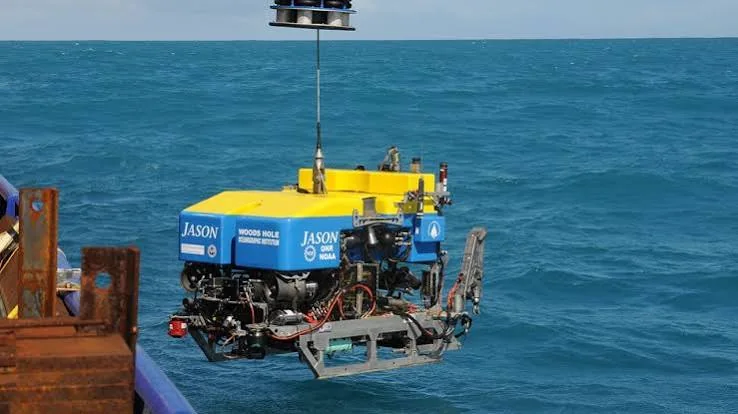
NOAA remotely operated vehicle Deep Discoverer aboard a research vessel NOAA's remotely operated vehicle Deep Discoverer can descend to approximately 6,000 meters while collecting imagery, samples and environmental measurements. Investigating extraordinary underwater claims requires this kind of documented, recoverable data.Credit: NOAA Ocean Exploration, 2026 ROV Shakedown / Public domain. Source: NOAA Ocean Exploration — ROV Deep Discoverer

A structure large enough to shelter vehicles of the kind described by Burchett — approximately football-field-sized — would in principle produce sonar returns inconsistent with natural seafloor formations. No publicly reported anomaly consistent with such a structure has appeared in NOAA mapping releases, peer-reviewed oceanographic research or any declassified naval survey data.

This absence is not conclusive proof. Coverage is not total, classified sonar data is not publicly available, and the ocean floor in many areas remains inadequately mapped at the resolution required to identify structures at the scale described. But the absence of any corroborating signature in the substantial body of publicly available oceanographic data is a meaningful evidentiary gap.

Rear Admiral Tim Gallaudet's Independent Position

Retired Rear Admiral Tim Gallaudet — former NOAA Acting Administrator and Navy oceanographer with expertise in ocean acoustics — has made independent public statements that lend institutional weight to the broader question of underwater UAPs, while stopping short of confirming Burchett's specific accounts.

In written testimony to the House Oversight Committee on November 13, 2024, Gallaudet stated: "I add the term 'water space' because UAP have been observed in the ocean and are known to exhibit transmedium travel through the air-sea interface. These are often referred to as unidentified submerged objects (USOs)." He called for integration of NOAA and naval oceanographic assets into UAP investigation, and described a 2015 incident in which he received an urgent Navy communication about UAP encounters during a pre-deployment exercise, after which the communication disappeared from the network without explanation.

Official U.S. Navy portrait of Rear Admiral Timothy GallaudetRear Admiral Tim Gallaudet, USN (Ret.), has called for systematic scientific investigation of transmedium and submerged UAP reports. His position does not independently verify Burchett's specific claims or alleged locations. Credit: U.S. Navy / Public domain, via Wikimedia Commons

Who Is Tim Gallaudet?

RoleRetired Rear Admiral, U.S. Navy. Former NOAA Acting Administrator (2018–2019). Oceanographer with expertise in ocean acoustics, underwater sound propagation and maritime environmental science. Currently CEO of Ocean STL Consulting.
Position on USOsAdvocates systematic scientific investigation of transmedium UAP and unidentified submerged object (USO) reports using existing NOAA and naval oceanographic assets. Has not confirmed specific claims made by Burchett about locations, speeds or permanent installations.
Key testimonyHouse Oversight Committee, November 13, 2024: "I add the term 'water space' because UAP have been observed in the ocean and are known to exhibit transmedium travel through the air-sea interface."

Gallaudet's institutional credibility supports taking underwater UAP reports seriously as a research priority. It does not corroborate the specific accounts Burchett has attributed to Navy personnel.

Gallaudet has also written on this subject independently. His March 2024 Sol Foundation paper, "Beneath the Surface: We May Learn More about UAP by Looking in the Ocean," argues that transmedium UAP and USO reports represent a systematically underexplored domain. In it, he makes the case for systematic scientific investigation — not for the existence of permanent alien installations.

Gallaudet has not publicly confirmed Burchett's specific "five or six locations," the reported speed or size figures, or the existence of permanent underwater installations. His testimony represents an expert advocacy position — that underwater UAP phenomena deserve rigorous investigation — not independent corroboration of Burchett's attributed accounts. The distinction is important: Gallaudet's credibility strengthens the case for taking these reports seriously as an investigative priority; it does not confirm what Burchett was told.

Sources: 

What Would Confirm a Permanent Underwater Base?

The evidentiary standard for confirming a permanent underwater installation is demanding — appropriately so, given the magnitude of the claim. Understanding that standard identifies precisely what is missing.

Evidence Assessment — Burchett's Underwater UAP Claims

Claim elementWhat would confirm itCurrent status
Burchett publicly expressed belief in underwater alien bases Multiple recorded interviews; the belief is his own stated position Documented Confirmed across multiple 2024–2026 interviews including Newsmax, September 29, 2025
Navy and military personnel reportedly described unusual submerged objects to Burchett Declassified incident reports, witness testimony before Congress under oath, or authenticated sensor logs from the reported encounters Attributed Attributed to Burchett's conversations; underlying witnesses and records not publicly available
Several deep-water activity areas exist at specific locations Geographic coordinates, ocean basin designations, or sonar surveys cross-referenced across independent platforms Alleged No locations publicly established; not referenced in AARO Historical Record Report
Objects reportedly travelling at hundreds of miles per hour and approximately football-field in size Original sensor data with documented methodology, tracking geometry and calibration records; independent reconstruction confirming speed and dimensions Secondhand Attributed figures from Burchett interviews; no sonar record, vessel log or authenticated sensor data released
Objects are of non-human origin Physical samples with composition inconsistent with known human engineering; authenticated structural imagery; independent peer-reviewed analysis Not established No physical samples or authenticated material analysis publicly available
Permanent underwater bases exist Sonar imaging of anomalous structures inconsistent with natural formations; verifiable coordinates; physical evidence from the site Not established No sonar data, coordinates or structural evidence publicly released

The UFO Times Assessment

Burchett has publicly said that he believes extraterrestrial entities may operate from underwater bases. He has connected that belief to accounts he attributes to Navy and military personnel concerning unusual submerged objects and recurring activity in several deep-water areas. His position is therefore more than a media invention — but it remains an interpretation of secondhand reports.

No publicly released coordinates, authenticated sonar data, vessel records, physical evidence or independently verified imagery establishes permanent extraterrestrial installations beneath the ocean. The speed and scale figures Burchett has discussed — however striking — rest on attributed accounts without the sensor data required to assess their accuracy. The AARO resolution of the Aguadilla case illustrates why such assessment matters: an object that appeared to enter the ocean at high speed was found to have drifted over land at 8 miles per hour.

Burchett's willingness to speak plainly about what he has been told, and to stake his own interpretation on it publicly, is itself notable in the context of congressional UAP oversight. It means the claims can be examined, sourced and assessed — which is exactly what responsible disclosure requires. The evidentiary gap between his interpretation and what is publicly verifiable remains wide. Closing it would require the release of authenticated records that have not been provided.

Frequently Asked Questions

Did Tim Burchett say there are five or six underwater alien bases?

Burchett has publicly expressed his personal belief that alien entities may operate from underwater bases, connecting it to accounts he attributes to Navy and military personnel about unusual submerged objects and deep-water activity areas. The number "five or six" was widely reported in media coverage; Burchett has at times spoken of "several" locations. He has not released authenticated documentation, sonar data or coordinates to support the existence of permanent installations.

What did Burchett actually claim about underwater UAP activity?

Burchett has said in multiple public settings that Navy personnel described to him underwater craft travelling at hundreds of miles per hour, and that several deep-water areas have been associated with unusual activity. He has stated his personal belief that alien entities may be living in deep-water areas on Earth. This is his own stated conclusion based on attributed secondhand accounts — not a finding derived from publicly released physical or documentary evidence.

Has the Pentagon released authenticated footage of UAPs entering water?

The Department of Defense confirmed that Navy personnel recorded the 2019 USS Omaha footage. Authentication of the recording does not establish that the object entered the ocean, originated underwater or represented non-human technology. AARO has not issued an analytical case resolution for the Omaha footage.

What did AARO conclude about the Aguadilla "transmedium" UAP case?

In its March 2025 case resolution, AARO assessed with high confidence that the objects in the 2013 Aguadilla infrared video did not exhibit anomalous speed or transmedium behavior. Reconstruction showed the objects drifted at approximately 8 mph over land; apparent high speed was attributable to motion parallax. Apparent disappearance into the ocean was attributable to thermal crossover, not actual submersion. AARO assessed with moderate confidence that the objects were sky lanterns.

What did Rear Admiral Tim Gallaudet say about underwater UAPs?

In written testimony to the House Oversight Committee on November 13, 2024, Gallaudet stated that UAPs have been observed in the ocean and are known to exhibit transmedium travel through the air-sea interface, which he called unidentified submerged objects (USOs). He advocated for systematic investigation. He did not publicly confirm Burchett's specific accounts, alleged locations or speed and size figures.

What evidence would be needed to confirm a permanent underwater UAP base?

Confirming a permanent underwater installation would require: authenticated sonar imaging showing anomalous structures inconsistent with natural formations; verifiable geographic coordinates cross-referenced across independent surveys; physical evidence recovered from the site; and documentation establishing the structure is non-natural and inconsistent with known human engineering. None of these have been publicly provided.

Sources and References

  • Newsmax — "Rep. Burchett: UFOs Could Be Hiding Underwater," September 29, 2025. Includes direct quote from Burchett about Navy personnel describing underwater craft "that go hundreds of miles an hour." newsmax.com/newsfront/tim-burchett-ufos-aliens/2025/09/29/id/1228280/
  • NewsNation — "Aliens may have underwater bases on Earth: Burchett." Documents Burchett's publicly expressed belief. youtube.com/watch?v=ZCEbJwRgBPQ
  • The Resilient Show — "UFOs in the Ocean? Rep. Tim Burchett on Underwater Craft, Disclosure & Epstein," March 9, 2026. Reported source for football-field size and approximately 200 mph figures. resilienttimes.substack.com
  • AARO — "Case Resolution: The Puerto Rico Object," March 20, 2025. Full technical reconstruction of 2013 Aguadilla infrared footage. AARO Puerto Rico Case Resolution (PDF)
  • AARO — Historical Record Report Vol. 1, 2024. AARO Historical Record Report (PDF)
  • Dr. Tim Gallaudet — Written testimony, House Oversight Committee, November 13, 2024. Gallaudet testimony (PDF)
  • House Oversight Committee — "Unidentified Anomalous Phenomena: Exposing the Truth," November 13, 2024. oversight.house.gov hearing page
  • RADM Tim Gallaudet — "Beneath the Surface: We May Learn More about UAP by Looking in the Ocean," Sol Foundation, March 2024. thesolfoundation.org
  • The War Zone (Tyler Rogoway) — Pentagon spokesperson Susan Gough confirmed to reporters that the USS Omaha footage was recorded by Navy personnel and was under review by the UAP Task Force, May 2021. thedrive.com/the-war-zone/41220 (secondary reporting; original DOD spokesperson statement not published as standalone release)
  • Rep. Tim Burchett — official congressional biography and portrait. U.S. House of Representatives / Public Domain. burchett.house.gov
  • NOAA Office of Ocean Exploration and Research. oceanexplorer.noaa.gov
Editorial note: 
  • This article distinguishes among four separate layers in Burchett's public statements: (A) secondhand reports he attributes to Navy and military personnel; (B) reports of unusual objects or activity in several deep-water areas; (C) Burchett's personal interpretation that such activity may indicate underwater alien bases; and (D) publicly verified evidence — which currently does not establish alien origin or permanent underwater installations. No public coordinates, authenticated sonar records, vessel logs, raw sensor files or physical evidence currently establishes permanent underwater structures associated with UAPs. The UFO Times evaluates UAP claims against available evidence without sensationalism.

Hoe vind je dit bericht?
Geschreven door peter om 20:57 Stuur door

The Allagash Abductions: This State Park’s Most Famous Visitors … Are Aliens?

The Allagash Abductions: This State Park’s Most Famous Visitors … Are Aliens?

In 1976, four men saw a UFO while visiting the Allagash Wilderness Waterway. A decade later they started remembering more details.

Dylan Thuras: It was 1988, and all year, Jim Weiner had been having a terrible time sleeping. He was having nightmares, but these were not normal nightmares, because Jim said he felt like he was awake, almost like it was some kind of sleep paralysis.

He’d wake up to the overwhelming sense that there was someone in the room with him. He’d hear a flurry of voices, but he couldn’t understand them. He couldn’t move anything but his eyes. And often, his twin brother Jack was there, along with two college friends, Chuck and Charlie.

Jim would be lying on this table in a bright white room. At first, Jim thought he knew what was causing this strange, awful sensation. Years earlier, he’d been in a bad accident. He’d injured his spine and his brainstem. He told his psychiatrist, it seems like things were under control.

They were going to get better. But then Jim got on the phone with his brother Jack, and they made a very unnerving discovery.

This was happening to Jack too. The bright white room, the table, Charlie and Chuck, the paralysis. Jack said he was seeing the same things. And as they dug deeper, the brothers would trace this strange sensation to an incident that happened more than a decade earlier, in the north woods of Maine, in the Allagash Wilderness Waterway.

I’m Dylan Thuras, and this is Atlas Obscura. And today, we are talking UFOs. We are talking alien abductions. And we’re doing it National Parks style.

This is an edited transcript of the Atlas Obscura Podcast: a celebration of the world’s strange, incredible, and wondrous places. Find the show on Apple Podcasts, Spotify, and all major podcast apps.

People paddling in their wooden canoes on one of the lakes near the Allagash Waterway in the north woods in Maine

People paddling in their wooden canoes on one of the lakes near the Allagash Waterway in the north woods in Maine  Kate Sfeir / Shutterstock

Dylan: National Parks are pretty much universally beloved. You have to be, like, a pretty unpleasant person to really dislike National Parks. But there’s also this other side to these enormous wild places. People die or disappear in National Parks actually pretty frequently. I don’t say this to discourage anyone from visiting the parks. Millions and millions of people go there. They are wonderful. They are safe. They are amazing. But they are big and they are wild. And there’s a hidden side to everything, including these places that we revere. So I am here today with two people who know more about the dark and sinister side of National Parks than I would guess almost anyone else. Danielle LaRock and Cassie Yahnian are hosts of the podcast National Park After Dark, a podcast for the morbid outdoor enthusiast, which is not a thing that I knew I was until I heard your work. So, Danielle, Cassie, thanks for coming on the show.

Danielle LaRock: Thank you so much for the lovely introduction.

Cassie Yahnian: Yes. We’re excited to be here.

Dylan: It’s great. Meeting of the morbid outdoor enthusiasts. Yeah, so where are you two right now in the world? You look like you are in nice places.

Danielle: I’m in Maine.

Dylan: Oh, great.

Cassie: Yeah, and I’m in Vermont.

Dylan: Oh, nice. Yeah, this is great. I went to college in Bennington.

Cassie: Oh, very cool. Bennington’s a very cool area.

Dylan: Yeah. It’s also actually a place where there’s like all these weird, mysterious disappearances. The like, little Bennington Triangle. It’s like a whole—we could do a whole other thing.

Danielle: There’s some vibes happening.

Dylan: There’s some vibes. There are some vibes in that Bennington Triangle. And we’re going to get back to Jack and Jim’s story in just a second. But to further set the mood, why don’t you give me a quick lightning round of a few of your favorite morbid stories that have taken place in national parks. Danielle, go.

Danielle: Okay. Everglades National Park. In the 1800s, bird populations were being decimated for fashion and one of the first men who tried to save them was killed for it.

Cassie: Sequoia and Kings Canyon National Park. A backcountry ranger went missing while out on patrol and then the largest search operation ever recorded in those parks uncovered a complicated marriage, a mistress, and reasons he may have wanted to disappear.

Danielle: Joshua Tree National Park. Graham Parsons’ friends wanted him to go out like he lived: as a rock star. After his untimely end, they stole his body from a plane, loaded it into a friend’s hearse, drove it into Joshua Tree, and attempted a makeshift cremation.

Dylan: It makes me think the cremation went poorly.

Cassie: It did.

Dylan: That’s a lot of, like, death, murder, mayhem in national parks. It just makes me feel like people, I don’t know, maybe there’s just something about national parks where people feel like they can get away with things. So, okay, let’s talk about one of these cases. Let’s get back to our brothers, Jim and Jack. And this story takes place in the Allagash Wilderness, which is technically not a national park, but an enormous state park in Maine. More than a decade before the brothers are having these strange visions, back in 1976, Jack and Jim are in their 20s. And what’s going on with them? What sort of precipitates all of this stuff that happens later?

Danielle: Yeah, so you set the scene so brilliantly, so let’s pick up from there. In August of 1976, the twins, Jim and Jack, along with Charlie Foltz and Chuck Rak, were in the midst of a two-week camping trip and fishing trip along the Allagash Waterway. The area, like you said, is part of the National Wild and Scenic River System. For anyone who has not been to Maine or Northern Maine, it’s absolutely beautiful. It’s super remote, and this area in particular is about 93 miles long worth of ribbons of lakes and streams, and it’s just so beautiful. And the four of them had prepared for this trip for nearly a year beforehand, prepping, researching, getting ready to go. So at this point in time, they’re dropped off in the wilderness by a bush plane, and they began their journey.

Dylan: And you said they got dropped off by a plane. So, I mean, they’re, like, totally alone out there. It’s, like, not the place you would bump into a random stranger. They seem quite far out in the wilderness.

Danielle: You can’t just drive or walk up to a place like this. You need to intentionally seek it out. There’s a few other campers around, moreso people that are doing a similar thing, right? So, canoers and paddlers—actually, this day, they run into another group of campers on a lake that they are also planning to camp on. And they had lost—one of the teenagers in their group had gotten separated and hadn’t come back to their campsite yet. So, they actually offered to search for him. And this is when kind of the prelude happens to the encounter. And they’re picking up binoculars, they’re scanning this lake for the teenager. That’s when the entire group all initially spot something strange that they, at first, just kind of write off as, ah, that’s a weird, strange light in the sky.

Dylan: What do they see?

Danielle: So, when they’re scanning the tree line, they’re looking through binoculars. All of these people see this bright light, and it was in the eastern part of the sky, and it was moving slightly. And at first, they collectively thought they were maybe looking at Mars because it had this reddish tint to it. But suddenly, they all kind of look at each other like, this is weird. Because not only did everyone notice it, it was astoundingly bright. It seemed to be hovering about 200 feet from the top of the tree line. And then it all of a sudden, as they describe it, inverted on itself. So, it closed in kind of like an eyelid shutting, and then it blinked out from sight.

Dylan: That’s not—that’s slightly unnerving. Did they ever find the people they were looking for?

Danielle: Yes. The kid came back, and it was fine. And then they all went their separate ways and never saw each other again.

Dylan: Right. So, this sort of strange thing happens as they’re looking for this lost camper, and they find the camper. Seems like that was not the end of things. What do they do after they have that first experience?

Cassie: So, later that evening, after settling into camp and making a large fire on the lake shore, the men decided that they wanted to go back onto the lake and do a night paddle. And that night was pretty eerie and quiet. They actually kind of noticed how dark it was and how quiet things were. And while Chuck was paddling, he suddenly felt like something was off, and he really felt like he could feel someone watching him. So, he threw his gaze over his shoulder, and he saw this ball of light rising from the trees about 200 yards away. Jim, Jack, and Charlie, they all turned around at this point to look, and a large round bright light was rising more above this tree line. It ascended roughly 300 feet, and then it hovered. It fluctuated between red, green, and yellow, and it wasn’t solid, but rather had an almost liquid appearance to it.

Dylan: I would be pretty highly alarmed here if this is what was going on.

Danielle: So, after they all noticed this light rising up, they noticed a couple of things. First of all, it’s way closer than whatever they saw hours prior. It is illuminating the entire forest, and it’s dead silent. Chuck decides to lean down, grab his flashlight, points it at this source of light, and clicks the flashlight on and off in the universal, at least earthly, signal for SOS. And suddenly, this light source emits a light source of its own, kind of like a searchlight, and starts scanning the water, and it’s moving in their direction. So, now, collectively, all the men are having this oh crap moment.

Dylan: Yeah, at this point.

Danielle: And start paddling like crazy back to their camp. So, they get back to the shoreline, but interestingly, there’s a chunk of time that they can’t recall, at least at first. So, they all remember seeing this light and turning to paddle back to shore, and then the next thing they remember is skidding up onto the shoreline to their campsite, where just 20 minutes prior, they had set a huge fire. And their fire is now smoldering, just smoldering coals. So, they clocked that as strange, and they kind of talked amongst each other for a brief minute about, huh, that was kind of weird, right? And then they all remember feeling like they were in this daze, and kind of equated it to after you come out of anesthesia, you’re awake and you’re conscious, but you’re loopy and kind of scatterbrained. And they just went to sleep. The next day, they get up, they ran into a ranger, actually, and inquired if, you know, did you see anything like that? What was that?

Dylan: Yeah, what could that have been?

Danielle: Yeah. And he actually said, well, you know, there’s a new hardware store out in Millinocket that had those, you know, those big Hollywood floodlights. And, you know, that is dozens of miles away. It does not match the description of what they encountered. So, they kind of said, oh, okay. Like, sure, that sounds like it. Thanks.

Dylan: Yeah, the local hardware store opening, you know, yeah, right.

Danielle: That must be it, right. But, yeah, so anyways, after that, they kind of dropped it, surprisingly. They continued their trip. They went on with their entire lives. They went back to school. They graduated. They had families. And like you said at the beginning, you know, decades go by. We’re now in 1988 where this is starting to surface again.

Dylan: Okay, so we are back to where we started. Jim is having these crazy night visions. He talks to his brother, Jack. They realize that they’re maybe experiencing the same thing. How does this all sort of start to connect for them? How do they start to realize that maybe there’s something more to this past experience than what they initially thought?

Cassie: Well, then they ended up contacting Chuck and Charlie to speak about that night again, to be like, hey, are you experiencing any of this? Like, we’re both having these weird dreams. Are you? And then it turned out that all of them were experiencing the same thing, and it was kind of that moment where they’re like, wait, we forgot about this. We kind of pushed it to the side, but maybe there’s something more here that we didn’t realize.

Dylan: Yeah.

Danielle: And surprisingly, you know, you mentioned that Jim’s physicians initially said, hey, we’re going to recommend you for further help. And of all people, they recommend him to a ufologist. And that ufologist is the one that recommended they start doing some regression hypnotherapy. All four of the men agreed to do that. And separately, they start to uncover eerily similar experiences of lost memories from that evening.

Dylan: To quickly recap, Jim, Jack, Chuck, Charlie, they go on this trip in the 70s, they’ve got this crazy experience with these floating lights, they kind of lose time, which is like classic UFO stuff, you know, you’re like, I was only gone for five minutes, what do you mean? And then a decade later, they end up talking to this alien researcher, they do this hypnotic regression therapy. And over the course of that two years, they all end up with this sort of picture, or they converge on this understanding, of what happened. So what do they end up saying happened during that key, like missing period?

Danielle: Yeah. So long story short: They all—after two years—they come to realize that under hypnosis, they were finding out the same things. Essentially, they all recalled being aboard a spacecraft, where they were all subjected to different medical examinations by some of these humanoid entities. They all described them as having large heads, dark eyes, slender bodies, they don’t speak with words, but rather telepathically send messages to them. And that was what was coming up also in their dreams and starting to kind of surface that way.

Dylan: Right. Yeah, what you’re describing sounds a lot like the visions that Jim described having 10 years later.

Danielle: Yeah. Now they’re all under the impression of, wow, we were gone for hours. We thought it was minutes. And we were abducted by aliens and experimented on and placed back into our canoe and sent on our way.

Dylan: And they like, they ended up, you know, sort of becoming a little bit famous, right?

Danielle: Yeah. And to be clear, you know, there, at first they were very scared. They were—this was traumatic memories for them. This was not something they looked back on fondly. After this collective understanding of this is a shared experience, or at least that’s what they were under the impression of, they come to this sort of solace that, you know, this happened and let’s own it and let’s start talking about it. And that’s what they did. And for years, they went on different speaking circuits. They talk a lot at different UFO conferences.

Dylan: Yeah, right. They became known as the Allagash Four, this kind of like, you know, group of abductees who could just talk about this experience and kind of shared it. But then later, later, I think it’s Charlie, was it Chuck or Charlie? Who came forward?

Danielle: Chuck. Chuck was the one.

Dylan: Okay. Yeah. Chuck came forward and said, basically, yeah, some of this is bullshit, or like, we made some of this up. Like, did he actually say it was a hoax or was he sort of just like walking back some of it?

Danielle: He walked back some of it. So, his stance was that the incident with the other campers and seeing that strange light was true.

Dylan: Yeah.

Danielle: And also their experience on the lake, just the four of them, was true. Where he started to go off on his own was saying that the abduction part was fabricated. But the other guys point to, yeah, well, the only reason he’s saying that now after years of us going on Joan Rivers and doing different television programs and all of this and wanting to write books, and the only reason he’s saying that is because we had a big falling out in our friendship.

Dylan: I mean, I have to ask the question, what do you two think? You guys spend a lot of time out, way out in the wilderness, you know, under the night sky. I mean, are you believers?

Cassie: It would be very unbelievable for me to think that we are the only planet with life on it. You know? I think that it is way more unrealistic to think that we are the only people or life forms that exist in the entire universe.

Dylan: What about you, Danielle?

Danielle: I co-sign all of that.

Dylan: Have you two ever seen anything truly weird and unexplainable on any of your adventures?

Danielle: I saw Starlink and thought it was UFOs.

Dylan: I know so many people who were convinced they were seeing an alien invasion, but were just 100 percent seeing Starlink. Like, what is that? That’s funny. Yes. It’s super interesting. I don’t know what I think. Maybe I’m more of a skeptic than you two. I have some mixed feelings. It’s clear that, like, for some of these kind of abductee cases, like, something is going on. People are having very intense and genuinely traumatic experiences. They are experiencing something real for them. And I can’t help but note that when all this is happening, like the late 80s and the early 90s, this is an absolute alien craze, right? The X-Files has just started. All of this stuff is happening on TV about, like, Area 51. There’s, like, nothing hotter than kind of, like, weird aliens. I think it’s possible, you know, they’re doing this hypnotic regression therapy. And one of the big critiques of this is that it can, like, implant memories. And the person who did this to them also, like, wrote a book about it, and I think probably did pretty well on that book. I honestly don’t know. It seems likely that they saw something very strange, to which I have no explanation of.

Danielle: So now that we’re all kind of coming around to the government being like, yeah, aliens are real, you know, that’s not new.

Dylan: Or at least we don’t know what any of this stuff is. Like, we can’t tell you or we don’t know.

Danielle: Right. We can’t confirm nor deny. But you know, now, as time goes on, we’re starting to accept that aliens might be real. Whether or not they’re the gray aliens that we think of when we imagine an alien, or if they’re something completely different, we’re coming around to the thought that we aren’t alone in the universe.

Dylan: Interesting. Yeah, I think one of the things I like about this story is just that, especially when you’re out there in the wilderness at night on your own, whatever—sometimes I do these bike rides, these, like, late night bike rides that go, it’s like a full moon ride, and we all go look at the full moon, it’s really nice—and I’m riding through a really familiar trail, but I’m riding at night, my little flashlight is shining. And the whole thing just starts to take on this other terrifying kind of aspect. And I can’t really explain it. It’s not rational. But I just, I do think that sometimes we just have experiences that we cannot explain. And there’s something about being in the woods at night that just evokes those kinds of experiences. And I almost don’t feel like I need an explanation to understand that feeling of: something is happening that I can’t quite explain. How has covering all this affected your relationship with national parks and wilderness areas? Does it ever freak you out? Do you, you know, at night, camping out somewhere far away, are you, like, flashing back to these stories? Or are you kind of like, this is what we live for?

Cassie: Sometimes. I mean, yeah, for sure. There are, I think, on the brighter side, sometimes these stories, I like to feel like I am more prepared and more knowledgeable. But on the other side, when I have extensively researched a grizzly bear mauling, I cannot help but worry when I’m sleeping outdoors in grizzly territory.

Dylan: Also, a grizzly is not—that’s a reasonable thing to be afraid of in a national park. That’s quite a practical, real thing to be like, yeah, don’t attract the grizzly to the tent. Danielle, how about you?

Danielle: I definitely am way more aware of my surroundings, but I’m trying to adopt her mantra of whatever’s happening outside of the tent is none of my business.

Dylan: Yeah, good. Whatever that weird sound was, don’t worry about it.

Danielle: Right.

Dylan: That was Danielle LaRock and Cassie Yahnian. They are the hosts of a really delightful, sometimes terrifying podcast called National Park After Dark. It’s basically kind of true crime survival adventure in national parks. And you can find it wherever you get your podcast. It is really delightful. Give it a listen.

Listen and subscribe on Apple Podcasts, Spotify, and all major podcast apps.

This episode was produced by Johanna Mayer. Our podcast is a co-production of Atlas Obscura and Stitcher Studios. The people who make our show include Doug Baldinger, Chris Naka, Kameel Stanley, Manolo Morales, Amanda McGowan, Alexa Lim, Casey Holford, and Luz Fleming.

Our theme music is by Sam Tindall. If you like our show, please give us a review and a rating whenever you get a chance and wherever you get your podcast. And of course, obviously, you know, follow, subscribe, never miss an episode.

I’m Dylan Thuras, wishing you all the wonder in the world. I’ll see you next time.

RELATED VIDEOS

The Allagash Abduction : The Night Four Men Lost Time Beneath the Stars

The Allagash Abductions 1976: The Case That Passed Every Test Sceptics Could Apply To It

THE ALLAGASH ABDUCTIONS When Four Men Shared The Same Nightmare

{ https://www.atlasobscura.com/ }

Hoe vind je dit bericht?
Geschreven door peter om 18:44 Stuur door

Beauty in X-rays: NASA releases 16 unique photos of the evolution of galaxies

Beauty in X-rays: NASA releases 16 unique photos of the evolution of galaxies

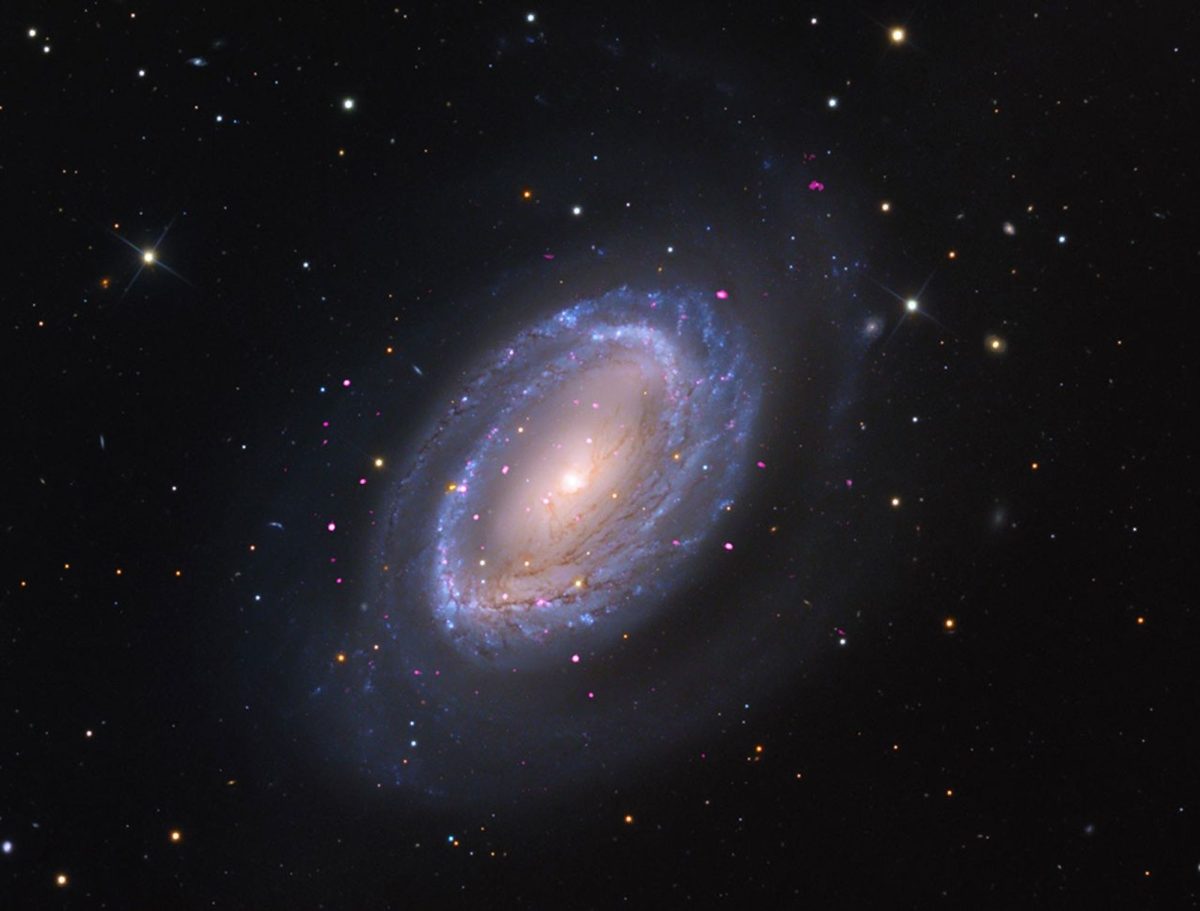
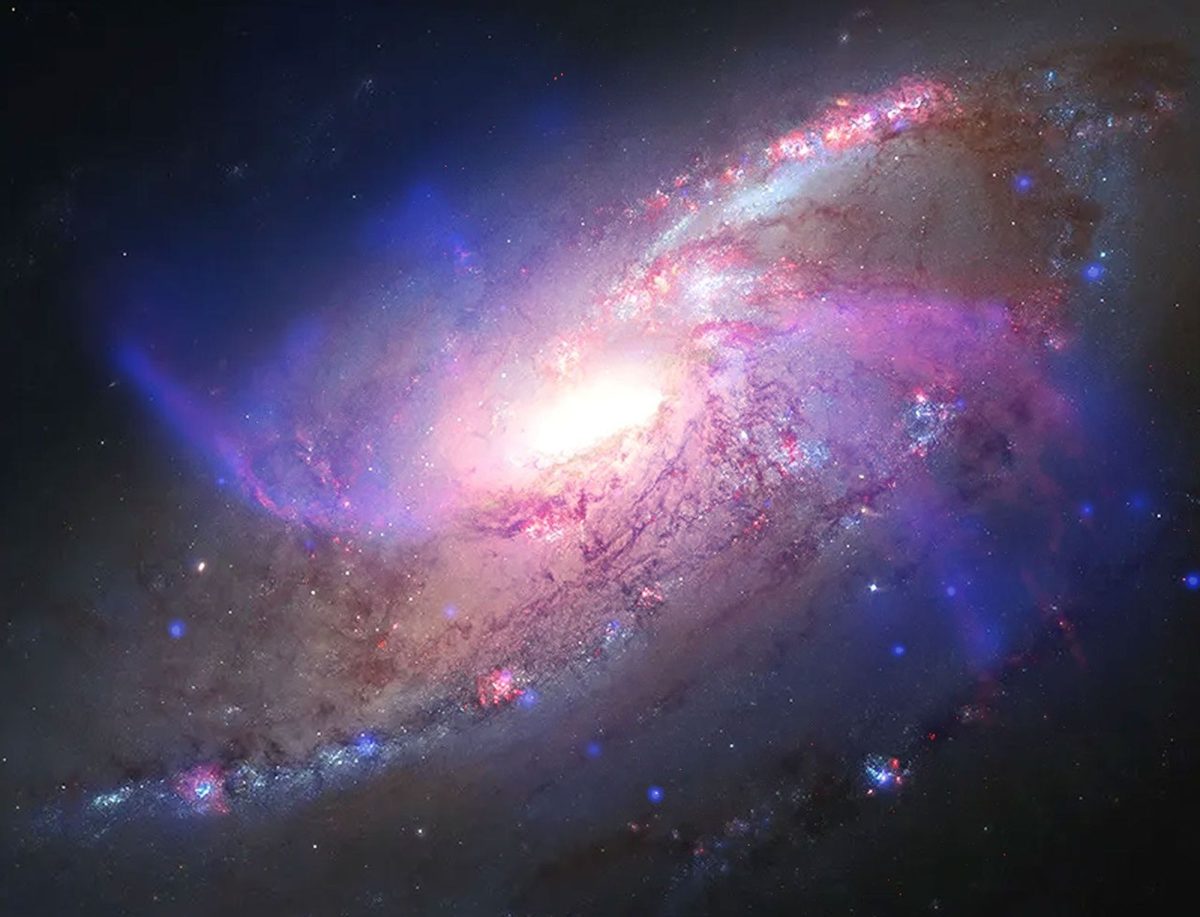
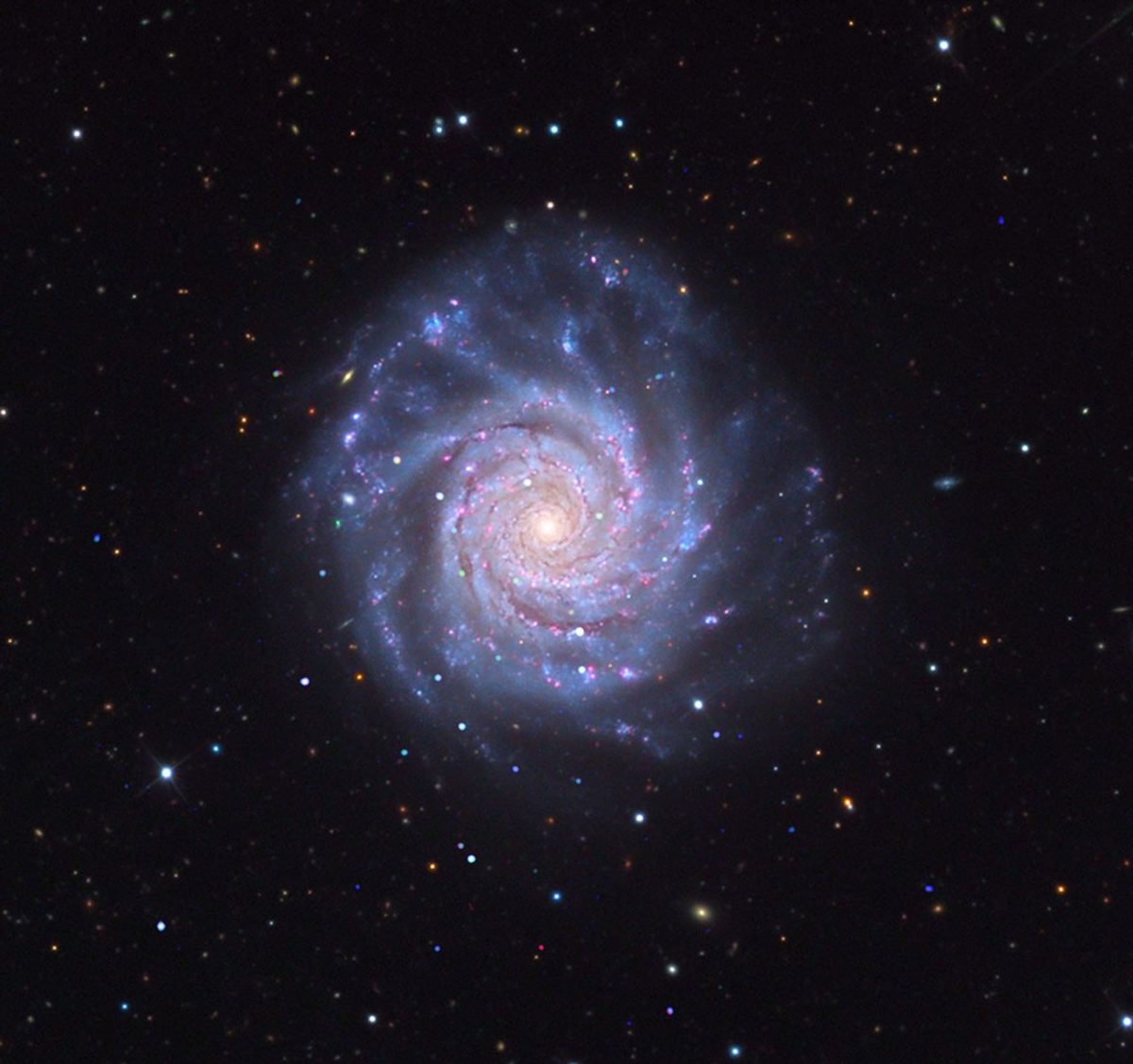
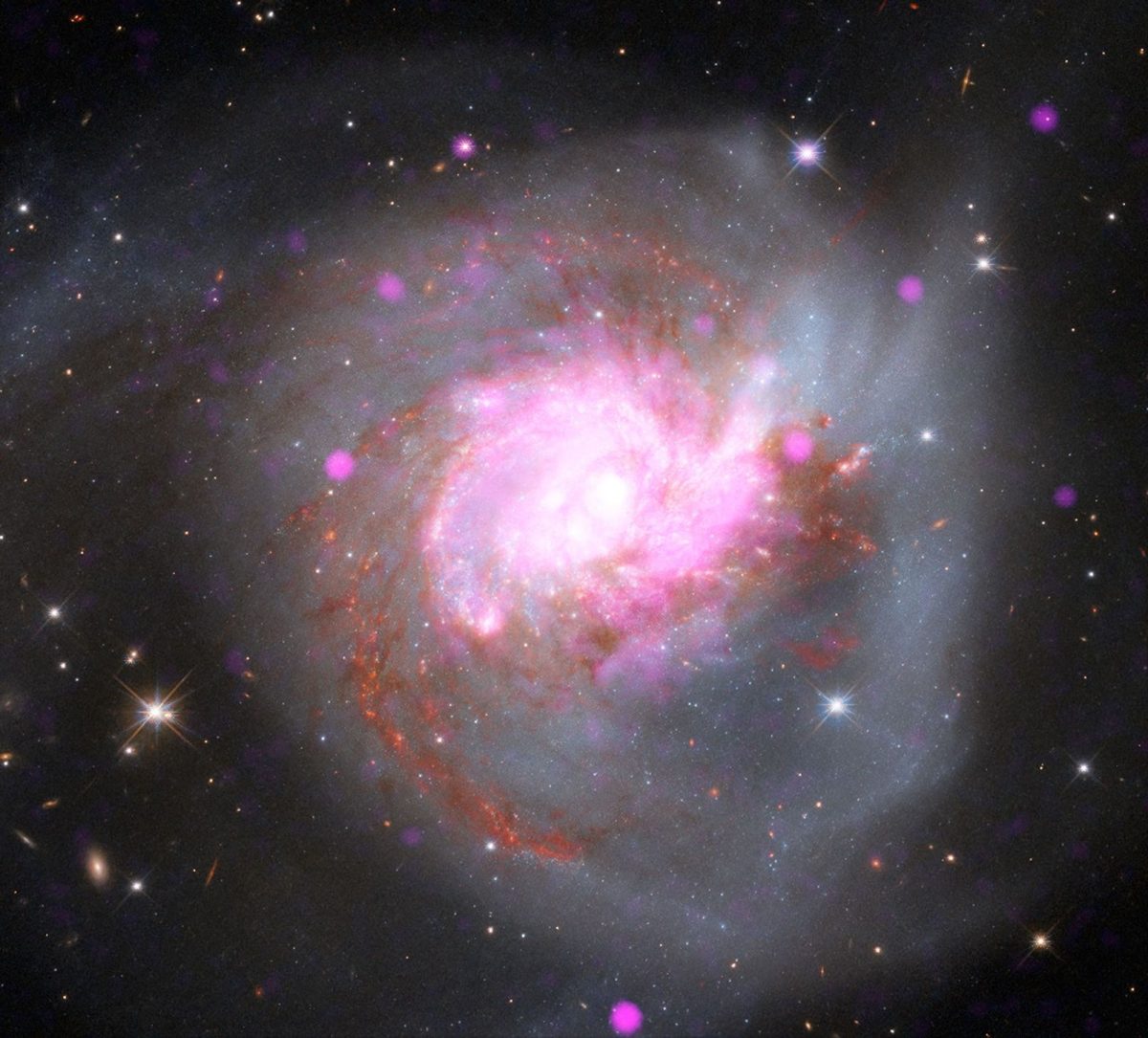
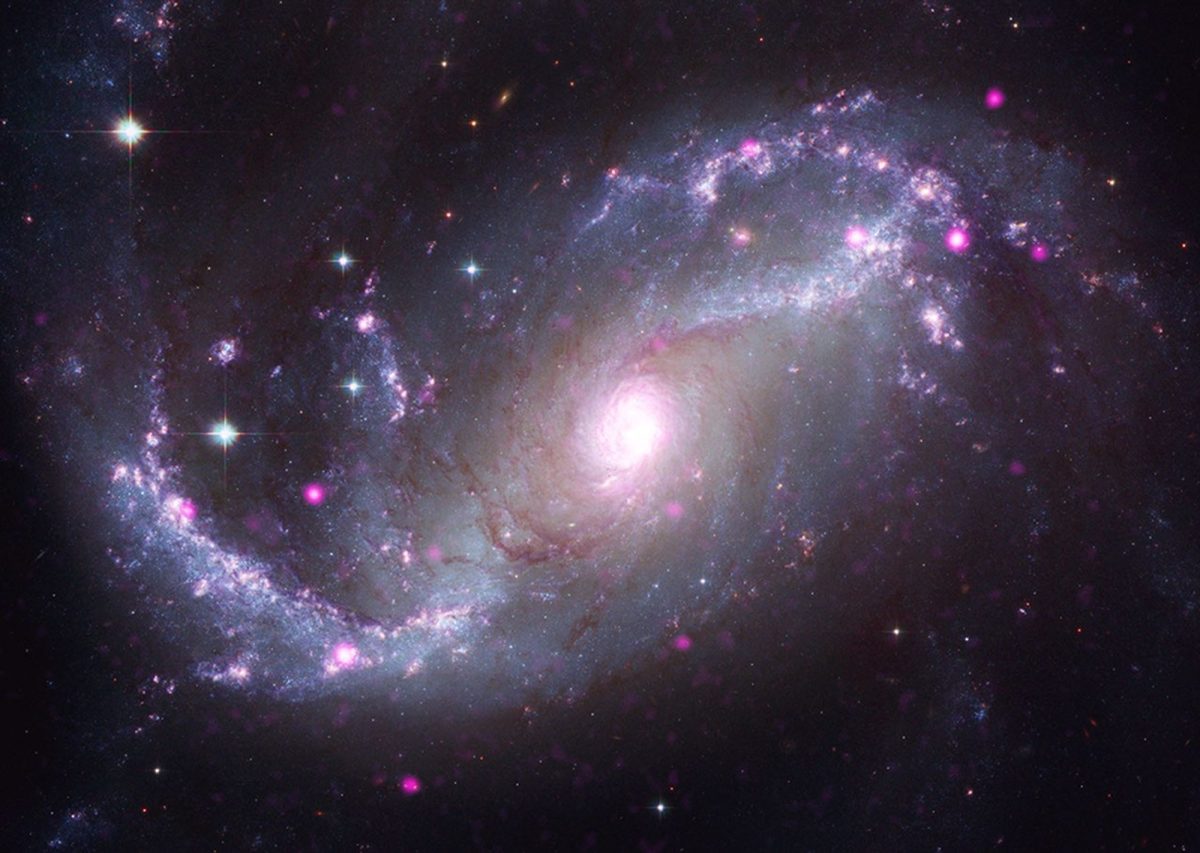
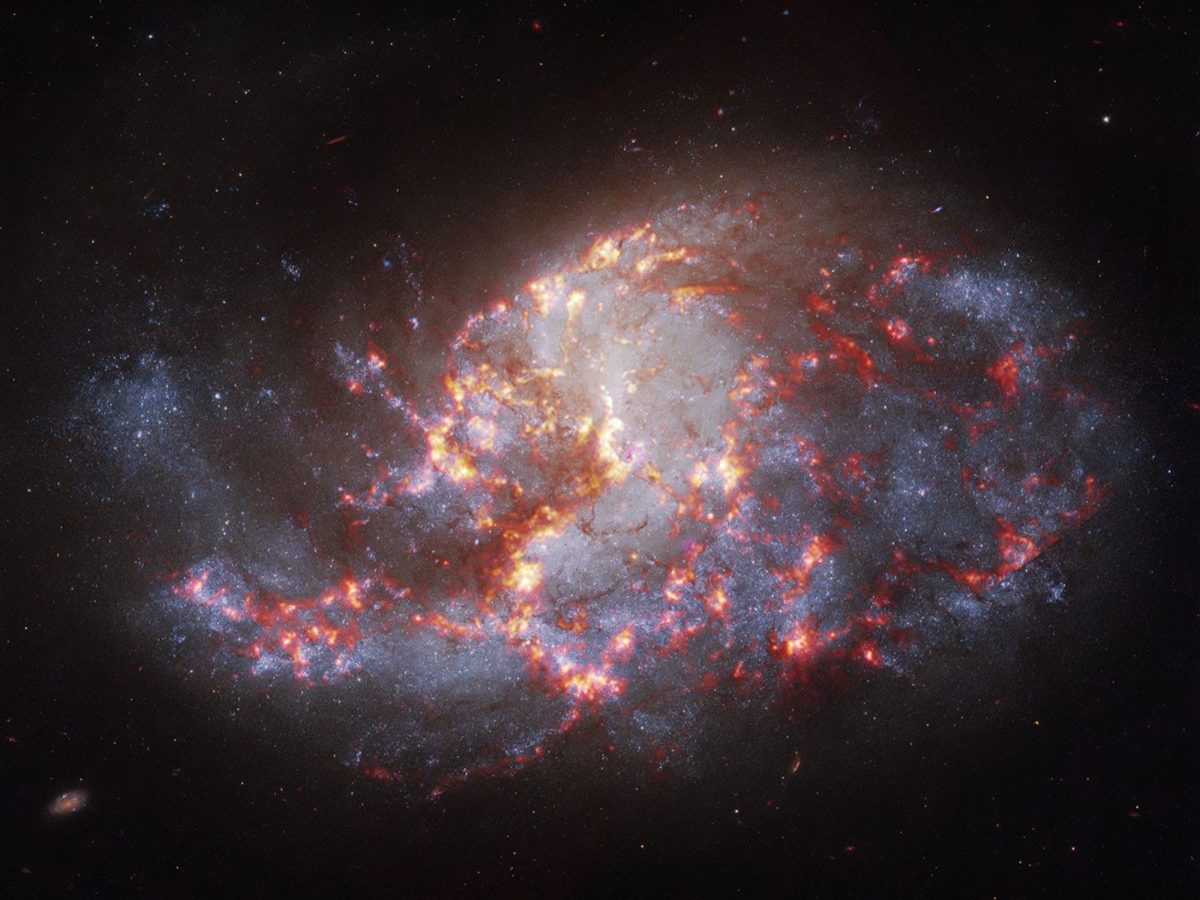
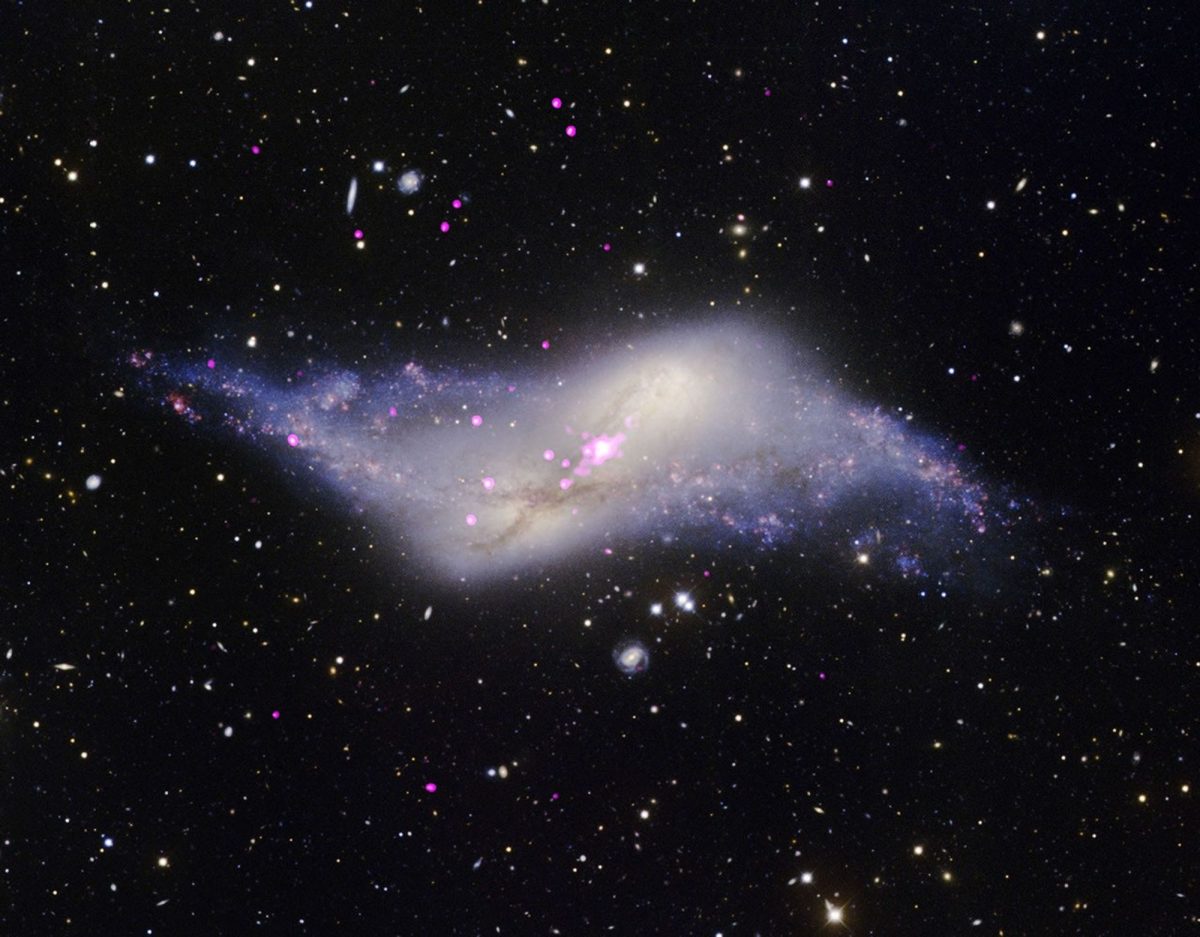
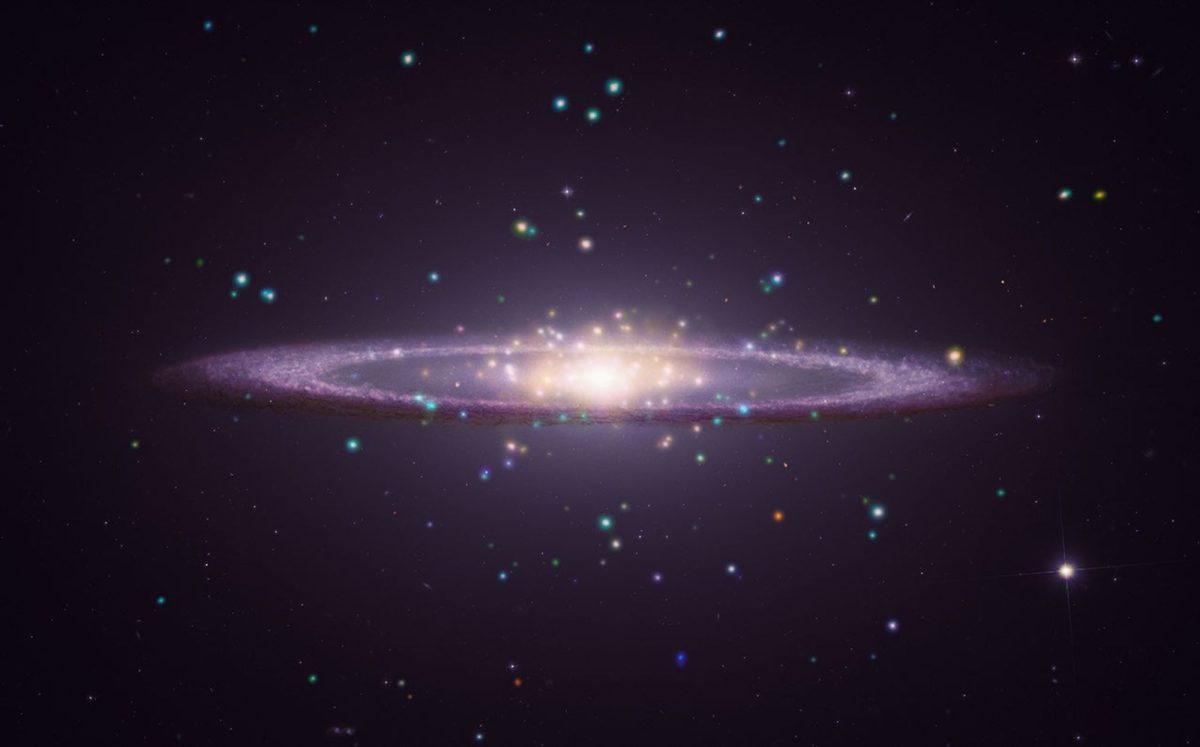
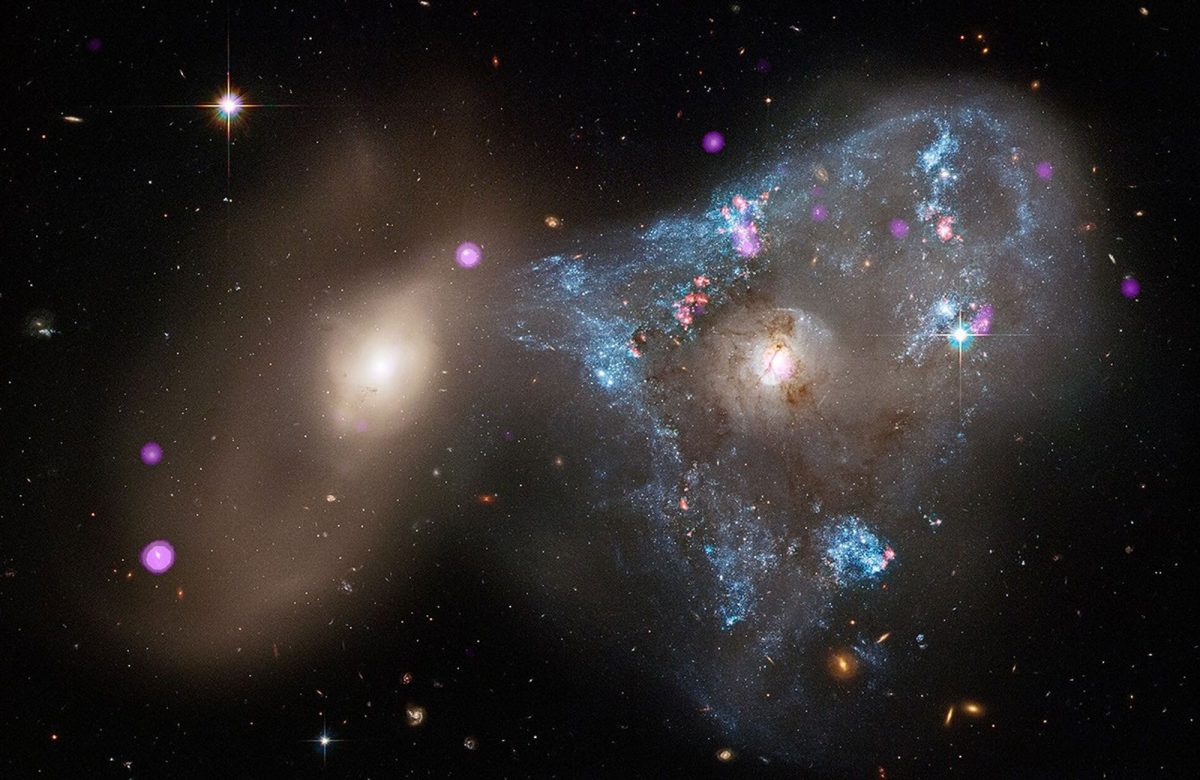
Galaxies are often compared to cosmic jewels. They are enormous collections of stars, gas, dust, and dark matter, with each system having its own unique structure and history. NASA’s Chandra X-ray Observatory, together with the James Webb, Hubble, NuSTAR, and IXPE telescopes, has presented a new gallery of 16 processed images revealing hidden energetic processes in the Universe.

The gallery features a collection of 16 images of galaxies obtained with the Chandra telescope and other telescopes. Source: NASA/CXC/SAO

While most observatories detect only visible light, Chandra operates in the X-ray range. This makes it possible to see extreme phenomena: gas heated to millions of degrees by stellar winds and supernova explosions, as well as gigantic outflows of matter. These processes disperse heavy elements throughout space that are necessary for the formation of new planets and life.

From Classical Spirals to Stellar Factories

Astronomical classification divides galaxies into spiral, elliptical, and irregular types. The new images emphasize this diversity. For example, in the face-on spiral galaxies Messier 33 and NGC 3938, X-rays highlight bright stellar pairs and remnants of explosions in their arms. In barred galaxies NGC 1672 and NGC 1385, central structures channel gas toward the nucleus, triggering bursts of star formation.

Edge-on spiral galaxies such as NGC 4631 and Messier 82 demonstrate so-called superwinds. These are enormous clouds of gas with temperatures of millions of degrees that are pushed thousands of light-years into space by the pressure of stellar explosions, enriching the intergalactic medium.

The Hearts of Central Monsters

At the centers of many galaxies are active nuclei — supermassive black holes consuming surrounding matter. In Centaurus A, combined data from Chandra and IXPE captured a powerful jet of particles extending for tens of thousands of light-years.

In the Messier 106 system, the black hole heats the surrounding gas, forming anomalous spiral arms unlike ordinary stellar structures. And in the Sombrero Galaxy (Messier 104), the supermassive object is surrounded by a diffuse gas halo with a temperature of about one million degrees, enveloping its famous dust lanes.

Cosmic Collisions and Rare Transformations

The barred spiral galaxy NGC 4725, surrounded by a prominent ring of star formation. Galaxies with unusual single spiral arms can provide insight into how the gravity of a passing galaxy can trigger bursts of star formation. Source: NASA/CXC/SAO The spiral galaxy NGC 4631, with a giant halo of hot gas erupting from its stellar disk. Viewing galaxies edge-on allows astronomers to study how flat their stellar disks are and provides the clearest view of matter located above or below the disk. Source: NASA/CXC/SAO The spiral galaxy NGC 4258, known for having two additional “anomalous” spiral arms composed of hot gas. M106 helps demonstrate how supermassive black holes can create structural features that mimic stellar spiral arms, influencing the evolution of a galaxy. Source: NASA/CXC/SAO/L. Frattare The face-on spiral galaxy NGC 3938, allowing an unobstructed view of its disk. A face-on orientation is important for galactic research because it provides the clearest possible view of a galaxy’s stars and gas. Source: NASA/CXC/SAO A pair of colliding, gas-rich spiral galaxies merging into a single massive system, NGC 3256. Source: NASA/CXC/SAO The barred spiral galaxy NGC 1672, characterized by a prominent central bar, or bridge of stars, that channels gas toward its nucleus. Studying barred spiral galaxies in action may help clarify how gas in our Milky Way, which is also a barred spiral galaxy, feeds its central black hole and forms new stars. Source: NASA/CXC/SAO The compact dwarf irregular galaxy NGC 1569, which is undergoing intense star formation. Source: NASA/CXC/SAO The barred spiral galaxy NGC 1385, filled with regions of active star formation. Comparing multiwavelength data on barred spiral galaxies undergoing active star formation helps scientists map how local bursts of star formation increase galactic mass over time. Source: NASA/CXC/SAO The “polarn-rig” galaxy NGC 660, in which an inclined outer ring of stars and dust rotates around the galaxy’s poles — an unusual structure likely caused by a collision with another galaxy about a billion years ago. Source: NASA/CXC/SAO The galaxy M104, known for its broad central bulge and dark outer dust ring, is oriented almost edge-on to Earth. Studying M104 may help bridge the gap between spiral and elliptical galaxies, allowing astronomers to better understand how a galaxy’s enormous outer cloud of stars grows and ages together with its inner disk. Source: NASA/CXC/SAO The large spiral galaxy M90, which is losing its gas as it rapidly moves through the hot gas of the Virgo galaxy cluster. Source: NASA/CXC/SAO The galaxy M82, where intense star formation is occurring as a result of gravitational interaction with a neighboring galaxy hundreds of millions of years ago. M82 earned the nickname “Cigar Galaxy” mainly because of its orientation relative to Earth, which makes its central disk appear as an elongated cigar-shaped oval when viewed through small optical telescopes. This galaxy illustrates how powerful galactic “exhaust systems” can regulate galaxy growth by pushing gas outward. Source: NASA/CXC/SAO The proximity of M33 allows astronomers to study individual high-energy objects and map how stellar feedback affects the galaxy’s ecosystem. Source: NASA/CXC/SAO/L. Frattare X-ray data from Chandra (purple) indicate powerful black-hole activity and the presence of hot gas, while optical data from Hubble (blue and white) and infrared data from JWST (red and gray) reveal enormous stellar nurseries hidden behind interstellar dust. Systems such as II Zw 096 show us how powerful galaxy collisions shaped the early Universe. Source: NASA/CXC/SAO One of the closest active galaxies to Earth, Centaurus A, gives astronomers an opportunity to study the effects of supermassive black-hole jets in extraordinary detail. Source: NASA/CXC/SAO The Arp 143 ring-galaxy system formed when a smaller satellite galaxy punched directly through its center like a target, creating a powerful cosmic shock wave. Source: NASA/CXC/SAO

Part of the galactic gallery is devoted to violent collisions. Arp 143 resembles a cosmic target: a head-on collision formed a ring galaxy with waves of star formation. The NGC 3256 and II Zw 096 systems show chaotic mergers hidden behind dense clouds of dust. Such events were common in the early Universe and mirror the future merger of the Milky Way with the Andromeda Galaxy.

Other unique objects include the dwarf galaxy NGC 1569, with its burst of star formation, which serves as a laboratory for studying conditions in the early cosmos. There is also the rare NGC 660 with a “polar ring,” where stars orbit over the poles, and Messier 90, which is losing its gas while moving rapidly through the Virgo Cluster. Together, these images show that galaxies are not static formations but dynamic systems that continuously transform themselves and the space around them.

Previously, we explained how our galactic home is structured.

  • According to NASA

{ https://universemagazine.com/en/articles-en/ }

Hoe vind je dit bericht?
Geschreven door peter om 15:14 Stuur door

Thermal anomaly detected beneath Mars’ south pole

Thermal anomaly detected beneath Mars’ south pole

It is believed that molten magma disappeared from the depths of Mars hundreds of millions of years ago. However, scientists have recently detected a thermal anomaly that may indicate that processes deep inside the Red Planet have not completely stopped.

A thermal anomaly has been found on Mars. Source: phys.org

Studying the Planet’s Gravitational Signatures

Researchers have detected a thermal asymmetry deep beneath the surface in the southern hemisphere of Mars. Based on gravitational measurements that provide clues about the internal structure of the Red Planet, its southern part is approximately 200–400°C warmer than its northern half and is partially molten. This unexpected discovery, described by phys.org, adds context to the history of Mars and to the periods when conditions favorable for life may have existed there. The study was conducted by California Institute of Technology graduate Alexander Byrne, who is now a postdoctoral researcher at the University of Arizona.

During his graduate studies at the California Institute of Technology, Byrne developed a model that uses variations in gravitational data to determine the structure of a planet’s interior. Byrne and his colleagues then set out to apply this model to study the internal structure of Mars. Using data collected over decades by three different Mars missions — Mars Global Surveyor, Mars Odyssey, and Mars Reconnaissance Orbiter — the team measured tiny changes in spacecraft velocities and used them to reconstruct the gravitational field around Mars.

The gravitational forces exerted by the Sun on Mars vary with the seasons because of Mars’s slightly elliptical orbit and tilted rotational axis. A technique called tidal tomography measures how these gravitational signatures change over time and creates a model of the planet’s internal structure.

Byrne says that if we obtain more gravitational data, we can determine three-dimensional details of the planet’s internal structure. These findings, in turn, provide a blueprint for designing future missions and scientific studies of these worlds. Understanding the internal structure of planetary bodies helps us uncover the processes that shaped their formation and evolution.

Mars’s Hotter Southern Hemisphere

At the surface, Mars is a geologically asymmetric planet: its southern hemisphere has enormous mountains and deep craters, while the northern hemisphere consists of low-lying plains. In the new study, the team was surprised to discover that the interior of Mars is also thermally asymmetric — the southern hemisphere is hundreds of degrees hotter than the northern one.

The new observation also offers an explanation for other phenomena observed on Mars, such as magnetic anomalies found in iron-bearing minerals in the south. The thermal anomaly in the southern mantle may indicate that a magnetic field once existed that was strong enough to create magnetic differences between the north and south. In addition, NASA’s InSight mission previously found that seismic waves scatter more rapidly in the south, which could be explained if this region were hotter.

“The dichotomy we see between the north and south is important to understand because it provides information about processes that may have influenced the hydrology of Mars, including the formation of basins that may have contained water,” says Amirhossein Bagheri, a postdoctoral researcher at the California Institute of Technology and a co-author of the paper. Bagheri was also previously a member of the InSight team.

It is still unknown what caused the thermal anomaly. Several hypotheses have been proposed regarding its origin, including a giant impact that released heat from the north, past spontaneous convection in Mars’s southern mantle, and thick geological structures that trap excess heat and prevent it from escaping.


Mars Discovered to Have Thermal Anomaly Below Its South Pole, Hundreds of Degrees Warmer Than North!

{ https://universemagazine.com/en/articles-en/ }

Hoe vind je dit bericht?
Geschreven door peter om 14:57 Stuur door

De opwarming 56 miljoen jaar geleden laat zien hoe het onze bossen kan vergaan

th?id=ONUT.6lKWUP8wnXX83e3HVDc1vg&pid=News&w=316&h=200&c=14&rs=2&qlt=90

De opwarming 56 miljoen jaar geleden laat zien hoe het onze bossen kan vergaan

Artikel door Jeannette Kras

56 miljoen jaar geleden kwam er plots een enorme berg koolstof in de atmosfeer terecht. Dat had grote gevolgen voor de bossen in die tijd, blijkt uit fossiele bladcellen in het Amerikaanse Wyoming. De parallellen met de huidige opwarming zijn weinig geruststellend.

Het PETM, voluit het Paleoceen-Eoceen Thermisch Maximum (PETM) geldt als de meest recente periode waarin de aarde een vergelijkbare sterke opwarming doormaakte. Voor het eerst is met versteende bladcellen het bladerdak uit die periode gereconstrueerd.

“We brengen CO2 sneller in de atmosfeer dan welk bekend natuurlijk proces dan ook”, legt paleobotanicus Regan Dunn uit. “De aarde heeft nog nooit een koolstofuitstoot meegemaakt in een dusdanig tempo. Het PETM biedt ons het beste venster op hoe het klimaat en de ecosystemen van de aarde reageren op een enorme koolstofinjectie voordat mensen de planeet begonnen te hervormen.”

Het PETM
Zo’n 56 miljoen jaar geleden warmde de aarde in relatief korte tijd 5 tot 8 graden op. Vulkanische activiteit zorgde ervoor dat grote hoeveelheden koolstof en methaan vrijkwamen uit de diepzee en de permafrost. De effecten hielden 150.000 tot 200.000 jaar aan. Zelfs de Noord- en de Zuidpool waren ijsvrij in die tijd. De oceanen verzuurden waardoor veel zeeleven uitstierf. De periode geldt als de belangrijkste historische vergelijking met de huidige opwarming.

Bruine aarde

Tijdens het PETM werd het landschap op grote schaal bruiner. Door de CO2 in de lucht, veroorzaakt door vulkanen, werd het warmer en droger. Plantensoorten trokken noordwaarts en het bladerdak werd minder dicht. Daardoor versnelde erosie en raakte de waterkringloop op het land verstoord. De vergelijking met nu is opvallend: door menselijke activiteit komt CO2 nog sneller in de atmosfeer terecht dan tijdens het PETM.

“Er vinden momenteel overal op aarde aanzienlijke sterftegolven onder bomen plaats”, zegt Dunn. “Bossen gaan achteruit door stijgende temperaturen, droogtestress, ziekteverwekkers, insectenplagen en bosbranden. En als je de bomen begint te verliezen, onze kanaries in de kolenmijn, zit je in de problemen.”

Bladcellen als tijdmachine

Maar hoe meet je de dichtheid van een bos dat 56 miljoen jaar geleden verdween? Daarvoor zijn minuscule fossiele fragmenten van de beschermende buitenlaag van bladeren gebruikt. Daarmee kon voor het eerst de zogeheten leaf area index (LAI) worden berekend. Die maat beschrijft hoeveel van de lucht door bladeren wordt bedekt en geeft daarmee een cijfer voor de dichtheid van het bladerdak.

Om de methode te ontwikkelen, werd de LAI van moderne bossen in Zuid- en Midden-Amerika gemeten. De onderzoekers richtten een camera met fisheye-lens omhoog en verzamelden direct daaronder bladfragmenten uit de bodem. De sleutel zit in de vorm van de opperhuidcellen. Bladeren die in dichte, schaduwrijke bossen groeien, hebben langgerektere en smallere cellen dan bladeren die veel zon krijgen.

“Dit is de schaduwreactie van planten: ze verlengen het blad door elke cel langer te maken”, legt Dunn uit. “Zodra de bladeren van de boom vallen en in de bodem afbreken, kan de celvorm die in de fragmenten bewaard blijft ons vertellen hoe dicht het bladerdak was waar het blad oorspronkelijk groeide.”

Duizenden cellen uit moderne bossen werden gemeten en gekoppeld aan de LAI. Vervolgens kon dit worden toegepast op fossiele bladfragmenten uit Wyoming.

Minder grote bomen

Het Wyoming van 56 miljoen jaar geleden zag er totaal anders uit dan tegenwoordig. Reusachtige Metasequoia-bomen torenden uit boven platanen, elzen, palmen en andere subtropische en tropische planten.

Gedurende meer dan tien jaar werden honderden monsters uit het Hanna Basin verzameld. Daaruit blijkt dat de bossen tijdens het PETM opener werden en minder grote bomen hadden. Dat had gevolgen voor onder meer het klimaat, de voedingsstoffenkringloop, verwering en dieren die in de bossen leefden.

Het laat een verontrustende parallel zien met het heden. Volgens satellietmetingen sinds de jaren tachtig vergroende de aarde aanvankelijk doordat extra CO2 plantengroei stimuleerde. Inmiddels is dat veranderd: onze planeet verdort. “Nu de aarde door de extra uitstoot is opgewarmd, draait deze vergroeningstrend om en worden veel delen van de aarde bruiner”, zegt Dunn. “Dit laat zien dat we een kritieke drempel zijn gepasseerd waarbij hogere temperaturen bossen nu nadelig beïnvloeden.”

Daarmee dreigt tevens een belangrijke natuurlijke buffer tegen klimaatverandering te verzwakken. “Als je bossen begint te verliezen, raak je cruciale koolstofputten kwijt”, zegt Dunn. “Het PETM herinnert ons eraan dat wanneer bossen achteruitgaan, de gevolgen in het hele klimaatsysteem merkbaar zijn.”

Bronmateriaal


The Climate Event That Changed Life Forever

{https://scientias.nl/ }

Hoe vind je dit bericht?
Geschreven door peter om 14:41 Stuur door

More Americans believe the government is withholding information about UFOs

More Americans believe the government is withholding information about UFOs

According to a new poll, more Americans also think they have seen a UFO now than they did in the past 53 years

U.S. Indo-Pacific Command reported a UAP that resembles a football-shaped body near Japan.

A UAP image captured in 2024.

The truth may be out there, but Americans are split on what the truth is: just under half of people believe all sightings of unidentified flying object (UFO), also known as unidentified anomalous phenomena (UAP), can be explained by human activity or natural phenomena, a new Gallup poll finds.

The proportion of skeptics has been dropping, however: In 2019, 60 percent of Americans said they believed UAP were either human-caused or natural phenomena. But that proportion shrank to 50 percent in 2021 and now sits at 49 percent.

That’s not to say that all those with shifting opinions are sure our planet has been visited by intelligent life from other planets: 37 percent of the poll’s respondents said some UAP were likely alien spacecraft, down from 41 percent in 2021. Rather the number of people who aren’t sure has grown, from 7 percent in 2019 to 13 percent in 2026.

There is one thing most Americans seem to agree on, though: more of them now believe the government is withholding information about UFOs, or UAP, than they did 30 years ago. In the new poll, some 78 percent said they believe officials know more than they tell the public compared with 71 percent in 1996.

The poll showed that young people between age 18 and 29 tend to be the most skeptical of UAP, with 58 percent of them saying there’s a human or natural explanation for all sightings. Meanwhile those between age 30 and 49 were found to be the most likely to believe in alien spacecraft, with 41 percent of this group attributing at least some sightings to such craft.

A lack of belief in alien visitations seems to be a bipartisan issue. About 53 percent of Democrats said they believe all UAP have nonalien explanations compared with 49 percent and 47 percent for Independents and Republicans, respectively.

Over the past few months, the Pentagon has released a number of documents regarding UFOs, which are now officially designated UAP. But in the poll, just 17 percent of Americans said they’ve personally seen something they believe could be classified as one.


17% of Americans say they’ve seen a UFO

{https://www.scientificamerican.com/ }

Hoe vind je dit bericht?
Geschreven door peter om 13:27 Stuur door

UFOs and Crop Circles: Believe It — or Don’t

Amazing alien legends and stories from history - CBBC Newsround

UFOs and Crop Circles: Believe It — or Don’t

Alleged evidence of extraterrestrial visits often evolves from local news headlines into a game, an art, and an industry

Gary Smith

Magical things have been seen in the skies for thousands of years, often interpreted by Earthlings as visitors from other planets. In modern times, unidentified flying object (UFO) sightings have become a popular hobby. Established in 1974, the National UFO Reporting Center has compiled a list of nearly 100,000 UFO sightings, an average of more than five a day.

There have been more UFO sightings in California than in any other state, indeed more than in New York, Texas, and Massachusetts put together. Perhaps aliens prefer California, or maybe California really is la-la land. There have also been more reported UFO sightings in the U.S. on the week of July 4 than during any other week of the year, which shows that aliens like to watch fireworks as much as Americans do (joke).

Australia’s “Tully nests”

On a foggy January morning in 1966, an Australian farmer named George Pedley heard a hissing sound. When he looked for the source, he saw a flying saucer ascend “in a puff of blue vapor” from a nearby swamp known locally as Horseshoe Lagoon. On closer inspection, he found a 30-foot circle of weeds that had been pressed flat in a clockwise direction, as if the weeds had been flattened by spinning air from a flying saucer.

Figure 1: A Tully nest/UFO Insight.

The local newspaper ran a story about Pedley’s saucer sighting and soon his neighbors discovered five more “saucer nests.” These were all near the town of Tully in Queensland and they became known as the Tully nests.

Local residents told the Royal Australian Air Force that circular weed patterns were common that time of year. An investigation by a local police officer and professors at the University of Queensland concluded that that the circles were most likely caused by short-lived whirlwinds called willy-willies in Australia.

Nonetheless, the idea that extraterrestrials were touring Tully resonated with UFO fans — and locals were happy to offer lodging and stories to tourists who came to see the Horseshoe Lagoon and squint at faded photographs of saucer nests.

Crop circles hit the news in England

A dozen or so years after the Tully nests were reported, designs created by flattened crops of canola, barley, wheat, or other grains began showing up in farmers’ fields in southern England. Some suggested that sexually active hedgehogs may have created these crop circles. (No, this time I am not joking!) Even less plausibly, a molecular biologist named Horace Drew proposed that time travelers from the future were leaving markers to help them navigate our planet (or, at least, England). Never mind that the crop circles disappear when the crops are harvested.

Dust devils and bizarre wind patterns might explain simple circles like the Tully nests, but cannot explain the increasingly precise, complex patterns found in England. Aliens and time travelers were popular explanations. Many of the crop circles were in the county of Wiltshire, the home of the Stonehenge and Avebury prehistoric monuments, and a fertile area for tales of haunted houses, demonic dogs, and sacred geometries. Crop-circle enthusiasts (“croppies”) began compiling detailed records of crop-circle sightings and traveling thousands of miles to absorb spiritual experiences by hugging the canola or lying down inside a crop circle.

Some people, who clearly had too much time on their hands, claimed to have decoded secret messages, such as “believe,” “there is good out there,” and “we oppose deception.” They did not explain why extra-terrestrials would waste their time traveling to earth to create vapid coded messages. Another theory was that the circles were some sort of secret code related to the pre-Columbian Mayan calendar’s Long Count and first Great Cycle, a 5,125-year period that would culminate in the end of the world on December 21, 2012. (Spoiler alert: nothing special happened on that day.)

Questions arose… and so did answers

There were doubters and a few obvious questions. Why are crop circles created at night in remote areas near roads? Why are aliens so fond of farms in southern England? Why would extraterrestrials use secret codes if they had something to tell us?

In 1991, two Brits, Doug Bower and Dave Chorley, confessed that they had made hundreds of crop circles using boards with rope handles to smoosh the crops.

One night in 1978, they had been sitting in a pub, drinking warm English beer and talking about the Tully nests. They decided it would be a hoot to create flattened crop circles to make it seem that flying saucers had landed in English fields. The croppies bought their decades-long prank hook, line, and sinker.

A game, an art form, and an industry

Figure 2: The Julia Set Crop Circle/Ancient Pages.

Crop circles have evolved into an elaborate game. Pranksters and locals both appear eager to keep the story going. Pranksters like messing with the croppies and enjoy creating competitive crop-circle art, enhanced by the thrill of avoiding being caught. There are implicit rules: the circles should be created at night, anonymously, with no incriminating evidence of human involvement. Crop-circle creators now think of themselves as artists and often use sophisticated tools to aid their increasing complicated designs. Photos of the best designs are published in books, catalogues, and calendars.

Local farmers are annoyed that parts of their crops are damaged, first by the pranksters and then by trespassing tourists. But many locals are more than happy to sell lodging, tours, and souvenirs to the thousands of New Age visitors who arrive during each crop circle season. Some towns have pilots flying over their fields daily in order to take pictures of fresh designs that can be downloaded to the internet and lure more tourists.

Many croppies acknowledge the pranksters but insist that some patterns are too complex to be made by humans working for a few hours in the dark. One croppie insisted that,

I can tell a real one, by the energy I feel once inside it. Different crop circles seem to resonate different energies, which I usually feel within my chakras . . . . Each one is different, some seem to energize me, giving me a real buzz, others make me want to lay down in them, and be very still.

The spectacular crop circle shown in Figure 2 above appeared in July 1996 near Stonehenge. The design is a fractal pattern called the Julia Set and was said to have appeared in less than an hour during the daytime — seemingly ruling out human pranksters. The owner of the field that provided the canvas for this pattern reportedly made about £30,000 charging admission to his field.

Figure 3 A 2001 Crop Circle in Wiltshire, England Containing 409
Circles/Live Science.

Three pranksters later confessed that they had created the pattern in about three hours in the early morning the day before and they were noticed by an airplane. An even more elaborate double-triple Julia Set pattern is shown in Figure 3 (pranksters unknown).

In a bizarre full-circle take on the crop-circle saga, a 2009 BBC article titled “Stoned wallabies make crop circles” stated that a government official in the Australian island state of Tasmania had reported that “we have a problem with wallabies entering poppy fields, getting as high as a kite and going around in circles.” (available at Reuters)

  • (This article is excerpted from Smith, Gary (2023), Distrust: Big Data, Data-Torturing, and the Assault on Science, Oxford University Press. Links and headings have been added.)

RELATED

Ancient Aliens: Galactic Origins of Crop Circles | History

Aliens and Crop Circles - (UFO TV SERIES) - EP.2 : Enigma of the Crop Circles

Crop Circles the Enigma (Full Documentary)

{ https://mindmatters.ai/ }

Hoe vind je dit bericht?
Geschreven door peter om 13:17 Stuur door

‘Little Red Dots’ Remain a Cosmic Mystery—and New Research Reveals They May Be Keeping a Very Big Secret

little red dots

Artist's concept of a little red dot.
Image Credit: Ruiyuan Guo (denisehpp@163.com) & Xuheng Ding

‘Little Red Dots’ Remain a Cosmic Mystery—and New Research Reveals They May Be Keeping a Very Big Secret

Little red dots, an astronomical mystry unveiled by NASA’s James Webb Space Telescope, have perplexed researchers since their discovery—and now, according to new findings, we may be closer than ever to unraveling their mystery.

According to new research that appeared in Nature Astronomy, the enigmatic little red dots could be residents of very small, but also very dense galaxies with masses close to a billion times our Sun’s mass.

If confirmed, the new research may set the pace for unraveling how these cosmic curiosities, first detected in 2023, first came to be in the early stages of the universe’s development. Not only that, it could hint at the possibility that these “little” cosmic curiosities may also be keeping a big secret.

(Left) a blurred reddish dot against a dark background. (Right) a bunch of purplish sparkles against a dark background.

Did Little Red Dot like the one on the left evolve into globular clusters like 47 Tucanae (right)? 

(Image credit: NASA, ESA, CSA, STScI, Dale Kocevski/Colby College, ESO)

What Are Little Red Dots?

One of the reasons little red dots remained unknown until recent years has to do with their great distances from Earth. With the help of the Webb telescope’s powerful eye, these tiny objects were initially detected three years ago and detailed in a formal scientific paper in 2024.

The nature of these objects remains unknown, and astronomers still aren’t certain about what the exact source of the light they produce might be. In past research, some clues have pointed to the possibility of material around these objects at ultraviolet wavelengths—this would potentially offer a strong hint that these faint, distant objects are galaxies, or are at least related to them in some way.

One of the challenges astronomers have encountered is the lack of optical light measurements indicating the presence of galactic material. Because of this, questionsremain about the mass that could be present in stellar bodies associated with the little red dots.

Globular cluster NGC 6638 looks like a sparkling conglomerate of blueish stars.

Globular cluster NGC 6638, as seen by the Hubble Space Telescope. 

(Image credit: ESA/Hubble & NASA, R. Cohen)

Capturing Optical Emissions from Enigmatic Objects

Now, in new research by Xuheng Ding, Lilan Yang, and colleagues, imagery captured by the James Webb Space Telescope of 217 examples of little red dots has produced new clues about their mysterious origin.

A key component of the new imagery includes the detection of optical emissions, albeit faint ones, observed beyond the primary central objects themselves. The detections are strong enough to be clearly observed, and based on the team’s models, these emission lines are indeed most likely linked to the presence of stellar mass, meaning that the little red dots are good candidates for star-forming galaxies, as many astronomers have suspected.

If correct, this would help confirm a potentially big secret about these objects, since it would also mean the little red dots reside at the centers of these galaxies—as supermassive black holes.

Six of the "little red dot" galaxies discovered by the JWST. They all look like blurry red dots of different shapes and sizes against a dark background.

Just some of the "little red dot" galaxies discovered by the JWST. 

(Image credit: NASA, ESA, CSA, STScI, Dale Kocevski (Colby College))

Anatomy of a Little Red Dot

Additional clues about these objects include new estimates for their size, clocking in with a radius of about 210 parsecs—roughly 685 light-years—on average. This means that the little red dots are far more compact than the kinds of star-generating galaxies expected to possess comparable mass, which date to around the same time in our universe’s development that the dots are believed to originate.

Based on the new research, little red dots are more than just unusual light sources in the distant universe, and their likely association with star-forming galaxies offers a significant clue toward revealing their exact nature.

Still, a few questions remain, and the team cautions that their analysis deals with the average properties based on the recent collection of Webb imagery of these cosmic features, since many of the individual characteristics of the little red dots remain too faint to characterize on an individual basis.

Going forward, the team believes additional observations that include spectrographic analysis of the light produced by little red dots will offer more clues about not only their origins, but will also help astronomers determine clearer estimates for their distances.

The recent study, “Extended components of little red dots in the rest-frame optical,” appeared in Nature on August 24, 2026.

  • Micah Hanks is the Editor-in-Chief and Co-Founder of The Debrief. A longtime reporter on science, defense, and technology with a focus on space and astronomy, he can be reached at micah@thedebrief.org. Follow him on X @MicahHanks, and at micahhanks.com.
RELATED VIDEOS

James Webb’s Mysterious Red Dots Vanished—But They May Be Hiding Entire Galaxies

JWST Found Something Strange Hiding Beside the Little Red Dots

JWST Solves the Mystery of the 'Little Red Dots' | Space News

{ https://thedebrief.org/category/space/ }

Hoe vind je dit bericht?
Geschreven door peter om 11:48 Stuur door

Scientists Create Material That Can Shapeshift and Expand 80,000% Using Only Light

(Image Source: Chu, et aI., Nature)

Scientists Create Material That Can Shapeshift and Expand 80,000% Using Only Light

A small piece of material sits nearly motionless in the dark. However, shine light on it and within seconds it begins to swell at an extraordinary rate.  Aim the light differently, and the same material can curl itself into a left-handed helix, reverse into a right-handed one, twist into more complicated shapes, or mimic the vines of a climbing plant.

Then turn the lights off, and the instructions disappear.

Researchers at the University of Science and Technology of China have developed a new photoresponsive hydrogel whose 3D shape can effectively expand, change, or even be rewritten into an entirely different configuration depending on where light strikes it.

In experiments reported in Nature Communications, the material expanded more than 80,000% within 40 seconds and could be repeatedly programmed into helices, twists, and hybrid structures.

Researchers also used its light-controlled motion to lift objects and drive a miniature rotary system, pointing toward possible applications in smart materials and soft robotics.

“Reconfiguring handedness in synthetic systems with spatiotemporal control and reversible behavior remains a fundamental challenge in bioinspired robotics and materials science,” researchers write. “Here, we demonstrate homogeneous photoactive hydrogels capable of ultrafast, programmable handed shape-morphing, including helices and twists, through spatially controlled light illumination.”

The ability to program the material after it has already been formed makes the breakthrough especially unusual.

Many shape-changing materials are manufactured with their future behavior already built into them. Different layers, directional fibers, compositional gradients, and pre-patterned structures determine how they will eventually bend, curl, or twist. Once fabricated, those instructions can be difficult, if not impossible, to change.

The new hydrogel begins as a structurally uniform material, with the asymmetry required for complex motion instead created temporarily by the pattern of incoming light. The key to making that possible is an unusually powerful swelling response.

The researchers incorporated a light-sensitive molecule known as spiropyran into a polymer network. When illuminated, the molecule experiences a chemical change that alters the electrical interactions between portions of the polymer. Attractions that normally help keep the network compact weaken or become repulsive, allowing the chains to spread apart and absorb large amounts of water.

The resulting expansion is dramatic. The researchers measured more than 80,000% volume growth after only 40 seconds of irradiation, a combination of speed and magnitude they say exceeds previously reported photoresponsive hydrogels.

Yet, simply making the hydrogel swell was only part of the experiment.

By controlling where the light hits, the team could make some portions of the material expand faster than others. Illuminating one side of a narrow strip creates a swelling gradient through its thickness. The resulting strain mismatch causes the strip to bend first, then curl into a helix.

Illuminating both sides produces a different internal swelling distribution. Rather than curling in the same manner, the strip buckles and rotates along its length, creating a twisted structure. Those shapes are not locked in place. Once the light is removed, the hydrogel relaxes and can later be programmed again.

The direction of the illumination can even determine the material’s “handedness.” Light arriving from one angle can produce a left-handed helix, while lighting the same strip from the opposite direction produces a right-handed one after the material has relaxed in darkness. Researchers repeatedly switched samples back and forth and found that the material retained its reconfigurability after more than 20 consecutive cycles.

More complicated lighting designs produced even stranger results.

By illuminating separate regions of a longer strip independently, researchers created structures containing multiple forms at once. One section could form a helix while another became a twist. Other patterns produced neighboring helices with opposite handedness or helix-twist-helix combinations, creating shapes reminiscent of the spiraling tendrils plants use to wrap around supports.

That ability to rewrite a material’s geometry also translated into mechanical output.

In one demonstration, a 6 mg strip curled into a spring capable of lifting a 50 mg payload or more than eight times its own weight. Researchers also created a light-controlled underwater switch in which the hydrogel moved two conductors into contact, as well as a tendril-like actuator that encircled another object.

The most elaborate demonstration turned the hydrogel’s twisting motion into locomotion.

Researchers connected a floating propeller to a hydrogel strip that served as a rotating shaft, with a paddle attached below the water. When light caused the hydrogel to twist, the paddle rotated, and the propeller began both spinning and traveling around a circular path. Programming the hydrogel’s handedness allowed the system to produce clockwise or counterclockwise motion.

Potentially, the hydrogel breakthrough could lead to soft robots that change shape or movement depending on the task, light-controlled grippers that wrap around delicate objects, or adaptive components that reconfigure themselves without conventional motors and mechanical parts.

Similar hydrogel materials might eventually serve as tiny switches, valves, pumps, or rotating actuators in conditions where running wires or fitting traditional machinery is difficult. Because the same configuration can be reprogrammed rather than permanently locked into one behavior, it could also open the door to devices that perform several different mechanical functions at different times.

However, for now, the experiments remain laboratory demonstrations. Researchers say the material will need faster response times to compete with some other classes of soft actuators.

Further research might improve the efficiency of its molecular photoswitches and redesign the polymer network so water can move through it more quickly.

Still, the wider concept suggests a different way of thinking about programmable matter. Instead of manufacturing a material with one predetermined set of movements, its instructions could arrive afterward as a pattern of light, then disappear and be replaced whenever a different behavior is needed.

“The core innovation of this work lies in the achievement of precise, reversible regulation of structural handedness in homogeneous hydrogels purely via external optical modulation,” researchers write. “The design principle presented here—reversibly encoding spatiotemporally programmable handedness within a homogeneous network through simple light patterns—establishes a method for creating intelligent, adaptive materials with embedded logic and function.”

The study, “Reconfiguring handed shape-morphing and actuation in hydrogels via light-encoded rapid expansion,” appeared in Nature Communications. 

  • Tim McMillan is a retired law enforcement executive, investigative reporter and co-founder of The Debrief. His writing typically focuses on defense, national security, the Intelligence Community and topics related to psychology. You can follow Tim on Twitter: @LtTimMcMillan.  Tim can be reached by email: tim@thedebrief.org or through encrypted email: LtTimMcMillan@protonmail.com 

{ https://thedebrief.org/category/science/ }

Hoe vind je dit bericht?
Geschreven door peter om 11:25 Stuur door

The Legendary Lost Continents of Lemuria and Mu and Science

The Legendary Lost Continents of Lemuria and Mu and Science

by Steve Paslow

Lemuria.jpg

Across the world’s oceans lie countless tales of lost continents—sunken civilizations said to have vanished beneath the waves long before human history began. Among these, two of the most enduring and mysterious are Lemuria and Mu—mythical lands that have captivated scientists, mystics, and storytellers for more than a century.

Origins of the Lemuria Legend

The idea of Lemuria first appeared in the mid-19th century, not in ancient myth, but in scientific speculation. In 1864, zoologist Philip Sclater proposed the existence of a now-lost landmass in the Indian Ocean to explain why fossils of lemurs and related species were found in both Madagascar and India, but nowhere in between. He called this hypothetical continent “Lemuria.” At the time, continental drift was not yet understood, so scientists often explained puzzling fossil distributions through vanished land bridges. Sclater’s “Lemuria” was one such land bridge—an attempt to account for the strange patterns of species distribution. Although Sclater’s hypothesis was later rendered obsolete by plate tectonics, the name “Lemuria” took on a second life in the world of occultism and esoteric thought.

Lemuria in Theosophy and Esoteric Tradition

In the late 1800s, Helena Petrovna Blavatsky, co-founder of the Theosophical Society, transformed Lemuria from a scientific idea into a spiritual legend. In her books The Secret Doctrine and Isis Unveiled, Blavatsky described Lemuria as the home of a now-vanished “Third Root Race” of humanity—ancient, wise beings said to have existed millions of years ago, long before Atlantis.

According to Theosophical teachings Lemuria was a vast continent that once stretched across the Indian and Pacific Oceans. The Lemurians were said to be taller, more ethereal beings, perhaps not fully physical in form. They possessed great spiritual power and lived in harmony with nature. Their civilization was destroyed by volcanic cataclysms and earthquakes, sinking their land beneath the seas. This mystical vision of Lemuria influenced later occult writers, psychics, and mystics, who placed the lost continent in various locations—sometimes under the Indian Ocean, sometimes under the Pacific.:

The Myth of Mu

Closely related—but distinct—is the legend of Mu, a supposed sunken continent in the Pacific Ocean. The idea of Mu originated with Augustus Le Plongeon, a 19th-century archaeologist and adventurer who studied the Maya ruins in Yucatán. Misinterpreting Mayan inscriptions, he claimed they referred to a lost land called Mu, the “Motherland of Civilization,” which he believed had once existed in the Pacific and had been destroyed by cataclysm.

Le Plongeon proposed that survivors from Mu had migrated to Central America and Egypt, seeding both ancient civilizations. His ideas were later popularized and expanded by James Churchward, a British-born occult writer, in his 1926 book The Lost Continent of Mu: The Motherland of Man. Churchward’s version of Mu was massive—stretching across the Pacific, encompassing much of what is now Polynesia, Micronesia, and Melanesia. Churchward claimed Mu was destroyed in a cataclysm 12,000 years ago. He claimed Mu’s people were technologically advanced, had a high moral and spiritual culture, and communicated through a universal symbol language. Churchward claimed to have read ancient “Naacal tablets” in India—texts that no one else has ever seen or verified.

Mu.jpg

The Fate of the Lost Continents

Both Lemuria and Mu were said to have vanished in tremendous cataclysms—earthquakes, volcanic eruptions, and tsunamis that sent the continents plunging into the ocean depths. These apocalyptic tales often mirror the more famous story of Atlantis, as if the world’s myths preserve a shared memory of great civilizations lost to disaster.

Modern geology, of course, has found no evidence for such continents. The concept of “sunken continents” is incompatible with our understanding of plate tectonics, which shows that continents float on the Earth’s mantle and cannot simply sink. Islands and ocean ridges can rise and fall, but entire continents disappearing beneath the sea is geologically impossible.

Lemuria and Mu in Modern Culture

Despite their scientific dismissal, Lemuria and Mu remain powerful symbols in spiritual, literary, and popular culture. Esoteric and New Age traditions often link Lemuria to concepts of ancient wisdom, spiritual awakening, and human evolution. Some modern channellers claim to receive messages from Lemurian beings who exist on a higher vibrational plane. In H.P. Lovecraft’s Cthulhu Mythos, references to Mu appear as part of his vast fictional prehistory. Lemuria has appeared in comic books, fantasy novels, and video games, often portrayed as a mystical or technologically advanced civilization that predated humanity. In Hawaiian and Californian spiritual circles, Lemuria (sometimes called “Telos”) is said to survive in hidden underground cities, such as beneath Mount Shasta, California.

Echoes of Memory or Myth?

Some researchers have speculated that these myths may preserve folk memories of real events—perhaps rising sea levels at the end of the Ice Age, which did submerge large coastal areas and islands. Others see in Lemuria and Mu expressions of humanity’s nostalgia for a golden age, a paradise lost, or a yearning for origins beyond recorded history. Whether taken as metaphor, myth, or mystic revelation, the stories of Lemuria and Mu continue to fascinate, blurring the lines between science, spirituality, and imagination.

Scientific Skepticism on Lemuria and Mu: Myths, Misinterpretations, and the Search for Lost Continents

For more than a century, the legendary lost continents of Lemuria and Mu have fascinated writers, mystics, and believers in ancient civilizations. Often described as vanished lands that once bridged continents or hosted advanced pre-human cultures, these mythical places continue to capture the imagination of alternative historians and New Age thinkers. Yet, from a scientific perspective, the existence of Lemuria and Mu has been thoroughly debunked. Modern geology, plate tectonics, and oceanography have revealed a very different picture of Earth’s history—one that leaves no room for these sunken continents.

Geological Reality: Why Lemuria and Mu Cannot Exist

The development of plate tectonic theory in the 20th century decisively refuted the possibility of lost continents like Lemuria or Mu. Earth’s crust is made of tectonic plates that move slowly over time, colliding and spreading apart. Oceanic crust is much younger and denser than continental crust, and it cannot “sink” in the way mythical continents are described to have done.

Modern mapping of the seafloor has revealed no trace of any sunken landmass large enough to fit the descriptions of Lemuria or Mu. The ocean basins are composed of basaltic crust, while continents are made of granitic crust; the two have entirely different geological signatures. Seismic and satellite data have shown no hidden continental remnants beneath the Pacific or Indian Oceans.

Misinterpretations and Pseudoscience

Despite clear scientific evidence, the myths of Lemuria and Mu persisted in Theosophy, occult writings, and New Age beliefs. Helena Blavatsky, founder of the Theosophical Society, incorporated Lemuria into her cosmology as the home of a “third root race” of early humans. Later authors connected the lost continents with Atlantis, UFOs, or even spiritual ascension narratives.

Scientists regard these reinterpretations as pseudoscientific—stories built on myth rather than evidence. Archaeologists have found no artifacts, fossils, or cultural remains that indicate any such global civilization predating recorded history. Moreover, genetic and anthropological studies show clear, traceable patterns of human migration that align with known geography, not with vanished continents.

cont-drift.jpg

Modern Understanding of Continental Movement

Today, phenomena that once inspired Lemuria and Mu theories are well explained by plate tectonics, continental drift, and land bridges formed during ice ages. For example: The presence of similar species across continents results from continental connections in the past, not from sunken landmasses. India and Madagascar’s shared biological heritage stems from their once being part of the ancient supercontinent Gondwana. In the Pacific, volcanic island chains and submerged microcontinents (like Zealandia, mostly underwater near New Zealand) demonstrate real geological processes—none of which resemble the mythical Mu.

Conclusion: Myth Meets Science

While Lemuria and Mu make for captivating legends and esoteric symbolism, science leaves little doubt about their nonexistence. They remain fascinating cultural myths—products of humanity’s desire to explain ancient mysteries and lost connections—but not lost chapters of geological history. Modern earth science offers something even more wondrous than these myths: a dynamic, ever-changing planet whose continents drift, collide, and reshape the face of Earth over millions of years. In the end, the true story of Earth’s shifting crust is more extraordinary—and more scientifically grounded—than any legend of sunken lands. The legends of Lemuria and Mu remind us how myth and science can intertwine—how a discarded scientific hypothesis can give birth to enduring spiritual mythology. Though no trace of these continents has ever been found on the ocean floor, their legacy lives on in the human imagination: symbols of a forgotten wisdom, sunken beneath the tides of time.

RELATED

Lemuria and Mu: The Greatest Lost Civilizations in Human History? | History for Sleep

{ https://mysticsciences.com/ }

Hoe vind je dit bericht?
Geschreven door peter om 22:19 Stuur door

Author Adam Kirsch Reveals Why the Most Dangerous Part of UFO Disclosure Isn't Actually the Aliens

Author Adam Kirsch Reveals Why the Most Dangerous Part of UFO Disclosure Isn't Actually the Aliens

Adam Kirsch's new book delves into the societal impact of UFO disclosure and the erosion of trust in institutions

UAP

Adam Kirsch’s new book examines why UFO disclosure became mainstream and why distrust in authority may be more dangerous than aliens. 

PHOTO AI Generated Image

Adam Kirsch's new book, We Want to Believe: How Aliens Went Mainstream and Why It Matters, published on Tuesday, 25 August, argues that the real danger of UFO disclosure is not extraterrestrials but the collapse of trust in authority.

The 128-page book, published by Columbia Global Reports, examines why unidentified flying objects, now more commonly called unidentified anomalous phenomena or UAP, have moved from the fringes of public life into mainstream debate. Kirsch, a senior editor at The Atlantic, is less interested in proving that aliens exist than in understanding why so many people want them to.

'Like the messiah, too, disclosure is constantly running behind schedule,' Kirsch writes, describing the long-awaited moment when governments are expected to reveal what they supposedly know about alien visitors.

How UFO Disclosure Went Mainstream

'The real start of my interest in the subject was in 2017 when there was this sudden reporting in the mainstream media about the Pentagon UFO videos and the so-called secret program to collect UFO reports,' he said. 'For the first time, it seemed like maybe there was some legitimate news or evidence.'

UFO reports were no longer discussed only through sensational television programmes, conspiracy forums or stories about alleged abductees. Military pilots, Pentagon officials and intelligence figures began speaking publicly about encounters they could not identify.

The question consequently shifted. Instead of asking whether UFOs existed, many people began asking whether the US government knew more than it was admitting.

That suspicion is central to Kirsch's argument. He sees belief in alien disclosure as part of a wider distrust of institutions, one that can reach far beyond the skies. 'The idea that the authorities know more than they're telling us, they're not letting on the real truth, is an idea that appeals to a lot of people,' he said in the source material.

The consequences, he suggests, can become serious when the same instinct is applied to medicine, public health or other areas where evidence carries real consequences. Believing a strange object is an alien spacecraft may not, by itself, place anyone in immediate danger. Rejecting medical advice because officials are assumed to be hiding the truth is different.

Testimony Is Not Scientific Evidence

Kirsch does not dismiss people who say they have seen something extraordinary. That distinction gives the book a more careful edge than the usual believer-versus-sceptic argument.

A person's account may be sincere, detailed and deeply important to them. It remains testimony, however, rather than scientific evidence. As Kirsch puts it, testimony 'can only persuade or fail to persuade.'
The difference is easy to blur, particularly when the witness is a trained pilot or a former government official. Authority may make a claim more compelling, but it does not automatically establish what was seen.

Kirsch also warns against treating personal experience with contempt. 'Nothing is more insulting and infuriating than being told you are mistaken about your own experiences,' he writes.

That does not mean every interpretation is correct. It means the experience and the explanation should be separated, a distinction often lost in the mad rush towards disclosure.

For Kirsch, science is powerful but not exhaustive. He told reports that some aspects of reality may be approached through religious, spiritual or esoteric insight rather than scientific testing. Yet when the claim concerns a physical craft moving through the atmosphere, the standard of proof remains physical evidence.

'They're not supernatural or miraculous,' Kirsch told reports. 'If they really existed they'd exist in time and space and three dimensions like everything else.'

This is where the argument becomes uncomfortable for believers. The absence of proof does not prove that extraterrestrial life is impossible. But after decades of observation, it does make certainty difficult to defend.

Kirsch points to an enduring problem, the Fermi paradox, named after physicist Enrico Fermi's famous question, 'Where is everybody?' Humanity has searched the skies for signs of intelligent life, yet no conclusive evidence has emerged.

Even the cameras seem to complicate the story. Kirsch noted that in some reported encounters, 'When the camera sees something, the person doesn't see it. And when the person sees something, the camera doesn't see it.'

His explanation is blunt. 'The obvious and logical explanation is that there's nothing to take a picture of.'

{ https://www.ibtimes.co.uk/trending }

Hoe vind je dit bericht?
Geschreven door peter om 21:40 Stuur door

David Grusch Tells Dr. Phil the U.S. Recovered Nonhuman Craft and Living Occupants

David Grusch Tells Dr. Phil the U.S. Recovered Nonhuman Craft and Living Occupants

In a remarkably candid interview with Dr. Phil McGraw, former intelligence officer David Grusch said he has seen images of recovered craft and bodies, knows of nonhuman occupants reportedly recovered alive, and believes physical evidence remains hidden in government and contractor facilities.

Former U.S. intelligence officer and UAP whistleblower David Grusch made some of his most expansive public claims yet during an Aug. 13, 2026, interview with Dr. Phil McGraw, describing alleged recovered craft, biological entities and, most strikingly, nonhuman occupants reportedly recovered alive.

Grusch said people associated with a retrieval program provided him with photographs and video showing recovered craft and dead occupants. He stressed that he did not personally encounter the bodies or vehicles; his direct exposure was to audiovisual evidence and documentation, supplemented by interviews with people he said had firsthand involvement.

When McGraw asked whether Grusch had seen images of life forms piloting the craft and their cadavers, Grusch answered yes. He said some recovered objects appeared to be drones, some vehicles were found empty and others were piloted. He also said some beings resembled the small “gray” figures familiar from decades of witness reports. One of the most notable witness reports involving grays or visitors is Whitley Strieber’s.

But Grusch did not describe a single species or technology. He characterized the phenomenon as a “taxonomy” of intelligences, ranging from entities apparently somewhat more advanced than humans to forms of sentience he described as noncorporeal. He similarly listed multiple vehicle configurations, including discs, boomerangs, crescents, Tic Tac-like objects and egg-shaped craft. He cautioned against assuming that everything involved is extraterrestrial.

Grusch also put a number on the alleged retrieval history: more than 25 but fewer than 100 vehicles, saying “several dozen” had been recovered over roughly eight or nine decades. He claimed some material has passed into private defense-contractor possession, complicating any accounting

The interview’s most consequential moment came when McGraw asked whether occupants had ever been recovered alive.

“Yes,” Grusch replied. He said he knows people who had direct interactions with beings in a “detainment situation.” Asked whether communication occurred, Grusch again answered yes and described what witnesses interpreted as consciousness-based communication, commonly called telepathy. Grusch acknowledged that he has no personal experience of such communication and does not know how it might work.

If independently substantiated, that claim would raise questions that extend beyond disclosure and national security. If a government has detained — or continues to detain — intelligent nonhuman beings capable of communication, what legal or ethical status would such beings have? What obligations would humans have toward them? And if they represent another civilization or intelligence, could detention itself constitute a form of first diplomatic contact? Those questions are implications of Grusch’s allegation, not facts established by the interview.

Related: “If This Is My Final Duty of Public Service”: Grusch Joins New Disclosure Appeal →

Grusch further alleged that recovered material, documentation and biological remains have been stored across government and contractor facilities. He said he knew locations containing records, material holdings and cadavers as recently as several years ago, although he cannot confirm what remains there today. He also claimed sensitive programs can relocate materials when a location is compromised. Asked whether he could still lead officials to a facility containing physical evidence, Grusch said he believed he could, referring only to a location “out west.”

These remain extraordinary claims. The interview did not publicly produce the photographs, bodies, craft, records or other physical evidence Grusch described. His statements therefore establish what he says he encountered during his investigation — not independent proof that nonhuman beings or recovered nonhuman craft are in U.S. possession.

That distinction also defines the next stage of the disclosure question: If the evidence exists where Grusch says it does, can investigators find it and bring it into public view?

RELATED

GRUSCH SPILLS A LOT OF BEANS. Tells Dr. Phil about photos, crafts, visuals of non humans.

Grusch Offered to Drive Dr. Phil to the Craft

{ https://unknowncountry.com/ }

Hoe vind je dit bericht?
Geschreven door peter om 21:29 Stuur door

FBI Files Detail 'Bronze Metallic Object' Materialising in Sky as Pentagon Releases UFO Data

FBI Files Detail 'Bronze Metallic Object' Materialising in Sky as Pentagon Releases UFO Data

For the first time, complete UFO case files drawn from multiple federal agencies have been made directly accessible online

Pentagon

The Pentagon has started putting decades of declassified UFO files online via a new public website, officials in Washington confirmed on Friday.

PHOTO Wayne Thornton/Pinterest

The Pentagon has begun publishing decades of declassified UFO files on a new public website, officials confirmed on Friday in Washington, bringing previously secret reports from the late 1940s to 2025 into the open for the first time.

The move follows President Donald Trump's directive earlier this year ordering US agencies to release government records on UFOs, now formally labelled unidentified anomalous phenomena, or UAPs, along with any files touching on 'extraterrestrial life.'

The All-domain Anomaly Resolution Office, known as AARO, has spent recent years sifting through historic reports and producing public summaries, but this is the first time complete case files, drawn from multiple federal agencies, have been made directly accessible online.

Pentagon UFO Website Puts 'Never-Before-Seen' Files in One Place

The Pentagon said the new site will host 'never-before-seen' UFO material, including videos, photos and original documents pulled from across the US government.

In a statement, the Department of Defence stressed that anyone can now search the database without security clearance, and promised further releases on a 'rolling basis' as more files are reviewed.

It can be recalled that interest in UFOs has surged in recent years, fuelled by leaked cockpit footage, congressional hearings and an increasingly vocal community of former officials urging transparency.

The Pentagon appears keen to show it has heard that noise. Secretary of Defence Pete Hegseth hailed Friday's drop of documents as 'unprecedented transparency,' even as some files arrive heavily redacted, with full pages blacked out.

Many of the UFO sightings cluster around sensitive military activity and major deployments. In the 1950s and 1960s, that meant Cold War flashpoints in Germany and the Soviet Union.

In more recent years, alleged encounters concentrate in the Middle East, particularly near the Strait of Hormuz, Iraq and Syria, where the US has maintained a sustained footprint and some of its most advanced surveillance kit.

Officials suggest that it is no coincidence. The lion's share of reports in the cache come from military pilots and personnel, often using sophisticated sensors that far outstrip civilian technology. If you go looking with the best gear, in other words, you see more weird stuff.

Crucially, in all of the incidents described in the newly released records, the Pentagon says the aerial phenomena posed no apparent threat to US forces. Most of the unknown objects either broke contact abruptly or vanished from view just as quickly as they had appeared.

Orbs, a 'Super-Hot' Object and a Bronze UFO in the Sky

Among the more recent entries, one 2023 case in the western United States stands out inside the document trove. Over two days, federal law enforcement officers independently reported strange orbs in the sky, with one account describing 'orbs launching other orbs.'

The Pentagon itself labels that episode 'among the most compelling' in its holdings, although the files stop short of any firm conclusion about what was actually seen.

In a separate 2024 encounter in Iraq, an unidentified craft was reported zipping across the surveillance systems of a US aircraft at high speed while the crew was engaged in an unrelated strike. The object cut across their sensors but, again, did not interfere with the mission and disappeared as quickly as it arrived.

A 2025 account relayed by a senior intelligence officer to the FBI pushes things further into science-fiction territory. According to the government's own description, US personnel were dispatched in a helicopter to search an area where orbs had previously been reported.

They allegedly located a 'super-hot' orb hovering above the ground, which then travelled roughly 20 miles at a speed too fast for the helicopter to keep up. That is the sort of detail that will send online forums into overdrive.

The historic files are hardly less surreal. NASA transcripts from 1969 in the release record Apollo 11 astronaut Buzz Aldrin telling officials he saw what he described as a 'possible laser' in space, noting a 'fairly bright light source' that the crew tentatively ascribed to that explanation.

UFO
Trump says it was his push for 'complete and maximum transparency' that forced the release of UFO files  Pinterest

Then there is the FBI's own artwork. One composite sketch, based on witness reporting, shows what the bureau calls an 'apparent ellipsoid bronze metallic object materialising out of a bright light in the sky, 130-195 feet in length, and disappearing instantaneously.'

The image reads like classic UFO lore, except this time it is filed in a government record rather than a tabloid or late-night talk show.

Trump Claims Credit as Experts Warn of New Speculation

Trump teasing a major disclosure of UFO and UAP material. On his social media platform, the president took a victory lap on Friday, saying it was his push for 'Complete and Maximum Transparency' that forced the release.

'It was my Honor to direct my Administration to identify and provide Government files related to Alien and Extraterrestrial Life, Unidentified Aerial Phenomena, and Unidentified Flying Objects,' Trump wrote, claiming the publication will allow Americans to 'decide for themselves' what is happening in the skies.

Last month, while welcoming the Artemis II astronauts to the Oval Office, Trump told reporters that his administration would be 'releasing as much as we can in the near future.' UFOs, he said, had been 'in the minds of people for a long time', hinting that the government needed to catch up with public curiosity.

Read more
  • UFO

Not everyone inside the Pentagon ecosystem is thrilled about how the data drop is being presented.

Sean Kirkpatrick, the former head of AARO, issued a pointed warning against reading too much into raw files without expert context.

He said there was 'nothing unexpected' in the latest release and argued that, without analysis, the website would 'only serve to fuel more speculation, conspiracy and armchair pseudoscience, particularly from the playhouse politics theatre company.'

For starters, AARO's official reviews to date have not found any evidence that UFOs or UAPs are extraterrestrial in origin. That conclusion runs directly against the hopes of some true believers, and it is one reason the office has itself become a target of suspicion and wild claims.

The newly released files arrive, then, in an awkward middle ground. On one hand, this is the first time complete case files, even in redacted form, have been published straight from federal archives. On the other, many pages remain obscured, and the government is still saying, essentially, that nothing in its vaults proves alien visitors.

Whether this wave of UFO transparency calms public obsession or just adds more fuel to it, the files are now out there, and they are not going back in the box.

Experts analyze Pentagon’s UFO file release

{ https://www.ibtimes.co.uk/trending  }

Hoe vind je dit bericht?
Geschreven door peter om 21:18 Stuur door

Donald Trump Reportedly Told Inner Circle Aliens Are Living in Earth's Oceans

Donald Trump Reportedly Told Inner Circle Aliens Are Living in Earth's Oceans

An outlandish presidential revelation forces us to look beneath the waves for visitors from the stars

US President Donald Trump

Jack Osbourne claims US President Donald Trump told a close friend that extraterrestrials live in Earth's oceans 

PHOTO Gage Skidmore / Wikimedia Commons

TV host Jack Osbourne claimed on Sunday that an unnamed friend told him Donald Trump said extraterrestrials are hiding in Earth's oceans. Osbourne stated that this friend, who speaks with the president weekly, confided this news to him.

Recently, Donald Trump directed US agencies to identify and release government files related to UFOs, UAPs, and extraterrestrial life. This move sparked debate among extraterrestrial enthusiasts worldwide. However, the US government's release of UAP-related records does not establish that extraterrestrial beings have been found, and NASA says it has not found credible evidence of extraterrestrial life.

Jack Osbourne, son of rock music icon Ozzy Osbourne, recently discussed this alleged claim while promoting his paranormal channel Spark.TV.

Osbourne said the unnamed friend speaks with Trump regularly. They apparently share a private phone call every Saturday. During one chat, the friend allegedly asked about the latest governmental UAP disclosures. IBTimes UK cannot independently verify that this conversation occurred.

US President Donald Trump speaks to the press near the White House helipad construction site

US President Donald Trump said of aliens, ‘We have no idea what they are, but they're in the ocean.’

(Image: Alex Wong/Getty Images)

An Alleged Conversation

The friend reportedly asked the president about the situation. According to Osbourne, the US leader answered that they do not know what the entities actually are. However, Osbourne claimed that Trump said these unknown beings reside beneath the waves. Quoting the alleged conversation in his recent television interview, Osbourne claimed Trump said, 'We have no idea what they are, but they're in the ocean.' There is no independent evidence confirming Trump made this statement.

Osbourne finds this perspective interesting and plausible, noting that vast sections of the deep sea remain completely unexplored and could hide secrets from the general public. He suggested these hypothetical visitors might simply be observing humanity.

An alien at the bottom of the ocean
An artificial intelligence-generated visual representation of an extraterrestrial being residing at the oceanic depths  PHOTO AI-generated by Google Gemini

Osbourne compared the hypothetical aliens' behaviour to the Sentinelese, suggesting they could be observing humanity from a distance. Just as modern society watches the isolated indigenous people of Sentinel Island without interfering, Osbourne believes a similar dynamic could occur between humans and these visitors. He theorised that they observe us from the oceans, and suggested that they occasionally abduct people.

Despite sharing these theories, Osbourne states he does not consider himself a fanatic and claims he keeps one foot firmly planted in reality. The investigator says he carefully rides the sceptic line when hearing stories. Owning Spark.TV gives him access to the world of the unexplained, and he says his constant review of supposed evidence forces him to question everything he sees.

Examining Abduction Claims

Osbourne also opened up about his feelings regarding individuals who claim to have experienced alien abductions. He once tried to produce a support group television show where people shared their experiences. Many individuals recounted memories of a room filled with bright light and claimed they were suddenly hovered out of a nearby window, while other accounts defied basic human logic.

UFO

An artificial intelligence-generated image depicts an unidentified flying object (UFO) traversing the city skyline  PHOTO AI-generated by Google Gemini

Osbourne has also discussed an alleged foreign object examined during a documentary project titled Patient 17, although there is no established evidence that it was extraterrestrial in origin. He described the extracted object in basic medical terms, stating it looked like a large kidney stone.

Read more
  • Donald Trump

According to Osbourne, there may be various types of alien visitors, and he theorised that some are friendly while others are hostile.

He also offered a psychological theory regarding typical abduction memories, suggesting that deep emotional trauma plays a role and might trigger vivid hallucinations in certain people. Noting that many individuals vividly recall large creatures with giant heads staring downward and describe waking up in a white, sterile room, Osbourne suspects they might actually be remembering their own human births. He believes such psychological echoes might explain the medical nature of these accounts.

RELATED


Did Trump Tell an Insider Aliens Live in the Ocean? 👽🌊 #Aliens #UFO #UAP #Trump #AlienDisclosure

{ https://www.ibtimes.co.uk/trending }

Hoe vind je dit bericht?
Geschreven door peter om 20:55 Stuur door

Conspiracy Theorists Think a 'Lost Continent' Linked to Aliens Was Destroyed by Ancient 'Nuclear War'

Conspiracy Theorists Think a 'Lost Continent' Linked to Aliens Was Destroyed by Ancient 'Nuclear War'

Exploring the enduring myths and scientific investigations surrounding Lemuria and its alleged connections to extraterrestrial life

Advance Civilization

(AI Generated) Conspiracy theorists say a lost continent tied to aliens and ancient nuclear war may be located, but scientists stress new Indian Ocean findings show only geological fragments, not Lemuria AI Generated image )

Conspiracy theorists have latched onto fresh claims that a 'lost continent' linked to aliens and ancient nuclear war may finally have a location, after scientists mapped fragments of a sunken landmass beneath the Indian Ocean.

Conspiracy theorists think a 'lost continent' linked to aliens was destroyed by ancient 'nuclear war,' and the latest geological work has given them a new hook, even though researchers say there is no evidence of Lemuria, alien descendants or a prehistoric civilisation.

Interest in Lemuria has ebbed and flowed for more than a century, but it surged again after reports that zircon crystals on Mauritius date back billions of years, far older than the island's surface rocks.

That finding fits with a genuine geological story about Mauritia, a microcontinent left behind when Gondwanaland broke apart, yet it has been reinterpreted by believers as proof that the mythic Lemuria was real.

The Science Behind the Lost Continent Claims

Lemuria began life as a serious scientific hypothesis. In 1864, British zoologist Philip Sclater proposed a sunken land bridge to explain why lemur fossils appeared in both Madagascar and India but not in Africa, which sits closer to Madagascar. He named it Lemuria after the animals, writing that Madagascar and the Mascarene Islands held 'existing relics of this great continent.'

The idea lost favour once plate tectonics showed India and Madagascar had once been joined, removing the need for a separate continent. Outside mainstream science, though, Lemuria took on a second life, blending with occult beliefs and later with UFO lore.

Mauritia is the real piece of the puzzle. Described in a 2013 paper and bolstered by a 2017 study in Nature Communications, researchers found zircon grains in volcanic rock on Mauritius that are roughly 2.5 to 3 billion years old, even though the island's exposed rocks are no older than about nine million years.

Scientists are now using gravity inversion to estimate the thickness of the oceanic crust and trace where chunks of Mauritia might still lie intact. The work could clarify the size and shape of the ancient landmass, but it has not uncovered ruins, artefacts or any sign of an intelligent civilisation beneath the waves.

Read more
  • Alien

From Lemuria to Aliens and Ancient Nuclear War

The jump from geology to aliens is where things get wild. In the late 19th century, Helena Petrovna Blavatsky, founder of Theosophy, described Lemurians as egg‑laying, spiritually advanced beings in her 1888 book The Secret Doctrine. She claimed the discovery of sex led to Lemuria's destruction and that the continent sank, leaving only Australia and Easter Island behind.

Later, the legend migrated to Mount Shasta in Northern California, where believers say Lemurian survivors built an underground city called Telos. Local mythology holds that catastrophic earthquakes destroyed the continent, but some inhabitants escaped and continued living beneath the mountain.

Visitors have claimed to see seven‑foot‑tall Lemurians in flowing robes near the peak, though no physical evidence supports the existence of Telos or its alleged residents.

The story grew stranger as Lemuria merged with tales of Mu, another lost continent promoted by British author James Churchward, who claimed it hosted a technologically advanced civilisation 50,000 years ago. Over time, these narratives fed into 'starseed' beliefs, with some people saying they carry alien DNA or souls from extraterrestrial beings.

More extreme versions allege that Lemuria sheltered refugees from a planet called Maldek, supposedly once orbiting between Mars and Jupiter. The Aetherius Society claimed Maldek's population destroyed their world with a hydrogen bomb, creating the asteroid belt, and that Lemuria later suffered its own nuclear war.

Nigel Watson, author of Portraits of Alien Encounters Revisited, noted that writers promoting ancient astronauts point to passages such as Genesis's description of 'brimstone and fire' raining on Sodom and Gomorrah as accounts of nuclear explosions. Fragments of melted glass in Libya's deserts are also cited as evidence of nuclear warfare or accidents 28 million years ago, though mainstream science does not accept these interpretations.

Watson said the claims largely come from automatic writing, alleged psychic messages and speculative readings of ancient texts rather than physical evidence. He added that the stories were also intended as a warning that advanced civilisations can destroy themselves.

Nothing is confirmed yet so everything should be taken with a grain of salt. IBTimes UK cannot independently verify these claims, so take everything lightly.

RELATED

Nuclear Secrets of the Past | Ancient Aliens

Mystery Behind the Lost Continent Of Mu | Ancient Aliens | History

{ https://www.ibtimes.co.uk/trending }

Hoe vind je dit bericht?
Geschreven door peter om 20:37 Stuur door

Noah's Ark Found? Radar Scans Reveal 3 Underground Decks and 13-Foot Hidden Tunnel in Turkey

Noah's Ark Found? Radar Scans Reveal 3 Underground Decks and 13-Foot Hidden Tunnel in Turkey

Independent scientists have yet to verify the claims, and the team behind the scans plan deeper drilling and testing before drawing firm conclusions.

Durupinar Site

Archaeologists in Turkey say they have made a remarkable find, using ground‑penetrating radar to pinpoint what they believe may be the remains of Noah’s Ark, with scans reportedly revealing a ‘chemical imprint’, fragments of wood in the soil and the clear outline of a hall‑like structure. 

Zorka Sojka, CC BY-SA 4.0 , via Wikimedia Commons/Wikimedia Commons

Archaeologists in eastern Turkey say new radar scans have revealed a three‑decked, ship‑shaped structure and a 13‑foot tunnel buried beneath a remote mountainside, renewing claims that the legendary Noah's Ark may lie at the Durupinar Formation near Mount Ararat.

The fresh evidence, gathered by an American team working under the banner Noah's Ark Scans over several years, centres on ground‑penetrating radar images that researchers argue align strikingly with the Biblical description of Noah's Ark.

Noah's Ark Searches Focus On Turkish Mountain

According to Scripture, Noah's Ark was the vast wooden vessel that carried humanity and animal species through a catastrophic flood more than 4,300 years ago.

Genesis 8 in The Bible says the ark came to rest on the 'mountains of Ararat' after 150 days of deluge, a passage that has fuelled centuries of speculation and expeditions across this rugged corner of eastern Turkey.

The Durupinar site, only recognised by modern researchers for less than a century, appears at first glance to match that story rather neatly.

Its dimensions echo the Biblical blueprint for the ark, given in Genesis 6 as 300 cubits long, 50 cubits wide and 30 cubits high, which translates to about 515 feet by 86 feet by 52 feet. The mound lies near a summit whose outline, from the air, bears a notable resemblance to a hull.

That visual similarity alone has never been enough to convince mainstream science. Many academics still regard the entire formation as the product of natural geological processes. The team behind the latest work, however, argue that their data now point beyond coincidence.

Radar Scans Hint At Three Decks And Inner Corridors

Independent researcher Andrew Jones, who fronts the Noah's Ark Scans project, has led multiple survey seasons at Durupinar using ground‑penetrating radar, a technique that sends radio waves into the earth to map buried structures.

Speaking to the Christian Broadcasting Network, he said the new scans detected what looked like a 13‑foot passage running through the centre of the formation, along with angular shapes that could represent internal compartments.

A fresh analysis of the radar data, shared with outlets including Express UK, suggests a pattern of central and lateral corridors or hallways, rather than a single homogenous block. Crucially for the ark hypothesis, the scans also show three distinct layers below the surface.

Supporters say that aligns with Genesis 6:16, which instructs: 'Make it with lower, second, and third decks.'

Jones is careful not to promise a perfectly preserved ship. 'We're not expecting something that's fully preserved,' he told CBN. 'What's left is the chemical imprint, pieces of wood and in the ground, the shape of a hall.'

He later added that the radar returns were 'not what you'd expect to see if the site were simply a solid block of rock or the result of random mudflow debris.'

He argued instead that the pattern is 'exactly what you'd expect to find if this were a man‑made boat, consistent with the biblical specifications of Noah's Ark.'

Soil Clues And A Possible Hidden Tunnel

The radar work is being paired with basic soil science. William Crabtree, a soil scientist who also works with Noah's Ark Scans, said his team collected 22 samples from inside and outside the boat‑shaped outline.

He told CBN that organic matter levels were roughly double inside the formation compared with the surrounding ground, while potassium levels were about 40 per cent higher and the pH noticeably different.

'If you know soil science – as I'm a soil scientist – you'll understand that potassium levels, organic matter, and pH can all be influenced by decaying organic material,' Crabtree said. 'If this was a wooden boat and the wood had rotted over time, we would expect to see elevated levels of potassium, changes in pH, and higher organic content – and that's exactly what we're finding.'

Jones also pointed to a change in vegetation, saying grass growing within the boat‑shaped perimeter appeared a different colour from that just outside, which he believes may hint at human construction beneath.

Alongside the three radar‑defined layers and compartment‑like shapes, the team say they have identified a tunnel‑like feature. Jones described what seems to be a 13‑foot passage extending from the tip of the formation towards its centre, with sufficient space for a person to walk through.

To date, this remains an interpretation of the scans; the structure has not been physically entered or excavated.

Debate Over Noah's Ark Discovery Far From Settled

The Durupinar Formation has split opinion for decades. Some geologists argue the mound's outline and internal patterns can be explained by erosion and natural faulting, with no need to invoke a vast timber hull. Others, often working from a faith background, continue to see it as one of the most promising candidates for Noah's Ark.

Jones presents his project as scientific rather than devotional, though he readily acknowledges the religious significance. Noah's Ark sits at the heart of Judaism, Christianity and Islam, and the flood narrative speaks to broader questions of survival, judgement and the power of nature.


For believers, physical evidence of the ark would be a profound validation. For many scientists, on the other hand, the story remains a myth into which data are too easily forced.

The Noah's Ark Scans team say they are only at the start of their investigation. They plan to extend soil sampling beyond the initial 22 tests, carry out core drilling to bring up physical material from deeper layers, and run further ground‑penetrating radar surveys to refine their picture of what lies under the surface. Any excavation or drilling would require Turkish permits and close oversight.

Read more
  • Alien

Jones himself has framed the next steps simply: 'We want to compare what's inside the formation to what's outside. That could give us a much clearer picture of whether this is truly something man‑made.'

The Durupinar Formation sits about 18 miles south of Mount Ararat, Turkey's highest peak, and has intrigued explorers and believers since it was exposed by storms and seismic activity in 1948.

The boat‑shaped mound, roughly 538 feet long, has long been touted by some as the resting place of the ark described in Genesis, while many geologists maintain it is simply a natural rock feature. The latest radar work is the most detailed attempt yet by this particular group to test those rival theories.

RELATED 

Scientists Found Something Beneath Turkey's Noah's Ark — And It Changes the Mystery

{ https://www.ibtimes.co.uk/trending }

Hoe vind je dit bericht?
Geschreven door peter om 20:18 Stuur door

Americans Still Skeptical That UFOs Are Aliens

Americans Still Skeptical That UFOs Are Aliens

WASHINGTON, D.C. — About half of Americans, 49%, think all UFO sightings can be explained by human activity on Earth or natural phenomena, while 37% believe at least some UFOs have been alien spacecraft visiting Earth from other planets or galaxies. Another 13% do not have an opinion. These findings come as the Pentagon continues to release previously classified UFO files under President Donald Trump’s executive order.

Americans were also more inclined to associate UFOs with earthly than supernatural causes the two prior times Gallup measured this, although the alien-skeptical share was higher in 2019 (60%) than in 2021 (50%) and today. Meanwhile, rather than become increasingly convinced that some sightings have been alien spacecraft, the percentage of Americans who are unsure has grown, from 7% in 2019 to 13% in 2026.

The latest findings are from Gallup’s July 1-19 poll.

The demographic subgroups showing the greatest skepticism about UFOs being alien spacecraft are men, young adults aged 18 to 29, college graduates, residents of the Midwestern and Western U.S., and Democrats.

Most Are Familiar With UFOs; Few Have Seen One

More than four in five Americans, 83%, say they have heard or read about UFOs. That is similar to the 86% recorded in 2019 but below readings from earlier decades, including 94% in 1973 when the question was first asked.

Beyond general awareness, 17% of Americans say they have personally seen something they thought was a UFO. This is essentially unchanged from 16% in 2019 but higher than Gallup readings between 1973 and 1996, which ranged from 9% to 14%.

U.S. adults who say they have seen something they thought was a UFO are much more likely than those who have not to believe that some UFOs are alien spacecraft (61% vs. 33%, respectively).

Reports of UFO sightings are highest among men, middle-aged adults, those without a college degree, and residents of the Eastern and Western U.S.

Majority Says Government Is Withholding UFO Information

Seventy-eight percent of Americans say the U.S. government knows more about UFOs than it is telling the public, higher than the 68% and 71% who said so in 2019 and 1996, respectively. Just 17% now say the government is not withholding information, down from 29% in 2019 and 19% in 1996.

There is little difference in views across subgroups, including by party identification.

The widespread belief that the government is withholding information about UFOs comes after Trump ordered the Pentagon and other federal agencies in February to begin identifying and releasing government files related to UFOs and extraterrestrial life. The Pentagon released its first batch of previously classified files in May, with additional releases continuing since.

{ https://www.gallup.com/home.aspx }

Hoe vind je dit bericht?
Geschreven door peter om 17:57 Stuur door

Robots, they're just like us! Watch the hilarious moment a humanoid falls down the stairs after getting distracted by a crowd of cheerleaders

A hilarious video has revealed the moment a robot fell down the stairs after getting distracted by a crowd of cheerleaders. 

The clip was filmed at the 2026 World Humanoid Robot Games, which are taking place in Beijing, China.  

At the start of the video, five humanoid robots can be seen performing a cheerleading routine – complete with colourful wigs, short skirts and pom–poms. 

A silver robot then climbs up to a podium at the side of the stage, before glancing over at the dancers. 

Unfortunately, the distraction becomes too much, and as the bot tries to climb down the other side, it falls head–first off the stairs. 

The hilarious clip was posted to X by @Gman_EAI, and has been viewed more than 1.2 million times.

'It is now proven that us men are very simple creatures,' one user replied. 

Another added: 'Because of the rainbow hair one with that mini skirt! Bro had to stare!' 

At the start of the video, five humanoid robots can be seen performing a cheerleading routine – complete with colourful wigs, short skirts and pom–poms

At the start of the video, five humanoid robots can be seen performing a cheerleading routine – complete with colourful wigs, short skirts and pom–poms

A silver robot then climbs up to a podium at the side of the stage, before glancing over at the dancers

A silver robot then climbs up to a podium at the side of the stage, before glancing over at the dancers

Unfortunately, the distraction becomes too much, and as the bot tries to climb down the other side, it falls head–first off the stairs

Unfortunately, the distraction becomes too much, and as the bot tries to climb down the other side, it falls head–first off the stairs

This is just one of many falls at the 2026 World Humanoid Robot Games. 

Earlier this week, a weightlifting robot collapsed onto a judges' table, before being rushed away on a stretcher.

The fall took place during the weightlifting final at the second edition of the competition, which is hosted at the Beijing National Speed Skating Oval. 

Footage of the event showed the humanoid robot – who was initially poised – quiver as it attempted to grip and lift a weight with both hands over its head.

As the bot brought the weight above its head, it began to shake and ultimately drop the weight to the floor.

It then began malfunctioning, before stumbling toward a table of judges and ultimately collapsing. 

In the moments following the fall, a group of staff clad in red vests can be seen quickly attending to the robot and piling it onto a stretcher where it is carefully escorted from the event's main floor. 

Officials then immediately halted the competition and declared the attempt over. 

The bot pictured before it took a tumble. It is among hundreds of droids to participate in the second edition of the Chinese competition

The bot pictured before it took a tumble. It is among hundreds of droids to participate in the second edition of the Chinese competition

In the moments following the fall, a group of staff clad in red vests can be seen quickly attending to the robot

The competition – which began on Sunday and will run for five days – also saw a robot surpass legend Usain Bolt's 100m sprint world record. 

The bot ran 100m in 9.39 seconds – beating the human world record set by the Jamaican sprinting great who ran it in 9.58 seconds. 

Elsewhere at the competition, another robot performed Cristiano Ronaldo's iconic 'Siuuu' celebration on the football pitch, while a group of droids participated in a synchronised march at its opening ceremony. 

It is estimated more than 2,000 robots gathered for the event at its opening day.

And although 96 per cent of the teams entering the games are Chinese, 16 countries from six continents will take part in the 1,301 matches.

The games include competitions modelled on human sports as well as task–based events some of which require fully autonomous robots.

World Humanoid Robot Games officials will award independent robots full points but semi–autonomous bots will only receive half points. 

Out of the 50 events scheduled, 30 are sports competitions while the remaining 20 are work scenario tasks.

Three humanoid robots running in the the 100m race during the events opening ceremony

Three humanoid robots running in the the 100m race during the events opening ceremony

robots perform during the opening ceremony of the World Humanoid Robot Games in Beijing

robots perform during the opening ceremony of the World Humanoid Robot Games in Beijing

A humanoid robot falls next to another humanoid robot that caught fire after completing a 100m prelim race

Sports–based events include weightlifting, gymnastics, football and even a tug of war. There are also 11 Olympic–style track and field events. 

The 20 work–based tasks involve dextrous hand challenges such as bricklaying, power tool assembling and package handling.

It is understood that the work competitions act as an opportunity to show where humanoid robots will first be commercially used.

However, no events in the 2026 edition of the games will include stairs, ladders, uneven terrain or human–robot collaborations.

READ MORE 

article image

RELATED


Robot Gets Distracted by Cheerleaders and Falls Down Stairs at 2026 Humanoid Robot Games!

{ https://www.dailymail.com/sciencetech/index.html }

Hoe vind je dit bericht?
Geschreven door peter om 17:28 Stuur door

UFO Beliefs Explored: Author Warns It Is 'Always Going to Be More Likely That Someone Is Wrong'

UFO Beliefs Explored: Author Warns It Is 'Always Going to Be More Likely That Someone Is Wrong'

UFO reports may feel convincing, but Adam Kirsch says witnesses are more likely to be mistaken than to have seen alien technology

UFO

Adam Kirsch explores why UFO beliefs endure, arguing that testimony and unexplained sightings should not be confused with evidence of extraterrestrial spacecraft AI Generated image

Adam Kirsch, author of the forthcoming We Want to Believe, has argued that UFO claims should be approached with scientific caution, warning in an interview that it is 'always going to be more likely that someone is wrong about what they saw' than that an extraterrestrial craft has appeared in the sky.

Kirsch's book, We Want to Believe: How Aliens Went Mainstream and Why It Matters, is due to be published by Columbia Global Reports on 25 August.

The Atlantic senior editor examines why unidentified flying objects, now often called unidentified anomalous phenomena, or UAP, retain such a powerful hold over the public imagination even when conclusive physical evidence remains elusive.

Whistleblowers claims, military footage and declassified Pentagon material have brought renewed official and public attention to a subject once largely associated with flying-saucer lore, while films and social media have kept the alien question in wider public discussion.

Columbia Global Reports describes the book as an examination of how UAP moved from 'dismissed error to unresolved problem' and why questions about them continue to endure.

UFO Beliefs and the Search for Meaning

Kirsch told reporters that his interest in UFOs began in 2017, when mainstream reporting focused on Pentagon videos and a previously undisclosed programme that collected reports of unexplained aerial sightings.

'The real start of my interest in the subject was in 2017 when there was this sudden reporting in the mainstream media about the Pentagon UFO videos and the so-called secret program to collect UFO reports,' he said. 'For the first time, it seemed like maybe there was some legitimate news or evidence.'

What had long been dismissed as fringe material could now be discussed through military testimony, congressional interest and surveillance technology. The terminology changed, too. UFO became UAP, a more formal term increasingly used by the US government when discussing unexplained observations.

Yet Kirsch's book is not simply a rebuttal of every strange report. He sees the attraction of UFO beliefs as tied to older questions about religion, philosophy and human significance. The publisher similarly describes his approach as drawing on both belief and scepticism rather than treating UAP simply as fantasy or threat.

'For me, humanity's way into the subject is that UFOs are a way of thinking about a lot of the same questions we might also think about in religious or philosophical terms,' Kirsch said. 'Questions like what is unique about humanity, are we alone in the universe, are there other minds, what's our destiny as a species?'

The possibility that humanity is not alone is not merely a scientific proposition. It carries an emotional charge, one that can make every blurry video, unexplained radar reading and pilot account feel potentially significant. Confirmation of intelligent extraterrestrial life would carry profound scientific and philosophical implications.

Kirsch said he had been drawn deeper into the history and lore partly because the discovery of other intelligence in the universe would indeed be extraordinary. 'It would be amazing if we could find proof of that,' he said.

The problem, he added, is that UFO history has repeatedly followed a familiar pattern. Public excitement rises, apparent clues gather momentum and the story eventually 'peters out because there is no evidence and there isn't anything concrete to point to.'

UFO Beliefs Meet the Evidence Test

Kirsch's central distinction is between testimony and evidence. People can report an experience honestly while being mistaken about what caused it, particularly when they are observing something unfamiliar, distant or fleeting.

He pointed to testimony from former military aviators David Fravor and Ryan Graves, arguing that what appears to be corroborating evidence may be less definitive than it initially seems.

'When the camera sees something, the person doesn't see it. And when the person sees something, the camera doesn't see it,' Kirsch said. 'It's always one or the other, it's never both at the same time.'

That is Kirsch's assessment of the cases rather than a definitive finding about all available evidence surrounding the encounters.

He noted that complaints about UFOs being difficult to photograph are hardly new. Witnesses in the 1950s were already saying such objects were strangely unphotogenic, despite the expectation that a physical craft in the atmosphere might produce clearer photographic evidence.

'The obvious and logical explanation is that there's nothing to take a picture of,' Kirsch said.

That is a blunt assessment, but it illustrates the distinction at the centre of Kirsch's argument. A vivid sighting can feel conclusive to the person who experienced it. The leap from 'I saw something I cannot explain' to 'I know what it was' is where he argues greater scientific scrutiny is required.

Kirsch invokes the 18th-century philosopher David Hume's approach to reported miracles. Hume's argument asks whether it is more probable that testimony is mistaken than that an extraordinary event has occurred.

'The same is true of UFOs,' Kirsch said. 'They're not supernatural or miraculous. If they really existed they'd exist in time and space and three dimensions like everything else.'

Kirsch went on to argue that, given current scientific understanding of the universe and interstellar travel, mistaken observation remains more probable than an extraterrestrial spacecraft as the explanation for a UFO report.

He added that modern scientific education requires people to question instinctive explanations, not simply trust them because they are dramatic or satisfying. Released UAP footage may not reveal every available detail, Kirsch said, but an incomplete public record does not automatically point to 'some cosmic secret.'

That distinction also reflects the broader premise of We Want to Believe: unexplained observations may warrant investigation without, by themselves, establishing that extraterrestrial spacecraft are visiting Earth.


UFO expert issues CHILLING warning on mystery craft outmaneuvering US military

{ https://www.ibtimes.co.uk/trending }

Hoe vind je dit bericht?
Geschreven door peter om 01:34 Stuur door

Meer van UFO'S of UAP'S, ASTRONOMIE, RUIMTEVAART, ARCHEOLOGIE, OUDHEIDKUNDE, SF-SNUFJES EN ANDERE ESOTERISCHE WETENSCHAPPEN - DE ALLERLAATSTE NIEUWTJES

↑ Terug naar de berichten