Naar de inhoud

UFO'S of UAP'S, ASTRONOMIE, RUIMTEVAART, ARCHEOLOGIE, OUDHEIDKUNDE, SF-SNUFJES EN ANDERE ESOTERISCHE WETENSCHAPPEN - DE ALLERLAATSTE NIEUWTJES

UFO's of UAP'S in België en de rest van de wereld
BerichtenArchiefGastenboekContact
seniorennet.beseniorennet.be
Ontdek de Fascinerende Wereld van UFO's en UAP's: Jouw Bron voor Onthullende Informatie! Ben jij ook gefascineerd door het onbekende? Wil je meer weten over UFO's en UAP's, niet alleen in België, maar over de hele wereld? Dan ben je op de juiste plek! België: Het Kloppend Hart van UFO-onderzoek In België is BUFON (Belgisch UFO-Netwerk) dé autoriteit op het gebied van UFO-onderzoek. Voor betrouwbare en objectieve informatie over deze intrigerende fenomenen, bezoek je zeker onze Facebook-pagina en deze blog. Maar dat is nog niet alles! Ontdek ook het Belgisch UFO-meldpunt en Caelestia, twee organisaties die diepgaand onderzoek verrichten, al zijn ze soms kritisch of sceptisch. Nederland: Een Schat aan Informatie Voor onze Nederlandse buren is er de schitterende website www.ufowijzer.nl, beheerd door Paul Harmans. Deze site biedt een schat aan informatie en artikelen die je niet wilt missen! Internationaal: MUFON - De Wereldwijde Autoriteit Neem ook een kijkje bij MUFON (Mutual UFO Network Inc.), een gerenommeerde Amerikaanse UFO-vereniging met afdelingen in de VS en wereldwijd. MUFON is toegewijd aan de wetenschappelijke en analytische studie van het UFO-fenomeen, en hun maandelijkse tijdschrift, The MUFON UFO-Journal, is een must-read voor elke UFO-enthousiasteling. Bezoek hun website op www.mufon.com voor meer informatie. Samenwerking en Toekomstvisie Sinds 1 februari 2020 is Pieter niet alleen ex-president van BUFON, maar ook de voormalige nationale directeur van MUFON in Vlaanderen en Nederland. Dit creëert een sterke samenwerking met de Franse MUFON Reseau MUFON/EUROP, wat ons in staat stelt om nog meer waardevolle inzichten te delen. Let op: Nepprofielen en Nieuwe Groeperingen Pas op voor een nieuwe groepering die zich ook BUFON noemt, maar geen enkele connectie heeft met onze gevestigde organisatie. Hoewel zij de naam geregistreerd hebben, kunnen ze het rijke verleden en de expertise van onze groep niet evenaren. We wensen hen veel succes, maar we blijven de autoriteit in UFO-onderzoek! Blijf Op De Hoogte! Wil jij de laatste nieuwtjes over UFO's, ruimtevaart, archeologie, en meer? Volg ons dan en duik samen met ons in de fascinerende wereld van het onbekende! Sluit je aan bij de gemeenschap van nieuwsgierige geesten die net als jij verlangen naar antwoorden en avonturen in de sterren! Heb je vragen of wil je meer weten? Aarzel dan niet om contact met ons op te nemen! Samen ontrafelen we het mysterie van de lucht en daarbuiten.
Donderdag 27 augustus 2026

Scientists Create Material That Can Shapeshift and Expand 80,000% Using Only Light

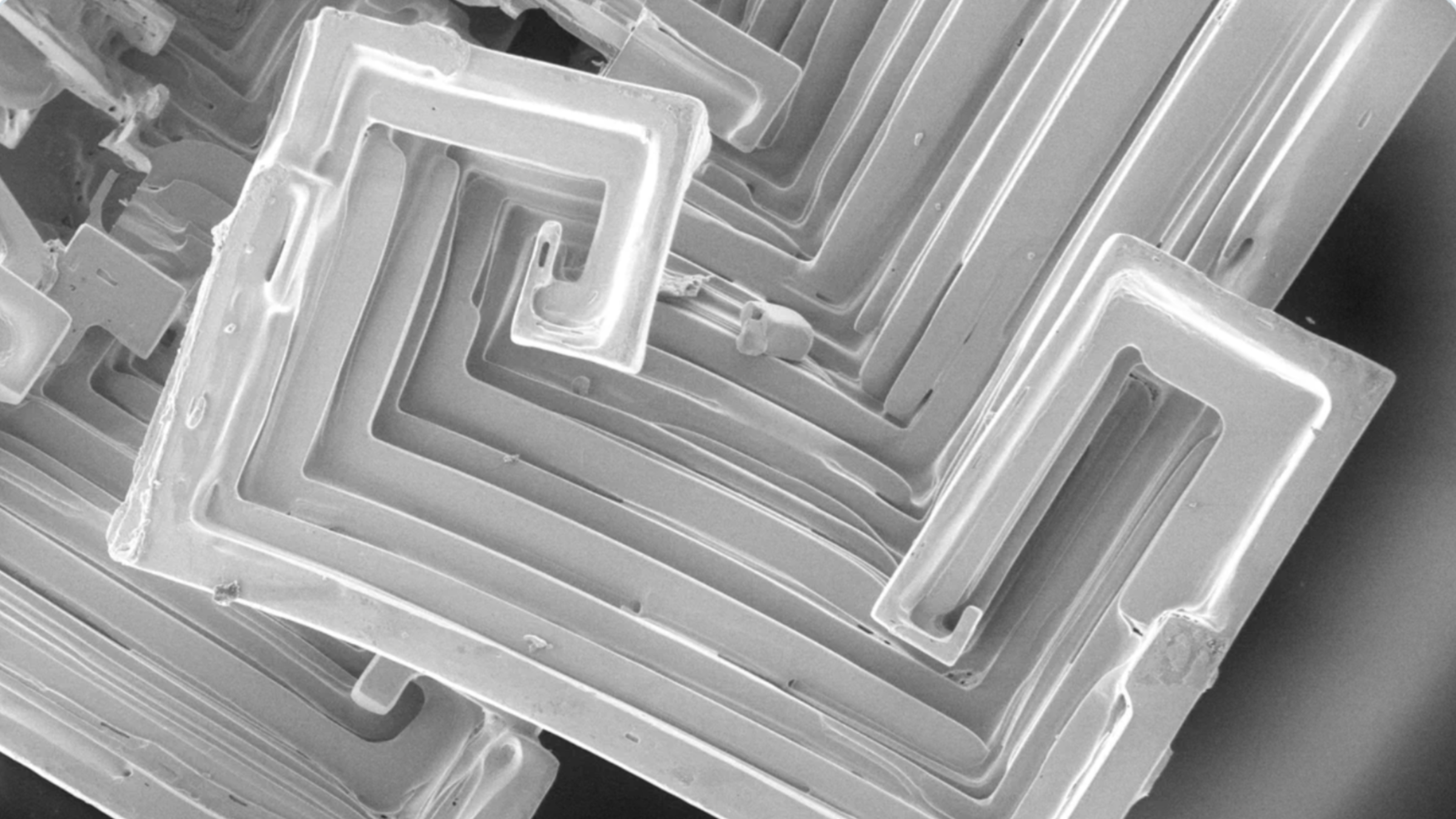
(Image Source: Chu, et aI., Nature)

Scientists Create Material That Can Shapeshift and Expand 80,000% Using Only Light

Tim McMillan

A small piece of material sits nearly motionless in the dark. However, shine light on it and within seconds it begins to swell at an extraordinary rate.  Aim the light differently, and the same material can curl itself into a left-handed helix, reverse into a right-handed one, twist into more complicated shapes, or mimic the vines of a climbing plant.

Then turn the lights off, and the instructions disappear.

Researchers at the University of Science and Technology of China have developed a new photoresponsive hydrogel whose 3D shape can effectively expand, change, or even be rewritten into an entirely different configuration depending on where light strikes it.

In experiments reported in Nature Communications, the material expanded more than 80,000% within 40 seconds and could be repeatedly programmed into helices, twists, and hybrid structures.

Researchers also used its light-controlled motion to lift objects and drive a miniature rotary system, pointing toward possible applications in smart materials and soft robotics.

“Reconfiguring handedness in synthetic systems with spatiotemporal control and reversible behavior remains a fundamental challenge in bioinspired robotics and materials science,” researchers write. “Here, we demonstrate homogeneous photoactive hydrogels capable of ultrafast, programmable handed shape-morphing, including helices and twists, through spatially controlled light illumination.”

The ability to program the material after it has already been formed makes the breakthrough especially unusual.

Many shape-changing materials are manufactured with their future behavior already built into them. Different layers, directional fibers, compositional gradients, and pre-patterned structures determine how they will eventually bend, curl, or twist. Once fabricated, those instructions can be difficult, if not impossible, to change.

The new hydrogel begins as a structurally uniform material, with the asymmetry required for complex motion instead created temporarily by the pattern of incoming light. The key to making that possible is an unusually powerful swelling response.

The researchers incorporated a light-sensitive molecule known as spiropyran into a polymer network. When illuminated, the molecule experiences a chemical change that alters the electrical interactions between portions of the polymer. Attractions that normally help keep the network compact weaken or become repulsive, allowing the chains to spread apart and absorb large amounts of water.

The resulting expansion is dramatic. The researchers measured more than 80,000% volume growth after only 40 seconds of irradiation, a combination of speed and magnitude they say exceeds previously reported photoresponsive hydrogels.

Yet, simply making the hydrogel swell was only part of the experiment.

By controlling where the light hits, the team could make some portions of the material expand faster than others. Illuminating one side of a narrow strip creates a swelling gradient through its thickness. The resulting strain mismatch causes the strip to bend first, then curl into a helix.

Illuminating both sides produces a different internal swelling distribution. Rather than curling in the same manner, the strip buckles and rotates along its length, creating a twisted structure. Those shapes are not locked in place. Once the light is removed, the hydrogel relaxes and can later be programmed again.

The direction of the illumination can even determine the material’s “handedness.” Light arriving from one angle can produce a left-handed helix, while lighting the same strip from the opposite direction produces a right-handed one after the material has relaxed in darkness. Researchers repeatedly switched samples back and forth and found that the material retained its reconfigurability after more than 20 consecutive cycles.

More complicated lighting designs produced even stranger results.

By illuminating separate regions of a longer strip independently, researchers created structures containing multiple forms at once. One section could form a helix while another became a twist. Other patterns produced neighboring helices with opposite handedness or helix-twist-helix combinations, creating shapes reminiscent of the spiraling tendrils plants use to wrap around supports.

That ability to rewrite a material’s geometry also translated into mechanical output.

In one demonstration, a 6 mg strip curled into a spring capable of lifting a 50 mg payload or more than eight times its own weight. Researchers also created a light-controlled underwater switch in which the hydrogel moved two conductors into contact, as well as a tendril-like actuator that encircled another object.

The most elaborate demonstration turned the hydrogel’s twisting motion into locomotion.

  • Antarctica
See Also

Speed Record Breaking 80 mph Glacier Fracture in Antarctica is Fastest Ever Observed

Researchers connected a floating propeller to a hydrogel strip that served as a rotating shaft, with a paddle attached below the water. When light caused the hydrogel to twist, the paddle rotated, and the propeller began both spinning and traveling around a circular path. Programming the hydrogel’s handedness allowed the system to produce clockwise or counterclockwise motion.

Potentially, the hydrogel breakthrough could lead to soft robots that change shape or movement depending on the task, light-controlled grippers that wrap around delicate objects, or adaptive components that reconfigure themselves without conventional motors and mechanical parts.

Similar hydrogel materials might eventually serve as tiny switches, valves, pumps, or rotating actuators in conditions where running wires or fitting traditional machinery is difficult. Because the same configuration can be reprogrammed rather than permanently locked into one behavior, it could also open the door to devices that perform several different mechanical functions at different times.

However, for now, the experiments remain laboratory demonstrations. Researchers say the material will need faster response times to compete with some other classes of soft actuators.

Further research might improve the efficiency of its molecular photoswitches and redesign the polymer network so water can move through it more quickly.

Still, the wider concept suggests a different way of thinking about programmable matter. Instead of manufacturing a material with one predetermined set of movements, its instructions could arrive afterward as a pattern of light, then disappear and be replaced whenever a different behavior is needed.

“The core innovation of this work lies in the achievement of precise, reversible regulation of structural handedness in homogeneous hydrogels purely via external optical modulation,” researchers write. “The design principle presented here—reversibly encoding spatiotemporally programmable handedness within a homogeneous network through simple light patterns—establishes a method for creating intelligent, adaptive materials with embedded logic and function.”

The study, “Reconfiguring handed shape-morphing and actuation in hydrogels via light-encoded rapid expansion,” appeared in Nature Communications. 

  • Tim McMillan is a retired law enforcement executive, investigative reporter and co-founder of The Debrief. His writing typically focuses on defense, national security, the Intelligence Community and topics related to psychology. You can follow Tim on Twitter: @LtTimMcMillan.  Tim can be reached by email: tim@thedebrief.org or through encrypted email: LtTimMcMillan@protonmail.com 

{ https://thedebrief.org/category/science/ }

SF-snufjes }, Robotics and A.I. Artificiel Intelligence ( E, F en NL )

Hoe vind je dit bericht? 0 stemmen
Geschreven door peter om 11:25 Stuur door
Woensdag 26 augustus 2026

The Legendary Lost Continents of Lemuria and Mu and Science

The Legendary Lost Continents of Lemuria and Mu and Science

by Steve Paslow

Lemuria.jpg

Across the world’s oceans lie countless tales of lost continents—sunken civilizations said to have vanished beneath the waves long before human history began. Among these, two of the most enduring and mysterious are Lemuria and Mu—mythical lands that have captivated scientists, mystics, and storytellers for more than a century.

Origins of the Lemuria Legend

The idea of Lemuria first appeared in the mid-19th century, not in ancient myth, but in scientific speculation. In 1864, zoologist Philip Sclater proposed the existence of a now-lost landmass in the Indian Ocean to explain why fossils of lemurs and related species were found in both Madagascar and India, but nowhere in between. He called this hypothetical continent “Lemuria.” At the time, continental drift was not yet understood, so scientists often explained puzzling fossil distributions through vanished land bridges. Sclater’s “Lemuria” was one such land bridge—an attempt to account for the strange patterns of species distribution. Although Sclater’s hypothesis was later rendered obsolete by plate tectonics, the name “Lemuria” took on a second life in the world of occultism and esoteric thought.

Lemuria in Theosophy and Esoteric Tradition

In the late 1800s, Helena Petrovna Blavatsky, co-founder of the Theosophical Society, transformed Lemuria from a scientific idea into a spiritual legend. In her books The Secret Doctrine and Isis Unveiled, Blavatsky described Lemuria as the home of a now-vanished “Third Root Race” of humanity—ancient, wise beings said to have existed millions of years ago, long before Atlantis.

According to Theosophical teachings Lemuria was a vast continent that once stretched across the Indian and Pacific Oceans. The Lemurians were said to be taller, more ethereal beings, perhaps not fully physical in form. They possessed great spiritual power and lived in harmony with nature. Their civilization was destroyed by volcanic cataclysms and earthquakes, sinking their land beneath the seas. This mystical vision of Lemuria influenced later occult writers, psychics, and mystics, who placed the lost continent in various locations—sometimes under the Indian Ocean, sometimes under the Pacific.:

The Myth of Mu

Closely related—but distinct—is the legend of Mu, a supposed sunken continent in the Pacific Ocean. The idea of Mu originated with Augustus Le Plongeon, a 19th-century archaeologist and adventurer who studied the Maya ruins in Yucatán. Misinterpreting Mayan inscriptions, he claimed they referred to a lost land called Mu, the “Motherland of Civilization,” which he believed had once existed in the Pacific and had been destroyed by cataclysm.

Le Plongeon proposed that survivors from Mu had migrated to Central America and Egypt, seeding both ancient civilizations. His ideas were later popularized and expanded by James Churchward, a British-born occult writer, in his 1926 book The Lost Continent of Mu: The Motherland of Man. Churchward’s version of Mu was massive—stretching across the Pacific, encompassing much of what is now Polynesia, Micronesia, and Melanesia. Churchward claimed Mu was destroyed in a cataclysm 12,000 years ago. He claimed Mu’s people were technologically advanced, had a high moral and spiritual culture, and communicated through a universal symbol language. Churchward claimed to have read ancient “Naacal tablets” in India—texts that no one else has ever seen or verified.

Mu.jpg

The Fate of the Lost Continents

Both Lemuria and Mu were said to have vanished in tremendous cataclysms—earthquakes, volcanic eruptions, and tsunamis that sent the continents plunging into the ocean depths. These apocalyptic tales often mirror the more famous story of Atlantis, as if the world’s myths preserve a shared memory of great civilizations lost to disaster.

Modern geology, of course, has found no evidence for such continents. The concept of “sunken continents” is incompatible with our understanding of plate tectonics, which shows that continents float on the Earth’s mantle and cannot simply sink. Islands and ocean ridges can rise and fall, but entire continents disappearing beneath the sea is geologically impossible.

Lemuria and Mu in Modern Culture

Despite their scientific dismissal, Lemuria and Mu remain powerful symbols in spiritual, literary, and popular culture. Esoteric and New Age traditions often link Lemuria to concepts of ancient wisdom, spiritual awakening, and human evolution. Some modern channellers claim to receive messages from Lemurian beings who exist on a higher vibrational plane. In H.P. Lovecraft’s Cthulhu Mythos, references to Mu appear as part of his vast fictional prehistory. Lemuria has appeared in comic books, fantasy novels, and video games, often portrayed as a mystical or technologically advanced civilization that predated humanity. In Hawaiian and Californian spiritual circles, Lemuria (sometimes called “Telos”) is said to survive in hidden underground cities, such as beneath Mount Shasta, California.

Echoes of Memory or Myth?

Some researchers have speculated that these myths may preserve folk memories of real events—perhaps rising sea levels at the end of the Ice Age, which did submerge large coastal areas and islands. Others see in Lemuria and Mu expressions of humanity’s nostalgia for a golden age, a paradise lost, or a yearning for origins beyond recorded history. Whether taken as metaphor, myth, or mystic revelation, the stories of Lemuria and Mu continue to fascinate, blurring the lines between science, spirituality, and imagination.

Scientific Skepticism on Lemuria and Mu: Myths, Misinterpretations, and the Search for Lost Continents

For more than a century, the legendary lost continents of Lemuria and Mu have fascinated writers, mystics, and believers in ancient civilizations. Often described as vanished lands that once bridged continents or hosted advanced pre-human cultures, these mythical places continue to capture the imagination of alternative historians and New Age thinkers. Yet, from a scientific perspective, the existence of Lemuria and Mu has been thoroughly debunked. Modern geology, plate tectonics, and oceanography have revealed a very different picture of Earth’s history—one that leaves no room for these sunken continents.

Geological Reality: Why Lemuria and Mu Cannot Exist

The development of plate tectonic theory in the 20th century decisively refuted the possibility of lost continents like Lemuria or Mu. Earth’s crust is made of tectonic plates that move slowly over time, colliding and spreading apart. Oceanic crust is much younger and denser than continental crust, and it cannot “sink” in the way mythical continents are described to have done.

Modern mapping of the seafloor has revealed no trace of any sunken landmass large enough to fit the descriptions of Lemuria or Mu. The ocean basins are composed of basaltic crust, while continents are made of granitic crust; the two have entirely different geological signatures. Seismic and satellite data have shown no hidden continental remnants beneath the Pacific or Indian Oceans.

Misinterpretations and Pseudoscience

Despite clear scientific evidence, the myths of Lemuria and Mu persisted in Theosophy, occult writings, and New Age beliefs. Helena Blavatsky, founder of the Theosophical Society, incorporated Lemuria into her cosmology as the home of a “third root race” of early humans. Later authors connected the lost continents with Atlantis, UFOs, or even spiritual ascension narratives.

Scientists regard these reinterpretations as pseudoscientific—stories built on myth rather than evidence. Archaeologists have found no artifacts, fossils, or cultural remains that indicate any such global civilization predating recorded history. Moreover, genetic and anthropological studies show clear, traceable patterns of human migration that align with known geography, not with vanished continents.

cont-drift.jpg

Modern Understanding of Continental Movement

Today, phenomena that once inspired Lemuria and Mu theories are well explained by plate tectonics, continental drift, and land bridges formed during ice ages. For example: The presence of similar species across continents results from continental connections in the past, not from sunken landmasses. India and Madagascar’s shared biological heritage stems from their once being part of the ancient supercontinent Gondwana. In the Pacific, volcanic island chains and submerged microcontinents (like Zealandia, mostly underwater near New Zealand) demonstrate real geological processes—none of which resemble the mythical Mu.

Conclusion: Myth Meets Science

While Lemuria and Mu make for captivating legends and esoteric symbolism, science leaves little doubt about their nonexistence. They remain fascinating cultural myths—products of humanity’s desire to explain ancient mysteries and lost connections—but not lost chapters of geological history. Modern earth science offers something even more wondrous than these myths: a dynamic, ever-changing planet whose continents drift, collide, and reshape the face of Earth over millions of years. In the end, the true story of Earth’s shifting crust is more extraordinary—and more scientifically grounded—than any legend of sunken lands. The legends of Lemuria and Mu remind us how myth and science can intertwine—how a discarded scientific hypothesis can give birth to enduring spiritual mythology. Though no trace of these continents has ever been found on the ocean floor, their legacy lives on in the human imagination: symbols of a forgotten wisdom, sunken beneath the tides of time.

RELATED

Lemuria and Mu: The Greatest Lost Civilizations in Human History? | History for Sleep

{ https://mysticsciences.com/ }

Myths, legends, unknown cultures and civilizations

Hoe vind je dit bericht? 0 stemmen
Geschreven door peter om 22:19 Stuur door
Woensdag 26 augustus 2026

Author Adam Kirsch Reveals Why the Most Dangerous Part of UFO Disclosure Isn't Actually the Aliens

Author Adam Kirsch Reveals Why the Most Dangerous Part of UFO Disclosure Isn't Actually the Aliens

Adam Kirsch's new book delves into the societal impact of UFO disclosure and the erosion of trust in institutions

By Francis Miñoza

UAP

Adam Kirsch’s new book examines why UFO disclosure became mainstream and why distrust in authority may be more dangerous than aliens. 

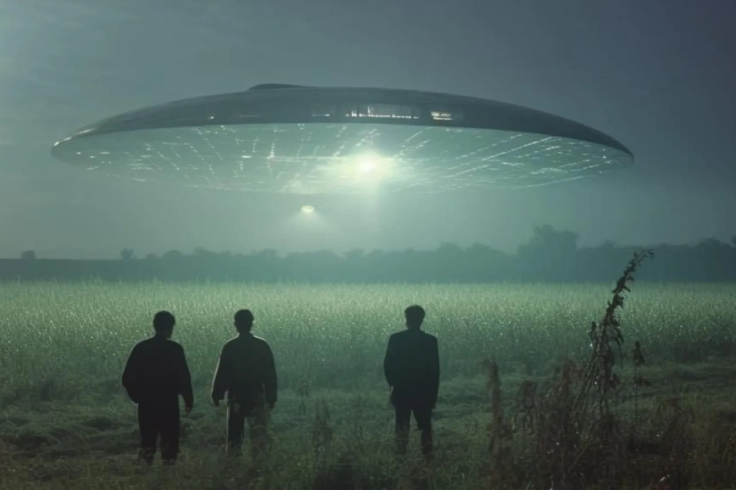
PHOTO AI Generated Image

Adam Kirsch's new book, We Want to Believe: How Aliens Went Mainstream and Why It Matters, published on Tuesday, 25 August, argues that the real danger of UFO disclosure is not extraterrestrials but the collapse of trust in authority.

The 128-page book, published by Columbia Global Reports, examines why unidentified flying objects, now more commonly called unidentified anomalous phenomena or UAP, have moved from the fringes of public life into mainstream debate. Kirsch, a senior editor at The Atlantic, is less interested in proving that aliens exist than in understanding why so many people want them to.

'Like the messiah, too, disclosure is constantly running behind schedule,' Kirsch writes, describing the long-awaited moment when governments are expected to reveal what they supposedly know about alien visitors.

How UFO Disclosure Went Mainstream

'The real start of my interest in the subject was in 2017 when there was this sudden reporting in the mainstream media about the Pentagon UFO videos and the so-called secret program to collect UFO reports,' he said. 'For the first time, it seemed like maybe there was some legitimate news or evidence.'

UFO reports were no longer discussed only through sensational television programmes, conspiracy forums or stories about alleged abductees. Military pilots, Pentagon officials and intelligence figures began speaking publicly about encounters they could not identify.

The question consequently shifted. Instead of asking whether UFOs existed, many people began asking whether the US government knew more than it was admitting.

That suspicion is central to Kirsch's argument. He sees belief in alien disclosure as part of a wider distrust of institutions, one that can reach far beyond the skies. 'The idea that the authorities know more than they're telling us, they're not letting on the real truth, is an idea that appeals to a lot of people,' he said in the source material.

The consequences, he suggests, can become serious when the same instinct is applied to medicine, public health or other areas where evidence carries real consequences. Believing a strange object is an alien spacecraft may not, by itself, place anyone in immediate danger. Rejecting medical advice because officials are assumed to be hiding the truth is different.

Testimony Is Not Scientific Evidence

Kirsch does not dismiss people who say they have seen something extraordinary. That distinction gives the book a more careful edge than the usual believer-versus-sceptic argument.

A person's account may be sincere, detailed and deeply important to them. It remains testimony, however, rather than scientific evidence. As Kirsch puts it, testimony 'can only persuade or fail to persuade.'

The difference is easy to blur, particularly when the witness is a trained pilot or a former government official. Authority may make a claim more compelling, but it does not automatically establish what was seen.

Kirsch also warns against treating personal experience with contempt. 'Nothing is more insulting and infuriating than being told you are mistaken about your own experiences,' he writes.

That does not mean every interpretation is correct. It means the experience and the explanation should be separated, a distinction often lost in the mad rush towards disclosure.

For Kirsch, science is powerful but not exhaustive. He told reports that some aspects of reality may be approached through religious, spiritual or esoteric insight rather than scientific testing. Yet when the claim concerns a physical craft moving through the atmosphere, the standard of proof remains physical evidence.

'They're not supernatural or miraculous,' Kirsch told reports. 'If they really existed they'd exist in time and space and three dimensions like everything else.'

This is where the argument becomes uncomfortable for believers. The absence of proof does not prove that extraterrestrial life is impossible. But after decades of observation, it does make certainty difficult to defend.

Kirsch points to an enduring problem, the Fermi paradox, named after physicist Enrico Fermi's famous question, 'Where is everybody?' Humanity has searched the skies for signs of intelligent life, yet no conclusive evidence has emerged.

Even the cameras seem to complicate the story. Kirsch noted that in some reported encounters, 'When the camera sees something, the person doesn't see it. And when the person sees something, the camera doesn't see it.'

His explanation is blunt. 'The obvious and logical explanation is that there's nothing to take a picture of.'

{ https://www.ibtimes.co.uk/trending }

LATEST ( UFO ) VIDEO NEWS ( ENG)

Hoe vind je dit bericht? 0 stemmen
Geschreven door peter om 21:40 Stuur door
Woensdag 26 augustus 2026

David Grusch Tells Dr. Phil the U.S. Recovered Nonhuman Craft and Living Occupants

David Grusch Tells Dr. Phil the U.S. Recovered Nonhuman Craft and Living Occupants In a remarkably candid interview with Dr. Phil McGraw,…

David Grusch Tells Dr. Phil the U.S. Recovered Nonhuman Craft and Living Occupants

In a remarkably candid interview with Dr. Phil McGraw, former intelligence officer David Grusch said he has seen images of recovered craft and bodies, knows of nonhuman occupants reportedly recovered alive, and believes physical evidence remains hidden in government and contractor facilities.

Former U.S. intelligence officer and UAP whistleblower David Grusch made some of his most expansive public claims yet during an Aug. 13, 2026, interview with Dr. Phil McGraw, describing alleged recovered craft, biological entities and, most strikingly, nonhuman occupants reportedly recovered alive.

Grusch said people associated with a retrieval program provided him with photographs and video showing recovered craft and dead occupants. He stressed that he did not personally encounter the bodies or vehicles; his direct exposure was to audiovisual evidence and documentation, supplemented by interviews with people he said had firsthand involvement.

When McGraw asked whether Grusch had seen images of life forms piloting the craft and their cadavers, Grusch answered yes. He said some recovered objects appeared to be drones, some vehicles were found empty and others were piloted. He also said some beings resembled the small “gray” figures familiar from decades of witness reports. One of the most notable witness reports involving grays or visitors is Whitley Strieber’s.

But Grusch did not describe a single species or technology. He characterized the phenomenon as a “taxonomy” of intelligences, ranging from entities apparently somewhat more advanced than humans to forms of sentience he described as noncorporeal. He similarly listed multiple vehicle configurations, including discs, boomerangs, crescents, Tic Tac-like objects and egg-shaped craft. He cautioned against assuming that everything involved is extraterrestrial.

Grusch also put a number on the alleged retrieval history: more than 25 but fewer than 100 vehicles, saying “several dozen” had been recovered over roughly eight or nine decades. He claimed some material has passed into private defense-contractor possession, complicating any accounting

The interview’s most consequential moment came when McGraw asked whether occupants had ever been recovered alive.

“Yes,” Grusch replied. He said he knows people who had direct interactions with beings in a “detainment situation.” Asked whether communication occurred, Grusch again answered yes and described what witnesses interpreted as consciousness-based communication, commonly called telepathy. Grusch acknowledged that he has no personal experience of such communication and does not know how it might work.

If independently substantiated, that claim would raise questions that extend beyond disclosure and national security. If a government has detained — or continues to detain — intelligent nonhuman beings capable of communication, what legal or ethical status would such beings have? What obligations would humans have toward them? And if they represent another civilization or intelligence, could detention itself constitute a form of first diplomatic contact? Those questions are implications of Grusch’s allegation, not facts established by the interview.

Related: “If This Is My Final Duty of Public Service”: Grusch Joins New Disclosure Appeal →

Grusch further alleged that recovered material, documentation and biological remains have been stored across government and contractor facilities. He said he knew locations containing records, material holdings and cadavers as recently as several years ago, although he cannot confirm what remains there today. He also claimed sensitive programs can relocate materials when a location is compromised. Asked whether he could still lead officials to a facility containing physical evidence, Grusch said he believed he could, referring only to a location “out west.”

These remain extraordinary claims. The interview did not publicly produce the photographs, bodies, craft, records or other physical evidence Grusch described. His statements therefore establish what he says he encountered during his investigation — not independent proof that nonhuman beings or recovered nonhuman craft are in U.S. possession.

That distinction also defines the next stage of the disclosure question: If the evidence exists where Grusch says it does, can investigators find it and bring it into public view?

RELATED

GRUSCH SPILLS A LOT OF BEANS. Tells Dr. Phil about photos, crafts, visuals of non humans.

Grusch Offered to Drive Dr. Phil to the Craft

{ https://unknowncountry.com/ }

ALIEN LIFE, UFO- CRASHES, ABDUCTIONS, MEN IN BLACK, ed ( FR. , NL; E )

Hoe vind je dit bericht? 0 stemmen
Geschreven door peter om 21:29 Stuur door
Woensdag 26 augustus 2026

FBI Files Detail 'Bronze Metallic Object' Materialising in Sky as Pentagon Releases UFO Data

FBI Files Detail 'Bronze Metallic Object' Materialising in Sky as Pentagon Releases UFO Data

For the first time, complete UFO case files drawn from multiple federal agencies have been made directly accessible online

By Briane Nebria

Pentagon

The Pentagon has started putting decades of declassified UFO files online via a new public website, officials in Washington confirmed on Friday.

PHOTO Wayne Thornton/Pinterest

The Pentagon has begun publishing decades of declassified UFO files on a new public website, officials confirmed on Friday in Washington, bringing previously secret reports from the late 1940s to 2025 into the open for the first time.

The move follows President Donald Trump's directive earlier this year ordering US agencies to release government records on UFOs, now formally labelled unidentified anomalous phenomena, or UAPs, along with any files touching on 'extraterrestrial life.'

The All-domain Anomaly Resolution Office, known as AARO, has spent recent years sifting through historic reports and producing public summaries, but this is the first time complete case files, drawn from multiple federal agencies, have been made directly accessible online.

Pentagon UFO Website Puts 'Never-Before-Seen' Files in One Place

The Pentagon said the new site will host 'never-before-seen' UFO material, including videos, photos and original documents pulled from across the US government.

In a statement, the Department of Defence stressed that anyone can now search the database without security clearance, and promised further releases on a 'rolling basis' as more files are reviewed.

It can be recalled that interest in UFOs has surged in recent years, fuelled by leaked cockpit footage, congressional hearings and an increasingly vocal community of former officials urging transparency.

The Pentagon appears keen to show it has heard that noise. Secretary of Defence Pete Hegseth hailed Friday's drop of documents as 'unprecedented transparency,' even as some files arrive heavily redacted, with full pages blacked out.

Many of the UFO sightings cluster around sensitive military activity and major deployments. In the 1950s and 1960s, that meant Cold War flashpoints in Germany and the Soviet Union.

In more recent years, alleged encounters concentrate in the Middle East, particularly near the Strait of Hormuz, Iraq and Syria, where the US has maintained a sustained footprint and some of its most advanced surveillance kit.

Officials suggest that it is no coincidence. The lion's share of reports in the cache come from military pilots and personnel, often using sophisticated sensors that far outstrip civilian technology. If you go looking with the best gear, in other words, you see more weird stuff.

Crucially, in all of the incidents described in the newly released records, the Pentagon says the aerial phenomena posed no apparent threat to US forces. Most of the unknown objects either broke contact abruptly or vanished from view just as quickly as they had appeared.

Orbs, a 'Super-Hot' Object and a Bronze UFO in the Sky

Among the more recent entries, one 2023 case in the western United States stands out inside the document trove. Over two days, federal law enforcement officers independently reported strange orbs in the sky, with one account describing 'orbs launching other orbs.'

The Pentagon itself labels that episode 'among the most compelling' in its holdings, although the files stop short of any firm conclusion about what was actually seen.

In a separate 2024 encounter in Iraq, an unidentified craft was reported zipping across the surveillance systems of a US aircraft at high speed while the crew was engaged in an unrelated strike. The object cut across their sensors but, again, did not interfere with the mission and disappeared as quickly as it arrived.

A 2025 account relayed by a senior intelligence officer to the FBI pushes things further into science-fiction territory. According to the government's own description, US personnel were dispatched in a helicopter to search an area where orbs had previously been reported.

They allegedly located a 'super-hot' orb hovering above the ground, which then travelled roughly 20 miles at a speed too fast for the helicopter to keep up. That is the sort of detail that will send online forums into overdrive.

The historic files are hardly less surreal. NASA transcripts from 1969 in the release record Apollo 11 astronaut Buzz Aldrin telling officials he saw what he described as a 'possible laser' in space, noting a 'fairly bright light source' that the crew tentatively ascribed to that explanation.

UFO
Trump says it was his push for 'complete and maximum transparency' that forced the release of UFO files  Pinterest

Then there is the FBI's own artwork. One composite sketch, based on witness reporting, shows what the bureau calls an 'apparent ellipsoid bronze metallic object materialising out of a bright light in the sky, 130-195 feet in length, and disappearing instantaneously.'

The image reads like classic UFO lore, except this time it is filed in a government record rather than a tabloid or late-night talk show.

Trump Claims Credit as Experts Warn of New Speculation

Trump teasing a major disclosure of UFO and UAP material. On his social media platform, the president took a victory lap on Friday, saying it was his push for 'Complete and Maximum Transparency' that forced the release.

'It was my Honor to direct my Administration to identify and provide Government files related to Alien and Extraterrestrial Life, Unidentified Aerial Phenomena, and Unidentified Flying Objects,' Trump wrote, claiming the publication will allow Americans to 'decide for themselves' what is happening in the skies.

Last month, while welcoming the Artemis II astronauts to the Oval Office, Trump told reporters that his administration would be 'releasing as much as we can in the near future.' UFOs, he said, had been 'in the minds of people for a long time', hinting that the government needed to catch up with public curiosity.

Read more
  • UFO
The Pentagon Just Declassified a UFO 'Time Warp' Encounter and Harvard Is Blaming Alien Technology

Not everyone inside the Pentagon ecosystem is thrilled about how the data drop is being presented.

Sean Kirkpatrick, the former head of AARO, issued a pointed warning against reading too much into raw files without expert context.

He said there was 'nothing unexpected' in the latest release and argued that, without analysis, the website would 'only serve to fuel more speculation, conspiracy and armchair pseudoscience, particularly from the playhouse politics theatre company.'

For starters, AARO's official reviews to date have not found any evidence that UFOs or UAPs are extraterrestrial in origin. That conclusion runs directly against the hopes of some true believers, and it is one reason the office has itself become a target of suspicion and wild claims.

The newly released files arrive, then, in an awkward middle ground. On one hand, this is the first time complete case files, even in redacted form, have been published straight from federal archives. On the other, many pages remain obscured, and the government is still saying, essentially, that nothing in its vaults proves alien visitors.

Whether this wave of UFO transparency calms public obsession or just adds more fuel to it, the files are now out there, and they are not going back in the box.

Experts analyze Pentagon’s UFO file release

{ https://www.ibtimes.co.uk/trending  }

LATEST ( UFO ) VIDEO NEWS ( ENG)

Hoe vind je dit bericht? 0 stemmen
Geschreven door peter om 21:18 Stuur door
Woensdag 26 augustus 2026

Donald Trump Reportedly Told Inner Circle Aliens Are Living in Earth's Oceans

Donald Trump Reportedly Told Inner Circle Aliens Are Living in Earth's Oceans

An outlandish presidential revelation forces us to look beneath the waves for visitors from the stars

By  Welbert Bauyaban Welbert Bauyaban

US President Donald Trump

Jack Osbourne claims US President Donald Trump told a close friend that extraterrestrials live in Earth's oceans 

PHOTO Gage Skidmore / Wikimedia Commons

TV host Jack Osbourne claimed on Sunday that an unnamed friend told him Donald Trump said extraterrestrials are hiding in Earth's oceans. Osbourne stated that this friend, who speaks with the president weekly, confided this news to him.

Recently, Donald Trump directed US agencies to identify and release government files related to UFOs, UAPs, and extraterrestrial life. This move sparked debate among extraterrestrial enthusiasts worldwide. However, the US government's release of UAP-related records does not establish that extraterrestrial beings have been found, and NASA says it has not found credible evidence of extraterrestrial life.

Jack Osbourne, son of rock music icon Ozzy Osbourne, recently discussed this alleged claim while promoting his paranormal channel Spark.TV.

Osbourne said the unnamed friend speaks with Trump regularly. They apparently share a private phone call every Saturday. During one chat, the friend allegedly asked about the latest governmental UAP disclosures. IBTimes UK cannot independently verify that this conversation occurred.

US President Donald Trump speaks to the press near the White House helipad construction site

US President Donald Trump said of aliens, ‘We have no idea what they are, but they're in the ocean.’

(Image: Alex Wong/Getty Images)

An Alleged Conversation

The friend reportedly asked the president about the situation. According to Osbourne, the US leader answered that they do not know what the entities actually are. However, Osbourne claimed that Trump said these unknown beings reside beneath the waves. Quoting the alleged conversation in his recent television interview, Osbourne claimed Trump said, 'We have no idea what they are, but they're in the ocean.' There is no independent evidence confirming Trump made this statement.

Osbourne finds this perspective interesting and plausible, noting that vast sections of the deep sea remain completely unexplored and could hide secrets from the general public. He suggested these hypothetical visitors might simply be observing humanity.

An alien at the bottom of the ocean
An artificial intelligence-generated visual representation of an extraterrestrial being residing at the oceanic depths  PHOTO AI-generated by Google Gemini

Osbourne compared the hypothetical aliens' behaviour to the Sentinelese, suggesting they could be observing humanity from a distance. Just as modern society watches the isolated indigenous people of Sentinel Island without interfering, Osbourne believes a similar dynamic could occur between humans and these visitors. He theorised that they observe us from the oceans, and suggested that they occasionally abduct people.

Despite sharing these theories, Osbourne states he does not consider himself a fanatic and claims he keeps one foot firmly planted in reality. The investigator says he carefully rides the sceptic line when hearing stories. Owning Spark.TV gives him access to the world of the unexplained, and he says his constant review of supposed evidence forces him to question everything he sees.

Examining Abduction Claims

Osbourne also opened up about his feelings regarding individuals who claim to have experienced alien abductions. He once tried to produce a support group television show where people shared their experiences. Many individuals recounted memories of a room filled with bright light and claimed they were suddenly hovered out of a nearby window, while other accounts defied basic human logic.

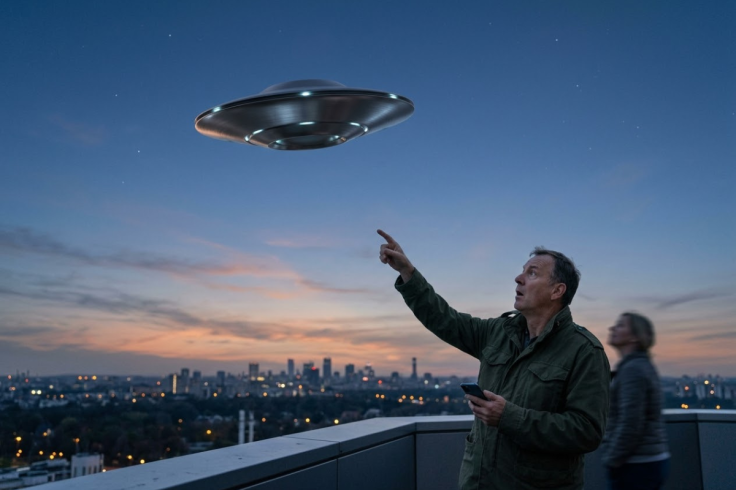
UFO

An artificial intelligence-generated image depicts an unidentified flying object (UFO) traversing the city skyline  PHOTO AI-generated by Google Gemini

Osbourne has also discussed an alleged foreign object examined during a documentary project titled Patient 17, although there is no established evidence that it was extraterrestrial in origin. He described the extracted object in basic medical terms, stating it looked like a large kidney stone.

Read more
  • Donald Trump
MAGA Civil War Explodes: Donald Trump Brands Tucker Carlson a 'Low I.Q. Individual' in New Rant

According to Osbourne, there may be various types of alien visitors, and he theorised that some are friendly while others are hostile.

He also offered a psychological theory regarding typical abduction memories, suggesting that deep emotional trauma plays a role and might trigger vivid hallucinations in certain people. Noting that many individuals vividly recall large creatures with giant heads staring downward and describe waking up in a white, sterile room, Osbourne suspects they might actually be remembering their own human births. He believes such psychological echoes might explain the medical nature of these accounts.

RELATED


Did Trump Tell an Insider Aliens Live in the Ocean? 👽🌊 #Aliens #UFO #UAP #Trump #AlienDisclosure

{ https://www.ibtimes.co.uk/trending }

ALIEN LIFE, UFO- CRASHES, ABDUCTIONS, MEN IN BLACK, ed ( FR. , NL; E )

Hoe vind je dit bericht? 0 stemmen
Geschreven door peter om 20:55 Stuur door
Woensdag 26 augustus 2026

Conspiracy Theorists Think a 'Lost Continent' Linked to Aliens Was Destroyed by Ancient 'Nuclear War'

Conspiracy Theorists Think a 'Lost Continent' Linked to Aliens Was Destroyed by Ancient 'Nuclear War'

Exploring the enduring myths and scientific investigations surrounding Lemuria and its alleged connections to extraterrestrial life

By Francis Miñoza

Advance Civilization

(AI Generated) Conspiracy theorists say a lost continent tied to aliens and ancient nuclear war may be located, but scientists stress new Indian Ocean findings show only geological fragments, not Lemuria AI Generated image )

Conspiracy theorists have latched onto fresh claims that a 'lost continent' linked to aliens and ancient nuclear war may finally have a location, after scientists mapped fragments of a sunken landmass beneath the Indian Ocean.

Conspiracy theorists think a 'lost continent' linked to aliens was destroyed by ancient 'nuclear war,' and the latest geological work has given them a new hook, even though researchers say there is no evidence of Lemuria, alien descendants or a prehistoric civilisation.

Interest in Lemuria has ebbed and flowed for more than a century, but it surged again after reports that zircon crystals on Mauritius date back billions of years, far older than the island's surface rocks.

That finding fits with a genuine geological story about Mauritia, a microcontinent left behind when Gondwanaland broke apart, yet it has been reinterpreted by believers as proof that the mythic Lemuria was real.

The Science Behind the Lost Continent Claims

Lemuria began life as a serious scientific hypothesis. In 1864, British zoologist Philip Sclater proposed a sunken land bridge to explain why lemur fossils appeared in both Madagascar and India but not in Africa, which sits closer to Madagascar. He named it Lemuria after the animals, writing that Madagascar and the Mascarene Islands held 'existing relics of this great continent.'

The idea lost favour once plate tectonics showed India and Madagascar had once been joined, removing the need for a separate continent. Outside mainstream science, though, Lemuria took on a second life, blending with occult beliefs and later with UFO lore.

Mauritia is the real piece of the puzzle. Described in a 2013 paper and bolstered by a 2017 study in Nature Communications, researchers found zircon grains in volcanic rock on Mauritius that are roughly 2.5 to 3 billion years old, even though the island's exposed rocks are no older than about nine million years.

Scientists are now using gravity inversion to estimate the thickness of the oceanic crust and trace where chunks of Mauritia might still lie intact. The work could clarify the size and shape of the ancient landmass, but it has not uncovered ruins, artefacts or any sign of an intelligent civilisation beneath the waves.

Read more
  • Alien
New Skinny Bob Videos Trigger UFO Panic After Alleged Leak Revives Long-Buried Alien Claims

From Lemuria to Aliens and Ancient Nuclear War

The jump from geology to aliens is where things get wild. In the late 19th century, Helena Petrovna Blavatsky, founder of Theosophy, described Lemurians as egg‑laying, spiritually advanced beings in her 1888 book The Secret Doctrine. She claimed the discovery of sex led to Lemuria's destruction and that the continent sank, leaving only Australia and Easter Island behind.

Later, the legend migrated to Mount Shasta in Northern California, where believers say Lemurian survivors built an underground city called Telos. Local mythology holds that catastrophic earthquakes destroyed the continent, but some inhabitants escaped and continued living beneath the mountain.

Visitors have claimed to see seven‑foot‑tall Lemurians in flowing robes near the peak, though no physical evidence supports the existence of Telos or its alleged residents.

The story grew stranger as Lemuria merged with tales of Mu, another lost continent promoted by British author James Churchward, who claimed it hosted a technologically advanced civilisation 50,000 years ago. Over time, these narratives fed into 'starseed' beliefs, with some people saying they carry alien DNA or souls from extraterrestrial beings.

More extreme versions allege that Lemuria sheltered refugees from a planet called Maldek, supposedly once orbiting between Mars and Jupiter. The Aetherius Society claimed Maldek's population destroyed their world with a hydrogen bomb, creating the asteroid belt, and that Lemuria later suffered its own nuclear war.

Nigel Watson, author of Portraits of Alien Encounters Revisited, noted that writers promoting ancient astronauts point to passages such as Genesis's description of 'brimstone and fire' raining on Sodom and Gomorrah as accounts of nuclear explosions. Fragments of melted glass in Libya's deserts are also cited as evidence of nuclear warfare or accidents 28 million years ago, though mainstream science does not accept these interpretations.

Watson said the claims largely come from automatic writing, alleged psychic messages and speculative readings of ancient texts rather than physical evidence. He added that the stories were also intended as a warning that advanced civilisations can destroy themselves.

Nothing is confirmed yet so everything should be taken with a grain of salt. IBTimes UK cannot independently verify these claims, so take everything lightly.

RELATED

Nuclear Secrets of the Past | Ancient Aliens

Mystery Behind the Lost Continent Of Mu | Ancient Aliens | History

{ https://www.ibtimes.co.uk/trending }

Myths, legends, unknown cultures and civilizations

Hoe vind je dit bericht? 0 stemmen
Geschreven door peter om 20:37 Stuur door
Woensdag 26 augustus 2026

Noah's Ark Found? Radar Scans Reveal 3 Underground Decks and 13-Foot Hidden Tunnel in Turkey

Noah's Ark Found? Radar Scans Reveal 3 Underground Decks and 13-Foot Hidden Tunnel in Turkey

Independent scientists have yet to verify the claims, and the team behind the scans plan deeper drilling and testing before drawing firm conclusions.

By Jim Yango Fantonial

Durupinar Site

Archaeologists in Turkey say they have made a remarkable find, using ground‑penetrating radar to pinpoint what they believe may be the remains of Noah’s Ark, with scans reportedly revealing a ‘chemical imprint’, fragments of wood in the soil and the clear outline of a hall‑like structure. 

Zorka Sojka, CC BY-SA 4.0 , via Wikimedia Commons/Wikimedia Commons

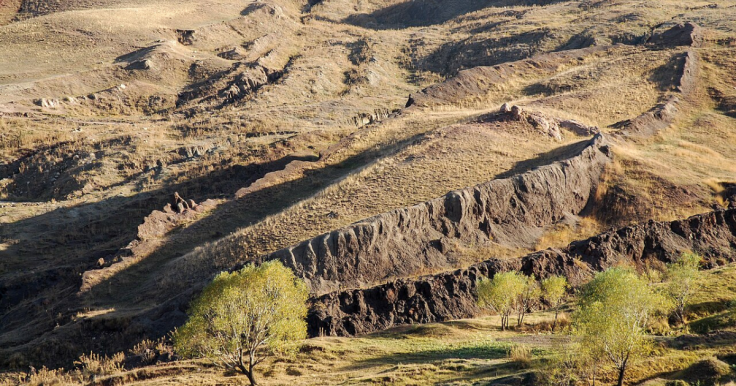
Archaeologists in eastern Turkey say new radar scans have revealed a three‑decked, ship‑shaped structure and a 13‑foot tunnel buried beneath a remote mountainside, renewing claims that the legendary Noah's Ark may lie at the Durupinar Formation near Mount Ararat.

The fresh evidence, gathered by an American team working under the banner Noah's Ark Scans over several years, centres on ground‑penetrating radar images that researchers argue align strikingly with the Biblical description of Noah's Ark.

Noah's Ark Searches Focus On Turkish Mountain

According to Scripture, Noah's Ark was the vast wooden vessel that carried humanity and animal species through a catastrophic flood more than 4,300 years ago.

Genesis 8 in The Bible says the ark came to rest on the 'mountains of Ararat' after 150 days of deluge, a passage that has fuelled centuries of speculation and expeditions across this rugged corner of eastern Turkey.

The Durupinar site, only recognised by modern researchers for less than a century, appears at first glance to match that story rather neatly.

Its dimensions echo the Biblical blueprint for the ark, given in Genesis 6 as 300 cubits long, 50 cubits wide and 30 cubits high, which translates to about 515 feet by 86 feet by 52 feet. The mound lies near a summit whose outline, from the air, bears a notable resemblance to a hull.

That visual similarity alone has never been enough to convince mainstream science. Many academics still regard the entire formation as the product of natural geological processes. The team behind the latest work, however, argue that their data now point beyond coincidence.

Radar Scans Hint At Three Decks And Inner Corridors

Independent researcher Andrew Jones, who fronts the Noah's Ark Scans project, has led multiple survey seasons at Durupinar using ground‑penetrating radar, a technique that sends radio waves into the earth to map buried structures.

Speaking to the Christian Broadcasting Network, he said the new scans detected what looked like a 13‑foot passage running through the centre of the formation, along with angular shapes that could represent internal compartments.

A fresh analysis of the radar data, shared with outlets including Express UK, suggests a pattern of central and lateral corridors or hallways, rather than a single homogenous block. Crucially for the ark hypothesis, the scans also show three distinct layers below the surface.

Supporters say that aligns with Genesis 6:16, which instructs: 'Make it with lower, second, and third decks.'

Jones is careful not to promise a perfectly preserved ship. 'We're not expecting something that's fully preserved,' he told CBN. 'What's left is the chemical imprint, pieces of wood and in the ground, the shape of a hall.'

He later added that the radar returns were 'not what you'd expect to see if the site were simply a solid block of rock or the result of random mudflow debris.'

He argued instead that the pattern is 'exactly what you'd expect to find if this were a man‑made boat, consistent with the biblical specifications of Noah's Ark.'

Soil Clues And A Possible Hidden Tunnel

The radar work is being paired with basic soil science. William Crabtree, a soil scientist who also works with Noah's Ark Scans, said his team collected 22 samples from inside and outside the boat‑shaped outline.

He told CBN that organic matter levels were roughly double inside the formation compared with the surrounding ground, while potassium levels were about 40 per cent higher and the pH noticeably different.

'If you know soil science – as I'm a soil scientist – you'll understand that potassium levels, organic matter, and pH can all be influenced by decaying organic material,' Crabtree said. 'If this was a wooden boat and the wood had rotted over time, we would expect to see elevated levels of potassium, changes in pH, and higher organic content – and that's exactly what we're finding.'

Jones also pointed to a change in vegetation, saying grass growing within the boat‑shaped perimeter appeared a different colour from that just outside, which he believes may hint at human construction beneath.

Alongside the three radar‑defined layers and compartment‑like shapes, the team say they have identified a tunnel‑like feature. Jones described what seems to be a 13‑foot passage extending from the tip of the formation towards its centre, with sufficient space for a person to walk through.

To date, this remains an interpretation of the scans; the structure has not been physically entered or excavated.

Debate Over Noah's Ark Discovery Far From Settled

The Durupinar Formation has split opinion for decades. Some geologists argue the mound's outline and internal patterns can be explained by erosion and natural faulting, with no need to invoke a vast timber hull. Others, often working from a faith background, continue to see it as one of the most promising candidates for Noah's Ark.

Jones presents his project as scientific rather than devotional, though he readily acknowledges the religious significance. Noah's Ark sits at the heart of Judaism, Christianity and Islam, and the flood narrative speaks to broader questions of survival, judgement and the power of nature.


For believers, physical evidence of the ark would be a profound validation. For many scientists, on the other hand, the story remains a myth into which data are too easily forced.

The Noah's Ark Scans team say they are only at the start of their investigation. They plan to extend soil sampling beyond the initial 22 tests, carry out core drilling to bring up physical material from deeper layers, and run further ground‑penetrating radar surveys to refine their picture of what lies under the surface. Any excavation or drilling would require Turkish permits and close oversight.

Read more
  • Alien
UFO Investigators Claim Skinwalker Ranch and Sedona May Be Connected by Secret Underground Military Tunnels

Jones himself has framed the next steps simply: 'We want to compare what's inside the formation to what's outside. That could give us a much clearer picture of whether this is truly something man‑made.'

The Durupinar Formation sits about 18 miles south of Mount Ararat, Turkey's highest peak, and has intrigued explorers and believers since it was exposed by storms and seismic activity in 1948.

The boat‑shaped mound, roughly 538 feet long, has long been touted by some as the resting place of the ark described in Genesis, while many geologists maintain it is simply a natural rock feature. The latest radar work is the most detailed attempt yet by this particular group to test those rival theories.

RELATED 

Scientists Found Something Beneath Turkey's Noah's Ark — And It Changes the Mystery

{ https://www.ibtimes.co.uk/trending }

ARCHEOLOGIE ( E, Nl, Fr )

Hoe vind je dit bericht? 0 stemmen
Geschreven door peter om 20:18 Stuur door
Woensdag 26 augustus 2026

Americans Still Skeptical That UFOs Are Aliens

Americans Still Skeptical That UFOs Are Aliens

49% attribute UFOs to human activity or natural phenomena; 37% say at least some are alien spacecraft

by Megan Brenan

WASHINGTON, D.C. — About half of Americans, 49%, think all UFO sightings can be explained by human activity on Earth or natural phenomena, while 37% believe at least some UFOs have been alien spacecraft visiting Earth from other planets or galaxies. Another 13% do not have an opinion. These findings come as the Pentagon continues to release previously classified UFO files under President Donald Trump’s executive order.

Americans were also more inclined to associate UFOs with earthly than supernatural causes the two prior times Gallup measured this, although the alien-skeptical share was higher in 2019 (60%) than in 2021 (50%) and today. Meanwhile, rather than become increasingly convinced that some sightings have been alien spacecraft, the percentage of Americans who are unsure has grown, from 7% in 2019 to 13% in 2026.

The latest findings are from Gallup’s July 1-19 poll.

The demographic subgroups showing the greatest skepticism about UFOs being alien spacecraft are men, young adults aged 18 to 29, college graduates, residents of the Midwestern and Western U.S., and Democrats.

Most Are Familiar With UFOs; Few Have Seen One

More than four in five Americans, 83%, say they have heard or read about UFOs. That is similar to the 86% recorded in 2019 but below readings from earlier decades, including 94% in 1973 when the question was first asked.

Beyond general awareness, 17% of Americans say they have personally seen something they thought was a UFO. This is essentially unchanged from 16% in 2019 but higher than Gallup readings between 1973 and 1996, which ranged from 9% to 14%.

U.S. adults who say they have seen something they thought was a UFO are much more likely than those who have not to believe that some UFOs are alien spacecraft (61% vs. 33%, respectively).

Reports of UFO sightings are highest among men, middle-aged adults, those without a college degree, and residents of the Eastern and Western U.S.

Majority Says Government Is Withholding UFO Information

Seventy-eight percent of Americans say the U.S. government knows more about UFOs than it is telling the public, higher than the 68% and 71% who said so in 2019 and 1996, respectively. Just 17% now say the government is not withholding information, down from 29% in 2019 and 19% in 1996.

There is little difference in views across subgroups, including by party identification.

The widespread belief that the government is withholding information about UFOs comes after Trump ordered the Pentagon and other federal agencies in February to begin identifying and releasing government files related to UFOs and extraterrestrial life. The Pentagon released its first batch of previously classified files in May, with additional releases continuing since.

  • Stay up to date with the latest insights by following @Gallup on X and on Instagram.
  • Learn more about how the Gallup Poll Social Series works. View complete question responses and trends (PDF download).

{ https://www.gallup.com/home.aspx }

LATEST ( UFO ) VIDEO NEWS ( ENG)

Hoe vind je dit bericht? 0 stemmen
Geschreven door peter om 17:57 Stuur door
Woensdag 26 augustus 2026

Robots, they're just like us! Watch the hilarious moment a humanoid falls down the stairs after getting distracted by a crowd of cheerleaders

Robots, they're just like us! Watch the hilarious moment a humanoid falls down the stairs after getting distracted by a crowd of cheerleaders

By SHIVALI BEST, SCIENCE & TECHNOLOGY EDITOR 

A hilarious video has revealed the moment a robot fell down the stairs after getting distracted by a crowd of cheerleaders. 

The clip was filmed at the 2026 World Humanoid Robot Games, which are taking place in Beijing, China.  

At the start of the video, five humanoid robots can be seen performing a cheerleading routine – complete with colourful wigs, short skirts and pom–poms. 

A silver robot then climbs up to a podium at the side of the stage, before glancing over at the dancers. 

Unfortunately, the distraction becomes too much, and as the bot tries to climb down the other side, it falls head–first off the stairs. 

The hilarious clip was posted to X by @Gman_EAI, and has been viewed more than 1.2 million times.

'It is now proven that us men are very simple creatures,' one user replied. 

Another added: 'Because of the rainbow hair one with that mini skirt! Bro had to stare!' 

At the start of the video, five humanoid robots can be seen performing a cheerleading routine – complete with colourful wigs, short skirts and pom–poms

At the start of the video, five humanoid robots can be seen performing a cheerleading routine – complete with colourful wigs, short skirts and pom–poms

A silver robot then climbs up to a podium at the side of the stage, before glancing over at the dancers

A silver robot then climbs up to a podium at the side of the stage, before glancing over at the dancers

Unfortunately, the distraction becomes too much, and as the bot tries to climb down the other side, it falls head–first off the stairs

Unfortunately, the distraction becomes too much, and as the bot tries to climb down the other side, it falls head–first off the stairs

This is just one of many falls at the 2026 World Humanoid Robot Games. 

Earlier this week, a weightlifting robot collapsed onto a judges' table, before being rushed away on a stretcher.

The fall took place during the weightlifting final at the second edition of the competition, which is hosted at the Beijing National Speed Skating Oval. 

Footage of the event showed the humanoid robot – who was initially poised – quiver as it attempted to grip and lift a weight with both hands over its head.

As the bot brought the weight above its head, it began to shake and ultimately drop the weight to the floor.

It then began malfunctioning, before stumbling toward a table of judges and ultimately collapsing. 

In the moments following the fall, a group of staff clad in red vests can be seen quickly attending to the robot and piling it onto a stretcher where it is carefully escorted from the event's main floor. 

Officials then immediately halted the competition and declared the attempt over. 

The bot pictured before it took a tumble. It is among hundreds of droids to participate in the second edition of the Chinese competition

The bot pictured before it took a tumble. It is among hundreds of droids to participate in the second edition of the Chinese competition

In the moments following the fall, a group of staff clad in red vests can be seen quickly attending to the robot

The competition – which began on Sunday and will run for five days – also saw a robot surpass legend Usain Bolt's 100m sprint world record. 

The bot ran 100m in 9.39 seconds – beating the human world record set by the Jamaican sprinting great who ran it in 9.58 seconds. 

Elsewhere at the competition, another robot performed Cristiano Ronaldo's iconic 'Siuuu' celebration on the football pitch, while a group of droids participated in a synchronised march at its opening ceremony. 

It is estimated more than 2,000 robots gathered for the event at its opening day.

And although 96 per cent of the teams entering the games are Chinese, 16 countries from six continents will take part in the 1,301 matches.

The games include competitions modelled on human sports as well as task–based events some of which require fully autonomous robots.

World Humanoid Robot Games officials will award independent robots full points but semi–autonomous bots will only receive half points. 

Out of the 50 events scheduled, 30 are sports competitions while the remaining 20 are work scenario tasks.

Three humanoid robots running in the the 100m race during the events opening ceremony

Three humanoid robots running in the the 100m race during the events opening ceremony

robots perform during the opening ceremony of the World Humanoid Robot Games in Beijing

robots perform during the opening ceremony of the World Humanoid Robot Games in Beijing

A humanoid robot falls next to another humanoid robot that caught fire after completing a 100m prelim race

Sports–based events include weightlifting, gymnastics, football and even a tug of war. There are also 11 Olympic–style track and field events. 

The 20 work–based tasks involve dextrous hand challenges such as bricklaying, power tool assembling and package handling.

It is understood that the work competitions act as an opportunity to show where humanoid robots will first be commercially used.

However, no events in the 2026 edition of the games will include stairs, ladders, uneven terrain or human–robot collaborations.

READ MORE 
  • Moment humanoid robot smashes Usain Bolt's 100m world record... before it is stretchered off the track at the World Humanoid Robot Games in Beijing

article image

RELATED


Robot Gets Distracted by Cheerleaders and Falls Down Stairs at 2026 Humanoid Robot Games!

{ https://www.dailymail.com/sciencetech/index.html }

SF-snufjes }, Robotics and A.I. Artificiel Intelligence ( E, F en NL )

Hoe vind je dit bericht? 0 stemmen
Geschreven door peter om 17:28 Stuur door
Woensdag 26 augustus 2026

UFO Beliefs Explored: Author Warns It Is 'Always Going to Be More Likely That Someone Is Wrong'

UFO Beliefs Explored: Author Warns It Is 'Always Going to Be More Likely That Someone Is Wrong'

UFO reports may feel convincing, but Adam Kirsch says witnesses are more likely to be mistaken than to have seen alien technology

By Francis Miñoza

UFO

Adam Kirsch explores why UFO beliefs endure, arguing that testimony and unexplained sightings should not be confused with evidence of extraterrestrial spacecraft AI Generated image

Adam Kirsch, author of the forthcoming We Want to Believe, has argued that UFO claims should be approached with scientific caution, warning in an interview that it is 'always going to be more likely that someone is wrong about what they saw' than that an extraterrestrial craft has appeared in the sky.

Kirsch's book, We Want to Believe: How Aliens Went Mainstream and Why It Matters, is due to be published by Columbia Global Reports on 25 August.

The Atlantic senior editor examines why unidentified flying objects, now often called unidentified anomalous phenomena, or UAP, retain such a powerful hold over the public imagination even when conclusive physical evidence remains elusive.

Whistleblowers claims, military footage and declassified Pentagon material have brought renewed official and public attention to a subject once largely associated with flying-saucer lore, while films and social media have kept the alien question in wider public discussion.

Columbia Global Reports describes the book as an examination of how UAP moved from 'dismissed error to unresolved problem' and why questions about them continue to endure.

UFO Beliefs and the Search for Meaning

Kirsch told reporters that his interest in UFOs began in 2017, when mainstream reporting focused on Pentagon videos and a previously undisclosed programme that collected reports of unexplained aerial sightings.

'The real start of my interest in the subject was in 2017 when there was this sudden reporting in the mainstream media about the Pentagon UFO videos and the so-called secret program to collect UFO reports,' he said. 'For the first time, it seemed like maybe there was some legitimate news or evidence.'

What had long been dismissed as fringe material could now be discussed through military testimony, congressional interest and surveillance technology. The terminology changed, too. UFO became UAP, a more formal term increasingly used by the US government when discussing unexplained observations.

Yet Kirsch's book is not simply a rebuttal of every strange report. He sees the attraction of UFO beliefs as tied to older questions about religion, philosophy and human significance. The publisher similarly describes his approach as drawing on both belief and scepticism rather than treating UAP simply as fantasy or threat.

'For me, humanity's way into the subject is that UFOs are a way of thinking about a lot of the same questions we might also think about in religious or philosophical terms,' Kirsch said. 'Questions like what is unique about humanity, are we alone in the universe, are there other minds, what's our destiny as a species?'

The possibility that humanity is not alone is not merely a scientific proposition. It carries an emotional charge, one that can make every blurry video, unexplained radar reading and pilot account feel potentially significant. Confirmation of intelligent extraterrestrial life would carry profound scientific and philosophical implications.

Kirsch said he had been drawn deeper into the history and lore partly because the discovery of other intelligence in the universe would indeed be extraordinary. 'It would be amazing if we could find proof of that,' he said.

The problem, he added, is that UFO history has repeatedly followed a familiar pattern. Public excitement rises, apparent clues gather momentum and the story eventually 'peters out because there is no evidence and there isn't anything concrete to point to.'

UFO Beliefs Meet the Evidence Test

Kirsch's central distinction is between testimony and evidence. People can report an experience honestly while being mistaken about what caused it, particularly when they are observing something unfamiliar, distant or fleeting.

He pointed to testimony from former military aviators David Fravor and Ryan Graves, arguing that what appears to be corroborating evidence may be less definitive than it initially seems.

'When the camera sees something, the person doesn't see it. And when the person sees something, the camera doesn't see it,' Kirsch said. 'It's always one or the other, it's never both at the same time.'

Read more
  • UFO
Ross Coulthart Claims Americans Have Been Lied To for Decades Over Biggest UFO Cover-up in History

That is Kirsch's assessment of the cases rather than a definitive finding about all available evidence surrounding the encounters.

He noted that complaints about UFOs being difficult to photograph are hardly new. Witnesses in the 1950s were already saying such objects were strangely unphotogenic, despite the expectation that a physical craft in the atmosphere might produce clearer photographic evidence.

'The obvious and logical explanation is that there's nothing to take a picture of,' Kirsch said.

That is a blunt assessment, but it illustrates the distinction at the centre of Kirsch's argument. A vivid sighting can feel conclusive to the person who experienced it. The leap from 'I saw something I cannot explain' to 'I know what it was' is where he argues greater scientific scrutiny is required.

Kirsch invokes the 18th-century philosopher David Hume's approach to reported miracles. Hume's argument asks whether it is more probable that testimony is mistaken than that an extraordinary event has occurred.

'The same is true of UFOs,' Kirsch said. 'They're not supernatural or miraculous. If they really existed they'd exist in time and space and three dimensions like everything else.'

Kirsch went on to argue that, given current scientific understanding of the universe and interstellar travel, mistaken observation remains more probable than an extraterrestrial spacecraft as the explanation for a UFO report.

He added that modern scientific education requires people to question instinctive explanations, not simply trust them because they are dramatic or satisfying. Released UAP footage may not reveal every available detail, Kirsch said, but an incomplete public record does not automatically point to 'some cosmic secret.'

That distinction also reflects the broader premise of We Want to Believe: unexplained observations may warrant investigation without, by themselves, establishing that extraterrestrial spacecraft are visiting Earth.


UFO expert issues CHILLING warning on mystery craft outmaneuvering US military

{ https://www.ibtimes.co.uk/trending }

LATEST ( UFO ) VIDEO NEWS ( ENG)

Hoe vind je dit bericht? 0 stemmen
Geschreven door peter om 01:34 Stuur door
Woensdag 26 augustus 2026

The FAA Finally Admits it Documents Reports of Unidentified Aerial Phenomena

FAA

The FAA Finally Admits it Documents Reports of Unidentified Aerial Phenomena

Micah Hanks

With the arrival of an eagerly awaited preliminary assessment on unidentified aerial phenomena by the Navy’s UAP Task Force in June, opinions on its findings were mixed and varied.

Of greater significance than the contents of the report, perhaps, had been what it left out. Nowhere in the nine-page document delivered to the Office of the Director of National Intelligence (ODNI) did words like “extraterrestrial” or “alien” make an appearance, a reality that was no doubt received with much frustration by longtime proponents of the existence of unusual aerial phenomena.

This, despite hopeful pre-reporting by the New York Times, who promised that officials who had been briefed on a classified version of the report prior to its debut “conceded that the very ambiguity of the findings” meant that more exotic potentials couldn’t be ruled out. This seemingly left open for the possibility “that the phenomena observed by military pilots might be alien spacecraft.”

To date, there remains nothing conclusive that links observations of unidentified aerial phenomena—or what until recent years were commonly referred to simply as UFOs—with extraterrestrial technologies. While many hopeful proponents of such speculations on the origin of UAP were likely irritated by the report’s ambiguous tone, the document did reveal a few notable surprises.

UAP Report (Credit: ODNI/Public Domain.)

“The UAPTF is currently working to acquire additional reporting,” one portion of the report reads, “including from the U.S. Air Force (USAF), and has begun receiving data from the Federal Aviation Administration (FAA).”

The inclusion of the FAA as a source for information about UAP within the document was notable, especially because in years past, the agency tasked with regulating all civil aviation in the United States has seemed to want no involvement of any sort with unidentified flying objects.

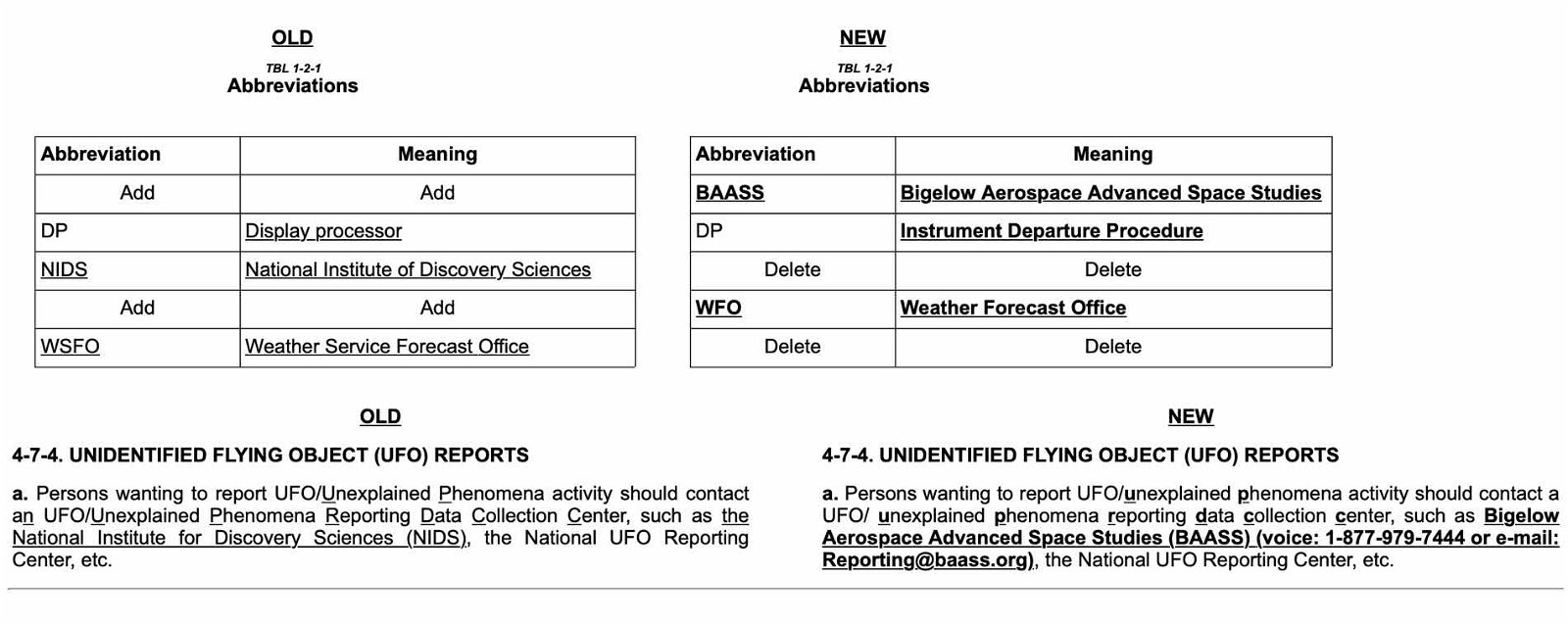
FAA Order JO 7110.65Z – Air Traffic Control, a publication that “prescribes air traffic control procedures and phraseology for use by personnel providing air traffic control services” took effect on June 17, 2021—just days prior to the delivery of the UAP Task Force’s preliminary report. In chapter nine of the order, dealing with “Special Flights”, section eight is titled “Unidentified Flying Object (UFO) Reports”, and outlines the following procedure for UFO sightings made by air traffic control personnel:

9-8-1. GENERAL

  1. Persons wanting to report UFO/unexplained phenomena activity should contact a UFO/ unexplained phenomena reporting data collection center, such as the National UFO Reporting Center, etc.
  2. If concern is expressed that life or property might be endangered, report the activity to the local law enforcement department.

Identical wording with regard to UFO observations by FAA Air Traffic Organization personnel appears in other publications by the agency, which includes Section 7 of FAA Order JO 7210.3CC – Facility Operation and Administration.

The UAP Task Force and the FAA

It therefore came as a surprise for many who read the recent ODNI report, with its inclusion of the following statement: “The FAA captures data related to UAP during the normal course of managing air traffic operations. The FAA generally ingests this data when pilots and other airspace users report unusual or unexpected events to the FAA’s Air Traffic Organization.”

The Wilbur Wright Federal Building, current location of FAA’s headquarters (Credit: Matthew G. Bisanz CC 3.0).

According to its own procedural publications cited above, the FAA appears to direct air traffic operators to report instances involving UAP (or UFOs, as the agency’s documentation still calls them) to civilian organizations like the Washington-based National UFO Reporting Center. These publications appear to provide no procedural details related to an internal system for collecting such data within the agency.

The fact that the FAA “captures data related to UAP” had not been the only pertinent information about the agency’s involvement with UAP studies included in the June report. Additionally, its authors state that “the FAA continuously monitors its systems for anomalies, generating additional information that may be of use to the UAPTF. The FAA is able to isolate data of interest to the UAPTF and make it available.”

“The FAA has a robust and effective outreach program that can help the UAPTF reach members of the aviation community to highlight the importance of reporting UAP,” the report also states.

“That may be news to the FAA,” Suzanne Rowan Kelleher reported in a Forbes article in June, adding that she was told the “agency that operates air traffic control and navigation for both civil and military aircraft insists it does not deal directly with UAP sightings from commercial pilots.”

“The FAA doesn’t track these reports,” Kelleher quoted an FAA spokesperson as having said, who told her that “The National UFO Reporting Center is your best source.”

Similarly, David Axe writing for The Daily Beast noted that “The FAA did not respond to a request for comment” regarding his inquiries about the agency’s UAP data collection described in the June ODNI report.

The FAA Finally Goes on the Record About UAP

In light of the specific references to the FAA and its apparent role in supporting the Navy’s UAP Task Force outlined in the ODNI report, The Debrief reached out to the agency for clarification, asking if it could confirm its role in the collection of UAP data. After several weeks of inquiries, the FAA finally responded to requests for clarification from The Debrief.

“The Federal Aviation Administration documents Unidentified Aerial Phenomenon (UAP) sightings whenever a pilot reports one to an air traffic control facility,” an FAA spokesperson told The Debrief in an email.

“If the pilot report can be corroborated with supporting information such as radar data, it is shared with the UAP Task Force,” the spokesperson added. The statement marks a notable shift from the FAA’s previous positions regarding UAP, and its insistence even in days following the release of the ODNI report that it has limited involvement with the collection of such data.

Earlier versions of the FAA’s JO 7110.65 order included the additional recommendation that UFO reports should be sent to agencies “such as Bigelow Aerospace Advanced Space Studies (BAASS),” with the inclusion of a phone number and email for contacting the organization.

According to an FAA briefing guide issued in February 2010, “Bigelow Aerospace Advanced Space Studies (BAASS) is a new organization that is devoted to exploration of extremely advanced aerospace technology, including the so-called unidentified aerial phenomena (UAP) or unidentified flying object (UFO) topics.”

BAASS ABOVE: Portion of a 2010 FAA briefing document outlining the replacement of the National Institute for Discovery Science with Bigelow Aerospace Advanced Space Studies as its recommended agency to contact for reporting UFO sightings (Credit: FAA/Public Domain)

The guide added that “In 2001, another of Mr. Bigelow’s organizations, the National Institute for Discovery Sciences (NIDS), succeeded in becoming the ‘go-to’ organization for the reporting by pilots and air traffic control of UFOs in the United States.”

“NIDS is now defunct and has been replaced by the larger, more capable BAASS,” the 2010 guide reads. “Therefore, pilot and air traffic control reporting of UFOs in the United States should now go to BAASS, vice NIDS. So we are deleting the NIDS acronym and adding the BAASS acronym.”

Robert Bigelow, the FAA, and UFOs

The story of how Bigelow Aerospace Advanced Space Studies (BAASS) and its predecessor, the National Institute for Discovery Science (NIDS), became recipients of UFO reports from the FAA–thereby freeing the FAA from having any direct involvement with UFOs for several years–can be traced back to retired United States Army colonel John B. Alexander, Ph.D. A longtime advocate for development of nonlethal weapons while in government, Alexander also worked for Robert Bigelow’s NIDS organization for a time. Speaking with Alexander, The Debrief asked about his role in arranging for the FAA to forward UFO reports it received to Bigelow’s organization.

“That is correct,” Alexander said. “This is one of those serendipitous events when I was first assigned to the Pentagon and living in northern Virginia.”

John Alexander John B. Alexander, Ph.D., who while working with the National Institute for Discovery Science helped arrange for the organization to receive UFO sighting reports redirected from the FAA (Public Domain).

As Alexander explained, shortly after his assignment he had taken residence in an apartment building where “they had a Friday night happy hour kinda thing, and one of the other occupants happened to be the Deputy Director of Security for the FAA. So I knew him personally.”

“After 911,” Alexander told The Debrief, “[the FAA] became sacrificial lambs. I might mention the FAA had been screaming about security for years before that. The airlines had been resisting mightily.”

“So I went to Washington and had an initial conversation, and said look, we’re interested in [UAP],” Alexander says. Following this meeting, the FAA Deputy Director “was able to set up a secondary meeting where we had Bob [Bigelow] and Colm [Kelleher] with us. And we came in and met with some senior FAA officials.”

“Interestingly, the guys who had experience as air traffic controllers were pretty supportive,” Alexander said. “Many of them had experiences of reports coming in while they were on duty. Organizationally, they were just happy to have an outlet to make this go away.”

“Which, by the way, is the way this has happened across the board in many governmental agencies,” says Alexander.

In the mid 1980s, Alexander founded an informal group of government insiders interested in finding out whether there might be a black program within government that dealt with UFOs. Called the Advanced Theoretical Physics Project (ATPP), Alexander’s group included members from all three military branches and others from the aerospace and intelligence communities. A requirement for membership had been a Top Secret-SCI security clearance at SI-TK, so that all members “had appropriate clearances and could help disseminate information.”

Despite receiving a limited amount of support from many high-level officials during their search, the ATPP found no evidence of any existing black programs within government that were involved with UFOs. To the contrary, Alexander came away from the experience with the feeling that most agencies within government want as little to do with the subject as possible.

FAA

  • Fact Check
See Also

Fact Check Q & A with Debrief Co-founder and Professional Investigator Tim McMillan: Part 3

In March, Politico reported that several government agencies had allegedly been “blocking or simply ignoring the effort to catalog what they have on [UAP],” based on testimony from several past and present government officials with knowledge on the matter. Despite the aversion to releasing information on UAP shown by the intelligence community, it did not result in a postponement of the report’s delivery to the ODNI by its June 25 deadline, as some had suspected might occur.

“From what I understand,” Alexander says, “all those agencies listed [in the ODNI report] technically participated, but several were certainly dragging their feet, and this was not voluntary at all.”

“Most of them just don’t want anything to do with the topic,” Alexander says.

The FAA Flip Flops on UAP

Also in March, The Debrief reported on its investigation into UAP incidents found within the Aviation Safety Reporting System (ASRS), an online database maintained by NASA which collects anonymous reports on behalf of the FAA from pilots, air traffic control personnel, and others who observe potential aviation hazards.

“An ASRS report collects information on what the pilot saw or experienced,” an FAA spokesperson told The Debrief in response to requests for information about UAP incidents within the publicly searchable ASRS database.

“Unless a hazard is reported, information in an ASRS report is not investigated, and the accuracy of the information is not verified,” an FAA spokesperson told The Debrief.

In February, the FAA also acknowledged an incident involving a sighting of an unusual aerial object over New Mexico by the pilot of American Airlines flight 2292.

FAA-UFO

“A pilot reported seeing an object over New Mexico shortly after noon local time on Sunday, Feb. 21, 2021,” the FAA said in a statement following the incident. However, the agency added that “FAA air traffic controllers did not see any object in the area on their radarscopes,” and provided no additional information on the incident.

The FAA is likely to be one of several agencies tasked with having greater involvement with collecting data on UAP in recent days. It was reported by The Debrief on August 7 that the Navy’s UAP Task Force is expected to obtain greater access to information on UAP collected by U.S. intelligence agencies, according to provisions included within the recently passed Intelligence Authorization Act for Fiscal Year 2022 (IAA).

The Debrief also queried the FAA about what specific information on anomalous aerial phenomena the agency collects, its role with outreach programs that help to facilitate pilots reporting their UAP encounters, and whether the FAA’s documentation of incidents that it sends to the UAP Task Force conflicts with the agency’s own stated policies.

However, the FAA provided no further information in response to our questions about its documentation of UAP sightings or other operations in support of the Navy’s UAP Task Force.

Speaking with The Debrief about his past experience working with government agencies like the FAA in relation to UAP, John Alexander put it bluntly.

“UAP is basically seen as a pain in the ass,” he said, summarizing the prevailing attitude toward the subject as being one primarily of avoidance at all costs.

“Anything that gets it out of my bailiwick is a good thing,” Alexander said.

Follow and connect with author Micah Hanks on Twitter: @MicahHanks


Related Posts

  • UAP DoW

Scientists Just Analyzed More Than 100 UAP Videos Released by the Pentagon’s ‘PURSUE’ Program—This is What They Learned

Breaking NewsNational SecurityScienceUAP
  • UAP DOW

AARO’s Latest UAP Report Finds No Evidence of Exotic Technology, But Mysteries Remain

The Intelligence Brief
  • PURSUE 04 UAP videos

Pentagon Releases New Batch of UAP Videos and Historical Files, But Clarity Remains Elusive

AnalysisBreaking NewsUAP
  • Beyond Blue Sky

“It Was the Most Incredible Thing I Ever Witnessed”: New Film Details World’s First Private Astronauts—and a Life-Altering UAP Encounter

RELATED

300 Declassified UFO Files | Facts to Fall Asleep To

{ https://thedebrief.org/category/science/ }

UFOs , UAPs , USOS

Hoe vind je dit bericht? 0 stemmen
Geschreven door peter om 01:06 Stuur door
Dinsdag 25 augustus 2026

EXCLUSIVE - True tomb of Jesus discovered after 2,000 years as hidden location that aligns with Bible account is found

EXCLUSIVE - True tomb of Jesus discovered after 2,000 years as hidden location that aligns with Bible account is found

By STACY LIBERATORE, US SCIENCE & TECHNOLOGY EDITOR

The Bible describes Jesus' burial place as a tomb carved into rock, set inside a garden near where he was crucified.

For nearly 1,700 years, Christians have believed that tomb lies within Jerusalem's Church of the Holy Sepulchre.

The first church was built over the site by Roman Emperor Constantine in the fourth century, and generations of pilgrims have since traveled there to pray where Christ is believed to have been crucified, buried and resurrected.

Now, with excavations beneath the church complete, archaeologists have pieced together a fuller picture of an ancient landscape that bears a striking resemblance to the one described in the Gospel of John.

Lead archaeologist Francesca Romana Stasolla told the Daily Mail: 'We have found evidence of a funerary landscape, alongside small areas planted with vines and olive trees, as well as a pastoral landscape characterized by sporadic human activity.'

The excavations show that the church stands over an abandoned quarry outside ancient Jerusalem where cultivated plots and multiple rock-cut tombs existed side by side.

That combination closely mirrors John's description of a garden containing a tomb near the place where Jesus was crucified.

Although no physical evidence identifies the tomb's occupant, the parallels keep alive the possibility that early Christians preserved the true location of Jesus' burial.

Archaeologists have found evidence beneath  the Church of the Holy Sepulchre that aligns with what the Bible says about where Jesus was buried

Archaeologists have found evidence beneath  the Church of the Holy Sepulchre that aligns with what the Bible says about where Jesus was buried

The Church of the Holy Sepulchre attracts an estimated four million visitors each year.

The original church was dedicated in AD 335 after Roman buildings at the site, traditionally described as a temple to the goddess Venus, were demolished.

During the work, builders uncovered a rock-cut chamber that was identified as the burial place of Jesus, who had died nearly 300 years earlier.

Emperor Constantine's workers focused on one particular tomb that was already being venerated as Christ's burial place, excavating around it to separate it from the surrounding graves. 

The second church at the Church of the Holy Sepulchre, which stands today, was built and restored starting around 614 to 626 AD, following the destruction and fire caused by the Persian Sassanid invasion.

The discoveries add to the ongoing debate over the location of Jesus' burial.

Many scholars support the Church of the Holy Sepulchre as the site, citing the presence of rock-cut tombs from the first century.

Others argue that the Garden Tomb, another ancient burial site in Jerusalem, better matches biblical descriptions.

There is a long-held debate over where Jesus was laid to rest. Some say the church while others believe he was put inside an ancient rock-cut tomb, known as the Garden Tomb (pictured), which aligns with Biblical text

There is a long-held debate over where Jesus was laid to rest. Some say the church while others believe he was put inside an ancient rock-cut tomb, known as the Garden Tomb (pictured), which aligns with Biblical text

Archeologists were excavating the floor of the church (pictured) when they uncovered signs of an ancient garden that is mentioned in the Bible as where Jesus was laid to rest

The latest findings are detailed in a new 98-page preliminary report published in Liber Annuus, the archaeological journal of Jerusalem's Studium Biblicum Franciscanum. 

The report brings together results from the final 2025 excavation campaign, completing a project that began during a major restoration of the church's floor in March 2022.

Evidence of the ancient garden was first announced in 2025, but completed excavations have now allowed researchers to reconstruct how the cultivated land, abandoned quarry and burial chambers fitted together across the wider site.

The report revealed that the landscape began as a vast stone quarry cut into the side of a hill outside Jerusalem's ancient walls, with some sections reaching nearly 20 feet beneath the church's present floor.

As stone extraction gradually ended, the deepest areas were filled with soil and divided by low dry-stone walls, creating small plots that could be cultivated.

'Evidence of cultivation is provided by archaeobotanical and pollen remains, which have enabled us to reconstruct a landscape suitable for pastoralism, with natural vegetation used for grazing,' Stasolla said.

The first church was built over the site by Roman Emperor Constantine in the fourth century. Pictured on the right is part of the foundation wall of Constantine's church

The first church was built over the site by Roman Emperor Constantine in the fourth century. Pictured on the right is part of the foundation wall of Constantine's church

Above are Christians touching the Unction Stone at the entrance to the Church of the Holy Sepulchre, which they believe marks the sacred spot where the body of Jesus was washed, anointed with spices, and wrapped in linen for burial

'This type of Mediterranean landscape was widespread throughout the region and coexisted with the abandoned quarry area and the presence of rock-cut tombs.'

Researchers dated the cultivated landscape through its position within the archaeological layers and pottery recovered from the quarry fills.

The evidence places it after the quarry was abandoned but before Emperor Hadrian rebuilt the area in the second century AD, a broad period encompassing the lifetime of Jesus.

However, the plant remains have not been given an absolute laboratory date, meaning archaeologists cannot prove the garden was being cultivated at the precise time of Christ's crucifixion.

Archaeologists also recovered traces of fruits, legumes and wild vegetation, revealing an open Mediterranean landscape that was cultivated, visited and used for grazing but not permanently inhabited.

At the same time, exposed rock faces left behind by the quarry provided ideal locations for burial chambers to be carved directly into the stone.

The Church of the Holy Sepulchre attracts an estimated four million visitors each year

The Church of the Holy Sepulchre attracts an estimated four million visitors each year

The inside of the Church of the Holy Sepulchre features stunning mosaics throughout

The inside of the Church of the Holy Sepulchre features stunning mosaics throughout

Researchers found multiple tombs opening into the same former quarry at different heights, connected by narrow paths winding between the graves and cultivated plots.

The result was a complex landscape where gardens, grazing land and rock-cut tombs existed together, just as the Gospel of John places a garden and burial chamber beside the site of Jesus' crucifixion.

John 19:41 reads: 'Now in the place where he was crucified there was a garden; and in the garden a new sepulchre, wherein was never man yet laid.'

The garden reference is one of several clues contained in the Bible.

John 19:20 places the crucifixion close to Jerusalem, while Hebrews 13:12 says Jesus suffered outside the city gate. Archaeologists found that the quarry stood outside Jerusalem's walls at the time of Jesus but remained close to the city, matching both descriptions.

Matthew, Mark and Luke each describe Jesus' grave as having been carved from rock. The excavations confirmed that the gardenlike landscape was also a genuine ancient burial ground containing multiple chambers cut directly into the quarry's exposed stone.

John also states that the tomb was close to the crucifixion site, allowing Jesus to be buried quickly before the Jewish Sabbath began. 

A Roman structure erected during Emperor Hadrian's reign in the second century stood directly against the tomb. Pictured are foundation walls constructed during his reign

A Roman structure erected during Emperor Hadrian's reign in the second century stood directly against the tomb. Pictured are foundation walls constructed during his reign

Many Christians come to see the Stone of Anointing in Holy Sepulchre Church. Above are two nuns praying before the stone

Many Christians come to see the Stone of Anointing in Holy Sepulchre Church. Above are two nuns praying before the stone

At the Holy Sepulchre, the chamber traditionally identified as his tomb and the rock of Calvary exist within the same compact area.

None of those features was unique in ancient Jerusalem, as abandoned quarries were commonly reused for cultivation and burials. 

What makes the Holy Sepulchre compelling is the convergence of all the clues in one place: outside the ancient walls but close to the city, with cultivated land, a rocky crucifixion site and a cemetery containing rock-cut tombs.

Within that burial ground, one particular chamber would eventually become the focus of centuries of Christian veneration.

A Roman structure erected during Emperor Hadrian's reign in the second century stood directly against the tomb, making it inaccessible, while also cutting into the nearby rock of Calvary, the traditional site of Jesus' crucifixion.

The report suggested the surviving Roman walls may have belonged to a smaller cult site rather than the massive pagan temple described in traditional accounts.

Roughly two centuries later, Constantine's workers demolished the Roman structure and excavated the same location to expose the venerated tomb.

They removed the surrounding rock, separated the chamber from the other graves and constructed the first Christian shrine around it.

Its position was considered so important that architects allowed different sections of the enormous church complex to fall out of alignment rather than move the tomb.

The first monument was probably open to the sky and consisted of a small circular shrine surrounded by 12 columns, allowing early pilgrims to gather around the burial chamber.

Although none of this proves Jesus was buried inside, the decision to return to and preserve one specific tomb centuries later raises the possibility that knowledge of its location survived through generations of early Christians.

The second church at the Church of the Holy Sepulchre, which stands today, was built and restored starting around 614 to 626 AD, following the destruction and fire caused by the Persian Sassanid invasion

The second church at the Church of the Holy Sepulchre, which stands today, was built and restored starting around 614 to 626 AD, following the destruction and fire caused by the Persian Sassanid invasion

Stasolla said: 'The archaeological area beneath the Church of the Holy Sepulchre reveals the long history of a part of Jerusalem that, in the early fourth century AD, underwent the monumentalization of Christological memory.

'In this case, I believe that the archaeological evidence should be used primarily to understand the places and contexts in which Christian memory took shape and became firmly established.'

The evidence shows that Christians were commemorating this particular location by the fourth century, but it cannot confirm that Jesus had been buried there three centuries earlier.

Important gaps remain, as no inscription identifies Jesus, and it cannot be definitively proven that the chamber was new, nor that it had been used or belonged to Joseph of Arimathea, as the Gospels state.

The Bible says that Joseph of Arimathea, a wealthy member of the Jewish council, asked Pontius Pilate for the body of Jesus after the crucifixion, wrapping it in clean linen and placing it in his own unused rock-hewn tomb.

The discoveries therefore do not confirm the biblical account, but they demonstrate that the traditional site contains the principal geographical and physical features described in the New Testament.

'The Church of the Holy Sepulchre gives monumental form to the sites where, since very early times, tradition has located the memory of Christ's death and resurrection,' Stasolla said.

'Archaeology undoubtedly attests to the enduring nature of this commemorative tradition.'


Archaeologists May Have Found the Lost Tomb of Jesus — And the Evidence Is Shocking

Jesus' Sealed Tomb Opened After Centuries—What Was Discovered Inside Will Shock You

{ https://www.dailymail.com/news/index.html }

Myths, legends, unknown cultures and civilizations

Hoe vind je dit bericht? 0 stemmen
Geschreven door peter om 23:58 Stuur door
Dinsdag 25 augustus 2026

Mystery statue unearthed at Sardis archaeological dig

Mystery statue unearthed at Sardis archaeological dig

by Sy Boles, Harvard Gazette

edited by Gaby Clark, reviewed by Robert Egan

Mystery statue unearthed at Sardis archaeological dig

Bahadir Yildirim, Sardis expedition administrator and assistant director of fieldwork, takes a closer look at the statue’s unusual design.

Researchers with the long-running Harvard–Cornell Archaeological Exploration of Sardis have unearthed a larger-than-life statue estimated to be nearly 2,500 years old.

The discovery is remarkable for several reasons, said Nicholas Cahill, the field director of the AES team and a professor of Greek and Roman art and archaeology at the University of Wisconsin–Madison.

"It is very rare to find such monumental sculptures of this period anywhere in the Mediterranean, and this exceptionally well-preserved, unique monument casts important new light on the major arts of Lydia and on the Lydians' ties to their own past," he said.

The excavation is sponsored by the Ministry of Culture and Tourism of the Republic of Türkiye and by Harvard Art Museums. The Turkish site was named a UNESCO World Heritage Site last year, cementing its position as a critical site for understanding the ancient world.

Researchers made the discovery in late May while examining a major Roman colonnaded avenue. The statue had been broken into two main pieces and reused, face down, as paving stones in the ancient thoroughfare.

Mystery statue unearthed at Sardis archaeological dig
Credit: Archaeological Exploration of Sardis/President and Fellows of Harvard College

A buried monument emerges

"You sort of see these whole worlds opening up in front of you," Cahill said of the moment he realized the team had found something extraordinary.

A team of conservators carefully excavated around the statue to gradually reveal its full shape and size in the ground.

"Then the guesswork started," said Susanne Ebbinghaus, the George M.A. Hanfmann Curator of Ancient Art at Harvard Art Museums, who was in Sardis for part of the excavation. "'Is this archaic? Maybe not, it looks a little later. Is it a guy? Is it a girl?' When they started cleaning the soil around the head, we saw he had sideburns, so that question was settled."

The people of the Lydian Empire, which controlled what is now western Türkiye from about the middle of the 7th century to the middle of the 6th century B.C., left little written record of their civilization. Much of what was known came from what Greeks and Romans wrote about it—and from their point of view, the Lydians were eastern barbarians. But archaeological evidence has revealed that Sardis, the capital of the Lydian Empire, was a center for luxury and culture, particularly perfumes and fine clothing.

James McCurley '27, a Classics and Physics concentrator who worked on the dig over the summer, said the excavation of the mammoth statue was the highlight of his experience.

"After all the anticipation, I was worried the statue might be underwhelming, that we'd dig it up and find its front weathered beyond recognition. Discovering that the statue was not only well-preserved but almost intact and 2,500 years old was a wonderful surprise."

Conservators lifted the pieces from the ground on July 13 and transported them to an AES conservation lab to begin a thorough, ongoing analysis.

Many details have been revealed since that early, excited guesswork.

An old style with new clues

At well over 7 feet (2.1 meters) tall, the figure would have towered over onlookers. He wears a tunic of thinner material (called a chiton in Greek), a diagonally wrapped mantle and a distinctive, perhaps local garment with fine horizontal folds. The design has few parallels in ancient sculpture, said Harvard Art Museums' Bahadir Yildirim, who is the Sardis expedition administrator and assistant director of fieldwork and who participated in the cleaning and analysis.

"The surprising thing about this piece is that it has some features that haven't been seen on sculpture like that ... the drapery underneath, the distinctive horizontal patterning," he said.

The statue's bolt-upright stance, long coiffed hair and manner of dress resemble archaic Greek sculptures from the 6th century B.C. But the prominent veins and other anatomical details betray a much later date, likely in the 470s to 450s B.C., the early Classical period in Greece. During this era, Sardis was no longer an independent capital but had been conquered by the Achaemenid Persians and had become a major provincial center.

But the figure shows no Persian influence. The statue, therefore, comes across at first as a very traditional sculpture, adhering to age-old hairstyles and dress codes while also hinting at familiarity with the current styles in Greece, where such a sculpture might have been depicted as a nude youth. But the Lydians and other Anatolian peoples did not exercise naked and did not depict their young men without clothes.

The references to multiple cultural traditions and time periods reflect an artist with a complex understanding of his or her place in the world, Cahill said.

"This sculptor knows about contemporary styles in Mediterranean and Anatolian sculpture, the interest in hands and the structure of the face and so forth, and yet [the statue is] wearing clothes from 100 years earlier," Cahill said. "I think they're very clearly looking back to their own past."

A likely sacred setting

The original placement and purpose of the monumental statue is unknown. But one possibility is that it stood at the sanctuary of Cybele, the native mother goddess, which has never been found but has been described in literary sources as one of the most important sanctuaries in Sardis. It was common for wealthy citizens or political leaders to ensconce their likeness in the presence of a deity so they could effectively worship in perpetuity, Ebbinghaus explained.

"You put yourself in a prominent place where your fellow citizens or subjects can see you, but also you are indeed worshiping the god—and if you're a ruler, drawing legitimization from the relationship to that deity. So it might well have been an important person being represented," she said.

Most ancient marble statues were painted, and this one was likely no exception. The Sardis conservation team is now working to clean the statue while preserving any remaining flecks of paint for color analysis.

When conservation is complete, the fragments will be joined, and the statue will be displayed in a Turkish archaeological museum, along with other finds from Sardis. The first Harvard excavation of Sardis, a joint project with Cornell University, began in 1958 and was led by George M.A. Hanfmann (1911–1986), a professor of fine arts at Harvard and curator of ancient art at the Fogg Art Museum.

Provided by Harvard Gazette


Sardes has revealed another remarkable chapter of Anatolian history.

The Sardinia Giants: Ancient Statues That Rewrote History

2,500-year-old monumental marble statue unearthed at ancient Sardes in Türkiye

{ https://phys.org/science-news/ }

ARCHEOLOGIE ( E, Nl, Fr )

Hoe vind je dit bericht? 0 stemmen
Geschreven door peter om 23:04 Stuur door
Maandag 24 augustus 2026

More Files, More Questions: What the Pentagon’s Latest UAP Release Really Changes

More Files, More Questions: What the Pentagon’s Latest UAP Release Really Changes

Forty-one records. Gulf of Oman footage. FBI triangle interviews. Eight decades of files entered the public record on August 7. This edition examines what the evidence actually shows—and applies the standard that must hold regardless of how compelling the headlines are.

Military context for the Gulf of Oman UAP sensor footage released under the PURSUE programme

This image is provided for regional military context only. It does not depict the specific vessel, personnel, or events associated with the Gulf of Oman UAP reports released under the PURSUE programme on August 7, 2026, and should not be interpreted as visual evidence of the recorded incidents.  Image: U.S. Navy / Public Domain.

On August 7, 2026, the U.S. government released its fifth batch of UAP records through the PURSUE system. Forty-one records. Gulf of Oman sensor footage. FBI interview transcripts describing black, silent triangles. A 1953 Naval Photographic Interpretation Center film analysis. Project Sign documents from 1948. Eight decades of material released in a single morning.

Within hours, the usual cycle began.

Social media posts described the Gulf of Oman videos as proof of something extraordinary. The FBI triangle records were treated as confirmation of a specific craft. The 1953 film report became, in some corners, evidence of an advanced programme the government had concealed for seventy years.

The UFO Times is not immune to the pull of that narrative. We find these cases genuinely compelling. That is precisely why we hold them to a higher standard.

A declassification is not a disclosure. A release is not an explanation. What we have is more evidence that extraordinary things have been reported, investigated, and filed away. We do not yet have evidence of what those things are.

Government Files — Feature StoryThe dominant story this week

1. The Gulf of Oman Videos: Real Footage, Unresolved Questions

The videos are real. They were captured by U.S. military sensors and released through official channels. That is not in dispute.

What is in dispute is what they show.

The objects recorded appear as small, cold—infrared-dark, or “cold-orb”—returns moving across the sensor frame. The associated intelligence report describes movements that the crew considered unusual. The released clips, however, do not preserve enough range, platform, sensor and environmental data to independently validate the reported maneuvers or speed estimates.

But “difficult to explain” is not the same as “impossible to explain.”

The videos do not include altitude confirmation, radar cross-reference, simultaneous sensor data, or the platform flight parameters that would allow independent analysts to assess whether the apparent maneuvers represent genuine physical anomalies or artefacts of sensor optics, atmospheric effects, or viewing geometry.

We are not saying the objects are ordinary. We are saying the evidence available does not yet allow us to say they are extraordinary.

  • Official Footage — PURSUE Release 05

The Gulf of Oman sensor recordings are examined in our full technical analysis of Release 05, where we provide additional context on sensor type, viewing conditions, and the limits of what each clip can confirm independently.

Watch With Full Context →

  • Our conclusion

Authentic government footage of unexplained sensor returns. The authentication is significant. The identification remains open. Official release does not equal official explanation.

Witness Documentation
Artistic reconstruction of dark triangular aircraft described in FBI witness interview records — this is not a photograph or sensor image
Artistic Reconstruction — Not a Photograph
This image is an artist’s reconstruction based on witness descriptions in FBI records. It is not a photograph, sensor image, or documentary record of any specific event. The UFO Times applies this label to all reconstructed imagery involving unidentified phenomena.

2. The FBI Triangle Records: Documented Accounts, Unresolved Observations

The released FBI documents describe interviews with multiple witnesses who reported observing large, silent, triangular aircraft—often at low altitude, often with no visible propulsion exhaust. Some estimates placed the objects at more than 300 feet across.

Those accounts are striking. The accounts are detailed and were formally documented by the FBI. The released interview summaries, however, contain no bureau conclusion verifying the witnesses’ physical estimates or identifying what they observed.

But the documents are interview summaries, not technical analyses. The FBI did not conclude that the objects represented exotic technology. The records establish that witnesses described observations they could not explain and that the FBI documented those descriptions. They do not establish the physical nature of the reported objects.

The documents do not establish the origin or nature of the objects. They preserve multiple witness descriptions of apparently triangular objects with unusual reported characteristics. Whether the separate observations shared a common cause remains unknown.

One critical caution: the triangular image circulating online and attributed to these records is an artist’s reconstruction, not a photograph or sensor image. We have applied the label “ARTISTIC RECONSTRUCTION—NOT A PHOTOGRAPH” to every use of that image in our coverage. This distinction matters more than most headlines have acknowledged.

Historical Record
1953 Naval Photographic Interpretation Center film analysis document — government review of UAP film footage with inconclusive findings

1953 Naval Photographic Interpretation Center film analysis. The analysts examined footage from the Montana (1950) and Utah (1952) film cases. Their calculations were limited partly because object distance was assumed rather than measured. Their final determination was inconclusive. This document has been mischaracterized in some coverage as definitive evidence of a concealed programme.

Project Sign 1948 — the first official U.S. Air Force UFO investigation programme documents

Project Sign, established in 1947, was the first formal U.S. Air Force UFO investigation programme. Several later participants claimed that an internal “Estimate of the Situation” favored an interplanetary interpretation and was rejected or destroyed. No authenticated copy has entered the public record.

3. The 1953 Film Analysis and Project Sign: History That Cuts Both Ways

The 1953 Naval Photographic Interpretation Center film analysis and the Project Sign documents add historical depth without resolving the central question.

The analysis examined footage from the Montana (1950) and Utah (1952) film cases—two of the most-discussed UAP films of the early Cold War era. The analysts noted that object distance was assumed rather than measured, which limited the reliability of any speed or size calculations. Camera position, focal length, and the absence of a firm reference object further constrained their conclusions. Their final determination was inconclusive.

Project Sign—established in 1947 as the Air Force’s first official UFO investigation—underwent a significant internal debate. Several later participants claimed that Project Sign produced an “Estimate of the Situation” favouring an interplanetary interpretation and that senior Air Force leadership rejected or destroyed it. No authenticated copy has entered the public record, so the account remains historically important but not independently verifiable. The programme was reorganized as Project Grudge and later Project Blue Book. The investigative priorities, methods and institutional attitudes changed substantially under each successor programme. Historians continue to debate how seriously each pursued unresolved cases.

What these documents show is not quite what some have claimed: the historical record shows recurring institutional tension over how much personnel, funding and scientific attention UFO investigations should receive—not necessarily an agency that had answers it concealed.

If the later accounts are accurate, the rejection or destruction of that assessment would be historically significant. The surviving Release 05 records do not independently prove that episode. The records do not, however, prove what was in the sky. They show that the institutional response changed substantially and remains the subject of historical debate.

What the Release Actually Changes

The PURSUE release is significant. It adds to the public record. It demonstrates that the government is willing—under political and legislative pressure—to declassify material it previously held. That is worth noting.

But a declassification is not a disclosure. A release is not an explanation.

The Gulf of Oman videos remain unexplained. The triangle witnesses remain unresolved. The 1953 analysts concluded they could not conclude anything. The Project Sign suppression tells us more about institutional culture than about what was actually in the sky.

What we have is more evidence that extraordinary things have been reported, investigated, and filed away. We do not yet have evidence of what those things are.

  • The Pattern That Keeps Repeating

Each new release follows the same arc. Striking material enters the public record. Initial coverage tends toward the dramatic. Over the following days, researchers who apply stricter evidentiary standards begin identifying the limits of what the release actually shows.

The gap between headline and evidence is not a sign of a cover-up. It is a sign that the evidence is genuinely ambiguous—and that ambiguous evidence is difficult to communicate to a public that has been trained by decades of cinema, conspiracy culture and institutional opacity to expect either a full disclosure or a full denial.

We are getting neither. We are getting partial records confirming that UAP reports are real, recurring and treated as an official investigative matter—without establishing that all reports share one cause.

  • What The UFO Times Thinks

These files matter. The pattern they add to matters even more.

Across more than eight decades, United States military, intelligence, diplomatic and law-enforcement agencies have documented reports occurring across multiple decades and locations, interviewed witnesses, produced analyses that were sometimes withheld from full public view, and filed records that have now begun to emerge.

That accumulation is meaningful. It is not proof of any single explanation. But it is evidence of a sustained reporting and investigative problem involving incidents that may not all have the same explanation, and one that deserves serious scientific and journalistic attention.

We will continue to cover this story using the standard we have applied from our first edition: Facts First. Mystery Second. Speculation Last. The next release will come. When it does, we will examine it the same way.

RELATED 

Pentagon UAP Files Are Being Released Right Now — Here's What's Actually In Them

Pentagon's 5th UFO File Release Explained — 3 New Cases

Pentagon releases fifth batch of UAP files

{ https://theufotimes.com/ }

LATEST ( UFO ) VIDEO NEWS ( ENG)

Hoe vind je dit bericht? 0 stemmen
Geschreven door peter om 23:33 Stuur door
Maandag 24 augustus 2026

From vanished cities to missing tombs, 7 historical mysteries that remain still unsolved

Science can scan forests, date skeletons, and decode ancient machines, but some chapters of history still refuse to close.

By Kaif Shaikh

From unexplained explosions to vanished civilizations, these seven mysteries still resist scientific explanation.

Something abrupt and poorly understood occurred, leaving behind questions that modern science can narrow, but not close.1 ,2 ,3 ,4

Modern science has transformed how we study the past, allowing researchers to extract DNA from ancient bones, map buried cities through dense forests, and peer inside sealed artifacts without opening them. 

Yet even with these tools, some historical mysteries remain unresolved. Not because they lack importance, but because earthquakes, climate shifts, erosion, and human activity have erased the very evidence needed to solve them, or maybe because the events themselves unfolded in ways that defy easy explanation.

From unexplained explosions and abandoned settlements to missing tombs and lost technologies, these cases sit at the boundary between what can be proven and what can only be inferred. 

The seven mysteries that follow are not rooted in myth or speculation, but in real events supported by credible evidence, each offering a reminder that, despite our best efforts, history does not always yield its secrets.

The Tunguska Event Explained | The Greatest Explosion in History

1. The 1908 Tunguska event – Siberia, Russia  

On June 30, 1908, a powerful explosion detonated over a remote region of Siberia near the Tunguska River, flattening an estimated 80 million trees across more than 2,000 square kilometers. The blast was so intense that seismic waves were recorded across Eurasia, and atmospheric disturbances were detected as far away as Western Europe. Yet no impact crater or large fragments were ever conclusively identified.

The Tunguska Event (1908): Investigating the Enigma of Siberia's ...

Most scientists agree the event was caused by a stony asteroid or comet fragment that exploded mid-air in what is known as an atmospheric airburst. Computer simulations and field studies support this explanation, but uncertainties remain about the object’s composition, size, and trajectory. 

Competing hypotheses, including a cometary fragment rich in volatiles, persist because physical evidence is sparse. Over a century later, Tunguska remains the largest known impact event in recorded human history, and its exact mechanics are still being refined by modern planetary science.

2. The tomb of Cleopatra and the tomb of Alexander the Great

Despite centuries of exploration, the burial sites of two of antiquity’s most famous rulers, Cleopatra VII of Egypt and Alexander the Great, remain unknown. Ancient sources describe Cleopatra being buried alongside Mark Antony in a royal tomb near Alexandria, but earthquakes, subsidence, and rising Mediterranean sea levels have dramatically altered the city’s ancient landscape.

Where Are They Buried? The Lost Tombs of History’s Iconic Figures ...

Where Are They Buried? The Lost Tombs of History’s Iconic Figures ...

Alexander’s body was reportedly transported to Egypt after his death in 323 BCE and entombed in Alexandria, where Roman emperors later claimed to have visited it. By late antiquity, references to the tomb disappear entirely. 

Archaeological searches around Alexandria and nearby sites such as Taposiris Magna have produced tantalizing clues but no definitive evidence. Urban development, looting, and environmental change have likely erased or buried the remains beyond easy recovery, leaving historians uncertain whether these tombs are still intact or lost forever.

3. The lost colony of Roanoke – America 

Established in 1587 on Roanoke Island off the coast of present-day North Carolina, the Roanoke Colony was England’s first serious attempt at permanent settlement in North America. When Governor John White returned from a supply mission to England three years later, the settlement was completely abandoned. No bodies were found, and there were no signs of violence.


The Lost Colony of Roanoke 👻 | America's Greatest Unsolved Mystery 🇺🇸

The only clue was the word “CROATOAN” carved into a post, a reference to a nearby island inhabited by Indigenous peoples. Archaeological work suggests the colonists may have dispersed and integrated into local communities due to food shortages, disease, or strained relations with neighboring groups. 

However, no single explanation accounts for all the evidence, and no confirmed remains of the settlers have ever been identified. Roanoke endures as a case study in early colonial fragility and the limits of historical reconstruction.

What's Hidden Behind 2,124,000 Square Miles of the Unexplored Amazon Forest?

4. The lost cities of the Amazon Rainforest and the collapse of the Indus Valley Civilization

For much of the 20th century, scholars believed the Amazon rainforest could not support large, complex societies. That assumption has been overturned by lidar surveys and archaeological research, which have revealed extensive networks of roads, plazas, fortified settlements, and managed landscapes hidden beneath the forest canopy. 

These discoveries suggest populations in the millions may have lived there before European contact. Why these societies collapsed—whether due to disease, environmental change, or social disruption—remains unresolved.

The Lost Civilization That Vanished Without a Trace: The Indus Valley Mystery

Similarly, the Indus Valley Civilization, one of the world’s earliest urban cultures, declined around 1900 BCE. Major cities were systematically abandoned, not destroyed. Geological evidence points to shifting river systems and prolonged drought, but the civilization’s undeciphered script limits understanding of its political and social response. In both cases, advanced societies vanished without clear historical records, leaving archaeology to piece together incomplete stories.


The Nazca Lines: Who Carved These In The Desert Rock Floor of Peru? And Why?

5. The Nazca lines – Peru 

Etched into the arid plains of southern Peru between roughly 500 BCE and 500 CE, the Nazca Lines consist of hundreds of enormous geoglyphs depicting animals, plants, geometric shapes, and straight lines stretching for kilometers. The figures are best visible from the air, raising questions about how and why they were created.

Peru’s Nazca Lines form giant figures visible only from the sky

Peru’s Nazca Lines form giant figures visible only from the sky

© Janeth Charris/Pexels

Archaeological research suggests the lines were made by removing dark surface stones to expose lighter soil beneath, a technique that has allowed them to endure for centuries in the dry climate. Leading interpretations link the geoglyphs to ritual activity, water management, or ceremonial pathways tied to seasonal cycles. 

Some align with celestial events, but no single theory explains the full range of designs. Without written records from the Nazca culture, their precise purpose remains one of South America’s most enduring archaeological mysteries.

Himalaya Secrets: Why Roopkund Lake is Filled with Ancient Bones

6. Roopkund lake skeletons – India

High in the Indian Himalayas, near a glacial lake known as Roopkund, the skeletal remains of hundreds of individuals were discovered scattered along the shore. Radiocarbon dating and genetic analysis reveal that these people did not die in a single event. Instead, they belonged to multiple groups from different regions and time periods, some separated by nearly a thousand years.

One group appears to have died around the ninth century CE, likely due to a sudden, severe weather event. Scientific studies suggest large hailstones could have caused fatal head injuries consistent with observed skull fractures. 

Later groups may have been pilgrims or travelers who met different fates. While modern techniques have clarified aspects of the mystery, questions remain about why people repeatedly traveled to such a remote, high-altitude location, and why fatal events occurred there more than once.

2007 model I. Mogi

2007 model I. Mogi

7. The Antikythera Mechanism – Ancient Greece 

Recovered from a Greek shipwreck dated to around 100 BCE, the Antikythera Mechanism is the most complex known mechanical device from the ancient world. Composed of interlocking bronze gears, it was used to predict eclipses, planetary movements, and astronomical cycles with remarkable precision.

The Antikythera Mechanism – Ancient Greece’s Computer

Advanced imaging techniques, including X-ray tomography, have revealed inscriptions and gear systems far more sophisticated than anything previously known from that era. While researchers have reconstructed much of its function, critical questions remain: who designed it, how widespread such technology was, and why this level of mechanical knowledge disappeared for over a millennium. 

The device challenges conventional timelines of technological development and stands as a rare glimpse into lost scientific traditions that were never fully transmitted to later civilizations.

By Kaif Shaikh

Kaif Shaikh is a journalist and writer passionate about turning complex information into clear, impactful stories. His writing covers technology, sustainability, geopolitics, and occasionally fiction. A graduate in Journalism and Mass Communication, his work has appeared in the Times of India and beyond. After a near-fatal experience, Kaif began seeing both stories and silences differently. Outside work, he juggles far too many projects and passions, but always makes time to read, reflect, and hold onto the thread of wonder.


3 HOURS of MIND-BLOWING UnSolved Ancient Mysteries That Shouldn't Exist Until Now

{ https://interestingengineering.com/science }

ARCHEOLOGIE ( E, Nl, Fr )

Hoe vind je dit bericht? 0 stemmen
Geschreven door peter om 22:18 Stuur door
Maandag 24 augustus 2026

UFOs and Prolonged Uncertainty

UFOs and Prolonged Uncertainty

Chronic uncertainty around unexplained phenomena and its psychological effects.

Jennice Vilhauer Ph.D. - Living  Forward

Key points

  • Prolonged UAP uncertainty can turn curiosity into powerlessness, anger, and mistrust.
  • Information gaps make false narratives and confident claims more appealing.
  • Honest communication about what is known and unknown can make uncertainty easier to tolerate.

Ahmed/Unsplash

Source: Ahmed/Unsplash

The growing public interest in unidentified anomalous phenomena (UAP) isn’t just about wanting to know what’s in the sky. It is about answering the question of what implications they have for mankind. But as the interest is growing, so is the level of frustration many people are experiencing.

While recent congressional hearings, scientific initiatives, and mainstream media coverage show the previously taboo subject is now being talked about more openly by serious people, the conclusions remain inconclusive.

The PURSUE (Presidential Unsealing and Reporting System for UAP Encounters) files, which Donald Trump specifically stated on his Truth Social account he was releasing so “the people can decide for themselves 'WHAT THE HELL IS GOING ON,'” have received almost 2 billion views. But the information being released is being given without context or explanation and has, thus far, left more questions than answers.

Many government and military officials have gone on record stating they have seen classified information that indicates the possibility of non-human space craft and biologics, but they can’t say more. Even whistleblowers who are trying to provide information, report they can’t give specifics because of NDAs or fear of retaliation.

It always seems as if someone knows something they can’t tell you for some reason.

All of this ambiguity has led to feeling that we may never get the real answers.

And this type of chronic uncertainty has significant psychological implications.

When people feel information is being intentionally withheld, it changes the way they process what’s happening.

Uncertainty Can Become Powerlessness

Humans live with constant uncertainty. We don’t know exactly what will happen in the next five minutes let alone five days, five months, or five years.

But when we start to feel uncertain because it seems like someone else is controlling what we are allowed to know, we stop wondering what’s true and instead begin asking, “Why is the truth being kept from me?”

When you can’t access information you need to answer important questions, you can start to feel powerless, which can lead to other negative emotions like suspicion, frustration, and even anger.

Anger can give you a sense of having more power in a situation. It motivates and mobilizes people into action. People may begin to protest or demand answers as a way to help regain control.

But if there is no clear action capable of resolving the uncertainty, that energy has nowhere productive to go. Someone can remain psychologically activated while the situation remains unchanged.

For some people, this may lead to disengagement, they stop caring or paying attention entirely, for others it may cause them to become more proactively involved.

The Search for Closure

When people encounter uncertainty around a subject that has personal meaning they naturally try to soothe their anxiety. In the case of UAPs, they may seek out more information by reading government reports, following congressional hearings, searching historical records, listening to interviews, or becoming actively involved in online communities. Each new document or testimony offers the possibility that they may finally get the missing piece of the puzzle.

But it can also create a cycle of anticipation and disappointment. Every time there is a new hearing, a new witness that comes forward, or a document release is promised, people raise their hopes that this will be the confirmation they’ve been looking for, but definitive evidence never seems to appear.

People can begin to feel deceived or foolish for believing they were finally going to get an answer. And the search for information can start to become emotionally consuming because the brain continues to treat the open question as unfinished business that needs resolving.

Confidence Can Substitute for Evidence

When the explanations being given, if there are any at all, are inadequate to explain what we are seeing, let alone answer the ultimate question everyone is asking, which is “are we alone in the universe?” interest doesn't just disappear. People begin to search elsewhere for the answers they need.

Research shows that uncertainty and a lack of control can make people more receptive to false explanations.1 This can open the door to believing in conspiracy theories, particularly those that portray the government as deceptive or threatening.

When no information is being provided, people can begin to mistake voices that seem loud or certain for credibility. A confident explanation feels reassuring, but it does not necessarily mean it is an informed one.

While government communication won’t prevent misinformation, it can reduce the space in which misinformation grows.

The Erosion of Trust

Trust helps people tolerate uncertainty. We do not need all the information ourselves as long as we believe that those who do possess it are competent, honest, and acting in good faith.

Just releasing information does not guarantee trust. Research on government transparency shows it can sometimes reveal disagreement, poor decisions, or uncertainty and may sometimes reduce confidence in the short term.2

But people are more likely to view a process as fair and trustworthy when they believe the government is being transparent, even when they don’t get the outcome they wanted.3 This matters psychologically because fair and understandable procedures make uncertainty easier to tolerate.

People can understand that the government won’t know what every UAP is. But they do want to understand how the evidence is being evaluated, why some information continues to remain classified, what conclusions the available evidence can support, and how open questions are being answered.

Without that understanding, people are left to interpret what the ambiguous information being provided is, as well as what the government’s silence means.

People Can Tolerate Honest Uncertainty

Officials may fear that admitting uncertainty will undermine public confidence, but research suggests that honest uncertainty is often less damaging than expected.

Studies have found that communicating uncertainty does not result in a meaningful reduction in trust in the source providing the information.4 Transparent explanations of the strength and limitations of evidence also don't appear to undermine public trust.5

This kind of communication provides a psychologically important framework.

People can understand that evidence is incomplete or that different explanations are possible. And they can understand that there are good reasons, such as national security, why some information cannot be immediately released. What is harder to tolerate are feelings of ambiguity and uncertainty when there is no clear process for resolving it.

Turning Uncertainty Into a Shared Process

UAP transparency is not dependent on the release of every document, but it does require clear and honest communication that helps people better understand the process as it is unfolding.

Communication, by itself, won’t eliminate uncertainty. But when people understand what's happening, discovering what UAPs are can become a shared scientific problem rather than a process from which they feel excluded.

The search for answers can remain focused on discovering the real evidence rather than driven by a desire to eliminate the discomfort of not knowing.

Whatever the ultimate explanation for UAP may be, the public is already responding psychologically to the process by which information is being investigated and released.

The answers matter, but so does the experience of waiting for them.

References

  1. Douglas, K. M., Sutton, R. M., & Cichocka, A. (2017). The psychology of conspiracy theories. Current Directions in Psychological Science, 26(6), 538–542. https://doi.org/10.1177/0963721417718261
  2. Grimmelikhuijsen, S., Porumbescu, G., Hong, B., & Im, T. (2013). The effect of transparency on trust in government: A cross-national comparative experiment. Public Administration Review, 73(4), 575–586. https://doi.org/10.1111/puar.12047
  3. de Fine Licht, J. (2014). Transparency actually: How transparency affects public perceptions of political decision making. European Political Science Review, 6(2), 309–330. https://doi.org/10.1017/S1755773913000131
  4. van der Bles, A. M., van der Linden, S., Freeman, A. L. J., & Spiegelhalter, D. J. (2020). The effects of communicating uncertainty on public trust in facts and numbers. Proceedings of the National Academy of Sciences, 117(14), 7672–7683. https://doi.org/10.1073/pnas.1913678117
  5. Kerr, J. R., Schneider, C. R., Freeman, A. L. J., Marteau, T., & van der Linden, S. (2022). Transparent communication of evidence does not undermine public trust in evidence. PNAS Nexus, 1(5), pgac280. https://doi.org/10.1093/pnasnexus/pgac280

UFO Truths Exposed | UFOs: Investigating the Unknown MEGA Episode | National Geographic

{ https://www.psychologytoday.com/gb/basics/anxiety }

LATEST ( UFO ) VIDEO NEWS ( ENG)

Hoe vind je dit bericht? 0 stemmen
Geschreven door peter om 21:12 Stuur door
Maandag 24 augustus 2026

Scientists finally know why astronauts struggle to poop in space — and reveal a hidden risk of long-haul spaceflight

Scientists finally know why astronauts struggle to poop in space — and reveal a hidden risk of long-haul spaceflight

A new NASA-backed study has pinpointed why astronauts often experience constipation in space and how that might affect their health on long-haul missions to Mars and beyond.

Harry Baker's avatar By Harry Baker  Edited by Nicoletta Lanese, Laura Mondragó

Photo of an astronaut floating in space

New blood tests have pinpointed why astronauts get constipated in space. This photo shows NASA astronaut Ed White on the first American spacewalk in 1965.
(Image credit: NASA)

Scientists have finally gotten to the bottom of why astronauts struggle to poop in space, thanks to a new blood test. The findings also reveal an unexpected side effect of this cosmic constipation that may need to be addressed before humans take long-haul trips to Mars and beyond, the study authors say.

As soon as people started living in space, it became apparent that it was harder to go "number two" among the stars than down on Earth — and not just because of how complicated it is to use a space toilet. For most astronauts, this gastrointestinal change is just an inconvenience, but some have to take laxatives to overcome the problem. The drugs are routinely stocked on most space missions, including the recent Artemis II mission.

Constipation is one of several digestive issues astronauts contend with, including bloating, indigestion and acid reflux, according to NASA. And like most other health problems that can affect astronauts, researchers have long suspected that microgravity is the leading cause. However, it has been very hard to prove that hypothesis or understand the other effects that chronic constipation may have on astronauts' general health.

Space Poop Problem Explained: NASA's $23 Million Toilet & Astronaut Diapers

In a new NASA-backed study, published June 29 in the journal Nature Communications, researchers analyzed more than 400 blood samples from 52 astronauts who each spent more than two months at a time living on board the International Space Station (ISS). Their stays took place between 2006 and 2018.

In the blood samples, the team looked for specific metabolites — the byproducts of metabolic processes that break down food, drugs and tissue in the body. They identified 40 such compounds, but the most instructive were those that were produced by gut bacteria that help break down proteins in the intestines.

You may like
  • A close up of a blue laser in a dark room.

Astronauts could use lightning-like plasma jets to kill germs on the moon and Mars, demo hints

  • The International Space Station as seen in October 2018.

NASA astronauts briefly shelter in 'safe haven' procedure following worsening leaks on Space Station

  • illustration of colorful microbes in a small intestine

'Poop pills' may ease insomnia by reprogramming the gut microbiome, early study hints

A photograph of three astronauts in a return capsule from the ISS

NASA astronauts can experience constipation from the first week of the mission until they return to Earth. This photo shows astronauts Chris Williams (left), Sergey Kud-Sverchkov (center) and Sergei Mikaev (right) shortly after returning from a 241-day stay on the ISS in July 2026.

(Image credit: Bill Ingalls/NASA via Getty Images)

"We see changes in astronauts' blood samples that indicate that the gut bacteria begin to ferment protein to a greater extent than usual," study first author Giorgia La Barbera, an associate professor in the University of Copenhagen's Department of Nutrition, Exercise and Sports, said in a statement. This happens "within weeks after the astronauts arrive in space" and can persist "until they are back on Earth," she added.

Protein fermentation occurs when gut bacteria begin to break down proteins instead of their usual food group of choice, complex carbohydrates such as fiber. This switch to protein can happen on Earth too, either due to a poor diet or digestive issues, such as lazy bowel syndrome. But in space, it is a sign of something else.

"The lack of gravity in space probably causes food to move more slowly through the intestine," study co-author Henrik Roager, head of the University of Copenhagen's Microbiome & Metabolomics research group, said in the statement. That means fiber has more of a chance to be thoroughly broken down, and gut bacteria eventually turn to protein instead.

This slower intestinal movement can "help explain constipation in astronauts," Roager added.

A photo of the toilet on board the ISS

Going to the bathroom in space is already more complicated than it is on Earth. This photo shows the toilet, or Waste and Hygiene Compartment (WHC), on the ISS.

(Image credit: NASA)

The researchers also found that changes to astronauts' diets ‪—‬ including altered caffeine, fish and fat intake ‪—‬ may influence constipation, Live Science's sister site Space.com reported. However, this dietary factor accounts for less than one-third of the observed metabolite changes, leaving microgravity as the primary cause, the researchers noted.

What to read next
  • An illustration of MAVEN in orbit around Mars

'I would never have guessed it': Unexpected effect is squeezing Mars' atmosphere like toothpaste, experts say

  • A view of Earth from the International Space Station, with a solar panel seen in the top right corner

Why does metal stick together in space?

  • Scroll structure in black and white with square formation on edges.

NASA shares image of impossible-looking crystal growing on the space station. What is happening?

While it is unsurprising that microgravity is the main cause of astronauts' constipation, the discovery of increased protein fermentation raises some new concerns that may need to be addressed.

"We know that products of protein fermentation [are] often associated with negative health consequences, such as kidney damage, potential effects on mood or reduced ability to focus, among others," study co-author Lars Ove Dragsted, head of preventive and clinical nutrition at the University of Copenhagen, said in the statement. When it comes to intestinal health, products of protein fermentation have also been linked to inflammation and weakening of the gut's lining.

Over short periods, these potentially harmful metabolites, including ammonia and hydrogen sulfide, likely pose limited risks to astronauts' overall health. However, long-duration spaceflights — like those that may one day carry astronauts farther into the solar system — could cause these compounds to rise to harmful levels, the study authors said.

Photo of a Soyuz rocket launching from Russia in July 2026

Researchers are concerned that long-haul spaceflights could cause metabolites from protein fermentation to rise to dangerous levels. This photo shows a Russian Soyuz rocket carrying the most recent crew members to the ISS on July 14, 2026.

(Image credit: Bill Ingalls/NASA via Getty Images)

It is also unclear how prolonged periods of reduced gravity, like those experienced by future residents of NASA's upcoming moon base, could affect protein fermentation in the gut. (The current study covered only brief stints on the ISS.)

RELATED STORIES

ASTRONOMIE / RUIMTEVAART

Hoe vind je dit bericht? 0 stemmen
Geschreven door peter om 20:54 Stuur door
Zondag 23 augustus 2026

Astronomen hebben een nieuw type object ontdekt in de ruimte: de zwartegatster

image.jpeg

Astronomen hebben een nieuw type object ontdekt in de ruimte: de zwartegatster

 Jeannette Kras - Redacteur

Astronomen hebben in het vroege heelal een opmerkelijk object ontdekt. Het lijkt op een enorme ster, ongeveer zo groot als ons zonnestelsel, maar het straalt honderd miljard keer meer energie uit dan een gewone ster. De meest waarschijnlijke verklaring: een volledig nieuw type kosmisch object, een zogeheten zwartegatster.

De ontdekking, gepubliceerd in Nature, is gedaan met de James Webb-ruimtetelescoop. De telescoop legde het helderrode object vast in een periode waarin het heelal nog maar enkele honderden miljoenen jaren oud was. Het lijkt te bestaan uit een centraal zwart gat, omgeven door een enorme, dichte gasmantel. De energie is daardoor niet afkomstig van kernfusie, zoals bij gewone sterren, maar van het zwarte gat zelf.

Hoofdauteur Rohan Naidu: “We denken dat er een centraal zwart gat zit dat 100.000 keer zo zwaar is als de zon. Daaromheen bevindt zich een zeer uitgestrekte gasmantel die eruitziet als een ster ter grootte van het zonnestelsel. Het is enorm.”

De ontdekking kan bovendien een verklaring bieden voor de mysterieuze kleine rode stippen die op vrijwel alle diepe opnamen van de James Webb-telescoop opduiken. “Deze kleine rode stippen lijken overal in het vroege heelal voor te komen, maar verdwijnen tegen de huidige tijd bijna volledig”, zegt Naidu. “Wat deze objecten precies zijn, is een van de meest bediscussieerde onderwerpen uit het James Webb-tijdperk.”

Op zoek naar vroege sterrenstelsels

De astronomen zochten niet bewust naar een zwartegatster. Het team gebruikte de James Webb-telescoop om de vroegste sterrenstelsels op te sporen in een onderzoeksprogramma met de naam Mirage or Miracle (MoM). “Er is al enige tijd een raadsel rond veel heldere oude sterrenstelsels”, zegt Naidu. “Wat we ontdekten, is dat iets wat eruitziet als een uitzonderlijk helder vroeg sterrenstelsel, oftewel een ‘miracle’, in sommige gevallen eigenlijk een ‘mirage’ kan zijn.” Het lijkt op een sterrenstelsel, maar het is in werkelijkheid iets anders.

Tijdens die zoektocht viel één object direct op: een uitzonderlijk heldere, rode stip. Rood licht wordt vaak veroorzaakt doordat stof het licht onderweg rood kleurt. Toch paste dat hier niet bij de metingen. “Wanneer we iets zien dat erg rood is in het heelal, gaan we er vaak van uit dat het is omgeven door stof, zoals roet of as”, zegt onderzoeker Robert Simcoe. “Net zoals de rook van de bosbranden in Canada de lucht boven Boston onlangs felrood kleurde, kunnen astronomische objecten roder lijken dan hun werkelijke kleur wanneer je ze door een sluier van stof bekijkt.”

Het object vertoonde bovendien een uitzonderlijk sterke Balmer-break: een abrupte afname van licht op bepaalde golflengten die normaal wordt gezien bij sterren met een dichte gasatmosfeer. “De breuk die we bij dit object hebben waargenomen, is de diepste die we ooit bij enig object hebben gezien, waardoor gewone sterren als bron zijn uitgesloten”, zegt Naidu. “Maar daardoor vroegen we ons af of we misschien een nieuw soort sterrenatmosfeer zagen, zij het op een spectaculaire schaal.” Opvallend was ook dat het licht vrijwel uitsluitend sporen van waterstof en helium bevatte.

Een nieuwe klasse objecten?

Met computersimulaties testte het team verschillende verklaringen. Een extreem dichte waterstofmantel bleek de bijzondere lichtsignatuur goed te verklaren, maar niet de enorme helderheid. “Je hebt iets dat een beetje op een ster lijkt, maar 100 miljard keer helderder is”, zegt Naidu. “Dat betekent dat kernfusie onmogelijk de energiebron kan zijn, terwijl dat het proces is dat alle sterren die we kennen aandrijft.” Een actief zwart gat kan die hoeveelheid energie wél produceren. Simulaties waarin een zwart gat werd gecombineerd met een enorme waterstofmantel kwamen het beste overeen met de waarnemingen.

Het object kreeg de naam MoM-BH*-1. Mogelijk is het de eerste vertegenwoordiger van een geheel nieuwe klasse kosmische objecten. De minder heldere rode stippen die JWST op andere plekken in het vroege heelal ziet, zouden eveneens zwartegatsterren kunnen zijn. “Elke kleine rode stip is in overeenstemming met een zwartegatster, ingebed in een gewoon vroeg sterrenstelsel”, zegt Naidu. “Maar wat MoM-BH*-1 bijzonder maakt, is dat de zwartegatster zijn omringende gaststelsel vrijwel volledig overstraalt, waardoor we puur het licht van de zwartegatster zien.”

Bronmateriaal

  • "A Gas Enshrouded and Gas Reddened Black Hole at Cosmic Dawn" - Nature
  • Afbeelding bovenaan dit artikel: Jose-Luis Olivares, MIT
GERELATEERDE VIDEO'S

James Webb Found a “Black Hole Star”

5 Facts About the Black Hole Star Astronomers Just Found

Mystery of Mom bh Star 1: Dawn of the Universe Unveiled #shortvideo #space #astrophysics

{ https://scientias.nl/nieuws/astronomie-ruimtevaart/ }

ASTRONOMIE / RUIMTEVAART

Hoe vind je dit bericht? 0 stemmen
Geschreven door peter om 23:14 Stuur door
Zondag 23 augustus 2026

Secret Soviet UFOs: What happened when two scientists knocked on a door in Estonia? | Reality Check

Secret Soviet UFOs: What happened when two scientists knocked on a door in Estonia? | Reality Check

Ross Coulthart
https%3A%2F%2Fmedia.zenfs.com%2Fen%2Fnewsnation_articles_600%2F86fb6d502130a843b5ec37b925052551.png

Something metallic turned up under a garden in a quiet Tallinn suburb in 1969, and the Soviets spent the next twenty years trying to get it out, bringing in excavators and scientists and military, borrowing the house from its owners and living in it, digging on and off until perestroika ended the whole effort and they walked away. Astrophysicist Dr. Beatriz Villarroel and Ocean X co-founder Dennis Åsberg went to that address to find out what is still down there. Nobody came to the door, but the neighbor who had watched all of it from his window talked to them for an hour.

This is their full conversation with Ross Coulthart, recorded for "Secret Soviet UFOs" and running well past what the special had room for. Villarroel walks through the peer-reviewed work that brought her to Estonia, highly reflective objects photographed in orbit years before anyone on Earth had launched a satellite, and why she thinks the same search belongs in the ground. Åsberg ties Merivälja to the Baltic Sea anomaly his team found on sonar roughly 300 kilometers away and argues that both could predate the last ice age. Between them, they count five European cases and will not give up the coordinates of one of them. What nobody can answer yet is what sits under that garden, and the only thing that would settle it is ground-penetrating radar in the yard of a man who has already told them no.


Secret Soviet UFOs: What happened when two scientists knocked on a door in Estonia? | Reality Check

Reality Check: Secret Soviet UFOs | KGB swarms suburban house in UFO hunt
{ https://www.newsnationnow.com/ }

LATEST ( UFO ) VIDEO NEWS ( ENG)

Hoe vind je dit bericht? 0 stemmen
Geschreven door peter om 22:51 Stuur door
‹ Nieuwere berichtenOudere berichten ›

Meer van UFO'S of UAP'S, ASTRONOMIE, RUIMTEVAART, ARCHEOLOGIE, OUDHEIDKUNDE, SF-SNUFJES EN ANDERE ESOTERISCHE WETENSCHAPPEN - DE ALLERLAATSTE NIEUWTJES

 FORUM 

Kan een afbeelding zijn van drank

Kan een afbeelding zijn van hond

5 juni 2025 , DAN BESTAAT MIJN BLOG AL 14 JAAR!!!

Carl Sagan Space GIF by Feliks Tomasz Konczakowski

X Files Ufo GIF by SeeRoswell.com

1990: Petit-Rechain, Belgium triangle UFO photograph - Think AboutIts

Ufo Pentagon GIF

Alberta_meteor_GIF_%283%29.gif

Asteroid_sitecard.gif

ufo abduction GIF by Ski Mask The Slump God

Flying Sci-Fi GIF by Feliks Tomasz Konczakowski

Season 3 Ufo GIF by Paramount+

DEAR VISITOR,


MY BLOG EXISTS TODAY 6 - 10 - 2026 15 YEARS AND 4 MONTHS  = 5.622 days.

ON 06/10/2026 MORE THAN 4.434.000 bezoekers..

VISITORS FROM 135 DIFFERENT NATIONS ALREADY FOUND THEIR WAY TO MY BLOG.

THAT IS AN AVERAGE OF 789 GUESTS PER DAY.

THANK YOU FOR VISITING  MY BLOG AND HOPE YOU ENJOY EACH TIME.


Goodbye and thanks
PETER2011

De bronafbeelding bekijken

De bronafbeelding bekijken

Beste bezoeker, bedankt voor uw bezoek.

Dear visitor, thank you for your visit.

Cher visiteur, je vous remercie de votre visite.

Liebe Besucher, vielen Dank für Ihren Besuch.

Estimado visitante, gracias por su visita.

Gentile visitatore, grazie per la vostra visita.

Inhoud blog

  • Giant Red Sprite illuminates the night sky above Montemaggiore
  • Meet Britain's 'Space Binman'! Giant robotic claw will hunt down defunct spacecraft and drag them to a fiery death in Earth's atmosphere
  • Giant 'UFO mothership' spotted shooting across Earth's sun at 'near light speed', claims UFOlogist
  • “More Dune Than Avatar”: Scientists Say These Nearby Exoplanets Could Be Home to Alien Life
  • Scientists Discover a Mysterious Microbe That Challenges Our Understanding of Life
  • Eyewitness tells Joe Rogan about meeting and communicating through telepathy with an alien, UFO UAP Sighting News.
  • 'A time capsule at the bottom of the sea': World’s oldest shipwreck that sank 4,700 YEARS ago discovered off the coast of Turkey
  • From the Shroud of Turin to Noah's Ark... experts reveal science that proves the Bible is true
  • Say cheese! NASA reveals stunning image of giant ‘cosmic smile’ created by warped spacetime
  • This Man Claims Aliens Can Move Humans Through Solid Walls Using Quantum Phenomenon, Says Eight Military Veterans Reported Abductions
  • AI Can Be Aware, But Humans Draw the Line at Consciousness, New Study Finds
  • The Shipwreck in the Atlantic That May Not Be the Titanic
  • EXCLUSIVE - I was secretly poisoned by my husband and died. Then I met Jesus and made a shocking discovery in heaven
  • NASA astronaut cites biblical warning as proof that UFOs are 'demonic'
  • Apollo astronaut Charlie Duke believes UFOs are demonic, not alien
  • Segmented UFO Seen On Live Cam Over Rhodes International Airport, Greece, Oct 12, 2026, UAP Sighting News.
  • 3 Mile Doorway To Underground City On Mars Found! Ancient aliens city. UFO UAP Sighting News.
  • 2.5 Mile UFO Passes Through Our Solar System, NASA Is Mum About It, UAP Sighting News.
  • Wetenschappers constateren een onverwachte verschuiving van de magnetische noordpool
  • Bigfoot sightings across 14 US states reveal an eerie pattern sparking claims a creature is hiding nearby

Categorieën

  • ALIEN LIFE, UFO- CRASHES, ABDUCTIONS, MEN IN BLACK, ed ( FR. , NL; E ) 3736
  • André's Hoekje (ENG) 745
  • André's Snelkoppelingen (ENG) 383
  • ARCHEOLOGIE ( E, Nl, Fr ) 2080
  • ARTICLES of MUFON ( ENG) 478
  • Artikels / PETER2011 (NL EN.) 174
  • ASTRONOMIE / RUIMTEVAART 13982
  • Before it's news (ENG.) 5702
  • Belgisch UFO-meldpunt / Frederick Delaere ( NL) 23
  • Diversen (Eng, NL en Fr) 4374
  • FILER FILES - overzicht met foto's met dank aan Georges Filer en WWW.nationalUFOCenter.com (ENG) 930
  • Frederick's NEWS ITEMS (ENG en NL) 112
  • HLN.be - Het Laatste Nieuws ( NL) 1717
  • INGRID's WEETJES (NL) 6
  • Kathleen Marden 's News about Abductions... ( ENG) 36
  • LATEST ( UFO ) VIDEO NEWS ( ENG) 11938
  • Michel GRANGER - a French researcher ( Fr) 22
  • MYSTERIES ( Fr, Nl, E) 2251
  • MYSTERIES , Complot Theories, ed ( EN, FR, NL ) 513
  • Myths, legends, unknown cultures and civilizations 228
  • National UFO Center {NUFOC} 110
  • News from the FRIENDS of facebook ( ENG ) 6019
  • NIEUWS VAN JAN ( NL) 42
  • Nieuws van Paul ( NL) 17
  • NineForNews. nl ( new ipv NIBURU.nl) (NL) 3711
  • Oliver's WebLog ( ENG en NL) 118
  • Paul SCHROEDER ( ENG) 98
  • Reseau Francophone MUFON / EUROPE ( FR) 87
  • références - MAGONIE (Fr) 486
  • Ruins, strange artifacts on other planets, moons, ed ( Fr, EN, NL ) 653
  • SF-snufjes }, Robotics and A.I. Artificiel Intelligence ( E, F en NL ) 970
  • UFO DIGEST / a Weekly Newsletter - thanks that I may publish this on my blog (ENG) 125
  • UFOs , UAPs , USOS 3190
  • Vincent'snieuws ( ENG en NL) 5
  • Who is Stanton FRIEDMAN - follow his news (ENG) 16
  • WHO IS WHO? ( ENG en NL) 5

Zoeken in blog

Beoordeel dit blog

Bekijk de resultaten

10:55:34 AM

De morgen is bijna voorbij...

Er is nu 1 bezoeker op dit blog.
Record tot nu toe: 845

Vrijdag16oktober2026

The purpose of  this blog is the creation of an open, international, independent and  free forum, where every UFO-researcher can publish the results of his/her research. The languagues, used for this blog, are Dutch, English and French.You can find the articles of a collegue by selecting his category.
Each author stays resposable for the continue of his articles. As blogmaster I have the right to refuse an addition or an article, when it attacks other collegues or UFO-groupes.
 

Archief per maand

  • Oktober 2026
  • September 2026
  • Augustus 2026
  • Juli 2026
  • Juni 2026
  • Mei 2026
  • April 2026
  • Maart 2026
  • Februari 2026
  • Januari 2026
  • December 2025
  • November 2025
  • Oktober 2025
  • September 2025
  • Augustus 2025
  • Juli 2025
  • Juni 2025
  • Mei 2025
  • April 2025
  • Maart 2025
  • Februari 2025
  • Januari 2025
  • December 2024
  • November 2024
  • Oktober 2024
  • September 2024
  • Augustus 2024
  • Juli 2024
  • Juni 2024
  • Mei 2024
  • April 2024
  • Maart 2024
  • Februari 2024
  • Januari 2024
  • December 2023
  • November 2023
  • Oktober 2023
  • September 2023
  • Augustus 2023
  • Juli 2023
  • Juni 2023
  • Mei 2023
  • April 2023
  • Maart 2023
  • Februari 2023
  • Januari 2023
  • December 2022
  • November 2022
  • Oktober 2022
  • September 2022
  • Augustus 2022
  • Juli 2022
  • Juni 2022
  • Mei 2022
  • April 2022
  • Maart 2022
  • Februari 2022
  • Januari 2022
  • December 2021
  • November 2021
  • Oktober 2021
  • September 2021
  • Augustus 2021
  • Juli 2021
  • Juni 2021
  • Mei 2021
  • April 2021
  • Maart 2021
  • Februari 2021
  • Januari 2021
  • December 2020
  • November 2020
  • Oktober 2020
  • September 2020
  • Augustus 2020
  • Juli 2020
  • Juni 2020
  • Mei 2020
  • April 2020
  • Maart 2020
  • Februari 2020
  • Januari 2020
  • December 2019
  • November 2019
  • Oktober 2019
  • September 2019
  • Augustus 2019
  • Juli 2019
  • Juni 2019
  • Mei 2019
  • April 2019
  • Maart 2019
  • Februari 2019
  • Januari 2019
  • December 2018
  • November 2018
  • Oktober 2018
  • September 2018
  • Augustus 2018
  • Juli 2018
  • Juni 2018
  • Mei 2018
  • April 2018
  • Maart 2018
  • Februari 2018
  • Januari 2018
  • December 2017
  • November 2017
  • Oktober 2017
  • September 2017
  • Augustus 2017
  • Juli 2017
  • Juni 2017
  • Mei 2017
  • April 2017
  • Maart 2017
  • Februari 2017
  • Januari 2017
  • December 2016
  • November 2016
  • Oktober 2016
  • September 2016
  • Augustus 2016
  • Juli 2016
  • Juni 2016
  • Mei 2016
  • April 2016
  • Maart 2016
  • Februari 2016
  • Januari 2016
  • December 2015
  • November 2015
  • Oktober 2015
  • September 2015
  • Augustus 2015
  • Juli 2015
  • Juni 2015
  • Mei 2015
  • April 2015
  • Maart 2015
  • Februari 2015
  • Januari 2015
  • December 2014
  • November 2014
  • Oktober 2014
  • September 2014
  • Augustus 2014
  • Juli 2014
  • Juni 2014
  • Mei 2014
  • April 2014
  • Maart 2014
  • Februari 2014
  • Januari 2014
  • December 2013
  • November 2013
  • Oktober 2013
  • September 2013
  • Augustus 2013
  • Juli 2013
  • Juni 2013
  • Mei 2013
  • April 2013
  • Maart 2013
  • Februari 2013
  • Januari 2013
  • December 2012
  • November 2012
  • Oktober 2012
  • September 2012
  • Augustus 2012
  • Juli 2012
  • Juni 2012
  • Mei 2012
  • April 2012
  • Maart 2012
  • Februari 2012
  • Januari 2012
  • December 2011
  • November 2011
  • Oktober 2011
  • September 2011
  • Augustus 2011
  • Juli 2011
  • Juni 2011

Rondvraag / Poll

Bestaan UFO's echt? Are UFOs real?Les OVNIS existent-ils vraiement?

Bekijk resultaat

Rondvraag / Poll

Denk Jij dat UFO's buitenaards zijn? Do You think that UFOs are extraterrestrial? Les OVNIS sont- ils ET?

Bekijk resultaat

E-mail mij

Druk oponderstaande knop om mij te e-mailen.
E-mail mij!

Zoeken in blog

Deze blog is opgedragen aan mijn overleden echtgenote Lucienne.

In 2012 verloor ze haar moedige strijd tegen kanker!

In 2011 startte ik deze blog, omdat ik niet mocht stoppen met mijn UFO-onderzoek.

BEDANKT!!!

Een interessant adres?

Hello GIFs – Fun Animated Images to Greet Anyone - Funimada.com

Item preview, Colorful UFO Design with Hello Text designed and sold by Rue Market.

Ufo GIFs | Tenor

De bronafbeelding bekijken

MUFON’s New Social Network

full-blackMUFON-logo-copy.png

Mijn favorieten

  • Verhalen TINNY * SF
  • IFO-databank van Belgisch UFO meldpunt
  • Belgisch UFO meldpunt
  • The Black Vault
  • Terry's Theories UFO Sightings. Its a Youtube Channel thats really overlooked, but has a lot of great and recent sightings on it.
  • . UFO Institute: A cool guy who works hard
  • YOUTUBE kanaal van het Belgisch UFO-meldpunt
  • LATEST UFO SIGHTINGS

DES LIENS AVEC LE RESEAU FRANCOPHONE DE MUFON ET MUFONEUROP

  • BELGISCH UFO-NETWERK BUFON
  • RFacebook BUFON
  • MUFONFRANCE
  • MUFON RHÔNE-ALPES
  • MUFON MIDI-PYRÉNNÉES
  • MUFON HAUTE-NORMANDIE
  • MUFON MAROC
  • MUFON ALSACE LORRAINE
  • MUFON USA
  • Site du REUB ASBL

Other links with friends / bloggers # not always UFOs

  • PANGRadio MarcSima
  • Blog 2 Bernward
  • Nederlandse UFO-groep
  • Ufologie Liège
  • NIBURU
  • Disclose TV
  • UFO- Sightings - HOTSPOT
  • Website van BUFON ( Belgisch UFO-Netwerk)
  • The Ciizen Hearing on Disclosure
  • Exopolitics Finland: LINKS

LINKS OF THE BLOGS OF MY FACEBOOK-FRIENDS

  • ufologie -Guillaume Perrot
  • UFOMOTION
  • CENTRE DE RECHERCHE OVNI PARASPYCHOLOGIE SCIENCE - CROPS -
  • SOCIAL PARANORMAL Magazine
  • TJ Morris ACO Associations, Clubs, Organizations - TJ Morris ACO Social Service Club for...
  • C.E.R.P.I. BELGIQUE
  • Attaqued'un Autre Monde - Christian Macé
  • UFOSPOTTINGNEDERLAND
  • homepage UFOSPOTTINGNEDERLAND
  • PARANORMAL JOURNEY GUIDE
WELCOME TO THIS BLOG! I HOPE THAT YOU ENJOY THE LECTURE OF ALL ISSUES. If you did see a UFO, you can always mail it to us. Best wishes.

Beste bezoeker,
Heb je zelf al ooit een vreemde waarneming gedaan, laat dit dan even weten via email aan Frederick Delaere op
 www.ufomeldpunt.be. Deze onderzoekers behandelen jouw melding in volledige anonimiteit en met alle respect voor jouw privacy. Ze zijn kritisch, objectief  maar open minded aangelegd en zullen jou steeds een verklaring geven voor jouw waarneming!
DUS AARZEL NIET, ALS JE EEN ANTWOORD OP JOUW VRAGEN WENST, CONTACTEER FREDERICK.
BIJ VOORBAAT DANK...

Laatste commentaren

  • crop cirkels (herman)
    op UFO'S FORM CROP CIRCLE IN LESS THAN 5 SECONDS - SCOTLAND 1996
  • crop cirkels (herman)
    op UFO'S FORM CROP CIRCLE IN LESS THAN 5 SECONDS - SCOTLAND 1996
  • Een zonnige vrijdag middag en avond (Patricia)
    op MUFON UFO Symposium with Greg Meholic: Advanced Propulsion For Interstellar Travel

Gastenboek

  • Nog een fijne avond
  • Hallo Lieverd
  • kiekeboe
  • Een goeie middag bezoekje
  • Zomaar een blogbezoekje
Druk op onderstaande knop om een berichtje achter te laten in mijn gastenboek Alvast bedankt voor al jouw bezoekjes en jouw reacties. Nog een prettige dag verder!!!
Voeg berichtje toe!

Over mijzelf

Ik ben Pieter, en gebruik soms ook wel de schuilnaam Peter2011.
Ik ben een man en woon in Linter (België) en mijn beroep is Ik ben op rust..
Ik ben geboren op 18/10/1950 en ben nu dus 75 jaar jong.
Mijn hobby's zijn: Ufologie en andere esoterische onderwerpen.

Op deze blog vind je onder artikels, werk van mezelf. Mijn dank gaat ook naar André, Ingrid, Oliver, Paul, Vincent, Georges Filer en MUFON voor de bijdragen voor de verschillende categorieën... Veel leesplezier en geef je mening over deze blog.

Zoeken in blog

LINKS NAAR BEKENDE UFO-VERENIGINGEN - DEEL 1

  • http://www.ufonieuws.nl/
  • http://www.grenswetenschap.nl/
  • http://www.beamsinvestigations.org.uk/
  • http://www.mufon.com/
  • http://www.ufomeldpunt.be/
  • http://www.ufowijzer.nl/
  • http://www.ufoplaza.nl/
  • http://www.ufowereld.nl/
  • http://www.stantonfriedman.com/
  • http://ufo.start.be/

LINKS NAAR BEKENDE UFO-VERENIGINGEN - DEEL 2

  • www.ufo.be
  • www.caelestia.be
  • ufo.startpagina.nl.
  • www.wszechocean.blogspot.com.
  • AsocCivil Unifa
  • UFO DISCLOSURE PROJECT

Een interessant adres?

Mijn favorieten

  • Verhalen
↑ Terug naar de berichten
SeniorenNet BlogsEen blog op SeniorenNet
Maak ook een blog Mijn blog
RSSAtom JavaScript Meld misbruik Privacy