Naar de inhoud

UFO'S of UAP'S, ASTRONOMIE, RUIMTEVAART, ARCHEOLOGIE, OUDHEIDKUNDE, SF-SNUFJES EN ANDERE ESOTERISCHE WETENSCHAPPEN - DE ALLERLAATSTE NIEUWTJES

UFO's of UAP'S in België en de rest van de wereld
seniorennet.beseniorennet.be
Ontdek de Fascinerende Wereld van UFO's en UAP's: Jouw Bron voor Onthullende Informatie! Ben jij ook gefascineerd door het onbekende? Wil je meer weten over UFO's en UAP's, niet alleen in België, maar over de hele wereld? Dan ben je op de juiste plek! België: Het Kloppend Hart van UFO-onderzoek In België is BUFON (Belgisch UFO-Netwerk) dé autoriteit op het gebied van UFO-onderzoek. Voor betrouwbare en objectieve informatie over deze intrigerende fenomenen, bezoek je zeker onze Facebook-pagina en deze blog. Maar dat is nog niet alles! Ontdek ook het Belgisch UFO-meldpunt en Caelestia, twee organisaties die diepgaand onderzoek verrichten, al zijn ze soms kritisch of sceptisch. Nederland: Een Schat aan Informatie Voor onze Nederlandse buren is er de schitterende website www.ufowijzer.nl, beheerd door Paul Harmans. Deze site biedt een schat aan informatie en artikelen die je niet wilt missen! Internationaal: MUFON - De Wereldwijde Autoriteit Neem ook een kijkje bij MUFON (Mutual UFO Network Inc.), een gerenommeerde Amerikaanse UFO-vereniging met afdelingen in de VS en wereldwijd. MUFON is toegewijd aan de wetenschappelijke en analytische studie van het UFO-fenomeen, en hun maandelijkse tijdschrift, The MUFON UFO-Journal, is een must-read voor elke UFO-enthousiasteling. Bezoek hun website op www.mufon.com voor meer informatie. Samenwerking en Toekomstvisie Sinds 1 februari 2020 is Pieter niet alleen ex-president van BUFON, maar ook de voormalige nationale directeur van MUFON in Vlaanderen en Nederland. Dit creëert een sterke samenwerking met de Franse MUFON Reseau MUFON/EUROP, wat ons in staat stelt om nog meer waardevolle inzichten te delen. Let op: Nepprofielen en Nieuwe Groeperingen Pas op voor een nieuwe groepering die zich ook BUFON noemt, maar geen enkele connectie heeft met onze gevestigde organisatie. Hoewel zij de naam geregistreerd hebben, kunnen ze het rijke verleden en de expertise van onze groep niet evenaren. We wensen hen veel succes, maar we blijven de autoriteit in UFO-onderzoek! Blijf Op De Hoogte! Wil jij de laatste nieuwtjes over UFO's, ruimtevaart, archeologie, en meer? Volg ons dan en duik samen met ons in de fascinerende wereld van het onbekende! Sluit je aan bij de gemeenschap van nieuwsgierige geesten die net als jij verlangen naar antwoorden en avonturen in de sterren! Heb je vragen of wil je meer weten? Aarzel dan niet om contact met ons op te nemen! Samen ontrafelen we het mysterie van de lucht en daarbuiten.

UFOs and Prolonged Uncertainty

UFOs and Prolonged Uncertainty

Chronic uncertainty around unexplained phenomena and its psychological effects.

Key points

  • Prolonged UAP uncertainty can turn curiosity into powerlessness, anger, and mistrust.
  • Information gaps make false narratives and confident claims more appealing.
  • Honest communication about what is known and unknown can make uncertainty easier to tolerate.

Ahmed/Unsplash

Source: Ahmed/Unsplash

The growing public interest in unidentified anomalous phenomena (UAP) isn’t just about wanting to know what’s in the sky. It is about answering the question of what implications they have for mankind. But as the interest is growing, so is the level of frustration many people are experiencing.

While recent congressional hearings, scientific initiatives, and mainstream media coverage show the previously taboo subject is now being talked about more openly by serious people, the conclusions remain inconclusive.

The PURSUE (Presidential Unsealing and Reporting System for UAP Encounters) files, which Donald Trump specifically stated on his Truth Social account he was releasing so “the people can decide for themselves 'WHAT THE HELL IS GOING ON,'” have received almost 2 billion views. But the information being released is being given without context or explanation and has, thus far, left more questions than answers.

Many government and military officials have gone on record stating they have seen classified information that indicates the possibility of non-human space craft and biologics, but they can’t say more. Even whistleblowers who are trying to provide information, report they can’t give specifics because of NDAs or fear of retaliation.

It always seems as if someone knows something they can’t tell you for some reason.

All of this ambiguity has led to feeling that we may never get the real answers.

And this type of chronic uncertainty has significant psychological implications.

When people feel information is being intentionally withheld, it changes the way they process what’s happening.

Uncertainty Can Become Powerlessness

Humans live with constant uncertainty. We don’t know exactly what will happen in the next five minutes let alone five days, five months, or five years.

But when we start to feel uncertain because it seems like someone else is controlling what we are allowed to know, we stop wondering what’s true and instead begin asking, “Why is the truth being kept from me?”

When you can’t access information you need to answer important questions, you can start to feel powerless, which can lead to other negative emotions like suspicion, frustration, and even anger.

Anger can give you a sense of having more power in a situation. It motivates and mobilizes people into action. People may begin to protest or demand answers as a way to help regain control.

But if there is no clear action capable of resolving the uncertainty, that energy has nowhere productive to go. Someone can remain psychologically activated while the situation remains unchanged.

For some people, this may lead to disengagement, they stop caring or paying attention entirely, for others it may cause them to become more proactively involved.

The Search for Closure

When people encounter uncertainty around a subject that has personal meaning they naturally try to soothe their anxiety. In the case of UAPs, they may seek out more information by reading government reports, following congressional hearings, searching historical records, listening to interviews, or becoming actively involved in online communities. Each new document or testimony offers the possibility that they may finally get the missing piece of the puzzle.

But it can also create a cycle of anticipation and disappointment. Every time there is a new hearing, a new witness that comes forward, or a document release is promised, people raise their hopes that this will be the confirmation they’ve been looking for, but definitive evidence never seems to appear.

People can begin to feel deceived or foolish for believing they were finally going to get an answer. And the search for information can start to become emotionally consuming because the brain continues to treat the open question as unfinished business that needs resolving.

Confidence Can Substitute for Evidence

When the explanations being given, if there are any at all, are inadequate to explain what we are seeing, let alone answer the ultimate question everyone is asking, which is “are we alone in the universe?” interest doesn't just disappear. People begin to search elsewhere for the answers they need.

Research shows that uncertainty and a lack of control can make people more receptive to false explanations.1 This can open the door to believing in conspiracy theories, particularly those that portray the government as deceptive or threatening.

When no information is being provided, people can begin to mistake voices that seem loud or certain for credibility. A confident explanation feels reassuring, but it does not necessarily mean it is an informed one.

While government communication won’t prevent misinformation, it can reduce the space in which misinformation grows.

The Erosion of Trust

Trust helps people tolerate uncertainty. We do not need all the information ourselves as long as we believe that those who do possess it are competent, honest, and acting in good faith.

Just releasing information does not guarantee trust. Research on government transparency shows it can sometimes reveal disagreement, poor decisions, or uncertainty and may sometimes reduce confidence in the short term.2

But people are more likely to view a process as fair and trustworthy when they believe the government is being transparent, even when they don’t get the outcome they wanted.3 This matters psychologically because fair and understandable procedures make uncertainty easier to tolerate.

People can understand that the government won’t know what every UAP is. But they do want to understand how the evidence is being evaluated, why some information continues to remain classified, what conclusions the available evidence can support, and how open questions are being answered.

Without that understanding, people are left to interpret what the ambiguous information being provided is, as well as what the government’s silence means.

People Can Tolerate Honest Uncertainty

Officials may fear that admitting uncertainty will undermine public confidence, but research suggests that honest uncertainty is often less damaging than expected.

Studies have found that communicating uncertainty does not result in a meaningful reduction in trust in the source providing the information.4 Transparent explanations of the strength and limitations of evidence also don't appear to undermine public trust.5

This kind of communication provides a psychologically important framework.

People can understand that evidence is incomplete or that different explanations are possible. And they can understand that there are good reasons, such as national security, why some information cannot be immediately released. What is harder to tolerate are feelings of ambiguity and uncertainty when there is no clear process for resolving it.

Turning Uncertainty Into a Shared Process

UAP transparency is not dependent on the release of every document, but it does require clear and honest communication that helps people better understand the process as it is unfolding.

Communication, by itself, won’t eliminate uncertainty. But when people understand what's happening, discovering what UAPs are can become a shared scientific problem rather than a process from which they feel excluded.

The search for answers can remain focused on discovering the real evidence rather than driven by a desire to eliminate the discomfort of not knowing.

Whatever the ultimate explanation for UAP may be, the public is already responding psychologically to the process by which information is being investigated and released.

The answers matter, but so does the experience of waiting for them.

References

  1. Douglas, K. M., Sutton, R. M., & Cichocka, A. (2017). The psychology of conspiracy theories. Current Directions in Psychological Science, 26(6), 538–542. https://doi.org/10.1177/0963721417718261
  2. Grimmelikhuijsen, S., Porumbescu, G., Hong, B., & Im, T. (2013). The effect of transparency on trust in government: A cross-national comparative experiment. Public Administration Review, 73(4), 575–586. https://doi.org/10.1111/puar.12047
  3. de Fine Licht, J. (2014). Transparency actually: How transparency affects public perceptions of political decision making. European Political Science Review, 6(2), 309–330. https://doi.org/10.1017/S1755773913000131
  4. van der Bles, A. M., van der Linden, S., Freeman, A. L. J., & Spiegelhalter, D. J. (2020). The effects of communicating uncertainty on public trust in facts and numbers. Proceedings of the National Academy of Sciences, 117(14), 7672–7683. https://doi.org/10.1073/pnas.1913678117
  5. Kerr, J. R., Schneider, C. R., Freeman, A. L. J., Marteau, T., & van der Linden, S. (2022). Transparent communication of evidence does not undermine public trust in evidence. PNAS Nexus, 1(5), pgac280. https://doi.org/10.1093/pnasnexus/pgac280

UFO Truths Exposed | UFOs: Investigating the Unknown MEGA Episode | National Geographic

{ https://www.psychologytoday.com/gb/basics/anxiety }

Hoe vind je dit bericht?
Geschreven door peter om 21:12 Stuur door

Scientists finally know why astronauts struggle to poop in space — and reveal a hidden risk of long-haul spaceflight

Scientists finally know why astronauts struggle to poop in space — and reveal a hidden risk of long-haul spaceflight

A new NASA-backed study has pinpointed why astronauts often experience constipation in space and how that might affect their health on long-haul missions to Mars and beyond.

Photo of an astronaut floating in space

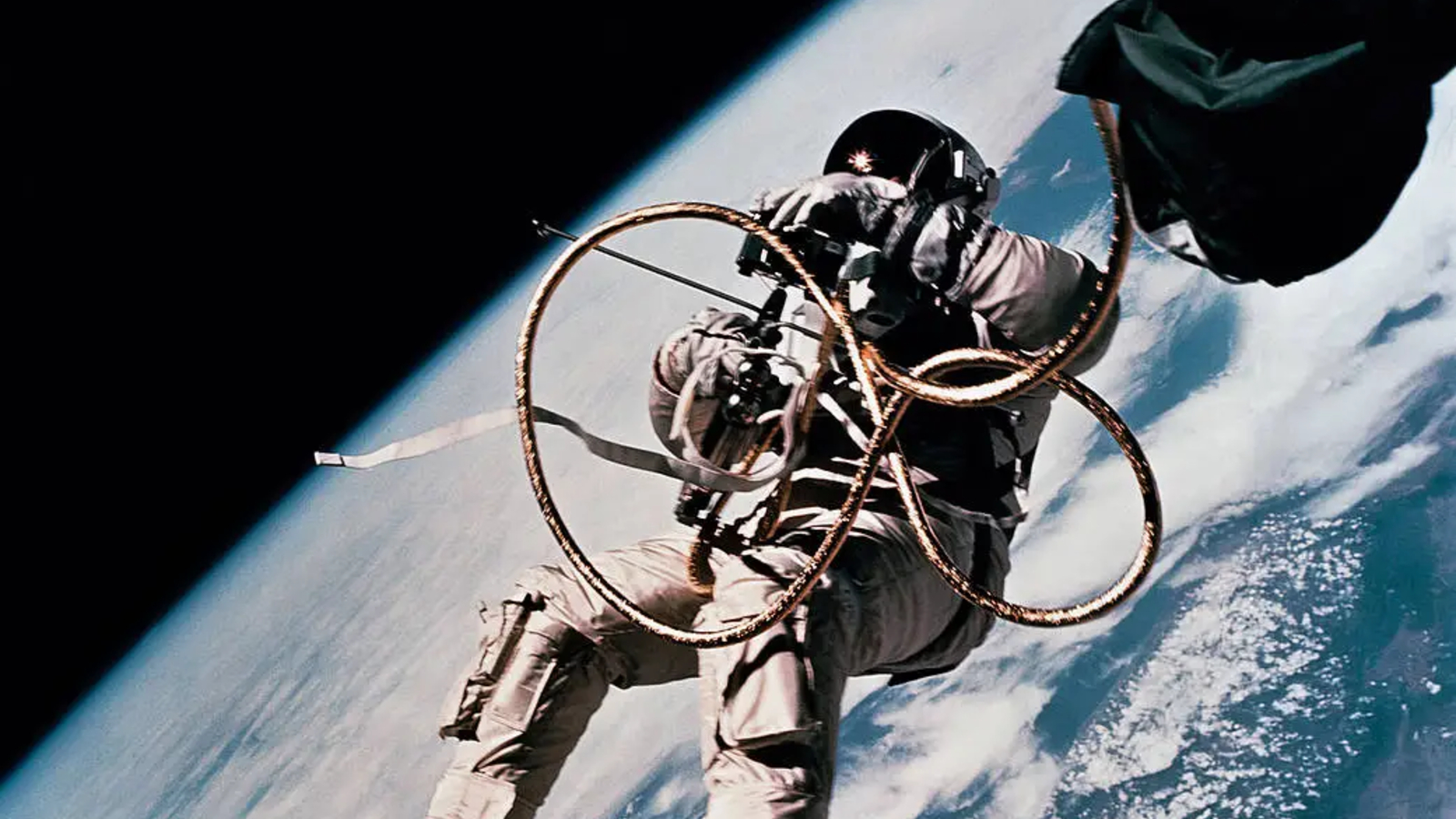
New blood tests have pinpointed why astronauts get constipated in space. This photo shows NASA astronaut Ed White on the first American spacewalk in 1965.
(Image credit: NASA)

Scientists have finally gotten to the bottom of why astronauts struggle to poop in space, thanks to a new blood test. The findings also reveal an unexpected side effect of this cosmic constipation that may need to be addressed before humans take long-haul trips to Mars and beyond, the study authors say.

As soon as people started living in space, it became apparent that it was harder to go "number two" among the stars than down on Earth — and not just because of how complicated it is to use a space toilet. For most astronauts, this gastrointestinal change is just an inconvenience, but some have to take laxatives to overcome the problem. The drugs are routinely stocked on most space missions, including the recent Artemis II mission.

Constipation is one of several digestive issues astronauts contend with, including bloating, indigestion and acid reflux, according to NASA. And like most other health problems that can affect astronauts, researchers have long suspected that microgravity is the leading cause. However, it has been very hard to prove that hypothesis or understand the other effects that chronic constipation may have on astronauts' general health.

Space Poop Problem Explained: NASA's $23 Million Toilet & Astronaut Diapers

In a new NASA-backed study, published June 29 in the journal Nature Communications, researchers analyzed more than 400 blood samples from 52 astronauts who each spent more than two months at a time living on board the International Space Station (ISS). Their stays took place between 2006 and 2018.

In the blood samples, the team looked for specific metabolites — the byproducts of metabolic processes that break down food, drugs and tissue in the body. They identified 40 such compounds, but the most instructive were those that were produced by gut bacteria that help break down proteins in the intestines.

You may like
  • A close up of a blue laser in a dark room.

Astronauts could use lightning-like plasma jets to kill germs on the moon and Mars, demo hints

  • The International Space Station as seen in October 2018.

NASA astronauts briefly shelter in 'safe haven' procedure following worsening leaks on Space Station

  • illustration of colorful microbes in a small intestine

'Poop pills' may ease insomnia by reprogramming the gut microbiome, early study hints

A photograph of three astronauts in a return capsule from the ISS

NASA astronauts can experience constipation from the first week of the mission until they return to Earth. This photo shows astronauts Chris Williams (left), Sergey Kud-Sverchkov (center) and Sergei Mikaev (right) shortly after returning from a 241-day stay on the ISS in July 2026.

(Image credit: Bill Ingalls/NASA via Getty Images)

"We see changes in astronauts' blood samples that indicate that the gut bacteria begin to ferment protein to a greater extent than usual," study first author Giorgia La Barbera, an associate professor in the University of Copenhagen's Department of Nutrition, Exercise and Sports, said in a statement. This happens "within weeks after the astronauts arrive in space" and can persist "until they are back on Earth," she added.

Protein fermentation occurs when gut bacteria begin to break down proteins instead of their usual food group of choice, complex carbohydrates such as fiber. This switch to protein can happen on Earth too, either due to a poor diet or digestive issues, such as lazy bowel syndrome. But in space, it is a sign of something else.

"The lack of gravity in space probably causes food to move more slowly through the intestine," study co-author Henrik Roager, head of the University of Copenhagen's Microbiome & Metabolomics research group, said in the statement. That means fiber has more of a chance to be thoroughly broken down, and gut bacteria eventually turn to protein instead.

This slower intestinal movement can "help explain constipation in astronauts," Roager added.

A photo of the toilet on board the ISS

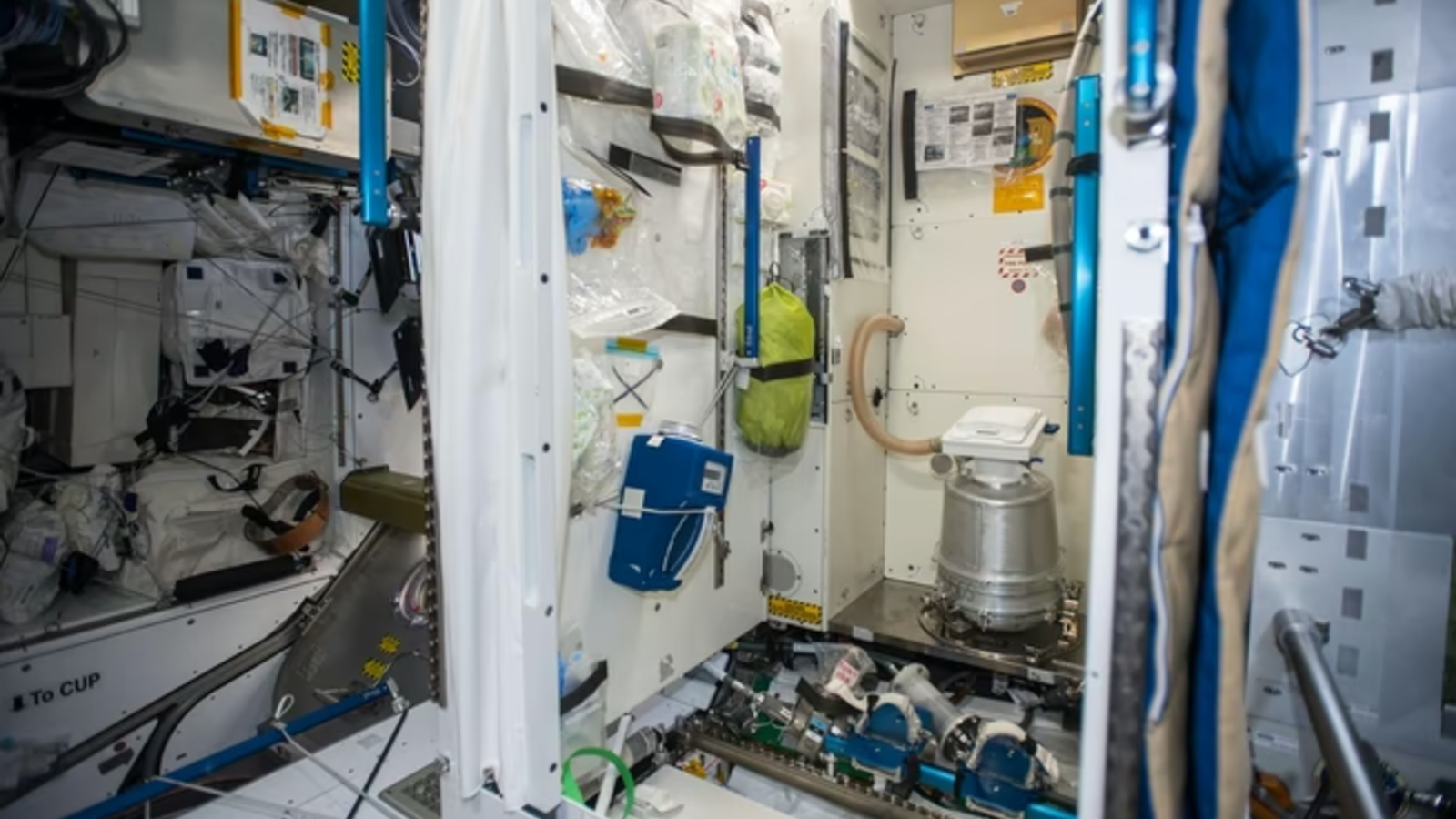
Going to the bathroom in space is already more complicated than it is on Earth. This photo shows the toilet, or Waste and Hygiene Compartment (WHC), on the ISS.

(Image credit: NASA)

The researchers also found that changes to astronauts' diets ‪—‬ including altered caffeine, fish and fat intake ‪—‬ may influence constipation, Live Science's sister site Space.com reported. However, this dietary factor accounts for less than one-third of the observed metabolite changes, leaving microgravity as the primary cause, the researchers noted.

What to read next
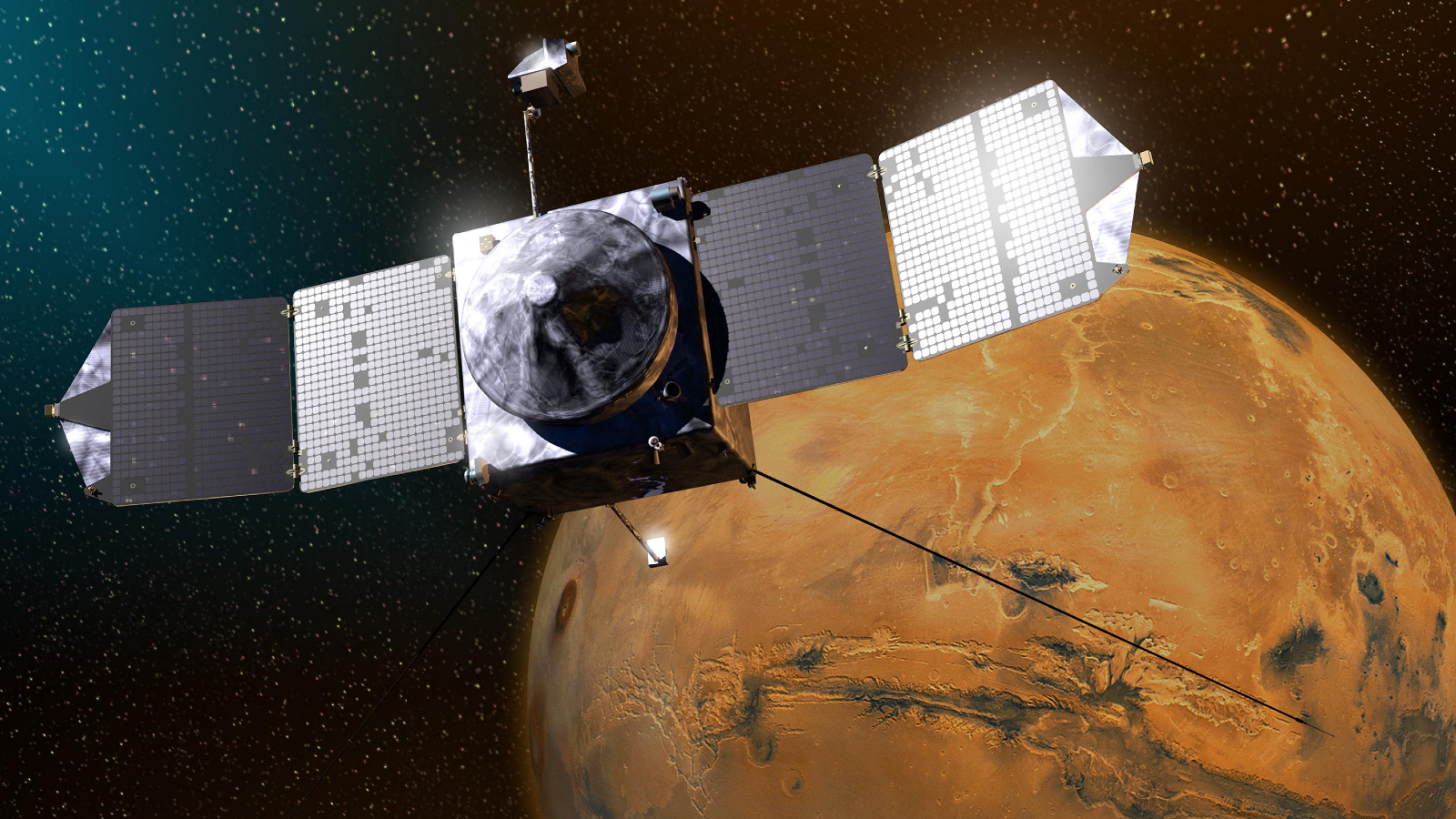
  • An illustration of MAVEN in orbit around Mars

'I would never have guessed it': Unexpected effect is squeezing Mars' atmosphere like toothpaste, experts say

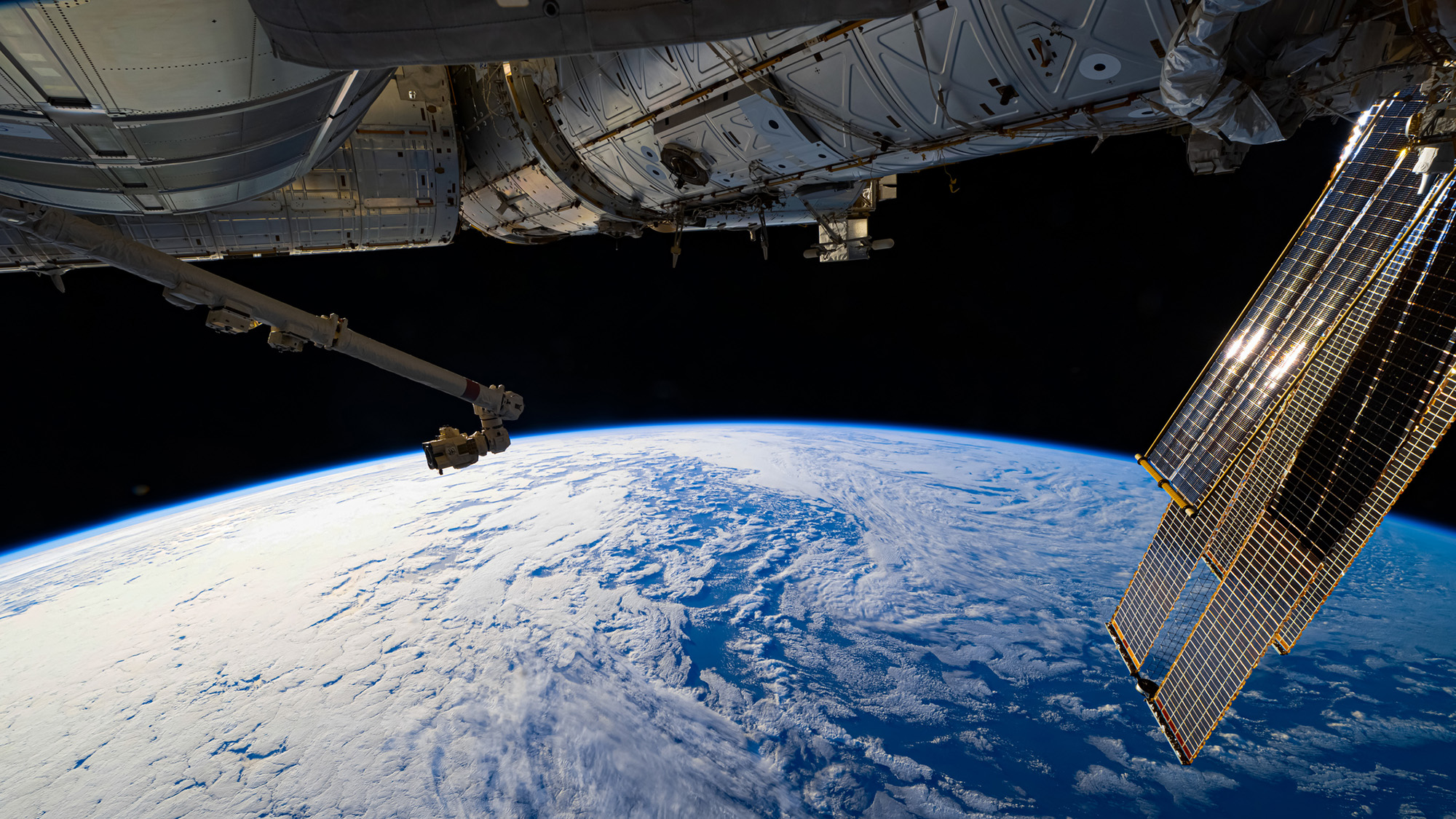
  • A view of Earth from the International Space Station, with a solar panel seen in the top right corner

Why does metal stick together in space?

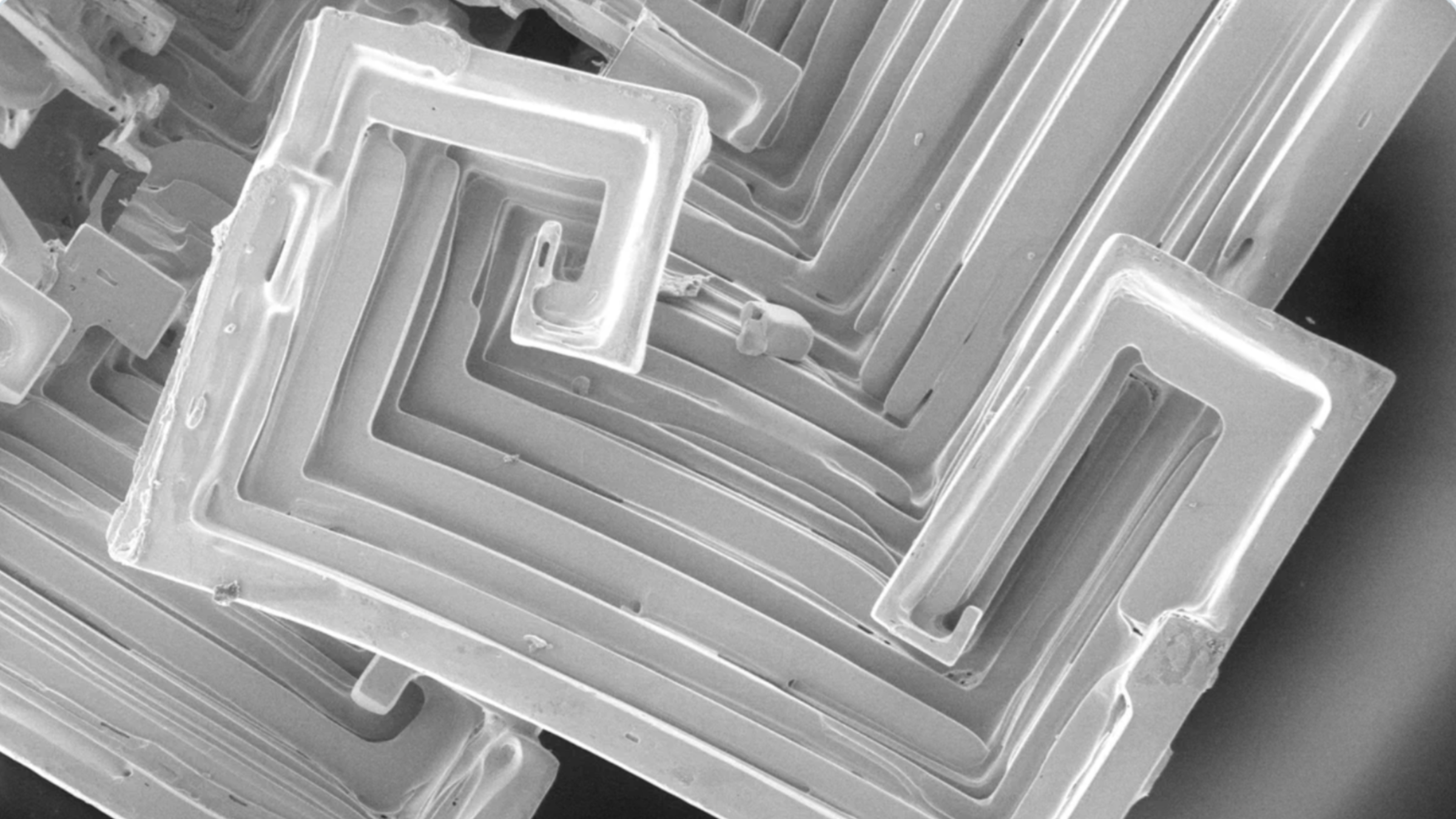
  • Scroll structure in black and white with square formation on edges.

NASA shares image of impossible-looking crystal growing on the space station. What is happening?

While it is unsurprising that microgravity is the main cause of astronauts' constipation, the discovery of increased protein fermentation raises some new concerns that may need to be addressed.

"We know that products of protein fermentation [are] often associated with negative health consequences, such as kidney damage, potential effects on mood or reduced ability to focus, among others," study co-author Lars Ove Dragsted, head of preventive and clinical nutrition at the University of Copenhagen, said in the statement. When it comes to intestinal health, products of protein fermentation have also been linked to inflammation and weakening of the gut's lining.

Over short periods, these potentially harmful metabolites, including ammonia and hydrogen sulfide, likely pose limited risks to astronauts' overall health. However, long-duration spaceflights — like those that may one day carry astronauts farther into the solar system — could cause these compounds to rise to harmful levels, the study authors said.

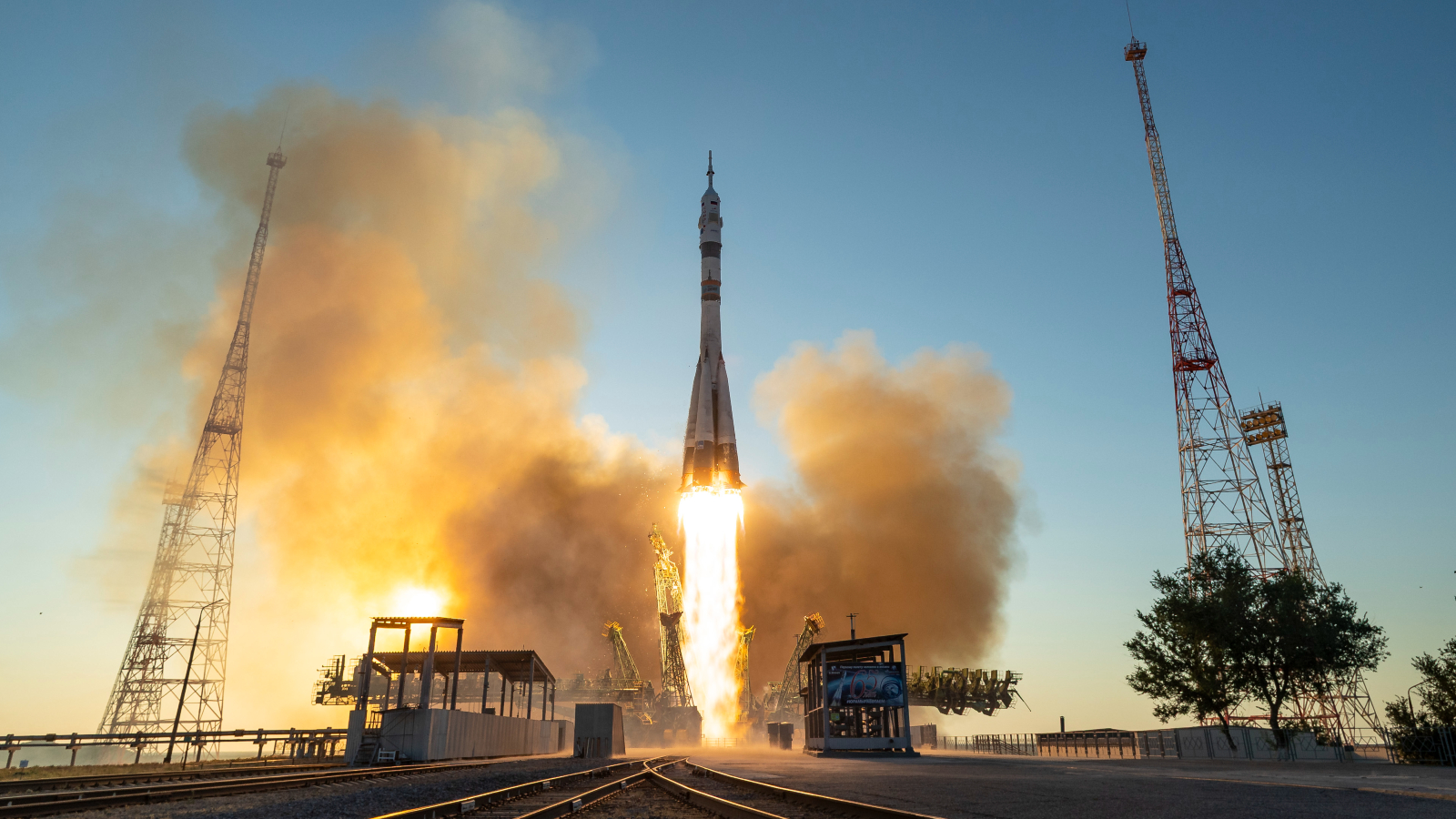
Photo of a Soyuz rocket launching from Russia in July 2026

Researchers are concerned that long-haul spaceflights could cause metabolites from protein fermentation to rise to dangerous levels. This photo shows a Russian Soyuz rocket carrying the most recent crew members to the ISS on July 14, 2026.

(Image credit: Bill Ingalls/NASA via Getty Images)

It is also unclear how prolonged periods of reduced gravity, like those experienced by future residents of NASA's upcoming moon base, could affect protein fermentation in the gut. (The current study covered only brief stints on the ISS.)

RELATED STORIES
Hoe vind je dit bericht?
Geschreven door peter om 20:54 Stuur door

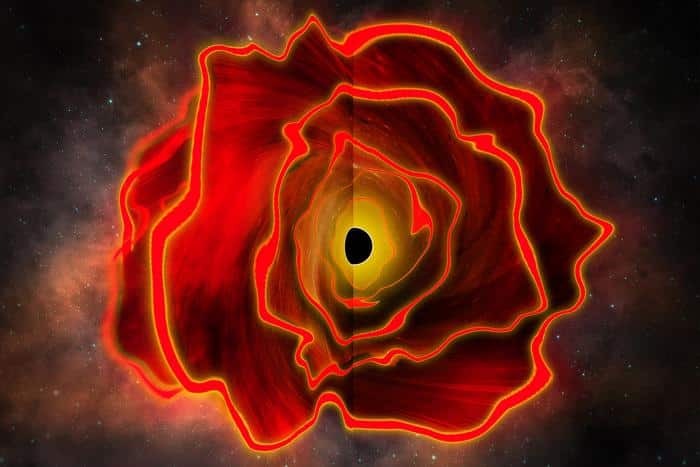
Astronomen hebben een nieuw type object ontdekt in de ruimte: de zwartegatster

image.jpeg

Astronomen hebben een nieuw type object ontdekt in de ruimte: de zwartegatster

 Jeannette Kras - Redacteur

Astronomen hebben in het vroege heelal een opmerkelijk object ontdekt. Het lijkt op een enorme ster, ongeveer zo groot als ons zonnestelsel, maar het straalt honderd miljard keer meer energie uit dan een gewone ster. De meest waarschijnlijke verklaring: een volledig nieuw type kosmisch object, een zogeheten zwartegatster.

De ontdekking, gepubliceerd in Nature, is gedaan met de James Webb-ruimtetelescoop. De telescoop legde het helderrode object vast in een periode waarin het heelal nog maar enkele honderden miljoenen jaren oud was. Het lijkt te bestaan uit een centraal zwart gat, omgeven door een enorme, dichte gasmantel. De energie is daardoor niet afkomstig van kernfusie, zoals bij gewone sterren, maar van het zwarte gat zelf.

Hoofdauteur Rohan Naidu: “We denken dat er een centraal zwart gat zit dat 100.000 keer zo zwaar is als de zon. Daaromheen bevindt zich een zeer uitgestrekte gasmantel die eruitziet als een ster ter grootte van het zonnestelsel. Het is enorm.”

De ontdekking kan bovendien een verklaring bieden voor de mysterieuze kleine rode stippen die op vrijwel alle diepe opnamen van de James Webb-telescoop opduiken. “Deze kleine rode stippen lijken overal in het vroege heelal voor te komen, maar verdwijnen tegen de huidige tijd bijna volledig”, zegt Naidu. “Wat deze objecten precies zijn, is een van de meest bediscussieerde onderwerpen uit het James Webb-tijdperk.”

Op zoek naar vroege sterrenstelsels

De astronomen zochten niet bewust naar een zwartegatster. Het team gebruikte de James Webb-telescoop om de vroegste sterrenstelsels op te sporen in een onderzoeksprogramma met de naam Mirage or Miracle (MoM). “Er is al enige tijd een raadsel rond veel heldere oude sterrenstelsels”, zegt Naidu. “Wat we ontdekten, is dat iets wat eruitziet als een uitzonderlijk helder vroeg sterrenstelsel, oftewel een ‘miracle’, in sommige gevallen eigenlijk een ‘mirage’ kan zijn.” Het lijkt op een sterrenstelsel, maar het is in werkelijkheid iets anders.

Tijdens die zoektocht viel één object direct op: een uitzonderlijk heldere, rode stip. Rood licht wordt vaak veroorzaakt doordat stof het licht onderweg rood kleurt. Toch paste dat hier niet bij de metingen. “Wanneer we iets zien dat erg rood is in het heelal, gaan we er vaak van uit dat het is omgeven door stof, zoals roet of as”, zegt onderzoeker Robert Simcoe. “Net zoals de rook van de bosbranden in Canada de lucht boven Boston onlangs felrood kleurde, kunnen astronomische objecten roder lijken dan hun werkelijke kleur wanneer je ze door een sluier van stof bekijkt.”

Het object vertoonde bovendien een uitzonderlijk sterke Balmer-break: een abrupte afname van licht op bepaalde golflengten die normaal wordt gezien bij sterren met een dichte gasatmosfeer. “De breuk die we bij dit object hebben waargenomen, is de diepste die we ooit bij enig object hebben gezien, waardoor gewone sterren als bron zijn uitgesloten”, zegt Naidu. “Maar daardoor vroegen we ons af of we misschien een nieuw soort sterrenatmosfeer zagen, zij het op een spectaculaire schaal.” Opvallend was ook dat het licht vrijwel uitsluitend sporen van waterstof en helium bevatte.

Een nieuwe klasse objecten?

Met computersimulaties testte het team verschillende verklaringen. Een extreem dichte waterstofmantel bleek de bijzondere lichtsignatuur goed te verklaren, maar niet de enorme helderheid. “Je hebt iets dat een beetje op een ster lijkt, maar 100 miljard keer helderder is”, zegt Naidu. “Dat betekent dat kernfusie onmogelijk de energiebron kan zijn, terwijl dat het proces is dat alle sterren die we kennen aandrijft.” Een actief zwart gat kan die hoeveelheid energie wél produceren. Simulaties waarin een zwart gat werd gecombineerd met een enorme waterstofmantel kwamen het beste overeen met de waarnemingen.

Het object kreeg de naam MoM-BH*-1. Mogelijk is het de eerste vertegenwoordiger van een geheel nieuwe klasse kosmische objecten. De minder heldere rode stippen die JWST op andere plekken in het vroege heelal ziet, zouden eveneens zwartegatsterren kunnen zijn. “Elke kleine rode stip is in overeenstemming met een zwartegatster, ingebed in een gewoon vroeg sterrenstelsel”, zegt Naidu. “Maar wat MoM-BH*-1 bijzonder maakt, is dat de zwartegatster zijn omringende gaststelsel vrijwel volledig overstraalt, waardoor we puur het licht van de zwartegatster zien.”

Bronmateriaal

GERELATEERDE VIDEO'S

James Webb Found a “Black Hole Star”

5 Facts About the Black Hole Star Astronomers Just Found

Mystery of Mom bh Star 1: Dawn of the Universe Unveiled #shortvideo #space #astrophysics

{ https://scientias.nl/nieuws/astronomie-ruimtevaart/ }

Hoe vind je dit bericht?
Geschreven door peter om 23:14 Stuur door

Secret Soviet UFOs: What happened when two scientists knocked on a door in Estonia? | Reality Check

Secret Soviet UFOs: What happened when two scientists knocked on a door in Estonia? | Reality Check

Ross Coulthart
https%3A%2F%2Fmedia.zenfs.com%2Fen%2Fnewsnation_articles_600%2F86fb6d502130a843b5ec37b925052551.png

Something metallic turned up under a garden in a quiet Tallinn suburb in 1969, and the Soviets spent the next twenty years trying to get it out, bringing in excavators and scientists and military, borrowing the house from its owners and living in it, digging on and off until perestroika ended the whole effort and they walked away. Astrophysicist Dr. Beatriz Villarroel and Ocean X co-founder Dennis Åsberg went to that address to find out what is still down there. Nobody came to the door, but the neighbor who had watched all of it from his window talked to them for an hour.

This is their full conversation with Ross Coulthart, recorded for "Secret Soviet UFOs" and running well past what the special had room for. Villarroel walks through the peer-reviewed work that brought her to Estonia, highly reflective objects photographed in orbit years before anyone on Earth had launched a satellite, and why she thinks the same search belongs in the ground. Åsberg ties Merivälja to the Baltic Sea anomaly his team found on sonar roughly 300 kilometers away and argues that both could predate the last ice age. Between them, they count five European cases and will not give up the coordinates of one of them. What nobody can answer yet is what sits under that garden, and the only thing that would settle it is ground-penetrating radar in the yard of a man who has already told them no.


Secret Soviet UFOs: What happened when two scientists knocked on a door in Estonia? | Reality Check

Reality Check: Secret Soviet UFOs | KGB swarms suburban house in UFO hunt
Hoe vind je dit bericht?
Geschreven door peter om 22:51 Stuur door

The Truth Behind UFO Sightings over Canada’s Nuclear Facilities

I’ve spent five decades investigating. Here are the facts

Hoe vind je dit bericht?
Geschreven door peter om 22:40 Stuur door

FBI Files Detail 'Bronze Metallic Object' Materialising in Sky as Pentagon Releases UFO Data

FBI Files Detail 'Bronze Metallic Object' Materialising in Sky as Pentagon Releases UFO Data

For the first time, complete UFO case files drawn from multiple federal agencies have been made directly accessible online

Pentagon

The Pentagon has started putting decades of declassified UFO files online via a new public website, officials in Washington confirmed on Friday. 

PHOTO Wayne Thornton/Pinterest

The Pentagon has begun publishing decades of declassified UFO files on a new public website, officials confirmed on Friday in Washington, bringing previously secret reports from the late 1940s to 2025 into the open for the first time.

The move follows President Donald Trump's directive earlier this year ordering US agencies to release government records on UFOs, now formally labelled unidentified anomalous phenomena, or UAPs, along with any files touching on 'extraterrestrial life.'

The All-domain Anomaly Resolution Office, known as AARO, has spent recent years sifting through historic reports and producing public summaries, but this is the first time complete case files, drawn from multiple federal agencies, have been made directly accessible online.

Pentagon UFO Website Puts 'Never-Before-Seen' Files in One Place

The Pentagon said the new site will host 'never-before-seen' UFO material, including videos, photos and original documents pulled from across the US government.

In a statement, the Department of Defence stressed that anyone can now search the database without security clearance, and promised further releases on a 'rolling basis' as more files are reviewed.

It can be recalled that interest in UFOs has surged in recent years, fuelled by leaked cockpit footage, congressional hearings and an increasingly vocal community of former officials urging transparency.

The Pentagon appears keen to show it has heard that noise. Secretary of Defence Pete Hegseth hailed Friday's drop of documents as 'unprecedented transparency,' even as some files arrive heavily redacted, with full pages blacked out.

Many of the UFO sightings cluster around sensitive military activity and major deployments. In the 1950s and 1960s, that meant Cold War flashpoints in Germany and the Soviet Union.

In more recent years, alleged encounters concentrate in the Middle East, particularly near the Strait of Hormuz, Iraq and Syria, where the US has maintained a sustained footprint and some of its most advanced surveillance kit.

Officials suggest that it is no coincidence. The lion's share of reports in the cache come from military pilots and personnel, often using sophisticated sensors that far outstrip civilian technology. If you go looking with the best gear, in other words, you see more weird stuff.

Crucially, in all of the incidents described in the newly released records, the Pentagon says the aerial phenomena posed no apparent threat to US forces. Most of the unknown objects either broke contact abruptly or vanished from view just as quickly as they had appeared.

Orbs, a 'Super-Hot' Object and a Bronze UFO in the Sky

Among the more recent entries, one 2023 case in the western United States stands out inside the document trove. Over two days, federal law enforcement officers independently reported strange orbs in the sky, with one account describing 'orbs launching other orbs.'

The Pentagon itself labels that episode 'among the most compelling' in its holdings, although the files stop short of any firm conclusion about what was actually seen.

In a separate 2024 encounter in Iraq, an unidentified craft was reported zipping across the surveillance systems of a US aircraft at high speed while the crew was engaged in an unrelated strike. The object cut across their sensors but, again, did not interfere with the mission and disappeared as quickly as it arrived.

A 2025 account relayed by a senior intelligence officer to the FBI pushes things further into science-fiction territory. According to the government's own description, US personnel were dispatched in a helicopter to search an area where orbs had previously been reported.

They allegedly located a 'super-hot' orb hovering above the ground, which then travelled roughly 20 miles at a speed too fast for the helicopter to keep up. That is the sort of detail that will send online forums into overdrive.

The historic files are hardly less surreal. NASA transcripts from 1969 in the release record Apollo 11 astronaut Buzz Aldrin telling officials he saw what he described as a 'possible laser' in space, noting a 'fairly bright light source' that the crew tentatively ascribed to that explanation.

UFO

Trump says it was his push for 'complete and maximum transparency' that forced the release of UFO files  Pinterest

Then there is the FBI's own artwork. One composite sketch, based on witness reporting, shows what the bureau calls an 'apparent ellipsoid bronze metallic object materialising out of a bright light in the sky, 130-195 feet in length, and disappearing instantaneously.'

The image reads like classic UFO lore, except this time it is filed in a government record rather than a tabloid or late-night talk show.

Trump Claims Credit as Experts Warn of New Speculation

Trump teasing a major disclosure of UFO and UAP material. On his social media platform, the president took a victory lap on Friday, saying it was his push for 'Complete and Maximum Transparency' that forced the release.

'It was my Honor to direct my Administration to identify and provide Government files related to Alien and Extraterrestrial Life, Unidentified Aerial Phenomena, and Unidentified Flying Objects,' Trump wrote, claiming the publication will allow Americans to 'decide for themselves' what is happening in the skies.

Last month, while welcoming the Artemis II astronauts to the Oval Office, Trump told reporters that his administration would be 'releasing as much as we can in the near future.' UFOs, he said, had been 'in the minds of people for a long time', hinting that the government needed to catch up with public curiosity.

Not everyone inside the Pentagon ecosystem is thrilled about how the data drop is being presented.

Sean Kirkpatrick, the former head of AARO, issued a pointed warning against reading too much into raw files without expert context.

READ MORE

  • UFO

The Pentagon Just Declassified a UFO 'Time Warp' Encounter and Harvard Is Blaming Alien Technology

He said there was 'nothing unexpected' in the latest release and argued that, without analysis, the website would 'only serve to fuel more speculation, conspiracy and armchair pseudoscience, particularly from the playhouse politics theatre company.'

For starters, AARO's official reviews to date have not found any evidence that UFOs or UAPs are extraterrestrial in origin. That conclusion runs directly against the hopes of some true believers, and it is one reason the office has itself become a target of suspicion and wild claims.

The newly released files arrive, then, in an awkward middle ground. On one hand, this is the first time complete case files, even in redacted form, have been published straight from federal archives. On the other, many pages remain obscured, and the government is still saying, essentially, that nothing in its vaults proves alien visitors.

Whether this wave of UFO transparency calms public obsession or just adds more fuel to it, the files are now out there, and they are not going back in the box.

RELATED


Pentagon UFO Files Just Turned Terrifying — 3 Unclassified Unknown Objects Appeared

Pentagon's UFO file releases mark a historic shift in transparency

{ https://www.ibtimes.co.uk/ }

Hoe vind je dit bericht?
Geschreven door peter om 22:15 Stuur door

Iran’s Alien Files? Tehran’s U.S. Conspiracy Claim Takes on New Leverage in a High-Stakes War

Iran’s Alien Files? Tehran’s U.S. Conspiracy Claim Takes on New Leverage in a High-Stakes War

America ı By Samuel Lopez

Man in a dark suit sits at a desk, hands folded, with the Iranian flag on his left and a gray alien figure in the background.

INSIDE THIS REPORT

  • Iranian media once promoted an extraordinary claim that alien forces secretly controlled the United States.
  • No verified evidence establishes that Iran possesses UAP materials—or that the U.S. has an alien partnership.
  • But in wartime, even unproven “disclosure” claims can become a potent tool of propaganda, pressure and psychological warfare.

By Samuel López | USA Herald

As U.S.-Iran hostilities continue to shake the region, an old and extraordinary allegation from Iranian state-aligned media is worth revisiting—not as proof of extraterrestrial contact, but as a warning about how UAP narratives can be turned into geopolitical weapons.

In January 2014, Iran’s semi-official Fars News Agency circulated a report claiming the United States had been governed since 1945 by a secret extraterrestrial “shadow government.” The story invoked a supposed alien agenda, alleged contact with President Dwight D. Eisenhower, and claims attributed to documents supposedly linked to former NSA contractor Edward Snowden. Radio Free Europe/Radio Liberty reported on the Fars publication and its allegations at the time.

The claim takes on a different significance in the middle of a real geopolitical crisis. The relevant question is no longer whether the 2014 story was credible—it was not supported by verifiable evidence—but whether Tehran could revive, expand or strategically deploy the same narrative if it claimed to possess proof that the United States has been governed by a secret extraterrestrial “shadow government” since 1945.

To be clear, there is currently no public, credible evidence that Iran possesses such proof, or that the United States has cooperated with extraterrestrial beings, or has hidden an alien program from Congress or the public.

The Pentagon’s All-domain Anomaly Resolution Office reached a similar conclusion in its historical report. Read AARO’s historical-record report here.

But, that doesn’t end the legal, political or national-security significance of the subject. It sharpens it.

A government at war does not need authentic alien artifacts to exploit public interest in alien artifacts. It needs a plausible narrative, carefully timed releases, selectively edited footage, ambiguous radar tracks, alleged insider testimony, or claims that cannot immediately be disproven because the underlying information is classified.

If Iran were to announce that it possessed UAP-related material—whether real, misunderstood, fabricated, foreign-made, or simply unexplained—the first battlefield would be public confidence. Tehran could frame the release as evidence that Washington has concealed advanced technology, lied to its own citizens, or maintained secret arrangements beyond democratic oversight.

The immediate target would not necessarily be scientists. It would be American public trust.

That kind of disclosure campaign could be designed to trigger congressional demands for classified briefings, force the White House into rapid denials, fuel online speculation, and divide an already polarized public over whether officials are withholding information. It could also muddy the line between authentic classified aerospace programs, adversary technology, drone incursions and truly unresolved aerial events.

The strategic value would be especially high during sensitive diplomacy. A claimed Iranian “UAP disclosure” could be deployed to distract from sanctions negotiations, military setbacks, intelligence disclosures, weapons inspections or domestic unrest. Tehran could offer supposed evidence through intermediaries, friendly media channels, foreign intelligence contacts, or international institutions—then demand political concessions, sanctions relief, security guarantees, or a halt to military action in exchange for access to the material.

That would amount to leverage by ambiguity.

The legal problem for the United States would be just as serious as the public-relations problem. If Iran released purported documents identifying U.S. facilities, defense contractors, aviation programs or alleged recovery sites, federal officials could face a difficult choice: deny the allegations and risk validating portions of the disclosures, or refuse substantive comment and allow speculation to intensify.

American intelligence agencies have confronted versions of that dilemma for decades. Genuine classified programs, especially aerospace, surveillance and weapons-development projects—can create the appearance of a cover-up when viewed without context. AARO itself noted that secrecy surrounding legitimate national-security programs has fueled public speculation about hidden extraterrestrial knowledge.

Iran could exploit that uncertainty with remarkable precision.

Still, extraordinary claims require extraordinary proof. A grainy video, anonymous source, metal fragment, or government statement probably wouldn’t do much to establish ‘proof’ of an extraterrestrial U.S.-connection.

Without real and authenticated evidence, a revived Iranian claim that they have alien materials or proof that the “United States is being governed by a secret extraterrestrial “shadow government,” would be political theater—not disclosure.

But political theater can matter during war. It can move markets, influence public opinion, strain alliances and force governments to spend valuable time rebutting claims that were engineered to be impossible to conclusively disprove in real time.

Iran’s 2014 alien-shadow-government story may have been dismissed as fringe propaganda. In today’s environment, however, it offers a revealing preview of how UAP narratives could be repackaged as a modern instrument of state pressure: not to prove that aliens are here, but to exploit the fact that millions of people believe governments may know more than they are saying.

{ https://usaherald.com/ }

Hoe vind je dit bericht?
Geschreven door peter om 21:55 Stuur door

'We Want to Believe' book explores the reality of UFOs: 'It's always going to be more likely that someone is wrong about what they saw' (interview)

'We Want to Believe' book explores the reality of UFOs: 'It's always going to be more likely that someone is wrong about what they saw' (interview)

"They're not supernatural or miraculous. If they really existed they'd exist in time and space and three dimensions like everything else."

a person looks up at a bright light in the sky

UAPs are hot these days, whether they can be partially explained or wholly dismissed 

(Image credit: David Wall/Getty Images)

After all these years, we still want to believe.

Whether you're a bona fide believer or a staunch skeptic, we can all agree that UFO legends and lore is a fascinating subject that continues to fuel endless debate. And with pop culture feeding our lizard brains lurid tales of flying saucers and alien invasions, it’s no wonder humanity is always up for a good story of inexplicable aerial sightings or various uncanny encounters of the third kind.

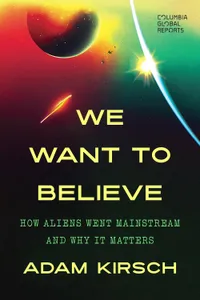
In "We Want To Believe: How Aliens Went Mainstream And Why It Matters" (Aug. 25, Columbia Global Reports), acclaimed literary critic and Senior Editor at The Atlantic Adam Kirsch explores this insatiable drive to wonder at unidentified phenomena. For Kirsch, the topic asks many of the same questions that human religions do. "For me, humanity's way into the subject is that UFOs are a way of thinking about a lot of the same questions we might also think about in religious or philosophical terms," Kirsch told Space in an interview. "Questions like what is unique about humanity, are we alone in the universe, are there other minds, what's our destiny as a species?"

Kirsch says the recent wave of alleged whistleblowers helped push him towards studying UFOs, or UAP, as they're now known.

"The real start of my interest in the subject was in 2017 when there was this sudden reporting in the mainstream media about the Pentagon UFO videos and the so-called secret program to collect UFO reports. For the first time, it seemed like maybe there was some legitimate news or evidence."

You may like
  • Composite of front covers from Mack's "Abduction," Jung's "Flying Saucers," Vallees' "Passport to Magonia," Elizondo's "Imminent," and Pasulka's "American Cosmic."

Get ready for the next Pentagon file drop with our essential UFO reading list

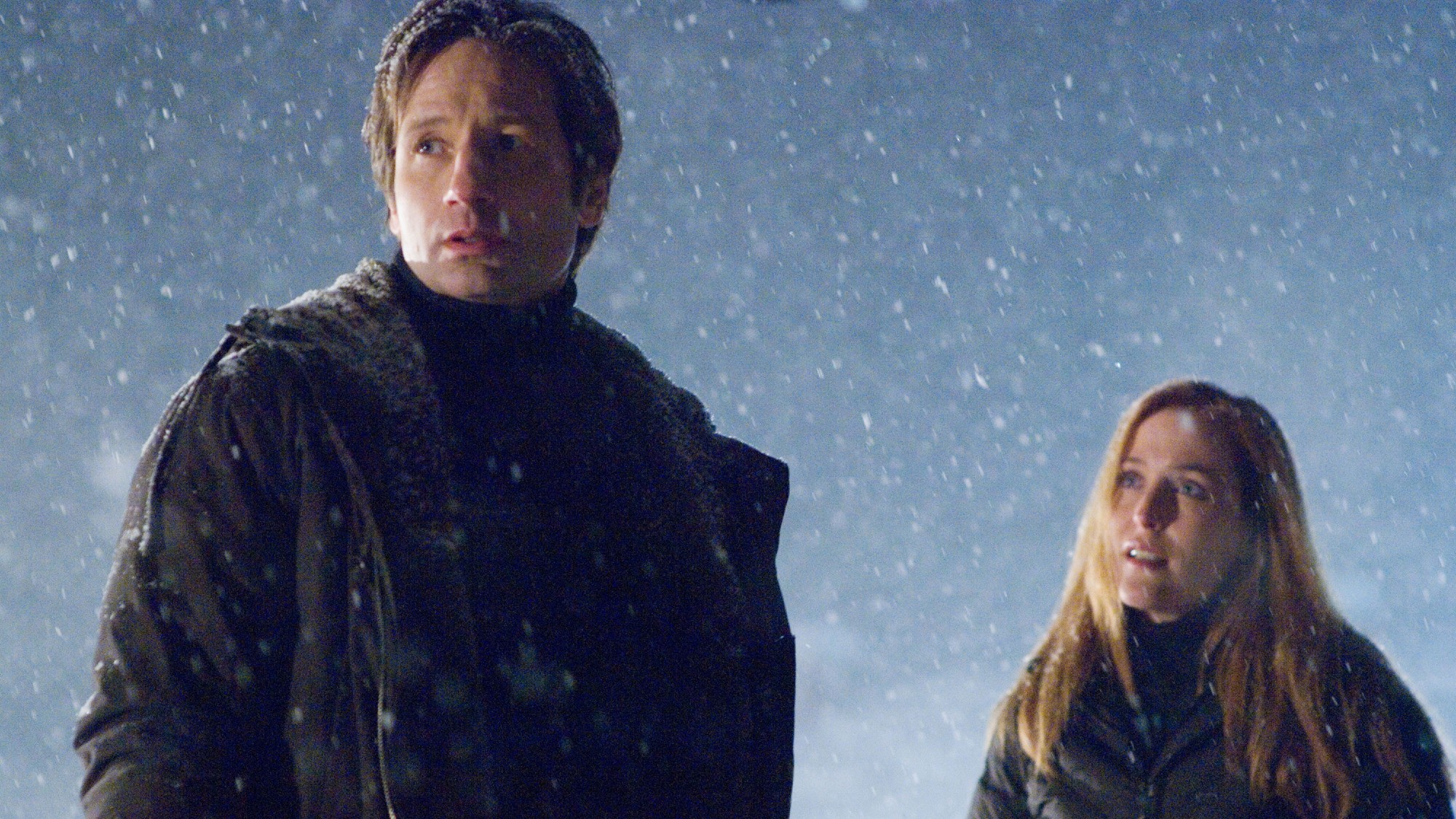
  • a man in winter clothing looks confused outside in the snow

'The X-Files' creator Chris Carter says new director's cut of 'I Want to Believe' is 'the horror movie that we really wanted to make' (interview)

  • Navy pilots have encountered unidentified aerial phenomena (UAP).

'This is unprecedented': Why the Pentagon's recent UFO file releases are so important

a yellow, green and red ufo book cover

"We Want To Believe" touches down in bookstores on Aug. 25, 2026.  (Image credit: Columbia Global Reports)

Kirsch recognized that monumental occasion as a pivotal moment that truly altered the way that American culture and media talked about the titillating topic.

"I got more into the history and the lore of UFOs and partly out of just that basic idea that it would be really cool if there were other minds in the universe. It would be amazing if we could find proof of that. Over the years it's happened repeatedly in this history of UFOs. There's a lot of public excitement and then it peters out because there is no evidence and there isn't anything concrete to point to. And that's definitely what's happened over this last cycle."

Using grounded scientific logic and basic common sense, Kirsch brings a calm measured approach to the UAP hysteria that's been gripping the whole country.

"One of the interesting things about testimony that people like David Fravor and Ryan Graves gave about this is, 'When the camera sees something, the person doesn't see it. And when the person sees something, the camera doesn't see it.' It's always one or the other, it's never both at the same time. Even as long ago as the 1950s, people were saying that UFOs for some reason are not photogenic. No one ever seems to be able to get a real clear image of a UFO the way you’d think you'd be able to if they actually exist in the atmosphere."

an author profile image of a man in glasses

Senior Editor for The Atlantic and literary critic Adam Kirsch.  (Image credit: Columbia Global Reports)

"The obvious and logical explanation is that there's nothing to take a picture of. But it does get to this basic question of how do we go from, 'I had an experience' to 'This is what the experience tells me about the world.' I talk in the book about the difference between evidence and testimony. When they're talking about UFOs, people often blur that distinction. Testimony is an account and people are often wrong or misinterpret about what happened to them."

What to read next
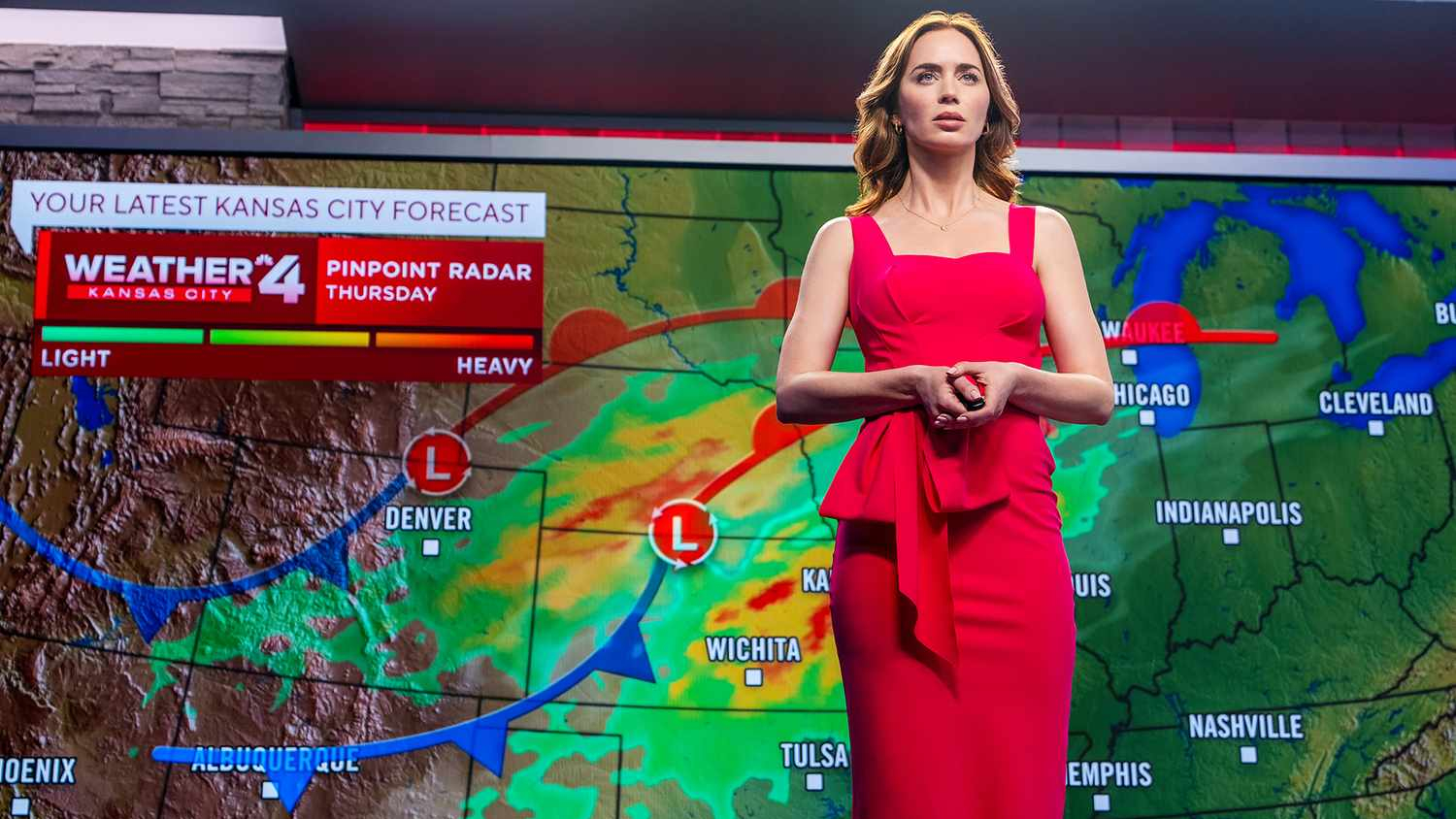
  • A blonde woman in a red dress presenting a weather forecast.

Why Steven Spielberg's 'Disclosure Day' feels like the most exciting sci-fi release of the year

  • The Allen Telescope Array at the Hat Creek Radio Observatory in Northern California.

How should we handle alien detection in a world of AI, deepfakes and social media? This committee is writing the rulebook

  • This Week In Space podcast: Episode 215 — Disclosure Day

This Week In Space podcast: Episode 215 — Disclosure Day

After all the smoke clears, the test that Kirsch declares must be applied to these reports is the same test that 18th-century philosopher David Hume said when talking about religious miracles.

"You don't have to prove that a miracle didn't happen, all you have to do is prove that it's more likely that someone was wrong, than that the laws of nature were suspended," Kirsch adds. "The same is true of UFOs. They're not supernatural or miraculous. If they really existed they'd exist in time and space and three dimensions like everything else. Based on the way we understand the universe and space travel, makes the odds very small that a UFO report would really be an actual extraterrestrial spacecraft. It's always going to be more likely that someone is wrong about what they saw.

"Modern science and scientific education is all about learning to not trust your instincts. It's about learning to say that the way that I spontaneously understand the world is wrong and there's a better way to understand it. UFOs are a perfect example of this because there's no evidence for them, but there's lots of people that see things in the sky they don't understand.

"With these released UAP videos, we might not be getting the whole truth, but that doesn't mean the whole truth is as interesting as I want it to be, and that there's some cosmic secret."

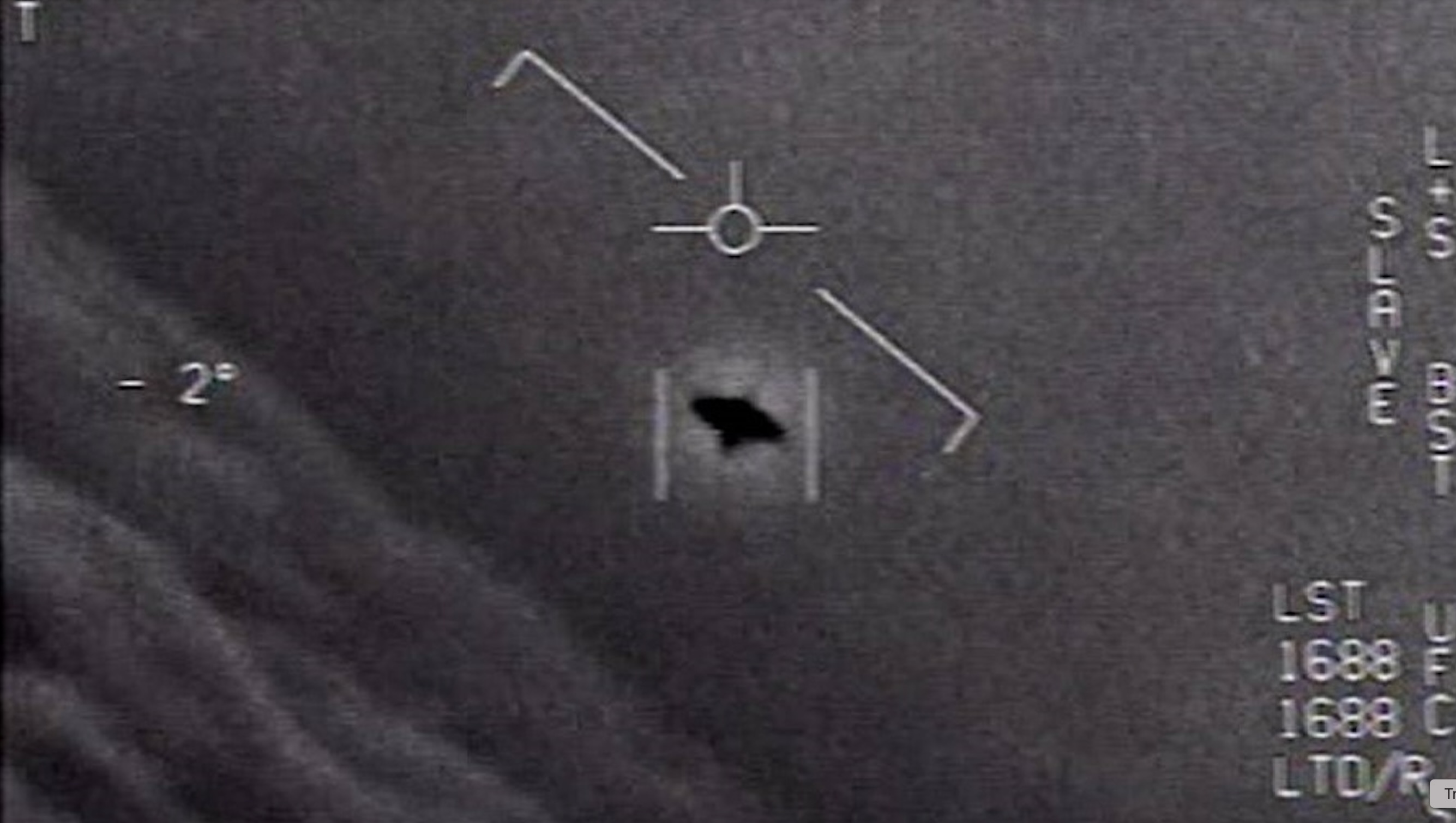
U.S. Deputy Director of Naval Intelligence Scott Bray explains a video of an unidentified aerial phenomena, as he testifies before a House Intelligence Committee subcommittee hearing at the U.S. Capitol on May 17, 2022 in Washington, DC.

U.S. Deputy Director of Naval Intelligence Scott Bray explains a UAP video before a House Intelligence Committee subcommittee hearing on May 17, 2022.  (Image credit: Kevin Dietsch/Getty Images)

"We Want To Believe" is available at bookstores and online outlets Aug. 25, 2026.

We Want to Believe: How Aliens Went Mainstream and Why It Matters

We Want to Believe: How Aliens Went Mainstream and Why It Matters: was US$18 now US$14 at Amazon

In "We Want to Believe," Adam Kirsch traces the intellectual history behind UFOs. The book draws on declassified documents, military encounters, and a wide literature of belief and skepticism to examine why some questions endure and what it means for modern societies when certainty fails and curiosity persists.

RELATED

Schoolyard witnesses in mass UFO sighting demand answers | Australian Story

{ https://www.space.com/entertainment }

Hoe vind je dit bericht?
Geschreven door peter om 21:05 Stuur door

Metals recovered by Russia from alleged UFO appear not to be from Earth: Coulthart

Metals recovered by Russia from alleged UFO appear not to be from Earth: Coulthart

Rob Taub

(NewsNation) — Some metals from an alleged UFO recovered by Russia in Estonia were determined not to be of Earthly origin.

NewsNation special correspondent Ross Coulthart told “NewsNation Prime” the discovery by Russian scientists showed the metals were “not normal isotopic ratios that you would expect for similar metals that were found on this planet.”

The development follows Coulthart’s latest podcast, “Secret Soviet UFO,” which details a story from the 1960s where a suburban couple was doing routine work on their home when a worker digging a well struck a hard metallic object.

“The reality is the Soviet Union had its fair share of anomalous events and this is one of the most celebrated ones,” Coulthart said after visiting the site. “It’s been the subject of speculation in Estonia for many years, both before and after the fall of the Iron Curtain.”

KGB had files about the alleged UFO event: Coulthart

Coulthart noted the event was recorded in both KGB files and files of the former Overseas Intelligence Service, the KGB and now the FSB.

“We also know from multiple witnesses who were on the ground at the time that there was a massive investigation where the Soviet military came in, the whole house garden was dug up, there was a tunnel dug to the object, whatever it was, and there were reports — multiple reports — of people including a worker that tried to hit the object with a pickaxe,” he added.

“He was hit in the chest by some kind of propulsive force. We don’t know what that force was, but as a result of that incident and weird anomalous things that happened in and around the house that were witnessed and recorded again by multiple witnesses, the entire tunnel system was closed up and as best as we know, the object has never been recovered,” Coulthart said.

Metals discovered supposedly caused weird events: Coulthart

The object — now dubbed “Object M” — appeared to cause “weird phenomena” around the house, with multiple events recorded by multiple witnesses. Coulthart noted Russian files were discovered that exemplified diagrams of Object M under the ground.

“There were ground-penetrating radar tests done by scientists intriguingly at the very beginning of the end of the Cold War in the early 1990s; there was even a Japanese team that went and did their own ground-penetrating radar survey and they confirmed that there was indeed an anomalous metallic object about 30 metres, 30 feet under the house.”

Coulthart believes the discovery led to one of the biggest UFO investigations of all time.

“The Soviets in the era of the Cold War dedicated an investigation to over 10,000 UFO cases, and what they found proved beyond any shadow of a doubt that Russia was very, very interested in UFOs,” he acknowledged.

RELATED VIDEOS

Metals recovered by Russia from alleged UFO appear not to be from Earth: Coulthart #Shorts

Could a piece of metal found by the Soviet Union in the 60s be from UFO?

{ https://www.newsnationnow.com/entertainment-news/ }

Hoe vind je dit bericht?
Geschreven door peter om 20:41 Stuur door

Did the Government Just Admit It Can’t Explain the UAP Orbs — Or Did It Just Hire Someone to Explain Them Away?

Did the Government Just Admit It Can’t Explain the UAP Orbs — Or Did It Just Hire Someone to Explain Them Away?

America ı By Samuel Lopez

Untitled

INSIDE THIS REPORT

  • Avi Loeb says government sources asked him to build a science council because they can't explain UAP orbs as human-made tech.
  • The wording raises a hard question: are officials seeking answers, or a credible cover story?
  • A closer look at the "orb" phenomenon suggests something Loeb's framework may not be built to capture.

By Samuel López | USA Herald

WASHINGTON - Professor Avi Loeb has spent the summer of 2026 becoming the most quoted man in ufology, and his latest post on X may be the most consequential yet. Writing through the account of the UAP Science Advisory Council he now chairs, Loeb said reliable, national-security-focused U.S. government sources asked him to build the council because the nature of UAP orbs remains unresolved based on all publicly available data — and, as he put it in his own words, because they cannot explain the orbs "in terms of human-made technologies."

That single phrase deserves more scrutiny than it has received.

“Reliable US government sources who are focused on national security asked me to establish the UAP Science Advisory Council because they cannot explain UAP orbs in terms of human-made technologies. Given these circumstances, it is the duty of all genuine scientists to figure out who these strangers visiting our backyard are.” - Professor Avi Loeb @ProfAviLoeb

On its face, Loeb's statement reads as vindication for years of witness testimony: the government, by its own admission, is stumped. But read it again. "Cannot explain UAP orbs in terms of human-made technologies" is not the same sentence as "cannot explain UAP orbs." It is narrower, and the narrowness may be the point. It suggests a search confined to one hypothesis space — ours — rather than an open inquiry into what these objects actually are.

If the goal from the outset is to find a terrestrial, technological explanation, then the council isn't hunting for the truth. It's hunting for the most defensible version of a predetermined answer.

That distinction matters enormously, and it is worth asking plainly: are the agencies who approached Loeb genuinely trying to solve the orb phenomenon, or are they trying to acquire his credibility — his Harvard pedigree, his media fluency, his willingness to speak in public — to construct a narrative the public will accept?

A scientist of Loeb's stature lends enormous weight to whatever conclusion eventually gets announced. That weight is valuable whether the underlying goal is disclosure or damage control.

Loeb's own record complicates the picture further. Public reporting this year has repeatedly noted that the council formed after intelligence and defense officials, including the Pentagon's All-Domain Anomaly Resolution Office, the ODNI, and the FBI, tasked him with assembling a multidisciplinary panel to bring scientific rigor to the government's UAP files.

Loeb has framed his approach as a "whodunit" — better sensors, better data, elimination of competing explanations. That is a defensible scientific method. But method only gets you as far as the assumptions baked into it, and this investigation may be starting with the wrong ones.

Here is where independent research into the orb phenomenon diverges sharply from the official framework. Reports of sphere-like objects — the so-called Buga sphere, metallic ball-shaped craft, luminous circular objects tracked by military sensors — are typically treated as a single category: unknown physical craft awaiting classification. Loeb's council, understandably, wants better instrumentation and material data to sort that category out. But that approach assumes the orbs are objects in the conventional sense: solid, engineered, governed by the same physics as a drone or a satellite.

My own investigation into the orb phenomenon points somewhere else entirely. The pattern that recurs across credible sightings — orbs descending low, entering the atmosphere, and appearing to track their surroundings with something resembling awareness — does not fit the profile of hardware. It fits the profile of something behaving. Witnesses do not describe machines. They describe presence. That is not a materials-science problem, and it may not yield to a materials-science solution, no matter how sophisticated the council's sensors become.

None of this proves the government is running a cover story. It is entirely possible that officials approached Loeb in good faith, hoping rigorous science will finally cut through decades of speculation. But the phrasing he chose to publish — a search for a human-made explanation — leaves the door open to a less comforting possibility: that the mission was never to find out what the orbs are, but to find a way to explain them that the public, and perhaps Congress, will accept without asking what else they might be.

Genuine science does not start with the answer it's permitted to find. Until the council's mandate is stated without that qualifier, the public is right to keep asking the question Loeb himself raised: who — or what — are these strangers visiting our backyard?


The Truth Behind UAPs: What They Don’t Want You to Know

Dr. Phil read the UAP files before the public, here's what he found | Reality Check

{ https://usaherald.com/ }

Hoe vind je dit bericht?
Geschreven door peter om 20:25 Stuur door

Fireball above Las Vegas before alien 911 call was meteor, scientist says

Fireball above Las Vegas before alien 911 call was meteor, scientist says ILLUSTRATIVE RECONSTRUCTION // NOT EVIDENCE

Overview

A bright streak of light seen over the Las Vegas sky just minutes before a family placed a 911 call reporting what they believed were alien figures was most likely a meteor, according to a scientist who reviewed the event. The flash, which briefly drew attention online and among local observers, has become the latest example of how a single sky event can quickly take on a life of its own when it overlaps with unexplained or emotionally charged reports.

The timing of the fireball — appearing shortly before the emergency call — fueled speculation among people following the story. But the scientific assessment points in a far more ordinary direction: a natural object entering Earth’s atmosphere at high speed. In other words, the dramatic light show was likely astronomical, not extraterrestrial.

What Scientists Concluded

Based on the available review of the event, the bright object was identified as a likely meteor, not evidence of alien activity. Scientists routinely use factors such as a streak’s brightness, motion, and duration to distinguish meteors from other aerial phenomena, and this case appears to fit that familiar profile. While the public conversation around Las Vegas has long included paranormal and UFO speculation, the fireball itself does not appear to provide support for those claims.

The distinction matters because fireballs are often mistaken for something more unusual, especially when they appear unexpectedly over populated areas at night. Their sudden brilliance can make them seem artificial or controlled, but that visual impact is consistent with a meteor burning up in the atmosphere. In this case, the scientific reading offers a grounded explanation for a moment that otherwise invited more fantastical interpretations.

Why the Incident Drew Attention

What made the Las Vegas episode stand out was not just the streak of light, but the proximity of that sighting to a 911 call involving claims of alien activity. That sequence gave the story a built-in tension that spread quickly beyond local news audiences. For many observers, the fireball and the emergency call seemed connected; scientists, however, say the two events should not be treated as evidence of the same cause.

This is a familiar pattern in unexplained-sky reporting: a plausible natural event occurs, then a separate human report adds a layer of mystery. When those timelines overlap, public interest often jumps ahead of the evidence. The meteor explanation helps separate what was seen in the sky from what was later reported on the ground.

Broader Context

The episode also lands in the middle of an ongoing national fascination with UFOs, paranormal claims, and unexplained aerial phenomena. In recent years, those topics have shifted from fringe conversation into mainstream debate, with new government transparency efforts and persistent public curiosity keeping the issue in the spotlight. That environment can make ordinary events feel extraordinary, especially when they happen in places already associated with spectacle and mystery.

For now, the best-supported explanation for the Las Vegas fireball is straightforward: a meteor. The 911 call may continue to fuel online debate, but the streak of light itself appears to have a scientific answer.

RELATED

Fireball above Las Vegas before alien 911 call was meteor, scientist says

Las Vegas police spot suspected UFO — and residents claim to see aliens

{ https://usubjects.com/ }

Hoe vind je dit bericht?
Geschreven door peter om 20:11 Stuur door

5.5km UFO On Moon Watching NASA 1967 Mission, UAP Sighting News.

5.5km UFO On Moon Watching NASA 1967 Mission, UAP Sighting News.

UAP_breaking_news.png

Date of photo: Feb 23, 1967
Date of discovery: Aug 22, 2026
Location of discovery: Earths moon
Source: 
There is a long spacecraft hovering over the moons surface in a NASA photo from 1967. This is 100% proof that aliens were watching humans before we ever stepped on the moon. 
 
I took the measurement of the crater in the photo called Theophilus crater, which is 110km or 68 miles across by 4.4km or 2.7 miles deep and can conclude that this UFO is 1/20 the length of the crater...equals 5.5km or 3.4 mile long UFO. Thats huge to us humans but to aliens, its considered a small shuttle craft. 
Scott C. Waring - UFO Sightings Daily
 
Aliens_UAP.png

UFO_UAP.jpg
RELATED

UFO FILES SHOCKER: NASA Astronauts Saw ‘GHOSTLY ALIENS’ On Apollo 17 Moon Mission? Big Reveal

New UFO Files Reveal Strange Apollo 17 Moon Anomaly

{ https://www.ufosightingsdaily.com/ }

Hoe vind je dit bericht?
Geschreven door peter om 18:38 Stuur door

The Atlantic: The ocean that holds Earth’s hidden history

The Atlantic: The ocean that holds Earth’s hidden history

The Atlantic has contained entire landscapes, ecosystems and geological worlds that were completely unknown to humans until very recently. As sea levels rose following the last Ice Age, entire inhabited landscapes disappeared beneath the ocean. 
Atlantic%20Ocean%20hidden%20history.jpg

Hidden beneath the Atlantic’s deep waters lie structures, lost cities, and clues that could rewrite what we know about Earth’s history, and challenge our understanding of the ancient world. Yet with more than 75% of its seafloor still unmapped, the Atlantic Ocean remains one of the least explored places on the planet. 
From sonar scans revealing geometric formations, like the Bimini road, beneath the waves, to vanished ships, underwater cities, and unexplained regions like the Bermuda Triangle, the Atlantic has become more than an ocean of currents and depth. Stories of lost civilizations, sunken continents, like Atlantis, and mysterious discoveries have only deepened the mystery. 
There are also the unexplained sonar/UFO reports in the Atlantic. These reports involve military sonar, classified data, unidentified underwater contacts and objects that apparently move in unusual ways.  
Given the numerous reports of UFOs emerging from and diving into the ocean, it is not unreasonable to speculate that ancient intelligent (extraterrestrial) civilizations could still be inhabiting hidden underwater bases deep beneath the Atlantic Ocean to this day. 
In this documentary, we explore what has been found in this ocean, the stories passed down through history, and how they may connect to what lies below the surface. We’ll examine the myths, the discoveries, and what makes it Earth’s most mysterious ocean.
  

We've Never Found Anything Like This in the Ocean

AMAZING ATLANTIC | The Ocean Where History, Mystery and Power Collide

{ https://ufosightingshotspot.blogspot.com/ }

Hoe vind je dit bericht?
Geschreven door peter om 18:06 Stuur door

China may be the first to obtain Martian soil due to the cancellation of the NASA program

China may be the first to obtain Martian soil due to the cancellation of the NASA program

Rock samples have been lying for several years in sealed tubes directly on the surface of the Red Planet. They were supposed to be retrieved by a joint program that was left without funding. It is now unclear whether they will ever reach Earth at all.

NASA’s Perseverance rover on the Red Planet. Illustration: NASA/JPL-Caltech/LANL/CNES/IRAP

A Decision Without Guarantees

Professor of Astrobiology at the University of Edinburgh Charles Cockell said in an interview with Universe Space Tech that there is currently no guarantee that soil samples will be returned from Mars. Funding for a number of NASA programs was cut, and the Mars Sample Return program was affected by these reductions.

Rock and soil in Jezero Crater were collected using the Perseverance rover and sealed in tubes. The samples currently remain on Mars. The project under which this cargo was supposed to be lifted into orbit and delivered to Earth has been canceled. 

Charles Cockell himself puts it simply. The material has been collected, it is lying on Mars, but what happens to it next is unknown.

Congressional Decision

In the fiscal year 2026 budget process, Congress did not restore support for the existing architecture, retaining only part of the related technology work within the framework of future Mars missions. As Space writes, part of the scientific community had previously opposed shutting down the program.

This is not a pause but the dismantling of a specific plan under which two spacecraft were supposed to fly to retrieve the container with the collected material. Without it, the soil in Jezero Crater remains a scientific resource to which no one has access.

China’s Schedule

China, meanwhile, is moving according to its own schedule. Charles Cockell notes that the mission there will focus on landing at a single site and returning several samples, meaning a much smaller amount than that collected by the Perseverance rover.

The launch of Tianwen-3 is planned for around 2028, with the return of the payload to Earth scheduled for 2031. The mission architecture calls for two separate launches, drilling to a depth of up to two meters, and the return of at least 500 grams of Martian samples.

Tianwen-3 mission architecture. Source: Handout

image-22.png

The foldable quadcopter version proposed by Chinese researchers is capable of collecting up to 100 grams of samples.

Source: Handout

The ground segment of the program is also being prepared. A planetary protection laboratory for receiving extraterrestrial material is already being designed, according to CGTN. 

Who Will Study the Material

Any batch of Martian material will first be placed in a high-containment facility. There it will be checked for the presence of active microorganisms, and only afterward will it be released to the broader scientific community.

Competition for access then begins. Charles Cockell explains that many researchers want to study Martian material, while the amount available is small, so only laboratories with the appropriate equipment and clean-room conditions will be able to work with it.

According to him, the necessary equipment is also available at the University of Edinburgh. He says that studying Martian rock would be fantastic, although he assumes that his colleagues rather than he personally would carry out such work.

Foreign laboratories have already received access to Chinese extraterrestrial material. CNSA granted access to lunar soil from the Chang’e-5 mission through a competitive application process, with institutions from the United Kingdom and the United States among those selected. Five international projects have already been chosen for Tianwen-3, but they concern instruments carried aboard the mission. The procedure for distributing the Martian material itself has not yet been announced.


China's Tianwen-3 mission aims to bring Mars samples back to Earth | Science Uncovered

Historic Race to Bring Mars Rocks Back to Earth: China's Tianwen-3 Mission

{ https://universemagazine.com/en/articles-en/ }

Hoe vind je dit bericht?
Geschreven door peter om 23:01 Stuur door

Mystery of Deimos: How a collision with an asteroid changed Mars’ moon

Mystery of Deimos: How a collision with an asteroid changed Mars’ moon

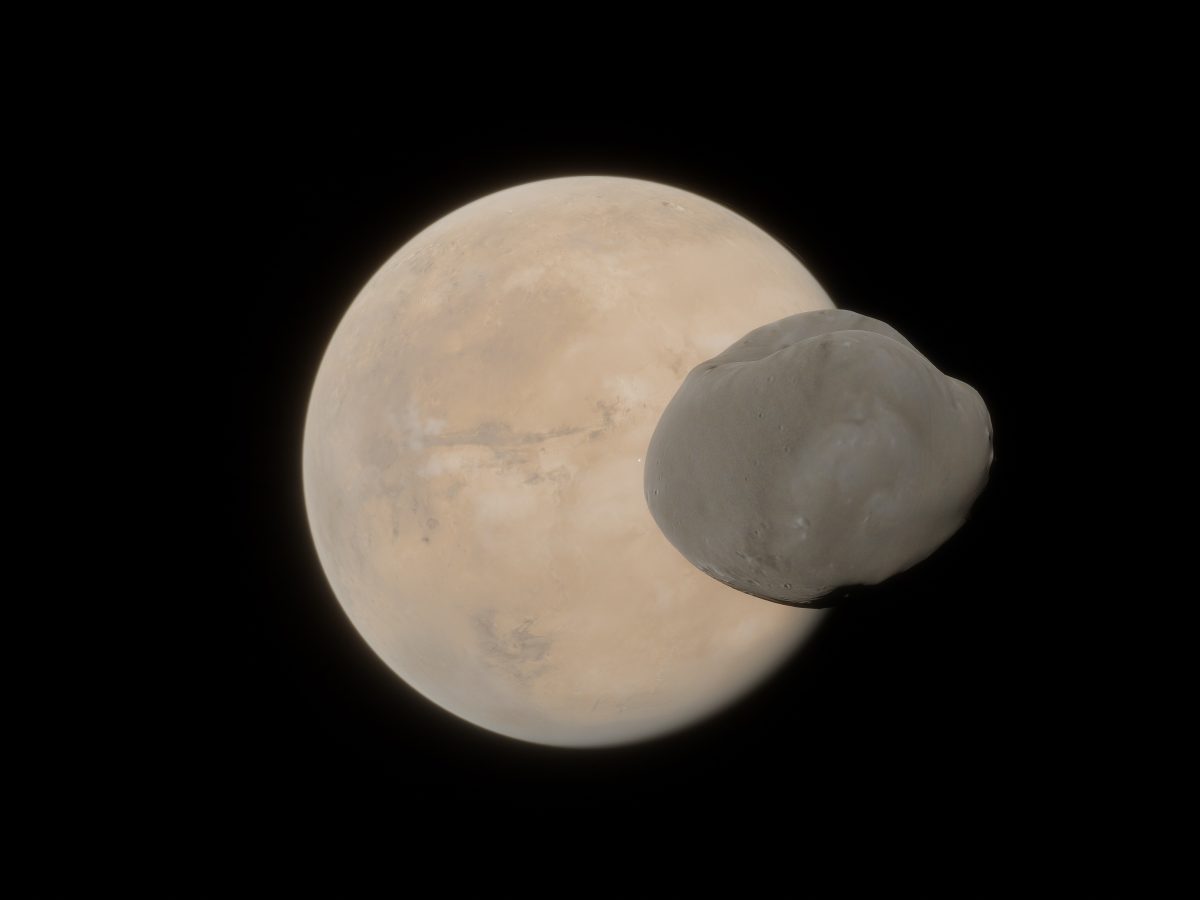
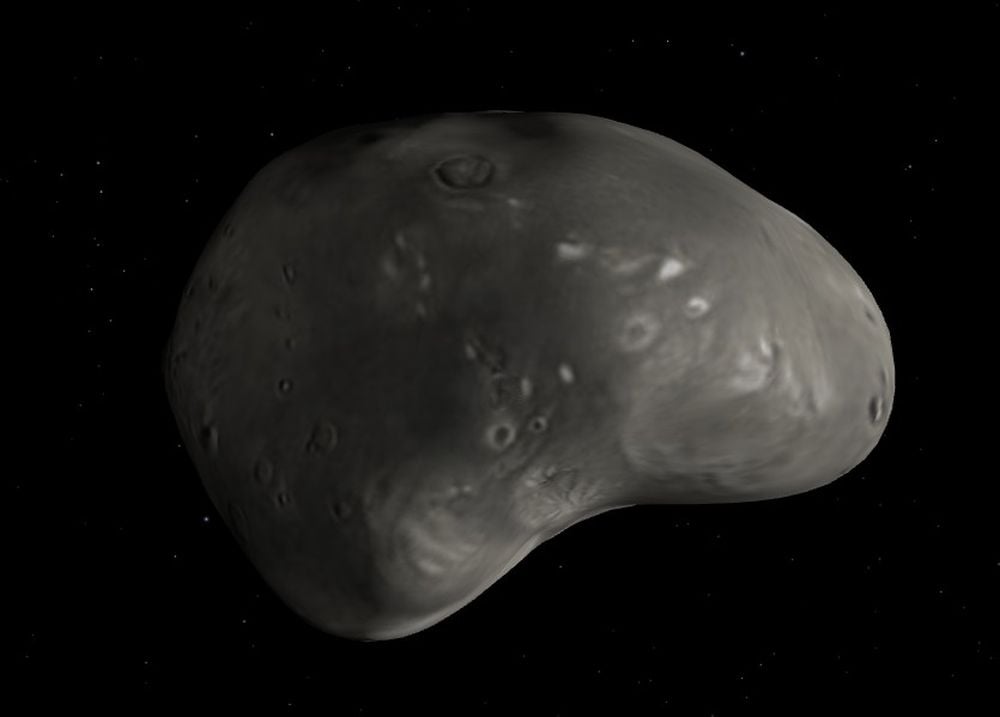
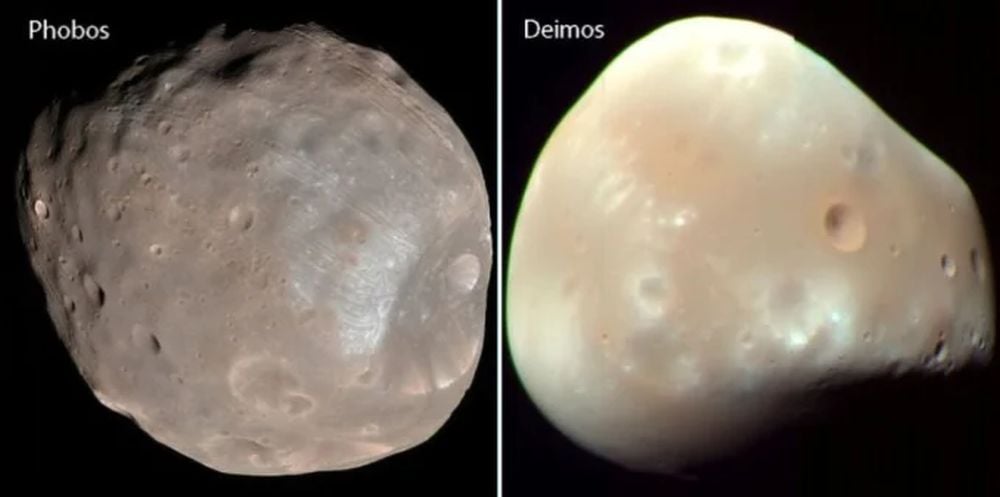
Deimos — the more distant of Mars’s two tiny moons — is named after the ancient Greek god of fear. Unlike its companion Phobos, which is covered in craters, Deimos has an unusually smooth surface buried beneath a thick layer of regolith. In addition, a giant crater about 10 km wide is located at its south pole. 

Mars’s moon Deimos. Image: Space Engine

For a long time, astronomers could not understand exactly what events had shaped such an unusual landscape. A new study published in Nature Astronomy provides answers to these questions. 

One Fatal Impact

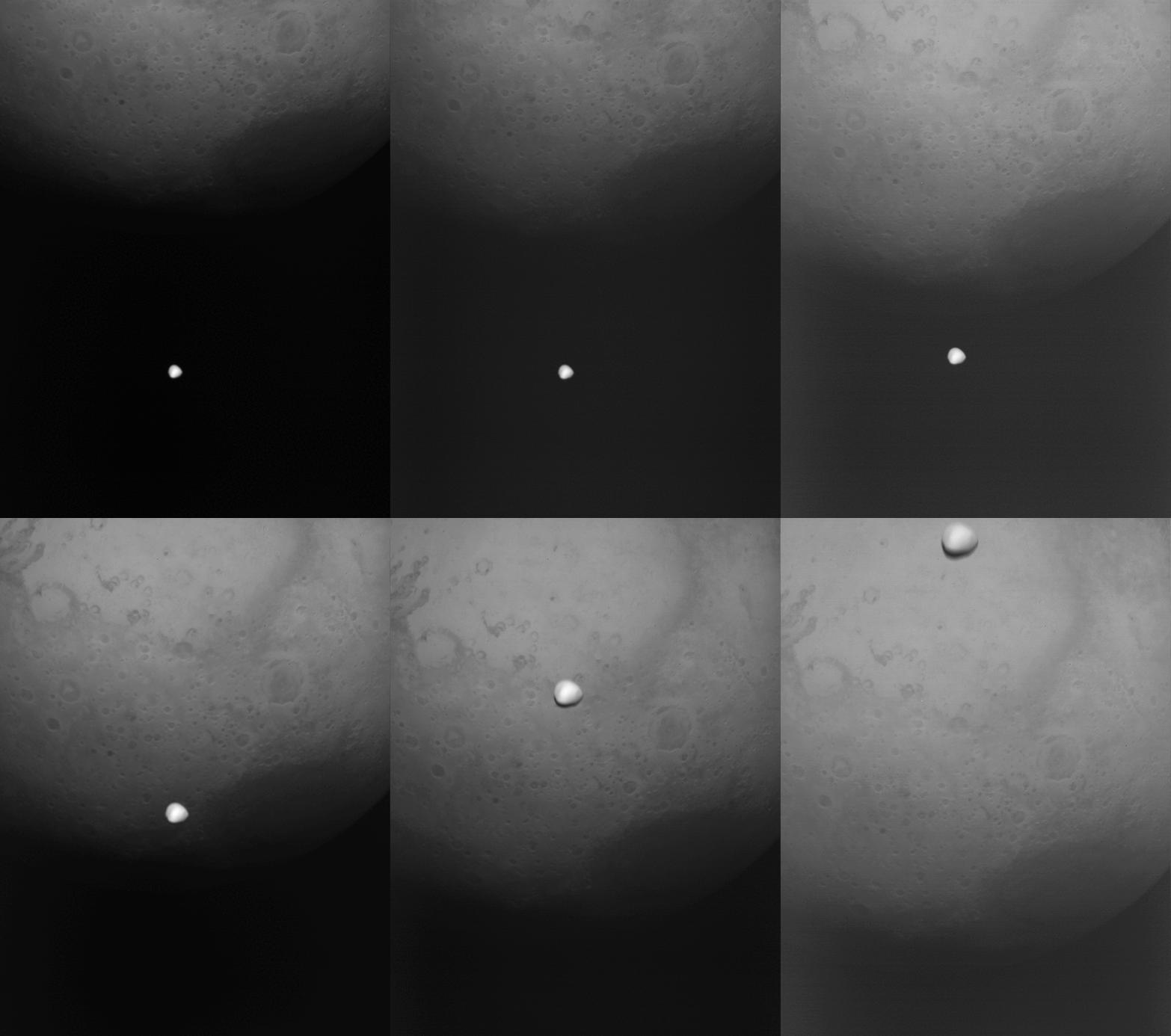
The European Space Agency’s Hera mission, which took detailed images of Deimos from close range in March 2025, provided scientists with valuable new data. A team of researchers led by Dr. Sabina Raducan of the International Space Science Institute and the Free University of Brussels compared the images with large-scale computer simulations.

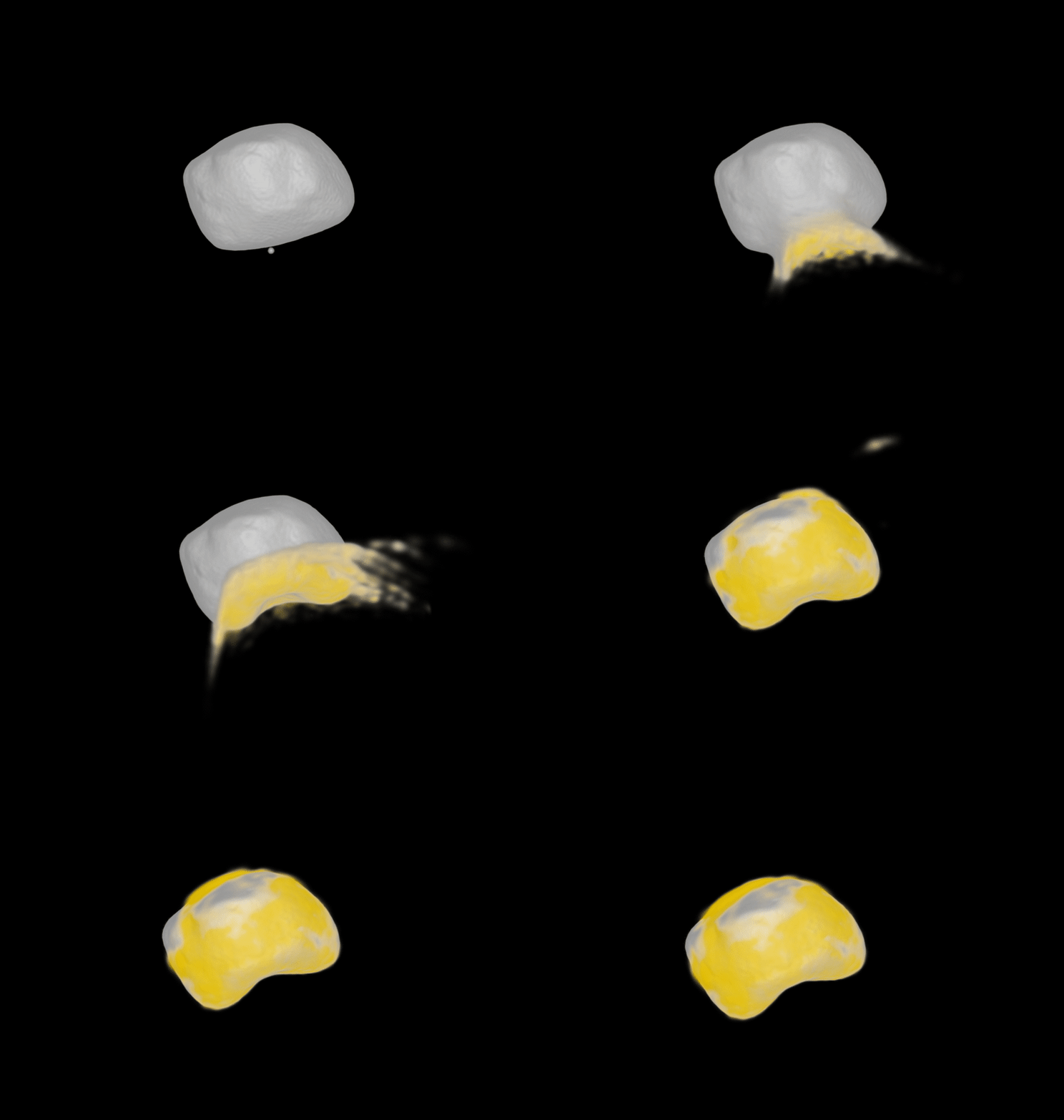
The animation shows how an asteroid impact could have changed the shape of Deimos and covered it with a layer of dust. Source: ESA

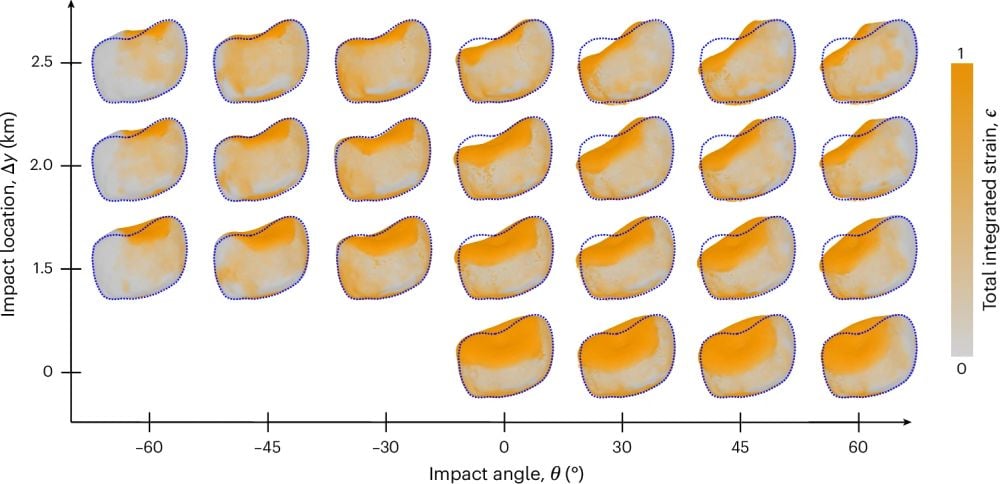
Using special code developed at the University of Bern, the scientists conducted about one hundred impact simulations, each of which took nearly a week. According to the calculations, the most likely scenario was the impact of an asteroid approximately 320 m in diameter that struck Deimos at an angle of 40°. 

This single catastrophic collision was enough to completely reshape the moon’s appearance. The impact blasted out an enormous amount of debris and dust, which settled back onto the surface, forming a “blanket” up to 200 m thick. This layer buried smaller ancient craters beneath it, making Deimos appear visually smoother than Phobos.

Why Did Deimos Not Break Apart?

A logical question arises: why did such a powerful impact not shatter a relatively small moon only about 12 km in diameter?

The answer lies in Deimos’s internal structure. Observations confirm that it has an extremely porous structure — its interior is more like a loose pile of space rocks held together by weak gravity. When the asteroid struck the surface, Deimos’s fractured interior acted like a shock absorber: it absorbed and softened the shock wave, saving the moon from complete destruction.

Answers from the MMX Mission 

The origin of the Martian moons themselves remains a matter of debate: they may either be asteroids captured by Mars’s gravity or fragments blasted off Mars itself during ancient collisions. Deimos’s porous structure inclines scientists toward the first hypothesis, but the upcoming Japanese MMX mission (Martian Moons eXploration) is expected to provide a definitive answer.

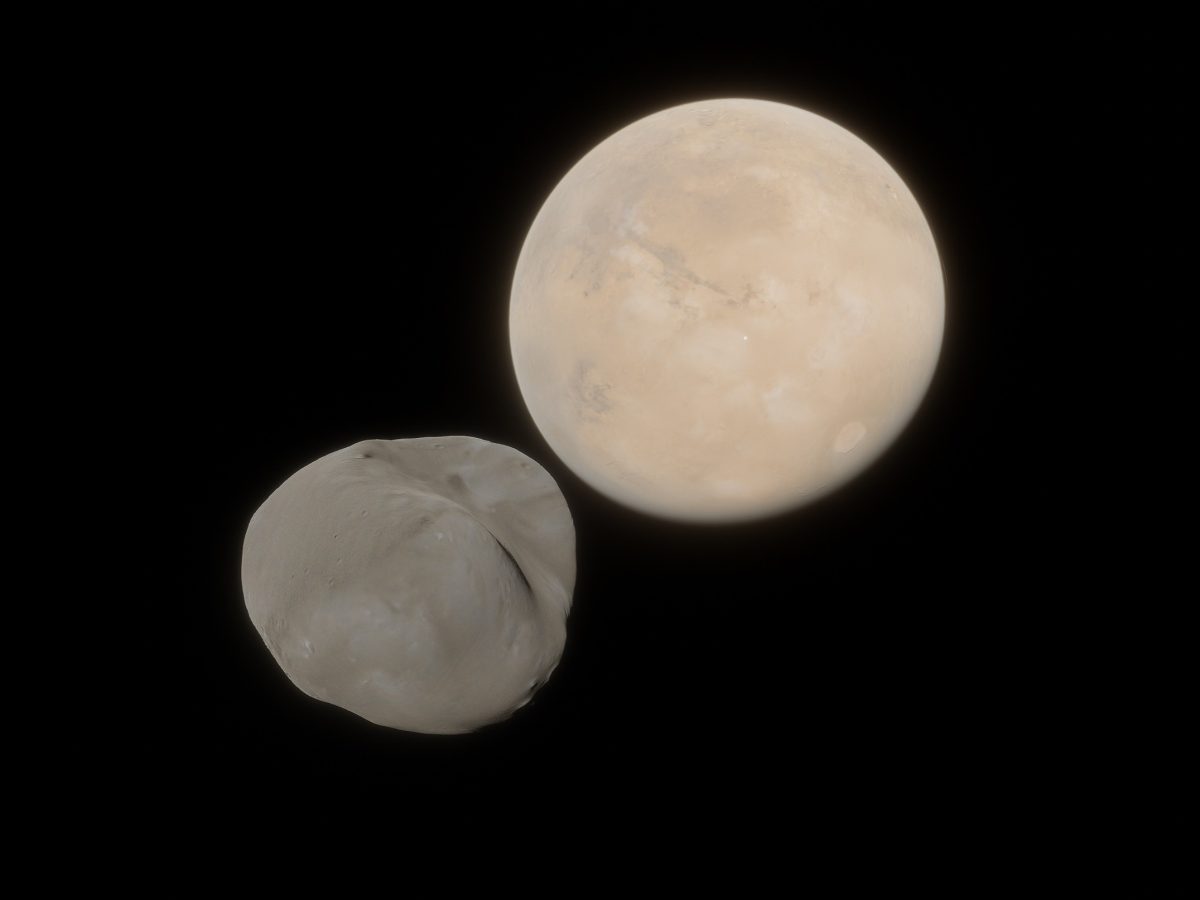
Mars’s moon Deimos. Image: Space Engine

The launch of JAXA’s MMX spacecraft is scheduled for the end of this year. In 2027, it will arrive in the Martian system, conduct detailed observations of both moons, and collect soil samples from Phobos, which are expected to return to Earth in 2031. The collected data will help not only verify the calculations concerning Deimos, but also provide a better understanding of the evolution of the entire Solar System during the early stages of its formation. 

Previously, we reported on how the moons of Mars turned out to be remnants of a destroyed comet.

  • According to CNN 

The Phantom Moon of Mars Scientists Can’t Explain | Deimos Mystery

The mysterious origins of the moons of Mars

{ https://universemagazine.com/en/articles-en/ }

Hoe vind je dit bericht?
Geschreven door peter om 22:41 Stuur door

The Discovery of Neptune’s Rings and Their Unique Characteristics

The Discovery of Neptune’s Rings and Their Unique Characteristics

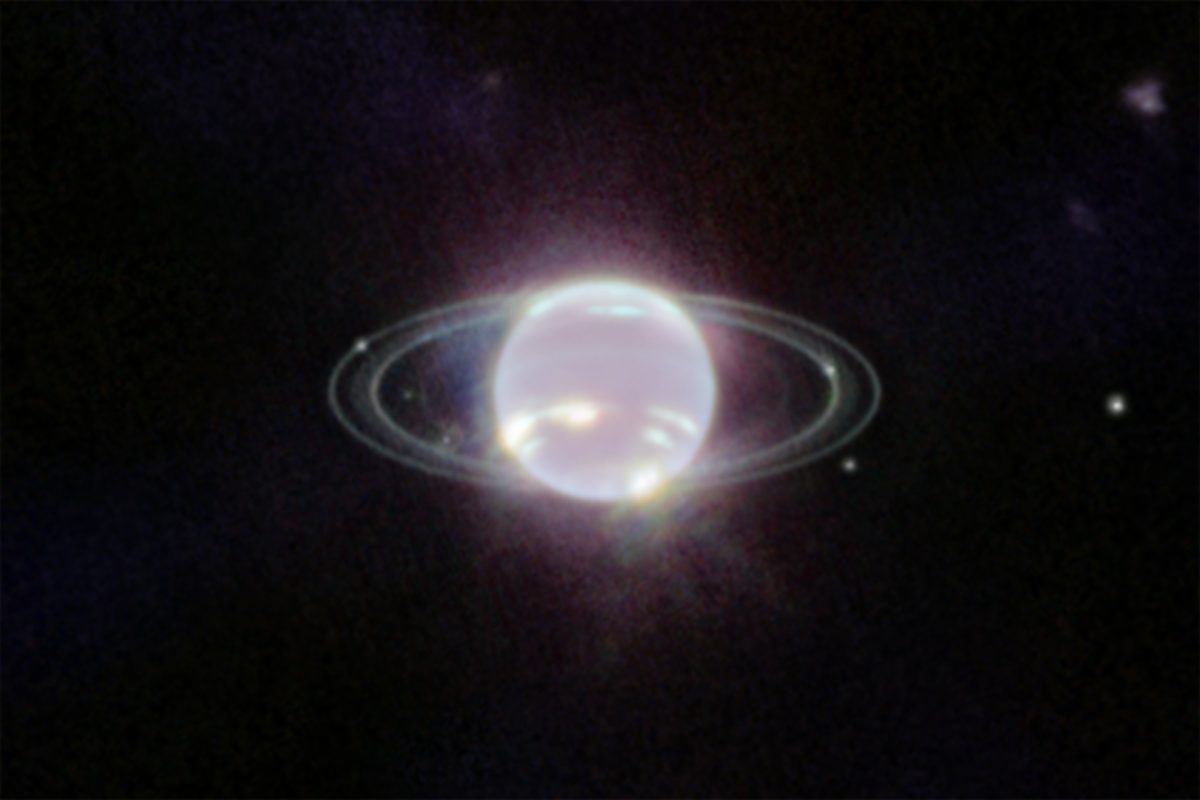
Neptune possesses a ring system that was officially identified 37 years ago. However, the history concerning the existence of these rings extends significantly further and encompasses a mystery intricately linked to their characteristics

Neptune’s rings.  Source: Wikipedia

The discovery of Neptune’s rings

Neptune is recognized as the eighth planet from the Sun and is the most distant one in the Solar System. Its average distance from the Sun measures approximately 4.5 billion kilometers. Nonetheless, it is well known that Neptune possesses a ring system. However, evidence of these rings was observed much earlier. William Lassell first reported their discovery in 1846, shortly after the planet itself was identified.

However, it soon became evident that this was simply a consequence of the limitations inherent in the telescope he employed. The rings were neglected for a period of one hundred years. Their potential existence was reconsidered in 1966, when astronomers observed a planetary occultation and observed that it transpired marginally earlier than anticipated.

However, at that time, this report was disregarded and was not revisited until 1977, when Uranus’s rings were subsequently discovered through a similar methodology.

In 1984, astronomers resumed observations of the planet’s occultation of stars and made a noteworthy discovery: the eclipse was observed on one side of the planet, but not on the opposite side. This finding supported the hypothesis that Neptune is encircled by a system of open rings or arcs.

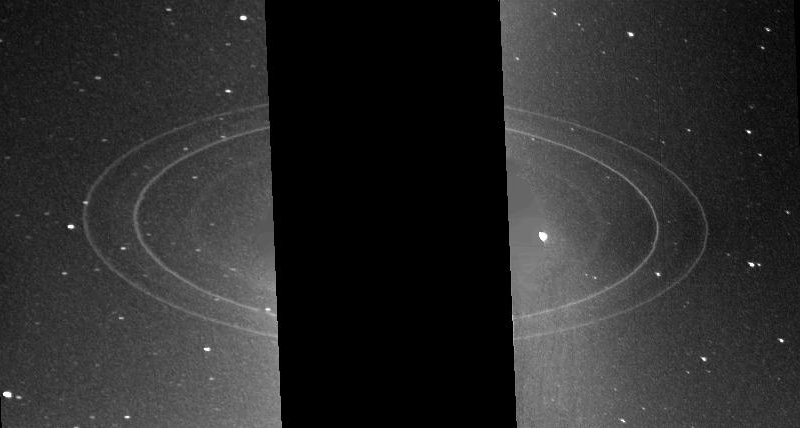
A pair of images of Neptune’s rings taken by Voyager 2. Source: Wikipedia

Scientists were unable to comprehend the mechanism behind this phenomenon; however, they were powerless to intervene, as the ground-based telescopes available at the time lacked the capability to observe the rings directly.

It was not until August 22, 1989, that the Voyager 2 spacecraft conducted a flyby of Neptune and, for the first time, captured photographs of Neptune’s rings, thereby confirming their existence. Additionally, it provided further insight by demonstrating that the majority of the planet’s rings are, in fact, closed.

Structure of the rings

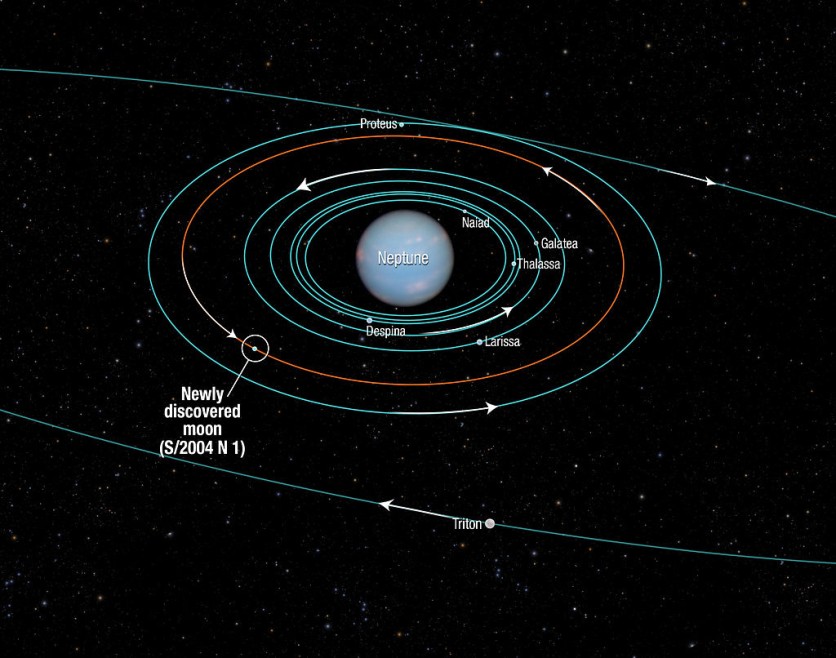
Scientists have long debated whether at least one of Neptune’s rings is actually open, as this would strongly contradict orbital mechanics. However, they ultimately concluded that the planet’s four moons, which orbit within the ring system, exert a significant influence on the uniformity of the rings.

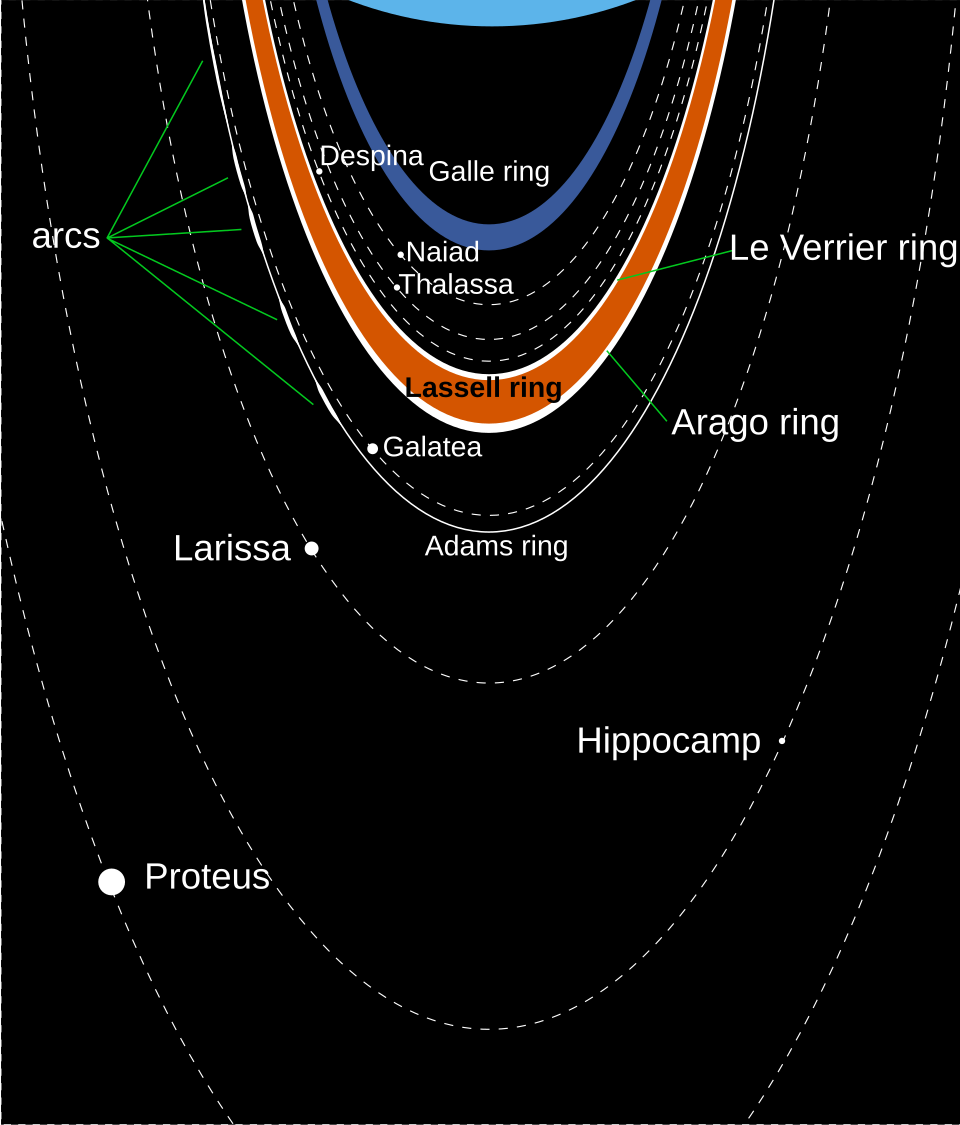
The structure of Neptune’s rings. Source: Wikipedia

The Galle ring is situated nearest to Neptune’s surface. Its innermost boundary is positioned 41,000 km from the planet, with a width of approximately 2,000 km. Comprising primarily fine dust, it is exceedingly faint.

Subsequently, the narrow and luminous Le Verrier ring is introduced, measuring merely 113 km in width with an outer radius of 53,000 km. Within this ring, in closer proximity to its inner boundary, orbits the Despina moon. Despina exhibits an irregular shape, with an approximate radius of 150 km. Additionally, two other moons, Naiad and Thalassa, are situated in the space between the Galle and Le Verrier rings.

Immediately beyond the Le Verrier ring lies the relatively sparse Lassell ring. Its width is approximately 4,000 km. At its outer edge begins the narrow and luminous Arago ring, which has a width of only 100 km.

Neptune’s moons. Source: www.techtimes.com

Subsequently, a gap is observed through which a secondary small satellite, Galatea, orbits. This is followed by the most notable object within the system — the Adams ring. The Adams ring is the subject of considerable debate among scientists, as it appears to comprise five distinct arcs. More comprehensive investigations reveal that these arcs are essentially irregularities along the edges of a continuous ring; nonetheless, the structure remains highly unusual.

The mystery of the rings’ origin

Presently, the most significant enigma concerning Neptune’s rings pertains to their origin. The dominant hypothesis posits that the rings emerged significantly after the formation of the planet, as a consequence of the disintegration of one of its natural satellites.

Nevertheless, in actuality, this entire configuration — with multiple distinct rings and medium-sized moons positioned between them — indicates a considerably more intriguing formation process. The Neptune system is abundant with peculiar phenomena. Specifically, some research demonstrates that the various rings originated from different dust fractions and diverse moons.

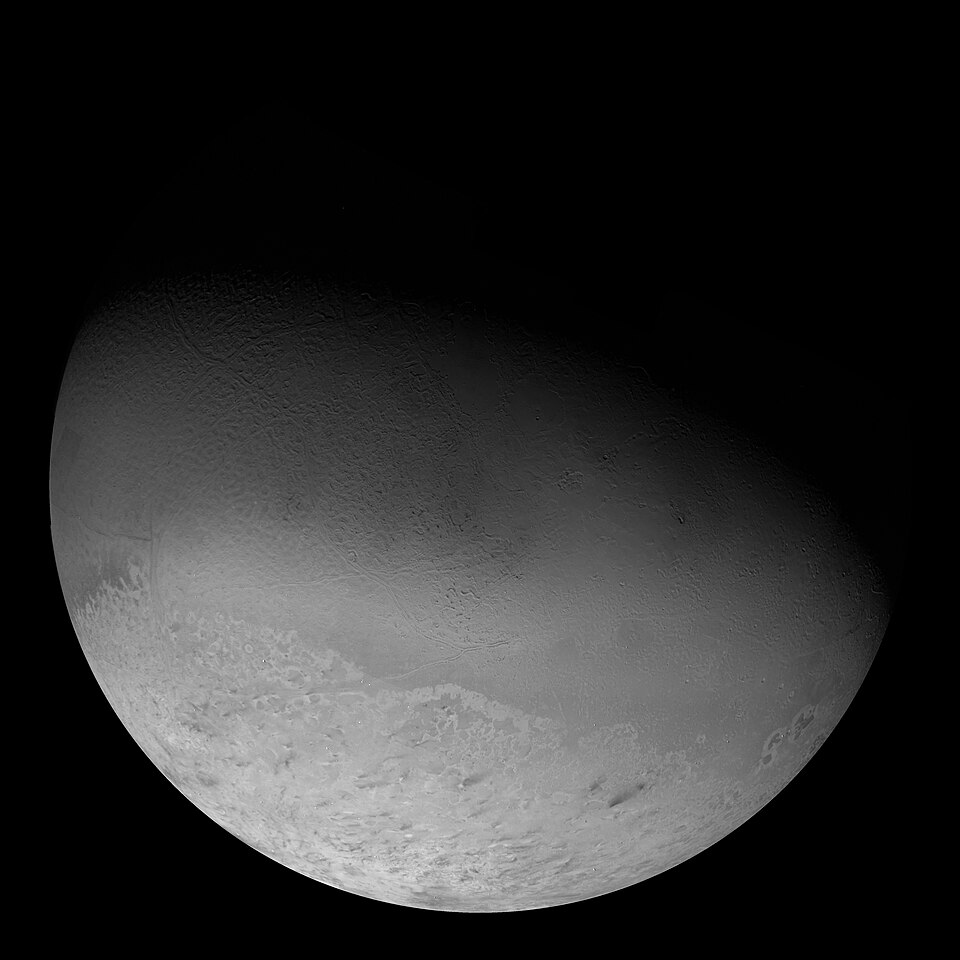
Triton. Source: Wikipedia

Among the moons themselves, there are no large ones, but there is one that is truly enormous — Triton — though it was clearly once captured by the gravitational pull of the ice giant. Additionally, several small moons in very low orbits exhibit mineral compositions that could only have developed in the presence of substantial liquid water — an element that could never have existed on them previously.

All of this indicates that the fundamental cause of Neptune’s remarkable rings was, indeed, the capture of Triton. Prior to this event, the planet was orbited by several large moons; however, the gravitational influence of the newly arrived Triton generated chaos, resulting in collisions that ultimately led to the current configuration of the system. Whether this hypothesis is accurate remains a subject of ongoing scientific investigation.


Webb Reveals Neptune’s Rings Like Never Before! #space #science

NASA’s Most Mysterious Discoveries on Neptune

{ https://universemagazine.com/en/articles-en/ }

Hoe vind je dit bericht?
Geschreven door peter om 21:26 Stuur door

The Massive Asteroid Apophis Will Pass Closer to Earth Than Some Satellites in 2029—Planetary Defense Researchers are Getting Ready

Apophis, as seen on March 9, 2021
(Image Credit: NASA/JPL-Caltech and NSF/AUI/GBO)

The Massive Asteroid Apophis Will Pass Closer to Earth Than Some Satellites in 2029—Planetary Defense Researchers are Getting Ready

One of planetary defense‘s biggest opportunities will come as the asteroid Apophis makes its tight flyby of our planet on April 13, 2029, allowing international space missions to interact with the near-Earth object. Asteroids this size only approach this close to Earth about once every 7,500 years, making the event a rare opportunity for real-world planetary defense research.

In a new paper published in the journal Space: Science & Technology, a team of researchers analyzes the many opportunities the Apophis flyby will offer for science and planetary defense.

The closest distance between Earth and Apophis during the flyby will be a mere 38,000 kilometers, about one-tenth of the distance from the Earth to the Moon. Coordinating these planetary defense efforts among the Earth’s nations may be one of the biggest challenges as the object comes uncomfortably close.

Apophis Explained

As soon as astronomers first discovered Apophis in 2004, the asteroid’s 340-meter-wide diameter and close pass by Earth immediately made it a concern for scientists. Fortunately, it is expected that on April 13, 2029, it will safely pass our planet at a distance of close to 20,000 miles—closer than some of our weather and communication satellites, but still with no risk of an impact.

Yet the near-Earth asteroid still holds mysteries for scientists. Models of the object depend heavily on assumptions, not hard data, to predict not just its tidal effects but also its composition, size, internal structure, and spin state.

Apophis

A series of images of the asteroid Apophis captured in March 2021

(Image Credit: NASA/JPL-Caltech and NSF/AUI/GBO)

With so many open questions about the asteroid and the unique opportunity to collect data and test processes for future planetary defense operations, many countries are planning missions to Apophis, but in this new paper, the researchers note that some of these activities require increased international coordination to avoid interference.

Part of the paper synthesizes known data on Apophis, including radar observations, light-curve, and spectral data. From this data, the team then developed new predictions for the asteroid’s dust ejection, orbital and spin changes, internal structural response, and surface material displacement. These projections were crucial in the researchers’ evaluations of the feasibility of various currently proposed or authorized missions and their likely scientific value.

Apophis Missions are Gearing Up

Future Apophis missions fit into four primary categories: rendezvous, flyby sample return, and impactor experiments.

In the recent research, the team found that flyby missions should capture data at very fine scales, down to the centimeter or decimeter for surface changes and hours for changes in spin period. Additionally, these space-borne instruments should be able to measure dust ejection phenomena. Together, this data stream alone could provide important direct evidence for how such rubble-pile asteroids evolve structurally. Relatively low-cost sample return missions could push this even further.

The activities coordinated under the International Asteroid Warning Network constitute the largest multinational asteroid detection and observation effort ever assembled and are its first global joint exercise. The network will build experience responding to potentially deadly space threats in the future.

Earth Interactions

On the other hand, the asteroid’s close approach to Earth will affect Apophis as well. Our planet’s gravity is expected to alter Apophis’s orbit from an Aten-type to an Apollo-type, changing the object’s spin period and orbital uncertainty. 

Additionally, roughly 1% of Apophis may experience a surface material disruption, potentially altering the object’s spectral properties by exposing fresh material.

The asteroid’s extremely low gravity may also cause it to lose surface dust to Earth’s magnetosphere, posing an electromagnetic disturbance hazard to spacecraft. Space agencies will need to monitor the situation to protect our increasingly essential space-based communications infrastructure during the event.

While there is no immediate danger to our planet, the researchers say this event is shaping up to be a pivotal moment in international space cooperation and a turning point for organized space defense.

The paper, “The Apophis Encounter in 2029: A Rare Opportunity for Planetary Science and Defense,” appeared in Space: Science & Technology on August 22, 2026.

  • Ryan Whalen covers science and technology for The Debrief. He holds an MA in History and a Master of Library and Information Science with a certificate in Data Science. He can be contacted at ryan@thedebrief.org.
RELATED
Apophis 2029: The Asteroid That Will Pass Closer Than Satellites

Apophis 2029: The Asteroid That Will Pass Closer Than Our Satellites

An Asteroid Will Pass Closer Than Our Satellites in 2029 — Here's What Happens

{ https://thedebrief.org/category/space/ }

Hoe vind je dit bericht?
Geschreven door peter om 20:30 Stuur door

Mars's Funky Moon Deimos was Shaped by an Impact

Mars's Funky Moon Deimos was Shaped by an Impact

This illustration shows Mars' moon Deimos and its distinctive south pole depression. Thought the moon's surface appears smoother than its sibling Phobos, it's still been battered by impacts. One major impact created the south pole crater, and also spread a layer of regolith on the moon's surface. Image Credit: NASA Eyes on the Solar System. This illustration shows Mars' moon Deimos and its distinctive south pole depression. Thought the moon's surface appears smoother than its sibling Phobos, it's still been battered by impacts. One major impact created the south pole crater, and also spread a layer of regolith on the moon's surface. Image Credit: NASA Eyes on the Solar System.

Both of Mars' moons are oddballs. They're small and lumpy like potatoes, and for a long time, astronomers thought they may be captured asteroids. A newer explanation, that they may be the result of an impact on Mars' surface, is gaining ground.

But regardless of their origins, Phobos (26 km across) and Deimos (12 km across) have both been knocked around and subjected to collisions like other Solar System objects.

In March 2025, the ESA's Hera spacecraft performed a gravity-assist maneuver at Mars, and it used that opportunity to observe Deimos. Hera tested its navigation system by locking onto surface features of the lumpy moon, including impact craters. Deimos is known for having a smooth, regolith-covered surface compared to its more heavily-cratered sibling, Phobos. But Hera's observations revealed ancient craters buried under dust.

The cratered surface of phobos (Left) compared to the smooth surface of Deimos (right). Hera showed us that while Deimos appears smooth, it's actually cratered, but many of its craters are underneath a layer of regolith. Image Credit: NASA/JPL/MRO

The cratered surface of phobos (Left) compared to the smooth surface of Deimos (right). Hera showed us that while Deimos appears smooth, it's actually cratered, but many of its craters are underneath a layer of regolith.

Image Credit: NASA/JPL/MRO

One of Deimos' craters is particularly noteworthy. It's on the moon's south pole and new research shows the impact that created it is also responsible for Deimos' dust-covered surface.

The research is titled "Deimos’s shape and geology explained by a subcatastrophic impact," and it's published in Nature Astronomy. The lead author is Sabina Raducan from the Space Research and Planetary Sciences department at the University of Bern. Raducan is also co-chair of the Hera Impact Physics Working Group for ESA’s Hera mission.

"Small planetary bodies record the processes that shaped the Solar System, but their surfaces and interiors often evolve in unexpected ways," the researchers write. "Deimos, the potato-shaped, 12-km-diameter outer satellite of Mars, has a strikingly smooth surface covered by fine regolith, in contrast to its heavily cratered and grooved sibling, 22-km-diameter Phobos."

The large crater on Deimos' south polar surface dominates the moon's shape. It's 10 km wide, and Deimos is only about 12 km across. The researchers wondered if a single impact could be responsible for both the crater and the surface debris that's so effective at hiding some of the other craters. "Here we propose that a single, large-scale impact that excavated the 10-km-wide depression at Deimos’s south pole is responsible for the thick, globally distributed regolith observed today," they write.

Raducan and her co-researchers used a powerful simulation called the Bern Smoothed Particle Hydrodynamics (SPH) code to test the idea. SPH simulations are particularly effective for problems like large surface deformations and violent disruptions from large impacts.

“The code runs on a high-performance computing cluster here at the University of Bern and is one of the few codes capable of performing this type of simulation,” lead author Raducan said in a press release.

“Run on a High Performance Computing Cluster at the University of Bern, our Bern Smoothed Particle Hydrodynamics, SPH, impact code works by recreating bodies of interest into millions of adhering particles whose interplay is governed by various programmable variables, including gravity levels, material strength and cohesion," lead author Raducan said in a press release. She added that this is one of the few codes that can run this type of simulation.

“In this case we created a detailed shape model of Deimos out of SPH particles, having filled in the southern depression to leave it ready for the impactor to strike. Then we ran about a hundred simulations – each one taking about a week at a time to complete – to experiment with various impactor masses and angles of approach,” Raducan explained.

The simulations included an impactor between 300 m and 360 m and a range of impact angles between 0 and 60 degrees. The impact velocity was set at 8.2 km s−1 for all simulations, based on previous research into Deimos' craters.

This figure shows some of the simulation's results. The x-axis shows the simulated impact angle, and the y-axis shows location. "The blue dashed outline shows the South Polar Crater shape model profile extracted in the same fixed cross section displayed in each panel," the authors write. Image Credit: Raducan et al. 2026. NatAstr.

This figure shows some of the simulation's results. The x-axis shows the simulated impact angle, and the y-axis shows location. "The blue dashed outline shows the South Polar Crater shape model profile extracted in the same fixed cross section displayed in each panel," the authors write.

Image Credit: Raducan et al. 2026. NatAstr.

The simulations showed that the impactor was a small asteroid only 320 meters wide striking Deimos at about 45 degrees. Obviously, the moon wasn't shattered, but the impact did cover the small moon in regolith. In some place on the surface, the regolith is 200 meters deep. This regolith obscures many of Deimos' surface craters, giving the moon a smooth appearance.

“Our simulation is consistent with patterns of brightness observed across the moon’s surface, linked to the gradual migration of regolith that behaves more like loosely packed dust than anything more cohesive. The same is true of the way the southern depression subsequently smoothed out, rather than retaining a sharp crater," Raducan said.

This is a screenshot from the simulations, showing the impactor striking Deimos and creating the south polar crater. The yellow is ejecta, most of which has fallen back to the moon's surface, blanketing it in regolith that's up to 200 meter deep in some places. Image Credit: S.D. Raducan. Licence: ESA Standard Licence

This is a screenshot from the simulations, showing the impactor striking Deimos and creating the south polar crater. The yellow is ejecta, most of which has fallen back to the moon's surface, blanketing it in regolith that's up to 200 meter deep in some places.

Image Credit: S.D. Raducan. Licence: ESA Standard Licence

Determining the size, speed, and angle of the impactor also revealed things about Deimos' interior.

The research shows that the materials and structure of the moon's interior are more like rubble-pile asteroids than solid, cohesive rocky bodies like Earth's Moon. "The low surface cohesion (≲100 Pa) required for the crater to collapse and the high-porosity, low-interior crushing strength required to dissipate the impact shock suggest that it is essentially a rubble pile, like Dimorphos, Ryugu and Bennu," the researchers explain.

While many spacecraft have observed Deimos, Hera's data helped make these simulations accurate. In fact, the researchers had Hera's Mars flyby in mind when they began this research.

"We began this simulation campaign before Hera’s Mars flyby, but with the hope that Hera’s observations would help constrain the results even more. This indeed turned out to be the case, as the side of the moon imaged by Hera turned out to show additional buried craters," Raducan said.

In an interesting side note, Queen guitarist Brian May is part of the research team, having earned a PhD in astrophysics in 2008.

“These were really the last pieces of the puzzle I needed – although they weren’t immediately obvious to the naked eye. Instead I first made them out via spectroscopic depictions of the Hera images made immediately afterwards by Sir Brian May, who is part of the Hera science team,” Raducan added.

The hidden craters found by Hera pre-date the impact that created the south pole depression. Their presence shows that Deimos' interior is rather fragile. If it were stronger, then shock waves from the impact would've erased them. Instead, the porous and fractured interior dampened the shock waves.

“This simulation therefore implies that Deimos is a rubble-pile body, akin to many asteroids," said ESA’s Hera project scientist, Michael Kueppers, in the press release. "This does not necessarily mean the moon is in fact a captured asteroid – it might well have formed out of material kicked up from Mars by surface impacts – but more that it may have formed in a similar way and therefore shares comparable properties. This is the first of a series of results demonstrating how tuning Hera’s Mars flyby to get close to Deimos has paid off well in terms of science.”

This research supports the idea that an impact shaped Deimos' surface, but there other possible explanations for the moon's features. We may not have to wait long before this idea, and others, can be tested with more observations.

"Finally, although the present scenario is one of potentially several viable explanations, it makes several testable predictions for future observations, for example by the Martian Moons Exploration mission," the authors write.

The Japan Aerospace Exploration Agency (JAXA) is getting ready to launch the Martian Moons eXploration (MMX) mission in November of this year. While MMX's crowning achievement will be returning a sample from Phobos, the mission will also observe Deimos. We don't yet know how close it will get to Deimos, because as a secondary target, its flybys of the moon will depend on how the spacecraft has to maneuver around Phobos, it's main target.

Since MMX won't land on Deimos, no true deep probing of its interior can take place. But its refined surface measurements, from its LIDAR and gamma-ray/neutron spectrometer in particular, will help determine its mass and bulk density more accurately. Those measurements will help refine its surface composition, especially the properties of its regolith. High-resolution images will also help scientists understand the moon.

It's possible that the impact hypothesis outlined here isn't what actually happened. Scientists think it's possible, for example, that the regolith layer is because of continuous micro-meteorite bombardment over billions of years. Only more and better data can say, and MMX may provide it.

"High-resolution imaging and topographic mapping could assess whether the south-polar depression exhibits diagnostic crater morphology consistent with a large oblique impact or instead favours alternative origins," the authors explain.


The mysterious origins of the moons of Mars

Deimos Doesn’t Feel Like a Real Moon… And That’s the Problem

{ https://www.universetoday.com/ }

Hoe vind je dit bericht?
Geschreven door peter om 18:42 Stuur door

Dry Martian Meteorite Reveals Early Water in Mars's Crust

Dry Martian Meteorite Reveals Early Water in Mars's Crust

Meteorite Northwest Africa 7034 (NWA 7034) aka Black beauty. (Credit: NASA) Meteorite Northwest Africa 7034 (NWA 7034) aka Black beauty. (Credit: NASA)

Billions of years ago, Mars was hypothesized to have been a habitable world with flowing liquid water and the potential for life. But directly studying its ancient past is currently limited to orbiters and rovers, as scientists have yet to obtain direct samples from Mars. However, meteorites have been found on Earth to have potentially originated from Mars during large impacts that flung chunks of the Red Planet into space, eventually being grabbed by Earth’s gravity and crashing into the Earth’s surface.

Now, an international team of scientists might be one step closer to piecing together Mars’ watery ancient past, and specifically how much water could have flowed across the Red Planet’s surface long ago. In findings recently published in the Geophysical Research Letters, a collaborative team of researchers led by the Technical University of Denmark investigated an intriguing meteorite with an even more intriguing name, “Black Beauty”, with the scientific designation of Northwest Africa 7034 (NWA 7034). What makes Black Beauty so intriguing is its designation as the only known meteorite that originated from the crust of Mars, having been blasted away during an impact billions of years ago, as Black Beauty is estimated to be about 4.4 to 4.5 billion years old.

Using a combination of X-ray and neutron tomography, the researchers analyzed Black Beauty with the goal of ascertaining if the ancient meteorite contained traces of water, also called hydrous materials in the scientific community. While X-ray tomography is used to identify the densest parts of Black Beauty while focusing on iron and silicon, neutron tomography was used to identify that previous “holes” found by normal X-rays were actually hydrous materials.

“Neutrons are particularly sensitive to hydrogen,” said Dr. David Mannes, who is a scientist at the Paul Scherrer Institute (PSI), a co-author on the study. Dr. Mannes collaborated with fellow study co-author, Dr. Anders Kaestner, on the neutron tomography at PSI. “In combination with X-ray tomography, we were not only able to detect tiny hydrated minerals, but also, for the first time, visualize larger, macroscopic hydrogen deposits.”

Essentially, the researchers identified that early Mars contained a water reservoir large enough to engage with the Martian surface and crust, resulting in water deposits into crustal rocks that eventually became Black Beauty. The researchers also note these materials are similar to materials found in Jezero Crater by NASA’s Perseverance rover. Therefore, Black Beauty continues to add a growing pile of evidence that Mars was a much warmer and wetter planet billions of years ago.

While Black Beauty has revealed intricate details regarding ancient Mars and its watery past, arguably the most famous meteorite from Mars is the Allan Hills 84001 (ALH84001) meteorite, which was recovered in Antarctica on December 27, 1984. However, it wasn’t until 1996 before scientists discovered it was potentially from Mars, as ALH84001 had initially been designated as an asteroid chunk, which are frequently discovered on Earth. Once scientists studied ALH84001, they discovered it contained unique structures they hypothesized could indicate signs of ancient Martian life.

While their 1996 study published in Science gained worldwide attention, including an official address from President Bill Clinton, the scientific community was quick to claim these features could have formed from non-biological processes. Regardless of its specific origin, both Black Beauty and ALH84001 demonstrate the importance of bringing back samples from Mars to reduce relying on ancient meteorites.

Unfortunately, the long-anticipated NASA-ESA Mars Sample Return mission was canceled by Congress due to ballooning costs, meaning all the sample tubes that NASA’s Perseverance rover has been depositing on the Martian surface is potentially for nought. For now, scientists have to rely on meteorites to unlock the secrets of ancient Mars, but China’s planned Tianwen-3 might be the first to return Mars samples to Earth sometime next decade.

What new insights into the “Black Beauty” meteorite and ancient Mars will researchers make in the coming years and decades? Only time will tell, and this is why we science!

  • As always, keep doing science & keep looking up!

Evidence of hot water on Mars found inside ancient meteorite | Yahoo Australia

How Scientists Proved These Rocks Came From Mars.

{ https://www.universetoday.com/ }

Hoe vind je dit bericht?
Geschreven door peter om 18:30 Stuur door

Are we living in Aliens? As the movie celebrates its 40th anniversary, scientists reveal what the cult film got right…and wrong

This month, the cult science fiction classic Aliens celebrates its 40th anniversary.

Set in the year 2179, James Cameron's sequel follows a group of Colonial Marines who come face-to-face with extraterrestrial terrors beyond their wildest imaginations.

However, although humanity thankfully hasn't discovered the Xenomorph, scientists say this visionary film does make some surprisingly accurate predictions.

According to Professor Steve Benford, of the University of Nottingham, many of the film's sci-fi inventions are now commonplace items used by millions.

Aliens is set 153 years into our future, making it as far removed from the present day as we are from 1873, when gas lighting and steam power were the height of technology.

However, Professor Benford points out that our technology has already surpassed some of the gadgets seen in the film.

Professor Benford told the Daily Mail that the thing that Aliens predicted most accurately is 'sadly' the use of automatic guns and robotic weaponry.

But from synthetic humans to the iconic motion tracker, there are still a lot of things the film gets wrong.

This month, the cult science fiction classic Aliens celebrates its 40th anniversary. Now, a scientist has revealed what the film got right and wrong about the future of technology

This month, the cult science fiction classic Aliens celebrates its 40th anniversary. Now, a scientist has revealed what the film got right and wrong about the future of technology 

What Aliens gets right

Professor Benford says one of the most impressive things Aliens gets right isn't the big impressive pieces of technology, but the small things people carry with them.

While the apparent absence of personal phones might seem strange to modern audiences, the Colonial Marines do have plenty of wearables.

Professor Benford says that the motion detectors, wearable cameras and biosensors embedded into wristbands all feel quite 'current'.

From smart watches to fitness tracking rings, small wearable devices are now exceptionally common.

In fact, the watches worn by many people today are smaller, smarter, and more multi-purpose than many of the devices seen in the film.

Another surprising innovation that Aliens appears to have predicted is the development of exoskeletons.

At the climax of the film, Ellen Ripley climbs into an enormous mechanical suit known as a 'loader'.

Professor Steve Benford, of the University of Nottingham, says that the iconic 'loader' from Aliens is close to being replicated by modern exoskeleton technology

Professor Steve Benford, of the University of Nottingham, says that the iconic 'loader' from Aliens is close to being replicated by modern exoskeleton technology 

What did Aliens get right... and wrong

What Aliens got right

* Wearable technology

* Exoskeletons

* Autonomous weaponry 

What Aliens got wrong

* Interstellar travel

* Motion trackers 

* No personal devices

* Synthetic humanoid robots  

This humanoid robot mirrors the wearer's movements, greatly enhancing their strength and mobility.

While that might seem far-fetched, real exoskeletons with a similar design are already starting to become commercially available.

For example, you can now purchase an Ascentiz H+K modular hip-and-knee exoskeleton for £1,250 ($1,699).

These small exoskeletons are designed to boost performance or make walking easier, but others will have a more serious purpose.

Professor Benford says: 'I think we will see them to help people walk and otherwise assist them.'

At the Consumer Electronics Show last year, developers revealed a $250,000 exoskeleton called XoMotion, which uses 12 motors to mimic natural human movements and balance.

While XoMotion was specifically designed for disabled people who have lost the ability to use their legs, developers say it could be used by factory workers to help them lift heavy boxes without damaging their joints.

However, Professor Benford says he doesn't think we will ever see Aliens-like loaders strutting around on factory floors.

Pictured above is the XoMotion, a futuristic high-tech exoskeleton allowing disabled people to walk forward, backwards and turn to either side. They can also sway their hips

Pictured above is the XoMotion, a futuristic high-tech exoskeleton allowing disabled people to walk forward, backwards and turn to either side. They can also sway their hips

Instead, he thinks it is much more likely that this role would be filled by robots, so that humans can stay safe out of harm's way.

'Some things are better controlled remotely,' Professor Benford explains.

But the thing that Aliens predicted most accurately was the growing use of autonomous weaponry.

In the film, we see the Colonial Marines deploying automatic sentry turrets that have the ability to detect targets, aim and fire without any human intervention.

The war in Ukraine has seen the rapid advancement of robotic and fully autonomous weapon systems.

These include robotic gun platforms capable of defending positions or roaming the frontlines with only minimal human supervision.

Some of these, such as the 'Buria' turret developed by Frontline Robotics, even bear a striking resemblance to those seen in the film.

What Aliens gets wrong

Professor Benford says that modern autonomous weapons, such as the 'Buria' turret developed by Frontline Robotics (pictured), bear a striking resemblance to the automatic weapons seen in Aliens

Professor Benford says that modern autonomous weapons, such as the 'Buria' turret developed by Frontline Robotics (pictured), bear a striking resemblance to the automatic weapons seen in Aliens 

The outbreak of the war in Ukraine has seen the rapid development of robotic weaponry, such as the DevDroid unmanned combat system (pictured)

The outbreak of the war in Ukraine has seen the rapid development of robotic weaponry, such as the DevDroid unmanned combat system (pictured)

Despite a few accurate predictions, this sci-fi classic also gets quite a few things wrong.

Most obviously, humanity is still nowhere near close to developing the ability to travel between the stars within a human lifetime.

Besides this glaring issue, the film also failed to predict just how personal technology and computer systems would develop.

One of the iconic pieces of technology in Aliens is the motion tracker, which the Colonial Marines use to track the hidden Xenomorphs.

What James Cameron couldn't have predicted is how fast surveillance and 'computer vision' – a field of AI where machines are trained to recognise objects – would advance.

Professor Benford says that a network of 'smart cameras' throughout the colony would have been able to track both humans and aliens alike far more effectively.

Similar systems, such as 'live facial recognition', are already being deployed on the streets today to monitor crowds and watch for suspicious behaviour.

On the other hand, some pieces of technology in Aliens feel futuristic right now, but could be achievable in the future.

Professor Bentford says that the film didn't anticipate how fast some personal AI tech would advance, making the film's iconic motion tracker seem quite outdated

Professor Bentford says that the film didn't anticipate how fast some personal AI tech would advance, making the film's iconic motion tracker seem quite outdated

In particular, Professor Benford points to the character of Bishop, played by Lance Henriksen, who acts like a human but is – spoilers for anyone who has yet to watch Aliens – a type of android known as a synthetic.

'Bishop can act autonomously and physically, making plans, moving through the world, manipulating stuff,' Professor Benford says.

'Today's mobile robots may be able to do some of this, but I think they are a long way off operating at human levels of improvisation and often require human support behind the scenes.'

However, some of Bishop's abilities are starting to seem more believable.

Professor Benford says: 'Bishop clearly has the ability to converse with humans; this seems pretty plausible given today’s chatbots.

'We are getting used to AI that appears to talk to us intelligently.'

The big question, Professor Benford adds, is whether our technology will ever develop to the point that, like Bishop, it appears to become self-conscious and even act morally.

He says: 'Whether AI can become self-aware and even moral is a huge question people are asking now, and have been ever since Alan Turing first wrote about AI.'

KEY DISCOVERIES IN HUMANITY'S SEARCH FOR ALIEN LIFE

Discovery of pulsars

British astronomer Dame Jocelyn Bell Burnell was the first person to discover a pulsar in 1967 when she spotted a radio pulsar.

Since then other types of pulsars that emit X-rays and gamma rays have also been spotted.

Pulsars are essentially rotating, highly magnetised neutron stars but when they were first discovered it was believed they could have come from aliens.

'Wow!' radio signal

In 1977, an astronomer looking for alien life in the night sky above Ohio spotted a radio signal so powerful that he excitedly wrote 'Wow!' next to his data.

In 1977, an astronomer looking for alien life in the night sky above Ohio spotted a radio signal so powerful that he excitedly wrote 'Wow!' next to his data

In 1977, an astronomer looking for alien life in the night sky above Ohio spotted a radio signal so powerful that he excitedly wrote 'Wow!' next to his data

The 72-second blast, spotted by Dr Jerry Ehman through a radio telescope, came from Sagittarius but matched no known celestial object.

Conspiracy theorists have since claimed that the 'Wow! signal', which was 30 times stronger than background radiation, was a message from intelligent extraterrestrials.

Fossilised Martian microbes

In 1996 Nasa and the White House made the explosive announcement that the rock contained traces of Martian bugs.

The meteorite, catalogued as Allen Hills (ALH) 84001, crashed onto the frozen wastes of Antarctica 13,000 years ago and was recovered in 1984. 

Photographs were released showing elongated segmented objects that appeared strikingly lifelike.

Photographs were released showing elongated segmented objects that appeared strikingly lifelike (pictured)

Photographsere released showing elongated segmented objects that appeared strikingly lifelike (pictured)

However, the excitement did not last long. Other scientists questioned whether the meteorite samples were contaminated. 

They also argued that heat generated when the rock was blasted into space may have created mineral structures that could be mistaken for microfossils. 

Behaviour of Tabby's Star in 2005 

The star, otherwise known as KIC 8462852, is located 1,400 light years away and has baffled astronomers since being discovered in 2015.

It dims at a much faster rate than other stars, which some experts have suggested is a sign of aliens harnessing the energy of a star.

The star, otherwise known as KIC 8462852, is located 1,400 light years away and has baffled astonomers since being discovered in 2015 (artist's impression)

The star, otherwise known as KIC 8462852, is located 1,400 light years away and has baffled astonomers since being discovered in 2015 (artist's impression)

Recent studies have 'eliminated the possibility of an alien megastructure', and instead, suggests that a ring of dust could be causing the strange signals.

Exoplanets in the Goldilocks zone in 2017 

In February 2017 astronomers announced they had spotted a star system with planets that could support life just 39 light years away.

Seven Earth-like planets were discovered orbiting nearby dwarf star 'Trappist-1', and all of them could have water at their surface, one of the key components of life.

Three of the planets have such good conditions, that scientists say life may have already evolved on them. 

Researchers claim that they will know whether or not there is life on any of the planets within a decade, and said: 'This is just the beginning.' 

RELATED
Aliens Expanded 40th Anniversary Edition

ALIENS EXPANDED - 40TH ANNIVERSARY EDITION CLIPS

Exposing Government Secrets! | ALIEN AND UFO ENCOUNTERS: THE TOP 20

{ https://www.dailymail.com/sciencetech/index.html }

Hoe vind je dit bericht?
Geschreven door peter om 17:42 Stuur door

Meer van UFO'S of UAP'S, ASTRONOMIE, RUIMTEVAART, ARCHEOLOGIE, OUDHEIDKUNDE, SF-SNUFJES EN ANDERE ESOTERISCHE WETENSCHAPPEN - DE ALLERLAATSTE NIEUWTJES

↑ Terug naar de berichten