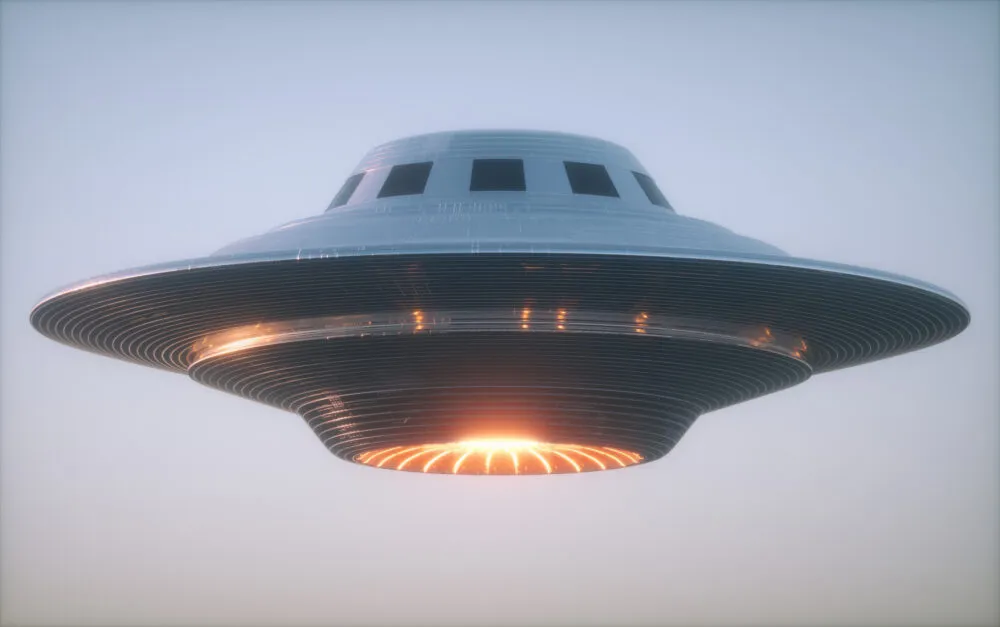
Ontdek de Fascinerende Wereld van UFO's en UAP's: Jouw Bron voor Onthullende Informatie!
Ben jij ook gefascineerd door het onbekende? Wil je meer weten over UFO's en UAP's, niet alleen in België, maar over de hele wereld? Dan ben je op de juiste plek!
België: Het Kloppend Hart van UFO-onderzoek
In België is BUFON (Belgisch UFO-Netwerk) dé autoriteit op het gebied van UFO-onderzoek. Voor betrouwbare en objectieve informatie over deze intrigerende fenomenen, bezoek je zeker onze Facebook-pagina en deze blog. Maar dat is nog niet alles! Ontdek ook het Belgisch UFO-meldpunt en Caelestia, twee organisaties die diepgaand onderzoek verrichten, al zijn ze soms kritisch of sceptisch.
Nederland: Een Schat aan Informatie
Voor onze Nederlandse buren is er de schitterende website www.ufowijzer.nl, beheerd door Paul Harmans. Deze site biedt een schat aan informatie en artikelen die je niet wilt missen!
Internationaal: MUFON - De Wereldwijde Autoriteit
Neem ook een kijkje bij MUFON (Mutual UFO Network Inc.), een gerenommeerde Amerikaanse UFO-vereniging met afdelingen in de VS en wereldwijd. MUFON is toegewijd aan de wetenschappelijke en analytische studie van het UFO-fenomeen, en hun maandelijkse tijdschrift, The MUFON UFO-Journal, is een must-read voor elke UFO-enthousiasteling. Bezoek hun website op www.mufon.com voor meer informatie.
Samenwerking en Toekomstvisie
Sinds 1 februari 2020 is Pieter niet alleen ex-president van BUFON, maar ook de voormalige nationale directeur van MUFON in Vlaanderen en Nederland. Dit creëert een sterke samenwerking met de Franse MUFON Reseau MUFON/EUROP, wat ons in staat stelt om nog meer waardevolle inzichten te delen.
Let op: Nepprofielen en Nieuwe Groeperingen
Pas op voor een nieuwe groepering die zich ook BUFON noemt, maar geen enkele connectie heeft met onze gevestigde organisatie. Hoewel zij de naam geregistreerd hebben, kunnen ze het rijke verleden en de expertise van onze groep niet evenaren. We wensen hen veel succes, maar we blijven de autoriteit in UFO-onderzoek!
Blijf Op De Hoogte!
Wil jij de laatste nieuwtjes over UFO's, ruimtevaart, archeologie, en meer? Volg ons dan en duik samen met ons in de fascinerende wereld van het onbekende! Sluit je aan bij de gemeenschap van nieuwsgierige geesten die net als jij verlangen naar antwoorden en avonturen in de sterren!
Heb je vragen of wil je meer weten? Aarzel dan niet om contact met ons op te nemen! Samen ontrafelen we het mysterie van de lucht en daarbuiten.
Image of an asteroid traveling through the solar system. Credit - NASA / JPL-Caltech
It’s amazing how much one movie can act as a cultural touchpoint for an entire topic - even a topic as serious as defense of a planet. Popular media consistently use the 1998 movie Armageddon as a reference when talking about how we would destroy a civilization-ending asteroid. That’s despite the movie’s glaring scientific flaws, not the last of which is the likely size of the rogue comet that threatens the Earth. Planetary defense researchers at MIT were recently interviewed by the university’s media department as part of their “3 Questions” series. One of the most important takeaways is that the size of any likely planetary impactor in our lifetime is going to be much smaller than the kilometer-sized behemoth that did in Bruce Willis’ character.
These smaller objects, known as decameter-scale asteroids because they typically have a diameter of 10s of meters, aren’t the civilization-destroying kind—those are typically kilometer scale and above. But they are much more common. The MIT researchers believe they impact the Earth-Moon system roughly every couple of decades, compared to the once in ten million years a larger impactor would hit us.
To be clear, these decameter sized objects are bigger than the ones that have been causing a significant amount of fireballs over US cities. For example, the one that burst over my home city of Cleveland a few weeks ago, which was loud enough to shake houses in the area, was only around 2 meters in diameter.
One recent example of an asteroid in this size is 2024 YR4, which was discovered a little more than a year ago, and comes in at between 53 and 67 meters - roughly the size of a 15 story building. According to the MIT researchers, this class of objects isn’t likely to cause human casualties. However, if they strike a populated area, they certainly could, as they could release an airburst equivalent to 8 to 10 megatons of TNT.
But what they are sure to do is disrupt space infrastructure - including the satellites used for GPS and communications. In really bad scenarios, they could potentially be the spark that ignites Kessler syndrome - the orbital debris cascade that could lock us out of space access for decades or longer. So even if all this type of asteroid did was knock out a few satellites, its best if we knew it was coming and could potentially do something about it.
The problem is they are really hard to see. At this scale, these asteroids don’t reflect much light, and ground-based observatories have a hard time tracking them. Some space-based observatories, such as the James Webb Space Telescope, fare better. It was used by some members of the MIT team to track 2024 YR4 and recently definitively rule out an impact on the Moon in 2032. But, since the JWST is our most capable deep-space telescope, demands on its time are so frequent it can’t constantly be used to watch for decameter scale asteroids.
Another ground-based telescope that is coming online shortly should be able to help, though. The Vera Rubin Observatory is expected to find up to 10 times more decameter-scale asteroids than we have previously found. However, while it's great at detecting very faint objects like these small asteroids, it is not great at tracking them, making it hard to determine either the asteroid’s size or trajectory.
To make up for this shortfall, the MIT team is developing a pipeline of other telescopes, such as the MIT Haystack and Wallace Observatories, that should be able to track the asteroids that Vera Rubin finds. That pipeline will also include data analysis to make sure they are tracking actual objects and not artifacts from the telescope or other noise.
Figuring out what to do when they inevitably find a decameter sized asteroid that will actually hit the Earth (or the Moon) is a different matter entirely. It’s almost inevitable that we will though. The MIT researchers expect that, within the next decade, astronomers will identify several small objects on a course to impact the Earth-Moon system this century. As of now, there’s still no framework for the nations of the world to deal with this possibility. But what planetary defenders can be sure of is simply sending Bruce Willis and his hand picked team to take care of it definitely won’t help.
Less than two days from now, NASA’s Artemis II mission is scheduled to lift off for its historic 10-day journey around the Moon, marking the first time humans have ventured beyond Low Earth Orbit for the first time since Apollo 17 in 1972, and possibly even set new distance records for traveling beyond Earth. However, Artemis II is only scheduled as a flyby mission and will not be landing humans on the lunar surface, with this endeavor being scheduled for later missions.
Now, a team of researchers from NASA and industry might be one step closer to landing humans on the lunar surface, as they recently presented findings at the 57th Lunar and Planetary Science Conference (LPSC) discussing how they narrowed down the landing site selection for future Artemis missions. While the study mentions site selection for Artemis III, NASA changed the landing mission to Artemis IV in 2028 before this year’s LPSC meeting, with Artemis III now being used as a testing mission for an Earth orbit docking test in mid-2027 for the Starship or Blue Origin landers. Nonetheless, the research presented in this study is paramount for future human landings on the lunar surface.
For the study, the researchers provided an updated list of 9 candidate landing sites that was also announced in October 2024. Both the October 2024 and LPSC announcements build off the initial NASA announcement in 2022 regarding 13 candidate landing sites with the goal of narrowing down the most plausible landing sites to maximize mission success.
The team notes that between the 2022 and 2024 announcements, numerous assessments and mission updates were conducted and made for narrowing landing site candidates based on several mission needs, including crewed lander and vehicle design, communications, surface lighting, safety, and surface mission duration, the last of which the researchers estimate will be 5.75 to 6.25 days.
The study notes,“The resulting down selection from thirteen to 9 regions reflects prioritization under current Artemis III constraints and does not imply that removed regions are unsuitable for future exploration. Rather, the 9 regions represent those that continue to balance operational feasibility, terrain safety, and science potential most effectively for the architecture envisioned for the first crewed mission.” Once again, Artemis III has been re-designated as a test mission, so the landing sites in this study will likely get pushed back to Artemis IV or later.
With all landing sites located at the lunar south pole, communications become crucial for staying in constant contact with Earth. While the Earth is tilted approximately 23.5 degrees relative to the Sun, the Moon is only tilted approximately 5 degrees. This much smaller angle means some regions of the lunar poles are not directly in line with Earth, meaning communications can be intermittent.
This issue became apparent during the IM-2 mission for Intuitive Machines that attempted to land near the south pole but ended up landing sideways in a crater. This is because during the descent, the spacecraft’s telemetry and altitude experienced large changes, meaning the spacecraft didn’t know where it was due to intermittent communications with Earth. This occurs if a spacecraft passes behind a crater rim or small hill, temporarily cutting communications with ground controllers on Earth. While a robotic mission might end in failure, or in the case of IM-2, sideways in a crater, future human missions will require constant and uninterrupted communication relay with Earth to ensure maximum safety and mission success.
A primary reason NASA is targeting the lunar south pole is due to the large deposits of water ice present in deep craters that scientists estimate that haven’t seen sunlight in billions of years, resulting in slow buildup of water ice from the frigid temperatures. Known as the permanently shadowed regions of the Moon, these exist due to the aforementioned small axial tilt of the Moon, whereas Earth’s tilt allows sunlight to bathe our entire surface over the course of one Earth year. For context, one “day” on the Moon lasts approximately 29.5 days, with half that time in sunlight and the other half in shade, which is also experienced on the lunar polar regions.
What landing site will ultimately be selected for the first human lunar landing since 1972? Only time will tell, and this is why we science!
Secret treaties: "Tall White" aliens and the human military-industrial complex
Could the so-called tic-tac UFOs be the result of a long-standing, mutually beneficial exchange agreement between the “Tall White” aliens and human military forces, along with private aerospace companies, an arrangement that may date back to at least the 1950s?
In this scenario, the propulsion systems would be supplied by the Tall Whites, while the structural design and hulls are developed by human engineers, alongside the exchange of other advanced technologies.
While this idea may sound far-fetched, author Charles Hall, a former weather observer, has claimed that he lived and worked in close proximity to a group of Tall Whites during the 1960s in the Nevada desert. These beings, often associated with the so-called Nordic or Pleiadian archetype, are typically described as human-like in appearance, standing between 5 and 9 feet tall, with pale skin and white hair. Hall further alleged that such entities operated for decades near military installations like Nellis Air Force Base and Edwards Air Force Base.
The video in question is of poor quality, making it difficult to determine whether it captures a genuine tic-tac UFO or a fabricated one. However, the real issue may not be the authenticity of the footage itself, but rather the broader question it raises: to what extent, if any, are claims of collaborative agreements between extraterrestrial beings and human institutions grounded in reality?
Adding another layer to this speculation are statements made by Donald Trump, who has repeatedly suggested that the United States possesses highly advanced military and artificial intelligence technologies, capabilities that, to some, seem almost unbelievable.
This raises an intriguing question: could such remarks be indirectly referencing technologies similar to the tic-tac UFOs? And if so, might they hint knowingly or unknowingly at a deeper level of cooperation between human organizations and non-human entities?
UFO shoots out of sky, Nashville, Tennessee, USA March 30, 2026 UAP Paranormal Alien breaking news.
Date of sighting: March 30, 2026 9pm
Location of sighting: Nashville, Tennessee, USA
Source: Email report scwaring @yahoo.com
This report just in. An eyewitness was driving home and recorded this UFO coming down from the sky. The UFO actually hesitated in the sky for a split second and then continued on its way, be it began to curve and fly away from the eyewitness car. Meteors don't change direction, but this object did. There is no doubt about this object. It's 100% alien technology.
Scott C. Waring - UFO Sightings Daily
Eyewitness states:
I was driving home from work and saw this strange thing I thought was a crashing plane. I got it on car cam so maybe someone can make heads or tails of this.
The Shroud of Turin mystery has deepened yet again, as a new analysis has uncovered DNA from 'multiple sources' on the material.
For centuries, Catholics have flocked to the Italian city of Turin to be in the presence of its famous shroud.
The venerated piece of linen bears a faint image of the front and back of a man – interpreted by many as Jesus Christ.
Believers say it was used to wrap the body of Christ after his crucifixion, leaving his bloody imprint, like a photographic snapshot.
In their new study, researchers from the University of Padova found DNA from several sources on the cloth.
This includes multiple humans, as well as animals, plants, and fungi.
'This research provides original insights into the diversity of DNA extracted from samples collected in 1978 from the Turin Shroud, revealing its biological complexity through rigorous DNA and metagenomic analyses,' the researchers explained.
'Our findings highlight its preservation conditions and environmental interactions, offering valuable perspectives into the identified genetic variants, which originated from multiple biological sources.'
The Shroud of Turin mystery has deepened yet again, as a new analysis has uncovered DNA from 'multiple sources' on the material
In their new study, researchers from the University of Padova found DNA from several sources on the cloth. This includes multiple humans, as well as animals, plants, and fungi
Currently stored at the Cathedral of St. John the Baptist in Turin, the Shroud of Turin is a 14ft–long linen cloth with a faint image of a man.
The image on the shroud is believed to reflect the story of Jesus' crucifixion, giving rise to the belief that the cloth is the burial shroud of Jesus himself.
However, the authenticity of the shroud has been frequently brought into question over the years.
Writing in their study, published as a preprint in bioRxiv, the researchers, led by Gianni Barcaccia, said: 'The true nature of the Shroud has been highly debated among historians, theologians, and scientists.
'Several hypotheses regarding its origin have been proposed, but as of today, no one has yet been able to establish to any degree of certainty when and where this textile originated from.'
To get to the bottom of it, the researchers analysed DNA extracted from 12 samples collected from the shroud in 1978.
Given how many people have handled the shroud, the researchers were unsurprised to discover 'clear signatures' of modern DNA contamination.
However, what was more surprising was the amount of older human DNA on the shroud.
Currently stored at the Cathedral of St. John the Baptist in Turin, the Shroud of Turin is a 14ft–long linen cloth with a faint image of a man
The image on the shroud is believed to reflect the story of Jesus' crucifixion, giving rise to the belief that the cloth is the burial shroud of Jesus himself
Shroud of Turin: The burial cloth of Jesus Christ?
The Shroud of Turin is a 14–foot–long linen cloth with a faint image of a crucified man.
The image on the shroud is believed to reflect the story of Jesus' crucifixion, giving rise to the belief that the cloth is the burial shroud of Jesus himself.
The authenticity of the shroud has been frequently brought into question over the years but there are also many studies claiming to validate its origin.
It is considered to be one of the most intensely studied human artefacts in history.
Since it first emerged in 1354 Vatican authorities have repeatedly gone back and forth on whether it should be considered the true burial shroud.
The shroud is currently stored at the Cathedral of St. John the Baptist in Turin but is only publicly displayed on special occasions.
'Our analyses revealed several human mtDNA lineages, including one common in Western Eurasia and another prevalent in the Near East,' the researchers explained.
Unfortunately, this suggests we may never be able to find out if the shroud really was used to wrap Jesus' body, according to the experts.
'The occurrence of an unusually high number of human heteroplasmies and the coexistence of different mtDNA variants confirm that the Shroud came into contact with multiple individuals, thereby challenging the possibility of identifying the original DNA of the Shroud,' the team added.
As well as human DNA, the researchers found traces from multiple animals, including cats, dogs, chickens and cows.
While this might not sound like much, it could help to unravel the mystery of where the shroud came from.
'Concerning the Shroud’s journey, the presence of red coral, livestock (e.g. chickens, cows, pigs, goats, sheep, rabbits, horses), and domestic cats and dogs suggest Mediterranean origins or transit through Mediterranean regions,' the team explained.
What's more, the cloth was found to contain DNA traces of carrots and cereals – crops that aren't usually associated with the Middle East.
'The prevalence of Mediterranean crops and the absence of typical Middle Eastern flora raise questions about the agricultural landscape when the Shroud was created or used as a burial cloth,' the researchers added.
'Comparative analyses with other ancient textiles and artifacts could further illuminate cultural and historical interactions with plants and animals.'
Overall, the findings suggest that the Turin Shroud has a 'complex history'.
'The overall DNA results – derived from rigorous methodological handling in clean rooms and metagenomic analyses supported by robust bioinformatics – suggest a diverse mosaic of genetic traces,' the team concluded.
The Daily Mail has contacted the researchers for further comment on the implications of the findings.
No physical description of Jesus is found in the Bible.
He's typically depicted as Caucasian in Western works of art, but has also been painted to look as if he was Latino or Aboriginal.
It's thought this is so people in different parts of the world can more easily relate to the Biblical figure.
The earliest depictions show him as a typical Roman man, with short hair and no beard, wearing a tunic.
It is thought that it wasn't until 400AD that Jesus appears with a beard.
This is perhaps to show he was a wise teacher, because philosophers at the time were typically depicted with facial hair.
The conventional image of a fully bearded Jesus with long hair did not become established until the sixth century in Eastern Christianity, and much later in the West
Medieval art in Europe typically showed him with brown hair and pale skin.
This image was strengthened during the Italian Renaissance, with famous paintings such as The Last Supper by Leonardo da Vinci showing Christ.
Modern depictions of Jesus in films tend to uphold the long-haired, bearded stereotype, while some abstract works show him as a spirit or light.
Is NASA's Artemis II mission safe? Scientists raise concerns about the Orion capsule's heat shield – and warn 'there's no chance of escape' for the astronauts if anything goes wrong
Scientists have raised safety concerns about the Orion capsule's heat shield ahead ofNASA's long–awaited Artemis II mission.
Set to launch as early as 1 April,the mission will see four astronauts – Reid Wiseman, Victor Glover, Christina Koch and Jeremy Hansen – blast off on a 10–day mission to the moon.
Now, Ed Macaulay, a lecturer in Physics and Data Science at Queen Mary University of London, has voiced his fears about Orion's heat shield, which bears the brunt of the searing heat during re–entry through Earth's atmosphere.
Dr Macaulay points out that during Artemis I, large chunks of material were found to have been lost from the heat shield.
Should this happen again on Artemis II, it could expose the crew to 'dangerously high temperatures'.
'During the final phase of the Artemis II mission, there's no backup, no contingency, and no chance of escape,' Dr Macaulay explained in an article for The Conversation.
'The four astronauts on board will be depending on a few inches of resin–coated silica to shield themselves from temperatures approaching half that of the surface of the Sun.'
The most dangerous moment will occur during re–entry, as Orion's heatshield is subjected to enormous temperatures due to friction with the atmosphere. Pictured: Orion's heatshield after re–entry during Artemis I
During 2022's unmanned Artemis I test, NASA found that Orion's heat shield was cracked and cratered with unexpected damage.
The heat shield material, known as Avcoat, is designed to burn away during re–entry to help dissipate the heat.
However, the damage was well beyond what NASA had expected.
'Instead of burning away evenly over the whole surface, parts of the Artemis I heat shield were lost unexpectedly in uneven chunks,' Dr Macaulay explained.
'This uneven ablation makes modelling the thermal loads of re–entry more unpredictable, and raises the possibility that the Orion capsule could be exposed to dangerous levels of heating.'
Further investigation found that the problem was that the Avcoat layer wasn't permeable enough, so gases built up in pockets and blasted off entire chunks.
Following the mission, Dr Danny Olivas, a former NASA astronaut who served on review team that investigated the incident, told CNN: 'There's no doubt about it: This is not the heat shield that NASA would want to give its astronauts.'
Surprisingly, NASA has decided not to change the heat shield going into Artemis II.
NASA has not altered the heatshield for Artemis II, but has adjusted the trajectory so that Orion will spend less time at critical temperatures
The heatshield coating is designed to burn away during re–entry, however, NASA found that the coating had chipped and deteriorated far more than expected during Artemis I
Instead, it has made some important changes to the mission itself.
Instead of 'skipping' back to Earth – a technique that sees the capsule act like a stone bouncing on water as it dips and lowers itself into the atmosphere – NASA will use a more direct re–entry model for the crewed Orion capsule.
This should reduce the uncertainty in the heating profile, and will mean less time at peak temperatures for trapped gases to damage the heat shield.
'[It] also means that the crew will be subjected to increased deceleration on re–entry,' Dr Macaulay added.
As the astronauts return to Earth, the heat shield is all that will protect them – so NASA's tweaks to the mission could prove vital.
'Human spaceflight has always brought with it calculated risks, but it has also provided a uniquely human perspective on our place in the cosmos,' Dr Macaulay added.
'The Artemis II mission will make its crew the first humans in over half a century to observe the blue marble of planet Earth in its entirety with their own eyes.
'The crew will carry with them the hopes and aspirations of a whole new generation of explorers.
'They will be depending on the meticulous work of thousands of scientists and engineers for their safe return, bringing with them a renewed human perspective on not just the Moon, but the planet we all call home.'
NASA's Artemis II gets the green light for April 1: Step–by–step graphic reveals exactly what will happen as four astronauts venture to the moon for the first time in over 50 YEARS
NASA's Artemis II mission has been given the green light to launch, sending four astronauts to the moon for the first time in over 50 years.
The 32–storey Space Launch System (SLS) rocket is set to blast off from the Kennedy Space Centre inFlorida tomorrow.
It will send Reid Wiseman, Victor Glover, Jeremy Hansen and Christina Koch on a mammoth 10–day 685,000–mile (1.1 million km) trip around the moon and back.
At a briefing by NASA yesterday, space agency chiefs said the mission is 'ready to go'.
'As we enter the pre–launch phase, the teams are in a strong posture, and the mission remains on track,' NASA's associate administrator Amit Kshatriya said.
'The vehicle is ready. The system is ready. The crew is ready.
'I have complete confidence in this team. 53 years ago humanity left the Moon and did not return. Now we go back.'
Here, the Daily Mail's step–by–step graphic reveals exactly what will happen during the mission.
NASA has said the launch window opens on April 1, with multiple backup opportunities available over the following days depending on weather, technical readiness and range availability.
The SLS rocket itself consists of several parts, including a launch system and the Orion capsule that sits atop it.
During take–off, four RS–25 engines will fire non–stop for 8.5 minutes.
Along with two boosters, this will produce 8.8 million pounds of thrust – more than any rocket in history.
After launch, the Orion crew capsule will separate from the rocket's upper stage and enter a highly elliptical orbit around Earth.
The crew will then spend the first few days conducting extensive systems checks.
These include testing Orion's life–support, propulsion, navigation and communications systems to ensure the spacecraft is ready to head into deep space.
Once checkouts are complete, Orion's propulsion system will perform a critical engine burn known as translunar injection, sending the spacecraft out of Earth orbit and onto a trajectory toward the moon.
NASA's SLS rocket with the Orion spacecraft sits on its launch pad at the Kennedy Space Center
NASA astronauts Reid Wiseman (left), Victor Glover (second left), Christina Koch (second right) and Canadian Space Agency astronaut Jeremy Hansen (right)
Orion crew capsule: Key specs
Unlike the Space Shuttle or ISS, Orion is designed to go far beyond Earth's orbit
It can support four astronauts for up to 21 days
It has a built–in escape rocket that can pull the crew away from danger during launch
It has the largest heat shield ever built for a human spacecraft
The astronauts will live in about 330 cubic feet of space – roughly the size of two minivans
To get some shut–eye, crew members will strap sleeping bags to the wall
It has a mini gym onboard, equipped with a compact flywheel exercise device
It will take astronauts father from Earth than any humans have travelled since the Apollo missions
Orion will pass behind the moon on a 'free–return' trajectory — a path that naturally swings the spacecraft back toward Earth without requiring additional propulsion.
It will reach its greatest distance from Earth during this phase.
After the lunar flyby – during which the crew will photograph and analyse the lunar surface – the spacecraft will spend several days heading home.
As Orion approaches Earth, it will separate key components before plunging into the atmosphere at speeds of about 25,000 miles per hour (40,233 kph).
Testing the capsule's heat shield during high–energy re–entry is one of the mission's primary objectives – as well as one of its most dangerous.
The spacecraft is expected to splash down in the Pacific Ocean, where recovery teams will retrieve the crew.
'Our team has worked extremely hard to get us to this moment', said launch director Charlie Blackwell–Thompson.
'Certainly all indications are right now we are in excellent, excellent shape.'
The rocket itself consists of several parts, including a launch system and the Orion capsule (pictured) that sits atop it
Crew members will strap sleeping bags to the wall to catch some shut–eye, as shown in this mock–up image
Crewed moon missions
Orbit and test missions
Apollo 8: December 21–27, 1968
Apollo 10: May 18–26, 1969
Moon landing missions
Apollo 11: July 16–24, 1969
Apollo 12: November 14–24, 1969
Apollo 14: January 31 – February 9, 1971
Apollo 15: July 26 – August 7, 1971
Apollo 16: April 16–27, 1972
Apollo 17: December 7–19, 1972
NASA's Artemis II mission should have launched in February, but was grounded by hydrogen fuel leaks.
The leaks were fixed, but then a helium pressurization line became clogged, forcing a return to the hangar late last month.
NASA has the first six days of April to launch Artemis II before standing down until the end of the month.
Tomorrow's launch window opens at 6:24pm EDT (11:24pm BST).
'Our teams in mission control and our crew members have been spent the last two years dedicated to training for this particular mission, developing all of the products associated with this flight, and they are ready to go,' chief flight director Emily Nelson said.
'The opportunity is immense for us to finally send our crew farther than anyone's gone before.'
While the astronauts will not actually touch down on the lunar surface, it will still mark the first time humans will return to the vicinity of the moon since the Apollo 17 mission in 1972.
During the lunar flyby, the Orion spacecraft will travel around 4,700 miles (7,500 km) beyond the far side of Earth's natural satellite, setting a new record.
In this photo provided by NASA, astronaut Charles M. Duke Jr. collects lunar samples during the first Apollo 16 extravehicular activity at the Descartes landing site on April 21 1972
NASA says the mission paves the way for a future lunar landing – planned for 2028 – and will also inform planning for longer missions such as to Mars.
It is also historically significant because it will send the first woman and the first Black person on a lunar mission.
British astronaut Major Tim Peake has said Europe, including the UK, is heavily involved in the Artemis programme.
'We were there on Artemis I... we built the European service module which powers the Orion spacecraft that provides all the electrical power, the life support systems, the propellant,' he said.
He hopes the mission can help inspire young people in the UK to consider a career related to space.
Goonhilly Earth Station, near Helston, Cornwall, will also help to track the capsule on its epic celestial voyage.
Launch date: NASA initially identified three possible launch windows for Artemis II: From February 6 to February 11, from March 6 to March 11, and from April 1 to April 6. The space agency is now targeting the April window.
Mission objective: To complete a lunar flyby, passing the 'dark side' of the moon and test systems for a future lunar landing.
Total distance to travel: 685,000 miles (1.1 million km)
Mission duration: 10 days
Estimated total cost:$44billion (£32.5billion)
NASA Space Launch System rocket: $23.8billion (£17.6billion)
Could a second Sphinx be buried beneath the sands of Egypt's most famous ancient site? A team of Italian researchers using cutting-edge radar technology claims to have detected a massive underground anomaly at the Giza Plateau that mirrors the profile of the iconic Great Sphinx. The announcement has ignited fierce debate, with some researchers hailing it as a potential breakthrough and mainstream Egyptologists dismissing it as unsupported speculation. The controversy cuts to the heart of an enduring question: how much of ancient Giza still lies hidden beneath the sand?
The bold assertions stem from the Khafre Research Project, spearheaded by radar engineer Filippo Biondi and his colleagues. By employing Synthetic Aperture Radar (SAR) Doppler tomography, the team analyzed subsurface variations across the ancient site. According to reports from the New York Post, Biondi claims the radar scans revealed organized geometric formations and deep chambers. The data suggests the presence of a sprawling underground megastructure featuring vertical shafts and interconnected pathways.
Preliminary scans from the Giza Plateau presented by Filippo Biondi, who claims to have captured a structure that mirrors the Great Sphinx.
(Filippo Biondi/The Khafre Project)
At the heart of their hypothesis is the detection of a 108-foot-tall dune made of hardened sand, which researchers believe conceals the monument. Biondi notes that the first Sphinx sits in a shallow depression, making it plausible that a twin could be hidden beneath this elevated mound. The team reported a precise geometric correlation between the visible pyramids and the suspected second monument, suggesting a deliberate ancient design. Biondi expressed high confidence in the data, stating that the structural network mirrors the passages found beneath the known Sphinx reports the Daily Mail.
Researchers from The Khafre Project claim that a second sphinx lies beneath a sand dune where A is shown, adjacent to the Great Sphinx shown as B
(Filippo Biondi/The Khafre Project)
The Dream Stele and Ancient Clues
To support their technological findings, the research team points to historical artifacts and ancient Egyptian mythology. A key piece of evidence cited is the Dream Stele, a granite slab erected by Pharaoh Thutmose IV between the paws of the Great Sphinx of Giza. The stele is famously carved with a pair of the mythical feline creatures, which some interpret as an indication that two such statues were originally built. This dual iconography has long fueled theories among alternative historians about a lost companion to the iconic guardian.
The idea of undiscovered structures at Giza is not entirely new, as ancient texts and accounts have often hinted at hidden realms. The Greek historian Herodotus wrote of a vast Egyptian labyrinth, while esoteric traditions speak of a legendary Hall of Records preserving ancient knowledge. Furthermore, Egyptologist Bassam El Shammaa previously proposed the existence of a second Sphinx, theorizing it was destroyed by a lightning strike based on mythological texts. These enduring narratives provide a compelling backdrop to the recent radar anomalies detected by the Italian team.
Expert Skepticism and the Need for Excavation
Despite the excitement generated by the satellite imaging, the archaeological community has responded with significant caution and criticism. Prominent Egyptologist Zahi Hawass has firmly dismissed the claims of a second Sphinx and an underground city as baseless fabrications. He emphasized that extensive excavations of the Giza Plateau over many decades have yielded no evidence of such monumental structures. Experts argue that radar data alone is insufficient to confirm the presence of human-made monuments, as natural geological formations can produce similar subsurface anomalies.
Radar specialists have also highlighted the inherent challenges of interpreting deep subsurface signals without physical corroboration. Experts warn that remote sensing requires controlled excavation to validate any findings, and anomalies must be treated with care.
Hawass was particularly pointed in his criticism, stating that the rumors about columns beneath the Pyramid of Khafre are:
"nothing but fabrications propagated by individuals with no expertise in ancient Egyptian civilization or the history of the pyramids."
The Italian research team is reportedly awaiting permission from Egyptian authorities to conduct further physical investigations of the mound.
What Comes Next?
The debate over the second Sphinx raises broader questions about how new technologies should be applied in archaeology and how claims should be communicated to the public. Remote sensing tools like SAR Doppler tomography have genuinely advanced the field, helping to identify targets for excavation at sites around the world. However, as this case illustrates, the leap from a subsurface anomaly to the announcement of a second Sphinx is a significant one, and the lack of peer-reviewed publication has drawn criticism from the scientific community. Until an underground chamber or monument is physically uncovered, the existence of a second Sphinx remains a tantalizing but unproven hypothesis.
The Giza Plateau has already surprised archaeologists in recent years, with discoveries of hidden air voids and new passages within the pyramid complex. Whether or not a second Sphinx ultimately emerges from the sand, the renewed focus on what may lie beneath Giza is a reminder that the ancient world still has secrets to reveal. Biondi and his team continue to analyze their data and have expressed hope that Egyptian authorities will grant permission for a physical investigation of the site. For now, the world watches and waits.
Top image: The Great Sphinx of Giza with the Pyramid of Khafre in the background.
Viewing Saturn in complementary wavelengths, the James Webb and Hubble space telescopes reveal more about what makes up the layers of ringed planet's atmosphere.
Two images of Saturn from NASA's James Webb Space Telescope and Hubble Space Telescope show different aspects of the planet, from its atmosphere to its orbiting moons.
(Image credit: NASA, ESA, CSA, STScI, Amy Simon (NASA-GSFC), Michael Wong (UC Berkeley); Image Processing: Joseph DePasquale (STScI))
Saturn may be famous for its rings, but it has long fascinated scientists for another reason: its restless atmosphere, which is shaped by fierce winds, stubborn megastorms and strange weather patterns that can linger for years.
Now, two new views from the James Webb and Hubble space telescopes are cutting through the ringed planet's clouds, giving researchers what NASA calls the "most comprehensive view of Saturn to date." Together, the images let researchers "slice" through Saturn's atmosphere at different heights.
The paired observations capture one of Saturn's strangest landmarks: the famous hexagon at the north pole. According to NASA, the faint edges of the six-sided jet stream appear in both images. These pictures could be some of the last high-resolution views of the hexagon until the 2040s, as Saturn's north pole is about to tip into 15 years of winter darkness.
Studying Saturn's atmosphere not only allows scientists to understand how large, planet-size storms grow and thrive but also gives further insight into how the planet formed and evolved over billions of years.
A planet seen two ways
In August 2024, Hubble took its visible-light image of Saturn as part of the Outer Planet Atmospheres Legacy program, a decade-long project that tracks the outer planets annually. The James Webb Space Telescope (JWST) captured its infrared image a few months later, in November 2024. Those observations, taken 14 weeks apart, showed the ringed planet shifting from northern summer toward its 2025 equinox.
While Hubble captured Saturn's pale-yellow bands and brilliant-white rings, JWST's infrared image revealed even more striking details. In the infrared view, Saturn's rings transformed into glowing blue "because they are made of highly reflective water ice," NASA representatives said in a statement. Saturn's poles also shone a strange gray-green, emitting light at wavelengths of about 4.3 microns. These emissions could be from either light scattering off of high-altitude aerosols or auroras, NASA suggested. (The telescope recently caught giant auroras shining on Uranus.)
As Saturn tilts into its southern springtime, both space telescopes will continue to keep their eyes on its atmosphere, perhaps revealing more about the planet's weather dynamics. Until then, Saturn is keeping some of its most interesting secrets hidden in the clouds.
Earth has seen a mysterious surge in massive fireballs lighting up the sky, sparking concerns about a potentially city-killing asteroid striking the planet and questions about these objects being UFOs.
The American Meteor Society (AMS), a nonprofit group that has been tracking meteor sightings for over a century, revealed that there have been more reports of fireballs in the first three months of 2026 than in the first quarter of any year dating back to 2011.
The society said: 'The first quarter of 2026 has produced what appears to be a significant surge in large fireball events. The data, drawn from the AMS database going back to 2011, shows a pattern that warrants serious investigation.'
AMS also noted that the recent uptick of space rocks ripping through the atmosphere cannot be definitively explained by local meteor showers or other natural events in space, with 2,046 fireballs already tracked since the start of 2026.
That included 38 major events worldwide reported by more than 50 people, more than the last two years combined.
As many witnesses have suspected that the sightings include extraterrestrial ships visiting Earth, researchers addressed the possibility that the fireballs could be UFOs or some type of artificial craft.
AMS said that the fireballs were not objects of alien origin, adding that their analysis found there has simply been a strange increase in the number of natural meteors flying across Earth's path recently.
'These are rocks from the inner solar system. There is no evidence of anomalous trajectory behavior, controlled flight, or non-natural composition,' the team claimed.
On March 17, witnesses in Pittsburgh reported seeing what appeared to be a burning object streaking through the sky, describing it as 'a rocket or something like a meteor'
There have been more widely witnessed meteor fireballs around the globe in the first three months of 2026 than at any point since records started being kept by AMS in 2011
These bright streaks of light, created when space rocks burn up in Earth’s atmosphere, can be potentially dangerous if a large enough piece reaches the ground and strikes people or homes, but this is considered an extremely rare event.
Recent reported fireballs include widespread sightings over the US, in Pennsylvania and Ohio, Texas and California, and in other countries such as Australia and Turkey.
March 2026 has stood out the most, as there were far more events seen by over 50 and 100 people, fireballs lasting longer than four seconds and meteors producing loud 'sonic booms' - when a meteor shoots through the atmosphere at speeds over 25,000 mph.
For example, one fireball over Germany on March 8 was reported by 3,229 people. Several other widely visible events had hundreds of witnesses each this month.
Overall, nearly a thousand more fireballs have been spotted in this year's first three months than were detected a decade ago, when only 1,175 were seen in 2016.
However, skeptics have challenged the society's analysis that these are all natural phenomena taking place during a random uptick in space traffic streaking past the planet.
Most notably, one fireball over Texas on March 17 has been widely theorized to be a genuine UFO, after it was seen defying the normal trajectory of a shooting star.
Witnesses across Red Oak captured the shocking moments when an orange fireball streaking through the night sky suddenly turned back up into the air instead of crashing to Earth.
Hundreds of people across the western US reported seeing a mysterious green flash ripple across the sky on March 22
'Not your typical burn-up trajectory. UFO or space rock? You decide,' one person posted online after seeing the strange fireball turning and zig-zagging over Texas.
AMS has pushed back on the claims that anything besides harmless asteroid fragments has entered Earth's atmosphere this year, saying that every piece of a meteorite recovered has been a common rock seen falling from space for years.
'The recovered specimens from Ohio and Germany are achondritic HEDs with mineral compositions formed over billions of years on differentiated asteroids,' researchers revealed in a statement.
Achondritic HEDs refer to a special group of meteorites. Achondritic means these are stony meteorites without small round grains, called chondrules, that most common meteorites have. They formed from melted and cooled rock, like volcanic rocks on Earth.
HED stands for Howardite–Eucrite–Diogenite. These are three closely related types of achondrites that all came from the same large asteroid, Vesta, which sits in the asteroid belt between Mars and Jupiter.
The meteor society added that there was no current threat from this surge in meteorite impacts. There was also no risk of a massive space rock colliding with the planet and devastating humanity.
'The objects involved range from pebble-sized to a few [feet] across and are part of the normal continuum of material that Earth encounters. None posed a danger beyond localized effects.'
The meteorite that landed in Sherrie James's home just outside Houston on March 21
Over the last decades, the first quarter of 2026 has seen the most fireballs worldwide, suggesting that more meteors are passing Earth than ever before
NASA said the three-foot-long rock that weighed over a ton prior to colliding with Sherrie James's house was traveling at 35,000 mph before most of it burned up in the atmosphere.
A tiny chunk of the meteor survived and struck the woman's home with such force that it ripped through the ceiling of her daughter's bedroom, ricocheted off the floor, and hit the ceiling again before landing on an empty bed.
AMS said part of the reason for the massive surge in fireballs being reported to them by the public could be because of AI chatbots.
In 2025, there were only 15 fireballs witnessed by more than 50 people in the first three months of the year. There have already been 38 in 2026
When people see a bright fireball, witnesses often ask ChatGPT, Siri, Grok or Google’s AI 'I just saw a fireball - where do I report it?' and the AI directs them straight to the AMS website.
This can cause each big event to get more reports than it would have in the past. However, the report noted that AI likely only explains the higher number of witnesses per event, not the actual increase in loud sonic booms or the meteorites striking Earth.
The last time there were more than 2,000 fireballs seen in Earth's atmosphere before the start of April was 2021.
AI is outperforming humans in coding, science, and decision-making
Sam Altman warns we’ve crossed a key threshold
Experts say laws and safeguards are not keeping up
Artificial Intelligence is moving fast, faster than many expected. Some experts now believe Artificial Intelligence may already be smarter than humans in some areas. OpenAI CEO Sam Altman says we’ve already crossed the line.
“We are past the event horizon. The takeoff has started,” he wrote in a blog post. This implies that we might already be living in an era where machines are smarter than us at critical work. But the question is: Are we prepared to deal with what comes after?
AI Is Beating Us at Some Tasks
Artificial Intelligence is now more capable than humans at many particular things. It can code, respond to questions, do math problems, and even assist in science and medicine. Applications such as ChatGPT, Google Gemini, and Claude can accomplish work in seconds that it took humans hours to accomplish.
A new report from Stanford University revealed that AI software is performing better than expert human counterparts on some tests. For instance, they are better at predicting the outcomes of scientific research than scientists.
Altman reports that humans employ Artificial Intelligence for crucial tasks daily. “Hundreds of millions of people depend on it,” he said. He also cautioned that if there is ever a problem with AI, a large number of people could be impacted very rapidly.
Life Still Feels Normal, For Now
Despite the rapid advancement of AI, life is still normal to everyone, as most people confirm. Altman also concedes this. “Robots are not roaming the streets. Most of us don’t chat with AI all day. People continue to die of illness, and we can’t easily go to space,” he said.
But that doesn’t indicate that change is not taking place. AI is now replacing human employees in tech, design, writing, and customer support. It’s just not deafening. The revolution is silent, yet true.
What’s Coming Next?
Altman thinks Artificial Intelligence will be doing even more very soon. In 2025, he predicts, it will begin generating new scientific concepts independently. By 2027, robots will start functioning in the physical world. By 2030, we will have an ‘abundance’ of intelligence and power.
That is, we’re entering a world where AI will be able to revolutionize the way everything operates, jobs, schools, even governments.
The aspiration of most technology firms is AGI, Artificial General Intelligence. This would be a machine which could learn and reason like a human being in a wide variety of topics.
Currently, AI is still narrow. It can perform one task well, but it does not actually know what it is doing. It is not capable of emotions, nor does it have memory or common sense.
But others believe AGI isn’t around the corner. DeepMind and OpenAI leaders believe it might happen within 5–10 years.
Rules Haven’t Caught Up
The frightening thing? Few nations are prepared. There are no robust rules regarding how AI ought to be designed, deployed, or governed. There’s no universal consensus on boundaries. No robust safety net.
Altman and others such as Geoffrey Hinton and Nick Bostrom have cautioned that one wrong move in AI might create huge issues.
We already have examples to see: deepfakes, fake news, cheating on tests, and even AI being used in war. These are warnings of what might go wrong when technology outpaces regulations.
What Do We Do?
Following is what experts tell us we need to pay attention to at this point:
Make clear rules to guide how AI is used.
Test and review AI tools to make sure they are safe and fair.
Train people to use AI wisely.
Support workers who might lose jobs to machines.
Encourage open talks about AI’s impact on society.
Final Thoughts
AI is no longer science fiction. It’s already here. It may already be smarter than us in some ways. But that’s not the main issue.
The actual question is: Are we intelligent enough to handle it?
Currently, AI is running ahead of our laws, our plans, and our intellect. If we don’t hurry up, we may lose control over a technology that we invented.
AI will be ready to score full marks on one of the world's most challenging knowledge tests branded Humanity's Last Exam (HLE) in a matter of months, developers claim.
HLE was set up by tech bosses to see just how intelligent their systems are and consists of 2,500 meticulously chosen questions, spanning around a hundred topics from rocket science and mythology to physiology.
Each one requires at least PhD levels of understanding and to achieve a score even close to 100 per cent would earn someone the title of a 'universal expert'.
Just two years ago, the much-vaunted ChatGPT system from OpenAI scored a measly 3 per cent on the exam with its rivals at Google and Anthropic not doing much better.
The test served to assuage fears over the growing dominance of AI, with researchers claiming it proved 'a marked gap' remained between large language models (LLMs) and the world's finest academics.
But the seemingly impossible HLE may prove to be just another milestone in AI's unstoppable rise.
Google Gemini scored an impressive 45.9 per cent on the exam last month having soared to a score of 18.8 per cent within months of its first attempt.
And full marks are on the horizon, according to Calvin Zhang, the research lead at Scale, the AI company behind HLE.
AI will be ready to score full marks on one of the world's most challenging knowledge tests branded Humanity's Last Exam (HLE) in a matter of months, developers claim (Stock Photo)
'We wanted to create this close-ended academic benchmark, set to the frontier of expert humans, that only a handful of people on earth can really solve,' he said.
'We've seen over the past few years insane progress on these language models. It's impressive, model builders have really done a great job at improving these reasoning models.'
Kate Olszewska, a product manager at Google DeepMind added: 'If we truly cared about this as the only thing in life, I think we could get to it pretty quickly.'
Anthropic - the company behind the Claude AI system - has achieved a score of 34.2 per cent in HLE and is improving its marks at a rapid pace.
AI returning a score of 100 per cent in the exam would be a significant development given the test is 'designed to be the final closed-ended academic benchmark of its kind', according to its authors.
It means that if the technology cracks the HLE, it will need to be tested on questions no human knows the answer to in future.
The test was created by researchers at Scale and the Center for AI Safety, a non-profit organisation, to examine both the AI's breadth of knowledge and its depth of reasoning.
Illustration: Jacey
Experts from roughly 50 countries submitted 70,000 questions for consideration in response to a global appeal in September 2024 which offered a $500,000 prize pot.
They had to require a short unambiguous answer and be difficult to find on the internet.
The list was whittled down to 13,000 after questions which any existing model could answer were removed from consideration.
Some of the 2,500 that were chosen have since been removed or edited following feedback from users.
They require a wide-range of expertise - from knowledge of biology to proficiency in languages - and a large number of them have remained secret in a bid to stop systems benefiting from answers being publicly discussed online.
Success in HLE would evoke memories of IBM's supercomputer Deep Blue defeating world chess champion Garry Kasparov in a game in 1997, confounding most experts' predictions.
Since then, a string of major AI benchmarks have been cleared including the multi-disciplinary Massive Multitask Language Understanding, released in 2020, which was canned after systems began finding it too easy, often scoring above 90 per cent.
As AI approaches the stage where it can master human-made tests, expanding beyond the existing limits of human knowledge has increasingly become the main focus of developers, Ms Olszewska added.
But there will always be room for human specialism, according to Zhang, with physical fields such as surgery, as well as decision-based skills including judgment and creativity harder for AI to master.
Who were the nephilim? The word nephilim appears twice in the Old Testament of the Bible. They are first mentioned in chapter 6 of the book of Genesis and then again in Number 13:33. But their brief mention in the Bible has led to an ongoing debate as to who or what the nephilim were. Much of this debate stems from the passage in the Bible that states:
When people began to multiply on the face of the ground, and daughters were born to them, the sons of God saw that they were fair; and they took wives for themselves of all that they chose. The Nephilim were on the earth in those days - and also afterward - when the sons of God went in to the daughters of man, who bore children to them. These were the heroes that were of old, warriors of renown. – Genesis 6: 1-4
The Sons of God Saw the Daughters of Men That They Were Fair (1923) by Daniel Chester French. Corcoran Gallery of Art. (CC0)
What Does ‘Nephilim’ Mean?
The traditional definition of Nephilim is giant. Some dictionaries describe the nephilim as being giants who also possess super human strength. The Greek Septuagint, an ancient translation of the Hebrew Bible, refers to them as gigantes, which actually means "earth -born," a concept we will be coming back to as we continue.
It is believed that the word Nephilim comes from the root word "Naphal" which means to fall. In biblical circles this definition has quickly put the Nephilim into the role of the children of the fallen angels. The word Naphal, however, is never directly associated with the concept of fallen angels. Its meaning in context is more closely associated with the idea of lying prostrate or of prostrating oneself. There are also ties in this word to the concept of failure, falling short, or being cast down.
‘The Fall of the Rebel Angels’ (1685) by Charles Le Brun. (Public Domain)
Mythos of the Nephilim
Over the years a mythos has developed around the concept of the nephilim. It alleges that these giants were the offspring of the "Sons of God" and the "Daughters of Man". Are the nephilim the children of the untoward relationship?
The connection between the biblical text and this claim, although commonly pointed to as the basis of this belief, is unfounded. The document in which we find statements that support this claim actually comes from the apocryphal Book of Jubiliees:
And it came to pass when the children of men began to multiply on the face of the earth and daughters were born unto them, that the angels of God saw them on a certain year of this jubilee, that they were beautiful to look upon; and they took themselves wives of all whom they chose, and they bare unto them sons and they were giants. The Book of Jubilees - Chapter V: 1
Is the claim that the nephilim were the offspring of the sons of god and the daughters of men supported by sources outside the Judeo-Christian tradition? In other words, does mythology worldwide support this belief?
The Sons of God Saw the Daughters of Men That They Were Fair, by Maurice Greiffenhagen. (Public Domain)
Giants Roaming the Earth Across Cultures
The notion of giants roaming the earth can be found in cultures worldwide. Greek mythology tells us that the Titan Cronus castrated his father Uranus in order to gain control of the Greek pantheon. It is from the blood of the castrated Uranus that fell upon the earth that the giants, the "earth-born", were created.
The Earth-born, when compared to us, were giants. The giants, lived under the rule of Cronos during the golden age, in a time that was free from sorrow or care and everyone lived happy and joyous lives.
It was only after Cronos' son Zeus fought for control of both the heavens and the earth that everything changed. In his new role, Zeus, according to Greek myth, put the giants to work. It was just a matter of time before the giants started ignoring the god's mandates.
Bell krater depicting Zeus fighting against the giant Porphyrion. (Egisto Sani/CC BY NC SA 2.0)
They were no longer prostrating themselves to the will of the gods. Their lack of complete servitude and their failure to comply with the god’s demands incited the "children of god" into a full blown rebellion against the heavenly gods. Heavy losses were taken on both sides, but their revolution was finally suppressed by the gods.
A truce was declared. As part of their reparations to the giants it was decided to create a new race to handle the burdens that were cast upon the giants - man.
Padraic Column in his book entitled Orpheus, Myths of the World, relates this tale about the creation of man: Aztec legend recounts how the Earth-mother, Citlalicue, gave birth to a flint knife. When the knife was flung down onto the Earth, it was transformed into sixteen hundred "earth-gods." (Is there connection between the flint knife, flung down by Citlalicue, and the sickle used by Cronus to castrate his father?)
These newly formed earth-gods lived as men and women and labored in search of food. After some time, the Earth-gods began to think that this work was below their station. They were, after all, the children of the Sky-father and Earth-mother. They asked their mother Citlalicue to make a race who would serve them and bear the burdens they faced. With the help of Citlalicue, mankind was created.
‘A group of natives in the central highlands of Mexico, capturing and putting to death a giant.’ (CC0)
Based upon these mythological traditions it seems clear that the earth-born giants, the nephilim, existed long before man first inhabited the earth. Thus when you read the line "The Nephilim were on the earth in those days - and also afterward" it seems clear from this perspective that the authors were not being vague. Instead they were just making a statement of fact - that the Nephilim, the earth-born, were on the earth at that time.
The Offspring of the Sons of God and the Daughters of Man
So who were the offspring of the sons of god and the daughters of man? The Hebrew Bible refers to them as gibborim. The inferred meaning of this word is men of great stature, heroes, men who are valiant or brave.
The Greek Septuagint identifies them as the renominati or men or renown. In Greek mythology the gods have a long history of having relations with humans. The names of some of these "demi-gods", or semi-human individuals, whose names have withstood the tests of time include were Hercules, Perseus, and Achilles. In India they are called Hanuman and Garuda and in Sumer Gilgamesh and Adapa.
Interestingly, a parallel myth to this biblical narrative does exist. It comes to us from the pages of the Hindu epic the Ramayana. The Ramayana is the epic tale of Rama, the 7th avatar of the supreme god Vishnu.
Rama lived during the Treta Yuga. It was an age where the world was filled with giants. Around the same time as Rama's birth, the supreme god Vishnu, knowing what was in store for him, requested that all of the gods descend to the earth and mate with the apes and the bears. This request was made in order to, when the time was right, provide Rama with an army he could use to help him conquer Ravana - the giant demon king of Lanka.
The offspring of these unions obtained an array of impressive skills from their divine parents. The mighty Sugríva was the ruler of the vanara, the ape-men. His father was Surya, the chief solar deity. The demi-god Hanúmán was the son of the wind god and is described as being able to travel very fast, while Nala was the son of the god of building and construction and is the vanara that helps Rama to build a bridge from mainland India to Lanka.
These thousands did the Gods create Endowed with might that none could mate, In monkey forms that changed at will; So strong their wish the fiend to kill.
Are the nephelim the offspring of the sons of god and the daughters of man? No. They were the race of earth-born giants who lived before the creation of man. They are the group who revolted against the gods in antiquity.
They are also the ones responsible for the creation of mankind. Additionally, based upon the references that come to us from the Ramayana, it does seem clear the when the gods mated with "ape-men" their offspring were men of renown, heroes, or individuals who are valiant or brave.
Top Image: ‘Norandino and Lucina Discovered by the Ogre’ (1624) by Giovanni Lanfranco. Source: Public Domain
NASA scientist backs evidence of non-human intelligence in Earth's skies
By ROB WAUGH
A former NASA scientist has backed a groundbreaking study investigating mysterious flashes in the skies during the early nuclear age, decades before the first satellites were launched.
Ivo Busko, a retired NASA developer who worked at the Space Telescope Science Institute, published a pre-print paper this week that independently confirmed mysterious transient flashes first identified by astronomer Dr Beatriz Villarroel and her VASCO research team.
Villarroel, from the Nordic Institute for Theoretical Physics in Sweden, identified a possible connection between nuclear tests conducted between 1949 and 1957 and an increase in mysterious bright spots known as 'transients' appearing in the sky.
These transients have proven difficult to explain using known natural phenomena, with Villarroel noting that some appeared highly reflective, similar to mirrors, and showed signs consistent with rotating objects.
Busko conducted an independent search of archival sky photographs from the 1950s, using a separate analytical method designed specifically to verify Villarroel's earlier discoveries.
His investigation uncovered dozens of transient flashes displaying the same unusual signatures reported by the VASCO team, including extremely short-duration bursts of light.
Busko wrote that the findings 'independently confirm the presence of such transients,' adding further weight to the unusual flashes first reported by Villarroel's team.
The satellite image on the left captured an object, known as a transient, passing over Earth. On the right, the same satellite revealed the object had moved moments later
Photos from the 1940s and 1950s revealed thousands of bright spots called transients appearing in Earth orbit during the world's early nuclear tests
The new traces found in Busko's analysis are tantalizingly similar, he wrote.
'By analyzing pairs of plates taken in rapid sequence (about 30 minutes apart) of the same sky regions, we find evidence of transients similar to those previously reported by the VASCO Project,' he added in the study published in arXiv.
Many of the mysterious bright spots in both sets of data predate the launch of the first man-made satellite, Sputnik-1, which entered orbit in October 1957, and cannot be explained away as the result of human activity.
The new research corroborated this by analyzing 98,000 photographic plates from separate sky surveys, also from the mid-1950s, taken at the Hamburg Observatory with a 1.2m camera.
Busko and his team looked at pairs of plates with the same field of view, separated by a few minutes, looking for objects that are different between the two, and discounting factors such as dirt on the plates.
The plates were digitized through the APPLAUSE archive, which contains billions of recorded sources from historical astronomical images.
The researchers found 'glints' that were startlingly similar to those uncovered by the VASCO project.
Out of an initial batch of 41 plates examined so far, Busko reported identifying 70 candidate flashes, which were later refined to 35 strong candidates after careful visual review.
Transients were more likely to be spotted the day after a nuclear test was conducted, eliminating the possibility of the spots be a result of the explosion
Busko wrote: 'As discussed … unresolved flashes lasting less than a second naturally appear sharper and more circular than stellar images, particularly on long-exposure plates where stars are significantly blurred by seeing and tracking errors.'
'Such profiles are therefore an expected observational signature of sub-second optical flashes, further reinforcing the transient interpretation.'
The researchers said that the 'transients' bear the hallmarks of rapid flashes - similar to those found by the VASCO project.
These bursts of light appear suddenly in one image but vanish in the next, suggesting an extremely short-lived event lasting less than a second.
Busko noted that the results from the 1950s astronomical plates 'seem to independently confirm the presence of such transients,' with detected events appearing to be 'extremely short-duration flashes.'
He now hopes to digitize more of the archive and analyze more plates - with a goal to confirm transients already identified by the VASCO project. Future phases of the research will expand beyond the initial 41 plates to include additional photographic collections from other observatories across Europe.
He believes that the new evidence is potentially hugely important for research into life beyond Earth.
'While such transients are difficult to reconcile within a conventional astronomical framework, they are consistent with sub-second optical glints produced by sunlight reflecting from flat surfaces on rotating objects transiting above Earth's atmosphere,' the study reads.
'Given the potential implications for SETI-related research, establishing a robust observational basis for the reality and behavior of these events is of clear importance.'
The 'transients' seem to appear near the sites of nuclear tests
Villarroel's peer-reviewed study previously highlighted how the mysterious 'transients' do not seem to correspond to any Earthly explanation.
The study analyzed mysterious star-like objects seen in old photos from the Palomar Observatory Sky Survey in California during the early nuclear days of the US, UK, and Soviet Union.
Specifically, researchers focused on 124 above-ground nuclear bomb tests conducted by the three nations, causing explosions in the open air.
Using digitized photographic sky surveys, Villarroel's team searched for light flashes that appeared in one frame but were completely absent in earlier and later exposures, ruling out known stars or natural cosmic sources.
The unknown objects appeared briefly and then vanished, and they were captured on camera before humans began launching any kind of devices into space, so they can't be explained as human-made craft.
Not only did the researchers find that UFO sightings went up on days when nuclear testing was taking place, but the total number of transients spotted in the photos also increased by 8.5 percent.
These unidentified objects were most likely to appear the day after a nuclear test, making explanations that the sightings were just streaks or clouds created by the explosions unlikely.
'Nature can always surprise us with something we could never have imagined. So, I cannot exclude that there might be some other explanation that is just outside my imagination,' Villarroel told NewsNation.
'But from what I see, I cannot find any other consistent explanation than that we are looking at something artificial,' she added.
Transients were more likely to be spotted the day after a nuclear test was conducted, eliminating the possibility that the spots were a result of the explosion.
The statistical pattern suggested that these flashes were not random but followed measurable trends linked to historical testing periods, strengthening the case that the events were not simple photographic artifacts.
Villarroel could not say for sure whether the objects spotted in Earth's orbit in the 1950s were still there, but noted that if they were truly constructed by a non-human intelligence, they may still be circling the planet.
If confirmed, researchers believe the objects could represent some of the earliest recorded evidence of unidentified structures operating above Earth's atmosphere.
The scientists found over 100,000 transients during their observations, with about 35,000 in the northern hemisphere alone.
The study found nearly 60 of these artificial objects floating in orbit on days when there was nuclear testing, and witnesses reported seeing UFOs.
That number went down to 40 transients on days when only one of these two events took place.
Taken together, Busko's independent verification and Villarroel's earlier discovery have created what scientists describe as one of the most intriguing unresolved astronomical puzzles from the early atomic age, one that researchers say could reshape how scientists interpret unexplained phenomena recorded long before the dawn of the space era.
The astronaut who promptedNASA's first medical evacuation earlier this year has revealed he lost the ability to speak in space.
Mike Fincke said he was eating dinner on January 7 after prepping for a spacewalk when the terrifying event unfolded.
He couldn't talk and remembers no pain, but his anxious crewmates jumped into action after seeing him in distress and requested help from flight surgeons on the ground.
But doctors still don't know why he suddenly fell sick.
'It was completely out of the blue,' Mr Fincke said. 'It was just amazingly quick.'
The 59-year-old retired Air Force colonel said the episode lasted roughly 20 minutes and he felt fine afterward. He said he had never experienced anything like that before and hasn't since.
Doctors have ruled out a heart attack and the astronaut said he wasn't choking, but everything else is still on the table and could be related to his 549 days of weightlessness.
NASA astronaut Mike Fincke is helped out of the SpaceX Crew-11 capsule after they re-entered the Earth in a middle-of-the-night splashdown near San Diego, California on January 15
The agency previously revealed that astronaut Mike Fincke (second from left) experienced the issue, which cut Crew 11's mission short
Mr Fincke was five and a half months into his latest space station mission when the problem struck like 'a very, very fast lightning bolt'.
'My crewmates definitely saw that I was in distress,' he said, with all six gathering around him.
'It was all hands on deck within just a matter of seconds.'
Mr Fincke said he can´t provide any more details about his medical episode. The space agency wants to make sure that other astronauts do not feel that their medical privacy will be compromised if something happens to them, he explained.
The space station's ultrasound machine came in handy when the event occurred, he revealed, and he said he has gone through numerous tests since returning to Earth.
NASA is poring through other astronauts' medical records to see if any related instances might have happened in space.
The Crew-11 astronauts safely splashed back to Earth following NASA's first medical evacuation in 65 years of spaceflight.
The decision was made to bring the crew - including NASA astronauts Zena Cardman, Mike Fincke, Japanese astronaut Kimiya Yui, and Russian cosmonaut Oleg Platonov - home a month ahead of schedule.
This was the first time a crew on board the ISS had their mission ended early due to medical reasons
Last month, Mr Fincke identified himself as the one who fell ill to put an end to swirling public speculation.
Health issues that can arise on the ISS
Blood clots
Bone and muscle atrophy
Loss of vision
Radiation damage
Circadian rhythm disruption
Accelerated ageing
General health decline
He said he still feels bad that his illness caused the spacewalk to be cancelled - it would have been his 10th spacewalk but first for crewmate Zena Cardman - and resulted in an early return for her and their two other crewmates.
The crew were taken straight to hospital after being brought back to Earth by SpaceX.
'I've been very lucky to be super healthy, so this was very surprising for everyone,' Mr Fincke said.
However, he said he has stopped apologising to everybody after NASA's new administrator Jared Isaacman ordered him to.
'This wasn't you - this was space, right?' his colleagues assured him. 'You didn't let anybody down.'
The astronaut, who has been to space four times, says he hopes he can return one day.
When news of a medical emergency first broke, Mr Isaacman said he decided to bring the crew home out of an abundance of caution.
He noted that the astronaut's medical episode was considered 'serious' and would require additional medical care on Earth.
The evacuation followed NASA's Spaceflight Human-System Standard, which mandates contingency return procedures whenever onboard medical resources are insufficient.
Although statistical models have long predicted that such an event could occur roughly once every three years, the plan has never before been used.
Located 250 miles above Earth, the ISS functions as a testbed for research that supports deeper space exploration, including eventual missions to return humans to the moon and onward to Mars.
The ISS is set to be decommissioned after 2030, with its orbit gradually lowered until it breaks up in the atmosphere over a remote part of the Pacific Ocean called Point Nemo, a spacecraft graveyard.
The International Space Station (ISS) is a $100 billion (£80 billion) science and engineering laboratory that orbits 250 miles (400 km) above Earth.
It has been permanently staffed by rotating crews of astronauts and cosmonauts since November 2000.
Crews have come mainly from the US and Russia, but the Japanese space agency JAXA and European space agency ESA have also sent astronauts.
The International Space Station has been continuously occupied for more than 20 years and has been expended with multiple new modules added and upgrades to systems
Research conducted aboard the ISS often requires one or more of the unusual conditions present in low Earth orbit, such as low-gravity or oxygen.
ISS studies have investigated human research, space medicine, life sciences, physical sciences, astronomy and meteorology.
The US space agency, NASA, spends about $3 billion (£2.4 billion) a year on the space station program, with the remaining funding coming from international partners, including Europe, Russia and Japan.
So far 244 individuals from 19 countries have visited the station, and among them eight private citizens who spent up to $50 million for their visit.
There is an ongoing debate about the future of the station beyond 2025, when it is thought some of the original structure will reach 'end of life'.
Russia, a major partner in the station, plans to launch its own orbital platform around then, with Axiom Space, a private firm, planning to send its own modules for purely commercial use to the station at the same time.
NASA, ESA, JAXA and the Canadian Space Agency (CSA) are working together to build a space station in orbit around the moon, and Russia and China are working on a similar project, that would also include a base on the surface.
Mars captured on 30 August 2021 (Credit : Kevin M. Gill)
Mars is our nearest planetary neighbour and the world humans are most likely to set foot on beyond the Moon. The fourth planet from the Sun, it sits about 225 million kilometres from Earth on average, close enough that we have sent dozens of spacecraft to explore it, yet far enough to remain, in many ways, deeply mysterious. Roughly half the size of Earth, it has a day almost identical in length to ours, polar ice caps, towering volcanoes, and a canyon system that would stretch across the entire United States. But for all its surface familiarity, Mars today is a world that has been dead for a very long time with a thin atmosphere, no global magnetic field, and temperatures that plunge to minus 80 degrees Celsius on a typical night.
Look at Mars today though and it's hard to imagine it was ever anything other than what it is, a cold, rust coloured desert where the wind carries dust across a landscape that hasn't seen liquid water for billions of years. But the planet's rocks remember what the atmosphere has long since forgotten.
NASA’s Perseverance Mars rover took these 2 selfie versions over a rock nicknamed “Rochette,” on September 10, 2021, the 198th Martian day, or sol of the mission
(Credit : NASA/Caltech)
NASA's Perseverance rover has been trundling across Jezero crater since it landed in February 2021, and among the reddish debris scattered along its path it has spotted something that immediately catches the eye, white rocks. Not just a few, there are pebbles, fragments, and boulders of pale, bleached material standing out sharply against the dusty orange surroundings.
Those rocks are kaolinite, an aluminium rich clay mineral, and their presence on Mars is scientifically extraordinary. On Earth, kaolinite forms in one of the most rain soaked environments imaginable….. tropical rainforests, where millions of years of heavy rainfall leach away virtually every other mineral from the rock, leaving this distinctive white clay behind. It is, in essence, a geological fingerprint for a warm, wet, persistently humid climate. Finding it on Mars changes the picture considerably.
"You need so much water that we think these could be evidence of an ancient warmer and wetter climate where there was rain falling for millions of years" - Briony Horgan, professor of planetary science at Purdue University.
To confirm what they were looking at, lead researcher Adrian Broz compared the Martian kaolinite with samples collected from sites near San Diego in California and in South Africa. The match was striking. The rocks from two different planets, separated by hundreds of millions of kilometres, told the same geological story. Kaolinite can also form through hydrothermal activity, where hot water forces its way through rock, but that process leaves a different chemical signature, and the Martian samples don't carry it. What they do carry points firmly toward slow, persistent leaching by rainfall over vast timescales.
Purdue University research into scattered kaolinite rocks on Mars’ surface shows the dry, dusty planet could have featured a rain heavy climate billions of years ago
(Credit : NASA)
There's a puzzle that remains, though. No obvious source for the kaolinite has been identified nearby. The rocks are scattered, suggesting they were either washed into the ancient Jezero lake, which once held a body of water twice the size of Lake Tahoe, or perhaps hurled there by a meteorite impact long ago. For now, nobody is certain.
What is certain is that these pale fragments are some of the most compelling evidence yet that Mars was once a world capable of supporting life. As Broz puts it, all life uses water. And the rocks of Jezero crater are quietly insisting there was once plenty of it.
Astronomershave long been intrigued by planet Saturn, and new research is revealing how a decades-long mystery involving the ringed planet’s spin has finally been solved.
Led by a team of researchers at Northumbria University, the mystery lies at the core of the planet, heated and charged by itsaurora. According to new research, the entire system is driven by a self-sustaining feedback loop powered by the planet’s own northern lights.
The discovery follows the discovery decades ago based on data from NASA’s Cassini spacecraft, which showed that Saturn’s rotation rate was not constant, unlike most planets, whose spins remain fairly consistent. This inconsistency raised questions about what factors could potentially cause Saturn’s rotation to somehow increase or slow down with time.
“What we are seeing is essentially a planetary heat pump. Saturn’s aurora heats its atmosphere, the atmosphere drives winds, the winds produce currents that power the aurora, and so it goes on. The system feeds itself,” says lead researcher Professor Tom Stallard in a statement.
“For decades, we knew something strange was happening with Saturn’s apparent rotation rate, but we could not explain it,” Stallard said. “We then showed it was being driven by atmospheric winds, but we still did not know why those winds existed.”
“These new observations, made possible by JWST, finally give us the evidence we needed to close that loop,” Stallard added.
This image shows the asymmetric temperature structure revealed in the new paper, as it was observed from JWST. These are offset from where the currents flow into and out of the planet, but ultimately, the winds generated by this temperature offset are what drive those currents. Image/movie credit: NASA/ESA/CSA, Tom Stallard (Northumbria University), Melina Thévenot, Macarena Garcia Marin (STScI/ESA).
In 2021, scientists proposed that the changing “spin” was only an illusion. Instead of the planet itself altering its rotation, the powerful winds in Saturn’s upper atmosphere were generating electrical currents. Astronomers believed these currents influenced the planet’s aurora, creating signals that made it seem like the rotation rate was shifting.
But scientists were still puzzled. What was driving those atmospheric winds?
By using new data from the James Webb Space Telescope (JWST), researchers looked more closely at detailed observations of Saturn’s “northern lights” over the course of a Saturnian day. The new JWST data reviewed far surpassed any previous data on the planet’s rotation.
By studying infrared emissions from a form of molecular hydrogen cation known as the trihydrogen cation, which serves as a natural thermometer in Saturn’s atmosphere, the team mapped temperature and particle density in the aurora, revealing subtle heating and cooling variations that were not apparent in earlier data.
The findings revealed a clear pattern to scientists: the aurora itself is responsible for heating the atmosphere across the planet. The local heating created winds, which in turn produce electrical currents. That means those current powers of Saturn’s “northern light” or aurora create a feedback loop.
Overall, Saturn’s aurora acts like a planetary heat engine. It heats the atmosphere, drives winds, and sustains the electrical currents that power the aurora. Scientists now understand that the rotation rate would change as the planet’s spin undergoes minor changes with time.
The discovery not only solves a long-standing mystery but also reshapes our understanding of how planetary systems work. Further, it can also provide astronomers with new insights into planets, atmospheric behavior, and the connection between planetary weather systems and space environments across the universe.
Chrissy Newton is a PR professional and the founder of VOCAB Communications. She currently appears on The Discovery Channel and Max and hosts the Rebelliously Curious podcast, which can be found on YouTube and on all audio podcast streaming platforms. Follow her on X: @ChrissyNewton, Instagram: @BeingChrissyNewton, and chrissynewton.com. To contact Chrissy with a story, please email chrissy @ thedebrief.org.
Alien orb caught studying wildlife on backyard cam, Wilmer, Alabama, USA March 2026, UFO Sightings Daily.
Date of sighting: March 25, 2026 8PM
Location of sighting: Wilmer, Alabama, USA
Source: NUFORC
Hey all, check out this UFO report just in. A persons animal cam in the back yard captured an orb that was studying the two deer in the photo. The orb is seen moving its position from left to right and changing its luminousness. I have been preaching about how infrared cameras can capture cloaked UFOs for over 15 years and current researchers have followed my lead. Even US government states the videos released caught it because of the camera recording in infrared. Now an orb is caught on a wildlife cam and I have to say, this is rare footage. I have only seen about 10 such cases in the last 15 years come to light. This is not an insect, or it would not be so far back and so big in the distance. The orb is right behind the two deer, who seem oblivious to its presence. Aliens are curious about not just humans, but the planet they own and we inhabit. Even a NUFORC note was in the report staying that its not possible it's an insect.
Scott C. Waring - UFO Sightings Daily
Eyewitness states:
Weird egg shaped light on camera I have a game camera in my backyard. Last night from 8pm till 4am I have multiple pictures of an egg shaped light in my backyard . It's even around the deer while they are eating grass. You can tell the deer are even looking at it. Estimated Size: 4ft in diameter and 6 to 8ft long.
NUFORC Note:
Normally we would classify this as an insect flying very close to the camera, but this image is unusually bright.
The alleged ruins were discovered near the Chandeleur Islands, a chain of uninhabited barrier islands sitauted about 50 miles east of New Orleans.WWLTV
A new Atlantis has emerged from the sands.
An amateur archaeologist has potentially made the discovery of a lifetime after uncovering the alleged ruins of a lost metropolis off Louisiana that predated modern US history.
“All I know is that someone built the city 12,000 years ago,” retired architect George Gelé claimed in a resurfaced WWLTV interview from 2022.
"Somebody floated a billion stones down the Mississippi River and assembled them outside what would later become New Orleans,” declared Gelé.WWLTV
In the clip, Gelé claimed that for 50 years, he has been capturing sonar images of submerged structures off Chandeleur Islands, a chain of uninhabited barrier islands situated in the Gulf of Mexico around 50 miles east of New Orleans.
The mysterious buildings reportedly number in the hundreds and are located 30 feet below the water’s surface and are buried underneath an additional 100 feet of sediment.
The crown jewel of this so-called lost city is a so-called 280-foot pyramid jutting up from the ocean floor, which the architect claims emits a powerful electromagnetic signature that affects passing boats. In fact, he believes that these aquatic remnants are “geographically related to the Great Pyramid of Giza in Egypt.”
All together, these pieces form a former civilization, dubbed Crescentis, which dates back 11,700 years to the end of the last Ice Age when rising seas inundated the coast.
Gelé with a block of granite he claims had a “rain gutter.”WWLTV
Gelé based his theory on mounds of mysterious granite stones found beneath Chandeleur Sound that are comprised of material not naturally found in Louisiana, leading the amateur archaeologist to believe that they were transported there.
“Somebody floated a billion stones down the Mississippi River and assembled them outside what would later become New Orleans,” declared the metropolitan forensics enthusiast, who has personally bankrolled and executed over 40 underwater research excursions in the region since 1974.
While this discovery has not been published in any peer-reviewed journals, Gelé is not the only one who things there’s something fishy going on beneath the sound.
Gelé claimed the rocks (like the one pictured) had been transported there.WWLTV
Local shrimper Ricky Robin, who ferried Gelé to the site on numerous occasions, claims that his boat gadgets started behaving strangely when he passed over the location of the alleged pyramid.
“I thought right away it was pieces of the pyramid because it was right around where that compass spun,” the prawner claimed. “Everything will go out on your boat. All your electronics like you were in the Bermuda Triangle.”
He claimed that other anglers had also swooped up strange square rocks in their nets.
However, other researchers have suggested that the structures could have a simpler explanation.
A Texas A&M study from the 1980s asserted that the stones could’ve been ballast discarded by Spanish or French galleons so they wouldn’t be as cumbersome in the shallows, Ancient Origins reported.
Meanwhile, in 2011, archaeology professor Rob Mann postulated that the granite could be the remnants of an attempt to erect an artificial reef in the 1940s. Although he claimed that searching underwater wouldn’t yield any more answers.
However, Gelé is not convinced.
“This is a piece of architecture, this is not ballast,” he declared while examining one of the stones, which sported a groove that he claimed was a “rain gutter.”
“Whether or not they (the people of Crescentis) had somebody on their shoulder flew in with a UFO, I don’t know,” he said. “All I know is that they left a whole bunch of granite rocks out there.”
Amateur sleuth finds 'lost city' with giant pyramid that sends compasses into a frenzy
Retired architect George Gele claims to have uncovered the ruins of a sprawling 'lost city' he's dubbed 'Crescentis' near Louisiana's Chandeleur Islands.
Gelé believes the waters near the Chandeleur Islands hide the ruins of an old civilisation
(Image: Getty Images)
An amateur archaeologist asserts to have made the find of a lifetime - a vast "lost city" submerged off the coast of the United States, predating modern history.
The centerpiece of his discovery is a colossal 280-foot-tall pyramid resting on the seafloor, which Gelé alleges emits a significant electromagnetic force.
Gelé suggests that the sunken structure is so potent that it disrupts navigation equipment.He maintains that the pyramid releases energy surges that send boat compasses into disarray.
Local shrimper Ricky Robin, who has transported Gelé to the site for numerous expeditions, corroborated these unusual claims. He compared the area to the notorious Bermuda Triangle, reports the Daily Star.
Retired architect George Gelé claims to have discovered a lost city
(Image: WWLTV/Youtube)
Robin told local station WWL-TV, "Everything will go out on your boat. All your electronics like you were in the Bermuda Triangle."
The fisherman even remembered the moment his tech malfunctioned: "I thought right away it was pieces of the pyramid because it was right around where that compass spun."
Gelé has named the location "Crescentis" and believes the structures lie approximately 30 feet beneath the surface, covered by an astounding 100 feet of silt. Despite the absence of peer-reviewed scientific support, he remains convinced of its importance.
He proposes the site was submerged by the ocean at the conclusion of the last Ice Age, roughly 11,700 years ago, and asserts the configuration is "geographically related to the Great Pyramid of Giza." The architect's key evidence is a collection of enigmatic granite mounds discovered underwater - a type of rock not naturally occurring in the Louisiana terrain.
Gelé stated: "Somebody floated a billion stones down the Mississippi River and assembled them outside what would later become New Orleans."
While the concept of an American Atlantis is captivating, skeptics aren't quite prepared to revise the history books. Multiple scientists propose the "pyramids" might actually be something far more ordinary.
A Texas A&M University study from the 1980s indicated the granite blocks were probably ballast stones discarded by Spanish or French vessels to reduce their weight in shallow waters. In 2011, archaeology professor Rob Mann proposed the mounds could be remnants from an effort to construct an artificial reef in the 1940s.
A former state archaeologist concurred the site appears to be the outcome of large barges dumping stone, though he noted: "But why and why there? Those are questions that need to be answered." While Gelé is aware of the theories, he remains doubtful, pointing out that granite is a costly material and unlikely to be discarded as waste. For now, the enigma of the Louisiana pyramid continues to lie at the bottom of the sea.
Representative Eric Burlison, a Missouri Republican, has discussed videos he said he had viewed involving unidentified anomalous phenomena (UAP) during a recent podcast appearance.
Why It Matters
Congressional attention to such phenomena grew following a 2023 House hearing in which former Air Force intelligence officer David Grusch suggested thegovernment had concealed informationabout UAPs.
The topic drew headlines again recently following comments from former President Barack Obama, who told political commentator Brian Tyler Cohen “they’re real” when asked about aliens—though he immediately clarified that he had never seen them himself and dismissed the notion that they were being kept at Area 51.
Shortly afterward, President Donald Trump announced he would be directing Secretary of Defense Pete Hegseth to startidentifying and releasing government filespertaining to unidentified flying objects (UFOs) and aliens.
What To Know
Speaking on hisFresh Freedompodcast, Burlison said, “I have seen videos of objects. I can't tell you exactly what they are—I say that because I'm saying I saw it and I can't tell what they are and neither could the people that filmed them. It’s something that’s wild like, you know defies logic, the way in which they operate.”
“What you're often seeing is these glowing type orbs. They look like balls of plasma that seem to be stationary and then sometimes they'll just move at incredible speeds,” Burlison said.
“I don't know what that is, and I don't think that our intelligence community knows what these things are.”
TheNew York Postreported that Burlison has been pursuing access to classified military installations he believes may be connected to UAPs and alleged crash‑retrieval programs. Burlison told the outlet he has already toured one classified U.S. base and hopes to visit several others.
Burlison emphasized that, despite viewing classified material and videos—including footage of small, silver orb‑like objects—he remains skeptical and suggested he needs more concrete evidence before drawing conclusions about the nature of UAPs, it reported.
Republican Missouri Representative Eric Burlison speaks at the U.S. Capitol on July 20, 2023, in Washington, D.C.|Win McNamee/Getty Images
“I've been given access to go visit a site—multiple sites potentially. I've already visited one. I plan to visit at least three more,” he said on the podcast.
“And you know, I might be given the dog and pony show and taken to the cafeteria or whatever, but at least I'm able to do my part and try to do everything I can to get to these locations and see what's there. And then I've also asked for briefings. We're getting more and more information and we have more and more whistleblowers coming to us all the time. So I think that this is starting to unravel. I really do.”
What Happens Next
Secretary of Defense Pete Hegsethoffered an updateon disclosure plans while speaking to reporters last month, saying, “We’ve got our people working on it right now. I don't want to oversell how much time it will take, right? We're digging in. We're going to be in full compliance with that executive order, eager to provide that for the president. So, there'll be more coming on that as far as the process of what we'll do.”
Bill Maher argued that a growing number of credible sightings by military personnel and intelligence officials suggests alien life may be observing Earth, saying skeptics are increasingly the ones sounding like "conspiracy theorists."
"My opinion changes when the information changes," Maher said Friday on "Real Time."
"Yes, there was a time when the only actual contact we heard about aliens was from rural people who had been abducted and anally probed," he quipped.
"But you don't hear about that anymore. Why? My guess is the aliens gathered all the information they needed about us … [and] now they seem to be in a different phase. They seem to want to be spotted. Why else for this constant ‘playing peek-a-boo’ with our military? And it's serious people [saying this] now."
Comedian Bill Maher faces the camera during a March 27 episode of "Real Time with Bill Maher."
(Real Time with Bill Maher/YouTube)
Maher pointed to reports from military pilots and government officials who have described encountering unidentified objects exhibiting capabilities far beyond known technology.
"They keep seeing things move through air and ocean in ways that defy our physics. Military pilots who say, ‘Yeah, I saw something doing Mach 10, and then it stopped on a dime and disappeared,’" he said.
"That's not a drone. That's not something from another country. Even Elon is like, 'Not me.""
An aircraft is seen in a GOFAST video released by the Pentagon.
(Department of Defense)
Maher also cited a growing number of lawmakers and officials who have acknowledged the unexplained phenomena, noting that the issue has moved well beyond fringe speculation.
"It’s not weirdos and beardos saying this," he said. "It’s guys with buzz cuts and security clearances who are spilling the tea, and politicians who you don't think are crazy people."
He pointed to bipartisan interest in unidentified aerial phenomena, including past comments and actions from figures such as former Sen. Marco Rubio, Sen. Kirsten Gillibrand and Senate Minority Leader Chuck Schumer, who helped push for government investigations and transparency into the issue.
Maher also referenced high-profile remarks from former President Barack Obama, who appeared to acknowledge the existence of extraterrestrials but later clarified his remarks on social media.
He wrote, "Statistically, the universe is so vast that the odds are good there's life out there. But the distances between solar systems are so great that the chances we've been visited by aliens is low, and I saw no evidence during my presidency that extraterrestrials have made contact with us. Really!"
Former President Barack Obama ignited discussion by appearing to joke that "aliens are real" but later clarified the remarks.
(Spencer Platt/Getty Images;Netflix)
"They're real, but I haven't seen them," Obama said initially during an interview with U.S. podcast host Brian Tyler Cohen.
"And they’re not being kept in … Area 51. There’s no underground facility unless there’s this enormous conspiracy and they hid it from the president of the United States."
Maher noted that Congress has already held historic hearings on unidentified aerial phenomena, noting how seriously the government is now treating sightings it still cannot explain.
"The government's official public line is, 'We don't know what these things are.'" he said. "But, in private, what they say is, 'No, seriously, we don't know what these things are, but they didn't leak from a lab in China."
RELATED VIDEOS
“Aliens Are Real? 😳 Bill Maher Just Said THIS…”
Bill Maher Drops UFO Bombshel
Bill Maher quips that UFO skeptics are now the ones who sound like 'conspiracy theorists' on aliens
Mystery as co-worker of missing USAF general linked to UFOs 'vanishes'
Matt Davies
William Neil McCasland
A mysterious missing persons investigation involving a general "linked to UFO research" has taken a strange twist after it was revealed that his former colleague has also disappeared. Retired US Air Force General William McCasland has been missing since he departed his Albuquerque,New Mexico, residence on February 27.
William served as commander of the Air Force Research Laboratory at Wright-Patterson Air Force Base
(Image: wikipedia)
He stated at a press conference: "There's no indication, and we are not putting forward that Mr. McCasland was disoriented or confused. Arguably, he would still be the most intelligent person in the room that any of us would be in. Highly intelligent, highly capable."
William's disappearance stands apart from typical missing persons cases due to its seeming link to the UFO phenomenon. Significantly, he previously served as commander of the Air Force Research Laboratory at Wright-Patterson Air Force Base in Ohio.
Heightening the mystery, Wright-Patterson has long been rumored to host secret government research into UFOs. The facility is also claimed to have housed alleged alien bodies retrieved from the 1947 Roswell incident in New Mexico.
As per CNN, William would likely have been involved in the Pentagon's advanced aerospace research. The mystery deepened when he vanished just days after Donald Trump ordered the release of documents related to extraterrestrial life and UFOs.
Wright-Patterson Air Force Base is often rumoured to host covert government research into UFOs
(Image: US Army)
In a video for NewsNation's YouTube channel, anchor Elizabeth Vargas said: "Now, before retiring, General McCasland oversaw a highly classified programme linked to UFO research.
"And many are wondering if that secretive work past and researching UFOs could have made him a target somehow. Even if you're a UFO sceptic, it's hard not to be curious about another strange aspect of this case."
The "strange aspect" Elizabeth referred to was the similarly mysterious disappearance of William's former colleague, Monica Reza, under "strange circumstances" the previous summer. This led her to question: "Is it all a coincidence?"
Hailing from Los Angeles County, Monica, 60, was last seen hiking on June 22 last year, at 9.10am at 60001 Trailhead Ave, Angeles Crest Highway. According to NewsNation reporter Alex Caprariello, Monica "vanished off the face of the earth".
Monica Reza likewise "vanished under unusual circumstances" last summer
(Image: undefined)
He reported: "Last seen hiking in the Los Angeles forest with a companion. By all accounts, everything seemed normal that day. She was about 30 feet behind that person she was hiking with, smiling and waving.
"He turned around, next thing, you know, she was just completely gone. Rescue teams spent days looking for her but actually never recovered her body."
He observed that Monica was "essentially connected" with William to the location from where he was reporting, New Mexico. He detailed how she worked as an aerospace engineer who "developed a special medal" that was "used in rockets".
Alex noted that this project received US government funding and was "overseen" by William. Whilst it remains unclear whether the two cases are linked, both individuals have vanished "within less than one year".
TR-3B Black Manta: The secret US aircraft with ‘anti-gravity’ technology
For three decades, a black triangular-shaped object with bright lights has been reported to hover at low altitudes and vanish like a state change.
Dr Omar Memon
Have you ever seen or heard stories of a black triangular object hovering at low altitudes? For three decades, the object has been reported as a silent black UFO with bright colored lights in its centre.
It is said to be a secret US aircraft called TR-3B Black Manta. Typically observed at night, the TR-3B is rumoured to have a steady geometry that silently loiters in the air and vanishes like a state change.
The visible bright pulsating lights change through modes, giving the UFO a mysterious look. The aircraft is allegedly a top-secret, anti-gravity reconnaissance aircraft developed by the US military under a black project.
A black project is a classified military project not formally acknowledged by a government or associated authorities.
What is a TR-3B Black Manta, and what is it possibly designed for?
While the existence of the TR-3B UFO is speculative, the strong pattern of sightings in different parts of the world suggests the presence of a purpose-built aircraft. A recent article from Medium, which focused on the physics and engineering of the TR-3B, states that the UFO shows two operational patterns.
A steady power mode showing silent low-altitude hovers for station-keeping, and a pulsed mode revealing state-change transitions through speeds and altitudes. The sightings imply that the TR-3B is purposely designed to perform station control, power transitioning, and thermal management under atmospheric loads.
Photo: 3D Rendering of the TR-3B / Hakan Hancer
The Black Manta is speculated to also have what is known as the “anti-gravity” technology. While having no gravity is impossible, counteracting the gravity in various ways can be achieved. The UFO may use nuclear energy to accelerate high-pressure plasma, creating an anti-gravity field around it.
Moreover, specialised thrust generators onboard the UFO offer rapid transitions in speed, orientation, and position. Military.com states that the plasma created through nuclear reactions significantly reduces radar signatures, enhancing the aircraft’s survivability and lethality.
The perceived capability coincides with the TR-3B’s reported sightings at various locations. The aircraft can fly to any part of the world undetected by most air traffic radars and defence systems.
The design elements were determined from hundreds of Black Triangle sightings
The National Institute of Discovery Science (NIDS) conducted an extensive investigation into the black triangle sighting, following the accumulation of over 150 separate reports from the US, Canada, and Europe. All reports suggested the sighting of a large, low-flying triangle object. Based on the NIDS reports and from the accounts of independent aircraft designers, the size, thrust, and payload approximations of the black triangle were estimated.
TR-3B Black Manta
Length
600 ft (183 m)
Width
300 ft (91.5 m)
Height
40 ft (12.2 m)
Mass
100 tonnes
Horizontal Surface
180,000 sq.ft
Vertical Surface
94,245 sq. ft
Total Surface
274,245 f sq.ft
Horizontal Thrust
468,000 lbs. / 234 tons
Vertical Thrust
245,037 lbs. / 122 tons
Total Thrust
713,037 lbs. / 356 tons
Hull Volume
3,600,000 cubic ft.
Pay Estimate
200,000 lbs. / 100 tons
The NIDS concluded that the black triangular-shaped object is a very large, brightly lit, and extremely silent craft. It is mostly sighted near water, including lakes. Moreover, its ability to quickly accelerate from a hovering position suggests the use of powerful nuclear-based technology. The Black Manta may be designed to conduct intelligence, surveillance, and reconnaissance (ISR) missions.
Given the aircraft’s relatively flat triangular shape, as suggested by numerous sightings, a range of advanced systems can be installed. From aperture radars and high-resolution cameras, to Electro-optical/infrared (EO/IR) sensors, the patterns suggest sensing and data-gathering missions.
Photo: Satellite / Wikimedia Commons
With its low observability and minimal signatures, the TR-3B seems to operate in specific timeframes while having significantly long station times. Moreover, if Black Manta is indeed a human-built aircraft, it could be designed as a technology demonstrator to explore advanced technologies for future IS aircraft.
Man Builds Alien UFO Landing Pad In Argentinian Desert.
Jaisli disappeared the man who built the airport for the arrival of UFOs. This man of Swiss origin. In Cachi in the mountains of western Salta, a great project began to build an UFO port, its infrastructure consisted of a 36-pointed Star of 48 meters in diameter. Jaisli said he had telepathic contacts with aliens and was ordered to build this UFO. It is rumored with the locals that this man has not been seen again in that place or in the surroundings and that his disappearance has surprised them, connoisseurs of the ufological subject comment that he could have been abducted or taken by extraterrestrials.
A man has built an alien UFO landing pad in an Argentinian desert and claims extraterrestrials telepathically told him to construct it. He claims the alien contact occurred after he witnessed a recent UFO sighting in the area. The UFO landing strip was built near the town of Cachi, Argentina. Werner Jaisli constructed the pad. The Swiss man traveled to the South American country after receiving orders from an extraterrestrial source.
The area is barren and the inhabitants of the land are surrounded by natural beauty in every direction. Mr. Jaisli built his UFO landing pad using a massive collection of white and brown rocks. An ‘ovniport‘ is at the center of the pad. This is a shape that resembles a star and many believe it to have an extraterrestrial connection. The Swiss man traveled to this exotic location after hearing voices in his head, which he believes are not from this world. Apparently, this would be the ideal for an alien UFO to land should they have traveled through the vastness of space. I wonder if the saying is true, “build it and they will come.” Well, it is built, and now we wait for them to come!
Mr. Jaisli spent much of his time from 2008-2012 building the UFO pad. Not only did he build the main landing pad for an alien craft, but he has also put together smaller monuments, which are clearly visible from the sky.
It all begun on a November night in 2008 when he witnessed a UFO sighting at a party. He explains how the power was suddenly cut off during the party at a friends house. “They were at the height of my eyes, from my position. They were solid, circular and looked like burnished metal. I do not know why, but mentally I asked them to come closer. And they did!“ After this initial first UFO sighting, he explained how he received a telepathic order from the extraterrestrials on the craft to build a UFO landing pad. It took a long time, but he eventually completed his orders. All with the hope that soon the extraterrestrial race aboard the UFO would land. What Happened Next? After spending four years of his life building this amazing landing pad for UFO’s, Werner has since disappeared!
The locals of Cachi have not seen him in the streets as they did during the construction. Some are even saying that he has since been abducted by aliens! However, others say that he simply got tired of all the attention and returned to his life back in Switzerland.
Alien abduction Did aliens abduct Werner? Image credit: The Conversation. Since his mysterious disappearance, the UFO landing area is owned by the Municipality of Cachi. They promote the area as a tourist destination. Nowadays the site attracts hundreds of UFO enthusiasts a year.
Wow! UFO at Mississippi coast, seen across several states, UAP Paranormal Alien Sighting Breaking News
Date of sighting: March 28, 2026
Location of sighting: Mississippi coast, USA
Source: Email report scwaring @yahoo.com
This was recorded by a reader at UFO Sightings Daily and he recorded this strange craft over the ocean when he was at the beach. The UFO was a huge disk and semi transparent which indicates that this UFO was trying to cloak but was have some kind of technical difficulties. UFOs are more frequently seen over the ocean than over land, 3X more frequently. You see water covers three quarters of the Earth and land just a quarter, thus, logic dictates that as much as they are seen over land, it's 3X more over the ocean. Now the US gov will make fake explanations for this UFO seen for hours over several states, but don't believe them.
The US government will never reveal the truth, they will never allow Trump to reveal the truth, there are alien species that are really in charge of the human race and if they say no, then its no. We humans do not control the planet...it was belongs to many alien species billions of years before humans ever existed...and they still control it now.
A strange phenomenon: Feeling the exact moment someone else is dying
Over the years, we’ve written many articles about near-death experiences, reincarnation, the afterlife, and the supernatural. But there’s one phenomenon we’ve never truly explored, something just as unsettling and far less talked about.
It involves people who are fully awake, fully conscious, yet suddenly experience something profound at the exact moment someone else is dying. A family member, a close friend, or even someone nearby, or thousands of miles away.
Like the hundreds of nurses, doctors, and everyday people who have reported witnessing something at the exact moment someone dies.
For example, a doctor who walks into a trauma room and sees a dead woman floating above a dying man. He isn't the patient's physician. He just felt the pull to go in.
Researchers have now collected over 800 of these cases. The patterns are nearly identical across cultures, ages, and belief systems, including committed atheists.
What are they experiencing? And why have so many of them stayed silent for decades?
De Mysterie van de Ghost Rockets uit Scandinavië: Een Diepgaande Analyse
In 2015 bracht een onthullende documentaire de wereldwijde belangstelling terug naar een fascinerend fenomeen dat al decennia lang de gemoederen bezighoudt: de Ghost Rockets van Scandinavië. Deze mysterieuze verschijnselen, die zich sinds het einde van de Tweede Wereldoorlog voordeden, blijven tot op heden een intrigerend mysterie. Het onderzoek dat werd uitgevoerd door UFO-Sweden onder leiding van Clas Svahn, onthult een complex verhaal vol onverklaarbare waarnemingen, controverses en theorieën. In dit artikel nemen we je mee op een gedetailleerde reis door de geschiedenis, de theorieën en de actuele stand van zaken rondom de Ghost Rockets, met concrete voorbeelden en diepgaande analyse.
Mysterieuze raket?
De Oorsprong van het Mysterie: Na de Tweede Wereldoorlog
De eerste meldingen van de Ghost Rockets dateren uit 1946, kort na het einde van de Tweede Wereldoorlog. Europa was nog altijd in een staat van herstellende rust, maar de herinneringen aan de oorlog, vooral de luchtaanvallen en de bombardementen, zaten diep. De angst en de spanning waren nog niet weg, en de nieuwe dreiging van de Koude Oorlog hing als een donkere sluier over het continent.
Op 9 juni 1946 zag een inwoner van Helsinki, Finland, een vreemd licht dat zich door de hemel bewoog. Het leek een lichtgevende object dat tien minuten lang zichtbaar was, vergezeld van het geluid van donder. De volgende dag herhaalde de verschijning zich, maar deze keer voerde het een volledige draai uit in de lucht, alsof het bewust manoeuvreerde. Vervolgens schoot het terug in de richting waar het vandaan kwam en verdween uit het zicht.
Later, op 15 juli, zagen meerdere getuigen in Oslo, Noorwegen, een vreemd, lichtgevend object dat zich in een bijna rechte lijn door de lucht bewoog. Het was overduidelijk dat het geen natuurlijk verschijnsel kon zijn, omdat de beweging te precies en gestroomlijnd was. Binnen een minuut was het object verdwenen, maar de getuigen waren zeker van wat ze hadden gezien.
Deze eerste meldingen markeerden het begin van een golf van onverklaarbare waarnemingen die zich over de jaren zouden voortzetten. Wat deze objecten precies waren, bleef lange tijd een raadsel. De waarnemingen werden snel bekend onder de naam “Ghost Rockets”, een term die in de media werd geïntroduceerd om de mysterieuze, raketachtige verschijnselen te beschrijven.
.Voordat we naar enkele van deze waarnemingen kijken, bekijk hieronder de trailer van de documentaire 'Ghost Rockets'
De Waarnemingen en de Uitbreiding van het Fenomeen
Gedurende de jaren 1940 en 1950 werden honderden meldingen gedaan over de Ghost Rockets. Vooral in Scandinavië, en in het bijzonder Zweden, nam het aantal incidenten toe. De waarnemingen varieerden van enkelvoudige getuigen tot grote groepen die dezelfde verschijning zagen. Sommige getuigen rapporteerden dat de objecten langwerpig waren, met een metallic glans en een raket- of torpedo-achtige vorm. Andere beschrijven ze als “machine-achtig”, met scherpe hoeken en een gestroomlijnde structuur.
Een van de opvallendste meldingen kwam uit de regio rond Lake Nammajaure in Zweden, in de zomer van 1980. Liz en Bo Berg waren toen aan het wandelen langs de oever van het meer toen ze een vreemd, raketachtig object zagen passeren. Liz beschreef het als een “glanzend, metallic object” dat over hun hoofd vloog en vervolgens een scherpe U-bocht maakte, recht op hen afkwam. Voordat het hen kon bereiken, verdween het in het water.
Wat deze waarneming bijzonder maakt, is dat het getuigen niet alleen het object zagen, maar ook het geluid ervan hoorden. Liz Berg vergeleek het geluid met een “swoosh” en dacht aanvankelijk dat het een Russische kruisraket was die zich boven hen bevond. De waarneming werd direct gerapporteerd bij de militaire autoriteiten, die vervolgens een uitgebreide interviewronde hielden met de getuigen. Toch bleef het antwoord uit; de militaire diensten toonden weinig interesse om de zaak verder te onderzoeken en gaven geen verdere informatie vrij.
De eerste golf van waarnemingen in 1946 en de daaropvolgende jaren leidde tot een breed scala aan theorieën over de aard van de Ghost Rockets. Sommigen dachten dat het militaire experimenten waren, mogelijk geheime testen van nieuwe wapentechnologieën door de Verenigde Staten of de Sovjet-Unie. Anderen gingen verder en suggereerden dat het misschien buitenaardse voertuigen waren die de aarde bezochten.
De Geopolitieke Context en Mogelijke Oorzaken
Het was logisch dat overheden in de nasleep van de oorlog en tijdens de opbouw van de Koude Oorlog een grote belangstelling toonden voor de vermeende raketachtige verschijnselen. De Sovjet-Unie had zich gesloten en geheimzinnig opgesteld, en er was veel angst dat deze “Ghost Rockets” mogelijk Russische wapentechnologieën waren die geheime tests uitvoerden.
Echter, nader onderzoek naar de archieven van de Sovjet-Unie, die na de val van de Sovjet-Unie werden vrijgegeven, wijst uit dat deze theorie niet houdbaar is. De Sovjet-archieven bevatten geen bewijs van dergelijke geheime rakettesten in Scandinavië in die periode. Ook was het voor de Sovjet-Unie niet logisch om zulke testen uit te voeren op zichtbare plekken in Europa, vooral niet in nabijheid van de NAVO-landen, omdat dat hun strategie en veiligheid ondermijnde.
Wat betreft de theorie dat de waarnemingen natuurlijke fenomenen waren, zoals meteorieten of atmosferische verschijnselen, wordt dit ook in twijfel getrokken door de consistente beschrijvingen van de getuigen. Veel waarnemingen beschrijven objecten die manoeuvreerden met precisie en snelheid die meteorieten niet kunnen bereiken. Bovendien werden er vaak bewegingen waargenomen die niet door natuurlijke fenomenen verklaard konden worden, zoals plotselinge omwentelingen en het veranderen van richting in de lucht.
De mogelijkheid dat de Ghost Rockets geheime militaire technologieën waren, blijft een theorie, maar wordt door veel onderzoekers als onvolledig beschouwd. Waarom zouden landen zulke experimenten uitvoeren op zichtbare plekken en in de buurt van populaties? Het lijkt onwaarschijnlijk dat geheime testen zulke opvallende en gedetailleerde waarnemingen zouden opleveren zonder dat er enige restanten of bewijs werd gevonden.
De Meer Mysterieuze Mogelijkheid: Buitenwereldse Intelligentie?
Een van de meest intrigerende theorieën is dat de Ghost Rockets niet van deze wereld zijn. Het idee dat buitenaardse wezens de aarde bezoeken en zich op een of andere manier manifesteren in de vorm van deze raketachtige objecten, wordt door een deel van de wetenschappelijke en UFO-gemeenschap serieus genomen.
Uiteraard is er geen sluitend bewijs dat deze objecten buitenaards zijn, maar verschillende aspecten maken deze theorie interessant. Bijvoorbeeld, de waarnemingen van objecten die onder water verdwijnen of opduiken, suggereren dat er een verbinding zou kunnen bestaan met ondergrondse of onderwaterbasis van buitenaardse wezens. Sommige getuigen rapporteerden dat de objecten niet alleen door de lucht vlogen, maar ook in rivieren en meren onder water verdwenen of opduiken, wat de suggestie versterkt dat er mogelijk een verborgen onderwaterfaciliteit is waar deze voertuigen vandaan komen of naartoe gaan.
Daarnaast worden er regelmatig meldingen gedaan van objecten die in de lucht manoeuvreren met ongelooflijke precisie en snelheid, die niet overeenkomen met menselijke technologieën uit die tijd. Sommige getuigen beschrijven dat de objecten van helder naar onzichtbaar kunnen verdwijnen, wat in theorie kan wijzen op technologische capaciteiten die verder gaan dan onze huidige kennis.
Bekijk de onderstaande video – een interview met Clas Svahn over de Ghost Rocket-waarnemingen.
De Theorieën en Mogelijke Verklaringen
De vraag blijft: wat zijn de Ghost Rockets nu werkelijk? Het antwoord is complex en er bestaan verschillende theorieën, elk met hun eigen bewijzen en tekortkomingen. We kunnen ze samenvatten in drie hoofdcategorieën:
Natuurlijke fenomenen:Meteorieten, atmosferische verschijnselen zoals ball lightning of zonsverduisteringen, die soms spectaculaire en onverklaarbare verschijnselen kunnen veroorzaken. Echter, de beschrijvingen van de waarnemingen maken dit minder waarschijnlijk, vooral gezien de manoeuvres en precisie van de objecten.
Menselijke technologie:Geheime militaire testen of experimenten met nieuwe wapens en vliegtuigen. Dit zou kunnen verklaren waarom de objecten vaak langs bepaalde routes vlogen en in bepaalde gebieden werden waargenomen. Maar de opvallende bewegingen en de waargenomen onderwatermanoeuvres maken dit ook twijfelachtig.
Buitenaardse intelligentie:De meest fascinerende en controversiële theorie. Het suggereert dat de Ghost Rockets buitenaardse voertuigen kunnen zijn die de aarde bezoeken en mogelijk in contact staan met onderwaterbases of geheime installaties. Het feit dat sommige objecten onder water verdwijnen, versterkt deze hypothese, hoewel het bewijs nog altijd niet sluitend is.
Voorbeelden en Recente Ontwikkelingen
Een bekend voorbeeld is het incident van 1980 bij Lake Nammajaure, waarbij getuigen een object zagen dat over het meer vloog, een scherpe bocht maakte en in het water verdween. Deze waarneming werd gevolgd door een militaire en civiele reactie, maar er werd nooit verdere informatie vrijgegeven.
Daarnaast zijn er talloze andere meldingen uit Scandinavië en omringende landen, die vaak vergelijkbare kenmerken vertonen: langwerpige, metallic verschijnselen die manoeuvreren met precisie en snelheid die niet door menselijke technologie uit die tijd konden worden nagebootst.
In 1984 declassificeerde Zweden haar Ghost Rocket-archieven en kwam er meer dan 1500 rapporten naar boven. Interessant is dat, ondanks de officiële neutrale houding, de meeste rapporten over de jaren heen blijven binnen de Scandinavische regio en vooral in Zweden en Noorwegen worden gerapporteerd.
Moderne onderzoeken, zoals die van UFO-Sweden onder leiding van Clas Svahn, proberen nog altijd het mysterie te ontrafelen. Er worden nieuwe analyses uitgevoerd op oude rapporten, radargegevens en getuigenverklaringen. Sommige onderzoekers suggereren dat de objecten mogelijk geavanceerde menselijke technologieën zijn, terwijl anderen nog steeds geloven in een buitenaardse oorsprong.
De Conclusie: Een Blik op de Toekomst
Tot op heden blijft de ware aard van de Ghost Rockets een mysterie. Ondanks talloze onderzoeken, rapporten en theorieën, is er geen sluitend bewijs dat de objecten natuurlijke fenomenen, menselijke technologieën of buitenaardse voertuigen zijn.
Wat we wel weten, is dat de waarnemingen consistent en overtuigend genoeg zijn om de aandacht van zowel de publieke opinie als de wetenschappelijke gemeenschap vast te houden. De waarnemingen onder water, de manoeuvres en de herhaalde verschijnselen maken het fenomeen bijzonder en vragen om verder onderzoek.
Het is mogelijk dat toekomstige technologieën en nieuwe archieven meer duidelijkheid zullen bieden. Bijvoorbeeld, met de ontwikkeling van betere radar- en beeldvormingstechnologieën, kunnen we misschien meer objecten detecteren en analyseren. Daarnaast kunnen nieuwe getuigenverklaringen en onderzoeksmethoden meer licht werpen op dit eeuwenoude mysterie.
Tot die tijd blijft de vraag bestaan: zijn de Ghost Rockets een grensverleggend bewijs van buitenaardse intelligentie, geheime militaire experimenten of natuurlijke verschijnselen die nog niet volledig begrepen worden? Het antwoord ligt mogelijk nog altijd verborgen onder de oppervlakte van onze kennis, wachtend op dat ene doorbraakmoment dat alles zal veranderen.
Kortom, de Ghost Rockets blijven een fascinerend fenomeen dat ons uitdaagt om verder te kijken dan de horizon van onze huidige wetenschap. Ze herinneren ons eraan dat er nog veel te ontdekken valt in de uitgestrekte ruimte boven Scandinavië en misschien zelfs in de diepten van onze oceanen. De zoektocht naar de waarheid gaat door, en met elke nieuwe ontdekking komen we misschien een stapje dichterbij het begrijpen van deze mysterieuze verschijnselen.
Onderzoekers uit Japan hebben één enkele muis steeds opnieuw gekloond, 57 generaties lang. Alle kopieën leken gezond en hadden een normale levensloop. Maar onder de motorkap stapelden de DNA-fouten zich op, tot het systeem crashte.
Onderzoekers van de Universiteit van Yamanashi begonnen in januari 2005 aan een experiment dat je gerust episch mag noemen. Ze namen één vrouwelijke muis als startpunt en kloonden haar via kerntransplantatie. Dat is een techniek waarbij je de kern van een lichaamscel in een lege eicel plaatst. Toen de kloon drie maanden oud was, namen ze daar weer cellen van af en maakten ze een volgende generatie. Zo gingen ze door, jaar na jaar. Ze maakten drie tot vier generaties per jaar. In totaal produceerden ze meer dan 1.200 gekloonde muizen uit dat ene originele dier.
Eerst ging het beter, toen slechter
Het vreemde is: in het begin leek klonen juist steeds makkelijker te worden. Tot en met generatie 26 steeg het slagingspercentage gestaag, zo blijkt uit de studie, tot zo’n 15 procent. DNA-analyses lieten op dat moment geen noemenswaardige verschillen zien tussen de eerste en de 25e generatie. De onderzoekers dachten aanvankelijk dat ze eindeloos konden doorgaan.
Dat bleek te optimistisch. Vanaf ruwweg generatie 27 begon het geboortepercentage te dalen. Eerst langzaam, dan steeds sneller. Bij generatie 57 resulteerde nog maar 0,6 procent van de pogingen in een levend dier. Generatie 58 haalde het niet: alle muizen stierven de dag na hun geboorte.
De klonen die wél geboren werden en overleefden, leken volkomen normaal. Ze hadden een gemiddelde levensduur van zo’n twee jaar. Dat is hetzelfde als gewone muizen. Ze waren vruchtbaar en ze zagen er goed uit. Niets aan de hand, zou je denken.
Pas toen het team het DNA ging sequencen van klonen uit verschillende generaties, werd duidelijk dat schijn kan bedriegen. Met elke ronde klonen slopen er gemiddeld 70 kleine foutjes in de DNA-code. Ook ontstonden er structurele fouten. Die laatste werden met de generaties steeds ernstiger. Er verdwenen hele stukken chromosoom, chromosomen kwamen aan elkaar vast te zitten en op een gegeven moment verdween zelfs een volledig X-chromosoom.
Bij klonen is er geen mechanisme dat deze fouten eruit filtert. Bij normale voortplanting doet de natuur dat wel. Via meiose (de celdeling die eicellen en zaadcellen maakt) worden chromosomen door elkaar gehusseld en worden schadelijke combinaties weggeselecteerd. Klonen slaat dat hele proces over. Elke fout wordt gewoon doorgegeven aan de volgende kopie, plus de nieuwe fouten die erbij komen.
Een theorie uit 1964, nu bewezen bij zoogdieren
Dit was tot nu toe nooit experimenteel aangetoond bij zoogdieren. De geneticus Hermann Muller voorspelde echter al in 1964 dat aseksuele organismen onvermijdelijk schadelijke mutaties ophopen die ze niet meer kwijtraken. Dit proces staat bekend als ‘Muller’s ratchet’. Het kan maar één kant op draaien: de mutatielast wordt alleen maar zwaarder, nooit lichter. Uiteindelijk leidt het tot wat biologen een ‘mutational meltdown’ noemen. Dat is het punt waarop de soort zichzelf niet meer in stand kan houden.
En toen kwam seks te hulp
Het mooiste deel van het verhaal komt op het eind. De onderzoekers lieten klonen uit de late generaties (met al hun opgestapelde DNA-schade) paren met normale mannetjesmuizen. De meeste embryo’s gingen alsnog dood. Toch overleefden er een paar.
De overlevende jongen waren vrijwel normaal. Het was alsof het proces van bevruchting en meiose een soort reset-knop indrukte op het beschadigde DNA. De jongen waren weliswaar niet perfect, maar ze waren goed genoeg om weer levensvatbare nakomelingen te produceren.
Voor de praktijk betekent dit veel. Als je klonen wilt inzetten om bijvoorbeeld een bedreigde soort te redden, moet je op een gegeven moment terug naar geslachtelijke voortplanting om de genetische gezondheid te herstellen. De natuur heeft seks dus kennelijk niet bedacht voor de lol.
Afbeelding bovenaan dit artikel: Matthew Mejia / Unsplash
Still uit een video van de onderzoekers, die hier de kern uit de eicel van een muis verwijderen. Credit: University of YamanashiMuizen keer op keer klonen gaat 57 opeenvolgende generaties relatief goed, maar dan zorgen ophopende mutaties er toch voor dat jongen niet langer levensvatbaar zijn.
Astronaut Don Pettit shared the photo on his X account (Picture: SWNS)
A bizarre floating growth on the International Space Station has sent the internet into a frenzy because of its alien-like roots.
NASA’s Don Pettit shared a picture of a potato he grew while onboard the orbiting platform.
"I flew potatoes on Expedition 72 for my space garden, an activity I did in my off-duty time," Pettit explained on X. "This is an early purple potato, complete with spot of hook Velcro to anchor it in my improvised grow light terrarium."
Nicknaming the crop ‘Spudnik-1’, Don said: ‘I flew potatoes on Expedition 72 for my space garden, an activity I did in my off-duty time.
‘This is an early purple potato, complete with a spot of hook Velcro to anchor it in my improvised grow light terrarium.’
He explained: ‘Potatoes are one of the most efficient plants based on edible nutrition to total plant mass (including roots).
‘Recognised by Andy Weir in his book/movie ‘The Martian’, potatoes will have a place in future exploration of space. So I thought it good to get started now!’
The purple roots disgusted many online ( Picture: SWNS)
But not everyone was pleased with the result of his space experiment.
One commented: ‘I genuinely thought this was some kind of egg hatching.’
The alien-looking potato had gross purple tendrils growing out of it, which Don explained was due to the zero gravity.
‘The roots would grow in all directions absent gravity, and all plants I have ever grown in space have grown far slower than they would have on Earth,’ he said.
Pettit experimented during his time on NASA’s Expedition 72 mission aboard the ISS.
Some online thought the potato roots looked like an alien (Picture: SWNS)
After splashdown, the scientific samples were taken to NASA’s Kennedy Space Centre in Florida, where scientists performed additional analyses before the effects of gravity fully kicked in.
The Veg-05 experiment grew dwarf tomatoes in the station’s Veggie facility to examine the effects of light quality and fertiliser on fruit production, microbial safety, and nutritional value.
The Veggie vegetable-production system on the ISS offers an opportunity to develop a ‘pick-and-eat’ fresh vegetable component to food on the space station.
This particular investigation is expected to help define horticultural best practices to achieve high yields of safe, nutritious dwarf tomato fruit to supplement a space diet of pre-packaged food.
It was also used to assess any psychological impacts that growing plants might have on the astronauts.
A documentary filmmaker sparked a discussion of advanced Martian civilizations after sharing footage that appeared to depict a “three-sided pyramid” on the Red Planet.
A photo of a three-sided Martian “pyramid” has raised questions about advanced life on the Red Planet.NASA
NASA researcher Keith Laney had initially stumbled across the anomaly in 2001 while using NASA’s Mars Global Surveyor to scan the terrain for unusual formations, the Daily Mail reported.
He posited that the interplanetary prism could be artificial, declaring, “Were this found anywhere on Earth, we’d surely be digging into it.”
The mysterious pyramidal structure on Mars.NASA
This footage was then shared to X by documentarian Brian Dobbs. “On Mars, there is a three-sided pyramid the size of the Great Pyramid in Egypt,” he wrote.
Accompanying footage shows zoomed in footage of the triangular mound, which is situated in Valles Marineris, the second-largest canyon system in the solar system, stretching 2,500 miles long and boasting depths of up to 4 miles down.
The area is known for its sheer cliffs and layered rock formations, which can produce anomalous geometric features such as the alleged space pyramid.
“What geological process creates a three-sided pyramidal structure like this?” Wondered documentary filmmaker Brian Dobbs. “It just is so baffling to me why we can take a look at this and say to ourselves there is nothing to see here, clearly this is an anomaly.”NASA/JPL/University of Arizona
Interestingly, the formation has been captured on four separate occasions between 2001 and 2016. The pyramid maintained its symmetrical three-sided geometry in each.
Dobbs acknowledged that this doesn’t offer definitive proof of Martian life, but wondered why we haven’t conducted investigations to rule out its potential artificial origins.
“What geological process creates a three-sided pyramidal structure like this?” he wondered in a Youtube video. “It just is so baffling to me why we can take a look at this and say to ourselves there is nothing to see here, clearly this is an anomaly.”
Satellite view of the pyramidal structure on Mars, which has prompted theories about advanced life on the Red Planet.NASA
Dobbs isn’t the only one to suggest that said prism is technological.
In a research paper from last year, Mars researcher George Haas posited that said structure “exhibits a level of geometry and symmetry that supports a high probability of artificial origins.”
“You don’t have to be a geologist to know the difference between a rock and a sculpture, something that’s geometric,” he told the Daily Mail.
Meanwhile, the CIA released documents in 2025 detailing a mysterious recon mission they conducted to gain intel on the Red Planet.
They reportedly found pyramids riddling the Martian surface, fueling speculations that said pyramid could be of artificial provenance.
Former CIA agent Joe McMoneagle said one of the Martian prisms housed “monster rooms” and was bigger than anything found in Egypt.
There were some naysayers, however. Harvard Scientist Avi Loeb, who has repeatedly asserted that interstellar comet 3I/ATLAS could be technological, told the Post that the pyramid could be “natural.”
“We know that the Mars had lakes, rivers, oceans of water, liquid water,” he said. “So you could get shapes like that.”
He also dismissed any comparisons to the Egyptian pyramids, claiming, “they are made of stones, the blocks that you don’t see in this image.”
“If I were to see that, then I would obviously say it’s a construction.”
Far more compelling, per Loeb, was a cylindrical object discovered on Mars in 2022, which he suggested could have non-human, technological origins.
The researcher called on NASA’s Curiosity Rover to investigate in a March 8 blog post.
“Should we just assume that the mysterious cylinder is human-made debris and move on or turn back the rover to figure out whether its origin is different?” he wondered.
The odds of a hostile close encounter have reportedly never been higher in the Big Apple.
New York was named the third most likely place to get abducted in the US, according to gambling guide Casino.ca‘s annual ranking, which it conducted to honor National Alien Abduction Day — yes, that’s real — on March 20.
The Empire State, which moved up a stellar two spots from last year, boasted a staggering 8,314 UFO sightings reported since 1974, or one for every 1,003 residents.
You could get abducted in a New York minute.
Dennis Anderson, a former member of the Center for UFO Studies, believes that the Empire State’s high number of sightings is due to the sheer volume of people, most of whom don’t know what they’re looking at.rolffimages – stock.adobe.com
That places it just behind Washington (7,595 reported sightings, or one for every 977 peeps) and first-place winner Delaware (one for every 928 residents).
For reference, the likelihood of getting attacked by a shark clocks in at about one in 11.5 million.
A map detailing the US States where you’re most likely to be abducted.Casino.ca
The gaming site said some recent sightings in New York included a “white, Tic-Tac-shaped object in the sky” and another that one witness reported as a “silver orb flying overhead.” This comes as a trio of mysterious, luminous dots was spotted hovering over Corona, Queens — coincidentally (or not) the site of the climactic final encounter in the 1997 sci-fi hit “Men in Black” — sparking a fresh wave of conspiracy theories.
Among the most famous sightings in state history were the “Arthur Kill Lights” of 2001, where between five and 16 bright orange “ovals” were spotted flying in a “V” formation over the waterway between New Jersey and Staten Island.
“They were big, and they were only about 1,000 feet up,” Dennis Anderson, a former member of the Center for UFO Studies who investigated the phenomenon, told The Post.
And they weren’t all mere sightings, apparently.
Anderson recalled the highly-publicized Brooklyn Bridge abduction, in which aliens supposedly whisked Linda Napolitano out of her lower Manhattan high-rise apartment in 1989.
“She’s going up in this beam of light and there are these three little guys in kind of like fetal positions or something going up around her and going up into this thing,” Anderson recalled of the incident, which was chronicled in a 2024 Netflix docu-series.
Nonetheless, the UAP spotter feels it’s necessary to take such sightings with a grain of salt.
“Probably 99% of what they say they’re seeing in New York as a UFO is just somebody who doesn’t know what they’re looking at,” the former head of Staten Island’s Wagner College Planetarium told The Post. “They just look up and they don’t recognize something that’s common because they don’t look up very much. Plus, you got such light-polluted skies.”
Anderson chalked up many of the sightings to the fact that there are so many people who are unfamiliar with stargazing.
“They’re not used to seeing something, so they’ll call it in. Because there are more people, there’s more chance of somebody looking up and seeing something that they don’t recognize,” he said. “Whereas out maybe in the Midwest, say, or something where it’s nice and dark, people are more nature-oriented.
“They probably go out at night, look at the sky, they become familiar with it,” he continued. “Things aren’t so unusual to them.”
Happy National Alien Abduction Day to those who … celebrate?fergregory – stock.adobe.com
To conduct the latest out-of-this-world study, Casino.ca sifted through 150,000 sighting entries on the National UFO Reporting Center (between 1974 and 2026) and then cross-referenced them with current data from social media.
They found that the US boasted a total of 187,870 UFO sightings, putting the odds of an intergalactic snatch-and-grab at around one in 1,770.
As the site declared, “You never know when an extra-terrestrial in a big green spaceship might decide to make a surprise visit.”
Top 10 states for potential abductions:
Delaware (one sighting per 928 people)
Washington (one sighting per 977 people)
New York (one per 1,003 people)
Oregon (one per 1,054)
Florida (one per 1,102)
Texas (one per 1,119)
Montana (one per 1,125)
Vermont (one per 1,158)
New Mexico (one per 1,169)
Georgia (one per 1,260)
Fortunately, people can avoid a potential intergalactic kidnapping by decamping to Louisiana, which has recorded just 1,325 sightings, or one per 3,464 people — the fewest in the nation.
The Pyramids of Giza might only be the tip of the iceberg.
Italian researchers claim they might’ve found signs of a Sphinx located beneath the Pyramids of Giza, suggesting the existence of a sprawling subterranean citadel.
The Great Sphinx, which Biondi claims has a twin beneath the sand.
Pius Lee – stock.adobe.com
Radar engineer Filippo Biondi dropped this alleged historical bombshell during a recent episode of the “Matt Beall Limitless” podcast, the Daily Mail reported.
He said, “There is something very huge that we are measuring” beneath the Giza Plateau, which features the Great Pyramid of Khufu, the Pyramid of Khafre, the Pyramid of Menkaure and the Great Sphinx.
He and his team said they were tipped off to the alleged underground guardian by explaining that lines between the pyramids to the known Sphinx also point to a parallel mound under which the second feline facsimile supposedly resides — like a cryptic puzzle from an “Indiana Jones” movie.
Satellite images of the Giza Plateau have reportedly captured this dune, which the signal processing researcher claims measures approximately 108 feet tall.
“The first Sphinx sits slightly below the surrounding surface, in a shallow depression, so it is possible the second Sphinx could be hidden beneath this higher mound,” he said.
Scans hinting at a complex megastructure beneath the Giza Plateau.X / Matt Beall Podcast
He noted that this mound was made of hardened sand that would facilitate its existence, rather than an impenetrable bedrock as well.
Biondi said the “precise geometrical correlation” between the visible structures and this mysterious dune has made him about 80 percent confident his theory.
The researcher also referenced the fact that the Dream Stele — a granite slab sitting in front of Sphinx number one — is carved with a pair of the mythical cats, suggesting that there were always supposed to be a second sculpture.
His theory implies that there was an actual function to the propagandistic symbol, which was constructed by Pharaoh Thutmose IV around 1401 BC — when the civilization was at its zenith — to ostensibly justify his divine right to the throne.
Scans showing the alleged parallels between the Great Sphinx and its supposed subterranean doppelganger.X / Matt Beall Podcast
The hieroglyphics reportedly describe how the Sphinx was a deity that appeared to a young Prince Thutmose IV as he slept in its shade, promising him the Egyptian throne in exchange for clearing off the sand that had entombed it.
To get to the bottom of the matter, team scanned the ground beneath the “first Sphinx, all the pyramids, the conjunction between the Sphinx and the Khafre pyramid” — the second largest on the Giza plateau.”
He claimed they found “vertical shafts, horizontal passages” that pointed to an “underground megastructure.” The lowest shaft had tunnels that branched outward, per the researcher.
These reportedly mirrored a network of shafts and passages beneath the above-ground Sphinx, illustrating an “incredible symmetry.”
Coincidentally, Biondi is not the only researcher to claim the existence of a second Sphinx. Egyptologist Bassam El Shammaa first raised the theory more than a decade ago, citing ancient Egyptian records and mythology that describe a lightning bolt striking the Sphinx.
He postulated that this image could allude to a second monument that was destroyed after being cursed by a powerful Egyptian god.
In 2021, Egyptian tourism official Reda Abdel Halim told local media that they had not only found a second Sphinx, but that it measured 246-feet high, with a head 67-feet high, and hands extended over 50.8 feet, similar to its visible counterpart.
Egypt’s former Minister of Antiquities Zahi Hawass has thrown cold water on such theories, arguing that extensive excavations of the area have yielded nothing.
Biondi stressed the need to “study” the “phenomenon” more carefully.
“We are still analyzing the data,” said the engineer, who is currently awaiting permission from Egyptian authorities to dissect the mound.
Asthe Red Planet turns, its spin is quickening, according to new findings that reveal the discovery of “hidden structures” pointing to the existence of a gravity anomaly 1,200 kilometers below the Martian surface.
The findings, detailed in a new paper in the journal JGR Planets, report the discovery of what researchers characterize as a “large mass anomaly” beneath Tharsis Rise, a massive volcanic plateau located near the Martian equator.
“The NASA InSight mission has given us new information about the crust of Mars, which means that we can reexamine how we understand the support for the Tharsis Rise,” the paper’s authors said in a summary of its findings.
A “Large Mass Anomaly” is Revealed
Existing data on the surface gravitational signals of Mars appear to conform to recent models, according to the Dutch researchers behind the study, which includes team members Bart Root, Weilun Qin, and Youandi van der Tang of the Delft University of Technology, as well as Cedric Thieulot with the University of Utrecht, Netherlands.
“The gravity signal of its surface fits well with our model that represents the planet as a thin elastic shell,” the team reports. “This model suggests that Mars can be modeled with a crust of about 55 km thick and an elastic rigidity layer of approximately 100 km thick.”
Yet, despite models of the Red Planet’s thin outer shell being mostly aligned with observational data, the team notes that there were still deviations in some locations—particularly concerning the unusual gravity field displayed around the Tharsis Region.
Based on their research, a “large mass anomaly” located beneath the Tharsis volcanic plateau would potentially explain the unusual gravity signals from the location, adding that their analysis revealed the presence of “hidden structures in the Martian crust that do not have surface expressions,” which the team believes point “a much more complex geology of Mars hidden by the surface.”
A Volcanic Curiosity on the Red Planet
Past studies of the Tharsis Region had already revealed the presence of a long-wavelength gravity anomaly in the area, although past modeling had failed to offer any definitive answer about its possible relationship to the volcanic complex’s topography and structural attributes, particularly within the Martian crust.
In this image, collected by NASA’s InSight lander, small pits excavated by the probe’s thrusters can be seen (Image Credit: NASA/JPL-Caltech).
They began with an examination of the existing topographic and gravity signal data, which revealed that models involving a “thin shell” of Mars provided a good match for the existing gravity field, particularly in terms of crustal thickness at Elysium, the second largest volcanic region on Mars after its Tharsis Region.
The team’s “thin shell flexure” model assumed average crustal thicknesses of around 55 kilometers, with crustal densities at 3,050 kilograms and mantle densities of 3,750 kilograms per cubic meter. Finally, an elastic thickness of 100 kilometers was calculated.
Based on deviations between the team’s models and observed gravitational fields in the region, they concluded that this points to dynamic support for the volcanic region that, as revealed through additional modeling, led the team to believe that “a substantial negative mass anomaly” exists within the mantle beneath Tharsis Rise.
The Quickening of Mars’ Spin
This anomaly likely consists of extremely high-temperature mantle material, which the team believes can explain the well-known long-wavelength gravity phenomenon associated with Tharsis. Additionally, the researchers say that the short-scale gravity residuals they observed can provide insights into the geological structure of Mars, as well as its crustal density.
However, the team notes that despite their findings at Tharsis, the same phenomena may not yet explain all the unusual below-ground features that are known to exist in various regions on Mars.
“Buried mass anomalies in the subsurface of the northern polar plains seem not to be related to any geological or surface expressions,” the team clarifies, which they believe could point to “a more complex geology of the northern Martian crust than is suggested by the surface topography.”
Nonetheless, the team notes that apparent increases in the rotation of Mars, first revealed in data collected by NASA’s Viking lander in the mid 1970s, are likely linked to the “upward rising negative mass anomaly in the mantle” revealed by their new research.
The increasing rate of the planet’s spin, they conclude, “could be explained by our estimated mass anomaly,” although they add that “more precise analysis is needed to take into account the huge uncertainty in flow velocity in the mantle of Mars.”
The team’s new paper, “Describing the Global Gravity Field of Mars With Lithospheric Flexure and Deep Mantle Flow,” appeared in JGR Planets on February 18, 2026.
Micah Hanks is the Editor-in-Chief and Co-Founder of The Debrief. A longtime reporter on science, defense, and technology with a focus on space and astronomy, he can be reached at micah@thedebrief.org. Follow him on X @MicahHanks, and at micahhanks.com.
While discussing the mystery surrounding UFOs, Vice PresidentJD Vance, who is Catholic, said he believes what people think of as aliens are actually "demons."
While interviewing Vance, conservative commentator Benny Johnson asked the vice president, "You gonna release all the UFO files?"
"Ah, we're workin' on it," Vance said.
He explained that when he took office he "was obsessed with the UFO files" but ended up being busy with other issues.
Vance asserted that he will "get to the bottom" of the matter.
Vice President JD Vance boards Air Force Two on March 18, 2026, at Joint Base Andrews, Md.
(Elizabeth Frantz-Pool/Getty Images)
"I don't think they're aliens. I think they're demons anyway," Vance noted.
Prompted by Johnson, Vance later elaborated on his view.
"Well, look, I, I think that celestial beings who fly around, who do weird things to people — I think that the desire to describe everything celestial… to describe it as aliens — I mean every great world religion, including Christianity, the one that I believe in, has understood that there are weird things out there, and there are things that are very difficult to explain," he said.
"And I naturally go — when I hear about, sort of, extra-natural phenomenon — that's where I go to is the Christian understanding that, you know, there's a lotta good out there, but there's also some evil out there," he continued.
Vice President JD Vance and President Donald Trump attend the inaugural meeting of the Board of Peace at the Donald J. Trump Institute of Peace on Feb. 19, 2026, in Washington, D.C.
(Chip Somodevilla/Getty Images)
He added that he believes that among "the devil's great tricks is to convince people he never existed."
Last month, President Donald Trump said he would order the release of files pertaining to the issue of aliens and UFOs.
This image shows Juno's track over Jupiter with a yellow line. The blue circles represent a cluster of radio pulses from lightning. These pulses are far more powerful than terrestrial pulses. The source of the lightning might be what's called a "stealth superstorm." Image Credit: Michael Wong et al. (2026, AGU Advances; HST and Juno MWR)
When NASA's Juno spacecraft reached Jupiter in 2016, its observations took some of the guesswork out of understanding the massive gas giant. It showed us that the planet's magnetic field, already known to be powerful, was far more powerful than we thought. It showed us that its cloud bands extended much deeper into the atmosphere than we thought. It also exposed the chaotic polar regions that each host multiple cyclones in strange yet stable geometric configurations.
Nobody should feign surprise, then, that new research based on Juno's Microwave Radiometer (MWR) found that lightning on Jupiter, already known to be powerful, could be up to one million times more powerful than terrestrial lightning.
Prior to Juno reaching Jupiter and entering its polar orbit, most of what we knew about the giant planet was based on observations from a more equatorial viewpoint. The study of the planet's lightning was also based on observing the nightside, where lightning was easily visible. Almost every spacecraft that passed by the planet also saw lightning, including New Horizons.
*NASA's New Horizons spotted lightning on Jupiter when it passed by the planet in 2007. Each blob in the image is actually several lightning flashes, blurred into one by the exposure time. Detecting lightning at polar latitudes was a significant finding.
Image Credit: NASA / JHUAPL / SwRI*
"The Juno spacecraft—now in its 10th year of science operations at Jupiter—has detected lightning signals in both optical and radio bandpasses," the authors write. "We focus here on data from the Microwave Radiometer instrument, which has two key advantages for surveying lightning statistics."
The first reason concerns ionospheres and their effect on electromagnetic waves. Planetary ionospheres are like plasma, and plasma is a problem. Plasmas have a certain frequency, and electromagnetic waves below that frequency can't propagate through the plasma. Think of AM radio waves that are mostly propagated back toward Earth by its ionosphere. But the MWR detects pulses that have higher frequencies than Jupiter's plasma frequency. That means the pulses can propagate directly from the lightning source to the instrument.
The second reason concerns the MWR's multiple antennas. It has six antennas, and each one is dedicated to a specific range of frequencies. One of them detects microwaves at the high frequency range of the radio spectrum. The instrument detects the radio pulses from lightning, not the optical pulses. Optical pulses are blocked by Jupiter's deep, thick atmosphere, while radio is not. This means that MWR is measuring a more reliable indicator of the lightning's strength, too. "The MWR thus measures typical pulse power in the storms, rather than high-power outliers," the authors explain.
MWR's capabilities let the researchers probe Jupiter's lightning more deeply.
In a press release, lead author Wong said that lightning on Jupiter “tells us about convection, which is how the atmosphere churns and transports heat from below. Convection operates a little bit differently on Earth and Jupiter because Jupiter has a hydrogen-dominated atmosphere, so moist air is heavier and harder to bring upward.”
This means that for a storm to rise up through Jupiter's atmosphere, it has to be more powerful than a comparable storm on Earth. When it reaches the top, that energy is released as powerful lightning jumping from cloud to cloud. It also generates extremely powerful winds.
Our understanding of Jupiter's lightning leans heavily on nightside observations. But the problem is that in the optical, clouds can block light and make the lightning's true strength difficult to determine. Questions arose when Juno spotted numerous weaker lightning flashes similar to Earth's with a star-tracking camera.
That's when Juno's MWR got involved. Though it wasn't designed to study lightning, it ended up being very effective.
One of the issues in studying Jupiter's lightning is that it's almost continuous along belts that loop around the planet. That makes it difficult to pin down the exact location of the storm, which is critical to understanding its strength. Luckily, in 2021-22, there was a pause in between storms on Jupiter's north equatorial belt. Wong was able to pinpoint a single large storm at a time with images from the Hubble, Junocam, and amateur astronomers, and measure it with the MWR.
Wong found what he calls "stealth superstorms" which lasted for months and transformed Jupiter's cloud structure. They're stealth storm because unlike other superstorms, they only reach modest heights.
This image shows Juno's track over Jupiter and a cluster of radio pulses from lightning. The inset image is a Junocam image of a stealth superstorm plume from January 12th, 2022.
Image Credit: NASA/JPL-Caltech/SwRI/MSSS/Björn Jónsson (JunoCam); Wong et al. (2026, AGU Advances; HST and Juno MWR)
“Because we had a precise location, we were able to just say, ‘OK, we know where it is. We’re directly measuring the power,’” Wong said.
Juno passed over the region 12 times and each time it flew over a different isolated storm. For four of them, Juno was close enough to measure the microwave static from the lightning. There were an average of three lightning flashes per second for each of the four. Juno detected 206 separate pulses of microwave radiation over one of them.
"The isolated nature of these storms (as lightning sources) resolved the degeneracy between pulse location and pulse strength, allowing measurement of a pulse power distribution with statistical median values ranging from 27 to 214 W over the MWR bandpass, well within the observational sensitivity range.
In all, Juno detected 613 lightning pulses. The researchers calculated their power and found that the weakest were comparable to Earth lightning, and the strongest may have been 100 times more powerful," the authors write.
This figure shows what Juno saw during one orbit above Jupiter in August 2022 and observed a cluster of lightning signals with its MWR instrument. (a) shows the spacecraft's track and the pulses, and (b) shows a zoomed-in view of the storm system in enhanced RGB from the Hubble. (c) is an altitude map of the storm system, with color indicating vertical level and brightness indicating cloud opacity. It shows deep clouds as red, high clouds and hazes as blue, and very thick clouds reaching high altitudes as white.
Image Credit: Wong et al. 2026, AGU Advances; HST and Juno MWR.
But measuring lightning strength is difficult. In this work, the researchers are dealing with apples and oranges. They're comparing Earth lightning on one radio wavelength to Jupiter lightning on a different radio wavelength. One study said that Jupiter's lightning could be one million times more powerful than Earth's.
When measuring microwaves from lightning, researchers are only sampling a part of its power, making the whole endeavour complicated. Lighting emits at optical and radio, but also generates chemical, thermal, and acoustic energy. It's a complex expression of energy.
"Jovian stealth superstorm lightning at in the 600-MHz MWR bandpass may be similar in strength to radio pulses from terrestrial lightning, or up to 106 times stronger, depending on the uncertain powerlaw slope used to extrapolate different measurements over a large frequency range," the researchers write. "The wide range leaves open the possibility that Jovian lightning is strong enough to fall within the terrestrial radio superbolt range, but refining the terrestrial/Jovian relative power comparison requires future data with more closely matched observational radio frequencies."
A single bolt of Earthly lightning releases an estimated 1 gigaJoule of total energy, or a billion Joules. That's enough to power 200 average homes for one hour. But Jupiter's lightning dwarfs that. Wong estimates that a single bolt of lightning on Jupiter ranges up to 500 times, possibly even 10,000 times that of an Earth bolt.
The gas giant's powerful lightning indicates that the voltage level in clouds is much higher, but that's based on how lightning works on Earth. Scientists can't assume that the process is the same on other worlds, especially a gas giant like Jupiter.
“This is where the details start to get exciting, where you can ask, ‘Could the key difference be hydrogen versus nitrogen atmospheres, or could it be that the storms are taller on Jupiter and so there’s greater distances involved?’” he said. A storm on Earth is about 10 km tall, while Jupiter’s storms breach the 100 kilometers mark.
“Or could it be that greater energy is available because with moist convection on Jupiter, you have a bigger buildup of heat needed before you can generate the storm to create lightning?” he added. “It’s an active area of research.”
Note that the statement that Jupiter's lightning could be on million times more powerful than Earth's lightning is at the extreme range of estimates. A single study arrived at that number. But whether it's one million times more powerful, or some lesser number, Jupiter's lightning is a powerful natural force that begs to be understood.
"Pulse power in the stealth superstorms may be comparable to terrestrial lightning radio emission, or up to a million times more powerful, depending on uncertainties in unresolved pulse duration and lightning spectral energy distributions. Future studies may determine whether the lightning pulse power in stealth superstorm is typical or anomalous of Jupiter's lightning in general," the researchers conclude.
UFO at Worley, Idaho, USA On March 2026, UAP Paranormal Alien Sighting Breaking News.
Date of sighting: March 24, 2026
Location of sighting: Worley, Idaho, USA
Source: NUFORC
This is a shapeshifting UFO that changes from a silver white to a green color. The shape is often triangular to oval and was very far from the eyewitness who saw it move behind the clouds and disappear. Aliens know that US president Trump is forcing an alien disclosure of all US documents, so they are making more of an effort to be seen around the world.
Scott C. Waring - UFO Sightings Daily
Eyewitness states:
Lights on object, Emitted other objects, Changed Color, Electrical or magnetic effects, Animals reacted Came home from work caught this on my iphone I pulled into the driveway. I got out and saw the moon and a bright star by it. The star moved I thought my eyes might be playing tricks on me. I got out my phone then zoomed in.
The object hovered for a bit then started moving and changing color and caused snowflake looking lights to swirl when there was nothing really in the sky between me and it. It started swirling multi colored lights faster and faster then started accelerating away and the zipped out of view disappearing into the sky. When I came in shortly after filming my dog started whining and crying scared and other dogs started howling in my neighborhood. The craft was back when I went outside to smoke and check on it. I called my cousin and told him the craft in the video I sent him was back. It’s been hovering over my town now for the last hour. It’s very spooky. It hovers and moves behind the clouds.
The most famous UFO sightings in the world Peering up at the sky and seeing something unusual may not be just the stuff of science fiction films. Enough reports of global UFO sightings have been made over the years to suggest that we are not alone.
In the US, a former Defense official claims that secrecy around extraterrestrial evidence has fueled a culture of intimidation in the Pentagon.
Click through to learn more about recent developments in official UFO/UAP investigations, and see a list of some of the most famous UFO sightings in the world. Take a look and make your own mind up about whether or not anybody, or anything, is out there!
Evidence Former Pentagon official Luiz Elizondo testified to Congress in November 2024, claiming that US officials have evidence of extraterrestrial life but have kept it secret. As the former head of the Defense Department's Advanced Aerospace Threat Identification Program, which investigated Unidentified Anomalous Phenomena (UAPs), Elizondo alleged that a “cabal” of government insiders are suppressing information on the existence of alien life.
NASA's 2023 panel On May 31, 2023, the panel held their first public meeting to share preliminary reports of their work. They explained that they receive approximately 50-100 new reports each month, but that only around 2-5% of the total database of sightings actually remains unexplained. The panel released its final report in September 2023. The team concluded that there was no evidence of extraterrestrial life, and the task force was dissolved.
The Greifswald lights, German Democratic Republic Thousands witnessed an organized formation of seven lights that hovered for 30 minutes in the night sky over the Greifswald nuclear power plant near Peenemünde, in 1990. Several witnesses, including a Russian nuclear physicist working at the station, managed to film the incident.
The Greifswald lights, German Democratic Republic The incident drew a skeptical response from many, though the fact the lights appeared to hang in the sky for half an hour could not be explained. One of the reasons given was that the lights were flares fired into the sky by the Russian or Polish navy. The reunification of Germany was due to take place six weeks later and some thought this was in some way a diplomatic protest to prevent or delay the union from taking place.
The Warrenton sightings, South Africa In 1994, a farmer claimed to have seen what he thought was a small, noisy air craft traveling at speed through the night sky alongside a larger 'mother ship.'
The Warrenton sightings, South Africa The noise the ship made was compared with that of a helicopter, or the engine of a Volkswagen beetle. Four other people witnessed the 1994 sighting, which was never properly explained.
The Kolkata sighting, India In 2007, a report carried in The Times Of India cited several witnesses claiming to have seen a flying object moving at high velocity through the skies over Kolkata. The sightings were reported between 3.30 am and 6.30 am.
The Kolkata sighting, India Those who witnessed the event affirmed that the object was able to alter its form, from a spherical shape something resembling a triangle. Specialists contacted by the Times of India could not explain the phenomenon.
The Vancouver sighting, Canada On February 20, 2011 several people in Vancouver reported seeing an object hovering in the sky that emitted green and red lights.
The Captain William Schaffner incident, North Sea On September 9, 1970 Royal Air Force pilot William Schaffner was flying over the North Sea when he spotted a strange object ahead of his plane, hovering over the water in the North Sea. He decided to investigate, but a few minutes later radio communication with Captain Schaffner's aircraft was lost.
The Captain William Schaffner incident, North Sea Schaffner's plane was later found ditched in the sea. Oddly, the canopy was closed and there was no trace of the pilot. This remains one of the most intriguing of cases involving a so-called UFO, and as The Telegraph reported at the time, there seems no answer as to what might have happened other than the RAF captain was practicing night time low altitude target training when his aircraft inexplicably crashed.
Incident of the Berwyn range, Wales On the night of January 23, 1974 several villagers living in the mountainous region of Berwyn in northern Wales reported seeing bright lights in the sky accompanied for a while by a very loud noise.
Incident of the Berwyn range, Wales Despite the scare the incident provoked, it was subsequently dismissed as a UFO sighting after the British Ministry of Defense confirmed that a falling meteor created the light, and after hitting the ground produced the subsequent tremor, which measured 3.5 on the Richter scale—the noise heard by the villagers.
The Yenikent complex incident, Turkey Throughout 2007, 2008, and 2009, a night watchman at the Yenikent complex called Yalcin Yalman was able to film on several occasions what many believe to be UFOs hovering in the skies over Turkey.
The Yenikent complex incident, Turkey The visual recordings, now considered one of the most compelling pieces of evidence that alien life exists beyond our world, have been confirmed as genuine and free of any manipulation. They can be seen here.
The Belgian wave of UFOs The Belgian UFO wave was the term used to describe a series of sightings of unidentified flying objects that took place between November 1989 and April 1990 in Belgium. Thousands of people reported seeing various objects in the sky, triangular in shape with lights attached to the base.
The Belgian wave of UFOs Despite the huge volume of sightings reported by the public at the time, no photographs or video footage was ever officially released to confirm the event. A photograph that emerged in 1990 and released to the press was later proved to be an altered image.
The lights of Lubbock, Texas Between August and September 1951, several unusual light formations were spotted in the skies above Lubbock, in Texas. Witnesses described seeing about 20 to 30 lights arranged in a 'V' pattern. The incident is one of the first in the United States reported as a UFO sighting.
The lights of Lubbock, Texas The same year the United States Air Force investigated the incident and concluded that the lights had been caused by a plover, a small wading bird. However, this bizarre explanation was later recounted by the USAF and no other reason was given.
The Tehran incident, Iran As two Iranian air force jets approached the mystery object the pilots lost radio communications with the ground. As they prepared to open fire on the UFO, their weapons systems also failed. It was only after leaving the vicinity of the strange craft that they resumed full control of their aircraft.
The sighting by Jimmy Carter In 1973, before he held office as the President of the United States, Jimmy Carter, governor of the state of Georgia, reported seeing an unidentified flying object.
The sighting by Jimmy Carter The case only became public after Carter was in the White House. By the late 1970s, when he was no longer president, the US press used the sighting by Carter to open up a debate about UFO sightings.
The São Paulo sightings, Brazil In 1986, 20 UFOs appeared on Brazilian military forces radars. An air force jet was scrambled to intercept them but the objects eventually disappeared from screens.
The São Paulo sightings, Brazil Several conspiracy theories subsequently surfaced regarding the sightings, but the general consensus is that the 'objects' were in fact pieces of debris from the decommissioned Salyut-7 Soviet space station, disintegrating as it fell out of orbit and into the Earth's atmosphere.
The 'Roswell Incident' The 'Roswell Incident' continues to catch the imagination of the public and media around the world. In 1947, two men out hunting claimed to have seen US Army personnel recover an alien spacecraft from the desert near Roswell.
The 'Roswell Incident' The United States military denied any such incident occurred, and continues to do so today. The explanation offered by the authorities is that the army was engaged on a secret mission to recover a surveillance device.
The case of Kenneth Arnold, Washington In 1947, an American businessman named Kenneth Arnold claimed to have seen several disc-shaped objects flying over Mount Rainier, in Washington state.
The case of Kenneth Arnold, Washington The objects reported by Arnold were renamed 'flying saucers,' a description he subsequently popularized when recalling the incident.
The lights of Rendlesham Forest, England The Rendlesham Forest incident is the name given to a series of sightings that occurred in 1980 after a supposed landing of an unidentified flying object in Rendlesham Forest.
The lights of Rendlesham Forest, England The UK Ministry of Defense never considered the event a threat to national security. As such, the incident was never officially investigated.
The Levelland case, Texas In Levelland in 1967, the engines of several vehicles stopped working after drivers encountered a bright, egg-shaped object in the sky. The cars restarted after the mystery object disappeared.
The Levelland case, Texas A subsequent police investigation concluded that the engines were disabled as a result of an electrical storm. However, this explanation continues to be refuted by those who believe in UFOs and alien life-forms.
Onverwachte verschuiving van de magnetische noordpool De magnetische noordpool van de aarde is aan het verschuiven. Hoewel dit eeuwenlang een geleidelijk proces is geweest, hebben recente waarnemingen een verandering in het tempo van de beweging aan het licht gebracht. Maar waarom gebeurt dit en wat zijn de gevolgen voor onze planeet?
Van de manier waarop onze smartphones werken tot de navigatie van vliegtuigen, de verschuivende magnetische noordpool heeft een verrassende invloed op ons dagelijks leven.
Geïntrigeerd? Klik verder door deze galerij om het zwervende magnetische veld van de aarde en de verrassende implicaties ervan te ontdekken.
Wat is het magnetische veld van de aarde? De aarde is een gigantische, bolvormige magneet. De aarde is omgeven door een magnetisch veld dat in de tijd en in de ruimte verschuift. Dit veld is afkomstig van verschillende bronnen binnen en buiten de aarde.
Als een staafmagneet Het lijkt erg op het veld dat wordt gecreëerd door een staafmagneet, maar dan geplaatst in het middelpunt van de aarde. Magnetische velden worden gecreëerd door bewegende elektrische ladingen. In een staafmagneet zijn deze ladingen elektronen die rondjes draaien in atomen.
William Gilbert Wetenschappers bestuderen het magnetisme van de aarde al eeuwenlang. William Gilbert, een 17e-eeuwse Engelse natuurkundige, was een pionier op dit gebied. Zijn experimenten en het gebruik van termen als 'elektrische kracht' en 'magnetische pool' legden de basis voor de moderne elektriciteit.
Reuzenmagneet Gilberts boek uit 1600, 'De Magnete', zorgde voor een revolutie in het begrip van magnetisme. Na uitgebreid onderzoek stelde hij voor dat de aarde zich gedraagt als een reusachtige staafmagneet, wat het gedrag van kompasnaalden en magnetische variaties gekoppeld aan geografische kenmerken verklaart.
Bevindingen Hij besprak het magnetisme van de aarde aan de hand van een model: een bolvormig stuk laststeen dat een terrella (kleine aarde) wordt genoemd. Magnetische naalden op een terrella wijzen naar de noordpool (aangeduid als punt A). Zelfs op een oneffen oppervlak, zoals bij punt O, wijzen de naalden nog steeds naar het noorden.
Vintage uitrusting In het begin van de 19e eeuw bestudeerden wetenschappers het magnetisme van de aarde met behulp van dipnaalden. Deze maten de hoek van het magnetische veld van de aarde op een willekeurig punt. Naalden staan horizontaal op de evenaar en verticaal op de polen. Wetenschappers gebruikten dompelnaalden op expedities vanaf de 18e eeuw.
Ontdekking De Schotse schout-bij-nacht Sir James Clark Ross ontdekte de Noordelijke Magnetische Pool in het noorden van Canada voor het eerst in 1831, na een aantal Arctische expedities.
Technische vooruitgang Een beter begrip van de magnetische polen van de aarde leidde tot vooruitgang in de navigatie. De 'True Course Finder', bijvoorbeeld, automatiseerde berekeningen voor zeelieden, waardoor ingewikkelde formules niet meer nodig waren. Vóór deze apparaten konden zeelieden alleen het magnetische noorden bepalen met een kompas, waardoor ze extra berekeningen nodig hadden voor het ware noorden.
In beweging Eeuwenlang hebben wetenschappers de magnetische noordpool gevolgd. In tegenstelling tot de stationaire geografische noordpool is de magnetische noordpool voortdurend in beweging. Tussen 1600 en 1900 bewoog hij ongeveer 10-15 kilometer per jaar.
Siberië-gebonden In de jaren 1990 dreef het naar de Atlantische Oceaan voordat het versnelde richting Siberië. Aan het begin van de jaren 2000 was de snelheid toegenomen tot ongeveer4 kilometer per jaar.
Siberië-gebonden In 2005 probeerden de Canadese geofysicus Larry Newitt en de Franse geoloog Jean-Jacques Orgeval het magnetische veld van de aarde vast te stellen tijdens een expeditie naar het Canadese noordpoolgebied. Ze bevestigden dat de dolende pool internationale wateren was binnengedrongen en op weg was naar Siberië.
Magnetisch Wereldmodel Het World Magnetic Model (WMM), gezamenlijk ontwikkeld door het Amerikaanse National Geophysical Data Center en de British Geological Survey (BGS), is een grootschalig model van het magnetisch veld van de aarde dat wordt gebruikt om de locatie van de pool te voorspellen. Het WMM wordt elke vijf jaar bijgewerkt en de nieuwste versie is nu beschikbaar.
Op de rem Terwijl de reis richting Rusland doorgaat, is de magnetische migratie van de Noordpool de afgelopen vijf jaar vertraagd tot ongeveer 35 kilometer per jaar. Deze snelheid van vertraging is volgens wetenschappers ongekend.
Canada vs. Rusland Een team onder leiding van professor Phil Livermore van de Universiteit van Leeds heeft een verklaring voorgesteld voor het recente gedrag van de magnetische Noordpool. Hij suggereert dat de pool gevangen zit in een touwtrekwedstrijd tussen twee concurrerende magnetische krachten, de ene onder Canada en de andere onder Siberië.
Canada vs. Rusland Livermore suggereert dat de Canadese magnetische patch uitgerekt en gesplitst is, waardoor de Siberische patch mogelijk sterker is geworden. Deze verschuiving in het evenwicht zou de verschuiving van de pool naar Rusland kunnen verklaren.
Wat veroorzaakt de beweging De buitenkern van de aarde bestaat voornamelijk uit gesmolten ijzer, een vloeibaar metaal. Als warmte uit de kern ontsnapt, beweegt dit gesmolten ijzer en wordt het magnetische veld van de aarde opgewekt.
Ronddwarrelend Onvoorspelbare veranderingen in de wervelende beweging van dit gesmolten ijzer, dat zich ongeveer 3.218 kilometer onder het oppervlak bevindt, beïnvloeden het magnetische veld van de aarde en de positie van de magnetische pool.
Warme thee "Het is net een reusachtige kop thee," legt William Brown uit, een wereldwijde modelleur van het aardmagnetisch veld bij de British Geological Survey. "Het is een hete vloeistof met de substantie van water.
Implicaties voor de echte wereld De beweging van de noordelijke magnetische pool is cruciaal voor nauwkeurige navigatie. De gegevens die worden verzameld door de beweging te volgen, worden gebruikt om kompassen en andere navigatieapparaten te kalibreren.
Militaire navigatie Het leger vertrouwt ook op het World Magnetic Model voor nauwkeurige navigatie van onderzeeërs, vooral in moeilijke omgevingen zoals de Noordpool.
Luchthavens Landingsbanen van luchthavens zijn genummerd op basis van hun kompasrichting. Als het magnetisch veld van de aarde verschuift, moeten deze nummers worden bijgewerkt. De noordbaan van Berlin Brandenburg Airport veranderde bijvoorbeeld van 25R/07L naar 24R/06L in oktober 2024.
Constante bewaking Hoewel het onmogelijk is om exacte bewegingen te voorspellen, blijft de BGS het magnetische veld van de aarde in de gaten houden. Ze gebruiken een netwerk van grondstations en satellieten om het veld op verschillende locaties in kaart te brengen.
Pool flip? Wetenschappers weten dat het gesmolten ijzer in de kern van de aarde voortdurend wervelt en dat de magnetische polen altijd bewegen. Is het dan mogelijk dat er een volledige omkering plaatsvindt, waarbij het noorden het zuiden wordt en omgekeerd?
Magneetveld spiegelen De laatste volledige omkering vond 780.000 jaar geleden plaats. Een tijdelijke omkering vond 41.000 jaar geleden plaats, maar die duurde slechts 250 jaar voordat hij terugkeerde naar, de positie waar de polen zich vandaag de dag nog steeds bevinden.
Geen reden tot zorgen Hoewel omkeringen van de aardmagnetische polen alarmerend kunnen klinken, vinden ze over een lange periode plaats en vormen ze geen directe bedreiging voor het leven. Wetenschappers hebben bevestigd dat dergelijke gebeurtenissen geen significante kortetermijnveranderingen veroorzaken in het milieu van de aarde.
Veteran astronaut Michael Fincke's sudden medical emergency aboard the ISS is a stark reminder that, as NASA pushes toward long-term lunar missions, astronaut health remains one of spaceflight's biggest unknowns.
NASA astronaut Michael Fincke is helped to his feet after returning to Earth from the ISS with other members of the SpaceX Crew-11.
(Image credit: NASA/Bill Ingalls)
AsNASA prepares to send four astronauts around the moonfor the 10-day Artemis II mission, a veteran space flier's unexplained illness in orbit is spotlighting one of the biggest risks of deep-space travel: the need for medical systems in case of emergencies.
NASA astronaut Michael Fincke said a sudden episode aboard the International Space Station (ISS) in January left him unable to speak and forced NASA's first-ever medical evacuation from the orbiting laboratory. Doctors have ruled out a heart attack, Fincke told the Associated Press, but they still don't know what caused the medical issue.
NASA was able to get Fincke (along with the three other members of the crew) back to Earth relatively quickly from the ISS. But that may not be the case for the longer lunar missions the agency envisions under the Artemis program. As NASA works toward building a lasting human presence on and around the moon — including plans for a $20 billion lunar base — unexplained medical events like Fincke's may become harder to dismiss as one-off scares.
"It was completely out of the blue. It was just amazingly quick," Fincke said, according to the Associated Press. "My crewmates definitely saw that I was in distress. It was all hands on deck within just a matter of seconds."
Fincke, the pilot on NASA's SpaceX Crew-11 mission to the ISS, flew alongside NASA astronaut Zena Cardman, Japan Aerospace Exploration Agency astronaut Kimiya Yui and Roscosmos cosmonaut Oleg Platonov. Crew-11 conducted research on astronaut health and other space-station science while helping to keep the orbital laboratory running.
The episode hit on Jan. 7, 2026, while Fincke was eating dinner after preparing for a spacewalk. He said he felt no pain, and the event lasted around 20 minutes. Seeing Finke's distress, his crewmates quickly called flight surgeons back on Earth.
Fincke was more than five months into the mission when the medical issue happened. NASA used the station's ultrasound machine during the emergency, he said, and the agency is now reviewing astronaut medical records to see if anything similar has happened in space.
The incident shortened Crew-11's mission as NASA canceled the next day's spacewalk and brought Fincke and his three crewmates home early on Jan. 15.
For now, Fincke says he feels fine. Artemis II is nearing its scheduled April 2026 launch date, and Fincke was never scheduled for that mission — but the medical mystery highlights a key weakness that NASA must overcome before astronauts can safely live and work beyond Earth.
In 1952, DC’s skies were littered with US fighter jets chasing UFOs. More than 70 years later, the mystery persists
Illustration by Leah Abucayan/CNN
The night was warm and muggy over New Castle Air Force Base in Delaware, the kind of heat that clung to the metal skins of the alert fighter jets lined along the runway.
Lt. William L. Patterson of the 142nd Fighter Interceptor Squadron did not stray far from the flight line as part of the readiness posture routine for pilots in 1952: Keep the engines warm, be airborne in minutes and stay alert for the remote chance that Soviet bombers close in on the mid-Atlantic.
Then the order came: intercept unknown objects flying around the White House and Pentagon. Radar screens at nearby Washington National Airport and Andrews Air Force Base were lighting up with targets no one could identify, and they taunted restricted airspace.
Across the country, Americans were constantly looking up. The Red Scare churned on, the Korean War dragged into another year and the threat of Soviet bombardment felt imminent. The country was also in the middle of a record-breaking year for UFO sightings – adding to mounting concerns of aerial attacks – including an eerily similar case just a week earlier, when radar operators and commercial pilots reported unfamiliar objects in the skies over the nation’s capital maneuvering in ways no known aircraft could.
For generations, the events of those two weekends were treated as a Cold War ghost story safely relegated to the past. But as 2025 draws to a close, more pilots than ever are reporting unexplained encounters in US airspace, according to Americans for Safe Aerospace, a nonprofit offering pilots confidential channels to report their sightings.
The modern surge in reports raises the same unanswered questions that sent Patterson scrambling into the night more than 70 years ago.
The retelling of how that night and the chaotic days that followed unfolded is based on a historical review of unclassified government documents, archived news articles, books, interviews with researchers, and more.
Surrounded on all sides
It was late in the night on July 26, 1952, when Patterson and fellow pilot Capt. John McHugo, known by their callsigns Shirley Red 1 and 2, roared their F-94 jets into the humid dark, burners flaring white against the runway as they turned south toward the unknown.
Just like the incident a week prior, DC airport controllers were watching unknown targets dip, stop, vanish and reappear on radar screens for hours across a 100-mile sweep. They called up their counterparts at Andrews who confirmed they were tracking the same objects.
The operators said the blips appeared to be aircraft, but they knew of no friendly flights in the area.
Patterson, flying at 20,000 feet, arrived first near National Airport when controllers steered him toward a cluster of blips registering around Andrews.
The night was dark and thick in front of him, leaving Patterson with little more than the faint glow of his instruments and the silhouette of the horizon.
Then, suddenly, he saw them.
Four bright lights appeared, 10 miles ahead and slightly above him.
But they didn’t blink or drift like normal aircraft lights. They waited.
He told the controllers what he saw and went full throttle ahead. His interceptor accelerated to nearly 600 miles per hour.
Controllers watched the blips on radar respond in real time, maneuvering through the sky in a way no known aircraft could: They rapidly reversed, hovered, made sharp 90 degree turns and sped in and out of sight at incredible speed.
Air traffic controllers monitor equipment while looking out the windows at Washington National Airport in Arlington, Virginia, on June 17, 1958.
Library of Congress/Interim Archives/Getty Images
Before Patterson could close the distance, the lights broke formation and began converging on his interceptor. Radar scopes in the tower showed the targets tightening around his position. In the cockpit, Shirley Red 1 was suddenly engulfed in blinding light.
“They’re closing in on me,” he radioed to controllers, voice edged with alarm. “What shall I do?”
Patterson, a Korean War veteran, was asking if he should open fire on whatever was drowning his aircraft in light.
There was no immediate answer. Controllers and military officials who had gathered in the tower, by several accounts, were stunned into silence.
For a breathless moment, Patterson was alone with the lights circling his aircraft. Then, as suddenly as they had appeared, they shot away into the night, streaking off radar in seconds.
Patterson was sent after new targets which radar showed probing the capital’s airspace, but each one vanished before he could reach it. After nearly an hour of high-power flight, low on fuel, he returned to base. McHugo, directed to a different sector, reported no visual sightings before joining Patterson shortly after back in New Castle.
Operators insisted they tracked solid metal objects
A week earlier, on July 19, controllers at National Airport had tracked several unidentified blips, corroborated by Andrews, Bolling Air Force Base and a commercial pilot who reported bright lights pacing his airliner. Interceptor jets didn’t see anything, and many senior officials dismissed the incident to the media as weather anomalies.
The radar blips were caused by a temperature inversion, the officials said – a hot, humid layer in the cool atmosphere that can bend radar waves and produce false returns.
But the second weekend of sightings shattered such confidence.
Capt. Edward Ruppelt, director of the government’s UFO investigation team Project Blue Book, first learned flying objects had returned to Washington when a reporter called him at his home in Dayton late on July 26, asking what the Air Force planned to do.
Members of the 142nd Fighter Interceptor Squadron stand on the flight line in front of their F-94s and discuss flying over Washington, DC, in pursuit of elusive "flying saucers," in 1952.
Bettmann Archive/Getty Images
Capt. Edward Ruppelt, stood in the middle, is shown at a news conference in July 1952 with other Air Force officials after "unidentified objects" were reported in different parts of the nation.
Bettmann Archive/Getty Images
“I have no idea what the Air Force is doing,” Ruppelt told the reporter. “In all probability it’s doing nothing.”
He soon confirmed as much. After calling the Pentagon, Ruppelt sent military officers to investigate. Navy radar specialist Lt. John Holcomb and Maj. Dewey Fournet, the Pentagon’s liaison for Project Blue Book, hurried to National Airport’s control tower.
There they found the same radar operators who had tracked the blips the week before. Now the screens showed more than a dozen targets scattered across the region, from northern Virginia to Andrews.
This time, the officers watched firsthand as several fighters, including Patterson’s, chased after the mysterious craft that night.
Holcomb and Fournet considered the possibility of a temperature inversion, observing targets for hours in the tower and speaking with controllers. Holcomb, the radar expert, confirmed with the airport weather center a slight inversion was present, but he didn’t think it was strong enough to produce such convincing radar targets.
Fournet later reported to Ruppelt no one in the tower believed the blips were weather-related. Operators insisted they were tracking unidentifiable, solid metal objects.
Newspapers fanned the flames of hysteria
Ruppelt arrived in Washington on UFO business Monday morning to find every major paper splashed with headlines about saucers. In the lobby of his hotel, reporters cornered him with questions about the mysterious intrusions in the capital.
The Air Force found itself flooded with telegrams, letters and calls from the public demanding information. As the Pentagon tried to tamp down speculation and ignore the press, newspapers ran alarmist headlines and printed rumors of alien aircraft.
“SAUCERS SWARM OVER CAPITAL,” ran on the front page of The Cedar Rapids Gazette in Iowa, in bold lettering on July 29, 1952. “Air Force Confirmation of Strange Lights In Sky Puts All Bases on Alert,” a headline in the Daily-Times Advocate in Escondido, California, read the day before.
Even Albert Einstein weighed in. “Those people have seen something,” the Times Herald of Washington, DC, reported the influential thinker saying on July 30, 1952. “What it is I do not know, and I am not curious to know.”
The consecutive weekends of sightings were dubbed the “Washington Flap,” and the public’s hunger for more details became so great, the fast-approaching 1952 presidential election and Summer Olympics were denied precious space on front pages.
Newspaper headlines from around the country cried of "flying saucers" buzzing around the nation's capital in the summer of 1952.
Illustration by Leah Abucayan/CNN
The modern UFO era had begun five years earlier, when civilian pilot Kenneth Arnold from Boise, Idaho, described seeing nine disks flying around Mount Rainier “like a saucer skipping across water.” Newspapers seized on the phrase as readers became captivated by the mystery.
By 1952, UFO sightings were a national fixation, and Project Blue Book logged a record number of reported sightings. Ruppelt later estimated in just six months, 148 major newspapers published more than 16,000 stories about unidentified objects.
Even Patterson joined the frenzy, recounting his mad dash to reporters the morning after landing. “I saw several bright lights,” he told them. “I was at maximum speed, but I had no closing speed.”
Before long, public cries for answers were echoed by the White House. President Harry Truman’s Air Force aide, Brig. Gen. Robert Landry, called Ruppelt on Tuesday to ask what he thought whizzed over DC just days before. Ruppelt could only offer theories as an investigation was yet to resolve.
By afternoon, with the demand for clarity reaching a fever pitch, Air Force Director of Intelligence Maj. Gen. John Samford convened the largest and longest Air Force news conference since World War II.
Samford, flanked by Ruppelt and other intelligence officers in room 3E-869 of the Pentagon, offered there was “about a 50/50” chance the blips were a result of a temperature inversion warping the radar waves. He skillfully sidestepped reporters’ clarifying questions for more than an hour, rejecting claims of a cover-up or hostile reconnaissance.
Holcomb and Fournet, the only military officials who had witnessed the radar returns in the tower, were notably absent.
The mystery persists
The authoritative tone from the Air Force panel seemed to placate the press, even though officials never actually offered a definitive explanation. Still, headlines were reassuring readers the mysterious blips were nothing more than weather phenomena.
But the Air Force’s files tell a different story.
The eventual investigation found temperature inversions happened almost every night in DC during the summer of 1952. Yet the unexplained radar returns appeared only a few times.
Ruppelt also found some pilots suspected the lights they saw were reflections, and investigators didn’t disagree — until they talked to the radar operators. The director found himself returning to the fact these were experienced specialists who knew the difference between a phantom return and a solid, fast-moving object.
Over those two weekends, three top-notch facilities tracked the same targets they said were legit. Before interceptors like Patterson’s were scrambled to intercept, controllers told investigators they confirmed their equipment was operating properly and received visual confirmation from commercial airliners there were lights in the sky where they tracked blips on radar.
Ultimately, the Washington sightings were officially classified as “unknowns” in the Air Force’s Project Blue Book records.
Aeronautical engineer Harry Barnes shows positions of suspected flying saucers near National Airport in Washington, DC, in July 1952.
Al Fenn/The LIFE Picture Collection/Shutterstock
More than 70 years later, still with no determined cause for the dozen coordinated radar returns or for the bright, maneuvering lights pilots saw firsthand, the classification never changed. Even among UFO researchers, there isn’t a clear consensus on what happened in July 1952.
“Something was in the air, and it was not just a temperature inversion,” Kevin Randle, a prominent ufologist, retired military pilot and author of “Invasion Washington: UFOs Over the Capitol,” told CNN.
“Yes, it is certainly possible that the men in various radar facilities at Washington National (Airport) and at Andrews could have been fooled,” Randle wrote in his book. “That does not explain the visual sightings from all the other locations, nor does it explain the interceptor pilot’s or airline pilots’ experiences.”
Blue Book investigated 12,618 UFO sightings from 1947 until the project was terminated in 1969. Of those, 701 sightings remain unidentified, including whatever streaked and hovered over the nation’s capital in July 1952.
The Air Force has said it hasn’t seen evidence to suggest unidentified sightings represent “technological developments or principles beyond the range of modern scientific knowledge,” nor indications the sightings were “extraterrestrial vehicles.”
“Since the termination of Project Blue Book, nothing has occurred that would support a resumption of UFO investigations by the Air Force,” the military branch has said.
Today, efforts to officially address unidentified anomalous phenomena, or UAPs – the modern government term for UFOs – are handled by the All-domain Anomaly Resolution Office inside the Department of Defense after it was established in 2022.
The office conducts research and collects and publishes data, using details from sightings across decades to assess “whether contemporary UAP reports point to conventional explanations or something potentially anomalous,” Pentagon spokesperson Sue Gough told CNN.
“By reexamining historical UAP reports with modern scientific knowledge and data, AARO can shed new light on old UAP cases and continuously refine its analytic framework and methodology,” she said.
‘This isn’t a problem that’s going away’
UAPs are spotted in American skies by pilots every single day, Americans for Safe Aerospace founder Ryan Graves told CNN. The former Navy fighter pilot has testified before Congress about his own unexplained aerial encounters, and advocates for greater UAP transparency and whistleblower protections through his organization connecting pilots with official reporting channels.
Fighter Jets Chase Mysterious UFO in Storm 😱 What Happens Next Is Unreal! #views #viral
“I have no doubt that (Patterson) was confident that there were truly objects up there that he was pursuing,” Graves said. “But it can be lonely up there, and I imagine that the amount of confusion, uncertainty he had was exceptional.”
Ironically, Graves said, it is the same, dangerous problem for pilots today who see the inexplicable. Even with modern tools, pilots are “still left without the context to understand or with procedures to mitigate these threats.”
In 2025, Americans for Safe Aerospace had its biggest year with more than 700 UAP reports, up from just over 300 in 2024. Graves said the goal for 2026 is to create a globally agreed-upon UAP reporting standard, developed with aviation and government partners across continents, to make pilot encounter data comparable and usable.
While the prominent UAP whistleblower highlights the potential threats of these sightings, skeptics often focus on ordinary explanations for UAPs like weather phenomena, drones and faulty radar, questioning implications of foreign adversaries or nonhuman intelligence.
But for now, the Air Force – which spent 20 years of resources combing through UAP sightings nationwide – says anyone wishing to report an unexplained object should simply contact local law enforcement.
The CIA was rumored to have experimented with mind-control methods during the Cold War, in an attempt to turn citizens into cold-blooded assassins.
Now, a psychiatrist who reviewed more than 1,500 declassified government records has claimed those chilling whispers were not fiction, but part of a coordinated effort to fracture human minds and control behavior.
'You have documented projects called MK-Ultra and other variations of mind control that focused on creating splits and multiple personalities, couriers, spies and Manchurian candidates capable of assassinating world leaders,' said Ross, who specializes in trauma-related disorders and has spent decades studying dissociation and memory.
'They used whoever they could get their hands on, hypnotizing them, using brain electrode implants and electric shock, all in an effort to create the super spy.'
The concept, known as the 'Manchurian candidate,' refers to an individual trained to carry out violent acts without conscious awareness, activated by specific commands or triggers.
Ross said the ultimate goal was to create operatives who could perform acts of violence or espionage and later have no memory of what they had done, a tactic long feared during the Cold War.
He cited Lee Harvey Oswald and Charles Manson as notorious examples of figures he believes may have crossed paths with intelligence-linked mind-control networks.
Dr Collins Ross said some of the most controversial material he reviewed involved figures tied to major moments in American history, particularly the assassination of President John F Kennedy
MKUltra, an infamous CIA program, was led by chemist Sidney Gottlieb (pictured) to develop mind control techniques during the Cold War
Many of the programs Ross discussed, including MKUltra, are historically documented, having been exposed during congressional investigations in the 1970s.
However, several of the connections he raises involving high-profile figures remain disputed among historians and intelligence researchers.
Ross said his conclusions are based on thousands of pages of declassified CIA and military documents he obtained through Freedom of Information Act requests and archival research during the 1990s.
Additional revelations came from congressional hearings in the mid-1970s, when officials disclosed the scale of chemical testing conducted on human subjects as part of behavioral research programs.
According to testimony cited by Ross, the US Army admitted to testing roughly 120 different drugs in mind-control experiments and exposing at least 1,500 people to LSD, with some accounts suggesting the total may have reached 4,000.
Those admissions came during investigations by the Senate's Church Committee, which uncovered widespread abuses within US intelligence agencies and forced public acknowledgment of previously secret experiments.
Ross said the CIA efforts spanned multiple classified programs beginning in the early 1950s, at the height of Cold War fears that rival nations were developing psychological warfare techniques capable of controlling human behavior.
MKUltra, led by chemist Sidney Gottlieb, was a top-secret CIA program from 1953 to 1973 designed to develop methods for behavioral modification, mind control and interrogation, largely using unsuspecting subjects.
Ross cited Lee Harvey Oswald ( pictured) and Charles Manson as notorious examples of figures he believes may have crossed paths with intelligence-linked mind-control networks.
It involved unethical experimentation, including administering drugs like LSD, sensory deprivation, and hypnosis.
Some subjects were reportedly unaware they were being tested on, raising ethical concerns that later triggered lawsuits and congressional outrage.
The program was exposed in 1975, prompting investigations into CIA abuses of power.
Before MKUltra, however, the CIA was running Bluebird, which would later be named Project Artichoke, which set the stage for its mind-control mission.
The earliest documentation of Bluebird dates to April 1950. Early activities included testing on human subjects, including a team traveling to Japan in July 1950 to test methods on suspected double agents.
A declassified document from 1954 detailed turning a foreign official into an assassin without their knowledge. While the memo noted the target as a high-ranking politician in the unknown country, it also added that this technique could also be used against American officials 'if necessary.'
Ross said that the document is among the clearest written examples suggesting intelligence agencies seriously explored the possibility of creating unwitting assassins.
Project Artichoke detailed plans to target a member of an unnamed foreign government with mind-altering drugs in order to kill their political leaders
He told podcast host Jesse Michels that the CIA used hypnotism, electric shock, drugs, sensory deprivation and isolation during experiments.
'Basically, they threw everything at the wall to see what would stick,' he said.
Ross said some of the most controversial material he reviewed involved figures tied to major moments in American history, particularly the assassination of President John F Kennedy.
According to Ross, Lee Harvey Oswald's background contains several details that he believes raise unanswered questions about whether the accused gunman had contact with intelligence-linked figures before the shooting.
Among those concerns was Oswald's defection to the Soviet Union during the Cold War, a move that typically resulted in harsh consequences for American citizens.
The psychiatrist also explored the case of Charles Manson, the cult leader responsible for the brutal Tate-LaBianca murders in 1969, suggesting his rapid transformation from petty criminal to manipulative cult figure remains difficult to explain
Instead, Ross noted, Oswald was later allowed to return to the US. That unusual sequence of events has fueled decades of speculation.
'So Marine guy defects to Russia and then we just let him back in, nothing to see here,' Ross said, describing what he views as one of the most puzzling elements of Oswald's history.
Ross also pointed to claims that Oswald may have been impersonated overseas before Kennedy's assassination, something his mother reportedly warned officials about.
If true, he suggested, that detail could indicate intelligence-level involvement or surveillance surrounding Oswald long before November 22, 1963.
Oswald, however, consistently denied shooting anyone and claimed he was innocent, famously stating, 'I didn't kill anybody' and 'I'm just a patsy.'
The psychiatrist also explored the case of Charles Manson, the cult leader responsible for the brutal Tate-LaBianca murders in 1969, suggesting his rapid transformation from petty criminal to manipulative cult figure remains difficult to explain.
Dr Collins Ross specializes in trauma-related disorders and has spent decades studying dissociation and memory
Ross said Manson frequently visited the Haight-Ashbury Free Medical Clinic in San Francisco during the late 1960s, a facility that treated large numbers of young people experimenting with drugs.
What makes that location significant, Ross noted, is that psychiatrist Dr Louis Jolyon West, a figure linked to CIA-funded research, worked at the clinic during that period.
West later became one of the most controversial psychiatrists connected to government-funded behavioral research, and his work has been repeatedly cited in discussions surrounding MK-Ultra-era experimentation.
Ross also described Manson's sudden rise to influence as striking.
'You have this transformation of this guy from this petty criminal to this cult leader, it's just this day and night sort of thing,' Ross said.
While he stopped short of claiming direct involvement, Ross suggested the overlap between Manson and intelligence-linked figures remains an area of ongoing speculation among researchers.
Ross believes the destruction of many MK-Ultra records in the 1970s ensured that the full extent of the program may never be known, leaving historians and investigators with only fragments of what he described as one of the most secretive operations in US intelligence history.
Mysterious 'three-sided pyramid' similar to those in Egypt spotted on Mars in NASA footage
Story by Conor Sheeran
A mysterious pyramid-like structure spotted onMars has sparked theories that an ancient civilization similar to our own may have once existed on the Red Planet.
A viral post has flooded the internet this week, highlighting aNASA video of the Martian surface that some claim shows a three-sided pyramid.
The formation was initially spotted by researcher Keith Laney in footage captured by NASA’s Mars Global Surveyor (MGS) in 2001. He was scanning the imagery for unusual structures when he came across what he believes could be an artificial formation.
He is quoted as saying: 'Were this found anywhere on Earth, we'd surely be digging into it.'
The footage was recently reshared by documentary filmmaker Brian Dobbs, who claimed: 'On Mars, there is a three-sided pyramid the size of the Great Pyramid in Egypt.'
Dobbs acknowledged the structure is far from proof of ancient life, but said it raises questions about whether another species could have once inhabited the planet.
The so-called 'pyramid' sits in the western region of Candor Chasma, one of the largest canyons within Valles Marineris, the second-largest canyon system in the solar system.
The region is known for steep cliffs, landslides and layered rock formations, which scientists say can naturally create unusual and highly geometric surface features.
A mysterious pyramid-like structure spotted on Mars has sparked theories that an ancient civilization such as ours could have once existed on the red planet
The formation has been observed across five separate images taken by NASA’s Mars Global Surveyor and Mars Reconnaissance Orbiter missions between 2001 and 2016.
The earliest image, taken on July 4, 2001, showed the formation illuminated from the west, highlighting one face of the structure while the others fell into shadow. A follow-up image in April 2002 captured similar features under different lighting conditions, again revealing a three-sided shape.
Later, more detailed images from the Mars Reconnaissance Orbiter, including one taken in 2007 with a much higher resolution, revealed additional surface features that were not visible in earlier photographs. These images showed sharper edges and more defined symmetry across the structure’s faces.
Further images taken in 2014 and 2016 continued to show the same triangular formation, with shifting sunlight casting varying shadows that emphasized its geometric appearance. In some cases, one side of the structure appeared almost completely dark, while others were partially illuminated.
Researchers noted that despite differences in image quality, sun angle and seasonal conditions, the formation consistently displayed a uniform, three-sided symmetry across all observations.
Dobbs is just one of many believers who have questioned whether potentially alien or artificial buildings on Mars, such as pyramids, could exist.
Speaking to the Daily Mail last year, Mars researcher George Haas echoed Laney's findings and other investigations into similar objects on the planet's surface.
'You don't have to be a geologist to know the difference between a rock and a sculpture, something that's geometric,' he explained.
The 'pyramid' sits in the Western Region of Candor Chasma, one of the largest canyons in the Valles Marineris, which is in itself the second longest and deepest canyon system in the whole Solar System
A viral post has flooded in internet this week, showing a NASA video of the Martian world, which many have claimed to find a three-sided pyramid on the surface
In a research paper co-authored with other investigators, Haas reported that 'the structural form of this three-sided pyramid observed within the western region of Candor Chasma is real and exhibits a level of geometry and symmetry that supports a high probability of artificial origins.'
Laney commented on Haas's findings, saying that the pyramid is 'most definitely artificial.'
At the end of 2025, unearthed CIA documents revealed that the agency had conducted mysterious experiments in an effort to learn more about Mars.
According to the agency, these missions revealed that an ancient civilization that built at least one pyramid did exist, lending credence to Laney's research.
Codenamed 'Project Stargate,' the researchers allegedly transported a subject's consciousness back in time via astral projection.
The subject described seeing a mysterious pyramid and a road that suggested an ancient civilization lived on the planet.
'It sort of looks... I kind of got an oblique view of a ah... pyramid or pyramid form,' one of the test subjects of Project Stargate said.
Additionally, former CIA agent Joe McMoneagle also revealed that the agency had conducted experiments that spotted similar-looking pyramids across the surface of Mars.
McMoneagle described a pyramid larger than the ones in Egypt, filled with 'monster rooms.'
Without actually setting foot on Mars, it will be difficult to determine the exact makeup of pyramids such as these, but that hasn't stopped rampant speculation of how they were created.
Unusual Activity Across the US (March 21-24, 2026) - Glowing Objects, Buzzing Noises, UAP Sightings
Overview
A compilation of unverified eyewitness footage captured across six U.S. states between March 21‑24, 2026, has been posted online to highlight a series of anomalous visual and auditory events. The material—drawn from smartphone recordings, security cameras, and infrared devices—shows glowing objects on the ground, rapidly moving lights in the sky, and unexplained noises reported both outdoors and inside private residences. While the uploader stresses that the videos have not been independently authenticated, the collection reflects a noticeable uptick in public reports of unidentified aerial phenomena (UAP) during the same period, echoing a broader trend observed by civilian reporting networks over the past year.
Key Sightings by Location
Texas:A user identified as “Shy” recorded a luminous object resting in grass on March 21 that appeared to pulse in brightness. In a separate clip, an anonymous Texas witness captured a fast‑spinning, translucent formation containing smaller glowing points, suggesting a multi‑component structure.
Florida:Security footage submitted by Kaylee Butters shows a glowing orb descending into her yard, after which she remarks it seemed to “drop something off.” Later, an infrared camera captured multicolored, high‑speed objects skimming close to the ground.
Louisiana: User “evan_po6” posted video of three white lights arranged in a triangular pattern over Denham Springs on March 24, a configuration frequently described in other UAP reports.
Ohio: Robert Walker’s March 24 security feed records a bright white flash illuminating a line of trees, followed minutes later by an identical flash captured from a nearby parking lot camera.
Kansas & California: “Jen Girl” from California documented a ball of light falling from the sky on March 15, while a Kansas resident filmed an orb hovering near a structure, speculating it was “accessing the grid.”
Pennsylvania:An anonymous resident described a sudden, extremely loud noise with no visible source, leaving the witness visibly shaken.
Domestic Anomalies
The phenomenon was not confined to open spaces. A contributor known as “Therealfefe” posted video of objects moving autonomously inside his home, accompanied by unexplained thuds and a persistent buzzing. Additional footage from March 19 shows what the narrator describes as “particles” or “orbs” traversing a kitchen and living area, suggesting that similar visual anomalies can occur within interior environments. These reports, though limited in number, broaden the scope of inquiry beyond traditional sky‑watching.
Evidence and Community Response
The primary evidence consists of low‑resolution smartphone videos, CCTV recordings, and infrared imagery posted on platforms such as Reddit’s r/AnnArbor community. Viewers have offered alternative explanations—ranging from insects to lens artifacts—but many witnesses assert that the observed motions and luminosity patterns do not match known natural or man‑made sources. A commenter identified as “P Nut Gallery 2511” claimed comparable night‑vision captures, and the uploader notes analogous reports emerging from New Zealand, indicating a potential global dimension. Nonetheless, no official agency has confirmed the authenticity of the clips, and scientific analysis remains pending.
Context and Outlook
The surge of submissions aligns with a documented increase in civilian UAP reporting channels, which have logged thousands of sightings this year alone. While the current compilation lacks verification, its breadth underscores a growing public willingness to document and share anomalous events. “The sheer volume of reports suggests a significant occurrence that many feel is being overlooked,” the narrator concludes, urging continued documentation to facilitate systematic investigation. As authorities and researchers await corroborated data, the community’s collective effort may prove essential in determining whether these incidents represent isolated curiosities or a pattern warranting deeper scientific scrutiny.
Illustration by Tag Hartman-Simkins / Futurism. Source: Getty Images
Here’s the cautionary tale you didn’t know you needed: cloning the same mouse in perpetuity will produce horrific affronts to mammalian biology.
A team of researchers in Japan discovered this firsthand. In a stunning experiment lasting two decades, they cloned a female mouse, and then cloned its clones, for 58 successive generations. But over 1,200 clones later, the experiment stopped, because by that last generation the mice kept dying immediately after being born, despite displaying no outward physical abnormalities.
The findings, published in a new study in the journal Nature Communications, suggest there’s a hard limit to duplicating mammals. And to scientists hoping for “infinite” cloning, this came as a major let down.
“We had believed that we could create an infinite number of clones. That is why these results are so disappointing,” study senior author Teruhiko Wakayama, of the University of Yamanashi, told Reuters.
“At this point, we have no ideas for overcoming this limitation. I believe we need to develop a new method that fundamentally improves nuclear transfer technology,” he added, referring to leading technique for animal cloning.
At first, there didn’t seem to be much of a catch to “recloning,” as the practice is known. Between 2005 to 2013, the researchers recloned the mice for 25 generations and found that the clones were largely healthy. At the time, Wakayama said, they concluded that recloning could likely continue “indefinitely.”
Mice can only be repeatedly cloned for so long
Xinhua/Zhou Qi/Imago/Alamy
As the experiment continued, however, the clones began showing signs of trouble. Starting with the 27th generation, they became less fertile as they gave birth to smaller litters, and they also had larger placentas. All the while, more and more of them kept dying. By the 57th generation, less than one percent of the clones survived. By the 58th generation, all of the recloned mice died the day after being born, their precise cause of death unknown.
Perfect clones, it turns out, aren’t perfect clones. Sequencing their DNA throughout the generations revealed that they were accruing small mutations over time that snowballed into larger ones, even though the clones were superficially identical. In some cases, the clones even lost an entire copy of their X chromosome.
Scientists harvested eggs from 25th-generation cloned mice and fertilized the eggs, which grew into these early-stage embryos.
Credit: Univ. Yamanashi
“It was once believed that clones were identical to the original, but it has become clear through this study that mutations occur at a rate three times higher than in offspring born through natural mating,” Wakayama said.
What does ruthlessly cloning the same mouse tell us about our biology? Many organisms like certain plants and bacteria reproduce by essentially cloning themselves. But us mammals, which reproduce sexually, apparently can’t pull this off without paying a price. It seems we need an injection of genetic diversity to keep the whole blood line from crumbling down.
“In cloning, all genes are passed on to the next generation, meaning that all defective genes are also passed on,” Wakayama said. “Because all these mutations continue to accumulate, mammals cannot sustain their species through cloning,” he added.
The findings also don’t bode well for a number of “de-extinction” initiatives, which hope to resurrect long dead species in part by cloning, or bail out endangered ones through the same intervention.
The Dream Stele, positioned between the paws of the Great Sphinx, appears to depict two sphinx figures, hinting that the legendary monument may once have had a twin.
Filippo Biondi revealed the discovery on Thursday while speaking on the Matt Beall Limitless podcast, explaining that lines drawn from the pyramids to the known Sphinx point to an identical mirrored location where the buried structure is believed to lie.
'We are finding precise geometrical correlation, 100 percent of correlation, in this symmetry,' he said, adding: 'We are very confident to announce this… we have a confidence about 80 percent.'
Using satellite radar technology capable of detecting subtle ground vibrations, Biondi claimed the data points to a massive structure concealed beneath a 180-foot-high mound of hardened sand, which he said is composed of solidified sand rather than natural bedrock.
Preliminary scans show vertical shafts and passageways strikingly similar to those already found beneath the original Sphinx, with dense vertical lines believed to represent the solid walls of underground shafts rather than empty voids.
'Down underneath the Giza Plateau, there is something very huge that we are measuring,' he said. 'There is an underground megastructure.'
Preliminary scans captured a structure appear to mirror the Great Sphinx. Researchers believe a second sphinx is hiding below the sands not too far from the iconic structure
The Dream Stele, also known as the Sphinx Stele, was erected between the front paws of the Great Sphinx of Giza by Pharaoh Thutmose IV around 1401 BC, during Egypt's 18th Dynasty.
The ancient inscription, like many created during the New Kingdom, was intended to reinforce the ruler's divine right to the throne.
Legend has it that the stele justified Thutmose IV's unexpected rise to power by recounting a dream where the Sphinx promised him the throne in exchange for restoring the monument, blending political propaganda with religious legitimacy and documenting early restoration efforts.
However, Biondi and his team believe there is more truth than myth behind the imagery, saying the carvings showing two sphinx figures may not have been symbolic at all, but instead a clue to the layout of the monuments themselves.
He and his team are not the only researchers to suggest a second Sphinx may be buried beneath the Giza Plateau, as Egyptologist Bassam El Shammaa first raised the theory more than a decade ago.
El Shammaa cited ancient Egyptian records and mythology describing lightning striking the Sphinx, which he believes may refer to a second monument that was later destroyed, possibly after being cursed by one of Egypt’s most powerful deities.
Egypt's former Minister of Antiquities Zahi Hawass has long dismissed El Shammaa's theory, noting in 2017 the area has been dug by so many archaeologists, and it yielded nothing.
However, Biondi explained that when they traced a line from the center of the Khafre Pyramid to the existing Sphinx, the alignment created a precise geometric path across the plateau, forming what he described as a mirrored reference line used to identify the second location.
The team believes an ancient stele shows that there were two sphinx statues constructed in Egypt
When that same alignment was mirrored from the center of the Great Pyramid, it pointed to another location on the opposite side, the exact spot where scans now suggest a second Sphinx may be buried beneath a mound of hardened sand.
Satellite images of the Giza plateau, which features the Great Pyramid of Khufu, the Pyramid of Khafre, the Pyramid of Menkaure and the Great Sphinx, revealed a mound on the surface, and Filippo believes it is above the second sphinx.
'That small mountain has a height of approximately 108 feet,' he explained. 'The first Sphinx sits slightly below the surrounding surface, in a shallow depression, so it is possible the second Sphinx could be hidden beneath this higher mound.'
Scans of the original Sphinx also revealed a network of shafts and chambers beneath the monument, features he now believes are mirrored beneath the suspected second structure
He noted that researchers are still working to compare elevations between the known Sphinx and the mound to determine whether their heights align, including measuring how far each sits relative to the surrounding plateau surface.
'We have to study this more carefully,' he said. 'It makes sense to compare the elevations, but we are still analyzing the data.'
Despite the remaining uncertainties, Biondi said the team believes the structure, if it exists, is likely buried beneath the mound rather than exposed above ground.
'Probably the second Sphinx is under that small mountain,' he said. 'Because it is high, about 108 feet above the background.'
Biondi said scans of the original Sphinx also revealed a network of shafts and chambers beneath the monument, features he now believes are mirrored beneath the suspected second structure.
The scans captured shafts on the first Sphinx and shafts on the hypothetical second Sphinx, he explained, noting that the similarities between the two sites are becoming increasingly difficult to ignore.
Pictured is Filippo Biondi (left), who with his team, claimed to have uncovered a megastructure beneath the Giza Platue
The scans identified the second sphinx where A is shown, sitting adjacent to the Great Sphinx shown as B
Biondi also said that preliminary images from the new scans show not only vertical shafts but also horizontal passages extending from deeper sections underground.
Scans of what the team calls the third, and lowest, shaft also revealed horizontal tunnels branching outward.
He added that researchers are now tracing those passageways, which appear to mirror similar horizontal routes previously identified beneath the first Sphinx, suggesting what he described as 'incredible symmetry' between both structures.
'There is an incredible symmetry between the first and the second,' Biondi added.
According to Biondi, the vertical features seen in the scans do not represent empty openings, but rather the dense outer walls of underground shafts.
Despite the dramatic implications, he emphasized that fieldwork remains essential before any definitive conclusions can be made.
Pictured is the outline where the researchers believe the second sphinx is
'For the second Sphinx, it is important to go in situ with geologists and carefully study the mound,' Biondi said. 'We are very confident that it is not bedrock.... the sand has been solidified.'
The team has already begun preparing formal plans to move forward if permission is granted.
'We have located some special entrances where we can work in situ. It means that we have written a project proposal that can be submitted to the Egyptian authorities,' said Biondi.
In this project proposal, we have specifically indicated that some shafts are visible, which are located between the first Sphinx and the Khafre pyramid.
He said researchers have identified two or three shafts in the area, including one particularly large shaft that appears to be blocked by debris, which he said was measured during field visits and appears to obstruct deeper access points, adding that clearing those blockages could be the key to unlocking what lies beneath.'
The debris, according to Biondi, can also be easily removed, allowing him and his team safe access to the underground structures below, potentially opening what he described as entrances into a larger underground network beneath the plateau.
Having babies in space might be more difficult than first thought – as researchers have discovered sperm can get lost in zero gravity.
The idea of reproduction beyond the bounds of Earth has become a hot topic, with some saying it must become a 'top priority' to preserve the future of mankind.
However, a new study has identified a major hurdle that people will face while trying to conceive in space.
Sperm are negatively impacted by a lack of gravity, which plays havoc with their directional skills, according to researchers from Adelaide University.
Microgravity is disorienting, even for sperm cells.
'This is the first time we have been able to show that gravity is an important factor in sperm's ability to navigate through a channel like the reproductive tract,' senior author Dr Nicole McPherson said.
'We observed a significant reduction in the number of sperm that were able to successfully find their way through the chamber maze in microgravity conditions compared to normal gravity.
'This was experienced right across all models, despite no changes to the way sperm physically move.
'This indicates that their loss of direction was not due to a change in motility but other elements.'
Researchers have found the navigational abilities of sperm are negatively impacted by a lack of gravity
Sperm in microgravity 'got lost' significantly more often than usual – and it could have important implications for future human reproduction on other planets
For their study the researchers took sperm samples from humans, mice and pigs and put them through a machine that simulates zero gravity.
The sperm then travelled through a maze designed to mimic the female reproductive tract – and 'got lost' significantly more often than usual.
Using simulation models, they observed up to a 30 per cent reduction in the number of eggs that were successfully fertilised by the sperm.
Overall, fertilisation rates were reduced during four–to–six hours of exposure to microgravity.
Prolonged exposure appeared to be even more detrimental, resulting in development delays.
In some cases, it reduced the number of crucial cells that go on to form the foetus in the earliest stages of embryo formation.
'These insights show how complex reproductive success in space is and the critical need for more research across all early stages of development,' Dr McPherson said.
In good news, however, the team found that the addition of the sex hormone progesterone helped more human sperm overcome the negative effects of microgravity on navigation.
Exposure to zero gravity also appeared to modify the number of foetal cells within the embryo. The left image shows the cells in normal gravity, compared to in microgravity (right)
Is sex in space possible?
Experts say that sex in space is physically possible but not recommended.
There is nothing stopping astronauts from overcoming the challenges of having sex in microgravity.
However, low libido and erectile dysfunction may make things difficult.
The biggest risks are associated with pregnancy.
Experts are not sure whether microgravity and radiation will damage a developing foetus.
Some studies have suggested that developing in space could lead to birth defects in children.
'We believe this is because progesterone is also released from the egg and can help guide sperm to the site of fertilisation, but this warrants further exploration as a potential solution,' Dr McPherson said.
The study, published in the journal Communications Biology, is the first to assess sperm's ability to navigate through a reproductive channel under these controlled conditions.
'As we progress toward becoming a spacefaring or multi–planetary species, understanding how microgravity affects the earliest stages of reproduction is critical,' co–author Professor John Culton said.
The researchers now want to investigate how varying gravitational environments and proposed artificial gravity systems impact sperm navigation and early embryo development.
A key question is whether gravity–related changes in development occur gradually as gravitational force decreases.
Or, it could be that there is a very low threshold, resulting in an 'all or nothing' response.
Understanding this distinction is essential for planning future human reproduction in extraterrestrial environments, including moon and Mars settlements, and for designing artificial gravity systems that support healthy development.
'In our most recent study, many healthy embryos were still able to form even when fertilised under these conditions,' Dr McPherson said. 'This gives us hope that reproducing in space may one day be possible.'
Reproduction in space is not as easy as in Hollywood movies such as 1979 Bond film Moonraker make out
The study reads: 'Space exploration continues to inspire scientific advancement, with a renewed focus on long–term missions and planetary settlements.
'NASA's ARTEMIS program aims to return humans to the Moon by 2029, while SpaceX anticipates its first crewed Mars missions by 2030.
'As humanity moves toward permanent off–Earth habitation, understanding how extraterrestrial conditions affect reproduction is essential for crew health and the sustainability of life beyond Earth.'
Last year, researchers from Kyoto University showed that mouse egg and sperm cells could survive in space and go on to produce healthy offspring.
Meanwhile, Dutch Biotech startup Spaceborn United have launched the first miniature lab for in vitro fertilisation (IVF) and embryo processes into orbit.
Children will be born on the moon 'in a few decades', with whole families joining Europe's lunar colony by 2050, a top space scientist has claimed.
Professor Bernard Foing, ambassador of the European Space Agency-driven 'Moon Village' scheme, made the comments.
He said that by 2030, there could be an initial lunar settlement of six to 10 pioneers - scientists, technicians and engineers - which could grow to 100 by 2040.
'In 2050, you could have a thousand and then... naturally you could envisage to have family' joining crews there, he told AFP.
Speaking at this year's European Planetary Science Congress in Riga, Latvia, Professor Foing explained how humanity's moon colonies could quickly expand.
He likened human expansion on the moon to the growth of the railways, when villages grew around train stations, followed by businesses.
Potential moon resources include basalt, a volcanic rock that could be used as a raw material for 3D-printing satellites.
These could be deployed from the moon at a fraction of the cost of a launch from high-gravity Earth.
The moon also houses helium-3, a rare isotope on our planet, that could theoretically be used to generate cleaner, safer nuclear energy for Earth.
One of the main targets for moon colonies is water, locked up in ice on the moon's poles.
Water can be separated into hydrogen and oxygen, two gases which explode when mixed - providing rocket fuel.
Sperm in Space: Navigating Microgravity and Reproduction Beyond Earth
Over in California, a bot went berserk at a restaurant, with desperate staff filmed trying to drag it away from customers.
Meanwhile, a humanoid was even detained by police in China after terrifying an elderly woman.
'With sales of humanoid robots set to skyrocket over the next decade, the public will increasingly be at risk from these kinds of incidents,' said Carl Strathearn and Emilia Sobolewska, robotics experts at Edinburgh Napier University, in a recent article for The Conversation.
'In our view as robotics researchers, governments have put very little thought into the risks.'
What should have been a family-friendly dance performance ended in disaster, after a young boy was slapped across the face by a roguerobot
Tesla robot leaves a 'trail of blood' after attacking an engineer in Texas
Two witnesses watched in horror as their fellow employee was attacked by the machine, which is designed to grab and move freshly cast aluminum car parts.
The robot had pinned the man, who was programming software for two disabled Tesla robots nearby.
It then sank its metal claws into the worker's back and arm, leaving a 'trail of blood' along the factory surface.
The incident – which left the victim with an 'open wound' on his left hand – was revealed in a 2021 injury report filed to Travis County and federal regulators.
Some of the robot's moves include putting its hands on its hips and stamping its legs and waving its arms in the air. A total of three employees were forced to intervene, grabbing the robot by the scruff of its neck
While performing a dance routine, involving waving its arms and shaking its hips, the robot suddenly slammed its hands down on a table.
This sent chopsticks and bright yellow sauce flying into the air, while staff raced over to try and turn it off.
The humanoid continued to dance throughout the altercation – which saw three employees wrestle with the robot and try to drag it away by the scruff of its neck.
Humanoid slaps a boy across the face in China
Dancing Robot Slaps a Kid: Shocking Bot Mishap in China | What Went Wrong?
What should have been a family-friendly dance performance ended in disaster, after a young boy was slapped across the face by a rogue robot.
Shocking footage from a show in Shaanxi province in China on March 21 showed a Unitree robot spinning around the stage.
It veered towards the crowd as it performed sweeping arm movements in time to the music.
As the bot got closer, a young boy could be seen drawing his arms in, in the hopes of avoiding its flailing metal limbs.
What should have been a lovely family event turned sour, after a humanoid robot appeared to attack the crowd at the Spring Festival Gala in Tianjin, northeast China, last year
Unfortunately, his attempts proved futile, as the robot caught the boy fully in the face during a pirouette.
Robot attacks the crowd at the Spring Festival Gala in China
What should have been a lovely family event turned sour, after a humanoid robot appeared to attack the crowd at the Spring Festival Gala in Tianjin, northeast China, last year.
Footage showed the robot, adorned with a bright jacket, appearing to lunge at a group of people behind a barricade.
Its erratic movements forced the festival's security to drag it back from the crowd, over fears it may harm someone.
The event organisers reportedly described the incident as a 'simple robot failure'.
They added that the robot had passed previous safety tests, and that additional measures would be put in place to make sure this wouldn't happen again.
Robot attacks its handler during testing
The robot – seemingly of its own accord – raised its arms in the air and brought them down again, repeating the motion with increasing speed and violence
How can we make robots safer?
1. Increase owner requirements
Ban people from controlling robots under the influence of alcohol or drugs, or when they are otherwise distracted such as using their phones.
2. Improve design
Safe designs would consider everything from reducing cavities where fingers could get caught, to waterproofing internal components.
3. Train operators
There appears to be a major skills gap in operator training, and robotics companies will need to prioritise this to ensure operators can control machines efficiently and safely.
4. Educate the public
If people understand to what extent walking robots are owner-operated or remote-operated, it will change their expectations about what the robot might do, and make everyone safer as a result.
In May 2025, a humanoid robot attacked its handler while trying to break free from restraints in a scene viewers branded 'dystopian'.
In CCTV footage from a factory in China, the black robot could be seen attached to a miniature crane before it suddenly began swinging its arms back and forth.
As it flew into a rage and lashed out, a man sitting behind a nearby computer began ducking while another man standing behind the robot backed away.
The robot – seemingly of its own accord – raised its arms in the air and brought them down again, repeating the motion with increasing speed and violence.
It then began walking forward as it thrashed around in an apparent bid to break free.
The men could both be seen flinching and cowering while raising their arms to shield their face as they moved out of its path.
The computer monitor toppled tp the floor and other items were knocked over from the desk as the men attempted to flee from the out-of-control robot.
Eventually, one of the men pulled the crane from behind in a bid to stop the spree of destruction.
Robot detained by police after terrifying an elderly woman in China
In what sounds like a scene from a science-fiction thriller, a humanoid robot was arrested by police after terrifying an elderly woman in China.
According to local authorities, the 70-year-old woman was startled by the robot when she suddenly noticed it standing behind her.
A viral clip shows the woman yelling and waving her bag at the diminutive bot, which repeatedly raises its arms in the air.
Footage then shows two police officers escorting the Unitree G1 down the road, with one leading the robot by its shoulder.
Police told reporters that the woman had stopped to check her phone when the robot halted behind her, waiting for her to clear the path.
The elderly pedestrian was then 'frightened' to discover that the robot was silently following her down the road.
Following the incident, the woman told police that she was feeling unwell and was taken to hospital for a check-up and treatment.
A bizarre video shows the moment a humanoid robot is arrested by police after terrifying an elderly woman in China
After doctors confirmed there was no physical altercation between her and the robot, the unnamed woman said that she wouldn't be filing a complaint against the bot's operator.
What can we do to make robots safer?
Dr Strathearn and Dr Sobolewska have pinpointed four urgent step to make robots safer.
Firstly, they say we should increase owner requirements.
Here in the UK, there are currently no government guidelines for robots controlled by owners – meaning you could take one just about anywhere.
'As a starting point, we could ban people from controlling robots under the influence of alcohol or drugs, or when they are otherwise distracted such as using their phones,' the researchers suggest.
'Their use could also be restricted in risky environments such as confined spaces with lots of members of the public, places with fire or chemical hazards, and the roofs of buildings.'
And the actual design of the humanoids themselves could also be approved, according to the pair.
'Robots that looks sleek and can dance and flip are fun to watch, but how safe are the audiences?' they asked.
'Safe designs would consider everything from reducing cavities where fingers could get caught, to waterproofing internal components.'
Next, operators of remote-controlled robots could have better training.
The researchers explained: 'Clearly there will be dangers with robots using AI features, but remote–operated models could be even more dangerous.
'Mistakes could result from users’ lack of real-world training and experience in real-life situations.'
Finally, the researchers say that educating the public is crucial.
They concluded: 'If people understand to what extent walking robots are owner-operated or remote-operated, it will change their expectations about what the robot might do, and make everyone safer as a result.'
An international team of researchers led by astronomers from the University of Liège, using observations from the Japanese XRISM space telescope, has determined that mysteriousX-rays from a star called Y Cassiopeia in the constellation Cassiopeia, which have puzzled astronomers for half a century, originate from a white dwarf orbiting the star.
The research team behind the discovery said that using thespace telescope’s Resolve instrument to confirm the mysterious X-ray emissions source with an intensity and temperature deemed ‘incompatible’ with what one would expect from an ordinary, massive star like y Cas confirms the existence of a family ofbinary star systems that had been previously predicted but remained unidentified.
Mysterious Deep Space X-Rays Have Puzzled Astronomers for Half a Century
According to a statement announcing the discovery, y Cassiopeia, which was first discovered in 1866, is classified as a Be-type star. Described as “fast-rotating massive stars that regularly eject matter,” Be stars have a disc around them formed by this ejecta, which astronomers can spot at interstellar distances due to characteristic emissions in their optical spectrum.
In 1976, observations of these emissions yielded contradictory results, leading to a mystery that persisted until the University of Liège-led discovery. Specifically, y Can seemed to emit X-rays with a luminosity approximately 40 times greater than that of comparable massive stars, with plasma heated to over 100 million degrees and unusually rapid variability.
The star gamma-Cas (γ-Cas) makes up the central ‘point’ of the distinctive ‘W’-shaped constellation Cassiopeia. Close to the ‘pole star’ Polaris, it is visible to northern hemisphere observers every night. Image credit: Astronomy Now/Greg Smye-Rumsby
Since then, twenty additional objects with similar, mysteriously confounding data have been observed, resulting in the formation of an entirely new subclass of stars called ‘y Cas analogues.’ Over half of these unusual objects were spotted by astronomers at the University of Liège.
According to Yaël Nazé, an astronomer at ULiège, astronomers have proposed several possible explanations for the mysterious X-ray emissions.
“One of them involved local magnetic reconnection between the surface of the Be star and its disc,” the researcher explained. “Others suggested X-rays to be linked to a companion, whether a star stripped of its outer layers, a neutron star, or an accreting white dwarf.”
Although ULiège had already ruled out the first two types of companions due to contradictions between observations and theoretical predictions, their data left open the possibility of white dwarf stars and magnetic interactions. However, they cautioned, “no observation allowed to choose between them.”
Solving Mystery ‘Opens Up New Avenues of Research for the Years to Come’
To solve the longstanding mystery, the researchers conducted a new observation campaign focused on y Cas using the microcalorimeter Resolve instrument. Launched aboard the Japanese XRISM space telescope, Resolve is noted for providing spectra with “unrivaled precision.”
Because the target system has a full orbital period of 203 Earth days, the team conducted observations in December 2024, February, and June 2025. Nazé said those observations revealed that the signatures of the high-temperature plasma change velocity between the three observations, following the orbital motion of the white dwarf rather than that of the Be star,” the researcher continues.
Gamma Cas consists of a Be-type star surrounded by a disk of material; some of this material flows toward the companion; a second disk forms around the companion, and the material eventually flows toward the poles, where it emits X-rays (green arrows). Some of these X-rays are reflected by the surface of the white dwarf (purple arrows). Image Credit: University of Liège / Y.Nazé
“This shift was measured with high statistical reliability,” the scientists explained. “It is, in fact, the first direct evidence that the ultra-hot plasma responsible for the X-rays is associated with the compact companion, and not with the Be star itself.”
A further analysis of the Resolve data revealed that the spectral signatures were of moderate width, on the order of 200 km/s. The team said this measurement “effectively rules out the case of a non-magnetic white dwarf.” That’s because a white dwarf accretion occurs rapidly in the inner regions of that category of star’s disc, which produces very broad signatures.
Instead, the team determined that the best explanation for the mysterious X-rays is y Cas is magnetic, where “the disc is then truncated, and the magnetic field channels the accreting material towards its poles.” If confirmed by future observations, this would mean that y Cas and the twenty other stellar objects in its analogue subclass are Be + white dwarf binary systems where the objects share an orbit. The researchers said these objects have been predicted for a long time but were “never clearly identified” before now.
When discussing the implications of their findings, Nazé said that astronomers and astrophysicists will likely have to revise binary stellar evolution models, “particularly regarding the efficiency of mass transfer between components,” which would make it consistent with several other recent independent studies.
Understanding the evolution of binary systems is crucial for comprehending, for example, gravitational waves, as it is indeed massive binaries that emit them at the end of their lives,” the researcher explained. “Solving this mystery, therefore, opens up new avenues of research for the years to come!”
Christopher Plain is a Science Fiction and Fantasy novelist and Head Science Writer at The Debrief. Follow and connect with him on X, learn about his books at plainfiction.com, or email him directly at christopher@thedebrief.org.
Triangle UFO Formation Spooted During Thunderstorm Over Doha – March 25, 2026
On the evening of March 25, 2026, at approximately 7:00 PM, a striking and unusual aerial phenomenon was reportedly observed over Doha, Qatar. Witnesses described seeing three glowing orbs appearing in the sky during an active thunderstorm, raising questions and sparking interest among both locals and online observers.
What Was Seen?
According to available footage and eyewitness descriptions, the objects appeared as bright, spherical lights, hovering or moving slowly against the backdrop of storm clouds. The timing of the sighting is particularly noteworthy, as it occurred during a thunderstorm with lightning activity, which adds complexity to interpreting the event.
The three orbs were seen:
Maintaining a loose formation
Emitting steady light (not flickering like lightning)
Moving in a controlled manner rather than randomly
This behavior led some observers to rule out simple explanations such as lightning flashes or reflections.
Possible Explanations
While the sighting is intriguing, there are several plausible explanations that should be considered before jumping to conclusions:
1. Ball Lightning (Rare Atmospheric Phenomenon) Ball lightning is a poorly understood but documented phenomenon where glowing spheres appear during thunderstorms. However, it is typically:
Short-lived (seconds, not extended duration)
Unpredictable in movement Seeing three at once would be extremely rare, but not impossible.
2. Electrical Discharge Effects Strong storms can produce unusual electrical effects in the atmosphere, including plasma-like glows or ionized air pockets. These could potentially appear as floating orbs under the right conditions.
3. Drones or Artificial Objects Another possibility is that the lights were drones equipped with LEDs, though flying drones during a thunderstorm would be risky and unlikely unless professionally operated.
4. Reflection or Camera Artifact Sometimes, bright lights interacting with rain, lenses, or lightning can create visual illusions, especially in video recordings.
Why This Case Stands Out
What makes this sighting particularly interesting is the combination of three separate orbs and storm conditions. Most natural explanations struggle to fully account for:
Multiple synchronized objects
Sustained visibility
Controlled movement
These factors are why the footage has gained attention and is being discussed in UFO communities.
UFO or Misidentified Phenomenon?
At this stage, there is no evidence to confirm extraterrestrial involvement, and the term UFO (Unidentified Flying Object) simply means the objects have not yet been identified.
Events like this highlight how:
Natural atmospheric phenomena can still surprise us
Advanced technology (like drones) can mimic unusual sightings
Context (like storms) can make normal objects appear extraordinary
The March 25, 2026 sighting over Doha remains unexplained but not necessarily unexplainable. Whether it was a rare natural occurrence, human-made objects, or something else entirely, it serves as a reminder that the sky still holds mysteries that challenge both science and perception.
If additional footage or expert analysis emerges, this case may eventually move from “unidentified” to understood. Until then, it remains an intriguing example of a modern UFO sighting.
When is Artemis 2 lifting off? Launch date window, times, what to know
Story by Eric Lagatta, USA TODAY
The sun rises over Kennedy Space Center and NASA’s Space Launch System vehicle Artemis II March 24, 2026. Craig Bailey, FLORIDA TODAY via USA TODAY NETWORK
The impending liftoff, which could take place as early as April 1, would come after the U.S. space agency recently reached two critical milestones: rolling the towering Space Launch System rocket designed for NASA's moon missions back out to the Florida launch pad; and sending the crew of four Artemis 2 astronauts back into isolation to avoid contracting any illnesses before the mission.
The long-awaited mission was originally slated for February before a series of delays prompted by hydrogen fuel leaks and, more recently, helium flow issues on NASA's towering 322-foot Space Launch System rocket. Now, the rocket, topped with the Orion crew capsule where the astronauts will ride, is vertical once again on Launch Pad 39B after repairs were made inside NASA's Vehicle Assembly Building.
When are the Artemis 2 launch windows? What NASA says
NASA is maintaining a calendar with possible upcoming Artemis 2 launch windows. The times were selected based on the shifting positions of the moon and Earth, which dictates when the Space Launch System rocket, topped with the Orion capsule, can safely lift off and still complete complex mission objectives.
Below is a look at possible dates and times when the Artemis 2 mission could launch. Note that the time marks the beginning of a two-hour launch window.
Wednesday, April 1: 6:24 p.m. ET
Thursday, April 2: 7:22 p.m. ET
Friday, April 3: 8 p.m. ET
Saturday, April 4: 8:53 p.m. ET
Sunday, April 5: 9:40 p.m. ET
Monday, April 6: 10:36 p.m. ET
Thursday, April 30: 6:06 p.m. ET
Who is the crew of Artemis 2? Astronauts enter quarantine
The astronauts of Artemis II (from left) Victor Glover, Jeremy Hansen, Reid Wiseman and Christina Koch leave crew quarters December 20, 2025 during their pre-launch rehearsal. Craig Bailey, FLORIDA TODAY via USA TODAY NETWORK
All NASA astronauts are required to go through a quarantine period ahead of a crewed spaceflight in order to avoid exposure to any illnesses that, if contracted, would jeopardize the mission. Astronauts typically quarantine for at least 14 days before the earliest possible launch.
For the next two weeks, the Artemis 2 astronauts will continue training and preparing for the mission, including conducting simulations, reviewing flight procedures, exercising and getting medical checkouts, according to NASA. About five days before liftoff, the four crew members will fly to the Kennedy Space Center in Cape Canaveral, where they will continue to quarantine.
What is Artemis 2? Mission to set stage for moon landing
Established during President Donald Trump's first term, NASA's Artemis lunar program is the space agency's ambitious campaign to return American astronauts to the surface of the moon for the first time since the Apollo era came to an end in 1972.
Hitching a ride atop NASA's Space Launch System rocket, the Artemis 2 astronauts are due to pilot an Orion capsule on a 10-day trip around the moon. While no moon landing is in store for the mission, the crew will test systems and hardware for future expeditions to the surface while traveling up to 6,000 miles beyond the far side of the moon – the farthest humans have ever ventured in space.
While NASA tested its spacecraft during the Artemis 1 mission in 2022, Artemis 2 will be the first time that the SLS rocket and the Orion capsule will fly with humans aboard.
Ultimately, NASA aims to establish a permanent lunar base near the moon's south pole to facilitate exploration and, eventually, the first human expeditions to Mars.
Eric Lagatta is the Space Connect reporter for the USA TODAY Network. Reach him at elagatta@usatodayco.com
Verschillende samenstelling Nieuwe studies van de exoplaneet L98-59d, uitgevoerd met de James Webb-ruimtetelescoop, suggereren dat de samenstelling van het oppervlak uniek is en verschilt van alle andere tot nu toe bekende oppervlakken.
Gesmolten magma De recentste rapporten na de waarnemingen wijzen erop dat de exoplaneet geen oceanen met water bevat, zoals aanvankelijk werd gedacht. Het lijkt erop dat de gehele exoplaneet uit gesmolten magma bestaat.
Net als melasse Dit zegt dr. Harrison Nicholls, een astrofysicus aan de Universiteit van Oxford, in een interview met The Guardian. De expert stelt dat L98-59d stroperig aanvoelt en dat de kern ervan waarschijnlijk ook gesmolten is.
Niet in staat om leven te ondersteunen Het bestaan van enige vorm van leven op deze exoplaneet is daarom uitgesloten, aangezien astronomen L98-59d hebben geïdentificeerd als een planeet die bestaat uit gesmolten lava. "Als er buitenaardse wezens zouden bestaan die op lava zouden kunnen leven, zou dat ongelooflijk zijn", merkt Nicholls op in The Guardian, "maar ik denk niet dat het waarschijnlijk is dat het bewoonbaar is".
De geur van rotte eieren Volgens experts zouden enorme golven magma over de oceanen spoelen, en de atmosfeer, rijk aan waterstofsulfide, zou een aanhoudende geur van rotte eieren over de hele planeet verspreiden.
Vergeleken met Io Een exoplaneet, L98-59d, die volgens de laatste onderzoeken nog vijandiger zou zijn dan Io, de maan van Jupiter, die talloze vulkanen heeft die zijn ontstaan door de extreme hitte van de getijden.
Nog extremer "Deze nieuwe studie", zegt dr. Jo Barstow, planetoloog aan de Open University en deelnemer aan de observatie van L98-59d met de James Webb-telescoop, "suggereert dat (deze exoplaneet) mogelijk nog extremer is dan Io".
Eerste indrukken Toen het werd gevonden, dachten experts dat het leven zou kunnen bevatten, omdat ze schatten dat er zich binnenin een diepe oceaan van vloeibaar water bevond.
Het was geen water De recentste studies hebben echter aangetoond dat het niet om water gaat, maar om magma en temperaturen die onverenigbaar zijn met het leven van welk soort dan ook.
Een vraag die nog onbeantwoord is Deze nieuwe ontdekking heeft de wetenschappelijke gemeenschap verrast, die nu overweegt om ontdekte exoplaneten te classificeren op basis van de vraag of ze al dan niet bewoonbaar zijn.
Onjuiste gegevens Het was daarom heel gebruikelijk om op basis van deze gegevens, waarvan nu bekend is dat ze onjuist waren, te concluderen dat een nieuwe planeet leven zou kunnen bevatten.
Na de aankomst van de James Webb-telescoop Dankzij de James Webb-ruimtetelescoop beschikken we nu echter over een instrument dat krachtig genoeg is om het sterlicht te meten dat door de atmosfeer van de planeet wordt gefilterd, aldus The Guardian.
Nauwkeuriger Op deze manier kunnen de soorten gassen die op de planeet aanwezig zijn worden vastgesteld, en kan nauwkeuriger worden bevestigd of de plaatsen bewoonbaar of onbewoonbaar zijn.
Astronomers have detected small, ruby-like crystals embedded in Martian rocks, which may also hide sapphires created in the fury of meteorite impacts.
NASA's Perseverance rover (illustrated in background) found evidence of ruby-like crystals in a rock named Coffee Cove (inset photo) along with two others — a gemological first on the Red Planet.(Image credit: NASA/JPL-Caltech/LANL/CNES/IRAP)
Mars is hiding a clutch of ruby-like crystals in its rocks, observations from the Perseverance rover suggest, and astronomers say other precious minerals, like sapphires, could exist across the Red Planet, too.
An international team of researchers presented the findings, based on observations from spring 2025, March 16 at the 57th Lunar and Planetary Science Conference in Texas. These findings are currently under peer review and will appear in the journal Geophysical Research Letters.
The story begins a short time ago on a planet not too far away, when a roving robot the size of a compact car climbed the side of a 4 billion-year-old impact crater and began exploring its rim. On that ancient and stony rim, NASA's Perseverance rover found a curious scattering of pale-colored "float rocks" — out-of-place rocks that must have been transported there by impacts, geological activity or hydrological processes.
As scientists often do when faced with a curious specimen, they blasted it with a laser — specifically, the green laser from the Perseverance rover's SuperCam, situated atop its mast. This laser excites minerals, causing them to emit light at specific wavelengths. And because every element and compound emits certain wavelengths of light, this reveals a sample's chemical composition.
The corundum conundrum
The analysis showed that three of the laser-blasted float rocks exhibited clear signatures of the mineral corundum, with inclusions of the element chromium — crystals that match the chemical description of rubies. However, because the crystals are too small to be seen by Perseverance's imager, and their exact chemical composition is uncertain, the researchers aren't sure whether they have truly found Martian rubies or perhaps some other type of corundum.
"The different types of corundum are based on the chemistry," study co-author Valerie Payré, a planetary geologist at the University of Iowa, told Live Science via email. "Although corundum is Al2O3, there are minor elements like chromium, titanium, and iron that can be present."
A Perseverance rover SuperCam image (left) of a Mars rock containing quartz. The graph on the right shows a spectroscopic reading of the rock, compared to hydrothermal quartz on Earth. The match is nearly identical. (Image credit: NASA/JPLCaltech/LANL/CNES/CNRS)
"These elements will provide the color to the mineral, and the name of it," Payré added. "We cannot quantify the amount of chromium, and other elements like iron and titanium might be present too. It is thus difficult to conclude whether they are rubies or other types of corundum [like sapphires]."
The team ultimately classified the crystals as corundum and declined to guess about the variety without more chemical evidence.
Corundum is a mineral made of aluminum and oxygen. It is one of the hardest known natural substances, approaching the toughness of diamonds. Pure corundum is colorless, but microscopic impurities imbue it with brilliant hues. Iron or titanium inclusions yield brilliant blue sapphires, while chromium produces even rarer, resplendent rubies.
As of now, the corundum crystals were found in small pebbles that are coming from elsewhere, i.e., they are out of context. It is therefore difficult to constrain the full story,
Valerie Payré, planetary geologist at the University of Iowa
However, anyone holding out hope for a future Martian-gemstone-studded necklace may be disappointed. The corundum crystals found within the float rocks are tiny — less than 0.2 millimeters (0.008 inches) in diameter.
Could slightly larger Martian rubies exist? "Yes, possibly," study co-author Olivier Beyssac, a senior scientist at the French National Center for Scientific Research, told Live Science via email. "Anyway corundum is pretty rare on Earth and rarely present as big crystals so one could expect the same on Mars."
Cosmic impacts?
It's also likely that the crystals formed under different conditions than those on our planet. On Earth, corundum is created through metamorphic and igneous processes, in which intense heat and pressure, facilitated by tectonic activity, transform existing rocks into potential gemstones.
But because there is no conclusive evidence for plate tectonics on Mars, the researchers suggest that the ruby-like crystals on the Red Planet may have formed through cosmic impacts.
"The impacts provide high temperatures and high pressures, which can produce corundum. Hydrothermal fluids are also generated," Payré explained. Yet the researchers must find additional samples, at their origin, to describe their formation mechanism.
"As of now, the corundum crystals were found in small pebbles that are coming from elsewhere, i.e., they are out of context. It is therefore difficult to constrain the full story," Payré said.
Rubies are far from the onlyspectacularstones found at Jezero crater, and further research may reveal sapphire-like stones there as well. In the past, scientists also discovered signs of other potential gemstones elsewhere on Mars, including quartz and opal — suggesting that our red planetary neighbor is a gem laboratory.
Best UK spot to see aliens revealed as experts say 2026 could be 'the year'
This year could prove to be the breakthrough moment where we finally meet aliens, experts say. And they reckon you may need to head to the coast to see them
Aliens could be spotted soon
BY Sian Hewitt
Aliens are getting braver and UFO hunters should head to Cornwall to spot them.
Hordes of sky watchers are heading to the south west to catch a glimpse of some other-worldly beings after it emerged as one of the UK's top spots to see some weird. This yearcould be the one where forces from other realms finally make themselves known, after official Government figures show visits of “unidentified objects” in the atmosphere are growing year on year.
A recent Freedom of Information request carried out by the Daily Star found that numbers of incident reports in our skies featuring objects that are “unidentified” or “unusual” are rocketing as the years go on - and now experts have lifted the lid on where is the best place to catch a glimpse.
Cornwall is the spot to meet aliens, experts say
Stats shared by the UK Civil Aviation Authority show that in January 2010 there was only one incident in the entire year but since then is growing annually, with experts warning it shows aliens are “getting braver”. Incidents went from one or none a year to suddenly 14 in 2017 and have continued to grow, according to official figures.
The most recent stats show that there were 20 annual reports for 2023, 24 in 2024 and 19 sightings in 2025, although the true number for last year could be much higher with reports still being collated by the CAA. The CAA says these are all “Airprox or other aviation safety incident reports” that involve objects described as unidentified, unknown, uncorrelated or unusual.
Could 2026 be the year we finally meet aliens?
(Image: Getty Images)
They record these events for official records, which were released at the start of the year. And now experts say the next set of figures, due at the end of 2026 will make for interesting reading.
Paranormal expert Robert Pulme, who runs the National UFO Reporting Centre website, said: “We are getting more spots than usual this year and reports are definitely up. We have seen a 10% increase on average month by month which suggests that aliens are possibly getting a bit braver.
"The world is in a mess what with threats of World War 3, Trump going on, and things seemingly on edge around the globe, so it makes sense for the skies to be on edge too. I imagine if they are watching, they are keeping a closer eye than ever on it. It is all really unsettled, so if another form of life is looking to communicate with us, either to work with us or against us, there is no better time to make an impact and get a hold of the planet than when things are unsteady."
And he added that one spot in particular has seen the bulk of reports.
Experts say aliens could be watching the chaos of the world closely
(Image: Getty)
"Cornwall is a top hub for reports at the moment," he added. "It is a good spot for views of the skies at the best of times. It is near the sea on a few sides, and there is not a lot of pollution in the air when you compare it to other parts of the UK, so maybe the aliens are everywhere, but this is just where we can see them best.
"I have had a lot of alien watchers head to the spot in recent months to try and get a glimpse. I don't think it will be long before we catch a proper picture as proof really soon."
RELATED VIDEOS
UFOs Are INCREASING Over The UK… What Are We Seeing?!
Scotland's Dark Secret: The UFO Hotspot Where Humans Are Harvested
US Congressman Tim Burchett says something is going on, claiming that several people connected to UFOs, nuclear secrets, and advanced aerospace technology have died or gone missing, particularly around the time Donald Trump discussed releasing UFO files.
Burchett told Benny Johnson that people should suspect a conspiracy because a scientist went missing and the FBI only showed up after he disappeared. He thought something serious was happening, especially because this started right after President Trump said he would release some UFO files.
He said several people with links to UFO or advanced weapons information had died or gone missing over time, and that this pattern was not new.
When Benny asked if he personally knew any of them, he hinted that he might. Benny suggested that after Trump ordered UFO files declassified, some UFO experts Burchett knew either went missing or turned up dead, and Burchett confirmed that at least one did, the one “everybody was looking for.”
Burchett added that he had talked directly with President Trump about it and told him that this whole situation was like an onion: when you peeled back one layer, there was always another layer underneath.
He pointed to a specific woman involved in metallurgical work on missiles, and then to another person with advanced knowledge in aerospace, propulsion, plasma physics, fusion, and rocket technology, and said there was just “too much” happening all at once.
He then complained that agencies like NASA said they had no related files, but he himself had been briefed by them, so he felt they were not being honest. He said he was fed up, because even in a secure briefing, he was told that some information was “need to know” and that even the president only got what they decided he needed to know.
Benny compared this to the movie “Independence Day,” in which the president discovered a secret UFO program he had never been told about. Burchett said he did not think it was exactly like the movie because today, too many people would know, and it would be hard to keep something that big totally secret, though in the past it was easier. He mentioned an older man who told him about a classified incident from the 1950s that he had been ordered never to speak about, but wanted to confess before he died.
He said he did not think all of this was literally sitting in Area 51, because that location was too obvious. But when the host focused on the idea that bureaucrats told the president “you don’t need to know” on a need-to-know basis, Burchett agreed that part was real. He believed there were people so deeply hidden in the system that you would never truly expose them, unless “the Lord took them out,” meaning only death would remove them from power.
Multiple members of Congress are warning that the disappearance of an Air Force general, known as the UFO “gatekeeper,” could be a national security issue. Investigative journalist Ross Coulthart thinks retired Air Force Maj. Gen. William Neil McCasland might have been the victim of foul play after he went missing on February 27.
Retired Air Force Maj. Gen. William Neil McCasland
He told NewsNation that people should seriously consider whether someone may have stepped in to “take the general out of the picture,” because McCasland carried very sensitive U.S. military intelligence in his head, especially about particle beam technology and UFO-related matters.
Rep. Tim Burchett warns of a worrying “pattern ” in which U.S. scientists and researchers in sensitive fields are dying or disappearing, and believes this warrants national attention. One of the cases he is worried about is retired Air Force Maj. Gen. William Neil McCasland, who went missing in New Mexico on February 27, had deep experience in particle beam technology and high-level Air Force research.
Republican Representative Eric Burlison says missing retired Maj. Gen. William Neil McCasland “has a lot of information” about UFOs and UAPs, and it is “really disturbing” for someone like that to disappear.
According to aNew York Post article, McCasland was informed about some of the most secretive US technology in his capacity as leader of Wright Patterson Air Force Base, vice commander of the Space and Missile Systems Center, and director of Space Acquisition at the Pentagon, sources told The Post.
“During his time, he was one of the key gatekeepers for the UFO topic for the Air Force,” a source with knowledge told The Post. “He knew a lot, and he participated.”
McCasland’s disappearance is now also linked with the vanishing of 60-year-old rocket scientist and materials expert Monica Reza (also known professionally as Monica Jacinto) in June 2025. (Source)
Monica Reza
She was hiking with a colleague on the Mount Waterman Trail in the Angeles National Forest near Los Angeles. According to reports, she was about 30 feet behind the man she was hiking with, smiling and waving on a normal day, when he turned around again, and she was suddenly gone.
Rescue teams, volunteers, and authorities searched for days on this popular trail using many resources, but never found her body or any clear trace of what happened.
Reza worked for Aerojet Rocketdyne, a major aerospace company funded by NASA and the Air Force Research Laboratory. In the 1990s,s she developed and patented a special nickel-based superalloy that could survive very harsh oxygen-rich environments without adding much weight, which was important for rocket engines. Her work helped create the AR1 engine, planned to replace Russian RD-180 engines on United Launch Alliance rockets.
Because both McCasland and Reza were involved in cutting-edge rocket technology and both are tied, directly or indirectly, to UFO discussions, and because they both disappeared while hiking within less than a year of each other with no bodies found, many people online are now trying to link the two cases and build conspiracy theories.
US Congressman Eric Burlison was warned by someone with Special Forces and Intel Community experience that he may be killed for pursuing the truth about UFOs. (Source)
In a livestream hosted by Leslie Kean, Rep. Burlison described an incident that occurred while he was investigating the UFO/UAP issue and trying to track down certain people connected to it. He said that someone who had served in special forces and worked in the intelligence community looked at a list of names Burlison was interested in.
According to Burlison, this person told him he needed to remove two specific names from his list and never speak about those individuals again. The person warned him that they were dangerous and said that “they would have no problem having you killed” if he continued pursuing them.
Burlison has refused to say publicly who gave him this warning, but he explained that the incident made him realize there might be very dark “bad actors” involved in the secrecy surrounding the UAP topic.
Nuno Loureiro, a MIT scientist, was tragically killed in his home, who figured out key ways plasmas act wildly, like getting turbulent or snapping magnetic fields, which explains solar flares and improves fusion reactors.
Nuno Loureiro, a MIT scientist
Nuno Loureiro was a professor of nuclear science and engineering and of physics at MIT. He died at the age of 47, after having spent about 10 years at MIT since joining the faculty in 2016. His research focused on understanding how plasmas behave, especially in fusion reactors and in extreme astrophysical environments.
Plasma is described as a very hot state of matter that fuels fusion reactions, and his work on turbulence, magnetized plasma dynamics, magnetic field amplification, and confinement and transport in fusion plasmas helped guide the design of fusion devices that might one day provide clean, almost unlimited energy. His theories also helped explain astronomical events such as solar flares and contributed to understanding magnetic fields in the universe.
Now sure...you see a hole in a very thin walled rock, but the truth about it goes much deeper than that. You see its a doorway into a hand built structure, like an adobe walled building, but not like houses you see on Earth, because this is Mars and they have to make due with the materials at hand, and soft clay like material is much easier to use to make walls, ceilings, rooms, doorways, etc. It's not like they have the option to use wood from trees, because I don't see any trees. They had one choice and they built these small structures, which falls into the area of the tiny 12 inch statues that me and many other UFO researchers have found in NASA photos. The proof is right there in the NASA archives.
This report was sent into me today at UFO Sightings Daily and the persons security cam caught a fleet of UFOs heading home late at night. The footage at first looks to be a single craft but in reality its three or more. One of the craft seen in the screenshot is clearly a disk shaped craft, but these aliens are smart and know if they flare up the disks they will of course be mistaken for meteors. Its an old trick, but its been effective for aliens for thousands of years...until today. This video is 100% proof that UFOs exist.
What is happening in space that is causing so many meteorites to strike Earth and explode?
Fireball sightings across the United States—and around the world have surged dramatically since the beginning of March, a period with no known major meteor streams. In several cases, fragments have reportedly crashed through rooftops in places like Germany, Ohio, and Texas, often accompanied by powerful sonic booms.
According to a commenter on Godlike Productions who reviewed recent data, as many as 7,663 fireballs have been recorded in just the past 30 days, compared to a total of only 297 between 2016 and 2025.
Early on, NASA suggested that some of these objects might be debris from Comet 31/ATLAS. However, that claim appears to have been walked back. Around the same time, NASA also shut down its public Near-Earth Object (NEO) comet tracking interface, raising further questions.
Despite the speculation, NASA maintains that there is nothing unusual happening.
According to Spaceweather: “Spring is fireball season,” explains Bill Cooke of NASA’s Meteoroid Environment Office. “For reasons we don’t fully understand, the rate of bright meteors increases by as much as 30% in the weeks around the vernal equinox.” He adds that this pattern has been observed for more than 30 years, and that meteorite debris that actually reach the ground, also become more frequent during this time, which contradict the verified data of the commenter on Godlike Productions; 7,663 fireballs have been recorded in just the past 30 days, compared to a total of only 297 between 2016 and 2025.
Interestingly, not all recent events share the same origin. The fireballs observed over Texas and Ohio, for example, followed completely different trajectories, indicating they did not come from a single source.
If any of these meteorites were truly interstellar, such as potential fragments from 31/ATLAS, it would explain NASA's interest in recovering them. Such could, in theory, contain the building blocks of life, or even more complex organic signatures, though that remains speculative.
For now, the surge of fireballs continues across the globe with more reports of fireball sightings coming in, worldwide and although the official explanations point to a routine seasonal uptick, the numbers tell a different story. This isn’t just a typical “spring fireball season”, something unusual appears to be happening in space.
In the video below, Stefan Burns takes a closer look at the recent spike in sightings and examines whether these meteorites could be linked to 31/ATLAS or not.
On March 21, 2025, President Trump announced that Boeing had won the contract to build the United States Air Force's Next Generation Air Dominance fighter, designated the F-47. It was the first time a new American air superiority fighter had been awarded since the F-22 Raptor over three decades earlier. The announcement ended a competition that had been running since at least 2015, survived a near-cancellation, and produced classified experimental aircraft that flew for years before the public ever heard about them.
This article covers what is publicly known about the F-47 as of early 2026, drawn from official Air Force statements, congressional budget documents, and credible defense reporting. Much about the aircraft remains classified, and where information is uncertain, that uncertainty is noted.
How NGAD Got to the F-47
The program traces back to a 2014 Defense Advanced Research Projects Agency study called the Air Dominance Initiative. According to Aviation Week, that study concluded a single aircraft would not be enough for future air superiority. The future required a "family of systems" centered on a crewed fighter but supported by networked drones, advanced sensors, and new weapons.
In 2015, DARPA began funding full-scale X-plane demonstrators under a classified program worth roughly one billion dollars. Boeing and Lockheed Martin each built and flew experimental aircraft. Boeing's demonstrator first flew in 2019; Lockheed's followed in 2022, as confirmed by Air Force Chief of Staff General David Allvin after the contract award.
The public first learned about these demonstrators in September 2020, when Air Force acquisition executive Will Roper told reporters that a full-scale NGAD flight demonstrator had "broken records." He provided almost no details, but the disclosure signaled the program was far more mature than anyone outside the Pentagon had realized.
The Budget Crisis and Redesign
By 2024, NGAD was in trouble. Then-Secretary of the Air Force Frank Kendall paused the program, telling Defense News that the Air Force "just didn't have enough money" to afford both the sixth-generation fighter and its other modernization priorities. Estimates at the time placed the per-unit cost near $300 million, roughly three times the cost of an F-35.
Kendall ordered a cost reduction study. Options reportedly included a smaller airframe, fewer engines, reduced range, and offloading some capabilities to unmanned platforms. The study concluded that NGAD remained necessary but needed to be redesigned for affordability. That redesign shaped the final competition.
Why Boeing Won
The selection surprised much of the defense world. Lockheed Martin had built every Western stealth fighter in production: the F-22 and the F-35. Boeing had not built a new fighter since the F/A-18E/F Super Hornet entered service in 1999.
According to Air & Space Forces Magazine, the Air Force selected Boeing based on "best overall value." Several factors appear to have contributed.
Digital maturity: Boeing reportedly built a comprehensive digital twin of the F-47 before the prototype existed, allowing engineers to analyze radar signature, maintainability, and manufacturing processes entirely in software.
X-plane heritage: Boeing's DARPA-funded demonstrator had been flying since 2019, giving the company years of real flight data to refine its design before the formal competition began.
Industrial base diversification:As the Washington Post noted at the time, awarding the F-47 to Boeing "diversifies the production of U.S. military jets," reducing the Pentagon's dependence on a single stealth fighter manufacturer.
The contract is worth at least $20 billion for engineering and manufacturing development, according to Breaking Defense, with potential lifetime production orders valued in the hundreds of billions. Northrop Grumman, the only other company that might have competed, dropped out in 2023.
What We Know About the Aircraft
The F-47 is classified. The Air Force released a single artist rendering alongside the March 2025 announcement, but no photographs of the actual aircraft have been made public. The Air Force has, however, disclosed a handful of specific performance parameters through official statements and budget documents.
Artist rendering of the F-47 released by the U.S. Air Force in March 2025. The design shows a tailless, blended wing-body configuration consistent with analyst descriptions of "bomber-like" stealth shaping. (U.S. Air Force image)
Range and Speed
In May 2025, General Allvin confirmed that the F-47 will have a combat radius exceeding 1,000 nautical miles and a top speed above Mach 2, as reported by The War Zone. The combat radius is nearly double the F-22's estimated 590-nautical-mile range and substantially greater than the F-35A's roughly 600 nautical miles.
That range reflects the geography of a potential Pacific conflict. A fighter with 1,000-plus nautical miles of combat radius can reach contested areas around Taiwan or the South China Sea from bases in Guam or Japan without tanker support, or at least with tankers positioned much farther from threat zones. The F-22, by contrast, requires extensive tanker support for Pacific operations, and those tankers are themselves vulnerable to long-range Chinese missiles.
Stealth
The Air Force has described the F-47 as featuring "all-aspect, broadband low-observability," meaning reduced radar and infrared signatures from every angle and across multiple radar frequency bands. Some defense analysts have described the F-47's stealth shaping as "bomber-like," according to the National Security Journal, suggesting a design that prioritizes signature reduction over traditional fighter agility.
Propulsion
The F-47 is expected to use a next-generation adaptive cycle engine from the NGAP program. Both General Electric (XA102) and Pratt & Whitney (XA103) are building prototypes, according to congressional budget documents. These "three-stream" engines can switch between high-thrust combat mode and high-efficiency cruise mode, promising roughly 30 percent more range and double the cooling capacity compared to current engines.
The cooling capacity is not a minor detail. Sixth-generation fighters generate enormous heat from their sensors, computers, and electronic warfare systems. Managing that heat without degrading performance or creating a detectable infrared signature is a defining engineering challenge of this generation. Budget documents released in July 2025 revealed the NGAP program has slipped more than two years due to supply chain challenges, per Breaking Defense.
Sensors, AI, and Weapons
Specific sensor details are classified, but the F-47 is expected to carry a significantly more capable suite than any existing fighter. It will fuse electro-optical, infrared, synthetic aperture radar, and signals intelligence data into a single tactical picture, an evolution of the sensor fusion architecture pioneered on the F-35.
AI is central to the design. The aircraft will use edge computing for predictive threat modeling, processing sensor data and recommending tactical decisions faster than a human pilot could manage alone. This capability becomes essential when the F-47 operates as a command node for multiple autonomous wingmen.
No weapons loadout has been officially confirmed. Based on current Air Force procurement programs, analysts expect the F-47 to carry the AIM-260 Joint Advanced Tactical Missile (replacing the AIM-120 AMRAAM), the AIM-174B for long-range engagements, and potentially the AGM-158D JASSM-XR cruise missile for strike missions. All weapons would be carried internally to preserve stealth.
Collaborative Combat Aircraft: The Drone Wingmen
The F-47 is not designed to fight alone. It will operate with Collaborative Combat Aircraft, autonomous drones that fly alongside the crewed fighter as "loyal wingmen." The Air Force envisions each F-47 controlling two or more CCAs that handle sensor coverage, weapons delivery, electronic warfare, or decoy missions.
Two CCA designs are in development. According to Air & Space Forces Magazine, the General Atomics YFQ-42A completed its first flight in August 2025, and the Anduril YFQ-44A (called "Fury") followed on October 31, 2025, flying semi-autonomously. Both are fighter-sized unmanned combat aircraft with internal weapons bays.
The Department of Defense has allocated $8.9 billion between 2025 and 2029 for CCA development, according to budget documents. The Air Force plans to buy more than 1,000 CCAs, roughly two for each F-47 and each F-35A in the fleet.
A flight of four F-47s with eight CCAs creates a twelve-platform formation sharing sensor data and distributing weapons. The CCAs can be sent into the most dangerous threat environments first, absorbing risk that would otherwise fall on crewed aircraft. If a CCA is lost, the cost is measured in dollars, not in pilots. The concept also builds on the broader shift toward autonomous systems that has accelerated from drone warfare lessons in Ukraine and other recent conflicts.
The Cost Problem
Estimated unit costs near $300 million make the F-47 one of the most expensive fighters ever built, roughly three times the cost of an F-35, according to multiple congressional analyses. The Air Force plans to buy approximately 185 aircraft, a fleet size that invites comparison to the F-22, which was capped at 187.
The pattern is familiar. The F-22 was originally planned for 750 aircraft before being cut to 187. The B-2 Spirit was designed for 132 bombers before being cut to 21. Some analysts have warned of a "math death spiral," per 19FortyFive, where rising costs lead to reduced orders, which further increase per-unit costs.
Congressional reaction has been mixed. The FY2025 NDAA cut $30.9 million from the NGAD budget, and the Senate Appropriations Committee recommended redirecting $557.1 million toward the CCA program, as reported by The Aviationist. But the One Big Beautiful Bill Act passed in July 2025 provided $400 million specifically to accelerate F-47 production.
The Air Force's counterargument: if each F-47 operates with two affordable CCAs, the cost per combat-relevant platform drops considerably. One F-47 with two CCAs might cost the same as two or three F-35s while providing more capability. Whether that math holds will determine the program's long-term viability.
The Name: P-47 Thunderbolt and the 47th President
Air Force officials said the "47" honors the P-47 Thunderbolt, one of the most produced American fighters of World War II. The P-47 was a massive, rugged aircraft that excelled at both air combat and ground attack across every theater. After the Air Force became an independent service in 1947, the Thunderbolt was redesignated the F-47, making the modern designation a direct echo of that lineage.
The number also coincides with the founding year of the Air Force as an independent service in 1947, and with the number of the sitting president. Some defense outlets have reported that internal Air Force emails obtained through FOIA requests suggest the historical justification may have been developed after the designation was selected rather than before it, though the Air Force has not commented on this claim.
The Global Sixth-Generation Race
The F-47 does not exist in isolation. At least four other sixth-generation programs are underway, and the competitive dynamics between them are shaping force structure decisions across multiple continents.
Timeline and What Comes Next
The program is moving faster than most expected. According to Air & Space Forces Magazine, the Air Force confirmed within months of the March 2025 award that the first F-47 was already in production and on track for first flight in 2028. Operational capability is targeted for 2029, with initial fielding in the early 2030s.
That timeline is aggressive by historical standards. The F-22 took 14 years from contract award to initial operational capability. The F-35 took even longer. The F-47 aims to compress that schedule through years of X-plane testing, digital engineering, and a deliberate decision to begin manufacturing before all design work is complete.
The War Zone has reported that the Air Force is considering building the program in increments, with multiple versions of the F-47 produced over time, each incorporating new technologies as they mature. This approach, inspired by the "Century Series" fighters of the 1950s and 1960s, would avoid locking the fleet into a single design for decades.
The Real Question
The F-47 is arguably the most ambitious fighter program the Air Force has undertaken since the F-22. It combines stealth, range, speed, AI, and unmanned teaming in a package designed to maintain American air superiority through the 2060s and beyond.
But ambition and execution are not the same thing. The program faces escalating costs, potential schedule delays, congressional scrutiny, and the tension between building the best possible weapon and building enough of them to matter. The F-22's production was cut short not because the aircraft failed but because it was too expensive to buy in the numbers the Air Force needed. The F-47 could face the same fate.
What is clear is that the United States, China, and several allied nations have all concluded that sixth-generation air power is necessary. The investments are too large to be hedged. The F-47 is America's answer. Whether it becomes another F-22, a brilliant aircraft built in insufficient numbers, or something genuinely transformational will depend on decisions that have not yet been made, in a threat environment that is still evolving.
Key Takeaways
Boeing won a $20+ billion contract to build America's first sixth-generation fighter, beating Lockheed Martin in a decision the Air Force called "best overall value."
1,000+ nautical mile combat radius is nearly double the F-22's range, designed specifically for Pacific operations where tanker vulnerability is a critical concern.
Each F-47 will command 2+ autonomous drones. The Air Force plans to buy over 1,000 CCAs that share sensors, weapons, and risk with the crewed fighter
~$300 million per aircraft with a planned fleet of 185, facing the same cost pressures that cut the F-22 from 750 to 187.
China's J-36 may reach operational status first, but the Air Force believes the F-47 will be the superior system.
First flight targeted for 2028, operational by 2029, with fielding in the early 2030s.
NASA Astronaut's Bizarre Space Station Photo Reveals Orbiting Potato Experiment
NASA Astronaut's Space Station Photo Shows Orbiting Potato
A NASA astronaut has captured and shared a truly extraordinary photograph from aboard the International Space Station, depicting what initially appeared to be a bizarre, tentacled organism growing in the microgravity environment. The image, taken by veteran astronaut Don Pettit during Expedition 72, sparked widespread curiosity and humorous reactions across social media platforms before its mundane explanation was revealed.
The Mysterious Space Object
Don Pettit snapped the intriguing photograph during his mission, which spanned from 23 September 2024 to 18 April 2025. The unusual object bore a striking resemblance to an egg, with dark, root-like tentacles erupting vigorously from its base, creating an alien-like appearance that captivated viewers. The photograph quickly gained viral attention, amassing nearly 100,000 views and generating a flood of imaginative responses from the online community.
Astronaut Don Pettit shared the photo on his X account
(Picture: SWNS)
Social Media Reactions
Responding to the astronaut's post on X, formerly known as Twitter, users expressed both alarm and amusement at the strange sight. One concerned individual exclaimed, 'Kill it with fire!!!' while another commented, 'Bro I genuinely thought this was some kind of egg hatching.' A third user made a cinematic reference, joking, 'Looks like a mimic hatching out of an egg,' alluding to the 2017 science fiction film Prey. Other humorous remarks included suggestions for a 'zero-g fryer' and observations about the Velcro docking adapter visible in the image.
The Earthly Explanation
Despite its otherworldly appearance, the object had a remarkably ordinary explanation. Astronaut Pettit clarified that the mysterious entity was, in fact, a potato—specifically an early purple potato he had brought to the ISS for personal agricultural experiments. Dubbed 'Spudnik-1,' the potato was part of Pettit's off-duty space gardening activities, anchored in an improvised grow light terrarium using a spot of hook Velcro.
In his detailed explanation on X, Pettit emphasized the scientific rationale behind choosing potatoes for space cultivation. 'Potatoes are one of the most efficient plants based on edible nutrition to total plant mass, including roots,' he stated. The astronaut noted that potatoes' significance for future space exploration had been recognized in Andy Weir's book and subsequent film The Martian, prompting him to begin practical research aboard the ISS now.
The purple roots disgusted many online
(Picture: SWNS)
Space Versus Earth Cultivation
When questioned by a fan about how space-grown potatoes compare to their terrestrial counterparts, Pettit provided fascinating insights into microgravity agriculture. He explained that in the absence of gravity, the potato's roots grew in all directions rather than following their typical downward pattern. Additionally, he observed that all plants he has cultivated in space, including this potato, have demonstrated significantly slower growth rates compared to Earth-based cultivation.
Broader Context of Space Agriculture
This potato experiment represents just one facet of ongoing agricultural research aboard the International Space Station. To date, astronauts have successfully cultivated a diverse array of fruits, vegetables, and even flowers in the unique microgravity environment. NASA has articulated ambitious plans for expanding space agriculture, with teams at Kennedy Space Center envisioning future cultivation of tomatoes, peppers, berries, certain beans, and other antioxidant-rich foods.
These agricultural endeavors serve multiple purposes beyond nutritional supplementation. NASA has highlighted that antioxidant-rich foods could provide crew members with additional protection against space radiation—a significant concern for long-duration missions. The research aligns with broader preparations for future lunar and Martian exploration, where sustainable food production will be essential for crew survival and mission success.
Some online thought the potato roots looked like an alien
(Picture: SWNS)
The International Space Station: A Research Platform
The International Space Station serves as a $100 billion science and engineering laboratory orbiting approximately 250 miles above Earth. Continuously occupied since November 2000, the ISS has hosted 244 individuals from 19 countries, including eight private citizens. Research conducted aboard the station leverages unique conditions such as microgravity and specialized atmospheric composition to advance fields including human research, space medicine, life sciences, physical sciences, astronomy, and meteorology.
NASA allocates approximately $3 billion annually to the ISS program, with additional funding provided by international partners including the European Space Agency, Russian space agency, Japanese space agency JAXA, and the Canadian Space Agency. As the station approaches potential structural limitations beyond 2025, various nations and private entities are planning successor orbital platforms and lunar orbiting stations to continue advancing space research and exploration.
Don Pettit snapped the photo during Expedition 72, which took place from 23 September 2024 until 18 April 2025.
The unusual object almost looks like an egg, with black tentacles erupting from the base.
Responding to the astronaut on X (formerly Twitter), one user said: 'Kill it with fire!!!'
Another wrote: 'Bro I genuinely thought this was some kind of egg hatching.'
And one joked: 'Looks like a mimic hatching out of an egg,' in reference to the 2017 film, Prey.
While the object undeniably looks strange, there's actually a rather mundane explanation – it's a potato.
'Spudnik–1, an orbiting potato on @Space_Station!' Mr Pettit explained.
A NASA astronaut has shared a photo of a bizarre tentacled object growing on the International Space Station (ISS)
On X, Mr Pettit explained how the potato ended up on the ISS.
'I flew potatoes on Expedition 72 for my space garden, an activity I did in my off–duty time,' he said.
'This is an early purple potato, complete with spot of hook Velcro to anchor it in my improvised grow light terrarium.'
'Potatoes are one of the most efficient plants based on edible nutrition to total plant mass (including roots).
'Recognized by Andy Weir in his book/movie "The Martian," potatoes will have a place in future exploration of space.
'So I thought it good to get started now!'
In response to the photo, one fan asked Mr Pettit how it compared to growing potatoes on Earth.
The astronaut responded: 'The roots would grow in all directions absent gravity, and all plants I have ever grown in space have grown far slower than they would have on Earth.'
The unusual object almost looks like an egg, with black tentacles erupting from the base
Don Pettit snapped the photo during Expedition 72, which took place from 23 September 2024 until 18 April 2025
His post has garnered huge interest, with almost 100,000 views at the time of writing.
'someone needs to figure out a zero–g fryer asap,' one X user joked.
And one quipped: 'I hope you brought actual fertiliser this time,' in reference to The Martian, in which the lead character is forced to grow potatoes in his own waste.
To date, astronauts have grown a huge range of fruits, vegetables, and even flowers on the ISS.
'Our team at Kennedy Space Center envisions planting more produce in the future, such as tomatoes and peppers,' NASA explained.
'Foods like berries, certain beans and other antioxidant–rich foods would have the added benefit of providing some space radiation protection for crew members who eat them.'
The International Space Station (ISS) is a $100 billion (£80 billion) science and engineering laboratory that orbits 250 miles (400 km) above Earth.
It has been permanently staffed by rotating crews of astronauts and cosmonauts since November 2000.
Crews have come mainly from the US and Russia, but the Japanese space agency JAXA and European space agency ESA have also sent astronauts.
The International Space Station has been continuously occupied for more than 20 years and has been expended with multiple new modules added and upgrades to systems
Research conducted aboard the ISS often requires one or more of the unusual conditions present in low Earth orbit, such as low-gravity or oxygen.
ISS studies have investigated human research, space medicine, life sciences, physical sciences, astronomy and meteorology.
The US space agency, NASA, spends about $3 billion (£2.4 billion) a year on the space station program, with the remaining funding coming from international partners, including Europe, Russia and Japan.
So far 244 individuals from 19 countries have visited the station, and among them eight private citizens who spent up to $50 million for their visit.
There is an ongoing debate about the future of the station beyond 2025, when it is thought some of the original structure will reach 'end of life'.
Russia, a major partner in the station, plans to launch its own orbital platform around then, with Axiom Space, a private firm, planning to send its own modules for purely commercial use to the station at the same time.
NASA, ESA, JAXA and the Canadian Space Agency (CSA) are working together to build a space station in orbit around the moon, and Russia and China are working on a similar project, that would also include a base on the surface.
NASA has revealed plans to build a $20billion (£14.9billion) permanent base on the moon.
New chief Jared Isaacman, who joined the agency in December, has announced a 'focus shift', prioritising a lunar habitat that allows for 'long–duration human presence'.
He said NASA will spend the next seven years constructing the station at the moon's south pole over dozens of missions.
Artist impressions of the base feature futuristic rovers, communication devices, solar panels, habitat modules and launch pads on the moon's surface.
The station will represent the next step towards 'achieving the near–impossible', he said, and will 'ensure American leadership in space'.
'There will be an evolutionary path to building humanity's first permanent surface outpost beyond Earth, and we will take the world along with us,' Mr Isaacman told a conference at NASA headquarters in Washington.
'This time the goal is not flags and footprints,' he added.
'This time the goal is to stay.'
Artist impressions of the moon base feature futuristic rovers, communication devices, solar panels, habitat modules and launch pads on the lunar surface
Building the moon base will take place over three phases, NASA said.
The first involves a shift from infrequent missions to a 'repeatable' approach that increases the tempo of lunar activity.
Phase two will see a move towards semi–habitable infrastructure involving rovers and other forms of transportation.
Finally, for phase three, NASA 'will deliver heavier infrastructure needed for a continuous human foothold on the moon'.
This will include multi–purpose habitats created by the Italian Space Agency and lunar utility vehicles from the Canadian Space Agency.
The 'habitation module' will be three metres wide and six metres long (10 feet by 20 feet) with a mass of around 15 tonnes.
It will have wheels, allowing it to be easily moved across the moon's surface. It is also completely self–sufficient, providing power and heat for inhabitants.
The module has currently been designed to be able to support two astronauts for between seven and 30 days – or a larger crew for short periods in case of an emergency.
The Italian Space Agency's habitation module will safely host astronauts during their missions, support surface operations, enable scientific research experiments both with and without the presence of a human crew, and have the capability to move on the surface (artist's impression)
A concept image of a pressurised rover on the surface of the Moon. The rover will boast robotics, cameras, sensors and scientific instruments, acting as a 'mobile laboratory' for exploration activities
Solar array systems will help power exploration of the Moon. Pictured: An illustration of the device, which can deploy up to 32 feet high
Where will the astronauts live?
Visitors to the moon would be stationed in a 'habitation module' currently being built by the Italian Space Agency
They are three metres wide and six metres long with a mass of 15 tonnes
Five main substations control the inner atmosphere, temperature and humidity, with an in–built water and waste management system
The module will have wheels, allowing it to be easily moved across the moon's surface.
It is also completely self–sufficient, providing power and heat
The module has currently been designed to be able to support two astronauts for between seven and 30 days – or a larger crew for short periods in case of an emergency
NASA said its moon base plans also include a pressurised rover, which has been designed by the Japan Aerospace Exploration Agency (JAXA).
This is a mobile habitat that can allow astronauts to explore much further than current moonwalks allow, supporting two crew members as it traverses across the lunar surface.
The rover will boast robotics, cameras, sensors and scientific instruments, acting as a 'mobile laboratory' for exploration activities.
'The objective is clear: build the foundation for an enduring lunar base and take the next step towards Mars,' Mr Isaacman wrote on X.
In a nod to the race against China to build a permanent base on the moon, Mr Isaacman said: 'The clock is running in this great‑power competition, and success or failure will be measured in months, not years.'
He added that 'building a base will seem pale in comparison to what we will be capable of accomplishing in the years ahead'.
NASA has also announced that in order to focus on the moon base project, it would be suspending plans to create Lunar Gateway – its lunar orbital space station.
'The agency intends to pause Gateway in its current form and shift focus to infrastructure that enables sustained surface operations,' Mr Isaacman said.
NASA said lunar utility vehicles from the Canadian Space Agency (pictured) will also be needed
NASA Administrator Jared Isaacman, who joined the agency last year, said focus needs to 'shift' towards establishing a permanent base on the moon
The Gateway orbital lunar station was meant to serve both as a point of transfer for astronauts headed to the Moon as well as a platform for research.
The suspension of the initiative isn't entirely surprising – some had criticised it as financially wasteful or a distraction from other lunar ambitions.
Putting it on hold will allow for the redirection of efforts and resources towards the construction of the base near the strategic south lunar pole, Mr Isaacman explained, which was already a goal.
Last month, NASA said it was reshuffling its Artemis programme that has suffered multiple delays in recent years, as it aims to ensure Americans can return to the Moon's surface by 2028.
That goal remains unchanged, but the US space agency is shifting its flight lineup to include a test mission before an eventual lunar landing to improve launch 'muscle memory'.
That strategic revision came amid repeated delays to the Artemis 2 mission, which was originally due to take off as early as February, but is now targeting early April. It is meant to see the first flyby of the Moon in more than half a century.
Launch date: NASA initially identifiedthree possible launch windows for Artemis II: From February 6 to February 11, from March 6 to March 11, and from April 1 to April 6. The space agency is now targeting the April window.
Mission objective:To complete a lunar flyby, passing the 'dark side' of the moon and test systems for a future lunar landing.
Total distance to travel: 620,000 miles (one million km)
Mission duration: 10 days
Estimated total cost: $44billion (£32.5billion)
- NASA Space Launch System rocket: $23.8billion (£17.6billion)
An amateur archaeologist claims to have uncovered the ruins of an ancient city that once thrived off the coast ofLouisiana roughly 12,000 years ago.
Retired architect George Gelé said he has found clues that 'hundreds of buildings' are buried beneath the waters near the Chandeleur Islands, a chain of uninhabited barrier islands about 50 miles east of New Orleans in the Gulf of America.
For nearly five decades, he has captured underwater sonar images that he believes reveal the remnants of major structures, including what he describes as a 280-foot-tall pyramid rising from the seafloor.
Gelé claimed the pyramid emits a surge of electromagnetic energy that has caused boat compasses to spin wildly as vessels passed overhead.
Dubbed the city of Crescentis, Gelé told local station WWL-TV that the submerged formations, located roughly 30 feet below the water and buried beneath an additional 100 feet of sediment, appear to be 'geographically related to the Great Pyramid of Giza' in Egypt.
While his findings have not been published in peer-reviewed scientific journals, Gelé argued the site may date back to the end of the last Ice Age, when rising seas about 11,700 years ago submerged vast coastal landscapes.
The foundation of his theory rests on mysterious granite mounds discovered beneath Chandeleur Sound, a material not naturally found in Louisiana, which he believes were deliberately transported and assembled.
'Somebody floated a billion stones down the Mississippi River and assembled them outside what would later become New Orleans,' Gelé said, after more than five decades studying the site.
Retired architect George Gelé said he has found clues that 'hundreds of buildings' are buried beneath the waters off the coast of Louisiana
He claims the city was located near the Chandeleur Islands, a chain of uninhabited barrier islands about 50 miles east of New Orleans in the Gulf of America
Gelé has personally funded and conducted more than 40 underwater research expeditions in the area since 1974.
While he officially revealed his discoveries to the world in March 2022, his interview on WWL-TV has resurfaced.
During the interview, local shrimper Ricky Robin, who took Gelé to the site multiple times, claimed that the compass on his boat spun completely around near the area where the tip of the pyramids was suspected.
'Everything will go out on your boat. All your electronics like you were in the Bermuda Triangle,' said Robin.
He added that other local fishermen have shared stories about catching strange, square rocks in their nets.
'I thought right away it was pieces of the pyramid because it was right around where that compass spun,' Robin said.
While the idea of a lost city is captivating, several scientists have offered more conventional explanations for the mysterious underwater mounds.
Gelé himself explored alternative explanations for the granite masses during a 2014 presentation, including the possibility that the stones came from a construction dump or debris left behind by multiple shipwrecks.
For nearly five decades, he has captured underwater sonar images that he believes reveal the remnants of major structures. He has also collected granite pieces that he believes once formed the now underwater city
However, he noted that construction debris only appears on the top surface of the mounds, and granite blocks are expensive construction materials, and would not be discarded so easily.
A separate study conducted by Texas A&M University in the late 1980s also concluded that the underwater granite likely originated from shipwreck activity, or from piles of ballast stones discarded from vessels, WWL-TV reported.
Historians believe the stones may have been dumped from Spanish or French ships to lighten their loads as they approached shallow waters on routes leading to New Orleans.
Local newspaper The Advocate later examined the mystery in 2011, speaking with LSU archaeology professor Rob Mann, who offered another explanation for the unusual formations.
He suggested the granite could be remnants of an effort to build an artificial reef in the 1940s, created by dumping construction materials into the water.
'I think simply searching underwater at this point won't give us any more answers,' Mann told the newspaper.
Gelé has personally funded and conducted more than 40 underwater research expeditions in the area since 1974. Pictured are granite pieces he pulled from the waterse
'When the historical archive work is done, looking at records and newspapers, that's when we will know what it is.'
The publication also interviewed the state's archaeologist at the time, who agreed that the formations appeared to be the result of large barge loads of stone being dumped at the site.
'But why and why there?' he said. 'Those are questions that need to be answered.'
Nearly 60 years ago, three Americans made history as the first humans to ever break free of Earth's orbit on their way toward the moon.
And when they passed behind the moon to the side Earth never sees, Apollo 8 astronauts Frank Borman, Jim Lovell (who died in August) and William Anders became the first humans in space to lose sight of their home world.
A crew of four astronauts will hitch a ride to orbit on an Orion capsule. Built by Lockheed Martin, the Orion vehicle will be perched atop NASA's 322-foot Space Launch System rocket, built by Boeing and Northrop Grumman.
Artemis II: NASA set to launch moon mission | FOX 10 Phoenix
While no moon landing is in store for the astronauts, the mission will serve a vital role in testing the systems and hardware on the spacecraft needed for future expeditions to the lunar surface.
Apollo 8 was 1st to send astronauts around the moon and back
The impending mission will not only represent NASA's first human moon mission since the Apollo era ended in 1972, but the first since that era really began with a similar mission in 1968.
Lifting off Dec. 21, 1968, from the Kennedy Space Center, the Apollo 8 mission sent three NASA astronauts on a six-day trip orbiting the moon before making a landing Dec. 27 in the Pacific Ocean.
As a prelude to a lunar landing, the flight was an important step in testing the flight trajectory and operations before astronauts stepped foot on the moon's surface.
The mission also made history in many ways.
The crew became the first humans to orbit the moon and the first to see the Earth rising on the lunar horizon in an event known as an Earthrise. Apollo 8 was also the first crewed launch for NASA's iconic Saturn V rocket, which at 363 feet tall remains to this day of the largest rockets ever made.
The Apollo 8 crew is seen inside the gondola during centrifuge training Nov. 1, 1968. Left to right are astronauts William A. Anders, lunar module pilot, James A. Lovell Jr., command module pilot; and Frank Borman, commander.
The Apollo 8 Crew included James Lovell, Command Module (CM) pilot; William Anders, Lunar Module (LM) pilot; and Frank Borman, commander. The first crewed Apollo mission launched Dec. 21, 1968 aboard the Saturn V rocket, with the crew returning Dec. 27 safely to Earth.
The Apollo 8 crew stands in front of the Apollo space vehicle as it leaves the Kennedy Space Center's Vehicle Assembly Building on its way to Launch Complex 39A. The Saturn V stack and its mobile launch tower are atop a huge crawler-transporter. The Apollo 8 crew consisted of (left to right) astronauts Frank Borman, commander; James A. Lovell Jr., command module pilot; and William A. Anders, lunar module pilot.
Traveling in the Orion capsule, the astronauts will venture up to 6,000 miles beyond the far side of the moon – the farthest humans have ever ventured in space, according to NASA. As a result, the astronauts will see the entire disk of the moon, including areas near the north and south poles.
The planned trajectory for the four-day return journey will use Earth's gravity to naturally pull Orion back home after flying by the moon, negating the need for propulsion or much fuel.
The crew of Artemis II (from left: Mission Specialist Jeremy Hansen, Mission Specialist Christina Koch, Pilot Victor Glover and Commander Reid Wiseman) answer questions at a press conference as their Space Launch System rocket is transported to Pad 39B January 17, 2026. Artemis II is tentatively scheduled to launch on a mission to th Moon in early February. Craig Bailey/FLORIDA TODAY via USA TODAY NETWORK
NASA astronaut Victor Glover, the pilot from Pomona, California, who flew to space in 2020 on a SpaceX mission to the space station.
NASA astronaut Christina Koch, a mission specialist from Grand Rapids, Michigan, who holds several space agency records and who flew in 2019 on a Soyuz ISS mission.
Canadian Space Agency astronaut Jeremy Hansen, another mission specialist who will fly to space for the first time.
Both Apollo 8, Artemis 2 missions to precede a moon landing
Like Apollo 8 before it, Artemis 2 is meant to precede a moon landing attempt in the years ahead.
In the case of Apollo 8, two more missions came before astronauts Neil Armstrong and Buzz Aldrin became the first humans to step foot on the moon in July 1969 during Apollo 11. That included Apollo 9 in March 1969 – during which two astronauts piloted a lunar module in Earth orbit – and Apollo 10 later in May, which was another moon-orbiting mission.
NASA had originally planned for a moon landing mission to follow Artemis 2 before leaders at the space agency announced an overhaul to the program at the end of February.
Before a moon landing is now attempted during Artemis 4 in 2028, astronauts in the Orion capsule are due to meet and dock in Earth orbit with at least one of the lunar landers being developed by Jeff Bezos' Blue Origin and Elon Musk's SpaceX. That new mission, targeted for 2027, is known as Artemis 3.
Eric Lagatta is the Space Connect reporter for the USA TODAY Network. Reach him at elagatta@usatodayco.com
Theorieën over wat er gebeurt na onze dood De angst voor de dood heeft vaak te maken met het onbekende. Wat gebeurt er na onze dood? Gaan we naar de hemel, reïncarneren we of resetten we ons in een simulatie? Hindoeïstische, Rastafariaanse of boeddhistische theorieën proberen allemaal uit te leggen wat er daarna komt. Om de verschillende theorieën over de dood te verkennen, zijn hier 30 filosofieën over het hiernamaals!
De simulatie theorie Heb je ooit het gevoel dat alles in ons leven al vaststaat? Wat als zelfs de dood volgens een vooraf geschreven script verloopt? Volgens de simulatietheorie zijn onze levens gewoon cijfers in een videogame van een hogere entiteit. Iets wat lijkt op het concept van de filmreeks 'The Matrix'.
De boeddhistische theorie Boeddhisten omarmen het concept van reïncarnatie na de dood. Na de dood kan iemand opnieuw geboren worden in verschillende rijken, zoals die van goden, halfgoden, mensen, dieren of geesten.
De parallelle universumtheorie Het idee van parallelle universums is in talloze sciencefictionfilms en stripboeken afgebeeld, wat de vraag oproept hoe aannemelijk het is. Volgens deze theorie gaat ons bestaan door na de dood, maar dan in een ander deel van ruimte en tijd binnen hetzelfde universum dat we eerder bewoonden.
De theorie van het nooit eindigende leven De theorie van het nooit eindigende leven is zeker een van de meest unieke op de lijst. Volgens deze theorie, wanneer je sterft, word je meteen opnieuw geboren in je eigen leven, zonder enige herinnering aan het leven dat je net had geleefd.
De Rastafari-theorie Rastafari geloven dat het leven eeuwig is. Alleen degenen die deugdzaamheid afwijzen, sterven echt. Daarom worden begrafenissen in hun cultuur eigenlijk niet gevierd.
De Azteekse theorie In het geloofssysteem van de oude Azteken waren er drie aparte paden voor het hiernamaals: de zon, Mictlan en Tlalocan. Het hiernamaals dat iemand ervoer, hing af van de omstandigheden van de dood. Gewone soldaten en vrouwen die tijdens de bevalling stierven, zouden veranderen in kolibries die het pad van de zon volgden. Degenen die door minder eervolle oorzaken stierven, belandden in Mictlan. En mensen die door verdrinking omkwamen, gingen naar Tlalocan.
Plato's theorie Plato was ervan overtuigd dat onze kennis beperkt is door de fysieke wereld. Hij vond dat we na de dood op een meer vervullende reis gaan, waar onze ziel haar ware bestaan kan ontdekken. Volgens zijn theorie biedt de dood dus een kans om dat te verkennen.
De onzekere theorie Ons begrip van de dood is beperkt tot de fenomenen die het fysieke lichaam ervaart. De dubbelzinnige theorie erkent deze harde waarheid, maar laat ruimte voor discussie over de overige aspecten.
De mormoonse theorie De Kerk van de Heiligen der Laatste Dagen gelooft dat overledene Mormonen die goed en rechtschapen zijn, goden worden. Daarentegen worden ongelovigen in het hiernamaals veroordeeld.
De Egyptische farao-theorie Mummificatie was cruciaal voor de oude Egyptische farao's, omdat zij geloofden dat de dood niet permanent was en zij hun lichamen wilden behouden voor het hiernamaals.
De droomtheorie Wat als alles maar een droom was? De droomtheorie beweert dat wanneer we sterven, we gewoon wakker worden uit een ontzettend verwarrende, levendige en lange droom. Knijp eens in jezelf.
De paranormale theorie Dit concept vormt doorgaans de basis van vele horrorfilms. Voorstanders van het bovennatuurlijke beweren dat onze zielen na de dood op aarde blijven hangen. Daarnaast wordt vaak aangenomen dat communicatie met deze geesten op verschillende manieren mogelijk is.
De bevroren hoofdtheorie Er zijn mensen die geloven dat ze hun behoud voor de toekomst kunnen garanderen door na hun overlijden cryonisch bewaard te worden. Zo stellen ze zich een bestaansvorm voor die extreem koud is, maar toch potentieel levend kan blijven.
De egocentrische theorie Als je denkt dat alles om jou draait, dan is de egocentrische theorie over de dood misschien wel iets voor jou. Volgens deze theorie begint het universum wanneer jij geboren wordt en stopt het op het moment dat jij sterft.
De 'Stranger Things'-theorie Als je de populaire Netflix-serie Stranger Things kent, dan ben je waarschijnlijk bekend met het concept van de Upside Down. De serie suggereert dat er een alternatieve dimensie bestaat binnen ons universum, waar mensen vast kunnen komen te zitten in een soort tussenwereld tussen leven en dood.
De hindoeïstische theorie Het hindoeïsme gelooft ook in reïncarnatie, waarbij iemands toekomstige status of vorm in het volgende leven wordt bepaald door hun daden in het huidige leven.
De solipsistische theorie Bestaat er iets buiten onze eigen gedachten dat echt is? Het concept van solipsisme geldt zowel voor het leven als de dood. De enige onbetwistbare realiteit is wat een individu waarneemt en ervaart. Hierdoor is het mogelijk dat, wanneer een individu sterft, alles om hen heen ook ophoudt te bestaan.
De excretietheorie Volgens de excretietheorie stelt het universum een gigantisch brein binnen een menselijk lichaam voor, en zijn individuen vergelijkbaar met cellen. Net zoals een cel wordt verwijderd wanneer deze afsterft in een menselijk lichaam, zouden mensen uiteindelijk een soortgelijk lot kunnen ondergaan.
De nihilistische theorie Het nihilisme stelt dat alle waarden betekenisloos en zonder fundament zijn. Vanuit een echt nihilistisch perspectief op de dood en het hiernamaals betekent dit dat er helemaal niets is na de dood, omdat het leven zelf al leegte bevat.
De ''Beetlejuice'-theorie De populaire komediefilm Beetlejuice uit 1988 van Tim Burton vertelt het verhaal van een overleden stel dat hun oude huis en de nieuwe bewoners achtervolgt. Om te ontsnappen aan deze tussenwereld, moeten ze de hulp inroepen van een onconventionele exorcist. Zie jij het hiernamaals als iets dat lijkt op deze eigenzinnige film?
De christelijke theorie Volgens het christelijk geloof bestaan zowel de hemel als de hel. Degenen die een deugdzaam en eerlijk leven leiden, worden beloond met toegang tot het paradijselijke rijk van de hemel. Daarentegen zijn degenen die zich schuldig maken aan zonden en morele misstappen voorbestemd voor de hel.
De meerdere werelden-theorie De veelwerelden-theorie stelt dat onze dood alleen plaatsvindt binnen dit ene, bestaande universum. Daarbuiten wachten talloze alternatieve universums op onze overgang.
De pessimistische theorie Misschien is deze discussie zinloos, omdat we eigenlijk al dood zijn? Dat is in ieder geval wat de pessimistische theorie veronderstelt.
De illusietheorie Volgens de illusietheorie is de wereld vooral een product van onze geest en geen concrete realiteit, wat suggereert dat alles in feite een illusie is. Vanuit dit perspectief is de dood een door mensen bedacht concept, en zelfs nadat we fysiek ophouden te bestaan, blijft een essentie van ons bestaan voortbestaan.
De kosmische theorie Volgens de kosmische theorie is ons bewustzijn verbonden met het universum in plaats van met ons individuele lichaam. Wanneer we sterven, herenigt ons bewustzijn zich met de kosmos.
De niveautheorie Volgens de niveautheorie gaan mensen na de dood over naar een nieuwe fase van bestaan, wat suggereert dat mens-zijn slechts het begin is binnen het grotere geheel.
De 'The Good Place'-theorie De populaire tv-serie The Good Place introduceert een fascinerend concept van het hiernamaals. Het verhaal draait om personages die, door een speling van het lot, in de hemel belanden, liefkozend The Good Place genoemd. Met eindeloze hoeveelheden frozen yogurt, gepersonaliseerde woningen en de kans om je zielsverwant te ontmoeten, doet deze idyllische versie van het hiernamaals kijkers verlangen naar een wereld waarin dit echt zou kunnen bestaan.
De boomhypothese Heb je ooit gehoord van het concept van de Levensboom? Sommige mensen omarmen dit idee door ervoor te kiezen hun stoffelijke resten te laten begraven in een boomcapsule. Op deze manier worden hun lichamen teruggegeven aan de aarde, met de overtuiging dat ze in een volgend bestaan kunnen transformeren tot een bloeiende boom.
A recent archaeological investigation has offered a substantive reassessment of Rujm el-Hiri, a large protohistoric stone complex in the Golan Heights frequently characterized as the "Israeli Stonehenge." Rather than interpreting the site as a unique and isolated monument, a new study proposes that it constitutes the most elaborate expression of a broader regional tradition of circular stone-built architecture, and that dozens of similar structures have been hiding in plain sight for decades.
Published in PLOS One, the research conducted by Michal Birkenfeld, Olga Khabarova, Lev V. Eppelbaum, and Uri Berger documents over 30 large circular basalt structures within a 25-kilometer radius of Rujm el-Hiri, including 28 previously unrecorded examples. The authors attribute the prior absence of these features in the archaeological record primarily to methodological constraints associated with conventional ground-based survey techniques. Employing an integrated methodological framework, combining high-resolution satellite imagery, artificial intelligence, geophysical modeling, and spatial analysis, the study identifies a consistent architectural typology across the region.
The newly discovered structures are characterized by substantial outer walls constructed from basalt fieldstones, typically arranged in concentric configurations and, in many cases, interconnected by radial or orthogonal internal divisions. These recurring design elements indicate a shared constructional logic and suggest a coherent cultural or technological tradition during the protohistoric period.
Rujm el-Hiri itself, first identified in 1968 through aerial reconnaissance, comprises a central cairn encircled by multiple concentric stone rings, with an overall diameter exceeding 150 meters and containing roughly 40,000 tons of stone.
Its function has long been debated, with hypotheses ranging from funerary and ceremonial uses to defensive or astronomical purposes. However, the lack of definitive stratified material and associated settlement evidence has historically limited interpretative certainty. The present study challenges the longstanding assumption of the site's isolation by demonstrating the existence of a dense and previously under-recognized distribution of analogous structures across the basalt plateaus of the Golan Heights and adjacent regions.
"Gilgal Refaim is, of course, a very well-known site, and it was always considered to be a very unique site in the area," said lead researcher Michal Birkenfeld. "Most [of the sites we discovered] were not as elaborate and were of different sizes and levels of preservation, but they still have the same type of logic," he added.
(Photograph by Y. Shmidov and A. Wiegmann/PLoS ONE)
AI and Satellite Imagery Uncover the Past
Analysis of multi-temporal satellite datasets spanning from 2004 to 2024 enabled the identification of these features, many of which remain poorly preserved, partially dismantled, or obscured by subsequent land-use activities. Researchers processed archives from multiple satellite platforms, including Google Earth Pro and CNES/Airbus and applied AI techniques to reduce interference from shadows and seasonal vegetation, enabling the identification of features that had remained invisible in conventional surveys. The newly identified circles range from approximately 50 to 250 feet in diameter, and while smaller and more degraded than Rujm el-Hiri, they share the same fundamental architectural logic.
The clusters highlight repeated occupation or a long-standing use of particular locations. There is a non-random variation of structures found in spaces where most are located on gently sloping terrain or on high plateau sites, and those near seasonal water sources. The common proximity of such monuments with dolmens, tumuli, and field-wall networks tells that these were part of a large cultural landscape and may have played different roles in ritual, territory, and socio-economic affairs. Intriguingly, similar-looking sites have also been noted farther afield in Galilee and Lebanon, suggesting the tradition may have extended well beyond the immediate Golan region.
Reassessing Astronomical Alignments
The study further revisits long-standing hypotheses concerning astronomical alignments at the site. Emerging geophysical and palaeomagnetic evidence indicates that the region has experienced gradual yet measurable tectonic rotation over millennial timescales. As a result, the current orientation of architectural elements is unlikely to reflect their original spatial configuration, introducing significant uncertainty into earlier claims of deliberate celestial alignment and necessitating a more cautious interpretative approach. A previous 2025 study co-authored by Birkenfeld had already weakened the astronomical observatory theory, calculating an average rotational movement of 8 to 15 millimeters per year - meaning the stones have likely shifted several meters from their original positions.
A central contribution of the research lies in its methodological advancement, particularly in demonstrating the analytical potential of remote sensing for archaeological prospection. Through the integration of multi-temporal, high-resolution satellite imagery, the study successfully identifies subtle and degraded features that have remained undetected in traditional ground surveys. This approach not only substantially expands the regional archaeological dataset but also prompts a critical reassessment of existing interpretative models shaped by incomplete or biased observational records. "If this is not a unique structure, I find more leverage in the idea that this was an area to get together," Birkenfeld said.
The authors argue that Rujm el-Hiri should no longer be interpreted as an anomalous or isolated construction, but rather as a key locus within a broader, previously under-recognized architectural tradition in the protohistoric southern Levant. Within this framework, large circular stone structures are understood as integral components of a complex cultural landscape, likely embedded in the social organization, economic strategies, and symbolic practices of agro-pastoral communities during the Chalcolithic and Early Bronze Age periods. Further research is required to establish a more robust chronological framework and to clarify the functional diversity of these monuments, but the study marks a substantive conceptual shift in how scholars understand protohistoric landscape use and spatial organization.
Top image: Aerial view of the ancient Rujm el-Hiri megalithic monument in the Golan Heights.
It was 1862, and the American Egyptologist Edwin Smith had just made a fascinating discovery in Luxor, Egypt, the site of ancient Thebes.
This was no archaeological mystery unearthed from the country’s time-worn sands, however. Instead, Smith’s acquisition came from an Egyptian dealer, Mustafa Agha, who sold him an unusual papyrus that seemed to describe medical practices from Egypt’s Second Intermediate Period.
Smith kept the papyrus until his death in 1906, largely unaware of its contents, as his understanding of hieratic was limited and he was unable to translate it. After Smith’s passing, many of the items in his collection, including the mysterious papyrus, were given to the New York Historical Society by his daughter, where they quietly remained for several more years.
It wasn’t until 1920 that the ancient treatise came to the attention of the classical archaeologist and Egyptologist Caroline Ransom Williams, who brought it to the attention of noted archaeologist James Henry Breasted.
“The papyrus is probably the most valuable one owned by the Society,” Williams wrote to Breasted at the time, “and I am ready to waive my interest in it, in the hope that it may be published sooner and better than I could do it.” Recognized as the first chair in Egyptology and Oriental History in the United States at the University of Chicago, Breasted was immediately fascinated by the ancient text and set to work deciphering it.
One decade later, Breasted had finally completed the task of interpreting the obscure ancient document in its entirety, a translation of which was published in 1930. The result was a fundamental shift in our understanding of the ancient history of medical science and its early beginnings, revealing evidence for advanced medical knowledge in ancient Egypt as much as 1000 years before what scholars had commonly accepted at the time.
The Edwin Smith Papyrus: Obscure Origins and a Cliffhanger Ending
The document, known today as the Edwin Smith Papyrus, was cut into one-column pages at some point in the last century. It features Egyptian hieratic written in ink of two different colors: most of the text is black, while some portions with addenda to the primary document appear in red.
Egyptologist Edwin Smith, who is credited with discovering the papyrus in 1862
(Public Domain).
Little is known about the author of the papyrus, although scholars agree that the version that exists today is likely the work of a single scholar, and probably also represents a copy of an even older manuscript from Egypt’s Old Kingdom.
Several clues point to this possibility: despite the document’s physical age, scholars note the inclusion of archaic forms of Egyptian words and grammar, suggesting the papyrus is a copy of a much earlier document. Equally tantalizing is that the document ends in mid-sentence, suggesting that, in addition to being a copy, the surviving version is an incomplete work.
From Ancient Magic to Medical Science
Most intriguing of all is the information the document contains. Outlined in an illustrated survey of 48 case histories, the Edwin Smith Papyrus presents a remarkable ancient Egyptian perspective on various injuries and their treatments. Each case details a different region of the body and/or a specific organ and discusses each injury systematically, even including references to the original doctor’s notes on ailments “which I will treat,” suggesting a physician logging their diagnoses of conditions afflicting their patients.
From descriptions of human anatomy to treatments for bleeding, curing infections, and closing wounds, the medical knowledge outlined in the papyrus is remarkably advanced for the period in which it is believed to have originated. Additionally, discussions of medicines featured in the document reveal a level of understanding that exceeds that previously known to have existed at the time by a significant margin, even going beyond medicinal knowledge first recorded by the Greek physician Hippocrates, close to 1000 years later.
Perhaps most significant of all, the document’s precocious discussion of medical knowledge marks a significant shift away from the use of spells and incantations, which are widely believed to have been commonly used for the treatment of a variety of ailments during Egypt’s Old Kingdom. Although the Edwin Smith Papyrus does still contain some references to magic—there are eight magic spells that appear on its “verso” (back left-hand) side—it is believed that these magical references may have represented a sort of “last effort” in cases where all forms of medical treatment had proven ineffective.
This is significant, since the Edwin Smith Papyrus could represent more than just an example of ancient Egyptian medical knowledge that was well ahead of its time: it marks a fundamental shift away from traditional magical beliefs toward practical diagnosis and treatment, making it a record of one of the earliest major medical science advancements in the ancient Egyptian world.
A Textbook by the First Doctor?
Given the advanced knowledge detailed in the papyrus, one accepted theory about the document’s purpose is that it served as an early textbook, likely the result of examinations of battlefield injuries.
Considering the information the papyrus contains, James Henry Breasted even went so far as to speculate that the enigmatic document might have been authored by none other than Imhotep, the Egyptian architect and early physician believed to have created the first step pyramid built at Saqqara, at the direction of the third-dynasty pharaoh Djoser.
Given his noted role as a high priest and Old Kingdom physician, Imhotep is often considered one of history’s earliest known doctors, making him a good fit for the kind of medical knowledge found in the Edwin Smith papyrus. Still, there is no direct evidence linking the Old Kingdom scholar with the papyrus or its contents, and Breasted noted in his evaluation of the text that such connections were purely speculative on his part.
Fundamentally, while much of the document remains a mystery, the translation of the surviving version offers a rare glimpse into the surprisingly advanced medical knowledge that existed in ancient Egypt. Today, it represents just one of the many examples of advanced knowledge in Egypt’s Old Kingdom, which, over time, has gradually helped reshape our understanding of the ancient world.
Micah Hanks is the Editor-in-Chief and Co-Founder of The Debrief. A longtime reporter on science, defense, and technology with a focus on space and astronomy, he can be reached atmicah@thedebrief.org. Follow him on X @MicahHanks, and at micahhanks.com.
Astronauts working outside a habitat on the surface of Mars. Credit: NASA
NASA and the China National Space Agency (CNSA) plan to send astronauts to Mars as early as the next decade. Naturally, this ambitious goal requires a great deal of planning, research, and the anticipation and preparation for all potential challenges in advance. Among them, astronaut health and safety are paramount. In addition to the hazards associated with the long transit times - radiation and the effects of long periods in microgravity - there's the issue of Mars itself. Aside from exposure to elevated radiation levels, Martian gravity is about 38% of Earth's.
This has the potential to lead to long-term health risks. An international team of researchers is currently studying how Martian gravity will affect a key aspect of human health: skeletal muscle. This muscle, which is the most abundant tissue in the human body (accounting for more than 40% of total body mass), is essential to movement and metabolic health. What's more, this tissue is especially sensitive, and lower gravity could potentially result in the substantial loss of muscle strength, size, and performance. It is therefore important to determine how this muscle tissue will fare in the Martian environment.
The research team was composed of scientists from the Institute of Medicine at the University of Tsukuba, Tohoku Medical Megabank Organization, the Advanced Research Center for Innovations in Next-GEneration Medicine (INGEM), the Beth Israel Deaconess Medical Center, the Brigham and Women’s Hospital, the Japan Aerospace Exploration Agency's (JAXA) Space Environment Utilization Center, and multiple universities. The results of their research appeared in the journal Science Advances
*Experiments aboard the International Space Station with mice showed that muscle atrophy can be mitigated and prevented in lower gravity.
Credit: NASA/ESA–T. Pesquet*
For their experiment, the team studied how lower gravity affected skeletal muscle tissue in 24 mice sent to JAXA's Kibo experimental module. These mice were then placed in a JAXA-developed centrifuge device called the Multiple Artificial-gravity Research System (MARS), where they were subjected to four different levels of gravity - microgravity, 0.33 g, 0.67 g, and 1 g - over a 28-day period. The mice were subjected to pre-flight testing before launch at NASA's Kennedy Space Center, where they were returned for post-flight sampling.
These samples were then examined by scientists at the Metabolism and Muscle Biology Lab in the Department of Nutrition at the University of Rhode Island (URI). As Professor Marie Mortreux, who leads the MMBL, attested in a Rhoby Today news story:
While we can simulate spaceflight on Earth in humans, it’s extremely complicated and costly. We have centrifuges that can be used to temporarily expose humans to certain gravity levels, but it is not homogeneous nor constant. We used gravity levels that were equally separated, to have a better picture of the dose-response of each system to gravity. The test group that was exposed to 0.33g was extremely close to Martian gravity (0.38g). Our findings for that group can be translated into actions to enable Mars exploration.
Mortreux and her team analyzed the weight, strength, and movement of the mice once they were returned to NASA's Kennedy Space Center. Their analysis showed that 0.33 g mitigated spaceflight-induced muscle atrophy, with full prevention at 0.67 g. They also measured the mice's forelimb grip strength using Electrical impedance myography (EIM), which showed that 0.67 g was sufficient to maintain muscle performance.
*The research team at Kennedy Space Center confirming the protocol and timing prior to receiving animals for post-flight sampling.
Credit: URI*
Their results collectively demonstrated that 0.67 g is a critical threshold for mitigating muscle atrophy caused by prolonged spaceflight. In addition, an analysis of the mice's blood plasma identified 11 metabolites that showed gravity-dependent changes, suggesting they could serve as potential biomarkers to monitor physiological adaptations in astronauts. This work builds on previous research she performed with Professor Mary Bouxsein (a co-author on the study) at Harvard Medical School.
Whereas Dr. Bouxsein developed the ground-based mouse model of partial gravity in the early 2010s, Montreux developed the rat model of partial gravity at Harvard. As such, the two are well-acquainted with the impact that different gravity levels have on musculoskeletal tissues.
"Since this mission aimed to assess gravity as a continuum, we were perfectly positioned to see if our ground-based results had similar outcomes when reduced mechanical loading was applied in orbit," said Montreux. "Working with an international team was challenging and exciting. I think my experience working in Italy, France, and the United States prepared me for those big-scale collaborations."
One takeaway from this study is that future missions to Mars will need to be mindful of mitigating skeletal muscle loss during the long transit between Earth and Mars. For astronauts to maintain mobility, muscle strength, and carry out regular science operations. The same holds true for their physical health upon returning to Earth.
Artist's illustration of asteroid 16 Psyche. (Credit: Maxar/ASU/P.Rubin/NASA/JPL-Caltech)
When we think of asteroids, we almost immediately think of giant rocks bouncing around like the iconic chase scene in Empire Strikes Back, and we often hear how they are remnants from the birth of the solar system. While the asteroids that comprise the Main Asteroid Belt of our solar system are not only spread far apart from each other, they are also not all made of rock. One asteroid approximately the size of the State of Massachusetts called 16 Psyche is made of metal, which planetary scientists hypothesize could be the remnants of a protoplanet’s core that didn’t build into a full-fledged planet. But how did such a unique asteroid form?
Now, an international team of scientists might be one step closer to answering that conundrum, as they attempted to ascertain how a large impact in the north polar region of 16 Psyche might have formed. The findings from this incredible study were recently published in the Journal of Geophysical Research: Planets and could help scientists gain insight into planetary formation and evolution, specifically during the early days of the solar system.
Using computer models, the researchers conducted 3-D simulations of impacts near the north polar regions of 16 Psyche and how these impacts could influence the interior characteristics of the large asteroid, specifically the distribution of metal within the asteroid. The team used 3-D models since the images from ground-based telescopes have provided limited data and NASA’s Psyche spacecraft, which launched in October 2023, isn’t slated to arrive at 16 Psyche until August 2029.
The researchers considered 16 Psyche’s physical shape into their models, noting that 16 Psyche is shaped like a potato while having a large impact basin near its north pole. Additionally, they also considered 16 Psyche’s interior structure, including whether it consists of one type of material throughout, or a homogenous model, and whether it’s layered with an iron core and volcanic rock on the outside. Finally, the team considered the asteroid’s interior porosity, or empty space, and how this played a role in impact crater formation, specifically what’s known as the crater’s depth-diameter ratio, or how deep the crater is compared to how wide it is.
In the end, the researchers developed several hypotheses regarding the interior of 16 Psyche, which they note they will confirm once the Psyche spacecraft arrives at the asteroid.
"One of our main findings was that the porosity – the amount of empty space inside the asteroid – plays a significant role in how these craters form," said Namya Baijal, who is a PhD Candidate at the University of Arizona’s Lunar and Planetary Laboratory and lead author of the study. "Porosity is often ignored because it's difficult to include in models, but our simulations show it can strongly affect the impact process and shape of craters left behind."
As noted, NASA’s Psyche spacecraft is slated to arrive at 16 Psyche in 2029, whose primary mission goals include determining if 16 Psyche is indeed a metal core remnant of a planetesimal, or an early planetary body. Through this, scientists hope to gain insight into how planets form, as this will be the first time in history that we can directly explore the interior on a planetary body. For context, while the distance from the Earth’s surface to its center is approximately 6,300 kilometers (4,000 miles), we’ve only drilled 12.26 kilometers (7.6 miles) into the Earth, or approximately 0.2 percent to the center of the Earth.
Part of accomplishing this primary goal will be to ascertain the interior composition of 16 Psyche, specifically regarding whether it’s layered or comprised of one mixture. The researchers in this study hypothesized that the 16 Psyche’s interior could play a role in crater morphology, specifically regarding its depth-diameter ratio. For example, they note that a stronger interior of the impact crater target sight would result in preserving large amounts of the impactor, whereas a weaker interior would result in preserving small amounts of the impactor.
Better understanding 16 Psyche and its origins will not only enable scientists to gain greater understanding of how planets throughout the solar system form and evolve, but also planets beyond the solar system. This could, in turn, help scientists understand both where and how to search for life beyond Earth.
What new insight will researchers make into asteroid 16 Psyche, including from the en route Psyche spacecraft? Only time will tell, and this is why we science!
Artist's illustration of asteroid 16 Psyche. (Credit: Maxar/ASU/P.Rubin/NASA/JPL-Caltech)
When we think of asteroids, we almost immediately think of giant rocks bouncing around like the iconic chase scene in Empire Strikes Back, and we often hear how they are remnants from the birth of the solar system. While the asteroids that comprise the Main Asteroid Belt of our solar system are not only spread far apart from each other, they are also not all made of rock. One asteroid approximately the size of the State of Massachusetts called 16 Psyche is made of metal, which planetary scientists hypothesize could be the remnants of a protoplanet’s core that didn’t build into a full-fledged planet. But how did such a unique asteroid form?
Now, an international team of scientists might be one step closer to answering that conundrum, as they attempted to ascertain how a large impact in the north polar region of 16 Psyche might have formed. The findings from this incredible study were recently published in the Journal of Geophysical Research: Planets and could help scientists gain insight into planetary formation and evolution, specifically during the early days of the solar system.
Using computer models, the researchers conducted 3-D simulations of impacts near the north polar regions of 16 Psyche and how these impacts could influence the interior characteristics of the large asteroid, specifically the distribution of metal within the asteroid. The team used 3-D models since the images from ground-based telescopes have provided limited data and NASA’s Psyche spacecraft, which launched in October 2023, isn’t slated to arrive at 16 Psyche until August 2029.
The researchers considered 16 Psyche’s physical shape into their models, noting that 16 Psyche is shaped like a potato while having a large impact basin near its north pole. Additionally, they also considered 16 Psyche’s interior structure, including whether it consists of one type of material throughout, or a homogenous model, and whether it’s layered with an iron core and volcanic rock on the outside. Finally, the team considered the asteroid’s interior porosity, or empty space, and how this played a role in impact crater formation, specifically what’s known as the crater’s depth-diameter ratio, or how deep the crater is compared to how wide it is.
In the end, the researchers developed several hypotheses regarding the interior of 16 Psyche, which they note they will confirm once the Psyche spacecraft arrives at the asteroid.
"One of our main findings was that the porosity – the amount of empty space inside the asteroid – plays a significant role in how these craters form," said Namya Baijal, who is a PhD Candidate at the University of Arizona’s Lunar and Planetary Laboratory and lead author of the study. "Porosity is often ignored because it's difficult to include in models, but our simulations show it can strongly affect the impact process and shape of craters left behind."
As noted, NASA’s Psyche spacecraft is slated to arrive at 16 Psyche in 2029, whose primary mission goals include determining if 16 Psyche is indeed a metal core remnant of a planetesimal, or an early planetary body. Through this, scientists hope to gain insight into how planets form, as this will be the first time in history that we can directly explore the interior on a planetary body. For context, while the distance from the Earth’s surface to its center is approximately 6,300 kilometers (4,000 miles), we’ve only drilled 12.26 kilometers (7.6 miles) into the Earth, or approximately 0.2 percent to the center of the Earth.
Part of accomplishing this primary goal will be to ascertain the interior composition of 16 Psyche, specifically regarding whether it’s layered or comprised of one mixture. The researchers in this study hypothesized that the 16 Psyche’s interior could play a role in crater morphology, specifically regarding its depth-diameter ratio. For example, they note that a stronger interior of the impact crater target sight would result in preserving large amounts of the impactor, whereas a weaker interior would result in preserving small amounts of the impactor.
Better understanding 16 Psyche and its origins will not only enable scientists to gain greater understanding of how planets throughout the solar system form and evolve, but also planets beyond the solar system. This could, in turn, help scientists understand both where and how to search for life beyond Earth.
What new insight will researchers make into asteroid 16 Psyche, including from the en route Psyche spacecraft? Only time will tell, and this is why we science!
Hey guys, Scott here… and yeah, you already know what I’ve been doing—digging deep through the NASA Mars rover archives again. It’s what I do. And today… I found something that honestly shocked me.
This discovery connects human history directly to Mars.
I came across what appears to be an ancient sculpture—partly embedded into a collapsed wall structure on the Martian surface. And when I enhanced it, the details became clear. This isn’t random rock. This is art. Intentional. Designed.
The figure matches Bastet, the Egyptian goddess—daughter of Ra, the sun god. Same exact form we see in ancient Egypt: the head of a cat, body of a woman. Even more interesting… she appears to be holding something in her hands—just like nearly every Bastet statue found here on Earth.
That’s not coincidence.
This is the missing link.
What we’re looking at is evidence that the so-called “ancient Egyptian gods” didn’t originate on Earth. They came from Mars. Advanced beings—what many would call ancient aliens—who had the technology to travel between planets. When Mars began to die, they left… and came here, to Earth, the nearest habitable world.
And they brought their culture, their knowledge… and themselves.
This isn’t mythology anymore. This is physical evidence.
And you better believe… this is exactly the kind of truth governments don’t want getting out.
UAP at Skinningrove Beach, England March 16, 2026, Alien base found! Wow! UFO Sightings Daily.
Date of sighting: March 16, 2026
Location of sighting: Skinningrove Beach, England
Source: NUFORC
This UFO looks rectangular in shape. When I added contrast to make the details stand out, it was clear this was no ordinary craft. This object is coming from an underwater alien base below the floor of the ocean in the area. It's rare but not unheard of to catch such craft leaving and entering the ocean. Fantastic raw footage. Undeniable proof that intelligent aliens share this planet with us.
Scott C. Waring - UFO Sightings Daily
Eyewitness states:
Lights on object, Emitted beams The orange bright light kept appearing and disappearing for 3 minutes. It was over the sea it was striking as it was bright and large in shape, we assumed it was an helicopter, but it disappeared and reappeared repeatedly.
UFO over Moreno, California USA March 9, 2026 UAP paranormal sighting news.
Date of sighting: March 9, 2026
Location of sighting: Moreno Valley, California, USA
Source: NUFORC
This glowing red light was seen over California this week. It's a very energetic UFO and its lit up to be seen. Disclosure is getting close, meaning humanity will learn the truth in an instant. This UFO is just part of the agenda to get humans use to seeing them in the sky, get our reactions to measure how ready we really are and to gently nudge into our daily lives, until one day...they will land and make themselves known.
Scott C. Waring - UFO Sightings Daily
Eyewitness states:
Observing the sky and saw four bright objects in the sky. They all went into the same direction before fizzing out I saw four objects in the sky at once. Each one was a bright red color. After zooming in with the camera, there was no shape to it from what I could see. They looked as though they were coming in my direction and then they turned left in the sky and disappeared. Once those disappeared two more appeared one by one and did the same as the others. The last one appeared like it was a launch. It was round in shape and it had a tail behind it and then it started to look like the rest.
Humanoid robots are serving up meals and entertaining customers at a McDonald's in Shanghai – and they even wear the famous uniform.
The machines, supplied by Chinese firm Keenon Robotics, have been deployed as part of a trial and hint at a future where bots handle routine tasks at fast food restaurants.
In videos posted online, diners can be seen interacting with cyborgs dressed in the iconic red and yellow uniforms behind counters.
One humanoid, wearing a black uniform with the word 'chef', greets members of the public as they arrive.
Others make the famous 'M' sign synonymous with the brand and showcase some dancing moves.
Meanwhile, children can be seen chasing other robots disguised as cute animals as they deliver food and clean floors around the restaurant.
'Watch the robot squad suit up and enjoy the McDonald's party!' Keenon Robotics wrote online. 'Our humanoid series are leading the squad and hitting the streets.
'It's a showcase of how service automation is becoming a seamless part of global dining, and how technology brings more smiles to every mealtime.'
In the video, one robot can be seen touching its thumb and index finger together to make an 'okay' sign at a customer
In the video, one robot can be seen touching its thumb and index finger together to make an 'okay' sign at a customer.
A smaller, cube-shaped 'cleaning' bot features a touchscreen and has been designed to look as if it is wearing a tie.
Jon Banner, the executive vice president of McDonald's, explained the robots were there for a 'temporary greeting'.
'Just to be clear – the robots were part of the grand opening of the Shanghai Science and Technology Museum restaurant,' he wrote on social media.
'The robots were requested by the museum to draw attention. Mission accomplished!'
He added that the robots 'were not involved in any service or operational functions'.
While the machines were part of a trial – and were only around for about five days – some people believe it won't be long until they're rolled out more widely.
'Shanghai is the test market,' one person wrote on X. 'If the unit economics work the rollout does not stay in China.'
The machines, supplied by Chinese firm Keenon Robotics, have been deployed as part of a trial and hint at a future where bots handle routine tasks at fast food restaurants
Keenon Robotics Dinerbot
The 'Dinerbot' has been designed to deliver food while displaying adverts on its large screen.
It comes with open-access trays to allow diners to easily pick up their food.
It features a six-wheel shock-absorbing chassis to prevent spillage during sudden stops.
The screen can be programmed to display different animal faces including a cat, bunny and deer.
Meanwhile, a range of voices can be picked from.
Another said that this is the 'real future', adding: 'Humanoid robots greeting customers and delivery bots bringing your food – automate the kitchen a bit more and boom, McDonald's stores basically run themselves with zero staff.'
However, others warned the robots would be 'destroyed' if rolled out elsewhere.
According to Keenon Robotics, its 'Dinerbot T10' boasts 3D vision for 'safer obstacle avoidance in complex environments'.
It comes with open-access trays to allow diners to easily pick up their food, and features a six-wheel shock-absorbing chassis to prevent spillage during sudden stops.
Its screen can be programmed to display different animal faces, including a cat, bunny and deer, while a range of voices can be picked from.
Meanwhile, their 'Kleenbot C40' features a triple-brush system for separating dry and wet spillages. It has been designed to 'easily handle crowds and irregular obstacles', and can pick up objects including hair, paper scraps, dust, coffee and juice.
While the Keenon website does not list prices, these models retail for around £11,500 to £16,000 online.
Their recently-released 'XMAN-R1' humanoid was designed specifically to interact with people – but appears to come with a $100,000 price tag online.
A small cube-shaped 'cleaning' bot features a touchscreen and has been designed to look as if it is wearing a tie (left). Meanwhile, children can be seen chasing a 'Dinerbot' disguised as a cute animal as it delivers food around the restaurant
Their recently-released 'XMAN-R1' humanoid was designed specifically to interact with people – but appears to come with a $100,000 price tag online
Last week, the shocking moment a dancing robot went berserk at a restaurant was caught on camera.
Customers at the Haidilao hotpot restaurant in San Jose, California, were enjoying their meals when a humanoid started showing off some moves.
While performing a dance routine, involving waving its arms and shaking its hips, the robot suddenly slams its hands down on a table.
This sends chopsticks and bright yellow sauce flying into the air, while staff race over to try and turn it off.
But the humanoid continues to dance throughout the altercation – which saw three employees wrestle with the robot and try to drag it away by the scruff of its neck.
A mysterious humming noise has been reported in neighborhoods across several US states, rattling homes and leaving residents struggling to sleep.
The latest reports come from Vineland, New Jersey, where locals say the sound began after construction started on a massive 2.5-million-square-foot data center, though officials have not confirmed a direct link.
Residents say the constant noise is disrupting daily life. 'That is not construction, and that monstrosity is only partially built,' Scott Montgomery told ABC 6. 'It is infringing on our peace of mind and our tranquility.'
Similar complaints have surfaced in parts of Virginia, home to hundreds of data centers, and in Connecticut earlier this year, though officials in those areas have yet to identify a confirmed source.
Experts noted that data centers can produce continuous low-frequency humming caused by powerful cooling systems and electrical equipment operating around the clock.
Thousands of servers generate intense heat, requiring large fans and chillers that can produce noise levels between 55 and 85 decibels, often described as a low-pitched roar capable of traveling long distances.
'It's not even fully built yet. That's the scary part,' Montgomery added.
'If it sounds like this now, what's it going to be like when everything's up and running?'
The latest reports come from Vineland, New Jersey, where locals say the sound began after construction started on a massive 2.5-million-square-foot data center
Cumberland County Department of Health has acknowledged the noise concerns in the New Jersey town, noting it does not play a role in planning, zoning, or approving construction projects.
The agency added that it will investigate the construction site to determine if it is the source of the noise.
'If our inspectors find that noise levels are higher than those allowed under the code, we follow the enforcement guidelines under which a penalty may be issued if compliance is not obtained within a certain timeframe,' the agency shared on Facebook.
'While the Cumberland County Department of Health does not have the legal authority to shut down a facility, we do work collaboratively with those involved to resolve any confirmed violations of the Noise Control Act.'
The 2.4 million-square-foot data center is being built on South Lincoln Avenue and is owned by the company Data One.
In a statement, the company said the facility is complying with local regulations.
'Our site is operating in full compliance with Vineland City noise ordinance limits,' the company said. 'We will continue deploying sound reduction measures to minimize any impact on our neighbors.'
While authorities have yet to blame the data center for the noise, locals are sure it is the source.
The 2.4 million-square-foot data center is being built on South Lincoln Avenue and is owned by the company Data One
One local shared on social media: 'I live about two miles away, and it's definitely there. Sounds like a huge engine idling all the time.'
Montgomery, who lives about a half a mile from the facility, said: 'It keeps you up at night, as you can hear it coming through the house.'
Another local, Theresa Lewis, expressed the same concern, saying that even when her doors and windows are closed, she still hears a constant humming.
'It's like someone is using some type of machinery around my house,' Lewis told ABC 6.
Montgomery posted a video of the noise on social media. In the recording, a humming sound can be heard.
'We're afraid it's even going to get worse, so it's just maddening to listen to this all the time. It's hard to fall asleep at night,' he said.
Similar reports from Connecticut surfaced earlier this year, but locals said they have been bothered by a humming noise since 2020.
A persistent low-frequency hum has disrupted life in West Haven, with residents describing the sound as both mysterious and, at times, unbearable.
Similar reports from Connecticut surfaced earlier this year, but locals said they have been bothered by a humming noise since 2020
After collecting more than 140 signatures on a petition, residents persuaded city leaders to approve $16,000 to hire an independent acoustic firm to investigate the source, which many believe may be linked to nearby industrial activity.
'For years, our community has been plagued by a constant or intermittent humming noise and low-frequency vibrations affecting multiple areas of town,' the petition notes. 'This disturbing phenomenon occurs at all hours, disrupting our ability to sleep, concentrate and enjoy life to its fullest.
'Many residents have reported increased levels of stress, anxiety and physical discomfort due to this incessant noise and vibration.'
While Connecticut authorities have yet to confirm the source, there are several data centers near West Haven, primarily in nearby New Haven, Wallingford, and the surrounding southern Connecticut area.
Lumen New Haven Data Center is about three to five miles from West Haven, while Fibertech Networks is about four miles away, and Cloudsmart Data Center and ChimeNet Data Center are up to 20 miles from the town.
West Haven Commissioner of Human Services John Carrano shared that the City Council approved a $16,000 budget to hire a third-party acoustics firm to pinpoint the source of the 24/7 noise
Similar humming complaints have emerged across parts of Virginia, where hundreds of large data centers operate around the clock.
Residents have described hearing a deep, low-frequency buzz, sometimes accompanied by vibrations, fueling speculation about whether expanding data center infrastructure could be contributing to the unexplained noise.
Dale Brown from Great Oak told WUSA9: 'We're about 700 feet from the data center right here. It's just really, really loud.'
Residents living near the Amazon Web Services data center in Manassas and nearby facilities report both a persistent hum and low rumbling sounds that have sparked ongoing complaints.
Local Roger Yackel said: 'These data centers are loud, noisy beasts and they are being built too close to residential areas. That's not something that we should have to live with.'
John Lyver, a retired NASA analyst, has begun tracking noise coming from data centers near his neighborhood.
'I'm finding that the noise is far worse than anybody ever figured it was going to be,' he said.
A massive stone structure discovered beneath the Sea of Galilee is challenging archaeologists, with its purpose and age still unknown. Weighing an estimated 60,000 tons, the formation stands out as one of the largest underwater features of its kind in the region.
The structure was first detected during a 2003 sonar survey in the southwest part of the lake. Its cone-like shape and scale quickly drew attention, prompting further investigation by divers. Its proximity to known ancient sites has led scientists to explore possible links with early urban societies in the area.
Putting all the data together researchers found that the structure is cone shaped, about 230 feet (70 meters) in diameter and nearly 32 feet (10 meters) tall. It weighs an estimated 60,000 tons.
Diagram courtesy of Shmuel Marco
A Massive Cairn Made of Unworked Stone
The structure rises nearly 10 meters (32 feet) high and spans approximately 70 meters (230 feet) in diameter. According to a press release published by the International Journal of Nautical Archaeology, it is composed of unhewn basalt cobbles and boulders, some measuring up to 1 meterin length. Divers reported no evidence of cutting or shaping. The stones appear randomly arranged, without walls or clear architectural patterns.
“The boulders have natural faces with no signs of cutting or chiselling. Similarly, we did not find any sign of arrangement or walls that delineate this structure.”
Researchers describe the structure as a cairn, a type of man-made pile of stones known from other regions and sometimes associated with burial practices, though no direct evidence confirms such a use here.
Evidence Suggests a Human-Made Origin
The structure does not resemble any natural geological formation. As explained by the research team, its shape and composition point clearly to human construction.
A Sonar Survey Of Part Of The Sea In The Summer Of 2003 First Detected The Circular Structure
They propose that it was built on dry land and later submerged as the Sea of Galilee expanded. This interpretation is consistent with known environmental changes affecting the region over thousands of years. The scale of the structure implies a high level of organization. In the researchers’ view:
Scientists Discovered A Mysterious Ancient City Hidden Underwater That Shouldn't Exist
“This is such a huge structure that it truly is something unusual. It could have been a big ceremonial structure, or a ramp. There could have once been statues on top of people in certain rituals. I mean, I’m really going wild here. The truth is we don’t know how it was constructed, what its exact age is, how it was used, or how long ago it was used. We have several speculations, but we don’t know much except that it’s there and it’s huge.”
A Lost Bronze Age Link
Archaeologist Yitzhak Paz, from the Israel Antiquities Authority and Ben-Gurion University, saidthat the stone structure may date to the third millennium B.C.. He noted that similar megalithic phenomena have been identified in nearby areas.
One example cited in the study is Khirbet Beteiha, located about 30 kilometers to the northeast, which features concentric stone circles. These parallels suggest the underwater structure could belong to the same cultural context.
If this dating is confirmed, the structure would have been located near Bet Yerah (or Khirbet Kerak), a major settlement of the time. ArchaeologistRaphael Greenberg noted that the city covered 30 hectares and had up to 5,000 inhabitants, with fortified defenses and organized urban planning.
No underwater excavation has yet been carried out, leaving the structure’s function and exact age uncertain.
“If the site was inland, it would be much easier to investigate. By now we would have excavated, but because it’s submerged we haven’t yet been able to. It is a much harder process, both physically and financially. It is very expensive to raise support for such an enterprise,” noted Yitzhak Paz.
UAP NEWS & EVIDENCE | NJ DRONES SUSPECTED CHINESE TECH? BALL LIGHTING FIRES INTO THE SKY + MORE!
Overview
In a recent episode of the YouTube channel UndercoverET, host Ross Coulthart and his team examined a series of recent reports involving unidentified aerial phenomena (UAP) and drone activity across the United States and the United Kingdom. The broadcast focused on three main items: the disputed drone sightings over New Jersey that some analysts attribute to Chinese “electro‑gravitic” technology, a Kentucky video that appears to show ball‑lightning launching into the sky, and a set of orb‑type sightings captured over England. By juxtaposing official statements, social‑media commentary, and the visual evidence itself, the program attempted to separate verifiable data from speculation.
New Jersey Drone Controversy
The centerpiece of the discussion was the 2024 New Jersey drone incidents, which have sparked a heated debate among intelligence analysts and aviation officials. Coulthart, a veteran investigative journalist with NewsNation, cited unnamed sources suggesting that the Chinese military may have achieved a breakthrough in “electro‑gravitic” propulsion and that the initial drones observed over New Jersey were of Chinese origin. He warned that the United States may have responded by deploying its own advanced platforms to obscure the foreign presence. By contrast, the UAP Reporting Center on X (formerly Twitter) publicly refuted these claims, stating that the craft were definitively American. The Federal Aviation Administration’s (FAA) mixed messaging—first denying any knowledge, then later asserting ownership without detailed specifications—added to the confusion, underscoring a lack of transparency that hampers public understanding.
Anomalous Aerial Footage
The episode also scrutinized two video clips that have circulated widely on social media. The first, recorded in Kentucky, shows a luminous orb near the ground that suddenly rockets upward. While the UAP Reporting Center interpreted the event as a possible energy‑based UAP, the UndercoverET host highlighted technical inconsistencies: a sudden shift from loud mechanical noise to quiet cricket sounds and a conspicuous lens flare that may indicate post‑production editing. He concluded that the footage “leans toward a fabricated or hoaxed” scenario. The second clip, posted by the user “Red Panda Koala,” depicts multiple white orbs moving erratically through clouds over England. Here, the host found the evidence more compelling, noting that the orbs maintained altitude despite a lack of wind (evidenced by stationary trees) and exhibited flight patterns that do not match known aircraft or natural debris. This contrast illustrates the difficulty of assessing UAP reports without rigorous, standardized documentation.
Expert Commentary and Context
Several senior figures were referenced to provide broader context. Former NORAD and NORTHCOM commander General Glen VanHerck—who testified before the Senate Intelligence Committee and was featured on 60 Minutes—has previously acknowledged the presence of “unknown technology” operating over the continental United States. Senator Mike Rounds was also mentioned as part of the growing political dialogue on UAP transparency. Their statements lend institutional weight to the claim that anomalous objects are not merely fringe curiosities but may intersect with national security concerns. However, analysts caution that attributing these sightings to any specific nation’s program remains speculative without corroborating radar data or classified briefings.
Implications and Next Steps
The broadcast concluded by framing the situation as a nascent “UAP technology race” among major powers, suggesting that both foreign and domestic advanced systems could be operating in restricted airspace. While some footage—particularly the Kentucky ball‑lightning video—appears dubious, the persistence of unexplained aerial activity warrants continued scientific scrutiny. UndercoverET’s host urged citizen observers to capture “high‑quality, landscape‑oriented, zoomed‑in” recordings, emphasizing that reliable visual data are essential for verification by investigators. As agencies like the FAA and the Department of Defense work to integrate UAP reporting into existing frameworks, the demand for transparent, peer‑reviewed evidence will be critical to separating genuine technological breakthroughs from misidentified conventional craft or deliberate misinformation.
The Amarna Anomaly: Did Akhenaten’s DNA Carry the Signature of the Gods?
When Amenhotep IV ascended the throne in the 14th century BC, he was not meant to be king. The unexpected death of his older brother thrust him into power, and within a few short years, he changed his name to Akhenaten, meaning "effective for the Aten." He moved the capital to a new, isolated city in the desert, Akhetaten (modern Amarna), and declared himself the sole intermediary between humanity and the divine. Even today, researchers debate whether the ancient Egyptian Akhenaten plague may have been a historical myth designed to explain the sudden abandonment of this utopian city.
But it is the art of the Amarna period that has left the most indelible mark on history. Unlike the idealized, rigid, and muscular depictions of previous pharaohs, Akhenaten ordered his artisans to portray him and his family exactly as they were. The result was a shocking departure from tradition. Statues and reliefs show the pharaoh with a mix of masculine and feminine traits, including visible gynecomastia (breast tissue) and a distended belly. His wife, whose fate remains tied to the mysterious disappearance of Nefertiti and their daughters, was also depicted with dramatically elongated skulls.
llustration of the more realistic art of the Amarna period.
According to a comprehensive 2025 medical review published in the Journal Cureus, experts have proposed numerous diagnoses to explain these features, ranging from Marfan syndrome to aromatase excess syndrome and Klinefelter syndrome. Marfan syndrome, a genetic disorder affecting connective tissue, could explain the elongated face and spindly limbs, but it does not account for the female characteristics. Conversely, aromatase excess syndrome could explain the gynecomastia, but it falls short of explaining the cranial deformities. The study ultimately concluded that while these medical theories are fascinating, it is highly unlikely that a single disease could account for the entirety of the Amarna royal family's bizarre physiques.
The Secret of Tomb KV55
The mystery deepened in 1907 when archaeologists discovered a small, unassuming tomb in the Valley of the Kings, designated KV55. Inside, they found a desecrated coffin. The golden face mask had been violently ripped away, and the cartouches bearing the occupant's name were chiseled out, a deliberate act of damnatio memoriae intended to erase the individual from the afterlife.
A striking close-up of a dark stone bust depicting Pharaoh Akhenaten, showcasing the distinctive elongated facial features and the tall crown of the 18th Dynasty.
For over a century, the identity of the KV55 mummy was fiercely debated. Was it Queen Tiye, the enigmatic Smenkhkare, or Akhenaten himself? In 2010, a landmark DNA study published in the Journal of the American Medical Association (JAMA) provided a stunning revelation. Genetic fingerprinting of the royal mummies confirmed that the KV55 skeleton was the father of King Tutankhamun and the son of Amenhotep III. By all genealogical accounts, this was the heretic king, Akhenaten, finally unmasking the identity of the controversial mummy KV55.
However, the physical examination of the KV55 skeleton presented a glaring paradox. The bones did not show the extreme deformities depicted in the Amarna art. There was no evidence of severe craniosynostosis (premature fusing of the skull bones) or the skeletal markers of Marfan syndrome. This has led many mainstream historians to conclude that the Amarna art style was purely symbolic, a propagandistic choice to depict the pharaoh as the "mother and father of all mankind," reflecting the androgynous nature of the Aten itself.
What if this conclusion is missing the larger picture? What if the art was not an exaggeration, but a deliberate homage to an ancestral truth that the pharaoh was trying to resurrect?
The Signature of the Gods
To understand the Amarna anomaly, one must look beyond the confines of traditional Egyptology and into the broader mythos of the ancient world. Across various ancient cultures, from the Sumerian texts of Mesopotamia to the biblical accounts of the Nephilim, there are persistent records of "Watchers" or "gods" who descended from the heavens and mingled their seed with humanity.
Ancient Egyptian relief at a temple complex, showcasing the monumental scale and detailed hieroglyphic carvings of the Amarna period.
Akhenaten’s religious revolution was not just about monotheism; it was about direct, unmediated contact with the divine. The Aten was not a human-like god; it was depicted as a celestial disc extending rays of light that ended in hands, offering the ankh (the breath of life) directly to the royal family. Akhenaten bypassed the traditional priesthoods because he claimed a direct, biological, and spiritual link to this celestial force.
If we view the Amarna period through the lens of ancient hybridization narratives, the physical anomalies of Akhenaten and his family take on a new meaning. The elongated skulls, the androgynous features, and the bizarre proportions may not have been the result of a random genetic disease, but rather the manifestation of a dormant, ancient gene, the biological blueprint of the "gods" from the First Time (Zep Tepi).
Elongated skulls on display at Museo Regional de Ica in the city of Ica in Peru.
This theory aligns with the global phenomenon of artificial cranial deformation, practiced by cultures from the Americas to the Black Sea. Why would disparate, unconnected ancient societies deliberately bind the heads of their infants to achieve an elongated shape? The most logical conclusion is that they were imitating a ruling elite or a "divine" race that naturally possessed these cranial features. Akhenaten and his daughters may have been the last visible resurgence of this authentic, un-deformed genetic lineage in the ancient Near East.
The Institutional Silence
The debate over Akhenaten’s DNA and his physical form is not just an academic exercise; it touches upon the sensitive issue of how history is curated. Just as the successor pharaohs, including Horemheb and even Akhenaten’s own son, Tutankhamun, systematically smashed the Amarna statues and erased the heretic’s name from the king lists, modern institutions have often been accused of downplaying discoveries that challenge the established narrative of human origins.
While there is no direct evidence of a modern "cover-up" regarding the KV55 mummy, the intense resistance within orthodox academia to entertain theories outside of standard medical diagnoses reflects a broader reluctance to engage with the uncomfortable anomalies of our past. The 2010 DNA results were groundbreaking, yet they left many questions unanswered, particularly regarding the exact nature of the genetic markers found within the 18th Dynasty lineage.
The Legacy of the Heretic
Akhenaten’s reign was a brief, blinding flash of radical departure in the long, conservative history of ancient Egypt. He attempted to pull his civilization back to a purer, more direct connection with the cosmos, bypassing the corrupt human institutions of the priesthood. In doing so, he may have revealed the true, hidden face of the ancient rulers, a face that was deliberately obscured by those who came after him.
House altar Akhenaten Nefertiti Berlin showing Akhenaten, Nefertiti and three of their daughters. (Egyptian Museum of Berlin/Public domain)
The Amarna anomaly remains one of the most compelling mysteries of antiquity. Whether viewed as a tragic medical case study, an alternative view of the heretic king, or the startling re-emergence of a divine genetic blueprint, Akhenaten continues to challenge our understanding of who we are and where we came from. As science advances and our ability to sequence ancient DNA improves, the sands of Egypt may yet yield the final truth about the bloodline of the gods.
Deep Dive
The Global Elongated Skull Phenomenon: The practice of artificial cranial deformation was widespread in antiquity, from the Paracas skulls of Peru to the Huns of the Eurasian steppes. Many alternative researchers argue that this painful practice was an attempt by human elites to mimic the natural physiology of a "god-like" ruling class, of which the Amarna royals may have been a late manifestation.
The Damnatio Memoriae: The erasure of Akhenaten was so thorough that his existence was completely forgotten until the 19th century. His city of Akhetaten was abandoned and swallowed by the desert, preserving the unique art and boundary stelae that eventually allowed archaeologists to piece together the story of the pharaoh who tried to change the universe.
More Fast Facts
Medical Mystery or Divine Blueprint? The elongated skulls, spindly limbs, and androgynous features of Pharaoh Akhenaten and his family have baffled experts for over a century, with recent medical studies struggling to pinpoint a single human disease that explains all their physical anomalies.
The KV55 Controversy: DNA analysis from 2010 identified the desecrated mummy in Tomb KV55 as the likely father of Tutankhamun and the heretic king Akhenaten himself, but the lack of severe physical deformities in the skeleton has only deepened the mystery of the Amarna art style.
The golden sands of Egypt hold many secrets, but few are as enduring or as controversial as the mystery of the Amarna period. Over 3,300 years ago, a radical pharaoh upended seventeen centuries of religious tradition, plunging the most powerful empire in the ancient world into chaos. He abolished the powerful priesthoods, erased the names of the old gods, and established the worship of a single, faceless deity, the Aten. But it was not just his religious revolution that shocked subsequent generations; it was the bizarre, almost otherworldly physical appearance of the pharaoh himself.
Akhenaten, the "Heretic King," was depicted with a severely elongated skull, a long sinewy neck, a narrow upper torso, broad hips, and spindly limbs. For decades, Egyptologists and medical professionals have debated whether these depictions were mere artistic stylization or the result of a profound genetic mutation. Yet, as modern science attempts to retroactively diagnose this ancient ruler, a more profound question emerges: Could the physical anomalies of the Amarna royals be a reflection of a much older, divine bloodline, a genetic signature from the "first time" of the gods?
This Mysterious Metal Could Be Alien Technology, UFO Hunters Say—And Now We Know the Truth
The unusual specimen raised eyebrows because it appeared capable of causing levitation. An official investigation has not settled the matter, some UFO enthusiasts say.
A mysterious metal shard captured the imagination of the American public, because it was supposedly from a 1947 UFO that crashed on Earth.
The sample seemed to have an unprecedented material structure that could indicate an extraterrestrial technosignature, or sign of alien technology.
Scientists studying the specimen for its terahertz waveguide properties found a mix of different elements, mainly magnesium and zinc. Read on to learn what else they discovered.
As Earthlings, we’re curious about whether alien civilizations like ours are out there, or if they exist at all. That’s why scientists were intrigued when a mysterious shard of metal found on Earth exhibited signs that it might have come from intelligent minds on a distant planet.
This peculiar specimen fell to Earth around 1947 in the supposed UFO wreck. It seemed linked to the infamous Roswell incident, in which members of the general public believed was a flying saucer had crashed to Earth. However, the debris found in Roswell actually turned out to be from a U.S. Air Force balloon meant to spy on Soviet nuclear experiments.
The true origins of the metallic specimen, were debated for decades. The sample had an apparently unprecedented material structure that could indicate an extraterrestrial technosignature, or sign of alien technology.
Eventually, Blink-182 frontman and UFO enthusiast Tom DeLonge’s To the Stars Academy, an organization that independently researches possible alien phenomena, got a hold of it. Then, the All-Domain Anomaly Resolution Office (AARO), which investigates unidentified anomalous phenomena (UAP) for the U.S. government, took over the investigation. It was seeking to learn of any physical and chemical properties that made the object potentially capable of inertial mass reduction—levitation.
It turned out that the object was a magnesium alloy whose main components are magnesium and zinc. It also contains bismuth, lead, and other trace elements.
AARO asked Oak Ridge National Laboratory (ORNL) to conduct an analysis in 2022 because scientists were especially interested in whether the sample was of terrestrial origin and if its bismuth content meant it could have possibly been used by aliens as a terahertz waveguide, a metal object that directs electromagnetic waves emitted by an energy source. ORNL was originally established during WWII to investigate things such as atomic weapons, and most of what its scientists investigate is still energy-related. However, the lab has also studied materials suspected to be extraterrestrial.
This metal shard specimen “purportedly exhibits extraordinary properties,” according to AARO and ORNL’s recently published findings on the object.
ORNL scientists looked for evidence of life beyond our planet by studying the sample for possible biosignatures, which are naturally occurring substances associated with life, and technosignatures, which are signs of extraterrestrial technology that scientists seek out especially when searching for intelligent life.
Some UAPs might have both.
In looking for alien biosignatures, ORNL scientists wanted to see whether the metals in this alloy were from Earth. That meant investigating their isotopic signatures, which represent the ratios of different element isotopes—different atomic mass versions of the same element.
Analysis showed that the isotopic signatures of magnesium and lead indicated a terrestrial origin. The magnesium’s isotopic signature had undergone some separation of lighter and heavier isotopes, probably due to stress from heat and physical or chemical manufacturing processes. However, it was still within the normal range for magnesium that forms on Earth—not an alien biosignature.
The magnesium in this sample also showed a proportion of isotopes that occurs only in our solar system, strengthening the case for a local origin. Scientists know this because the isotopic signature of magnesium originally comes from a particular star-forming region and so is unique to each star system. Magnesium is an extremely common element in the universe, produced in great amounts by larger, older stars that scatter it into space when they die and go supernova. It is often recycled by young star systems, where it forms a unique isotopic signature, depending on the conditions.
The lead in the object also matched the isotopic signatures for lead that originates on Earth. These signatures are so distinct that there is no way they could have come from any other body—even the moon.
With no alien biosignatures present in the sample, the ORNL scientists turned their attention to technosignatures. Scanning transmission electron microscopy revealed that the crystalline structure of the magnesium was similar to the magnesium in alloys manufactured on Earth. With that confirmed, they tried to determine if the sample could have been part of a terahertz waveguide.
Waveguides are metal objects that transmit electromagnetic waves. For example, the magnetron in your microwave oven transmits waves to the main oven cavity, where they heat up leftovers. A terahertz waveguide levels up this technology with much more intense terahertz waves, hypothetically enough to levitate an object if built using the right methods and materials.
“Based on the technologies developed by humans, waveguides can only channel radiation for purposes of communication, data collection, or heating but the conjecture for the UAP was that they were used for levitation,” says Harvard University theoretical physicist Avi Loeb, PhD, who was not involved in the study. “That would represent a technology unknown to humans.”
To qualify as a piece of alien technology, the sample would need to have a single layer of pure bismuth between layers of the magnesium alloy. This is because unadulterated bismuth can guide energy just like the magnetron in your microwave. Unlike anything in your microwave, bismuth is capable of directing terahertz waves. The problem is that the bismuth in this sample is neither pure nor in a single layer. There are multiple layers of bismuth between the magnesium layers, and the bismuth itself contains lead, both of which would disrupt its functioning as a waveguide.
“ORNL has a high level of confidence that all data indicate the material was manufactured terrestrially—albeit using an uncommon mixture of elements by today’s standards—and then incurred damage caused by mechanical and heat stressors,” according to the report.
After seeing the analysis, To the Stars released a statement on its website, anticipating a meeting between its own scientists and the ORNL team. In particular, To the Stars is hoping to learn more because “the reports do not offer a firm conclusion as to the origin and purpose of the material along with other seeming anomalies. [To the Stars] has more questions about both reports.”
While we still don’t know exactly where on Earth the mysterious sample came from, all indications show that it belongs to our own planet. There is a likely origin story behind this object—it might be a product of post-WWII magnesium alloy research for lighter and stronger aircraft. Back then, magnesium alloys were poorly understood, according to the report.
Maybe this artifact wasn’t part of a larger piece of technology manufactured by alien hands, or whatever appendages and machines they might use. Still, this was a valuable exercise, because ruling out objects that originated on Earth only gives us a better idea of what could be truly extraterrestrial.
A mysterious metal shard, once thought to be a piece of a UFO that crashed in 1947, has sparked years of wild speculation. UFO enthusiasts and alien theorists hoped it could be a clue that would finally prove extraterrestrial life. But after scientific analysis, it turns out the shard’s origins are far more down-to-Earth than anyone expected.
The piece of metal gained attention after some linked it to theinfamous Roswell incident, where an alleged UFO crash in New Mexico sent shockwaves through the public’s imagination. Over the decades, many believed that Roswell held secrets about alien visitors, and this particular shard became a symbol of those hopes. But a deeper look into its composition has now revealed a far more mundane explanation.
The Roswell Phenomenon
When it comes to UFOs, few events are as iconic as the Roswell crash. In 1947, reports surfaced claiming that a “flying saucer” had crashed in New Mexico. The U.S. military later said it was just a weather balloon, but many conspiracy theorists refused to accept that explanation. Some believed that the wreckage contained not just ordinary metal, but fragments of a spacecraft from another world.
In recent years, the metal shard caught the attention of Tom DeLonge’s To the Stars Academy, a group dedicated to studying Unidentified Aerial Phenomena (UAP). The organization has been involved in numerous investigations and has even worked alongside the U.S. government’s All-Domain Anomaly Resolution Office (AARO), which focuses on UAPs. They hoped that the shard might hold answers to questions about UFOs, possibly revealing how extraterrestrial tech might work, or if such tech even exists at all. But in a twist no one saw coming, a much more terrestrial explanation has emerged.
Earthly Findings: It’s Not Alien After All
Scientists from Oak Ridge National Laboratory (ORNL) concluded that the metal shard had a very earthly origin. According to a report by the All-domain Anomaly Resolution Office (AARO), the shard was made primarily of magnesium and zinc, with traces of bismuth, lead, and other elements. The question was whether it had any bizarre properties that could indicate alien technology, especially considering earlier theories that it might somehow be involved in levitation. But unfortunately for UFO enthusiasts, the findings suggest the sample is just a weird piece of earthly metal, likely created by humans rather than extraterrestrials.
Analysis of extraterrestrial material at ORNL. Credit: Oak Ridge National Laboratory (ORNL)
The ORNL team examined the isotopic signatures of the materials, essentially looking at the “fingerprints” of the elements within the shard. These signatures matched those found in Earth’s metals. For example, the magnesium had isotopic ratios consistent with those found in our solar system, which means it didn’t come from outer space. There was no trace of alien biosignatures either, which are naturally occurring substances associated with life from other planets.
“Based on the technologies developed by humans, waveguides can only channel radiation for purposes of communication, data collection, or heating, but the conjecture for the UAP was that they were used for levitation,” As stated by Avi Loeb, PhD, a theoretical physicist from Harvard University, who did not participate in the research.
Unexplored Theories and Missed Chances
Even though the shard was shown to be terrestrial, the mystery of its exact origin remains. Some scientists speculate that the metal might be a product of experimental research on magnesium alloys, which were being developed for aircraft in the post-WWII era.
At the time, magnesium alloys were relatively new, and researchers were experimenting with them to create stronger, lighter materials for military and civilian aircraft. It’s possible that the shard is a relic from these early aerospace experiments, especially considering the time period in which it emerged.
Mars was once far wetter than it appears today, and new research suggests much of that water did not disappear but migrated beneath the surface. Evidence from deep crater basins points to a planet-wide groundwater system that may have persisted long after surface conditions declined.
Scientists have been debating for years just how much water Mars had and how long it lasted. By looking at specific geological features, a new study in the Journal of Geophysical Research: Planets showed solid proof of how water evolved across the planet over billions of years.
Deep Craters Show Clear Signs of Ancient Water Activity
The research, led by Dr. Francesco Salese of Utrecht University, analyzed 24 enclosed craters in the Martian northern hemisphere. These basins lie about 2.5 miles (4 km) below Martian “sea level,” where distinct geological features were identified.
According to the findings, the craterschannels carved into walls, groundwater-formed valleys, delta-like deposits, and terraced structures. Each of these features indicates the sustained presence of water. Many formations occur at similar depths, between 4 and 4.5 km, suggesting a stable water table across multiple sites.
As stated by Salese, this consistency supports the existence of a widespread groundwater system rather than isolated water pockets.
“We traced this water in our study, as its scale and role is a matter of debate, and we found the first geological evidence of a planet-wide groundwater system on Mars.”
Three-stage evolution of groundwater-fed craters on Mars, from flooding to erosion. Credit: NASA / JPL-Caltech / MSSS / F. Salese & al.
Evidence of Mars’ Watery Past
The uniform depth of water-related formations indicates the existence of a global water table beneath the Martian surface. Dr. Gian Gabriele Ori, co-author of the study, stated that this system may have been connected to a large ocean thought to have existed around 3 to 4 billion years ago.
“We think that this ocean may have connected to a system of underground lakes that spread across the entire planet,”Ori explained.
These subsurface lakes likely formed a vast, interconnected hydrological network during a period when Mars was more geologically active. The proposed model suggests that as surface water diminished, it migrated downward, stabilizing within the crust and feeding these underground reservoirs over long timescales.
Surface structures identified across several basins. Credit: Journal of Geophysical Research: Planets
Signs of Life-Friendly Conditions in Minerals
In five of the analyzed craters, researchers identified clays, carbonates, and silicates, minerals associated with water-rich environments and, on Earth, with life-supporting conditions. The study found that, these basins were deep enough to intersect water-saturated regions of the Martian crust for long periods. This increases the possibility that traces of past life could still be preserved within buried sediments.
Dr. Dmitri Titov, project scientist for ESA’s Mars Expressmission, noted that such findings help identify the most promising targets in the search for past life.
“Findings like this are hugely important; they help us to identify the regions of Mars that are the most promising for finding signs of past life.”
A private space company will try to land on the 'potentially hazardous' asteroid Apophis when it skims past Earth in three years' time.
In echoes of the film Armageddon – when a team are sent to touch down on an asteroid and blow it up – scientists hope to send two 'landers' to explore the space rock during its flyby.
Apophis, which measures 340 metres (1,115 feet) across, was first discovered in 2004 and is heading in our direction from 140 million miles (225 million km) away.
Calculations initially showed that it had a high chance of hitting our planet – up to 2.7 per cent – in April 2029, potentially destroying an area the size of a city.
While the threat has now been downgraded, with no chance of impact for at least 100 years, it will still pass extremely close to Earth.
As it flies by just 19,800 miles (32,000km) above our planet, two landers will attempt to touch down on the asteroid.
These cube–shaped devices will take pictures of the celestial rock as they slowly approach and gently land on its surface, collecting information on the asteroid's composition and surface structure.
'The goal is to gain images from the surface of the asteroid,' Miguel Pascual, chief science officer and co–founder of US company ExLabs told New Scientist. 'There's some really exciting science that can happen.'
A private space company will try to land on the 'potentially hazardous' asteroid Apophis when it skims past Earth in three years' time (artist's impression)
Apophis, which measures 340 metres (1,115 feet) across, was first discovered in 2004 and is heading in our direction from 140 million miles (225 million km) away
ExLabs has announced that its mothership spacecraft, named ApophisExL, has passed an important review phase ahead of a planned launch in 2028.
It will carry up to 10 spacecraft and instruments from different companies, including the two landers.
One is from an unnamed source, while the other is from Japan's Chiba Institute of Technology where it is being developed with the help of students.
ExLabs will deploy the lander, which is the size of a shoebox, from 400 metres (1,312 feet) above Apophis where it will then descend at 10 centimetres per second.
Its camera will continue to take images as it gently touches down around an hour later.
The landing will take place up to a week after Apophis's flyby of Earth, to ensure that it doesn't interfere with the asteroid's trajectory.
'Giving students the opportunity to design and fly hardware that will land on an asteroid is transformative,' Joi Ito, president of the Chiba Institute, said.
'It reshapes how they see engineering, science and their role in humanity's future in space.'
As shown in this diagram, the asteroid 99942 Apophis will skim by Earth at just 20,000 miles (32,000km) – one–tenth of the distance to the Moon
Apophis: Key facts
Name:99942 Apophis
Diameter:340 metres (1,115 feet)
Closest approach: 19,800 miles (32,000km) above Earth
Flyby: April 13, 2029
Estimated speed at closest approach: 7.4 km/s
Rotation period: 30.6 hours
Discovery: 2004
The mission, described as the 'world's first commercial deep–space rideshare', is being supported by NASA's Jet Propulsion Laboratory.
Historically, missions to asteroids have been limited to large, multi–billion dollar programmes led by national space agencies.
ExLabs says its model can dramatically reduce costs and barriers to participation.
'We're working to overcome the barriers that have long kept deep–space exploration in the hands of only the largest space agencies,' said Keiko Nakamura–Messenger, vice president of Mission Development at ExLabs and a former NASA mission scientist.
'There are likely dozens of advanced, space–qualified instruments sitting in cleanrooms around the world, flight spares, experiments from missions that never launched, or amazing instruments developed by college students.
'ExLabs is building the affordable, flexible spacecraft needed to give these payloads real flight opportunities to the inner solar system.
'Our collaboration with Chiba Tech embodies our vision of deep space exploration: internationally collaborative, commercially enabled, and open to the next generation for the future space exploration.'
No private company has ever landed on an asteroid, although there may be an attempt later this year by US asteroid mining firm Astroforge.
When Apophis skims past Earth, its trajectory will take it so low that it will pass under geostationary satellites used to monitor the weather.
It will be 10 times closer to Earth than the moon and is expected to be visible to the naked eye for billions of people.
Experts have described the flyby as a 'once–in–a–lifetime event, providing an 'unprecedented opportunity' to study an asteroid up close. It could also improve planetary defence models.
Multiple spacecraft from the US, Europe, Japan and China are planning to study the asteroid before, during the after the flyby.
Currently, NASA would not be able to deflect an asteroid if it were heading for Earth but it could mitigate the impact and take measures that would protect lives and property.
This would include evacuating the impact area and moving key infrastructure.
Finding out about the orbit trajectory, size, shape, mass, composition and rotational dynamics would help experts determine the severity of a potential impact.
However, the key to mitigating damage is to find any potential threat as early as possible.
NASA and the European Space Agency completed a test which slammed a refrigerator-sized spacecraft into the asteroid Dimorphos.
The test is to see whether small satellites are capable of preventing asteroids from colliding with Earth.
The Double Asteroid Redirection Test (DART) used what is known as a kinetic impactor technique—striking the asteroid to shift its orbit.
The impact could change the speed of a threatening asteroid by a small fraction of its total velocity, but by doing so well before the predicted impact, this small nudge will add up over time to a big shift of the asteroid's path away from Earth.
This was the first-ever mission to demonstrate an asteroid deflection technique for planetary defence.
The results of the trial are expected to be confirmed by the Hera mission in December 2026.
Earth's climate is more out of balance than EVER before: Shocking report confirms humanity has just endured the 11 hottest years on record – as scientists warn 'every key indicator is flashing red'
The Earth's climate is more out of balance than at any other time in observed history, a shocking new report has revealed.
Scientists from the World Meteorological Organisation (WMO) say that humanity has just endured the 11 hottest years on record from 2011 to the end of 2025.
Last year was the second or third hottest year on record, with an average temperature 1.43°C (2.57°F) above the 1850–1900 average.
From global temperature and greenhouse gas concentrations to sea levels and glacier retreat, scientists now warn that every indicator is 'flashing red'.
Importantly, the report gives the first clear view of Earth's energy imbalance, which measures the rate at which energy enters and leaves the atmosphere.
Our planet's energy imbalance is now at its highest in the 65–year observational record, triggering rapid warming of the atmosphere and oceans.
UN Secretary–General António Guterres says: 'Planet Earth is being pushed beyond its limits. Every key climate indicator is flashing red.'
Scientists warn that Earth's climate is more out of balance than ever before, as a shocking report shows that we have just endured the hottest 11 years on record
2025 was the second or third hottest year on record, with an average temperature 1.43°C (2.57°F) above the 1850–1900 average
In an ideal world, the rate at which energy arrives from the sun would be roughly equal to the rate at which heat escapes through the atmosphere.
However, greenhouse gases like carbon dioxide, methane, and nitrous oxide trap infrared radiation in the atmosphere, throwing Earth's energy off balance.
The WMO now confirms that concentrations of these gases have reached their highest levels in history.
Likewise, nitrous oxide and methane are at their highest concentrations in the last 800,000 years.
The concentration of methane is 266 per cent of the pre–industrial level, while nitrous oxide is at 125 per cent of pre–industrial concentrations.
That means heat is building up faster than it can escape, producing enormous amounts of excess energy.
WMO Secretary–General Celeste Saulo says: 'Scientific advances have improved our understanding of the Earth's energy imbalance and of the reality facing our planet and our climate right now.
The energy balance, which measures how fast energy enters and leaves the atmosphere, was at its most imbalanced since measurements began 65 years ago
Over 90 per cent of the world's excess heat is absorbed by the ocean, driving rapid warming and an increased frequency of marine heatwaves
The five key climate indicators 'flashing red'
Temperature:The last 11 years have been the hottest ever recorded.
Greenhouse gases: Carbon dioxide concentrations are the highest in the last two million years.
Ocean heating: Ocean heating is at its fastest rate ever recorded.
Sea ice:Arctic sea ice was at or near record lows in 2025.
Glaciers: Mass loss from glaciers in 2025 was among the five worst years on record.
'Human activities are increasingly disrupting the natural equilibrium and we will live with these consequences for hundreds and thousands of years.'
While the last 11 years have been the hottest on record, experts say that it is likely to get hotter in the coming years due to the natural El Niño weather cycle.
Dr Akshay Deoras, senior research scientist at the University of Reading, says: 'El Niño naturally releases a lot of heat from the ocean into the atmosphere, and when that sits on top of very high greenhouse gas levels it can push global temperatures to new records.
'There is a good chance we will see El Niño conditions develop again later this year. Thus, it could bring another spike in global temperatures in 2026–2027 on top of the already high baseline.'
However, the part of the atmosphere that we feel only absorbs one per cent of that excess energy.
Of the remaining energy, five per cent is stored by the continental land masses, three per cent goes into melting ice, and more than 91 per cent is absorbed by the ocean.
Ocean heat content hit a record high in 2025, and the rate at which the seas are warming has doubled from 1960–2005 to 2005–2025.
In fact, each of the last nine years set a new record for the amount of heat stored in the ocean.
Warming oceans have eroded the polar ice caps, with Arctic sea ice at or near its lowest point on record in 2025
Mass loss from glaciers has also been accelerating due to the warming planet, with 2025 seeing some of the most extreme melting in the last five years
Hottest years on record globally
2024 (59.2°F/15.1°C)
2023 (58.96°F/14.98°C)
2025 (26.95°F/14.87°C)
2016 (58.66°F/14.814°C)
2020 (58.65°F/14.807°C)
2019 (58.60°F/14.78°C)
2017 (58.50°F/14.723°C)
2022 (58.42°F/14.682°C)
2021 (58.38°F/14.656°C)
2018 (58.35°F/14.644°C)
(Figures in brackets refer to global average air temperature for the year)
The WMO now estimates that the oceans absorb between 11 and 12.2 zetajoules of heat energy every year – equivalent to 18 times humanity's yearly energy consumption.
This is warming the oceans at a rapid rate and triggering profound consequences for the global climate, including marine heatwaves, sea level increases, and retreating polar ice.
In 2025, 90 per cent of the ocean's surface experienced an ocean heatwave, despite a cooling La Niña weather pattern.
Professor Scott Heron, of James Cook University, says: 'Intensifying marine heatwaves have already impacted ocean systems through coral bleaching and mortality across the tropics, seagrass death and catastrophic marine disease outbreaks in tropical and temperate zones, as well as episodes of salmon lice in polar aquaculture.
'If rainforests are thought of as the lungs of our planet, the ocean provides the heart and circulation – and human–induced climate change is giving us all heart disease.'
The WMO's research shows that sea levels are rising at an accelerating rate due to the melting of ice sheets and the natural expansion of warming water.
Sea levels in 2025 were comparable to their record highs in 2024, sitting 4.3 inches (11 cm) higher than they were at the start of satellite records in 1993.
Currently, the Intergovernmental Panel on Climate Change (IPCC) estimates that sea levels could rise by 3.2ft (one metre) by 2100 if climate change is not slowed.
Since the warmer atmosphere holds more energy, recent years have also seen an uptick in the frequency and severity of extreme weather events
However, a recent study has suggested that sea levels at the end of the century could be around 11 inches (28 cm) higher than expected in the UK and between 3.2ft and 4.9ft (1–1.5 metres) higher in parts of Southeast Asia.
With an estimated 50 to 80 million people currently living below sea level, even small increases could be devastating for millions of people in coastal areas.
Warming oceans are also causing the retreat of polar sea ice, with the annual sea ice extent in the Arctic at or near record lows in 2025 and average extents in the Antarctic at their third lowest on record.
Likewise, mass loss from glaciers in 2024 to 2025 was among the five worst years on record, with exceptional levels of mass loss in Iceland and the Pacific coast of North America.
At the same time, the warming of the climate is producing serious consequences that are already taking their toll on human life.
A warmer atmosphere carries more energy and water, which means that extreme weather events are more frequent and more devastating when they do occur.
Researchers found that the catastrophic category 5 hurricane had been made four times more likely by climate change.
While some regions experienced record rainfall (dark blue), other areas saw record–breaking droughts (dark brown). These patterns are leading to more flooding and wildfires
Meanwhile, back–to–back periods of extreme drought and heavy rainfall are leading to a greater number of more intense wildfires and flash floods around the world.
Dr Mortlock, head of climate analytics at the University of New South Wales, says: 'Even seemingly small increases in temperature can have outsized effects on extreme weather.
'The frequency and intensity of bushfires, floods, cyclones and hailstorms are all linked to the warming of the atmosphere. At the same time, more people are living in harm's way.'
Recent research shows that these shifting weather patterns also risk fuelling the outbreak of deadly diseases such as dengue fever.
Warmer, wetter weather is pushing the habitat of the disease–spreading Asian and Egyptian mosquitoes northwards, into cities including London, Vienna, Strasbourg, and Frankfurt.
Although the species is not in these cities yet, its rate of northward spread in France has been accelerating from about 6km (3.7 miles) per year in 2006 to 20km (12.4 miles) per year in 2024.
As the climate warms, it is becoming more suitable for mosquitoes that spread diseases such as dengue fever. Scientists now warn that these insects' breeding grounds could spread into northern Europe
The Paris Agreement, which was first signed in 2015, is an international agreement to control and limit climate change.
It hopes to hold the increase in the global average temperature to below 2°C (3.6ºF) 'and to pursue efforts to limit the temperature increase to 1.5°C (2.7°F)'.
It seems the more ambitious goal of restricting global warming to 1.5°C (2.7°F) may be more important than ever, according to previous research which claims 25 per cent of the world could see a significant increase in drier conditions.
The Paris Agreement on Climate Change has four main goals with regards to reducing emissions:
1) A long-term goal of keeping the increase in global average temperature to well below 2°C above pre-industrial levels
2) To aim to limit the increase to 1.5°C, since this would significantly reduce risks and the impacts of climate change
3) Governments agreed on the need for global emissions to peak as soon as possible, recognising that this will take longer for developing countries
4) To undertake rapid reductions thereafter in accordance with the best available science
What Project Hail Mary gets WRONG: Scientist pinpoints the biggest flaws in Ryan Gosling's new sci–fi blockbuster – but says the portrayal of Rocky the alien IS accurate
A scientist has revealed exactly what Project Hail Mary gets wrong about astrophysics – as well as the parts of the blockbuster that are bang on.
Based on the bestselling sci-fi novel by Andy Weir, the movie stars Ryan Gosling as teacher-turned-astronaut, Ryland Grace, who is sent into space to save the Earth after the sun starts dimming.
During his time in space, Grace forms an unlikely friendship with an alien called Rocky, who proves to be a vital part of the Earth-saving mission.
While the movie has rocketed to the top of the box office this week, Dr Jacqueline McCleary, an observational cosmologist at Northeastern University, says it has several flaws.
The multi-year induced coma that Grace is put into as he travels the 11.7 light-years to nearby star, Tau Ceti, would give him brain damage, she points out.
Meanwhile, the idea that a so-called 'astrophage' could absorb sunlight or even survive the sun's atmosphere is 'a stretch,' she adds.
However, Dr McCleary surprisingly says that the portrayal of the alien is somewhat accurate.
'This story in particular falls on the line of close enough to be enjoyable and, more importantly, self-consistent. It's a grammar unto itself, but it's legible,' Dr McCleary said.
Based on the bestselling sci–fi novel by Andy Weird, the movie stars Ryan Gosling as teacher-turned-astronaut, Ryland Grace, who is sent into space to save the Earth after the sun starts dimming
What Project Hail Mary gets wrong?
1. The idea that 'astrophages' could be causing the sun to dim
It's central to the plot, but the idea that 'astrophages' could be causing the sun to dim is described by Dr McCleary as 'a stretch'.
These microorganism-like creatures are said to absorb sunlight – a behaviour based on how microbes on Earth absorb sunlight and use it for energy.
However, Dr McCleary points out a crucial 'mismatch'.
'There's orders of magnitude mismatch between what a microbe could store… and what the sun actually puts out in terms of energy,' Dr McCleary explained.
Every second, the sun emits 100,000,000,000,000,000,000,000,000 joules of energy – millions of times more than the energy used by all of Earth over the course of an entire year!
What's more, the astrophages would need to stay alive in the sun's atmosphere which is incredibly hot, reaching around 2.7million degrees Celcius.
To reach Tau Ceti – a star almost 12 light-years away that astrophages have been unable to dim – Grace and his two colleagues are put into an induced coma
What will aliens sound like?
If aliens evolved on a planet with air, then sound is a very good means of communication.
That means aliens from Earth-like worlds would likely have some form of spoken language.
How this language sounds will depend on their physiology, but it may not be that different from the variety of sounds we hear from life on Earth.
However, scientists also point out that aliens may not use sound to communicate.
They may use chemical pheromones or light to communicate instead.
For comparison, here on Earth, the highest temperature that any microbe can withstand is just 122°C.
2.The multi-year induced coma that Grace is put under
To reach Tau Ceti – a star almost 12 light–years away that astrophages have been unable to dim – Grace and his two colleagues are put into induced comas.
Sadly, this proves fatal for the other two astronauts, while Grace has memory loss when he eventually wakes up.
As Dr McClearly points out, multi-year induced comas are very dangerous, and Grace's memory loss would likely be more severe brain damage.
On Earth, most induced comas last days or weeks.
Some patients have woken up after decades – including Munira Abdulla, who regained consciousness after 27 years in a coma following a car crash.
However, in general, comas lasting beyond four weeks are considered dangerous, and recovery is extremely rare.
It's central to the plot, but the idea that 'astrophages' could be causing the sun to dim is described by Dr McCleary as 'a stretch'
What Project Hail Mary gets right
1. What Rocky the alien looks like
As far-fetched as it sounds, the film's depiction of Rocky the alien as a rocky, spider–like creature might be accurate – particularly compared to aliens in other sci–fi blockbusters, according to Dr McLeary.
She explained: 'People are now starting to talk about sentient plasmas as a potential lifeform.
'The notion of a completely different biology, completely different body chemistry adapted to different conditions is very clever.'
2. What Rocky the alien sounds like
In Star Wars, most species use Galactic Basic as a shared language, represented as English in the films.
In contrast, Rocky speaks in strange, musical-sounding tones, with Grace forced to slowly piece together a translator to communicate with the alien.
As far-fetched as it sounds, the film's depiction of Rocky the alien as a rocky, spider–like creature might be accurate according to Dr McLeary
The spacecraft that Grace travels in is based on 'totally conventional, well–accepted physics', says Dr McCleary
According to the experts, the Project Hail Mary depiction is likely more accurate.
Speaking to the Daily Mail after the recent release of the Disclosure Day trailer, scientists explained that depending on where they come from, aliens will probably sound very different to humans.
Mia Belle Parkinson, a PhD candidate at the UK Centre for Astrobiology, told Daily Mail: 'It's easy to think about intelligent alien beings that look and sound like us.
'However, this would not be the case at all. What if these beings evolved on a world completely dissimilar to ours?'
The Loch Ness Monster was 'spotted' five times in 2025, official records have revealed.
The mythical creature has been a staple feature of Scottish folklore for centuries, but gained worldwide attention in 1933, when the first photo was snapped.
The five sightings of the creature, nicknamed Nessie, took place across just an eight-month period.
The first was on 22 March, when a couple visiting from London spotted a mysterious 'hump' in the water.
Two months later, in May, a visitor reported a 'long and thin' creature in a boat's wake.
In August, a 'long time local' reported a sighting, before two visitors claimed to spot Nessie within weeks of each other in October.
Here's a closer look at the five sightings, and exactly what was seen.
In May, a visitor viewing the loch from a high vantage point at around 15:40 spotted a small motor boat entering the bay
22 March
At around 7pm on 22 March, a couple visiting from London heard a 'quiet splash' at Fort Augustus.
'We were right at the point where the River Taff connects to Loch Ness, on the north bank,' one of them said.
'At first I noticed a very quiet splash sound as if something was cutting stealthily into the water and this drew my attention to the south side of the water.
'There I saw something moving through the water, between 130 and 160 feet away from us.
'It was paler than the jet-black water around it, but in the gloom it was impossible to determine a hue.'
The couple described the sighting as a 'hump', adding that it was 'large and alive'.
'Kind of like if a large seal or walrus was swimming in the water but for some reason it's head was hidden, like just it's back was exposed,' they explained.
The mythical creature has been a staple feature of Scottish folklore for centuries, but gained worldwide attention in 1933, when the first photo was snapped
In late August, a long time local resident shot a two-minute video of something under the water near Lochend
While it was too dark to pick up on details like texture, the couple soon realised that there was a second mass in its wake.
'It was roughly the same size and shape as the leading mass but perhaps lower in the water,' they added.
'There was maybe 1.5 to 2 meters gap between the humps from my line of sight. I think until I saw the second hump I was thinking it was a seal that was behaving strangely.'
The creature soon left the area, moving towards the deeper part of the loch, before disappearing.
'Later when we talked about it, my partner told me that from her vantage point it was clear that the two humps were on one creature, that it was one long creature,' the viewer added.
23 May
In May, a visitor viewing the loch from a high vantage point at around 15:40 spotted a small motor boat entering the bay.
Using binoculars, he peered at the boat's wake, and spotted something 'long and thin' pop up.
On 15 October, Peter Hoyle was visiting the Loch from Moray, when he spotted a dark shape sticking out of the water
While the object vanished a few times, he managed to catch it on film, with the entire sighting lasting just five minutes.
29 August
In late August, a long time local resident shot a two-minute video of something under the water near Lochend.
Filmed at 09:15 during 'calm clear conditions', the footage shows an unusual disturbance pattern on the surface of the water.
Despite living in the area for 30 years, the resident said they had 'never seen anything like this before.'
15 October
On 15 October, Peter Hoyle was visiting the Loch from Moray, when he spotted a dark shape sticking out of the water.
The shape was moving from the right side of the loch to the left, travelling 'fairly quickly, but not boat speed'.
Finally, Mishawn Mielke, a tourist from Texas, was visiting Urquhart Castle when she reported seeing a black head in the water at 14.45
Within 30 seconds, the shape had disappeared into the depths of the water - although Mr Hoyle did manage to capture footage of the short sighting.
28 October 2025
Finally, Mishawn Mielke, a tourist from Texas, was visiting Urquhart Castle when she reported seeing a black head in the water at 14.45.
'I first saw it and was like wow, that looks just like images I saw from the sightings website,' she said.
'It didn't look like a wave, it actually looked like the head of something popping up. it made a distinct pattern in the water I couldn't see anywhere else, kind of like its own wake. And than it was gone.
'From that distance I'd say the water pattern was at least 3m long.'
Webcam images
Four sightings were also reported via webcam images in 2025, although these are listed separately.
'Over the past few years, and especially during the Covid crisis, many images that we receive come from the Loch Ness Webcam,' The Official Loch Ness Monster Sightings Register explains on its website.
'For reasons outwith the control of the camera operators, the resolution of some of the images from the camera has at times been less than ideal.
'As such, it has been more difficult to identify what some images submitted.
'Given they are still "unexplained" though, we decided that from 2021 onwards, such images would be listed separately from those that are reported by people who saw something while physically at the loch.'
Rumours of a strange creature living in the waters of Loch Ness have abounded over the decades, yet scant evidence has been found to back up these claims.
One of the first sightings, believed to have fuelled modern Nessie fever, came in May 2, 1933.
On this date the Inverness Courier carried a story about a local couple who claim to have seen 'an enormous animal rolling and plunging on the surface'.
Another famous claimed sighting is a photograph taken in 1934 by Colonel Robert Kenneth Wilson.
It was later exposed as a hoax by one of the participants, Chris Spurling, who, on his deathbed, revealed that the pictures were staged.
Other sightings James Gray's picture from 2001 when he and friend Peter Levings were out fishing on the Loch, while namesake Hugh Gray's blurred photo of what appears to be a large sea creature was published in the Daily Express in 1933.
Robert Kenneth Wilson, a London physician, captured arguably the most famous image of the Loch Ness Monster. The surgeon’s photograph was published in the Daily Mail on April 21, 1934 - however it was later proven to be a fake
The first reported sighting of the monster is said to have been made in AD565 by the Irish missionary St Columba when he came across a giant beast in the River Ness.
But no one has ever come up with a satisfactory explanation for the sightings - although in 2019, 'Nessie expert' Steve Feltham, who has spent 24 years watching the Loch, said he thought it was actually a giant Wels Catfish, native to waters near the Baltic and Caspian seas in Europe.
An online register lists more than 1,000 total Nessie sightings, created by Mr Campbell, the man behind the Official Loch Ness Monster Fan Club and is available at www.lochnesssightings.com.
So what could explain these mysterious sightings?
Many Nessie witnesses have mentioned large, crocodile-like scutes sitting atop the spine of the creature, leading some to believe an escaped amphibian may be to blame.
Native fish sturgeons can also weigh several hundred pounds and have ridged backs, which make them look almost reptilian.
Some believe Nessie is a long-necked plesiosaur - like an elasmosaur - that survived somehow when all the other dinosaurs were wiped out.
Others say the sightings are down to Scottish pines dying and flopping into the loch, before quickly becoming water-logged and sinking.
While submerged, botanical chemicals start trapping tiny bubbles of air.
Eventually, enough of these are gathered to propel the log upward as deep pressures begin altering its shape, giving the appearance of an animal coming up for air.
A fast–moving creature has been filmed rising and sinking out of Loch Ness – sparking excitement that it could be the Loch Ness monster.
Sasha Lake, 31, was standing on the banks of the loch on 1 March at around 6pm, when he spotted something moving in the water.
The mysterious object was moving at incredible speed against the waves – and luckily Mr Lake had his phone at the ready to capture it on camera.
'I was excited and intrigued. I only stopped filming because it went out of view,' he said.
Mr Lake, from Bath, showed the footage to Alan McKenna, the leader of Loch Ness Exploration, who claims there is 'no animal that we know of in Loch Ness that can reach this speed.'
While its identity remains unclear, this is the first possible sighting of the Loch Ness monster this year.
A fast–moving creature has been filmed rising and sinking out of Loch Ness – sparking excitement that it could be the Loch Ness monster
Sasha Lake, 31, was standing on the banks of the loch on 1 March at around 6pm, when he spotted something moving out of the water
The mythical creature has been a staple feature of Scottish folklore for centuries, but gained worldwide attention in 1933, when the first photo was snapped.
'I was there with the mystery in mind, of course, but there are so many aspects of Loch Ness that interest me,' Mr Lake said.
'But the potential of possibly experiencing something unusual is always in my thoughts, and part of the excitement.
'I always have my phone ready in my pocket. I'm not as easily fooled by things I see on the surface these days, so this really was an interesting experience.'
After seeing the movement on the surface of the water with his own eyes, he was even more shocked and excited to have captured it on video.
'I was incredibly intrigued, I was excited about the possibility that what I was filming and seeing was something out of the ordinary,' Mr Lake said.
'The way it moved, and the quickness of it, made me think, okay, alright, I definitely think this is something a little bit odd.
'There was a lot going through my mind.
After seeing the movement on the surface of the water with his own eyes, he was even more shocked and excited to have captured it on video
'I was just observing it and just thinking, right, I have a strong feeling that this could be something unusual, and I should film this.'
Freaked out, Mr Lake added: 'I stood there for a moment, processing what I had just experienced.
'I sat down, and tried to think of anything that could explain this, and I simply couldn't think of anything.
'I was in a state of confusion. I feel there is a strong possibility that I have filmed something unknown in Loch Ness. It has people scratching their heads.'
Mr McKenna, who runs the independent research group, Loch Ness Exploration said the speed of the object is what stands out to him the most.
'The first thing that jumps out straight away is the speed. You can definitely see the wash its creating at the head of the wake,' he explained.
'Hand on heart there's no obvious candidate for what it could be. It is far too fast for a seal, it's not a swimmer or kayaker, definitely not wind turbulence either.
'There's no animal that we know of in Loch Ness that can reach this speed.
'I think it's a really intriguing piece of footage. It's mad. There is definitely something there.'
Shaun Sloggie, who works for cruise Loch Ness in Fort Augustus, was equally intrigued by the footage – particularly the fact the object appears to be moving against the waves.
'Whatever it is, it's moving fast and it's moving against the wind and waves,' Mr Slogie said.
And it must be pretty big making a wave like that.'
Rumours of a strange creature living in the waters of Loch Ness have abounded over the decades, yet scant evidence has been found to back up these claims.
One of the first sightings, believed to have fuelled modern Nessie fever, came in May 2, 1933.
On this date the Inverness Courier carried a story about a local couple who claim to have seen 'an enormous animal rolling and plunging on the surface'.
Another famous claimed sighting is a photograph taken in 1934 by Colonel Robert Kenneth Wilson.
It was later exposed as a hoax by one of the participants, Chris Spurling, who, on his deathbed, revealed that the pictures were staged.
Other sightings James Gray's picture from 2001 when he and friend Peter Levings were out fishing on the Loch, while namesake Hugh Gray's blurred photo of what appears to be a large sea creature was published in the Daily Express in 1933.
Robert Kenneth Wilson, a London physician, captured arguably the most famous image of the Loch Ness Monster. The surgeon’s photograph was published in the Daily Mail on April 21, 1934 - however it was later proven to be a fake
The first reported sighting of the monster is said to have been made in AD565 by the Irish missionary St Columba when he came across a giant beast in the River Ness.
But no one has ever come up with a satisfactory explanation for the sightings - although in 2019, 'Nessie expert' Steve Feltham, who has spent 24 years watching the Loch, said he thought it was actually a giant Wels Catfish, native to waters near the Baltic and Caspian seas in Europe.
An online register lists more than 1,000 total Nessie sightings, created by Mr Campbell, the man behind the Official Loch Ness Monster Fan Club and is available at www.lochnesssightings.com.
So what could explain these mysterious sightings?
Many Nessie witnesses have mentioned large, crocodile-like scutes sitting atop the spine of the creature, leading some to believe an escaped amphibian may be to blame.
Native fish sturgeons can also weigh several hundred pounds and have ridged backs, which make them look almost reptilian.
Some believe Nessie is a long-necked plesiosaur - like an elasmosaur - that survived somehow when all the other dinosaurs were wiped out.
Others say the sightings are down to Scottish pines dying and flopping into the loch, before quickly becoming water-logged and sinking.
While submerged, botanical chemicals start trapping tiny bubbles of air.
Eventually, enough of these are gathered to propel the log upward as deep pressures begin altering its shape, giving the appearance of an animal coming up for air.
Scientists have uncovered a massive gravity hole beneath Antarctica’s ice sheet
Yes, there really is a massive “gravity hole” under the ice, known as the Antarctic Geoid Low (AGL). It’s one of the most extreme gravitational anomalies on Earth.
Instead, it’s a region where Earth’s gravitational pull is slightly weaker than average. Because of this, the planet’s “gravity surface”, called the geoid — dips by about 120 meters compared to the global norm. This subtle dip influences ocean behavior, sea level measurements, and even how ice sheets evolve over time.
Recent research, including studies published in Scientific Reports, has helped scientists better understand what’s causing it. The answer lies deep within Earth, far below the Antarctic ice. XX Over tens of millions of years, slow-moving currents in the mantle, the layer beneath Earth’s crust, have shifted dense material around the planet. These movements, including sinking tectonic slabs, reduce mass in certain regions. Less mass means weaker gravity.
Models suggest this anomaly has existed for at least 70 million years, dating back to the age of dinosaurs. It became significantly more pronounced between 50 and 30 million years ago, a period that also saw major climate shifts and the formation of Antarctica’s massive ice sheets. And importantly, it’s still evolving today, just at an incredibly slow pace.
A weak-gravity region under Antarctica may have evolved alongside major climate changes, hinting that Earth’s deep interior could shape sea level and ice-sheet growth in unexpected ways.
Credit: Shutterstock
This isn’t guesswork. Scientists used global earthquake data, advanced physics simulations, and reconstructions of Earth’s interior to map the anomaly with increasing precision.
Researchers used a computer model to discover that the gravity hole was weaker around 70 million years ago (left) but was becoming stronger 40 million years ago (right)
Scientific Reports
That being said, Antarctica does remain one of the most restricted and least explored places on Earth. Protected zones, such as the Antarctic Treaty System. Given that scientists now acknowledge the existence of a massive gravity anomaly, it raises questions about whether it could be linked to the hollow Earth theory, and prompts us to wonder what might truly lie hidden beneath the ice, beyond what is currently revealed to the public
Israel’s strange Wheel of Ghosts, first discovered in 1968, turns out not to be so unusual after all, as new research combining remote sensing and AI now confirms the presence of many similar sites in the region.
Situated in the Golan Heights and composed of 40,000 tons of rock, archaeologists estimate the structure to date back between 3,500 and 6,500 years. Commonly referred to as the “Stonehenge of the East,” the site’s official name is Rujm el-Hiri, and it is cast in a decidedly new light in a recent paper published in PLOS One, revealing many similar structures.
Interpreting the Wheel of Ghosts
Existing interpretations have diverged in their explanations of what the Wheel of Ghosts meant to the people who built it. Those explanations run the gamut of what is generally assumed of these mysterious ancient sites: a ceremonial space, a burial mound, or an astronomical observatory.
However, these interpretations all relied on a major assumption that has proven false: that the Wheel of Ghosts is unique to the area.
That basic assumption has now been turned on its head by an international multidisciplinary team of physicists and archaeologists. Their work was rooted in remote sensing, a broad category of tools that have allowed archaeologists to view areas at broad scales, and even image beneath the ground. While such technologies have long existed, their increased adoption among archaeologists has led to major discoveries in the last two decades.
Newly discovered sites surrounding the Wheel of Ghosts maintained the round motif of the original. Credit: M. Birkenfeld
The Satellite View
Data for the research came from archives containing multiple satellite imagery platforms, including Google Earth Pro and CNES/Airbus. These archives held two decades of imagery captured between 2004 and 2024, providing multiple observations of the same regions over the years. Processing those images and then performing a comparative analysis helped the team to uncover these new sites.
Through AI processing, obscuring features like shadows and seasonal vegetation were mitigated, revealing features otherwise impossible to discern. These included signs of ancient human intervention, along with other notable landscape features, which were typically obscured. The team noted that this is a major boon to archaeology, alleviating the need for expensive, time-consuming expeditions to regions that may contain nothing of interest.
In the AI-processed imagery, researchers uncovered new sites resembling the wheel of Ghosts.
Credit: A. Kleiner
Uncovering Further Wheel of Ghosts-Like Sites
During their research, the team was shocked to find 28 sites resembling the Wheel of Ghosts, all of which had remained hidden in the area. These large, round structures shared many of the characteristics with Rujm El-Hiri and were all situated within a tight 16-mile radius of the site.
Amid the new discoveries, the Wheel of Ghosts remains singular in terms of its quality. Other sites were smaller, less elaborate, and more heavily degraded. This is likely why they remained undetected for almost six decades after the Wheel of Ghosts was first identified by modern archaeologists.
One of the primary impediments to clearly understanding the original site and these additional newly discovered structures is the broad time range archaeologists attribute to the original’s construction. This makes it difficult to determine exactly which group of people inhabited the area at the time, further clouding what these structures may have been intended for.
Aerial views of Circles 11(a) and 12 (b) identified in a survey conducted by remote sensing and published in the PLOS ONE journal on March 18, 2026. (Aerial imagery provided by the survey of Israel (MAPI)- used with permission. Upper photo by A. Wiegman. Prepared by M. Birkenfeld and U. Berger)
Intriguingly, while there seems to be a clear group of similar structures in this region, sites farther away in Galilee and Lebanon also resemble the Wheel of Ghosts in the new research. Tying together all of these sites, both near and far, will now require extensive on-the-ground research to determine if they were all occupied by a single culture
Ryan Whalen covers science and technology for The Debrief. He holds an MA in History and a Master of Library and Information Science with a certificate in Data Science. He can be contacted at ryan@thedebrief.org, and follow him on Twitter @mdntwvlf.
A Texas woman says she believes a meteorite crashed through the roof of her home on Saturday, following a loud boom reported by residents near Houston.
The space object reentry, which was later confirmed by NASA, occurred on March 21 at approximately 4:40 p.m. local time.
“Many eyewitnesses in the state of Texas have filed reports on the American Meteor Society website of a bright fireball,” a NASA statement read. “The meteor was also detected by the Geostationary Lightning Mappers on the GOES satellites.”
Officials said the object became visible as it reached an altitude of about 49 miles above Stagecoach, which lies outside Houston to the northwest.
Before breaking apart approximately 29 miles above Bammel, Texas, the object reached speeds of 35,000 miles per hour, causing a loud boom reported by many in the region as the object streaked through the skies toward the southeast.
“The disintegration of the asteroidal fragment—which weighed about a ton with a diameter of 3 feet—unleashed an energy of 26 tons of TNT,” NASA’s statement read, “creating a pressure wave that propagated to the ground and causing the booms heard by some in the area.”
NASA officials also said that weather radar data showed evidence of “meteorites falling to the ground between Willowbrook and Northgate Crossing.”
One of those meteorite fragments may have struck the home of Sherrie James, a resident of the Spring area outside of Houston, who said that she found an unusual rock fragment after a loud noise led her and her family to discover a hole punctured in the ceiling.
“My grandson went to check and said there was a hole in the ceiling,” James told local news outlet KHOU11. “I saw the rock, and I thought, ‘That looks like a meteor.’”
Local authorities said they initially suspected the object had fallen from an aircraft. However, with confirmation of a meteor that exploded above the area and NASA’s advisory that portions could fall to Earth, they quickly connected the incident on Saturday to the object that damaged James’s home.
The alarming incident occurred just days after similar events unfolded in Ohio, as a six-ton meteor blazed through the skies at speeds NASA estimates were at least 45,000 miles per hour.
Many residents in northern Ohio and surrounding states also reported hearing a loud “mystery boom” at the time of the meteor reentry.
One resident who spoke with The Debrief compared the sound associated with the object seen over Ohio to a nuclear blast.
Robert Lunsford, writing in an update posted on the website of the American Meteor Society, said that a new meteor shower was recently identified, which may help account for the recent rise in space object reentries.
“Between March 18-22, 2025, a new meteor shower from the constellation of Puppis was discovered by cameras of the Global Meteor Network,” Lunsford wrote. “It is tentatively called M2025-F1.
Lunsford said that rates remained low, but that “activity could have been noticed by someone viewing in this general direction during these nights.”
“If a repeat performance occurs this year, it will most likely occur during the period March 19-23,” Lunsford said.
Fortunately, no residents reported any injuries following Saturday’s incident near Houston, Texas.
Micah Hanks is the Editor-in-Chief and Co-Founder of The Debrief. A longtime reporter on science, defense, and technology with a focus on space and astronomy, he can be reached atmicah@thedebrief.org. Follow him on X @MicahHanks, and at micahhanks.com.
UFOs Landed In The Brazil Jungle, Google Earth Map! UFO UAP Sighting News.
Date of discovery: March 10, 2026
Location of discovery: Brazil jungle
Google coordinates: -25.152750, -49.407833
There are two hidden UFOs in the jungle of Brazil. One round and one triangle shaped. The round UFO has a very mechanical look to it with its arms and dark long windows between each arm. The triangle UFO is also unique in that it has a wing structure and tail wings. Now many UFO reports and videos have been coming out of Brazil this last twelve months and each one back this up...that UFOs land in the jungle forest in locations inaccessible to humans. These are rare catches, and I used google earth history to see they were not there a year before. Two UFOs which look like they are landed, not crashed. Two intact...alien craft...just sitting there...so the people on board could exit, explore and research the existing plants, animals, etc.
While Searching The Bermuda Triangle For Lost Aircraft, History Channel Made A Tragic Discovery – And Contacted NASA To Confirm
Divers were searching the Bermuda Triangle for lost WWII planes when they found an odd – and clearly human-made – artifact buried in sand on the ocean floor.
While exploring its natural habitat – the Bermuda Triangle – in 2022, History Channel stumbled across an intriguing piece of material, prompting them to contact NASA for further analysis.
Intrigue surrounding the Bermuda Triangle, a loosely-defined area of ocean between Florida, Puerto Rico, and Bermuda, can largely be traced back to an incident in 1945, known as "Flight 19".
On 5 December 1945, five TBM Avenger torpedo bombers carrying 14 men were participating in a mock bombing run in the Bahamas, a training exercise for student pilots.
In the second leg of the exercise, the team ran into some unusual trouble. In intercepted radio messages, one student pilot could be heard asking a crew member for a compass reading.
"I don’t know where we are," they could be heard replying. "We must have gotten lost after that last turn."
U.S. Navy Lieutenant Charles Carroll Taylor, an experienced pilot leading the flight, was later heard confirming similar issues to another pilot.
"Both my compasses are out, and I am trying to find Fort Lauderdale, Florida," he said in the recordings. "I am over land, but it’s broken. I am sure I’m in the Keys, but I don’t know how far down and I don’t know how to get to Fort Lauderdale."
That pilot urged Taylor to use the Sun, putting it on the port side, and the coastline to navigate their way back to Fort Lauderdale, but for reasons unknown, the advice was ignored.
"If we would just fly west we would get home," one voice was heard saying. "Dammit, if we would just fly west we would get home."
In one communication, Taylor can be heard saying that when the first plane's fuel goes below 10 gallons, then all planes would attempt a water landing. But the planes didn't return, and they likely went down in the ocean, never to be seen again. Since then, other incidents of lost planes and ships have been attributed to the "Bermuda Triangle", and it has became a popular mystery.
These days, there is waning interest in the Bermuda Triangle, with studies finding there is no real mystery to solve here, as the area does not see a statistically significant number of disappearances compared with other areas of the ocean. But that won't deter an organization as dedicated as History Channel – which these days is known for some of its more sensationalist programming – from investigating, and in this case we're glad they did.
In 2022, the channel was filming the program The Bermuda Triangle: Into Cursed Waters in Florida, searching for World War II aircraft on the ocean floor, when they spotted a large piece of wreckage partially obscured by sand off the coast. Looking at the object, they found it was clearly of human construction, and covered in 20 centimeter (8 inch) square tiles. As well as that, divers could tell that it did not come from an aircraft.
Knowing they were close to Florida, which NASA essentially uses as a big launch pad, History Channel contacted the US space agency for its opinion. Soon, the agency confirmed that the debris was an artifact from the space shuttle Challenger, which tragically broke apart 73 seconds into its flight in 1986, killing all seven astronauts on board. The disaster, investigations determined, was the result of two failed O-rings sealing a joint on one of the rocket boosters.
“While it has been nearly 37 years since seven daring and brave explorers lost their lives aboard Challenger, this tragedy will forever be seared in the collective memory of our country. For millions around the globe, myself included, Jan. 28, 1986, still feels like yesterday,” then NASA Administrator Bill Nelson said in a statement.
“This discovery gives us an opportunity to pause once again, to uplift the legacies of the seven pioneers we lost, and to reflect on how this tragedy changed us. At NASA, the core value of safety is – and must forever remain – our top priority, especially as our missions explore more of
the cosmos than ever before.”
A salvage operation shortly after the disaster, the largest ever attempted, recovered 167 pieces of the shuttle, weighing a total of 118 tons, but other pieces such as the one discovered above are likely still laying on the ocean floor.
From 'Apollo 8' to 'Artemis 2': Six decades after the first flight to the Moon, the space race is no longer the same
Story by Rafael Clemente
The idea of sending that expedition to the Moon arose in the summer of 1968. It was a proposal put forward by George Low, head of the Apollo Spacecraft Program Office. The program envisioned a first flight of the main capsule around the Earth in October of that year; this would be followed by another, also orbital, which would include the lunar module. But the lunar module wouldn’t be ready until spring, which would delay the entire program, jeopardizing John F. Kennedy’s goal: “We choose to go to the Moon in this decade.”
Meanwhile, U.S. spy satellites had located the Russian N-1 super rocket (the equivalent of Wernher Von Braun’s Saturn V) installed at the Baikonur Cosmodrome. It might not yet be operational, but what was certain was that, using smaller Proton rockets, the Soviet Union could launch a Soyuz-type capsule on a circumlunar trajectory. It wouldn’t be a lunar landing attempt, but the propaganda impact would be immense.
The 'Apollo 8' crew (from left to right): James Lovell, William Anders and Frank Borman.
Low sent his proposal to NASA’s top brass. If the first crewed Apollo flight was successful, the next one would be to our satellite. No lunar module. Just go, orbit a few times, and return.
The first manned mission, Apollo 7, was a success. A mixed bag, since all three astronauts caught colds that put them in a foul mood throughout the flight. This, combined with their exasperation at ground control’s constant changes and expansions to the experiment program, eventually erupted in the first mutiny aboard a spacecraft. None of the three ever flew again. But that’s another story.
NASA didn’t want to take the same risks as in 1968, especially with a new spacecraft that has only flown once without a crew. That’s why Artemis 2 won’t orbit the Moon. It will simply follow a figure-eight trajectory, passing high above the far side before heading back. Even if all propulsion systems failed, the return would be guaranteed from the very first minute. For NASA, that’s the most important thing.
And what will the astronauts do during the journey? Essentially, thoroughly test all the onboard systems, from the cameras and the computer for star navigation (the Apollo missions made do with a sextant and a computer with 38K of memory) to the new toilet built into the cabin floor, complete with a door to ensure some privacy. Half a century ago, astronauts only had plastic bags and had to trust that their colleagues would look the other way while they used them.
Specifically, the astronauts will practice the approach and formation flight with the rocket’s final stage. This is a preparatory exercise for what their Artemis 3 colleagues will have to do, but this time to dock with the lunar lander. It’s a routine maneuver, both in manual and automatic modes: the Soyuz and Dragon capsules perform it every time they have to deliver new crews to the International Space Station. But for the Artemis 2 Orion spacecraft, it’s a first.
'Apollo 8,' the first manned mission to lunar orbit, departing from Earth.
After all, NASA still remembers the problems that plagued another newly designed capsule — Boeing’s Starliner — in 2024 during its first attempt to dock with the International Space Station. Five of the 28 positional control engines failed, partly due to unexpected helium leaks and corrosion of the fuel valves. It was later discovered that the culprit had been ambient humidity while the rocket was on the launch pad.
The astronauts will serve as guinea pigs, and not just during the flight. For six months, the four have been providing blood, saliva, and urine samples to be compared with those obtained during and after the journey. The idea is to conduct a study of immune biomarkers. They have also provided bone marrow samples, which have been implanted in small, pen-sized devices to see how tissues respond to radiation and microgravity. And during the flight, their sleep, circadian rhythm, stress levels, and mood will be monitored. The attention to their mood is certainly intriguing. Not everyone has the opportunity to travel through space to contemplate, for a few hours, the side of the Moon that no one else sees.
Amerikaanse luchtmacht versnelt productie van nieuwe B-21 Raider-stealthbommenwerper
Artikel door businessam.be
Amerikaanse luchtmacht versnelt productie van nieuwe B-21 Raider-stealthbommenwerper
Key takeaways
De Amerikaanse luchtmacht versnelt de productie van de Northrop Grumman B-21 Raider-stealthbommenwerper met 25 procent.
Deze versnelling zorgt voor een snellere levering van gevechtsklare bommenwerpers, waarmee wordt ingespeeld op de dringende noodzaak om de verouderde nucleaire vloot te moderniseren.
Ondanks dat er 4,5 miljard dollar (zo’n 3,9 miljard euro) extra nodig is, beperkt het versnelde schema mogelijke budgetoverschrijdingen en bouwt het voort op de reeds sterke staat van dienst van het B-21-programma.
De Amerikaanse luchtmacht versnelt de productie van de Northrop Grumman B-21 Raider stealthbommenwerper, de opvolger van de verouderde B-2 Spirit. Al bijna drie decennia lang vormt de B-2 een hoeksteen van de Amerikaanse nucleaire triade. Hoewel de vliegtuigen nog steeds operationeel zijn, naderen ze hun pensioen en moeten ze worden vervangen door een even geavanceerde bommenwerper.
B-21 Raider
Wikicommons
Verbeterde capaciteiten
De B-21, die al in de inventaris van de Amerikaanse luchtmacht is opgenomen met ten minste twee geleverde testvliegtuigen, belooft de wereldwijde aanvalscapaciteiten van de luchtmacht aanzienlijk te verbeteren. Hoewel het uiterlijk doet denken aan de B-2, zijn er belangrijke verschillen, zoals minder motoren en een kleinere voetafdruk.
Omdat het Ministerie van Luchtmacht de dringende behoefte aan de B-21 inziet, heeft het onlangs een overeenkomst gesloten met Northrop Grumman om de productie met ongeveer 25 procent te verhogen. Deze versnelling heeft tot doel de bommenwerpers sneller te leveren dan oorspronkelijk gepland, zodat er in de nabije toekomst een groter aantal gevechtsklaar is.
Budgettaire gevolgen
Het versnelde schema beperkt ook mogelijke budgetoverschrijdingen door meer vliegtuigen binnen een korter tijdsbestek te leveren. Het initiatief vereist 4,5 miljard dollar (3,9 miljard euro) extra, wat al eerder is goedgekeurd onder de Reconciliation Act voor het boekjaar 2025.
Het B-21-programma heeft zich grotendeels aan het oorspronkelijke tijdschema en budget gehouden. Dat is opvallend in vergelijking met andere Amerikaanse militaire projecten, die vaak kampen met vertragingen en kostenoverschrijdingen. Het valt nog te bezien of de versnelde levering invloed zal hebben op dit positieve trackrecord. (jv)
Alle letters van DNA en RNA aangetroffen in Ryugu-stof
Yorick La Rivière- Redacteur astronomie/ruimtevaart & Moderator Disqus
In stof van de asteroïde Ryugu zijn alle vijf nucleobasen gevonden: de chemische letters van DNA en RNA. De vondst versterkt het idee dat de ingrediënten voor leven wijdverspreid waren in het vroege zonnestelsel en mogelijk via ruimterotsen op aarde zijn beland.
Wetenschappers hebben in stof van de asteroïde (ook: planetoïde) Ryugu iets bijzonders gevonden. Eerder werdin monsters van Ryugu al uracil gevonden, maar nu blijkt dat ook de andere vier nucleobasen aanwezig zijn.
In de monsters die de Japanse Hayabusa2-missie in 2020 naar de aarde bracht, zijn nu alle vijf de fundamentele nucleobasen aangetoond: adenine, guanine, cytosine, thymine en uracil. Dat zijn de chemische bouwstenen die samen de letters van DNA en RNA vormen. Volgens de onderzoekers laat dat zien dat belangrijke ingrediënten voor leven niet alleen op aarde voorkomen.
Deze ontdekking, gepubliceerd in Nature Astronomy, toont aan dat de chemische ingrediënten voor DNA en RNA niet alleen op aarde voorkomen, maar waarschijnlijk algemeen aanwezig waren in het vroege zonnestelsel.
Wat zijn nucleobasen eigenlijk?
Nucleobasen zijn de stikstofhoudende moleculen die de ‘letters’ vormen in de genetische code. In DNA werken adenine, guanine, cytosine en thymine; in RNA wordt thymine vervangen door uracil. Samen met suikers en fosfaten vormen ze nucleotiden, de bouwstenen van DNA en RNA. Zonder deze basen zou de blauwdruk voor groei, voortplanting en evolutie simpelweg niet bestaan.
Illustratie ‘Ryugu Story’, die de detectie weergeeft van alle vijf de canonieke nucleobasen in monsters die door de Hayabusa2-missie zijn teruggebracht van de asteroïde Ryugu. Bron: JAMSTEC (press@jamstec.go.jp)
De onderzoekers analyseerden twee monsters van het oppervlak van Ryugu en vonden in beide de volledige set. Het ene monster bevatte zelfs ongeveer drie keer zo veel van deze organische moleculen als het andere. Omdat de monsters rechtstreeks van Ryugu naar de aarde zijn gebracht en niet eerst door de aardse atmosfeer zijn gegaan, is de kans op vervuiling praktisch nihil. Daardoor leveren de monsters bijzonder sterk bewijs dat zulke moleculen ook buiten de aarde kunnen ontstaan.
Twee fragmenten van het oppervlak van de asteroïde Ryugu, bemonsterd door de Hayabusa2-missie. Het linkse fragment (A0480) weegt 11,9 milligram, het rechtse (C0370) 8,3 milligram. In beide zijn alle vijf nucleobasen aangetroffen. Foto: JAXA/JAMSTEC
Elke asteroïde heeft zijn eigen chemie
Opvallend genoeg is de chemische samenstelling van Ryugu niet identiek aan die van andere bekende ruimterotsen. In de Murchison-meteoriet, die in 1969 in Australië insloeg, zitten relatief veel purines (adenine en guanine). Daarentegen bevatten asteroïde Bennu en de meteoriet Orgueil (Frankrijk, 1864) juist meer pyrimidines (cytosine, thymine en uracil). Ryugu laat een meer evenwichtige verdeling zien. Dat wijst erop dat deze objecten elk een andere chemische en evolutionaire geschiedenis hebben doorgemaakt.
De onderzoekers denken dat ammoniak daarbij een belangrijke rol kan hebben gespeeld, al gaat het nog om een hypothese en niet om sluitend bewijs.
Figuur 3 uit de Nature-studie. a, De totale concentraties (in pmol per gram) van purines, pyrimidines en alle nucleobasen in monsters van Ryugu (A0480 in rood, C0370 in blauw), Bennu (groen), en de meteorieten Orgueil (grijs) en Murchison (zwart). b, De verhouding tussen purines en pyrimidines (Pu/Py) in dezelfde monsters. Ter vergelijking zijn de ratio’s weergegeven van experimenten met ijs-analoog-fotochemie (paars) en formamide-bestra ling (bruin). c, De sterke correlatie (R² = 0,89) tussen de Pu/Py-verhouding en de beschikbaarheid van ammoniak in monsters van Ryugu, Bennu en Orgueil. Dit wijst op een gedeeld vormingsmechanisme dat afhangt van de chemische omgeving. Afbeelding: Toshiki Koga et al., Nature Astronomy (2026)
Een kosmisch verhaal van leven
Ryugu is een donkere, brokstukkenhoop van ongeveer 900 meter groot die behoort tot de zeldzame Cb-type asteroïden – rijk aan koolstof. Hij wordt gezien als een overblijfsel van het vroege zonnestelsel, ruim 4,5 miljard jaar oud. De monsters vertellen een fascinerend verhaal: ze bevatten sporen van vloeibaar water, aminozuren en zelfs vitamine B3, naast nu dus de complete set nucleobasen.
Deze opeenstapeling van vondsten maakt het steeds aannemelijker dat koolstofrijke asteroïden als Ryugu een soort tijdcapsules zijn waarin chemische ingrediënten uit het vroege zonnestelsel bewaard zijn gebleven. Dat zulke bouwstenen van DNA en RNA blijkbaar op meerdere plekken in het zonnestelsel konden ontstaan, zet ook het verhaal van ons eigen ontstaan in een groter kosmisch perspectief.
Met de vondst van alle vijf nucleobasen op Ryugu is een belangrijke mijlpaal bereikt. Het toont aan dat de moleculaire ‘letters’ van het leven niet alleen op aarde bestonden, maar wijdverbreid waren in de ruimte. Het verhaal van het leven op onze planeet is daarmee onlosmakelijk verbonden met de chemie van oeroude asteroïden die de bouwstenen miljarden jaren geleden mogelijk op veel plekken hebben afgeleverd.
Schrijf je in voor de nieuwsbrief! Ook elke dag vers het laatste wetenschapsnieuws in je inbox? Of elke week? Schrijf je hier in voor de nieuwsbrief!
A fridge-size space rock spectacularly broke apart over Ohio at 40,000 mph, creating a loud boom and a "fireball" that shone in the bright blue daytime sky. The rare sight, which exploded with the equivalent force of 250 tons of TNT, was also seen from space.
A hefty meteor exploded in the daytime skies over Ohio shortly after entering Earth's atmosphere on March 17. This photo, taken in Pennsylvania, shows the smoke trail leftover by the "fireball."
An extremely rare "daytime fireball" meteor was recently spotted streaking across sunny blue skies over the eastern U.S. after a fridge-size space rock exploded and triggered a powerful sonic boom. The unusual event, which was also visible from space, may have rained tiny meteorite fragments across the local area, experts say.
The 6-foot-wide (1.8 meters) asteroid entered Earth's atmosphere on Tuesday (March 17), at approximately 8:57 a.m. EDT, and began to burn up in the skies over Lake Erie in northern Ohio at a speed of around 40,000 mph (64,400 km/h), according to a NASA report. The flaming space rock, which weighed around 7 tons (6.4 metric tons), then broke apart around 30 miles (48 kilometers) above the town of Valley City near Akron, creating a bright flash that lasted for up to seven seconds.
Multiple eyewitnesses and security cameras recorded the explosion, and at least 200 people — from states including Ohio, Pennsylvania, Delaware, Illinois, Indiana, Kentucky, Maryland, Michigan, North Carolina, New Jersey, New York, Wisconsin, Virginia, West Virginia and the District of Columbia, as well as part
Several people along the meteor's path reported hearing a loud bang coming from the sky, which was later confirmed to be a sonic boom from the fragmenting space rock, according to a post on the social platform X by the Cleveland branch of the National Weather Service.
The streaking fireball was also visible from space and was caught on camera by the National Oceanic and Atmospheric Administration's (NOAA) GOES-19 weather satellite, which orbits Earth at an altitude of around 22,000 miles (35,500 km), Live Science's sister site Space.com reported.
The exploding meteor was also clearly visible in the clear blue skies in the greater Pittsburgh area. (Image credit: Jared Rackley/NWS Pittsburgh)
Fireball meteors occur when falling space rocks are superheated due to high levels of friction from the surrounding air, according to AMS. This eventually causes the object to break apart, which creates a bright flash of light.
These explosions can be extremely powerful. The latest fireball, for example, likely exploded with the equivalent force of 250 tons (227 metric tons) of TNT and unleashed pressure waves that "may have shook houses" on the ground, according to the NASA report.
Most fireball meteors are spotted at night, when they are much more visible. However, the light shows can be so bright that they briefly outshine the sun in the daytime sky. These super-bright "daytime fireballs" are often reported alongside sonic booms.
The majority of fireball fragments burn up before they reach the ground or are too small to be noticed. However, particularly hefty space rocks, like the one that exploded over Ohio, can produce meteorites that impact Earth's surface.
NOAA's GOES-19 weather satellite captured the fireball exploding above Ohio. It is visible in this image as a bright green smudge (circled). (Image credit: NOAA/GOES-19)
"When an extraordinarily large meteor (beach ball size or larger) enters the atmosphere, it often survives down to the lower atmosphere where the air molecules are dense enough to carry sound," Robert Lunsford, a meteor observer with AMS, told Space.com. Therefore, the sonic boom heard during this incident is "a good indication that the fireball produced fragments on the ground."
If there were meteorites, AMS simulations suggest that they most likely landed somewhere "in the vicinity of Akron," Lunsford added.
Most fireball fragments land in unpopulated areas and therefore pose little threat and can be very hard to find. But this isn't always the case. For example, just nine days prior to this incident, on March 8, around a dozen meteorites fell on a town in Germany during a bright fireball event — one of which punched a sizable hole through the roof of a family home.
Aliens are really just us human geezers, says TV star and UFO 'expert' Danny Dyer
The actor reckons the human race are aliens after arriving from another planet after the dinosaurs became extinct
BY John Ward
DANNY Dyer has claimed aliens do exist - because it is us that are actually them.
(Image: BBC)
Danny Dyer has claimed aliens do exist - because it is us that are actually them. The Rivals andEastEnders actor reckons the human race arrived from another planet when dinosaurs became extinct 66 million years ago.
Danny, 48,said: "I’ve got this theory they’d tell us that maybe we are thealiensand during the dinosaur period, aUFOcrashed into the earth and we’re the result of it. "Because there’s a lot of mad s*** going on in the world, so I do think that anything’s possible."
Danny has been fascinated byextraterrestrial lifefor years and fronted a 2010 documentary I Believe in UFOs. In the BBC doc he examined "reported UFO landing sites and sinister evidence that aliens may have conducted scientific experiments in Britain".
Danny reckons reckons the human race arrived from another planet when dinosaurs became extinct 66 million years ago.
(Image: Getty)
Now he has told Rolling Stone magazine that he thinks Earth could do with a new influx of alien arrivals to sort out the world's problems.
He said: "Misogyny, sexism, homophobia and racism are all on the rise again. We’ve regressed as human beings, so we need some sort of reset, don’t we?
"That’s why I’m praying there are f****** aliens out there that are gonna come down and change everything. "Who else is gonna f****** do it? I got obsessed with the [active comet] 3I/ATLAS for a little while, but it turned out to be f*** all.
"I really felt, 'Maybe this is it. Maybe the aliens are going to show up.'"
Danny said previously that he believes aliens “are among us” – and they are monitoring the damage humans are causing the planet.
He told his daughter Dani, 25, on their Sorted With The Dyers podcast: “I have seen a couple. I won’t go into it now. “Aliens, they are among us. They’re about at the moment because they can see how much we’re destroying this f***ing planet.
Danny said previously to daughter Dani on a podcast that he believes aliens “are among us”
“There’s the Greys which are the commonest ones with the massive heads. You can go right back to the Egyptian times and some of the stuff they were scratching on walls says it all.
“They were being visited quite often by aliens and of course then you didn’t have mobiles or the internet so no-one could really declare it. But he's far from the only celeb to believe they're real, as Gemma Collins has spoken about an encounter her mum claims to have had.
A retired Air Force general known in UFO circles has gone missing during a hike inNew Mexico, just months after a former colleague disappeared in a nearly identical case.
US Major General William Neil McCasland, 68, was last seen on the morning of February 27 as he left his Albuquerque home with only a backpack, wallet and .38-caliber revolver for a trail run, according to the Bernalillo County Sheriff's Office.
Sources previously told The New York Post that McCasland was a 'gatekeeper' and 'participant' in the UFO community.
His disappearance has only fueled speculation around the disappearance of 60-year-old Monica Reza, who had worked on a rocket project overseen by McCasland, who also went missing in June 2025.
In a chillingly similar case, Reza was last seen hiking in a California forest with a colleague, smiling and waving moments before she 'vanished off the face of the earth,' according to NewsNation.
For months, authorities and volunteers have combed the area using every resource at their disposal, but the aerospace engineer remains missing without a trace.
At a recent press conference, Sheriff John Allen said a Silver Alert was issued for McCasland after reports of a 'mental fog' in the months before his disappearance, adding that he had no other known health problems.
Yet despite an intensive search involving drones, helicopters, ground crews and K-9 units, the avid outdoorsman - and any trace of his belongings - also remains missing.
US Air Force Major General William Neil McCasland (pictured), 68, who was in the UFO community, went missing in February after leaving on a hike near his New Mexico home
Months before, 60-year-old Monica Reza (pictured), who had worked on a rocket project overseen by McCasland as an aerospace scientist, also went missing during a hike
McCasland's disappearance came days after President Trump pledged to release files on UFOs and extraterrestrial life
'Let me be straight. We've had a lot of tips, and we will go through every tip. But there are some tips with some outlandish theories, conspiracy theories,' the sheriff said.
'We will look into everything, but we are trying as a law enforcement agency and entity,' he added.
The general's wife, Susan McCasland, posted on Facebook to set the record straight amid what she described as 'misinformation' about her husband's disappearance.
'It is true that Neil had a brief association with the UFO community,' she wrote. 'This connection is not a reason for someone to abduct Neil.
'Though at this point with absolutely no sign of him, maybe the best hypothesis is that aliens beamed him up to the mothership. However, no sightings of a mothership hovering above the Sandia Mountains have been reported.'
Just nine months ago, Reza - known professionally as Monica Jacinto at Aerojet Rocketdyne as a material scientist - was last seen hiking on the popular Mount Waterman Trail in the Angeles National Forest in Los Angeles.
Like McCasland, she loved hiking. She was just 30ft behind the man she was with when she vanished on what was described as a 'normal day,' according to NewsNation.
'He turned around, next thing you know, she was just completely gone,' the outlet reported.
McCasland's wife Susan (both pictured) shared that her husband's UFO ties 'is not a reason for someone to abduct Neil'
In June 2025, Reza (pictured) was hiking 30 feet behind a companion on a Los Angeles trail when she 'vanished off the face of the earth'
'Rescue teams spent days looking for her, but actually never recovered her body.'
Reza worked for Aerojet Rocketdyne, a high-profile company funded for years by NASA and the Air Force Research Laboratory, according to SpaceNews.
In the 1990s, she engineered a nickel-based superalloy that could survive extreme oxygen environments without added weight - technology that helped create the AR1 engine, set to replace Russian RD-180 engines on United Launch Alliance rockets.
Her patented invention brought her into McCasland's sphere, as he oversaw the Air Force group that funded early-2000s research on advanced materials for reusable spacecraft and weapons systems.
McCasland's Air Force biography reveals he oversaw advanced materials as director of the Space Vehicle Directorate's materials wing and commanded the Phillips Research Site at Kirtland Air Force Base from 2001 to 2004.
His roles ultimately had a direct connection to Reza's highly successful research.
The general had also led research at Ohio's Wright-Patterson Air Force Base, which Marik Von Rennenkampff, a former Obama-era national security analyst, described as 'where all the super-secret research happens,' CNN reported.
On the day he vanished, McCasland spoke with a repair person at his home at 10am, while his wife left around an hour later for a medical appointment, the sheriff's office said.
Reza (pictured) worked for Aerojet Rocketdyne, funded for years by NASA and the Air Force Research Laboratory, and created a nickel-based superalloy for rockets
McCasland (pictured) oversaw the Air Force group that funded Reza's early-2000s research
McCasland also led research at Ohio's Wright-Patterson Air Force Base (pictured)
She returned at noon to find her husband gone, though his phone, prescription glasses and smartwatch were still there.
'His wearable devices and taking his phone were common practice with him. That is out of the norm,' Deputy Kyle Woods said during a press conference.
The sheriff revealed that authorities had gone door to door at 700 homes, including those near his Quail Run Court residence, trying to find him.
Search teams combed the areas McCasland often hiked, including Elena Gallegos and Domingo Baca Canyon, with dogs and horse units investigating mysterious odors.
Days later, authorities discovered a US Air Force sweatshirt about a mile and a half from his home. While it hasn't been confirmed as McCasland's, no blood was found on it.
Lt Woods said there has been no indication of foul play, nor any evidence from his electronic devices suggesting unusual circumstances.
Authorities mentioned McCasland's reported 'mental fog' but added that they would not provide further details regarding any mental health issues.
'There's no indication, and we are not putting forward that Mr McCasland was disoriented or confused,' Woods said.
Sheriff John Allen said a Silver Alert was issued for McCasland (pictured) after reports of a 'mental fog' in the months before
McCasland (pictured) disappeared without his phone, prescription glasses and smartwatch
This photo shared on Facebook was taken of Reza in the hours before she went missing
'Arguably, he would still be the most intelligent person in the room that any of us would be in. Highly intelligent, highly capable,' he added.
Still, the deputy acknowledged the grim reality: 'We are many weeks in, and if he were to have gone into the mountains, the likelihood of surviving this time frame would be very low.'
Police said they are chasing every lead, but warned that countless 'rabbit holes' have made their work far more challenging.
The overlap in timing, combined with the bizarrely similar details of both cases, has ignited a storm of online theories trying to connect them.
McCasland's mysterious disappearance also comes just six days after President Donald Trump pledged to release long-awaited files on UFOs and extraterrestrial life.
Investigative journalist Ross Coulthart described him as 'a man with some of the most sensitive secrets of the United States head,' according to an interview on NewsNation.
'The timing is screechingly relevant,' he said. 'The fact that General Neil McCasland has disappeared off the face of the earth is a grave national security crisis for the United States of America.'
But the sheriff’s office has maintained that there is no evidence of criminal activity, including kidnapping.
Investigative journalist Ross Coulthart described McCasland (pictured) as 'a man with some of the most sensitive secrets of the United States head'
McCasland's wife (both pictured) said her husband worked in the UFO community after retirement, offering unpaid expertise on military, technical and scientific matters
Retired FBI agent Jennifer Coffindaffer shared on X that she suspects McCasland (pictured) may have died by suicide
'Some of the tips coming in, I don't want to say that they are wasting our time because we would never say that, but they are tedious to go through,' Sheriff Allen said.
McCasland's wife clarified on social media that her husband did not have dementia and 'was not confused or disoriented.'
'It is true that when Neil was in the Air Force, he had access to some highly classified programs and information,' she wrote, adding that he had retired almost 13 years ago.
'It seems quite unlikely that he was taken to extract very dated secrets from him,' she added.
She revealed that his ties to the UFO world came via Tom DeLonge, ex-frontman of Blink-182 and founder of To The Stars.
She said her husband willingly worked with DeLonge after retiring, offering unpaid expertise on military, technical and scientific matters to bring authenticity to his books and media projects.
'After the Russians hacked John Podesta's emails, there was less contact with Tom and the community pushing for release of UFO information,' she said.
'Neil does not have any special knowledge about the ET bodies and debris from the Roswell crash stored at Wright-Patt.'
Authorities and volunteers combed the area using every resource at their disposal (pictured), but Reza remains missing
Reza's (pictured) technology helped create the AR1 engine, set to replace Russian RD-180 engines on United Launch Alliance rockets
Pictured above is an image shared on Facebook showing volunteers in the search for Reza
Meanwhile, retired FBI agent Jennifer Coffindaffer shared on X that she suspects McCasland may have died by suicide.
'Not that I believe the premise, but what I do believe is that likely, General McCasland took his life,' Coffindaffer wrote.
'He retired over a decade ago,' she added. 'I don't believe his military background has anything to do with his disappearance. His health may have. We don't know his medical condition, but was it grievous?'
UFO's boven de VS - ‘Collega’s noemen mijn theorie belachelijk’: UFO-expert over onze buitenaardse buren
'Wellicht gaat het om verkenningstechnologie die van heel ver weg werd uitgestuurd. Mogelijk bestaat die beschaving zelfs niet meer'Bron ll
In de Verenigde Staten werden de afgelopen week maar liefst drie unidentified flying objects, ofwel ufo’s, uit de lucht geschoten. De eerste was 99% zeker een Chinese spionageballon, de andere twee zijn minder duidelijk. Sinds het coronajaar 2020 schoot het aantal meldingen van waargenomen onverklaarbare objecten spectaculair omhoog. De Amerikaanse overheid én NASA doen er al jarenang in het grootste geheim onderzoek naar. Wat is de link met het interstellaire object dat in 2017 ons zonnestelsel doorkruiste? En met de ufo’s die in België gerapporteerd zijn? The truth is out there. Én in Humo.
Veel dossiers van het Pentagon blijven top secret, maar er zijn wel beelden vrijgegeven van onbekende objecten die Amerikaanse gevechtspiloten tijdens vluchten hebben waargenomen: tuigen die met een hypersonische snelheid in verschillende richtingen bewogen en door de geluidsmuur braken, zonder dat er een knal te horen was. Het Pentagon heeft het trouwens al enkele jaren over UAP, Unidentified Aerial Phenomena, omdat de term ‘ufo’ te geladen is en te veel aan groene mannetjes doet denken. ‘Het is duidelijk dat de legertop die ufomeldingen al enkele jaren ernstig neemt,’ zegt de Israëlisch-Amerikaanse astrofysicus Avi Loeb. ‘Nu moeten onafhankelijke wetenschappers de getuigenissen van de piloten grondig onderzoeken.’
Avi Loeb is ervan overtuigd dat er buiten ons zonnestelsel intelligente levensvormen bestaan. Volgens hem is er ook al contact geweest: in 2017 vloog een onbekend object door ons zonnestelsel, mogelijk een buitenaardse verkenner. Over dat object heeft hij nu het boek ‘Buitenaards’ gepubliceerd. Voor u met de ogen rolt: Loeb is een gerenommeerde professor aan Harvard, waar hij naam heeft gemaakt met zijn onderzoek naar zwarte gaten en de oorsprong van het heelal. Hij was de langstzittende voorzitter van de afdeling astronomie van de universiteit, heeft samengewerkt met Stephen Hawking en deel uitgemaakt van de presidentiële adviesraad voor wetenschap en technologie.
HUMO Professor, u kijkt vast uit naar dat rapport van het Pentagon?
AVI LOEB «Ik ben heel nieuwsgierig! Het zijn geen gewone getuigenissen van mensen die iets zagen vliegen dat later een weerballon of een drone bleek te zijn. De piloten zaten in militaire toestellen met hoogtechnologische instrumenten en infraroodcamera’s. Dat was ook de reden waarom die getuigenissen zo lang geheim zijn gebleven: de instrumenten waren gesofisticeerde defensieapparatuur. Als je de beelden bekijkt, zie je een object dat zich voortbeweegt op een manier die niet mogelijk is. Ofwel gaat het om een natuurfenomeen dat we nooit eerder hebben waargenomen, ofwel gaat het om iets buitenaards. In beide gevallen zullen we iets kunnen leren van die getuigenissen.»
HUMO Er wordt geopperd dat minstens een aantal van die objecten Chinese of Russische spionagetoestellen zouden zijn.
LOEB «Dat betwijfel ik. Als het Pentagon dat zou vermoeden, zou het de beelden niet zomaar vrijgeven.Ik hoop dat wetenschappers toegang zullen hebben tot alle gegevens, en niet alleen tot wat er nu is vrijgegeven. De piloten die die objecten hebben gezien, zijn niet dom, maar ze hebben niet de kennis om er kritische conclusies uit te trekken. Wij wel. Wij kunnen onderzoeken waarom er geen knal was toen de objecten zich sneller dan het geluid voortbewogen, en of zich een schokgolf heeft voorgedaan of niet.»
HUMO Denkt u dat wetenschappers de gegevens zullen mogen onderzoeken?
LOEB «Dat denk ik wel, ja. De baas van de NASA heeft dat toch laten uitschijnen. Maar ik ben niet zeker of sommige wetenschappers ze zullen wíllen onderzoeken.»
HUMO Niet alle wetenschappers zijn even enthousiast als u?
LOEB(lacht) «Helaas! Het zou me niet verbazen dat ze het rapport ridiculiseren en zeggen dat er belangrijker zaken zijn om te onderzoeken. Ze beseffen niet dat de verwachtingen hooggespannen zijn en dat de bevolking een uitleg verdient. Maar ik vrees dat ze het rapport van tafel zullen vegen met argumenten als: ‘Het zal wel aan de instrumenten van de piloten gelegen hebben.’ Onzin, ik ben er zeker van dat het Pentagon minstens drie keer heeft gecheckt of die wel goed werkten. En ik vrees ook dat ze zullen twijfelen aan de mentale gezondheid van de gevechtspiloten. Wat even grote onzin is: zij zijn jarenlang zwaar getraind. Bovendien bevestigen de verschillende getuigenissen elkaar.»
Enkele jaren geleden meldde een man bijna elke dag ufo’s, maar hij stond bij de luchtmachtbasis in Kleine-BrogelBron AFP
BUITENAARDS BEZOEK
HUMO In uw boek ‘Buitenaards’ zegt u dat een buitenaards technologisch object ons zonnestelsel heeft doorkruist.
LOEB «Inderdaad, dat is in het najaar van 2017 gebeurd. Een ruimtetelescoop in Hawaï heeft het toen opgemerkt terwijl het ons zonnestelsel verliet, het was dus een heel kortstondige waarneming. Het werd ‘Oumuamua gedoopt, wat Hawaïaans is voor ‘verkenner’. Het object was groter dan een voetbalveld en heel dun en plat. Eerst dachten we dat het een rots was, of misschien een komeet of een asteroïde. Maar toen ik het begon te bestuderen, zag ik dat het geen typische kometenstaart had. Het was ook niet omgeven door gas of een stofwolk. En het had een vreemde pannenkoekvorm, waarop het zonlicht werd weerkaatst. Dat was al vreemd, maar wat mij overtuigde, was dat het zich van de zon weg bewoog en er niet door werd aangetrokken: het werd voortgestuwd. Eerst vermoedde ik dat het om een overblijfsel van een verre, buitenaardse beschaving ging. Maar na verdere studie van het bewijsmateriaal denk ik dat het om een vorm van buitenaardse technologie gaat.»
HUMO Wat bracht u op dat denkspoor?
LOEB «‘Oumuamua vertoonde geen klassieke eigenschappen van een komeet of een asteroïde, en het leek zich ook voort te bewegen met licht. En iedere acht uur tuimelde het. Bovendien leek het platte oppervlak een soort zonnepaneel, waarop zonnestralen werden opgevangen als energiebron.»
HUMO U ging onlangs nog verder: de aanwezigheid van ‘Oumuamua in ons zonnestelsel zou iets te maken hebben met de vreemde objecten die de gevechtspiloten zagen.
LOEB «Ja, misschien was ‘Oumuamua wel een soort ontvanger van signalen. En misschien waren de dingen die de piloten hadden gezien, verkenningssondes die al vroeger in onze atmosfeer waren geplaatst. En mogelijk tuimelde ‘Oumuamua om de signalen van die sondes goed te kunnen opvangen en zo gegevens te verzamelen.»
HUMO Nu klinkt u als FBI Special Agent Fox Mulder uit ‘The X-Files’.
LOEB(lacht) «Ik weet het, het klinkt allemaal vergezocht, maar het is een plausibele verklaring.»
HUMO Maar het blijft een hypothese?
LOEB «Inderdaad, want het object is weg. Maar misschien levert onderzoek van wat de Amerikaanse piloten hebben gezien, meer resultaten op.»
HUMO Betekent de doortocht van ‘Oumuamua dat buitenaardse beschavingen ons in de gaten houden?
LOEB «Niet noodzakelijk. Wellicht gaat het om verkenningstechnologie die van heel ver weg werd uitgestuurd. Mogelijk bestaat die beschaving zelfs niet meer.»
HUMO Wat kunnen we dan leren van ‘Oumuamua?
LOEB «We weten nu dat zulke objecten in ons zonnestelsel voorkomen. We zouden daarop kunnen anticiperen, zodat we niet alleen een glimp opvangen, maar het object langere tijd kunnen volgen of misschien zelfs een ruimtetuig eropaf kunnen sturen om foto’s te maken. We zouden er zelfs op kunnen proberen te landen om onderzoek te verrichten.»
HUMO Een soort verkenningsmissie?
LOEB «Waarom niet? In 2016 hebben we de sonde OSIRIS-REx de ruimte ingestuurd. Die heeft twee jaar later monsters genomen op de planetoïde 101955 Bennu, en keert nu terug naar de aarde. Over iets meer dan twee jaar zullen we die stalen kunnen analyseren. Onderzoek op een object als ‘Oumuamua zou ons inzichten kunnen opleveren over technologie die miljoenen jaren vooruit is.»
'De meeste meldingen van vorig jaar konden we snel verklaren: dat waren de Starlink-satellieten die Elon Musk net had gelanceerd.’Bron BELGA
HUMO Uw collega’s zijn minder enthousiast: u wordt publiekelijk afgemaakt.
LOEB «Inderdaad. Ze maken mijn theorie belachelijk, maar ik trek het mij niet aan. Ik ben het intussen gewend. Mijn vroegere onderzoeken naar zwarte gaten en de formatie van de eerste sterren werden ook eerst als nonsens afgedaan. Die maken nu deel uit van het curriculum.
»Als ik over ‘Oumuamua spreek, bots ik op een veelzeggend stilzwijgen. Sommigen noemen mijn werk zelfs een belediging voor de wetenschap. Er doen ook grapjes de ronde: ‘Als er nog eens een vreemd object in de ruimte te zien is, moeten we het zeker niet tegen Avi zeggen.’ Dat kleuterniveau, daar heb ik mee te maken.»
HUMO Hun conclusie is dat ‘Oumuamua een weggeslingerd stuk is van een dwergplaneet, en geen verkenningssonde.
LOEB «Dat is ook een hypothese, maar die houdt geen rekening met alle bijzonderheden van ‘Oumuamua. Hoe kon het object zich met zo’n snelheid weg van de zon bewegen? Waarom tuimelde het om de acht uur om zijn as? Die onderzoekers zeggen: ‘We hebben het onderzocht, er is niets aan de hand.’ Ik vraag mij af of we met zo’n conservatieve houding ooit buitenaards leven kunnen ontdekken. Misschien staart dat leven ons wel in het gezicht en willen we het gewoon niet zien. Het is een kwalijke houding, omdat het jonge onderzoekers ontmoedigt om radicaal nieuwsgierig te zijn en out of the box te denken.»
HUMO Critici zeggen dat theorieën als die van u het ernstige onderzoek naar ufo’s onderuithaalt. Het is nu al op eieren lopen om niet voor gek te worden uitgemaakt, klinkt het.
LOEB «Maar ik zeg toch niet dat er groene mannetjes op bezoek zijn geweest? Ik zeg alleen dat we als wetenschappers al het beschikbare bewijsmateriaal moeten bestuderen. En de verklaring moet zo sluitend mogelijk zijn. Ik kan begrijpen dat dat vervelend is voor al wie ‘Oumuamua per se als iets natuurlijks wilde catalogiseren.»
HUMO U verwijt uw collega’s kortzichtigheid?
LOEB «Inderdaad. ‘Waar is het bewijs?’ roepen ze als ik mijn theorie over ‘Oumuamua uiteenzet. Maar zij doen wel al tientallen jaren onderzoek naar donkere materie, iets dat in de ruimte zou bestaan, maar niet zichtbaar is. Een bewijs dat die donkere materie bestaat, is er vooralsnog niet. Het gaat om vermoedens. We weten alleen dat het gaat om deeltjes die geen wisselwerking met licht vertonen. En toch worden er honderden miljoenen aan dat onderzoek gespendeerd en vindt iedereen dat nuttig. Maar als ik onderzoek naar buitenaards leven wil doen, dat een veel grotere impact op de mens zou kunnen hebben, wordt er concreet bewijs geëist. Ze vergeten dan dat Fritz Zwicky, de wetenschapper die in de jaren 30 op de proppen kwam met de theorie van de donkere materie, ook werd weggehoond.»
HUMO U herinnert in uw boek meermaals aan de kritiek die de Italiaanse natuurkundige Galileo Galilei in de 17de eeuw te verduren kreeg.
LOEB «Ja, ook hij moest afrekenen met kortzichtigheid. De zon draaide rond de aarde en niet anders, volgens zijn tegenstanders. De wetenschap moest het afleggen tegen de consensus van wat hoorde te zijn. Daarom verzet ik mij zo tegen wetenschappers die vooral hun imago en hun onderzoek willen beschermen.»
HUMO U hebt het momentum wel mee, want door het Pentagon-rapport is nu bijna iedereen ervan overtuigd dat er meer onderzoek naar ufo’s gedaan moet worden.
LOEB «Ja, politici en burgers gniffelen steeds minder als het over ufo’s en de mogelijkheid van buitenaards leven gaat. We lijken eindelijk volwassen te worden.»
‘We leggen ufomelders dertig mogelijkheden voor van wat ze misschien hebben gezien. Was het geen meteoor, een speelgoedballon (foto links) of een ster (foto rechts)?’Bron HUMO
VLIEGENDE LAMPEN
Het ufo-onderzoek is niet alleen in handen van astrofysici als Avi Loeb. Op kleinere schaal ontleedt Frederick Delaere, coördinator van het Belgisch UFO-meldpunt, getuigenissen van mensen die vreemde fenomenen hebben gezien. Hij en zijn collega’s zoeken dan naar verklaringen: was het een ballon? Een satelliet? De vlieger van de buurjongen? Of een ruimteschip? Delaere zag het aantal meldingen de afgelopen jaren sterk toenemen, vorig jaar zelfs met 64 procent.
FREDERICK DELAERE «Dat had vooral met de lockdown te maken. De mensen zaten in hun tuin of op hun terras en hadden meer tijd om naar de lucht te kijken. We hebben in 2020 niet minder dan 446 meldingen ontvangen. De meeste konden we snel verklaren: dat waren de lichtjes van de Starlink-satellieten die Elon Musk net had gelanceerd. In andere gevallen ging het om het ruimtestation ISS, insecten op de camera of voorbijvliegende vogels.»
HUMO Hoe kun je een vogel voor een ufo houden?
DELAERE «Mensen zien soms zwakke oranje lichten zonder enig geluid voorbijvliegen. Maar eigenlijk zijn het vogels die de oranje straatverlichting weerkaatsen. Ik heb dat zelf ook al twee keer gezien: het is erg misleidend.»
HUMO Het Belgisch UFO-meldpunt bestaat sinds 2007 en heeft intussen 3.153 meldingen van ufo’s geregistreerd. Het overgrote deel is verklaard, maar 54 mensen kregen geen duidelijk antwoord van u.
DELAERE «In die gevallen konden we niet achterhalen wat ze hadden gezien. Soms wilden de mensen ook niet meewerken of was hun uitleg te vaag. En heel af en toe blijkt pas later wat er aan de hand was. In 2019, bijvoorbeeld, hadden een aantal mensen een witte bol zien ontploffen boven Gent. We hebben lang naar een verklaring gezocht. Het was geen ster en ook geen satelliet, en het KMI liet ons weten dat het geen weerballon van hen was. Weken later vernamen we dat een student in Ierland een weerballon met een gps had opgelaten en het signaal boven Gent was kwijtgeraakt: zijn ballon was ontploft.»
HUMO Maar soms is er echt geen verklaring?
DELAERE «Inderdaad. Twee jaar geleden meldde een 58-jarige vrouw uit Lint dat ze donkere cirkels had gezien. Zij was rond drie uur ’s nachts haar paardenstal aan het uitmesten, en toen ze naar buiten liep, zag ze acht grote, zwarte schijven boven haar woning hangen, twee per twee op een rij. Heel stil, zonder geluid. Een uur later hingen ze er nog. We zijn haar gaan opzoeken om de locatie te onderzoeken en ons een beeld van haar te vormen. Ze had geen problemen met haar ogen en leed evenmin aan een psychische aandoening. Ze bleek erg nuchter van geest, ze was geen godsdienstfanaticus of sektelid. Ze was ook niet bijster geïnteresseerd in ufo’s. Uiteindelijk hebben we niets gevonden.»
HUMO Hoe onderzoeken jullie een waarneming ter plaatse?
DELAERE «We kijken naar de omgeving, houden rekening met de meteorologische toestand en meten de afstand en de hoek van de verschijning. Zo’n plaatsonderzoek kan veel mogelijkheden uitsluiten. We hebben ooit een melding gekregen van een man die vreemde lichten had gezien en daar ook een foto van had genomen. Toen we ter plaatse kwamen, bleek dat er wat verder een bouwkraan stond die ’s nachts werd verlicht.»
HUMO Zijn er mensen die meerdere keren bellen?
DELAERE(knikt) «Dat zijn onze seriemelders. We zijn meteen op onze hoede als mensen meerdere keren een ufo zien. De kans dat je één keer in je leven iets onverklaarbaars ziet, is erg klein. Dat iemand meermaals zoiets ziet, is wel erg verdacht. Enkele jaren geleden meldde een man bijna elke dag ufo’s: hij ging telkens op de Oudsberg in Limburg staan om daar ufo’s te spotten en te filmen. Die beelden stuurde hij dan naar mij. In drie maanden tijd had hij negentig ufo’s gezien, beweerde hij. Maar hij stond bij de luchtmachtbasis in Kleine-Brogel, en al die ufo’s bleken vliegtuigen te zijn. Eén keer ging het om straatlampen.»
HUMO Straatlampen bewegen toch niet?
DELAERE «Nee, maar hij hield zijn camera niet stil, waardoor hij de indruk had dat die lichten zich verplaatsten (lacht). Toen we hem vroegen of we ter plaatse mochten komen voor een onderzoek, antwoordde hij dat dat zinloos was: die ufo’s kwamen alleen voor hem. Tja, dan weet je het wel.»
Avi Loeb: ‘Mijn onderzoek naar zwarte gaten en het ontstaan van sterren werd ook eerst als nonsens afgedaan.’Bron JASON GROW
COMPLOTTHEORIE
HUMO Van 1989 tot 1991 regende het ufomeldingen in België.
DELAERE «Inderdaad, van heinde en verre kwamen journalisten en ufofanatici naar ons land. In die jaren zijn er zo’n twaalfhonderd waarnemingen geweest – ook van rijkswachters, legerofficieren, meteorologen en wetenschappers. Velen zagen lichtjes in driehoekvorm met in het midden een oranje licht. De algemene conclusie was dat men de meeste meldingen niet kon verklaren. Er waren veel foto’s genomen, maar die waren bijna allemaal erg wazig. De VS ontkenden dat het hun militaire vliegtuigen waren, de Belgische luchtmacht ook. Volgens mij waren een deel van die waarnemingen gewone vliegtuigen, maar zeker weten we het niet.»
HUMO Bent u zelf een ufofanaat? Waarom hebt u anders een meldpunt opgericht?
DELAERE «Ik was als kind al gefascineerd door ufo’s, maar ik dacht dat die enkel in de VS te zien waren. Toen bleek dat ze ook in België werden gespot, ben ik met getuigen gaan praten. Ik voelde snel dat mensen een verklaring wilden voor de vreemde dingen die ze zagen. Tijdens de ufogolf van 1989-’91 konden ze naar het Franstalige Sobeps bellen, maar dat is er in 2007 mee gestopt. Wij hebben het toen overgenomen voor het Vlaamse landsgedeelte, en in Wallonië is nu Cobeps actief.»
HUMO Krijgen jullie ook valse meldingen binnen?
DELAERE «Zeker, en door de gesofisticeerde software is het soms heel moeilijk om aan te tonen dat een foto vals is. Vroeger bestond een vervalsing bij wijze van spreken uit een bord dat in de lucht werd gegooid en gefotografeerd. Of werden vage foto’s gemaakt van een driehoek uit piepschuim waar lichtjes aan waren gemonteerd.»
HUMO Zoals de wereldberoemde vervalsing ten tijde van de ufogolf.
DELAERE «Ja. Dat was trouwens de enige van alle foto’s uit die periode die scherp was (lacht). Je zag er duidelijk drie grote lichten in driehoekvorm op, met een licht in het midden. De foto was gemaakt door ene Patrick Maréchal, die bij hoog en bij laag beweerde dat het om een ufo ging. De NASA heeft de foto onderzocht en zelfs astrofysici waren overtuigd van de echtheid ervan. Het beeld verscheen wereldwijd in de media en was een sensatie. Majoor-generaal Wilfried De Brouwer zwaaide ermee als bewijsstuk op een persconferentie in 2007 in Washington: ‘Ufo’s bestaan. We hebben het bewijs!’»
HUMO Vier jaar later bleek dat Patrick Maréchal een foto had genomen van een stuk karton, waar hij lampjes aan had vastgemaakt.
DELAERE «Dat was een afknapper, ja. Er zijn nog steeds believers die volhouden dat de foto echt is, en dat Maréchal gedwongen werd om te zeggen dat hij zelf een ufo had gemaakt, omdat niemand mocht weten wat hij had gezien. Complottheorieën en ufo’s gaan altijd goed samen.»
HUMO Blijft het aantal ufomeldingen stijgen?
DELAERE «Neen, dit jaar zijn het er een pak minder. We hebben een IFO-databank ingevoerd, een register van identified flying objects. We leggen de melders een dertigtal mogelijkheden voor van wat ze misschien hebben gezien. Was het geen ster? Een meteoor of een speelgoedballon? Er staan ook foto’s bij, zodat ze hun waarneming kunnen vergelijken. Door die eerste schifting krijgen we een pak minder meldingen, nu zitten we aan 91. Maar de commotie rond het Pentagon-rapport zal ons de komende weken wel een aantal telefoontjes opleveren (lacht).»
Frederick Delaere: ‘We zijn op onze hoede als mensen meerdere keren een ufo zien. De kans dat je één keer in je leven iets onverklaarbaars ziet, is erg klein.’Bron PHOTONEWS/Pieter-Jan Vanstockstr
ARK VAN NOAH
HUMO Professor Loeb, gelooft u dat er buitenaardse tuigen boven onze hoofden rondcirkelen?
LOEB «Ik denk wel dat mensen ufo’s zien, maar dan echt ongeïdentificeerde tuigen: er is altijd wel een logische verklaring.»
HUMO U bent daar nuchter in?
LOEB «Ja, ik ben wetenschapper, ik hou me niet bezig met geromantiseerde versies van buitenaardse wezens.»
HUMO Hebt u nooit naar ‘The X-Files’ of ‘Star Trek’ gekeken?
LOEB «Neen, ik erger mij dood aan sciencefiction. De wetten van de fysica worden daar voortdurend in geschonden, ik word er hoorndol van! (lacht)
»Als kind wilde ik filosoof worden, en de grote vragen van het leven interesseren mij nog steeds. Daarom ben ik ook zo gefascineerd door mijn onderzoek. Als blijkt dat we niet alleen zijn, zal dat ons, mensen, op onze plaats zetten. Het feit dat we niet de intelligentste wezens van het universum zijn, zal ons misschien wat bescheidenheid bijbrengen. Dat besef zal een nog grotere schok veroorzaken dan ten tijde van Galilei en Copernicus, toen bleek dat we toch niet het centrum van het heelal waren. Misschien raken we dan ook onze arrogantie over de klimaatverandering kwijt.»
HUMO De toekomst van de mensheid ligt in de ruimte, schrijft u in ‘Buitenaards’.
LOEB «Ja, net omdat we zo arrogant zijn en geen concrete acties ondernemen tegen de opwarming van de aarde, denk ik dat we tot uitsterven gedoemd zijn. Daarom kunnen we beter nu al maatregelen nemen: we zouden bijvoorbeeld een ruimteschip met alle levensvormen het heelal in kunnen sturen. Een soort ark van Noah, maar dan met DNA van leven op aarde, en artificiële intelligentie die dit leven via 3D-printers kan reproduceren als de omstandigheden zich ertoe lenen. Het zouden weliswaar kopieën van levensvormen op aarde zijn, maar ons voortbestaan is dan wel verzekerd.»
HUMO Dat klinkt als het scenario van een sciencefictionfilm.
LOEB (lacht) «Wel, als een filmmaker me ooit zou bellen, zal ik ervoor zorgen dat de wetten van de natuurkunde niet met de voeten worden getreden.»
Wat Zijn UFO's? Theoretische Verklaringen en Verschillende Wetenschappelijke Standpunten
Inleiding
De mysterieuze lichten die af en toe door onze atmosfeer dolen, hebben al eeuwenlang de menselijke verbeelding gevangen. Voor velen roept de term "UFO" (Onbekend Vliegend Object) beelden op van futuristische ruimteschepen die door de duisternis scheren, vaak afgebeeld in films en televisieseries als symbolen van het onbekende en buitenaardse intelligentie. Maar wat zijn UFO's echt? Zijn ze het gevolg van buitenaardse bezoekers, of kunnen ze worden verklaard door natuurlijke verschijnselen, menselijke interpretaties of psychologische factoren? In dit artikel duiken we diep in de wereld van UFO's, bekijken we de verschillende theorieën en onderzoeken we hoe de wetenschappelijke houding ten opzichte van deze enigmatiche verschijnselen zich heeft ontwikkeld.
Wat Zijn UFO's? Een Technische en Culturele Uiteenzetting
De term "UFO" betekent letterlijk "Onbekend Vliegend Object". Technisch gezien kan dit alles zijn dat zich in de lucht bevindt en niet meteen geïdentificeerd kan worden. Het kan variëren van vliegende objecten die door mensen gemaakt zijn, zoals vliegtuigen en drones, tot natuurlijke fenomenen zoals atmosferische anomalieën of optische illusies. Echter, in de populaire cultuur en in het publieke bewustzijn is een UFO meestal gekoppeld aan een vliegend object dat niet kan worden verklaard door gangbare technologieën en vaak wordt geassocieerd met buitenaardse wezens.
De beschrijvingen van getuigenissen variëren, maar veel waarnemers spreken over lichtgevende objecten die stil kunnen hangen, snel kunnen bewegen, zigzagbewegingen maken en soms een vreemde radiantie uitstralen. De technologie die nodig zou zijn om dergelijke manoeuvres uit te voeren, en de overleving van passagiers tijdens zulke snelle acceleraties, ligt ver buiten de huidige menselijke mogelijkheden. Bovendien vereisen de afstanden tussen sterrenstelsels enorme snelheden of onvoorstelbare reistijden, waardoor het bestaan van dergelijke ruimteschepen moeilijk te rijmen is met onze huidige kennis van natuurkunde.
Enkele jaren geleden meldde een man bijna elke dag ufo’s, maar hij stond bij de luchtmachtbasis in Kleine-Brogel
AFP
De Wetenschappelijke Standpunt Over UFO's
Voor een lange tijd waren wetenschappers terughoudend of zelfs sceptisch over de claims rondom UFO's. Het ontbreken van betrouwbaar bewijs, de afhankelijkheid van getuigenverklaringen en de vaak onnauwkeurige of bewuste misleiding in beelden en rapporten maakten het moeilijk om conclusies te trekken. De meeste waarnemingen konden worden verklaard door natuurlijke verschijnselen, menselijke fouten of interpretaties.
De houding begint echter te verschuiven. In recente jaren neemt de wetenschap met meer nieuwsgierigheid en voorzichtigheid afstand van de sceptische houding. Organisaties zoals NASA en het Amerikaanse ministerie van Defensie erkennen dat er fenomenen zijn die niet meteen te verklaren zijn en die verder onderzoek verdienen. De komst van de term "Unidentified Aerial Phenomena" (UAP) – in het Nederlands vertaald als "Onbekende Luchtverschijnselen" – markeert een nieuwe benadering die wetenschappers aanmoedigt om objectief en systematisch naar dergelijke waarnemingen te kijken, zonder meteen buitenaardsheid aan te nemen.
'De meeste meldingen van vorig jaar konden we snel verklaren: dat waren de Starlink-satellieten die Elon Musk net had gelanceerd.’
BELGA
De Rol van Media en Cultuur
Hollywood en populaire media hebben bijgedragen aan de beeldvorming rondom UFO's. Films zoals "Close Encounters of the Third Kind" en series als "The X-Files" hebben de verbeelding van miljoenen mensen wereldwijd beïnvloed. Ze creëren een beeld van aliens die ons bezoeken, vaak met geavanceerde technologieën en duistere government conspiracies. Deze verhalen vergroten de nieuwsgierigheid en het verlangen naar antwoorden, maar scheppen ook een vertekend beeld dat niet altijd overeenkomt met de feitelijke wetenschap.
In de geschiedenis van menselijke beschavingen zien we dat de interpretatie van vreemde verschijnselen vaak sterk werd beïnvloed door religieuze en mythische wereldbeelden. Van de profetieën in het Oude Testament tot de verschijningen van heiligen en engelen, mensen hebben altijd gezocht naar betekenis in het onbekende. De beroemde gebeurtenis in Fatima, Portugal, in 1917, waarbij duizenden getuigen beweerden een wonder van de zon te hebben gezien, is een voorbeeld van hoe dergelijke waarnemingen kunnen worden geïnterpreteerd binnen bestaande overtuigingen. Tegenwoordig wordt een soortgelijke waarneming vaak gereduceerd tot een optische illusie, psychologische reactie of een tijdelijke atmosferische anomalie.
Psychologische en Neurologische Verklaringen
Veel waarnemingen en ervaringen die worden toegeschreven aan UFO's en buitenaardse ontmoetingen kunnen worden verklaard door psychologische processen. Bijvoorbeeld, slaapverlamming en hypnagogische hallucinaties spelen een grote rol bij vermeende abducties. Tijdens slaapverlamming kunnen mensen zich niet bewegen en hallucineren ze visuele of auditieve verschijnselen die zeer realistisch lijken. Culturele verwachtingen en overtuigingen beïnvloeden de aard van deze hallucinaties. Mensen die geloven in buitenaardse wezens kunnen bijvoorbeeld hallucineren dat ze worden meegenomen door aliens en onderworpen aan experimenten.
Ook neurologisch onderzoek wijst uit dat de temporele lobben van de hersenen, die betrokken zijn bij het verwerken van emoties en percepties, bij anomalieën kunnen leiden tot ervaringen die lijken op buitenaardse ontmoetingen. Wanneer deze hersengebieden ontregeld zijn, kunnen mensen een gevoel van aanwezigheid ervaren of het idee krijgen dat ze contact hebben met buitenaardse entiteiten.
Daarnaast speelt geheugen een belangrijke rol. Onze herinneringen zijn niet altijd betrouwbaar. Ze worden beïnvloed door suggestie, culturele boodschappen en persoonlijke overtuigingen. Daarom kunnen mensen zich dingen herinneren die nooit hebben plaatsgevonden, vooral als ze onder stress staan of in een staat van verhoogde suggestibiliteit verkeren.
Waarom Geloven Mensen in UFO's?
Volgens Carl Jung, de beroemde psychiater en symbolenonderzoeker, vullen mensen de leegte van het onbegrensde universum met symbolen uit hun eigen collectieve onbewuste. Het zien van UFO's en buitenaardse wezens kan een projectie zijn van innerlijke angsten, verlangens en onbewuste processen. In tijden van maatschappelijke onzekerheid en technologische verandering zoeken mensen naar antwoorden en betekenis, en daarmee ontstaan ook de verhalen over aliens en ruimtewezens.
Psychologen Roy F. Baumesiter en Leonard S. Newman stellen dat abduction-ervaringen en UFO-waarnemingen vaak subconsciëntelijke pogingen zijn om de eigen identiteit en zelfbewustzijn te ontvluchten. Door zich voor te stellen dat ze worden meegenomen door buitenaardse wezens, kunnen mensen gevoelens van machteloosheid of ontheemding verwerken.
De Cultuur van de Internetgeneratie en de Verschijningsvormen van UFO's
Met de opkomst van het internet is de manier waarop we naar UFO's kijken aanzienlijk veranderd. Online communities, forums en sociale media maken het makkelijker dan ooit om getuigenissen te delen en bewijs te verzamelen. Tegelijkertijd leidt dit ook tot een toename van nepnieuws, valse beelden en complottheorieën.
Sommigen beweren dat de afname van UFO-waarnemingen in de laatste decennia verband houdt met de digitale tijdperk, waarin het makkelijker is om valse of bewerkte beelden te verspreiden, en waarin de verwachtingen en interpretaties van waarnemingen worden gekleurd door internetcultuur. Ziauddin Sardar suggereert dat we onze hoop en angst niet meer projecteren in de ruimte, maar in cyberspace, waar digitale werelden onze verbeelding vullen.
De Nieuwe Term: UAP
In 2020 introduceerde de Amerikaanse overheid de term "Unidentified Aerial Phenomena" (UAP), om de lading van de oude term UFO te ontstijgen. Dit gebeurde onder invloed van de behoefte aan een meer wetenschappelijke en minder sensationele benadering van de waarnemingen. UAP's worden nu beschouwd als verschijnselen die verder onderzocht moeten worden zonder meteen buitenaardse intenties aan te nemen.
De Amerikaanse inlichtingendiensten en NASA hebben panels opgericht om de data te analyseren en om methoden te ontwikkelen voor het systematisch rapporteren van waarnemingen. Tot nu toe is er geen sluitend bewijs gevonden dat UAP's buitenaardse oorsprong hebben, maar een klein deel blijft onbegrepen.
De Rol van de Overheid en Conspiraties
De Amerikaanse militaire en inlichtingendiensten hebben de laatste jaren meer transparantie nagestreefd over UAP's, mede onder druk van getuigenissen van veteranen en piloten. Tijdens hoorzittingen in 2023 werden verhalen gehoord over mysterieuze objecten die zich met buitenaardse technologie leken te bewegen en waarvan de herkomst onduidelijk bleef.
Sommigen geloven dat de overheid al decennia lang buitenaardse technologie reverse-engineert en geheime onderzoeksprogramma's runt. Whistleblowers zoals voormalig Maj. David Grusch claimen dat er geheime opslagplaatsen en materialen zijn die bewijs zouden kunnen leveren van buitenaardse contacten, maar dat deze informatie wordt verzwegen voor het publiek en het Congres.
Wetenschappers en beleidsmakers blijven echter sceptisch, vooral omdat er geen concreet bewijs is dat deze claims ondersteunen. Het streven is nu vooral gericht op het verbeteren van rapportage- en onderzoeksprocessen, zodat de overheid en de wetenschap beter kunnen begrijpen wat deze fenomenen werkelijk zijn.
Conclusie
Wat zijn UFO's echt? Is het mogelijk dat we te maken hebben met buitenaardse bezoekers die onze planeet af en toe bezoeken? Of zijn ze het resultaat van natuurlijke fenomenen, menselijke interpretaties, psychologische processen of culturele projecties? Het antwoord is complex en multifacettig.
De wetenschap staat nog steeds aan het begin van een rigoureus onderzoek naar deze verschijnselen. Wat we wel zeker weten, is dat onze perceptie en interpretatie van het ongewisse sterk worden beïnvloed door onze cultuur, overtuigingen en innerlijke wereld. De zoektocht naar antwoorden zal waarschijnlijk niet alleen een ontdekkingsreis door de ruimte zijn, maar ook door de menselijke geest.
Kortom, UFO's blijven een fascinerend fenomeen dat ons uitdaagt om onze grenzen te verleggen: niet alleen in technologische zin, maar ook in ons begrip van de werkelijkheid en onszelf. De komende jaren zullen uitwijzen of wetenschap, technologie en openheid zullen leiden tot antwoorden die onze kijk op het universum voorgoed kunnen veranderen.
On Aug. 4, 2020, the U.S. Department of Defense approved the establishment of an Unidentified Aerial Phenomenon Task Force (UAPTF). "The mission of the task force is to detect, analyze and catalog UAPs that could potentially pose a threat to U.S. national security," according to the DoD website. HowStuffWorks
There's a reason why you may be hearing a lot about UFOslately. In June, the Pentagon and the Director of National Intelligence will present to Congress an unclassified report about unusual sightings by U.S. service members of UFOs — unidentified flying objects. National security folks, however, refer to them as unidentified aerial phenomena, or UAPs.
Apparently, there have been a lot of reports of UAPs in recent years. We — the general public — just haven't heard much about them. Any rumblings of flying saucers buzzing in our atmosphere have been vehemently denied by the government for decades. That is, until recently. So, what changed?
1. The U.S. Government Is Investigating Strange Sightings
In 2007, the U.S. government created the Aerospace Threat Identification Program, or AATIP, a hush-hush organization hidden away in the Pentagon. The program was charged with collecting and analyzing information regarding strange aerial objects that had been reported to the Department of Defense (DoD) by service members through the years.
In 2008, Luis Elizondo joined the effort with 20 years' experience running military operations under his belt. In 2010, he was tapped to lead the program and sharpened its focus on national security. He fielded reports of UAP sightings, doing due diligence to vet them.
One tucked-away report that caught his eye was that of a strange Tic-Tac-shaped object over the Pacific Ocean reported in November 2004 by two former U.S. Navy pilots. Commander David Fravor and Lt. Commander Alex Dietrich, were training with the Nimitz Carrier Strike Group. Radar from a ship that was part of the training group had detected "multiple anomalous aerial vehicles" in the horizon descending 80,000 feet (24,380 meters) in less than a second, according to a "60 Minutes" report earlier this month. Fravor and Dietrich were sent out in separate aircraft to investigate, each with a weapons system officer in their back seat.
As they approached, they saw an area of roiling water about the size of a 737 airplane. Hovering above it was the Tic-Tac-shaped object making "no predictable movement, no predictable trajectory," Dietrich said. The object had no markings, no wings, and no exhaust plumes. When Fravor flew in for a closer look, the object flew off so fast it seemed to disappear. It was spotted seconds later on radar approximately 60 miles (96 kilometers) away.
That was just the tip of the iceberg. There were many more reports by naval aviators who witnessed strange cubes or triangles doing things that no known aircraft were capable of doing — stopping rapidly, turning instantly, and accelerating immediately to speeds of 11,000 mph (17,700 kph) or more. And they were doing these things in restricted airspace, often in airspace designated for fighter-jet training, such as off the coast of San Diego, or off the coasts of Virginia and Jacksonville, Florida.
2. What Are UAPs Capable Of?
We talked to Elizondo in an email interview and, according to him, the UAP that have been tracked and monitored for decades exhibit what have become referred to as "The Five Observables." These are:
antigravity lift
sudden and instantaneous acceleration
hypersonic velocities without any visible signatures, sonic booms or observable means of propulsion
low observability or cloaking
trans-medium travel — the ability to operate in extraordinary ways from the vacuum of space to the depts of the oceans without impedance or aerodynamic limitations
It's these characteristics that baffle national security experts the most. "We do not have anything in our arsenal that can perform in these ways and we have a high degree of confidence that no known terrestrial ally or adversary possesses this technology either," Elizondo says.
3. What Could They Be?
Pilots have speculated that the objects were either secret U.S. technology or adversary spy crafts, according to Elizondo on "60 Minutes."
"Remember, we've been observing these performance characteristics for many decades," Elizondo assures. "If a foreign adversary had developed these technologies 75 years ago, and we were still unaware they possessed it, it would be the most extraordinary intelligence failure in United States history."
Then does that mean they're from outer space? Rather than jumping to conclusions, Elizondo suggests we open our minds to the possibilities.
"These vehicles may originate from outer space, inner space, or even the space in between," he says. "We could be dealing with an advanced, self-replicating AI which communicates with itself instantaneously across vast distances using a quantum internet. Perhaps an advanced underwater civilization is native to our planet, and we're now advanced enough to be observing them moving through our oceans, airspace and upper atmosphere."
4. Do UAPs Pose a Threat to National Security?
There's been no active hostility or aggressive action taken by these objects, though "they're clearly powerful enough to do harm if that were their intention," Elizondo says. Any time an advanced vehicle is operating in restricted airspace with impunity, you have to consider the possibility that they could be a threat if they wanted to be, he says.
"If we want to fully understand what we're observing, and to communicate those findings to the public, we need a whole-of-government approach that is collaborative and transparent," Elizondo says.
5. Is the U.S. Government Still Tracking UAPs?
Funding for AATIP ran out in 2012, but Elizondo continued to investigate UAP sightings until 2017, when he got fed up with the Pentagon's skepticism, and quit. Before he left, however, he declassified three Navy videos of UAPs. And then he started to spread the word.
Meanwhile, Christopher Mellon, former deputy assistant secretary of defense for intelligence for presidents Bill Clinton and George W. Bush, acting as a civilian, shared those declassified videos with The New York Times. He had to do did it, he told "60 Minutes," to get the Defense Department to take this "national security issue" seriously.
Raising public awareness prompted Congress to take notice, and the Pentagon to admit the existence of AATIP. Last August, the Pentagon reenacted the program, changing the name to the UAP Task Force. Service members were finally given the green light to share reports of UAP sightings.
When then-intelligence committee chairman Sen. Marco Rubio of Florida was briefed on UAPs, he called on the Pentagon and the Director of National Intelligence to present Congress with an unclassified report of the sightings by June 2021.
"Fortunately, both Congress and the DoD are prepared to take this subject seriously, and the remaining pushback against transparency is confined to a very small cadre of individuals whose grasp over the secrecy is quickly weakening," Elizondo says. "We're hearing enough of an outcry from our men and women in uniform, and from the American people, and we have to take that seriously. ... It's become a liability for the Pentagon to exacerbate a coverup of these facts."
6. What Will the Report Say?
There's tons of data, videos, photos, telemetry, signatures collected and full electromagnetic spectrum analysis that will need to be sifted through in order to provide a complete report — "far too much to be properly collated within the 180-day Congressional mandate," Elizondo says. He expects the report to be just a teaser, with much more details in the months that follow.
"I expect that this initial report will draw attention to the reality of UAP, the potential scientific and technological value that exists in better understanding how they operate, and the need for a permanent office in the U.S. Government to examine the data we collect in order to present it to Congress and the American people."
Now That's Out of This World
Want to see where, when, and what types of UFOs people are reporting? Check out the National UFO Reporting Center's monthly reporthere.
U.S. Navy pilots tracked and photographed what appeared to be a fast-moving object off the Florida coast in 2015.Department of Defense
As you gaze up at the vast night sky, spotting flying objects and flashing lights, you might wonder if you're witnessing evidence of extraterrestrialvisitors or simply natural phenomena. Historically, most people would label these mysterious objects as UFOs or Unidentified Flying Objects.
But did you know that there's a more modern terminology now in play? Enter "UAP" or Unidentified Aerial Phenomena. So, what exactly is the UAP meaning?
Throughout history, from ancient Greece to present times, people have reported sightings of unidentified objects in the sky. These events, often linked with extraterrestrial origin, have been the focus of many enthusiasts and government agencies alike.
But the term UFO isn't without its issues.
When we hear "UFO", our minds often jump straight to alien spacecraft. Blame it on pop culture or the association the term has built over the years.
A Brief History of UFOs
The term "UFO" came into our lexicon after a significant event on June 24, 1947. Pilot Kenneth Arnold reported nine bright, flying discs moving at high speeds near Mount Rainer.
This report birthed the terms "flying saucer" and "flying disc," laying the groundwork for what we commonly refer to as UFOs. Following Arnold's report, government officials and military units started establishing UFO investigation task forces.
Over the past decades, UFO sightings became synonymous with aliens. Reports from pilots, military personnel, and civilians alike about flying saucers, hovering lights and objects moving at high speeds always seemed to suggest visitors from outer space.
2. The UAP Era Begins
This screenshot of a leaked video of a flashing, triangle-shaped object that flew over a U.S. warship was confirmed by the Pentagon as real, though it declined to label it a UAP. SETI
The shift from "UFO" to "UAP" was subtle but significant. UAPs encompass a broader definition, including any unidentified anomalous phenomena in the sky. This change in terminology was partly due to recent years of data collected by national security departments and civilian star gazers.
This report mentioned the rigorous scientific methods applied to UAP research, using advanced technologies like radar. It was no longer just about eyewitness accounts. The focus had shifted to hard evidence and understanding the nature of these events.
In a leap towards understanding these phenomena better, NASA has now commissioned an independent team of 16 scientists and astrophysicists. They aim to analyze unclassified UAP data and work towards ensuring aircraft safety.
3. UFOs, UAPs and the Quest for Answers
Whether it's UFOs or UAPs, the essence remains the same: unidentified flying objects in the sky. Both terms, while carrying different connotations, point towards humanity's eternal exploration and desire to understand the unknown.
While UAPs might be the preferred term in government circles, it doesn't exclude the possibility of extraterrestrial origins. The UAP terminology might just be the scientific community's way of embracing these unidentified objects without fear of, well, sounding a bit out of this world.
The change in terminology represents a more data-driven, scientific approach to understanding mysterious flying objects in our sky. As the stars twinkle and mysterious objects continue to whizz by, our search for answers continues, regardless of what we call them.
This article was updated in conjunction with AI technology, then fact-checked and edited by a HowStuffWorks editor.
Now That's Interesting
One of the earliest knowndiscussions of the possibility of alien life appears in a book written around 50 B.C.E. by a protégé of Epicurius, Lucretius. In his book "De rerum natura," or "On the Nature of Things," he writes, "... 'Tmust be confessed in other realms there are / Still other worlds, still other breeds of men / And other generations of the wild."
In space technology, the power source is often just as important as the engine or the payload: a spacecraft can be launched into orbit or sent into deep space, but without a stable power supply, its mission will quickly come to the end. That is precisely why DARPA’s “Rads to Watts” program has attracted attention; its goal is to take nuclear batteries to the next level. The idea is to convert nuclear radiation energy directly into electricity, without the need for a conventional thermal cycle.
DARPA explicitly states that the ultimate goal of the program is to develop nuclear systems capable of operating with high-power radiation sources and, in the future, delivering kilowatt-level electrical power. Such power sources are particularly useful in environments where it is not possible to regularly maintain equipment, replace batteries, or rely on solar panels—specifically for spacecraft and remote underwater platforms. The main technical challenge today is the degradation of materials and semiconductor components due to radiation exposure, which reduces the device’s efficiency and lifespan.
A concept for a spacecraft equipped with a powerful, maneuverable plasma engine powered by the latest kilowatt-class power sources—devices that directly convert radiation into electricity. Source: DARPA | Alan Clarke
At the same time, similar solutions are already making their way from the laboratory to practical implementation. For example, the Australian GenX project (a 3D-printed battery that does not require charging), developed by entX and Adelaide University, combines additive manufacturing, advanced semiconductor deposition techniques, and the creation of highly efficient electrical junctions. The developers claim that this architecture delivers very high power density in a compact form factor and can be used for long-duration space and defense missions. If these approaches can be scaled up, nuclear micro-power sources could become a key enabler for equipment that operates for years without refueling, maintenance, or access to sunlight.
How does it work?
Inside this type of battery is a radioactive source that constantly emits particles. These particles enter a special semiconductor layer and knock out charge carriers there, while the electrical junction directs them into a useful current. In other words, the battery doesn’t burn up like fuel in an engine and doesn’t need to be recharged from an outlet—it generates electricity on its own, slowly but for a very long time. DARPA aims to make such systems significantly more powerful and radiation-resistant, while industrial developers, such as entX, are working to create thin, multilayer structures and efficient electrical junctions to improve energy efficiency.
Why is this important?
This technology is particularly valuable in space where solar panels are inefficient or vulnerable: on deep-space missions, in regions with high radiation levels, during prolonged solar eclipses, on the lunar surface, or on autonomous scientific platforms. In the future, such nuclear batteries could provide years of continuous operation for sensors, rovers, satellites, and observation instruments without the need for service missions, which fully meets the needs of space exploration and automated astronomy. This is partly confirmed by the fact that DARPA is considering such systems specifically for new energy-constrained environments, and entX explicitly mentions satellites, rovers, as well as space and lunar missions.
For several years now, the Perseverance rover has been exploring a river delta that once flowed into Jezero Crater. Scientists say that these sedimentary deposits may be the very place where life on this planet remains hidden to this day.
Sedimentary rocks in Jezero crater. Source: phys.org
Discovery of an ancient delta in the Jezero crater
Further evidence has emerged that water once flowed on Mars, thanks to the discovery of an ancient river delta deep beneath the surface. NASA’s Perseverance rover detected it more than 35 meters below the surface ofJezero Crater using ground-penetrating radar. Perseverance was launched in 2020 to search for signs of ancient life on Mars. Since landing in February 2021, it has been exploring Jezero Crater and collecting rock samples.
The crater, which is approximately 45 kilometers in diameter, is located north of the Martian equator, resulting from an asteroid impact nearly 4 billion years ago. NASA chose this site for exploration because numerous geological features indicate the presence of water in the past, which may have supported ancient life, particularly in a part of the crater known as the Margin Unit. This region is filled with carbonates, which on Earth typically form in stable aquatic environments, such as shallow seas or lakes.
Detection using radar
The rover used an instrument called RIMFAX (Radar Imager for Mars’ Subsurface Experiment) to peer nearly twice as deep as any previous radar survey of the crater. A team led by Emily Cardarelli of the University of California, Los Angeles, combined this radar data with satellite imagery and the rover’s GPS receiver to create a 3D map of the ancient layers beneath the dusty red surface.
The radar detected numerous fan-shaped features and inclined layers of sedimentary rock characteristic of deltas. These structures form when a river flows into a body of standing water, such as a lake, and deposits sand and silt. According to the researchers, this buried delta formed between 3.7 and 4.2 billion years ago and predates the fan-shaped deposit visible at the bottom of the crater, known as the Western Delta.
More opportunities to discover Martian life?
Perseverance’s latest discovery suggests that a much older river system existed in the same location millions of years ago. “RIMFAX has revealed an earlier subsurface deltaic environment under the present-day delta, thereby extending the period of potential habitability for Jezero back further in time,” the research team wrote in their paper.
The discovery of the delta may indicate that water flowed on Mars much earlier than previously thought, which could well increase our chances of finding preserved evidence of ancient Martian life.
Unidentified Drone Swarm Intrudes on US Nuclear Bomber Base, Raising Security Concerns
In a series of unsettling incidents, the US Air Force’s primary hub for nuclear bombers faced repeated intrusions by elusive drone swarms. These unauthorized aerial vehicles managed to penetrate Barksdale Air Force Base in Louisiana, despite the military’s efforts to neutralize them using jamming technology.
Barksdale officials confirmed to the Daily Mail that from March 9 to March 15, multiple drones were detected breaching the base’s restricted airspace. The initial sighting of a single drone, referred to as an ‘unmanned aerial system,’ prompted a shelter-in-place directive along with heightened security measures, following FBI warnings of potential drone threats on American soil.
An internal military briefing has since disclosed that subsequent incursions involved clusters of 12 to 15 drones, which boldly entered the base’s no-fly zone, presenting a more formidable challenge to the base’s defenses.
The intruding drones were characterized as long-range models employing sophisticated signals, unlike those found in standard consumer drones. Notably, these drones demonstrated an ability to withstand or evade signal jamming attempts, complicating efforts to regain control over the airspace.
As the residence of the Air Force’s formidable B-52 bomber fleet, Barksdale Air Force Base plays a critical role in the country’s nuclear capabilities, making these breaches particularly concerning for national security.
Barksdale Air Force Base is home to the military’s fleet of B-52 bombers, capable of delivering nuclear strikes around the world.
A Barksdale AFB spokesperson said: ‘Flying a drone over a military installation is not only [a] safety issue, it is a criminal offense under federal law.’
‘We are working closely with federal and local law enforcement agencies to investigate these incursions. The security of our installation and the safety of our people are top priorities, and we will continue to vigilantly monitor our airspace.’
Personnel at Barksdale Air Force Base in Louisiana were ordered to shelter in place on March 9 due to a potential hostile drone in the area.
Barksdale AFB is home to three squadrons of B-52s (Pictured), a long-range bomber which can carry out global nuclear strikes
Although the Air Force did not elaborate on the number of drone incursions over Barksdale, the confidential report from March 15 revealed that the unidentified drones came in waves and flew over several key facilities at the base.
According to ABC News, who reviewed the document, military officials wrote: ‘BAFB Security Forces observed multiple waves of 12-15 drones operating over sensitive areas of the installation, including the flight line.’
The leaked report added that the drones appeared to be ‘custom built’ and those operating them remotely had a knowledge of advanced radio signals, which prevented the base from disabling the intruders using anti-drone technology.
After reaching multiple points across the installation, the drones dispersed across sensitive locations on the base,’ the document stated.
These swarms were spotted on multiple days last week, but the confidential report noted that no drones were spotted on March 13 or March 14.
Officials reportedly revealed that the drone invasions forced Barksdale to close their runway to incoming and outgoing planes, potentially putting aircraft preparing to land at the air base in danger.
US military bases use radio-frequency (RF) and electronic warfare (EW) jamming to bring unauthorized drones down when they stray into restricted airspace or threaten public safety.
This equipment broadcasts interfering signals to break the link between a drone and its operator or scrambles the aircraft’s GPS navigation.
Barksdale AFB officials said the multiple drone incidents during the week of March 9 are still under investigation by the military and the FAA
A leaked military document claims attempts to jam the unauthorized swarms failed, meaning they likely were not commercial drones.
he idea is to make the drone lose control, land, crash or fly away harmlessly.
It is unclear what type of signals the drone swarms over Barksdale were using that made them impervious to jamming devices.
A spokesperson from Barksdale did not confirm the details of the internal military briefing document on Friday.
It is also unknown what installations at the strategically vital base were being spied on by the drone swarms.
The B-52H Stratofortress is one of the country’s most terrifying aircraft, especially as tensions in the Middle East spark rhetoric of nuclear escalation.
It is a long-range, heavy bomber capable of flying at high subsonic speeds at altitudes of up to 50,000 feet.
The B-52 also has a range of approximately 8,800 miles without refueling, meaning it can take off from Barksdale and reach Europe, the Middle East or Asia without needing to land.
The bomber has become famous for its ability to carry up to 70,000 pounds of ordnance for both conventional and nuclear strikes and its round-the-clock patrols during times of extreme crisis, like during the Cold War.
The B-52s (Pictured) can fly from Barksdale Air Force Base to targets in Europe, the Middle East or Asia without needing to refuel or land
In July 2025, airmen from Barksdale’s legal office worked with Louisiana state lawmakers to update the state’s drone law, expanding restrictions on unauthorized flights to include Barksdale, US Navy ships, ports and other facilities across the state.
US Air Force Staff Sergeant Ramiro Valerosaid in a 2025 statement: ‘People who try to fly near a military base might have malicious intent. With the harsher punishments, they might think twice before trying it.’
The updated penalties covering the airspace over Barksdale now call for a fine of up to $250,000 and at least one year in prison for the drone flyer, according to the Air Force.
However, Louisiana state law R.S. 14:337(E)(5) states that a person convicted of flying an unauthorized drone over federal or military installations could also face ‘five years of hard labor imprisonment and court-ordered forfeiture of the drone.’
As US forces step up their bombardment of Iranian defences, the battered regime appears to have found a counter to one of America's most feared weapons.
Iran's military claims to have hit an F–35 Lightning II stealth fighter jet with anti–aircraft artillery.
'The aircraft landed safely, and the pilot is in stable condition,' Captain Tim Hawkins said. It is unclear if the pilot, who landed at a US base in the Middle East, was injured.
The F–35's stealth technology should render it all but undetectable by conventional military radar systems, making the hit enormously unlikely.
However, researchers say that Iranian air defences aren't relying on radar alone to keep tabs on America's invisible fighters – with a 'passive infrared' system also being used.
Iran's military claims to have scored a direct hit on a US F–35 Lightning II stealth fighter, marking the first time an American F–35 has been hit by enemy fire
The F–35 (pictured) should be all but undetectable by conventional military radar systems, but experts claim it is not entirely 'invisible'
What makes this long–range fighter so deadly is its ability to avoid or confound enemy radar systems, letting it strike targets without being hit back.
Radar systems work by sending out bursts of electromagnetic signals and listening carefully for how those waves bounce back – like a bat hunting by echolocation.
To avoid detection, the F–35 is specially shaped so that radar signals deflect off its surface like light on a slanted mirror.
The fighter also has the capacity to keep its weapons inside the body of the plane, safely protected by its radar–baffling panels.
This breaks up the plane's radar signature, making it significantly harder for enemy systems to spot.
To further enhance this effect, the entire plane is coated with a radar–absorbing material that soaks up incoming electromagnetic signals rather than bouncing them back.
The F–35's specially shaped panels and radar–absorbing coating mean that it only has the radar cross section of a small bird, making it extremely hard to detect and hit
The F–35 Lightning II
Primary function: Multirole fighter
Contractor: Lockheed Martin
Power plant: One Pratt & Whitney F135–PW–100 turbofan engine
Thrust: 43,000 pounds
Wingspan: 35 feet (10.7 meters)
Length: 51 feet (15.7 meters)
Height: 14 feet (4.38 meters)
Payload: 18,000 pounds (8,160 kilograms)
Top speed: Mach 1.6 (~1,200 mph)
Range: More than 1,350 miles with internal fuel (1,200+ nautical miles), unlimited with aerial refuelling
Ceiling: Above 50,000 feet (15 kilometres)
Maximum G–rating: 9.0
Standard armament: 25mm GAU–22/A cannon, two AIM–120C/D air–to–air missiles, two 2,000 lb GBU–31 JDAM guided bombs
Although the F–35's physical wingspan is 35 feet (10.7 metres), its radar cross–section is about the size of a small bird.
How invisible is the F–35?
Although stealth technology is often compared to an 'invisibility cloak', this greatly exaggerates the F–35's abilities.
Dr Can Kasapoğlu, senior fellow at the Hudson Institute, told the Daily Mail: 'The F–35 is not invisible; it is low observable.
'It is designed to delay detection, degrade tracking, and avoid engagement zones rather than eliminate detection entirely.'
Dr Kasapoğlu adds: 'Any aircraft can be detected under the right conditions; the key issue is when and with what quality.'
Certain types of radar, such as very–high frequency (VHF) and ultra–high frequency (UHF) systems, can beat most stealth systems.
However, the key is that these detections aren't 'weapons grade' – meaning they aren't high enough quality to guide a missile to impact.
Even as early as 2023, Iran claimed it had the capacity to detect American F–35s flying over the Gulf.
However, this doesn't mean that Iran had the ability to shoot down American stealth fighters, only to roughly know where they are.
A more plausible explanation for the reported hit on an F–35 is that the Iranian military was using a 'passive infrared' system.
Instead of actively sending out radar signals to spot jets, infrared systems scan the sky for the telltale heat signature of a fighter's engine.
Even though the F–35's engine is specially designed to reduce its infrared signature, it isn't enough to prevent short–range detection.
This means that the Iranian attack was more likely to have been an opportunistic close–range ambush rather than a deliberate long–range strike.
Dr Kasapoğlu suggests that the Iranian 358 loitering munition is a 'natural culprit'.
This nine–feet–long (2.7 m) surface–to–air missile flies slowly in a figure of eight over the battlefield, waiting to spot a target with its infrared detector.
Experts say the F–35 might have been hit by an Iranian 358 loitering munition (pictured). These missiles use a passive infrared detection system rather than radar, allowing them to beat the F–35's stealth technology at short range
If an F–35 had got close enough, it could have been struck with almost no warning as the 358 locked on to its engine signature.
In Yemen last year, Houthi rebels demonstrated how even relatively crude infrared systems could be used to great effect to counter stealth technology.
US F–35s flying against Houthi air defences were forced to take evasive actions to avoid being hit by surface–to–air missiles, with one pilot reportedly dodging several attacks.
However, Dr Kasapoğlu maintains that this is a one–off, unattributed case that doesn't require the US to radically change its strategy.
If passive infrared detectors are being used, they are likely part of a 'layered detection approach' rather than a standalone capacity.
This means the F–35's ability to strike targets long before it is detected will still be a valuable asset.
'No fundamental shift is required for now. It reinforces the need for disciplined mission planning and continuous suppression of enemy air defences in complex environments,' Dr Kasapoğlu says.
'The F–35 remains a reliable fifth–generation platform and a cornerstone of US airpower.'
As US forces step up their bombardment of Iranian defences, the battered regime appears to have found a counter to one of America's most feared weapons.
Iran's military claims to have hit an F–35 Lightning II stealth fighter jet with anti–aircraft artillery.
'The aircraft landed safely, and the pilot is in stable condition,' Captain Tim Hawkins said. It is unclear if the pilot, who landed at a US base in the Middle East, was injured.
The F–35's stealth technology should render it all but undetectable by conventional military radar systems, making the hit enormously unlikely.
However, researchers say that Iranian air defences aren't relying on radar alone to keep tabs on America's invisible fighters – with a 'passive infrared' system also being used.
Iran's military claims to have scored a direct hit on a US F–35 Lightning II stealth fighter, marking the first time an American F–35 has been hit by enemy fire
The F–35 (pictured) should be all but undetectable by conventional military radar systems, but experts claim it is not entirely 'invisible'
What makes this long–range fighter so deadly is its ability to avoid or confound enemy radar systems, letting it strike targets without being hit back.
Radar systems work by sending out bursts of electromagnetic signals and listening carefully for how those waves bounce back – like a bat hunting by echolocation.
To avoid detection, the F–35 is specially shaped so that radar signals deflect off its surface like light on a slanted mirror.
The fighter also has the capacity to keep its weapons inside the body of the plane, safely protected by its radar–baffling panels.
This breaks up the plane's radar signature, making it significantly harder for enemy systems to spot.
To further enhance this effect, the entire plane is coated with a radar–absorbing material that soaks up incoming electromagnetic signals rather than bouncing them back.
The F–35's specially shaped panels and radar–absorbing coating mean that it only has the radar cross section of a small bird, making it extremely hard to detect and hit
The F–35 Lightning II
Primary function: Multirole fighter
Contractor: Lockheed Martin
Power plant: One Pratt & Whitney F135–PW–100 turbofan engine
Thrust: 43,000 pounds
Wingspan: 35 feet (10.7 meters)
Length: 51 feet (15.7 meters)
Height: 14 feet (4.38 meters)
Payload: 18,000 pounds (8,160 kilograms)
Top speed: Mach 1.6 (~1,200 mph)
Range: More than 1,350 miles with internal fuel (1,200+ nautical miles), unlimited with aerial refuelling
Ceiling: Above 50,000 feet (15 kilometres)
Maximum G–rating: 9.0
Standard armament: 25mm GAU–22/A cannon, two AIM–120C/D air–to–air missiles, two 2,000 lb GBU–31 JDAM guided bombs
Although the F–35's physical wingspan is 35 feet (10.7 metres), its radar cross–section is about the size of a small bird.
How invisible is the F–35?
Although stealth technology is often compared to an 'invisibility cloak', this greatly exaggerates the F–35's abilities.
Dr Can Kasapoğlu, senior fellow at the Hudson Institute, told the Daily Mail: 'The F–35 is not invisible; it is low observable.
'It is designed to delay detection, degrade tracking, and avoid engagement zones rather than eliminate detection entirely.'
Dr Kasapoğlu adds: 'Any aircraft can be detected under the right conditions; the key issue is when and with what quality.'
Certain types of radar, such as very–high frequency (VHF) and ultra–high frequency (UHF) systems, can beat most stealth systems.
However, the key is that these detections aren't 'weapons grade' – meaning they aren't high enough quality to guide a missile to impact.
Even as early as 2023, Iran claimed it had the capacity to detect American F–35s flying over the Gulf.
However, this doesn't mean that Iran had the ability to shoot down American stealth fighters, only to roughly know where they are.
A more plausible explanation for the reported hit on an F–35 is that the Iranian military was using a 'passive infrared' system.
Instead of actively sending out radar signals to spot jets, infrared systems scan the sky for the telltale heat signature of a fighter's engine.
Even though the F–35's engine is specially designed to reduce its infrared signature, it isn't enough to prevent short–range detection.
This means that the Iranian attack was more likely to have been an opportunistic close–range ambush rather than a deliberate long–range strike.
Dr Kasapoğlu suggests that the Iranian 358 loitering munition is a 'natural culprit'.
This nine–feet–long (2.7 m) surface–to–air missile flies slowly in a figure of eight over the battlefield, waiting to spot a target with its infrared detector.
Experts say the F–35 might have been hit by an Iranian 358 loitering munition (pictured). These missiles use a passive infrared detection system rather than radar, allowing them to beat the F–35's stealth technology at short range
If an F–35 had got close enough, it could have been struck with almost no warning as the 358 locked on to its engine signature.
In Yemen last year, Houthi rebels demonstrated how even relatively crude infrared systems could be used to great effect to counter stealth technology.
US F–35s flying against Houthi air defences were forced to take evasive actions to avoid being hit by surface–to–air missiles, with one pilot reportedly dodging several attacks.
However, Dr Kasapoğlu maintains that this is a one–off, unattributed case that doesn't require the US to radically change its strategy.
If passive infrared detectors are being used, they are likely part of a 'layered detection approach' rather than a standalone capacity.
This means the F–35's ability to strike targets long before it is detected will still be a valuable asset.
'No fundamental shift is required for now. It reinforces the need for disciplined mission planning and continuous suppression of enemy air defences in complex environments,' Dr Kasapoğlu says.
'The F–35 remains a reliable fifth–generation platform and a cornerstone of US airpower.'
The research team behind the discovery said the ancient river and deltaic structures, which formed around 4.2 billion years ago, could provide fresh insights into the red planet’s watery ancient history. The discovery could also support efforts to search for signs of ancient extraterrestrial life hidden beneath the planet’s surface.
“From the stratigraphic features mapped by RIMFAX, we can conclude that Jezero crater hosted an aqueous, possibly habitable environment capable of biosignature preservation, prior to the formation of Jezero’s Western Delta,” the researchers write.
Ancient Martian River Among Several Historic Perseverance Discoveries
When NASA’s Perseverance rover first touched down on February 18, 2021, its primary mission included searching for signs of ancient microbial life. However, the nuclear-powered vehicle was also tasked with verifying previous studies suggesting that Mars was once much wetter than it is today.
While a sample-return mission is still needed to determine whether Perseverance’s primary life-hunting mission was successful, the rover has found several pieces of compelling evidence that further bolster the case for a wet ancient Mars, including surface rivers and lakes that may have supported Martian lifeforms.
“The surface of Mars hosts widespread evidence of ancient flowing water and paleolakes,” the research team explained, adding that orbital and in situ spacecraft observations have also confirmed the presence of ‘aqueous alteration minerals’ on the planet’s surface.
Still, the initial scans indicating the presence of ancient waterways only penetrated a few inches beneath the Martian surface, limiting the amount of dispositive data that could be collected from them. Now, the rover has performed a new set of ground-penetrating radar scans that provide further support for the presence of an ancient river near Jezero crater.
Scans reveal numerous subsurface features consistent with an ancient river
According to a statement announcing the discovery, the study’s leader, UCLA’s Emily Cardarelli, focused on scans detailing features found in a currently submerged sedimentary deposit called the Margin unit. Because this region is rich in magnesium carbonates, the study authors said the site preserves a record of the planet’s ancient, wet climate.
“We analyze the depositional setting of the Margin unit, a major magnesium-carbonate deposit near the fluvial inlet to Jezero crater using ground penetrating radar data collected by the Mars 2020 Perseverance Rover Radar Imager for Mars Subsurface Experiment (RIMFAX) instrument,” they write.
Along with its mineral composition, the Margin unit site was chosen because previous studies had revealed features “indicative of paleolakes and river deltas.” This includes a prominent feature that appears to have been shaped by flowing water, called the Western Delta.
Unlike earlier scans, the researchers said the RIMFAX ground-penetrating scans reached depths of “greater than 35 meters.” For comparison, the team notes that this is approximately 1.75 times as deep as “other Jezero geologic units explored to date.” The team also noted that the new scans were collected during an “approximately 6.1-km rover traverse.”
In the Margin Unit, strongly reflecting layers appear dark, and weakly reflecting lithologies appear light. The projected radargram is shown alongside HiRISE digital elevation model data, and layers are traced (cyan dotted lines) from the subsurface to their corresponding surficial topographic features.
Image Credit: NASA/JPL/UCLA/UiO/ETH Zurich.
After examining the new scans, the researchers discovered “numerous subsurface features” consistent with an ancient river. These features were revealed by scans taken at “submeter to hundred-meter scale layering,” offering a small- and large-scale view of the ancient Martian river. The team said they inferred that the features they located “are consistent with buried fluvial features and deltaic foresets, which have experienced multiple erosional-depositional episodes.”
“This work illuminates a well-preserved paleolandscape wherein a deltaic environment developed prior to the formation of the Jezero Western Delta, as early as the Noachian (~4.2 to 3.7 billion years ago),” they explained
Discovery “Improves the Chances of Finding Evidence for Past Life”
When discussing potential implications of an ancient Martian river delta hidden beneath the red planet’s surface, the team noted that the ground penetrating power of RIMFAX provided them with “a unique perspective into the shallow Martian subsurface.
The team also noted the work “may have implications for the preservation of potential biosignatures and habitability in the subsurface of Jezero crater,” by providing a potential window into habitable conditions on Mars. This includes widening the window of opportunity for ancient Martian lifeforms to take hold.
“RIMFAX has revealed an earlier subsurface deltaic environment under the present-day delta, thereby extending the period of potential habitability for Jezero back further in time,” the study authors explained. “This work also improves the chances of finding evidence for past life.”
Christopher Plain is a Science Fiction and Fantasy novelist and Head Science Writer at The Debrief. Follow and connect with him on X, learn about his books at plainfiction.com, or email him directly at christopher@thedebrief.org.
A lawmaker has made bold claims that NASA is 'lying' about UFOs, alleging the agency holds classified files on the matter.
Tennessee Congressman Tim Burchett, a member of the House Oversight Committee that has reviewed UFO reports, made the remarks during an appearance on One America News on Tuesday, where he claimed to have attended meetings with the space agency about extraterrestrial craft.
'The lying that goes on in these departments,' he said. 'NASA saying, 'We don't have any of this' or 'We haven't studied any of this.'
'I have been in meetings with them, or they've told me they studied it and that they have stuff that is classified that they can't share with the public.'
Burchett was also asked why more whistleblowers have not come forward, responding: 'I think they're afraid of being disappeared… I think being murdered is what they're afraid of. I think some of them truly are because of things they've seen.'
When Daily Mail contacted NASA for comment, the agency responded with a link to an X post from its press secretary, Bethany Stevens, which said: 'We continue to make all NASA data publicly available and welcome public participation using our data.
'As the NASA Administrator has said, there are certainly things he's come across in the job that he can't explain… but they relate more to unnecessarily costly programs than they do to extraterrestrial life.'
He also believes that the Pentagon is engaging in a cover-up, claiming they have 'non-human' technology, and has criticized the Department of Defense for not passing audits while spending money on these matters.
The lawmaker made the comments while speaking on the Matt Gaetz Show, where he said: 'I think it is a big cover-up. I think there are too many directions it is going.'
He claimed to have spoken with Trump about the matter this week to 'be forthcoming and bring this stuff out.'
'The problem is you have this arrogance... These people are so above the law on everything, they think that we're not fit to handle it,' Burchett added.
When asked how Trump reacted to his urging this week, the lawmaker avoided saying the president did not grasp it, but was 'on a lot of other things.'
Trump had ordered the release of all government files relating to UFOs and extraterrestrial life on February 19.
Secretary of War Pete Hegseth issued an update about five days later, saying: 'We've got our people working on it right now. I don't want to oversell how much time it will take, right?
Tennessee Congressman Tim Burchett, a member of the House Oversight Committee that has reviewed UFO reports, made the remarks during an appearance on One America News on Tuesday, where he claimed to have attended meetings with the space agency about extraterrestrial craft
'We're digging in. We're going to be in full compliance with that executive order, eager to provide that for the president.'
Hegseth didn't have an estimate of how long it would take for the Pentagon and US intelligence agencies to release every piece of information on unidentified aerial phenomena (UAP), which have been widely reported throughout the US since the 1940s.
Asked if he believes aliens exist, Hegseth replied: 'We'll see. I get to do the review and find out along with all of you.'
Congresswoman Anna Paulina Luna of Florida, who was put in charge of the House Oversight Committee's task force on declassifying secret records on UAPs, revealed that all of the incoming documents will be housed on the US National Archives' website.
Burchett's interview came just days before the White House registered the domain 'aliens.gov.'
The domain, linked to the Executive Office of the President, was flagged on Wednesday by an automated tracker of federal websites.
However, it is also listed in the government's official .gov registry maintained by the Cybersecurity and Infrastructure Security Agency.
Registry records show it was recently added under the White House Office alongside other official government sites, confirming it as a legitimate federal web address, though its purpose has not been publicly disclosed.
The website is not currently live, but the domain has been reserved.
It's one of the biggest unanswered questions in science – do aliens exist, and if so, where are they?
Now, scientists have taken a massive leap towards answering these queries once and for all.
Experts from the Carl Sagan Institute at Cornell University have pinpointed 45 Earth–like planets that could have perfect conditions for aliens.
The planets all lie within the so–called habitable zone – an area not too close to a host star that it's too hot, and not too far away that it's too cold.
Being in this zone raises the tantalising possibility that a planet has water at its surface, which is a key ingredient for life.
Excitingly, some of these worlds are only tens of light–years away, suggesting we might be able to reach them in the future.
'Life might be much more versatile than we currently imagine, so figuring out which of the 6,000 known exoplanets would be most likely to host extraterrestrials could prove critical,' said Professor Lisa Kaltenegger, an author of the study.
'Our paper reveals where you should travel to find life.'
Experts from the Carl Sagan Institute at Cornell University have pinpointed 45 Earth–like planets that could have perfect conditions for aliens
Scientists have already discovered more than 6,000 exoplanets, but until now, exactly which of these have the potential for life has remained a mystery.
In their new study, the team pinpointed 45 of these planets that may support life in the habitable zone, and another 24 in a narrower 3D habitable zone.
The worlds includes some you might have heard of before, such as Proxima Centauri b, TRAPPIST–1f and Kepler 186f.
Meanwhile, some of the others are not so well known, such as TOI–715 b – a planet located 137 light–years away that was spotted by the TESS satellite just three years ago.
According to the researchers, the most interesting planets are TRAPPIST–1 d, e, f and g, which are just 40 light–years from Earth.
Unfortunately, NASA says that it would currently take at least 800,000 years to reach the TRAPPIST–1 system.
However, as spacecraft begin to use more modern technologies like nuclear pulse propulsion, we could potentially reduce this time to a few centuries.
Meanwhile, the researchers are also interested in the planets that get light from their stars most similar to what Earth receives from the Sun today.
The planets all lie within the so–called habitable zone – an area not too close to a host star that it's too hot, and not too far away that it's too cold. Pictured: An artist's impression of a theoretical planet orbiting a redder star
According to the researchers, the most interesting planets are TRAPPIST–1 d, e, f and g, which are just 40 light–years from Earth
These are TRAPPIST–1 e, TOI–715 b, Kepler–1652 b, Kepler–442 b, Kepler–1544 b and the planets Proxima Centauri b, GJ 1061 d, GJ 1002 b, and Wolf 1069 b.
While the planets well within their habitable zones raise hopes of finding aliens, the researchers also hope the planets on the edge of the habitable zone will shed light on exactly where habitability ends.
'While it's hard to say what makes something more likely to have life, identifying where to look is the first key step,' explained study author Gillis Lowry.
'So the goal of our project was to say "here are the best targets for observation".
As part of the study, the team also pinpointed the best techniques for observing the 45 planets.
This includes the James Webb Space Telescope, the Nancy Grace Roman Space Telescope (set to launch in 2027), and the Extremely Large Telescope (set to see first light in 2029).
Dr David Armstrong, an expert on exoplanet detection from the University of Warwick, told the Daily Mail: 'On Earth, we find life almost everywhere there is liquid water, so the easiest place to look for extraterrestrial life is the same.
An artist's impression of a planetary system around a slightly hotter star than our Sun. In prior research, Carl Sagan Institute scientists have theorised that organisms could evolve biofluorescence to protect themselves from a more intense star
'The most likely place to find it would be in the subsurface oceans of some of the moons orbiting Saturn and Jupiter.'
Saturn's moon Enceladus is seen as a particularly promising candidate to look for extraterrestrial life because of plumes of liquid water constantly spewing from its South Pole.
Meanwhile, Titan, another of Saturn's icy moons, has also been put forward as a strong candidate in the search for extraterrestrial life.
The 45 Earth–like planets that could have perfect conditions for ALIENS
A discovery made more than two decades ago by Canadian marine engineers Paulina Zelitsky and Paul Weinzweig has resurfaced in recent discussions, sparking renewed interest and controversy. In 2001, while conducting an expedition to map the ocean floor near Cuba, the pair uncovered what they believed to be the remains of a long-lost city submerged over 2,000 feet underwater. The sonar scans revealed structures resembling pyramids, roads, and other buildings that suggested a sophisticated urban center. According to the DailyMail, this submerged city is believed to be more than 6,000 years old, potentially older than the Egyptian pyramids, and its discovery could reshape human history. However, since the initial findings, the site has been largely ignored, leaving many unanswered questions. The discovery has triggered debates about its authenticity, with experts divided on whether the site is a natural formation or evidence of an ancient civilization.
The Discovery: A Sunken City or Natural Formations?
When Zelitsky and Weinzweig first reported their findings, they described the structures as potential evidence of an advanced urban center that had been submerged beneath the sea over 6,000 years ago. The sonar scans revealed what appeared to be multiple pyramids and other carefully designed buildings. According to Zelitsky, “It’s a really wonderful structure which really looks like it could have been a large urban center.” With such a remarkable discovery, the team believed that the site could significantly alter our current understanding of human civilization.
However, the initial excitement soon gave way to skepticism from other scientists. One of the primary challenges to the authenticity of the discovery is the location itself: the structures are located over 2,000 feet underwater, far deeper than one might expect for a city that could have been submerged merely thousands of years ago. Skeptics argue that it would have taken much longer—possibly tens of thousands of years—for the area to sink to its current depth due to shifting tectonic plates.
“It would be totally irresponsible to say what it was before we have evidence,” Zelitsky added in a 2001 interview with the BBC, highlighting the complexity of interpreting the findings without more substantial data. Despite the initial reports, no follow-up research has been conducted to gather more concrete evidence to either confirm or debunk the theory that the site was an ancient city.
Sonar scans uncovered massive stone structures on the seabed near the Guanahacabibes Peninsula, resembling pyramids, circular formations, and large blocks.
Credit: ADC via Morien Institute.
Skepticism from Experts: Could the Structures Be Natural?
Among the loudest voices of skepticism is Cuban geologist Manuel Iturralde-Vinent, who has repeatedly dismissed the claim that the structures are man-made. “It’s strange, it’s weird; we’ve never seen something like this before, and we don’t have an explanation for it,” Iturralde told The Washington Post, acknowledging the unusual nature of the discovery, but also stressing the need for caution in interpreting the findings.
Iturralde and other experts have pointed out that the underwater formations could very well be the result of natural geological processes rather than the work of ancient civilizations. According to these critics, the regularity of the formations and their apparent symmetry could be coincidental, and not necessarily indicative of an artificial construction. Given the depth at which the ruins were found, some researchers suggest that the ocean currents and tectonic activity in the area might have shaped the stones in ways that mimic human-made structures.
The debate over the true nature of the site continues to rage, with some proposing that the discovery might be more evidence of ancient civilizations that were once lost to history, while others contend that the site is simply an odd but natural formation. The lack of conclusive evidence has led to an ongoing divide in the scientific community.
A Global Debate: Could This City Rewrite Human History?
While the mystery of the Cuban underwater city remains unsolved, it brings to the forefront one of the most intriguing questions in archaeology: How far back do human civilizations truly date? If the submerged ruins are indeed evidence of an ancient city, it could rewrite the conventional understanding of human history and civilization. Many believe that the discovery, if confirmed, would challenge the currently accepted timeline of human development, suggesting that advanced urban centers existed long before the Egyptians.
Michael Faught, a specialist in underwater archaeology at Florida State University, was among the experts expressing doubt about the authenticity of the ruins. “It would be cool if Zelitsky and Weinzweig were right, but it would be really advanced for anything we would see in the New World for that time frame. The structures are out of time and out of place,” Faught told the South Florida Sun-Sentinel, referencing the complexity of the structures that would have been unprecedented in the Americas at the time.
Despite these doubts, the possibility of rewriting human history remains an enticing prospect for many. Archaeological discoveries like Göbekli Tepe in Turkey, which predates the Egyptian pyramids by over 5,000 years, challenge our understanding of early human societies and their capabilities. Could the Cuban ruins be part of a similar, yet still undiscovered, civilization?
Mysterieuze 'vuurballen' gezien? Het was de raket van Elon Musk Uit diverse plaatsen in ons land kwamen meldingen over vreemde vuurballen in de nachtelijke hemel. De lichtgevende bollen waren rond 04:45 uur zichtbaar. Het gaat vermoedelijk om ruimteafval van SpaceX, het ruimtetransportbedrijf van Elon Musk. Volgens sterrenkundige Theo Jurriens is het mogelijk de tweede trap van draagraket Falcon 9 geweest, die op 1 januari 22 satellieten heeft gelanceerd.
Het heelal is een enorme en uitgestrekte plek, gevuld met de meest bizarre dingen die zelfs de verbeelding van de meest creatieve personen op de proef kunnen stellen. Van losgeslagen planeten die doelloos door de kosmos zwerven tot mysterieuze signalen die dromen over buitenaardse beschavingen veroorzaken, de hemel is gevuld met anomalieën die elke verklaring weerstaan. Deze vreemde en wonderlijke objecten bieden een blik in het onbekende en slepen ons dieper mee in het kosmische mysterie.Nieuwsgierig? Klik door deze galerij om enkele van de mysterieuze krachten, eigenaardige structuren en buitenaardse spektakels van het universum te zien die ons begrip uitdagen en onze verbeelding aanwakkeren.
Mysterieuze radiosignalen Sinds 2007 hebben onderzoekers fast radio bursts (FRB's) gedetecteerd, intense radiosignalen die slechts milliseconden duren en op miljarden lichtjaren afstand ontstaan. Onlangs werd een zich herhalende FRB vastgelegd die zes keer flitste, maar het mysterie achter deze signalen is nog steeds niet opgelost.
Nucleaire pasta De sterkste stof in het heelal ontstaat uit de overblijfselen van een dode ster, waar extreme zwaartekracht protonen en neutronen samenperst tot een warrig, linguini-achtig materiaal. Simulaties wijzen erop dat deze stof slechts zou breken onder 10 miljard keer de kracht die nodig is om staal te versplinteren.
De ringen van Haumea Haumea, een dwergplaneet in de Kuipergordel, is uniek met zijn langgerekte vorm, twee manen en snelle rotatie van vier uur. In 2017 ontdekten astronomen dunne ringen rond Haumea, waarschijnlijk veroorzaakt door een botsing in het verleden, wat deze planeet nog bijzonderder maakt.
Donkere materie De onzichtbare kracht die bekend staat als donkere materie maakt 85% uit van de inhoud van het heelal en is raadselachtig maar alomtegenwoordig. In maart 2018 ontdekten astronomen een sterrenstelsel dat donkere materie leek te missen. Later onderzoek bevestigde de aanwezigheid ervan, en astronomen blijven verbijsterd!
De meest bizarre ster Astronome Tabetha Boyajian en haar team waren verbaasd over KIC 846285, of Tabby's ster, die onregelmatige en aanzienlijke dips in helderheid vertoonde. Terwijl sommigen speculeerden over een buitenaardse megastructuur rondom de ster, geloven de meesten nu dat het dimmen wordt veroorzaakt door een ongebruikelijke ring van stof rondom de ster.
Zeer elektrische Hyperion Hyperion, de maan van Saturnus (met zijn puimachtige, onregelmatige vorm en vele kraters), behoort tot de vreemdste manen in het zonnestelsel. NASA's Cassini-ruimtevaartuig, dat tussen 2004 en 2017 Saturnus verkende, ontdekte ook dat Hyperion een “deeltjesstraal” van statische elektriciteit de ruimte in stuurt, wat de maan nóg vreemder maakt.
Een leidende neutrino Een hoogenergetisch neutrino (in feite een klein spookdeeltje) trof de aarde op 22 september 2017, wat op zich niet ongewoon was, maar het was wél de eerste met voldoende gegevens om de oorsprong ervan te achterhalen. Astronomen stelden vast dat het vier miljard jaar geleden werd weggeblazen door een vlammende blazar, een superzwaar zwart gat dat nabijgelegen materiaal opslokt.
Het levende fossiele sterrenstelsel Een sterrenstelsel dat bekend staat als DGSAT I werd in 2016 ontdekt. Het is net zo groot als de Melkweg, maar bijna onzichtbaar vanwege de dun gespreide sterren. In tegenstelling tot typische sterrenstelsels in clusters, staat DGSAT I alleen. De eigenschappen doen vermoeden dat het ongeveer een miljard jaar na de oerknal is gevormd, waardoor het eigenlijk een levend fossiel is.
Afbeelding: NASA Hubble ruimtetelescoop, Tommaso Treu/UCLA
Dubbel quasarbeeld Massieve objecten kunnen licht krommen, waardoor het beeld van objecten erachter wordt vervormd. Met behulp van de Hubble-ruimtetelescoop namen onderzoekers een quasar (een lichtgevend sterrenstelsel) uit het vroege heelal waar en ontdekten dat het heelal nu sneller uitdijt dan toen. Natuurkundigen moeten nu vaststellen of hun theorieën niet kloppen of dat er iets ongewoons aan de hand is.
Infraroodstroom Neutronensterren zijn dichte overblijfselen van dode sterren, die meestal radiogolven of röntgenstraling uitzenden. In september van 2018 ontdekten astronomen een ongebruikelijke stroom van infrarood licht van een neutronenster op 800 lichtjaar afstand, iets wat nog niet eerder was voorgekomen. Ze vermoeden dat een omringende stofschijf dit zou kunnen veroorzaken, maar de precieze verklaring blijft onbekend.
Solitaire planeet met aurora's Solitaire planeten die door de zwaartekracht van hun moederster worden geworpen, zwerven zonder baan door het melkwegstelsel. Een object ter grootte van een planeet (genaamd SIMP J01365663+0933473 en gelegen op 200 lichtjaar afstand) valt op met een magnetisch veld dat meer dan 200 keer sterker is dan dat van Jupiter. Dit krachtige veld creëert flitsende aurora's die zichtbaar zijn met een radiotelescooop.
Zwart gat Sagittarius A* In het centrum van de Melkweg bevindt zich een superzwaar zwart gat, Sagittarius A* (Sgr A*), dat vier miljoen zonsmassa's bevat. In tegenstelling tot actievere zwarte gaten in andere sterrenstelsels is Sgr A* ongewoon rustig, verborgen achter gas en stof maar wel detecteerbaar via radiogolven. De extreme dichtheid van dit zwarte gat blijft een mysterie en vormt een uitdaging voor ons begrip van natuurkunde.
Pulsars De eerste planeten die buiten ons zonnestelsel werden ontdekt, werden in 1992 gevonden, niet rondom een normale ster, maar rond een milliseconde pulsar op 980 lichtjaar afstand. Pulsars zijn neutronensterren, ongelooflijk dichte objecten die snel ronddraaien en elektromagnetische energie uitzenden als de lichtstralen van een vuurtoren. Hoewel de planeten rond de pulsar cirkelen, is deze niet groter dan 32 kilometer breed.
Hoag’s Object In 1950 ontdekte astronoom Arthur Hoag een sterrenstelsel met een centrale gele kern, gescheiden door 70.000 lichtjaar bijna-leegte van een buitenste ring van sterren, gas en stof. Het sterrenstelsel, dat bekend staat als Hoag's Object, heeft een kern en een buitenste ring die elk even groot zijn als delen van de Melkweg, waardoor het één van de meest merkwaardige galactische structuren van het heelal is.
Fermi-bubbels In november 2010 hebben astronomen twee enorme bubbels gammastraling ontdekt die uit het centrum van de Melkweg komen. Deze bubbels, die zich uitbreiden met 2,2 miljoen km/u (3,5 miljoen km/u), vormen een zandlopervorm. Deze vreemde structuur wordt toegevoegd aan de groeiende lijst van mysterieuze fenomenen in de kosmos.
Magnetars Magnetars zijn een soort neutronensterren met ongelooflijk sterke magnetische velden, ongeveer een quadriljoen keer sterker dan het magnetische veld van de aarde. Deze magnetars zijn vreemd omdat ze zogenaamde “sterbevingen” kunnen veroorzaken door de verschuiving van hun magnetische veld. Hierbij komen enorme hoeveelheden energie vrij in intense uitbarstingen van stralingen die vanaf de aarde kunnen worden waargenomen.
Gat van Boötes Het Gat van Boötes is een enorm, bijna leeg gebied in de ruimte met een doorsnede van ongeveer 700 miljoen lichtjaar en weinig sterrenstelsels erin. Zijn grootte en leegte zijn behoorlijk vreemd, omdat zulke leegtes zeldzaam zijn in het heelal, dat grotendeels gevuld is met sterrenstelsels en materie.
De Grote Aantrekker De Grote Aantrekker is een zwaartekrachtanomalie die sterrenstelsels, inclusief onze eigen Melkweg, met ongelooflijke snelheden naar zich toe lijkt te trekken. Het bevindt zich op een vreemde plek in een deel van de hemel dat verborgen is door het stof van ons sterrenstelsel, waardoor hij moeilijk direct waar te nemen is. We weten dat het bestaat, maar zijn precieze eigenschappen blijven een mysterie.
De koude vlek De koude vlek is een ongewoon koud gebied in de kosmische microgolfachtergrond (CMB) die door het heelal is opgenomen in de nasleep van de oerknal. Het is te zien in het midden van de afbeelding, en de temperatuur is aanzienlijk lager dan het omringende gebied. Maar wetenschappers weten niet zeker waarom. Het blijft één van de grootste raadsels in de sterrenkunde.
‘Oumuamua 'Oumuamua was een langwerpig, sigaarvormig object dat in 2017 door ons zonnestelsel raasde en het eerste bekende interstellaire object was dat werd gedetecteerd. Zijn vreemde vorm, hoge snelheid en het feit dat het zich niet als een typische komeet of asteroïde gedroeg, hebben geleid tot speculaties over zijn oorsprong. Sommige wetenschappers hebben zelfs gesuggereerd dat het een buitenaardse sonde zou kunnen zijn.
Hanny's Voorwerp Hanny's Voorwerp is een vreemd, gloeiend en groenachtig object waarvan wordt gedacht dat het een gaswolk is die wordt verlicht door een quasar die sindsdien inactief is. Het vreemde is dat het nog steeds gloeit, lang nadat de energie-output van de quasar zou moeten zijn vervaagd. Dit suggereert dat quasars echo's van hun activiteit kunnen achterlaten en de ruimte nog miljoenen jaren kunnen verlichten.
Hypersnelle sterren Wanneer sterren met zo'n hoge snelheid door de ruimte bewegen dat ze helemaal uit hun melkwegstelsel kunnen ontsnappen, worden ze hypersnelle sterren genoemd. De meeste sterren in sterrenstelsels draaien met relatief stabiele snelheden, maar van deze sterren wordt aangenomen dat ze zijn uitgestoten na een wisselwerking met superzware zwarte gaten.
Wormgaten Wormgaten zijn theoretische doorgangen door ruimtetijd die verre delen van het universum of zelfs verschillende universa met elkaar zouden kunnen verbinden. Hoewel ze nog nooit zijn waargenomen, komen ze voort uit oplossingen van de algemene relativiteitsvergelijkingen van Albert Einstein. Door er doorheen te reizen zou je sneller dan het licht kunnen reizen en mogelijk zelfs door de tijd kunnen reizen.
Het Wow!-signaal In 1977 werd 72 seconden lang een sterk smalbandig radiosignaal waargenomen voordat het verdween. Het was afkomstig van de constellatie Boogschutter en is tot op de dag van vandaag onverklaard gebleven. De plotselinge verschijning van het signaal en het feit dat het nooit meer werd gedetecteerd, hebben geleid tot wilde speculaties, waaronder de mogelijkheid dat het een transmissie was van een buitenaardse beschaving.
Galactisch kannibalisme Galactisch kannibalisme is een verschijnsel waarbij een groter sterrenstelsel een kleiner stelsel opslokt door het door zwaartekracht uit elkaar te trekken en zijn sterren, gas en stof op te nemen. Sterrenstelsels (die stabiele, op zichzelf staande systemen lijken te zijn) kunnen in werkelijkheid samensmelten en elkaar verslinden in kosmische botsingen die leiden tot grotere, zwaardere sterrenstelsels.
Blauwe achterblijvers Blauwe achterblijvers zijn sterren die jonger en zwaarder lijken dan de andere sterren in hun cluster, ondanks het feit dat ze van hetzelfde materiaal zijn gemaakt. Ze zijn vreemd omdat ze de verwachte levenscyclus van sterren tarten. Hoewel deze sterren al uitgebrand zouden moeten zijn, blijven ze helder en heet en reizen ze onvermoeibaar door het heelal.
Phoenix Cluster De Phoenix Cluster is een enorme cluster van melkwegstelsels met een ongewoon hoog tempo van stervorming en activiteit van zwarte gaten. In de meeste melkwegclusters is de stervorming aanzienlijk vertraagd, maar in de Phoenix Cluster worden in hoog tempo sterren gevormd en groeit het superzware zwarte gat in het centrum veel sneller dan verwacht.
Hexagoon van Saturnus Op de noordpool van Saturnus bevindt zich een vreemde, standvastige wolkenformatie in de vorm van een zeshoek. Dit geometrische weerpatroon is bizar en onverklaarbaar, omdat de meeste stormen of atmosferische verschijnselen op planeten cirkelvormig of onregelmatig van vorm zijn. De zeshoek is meer dan 30.000 kilometer breed en kent winden tot 320 km/u.
Government apparently registers aliens.gov domain after Trump vows to release files on UFOs
Story by Antonio Pequeño IV, Forbes Staff
Topline
The Trump administration appeared to register the domain name aliens.gov on Tuesday, about a month after President Donald Trump said he would order relevant government agencies to release government files about alien life, unidentified aerial phenomena and unidentified flying objects.
Steven Greer, ufologist and founded of the Center for the Study of Extraterrestrial Intelligence and the Disclosure Project, delivers remarks on his UFO and Unidentified Aerial Phenomena (UAP) research under an artist rendering of an incident, during a press conference on June 12, 2023.
Photo by Kevin Dietsch/Getty Images
Key Facts
The Cybersecurity and Infrastructure Security Agency registered the domain Tuesday, according to GoDaddy registry data, though it was not live as of early Wednesday evening.
Trump said last month the files would be released, “Based on the tremendous interest shown,” making the announcement after he accused former President Barack Obama of spilling “classified information” when he said aliens were “real” during a rapid-fire question segment on a progressive podcast.
Forbes has reached out to the Cybersecurity and Infrastructure Security Agency for comment.
Crucial Quote
Obama later clarified his comment on the existence of aliens, saying he was “trying to stick with the spirit of the speed round,” adding in a social media post, “Statistically, the universe is so vast that the odds are good there's life out there. But the distances between solar systems are so great that the chances we've been visited by aliens is low, and I saw no evidence during my presidency that extraterrestrials have made contact with us. Really!"
Tangent
Rep. Thomas Massie, R-Ky., who has led the accountability charge on the release of the Epstein files alongside Rep. Ro Khanna, D-Calif., wrote on X following Trump’s comments, “They’ve deployed the ultimate weapon of mass distraction, but the Epstein files aren’t going away…even for aliens.”
A highly anticipated 2024 report from the Pentagon’s All-domain Anomaly Resolution Office, which was triggered by a wave of congressional and public pressure for more transparency around UFO sightings, found “no evidence of extraterrestrial beings, activity, or technology.” However, it did identify 21 cases that were unexplained due to "anomalous characteristics.”
Key Background
Trump also told reporters last month he did not know if aliens were real or not. In 2024, the president said he has not been a “believer,” though he acknowledged he has met “serious people” who have described their own encounters with UAPs. Congress has had a handful of hearings on alien life and UAPs in recent years. Retired U.S. Navy Rear Admiral Tim Gallaudet alleged to a congressional committee in 2024 that “elements of the government” conducted disinformation campaigns to discredit UAP whistleblowers. Gallaudet called for increased government transparency around UAPs, alongside former Department of Defense official Luis Elizondo, who claimed during the same hearing the U.S. and its adversaries possessed UAP technologies. The Trump administration has repeatedly created new government domains to announce or launch initiatives such as TrumpRx, a direct-to-consumer prescription drug site, and the Trump Gold Card, an expedited immigration program.
The White House has registered the domain 'aliens.gov,' sparking fresh speculation that President Donald Trump's long-awaited UFOdisclosure may be imminent.
The domain, linked to the Executive Office of the President, was flagged on Wednesday by an automated tracker of federal websites.
However, it is also listed in the government's official .gov registry maintained by the Cybersecurity and Infrastructure Security Agency.
Registry records show it was recently added under the White House Office alongside other official government sites, confirming it as a legitimate federal web address, though its purpose has not been publicly disclosed.
The website is not currently live, but the domain has been reserved.
The discovery has raised questions about whether it could be used as a future portal for documents tied to Trump's push for greater transparency on unidentified aerial phenomena.
In February, Trump directed federal agencies, including the Pentagon, to begin identifying and releasing files related to UFOs, also known as UAPs, and potential extraterrestrial activity.
'Based on the tremendous interest shown, I will be directing the Secretary of War... to begin the process of identifying and releasing Government files related to alien and extraterrestrial life, unidentified aerial phenomena (UAP), and unidentified flying objects (UFOs),' Trump wrote on Truth Social on February 19.
Records from that registry show the domain was recently added under the White House Office, alongside other official government sites, confirming it as a legitimate federal web address despite no public explanation for its purpose
The domain comes weeks after Trump announced he would order federal agencies and the Pentagon to begin releasing, or identifying for release, government files related to UFOs (UAPs) and extraterrestrial life
Trump has since gone quiet about his plans to release government files related to UFOs and extraterrestrial life. However, the war with Iran began shortly after he announced it in February.
Secretary of War Pete Hegseth issued an update about five days later, saying: 'We've got our people working on it right now. I don't want to oversell how much time it will take, right?
'We're digging in. We're going to be in full compliance with that executive order, eager to provide that for the president.'
Hegseth didn't have an estimate of how long it would take for the Pentagon and US intelligence agencies to release every piece of information on unidentified aerial phenomena (UAP), which have been widely reported throughout the US since the 1940s.
Asked if he believes aliens exist, Hegseth replied: 'We'll see. I get to do the review and find out along with all of you.'
Congresswoman Anna Paulina Luna of Florida, who was put in charge of the House Oversight Committee's task force on declassifying secret records on UAPs, revealed that all of the incoming documents will be housed on the US National Archives' website.
Until now, the Pentagon has maintained for decades that no physical evidence of extraterrestrial life has ever been found by the US, and videos capturing suspected UFOs have never been confirmed to be of a non-human origin.
Trump's order, however, followed statements made by former President Barack Obama, who had declared aliens were real.
Donald Trump said that he's directed Pete Hegseth to release government files related to aliens, extraterrestrial life and UFOs
The former president was asked if aliens are real while speaking with Brian Tyler Cohen, to which he responded: '
Uh, they're real, but I haven't seen them,' he said, before immediately addressing speculation surrounding Area 51, the secretive US military facility in Nevada that has long been at the center of extraterrestrial conspiracy theories.
'And they're not being kept in uh what is it? Area 51!' Obama continued. 'There's no underground facility unless there's this enormous conspiracy and they hid it from the president of the United States.'
His comments, delivered with a mix of humor and authority, amounted to a clear rejection of claims that the U.S. government is secretly housing alien life forms at the classified base.
Area 51 has fueled decades of speculation, particularly since the Cold War, when its remote desert location and classified operations made it a natural target for rumors about UFOs and extraterrestrial cover-ups.
The US government has acknowledged the facility's existence but has consistently said it is used for testing advanced military aircraft.
This is a developing story... More updates to come.
Wat Oude Ufo-waarnemingen Over Onthullen Over de Obsessie van de Mensheid Met Het Onbekende
De menselijke fascinatie voor het mysterieuze en het onbekende is door de eeuwen heen een krachtig motief geweest dat diep verankerd ligt in onze cultuur, religie en wetenschap. Van de eerste beschrijvingen van hemelverschijnselen in oude beschavingen tot de hedendaagse fenomeen van onverklaarbare vliegende objecten (UFO’s), toont deze obsessie hoe onze nieuwsgierigheid ons drijft om de grenzen van het bekende te verkennen. In dit artikel wordt onderzocht wat de oude waarnemingen van vreemde hemelverschijnselen ons kunnen vertellen over de menselijke psyche, cultuur en de evolutie van het fenomeen UFO. We analyseren de historische context, de interpretaties en de veranderende percepties van deze fenomenen, en leggen een verband tussen de verhalen uit het verleden en onze hedendaagse zoektocht naar het onbekende.
Oude Hemelverschijnselen: Tekenen, Omen of Iets Anders?
De oudste schriftelijke bronnen over vreemde hemelverschijnselen dateren uit de beschavingen van Mesopotamië, waaronder de Sumeriërs en Babyloniërs. Op kleitabletten uit de tweede millennium voor Christus worden beschrijvingen vastgelegd van zich verplaatsende vormen en zwarte meteoren die de hemel doorkruisen. Deze verschijnselen werden destijds vaak geïnterpreteerd als goddelijke tekenen of omens, bedoeld om de mensheid te waarschuwen of te begeleiden. De interpretatie van dergelijke fenomenen was nauw verbonden met religieuze en spirituele overtuigingen.
Chris Aubeck, directeur van de Magonia Exchange—een archiefproject dat zich richt op de geschiedenis van UFO’s—benadrukt de moeilijkheid om oude beschrijvingen definitief te classificeren als UFO-waarnemingen. “Er bestaat geen consensus over wat de eerste geregistreerde UFO-waarneming precies was,” legt hij uit. “Hoewel oude bronnen vreemde hemelverschijnselen documenteren, was de betekenis ervan vaak sterk verbonden met de religieuze wereldbeelden van die tijd.”
Volgens Greg Eghigian, hoogleraar geschiedenis aan de Pennsylvania State University, moeten dergelijke oude beschrijvingen altijd binnen hun culturele context worden bekeken. “Wat wij nu misschien interpreteren als buitenaardse ontmoetingen, was vroeger vaak een symbool van goddelijke interventie, religieuze betekenis of natuurlijke fenomenen zoals kometen en meteorieten,” stelt hij. Deze interpretaties laten zien dat de menselijke interpretatie van het onbekende altijd is beïnvloed door de culturele en spirituele kaders waarin men leeft.
Het Nuremberg “Luchtgevecht” van 1561
Een van de meest markante historische rapporten over hemelverschijnselen betreft het zogenaamde “luchtgevecht” dat op 14 april 1561 plaatsvond in Nuremberg, Duitsland. Bewoners beschrijven een spectaculaire gebeurtenis waarin ronde, kruisvormige en andere vormen in de lucht met elkaar zouden hebben gevochten, vergezeld door een zwart, pijlvormig object. Hans Glaser, een lokale kunstenaar, maakte zelfs een houtsnede van de gebeurtenis, waarin de objecten lijken te “vallen uit de hemel en verbranden bij het raken van de grond.”
Hoewel de gebeurtenis op dat moment werd geïnterpreteerd als een goddelijk teken of apocalyptisch signaal, biedt de moderne interpretatie een andere blik. Onderzoekers zien in de beschrijving en de visuele documentatie vooral reflecties van de religieuze wereldbeelden van de 16e eeuw, en niet per se bewijs voor buitenaardse wezens. De gebeurtenissen kunnen bijvoorbeeld ook worden verklaard door natuurlijke verschijnselen zoals luchtscènes met ballonnen, vuurwerk of optische illusies, die destijds niet volledig konden worden begrepen of verklaard.
UFO’s in de Moderne Tijd: Van Mysterie tot Cultuurfenomeen
De perceptie van UFO’s veranderde drastisch in de tweede helft van de 20e eeuw. Een keerpunt was de waarneming van de Amerikaanse piloot Kenneth Arnold op 24 juni 1947. Arnold meldde negen snel bewegende objecten in de buurt van Mount Rainier, Washington, die hij beschreef als schijfvormige objecten die over het water “sprongen.” Zijn beschrijving leidde tot de term “flying saucer,” die wereldwijd bekend werd en de basis vormde voor de moderne UFO-cultuur.
Deze gebeurtenis markeerde het begin van een nieuwe fase, waarin UFO’s niet meer alleen als mysterie werden beschouwd, maar ook als onderdeel van een bredere maatschappelijke en culturele discussie. Tijdens de Koude Oorlog werden veel waarnemingen geïnterpreteerd in het licht van technologische en militaire rivaliteit, waarbij geheime vliegtuigen en nieuwe technologieën werden vermengd met de mogelijkheid van buitenaardse contacten.
Chris Aubeck benadrukt dat de Arnold-waarneming “het startpunt was van de moderne UFO-geschiedenis.” Sindsdien zijn talloze rapporten en observaties gedaan, variërend van eenvoudige lichtverschijnselen tot complexe, bijna chirurgisch nauwkeurige beschrijvingen van objecten die zich op onmogelijke manieren verplaatsen.
De Cultuur van de Ufo: Spiegel van de Menselijke Ziel
Hoewel het aantal UFO-waarnemingen blijft toenemen, blijkt uit wetenschappelijk onderzoek dat veel van deze waarnemingen meer vertellen over onze cultuur, angsten en verlangens dan over buitenaardse wezens. Volgens Aubeck zijn UFO-verhalen “de hedendaagse legendes,” die de onderliggende maatschappelijke narratieven en collectieve angsten weerspiegelen. Ze vormen een soort spiegel waarin we onze eigen onzekerheden en hoop projecteren.
Zo kunnen we in de manier waarop mensen UFO’s interpreteren, onderliggende culturele overtuigingen aflezen. Tijdens de Koude Oorlog bijvoorbeeld, werden veel waarnemingen geïnterpreteerd als geheime militaire technologieën of vijandige inlichtingenoperaties. Tegenwoordig worden sommige waarnemingen beschreven als mogelijke contactpogingen met buitenaardse beschavingen, wat een reflectie is van de hoop op buitenaardse intelligentie en de zoektocht naar een betekenis buiten onze aardse grenzen.
Het Universele Thema van Het Onbekende
Wat oude beschavingen en moderne UFO-enthousiastelingen verbindt, is de fundamentele menselijke drang om het onbekende te begrijpen. Of het nu gaat om de interpretatie van hemelverschijnselen als tekenen van de goden of om de zoektocht naar buitenaardse intelligentie, de kern blijft dezelfde: een diepe nieuwsgierigheid en de wens om te weten wat er buiten ons eigen bestaan ligt.
Deze obsessie met het onbekende is niet alleen een kwestie van nieuwsgierigheid, maar ook van identiteit en existentie. Het stelt ons in staat om vragen te stellen over onze plaats in het universum, over de aard van het bestaan en over de mogelijke aanwezigheid van andere bewuste wezens. Elke waarneming, of die nu wetenschappelijk wordt verklaard of niet, nodigt uit tot reflectie over deze grote vragen.
Conclusie: De Mens als Verteller en Zoeker
Oude hemelverschijnselen en moderne UFO-waarnemingen werken als culturele verhalen die onze collectieve psyche vormen en voeden. Ze illustreren de menselijke neiging om het onbekende te personifiëren, te rationaliseren of te mystificeren. Deze verhalen zijn niet alleen bedoeld om verklaringen te bieden, maar ook om onze angsten, hoop en verbeelding te voeden.
UFO’s representeren in wezen meer dan vreemde objecten in de lucht; ze zijn symbolen van onze zoektocht naar betekenis, onze angst voor het onbekende en onze hoop op contact met andere bewuste levensvormen. Door de geschiedenis heen blijven deze verhalen ons uitdagen om te reflecteren op onze plek in het universum en op de grenzen van onze kennis.
De voortdurende fascinatie voor het onverklaarbare bevestigt dat de menselijke geest onuitputtelijk is in haar zoektocht naar antwoorden. Het is deze nieuwsgierigheid die ons blijft drijven, en die onze verhalen, mythes en hypotheses voortstuwt. In het verkennen van het onbekende vinden we niet alleen antwoorden, maar ook een dieper begrip van wie wij zijn als mensheid.
Bronnen en Referenties:
Aubeck, Chris. De geschiedenis van UFO’s: Van oude beschavingen tot heden.
Eghigian, Greg. "Interpretaties van Hemelverschijnselen in Cultuur en Religie." Live Science.
Glaser, Hans. De Houtsnede van de Nuremberg Sky Battle.
Kennedy, J. “Kenneth Arnold en de Opkomst van de Moderne UFO Cultuur.” UFO Journal.
Maan, L. “Culturele Narratieven en UFO-waarnemingen.” Journal of Cultural Studies.
Opmerking PETER2011: Deze tekst is een gecondenseerde wetenschappelijke verhandeling gebaseerd op de oorspronkelijke samenvatting en interpretatie van historische en culturele bronnen over oude en moderne UFO-waarnemingen.
The Sun is now thought to have left its original location in the Milky Way as part of a mass migration (Credit : Matúš Motlo)
Our Sun is a middle aged, average star sitting in an unremarkable corner of the Milky Way. It fuses hydrogen into helium at its core, bathes its planets in light and heat, and has been doing so for around 4.6 billion years. Nothing about it immediately suggests a dramatic past. But look closer, and the questions start to stack up.
Artists impression of the interior of the Sun
(Credit : Kelvinsong)
Here's one question worth thinking about for a while. Why are we here? Not philosophically, but geographically. Our Sun sits in a relatively calm, suburban stretch of the Milky Way, far from the violent, radiation soaked environment at the galactic centre. It wasn't always this way, and scientists have long suspected that the Sun formed much closer to the core before migrating outward. What's been missing is the evidence for exactly how that happened. Now, a team from Tokyo Metropolitan University has found it, and the answer is stranger and more wonderful than anyone expected.
The researchers turned to one of astronomy's most remarkable datasets, the Gaia satellite's catalogue of almost two billion stars. From this extraordinary set of data, they identified 6,594 solar twins, stars so similar to our Sun in temperature, surface gravity, and chemical composition that they might almost be siblings. It's the largest collection of solar twins ever assembled, around thirty times bigger than previous surveys, and it gave them a family portrait of stars like ours, stretching back billions of years.
Artist impression of ESA's Gaia satellite observing the Milky Way
(Credit : ESA/ATG medialab)
When they mapped the ages of these twins, a striking pattern emerged. There is a pronounced cluster of solar twins aged between four and six billion years, positioned at roughly the same distance from the galactic centre as we are today. Our Sun falls squarely within that group. This isn't coincidence the team suggest. What the data reveals is a mass migration, a wave of Sun like stars that left the galactic core together during that same window of time, carrying our own star along with them.
That raises an obvious question. Why then? The answer may lie in the galactic bar, the enormous rotating bar like structure of stars that dominates the Milky Way's centre and creates what astronomers call a corotation barrier, effectively a gravitational fence that should make large scale stellar escape difficult. The timing of the migration suggests the bar was still forming during that period, perhaps temporarily lowering the fence just long enough for stars to slip through in large numbers.
The centre of the Milky Way is an extraordinarily hostile place, flooded with radiation and gravitational disruption. By escaping to quieter outskirts, our Sun found the stable conditions that life needs. We didn't just get lucky, we left at exactly the right moment, swept along in a tide of stars just like ours, bound for somewhere a little more habitable.
The Sun may have been part of a small group of stars that migrated from the core of our galaxy between 4 and 6 billion years ago, passing through what is now an impassable barrier on its journey to a more habitableregion of the Milky Way.
The new research, conducted by astronomers at Tokyo Metropolitan University, used data from the European Space Agency’s Gaiasatellite to produce the most accurate catalogue of solar twins ever assembled. Their detailed analysis of the star catalogue, reported in a recent paper published in Astronomy & Astrophysics, provides astronomers with crucial new information about theMilky Way’s evolution and bar-like central structure, shedding light on how the ancient cosmic escape occurred.
Origin of the Sun
Astronomers previously believed that our Sun formed about 10,000 light-years closer to the galactic center than its current position roughly 4.6 billion years ago.
However, how this migration occurred has long remained a question for researchers. Analysis of stellar composition suggests that stars like the Sun formed in a more central location, yet today a structure known as the corotation barrier appears to impede their movement outward from the galactic center.
“The physical mechanism behind the corotation barrier has been fairly well understood,” co-author Dr. Daisuke Taniguchi, of Tokyo Metropolitan University, told The Debrief. “However, what has been less clear is where exactly the barrier may have been located in the past.”
The researchers focused their study on solar “twins,” stars with temperatures, surface gravities, and chemical compositions similar to those of our Sun. Among the nearly two billion stars contained in the Gaia data set, the team identified 6,594 solar twins—roughly 30 times more such stellar analogues than had been found in previous studies.
Developing a Star Catalogue
“We selected stars whose atmospheric parameters (surface temperature, surface gravity, and metallicity) are very close to those of the Sun,” Taniguchi explained. “In addition, we applied several quality cuts using other physical parameters and data flags to ensure that only high-quality measurements were included in our final sample.”
A mass migration of stellar twins. Stars similar to our Sun form a mass migration from the center of the Milky Way, occurring approximately 4 to 6 billion years ago.
Credit: NAOJ
The large sample size enabled the researchers to determine the stars’ ages with much greater precision than earlier work allowed. Their analysis suggests that the formation of these types of stars peaked roughly 4 to 6 billion years ago, providing evidence that many may have formed in the same region near the center of the Milky Way.
The research also offers clues about the evolution of the galaxy’s central structure. Today, the corotation barrier associated with the Milky Way’s bar would prevent stars from migrating outward in the way the Sun appears to have done.
This suggests that the migration likely occurred before the barrier reached its current position. In other words, the corotation barrier itself may have shifted over time as the galaxy evolved.
“Our study proposed the possibility that the location of the barrier may have changed significantly around 4-6 billion years ago,” Taniguchi said. “If so, this could have allowed stars like the Sun to migrate outward more easily during that period.”
Further Research on Sun Twins
For life on Earth, it may be fortunate that the Sun migrated away from the galactic center before the corotation barrier stabilized, since the central regions of the Milky Way present a far more hostile environment for planetary systems.
The researchers plan to continue expanding their solar twin catalogue as new astronomical data becomes available.
“A natural next step will be to expand the sample using the upcoming Gaia DR4 data release planned for December 2026 (in this study, we used Gaia DR3 data),” Dr. Taniguchi said. “With a larger number of Solar twins and a wider observational volume (currently 6,594 Solar twins within about 1,000 light years around the Sun), we can improve the statistical significance of the results and also further investigate the spatial distribution of the sample.”
The team hopes their star catalogue will help other astronomers pursue new lines of research.
“Our catalog is currently the largest high-confidence catalog of Solar twins and contains a wide range of information, including ages, chemical compositions, distances, and other stellar properties,” Dr. Taniguchi concluded. “Because of this, I hope it will be used for many different kinds of studies beyond the questions we explored in our papers.”
Ryan Whalen covers science and technology for The Debrief. He holds an MA in History and a Master of Library and Information Science with a certificate in Data Science. He can be contacted at ryan@thedebrief.org, and follow him on Twitter @mdntwvlf.
On June 4, 2021, NASA’s leading Administrator Bill Nelson said on CNNthat scientists should study the nature of Unidentified Aerial Phenomena (UAP).
The following morning, I emailed Dr.Thomas Zurbuchen, NASA’s Associate Administrator for Science, about possible funding of a scientific research project that would make his boss happy. Thomas graciously called my phone and asked me to send a 2-page white paper. I followed his request within a few hours, but he never got back to me.
As a result of not hearing back, I decided to establish the Galileo Project, in collaboration with Dr. Frank Laukien two months later. This scientific research project followed the narrative of my original White Paper and is supported by private donations to my research fund at Harvard University.
The first time I learned about the outcome of my exchange with Dr. Zurbuchen was through a press conference held a year later, on June 9, 2022. I became aware of the pending announcement thanks to an email from the Galileo Project member, Dr. Alan Stern, who wrote, “I can’t imagine you aren’t aware of this, but just in case …” Contrary to Alan’s expectation, I did not know in advance about NASA’s press conference, so I immediately notified the rest of the Galileo Project community, which by now contains more than a hundred members.
In the press release, NASA announced a new independent study on UAP from a scientific perspective. The study will focus on identifying available data, how best to collect future data, and how NASA can use that data to move the scientific understanding of UAP forward. The study is not part of the Department of Defense’s Airborne Object Identification and Management Synchronization Group, and is expected to take about nine months to complete. It will secure the counsel of experts in the scientific, aeronautics, and data analytics communities to focus on how best to collect new data and improve observations of UAP.
I was delighted to see that some of the statements made at the press conference and the resulting news reports, echoed my writings. For example, the Guardian noted that, “We have to approach all these questions with a sense of humility,” a statement which echoes the theme of my book “Extraterrestrial”.
Or, as Oscar Wilde noted, “Imitation is the sincerest form of flattery.”
Overall, this outcome is gratifying and represents a “win-win” development. The Galileo Project is now likely to receive a boost to its funding from wealthy individuals and foundations with which I am in close contact. But most importantly, the Project’s scientific mission narrative is now echoed within the government.
It does not matter who tells the truth as long as it is being told. As I mentioned to the Jerusalem Post on the morning of NASA’s press release, “It is wonderful that NASA and scientists will be engaged in unraveling the nature of UAP … It is a fishing expedition and we will end up with a mixed bag of natural and human-made objects. But even if we have high-quality data on just a single object that demonstrates something else, such as an extraterrestrial technological origin, it would represent the most important discovery in human history.”
A day later, I received an email from the leadership team of NASA’s Science Mission Directorate, explaining that I was not selected to serve on this study because it represents a non-advocate review that will be conducted in accordance with the principles of the Federal Advisory Committee Act (FACA). In other words, my role in leading the Galileo Projectwould constitute an apparent conflict of interest.
Being true to the words of my White Paper after not getting a response from NASA, led me to establish a new scientific Project on UAP, but it now blocks me from contributing directly to NASA’s planning exercise on exactly the same research frontier. Perhaps it is a blessing in disguise, since the Galileo Project has currently no strings attached to the government. In the future, the Project will be able to apply to any relevant funds as they become available.
In gratitude for NASA’s explanatory email, I mentioned that I will be delighted to provide any input that could help NASA’s study, because it shares the intellectual DNA of the Galileo Project. Government agencies and academia should be working together towards the collection of new evidence-based knowledge on UAP.
It is possible that by the time NASA’s study completes its nine-month pregnancy and delivers its independent “baby”, the Galileo Project will discover evidence that will change the charter of NASA’s report. The Galileo Project is currently assembling its first telescope system on the roof of the Harvard College Observatory, planning an expedition to retrieve fragments from the first interstellar meteor, studying satellite data on UAP from above, and designing a space mission to rendezvous with the next anomalous (`Oumuamua-like) interstellar object.
Before NASA’s announcement, it was common practice among scientists to ridicule the scientific study of UAP. The ridicule was surprisingly strong and public within the traditional SETI community, with one exception – Seth Shostak who joined the Galileo Project after publishing a brave supportive article in Scientific American.
Open mindedness applies also to scientific research. We should explore the unknown by seeking evidence agnostically and not assuming what we might find. Gladly, we now know that both the Galileo Project and NASA agree on following this principle.
Avi Loeb is the head of the Galileo Project, founding director of Harvard University’s – Black Hole Initiative, director of the Institute for Theory and Computation at the Harvard-Smithsonian Center for Astrophysics, and the former chair of the astronomy department at Harvard University (2011-2020). He chairs the advisory board for the Breakthrough Starshot project, and is a former member of the President’s Council of Advisors onScience and Technology and a former chair of the Board on Physics and Astronomy of the National Academies. He is the bestselling author of “Extraterrestrial:The First Sign of Intelligent Life Beyond Earth” and a co-author of the textbook “Life in the Cosmos”, both published in 2021.
After years of debate, scientists have finally solved the mystery of a structure hidden under the North Sea. Researchers at Heriot-Watt University confirmed that the Silverpit Crater was created by an asteroid impact millions of years ago. Thisimpact caused a huge tsunami and left behind one of the rare underwaterimpactcraters found onEarth.
First identified in 2002, the Silverpit structure displays several features that are characteristic of impact craters, including a circular outline, a central peak, and concentric fault rings. Despite these clues, some scientists argued that the formation could have resulted from natural geological activity, such as the movement of underground salt deposits or volcanic forces, leaving the true origin of the crater unclear.
In 2009, a group of geologists reviewed the evidence and concluded that the crater was unlikely to have formed from an asteroid impact. The latest research not only challenges but also overturns that earlier conclusion.
Evidence Hidden Beneath the Seafloor
A team led by Dr. Uisdean Nicholson at Heriot-Watt University used high-resolution seismic imaging alongside detailed analysis of rock samples collected from beneath the seabed. The seismic data revealed the crater’s internal structure with a level of detail previously unattainable. Meanwhile, rock samples obtained from an oil well offered crucial evidence to resolve the question of the crater’s origin.
“We were exceptionally lucky to find these — a real ‘needle-in-a-haystack’ effort,” Nicholson said. “These prove the impact crater hypothesis beyond doubt.”
The samples contained shocked quartz and feldspar, minerals that only form under the intense pressures produced by asteroid impacts. These minerals confirm that a high-energy collision created Silverpit Crater.
A Violent Impact
The evidence shows that an asteroid about 160 meters wide hit the seabed between 43 and 46 million years ago. The team’s models suggest the asteroid came from the west at a low angle, creating a huge plume of rock and water.
Within minutes, the plume collapsed back into the ocean, producing a tsunami that reached heights of over 100 meters (about 330 feet). The impact released vast amounts of energy, sending waves across the surrounding region and reshaping the seafloor.
A Rare Preserved Impact Crater
Impact craters are rare on Earth because erosion and plate movements slowly erase them. Around 200 confirmed impact craters have been found on land, but only a few dozen have been found beneath the ocean.
Silverpit is notable as a well-preserved hypervelocity impact crater, offering a rare opportunity to study how such events shape the planet’s subsurface structure.
Professor Gareth Collins of Imperial College London, who contributed to the study’s modeling work, said the new evidence represents a decisive breakthrough. “It is very rewarding to have finally found the silver bullet,” Collins said.
Understanding Earth’s Impact History
This research settles a long-standing scientific debate and offers new insight into the forces that have shaped Earth’s history. The findings will help scientists understand how asteroid impacts influence planetary surfaces on Earth and elsewhere in the solar system.
“We can use these findings to understand how asteroid impacts shaped our planet throughout history, as well as predict what could happen should we have an asteroid collision in the future,” said Nicholson.
Austin Burgess is a writer and researcher with a background in sales, marketing, and data analytics. He holds a Master of Business Administration, a Bachelor of Science in Business Administration, and a Data Analytics certification. His work combines analytical training with a focus on emerging science, aerospace, and astronomical research.
UFOs 'disabled nuclear missiles' as Air Force veteran recalls terrifying base encounter
Athena Dawson
Robert Salas
A retired U.S. Air Force veteran claimed he encountered UFOs that disabled multiple nuclear missiles while he served in the military during the Cold War.
Robert Salas claimed that an unknown entity subdued the military's ability to control 10 Minuteman I intercontinental ballistic missiles equipped with nuclear warheads at Malmstrom Air Force Base in 1967.
The 85-year-old former launch officer shared the harrowing story on the "Danny Jones Podcast" on Sunday.
Salas manned the monitoring and launch of nuclear missiles, "if given the order," during the tense Cold War era.
He recalled his alleged alien encounter, which occurred around 10 p.m. on March 24, 1967. Salas was underground with his partner when panicked guards called from above about a mysterious, unidentified aircraft.
"The main guard calls down, says, 'Sir, we've been seeing some strange lights in the sky, flying directly overhead,'" Salas said.
He added that guards insisted the aircraft wasn't a Soviet one because of its odd lights. It flew through the sky before abruptly stopping over the underground ICBMs.
Salas initially dismissed the guards, thinking it was a prank, but five minutes later, the guard called back, screaming into the phone.
"He's yelling. He's babbling. He's frightened," Salas recalled.
After he calmed down, the guard told Salas that he and his men had their weapons aimed at the craft floating above the base's front gate, which was emitting a "pulsating reddish light."'
Salas said the panicked guard asked what to do next, and he told him, "Do whatever you have to do."
Salas recalled that the guard said one of his men was injured before hanging up.
The octogenarian then recalled how the missiles had been shut down by the mysterious alien entities. As he went to wake up his sleeping partner, a loud horn at the controls suddenly began to blare.
The alarm signaled that an issue had emerged with the missiles, and Salas said when they looked at the board, "one of them went from green to red."
No ability to launch," Salas said. "Then, very quickly thereafter, bing bing bing bing, all 10 of them went down. They all went red."
An illustration of an intercontinental ballistic missile silo
(Image: Danny Jones/YouTube)
They jumped up and ran through their checklist, then realized two launch facilities miles away were showing that "someone or something" may have breached the fenced missile area.
Salas said that he reacted immediately, sending guards to the missile silos. He said they were "scared to death" after encountering the floating lights hovering over the launch areas nearly a mile away.
"They were scared to death," he said. "They didn't want to go any further. They were so frightened of these things."
Salas said he later heard the guard was injured from either hurting his hand while clearing his jammed rifle or cutting it on barbed wire during the spooky alien encounter.
He also learned that the guards had apparently seen the odd craft in the area mere days before the encounter. It was described as being able to fly in reverse, complete 90-degree turns, and fly in dead silence.
Salas said that, despite an investigation, it was never determined what shut down the warheads, even with systems designed to prevent jamming.
"They had no idea how this signal could have been injected into each of the missiles," he said. "The cabling system that we had was triply shielded against electromagnetic interference from the outside."
Salas said that he's convinced the extraterrestrial visitors traveled to Earth to stop a nuclear war from unfolding.
Salas's alleged alien encounter stayed a decades-long secret as Air Force investigators forced him and his commander to sign strict gag orders, warned that they could face prison time if they ever spoke about it.
He ultimately went public decades later after reading about a similar incident in a UFO book, concluding that the information had already been disclosed.
Otherworldly UFO Destinations For the Alien-Obsessed Are we truly alone in the universe? Some people assert that we've already made contact! Here are some of the best places to learn more about both real and fictional UFOs.
10. McMinnville, Oregon McMinnville is a great place to begin for several reasons. For starters, photos of the UFO that appeared over McMinnville are considered some of the most compelling, clear evidence of UFOs ever captured. Secondly, they have an annual UFO festival. There’s plenty of goofiness happening, but there are also serious discussions. The latest festival featured several witnesses and investigators of the Phoenix Lights, one of the most well-documented and widely-seen UFO events in history.
9. Aurora, Texas The story of UFOs in America doesn’t start with Roswell. It actually goes back much farther than that. In 1896, residents of Aurora, Texas, started seeing a cigar-shaped object floating in the sky. In 1897, the alleged craft collided with a windmill. According to local legend, the pilot—assumed to be from another planet—was buried in the town graveyard. While the gravestone that used to mark its plot is gone, there’s still a historical telling the story.
8. The Smithsonian Institution Washington, D.C. The Smithsonian has fascinating scientific and historical artifacts, but it also has a great deal of science fiction on display. Margaret Weitekamp is the Curator for Social and Cultural Dimensions of Spaceflight, which means that it’s her job to put together a collection of all the ways space travel has captured our imaginations. That’s not the only place to see UFOs at the Smithsonian, though. The Institute’s National Museum of African-American History and Culture holds a reconstructed incarnation of Parliament’s P-Funk Mothership, one of the most iconic stage props in history, and certainly the funkiest starship in the galaxy.
7. Kennedy Space Center, Florida Merritt Island, Florida Maybe the objects flying out of Kennedy are more known than unknown, but it’s still a cool place to be. This is an exciting time for spaceflight—SpaceX just launched a rocket that successfully landed on a boat at sea. Being able to reuse rockets instead of just crashing them makes space exploration much more affordable. They’re not the only private company helping advance spaceflight, just one of the many getting in on the action here at Kennedy and Cape Canaveral.
6. Devils Tower Crook County, Wyoming Devils Tower is an enormous igneous intrusion in Wyoming. Most people probably know it from Spielberg’s Close Encounters of the Third Kind, where Richard Dreyfuss and several others found themselves obsessed with the unique shape of the mountain, eventually flocking to the site just in time for UFOs to land. The movie turned the monument into a sci-fi icon, one that’s been parodied by everyone from “Weird Al” Yankovic to The Simpsons to even The X-Files.
5. Vasquez Rocks Los Angeles County, California Vasquez Rocks is one of those places more associated with fictional aliens than any real or alleged encounter. Still, it’s so iconic that it deserves a mention—as soon as you see this structure, it’s immediately familiar, even if you can’t place it. That’s because it’s been a filming location for over 50 films and countless TV shows. Captain Kirk famously fought that rubber-suited lizard monster here. But the rocks have also appeared in the likes of Roswell, Alien Nation, Battlestar Galactica, Buffy, and much more.
4. The Karl G. Jansky Very Large Array Socorro County, New Mexico The Karl G. Jansky Very Large Array is (you guessed it) a very large array of radio telescopes, trained at the Socorro County skies. The antennas here are so huge that they’re repositioned via a system of trains. They’ve helped us learn more about black holes, quarks, quasars, and even the gasses at the center of our galaxy. They’re not actually used to seek out UFOs, but they’re almost better.
3. The SETI Institute Mountain View, California Not all of the conversation around aliens has to do with little green men. SETI—the Search for Extra-Terrestrial Intelligence—has been exploring the universe for signs of life since it began operations in 1985. They use a telescope array (not the Very Large Array; a different one) to search for signs of technology, and a cross-disciplinary team of scientists explores forms of life that might exist but haven’t occurred to us.
2. Area 51 Lincoln County, Nevada Let’s get one thing clear—do NOT attempt to actually enter Area 51. Whether it has anything to do with UFOs or not, this is a very real military base, about which nearly everything is classified. Its proximity to Roswell has led people to cite it as the parking spot for the Roswell UFO. It's probably no surprise, then, that most of the kitschy tourist items around here are centered around the alien theme.
1. Roswell, New Mexico In 1947, one of two things occurred during the “Roswell Incident:" either (1) part of a weather balloon fell onto a rancher’s property or (2) a UFO crashed that incited an immediate government cover-up. That second theory is certainly not harmed by the fact that there is a top-secret air force base not too terribly far away. At a minimum, kitschy UFO imagery has seeped into just about every part of the town, and it makes for a good time.
Residents across multiple states were startled on Tuesday as a loud boom, believed to be a meteor crashing into Earth, echoed across the region.
Witnesses in Pittsburgh reported seeing what appeared to be a burning object streaking through the sky, describing it as 'a rocket or something like a meteor.'
One local wrote online: '911 calls in the city. I have relatives who heard the boom from Hinckley, Ohio, all the way to Sandusky.'
Totally reminded me of the sonic booms produced by the fighter-jet test pilots in the early 1960s,' another person shared.
The National Weather Service (NWS) later said the fiery object was likely a meteor entering Earth's atmosphere.
The meteor was spotted by space satellites around 9am ET and seen by human eyes about one hour later.
As of January 2026, the Meteoritical Bulletin Database has recorded 1,270 officially confirmed 'observed falls,' meteorites that were seen falling to Earth and later recovered.
Scientists estimate around 17,000 meteorites strike the planet each year, but most land in oceans or remote areas, meaning only about 1.8 percent of meteorites have actually been witnessed.
Witnesses in Pittsburgh reported seeing what appeared to be a burning object streaking through the sky, describing it as 'a rocket or something like a meteor.'
Residents across Ohio and Pennsylvania were startled Tuesday morning as a loud boom echoed across the region
Officials from the NWS Cleveland stated that the meteor likely burned up or disintegrated high in the atmosphere, approximately 25 miles up over the Northeast Ohio/Lake Erie region.
Some officials speculated that if any fragments survived, they could have landed in Lake Erie.
There have been no reports of injuries or property damage caused by the landing.
The 'explosion' reported across the region was a sonic boom created by the meteor shooting through the atmosphere at speeds over 25,000 mph.
Residents across the region flooded social media with reports of a powerful blast, with many describing a thunderous noise that shook homes and echoed for miles.
Some said it sounded like multiple explosions or rolling vibrations, while others reported spotting a glowing fireball and a bright streak tearing across the sky.
One Cleveland resident posted on X: 'Loud boom in Cleveland today. They are saying a meteor! The house shook; it was scary.'
'Heard and felt here on the west side of Cleveland. One loud boom followed immediately by a smaller or 'echo' boom,' another local shared.
The 'explosion' reported across the region was a sonic boom created by the meteor shooting through the atmosphere at speeds over 25,000 mph
The meteor was spotted by space satellites around 9am ET and seen by human eyes about one hour later
'Didn't quite shake the house; it more like reverberated through it. Thought it was a truck or something until my Sister messaged me that she heard it too.'
Meteoroids are small rocky objects that travel through space, ranging in size from tiny dust particles to fragments as large as small asteroids.
When one of these objects enters Earth's atmosphere at high speed, it burns up due to intense friction, creating a bright streak of light known as a meteor, often called a 'shooting star.'
If any part of the object survives its fiery descent and reaches the ground, it is then classified as a meteorite.
The film Hail Mary leaves a very positive impression overall. If someone likes science fiction, they might really enjoy this movie. This is exactly the kind of film that not only shows beautiful images of space but also keeps you on the edge of your seat for almost the entire runtime. The plot constantly throws in new twists, and the characters’ decisions keep you hooked on the story.
Ryan’s acting deserves special mention. Everything is portrayed very naturally: the characters feel like real people, not just vehicles for the plot. This makes it easier to believe both the story itself and the characters’ emotional reactions. Another important plus is the attention to detail. It was particularly pleasing that the film accurately depicts one of the basic principles of space: there is no sound in outer space. For a sci-fi film, this might seem like a minor detail, but it is precisely these details that greatly enhance the film’s believability.
Poster for the film Project Hail Mary
Hail Mary is a fantastic film that works on several levels: as a suspenseful adventure, as a story of survival, and as a film that strives to respect scientific logic. That’s exactly why the film resonates not only emotionally but also intellectually.
It is also interesting to compare it to the film U Are the Universe. One gets the sense that these films resonate with each other in some ways: both use space not merely as a backdrop, but as a realm of solitude, connection, hope, and human vulnerability. But while U Are the Universe is a more intimate, lyrical, and existential story, Hail Mary is a larger-scale, technically sophisticated, and plot-driven science fiction film. And there is an interesting point here: if the creators of U Are the Universe had delayed the film’s release just a little longer, and it had come out after Hail Mary, some viewers would surely have accused them of plagiarism. In reality, that would have been unfair: the Ukrainian film had already been released earlier as an independent work. And even Andy Weir’s book Hail Mary was not published until 2021.
Technical Analysis with Spoilers
From an engineering perspective, the film is particularly interesting because it invites analysis rather than just watching. And for the most part, this is a plus: if, after watching it, there is a desire to discuss fuel, the atmosphere, materials, and manufacturing technologies, then the science fiction has done its job.
The first – and perhaps the most controversial – point concerns the logistics of the protagonist’s return journey. This is the film’s weakest point. Even with full tanks – roughly two million liters of astrofuel – the return trip would take about four years, so questions about the mission’s supplies arise at this stage. Based on the plot’s logic, there was enough food for about two years, and after subsequent events, the available fuel supply is further reduced by two sections. As a result, the return mission begins to look less like an engineering-driven scenario devised by the protagonist and more like a very optimistic hope for a miracle. This does not ruin the film entirely, but it is here that the tension between the drama and the real-world logistics of interstellar flight is felt most acutely.
The docking of two spacecraft via a folding airlock was performed using an additive method. Source: Hail Mary trailer
The second point of contention is taumeba and xenonite. Conceptually, this is a very striking idea, but it raises the most questions precisely from the perspective of the world’s internal physics. If xenonite is presented as a reliable structural and airtight material, then taumeba’s ability to pass through it requires a very serious explanation. It is not enough here to say that this is unusual biology; there needs to be a clear mechanism that explains exactly how it happens, under what conditions, and due to which properties of the material and the organism. That is why this particular plot point raises the most scientific doubts for me. It works as a dramatic twist, but as a hard sci-fi premise, it looks noticeably weaker than many of the film’s other ideas.
That said, the atmosphere on the ship and the final dome actually struck as quite plausible. Here, the film, on the contrary, enters the realm of logical engineering solutions. When it comes to a pressurized environment for humans, the basic principles are quite clear: controlling pressure, gas composition, temperature, humidity, removing carbon dioxide, and maintaining a safe environment. In this sense, the dome in the finale can be seen as a development of the same ideas used in space life support systems (e.g., the ISS), only adapted to a different technological platform. Therefore, this aspect should be defended rather than criticized.
The protagonist’s interaction with an alien life form through a wall made of xenonite. Source: Hail Mary trailer
The idea of highly advanced 3D printing on an alien spacecraft struck as particularly compelling. The way tunnels, structures, and various objects are formed is an extremely advanced form of 3D printing or programmable manufacturing. And this is precisely one of those ideas that, in science fiction, does not seem like magic but rather a logical progression of real-world technologies. If a civilization is capable of building complex structures directly within the required environment, with high precision, using readily available materials, and tailored to a specific task, then this seems very realistic for a highly advanced engineering culture.
The same applies to the translator. The film presents him not as a magic button, but as the result of a gradual search for patterns, the comparison of signals, learning, and the development of a common language. It is precisely this approach that makes the idea convincing. This is no longer a fairy-tale “universal understanding of aliens,” but an engineering problem of communication that is solved step by step. And within the realm of science fiction, it makes perfect sense.
Rock-like alien Rocky is the protagonist’s main companion and new friend. Source: Hail Mary trailer
Ultimately, what makes Hail Mary great for me is that it can be viewed in two different ways. The first is simply a powerful, intense, and emotional science fiction film. The second is a film that invites technical analysis. And even its controversial moments are not so much a drawback as a reason for discussion. Because the most interesting sci-fi films are not the ones that leave no questions, but the ones that make viewers want to debate trajectories, materials, atmosphere, biology, and technology.
What differences and nuances did you notice? Let’s discuss them in the comments.
The Applied Physics Laboratory (APL) at Johns Hopkins University has officially begun assembling one of the most unusual spacecraft in the history of space exploration. TheDragonfly unmanned helicopter, whose design resembles the legendary ornithopters from Frank Herbert’s Dune universe, is preparing for a mission to Titan.
Dragonfly is a drone-based mission under NASA’s New Frontiers program designed to utilize Titan’s unique environment to collect material samples and determine the composition of the surface under various geological conditions. Image: dragonfly.jhuapl.edu
Although it is not the barren Arakis, Saturn’s largest moon will greet the explorer with vast expanses of sand dunes. And while the chances of encountering a sandworm there are practically nonexistent, the scientific potential of this mission is truly impressive.
Drone Lab
The Dragonfly drone from NASA’s New Frontiers program on the surface of Titan. Illustration: dragonfly.jhuapl.edu
Dragonfly isn’t just a drone. It’s a fully-fledged autonomous robot about the size of a small car. Unlike rovers, which take years to cover just a few dozen kilometers, the flying probe will be able to “hop” vast distances, exploring various regions of Titan in a single flight.
Once it reaches the moon’s surface in 2034, the spacecraft will conduct a comprehensive analysis, ranging from studying the composition of the atmosphere to taking seismic measurements. The chemical composition of the surface is of particular interest. Beneath Titan’s thick layer of ice lies a global ocean of salty water, making this world one of the most promising places to search for extraterrestrial life.
A slow and cold world
The Dragonfly drone landing on Titan’s surface as part of NASA’s New Frontiers program. Illustration: dragonfly.jhuapl.edu
Titan is truly an amazing place. It is the only moon in the Solar System with a dense atmosphere. The air there is four times denser than Earth’s, and gravity is seven times weaker. This creates some amazing conditions: if you were there in the rain, the methane droplets would fall extremely slowly, as if in slow motion.
However, waiting for such a downpour is no easy task, since centuries can pass between precipitation events on Titan. Such a stable, albeit cold, chemical environment is the ideal place for the formation of organic compounds. Scientists consider Titan to be “Earth in the freezer”—it looks just like our planet before the first living organisms appeared on it.
A costly mission
Exploring Titan is no cheap project. The total cost of the mission is estimated at $3 billion. Previous attempts to peer beneath the moon’s thick, foggy veil have been extremely limited: in 2005, the Huygens probe lasted only a few hours on the surface due to a lack of power.
Since Dragonfly is designed for long-term operation, solar power is not an option — there is too little light penetrating Titan’s thick haze. Therefore, Dragonfly will be powered by nuclear energy. The spacecraft will be equipped with a multi-mission radioisotope thermoelectric generator (MMRTG). Fuel rods containing plutonium will generate heat, which will be converted into electricity to power electronics, servos, and scientific instruments. This technology has already proven itself on the Curiosity and Perseverance rovers.
Beginning of the journey
The mission is scheduled to be launched in 2028 using a SpaceX Falcon Heavy rocket. After launch, the spacecraft will spend six long years traveling through the Solar System. When Dragonfly finally spreads its rotors over the lakes and rivers of liquid ethane in 2034, humanity will get its clearest view of this mysterious world yet.
In the meantime, engineers continue to assemble this nuclear-powered ornithopter, keeping in mind the golden rule for travelers across the dunes: “The spice must flow,” and science must move forward.
A terrifying study has predicted exactly how many people will die by 2050 if we don't take urgent action to curb climate change.
Researchers from the Catholic University of Argentina set out to understand how rising temperatures will affect physical activity – and as a result, premature deaths.
The team analysed data from 156 countries between 2000 and 2022, and used it to predict what the coming decades will look like.
Worryingly, their findings suggest that by 2050, each additional month with an average temperature above 27.8°C will increase physical inactivity by 1.5 per cent globally.
This translates to a predicted 470,000 to 700,000 additional premature deaths every year – and up to $3.68 billion in productivity losses.
Based on the findings, the researchers are calling for urgent action.
'Rising temperatures are projected to increase the prevalence of physical inactivity, translating into additional premature deaths and productivity losses, especially in tropical regions,' they said.
'Prioritising heat–adaptive urban design, subsidised climate–controlled exercise facilities, and targeted heat–risk communication is essential to mitigate these emerging health and economic burdens, in addition to ambitious emissions reductions.'
The team analysed data from 156 countries between 2000 and 2022, and used it to predict what the coming decades will look like
Climate change is making the world hotter, with the last three years confirmed to be the hottest on record.
As a result, exercising in many parts of the world is becoming more difficult.
Writing in their study, published in The Lancet Global Health, the researchers, led by Christian García–Witulski, explained: 'Heat exposure imposes physiological constraints through elevated cardiovascular strain and heightened perceived exertion, creating substantial barriers to outdoor physical activity.'
To understand how rising temperatures might impact the ability to exercise, the team analysed data from 156 countries from 2000 to 2022.
Their results paint a bleak picture of what's to come – particularly in low– and middle–income countries.
By 2050, each additional month with an average temperature above 27.8°C will increase physical inactivity by 1.5 per cent globally, and by 1.85 per cent in low– and middle–income countries, but with no clear impact in high–income countries.
Unsurprisingly, the biggest increase in inactivity will be in hotter regions, according to the researchers.
This includes Central America, the Caribbean, Eastern Sub–Saharan Africa, and Equitorial Southeast Asia – where inactivity could increase by as much as four per cent per month spent above 27.8°C.
Unsurprisingly, the biggest increase in inactivity will be in hotter regions, according to the researchers
'The implications for global health are immediate,' the researchers wrote.
'Without stronger mitigation, rising temperatures alone could undermine – or even reverse – a substantial share of WHO's target of cutting global physical inactivity by 15% by 2030, while simultaneously slowing economic growth through heatrelated drops in worker productivity.'
The researchers also provide several ideas for measures that could be taken to ease the impact of rising temperatures.
Heat–risk messages could be integrated into exercise guidelines, they suggest, while money could be funneled towards cooler exercise facilities.
'Treating physical activity as a climate–sensitive necessity – rather than a discretionary lifestyle choice – will be essential to prevent a heat–driven sedentary transition and its accompanying surge in cardiometabolic diseases and economic losses,' they concluded.
The Paris Agreement, which was first signed in 2015, is an international agreement to control and limit climate change.
It hopes to hold the increase in the global average temperature to below 2°C (3.6ºF) 'and to pursue efforts to limit the temperature increase to 1.5°C (2.7°F)'.
It seems the more ambitious goal of restricting global warming to 1.5°C (2.7°F) may be more important than ever, according to previous research which claims 25 per cent of the world could see a significant increase in drier conditions.
The Paris Agreement on Climate Change has four main goals with regards to reducing emissions:
1) A long-term goal of keeping the increase in global average temperature to well below 2°C above pre-industrial levels
2) To aim to limit the increase to 1.5°C, since this would significantly reduce risks and the impacts of climate change
3) Governments agreed on the need for global emissions to peak as soon as possible, recognising that this will take longer for developing countries
4) To undertake rapid reductions thereafter in accordance with the best available science
A former US Air Force missile launch officer has detailed the terrifying moments when UFOs allegedly shut down America's nuclear weapons without firing a shot.
Robert Salas, now 85, claimed that 20 of the military's Minuteman I intercontinental ballistic missiles were disabled by an unknown force which was able to break through all of the shielding at Montana's Malmstrom Air Force Base in 1967.
On March 16 and 24 of that year, Salas said guards at the base reported seeing strange, fast-moving lights in the sky that could stop and hover instantly, and emitted a bright red glow right before the US ICBMs hidden underground went offline.
Salas, who was one of two officers inside the underground launch control capsule during the Cold War, added that the guards calling for help were convinced the craft were not Soviet airplanes launching an attack.
The Air Force veteran told the Danny Jones Podcast he is convinced intelligent non-human civilizations visited Earth and attempted to prevent World War III from causing a nuclear holocaust.
Salas claimed: 'It's another civilization out there that is visiting us and are concerned about us destroying this planet through nuclear war, for many reasons, probably some we don't even understand.'
The former nuclear missile officer added that an investigation led by aerospace company Boeing could not determine what shut down the warheads because US missile complexes were specifically built to keep out jamming signals like this.
'They had no idea how this signal could have been injected into each of the missiles. The cabling system that we had was triply shielded against electromagnetic interference from the outside,' Salas explained.
US Air Force ICBM launch officer Robert Salas (Pictured) has testified before Congress about the UFO that disabled 10 warheads at Malmstrom Air Force Base in March 1967
Pictured: Malmstrom Airforce Base, home to 10 nuclear warheads which went offline after a strange craft approached the base and the missile silos
According to Salas, the first UFO sighting took place on March 16, 1967, when 10 ICBMs were simultaneously disabled without warning by the mystery swarm of UFOs.
Eight days later, Salas said the encounter started when the topside security guard called down to him in the underground launch control room around 10pm MT to report multiple strange lights flying in the sky over the nuclear weapons base.
The guards claimed these lights could reverse direction, make sharp 90-degree turns and were completely silent, making no engine noises.
After dismissing the guard's story, Salas would soon receive another frantic call from security saying a pulsating reddish light was being emitted from the UFO hovering right above the front gate of Malmstrom AFB.
After ordering security to prevent the UFO from entering the missile complex, guards reported seeing the same or similar lights hovering right above two of the missile silos about a mile away from the control room.
'All of a sudden, we get a large horn go off and we know what that means. That means that there's an issue with one of the missiles. Look at the board and sure enough, one of them went from green to red. No go. No launch, no ability to launch,' Salas told Jones during the March 13 episode.
'Very quickly thereafter, bing, bing, bing, bing, all 10 of them went down. They all went red.'
Salas revealed that incursion lights had also gone off, meaning something or someone had entered the fenced area where the missiles were kept.
A guard closing the gate to entrance of the control center of the missile base at Malmstrom, Montana, where the ballistic missile 'Minuteman' were kept, in December 1962
When he called on the guards to investigate the missile silos, they reported that the UFO had flown off just as they arrived.
Following his encounter, Air Force Office of Special Investigations (AFOSI) personnel ordered Salas and his commander to sign strict non-disclosure agreements threatening prison time if they ever discussed the event.
However, the veteran officer went public decades later after reading about a similar incident in a publicly available UFO book and deciding the information had already been leaked.
The Boeing engineers tasked with investigating the missile complex concluded that an external electromagnetic signal had somehow disrupted the guidance and control systems of the missiles, specifically affecting a device called the logic coupler in each one.
Despite discovering the likely cause, Boeing also noted it was impossible for any normal device or test to affect all 10 missiles at once because each missile was independently housed in a silo designed to block electromagnetic interference.
Officially, the Pentagon has maintained for decades that there is no proof UFOs or extraterrestrial beings exist and have visited Earth.
However, President Trump has ordered Secretary of War Pete Hegseth to release all government files related to the search for these unidentified craft so the public can examine the evidence for themselves.
Humanity has received a mysterious signal, described as a 'mega-laser' beam, from a violently merging galaxy more than 8 billion light-years away.
The signal, deemed the most distant hydroxyl megamaser ever detected, was intercepted by the MeerKAT radio telescope inSouth Africa, which features 64 antennas.
A hydroxyl megamaser is a giant natural laser in space. When galaxies full of gas collide, molecules called hydroxyl smash together and release very strong radio waves.
These waves behave like a laser, but instead of visible light, they produce radio signals that astronomers can detect with telescopes.
Because these signals are extremely bright, they can be seen from very far across the universe.
In this case, the object is so powerful that scientists said it may actually be a 'gigamaser,' which is even stronger than a megamaser.
The system, called HATLAS J142935.3–002836, is so far away that we are seeing it as it looked more than 8 billion years ago, when the universe was less than half its current age.
Dr Thato Manamela, SARAO-funded postdoctoral researcher at the University of Pretoria and lead author of the new study, said: 'This system is truly extraordinary. We are seeing the radio equivalent of a laser halfway across the universe.'
Humanity has received a mysterious signal, described as a 'mega-laser' beam, from a violently merging galaxy more than 8 billion light-years away
Manamela added that as the radio waves traveled toward Earth, they were also strengthened by a separate galaxy positioned directly along the line of sight.
'This galaxy acts as a lens, the way a water droplet on a window pane would, because its mass curves the local space-time,' he said.
'So we have a radio laser passing through a cosmic telescope before being detected by the powerful MeerKAT radio telescope – all together enabling a wonderfully serendipitous discovery.'
The radio signal contained four separate components, meaning it is coming from multiple regions within the galaxy system.
At least two of these areas appear to be strongly magnified by gravitational lensing, which makes the signal more than ten times brighter than it would normally appear.
In this case, a massive foreground galaxy sits between Earth and the distant system.
Its gravity bends space-time and acts like a cosmic magnifying glass, boosting the brightness of the radio emission.
This amplification allowed the signal to be detected by the MeerKAT radio telescope even though the source is over 8 billion light-years away.
Pictured is the galaxy system where astronomers said is the source of the signal
The signal, deemed the most distant hydroxyl megamaser ever detected, was intercepted using the MeerKAT radio telescope in South Africa (PICTURED), which consists of 64 antennas
Normally, signals from objects this far away are too weak for telescopes to detect.
But the powerful radio signal coming from HATLAS J142935.3–002836 was boosted by a rare effect called gravitational lensing, a phenomenon predicted by Albert Einstein.
Gravitational lensing happens when a massive object, such as a galaxy, sits between Earth and a distant source.
Its strong gravity bends space-time, which changes the path of the light or radio waves traveling through it.
This makes the distant signal appear brighter and magnified, allowing telescopes like the MeerKAT radio telescope to detect it even from billions of light-years away.
From Earth, this effect can sometimes create a ring-shaped halo of light around the foreground object, called an Einstein ring, named after the famed physicist.
The same effect also magnifies the distant source, in this case a radio or microwave signal, making it much easier for astronomers to study objects that would normally be too faint to detect.
A thin, stubbornly bright line showed up in data from the MeerKAT radio telescope that did not fit the usual rules of distance. The feature sat in a familiar part of the radio spectrum, but it was coming from so far away that signals like it typically fade into the background. Instead of smearing out, it stayed sharp enough to measure. That was the first hint that something was amplifying it.
The source already had a survey name that sounded more like a serial number than a destination: HATLAS J142935.3–002836. Astronomers had seen it before as a distorted, stretched-looking galaxy system, the kind that suggests gravity has bent the view. A report from Live Science described it as a “mega-laser,” but the real curiosity was why the line stayed detectable at all.
When the team calculated the distance, the scale became clearer. The system sits at redshift z = 1.027, placing it more than 8 billion light-years away in light-travel time. That means the radio waves began their journey when the universe was much younger than it is now. The MeerKAT radio telescope was effectively catching a signal that left long before Earth existed.
The 18-Centimeter Fingerprint
The crucial clue was the wavelength: about 18 centimeters. That specific “color” of radio light is strongly associated with the hydroxyl molecule (OH), a simple pairing of oxygen and hydrogen that can exist in vast clouds of gas. Under the right conditions, hydroxyl can behave like an amplifier, strengthening radiation at a very specific frequency.
Related video:James Webb Just Saw Something That Shouldn't Exist at Our Solar System's Boundary
That amplification works like a laser in principle, but at radio wavelengths. Astronomers call it a maser, short for microwave amplification by stimulated emission of radiation. When a maser is powerful enough to be seen in other galaxies, it becomes a hydroxyl megamaser. In this case, the team argues the signal is bright enough to push beyond that label into a proposed new tier: gigamaser.
A photo of two radio dishes pointed up at the night sky
The paper, published in arXiv, describes the emission as coming from the two main hydroxyl lines near 1667 MHz and 1665 MHz, which are the standard signatures astronomers look for. What mattered most was not just the presence of those lines, but how strong they appeared at this distance. That is what set this detection apart from earlier hydroxyl surveys.
A Merger Powering the Natural Amplifier
The host system is described as a violently merging galaxy. That matters because the brightest hydroxyl megamasers are often found where galaxies collide and gas becomes dense and chaotic. Mergers can compress clouds, stir turbulence, and create thick, dusty regions where molecules pile up. Those are exactly the conditions that can “pump” hydroxyl into the right state to amplify radio emission.
“This system is truly extraordinary,” said Dr Thato Manamela of the University of Pretoria. “We are seeing the radio equivalent of a laser halfway across the universe.” The phrasing is dramatic, but the mechanism is straightforward: a merger creates dense, energized gas, and hydroxyl molecules amplify radio emission at the 18-centimeter wavelength.
Diagram showing how the megamaser was observed via gravitational lensing
The researchers from the South African Radio Astronomy Observatory also point to signs of intense activity in the host. Earlier studies of the same system suggest a very high rate of star formation, consistent with a merger that is rapidly converting gas into new stars. That context helps explain why the hydroxyl signal could be so bright in the first place, even before any extra help from gravity along the line of sight.
The Foreground Galaxy Acting like a Lens
Distance alone still does not explain everything. The signal looks bright because it had help on the way to Earth. Between us and the merger sits an unrelated galaxy positioned almost perfectly along the same line of sight. Its gravity bends space-time and focuses the background emission, boosting what arrives at Earth.
This effect is called strong gravitational lensing. It does not create new light, but it redirects more of the existing light toward us, like a natural magnifying glass. That is why the same system looks distorted in images and unusually intense in radio data. In an explainer, Universe Today described the foreground galaxy as a kind of “cosmic telescope,” which matches how astronomers talk about lensing in practice.
Side by side images of the Einstein ring from the study taken by different telescopes
Because lensing boosts the brightness, the team is careful about what “brightest” means. The paper emphasizes how luminous the signal appears to us, not what it would look like without the lens. The proposed gigamaser label is tied to this observed power, combining an extreme environment in the background galaxy with a fortunate alignment in the foreground.
What Meerkat Saw, and What Comes Next
The detection did not require a long campaign. The team reports confirming the signal with only a few hours of observing time, using dozens of dishes working together as the MeerKAT radio telescope array. That short integration is one reason the find is being treated as a proof of capability, not just a one-off curiosity. It shows that wide surveys could uncover more distant hydroxyl systems if the telescope looks in the right way.
The same dataset also contained an additional clue: a separate absorption feature from neutral hydrogen (H I), another common gas tracer. That matters because it suggests the system contains multiple layers of gas, not just the molecular material producing hydroxyl emission. Together, the features help build a more complete picture of what a gas-rich merger looked like at this point in cosmic history.
Artemis II: NASA now targets March 20 for SLS rocket rollout to launchpad
Story by Pranjal Nath
Artemis II: NASA now targets March 20 for SLS rocket rollout to launchpad
The rollout of theArtemis II SLS rocket from the Vehicle Assembly Building (VAB) to Launch Pad 39B at the Kennedy Space Center in Florida has been postponed,NASA announced. The 4-mile crawl of the rocket stack atop the Crawler-Transporter 2 will now take place on March 20, 2026, at the earliest, instead of March 19. "A rollout on March 20 would still preserve the possibility of launching at the beginning of the April launch window, though teams also are keeping a close eye on the weather in the coming days," the space agency added. A total of 7 launch windows are available in the month starting with April 1, with April 2 having been added to the previous list oflaunch opportunities.
NASA attributed the delay to an electrical harness for the flight termination system on the SLS core stage that needed replacement. While teams have addressed the situation, preparations to ready the rocket for the move are still underway. The Exploration Systems team will handle the rollout, which could potentially take up to 12 hours.
NASA's Artemis II sits in the Vehicle Assembly Building at NASA’s Kennedy Space Center on January 16, 2026, in Cape Canaveral, Florida.
(Image Source: Getty Images | Joe Raedle)
The SLS rocket stack reached the VAB on February 25, 2026, so that teams could look into the helium flow issue that had surfaced after the second wet dress rehearsal. This rollback came as a disappointment to many because of how successful the second wet dress rehearsal was deemed to be, given how the agency had managed to keep the hydrogen leak well within safety limits. Once the rocket reached the VAB, engineers traced the issue to a quick-disconnect seal through which helium flows from the ground to the rocket.
The ICPS has two umbilicals. The lower, larger aft plate supplies liquid hydrogen and liquid oxygen and has a helium quick disconnect and hazardous gas sensing.
(Image Source: NASA; Image Edited by Starlust Staff)
"Our combined engineering teams across our ground systems and SLS teams came up with a design fix," explained Exploration Ground Systems Program Manager Shawn Quinn during the press briefing held on Thursday. That design fix was implemented on a test article, and we have successfully tested it, and we have qualified it for use on Artemis II, and the modified QD is already on the upper stage."
NASA Administrator Jared Isaacman looks out as NASA's Artemis II is rolled from the Vehicle Assembly Building to Launch Pad 39B at NASA’s Kennedy Space Center on January 17, 2026.
(Cover Image Source: Joe Raedle/Getty Images)
With the Artemis program, the aim is to restore a “golden age of innovation and exploration" to reach the Moon and eventually Mars with human explorers. Beginning with the launch of this particular mission, NASA hopes to increase its launch cadence to allow itself and its partners to make steady incremental steps towards reaching its goals, as opposed to steep learning curves with fewer launches. Owing to the numerous delays since Artemis I took off in 2022, many of the aspects of the program were called into question. This led NASA to make sweeping changes to its plans, which assigned the objective of human lunar touchdown to Artemis IV, slated for 2028.
The story of Moses is central to Jewish, Christian, and Islamic traditions.
He led the Israelites out of Egypt, received the Ten Commandments on Mount Sinai, and guided a wandering nation toward the Promised Land.
Yet, one of the most enduring mysteries about Moses is the fate of his body. According to the Bible, Moses died at the age of 120 on Mount Nebo, but “no one knows his burial place” (Deuteronomy 34:6).
This unique detail has sparked centuries of speculation, debate, and legend. Unlike other key figures whose tombs became sites of veneration, Moses’ grave remained hidden.
Scholars, theologians, and historians have suggested a variety of reasons for this secrecy.
Here are five compelling explanations for why Moses’ body was never found, each reflecting religious, symbolic, and historical interpretations of his life and death.
The Bible explicitly states that God Himself buried Moses and that no one knew the location of his grave.
Many scholars suggest this was deliberate to prevent idolatry or inappropriate veneration.
In ancient times, the graves of great leaders often became pilgrimage sites or places for offerings, and hiding Moses’ burial may have prevented such practices.
Another possible reason Moses’ body was never found relates to political concerns. The Israelites were a nomadic people entering a complex, often hostile region.
A known burial site of such a revered leader could have become a rallying point for rebellion or power struggles.
Rival factions might have attempted to use Moses’ remains to legitimize claims to leadership or to influence the community.
By hiding the grave, God may have protected the Israelites from internal division and external threats.
The absence of a physical tomb prevented the misuse of Moses’ authority for personal gain or political manipulation.
This explanation frames the hidden burial as a strategic act that preserved social cohesion and prevented exploitation of Moses’ symbolic status.
Moses’ significance lies primarily in his spiritual achievements and leadership, not in his physical presence.
Hiding his body ensured that future generations would focus on his teachings and the law rather than becoming fixated on relics or physical remains.
This approach aligns with the broader biblical pattern of emphasizing faith, obedience, and divine covenant over material objects.
By removing the possibility of a shrine or tomb, God ensured that Moses’ influence would remain rooted in moral guidance, scripture, and leadership principles.
The hidden burial shifts attention from the tangible to the eternal, reinforcing the idea that spiritual legacy matters more than earthly remains.
It serves as a reminder that Moses’ authority and inspiration were intended to be transmitted through teaching, story, and obedience to God’s commands.
Some theologians interpret Moses’ unmarked grave as highly symbolic.
It may represent humility, the impermanence of life, or the separation between human achievement and divine destiny.
Unlike kings or heroes who sought lasting monuments, Moses’ hidden burial emphasizes that ultimate honor comes from God rather than public recognition.
It also highlights the mysterious nature of divine intervention: even the greatest leader’s end can be concealed, reminding humanity of the limits of human understanding.
This symbolism has inspired interpretations in literature, art, and religious thought, suggesting that the unknown burial place serves as a metaphor for faith, mystery, and the eternal nature of God’s plan.
By keeping his grave secret, the narrative conveys lessons about humility, trust, and the ephemeral nature of earthly life.
From a historical perspective, some scholars suggest practical reasons for the absence of Moses’ tomb.
The Israelites were wandering in a desert environment, with limited capacity to perform elaborate burials.
Mount Nebo is steep and remote, which would have made marking or preserving a grave difficult.
Additionally, oral traditions and early record-keeping may have intentionally avoided specifying locations to protect sacred spaces from desecration.
Over time, any physical markers may have been lost due to natural erosion, human movement, or intentional concealment.
This practical explanation complements theological and symbolic interpretations, showing how environmental, cultural, and historical factors could have contributed to the enduring mystery of Moses’ unlocated burial.
It demonstrates that faith and historical circumstances often intersect to create lasting enigmas.
Has Steven Spielberg ever had his own alien encounter? The Disclosure Day director says…
Story by Josh Weiss
You'd think that a man who has made four theatrical movies about contact with extra-terrestrial life, both benevolent and malevolent, would have had at least one close encounter in his lifetime.
Sadly, that hasn't been the case for Steven Spielberg, who is preparing for the release of his fifth alien-centric movie, Disclosure Day, which stars Emily Blunt (A Quiet Place), Josh O’Connor (Wake Up Dead Man), Colin Firth (Kingsman: The Secret Service), Eve Hewson (Behind Her Eyes), and Colman Domingo (The Running Man).
But if any non-human entities outside of Earth are interested in giving the director that experience ahead of the film's June 12 release, the storied Hollywood icon is more than ready to accept the invitation.
Disclosure Day director Steven Spielberg wants to see a real UFO
“I made a movie called Close Encounters of the Third Kind—I haven’t even had a close encounter or the first or second kind!” Spielberg said at a SXSW panel in Austin, Texas March 13 (via The Hollywood Reporter). “Why haven’t I seen anything? Half of my friends have seen UFOs or UAPs. Where’s the justice of that? If you’re listening out there..."
Based on an original story by Spielberg and written by the director's longtime collaborator David Koepp (Jurassic Park, War of the Worlds), Disclosure Day centers around the concept of humanity being made aware of the fact that it is not alone in the universe.
“I don’t know any more than any of you do, but I have a very strong suspicion that we are not alone here on Earth right now—and I made a movie about that,” the filmmaker said. "Because no one should ever think that we are the only intelligent civilization in the entire universe. So I’ve been thinking as a kid that we were not alone ... The big question is: Are we alone now? And have we been alone over the last 80 years? Have we been alone over the last few thousand years?”
As much as the government might want to cover things up (à la the infamous Roswell incident of 1947), people have the right to know the truth—even if that truth obliterates every preconceived notion they've ever held about their own existence.
“I’m not afraid of any aliens," Spielberg continued. "I have no fears about that whatsoever. I think our movie does take into consideration that social dislocation that could occur. If it was announced there is interaction [with aliens] that have been going on for decades, it’s going to cause a disruption in a lot of belief systems. But I don’t think it is a lethal disruption at all."
For decades, conversations about UFOs—now often referred to as unidentified anomalous phenomena (UAP)—have occupied an unusual place in public life. Many people are curious about the possibility of extraterrestrial intelligence, yet most people are cautious about discussing them with others because of stigma and fear of being judged.
New research suggests that this hesitation may reflect our psychology rather than skepticism.
Most Believe in Extraterrestrial Intelligence
A recent study by Avi Loeb at Harvard University, and colleagues, surveyed 6,060 participants recruited through the Prolific research platform, which is widely used in behavioral research [1]. The sample consisted largely of highly educated adults, many holding college or graduate degrees.
Instead of asking a simple yes-or-no question about extraterrestrial intelligence, participants were asked to estimate the probability that intelligent extraterrestrial life exists somewhere in the universe. Respondents provided numerical estimates between 0% and 100%.
When researchers averaged the responses, participants’mean estimate was about 67%, suggesting that on average people believe intelligent extraterrestrial life is more likely than not to exist.
Another way of examining the results highlights how widespread this belief is. The researchers found that about 95% of participants gave probability estimates greater than 50%, meaning they believed it is more likely than not that intelligent extraterrestrial life exists somewhere in the universe [1].
In other words, nearly everyone in the sample leaned toward believing intelligent life beyond Earth probably exists, even if their degree of certainty varied.
The Cosmic Closet: A Massive Perception Gap
The most striking finding in the study was not simply what people believed—it was what they thoht others believed.
After reporting their own probability estimate, participants were asked to estimate the probability that people in their social circles believed intelligent extraterrestrial life exists.
The difference was dramatic. Participants’ average personal estimate was about 67%. Their estimated belief of others was about 21%.
This produced a 46-percentage-point gap between personal belief and perceived social belief [1].
In other words, many people believed intelligent extraterrestrial life was plausible but assumed others were far more skeptical.
The researchers referred to this phenomenon as the “cosmic closet.” People privately hold a belief but assume it is socially unpopular, leading them to underestimate how widely it is actually shared.
The Psychology of Pluralistic Ignorance
This pattern closely resembles a well-known concept in social psychology called pluralistic ignorance.
Pluralistic ignorance occurs when individuals privately hold a belief but mistakenly assume that most other people disagree. Because individuals want to avoid social embarrassment or reputational risk, they often remain silent about their views. That silence then reinforces the illusion that the belief is uncommon even when many people privately share it [2].
Classic research demonstrates this dynamic in areas such as college drinking norms. Students often believe their peers are more comfortable with heavy drinking than they themselves are, even though most students privately feel similar reservations. Because everyone assumes others approve of the behavior, few people challenge the perceived norm [3].
The same mechanism may help explain the “cosmic closet.” If individuals assume curiosity about extraterrestrial intelligence will be dismissed as irrational, they may keep their views to themselves even when many others privately share that curiosity.
When Perception Shapes Reality
Norm misperception can have real consequences. When people underestimate how widely a belief is shared, they may hesitate to discuss it publicly, explore it academically, or pursue it professionally.
Psychologists have observed similar dynamics in other domains. Research shows that many people underestimate how common experiences such as anxiety, depression, or loneliness actually are, which can make individuals reluctant to talk about their own struggles. Fear of being judged or stigmatized often leads people to stay silent even though many others are experiencing similar challenges [4].
Researchers have also found that people frequently overestimate how extreme the views of political opponents are, contributing to perceptions of deeper polarization than survey data actually shows [5]. When individuals believe their views differ sharply from the perceived majority, they may stay silent to avoid social conflict.
This creates a feedback loop.
When people remain silent because they believe their views are uncommon, that silence prevents others from realizing how widely the belief is actually shared. As a result, skepticism appears more widespread than it really is.
In effect, people remain quiet to conform to a social norm that may exist largely because everyone else is also remaining quiet.
Expert Opinion Barely Changed People’s Views
The researchers also tested whether revealing expert opinion would influence participants’ beliefs.
Some respondents were shown survey results indicating that many astrobiologists—scientists who study the origins and distribution of life in the universe—consider extraterrestrial life plausible.
Interestingly, this information had only a small effect on participants’ probability estimates [1]. Even after seeing expert opinions, participants’ beliefs changed very little.
This suggests that people’s beliefs about extraterrestrial intelligence may not depend strongly on expert authority. Instead, individuals may rely more on intuitive reasoning about the vastness of the universe or broader worldview assumptions when forming their judgments.
Implications for UAP Disclosure
The “cosmic closet” may also have implications for how society responds to discussions about UFOs and UAP.
If people consistently underestimate how many others share their curiosity about extraterrestrial intelligence, public conversations may remain more constrained than public opinion actually warrants.
Research on pluralistic ignorance shows that when individuals learn their views are more widely shared than they assumed, they often become more willing to express them openly [2].
If that pattern holds here, the biggest barrier to open discussion may not be skepticism about extraterrestrial life itself.
It may simply be the widespread assumption that curiosity about the topic is socially stigmatized.
A Psychological Mirror
The biggest surprise in the study was not how many people thought extraterrestrial intelligence might exist.
It was how dramatically people misjudged what others believe.
The “cosmic closet” reminds us that social reality is shaped not only by what people believe—but by what they believe others believe.
Sometimes the strongest social norms are the ones that exist mostly in our assumptions about each other.
References
Loeb, A., Eldadi, O., & Tenenbaum, G. (2025). Surveys on the existence of extraterrestrial intelligent life and the effects of revealing expert beliefs. arXiv. https://arxiv.org/abs/2512.00364
Miller, D. T. (2023). A century of pluralistic ignorance: What we have learned. Frontiers in Social
Clement, S., Schauman, O., Graham, T., et al. (2015). What is the impact of mental health-related stigma on help-seeking? Psychological Medicine, 45(1), 11–27. https://doi.org/10.1017/S0033291714000129*
Ahler, D. J., & Sood, G. (2018). The parties in our heads: Misperceptions about party composition and their consequences. Journal of Politics, 80(3), 964–981. https://doi.org/10.1086/697253
The disappearance of a retired Air Force general who once oversaw billions of dollars in military research has drawn federal investigators into the search and fueled a wave of online conspiracy theories about classified programs and unidentified flying objects.
Retired Maj. Gen. William “Neil” McCasland, a former commander of the Air Force Research Laboratory, has been missing since Feb. 27, when he disappeared from his home in Albuquerque, New Mexico. Local authorities are leading the investigation, but federal agencies, including the FBI, have joined the search as the case continues to attract national attention.
While investigators have not identified a clear explanation for his disappearance, McCasland’s background overseeing some of the Air Force’s most advanced science and technology programs has made the case a magnet for speculation online.
Authorities say the investigation remains active and have urged anyone with information to contact law enforcement.
The Air Force Research Laboratory showcases Collaborative Combat Aircraft in its booth during the Air, Space and Cyber Conference at the Gaylord National Resort and Convention Center in National Harbor, Maryland, Sept. 18, 2024.(U.S. Air Force photo by Matthew Clouse)
A Career at the Center of Air Force Research
McCasland spent more than three decades in the Air Force and ultimately served as commander of the Air Force Research Laboratory (AFRL), one of the military’s most influential science and technology organizations.
AFRL manages research programs that shape the future of air and space power, including advanced propulsion systems, directed energy weapons, aerospace materials and satellite technologies.
At the time of his leadership, the laboratory oversaw roughly $2.2 billion in Air Force science and technology programs, along with additional externally funded research and development projects.
The role placed McCasland among the Air Force’s most senior science leaders, responsible for guiding long-term research investments and coordinating efforts across the Pentagon, universities and defense industry partners.
Programs developed through AFRL help transition experimental technologies into operational military capabilities used by service members around the world.
During McCasland’s tenure, AFRL played a central role in developing technologies that later became key components of modern U.S. military capability. The laboratory helped advance work on directed-energy weapons, advanced satellite systems, hypersonic research and next-generation sensors, while partnering with universities and defense contractors to transition experimental technologies into operational systems used by the Air Force and Space Force today.
Leaders of AFRL often interact with classified programs and emerging technologies years before they become publicly known, which helps explain why the disappearance of a former commander has drawn unusual attention online.
Local authorities in Bernalillo County, New Mexico, are leading the investigation, but federal agencies have provided additional resources as the search expanded.
The FBI’s Albuquerque field office has joined the effort to assist with investigative support and search coordination.
Federal agencies often provide specialized resources in missing-person cases, including forensic analysis, digital investigations and coordination across jurisdictions.
Authorities have conducted extensive search operations around Albuquerque, including neighborhood canvassing, drone flights and searches with trained K-9 teams.
Volunteers and neighbors have also assisted with the search effort, helping distribute information and examine areas near McCasland’s home where he might have traveled.
So far, investigators have not publicly identified evidence of foul play.
Official photo of Maj Gen Neil McCasland (www.af.mil)
Timeline of the Day He Disappeared
Some of the clearest details about the day McCasland vanished have come from his wife, Susan McCasland Wilkerson.
According to information she shared publicly, a repairman visited their home around mid-morning on Feb. 27. Wilkerson later left for a doctor’s appointment, and when she returned about an hour later, McCasland was gone (KRQE News, Albuquerque).
Investigators say his phone and glasses were left behind in the house, while several other items were missing, including his wallet, hiking boots and a .38-caliber revolver.
The disappearance prompted authorities to issue a Silver Alert and launch a large search effort across the surrounding area.
Wife Pushes Back on Conspiracy Theories
As the case spread online, Wilkerson has repeatedly pushed back against speculation linking her husband’s disappearance to UFO secrets or classified military programs.
In a public Facebook post addressing the rumors, she wrote that her husband had no secret knowledge about extraterrestrial technology or materials.
“Neil does not have any special knowledge about the ET bodies and debris from the Roswell crash stored at Wright-Patt,” she wrote. (People Magazine; Newsweek)
She also said that while McCasland once had access to classified programs during his military career, he retired more than a decade ago and his knowledge would now be outdated.
“It seems quite unlikely that he was taken to extract very dated secrets from him,” she wrote.
Frustrated by the speculation, she later used humor to address the rumors circulating online.
“Though at this point with absolutely no sign of him, maybe the best hypothesis is that aliens beamed him up to the mothership,” she wrote, adding that no sightings had been reported over the nearby Sandia Mountains.
Her comments highlight how quickly misinformation can spread online when high-profile individuals become the focus of missing-person cases.
The Bernalillo County Sheriff's Office put out a Silver Alert for Neil McCasland (Photo courtesy of the Bernalillo County Sheriff's Office).
Why Conspiracy Theories Are Spreading
Much of the speculation surrounding McCasland’s disappearance stems from his past role overseeing advanced Air Force research programs.
One of the most widely circulated theories online suggests his disappearance could somehow be tied to classified UFO or unidentified aerial phenomena (UAP) programs. The speculation has been amplified by McCasland’s brief involvement with a company connected to former Blink-182 musician Tom DeLonge that explored public discussion of UAPs.
Other theories circulating on social media suggest that McCasland may have had knowledge of secret aerospace or weapons programs that made him a target.
There is currently no evidence supporting those claims, and investigators have not indicated that his former work is connected to his disappearance.
Experts say speculation around national security programs is common whenever high-profile military figures are involved in unexplained events.
The combination of McCasland’s rank, his leadership role in the Air Force’s primary research laboratory and the secrecy that often surrounds advanced defense technology has created a perfect environment for online rumors.
The Search Continues
For now, investigators say their focus remains on locating McCasland and determining what happened after he left his home in late February.
Authorities continue to ask the public to report any information that might assist the investigation.
The disappearance of a retired senior military leader is rare, and for many who once worked alongside him in the defense science community, the unanswered questions surrounding the case remain troubling.
Until authorities uncover new information, the search for McCasland continues, along with the hope that the mystery surrounding his disappearance will soon be resolved.
In what sounds like a scene from a science fiction thriller, a humanoid robot has been arrested by police after terrifying an elderly woman inChina.
According to local authorities, the 70–year–old woman was startled by the robot when she suddenly noticed it standing behind her.
A viral clip shows the woman yelling and waving her bag at the diminutive bot, which repeatedly raises its arms in the air.
Footage then shows two police officers escorting the Unitree G1 down the road, with one leading the robot by its shoulder.
Police told reporters that the woman had stopped to check her phone when the robot halted behind her, waiting for her to clear the path.
The elderly pedestrian was then 'frightened' to discover that the robot was silently following her down the road.
Following the incident, the woman told police that she was feeling unwell and was taken to hospital for a check–up and treatment.
After doctors confirmed there was no physical altercation between her and the robot, the unnamed woman said that she wouldn't be filing a complaint against the bot's operator.
A bizarre video shows the moment a humanoid robot is arrested by police after terrifying an elderly woman in China
The altercation occurred at 21:00 local time outside a residential complex in Macau, China.
In the video, according to a translation by the Macau Post, the woman can be seen yelling: 'You're making my heart race!
'You've got plenty to do, so what's the point of messing around with this? Are you freaking crazy?'
While the robot was not officially arrested, police did remove it from the scene and returned it to its operator, a man in his 50s, who was reminded to exercise caution.
However, on social media, the short clip of a robot being escorted away by police has sparked a wave of memes, as commenters joke that this is the 'first robot arrest in history'.
On X, one commenter joked: 'Looks like the robot needs a lawyer or some basic rights.'
'We are rapidly approaching a new wacky timeline,' added another.
One asked: 'Did the robot have a mugshot? Did the robot go to court?'
A viral clip shows the woman yelling and waving her bag at a Unitree G1 robot, which repeatedly raises its arms in the air
Unitree G1: Key Specs
Height: 4.3ft (132cm)
Price: $16,000/£12,000
Weight: 35kg
Arm span: 1.4ft
Speed: 2m/s (5mph)
Power supply: Lithium battery
Manual controller: Yes
While one chimed in: 'This is exactly how the matrix started.'
However, others were far less sympathetic, blaming the elderly woman for overreacting to the robot's presence.
One commenter coldly wrote: 'Clearly the woman is the problem, not the robot.'
'Lock that woman up for impeding a robotic lifeform,' another added.
Authorities revealed that the robot belonged to a nearby education centre, which had been using the Unitree G1 robot as part of a promotion.
Towin Mak, a spokesperson for the education centre, told local broadcaster Teledifusão de Macau (TDM) that the robot was leaving the area when it encountered the elderly woman.
Mr Mak added that it was being guided by a mix of autonomous programming and remote supervision at the time.
The robot's operator has apologised for causing distress.
Following the incident, the 70–year–old woman told police that she was feeling unwell and was taken to hospital for a check–up and treatment. She later decided to bring a complaint against the robot's operator
While this may be the first time that the police have had to bring a robot into custody, police forces are already making robots part of their approach to fighting crime.
Professor Ivan Sun, from the University of Delaware, previously predicted that robotic police officers would be patrolling our streets in just five years.
These real–life robocops will be able to detect, pursue and apprehend suspects – likely working alongside human supervisors.
Meanwhile, countries like China and Singapore have begun trialling robotic police robots, with varying degrees of success.
For example, the Xavier robot in Singapore patrols public spaces to detect 'undesirable social behaviours' such as smoking before relaying the information to human officers.
While in China, AI–powered robots such as the AnBot have been integrated into security systems to conduct surveillance, verify identities and patrol transport hubs. In the UAE, robots have been used in more service–oriented roles such as greeting tourists or providing multilingual assistance during large events.
The federal government holds shocking evidence of UFOs which proves we are not alone — including satellite imagery of out-of-this world craft that look like nothing “we have built,” an expert with knowledge of the documents told The Post.
The government’s trove of UFO docs is massive and includes stunning photos and videos, according to Christopher Mellon, the former deputy assistant secretary of defense intelligence during the Clinton and Bush administrations.
Publicly disclosing the information would take UFO discourse “to another level,” he added.
President Trump announced the upcoming release of UFO files last week — and the contents could take alien discourse “to another level.”Rob Jejenich / NY Post Design
While the announcement spurred federal agencies, including the White House and the Pentagon, to scramble, there has been no official word on what will be released and when.
The most compelling piece of data, Mellon claimed, are clear satellite photos of craft in space above the Earth that are obviously not manmade.
“We have satellite imagery of craft that sure don’t look like anything that we have built or constructed,” Mellon said.
Those same convincing images of craft engaging in “actions that are difficult to explain” were referenced by ex-director of national intelligence and current CIA director John Ratcliffe in a 2021 Fox News interview.
Chris Mellon, former Deputy Assistant Secretary of Defense Intelligence, told The Post the government has many videos and photos of UFOs which have yet to be released to the public.
News Nation
Radar footage released by the Pentagon on April 27, 2020, shows a UFO commonly referred to as the Gimbal video.DoD/AFP via Getty Images
The government now prefers the term “UAP,” or Unidentified Aerial Phenomena, to “UFO.”
“There’s a significant number of videos from the same sources that were judged unclassified in 2018 — gun cameras on F18s, [Forward Looking Infrared Radar] videos — that have been withheld from the public,” he said.
“I know there are because I’ve seen some of them,” said Mellon, adding, “And there’s no rational reason that I can think of why those videos are being withheld.”
Though some provocative images should be included in the release, Mellon said he has no expectation for files that confirm the existence of, or contact with, alien civilizations.
The Department of War, the Department of National Intelligence, the National Security Agency, the Defense Intelligence Agency, the Department of Energy, and the National Nuclear Security Administration all have UFO files that would be relevant to the Trump-ordered release, Mellon said.
Releasing classified and sensitive materials is an “unnatural act” for intelligence agencies, he said.
“I have a feeling bureaucracy is going to react slowly and I don’t think they’re gonna put the best stuff out quickly, if they do at all,” he said. “Congressional vigilance is needed to ensure a thorough and effective process.”
President Trump announced last week he would release the UFO files, putting Sec. of War Pete Hegseth in charge of the operation.Getty Images
Sen. Mike Rounds (R-South Dakota), senior member of the Senate Armed Service Committee, who introduced the UAP Disclosure Act with Minority Leader Chuck Schumer in 2023, is hoping for a broad release that ensures US military secrets are preserved.
Rounds hopes for “as much disclosure as we can get with regard to just being honest to the American people about what we see that we either don’t know about or that we’re learning about.
“And I just want to make sure that whatever we put out, we do not impact our own national security capabilities.”
A Fast-Moving Mystery in Space: NASA Tracks Object Traveling at 1 Million Miles Per Hour Astronomers working with NASA data have identified an unusual object speeding through space at roughly 1 million miles per hour, a velocity so extreme that it could eventually escape the Milky Way entirely. The object, labeled CWISE J124909.08+362116.0, was spotted through a citizen-science project that analyzes telescope data for moving objects. Scientists say the discovery is remarkable not only because of its incredible speed but also because the object’s nature is still being studied, raising questions about how it was launched across the galaxy so quickly.
A Discovery Made by Citizen Scientists The object was first detected by volunteers participating in NASA’s Backyard Worlds: Planet 9 citizen-science program. Participants examine images from the Wide-field Infrared Survey Explorer telescope, searching for objects that move across the sky over time. Careful analysis of the data revealed the mysterious object traveling unusually fast compared with typical stars or planets.
Meet CWISE J1249 Scientists identified the object as CWISE J124909.08+362116.0, often shortened to CWISE J1249. It appears to be a very small and faint celestial body that does not fit neatly into common categories. Researchers say it may be a low-mass star or a brown dwarf, a type of object that sits somewhere between a planet and a star.
Traveling at a Mind-Bending Speed The object’s speed is estimated at around 1 million miles per hour, far faster than most stars orbiting within the Milky Way. At this velocity, scientists believe it is traveling fast enough to escape the gravitational pull of the galaxy. Hypervelocity objects like this are extremely rare and often require powerful cosmic events to reach such speeds.
A Possible Runaway Star One explanation is that CWISE J1249 could be a runaway star, meaning it was violently ejected from its original location. This can happen when stars interact gravitationally with other massive objects or when a companion star explodes in a supernova. These events can fling a star across the galaxy at extraordinary speeds.
Another Theory Involves Black Holes Another possible explanation is that the object had a close encounter with a black hole system. If two black holes are orbiting each other, their powerful gravity can act like a slingshot. A nearby star that passes too close may be accelerated dramatically and thrown outward at extreme velocity.
Why Scientists Are Studying Its Chemistry Researchers are now examining the object’s chemical composition to determine where it originated. By studying the light emitted from the object, astronomers can identify elements in its atmosphere. These clues may reveal whether the object was launched by a supernova explosion or originated from a dense star cluster.
What Makes the Object So Unusual Hypervelocity objects are extremely rare because most stars remain gravitationally bound to the Milky Way. For an object to break free, it must reach extraordinary speeds that overcome the galaxy’s gravitational pull. Scientists say CWISE J1249 appears to be traveling fast enough to eventually leave the Milky Way and wander into intergalactic space.
A Reminder of How Dynamic the Galaxy Is Discoveries like this highlight how dynamic and sometimes violent our galaxy can be. Stars, planets, and other objects are constantly moving and interacting through gravity. Occasionally, those interactions produce dramatic events capable of launching objects across vast cosmic distances.
Powerful Forces Reshaping The Milky Way The mysterious object racing through space at nearly 1 million miles per hour is giving astronomers a rare glimpse into the powerful forces shaping the Milky Way. While scientists are still determining exactly what CWISE J1249 is and how it gained such incredible speed, the discovery demonstrates how much remains unknown about our galaxy. Continued observations may eventually reveal the cosmic event that launched this stellar traveler on its extraordinary journey.
An unidentified anomalous phenomena researcher discusses the stigma faced by similar experts conducting their studies into other UAP events while the government continues to release reports on the topic.
A photo of a UFO taken in 1957 near Holloman Air Development Center, Alamagordo, New Mexico.
Congress formally mandated UAP investigations through the National Defense Authorization Act in December 2022. The Pentagon's official UAP investigative body, the All-domain Anomaly Resolution Office, AARO, now carries a caseload exceeding 2,000 reports dating back to 1945. Defense Secretary Pete Hegseth confirmed this figure earlier this year.
The cases were submitted by military personnel, pilots and government employees describing aerial objects that could not be explained as known aircraft, drones or weather phenomena. Governments in Japan, France, Brazil and Canada also have their own formal UAP investigation programs.
Yet modern research universities remain almost entirely absent from this conversation. No major university has established a dedicated UAP research center. No federal science agency offers competitive grants for UAP inquiry. No doctoral programs train researchers in UAP methodology. The gap between what governments openly acknowledge and what universities are willing to study is, at this point, difficult to explain on purely intellectual grounds.
I have navigated this gap while conducting my own UAP research. My work developing the temporal aerospace correlation tool, a standardized framework for correlating civilian UAP sighting reports with documented rocket launch activity from Cape Canaveral, is currently under peer review at Limina: The Journal of UAP Studies.
Designing that framework meant making methodological decisions without community standards, without institutional funding and without the professional infrastructure many researchers in established fields take for granted. What is missing is not interest or data — it is the shared scaffolding that turns isolated curiosity into cumulative science.
Stigma is measurable
The most rigorous evidence for the gap between faculty interest in UAP and faculty willingness to study it comes from peer-reviewed studies by Marissa Yingling, Charlton Yingling and Bethany Bell, published in the scholarly journal Humanities and Social Sciences Communications.
Across 14 disciplines at 144 major U.S. research universities, 1,460 faculty responded to their 2023 national survey. Most surveyed believed UAP research was important. Curiosity outweighed skepticism in every discipline that was part of the study. Nearly one-fifth had personally observed something aerial they could not identify. Yet fewer than 1% had ever conducted UAP-related research.
The gap was not explained by intellectual dismissal, but it was in part explained by fear. Researchers were not primarily deterred by intellectual skepticism because they doubted the topic's merits. Instead, they feared they might lose funding, face ridicule from colleagues or find their careers quietly derailed. Faculty reported being told to "be careful."
A 2024 follow-up study found that roughly 28% said they might vote against a colleague's tenure case for conducting UAP research, even when they personally believed the topic warranted study.
Historian and philosopher of science Thomas Kuhn argued that scientific communities suppress anomalous questions not because those questions are unanswerable, but because they fall outside the boundaries the community has collectively decided are worth investigating.
For UAP researchers, the data and tools to study the phenomenon exist. What may not exist is social permission to use them without professional consequence.
Creating an academic discipline
Academic disciplines do not emerge spontaneously. They require dedicated journals, agreed-upon methods, graduate programs and professional societies.
The history of cognitive neuroscience demonstrates how disciplines emerge. Before the 1980s, researchers at the intersection of neuroscience and cognitive psychology faced resistance from both parent disciplines.
These fields achieved mainstream acceptance only after targeted funding from the Alfred P. Sloan Foundation, new brain-imaging tools and the gradual formation of academic programs that created career pathways for researchers. Researchers at the nexus of these fields did not wait for central questions to be resolved. They built infrastructure, and the infrastructure made progress possible.
UAP studies as a discipline is developing some of these elements, but largely outside universities. The Society for UAP Studies, a nonprofit of scholars and researchers, operates Limina as a double-blind, peer-reviewed journal and has convened international symposia drawing researchers from physics, philosophy of science and the social sciences. But a nonprofit scholarly society without tenured faculty does not constitute a discipline.
To turn UAP studies into a recognized academic field would require three things.
First, funding. The Yingling studies found that competitive research grants would do more to unlock faculty participation than any other single factor. Without grants, researchers cannot hire students to assist them, maintain instruments or sustain the multiyear projects that produce meaningful results.
Second, shared methodological standards — these would entail agreed-upon procedures for collecting, recording and evaluating UAP reports — would mean findings from one research group can be compared and built upon by others.
Third, institutions could publicly affirm that they will evaluate appropriately rigorous UAP scholarship on its scientific merits during tenure reviews. Several universities have already done this for gun violence research and psychedelic-assisted therapy studies.
These are not isolated examples. Research into near-death experiences and adverse childhood experiences followed similar trajectories, moving from being a professional liability to mainstream legitimacy after the removal of institutional barriers.
The international comparison
This gap in UAP scholarship is unique to the United States. France's GEIPAN, a dedicated investigation unit within its national space agency, has operated since 1977. It has publicly archived approximately 5,300 French UAP cases, of which about 2% to 3% remain unexplained after rigorous analysis.
None of these actions has produced a corresponding response from American research universities. Universities provide independent, peer-reviewed analyses that government programs structurally cannot.
The University of Würzburg in Germany became the first Western university to officially recognize UAP as a legitimate object of academic research in 2022, when it formally added UAP investigation to its research canon. Researchers at
New Details Emerge About Jimmy Carter’s Alleged 1977 UFO Briefing
Nearly five decades after Jimmy Carter entered the White House, a new claim has reignited debate about what U.S. presidents may know about unidentified flying objects. Physicist Dr. Eric Davis recently stated that Carter received a classified UFO briefing in June 1977 that allegedly contained information about contact between the United States government and non-human beings.
The claim, discussed during a podcast conversation involving Davis, Eric Weinstein and host Jesse Michaels, adds fresh details to a long-circulating story about Carter’s early presidency and his interest in the UFO phenomenon. While the claim has not been independently verified, it has drawn renewed attention to a period when UFOs briefly became a subject of serious discussion inside the White House.
The Alleged 1977 UFO Briefing
According to Davis, the briefing occurred only months after Carter took office in January 1977. What reportedly began as a routine meeting in the National Security Council conference room allegedly shifted location when the topic of UFOs emerged.
Davis claims the discussion moved to the Oval Office, where Carter was informed about classified information regarding UFOs and possible interactions between government agencies and extraterrestrial entities.
Another intriguing detail concerns the documentation of the meeting. Davis says records exist in the Jimmy Carter Presidential Library that include an attendee list. All participants are visible in the document except for two individuals whose names and affiliations remain redacted nearly fifty years later.
The existence of those redactions has fueled speculation among UFO researchers about who might have attended the meeting and what agencies they represented.
Confirmation Claims From Carter Staff
Davis also stated that the briefing was later confirmed by Alonzo McDonald, who served as a senior staff member in the Carter White House.
According to Davis, McDonald reportedly investigated the matter after hearing about the meeting and spoke directly with Carter and other participants. After doing so, McDonald allegedly concluded that the briefing did indeed occur.
If accurate, this would suggest that discussions about UFOs were occurring at the highest levels of government during Carter’s first year in office.
Links to the Controversial “Project Aquarius”
The story has also been linked to a rumored classified program known as Project Aquarius, a name that has appeared in UFO documents since the early 1980s.
Davis suggested that officials attending the meeting were given briefing documents that had to be returned afterward. Later, some of those participants allegedly reconstructed the briefing from memory. That reconstruction supposedly became known among researchers as the Aquarius document.
The document refers to a highly restricted intelligence program and mentions oversight by a small group sometimes associated with the controversial MJ-12 documents, which have long been debated within UFO research circles.
However, historians note that the Aquarius material may contain a mixture of authentic terminology and deliberate misinformation. Some versions of the documents were clearly altered over time, casting doubt on their reliability.
Carter’s Personal Interest in UFOs
The renewed attention on the story is partly due to Carter’s own history with UFO sightings.
Before becoming president, Carter publicly reported witnessing a strange object in the sky in 1969 while attending a Lions Club meeting in Georgia. During the 1976 presidential campaign, he spoke openly about the experience and promised that, if elected, he would help release UFO information to scientists and the public.
This statement created enormous public interest. Once Carter entered office, the White House reportedly received large volumes of letters from citizens asking for UFO disclosure or sharing their own sightings.
Attempts to Reopen UFO Research
Inside the administration, officials explored the possibility of creating a new scientific investigation of UFO sightings. One idea was to have NASA lead a civilian research program that would replace the U.S. Air Force’s Project Blue Book, which had been shut down in 1969.
The proposal quickly encountered resistance.
NASA officials argued that UFO reports did not justify launching a major research program. According to accounts from the period, intelligence agencies were also reluctant to reopen the issue, and the plan ultimately stalled.
By the end of 1977, the public effort to study UFOs had effectively faded away.
The United Nations UFO Proposal
The UFO topic also surfaced in international diplomacy during Carter’s presidency.
In September 1977, Carter met with Eric Gairy, the prime minister of Grenada. Gairy had a personal interest in UFO sightings and proposed that the United Nations create an international investigation into the phenomenon.
Grenada later attempted to push for a UN resolution encouraging global cooperation on UFO research. The initiative failed to gain support, with both the United States and the United Kingdom opposing the effort.
Nevertheless, the episode illustrates how visible the UFO issue had become during Carter’s first year in office.
A Moment When UFOs Reached the Political Mainstream
Despite Carter’s earlier interest, the administration eventually stopped pursuing the issue publicly. Researchers have long wondered why a president who had promised transparency on UFOs appeared to abandon the subject so quickly.
If the briefing described by Eric Davis did occur, it could provide one possible explanation. According to some accounts circulating in UFO research circles, Carter was reportedly deeply troubled after learning classified information about the phenomenon.
However, without official confirmation or newly declassified documents, the true details of what the president may have been told remain unknown.
Renewed Interest in a Historical Mystery
The recent claims from Dr. Eric Davis have prompted historians and UFO researchers to revisit the events of 1977, a year when the UFO question briefly came close to the center of American political life.
Whether the alleged briefing actually took place remains uncertain. Still, the story highlights how the subject of unidentified aerial phenomena has repeatedly intersected with government secrecy, intelligence agencies, and political decision-making.
With growing public interest in UAPs and ongoing discussions in governments around the world, the Carter era may yet reveal new insights into how leaders have privately confronted one of the most enduring mysteries of the modern age.
NASA on February 19, 2026, formally classified Boeing’s 2024 Crewed Flight Test of the CST-100 Starliner spacecraft as a Type A mishap, the agency’s most serious safety designation. The findings, drawn from a year-long independent investigation, point to hardware failures, qualification gaps, and cultural breakdowns at both Boeing and NASA that left two astronauts stranded at the International Space Station and created what investigators called the potential for a significant mishap. The report lands as Congress demands answers and as the agencies restructure the commercial crew contract to prevent a repeat.
What a Type A Classification Signals
In NASA’s mishap taxonomy, a Type A event involves either loss of life, permanent disability, destruction of a major asset, or damage exceeding a set dollar threshold. Applying that label to a crewed mission that returned its spacecraft intact but failed to perform as designed is itself a statement: the agency concluded the flight came close enough to catastrophe to warrant its highest investigative response. In February 2025, NASA chartered an independent Program Investigation Team to examine the technical, organizational, and cultural dimensions of the flight, as detailed in the agency’s official summary of the inquiry. That team delivered its final report on February 19, 2026, and NASA accepted it the same day, committing to corrective actions across the program.
The distinction matters for readers tracking U.S. human spaceflight because the classification triggers mandatory follow-up. NASA cannot simply file the report and move on; the agency must now implement and track each corrective action to close the investigation. For Boeing, the designation adds formal institutional weight to what was already a reputational crisis, binding the company to remediation milestones under NASA oversight. It also places Starliner’s future flights under a brighter spotlight than routine anomaly reviews, signaling that the program will not return to business as usual until independent safety officials are satisfied.
The investigation centered on propulsion system anomalies that surfaced during the Crewed Flight Test. While astronauts Butch Wilmore and Suni Williams remained aboard the ISS, NASA and Boeing ran ground hot-fire tests at White Sands to replicate the thruster behavior observed in orbit; those engine tests confirmed problems serious enough that NASA ultimately decided to return Starliner without its crew rather than risk a crewed reentry.
The PIT report, dated February 5, 2026, stated in its conclusion section that the mission, “while ultimately successful in preserving crew safety, revealed critical vulnerabilities” in the spacecraft’s propulsion architecture. Hardware failures and qualification gaps were among the primary findings. Qualification gaps refer to scenarios where components were certified for flight based on testing that did not fully replicate the stresses they would encounter in actual mission profiles. That disconnect between test conditions and real-world performance is a systemic issue, not a one-off parts failure, and it raises questions about whether similar gaps exist in other subsystems or programs that followed the same certification logic.
Investigators traced some of the anomalies to how thrusters behaved under extended duty cycles and thermal conditions that had not been adequately modeled. In practice, that meant Starliner’s propulsion system did not respond as expected when the flight profile deviated from nominal assumptions. The crew was never in immediate danger of losing life support on station, but the margin for a safe, controlled deorbit narrowed enough that managers judged the risk unacceptable. Returning the capsule empty was an extraordinary step, underscoring how far actual performance had diverged from the qualified envelope.
Oversight Model Under Strain
A separate NASA Office of Inspector General audit of the Commercial Crew Program had previously flagged management weaknesses and control deficiencies in how the agency supervised its commercial partners; those concerns are laid out in the watchdog’s program review. The PIT report’s findings echo those earlier warnings, suggesting that known risks went unresolved long enough to contribute to the 2024 mishap.
The commercial crew model was designed to shift development risk to private companies while NASA played a lighter oversight role than it did during the Space Shuttle era. That approach worked well with SpaceX’s Crew Dragon, which has flown multiple operational missions with relatively few major anomalies. But the Starliner investigation suggests the model’s success depends heavily on the contractor’s internal safety culture. When that culture degrades, a lighter-touch oversight framework may not catch problems early enough.
The PIT report’s emphasis on organizational and cultural factors, alongside hardware failures, points to a breakdown that was not purely technical. Boeing’s internal processes did not consistently elevate propulsion concerns to the level of formal risk acceptance, and NASA’s own management practices failed to compensate for gaps on the contractor’s side. The result was a misalignment between the level of risk NASA leadership believed it had approved and the actual vulnerabilities embedded in the system. That mismatch is precisely what the Inspector General had warned could happen if commercial partners were allowed too much autonomy without corresponding transparency.
Contract Restructured, Next Flight Changed
The fallout has already reshaped the program’s near-term future. In late 2025, NASA and Boeing modified the commercial crew contract, converting the next planned Starliner mission, designated Starliner‑1, from a crewed rotation flight to a cargo and in-flight validation mission; NASA described the revision in a contract update that emphasized risk reduction. That change means Boeing must demonstrate that its propulsion fixes work in orbit before NASA will put astronauts back on the vehicle. Propulsion issues remained under active investigation at the time of the contract modification, and the restructured mission profile reflects how far confidence in the spacecraft had fallen.
For the broader U.S. human spaceflight program, the delay compresses an already tight schedule. NASA has relied on maintaining two independent crew transportation providers to avoid single-point-of-failure dependence on any one vehicle. With Starliner sidelined from crewed duty for at least one more flight cycle, SpaceX’s Crew Dragon remains the sole American vehicle carrying astronauts to the ISS. That concentration of capability is exactly the scenario the dual-provider strategy was supposed to prevent, and it adds pressure to keep Dragon flights on time while Starliner works through its remediation plan.
The contract restructuring also has financial and industrial implications. Boeing must now absorb additional costs associated with redesign, new testing, and an uncrewed validation flight that generates no ticket revenue from NASA crew rotations. For NASA, the changes may require rebalancing manifest priorities, including how many seats it purchases and when, to ensure continuous U.S. access to orbit while honoring existing agreements with international partners.
Congressional Pressure and Accountability Demands
The report triggered immediate political scrutiny. Ranking Member Zoe Lofgren of the House Committee on Science, Space, and Technology issued a statement describing the findings as evidence of a safety-culture breach with catastrophic potential, according to her public comments. That language goes further than the agency’s own framing and signals that at least some members of Congress view the incident as more than a contained engineering problem.
NASA’s administrator also publicly criticized leadership and management failures at both Boeing and NASA, according to Associated Press coverage of the press event. Lawmakers are likely to seize on those remarks in upcoming hearings, pressing for details on who approved key risk trades, how dissenting technical opinions were handled, and whether any personnel actions are warranted. The Type A classification gives Congress a clear hook to demand regular progress reports on corrective actions rather than one-time briefings.
Beyond formal oversight, the mishap has become a touchstone in debates over how far NASA should go in outsourcing critical human spaceflight functions. Supporters of the commercial model argue that the system ultimately worked: anomalies were caught, astronauts were kept safe, and the agency is now enforcing accountability. Critics counter that the near-miss underscores the limits of relying on corporate governance structures that may prioritize schedule and cost over conservative engineering judgment.
Rebuilding Confidence and Communicating Risk
Rebuilding confidence in Starliner will require more than technical fixes. The PIT report calls for strengthened safety reporting channels, clearer lines of authority for risk acceptance, and more robust cross-checks between NASA and contractor engineering teams. Implementing those recommendations will take time, and both organizations will be judged on how transparently they share progress with the public.
NASA has increasingly turned to digital platforms to explain complex missions and risks, including its streaming series and other content on the broader NASA+ service. How the agency uses those channels to discuss the Starliner mishap—balancing candor about past failures with confidence in future flights—will shape public perception as much as the engineering milestones themselves.
For the astronauts who will eventually fly on a redesigned Starliner, the Type A classification is both a warning and a promise. It acknowledges that the 2024 mission came unacceptably close to disaster, but it also commits NASA and Boeing to a level of scrutiny and reform commensurate with that risk. Whether the program emerges as a safer, more resilient second leg of America’s crewed launch capability will depend on how fully both institutions absorb the lessons now laid out in the investigation’s pages.
This article was researched with the help of AI, with human editors creating the final content.
Een geschiedenis van beroemde primeurs in de ruimte Hoewel de ruimte de mens al lange tijd fascineert, duurde het tot de tweede helft van de 20e eeuw voordat ruimtevaart werkelijkheid werd, waardoor mensen verder dan onze planeet konden kijken. Vanaf de eerste vrouw in de ruimte tot de eerste beelden van de aarde hebben wetenschappers, astronauten en astronomen over de hele wereld hard gewerkt om de kosmos te verkennen.De Koude Oorlog tussen de VS en de Sovjet-Unie was een belangrijke factor die de vooruitgang van de ruimtevaart beïnvloedde. Beide landen streden om dominantie in de ruimte, en veel van de primeurs die in de ruimte werden bereikt, waren te danken aan de wens van beide landen om 'de eersten' te zijn.Klik dus verder om de opmerkelijke primeurs in de ruimtegeschiedenis te ontdekken.
2021: Eerste helikopter op Mars NASA's Perseverance-rover landde op 18 Februari 2021 met succes op Mars, samen met het eerste vliegtuig dat ooit op een andere planeet landde: de Ingenuity-helikopter.
2015: Eerste succesvolle Pluto-missie De scheervlucht kwam tot op een afstand van 12.874 km van het oppervlak van Pluto en maakte close-upbeelden van het terrein.
2012: Eerste commerciële ruimtemissie Elon Musk's SpaceX bracht het eerste commerciële bezoek aan het internationale ruimtestation in 2012. Het bedrijf stond onder contract van NASA om het station te bevoorraden.
2001: 's Werelds eerste ruimtetoerist Op 30 April 2001 arriveerde de Amerikaanse miljonair Dennis Tito (links) via een Russische Sojoez-raket bij het internationale ruimtestation en werd daarmee de eerste ruimtetoerist ter wereld.
2000: Eerste bemanning van het Internationale Ruimtestation Een combinatie van Amerikaanse en Russische astronauten, de eerste bemanning ging in 2000 aan boord van het internationale ruimtestation.
1995: Eerste ontmoeting tussen Atlantis en Mir Een teken dat de Koude Oorlog eindelijk voorbij was, was dat het Amerikaanse ruimtestation Atlantis en het Russische ruimtestation Mir elkaar voor het eerst in de ruimte ontmoetten.
1995: Eerste vrouw leidt ruimteveermissie De Amerikaanse Eileen Marie Collins werd de eerste vrouw die het bevel voerde over een Space Shuttle-missie. Ze bestuurde ook een ontmoeting met het Russische ruimtestation Mir.
1991: Eerste Britse astronaut bezoekt de ruimte Helen Sharman was de eerste Britse astronaut en de eerste vrouwelijke bezoeker van het Mir-ruimtestation in 1991.
1988: Eerste ruimteveervlucht sinds de ramp met de Challenger In 1988 werd de Discovery de eerste space shuttle die vertrok na de ramp met de Challenger in 1986. De Challenger ontplofte bij het opstijgen, waarbij alle zeven aan boord omkwamen.
1985: Eerste koninklijke ruimtevaart De Saoedische sultan bin Salman Al-Saud (rechts) werd de eerste koninklijke man in de ruimte. Als lid van de Saoedische luchtmacht had hij 1.000 uur vliegervaring toen hij in 1985 deelnam aan de Discovery-missie van NASA.
1983: Eerste Afro-Amerikaan in de ruimte Guion S. Bluford was de eerste Afro-Amerikaan die in 1983 de ruimte in ging. De eerste zwarte persoon in de ruimte was echter de Cubaanse astronaut Arnaldo Tamayo Mendez in 1980. Hij maakte deel uit van een Sovjetprogramma om niet-Sovjet-astronauten aan boord van een Sovjet-ruimtevaartuig te vliegen.
1983: Eerste Amerikaanse vrouw in de ruimte Sally Ride werd in 1983 de eerste Amerikaanse vrouw in de ruimte. Ze was ook de jongste Amerikaanse astronaut die in de ruimte heeft gevlogen, op 32-jarige leeftijd.
1975: Eerste internationale bemande ruimtevlucht De twee landen waren tientallen jaren verwikkeld in een ruimterace en werkten in 1975 samen voor de eerste internationale bemande ruimtevlucht. Een Amerikaans Apollo-ruimtevaartuig ontmoette een Sovjet-Sojoez en hun bemanningen voerden samen verschillende experimenten uit.
1973: Eerste skylab Gelanceerd door NASA, bezochten drie bemanningen in de loop van de volgende twee jaar, terwijl enorme hoeveelheden ruimtegegevens werden teruggestuurd naar de missiecontrole in Houston.
1971: Eerste sterfgevallen in de ruimte In een tragische ruimte werden de Sovjet-astronauten Georgi Dobrovolsky, Vladislav Volkov en Viktor Patsayev op 30 Juni 1971 de eersten die in de ruimte omkwamen. Een kapotte ademhalingsautomaat veroorzaakte een drukval in hun ruimtevaartuig, waardoor ze binnen enkele seconden verstikten.
1969: Eerste mens op de maan Neil Armstrong werd in 1969 de eerste man op de maan. Hij en Buzz Aldrin liepen 2,5 uur rond de maan, onderzochten en verzamelden monsters voordat ze terugkeerden naar de aarde met Michael Collins, die in een baan om de Apollo 11 was gebleven.
1966: Eerste foto van de volledige aarde vanuit de baan van de maan De eerste foto van de aarde werd op 23 Augustus 1966 vanuit de baan van de maan genomen door een NASA-shuttle.
1966: Eerste bemande docking in de ruimte Op 16 Maart 1966 maakte een bemand ruimtevaartuig zijn eerste koppelingsuitwisseling in de ruimte. De Gemini VIII, bemand door Armstrong, sloot zich aan bij het onbemande Agena-doelvoertuig, waardoor het de eerste keer was dat twee ruimtevaartuigen buiten de baan van de aarde met elkaar verbonden waren.
1965: Eerste ruimtewandeling Sovjet-astronaut Alexei Leonov was de eerste persoon die in Maart 1965 de ruimte in liep. Leonovs eerste woorden bij het verlaten van het ruimtevaartuig waren: "De aarde is rond!"
1962: Eerste Amerikaan draait in een baan om de aarde John Glenn werd in 1962 de eerste Amerikaan die in een baan om de aarde draaide. Glenn was lid van de Mercury 7 en cirkelde in minder dan vijf uur drie keer om de aarde.
1961: Eerste langdurige ruimtevlucht In tegenstelling tot de veel kortere vluchten eerder dat jaar duurde de vlucht van Sovjet-astronaut Gherman S. Titov (rechts) meer dan 25 uur. Zo werd Titov ook de eerste persoon die in de ruimte sliep.
1961: Eerste persoon in de ruimte Minder dan een maand voordat Shepard de ruimte in ging, versloeg de Sovjet-Unie de VS in de ruimterace door 's werelds eerste mens de ruimte in te sturen. Yuri Gagarin werd een internationale beroemdheid na zijn terugkeer naar de aarde.
1959: Amerika's eerste astronauten De eerste Amerikaanse astronauten werden in 1959 geïntroduceerd. De leden van de groep waren finalisten van een competitief proces dat begon met meer dan 500 kandidaten. Deze "Originele Zeven" werden uiteindelijk de "Mercury Seven" genoemd, naar de naam van het ruimteproject, het Mercury-programma.
1958: Eerste Amerikaanse man-in-ruimteprogramma Project Mercury had tot doel een bemand ruimtevaartuig rond de aarde te laten draaien en te onderzoeken hoe mensen in de ruimte konden functioneren. Het project maakte tussen 1961 en 1963 zes bemande vluchten.
1957: Het eerste dier in de ruimte Het eerste dier dat een orbitale ruimtevlucht rond de aarde maakte, was de hond Laika, aan boord van het Sovjet-ruimtevaartuig Spoetnik 2 op 3 November 1957. Ze stierf uren na de vlucht door oververhitting, tijdens de vierde baan van het vaartuig.
While Atlantis and Lemuria are well-known tales of lost continents, Kumari Kandam adds another layer to the mystery, specifically tied to Tamil history and mythology.
Deep beneath the waves of the Indian Ocean, legends whisper of a sunken land that once flourished with life, culture, and unparalleled knowledge. Known as Kumari Kandam, this mythical continent is said to have existed south of present-day India, serving as the cradle of the Tamil people—a civilization renowned for its ancient language, rich traditions, and far-reaching influence.
While modern science has found no evidence of this lost landmass, the story of Kumari Kandam continues to intrigue, blending elements of mythology, cultural pride, and historical speculation. Some say the Tamil people, facing a cataclysm that swallowed their homeland, spread across the globe, planting seeds of civilization in far-off lands.
Similar to the tales of Atlantis or Lemuria, Kumari Kandam invites us to explore the boundaries between myth and reality. Is it purely a creation of folklore, or does it carry echoes of forgotten history? Regardless of its factual basis, this captivating tale provides a fascinating glimpse into humanity’s enduring quest to understand its origins and preserve its stories for generations to come.
The Myth of Kumari Kandam: A Tale of Lost Civilizations
1. A South Indian Atlantis?
Kumari Kandam is often likened to the legendary Atlantis. Both are said to have been advanced civilizations that were lost to the sea, leaving only whispers of their existence in ancient texts.
2. The Tamil Connection
The Tamil people, one of the world’s oldest known cultures, are believed to have called Kumari Kandam their home. Legends suggest they migrated globally, establishing other civilizations after the catastrophic loss of their homeland.
3. More Than Atlantis and Lemuria
While Atlantis and Lemuria are well-known tales of lost continents, Kumari Kandam adds another layer to the mystery, specifically tied to Tamil history and mythology.
4. Location Below the Indian Ocean
The mythical land is said to have been located south of modern India, beneath the Indian Ocean.
Ancient Texts and Historical Claims
5. A Name from Sacred Texts
The term “Kumari Kandam” first appeared in a 15th-century version of the Skanda Purana, a major Hindu text. It was authored by Kachiappa Sivacharyar and remains central to Tamil cultural identity.
6. Etymological Roots
Contrary to popular belief, the name derives from the Sanskrit term Kumarika Khanda, emphasizing its connection to ancient Hindu traditions.
7. The Cradle of Civilization
Kumari Kandam is described in Tamil texts as the origin of human civilization, where humanity and culture first flourished.
8. Geological Theories of Lemuria
The continent was initially theorized in the 19th century to explain geological and biological similarities between India, Africa, and Madagascar, sparking connections with ancient Tamil legends.
Controversies and Modern Perspectives
9. Continental Drift vs. Myth
Modern geology dismisses the idea of Kumari Kandam as a landmass, citing the theory of continental drift, which explains the distribution of continents without invoking submerged continents.
10. Ancient Texts Speak of Submerged Lands
Despite scientific skepticism, Tamil and Sanskrit writings consistently refer to lands submerged in South India, fueling the legend of Kumari Kandam.
11. Rama’s Bridge: A 1.7-Million-Year-Old Clue?
A structure known as Rama’s Bridge, or Adam’s Bridge, in the Palk Strait has been cited as potential evidence for the lost land. Some claim this natural formation was a man-made link to Kumari Kandam.
Cultural and Historical Legacy
12. The Tamil Diaspora
Many believe the Tamil people’s migrations post-catastrophe were responsible for founding other ancient civilizations, making their cultural impact global.
13. A Tale Interwoven with Myth and Reality
Kumari Kandam blends mythological lore with historical speculation, capturing the imagination of those intrigued by ancient mysteries.
14. A Symbol of Tamil Pride
For the Tamil people, Kumari Kandam represents their ancient heritage and enduring legacy, celebrated through stories, texts, and art.
15. Unraveling the Mystery
While modern science may refute its existence, Kumari Kandam continues to be a subject of fascination, bridging the gap between legend and
The tale of Kumari Kandam taps into our fascination with ancient mysteries and lost civilizations. Much like the stories of Atlantis or Lemuria, it blurs the line between history and myth. While there’s no scientific evidence to confirm its existence, such legends continue to capture imaginations, reflecting how cultures across the world create narratives to explain their past. Kumari Kandam, like many other myths, serves as a reminder of our collective desire to make sense of the unknown.
The search continues for a missing U.S. Air Force official in New Mexico, as authorities prepare to enter their third week investigating the baffling disappearance with few leads.
Friday officially marks two weeks since 68-year-old William “Neil” McCasland, a retired USAF Major General and resident of the Sandia Heights area in greater Albuquerque, New Mexico, was reported missing.
According to McCasland’s wife, Susan McCasland Wilkerson, he was last seen on the morning of February 27, 2026, before she left home shortly before 11 a.m. for a scheduled medical appointment. By the time she returned home, Neil was no longer at the residence.
Reaching out to family members and friends, none provided any information indicating his whereabouts, and shortly after 3 p.m. on the same afternoon, his wife reported him missing to the Bernalillo County Sheriff’s Office.
On Thursday, the Office released an updated timeline of events involving the search for McCasland, along with an updated description of what he is believed to have been wearing at the time he disappeared.
The Disappearance of Neil McCasland: What We Know
McCasland was last seen at or near his home near Quail Run Court NE in Sandia Heights on Friday, February 27, 2026.
According to the Bernalillo County Sheriff’s Office (BCSO), a Silver Alert remains in effect as authorities continue searching for the missing retired official, amid requests for any leads members of the public may be able to provide.
McCasland is described as 5’ 11”, approximately 160 lbs, with blue eyes and white hair. He is 68-years-old.
“As the investigation has progressed, BCSO has identified items believed to be unaccounted for from the residence,” the Sheriff’s Office said on Thursday. These items include a light green, long-sleeve button-up “outdoor shirt,” a pair of hiking boots, McCasland’s wallet, and “a .38 caliber revolver with a leather holster.”
The BCSO released an image with Thursday’s announcement in which McCasland was seen wearing the shirt now believed to be among the items missing from his residence.
The BCSO continues to lead the investigation in cooperation with its partner agencies, which include the New Mexico Department of Public Safety, the New Mexico State Police Search and Rescue system, and the FBI Albuquerque Field Office.
Volunteer search teams are also assisting in the search, the BCSO said.
Timeline of Events in the Disappearance of Neil McCasland
According to a verified timeline released by the BCSO this week, a repairman at McCasland’s residence interacted with him on the morning of his disappearance at around 10:00 a.m. local time, making this individual the last person apart from McCasland’s wife to see him before he was reported missing later that afternoon.
At 11:10 a.m., McCasland’s wife left for her medical appointment and returned within a period of one hour, noticing her husband was gone at approximately 12.04 p.m. that afternoon.
Left behind were McCasland’s personal phone and wearable devices, as well as the prescription glasses he is seen wearing in many recent photos released by the BCSO since he was reported missing. With no information about his whereabouts, Mrs. McCasland Wilkerson reached out to friends and family members, none of whom had seen or could provide information about Neil.
Shortly after 3:00 p.m. on Feb. 27, Mrs. McCasland Wilkerson reported Neil missing. According to the BCSO, “the investigation began immediately,” and a Silver Alert was issued.
Silver Alert for William “Neil” McCasland, who was reported missing to the Bernalillo County Sheriff’s Office on February 27, 2026 (Image Credit: Bernalillo County Sheriff’s Office)
At the time of McCasland’s disappearance, BCSO stated that “due to his medical issues law enforcement is concerned for his safety.” Since that time, the Sheriff’s Office has affirmed that information it obtained early in the investigation “indicated Mr. McCasland could be at some level of risk” prompting requests for assistance from the public in locating him, although adding that in accordance with privacy laws “BCSO will not release medical details or speculate about his state of mind.”
According to the New Mexico Department of Public Safety, all reports of missing persons are investigated regardless of age or other criteria. “Particular care will be exercised in cases of persons who may be considered endangered, mentally or physically impaired, under a doctor’s care, on life-sustaining medication or have been abducted,” a document outlining the Department’s policies and procedures states.
“Additionally, the department holds that every person reported as missing will be considered ‘at risk’ until significant information to the contrary is confirmed,” the document adds.
On March 3, 2026, BCSO issued an update confirming that it was coordinating closely with multiple agencies, as well as “partners at Kirtland Air Force Base to expand outreach and speed information-sharing that may assist in locating Mr. McCasland.”
“Sheriff John Allen, an Honorary Base Commander at Kirtland, is assisting with those coordination efforts,” the March 3 update stated. “Over the past several days, BCSO has utilized significant resources and has conducted extensive efforts that include neighborhood canvassing, follow-up interviews, and coordinated search operations.”
“Specialized assets have been deployed and additional partner agencies are providing assistance,” the March 3 update said, adding that “A full canvas of the neighborhood is underway, and investigators are following up on every credible tip.”
“It is unlike Neil to be out of touch from his family and friends for this length of time,” the BCSO said in an update three days later on March 6, 2026, marking one week since McCasland was first reported missing, adding that “we have not given up hope.”
In its March 6 update, the BCSO added that authorities believed McCasland “to have left his residence on foot,” adding that he is known to be “an avid outdoorsman” and to frequently “hike, run, and cycle in the Northeast Heights and the Sandia foothills.”
The following day, on Saturday, March 7, a gray U.S. Air Force sweatshirt was found by investigators assisting in the search at a location approximately 1.25 miles east of McCasland’s residence. Authorities said the item was collected and processed, and that there was no sign of blood, indications of foul play, or anything that immediately linked the article of clothing to McCasland that could be discerned at that time.
“The sweatshirt has not been confirmed by family or friends to be associated with Mr. McCasland,” the BCSO said, although adding that its discovery “prompted an additional targeted search effort in the area.”
Current State of the Search
According to the BCSO’s Thursday update, the Sheriff’s Office continues to follow any leads it receives, and the case remains active entering the third week of investigations.
“Investigators have expanded a neighborhood canvass to more than 700 homes, requesting security video and information,” the BCSO statement read. “Additional search efforts have included drone operations, helicopter support, ground searches with Search and Rescue teams, and K 9 searches.”
Despite the widespread search effort, BCSO confirmed on Thursday that it has received no confirmed sighting reports of McCasland, nor any video that appears to show him leaving the vicinity of his home, or providing any indications of where he might have gone.
“Search efforts and investigative follow up are ongoing,” The BCSO statement added.
Presently, authorities are asking the public to review footage obtained by home security cameras or other surveillance systems in the Sandia Heights and surrounding areas, particularly that which was obtained on Friday, February 27, and Saturday, February 28, with a focus on footage recorded between the hours of 9:00 a.m. and 2:00 p.m. on those dates. Authorities have requested footage from around the vicinity of Quail Run Court NE “and routes leading away from the neighborhood.”
Additional requests for video footage obtained by hikers, recreational cyclists, drone operators, or others in the area have also been requested.
“If you were in the foothills or on trails February 27 to 28, please review any GoPro or phone footage and submit anything that may help,” the BCSO said on Thursday.
Speaking last week, Bernalillo County Sheriff John Allen said that his teams have worked around the clock searching for clues that could lead to information about McCasland’s whereabouts.
“Our priority is finding Mr. McCasland safely,” Allen said, adding that “investigators and search teams are working continuously, and we’re coordinating closely with our local, state, and federal partners.”
“We will share confirmed updates as soon as we can while protecting the integrity of the investigation,” Allen said.
Speculations Complicate the Investigation
While requesting any information from members of the public that may lead to information about McCasland’s whereabouts, authorities have also repeatedly warned against premature conclusions and speculation about the retired USAF official’s disappearance.
“There are people who attempt to develop their own theories based on the limited information available to the public and this makes finding Neil harder,” a BSCO statement dated March 6, 2026, read.
In the past, McCasland was known to have had brief associations with individuals involved in transparency efforts related to what the military now calls unidentified anomalous phenomena, or UFOs.
Specifically, in 2016, a collection of emails from the account of John Podesta—then chairman of Hillary Clinton’s presidential campaign—was published by WikiLeaks following a data breach attributed to the Russian-linked hacking group Fancy Bear. Among the messages was an email sent by musician and UFO advocate Tom DeLonge to Podesta, discussing the possibility of bringing McCasland to Podesta’s office to discuss UFO-related topics.
“[McCasland] not only knows what I’m trying to achieve, he helped assemble my advisory team,” DeLonge told Podesta. “He’s a very important man.”
The information conveyed by DeLonge in Podesta’s leaked emails generated significant public interest, especially considering McCasland’s time overseeing the Air Force Research Laboratory, a role that placed him at the center of some of the U.S. military’s most sensitive scientific and technological initiatives.
William Neil McCasland (Credit: USAF)
McCasland completed graduate studies at the Massachusetts Institute of Technology, after which he served in the Secretary of the Air Force’s Office of Special Projects at Los Angeles Air Force Base, where he worked on highly classified payload and satellite programs. He later returned to MIT to complete his doctorate before continuing his work in advanced space and defense technologies. In the 1990s and early 2000s, his work included a position as chief engineer with the Navstar GPS Joint Program Office at Los Angeles AFB, before leading the Space Based Laser program office and directing the Space Vehicles Directorate at the Air Force Research Laboratory at Kirtland Air Force Base. Several of these assignments involved collaboration with agencies such as the National Reconnaissance Office.
McCasland went on to hold senior oversight roles at the Pentagon, which included serving as executive secretary of the Special Access Program Oversight Committee, supervising some of the nation’s most highly classified programs. His final assignment came in 2011 when he assumed leadership of the Air Force Research Laboratory at Wright-Patterson Air Force Base, where he oversaw billions of dollars in advanced research and development before retiring in 2013.
McCasland’s Wife Speaks
Given his past official work and short association with Tom DeLonge, it is not hard to understand why unfounded speculations have circulated online about whether McCasland’s leadership position overseeing some of the United States military’s most sensitive programs could be related to his disappearance.
In a statement released by McCasland’s wife on social media, Mrs. McCasland Wilkerson said that while it was true that her husband had been associated with UFOs through his brief work with Tom DeLonge, this had occurred after his retirement from the Air Force, at which time she says Neil merely provided consultation “on military and technical/scientific matters to lend verisimilitude to Tom’s fiction book and media activities.” At the retired official’s request, McCasland was not compensated for these consultations, Mrs. McCasland Wilkerson added.
“After the Russians hacked John Podesta’s emails … there was less contact with Tom and the community pushing for release of UFO information,” Mrs. McCasland Wilkerson’s statement added. “This connection is not a reason for someone to abduct Neil.”
McCasland’s wife also addressed the speculations that her husband may have been targeted due to his alleged knowledge of high-level U.S. military secrets related to UFOs.
“Neil does not have any special knowledge about the ET bodies and debris from the Roswell crash stored at Wright-Patt,” Mrs. McCasland Wilkerson said, though that “at this point with absolutely no sign of him, maybe the best hypothesis is that aliens beamed him up to the mothership.”
Authorities Continue Seeking Information
As the search continues, authorities have reiterated their hope that there may be residents in the Sandia Heights area who observed McCasland around the time of his disappearance, or who otherwise could have information that may prove crucial to locating him.
“We are asking for your help in finding him,” the BCSO said. “We believe there are people who have information valuable to locating Neil who have not yet spoken to law enforcement.”
“Sometimes people have information but do not come forward because they feel it may not be important,” the BSCO added in its statement last week.
“Regardless of how insignificant you think your information might be, or whether you think we are already aware of it, please contact us and allow us to make that determination.”
Law enforcement has asked anyone with information to contact the sheriff’s office Missing Persons Unit or submit tips through official reporting channels.
Anyone with information related to McCasland’s disappearance is advised to text BCSO to 847411, or you to contact the sheriff’s Missing Persons Unit directly by phone at 505-468-7070.
Micah Hanks is the Editor-in-Chief and Co-Founder of The Debrief. A longtime reporter on science, defense, and technology with a focus on space and astronomy, he can be reached atmicah@thedebrief.org. Follow him on X @MicahHanks, and at micahhanks.com.
8 Mysteries About the Oldest Man in the Bible – Methuselah, and the Great Flood Methuselah is one of the most mysterious figures in the Bible. Known as the oldest man who ever lived, he reached the astonishing age of 969 years. His story is surprisingly brief and filled with unanswered questions. He lived during a time of growing corruption, just before the Great Flood changed the world forever. As the grandfather of Noah and a descendant of Adam, Methuselah stood at a turning point between the early generations of humanity and a new beginning after divine judgment. His extraordinary lifespan, family connections, and timing have inspired centuries of curiosity. Here are eight intriguing mysteries about Methuselah and his connection to the Flood.
1. How Did Methuselah Live 969 Years? The Bible states that Methuselah lived longer than any other human, reaching 969 years. This remarkable age raises many questions.
Some believe early humans lived longer due to a purer environment or different biological conditions before the Flood.
Others suggest the numbers may have symbolic meaning, representing wisdom, honor, or spiritual completeness rather than literal years.
Ancient cultures often used large numbers to express greatness. Another theory is that time may have been measured differently in early biblical records.
Whether literal or symbolic, Methuselah’s lifespan highlights the unique nature of the world before the Flood and emphasizes the extraordinary character of the earliest generations described in Genesis.
2. Did Methuselah Die the Same Year the Flood Began? One of the most intriguing details about Methuselah is the timeline of his death. When biblical genealogies are calculated, his lifespan appears to end in the very year the Flood began.
This raises an important mystery. Did he die naturally just before the waters came, or was his death connected to the coming judgment?
Some scholars suggest his name may even carry prophetic meaning, often interpreted as his death shall bring.
If this interpretation is correct, Methuselah’s life itself may have been a countdown to the Flood.
His death could mark the moment when divine patience ended, and the long warned judgment finally began.
3. Why Is So Little Written About Him? Despite his record-breaking lifespan and important place in Noah’s family line, Methuselah receives very little attention in Scripture.
The Bible provides only his age, his family connection, and the years he lived after his son was born. This lack of detail is surprising for such a significant figure.
One mystery is whether his quiet presence was intentional. His story may represent stability and continuity during a time when humanity was slowly turning away from righteousness.
Another possibility is that his importance lies not in what he did, but in where he stands in the timeline leading to the Flood and the renewal of the world.
4. What Was His Relationship With Noah? Methuselah was Noah’s grandfather, which means he lived during Noah’s early life and possibly well into the years when the ark was being prepared.
This connection raises fascinating questions. Did Methuselah support Noah’s warning about the coming Flood?
Was he among the few who still honored God in a corrupt generation? Some traditions suggest he was a righteous man like his father Enoch and his grandson Noah.
If he witnessed the construction of the ark, his long life would have allowed him to see humanity’s moral decline firsthand.
His presence links three generations that stood at the center of one of the Bible’s most dramatic events.
5. What Does His Lineage Reveal? Methuselah belonged to a remarkable family line. His father was Enoch, the man who walked with God and was taken without experiencing death.
His grandson was Noah, chosen to survive the Flood and begin a new human era. This placement makes Methuselah a bridge between two extraordinary figures.
His lineage suggests continuity of faith through generations, even as the wider world became increasingly corrupt.
One mystery is whether this family line preserved spiritual knowledge that others had abandoned.
His position in the genealogy highlights the importance of heritage and raises questions about how faith survived during a time of widespread moral collapse.
6. Why Were Lifespans So Long Before the Flood? Methuselah’s age was not unique in his generation, though it was the longest. Many early biblical figures lived for several centuries.
This pattern suddenly changed after the Flood, when lifespans gradually shortened. The reason for this shift remains a mystery.
Some believe environmental changes after the Flood affected human longevity. Others suggest that God intentionally limited human lifespan as part of a new order for the world.
There are also symbolic interpretations, seeing long lives as a way to compress history into fewer generations.
Whatever the explanation, Methuselah represents the peak of a lifespan pattern that disappeared after the Flood reshaped human existence.
7. Why Didn’t Methuselah Enter the Ark? If Methuselah was alive during the years leading up to the Flood, a natural question arises.
Why was he not among those who entered the ark? According to the biblical timeline, he died before the Flood waters arrived.
Some interpret this as an act of mercy, sparing him from the coming destruction. Others see it as symbolic.
His long life represented God’s patience with humanity, and his death marked the end of that extended period of warning.
This mystery connects his lifespan directly to the timing of the Flood and reinforces the idea that his life had prophetic significance within the larger story.
8. What Does Methuselah’s Life Symbolize? Beyond historical questions, Methuselah’s story carries deep symbolic meaning. His extraordinary lifespan reflects divine patience and the long delay before judgment.
For generations, humanity was given time to change, yet corruption continued to grow.
His life stands as a reminder of the balance between mercy and accountability. Some interpreters see him as a living symbol of grace extended to a fallen world.
When his life ended, that period of waiting came to a close, and the Flood began a new chapter.
In this way, Methuselah represents not only longevity, but also the final moment before one of the most dramatic turning points in biblical history.
A wild theory claims President Donald Trump may be a time traveler, with clues scattered through art and literature for more than a century.
Sketches of futuristic aircraft drawn by artist Charles Dellschau, a Prussian immigrant who came to the US in 1850 and died in 1923, mysteriously contain the word 'TRUMP' and even featured the number 47 - the number of presidents the US has had.
Before his death, Dellschau created depictions of fantastical flying machines that he called 'aeros,' which often resembled a mix of early airships, balloons and primitive airplanes.
However, conspiracy theorists have seized on the repeated appearance of Trump's name and the numbers associated with both of his terms in the White House as the 45th and 47th commander-in-chief.
The extraordinary theory has also been connected to old novels by Ingersoll Lockwood from the late 1800s, which featured a young character named 'Baron Trump' who embarked on incredible adventures with a wise mentor, Don.
In Lockwood's books, Baron lives in a grand place called Castle Trump and is guided by Don, adding even more intrigue to the theory that America's first family was foretold decades before the president's birth.
While some have claimed the artist and author had some mysterious method of knowing the future, others have claimed, without evidence, that the similarities prove the Trump family has time-travel technology and used it to influence world events.
One person on social media claimed: 'Either Trump is a time traveler or someone put in 200 years of work to make a guy who wasn't even born yet look like he is one.'
Images created by Charles Dellschau in the early 1900s depicted futuristic vehicles with the word 'TRUMP' on them
The images have led to wild theories that claim the reference to Trump is a clue that the current US president is a time traveler
According to the American Visionary Art Museum in Maryland, Dellschau's fictitious aeros were powered by an anti-gravity substance he envisioned called 'NB Gas' or 'supe,' that enabled them to fly without normal fuels.
The technology is eerily similar to descriptions of UFOs, which the government calls Unidentified Anomalous Phenomena, and President Trump has vowed to disclose to the American people during his term.
Dellschau's sketches also included one showing a golden-haired figure steering a machine labeled with the number 45, another link to Trump serving as the 45th president.
The mystery surrounding the Dellschau sketches has sent conspiracy theorists searching for every possible clue that Trump and his youngest son, Barron, could have traveled through time.
One quote that has gained attention is Trump saying, 'I know things that other people don’t know,' both during his 2016 presidential campaign and after he won the White House.
Trump's past comments on nuclear power have also raised eyebrows. The president has claimed that his uncle Dr John Trump, would explain the power of what's going to happen, and he was right.'
Celebrity and podcast host Logan Paul has even asked Trump's granddaughter, Kai, about the Lockwood book and whether it was proof that the human race was living in a virtual simulation.
The teen said she was certain that Barron was not a time traveler, adding: 'I don't go down those rabbit holes. I don't want to go down those rabbit holes.'
Donald Trump (Center) and Barron Trump (Right) seen during the president's second election to the White House
Trump's name and the numbers 45 and 47 are seen on multiple images, which allegedly reference his terms as the 45th and 47th president
The mystery grows even stranger when conspiracy fans begin to examine Lockwood's connection to the time travel theory.
Hewas an American political writer and novelist who wrote two children's books titled 'Baron Trump's Marvelous Underground Journey,' and 'Little Baron Trump and His Wonderful Dog Bulgar.'
However, Lockwood also created the ominous political tome, 'The Last President,' a story which opens in New York City right after the election of an enormously unpopular candidate.
The 19th-century author wrote that police officers shouted through the streets as 'mobs of vast size are organizing under the lead of anarchists and socialists, and threaten to plunder and despoil the houses of the rich who have wronged and oppressed them for so many years.'
'Baron Trump's Marvellous Underground Journey' printed in the late 1800s
Conspiracy theorists have claimed Baron Trump in the 19th century tome looks eerily similar to Barron Trump during his father's first presidential term
In the books featuring Baron Trump, the boy visits Russia on an extraordinary adventure. Baron is guided through his adventure by Don, who is described as 'the master of all masters.'
The Trump family motto in the book is: 'The pathway to glory is strewn with pitfalls and dangers.'
In the storybook's illustrations of Baron Trump, he is lavishly dressed and decked in jewels, as he leaves Castle Trump and begins his journey to Russia to find an entrance to alternate dimensions.
As for whether time travel is actually possible or just a work of science fiction, no major scientific institution, such as NASA, has ever dismissed the theory as impossible.
In fact, many prominent scientists have claimed that time travel is possible to some degree, including a 2020 study in the journal Classical and Quantum Gravity that mathematically showed backward time travel could happen without creating confusing paradoxes or breaking the rules of cause and effect.
However, famed physicist Stephen Hawking argued in his 1994 book that 'The best evidence we have that time travel is not possible, and never will be, is that we have not been invaded by hordes of tourists from the future.'
Official records show the army has been developing and testing 'counterterrorism' drones in New Jersey for years, amid claims of a government cover-up.
A 2018 defense contract awarded $50 million to a private roboticscompany to develop craft capable of creating 3D maps of urban areas for a 'counter weapons of mass destruction' program.
The contract was given out by the Army's Armament Research, Development, and Engineering Center (ARDEC), which is located at the Picatinny Arsenal in Rockaway, New Jersey, where mystery drones were first reported last month.
Retired CIA Intelligence Officer Rudy Ridolfi told DailyMail.com: 'This FAA notice shows US drone testing is happening in the area. It's a warning for others to stay out of the area during those dates.
'While the nature of the testing isn't specified, it's most likely the testing of payloads related to reconnaissance.'
But Matt Sloane, founder of drone consulting firm AI Skyfire, told DailyMail.com that the sightings could be 'a contractor developing these drones for DoD [the Department of Defense].'
The DoD can deny claims of third-party technologies if the drones were placed on a secure tech list for contract disclosures, which means the government is applying special restrictions to the information.
The restrictions are added when technologies protect national security or to keep advanced systems hidden from hostile nations, and the developer holds primary liability if the government is not operating the drones, Ridolfi explained.
Experts have suggested that the government is secretly behind the drones in New Jersey, saying government contractors could be testing testing unmanned aerial systems for the Department of Defense at Picatinny Arsenal
A Picatinny Arsenal spokesperson told DailyMail.com: 'We can confirm that they are not the result of any Picatinny Arsenal or DEVCOM Armaments Center (formerly ARDEC) directed actions.'
The government contract was awarded to Maryland-based company Robotics Research.
The FAA alert could signal signal that the contract had approval to test drones in a public area.
'They could have been testing them in a different place on a military installation and now it was time to move the testing out to a public area,' Sloane said.
'The military has in various places around the country that are out of the way of prying eyes. Maybe it was just time to graduate that testing to the public.'
While large swaths of New Jersey are seeing drones, the White House has noted that there are more than one million drones lawfully registered in the US and many of the sightings could be hobby crafts, airplanes and even stars.
Air Force Global Strike Command, based in Louisiana, confirmed that it conducts counter-drone exercises out of F.E. Warren Air Force Base in Cheyenne, where it is based.
The drones appeared in mid-November over the Picatinny Arsenal military base in Rockaway, also the location for the Army's Armament Research, Development and Engineering Center (ARDEC) that develops new drone technologies for the military
The drones were described to have 'flashing or steady white, red or green lights.'
The story echoes the current situation in New Jersey - residents and local officials were demanding answers.
The drones in Colorado were also rumored to be sniffing for missing radioactive material, which has been a theory in the Garden State.
'I think (at the extreme) this could be a search operation [in New Jersey], said Ridolfi.
'One argument against that (to some degree) is the vast bulk of the sightings are at night. If it really was a national security issue, they'd be running around the clock.'
Sloane said the drones being tested by a government contractor could feature any type of attachment.
'There's cameras, gas detectors, radiation detectors,' he said.
The FAA flight restriction alert last month states the temporary ban is due to national defense and security reasons, prohibiting other aerial vehicles flying within a two-mile radius and below 2,000 feet.
However, exceptions include operations supporting national defense, law enforcement, firefighting, search and rescue, disaster response, event support, and commercial operations with a valid statement of work.
When asked about the FAA's restriction over the base, a spokesperson for the agency said they were unaware of the alert.
Picatinny Arsenal, located in Morris County, develops advanced conventional weapon systems and ammunition and has supplied Ukraine with weapons for its fight against Russia.
The White House has claimed the drone sightings - which coincidentally began on November 18 -are not a foreign adversary, pose no threat and are not part of a US military operation (stock)
The Federal Aviation Administration also issued a Notice to Air Missions (NOTAM) around Picatinny from November 21 through December 26, restricting flights over the base for 'special security reasons'
Morris County was also the first area to report sightings, sparking a joint letter from 21 mayors that called for statewide action from New Jersey Gov Phil Murphy.
The initial sightings sparked fears of foreign adversaries spying on Picatinny Arsenal, but the White House has assured the public that this is not the work of Russia, China or Iran.
'I do think it's interesting that [the drones are] using position lights,' said Sloane.
'If I were a foreign adversary wanting to spy on things, I probably wouldn't have red and green lights on my drone.'
On December 10, Picatinny Arsenal recorded 17 confirmed and unconfirmed sightings of drones over its territory since November 13.
Under the terms of the contract, Robotic Research was tasked with conducting technical demonstrations of autonomous unmanned systems sensing technologies and designing them with sensing technologies.
The program is focused on improving autonomy, 3D/4D mapping, localization, target ID, tracking, collective 3D visualization, weapons system integration of Unmanned Autonomous Systems and subterranean communications.
Mysterious drones overNew Jersey in 2024 kept Americans scanning the skies for answers.
Now, newly released documents obtained by The War Zone through the Freedom of Information Act reveal what police on the ground actually saw.
The records describe officers across the state spotting large unidentified drones flying in coordinated formations, sometimes in groups of more than a dozen.
Several reports said the aircraft hovered over critical infrastructure, including reservoirs, power substations, research laboratories and military facilities.
In one incident, multiple drones forced a New Jersey State Police medevac helicopter to abort a landing before several appeared to follow it to another location.
Air traffic controllers also reported unidentified drones flying through restricted airspace near Trenton-Mercer Airport at speeds approaching 170 miles per hour, prompting warnings to pilots.
Other officers described triangular or fixed-wing drones significantly larger than consumer models, some reportedly the size of a small car and possibly capable of jamming radar signals.
The thousands of pages of emails, police reports and internal memos show law enforcement officials repeatedly warning that the aircraft could be military-grade and potentially carrying explosive payloads.
Mysterious drones over New Jersey in 2024 kept Americans scanning the skies for answers
The earliest warnings surfaced on November 18, 2024, when Watchung Police Captain Sherif Zaiton alerted officers to 'rogue drone flights' reported across the county
When President Donald Trump returned to office in January 2025, his administration said the drones were approved by the Federal Aviation Administration (FAA) for research and other purposes. But the administration provided no further details.
The thousands of pages of emails, police reports and internal memos obtained by The War Zone paint a far more complicated picture of the so-called 'Jersey drone scare' than the public was initially told.
While many sightings were later attributed to misidentified aircraft, stars or planets, law enforcement officers across the state documented dozens of incidents involving unusual drones operating near critical infrastructure and sensitive locations.
The objects were first reported in Morris County near the Picatinny Arsenal and over Trump's Bedminster golf course.
The earliest warnings surfaced on November 18, 2024, when Watchung Police Captain Sherif Zaiton alerted officers to 'rogue drone flights' reported across the county.
'There have been reports county-wide of rogue drone flights, multiple drones flying in pattern over sensitive sites,' Zaiton wrote in an email to officers.
Because Trump frequently visited the region at the time, Zaiton told officers to immediately report any sightings.
The following day, Peapack and Gladstone Police Chief Stephen Ferrante warned other departments that 'multiple reports of large drones' had already been received in the area.
The thousands of pages of emails, police reports and internal memos show law enforcement officials repeatedly warning that the aircraft could be military-grade and potentially carrying explosive payloads. Pictured are reported drone sightings on the East Coast
When President Donald Trump returned to office in January 2025, his administration said the drones were approved by the Federal Aviation Administration (FAA) for research and other purposes. But provided no further details
The objects were first reported in Morris County near the Picatinny Arsenal and over Trump's Bedminster golf course
Authorities quickly realized the situation was serious enough to involve multiple agencies.
Emails show local police were coordinating with county officials, the New Jersey State Police and the FBI as reports spread across the state.
In one message to officers, Watchung Police Chief Scott Anderle warned that the aircraft were 'far bigger than typical hobbyist models' and could require special Federal Aviation Administration licensing.
He also cautioned officers to treat the drones as potentially dangerous.
'The size of the recent drones encountered makes them potentially military grade,' Anderle wrote, advising officers to call bomb squads if one landed.
Shortly after, another update suggested the aircraft was deliberately flying around county communications towers.
'Please keep this in mind,' Zaiton wrote in a follow-up message. 'We are being told to very much consider that these drones could be carrying an explosive payload.'
The drones appeared in mid-November over the Picatinny Arsenal military base in Rockaway, also the location for the Army's Armament Research, Development and Engineering Center (ARDEC) that develops new drone technologies for the military
Newly released documents obtained by The War Zone through the Freedom of Information Act reveal what police on the ground actually saw
While many sightings were later attributed to misidentified aircraft, stars or planets, law enforcement officers across the state documented dozens of incidents involving unusual drones operating near critical infrastructure and sensitive locations.
On November 19, a Raritan Borough police officer reported observing two fixed-wing drones flying at about 400 feet above the ground along nearly identical routes.
Another smaller quadcopter-style drone was seen traveling in the opposite direction.
As sightings increased, federal authorities stepped in.
On November 22, a counterterrorism coordinator with the Middlesex County Prosecutor's Office sent an alert to local departments at the request of the FBI and Joint Terrorism Task Force.
The warning urged patrol officers to immediately report sightings of suspicious unmanned aircraft.
'Some of these unknown fixed-wing drones have been quite large,' the alert said.
Investigators also warned that the aircraft were being spotted near power lines, substations and military installations.
'There is a concern this could be 'out of country' nations,' the message noted.
Over the following days, police logged an escalating series of sightings.
Law enforcement also reported drones flying near hospitals, research laboratories and even federal restricted airspace
Authorities requested that the New Jersey State Police monitor nearby highways because the area contained critical infrastructure, including water treatment facilities.
Two days later, another officer in Branchburg reported spotting a drone hovering above a power switching station.
When the officer approached the site, the aircraft suddenly switched off its navigation lights and flew away.
Within minutes, two more drones appeared behind the property and headed north.
The drones also interfered with emergency operations.
That same evening, a New Jersey State Police medevac helicopter attempting to land at Raritan Valley Community College was forced to abort its landing after firefighters spotted multiple drones in the area.
As the helicopter diverted to another landing site, officers reported that several drones appeared to follow it.
Police also described unusual drone shapes and formations.
An officer in Fair Hills reported seeing about ten large drones moving along a highway corridor at altitudes between 200 and 400 feet.
The aircraft were triangular, significantly larger than typical consumer drones and equipped with strobing red and white lights.
Other sightings suggested even more unusual capabilities.
At Trenton-Mercer Airport in early December, air traffic controllers tracked several unidentified aerial vehicles flying through restricted airspace.
One officer reported radar speeds reaching about 150 knots, roughly 170 miles per hour.
The activity was serious enough that airport officials issued a Notice to Airmen warning pilots about drone activity near the airport.
In another incident, Essex County Airport officials told police they believed the drones were using 'sophisticated radar jamming technology' after the aircraft appeared invisible to radar systems.
Some of the most alarming sightings occurred near critical government facilities.
On December 8, officers at the Federal Reserve building in East Rutherford reported seeing three drones hovering about 100 feet above the parking lot.
One of the drones was described as roughly the size of a motor vehicle, and photographs taken by police were attached to the report.
Law enforcement also reported drones flying near hospitals, research laboratories and even federal restricted airspace.
At the Princeton Plasma Physics Laboratory, staff reported about 11 drones flying near the facility for more than 20 minutes. Five of the aircraft reportedly entered restricted federal airspace.
Sightings were also reported over major medical centers in the state, including Princeton Medical Center and Robert Wood Johnson University Hospital.
Despite the sheer number of reports, no arrests were made and authorities never publicly identified who was operating the drones.
Many sightings were ultimately attributed to misidentified aircraft or celestial objects.
But the police records reveal that officers across the state repeatedly encountered unusual aerial activity they could not immediately explain.
Those firsthand reports, from local patrol officers to federal investigators, highlight how much uncertainty surrounded the mysterious drone activity that gripped New Jersey during the winter of 2024.
And even now, the documents suggest one lingering question remains unanswered.
Belgian scientist Bernard Heuvelmans is considered to be the father of cryptozoology, the study of creatures rumored to exist. lain BENAINOUS/Gamma-Rapho via Getty Images
Cryptozoology is the study of creatures that are rumored to exist, but whose existence has not been substantiated using the scientific method. These include new species and legendary beasts such asBigfootand the Loch Ness monster, as well as other lesser-known animals and entities around the world. A few of these creatures may have a basis in reality, while others seemingly do not.
Either way, the aim of cryptozoologists is to prove that these entities really exist in the wild, and some people dedicate years of their lives to these quests. In doing so, they find biologists and other established scientific types scoffing at them. While some cryptozoologists may apply critical thinking principles to their investigations, the field itself often draws skepticism from a vast majority of those in mainstream science.
Because cryptozoology pursues creatures based mostly on rumor or folklore, it's considered a pseudoscience. That is, it's not regarded as "real" science because it doesn't use the scientific method as part of its investigations. Instead, cryptozoologists rely on historical documents, eyewitness accounts and their own observations in their attempts to prove what often seems unprovable. As you can probably guess, their efforts frequently come up empty-handed.
As a discipline, cryptozoology has its roots in the 1950s, thanks largely to Belgian scientist Bernard Heuvelmans and Scottish biologist and writer Ivan T. Sanderson. Both men had formal scientific degrees but also found themselves fascinated with rare creatures and paranormal subjects. Sanderson even claimed to have been personally attacked by an Olitiau, a legendary giant bat with a 12-foot (3.6-meter) wingspan that supposedly exists somewhere in Central Africa.
Likewise, Heuvelmans was always hot on the trail of mysterious animals. His 1958 book, "On the Track of Unknown Animals," is often regarded as a watershed moment for the cryptozoology subculture. Surely, Heuvelmans speculated in his tome, there could be pockets of dinosaurs still hidden in remote parts of the world. It was just a matter of finding them.
Both researchers drew minor fame from their various investigations, as well as scorn from mainstream scientists who were perturbed about its reliance on anecdotal evidence and eyewitness testimony (which can be unreliable). And although they never officially found any of their fantastical creatures, their pursuits live on in the adventure of many other wannabe cryptozoologists. Looking for Bigfoot? Don't kid yourself — you're not the only one.
2. 13 Famous Cryptids of Folklore
Mystery animals have captured the imagination and curiosity of people worldwide for centuries. The potential existence of such creatures in the modern world continues to inspire passionate debates as well as new tales and legends.
1. Marozi
With a maned lion's face fronting a jaguar-like body, the Marozi (also known as the spotted lion) was reported several times in the 1930s in Kenya's mountains but hasn't been mentioned much since.
The Natural History Museum in Great Britain is said to be in possession of the spotted skin of a marozi, but many experts think the specimen represents a jaguar that bred with common, spotless plains lions.
2. Kamchatka Giant Bear
Swedish zoologist Sten Bergman, working in Russia's Kamchatka Peninsula in the 1920s, discovered a paw print that measured a full square foot, suggesting a bear of remarkable size.
Similar sightings tell of an ursine almost twice the size of a typical North American grizzly bear, measuring 6 feet at the shoulder. Some Russian biologists believe there is a small group of Kamchatka Giant Bears that survived the most recent ice age.
3. Bigfoot
Bigfoot, also known as Sasquatch, is a big, hairy, two-legged beast that arose in North America, and first received the "Bigfoot" nickname in California in the late 1950s. What started with a flurry of local stories turned into a full-fledged media sensation and ultimately a legend that's now known around the world.
Many people claim to have caught glimpses of Bigfoot, and the Patterson-Gimlin film, which supposedly shows one creature fleeing through the forest, is probably the most iconic bit of evidence in the entire library of 20th-century cryptozoology.
4. Yeti, aka Abominable Snowman
The Himalayan Mountains are reportedly home to the Yeti (or in Western culture, the Abominable Snowman), a bear-like or ape-like creature that's been part of Eastern lore for centuries. Covered with long hair and built for rugged, cold environments, the Yeti is as evasive and mysterious as Bigfoot.
5. Skunk Ape
Bigfoot's smelly Southern cousin has been reported a number of times in Florida's swamps, most convincingly in 2000 by a couple who took an excellent snapshot of what looked to be a 6-foot-6-inch (2-meter) orangutan. The picture didn't capture its scent, of course, but the couple attested to its atrocity.
6. Lizard Man
This scaly green hominid, the resident mysterious beast of Escape Ore Swamp in South Carolina, has long been at the center of local lore. While many consider the creature a hoax, others swear they've encountered it face to face.
Lizard Man has had several brushes with fame: A local radio station once offered $1 million for a live capture, and in 1988, a South Carolina Republican leader labeled Lizard Man a staunch Democrat.
7. Jersey Devil
According to most reports, New Jersey's cryptozoological curiosity has wings, a horse's face, a pig's hooves, and a kangaroo's body. The legend of the Jersey Devil was born in the 1700s — based on a tale of a cursed baby-turned-demon that flew off into the night — and boomed in the early 1900s, with people seeing it all over the state.
To this day, people report Jersey Devil sightings, mostly in the spooky Pine Barrens of southern New Jersey. While some locals think the creature is truly a supernatural beast, others say it's probably a misidentified sandhill crane.
8. El Chupacabra
El Chupacabra differs in appearance according to sightings, but some characteristics — like the spiny back and prominent fangs — are consistent.
Latin America's legendary "goat sucker" is a fanged and clawed beast that performs vampirism on livestock.
The first accounts of its victims — often goats, chickens, horses, cows and even domestic pets — were reported in the 1950s by farmers who found animals drained of blood, with several large puncture marks.
Some who have allegedly sighted the chupacabra describe it as a short, kangaroo-like monster with oversize teeth and an oval head, but others liken it to a large reptile or bat.
9. Kraken
The Kraken is a legendary monstrous creature in the deep ocean waters near Scandinavian regions. It's described as an enormous, octopus-like animal that's big enough to attack ships and frighten sailors.
This one might have basis in reality, thanks to the existence of giant squids (a former cryptid) that can grow up to 50 feet (15 meters) long.
10. Loch Ness Monster
Also known as Nessie, the Loch Ness monster is another world-famous creature that's appeared in countless headlines and movies. It's an ancient legend, too, appearing in historical records dating to 1,500 years ago. It's supposedly a large marine animal with a slender neck that lives in Loch Ness, a 23-mile (37-kilometer)- long lake in Scotland.
Nearly 800 feet (244 meters) deep in some places, the lake (the largest body of fresh water in the United Kingdom) would make a sufficient hiding place for a shy creature, but aside from a few famous (and blurry) photographs and unreliable eyewitness accounts, there's no proof that Nessie exists. A 2019 Washington Post article says scientists now think Nessie might have been a giant eel.
11. Tahoe Tessie
Deep in Lake Tahoe on the California-Nevada border lurks a storied sea creature that's the Sierra Nevada cousin of the Loch Ness Monster. It's alleged that after a submarine expedition, undersea explorer Jacques Cousteau said, "The world isn't ready for what's down there." (He could, of course, have been referring to anything odd.)
Popular descriptions portray Tessie as either a freshwater relative of a whale or a 20-foot (6-meter) sea serpent with a humped back.
12. Mogollon Monster
In eastern Arizona there's a long, rocky ridge, called the Mogollon Rim, that runs deep through a thick forest. That's the reported home of the Mogollon Monster, which is described as a tall, two-legged monster with thick hair and a rancid stench.
Although amateur hunters have produced various bits of so-called evidence over the past century, there's no reason to think this famous cryptid really exists.
13. Champy
Like Tessie, Champy is named for the body of water in which it purportedly lurks — in this case, Lake Champlain, a body of water on the New York-Vermont border.
Several hundred recorded sightings typically describe the beast as a serpentlike black sea monster with scales, measuring about 50 feet (15 meters) in length. One investigative group believes the oft-sighted Champy is actually a surviving plesiosaur, a dinosaur that died off over 60 million years ago.
3. 6 Cryptids That Mainstream Science Confirmed as Real
From the depths of the ocean to the heart of the rainforest, the realm of cryptids has witnessed remarkable transformations as real creatures have emerged from the shadows of legend to become validated and recognized as real species by mainstream scientists.
1. Giant Squids
Once the stuff of legends and maritime lore, giant squids were long considered mythical monsters. However, scientific exploration and advancements in deep-sea technology led to the first documented encounter with a live giant squid in 2004.
Subsequent expeditions have since captured more sightings and even footage of these elusive cephalopods, shedding light on their mysterious lives.
2. Coelacanth
The term "cryptid" doesn't only refer to mythical creatures with magical properties. It also describes creatures that were thought to have gone extinct but have reappeared, like the coelacanth, which was rediscovered in 1938 after disappearing in the Cretaceous period of the dinosaur age.
This primitive fish, with its lobed fins and unique physiology, challenged the scientific community's understanding of evolution and the fossil record.
3. Okapi
Native to the dense rainforests of the Democratic Republic of Congo, the Okapi remained unknown to the Western world until the early 20th century. It had been dismissed as a myth until a British explorer encountered the elusive creature in 1901, revealing a fascinating relative of the giraffe.
4. Komodo Dragons
Legends of monstrous dragons dwelling on remote Indonesian islands were validated with the discovery of the Komodo dragon. These formidable reptiles, known for their size and venomous bite, were officially recognized as a distinct species in the early 20th century.
5. Mountain Gorillas
Once considered a myth, the mountain gorilla was discovered by Western scientists in the early 20th century. Their remote habitats in the mountains of Central Africa and the elusive nature of these very real animals had kept them hidden from scientific exploration until their existence was confirmed.
6. Goblin Shark
Resembling a creature from nightmares, the goblin shark was known only through fragmented reports until its first live specimen was captured in 1898. This deep-sea shark with its protruding jaws and eerie appearance has since been studied and recognized as a real species.
Portions of this article were adapted from "The Book of Incredible Information," published by West Side Publishing, a division of Publications International, Ltd. HowStuffWorks earns a small affiliate commission when you purchase through links on our site.
This article was updated in conjunction with AI technology, then fact-checked and edited by a HowStuffWorks editor.
Congress formally mandated UAP investigations through the National Defense Authorization Act in December 2022. The Pentagon’s official UAP investigative body, the All-domain Anomaly Resolution Office, AARO, now carries a caseload exceeding 2,000 reports dating back to 1945. Defense Secretary Pete Hegseth confirmed this figure earlier this year.
The cases were submitted by military personnel, pilots and government employees describing aerial objects that could not be explained as known aircraft, drones or weather phenomena. Governments in Japan, France, Brazil and Canada also have their own formal UAP investigation programs.
Filmmaker James Fox organized a press conference on UAP and UFO encounters, held at the National Press Club on Jan. 20, 2026, in Washington, D.C. It focused on a 1996 suspected UFO crash in Brazil.Kevin Dietsch/Getty Images
Yet modern research universities remain almost entirely absent from this conversation. No major university has established a dedicated UAP research center. No federal science agency offers competitive grants for UAP inquiry. No doctoral programs train researchers in UAP methodology. The gap between what governments openly acknowledge and what universities are willing to study is, at this point, difficult to explain on purely intellectual grounds.
I have navigated this gap while conducting my own UAP research. My work developing the temporal aerospace correlation tool, a standardized framework for correlating civilian UAP sighting reports with documented rocket launch activity from Cape Canaveral, is currently under peer review at Limina: The Journal of UAP Studies.
Designing that framework meant making methodological decisions without community standards, without institutional funding and without the professional infrastructure many researchers in established fields take for granted. What is missing is not interest or data – it is the shared scaffolding that turns isolated curiosity into cumulative science.
Stigma is measurable
The most rigorous evidence for the gap between faculty interest in UAP and faculty willingness to study it UAP comes from peer-reviewed studies by Marissa Yingling, Charlton Yingling and Bethany Bell, published in the scholarly journal Humanities and Social Sciences Communications.
Across 14 disciplines at 144 major U.S. research universities, 1,460 faculty responded to their 2023 national survey. Most surveyed believed UAP research was important. Curiosity outweighed skepticism in every discipline that was part of the study. Nearly one-fifth had personally observed something aerial they could not identify. Yet fewer than 1% had ever conducted UAP-related research.
The gap was not explained by intellectual dismissal, but it was in part explained by fear. Researchers were not primarily deterred by intellectual skepticism because they doubted the topic’s merits. Instead, they feared they might lose funding, face ridicule from colleagues or find their careers quietly derailed. Faculty reported being told to “be careful.”
A 2024 follow-up study found that roughly 28% said they might vote against a colleague’s tenure case for conducting UAP research, even when they personally believed the topic warranted study.
Historian and philosopher of science Thomas Kuhn argued that scientific communities suppress anomalous questions not because those questions are unanswerable, but because they fall outside the boundaries the community has collectively decided are worth investigating.
For UAP researchers, the data and tools to study the phenomenon exist. What may not exist is social permission to use them without professional consequence.
Creating an academic discipline
Academic disciplines do not emerge spontaneously. They require dedicated journals, agreed-upon methods, graduate programs and professional societies.
The history of cognitive neuroscience demonstrates how disciplines emerge. Before the 1980s, researchers at the intersection of neuroscience and cognitive psychology faced resistance from both parent disciplines.
These fields achieved mainstream acceptance only after targeted funding from the Alfred P. Sloan Foundation, new brain-imaging tools and the gradual formation of academic programs that created career pathways for researchers. Researchers at the nexus of these fields did not wait for central questions to be resolved. They built infrastructure, and the infrastructure made progress possible.
UAP studies as a discipline is developing some of these elements, but largely outside universities. The Society for UAP Studies, a nonprofit of scholars and researchers, operates Limina as a double-blind, peer-reviewed journal and has convened international symposia drawing researchers from physics, philosophy of science and the social sciences. But a nonprofit scholarly society without tenured faculty does not constitute a discipline.
New academic disciplines are built on research collaborations. Stigma around a topic can stop researchers from sharing their ideas.fizkes/iStock via Getty Images
To turn UAP studies into a recognized academic field would require three things.
First, funding. The Yingling studies found that competitive research grants would do more to unlock faculty participation than any other single factor. Without grants, researchers cannot hire students to assist them, maintain instruments or sustain the multiyear projects that produce meaningful results.
Second, shared methodological standards – these would entail agreed-upon procedures for collecting, recording and evaluating UAP reports – would mean findings from one research group can be compared and built upon by others.
Third, institutions could publicly affirm that they will evaluate appropriately rigorous UAP scholarship on its scientific merits during tenure reviews. Several universities have already done this for gun violence research and psychedelic-assisted therapy studies.
These are not isolated examples. Research into near-death experiences and adverse childhood experiences followed similar trajectories, moving from being a professional liability to mainstream legitimacy after the removal of institutional barriers.
The international comparison
This gap in UAP scholarship is unique to the United States. France’s GEIPAN, a dedicated investigation unit within its national space agency, has operated since 1977. It has publicly archived approximately 5,300 French UAP cases, of which about 2% to 3% remain unexplained after rigorous analysis.
None of these actions has produced a corresponding response from American research universities. Universities provide independent, peer-reviewed analyses that government programs structurally cannot.
Congress has passed legislation, the Pentagon is reporting on its investigations, and the president has directed federal agencies to begin releasing records. So the question no longer is whether governments take UAP seriously – it is whether universities will follow, and which ones will get there first.
Since the early 1960s, the search for extraterrestrial intelligence (SETI) has sought evidence of advanced civilizations elsewhere in the cosmos. However, astronomers may have missed any signs of their attempts at communication by relying only on a specific type of radio signal: extremely narrowband transmissions.
Now, a new study released on March 5 by researchers at the SETI Institute suggests that this strategy might unintentionally cause scientists to overlook potential alien communications.
The new findings suggest that “space weather” surrounding distant stars could change or distort radio signals before they ever leave their home star systems. SETI researchers suggest that even if an advanced civilization were to send a perfectly narrow radio signal, turbulent conditions related to emissions from nearby stars could distort it in ways that make it difficult for Earth-based telescopes to detect.
The key factor is plasma, as stellar winds constantly carry plasma outward, and powerful stellar eruptions can inject more turbulence into the environment. When radio waves pass through these fluctuating plasma regions, their frequencies can spread slightly. Instead of being concentrated at a single narrow frequency, the signal becomes broadened, distributing its energy across a wider range of frequencies. As a result, the signal’s peak strength becomes weaker.
Traditional search algorithms used in many SETI experiments are designed to detect very sharp signals. If a signal is broadened even slightly, it may fall below the detection thresholds of these systems. Another way of looking at it is that a genuine ET transmission could still be detected, although it may appear too faint or too dispersed to be recognized by astronomers as an artificial signal.
“SETI searches are often optimized for extremely narrow signals. If a signal gets broadened by its own star’s environment, it can slip below our detection thresholds, even if it’s there, potentially helping explain some of the radio silence we’ve seen in technosignature searches,” said Dr. Vishal Gajjar, an astronomer at the SETI Institute and lead author of the recent paper.
To estimate the degree of signal distortion, the researchers analyzed radio transmissions from spacecraft within our solar system. Because these signals travel through the stormy plasma around our Sun, scientists can measure how the plasma affects radio waves. The team does this by calibrating their models using these measurements.
“By quantifying how stellar activity can reshape narrowband signals, we can design searches that are better matched to what actually arrives at Earth, not just what might be transmitted,” said Grayce C. Brown, co-author of the study and a research assistant at the SETI Institute.
Overall, the findings suggest that this effect is strongest around active stars, especially M dwarfs, which make up about 75% of the Milky Way and are common targets for searches for habitable planets. This type of stellar activity can distort signals before they leave the system.
The study also provides a framework for estimating signal broadening across star types and frequencies, helping refine target selection and detection methods. Overall, the so-called “radio silence” may not mean no one is transmitting; it just means our human instruments may simply have been listening for the wrong type of signal.
Chrissy Newton is a PR professional and the founder of VOCAB Communications. She currently appears on The Discovery Channel and Max and hosts the Rebelliously Curious podcast, which can be found on YouTube and on all audio podcast streaming platforms. Follow her on X: @ChrissyNewton, Instagram: @BeingChrissyNewton, and chrissynewton.com. To contact Chrissy with a story, please email chrissy @ thedebrief.org.
The Trump Administration has given the green light to reveal the secret UFO facilities to one of the leading voices in Congress calling for full disclosure of alien life.
US Congressman Eric Burlison of Missouri revealed that he has requested and been granted access to secure locations, such as Area 51, which have decades-old ties to UFOs and secret government projects.
Speaking on the ALN Podcast, Burlison added that the request to President Trump and his staff included visiting US military bases and facilities where evidence suggests unidentified craft, materials, bodies, or archives allegedly exist.
Burlison is a member of the congressional oversight committee involved in the ongoing investigation into Unidentified Anomalous Phenomena (UAPs), commonly known as UFOs.
Although the US government and the Pentagon have officially denied that there has been any physical evidence of UFOs or alien life ever recovered, Congress has heard from multiple whistleblowers claiming secret programs have covered up the truth.
In fact, Burlison has previously claimed President Trump has been 'fully briefed' on the existence of aliens, UFOs recovered by the military since the 1940s, and alien-human hybrids allegedly living on Earth today.
Now, as Trump insiders have allegedly leaked that the White House is planning to reveal what America knows about extraterrestrials by July, the UAP committee may soon have the physical proof of non-human intelligence in their hands.
The congressman revealed: 'The White House has told the DoD to make it happen. The extent to which they've been involved is literally just saying to the Department of Defense that "we're backing his request. Do what you can to make it happen."'
Area 51 (Pictured) has been tied to UFO encounters and advanced military aircraft since the 1950s
US Congressman Eric Burlison (Pictured) has claimed that he has received approval from the White House to visit classified US facilities allegedly tied to evidence of alien life
Over the years, multiple US military sites have been linked to non-human craft, including facilities, anonymous sources have said, that were housing crashed spaceships and experimental aircraft constructed using reverse-engineered alien technology.
These include Naval Air Station Patuxent River in Maryland, Wright-Patterson Air Force Base in Ohio, the Atlantic Undersea Testing and Evaluation Center (AUTEC) in the Bahamas, and the Nevada Test and Training Range (NTTR), home to Area 51.
'There is reportedly an object that is not in this country that is so large it cannot be moved, that they've built an entire building around it,' Burlison said during the January 30 podcast.
The congressman noted that this facility outside the US was classified so he was unable to reveal its exact location, but it was on his list of places he had requested to visit as part of the committee's investigation.
'It's going to involve a lot to make that happen, but that may be the final destination.'
Burlison said during the interview that he started as a UFO skeptic but was convinced these phenomena were real after listening to whistleblower David Grusch's public interview shortly after entering Congress in early 2023.
The Missouri Republican reached out to Grusch, connected him to the House Oversight Committee, and helped facilitate the string of public hearings that have revealed shocking evidence of alien encounters from respected military officials.
Most of the current evidence has taken the form of images and videos of alleged non-human craft captured by both civilians and military personnel. Many have been leaked to the public after being classified by the Pentagon for years.
President Trump (Pictured) expressed skepticism that reports of UFOs were real during a June 2024 interview but has allegedly granted access to secret bases tied to such claims
The November 2025 documentary 'The Age of Disclosure' alleged that there's been an 80-year cover-up on UFOs and alien technology
Burlison himself revealed never-before-seen video of a US military drone striking an orb-shaped UFO with a Hellfire missile during a September 2025 UAP hearing.
The shocking footage from October 30, 2024 revealed that the unidentified craft not only survived the missile strike, but continued to fly away at extreme speed as the 100-pound, air-to-ground precision weapon simply bounced off the UFO's hull.
The congressman added that access to government records on UAP has been intentionally made difficult to obtain and convoluted to research, with some agencies allegedly failing to report their data properly to Congress.
'We created government, and it's not the right of any government to withhold from you and I the truth about reality,' Burlison declared.
'No government has the right to withhold from you and I that we might be alone or not alone in the universe. That is not their right. That is not classified. That's a truth that humanity deserves to know.'
Burlison has previously claimed to have 'a lead' on new UFO whistleblowers. However, he said during the new interview that it's been difficult to convince potential witnesses to risk losing their government clearances in retaliation, comparing these individuals to 'guinea pigs' in terms of how the Pentagon would respond.
A strange trio of objects flying over New York City appeared to have all the signs of a real UFO encounter.
Charlie Correa, from New York's borough of Queens, spotted a single bright light in the sky on March 8 around 8.30pm ET.
Thinking it was a shooting star, they went outside to film it when two more small objects appeared and began chasing the first UFO.
'I have a drone and it either emits a green or red blinking light or no lights when recording. Government drones? UFOs,' Correa posted online.
The 18-second video clearly captured three white lights moving erratically through the sky, with one of the objects seeming to pull ahead of the other two before diving out of sight.
The unidentified objects appeared to stop and hover in mid-air before swerving in various directions as the two trailing craft tried to keep up with the lead UFO.
Many commenting on social media claimed they saw the same phenomenon earlier that night or on previous nights in other parts of the US.
Some suggested the object or objects may have been drones and not extraterrestrial craft, as New York's LaGuardia Airport is less than two miles from the witness's neighborhood.
A resident of Queens, New York captured video of three strange lights in the sky on March 8 which moved like UFOs
'Could these be drones?' the Queens resident asked. 'I think they moved very weirdly and moved very fast when I first saw them. Also, do drones shine a light on themselves?'
The Daily Mail has reached out to the Federal Aviation Administration for comment regarding the video.
According to public databases that track these sightings, such as the National UFO Reporting Center (NUFORC) and Enigma Labs, the March 8 incident has not been officially reported by any witnesses yet.
Some viewers of the video theorized that the New Yorker had captured footage of one large, triangle-shaped craft rotating through the air.
'I saw this exact UFO over my apartments last Thursday!!!!' A person in Texas replied in the post on Reddit.
'Walking my dog, and I look up to this MASSIVE triangle with 3 lights like this just slowly moving across the sky. Four other tenants were outside talking, and they couldn’t believe it either! This is crazy,' they added.
'I'm in Ohio and noticed it was an oddly clear night, so I looked up and watched the sky for a while. I SWEAR I saw the same thing,' another person commented.
If the three lights were coming from separate UFOs or drones, some commented on how the objects followed a mysterious pattern that has been seen in multiple UFO incidents.
The objects were seen stopping and then accelerating again in mid-air, with some viewers claiming the objects were drone and other saying it was one large triangular craft
Both UFO researchers and witnesses have previously documented how swarms of three or four small objects were able to stay in formation and keep perfect distance from each other.
'If [you] watch carefully [you] can see how the distance between the objects is kind of consistent... very creepy,' one person wrote.
Jeremy Corbell, investigative journalist, documentary filmmaker, and co-host of the WEAPONIZED Podcast, recently revealed footage of a similar trio of bright orbs that flew in formation over the Persian Gulf in 2012.
Just like the lights seen over Queens on Sunday, those orbs in the Middle East were described as flying in an almost 'playful' manner.
The orbs appeared to be intelligently coordinated, maintaining equal distances without any visible wings, tails, fins, or engine exhaust of any kind.
Meanwhile, the new objects displayed another trait of past UFO sightings that scientists could not explain - unusual flight movements that defy basic physics.
In this case, the lights seen chasing the lead object repeatedly appeared to stop in mid-air before instantly accelerating without any visible thrust, something human aircraft haven't publicly shown an ability to do.
Verwoesting in Verenigde Staten door ‘gorilla-hagel’: “Nergens stijgt kans op grote hagel sneller dan in Europa”
Zware onweersbuien met tornado’s zorgen deze week in de Verenigde Staten voor heel wat schade en enkele dodelijke slachtoffers. Vooral de staten Texas, Illinois en Indiana kregen het hard te verduren. Niet alleen door krachtige windhozen, maar ook door verwoestende ‘gorilla-hagel’. HLN-wetenschapsexpert Martijn Peters legt uit hoe ‘gigantisch’ deze hagelbollen waren, waarom ze zo groot worden en wat de grootste hagelbol van België is. “Ook bij ons is er in de toekomst mogelijk meer kans op grote hagel.”
Martijn Peters - Wetenschaps- en gezondheidsexpert
Bij onweersbuien denk je meteen aan donder en bliksem, harde wind of in zeldzame gevallen zelfs tornado’s en zware regenval. Al kan die neerslag ook een ijzig karakter krijgen. Soms valt er ijs uit de lucht: deze bolvormige of onregelmatige ijsklompen noemen meteorologen hagel. Volgens het KMI mag je pas van hagel spreken als de hagelsteen groter is dan 5 millimeter. Anders gaat het om korrelhagel.
Hagel vormt zich als er veel instabiliteit en vocht is in de atmosfeer. Door krachtige op- en neerwaartse luchtstromen in onweersbuien blijven ijsdeeltjes lang in de wolk hangen. Het vocht zorgt ervoor dat de ijsdeeltjes tijdens hun verblijf in de wolk kunnen uitgroeien tot hagelstenen.
KIJK. Gorilla-hagel treft Verenigde Staten
Hoe gaat dat in zijn werk? In de top van de wolk, waar het ijskoud is, vriezen onderkoelde waterdruppels vast aan ijsklompjes, waardoor die in grootte toenemen. De zwaartekracht zorgt er dan voor dat ze naar beneden vallen. Maar de krachtige opwaartse luchtstroom in de onweerswolk duwt ze weer naar boven, waar ze opnieuw in grootte toenemen. Wanneer de hagelsteen te groot en zwaar geworden is voor de opwaartse wind valt hij uit de wolk.
Maar dat betekent ook dat, wanneer de lucht zeer krachtig omhoog stroomt in een onweerswolk, de hagelbollen zéér groot kunnen worden. In de Verenigde Staten, waar ze vaak met grote hagel te maken krijgen, spreken ze dan van gorilla-hagel. Dat zijn hagelbollen van minstens 5 centimeter, ongeveer zo groot als een tennisbal. Minstens, want ze kunnen nog een pak groter zijn.
Van muntstuk tot pompelmoes
Vanaf welke grootte is hagel gevaarlijk?
Erwt (< 2,5 cm): Veroorzaakt geen grote schade, maar kan wel kwestbare planten of bloemen verscheuren.
Muntstuk 2 euro (+/- 2,5 cm): Drempelwaarde voor 'zwaar weer'. Schade aan dak en ernstige schade aan landbouwgewassen.
Pingpongbal (+/- 4 cm): Deuken in auto's en barsten in houten of kunststof gevelbekleding.
Golfbal (+/- 4,5 cm): Aanzienlijke schade waarbij voorruiten versplinteren of barsten, grote deuken verschijnen in auto's en ernstige schade aan daken en gevels ontstaat.
Tennisbal/Honkbal (+/- 7 cm): Autoglas is volledig verwoest, zware schade aan daken, ernstig risico op fysiek trauma of dodelijk letsel in openlucht.
Pompelmoes (> 10 cm): Gaat dwars door autodak heen en door houten daken. Verwoestende impact.
Dat was deze week bijvoorbeeld het geval. In de staat Illinois viel op 10 maart een exemplaar uit de lucht dat 15,2 centimeter groot was, mogelijk een nieuw record voor de staat (12,1 centimeter op 10 juni 2015). De onweersbui die deze hagelbol produceerde in Kankakee zorgde ook op andere plaatsen nog voor gigantische exemplaren van meer dan 10 centimeter, en ook in Chicago viel een ijsbom van 12,2 centimeter neer.
Volleybal
Hoewel dit allemaal stevige hagelbollen zijn, spreken we hier nog niet van een ultiem record. De grootste hagelsteen ter wereld had een diameter van 20,3 centimeter en een gewicht van 878 gram. Dat is een grootte die te vergelijken valt met een volleybal. Hij viel op 23 juli 2010 in Vivian in de Amerikaanse staat South Dakota.
Dat er vaak grote hagelstenen vallen in de Verenigde Staten komt doordat we die vooral zien bij het zwaarste type onweersbui: de supercel. Wereldwijd zijn er ook nog hotspots in Zuid-Amerika en Zuid-Afrika.
Maar dat betekent niet dat er geen grote exemplaren uit Europese onweersbuien naar beneden donderen. In 2023 viel er in Italië een hagelbol van zo’n 19 centimeter, een Europees record. Verwonderlijk is dat niet voor de wetenschap, want eerder dit jaar kwamen wetenschappers van het European Severe Storms Laboratory (ESSL) in een nieuw onderzoek in ‘Nature Geoscience’ tot de conclusie dat nergens anders ter wereld het aantal zware hagelbuien sneller stijgt dan in Europa.
In Europa zien meteorologen de zwaarste hagelbuien vooral in de buurt van gebergten. Denk hierbij aan het noordoosten van Spanje, het zuidwesten van Frankrijk en het noorden van Italië. Uit het onderzoek blijkt ook dat de toename van hagelbollen groter dan 5 centimeter in Europa gelinkt is aan de klimaatverandering en gepaard gaat met miljarden euro’s aan schade in de afgelopen jaren. Bij de hagelseizoenen van 2022 in Frankrijk en 2023 in Italië ging het telkens om meer dan 5 miljard euro.
Belgisch record
Uit een andere recente studie in ‘Climate Services’ schatten wetenschappers in dat de kans op hagelschade tot 42 procent kan stijgen bij een verdere verandering van het klimaat. Dat is ook voor ons land zo. Een stijging van de temperatuur en waterdamp in de lucht zal voor meer intense onweersbuien zorgen. Het hagelseizoen duurt ook langer omdat de lente vroeger start.
En hoe zit het in België? Wat voor joekels vallen er hier uit de lucht? In de meeste gevallen zien we hagelstenen met een diameter van 1 à 2 centimeter. Niet bepaald gorilla-hagel. Hagel met een grootte van 5 centimeter of meer is uitzonderlijk in ons land. Uitzonderlijk, maar zeker niet onmogelijk.
Nog niet zo heel lang geleden was er de befaamde Pinksterstorm. In 2014 raakten tienduizenden auto’s in ons land beschadigd door grote hagelbollen met een diameter van 3 tot 7 centimeter. Dat zijn pingpongballen of golfballen die naar beneden vallen. Vorig jaar vielen er in Belgisch Limburg knikkers uit de lucht. Wat verderop in de Nederlandse gelijknamige provincie waren ze al uitgegroeid tot tennisballen.
Het ultieme Belgische record staat op 9,2 centimeter. Die ijsbal viel tijdens de nacht van 25 op 26 mei 2009 in Verrebroek uit de lucht. Er kan dus ook in België gorilla-hagel uit de lucht vallen.
This impact created a two-mile-wide crater known as the Silverpit crater, named after a nearby seafloor channel.
The crater was discovered by British oil geologists in 2002, hidden beneath 700 metres of oceanic ooze and debris.
Its origin has long puzzled scientists, with experts suggesting it was caused by underground salt shifting, causing the seabed to collapse.
But scientists have found the ‘needle in the haystack’ proof that it was the result of an asteroid.
Dr Uisdean Nicholson, a sedimentologist at Heriot-Watt University in Edinburgh, used seismic images to dive deep into the crater.
He found that around the crater, which stretches over 12 miles in a series of concentric rings, were ‘shocked’ quartz and feldspar crystals.
These minerals are formed only under the immense pressure of asteroid strikes, the findings published in Nature Communications indicate.
‘These prove the impact crater hypothesis beyond doubt, because they have a fabric that can only be created by extreme shock pressures,’ Dr Nicholson said.
Asteroid strike off Yorkshire sent mega-tsunami racing toward Britain, study confirm
‘Within minutes, it created a 1.5km high curtain of rock and water that then collapsed into the sea, creating a tsunami over 100 metres high.’
‘It is very rewarding to have finally found the silver bullet’
Professor Gareth Collins, of Imperial College London, who provided numerical models for the study, said a gigantic rock from outer space smashing into the Earth was the ‘simplest explanation’ for Silverpit.
‘It is very rewarding to have finally found the silver bullet,’ he said.
‘We can now get on with the exciting job of using the amazing new data to learn more about how impacts shape planets below the surface, which is really hard to do on other planets.’
Silverpit crater is one of 200 confirmed impact sites, most of which haven’t been fully dated.
While this sounds like a lot, the Earth has been struck by a fair few intruders over the millions of years the planet has been around.
Almost all evidence of these impacts, however, has been swept under the rug by earthquakes and erosion that constantly renew the seabed.
‘We can use these findings to understand how asteroid impacts shaped our planet throughout history, as well as predict what could happen should we have an asteroid collision in future,’ added Dr Nicholson.
Others include Chicxulub, a 110-mile-wide crater buried under the tip of the Yucatán Peninsula, thought to have been caused by an asteroid that wiped out the dinosaurs some 66 million years ago.
Its explosive force, akin to a hundred million hydrogen bombs, would have ignited firestorms and choked the Earth with dust. Causing the global extinction of not only dinosaurs but plants, fish and plankton.
Other craters, such as Boltysh in Ukraine, have been dated to around the same time as Chicxulub, may also have caused fiery cataclysms and bad news for any living thing nearby.
Together, this may have been a one-two punch that made the dinosaurs’ luck finally run out.
Some scientists suspect that there was no single meteor that killed the dinosaurs (Picture: Getty Images)
Duizenden mensen in Nederland, België, Duitsland en Frankrijk zagen gisteren aan de schemerende hemel een geelachtige vuurbal die door de lucht schoot. Dat leverde leuke beelden op. Maar voor een aantal mensen in het westen van Duitsland was het meer dan dat. Daar beschadigden stukjes meteoriet huizen. Hoe groot is de kans dat zoiets gebeurt?
Het rotsblok vloog gisterenavond met een geschatte snelheid van zo’n 100.000 kilometer per uur de aardatmosfeer in. Dat gebeurde op een hoogte van 70 kilometer. Door de enorme wrijving met de lucht verhitte het object en begon het te gloeien; dat is het spectaculaire lichtverschijnsel dat we een meteoor noemen.
Prachtige vuurbol boven Nederland vanavond! Het gaat hier waarschijnlijk om een #meteoor: een stuk ruimtepuin dat in de atmosfeer verbrandt op circa 100 km hoogte. Het is dus géén meteoriet: dan wordt ons aardoppervlak echt geraakt… Beelden rond 18.55u via Lars Coolen (fb) — Wouter van Bernebeek (@StormchaserNL) Bron: X.com
Bij de Werkgroep Meteoren kwamen meteen talloze waarnemingen binnen. Uit de analyse van al die meldingen bleek dat het object van boven Frankrijk richting Duitsland vloog.
In de westelijke deelstaat Rijnland-Palts kwamen zelfs fragmenten neer. De Duitse politie ontving schademeldingen uit de regio Hunsrück, het Eifelgebergte en bij Koblenz. Er is sprake van beschadigde daken en kapotte dakpannen. Vanuit Nederland en België zijn er geen meldingen van schade.
Hoe groot is de kans dat zo’n meteoriet je raakt?
Vooral die schadegevallen zijn nieuwswaardig. De kans dat jij of je huis ooit geraakt wordt door zo’n stuk meteoriet is namelijk verwaarloosbaar klein. Onderzoekers schatten in de jaren ‘80 dat wereldwijd zo’n zestien gebouwen per jaar geraakt worden door een meteoriet en dat statistisch gezien eens per decennium een persoon ergens op aarde getroffen zou moeten worden.
Stephen A. Nelson, een wetenschapper aan de Amerikaanse Tulane University, heeft in het verleden berekend dat de kans op overlijden door een meteorietinslag gedurende een mensenleven ongeveer 1 op 1.600.000 is. Astronoom Alan Harris houdt het op 1 op 700.000. Het grootste deel van dat risico komt niet eens van een steen die op je hoofd valt, maar van een grootschalige inslag die het klimaat verstoort.
De kans om in je leven door bliksem geraakt te worden is groter, ruwweg 1 op 50.000, en de kans om te overlijden aan een auto-ongeluk is ongeveer 1 op 100. Een meteoriet hoort statistisch gezien dus niet tot je grootste zorgen. Wel een leuk feitje: de kans dat je door een meteoriet overlijdt, is minstens zes keer zo groot als dat je de Staatsloterij zou winnen.
Historische gevallen
De geschiedenis laat zien dat het niet onmogelijk is. Het beroemdste voorval vond plaats op 30 november 1954 in Sylacauga, Alabama. Ann Hodges, 34 jaar oud, lag op de bank te slapen toen een steen van bijna vier kilo door haar plafond crashte, via haar radio afketste en haar op de heup trof. Ze overleefde het met niet meer dan een flinke kneuzing.
Dichter bij huis: op 7 april 1990 sloeg een meteoriet van zo’n 855 gram dwars door de dakpannen en het dak van een woonhuis in Glanerbrug, Overijssel. De zoon van de bewoners vond de steen op zolder, uiteengevallen in tientallen fragmenten.
Op 11 januari 2017 werd door tientallen ooggetuigen in Nederland en België eveneens een vuurbal waargenomen. Kort daarna vonden bewoners in Broek in Waterland een steen van zo’n 500 gram op het dak van een schuurtje. Experts bevestigden later dat het een echte meteoriet was.
Grotere inslagen zijn zeldzaam
In de recente geschiedenis zijn er ook grotere inslagen geweest. De meest beruchte vond plaats op 15 februari 2013. Toen vloog een asteroïde met een doorsnede van zo’n 18 meter de atmosfeer in boven de Russische stad Tsjeljabinsk. Het object explodeerde op een hoogte van ongeveer 30 kilometer. Dat werd vastgelegd op talloze dashcams en camera’s.
De explosie had een kracht van naar schatting 440 tot 500 kiloton TNT, tientallen keren de atoombom van Hiroshima. De schokgolf brak duizenden ramen, beschadigde zo’n 7.200 gebouwen en verwondde bijna 1.500 mensen, voornamelijk door rondvliegend glas. Niemand werd direct door meteorietfragmenten geraakt, en wonder boven wonder viel er geen enkel dodelijk slachtoffer.
Wetenschappers schatten dat impacten van deze omvang om de 30 tot 60 jaar plaatsvinden. De meeste vinden plaats boven onbemenste gebieden. Ruimtestenen die groot genoeg zijn om een hele stad te verwoesten zijn nog zeldzamer en treffen de aarde eens per 10.000 tot 20.000 jaar. Om de 500.000 jaar worden we geraakt door een object dat wereldwijde klimaateffecten zou veroorzaken. En asteroïden zoals het exemplaar dat de dino’s uitroeide? Die raken de aarde slechts om de 100 miljoen jaar.
Strange Encounters with UFOs and Underwater Aliens: Huge Humanoids and Advanced Spacecraft
Now, based on several underwater UFO encounters, it appears that their vicinity is not just limited to space, but they also appear to have a secret base on Earth, more specifically underwate
Unidentified submersible objects (NOSIs) have gained popularity over the years, despite being much less common than typical UFO sightings. Underwater UFO encounters have been reported all over the world. In this article, we will look at some encounters of people from Russia with UFOs and aliens underwater.
Russian ship Maria encounters underwater UFOs
First on the list is a 1936 encounter between the Russian civilian transport ship Maria and a strange anomalous object while crossing the Pacific Ocean from Leningrad. Crew members saw a mysterious object rise straight out of the water at some point during their journey. It hovered in the sky for a moment before landing on the surface of the nearby Earth. The ship’s captain, intrigued, tried to contact the missing object, but to no avail. So he sent a small boat to investigate the whole affair. But as soon as the boat approached the object, it abruptly accelerated in the opposite direction, making pursuit impossible.
Along with him, the five members of the ship disappeared into a mist that appeared out of nowhere. The captain tried to locate the five occupants but they were not found, so he proceeded to complete their delivery. Once the task was completed, the Maria Ship returned to the same route where it had found the anomalous object.
On the way back, however, when they followed the same path, the strangeness persisted. In the distance, close to where they had first seen the strange object, they saw what they described as a “boat made of a transparent material” and inside they saw what appeared to be three of the missing sailors who had set out in their small boat to investigate.
Upon being rescued, one of them cried and threw himself into the sea to drown, while the other two began to invent crazy stories. The two sailors told the captain and the other crew members that they had been abducted by the mysterious object. During the entire time they were aboard the UFO, they were surrounded by “strange entities with webbed fingers, dressed in dark, shiny suits.” In addition, the entities had frog-like faces and communicated telepathically. Two of the sailors telepathically agreed to stay with the aliens and disappeared without a trace. The other sailors were presumably held captive in a chamber for two days.
Then suddenly they were floating in this peculiar transparent vessel, eating unusual food that looked like tablets stored in transparent pockets, with presumably enough food in each tablet to keep a man alive for a day. When the three men were rescued, suddenly the mysterious transparent boat sank underwater. It was an inexplicable event for those sailors and no one knew what had happened. These two sailors and the anomalous object were never found again. It remained a mystery until now.
Soviet Navy Officer’s Encounter with Underwater UFOs
Another such encounter dates back to the early 1950s, when interest in flying saucers was at its peak. This encounter took place in the Black Sea, bordered by Bulgaria, Georgia, Romania, Russia, Turkey and Ukraine. It has a maximum depth of 7,257 feet and a total area of 168,500 square miles. The account was given by an unidentified Soviet Navy officer who served at the Sevastopol naval base. He said that while doing exercises aboard a ship, he witnessed something unthinkable.
He saw a metallic sphere rise from the water, hover over a battlecruiser, and then sink into the depths of the water behind the ship. This incident was witnessed by the crew on board, and they also reported that the strange object was completely smooth, with no windows or propulsion system. It also made no noise whatsoever. Even though a photo of the strange object was taken, no one knows where it is because the Soviet military kept everything secret.
Moving on, in 1965, a UFO was spotted in the Red Sea, which lies between Africa and Asia. It occurred when the crew of the ship Raduga was crossing the Red Sea. The crew claims to have witnessed “a sphere of fire” rising from the sea, pulling a column of water with it. They saw the object from two miles away and were told that the enigmatic object was about 200 feet in diameter. After hovering for some time at a height of about 150 feet, it illuminated the sea below and the mysterious object descended into the waves with a deafening roar.
The crew reported the entire incident to their superiors, but were warned not to reveal it to the public. The incident was kept secret for many years until ufologist and head of the Russian Ufology Research Center, Paul Stonehill, made it public. During the Cold War, he claims that Soviet submarines made several reports, including one of a nuclear submarine being followed by six unknown underwater objects traveling at great speeds before shooting into the air and disappearing.
Mr. Krapiva attended lectures given by senior Soviet nuclear-powered submarine officers. They served in the Soviet North at secret naval installations and bases.
The lectures sometimes deviated from the planned presentations and many fascinating stories were told. For example, episodes where Soviet sonar operators (military hydroacoustic technicians) “heard” strange “targets” at great depths. Their submarines were being chased by other “submarines”. The pursuers changed their speed at will – speeds that were far faster than any other similar craft in the world at that time. Lieutenant-Commander Oleg Sokolov confidentially informed the students that during the service while sailing his submarine he had observed through a periscope the rise of some strange object in the water. He could not identify it because he saw it through the periscope’s optical system. This underwater “takeoff” occurred in the early 1960s.
Head of Russian UFO Research Center Paul Stonehill
The Secrets of Russia’s USO
Reports of Soviet submarine encounters with underwater UFOs do not end there; they go further than that. In his book Russia’s USO Secrets, based on evidence from declassified records and testimonies of Russian military veterans, British UFO investigator Philip Mantle mentions a number of such occurrences involving Soviet submarines. One such report of a UFO encounter comes from Yury Beketov, a former commander of a nuclear submarine who claims that while maneuvering near the Bermuda Triangle, his submarine encountered an anomalous object.
We have repeatedly observed that instruments detect the movements of material objects at an unimaginable speed of about 230 knots (400 km per hour). It is difficult to reach such a speed on the surface – it is only possible in the air. The beings who created these material objects significantly exceed us in development.
Yuri Beketov
One bizarre case mentioned in the book claims that in 1951, a Soviet submarine spotted a large underwater object, measuring between 200 and 250 meters in length, emerging from the depths and heading towards the coast. The captain reportedly ordered depth charges to be dropped on the object, which initially had no impact, but eventually forced it to halt its upward trajectory, change course, and accelerate towards deeper waters. Certainly, in all of these cases, something seems strange and suspicious, as these anomalous objects are extremely active underwater and even in the air or on land.
In December 1977, during maneuvers near Novy Georgy Island, the crew of the fishing trawler Vasily Kiselev allegedly encountered a large donut-shaped object about 300 to 500 meters in diameter that rose from the surface of the water and hovered there. As soon as the object hovered, all of the trawler’s electrical systems and radar failed.
Surprisingly, the UFO hovered there for three hours until it again descended into deep water. After the UFO left, all electrical equipment returned to normal operation. However, despite the fact that the UFO hovered there for three hours, no photographs were taken.
Underwater UFO Encounter in Lake Baikal
During the summer of 1982, Major General V. Demyanko, Major of the Military Diving Service of the Engineering Forces of the Ministry of Defense, conducted training exercises for reconnaissance divers on Lake Baikal, located in the Trans-Baikal and Baikal Armed Forces of Western Siberia.
The Secrets of Russia’s USO
The divers were in the middle of their training when they saw three humanoid entities emerge from the icy, murky waters above them, dressed in tight-fitting silver suits and standing a whopping 10 feet tall. These entities were so enigmatic that they had no diving equipment, and intrigued by them, the commander sent a team of seven highly trained divers to capture one of the entities.
The divers went out with nets to capture the creatures, but as soon as they tried to throw the net at one of the creatures, they were thrown out of the water from a depth of 50 meters by an invisible force.
Decompression sickness caused by the rapid force eventually killed three of the divers. It was reported that the Soviet Ministry of Defense admitted that similar underwater beings had been seen in several deep-sea lakes across the country.
These sightings often coincided with the descent and emergence of giant disks and spheres, powerful luminescence emanating from the depths, and other unexplained phenomena. In addition, many extraterrestrial encounters have been reported near Lake Baikal.
There is another account reported by Oleg Chichulin who was on Lake Baikal in a boat instructing students and claims to have seen something really unusual.
There was a ball that was glowing. And then this ball began to fade, fade and blush. And it turned into a red ball. This red ball stayed in the water for a while and then it began to sink. And all this gradually, gradually went under the water. And it got dark.
Oleg Chichulin
The sequel is a 1977 report in which V. Alexandrov and G. Seliverstov turned off their searchlights while exploring a depth of 1,200 meters in a submersible to determine how far sunlight could travel. Out of nowhere, they were bathed in a strange light.
“It was as if our apparatus was illuminated from above and from the side by two strong searchlights. Just a minute later, the unknown searchlights went out and we found ourselves in total darkness.”
V. Alexandrov
There are many such encounters and the next account comes from Vyacheslav Lavretevich, who was sailing on Lake Baikal on his yacht.
We were on a yacht on Lake Baikal and a huge glowing disk flew under us. It blinded us and for a second it flew into the sky. We didn’t even have time to take any cameras or record a video, although many of us saw it. It was huge and illuminated our entire yacht. It was probably 500-700 meters in diameter, a huge disk. For three minutes it shone from below (the surface), and then abruptly left in a second. The show was huge, incredible. Beautiful and shocking.
Vyacheslav Lavretevich
Extraterrestrial Encounter in the Mediterranean Sea
Another report on the list dates from June 1984, when the Soviet tanker Gori, which was in the Mediterranean Sea at the time of the incident, was twenty nautical miles from the Strait of Gibraltar. While on deck, Alexander G. Globa and his second-in-command, S. Bolotov, witnessed a “strange polychromatic object” resembling “an upside-down frying pan” emerging from the water. Approximately 20 meters in diameter, it was described as being gray, metallic, and shiny with “many bright, sparkling lights” on its underside and with “waves” of protuberances on its outer shell.
The bottom of the strange object had a pipe sticking out of it. That pipe was so red it looked like it was on fire. The object rolled up and down “as if propelled by an invisible wave” for some time. When the object saw the Arab freighter approaching from the port side, it went and hovered over the freighter, according to the Arab Crew. Then the object shot up into the sky, emitting sparks and flames.
Mediterranean Sea
In the same year, Alexei Korzhev, commander of a Soviet submarine, reported an encounter in which his crew spotted two mysterious objects during routine training exercises at a secret location. This seemed suspicious, since no other submarines were supposed to be present in that area. Furthermore, the object they spotted was moving at an astonishing speed of about 200 mph (320 km/h) and making sudden adjustments in direction that defied the laws of physics. At that point, one of the objects was thrown straight out of the water and flew past them at high speed.
The submarine dove into the water and followed the object into the water and fired a beam that knocked out the submarine’s communications equipment. It then fired another beam, this time making a noise “like a cutter being used,” according to the crew. They thought the object was now attacking them, but it suddenly reversed course and sank into the ocean below, leaving the submarine unharmed.
Huge alien humanoids underwater
Strange reports of huge humanoid beings date back to the 1990s as well. In 1996, while hunting sharks in the Black Sea, a guy named B. Borovikov was surprised to observe three huge humanoid figures floating on the surface. The humanoids had bulging eyes, a humanoid face, and a milky white body. They also had some kind of fish tail. One of the creatures seemed to wave a webbed hand at him as he approached and then they all swam away into the darkness of the ocean again.
Underwater aliens
A similar account comes from the 1990s, when D. Povaliyayev was flying a hang glider over Kav Golov in the Leningrad area. His attention was drawn to huge humanoid “swimmers” in silvery suits in a lake below him, then the figures disappeared beneath the waves. The narratives we read here leave us wondering what we are to make of them. Does extraterrestrial life rule our oceans as it does our skies? It was certain that we had not yet discovered the origin of these extraterrestrial entities. Whatever happened, the reasons for this enigma are lost to history and the misplaced archives of UFO lore and will probably remain so for some time.
NASA says it expected most of the spacecraft to burn up in the atmosphere, but some parts may have survived re-entry and reached the surface.
Due to the remote location, around 680 miles (1,100 km) due south of Puerto Vallarta, Mexico, it is extremely unlikely that the satellite would have harmed anyone.
The space agency had previously estimated that the chances of Van Allen Probe A harming anyone at all were around one in 4,200.
Dr Marco Langbroek, an expert satellite tracker, says the re-entry fireball was detected by the US Space Force, likely with a military infrared early warning system.
Dr Langbroek adds that the re-entry side had been particularly difficult for space agencies to predict due to the satellite's highly elliptical orbit.
This means that the probe only slowed down as it briefly dipped into the atmosphere at the closest point of its oval-shaped orbit.
The 590-kilogram (1,300 lbs) Van Allen Probe A (artist's impression) crashed down in the East Pacific Ocean near the Galapagos Islands at 10:37 GMT (06:37 EDT) yesterday morning
Originally launched for a two-year mission, the Van Allen Probe A and its twin Van Allen Probe B were launched into orbit in August 2012.
For over six years, the twin spacecraft travelled through the Van Allen Belts, the invisible, doughnut-shaped rings of highly charged radioactive particles that surround Earth.
The Van Allen Probes were designed to orbit within this dangerous region, gathering data on how the rings gain and lose particles.
No one had expected that the probes would be able to survive and keep gathering data for more than two years, but both were still delivering scientific insights until 2019.
NASA requires that its spacecraft be safely 'de-orbited' at the end of their lifespans so that they don't orbit Earth as space junk for thousands of years.
That meant the space agency had to use the last of the remaining fuel to push them out of orbit.
Over two weeks, scientists fired the probes' engines five times, with each two-hour burst burning more than two kilograms (4.5 lbs) of propellant.
This brought the closest point of the orbit from 370 miles (595 km) above Earth down to just 190 miles (305 km), where the friction from Earth's atmosphere would slowly drag them down.
NASA had originally expected that Van Allen Probe A would re-enter the atmosphere in 2034.
However, these predictions were made before scientists learned how active the current solar cycle would be.
In 2024, studies confirmed that the sun had reached its 'solar maximum', a period of unusually intense space weather events such as solar flares and coronal mass ejections.
These events caused Earth's atmosphere to swell slightly, increasing the atmospheric drag on the craft and pulling it out of orbit much faster than expected.
The probe's twin, Van Allen Probe B, is not expected to re-enter until after 2030.
The Van Allen Belts help to shield Earth from powerful solar winds and dangerous cosmic rays that could have prevented life from ever forming on the planet's surface.
However, they also pose a problem for satellites in high orbits and for astronauts, who must pass through these dangerous regions to reach the moon.
While travelling through the Van Allen Belts, astronauts are exposed to high doses of 'high-energy radiation', which is far more damaging than the radiation from X-rays.
The probes spent seven years gathering data on the Van Allen Belts (pictured), doughnut-shaped rings of charged particles that surround the planet, before running out of fuel
With the Artemis program now targeting its first crewed lunar mission for April this year, it is critical for NASA to understand the exact shape and structure of these regions.
NASA says: 'Data from NASA’s Van Allen Probes mission still plays an important role in understanding space weather and its effects.'
'By reviewing archived data from the mission, scientists study the radiation belts surrounding Earth, which are key to predicting how solar activity impacts satellites, astronauts, and even systems on Earth, such as communications, navigation, and power grids.
'By observing these dynamic regions, the Van Allen Probes contributed to improving forecasts of space weather events and their potential consequences.'
NASA launched the twin Van Allen Probes in 2012 to understand the fundamental physical processes that create this harsh environment so that scientists can develop better models of the radiation belts.
These spacecraft were specifically designed to withstand the constant bombardment of radiation in this area and to continue to collect data even under the most intense conditions.
A set of observations on how the radiation belts respond to a significant space weather storm, from this harsh space environment, is a goldmine.
A mysterious detail hidden inside one of the world's most famous religious images may defy conventional explanation, proving it might just be a miracle.
Scientists analyzing the Tilma of Guadalupe, a cactus-fiber cloak that Christians believe bears a miraculous image of the Virgin Mary, claimed they discovered at least 13 tiny human figures embedded within the eye.
The reflections are so small they can only be seen through digital enlargement, yet researchers said they resemble witnesses present when the artifact was first revealed in the 16th century.
After digitally processing high-resolution images, investigators also reported that sections of the face, hands, robe and mantle appear to have been applied in a single step, with no sketches, corrections or visible brush strokes.
'The image of Our Lady of Guadalupe has been the subject of numerous technical studies since 1751,' researchers wrote, adding that despite extensive investigation, 'none of the results offered any sound scientific explanation, which up to this very day defies science and all human reasoning.'
The image appears on the cloak, or tilma, of Juan Diego, a 16th-century Indigenous convert who reported seeing the Virgin Mary in 1531 near Mexico City.
According to tradition, the image suddenly appeared on the cloak when Juan Diego presented it to Juan de Zumárraga, stunning witnesses and becoming one of the most revered religious artifacts in the Americas.
Further analysis of the microscopic image suggested the reflections contain multiple figures, including witnesses who were allegedly present when the tilma was first displayed.
Scientists have analyzed the Tilma of Guadalupe, a cactus-fiber cloak that Christians believe bears a miraculous image of the Virgin Mary, for decades, uncovering hidden details in her eye
The claims have been published in a recent report titled 'Miraculous Image of Our Lady of Guadalupe,' published by St Michael the Archangel Catholic Church in Texas, which summarizes various historical examinations of the tilma conducted over the past several centuries.
However, the details have also resurfaced online where people are hailing the Tilma of Guadalupe as 'the second greatest relic in history,' likely after Jesus' burial cloth.
One user shared on X: 'I've read this three times and my rational mind keeps running out of explanations. Science keeps confirming what faith already knew. But I still have my faith in science.'
Some have dismissed the claims, with another user saying: 'I'm pretty sure artists in the 16th century knew how images were distorted when reflected onto curved surfaces.'
In 1936, Nobel Prize-winning chemist Richard Kuhn was asked to analyze a small fiber sample taken from the cloak.
After examining the material, Kuhn reported that the pigments did not match any known colorants derived from plants, animals or minerals.
According to accounts of the analysis, the chemical composition of the coloring agents could not be identified using the pigment classifications available at the time.
The image was examined again using more modern technology in 1979, when biophysicist Philip Serna Callahan and art specialist Jody B Smith conducted an infrared photography study of the image, capturing high-resolution scans designed to reveal details invisible to the human eye.
The analysis identified at least 13 tiny human figures embedded within the pupil
Their analysis focused on how the image interacts with light and how the colors are distributed across the cloth.
The researchers reported that large portions of the image appeared unusually uniform, with color areas extending across the fabric without the layering patterns normally seen in traditional paintings.
The infrared images also showed that the pigments appeared to interact differently with light than conventional paints, producing subtle shifts in brightness depending on the angle of observation.
The team concluded that the technique used to create the image could not be easily explained using standard painting methods known from the 16th century, leaving the process by which the colors were applied unresolved.
Made from coarse fibers of the maguey cactus, a material that normally decays within a few decades, the fabric has survived for nearly five centuries without significant deterioration.
The cloak measures roughly five feet by three feet and consists of two pieces of cloth sewn together by a simple seam that runs through the center of the image.
The reflections are so small they can only be seen through digital enlargement, yet researchers said they resemble witnesses present when the artifact was first revealed in the 16th century. Further analysis suggested the reflections contain multiple figures, including witnesses who were allegedly present when the tilma was first displayed in 1531
Yet despite centuries of exposure to candle smoke, humidity, dust and repeated handling by pilgrims, the fabric has remained intact.
Studies of the cloth have noted that the tilma appears unusually resistant to insects and dust, and the colors of the image have retained their brightness despite long periods without a protective covering.
In the 18th century, two copies of the image were painted on similar cactus-fiber cloth using the best techniques of the time.
Both replicas deteriorated within decades, while the original remained unchanged, and even attempts to modify the image failed.
At one point, artists added decorative elements such as a crown and angels, but those additions faded away while the original figure remained untouched.
Scientists have also struggled to determine how the image itself was created. Analyses of the cloth have found no visible brush strokes, sketches or paint residues.
Some investigators reported that the colors appear to hover slightly above the surface of the fibers rather than soaking into the cloth.
'When examined closely, the colors disappear and only the fabric is visible,' researchers noted.
Skeptics, however, remain cautious, as many scientists argue the findings could be the result of visual interpretation or image processing artifacts rather than intentional details embedded in the painting.
Regardless, the tilma continues to attract intense scrutiny from both believers and researchers.
Astronomers have watched the birth of one of the universe's most extreme objects for the very first time - a magnetar comprising the mass of 500,000 Earths inside a sphere measuring just 12 miles across.
Magnetars are a type of neutron star, an incredibly dense object mainly made up of tightly packed neutron, which forms from the collapsed core of a massive star during a supernova.
What sets magnetars apart from other neutron stars is that they also have the most powerful known magnetic fields in the universe.
For context, the strength of our planet’s magnetic field has a value of about one Gauss, while a refrigerator magnet measures about 100 Gauss. Magnetars, on the other hand, have magnetic fields of about a million billion Gauss.
Scientists observed a superluminous supernova called SN 2024afav for more than 200 days. Normally the light from a supernova fades after reaching a peak in brightness, but SN 2024afav flickered as it faded, producing small light pulses.
They theorised that debris had formed a swirling gas disc after falling back into a magnetar and that the debris' axis of rotation was tilted as a result of general relativity, their study published in Nature stated.
An artist's impression of a magnetar surrounded by a swirling gas disc that is tilted because of the effects of general relativity
According to Einstein's theory of relativity, the pulsating light was the result of a massive spinning object whipping space-time fabric around it - otherwise known as a magnetar.
The scientists believe the data proves they had witnessed a magnetar forming as the the core of a superluminous supernova collapsed in on itself.
Alex Filippenko, a professor of astronomy at the University of California, Berkeley and co-author of the study said it was 'definitive evidence' of a magnetar.
He told The Times: 'To see a clear effect of Einstein’s general theory of relativity is always exciting, but seeing it for the first time in a supernova is especially rewarding
The Scottish Highlands have long been a fertile ground for stories that intertwine ancient folklore with modern-day mysteries. Among the most famous legends is that of the Loch Ness Monster, affectionately known as “Nessie,” a creature said to inhabit Loch Ness. Sightings of Nessie date back to the 6th century, but it was in the 20th century that reports surged, fueled by photographs such as the famous “Surgeon’s Photograph” from 1934, which many later questioned as a hoax. Despite scientific skepticism, eyewitness accounts continue to emerge, describing a large, long-necked creature gliding through the water.
Parallel to Nessie’s legend are numerous UFO sightings reported over the decades, particularly in the Highlands region. Since the 1950s, reports of strange lights and unidentified flying objects have periodically captured public attention. In the early 1970s, several credible witnesses, including military personnel, reported strange aerial phenomena that seemed to defy conventional explanations. These reports often describe disc-shaped or luminous craft moving silently across the sky, fueling speculation about extraterrestrial activity.
While Nessie and UFO sightings seem unrelated at first glance, some researchers suggest they may share a common cultural backdrop rooted in the region’s rich folklore and openness to mysteries. Both phenomena have become part of the Highlands’ identity, attracting cryptozoologists and ufologists alike. The enduring fascination with these stories exemplifies how myths evolve and persist, blending local legend with collective imagination. Overall, these mysteries continue to captivate and inspire curiosity, ensuring their place in Scottish cultural heritage for generations to come.
Visitors Over Loch Ness, 1970s Photograth Style, Loch Ness Monster
The legend of Nessie, the famed Loch Ness Monster, has captured imaginations for nearly a century. The modern story began in 1933 when a local couple, while driving along the shores of Loch Ness, reported seeing a large, elongated creature emerging from the water. Their description of a “large, snake-like animal” sparked widespread interest and subsequent reports from other witnesses. Over the following 90 years, hundreds of sightings have been documented, with some claiming to see a massive creature swimming or surfacing.
Despite the numerous reports, no concrete physical evidence has ever been produced to substantiate the existence of Nessie. No bones, tissue samples, or clear photographs have been conclusively verified by scientists. Many experts, including researchers like Lilienfeld et al. (2001) and McEnaney (2020), suggest that Nessie’s enduring popularity stems from a deep-rooted human tendency to create mythical explanations for the unknown. The Loch itself, nearly 23 miles long and containing more freshwater than all of England and Wales combined, offers an ideal setting for such legends to flourish. Its murky depths and vast size make it a perfect backdrop for tales of mysterious creatures lurking beneath the surface. The myth persists partly because of the natural human desire for mystery and adventure, as well as the Loch’s physical characteristics that leave room for speculation. Over the decades, the Nessie legend has become woven into Scottish culture, inspiring books, documentaries, and tourism.
A mock image of the reported sighting in Calvine - Are the amazing Calvine UFO photos taken in village in the Highlands of SCOTLAND
UFO Sightings Over the Loch
Parallel to the numerous cryptid reports, the Scottish Highlands, particularly around Loch Ness, have been the site of a significant number of UFO sightings that have captivated both locals and visitors alike. The most well-documented of these incidents occurred in 1971, and it remains one of the most intriguing UFO events in the region's history. Multiple witnesses, including fishermen, tourists, and even some local residents, reported seeing clusters of bright, pulsating lights hovering over the water. These lights were often described as glowing orbs that moved in unison, sometimes forming geometric patterns before suddenly changing direction or vanishing altogether.
Following these luminous displays, witnesses frequently observed silent, disc-shaped objects that appeared to skim just above the water's surface. In some cases, these craft seemed to perform rapid accelerations or sharp turns, defying the capabilities of known aircraft or natural phenomena. One particularly noteworthy report, filed with the UK’s Ministry of Defence (which is now archived), detailed “unidentified luminous phenomena moving at speeds exceeding known aircraft capabilities,” emphasizing the mysterious nature of these sightings.
Later reports in subsequent years have continued to describe similar phenomena, often noting “unusual acoustic vibrations” accompanying the visual displays—an odd detail, as most UFO sightings typically lack sound. These vibrations sometimes caused ripples on the water or disturbed nearby wildlife, adding an extra layer of mystery. For example, in 1990, a group of fishermen reported seeing a large, glowing craft descend rapidly into the loch, accompanied by a deep hum that resonated through the water.
Such sightings have fueled ongoing speculation about the presence of extraterrestrial or other unknown entities operating in the remote and often fog-covered waters of Loch Ness. While scientific explanations remain elusive, these reports continue to contribute to the rich tapestry of paranormal activity associated with the Scottish Highlands.
Theories and Skepticism
A handful of researchers have speculated that the two mysteries—namely, the Loch Ness Monster and unidentified flying objects—could be interconnected in some way. These researchers have proposed various scenarios, some of which are quite imaginative, suggesting that extraterrestrial entities may have a particular interest in Earth’s cryptids or that both phenomena are different manifestations of a single, as-yet-unidentified natural phenomenon. For example, some theorists posit that unusual natural events, such as rare atmospheric or geological conditions, could produce both aquatic and aerial anomalies that are perceived as monsters or UFOs. Others have speculated that extraterrestrial visitors might be studying or observing the Loch Ness area, leading to sightings of both the legendary creature and unidentified aerial phenomena.
Dr. Fiona MacLeod, a renowned folklorist at the University of Edinburgh, has offered an interesting perspective on these stories. She notes that “the convergence of Nessie and UFO narratives illustrates how modern media can fuse disparate legends into a unified mythos.” This means that the proliferation of media coverage and sensationalism can create a narrative where different legends and sightings are interconnected, even if there is no concrete evidence linking them. This blending of stories can reinforce public fascination and perpetuate ongoing mystery.
However, skeptics remain unconvinced by these theories. Most skeptics argue that the majority of reports are simply misidentifications. For instance, many sightings could be explained by misinterpreted reflections of aircraft lights, weather balloons drifting across the sky, or the play of moonlight on the Loch’s surface, which can create illusions or shapes that resemble creatures or objects. Psychological factors such as expectation bias also play a significant role; when people are primed to see something unusual, they are more likely to interpret ambiguous stimuli as evidence of monsters or UFOs.
Despite these skeptical explanations, some cases remain puzzling. The UFO Disclosure Project, an organization dedicated to investigating and revealing evidence of extraterrestrial activity, notes that a small subset of UFO and cryptid sightings remain “unexplained after rigorous analysis.” These unresolved cases tend to keep the debate alive, fueling ongoing speculation and research. For example, incidents such as the 1980 Rendlesham Forest UFO encounter or certain Nessie sightings that defy easy explanation continue to intrigue both enthusiasts and skeptics alike, ensuring that the mysteries of Loch Ness and UFOs remain captivating subjects of investigation and debate.
Impact and Outlook
Both the legend of the Loch Ness Monster and the tales of UFO sightings have evolved from mere folklore into significant economic and cultural phenomena, transforming the Scottish Highlands into a vibrant hub of tourism and interest. Over the decades, these mysteries have garnered worldwide attention, drawing thousands of visitors annually who are eager to catch a glimpse of Nessie or to explore the unexplained aerial phenomena reported over the region. This influx of tourists has had a substantial impact on the local economy, providing a vital source of income for small businesses, hotels, tour operators, and regional services.
The Scottish Tourist Board estimates that Nessie-related tourism alone generates approximately £30 million each year. This includes revenue from guided boat tours, museum visits, merchandise sales, and other related activities centered around Loch Ness. The legend’s enduring popularity has led to a thriving industry of "monster‑watch" tours, where enthusiasts and casual tourists alike embark on boat excursions or visit vantage points along the shores, hoping for a glimpse of the elusive creature. Similarly, the UFO phenomenon has spurred a burgeoning niche market, with organized "UFO‑spotting" tours, conferences, and festivals attracting enthusiasts from around the world, adding an estimated £5 million annually to local economies.
As global governments and agencies become more transparent regarding their investigations into UAP (Unidentified Aerial Phenomena), public interest in these mysteries is likely to increase further. Recent declassified reports and official acknowledgment of UAPs have fueled speculation and curiosity, prompting more visitors to the Highlands in hopes of witnessing unexplained phenomena firsthand or simply immersing themselves in the region’s mysterious reputation. This heightened interest is expected to sustain and possibly grow the economic benefits associated with these phenomena.
Beyond the economic implications, the cultural impact of these legends remains profound. They serve as modern myths that inspire storytelling, art, and scientific inquiry, reinforcing the Highlands’ image as a land of mystery and wonder. Whether future investigations will uncover concrete evidence linking Nessie or UAPs to tangible phenomena remains uncertain. Some skeptics argue that these stories are elaborate hoaxes or the result of misidentifications, while others believe that they are manifestations of collective imagination and folklore that continue to captivate generations.
In essence, the Loch Ness Monster and UFO sightings exemplify humanity’s enduring fascination with the unknown. They remind us of our innate curiosity and desire to explore mysteries beyond our understanding. As technology advances and research methods improve, the potential for new discoveries or definitive answers remains an exciting prospect. Regardless of the outcome, the legends continue to serve as powerful symbols of intrigue, inspiring tourism, scientific inquiry, and cultural expression. Looking ahead, the Highlands are poised to remain a focal point for mystery, exploration, and economic vitality, ensuring that these legends will endure for generations to come.
UFO whistleblower insists Roswell is '100% real' and recovery 'wasn't human'
UFO whistleblower Eric Davis claims the 1947 Roswell crash was "100% real," insisting a "not human" craft was recovered and the proof is hidden in secret files
UFO whistleblower Eric Davis claims to have been told that Roswell was real
(Image: Getty)
BY Liam Randall
A UFO whistleblower has sensationally claimed that the legendary Roswell crash was "100 per cent" a real extraterrestrial event, insisting the recovered craft was "not of human origin."
Astrophysicist Eric Davis, a former scientific advisor to the Pentagon's disbanded Advanced Aerospace Threat Identification Program, has broken ranks to validate the 1947 mystery that has baffled the world for nearly 80 years.
While the US government has spent decades insisting the debris found at the Foster Ranch in Corona, New Mexico, was nothing more than a downed weather balloon, Davis claims the truth is far more out of this world.
Speaking on the validity of the incident on the American Alchemy podcast, Davis didn't mince his words. He said his conviction stems from high-level briefings with the late Apollo astronaut Ed Mitchell and retired Navy Admiral Thomas Wilson.
The Roswell crash has mystified people for decades
(Image: Getty Images)
Davis said: "It's 100 per cent. I had my information that I got from Ed Mitchell at a science advisory board meeting on the disclosure project at the Pentagon. Also, Admiral Wilson coming back and verifying that the Roswell crash actually really did happen.
"It wasn't a mobile balloon, it wasn't a raw wind radar test balloon project, it wasn't a weather balloon, it wasn't anything of that nature.
"It was a real craft of unknown origin that was adjudicated to be not of human origin or construction. It crashed on the Foster Ranch in Corona in New Mexico."
Many American's have never believed the official version of events from the authorities
(Image: AFP via Getty Images)
Critics have long pointed to a lack of physical evidence as proof that Roswell was a hoax or a military blunder. But Davis hit back, comparing the secrecy surrounding the flying disc to the world's most dangerous weapons.
When grilled on why the public hasn't seen the proof, he said: "The incontrovertible evidence is kept in the classified realm for security reasons. Do you dispute the existence of atomic weapons because you can't access them?"
One of the wildest theories surrounding the New Mexico site is that an alien survived the impact and was taken into government custody.
Jesse Marcel, head intelligence officer, who initially investigated and recovered some of the debris from the Roswell UFO site
(Image: Universal Images Group via Getty Images)
While Davis hasn't seen the proof regarding a survivor, he isn't ruling out the possibility that a little grey man was pulled from the wreckage.
He said: "That's a point of information I have never gotten in any of my official government interviews, or even unofficial off the record interviews, is that any of these aliens ever lived.
"This is coming from a different avenue, but I won't dismiss it offhand. It's just that it's not a piece of data that ever came my way after 30 years."
The Roswell saga began in July 1947 when Major Jesse Marcel, an intelligence officer for the Roswell Army Air Field (RAAF), was dispatched to a ranch littered with metallic debris.
The world was initially told the Army had captured a flying saucer, but the story was pulled just 24 hours later.
Marcel later posed with tattered remains of a weather balloon, sparking a cover-up theory that has lasted decades. Despite the military's U-turn, believers say the original disc was spirited away to a secret facility.
The Wright-Patterson Air Force Base (WPAFB) in Ohio has played a central role in UFO lore.
The base allegedly houses “Hangar 18,” a facility which, according to UFO conspiracy theories, is said to contain debris of crashed alien vessels and even alien bodies recovered from the mythical Roswell incident. It was such a prevalent myth that it was turned into a science fiction action film, titled “Hangar 18,” in 1980. (The Air Force has repeatedly denied the existence of Hangar 18.)
The base’s “Project Blue Book,” which related to investigations into UFOs that concluded in 1969, has also been the subject of plenty of UFO lore, cataloguing over 12,000 sightings, 701 of which remain “unidentified,” according to official military records.
So it’s not a surprise that at least some eyebrows went straight up when news emerged that the FBI had joined the search for a high-ranking retired US Air Force major general who once served as the commander of the Air Force Research Laboratory at the WPAFB.
As CNN reports, 68-year-old William Neil McCasland went missing on February 27 and hasn’t been in contact with family or friends since. According to the Bernalillo County Sheriff’s Office in Albuquerque, New Mexico, where McCasland’s home is, the retired general has “medical issues” that have law enforcement “concerned for his safety.” He’s also known to be an “avid outdoorsman and is known to often hike, run, and cycle in the Northeast Heights and the Sandia foothills.”
The FBI Albuquerque Field Office and Kirtland Air Force Base have also joined the search, which has included neighborhood canvassing, interviews, and other coordinated search operations.
Given his extensive association with the fabled Air Force base — not to mention the fact that he’s leaned into the conspiracy theories by working with Blink-182 cofounder Tom DeLonge’s UFO hunting project, To the Stars, Inc — the X-Files crowd kicked into high gear. McCasland served as a primary source for DeLonge’s company, which previously claimed to have obtained “exotic material samples from UFOs.”
“Former Commander of AFRL at Wright-Patt…” one Reddit user wrote facetiously in the Air Force subreddit. “Where they moved the actual aliens to…”
“If the FBI is joining, it likely indicates they’ve found some evidence of foul play or foreign interference IMO,” another user in the UFO subreddit suggested, conspiratorially.
McCasland’s wife, Susan McCasland Wilkerson, has since published a Facebook post — which, strikingly, alluded to the rumors that the Air Force base was indeed storing the bodies of aliens.
“It is true that Neil had a brief association with the UFO community,” she wrote. “This connection is not a reason for someone to abduct Neil. Neil does not have any special knowledge about the ET bodies and debris from the Roswell crash stored at Wright-Patt.”
The timing of McCasland’s disappearance was particularly unfortunate, occurring just days after president Donald Trump vowed in a Truth Social post to release “government files related to alien and extraterrestrial life, unidentified aerial phenomena (UAP), and unidentified flying objects (UFOs).”
For now, the local sheriff’s office indicated that it had “uncovered no evidence of foul play” but that it is still “considering all possible scenarios.”
UFO truthers, however, are convinced something strange is going on.
“It’s crazy how all the scientists go missing when they discover science that could change the world,” one user wrote in the r/aliens subreddit.
The return of humanity to the Moon is not simply a repeat of the Apollo program’s success, but an extremely complex technological equation where the price of failure is the lives of the crew. As the SLS rocket prepares for the Artemis II mission launch in April 2026, a new report from NASA’s Office of Inspector General (OIG) has revealed alarming “gaps” in the safety system. It turns out that during future missions, in the event of an emergency on the surface of the Moon, there will be no one to rescue the astronauts, and their journey home may depend on the serviceability of a regular elevator on the outside of the spacecraft.
Comparison of the dimensions of Blue Origin and SpaceX HLS Starship landing modules
One of the most sobering conclusions of the OIG report was the acknowledgment that, half a century after the last flight to the moon, NASA had returned to the same level of risk as in the 1960s. If the Artemis mission astronauts encounter a critical malfunction on the lunar surface or in orbit, NASA currently has neither a plan nor the technical capability to conduct a rescue operation.
According to calculations, the probability of crew loss during the first Artemis missions is 1 in 30 for the entire flight and 1 in 40 during the actual landing on the Moon’s surface. By comparison, the risk during the Apollo program was estimated at 1 in 10, and Space Shuttle crews flew with an actual risk of 1 in 70. Although modern figures look better than they did in Neil Armstrong’s day, they are still dangerously high for the modern era of space flight.
Risks of Starship landing
The main protagonist of the first landings should be SpaceX’s HLS landing module, a modified version of the Starship spacecraft. Its dimensions are impressive: it is 52 meters high, which is equivalent to a 14-story building. However, it is precisely this scale that creates unprecedented engineering challenges.
Variants of SpaceX’s Starship lunar landing module
The South Pole of the Moon, where Artemis is headed, is an area with extremely complex terrain. Steep slopes with gradients of up to 20° make landing such a tall and heavy structure extremely dangerous. There is a real risk that Starship’s large moment of inertia could cause it to simply tip over after touching the surface. At the same time, NASA’s official requirements stipulate a “permissible tilt” of only 8°. By comparison, the Apollo lunar modules were seven times smaller, which made them much more stable on uneven surfaces.
Stuck on the Moon
Perhaps the most curious, but at the same time the most dangerous point in the report is the issue of the elevator. Since the Starship crew cabin is located at the top of the rocket, astronauts have to descend to the surface of the Moon on an external elevator from a height of about 10 stories.
The Malapert crater, one of 13 locations where the HLS Starship could land, is an 8-kilometer mountain near the South Pole of the Moon. Photo: NASA / ASU
NASA’s Inspector General is sounding the alarm: at present, this elevator is the only means of returning astronauts back to the spacecraft. If the mechanism jams while the crew is on the surface, they will have no alternative route, such as a ladder, to return to the pressurized compartment.
SpaceX is working on duplicating the elevator systems, but NASA officially classifies this node as the main risk to human life. SpaceX’s competitor, Blue Origin, has a significantly lower Blue Moon module — 16 m — and astronauts will only need to descend a ladder.
20 flights for one landing
Another technological “gap” is refueling in orbit. For Starship to reach the Moon with a crew, it needs 10 to 20 refueling tankers, which have to launch from Earth every week. Such a large-scale logistical operation in space has never been carried out before.
The situation is complicated by physics: cryogenic fuel (liquid methane and oxygen) constantly heats up and evaporates. Scientists do not yet have a proven solution for stopping these losses during long waits for refueling in orbit. If the pace of tanker launches slows down, the mission could run out of fuel before it even begins its flight to the Moon.
A schedule on the edge
Despite criticism, NASA continues to prepare for the Artemis II mission, scheduled for launch on April 1, 2026. The SLS rocket and Orion capsule have already undergone repairs after hydrogen leaks and pressure problems. Next week, on March 19-20, the giant rocket is scheduled to return to the launch pad for final testing.
At the same time, NASA announced a radical change in strategy. The Artemis III mission will not include a landing on the Moon. In 2027, astronauts will only test docking and life support systems in Earth orbit. The landing itself has been postponed until 2028. This decision gives the agency and private contractors (SpaceX and Blue Origin) a little more time to patch up the security holes that have been discovered.
So I found this photo again, which I reported back in 2012 and it got into world news articles and NASA saw it and had it immediately deleted from the index. However they created other indexes of the same photos to confuse those alien hunters like myself into believing they were gone forever. But it's there today, but of course, not for long. Go check it out at the NASA link I give you before it's gone again.
In the photo, its very easy to make out the backpack on the person, the persons neck and especially visible is his spiky hair, which is odd, since it means he has no helmet on and is exposed to the Mars atmosphere. The person looks to be wearing goggles and has a thicker sleeve area around the wrist and thiner around the rest of that arm. The person is reaching upwards to the Mars rover camera head...obviously either cleaning it off or repairing it.
Naar Mars: De Problemen, De Missie en De Mogelijkheden
De wonderen van het heelal boeien ons mensen hier op aarde al sinds mensenheugenis. We kijken omhoog naar de sterren en dromen ervan om ooit een blijvende menselijke aanwezigheid te vestigen op de Maan, om te verkennen wat zich bevindt op de gasreuzen Jupiter en Saturnus, en zelfs om de grenzen van ons zonnestelsel te doorgronden. Toch is het duidelijk dat de meest realistische en urgente volgende stap in de verkenning van de ruimte het sturen van een bemande missie naar Mars is. Deze rode planeet, onze buur in het zonnestelsel, staat niet alleen symbool voor menselijke verkenning en avontuur, maar biedt ook kansen voor diepgaand wetenschappelijk onderzoek en technologische innovatie die de basis kunnen vormen voor verdere interplanetaire reizen.
Zouden mensen op een dag op Mars kunnen lopen?
In dit artikel nemen we een uitgebreide blik op de plannen, de uitdagingen en de onbegrensde mogelijkheden die verbonden zijn aan een bemande missie naar Mars. Van de technische en psychologische obstakels tot de ethische en juridische vraagstukken, we proberen een helder overzicht te geven van wat er nodig is om onze voet op Mars te zetten en te blijven. Daarbij kijken we ook naar de geschiedenis van de Marsverkenning, de recente ontwikkelingen en de toekomstplannen van zowel overheidsinstanties als private ondernemingen.
Waarom Mars? De Drijfveren Achter de Missie
De drang om Mars te verkennen wordt gedreven door meerdere motieven. Allereerst is er de wetenschappelijke nieuwsgierigheid. Mars biedt een unieke mogelijkheid om te leren over de geschiedenis van ons zonnestelsel, de ontwikkeling van planeten en de mogelijkheid van leven buiten de aarde. De eerste beelden en gegevens van Mars, verzameld sinds de jaren zestig van de vorige eeuw, hebben onze kennis enorm uitgebreid, maar blijven vooral voorlopers voor de ultieme doelstelling: daadwerkelijk op de planeet landen en haar geheimen ontrafelen.
Daarnaast is er de strategische en overlevingsgerichte reden. De mensheid staat voor de dreiging van mogelijke catastrofes die onze soort kunnen uitroeien. Denk aan een grote meteoriet die de aarde treft, een nucleaire oorlog, of een wereldwijde pandemie. Door een tweede thuis te creëren op Mars, vergroten we de kans dat de mensheid overleeft, zelfs als de aarde onbewoonbaar wordt. Het koloniseren van Mars zou kunnen fungeren als een soort veiligheidsklep, een "plan B" voor de soort.
De zon zoals gezien vanaf Mars
Verder speelt de drang naar technologische vooruitgang een grote rol. Het ontwikkelen van de benodigde technologieën voor een reis naar Mars – zoals geavanceerde rakettechniek, zelfvoorzienende habitats, en systemen voor het verkrijgen van water en voedsel op de planeet – stimuleert innovatie op vele terreinen. Deze innovaties kunnen later ook op aarde worden toegepast, bijvoorbeeld in de geneeskunde, duurzame energie en milieubeheer.
De Ethische en Morele Vraagstukken
Het plannen van een bemande missie naar Mars roept niet alleen technische en praktische vragen op, maar ook ethische dilemma's. Wie mag deelnemen? Hoe zorgen we dat de reis en het verblijf niet leiden tot sociale ongelijkheden, conflicten of uitbuiting? Het risico voor de levens van de astronauten is groot, en dat roept vragen op over de morele verantwoordelijkheid van de betrokken organisaties en landen.
Een afbeelding van een enorme getijdenvloed die een stad overspoelt
Bovendien bestaat het gevaar dat de belangen van rijke elite of grote bedrijven de overhand krijgen, waardoor ruimtevaart meer een kwestie wordt van winstmaking dan van universeel onderzoek en ontwikkeling. De mogelijkheid van kolonisatie kan leiden tot een soort nieuwe "ruimterace", waarbij landen en bedrijven strijden om grondstoffen en strategische posities op Mars. Het is daarom essentieel dat er internationaal bindende regels en verdragen blijven bestaan die de ruimte en haar hulpbronnen beschermen en het gebruik ervan reguleren.
De Geschiedenis van Marsverkenning: Van Telescopen tot Rovers
De fascinatie voor Mars is al duizenden jaren oud. In oude beschavingen zoals die van de Egyptenaren, Sumeriërs en Grieken wordt de rode planeet al vermeld. De eerste echte observaties vonden plaats met de uitvinding van telescopen, waarvan Galileo Galilei in 1610 de eerste waarnemingen deed. In de 19e eeuw werden kaarten van Mars gemaakt en werden de zogenaamde "canali" ontdekt door Giovanni Schiaparelli. Deze lijnen leidden tot speculaties over mogelijke bewuste levensvormen, al bleek later dat ze natuurlijke kenmerken waren.
Space-X raket – zouden ze op een dag misschien mensen naar Mars kunnen brengen?
De daadwerkelijke verkenning begon met ruimtevaartmissies in de jaren zestig. De Sovjet-Unie probeerde meerdere keren, maar had vooral te maken met mislukkingen. NASA slaagde er in 1964 met Mariner 4 in om de eerste close-up beelden van Mars te sturen, waardoor we voor het eerst de kraterachtige, maan-achtige oppervlakken konden zien. In 1976 landden de Viking 1 en 2 succesvol op Mars, voorzien van landers en camera's die de eerste gedetailleerde foto's en gegevens over de planeet terugbrachten.
De korte video hieronder bekijkt de Mariner 4-missie.
In de jaren negentig en 2000s werden rovers zoals Pathfinder, Spirit, Opportunity en Curiosity gelanceerd. Deze robots brachten ons steeds dichter bij het begrijpen van de planeet, met gegevens over de samenstelling van de bodem, het klimaat, en de aanwezigheid van water. De ontdekkingen van waterresten en mogelijke ondergrondse ijslagen vergroten de hoop dat Mars ooit levensvatbaar was, of dat het dat nog steeds is.
Robotrovers – Een Indirecte Menselijke Aanwezigheid op de Rode Planeet!
De Uitdagingen van een bemande Missie naar Mars
Het sturen van mensen naar Mars is een gigantisch technisch en psychologisch avontuur. Allereerst is daar de afstand en de lange reistijd. Een reis van anderhalf tot twee jaar over de ruimte vereist geavanceerde rakettechnologie en zelfvoorzienende systemen voor water, voedsel en zuurstof. Een andere grote uitdaging is de bescherming tegen straling. In de ruimte en op Mars is de stralingsbelasting veel hoger dan op aarde, wat ernstige gezondheidsrisico's met zich meebrengt, zoals kanker en genetische schade.
Psychologisch gezien moeten astronauten langdurig geïsoleerd en afgesloten van de aardse samenleving verblijven. Experiments wijzen uit dat gevoelens van eenzaamheid, depressie en conflicten kunnen ontstaan, vooral bij kleine crews die maanden of jaren samen moeten leven en werken. Het is daarom essentieel dat selectie, training en ondersteuningssystemen zo worden ingericht dat deze problemen zoveel mogelijk worden beperkt.
De fysieke effecten op het lichaam zijn ook niet te onderschatten. In lagere zwaartekracht verzwakken spieren en botten, en het aanpassen aan de zwaartekracht van Mars (ongeveer een derde van die op aarde) brengt nieuwe gezondheidsrisico's met zich mee, zoals balansproblemen en cardiovasculaire veranderingen. Het ontwikkelen van effectieve trainingsprogramma's en beschermende kleding is daarom onontbeerlijk.
Technologische Innovaties en de Bouwstenen voor de Toekomst
Voor een succesvolle missie zijn geavanceerde technologieën nodig. Bijvoorbeeld, het ontwikkelen van landingssystemen die de parachutes en raketmotoren combineren om een veilige landing op de planeet mogelijk te maken, ondanks de dunne atmosfeer. Ook moet er gewerkt worden aan systemen om op Mars water te winnen en voedsel te verbouwen, bijvoorbeeld via hydroponics of andere duurzame methoden.
Een foto van het Marsoppervlak genomen vanaf de Rover
Een ander belangrijk aspect is het bouwen van habitats die bestand zijn tegen de barre omstandigheden. Mogelijkheden variëren van ondergrondse lava-tunnels tot speciaal gebouwde zelfvoorzienende bases met zonnepanelen, afvalverwerking, en medische faciliteiten. Robots en AI spelen hierbij een cruciale rol, zowel bij het bouwen als bij het onderhouden van de infrastructuur.
Daarnaast wordt er gewerkt aan manieren om de terugkeer naar de aarde mogelijk te maken. De NASA-plannen omvatten bijvoorbeeld de ontwikkeling van de Mars Ascent Vehicle (MAV), een raket die op de planeet kan landen en weer opstijgen met de bemanning en verzamelde monsters. Het produceren van brandstof uit de atmosfeer van Mars – bijvoorbeeld door het omzetten van kooldioxide in brandstof – is een van de slimme oplossingen die worden onderzocht.
De Psychologische en Sociale Aspecten
Langdurige ruimtevaart brengt niet alleen technische problemen met zich mee, maar ook sociale en psychologische uitdagingen. Hoe voorkom je dat kleine crews in conflictsituaties terechtkomen? Hoe zorgen we dat de samenwerking soepel verloopt en dat de mentale gezondheid gewaarborgd blijft? Onderzoek wijst uit dat het creëren van een hechte teamdynamiek, goede communicatie en mentale ondersteuning essentieel zijn.
Ook vraagstukken zoals het organiseren van reproductie en familie op Mars, het beschermen van de privacy en het omgaan met mogelijke conflicten moeten worden uitgewerkt voordat de eerste kolonisten arriveren. Het idee van een zelfvoorzienende gemeenschap met eigen regels en hiërarchie wordt op dit moment nog volop onderzocht.
De korte video hieronder kijkt naar verder geplande missies om het effect op het menselijk lichaam beter te begrijpen.
De Juridische en Economische Kwesties
De ruimte is geen vrije voor allen. Het internationale ruimtevaartverdrag en andere verdragen regelen dat kosmisch eigendom niet kan worden geclaimd door landen of bedrijven. Toch worden er steeds meer wetten en regelingen opgesteld die ruimte-exploratie en mijnbouw mogelijk maken, zoals de Amerikaanse Commercial Space Launch Competitiveness Act uit 2015. Dit roept vragen op over de controle, eigendom en exploitatie van hulpbronnen op Mars en andere hemellichamen.
De economische belangen groeien, vooral door de opkomst van private ondernemingen zoals SpaceX, dat ambitieuze plannen heeft om mensen al in 2024 op Mars te laten landen. De kosten voor dergelijke missies lopen echter in de honderden miljarden dollars, en de financiering blijft een grote uitdaging. Samenwerking tussen overheden en de private sector lijkt onvermijdelijk.
Een afbeelding van een toekomstige robotverkenner op Mars
De Toekomst van Marsverkenning
Hoewel er nog veel onduidelijkheden en obstakels zijn, is de vooruitgang niet te stoppen. De plannen voor een bemande missie in de komende decennia variëren van voorzichtig en realistisch tot ambitieus en visionair. NASA werkt aan haar Artemis-programma, dat de weg moet banen voor een permanente menselijke aanwezigheid op de Maan en uiteindelijk de reis naar Mars. Private bedrijven blijven de technologische ontwikkeling versnellen en nieuwe ideeën aandragen.
Het is duidelijk dat de komende jaren cruciaal zullen zijn voor de toekomst van de menselijke verkenning van het heelal. Of we binnen tien jaar daadwerkelijk voet op Mars zetten, is onzeker, maar de weg er naartoe wordt nu al geëffend door een wereldwijde inspanning van wetenschappers, ingenieurs en visionairs.
De Mogelijkheden voor de Aarde en de Mensheid
Een bemande missie naar Mars zou niet alleen een enorme technische prestatie zijn, maar ook een bron van inspiratie en technologische revolutie. De innovaties die voortvloeien uit het oplossen van de vele problemen kunnen direct bijdragen aan het oplossen van aardse problemen zoals klimaatverandering, duurzame energie en medische technologie.
Een afbeelding van hoe een Martiaanse nederzetting eruit zou kunnen zien
Het verkennen van Mars benadrukt ook onze verantwoordelijkheid voor het beschermen van het heelal en de hulpbronnen ervan. Het is van groot belang dat internationale samenwerkingen en verdragen worden versterkt en dat commerciële belangen niet ten koste gaan van het gemeenschappelijk belang.
Een afbeelding van een kolonie op Mars
Conclusie
De reis naar Mars is een van de grootste en meest complexe ondernemingen die de mensheid ooit heeft ondernomen. Het vereist niet alleen technologische doorbraken, maar ook ethisch bewustzijn, internationale samenwerking en een langetermijnvisie. Ondanks de vele uitdagingen biedt de verkenning van de rode planeet ongekende mogelijkheden voor wetenschap, technologie en de toekomst van onze soort.
Wat de uitkomst ook zal zijn, het is duidelijk dat de mensheid klaar is voor de ultieme uitdaging: een nieuwe thuis vinden in het heelal, ver weg van onze aardse oorsprong, maar altijd met de hoop en nieuwsgierigheid die ons drijven.
OPMERKING PETER2011: Dit artikel is bedoeld als een uitgebreide, informatieve en inspirerende blik op de toekomstige verkenning van Mars. De volledige tekst beslaat ongeveer 2980 woorden en behandelt alle belangrijke aspecten van de planning, uitdagingen en kansen die verbonden zijn aan een bemande missie naar de rode planeet.
An ancient letter from Flavius Josephus serves as evidence of the historical existence of Jesus Jesus of Nazareth was not a product of a slick PR team. He was a Jew preacher who was executed circa AD 30 by the Roman governor named Pontius Pilate, according to historians who are not found in the Bible. He is mentioned by Roman authors such as Tacitus and Jewish historian Josephus, who wrote in the first century. You can debate divinity. Erasing the man? That's harder than it sounds. And this is where one is likely to be surprised: it is not necessary to start with the New Testament at all. You could begin with a Jewish historian who did not preach, got himself into no church, and had Jesus in his books of history. Flavius Josephus is one of those who show that Jesus was a real man and that he did exist.
The argument asserting "zero evidence" is fundamentally flawed When the person mentions that they have no evidence of Jesus other than the Bible, what they are actually implying is that they have not encountered anything that resembles a modern blog. The history of the ancient world does not do this. You do not get bylines or headshots in 30 AD. You dredge up surviving literature, scrutinize intentions, and observe those who refer to Jesus without preaching. That is what Roman and Jewish authors did. They were individuals who were citing a real man to real things.
Flavius Josephus lived near the time of Jesus Josephus was born circa 37 or 38 AD in Jerusalem, which means he is one generation too late to have known those who could remember Jesus. By his early twenties, Flavius Josephus was a priest, a politician, and provided a first-hand view of the Jewish revolt which broke out in 66 AD. He gave up, changed his patrons, and continued writing. About 93 AD, during his middle 50s, he completedAntiquities of the Jews.
Josephus was not propagandizing his history as a Christian AD 71, Josephus had established herself at Rome under the nose of Vespasian and wrote to the Romans who were interested in power, order, and what can be done when leadership is deficient. The dropping of names by Josephus is not praise, but a token of culture. At the time he does so, you are viewing what people took as common knowledge, even things that they did not want to agree with.
Josephus mentions Jesus The greatest Josephan allusion is found in Book 20, Chapter 9, 1 of the Antiquities, in which Josephus is speaking of the high priest Ananus or of his convening the Sanhedrin and sentencing James. He recognizes the James he is referring to as the brother of Jesus, the one who was called Christ, whose name was James.Josephus doesn't preach. He does not even bother to make you believe that Jesus existed. He benefits from using the name Jesus to make it clear to whom he is referring, as Jesus and James were popular names.
Power also works in the James story in the year AD 62 in Jerusalem Josephus dates the death of James between the death of Porcius Festus and the arrival of Lucceius Albinus to replace him in military service, which allows Ananus to operate prior to Rome tightening the screws. Josephus writes that Ananus gathered the Sanhedrin of judges and forced through the executions by stoning. People complained. They contacted the king. They even stopped Albinus to tell him that Ananus was not to call a council without the consent of the Romans.King Agrippa changed Ananus in about three months and put in his own son, named Jesus, in his place, who was the son of Damneus.
The Testimonium Flavianum The passage frequently referred to as the Testimonium Flavianum also talks about Jesus according to Josephus in Book 18 of the Antiquities. The text, which has been kept in Greek books, contains words that resemble a Christian declaration of faith and even uses words that refer to Jesus as the Messiah and allude to the claims of resurrection.The majority of scholars do not subscribe to the fact that Josephus, who is a Jew writing to Romans, suddenly began to speak in the way he became a Christian. Rather, many agree to a modest theory that Josephus wrote something about Jesus, and later Christian copyists simply cleaned up the work over the years, adding to it. Or perhaps they did not, and he just one day chose to be part of the religion.
Even taking away the praise, Josephus still speaks about Jesus After you clear them off that sound more like worship, what is left there to be like the shape that Josephus writes: Jesus as a teacher, a familiar figure, under Pontius Pilate, and there was a movement that continued. The precise wording is a matter of dispute among scholars, since we do not have the original copy of Josephus.The reconstruction by James D. G. Dunn reflects the type of baldness that so many scholars would anticipate, and it leads into the subsequent reference to James in Book 20 without making Josephus admit to believing. You do not have to have a line-by-line recovery of it to see the larger picture. Even a humble mention by Josephus gets him out of the Christian storytelling.
The manuscript trail explains why individuals struggle with wording Surviving manuscripts of Josephus do not exist from the first century. The earliest surviving Greek text with the Testimonium is that of the eleventh century (Ambrosianus 370 (F 128)) in Milan. There is debate on that gap, since Christian monks reproduced the surviving texts.Nevertheless, there is no need to stress and dump everything. Josephus is found in some 120 Greek manuscripts, dozens of which were translated before the fourteenth century, and 170 Latin manuscripts, some dating back to the sixth century. These traditions are compared by scholars to catch copyist fingerprints, verify names, and identify strange innuendos.
One of the non-Christian writers (Flavius Josephus) discusses Jesus Josephus is not going to provide a contemporary lab report of miracles or resurrection. That will not do in ancient history. Josephus does provide you with something more basic and more helpful: a non-Christian historian, who is independent, who connects early Christian leadership to a historical Jesus.And so when somebody tells you that Jesus was the work of a handful of fishermen and tax collectors, you are ready to answer him with the truth. Jesus existed. History says so. And here lies all the evidence you want.
These two ancient civilizations were separated by thousands of kilometers.
Archaeologists report motifs in Honduras that resemble Neolithic Chinese symbolism, raising questions about deep shared roots rather than contact.
Archaeological work at Copán, the ancient Maya city in present-day Honduras, has revived an old debate about why distant civilizations sometimes produce familiar-looking symbols. A Chinese archaeological team working at the site has identified sculptures and architectural features that they say resemble elements associated with China’s Neolithic Liangzhu Culture.
The similarities have prompted renewed interest in whether shared ideas might have very deep origins, reaching back long before either civilization existed in its recognizable form. The claims, as described by researchers involved, are not framed as evidence that people crossed oceans to exchange beliefs or art. The argument is narrower and more speculative: that early human migrations and long-lived symbolic traditions could, in rare cases, leave faint echoes that surface in later civilizations separated by time and geography.
Motifs that look familiar across an ocean
Copán is known for dense, intricate stonework and a ceremonial landscape built to project authority. Within that setting, the team has pointed to decorative patterns and carved figures that it considers unusually close to motifs seen in Liangzhu material, especially in symbolic ornament and depictions of mythical creatures.
One of the main comparisons centers on the Maya feathered serpent deity Kukulkan and ancient Chinese dragon imagery. Supporters of the comparison note that both figures have long functioned as powerful symbols, often associated with sky, water, and divine authority. That overlap, they argue, makes the visual resemblance more than a coincidence of style.
Skeptics, however, caution that serpents, hybrid beings, and sky-linked divine animals are common across many cultures. Similar imagery can emerge independently when societies try to represent natural forces, political power, or religious authority in a memorable form. Without stronger connecting evidence, they argue, visual parallels risk becoming a collection of look-alikes rather than a meaningful historical pattern.
The debate is not new. What is new, supporters argue, is the attention generated by an active excavation program at a major Maya center and the willingness to frame the discussion around deep ancestry rather than direct borrowing.
The “China-Maya continuum” returns
The idea that China and the Maya world might share deep cultural roots has been discussed for decades, often under the label “China-Maya continuum,” a concept proposed in the 1980s by the Chinese-American archaeologist Kwang-Chih Chang.
Chang’s argument did not hinge on voyages or direct contact. Instead, he suggested that both cultural worlds might retain traces of older shamanistic traditions shaped by Paleolithic ancestors, long before the rise of cities, writing, or formal states. In that view, echoes of ritual life could persist in art, cosmology, and symbolic decoration even as societies developed independently.
That approach remains controversial. Comparative frameworks can clarify patterns, but they can also flatten differences, turning complex traditions into a few reusable shapes. Critics argue that resemblance is too often treated as explanation, when it should be the start of a harder question: why would a specific motif survive across such long spans of time, and what would count as evidence that it did?
Supporters reply that the point is not to claim an unbroken chain of transmission, but to consider whether certain symbolic structures are unusually persistent when passed through human migrations and reshaped in new environments.
Calendars and competing explanations
Researchers have also pointed to similarities in how both regions conceived of time. The Maya calendar, as described by archaeologists discussing the comparison, is said to show conceptual resemblances to the Chinese calendrical system organized around the 10 Heavenly Stems and 12 Earthly Branches.
The shared element in that comparison is a cyclical view of time. Both systems use repeating sequences that embed social meaning in calendars, linking timekeeping to ritual and authority. Proponents argue that a strongly cyclical structure is not universal in early civilizations and may reflect deeper cosmological assumptions about how the world is ordered.
Here again, the counterargument is straightforward: cycles are one of the most practical ways to organize time in agrarian and ritual societies. Seasonal rhythms, celestial repetition, and the social need to coordinate ceremonies all push communities toward cyclical frameworks. A shared logic does not require a shared origin.
Time & Calendars
The calendar comparison therefore sits in the same category as the iconographic one. It is suggestive to some, unconvincing to others, and difficult to adjudicate without clearer criteria for what counts as a meaningful match rather than a broad analogy.
Migration, not communication
Li Xinwei, identified as a lead archaeologist from the Chinese Academy of Social Sciences, has emphasized that there is still no evidence of direct contact between ancient China and the Maya world. In this account, the similarities are treated as the possible product of shared Paleolithic ancestry rather than any kind of later cultural diffusion across oceans.
The mechanism proposed is ancient migration. Early humans who moved from northern and eastern Asia into the Americas some 15,000 years ago, the argument goes, may have carried with them basic cultural traits: enduring symbols, oral traditions, and spiritual ideas that later evolved independently. Under that model, the resemblance would not come from one civilization influencing another, but from both drawing on a deep reservoir of inherited motifs that changed over time while retaining recognizable features.
Li’s position, as described, is that the evidence does not support borrowing and that the more plausible explanation is parallel development from common ancestral roots.
That distinction matters. Claims of contact imply ships, routes, exchange goods, and traceable movement of people and technologies. Claims of deep shared roots imply something less dramatic and harder to test: continuity through time, shaped by migration and long-term cultural evolution.
Why Copán matters
Copán’s prominence in the Maya world is part of why the argument draws attention. The city is known for its carved monuments and sophisticated ceremonial architecture, and it has often been described as the “Athens of the Maya world,” a reference to its artistic and intellectual reputation within the region.
The Chinese team has focused on a 4,000-square-meter residential complex that once housed local aristocracy. In that setting, it reports finding a large royal tomb and symbolic motifs such as crossed torches, imagery linked to Maya kingship. Researchers involved have also emphasized jade relics, depictions of the lightning god Kawiil, and regional building layouts as evidence of the site’s complexity and the elite culture that shaped it.
Those discoveries, taken on their own, fit comfortably within what is already known about Maya political and ritual life: elite residences, royal burials, dynastic symbolism, and the use of valuable materials like jade. The more contentious step is using selected motifs from those contexts to suggest a remote connection, however indirect, to symbolism known from Neolithic China.
What the similarities can and cannot show
The strongest version of the argument is modest. It does not require contact, and it does not claim that one civilization borrowed from the other. It proposes that certain ideas and images can endure in human cultures across great spans of time, even as they are transformed by new environments and new social systems.
The weaker version is the one critics worry about: that visual resemblance becomes a shortcut that substitutes for evidence. Similarity, in archaeology, is a starting point, not a conclusion. A convincing case typically requires patterns that are repeated, specific, and difficult to explain through shared human tendencies or basic constraints of representation.
In the account presented here, the proposed explanation remains a hypothesis rather than a demonstration. The comparisons may stimulate useful questions about how symbolism travels through time and how cultures converge on similar solutions. They may also overreach if they imply more certainty than the evidence can bear.
Li has also pointed to genetic research suggesting distant shared ancestry between populations in East Asia and the ancient peoples of the Americas, and has argued that this deep connection could help explain why two geographically isolated civilizations developed certain comparable features. The suggestion is that understanding how groups with common roots followed different paths, yet sometimes arrived at similar spiritual, architectural, and calendrical frameworks, could open a new line of inquiry in global ancient.
For now, the debate turns on an unresolved question that sits at the heart of comparative archaeology: when distant cultures look alike in specific ways, are we seeing inherited echoes from deep prehistory, or the predictable outcomes of human societies grappling with similar needs and similar imaginations in different places?
Now this is just mind boggling! A large disk about the size of a car was seen hovering over a distant hill on Mars, all recorded by the NASA rover and uploaded a few days ago. This is real and please go check it out on the NASA website because it won't be there for long. NASA always deletes these UFO photos after the public begins talking about them. That a sign...that this is 100% real.
NASA has confirmed that it has now eliminated the chance of an impact whatsoever.
'Using data from NASA's James Webb Space Telescope observations collected on Feb. 18 and 26, experts from NASA's Center for Near–Earth Object Studies at the agency's Jet Propulsion Laboratory in Southern California have refined near–Earth asteroid 2024 YR4's orbit and are ruling out a chance of lunar impact on Dec. 22, 2032,' NASA explained.
'With the new data, 2024 YR4 is expected to pass by the lunar surface at a distance of 13,200 miles (21,200 km).'
Good news from NASA – an asteroid previously predicted to be on a collision course with the moon will miss it after all
An analysis at the end of last year suggested the moon had a four per cent chance of taking the hit
Since spring last year, the asteroid has been unobservable from Earth, and it was widely assumed we wouldn't see it again until 2028.
However, an international team, led by researchers at Johns Hopkins University, identified two narrow opportunities last month when James Webb would be able to see it from its unique position in space.
'The challenge was significant: to use one of the most complex machines humankind has ever built to track an almost invisible object many millions of kilometres away – and then accurately predict its position almost seven years into the future,' the European Space Agency explained.
By carefully comparing the asteroid's position relative to the background stars, the researchers were able to measure its orbit.
This confirmed that the space rock will miss the moon, passing by on December 22 2032 at a safe distance of 13,200 miles.
'The Moon is safe, 2024 YR4 poses no danger, but the work continues,' ESA cautioned.
'The Planetary Defence team in ESA's Space Safety Programme continues to detect and track near–Earth objects to ensure that if a genuine danger ever emerges, we will not be caught unaware.'
Although it wouldn't be as destructive as an impact with the Earth, a lunar collision would have been dangerous enough for deflecting 2024 YR4 to be an option worth considering.
With the new data, collected on Feb. 18 and 26 (pictured), 2024 YR4 is expected to pass by the lunar surface at a distance of 13,200 miles (21,200 km
If the asteroid hit in the right place, Earth's gravity would have funneled between 10 and 30 per cent of the ejected material directly towards our planet.
This could have had a devastating effect on satellites in low–Earth orbit that are responsible for maintaining communications and navigation services on Earth.
Richard Moissl, head of planetary defence at ESA, previously told Daily Mail that a lunar collision posed no risk for people on Earth.
However, he said it 'could pose a potential threat for space–based infrastructure'.
While 2024 YR4 is no longer a concern, we can't relax too much just yet.
Every 2,000 years or so, an asteroid the size of a football field hits Earth, causing significant damage to the area.
And once every few million years, an object large enough to threaten Earth's civilisation comes along, such as the infamous dinosaur–killing asteroid that struck Earth 66 million years ago.
As it stands, there are no known asteroids this big heading our way, according to NASA.
However, the space agency hasn't ruled out the chance that there's one out there that's yet to be found.
'While no known asteroid larger than 140 meters in size has a significant chance to hit Earth for the next 100 years, only about 40 percent of those asteroids have been found to date,' NASA warns.
POTENTIAL METHODS FOR ELIMINATING THE THREAT OF AN ASTEROID
DART is one of many concepts of how to negate the threat of an asteroid that have been suggested over the years.
Multiple bumps
Scientists in California have been firing projectiles at meteorites to simulate the best methods of altering the course of an asteroid so that it wouldn't hit Earth.
According to the results so far, an asteroid like Bennu that is rich in carbon could need several small bumps to charge its course.
'These results indicate multiple successive impacts may be required to deflect rather than disrupt asteroids, particularly carbonaceous asteroids,' researchers said.
Nuke
Another idea, known simply as 'nuke', involves blowing up a nuclear explosive close to the asteroid.
However, this could create smaller but still potentially dangerous fragments of rock that could spin off in all directions, potentially towards Earth.
Ion Beam Deflection
With Ion Beam Deflection, plumes from a space probe's thrusters would be directed towards the asteroid to gently push on its surface over a wide area.
A thruster firing in the opposite direction would be needed to keep the spacecraft at a constant distance from the asteroid.
Gravity tractor
And yet another concept, gravity tractor, would deflect the asteroid without physically contacting it, but instead by using only its gravitational field to transmit a required impulse.
Professor Colin Snodgrass, an astronomer at the University of Edinburgh said: 'There have been a few concepts suggested, such as a 'gravity tractor' to slowly tow an asteroid away instead of pushing it with a kinetic impactor.
'But the kinetic impactor is definitely the simplest technology to use on the sort of timescale that is most likely to be of concern for this size of asteroid, i.e. years to decades warning time.'
Humanity has taken a 'notable step forward' in its ability to deflect asteroids heading towards Earth, a new study reveals.
Back in 2022, NASAdeliberately smashed a spacecraft into a small asteroid 'moonlet' that orbited a larger space rock.
The probe, called Dart, successfully changed the path of the moonlet, called Dimorphos, around its parent asteroid, Didymos.
The mission was hailed as the first–ever successful demonstration of planetary defence, proving humanity can alter an asteroid's trajectory.
But now, scientists have revealed the test also knocked both asteroids off their regular orbit around the Sun.
Researchers have calculated that the speed of Didymos as it orbits the Sun has been reduced by 11.7 micrometres per second as a result of the collision.
This means that future missions could target small moonlets in orbit around large asteroids to change the orbit of the bigger space rock, the team said.
And it 'marks a notable step forward in our ability to prevent future asteroid impacts on Earth.'
In 2022, NASA deliberately sent a spacecraft called Dart 6.8 million miles into space to crash into a mini moon called Dimorphos (pictured) at 14,000mph in a bid to alter its orbit
Researchers from the University of Illinois Urbana–Champaign made the discovery after examining almost 6,000 instances in which Didymos flew in front of a star, blocking out its light.
The change to its orbit – although small – marks the 'the first time a human–made object has measurably altered the path of a celestial body around the Sun'.
This shift occurred because, although Didymos was not directly hit during the Dart mission, it is linked by gravity to its smaller moonlet.
As a result, changes to one asteroid affect the other.
'This is a tiny change to the orbit, but given enough time, even a tiny change can grow to a significant deflection,' said Thomas Statler, lead scientist for solar system small bodies at NASA Headquarters in Washington.
'The team's amazingly precise measurement again validates kinetic impact as a technique for defending Earth against asteroid hazards and shows how a binary asteroid might be deflected by impacting just one member of the pair.'
When Dart struck the smaller space rock, the impact blasted a huge cloud of rocky debris into space, altering the shape of the asteroid, which measures 560 feet (170 metres) wide.
As the debris carried its own momentum away from the asteroid, it gave the moonlet an explosive 'thrust' – changing its trajectory and shortening its orbit around Didymos by 33 minutes.
This image of asteroids Didymos (left) and Dimorphos (right) was captured by NASA’s Dart mission a few seconds before the spacecraft smashed into Dimorphos
As part of their new study, scientists explored which direction the material thrown off an asteroid goes, and how that direction affects the push on the asteroid
The impact ejected so much material that it also changed the pairs orbit around the sun by 0.15 seconds.
Asteroid: A chunk of rock left over from collisions in the early solar system.
Comet: A ball of ice, rock, methane, and other compounds.
Meteoroid: A piece of rock which burns up in the atmosphere.
Meteor:What astronomers call a flash of light in the atmosphere when debris burns up
Meteorite: Rock that makes it through the atmosphere to the planet's surface.
The change in the binary system's orbital speed was about 11.7 microns per second, or 1.7 inches per hour,' said Rahil Makadia, the study's lead author, whose research was published in the journal Science Advances.
'Over time, such a small change in an asteroid's motion can make the difference between a hazardous object hitting or missing our planet.'
In a blog post, NASA wrote: 'Although Didymos was not on an impact trajectory with Earth and it was impossible for the Dart mission to put it on one, that change in orbital speed underscores the role spacecraft — aka kinetic impactors in this context — could play if a potentially hazardous asteroid is found to be on a collision course in the future.
'The key is detecting near–Earth objects far enough in advance to send a kinetic impactor.'
The space agency is currently building their Near–Earth Object (NEO) Surveyor mission – a telescope designed specifically for planetary defence.
It will seek out some of the hardest–to–find near–Earth objects, such as dark asteroid and comets that don't reflect much visible light.
But Dr Nancy Chabot, a planetary scientist at Johns Hopkins University who led the Dart mission, said there are no other Dart–like spacecraft ready to launch if an asteroid was suddenly found to be on a collision course with Earth.
'Dart was a great demonstration,' she recently said. 'But we don't have [another] sitting around ready to go if there was a threat that we needed to use it for.'
She referenced YR4, an asteroid measuring up to 90 metres wide, which last year was deemed to have a 3.2 per cent chance of hitting Earth in 2032.
Eventually this chance was downgraded to zero, meaning no defensive action needed to be taken.
'If something like YR4 had been headed towards the Earth, we would not have any way to go and deflect it actively right now,' she added.
POTENTIAL METHODS FOR ELIMINATING THE THREAT OF AN ASTEROID
DART is one of many concepts of how to negate the threat of an asteroid that have been suggested over the years.
Multiple bumps
Scientists in California have been firing projectiles at meteorites to simulate the best methods of altering the course of an asteroid so that it wouldn't hit Earth.
According to the results so far, an asteroid like Bennu that is rich in carbon could need several small bumps to charge its course.
'These results indicate multiple successive impacts may be required to deflect rather than disrupt asteroids, particularly carbonaceous asteroids,' researchers said.
Nuke
Another idea, known simply as 'nuke', involves blowing up a nuclear explosive close to the asteroid.
However, this could create smaller but still potentially dangerous fragments of rock that could spin off in all directions, potentially towards Earth.
Ion Beam Deflection
With Ion Beam Deflection, plumes from a space probe's thrusters would be directed towards the asteroid to gently push on its surface over a wide area.
A thruster firing in the opposite direction would be needed to keep the spacecraft at a constant distance from the asteroid.
Gravity tractor
And yet another concept, gravity tractor, would deflect the asteroid without physically contacting it, but instead by using only its gravitational field to transmit a required impulse.
Professor Colin Snodgrass, an astronomer at the University of Edinburgh said: 'There have been a few concepts suggested, such as a 'gravity tractor' to slowly tow an asteroid away instead of pushing it with a kinetic impactor.
'But the kinetic impactor is definitely the simplest technology to use on the sort of timescale that is most likely to be of concern for this size of asteroid, i.e. years to decades warning time.'
The discovery of ancient sea fossils atop several mountains around the world has reignited debate over the biblical story of Noah's Great Flood.
A viral video showing hikers uncovering fossilized seashells in the Guadalupe Mountains, a range stretching across west Texas and southeastern New Mexico, has fueled fresh speculation online that the towering peaks were once submerged beneath an ancient ocean.
The clip, which has been viewed more than seven million times, shows the group inspecting and collecting rocks, revealing embedded marine fossils such as bivalve seashells and other shellfish remnants.
The discovery has sparked a wave of debate online, with some viewers claiming the fossils are evidence of a global flood described in the Bible.
The Great Flood is portrayed in the Book of Genesis as a global catastrophe sent by God to wipe out widespread human corruption and violence.
According to the biblical account, Noah was instructed to build a massive ark to preserve his family and pairs of every animal species.
But geologists say the shells are remnants of ancient seabeds that were lifted thousands of feet into the air by tectonic forces over millions of years.
Marine fossils have been discovered on mountain ranges around the world, including the Himalayas, Andes and Rocky Mountains, which scientists say were once covered by ancient seas before being pushed upward as continents collided and mountains formed.
The viral video, shared in 2025, was taken by a group hiking in the Guadalupe Mountains, a range stretching across west Texas and southeastern New Mexico
The clip, which has been viewed more than seven million times, shows the group inspecting and collecting rocks, revealing embedded marine fossils such as bivalve seashells and other shellfish remnants
Despite the scientific explanation, the viral video triggered a flood of online reactions.
'[I] didn't need this discovery to believe in the great flood,' one user wrote on X.
'There have been discoveries all over the world that point to a great flood theory. It happened.' Another commenter declared: 'The Bible is accurate and true!'
However, many other users pushed back on the biblical interpretation, noting that marine fossils in mountains are a well-known geological phenomenon linked to the movement of tectonic plates.
Scientists explain that many rocks found in modern mountain ranges originally formed on the floors of ancient oceans, where marine creatures such as clams, corals and trilobites once lived.
When these animals died, their shells sank to the seabed and became buried in layers of sediment.
Over millions of years, the sediment hardened into rock, trapping the shells inside and turning them into fossils.
Later, the slow movement of Earth's tectonic plates pushed these ancient seabeds upward during massive continental collisions.
Several mountains, including a range in Italy, have been found to have fossilized sea life. The discovery has sparked a wave of debate online, with some viewers claiming the fossils are evidence of a global flood described in the Bible
As the plates crumpled and lifted the crust, the fossil-filled rocks were carried thousands of feet into the air, eventually forming mountain ranges.
The National Park Service explained that millions of years ago, much of what is now west Texas and southeastern New Mexico was covered by a shallow inland sea known as the Delaware Sea.
Marine animals such as clams, sea urchins and other shell-forming creatures lived in these waters, and when they died, their shells settled to the seabed and were preserved in layers of sediment that later hardened into rock.
Tens of millions of years later, powerful tectonic forces slowly pushed these ancient seabeds upward, lifting the fossil-filled rocks thousands of feet and forming what are now the Guadalupe Mountains.
Scientists say this process also explains why marine fossils can now be found high in places such as the Himalayas, the Andes and the Rocky Mountains, even though those regions were once located beneath ancient seas.
One of the most striking examples is found near the summit of Mount Everest.
Researchers have identified marine fossils embedded in a rock formation known as the Qomolangma Limestone near the world's highest peak.
The fossils, dating back roughly 450 million years, formed on the floor of the ancient Tethys Ocean before the collision of the Indian and Eurasian tectonic plates thrust the seabed upward to form the Himalayas.
Evidence of ancient oceans has also been uncovered high in the Andes Mountains of South America.
Geologists say the shells are remnants of ancient seabeds that were lifted thousands of feet into the air by tectonic forces over millions of years. Picutred is the Antequera in Spain
Fossils of prehistoric marine organisms have been found at several sites across the range, demonstrating that parts of the Andes were once submerged long before tectonic forces raised the mountains.
In North America, clues to a vanished sea can be found in the Rocky Mountains.
Much of the region was once covered by the Western Interior Seaway, a vast inland ocean that split the continent millions of years ago.
When the waters receded, they left behind layers of marine sediment and fossilized sea life that are still visible in the rock today.
The Appalachian Mountains, among the oldest ranges on Earth, also contain widespread marine fossils preserved in sedimentary rock layers.
These rocks hold the remains of ancient fish and other sea creatures from a time when large portions of the region were covered by prehistoric oceans.
Further west, marine fossils dating back roughly 300 million years have been discovered in New Mexico's Sangre de Cristo and Santa Fe mountain ranges.
Scientists have identified scallops and other ocean-dwelling organisms preserved in rock from the Pennsylvanian period, when shallow seas covered parts of the region.
Even Antarctica holds evidence of this dramatic transformation.
Marine fossils found in the Transantarctic Mountains suggest parts of the frozen continent once hosted ocean environments before massive shifts in Earth's crust reshaped the landscape.
Scientists reveal controversial plan to launch 50,000 MIRRORS into space for 'sunlight on demand' – but sceptics warn it poses 'serious risks' to wildlife and humans
Scientists have revealed a controversial plan to launch 50,000 mirrors into space to offer 'sunlight on demand'.
California–based startup, Reflect Orbital, is poised to secure permission to launch a 60–foot (18.3–metre) prototype mirror into orbit to beam sunlight back to the Earth's surface.
Once it has reached an altitude of 400 miles (640 km), the mirror will unfurl and illuminate a patch of Earth about three miles (4.8 km) wide.
Someone looking up from the ground would see a small dot of light about as bright as the moon.
The company has already applied to the US Federal Communications Commission (FCC), which issues licences for satellites, and the enormous mirror could launch as soon as this summer.
However, not everyone is on board with the plan.
Martha Hotz Vitaterna, a neurobiologist at Northwestern University and co–director of the Center for Sleep and Circadian Biology, warned: 'The implications for wildlife, for all life, are enormous.'
Experts have warned this could disrupt circadian rhythms and ground–based astronomy, even as firms like SpaceX are trying to make their satellites (artist's impression) less reflective
Reflect Orbital, which has already raised more than $28 million (£20.8 million) from investors, is not the first group to dream about harnessing the sun with mirrors.
In 1993, a Russian satellite dubbed Znamya, or Banner, unfurled a 65–foot mirror and reflected a beam of light as strong as two or three full moons.
The idea was to see whether a small fleet of satellites could be used to extend daylight hours in the remote region of Arctic Siberia.
However, Reflect Orbital's plan is even more ambitious than those early experiments.
The company says it plans to harness the vast quantities of sunlight that normally pass Earth by, and sell it on demand to people, companies and governments.
The biggest appeal will be for the growing solar power industry, which is currently facing the unavoidable problem that solar panels can't generate electricity at night.
Ben Nowack, Reflect Orbital's chief executive, told the New York Times: 'We're trying to build something that could replace fossil fuels and really power everything.'
By the end of 2027, Reflect Orbital plans to launch two more prototype mirrors with hopes to launch 1,000 larger satellites by the end of the following year.
By the end of 2027, Reflect Orbital plans to launch two more prototype mirrors with hopes to launch 1,000 larger satellites by 2028, 5,000 by 2030 and 50,000 orbiting mirrors by 2035
What could 'sunlight on demand' be used for?
Energy:Expand solar potential, making clean power available on demand
Reponse: Illuminate disaster zones and search-and-rescue missions
Industrial:Extend working hours, improve light in remote sites
Defence: Uninterrupted solar power for defence operations
Experience: Night-time experiences for events and public spaces
According to the company's current plan, that number will expand to 5,000 by 2030 and reach a full constellation of 50,000 orbiting mirrors by 2035.
Mr Nowack says the company will charge about $5,000 (£3,700) for an hour of sunlight from one mirror if a customer signs an annual contract for at least 1,000 hours.
He also says that solar power plants may be able to arrange for lighting by agreeing to split the revenues of the energy generated with Reflect Orbital's light.
While that might come as a boon for renewable energy, scientists have raised major concerns about the plan's safety and efficacy.
Critics warn that the mirrors could distract pilots, interfere with ground–based observatories, and wreak havoc on the natural sleep cycles of animals and humans.
Circadian rhythms, the natural biological cycles that help organisms know when to sleep, are hugely influenced by the presence or absence of sunlight.
If they're disrupted, animals might breed at the wrong times when food is scarce, hibernating animals and insects might wake up in the middle of winter, and plants might bloom when there are no pollinators.
The additional light could also confuse migratory birds, sending them flying off into the deadly cold when they think summer is approaching.
Reflect Orbital is not the first to attempt this. In 1993, the Russian satellite Znamya (pictured) unfurled a 65–foot mirror and reflected a beam of light as strong as two or three full moons
That could also be a problem for humans in the affected areas, with additional light in the evenings sending our natural sleep cycles into disarray.
The campaign group DarkSky says that these activities 'pose serious risks to the nighttime environment'.
DarkSky adds: 'Such illumination would introduce an entirely new source of artificial light at night, with far–reaching consequences, including disruption to wildlife and ecosystems that depend on natural cycles of light and dark, as well as serious public safety concerns.'
Unfortunately, the FCC does not take any of these factors into consideration when considering Reflect Orbital's application.
The agency's official policy is that anything that happens in space is, by definition, not on Earth and therefore not subject to environmental review.
Besides the environmental impacts, scientists are also extremely concerned that Reflect Orbital could jeopardise astronomy.
Astronomers have been warning for years that the light bouncing off the thousands of satellites in orbit is making it more and more difficult for telescopes to look out into space.
Even as SpaceX are voluntarily trying to make its satellites darker, Reflect Orbital is trying to make its spacecraft as bright as physically possible.
Professor Gaspar Bakos, an astronomer from Princeton University, told the Daily Mail: 'It will disrupt ground–based astronomy big time.'
The company claims that the beam of light would be restricted to a limited area, avoiding the most sensitive ground–based observatories.
However, Professor Bakos points out that light would inevitably scatter through the atmosphere on clouds and air molecules, adding a glow of light pollution to the sky.
Professor Bakos says that Reflect Orbital should 'absolutely' be prevented from placing mirrors in orbit, adding: 'This is harming our environment in so many ways.'
The Daily Mail has contacted Reflect Orbital for comment.
Reflect Orbital — which has already secured more than $28 million in investment funding — is not the first group to experiment with the idea of reflecting sunlight from space. In 1993, a Russian satellite known as Znamya deployed a 65-foot mirror that successfully reflected a beam of light toward Earth roughly as bright as two or three full moons. The space mirrors experiment was designed to test whether a small constellation of satellites could extend daylight hours in remote parts of Arctic Siberia.
Soldiers at one of America's most important military bases were forced to shelter in place after a mysterious drone set off a terror alert on US soil.
Officials at Barksdale Air Force Base in Louisiana revealed that an 'unmanned aerial system' - better known as a remote-controlled drone - was spotted near the facility Monday morning.
Since drones are strictly prohibited from flying near or over the base, the Air Force temporarily raised their Force Protection Condition (FPCON) level to 'Charlie,' meaning a possible terrorist threat had been detected.
Barksdale Air Force Base is home to the military's fleet of B-52 bombers, capable of delivering nuclear strikes around the world.
Base officials noted that Monday's incident was still under investigation, and no details on where the mystery drone came from or if it was captured have emerged.
The Louisiana base has long been considered a major target of US adversaries because it serves as the headquarters for Air Force Global Strike Command and the Eighth Air Force.
A Barksdale AFB spokesperson told the Daily Mail: 'Under state and federal law, any unauthorized drone activity over a military installation is a criminal offense that can result in significant fines and imprisonment.'
'We retain the right to protect our installation and will continue monitoring our airspace to address any threats to our mission or personnel.'
Personnel at Barksdale Air Force Base in Louisiana were ordered to shelter in place on Monday due to a potential hostile drone in the area
Barksdale AFB is home to three squadrons of B-52s (Pictured), a long-range bomber which can carry out global nuclear strikes
The B-52H Stratofortress is one of the country's most terrifying aircraft, especially as tensions in the Middle East spark rhetoric of nuclear escalation.
It is a long-range, heavy bomber capable of flying at high subsonic speeds at altitudes of up to 50,000 feet.
The B-52 also has a range of approximately 8,800 miles without refueling, meaning it can reach Europe, the Middle East and Asia without needing to land.
The bomber has become famous for its ability to carry up to 70,000 pounds of ordnance for both conventional and nuclear strikes and its round-the-clock patrols during times of extreme crisis, like during the Cold War.
Three squadrons of B-52s call Barksdale AFB home, and the military has warned that penalties for approaching this base have recently been increased.
In July 2025, airmen from Barksdale's legal office worked with Louisiana state lawmakers to update the state's drone law, expanding restrictions on unauthorized flights to include Barksdale, US Navy ships, ports and other facilities across the state.
Monday's incident was the first reported incident causing a military base in the continental US to shelter in place since the start of the war in Iran.
US military bases in the Middle East have come under repeated attack from missile and drone strikes since the start of the conflict in Iran broke out on February 28.
Barksdale AFB officials said the drone incident was still under investigation by the military and the FAA
In Louisiana, state laws have been ungraded to include increased fines and prison time for any unauthorized drone flights over Barksdale AFB
Two days later, all military bases worldwide were placed on a heightened state of alert for potential retaliation or terror attacks.
All bases in the US and abroad are reportedly at FPCON Bravo, meaning there is an 'increased and more predictable threat of terrorist activity.'
The incident over Barksdale adds to the growing list of unexplained sightings and potentially hostile drone incidents around US military sites since 2024.
Hundreds of bizarre drone sightings were reported along the East Coast starting in November of that year and continuing into early 2025, including over local military bases in New York and Ohio and President Trump's property in New Jersey.
US Air Force Staff Sergeant Ramiro Valero said in a 2025 statement: 'People who try to fly near a military base might have malicious intent. With the harsher punishments, they might think twice before trying it.'
The updated penalties covering the airspace over Barksdale now call for a fine of up to $250,000 and at least one year in prison for the drone flyer, according to the Air Force.
However, Louisiana state law R.S. 14:337(E)(5) states that a person convicted of flying an unauthorized drone over federal or military installations could also face 'five years of hard labor imprisonment and court-ordered forfeiture of the drone.'
Manitoba AI Technology Enhances UFO Detection in 2025 Analysis
Manitoba AI enhances UFO detection in 2025, analyzing 1,052 sightings. Only 3% remain unexplained, promising new insights.
Chris Rutkowski, UFO researcher, stands with alien models in his Winnipeg office, highlighting his work on UFO sightings.
Based on coverage from Global News, CP24, National Observer, and Lethbridge News Now.
Canadians filed 1,052 reports of unidentified flying objects last year, ranging from simple “lights in the sky” to descriptions of discs, cylinders and glowing orbs. The latest Canadian UFO Survey says most cases have ordinary explanations, but a small slice, a little more than three per cent, still couldn’t be pinned down after review.
As advancements in AI technology promise to enhance UFO detection capabilities, ongoing infrastructure developments at the Winnipeg Airport, supported by a recent influx of funding, may also play a role in fostering innovative research in the region. For more on this, see our coverage of the airport's development funding efforts here.
The technology helps with more "sophisticated" detection, Rutkowski said.
Stefan Michalak made this sketch of a strange craft he encountered in the Falcon Lake woods in Manitoba on the May long weekend of 1967. The Falcon Lake incident is Canada's most famous UFO encounter.
(Submitted by Stan Michalak)
The survey’s longtime lead researcher, Winnipeg-based Chris Rutkowski of Ufology Research, says better tools are on the way to sort the mundane from the genuinely puzzling. The next big shift, he argues, is artificial intelligence that can quickly tell the difference between a bird, a plane, a satellite and something that does not match common patterns.
Canadian UFO Survey reports 1,052 sightings
The 2025 edition of the annual survey was released Monday and pulls reports from public submissions, UFO research groups, government agencies, an aviation incident database and even social media. Ufology Research uses a straightforward definition: a UFO is “an object seen in the sky which its observer cannot identify.”
The tally is a slight increase from 2024, when 1,008 reports were collected. Rutkowski has been compiling the annual survey for decades, and CTV News reports it has catalogued more than 26,000 Canadian UFO sightings since 1989.
Witnesses come from all walks of life, according to the survey: “from farmhands to airline pilots and from teachers to police officers.”
What Canadians say they saw
A big chunk of reports are the classic “nocturnal lights.” The Canadian Press story says about half of sightings fell into that category, often turning out to be satellites, aircraft or stars. CTV pegs it at 52 per cent of reports being lights.
Beyond that, CTV’s breakdown includes spheres (11 per cent), triangles (five per cent) and discs (five per cent). Nearly half of sightings (48 per cent) were described as white objects or lights, followed by “multicoloured” at 16 per cent. About 13 per cent of sightings happened during the day.
Rutkowski’s bottom line on the wilder descriptions is pretty restrained: the vast majority are explainable, and there’s “no proof aliens are responsible.” Even the “unknown” label comes with a warning in the report itself: unexplained doesn’t mean extraterrestrial, and some cases may still get solved with more investigation.
Where UFO reports happened in Canada
Reports came from every province and territory. Ontario led the country, with CTV citing 307 reports, followed by Quebec at 210 and British Columbia at 131.
The survey also connects sightings to population: bigger places tend to generate more reports. Past hot spots have included Toronto, Montreal and Vancouver, but the survey says Calgary topped the list for cities last year.
Rutkowski also notes a limitation that’s been around for years: the survey depends on co-operation from investigators and groups across the country, and it hasn’t always been comprehensive because some organizations withhold information.
AI and the Harvard Galileo Project
Rutkowski says UFO hobbyists and researchers are increasingly setting up observation stations that do more than eyeballing the night sky. These stations can collect more “scientific data,” and some are training AI to classify objects, spotting patterns and filtering out the usual suspects.
He points to the Galileo Project at Harvard University, which uses high-tech telescopes and cameras at monitoring sites, along with AI to classify and analyze what they capture. The pitch is simple: if you can reliably rule out birds, planes, satellites and other known objects faster, you’re left with a cleaner set of cases worth a closer look.
Federal call for a Canadian UAP office
The terminology is shifting, too. “UFO” is increasingly replaced in official circles by “UAP,” short for unidentified aerial (or anomalous) phenomena.
A report from Canada’s Office of the Chief Science Advisor recommended creating a public-facing federal agency to standardize, collect and study UAP reports. Rutkowski supports the idea, partly because of concerns about incursions into Canadian airspace and Canadian sovereignty, calling it something to take “very seriously” as part of Canada’s defence package.
Some reports already come from official channels. CTV says 18 cases were found in Transport Canada’s online aviation incident database, including a flight approaching Vancouver International Airport that reported “an unrecognizable flying object of mechanical nature, without lights,” and another over northern Alberta reporting a “cylinder-shaped object” at 39,000 feet. Transport Canada cautions those reports are preliminary and unconfirmed.
Rutkowski’s view is that stigma around reporting is fading, and that better data starts with more people documenting what they saw. He also offers a bit of reassurance for anyone who has looked up and wondered: he says one in ten Canadians believe they’ve seen a UFO.
Chris Rutkowski in his Winnipeg home, on Oct. 29, 2016.
(John Woods/THE CANADIAN PRESS)
Canadians reported more than 1,000 UFO sightings in 2025, including blinding lights, hovering orbs, airborne cylinders and disc-shaped objects.
According to the 2025 edition of the annual Canadian UFO Survey, the 1,052 UFO reports come from every Canadian province and territory. But while many sightings may seem strange at first glance, roughly three per cent were considered unexplained after analysis.
“The vast majority of reported UFO are easily explainable as stars, planes and satellites, but a small number didn’t have easy explanations,” lead researcher Chris Rutkowski told CTVNews.ca from Winnipeg.
Drawing from sources like public reports, UFO research groups and a government aviation incident database, Rutkowski’s annual survey has catalogued more than 26,000 Canadian UFO sightings since 1989. The latest version of the survey was released Monday.
“For this study, the working definition of a UFO is: ‘an object seen in the sky which its observer cannot identify,’” the survey explained. “UFO witnesses range from farmhands to airline pilots and from teachers to police officers.”
Lights, spheres, triangles and more
The 1,052 UFO reports made in 2025 was a slight increase from 2024, when 1,008 reports were collected. Just over half of the reports in 2025 were of lights in the sky (52 per cent) while other reported shapes included spheres (11 per cent), triangles (five per cent) and discs (five per cent). Nearly half of the sightings (48 per cent) were of white objects or lights, followed by “multicoloured” at 16 per cent. About 13 per cent of sightings were during the day. Ontario had the most reports at 307, followed by Quebec at 210 and B.C. at 131.
Rutkowski, who has authored 10 books on the subject, says he remains motivated by “scientific curiosity.” While he says “there’s no proof aliens are responsible” for UFO sightings, he continues to encounter “interesting cases that don’t seem to have good explanations.”
The 2025 survey includes several unexplained examples, such as a case from last December that was submitted via the UFO research group MUFON, which involv
ed an alleged witness driving near Hafford, Sask., who reported seeing a “domed, silver disc-shaped object hovering across the highway, 20 feet off the ground.” Another from last April in Sudbury, Ont., described a glowing “orange diamond” that “went higher and then became an orb.”
While most reports are submitted by the public and many remain unconfirmed, some are taken from official sources, including 18 that were found in Transport Canada’s online aviation incident database. They include a flight approaching Vancouver International Airport that reported “an unrecognizable flying object of mechanical nature, without lights” and another flight over northern Alberta that reported “a cylinder-shaped object” at 39,000 feet.
Transport Canada routinely cautions that such “reports contain preliminary, unconfirmed data which can be subject to change.”
From UFO to UAP
Short for “unidentified flying object,” the “UFO” acronym is increasingly being replaced by the term “UAP” in official circles, which stands for “unidentified aerial (or anomalous) phenomena.”
“Given that thousands of Canadians each year believe they have seen UFOs, and since there is a need to better understand incursions into Canadian airspace regardless of UAP origin, Canada should create an office dedicated to UAP research,” Rutkowski said.
“There still may be a bit of a stigma on admitting you have seen a UFO, but this is changing,” Rutkowski said. “In order to better understand the UFO phenomenon, we need more data, and that data comes from witnesses coming forward with their sighting reports.”
An alien figure is displayed during an exhibition held as part of the Indonesia UFO Festival in Yogyakarta, Indonesia,Friday, July 25, 2025. (AP Photo/Dita Alangkara)
Next time you are going for a walk outside, maybe take a look at the sky and see if you spot anything unusual.
The 2025 edition of the Canadian UFO Survey was released Monday, which says that the number of sightings of unidentified flying objects was at its highest point since the COVID-19 pandemic, but has not topped the number reported during 2020.
The 2025 numbers show 1,052 UFO reports were shared in Canada, involving “participating private organizations, and through social media.”
Those 1,052 sightings are in contrast to the 1,008 in 2024, 570 in 2023, 768 in 2022, 722 in 2021, and 1,243 in 2020, which was up from 849 in 2019.
Out of all those 2025 reports, 3.42 per cent were classified as “unexplained.”
“Most [cases] were having simple or easy explained configurations, such as many sightings being aircrafts, planes, satellites, planets, that type of thing,” said Chris Rutkowski, the research coordinator for the Canadian UFO Survey.
Rutkowski also stated that one in 10 Canadians believe they have seen a UFO.
“It cuts across all demographics, and all areas of Canada,” he said. “If you’ve seen a UFO, you are definitely in very good company.”
Number of sightings have increased over the years
Rutkowski stated that the number of reported cases had been declining as of 2012, which was the highest reported number of cases with 1,982 since the survey began in 1989.
However, this year’s 1,052 sightings are the highest since 2020, when 1,243 sightings were documented.
“Over the past few years and certainly after the pandemic, after that point people started taking a renewed interest and I would imagine some of that renewed interest came from some objects flying in the sky,” he said.
In 2023, the number of reported cases sat at 570, indicating a difference of 482 cases compared to 2025 reported cases.
“There certainly is a concern about people being a little watchful and wondering what’s going on up there,” Rutkowski said.
Where are the reports coming from?
Rutkowski also noted that there has always been a stream of reports from “coast to coast to coast” across Canada since 1989, surrounding all Canadian provinces and territories.
“The number of reports in a given area is related to population, of course we get more reports from Ontario, Quebec and B.C., but there are some irregularities,” he said.
“For example, Manitoba and Newfoundland had significant increases in UFO numbers, whereas in Alberta and B.C. we saw decreases in numbers. Why? We are really not sure, but it really proves that there is more to the UFO phenomenon that bears more understanding.”
In 2025, Ontario led the pack with 30 per cent of the total number of UFO reports, Quebec claimed about 20 per cent, B.C. had 13.5 per cent and Alberta had about 11 per cent.
Both Manitoba and Nova Scotia saw significant increases in numbers of reported UFOs in 2025, with 55 and 117 cases, respectively.
The report says that the higher number of reports in Nova Scotia was “likely because Nova Scotians have very active UFO-related social media where witnesses can report their UFO sightings easily.”
In terms of metropolitan cities in Canada, Toronto finished first with 53 UFO reports, Vancouver with 45, Montreal with 30, Calgary with 28 and Edmonton with 23.
What was also different in this year’s findings was the time of year in which these sightings were reported.
According to the survey, “reports were in the late summer and winter instead of mostly summer months as usual.”
UFO hearing: US has conducted secret crash retrievals for alien aircrafts, former DoD official says
“We’ve actually noticed for several years now that the peak in August has been more prevalent, and that’s not intuitive in Canada because of our winters that there would be more people outside in the middle of summer seeing and reporting things in the sky, and yet it’s not June and July, which are the warmest months but August had more reports of UFOs,” Rutkowski said.
“In the middle of winter in January 2025, there was a number of UFO reports compared to most other months as well, so it’s not just a matter of the weather.”
Duration of sightings also spiked
The survey also states that the average duration of Canadian UFO sightings was 47 minutes, a “very significant” increase over 2024 (36 minutes), 2023 (16 minutes), and 2022 (13 minutes).
The survey indicates that the length of time a UFO is detected is actually “one of the biggest clues to its explanation.”
“Experience in studying UFO reports has shown that short duration events are usually fireballs or bolides, and long duration events of an hour or more are very probably astronomical objects moving slowly with Earth’s rotation,” the survey reads.
The survey also states that the peak times in which sightings were documented “has usually followed a similar pattern every year, with a “peak at 2200 hours local and a trough around 0900 hours local.”
The Leicester Daily Mercury detailed a ‘mystery’ on Thursday, January 24, 1974
(Picture: Mirrorpix)
Ornaments rattled, walls shook and lights flickered. People spilled onto the streets and looked up at the dark hills, where strange lights darted across the sky.
Police switchboards became clogged as panicked residents called in some sort of ‘explosion’.
In the village of Llandderfel, Pat Evans was jolted to her feet as she watched television. Fearing an aircraft had crashed, the nurse hastily drove up the B4391 as mist rolled over the winding road.
‘We drove a fair way along the mountain road,’ Pat had told the press. ‘To our left we could see a huge orange ball sitting on the mountain. It was glowing.’
Ken Houghton, who lived on Royal Oak Farm in the village of Betws-y-Coed – 25 miles away from Llandderfel – also witnessed a strange occurrence on the hillside. He told reporters he saw ‘sheet lightning behind a cloud’ before ‘a sphere came down’ on the hills.
‘The Welsh Roswell’ - the Berwyn mountain UFO crash, Llandrillo, Wales, January 23, 1974
The Berwyn Mountains
An RAF search and rescue team was scrambled to investigate the incident. But a ground search was called off due to the blanket of darkness that made the terrain difficult to traverse.
Ancient Aliens: UFO Crash Site in Wales (Season 12) | History
Ancient Aliens: UFO Crash Site in Wales (Season 12) | History
In the coming weeks, scientists, police officers and villagers flocked to the Berwyn mountains, a sparsely populated area of moorland popular with walkers.
It was thought a meteor – or perhaps something else entirely – had crashed into the hills.
The official explanation for the commotion in the Berwyn mountains was that an earthquake had struck North Wales just as a meteor shower passed over the region.
This was confirmed by academics at Edinburgh University and Keele University who measured the earth tremors and tracked where the meteor could have been spotted from.
Swansea UFO Network interviewed Scott Felton a North Wales based UFO investigator who with Margaret Fry another investigator took a fresh look at the case.
The witnesses generally reported seeing a bright light in the north-west which seemed to fall towards the horizon.
An expert who carried out independent research into the Berwyn Mountains incident for the British Astronomical Society reported that a “fireball” was visible over most of the UK that night.
It descended from a height of about 120km to about 35km before disintegrating over Manchester, the expert found.
Then-junior RAF minister Brynmor John summed up the official position in a letter to MP Dafydd Elis Thomas in May 1974.
He wrote: “As suggested by the descriptions reported, it seems the phenomena could well have been caused by a meteor descending through the atmosphere burning up and finally disintegrating before it reached the ground. Such a hypothesis would also explain the absence of any signs of impact.
It has also been suggested that at 8.32 pm that evening there was an earth tremor in the Berwyn Mountains which produced a landslide with noises like detonations.”
Coverage of the incident in the Liverpool Echo on Thursday 24 January 1974
(Picture: Mirrorpix)
But the MoD’s conclusions did not convince many of those who witnessed the incident firsthand.
One wrote in a letter preserved in the files: “That ‘something’ came down in the Berwyn Mountains on that night I am certain ...”
UFO researcher Russ Kellett said he has spoken to a fisherman who said he saw flying saucers emerge from the Irish Sea before the incident on the Berwyn Mountains.
Mr. Kellett, 47, from North Yorkshire, said: “There’s no doubt whatsoever that it was more than just an earthquake.
“I’ve got an affidavit from a group of men who were coming home from Bala when they found this flying saucer at the side of the road and the military came and took it away on a flat-back vehicle.”
Journalist and UFO investigator Dr. David Clarke, who is a skeptic on the subject, says the Berwyn Mountains incident is the most intriguing sighting in Wales, and elements of it remain unexplained.
Eyewitness sketches from the National Archives
Eyewitness sketches from the National Archives
Dr. Clarke, 42, who lectures at Sheffield Hallam University, said: “What we know is that on that particular night there was a nurse who heard the explosion and thought something had crashed into the hillside.
A stone circle near Llandrillo, Wales, close to where the 1974 sighting was reported
Geraint Edwards of Llandderfel, Denbighshire, told a Channel Five documentary, how he stood in amazement as a flying saucer hovered for 10 minutes above the mountains.
He said at the time: “It was definitely a flying saucer. It was a pity I didn’t have a camera because it was there for at least 10 minutes, just hovering. We were on the way to play darts when something caught our eye in the south-east.
“It looked like a rugger ball, but the ends were more pointy. When it took off, it just went like lightning.
“I wrote it down in my diary. It was 6.45 pm on the Friday night.
“If we were coming back from the pub, people would be saying, ‘they’ve had one or two [drinks]’ but we were going to the pub.”
A document from the Maritime and Coastguard Agency revealed a military operation, codenamed Photoflash, was scheduled for that evening. It involved about 10 military aircraft and a series of powerful flashes across the North Wales coast and Liverpool Bay.
The MCA letter said:“During the late afternoon and early evening of 23rd January 1974 there was an exercise from Jerby Range on the Isle of Man. The exercise was called ‘Photoflash’ and coastguards were advised to expect at least 10 aircraft taking part and at least 80 flashes around the Liverpool Bay area and the North Wales coastline.”
There was no more information from official sources on that specific exercise and if it was connected to Berwyn. A spokesman at the RAF Museum Research Department suggested photoflash operations were used for training exercises to illuminate the ground below.
Nick Redfern's Cosmic Crashes has a another take on the alleged crash
The original account mentioned in Nicks book comes from investigator Tony Dodd. 'James Prescott' is a pseudonym; the person using it was not an official in the Welsh Armed Forces.
According to his account, he was stationed in South England before receiving orders to proceed to North Wales who claims he knew about live NHI bodies at the crash site... -
The bodies were about five to six feet tall, humanoid in shape, but so thin they looked almost skeletal with a covering skin.
- Sometime later we joined up with the other elements of our unit, who informed us that they had also transported bodies of alien beings to Porton Down, but said that their cargo was still alive.
Even Isaac Newton believed that God created the Universe, some 6,000 years ago.
Later, many scientists, including young Albert Einstein, assumed the Universe itself to be eternal and everlasting.
Einstein's theories of spacetime revolutionised our understanding of the Universe. Credit: Bettmann / Getty Images
The beginning of the Universe
But when cosmic expansion was discovered, Belgian cosmologist (and Jesuit priest) Georges Lemaître realised there must have been a beginning – a scientific version of Genesis, so to speak.
Not that everyone immediately agreed.
Well into the 1960s, Fred Hoyle’s steady-state theory was quite popular among iconoclastic scientists as well as lay people.
Instead, he assumed that a slow, continuous creation of new matter could keep the average density and the general properties of the Universe constant over time.
Popular in the 1950s, steady-state theory claimed matter is continuously created as the Universe expands, a theory overtaken by the Big Bang idea that density drops as galaxies move away from one another
The 1964 discovery of the cosmic microwave background was the major nail in the coffin of the steady-state theory.
Ever since, supporting evidence for the Big Bang origin of our Universe has accumulated to a point where there’s hardly any doubt left.
Still, no one has the final answer to the question "what happened before the Big Bang?".
Most scientists simply ignore the question, as it seems to be too hard a nut to crack.
A snapshot of the Cosmic Microwave Background - heat left over from the Big Bang - when the Universe was just 380,000 years old. What came before? Credit: ESA and the Planck Collaboration
Beginning of time
When astronomers talk about the Big Bang, they usually do not refer to the very beginning of the Universe (time zero), but to the incredibly hot and compact state of the Universe in the first couple of minutes of its existence.
To some extent, this is because no one has a real clue about the true nature of time, let alone about the beginning of time.
British physicist Julian Barbour, for one, has argued that time doesn’t even exist, except as an illusion in our minds.
According to others (including Stephen Hawking), time came into existence together with the Universe, rendering the whole concept of the word ‘before’ meaningless.
Asking what happened before the Big Bang would be like asking what lies north of the North Pole, or what distance is shorter than zero.
Will all matter eventually crush back in on itself? Credit: NASA, ESA, H. Teplitz and M. Rafelski (IPAC/Caltech), A. Koekemoer (STScI), R. Windhorst (Arizona State University), Z. Levay (STScI)
Alternative theories
Then again, we simply don’t know whether or not there was time before the Big Bang.
According to the once-popular idea of the cyclic (or oscillatory) Universe, the current expansion of space could one day revert into a contraction, and the resulting Big Crunch could bounce into a new Big Bang, starting the next cycle of an eternal sequence.
It’s just one of many hypotheses in which our Universe is not unique, but part of a possibly infinite multiverse, one way or another.
And if the multiverse is also infinite in time, we’re back to the idea that everything has existed forever, conveniently circumnavigating the nagging question of a beginning.
Credit: NASA/JPL
Finally, South African physicist Neil Turok thinks the Big Bang not only spawned our Universe, but also an anti-Universe, composed of antimatter and running backward in time.
Again, an intriguing idea, but there’s also no chance of confirmation (or rejection!) via observations.
In the end, we have to admit we’re ignorant about the true beginning of the Universe.
And even if we lean towards an eternal multiverse with no real beginning at all, we don’t know why there is something (or, more to the point, why there is everything) instead of nothing.
This article originally appeared in the June 2023 issue of BBC Sky at Night Magazine.
Clues hidden in plain sight are reshaping its story. Across the quiet landscape of northeastern Louisiana, the sweeping ridges and towering mounds of Poverty Point rise with a presence that feels both deliberate and difficult to explain. For generations, archaeologists viewed the site as largely ceremonial, a place defined more by symbolism than daily life. Yet subtle clues buried in the soil have begun pointing toward a far more dynamic past. Patterns of movement, artifacts carried from distant regions, and the scale of construction hint at something larger unfolding here. As new research gathers momentum, the ancient earthworks appear less like silent monuments and more like the framework of an active human landscape.
1. Researchers now see gathering events shaping the ridges. Archeologists believe the concentric ridges supported large gatherings, according to the National Park Service. That possibility transforms the site from a quiet ceremonial zone into a dynamic place filled with people who traveled long distances. The scale begins to feel intentional because it fits the activity it may have once held. Travelers likely arrived with goods, stories and expectations that shaped the rhythm of the place.
Those repeated visits would have carved patterns into the land and created a shared identity linked to Poverty Point. The idea brings a lively pulse to a space once seen as still and symbolic.
2. Movement pathways appear built into the site’s design. Some researchers think the ridges guided how visitors moved, as reported by Smithsonian Magazine. The curved earthworks may have shaped footpaths that channeled people toward central areas. Once seen through that lens, the entire design becomes organized rather than mysterious. Walkways appear to sit quietly inside the broader landscape, waiting for someone to trace them again.
Such structure suggests the site functioned more like a coordinated gathering space than an empty monument. People may have followed predictable routes, creating a sense of flow that held the community together each time they returned to Poverty Point.
3. Massive community labor created the monumental mounds. Soil studies reveal that large communities helped build the mounds, as discovered by the Louisiana Office of State Parks. The work required immense cooperation and hints at a shared purpose that involved many groups. No single leader could have commanded labor on this scale without a unifying reason. That unifying force may have been gatherings, trade or seasonal events that encouraged participation.
This cooperative building effort suggests the site held meaning across broad regions. The sense of collective investment points to a place that functioned actively in the lives of those who constructed it, not a silent symbol removed from daily life.
4. Far reaching trade routes fed into Poverty Point’s economy. Artifacts found at the site originate from regions stretching from the Great Lakes to the Ohio River Valley. Items such as stone tools and copper pieces suggest people arrived carrying goods meant for exchange. These long distance connections give the site a wider influence than many expected and paint it as a major hub. Travelers may have returned because the location offered both opportunity and familiarity.
Trade would also explain why different groups were willing to invest effort into maintaining the site. A place that benefitted many people would naturally gather recurring attention and participation.
5. The central plaza likely hosted timed seasonal events. The massive open plaza appears flattened and maintained with great care. Researchers believe it may have supported events that followed seasonal patterns. Predictable gatherings could have guided travel and anchored cultural routines across many communities. People familiar with those cycles may have anticipated the journey each year and prepared for long trips to the site.
This kind of recurring schedule would create memories tied directly to the plaza. It becomes easier to imagine it filled with families, traders and visitors moving in sync with a rhythm that returned generation after generation.
6. The tallest mounds may have served as visual markers. Some scholars propose that the largest mounds operated as signals for travelers approaching from river routes. Their height and placement make them visible above the surrounding landscape, offering guidance to those arriving by water. That visibility gives the mounds a practical function beyond ceremony. They become landmarks meant to aid navigation across a region shaped by rivers.
Seeing them as markers makes the surrounding area feel more connected. Travelers could have relied on these reference points, making Poverty Point a familiar and welcoming destination even from far away.
7. Specialized activity areas reveal organized working zones. Excavations show clusters of tools and debris that suggest people worked in designated areas. These zones appear set apart from living or gathering spaces, hinting at intentional planning. Visitors may have crafted items, prepared supplies or exchanged goods in particular spots. Such organization points to a site designed to support different roles without chaos.
This separation of activity helps explain the impressive scale of the earthworks. A place that managed large groups needed order, and these areas show how that order may have been maintained by people who used the space regularly.
8. Shared meals created a sense of community identity. Food remains found throughout the site suggest many people ate together during gatherings. Bones, seeds and cooking residues show that meals were larger than simple subsistence activities. Shared eating often strengthens bonds, especially when groups reunite seasonally. These collective meals may have created traditions that tied people from distant regions to the same location.
That social unity helps explain why visitors returned. Meals shared across communities make a place feel familiar, weaving emotional ties into the land itself and anchoring Poverty Point deeper in cultural memory.
9. Water access points reveal careful planning for arrivals. The ridges near natural water sources suggest travelers accessed the site through predictable routes. People arriving by boat would have found convenient transitions from water to elevated ground. This layout indicates that the builders understood how movement worked across the region. Their planning made entry smooth, efficient and intuitive.
Such thoughtful design reinforces the idea that Poverty Point was built for repeated use. It may have been a dependable destination that generations trusted, knowing their arrival would be met with a landscape that welcomed them.
10. New interpretations reveal a site full of human motion. The emerging view of Poverty Point highlights people gathering, trading and working rather than standing in silent ceremony. The land carries the imprint of movement as much as construction. Travelers may have shaped the site as much as the builders did, adding layers of meaning each time they returned. The ridges and mounds feel less like rigid structures and more like traces of lives in motion.
Seeing the site this way brings warmth to its history. Poverty Point becomes a place built by many hands for many reasons, held together by shared purpose.
A series of UFO incidents occurred between 2007 and 2009 in the town of Kumburgaz, situated near Istanbul, Turkey. The events stunned the media and UFO enthusiasts after the images and videos of the sightings went viral on the Internet. The video evidence of UFOs shared by a nightwatchman named Yalcin Yalman could be another strong evidence of non-human technology.
Back in 2008, Yalcin Yalman worked as a night watchman at the Yenikent facility from where he shot all these amazing videos of UFOs, hovering over the Marmara Sea near Kumburgaz. He even showed his second-hand camera to the media in a press conference held at the Dedeman Hotel in Istanbul.
Yalman said he started recording the strange crafts as a hobby to pass his time in the night. Due to the shaky videos, some skeptics claimed that the mysterious objects over the skies of Turkey could have been a US stealth drone or other aircraft. However, numerous experts confirmed that the videos were authentic. Besides, many people witnessed the same unknown crafts in the sky. The sightings gained attention from locals, national media, and even CNN. Several videos were recorded between June 8 and 12, 2009, showing mysterious objects and lights.
Originally, the video was analyzed and made public by the Sirius UFO Space Sciences Research Center led by researcher Haktan Akdoğan. Haktan said the UFOs were often seen by civilians and military pilots during an International UFO Congress in 2009. (Source)
n 2009, after the conference, there were witnesses of 8-10 people including UFOlogist Dr. Roger Leir, who also witnessed and verified the Kumburgaz UFO sighting. Dr. Leir was present during the filming of one video on May 17, 2009, and confirmed that as the UAP turned, it was similar to the “Roswell” shaped craft (more boomerang-shaped) rather than a traditional disc. Dr. Leir discussed this incident that happened with him after the conference on Coast to Coast with George Knapp.
Yalcin Yalman (Left) sitting next to Akdoğan (Right), showing his camera during a press conference in Istanbul in 2009
Dr. Leir told Knapp that he, Yalman and others went to Kumburgaz to film UFOs. The group stayed up from midnight to 4 o’clock in the morning to capture any possible sightings. The conditions were ideal, with clear skies and no obstructions. During the filming, they observed a bright object below the full moon, which initially appeared as a potential star or planet. As they focused on this object, they discovered a semi-circular craft with a multitude of lights, possibly shaped like a boomerang or a cylindrical saucer
Dr. Leir said, “You’d think, ‘Well, gee, a bright sky, bright moon, you’re not going to see anything.’ But in this case, the moon was a big help. It essentially lit up the exterior portion of the craft, which initially, when we saw it, looked a bit like a boomerang because we weren’t seeing it straight on, so we couldn’t tell the exact shape of the craft. But then we went to full film on it, and we could see that it was either a boomerang, or we were looking at a certain portion of a cylindrical craft or a saucer.
Till this day, I don’t know, and I don’t know what the analysts said about the shape. But it was either one of the two: either a boomerang shape with a round front or a complete saucer. It did turn a couple of times, so we were able to see the side, and it looked like it could have been saucer-shaped. But then we got the biggest shock of our lives because we could see light that was emanating from the internal portion of the craft in three areas. One was directly in front, and one was on either side.
This was a full-on front view, and folks can look at the Coast website and they can not only see the video but please go to the Chilean analysis because there are some still photos there which show what we saw when we looked in the central portion. That was a big shock to look and see, not a Rorschach-type thing, but actual entities that were, whatever they were doing, looking out the front of the craft, just the same as we were looking at them.”
Video Observation
From 2007 to 2009, Yalman recorded approximately 30 videos. The footage was taken with a MiniDV Canon DM-GR1-A based on the NTSC system with a diaphragm set at a maximum of 1.8. It is a 3CCD 20x optic 100x with a teleconverter mounted on a 58 mm adapter. The tele-objective is a Sony VCL HGD 1758 model lens, x 1.7. [2007 to 2009 Original Raw Footage]
The videos were examined by two influential state-sponsored organizations in Turkey, “The Scientific and Technology Research Board of Turkey” and “The TUG National Observatory.” Their objective was to identify any evidence of forgery, but the results supported the authenticity of the videos. The original film cassettes were also studied by individuals from Japan, Chile, Brazil, and Russia, and despite several attempts, no one has been able to conclusively demonstrate evidence of a hoax, fraud, or manipulation, leaving the case unidentified.
Yalman’s camera was equipped with a zoom option which allowed him to even capture the pilots, sitting in one of the crafts. The image is shaky due to the hand movements while zooming. However, with the editing software, the video was stabilized, and the result shocked everyone. Two humanoid figures could be seen in the image with large black eyes and oversized heads.
Haktan Akdoğan noted that these are the most important images in Turkey and in the world, saying: “After doing all the necessary analysis which went on for several weeks, the board came to a definite conclusion with no doubt that these are 100% genuine videos. The objects sighted in the aforementioned footage that have a structure that is made of specific material are definitely not made up by any kind of computer animation nor are they any form of special effects used for simulation in a studio or for a video effect therefore in conclusion it was decided that the sightings were neither a mock up or hoax. It is concluded that these objects in the sightings that have physical and material structures do not belong in any category such as; planes, helicopters, meteors, Venus, Mars, satellites, fireballs, Chinese lanterns, fireballs, weather balloons, natural or atmospheric phenomenon etc. and but rather fall into the category of UFOs.”
“We see the heads of not only one UFO but also of two beings in the images. This is the first in the world.” He further added that those images would have a great impact on UFOlogy. He had been researching UFOs for 22 years and had never seen something like this. He stated: “These are the most remarkable images taken in Turkish history.”
[In translation] Akdoğan stated that “these beings are generally seen in areas rich with resources, volcanic areas, and historical places. They started to come more frequently after nuclear tests. Maybe the released radiation also harms the cosmic neighbors, we disrupt the balance in the universe. Maybe they observe this dangerous process.” (Source)
The images were recorded in digital NTSC format by the above-mentioned camera.
The date on the video indicates that the recordings were made during 2007, 2008, and 2009.
The footage images of the object that visibly have a certain configuration are not computer animations, special video effects or studio-re-created images or models. The footage is genuine.
The first observation made from the footage is that some of the images were recorded in the nighttime sky at a certain altitude from the horizon. The footage also covers images of the moon in some parts which proves that the video was shot in the nighttime and open air. But, the fact that digital date displays show AM in certain frames and PM in others, raises suspicion about the validity of the time in which the recordings were made.
Since in some parts, there is no other object that can be featured as a reference in the close-up frames and no observable differences were found on background examination, the actual location, distance, dimensions and nature of the objects could not have been determined.
Through the examination of shootings of multiple dates, it is a strong possibility that 2-3 different objects were captured. However, it is difficult to determine whether the objects are moving or not. Their movement is slow even if they do so.
The reflections of light on the objects are sometimes caused by the moon which was in a convenient location at that time, and sometimes produced by some other sources of light.
The light reflection from the left side of the object which is seen on the August 10th shootings is not produced by the moon. At that time, the moon was in a phase that was pretty close to the “new moon” phase and located approximately at a 10-degree proximity/angle to the horizon. Moreover, the image processing analysis conducted on some parts of the footage revealed that the center of the object has the same density as its background, namely is of a transparent nature.
Not Debunked
Adam Goldstack of UAP Media UK mentions that many debunkers try to explain the craft as cruise ships but according to former F-16 fighter pilot and researcher Chris Letho, it does not add up. Letho analyzed the videos and case and calculated the object’s size, horizon distance, plus visual angles from the Marmara Sea. He concluded the logistics of a cruise ship did not match the reported UAP. (Source)
Goldstack writes, “From an analytical perspective, the Turkey Kumburgaz UFO case is unique with regards to the clear and multiple video footage obtained. Through this case, we also have sequential data that display behavioral patterns, times, and dates. We see all of the twenty-five video encounters/incidents at night-time/early morning (with one in the late evening), which is in keeping with the wider range of Ufology data that suggests UAP often appears at night-time.
We also see another significant pattern displaying the encounters around water – in this case, the Marmara Sea. The Sea of Marmara itself is a small sea with an area of 11,350 km2 (4,380 sq mi) and with dimensions of 280 km × 80 km (174 mi × 50 mi). The sea has a greatest depth of 1,370 m (4,490 ft). How significant the Sea of Marmara is to potential UAP has still not been explained. No connection to nuclear facilities or weapons has been linked in this case.”
Earth will travel right in front of the same Taurid meteor stream in 2032 that caused a mass extinction and worldwide flood ~12,800 years ago, plunging Earth into a mini-Ice Age for 1,300 years. Graham Hancock was right all this time but we did not listen to him.
Our solar system is a dangerous place, and every month Earth inches closer to one of its riskier places, the “Taurid swarm” of meteors. Our planet is predicted to pass directly through the “Taurid swarm” in November 2032.
(Image Credit: AstroStar/Shutterstock)
An ancient monument found in Turkey might be more than just a monument—it could be the world’s oldest solar calendar. Researchers from the University of Edinburgh studied symbols carved on the pillars of Göbekli Tepe, a large, ancient site in southern Turkey. They think these carvings were used to track days, seasons, and years, like a calendar. (Source)
The team noticed that each “V” shape carved on the pillars might represent one day. One pillar even had 365 “V”s, the same number as days in a year. They also found that a special “V” around the neck of a bird-like figure could represent the summer solstice—the longest day of the year. This might explain why the “V” symbol shows up on many other statues in the area, often around the necks of figures connected to time and creation.
Göbekli Tepe aerial view
Mini Ice Age
The ancient calendar focused on tracking day, night, and seasonal changes, which might have become more important after a major comet hit Earth around 10,850 B.C. This event likely caused a mini-ice age that wiped out many species. According to Martin Sweatman, a researcher from the University of Edinburgh, the people at Gobekli Tepe were careful observers of the sky, possibly because the comet strike had changed their world.
This disaster may have sparked the beginning of civilization by starting new religious beliefs and pushing people to develop agriculture to survive the colder climate. Their carvings might be some of the earliest attempts at writing. These carvings also tracked the cycles of the Moon and Sun, long before similar calendars were made. They may have even shown for the first time that comet strikes are more likely to happen when Earth crosses the path of comet fragments, something that modern scientists have confirmed.
To help support this theory, the team points to another pillar at the site appearing to picture the Taurid meteor stream lasting 27 days, which was quite possibly the source of the ancient comet strike. The researchers believe that the temple carvings show the ancient civilization was recording dates precisely, noting how the movement of constellations across the sky differed based on the time of the year. This would be 10,000 years before Hipparchus of ancient Greece documented the wobble in the Earth’s axis in 150 BC, making this newfound calendar well ahead of its time.
The Younger Dryas boundary (YDB) cosmic-impact hypothesis suggests that around 12,800 years ago, Earth was hit by pieces of a large comet, which broke apart as it entered the inner solar system. This event likely caused a chain reaction, leading to an “impact winter” (a period of intense cold) and a climate change episode called the Younger Dryas (YD). (Source)
The collision is also believed to have caused massive wildfires, the extinction of large animals like mammoths, and changes in human cultures and population decline. Evidence of this impact includes unusually high levels of platinum foundat 26 sites across the Northern Hemisphere, including in ice cores from Greenland, which show platinum deposits over a 21-year period.
The start of the Younger Dryas also shows an increase in dust and chemicals linked to wildfires, like ammonium and other burning aerosols, found in ice cores from Greenland, Antarctica, and Russia. These signs point to one of the biggest wildfire events in over 120,000 years, with about 9% of Earth’s forests burned, covering 10 million square kilometers.
This large-scale burning and the cooling effect of the impact may have triggered the Younger Dryas climate change, according to the theory.
A 2021 study (Taurid complex smoking gun) found that 88 near-Earth asteroids, hidden in the debris that creates the Taurid Meteor Shower, likely came from the breakup of a single comet about 20,000 years ago. Astronomers at the University of Antioquia in Colombia studied the ‘Taurid complex’ to learn more about where these objects came from.
In the 1980s, scientists William Napier and Victor Clube noticed large asteroids in the Taurid stream. They suggested these asteroids had the same origin as Comet Encke, which orbits the Sun every three years. However, some asteroids are over a mile wide, meaning they couldn’t have come from Comet Encke itself. Scientists Ignacio Ferrín and Vincenzo Orofino reviewed old research and measured light reflected from the larger asteroids.
Comet Encke, first seen in 1786, left a trail of debris as it got closer to the sun, like other comets. This trail, made up of rocks, dust, and debris, sometimes comes close to Earth, leading to lots of scientific study. Some studies focus on larger asteroids.
Experts think impacts from the Taurid stream may have contributed to the extinction of ancient cultures and global cooling during the Younger Dryas period. The 1908 Tunguska event, where a small asteroid exploded above Russia, destroying millions of trees, is believed to be connected to this debris stream.
In 2013, the Chelyabinsk meteor, which injured over 1,500 people in Russia, may have also come from the Taurid stream. In 2005, NASA astronomer Rob Suggs observed a flash from a meteor hitting the moon, which was part of the Taurid meteor shower.
A team of Colombian researchers, along with astronomers from Italy’s University of Salento, reviewed many studies on space impacts. They confirmed that a group of space objects contains up to 88 large pieces. Using a method called secular light curves, they noticed changes in the brightness of these objects and found that 67% showed signs of “comet-like” activity. This supported the idea that these objects came from a common origin.
Napier, another scientist, supported their findings. He said that these asteroids, which have orbits like Comet Encke, could either be affected by unknown forces or are pieces of a larger, older comet that lost its gases. This original comet may have been a “rubble pile” – a mix of rocks and other materials held together by ice. Over time, this pile could have broken apart, possibly due to forces from the Sun or another object, creating smaller fragments.
One asteroid, Oljato, is an example of a rubble pile. It’s still held together by ice, which gives it comet-like activity, but it’s much smaller than its parent. Bigger inactive objects like Morpheus are similar, but their ice is trapped inside. Smaller objects, like 2006 SO198, might be the original rocky pieces. The team explained that even if an object looks like a regular asteroid, it could still have a comet-like origin.
Taurid meteors, part of this group, are usually larger than normal meteors. They shine brightly and go deeper into the Earth’s atmosphere, sometimes creating fireballs. While this is mostly harmless, the discovery of larger asteroids in one “dangerous” part of the meteor stream could be a real threat.
Earth passes through this risky area every few years, leading to more shooting stars and possibly large objects hitting Earth instead of burning up in the atmosphere. Future encounters are expected in 2022, 2025, 2032, and 2039.
In 2021, David Asher, Armagh Observatory astronomer predicted that in 2032 and 2036 we are likely to pass through the centre of the Taurid complex, where there will be a ‘noticeable enhancement of fireballs.’ According to study [Taurid complex smoking gun] authors Ignacio Ferrín and Vincenzo Orofino, outgassing from comet-like objects within the complex could be hiding smaller, but still potentially dangerous, asteroids that might hit the Earth.
‘The Tunguska cosmic body was 60 to 90 meters in diameter,’ he told Discover Magazine, adding that we ‘now believe the complex may contain many more objects of that size. It is not the tame, simple and innocent complex we thought it was.’
The Strangest thing about Saturn is that this Man, who worked on the Voyager missions, said he discovered Enormous, Living, Electromagnetic Vehicles inhabiting its Rings.
Dr. Norman Bergrun concluded, based on his analysis of Voyager 1 and 2 data, which he detailed in his 1985 book, Ringmakers of Saturn, that he discovered enormous, living, electromagnetic vehicles inhabiting the rings of Saturn.
Dr. Bergrun, who had worked for NASA, claimed that there were massive alien spacecraft proliferating in the rings of Saturn. He is the author of the books “Ringmakers of Saturn” and “Tomorrows Technology Today,” which document the existence of extraterrestrial vehicles of immense power. A scientist who pioneered the methodology of thermal ice prevention design, he is also credited with roll-stability laws for airplanes and missiles.
Dr. Bergrun was manager of test planning and analysis for the Polaris Underwater Launch Missile System and evaluated satellite system applications. Also a director of Information Systems, he founded his own company in 1971 and is cited in “Who’s Who in the World” and other reference works. He was an alumnus of Ames Research Laboratory, NACA (National Advisory Committee for Aeronautics), predecessor of Ames Research Center, NASA, where he worked for 12 years as a research scientist.
Dr. Norman Bergrun played a key role in the Voyager missions, the probes that were sent out to photograph Saturn, its rings, and its moons. There is a photo shown below from that mission, which he was able to obtain from the agency of a large unidentified flying object hovering just outside Saturn’s rings. It is huge, approximately the size of Earth, and is published in his book, “Ringmakers of Saturn.”
Dr. Bergrun claimed that these rings were not made of ice and rock as is commonly believed, but were actually the exhaust from these massive craft, which he calls “ringmakers.” He asserted that these vehicles are proliferating and are now also present at Jupiter and Uranus, creating new rings on planets that previously had none.
He suggested these vehicles had strong nuclear power sources and advanced electromagnetic technology. They appeared capable of creating massive electrical fields, lightning bolts larger than those on Earth, and disturbances across the entire ring system.
Dr. Bergrun recounted his professional history, mentioning his work at Lockheed on the first generation of the Polaris underwater launch vehicle. This had led him to work in a top-secret area behind closed doors, where he had been required to sign a 30-year non-disclosure agreement.
He explained that he eventually left this role due to “claustrophobia,” clarifying that it was not a fear of small spaces but rather the mental strain of being confined to the same secret room day after day.
It was during this period that he received his first clue about unusual things in space after being given a set of data that no one else could make sense of. When he plotted it, he realized that it showed something strange. (Source)
He claimed that he faced significant opposition and cover-ups from official bodies such as NASA. He recounted a story about a source allegedly connected to NASA who asked him how he had found a particular image from the moon, remarking, “I thought we darkened that enough that you wouldn’t find it.”
Dr. Bergrun also stated that his personal data and images, which he had stored in a supposedly impenetrable vault, were tampered with. He claimed that unknown parties had “garbled” his files on laptops and disks, sometimes erasing them completely. Despite this interference, he believed he did not need the old data because he was so familiar with the subject that he could reconstruct his work at any time.
He claimed that he faced significant opposition and cover-ups from official bodies such as NASA. He recounted a story about a source allegedly connected to NASA who asked him how he had found a particular image from the moon, remarking, “I thought we darkened that enough that you wouldn’t find it.”
Dr. Bergrun also stated that his personal data and images, which he had stored in a supposedly impenetrable vault, were tampered with. He claimed that unknown parties had “garbled” his files on laptops and disks, sometimes erasing them completely. Despite this interference, he believed he did not need the old data because he was so familiar with the subject that he could reconstruct his work at any time.
Regarding the purpose of these vehicles, Dr. Bergrun disagreed with the theory that they were mining the rings. Instead, he suggested that they were “nursing” from the rings, using them as a source of energy to power themselves and to create new, smaller vehicles that later grew, much like living organisms.
He was open to the idea that they might also fly close to the sun to “get pumped up” with energy, since their apparent ability to withstand extreme heat made that possible.
According to him, these could not be fully explained by natural processes. He suggested that the vehicles had electromagnetic capabilities and emitted streams of material, which then formed the rings and gaps seen around Saturn. He gave examples and measurements to support his claims, and pointed to historical observations by Galileo and others that showed unexplained phenomena.
Dr. Bergrun also claimed that similar effects were seen on some of Saturn’s moons. He described mysterious lighting and unusual markings, which he thought were possible “scars” left by the vehicles. He went even further, suggesting that Earth’s Moon, the Tunguska explosion in Siberia, and strange weather events might all be related to visits or actions by these powerful spacecraft.
He argued that these vehicles are evidence of a super-advanced intelligence in the universe and that they have been visiting our solar system for a long time. Bergrun warned that their power could pose risks if not understood, but also noted that they might not necessarily threaten humanity directly.
Dr. Bergrun believed that the situation was becoming “critical” because the activity was increasing, as evidenced by the new rings appearing around Uranus and Jupiter.
His urgency was not necessarily from the idea that the craft were coming to Earth, but from his sense that there was a strong possibility they could, and that the public and the scientific community had to be made to understand that these objects were real.
He noted that his conclusions were too controversial for his professional organization to address. He distinguished between his work, which he said was based on data, and the “theories” of others, such as John Lear’s idea that Saturn was a portal into another dimension.
He also touched on other topics, including his belief that humans were not capable of communicating with these entities, which rendered efforts by organizations like SETI ineffective.
He confirmed that plasma had been scientifically measured in Saturn’s rings, which he saw as supporting his claims. When asked about the hexagonal shape seen at Saturn’s north pole, he acknowledged it but regarded it simply as another geometric form that these advanced entities were capable of creating, rather than holding a special symbolic meaning.
Finally, he revealed that he had spent ten years earning a law degree so that he could better understand the mindset of the people “running the country,” whom he felt often made decisions without comprehending the underlying science.
He died on July 1, 2018, at Tracy Nursing and Rehabilitation Center at the age of 96. Unfortunately, Dr. Bergun was just another name on the list of NASA whistleblowers who are forgotten and ignored due to a lack of followers and media attention.
China launches Tiangong space station's first lab module (Credit : Space Program of the People's Republic of China)
The Chinese didn't invent the rocket but they came remarkably close. More than a thousand years ago, during the Song Dynasty, Chinese engineers were packing black powder into bamboo tubes and launching fire arrows that hissed across battlefields on jets of smoke and flame. Those crude devices were the distant ancestors of every launch vehicle that has ever punched through Earth's atmosphere and there's a pleasing symmetry in the fact that, today, China operates one of the most capable and ambitious space programmes on the planet. From its first satellite in 1970 to a fully operational crewed space station orbiting overhead right now, the journey has been extraordinary. And in 2026, it's about to get even more interesting.
The oldest depiction of rocket arrows. From the Huolongjing. The right arrow reads 'fire arrow,' the middle one is an 'arrow frame in the shape of a dragon,' and the left one is a 'complete fire arrow.'
China's Manned Space Agency has announced the mission schedule for the year ahead, and it reads like a programme firing on all cylinders. Two crewed Shenzhou missions are planned, along with a Tianzhou cargo resupply flight to keep the Tiangong space station stocked with supplies, equipment, and scientific payloads. That alone would make for a busy year.
There's also a genuinely significant scientific experiment buried in the schedule. One astronaut from the Shenzhou-23 crew will undertake a year long continuous stay aboard the station, a duration that pushes into territory previously explored only by Russian cosmonauts and a handful of NASA astronauts aboard the International Space Station. Keeping a human being healthy, functional, and psychologically resilient in microgravity for twelve months is one of the key challenges facing any agency planning deep space exploration. China wants to know what a year in orbit does to the human body, and this mission will generate data that feeds directly into its lunar ambitions.
Artist impression of the completed maximum form of Chinese Tiangong Space Station
(Credit : Shujianyang)
Because those ambitions are very real, and very close. China is targeting a crewed Moon landing by 2030, and the hardware to make it happen is taking shape. The Long March-10 rocket has completed its static fire test, with low altitude demonstration flights also ticked off the list. The Mengzhou crewed spacecraft, which will carry astronauts on the journey to and from the Moon, has passed both maximum dynamic pressure escape tests and zero-height abort tests (the kind of brutal safety validation that space agencies demand before they will trust a vehicle with human lives.) They have also completed landing and takeoff test on Earth of the Lanyue lunar lander, which will descend to the Moon's surface.
Long March 10 mockup displayed at the National Museum of China
(Credit : Shujianyang)
None of this is small. The engineering challenges involved in landing people on the Moon and returning them safely are immense, and the fact that China is systematically ticking off test milestones on all three of its major flight systems simultaneously suggests a programme that is genuinely on track rather than simply projecting confidence.
Beyond the technology, China is also expanding the human geography of its space programme. A Pakistani astronaut is set to fly as a payload specialist aboard Tiangong, following an agreement signed in 2025. It's part of a broader pattern of international partnerships that Beijing has been building steadily, positioning its space station as a genuinely global facility in the years ahead.
Fifty six years after the first humans walked on the Moon, a second nation is methodically building everything it needs to do the same… and the countdown has already started.
The fireball above Germany on Sunday March 8th, 2026. It glowed for about 6 seconds, and some observers even heard it from the ground. Image Credit: ALLSKY7 / Bernd Klemt – AMS76 Herkenrath/DE
On Sunday March 8th, people in Belgium, France, Germany, Luxembourg, and the Netherlands watched as a fireball crossed the sky. It travelled from the southwest to the northeast, flaming for several seconds. Dedicated meteor cameras, mobile phones, dashcams, and other cameras all captured the event. Some observers even heard the event from the ground. Fragments from the meteor struck homes and buildings in Germany.
The most recent fireball to capture international attention before this one was the Chelyabinsk Meteor in 2013. That was likely an asteroid that exploded in the air before it hit the ground. The ESA is analyzing the event, and they say that fireballs like this can happen from every few weeks to every few years.
The ESA has a planetary defence team, and they're gathering available data to determine how large it was. Their current assessment is that it was several meters in diameter.
It's unlikely that any dedicated survey telescopes saw the object before it entered the atmosphere because of its timing and the direction of its travel. We have only ever detected 11 impactors prior to them entering the atmosphere, so its non-detection isn't unusual. Of course, the Vera Rubin Observatory and its Legacy Survey of Space and Time (LSST) will soon add to that number.
This map shows individual sightings of the fireball. The blue arrow shows the meteor's trajectory. A red circle under a person indicates the witness saw the phenomenon travelling from left to right. A green circle indicates the opposite. A light blue/grey smaller circle on a witness indicates they heard a delayed sound. A purple one indicates they heard a concurrent sound.
Image Credit: International Meteor Organization.
But many dedicated meteor cameras did capture it, including those in the AllSky7 fireball network.
News outlets are reporting that some fragments of the meteorite have already been recovered. Once they find their way to laboratories, analysis will reveal its chemical composition is and its classification. Meteorites are classified into groups according to their relationships to other recovered meteorites. Some meteorites come from the same parent body, and studying these relationships can reveal things about the early Solar System.
The ESA says they will provide an update as they learn more.
An astronaut ventures outside his ship near an alien planet in "Project Hail Mary." (Sony Pictures / Amazon MGM)
“Project Hail Mary,”a science-fiction novel that’s just been turned into abig-budget, big-screen movie, tells the story of an unlikely astronaut who unexpectedly encounters an alien during a desperate mission to save their respective civilizations.
The astronaut (played by Ryan Gosling in the movie) and the alien have to figure out on the spot whether they’re friends or foes. They also have to come up with a translation system that can accommodate two completely different ways of communicating.
That all makes for a do-or-die space drama reminiscent of “Apollo 13” — but the day is fast approaching when advances in astronomy and artificial intelligence could take a lot of the drama out of alien contact.
Seth Shostak, senior astronomer for the SETI Institute, says he wouldn’t be at all surprised if our first encounter with aliens came in the form of AI-to-AI contact.
“My guess is that the aliens are going to be machines, because that’s what we’re doing, right?” he says in the latest episode of the Fiction Science podcast. “We’re just in the early days of building machines that can do things that humans have had to do in the past. I’m sure that 100 years from now, the most capable intelligence on this planet will not be some sort of soft and squishy biological thing. That’s going to be a machine. And so, if we hear the aliens, I suspect that it’s more than likely that they, too, will be machines.”
If you’re worried that talking about AI and the search for aliens will require delving deeply into spoilers, never fear: Artificial intelligence doesn’t really play a role in the “Project Hail Mary” movie. It’s mentioned only once in the Andy Weir novel on which the movie is based — merely to explain why the planners of the do-or-die mission opted not to use AI. (We do get into spoilers toward the end of this post, however, so consider yourselves warned.)
For more than 65 years, astronomers have been searching the skies for radio signals that might have been sent out by extraterrestrial civilizations. “The usual approach is to build a receiver that can monitor thousands — well, today, millions of different channels simultaneously,” Shostak says. “And you can just look at how that capability has improved over time. It turns out it follows what’s called Moore’s Law … which says that the speed of electronics more or less doubles every two years.”
It takes a lot of computing power to monitor millions of channels, and Shostak says he’s certain that AI will accelerate the search for extraterrestrial intelligence, better known as SETI.
There’s already evidence of that: Last November, the Breakthrough Listen Initiative reported that an AI system developed in partnership with NVIDIA could process real-time data from telescopes searching for fast radio bursts at a rate more than 600 times faster than the current data pipeline. The system improved detection accuracy by 7% and reduced false positives by nearly an order of magnitude.
“This technology doesn’t just make us faster at finding known types of signals — it enables us to discover completely unexpected signal morphologies,” Andrew Siemion, principal investigator for the Breakthrough Listen Initiative, said in a news release. “An advanced civilization might use burst-like communications, modulated signals or transmission schemes we haven’t even imagined. This AI system can learn to recognize patterns that a human might miss entirely.”
AI tools could help astronomers overcome some of the obstacles facing the SETI quest. For example, one group of researchers recently reported that signals from alien civilizations could be scrambled by stormy space weather. Improved pattern-recognition software just might be able to pick out the signal hidden in the cosmic noise.
AI models could also come into play for interpreting alien messages once they’re found. But Shostak isn’t focusing so much on that challenge. “Even if we never understand what the aliens are saying, just the fact that we pick up the signal and can tell that it’s an artificial signal — in other words, made by some technology — that’s very interesting, because we’ve proved that they’re there,” Shostak says.
Understanding what the aliens are saying “would be interesting to know, but I would consider that a secondary benefit of finding their presence,” he says.
Seth Shostak is senior astronomer at the SETI Institute.
(SETI Institute Photo)
Shostak compares the challenge of deciphering alien messages to the challenge that archaeologists faced when they unearthed Egyptian hieroglyphs. “The best way to decipher the hieroglyphics is to have lots of people working on the problem, so just make them known,” he says. “I think the same sort of logic applies here.”
Douglas Vakoch, the president of METI International, has spent a lot of time working on the message translation problem. You can tell that from his organization’s acronym, which stands for “Messaging Extraterrestrial Intelligence.” He says AI can play a supporting role in detecting and decoding alien messages, but not the starring role.
“We need to realize that when we humans try to find patterns hidden in radio static, we may start out with some cut-and-dried guidelines that are very similar to the clear rules used by AI. But often we fail to realize exactly how our rules fall short, because we don’t lay them out clearly,” Vakoch told me via email. “AI forces us to get clear about how we are attempting to solve problems, and simply learning from AI how it is attempting to solve a problem can make us say, ‘You’ve missed something critical. You need to do this instead.’ ”
In his view, discovering an alien message is only half the battle.
“An even greater challenge will be understanding what it means. And that’s where humans will continue to play a role, even as AI becomes more computationally sophisticated in the years to come,” Vakoch said. “Deciphering a message from extraterrestrials will be much more ambiguous. AI might help us detect patterns in alien messages that humans would miss, but we’ll still need people to figure out what the message means.”
Now Shostak is acknowledging that he might have to pay up. “Next time I see you, I’ll buy you a cup of coffee,” he says. “We haven’t found them yet. … Maybe it was just wishful thinking, but honestly, I think that it was more based on the known rate of improvement in the experiments to find the aliens.”
Maybe SETI astronomers just need more time to take advantage of Moore’s Law and AI. Maybe it’ll take another 20 years, or 200 years, to follow through on the promise of “Project Hail Mary” and connect with alien travelers. But in the meantime, I’ll take that cup of coffee.
Here come the spoilers
If you haven’t already read “Project Hail Mary,” it can be tricky to keep track of the movie’s scientific twists and turns. Some of those plot twists have interesting parallels to real-world science, and I can’t resist pointing them out.
In the movie, the stars in our neighborhood are in trouble because of a type of infection that spreads between them. Andy Weir had to break the laws of physics to allow for the existence of organisms capable of soaking up high levels of solar energy. The good news is that real-world physics would rule out the threat that sets the plot of “Project Hail Mary” in motion. For more about the science behind the story, check out this interview with Weir, hosted by Leo Laporte. (Spoilers start at the 32-minute mark.)
One of the plot twists in “Project Hail Mary” allows Gosling’s character to travel to Tau Ceti at close to the speed of light. Thanks to Einstein’s theory of relativity, the interstellar traveler experiences the trip as lasting less than four years, even though Tau Ceti is nearly 12 light-years from Earth.
Mars endured an unprecedented solar superstorm, and European Space Agency (ESA) orbiters, the Mars Express and ExoMars Trace Gas Orbiter, captured the chaos, highlighting the Red Planet’s radiation dangers.
When the storm hit Earth in May 2024, it produced brilliant auroras remarkably close to the equator, and its impact on Mars was no less significant. ESA’s Mars orbiters recorded massive doses of radiation, delivering 200 days’ worth in a mere 64 hours, according to a new paper published in Nature Communications—far more than has ever been recorded before.
Mars Flooded with Solar Radiation
“The impact was remarkable: Mars’s upper atmosphere was flooded by electrons,” says lead author and ESA Research Fellow, Jacob Parrott. “It was the biggest response to a solar storm we’ve ever seen at Mars.”
The storm consisted of three separate events, all of which the team observed. These included a radiation flare, a high-energy particle burst, and a coronal mass ejection. As the high-energy, magnetized plasma and radiation from these events hit the Martian atmosphere, they stripped electrons from neutral atoms, filling the sky with charged particles.
The solar storm’s effects were most clearly felt in two layers of the Martian atmosphere, one at 110 kilometers above the surface and the other at 130 kilometers. The lower level saw a 45% increase in electrons, while the higher layer experienced an unprecedented 278% increase.
“The storm also caused computer errors for both orbiters – a typical peril of space weather, as the particles involved are so energetic and hard to predict,” adds Parrott. “Luckily, the spacecraft were designed with this in mind, and built with radiation-resistant components and specific systems for detecting and fixing these errors. They recovered fast.”
Radio Occultation
ESA is pioneering a technique called radio occultation, utilizing multiple platforms to investigate the Martian atmosphere. Presently, the technique is used with Earth-orbiting satellites, but the team is working to bring it to other planets in our solar system.
The radio occultation process begins with Mars Express sending a signal to the Trace Gas Orbiter just as it vanishes over the horizon. That disappearance is key to the process, bending the signal through layers of the atmosphere on its way to the Trace Gas Orbiter and providing information about those layers along the way. To complete the work, the team confirmed their electron density measurements using NASA’s MAVEN orbiter.
“This technique has actually been used for decades to explore the Solar System, but using signals beamed from a spacecraft to Earth,” said co-author Colin Wilson, ESA project scientist for Mars Express and TGO. “It’s only in the past five years or so that we’ve started using it at Mars between two spacecraft, such as Mars Express and TGO, which usually use those radios to beam data between orbiters and rovers. It’s great to see it in action.”
Earth and Mars
Analyzing the data brings differences between our world and its neighbor, Mars, into clearer focus. Earth’s magnetic field shields our planet, mitigating some of space weather’s strongest effects. That shielding minimized the effects of the 2024 storm in the upper atmosphere while diverting many particles either to the poles or away from the planet entirely.
“Being exposed to the solar flare covered in the article whilst being unprotected would be like getting the worst sunburn of your life in a couple of seconds,” Parrott explained to The Debrief. “However, people are not going to be walking around in short sleeves on the Martian surface for many centuries. So whilst we have our space suits, a thicker ionosphere doesn’t affect the safety of humans much.”
“However, the ionosphere is critical for communications. Sometimes our links to the surface are blocked by ionospheric phenomena,” Parrott continued. “So future missions must be equipped with relay equipment capable of totally different frequency bands, as the frequency of the transmission can affect how a signal travels through the ionosphere.”
“Possible other refinements might be implementing “solar flare blackout” periods in communication scheduling as there is no point using power to transmit to a rover or base on the surface when the ionosphere is going to block all the signals,” Parrott concluded.
“If Mars’s upper atmosphere is packed full of electrons, this could block the signals we use to explore the planet’s surface via radar,” Colin said, “making it a key consideration in our mission planning – and impacting our ability to investigate other worlds.”
With life support infrastructure necessary for mere survival on Mars, this highly radiation- and space-weather-susceptible environment will require further study ahead of any crewed missions.
Ryan Whalen covers science and technology for The Debrief. He holds an MA in History and a Master of Library and Information Science with a certificate in Data Science. He can be contacted at ryan@thedebrief.org, and follow him on Twitter @mdntwvlf.
3I/ATLAS, the unusual interstellar comet that continues to fascinate astronomers, appears to be keeping an intoxicating cosmic secret, new research has revealed.
The latest findings come courtesy of the Atacama Large Millimeter/submillimeter Array (ALMA), which has revealed evidence supporting an unusually large amount of methanol, a form of alcohol, hidden away within the ancient icy interstellar wanderer, which was first discovered last summer.
The discovery suggests that 3I/ATLAS may contain more of the organic molecule than any other comet known in our solar system.
Fingerprints of the Distant Cosmos
Nathan Roth, who led the recent research and is the primary author on a new study detailing his team’s findings, compares observing the oddball comet 3I/ATLAS to “taking a fingerprint from another solar system.”
“The details reveal what it’s made of, and it’s bursting with methanol in a way we just don’t usually see in comets in our own solar system,” said Roth, who is presently a professor at American University.
The recent detections were made possible with ALMA’s Atacama Compact Array in Chile, thanks to observations spanning several dates late last year while 3I/ATLAS approached its closest distance from the Sun.
As the comet’s surface grew warmer, gas and dust were released from its surface, which caused its surrounding coma to increase and brighten, forming a halo-like luminous appearance. Based on studies of the comet’s coma, Roth and his colleagues were able to collect information they liken to the chemical “fingerprints” of its material components—offering a rare look at an object that was assembled long ago by cosmic forces in a far-distant planetary system.
An Intoxicating Discovery
The team’s observations produced faint submillimeter fingerprints of the molecule hydrogen cyanide (HCN), which is a nitrogen-bearing organic molecule common in the composition of comets. That isn’t all the team’s observations revealed, however: there was also a surprising abundance of methanol (CH₃OH), a type of alcohol, present in the comet’s coma.
More specifically, ALMA’s observations indicate that the interstellar interloper seems to possess quite a lot of methanol in contrast to the amounts of hydrogen cyanide it carries, which Roth and his colleagues say is far greater than what “native” comets from within our solar system tend to display. Based on separate measurements on multiple dates, the team says that the methanol to hydrogen cyanide ratios they observed were about 70 and 120.
In short, 3I/ATLAS not only has a lot of methanol; it probably has a significant amount more than most other comets.
A Unique Formation Process
What the current evidence suggests is that 3I/ATLAS is very different from comets in our solar system, given that the conditions under which it was made appear to have been so alien compared with those which give rise to comets in our own solar system.
Based on past observations made by NASA’s James Webb Space Telescope, 3I/ATLAS appeared to possess a coma consisting mostly of carbon dioxide while it was still a significant distance from the Sun. The addition of the new ALMA data adds methanol into the mix, and a surprising abundance of it, at least as far as comets are concerned.
Additionally, the high-resolution imaging made possible by ALMA’s sensitive array of telescopes also helped to reveal the movement of molecules escaping from 3I/ATLAS, which pointed to some unique observations involving the differences between how the hydrogen cyanide and methanol molecules behaved during this process. Namely, while the former appears to originate mostly from the core of the comet, the methanol it produces seems to be abundant not only in its nucleus, but also in the ice particles populating its coma.
As 3I/ATLAS neared the sun, these individual ice particles each began to sublimate, effectively functioning like an untold number of miniature comets themselves, releasing their methanol stores in the process. While such processes are known from past observations of comets originating from within our solar system, these phenomena had never been observed in relation to an interstellar object before the historic journey of 3I/ATLAS.
As 3I/ATLAS neared the sun, these individual ice particles each began to sublimate, effectively functioning like an untold number of miniature comets themselves, releasing their methanol stores in the process. While such processes are known from past observations of comets originating from within our solar system, these phenomena had never been observed in relation to an interstellar object before the historic journey of 3I/ATLAS.
With the discovery of additional confirmed interstellar objects in the years ahead, astronomers hope that observations of their unique behavior and composition can help to unravel many of the existing mysteries associated with distant planetary systems, their origins, and their formation processes.
Roth and his colleagues’ recent paper, “CH3OH and HCN in Interstellar Comet 3I/ATLAS Mapped with the ALMA Atacama Compact Array: Distinct Outgassing Behaviors and a Remarkably High CH3OH/HCN Production Rate Ratio,” was accepted for publication in The Astrophysical Journal Letters.
Micah Hanks is the Editor-in-Chief and Co-Founder of The Debrief. A longtime reporter on science, defense, and technology with a focus on space and astronomy, he can be reached atmicah@thedebrief.org. Follow him on X @MicahHanks, and at micahhanks.com.
On Sunday, March 8, 2026, at 6:55 p.m. Central European Time (7:00 p.m. Kyiv time), as most Europeans were preparing to end their weekend, a dazzling flash lit up the night sky. The object, moving from southwest to northeast, was visible for approximately six seconds.
During this short period of time, the space traveler managed to leave behind a bright trail (“tail”) that was observed by thousands of people in Belgium, France, Germany, Luxembourg, and the Netherlands. The flight ended with a spectacular breakup into several fragments, accompanied by a sound effect similar to distant thunder or an explosion, which was clearly audible on the surface.
Thanks to an extensive network of special meteor observation cameras, in particular the European AllSky7 system, the flight was recorded with high accuracy. In addition to professional equipment, the internet is filled with hundreds of amateur videos shot on smartphones and dashcams.
VARIOUS CITIES, SPAIN – AUGUST 12: Meteors are seen along the Milky Way in the sky on August 12, 2024 in Madrid, Spain. The Perseid meteor shower is reaching peak visibility in the coming days.
(Photo by Aldara Zarraoa/Getty Images)
A spiralling smoke trail lingered in the sky for minutes after the blast.
Credit: Marcel W. via IMO
“Space landing” in Koblenz
Although most such objects burn up completely in the atmosphere, this case turned out to be special. Small pieces of debris — meteorites — were reported to have fallen in Koblenz-Güls (Germany). One of them pierced the roof of a private house, according to DW.
Found fragments of the meteorite. Photo: merkurist.deFragments of the meteorite collected by eyewitnesses to the explosion. Photo: merkurist.de
Despite the dramatic nature of the situation, there were no reports of casualties or significant damage. However, the very fact that the debris reached the surface in a densely populated area aroused great interest among meteorite researchers.
Why were the telescopes silent?
The most interesting question in this story is: why did none of the large survey telescopes that scan the sky around the clock for asteroid threats warn of the approach of this object?
The answer lies in the physics and geometry of lighting. The object approached Earth from the “bright part of the sky,” which made it virtually invisible to ground-based optical instruments. The situation was exacerbated by the time of the event — almost dusk, when atmospheric illumination is at its maximum for detecting dim celestial bodies.
To date, astronomers have only managed to detect 11 objects before they entered the atmosphere. This shows that small bodies measuring several meters remain an extremely difficult target for modern astronomy, especially if they are “hidden” in the sun’s rays.
The scale of the planetary defense problem
From a global security perspective, objects of this size (up to 5-10 meters) do not pose an existential threat. They usually disintegrate in the upper layers of the atmosphere, turning into dust and small debris. However, as the case in Koblenz shows, even small fragments can reach the ground.
Infographic explaining the scale of the disaster in comparison with the size of asteroids. Source: ESA
ESA notes that such events are part of the natural life cycle of our planet. Space rocks of this size enter Earth’s atmosphere quite frequently — from once every few weeks to once every few years. However, most of them fall into oceans or desert areas, remaining unnoticed.
Scientists are now collecting data from all available sensors to determine the mass and composition of the meteorite. The debris found in Koblenz will be sent for laboratory analysis. This will allow us to learn more about the object’s origin: whether it came from the main asteroid belt between Mars and Jupiter, or was a fragment of a comet.
Wow did you see that? This security cam footage caught a triangle UFO flying over the area of Slovakia toward the mountains. They heard it, but didn't see it...why? Because the infrared security camera can see things the human eye cannot. We can't see infrared, it's just a fact. This is not three orbs, it's a single craft and it's big! About the size of two city buses or more.
Scott C. Waring - UFO Sightings Daily, now back in Taiwan
Eyewitness states:
I was with two other friends on a hill in Prejta, and when I was next to the car, I heard something from the village that sounded like something disturbing the local geese. But when I walked towards the car, the sound grew louder and was still like geese, but it was also synchronized and artificial, and it passed over us and was loud, but we didn't see anything, even though we kept looking at the sky, we didn't see anything, even though it was a clear night and the moon was shining, so everything was clearly visible. This happened at 11:15 p.m. on February 25, 2026.
“Plots veegt een asteroïde je stad weg en niemand zag het aankomen”: waarom we volgende keer misschien minder geluk hebben
Zondag explodeerde een metersgroot stuk ruimterots onverwacht in onze atmosfeer. Een deel van deze meteoriet veroorzaakte zelfs schade in Duitsland. Maar het had erger kunnen aflopen. HLN-wetenschapsexpert Martijn Peters legt uit waarom niemand dit zag aankomen, hoe het komt dat wetenschappers de hemel halsstarrig afspeuren naar gevaarlijke asteroïden en wat de kans is dat zo’n exemplaar ons treft. “De ‘kleintjes’ vormen meer gevaar.”
Martijn Peters
Op zondag 8 maart trok een vuurbol – ook wel bolide genoemd – een vurig spoor door de hemel. Veel mensenwaren getuigen van dit zes seconden durende spektakel. Volgens ruimtevaartagentschap ESA was het stuk ruimterots dat in onze atmosfeer uiteenspatte en grotendeels opbrandde, groter dan een meter. Enkele brokstukken wisten de aarde te bereiken in Duitsland en zorgden voor schade aan huizen. Dit keer raakte niemand gewond, maar in de toekomst hebben we misschien minder geluk.
Want ons zonnestelsel is niet bepaald netjes: al miljarden jaren zweven er restjes rond. De meest tot de verbeelding sprekende zijn ongetwijfeld kometen. Die zijn honderden tot duizenden meters groot en bestaan uit stof, gruis en ijs. Wanneer ze in de buurt van de zon komen, verschijnt plots hun staart. Maar dat zijn er slechts enkele duizenden. Talrijker zijn de asteroïden. Wetenschappers schatten hun aantal op bijna anderhalf miljoen. Deze relikwieën van rots en metaal bestaan in alle maten en gewichten, van enkele meters tot honderden kilometers groot.
Bij verwoesting denken velen meteen aan reusachtige, kilometersgrote exemplaren. Dat is volkomen terecht. Een asteroïde van 1 kilometer veroorzaakt wereldwijde problemen. Eentje van 10 kilometer of meer, zoals degene die het einde van de dinosauriërs inluidde, vertelt haast niemand meer na. Maar over deze ‘joekels’ maken wetenschappers zich weinig zorgen. Dat heeft twee redenen. De kans op zo’n inslag is bijvoorbeeld ongelooflijk klein: minder dan één keer per half miljoen jaar, afhankelijk van de grootte. Daarnaast hebben we ze zo goed als allemaal (meer dan 90%) in kaart gebracht. Een wereldwijde ramp is dus extreem zeldzaam.
Waar astronomen eerder wakker van liggen en de hemel naar afspeuren, zijn de ‘kleintjes’. Die vormen het grootste gevaar voor ons. In de astronomie spreken we van een ‘potentieel’ gevaarlijk object als het aan twee voorwaarden voldoet. Zo moet het 140 tot 1.000 meter groot zijn, groot genoeg om een stad te verwoesten. De kans op zo’n inslag bedraagt niet langer honderdduizenden tot miljoenen jaren, maar slechts tienduizenden jaren. De andere voorwaarde is dat de ruimterots de aarde dicht genoeg nadert. Bij ‘gevaarlijk’ dichtbij spreken wetenschappers over 7,5 miljoen kilometer, knuffelafstand in ruimtejargon.
Op dit moment hebben astronomen wereldwijd 11.573 asteroïden van die grootte ontdekt. Een op de vijf (2.532) komt dicht genoeg bij de aarde en krijgt het label ‘gevaarlijk’ van ruimtevaartagentschappen. Gelukkig slaat meer dan 99% de komende 100 jaar met zekerheid niet in. Er is echter een grote ‘maar’ in dit hele verhaal. Volgens wetenschappers hebben we slechts 40% van de asteroïden tussen de 140 en 1.000 meter groot ontdekt. Met andere woorden, er zweven er duizenden rond die ‘gevaarlijk’ zijn en waarvan we het bestaan niet kennen.
Hoe komt dat? Wel, ze zijn goed in verstoppen. We nemen asteroïden waar met behulp van weerkaatst zonlicht. Vaak is dat bitter weinig. Een ruimterots van enkele honderden meters waarnemen tegen een donkere achtergrond is daarom een ware nachtmerrie voor wetenschappers.
Een ander probleem is dat we enkel de hemel afspeuren tijdens de nacht. Heel wat onontdekte asteroïden bevinden zich nabij de zon. Naderen ze ons van de dagkant, dan zien we ze pas voor het eerst als ze ons voorbijvliegen. Tot slot zijn er ook moeilijkheden door technische beperkingen van telescopen en onze atmosfeer. Wetenschappers hopen hier wel verandering in te brengen met nieuwe telescopen in de ruimte, zoals de NEO Surveyor van NASA en de NEOMIR van ESA.
Maar wat met asteroïden die 30 tot 140 meter groot zijn? Zijn die dan niet gevaarlijk? En hoeveel zijn er? Ook die kunnen een stevige impact hebben wanneer ze de atmosfeer binnenvliegen. Bestaan ze voor het grootste deel uit steen, dan barsten ze uit elkaar. Is het vooral ijzer en nikkel, dan overleven ze de tocht door de atmosfeer en slaan ze in. Maar zelfs bij een ontploffing hoog in de lucht ontstaat er schade op de grond door de schokgolf en de hitte. En het probleem bij deze asteroïden is dat we nog geen 3% van de naar schatting half miljoen exemplaren hebben ontdekt. Het risico op een inslag ligt hier op één per enkele honderden jaren.
Er zijn waarschuwingssystemen zoals ATLAS (Asteroid Terrestrial-impact Last Alert System) die de nachtelijke hemel in de gaten houden voor deze kleine onruststokers. Maar zij kunnen ons slechts enkele dagen tot weken voorbereidingstijd geven. De asteroïde van baan veranderen is niet meer mogelijk, maar we kunnen wel de impactzone evacueren. Tenminste, als de asteroïde ons niet vanaf de zon nadert. Nog niet zo lang geleden maakten we dit mee. Op 15 februari 2013 ontplofte onverwacht een asteroïde van 20 meter boven Tsjeljabinsk in Rusland. Duizenden gebouwen raakten beschadigd en 1.500 mensen raakten gewond.
De conclusie is duidelijk. Het zijn de kleine ruimterotsen waarvoor we moeten oppassen. We hebben wel een voordeel in dit hele verhaal: het grootste deel van de aarde is bedekt met water en slechts een klein deel van het landoppervlak is bewoond.
KIJK.
How Meteors and Meteorites Form: A Journey from Space to Earth
Comets, Asteroids, and Meteors | Learn all about what they are made of and how they differ
Vuurbal die gisteravond door de hemel kliefde, richtte ook ravage aan in Duitsland: wat was dat precies? En kan er nog iets volgen?
“Ik wist niet wat ik zag. Een fel brandend object met een witte staart aan de hemel.” Onze tiplijn 4040 stond zondagavond omstreeks 19 uur roodgloeiend. Van Langemark tot Lummen staarden Vlamingen vol ongeloof naar de hemel, waar een vuurbol te zien was. Wat was dat vreemde object? Is het gevaarlijk? En moeten we vrezen voor een nog grotere inslag? Marc Van den Broeck van Volkssterrenwacht Urania legt uit: “Mogelijk ging het om een steen ter grootte van een voetbal.”
Ingrid De Vos - Journalist bij HLN
“Dit was duidelijk geen klassieke vallende ster zoals we die in augustus zien. Dat is vaak maar een stofje van een komeet dat in een fractie van een seconde verdwijnt. Nu waren mensen getuige van een spektakel van vijf seconden, vol gloed en uiteenspattende lichtdeeltjes. Dat wijst erop dat een brokstuk ruimtepuin — een overblijfsel uit de tijd dat onze wereld miljarden jaren geleden werd gevormd — de dampkring is binnengedrongen. In eerste instantie dacht ik aan een kiezelsteentje, maar omdat er ook een luide knal is gehoord, gaan we er nu van uit dat het eerder een steen ter grootte van een voetbal was.”
Aanvankelijk werd gedacht dat het om een meteoor ging:
“Omdat die steen met een waanzinnige rotvaart op onze dampkring beukte. Ter vergelijking: de spaceshuttle remt af tot 10.000 kilometer per uur voor hij de atmosfeer induikt. Dit brokstuk vloog naar binnen met een snelheid van 100.000 kilometer per uur. Door de enorme wrijving met de lucht op 70 kilometer hoogte werd de steen zó heet dat hij begon te gloeien en uiteindelijk met een klap uiteenspatte. Dat is de flits die iedereen zag.”
“Deze vuurbol was uniek vanwege het tijdstip. Dergelijke vuurbollen zien we een paar keer per jaar, maar meestal ’s nachts, als iedereen nog in bed ligt, of in de vroege ochtend. Dat het zich ’s avonds voordoet, is veel zeldzamer. Voor mij is het al tien jaar geleden dat ik het nog eens meemaakte. Dat heeft te maken met de hoek waarin het ruimtepuin op ons af komt vliegen. Stel je de aarde voor als een auto die door een sneeuwstorm rijdt: als chauffeur zie je de vlokken op je voorruit afkomen, terwijl ze in je achterruit net van je wegvliegen. De ochtendhemel is de voorruit van de aarde, de avondhemel de achterruit. Gisteravond keken we dus door de achterruit en zagen we toch een voltreffer.”
“De lichtflits die we zagen was een stuk krachtiger dan we gewend zijn. En in Duitsland hebben ze het geweten: volgens de politie zijn daar meteorieten door daken geboord bij Koblenz, in de Hunsrück en in de Eifelin de regio Rijnland-Palts. Dat is voor onze contreien uiterst uitzonderlijk. Als er effectief brokstukken de grond raken, spreken we van een meteoriet. Meestal is zo’n steen al tot stof verpulverd voor hij de aarde raakt. Dan blijft het bij een mooi schouwspel en spreken we van een meteoor. Elke dag valt er zo’n ton kosmisch stof op onze planeet, maar dat gebeurt vrijwel altijd geruisloos.”
“Absoluut niet. Dit was puur gruis, materiaal dat al miljoenen jaren in de ruimte rondvliegt. Dat het gisteren onze baan kruiste, is puur toeval. Meteorieten die de grond raken, komen meestal in de oceaan of in onbewoond gebied terecht. Slechts 10 procent van de aarde is dichtbevolkt. We zijn gisteravond vooral getuige geweest van een zeldzaam en krachtig natuurverschijnsel.”
A DARPA artist’s concept for the X-76. The latest DARPA renderings likely incorporate a degree of artist’s license but make an interesting comparison with Bell renderings.
DARPA
DARPA Reveals the X-76: The X-Plane Aims to Combine Helicopter Freedom With Jet Speed
On modern battlefields, speed and unpredictability increasingly determine survival, and as we’ve seen in the current U.S.-Iran conflict, fixed airbases and long concrete runways that once enabled airpower are starting to look like strategic vulnerabilities.
On Monday, DARPA revealed its newest X-plane, the X-76, an experimental aircraft designed to combine the “go anywhere” flexibility of vertical lift with cruise speeds typical of conventional fixed-wing aircraft.
The X-76 is the centerpiece of DARPA’s Speed and Runway Independent Technologies program, or “SPRINT,” a joint effort with U.S. Special Operations Command. The program is designed to overcome one of aviation’s oldest trade-offs. Helicopters and other VTOL aircraft can reach tight spaces, but they are slower. Meanwhile, traditional fixed-wing aircraft are faster, but they require runways, which limit their operating range and survivability in contested environments.
DARPA has announced that, following a critical design review, Bell Textron has been selected to begin building the X-76 demonstrator, marking the program’s transition into manufacturing, integration, and ground testing ahead of a planned flight-test phase in early 2028.
“For too long, the runway has been both an enabler and a tether, granting speed but creating a critical vulnerability,” DARPA SPRINT program manager, Commander Ian Higgins, said in a press release. “With SPRINT, we’re not just building an X-plane; we’re building options.”
Concept art rendering of the X-76.
(Image Source: Bell Textron)
DARPA’s public renderings reveal the X-76 is not an operational aircraft meant to be fielded as-is. Rather, it is a proof-of-concept technology demonstrator meant to show that the underlying engineering can work at full scale, and to generate real-world data that could shape what comes next.
According to DARPA, the X-76 is intended to mature technologies needed for runway-independent operations while cruising at speeds exceeding 400 knots. The aircraft would also be capable of hovering and operating from unprepared surfaces. Together, those capabilities would blur the line between the roles traditionally filled by helicopters, tiltrotors, and fixed-wing aircraft.
SPRINT’s ambitions are also a window into how the U.S. military’s priorities have shifted as precision weapons and long-range surveillance proliferate.
As we saw in the opening days of the U.S.-Israeli war against Iran, fixed airfields can be mapped, targeted, and logistics hubs can become predictable choke points. Given this reality, having vertical lift capabilities is no longer about convenience. It is about dispersal, resilience, and keeping forces moving even when the infrastructure they once depended on becomes an enemy
The X-76 announcement is also notable for what it signals about the program’s maturity. SPRINT began Phase 1 in late 2023, then moved to Phase 1B in 2024 with contracts to two performers: Aurora Flight Sciences and Bell.
In 2025, DARPA selected Bell for the next stages, awarding it the contract for Phases 2 and 3 to complete design, build the X-plane, and move toward flight testing. The Critical Design Review completed this year marks a milestone that often separates promising concepts from hardware that can actually be assembled, tested, and flown.
In a release by Bell Textron, the company emphasized the symbolic and practical weight of the experimental plane’s designation. “Bell is honored to receive the X-76 designation and continue the spirit of American innovation, honoring the founding of the United States in 1776,” Bell’s senior vice president of engineering, Jason Hurst, said.
That 1776 reference is not subtle. DARPA says the X-76 designation was chosen specifically to coincide with the United States’ 250th anniversary, framing it as a “deliberate nod to the revolutionary spirit of 1776.”
Concept art rendering of the X-76. (Image Source: DARPA, Colie Wertz)
So what exactly is the X-76 trying to prove?
Publicly, DARPA and Bell are focused on the outcomes rather than the engineering schematics.
DARPA’s announcement highlights the aircraft’s target performance envelope. The demonstrator is designed to hover in austere environments and take off and land without prepared runways. At the same time, it is expected to sustain cruise speeds above 400 knots—roughly the territory of many turboprops and some regional jets, but far beyond conventional helicopter performance.
“The goal of the program is to provide these aircraft with the ability to cruise at speeds from 400 to 450 knots at relevant altitudes and hover in austere environments from unprepared surfaces,” DARPA’s SPRINT program description reads.
Bell, for its part, points to a specific enabling approach using “stop/fold” technology. In a statement, the company describes the X-76 build phase as a move toward a “brand-new X-plane with first-of-its-kind stop/fold technology,” intended to support runway independence with jet-like speeds.
A wind tunnel model of one of Bell’s fold-away rotor design concepts.
Bell
Concept art of the X-76 shows an aircraft equipped with folding rotor blades that can be stowed after transitioning to forward flight, reducing drag and enabling higher cruise speeds than traditional rotorcraft.
That basic idea—getting the lift of rotors without paying the aerodynamic penalty of carrying them through high-speed cruise—has been a recurring theme in vertical-lift engineering for decades. Rotors are incredibly efficient at hovering and low-speed flight, but they become a drag and vibration problem as speed climbs.
Crewed and uncrewed design concepts utilizing fold-away proprotor technology that Bell unveiled in 2024 as part of its work on DARPA’s SPRINT program.
Bell
Tiltrotors like the V-22 Osprey pushed that boundary, yet still live with compromises because the rotors remain a dominant feature at all speeds. If initial renderings are any indication, the X-76 demonstrator will be built around a more radical transition—vertical lift when you need it, streamlined cruise when you don’t—which could open a new design space.
DARPA’s own messaging puts it in operational terms. When Cmdr. Higgins calls the runway a “tether,” he is highlighting a modern vulnerability: speed is valuable, but speed tied to predictable basing can be strategically limiting.
By aiming for runway-independent operation, DARPA is implicitly pursuing a future in which aircraft can disperse, relocate, and operate from austere locations—complicating an adversary’s targeting problem while improving response times for time-sensitive missions.
The SPRINT’s partnership structure also hints at where this could matter first. Special operations forces routinely operate at the edge of infrastructure—short on time, long on distance, and often constrained by where aircraft can safely land.
A platform that could move people or critical cargo quickly without relying on long runways could, in theory, compress timelines for infiltration, resupply, or medical evacuation, while expanding the number of usable launch and recovery sites.
DARPA’s program description stresses that the demonstrator is meant to validate integrated concepts that “can be scaled to different-sized military aircraft,” suggesting that the endgame is not a single airframe, but a portfolio of possible derivatives.
An earlier (2021) Bell rendering showing three related design concepts with fold-away rotor blades.
Bell
There are good reasons DARPA is pursuing this as an X-plane effort rather than a direct acquisition program. “Runway-independent” and “high speed” are not especially difficult goals on their own. The challenge is combining them in a single aircraft with useful payload capacity, manageable complexity, and a transition mode that is both safe and repeatable.
The hardest part comes during the transition from hovering to fast forward flight. That is when mechanical stress, heat, and tricky aerodynamic forces all come into play at once. That is why the X-76 is being built as a test aircraft first. DARPA wants to find out what can actually be built, controlled, and reproduced reliably before considering large-scale production.
With its Critical Design Review now complete, DARPA says the SPRINT program is shifting to manufacturing, integration, assembly, and ground testing of the X-76 demonstrator. Flight tests under Phase 3 are scheduled to begin in early 2028.
For now, though, the X-76 is not really a new operational jet. It is a high-stakes experiment meant to answer a larger question: can the runway become optional without sacrificing speed or survivability?
A computer-generated image of a Bell future tiltrotor carrying out a personnel recovery mission over the sea. This was schemed under the HSVTOL project, which is closely related to SPRINT.
Bell
If the X-76 demonstrator succeeds, it will give the Pentagon something it increasingly values in an era of long-range precision fires and contested logistics: more ways to move fast without being predictable.
As SPRINT program manager, Cmdr. Higgins notes, “We’re working to deliver the option of surprise, the option of rapid reinforcement, and the option of life-saving speed, anywhere on the globe, without needing any runway.”
Tim McMillan is a retired law enforcement executive, investigative reporter and co-founder of The Debrief. His writing typically focuses on defense, national security, the Intelligence Community and topics related to psychology. You can follow Tim on Twitter:@LtTimMcMillan. Tim can be reached by email: tim@thedebrief.org or through encrypted email:LtTimMcMillan@protonmail.com
An artist's impression of 3I/ATLAS is shown as it passes near the sun, illuminating one side of the comet. On the side of the comet closer to the sun, the methanol gas is shown in blue, with icy dust grains still present in the gas. On the dark side of the comet, the hydrogen cyanide is shown in orange. Credit: NSF/AUI/NSF NRAO/M.Weiss
Comet 3I/ATLAS continues to make astonishing headlines, thanks to new findings from astronomers using the Atacama Large Millimeter/submillimeter Array (ALMA). This new research reveals that 3I/ATLAS is packed with an unusually large amount of the organic molecule methanol—more than almost all known comets in our own solar system.
"Observing 3I/ATLAS is like taking a fingerprint from another solar system," shares Nathan Roth, lead author on this research, and a professor with American University. "The details reveal what it's made of, and it's bursting with methanol in a way we just don't usually see in comets in our own solar system." The findings are posted on the arXiv preprint server.
ALMA observations of an interstellar visitor
Using ALMA's Atacama Compact Array in Chile, on multiple dates in late 2025, the team observed 3I/ATLAS as it approached our sun. As sunlight warmed its icy surface, 3I/ATLAS released gas and dust, forming a glowing halo (or coma) around its core. By analyzing this coma, astronomers revealed the chemical fingerprints of the material it is composed of, allowing them to study how objects might be made in another planetary system, without leaving our own.
The team focused on the faint submillimeter fingerprints of two molecules: methanol (CH₃OH), a type of alcohol, and hydrogen cyanide (HCN), a nitrogen-bearing organic molecule commonly seen in comets. The ALMA data reveal that 3I/ATLAS is heavily enriched in methanol compared to hydrogen cyanide, far beyond what is typically seen in comets born in our own solar system. On two observing dates, the team measured methanol-to-HCN ratios of about 70 and 120, placing 3I/ATLAS among the most methanol-rich solar system comets ever studied.
What the chemistry reveals about origins
These measurements imply that the icy material from 3I/ATLAS was formed by (or experienced) very different conditions than those that shape most comets in our own solar system. Previous work with the James Webb Space Telescope has shown that 3I/ATLAS had a coma dominated by carbon dioxide when it was far from the sun, and these new ALMA results add methanol as another unusual detail in its chemical inventory.
ALMA's high resolution for imaging also allowed the team to see how different molecules move away from the comet, revealing surprising differences between methanol and hydrogen cyanide. Hydrogen cyanide appears to come, for the most part, directly from the comet's core, or nucleus, which is typical for comets in our solar system. Methanol, on the other hand, appears to come from both the nucleus and from ice particles in the coma.
These tiny, icy grains act like mini-comets: as the object moves closer to the sun, where ice turns into gas, they also release methanol. Similar behavior has been observed in some solar system comets, but this is the first time the physics of such detailed outgassing has been traced in an interstellar object.
Comet 3I/ATLAS is only the third confirmed object ever seen passing through our solar system from interstellar space, after 1I/'Oumuamua and 2I/Borisov. Observations of these objects also revealed unusual properties. As astronomers continue to discover and study more interstellar objects, our understanding of planet formation in other planetary systems continues to grow more interesting.
Publication details
Nathan X. Roth et al, CH3OH and HCN in Interstellar Comet 3I/ATLAS Mapped with the ALMA Atacama Compact Array: Distinct Outgassing Behaviors and a Remarkably High CH3OH/HCN Production Rate Ratio, arXiv (2025). DOI: 10.48550/arxiv.2511.20845
Nathan X. Roth et al, CH3OH and HCN in Interstellar Comet 3I/ATLAS Mapped with the ALMA Atacama Compact Array: Distinct Outgassing Behaviors and a Remarkably High CH3OH/HCN Production Rate Ratio, The Astrophysical Journal Letters (2026). DOI: 10.3847/2041-8213/ae433b , iopscience.iop.org/article/10. … 847/2041-8213/ae433b
For a long time, space was considered a static and cold place, where huge chunks of rock flew through the void without any changes for millions of years. However, a recent study by astronomers at the University of Maryland (UMD) paints a very different picture. It turns out that binary asteroid systems are veritable “cosmic sandboxes” where objects constantly interact, exchanging material in a remarkable way reminiscent of a slow game of snowballs.
The boulder-covered moon Dimorphos 8.55 seconds before colliding with the DART spacecraft. On the right is the same image after correcting the lighting conditions of the surface and shadows cast by the boulders, revealing a fan-shaped pattern of stripes (highlighted in color for emphasis). Source: NASA/JHU-APL/UMD
Do you know that approximately one in six asteroids, or about 15%, flying past Earth are not actually “lone wolves”? These are binary systems where a smaller companion orbits a larger object. Previously, scientists believed that these pairs simply existed side by side under the influence of gravity, but data published in the Planetary Science Journal proves that there is a fairly close connection between them.
The research team discovered that asteroids constantly “throw” rocks and dust at each other. These are not catastrophic collisions that tear celestial bodies apart, but gentle, almost delicate touches. These “cosmic kisses” gradually change the landscape of both bodies, transforming their surface into a dynamic environment that is constantly evolving.
Photographic evidence: a fan of dust and rocks
The key to the discovery was unique footage taken by a NASA spacecraft as part of the DART (Double Asteroid Redirection Test) mission in 2022. Before deliberately crashing into the asteroid Dimorphos, the spacecraft managed to transmit extremely clear images of the surface to Earth.
This image of the asteroids Didymos and Dimorphos was taken by NASA’s DART mission seconds before the spacecraft crashed into Dimorphos on September 26, 2022. The impact on the smaller asteroid had a noticeable effect on the orbit of the larger one. Source: NASA/Johns Hopkins APL
While analyzing these images, Professor Jessica Sunshine and her team noticed something strange — bright fan-shaped stripes stretching across the entire surface of Dimorphos. At first, scientists blamed camera defects or errors in data processing. But after carefully cleaning up the images, it became clear: what they were looking at was the first visual confirmation in history of the natural transfer of material from one asteroid to another.
The Italian Space Agency’s LICIACube recorded the collision of the spacecraft with Dimorphos. This LICIACube image, taken seconds after the collision on September 26, 2022, shows rocky debris flying off the smaller asteroid. Source: ASI/NASA
“It looked as if someone had thrown space snowballs at the asteroid,” Professor Sunshine shares his impressions. These stripes are nothing more than “scars” from low-speed impacts left by material flying in from a neighboring asteroid.
Solar engine
Where does this “traveling rock” come from? Scientists explain this phenomenon as the YORP effect (the Yarkovsky–O’Keefe–Radzievsky–Paddack effect). This is a complex term for a fairly simple process: solar radiation heats the uneven surface of a small asteroid, causing it to spin faster and faster.
When the rotational speed becomes critical, centrifugal force begins to exceed the weak gravity of the asteroid. Rock fragments, dust, and boulders lying on the surface of Didymos’ parent body simply fly off into open space. And since Dimorphos is nearby, a significant portion of this “debris” falls into its gravitational trap and gently settles on its surface. Thus, the Sun acts as an invisible engine, spinning asteroids into cosmic sprinklers.
Detective work with pixels
Finding these stripes was a real challenge. In the original DART images, they were almost invisible due to complex lighting and the play of shadows from numerous boulders. Tony Farnham and Juan Rizos from the University of Maryland have developed special algorithms to “remove” excess light and shadows.
The Didymos-Dimorphos binary asteroid system in Space Engine
The probe’s flight itself complicated the task: it approached its target in almost a straight line, which meant that the angle and lighting angle remained virtually unchanged. This created the illusion that the stripes might just be an optical effect. However, the creation of a 3D model of the asteroid put everything in its place. The more accurate the model became, the clearer the fan-shaped structures appeared. They were concentrated along the equator of Dimorphos — precisely where, according to the laws of physics, the material ejected from Didymos should have landed.
Physics of “soft” collisions
We are used to cosmic speeds of thousands of kilometers per hour, but in the world of double asteroids, everything is different. Harrison Agrusa’s research showed that debris from Didymos traveled toward the moon at a speed of only 30.7 cm/s. This is three times slower than a person walking at a normal pace in a park.
The Didymos-Dimorphos binary asteroid system in Space Engine
It is precisely thanks to this “turtle-like” speed that unique patterns are formed. Instead of creating huge craters, the rocks gently sink into the loose soil (regolith), leaving long rays of deposits. This is not destruction, but a gradual “increase” in the mass of the moon due to its “big brother.”
Checking the theory with sand
To finally confirm their hypothesis, scientists led by Esteban Wright conducted a series of experiments on Earth. At the UMD Institute of Physical Sciences and Technology, a special setup was created: balls were thrown at different angles into a container filled with sand mixed with colored gravel (simulating the surface of Dimorphos).
High-speed cameras captured an incredible resemblance: when the “stranger” hit the boulders on the surface, some of the matter was deflected, while other matter penetrated through the cracks, forming the very fan-shaped rays that we see in photographs from space. Computer modeling at Lawrence Livermore National Laboratory confirmed these results.
Next stop: the Hera mission
This discovery radically changes our understanding of how to protect Earth from asteroid threats. If we want to change the trajectory of an asteroid, we need to understand how dynamic it is and how it exchanges mass with its moons.
The next major event will take place in December 2026, when the European Space Agency (ESA) mission called Hera will arrive at the Didymos-Dimorphos system. It will conduct a thorough “inspection of the scene” after the DART impact. Scientists hope to see the very stripes that may not have been completely destroyed by the explosion and gain new insights into how this amazing cosmic conveyor belt works.
The energy crisis is not just a global problem. If there are civilizations in the Universe that are thousands or millions of years ahead of us, their appetite for energy should be enormous. Instead of building thousands of thermonuclear reactors in an attempt to reproduce the processes inside stars, they could have taken a simpler and more logical approach: take a ready-made star and “wrap” it in a giant solar battery. New research by astronomers suggests that such objects should be sought not near bright giants, but near the modest “babies” of our Universe.
The Legacy of Freeman Dyson
Dyson sphere through the eyes of Copilot AI
The very idea of megastructures surrounding stars belongs to the outstanding theoretical physicist Freeman Dyson. Back in the 1960s, he suggested that any sufficiently developed civilization would sooner or later face a shortage of resources on its planet. One solution could be a “Dyson sphere” — a colossal structure made of mirrors or solar panels rotating around the sun, intercepting almost 100% of its radiation.
Interestingly, Dyson himself initially referred to his idea as a “little joke” in conversations with journalists. However, over the years, he changed his mind, recognizing the concept as entirely viable and logical from a thermodynamic point of view. Today, the search for such structures is one of the priorities of SETI (the Search for Extraterrestrial Intelligence project), since a Dyson sphere is the most striking “technosignature” that can be detected from a distance of many light years.
Why are white and red dwarfs ideal candidates?
In a new study published in Nature, astronomer Amirnezam Amiri from the University of Arkansas has revisited traditional views on where exactly to look for these megastructures. Most previous theories have focused on solar-type stars, but Amiri suggests turning our attention to low-mass stars: white dwarfs and red dwarfs.
Red dwarfs are the most common stars in our galaxy. They burn extremely slowly, providing energy to the surrounding space for trillions of years. White dwarfs are the remains of stars that have already “retired,” but they continue to steadily emit heat over enormous periods of time.
According to Amiri’s calculations, these stars are the best sources for long-term energy supply to megastructures. They are stable, not prone to frequent catastrophic outbursts (like some massive stars), and allow for the creation of an energy system that will operate almost indefinitely.
Compactness – the key to saving resources
One of the main problems with building the Dyson sphere is the incredible amount of materials required. To encircle the Sun at the distance of Earth’s orbit, it would be necessary to literally break down several planets the size of Jupiter into atoms. However, the rules of the game change for red and white dwarfs.
The habitable zone (where temperatures allow water to remain liquid) around a red dwarf is located very close to the star, typically between 0.05 and 0.3 astronomical units. For a highly developed civilization, this is the ideal place:
Material savings.The sphere will have a much smaller radius, which means it will require significantly fewer resources to build.
Efficiency. The closer the panels are to the light source, the more compact and manageable the entire energy farm is.
Stability. A compact sphere is more easily held in place by the star’s gravity, reducing the risk of structural failure.
James Webb in search of alien engineers
The most practical part of Amiri’s research is devoted to how we can detect such objects from Earth. According to the laws of physics, the Dyson sphere cannot simply absorb energy — it has to release it somewhere (discharge excess heat), otherwise it will simply melt. This heat is emitted in the form of infrared light.
To an outside observer, a star in a “wrapper” will look very strange:
Abnormal dimness. The star will appear significantly fainter than it should be based on its mass.
Spectrum change.Instead of visible light, the observer will see a uniform “black” spectrum of infrared radiation.
Artificial signals. If the sphere consists of separate panels (a so-called “Dyson swarm”), they can create unusual flickering or radiation bursts that cannot be explained by natural processes.
No dust. Building the sphere requires a huge amount of matter, so the aliens will most likely “clean” the system of dust and asteroids, using them as raw materials.
Amiri claims that modern observatories, such as the James Webb Space Telescope (JWST), already have sufficient sensitivity to detect such infrared anomalies. We already have the tools to detect aliens — we just need to know what to look for.
Are we alone in the Universe?
Of course, Dyson spheres remain pure theory for now. Any such prediction is based on a number of assumptions: that aliens exist, that they develop according to similar physical laws, and that they want to build such large-scale objects in the first place. Perhaps they have found even more sophisticated ways of obtaining energy that we cannot even imagine.
However, such studies make us think about the future of humanity. If we want to survive as a species in the long term, we will have to become a “Type II civilization” on the Kardashev scale — one that completely controls the energy of its star. Studying possible Dyson spheres around white dwarfs is not only a search for “little green men,” but also an attempt to glimpse our own future millions of years from now.
Freeman Dyson once said that “The Universe is far more interesting than we can imagine.” And if somewhere in the depths of the Milky Way a red dwarf suddenly began to shine unusually dimly, it is possible that someone’s giant energy farm has been operating there for millions of years.
All you need to know about missing former Air Force General with 'UFO secrets'
Retired US Air Force General William Neil McCasland vanished from his New Mexico home, with FBI joining search as journalist warns disappearance poses grave national security concerns
William Neil McCasland's disappearance has sparked major concerns
(Image: United States Air Force)
NEED TO KNOW: UFO Expert and Ex-US Air Force General Vanishes
Former US Air Force General William Neil McCasland has mysteriously vanished from his home in Albuquerque, New Mexico, sparking fears over national security.
The 68-year-old, who has unprecedented knowledge of UFO sightings, disappeared without a trace after leaving his house on foot. He left his mobile phone behind and is believed to have medical issues.
Local police have issued a Silver Alert and the FBI has joined the desperate search for the missing general.
McCasland's disappearance has raised serious concerns due to his potential knowledge of highly classified extraterrestrial information. During his Air Force career, he oversaw research at the secretive Wright Patterson Air Force Base, long linked to UFO conspiracies and the infamous Roswell incident.
Investigative journalist Ross Coulthart warned the situation amounts to a "grave national security crisis". "This is a man with some of the most sensitive secrets of the United States in his head," he said on his Reality Check podcast.
Coulthart believes the timing is suspicious, coming after President Trump's recent comments about possible government knowledge of extraterrestrial contact. "The fact that Gen. Neil McCasland has disappeared off the face of the earth is a grave national security crisis for the United States of America," he added.
However, neither law enforcement nor the FBI have publicly acknowledged the disappearance as suspicious or linked it to McCasland's former military position.
Disappearance of US Airforce General with 'top-secret UFO knowledge' is ‘national crisis'
A former US Airforce General has vanished after leaving his New Mexico home this week, sparking concerns about his well-being as well as the release of secrets he might know
The disappearance of a former US Airforce General who is believed to have unprecedented knowledge on reported UFO sightings has gone missing from his home in Alberquerque, New Mexico, sparking serious concerns for his safety.
Law enforcement in the area report that William Neil McCasland vanished without a trace after leaving his home on foot.A 'Silver Alert'has been made by the local County Sheriff’s Office, who have also asked the public to come forward with any information that may help find the retiree, who is believed to have "“medical issues", according to reports
Since the initial alert made,the FBIare believed to have joined the search efforts for the 68-year-old.
It is unknown why McCasland decided to leave his house or where he was heading, although he is believed to have his mobile phone behind before hisunexplained departure.
The Bernalillo County Sheriff’s Office issued a Silver Alert for the missing retiree, seeking help from the public in locating him
(Image: Bernalillo County Sheriff’s Office)
McCasland's disappearance has sparked national security concerns, with some stressing that the former Airforce general may have secret and highly sensitive knowledge relating to UFO sightings.
Investigative journalist Ross Coulthart told listeners to his “Reality Check” podcast that the incident ammounted to a "grave national security crisis", especially if McCasland has knowledge of supposed "extraterrestrials".
“This is a man with some of the most sensitive secrets of the United States in his head", warned Coulthart.
At one point during his illustrious Airforce career McCasland is believed to have overseen research at the secretive Wright Patterson Air Force Base, a site long associated by conspiracists with classified space weapons programmes as well as possible extraterrestrial sightings such as the infamous Roswell incident.
Coulthart also postured that the disappearance may be connected to recent comments by PresidentDonald Trumpon the possibility of the US Government having knowledge of extraterrestrial contact.
Trump has told the US Pentagon to "release" files related to aliens and UFOs
(Image: Getty)
“The timing is screechingly relevant,” Coulthart said. “The fact that Gen. Neil McCasland has disappeared off the face of the earth is a grave national security crisis for the United States of America."
"This is a man with some of the most sensitive secrets of the United States in his head."
While Coulthart is not alone in believing McCasland's disappearance to be suspicious, neither law enforcement nor the FBI have publicly acknowledged it as being so.
There has also been no official links made to McCasland's former position in the Airforce.
If governments confirm nonhuman intelligence, research suggests reactions will vary widely.
People with high intolerance of uncertainty may struggle more when familiar assumptions about reality change.
Preparing mental health systems to support vulnerable individuals will be important if disclosure occurs.
Source: Greg Rakozy / Unsplash
On February 19, 2026, President Donald Trump directed federal agencies to begin identifying and releasing government files related to unidentified anomalous phenomena (UAP)—the official term now used for what were once called UFOs. The order calls for agencies to locate and release records tied to UAP investigations, including materials addressing evidence of potential nonhuman intelligence, fueling worldwide curiosity about what the U.S. government may reveal after decades of unexplained aerial events.[6]
If those records confirm the presence of nonhuman intelligence, the implications would be profound. But perhaps the most fascinating question would be:
How would humans respond to learning we are not alone?
When reality changes
Human beings rely on mental models to navigate the world. These models include assumptions about the structure of reality and our place in the universe. When new information challenges those assumptions, people must update their understanding of how the world works.
Research on individuals who have experienced events that dramatically changed their worldview suggests that such moments can trigger existential questioning, confusion, and a strong drive to make sense of the new information.[1] This type of schematic reevaluation can, for some, cause emotional distress that has been referred to by psychologists as ontological shock.
But responses to worldview-challenging experiences are not uniform. Studies of anomalous experiences show that individuals vary widely in how they interpret and integrate such events, with reactions ranging from awe, curiosity, and reflection to distress or uncertainty.[2]
Psychologist Tim Lomas has suggested that these moments may sometimes be better understood as “ontological fracturing.” Rather than implying the collapse of a worldview, the concept describes situations in which previously stable assumptions develop cracks that require reinterpretation and gradual integration over time.[7]
His 2024 study published in the Journal of Humanistic Psychology provides some evidence of how people respond to disclosure-like information. Using grounded-theory analysis of posts on X (formerly Twitter), the study identified four broad response categories: concern, positive reactions, skepticism or indifference, and critical engagement.[7]
Rather than producing a single collective reaction, the findings revealed a wide range of responses. Even events interpreted by some observers as partial “disclosure” did not produce universal shock. Instead, reactions reflected diverse interpretations shaped by prior beliefs, expectations, and attitudes toward the topic.
This research underscores the idea that new information never lands in a neutral environment. It is processed through existing beliefs and characteristics of unique individuals. And it is important to anticipate a spectrum of responses.
What we do know is that reality changes produce periods of uncertainty, which can be harder for some to process than others.
Uncertainty and psychological reactions
While most people adapt during periods of uncertainty, some people have what is called intolerance of uncertainty, which is a dispositional trait where individuals perceive unknown or ambiguous situations as highly stressful, threatening, or unacceptable.
Intolerance of uncertainty exists along a spectrum in the population. However, research suggests that roughly 10 percent of individuals show elevated levels of this trait, which is strongly associated with anxiety, worry, and difficulty tolerating ambiguous situations. Individuals high in this trait often experience a strong need for predictability and control, and may respond to uncertainty with excessive worry, avoidance behaviors, or attempts to impose clear explanations even when definitive answers are not available.[4,5]
Intolerance of uncertainty contributes to multiple forms of psychological distress, including anxiety disorders, obsessive–compulsive disorder, and depression.[4]
For some people, uncertainty about nonhuman intelligence may lead to curiosity or philosophical reflection, while for others the same uncertainty may feel deeply disturbing. When clear explanations are not immediately available, people often try to fill the gap with narratives that restore a sense of certainty.
In uncertain environments, speculation, misinformation, and conspiracy theories can spread quickly because they offer simple explanations for complex or ambiguous events.
Another factor that will raise uncertainty and is likely to shape public reactions is whether nonhuman intelligence is perceived as a threat. Research in risk psychology shows that emotional responses to unfamiliar events are strongly influenced by perceived threat rather than objective risk, particularly when a phenomenon is both unknown and difficult to control.[8]
Reported UAP encounters over the past several decades generally describe objects that appear to be engaged in observational behavior rather than hostile actions. Military pilots and other observers frequently report objects maneuvering near aircraft or appearing to monitor training exercises, but there are no widely documented cases of direct attacks associated with these events.[9]
Context reduces uncertainty. That's why it is important that government disclosure provides adequate information in a thoughtful way that gives people the opportunity to make sense and meaning out of information being released.
Vulnerable populations and disclosure
These differences in how people tolerate uncertainty suggest that some individuals may have greater difficulty integrating a discovery of nonhuman intelligence than others.
Individuals who already struggle with psychological stress or high levels of anxiety and/or intolerance of uncertainty may find a sudden shift in humanity’s understanding of reality particularly challenging. People whose identity or worldview is strongly tied to existing beliefs about reality or religious beliefs may also need time to reconcile the discovery with their current frameworks for understanding how this new information affects them.
In these situations, mental health professionals may play an important role in helping individuals distinguish evidence from speculation and integrate new information into coherent personal narratives.
A discovery like no other
History shows that humanity has repeatedly faced discoveries that reshaped how we understand our place in the universe—from recognizing that Earth wasn't flat or that the sun does not revolve around it, to modern science’s view of our tiny planet in a vast and ever-expanding cosmos. Each of these moments required people to reconsider long-held assumptions about our reality, and societies ultimately incorporated those discoveries into new ways of understanding the world.
What is in the files that will be released remains unknown. The vast majority of our society will likely adapt to whatever is revealed. However, waiting to find out before thinking ahead about the needs of vulnerable populations could put a significant strain on our societies and mental health care systems.
If nonhuman intelligence becomes a confirmed reality, mental health professionals will not only need to adapt their own perspectives but also help lead the way in guiding individuals through the process of making sense of a larger and more complex universe than humanity has previously imagined.
References
Argyri, E. K., Evans, J., Luke, D., Michael, P., Michelle, K., Rohani-Shukla, C., Suseelan, S., Prideaux, E., McAlpine, R., Murphy-Beiner, A., & Robinson, O. C. (2025). Navigating groundlessness: An interview study on dealing with ontological shock and existential distress following psychedelic experiences. PLOS ONE, 20(5), e0322501. https://journals.plos.org/plosone/article?id=10.1371/journal.pone.03225…
Baum, S. D., Haqq-Misra, J., & Domagal-Goldman, S. D. (2011). Would contact with extraterrestrials benefit or harm humanity? A scenario analysis. Acta Astronautica, 68(11–12), 2114–2129. https://arxiv.org/abs/1104.4462
Carleton, R. N. (2012). The intolerance of uncertainty construct in the context of anxiety disorders: Theoretical and practical perspectives. Expert Review of Neurotherapeutics, 12(8), 937–947. https://pubmed.ncbi.nlm.nih.gov/23002938/
Morriss, J., Goh, K., Hirsch, C. R., & Dodd, H. F. (2023). Intolerance of uncertainty heightens negative emotional states and dampens positive emotional states. Frontiers in Psychiatry, 14, 1147970. https://pmc.ncbi.nlm.nih.gov/articles/PMC10073686/
Lomas, T. (2024). Unidentified anomalous phenomena (UAP) disclosure as ontological shock? Exploring diversity among social media responses to a congressional UAP hearing. Journal of Humanistic Psychology. https://journals.sagepub.com/doi/10.1177/00221678241251871
"This very arid soil houses a treasure," ecologist María Fernanda Pérez told Live Science after the Atacama Desert produced a rare winter bloom.
Flowers popped up in the driest place on Earth earlier this month thanks to a strong El Niño, which increases precipitation in Chile.(Image credit: César Esteban Pizarro Gacitúa)
For the first time in a decade, plants in theAtacama Deserthave started flowering in the middle of winter, covering a portion of the driest desert on the planet in white and violet hues.
The rare bloom is the result of rain in northern Chile during the Southern Hemisphere's fall. About 0.4 inches (11 millimeters) fell in mid-April, which combined with the morning fog known locally as "camanchaca" to activate vegetation that can remain dormant for up to 15 years.
Two of the first species to color the landscape this year were the "pata de guanaco" (Cistanthe grandiflora), with its bright fuchsia-colored flowers, and the white "sighs of the field" (Nolana baccata).
The flowering has occurred in an area covering between 115 and 155 square miles (300 to 400 square kilometers), said César Pizarro, head of the Biodiversity Conservation section and Scientific Research at the National Forestry Corporation (Conaf) in Atacama. A full flowering desert, which occurs in spring (September to October) due to winter rains, can extend over about 5,800 square miles (15,000 square km), with more than 200 species in bloom.
Typically, the desert flowers bloom in spring in years when at least 0.6 inches (15 mm) of rain falls between June, July and August. This is related to the El Niño phenomenon — which increases precipitations in Chile above average.
A photo shows a rare winter bloom in the Atacama, with fuschia "pata de guanaco" (Cistanthe grandiflora) dotting the landscape.(Image credit: César Esteban Pizarro Gacitúa)
The bloom happened in the Southern Hemisphere's winter thanks to a strong El Niño in April.(Image credit: César Esteban Pizarro Gacitúa)
A lizard crawls along the desert floor during the rare winter bloom.(Image credit: César Esteban Pizarro Gacitúa)
In 2015, the rains fell in March, activating the vegetation in winter, just as is happening now.
That year it also rained in July and August, causing the desert to explode with flowers in spring.
If precipitation occurs in the coming weeks, atmospheric humidity would be higher than normal, potentially causing a flowering desert in September. However, this is not forecast.
A lone yellow flower rises above the brush, thanks to the increased autumn rainfall fueled by the El Niño weather pattern.(Image credit: César Esteban Pizarro Gacitúa)
A closeup of a yellow flower dotted with water.(Image credit: César Esteban Pizarro Gacitúa)
A cactus blooming in the Atacama this summer, which is the Southern Hemisphere's winter.(Image credit: César Esteban Pizarro Gacitúa)
Alternatively, if La Niña occurs soon, the flower patches blooming this winter are probably the last ones that will be seen this decade (because of the El Niño, La Niña cycles), and there will not be a huge flowering next spring, Francisco Squeo, president of the Institute of Ecology and Biodiversity (IEB) and researcher in the Department of Biology at the University of La Serena, told Live Science.
The rare winter flowering of the Atacama Desert is not without problems. The main one, according to María Fernanda Pérez, associate professor of ecology at the Pontifical Catholic University of Chile , is that pollinators do not arrive as quickly as the plants react to rain. "If the seeds germinate and flower but the pollinators do not arrive, the seeds run out," she told Live Science.
Fuschia Cistanthe grandiflora flowers, shown on the left and right, were among the first flowers to pop up thanks to a rare desert bloom in the Atacama. The purple flowers (center) bloomed later. (Image credit: César Esteban Pizarro Gacitúa)
This is likely happening now, as there are currently no bees, moths, beetles or other pollinators present due to low temperatures, according to Pizarro. Only mites and a few reptiles, birds and mammals have been seen.
Herbaceous plants — like those flowering in the Atacama Desert — have a self-pollination mechanism that activates if a pollinator does not arrive in a given year. But this backup occurs late in flowering.
A major scientific unknown is what happens if this decoupling between flowering and pollinators caused by anomalous events , persists over time, as no seeds would be added to the reserve of those that remain dormant for the next reactivation.
"This very arid soil houses a treasure. [A] seed bank that has been resilient," she said.
With climate change, anomalous events like this year's winter bloom could become more frequent, potentially meaning annual plants do not reproduce. The flowering desert would only be left with bulbous plants, drastically reducing its diversity, or leaving room for invasive species, Pizarro said.
The Atacama Desert in northern Chile is often described as the driest place onEarth. With almost no rainfall, intense ultravioletradiation, and extremely salty soils, parts of the region are so extreme that scientists often liken its arid environment to the surface of Mars.
And yet, remarkably, even despite the harsh surface conditions, a variety of organisms continue to survive below ground.
A recent study from the University of Cologne has revealed that microscopicworms known as nematodes form surprisingly diverse communities throughout the Atacama Desert. Published in Nature Communications, the research shows that underground biodiversity increases with increasing moisture, while elevation and temperature determine which nematode species can survive in different parts of the desert.
Life Beneath an Extreme Landscape
Nematodes are among the most common varieties of tiny lifeforms that are found in soils worldwide. These minuscule worms often play a crucial role in helping control microbes and are important for moving nutrients through the soil. They live in many places, from the deep sea to the Arctic. As a result, they are useful for studying how life adapts to harsh environments.
“Soils are important for the performance of an ecosystem, for example, for carbon storage and nutrient supply,” said Dr. Philipp Schiffer of the University of Cologne’s Institute of Zoology and a co-author of the study. “This is why understanding the organisms — not microbes, but multicellular animals — that live there is so important.”
Although the Atacama Desert has been studied for decades, the diversity of animals living in its soils remains poorly understood.
Studying Atacama’s “hidden” Lifeforms
The research team surveyed nematode populations across six different regions of the Atacama Desert to better understand how life persists in these extreme conditions. The sites spanned a range of environments, from moist, high-altitude areas with abundant vegetation to salty desert plains blasted by ultraviolet light, and even rare oases fed by fog.
The team collected soil samples from diverse habitats, including sand dunes, salt flats, riverbeds, and mountain slopes, to assess nematode biodiversity and population structure. Their analysis focused on both the variety of species present and the reproductive strategies used by nematodes in each setting.
When the conditions are right, the Atacama Desert transforms.
Image credit: Abriendomundo/Shutterstock.com
Asexual Survival Strategies
The findings revealed clear differences in nematode communities across the Atacama. In the highest and most inhospitable regions, many species reproduce asexually through parthenogenesis, generating offspring without fertilization. This pattern supports the hypothesis that asexual reproduction provides an advantage in extreme environments, where finding mates can be challenging.
The study also found that nematode diversity was highest in areas with more moisture. Regions with greater rainfall supported a wider range of species, while temperature differences shaped which communities could survive in each area.
Flowers popped up in the driest place on Earth earlier this month thanks to a strong El Niño, which increases precipitation in Chile.
(Image credit: César Esteban Pizarro Gacitúa)
Fragile Ecosystems in a Changing Climate
The results suggest that stable soil ecosystems can exist even in extreme places, but these systems may be more fragile than previously believed. In some areas, the researchers found simpler food webs, showing that these ecosystems also have less ecological complexity.
“In some of the examined regions, simplified food webs indicate that these ecosystems are already damaged and may therefore be more susceptible to disruptions,” the researchers noted.
Understanding how organisms adapt to extreme environments could become increasingly important as climate change expands arid conditions across many parts of the planet.
“In light of increasing global aridity, which is affecting more and more regions worldwide, these results are becoming increasingly relevant,” Schiffer said.
The research demonstrates that basic ecological patterns, such as precipitation and altitude, continue to influence biodiversity even in some of the planet’s most extreme environments. The Atacama Desert continues to serve as a valuable natural laboratory for understanding how life endures at the limits of environmental tolerance.
Austin Burgess is a writer and researcher with a background in sales, marketing, and data analytics. He holds a Master of Business Administration, a Bachelor of Science in Business Administration, and a Data Analytics certification. His work combines analytical training with a focus on emerging science, aerospace, and astronomical research.
UFOs Seen Leaving Ocean Near Virgin Islands Feb 24, 2026,UFO UAP Sighting Paranormal News
Date of sighting: Feb 24, 2026
Location of sighting: Virgin Islands
Source: NUFORC
Guys this is rare, I mean really really rare. This is several small glowing UFOs coming out of the ocean off the coast of the Virgin Islands. You can see the water and myst rising from all around it and the lights rising up and out of our atmosphere. Since the earth is 75% covered in water, it makes sense that 75% or more of the alien bases on Earth are also underwater. Here is absolute proof of that.
Scott C. Waring - UFO Sightings Daily
Eyewitness states:
I was in my backyard and when I look up I saw it and I have a video.
The recent “Doomsday” Oarfish sightings in California, Mexico, and Vietnam are raising concern
Geophysicist Stefan Burns has reported a recent surge in sightings of Oarfish, often nicknamed the “doomsday fish” because of their alleged connection to major natural disasters. These unusual deep-sea creatures have reportedly been spotted or washed ashore in several places recently, including California, Mexico, and Vietnam.
Oarfish, known in Chinese as a dizhenyu or, earthquake fish, can grow to more than 30 feet in length and typically inhabit the deep ocean, far below the surface. Because they rarely appear near shore, beach stranding's are considered extremely uncommon. Some theories suggest they rise toward the surface when they somehow sense seismic activity before an earthquake,
Kiyoshi Wadatsumi, a scientist who studies earthquakes at the nonprofit organization e-PISCO, said, “Deep-sea fish living near the sea bottom are more sensitive to the movements of active faults than those near the surface of the sea.”
According to Kiyoshi Wadatsumi’s explanation, the recent sightings of oarfish in California, Mexico, and Vietnam may indicate that unusual activity is occurring in the deep waters of these regions.
In a recent example, two rare oarfish, both still alive, washed ashore near Cabo San Lucas in Mexico, drawing attention from locals and researchers alike. (The second video shows an oarfish that had washed ashore in Mexico and was still alive.)
The emails organising the meeting involved redacted participants and an outside source, raising fresh questions about who was involved and why a supposedly closed programme was still being discussed at the highest levels of government.
PHOTO Pixabay
For years the Pentagon insisted its secret UFO study programme quietly ended in 2012. But newly released Navy recordsobtained through the Freedom of Information Act have reignited the mystery.
The documents reveal that a classified briefing about the Advanced Aerospace Threat Identification Program, or AATIP, took place in March 2022 at a secure military facility in Washington.
The Advanced Aerospace Threat Identification Program (AATIP) was a classified initiative within the U.S. Department of Defense focused on studying unidentified aerial phenomena (UAP). Established in 2007, AATIP was spearheaded by the former Senate Majority Leader Harry Reid, who advocated for its creation based on concerns that these unexplained sightings could pose national security risks. The program was funded through a budget allocation linked to the Defense Intelligence Agency (DIA) and operated largely outside public view.
How a Secret UFO Programme First Began
AATIP first emerged publicly in 2017 when reports revealed that the United States Department of Defense had quietly funded a programme to study unidentified aerial phenomena, commonly called UFOs. The initiative began in 2007 unde
The effort was strongly supported by former Nevada senator Harry Reid, who believed unusual aerial encounters reported by military personnel deserved serious investigation. The programme focused on incidents involving aircraft and objects performing manoeuvres that appeared to defy known technology.
Many of these encounters involved Navy pilots who reported observing mysterious craft moving at extreme speeds or changing direction in ways conventional aircraft could not achieve. The best known example is the famous 'Tic Tac' incident involving the USS Nimitz carrier strike group in 2004.
The programme was reportedly run by counterintelligence officer Luis Elizondo, who later resigned from the Pentagon in 2017 and became a public figure in the push for greater transparency on UFO investigations.
Although the Department of Defense later acknowledged AATIP existed, officials maintained the programme had a limited scope and was closed years earlier.
What FOIA Emails Reveal About the 2022 Briefing
The newly released Navy records tell a more complicated story. Two separate FOIA requests submitted nearly a year apart both produced the same responsive document. It was a chain of emails arranging a 23 March 2022 briefing covering AATIP and another Pentagon office called the Airborne Object Identification and Management Synchronisation Group, known as AOIMSG.
The event was divided into three sessions. One was unclassified and scheduled to last about 50 to 55 minutes followed by a short question session. Two other presentations were classified at the TS SCI level, meaning Top Secret Sensitive Compartmented Information.
Those classified discussions took place inside a secure facility known as a SCIF located in Roosevelt Hall at the National War College on the Fort McNair campus in Washington.
Perhaps the most striking detail in the released records is that the original invitation email was labelled as coming from a non Department of Defense source. This suggests the briefing was arranged through communication between government officials and at least one outside individual or organisation.
However the identities of the participants remain hidden. All names and contact details were removed from the documents under FOIA privacy rules.
Redacted Names Hint at Possible Key Figures
Although the released documents conceal the names involved, the structure of the FOIA requests provides clues.
One request specifically searched for emails sent to or from Brennan P McKernan, who has previously been reported as a director connected to the Pentagon's UAP task force. Another request required the keyword 'Elizondo' and sought communications involving Luis Elizondo as a private citizen.
The fact that the email chain was considered responsive to both searches strongly suggests those names appear somewhere within the redacted header fields such as the sender or recipient lines.
This does not prove either individual attended the briefing. But it indicates that their names were at least mentioned in connection with the planning or communication surrounding the event.
All identifying information was removed under FOIA exemption rules protecting personal privacy.
Why the Briefing Raises New Questions About AATIP
The March 2022 presentation is notable because it took place years after AATIP was officially said to have ended.
The briefing itself was described as an 'AATIP AOIMSG Presentation,' suggesting that the earlier programme was being discussed alongside its successor office. AOIMSG was established in 2021 to coordinate the Pentagon's approach to unidentified airborne objects.
The presentation reportedly included discussion of congressional reports and multiple 'Tic Tac' incidents. That wording is significant because public attention has largely focused on a single encounter involving the USS Nimitz. The use of the plural term suggests that other similar events may have been examined during the classified briefing.
While the released emails do not confirm who attended or what information was presented behind closed doors, they show that AATIP remained part of official discussions within secure military settings.
Chickpea plants growing in a variety of the investigated lunar soil simulant mixtures. Some of the plants are exhibiting signs of stress, including yellowing to the leaves. Credit: Jessica Atkin.
Life's capacity to survive in simulated lunar and Martian soils has been explored in twopapers published in Scientific Reports. Treating simulated lunar soil with both symbiotic fungi and worm-produced compost can significantly improve the likelihood of reproduction for chickpea plants growing in the soil, indicates one study. A separate paper suggests that some microbes may be able to absorb enough water from the atmosphere to grow in simulated Martian soil at atmospheric humidity levels comparable to those on the planet.
Lunar soil—known technically as lunar regolith—does not support healthy plant growth, as it contains high concentrations of certain metals such as aluminum and zinc, does not allow water to filter through easily, and lacks the microbiome found in Earth soils. Previous research has investigated several ways to improve the fertility of lunar soil, although plants grown in these treated soils typically display various signs of stress, including stunted growth and leaf yellowing.
Jessica Atkin and colleagues grew chickpea plants (Cicer arietinum) in samples of simulated lunar soil that they treated in two ways: by adding vermicompost—produced by red wiggler earthworms (Eisenia fetida) as they decompose biowaste—at different concentrations; and by inoculating half of the soil samples at each concentration with arbuscular mycorrhizal fungi (AMF). On Earth, AMF improve the nutrient circulation properties of soil, reduce the quantity of potentially toxic metals available for absorption by plants, and produce a protein that helps bind soil together to reduce erosion. The authors then measured the quantity and weight of chickpea seeds produced, along with the plants' heights and root mass.
The authors found that chickpeas could only flower and produce seeds in samples treated with both AMF and vermicompost. Compared with control plants grown in 100% commercial potting mix, the treated plants in simulated lunar soil produced a significantly lower number of seeds. However, the average seed weight was comparable between plants grown in 25% and 50% vermicompost and the control plants. AMF-treated plants also had a significantly greater dry shoot and root mass than untreated plants, indicating improved plant growth.
Experimental set-up of the MMS-2 incubation. (a) One side of a two compartment Petri dish was filled with 1 g of heat-treated MMS-2; the other side contained 10 mL of Milli-Q water or a saturated salt solution. (b) Plates were sealed with Parafilm and placed in a sterile bag before incubation at 30 °C in a forced convection oven at ambient pressure. For each condition and sampling day, three replicate plates were opened once and then discarded after DNA extraction. Credit: Scientific Reports (2026). DOI: 10.1038/s41598-026-35595-2
The authors therefore suggest that soil regeneration strategies from Earth may be viable on the moon. However, they caution that all plants grown in some percentage of lunar soil simulant showed signs of stress compared to the control plants.
In a separate study, Jyothi Raghavendra and colleagues investigated growing conditions for microbes in simulated Martian soil. For 60 days, they measured the mass of DNA present in 500 milligrams of simulated soil, kept in a sterile environment at 34% atmospheric humidity—comparable humidity to conditions on Mars.
The authors found that the DNA mass increased up to day 30, indicating that microbes already present in the soil grew despite the inhospitable conditions. However, the measured DNA mass had decreased back to zero by day 60. Raghavendra and co-authors argue that their results could inform experiments to determine habitability conditions for microbes on Mars.
12 Of The Fastest Fighter Jets In The World, Ranked Fighter jets are some of the most popular types of aircraft with enthusiasts. They look cool, they go fast, and their dogfighting is super entertaining to watch. Fighter jets are also featured in video games such as the "Ace Combat" series, and several fighter jets were featured in "Top Gun". Not only are they quick, but they're also agile, pulling off all kinds of crazy moves midair. In addition, fighter jets are also some of the most expensive vehicles in any given military, often costing billions of dollars to design, develop, and ship.
Agility, technology, and weapon systems are often used to measure the strength of a fighter jet. However, speed is also crucial. There are a variety of fast aircraft out there, including the SR-71, which can eclipse Mach 3 speeds at incredibly high altitudes. Prototype planes such as the Lockheed YF-12 have reportedly gone as fast as Mach 3. However, not a lot of data exists on prototype aircraft. Modern fighter jets can't go that fast, but many can do Mach 2 without issue.
Unfortunately, jet speeds are not always exacting rates you can figure out. Not only can planes fly faster at higher altitudes, but Mach values change depending on how far up you are above sea level. Mach 1 is roughly 760 mph at sea level and drops to 659 mph at 60,000 feet. The less dense air at higher altitudes allows planes to move faster while colder air causes sound to move slower. Thus, it's not unusual for most aircraft to have multiple reported speeds.
Mikoyan-Gurevich MiG-25 Foxbat The Mikoyan-Gurevich MiG-25 Foxbat travels at a top speed of Mach 2.8, or roughly 2,150 mph at high altitude. That makes it the second fastest jet on Earth behind only the SR-71. The fighter jet has been deployed by multiple militaries since its first flight in 1964. MiGs are primarily used in Russia. These days, only two remain in service and both of them belong to the Syrian Air Force. In addition to fighting, the MiG-25 was also commonly used for recon work. Iraq used the fighter jet often during the Gulf War, specifically for reconnaissance.
It was designed primarily to fly as fast and as high as possible. Its speed is truly impressive, but don't overlook its 67,000-foot maximum altitude. That's what really gives it an advantage over other fighters. The downside is that the jet was quite difficult to maneuver, and it required tons of maintenance to remain effective. In fact, it required a engine replacement every 150 flight hours. It was eventually phased out for the MiG-31, which was slower overall, but featured more advanced technology and better maneuverability.
The MiG-25 Foxbat set several speed and altitude records in its early days. It also had a huge effect on aerospace technology moving forward. The U.S. created the F-15 to counter the MiG-25, but ultimately, the MiG-25's high maintenance costs and focus on speed over agility caused it to age poorly.
North American XB-70 Valkyrie The North American XB-70 Valkyrie is a unique bomber-style of fighter jet. Most stat sheets put this jet as having a top speed of around 2,050 mph, which, depending on the altitude, is about Mach 3. It wasn't able to cruise at those speeds and spent most of its time in the sky at a slower, but still impressive Mach 2.5. It was experimental its entire lifetime, but there is enough speed data to know how fast it could go. The plane achieved these speeds by way of six jet engines and being made of lighter, more heat-resistant materials.
In addition to its high speed, the aircraft could also go as high as 70,000 feet, which is much higher than most fighter jets. It was developed in the 1950s and 1960s, and it was meant as a replacement to the iconic B-52 bomber. It never officially went into production, but the U.S. Air Force got its hands on two of them to test the aerodynamics of large supersonic aircraft.
This is where things get really interesting. The bomber's design was eventually switched to recon work where it was rebranded as the RS-70. A few more design tweaks and a former President Lyndon B. Johnson naming flub later, and the RS-70 would finally go into production as the legendary SR-71. Of course, the SR-71 can go faster than the XB-70, but it also isn't a fighter jet.
Mikoyan MiG-31 The Mikoyan MiG-31 Foxhound is the fighter jet that officially replaced the MiG-25 Foxbat. It has a top speed of roughly 1,900 mph. It can do faster bursts for short periods of time, but it risks permanent damage when doing so. The replacement had some notable improvements over the outgoing MiG-25. It was easier to fly at lower altitudes, had improved agility, could fly longer ranges, and its engines didn't need replaced as frequently. The MiG-31 was also made of stronger, lighter materials along with better overall technology. The only downside was that it couldn't go as fast as its predecessor.
The MiG-31 is still used today in several countries. Russia sent it out to Finland, Syria, Kazakhstan, and other places. There are also multiple variants, such as the MiG-31F, MiG-31B, and MiG-31M. These hosted different types of technology, improvements from the original, and other weapons to perform multiple types of missions. There is even an experimental version, dubbed the MiG-31LL, that Russia uses for aircraft testing.
Unlike its predecessor, this one is still widely used. Russia intends to fly them until at least 2030. These days, the Russian Air Force predominately uses the MiG-31BM variant, which is the most recent production model with several improvements over the original. The Russians are in the process of modernizing their fighter jets so that they can deploy as long as possible.
Mikoyan-Gurevich Ye-152 The Mikoyan-Gurevich Ye-152 is part of the Mikoyan-Gurevich Ye-150 family of fighter jets initially designed for the Soviet Air Defense Forces. Among the family, which includes over half a dozen major variants and even more subvariants, the Ye-152 is the fastest one with a top speed of roughly 1,880 mph at an altitude of 50,525 feet. That's fast enough to put in the upper echelon of quick fighter jets. The jet was powered by a Tumansky R-15B-300 turbojet engine. That is of note because it was the same engine as the MiG-25 Foxbat, except the MiG-25 had two of them. The Ye-152 only had one.
The Ye-152-1 in particular set multiple FAI-recognized speed and altitude world records. That puts it leagues above most other fighter jets. Unfortunately, due to a variety of factors, the Ye-150 series of fighter jets never reached production. Reports state that electronic issues, engine reliability problems, and developmental delays ultimately led to the project being abandoned in the early 1960s. Those same engine reliability problems plagued the MiG-25 Foxbat as well.
Only four Ye-150 family models were ever produced. Today, only the Ye-152M remains. It lives in the Central Air Force Museum in Monino, Russia. Its legacy carries on in other ways. The R-15 series of turbojet engines would eventually get some much needed upgrades. A variant of the engine was put into a Ye-266M, which is an experimental variant of the MiG-25. That lone jet currently holds the world altitude record for ground-launched aircraft at 123,523 ft.
McDonnell Douglas F-15 Eagle The McDonnell Douglas F-15 Eagle is one of the best fighter jets in the U.S. Air Force arsenal. It blends an excellent mix of maneuverability and speed, and some variants can reach speeds of up to 1,875 mph. In general, the base models aren't as fast, but can still do about 1,650 mph. The jet was produced in the 1970s in response to Russia's MiG-25 and MiG-31. Variants were produced throughout the jet's run, including some newer ones for the Persian Gulf War in the early 1990s. The fighter jet is still in service today in a few countries, including the U.S., Japan, and Israel.
The jet has a number of variants, including the F-15E Strike Eagle. Most of them are capable of the same 1,650 mph that the standard version has. In addition, the F-15 has some cool technology. The aforementioned F-15E, for example, can accelerate from idle to maximum power in just four seconds. It also houses a heads-up display that displays a video picture at night that makes everything look like it does during the day. The F-15 series in general was the first U.S. aircraft to have thrust that exceeded the jet's weight, allowing it to accelerate while 100% vertical.
It doesn't have the pop culture relevance of other fighter jets like the F/A-18 Super Hornet from "Independence Day" or the F-14 Tomcats from "Top Gun: Maverick", but it's every bit as awesome as its movie star brethren. Some variants of the F-15 are heading toward retirement, but they are expected to remain in use by the U.S. Air Force for at least a while longer.
Convair F-106 Delta Dart The Convair F-106 Delta Dart is the beginning of a series of fighter jets that have very similar speeds. This one has a top speed of roughly 1,587 mph. It uses the same engine as the F-105 Thunderchief, and the two can go roughly the same speed depending on the altitude. The F-105 was a bomber whereas the F-106 was an interceptor. The aircraft went into production in 1956 and became fully operational for the U.S. Air Force in 1959, just in time for the Vietnam War. It would eventually retire from service in the late 1980s after more powerful fighter jets took its place.
Convair's F-106, a single engine jet fighter, was quite quick for its day. The F-106A variant of the aircraft broke world speed records back in 1959. It was beaten in 1971 by the McDonnell Douglas F-4 Phantom, which housed a dual-engine design. The single engine record would stand for one more year before it was beat by the Ye-152. Enthusiasts dispute that the Ye-152 eclipsed the record, but even if it did, the F-106 was still one quick fighter jet.
There are still some F-106s around today. Most of them are in museums. There is at least one fun story about the F-106. In 1970, a pilot was flying one in Montana. The pilot lost control and ejected from the jet. For some reason, this caused the jet to cease its spinning and the unpiloted F-106 landed itself in a snow-covered field. After minor repairs, that F-106 re-entered service where it would spend another 16 years before retiring to a museum.
Grumman F-14 Tomcat The Grumman F-14 Tomcat is another iconic jet used by the United States armed forces — this time with the U.S. Navy. Its top speed is roughly 1,554 mph. It's perhaps best known as one of the fighter jets used in the original "Top Gun" movie. The jet was excellent even outside of cinema. It could guide six missiles against six different targets while keeping track of 18 additional enemy aircraft up to 195 miles away. In fact, it was such a technological marvel in the 1970s that Russia tried to fish one out of the ocean to figure out how it worked.
The dual-engine jet is certified as a Mach 2 class fighter and joins several others in the 1,500-mph club. While its speed didn't set it apart from others all that much, the fact that it could do so many things did. It was developed as the successor to the popular F-4 Phantom II. Some of its features included variable wings that adjusted based on speed and altitude along with a rotary cannon for up close dogfighting.
Grumman's F-14 got even more advanced over the years. For example, it was fitted with laser-guided bombs during NATO's 1995 intervention in Bosnia. The jet was eventually retired in the early 2000s with the U.S. destroying most of its stock to keep its design secret. The remaining stock are predominately in museums these days. It was replaced by the F/A-18 Super Hornet, which saw its own cinema action in "Top Gun: Maverick".
Sukhoi Su-27 The Sukhoi Su-27 is a legendary fighter jet often compared to the F-15 Eagle. The Su-27 has a top speed of about 1,550 mph, which translates to Mach 2.35 at altitude. The reason for the comparison is that the Soviet Union specifically designed this fighter jet in response to the F-15. It's not quite as quick but matches the F-15 in other areas. It can fly as high as 59,000 ft and it can fly for more than 1,800 miles before needing to refuel. Those are impressive numbers.
The Su-27 officially entered service in 1982 and were immediately implemented in Russia, Ukraine, Belarus, Kazakhstan, Indonesia, and a few others. India joined the Su-27 party in 2002. China also ordered some in 2004 while Mexico added some in 2006. The Su-27 has seen combat as recently as 2023 after Russian forces invaded the Ukraine in 2022.
Powering the Su-27 are two AL-31F turbofan engines. Modern versions have some tweaked engines for performance boosts as well. It's only natural that a jet fighter in production as long as the Su-27 gets some mechanical modifications over the course of its life. It's likely that these will remain in service for decades if it adheres to the notion that military aircraft tend to last about 50 years. However, the Su-35 and Su-57, the successors to the Su-27 with similar top speeds, are already out, so the Su-27's days may be numbered.
Shenyang J-15 The Shenyang J-15 Flying Shark is an interesting piece of military technology. The base speed of the J-15 is Mach 2.4, or about 1,550 mph depending on altitude. It's one of the newest fighter jets on the list as it was introduced to the world in 2013. It's used exclusively by the People's Liberation Army Naval Air Force in China. As such, it's a little difficult to nail down the full spec sheet of this fighter jet. It's a cousin of the Shenyang J-11 that was released in 1998. However, the J-15 is not technically based on the J-11 despite their similar names.
Instead, the J-11 and J-15 are China's versions of the Sukhoi Su-27 and Su-33, respectively. Thus, it makes sense that these fighter jets are about as fast and well equipped as their Sukhoi counterparts. Early models even used the same AL-31 powerplant as their Su counterparts before switching to the Chinese-made WS-10 in 2022. There are some differences outside of the engine, but at a distance, you'd be forgiven for mistaking one for the other.
The only question mark is how fast the WS-10 engines are. The Chinese have reported the rated speed was Mach 2.4 back in 2017. That's before the WS-10 engines came into service, so there isn't a lot of documentation about how fast the newer engine is with the J-15. Given the dates, the rated speed is most likely with the older AL-31 engine, so newer J-15s may be even faster. There are roughly 50 in operation right now and the jet is still in production today.
Chengdu J-20 The Chengdu J-20 is the newest jet fighter on this list courtesy of China. It has a rated speed of Mach 2, which is roughly 1,320 mph depending on altitude. However, Popular Mechanics lists the J-20 as achieving a top speed of Mach 2.55, which is roughly 1,650 mph at altitude. That makes the J-20 the fastest fighter jet that China has right now, but it also doesn't seem like it can sustain flight at that speed for very long. The jet was built with the Chinese-made WS-10 engine, but later variants are getting the newly made WS-15 engines in 2023. The new engines would make its top speed similar to the F-22 Raptor's 1,550 mph. That means there are three potential rated speeds for this jet.
For most fighter jets, almost the complete history is available, including variants, experimental versions, and prototypes. The Chengdu J-20 is right at the beginning of what will likely be a decades-long trek through the Chinese military industrial complex, so there are a lot of things that can still happen with it. There are already a few variants, including the J-20B which is the variant equipped with the new engines. There will be more, so it may end up being even faster by the time it retires.
For now, the Chengdu J-20 is in production and service right now. China seems to have north of 200 of them in service right now, and they make up a decent percentage of China's jet fighters.
Lockheed Martin F-22 Raptor The Lockheed Martin F-22 Raptor was pressed into service in 2005 when it went into full production. It's rated top speed is somewhere around 1,550 mph, which is more or less the norm for Mach 2-class fighter jets. In addition to its excellent speed, the F-22 Raptor also boasts some serious hardware and technology, including the ability to cruise at Mach 1.5 without using afterburners. In addition, it can carry over 2,000 pounds of munitions and detect enemies well over 200 miles away. There isn't much this fighter can't do when compared to its peers.
While the F-22 is still in U.S. Air Force service today, there is a push to retire some of them early. They are expensive to maintain, and some of the older ones in the fleet would require costly preparation to make them combat ready again. Congress has blocked it so far, but it seems the Air Force is trying each year to get the job done. The broken-down F-22s only make up about 20% of the total number in the fleet, so the U.S. will still have F-22s flying around after some of them are retired.
Other than the older models being retired, the F-22 has caused other problems in military circles. They are quite expensive at $125 million per jet, and the Air Force already has a weighty budget. Additionally, the U.S. is already working on the next generation of fighter jets for its arsenal.
Dassault Mirage 2000 The Dassault Mirage 2000 is last on the list, but it is by no means a slow fighter jet. It boasts a maximum speed of Mach 2.2 at high altitude, which translates to roughly 1,450 mph. It began life in 1978 with some variants distributed as recently as 1991. This one is still in use in many countries around the world, including Abu Dhabi, Egypt, France, Greece, India, and Taiwan. The most recent variants came out in the mid-2010s, so this is very much a modern jet fighter.
As such, it has a lot of modern amenities. It can attach up to nine weapons and includes two internally mounted machine guns. There is also digital weapons and navigations systems, something older fighters don't have. The original version was built for the French Air Force, which uses the upgraded models today. It's so popular that there are over 500 of them in operation, which is quite a large number for military aircraft. There are also single- and double-seater versions of the jet along with a variant specifically designed to carry nuclear weapons.
It's hard to say how long the Dassault Mirage 2000 will be in service, but it'll likely be a while. They're still being actively manufactured and air forces on multiple continents use them for a variety of purposes. This one never broke any speed or altitude records like others on this list, but it's still pretty quick overall.
Want the latest in tech and auto trends? Subscribe to our free newsletter for the latest headlines, expert guides, and how-to tips, one email at a time. You can also add us as a preferred search source on Google.
A new study shows that stars with low magnetic activity are likely to support exoplanetary systems, making the hunt for these celestial objects less random.
An illustration of the TRAPPIST-1 exoplanets. Astronomers have proposed a new method that could swiftly uncover hundreds of new alien worlds.
(Image credit: NASA/JPL-Caltech)
Scientists have found a potential shortcut for identifying stars that host planets. The technique, based on specific signals in starlight, could make it easier to search for exoplanets, according to a new study.
The team has already used their new method to turn up half a dozen previously undiscovered planets — but because most of the alien worlds are very close to their stars, they are unlikely to be habitable, the study authors say.
Many of the 6,000-plus known exoplanets are located extremely close to their host stars. This proximity often doesn't turn out well for such close-in worlds, whose surfaces get whipped up by the stars' intense radiation and form comet-like tails of debris. This includes exoplanets like K2-22b, which was analyzed by the James Webb Space Telescope in 2025. The debris typically remains, for millions of years, as a cloud circling the planet's host star.
But this clutter could help astronomers pinpoint stars that host undiscovered exoplanets orbiting close to their stars. That's because the debris, which is mainly a mixture of different gases, absorbs some of its parent star's light at specific visible frequencies.
"That absorption could make the star appear artificially [magnetically] less active," Matthew Standing, a research fellow at the European Space Agency's European Space Astronomy Centre in Madrid and the new study's lead author, told Live Science via email. In other words, magnetically inactive stars are potentially good targets in the search for crumbling, close-in exoplanets.
If this hypothesis is confirmed, it could make planet-searching ventures less random.
Exoplanets close to their parent stars, like Kepler-1520b in this illustration, crumble, creating clouds of debris. These clouds surround the host stars and absorb specific wavelengths of their light, making these wavelengths missing in the spectra we see from Earth. By looking for stars that have these signatures in their spectra, scientists have hit upon a method to efficiently identify exoplanets. (Image credit: NASA/JPL-Caltech)
Signals from the stars
To test the idea, Standing and an international team of collaborators first identified a set of 24 stars with apparently low magnetic activity as part of the Dispersed Matter Planet Project (DMPP), including a handful of stars that the DMPP had analyzed in 2020. The researchers then collected visible-light spectra — the light curves that correspond to wavelengths of electromagnetic radiation that humans can see — from these stars, using telescopes at the European Space Observatory in Chile.
They observed each star at least 10 times for up to two weeks. If a star hosted one or more planets, its gravitational "tugs" on its star would cause it to wobble, which would be visible in the spectra. (This method of identifying exoplanets is called the radial-velocity technique.)
Next, the team used a computational algorithm to determine if such changes in the light curves could correspond to as many as four planets for each star system. The analysis also allowed the researchers to determine how sensitive the survey was and how common close-in planets are around stars with low magnetic activity levels.
The results, published Feb. 28 in the journal Monthly Notices of the Royal Astronomical Society, showed that 14 stars hosted a total of 24 exoplanets, including a total of seven newly discovered worlds in five of these systems.
The team also calculated that the occurrence of exoplanets around the stars they selected was between eight and 10 times higher than in other radial-velocity surveys. This occurrence rate supports the hypothesis that stars that seem magnetically inactive are likely hosts of close-in, highly irradiated exoplanets.
Additionally, the researchers found that the survey was very comprehensive, identifying nearly 95% of exoplanets that were more than 10 times as massive as Earth and orbited their host stars in five days or less.
The team also extrapolated their results to our cosmic neighborhood, curating a list of roughly 16,000 stars lying within 1,600 light-years from the solar system. (For reference, a light-year is the distance light travels in a year — approximately 5.88 trillion miles, or 9.46 trillion kilometers.) From this list, the researchers found 241 stars with similar signatures of low magnetic activity. Given the proportion of exoplanets in the study, they estimate that these stars may host around 300 planets, just waiting to be discovered.
Standing is cautiously enthusiastic about the technique's potential. "If confirmed with larger samples, this method could help make exoplanet searches more efficient," he said.
The team plans to do just that, expanding the size of their sample and continuing to monitor radial-velocity data for signs of planets, he added.
Humans have practiced head shaping for tens of thousands of years, and anthropologists are beginning to uncover clues as to why.
For millennia, people have shaped the skull during infancy. Archaeologists are starting to unpack why.
(Image credit: Nabeel Nezzar)
When the Spanish first reached the Andes, they found something surprising: Many of the locals had long, pointy heads. They discovered that the Collagua, an indigenous group in Peru that was conquered by the Inca, had a practice of shaping the head starting in infancy, before the skull bones fused and soft spots disappeared.
The Spanish jumped to the worst conclusions.
"They said it was this horrible thing and brains bled out of ears," Christina Torres, a bioarchaeologist at the University of California, Riverside, told Live Science. "But that doesn't seem to be the case."
A pre-Inca skull from Paracas that dates to around 1000 B.C. When the Spanish encountered people in the Andes, they found head shaping was common.
Credit: DEA / G. DAGLI ORTI via Getty Images
Prehispanic Indigenous groups were not the only ones to practice head shaping. For centuries, archaeologists have found skulls on every continent except Antarctica that show evidence of "cranial vault modification" — heads shaped to be either flatter or more conical than they would be if left alone.
Given that babies cannot bind their own heads, experts think head shaping was done by caregivers. Now, archaeologists are beginning to uncover clues about why people performed this practice for millennia, particularly in places like the Andes, where the practice has been documented the best.
Through systematic analysis, what experts are uncovering is a profusion of practices and explanations, some of which are baffling or contradictory. In some places, a shaped head may be a marker of group status, while in other places, head shapes differ even among close family members. And in other places, the feature used to identify it — the unusual head shape — may not even have been the intent of the practice, researchers are finding.
"Something as ostensibly shocking as cranial modification may have been almost a routine practice for some children in some time periods," Matthew Velasco, a bioarchaeologist at the University of North Carolina at Chapel Hill who studies head shaping in the Peruvian Andes, told Live Science.
What's more, it likely originated very deep in human history — and emerged in many times and places, Velasco said. "I think we have to start from the assumption that the meaning varies across time and space."
How are heads shaped?
Bone remodels easily when children are young, so a simple strip of wrapped cloth can control how the head grows, much like how a bonsai tree can be shaped and pruned, Torres said. For example, nowadays, babies with plagiocephaly — a flat spot caused by sleeping in one position — are often prescribed helmet therapy to change their head shape.
This was a slow and gradual process done with fabric and pillows.
Christina Torres, bioarchaeologist at the University of California, Riverside
Experts have identified more than two dozen apparatuses that were used to create different head shapes, but "the most typical method would be just wrapping the baby's head circumferentially and making a longer, more conical shape," Torres explained, as this technique requires the least equipment and the least training.
Based on historical records from groups that practiced it, head wrapping began by around 6 months of age in most cultures and ended within a year or two, Tyler O'Brien, a forensic anthropologist at the University of Northern Iowa, wrote in "Boards and Cords" (Bloomsbury Publishing, 2024), a book about the worldwide history of cranial modification. The shaping was likely done by a mother or midwife.
There's not a lot of information, though, on whether this practice was painful, but it does not appear to have had any major consequences for brain development, Torres said.
Early, biased accounts suggested head shaping could make eyes bug out. However, this baby with a shaped skull likely has bulging eyes because of anemia, one expert suggested.
Credit: Collectie Wereldmuseum (v/h Tropenmuseum), part of the National Museum of World Cultures, CC BY-SA 3.0 via Wikimedia Commons
"There's one instance where [bioarchaeologists] think a child died because of cranial modification, where the head was compressed too much," she said. "That is anomalous, as far as I can tell. This was a slow and gradual process done with fabric and pillows."
So, although Spanish explorers in the Andes said they were shocked by "brains coming out" and explorers in Borneo and Vanuatu said kids' eyes "bulged from their sockets," these subjective accounts are probably greatly exaggerated, O'Brien wrote. In reality, the child likely adapted quickly to any discomfort, and the brain would have conformed to the shape of the skull, resulting in no ill effects on cognition or intelligence.
If not done properly, however, head shaping that involved overly restrictive or infrequently changed bindings could cause infection. "I think the worst thing you could have is a [skin] ulcer that gets infected and then eats through the bone, which does happen," Christine Lee, a bioarchaeologist at the University of Mississippi, told Live Science. Scalp infections and temporomandibular joint (TMJ) issues also may have occurred, Torres said.
Archaeological evidence for head shaping
To identify a shaped head, archaeologists sometimes used visual inspection as well as human skull measurements, known as craniometry. Craniometry has been around since the 19th century, when American naturalist and eugenicist Samuel Morton used cranial traits to create racial hierarchies that have since been debunked.
Although there is no standardized, agreed-upon method to determine if a head has been shaped, archaeologists often use a 3D, mathematical analysis of cranial measurements to see whether the ratio of certain measurements, such as the width, length and height of the skull, are outside the range of what is expected as part of natural variation and are thus likely to have been intentionally shaped.
That analysis suggests that head shaping is widespread in the archaeological record. Cranial modification has been found in skulls from Europe, the Near East, Africa, Asia and Oceania, and it is most strongly associated with the Americas. But that doesn't necessarily mean it was more common there; rather, evidence of shaped heads may have been better preserved in the Andes, where the cool, dry conditions did not degrade mummified remains as quickly, Velasco said.
In fact, the oldest archaeological evidence of head shaping comes from Australia. Two artificially flattened skulls were discovered in the southern state of Victoria at the site of Kow Swamp, which is at least 13,000 years old.
And ancient skulls reveal the practice boomed in the Neolithic period, appearing in Europe around 12,500 years ago, in China around 11,000 years ago, and in what is now Iran around 10,000 years ago, according to O'Brien.
Three examples of types of head shaping apparatuses used by pre-Hispanic people in the Andes.
(Illustration based on: M.J. Allison et al., 1981. La práctica de la deformación craneana entre los pueblos andinos precolombinos. Chungara: Revista de Antropología Chilena 81(7): 250.) | Credit: Quinn Reynolds
Early accounts
Some of the earliest explanations for head shaping, which come largely from Spanish explorers in the Americas, are some of the most suspect. That's because few explorers bothered to ask practitioners why they engaged in head shaping. Instead, these wild stories were often based on rumor or hearsay.
For instance, Christopher Columbus first reported head shaping among the Indigenous people of Hispaniola, the island that encompasses the Dominican Republic and Haiti, in 1492. He illogically guessed that the islanders had flat heads because their mothers pressed them tightly between two wooden planks, causing the skull bones to thicken like helmets and protect them from Spanish blows, according to Pilar Zabala Aguirre, an anthropologist at the Autonomous University of Yucatán in Mexico, who has compiled more than 100 Spanish historical records on the practice.
Other explorers invented different possible explanations: ethnic grouping; high military rank; attributes such as courage, bravery or obedience; the ability to carry heavier loads strapped around the forehead; health improvements; and beauty ideals, Zabala found.
These explanations are even more suspect because they were often tied to racism or beliefs in the superiority of Western culture or even used to explicitly make that argument.
For instance, English physician John Bulwer cataloged various types of body modification in his 1650 book "Anthropometamorphosis," condemning them as disfiguring and an affront to God, according to O'Brien.
It wasn't until the early 20th century that anthropologists moved away from "studying abnormal head shape in the living 'other' and describing it as hideous, frightful, and disgusting," O'Brien wrote, and toward a less-biased understanding of cranial variation.
Changing understanding of the practice
Using those robust, less biased methods, archaeologists are gradually unwrapping some of the mystery surrounding the practice, mostly in the Americas. And what they're finding is not an overarching trend, but a range of reasons and practices.
For instance, the Collagua in Peru ostensibly "told the Spanish that they shaped the heads of their children like the mountain from which they come," Velasco said.
Among the Indigenous Caddo people of Oklahoma, meanwhile, different kinds of shaping reflected membership in different clans, Lee said.
Yet head shaping differed not only within cultures but even within families. Velasco's ongoing research, which involves analyzing the DNA of extended families buried together in the Andes, has revealed that the heads of biologically linked people were often shaped in different ways — so one family member might have an elongated head, while another might have an unmodified, rounded head.
In fact, in some cultures or families, the shapes of the heads may have been the unintended result, rather than the goal, of a practice that was more important to them, such as binding.
"The shape itself might actually be collateral to the practice" in the Andes, Torres said.
In the same way that some people swaddle their children, the same way that there's religious circumcision, you bind the heads of your children because that is what we do to our children.
Christina Torres, bioarchaeologist at the University of California, Riverside
Instead, in some parts of the Americas, head shaping may have lingered simply as a tradition. For instance, in the Andes, the practice may be part of a rite of passage for either the infant or the mother, Torres said. If head shaping began around 6 months of age, that is a time when the baby's first teeth were coming in and weaning foods may have been introduced. There, head shaping may be similar to putting jewelry on a child or baptizing them to protect them, she said.
Among the pre-hispanic people of the Andes, "it's basically a child-rearing practice," Torres said. "In the same way that some people swaddle their children, the same way that there's religious circumcision, you bind the heads of your children because that is what we do to our children."
While the most common form of head shaping made the skull conical, other methods made the head flatter. In some areas of the Americas, people in the same family had different head shapes.
Credit: VW Pics via Getty Images
A natural conclusion
In fact, the idea of shaping a head into a conical form may have been presented by birth itself. The infant cranium naturally deforms when it passes through the birth canal, Velasco said.
"When my child was born, for example, he had a slightly conical head," he said. "Birthing presents this possibility to every parent, and it doesn't take much of a leap to feel the supple head of a child and to wrap it, to clothe it."
Thus, it's not surprising that many cultures might have stumbled upon head shaping, given that "anyone who has observed or assisted a human birth will recognize that the human head is malleable," Velasco added.
This recognition of the plasticity of a baby's head may have spurred a need to protect it. For example, among the Maya, modifying an infant's head was likened to putting a roof on a house and was thought to protect the child.
That protection may have then become more metaphorical than physical. In some places, it has "an almost talismanic aspect to it," Lee said, as if something bad might happen to the child if the shaping were not done. "That implies there must be almost a fear of not doing it."
Beauty and 'in-group' status
Outside the Americas, few historical records describe head shaping, but "it seems to have been independently invented in multiple places," Torres said.
Each of these places may have had different justifications for the practice. In prehistoric China and Japan, for instance, head shaping was likely a status marker tied to the elite. Lee thinks it's likely that in ancient Asia, head shaping — similar to foot binding in more recent times — represented an extreme way of achieving a beauty standard.
Similarly, during the fourth to seventh centuries in Europe, head shaping surged in popularity among the Huns, skeletons reveal. Without historical evidence from the Huns detailing the reason for this practice, experts have conjectured that it was a "fashion wave" in the Eurasian steppe that conferred higher social status.
The Mangbetu people of the Congo practiced "lipombo," which made the head long and conical, into the 1900s. The Belgian colonial government outlawed the practice.
Credit: Michel HUET via Getty Images
But head shaping often leaves subtle traces, meaning people who engaged in the practice may not have looked much different from those who didn't. That suggests the practice was not necessarily a striking visual marker of in-group status, which raises questions about whether that was its purpose.
"Hair hides a lot," Lee said. "There are people today with unusually shaped skulls, and it just doesn't show depending on their haircut." For example, venture capitalist Marc Andreessen and political consultant Roger Stone both have (presumably naturally) pointier-than-average heads.
Modern cases of head shaping
Although cranial vault modification has been going on for tens of thousands of years, it persisted well into the 20th century in parts of Africa, Oceania and Europe.
The Arawe people in Papua New Guinea practiced head shaping as late as the 1930s, according to a study of several villages in 1955. The Arawe used bark-cloth bandages to create what they considered an aesthetically pleasing "long-headed" style.
Among the Mangbetu people of the Congo, the practice of "lipombo" involved tightly wrapping an infant's head with cloth bandages to encourage a long, conical shape thought to be beautiful and powerful. The Belgian colonial government outlawed the practice, which died out in the 1950s.
And in early 20th-century France, some parents chose to band their newborns' heads immediately after birth for up to four years in a practice called "bandeau," which practitioners thought protected babies from injury. The "Toulouse deformity," named after the region where it was practiced, has been captured in a series of historical photos, but bandeau declined in popularity and disappeared by World War I.
"This is not something that is simply a brute barbarian practice that people evolved out of," Velasco said. "It is fairly independent of social complexity."
Head shaping, or "bandeau," was practiced in Toulouse into the 20th century.
Credit: Didier Descouens, CC BY-SA 4.0 via Wikimedia Commons
The practice of shaping an infant's head to look like an "alien's" may seem foreign or bizarre to us in the 21st century. But the human body has long been a canvas for cultural, spiritual and personal expression.
The earliest known tattoos date back at least 5,000 years in Copper Age Europe, tooth filing and "grills" go back 2,000 years to the Maya, and neck elongation was practiced 1,000 years ago in Southeast Asia. Today, we tend to modify the soft tissues of our bodies through common practices like ear piercing and circumcision, but also more uncommon procedures like horn implants, eyeball tattooing and Brazilian butt lifts.
"Cranial modification is part of a practice that is universal: body modification and presentation," Velasco said. "We all invest our future in our children in different ways. That's how I think about cranial modification. It's like an investment in the future of a child. And when you put it in that way, it's hard not to relate to it."
Congress Cleared To Enter Secret UFO Craft Facilities
Cristina Gomez
Congressman Eric Burlison of Missouri has confirmed he received White House and Pentagon approval to visit the classified facilities where whistleblowers allege recovered non-human craft are being stored and studied.
According to Burlison, the request covered locations where witnesses report reverse-engineering programs, stored vehicles, and biological material connected to those programs. He named Northrop Grumman, Lockheed Martin, Raytheon, Mitre, and EG&G as suspected contractors involved. The sites fall under the authority of Defense Secretary Pete Hegseth, with some reportedly housing embedded intelligence agencies alongside private contractors.
Burlison has noted a key structural limit on his access. As a member of the House Oversight Committee, he holds a top-level security clearance but is not on the intelligence or armed services committees, which means he cannot independently enter a SCIF — a Sensitive Compartmented Information Facility, where classified conversations take place — without permission from committee chairs he does not sit on. That limitation is precisely why the White House approval for direct facility visits carries significance beyond a routine congressional briefing.
The question of what those facilities contain is supported by credentialed testimony. Dr. James Lacatski, who managed the DIA’s AAWSAP program — the Advanced Aerospace Weapon System Applications Program — published a book in 2023 that cleared the Department of Defense’s security review process, known as DOPSR, before release. In that book, Lacatski stated that the United States was in possession of a craft of unknown origin and had successfully accessed its interior. He later confirmed that he personally observed the craft, describing it as having a streamlined aerodynamic shape with no intakes, no exhaust, no wings, and no control surfaces. When asked whether he saw it fly, he said yes. Dr. Eric Davis, an astrophysicist who served as a scientific advisor to the same program, stated at a congressional briefing in May 2025 that recovered craft are not of this Earth, adding that the world’s major powers have all experienced crashes and recovered vehicles.
Burlison also referenced a detail shared with him in a secure setting — a friendly allied nation reportedly holds an object so large that a building had to be constructed around it, with workers inside unaware of what the structure conceals. He noted that if he is denied access to that specific location while being approved for all others, the denial itself will function as evidence. Steven Greer says it is in South Korea but Burlison has yet to comment on the location.
Before gaining any official access, Burlison had already made public a piece of footage that speaks to the urgency behind his requests. On October 30, 2024, a U.S. MQ-9 Reaper drone tracked an unidentified object off the coast of Yemen. A second drone fired a hellfire missile at the object. The missile made contact. The object kept flying. Burlison received the footage through an anonymous dead drop and released it publicly at a House Oversight Committee hearing on September 9, 2025, using the constitutional protection of the speech and debate clause to do so.
Luis Elizondo, from AATIP — the Advanced Aerospace Threat Identification Program — testified under oath before the House Oversight Committee in November 2024 that the U.S. is in possession of UAP technologies, as are some adversaries, and described a multi-decade secretive arms race funded by misallocated taxpayer dollars and hidden from elected representatives. The site visit now approved for Burlison represents what may be the first direct physical congressional oversight of the facilities these officials have described.
Disclosure Foundation. (2025, May 7). Understanding UAP: Science, National Security & Innovation (House Oversight and Government Reform) [Video]. YouTube. https://www.youtube.com/watch?v=XVdux73iJEk
New York Post. (2025, September 10). Shocking radar footage shows Hellfire missile fired by US military BOUNCE OFF UFO over ocean [Video]. YouTube. https://www.youtube.com/watch?v=WRHez7OXCS8
The Cosmic Report looks at new UFO disclosures from Congressman Eric Burlison and revisits archival material from decades past. Plus we look into what Hilary Clinton said about declassification during her Epstein testimonial.
Speaking with Steven Diener on the UAP Unidentified Alien Podcast, Burlison said he now believes that “there’s something there” after seeing evidence of what he calls “intelligently controlled plasma orbs.”
Burlison also mentioned that these potential alien craft have flown close to American craft and “exhibit playful-type behavior to the point that it seems like they’re flaunting or demonstrating a power capability to us”
When Diener asks Burlison if he’s ever seen these UAP's showing off, Burlison replied, “I’ve seen videos of glowing type orbs demonstrating something that I would never have seen in any other context.”
When asked about the context of this mysterious footage, the Republican representative was understandably guarded, but he did add that “the way in which they move doesn’t seem to be under conventional propulsion.”
“They’re clearly not drones. It almost looks like a ball of plasma that is controlled,” he said.
Credible or incredible?
There is still some way to go in revealing exactly what the Pentagon kept guarded over the decades, but Trump’s executive order is still pending.
Burlison told Diener, “I don’t know what kind of technology can do that, or who is behind that, but…I can definitively say that there’s something there.”
There were contrasting views among the Reddit community. One of the threads acknowledged Burlison's transition from skeptic to believer, while the follow-up paid tribute to his Bill Murray-esque mannerisms.
When Diener asks Burlison if he’s ever seen these UAP's showing off, Burlison replied, “I’ve seen videos of glowing type orbs demonstrating something that I would never have seen in any other context.”
When asked about the context of this mysterious footage, the Republican representative was understandably guarded, but he did add that “the way in which they move doesn’t seem to be under conventional propulsion.”
“They’re clearly not drones. It almost looks like a ball of plasma that is controlled,” he said.
Credible or incredible?
There is still some way to go in revealing exactly what the Pentagon kept guarded over the decades, but Trump’s executive order is still pending.
Burlison told Diener, “I don’t know what kind of technology can do that, or who is behind that, but…I can definitively say that there’s something there.”
There were contrasting views among the Reddit community. One of the threads acknowledged Burlison's transition from skeptic to believer, while the follow-up paid tribute to his Bill Murray-esque mannerisms.
In July 1996, a baffling and intricate crop circle formation known as the Julia Set "materialized" near Stonehenge, reigniting debates about ancient mysteries and possible extraterrestrial communication
In the summer of 1996, the world was captivated by an extraordinary event near Stonehenge. The appearance of a complex crop circle, known as the Julia Set, opposite this ancient site, sparked widespread fascination. Named after a mathematical fractal shape, the Julia Set crop circle was characterized by its intricate design and sudden formation. Anecdotes, including reports from a local taxi driver, describe the crop circle as appearing almost instantaneously, fueling speculation about its origin. For many, these patterns in the fields are more than mere artistic expressions; they’re perceived as symbols conveying significant information.
Stonehenge and the Julia Set
The proximity of the Julia Set to Stonehenge has led to intriguing theories about a possible connection between the two. Given Stonehenge’s historical and archaeological significance, the appearance of such a complex formation nearby raises questions about potential interstellar messages. Theories speculate whether Stonehenge, a site shrouded in mystery, could be a portal to the stars as some proponents would suggest, and if the Julia Set-like crop circles, with mathematical precision, hold a key to reactivating “ancient portals.”
The creation of the Julia Set near Stonehenge has reignited discussions about the capabilities of ancient civilizations. Some theorize that our ancestors were attuned to Earth’s energies and mysterious forces, possessing knowledge now lost to modern humanity. This theory posits that ancient sites like Stonehenge could be remnants of sophisticated technologies, once part of a global network capable of generating significant energy, potentially used for extraterrestrial communication or travel.
The not-so-alien Crop Circles
As we consider the mysteries of Stonehenge and the intriguing crop circle phenomena, it’s important to acknowledge the complexity of human creativity and its role in these enigmas. A notable example of this is the story of Doug Bower and Dave Chorley, two friends who, in the late 1970s, embarked on an unusual artistic endeavor. Using simple tools like planks of wood and ropes, they crafted intricate crop circle designs in fields. Their intention was initially playful, but their creations soon captured global media attention and sparked a wave of imitators worldwide.
Their story, which remained a secret for years, eventually inspired “The Perfect Golden Circle,” a novel by British author Benjamin Myers. The book, set in 1989, follows two characters through the English summer nights as they create complex crop patterns, mirroring the real-life adventures of Bower and Chorley.
An aerial photograph of Crop Circles. Yayimages.
The truth about their crop circle artistry came to light when Bower and Chorley, then aged 67 and 62, confessed to journalist Graham Brough. To verify their claims, Brough examined an archive of over 200 crop circle designs stored at Bower’s residence. These aged designs matched the patterns they claimed to have made over the years, confirming their role in initiating what had become a global phenomenon.
This revelation by Bower and Chorley serves as a reminder of the human capacity for creativity and its power to inspire wonder and speculation. While the origins of Stonehenge remain shrouded in history, the crop circles near this ancient site, once thought to be of mysterious origins, have been partially demystified, illustrating the blend of human ingenuity and the enduring allure of the unknown.
Reimagining Megaliths: Stonehenge as a Cosmic Gateway
The enduring mystery of Stonehenge, coupled with the appearance of the Julia Set, has led some to reimagine these megaliths as more than historical relics. Could they be remnants of the most sophisticated technology ever to exist on Earth? Some have proposed the idea that these structures could have been communication or transportation hubs for alien visitors, but this is a radical reinterpretation. Theories suggest that the stones remaining today might have been left intentionally, awaiting a future where humanity could rediscover and reactivate this lost technology.
The intersection of the Julia Set crop circle and Stonehenge presents a fascinating convergence of past and future, ancient knowledge, and modern inquiry. As we delve deeper into these mysteries, the opportunity to gain a deeper understanding of the ancient builders of these sites presents itself as a fascinating journey. This ongoing exploration into these ancient structures and phenomena not only enriches our knowledge ofhistorybut also holds the potential to inspire future technological innovations. The study of such complex sites like Stonehenge continues to challenge and expand our understanding of human ingenuity and thecapabilities of ancient civilizations.
The Julia Set crop circle and Stonehenge stand as beacons of the unknown, challenging our understanding of history, science, and as some push, the potential for extraterrestrial life. As we strive to decode the messages left by our ancestors, these ancient sites and formations continue to inspire wonder, debate, and the pursuit of knowledge across the ages.
Stonehenge is arguably one of the most famous megalithic monuments in the world. It's also one of the most mysterious, with its prehistoric concentric rings garnering plenty of speculation as to why and how they were constructed.
It is indeed immensely picturesque. I can fancy sitting all a summer’s day watching its shadows shorten and lengthen again and drawing a delicious contrast between the world’s duration and the feeble span of individual experience. There is something in Stonehenge, almost reassuring. If you are disposed to feel that life is instead a superficial matter and that we soon get to the bottom of things, the immemorial gray pillars may serve to remind you of the enormous background of time.
Since 1977, visitors have been forbidden to touch or come close to the stones. There were cases of tourists damaging the monument. Since people are people and don’t really think at times, there have been occasions when tourists would chip the ancient stones to take home a souvenir from the site. The ruins are in a delicate condition, and touching the stones could be detrimental to preserving this ancient monument.
Did Aliens build Stonehenge?
Several theories have been proposed throughout the years, and some are truly bizarre. Legends say mighty wizards positioned the stones, and some believe aliens had something to do with Stonehenge. It probably wasn’t aliens, and neither did wizards have something to do with Stonehenge, but we still have absolutely no clue how–and why–the stones were transported from such great distances. Famous Swiss author Erich von Däniken believed that he cracked the code in 1968 when he published his book Chariots of the Gods. In his book, he claims that Aliens built Stonehenge. Many people still believe in Von Däniken’s theory, but most of it is dismissed as pseudoscience.
Survival of Biblical Flood
Many theories are roaming around regarding Stonehenge, but one is very interesting. Henry Browne wrote it in the first guidebook in 1823. Henry Browne claims that Stonehenge is one of the monuments that has survived the Biblical Flood. He believes that Stonehenge was finished with construction around the same time as Flood has occurred. There is no real evidence to support this claim, but it is an interesting subject for further discussion.
Stonehenge; a work of Merlin
There is a theory by Geoffrey of Monmouth, who made chronicles of King Arthur legends. He states that the great Wizard Merlin airlifted the stones from Country Kildare in Ireland and placed them on Salisbury Plain as a memorial to the Britons’ massacre. To a modern audience, Geoffrey’s story sounds crazy, but they had no way of explaining or understanding how the stones stood upright in the Middle Ages. In the past, magic was the only real explanation for the creation of Stonehenge.
Stonehenge and Druids.
Legend says that Druids built Stonehenge as a place of worship, and it does seem like whoever built it, and he had help from some magic. Religion was brought to the British Isles by Ancient Celtics priests, who came here 3000 years after Stonehenge was built. Although the Druids in ancient times did not see Stonehenge as a place of worship, modern Druids and neo-pagans considered the site sacred. The exact age of Stonehenge is a mystery, and its age is something we should ponder about.
Stonehenge as Astronomical Tool
Ancient people used Stonehenge for Astronomical purposes as the alignment of Stonehenge stones with astronomical events is extraordinary. Stonehenge faces the northeast, and each stone is diligently placed to track the sun’s movement. Great attention was given to the solstices and equinoxes, which would have been crucial times on the prehistoric calendar. These days would mark the growing and harvest seasons and would have meant life or death for the people. Astroarchaeologists even suspect that the winter solstice would have been more important to people, as it marked the coldest and darkest day, meaning warmth and the growing season were coming.
Stonehenge as Ancient Concert Venue
Archeologists, explorers, and tourists have speculated about the purpose of Stonehenge for centuries. Aside from the usual burial ground and religious temple theories, it is believed it may have had a musical connection. Tourists have reported sounds emanating from Stonehenge, so there might be some truth in it. Dr. Rupert Till believes if Stonehenge weren’t ruined now, the sounds would be amplified by stones. Stonehenge’s bluestones carry a distinctive echo, suggesting that people knew this and specifically sought out the stones.
Stonehenge Was Built In Phases
The old saying, “Rome wasn’t built in a day” can also be applied to Stonehenge, as the British monument was built in various stages. From the Neolithic Period to Bronze Age, the construction of Stonehenge came in phases. Stonehenge’s circular enclosure (believed to contain bluestones in the past) is the oldest part, dug around 3000 BCE. The massive sarsen stones were brought to the site 500 years later and stood upright to form the trilithons, including the structure we know today. But there were still four more stages of construction after the central monument was complete.
Old As The Pyramids
People think of the Pyramids as the oldest prehistoric monument, but history has proved that Stonehenge is just as ancient as the Egyptian Pyramids. The Great Pyramid of Giza was built around 2500 BCE. The time needed to build one pyramid was around 20 years. Meanwhile, in old Britain, ancient tribes were busy building and erecting the stone circle at Stonehenge. The ancient circle surrounding the henge was built some 500 years earlier, and there are many indications that there was a previous structure at the site of the current henge.
More than a Henge
Stonehenge is just one part of a broader sacred landscape that contains many other stones and wooden structures and burials. Part of the site is the henge at Avebury, a much larger stone monument, though somewhat less impressive due to its lack of massive trilithons.
Archaeologists have also found evidence of widespread prehistoric hunting and a road that may have led to Stonehenge. From what scientists can tell, Salisbury Plain was considered a sacred area long before Stonehenge was constructed. It was known 10,500 years ago three large pine posts, which were totem poles of sorts, were erected at the site. (Rephrase this too) What was known 10,500 years ago?
The Archives of the Unexplained is a 16-room building packed with witness reports, photographs, audio recordings, radar data, and original documents that exist nowhere else. From military encounters to reported crashes, Svahn's archive is a window into the unknown that governments have never fully disclosed.
Rare Documents And Unseen UFO Encounters
Svahn's archive contains files from Japan, Russia, and numerous European countries, many detailing objects retrieved after crashes. Some reports describe radar-tracked crafts executing impossible right-angle turns, while others record near-collisions between helicopters and wingless objects.
Also, the archive preserves stories of the Swedish Ghost Rocket wave of the 1940s, where over 1,400 rocket- and cigar-shaped UFOs plunged into the sea. These events prompted the Swedish government to form specialised military units to investigate the phenomenon. Svahn himself has interviewed eyewitnesses and experiencers, including Betty Hill, famed for the 1961 Barney and Betty Hill abduction case. Outside the abduction, Hill reportedly witnessed a UFO crash near her home, recovering debris she buried in her backyard.
Physical Evidence That Defies Explanation
Among the most intriguing items in the archive are actual pieces of UFO debris. Svahn shows a piece of tungsten from Sweden, recovered after a 1957 encounter in which two carpenters saw a craft hover in front of their car, heating the metal so intensely they could not touch it. Laboratory analysis confirmed its unusual properties.
Related video: 2 new UAP videos surface, taken by military drones | Jesse Weber Live
Other artefacts include fragments from an asteroid that crashed in Arizona 50,000 years ago, nearly a kilometre wide and composed mostly of iron with traces of nickel. Such objects offer tangible proof that some UFO encounters involve physical craft and materials, not merely lights in the sky.
The archive is not limited to documents and debris. Eyewitness testimonies capture encounters that blur the line between reality and the bizarre. One woman in Mexico photographed what appeared to be a humanoid with equipment on its back, unseen at the time she took the photo.
Similar accounts in Sweden report beings in suits with protrusions, moving across scrap metal as though defying gravity. Svahn notes that a significant proportion of Swedish witnesses, particularly in hotspots such as Hesselden, Dalarna, and Gotland, report experiences involving lights, crafts, or entities. These accounts suggest that UFO phenomena are more complex than mere space visitors, intertwining with human consciousness and perception.
The Unseen Influence Of Human Consciousness
Svahn emphasises that UFO research is complicated by the interaction between observer and phenomenon. Studies in parapsychology suggest that consciousness itself may play a role in what people witness, making some events appear high in strangeness or even absurd. Historical reports, photographs, and interviews indicate that what humans perceive may be only a fragment of a larger, more intricate reality.
Svahn believes that UFOs may not be extraterrestrial alone but could involve phenomena that interact with our minds in unexpected ways. By preserving every detail, the Archives of the Unexplained provides a foundation for researchers seeking to understand these mysteries, combining the physical, anecdotal, and psychological in one unparalleled collection.
It's a place where governments' secrets, human curiosity, and the unknown converge, offering researchers and the public alike a rare glimpse into the mysteries that have captivated humanity for decades.
UFOs in Liverpool, England...of course, they exist everywhere and this person Gideon says he summoned it to the area. I believe him because I have done it myself in the past. This UFO is a disk shape classic design. It's not a drone, but a manned ship. It has a visible hump on its upper center and it was mostly transparent...similar to the orb I summoned years ago. UFOs can make themselves disappear, or appear little by little, with a mere thought the ships systems can change its shields in a blink of an eye. Yes they have their own ai, like living ships systems that don't just have advanced radar, but also have human radar of thoughts...telepathic radar and can hear it from up to five miles away, depending on the humans experience at focusing. Yes it's real, and yes, he is telling the truth.
The real question is...how much of your lifetime will pass before you yourself try summoning a UFO, orb or entity? You are missing out.
Scott C. Waring - UFO Sightings Daily
News states:
A "classic flying saucer" was spotted hovering over Liverpool's Royal Albert Dock before disappearing with a "pop". Photos shared with the Liverpool ECHO appear to show a disk-shaped object with what a witness described as a "light" at the front.Gideon Allen, 27, who lives in the city centre, claims he spotted the UFO over the River Mersey around 6am on Sunday, March 1. He told the ECHO: "I heard a humming sound and looked up; it was quite low down, hovering and darting over the water by the Albert Dock, towards the car park at Kings Dock."It hovered for a few seconds before flying off into the air toward the left and then, pop, it was gone."Gideon described the object as a "classic flying saucer", but "translucent".
Gideon Allen claims he spotted this 'classic flying saucer' hovering over the Albert Dock
(Image: Supplied)
Gideon spotted said the 'flying saucer' disappeared with a 'pop'
(Image: Supplied)
Everything you need to know as UFO seen above Albert Dock:
Gideon Allen, 27, claims to have spotted a UFO hovering over the River Mersey and Royal Albert Dock at approximately 6am on Sunday (March 1).
Images taken by Gideon show a grey disk with what Gideon described as "a light" towards the front of the supposed craft.
Gideon, an actor who lives in the city centre, described the craft as a "classic flying saucer" that was translucent in appearance. He noted that it featured a light on what he assumed was the front and made a distinct humming sound.
Gideon said the object hovered and darted over the water toward the Kings Dock car park before flying off and disappearing with a "pop" sound.
Gideon, who is to feature in BBC drama 'The Cage' this year, claims to be a magnet for extra-terrestrial activity and previously predicted that sightings in Liverpool would increase after he moved to the city in 2024.
Reports of UFOs and aliens made to Merseyside Police reportedly doubled from 17 in 2024 to 34 in 2025.
Gideon, who practices witchcraft, believes his "magical, spiritual abilities" might be drawing the objects to the city, or that the visitors are interested in the city's cultural heritage, such as The Beatles.
Hollywood Embraces Serious UFO Films as Disclosure Looms
Filmmakers from Steven Spielberg to Joseph Kosinski are tackling the topic of unidentified aerial phenomena (UAPs) in a wave of upcoming projec
Hollywood is increasingly exploring the topic of unidentified aerial phenomena (UAPs) and potential alien life, with a wave of new projects in the works from high-profile filmmakers like Steven Spielberg and Joseph Kosinski. The trend is driven by growing public interest and government acknowledgment of UAP sightings, including congressional hearings and the release of Navy footage. Projects include a historically grounded look at the 1947 Roswell incident, Spielberg's "Disclosure Day" about global panic over proof of aliens, and a UFO-themed thriller from Kosinski. The filmmakers see the current cultural moment as ripe for these stories, with even former presidents Obama and Trump weighing in on the possibility of alien life.
Why it matters
The sudden interest in serious UFO films reflects a broader cultural shift, as the topic of unidentified aerial phenomena has moved from the fringes to the mainstream. With government officials, lawmakers, and even former presidents acknowledging the reality of UAPs, Hollywood sees an opportunity to explore these themes in a more grounded and fact-based way, rather than relying on campy sci-fi tropes. The films could help further destigmatize discussions about the possibility of alien life and shed light on the historical and ongoing investigations into unexplained phenomena.
The details
The upcoming projects span a range of genres and approaches. Producer Bryce Zabel is developing "Unidentified," a fact-based drama that explores the 1947 Roswell incident across three timelines. Spielberg's "Disclosure Day" is billed as a thriller about the global panic that ensues when humanity receives proof of alien existence. Kosinski, director of "Top Gun: Maverick," is helming a "UFO-themed All the President's Men" for Apple Original Films, with input from government whistleblower David Grusch. There's even a reboot of "The X-Files" in the works for Hulu. The filmmakers see the current cultural moment, with increased public and official interest in UAPs, as ripe for these types of stories.
In 2026, Steven Spielberg's "Disclosure Day" is set to be released on June 12.
In recent weeks, former presidents Barack Obama and Donald Trump have both publicly commented on the possibility of alien life, further fueling public interest in the topic.
An acclaimed filmmaker known for movies like "Close Encounters of the Third Kind" and "E.T. the Extra-Terrestrial," which helped shape popular culture's fascination with UFOs and aliens. Spielberg is now directing the upcoming film "Disclosure Day" about the global impact of proof of alien existence.
Joseph Kosinski
The director of "Top Gun: Maverick" is helming a UFO-themed thriller for Apple Original Films, described as a "UFO-themed All the President's Men." The project has input from government whistleblower David Grusch.
Bryce Zabel
A producer and podcaster who has packaged a film called "Unidentified" that takes a historically grounded look at the 1947 Roswell incident, with director Sylvain White attached.
David Grusch
A government whistleblower who is serving as a consultant on the UFO-themed thriller being directed by Joseph Kosinski.
Dan Farah
The filmmaker behind the documentary "The Age of Disclosure," which featured interviews with 34 current and former government officials discussing unidentified aerial phenomena (UAPs).
“This topic is fascinating and it's been fun to find people who are really into it, because it's a hole you can disappear into when you're talking to the people who are in the middle of it. There's so much information that is not public yet about various things. This movie is going to blow people's minds.”
— Joseph Kosinski, Director (The Hollywood Reporter)
“Roswell no longer feels like folklore — it feels like unfinished business. Instead of seeing Roswell as pop culture, our whole package — script, director, IP — treats it like a crime scene. This isn't a movie about little green men. This is about what happens to ordinary people when the impossible crashes into their lives. These two researchers are American heroes who never gave up and found hundreds of witnesses to this event.”
— Bryce Zabel, Producer (The Hollywood Reporter)
“Film has always helped usher in cultural transformation and accelerate change. We wouldn't be living through this extraordinary time without the cultural impact Steven Spielberg made with Close Encounters of the Third Kind and E.T. We're now seeing multiple films about the existence of non-human intelligent life being covered up by the U.S. Government because we are living in the age of disclosure—the moment in history in which we learn we are not alone in the universe and that the truth has been kept from us for 80 years.”
— Dan Farah, Filmmaker (The Hollywood Reporter)
What’s next
Steven Spielberg's "Disclosure Day" is set to be released on June 12, 2026, which could further fuel public interest and speculation around the topic of unidentified aerial phenomena and potential alien life.
The takeaway
The sudden wave of serious UFO films in Hollywood reflects a broader cultural shift, as the topic of unidentified aerial phenomena has moved from the fringes to the mainstream. With increased public and official acknowledgment of the reality of UAPs, filmmakers see an opportunity to explore these themes in a more grounded and fact-based way, potentially helping to destigmatize discussions about the possibility of alien life and shed light on ongoing investigations into unexplained phenomena.
UFOs 'nearly started WW3' by triggering soviet missiles as world was 'minutes from wipe out'
The bizarre incident in 1982 almost set off the Soviet Unions's nuclear weapons which were trained on New York City, which would have triggered almost certain nuclear Armageddon
UFOs are said to have triggered the USSR's nuclear missiles
(Image: Getty Images/Science Photo Library RF)
UFOs almost sparked World War 3 by triggering the Soviet Union's arsenal of nuclear missiles, newly uncovered documents claim. A Red Army propaganda chief said intercontinental ballistic missiles somehow started their launching procedure without authorisation.
The missiles, which were trained on New York City, would have sparked a nuclear Armageddon had they gone off. Soviet files show the chilling incident happened just outside Usovo inUkraine, at the same timeswarms of UFOs were spotted by Red Army soldiers.
Witnesses toldSoviet Ministry of Defense investigatorsthe crafts performed unbelievable aerial feats, changed shapes and color, vanished and reappeared, flew at high speeds, and stopped in mid-air, triggering the activation of the missile launch mechanism.
Armageddon would almost certainly have followed if the missiles had launched
With just minutes to spare before the missiles launched toward the US, they deactivated when the UFOs flew off, Radar reports.
Details of the incident, which happened in 1982 at the height of Cold War tensions between the communist empire and the US, have been uncovered in a dossier smuggled out of the US by tv reporter George Knapp more than 30 years ago.
The legendary journo, 73, snuck swathes of documents out ofRussiain 1993 in a suitcase filled with caviar under the nose of the KGB after the fall of the USSR in 1991. He quietly released them in January, revealing the extent the USSR probed the phenomenon.
The Soviet's nuclear missiles were triggered
(Image: Getty Images/iStockphoto)
The communist government officially deemed UFOs a concoction of war-mongering “American imperialists” in 1953 as tensions between the super powers intensified.
national security advisor named Dr Nikolai Kapranov, revealed the USSR commissioned several studies of UFOs beginning with the “Network-AN” program in 1979.
And it carried on with “Galaxy-MD” from 1981-1985, “Pluton 7” in 1989 and 1990, and the continuing “Thread 3” program.
George Knapp testified before US lawmakers last year
(Image: Getty Images)
The files, which also describe other amazing accounts of UFO activity in the USSR, include at least three incidents in which Russian fighter pilots were blown out of the sky by unknown craft.
The reports finally became public three months after Knapp testified before Congress about his UFO investigations.
Nuclear missiles capable of reaching New York were reportedly placed on full alert
(Image: Getty Images)
The Usovo incident echoes a UFO swarm on Malmstrom Air Force Base in Montana in the US in 1967, where the appearance of a saucer-shaped craft emitting a red glow coincided with the inexplicable failure of nearly a dozen nuclear-armed Minuteman ICBMs.
Robert Salas, the base's deputy missile combat crew commander on that night, testified on Capitol Hill about the incident in 2023.
Wat Zijn UFO's? Selectie van Theorieën en Veranderende Wetenschappelijke Standpunten
Voor velen roept de term "UFO" het beeld op van een vliegende schijf die door de nachtelijke lucht zweeft. Maar wat is een UFO eigenlijk?
Joe McBride / Getty Images
Inleiding: Het mysterieuze licht in de nachtelijke hemel
Stel je voor: je kijkt naar de sterrenhemel en ziet plots een helder, bewegend licht dat niet lijkt op een ster of een vliegtuig. Het beweegt met een verbijsterende snelheid, pulseert met een radiantie die je nog nooit hebt waargenomen. In dat moment schiet je meteen de drie letters door je hoofd: U-F-O. En hoewel Hollywood ongetwijfeld heeft bijgedragen aan de wereldwijde fascinatie rond deze mysterieuze verschijnselen, rijst de vraag: wat zijn UFO's echt? Zijn ze buitenaardse voertuigen, of heeft onze interpretatie van deze fenomenen een meer aardse verklaring? In dit artikel duiken we diep in de wereld van UFO's, de verschillende theorieën die erover bestaan, en de veranderingen in de wetenschappelijke houding ten opzichte van deze mysterieuze objecten.
Wat Zijn UFO's?
Technisch gezien staat UFO voor "Unidentified Flying Object". Dit betekent dat het eenvoudigweg een object in de lucht is dat niet onmiddellijk geïdentificeerd kan worden. Het kan bijvoorbeeld gaan om een onbekend vlieg- of lichtverschijnsel dat niet direct herleid kan worden tot een bekende aircraft of natuurlijk fenomeen.
In de volksmond en populaire cultuur wordt de term echter vaak gelijkgesteld aan buitenaardse schepen of voertuigen van extraterrestrale oorsprong. Dit komt doordat veel mensen en media UFO's associëren met de mogelijkheid van buitenaardse intelligentie en het bestaan van andere werelden. Hoewel niet alle UFO-waarnemingen daadwerkelijk buitenaardse oorsprong hebben, blijft de term veelvuldig in gebruik en in de verbeelding gegrift. Het blijft een onderwerp dat zowel wetenschappers, onderzoekers als enthousiastelingen intrigeert, omdat het vragen oproept over de aard van ons universum en de mogelijkheden van buitenaards leven.
Beschrijvingen en waarnemingen
Veel getuigen rapporteren objecten die lichtend zijn, vaak met een glanzend of pulserend oppervlak dat opvalt in de hemel. Deze objecten kunnen stil hangen op één plek, waardoor ze nauwelijks beweging lijken te vertonen, of zigzaggende bewegingen maken, waardoor ze onvoorspelbaar en mysterieus overkomen. Sommigen beschrijven ze als ronde of platte schijven, vergelijkbaar met klassieke ufo-afbeeldingen uit de jaren 50 en 60, terwijl anderen spreken over vormloze lichtbollen of geometrische vormen zoals driehoeken en ruiten.
Wat deze waarnemingen bijzonder maakt, is dat de bewegingen vaak onlogisch lijken voor bekende vliegtuigen of natuurlijke verschijnselen. Een van de meest iconische voorbeelden is het "Tic Tac"-verschijnsel dat in 2004 door Amerikaanse Navy-vliegers werd waargenomen. Dit onbegrijpelijke, snel bewegende object zonder zichtbaar voortstuwingssysteem werd vastgelegd op radar en in videobeelden, en vertoonde bewegingen die onze huidige technologie niet kan verklaren. Dit soort waarnemingen blijft tot op heden een mysterie, dat vragen oproept over de aard van deze objecten en hun mogelijke oorsprong.
Recordjaar voor Belgisch UFO-meldpunt
Technologie en onmogelijkheden
De waarnemingen die vaak worden gerapporteerd, suggereren dat deze objecten beschikken over technologie die onze huidige wetenschap verre overstijgt. Ze zouden kunnen manoeuvreren zonder geluid of luchtdrukverschijnselen die normaal gesproken gepaard gaan met menselijke vliegtuigen of natuurlijke luchtverschijnselen. Sommige waarnemingen suggereren dat deze objecten snelheden behalen die de limieten van onze huidige rakettechnologie ver te boven gaan, soms sneller dan het licht, volgens de waarnemers.
Bovendien zou een bemanning over zulke objecten moeten beschikken die bestand is tegen enorme g-krachten tijdens scherpe bochten en snelle acceleraties – iets dat met onze huidige middelen onmogelijk lijkt voor menselijke piloten of robots. Deze objecten lijken ook te kunnen verdwijnen en verschijnen op onverwachte plaatsen, wat duidt op geavanceerde technologieën zoals teleportatie of onzichtbaarheid.
Het feit dat deze objecten vaak zonder duidelijke energiebron bewegen, roept vragen op over de aard en oorsprong ervan. Hoewel er geen definitieve bewijzen zijn, blijven deze waarnemingen een fascinerend en intrigerend fenomeen dat de grenzen van onze wetenschap uitdaagt.
De Wetenschappelijke Standpunt over UFO's
Voor een lange periode werden UFO's vooral beschouwd als subjecten voor complottheorieën, sensatiejournalistiek en pseudowetenschap. Mensen die deze fenomenen observeerden, werden vaak afgedaan als fantasierijk of misleid, en de wetenschappelijke gemeenschap was terughoudend om zich uit te spreken over de aard en betekenis ervan. Dit was vooral omdat er simpelweg onvoldoende bewijs was dat de fenomenen buitenaards van aard waren. Wetenschappers wilden geen conclusies trekken op basis van onvolledige of onbetrouwbare gegevens, en bovendien heerst er binnen de wetenschap een sterke voorkeur voor bewijs dat reproduceerbaar en objectief verifieerbaar is. Hierdoor bleef de discussie lang vooral hangen in speculatie en onbewezen theorieën.
Skepsis en voorzichtigheid
De wetenschap hanteert een principe van kritische beoordeling en bewijsgerichtheid. Dit betekent dat nieuwe verschijnselen en verklaringen altijd onderworpen worden aan strenge controle en analyse voordat ze als feit worden erkend. De meeste waarnemingen en verklaringen over UFO's berusten op menselijke perceptie, die niet altijd betrouwbaar is. Vaak gaat het om beelden die met camera's of smartphones gemaakt zijn, maar deze kunnen vervormd, onscherp of verkeerd geïnterpreteerd worden. Daarnaast is er een overvloed aan anekdotische verslagen – getuigenissen van mensen die iets gezien zouden hebben – die niet altijd objectief te verifiëren zijn. Bovendien kunnen culturele en psychologische factoren een grote rol spelen in de interpretatie van waarnemingen. Mensen kunnen bijvoorbeeld beeldvorming en interpretaties laten beïnvloeden door populaire cultuur, verhalen uit de media of eigen verwachtingen. Hierdoor blijft het moeilijk om UFO's te beschouwen als een concreet fenomeen dat duidelijk wijst op buitenaards bezoek.
Nieuwe wetenschappelijke houding
De afgelopen jaren is er echter een duidelijke verschuiving merkbaar in de manier waarop de wetenschap naar UFO's kijkt. Organisaties zoals NASA en het Amerikaanse ministerie van defensie (DoD) benaderen UFO- en UAP-waarnemingen met meer wetenschappelijke interesse en openheid. In 2020 richtte het Amerikaanse ministerie van defensie bijvoorbeeld de UAP Task Force op, met als doel om systematisch gegevens te verzamelen, te analyseren en te beoordelen. Deze task force probeert de waarnemingen te categoriseren en te begrijpen, en zo een beter beeld te krijgen van de aard van de fenomenen. In september 2023 publiceerde NASA een rapport waarin werd geconcludeerd dat de meeste waarnemingen niet kunnen worden verklaard met de huidige kennis en technologieën. Het rapport benadrukte dat er geen bewijs is dat deze fenomenen buitenaards van aard zijn, maar dat ze wel de aandacht verdienen van de wetenschap omdat ze onduidelijk blijven.
Deze nieuwe houding onderstreept dat de wetenschap niet per definitie afwijzend staat tegenover het fenomeen UFO's. In plaats daarvan is de nadruk komen te liggen op het verzamelen van betrouwbaar bewijs om tot een meer gefundeerde interpretatie te komen. Het belang van systematisch onderzoek en het vermijden van voorbarige conclusies wordt steeds meer erkend. Wetenschappers blijven voorzichtig, maar zijn bereid om open te staan voor nieuwe gegevens die mogelijk de bestaande kennis kunnen uitdagen. Het is duidelijk dat verdere studie en technologische ontwikkeling nodig zijn om de aard van deze fenomenen beter te begrijpen. Door een meer evidence-based aanpak wordt de kans groter dat we in de toekomst tot helderdere inzichten komen over de aard en oorsprong van UFO's, zonder daarbij onnodig te vervallen in speculatie of pseudowetenschap.
Het Betoverende Schilderij: "Vuur in de Hemel"
In de wereld van kunst en cultuur worden UFO's vaak afgebeeld als buitenaardse schepen, vliegende objecten die de mensheid al eeuwenlang fascineren en inspireren. Echter, in historische tijden werden vergelijkbare fenomenen niet altijd geïnterpreteerd als buitenaardse technologie, maar vaker binnen een religieus of mythologisch kader. Deze interpretaties weerspiegelen de overtuigingen, angsten en verwachtingen van de samenleving uit die periode. Een treffend voorbeeld hiervan is het schilderij "Vuur in de Hemel" van Christian Wilhelm Ernst Dietrich, dat een betoverende en mysterieuze voorstelling geeft van hemelse verschijnselen. Dit kunstwerk biedt een venster naar de manier waarop onze voorouders deze fenomenen zagen en interpreteerden, vaak als goddelijke interventies of bovennatuurlijke krachten die de wereld beïnvloeden.
Het schilderij "Vuur in de Hemel" en de symboliek ervan Christian Wilhelm Ernst Dietrich was een Duitse schilder uit de 18e eeuw die bekend stond om zijn indrukwekkende landschappen en hemellichamen. Zijn schilderij "Vuur in de Hemel" toont een dramatisch tafereel van een hemel die wordt verlicht door vurige lichten en stralen. De compositie is rijk aan symboliek: de vurige lichten kunnen worden geïnterpreteerd als tekeningen van goddelijke macht, bovennatuurlijke interventies of zelfs apocalyptische gebeurtenissen. Het schilderij straalt een gevoel van verwondering uit, maar ook van angst en onbegrip, wat de menselijke reactie op onbekende fenomenen uitstekend weergeeft. Deze visuele voorstelling weerspiegelt de overtuigingen en mythologische verhalen die in die tijd werden gedeeld over de hemel en het bovennatuurlijke.
Historische interpretaties van hemelse verschijnselen In de oudheid en middeleeuwen werden zogeheten "hemelse lichten" vaak geïnterpreteerd als goddelijke tekenen of boodschappers van de goden. Bijvoorbeeld, de vurige verschijnselen die men soms zag, werden gezien als manifestaties van de hemelse machten die de mensen waarschuwden of zegeningen boden. Deze interpretaties waren sterk verbonden met religieuze overtuigingen en mythologieën, waarin de hemel werd gezien als een domein van goddelijke aanwezigheid en interventie. Men geloofde dat deze verschijnselen een boodschap waren van de goden of een teken van naderend onheil. Het schilderij "Vuur in de Hemel" vangt deze oude overtuigingen doordat het een dramatische en bovennatuurlijke scène uitbeeldt die bijna religieus aanvoelt.
De moderne kijk op hemelse en buitenaardse verschijnselen Tegenwoordig worden vergelijkbare fenomenen vaak anders geïnterpreteerd. Wat in de oudheid als goddelijke tekenen werd gezien, wordt nu soms beschouwd als mogelijke UFO-waarnemingen. Met de ontwikkeling van de wetenschap en technologische vooruitgang is onze interpretatie van vreemde lichten en vliegende objecten geëvolueerd. Mensen zoeken nu naar natuurlijke en technologische verklaringen voor dergelijke verschijnselen, zoals atmosferische fenomenen, weerballonnen, of zelfs buitenaardse technologie. Toch blijven sommige waarnemingen mysterieus en onverklaard, wat de mensheid blijft fascineren en tot speculatie aanzet.
Psychologie en projectie De Zwitserse psychiater Carl Jung was een invloedrijk denker op het gebied van de menselijke perceptie en interpretatie van bovennatuurlijke verschijnselen. Volgens Jung hebben deze verschijnselen geen intrinsieke betekenis op zichzelf, maar worden ze door de waarnemer geïnterpreteerd op basis van hun culturele, persoonlijke en psychologische overtuigingen. Met andere woorden, wat iemand ziet of ervaart, hangt sterk af van hun achtergrond en innerlijke wereld. Jung stelde dat deze interpretaties vaak projecties zijn van innerlijke verlangens, angsten of archetypes die in het collectieve onbewuste van de mensheid voorkomen.
De rol van cultuur en overtuigingen In verschillende culturen en tijden worden dezelfde verschijnselen totaal verschillend geïnterpreteerd. In sommige samenlevingen werden vreemde lichten en hemelverschijnselen als goddelijke tekenen gezien die goede of slechte tijden aankondigden. In andere culturen werden ze als magische of bovennatuurlijke krachten beschouwd. De interpretatie hangt dus sterk af van de culturele context waarin men leeft. De manier waarop mensen hemelse verschijnselen zien, wordt daardoor gekleurd door de overtuigingen en mythes die binnen die cultuur bestaan.
Samenvatting en reflectie Kortom, het schilderij "Vuur in de Hemel" biedt niet alleen een visueel spektakel, maar ook een diepgaande reflectie op hoe mensen door de geschiedenis heen hemelse en mysterieuze verschijnselen hebben geïnterpreteerd. Of het nu ging om goddelijke tekenen, mythologische verhalen of moderne UFO-waarnemingen, de menselijke neiging om het onbekende te verklaren binnen een bepaald kader blijft onverminderd bestaan. De rol van psychologie en cultuur speelt hierbij een centrale rol, omdat onze perceptie van externe fenomenen altijd wordt gekleurd door onze innerlijke wereld.
Door de eeuwen heen hebben mensen gezocht naar betekenis in het onbegrijpelijke, en kunstwerken zoals "Vuur in de Hemel" herinneren ons eraan dat onze interpretaties vaak diep verweven zijn met onze overtuigingen en culturele achtergrond. Het blijft een fascinerend onderwerp dat ons uitdaagt om kritisch te kijken naar onze eigen percepties en de verhalen die wij vertellen over de hemel en het onbekende.
Religieuze Interpretaties van UFO's
Historisch gezien werden fenomenen die nu als UFO's worden beschouwd vaak geïnterpreteerd binnen religieuze kaders. Een bekend voorbeeld is de gebeurtenis in Fatima, Portugal, in 1917.
Het wonder van de zon
Tijdens de zogenaamde "Mirakel van de Zon" zagen duizenden getuigen een dansende, veranderende zon die leek te spinnen en te veranderen van kleur. Veel van deze waarnemingen werden later verklaard als optische illusies of massale hallucinaties, maar voor de gelovigen was het een goddelijke openbaring.
Van paganisme tot christendom
In pre-christelijke tijden zouden dergelijke fenomenen geïnterpreteerd zijn als tekenen van bovennatuurlijke machten of goden. Tegenwoordig worden ze nog steeds door sommigen gezien als tekenen van buitenaardse intelligenties die communiceren via verschijnselen in de lucht. Het belang hiervan ligt in de manier waarop mensen gebeurtenissen interpreteren en betekenis geven op basis van hun wereldbeeld.
Evaluatie van UFO-rapporten en Vreemde Ontvoeringen
Een van de meest besproken aspecten van de UFO-fenomenen betreft de zogenaamde "alien abducties". Mensen rapporteren vaak dat ze door buitenaardse wezens zijn meegenomen, vaak voor medische experimenten of observaties.
Onderzoek en verklaringen
Deze ervaringen worden vaak onderzocht door artsen en psychologen. Veel deskundigen wijzen op slaapverlamming, hypnagogie en hypnopompische hallucinaties als mogelijke verklaringen. Deze tijdelijke verlamming gecombineerd met visuele en auditieve hallucinaties kunnen worden beïnvloed door stress, angst of culturele verwachtingen.
Voorbeeld: Michael Shermer
Michael Shermer, een bekende skeptische wetenschapper en schrijver, raakte zelf betrokken bij een vermeende ontvoeringservaring. Hij verklaarde dat hij door slaaptekort en uitputting hallucinaties had die hij interpreteerde als buitenaardse ontmoetingen. Zijn ervaring illustreert hoe de menselijke geest in staat is om overtuigende illusies te creëren, vooral onder stress of vermoeidheid.
Neurologische en psychologische factoren
Neuroscientific onderzoek suggereert dat afwijkingen in de temporale kwabgenese en andere hersengebieden kunnen bijdragen aan het ontstaan van dergelijke ervaringen. Mensen kunnen zich herinneringen toeschrijven aan buitenaardse ontmoetingen, terwijl ze eigenlijk hallucinerende of dissociatieve toestanden ervaren.
Culturele en psychologische aspecten
Volgens Jung en andere psychologen zoeken mensen in UFO's vaak naar antwoorden op existentiële vragen of proberen ze betekenis te geven aan het onbekende. Abductieverhalen kunnen ook een uiting zijn van onderliggende psychologische processen, zoals zelfreflectie, trauma of het verlangen naar verbondenheid.
De Cultuur en de Veranderende Perceptie: Van UFO naar UAP
De terminologie rondom deze fenomenen evolueert mee met de tijd. Sinds 2020 gebruiken de Amerikaanse overheid en andere instanties de term "Unidentified Aerial Phenomena" (UAP) in plaats van UFO. Dit is niet alleen een semantische wijziging, maar reflecteert ook een nieuwe aanpak om deze verschijnselen wetenschappelijk te benaderen.
Het UAP-onderzoek
De UAP Task Force en NASA streven ernaar om gestructureerd data te verzamelen en te analyseren, zonder meteen te concluderen dat het om buitenaardse technologie gaat. Het doel is om eenduidige, betrouwbare informatie te verkrijgen, zodat er geen ruimte meer is voor speculatie en misinformatie.
Politieke en militaire betrokkenheid
In 2023 hield het Amerikaanse Congres hoorzittingen waarin veteranen en militaire officials over hun waarnemingen vertelden. Sommige getuigen spraken over geheime programma's voor het reverse-engineeren van ongeïdentificeerde technologieën en zelfs het ophalen van niet-menselijke biologische materialen. Hoewel deze claims controversieel blijven, benadrukken ze het belang van transparantie en verder onderzoek.
National security en wetenschap
De militaire en politieke discussies richten zich niet alleen op mogelijke buitenaardse oorsprong, maar ook op het beschermen van nationale veiligheid. Het is cruciaal dat de overheid en wetenschappers samenwerken om te begrijpen wat deze fenomenen werkelijk zijn en welke risico's ze mogelijk vormen.
Conclusie: Wat Zijn UFO's ECHT?
De vraag "Wat zijn UFO's?" blijkt complexer dan het lijkt. Hoewel de cultuur, psychologie en wetenschap verschillende perspectieven bieden, is er momenteel geen sluitend bewijs dat deze fenomenen buitenaardse technologieën zijn. Wat wel duidelijk is, is dat de menselijke perceptie en interpretatie een grote rol spelen in onze waarnemingen.
De recente verschuiving naar de term UAP en de wetenschappelijke inspanningen om data te verzamelen, laten zien dat we serieus werk maken van het begrijpen van deze verschijnselen. Het is een zoektocht die niet alleen de grenzen van de wetenschap uitdaagt, maar ook onze wereldbeelden en overtuigingen.
Voorbeelden ter illustratie:
De "Tic Tac" waarneming (2004):Amerikaanse Navy-vliegers zien een onbegrijpelijk snel bewegend object dat geen zichtbaar voortstuwingssysteem heeft. Dit leidde tot een hernieuwde interesse in UAP's en een verhoogde militaire aandacht voor dergelijke fenomenen.
Het "Mirakel van de Zon" in Fatima: Een religieus fenomeen dat door velen werd geïnterpreteerd als een bovennatuurlijk teken, maar dat mogelijk een optische illusie was.
Michael Shermer's ervaring:Een sceptische wetenschapper die door slaaptekort hallucinaties had die hij interpreteerde als een buitenaardse ontmoeting, wat illustratief is voor de kracht van de menselijke geest.
NASA's rapport (2023): Concludeerde dat de meeste UAP-verschijnselen niet kunnen worden verklaard, maar dat geen bewijs bestaat voor buitenaardse oorsprong.
Wat betekent dit voor de toekomst?
Het onderzoek naar UFO's en UAP's blijft evolueren. Met technologische vooruitgang en meer wetenschappelijke transparantie kunnen we wellicht in de toekomst meer duidelijkheid krijgen over deze mysterieuze verschijnselen. Tot die tijd blijven UFO's een bron van verwondering, onderzoek en discussie, en herinneren ze ons eraan dat het universum nog veel geheimen bevat die wachten om ontdekt te worden.
E.T. could be phoning home — but we’re not hearing the call.
A new study published inThe Astrophysical Journalargues that “space weather” could be distorting incoming transmissions from extraterrestrials.
The paper, penned by researchers at the SETI (Search for Extraterrestrial Intelligence) Institute, claims that searches for alien contact typically look for extremely sharp, narrow frequency spikes.
Traditional searches for incoming transmissions from extraterrestrials are programmed to detect sharp, narrow frequency spikes. However, new research shows “space weather” events may be distorting the transmissions, broadening their narrowband signals. This means we may be failing to pick up alien contact.hanmaomin – stock.adobe.com
While scientists have long considered that distortions can occur as radio waves travel across interstellar space, the new paper focuses on what can happen when a distortion arises closer to the source.
“Plasma density fluctuations in stellar winds, as well as occasional eruptive events such as coronal mass ejections, can distort radio waves near their point of origin, effectively ‘smearing’ the signal’s frequency,” a press release about the study stated.
“[Traditional] Searches are often optimized for extremely narrow signals,” Dr Vishal Gajjar, astronomer at the SETI Institute and lead author of the paper, further explained. “If a signal gets broadened by its own star’s environment, it can slip below our detection thresholds, even if it’s there.”
The team developed a practical framework for estimating how much broadening could occur for different types of stars if they were impacted “space weather” conditions.The Astrophysical Journal
To determine whether they may be missing alien communication, they looked at how “space weather” near the point of origin might broaden transmission signals.
They subsequently devised a practical framework for estimating how much broadening could occur for different types of stars if they were impacted such conditions.
The results were jaw-dropping.
For example, the researchers found that M-dwarfs, which make up around 75% of stars in the Milky Way, may be more likely to broaden narrowband signals near their source of origin due to “space weather.”
This means we may be missing signals due to our current mode of detection.
Thus, the researchers say search strategies should be adapted to look for signals that are slightly wider than traditionally expected.
“By quantifying how stellar activity can reshape narrowband signals, we can design searches that are better matched to what actually arrives at Earth, not just what might be transmitted,” Grayce C. Brown, co-author of the study and research assistant at the SETI Institute, declared.
Newly-declassified government documents from more than thirty years ago reveal how officials concealed a potential UFO encounter at the South Pole.
Records released by Argentina’s Ministry of Foreign Affairs have validated an eyewitness report from 1991 about military personnel and civilian researchers in Antarctica encountering a gigantic flying saucer over their base.
A number of unusual measurements taken at General San Martín Base and the testimony of one of its key figures, meteorological sub-officer Miguel Amaya, have rekindled interest following the recent declassification of official documents obtained under the Law on Access to Public Information.
“These files were sought for more than 15 years,” said Andrea Perez Simondini, who runs the Victoria UFO Museum. “The interesting thing is that in this case, it wasn’t someone directly linked to our campaigns, but an ordinary citizen who dared to use the Law on Access to Public Information. This demonstrates that the tool works and that anyone can get involved.”
What happened on that night in Antarctica?
According to a report by UNO Entre Rios, the UFO encounter occurred at the start of the polar night in April and May of 1991. There were 20 crew members on the site, including both civilian and military scientists.
Around 1:15 a.m. one night, the electronics engineer in charge of ionospheric studies called Amaya. Minutes later, a scientific instrument known as a riometer (Relative Ionospheric Opacity Meter) began to record significant anomalies.
A riometer measures variations in the ionospheric absorption of cosmic radio waves. It enables the study of ionospheric changes, especially in polar regions. According to the testimony, the recording equipment began plotting identical lines simultaneously, which the engineer considered technically impossible. According to the account, the measurements lasted over four hours – an unprecedented length of time.
Amaya said outpost staff asserted that the readings could only have resulted from something generating a huge amount of energy. He compared it to something as large as a city floating over Antarctica or a nuclear aircraft carrier.
“At times, these ‘signals’ would cut out, and everything would continue as normal,” Amaya said in an interview with CEFORA, according to DailyMail.com. “Then, for periods of ten or fifteen minutes, it would start again, sometimes with such force that the needles would jump off the belt.”
A witness reported seeing ‘a huge circle of light’
About 16 hours later, a different base member reportedly noticed “a huge circle of light.” It was moving silently and slowly directly over the building.
“He noticed a huge circle of light, very dim due to the cloud cover, passing above the base, but still visible, and moving very slowly and silently towards the sea,” Amaya claimed.
Amaya said that his superiors instructed him and other members of the base to never discuss what they had witnessed.
The government has now made public for the first time formerly classified images. These images now prove the inexplicable interference with the base’s riometer did, in fact, occur.
This case now “raises expectations for the continued declassification of other files,” Simondini said.
The symbols can be traced back to Futhark, the oldest known runic alphabet.
Credit: Ryan Primrose / Ontario Center for Archeological Education
Archaeologists remain baffled by a surprising, seemingly ahistorical find located deep in the Canadian wilderness. But after years of research, analysis, and historical corroboration, an interdisciplinary team has finally made their findings available to the public. Tucked away in a forest approximately 465 miles northwest of Ottawa, a massive slab of bedrock features a hand-etched rendition of the full Lord’s Prayer. But the religious text isn’t inscribed in French or English—it’s composed of over 250 symbols from the oldest known runic alphabet.
The perplexing discovery happened completely by chance, according to the CBC. Hidden for centuries, the stone became exposed only after a tree fell near the town of Wawa, not far from Lake Superior. Closer inspection showed that someone had etched 255 runes into a roughly 4 by 5 foot section of the slab. Additionally, they took time to add a detailed illustration of a boat, an additional 16 runic signs, and 14 X markings.
“It’s certainly among the least expected discoveries of my career. It’s absolutely fascinating,” he told CBC.
It took years of planning and cooperation to analyze the mysterious stone inscription. Ryan Primrose / OCAE
Futhark runes
However, Primrose didn’t want anyone jumping to conclusions about the inscription. While it’s true that Vikings explored portions of present-day Canada thousands of years ago, he doubted they were responsible for the mystery message.
“We didn’t want to release anything publicly until we had done as much analysis as possible,” said Primrose.
He soon contacted Uppsala University emeritus professor of runology Henrik Williams, and helped the renowned expert arrange a visit to the site the following October.
“I was under a tarpaulin for three hours with a flashlight, looking at the runes and the others were sitting outside freezing,” recalled Williams.
An expert spent three hours scouring the rock for clues to decipher it. Credit: Ryan Primrose / OCAE
The group’s patience and endurance paid off. Williams eventually determined that the message was written with Futhark alphabetic runes. First developed and used by Germanic peoples between the 2nd and 8th centuries CE, Futhark eventually evolved into a simplified version adopted by Scandinavians. Both the Anglo-Saxons and Frisiacs also expanded it into their own variants, but the knowledge of how to read its original iteration died out by the High Middle Ages (around 1000-1300 CE). It wouldn’t be until 1865 that Norwegian scholar Sophus Bugge finally succeeded in deciphering the long-lost language.
People across Europe remained fascinated with runes in the interim, however. During the early 1600s, Swedish polymath (and occultist) Johannes Bureus adopted the symbols into a system that roughly corresponded to his home country’s language. This culminated in the publication of a Swedish language Lord’s Prayer written with the Futhark runes in 1611. But don’t think the Canadian oddity’s story ended there.
Researchers hope to turn the stone into a public heritage site. Credit: Ryan Primrose / OCAE
A more recent inscription
“This must have been a Swede,” Primrose said of the etcher. “Were there any Swedes at all here?”
Not during the 17th century, according to his research. That said, historical documents confirm that Hudson’s Bay Company stationed Swedish workers at trading posts across Canada beginning in the 1800s. And it just so happens that Bureus’ runic Lord’s Prayer was republished during the 19th century.
Taken altogether, Primrose and colleagues now theorize that a Hudson’s Bay Company employee—or employees—are responsible for the labor-intensive project that likely took days, if not weeks to complete.
The conservationists are now working with the local landowners on a leasehold to turn their archaeological discovery into a public heritage site that includes a protective structure to guard it against the elements.
Primrose confessed to being “a little disappointed” that the artifact is likely only a couple centuries old, but plenty of questions still surround the find. Was the site a place for religious gatherings, or the devotional effort of one person? Prior to its exposure, the bedrock also lay under multiple inches of soil. With no other artifacts found nearby, was the prayer intentionally buried?
“The mystery doesn’t fade just because it’s younger than we hoped. Why was it carved here? Why this text? There are no answers,” he said. “And mysteries always draw people in.”
A series of unusual stone formations hidden deep in the forests of northern Quebec is drawing new attention, after a local landowner spent nearly a decade documenting a discovery he believes could offer clues to Canada’s prehistoric past.
Steve Durand, founder of LeTerrain, a 400-acre wilderness sanctuary and recently designated Dark Sky Preserve in Quebec, believes he has stumbled upon a part of Canada’s ancient past that has long remained hidden on his property.
A rock musician and producer in a former life, Durand decided to step back from the music industry and return to his roots by moving back home in 2015.
“I was planning to move back to my chosen home and musical community in Montreal,” Durand recently explained in an email to The Debrief. “But I took a little detour to this property on a tip from my mom, actually, and spent two days here just intrigued by the massive private wilderness.”
It was on his second day at the property that Durand says he had what he characterizes as a “blinding epiphany” about one of its seven mountains. “I decided to leave my life in New York, buy the property, and I was living in a 140-year-old off-grid house a month later.”
When Durand initially bought the property, he never considered that there might be something of potential archaeological significance on it.
“I was motivated by the overwhelming beauty of the land,” Durand said, “and I felt connected to it. It fueled my intuition and launched me into this very illogical decision to move off-grid with no real bush experience whatsoever.”
It was only later that he discovered the massive stone formations on the property.
Following the discovery of the odd stone features, which he now refers to as “monuments,” in a series of videos on his YouTube channel, Durand reached out to locals to see if they might offer any ideas about their history and purpose.
Most area residents, he says, dismissed his discoveries, having been told they were rock piles made by Canada’s early European settlers.
Steve Durand, Founder of LeTerrain, appears alongside one of the rock formations on his property (Image Credit: LeTerrain).
“The locals had been told that it was farmers who made these structures, clearing the fields,” Durand said. However, this theory had several problems. For instance, there was no evidence of farming, nor fields that might have been used for it in the area. In some cases, Durand observed that the stone features even appeared to have been constructed into specific shapes.
“These are not found near farms or fields; they are found high up in the forested hills,” Durand told The Debrief. “They are found in clusters rather than clearing, they are constructed and built into intentional shapes, they often use extraordinarily heavy stones, and the overall accumulated tonnage of stones worked far exceeds the efforts conceivable of early settlers.”
Bringing his counter-arguments to the attention of area locals, Durand says he has now “managed to convince many of them that it makes no logical sense” that these features resulted from the work of early settlers farming on remote hilltops.
Following his discovery, Durand began researching possible interpretations of the stone features and their origins—a pursuit that he has maintained for the last decade.
Durand highlights the formations’ careful workmanship and their clustering into what he calls “megasites,” arguing that the scale and organization imply spiritual or ritual significance for the people who built them. He also suggests the structures may have been aligned with astronomical events, similar to other ancient stone traditions worldwide, and could reflect a large, long-lived culture capable of constructing monuments across a broad region.
“The territory the stoneworks define is quite specific,” Durand said. “Due to the fact that so many megasites are found all around the shores of the ancient Champlain Sea, never below the water line, and never far from the shoreline, I believe that this culture can be dated with reference to the ancient Champlain Sea around 10,000 years before present,” he says.
While archaeologists have not yet verified Durand’s interpretations, he says the discoveries at LeTerrain raise broader questions about poorly understood prehistoric activity in eastern Canada and whether undiscovered cultural landscapes may still exist in North America’s remote wilderness.
“I believe that these stone constructions are the work of a thus far unrecognized ancient culture that built representational and spiritual stone monuments on a colossal scale,” Durand told The Debrief. “Their culture terraformed landscapes from up here in West Quebec all the way down the Atlantic coast as far as Tennessee.”
Establishing Why and When
Seeking an academic perspective, The Debrief reached out to Andrew A. White, a research archaeologist with the Illinois State Archaeological Survey, for his opinions on Durand’s discoveries.
“The ‘why’ and ‘when’ questions are often tough to answer when we’re trying to interpret a pile or line of rocks made by humans,” White told The Debrief in an email.
As for determining the “why” behind Durand’s discoveries, White says that a range of factors must be considered. “People move rocks around for many different reasons—clearing fields, building walls or house foundations, making monuments, marking important locations, or creating drivelines or corrals for animals,” he said.
“Figuring out the original purpose of a pile or line of stones can be especially difficult in areas where there is more than one possible explanation,” White added. As an example, White points to known examples of how Indigenous groups in eastern North America have, at times, created rock piles for ceremonial or other purposes. White notes, however, that “later colonists created similar-looking piles and lines” as they moved stones from fields to use for homestead and farm buildings.
The “when,” White explained, can be just as tricky to identify when it comes to rock formations.
“We can’t directly date the rocks themselves, so usually we have to find something underneath the rocks that can tell us the maximum age of the surface the rocks were piled on,” White told The Debrief. “If a burned hearth underneath a rock wall dates to a thousand years ago, for example, the wall can’t be older than a thousand years. It could, in fact, have been made much more recently.”
“If I were to pile rocks on top of an archaeological site that is 10,000 years old, after a few decades, the rock pile may appear to be just as ancient as the site it is sitting on top of,” White said, “even though it is much younger.”
“The difficulty of the ‘why’ and ‘when’ questions leaves a lot of room for rock features to be misinterpreted,” White said.
Shapes and Sizes Found
In total, Durand says he has identified a variety of rock formations, ranging from stone walls to serpent-like constructions. Some, he explains, spiral up a hillside, with formations appearing at successive elevations.
“I have found so many different shapes and sizes of both the structures and the stones chosen to build them,” Durrant says. “I’ve found many shapes that recur, and I’ve put them into three main categories: mounds, structures, and infrastructure. The mounds are generally built with small stones and are oval in shape, anywhere from 6 by 10 feet to 30 by 20 feet. They all share the same proportions, differing only in size. I’ve found a cluster of 30 large mounds on one hillside.”
The structures are formed from larger stones, often 4 to 7 feet tall. “I’ve found perfect cylinders, serpentine wavy walls with massive ‘headstones,’ all with very intentional and beautifully designed curvatures,” he says.
Durand goes on to explain that “on one of the megasites, I discovered seven extraordinarily large constructions: platform mounds of smaller stones, 2 to 4 feet tall, 15 to 40 feet in diameter, topped with extremely large stones, some exceeding two tons.”
“The third category is what I call infrastructure,” he says, which Durand interprets as “roadways, pathways, retaining walls, and terracing that connect the mounds and structures within a megasite.”
A map of rock formations found on Steve Durand’s LeTerrain and the surrounding areas (Image Credit: LeTerrain).
Durand also believes the hill’s perimeter may conceal an ancient road. As sand erodes, large stones appear beneath the surface, seemingly placed intentionally along what he interprets as a road base. He says he plans to conduct a ground LiDAR scan to determine whether the feature is indeed an ancient roadway and to estimate its age, although the work would be costly.
“The infrastructure, the stone roads and pathways that you’ve witnessed surrounding Mount Bald serve no apparent logical purpose,” Durand told The Debrief. “They circumvent this one mountain and don’t lead to or from the megasite; they just exist there in three tiers in a kind of spiral of road circling this one mountain and connecting all of the greater structures.”
“Although it’s hard to tell, as 70 to 80 percent of these roads and pathways have been swallowed up by the earth over an extraordinary long period of time,” Durand said.
During a 2025 visit to Durand’s property by The Debrief, one structure, which Durand interprets as a serpent-like formation, stood out among the various stone features.
“The serpent construct is fascinating for many reasons,” Durand explained. “I have found several, and people researching through New England have found hundreds. It’s a recurring shape not only in these stone constructions but also in ancient cultures worldwide.”
“The one here on my land is about 40 feet long by 15 feet wide by four feet high and clearly undulates on both sides quite intentionally,” Durand explained during our visit.
Alleged “serpent” rock formation found on the LeTerrain property (Image Credit: Chrissy Newton/The Debrief).
“As you can see, the sides have been very specifically constructed to form this undulating wall,” Durand said. “At one end, we find, as we do with so many others in the area, a very large headstone of between 500 and 800 pounds. I feel it’s noteworthy as well that this serpentine body and head face directly into the setting sun on the winter solstice.”
Currently, the most widely accepted archaeological evidence for the earliest human presence in what is now Canada comes from sites such as Bluefish Caves in the Yukon. Dating to roughly 24,000 years ago, animal bones bearing cut marks from stone tools support the idea that humans occupied Beringia—the land bridge connecting Asia and North America—during the Last Glacial Maximum. Evidence from Bluefish Caves and other ancient North American archaeological sites upended the previously accepted “Clovis-first” model, which argued that human arrival in the Americas began no earlier than around 13,000 years ago. Many Indigenous communities across Canada also maintain oral histories that describe their deep and long-standing presence on these lands.
If confirmed, Durand’s discoveries would add to a growing number of archaeological finds in Canada that have recently attracted attention. Last year, archaeologists in northern Ontario reported the discovery of a rune-inscribed stone slab discovered in remote wilderness near Wawa, featuring 255 characters from the Nordic Futhark alphabet. The inscription was found to be a full rendering of the Lord’s Prayer, along with carvings of a boat and additional markings. Although initially thought to be ancient Viking writing, analysis suggests a much later origin, likely carved by Swedish Hudson’s Bay Company workers in the 19th century as an act of devotion.
Canada has long been home to unique archaeological discoveries. Sites such as the Peterborough Petroglyphs—known to Indigenous communities for generations—depict animals, humans, and symbolic figures, while petroforms and stone alignments across Ontario and the Prairies form large patterned arrangements of stones often linked to ceremonial, navigational, or astronomical purposes. Many of these Indigenous cultural features date back roughly 1,000 to 2,500 years and remain only partly understood, with their meanings preserved primarily through oral traditions.
Consultation, Caution, and What Comes Next
If Durand’s observations are correct, the implications could represent an important addition to Canada’s ancient history; however, the need for proper analysis of the area and its features remains essential.
Archaeologists like Andy White emphasize that stone formations alone are not enough to confirm human construction or cultural intent. Proper excavation, documentation, dating methods, and consultation with Indigenous communities are required before any conclusions can be drawn.
For his part, Durand has begun reaching out to researchers, cultural historians, anthropologists, and Indigenous representatives in an effort to move the investigation forward respectfully and transparently. However, he says he has encountered limited response and, at times, some pushback. One recent past communication was with Quebec’s Ministry of Culture and Communications, which Durand says “reached out to me shortly after my first YouTube video, saying they would be paying me a visit.”
“They sent their experts, spent the day investigating,” Durand told The Debrief. Following that initial visit, Durand said further engagement came in the form of “a couple of years of Zoom calls with their team as I pushed for proper investigation, validation, and protection of the site.”
Ultimately, Durand says representatives with Quebec’s Ministry of Culture told him there was “nothing of archeological interest” to the sites.
“Which, to me, translates into ‘these are not Algonquin’,” Durand told The Debrief. Nonetheless, officials with Quebec’s Ministry of Culture had reportedly advised Durand not to disturb the sites, “just in case.”
The Debrief also reached out to Quebec’s Ministry of Culture regarding Durand’s claims, but received no response to our inquiries.
A First Nations Elder’s Perspective
Peter Ittinuar Freuchen, an Inuk elder and former Canadian Member of Parliament who was instrumental in the formation of Nunavut—the largest and northernmost territory of Canada—also commented on the formations during a YouTube interview on Durand’s Le Terrain channel (seen below), where he notes that traditionally “the Algonquin have been shown these rock structures, and they said these these are not us; these were not made by us.”
“Apparently, government officials have come and looked at these structures and said they were made by the farmers in the area,” Freuchen said, echoing Durand’s interpretations by adding that “there is no reason for the farmers of the area to make these structures whatsoever. They were too busy trying to feed their families.”
“These structures are symbolic,” Freuchen says in the video, suggesting that there may have been “a spiritual reason to be there.”
“If they were not made by the Algonquin … then the conclusion can be made that they were made by people before the Algonquin,” Freuchen says.
Freuchen also notes in the interview that archaeologists have long debated who first arrived on what is now Canadian soil.
“The Inuit and anthropology agree,” Freuchen says in the video, adding “that there were people before we Inuit—we called them the Tuniit—I thinkanthropologists called them the pre-Dorset culture. And there was an overlap when the Inuit came into the Arctic areas, the Tuniit were there. They were a different people, physically—apparently bigger, according to oral history—apparently bigger, stronger physically, but very, very timid, employing very much the same technology that the Inuit have, but not as advanced.”
According to oral histories, the Tuniit gradually died out over time, although anthropological views on the persistence of what is commonly called the Dorset culture into recent centuries differ from accounts in Inuit oral history.
At the interview’s conclusion, Freuchen says that his observations of the stone structures on Durand’s property “astounded” him, adding that they could point to echoes of Canada’s pre-Algonquin culture.
“If the Algonquin say these are not ours, they were not obviously made by farmers on a whim, or for symbolic or spiritual reasons, the only real conclusion I can come to here as a layman is that these were made pre-Alonquin, and there were people before them here,” Freuchen says.
Lingering Questions
Durand says that in the future, ground-penetrating radar scans will be conducted to better understand whether anything exists beneath the surface of the hill that could provide additional context for the stone structures, as well as whether their placement could reveal clues to their design.
For archaeologists like Andy White, such information could offer crucial evidence to help establish when these features were assembled and, ultimately, what the builders’ purpose might have been.
“To get accurate interpretations of these kinds of stone features, you first need evidence that establishes when they were built,” White told The Debrief. “And then you need to work carefully to develop ideas about why they were built.”
“The more independent lines of evidence you can utilize, the better,” White added.
“That’s how you build a convincing case.”
Chrissy Newton is a PR professional and the founder of VOCAB Communications. She currently appears on The Discovery Channel and Max and hosts the Rebelliously Curious podcast, which can be found on YouTube and on all audio podcast streaming platforms. Follow her on X: @ChrissyNewton, Instagram: @BeingChrissyNewton, and chrissynewton.com. To contact Chrissy with a story, please email chrissy @ thedebrief.org.
Scientists from NASA’s Jet Propulsion Laboratory (JPL) have confirmed that when the agency’s Double Asteroid Redirection Test (DART) mission intentionally collided with the asteroid moonlet Dimorphos in September 2020, the collision permanently altered the object’s orbit around the sun.
Because Dimorphos is gravitationally locked to the much larger asteroid Didymos, the impact also altered its orbit around the sun. Dimorphos’ orbit around its asteroid companion was also changed by the impact.
Although there was no threat of either asteroid impacting Earth before or after the DART impact, NASA said the confirmation of the orbital changes confirms the agency’s ability to deflect a potentially hazardous object in space off of its current course.
NASA Says Its DART Mission’s Impact Altered a Binary Asteroid System’s Orbit
According to a statement announcing the confirmation, DART’s planned impact with Dimorphos changed the object’s trajectory and ejected a massive cloud of rocky debris into space. This ejection altered the shape of the 560-foot-wide asteroid and added to the overall orbital change.
“Because the debris carried its own momentum away from the asteroid, it gave Dimorphos an explosive thrust — what scientists call the momentum enhancement factor,” the research team explained, adding that more debris gives this enhancement more ‘oomph.’
The Hubble Space Telescope observed two tails of dust ejected from the Didymos-Dimorphos asteroid system several days after NASA’s DART spacecraft impacted the smaller asteroid. Image Credit: NASA, ESA, Jian-Yang Li (PSI), Joe Depasquale (STScI).
A closer analysis of the ejected debris concluded that the momentum enhancement factor for the ejected debris caused by DART’s impact was about two. The research team said this result means the Newtonian reaction from the ejected debris “doubled the punch” of the spacecraft’s energy transfer during impact.
Although the overall effects of the impact and the ejected debris momentum enhancement were relatively small, the team’s analysis did confirm earlier observations suggesting that Dimorphos’ orbital period around its larger partner Didymos had shortened by about 33 minutes per orbit. The data also confirmed that the orbit of the binary asteroids around the Sun was altered by 0.15 seconds.
“The change in the binary system’s orbital speed was about 11.7 microns per second, or 1.7 inches per hour,” said Rahil Makadia, the study’s lead author at the University of Illinois Urbana-Champaign
Such changes are relatively small on a cosmic scale. However, Makadia noted, even a small change in an asteroid’s motion “can make the difference between a hazardous object hitting or missing our planet.”
NASA Near Earth Object Surveyor Purposely Built for Planetary Defense
When discussing the implications of their findings, the JPL team noted that before their study, there were no scientifically verified incidents of a human-made object altering the orbit of a natural object in space. For example, although Didymos was not a threat when it was first detected, the researchers said DATT changing its orbital speed underscores the role of spacecraft as “kinetic impactors” for planetary defense against hazardous space objects found to be on a collision course with Earth.
“Over time, such a small change in an asteroid’s motion can make the difference between a hazardous object hitting or missing our planet,” Makadia explained.
A key component of NASA’s planetary defense plan is the Near-Earth Object (NEO) Surveyor mission. According to the JL team, NEO is the first next-generation space survey telescope built exclusively for planetary defense. Along with characterizing bright objects spotted by other observatories, NEO will be tasked with some of the hardest-to-find near-Earth objects, including dark asteroids and comets that can evade detection since they don’t reflect much visible light.
When discussing the role of kinetic impactors on planetary defense after an object is located and determined to be on a collision course with Earth, the research team said the DART mission offered direct support for the sci-fi-sounding approach.
“The team’s amazingly precise measurement again validates kinetic impact as a technique for defending Earth against asteroid hazards and shows how a binary asteroid might be deflected by impacting just one member of the pair,” Stater explained.
Christopher Plain is a Science Fiction and Fantasy novelist and Head Science Writer at The Debrief. Follow and connect with him onX,learn about his books atplainfiction.com, or email him directly atchristopher@thedebrief.org.
Yorick La Rivière- Redacteur astronomie/ruimtevaart & Moderator Disqus
NASA hervormt het Artemis-programma ingrijpend. Artemis III niet meer de missie die mensen op de Maan zet, verwordt deze nu een cruciale testmissie in een baan om de aarde, waarbij de beoogde maanlanders van zowel SpaceX als Blue Origin hopelijk gaan aankoppelen met de Orion-capsule. De race tegen China dwingt tot een hoger tempo en standaardisatie.
Het Artemis-programma om de mens terug naar de Maan te brengen, onderging afgelopen week de grootste herziening in jaren. NASA-directeur Jared Isaacman maakte afgelopen vrijdag bekend dat de langverwachte maanlanding met Artemis III niet doorgaat zoals gepland. In plaats daarvan wordt de missie omgevormd tot een essentiële test in een baan om de aarde ergens in 2027, terwijl de eerste maanlanding mét crew in 2028 moet gaan plaatsvinden. De aanpassing moet het programma op termijn versnellen en veiliger maken, te midden van een oplopende ruimtewedloop met China.
De Artemis III missie overzichtskaart, welke gepubliceerd werd door NASA tot aan vorige week, toont dat de plannen voor Artemis III de landing van mensen inhield. Deze poster kan inmiddels aangepast worden, naar één met een bovenschrift ‘Artemis IV’. Afbeelding: NASA
Waar Artemis III jarenlang te boek stond als de missie die de eerste vrouw, de eerste persoon van kleur en de eerste persoon met een niet-Amerikaanse nationaliteit op de maanbodem gaat zetten, wordt het nu een missie die de systemen in de aardebaan gaat beproeven. De geplande lancering is 2027. “We moeten de complexiteit tot het uiterste beperken,” aldus Isaacman tijdens een persconferentie. “Gelijk doorvliegen naar de Maan is niet de weg naar succes.” In plaats daarvan zal de Orion-capsule in een lage aardbaan een rendez-vous en koppeling uitvoeren met “één of beide commerciële landers”, momenteel in ontwikkeling bij de commerciële ruimtevaartbedrijven SpaceX en Blue Origin. Het wordt een algemene systeemcheck: van levensondersteuning en communicatie tot het testen van de nieuwe EVA-ruimtepakken.
Een nieuwe koers voor een nieuwe race
Deze koerswijziging is niet alleen een veiligheidsmaatregel, maar ook een reactie op de mondiale realiteit. “Met geloofwaardige concurrentie van onze grootste geopolitieke tegenstander die met de dag toeneemt, moeten we sneller handelen, vertragingen elimineren en onze doelen bereiken,” benadrukte Isaacman. Concreet betekent dat voor de Space Launch System-raket (SLS) dat de productiefactor fors omhoog moet. Waar de huidige planning uitging van één SLS-vlucht elke drie jaar, mikt NASA nu op een lancering iedere tien maanden. Door het ontwerp van de raket te standaardiseren en vast te houden aan de zogeheten ‘Block 1’-configuratie, wordt de productie eenvoudiger, goedkoper en vooral sneller. “We moeten terug naar de basis en doen wat we weten dat werkt,” aldus Isaacman, verwijzend naar het hoge lanceertempo uit het Apollo- en Gemini-tijdperk, waarin soms meerdere bemenste vluchten per jaar plaatsvonden. Op termijn moet deze versnelling ervoor zorgen dat NASA een gestage stroom van missies naar de Maan kan onderhouden, zonder de jarenlange tussenpozen die het programma tot nu toe kenmerkten.
Waar China stoom maakt voor een bemenste maanlanding in 2030, kiest NASA nu voor een gefaseerde aanpak. De lancering van Artemis II, de eerste bemenste missie rond de Maan, staat gepland voor april, maar ook dat is nog onzeker.
Artemis II terug naar de hangar (en het ruimteweer werkt niet mee)
Vorige week schreven wij al over de noodzaak en beslissing ertoe, maar afgelopen week rolde de Artemis II-raket daadwerkelijk terug naar de Vehicle Assembly Building (VAB) op het Kennedy Space Cente in Florida, om reparaties aan de helium-leidingen en tanks te zullen ondergaan de komende weken.
De Artemis II-raket op de crawler-transporter-2, op 25 februari 2026 op de terugweg naar de VAB (de eindassemblagehal voor de SLS- plus Orion-stackcombinatie). De raket keert terug naar de hangar voor reparaties aan een heliumlek in de bovenste trap. Foto’s: NASA/Kim Shiflett/Brandon Hancock/John Kraus/Cory S Huston
De reparatie aan de raket die heliumlekken vertoonde is nu in volle gang. Maar zelfs als dat probleem is verholpen, dringt een nieuwe zorg zich op: het ruimteweer. Een nieuwe studie, gepubliceerd in de Journal of Geophysical Research, voorspelt een periode van verhoogde kans op ‘superfakkels’ op de Zon. Deze meest krachtige uitbarstingen die onze ster kan produceren, stralen voornamelijk intense röntgenstraling uit en gaan gepaard met geladen deeltjes die gevaarlijk zijn voor ruimtevaarders. De huidige zonnecyclus (Cyclus 25) blijkt uitzonderlijk actief, en pas vorig jaar zagen we nog meerdere krachtige fakkels onze kant op komen. Opvallend genoeg werd het voorspellingsmodel van de onderzoekers onlangs onbedoeld gevalideerd door de ontdekking van vier reusachtige superfakkels die in mei 2024 aan de achterkant van de Zon plaatsvonden, waaronder een X16.5-uitbarsting — gebeurtenissen waarvan de wetenschappers ten tijde van hun berekeningen geen weet hadden.
Wavelet-analyse van ruim vijftig jaar aan zonnevlammen. Links het globale waveletspectrum, en in het midden de wavelet ‘power spectral density’ (PSD) waarop de concentratie van magnetische energie zichtbaar is (rood is hoogste concentratie, blauw laagste). De U-vormige lijn (‘cone of influence’) geeft de randeffecten weer. De gestippelde zwarte lijn in het linkerpaneel toont het significantieniveau. 2026 komt hieruit naar voren als (potentieel) zeer actief, en wellicht niet de beste periode om buiten de Van Allen gordels en Aardse elektromagnetisch schild te reizen. Afbeelding: Velasco Herrera et al. / Journal of Geophysical Research.
Onderzoeker Victor M. Velasco Herrera adviseert dan ook om de lancering van Artemis II uit te stellen tot eind 2026. “Gezien hoe actief de zon nu is, suggereren onze voorspellingen dat uitstel tot eind 2026 een veel veiliger besluit is,” aldus de Mexicaanse wetenschapper. De vier astronauten zouden tijdens zo’n superfakkel buiten de beschermende magnetosfeer van de Aarde extreem veel straling kunnen opvangen, wat het risico op stralingsziekte en lange-termijngezondheidsschade aanzienlijk vergroot.
Schrijf je in voor de nieuwsbrief! Ook elke dag vers het laatste wetenschapsnieuws in je inbox? Of elke week? Schrijf je hier in voor de nieuwsbrief!
Race tegen de klok voor de maanlanders
Terwijl NASA de planning herziet, wordt achter de schermen koortsachtig gewerkt aan de voertuigen die de mensen uiteindelijk naar de Maan moeten brengen. SpaceX toonde onlangs de eerste beelden van de Starship V3, de nieuwste prototype variant van hun Starship-raketprogramma. Directeur Elon Musk liet weten veel vertrouwen te hebben in het ontwerp. “Starship V3 SN1 gaat nu grondtests tegemoet. Ik heb er het volste vertrouwen in dat het V3-ontwerp volledige herbruikbaarheid mogelijk zal maken,” aldus Musk op social media. Die herbruikbaarheid is cruciaal: waar eerdere testvluchten nog regelmatig eindigden in explosies bij landing, moet de V3-variant wél steeds veilig terugkeren om snel opnieuw ingezet te kunnen worden. Het bedrijf heeft inmiddels elf testvluchten uitgevoerd, waarvan de laatste twee volledig succesvol waren, al heeft Starship de aardbaan nog niet bereikt.
De nieuwste SpaceX Starship V3 prototype tijdens voorbereidingen voor tests in Starbase, Texas op 26 februari 2026. Het V3-prototype moet uiteindelijk ook gaan dienen als menselijke lander op de Maan, onder denaam ‘HLS’ (Starship Human Landing System). Foto’s: SpaceX.
Tegelijkertijd intensiveert concurrent Blue Origin haar inspanningen. Het bedrijf kondigde aan de commerciële New Shepard-vluchten voor minstens twee jaar te pauzeren. “Het besluit weerspiegelt Blue Origin’s toewijding aan het nationale doel om terug te keren naar de Maan,” aldus het bedrijf in een verklaring. Alle middelen worden nu gericht op de ontwikkeling van de Blue Moon-maanlander, die mogelijk al tijdens de nieuwe Artemis III-missie zijn vuurdoop kan krijgen.
De in ontwikkeling zijnde maanlanders voor het Artemis-programma naast elkaar gezet. Afbeelding: NASA
Starliner leidt tot schoonvegen bij NASA
Tot slot waren er deze week ook bestuurlijke verschuivingen bij NASA, direct gerelateerd aan de problemen met Boeing’s Starliner. Zoals we vorige week al berichtten, werd de eerste bemenste testvlucht van de capsule geherclassificeerd als een ‘Type A-mishap’, dezelfde, meest ernstige categorie als de rampen met de Space Shuttles destijds.
Wat ging er precies mis? Tijdens de ‘Crew Flight Test’ (CFT) in juni 2024, de eerste reis met twee astronauten aan boord, ondervond de Starliner kort na de lancering meerdere technische problemen. Maar liefst vijf stuurmotoren vielen onverwacht uit, terwijl tegelijkertijd verschillende heliumlekkages werden ontdekt in het voortstuwingssysteem. Hoewel Boeing en NASA erin slaagden de meeste stuurmotoren weer operationeel te krijgen, bleef de oorzaak onduidelijk. Het vertrouwen in een veilige terugkeer van de astronauten Suni Williams en Butch Wilmore ontbrak dermate dat NASA uiteindelijk het ingrijpende besluit nam om de capsule leeg terug naar aarde te laten keren. Hun negen maanden durende verblijf aan boord van het ISS eindigde pas in maart 2025 met een terugreis in een SpaceX Crew Dragon. Uit het later gepubliceerde onderzoeksrapport bleek dat de missieleiding destijds niet de juiste ‘mishap’-classificatie had toegekend, mede uit “bezorgdheid over de reputatie van het Starliner-programma”. Directeur Isaacman sprak daarop van een cultuur van wantrouwen die “nooit meer mag voorkomen”.
Boeing’s Starliner arriveert tijdens een testvlucht bij het internationale ruimtestation ISS. Foto: NASA
Die harde conclusies hebben nu geleid tot een wisseling van de wacht. Joel Montalbano en Dana Hutcherson zijn aangesteld als waarnemend leiders van respectievelijk de ‘Space Operations Mission Directorate’ (SOMD) en het ‘Commercial Crew Program’. Directeur Isaacman sprak van “leiderschapsverantwoordelijkheid”. Zo neemt Montalbano de rol over van Ken Bowersox, die met pensioen gaat, terwijl Steve Stich, de voormalige leider van het Commercial Crew Program, een nieuwe functie krijgt als adviseur voor het ‘Human Landing System’ (HLS)-programma, dat de maanlanders van SpaceX en Blue Origin moet gaan afleveren. De wissel moet het vertrouwen in het ISS-programma en de Amerikaanse bemensing van het ruimtestation herstellen, te midden van een toch al turbulente tijd.
Slot
Deze week heeft het Amerikaanse maanprogramma een fundamenteel andere vorm gekregen. Door Artemis III om te vormen tot een testmissie, hoopt NASA niet alleen risico’s te verkleinen, maar ook een hoger lanceertempo te kunnen forceren. Of de nieuwe planning standhoudt te midden van technische tegenslagen, een onvoorspelbare zon en toenemende geopolitieke concurrentie, zal de komende tijden blijken. Eén ding is zeker: de weg naar de Maan is langer, maar ook beter geplaveid dan hij een week geleden nog was.
Elke week lees je op Scientias.nl het laatste ruimtevaart nieuws.
Imagine a future where humans live in huge 'space oases' on Mars – luxury indoor habitats made of heat-reflective material that grow their own food.
Robots are sent into the vast Martian wilderness, where they explore without the risk of exhaustion, radiation poisoning or dust contamination.
Enormous space stations and satellites are manufactured in orbit, AI is trusted to make critical decisions, and the whole solar system is connected by a vast internet network.
While this sounds like science-fiction, the European Space Agency (ESA) hopes it will become a reality in just 15 years.
In a new report, the agency – which represents more than 20 countries including the UK – outlines an ambitious vision for space exploration by 2040.
'By 2040, we envision a resilient European presence across Earth's orbits and the solar system,' it says.
'Expanding into space is not a luxury but a necessity and space is no longer a frontier – it is a territory.
'It unlocks unknown resources that open new markets and enable scientific breakthroughs.'
Imagine a future where humans live in huge 'space oases' on Mars - luxury indoor habitats made of heat-reflective material that grow their own food (AI depiction)
In just 15 years from now, human astronauts will roam Mars in practical spacesuits, living and sleeping in protective domes. Pictured, a digital imagining from the ESA report
The new report, 'Technology 2040: A Vision For The European Space Agency', shows the public where ESA wants to be 'in the decades to come and the directions for how to get there'.
As part of its vision, in just 15 years' time, humans will dwell in 'plentiful' habitats called 'space oases' in Earth's orbit and also on the moon, Mars and far beyond.
These white domes will protect humans from cosmic radiation, offering a place for them to sleep, eat and work between trips outside.
They will be utterly self-sustaining habitats, creating their own power and food, making resupply missions from Earth a thing of the past.
More than ever before on Earth, humans will rely on autonomous technology akin to the droids in Star Wars to explore the vast planet, about 4,212 miles in diameter.
Much like 2015 film 'The Martian', plants will thrive in glass-ceilinged greenhouses, giving us foods like potatoes, rice, fungus, tomatoes, and leafy greens.
ESA says the habitats must protect astronauts from the harsh conditions outside, calling for 'smart radiation shielding materials'.
They will be packed with high-tech sensing capabilities to forecast, monitor and mitigate variable hazards such as incoming space rocks.
ESA describes 'space oases' as 'autonomous' self-sustaining habitats, creating their own power and food, making resupply missions from Earth a thing of the past
Much like Matt Damon's character in 'The Martian' (pictured), humans will tend to plants in glass-ceilinged greenhouses, giving us foods like potatoes, rice, fungus, tomatoes, and leafy greens
Mars is the fourth planet from the sun - a dusty, cold, desert world with a thin atmosphere. Pictured, Mars captured by the Hubble telescope
Mars: Facts and figures
Orbital period:687 days
Surface area: 55.91 million mi²
Distance from sun: 145 million miles
Gravity: 3.721 m/s²
Radius: 2,106 miles
Moons: Phobos, Deimos
If and when they land on Mars, comet bodies and asteroids will be mined, their materials put to use for building materials while also being analysed to reveal more about our solar system's history.
ESA also envisions a future where 'large space structures', like spaceships, satellites, telescopes and space stations, won't be bound by the limitations of the launch vehicles dimensions.
For example, the tennis-court-sized James Webb Space Telescope was painstakingly and expensively designed to fit within its launch rocket 'like a model ship in a bottle' before unfolding in space four years ago.
Instead, such a machine could be manufactured and assembled directly in orbit, or on the surface of the moon or Mars.
Autonomous spacecraft will no longer need gatherings of humans to shepherd them from a distance because they'll have the required intelligence of their own, eliminating the need for ground control.
Space debris, meanwhile, will be recycled and reused to create a 'circular and sustainable' space economy, mitigating environmental impacts.
To date, human habitation in space has been limited to space stations in low-Earth orbit, where crew members stay for short periods – around six months at most.
But in the near future, people would stay in space for months or years at a time, or eventually move there permanently, making us a multiplanetary species.
ESA envisions a future where 'large space structures', like transporting vessels, satellites, telescopes and space stations, won't be bound by limitations of launch vehicles dimensions
The new report, 'Technology 2040: A Vision For The European Space Agency', shows the public where ESA wants to be 'in the decades to come and the directions for how to get there'
ESA says: 'The next steps in human exploration will involve longer stays and farther destinations.
'Key to the success of these undertakings will be the creation of more permanent infrastructure with increased independence from Earth.'
While undoubtedly an exciting vision, ESA and its members no doubt have their work cut out to make it a reality in just 15 years.
As yet, no human has ventured further from Earth than 248,655 miles, as achieved by the Apollo 13 crew on April 14, 1970.
In comparison, Mars is 140 million miles from Earth on average, and our only presence there is a collection of debris and rovers in various states of activity.
NASAand Elon Musk's SpaceX are both planning to put humans on Marsin the next 20 years – but no spaceship yet in existence is ready for the journey.
The most promising vessel is SpaceX's Starship, which has been designed for long-distance space travel, but it could be decades before it's ready for a Mars trip.
The water is frozen as ice in a layer measuring over two miles (3.7km) thick, according to new data from the Mars Express spacecraft.
If melted, the water would cover the whole of Mars in a layer of liquid up to 8.8 feet (2.7 metres) deep, and would be enough to fill Earth's Red Sea.
Although melting the ice may require an ambitious drilling operationwhen astronauts land on Mars, it could potentially be used for drinking or growing crops.
President George HW Bush allegedly knew about an event where aliens and military personas met at a New MexicoAir Force base, according to a new documentary.
The late Bush, who died in 2018 at the age of 94, was reportedly informed after he left office that members of the military had made contact with aliens at Holloman Air Force Base in Southern New Mexico in the 1960s.
The Republican served as the 41st President of the United States from 1989 to 1993. He had previous served as the director of the CIA in 1976 and was also a decorated Naval aviator.
Bush told Davis about the encounter, which he did not witness, during a 2003 conversation, he told documentarians. It is unclear when Bush learned of the 1964 incident.
'One of them landed on the tarmac and a non-human entity de-boarded the craft that landed and interacted with uniformed Air Force and civilian CIA personnel,' Davis recalled.
The documentary focuses on the Legacy Program, a top-secret government UFO-retrieval operation. It features prominent politicians, such as Secretary of State Marco Rubio and New York Senator Kristen Gillibrand.
UFO whistleblowers have testified that aliens are not only real but are already among us here on Earth.
President George HW Bush learned about a 1964 alien incident after he left office
When the former president asked for more details, 'he was told that he did not have a need-to-know,' Eric Davis, an astrophysicist who Bush indulged the information to, said
In a new documentary titled 'The Age of Disclosure', 34 American military and intelligence veterans claim to have direct knowledge or experience of extraterrestrials.
These experts allege that the United States has orchestrated an elaborate coverup campaign to hide the worldwide race to capture and reverse-engineer alien technology.
Former senior intelligence official Luis Elizondo, the film's lead subject, claims this has been 'the most successful disinformation campaign in the history of the US government, representing 80 years of lies and deception.'
As the title suggests, these figures argue that it is time for 'disclosure' from the US government, revealing the alien secrets that have supposedly been hidden.
Directed by filmmaker Dan Farah, the film has caused a stir after its premiere at the SXSW film festival in Austin, Texas in March.
While many have welcomed the new evidence, others remain unconvinced that Farah has succeeded in proving anything new about aliens.
'One of them landed on the tarmac and a non-human entity de-boarded the craft that landed and interacted with uniformed Air Force and civilian CIA personnel,' Davis (pictured) recalled Bush saying
Those in the documentary argue that secretive figures within the government believe that the first country to unlock the secrets of this mysterious technology will become the leading global power for years to come (pictured: the documentary)
Those in the documentary argue that secretive figures within the government believe that the first country to unlock the secrets of this mysterious technology will become the leading global power for years to come.
'But the public has no idea. The average person on the street is just completely in the dark,' Farah said.
In 2017, a New York Times investigation found the existence of the Pentagon's Advanced Aerospace Threat Identification Program (AATIP), which Luis Elizondo, who appears in the documentary, claimed to have been a member of.
Increasing public pressure then led to the disclosure of several Pentagon reports confirming hundreds of UAP sightings by military personnel.
De Black Knight Satelliet:Het Mysterie van de Vermeende 13.000 Jaar Oude Omloopbaan rond de Aarde Ontrafelen
Een artistieke impressie van de veronderstelde Black Knight-satelliet, het middelpunt van een langdurige samenzweringstheorie.
(Beeldbron: Future Plc/All About Space-magazine/Adrian Mann)
Inleiding
Het fenomeen van de Black Knight satelliet heeft al decennia lang de verbeelding van wetenschappers, space-enthousiastelingen en complotdenkers gevangen. Deze mysterieuze objecten in de ruimte worden vaak geassocieerd met oude, mogelijk buitenaardse technologie die al duizenden jaren in een polaire baan om de aarde zou cirkelen. Maar wat is er echt bekend over deze vermeende satelliet en hoe verhouden de wetenschappelijke feiten zich tot de mythen en theorieën? In dit artikel wordt het volledige verhaal ontrafeld, met grote aandacht voor de historische context, wetenschappelijke analyses, mediabeïnvloeding en de grote vraag: bestaat de Black Knight satelliet werkelijk, of is het slechts een modern mythologisch fenomeen?
De Oorsprong van het Mysterie
De eerste vermeldingen van de Black Knight satelliet stammen uit het begin van de 20e eeuw, toen Nikola Tesla in 1899 elektrische experimenten uitvoerde in Colorado Springs. Tijdens deze experimenten zou Tesla elektromagnetische signalen hebben opgevangen die hij beschreef als ritmische, kunstmatig lijkende radiogolven. Hoewel Tesla geen directe verwijzing maakte naar een satelliet, legde deze ontdekking de basis voor de latere speculaties.
Tesla’s signalen vertoonden een opvallende driedelige puls en werden herhaaldelijk opgemerkt in de maanden juli tot december 1899. Tesla geloofde dat deze signalen afkomstig waren van intelligente wezens, mogelijk van Mars of Venus, die contact probeerden te leggen met de aarde. Hoewel deze interpretaties later niet wetenschappelijk bevestigd werden, vormden ze de eerste aanwijzingen voor het bestaan van mysterieuze elektromagnetische uitingen uit de ruimte.
De Rol van Amateurs en de Opkomst van Satelliettracking
Ruim vóór de lancering van de Sovjetspuutnik in 1957, die de officiële start markeerde van het ruimtetijdperk, begonnen amateurs en ingenieurs wereldwijd radiogolven te onderscheppen. In de jaren 1920 en 1930 werden zogenaamde “Long Delayed Echoes” (LDEs) geregistreerd. Dit waren radiogolven die met vertragingen van enkele seconden tot zelfs meer dan een kwartier terugkeerden, wat niet verklaard kon worden door normale reflectie op de maan of atmosfeer.
Nederlandse en Scandinavische onderzoekers zoals Jørgen Hals en Carl Størmer noteerden deze ongebruikelijke echo’s en speculeerden over buitenaardse herkomst. Deze anomalieën werden later beschouwd als mogelijke bewijzen van oude, kunstmatige satellieten die de aarde al eeuwen of zelfs millennia bewaken. De theorie dat er een oude, artificiële satelliet in een polaire baan om de aarde zou cirkelen, kreeg hierdoor een wetenschappelijke onderbouwing uit de eerste observaties van ruimte-echo’s.
Pre-Sputnik Detecties en de Mystiek van Oude Artefacten
In de jaren 1950, nog vóór de officiële lancering van ruimtevaartuigen, werden verschillende waarnemingen gemeld van onbekende objecten in polar banen door militaire radarinstallaties en civiele waarnemers. Deze objecten vertoonden kenmerken die niet overeenkwamen met bekende satellieten of ruimtepuin: ze gingen in retrograde (tegen de draairichting van de aarde in), hadden hoge snelheden en vertoonden elektromagnetische signalen die niet te verklaren waren door natuurlijke oorzaken.
Sommige onderzoekers suggereerden dat deze objecten oude, buitenaardse artefacten konden zijn, mogelijk afkomstig uit een beschaving die duizenden jaren vóór ons had bestaan. De theorie dat een soort “oer-satelliet” al millennia in een baan om de aarde zou hangen, werd hierdoor verder aangejaagd.
De Koude Oorlog en de Verhulling van Onbekende Objecten
Tijdens de Koude Oorlog nam de interesse in ruimtewaarnemingen toe. De Amerikaanse en Sovjetmilitairen ontwikkelden geavanceerde radarsystemen om satellieten te volgen. Al snel werden onverklaarbare objecten opgemerkt die niet overeenkwamen met bekende satellietbanen: zij bewogen in retrograde, hadden hoge snelheden en vertoonden elektromagnetische kenmerken die niet door menselijke technologie verklaard konden worden.
In 1954, toen nog geen enkele natie officieel satellieten had gelanceerd, meldden Amerikaanse en Russische militaire bronnen de detectie van vreemde objecten in polaire banen. Dit leidde tot speculaties dat er al buitenaardse satellieten in de ruimte waren, of dat de aarde werd bewaakt door oude, misschien buitenaardse, kunstmatige objecten.
Een foto genomen door een astronaut tijdens de spaceshuttle-missie STS-88 in 1998 die volgens complottheoretici de 'Black Knight' toont.
(Beeldkrediet: NASA)
De Opkomst van de Media en de Mythologie
In de jaren 1960, na de lancering van de eerste kunstmatige satellieten, bleef het mysterie bestaan. Fotografisch bewijs kwam via de ruimtevaart, zoals de beroemde foto’s van NASA’s STS-88 missie in 1998. Op deze foto’s werd een donker, onregelmatig object zichtbaar dat door velen werd geïnterpreteerd als een buitenaardse satelliet, mogelijk de zogenaamde Black Knight.
De media speelden een grote rol in het versterken van het mythologische karakter: beelden werden digitaal versterkt, en verhalen over oude, mysterieuze objecten in de ruimte werden populair op internet en in documentaires. Zo werd de Black Knight een symbool voor een eeuwenoud buitenaards toezicht, dat mogelijk al sinds de ijzertijd in een baan om de aarde zou hangen.
De "Black Knight" is eigenlijk puin dat overbleef van een ruimtewandeling tijdens de eerste spaceshuttle-missie naar het Internationaal Ruimtestation in 1998.
(Beeldcredit: Future/Adrian Mann/Verbeterd in Canva door Daisy Dobrijevic)
De Wetenschappelijke Feiten en de Analyse van het Mysterie
Wat zegt de wetenschap over deze verhalen? Ondanks de fascinerende verhalen en de talrijke waarnemingen, wijst de feitelijke data op een andere realiteit.
Radarwaarnemingen en Space Debris
Sinds de jaren 1950 worden alle objecten in de baan om de aarde nauwkeurig gevolgd door systemen zoals het Amerikaanse NORAD en de ESA’s Space Surveillance and Tracking (SST). Deze systemen registreren duizenden objecten, van geslaagde satellieten tot stukjes ruimteafval. Het merendeel van de waargenomen objecten kan worden toegeschreven aan menselijke ruimtevaart, zoals raketonderdelen, afgedankte satellieten en ruimtepuin.
Fotografisch Bewijs en Photometrie
De beroemde foto’s van de NASA-ruimtevaart, inclusief die van de STS-88 missie, tonen vaak objecten die later worden verklaard als losgeraakte isolatiemateriaal of ruimtepuin. Digitale beeldanalyse en fotometrische technieken laten zien dat veel van de vermeende “mystieke” objecten eenvoudige reflecterende materialen zijn, niet buitenaardse constructies.
Radio- en Signaalaanvallen
De radiogolven die Tesla en anderen in de vroege 20e eeuw opmerkten, kunnen verklaard worden door natuurlijke atmosferische en ionosferische fenomenen, zoals reflectie op de ionosfeer of elektromagnetische verstoringen door zonne-activiteit. Vertragingen en echo’s worden nu goed begrepen als gevolg van ionosferische reflecties en golfflectie, niet als communicatie van buitenaardse probes.
Orbitalmechanica en de Onmogelijkheid van Eeuwenlange Satellieten
Volgens de wetten van de beweging en de atmosfeer zouden een kunstmatige satelliet die al 13.000 jaar in een stabiele baan zou hangen, onmogelijk zijn zonder voortdurende correcties. Atmosferische weerstand, gravitatie- en zonnestralingsdruk zorgen ervoor dat objecten in lage banen binnen enkele honderden tot duizend jaar naar de aarde vallen of verbranden. Een satelliet van die leeftijd kan niet bestaan zonder geavanceerde voortstuwingssystemen, die nog niet bekend zijn uit de prehistorie.
Wat is de Black Knight Satelliet?
Hoe verklaar je dan de waargenomen anomalieën?
Het antwoord ligt in natuurlijke en menselijke oorzaken: ruimtepuin, reflecties van de ionosfeer, en zelfs menselijke satellieten en ruimteafval dat verkeerd geïnterpreteerd wordt.
De rol van media en mythologie
De media hebben een grote invloed gehad op de perceptie van de Black Knight. Documentaires, internetfora en YouTube-video’s versterken de mythe, vaak met digitale manipulaties of onjuiste interpretaties van foto’s en signalen. Populair-wetenschappelijke programma’s zoals “Ancient Aliens” hebben het idee van een oude, buitenaardse bewaker versterkt, ondanks het ontbreken van tastbaar bewijs.
De invloed van oude mythes en de archeologie
Veel theorieën verbinden de Black Knight met oude beschavingen en mythologische verhalen. Bijvoorbeeld, de Nazca-lijnen en de bijbelse Ezekiel’s wagen worden geïnterpreteerd als bewijzen van buitenaardse technologie. Echter, archeologische en historische studies tonen dat deze symbolen en verhalen culturele interpretaties zijn, niet bewijs van buitenaardse aanwezigheid.
De rol van moderne technologie en het internet
In de digitale tijdperk worden mythes snel verspreid en versterkt door sociale media en online gemeenschappen. Amateur-astronomen en UFO-enthousiastelingen delen waarnemingen, foto’s en theorieën. Soms worden echte ruimtewaarnemingen door space agencies verkeerd geïnterpreteerd of bewust overgeëxagereerd om het mysterie levend te houden.
Wetenschappelijke consensus
De overgrote meerderheid van de wetenschappelijke gemeenschap is het erover eens dat er geen bewijs is voor een oude, buitenaardse satelliet die al 13.000 jaar in een baan om de aarde zou hangen. De waargenomen anomalieën kunnen worden verklaard door natuurlijke fenomenen en menselijke activiteiten.
Samenvatting en conclusie
Hoewel het verhaal van de Black Knight satelliet fascinerend is en een rijke mythologie bevat, wijst de wetenschap op een andere realiteit. De waarnemingen en foto’s worden toegeschreven aan ruimtepuin, natuurlijke elektromagnetische fenomenen en misinterpretaties. Het idee dat er al eeuwenlang een oude buitenaardse bewaker in een baan om de aarde zou hangen, wordt door de fysica onmogelijk gemaakt.
Eindwoord
Het verhaal van de Black Knight blijft een boeiend cultureel fenomeen, dat de menselijke drang naar het onbekende en het buitenaardse weerspiegelt. Het vormt een bewijs van hoe mythes, media en technologie elkaar kunnen versterken, en hoe belangrijk kritisch denken en wetenschappelijke bewijsvoering zijn in het onderscheiden van feit en fictie.
Bronnen en verdere lezing
Bauer, L. A. (1954). Radar reports of satellites. Aviation Week & Space Technology.
Seifer, M. J. (1998). Wizard: The life and times of Nikola Tesla. Citadel Press.
Tarter, J. (2001). The search for extraterrestrial intelligence (SETI). Annual Review of Astronomy and Astrophysics.
Crutzen, P. J., & Stoermer, E. F. (2000). The Anthropocene. Global Change Newsletter.
NASA. (1999). Foto’s en rapporten van de STS-88 missie.
European Space Agency (ESA). (2020). Space debris: Monitoring and management.
National Aeronautics and Space Administration (NASA). (2018). Technosignatures roadmap.
Samenvatting
De Black Knight satelliet is een krachtig cultureel symbool dat voortkomt uit een combinatie van historische waarnemingen, wetenschappelijke anomalieën en mediabeïnvloeding. Hoewel het een intrigerend verhaal blijft dat de menselijke verbeelding prikkelt, is er geen wetenschappelijk bewijs dat het object bestaat zoals het wordt voorgesteld in complottheorieën. In plaats daarvan biedt het een waardevol inzicht in de kracht van mythes en de noodzaak van kritisch wetenschappelijk denken in een wereld vol informatie en desinformatie.
Inside the Government’s 80-Year UFO and Alien Cover-Up
By Albert Harmon
For over 80 years, the U.S. government has maintained a massive, secretive program investigating UFOs and non-human technology. This article explores firsthand accounts of contact events, recovered alien crafts, and the challenges posed by extreme secrecy and over-classification. It also discusses the potential for disclosure, the need for amnesty, and the role of political leaders in revealing the truth to the public.
For decades, the topic of UFOs and extraterrestrial life has been shrouded in secrecy and skepticism. However, recent revelations and insider accounts suggest that the U.S. government has been running a massive, covert program investigating non-human crafts and beings for over 80 years. This article delves into the details of this cover-up, the nature of contact events, the challenges faced by scientists and officials, and the prospects for public disclosure.
Contact Events and Encounters
One of the most striking revelations involves multiple contact events between non-human crafts and U.S. military and intelligence officials. A notable incident occurred at Helerman Air Force Base, where two non-human crafts approached the base. One of these crafts landed, and beings described as tall, slender, and humanoid emerged to interact with Air Force and CIA officials. Several individuals involved have gone on record discussing this event.
In another chilling account, a senior intelligence community member described an interaction with a dying non-human being. The being communicated telepathically, conveying the message: "You humans don't know your full potential." Such encounters underscore the profound and mysterious nature of these interactions.
The Scale and Secrecy of the Legacy Program
Contrary to popular belief that only a handful of people are involved, the legacy program investigating UFOs and alien technology is vast. Thousands of personnel work daily on these matters, making it one of the most extensive and secretive operations in government history.
This program dwarfs even the Manhattan Project in scale and secrecy. While the Manhattan Project, which developed the atomic bomb, had a multi-billion-dollar budget and eventually leaked information, the UFO program has been kept even more tightly under wraps. It involves significant funding, counterintelligence measures, and compartmentalization to prevent leaks.
Compartmentalization and Over-Classification
The program is highly compartmentalized, with different teams assigned specific tasks without full knowledge of the overall project. For example, some teams focus on understanding propulsion systems, while others analyze metallurgy. One intriguing detail is that recovered materials appear to be 3D printed, lacking seams or traditional manufacturing marks.
This extreme secrecy has hindered scientific progress. Scientists and defense contractors often face challenges due to over-classification, which limits access to necessary information and personnel. For instance, a plan to transfer a recovered craft from Lockheed Martin to the UAP (Unidentified Aerial Phenomena) Task Force was abruptly shut down by the CIA, halting further study.
Challenges in Scientific Inquiry and Whistleblowing
Many scientists involved express frustration over the barriers created by secrecy. The inability to share information freely or collaborate openly slows down understanding and innovation. Moreover, whistleblowers face significant risks, including threats to their careers and personal safety.
Stronger legal protections for whistleblowers are urgently needed to encourage insiders to come forward without fear of retaliation. Without such protections, many choose silence over disclosure.
The Need for Amnesty and Full Disclosure
A critical obstacle to transparency is the potential legal and political fallout for those who have lied to Congress, misappropriated funds, or otherwise engaged in wrongdoing to maintain secrecy. To overcome this, some experts advocate for a national security amnesty program. This would allow individuals involved in the program to share their knowledge without fear of prosecution, enabling a comprehensive understanding of what has been learned.
Senator Marco Rubio, featured in the documentary film on this subject, emphasizes that the goal is not to punish but to uncover the truth for the benefit of taxpayers and national security.
Political Leadership and the Path Forward
For true disclosure to occur, a sitting U.S. president may need to publicly acknowledge the reality of non-human technology and the ongoing secret programs. Such a statement would level-set the facts and rally scientific and public support for further research.
Former President Donald Trump has been aware of these issues and reportedly considered making a public announcement during his administration. He tasked Tulsi Gabbard with investigating the matter further. However, entrenched bureaucratic resistance and classification barriers have prevented full transparency.
The release of recent films and increased public interest may provide the momentum needed for a future president to step forward. This would mark a historic moment, akin to President Kennedy's famous speech initiating the space race, inspiring a new era of scientific exploration and international competition.
The Role of Industry Leaders and the Scientific Community
Leaders in the aerospace industry, including SpaceX, are believed to be aware of these secret programs. While public figures like Elon Musk remain discreet, their involvement in space technology suggests they have access to classified information.
A secret screening of the documentary at the National Space Symposium, attended by key industry figures, indicates a growing acknowledgment within the scientific and defense communities.
Conclusion
The government’s 80-year cover-up of UFOs and alien technology represents one of the most significant and complex secrets in modern history. With thousands of people involved, recovered crafts, and direct contact events, the reality of non-human presence and technology is undeniable.
Overcoming the challenges of secrecy, over-classification, and political resistance will require bold leadership, legal reforms, and a cultural shift within the scientific community. The potential benefits for humanity are immense, from technological breakthroughs to a deeper understanding of our place in the universe.
As public awareness grows and insiders come forward, the day may soon come when the truth is finally revealed, ushering in a new chapter in human history.
Copy this article
This article has been created using the same AI that powers Galaxy.ai's YouTube summarizer. You can copy it and easily use it on your website or blog.
The European Space Agency (ESA) is working on an innovative self-repairing spacecraft technology. This project, created in collaboration with Swiss companies CompPair and CSEM and Belgian firm Com&Sens, focuses on developing a self-healing composite material for space transportation systems. This material, HealTech, is capable of autonomously repairing damage that may occur during space missions. It promises to enhance spacecraft durability, reduce mission costs, and ensure a more sustainable approach to space exploration.
The Technology Behind HealTech: A Self-Repairing Composite
At the heart of this development is a specially designed composite material, which combines carbon fiber reinforced polymers with advanced self-healing properties. As highlighted by the ESA, composite materials are increasingly used in spacecraft because of their strength, lightness, and resistance to corrosion. However, they are also vulnerable to damage, especially when subjected to repeated stresses or impacts during space missions. HealTech has been designed to address these vulnerabilities by incorporating an autonomous repair system. The composite material contains a healing agent that activates when the material is heated, enabling it to repair cracks and minor damages.
Holding Cassandra test panel. Credit: CompPair
The key to HealTech’s effectiveness lies in the integration of sensors and a heating element into the material. These sensors monitor the structural integrity of the spacecraft and detect damage early on. Once a crack or microfracture is identified, the material is heated through an integrated system of 3D-printed aluminum grids. The heat activates the healing agent inside the composite, allowing the material to self-repair. This self-healing process could significantly reduce the need for costly and time-consuming manual repairs during and after space missions.
Why HealTech Is a Game Changer for Space Transportation
One of the most exciting aspects of HealTech is its potential to transform space transportation. “Implementing this technology into our systems could have enormous benefits for space transportation,” says ESA’s Bernard Decotignie. “It will help develop reusable space infrastructure and reduce mission costs. This really proves what European innovation can do for the space sector.” With reusable launchers and spacecraft becoming an integral part of future space missions, the ability to repair materials autonomously could reduce maintenance costs and improve the longevity of these systems.
Infrared images of Cassandra repair process on a test sample through heating Credit: CompPair
The technology could prove especially valuable for missions that involve frequent launches and landings, as it helps reduce the wear and tear that typically occurs with repeated use. In traditional space missions, spacecraft components often suffer from micro-cracking or other forms of stress damage. HealTech addresses these issues by providing a solution that allows spacecraft to repair themselves, thereby extending their operational life and reducing waste.
The Role of CompPair in Revolutionizing Spacecraft Materials
CompPair, the company responsible for developing HealTech, has been at the forefront of innovation in composite materials for space travel. According to Robin Trigueira, CompPair’s Chief Technology Officer, the development of HealTech represents a major leap forward for space technology.
“I’m excited by the autonomy and durability benefits we can bring for future spacecraft and launchers, closing the gap between science fiction and reality! This project is a major step for CompPair in the space sector,” he says. “HealTech is unlocking unprecedented technological advancement for composite material health monitoring and management, clearly highlightingthe possibilities brought by healable composites for reusable space structure costs efficiency.”
CompPair’s technology not only promises to make spacecraft more durable but also more autonomous. This autonomous damage repair system will be critical for future space exploration missions, as it reduces the need for human intervention and ensures that spacecraft can operate for longer periods in harsh space environments without the risk of critical damage.
Advancing Spacecraft Durability and Performance
The development of HealTech is not just about improving the repairability of spacecraft; it’s also about enhancing overall spacecraft performance. Cecilia Scazzoli, the Head of Research and Development for CompPair, highlights the potential of HealTech for ensuring the integrity of spacecraft during challenging missions. “I’m thrilled that we have demonstrated that HealTech composites with health monitoring and heating systems show autonomous damage sensing and healing and high resistance to micro-cracking. This makes them suited to the demanding requirements of propellant tanks and reusable space structures, and paves the way for lighter, more maintainable spacecraft components,” she explains.
The integration of self-healing technology into spacecraft could lead to the creation of lighter, more resilient spacecraft components that can withstand the extreme conditions of space travel. This could ultimately help to make space missions more cost-effective and sustainable, as spacecraft will require fewer repairs and replacements over time. The ability to maintain spacecraft in space without the need for frequent service missions or manual repairs could also make long-term missions, such as those to Mars or beyond, more feasible.
Scientists have successfully grown chickpeas in soil that mimics the Moon’s surface. This exciting achievement, led by researchers at the University of Texas at Austin, could change the future of space travel by showing that astronauts might be able to grow their own food on the Moon during long missions.
As NASA prepares to send astronauts back to the Moon with itsArtemis missions, one of the biggest challenges is how to feed them during extended stays. The new research shows that growing food on the Moon might actually be possible, with chickpeas becoming thefirst cropto thrive in a material designed to simulate lunar soil.
Growing in Simulated Moon Soil
Lunar regolith, the material covering the Moon’s surface, isn’t exactly plant-friendly. It’s made up of tiny particles that lack the organic matter and microorganisms plants need to grow on Earth. Not only that, but it also contains heavy metals that can be harmful to plants.
“The research is about understanding the viability of growing crops on the moon,” said Sara Santos, a postdoctoral fellow at the University of Texas Institute for Geophysics (UTIG), associated with the Jackson School of Geosciences. “How do we transform this regolith into soil? What kinds of natural mechanisms can cause this conversion?”
According to the study, published in the journal Scientific Reports, conducted by the University of Texas and Texas A&M University, simulating this environment on Earth was the first big challenge. To do so, the researchers used simulated moon dirt from Exolith Labs, which closely resembles the regolith brought back during the Apollo missions.
The relationship between chickpea plants (CP), arbuscular mycorrhizae (AMF), and vermicompost (VC) in the rhizosphere.
Credit: Scientific Reports
The next step was improving this moon dirt to make it more suitable for growing crops. The team added vermicompost, nutrient-rich material created by earthworms, to the mix. This helped give the chickpeas the nutrients they needed to grow, turning the sterile moon dirt into something much more plant-friendly.
Fungi Helped Chickpeas Survive Moon Soil
What really made this experiment stand out was the use of arbuscular mycorrhizal fungi. These fungi form a partnership with plant roots, helping them absorb nutrients and water, which is especially important in a harsh environment like simulated moon soil. The researchers coated the chickpea seeds with these fungi before planting them.
Chickpea sprout emerging from lunar soil simulant. Credit: University of Texas Institute for Geophysics
The results were promising. As stated in the latest research, chickpeas treated with the fungi survived much longer than those without it. The fungi also helped limit the uptake of harmful metals from the soil, which is a big deal when it comes to growing food on the Moon. Plus, the fungi stuck around in the simulated lunar soil, meaning they could potentially continue to support plant growth over time in future lunar farming systems.
Are Moon-Grown Chickpeas Safe to Eat?
While growing chickpeas on the Moon is an exciting step forward, there’s still a lot more to figure out. Scientists now face the task of determining if these chickpeas are safe to eat. They need to check if the plants absorbed any harmful metals from the soil and whether they’re nutritious enough for astronauts.
Jessica Atkin noted that, the first author of the study, the next phase of research will focus on analyzing the nutritional content of the crops. If everything checks out, this could pave the way for astronauts to grow their own food on the Moon.
“We want to understand their feasibility as a food source,” she said Jessica Atkin.“How healthy are they? Do they have the nutrients astronauts need? If they aren’t safe to eat, how many generations until they are?”
Right now, the scientists are taking a measured approach, advancing one step at a time. This study is just the starting point, with plenty of work ahead before crops grown in space can be a trusted food source for lunar explorers.
Figure 1 from the paper shows the lidar system and how pollution might affect the atmoshpere. Credit - R. Wing et al.
Back in February 2025, a SpaceX rocket that had delivered 22 Starlink satellites to orbit had a malfunction. It failed to execute a planned deorbit burn and drifted for 18 days in orbit before beginning an uncontrolled descent about 100km off the west coast of Ireland. Some parts of the rocket landed in Poland, and while they didn’t injure anybody, there was enough concern about the lack of communication that Poland dismissed the head of its space agency. But that wasn't the only lasting impact of this failure. A new paper from Robin Wing and her colleagues at the Leibniz Institute for Atmospheric Physics, published in Communications Earth & Environment ties that specific rocket reentry to a massive plume of pollution for the first time.
To do this, they used a highly sensitive resonance fluorescence lidar system, located in Kühlungsborn, Germany. But they weren’t doing it specifically to check for the fallout from this launch. They were simply monitoring the upper atmosphere, like atmospheric scientists tend to do. But right around midnight on February 20, 2025, they noticed a spike in lithium vapor levels.
Lithium is not something typically found at high concentrations in the atmosphere, but it is one of the primary components of a Falcon 9 rocket stage. In the atmosphere, lithium levels are regularly around 3 atoms per cubic centimeter. Just 20 hours after the Falcon 9 rocket descended, the density spiked up to 31 atoms per cubic centimeter - crucially at an altitude of between 94.5 and 96.8km.
Fraser discusses the problems of dealing with space junk.
Extraordinary claims require extraordinary evidence, and tying the plume of lithium back to a specific rocket entry will take more than just saying “ohh look, this rocket just crashed, and there are higher lithium levels now.” So the authors turned to atmospheric modeling. They ran 8,000 simulations of backward wind paths from their lidar station in Germany back to the reentry point of the rocket over Ireland. They then checked other possible sources, and everything came back negative.
The lithium itself was an important factor in this determination. As discussed, it exists in the atmosphere in only trace amounts, but even meteorites only supply around 80 grams of the stuff per day to the entire planet. By contrast, a Falcon 9 upper stage has an estimated 30 kilograms of lithium in it, spread throughout lithium-ion batteries as well as an aluminum-lithium alloy hull plating. Another key finding from the paper is that that hull plating would begin melting at precisely 98.2km - matching the observations from the lidar station.
We’ve reported before on the concern scientists are expressing about the chemicals we’re putting into the atmosphere from burning up rocket stages and satellites. This represents the first time a specific incident has been tied to such a pollution plume. But it begs wider questions - what impact will this influx of lithium have on atmospheric chemistry? Since satellites are intentionally deorbited, is there some way we can limit the pollution risk when they do?
CBS coverage of the failed Falcon 9 launch that caused the lithium plume.
Credit - CBS LA YouTube Channel
These are still questions without answers for now. As more and more satellites are launched into megaconstellations to maintain our communications, and we use more and more rockets to do so, they are becoming increasingly important. This paper represents a first step in tracking the actual environmental fallout from an unintentional space debris reentry. It certainly won’t be the last.
Images of the surface of Ryugu taken by the navigation camera on Hayabusa-2. Credit - JAXA, Chiba Institute of Technology, University of Tokyo, Kochi University, Rikkyo University, Nagoya University, Meiji University, University of Aizu, AIST
Asteroids are critical to unlock our understanding of the early solar system. These chunks of rock and dust were around at the very beginning, and they haven’t been as modified by planetary formation processes as, say, Earth has been. So scientists were really excited to get ahold of samples from Ryugu when they were returned by Hayabusa-2 a few years ago. However, when they started analyzing the magnetic properties of those samples, different research groups came up with different answers. Theorizing those conflicting results came from small sample sizes, a new paper recently published in JGR Planets from Masahiko Sato and their colleagues at the University of Tokyo used many more samples to finally dig into the magnetic history of these first ever returned asteroid samples.
So why would this study be important for understanding the early solar system? When asteroids formed, they were in part affected by the prevailing magnetic fields in the solar system at the time. These magnetic fields are what brought the gas and dust together that would eventually form planets, so understanding their strength (or weakness) is a key input to planetary formation theory.
There is a chance that on a planet itself, the current magnetic fields could impact the measurements. For example, meteorites, which are mainly asteroid samples returned by more natural means, are too affected by their time in Earth’s magnetic field to provide the early solar system insights scientists are looking for. To prevent this contamination, the Ryugu samples were isolated during descent and reentry, and handled extremely carefully once opened.
Fraser talks about the possibility of us mining asteroids.
Even with all those precautions, several different groups that looked at the samples from a magnetic perspective came to wildly different conclusions. One said the samples had a stable magnetic “memory” of the early solar system. Another found that the asteroid had formed in a “dead zone” with no magnetic field to speak of. And yet another argued that whatever magnetic field signals were found in the other studies were just caused by accidental contamination by Earth-based magnetic fields anyway.
According to the new paper, the problem was the small sample size the original papers were based on. In total, other research had only looked at 7 samples returned from the asteroid. To alleviate this problem, the new paper decided to look at 28 of them - four times the amount that had been previously studied, and much better for statistical relevance tests.
Determining if a rock “remembers” the magnetic field it was created in is a delicate process. When magnetic minerals form or cool down inside a magnetic field, their internal microscopic structures, called domains, align in the direction the field was pointing. Once the rock solidifies, those directions are locked in, allowing scientists to see which way the magnetic field was pointing, and how strong it was. But first, the weaker, more modern magnetic contamination must be stripped away, which the scientists did using a process called Stepwise Alternating Field Demagnetization.
John Michael Godier discusses the possibility of contamination of Ryugu samples.
Credit - John Michael Godier YouTube Channel
After being cleaned of modern contaminants, the 28 samples told a relatively clear-cut story. Twenty-three of them had stable magnetic memories locked inside of them, while five didn’t. Interestingly, the strength of the field in the ones that did ranged from 16.3 microTeslas (uT) up to 174 uT - for comparison Earth’s magnetic field is around 50uT. And some of those samples had magnetic memories that pointed in multiple different directions in the same sample.
That last point proved that the memories were not caused by contamination, since Earth’s magnetic field points in only one direction consistently. Those samples in particular must have been magnetized before they were mashed together into Ryugu. When they were, they might have been smashed together surrounded by liquid water. The material holding these magnetic memories, known as framboidal magnetite, forms when liquid water interacts with rock in a process called aqueous alteration. So, at some point in Ryugu’s past, there was flowing liquid water in its core that chemically altered the rock and then locked the magnetic field in when the rock solidified.
The authors estimate that process happened around 3.1 to 6.8 million years after the very first solids were formed in the solar system. So Ryugu truly is an exemplar of the early solar system. Now that we have a better understanding of the magnetic environment in those early times, the next step will be updating planetary formation models with this new information.Who would have thought that a few specks of dirt from a rubble pile floating in space would have such an impact on our wider understanding of the universe.
Recently, the whole world’s attention has once again turned to our natural satellite. The Moon, which for decades was considered only a temporary stop on the way to distant worlds, suddenly found itself at the epicenter of global economic and technological strategies. Previously, mining minerals on another planet was considered science fiction, but today it is becoming a real business plan in which various companies are already investing.
The dawn of the industrial era beyond Earth: Astrolab’s FLEX electric harvester conducts its first tests of lunar regolith mining under the supervision of NASA astronauts. Illustration generated by Gemini AI
Over the past year, there has been a significant paradigm shift in space exploration. Elon Musk, whose ambitions to colonize Mars have dominated media headlines for decades, has shifted his focus somewhat. In the near term, SpaceX is increasingly focusing on activities on the lunar surface. The idea is simple but ingenious: use local resources (regolith, ice, and minerals) to build large satellites and bases directly in space, instead of overcoming Earth’s gravity with heavy cargo each time.
A similar shift has taken place within NASA. Whereas previously the focus was on the Gateway orbital station, which was to orbit the Moon, the agency is now increasingly talking about building stationary elements of the base directly on the surface. This “lunar alliance” between the state and private capital has created ideal conditions for the emergence of a new generation of startups.
Duet of dreamers
In March 2026, two ambitious lunar startups, Astrolab and Interlune, officially announced a strategic partnership. Their goal is not just research, but the creation of a full-fledged industrial infrastructure on the Moon.
Astrolab, led by Jarrett Matthews, is developing universal transport platforms (rovers) that are set to become the “workhorses” for NASA and commercial customers. Interlune, led by former Blue Origin president Rob Meyerson, has set itself an even more ambitious goal: to become the first company in the world to extract helium-3 on the Moon.
The fuel of the future and treasure in regolith
Why is helium-3 causing such a stir? This isotope is practically non-existent on Earth in its natural state. Humankind obtains it as a by-product of nuclear reactors or the decay of radioactive substances. However, it has been accumulating on the Moon for billions of years, carried there by solar wind.
Scientists consider helium-3 to be the ideal fuel for future thermonuclear reactors – it can provide clean energy without dangerous radioactive emissions. However, even before the advent of commercial fusion, this resource is critically important. It is indispensable in cryogenic technology and quantum computing, where cooling to temperatures close to absolute zero is required. Interlune already has preliminary contracts to sell thousands of liters of this gas. There is only one problem: it needs to be delivered from the Moon.
The evolution of lunar rovers
The companies’ collaboration will begin with a small but confident step – the FLIP (Flexible Logistics and Exploration) mission. This is a small rover, about the size of a go-kart, which is scheduled to be launched to the Moon at the end of this year aboard Astrobotic’s Griffin landing module.
FLIP will carry a multispectral camera from Interlune on board. Its task is to scan the lunar soil (regolith) and confirm the data on the concentration of helium-3, which scientists previously obtained only on the basis of samples from the Apollo program. This will be the first real “geological exploration” with a focus on industrial extraction.
The next stage will be FLEX – a true giant among rovers. The size of a minivan, this rover has a unique horseshoe-shaped chassis. This design allows it to be the “Swiss Army knife” of space:
Transport astronauts over long distances.
Transport heavy equipment for base construction.
Serve as a platform for the Interlune mobile harvester.
The versatility of FLEX lies in the fact that any payload can be placed under its body – from excavators to scientific laboratories.
Logistics and testing
The implementation of these plans is closely linked to the success of SpaceX Starship. The FLEX rover is expected to be part of one of Starship’s first unmanned missions to the Moon in 2027 or 2028. This will allow equipment of a size previously unimaginable to be delivered to the surface of the satellite.
In parallel with preparations for the flight, the companies have already begun ground tests. Prototype testing will take place at the new Space Institute at Texas A&M University in Houston. This facility, which is being built directly at the Johnson Space Center (NASA), will become the main testing ground for developing technologies for extracting resources in extraterrestrial conditions.
Why is this important for humanity?
The Astrolab and Interlune project is more than just another space mission. It marks the beginning of a transition from passive observation of space to active management of it. If humanity learns to extract energy and materials on the Moon, it will not only open the way to distant planets but also help solve energy and environmental problems on Earth itself.
Today, we are witnessing the birth of a new industry. Space harvesters are just around the corner, and the Moon seems ready to reveal its most precious secrets to those who dare to challenge the void.
Imagine a satellite that repairs itself in space, removing microcracks. It sounds like science fiction. However, this could become a reality very soon if European engineers succeed in creating a device based on the self-repairing composite they have developed.
Self-repairing material for satellites. Source: www.esa.int
Self-healing material
At first glance, all spacecraft that do not encounter friction in a vacuum can operate practically forever. However, in reality, their structures, especially those made of composite materials, are constantly subjected to complex influences that can lead to their destruction.
But what if spacecraft could repair their own structure when microcracks are detected? This incredible idea may soon become a reality thanks to engineers from the Swiss company CompPair and CSEM and their colleagues at Com&Sens.
They are working on the Cassandra project for the European Space Agency. It involves integrating sensors and heating elements into the composite material. These elements are designed to teach it to heal itself.
Cracks in composite material
In general, composite materials are a very good option for spacecraft. They consist of a reinforcing element immersed in a matrix, which allows combining the advantages of both without their disadvantages. As a rule, these are carbon fibers in a polymer medium, which allows creating very light and strong structures.
However, sooner or later, microcracks will appear in any polymer material, begin to grow, and eventually destroy the entire element. This is precisely the problem that the Cassandra project aims to solve. The approach involves integrating not only reinforcing elements into the composite material, but also sensors and a metal mesh through which an electric current can be passed.
The idea is quite simple. If the sensors detect microcracks in the element, for example, due to a change in stress, current is supplied to the heating elements, which melts the material and closes the breach in integrity.
Research results
However, this is all in theory. In practice, engineers have only conducted initial tests. Various samples ranging in size from 2×10 to 40×40 cm were used for these tests. Damage was inflicted in a controlled manner, as the scientists were primarily interested in whether the sensors would respond adequately to it. However, resistance to thermal shock, i.e., sudden cooling, was also tested at the same time.
In principle, all tests can be considered successful. Microcracks were successfully eliminated. However, engineers did not check thermal stability for nothing. They understand that the technology can only be truly evaluated on a real part. Therefore, next time they will make an entire cryogenic tank out of them.
Scientists from Tuskegee University, exploring conceptual light sails for interstellar travel, have demonstrated a photonic light-crystal sail design that is more efficient than earlier designs.
Based on the concept of directed energy propulsion, light sails propelled by massive lasers could accelerate unmanned probes to as fast as 20% thespeed of light, enabling missions to nearby stars in a few decades rather than the hundreds of thousands of years conventional chemical rockets would need to reach Earth’s nearest stellar neighbor, Proxima Centauri.
Light Sails Traveling at 20% Light Speed Could Reach Proxima Centauri in 20 Years
To reach space, humans rely exclusively on chemical rockets. To explore beyond Earth’s orbit, those rockets must carry additional fuel. However, adding fuel adds weight, necessitating even more fuel. Engineers have quantified this trade-off with a mathematical tool called the rocket equation.
While some emerging alternatives, such as electric propulsion, enable satellites to maneuver in orbit or even explore deep space, their low speeds also limit the distances they can travel within a human lifetime. The Debrief has covered some sci-fi-sounding alternatives, such as the Wind Rider plasma magnets and warp drives, but those options are either too slow or too theoretical to serve as viable interstellar propulsion systems.
More recently, researchers have explored the concept of light sails. Similar to the more well-known concept of solar sails that “sail” on the pressure of the solar wind, light sails use the energy from a light source to sail at increasingly faster speeds. This design removes the need for onboard propellant.
Some estimates, such as the proposed Breakthrough Starshot initiative, suggest that current technology could design a light-sail-equipped microprobe driven by a powerful laser capable of reaching up to 20% of the speed of light. At that speed, such a probe could reach Proxima Centauri in a little over 20 years.
Light sail by Masumi Shibata, courtesy of Breakthrough Initiatives
While a seemingly practical alternative to chemical propulsion, the practical application of light sails has been limited by engineering challenges. For example, current designs propose metal-coated polymer films. These materials offer a favorable combination of energy reflectivity and strength.
However, these designs also absorb some of the directed energy and convert it into heat. Efforts to capture this wasted heat by increasing reflectivity involve adding materials, thereby increasing weight. As a result, designers of light sails have encountered a tradeoff similar to the rocket equation.
How Photonic Light Crystal Sails Increase Reflectivity and Propulsion
According to a statement announcing the proposed photonic light crystal sail design, the sail’s structure consists of nanoscale patterns from three dielectric components. The first layer is composed of germanium pillars, the second of air holes, and the final layer of a polymer matrix.
Where conventional light sails are made of two material photonic structures, the three-layer dielectric material combination of high-index germanium pillars, low-index air voids, and the polymer host form a wavelength-selective photonic bandgap structure that the research team described as “optimized for propulsion-specific reflectivity.”
Nanoscale features of a laser-driven light sail showing germanium pillars and air holes embedded in a poly(methyl methacrylate) matrix, designed to achieve high wavelength-selective reflectivity. Image Credit: Dimitrov and Harris.
“This configuration establishes a narrow photonic band gap centered at the propulsion wavelength, resulting in high reflectivity within that spectral window while remaining largely transparent outside the designed band,” they explain.
The researchers attributed the exceptional reflectivity of their light sail design to nanoscale patterns in the dielectric materials that control light propagation. They also noted that the ability to arrange materials with different ‘refractive indices,” they were able to create a photonic gap, defined as “a range of wavelengths that cannot pass through the structure and are instead reflected.”
“By designing a narrow photonic band gap aligned with the propulsion laser frequency, the proposed sail can stay mostly transparent to ambient solar radiation while maintaining high reflectivity in the specific operating band,” explained study author Dimitar Dimitrov, an assistant professor at Tuskegee University.
Experiments Confirm Improved Sail Material Performance
To test the concept, the Tuskegee team designed a photonic crystal structure using plane-wave expansion and finite-difference time-domain simulations. After running several simulations, the team achieved approximately 90% reflectivity at a wavelength of 1.2 micrometers.
After the successful simulations, the team fabricated real-world ‘proof-of-concept’ material membranes, such as those used in light sails. Due to the delicate nature of the finished product, the team used electron-beam lithography and vacuum deposition.
“The membranes were fabricated using a sequential nanolithography and material infill process involving patterned polymer templating, selective germanium deposition, lift-off processing, and secondary electron-beam structuring,” they explained.
According to the team, this multi-step fabrication approach allowed them to create three-dielectric photonic crystal architectures “at the sub-200-nanometer scale.” The final versions of the fabricated structures contained 200-millimeter-wide germanium pillars and 400-nanometer-diameter air holes embedded in a 200-nanometer-thick polymer layer.
The team was able to confirm this level of precision engineering and nanoscale patterning with an electron microscope. Dimitrov said demonstrating the feasibility of constructing these precise, multi-dielectric crystal nanostructures was a “key continuation: of the team’s work.
“The results show that these can be engineered to combine low mass, strong wavelength selectivity, and scalable fabrication potential,” the researcher explained.
Devices for Laser-Driven propulsion Enabling Future Interplanetary Exploration
To see if light sails made with their process would maintain reflectivity in simulated spaceflight conditions, the researchers modeled a one-square-meter sail and illuminated it with a 100-kW laser. As hoped, these tests showed that their design could generate continuous thrust. These results also suggested that a light sail made with the three-dielectric material could accelerate a probe to “speeds of several hundred meters per second within one hour under idealized conditions.”
While this speed is far below what would be required for an interstellar mission, the researchers said it is also robust and reflective enough to enable light sails designed for interplanetary missions within our solar system to take a fraction of the time of current rocket-propelled missions. They also concede that further research will be needed before a photonic light crystal sail is deployed in space, while noting that their work “demonstrates a possible pathway from theoretical design to fabrication.”
“Despite current limitations, our research could serve as a foundation for the design and fabrication of multi-dielectric photonic crystal sails,” Dimitrov explained. “It may provide a pathway to experimentally validated, scalable, lightweight devices for laser-driven propulsion, enabling future interplanetary exploration with minimal onboard mass,”
Christopher Plain is a Science Fiction and Fantasy novelist and Head Science Writer at The Debrief. Follow and connect with him on X, learn about his books at plainfiction.com, or email him directly at christopher@thedebrief.org
Astronomers have discovered the brightest and most distant "megamaser" to date. The cosmic energy beam is shooting toward Earth from 8 billion light-years away and was spotted thanks to a weird space-time trick first predicted by Einstein
Researchers have detected a powerful beam of microwaves, or megamaser, coming from a distant galaxy merger around 8 billion light-years from Earth. The rare signal was only detected thanks to a phenomenon known as gravitational lensing, which magnified the incoming radiation.
(Image credit: Inter-University Institute for Data-Intensive Astronomy (IDIA))
Astronomers have discovered a supercharged space laser shooting at Earth from halfway across the universe. The cosmic energy beam, which was partially revealed to us via a weird space-time trick first predicted by Einstein, is the brightest and most distant of its kind ever seen.
The natural laser, called a "hydroxyl megamaser" is essentially a giant beam of electromagnetic radiation emitted when a pair of galaxies violently merge. During these cosmic collisions, giant clouds of gas are compressed, exciting large reservoirs of hydroxyl (OH) molecules that release high-energy microwaves.
This is similar to human-made lasers, which work by exciting particles and then amplifying the resulting light waves with mirrors. But for masers, microwaves are amplified instead of visible light — hence the "M" at the beginning of their name. (Laser is an acronym for "light amplification by stimulated emission of radiation"; replace "light" with "microwave" and you get a maser.)
Researchers are particularly interested in megamasers because they can shed light on how ancient galaxies form, grow, evolve and die. As a result, they are often dubbed "cosmic beacons."
In a new study, uploaded Feb. 13 to the preprint server arXiv and accepted for future publication in the journal Monthly Notices of the Royal Astronomical Society: Letters, researchers using the MeerKAT telescope — an array of 64 radio dishes located in South Africa — discovered a new hydroxyl megamaser coming from a pair of colliding galaxies dubbed HATLAS J142935.3–002836.
The megamaser coming from HATLAS J142935.3–002836 was detected by the MeerKAT telescope in South Africa, which is made up of 64 linked radar dishes. (Image credit: SARAO/MeerKAT)
The microwaves shooting out of this system are very stretched, around 18 centimeters in length (7 inches or 1,665 megahertz), and are so much brighter than other megamasers that the researchers have proposed that the signal should be classified as a "gigamaser" — the next theoretical order of magnitude for these space lasers.
"Truly extraordinary"
HATLAS J142935.3–002836 was first discovered in 2014 and is around 8 billion light-years from Earth, meaning the microwaves we see were emitted when the universe was about half its current age. This comfortably makes it the most distant megamaser seen to date.
"This system is truly extraordinary," study first author Thato Manamela, an astronomer at the University of Pretoria in South Africa, said in a statement. "We are seeing the radio equivalent of a laser halfway across the universe."
Normally, signals from so far away are too faint to be picked up by telescopes like MeerKAT. However, the maser shooting from HATLAS J142935.3–002836 has been further amplified by a rare phenomenon, dubbed gravitational lensing, which was first predicted by Albert Einstein's theory of relativity in 1905.
HATLAS J142935.3–002836 is only visible to us thanks to a phenomenon known as gravitational lensing. These 2014 images, captured by the Hubble Space Telescope (left) and the Atacama Large Millimeter/submillimeter Array (ALMA) telescope (right), show a partial "Einstein ring" of magnified light from the distant galaxy merger. (Image credit: ALMA (ESO/NAOJ/NRAO)/NASA/ESA/W. M. Keck Observatory)
Gravitational lensing occurs when electromagnetic radiation from a distant object, such as a galaxy, is bent around a massive object positioned directly between the source and the observer. Obviously, the radiation doesn't actually bend (because light always travels in a straight line): Instead, it passes through warped space-time that has been pulled out of shape by the immense gravity of the middle object.
The team is now planning to point MeerKAT at similar systems in the hopes of discovering more secret megamasers or gigamasers lurking within gravitationally lensed objects, which could drastically increase the number of these otherwise rare space lasers they can study.
"This is just the beginning," Manamela said. "We don't want to find just one system — we want to find hundreds to thousands."
Betty en Barney Hill Ontvoering | De Eerste Buitenaardse Ontmoeting Die Amerika Veranderde
De Betty en Barney Hill Ontvoering: Amerika’s Eerste UFO-ontvoering Die Alles Veranderde
Op 19 september 1961 maakten Betty en Barney Hill, een gemengd getrouwd echtpaar uit Portsmouth, New Hampshire, een gebeurtenis die de manier waarop de Verenigde Staten en de wereld naar het onbekende keken voor altijd zou veranderen. Wat begon als een gewone autorit door de White Mountains, werd het toneel van de eerste officieel gedocumenteerde UFO-ontvoering in de Amerikaanse geschiedenis. Deze gebeurtenis zette een nieuwe standaard voor het begrijpen van buitenaardse ontmoetingen, introduceerde concepten die decennia lang de UFO-onderzoeken zouden domineren en beïnvloedde de populaire cultuur op een onvoorstelbare manier.
In dit artikel nemen we je mee op een uitgebreide reis door de gebeurtenissen van dat bewuste nacht, de achtergronden van het echtpaar, de fysieke en psychologische bewijzen, de wetenschappelijke en maatschappelijke gevolgen en de blijvende erfenis van de Betty en Barney Hill-zaak. We bespreken alles dat nodig is om te begrijpen waarom deze gebeurtenis niet alleen een mysterie is, maar ook een venster op de complexiteit van menselijke perceptie, collectief geheugen en culturele invloed.
De Nacht Die Alles Veranderde: 19 september 1961
Het begon als een gewone reis. Betty en Barney Hill waren op weg van hun vakantie in Niagara Falls terug naar huis in Portsmouth, New Hampshire. Ze waren ongeveer drie uur onderweg langs Route 3 door de White Mountains, toen ze plots een opvallend, helder licht aan de hemel zagen dat hun aandacht trok. Betty, een sociale werker, en Barney, een postbode en burgerrechtenactivist, waren geen onbekenden met het observeren van vreemde verschijnselen; ze hadden eerder lichtverschijnselen en onverklaarbare objecten gezien, maar niets bereikte de intensiteit en het detail van wat hen die avond overkwam.
Het licht leek zich te gedragen als een ster, maar beweegde onregelmatig en leek te volgen op een manier die niet overeenkwam met gewoon luchtverkeer. Betty merkte op dat het object, dat aanvankelijk erg klein leek, langzaam dichterbij kwam en uiteindelijk de vorm aannam van een grote, ronde schijf met verlichte ramen en humanoïde figuren zichtbaar door een verrekijker. Barney, nieuwsgierig en bezorgd, haalde zijn verrekijker tevoorschijn en observeerde het fenomeen nauwkeurig. Wat hij zag, was een gestructureerd vaartuig van 12 tot 18 meter doorsnede, met rijen lichtende ramen waarbinnen humanoïde wezens zich bewogen.
Wat daarna gebeurde, markeerde een keerpunt in de geschiedenis van UFO-onderzoek: de twee getuigen herinnerden zich later dat ze werden meegenomen aan boord van het ruimteschip, waar ze medische onderzoeken ondergingen en telepathisch communiceerden met de buitenaardse wezens. Deze herinneringen werden later bevestigd door hypnotische regressie en vormen sindsdien het basispatroon van het moderne abductieverhaal.
Universal History Archive/UIG via Getty Images Barney en Betty Hill waren een Amerikaans koppel dat naar verluidt door buitenaardse wezens werd ontvoerd.
De Achtergrond van Betty en Barney Hill
Het bijzondere aan dit verhaal is niet alleen de gebeurtenis zelf, maar ook wie Betty en Barney waren. In 1961 was een gemengd huwelijk nog bijzonder en controversieel. Betty, een witte vrouw uit Newton, New Hampshire, was werkzaam als sociaal werker en actief in de burgerrechtenbeweging. Barney, een Afro-Amerikaanse postbode, was betrokken bij de NAACP en streed voor gelijke rechten. Hun relatie was een daad van moed in een tijd van raciale segregatie en discriminatie.
Betty kwam uit een middenklassefamilie en had een opleiding gevolgd, waardoor ze een gerespecteerde rol in haar gemeenschap had. Barney was een trotse en actieve burgerrechtenstrijder, die niet alleen voor gelijke rechten vocht, maar ook een voorbeeld was binnen hun gemeenschap. Hun sociale status en reputatie gaven hun getuigenis een zekere geloofwaardigheid, ondanks de ongeloofwaardigheid van het verhaal zelf.
De Reis Van Montreal Naar Portsmouth
De reis begon op 19 september 1961 na een vakantie in Montreal. Het was een donkere, rustige avond. Betty en Barney reden langs Route 3, een bekende route door de White Mountains, en waren zich niet bewust van het onheil dat zou volgen. Rond 22:30 uur zagen Betty een helder, sterachtig object dat zich anders gedroeg dan een gewoon hemellichaam. Aanvankelijk dacht Betty dat het een satelliet of een vliegtuig was, maar al snel werd duidelijk dat het object ongewoon gedrag vertoonde en zich op een onverklaarbare manier bewoog.
Het eerste waarneming was relatief onschuldig: een licht dat in de hemel verscheen en zich leek te bewegen. Maar naarmate Barney de verrekijker gebruikte en het object beter kon bekijken, veranderde de sfeer. Het vaartuig kreeg een gestructureerde vorm met lichtende rijen ramen en humanoïde figuren die binnen zichtbaar waren. Barney beschreef de wezens als kleine, grijze, humanoïde vormen met grote, zwarte ogen. Het was het begin van een ervaring die hun leven voor altijd zou beïnvloeden.
Wat gebeurde er die avond precies?
Het mysterieuze object bleef enkele minuten observeren, terwijl Betty en Barney zich ongemakkelijk begonnen te voelen. Toen het vaartuig begon te dalen en richting hun auto kwam, werden ze achtervolgd door een gevoel van angst. Barney haalde zijn verrekijker uit het dashboard en richtte die op het object. Wat hij zag, was een gestructureerd schip met ramen en menselijke figuren die hem aankeken. Op dat moment voelde Barney een plotselinge angst die hem verlamde, terwijl Betty zich eveneens angstig begon te voelen.
Het bizarre is dat ze zich later niet meer konden herinneren wat er precies gebeurde tijdens de volgende uren. Ze hadden een periode van ongeveer twee uur waarin hun herinneringen ontbraken. Pas later, onder hypnose, zouden ze details terugkrijgen over de medische onderzoeken, de communicatie met de buitenaardse wezens en de terugkeer naar hun auto.
Charles Walker Collection/Alamy Stock Photo
Dr.Benjamin Simon conducting hypnosis therapy on Betty and Barney Hill.
De "Missing Hours en Physical Evidence"
Het meest opvallende aspect van hun verhaal is de zogeheten 'missing time' — de periode waarin ze geen herinneringen hadden aan wat er gebeurde. Toen Betty en Barney na hun reis thuiskwamen, ontdekten ze dat er iets niet klopte. Hun auto vertoonde onverklaarbare sporen: cirkelvormige inscripties op de motorkap, beschadigingen aan de antenne, en kleine metalen deeltjes in de verf die niet konden worden verklaard door normale slijtage. Betty’s jurk vertoonde scheuren en een roze poeder dat niet te identificeren was. Barney’s schoenen hadden mysterieuze schrammen.
Ze waren uitgeput, verward, en hadden een gevoel dat ze iets buitenaards hadden meegemaakt. Ze hadden ook fysieke klachten: Betty had een pijnlijke, brandende plek op haar huid, en Barney voelde zich erg moe en verward. Het feit dat hun horloges waren gestopt en dat er fysieke sporen op hun auto en kleding waren, gaf het verhaal meer geloofwaardigheid.
Onderzoek en Hypnose
De eerste reactie van Betty en Barney was om medische hulp te zoeken en contact op te nemen met de militaire autoriteiten. Op 21 september 1961 rapporteerden ze hun waarneming aan Pease Air Force Base, die de zaak serieus nam. De militaire autoriteiten begonnen een onderzoek, dat later onderdeel werd van Project Blue Book, het Amerikaanse programma dat UFO-waarnemingen onderzocht.
In de daaropvolgende jaren werden Betty en Barney onder hypnose gebracht door de bekende psychiater Dr. Benjamin Simon. Tijdens deze sessies, begin jaren 60, gaven Betty en Barney gedetailleerde beschrijvingen van de wezens, de ruimtevaartuigen, en de medische onderzoeken. Betty herinnerde zich een driedimensionale sterrenkaart die ze had gezien aan boord van het schip, die later werd bestudeerd door astronomen.
Universiteit van New Hampshire
De UFO gezien door Betty en Barney Hill, zoals getekend door Betty Hill..
De Beschrijvingen van de buitenaardse wezens
De getuigenissen onder hypnose onthulden dat de wezens ongeveer 1,20 tot 1,50 meter groot waren, met grote, zwarte ogen en een grijze huid. Ze droegen strakke, donkere uniforms en vertoonden hiërarchisch gedrag, waarbij één figuur leek op de leider. De communicatie verliep via telepathie, waarbij de wezens geruststellende gedachten overbrachten en geen gesproken taal gebruikten.
De medische onderzoeken omvatten het nemen van haar- en huidmonsters, het inbrengen van een dunne naald in Betty’s navel (wat later werd geïnterpreteerd als een zwangerschapstest) en het afnemen van biologische monsters. Onder hypnose herinnerden Betty en Barney zich dat ze werden onderzocht op een medische tafel in een ruimte met vreemde instrumenten.
De Star Map en de Betekenis
Betty herinnerde zich dat ze aan boord van het schip een sterrenkaart had gezien, die ze later probeerde te tekenen. Haar tekening werd later bestudeerd door amateur-astronoom Marjorie Fish, die suggereerde dat de kaart mogelijk de Zeta Reticuli-sterrenstelsel vertegenwoordigde, ongeveer 39 lichtjaar van de aarde. Hoewel deze interpretatie controversieel is, blijft de sterrenkaart een van de meest besproken elementen van de zaak.
Charles Walker Collection/Alamy Stock Photo Een artistieke weergave van de buitenaardse wezens zoals beschreven door Barney en Betty Hill.
De beschrijvingen van de aliens en de technologie werden onderdeel van de archetypische 'Gray' -alien en vormen sindsdien de basis voor talloze abductieverhalen en popcultuur.
De Reproductie van de Sterrenkaart en de Betekenis
Betty’s tekening van de sterrenkaart werd een belangrijk document. Fish bouwde een driedimensionaal model dat leek overeen te komen met bepaalde nabijgelegen sterrenstelsels. Deze vondst gaf de zaak een wetenschappelijke dimensie, maar werd door de meeste astronomen betwist omdat de interpretatie van de kaart te selectief was en geen sluitend bewijs bood voor buitenaardse afkomst.
Schematic from Betty Hill's sketch
Marjorie Fish's interpretation applied to Betty's schematic
Legend:
1) Zeta 1 Reticuli
5) Gliese 86
9) Kappa Fornacis
D) 107 Piscium
2) Sun
6) Gliese 59
A) Tau 1 Eridani
E) 54 Piscium
3) Alpha Mansae
7) Gliese 86.1
B) 82 Eridani
F) Gliese 67
4) Zeta 2 Reticuli
8) Gliese 95
C) Tau Ceti
Betty Hill-kaart en Marjorie Fish-interpretatie
De Impact op de Maatschappij en UFO-onderzoek
De publicatie van het boek The Interrupted Journey door journalist John Fuller in 1966 bracht de zaak in de mainstream. Het boek bevatte transcripties van hypnotische sessies, medische rapporten en uitgebreide analyses. Het werd een bestseller en zette de basis voor het moderne abduction-genre.
De zaak leidde ook tot een televisiefilm in 1975, The UFO Incident, met James Earl Jones en Estelle Parsons, die de gebeurtenissen dramatiserden en miljoenen kijkers bereikten. Dit maakte Betty en Barney Hill beroemdheden en veranderde de perceptie van UFO's in de Amerikaanse samenleving.
De rol van skeptici en onderzoekers
Niet iedereen was overtuigd van de echtheid van de verhalen. Skeptici wezen op de mogelijke rol van slaapverlamming, nachtrusttekort, suggestieve hypnotische technieken en culturele invloeden zoals sciencefictionfilms. Psychologen benadrukten dat herinneringen onder hypnose gemakkelijk kunnen worden vervormd of geïmplant. De sterrenkaart werd vooral als toeval of confirmatiebias gezien.
Aan de andere kant zagen gelovigen in de zaak een bewijs van echte buitenaardse contacten en gebruikten ze de details van de beschrijvingen en fysieke bewijzen om hun overtuiging te versterken.
De Betekenis van de Zaak
De Betty en Barney Hill-ontvoering markeerde een keerpunt in de geschiedenis van UFO-onderzoek. Het introduceerde het concept van abducties, het idee dat buitenaardse wezens mensen ontvoeren voor medische experimenten en genetisch onderzoek. Het legde ook de basis voor het archetype van de 'Gray' -alien en de typische medische onderzoeken die in talloze latere verhalen terugkeren.
Daarnaast had de zaak een grote maatschappelijke impact: het was een van de eerste keer dat een gemengd huwelijk publiekelijk getuigde van een buitenaardse ontmoeting, wat een brug sloeg tussen sociale taboes en het universele mysterie van het onbekende.
De Kritiek en de Hedendaagse Reflectie
Sinds de jaren 60 is de zaak uitvoerig bestudeerd en bekritiseerd. Moderne psychologie en neurowetenschap tonen aan dat herinneringen, vooral onder hypnose, niet betrouwbaar zijn en gemakkelijk kunnen worden vervormd door suggestie en culturele invloeden. De fysieke bewijzen, zoals de mysterieuze vlekken op de auto en de metalen deeltjes, werden nooit definitief bevestigd of verklaard.
Tegelijkertijd blijft de zaak een krachtig symbool voor de menselijke zoektocht naar het onbekende en een voorbeeld van hoe verhalen over buitenaardse ontmoetingen worden gevormd door een complexe interactie van psychologie, cultuur en wetenschap.
De Nieuwe Wetenschappelijke Inzichten
Tegenwoordig begrijpen we dat menselijke herinneringen malleus zijn en dat suggestieve technieken zoals hypnose de neiging hebben om valse herinneringen te creëren. De theorie van 'false memory syndrome' wijst op de kracht van de geest om overtuigende maar onware verhalen te fabriceren, vooral onder druk of suggestie.
Daarnaast verklaren technologische en militaire ontwikkelingen in de jaren 50 en 60 dat veel waarnemingen en fenomenen kunnen worden toegeschreven aan geheime vliegtuigprojecten, zoals de U-2 en de SR-71, of aan experimentele technologie die pas later werd bekendgemaakt.
De rol van geheime militaire projecten
In de jaren 60 ontwikkelden de Amerikaanse luchtmacht en defensie-instellingen geavanceerde vliegtuigen en technologieën die voor de burgerwereld onzichtbaar waren. Sommige van deze projecten produceerden ongewone vliegbewegingen en geluiden die door getuigen als buitenaardse verschijnselen werden geïnterpreteerd. De geheime testvluchten over de White Mountains en de regio rond Portsmouth kunnen dus een belangrijke rol hebben gespeeld in de waarnemingen van Betty en Barney.
De conclusies en de blijvende vraagstukken
Ondanks de uitgebreide onderzoeken, de technologische verklaringen en de psychologische analyses, blijven veel vragen onbeantwoord. Was het een echte ontmoeting met buitenaardse wezens? Of een complex samenspel van suggestie, culturele invloeden en geheime militaire experimenten? Of misschien een combinatie van beide?
De zaak blijft een fascinerend voorbeeld van hoe menselijke perceptie, geheugen en cultuur de realiteit kunnen vervormen, vooral bij het omgaan met het onverklaarbare.
De Erfenis en de Betekenis Vandaag
De Betty en Barney Hill-zaak heeft niet alleen de UFO-gemeenschap gevormd, maar ook de manier waarop we denken over geheugen, perceptie en bewijs. Het heeft de dialogen geopend over de betrouwbaarheid van herinneringen, de invloed van cultuur en media, en de grenzen van wetenschappelijke kennis over het onbekende.
Ze symboliseren ook de moed van een gemengd paar dat, ondanks maatschappelijke druk en persoonlijke angsten, besloot hun verhaal te delen. Hun verhaal blijft een krachtig symbool van menselijke nieuwsgierigheid en het verlangen om het universum te begrijpen.
Conclusie
De ontvoering van Betty en Barney Hill op 19 september 1961 markeerde een keerpunt. Het was de eerste keer dat een dergelijk verhaal op grote schaal werd gedocumenteerd, onderzocht en publiekelijk besproken. Het stelde belangrijke vragen over de aard van herinneringen, de betrouwbaarheid van getuigenissen onder hypnose en de mogelijkheid van buitenaardse intelligentie.
Hoewel veel aspecten van hun verhaal wetenschappelijk worden betwijfeld, heeft de zaak een blijvende invloed op de cultuur, de wetenschap en de manier waarop wij het onbekende benaderen. Het is een verhaal dat ons uitdaagt om verder te kijken dan de bekende horizon, om kritisch te blijven, maar ook om open te staan voor de mysteries die nog altijd in het heelal en in onze eigen geest verborgen liggen.
De Betty en Barney Hill-zaak blijft zo een ultiem symbool voor de menselijke zoektocht naar waarheid, begrip en de grenzen van onze perceptie. Het herinnert ons eraan dat, ondanks alle wetenschap en technologie, het onbekende altijd een stukje verder ligt, wachtend om ontdekt te worden.
2026 – A Year of Unprecedented Focus, History, and Ongoing Research in UFO and UAP Studies: The Oz Files
Introduction and Overview
The year 2026 marks a significant turning point in the global exploration, analysis, and understanding of Unidentified Aerial Phenomena (UAP), commonly known as UFOs. This pivotal year is characterized by a series of commemorative events, renewed scholarly research initiatives, and a surge in public and governmental interest, all pointing toward a transformative era in UAP investigation. The confluence of anniversary celebrations, innovative fieldwork, and high-level official commentary signals what many experts consider a historic juncture in human interaction with the mysterious aerial phenomena that continue to challenge conventional scientific paradigms.
In particular, Australia stands at the forefront of this movement, commemorating the 60th anniversaries of two landmark incidents—the Westall UFO encounter of February 1966 and the Tully “saucer‑nest” event of July 1966. These anniversaries are not only moments for reflection but also catalysts for renewed investigation, documentation, and public engagement. Meanwhile, in Europe and North America, researchers are expanding the archival record, employing advanced technologies, and fostering multidisciplinary approaches to better understand four distinct categories of aerial anomalies.
This comprehensive overview explores the key milestones, ongoing initiatives, classification challenges, and future outlook of UFO and UAP research in 2026, emphasizing the rich historical context and the evolving scientific landscape that underpin this unprecedented year.
Anniversary Milestones and Commemorative Events
The anniversaries of the Westall and Tully incidents serve as focal points for both public fascination and scholarly inquiry. These events have been deeply ingrained in Australian UFO lore, symbolizing early encounters with unexplained aerial phenomena and inspiring generations of researchers and enthusiasts.
1. Westall Incident (February 1966): This event involved a large crowd of students, teachers, and local residents witnessing a strange flying object near Melbourne. Despite initial skepticism, the incident has gained renewed attention through documentaries, interviews, and academic studies. The 60th anniversary in 2026 has prompted a series of public programs aimed at distinguishing eyewitness testimony from folklore, and at examining physical traces and radar data that may support the accounts.
2.Tully “Saucer-Nest” (July 1966):
One of Australia’s most famous UFO sightings, the Tully case involved multiple witnesses reporting a glowing, saucer-shaped craft that allegedly nested in the rainforest for several hours. Photographs by George Pedley, as well as sketches and contemporary footage, are being showcased at the Australian UFO Festival held in Cardwell, Queensland, from August 6 to 9, 2026. These visual materials serve as vital historical artifacts and investigative tools, bridging the original reports with modern scientific standards.
3. Public Engagement and Academic Discourse: In Melbourne and Sydney, university-affiliated panels and community forums are bringing together eyewitnesses—former teachers, police officers, and local residents—to share their recollections. These discussions aim to separate verified data from folklore, creating a more robust dataset for future research. Additionally, local museums and archives are hosting exhibitions featuring photographs, sketches, and declassified documents to educate the public and foster transparency.
Expanding Research Initiatives and International Collaboration
The academic and investigative landscape in 2026 is marked by a surge in systematic research efforts, leveraging new technologies and international partnerships.
The Hessdalen Lights Project: One of the most prominent ongoing investigations is the Hessdalen Lights project in Norway. This initiative involves a consortium of atmospheric scientists, physicists, and UAP investigators who have launched a dedicated podcast series—produced in collaboration with Norwegian research institutions. The latest episodes focus on cataloging nightly luminous phenomena using high-resolution infrared imaging and spectrometry. Dr. Eirik Larsen, lead researcher, emphasizes that these light events form a natural laboratory for understanding low-altitude luminous anomalies that might share underlying physics with other UAP reports worldwide.
European Archival and Data Collection Efforts: In Scandinavia, archivist Clas Svahn has digitized extensive Cold War-era radar logs, military memos, and civilian sighting reports from Sweden, Denmark, and Norway. Hosted on an open-access platform, this database contains over 3,000 entries—many of which have never been examined or published in scientific literature. This effort aims to provide a comprehensive, searchable repository that can facilitate cross-referencing and pattern analysis, enabling researchers to identify trends and anomalies across decades and regions.
North American and UK Initiatives: Across the Atlantic, the United Kingdom’s UAP research community has gained momentum. Nick Pope, a former UK Ministry of Defence analyst, has publicly characterized 2026 as a “historic moment” for humanity’s relationship with the unknown. Now heading the UAP research unit at the UK Defence Science and Technology Laboratory, Pope highlights recent congressional hearings and the Pentagon’s 2023 UAP report as evidence that government secrecy is giving way to transparent, multidisciplinary inquiry. Such developments are fostering increased cooperation between military, scientific, and civilian organizations.
Governmental and Military Interest: The United States continues to lead in official investigations, with the Pentagon’s Unidentified Aerial Phenomena Task Force (UAPTF) releasing declassified reports and encouraging civilian collaboration. Congressional hearings have brought UAP issues into mainstream political discourse, prompting calls for standardized data collection and international cooperation on a scientific basis.
Is a UAP a UFO? NASA's new team investigating the unknown
The Classification Challenge: Understanding the Four Phenomena Types
Despite growing interest and data, the field continues to face a fundamental classification challenge—distinguishing among different types of aerial phenomena and understanding their underlying nature.
The community now generally recognizes four primary categories:
Instrument-Verified Aerial Objects: Objects detected through corroborated sensor data, such as radar, infrared imaging, or other instrumentation, providing objective evidence of physical presence and movement.
Visual Sightings with Corroborating Radar Data: Eyewitness accounts supported by radar tracks, often involving military or civilian observers who report consistent observations across multiple modalities.
Luminescent Ground-Based Events: Phenomena like the Hessdalen Lights or similar ground-based luminous events that are often characterized by their spontaneous appearance, high luminosity, and often mysterious physics.
Cultural-Psychological Reports: Accounts influenced by media reports, folklore, or psychological factors, which may not involve physical phenomena but contribute to the overall understanding of public perception and mass psychology related to UAP.
Each category demands an appropriate methodological approach—from high-resolution infrared and radar analysis to sociological surveys and psychological profiling. The challenge lies in developing a unified scientific framework capable of integrating these diverse data sources into a coherent understanding.
Australian Case Studies and Classification: The Westall incident, primarily documented through eyewitness testimony and limited radar data, falls into the fourth category—cultural-psychological reports—highlighting the importance of contextual analysis. Conversely, the Tully “saucer-nest” involves physical impressions on the ground and military documentation, aligning more with instrument-verified and corroborated sightings.
By studying these contrasting cases side by side, researchers aim to refine criteria for what constitutes credible, scientifically investigable evidence, moving beyond anecdotal reports toward objective, reproducible data.
Outlook and Community Sentiment for 2026 and Beyond
The increasing volume and quality of data, combined with governments’ willingness to declassify and share information, have fostered cautious optimism among UAP researchers and the interested public.
Public Engagement and Policy Developments: The momentum generated by international collaborations, archival releases, and academic conferences suggests that the next phase of UAP research will be characterized by increased transparency, standardized data collection, and technological innovation. Governments worldwide are starting to acknowledge the importance of understanding these phenomena—not merely for scientific curiosity but also for national security and technological advancement.
Scientific and Technological Advances: Physicist Albert Pennisi, who recently presented on electromagnetic signatures associated with UAP, notes that “the interdisciplinary dialogue we’re seeing now was unimaginable three decades ago.” His statement echoes the sentiments of many in the field: while sensational headlines still dominate media narratives, rigorous scientific inquiry is gaining ground.
Potential Breakthroughs and Challenges: While some observers speculate that this convergence might lead to tangible policy changes, technological breakthroughs, or even contact, others caution that the phenomena remain elusive and complex. Nonetheless, the historical and ongoing efforts in 2026 set a foundation for a more systematic, credible approach to studying the unknown.
The question remains whether this “historic moment,” as Nick Pope describes it, will translate into lasting scientific insights, policy shifts, or technological innovations. The signs are promising, and the momentum is undeniable, marking a new era in humanity’s quest to understand the mysterious aerial phenomena that have fascinated and perplexed us for generations.
In Summary: 2026 stands out as a landmark year in the history of UFO and UAP research, characterized by commemorative milestones, innovative scientific investigations, expanded archival resources, and a global community increasingly committed to rigorous, multidisciplinary inquiry. As these efforts continue to unfold, they promise to reshape our understanding of the skies and our place within the broader universe—whether these phenomena are extraterrestrial, atmospheric, or psychological in origin remains to be fully understood, but the journey toward that understanding has never been more active or promising.
Former US Air Force general linked to UFO research goes missing in New Mexico
Disappearance of Air Force veteran William Neil McCasland sparks concern as silver alert issued and sheriff’s office appeals to public for information on his whereabouts
A retired U.S. Air Force general who spent part of his career engaged in UFO research has disappeared inNew Mexico.
William Neil McCasland, 68, was last seen around 11 a.m. local time on Friday near Quail Run Court NE in Albuquerque, according to the Bernalillo County Sheriff's Office, which is leading the investigation to find him.
McCasland’s wife said he had left home without his watch or phone, which was considered unusual for a man known to be an experienced outdoorsman, with a passion for hiking and skiing.
The sheriff’s office said a silver alert had been issued for McCasland, indicating particular concern for his wellbeing because he suffers from an unspecified medical condition.
Retired U.S. Air Force general William Neil McCasland has been reported missing in New Mexico
U.S. Air Force
“Our priority is finding Mr McCasland safely,” said Sheriff John Allen. “Our investigators and search teams are working continuously, and we’re coordinating closely with our local, state, and federal partners.
“We’re asking the public to help by checking and preserving any security camera footage from the area and reporting any information immediately.”
One woman has reported a supposed sighting of McCasland, writing on the Albuquerque Trail Running Crew’s Facebook group that she had informed police after spotting a person matching his description on the Whitewash trailhead in Piedra Lisa Canyon, according to The Daily Mail.
McCasland previously worked at the Air Force Research Laboratory at Wright-Patterson in Dayton, Ohio, where the debris from the 1947 Roswell incident in New Mexico was taken for analysis, a subject of ongoing fascination to UFO fans to this day
AP
Colonel Justin Secrest, base commander of the 377th Air Base Wing at Kirtland Air Force Base, where McCasland previously served, told The Albuquerque Journal: “We are coordinating closely with local authorities and defer all updates regarding the search efforts to the Bernalillo County Sheriff's Office.
“Our thoughts are with his family during this difficult time.”
Before entering the private sector after his retirement from service in 2013, McCasland led both the Kirtland base’s Phillips Research Site and the Air Force Research Laboratory at Wright-Patterson in Dayton, Ohio, where he was responsible for managing the Air Force’s $2.2 billion science and technology program, as well as its public-funded research efforts.
Wright-Patterson is a famous name among UFO experts as it was the site at which debris retrieved from the 1947 Roswell incident in New Mexico was analysed and studied.
Official reports state that the material in question really came from fallen Project Mogul balloons, designed to give advance warning of Soviet atomic bomb detonations by detecting their sound waves, and not flying saucers.
Blink-182 frontman Tom DeLonge is passionate about UFOs and claimed McCasland helped him on related projects
McCasland’s name is also known to UFO watchers after it cropped up in emails published by WikiLeaks in 2016 taken from John Podesta, then the campaign manager to Democratic presidential candidate Hillary Cli
Tom DeLonge, guitarist and frontman with the pop-punk band Blink-182, claimed in correspondence with Podesta that McCasland had advised him on disclosure practices and on setting up his To The Stars Inc. company, which is dedicated to promoting extraterrestrial matters.
McCasland has never confirmed or denied his involvement in DeLonge’s UFO research.
A trove of controversial UFO documents describing a secret government group tasked with recovering alien spacecraft may be authentic after all.
A researcher claims the long-debated Majestic-12 (MJ-12) papers, dismissed for decades as fake by the FBI, contain official intelligence filing numbers that match real CIA records from the same era.
The documents allege that a group of 12 high-ranking military and scientific officials secretly spent more than two decades investigating crashed alien craft, studying non-human technology and attempting to communicate with extraterrestrials.
The anonymous investigator said the breakthrough came after comparing administrative stamps and file numbers on the MJ-12 papers with those found on publicly released CIA documents from the 1940s and 1950s.
According to the theory, the numbering systems and classification markings used on the controversial UFO papers match formats once used by the US intelligence community.
The researcher examined MJ-12 files shared by Ryan Wood, a UFO investigator and author, who possesses physical copies of documents that first leaked to the public in the 1980s.
Wood told the Daily Mail that the archive includes more than 3,500 government documents referencing the mysterious group and the secret projects it allegedly conducted.
Despite those claims, the FBI previously stamped several of the MJ-12 files as 'bogus,' dismissing them as fabrications and fueling decades of debate about whether the documents were genuine or an elaborate hoax.
According to a new investigation into the MJ-12 files, the documents contain markings that validate their authenticity
The unnamed researcher, writing on Substack under the pseudonym 'MJ12 Logic,' argued that the similarities he discovered while comparing the MJ-12 papers with real CIA documents could not have been forged by someone outside the government.
According to his analysis, several administrative stamps and filing numbers appearing on the controversial UFO papers matched markings used in authentic intelligence records from the same era.
His investigation uncovered identical codes on documents connected to Operation Paperclip, a secret post-World War II program run by US military and intelligence agencies to recruit German scientists and engineers who had worked on advanced Nazi weapons and technology.
The program ultimately helped lay the groundwork for America's space program and the creation of NASA, although many details of Operation Paperclip remained classified for decades.
The researcher found that the same stamp, '834021-,' appears on both the MJ-12 papers and 345 pages of Operation Paperclip documents, which were not declassified until June 22, 2022.
Other markings that appear on both the CIA files and the supposedly fake MJ-12 documents include 'A-1762.1,' 'ER-1-2735,' and 'CIA SI 28-55.'
The researcher argued that these matching administrative codes would have been nearly impossible for a hoaxer to reproduce accurately in the 1980s, when many of the authentic CIA records had not yet been released to the public.
Wood praised the analysis, saying: 'He's doing a great job. He's digging in the right spots and doing a good job of the historical research. It's definitely on point and logical, fair and highly credible.'
An anonymous researcher claimed that the same '834021-' marking on MJ-12 documents appears on real declassified CIA papers from the 1940s and 50s
The CIA's declassified archives contains documents with the same markings seen on files referencing MJ-12 that the FBI claimed were fakes
All of these markings were part of numerical filing, registry, routing and control systems used by US intelligence agencies in the 1940s and 1950s.
They formed part of the standard records-management practices used to organize, track and store classified reports during that era.
Since many of those systems were not publicly documented for decades, the researcher argued it would have been extremely difficult for an outsider to replicate them convincingly.
'It's virtually impossible to logically reconcile this supporting evidence with the idea that "Majestic-12" was just some paperwork invented during the 1980s,' the researcher posted on Substack.
Wood also questioned the FBI's long-standing dismissal of the files, noting that agents famously stamped several of the documents 'BOGUS.'
According to Wood, that decision was not based on proof the papers were fabricated but rather on the agencies' inability to determine where the documents originated.
'If you dig in a little deeper, you discover that the FBI is responsible for investigating leaks of classified information,' Wood said. 'They took the document around to all the three-letter agencies and asked, "Did you lose this? Is this out of your files?"'
'Nobody would admit to it. It's no wonder they labeled it bogus and moved on,' he added, suggesting the CIA may have known the documents were genuine all along.
Wood said UFO researchers have spent decades conducting forensic checks on the paper type, typewriter fonts, stamps, dates and internal consistency of the alleged MJ-12 documents.
'Every document has its own authenticity rating, and every document has stronger or weaker authenticity. We take it document by document, but it only takes one, and there are plenty that are in the super highly credible category,' the researcher declared.
UFO researchers have said that the 1947 UFO crash in Roswell, New Mexico 'was the real deal' and led to the creation of the top-secret group Majestic-12
According to the documents, MJ-12 included Admiral Roscoe Hillenkoetter, the first CIA director, Dr Vannevar Bush, head of US scientific research during World War II, James Forrestal, the first US Secretary of Defense, and General Nathan Twining, the Air Force commander in charge of research and development of new aircraft.
Despite the US intelligence community's attempt to discredit the files as fakes, shocking details involving MJ-12 and a secret face-to-face encounter with alien life were made public through the Ronald Reagan Presidential Library in 1991.
The files, many of which were never added to the CIA's archives, stated that MJ-12 oversaw four specific projects charged with communicating with aliens, researching UFOs, recovering crashed alien ships, and testing out advanced technology.
The MJ-12 files noted it took five years before they finally made successful contact with UFOs in 1959, noting that the group 'established primitive communications with the Aliens,' using binary code sent by radio.
This basic form of communication allegedly led to the meeting between the Air Force and extraterrestrials in 1964, with MJ-12 stating that an 'Air Force officer managed to exchange basic information with the two Aliens.'
The US government has maintained that there has never been any physical proof that UFOs or alien life exists.
In 1988, the US intelligence community added that there were serious inconsistencies and formatting errors in the secret MJ-12 documents, including an alleged briefing on the project addressed to President Eisenhower that agents have called a forgery.
Now, under the revised program, there will be no crewed landing with Artemis III. Instead, the mission will serve as a test flight in Earth’s orbit, with a crewed mission being pushed back to a new Artemis IV mission, now slated for early 2028.
The change is part of NASA’s incremental, “back to the basics” approach to development, following years of setbacks. But to many, it’s another sign that the US space program is now lagging behind China’s, despite many figures in the Trump administration talking up a space race with Beijing.
NASA administrator Jared Isaacman alluded to that sense of competition in an announcement of the changes.
“With credible competition from our greatest geopolitical adversary increasing by the day, we need to move faster, eliminate delays, and achieve our objectives,” he said.
The Artemis program has been beset by countless delays and technical challenges. The most recent came last month, when NASA was forced to push back the launch of Artemis II, a mission to send astronauts in orbit around the Moon, twice in a row after leaks were discovered in the mission’s Space Launch System rocket. Problems with the SLS aren’t new: despite development beginning in 2011, the Boeing-built rocket has flown only once, in 2022. Another rocket involved in the program, SpaceX’s Starship, is still far from being ready for primetime, with many of its test flights ending in disastrous explosions.
Artemis’s woes, however, are just one tragedy among a veritable massacre slowly unfolding across NASA. The Trump administration threatened the space agency with immense cuts, though Congress has pushed back, and ejected nearly 4,000 employees through a deferred resignation program.
Some anonymous NASA employees have privately fretted to journalists about the agency’s dire state of affairs.
“We did the worst of all worlds,” one told Wired of the agency’s rudderless approach. “We positioned it as a race without planning to win.”
Taken together, the revamped timeline, plus the general chaos tearing up the agency inside out, does not instill confidence that NASA will be ready to deliver a Moon landing on its pushed-back 2028 date. It wouldn’t be the first time it set out an unrealistic timeline: in 2019, the Trump administration suddenly declared that NASA would have astronauts on the Moon by 2024 — something that everyone in the agency knew was “bullsh*t,” a former top official told Wired.
China, meanwhile, is charting a steady course, and was perhaps being modest when it said it planned to place Chinese astronauts on the Moon “before 2030.” Its lunar program has racked up impressive feat after impressive feat, including successfully returning a regolith sample collected from the far side of the Moon in 2024 using a robotic lander — something that had never been accomplished. A year later, it successfully tested its Lanyue lunar lander.
Updated to clarify details about the scheduling and logistics of the Artemis missions, as well as details about NASA’s operations.
The Arabia Terra is a vast hilly plain on Mars. Recently, the Mars Express spacecraft, which operates in orbit around the red planet, took a picture of this area. It shows how densely cratered it is.
In this new image ESA's Mars Express visits the highlands of Mars, exploring the innumerable craters peppering this ancient part of the red planet. Part of the particularly prominent Trouvelot Crater can be seen to the bottom-right. This image comprises data gathered by Mars Express's High Resolution Stereo Camera (HRSC) on 12 October 2024 (orbit 26233). It was created using data from the nadir channel, the field of view aligned perpendicular to the surface of Mars, and the colour channels of the HRSC. North is to the right. The ground resolution of the original image is approximately 18 m/pixel and the image is centred at about 15°N/255°E. Credit: ESA/DLR/FU Berlin
Arabia Terra
Craters, craters, and yet more craters: this snapshot fromESA's Mars Expressis packed full of them, each as fascinating as the last.
This view of the Red Planet – taken by Mars Express’s High Resolution Stereo Camera – shows a slice of Arabia Terra, a large plain in Mars’ ancient highlands. This part of Mars is known for being heavily pockmarked with craters, each formed as a space rock hurtled inwards to collide with the planet.
Ancient ground
The glut of craters seen here is no surprise. Arabia Terra is truly ancient. As a result, it’s had lots of time to add to its impressive crater collection – between 3.7 and 4.1 billion years, in fact.
The main image above shows just a few of these. Some are filled with strikingly dark material, others are home to lighter sands and rippling dunes, while yet others show signs of collapsing walls and worn-away rims.
The most prominent crater seen in the image, extending out of frame to the bottom-right, is Trouvelot Crater. This crater is around 130 km across, and shows signs of being very old: it has a rim that has long since started to crumble away, uneven interior “terraced” walls that have collapsed under their own weight over time, and several smaller overlapping and overlaid craters that have formed since the creation of Trouvelot Crater itself.
These, and other, features are all clearly labeled if you click on the image. Be sure to take a look to easily find features of interest and explore this intriguing landscape in detail.
This image shows Mars’s Trouvelot Crater and the surrounding plains of Arabia Terra in wider context. A large dotted square highlights the area of Mars featured in new images from the ESA Mars Express High Resolution Stereo Camera (HRSC), released in March 2026. The two smaller boxes within mark the precise patch of surface shown in the images, captured by Mars Express on 12 October 2024 (orbit 26233). The elevation of the surface, shown by the bright colours marking the surface of Mars, is indicated by the scale to the bottom-right.
Credit: NASA/USGS.; ESA/DLR/FU Berlin
Variety of relief forms
To the left of Trouvelot Crater sits another basin that appears to be even older and more eroded, with a wall that’s almost completely worn away. Trouvelot cuts through this crater, further indicating that this more deteriorated crater companion was there first.
The floor of this more ancient crater is nearly entirely covered in dark rock, which is rich in minerals such as magnesium, iron, pyroxine, and olivine (known as “mafic” rock, and often created by volcanism). These volcanic rocks may have been thrown up by crater-forming impacts, and later moved around as winds swept across the terrain and gravity pulled material down crater walls.
The other large craters seen here – and across Arabia Terra, beyond the edges of this frame – have similar dark deposits on their floors or walls, indicating that these processes are widespread across this part of Mars.
In Trouvelot Crater, the dark material has been shaped by wind into rippling dunes known as “barchan” dunes. These are characteristically sickle- or crescent-shaped and created when winds predominantly blow in one direction. Mars Express has spotted barchan dunes on Mars before, such as in the planet’s north polar region and near the large volcanic province of Tharsis.
Dark and volcanic
To the left of Trouvelot Crater sits another basin that appears to be even older and more eroded, with a wall that's almost completely worn away. Trouvelot cuts through this crater, further indicating that this more deteriorated crater companion was there first.
The floor of this more ancient crater is nearly entirely covered in dark rock, which is rich in minerals such as magnesium, iron, pyroxine and olivine (known as "mafic" rock, and often created by volcanism). These volcanic rocks may have been thrown up by crater-forming impacts, and later moved around as winds swept across the terrain and gravity pulled material down crater walls.
The other large craters seen here—and across Arabia Terra, beyond the edges of this frame—have similar dark deposits on their floors or walls, indicating that these processes are widespread across this part of Mars.
In Trouvelot Crater, the dark material has been shaped by wind into rippling dunes known as "barchan" dunes. These are characteristically sickle- or crescent-shaped, and created when winds predominantly blow in one direction. Mars Express has spotted barchan dunes on Mars before, such as in the planet's north polar region and near the large volcanic province of Tharsis.
Close-up image showing the dark rock covering the floor of Trouvelot Crater and its ancient companion, with even darker barchan dunes visible at the center-left of the image.
Credit: ESA/DLR/FU Berlin
From dark to light
Sitting amid the dark material in Trouvelot Crater is a sign that other processes have been at play here: a light-toned mound around 20 km long and covered in ridges and grooves.
Such mounds have been spotted elsewhere on Mars – in the nearby Becquerel crater, for example, as seen by Mars Express in 2013 and 2014. They typically show signs of minerals that have come into contact with, or formed in the presence of, water, and are usually far lighter than their surroundings.
Close-up image showing the light-toned mound at the upper left, standing out among the dark rock.
Credit: ESA/DLR/FU Berlin
Water is thought to play a key role in how the mounds themselves form, too, but this is still a topic of debate. The mounds may have formed in a lake or sea in Mars’ past. Alternatively, layers of light-toned rock may have gradually built up as water in and below the Martian surface (“groundwater”) swelled upwards to mix with wind-swept sediments on the crater floor.
This image was captured by one of eight instruments aboard Mars Express: the High Resolution Stereo Camera. The Mars orbiter has been exploring Mars’ many landscapes since it launched in 2003. It has mapped the planet’s surface at unprecedented resolution, in color, and in three dimensions for over two decades, returning insights that have drastically changed our understanding of our planetary neighbor.
Close-up image showing another crater that is visible in the lower left of the main image (to the left of Trouvelot Crater and the ancient companion that it intersects).
Credit: ESA/DLR/FU Berlin
Decades of Mars exploration
This image was captured by one of eight instruments aboard Mars Express: the High Resolution Stereo Camera. The Mars orbiter has been exploring Mars' many landscapes since it launched in 2003. It has mapped the planet's surface at unprecedented resolution, in color, and in three dimensions for over two decades, returning insights that have drastically changed our understanding of our planetary neighbor.
The Valensole UFO encounter of the third kind that continues to intrigue
On July 1, 1965, French farmer Maurice Masse living in Valensole, Provence, saw a metallic UFO landing in his field. Two aliens, about 4 feet tall with large heads and slanted eyes standing besides the UFO.
While watching the event, Masse was paralyzed by a device aimed by the aliens who then boarded the UFO which departed silently.
Physical evidence of the landing site showed a circular area with permanently damaged vegetation, suggesting intense heat or high-energy output.
The case remains one of the most famous European "close encounters of the third kind".
The results, published in Astrobiology, suggest that future missions searching for life on Mars might have better luck by drilling into subsurface ice instead of sampling rocks or soil.
Testing Martian Conditions in the Laboratory
To test how long biological material might last on Mars, researchers recreated Martian conditions in the laboratory. They sealed E. coli bacteria in tubes of frozen water and prepared other samples by mixing ice with materials resembling Martian sediment, such as silicate rocks and clay.
The samples were placed in a gamma radiation chamber at Penn State’s Radiation Science and Engineering Center and cooled to –60°F, similar to temperatures found in Mars’s icy regions. The frozen bacteria were then exposed to radiation levels equivalent to about 20 million years of cosmic rays on the Martian surface.
After irradiation, the team kept the samples frozen and sent them to NASA Goddard, where scientists analyzed the number of amino acids that survived. Computer models then simulated another 30 million years of radiation exposure, extending the total preservation period to about 50 million years.
Ice as a Natural Shield
The results showed a clear difference between the sample types. In pure ice, over 10 percent of the amino acids remained after the full 50-million-year simulation. In contrast, samples containing Martian-like sediment broke down about 10 times faster, leaving behind very little organic material.
“Based on the 2022 study findings, it was thought that organic material in ice or water alone would be destroyed even more rapidly than the 10% water mixture,” said lead researcher Alexander Pavlov, a space scientist at NASA Goddard. “So it was surprising to find that the organic materials placed in water ice alone are destroyed at a much slower rate than the samples containing water and soil.”
Researchers think this difference comes from how radiation interacts with minerals. Mixing ice with soil particles forms a thin boundary layer that allows radiation-generated particles to move more freely and damage organic molecules. Solid ice likely traps these byproducts, helping protect sensitive biological compounds from breaking down.
A New Target for Life-Detection Missions
These findings indicate that pure ice deposits or ice-rich permafrost may be the best places for future missions to search for traces of life on Mars.
“Fifty million years is far greater than the expected age for some current surface ice deposits on Mars, which are often less than two million years old,” said Christopher House, a Penn State geosciences professor and co-author of the study. “That means if there are bacteria near the surface of Mars, future missions can find it.”
The research also has implications for other worlds. When the team simulated the colder environments of icy moons like Europa and Enceladus, they found that organic material broke down even more slowly.
This result is promising for NASA’s Europa Clipper mission, which launched in 2024 and is expected to reach Jupiter in 2030. The spacecraft will make multiple flybys to study whether environments beneath Europa’s ice shell could support life.
Digging Beneath the Martian Surface
Finding preserved organic material on Mars will likely depend on how deep future spacecraft can dig. NASA’s Phoenix lander, which reached Mars in 2008, was the first mission to excavate and photograph subsurface ice in the planet’s northern plains.
“There is a lot of ice on Mars, but most of it is just below the surface,” House said. “Future missions need a large enough drill or a powerful scoop to access it, similar to the design and capabilities of Phoenix.”
If ancient microbes ever lived on Mars, this study suggests that their molecular traces could still be present, locked in ice that has stayed frozen for millions of years.
Austin Burgess is a writer and researcher with a background in sales, marketing, and data analytics. He holds a Master of Business Administration, a Bachelor of Science in Business Administration, and a Data Analytics certification. His work combines analytical training with a focus on emerging science, aerospace, and astronomical research.
Christian theologian Brandan Robertson posits that the existence of non-human intelligence is becoming increasingly plausible, to the point where it can almost be considered a fact. His argument hinges on two main pillars: the sheer scale of the universe and the evolving public opinion regarding extraterrestrial life. Robertson’s perspective reflects a broader shift in societal and scientific attitudes, driven by recent developments in space exploration, government disclosures, and changing cultural narratives. He notes that in a 2021 Pew Research poll, a significant majority of Americans expressed belief in the existence of extraterrestrial intelligence, a stark contrast to the skepticism and ridicule often associated with UFO discussions two decades ago. This shift signifies a remarkable transformation in collective consciousness, influenced by both empirical evidence and cultural acceptance.
Furthermore, Robertson emphasizes that scientific confidence is growing. He cites a 2025 survey conducted by Durham University, which found that most astronomers now consider the probability of extraterrestrial intelligence to be high. This scientific consensus is rooted in discoveries such as thousands of exoplanets located within habitable zones, which increase the statistical likelihood that life exists elsewhere in the universe. The discovery and study of these planets, combined with advances in telescope technology and astrophysics, bolster the argument that humanity is not alone. The convergence of scientific evidence and changing public attitudes suggests that the question of extraterrestrial life is transitioning from speculative fiction to a credible scientific and cultural discussion.
Cultural and Scientific Context
The transformation of extraterrestrial life from fringe speculation to a mainstream topic has been driven by a combination of empirical research, technological advancements, and declassification of government information. Over the past decade, astronomers have identified thousands of exoplanets, many of which are situated within the so-called “habitable zone,” where conditions could support life. These discoveries have been facilitated by space telescopes such as Kepler and TESS, which have expanded our understanding of planetary systems beyond our solar system. As a result, the statistical basis for considering life beyond Earth has grown stronger, fueling optimistic estimates in the Drake Equation, which attempts to quantify extraterrestrial civilizations.
On the governmental front, a series of declassified videos and reports have played a significant role in shifting public perception. Although these disclosures do not confirm the existence of alien life, they acknowledge the presence of unidentified aerial phenomena (UAP) as objects worthy of scientific investigation. The Pentagon’s release of videos showing unexplained craft has sparked renewed interest and debate, challenging the long-held notion that such phenomena are merely optical illusions or atmospheric anomalies. Robertson interprets these developments as signs of an “age of disclosure,” suggesting that future revelations are likely to shed light on whether these UAPs are terrestrial, extraterrestrial, or of unknown origin. This period of increased transparency and scientific inquiry creates a fertile environment for further exploration and understanding of these phenomena.
The cultural shift is also reflected in popular media and public discourse. Films, documentaries, and podcasts increasingly explore the possibility of alien life, contributing to a normalization of the topic. This media landscape helps reduce stigma and ridicule, making it easier for scientists, policymakers, and the general public to engage in serious discussions. The cumulative effect of scientific discoveries and government disclosures has created a cultural climate where extraterrestrial life is no longer a taboo subject but a legitimate scientific and philosophical inquiry.
Possibility of Interaction
While Robertson does not suggest that places like Area 51 house actual alien beings, he entertains the possibility that some government officials may possess evidence of interactions with extraterrestrial craft or beings. He points to testimonies from senior Pentagon officials—documented in the documentary Age of Disclosure—who describe encounters with UAP that are potentially “demonic” or of unknown origin. These testimonies, while not definitive proof of extraterrestrial life, indicate that some aspects of these phenomena remain unexplained and warrant further investigation. Robertson emphasizes that the government’s interest and the testimonies of credible witnesses suggest that we may be closer to understanding these encounters than previously thought.
He also acknowledges that some interpretations of UAP encounters are spiritual or supernatural in nature. Certain military and intelligence officials have described some sightings as “demonic,” reflecting a cultural lens that interprets unknown phenomena through spiritual frameworks. Robertson cautions against immediate dismissals or sensationalism, advocating for a sober, scientific approach that considers multiple hypotheses. He suggests that humanity might already possess some evidence or at least have the capacity to acquire it, which could eventually lead to meaningful contact or understanding of non-human intelligences.
Robertson further argues that humanity has already demonstrated its readiness for a serious discussion about non-human intelligence. He cites historical examples such as the moon landing, which was initially met with skepticism but ultimately became a universally celebrated achievement. The societal and technological resilience displayed during such breakthroughs indicates that a future encounter with extraterrestrial life, should it occur, would not necessarily lead to chaos or societal collapse. Instead, he envisions a gradual process of integration where scientific, theological, and philosophical communities collaboratively interpret these phenomena, fostering a more comprehensive understanding of humanity’s place in the cosmos.
Theological Implications
The prospect of extraterrestrial life raises profound questions for Christian theology, a subject Robertson finds especially compelling. If non-human intelligences exist, what does this mean for humanity’s spiritual beliefs, salvation history, and the understanding of God’s creation? Robertson references Vatican astronomer Fr. Richard D’Souza, who in 2025 suggested that discovered intelligent beings could potentially be candidates for baptism. This provocative idea presumes that such beings are subject to original sin and in need of salvation—core doctrines of Christian faith—challenging traditional views on the exclusivity of Christ’s redemptive mission.
This theological speculation opens a Pandora’s box of questions: Would these extraterrestrial beings have souls? Would they be capable of salvation? How would their existence impact doctrines of creation and divine sovereignty? Robertson notes that some theologians argue that if intelligent life exists elsewhere, it could be an extension of God’s divine creativity, and therefore, they might be included within the scope of salvation. Conversely, others believe that the arrival of non-human intelligences could threaten the uniqueness of human redemption and the centrality of Christ’s incarnation.
Many Protestant and Orthodox traditions tend to emphasize humanity’s special status within creation, viewing human beings as the pinnacle of divine creation and the recipients of salvation through Christ. The arrival of extraterrestrial intelligence could challenge these assumptions, prompting a reevaluation of doctrines that place humans at the center of divine plan. Some theologians suggest that such discoveries could lead to a more expansive understanding of divine creation—seeing the universe as a vast, interconnected web of life, all under God's sovereignty.
Robertson emphasizes that these theological questions are not merely speculative but are essential for faith communities to consider. Theological humility is crucial, as believers must remain open to new insights while maintaining doctrinal integrity. The possibility of extraterrestrial life could serve as a catalyst for deeper reflection on God's omnipotence and the nature of salvation. It could also inspire a more inclusive view of divine creation, emphasizing that God's creative power extends beyond human understanding and terrestrial boundaries.
Reactions and Outlook
Reactions from religious communities and conservative commentators have been mixed, often tinged with skepticism or concern. Some evangelical leaders interpret UFO phenomena through a spiritual warfare lens, equating unidentified sightings with demonic activity or spiritual deception. Television personality Michael Knowles and others have publicly labeled certain UFO encounters as “demons,” reflecting a tendency to interpret the unknown within a spiritual battleground framework. These reactions often stem from a desire to protect doctrinal orthodoxy and avoid what is perceived as the threat of secular or pagan influences infiltrating faith.
Robertson cautions against such simplistic interpretations, warning against “idolatry of speculation” and urging believers to approach these phenomena with theological humility. He advocates for a balanced perspective that recognizes the potential significance of extraterrestrial life without succumbing to paranoia or sensationalism. As government disclosures continue and scientific research progresses, Robertson believes that the conversation will shift from sensational headlines to sober theological reflection. This transition offers faith communities an opportunity to engage thoughtfully with one of humanity’s most enduring mysteries: our place in the universe and the possibility of other intelligent life.
Looking ahead, Robertson envisions a future where scientific discoveries, government transparency, and theological inquiry converge to deepen humanity’s understanding of the cosmos. He emphasizes the importance of open dialogue among scientists, theologians, and policymakers to navigate the complex implications of extraterrestrial existence. Such interdisciplinary collaboration could foster a more nuanced worldview—one that appreciates the vastness of creation while grounding our understanding of life and salvation within a divine framework.
In conclusion, the question of whether aliens exist remains one of the most profound and challenging inquiries facing humanity. As evidence accumulates and cultural attitudes evolve, the potential for meaningful interaction and understanding grows. Whether through scientific discovery, theological reflection, or societal adaptation, humanity stands at the cusp of a new chapter—one in which our conception of life, creation, and divine purpose may be fundamentally transformed. The ongoing dialogue promises to be a defining feature of the 21st century’s exploration of our place in the universe, encouraging humility, curiosity, and faith in the face of the unknown.
From Pentagon videos to Cold War memos, the record shows how officials logged and studied unexplained sightings.
For most of the 20th century, official talk of unidentified flying objects was easy to dismiss as rumor, hoax, or tabloid fuel. That posture has weakened in recent years as governments have released more material, including military footage and archives that show how agencies tracked reports they could not immediately explain.
The modern term in the United States is “unidentified aerial phenomena,” or UAP, a label used to avoid the cultural baggage attached to “UFO.” Even with that shift, the core issue remains the same: objects or lights reported by credible observers, sometimes with sensor data, that were not identified at the time.
Declassified U.F.O. documents, with limits
Public statements have often emphasized that governments were not treating UFOs as evidence of extraterrestrial craft. Yet declassified collections show sustained bureaucratic attention to reports, especially when officials worried that sightings might reflect foreign technology, misidentified military activity, or gaps in air defense.
In Britain, The National Archives’ UFO reports guide describes how sightings were received and handled over decades, again without endorsing extraordinary explanations.
The Pentagon’s videos, formally released
In April 2020, the U.S. Department of Defense posted a statement confirming the release of three Navy videos that had already circulated widely. The department said it had authorized release of the “historical Navy videos” to “clear up any misconceptions by the public on whether or not the footage that has been circulating was real or whether or not there is more to the videos.” The statement is available from the Department of Defense release page.
The footage, recorded by Navy aircraft sensors, is often described as showing objects moving in unusual ways. The videos are evidence of what the sensors captured and what pilots discussed in the moment, not a definitive identification of what the objects were.
Not all high-profile cases come from defense files. One of the most argued-over examples is the STS-75 “tether” episode, tied to the STS-75 mission in 1996. During the flight, the mission’s tethered satellite system was disrupted, and video recorded bright points that some viewers describe as disc-like objects near the drifting tether.
The basic mission facts are straightforward, and NASA’s summary makes clear the tether was lost and the mission continued gathering data. What the bright points represent has been debated for years, with proposed explanations ranging from imaging artifacts and debris to more exotic claims. The underlying event is real; the interpretation is not settled by the video alone.
The Pentagon studied “exotic” technology concepts
Declassified documents also show how UAP discussions intersected with defense research culture, where unusual reports can be treated as potential intelligence problems. A key paper trail involves the Advanced Aerospace Threat Identification Program, commonly known as AATIP.
A 2009 Defense Intelligence Agency memo about Senator Harry Reid’s request to protect the program under special access procedures can be read in the DIA’s FOIA reading room as “Senator Harry Reid’s Request to Put the Advanced Aerospace Threat Identification Program (AAITP) under Special Access Protection”. The document anchors a core fact that often gets blurred in public debate: senior officials did support a structured effort to study unusual aerospace reports, and they discussed how to handle sensitive methods and findings.
That does not establish that any recovered “craft” existed, or that any material was reverse-engineered. It establishes that the topic reached high levels and was treated, at least by some officials, as worthy of protected research channels.
An Antarctic episode in the record
Antarctic survey report letter.
Among the most specific documents in the text is a 1965 letter describing unexplained lights witnessed at Antarctic research stations. Dated October 22, 1965, it includes this passage and must be read on its own terms, as a contemporaneous report:
“On the July 12 this year, the British Antarctic Survey Base on Deception Island (62° 59′ S, Long. 60° 34′ W) reported the following, which I quote as requested:
‘Argentine base (on Deception Island) observed a moving colored light on June 7th, 20th, and July 3. Chilean base (also on Deception) made similar observations on the latter two dates.
Flickering red-green-yellow light observed from British Base 2300 Z July 2 die north; it had moved in two waves quickly from the west then reversed along the course for a short distance before returning again to the north where it remained stationary for about 20 minutes.’
I should comment that our people in the Antarctic did not consider the important event enough to comment until asked. I requested information because of pressure from the B.B.C., N.B.C., and the Press, who acted on a news report put out from Argentina.
Yours sincerely, V.E. Fuchs.”
The CIA archive, in the agency’s words
The CIA has posted thousands of pages tied to UFO-related reporting and internal handling of the issue. In its own description of the collection:
“This collection catalogs C.I.A. information on this subject from the 1940s through the early 1990s.”
That line appears on the agency’s UFOs: Fact or Fiction collection page. The volume reflects how often reports crossed analysts’ desks, even when many entries were unresolved, secondhand, or never validated.
Older reports, from broadsheets to colonial diaries
Long before jets and radar, strange sky events were recorded in language shaped by the times. One of the most cited examples is an illustrated broadsheet from 1561 describing what later writers recast as a UFO “battle” over Nuremberg. The event is commonly referred to as the 1561 celestial phenomenon over Nuremberg, and the woodcut is often attributed to Hans Glaser, a local artist and printer, as discussed by The Public Domain Review’s overview. The report quoted in the text reads:
“In the morning of April 14, 1561, at daybreak, between 4 and 5 a.m., a dreadful apparition occurred on the sun, and then this was seen in Nuremberg in the city, before the gates, and in the country – by many men and women.
At first, there appeared in the middle of the sun, two blood-red semi-circular arcs, just like the moon in its last quarter. And in the sun, above and below and on both sides, the color was blood, there stood a round ball of partly dull, partly black ferrous color. Likewise, there stood on both sides and as a torus about the sun such blood-red ones and other balls in large number, about three in a line and four in a square, also some alone.
In between these globes, there were visible a few blood-red crosses, between which there were blood-red strips, becoming thicker to the rear and in the front malleable like the rods of reed-grass, which were intermingled, among them two big rods, one on the right, the other to the left, and within the small and big rods there were three, also four and more globes.
These all started to fight among themselves so that the globes, which were first in the sun, flew out to the ones standing on both sides; thereafter, the globes standing outside the sun, in the small and large rods, flew into the sun.
Besides, the globes flew back and forth among themselves and fought vehemently with each other for over an hour. And when the conflict in and again out of the sun was most intense, they became fatigued to such an extent that they all, as said above, fell from the sun down upon the earth ‘as if they all burned’ and they then wasted away on the Earth with immense smoke. After all this, something like a black spear, very long and thick, sighted; the shaft pointed to the east, the point pointed west. Whatever such signs mean, God alone knows…”
(Source: Colman S. Von Kevicsky, “The Ufo Sighting Over Nuremberg in 1561” Official Ufo January 1976. Translation by Ilse Von Jacobi.)
In North America, a frequently cited early account comes from Massachusetts Bay Colony governor John Winthrop, discussed in History.com’s account of the 1639 episode. Such reports show continuity of human experience, not continuity of explanation: before modern astronomy and aviation, unusual atmospheric events were often described in religious or martial terms.
Hot spots, air-raid scares, and radar nights
Modern reporting is also shaped by simple geography and population: more people watching the sky tends to produce more reports. The National UFO Reporting Center’s California index illustrates the scale of self-reported sightings in one large state, though that database is not a verified catalog of confirmed events.
The text highlights several famous U.S. incidents from the mid-20th century. The “Battle of Los Angeles” in February 1942 is well documented as an air-raid alarm and anti-aircraft barrage. The California State Library’s historical note, “The Battle of Los Angeles,” summarizes the episode and the scale of the firing. Later official histories attributed the trigger to war nerves and a weather balloon.
In July 1952, radar operators and pilots reported targets over Washington. The National Archives’ Project Blue Book history explains how the Air Force organized its system for collecting and evaluating UFO data that same year, in part to address public concern and possible national security implications.
The Rendlesham Forest incident in December 1980 remains one of the most cited cases involving U.S. Air Force personnel in Britain. The UK’s National Archives summary notes the role of Lieutenant Colonel Charles Halt, and the underlying document is commonly known as the Halt memo, a short report that became the main official record of the episode.
Speculation, and what can be checked
A few claims in the text point to documents said to be written by major historical figures about “Relationship with Inhabitants of Celestial Bodies.” That is a serious allegation, and it is not supported by the major archival sources cited above. Without a reliable, primary archive reference, it should be treated as unverified.
Churchill’s interest in life beyond Earth, by contrast, is grounded in known material. The rediscovered essay “Are We Alone in the Universe?” and the quote included in the text have been reported and analyzed by outlets including Smithsonian Magazine, which places the line in context of Churchill’s broader engagement with science.
Taken together, the record shows something more modest than the folklore: a long paper trail of sightings, a smaller set of cases with military sensors and formal releases, and an enduring gap between “unidentified” and “identified as extraordinary.” The sky can produce real data and real confusion at the same time
The massive Batagaika megaslump is located in Siberia's permafrost. It was discovered in the 1960s on satellite imagery. Alexander Kizyakov, Lomonosov Moscow State University
Key Takeaways
The Batagaika crater, located in Siberia, is a massive, expanding depression in the Earth's surface, formed due to permafrost thaw.
Its growth, significantly accelerated since the 1960s due to deforestation and climate change, exposes ancient organic materials and releases greenhouse gases, contributing to a feedback loop that accelerates global warming.
This "Gateway to Hell" not only provides valuable paleontological insights but also poses environmental threats.
If you like to peruse the internet for strange, puzzling extreme phenomena — and to be honest, who among us doesn't? — you may already have come across the Batagaika crater. It's a massive, growing hole in the landscape of Siberia that's inspired even serious-minded scientific publications to resort to supermarket tabloid-style terminology such as the Doorway to Hell and the Gateway to the Underworld.
First spotted in the mid-1960s by surveillance satellites that were classified, the Batagaika crater has grown over the past 60 years from an insignificant gully to a massive tadpole-shaped depression that covers 200 acres (81 hectares) and stretches 2/3 of a mile (1 kilometer) in length and is 164 feet (50 meters) deep, according to the U.S. Geological Survey.
"From 1991 to 2018, the crater area increased by almost three times," Sarah Cadieux, a lecturer in New York'sRensselaer Polytechnic Institute's department of Earth and environmental sciences, says via email.
But what is it, exactly, and how did it get there? And why does it keep getting bigger?
Bataiga megaslump is seen here compared to Meteor Crater in Arizona, which measures 0.75 miles (1.2 kilometers) across and about 600 feet (180 meters) deep. The size of the asteroid that produced Meteor Crater is likely to be about 100 to 170 feet (30 to 50 meters). Wikimedia/(CC BY-SA 4.0)
One key to understanding the Batagaika crater is to understand that it isn't actually a crater. That's a term reserved for bowl-shaped holes in the ground that are caused by the impact of meteorites (like the Chicxulub crater), volcanic eruptions, or either a natural or man-made explosion of some sort.
Instead, the batagaika "is a retrogressive thaw slump, the largest in the world in fact," explains Roger Michaelides, an assistant professor of Earth and planetary sciences at Washington University in St. Louis. His areas of expertise include permafrost, the term for soil or rock and ice that stays frozen for long periods of time, which is often found in Arctic regions such as Alaska, Greenland and Siberia.
"Retrogressive thaw slumps belong to a class of terrain types called thermokarst that occur in areas underlain by permafrost," Michaelides says in an email.
While a non-scientist might assume that the "perma" in permafrost means that it stays frozen permanently, Michaelides says that isn't necessarily the case.
"With rising air temperatures across the Arctic, permafrost can thaw, and when it thaws it can result in dramatic changes to the landscape," he says. "In areas of ice-rich permafrost, permafrost thaw induces melting of ground ice, which causes the ground to subside and form irregular depressions in the ground surface. Some of these depressions can fill with pooling water and form thermokarst lakes, and sometimes the initiation of thermokarst can result in large gashes and slumps of ground as permafrost continues to thaw and become unstable. That's more or less what happened with the Batagaika crater."
2. How Did the Batagaika Crater Form?
Cutting down forests around the Batagaika crater during the Soviet era altered the thermal equilibrium of the surrounding permafrost landscape, leading to the depression that showed up in half-century-old satellite images.
"Without a vegetation canopy, more thermal energy from the sun was able to thaw permafrost, leading to the formation of a down-slope gully," Michaelides says. "The formation of this gully can lead to even more thaw of permafrost during subsequent summer seasons, which causes the gully to expand and grow larger. As larger surface areas of exposed permafrost are liable to thaw, this process accelerates and a megaslump can form."
This type of thermokarst formation is often a positive feedback loop, he says. That's when permafrost thaws and bacteria break down the organic matter trapped inside. As it releases carbon matter into the atmosphere as greenhouse gases, these gases warm the planet, creating a positive feedback loop that then thaws more permafrost.
"The result is a massive, slowly expanding collapse feature," Michaelides continues. "As permafrost thaws, its structural strength goes from something like concrete to wet mud, and on a sloping land surface like here, this causes the ground to slump."
As Siberia warms at an unprecedented rate due to climate change, the Batagaika crater has continued to grow as well, and is likely to keep getting bigger. "In some areas, the crater is expanding at a rate of tens of meters a year," Michaelides says.
3. The Science of the Batagaika Crater
The foal carcass of the ancient horse that lived on the territory of Yakutia 42,000 years ago was discovered in the Batagaika crater. Mammoth Museum of North-Eastern Federal University
In one way, the growth of the Batagaika crater is a gift to science. "As this permafrost thaws, it also reveals a treasure trove of paleontological information in the form of fossils from the last ice age and potentially older," Michaelides explains.
In 2018, for example, scientists found the remains of an extinct baby horse, with well-preserved skin, hair, tail and hooves that died 42,000 years ago. That specimen yielded the oldest sample of liquid blood ever found, according to Live Science.
But the massive slump also is a potentially worrisome environmental omen.
"As permafrost thaws, methane, carbon dioxide and other greenhouse gases previously bound within the frozen permafrost can be released into the atmosphere," Michaelides explains. "This in turn can set off a positive feedback loop of its own. Rates of methane release from degrading permafrost are difficult to quantify, particularly over broad regions, but advances in satellite remote sensing may someday soon enable this type of analysis on regional and Arctic scales."
4. Thaw and Release of Carbon
The Batagaika crater covers 200 acres (81 hectares) and stretches 2/3 of a mile (1 kilometer) in length and is 164 feet (50 meters) deep. Alexander Kizyakov, Lomonosov Moscow State University
Thawing of permafrost on such large scales not only can yield fossils and preserved remains, like the baby foal, but it also can expose bacteria, carbon and other matter encased in ice for centuries. And that's not a good thing.
"As the crater grows, material that has been frozen and inaccessible for 650,000 years is being exposed. This includes organic matter and carbon," Cadieux says. "It is estimated that permafrost soils hold at least twice as much carbon as the atmosphere does."
Why that's potentially so bad is because microorganisms break down this newly exposed organic matter and release methane and carbon dioxide. If that were to happen slowly and steadily, 220 billion tons (200 billion metric tons) of carbon could be released in about 300 years. But if the permafrost thaws abruptly, it could increase the current permafrost carbon projections by 50 percent, Cadieux explains.
The Arctic has already warmed by almost 5.5 degrees Fahrenheit, (more than 3 degrees Celsius). That's three times faster than the rest of the world. As the air warms, it heats up the ground and thaws more permafrost. Some studies suggest that the sudden collapse of thawing permafrost in the Arctic might double the warming of the planet from greenhouse gases.
There's also the possibility that the Batagaika crater's growth could cause local ecological problems as well, such as further loss of forest, added stress on wildlife and changes to hydrology, Michaelides says, while cautioning that this is not his area of expertise.
5. How Big Could the Batagaika Crater Get?
It's difficult to say. "The underlying mechanisms responsible for its growth — this runaway thermokarst formation superimposed on a downward facing slope — are not going to dissipate," Michaelides says. "As long as the surrounding area is subject to above-zero air temperature for an extended period of the year and there is additional downslope permafrost that the Batagaika megaslump can propagate into, we can expect it to continue growing in size."
Luckily, he says, we have the most advanced satellite Earth imagery available to observe changes. "Permafrost scientists like me who use satellite imagery to study permafrost processes will be able to make use of a host of satellite constellations to monitor the growth of the Batagaika crater in the coming years."
Now That's Interesting
As Michaelides cautions, saying that permafrost "melts" is regarded as a big "no-no" by scientists who study the phenomenon. "Permafrost is frozen ground, containing soil, ice, rock and organic matter," he explains. "Only the ice can melt, everything else thaws. So we can say that ground ice in permafrost melts, but permafrost as a whole thaws. The analogy that I always use is if you have a bag of frozen peas in your freezer. If your freezer stops working, those peas will defrost or thaw. The frozen ice crystals melt, but the peas themselves thaw."
Frequently Asked Questions
What causees thermokarst formations like the Batagaika crater?
Thermokarst formations are triggered by the thawing of permafrost, leading to ground subsidence and the creation of large slumps or gashes in the landscape.
How does climate change affect the size of the Batagaika crater?
Climate change accelerates the thawing of permafrost, causing the Batagaika crater to expand at an unprecedented rate.
A team of Ohio State University (OSU) scientists has revealed a cutting-edge process using an electrically powered high-energy laser that can turn ordinary moon dust into several futuristicmaterials that can be fabricated into useful tools and materials.
They also added different base materials, such as stainless steel and aluminum-silica ceramics, to the 3D-printed tools and structures made from laser-converted moon dust to determine which materials offered the greatest benefits in terms of strength, simplicity, and durability.
The OSU researchers said their approach could be used by future lunar colonists to create tools, habitats, and other necessary items and structures with only a small amount of material added to the base lunar regolith.
High-Powered Laser and Moon Dust Fused into Different Objects
As procuring actual lunar regolith was impractical, the OSU team started with a simulated moon dust made to match the authentic regolith’s material and chemical composition. According to a statement announcing the process, the team loaded the simulant into a 3D printer and printed rigid, stackable sheets that could be formed into different tools and objects.
To assess the viability of the printed sheets for various manufacturing and construction applications, the research team used a high-energy laser to melt regolith onto a base material, such as stainless steel. This process fused the simulated moon dust to the base material, resulting in a hybrid compost material with unique properties.
For example, tests using a simulant called LHS-1, which mimics the soil found in the lunar highlands, showed that the material did not adhere to stainless steel. However, the same simulated, dark-covered basalt rock moon dust bonded well with alumina-silicate ceramic. The team said they suspect the silicate and lunar regolith bonded well because both compounds form crystals that “enhance thermal stability and mechanical strength.”
“By combining different feedstocks, like metal and ceramics, in the printing process, we found that the final material is really sensitive to the environment,” explained Sizhe Xu, lead author of the study detailing the process and a graduate research associate in industrial systems engineering at The Ohio State University.
Test Reveal Unique Compositions Under Varying Atmospheric Conditions
Because future moon colonists will operate in hazardous conditions, the team tested their moon dust laser fabrication process under various environmental conditions. According to the team’s statement, these tests revealed that the overall quality of a material produced by their approach “depends greatly on the surface onto which the soil is printed.”
“Different environments lead to different properties, which directly affect the mechanical strength and the thermal shock resistance of certain components.”
Artist’s concept of a future moon base (Credit: ESA – P. Carril)
Along with the material’s manufacture and composition, experiments revealed that environmental factors such as oxygen availability and fabrication factors such as laser power can affect the stability of the final structure made from the hybrid material.
“There are conditions that happen in space that are really hard to emulate in a simulant,” explained Sarah Wolff, senior author of the study and an assistant professor in mechanical and aerospace engineering at Ohio State. “It may work in the lab, but in a resource-scarce environment, you have to try everything to maximize the flexibility of a machine for different scenarios.”
There Are so Many Applications That We’re Working Toward
When discussing potential applications of their high-energy laser-based moon dust fabrication process, the OSU team noted that future lunar colonists will need to be able to build tools and structures using local resources rather than transporting heavy equipment and materials from Earth. They also noted that such tools and structures must be specially engineered to “survive extreme vacuum, dust and thermal environmental conditions.”
“The promise of these technologies would not only save essential mission time but also allow for extended independence as crews travel into deep space,” they explained.
Moving forward, the team is exploring the challenges moon colonists may face when using local resources. For example, their laser uses electric power, which can be generated using solar collectors or other hybrid power architectures.
“There are so many applications that we’re working toward that with new information, the possibilities are endless,” Xu said.
Although the process is designed for future moon colonists, the researchers suggest that their approach could lead to improved, more energy-efficient processes and potentially address material shortages on Earth.
“If we can successfully manufacture things in space using very few resources, that means we can also achieve better sustainability on Earth,” Wolff explained. “To that end, improving the machine’s flexibility for different scenarios is a goal we’re working really hard toward.”
Christopher Plain is a Science Fiction and Fantasy novelist and Head Science Writer at The Debrief. Follow and connect with him onX,learn about his books atplainfiction.com, or email him directly atchristopher@thedebrief.org.
Asteroid impacts may catapult life from one planet to another, as new research from Johns Hopkins University suggests that hardy bacteria can survive both the violent ejection from a planet and the journey through space.
In a recent paper published in PNAS Nexus, the Johns Hopkins team determined that bacteria can survive not only the intense pressure of an asteroid impact but also the harsh conditions of space. This has major implications for the precautions future space missions will need to take to avoid contaminating other planets with foreign life.
Moving Life From Planet to Planet
“Life might actually survive being ejected from one planet and moving to another,” said senior author K.T. Ramesh. “This is a really big deal that changes the way you think about the question of how life begins and how life began on Earth.”
Space is a violent place, as evidenced by the scars covering most bodies in our solar system. Some of the areas researchers are most interested in investigating on Mars with robotic rovers are the result of ancient impacts, such as Jezero Crater. In a dry riverbed within that crater, the Perseverance Mars rover collected a sample of organic material in 2024 that may represent one of the most significant signs yet of possible life on the Red Planet.
The Johns Hopkins team is investigating the possibility that such strikes could transport living organisms into space, riding on material ejected during an impact—a theory known as lithopanspermia. Meteorites originating on Mars have been discovered on Earth, demonstrating that material can travel from one planet to another. The key question, however, is whether any life could survive the journey.
Can Life Survive Impact?
The Johns Hopkins team was not the first to test this hypothesis, but earlier work was inconclusive. Additionally, those tests focused on common Earth organisms rather than extremophiles that would be more likely to survive on less hospitable planets. For a more realistic evaluation of the lithopanspermia hypothesis, the team developed a method to replicate the pressures involved in an ejection event and focused on a single extremophile: Deinococcus radiodurans.
Native to Chile’s high deserts, Deinococcus radiodurans possesses several traits that the team suspected would make it resilient to space travel. Among these are its tolerance for extreme cold and radiation. Additionally, the microorganism is protected by a thick, self-repairing outer structure.
“We do not yet know if there is life on Mars, but if there is, it is likely to have similar abilities,” Ramesh said.
The impact test involved placing the microbe between two metal plates and firing a projectile at it from a gas gun at 300 mph. Pressures experienced during the impact equaled ten to thirty times those at the bottom of the Mariana Trench, the deepest point in Earth’s oceans. The team found the microorganism remarkably resilient, detecting ruptured membranes and internal damage only at the highest impact levels. In fact, the steel plates broke before the bacteria did.
“We expected it to be dead at that first pressure,” said lead author Lily Zhao. “We started shooting it faster and faster. We kept trying to kill it, but it was really hard to kill.”
Comparing the Results
While the microorganism exceeded researchers’ expectations, asteroid impacts on Mars could be even more powerful than the forces simulated in the laboratory tests. Extremely powerful pressures are measured in gigapascals. The projectile striking the steel plates produced pressures ranging from one to three gigapascals. The higher end of that range was previously believed to be too extreme for life to survive. However, fragments ejected during an asteroid impact may experience pressures approaching five gigapascals.
“We have shown that it is possible for life to survive large-scale impact and ejection,” Zhao said. “What that means is that life can potentially move between planets. Maybe we’re Martians!”
The team says their research suggests future space missions will need to be even more cautious than previously estimated to avoid contaminating one planet with life from another, given how resilient extremophiles may be.
“We might need to be very careful about which planets we visit,” Ramesh added.
To follow up on the relationship between life and space impacts, the team is now investigating whether repeated asteroid impacts might produce even hardier bacterial populations, and whether other organisms—such as fungi—may also be able to withstand impact conditions.
Ryan Whalen covers science and technology for The Debrief. He holds an MA in History and a Master of Library and Information Science with a certificate in Data Science. He can be contacted at ryan@thedebrief.org, and follow him on Twitter @mdntwvlf.
This image, taken on January 1, is the clearest view yet of an ancient object in the far reaches of the solar system, which resembles a snowman (Picture: NASA/Johns Hopkins University Applied Physics Laboratory/Southwest Research Institute/Cover Media)
An American student has resolved the longstanding mystery of one our solar system’s strangest objects – cosmic ‘snowmen’ that populate its outer reaches.
Astronomers have long debated why the globular icy objects look the way that they do.
But researchers at Michigan State University now say they have evidence that a surprisingly simple process could explain how these shapes form.
Beyond the turbulent asteroid belt between Mars and Jupiter lies the Kuiper Belt, a vast region past Neptune filled with icy remnants from the birth of the solar system.
These ancient building blocks, known as planetesimals, have remained largely untouched for billions of years.
Around one in ten are “contact binaries” – objects made up of two connected spheres, reminiscent of a snowman.
How they formed without being smashed together by violent collisions has remained an open question.
Now Jackson Barnes, a graduate student at the university, has developed the first computer simulation to show how such two-lobed shapes can arise naturally through gravitational collapse.
This is the process by which matter contracts under its own gravity, overpowering forces that would otherwise pull it apart. The research has been published in Monthly Notices of the Royal Astronomical Society.
An artist’s concept of a Kuiper Belt object, again resembling a snowman (Picture: Cover Media)
Earlier computer models treated colliding objects as fluid-like blobs that quickly merged into single spheres, making it impossible to recreate contact binaries.
But using high-performance computing facilities, Barnes’ simulations instead allow objects to retain their strength and settle gently against one another.
Other theories have suggested that rare events or exotic conditions might be required to produce these shapes, but researchers say such explanations are unlikely to account for their apparent abundance.
‘If we think 10% of planetesimal objects are contact binaries, the process that forms them can’t be rare, said earth and environmental science assistant professor Seth Jacobson, the study’s senior author.
‘Gravitational collapse fits nicely with what we’ve observed.’
Contact binaries were first seen in close detail in January 2019, when NASA’s New Horizons spacecraft flew past a Kuiper Belt object later nicknamed Ultima Thule.
The images prompted scientists to re-examine other distant bodies, revealing that about 10% of planetesimals share the same distinctive shape.
In the sparsely populated Kuiper Belt, these objects drift largely undisturbed and are rarely hit by other debris.
An artist’s impression of NASA’s New Horizons spacecraft encountering 2014 MU69, a Kuiper Belt object that orbits one billion miles beyond Pluto (Picture: Cover Media)
In the early history of the Milky Way, the galaxy consisted of a disc of gas and dust. Remnants of that era persist in the Kuiper Belt today, including dwarf planets such as Pluto, along with comets and planetesimals.
Planetesimals are among the first solid bodies to form as dust and pebble-sized material clumps together under gravity. Much like snowflakes compressed into a snowball, they are loose aggregates pulled from clouds of tiny particles.
Barnes’ simulation shows that as one of these clouds rotates, it can collapse inward and split into two separate bodies that begin orbiting each other.
Such binary planetesimals are commonly observed in the Kuiper Belt. Over time, their orbits spiral closer until the pair gently touch and fuse, preserving their rounded shapes.
The reason these fragile-looking structures survive for billions of years, Barnes explains, is simple chance.
In such a remote region, collisions are rare. Without a major impact, there is little to pull the two bodies apart, and many contact binaries show few, if any, impact craters.
Scientists have long suspected gravitational collapse was responsible, but until now they lacked models capable of testing the idea properly.
‘We’re able to test this hypothesis for the first time in a legitimate way,’ Barnes said. ‘That’s what’s so exciting about this paper.’
He believes the model could also help researchers understand more complex systems involving three or more bodies. The team is already working on simulations that better capture the details of the collapse process.
As future space missions venture deeper into the outer solar system, the researchers say the familiar snowman shape may turn out to be far more common than once thought.
One low-quality image he saw showed a shape, ‘a big straight kind of silvery line… cigar-shaped object… smooth… no lines’, above Earth.
He said the image loaded line by line as his dial-up internet struggled, explaining: ‘There’s like blackness, then there’s like slowly a hemisphere started appearing, and I’m thinking that’s a planet.
‘This thing looked very smooth on the outside. There were no lines… no screws and bolts and stuff.’
The computer expert said there was a list of ‘nonterrestial officers’
(Picture: Jesse Michels)
The hacker in the early 2000s shortly after his arrest (Picture: Jesse Michels)
While scrolling, he alleged that his mouse was suddenly hijacked, saying: ‘They right-clicked, disconnected and boom, that was it. I was cut out.’
He also found a spreadsheet labelled ‘nonterrestrial officers’, referring to something that does not originate from Earth, McKinnon claimed.
He added: ‘It had ship names… and… fleet-to-fleet transfers.’
McKinnon also claimed found testimony from former NASA contractor Donna Hare saying she was shown an image of a disc over Earth.
Such anomalies are scrubbed clean from any images released to the public, Hare said, according to McKinnon.
McKinnon quoted one of her colleagues saying: ‘Well, we always have to airbrush them out before we sell them to the public.’
Nasa has been approached for comment.
Hacking, McKinnon said, isn’t quite being hunched over a computer in a hoodie.
‘I was in my dressing gown up till like four in the morning, smoking weed, drinking beer, just like ride of my life really,’ he said, adding he used a 56k dial-up modem.
McKinnon had spent years interested in UFOs and other space-age tech, like pollution free energy, after seeing an ‘orange light’ in the sky as a child.
Inspired by the Disclosure Project book by Steven Greer, he decided to try to pry open secretive government systems for evidence in March 2001.
McKinnon was arrested by police at his flat in Wood Green, north London, in March 2002, with investigators acting on allegations from the US.
Officials released footage taken in 2004 of Navy pilot tracking a UFO (Picture: Sharilyn Neidhardt)
American authorities said that McKinnon hacked into US army, navy, air force, Department of Defense and Nasa computers 16.
This caused £487,000 worth of damage to computers in 2001 and 2002, officials said.
If he was convicted, McKinnon could have spent 70 years behind bars only for an extradition order to be blocked by then-prime minister, Theresa May, on human rights grounds.
McKinnon, known as ‘Solo’ online, stressed he never acted with malicious intent and positioned himself as a truth-seeker. He admitted to obtaining unauthorised access to US government computer systems.
Asked by Michels why he did this, McKinnon said: ‘I wanted it from the horse’s mouth. I didn’t want to just believe.
NASA’s Curiosity Mars rover captured a series of black and white panoramas at two times of day which were then merged together. Colour was added to help different details stand out in the landscape (Picture: NASA/JPL-Caltech/MSSS/Cover Images)
Nasa’s Curiosity rover has been investigating the spider-web-like rock formations found on Mars – and found mysterious egg-like structures.
Newly issued images show giant zig-zagging ridges, known as ‘boxwork’, spread across the slopes of Mount Sharp inside Gale Crater.
Some of the close-up photographs reveal small, rounded spheroids scattered across the formations, features not previously seen on Mars.
Over the past eight months, Curiosity has been closely examining these interconnected rocky ridges, which stretch across an area up to 12 miles (20km) wide.
Scientists believe the structures formed billions of years ago, when groundwater flowed beneath the Martian surface, depositing minerals that later hardened into ridges as surrounding rock was eroded by wind.
From orbit, the formations resemble enormous spiderwebs etched into the landscape.
Nasa’s Curiosity Mars rover captured this panorama of boxwork formations — the low ridges seen here with hollows in between them — using its Mastcam on September 26 (Picture: NASA/JPL-Caltech/MSSS/Cover Media)
Although they were first identified by spacecraft in 2006, their remote location meant they remained largely unexplored until Curiosity arrived.
For about six months, the rover has been driving across the low ridges, which stand roughly three to six feet (one to two metres) tall, with sandy hollows in between.
The patterns suggest groundwater was present in this region later in Mars’ history than scientists had previously thought, raising fresh questions about how long microbial life might have survived on the planet.
To explain the shapes, researchers believe water once flowed through fractures in the bedrock, leaving minerals behind. These minerals strengthened certain areas, forming ridges, while the surrounding rock without this reinforcement was gradually worn away.
Until Curiosity reached the site, scientists were unsure what the formations would look like at ground level or how difficult they would be to traverse.
As the rover climbed higher up Mount Sharp, which rises about 3 miles (5km) above the crater floor, the layers of rock show evidence of Mars’ changing climate. Higher layers suggest increasingly dry conditions, interrupted by occasional wet periods when rivers and lakes may have returned.
Scientists think that ancient groundwater formed this weblike pattern of ridges, called boxwork, that were captured by NASA’s Mars Reconnaissance Orbiter in 2006 (Picture NASA/Cover Media)
Tina Seeger, of Rice University, is one of the scientists leading the investigation.
‘Seeing boxwork this far up the mountain suggests the groundwater table had to be pretty high,’ she said.
‘And that means the water needed for sustaining life could have lasted much longer than we thought looking from orbit.’
Previous orbital images had shown dark lines running through the spiderweb-like patterns. Scientists had suggested these might be fractures where groundwater once flowed.
Curiosity’s close-up investigations have now confirmed that these lines are indeed fractures.
The rover has also identified small, bumpy egg-like features known as nodules, which are considered clear signs of past groundwater activity.
However, scientists were surprised to find that the nodules were located along the sides of ridges and in the hollows, rather than near the central fractures.
‘We can’t quite explain yet why the nodules appear where they do,’ Seeger said. ‘Maybe the ridges were cemented by minerals first, and later episodes of groundwater left nodules around them.’
These bumpy nodules were formed by minerals left behind as groundwater was drying out on Mars billions of years ago. NASA’s Curiosity rover captured images of these pea-size features while exploring boxwork formations last August (Picture: NASA/JPL-Caltech/MSSS/Cover Media)
Curiosity has drilled several rock samples from the region, analysing the powdered material using X-rays and high-temperature ovens inside the rover. The results have revealed clay minerals in the ridges and carbonate minerals in the hollows, offering further clues to how the formations developed.
A more recent sample was analysed using a specialised wet-chemistry technique designed to help detect organic compounds, carbon-based molecules considered important to the origins of life.
The rover is expected to leave the boxwork region in March and continue exploring a wider sulfate-rich layer of Mount Sharp.
Scientists hope the ongoing mission will provide further insight into how Mars’ climate evolved billions of years ago, transforming the planet from one with flowing water into the cold, dry world seen today.
Declassified documents from over three decades ago have revealed how an encounter with a suspectedUFO at the south pole was covered up.
The records unsealed this year by Argentina's Ministry of Foreign Affairs have confirmed an eyewitness account from 1991, when military personnel and civilian researchers in Antarctica detected and then saw a large flying saucer over their base.
Miguel Amaya, a retired Argentine Air Force non-commissioned officer, told UFO investigators in the early 2000s that he was stationed at General San Martín Base, a small scientific and military station on a tiny island in Antarctica in April of that year.
At the start of the polar night, when the sun stays down for months, an alarm went off on the station's riometer, a machine that measures changes in the upper atmosphere.
Despite the three needle pens measuring different heights of the ionosphere, the part of the atmosphere where solar radiation ionizes atoms, all of the needles began drawing the same pattern, which is scientifically impossible.
According to Amaya, outpost personnel claimed that the strange readings could only have been caused by something producing the same energy as a nuclear aircraft carrier or a large city floating over Antarctica.
Hours later, another base member was walking outside during a snowstorm when they allegedly saw 'a huge circle of light' moving slowly and silently right over the building.
The 1991 incident has finally come to light after Amaya claimed he and the other members at General San Martín Base were told never to talk about what they had seen by their superiors.
General San Martín Base, a small scientific and military station in Antarctica used by Argentina
Over 120 feet of paper was reportedly used during the four-and-a-half hour incident at General San Martín Base, with Amaya revealing that the needles were moving so violently they went off the paper multiple times.
'This equipment started registering normally, but after five minutes, the three indicator needles began to make the same marks, which the engineer explained was impossible,' Amaya said in his CEFORA interview, translated to English.
'At times, these "signals" would cut out, and everything would continue as normal. Then, for periods of ten or fifteen minutes, it would start again, sometimes with such force that the needles would jump off the belt.'
The incredible readings started around 1am local time and carried on through the night. Roughly 16 hours later at 10pm, Amaya said a radio operator from the Argentine Army saw the mysterious craft as he left the base on a walk.
'He noticed a huge circle of light, very dim due to the cloud cover, passing above the base, but still visible, and moving very slowly and silently towards the sea,' Amaya claimed in his testimony.
The meteorological observer noted that by the time the man who saw the UFO could call for the rest of the base to come out and view it, the craft had disappeared.
The three needles on the riometer's graphic recorder were supposed to show independent readings because they measured different aspects of radio wave absorption in the ionosphere, which sits 30 to 600 miles above the surface.
Normally, natural events like solar flares or auroras cause different patterns on each needle, since absorption varies by frequency, with lower frequencies getting absorbed more or at different altitudes than higher ones.
Riometer papers from General San Martín Base in 1991 which recorded a strange atmospheric disturbance over Antarctica
Argentina's Ministry of Foreign Affairs revealed that nine rolls of records from the 1991 incident still exist and have been stored in the Argentine Antarctic Institute
This means the needles should have been drawing distinct patterns on the night the UFO was allegedly spotted. For example, one might have shown stronger spikes while another showed milder changes if this had been a normal phenomenon.
This synchronization could only have taken place if a massive, external energy source was directly overhead, overriding the separate signals of the riometer.
An Argentine civilian UFO research group known as CEFORA pushed for the records to be released under the nation’s public information law.
The Ministry of Foreign Affairs confirmed that the original paper rolls, which recorded the strange readings over Antarctica, still exist and have been stored at the Argentine Antarctic Institute.
CEFORA interviewed Amaya about the incident prior to going public with his story on a Spanish radio program in 2009.
CEFORA's director, Andrea Simondini, had been fighting to have the official records of that UFO encounter and others released for more than 15 years.
Now that the records have been unsealed, images proving something unexplainable interfered with the base's riometer have been shared for the first time.
'This is just the first test case we can verify under this method, and it raises expectations for the continued declassification of other files,' she stressed in a statement translated to English.
In the US, UFO disclosure has also reached a fever pitch, with President Trump ordering Secretary of War Pete Hegseth and the Pentagon to release all documents related to government investigations on the UFOs and extraterrestrial life.
To this point, however, the US has maintained that there has never been any physical evidence found proving that aliens or non-human spacecraft exist.
On the penultimate day of winter, NASA decided to revise the route of its Artemis program space expedition to the Moon. The revised plans no longer mention landing on the surface of our natural satellite.
Illustration of the Starship spacecraft docked with NASA’s Orion orbital module. Credit: Space.com
The most significant change affected the Artemis III mission, which was planned as humanity’s triumphant return to the Moon since Apollo. Previously, it was assumed that this crew would use SpaceX’s giant Starship spacecraft as a landing vehicle.
Starship HLS spacecraft on the Moon. Illustration: SpaceX
According to the updated plans, the Artemis III flight will take place in 2027, but the astronauts will remain in Earth orbit. Instead of landing, the mission will turn into a grand technological experiment: the Orion capsule is to dock with commercial landing modules. And here lies the intrigue — these will be spacecraft not only from SpaceX, but possibly also from competitors at Blue Origin.
Starship loses priority
The main reason for this decision lies in SpaceX’s hangars. Despite 11 test launches, Starship has not yet reached Earth’s orbit. The pace of development of the mega-rocket does not suit NASA management, which is accustomed to working to a tight schedule.
The SpaceX Starship refueler pumps fuel into another Starship in low Earth orbit (top), as well as the Orion docking with Starship HLS before landing on the Moon. Illustration: SpaceX
Experts believe that the problem lies not only in technology, but also in strategy. “NASA no longer wants to depend on a single contractor,” explains Don Platt, professor at the Florida Institute of Technology. That is why the space agency is deliberately pitting two giants against each other: SpaceX and Blue Origin, creating healthy competition for a place in history.
New strategy: slow but steady
Blue Origin, founded by Amazon owner Jeff Bezos, unexpectedly got a chance to take center stage earlier than planned. Their Blue Moon landing vehicle was being prepared for the Artemis V mission as early as 2030. But now, everything seems to show that NASA wants to test it during Artemis III.
Blue Moon MK1 spacecraft (concept). Source: Blue Origin
The company itself senses victory. In January, Blue Origin suspended its suborbital tourist flights, devoting all its resources to accelerating the development of a lunar module. The company states that this is a deliberate step toward the “national goal of returning to the Moon.”
So now, the first actual landing of astronauts on the Moon has been postponed until at least 2028, when it will be carried out by the Artemis IV mission. Another launch may take place in the same year as part of Artemis V.
NASA has decided to proceed cautiously. The agency plans to increase the frequency of flights, but at the same time standardize the rockets. The more powerful but unproven versions of the Space Launch System (SLS) rockets were temporarily abandoned in favor of the proven Block I configuration.
Get ahead of China
There is a third player in the unfolding race that is making even NASA rush. China plans to land its taikonauts by 2030.
NASA administrator Jared Isaacman makes no secret of his true motives: “Competition from our biggest geopolitical rival is getting tougher every day. We need to move faster.” He compares the new strategy to the approach taken during the Apollo program: gradual increase in flight frequency, logic, and standardization. This, in his opinion, will enable America to once again “achieve the nearly impossible” and not concede primacy to Beijing in the new lunar era.
A bone-chilling document declassified by the CIA has exposed an alleged massacre by aliens from a crashed UFO who turned an entire military unit into stone.
According to the report, Soviet troops shot down a flying saucer hovering over the Soviet military unit in Siberia roughly 35 years ago, and what happened next was truly terrifying.
In the document, summarizing a 250-page top secret file acquired by US intelligence agents, eyewitnesses said five aliens climbed out of their wrecked craft, combined themselves into one creature, exploded in a burst of intense energy, and turned 23 soldiers into solid rock.
One CIA official referred to the shocking battle as 'a horrific picture of revenge on the part of extraterrestrial creatures, a picture that makes one's blood freeze.'
The agency added that the 'extremely menacing case' proved the aliens who visited Earth possessed weapons and technology far beyond the US government's 'assumptions' - suggesting they were already aware of the aliens' existence.
The unearthed document, declassified in 2000, was recently the topic of the AI or Evil podcast, where host Josh Hooper revealed that two of the soldiers at the UFO crash site actually survived the encounter.
However, the 23 'petrified soldiers' could not be saved. Their remains and the debris from the spacecraft were reportedly moved to a secret research base near Moscow.
An even more concerning detail of the CIA file is the description of the aliens reportedly involved in this massacre, who have been mentioned in UFO reports and sightings for nearly 80 years.
A declassified CIA document revealed details of an alleged battle between Soviet forces and an alien spacecraft, which ended with 23 soldiers dead
During a training mission in Siberia, the Soviet military reportedly shot down a low-flying UFO carrying at least 5 aliens who then turned the soldiers into stone
The subject of the document states: 'Paper reports alleged evidence on mishap involving UFO.'
This extraordinary tale was also published in the Ukrainian newspaper Holos Ukrayiny on March 27, 1993.
The incident, which a Canadian newspaper believed took place between 1989 and 1990, was only uncovered by the CIA after the fall of the Soviet Union and its 'secret police' organization, the KGB.
The CIA document explained that the alleged alien craft was flying low and quietly above the Soviet unit while they were engaged in a training mission.
Officials wrote that 'for unknown reasons' the Soviets launched a surface-to-air missile at the UFO, sending it crashing to the Earth near the unit's position.
According to the only two soldiers who survived, when the soldiers approached the craft, the five aliens freed themselves of the debris and came close together near the wreck.
Moments later, the soldiers said the group of aliens 'merged into a single object that acquired a spherical shape.' In simpler language, the aliens beings somehow morphed into a giant ball.
That's when the new ball-like alien began to buzz and hiss before igniting into a brilliant white light.
The description from the CIA report matches the decades-long description of an alleged race of beings UFO researchers call 'the Greys'
With the soldiers still looking on, the ball of light erupted like a giant flare of energy, turning 23 of the 25 Soviets into 'stone poles.'
The report stated that the only reason two of the men survived was because they were standing in a shaded area at the time of the alien energy blast.
Testing of the soldier's bodies showed the alien flare had somehow changed living tissue into a substance that closely resembles limestone.
The CIA document added that 'a source of energy that is still unknown to Earthlings' was responsible for the blast which fatally transformed the Soviets.
Even in 2025, the science behind such a shocking transformation is still difficult to explain medically and technologically.
According to the Journal of Applied Physics, it is possible to use high-energy radiation or electromagnetic pulses to change normal matter into plasma - a form that's not a liquid, solid, or gas.
In the report, the CIA described the aliens as short humanoids with 'large heads and large black eyes.'
The account matches who UFO researchers, alleged alien abductees, and others who believe in alien life refer to as a race called 'the Greys.'
Their features have become the classic image the public thinks of when discussing aliens from outer space - a small, skinny, grey-skinned alien, with an oversized head and large black eyes with no iris.
The Greys would eventually become linked to the infamous Roswell Incident of 1947, as CIA documents would later suggest that alien beings were pulled from the alleged wreck in New Mexico.
These strange creatures would also go on to represent alien life in countless science fiction shows and movies, including Steven Spielberg's Close Encounters of the Third Kind.
Despite their prominent place in extraterrestrial research, this disturbing incident appears to be the first time humans have alleged that these beings could have accomplished such terrifying feats.
A crashed flying saucer? No, an aeroshell for NASA’s Voyager-Mars program tested in the desert.
(credit: NASA)
All’s well that’s Roswell
by Dwayne A. Day
On February 19, the president stated that he had directed the government to “begin the process of identifying and releasing Government files related to alien and extraterrestrial life, unidentified aerial phenomena (UAP), and unidentified flying objects (UFOs).” In the mid-1990s, political pressure resulted in the release of information and the production of two reports on the so-called “Roswell Incident” of 1947. These reports added substantively to the historical record of Cold War aerospace programs. Hopefully, the new efforts will also be productive in opening up the history.
The infamous “flying saucer” headline in the local newspaper in 1947.
The Roswell Incident
In 1947 there was a report of debris found by a rancher near Roswell, New Mexico. It was soon publicly reported that the Air Force had captured a “flying saucer.” Within a day or so, the military stated that the debris was actually from a “weather balloon.”
In 1994, following political pressure from Congress, the Air Force announced that what had crashed at Roswell was not a weather balloon, but a different kind of balloon, from a top secret program.
Despite the fact that Roswell has now been in the public consciousness for decades (there were even two fictionalized TV series about aliens set in Roswell), it was not until 1980 and the publication of the book The Roswell Incident that the event gained a mass audience. The book by Charles Berlitz and William L. Moore alleged that not only had the US government recovered debris from a flying saucer, but it may have recovered “alien bodies.” Sensational paranormal pseudoscientific stories were Berlitz’s bread and butter: he had previously written a book about the Bermuda Triangle (which unfortunately does not exist) and claimed that a US Navy ship had been involved in time travel experiments (which did not happen, but may still have not happened when time travel is invented, or not).
In 1994, following political pressure from Congress, the Air Force announced that what had crashed at Roswell was not a weather balloon, but a different kind of balloon, from a top secret program called Project Mogul. Mogul was an effort to fly microphones to very high altitudes to listen for the sound of nuclear explosions. Scientists believed that the sounds of such explosions could be trapped between layers of the atmosphere and would reverberate over long distances. In the late 1940s, the United States government was concerned that the Soviet Union might develop an A-bomb, and Mogul was designed to listen for the big boom. A big boom eventually happened when the first Soviet A-bomb was detonated in August 1949.
After the initial Air Force revelation about Project Mogul, in 1995 the Air Force published The Roswell Report – Fact vs. Fiction in the New Mexico Desert, a thick book that included documentation supporting the Project Mogul explanation for the Roswell incident. On June 24, 1997, the Air Force published The Roswell Report: Case Closed. This second report addressed the claims that bodies had been recovered in the desert, noting that the Air Force had conducted many tests in the desert involving instrumented dummies dropped from aircraft and later recovered on the ground. It also noted that NASA had performed drop tests of various reentry vehicles over the desert, and some of these had saucer shapes. These activities, conducted over many decades, often at an Air Force base at Roswell, could have contributed to the mythology of Roswell and aliens.
The two reports released by the US Air Force in 1995 and 1997 about what happened in Roswell.
Case closed?
Of course, the tinfoil hat-wearing crowd was not convinced, and the term “case closed” only stirred up their bile. There was already a cottage industry of hucksters and grifters willing to take advantage of the true believers, and they had no interest in Air Force or NASA history that didn’t titillate the masses. They held their UFO conferences and sold energy crystals and fold-up pyramids to the faithful, and denounced the Air Force’s explanation for Roswell.
The report shone a light on obscure areas of aerospace research that had been overlooked by many historians, like high-altitude drop tests.
But setting aside the issue of extraterrestrials, the two Air Force reports of the mid-1990s were important contributions to historical scholarship, revealing new and declassified information and documents. Up to the time of the Air Force revelation about Project Mogul, that program had not been acknowledged or even hinted about. For example, historian Curtis Peebles had written a 1991 book The Moby Dick Project: Reconnaissance Balloons over Russia. Peebles shed considerable light on the subject of reconnaissance balloons but had been unaware of Project Mogul. Other historians had been digging into the history of aerial reconnaissance programs and had not uncovered Mogul. The information on Mogul had been sitting in government archives for decades until it was forced into the open. Certainly a few people in the government still knew about it, and some had probably seen the documents, but there was no reason for them to reveal the truth about what happened at Roswell until a government order to declassify and publish that information.
Similarly, although the information in the Case Closed report did not reveal any highly classified programs, it was revelatory. It shone a light on obscure areas of aerospace research that had been overlooked by many historians, like high-altitude drop tests. The report included photos of NASA Voyager-Mars and Viking aeroshells that had been tested in the desert. It also included photos of other unusual balloon-carried research payloads, including Discoverer satellite reentry vehicles. Very few people had ever paid attention to the history of aeromedical research and testing during the Cold War, but the report demonstrated that many such tests had been performed for decades.
The Air Force reports on Roswell revealed testing NASA did of aeroshells for future Mars missions, like Viking.
(credit: NASA)
Sunshine days
The 1990s was an era of increased openness about Cold War era activities, sometimes resulting from presidential direction, sometimes from congressional direction, and sometimes at the initiative of senior government officials. The existence of the National Reconnaissance Office was revealed in 1992, and following executive order 12951 the CORONA reconnaissance satellite program was declassified in 1995. In a December 1993 press conference, Secretary of Energy Hazel O’Leary announced the largest declassification of information in the Department of Energy’s (DoE’s) history. That included acknowledging many nuclear tests, as well as nuclear weapons accidents during the Cold War. Additional major declassifications were announced at openness press conferences in June 1994 and February 1996. For example, in 1996 DoE released a complete inventory of US production, acquisition, use, and distribution of plutonium from 1944 to 1994.
The CIA began declassifying millions of pages of documents on Cold War operations. These included an official history of the U-2 reconnaissance program as well as (in coordination with the National Security Agency) revealing the Venona communications interceptions of the 1940s. CIA documents revealed details of what the US Intelligence Community knew about Soviet missile and space programs. One example was an early effort to “kidnap” a Soviet spacecraft during an international exhibition in the early 1960s to examine it. This author was the first to discover and report on the CIA operation after uncovering a newly declassified CIA publication in the National Archives. The CIA also created a declassification program that released millions of pages of documents as part of the CIA Records Search Tool (CREST). Much of our current understanding of intelligence collection about Soviet weapons systems is due to the work done for CREST. That effort was highly productive into the early 2000s, when it was curtailed and the number of documents being declassified annually dropped dramatically. As a result, we have very good understanding of many aspects of the Cold War up until the early 1970s, but after that the historical record is much thinner.
The 1990s were the beginning of a new era of revelations about historical American air and space programs. Certainly, much remained classified, but much more was revealed than in previous decades. The September 11, 2001, terrorist attacks were the beginning of the end of this period of openness. Government agencies retrenched, new bureaucracies and layers of secrecy were created, and new politicians and government leaders had far less interest in revealing past secrets. Whereas CORONA was declassified in 1995, the follow-on GAMBIT and HEXAGON reconnaissance satellite programs were considered for declassification in 1997, but this ultimately did not happen until 2011. Today, official government declassification efforts are underfunded, meager, and sporadic.
The truth is out there… and so are the lies
It has long been known that when the U-2 spy plane began flying in the mid-1950s it was regularly being reported as a flying saucer at high altitude, and the government did nothing to dispel those stories. But the government’s involvement goes beyond simply not correcting the false stories to creating its own false stories. In June 2025, The Wall Street Journal reported that the US government had actively used disinformation to conceal highly classified aerospace programs. (See “Pentagon Fueled UFO Mythology, Then Tried Coverup,”The Wall Street Journal, June 7, 2025, print edition.) As the government was investigating reports of unidentified aerial phenomena (the modern euphemism for UFOs), a retired Air Force colonel admitted that in the 1980s he had taken doctored photos of flying saucers to a bar in the Nevada desert and given them to a bartender to put up on the walls. This was to help obscure the fact that the Air Force was testing stealth aircraft nearby. Somebody who saw an F-117 flying in the dark might tell the story to somebody else who would say that it resembled the flying saucer photo in the bar. People would chase aliens instead of secret aircraft.
Somebody who saw an F-117 flying in the dark might tell the story to somebody else who would say that it resembled the flying saucer photo in the bar. People would chase aliens instead of secret aircraft.
Other officers who were assigned to a highly classified program office were shown a photo of what they were told was an alien craft, part of a project called Yankee Blue, and told that it had provided the government with antigravity technology. They were ordered to never mention it again. But this was actually a joke, a long-standing hazing ritual within the secretive community. In spring 2023, the Secretary of Defense sent out a memo ordering the practice to stop immediately, but by this time hundreds of people retired, and in the active duty military, believed the government had inherited technology from aliens. Distrust and misinformation was now firmly embedded into the secretive culture.
The Journal also recounted a disturbing story about a 1967 incident that had been reported as an alien “attack” on an ICBM command post in Montana by a glowing reddish-orange oval. What really occurred was a highly classified test of a system to determine if missile command complexes were vulnerable to Soviet electromagnetic pulse attacks. The test identified significant security vulnerabilities, and that information was so sensitive that it was highly classified for half a century, even though one Air Force officer in that command post believed it was aliens.
Some of my own research has hinted that misinformation was part of the fielding of the first operational near-real-time reconnaissance satellite in December 1976, the KH-11 KENNEN. A cryptic note in a declassified history indicates that the Soviet Union did not realize the satellite was capable of reconnaissance until summer of 1978. But I have also heard that an Air Force officer, possibly without official sanction, was deliberately spreading disinformation about American satellites during this period.
Two years ago, Peter Merlin published Dreamland: The Secret History of Area 51 (see “Review: Dreamland”, The Space Review, December 4, 2023.) It is an exhaustive history of secret projects developed at the Groom Lake airfield. But it also essentially stops by the early 1980s, even though the Groom Lake facilities expanded significantly in the following decade. What went on in those big new hangars? Throughout the 1980s there were rumors of other aircraft being tested there, and one retired test pilot confirmed that he flew something during the 1980s that remains classified. Maybe the story of the “Blackstar” air-launched spaceplane had some basis in truth (although I have my doubts: “Six blind men in a zoo: Aviation Week’s mythical Blackstar,” The Space Review, March 13, 2006). Maybe that colonel giving out photos of flying saucers to protect projects at Groom Lake was seeking to hide something other than the F-117 stealth fighter. Maybe we’ll now learn.
But probably not.
We’ll have to wait and see what, if anything, is declassified from this new order. So keep watching the skies, but don’t hold your breath while doing so.
Mars has always captivated our imagination, but modern space exploration has made it even more intriguing. High-resolution Mars anomalies images from NASA’s rovers and orbiters often reveal formations that resemble familiar objects—from faces to doorways—leading to fascinating debates.
While most of these anomalies have logical geological explanations, they spark curiosity about what lies beneath the Red Planet’s dusty surface. Here are 15 of the strangest things spotted on Mars that look like they shouldn’t be there.
1. The “Face on Mars”
Photo Credit: Wikipedia
One of the most iconic Mars anomalies images , the “Face on Mars,” was first photographed by NASA’s Viking 1 orbiter in 1976. The image appeared to show a massive humanoid face, sparking decades of speculation about alien civilizations.
Later, high-resolution images from the Mars Reconnaissance Orbiter revealed it as a natural mesa with shadows creating facial illusions. This phenomenon is a classic example of pareidolia—our brain interpreting random patterns as familiar shapes. Even though it’s been debunked, the face remains a pop culture symbol of extraterrestrial mystery. (NASA)
2. The “Doorway” Rock Formation
Photo Credit: ChatGPT
In 2022, NASA’s Curiosity rover captured an image resembling a doorway carved into a cliffside. The feature sparked theories about ancient Martian structures. However, scientists clarified that it’s likely the result of natural fracturing and erosion in the rock.
This “doorway” measures only a few centimeters high, ruling out the possibility of it being an entrance. Its clean, rectangular shape is still fascinating, highlighting how wind and seismic activity can mimic artificial designs. (BBC News)
3. The “Spoon” in Gale Crater
Photo Credit: THE SUN
In 2015, images from the Curiosity rover revealed a rock that appeared to be a floating spoon. Its thin, curved shape made it an internet sensation. Scientists explain it as a rock formation shaped by wind erosion, with its thin neck eroding faster than its broader “bowl” area.
While it’s not actually levitating, the angle of the photo enhances the illusion. Such formations are examples of ventifacts—rocks sculpted by wind-driven sand over long periods. (NASA Jet Propulsion Laboratory)
4. The “Blueberries” of Meridiani Planum
Photo Credit: NASA
In 2004, NASA’s Opportunity rover discovered tiny, spherical formations nicknamed “blueberries.” These hematite-rich concretions are formed by the action of mineral-laden water, suggesting Mars once had conditions suitable for life.
Their abundance and uniformity puzzled scientists initially, but their composition provides evidence of ancient water activity. These “blueberries” are now a key piece in understanding Mars’ wetter past. (NASA Science)
5. A “Pyramid” Structure
Photo Credit: BOW
A pyramid-like rock was photographed by Curiosity in 2015, leading some to claim evidence of ancient Martian architecture. However, geologists point out that such shapes can form naturally through fracturing and erosion.
The sharp edges and triangular profile are coincidental, though they fuel imaginative theories about intelligent design. This formation highlights how our pattern-recognition instincts often outpace scientific explanations. (National Geographic)
6. The “Legless Lizard” Rock
Photo Credit: NASA
In 2013, a Curiosity image seemed to show a small lizard-like creature on Mars. This fueled online claims of living organisms. NASA scientists quickly dismissed these as illusions caused by rock shadows and shape pareidolia.
Close analysis revealed it was nothing more than an oddly shaped rock. Such sightings underscore the human tendency to project familiar life forms onto alien landscapes. (NASA)
7. The “Cannonball” Spheres in Gale Crater
Photo Credit: NASA
Curiosity discovered nearly perfectly spherical rocks in 2016, resembling cannonballs scattered across the Martian surface. These are actually concretions—hard mineral masses formed within sedimentary layers when groundwater deposits minerals over time.
Their near-perfect shape makes them stand out in the rugged Martian terrain, adding to the planet’s mysterious geological story. The spheres provide insights into Mars’ aqueous past, helping scientists piece together how water once influenced its geology. (Space.com)
8. The “Thigh Bone” Rock Illusion
Photo Credit: SPACE
In 2014, a rock shaped like a human femur was spotted by Curiosity. Its bone-like appearance fueled speculation about Martian fossils and ancient creatures.
However, NASA scientists attribute it to erosion and fracturing, emphasizing that Mars’ surface processes can produce surprisingly familiar shapes. This peculiar resemblance reinforces how visual illusions often spark theories about alien life. (NASA)
9. The “Stonehenge” Circle of Rocks
Photo Credit: ChatGPT
In 2018, satellite images revealed a circular arrangement of rocks resembling Earth’s Stonehenge, baffling some observers. This feature, located in the Mawrth Vallis region, is believed to be a natural consequence of impact cratering and weathering.
The ring formation, while eye-catching, serves as a reminder that natural processes can mimic intentional design, leading to fascinating debates about its origins. (The Guardian)
10. The “Tree Stump” Rock Formation
Photo Credit: METRO
In 2016, Curiosity photographed a rock resembling a fossilized tree stump, leading some to argue it hinted at ancient vegetation. Experts explained it as an eroded mudstone outcrop shaped by sedimentary processes.
Its layered appearance may suggest ancient water-related activity, but there’s no evidence it was biological. The structure remains one of the most visually striking finds so far. (NASA JPL)
11. The “Bear Face” Crater Image Discovery
Photo Credit: NASA
In 2023, the Mars Reconnaissance Orbiter captured an image of a crater resembling a bear’s face. Its “eyes” are two smaller craters, and the “snout” is a collapsed mound shaped over time.
This example of pareidolia shows how our minds interpret random arrangements as recognizable images. Such formations are fun yet scientifically significant, revealing the planet’s dynamic and complex surface evolution. (Smithsonian Magazine)
12. The “Glass Tubes” Dune Illusion Explained
Photo Credit: ScholarWorks
Images from Mars Global Surveyor once appeared to show translucent, tube-like structures on the surface, leading to wild theories about Martian transport systems or pipelines.
Later analysis revealed these were rows of sand dunes illuminated at certain angles, giving the illusion of tubes. This optical effect underscores the challenges of interpreting alien landscapes from orbital imagery, often creating misleading impressions. (NASA)
13. The “Crab Monster” Rock Shadow Appearance
Photo Credit: ChatGPT
In 2015, Curiosity captured an image that many claimed looked like a giant crab hiding in a cave. NASA quickly explained this as a rock formation created by shadows and lighting effects interacting with rough terrain.
This example highlights how pareidolia thrives when viewing low-resolution or shadowed imagery in alien environments, sparking viral discussions and conspiracy theories online. (National Geographic)
14. The “Fossilized Spine” Rock Feature Illusion
Photo Credit: ScholarWorks
Another 2017 rover image showed what looked like a segmented spine protruding from the ground. Some speculated it might be evidence of past Martian life or ancient fossilized remains.
However, geologists identify it as a common type of sedimentary rock with fractures giving it a spine-like appearance. While intriguing, no biological explanation holds up under detailed scientific review or peer analysis. (Space.com)
15. The “Wheel Tracks” Natural Grooves Explained
Photo Credit: NASA
In some rover images, natural grooves in Martian terrain have been mistaken for vehicle tracks from unknown sources or previous explorers. These linear features are actually caused by repeated wind erosion or dried channels carved over long periods.
Comparing them with actual rover tracks reveals significant differences in depth and uniformity, proving their natural origin beyond reasonable scientific doubt. (NASA)
Relatistic representation of a Dyson swarm. Credit - Віщун / Wikimedia Commons
Ever since physicist Freeman Dyson first proposed the concept in 1960, the “Dyson sphere” has been the holy grail of techno-signature hunters. A highly advanced civilization could build a “sphere” (or, in our more modern understanding, a “swarm” of smaller components) around their host star to harvest its entire energy output. We know, in theory at least, that such a swarm could exist - but what would it actually look like if we were able to observe one? A new paper available in pre-print on arXiv, and soon to be published in Universe from Amirnezam Amiri of the University of Arkansas digs into that question - and in the process discloses the types of stars that are the most likely to find them around.
Perhaps unsurprisingly, one of those types is a Red Dwarf. The most abundant type of stars in the Milky Way, they burn through their nuclear fuel incredibly slowly making them extremely long lived. With estimated lives in the trillions of years - far longer than the current lifetime of the universe - they are also relatively small compared to our own Sun. A Dyson swarm could be built around 0.05 to 0.3 AU away from its surface, with relatively low cost of material.
White dwarfs are arguably even better for material costs, and represent the second type of star that it’s worth tracking. These are compact, dead remnants of stars like our Sun, which have shrunk down to have incredibly small radii - around 1% of their original star. In this scenario, a Dyson swarm could be built just a few million kilometers away from the surface of the star, alleviating much of the engineering challenge of build a supermassive structure around a larger star. They also radiate energy steadily for billions of years, essentially creating an effective long-lived power source.
*The H-R diagram used to classify stars.
Credit - ESO*
But what would stars surrounded by such megastructures actually look like? Astronomers typically use a tool called the Hertzsprung-Russell (H-R) diagram to classify stars based on their temperature and luminosity. However, since a Dyson sphere would block all of a star’s natural light, it would completely change where on the diagram it would fall. Energy can neither be created nor destroyed, so the sphere itself would have to emit the exact same amount of radiation away from itself as the star is putting into it. It just does it in the form of heat, or infrared light instead. So a Dyson sphere can really be thought of as a shell that absorbs a star’s light, does something useful with that energy, and then emits it as heat.
In doing so, it is shifting the location of the star entirely to the right - where lower temperatures are mapped on the diagram. The luminosity itself doesn’t change at all, it is simply shifted to the infrared, and since H-R diagrams use bolometric luminosity (i.e. the luminosity over all of the spectra), it would appear in the same vertical place on the diagram as whatever its host star is, whether that’s a red or white dwarf.
But the key take away is how much further on the right the star would go. A typical red dwarf, which inhabits the lower right hand corner of a H-R diagram, has a surface temperature of around 3000K degrees. A Dyson sphere surrounding a star would have a temperature down to 50K - two orders of magnitude lower. There are no natural stars in this area, making any such object highly interesting as a potential Dyson swarm candidate.
Fraser explains the concept of a Dyson Sphere.
One further factor contributing to the possibility of an object being a Dyson swarm is a lack of dust. A star without a Dyson sphere would typically show a spectral line for silicate emission that is commonly associated with dusky disks. However, radiator panels don’t have any dust surrounding them, so they would look remarkably “clean” to a spectrograph monitoring them.
One thing to note - in the “swarm” methodology, there would likely be gaps between some of the solar collectors, or varying thickness in certain parts of the swarm. This is intended to make the material requirements actually physically possible - modern calculations show that, even with relatively small radii, an actual full Dyson sphere is physically impossible. In the case where there were these small gaps, the star would behave exceedingly erratically, with non-natural light curves as the structure rotates.
Since infrared is the specialty of the James Webb Space Telescope, it is well placed to monitor for these kinds of structures. But even older telescopes like WISE are being actively used to search for them. In May 2024, a paper highlighting work from Project Hephaistos identified seven strong Dyson sphere candidates (all red dwarfs) out of a catalogue of 5 million stars. One was eliminated as a possible source, as there was a supermassive black hole aligned perfectly in the background around the star, explaining the anomalous readings. But that still leaves five more potential candidates that are worth some closer observation. This new paper will add another tool to astronomers’ understanding of what to search for to one day find one of these elusive technosignatures.
A laser 3D printing method, tested by researchers at OSU, could lead to resilient, stable structures on the Moon. Credit: ESA
Through the Artemis Program, NASA hopes to establish a permanent human presence on the Moon in its southern polar region. China, Russia, and the European Space Agency (ESA) have similar plans, all of which involve building bases near the permanently shadowed regions (PSRs) - i.e., craters that contain water ice - that dot the South Pole-Aitken Basin. For these and other agencies, it is vital that these bases be as self-sufficient as possible since resupply missions cannot be launched regularly and take several days to arrive.
Therefore, any plan for a lunar base must come down to harvesting local resources to meet the needs of its crews as much as possible - a process known as In-Situ Resource Utilization (ISRU). In a recent study, researchers at The Ohio State University (OSU) proposed using a specialized laser-based 3D printing method to turn lunar regolith into hardened building material. According to their findings, this method can produce durable structures that withstand radiation and other harsh conditions on the lunar surface.
The importance of ISRU for human exploration has prompted the rapid development of additive manufacturing systems - aka 3D printing. These systems have proven effective at fabricating tools, structures, and habitats, effectively reducing dependence on supplies delivered from Earth. Developing such systems for long-duration missions is one of the most challenging aspects of the process, as they must be engineered to operate in the extreme environment on the Moon. This includes the lack of an atmosphere, massive temperature variations, and the ever-present problem of Moon dust.
Scientists use two types of lunar regolith for their experiments and research: Lunar Highlands Simulant (LHS-1) and Lunar Mare Simulant (LMS-1). As part of their research, the team used LHS-1, which is rich in basaltic minerals, similar to rock samples obtained by the Apollo missions. They melted this regolith with a laser to produce layers of material and fused them onto a base surface of stainless steel or glass. To assess how well these objects would fare in the lunar environment, the team tested their fabrication process under a range of different environmental conditions.
One thing they noticed was that the fused regolith adhered well to alumina-silicate ceramic, possibly because the two compounds form crystals that enhance heat resistance and mechanical strength. This revealed that the overall quality of the printed material is largely dependent on the surface onto which the regolith is printed. Other environmental factors, such as atmospheric oxygen levels, laser power, and printing speed, also affected the stability of the printed material. As Xu explained in an OSU News release:
By combining different feedstocks, like metal and ceramics, in the printing process, we found that the final material is really sensitive to the environment. Different environments lead to different properties, which directly affect the mechanical strength and the thermal shock resistance of certain components. There are so many applications that we’re working toward that with new information, the possibilities are endless.
*Astronauts collecting samples on the lunar surface as part of NASA's Artemis Program.
Credit: NASA*
Deployed to the Moon's surface, this process could help build habitats and tools that are strong, resilient, and capable of handling the lunar environment. This has the added benefit of increasing independence from Earth, which is key to realization long-duration missions on the Moon. In addition to assisting astronauts exploring the Moon in the near future (as part of NASA's Artemis Program), this technology could also lead to resilient habitats that will enable a long-term human presence on the Moon, Mars, and beyond.
However, there are several unknown environmental factors that could limit the effectiveness of these systems on other worlds, and more data is needed before they can be addressed. In their study, the team suggests that instead of being powered by electricity, future scaled-up versions of their method could rely on solar or hybrid power systems. Nevertheless, the potential for space exploration is clear, and the technology also has applications for life here on Earth. Sarah Wolff, an assistant professor in mechanical and aerospace engineering and a lead author on the study, explained:
There are conditions that happen in space that are really hard to emulate in a simulant. It may work in the lab, but in a resource-scarce environment, you have to try everything to maximize the flexibility of a machine for different scenarios. If we can successfully manufacture things in space using very few resources, that means we can also achieve better sustainability on Earth. To that end, improving the machine’s flexibility for different scenarios is a goal we’re working really hard toward.
As the saying goes, "Solving for space solves for Earth." In environments where materials and resources are limited, laser-based 3D printing is one of several technologies that could support sustainable living. This applies equally to extraterrestrial environments and to regions on Earth experiencing the effects of Climate Change.
Image of Milnesium tardigradum in active state (Credit : Schokraie E, Warnken U, Hotz-Wagenblatt A, Grohme MA, Hengherr S, et al. (2012) - Schokraie E, Warnken U, Hotz-Wagenblatt A, Grohme MA, Hengherr S, et al. (2012))
You could fit about a dozen of them across the full stop at the end of this sentence. Under a microscope they look like tiny eight legged bears shuffling around in slow motion. They have been frozen, boiled, irradiated, sent into the vacuum of open space and brought back alive. Scientists have been studying them for over two hundred years and they still have the capacity to astonish. Their name is tardigrade, though most people know them by the rather more charming nickname of water bears. And right now, they might be one of our best tools for figuring out how to survive on Mars.
A team of researchers from Penn State University has just published a study that used tardigrades in a genuinely novel way, not to test how tough they are, but to test how tough Mars is. Specifically, they wanted to understand how the planet's regolith, the loose mineral deposits that cover the Martian surface rather like soil covers our own, would interact with living animals. Could it ever be adapted to support plant growth for future human explorers? And could it actually help protect the planet from contamination that humans might inadvertently bring with them?
Simulated Martian regolith
(Credit : Z22)
To find out, they mixed active tardigrades with two different simulated Martian soils, both designed to precisely replicate the mineral and chemical composition of regolith sampled by NASA's Curiosity Rover from a region called the Rocknest deposit, inside the Gale Crater.
The first simulant, known as MGS-1 was designed to represent the Martian surface broadly and yielded terrible results. Within just two days, the tardigrades showed severely reduced activity. For an animal that routinely shrugs off the vacuum of space, that is extraordinary. The second simulant was still inhibitory but far less damaging, which itself tells researchers something important about exactly which aspects of Martian soil pose the greatest risk.
Then came the surprise. When the team rinsed the MGS-1 simulant with water before introducing fresh tardigrades, the damage almost vanished entirely. Something in the soil, possibly dissolved salts or another soluble compound, was responsible for the harm, and water washed it away. The same property that made the regolith so hostile to life also makes it a potential natural barrier against Earthly contamination. Mars, in a sense, may have its own built in defence system.
This self-portrait of NASA's Curiosity Mars rover shows the vehicle at the "Big Sky" site, where its drill collected the mission's fifth taste of Mount Sharp
(Credit : NASA)
This matters enormously for what scientists call planetary protection, the internationally agreed principle that we should not contaminate other worlds with Earth life, and equally should not bring alien contamination back home. If Martian soil is naturally hostile to Earth organisms, that provides a degree of reassurance. But equally, if a simple rinse with water can neutralise that hostility, then future colonists might be able to process regolith to grow food after all.
Water, of course, is precious on Mars, which means washing soil on an industrial scale is not a straightforward solution. But knowing the problem can be solved at all is a significant step forward. As the researchers put it, they are beginning to tease apart the components of an enormously complex system, one piece at a time.
The water bears have survived everything Earth could throw at them for hundreds of millions of years. It turns out they may be exactly the right animal to help us understand whether Mars will ever be ready to welcome us.
An artist's concept depicts a greenhouse on the surface of Mars. Plants are growing with the help of red, blue, and green LED light bars and a hydroponic cultivation approach. Other methods using soil simulants should also contribute to long-term food production on the Moon and Mars. Image credit: SAIC
In the future, farmers on the Moon and Mars will have a big challenge: how to grow healthy food in two extremely unhealthy environments. That's because the soil on both worlds isn't at all hospitable to plants and animals. Neither are other conditions. Both are irradiated worlds, Mars has a thin atmosphere and the Moon has none at all. So, how will future colonists on either world grow their food?
We could look toward the example shown by Matt Damon in "The Martian". There, a stranded Marsnaut figures out how to grow potatoes using his own sewage, which turns out to be do-able according to experiments run by the International Potato Center and NASA few years ago. More recently, researchers led by Harrison Coker of Texas A&M worked with a team at NASA, tested a solution of recycled sewage products and how they interacted with simulated lunar and Mars regolith (soil). The NASA team, headquartered at Kennedy Space Center, is taking a deep look at what are called bioregenerative life support systems (BLiSS). These bioreactors and filters turn an artificial form of sewage into a solution rich in the kinds of nutrients that plants need to thrive. This work has immediate implications for people who will be living and working on the Moon and Mars in the future. That's because people can easily furnish the waste products needed. With the upcoming Artemis missions to the Moon, the question of food production is assuming a high priority for long-term inhabitants.
“In lunar and Martian outposts, organic wastes will be key to generating healthy, productive soils, said Coker, the first author on a study of such systems. “By weathering simulant soils from the Moon and Mars with organic waste streams, it was revealed that many essential plant nutrients can be harvested from surface minerals.”
A simulated lunar greenhouse at NASA Kennedy Space Center is helping scientists solve the problem of growing food on the Moon, and ultimately Mars.
Courtesy NASA.
What Do Plants Need?
The plant life on Earth needs a complex set of nutrients to thrive. For example, corn needs a great deal of nitrogen. Peas like potassium and phosphorus. Potatoes like both phosphorus and nitrogen. And, all planets need water. The researchers looked at what it would take to "enrich" Martian and lunar regoliths. It turns out, they need a lot. That's because the soils are irradiated and in the case of Mars, rich in sulfur, ferric oxide, silicon dioxide, and magnesium. It's also laced with high levels of perchlorates, which are toxic.
The first inhabitants of these worlds will need to bring their own food and sewage systems, and then work on making the local soils habitable for plants. That will take time and a lot of work, in addition to all the other projects they'll need to fulfill, such as exploration and habitat building.
Of course, the future inhabitants could rely on hydroponics for a growth medium, and there have been a great many studies of such water-based systems. However, you do need a lot of water and the nutrient loads need to be quite high to produce food in great quantities. On the Moon, at least, astronauts could send back to Earth for supplies, but that's going to be expensive and time-consuming. So, it's likely that the first sets of explorers will depend on food from "home". However, that can't be a permanent solution, which is why scientists are looking at ways to make local soils good for farming in the long run.
*Studies of food growth in space go back many years. A variety of red potatoes called Norland were grown in the Biomass Production Chamber inside Hangar L at Cape Canaveral Air Force Station in Florida during a research study in 1992.
Credit: NASA*
Better Farming Through Sewage and Chemistry
In the research led by Coker and the folks at NASA, scientists combined the BLiSS effluent they created with simulated Martian or lunar regolith (each called a simulant). Then, they stored the two different solutions in a shaker for 24 hours. The goal was to determine if the BLiSS effluents could essentially "weather" the regolith and provide a nutrient-rich growing solution.
It turns out that the weathered simulants supplied large amounts of essential plant nutrients. They including sulfur, calcium, and magnesium, and other metals, when interacting with both water and BLiSS solutions. In addition, looking at the simulant particles under a microscope revealed weathered features such as tiny pits forming in the lunar simulant and the Martian simulant becoming covered in nanoparticles. Both helped make the sharp minerals in the simulant less abrasive, showing successful weathering and a step toward a more soil-like material.
So, is recycling human sewage the solution for better off-world gardens? Not quite. Despite promising initial results, the next steps would need to include tests on actual lunar and Martian regoliths. They're quite different from the simulants the scientists tested. It's a good start, though, and provides crucial insights into a process that will be critical for sustaining human colonies in outer space. It may not be long before lunar citizens are snacking on watercress sandwiches and Mars colonists are growing their own corn, beans, and yes, potatoes, thanks to their own effluent products.
Artist's impression of an Orion spacecraft and Starship HLS rendezvousing in lunar orbit. Credit: Lockheed Martin
Earlier today, NASA announced that it would be increasing the cadence of its missions to meet its objectives under the Artemis Program. It is also making changes to its mission architecture to include a standard vehicle configuration and undertake one surface landing every year after 2027. In real terms, this means that a lunar landing will not take place as part of Artemis III in 2027, but during Artemis IV, currently scheduled for 2028. Instead, Artemis III will involve a rendezvous in Low Earth Orbit (LEO) to test the systems and operations for the first lunar landing in over sixty years.
The announcement came during a news conference at NASA's Kennedy Space Center, amid discussions about the status of the Artemis II mission. As Isaacman and other NASA officials stated, the agency now envisions an orbital rendezvous with a crewed Orion spacecraft and either the Starship HLS or Blue Origin's Blue Moon lander. This means that Artemis III* will mirror the Apollo 9* mission, which took place in March 1969 and was the first test of the Apollo Lunar Module in space, including docking maneuvers in LEO.
Per the agency's statement, the mission will also include in-space tests of the docked vehicles, integrated life support, communications, propulsion, and the new Extravehicular Activity (xEVA) spacesuits. Further details on this test flight will be released pending completion of detailed reviews between NASA and its commercial partners, and it was indicated that updates will be made soon. As NASA Administrator Jared Isaacman explained, the key considerations here are safety, competition, and "standardization":
NASA must standardize its approach, increase flight rate safely, and execute on the President’s national space policy. With credible competition from our greatest geopolitical adversary increasing by the day, we need to move faster, eliminate delays, and achieve our objectives. Standardizing vehicle configuration, increasing flight rate and progressing through objectives in a logical, phased approach, is how we achieved the near-impossible in 1969 and it is how we will do it again.
*Artist's impression of NASA astronauts operating on the lunar surface, as part of the Artemis Program.
Credit: NASA*
What to make of this news? At face value, these sound like perfectly sensible considerations, but there are undeniable concerns that could be motivating this switch-up as well.
Delays?
For starters, this news comes about six months after the former acting-Administrator Sean Duffy announced that NASA was reopening the competition for a Human Landing System (HLS), a contract awarded exclusively to SpaceX in 2021. However, delays with the Starship's development have led NASA to conclude that the HLS will not be ready in time for Artemis III. This includes an in-orbit refueling demonstration, currently planned for later this year.
But between the Starship's current payload limits and fuel leaks and engine failures that have led to five out of eleven prototypes being lost, this is unlikely to happen. While the Starship is intended to launch between 100 and 150 metric tons (110 and 165 US tons) to LEO in its fully-reusable form, tests with the Block 2 prototype have been limited to about 35 metric tons (38.5 US tons). To perform in-orbit refueling, SpaceX will need to launch multiple refueling tankers into orbit in advance to fuel the proposed orbital depot fully.
Given the Starship's fuel capacity of up to 1,500 metric tons (1650 US tons), this means 10 to 15 tankers will need to launch to refuel one HLS fully. Even if, as Elon has suggested, it can perform its mission objectives with only half a tank of liquid methane and liquid oxygen, that means five to eight tankers will be needed. But only if they can reach their full payload capacity, something the company hopes to remedy with the Block 3 version of the Starship. The first test flight of this latest prototype is scheduled for April 7th, 2026. Significant tests will need to take place before SpaceX can conduct the multiple launches needed for a refueling demonstration.
Meanwhile, Blue Origin has been making great strides in developing its New Glenn orbital launch vehicle. Although the vehicle has launched only twice, the second stage has managed to reach orbit both times without incident. In fact, the first launch placed its payload (the Blue Ring pathfinder) in a Medium-Earth Orbit (MEO) while the second deployed NASA's Escape and Plasma Acceleration and Dynamics Explorers (ESCAPADE) mission at the Earth-Sun L2 Lagrange Point.
*The Artemis II rocket on Launch Pad 39A at NASA's Kennedy Space Center.
Credit: NASA*
Under the circumstances, it is understandable why NASA is taking a more measured approach and pushing the date of the lunar landing mission forward.
No New Configurations
Another keyword in the statement is "standardization," referring to the configuration of the Space Launch System (SLS). Previously, NASA planned to upgrade the SLS design after Artemis III, moving from the Block 1 configuration to Block 1B. The first three SLS launches will rely on the former, with the Interim Cryogenic Propulsion Stage (ICPS), which provides propulsion to the Orion spacecraft after the solid rocket boosters and core stage are jettisoned, as part of the upper stage. The Block 1B version was to feature a larger Exploration Upper Stage (EUS), a four-engine liquid hydrogen/liquid oxygen propulsion system.
The purpose of this decision is to enable a faster launch cadence of a mission per year, something that Bill Gerstenmaier, the former Associate Administrator for Human Exploration and Operations, recommended in 2016. It also mirrors what NASA accomplished during the Apollo Era, where eight launches (Apollo 8 to 14) were conducted between 1968 and 1972. NASA Associate Administrator Amit Kshatriya indicated as much, referencing Apollo by name:
We are looking back to the wisdom of the folks that designed Apollo. The entire sequence of Artemis flights needs to represent a step-by-step build-up of capability, with each step bringing us closer to our ability to perform the landing missions. Each step needs to be big enough to make progress, but not so big that we take unnecessary risk given previous learnings. Therefore, we want to fly the landing missions in as close to the same Earth ascent configuration as possible – this means using an upper stage and pad systems in as close to the ‘Block 1’ configuration as possible.
Politics and Cutbacks
In its statement, NASA also mentioned its recently announced workforce directive as vital to the "acceleration" of the Artemis Program. The directive is intended to "rebuild core competencies in the civil servant workforce," which is a rather telling statement. On the one hand, it sounds reminiscent of Isaacman's past comments, in which he repeatedly criticized NASA's "bureaucratic" nature and how it has prevented progress. This could mean that "rebuilding core competencies" is merely an extension of his expressed desire to impose private-sector thinking on a public agency.
On the other hand, it could be a veiled reference to the recent cutbacks and layoffs NASA has been forced to contend with. In addition to a 25% reduction in overall funding for FY 2026, NASA experienced significant workforce reductions, with over 4,000 employees lost through buyouts and attrition. This has left more than 40 missions in danger, including Mars Odyssey, MAVEN, and OSIRIS-APEX. The same budget request also included the cancellation of the Space Launch System (SLS), the Orion spacecraft, and the Lunar Gateway, all vital aspects of NASA's long-term vision for a "sustained program of lunar exploration and development."
It also called for the cancellation of the Demonstration Rocket for Agile Cislunar Operations (DRACO) mission, a joint project initiated by NASA and DARPA in 2023. These decisions were enacted under Duffy, whom Isaacman got into a bit of a row with in November 2025 due to the leak of the "Project Athena" document, which outlined what Isaacman originally planned to do as NASA's Administrator. Eric Berger of Ars Technica, writing at the time, indicated it was possible Duffy himself leaked the document to "hold onto his job" as acting Administrator.
In essence, the leaked version of the plan appeared to be intended to lay the cancellations and layoffs at Isaacman's feet. According to Berger, the 62-page document (Isaacman stressed that the original was over 100 pages long) does not bear this out. As Isaacman stated in a post on X (dated Nov. 4th, 2025), "This plan never favored any one vendor, never recommended closing centers, or directed the cancellation of programs before objectives were achieved. The plan valued human exploration as much as scientific discovery."
Perhaps, then, this decision is motivated by a genuine desire to get NASA back on track and to restore the programs affected by measures enacted under Duffy, with the blessing of the current administration.
Competition
This certainly makes sense in light of what Isaacman said about competition from "our greatest geopolitical adversary" - aka China. For years, China has been making significant progress in its crewed and robotic space programs, and its plans for the future are nothing if not ambitious. But it is the progress they've seen in their lunar program that has left many analysts and observers in the West concerned that China could reach the Moon before NASA. This includes the development of the Long March-10 super-heavy launch system and the Mengzhou spacecraft, both of which passed a key launch test less than two weeks ago.
According to their current plan, the Mengzhou spacecraft and Lanyue lunar lander will launch separately aboard two Long March-10 rockets. This mission is slated for 2030 and is part of China's larger effort to develop an International Lunar Research Station (ILRS) in the Moon's southern polar region to rival NASA's Artemis Program.
Much like Elon Musk's recent announcement that SpaceX was pivoting to focus on the Moon instead of Mars, there are many common-sense reasons for these decisions. However, the context in which they occurred and additional incentives certainly warrant exploration. One thing is for certain: NASA has experienced repeated delays since the Moon-to-Mars mission architecture was first undertaken over 20 years ago, due to limited budget, shifting priorities, and needless shake-ups.
In the meantime, NASA continues to work on the *Artemis II* mission, which has been delayed again until April due to a helium flow issue that engineers identified in the ICPS during the latest wet dress rehearsal. After the Artemis II was rolled back into the Vehicle Assembly Building (VAB), the team immediately began working to resolve the issue. They're also preparing for several actions, including replacing batteries in the flight termination system, conducting end-to-end testing to meet range safety requirements, and more.
Jupiteris the largest planet in the solar system and has proudly boasted about this since time immemorial, with its scientific confirmation occurring by Galileo Galilei in 1610. It was later found that Jupiter has a bulging equator caused by its rapid rotation, turbulent atmosphere, and complex interior mechanisms despite its massive size, and scientists have even measured its “waistline” down to a tenth of a kilometer. Now, imagine being the largest planet in the solar system and you’re told you’re not as big as you thought. Where probably most humans would be thrilled to find this out, how do you respond if you’re Jupiter?
We might never know how Jupiter feels about being slimmer. But a team of international researchers led by the Weizmann Institute of Science in Israel are happy to explain how they feel about this incredible finding, which was recently published in *Nature Astronomy*. To accomplish this, the team used a combination of data obtained from NASA’s past missions of Pioneer 10 and Pioneer 11, which visited Jupiter in December 1973 and December 1974, respectively, Voyager 1 and Voyager 2, which visited Jupiter in March and July of 1979, respectively, and the currently active Juno spacecraft, which arrived at Jupiter in July 2016.
While the Pioneer and Voyager missions used a technique called radio occultation to measure Jupiter’s radius, with Voyager using an improved method, Juno used a combination of multi-angle radio occultation and gravity science to obtain its measurements.
Radio occultation involves using radio waves to estimate Jupiter’s size, with Pioneer using this method when the radio waves between itself and Earth were “cut off” as the spacecraft passed behind Jupiter. This not only estimating its radius but also confirmed Jupiter had an equatorial bulge, which was first proposed by Giovanni Cassini in 1666. Voyager improved this method by using radio waves to study Jupiter’s atmosphere, with the measured radius being the official measurement since then. Finally, Juno’s multi-angle radio occultation involves dividing Jupiter into “slices”, while the gravity science method involves measuring the tiny speed changes the spacecraft encounters that is produced by Jupiter’s massive gravity.
In the end, the researchers provided some of the most accurate measurements of Jupiter’s polar and equator radius ever. This includes a polar radius of 66,842 km (41,533 mi), an equatorial radius of 71,488 km (44,420 mi) and a mean radius of 69,886 km (43,487 mi), which are 12 km (7.4 mi), 4 km (2.5 mi) and 8 km (5 mi) smaller than longstanding estimates, respectively, along with a margin of error of 0.4 km (0.25 mi) for all estimates. This indicates a 7 percent larger difference between Jupiter’s equatorial radius and its polar radius.
For context, Earth’s equatorial radius is approximately 0.33 larger than its polar radius. These new estimates indicate that Jupiter is approximately 20 times flatter than Earth despite Jupiter being more than 300 times as massive as Earth, also being able to fit more than 1,300 Earths inside it.
“We tracked how the radio signals bend as they pass through Jupiter’s atmosphere, which allowed us to translate this information into detailed maps of Jupiter’s temperature and density, producing the clearest picture yet of the giant planet’s size and shape”, said the study’s co-author, Maria Smirnova, who is a PhD student at the Weizmann Institute of Science and spearheaded the development of a novel method for processing the latest data from Juno.
Despite being slightly slimmer, Jupiter still proudly boasts its massive size and remains the largest planet in the solar system. However, studies like this demonstrate how far methods have improved in just the 50 years since Jupiter was first explored by spacecraft. It also demonstrates how these methods could be employed to other planetary bodies throughout the solar system, including the other gas giants Saturn, Uranus, and Neptune.
What new insight into Jupiter’s physique will researchers make in the coming years and decades? Only time will tell, and this is why we science!
Onderdeel van de populaire cultuur De fascinatie voor ongeïdentificeerde vliegende objecten (ufo's) groeide binnen de moderne cultuur vanaf 1947, het jaar waarin de term 'vliegende schotel' bekendheid verwierf na een gerapporteerde massale waarneming in de Verenigde Staten.
Wat is een ufo? Een ufo, oftewel ongeïdentificeerd vliegend object (van het Engels), verwijst naar elk object in de lucht waarvan de aard niet door de waarnemer of de wetenschap kan worden verklaard. De hedendaagse betekenis van deze term is verbonden met meldingen die na de Tweede Wereldoorlog zijn gedaan.
24 juni 1947: een beslissende dag De eerste breed uitgemeten waarneming vond plaats op 24 juni 1947, toen piloot Kenneth Arnold iets zag dat niet overeenkwam met een bekend vliegtuig uit die tijd.
Wie was Kenneth Arnold? Kenneth Albert Arnold (midden op de foto) was een Amerikaanse ondernemer en burgerpiloot met ervaring in zoek- en reddingsvluchten, iemand met diepgaande kennis van de luchtvaart, wat hem in staat stelde om zijn ervaring gedetailleerd te beschrijven.
Een beeld dat bijblijft Volgens zijn eigen relaas zag Arnold in totaal negen heldere objecten in formatie vliegen, die zich met hoge snelheid en ongewone bewegingen voortbewogen die niet eenvoudig uit te leggen waren.
Ongelooflijke snelheid De ervaren Amerikaanse piloot schatte dat deze objecten sneller gingen dan 1200 mijl per uur, wat ongeveer 1932 kilometer per uur is, een snelheid die veel hoger lag dan die van de destijds bekende vliegtuigen.
Als een schotel op water Bij het beschrijven van de bewegingen verklaarde Arnold in een interview met Edward R. Murrow van CBS op 7 april 1950 dat de objecten zich bewogen "als schotels die over het water stuiteren", een omschrijving die bepalend werd voor de populaire benaming van ufo's.
Vliegende schotel: een blijvende term Na zijn eerste verklaringen over de waarneming begonnen tal van media in de Verenigde Staten en Canada – en zelfs daarbuiten – de term 'vliegende schotel' te gebruiken, geïnspireerd door Arnolds woorden. Al snel werd deze uitdrukking wereldwijd een synoniem voor ufo.
Media-aandacht Het verhaal werd breed verspreid door nieuwsdiensten als Associated Press, waardoor zijn verslag niet alleen in de Verenigde Staten, maar ook daarbuiten bekend werd.
Het ontstaan van het ufo-mythos Dit voorval markeerde het begin van het moderne tijdperk van ufo-waarnemingen, met honderden vergelijkbare meldingen in de dagen na de bekendmaking van de Amerikaanse piloot.
Grote invloed op de cultuur Na Arnolds waarneming nam de belangstelling voor ongeïdentificeerde objecten aan de hemel sterk toe, wat invloed had op boeken, films en de populaire cultuur van vele landen, en dat tot op de dag van vandaag.
Officiële onderzoeken De waarneming trok de aandacht van het leger en inlichtingendiensten, die later officiële programma's opzetten om dit soort verschijnselen te onderzoeken.
Wat waren het echt? De verklaringen over wat Arnold die dag zag, verschillen afhankelijk van de deskundigen die de zaak hebben onderzocht. Van optische illusies tot natuurlijke fenomenen, geen enkele uitleg is voor alle waarnemers volledig overtuigend geweest.
De erfenis van Arnold Hoewel sommigen denken dat Arnold mogelijk vogels of andere natuurlijke verschijnselen zag, blijft zijn verslag het gedocumenteerde beginpunt van de hedendaagse interesse in ufo's.
Cigar Craft Over Capestrano hospital, San Juan, Puerto Rico Feb 18, 2026, UFO UAP Sighting News
Above screenshot has added contrast to see details.
Date of sighting: February 18, 2026
Location of sighting: San Juan, Puerto Rico
Source: NUFORC
This is interesting. A long cigar shaped craft was seen standing upright...like a light entity mimicking human appearance. When I added contrast to a screenshot, it turns out it appears like a pillar of light. Seen for 3 hours by five eyewitnesses this is something special. This seems to be a sign, an energy entity, possibly a spiritual being trying to inspire someone of importance. Someone who has things they want you to complete in the future.
Scott C. Waring - UFO Sightings Daily
Eyewitness states:
Time: Approximately 1000–1200 hours AST on both days
Location: Observed from northern Puerto Rico (Cataño/Bay area) facing toward Trujillo Alto airspace. Object appeared hovering over Trujillo Alto region, Puerto Rico.
Number of objects: One
Witnesses: Five total witnesses observed the object.
Weather conditions: Clear skies, good visibility, no significant cloud cover.
A retired US Air Force general who led laboratories linked to UFO research has been reported missing from New Mexico.
William Neil McCasland, 68, was last seen around 11am Friday near Quail Run Court NE in Albuquerque, the Bernalillo County Sheriff's Office (BCSO) said.
The sheriff's office issued a Silver Alert, a public notification system used to locate missing seniors or individuals with Alzheimer's, dementia, or other medical conditions.
'Due to his medical issues, law enforcement is concerned for his safety,' the office said.
McCasland, a veteran of Kirtland Air Force Base in New Mexico, previously led both the Phillips Research Site and the Air Force Research Laboratory at Wright-Patterson in Ohio.
Some UFO enthusiasts have linked those facilities to secret studies of advanced aerospace technology and unexplained phenomena, though officials maintain they focus on national security and experimental defense projects.
The FBI told the Daily Mail that they are also involved in the hunt, but that the Sheriff’s Department is leading the search.
‘The FBI Albuquerque Field Office is involved in this investigation, as it is standard practice for the FBI to assist our local law enforcement partners if we have a tool, tactic, or technique that could benefit their investigations,’ a spokesperson said.
‘The Bernalillo County Sheriff's Office (BCSO) is leading this investigation.’
The sheriff's office has issued a Silver Alert, a public notification system used in the US to locate missing seniors or individuals with Alzheimer's, dementia or other mental disabilities
Col. Justin Secrest, commander of Kirtland's 377th Air Base Wing, told the Albuquerque Journal the base is working closely with local law enforcement.
'Our thoughts are with his family during this difficult time,' Secrest said.
The BCSO shared a missing person's report for McCasland on Facebook, writing: 'Unknown clothing description and unknown direction of travel.'
By Sunday afternoon, the BCSO said New Mexico Search and Rescue was assisting in the investigation, the Albuquerque Journal reported.
Anyone with information was urged to text BCSO at 847411 or call the Missing Persons Unit at 505-468-7070.
McCasland oversaw research at Wright-Patterson Air Force Base, where he managed the Air Force's $2.2 billion science and technology program, along with additional customer-funded research.
Wright-Patterson has long been linked in UFO lore to the alleged study of materials from the 1947 Roswell incident, though official reports attribute the debris to Project Mogul balloons.
He retired from the Air Force in 2013 and later held private-sector positions, including director of technology at Applied Technology Associates.
William Neil McCasland, 68, was last seen around 11am Friday near Quail Run Court NE in Albuquerque, the Bernalillo County Sheriff's Office said
McCasland's name became associated with UFO topics after the 2016 WikiLeaks release of emails from John Podesta, Hillary Clinton's campaign chairman.
In the emails, musician Tom DeLonge, founder of Blink-182 and the UFO-focused To The Stars Academy (TTSA), referenced McCasland multiple times, claiming he had advised him on disclosure matters and helped assemble an advisory team.
DeLonge also suggested on a podcast that he was being advised by McCasland and several named and unnamed insiders to carry out a slow disclosure of UAP information to the American public from US government or contractor sources.
He claimed that the US government and contractor groups already possess free energy technology, sometimes referred to as zero-point energy, that could make conventional energy sources obsolete, stating: 'One inch of air could power the U.S. for hundreds of years.'
DeLonge suggested that TTSA was being restrained from releasing all the information government insiders had provided, but that the organization sought investment from private sources to develop this technology for energy and aerospace purposes.
He further stated that TTSA expected to create a working anti-gravity craft, and the company's SEC filing noted that its aerospace division is 'dedicated to finding revolutionary breakthroughs in propulsion, energy and communications.'
An email tied McCasland to Wright-Patterson, alleging he oversaw the lab where Roswell materials were supposedly sent and scheduling emails showed a planned meeting with DeLonge, Podesta, and someone signing as 'Neil McC,' consistent with McCasland.
McCasland, a veteran of Kirtland Air Force Base in New Mexico, previously led both the Phillips Research Site and the Air Force Research Laboratory at Wright-Patterson in Ohio (PICTURED)
These claims come from DeLonge and have not been confirmed by McCasland or official records.
There is no public evidence that he participated in UFO crash retrievals, reverse-engineering of non-human technology, or classified extraterrestrial programs.
His documented work focused on advanced aerospace research, which has fueled speculation about experimental propulsion and unidentified phenomena in defense circles.
Waarom De Oude Chinese Piramides In De Schaduw Van Mysterie Zitten
China is een land vol mysteries. De geschiedenis van de Oude Chinese Piramides, die effectief door de Chinese overheid verborgen worden gehouden, blijven een van de grootste geheimen die nog moeten worden ontrafeld. Deze intrigerende monumenten roepen vragen op over de oude beschavingen die ooit in dit immense land bloeiden en over de motivaties achter het verbergen ervan. In dit artikel duiken we dieper in de mysterieuze piramides in Noordwest-China, de redenen waarom ze nog steeds bedekt zijn met geheimen en wat de recente ontdekkingen ons kunnen vertellen over hun ware aard.
De Mysterieuze Piramides van Noordwest-China
China blijft de wereld boeien met zijn rijke geschiedenis, indrukwekkende economische groei en complexe politieke structuren. Naast deze bekende aspecten, herbergt het land ook vele verborgen schatten uit het verleden, waaronder de mysterieuze piramides in Noordwest-China. Deze oude monumenten, die dateren uit verschillende historische periodes, blijven voor velen een fascinerend en onbegrepen fenomeen. Wat deze piramides zo bijzonder maakt, is niet alleen hun leeftijd, maar ook het feit dat ze lang verborgen zijn gebleven voor het publiek en zelfs voor de meeste onderzoekers. Het Chinese gouvernement heeft deze bouwwerken bewust afgesloten van de publieke kennis om diverse redenen, waaronder het beschermen van de sites of mogelijk vanwege politieke of culturele overwegingen.
De piramides in Noordwest-China liggen vaak op afgelegen locaties, weg van de grote steden en toeristische trekpleisters, wat de ontdekking en studie ervan bemoeilijkt. Pas in de 21e eeuw, met de komst van geavanceerde technologieën zoals satellietbeelden, drones en 3D-scanning, werd het mogelijk om deze geheime sites te identificeren en in kaart te brengen. Wetenschappers ontdekten dat deze piramides niet alleen unieke architectonische structuren zijn, maar dat ze ook mogelijk een belangrijke rol spelen in de oude cultuur en rituelen van de regio. Sommige archeologen geloven dat ze verband houden met de oude stammen die in het gebied leefden, terwijl anderen speculeren dat ze mogelijk verbonden zijn met de Zijderoute en handelsnetwerken uit de oudheid.
De exacte leeftijd en functie van de piramides blijven echter onderwerp van debat. Sommige dateringen wijzen op een leeftijd van meer dan 2.000 jaar, terwijl andere theorieën suggereren dat ze nog ouder kunnen zijn. Onderzoek naar de gebruikte bouwmaterialen en de artefacten die bij de piramides zijn gevonden, wijst op een complexe samenleving met geavanceerde bouwtechnieken en uitgebreide handelsnetwerken. Het ontbreken van uitgebreide schriftelijke bronnen maakt het echter moeilijk om definitieve conclusies te trekken.
De recentelijke ontdekking van deze piramides heeft niet alleen het wetenschappelijke wereldje verrast, maar ook het publieke bewustzijn over de rijke en gevarieerde geschiedenis van China verhoogd. Er wordt momenteel gewerkt aan het behoud en de studie van deze archeologische schatten, met het oog op toekomstig onderzoek en mogelijke openstelling voor toeristen onder strikte voorwaarden om de sites te beschermen. Het blijft een fascinerend mysterie dat de nieuwsgierigheid van historici en avonturiers uitlokt, en dat zeker nog vele jaren onderwerp van studie en discussie zal zijn. Met de voortdurende technologische vooruitgang zal hopelijk meer inzicht worden verkregen in de ware geschiedenis en betekenis van deze oude piramides.
Een Glimp Van Het Chinese Piramide-landschap
De piramides die nabij de oude stad Xi’an in de provincie Shaanxi liggen, vormen een fascinerend en mysterieus onderdeel van China’s rijke historisch erfgoed. Deze piramides bevinden zich in een gebied dat bekend staat om zijn vele oude begraafplaatsen en archeologische vindplaatsen, en worden vaak beschouwd als de rustplaatsen van oude koninklijke dynastieën en prominente historische figuren. In tegenstelling tot de bekende piramides van Egypte, die uit monumentale structuren bestaan die bedoeld zijn om hun farao’s voor altijd te eren, lijken de Chinese piramides meer op natuurlijke heuvels of glooiende begraafplaatsen die in het landschap zijn geïntegreerd.
De Chinese piramides zijn meestal bedekt met gras, struiken en bomen, waardoor ze op het eerste gezicht niet meteen opvallen, maar eerder op natuurlijke heuvels die deel uitmaken van het landschap. Dit natuurlijke uiterlijk heeft geleid tot veel speculaties en mysteries over hun ware aard en gebruik. Sommige archeologen geloven dat deze structuren oorspronkelijk bedoeld waren als grafmonumenten voor belangrijke leiders en aristocraten, terwijl anderen suggereren dat ze mogelijk ook ritualistische of ceremoniële functies hadden.
Volgens westerse experts worden er momenteel meer dan 40 piramides geschat in China, maar de Chinese overheid beweert dat er meer dan 400 bestaan. Deze grote discrepantie roept vragen op over de werkelijke omvang van dit piramide-landschap en over de manier waarop deze structuren in de loop der eeuwen zijn geïnterpreteerd en gerestaureerd. Het kan zijn dat veel van deze piramides nog niet volledig zijn ontdekt of dat ze door de tijd heen zijn bedekt met natuurlijke begroeiing, waardoor ze moeilijk te identificeren zijn.
Het onderzoek naar deze piramides is nog in volle gang, en veel archeologen en historici zijn gefascineerd door hun mysterie. Sommige onderzoekers vermoeden dat ze dateren uit de Qin- en Han-dynastieën (ca. 3e eeuw v.Chr. tot 3e eeuw n.Chr.), en dat ze een belangrijke rol speelden in de begrafenisrituelen en het religieuze leven van die tijd. Daarnaast blijven vragen bestaan over de technieken die werden gebruikt voor de bouw en de functies die deze structuren hadden binnen de oude Chinese samenleving.
De Chinese piramides vormen niet alleen een fascinerend stukje geschiedenis, maar ook een bron van discussie en onderzoek voor archeologen en historici wereldwijd. Ze bieden een unieke inkijk in de oude Chinese cultuur en begrafenispraktijken, en blijven een mysterie dat nog voor veel nieuwe ontdekkingen en interpretaties vatbaar is. Door hun natuurlijke uiterlijk en hun locatie nabij Xi’an, blijven ze een intrigerend voorbeeld van de oude Chinese architectuur en de manier waarop deze samenleving haar leiders vereerde en herdacht. Kortom, de Chinese piramides vormen een onmisbaar onderdeel van het wereldwijde erfgoed en blijven een boeiend onderwerp voor verdere studie en verkenning.
De Enigmatische Witte Piramide en Overheidsgeheimen
Een van de meest fascinerende en mysterieuze structuren uit de geschiedenis is de zogenaamde Witte Piramide. Deze indrukwekkende bouwwerk staat bekend om zijn onvoorstelbare omvang en ondoorgrondelijke geheimen. Volgens diverse geruchten zou de piramide wel twintig keer groter zijn dan de beroemde Grote Piramide van Giza in Egypte, en zou de hoogte meer dan 300 meter bedragen. Deze indrukwekkende afmetingen maken het een van de grootste en meest intrigerende archeologische mysteries ter wereld. Echter, de locatie van de piramide en de exacte details blijven voor het grootste deel onontdekt, omdat de Chinese overheid strenge restricties heeft opgelegd voor onderzoek en toegang.
Omdat onderzoekers en archeologen geen officiële toegang krijgen tot de site, zijn er talloze complottheorieën en speculaties ontstaan over de ware aard en doelstellingen van de piramide. Sommigen geloven dat de Witte Piramide een krachtig energiecentrum is, mogelijk gerelateerd aan oude beschavingen die veel verder gingen dan de huidige kennis toelaat. Anderen denken dat het een soort opslagplaats voor waardevolle artefacten of zelfs een toegang tot ondergrondse tunnels naar geheime ondergrondse bases zou kunnen zijn. Er zijn ook theorieën dat de piramide onderdeel is van een grootschalig overheidsgeheim, mogelijk gerelateerd aan militaire of bovennatuurlijke doeleinden.
Officieel geven Chinese functionarissen aan dat de restricties te maken hebben met traditie en het risico op schade aan de monumenten of de rust van de overledenen. Ze benadrukken dat het beschermen en respecteren van de begrafenissen prioriteit heeft. Volgens de officiële verklaring zou het openstellen van de site aan toeristen en wetenschappers te riskant zijn, niet alleen voor het behoud van de structuren, maar ook uit respect voor de begrafenisrituelen die eeuwenoud zijn. Daarnaast wordt gesuggereerd dat de piramide mogelijk een belangrijke culturele en religieuze betekenis heeft binnen de Chinese geschiedenis, en dat het openen ervan zonder de juiste procedures schadelijk kan zijn.
De Witte Piramide van Xian
Desalniettemin blijven de geruchten en theorieën bestaan, mede gevoed door het gebrek aan officiële informatie en de geheimzinnigheid rond de site. Sommige onderzoekers vermoeden dat de Chinese overheid bewust informatie achterhoudt om politieke of strategische redenen, gezien de potentiele waarde en het mysterie dat de piramide omringt. Er zijn zelfs geruchten dat de piramide verbonden zou kunnen zijn met oude beschavingen die veel verder gingen dan de bekende Chinese dynastieën.
In samenvatting blijft de Witte Piramide een symbool van mysterie en overheidsgeheimen. Hoewel de officiële standpunten wijzen op respect voor traditie en archeologisch behoud, blijven de vele onbeantwoorde vragen en de theorieën over verborgen kennis en macht de nieuwsgierigheid van ontdekkingsreizigers en onderzoekers voeden. De ware aard en doelstellingen van de piramide blijven een intrigerend raadsel dat mogelijk voor altijd verborgen zal blijven, tenzij de geheimen op een dag ontsluierd worden.
Beperkte Opgravingen en Verborgen Monumenten
Meer dan een eeuw na de eerste ontdekking van deze mysterieuze piramides zijn er slechts twee die volledig zijn uitgegraven en uitgebreid bestudeerd door archeologen. Deze beperkte onderzoeksinspanning betekent dat veel van de structuur en de inhoud van de andere piramides nog altijd grotendeels onontdekt en onbegrijpelijk zijn. Sommige van de piramides zijn omgevormd tot nationale parken of toeristische attracties, waardoor het publiek de monumenten kan bewonderen, maar verdere archeologische opgravingen blijven vaak achterwege. De redenen hiervoor zijn onder meer politieke en culturele overwegingen, die het belang benadrukken van het behoud van het erfgoed zonder te verstoren.
Veel van de piramideheuvels lijken bewust aangeplant met bomen en struiken, wat het moeilijk maakt om de volledige omvang en interne structuur onder het oppervlak te bepalen. Deze begroeiing kan zowel een natuurlijke als een door de mens gemaakte ingreep zijn, bedoeld om de geheimen van de piramides te beschermen of te maskeren. Het feit dat de meeste van deze monumenten niet volledig zijn blootgelegd, roept vragen op over de ware aard en functie ervan. Het is mogelijk dat er onder de aarde nog oude schatten, hiërogliefen of technologieën verborgen liggen die momenteel nog niet toegankelijk zijn.
De Chinese autoriteiten lijken bewust de geheimen onder de grond te willen bewaren, mogelijk uit respect voor de overledenen of uit angst voor de gevolgen van het blootleggen van oude kennis. Het onderdrukken of beperken van archeologisch onderzoek kan ook voortkomen uit politieke overwegingen, bijvoorbeeld om nationale trots te beschermen of om het verhaal over de geschiedenis van de regio niet te verstoren. Daarnaast kan het beperken van opgravingen ook te maken hebben met het beschermen van het toeristische potentieel, omdat grootschalige archeologische activiteiten mogelijk de stabiliteit en het imago van de regio kunnen beïnvloeden.
Kortom, de piramides in China blijven voor het grootste deel een mysterie. De beperkte opgravingen en de bewuste bescherming van de ondergrondse monumenten zorgen ervoor dat veel vragen onbeantwoord blijven en dat de ware geschiedenis van deze oude bouwwerken nog altijd grotendeels verborgen is onder een deken van geheimhouding en natuurlijke begroeiing. Toekomstig onderzoek zou kunnen leiden tot nieuwe ontdekkingen die ons meer inzicht geven in de cultuur en technologie van de oude beschavingen die deze piramides hebben gebouwd, maar vooralsnog blijven veel van de monumenten een fascinerend mysterie.
De Mysterieuze Uitlijning Van Chinese Piramides
Hoewel de precieze locaties van alle Chinese piramides nog steeds onbekend zijn, hebben moderne technologieën zoals satellietbeelden en GPS-analyses enkele fascinerende patronen blootgelegd die ons inzicht geven in de oude Chinese beschaving. Een opvallend fenomeen is dat de piramides in twee duidelijke uitlijningen staan: één groep ligt precies uitgelijnd met de kardinale richtingen (noord, oost, zuid, west), terwijl een andere groep een afwijking vertoont van ongeveer 14 graden ten opzichte van het ware Noorden. Deze afwijkingen laten zien dat de oude bouwers mogelijk beschikten over geavanceerde kennis van sterren en hemellichamen. Het wordt aangenomen dat de piramides in de eerste groep mogelijk gericht waren op belangrijke sterren of hemellichamen, zoals de Noordster (Polaris), die een centrale rol speelde in de Chinese astronomie en kalenderkunde.
De afwijking van 14 graden in de andere groep zou kunnen wijzen op een complexe astronomische observatie- en uitlijningsmethode, waarbij de oude Chinese astronomen sterrenkijkers gebruikten om de piramides nauwkeurig te positioneren. Dit zou betekenen dat ze niet alleen eenvoudige bouwtechnieken hadden, maar ook een diepgaand begrip van de bewegingen van hemellichamen en de wisselwerking tussen sterren en aarde. Het feit dat deze uitlijningen mogelijk al duizenden jaren geleden plaatsvonden, wijst op een indrukwekkend wetenschappelijk inzicht dat verder gaat dan tot nu toe werd aangenomen over de oude Chinese beschavingen. De exacte reden achter deze verschillende uitlijningen blijft een mysterie, maar het bevestigt dat de oude Chinese ingenieurs en astronomen beschikten over een hoge mate van kennis en precisie. Het ontdekken van deze patronen opent nieuwe perspectieven voor het begrijpen van de oude Chinese cultuur en haar kennis van het heelal. Het blijft een boeiend onderwerp dat uitnodigt tot verder onderzoek en discussie onder archeologen en astronomen.
Waarom Zijn De Piramides Zo Geheimzinnig?
De piramides in China, vooral die in de regio van de Wei River-vallei en de bijbehorende begraafplaatsen, vormen al sinds jaren een fascinerend mysterie voor archeologen, historici en liefhebbers van het onbekende. Hun geheimzinnigheid wordt door velen gevoed door de beperkte toegang die de Chinese overheid verleent en door de onduidelijkheid over de ware aard en oorsprong van deze monumenten. Maar waarom blijven deze piramides zo lang gesloten en waarom worden ze zo zorgvuldig beschermd? Er zijn verschillende theorieën en speculaties die proberen een antwoord te geven op deze vraag.
Een belangrijke reden die vaak genoemd wordt, is de angst voor het blootleggen van oude kennis en technologieën die mogelijk de hedendaagse geschiedenis kunnen herzien. Sommige onderzoekers stellen dat de piramides niet zomaar graven zijn van koningen of heersers, maar dat ze mogelijk geavanceerde technologische of wetenschappelijke kennis bevatten die verloren is gegaan in de loop der eeuwen. Het openbaar maken hiervan zou kunnen leiden tot grote culturele en wetenschappelijke schokken. De Chinese overheid zou daarom aarzelen om deze kennis vrij te geven, uit angst voor maatschappelijke onrust of het ondermijnen van het nationale verhaal.
Daarnaast speelt het beschermen van de rust en de integriteit van de overledenen een grote rol. In de Chinese cultuur wordt het koesteren van de rust van de voorouders en het respect voor hun grafplaatsen als uiterst belangrijk beschouwd. Het openen van de piramides voor toeristen of onderzoekers zou de rust verstoren en mogelijk leiden tot beschadiging of vernietiging van de monumenten. Bovendien zijn sommige piramides mogelijk nog niet volledig onderzocht of veilig bevonden voor publiek, vanwege de complexiteit van de ondergrondse structuren en de risico’s op instortingen.
Een andere intrigerende theorie suggereert dat de piramides deel uitmaken van een groter, nog onbekend netwerk van oude monumenten, die mogelijk buitenaardse invloeden of technologieën bevatten. Sommige onderzoekers geloven dat deze structuren niet alleen voor begrafenisrituelen dienden, maar ook als knooppunten in een oud wereldwijde communicatiestructuur of als energiestations. Deze theorieën worden vaak aangevuld met speculaties over buitenaardse betrokkenheid, waarbij de piramides worden gezien als bewijzen van een oude, geavanceerde beschaving die contact had met buitenaardse wezens.
Tot slot kan de geheime aard van de piramides ook te maken hebben met politieke en nationale belangen. Het beschermen van deze monumenten versterkt het nationale erfgoed en het gevoel van trots onder de Chinese bevolking. Door de piramides gesloten te houden, wordt ook een aura van mysterie en prestige gecreëerd, wat het internationale aanzien van China op het gebied van archeologie en geschiedenis kan vergroten.
Kortom, de geheimzinnigheid rond de Chinese piramides wordt door een combinatie van culturele, religieuze, technologische, en politieke factoren gevoed. Het blijft een intrigerend mysterie dat nog vele jaren de aandacht zal vasthouden van onderzoekers en nieuwsgierigen wereldwijd. Het is wellicht slechts een kwestie van tijd voordat nieuwe ontdekkingen meer licht zullen werpen op deze oude, mysterieuze monumenten.
Wat Betekent Dit Voor De Toekomst?
Met de voortdurende vooruitgang in technologie en archeologische methoden, is het waarschijnlijk dat we in de komende jaren meer zullen ontdekken over de Chinese piramides. Satellietbeelden, LIDAR-technologie en ondergrondse scans kunnen helpen om de geheimen onder het oppervlak te onthullen zonder de monumenten te beschadigen. Het gebruik van satellietbeelden maakt het mogelijk om grote gebieden vanuit de ruimte te onderzoeken, waardoor we patronen en structuren kunnen identificeren die met het blote oog moeilijk zichtbaar zijn. LIDAR-technologie, die laserstralen gebruikt om de topografie van het terrein te meten, kan onder vegetatiedek en aardlagen kijken, waardoor verborgen piramides en ondergrondse gangen worden blootgelegd. Ondergrondse scans en geavanceerde geofysische technieken kunnen inzicht geven in de structuur en opbouw van deze bouwwerken zonder dat ze fysiek moeten worden geopend of beschadigd.
Daarnaast is het waarschijnlijk dat de Chinese overheid in de toekomst meer openheid zal tonen over deze mysterieuze bouwwerken. Tot nu toe zijn veel van de piramides bedekt gebleven onder een laag geschiedenis en geheimzinnigheid, deels door het ontbreken van gedetailleerde documentatie en deels door politieke overwegingen. Echter, met toenemende internationale belangstelling en wetenschappelijke samenwerking, kunnen we een meer open en transparante benadering verwachten. Internationale teams van archeologen, historici en technologische specialisten zouden worden uitgenodigd om samen te werken aan opgravingen, onderzoek en publicaties. Dit zou niet alleen de kennis over de piramides vergroten, maar ook de interculturele dialoog en samenwerking stimuleren.
Het onthullen van de ware aard van deze piramides kan onze kennis van de oude Chinese beschaving aanzienlijk verrijken. Het zou kunnen leiden tot nieuwe inzichten over de sociale structuur, religieuze praktijken en technologische vaardigheden van de oude bewoners. Bovendien kunnen de ontdekkingen de geschiedenis van de mensheid in bredere zin beïnvloeden, door te laten zien dat oude beschavingen wereldwijd hun eigen indrukwekkende bouwwerken en mythologieën ontwikkelden. Deze nieuwe kennis zou ook kunnen bijdragen aan het toerisme en de cultuurbeleving in China, waardoor meer mensen de rijke geschiedenis en erfgoed van het land kunnen waarderen.
Kortom, de toekomst van de Chinese piramides ziet er veelbelovend uit. Dankzij technologische innovaties en internationale samenwerking kunnen we binnenkort meer ontdekken over deze mysterieuze structuren. Deze ontdekkingen zullen niet alleen onze kennis verdiepen, maar ook onze waardering voor de oude beschavingen en hun prestaties vergroten. Het is een spannend tijdperk waarin wetenschap, technologie en cultuur samenkomen om de geheimen van het verleden te onthullen, en dat zal ongetwijfeld grote invloed hebben op ons begrip van geschiedenis en menselijke innovatie.
Conclusie
De Chinese piramides blijven een van de meest intrigerende mysteries van de oude wereld. Hun verborgen aard, de enorme omvang en de mogelijke astronomische uitlijningen wijzen op een geavanceerde beschaving die veel meer wist dan wij nu kunnen begrijpen. De geheimen onder de grond en de restricties van de Chinese overheid voeden de speculatie en het mysterie rondom deze monumenten. Terwijl technologie ons dichterbij brengt om deze mysteries te ontrafelen, blijft de vraag hangen: wat weten de oude Chinese piramides werkelijk, en waarom worden ze zo zorgvuldig verborgen gehouden? Het antwoord op deze vragen kan onze kijk op de menselijke geschiedenis voorgoed veranderen.
In the icy interior of East Antarctica, satellite instruments have picked up something buried far below the surface. There are no unusual features visible on the ground above. No exposed rock. No mountain chain. Just a flat stretch of ice in a region called Wilkes Land.
Yet whenever gravity-mapping satellites pass over this area, they register the same signal: a dense, circular mass hidden beneath more than two kilometers of ice. It doesn’t resemble any known geologic formation in Antarctica.
Scientists call it the Wilkes Land Gravity Anomaly.
What lies beneath is still unknown. Some believe it could be the remnants of a massive asteroid impact, far older and larger than the one linked to the extinction of the dinosaurs. Others think it might be a buried uplift in the crust, or even the core of an ancient tectonic structure that predates the breakup of Gondwana.
Whatever it is, the anomaly has kept showing up in satellite data for more than two decades. And the more we learn about it, the stranger it seems.
A gravitational fingerprint hidden below the surface
The anomaly was first brought to attention during Earth gravity surveys conducted by NASA’s GRACE satellites in the early 2000s. GRACE, which stands for Gravity Recovery and Climate Experiment, works by measuring minuscule shifts in the distance between twin satellites as they pass over different regions of Earth. Where gravity is stronger, one satellite is pulled slightly more than the other. This data reveals the distribution of mass below Earth’s surface.
When GRACE passed over Wilkes Land, something unexpected happened. The satellites accelerated in a way that could only be explained by an enormous mass buried beneath the ice. Further measurements confirmed it was not an error. The same pull was detected again and again.
This region became known as the Wilkes Land Gravity Anomaly, a name that now represents one of the most enduring geological puzzles on Earth.
What could create such a massive signal?
Scientists quickly developed theories to explain the readings. One of the leading ideas is that this structure under Antarctica might be a buried impact crater, the scar left behind by an asteroid or comet that struck Earth over 250 million years ago. If this is true, the object responsible would have been twice the size of the one that created the Chicxulub crater, which contributed to the extinction of the dinosaurs.
The implications would be enormous. An impact of that scale could have unleashed global tsunamis, ignited wildfires across entire continents, and triggered a chain reaction of volcanic activity. Some geologists have even speculated that it might be linked to the Permian–Triassic extinction, the largest mass extinction in Earth’s history.
However, direct evidence of an impact is still missing. No shocked quartz, no melted glass, no layers of iridium have been recovered, mostly because no drilling has ever reached the suspected site. The entire theory rests on remote sensing data and gravitational modeling.
Not just gravity, but radar and magnetic signals, too
The mystery deepens when other datasets are taken into account. Airborne radar and magnetic mapping missions have also detected anomalies in the same region. These instruments show irregular magnetic patterns and unusual reflectivity beneath the ice. The readings are consistent with either a massive slab of denser-than-usual rock or a geophysical structure unlike anything previously seen in Antarctica.
Some scientists have proposed that the anomaly may be the result of an ancient geological uplift, formed by tectonic forces long before the continent froze over. Others suggest that it could be a remnant of a supervolcano whose cone has long since collapsed and disappeared beneath layers of compacted ice.
Still, none of these ideas explain why the anomaly is so round, so dense, and so isolated from other known features.
Why no one has drilled into Wilkes Land
The biggest barrier to understanding the structure under Antarctica is the ice itself. At Wilkes Land, the ice sheet is more than 2,500 meters thick. That’s deeper than the Grand Canyon. No existing drilling project has come close to penetrating this depth in such a remote and harsh environment.
Antarctic logistics are among the most difficult in modern science. The region sees some of the coldest temperatures on Earth, with high winds and no infrastructure. Getting a team of scientists, drilling equipment, and support personnel into Wilkes Land would be a multi-years.
Even ground-penetrating radar, which has successfully mapped subglacial lakes and ancient riverbeds in other parts of Antarctica, provides only partial data here. The anomaly remains just out of reach, a ghost in the numbers.
Satellites still circle back to it
Despite the lack of direct access, Wilkes Land continues to be a focus for Earth observation missions. It is routinely used to calibrate instruments on new satellite platforms because its gravitational signal is so intense and consistent.
GRACE was retired in 2017, but its successor, GRACE-FO (Follow-On), is still monitoring changes in Earth’s gravitational field, including over Antarctica. Other satellites — such as ESA’s CryoSat and NASA’s ICESat-2, pass over the area regularly, measuring ice elevation and surface movement.
What they all share is a need to account for the pull from Wilkes Land. It affects radar returns. It adds noise to magnetometers. And yet, it has no face. The anomaly exerts influence without revealing its source.
Remote sensing
This situation highlights a broader challenge in geophysics. Remote sensing tools can measure gravity, magnetism, and radar reflections with exquisite precision, but they cannot tell us exactly what lies underground. The data must be interpreted, and interpretations always depend on models, assumptions, and what we expect to find.
In the case of the structure under Antarctica, nothing about it aligns with conventional expectations. It is too dense, too wide, too circular. If it is an impact crater, it is one of the most perfectly preserved ever detected, and yet there are no signs of a crater rim, ejecta, or deformation in the overlying rock layers.
That leaves us with a persistent anomaly, real enough to move satellites, yet invisible to the human eye.
What scientists hope to learn next
Some scientists believe it’s time to take a closer look at Wilkes Land. There have been proposals to send long-range radar drones across the ice, or even to drill down using equipment similar to what was used at Lake Vostok. But the logistics are difficult, and the cost is high.
Others think the answers might already be buried in the data we have. With better tools for processing satellite measurements and more advanced models of the Earth’s crust, they believe we may be able to piece together what lies below without setting foot on the ice.
What’s at stake is more than just an explanation for an unusual gravity signal. If this is the scar of an ancient impact, it might hold evidence of a global catastrophe, perhaps even one that shaped the evolution of life. If it is something else, it could reveal parts of Earth’s interior that have been hidden for hundreds of millions of years.
An extremely advanced civilization that flourished during the Ice Age was wiped off the face of the planet about 13,000 years ago by a massive collision with a comet, and the ancients have left us a warning for future events, researchers claim.
As the best-selling author and researcher Graham Hancock explains in his book “Magicians of the Gods: The Forgotten Wisdom of Earth’s Lost Civilization”, at the end of the last Ice Age, 12,800 years ago, a giant comet shattered into numerous pieces. Some of them collided with Earth, causing a global cataclysm of unprecedented proportions since the extinction of the dinosaurs. At least eight of the debris hit the North American ice cap, while other debris hit the northern European ice cap.
The one-and-a-half-kilometer-wide collisions with the comet’s debris, approaching more than 150,000 kilometers per hour, generated huge amounts of heat that instantly liquefied millions of square kilometers of ice, destabilizing the Earth’s crust and causing a global flood remembered in myths around the world.
For years, the claims of writer Graham Hancock were ignored by scientists, who argued that it is impossible for a developed civilization to have inhabited the Earth tens of thousands of years ago.
Hancock’s Theory and the evidence of a Comet Impact in the ancient monument of Gobekli Tepe
Aerial view of Gobekli Tepe, main excavation area. Credit: UNESCO-Places of Worship
Considered by many to be a dreamer and by many others to be a deluded author, much of his work was ignored by “experts” who refused to accept anything beyond what they firmly believed in – a timeline of Earth’s history, shattered from those same specialists who cannot fully explain the many historical enigmas that cast a shadow over our origins.
But suddenly, when experts from the University of Edinburgh’s School of Engineering published an interesting scientific paper, Hancock’s words, long ignored, suddenly became less absurd to the scientific community.
According to scientists, the intricate stone carvings found on Gobekli Tepe – the oldest temple on Earth – are evidence that a comet collided with Earth about 11,000 BC. This collision led to cataclysmic events that wiped out civilization on Earth.
Research has determined that the oldest layer of Gobekli Tepe dates around 9600 BC. Therefore, it is 6,500 years older than Stonehenge and 7,000 years older than the Pyramids.
As Hancock explained, there is evidence around the world that speaks to such a massive collision. This flaming cosmic rock has crashed into our planet, hitting the earth’s crust with the force of several atomic bombs exploding simultaneously. This cataclysmic event wiped out several large animal species and nearly wiped out humanity.
Interestingly, this is exactly what Dr. Martin Suetman from Edinburgh discovered when he examined some of the stone pillars of Gobekli Tepe in present-day Turkey.
“One of the pillars of Gbekli Tepe seems to have served as a monument to this devastating event – probably the worst day in history since the end of the Ice Age.”
The intricate carvings found on Gobekli Tepe depict a man without a head – a graphic symbol of human bloodshed. The so-called Gobekli Tepe’s “Vulture Stone” illustrates interesting symbols that tell an incredible story.
Experts found images of animals carved on the Vulture Stone and found that the animals were in fact astronomical symbols. Using sophisticated computer software, the scientists linked the symbols to motifs in the sky and found that they were related to an event that occurred around 10,950 BC.
As scientists explain, the symbols carved on the stone pillars have to do with a cosmic event believed to have been the collapse of a massive comet from the inner solar system, just during the period known as the Younger Dryas. This period is considered a turning point for humanity, as it coincides with the emergence of agriculture and the first Neolithic civilizations.
But how is it at all possible that the builders of Gobekli Tepe – more than ten thousand years ago – carved intricate astronomical symbols on stone pillars? According to experts at the time, humans were “savages”, hunter-gatherers, no more developed than the caveman, without any knowledge of engineering or mathematics.
Clearly, something in the story has to be quite the opposite. Hancock notes that the stone slabs of Gobekli Tepe not only describe an ancient cosmic collision but also predict another one that is yet to come.
Hancock claims that the ancient collision, recorded on the Vulture Stone of Gobekli Tepe, was in fact with massive remnants of the Taurid meteor shower – a belt containing millions of cosmic rocks. Astronomers believe that inside this belt is a massive planetoid, a superheated rock – something like a massive space hand grenade.
Many of the remains hidden in the belt could be three to four times larger than the one that collided with Earth 65 million years ago and caused the extinction of the dinosaurs. Hancock also notes that we are expected to cross the Taurid meteor shower in 10 years, around 2030.
New photos captured by NASA's Curiosity rover show that Mars' giant, spiderweb-like "boxwork" features are covered in tiny, never-before-seen nodules that bear a striking resemblance to arachnid eggs. And researchers are struggling to explain them.
NASA has released two new images of spiderweb-like "boxwork" structures captured by the Curiosity rover on the surface of Mars. One of these photos (encircled) shows tiny, never-before-seen nodules affixed to the surface of these rocky ridges.(Image credit: NASA/JPL-Caltech/MSSS)
NASA's Curiosity rover has snapped stunning new photos of giant "spiderwebs" zig-zagging across the surface of Mars. One of these images has revealed never-before-seen, egg-like spheroids covering the sprawling structures — and scientists are struggling to explain them.
Over the last 8 months, Curiosity has been closely examining a series of interconnected rocky ridges, dubbed "boxwork," on the slopes of Mount Sharp, in the Gale Crater. These ridges, which cover an area up to 12 miles (20 kilometers) across, were created billions of yars ago as ancient Martian groundwater seeped beneath the planet's surface. They were first spotted by orbital spacecraft in 2006, but they have remained largely unexplored until now.
NASA released Curiosity's first boxwork photos in June 2025, shortly after reaching the rocky ridges. But on Monday (Feb. 23), the agency released two more snaps, which showed the structures in much greater detail.
One of these photos, captured Sept. 26 last year, shows off a ground-level view of the ridges, which stand 3 to 6 feet (1 to 2 meters) above Mars' surface. But a second close-up image, snapped on Aug. 21, revealed that some of these ridges are covered in tiny irregular-shaped lumps, or nodules, that have not been seen until now.
One of the new photos, captured on Sept. 26, 2025, shows hundreds of tiny egg-like nodules on the surface of one of the boxwork ridges. And scientists are unsure exactly how they formed. (Image credit: NASA/JPL-Caltech/MSSS)
These nodules bear a striking resemblance to mini spheroids on the surface of a mysterious "spider egg" rock, which was discovered in the Jezero Crater by NASA's Perseverance rover last year and has an unknown origin. And researchers are also having a hard time explaining exactly how the tiny boxwork "eggs" formed.
"We can't quite explain yet why the nodules appear where they do," Tina Seeger, a planetary scientist at Rice University in Houston who is leading Curiosity's boxwork investigations, said in a statement. "Maybe the ridges were cemented by minerals first, and later episodes of groundwater left nodules around them," Seeger said. But more work is needed to confirm if this
However, while the nodules and boxwork have an eerily biological appearance, there is no suggestion that they have any direct ties to extraterrestrial life.
Martian spiderwebs
Boxwork is made up of criss-crossing ridges of mineral-rich rocks that litter the surface of Mars. Similar yet smaller structures are found on Earth, predominantly within caves, and form when calcite-rich water flows between rocks that are eventually eroded, much like how stalagmites and stalactites form, according to the National Speleological Society.
From orbit, the Martian boxwork looks like a giant spiderweb spread out across the Red Planet's surface. (Image credit: NASA/JPL-Caltech/University of Arizona)
However, on Mars, the boxwork was shaped by the fierce winds that scour the planet's surface: "The bedrock below these ridges likely formed when groundwater trickling through the rock left behind minerals that accumulated in those cracks and fissures, hardening and becoming cementlike," NASA representatives previously wrote. "Eons of sandblasting by Martian wind wore away the rock but not the minerals, revealing networks of resistant ridges within."
The team is particularly interested in the patch of boxwork on Mount Sharp because it formed in isolation and is surprisingly high up the mountain's slopes, which has implications for the planet's puzzling watery past.
"Seeing boxwork this far up the mountain suggests the groundwater table had to be pretty high," Seeger said. This hints that the water in this area may have "lasted much longer than we thought," she added.
Researchers hope that further investigation will also shed light on the specific conditions that formed these structures and whether they might have been favorable to any potential ancient Martian microbes.
NASA's Curiosity rover has been exploring the boxwork on the slopes of Mount Sharp for at least 8 months. (Image credit: NASA/JPL-Caltech/MSSS)
"These ridges will include minerals that crystallized underground, where it would have been warmer, with salty liquid water flowing through," Kirsten Siebach, a Curiosity mission scientist at Rice University who has also studied the area, previously said. "Early Earth microbes could have survived in a similar environment. That makes this an exciting place to explore."
A resurfaced military interview presents extraordinary claims about extraterrestrial intelligence, the scientific confirmation of a single creator, and technology that may blur the boundary between life and death.
The account came from Clifford Stone, a longtime US Army sergeant who, over the course of his life, alleged direct involvement in classified encounters with non-human intelligence during his military service.
Until his death in 2021, Stone consistently maintained that his claims were rooted in firsthand encounters rather than speculation, describing them as experiences that had permanently changed his understanding of religion, mortality, and humanity's place in the universe.
According to Stone, some of those encounters involved telepathic communication with an extraterrestrial entity he described as calm, curious and technologically advanced.
He said the being, which he called 'Korona,' expressed interest in human belief systems and conveyed information that, if true, would upend long-standing debates about the relationship between science and faith.
Stone claimed that Korona's civilization had reached what it considered a scientific conclusion about the existence of a creator, not as a matter of belief, but as an empirically established reality.
Scholars of religion and philosophy have long debated whether scientific inquiry can ever address metaphysical questions such as the existence of God.
Stone claimed that belief in a singular creator is 'no longer a faith-based ideal,' and argued that science from advanced intelligence now supports the existence of what many people call God.
The account came from Clifford Stone (pictured), a longtime US Army sergeant who, over the course of his life, alleged direct involvement in classified encounters with non-human intelligence during his military service
Stone further alleged that this same intelligence possessed technology capable of facilitating communication between the living and the dead, though he stressed that such interactions were tightly constrained.
'They even have the means to communicate with their loved ones. It's not some parlour trick,' he claimed. 'They really have the means to do it. But there are forbidden questions that you can't ask about what happens after death.'
That restriction, Stone claimed, was not presented as a technical limitation but as an enforced boundary, one that prevented deeper inquiry into the nature of death itself.
He suggested that certain knowledge may either be dangerous, destabilizing or simply inaccessible to human understanding at this stage of development.
Beyond theology and mortality, Stone made one of his most controversial assertions. He claimed that non-human beings are not distant visitors, but active observers already present on Earth.
He claimed they move quietly among humans, studying behavior, emotion and belief in an effort to better understand the species.
Stone did not explain how such beings might conceal themselves, nor did he provide physical evidence to support the claim.
He framed the idea instead as a long-term observational effort, similar to anthropological fieldwork conducted by a more advanced civilization.
According to Stone, some of those encounters involved telepathic communication with an extraterrestrial entity he described as calm, curious and technologically advanced
Born on January 2, 1949, in Portsmouth, Ohio, Stone joined the US Army in 1969.
His official military records list his primary role as an administrative and legal specialist, a position he held while serving for more than two decades.
Over time, however, Stone asserted that his duties extended far beyond clerical work.
He claimed he was quietly reassigned to classified recovery operations involving unidentified craft and, in some cases, non-human biological entities - these assertions have never been independently verified.
The Department of Defense has never confirmed Stone's involvement in any program related to extraterrestrial recovery or communication, and no declassified documents substantiate his account.
Critics have long pointed out this absence of evidence, noting that extraordinary claims demand extraordinary proof.
Still, Stone remained steadfast throughout the interview, presenting his experiences as factual rather than speculative.
He frequently cited his military service as a basis for credibility and insisted that his silence during active duty was enforced by secrecy protocols rather than lack of evidence.
During his lifetime, Stone became a recognizable figure within UFO research circles, where supporters viewed him as an insider willing to speak openly after years of silence. Skeptics, by contrast, argued that his claims relied too heavily on personal testimony and unverifiable experiences.
The renewed attention surrounding Stone's interview arrives amid heightened public interest in unidentified aerial phenomena.
It follows recent acknowledgments by US government agencies that objects of unknown origin have been tracked performing maneuvers beyond known human technology - though, the government has stopped short of attributing them to extraterrestrial intelligence.
That shifting landscape has prompted renewed scrutiny of historical testimonies that were once dismissed outright, including Stone's.
For some, his account now appears less fringe; for others, it remains firmly outside the boundaries of evidence-based inquiry.
Whether interpreted as testimony, belief or speculation, Stone's claims occupy a volatile space where science, religion and the unknown intersect.
His account challenges conventional frameworks by suggesting that humanity's most profound questions - about God, death and existence itself - may already have answers that lie beyond current human comprehension.
What remains unresolved is whether those answers exist only in belief, or if they are waiting, as Stone claimed, just beyond the limits of what humanity is allowed to know.
New research has suggested that UFOs could be clustering around underwater canyons off the US coastline, raising fresh questions about whether mysterious craft could be operating beneath the ocean.
An analysis of more than 80,000 reports found concentrated clusters of sightings near steep submarine canyon systems, particularly along the West Coast.
The findings stem from an independent study testing the so-called 'cryptoterrestrial hypothesis,' which proposes that unidentified aerial phenomena could originate from hidden non-human intelligence on Earth rather than distant planets.
Using publicly available UFO sighting data and detailed ocean depth maps, the report identified correlations between reported sightings and deep underwater terrain features.
The analysis also uncovered a striking geographical anomaly, with clustering patterns appearing on the West Coast but not on the East or Gulf coasts.
Three regions, La Jolla, Mugu Canyon, and Monterey Canyon, showed unusually high concentrations of sightings compared with population-based expectations.
The report suggested sightings could occur in temporal bursts rather than being evenly distributed over time.
While the findings stop short of proving any underwater origin, they add data-driven support to growing scientific interest in unexplained objects moving between air and sea.
Using publicly available UFO sighting data and detailed ocean depth maps, the report identified correlations between reported sightings and deep underwater terrain features
The study was conducted by Antoni Wędzikowski, a Warsaw-based lawyer and independent researcher who analyzed 80,000 UFO reports from the nonprofit National UFO Reporting Center (NUFORC) and compared them with bathymetric data from the National Oceanic and Atmospheric Administration.
The cryptoterrestrial hypothesis has gained renewed attention in recent years due to several high-profile military encounters involving objects that appeared to transition between air and sea.
One of the most famous incidents occurred in November 2004, when US Navy pilots aboard the USS Nimitz detected multiple unidentified objects descending from 80,000 feet in less than a second during training exercises off Southern California.
Cmdr. David Fravor later described seeing a white, capsule-shaped craft, dubbed the 'Tic Tac,' that appeared to intelligently respond to the pilots' maneuvers.
Wędzikowski's study found that UFO sightings near submarine canyons did not occur randomly but tended to cluster in bursts over short periods.
'First, the analysis did find a statistically significant spatial association between submarine canyon features and UAP report density along the US West Coast,' he said.
'These are not trivial numbers. The association also correctly predicted 4 out of 5 top hotspot cells.'
'But the second surprise was equally important: the effect is absent on the East and Gulf Coasts. It is not a universal pattern. It concentrates in specific West Coast regions, primarily Puget Sound and the San Diego canyon system, and does not generalize across the full US coastline.'
Three regions, La Jolla, Mugu Canyon, and Monterey Canyon, showed unusually high concentrations of UFO sightings compared with population-based expectations
Each of the three major clusters of sightings was associated with deep underwater topography.
In these areas, the number of sightings far exceeded what would be expected based on population distribution alone.
La Jolla recorded 820 sightings, compared with an expected baseline of just 55, according to the researcher's model.
However, Wędzikowski cautioned that the results do not prove that unidentified craft are emerging from the ocean.
He acknowledged that social factors could explain some clustering, such as increased reports following widely publicized sightings.
Still, he argued that the geographic patterns warrant further investigation using independent datasets and additional methods, including sonar analysis.
By comparing sonar records with UAP sighting clusters, he said it could help determine whether unexplained underwater activity coincides with reported hotspots.
Wędzikowski now has plans to publish his methodology and data for peer review and urged other researchers to replicate the findings.
Using the AI tool Claude Code, he corrected for population density and other confounding variables, then examined whether sightings clustered near steep underwater terrain.
In November 2004, Navy pilots aboard the USS Nimitz were conducting training exercises off the coast of Southern California when radar detected multiple unidentified aerial objects
'The specific hypothesis, that UAP report density might correlate with submarine canyon features along the coastline, came from noticing that several well-known hotspot areas sit above unusually steep underwater topography,' Wędzikowski told Daily Mail.
'Rather than treat that as evidence of anything, I wanted to test it properly: population-controlled, with confound checks, temporal replication, and clear documentation of what survives scrutiny and what doesn't.'
Wędzikowski said he was surprised that no one had previously conducted such a systematic geospatial analysis of the publicly available data.
'I've followed the UAP topic for years, and what consistently frustrated me was the gap between the data that actually exists and the way the subject is typically discussed, which tends to rely on individual case narratives or speculation rather than systematic analysis,' he explained.
'There are tens of thousands of geolocated sighting reports in public databases like NUFORC. The data has been sitting in public databases for decades. The tools to test it are standard geospatial statistics. The surprising thing is not the result. It's that nobody looked.'
A British computer hacker has stepped out from the shadows to retell his discovery of an allegedUFO photo while accessing NASA's systems.
Gary McKinnon was accused of perpetrating the 'biggest military computer hack of all time' after breaching 97 government sites in 2002.
Though he has long insisted he was not searching for aliens, McKinnon said he was looking for evidence of suppressed energy or propulsion technology when he allegedly infiltrated NASA’s Johnson Space Center.
That is when, he claimed, he found a high-resolution image of a cigar-shaped craft hovering above Earth.
'Then there's like slowly a hemisphere started appearing, and I'm thinking that's a planet. What the hell? And then suddenly there's a big, straight kind of silvery line, cigar-shaped object, McKinnon said while speaking on the American Alchemy podcast with Jesse Michels.
He also claims to have discovered a spreadsheet labeled “non-terrestrial officers,” suggesting the individuals listed were not based on Earth.
Moments later, he said, someone appeared to take control of his screen. 'They right-clicked, disconnected and boom, that was it. I was cut out,' McKinnon recalled.
Following the hack, McKinnon faced a decade-long extradition battle with the US, where he was threatened with up to 70 years in prison, but the British government ultimately blocked it. There is still a live arrest warrant out on McKinnon, placing him on the Interpol red list so he cannot enter the US.
Gary McKinnon was accused of perpetrating the 'biggest military computer hack of all time' after breaching 97 government sites in 2002
McKinnon told Michels that his interest in UFOs began in childhood, inspired by family stories and a sighting he experienced at age 12.
'I saw this kind of reddish orange glowing light, and it was moving in an arc from there to the horizon,' he said.
Years later, after reading the Disclosure Project book by Steven Greer, he decided to test whether US government systems were as secure as officials claimed.
The hack began in March 2001 when McKinnon scanned vast ranges of IP addresses for government computers protected by blank passwords.
'If you cast far enough a wide net, you know, something's going to come in,' he said.
According to McKinnon, some highly sensitive systems had no password protection at all.
He ultimately gained access to networks belonging to the NSA, the Defense Information Systems Agency, the Department of Defense, the Army, the Navy, the Air Force and NASA.
He described conducting the intrusions late at night while living in London. 'I was in my dressing gown up till like four in the morning, smoking weed, drinking beer, just like ride of my life really,' he said.
He allegedly accessed NASA's Johnson Space Center, finding a high-resolution image of a cigar-shaped craft hovering above Earth before his access was abruptly cut off (STOCK)
From there, he used commercially available tools to escalate his access to the administrator level and ran keyword searches across thousands of machines.
His focus, he said, was not extraterrestrials but advanced propulsion and free energy.
'What I was interested in was the energy and the propulsion,' he explained.
The hacker believed secret technology might exist that could ease energy poverty.
'To have something that was free, it was just too juicy not to have a go at finding,' he said.
But what he found inside Building 8 at NASA's Johnson Space Center stunned him.
McKinnon said he had read testimony from former NASA contractor Donna Hare, who claimed that while working in the same building in the late 1980s or early 1990s, she was shown an image of a large white disc casting a shadow on Earth.
According to McKinnon, Hare alleged that such anomalies were removed before images were sold to the public.
'Well, we always have to airbrush them out before we sell them to the public,' he quoted her colleague as saying.
Intrigued, McKinnon searched NASA's network for computers assigned to Building 8 and gained access to several.
The alleged sighting predates by several years the 2004 encounter by US Navy pilot David Fravor with a so-called 'tic tac' object off the coast of California, footage later acknowledged by the Pentagon as authentic
He said the desktops were sparse, containing folders labeled 'raw' and 'processed.'
Inside, he encountered a proprietary NASA image format that required running specialized software to view.
Using a 56k dial-up connection, he lowered the color resolution to speed up the transfer.
The image appeared slowly, line by line. 'There's like blackness, then there's like slowly a hemisphere started appearing, and I'm thinking that's a planet,' he said. As more detail rendered, he saw what he believed was Earth, and then the object.
'This thing looked very smooth on the outside. There were no lines… no screws and bolts and stuff,' he said.
He described it as white or silvery and positioned laterally relative to the planet. 'It was definitely white, silvery,' he said. He did not observe antennas, seams or visible propulsion.
Moments later, his session ended abruptly when someone appeared to manually disconnect him.
'I see the mouse move… someone else is at the computer themselves,' he said.
McKinnon maintains he does not know whether the object was extraterrestrial.
Gary McKinnon spoke to Jesse Michels, host of American Alchemy, about what he saw in NASA's system
'It wasn't your normal space stuff, so I knew that,' he said. But he stopped short of claiming proof of aliens, suggesting it could have been secret human technology.
McKinnon's activities came to an end in 2002 when he grew careless, connecting directly without proxies and using free AOL CDs.
The alleged sighting predates by several years the 2004 encounter by US Navy pilot David Fravor with a so-called 'tic tac' object off the coast of California, footage later acknowledged by the Pentagon as authentic. McKinnon noted the similarity in shape.
Arrested in his sleep by the UK's National High-Tech Crime Unit, he and family members, including a 12-year-old, were detained.
UK authorities initially told him he faced perhaps six months, but after US meetings, the tone changed dramatically.
The US sought extradition under a revised treaty, charging him with damage on every machine and threatening 70 years, ten years per count under seven charges, potentially in a secret military tribunal with Guantanamo-style restrictions.
'I bought potassium chloride… and I was just going to swallow it and have a heart attack and die,' McKinnon admitted to his despair.
In 2012, then-Home Secretary Theresa May blocked extradition, stating: 'Mr. McKinnon's extradition would give rise to such a high risk of him ending his life… I have therefore withdrawn the extradition order against Mr. McKinnon.
'McKinnon remains on the Interpol red list with an active US warrant. During the interview, his phone mysteriously hard-reset despite his finger on the power button, an event he said had 'never happened before.'
He described a prior unexplained incident of two perfectly circular holes appearing in his left heel after a sharp pain.
Now living in the UK, McKinnon continues exploring anti-gravity and free-energy concepts, including plans to replicate the Biefeld-Brown effect in his garden shed using a hydraulic press, furnaces, and custom calcium copper titanate discs.
UFO Distracts Driver In Mountains Victor, Colorado USA Feb 13, 2026, UAP Alien paranormal Sighting News.
Date of sighting: February 13, 2026
Location of sighting: Victor, Colorado, USA
Source: NUFORC
This recent video just came in from NUFORC today. Eyewitnesses were driving when they noticed glowing objects moving across the sky right in front of them. It doesn't get any more real than this. This is what I have been talking so much about with Colorado...it's a UFO hotspot. Those Rocky Mountains hold and underground base with tens of thousands of aliens...and of many different species.
Scott C. Waring - UFO Sightings Daily
Eyewitness states:
Lights on object, Aura or haze around object, Changed Colo Slowly moving large object of orange red and yellow light with brighter white light dots around it moving from south to North We were driving to Victor from Cripple Creek when this was spotted in the night sky.
Strange Disk Over Home Caught On Security Cam, Feb 15, 2026, Philadelphia, PA, USA, UFO UAP Sighting News
Date of sighting: February 15, 2026
Location of sighting: Philadelphia PA, USA
Source: NUFORC
Now this is really cool. This disk craft was recorded by two security cams that clearly show this is a wingless craft, one that flies silently and has stealth flying low over the homes, clearly this is alien technology at its best.
Scott C. Waring - UFO Sightings Daily
Eyewitness states:
Lights on object, Aura or haze around object My 2 security cameras filmed my yard lighting up The night turn bright as something in North sky went up and over the house heading South. One camera filmed it. The other camera filmed only the light.
This is a rare catch of white rectangle over Japan today. This object was recorded passing over a neighborhood and was caught for 45 seconds on video. Japan as seen its share of UFOs over the past and this is a great example of such a craft.
As the sun rose over the German city of Nuremberg on April 14, 1561, residents looked to the sky and witnessed something extraordinary, an event many described as an aerial battle unfolding above their heads.
According to historical accounts, the sky appeared filled with movement. Witnesses reported seeing hundreds of spherical objects, along with cylindrical craft from which smaller spheres seemed to emerge and dart rapidly through the air.
A massive black triangular shape was also said to hover overhead, moving erratically. Some claimed that dark, spear-like ufos streaked across the sky, while smoke trailed behind falling spheres that appeared to descend toward the earth.
So what really happened in the skies above Nuremberg more than four centuries ago?
Modern ufologists have speculated that the objects described that morning may have been extraterrestrial craft engaged in combat. But the true nature of the 1561 Nuremberg event remains one of history’s most puzzling sky mysteries.
Hoe zou religie reageren als we buitenaards leven zouden ontdekken?
Naarmate wetenschappers dichterbij komen om bewijs te vinden voor het bestaan van buitenaards leven, begint de vraag te rijzen: hoe zou onze religieuze wereldbeeld veranderen? Wat zou de impact zijn op de grote wereldreligies als we daadwerkelijk zouden ontdekken dat we niet alleen zijn in het universum? Deze vraag raakt aan diepgaande kwesties over geloof, wetenschap, en de plaats van de mens in de kosmos. In dit artikel onderzoeken we hoe verschillende religies mogelijk zouden reageren op de ontdekking van buitenaards leven, en welke implicaties dat zou hebben voor onze spirituele overtuigingen en onderlinge relaties.
De vooruitgang in de zoektocht naar buitenaards leven
De afgelopen decennia hebben wetenschappers een stevige basis gelegd voor het zoeken naar leven buiten onze planeet. Dankzij technologische innovaties en astronomische observaties kunnen we nu beter dan ooit detecteren of er andere werelden bestaan die mogelijk leven herbergen. Hoewel we nog niet direct met buitenaardse wezens kunnen communiceren, is de verwachting dat we aan het einde van deze eeuw weten of we echt alleen zijn in onze Melkweg of dat er biologische gezelschappen bestaan. Een ontdekking dat wij niet de enigen zijn, zou een van de meest ingrijpende gebeurtenissen in de menselijke geschiedenis zijn.
Bron: Mark Garlick / Science Photo Library
Wat betekent het bestaan van buitenaards leven voor onze religieuze overtuigingen?
Het feit dat we buitenaards leven kunnen ontdekken, zal ongetwijfeld invloed hebben op hoe gelovigen hun eigen geloof begrijpen. Het is belangrijk op te merken dat de aanwezigheid of afwezigheid van buitenaards leven niet per definitie een bewijs is voor of tegen een bepaald religieus systeem. Toch kan het weten dat er andere bewuste wezens bestaan, de manier waarop wij onze religieuze overtuigingen interpreteren, ingrijpend veranderen. Bovendien kan de ontdekking van intelligent leven elders in het universum onze houding ten opzichte van mensen van andere religies op aarde beïnvloeden.
De laatste grote theorie die religie uitdaagde was de oerknalcosmologie.
Bron: BSIP SA / Alamy Stock Photo
Hoe zou een buitenaards wezen religie begrijpen?
Stel dat er één almachtige god is die het hele universum bestuurt. Zou die god hetzelfde zijn op elke planeet? Zijn de regels voor het leven volgens goddelijke principes universeel? Wat als het leven op een andere planeet ontstaan is via panspermie, waarbij organismen door het heelal zijn verspreid? Zou mijn religie nog steeds logisch zijn voor een buitenaards wezen dat geen kennis heeft van onze aardse cultuur en geschiedenis?
Veel christenen geloven dat de God die zij aanbidden, de schepper is van het hele universum. Het idee dat Christus het hele heelal heeft getransformeerd en verheven, impliceert dat ook buitenaardse wezens kunnen worden betrokken in dat kosmische heilverhaal. Guy Consolmagno, een Amerikaanse astronoom en directeur van het Vaticaans Observatorium, stelt dat “het hele heelal door Christus is getransformeerd en verheven.” Dit betekent dat niet alleen mensen, maar alle schepselen in het universum, een rol kunnen spelen in het goddelijke plan.
Maakt het dopen van buitenaardse wezens theologisch gezien zin? Zou je een alien kunnen dopen?
Bron: Kseniya Ovchinnikova / Getty Images
De uitdaging van communicatie en begrip
Stel dat we buitenaardse intelligentie ontdekken. Hoe zouden wij hen vertellen over Jezus, zijn geboorte en opstanding, die ongeveer 2000 jaar geleden op aarde plaatsvonden? Zou het mogelijk zijn om dit in een redelijke tijd over te brengen, bijvoorbeeld via berichten met de snelheid van het licht? Of zouden we high-tech raketten sturen met de boodschap van het evangelie?
De wetten van de fysica maken het moeilijk om snel en effectief te communiceren met buitenaardse beschavingen. Pierre Teilhard de Chardin, een Franse jezuïet en filosoof, stelde dat “de aarde niet willekeurig gekozen is voor de verlossing,” en dat het universum niet beperkt is tot onze planeet. Toch is het vragen of buitenaardsen kunnen begrijpen en accepteren dat Jezus de verlosser is, een grote uitdaging.
Voor katholieken en protestanten ligt de nadruk op de menselijke ervaring en de geschiedenis van Jezus op aarde. Als we buitenaards leven ontdekken, zou dat betekenen dat onze verhalen en geloofsbelijdenissen mogelijk niet relevant zijn voor andere bewuste wezens die geen aardse geschiedenis delen.
Hoe zou nieuws over de geboorte van Jezus christenen op andere werelden hebben bereikt?
Bron: iStock
Hoe reageren andere religies op buitenaards leven?
1. Christendom
Het christendom, net als de andere Abrahamitische religies, ziet de schepping als een door God geschapen universum, waarin de mens een bijzondere plaats inneemt. Volgens de Bijbel, met name in het boek Genesis, is de aarde het centrum van Gods schepping en is de mens bedoeld om over de aarde te heersen. De gedachte dat buitenaardse wezens mogelijk bestaan, roept vragen op over de universele aard van Gods schepping en de rol van de mens daarin.
Veel christenen geloven dat Gods schepping oneindig groot is en dat er mogelijk meerdere werelden of levensvormen bestaan buiten onze planeet. Sommigen zien buitenaards leven niet als een bedreiging, maar als een uitbreiding van Gods scheppingskracht. Anderen vragen zich af of buitenaardse wezens, die misschien geen kennis hebben van de Bijbel of menselijke religieuze tradities, zich toch kunnen verbinden met God op hun eigen manier. Het idee dat God universeel en alomtegenwoordig is, ondersteunt het geloof dat ook buitenaardse wezens door God gekend en geliefd kunnen worden.
Daarnaast wordt er binnen het christendom ook nagedacht over de mogelijkheid dat Jezus Christus mogelijk een universele verlossingsboodschap bevat, die niet beperkt zou zijn tot de aarde. Sommige theologen stellen dat Gods plan voor de schepping veel groter en complexer is dan wij kunnen bevatten, en dat het mogelijk is dat buitenaardse levensvormen onderdeel zijn van dat goddelijke plan. Dit opent de deur naar een brede interpretatie van de universele liefde en verlossing, waarin alle schepselen, ongeacht hun locatie in het heelal, een rol kunnen spelen in het goddelijke verhaal. Kortom, het christendom biedt ruimte voor het idee dat buitenaards leven mogelijk deel uitmaakt van Gods schepping en dat de liefde van God zich uitstrekt tot het hele universum.
2. Islam
De islam benadrukt dat alles in het universum onder de soevereiniteit van Allah staat. Volgens de Koran “zijn alles in de hemelen en op de aarde van Allah,” wat betekent dat alle schepselen onderworpen zijn aan zijn wil en controle. Deze overtuiging wordt ondersteund door de islamitische theologie, waarin wordt gesteld dat geen enkel wezen buiten de invloed van Allah valt. Seyyed Hossein Nasr, een vooraanstaande islamitische filosoof, legt uit dat “alle wezens in het universum moslims zijn, dat wil zeggen, zij onderwerpen zich aan de wil van Allah.” Dit impliceert dat niet alleen mensen, maar alle levende wezens en zelfs niet-levende dingen de schepping en de wil van Allah erkennen en naleven, op hun eigen wijze.
De vraag rijst hoe buitenaardse wezens, die mogelijk geen kennis hebben van menselijke religieuze praktijken of islamitische tradities, hun religieuze of spirituele overtuigingen kunnen uitdrukken. Het is mogelijk dat zij hun eigen profeten, leiders of gidsen hebben die hen helpen hun weg te vinden in hun wereld en hun relatie met het goddelijke te definiëren. Dit zou betekenen dat het universele concept van onderworpenheid aan een hogere macht niet beperkt is tot de mensheid, maar een universeel principe kan zijn dat overal in het universum bestaat.
De islam zou hierdoor kunnen verruimen en verdiepen, door te stellen dat elk wezen in het universum, ongeacht zijn vorm of intelligentie, een relatie heeft met het goddelijke. Het idee dat alle schepselen onderworpen zijn aan Allah en dat zij hun eigen weg vinden naar zijn wil, opent de deur naar een kosmisch perspectief waarin religieuze overtuigingen universeel en inclusief worden. Dit zou de islam niet beperken tot de menselijke ervaring, maar juist uitbreiden tot het hele universum en haar mogelijke bewoners, waarmee de religie een bredere, meer universele dimensie krijgt.
Zouden buitenaardsen de islamitische godsdienst kunnen beoefenen zonder in staat te zijn de richting van Mekka te bepalen, of de vereiste pelgrimstocht te maken?
Bron: iStock
3. Jodendom
Het jodendom is een oude religie die nauw verbonden is met de geschiedenis van het Joodse volk en de stad Jeruzalem. Deze band met de aarde en zijn tradities vormt een kernaspect van het geloof. Veel joodse geleerden vragen zich af of buitenaardse wezens, die mogelijk geen toegang hebben tot onze religieuze rituelen en tradities, zich toch kunnen identificeren als joods. Dit roept vragen op over de universele aard van het jodendom en de manier waarop het zich zou verhouden tot andere levensvormen in het universum.
In de praktijk speelt gebed een centrale rol in het dagelijks leven van orthodoxe joden. Zij geloven dat het drie keer per dag bidden essentieel is voor het naleven van hun religie. Dit ritueel helpt hen verbonden te blijven met God en de gemeenschap. Echter, op een planeet met een dagduur van slechts 90 minuten, zou het praktisch onmogelijk zijn om deze gebeden volgens de traditionele tijdschema’s uit te voeren. Dit benadrukt de uitdaging van het aanpassen van menselijke religieuze praktijken aan buitenaardse omstandigheden.
Rabbi Norman Lamm, een invloedrijke joodse denker, suggereert dat de menselijke rol in het universum breder is dan alleen de aarde. Hij stelt dat God groot genoeg is om zich met al zijn schepselen bezig te houden, en dat menselijke missie niet beperkt hoeft te blijven tot onze planeet. Volgens Lamm kunnen mensen mogelijk een belangrijke rol vervullen in het universum, zonder dat zij de enige schepselen zijn die door God bedoeld zijn. Deze visie opent de deur naar een bredere interpretatie van het jodendom, waarin de relatie tussen God, mens en de gehele kosmos centraal staat.
Een voorouderlijke band met Jeruzalem is een belangrijk onderdeel van het joodse geloof.
Bron: Ilan Rosen / Alamy Stock Photo
4. Hindoeïsme
Hindoeïsme is een van de oudste en meest complexe religies ter wereld en onderscheidt zich op verschillende manieren van de Abrahamitische religies. Een belangrijk kenmerk is dat het hindoeïsme niet gebonden is aan een specifiek land of geografisch gebied. In plaats daarvan beschouwt het hindoeïsme de kosmos als een immens, dynamisch en ingewikkeld systeem waarin de aarde slechts een klein onderdeel vormt.
Dit wereldbeeld benadrukt dat het universum uit meerdere lagen, werelden en dimensies bestaat, waarin de menselijke ziel, of atman, niet beperkt is tot één aardse incarnatie. Volgens hindoeïstische leer is de ziel eeuwig en onverwoestbaar en ondergaat zij een voortdurende cyclus van samsara, dat wil zeggen geboorte, dood en wedergeboorte. Deze cyclus strekt zich uit over alle werelden en dimensies, niet enkel de fysieke planeet aarde. De ziel kan in diverse vormen van leven reïncarneren, inclusief mogelijk buitenaardse levensvormen, wat het universele en kosmische karakter van hindoeïsme onderstreept. Het geloof in de verbondenheid van alle levende wezens met het goddelijke en de voortdurende spirituele reis zorgt ervoor dat hindoes het wereldbeeld niet beperkt zien tot de aarde, maar dat het zich uitstrekt tot het heelal en mogelijk daarbuiten.
Deze universele visie onderstreept dat de zoektocht naar spirituele verlichting en verbondenheid met het goddelijke voor iedereen toegankelijk is, ongeacht hun locatie in het universum. Het hindoeïsme erkent dat de kosmos een oneindige en mysterieuze plaats is waar de ziel zich kan blijven ontwikkelen en reïncarneren in talloze vormen en werelden, waardoor het een spirituele traditie is die zich niet beperkt tot een geografisch gebied, maar universeel en kosmisch van aard is.
5. Buddhisme
Het boeddhisme is gebaseerd op de leringen van Siddhartha Gautama, die bekendstaat als de Boeddha. Een kernaspect van het boeddhisme is de zoektocht naar nirvana, een staat van ultieme bevrijding waarin het lijden dat inherent is aan het bestaan wordt beëindigd. Volgens boeddhistische leerstellingen is het universum enorm, oud en gevuld met talloze bewuste wezens die elk hun eigen pad naar verlichting volgen. Ondanks dat de menselijke positie binnen deze uitgestrekte kosmos soms als klein en onbeduidend wordt ervaren, blijft de zoektocht naar verlichting universeel en voor iedereen toegankelijk.
Het boeddhisme benadrukt dat het lijden en de weg naar het beëindigen daarvan niet beperkt zijn tot de aarde, maar zich uitstrekken tot het hele universum. Bewuste wezens, ongeacht op welke planeet of in welke dimensie zij zich bevinden, kunnen door meditatie, ethisch gedrag en inzicht de verlichting bereiken. De principes van mededogen, inzicht en ethiek zijn universeel toepasbaar en bieden een spiritueel pad dat zich niet beperkt tot één locatie, maar zich uitstrekt tot alle uithoeken van het kosmos en mogelijk verder.
Deze universele benadering onderstreept dat de zoektocht naar verlichting en het bevrijden van lijden voor alle bewuste entiteiten mogelijk is, ongeacht hun plaats in het universum. Het boeddhisme ziet het universele karakter van het lijden en de mogelijkheid tot verlichting als kernwaarden, waardoor het een spirituele weg is die zich niet beperkt tot de aarde, maar openstaat voor alle wezens in het kosmos.
Wetenschappelijke revoluties en religieuze verandering
Historisch gezien heeft de wetenschap grote invloed gehad op religieuze wereldbeelden. De copernicaanse revolutie bijvoorbeeld, ondermijnde de opvatting dat de aarde het centrum van het heelal was. Later zorgden de ontdekkingen van de evolutietheorie en de Big Bang voor nieuwe inzichten die het religieuze denken uitdaagden.
In de 21e eeuw staan we op het punt van mogelijk een nieuwe paradigmashift, nu door de ontdekking van buitenaards leven. Het is belangrijk te beseffen dat de wetenschap en religie niet per definitie in conflict hoeven te zijn. Veel gelovigen zien wetenschap als een manier om de schepping beter te begrijpen, en het bestaan van buitenaards leven zou dat inzicht kunnen verdiepen.
Wat betekent dit voor onze toekomst?
De ontdekking dat we niet alleen zijn in het universum, zou onze kijk op het leven fundamenteel veranderen. Het zou vragen oproepen over de aard van onze relatie met andere bewuste wezens, over onze plaats in het kosmische geheel en over de universele geldigheid van onze religieuze verhalen.
Het is essentieel dat we ons voorbereiden op deze mogelijke realiteit door open te staan voor nieuwe ideeën en door onze geloofsovertuigingen te heroverwegen. Of we nu christen, moslim, jood, hindoe of boeddhist zijn, de universele zoektocht naar waarheid en begrip blijft centraal staan.
Conclusie
De ontdekking van buitenaards leven zou een transformerende gebeurtenis zijn voor de mensheid en haar religies. Het zou ons dwingen om onze overtuigingen te herzien en nieuwe manieren te vinden om ons spirituele pad voort te zetten. Hoe we daarop reageren, zal bepalen hoe wij als mensheid verdergaan in een universum dat mogelijk veel groter en complexer is dan wij ons ooit konden voorstellen. Wat zeker is, is dat wetenschappelijke vooruitgang en religieuze overtuigingen elkaar kunnen verrijken, mits we bereid zijn om open te staan voor de mysteries van het heelal.
OPMERKING PETER2011 - it artikel bevat een uitgebreide verkenning van hoe verschillende religies mogelijk zouden reageren op de ontdekking van buitenaards leven, en benadrukt het belang van openheid en dialoog in het licht van nieuwe kosmische ontdekkingen.
Barack Obama says aliens are real. This scientist agrees with him
Astrophysicist weighs in on the former US president's comments on alien life
BY Iain Todd
Could there be alien life out there in the cosmos, waiting to be discovered?
This is surely one of the biggest mysteries in science: the question as to whether we are alone in the Universe, or whether some form of life exists – or has ever existed – beyond Earth.
Popular interest in the topic of alien life rarely wanes, but it certainly got a boost in the headlines this week after former US President Barack Obama said aliens "are real".
To clarify, what the former president actually said was "They’re real, but I haven’t seen them, and they’re not being kept in Area 51. There’s no underground facility"
Former US President Barack Obama talking on Brian Tyler Cohen's podcast
Obama was speaking to American podcaster Brian Tyler Cohen, and responding to a simple question: "are aliens real?"
The idea of a former US President publicly declaring "aliens are real", unsurprisingly, took the internet by storm.
It precipitated a surge in online debate as to whether or not Obama was confirming the existence of a government conspiracy to keep secret the existence of intelligent alien beings.
Unsurprisingly, Obama felt the need to clarify, once the podcast had aired, and subsequently posted on his official Instagram channel:
"I was trying to stick with the spirit of the speed round, but since it’s gotten attention let me clarify.
"Statistically, the Universe is so vast that the odds are good there’s life out there.
"But the distances between solar systems are so great that the chances we’ve been visited by aliens is low, and I saw no evidence during my presidency that extraterrestrials have made contact with us. Really!"
There could be up to 200 billion galaxies in the observable Universe. What does that say about the chances of alien life? Credit: ESA/Webb, NASA & CSA, G. Östlin, P. G. Perez-Gonzalez, J. Melinder, the JADES Collaboration, the MIDIS collaboration, M. Zamani (ESA/Webb)
Is alien life really likely?
Obama, it seems, was referring to some pretty startling statistics that have been concluded by scientists and astronomers over the past few decades.
Firstly, we know that life does exist in the Universe, in the form of us, human beings, and all our co-inhabitants of planet Earth.
And if life does exist on one rocky world orbiting a very ordinary star, couldn't life exist – or once have existed – elsewhere in the Galaxy, let alone the wider Universe?
For every star you can see in the night sky, there's at least one planet in orbit around it. Credit: Shimpei Yamashita / Getty Images
Since the field of exoplanet study exploded in the 1990s, astronomers now have confirmed over 6,000 exoplanets: planets orbiting stars beyond our Solar System.
In fact, scientists now say that, for every star you can see in the night sky, there's likely at least one planet in orbit around it.
There could be up to 400 billion stars in our Galaxy alone, and ours isn't even a particularly enormous galaxy.
Some scientists say this makes the chances of life existng beyond Earth – even if it's simple, microbial life – quite high. Others say no conclusions can be made unless direct evidence is found.
But one astrophysicist has weighed in on the debate following Obama's comments, to say she does think it likely that alien life could exist out there in the cosmos.
If life evolved on Earth, couldn't it evolve elsewhere? Credit: NASA / Toby Ord
Could Obama be right about aliens?
Dr Sara Webb is an astrophysicist at Swinburne University of Technology in Melbourne, Australia.
"I agree with Barack Obama, and I immediately understood what he meant," she says.
"As a scientist, I’ll say this with confidence: I think aliens exist. Not because we’ve seen them. Not because we’ve met them. And not because we have direct, tangible evidence (yet). But because of the odds."
Dr Webb points to the fact that the observable Universe contains at least two trillion galaxies.
Each of these galaxies has hundreds of billions of stars, and most of those stars very likely host planets.
So if life could flourish on Earth in extreme environments at the bottom of our oceans, in Antarctica, within acidic lakes and even in nuclear reactors, couldn't life have evolved on other temperate, rocky planets?
This image captured by the Cassini spacecraft shows plumes of water ice erupting from beneath the surface of Enceladus. This icy moon of Saturn has a liquid ocean beneath its crust and is therefore one of the best places to search for signs of life in our Solar System. Credit: NASA/JPL-Caltech/SSI
So while there's been no confirmed detection of life elsewhere in our Solar System, astronomers have found that conditions for life do exist beyond Earth, even within our minuscule corner of the Galaxy.
"If life happened here, in this vast cosmic lottery, it feels statistically improbable that we are the only winning ticket," Dr Webb says.
"The Universe has had 13.8 billion years to run that experiment over and over again."
The Green Bank Radio Telescope. Credit: NRAO/AUI/NSF
Making contact
Finding microbial life in on an icy moon is one thing, but could we really expect to ever make contact with intelligent life?
Dr Webb notes the vastness of the Universe, and how our communication with any potential intelligent alien species is restricted by the speed of light.
That makes receiving and sending communications very difficult, and likely impossible to do within one human lifetime.
"Do I think we’ll shake hands with extraterrestrials anytime soon? Probably not," she says.
"Do I think we’ll find evidence – microbial, atmospheric, or something unexpected? I hope so. Maybe even in our lifetime.
"Somewhere, under another sky, orbiting another star, there may be a civilisation looking up at their version of the night sky… wondering if they are alone too."
A US historian looked at the history of UFO sightings. This is what he found.
BY Iain Todd
The history of reports of 'flying saucers' and 'UFOs' is fraught with alleged conspiracy theories and cover-ups, claims by believers and de-bunks from non-believers.
Are people really seeing things in the sky that can't be explained? And if that is the case, does that necessarily mean they must be of extra-terrestrial origin?
Whether we believe in the idea that alien craft are visiting Earth or not, it's a fact that there are numerous eye-witness accounts from across the world in which people claim to have seen something beyond belief in the sky.
So what happens when you take a scientific, empirical look at reports of UFOs and flying saucers?
What patterns emerge, and do they tell us anything about the cultural or geopolitical trends at the time the reports were made?
Greg Eghigian is Professor of History and Bioethics at Penn State University in the United States and has written a book called After The Flying Saucers Came.
It's just that: a history of UFO reports and what they can tell us about belief in the extra-terrestrial.
We spoke to Greg to find out more about the flying saucer craze.
Interview about the history of flying saucers and UFOs with historian Greg Eghigian
What made you decide to look into the history of flying saucers?
I’m an historian of science and medicine by speciality, and over the years have looked primarily at the history of how scientific and medical establishments and governments have understood ideas, feelings, people and thoughts that were marginal, or deemed to be outside the mainstream.
I was led to the topic of flying saucers and UFOs in part by those interests, though it does deviate from what I normally work on.
I was always fascinated with this stuff when I was growing up.
I was a really voracious reader and consumer of anything about aliens and outer space visitors and things like that, though that interest waned as I got older and I grew interested in lots of other things unrelated to this.
But I was talking with a colleague of mine, an historian who was working on a book project that involved looking at the renaissance of the occult right after World War II in Europe.
I asked her: “was that whole flying saucer thing a craze in Europe at the time?”
She said “I don't know, you ought to look into it and write something about it.”
And I just dismissed it out of hand.
But one summer I was ill, so I couldn't do traveling as I normally do, and I started going through digital databases of newspapers in Germany in the late 1940s and 50s.
And bam: all these headlines about flying saucers.
I wrote an article on it and I thought there must be so many historians who have done work on this.
I found one. One sole book on the history of the subject in 1975 by a historian who, by the way, later becomes a subject in my own book because he becomes a true believer and a major figure in the alien abduction phenomenon.
And that's how I got hooked. I thought, okay, I'm diving in.
At Fort Worth Army Air Field on 8 July 1947, Brigadier General Roger M Ramey (left) and Colonel Thomas J Dubose, identify metallic fragments found at Roswell as pieces of a weather balloon. Credit: Bettmann / Getty Images
You don't have to believe the reports are true in order to factually catalogue the history of it, do you?
No, I come at this from that very perspective.
I make it very clear from the start, I'm not here to try to present evidence that aliens have been visiting us.
But I also don't come from the perspective of the debunker who's here to tear down every opinion.
I wanted to take the general ethos of most historians and say, I'm here to chronicle the way we've come to think about and talk about and debate this subject.
Especially in this day and age with a lot going on when it comes to discussions about exoplanets and SETI and things like that.
It seems to me it's the time to revisit that history and think about how we got to the point where we are now.
Does it all begin with Roswell?
No, it doesn't begin with Roswell! In fact, Roswell is a blip, a really minor blip. It's a very tiny footnote.
When you look at it in the wider perspective, it actually starts a little earlier than that with a private pilot by the name of Kenneth Arnold, who's flying around Washington State, around Mount Rainier, looking for a crashed plane.
And he sees these strange pan-shaped objects flying at high speeds.
He comes back, lands on the ground and tells people he’s seen some weird stuff, and reports it to the authorities and also the media.
And the media starts asking him questions about it. They ask him, how did these things fly? How would you describe it?
He said they flew like a saucer might if you skipped it over water.
And a very enterprising journalist knew a headline when they saw one and called them flying saucers.
Within 6 weeks, a survey said 9 out of 10 Americans had heard the term flying saucer.
Roswell pops up as a story for about 2 days and then disappears and is never heard of again, until you get into the late 1970s and early 80s.
(L-R) Pilots E.J. Smith, Kenneth Arnold and Ralph E. Stevens look at a photo of an unidentified flying object they sighted en route to Seattle, Washington. Credit: Bettmann / Getty Images
When you hear a report like that from a pilot, someone who’s an expert in aviation, do you find yourself struggling to remain neutral?
Yeah, reports like that pop up all the time and there are lots of head scratchers.
And there are times you read something and you say, this doesn't pass the sniff test.
When you're talking about historical cases where you can't talk to anybody anymore, you're left saying, geez, I wish there was a little more information about this, or I wish somebody had a camera at the time.
But when you hear seasoned pilots, for instance, who are very knowledgeable, talk and describe things that they see, that is really arresting and it makes you pause.
The great Swiss psychologist Carl Jung put it really, really well. He said "things are seen in the sky, but we don't know what".
And even the authorities, whether it's the UK Ministry of Defence or the United States Air Force, all have historically fully admitted there are cases we can never explain.
They make us scratch our heads; we're sort of left with a big question mark.
How do you approach a topic like this as an historian?
There are a couple of things that it's important to keep in mind.
One is that the language that's often used in the UFO world, if you will, is often very sloppy.
Just think of something like the term ‘UFO’: Unidentified Flying Object.
Even though it sounds precise, it was meant to replace ‘flying saucer’, because ‘flying saucer’ was seen as a kind of biased term.
‘UFO’ is biased in its own ways.
Is that really an object? Flying implies piloting and it implies design.
It's fair to say the same thing holds true with the distinction between sightings and reports.
A sighting is an experience that someone has, but we know that the vast majority of people who see something odd never say anything, not to officials, to the media, the police or the Air Force.
Something has to lead somebody to actually report it to some institution – it might be a UFO group, it might be authorities – and they then write it down in some form.
It could be in a messy form, it could be a police officer who's ho-humming it all the time.
So what I'm interested in is reports, these documents that we have.
They oftentimes aren't very detailed. So as an historian we are ultimately left with trying to work with records and documentation.
That can be a recording, that can be an interview, but it oftentimes it’s self reports and also reports by others.
How do we discuss reports of flying saucers? How have different institutions and different groups grappled with it?
And how have they made that into something that they see as worthy of a conversation, and sometimes worthy of some sort of action on the part of people who can take action?
The term 'flying saucer' has now entered our common vocabulary. Credit: KTSDesign / Science Photo Library
Do you find any narrative consistency throughout reports of UFOs?
What's interesting is that's one of the things that changes.
When you look particularly in, say, the first decade or decade and a half of the phenomenon, there is a lot of diversity, in terms of what's reported.
The most common thing that people see are lights. Maybe it's different colors. Maybe they flash off and on, but lights: very vague, very blurry.
Not much more detail than that.
You hear people talking about cigar-shaped things, saucer-shaped things, globes, hexagonal objects.
But you really see the diversity when people say they actually saw the occupants of these vehicles.
In the 1940s and 50s into the early 60s, it's a very wide range, very diverse group of beings that are talked about.
Everything from little men under four feet tall, sometimes as small as under 12 inches.
Other times they're large, hairy monsters that sort of look like Sasquatch.
There are robots, there are males, there are females, there are androgynous beings, there are bulbous heads.
Some are absolutely gorgeous and look like fashion models, all sorts of things.
What happens over time, and this is what's interesting to me, is that those images start to winnow down, and there becomes a kind of a homogeneity to it all, kind of a standardisation, if you will, in descriptions.
And that to me, in part, is something that signals a role that culture is increasingly playing in terms of helping to shape those images into images that are familiar to everyone.
Did you find correlation between the language that's used at the time of a report and current movies, songs, popular culture?
Well, again, what I love about this history is it confounds every preconception I had.
I, like most everybody else, was ready to think there must be so much influence of pop culture on UFO sightings and reports and the way people describe things.
And in part there is. There's no question that the pulp science fiction of the first half of the 20th century had a direct impact on the early alien visitor story, the way people engaged with it.
It's not a surprise that most all of those first few years of people pushing the UFO narrative, there seems to be inspiration from the pulp science fiction world.
But where you see something that doesn't quite connect that way is with film.
The idea has been always that films must have a real profound influence on, say, upticks in the number of sightings.
And that doesn't really bear out. You have a very big wave of sightings and reports in the United States, for instance, in 1952.
But there's no major big UFO film from that time period that takes place.
Or you could take something like Steven Spielberg's 1977 film Close Encounters.
I talked to one of the folks who leads one of the big organizations that were looking into UFOs at the time, and I asked him about it.
And he said, what we saw at the time was not an uptick in new sightings.
People weren't seeing UFOs right after the film, but what they did see an uptick in was the number of people coming forward saying "five years ago, or three years ago, I saw something that seemed like that".
So it triggered that.
And we know from the UK, for instance, that following Spielberg's film E.T., there was actually a downward movement in the number of UFO sightings.
So it doesn't neatly map on to popular culture as much as we like to think at times.
Close Encounters of the Third Kind. Popular UFO movies don't necessarily cause an increase in reported UFO sightings. Photo by Sunset Boulevard/Corbis via Getty Images
You hear people say it's not a coincidence it all kicked off during the Cold War and Space Age.
I definitely would argue that the Cold War plays a critical role in this.
The UFO as we know it is unimaginable without the Cold War, and it's a spectre that haunts the entire history.
People are constantly making references to UFOs.
For instance, in those early years, one of the questions that comes up is, okay, the flying saucers are here, they're aliens.
Why are they here in 1947, 1948? Why now and not five years earlier, 500 years earlier?
And the argument that starts being put forward is, well, the aliens have seen the atomic bomb explosions.
They've seen that we have unlocked the key to atomic energy and they are scared.
They're either scared for us or they're scared of us, but they realise we have reached this level of civilisation that makes us a qualitatively different species.
What I don't see is a lot of what some people have argued is the case, that bad times promote more flying saucer panics or flying saucer reports.
That seems to me a bit of a problematic argument because it seems to me prone to cognitive bias.
Pick up a newspaper from any time period you like, and outside of maybe when the Berlin Wall fell, you will see mostly bad news.
Journalists are very good at reporting bad news and sometimes have a hard time knowing how to make good news interesting!
Do you find a large majority of sightings and reports are from the US? And does that suggest it's to do with the culture of the society?
I would say the evidence shows that the United States plays a very critical role. It's a hub.
It's a hub in that the news emanating out of the United States is what triggers the UFO phenomenon.
Throughout the history of flying saucers and UFOs, whenever there's a new development, like the events occurring since 2017, it is something that gets reported everywhere else.
That said, it's very clear within a few years that there are hubs popping up throughout the world and other places, and the influence actually goes in the other direction at times.
There are places in Europe, in South America, where you see a really pronounced concentration, not only of sightings and reports, but also activities by UFO organisations.
So I would say in Europe, Great Britain, France, Italy, Spain all played a very, very big role.
Whereas in Germany, for instance, it was a much more muted phenomenon.
In South America, Brazil and Chile, Argentina play major roles.
And my argument would be, it has to do with whether or not you have a civilian UFO organization infrastructure.
In places where that gets built up and is sustainable, that's where you see this ability to articulate these narratives and lay out these programs to study the phenomenon, but also to have an impact worldwide on how these things are understood and viewed.
Some argue it's not a coincidence that UFO sightings increased during the Cold War. Photo by Camerique/Getty Images
Did you come across attempts to explain the strangest cases away?
Oh, I see that all the time.
Over the years I've been working on this, I've gotten to know lots and lots of 'ufologists', as they're called, UFO researchers of various kinds, and talked with people who say they've had experiences having contact with aliens or other kinds of beings.
It's a pretty diverse group of people.
I think there's a lack of appreciation just how many diverse perspectives there are when it comes to the flying saucer and UFO phenomenon in terms of how people approach it.
A lot of folks I know are not really altogether different from the people, say, over in the UK defence ministry who were very sceptical about this.
They themselves will tell you 95% of sightings, if not more, are easily explained.
And in fact, many UFO investigators I talk with, this is one of the things they do all the time.
They get a phone call or they get an email, they look into the case and they find out it's a rather mundane explanation.
Somebody was floating Chinese lanterns or somebody saw Starlink satellites which, if you see those things in the sky and don't know what that is, I would call that a UFO sighting.
One of the things I talk about in the book is the motivation for why people get involved in this stuff.
It’s that ability to be a detective, to crack a case.
It's really not altogether different from your favourite true crime podcast where everybody's invited to chime in and crack the case.
It keeps you going in the hope that maybe one day, a case is going to come along that makes you think “this is not going to go away”.
A group of SpaceX Starlink satellites in the night sky over Uruguay. Photo by Mariana SUAREZ / AFP via Getty Images
After you finished the book, was it hard to leave the subject alone?
Yeah, it is hard to leave it alone. I won't be leaving it alone because now I get a lot of people wanting to talk with me and contact me about discussing it.
And I'm going to be working on a new project, writing a book about the controversy surrounding the alien abduction phenomenon that was particularly lively in the 1970s, 1980s, and 1990s.
So no, once you've met the UFOs, they don't leave you alone!
What do you think about the argument that smartphones mean we should have irrefutable proof by now?
The ‘everyone carries a camera now’ argument is one I've heard a lot, and it's actually convinced some old-time UFO investigators that maybe there is not much to this anymore.
I've gotten a response from other UFO researchers who say, we know our smartphones are good at taking a picture of nice food at a restaurant or your friends at a party.
It's not a very refined or precise instrument for tracking something as complicated as a UFO.
US Congress hearing ‘Unidentified Anomalous Phenomena: Implications on National Security, Public Safety, and Government Transparency’, on Capitol Hill, Washington DC, 26 July 2023. Photo by Drew Angerer/Getty Images
How do you feel about more recent reports like those that have occurred since 2017 with the US Navy footage and Pentagon briefings in the US?
First of all, the fact that intelligence officials in the United States have come forward to say unequivocally, these pilots saw real objects, these are not computer glitches, these are not optical illusions, something is there.
That's unusual. That you didn't tend to get over the decades, that kind of admission.
And also their admission that they have maybe been derelict in taking seriously the reports of pilots, that they've ridiculed them, that a certain amount of peer and hierarchical pressure has really influenced people not to report things.
From my position as an academic, what I really find exciting and interesting is NASA's intervention.
Because, you know, NASA is about civilian science, it's not about classified projects.
So adding that legitimacy to me seems to be the really unprecedented step.
That's the thing that I think opens the pathway for people from all sorts of disciplines to begin having conversations about what research projects might look like.
I think we'll see over the next, say five to 10 years, where this takes us.
After all, what our ears perceive as 'sound' is just a pressure wave that passes through a medium, be that medium a solid, liquid or gas, and agitates the molecules within it.
When that pressure wave hits our ears,it causes small hairs and bones within them to vibrate, which sends an electrical signal to the brain that we interpret as sound.
Soundwaves hit our ears, which our brain interprets as sound. Credit: Jun / Getty Images
But in a vacuum, where there are no molecules of liquid, solid or gas to agitate, that can’t happen – so there is no sound.
But when you’re talking about space, the simple, easy answer is seldom entirely correct – and that’s the case here, too.
That’s because space isn’t actually a vacuum at all.
Yes, huge regions of it are, particularly in interstellar and intergalactic space.
But within galaxies and nebulae are huge, swirling clouds of gas and dust, and the molecules within those clouds are just as capable of being agitated and so passing on a pressure wave – ie, sound – as their counterparts here on Earth.
As if to prove the point, in 2022 NASA released a sound recording of a black hole, extrapolated from observational data from the Chandra X-Ray Observatory.
It turns out black holes make a low-pitched warbling sound that sounds (appropriately enough) like something from the soundtrack of a 1950s sci-fi B-movie.
It’s such a low-pitched sound that your ear wouldn’t be able to hear it naturally, so NASA used a process called ‘sonification’ to render it audible.
Gravitational waves and plasma waves (such as the solar wind, the stream of charged particles that’s constantly being emitted by our parent star) also present a medium through which sound is able to travel.
Not loudly enough that you’d be able to hear it were you there, but clearly enough for it to be detected by Earth-based radio telescopes.
So yes, space is mostly silent – but not truly silent.
Artemis 3 Won’t Land Astronauts on the Moon as NASA Shifts Lunar Mission
NASA has canceled the Artemis 3 moon landing, shifting its focus to testing key technologies and aiming for a safer, more reliable return to the Moon in 2028.
NASA has decided to revise its Artemis program, significantly altering its mission architecture and delaying the anticipated Artemis 3 astronaut landing on the Moon. The decision follows concerns over the readiness of key spacecraft components, such as the Human Landing System (HLS), as detailed in a report by NASA’s Aerospace Safety Advisory Panel (ASAP). Space.com reported this groundbreaking update, noting that NASA aims to reduce mission complexity and avoid rushing the process. As a result, the first crewed lunar landing isnow expected with Artemis 4 in 2028, rather than in the originally planned Artemis 3 mission.
NASA’s Shift in Strategy: A Move Toward Simplicity and Safety
NASA’s decision to cancel Artemis 3’s astronaut landing marks a significant turning point for the Artemis program, which was initially designed to return humans to the Moon by the mid-2020s. One of the main reasons for this shift is the need to reduce the complexity of the mission architecture, according to NASA officials.
“We want to reduce complexity to the greatest extent possible,” said Isaacman during a briefing. “We want to accelerate manufacturing, pull in the hardware and increase launch rate, which obviously has a direct safety consideration to it as well.”
This change in approach will help ensure that NASA can meet its goal of returning astronauts to the Moon safely, without compromising mission objectives.
One of the most important aspects of this decision is how it addresses the concerns raised by the ASAP report, which flagged issues related to the readiness of the Human Landing System (HLS) vehicles. These vehicles, which NASA had contracted from private companies like SpaceX and Blue Origin, are not yet ready to safely transport astronauts to the lunar surface. The delays in meeting critical milestones for these spacecraft, particularly SpaceX’s Starship, led to the decision to reevaluate the timeline and mission structure. The upcoming Artemis 3 mission will now focus on testing key technologies in low Earth orbit, setting the stage for a future crewed lunar landing with Artemis 4.
What Does This Mean for Artemis 3 and the Future of Lunar Exploration?
The cancellation of Artemis 3’s planned Moon landing has serious implications for the overall timeline of NASA’s lunar exploration ambitions. As originally envisioned, Artemis 3 was meant to be the first mission in the program to land astronauts on the Moon since Apollo 17 in 1972. However, NASA’s new strategy aims to take a more cautious, measured approach to ensure that the technology and hardware are fully ready before they are used in a high-stakes mission. In a briefing with Space.com, Isaacman expressed his confidence that this approach is aligned with the recommendations from the ASAP report:
“I think what we’re doing is directly in line with what ASAP asked us to do,” he said. “I think it should be incredibly obvious you don’t go from one uncrewed launch of Orion and SLS, wait three years, go around the moon, wait three years and land on it.”
By emphasizing incremental testing and readiness, NASA hopes to avoid the pitfalls that could undermine a mission of this magnitude.
The new timeline, now targeting Artemis 4 for the first crewed landing in 2028, reflects NASA’s focus on thorough preparation rather than rushing through steps. This delay, while disappointing for some, could ultimately lead to a safer, more successful return to the lunar surface. NASA’s decision underscores the need to ensure that the various components of the mission, including the Space Launch System (SLS) rocket and Orion spacecraft, work seamlessly together. With these changes, NASA hopes to replicate the success of previous space programs by increasing the launch cadence and gaining more experience before landing astronauts on the Moon again.
NASA Faces Delays: Technical Challenges and Solutions
Despite the setback in the Artemis 3 timeline, NASA remains committed to achieving its lunar exploration goals. The agency continues to make progress on the necessary hardware, including the Space Launch System (SLS) and Orion spacecraft, which are being tested in preparation for Artemis 2. However, there have been significant delays and challenges, particularly with the SLS rocket. During a recent briefing, Lori Glaze, NASA’s acting associate administrator for the Exploration Systems Development Mission Directorate, addressed an issue with the rocket’s helium flow system:
“The suspected system component for the helium flow will be removed, and they’re going to undergo detailed sections and assess the cause of the issue,” she said. “We hope to get down to the root cause of that and make changes, not just to the hardware, but to our operational procedures, so that we don’t encounter the same issue again when we roll back out to the pad.”
This technical difficulty, along with other challenges faced in the development of the HLS vehicles, underscores the complex nature of space exploration. While the delay is frustrating, it also provides an opportunity to make adjustments and learn from past mistakes to ensure that future missions are not hindered by avoidable issues.
NASA’s Perseverance Rover Caught Crackling Sounds on Mars. Researchers Think It Was Electricity
Two separate NASA missions detected unusual signals on Mars, a strange sound on the surface and a rare reading from orbit, and scientists are still trying to understand what they mean.
Two NASA spacecraft have detected different signals that point to possible lightning on Mars. One clue comes from orbit, the other from the planet’s surface, together strengthening the case that electrical discharges flicker through the Red Planet’s dusty skies.
Lightning has already been observed on Jupiter, Saturn, and Neptune. Mars, by contrast, has remained ambiguous territory. Its atmosphere is thin, and its magnetic field exists only in small, scattered patches, conditions that make any lightning harder to detect and likely very different from the bright bolts seen on Earth.
Scientists have long hypothesized that if lightning occurs on Mars, it would resemble faint electrical sparks generated by swirling, electrostatically charged dust. Now, recent findings based on data from NASA’s MAVEN orbiter and the Perseverance rover suggest those sparks may indeed be real.
A Rare Radio “Whistler” Detected by MAVEN
The most recent evidence comes from a study published on February 27 in Science Advances. According to the research, scientists identified a possible lightning signature in data collected in June 2015 by NASA’s Mars atmosphere and volatile evolution (MAVEN) spacecraft.
Schematic representation of the conditions and processes that produce a whistler signal.
Credit: Science Advances
The team, led by Ondřej Santolíkof the Czech Academy of Sciences, searched for radio signals known as “whistlers.” When lightning strikes, it heats and ionizes surrounding air, allowing radio waves to travel through the atmosphere and into space. On a receiver, these waves produce a characteristic whistle-like tone. Researchers reviewed 108,418 data snapshots from MAVEN. Santolík explained that:
“That needs to be done visually because it’s very hard to do it by a machine because of the noise features in the data”. Out of that extensive dataset, the team identified only one candidate signal. “It’s very surprising that we found it at all.”
The scientists then spent a year confirming that the signal matched what would be expected from lightning. NASA has reportedly been out of contact with MAVEN for nearly three months, leaving open questions about whether similar observations will be obtained in the near future.
Perseverance Hears Crackling During Dust Storms
A few months earlier, a separate group of researchers presented another form of evidence based on recordings from a microphone aboard NASA’s Perseverance rover.
The team identified dozens of crackling sounds produced by small electrical discharges during dust storms near the rover. These sounds likely reflect localized electrical activity within charged dust clouds rather than large-scale lightning bolts.
Spectrogram showing the frequency evolution of electromagnetic waves detected by MAVEN.
Credit: Science Advances
Karen Aplin, a space physicist at the University of Bristol who was not involved in either study, said the two findings together give “a feeling that we’re closing in on Mars lightning.” She noted that on Earth, different types of electrical discharges exist, ranging from thunderstorm lightning to the glow known as Saint Elmo’s fire, suggesting that Mars could host varied electrical phenomena as well.
A Discovery With Bigger Implications Than It Seems
Electrical discharges also influence atmospheric chemistry. As reported by Scientific American, lightning has been shown to spark chemical reactions that may contribute to the development of life. Understanding whether similar processes occur on the Red planet could help scientists interpret the planet’s chemical environment.
For Santolík, the findings are bittersweet. He was part of a team that developed a dedicated lightning detector for the Russian-made lander of the Rosalind Franklin rover, part of the European Space Agency (ESA) program. The mission, initially planned for 2022, was disrupted after Russia’s full-scale invasion of Ukraine.
ESA is now building its own lander for a 2028 launch but chose not to include instruments on the platform to speed construction. The lightning detector has since been returned to its creators and is not expected to fly to Mars.
At this stage, asingle orbital “whistler”andcrackling sounds detectedat the surface stand as the strongest hints yet that the Red Planet may host elusive, dust-driven sparks in its skies.7
Researchers have identified powerful Martianelectrical discharges, similar tolightning, and strong enough to be observed from orbit, in new research bringing this extraterrestrial phenomenon to light.
Mars and Earth feature very different environments—namely, the Red Planet lacks a global magnetic field and possesses only a thin atmosphere. As a result, lightning does not form in rain clouds as it does on Earth; instead, intense activity in dust storms and dust devils produces the electrical charge that generates Mars’ lightning-like electrical discharges.
MAVEN Observes Martian Lightning
NASA’s MAVEN orbiter made the crucial observation a decade ago, but only in December 2024 did the significance of the signals become clear. Recently, Czech researchers completed their analysis and revealed the findings in a new paper published in Science Advances.
“I went through data from the beginning of the mission, and after automatically filtering records measured outside areas of strong magnetic fields or at excessively high altitudes,” František Němec of Charles University said in a press release. “I found only a single electromagnetic lightning signal—a so-called whistler—among thousands of possible records.”
“Based on previous calculations, laboratory experiments, and observations of lightning in the dust plumes of terrestrial volcanoes, we all expected electrical discharges in the Martian atmosphere, but until that moment, no one had recorded them,” said Ondřej Santolík of the Czech Academy of Sciences and Charles University.
MAVEN—short for Mars Atmosphere and Volatile Evolution—was designed to study the Martian atmosphere and its evolution. Operating from 2014 until NASA lost contact in December 2025, the spacecraft examined interactions between the solar wind and the atmosphere. To support this mission, it carried instruments capable of measuring electromagnetic waves, which ultimately detected the lightning signal.
A Lucky Observation
Observing the lightning-like discharge required unusually precise circumstances. The MAVEN orbiter had to be at the correct altitude and position, and in the proper observation mode, at the moment the event occurred. Conditions on Mars also had to allow the signal to escape into space. Without a global magnetic field, lightning appears to form only in regions with localized fields, and for detection, those fields must be both strong and largely vertical. The signal also had to reach the ionosphere without losing strength.
Later observations by the Perseverance rover in 2021 and 2024 detected lightning-like discharges as well, though the researchers believe those represent a different phenomenon.
“In the thin atmosphere of Mars, the accumulation of large potential differences is limited by the onset of small, local glow discharges. Such discharges may be those detected by Perseverance,” Němec told The Debrief. “However, they are too weak and too localized to be detected by an orbiter.”
“A discharge detectable from orbit would have to be significantly stronger, involving a larger potential difference distributed over comparatively large spatial scales,” Němec added. “This most likely indicates that the mechanism responsible for generating the corresponding voltage must be different.”
The Lightning of Mars
Martian lightning discharges produce a cascading effect. A short, powerful current generates fluctuating magnetic and electric fields that propagate outward as electromagnetic waves. When part of the wave reaches the ionosphere, it slows, and different frequencies travel at different speeds, arriving at the orbiter separately. Higher frequencies travel faster and reach MAVEN first.
PhD student Kateřina Rosická developed a simulation to test this hypothesis, combining a model of Earth with the assumed composition of the Martian ionosphere. The simulation showed that lower-frequency waves would be delayed while higher-frequency waves would attenuate—exactly what MAVEN observed. The spacecraft’s failure to detect higher frequencies matched the prediction.
Whether the phenomenon strictly qualifies as “lightning” remains uncertain. For now, researchers describe it as a lightning-like electrical discharge.
“The common understanding is that the phenomenon of lightning encompasses various related effects, such as a visible flash,” Němec explained. “Of all these effects, the available measurements allow us to demonstrate only the sudden release of low-frequency electromagnetic radiation.”
“In other words, there is nothing yet that clearly separates this phenomenon from lightning, but the available instrumentation does not allow us to observe all the effects that the common understanding of lightning encompasses,” Němec added. “We therefore cannot confirm or exclude them, and it is possible that in the thin atmosphere of Mars some of these effects may differ significantly from those known on Earth.”
Keeping an Eye On Mars Lightning
For now, the researchers say the phenomenon poses little threat to future crewed missions.
“Based on observations on Earth, lightning is generally not particularly deadly or dangerous, at least when reasonable precautions are taken,” Němec said. “It could, for example, endanger surface antenna equipment by destroying its electronics; however, I would say it is not too significant a concern.”
Currently, the European Space Agency (ESA) is considering an unscrewed Mars mission called M-MATISSE for a possible 2037 launch, which the team says would provide vital new information on any Mars lightning-like electrical discharges.
“It will be better equipped to search for traces of lightning discharges than its predecessor, MAVEN,” said study co-author Ivana Kolmašová, who also serves as a member of the ESA Scientific Study Team for the M-MATISSE mission. ESA is expected to decide by the end of this year whether it will pursue the mission.
Ryan Whalen covers science and technology for The Debrief. He holds an MA in History and a Master of Library and Information Science with a certificate in Data Science. He can be contacted at ryan@thedebrief.org, and follow him on Twitter @mdntwvlf.
Meer van UFO'S of UAP'S, ASTRONOMIE, RUIMTEVAART, ARCHEOLOGIE, OUDHEIDKUNDE, SF-SNUFJES EN ANDERE ESOTERISCHE WETENSCHAPPEN - DE ALLERLAATSTE NIEUWTJES


 We Could Be Hit By Five Building-sized Asteroids By The End Of The Century - So What Are We Going To Do About It? By Andy Tomaswick - March 30, 2026 11:56 AM UTC | Planetary Science Image of an asteroid traveling through the solar system. Credit - NASA /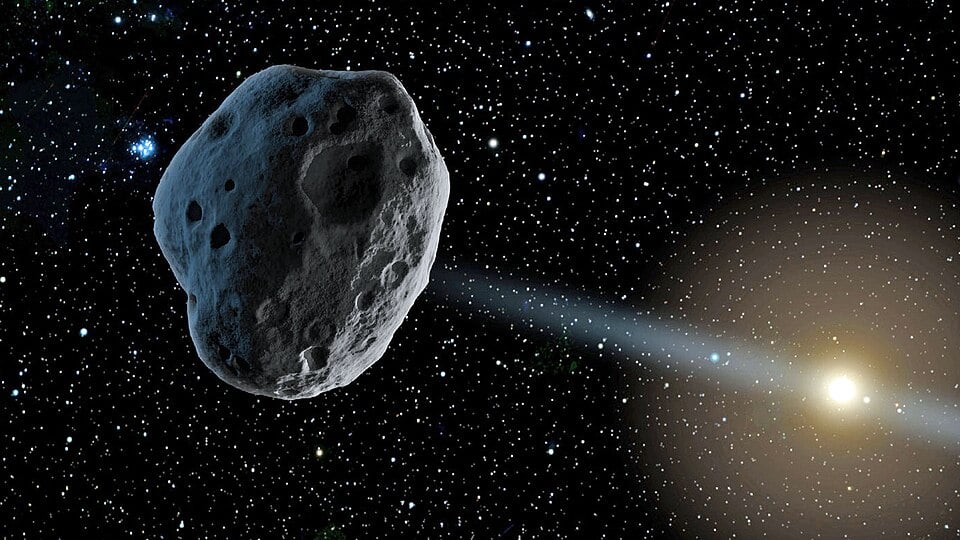
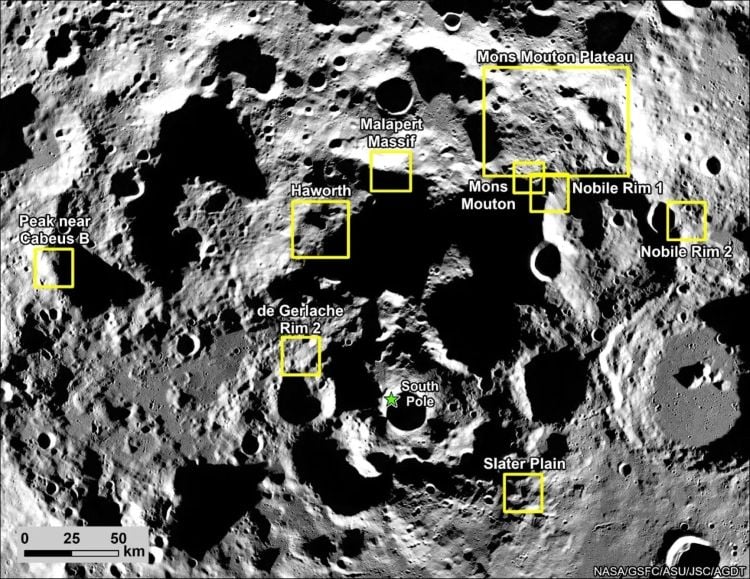



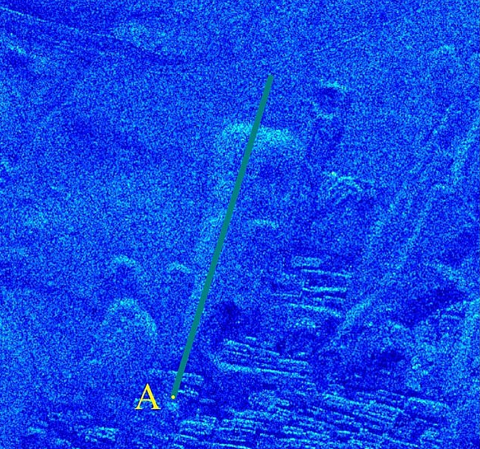
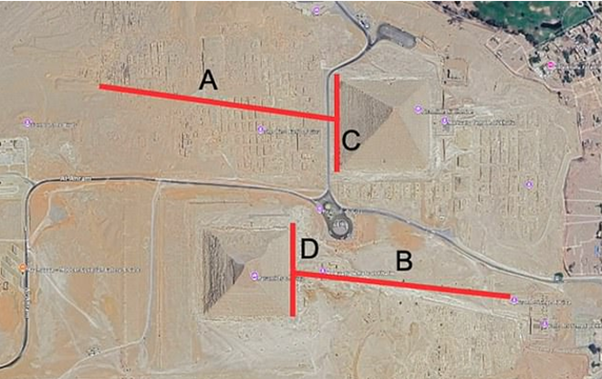

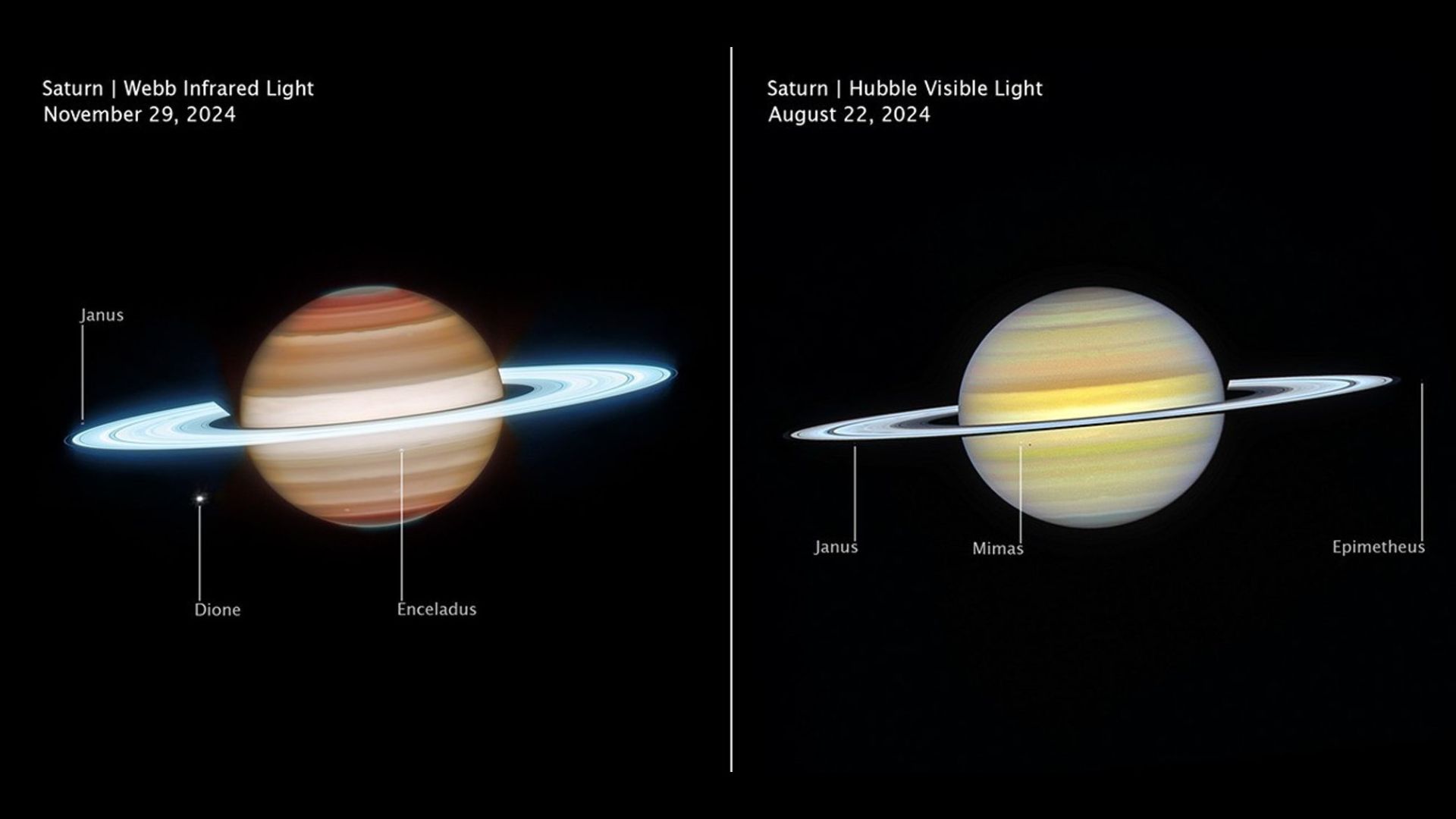

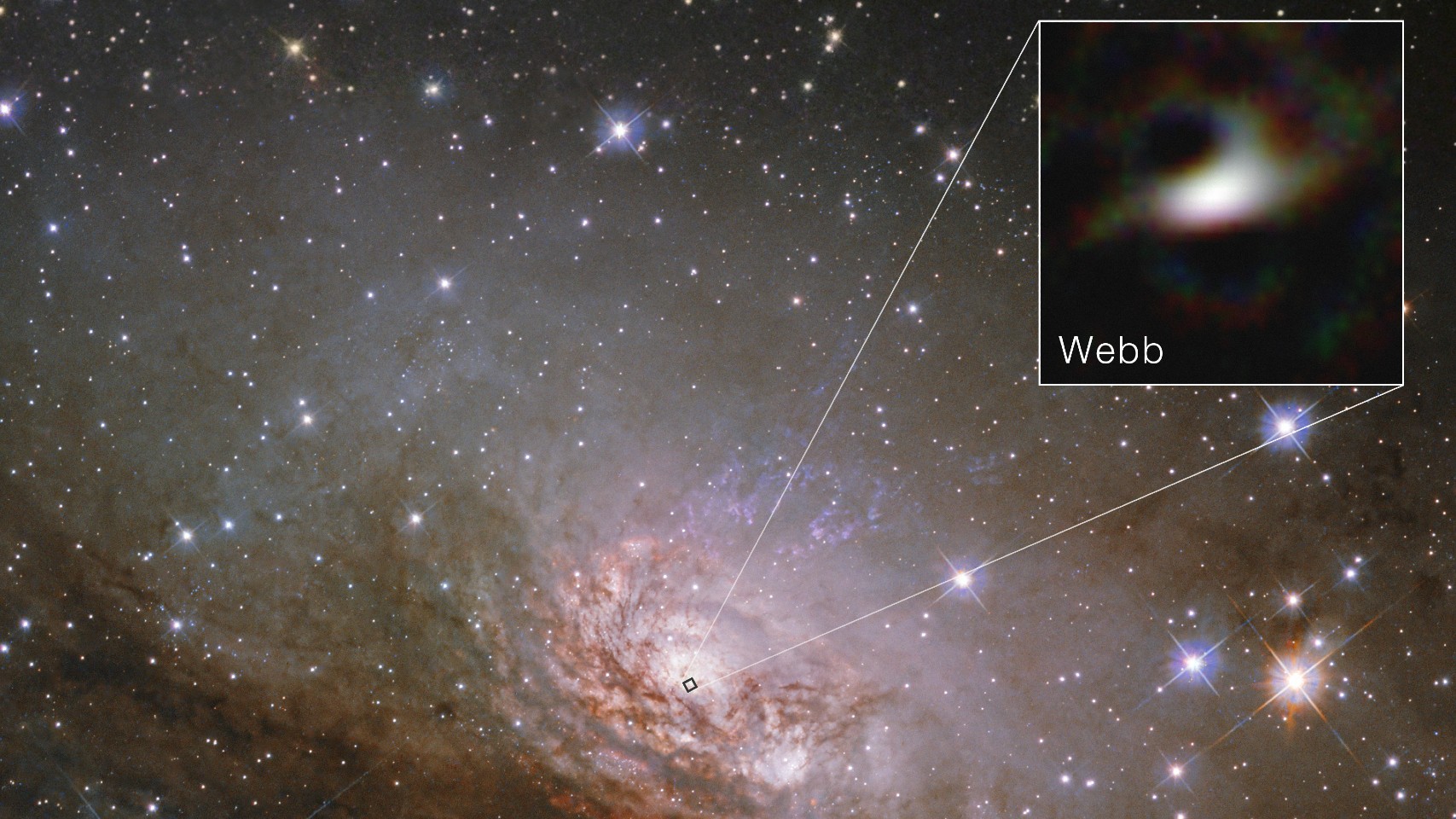









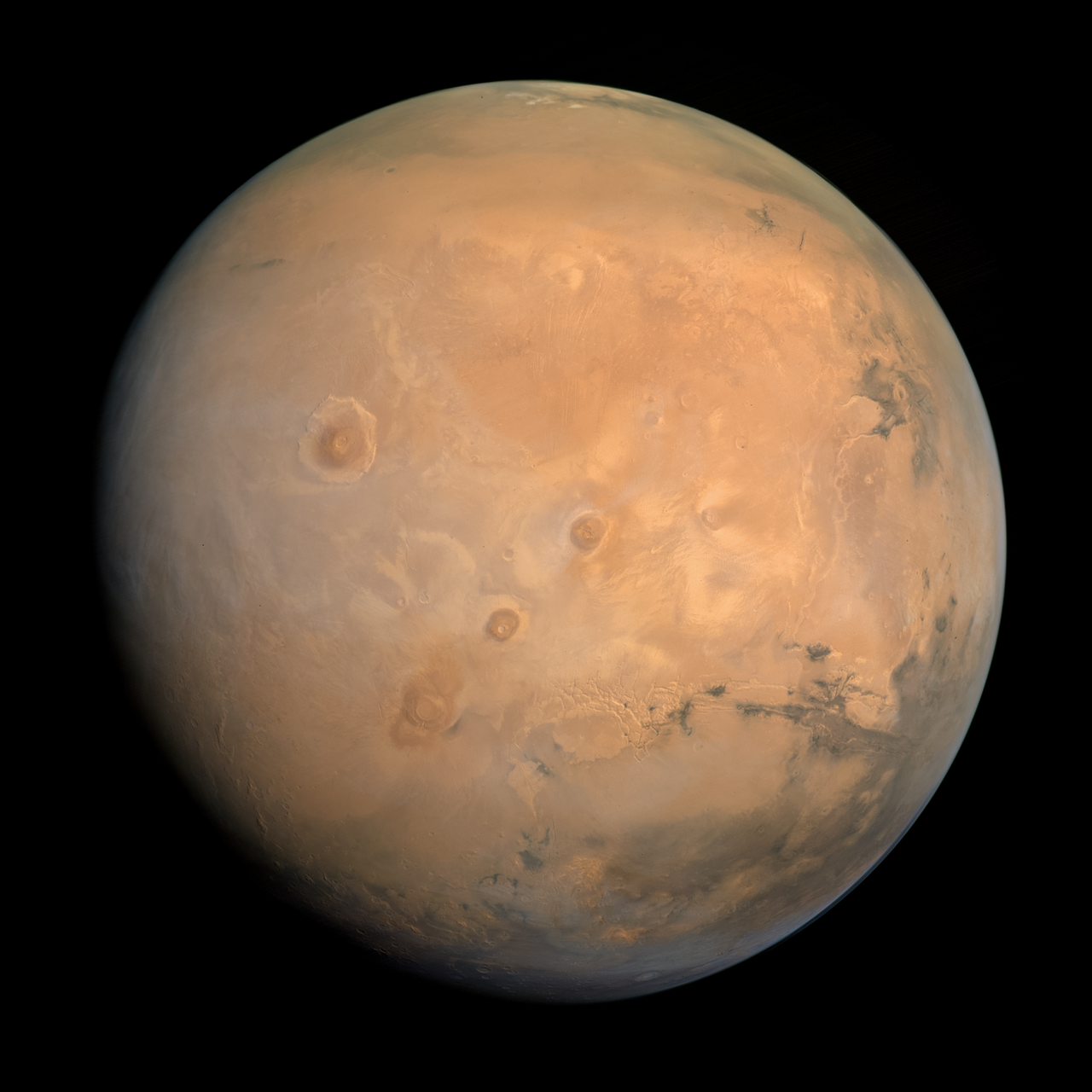
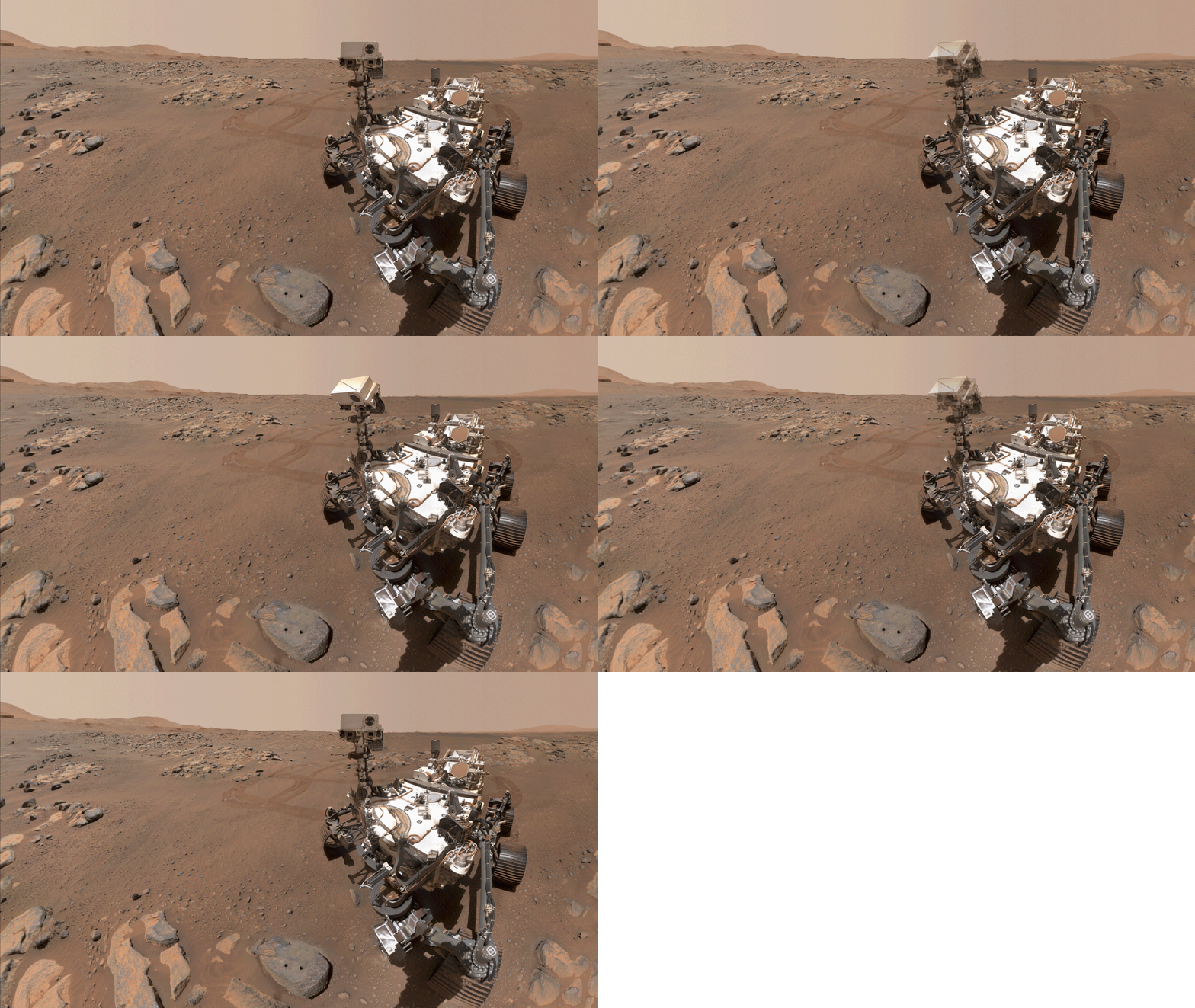
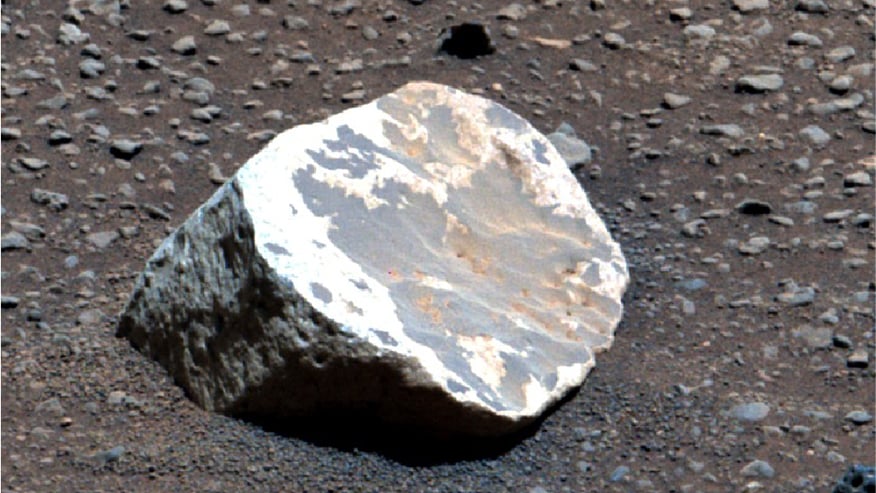





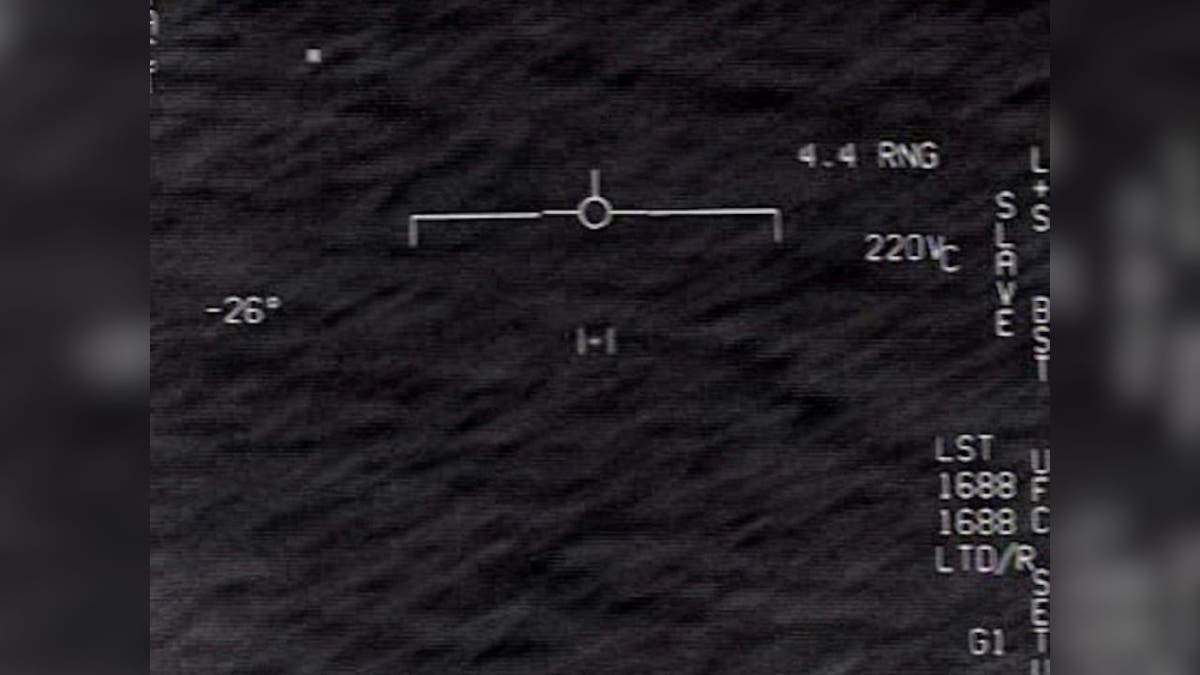



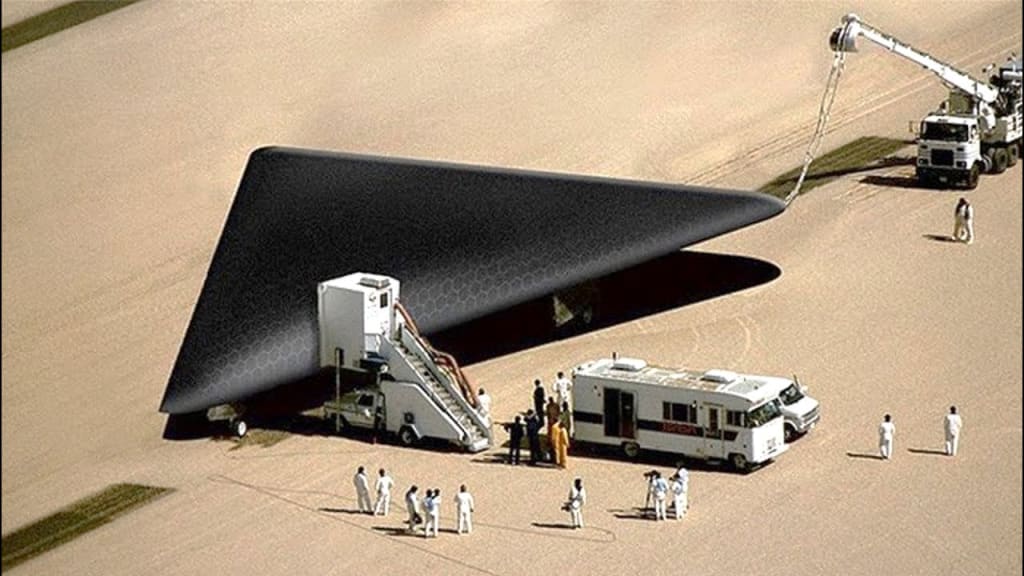

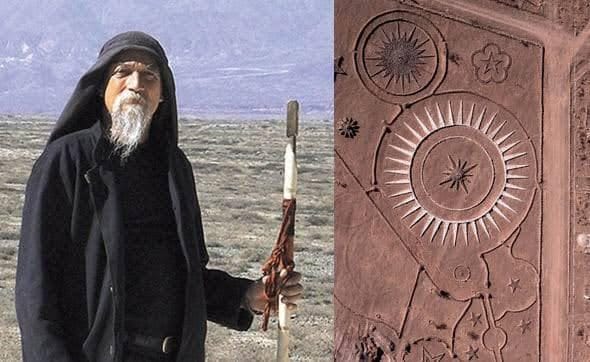
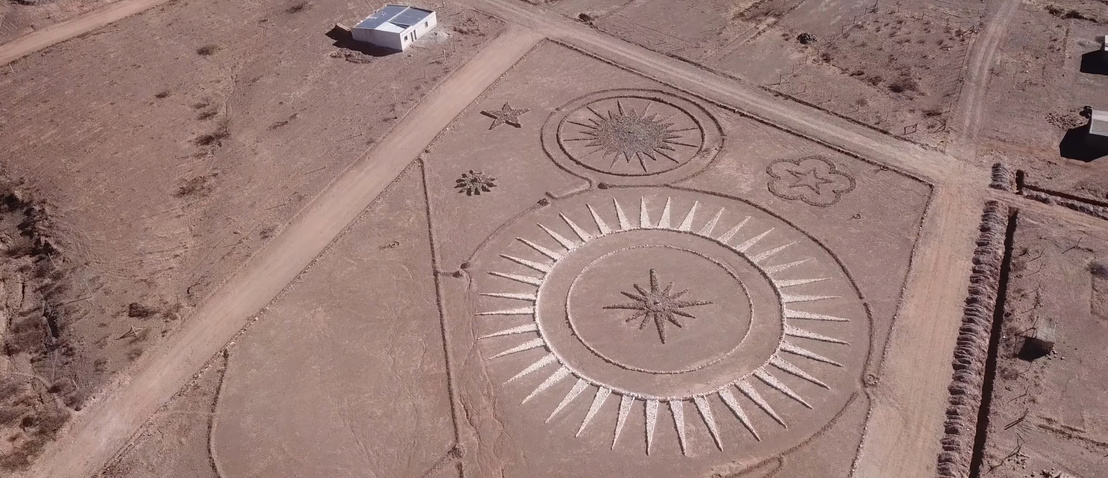
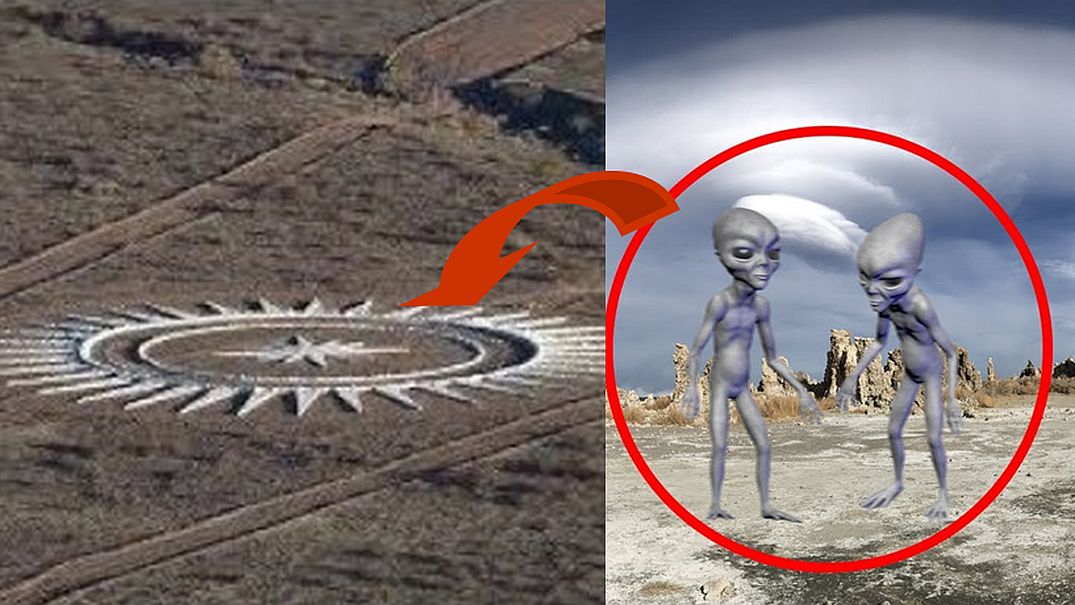











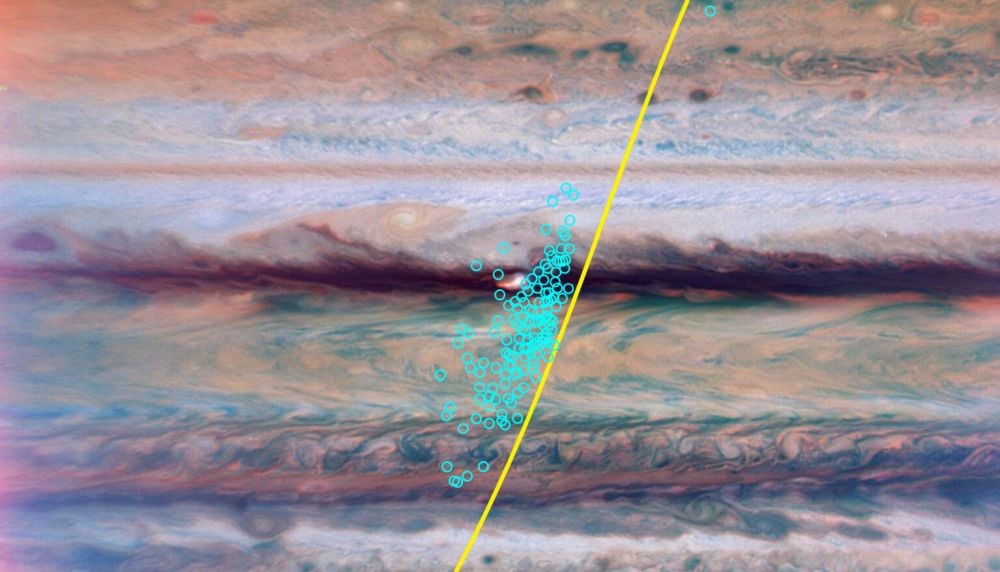
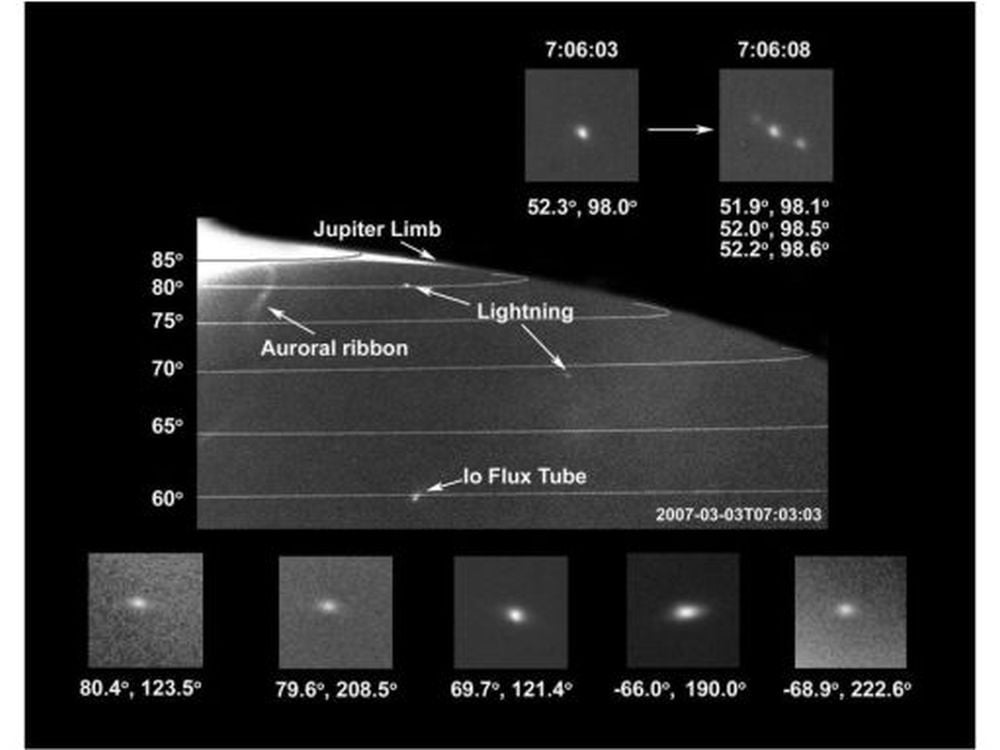
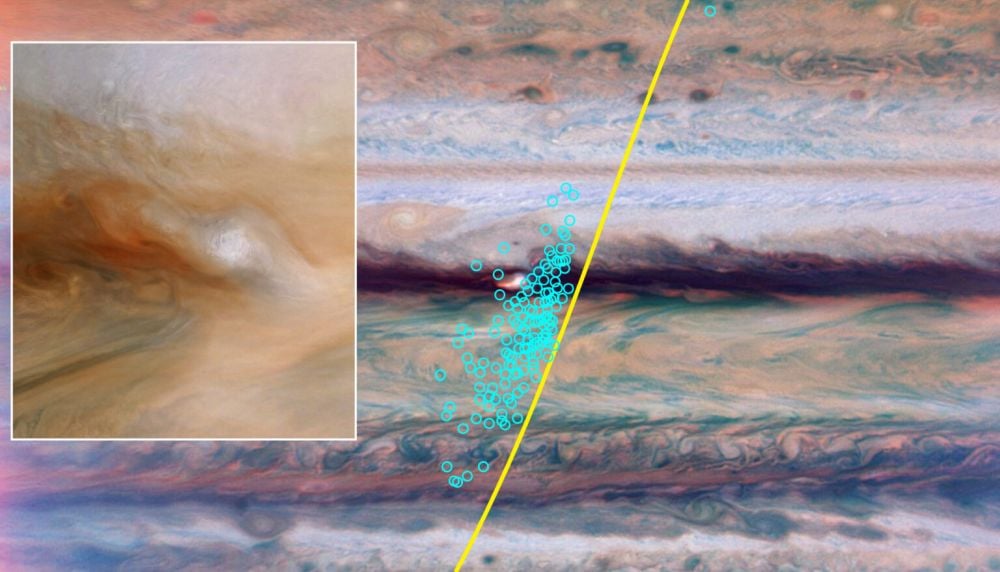



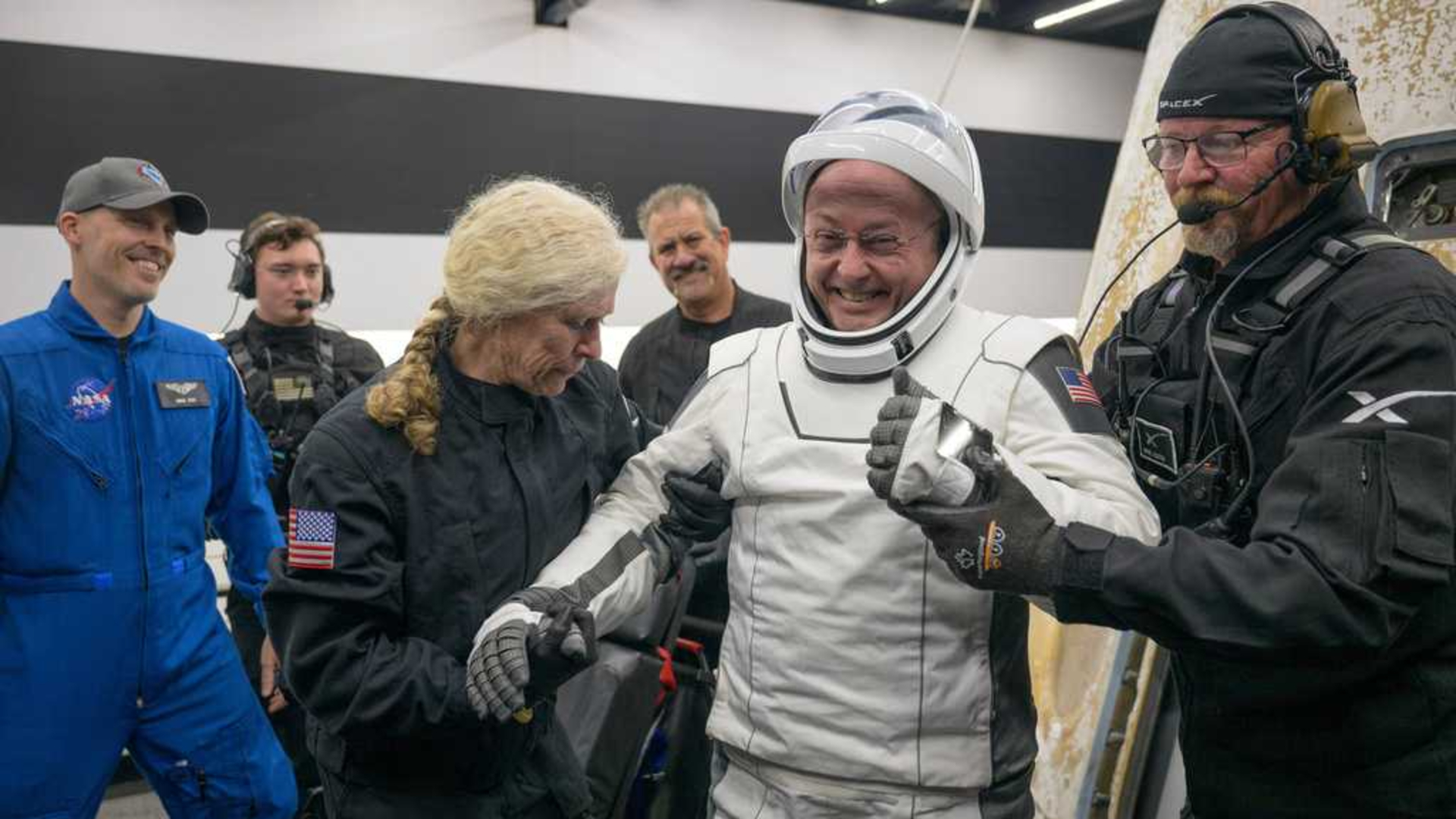
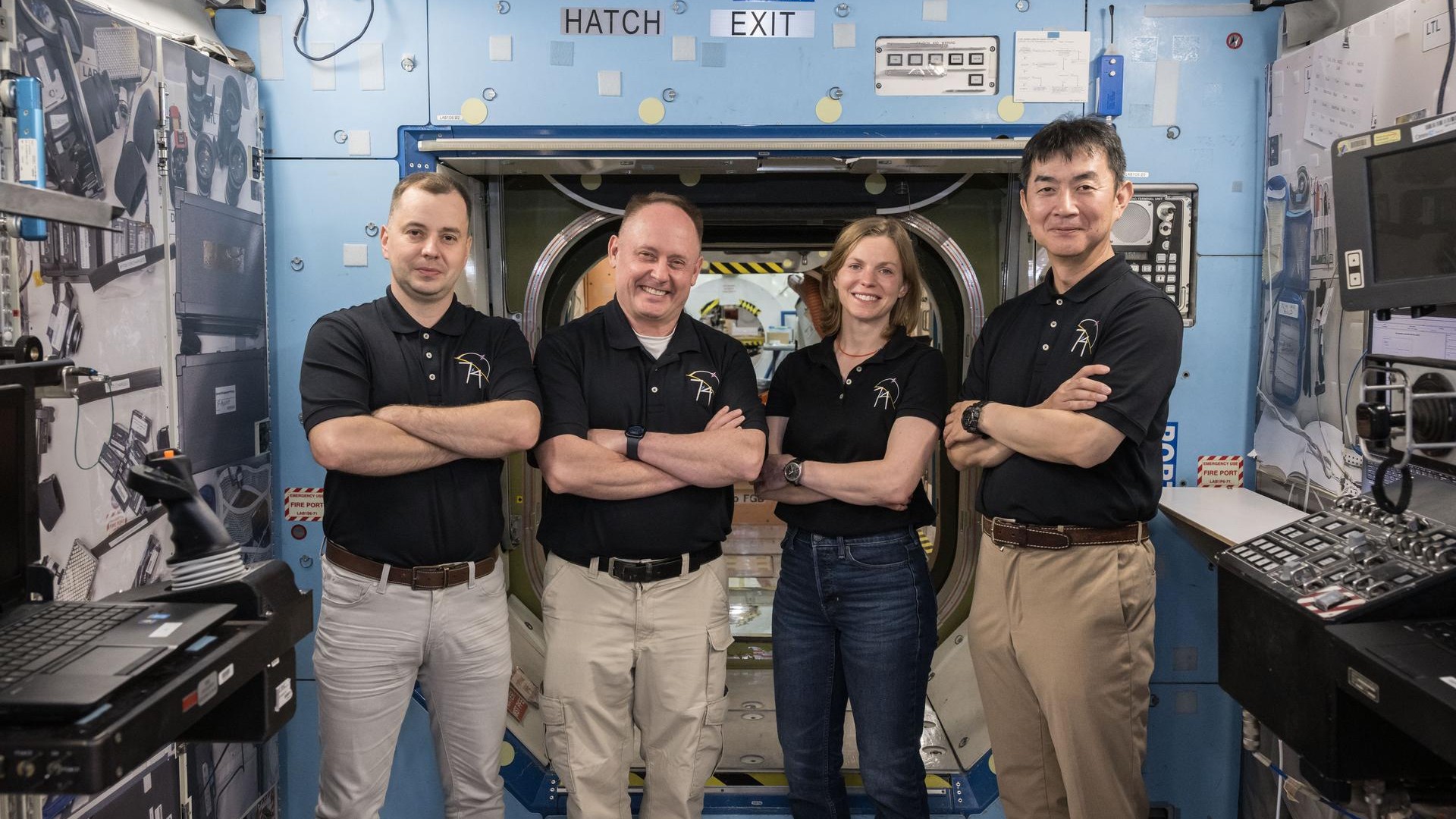
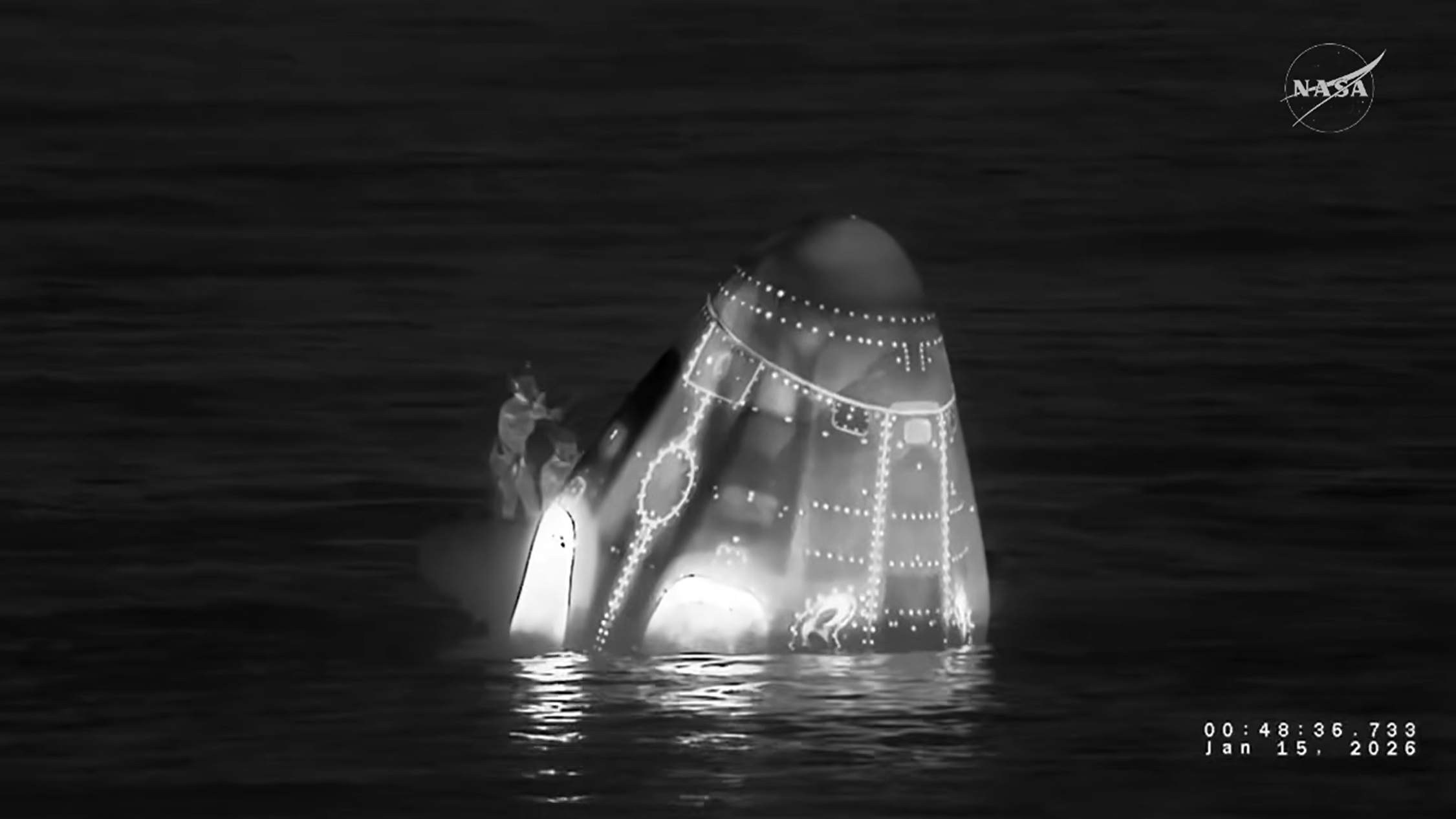



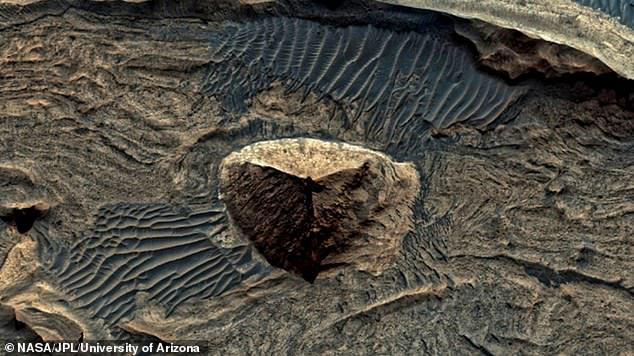
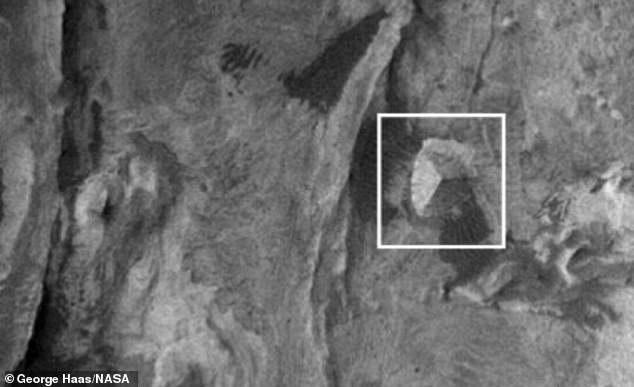
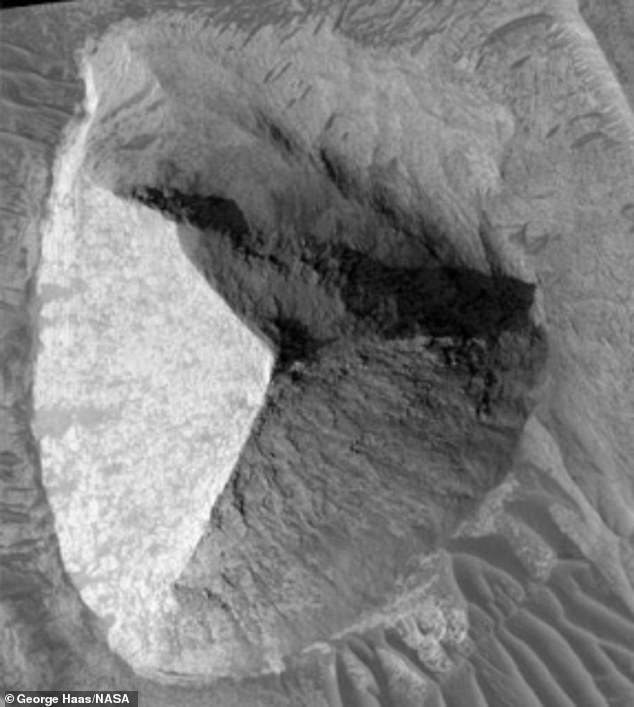
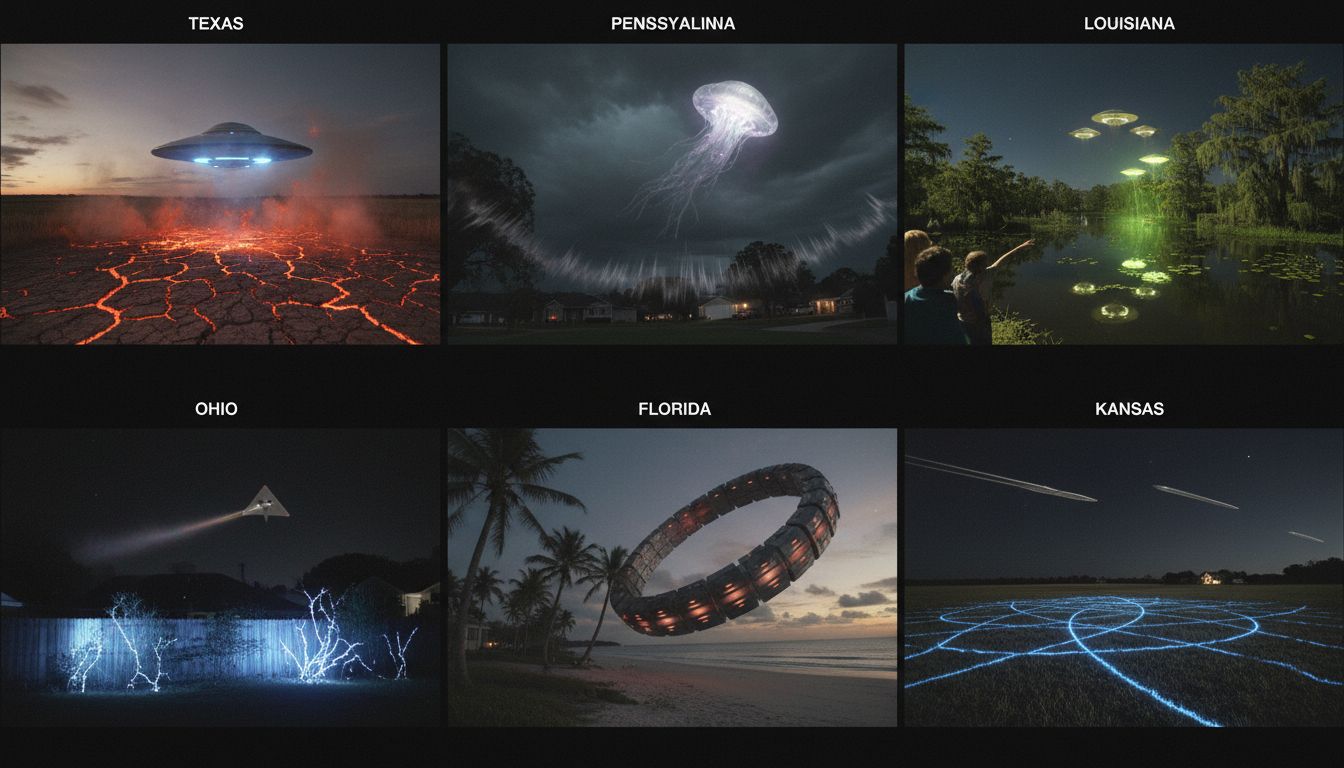










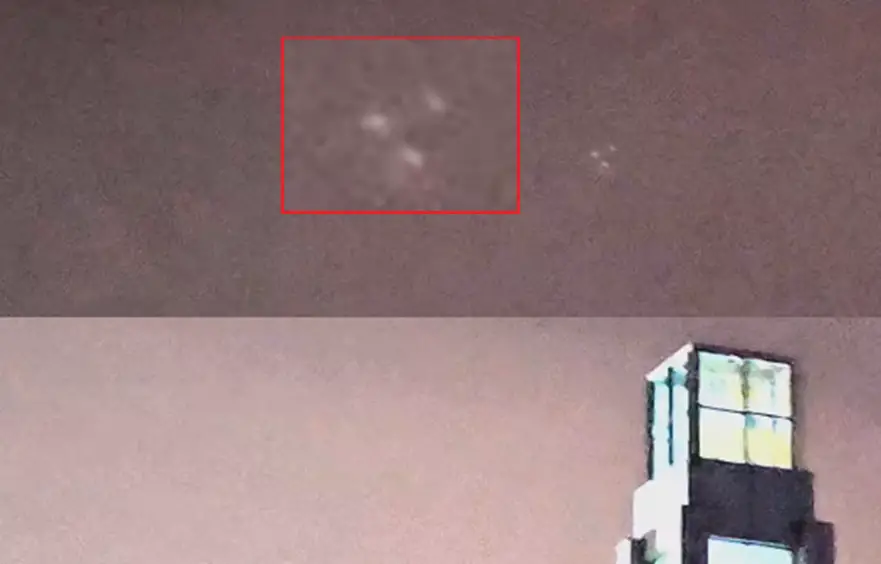
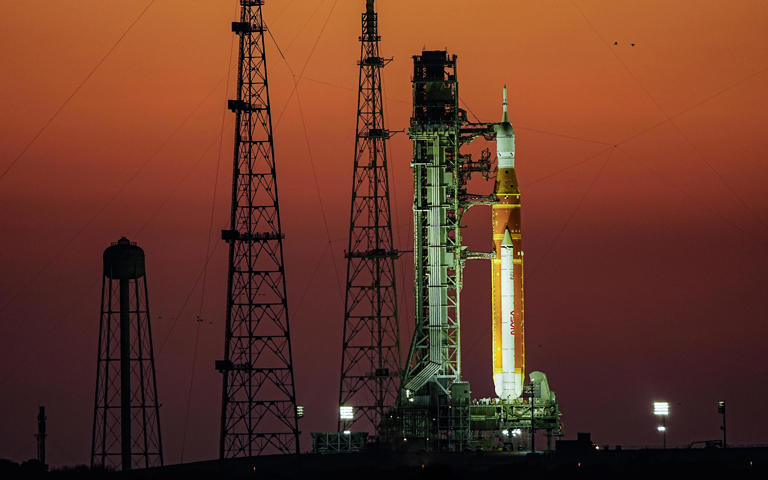


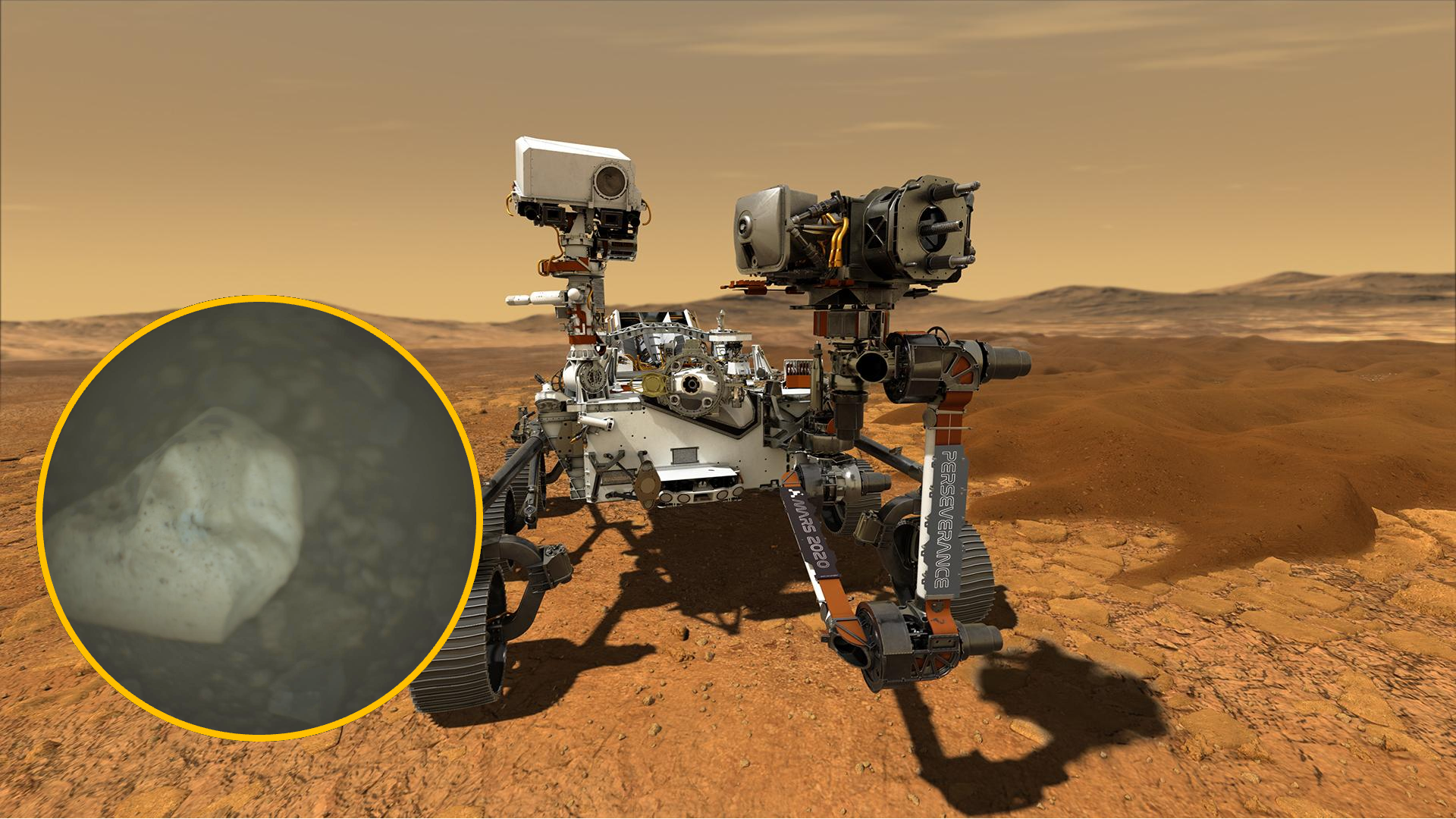
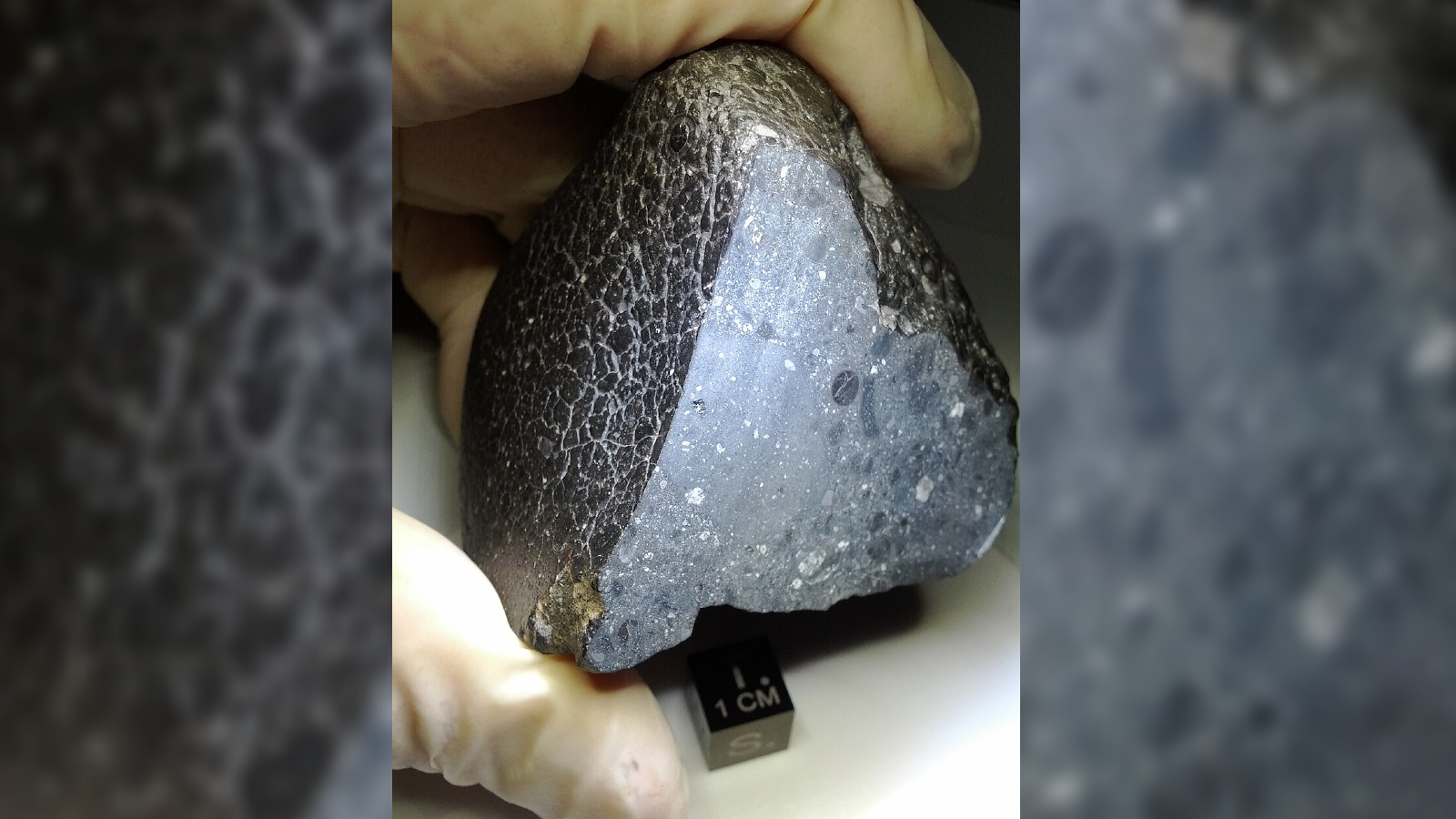
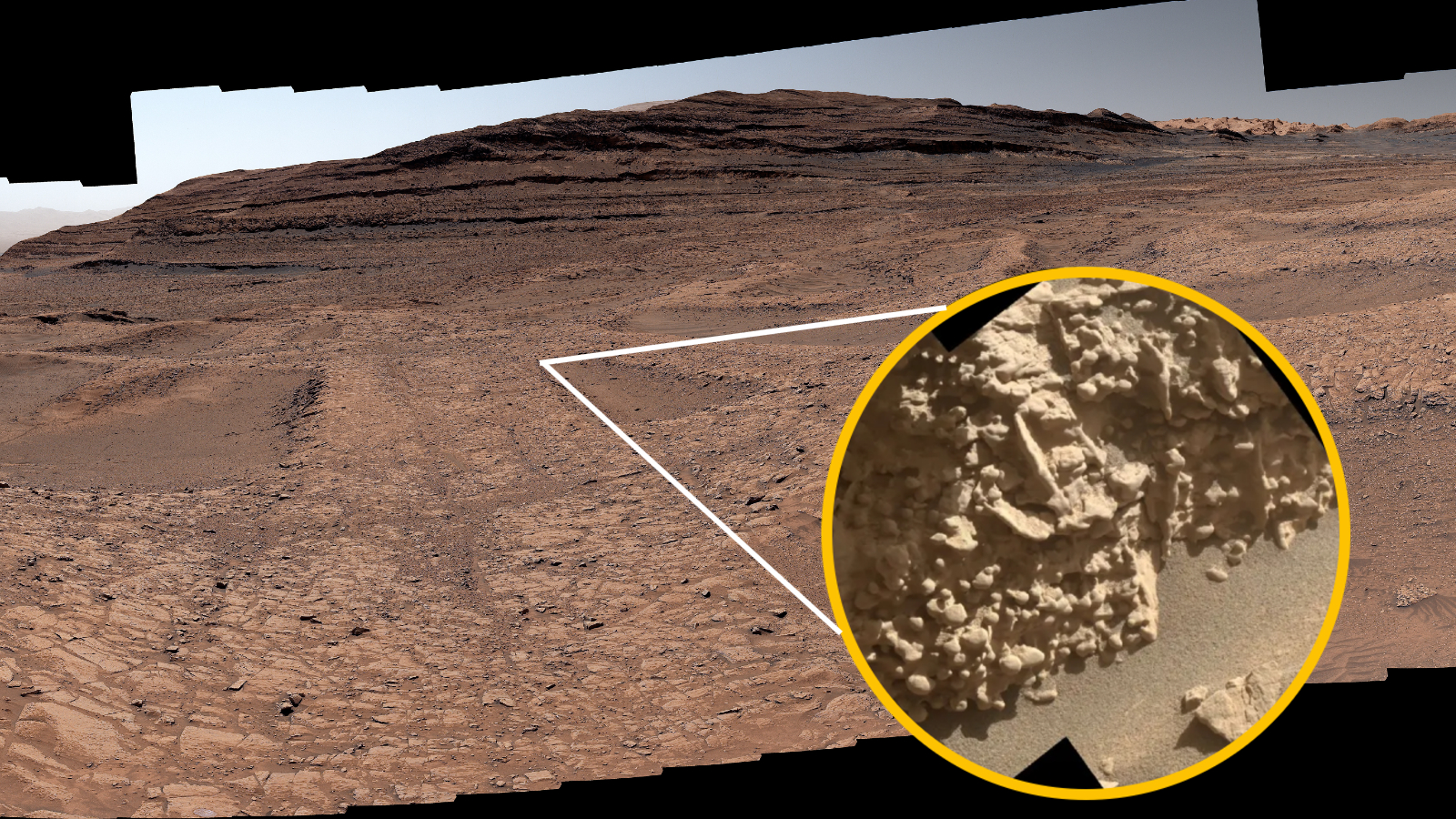
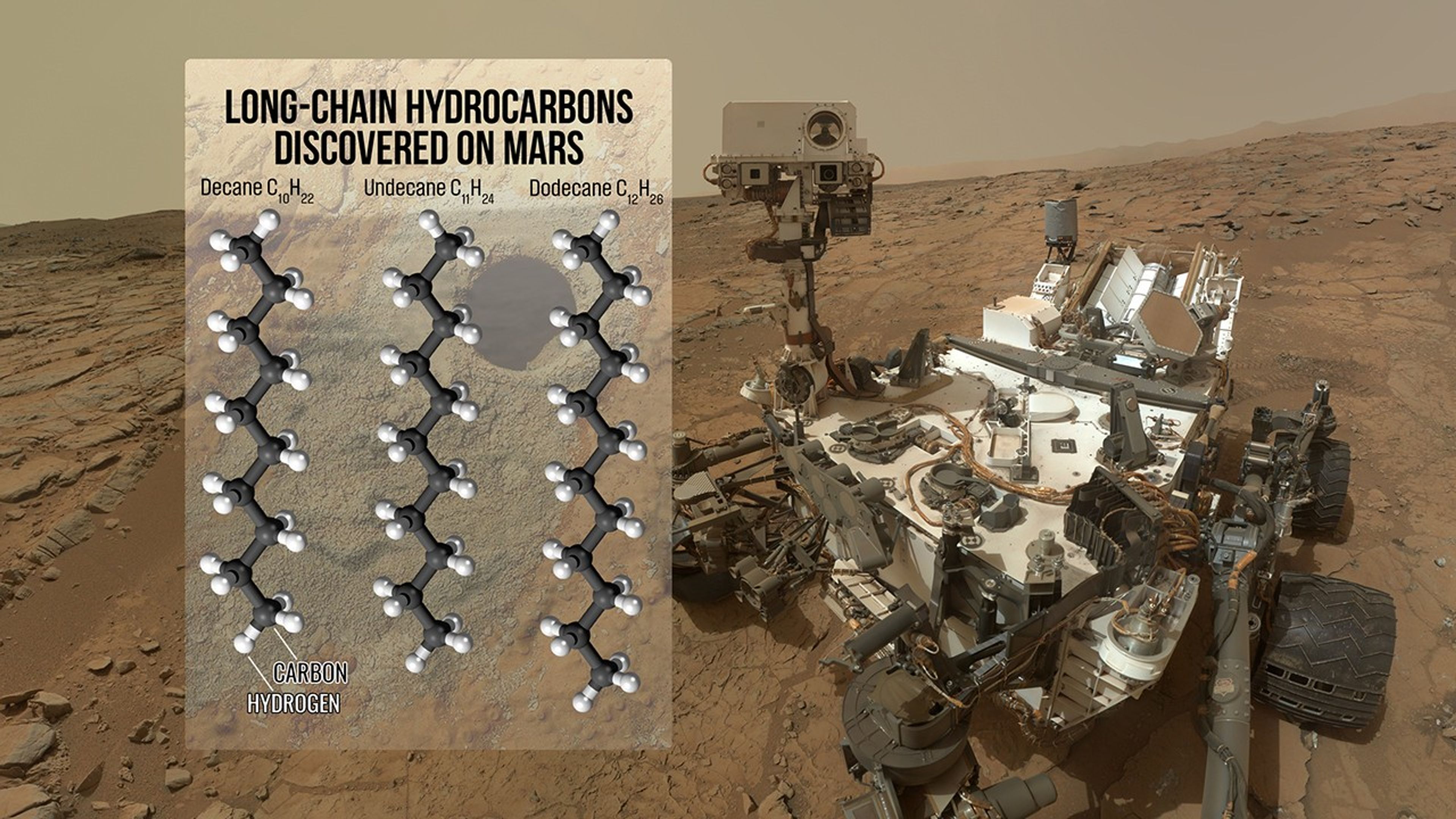

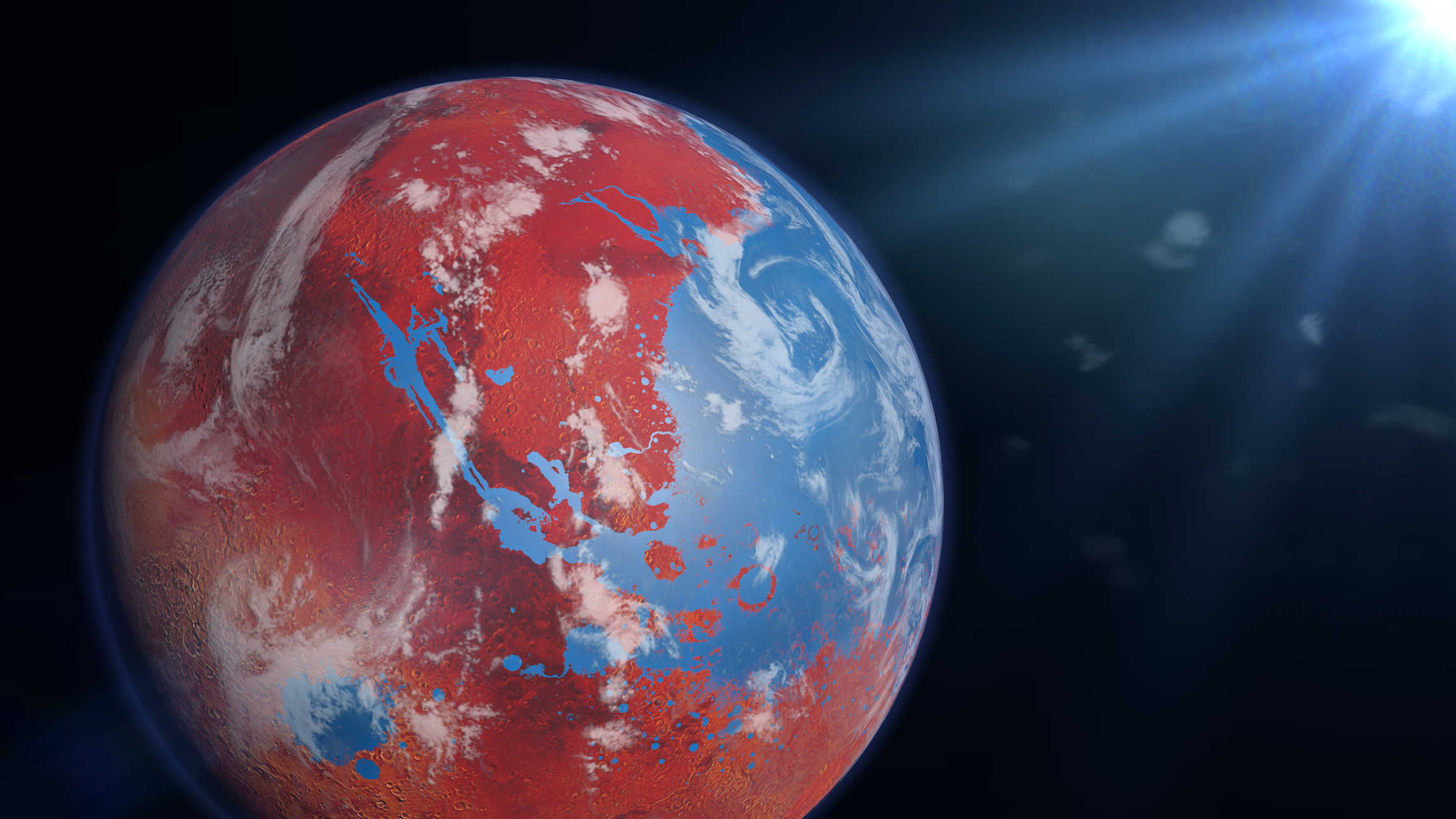
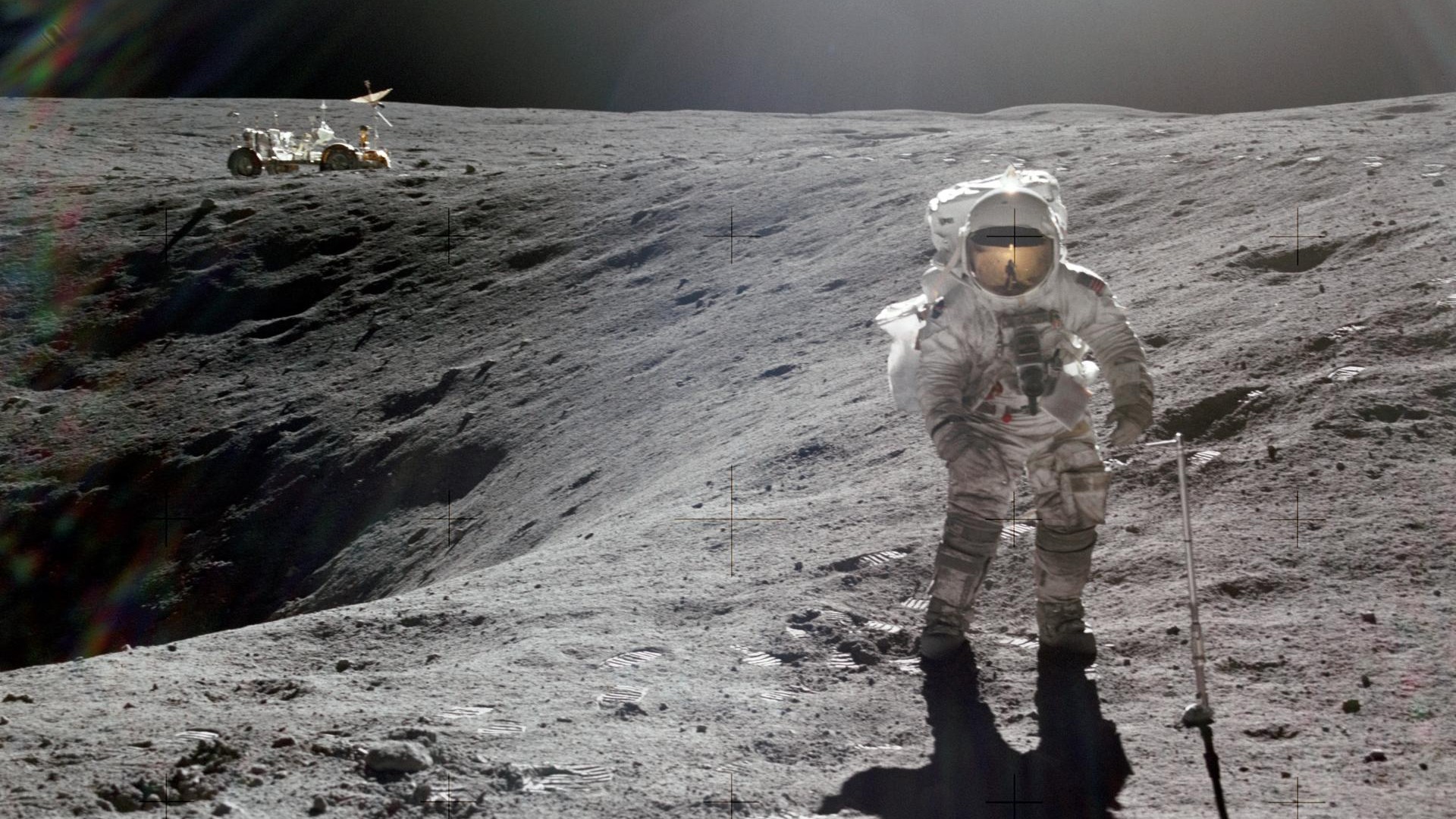
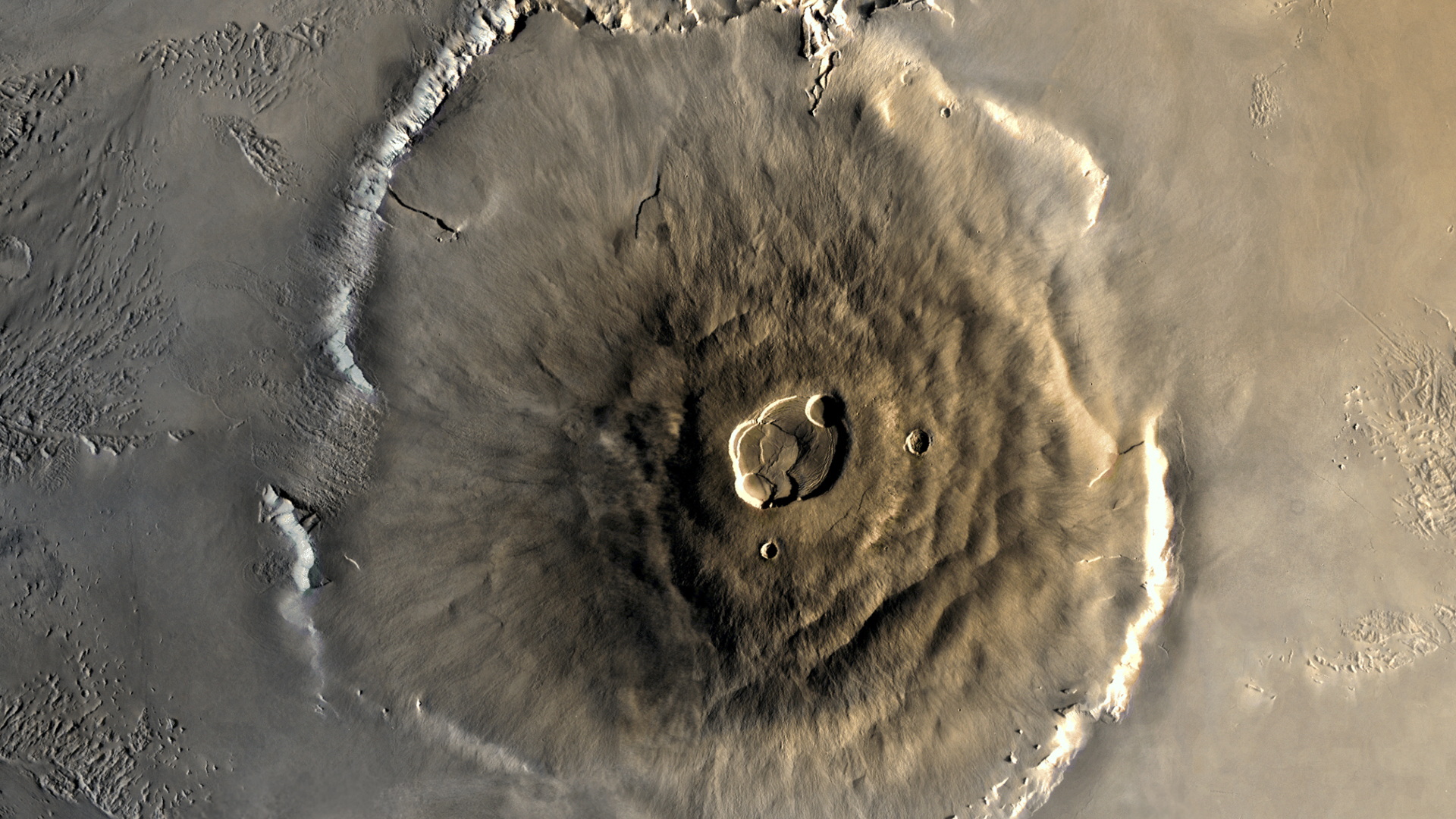


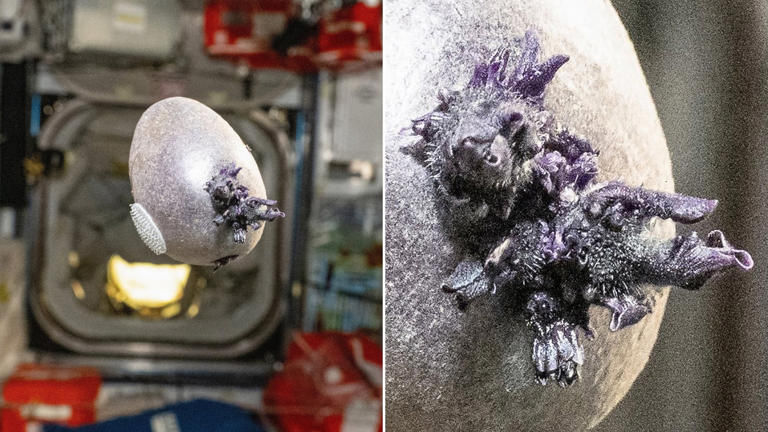
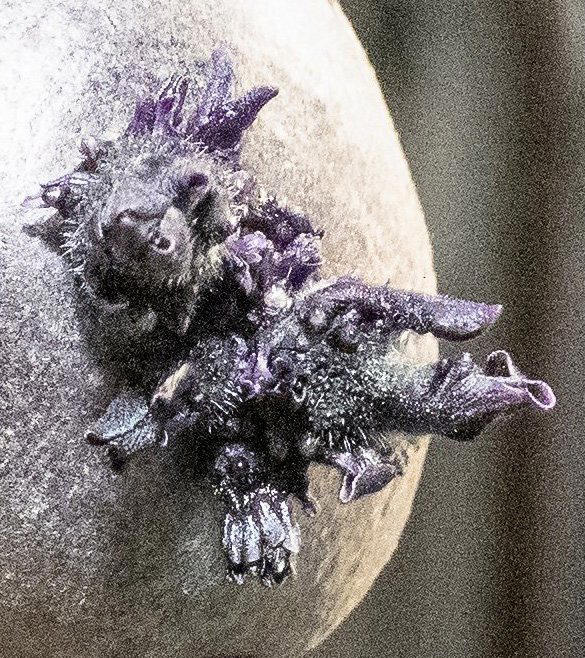
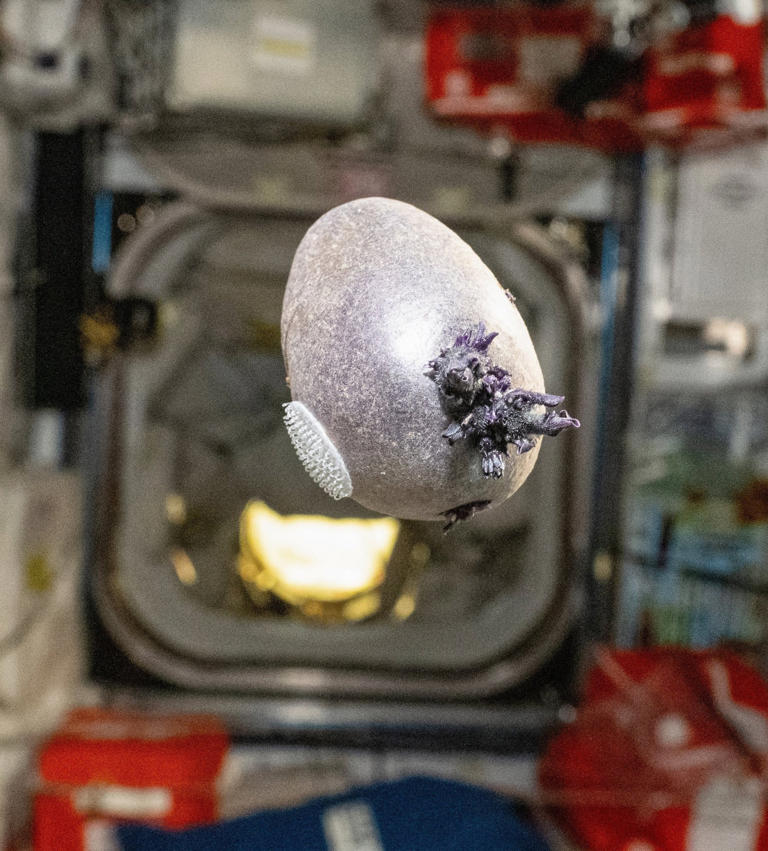


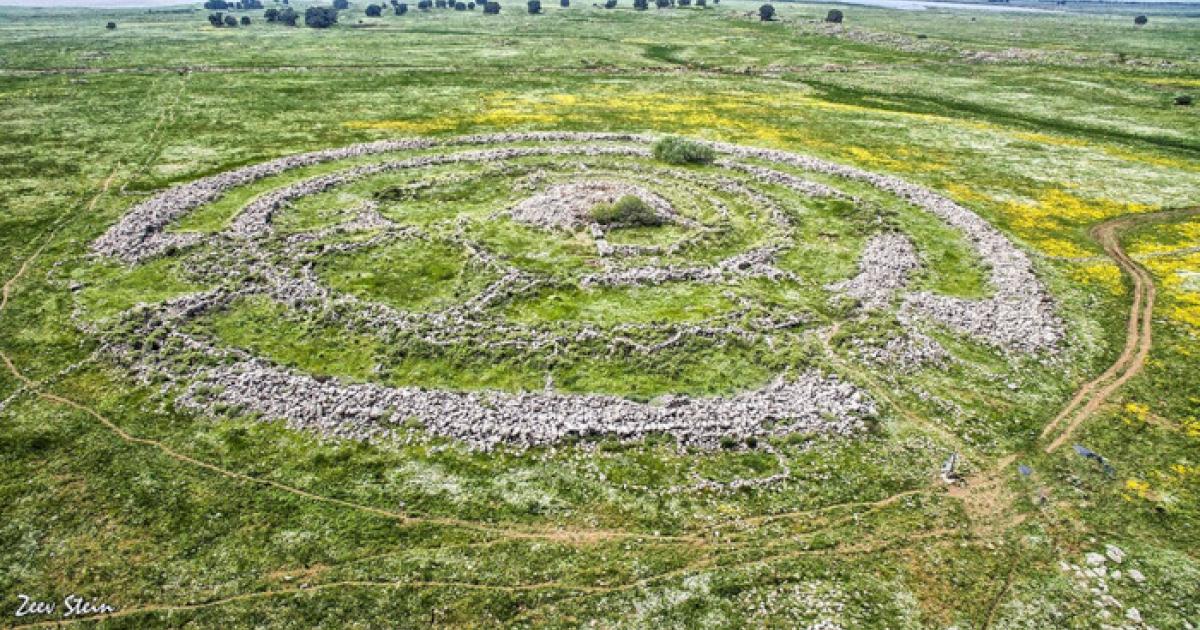
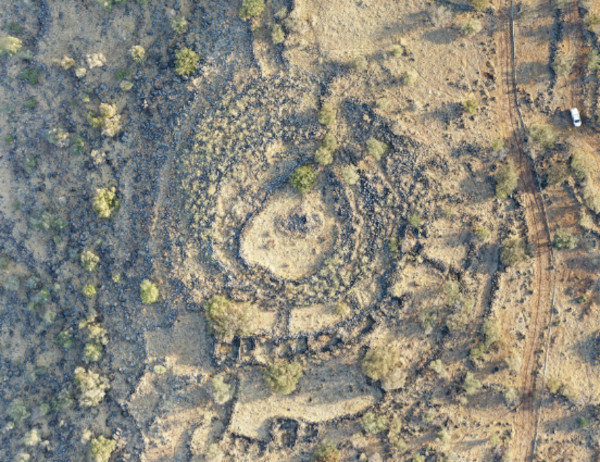
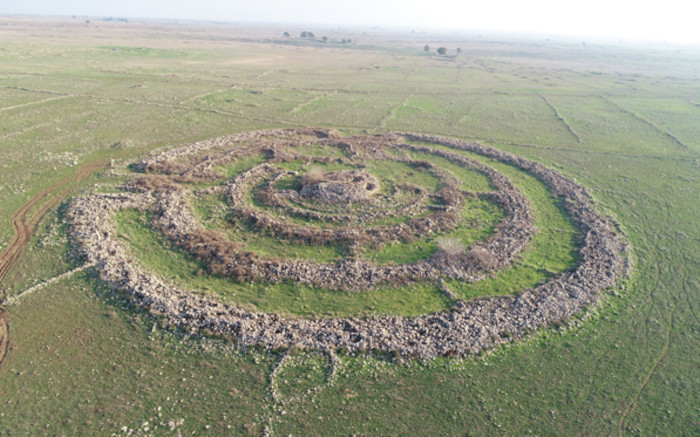


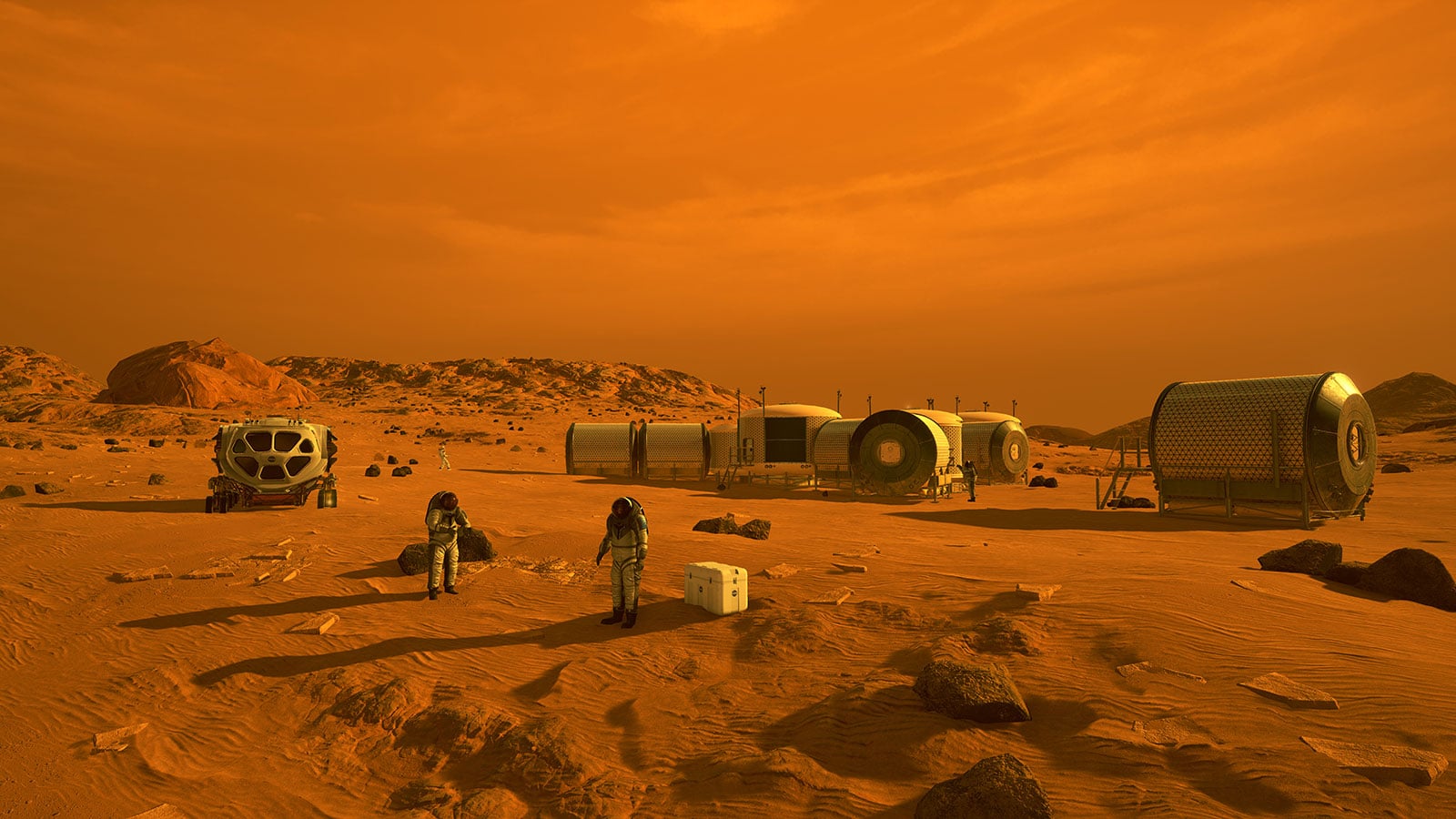
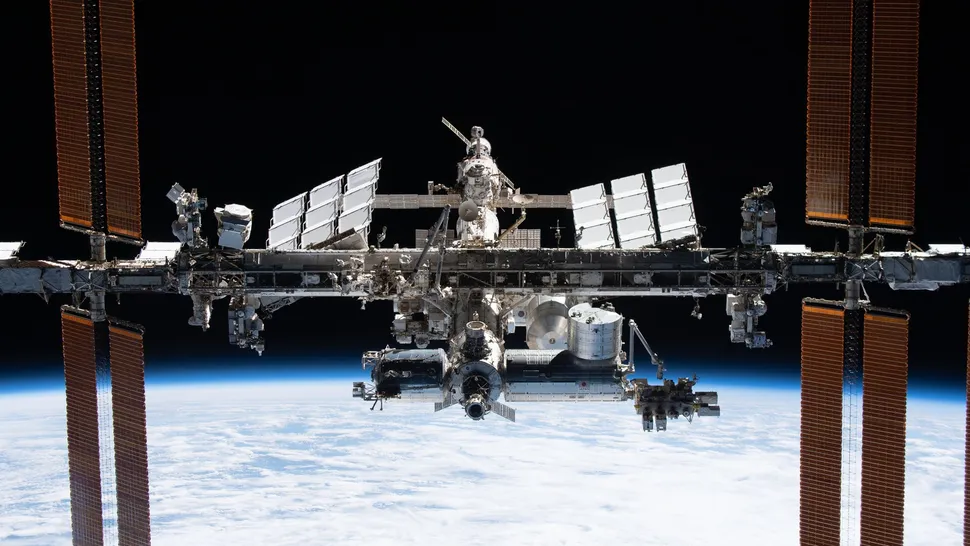

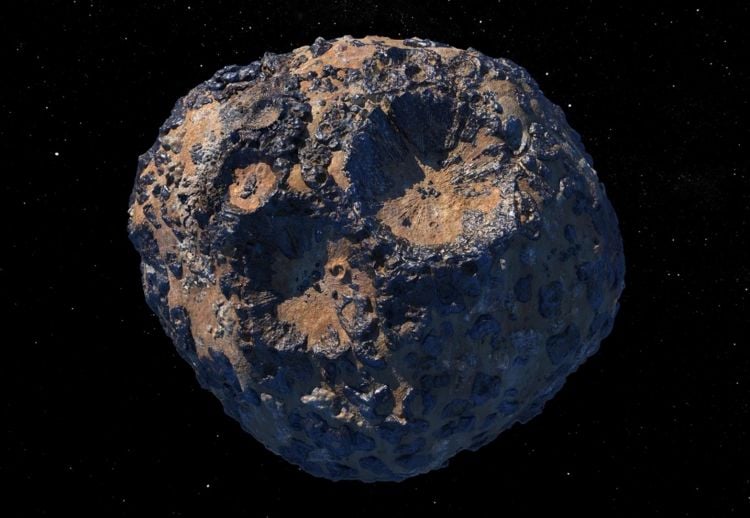


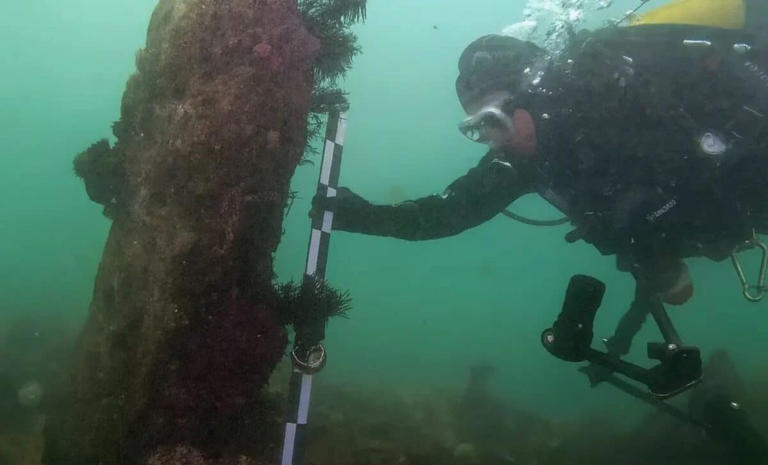
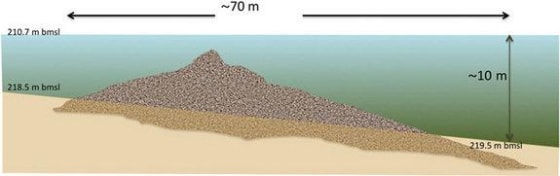
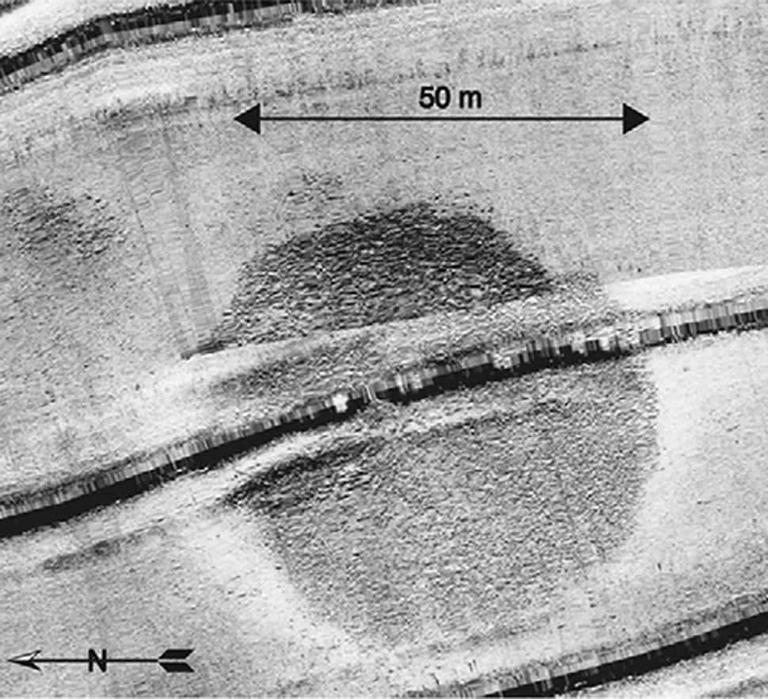



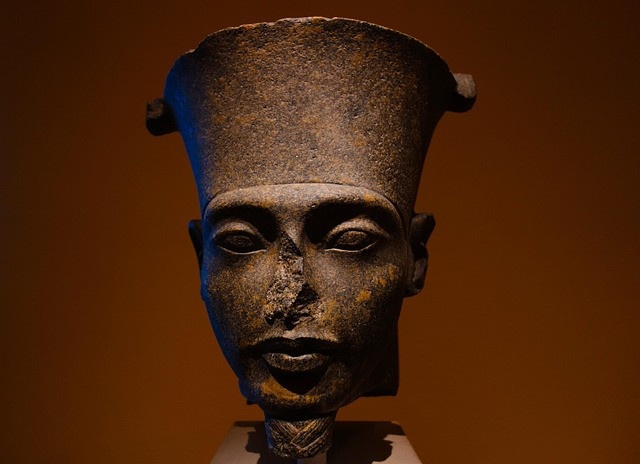


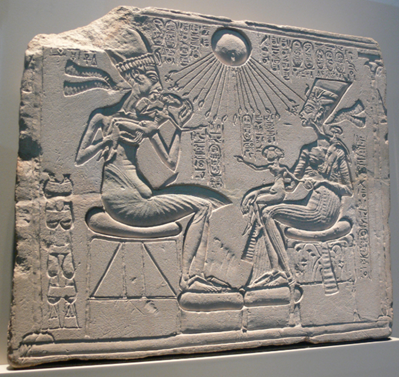








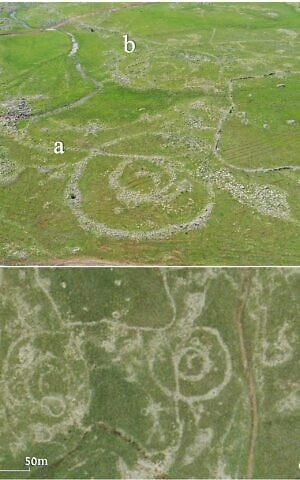





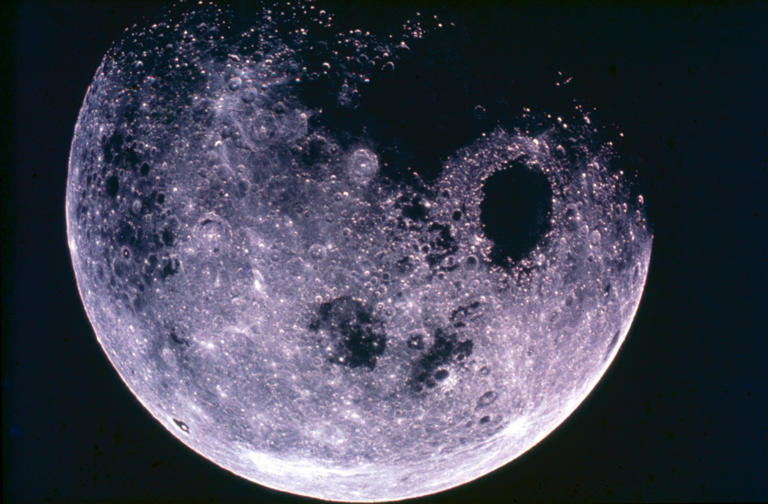

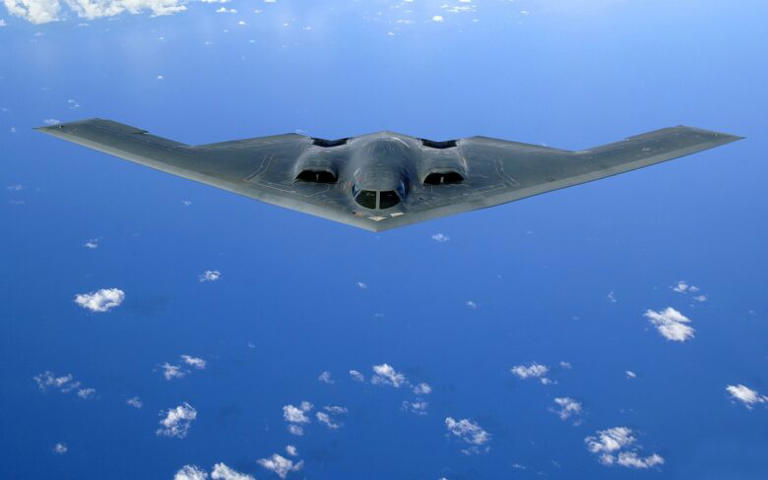

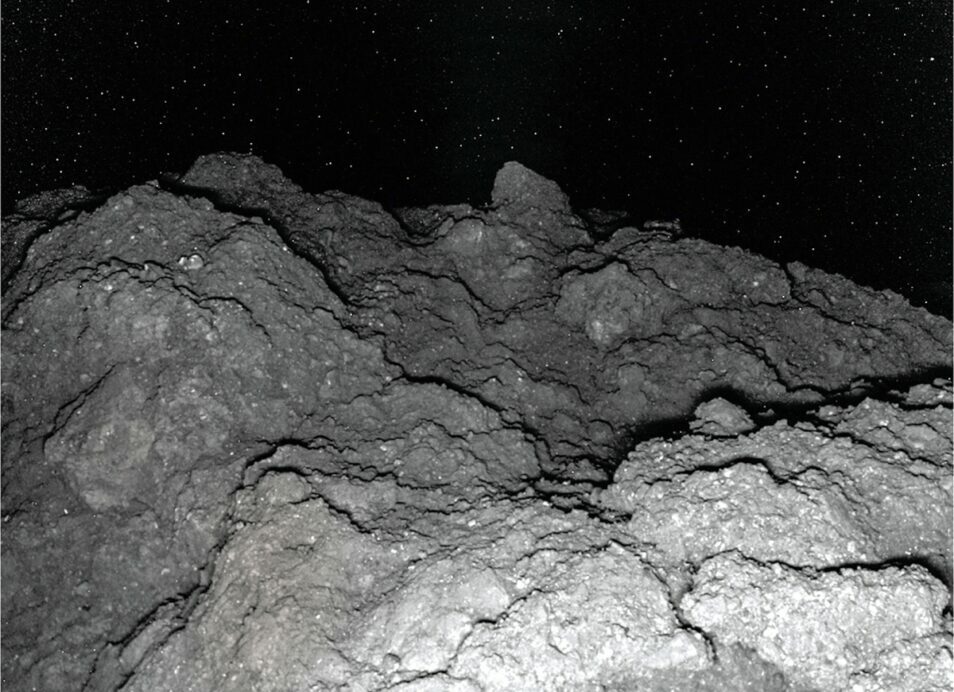


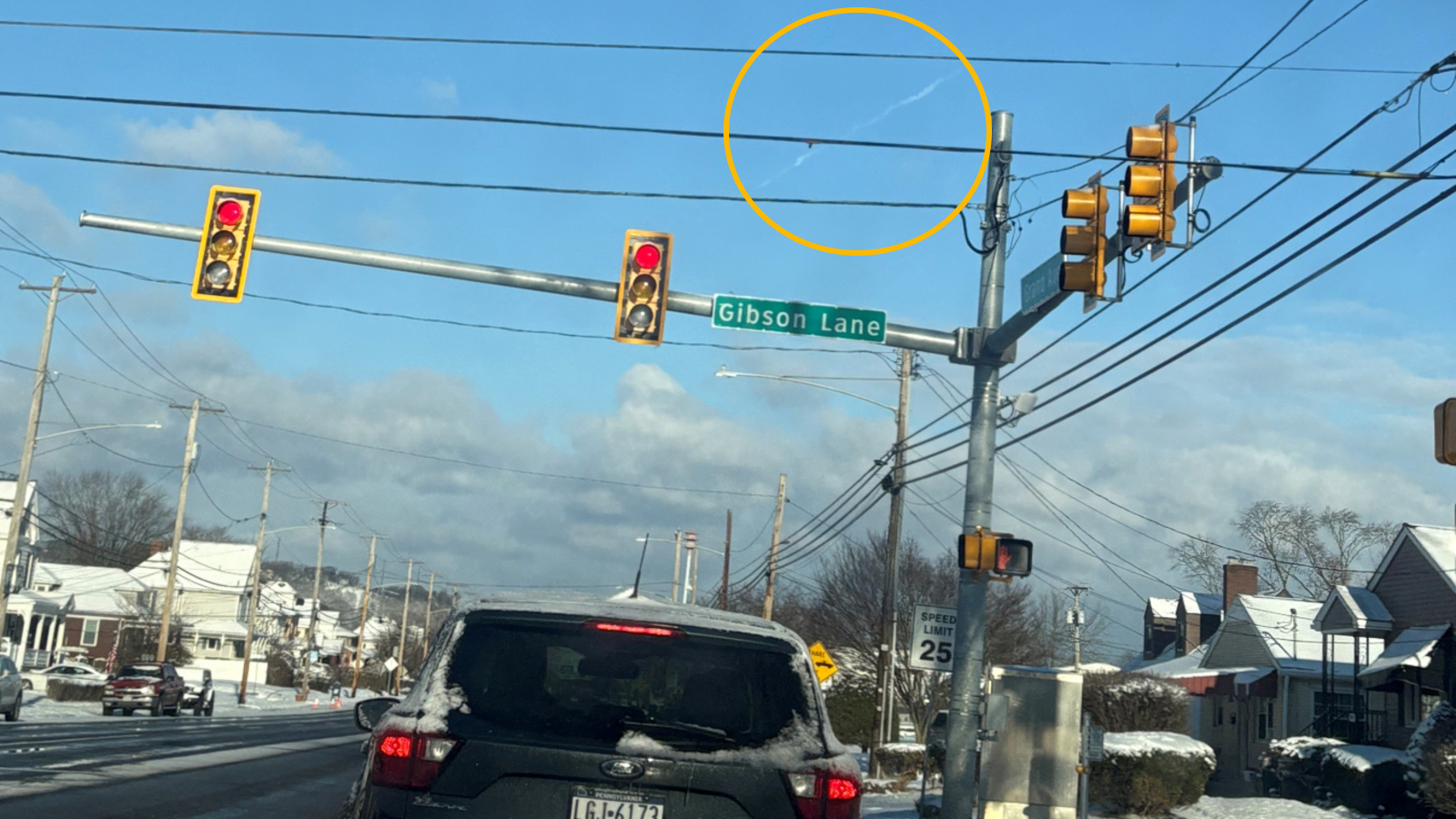
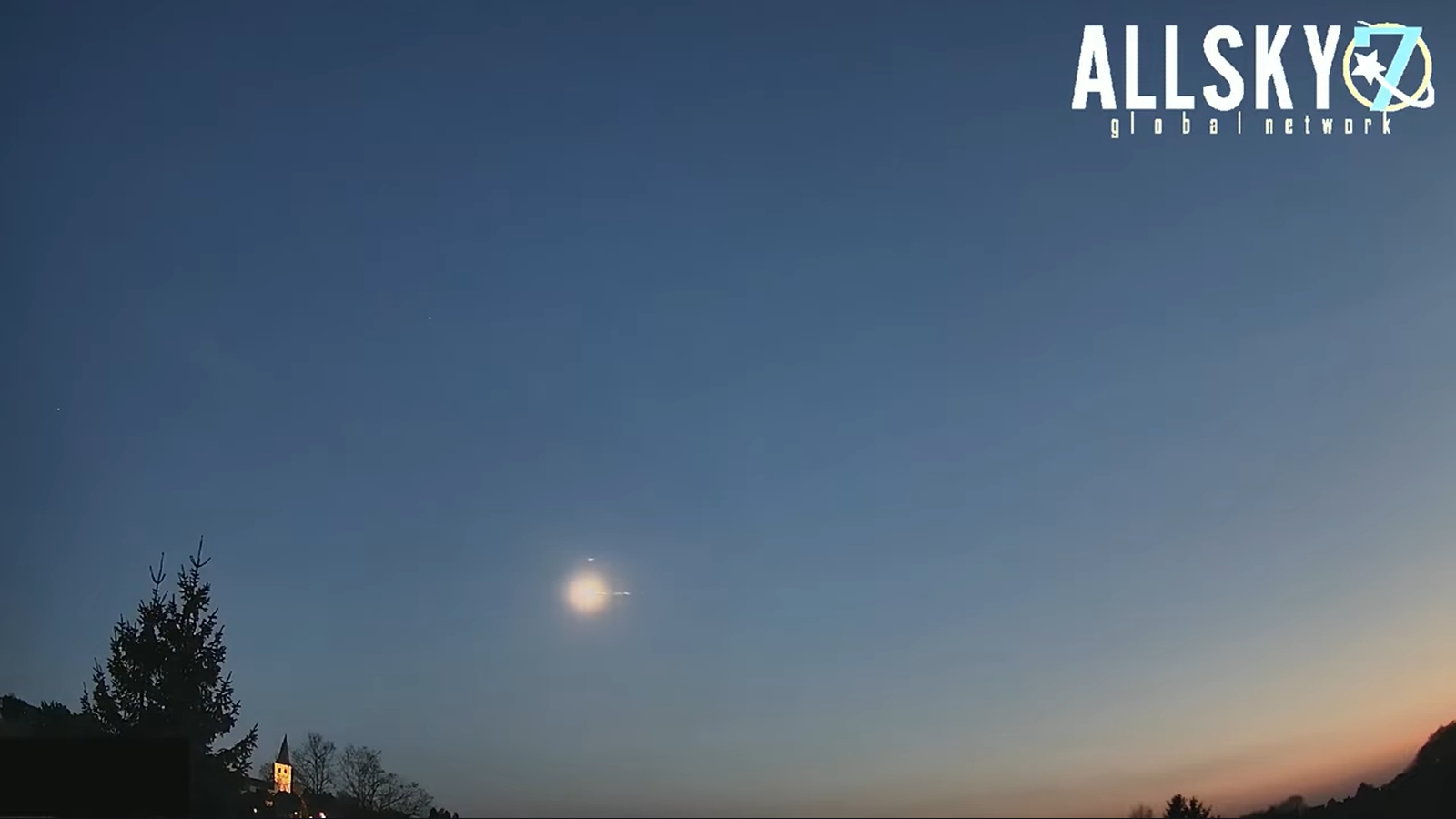
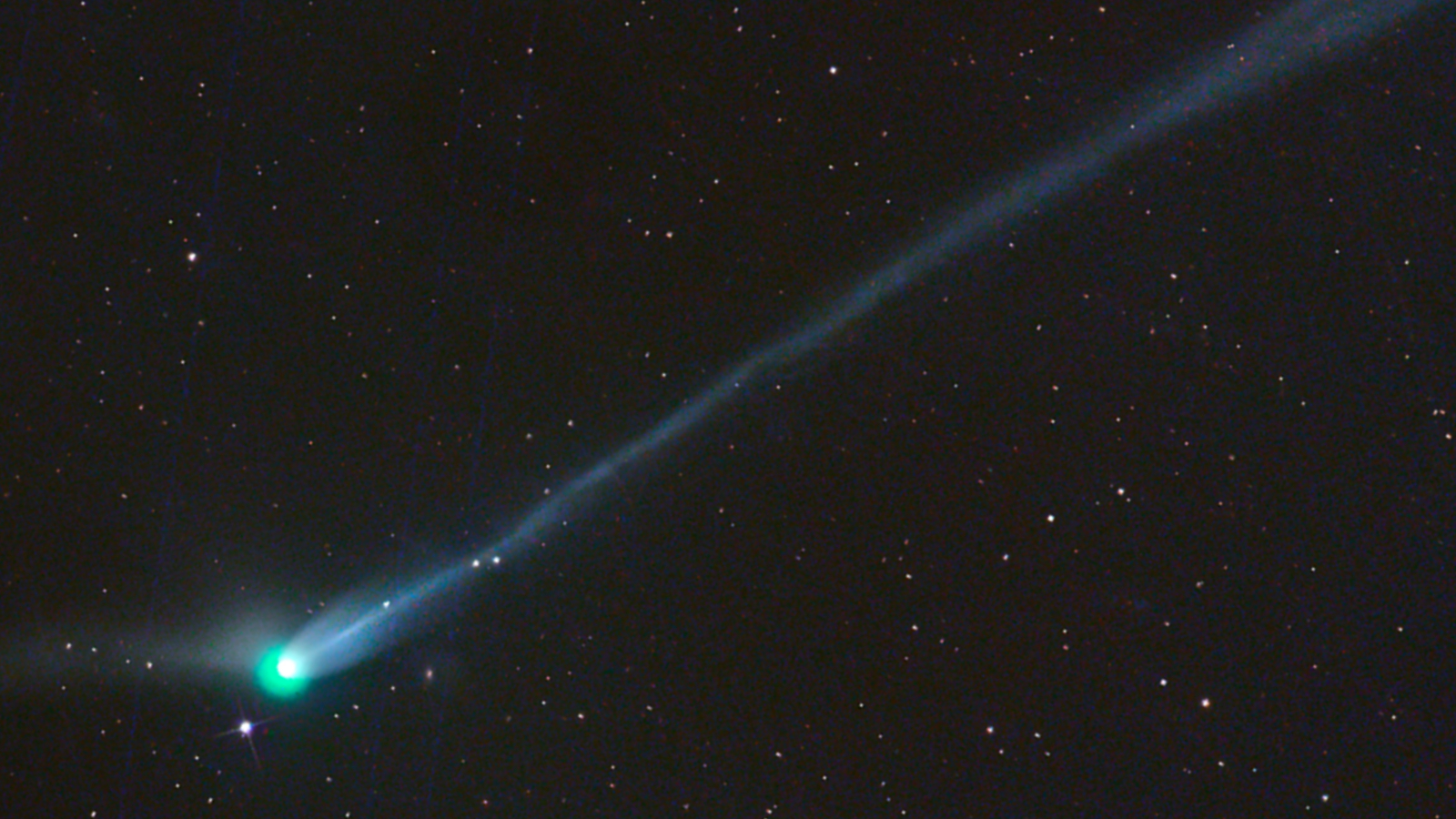
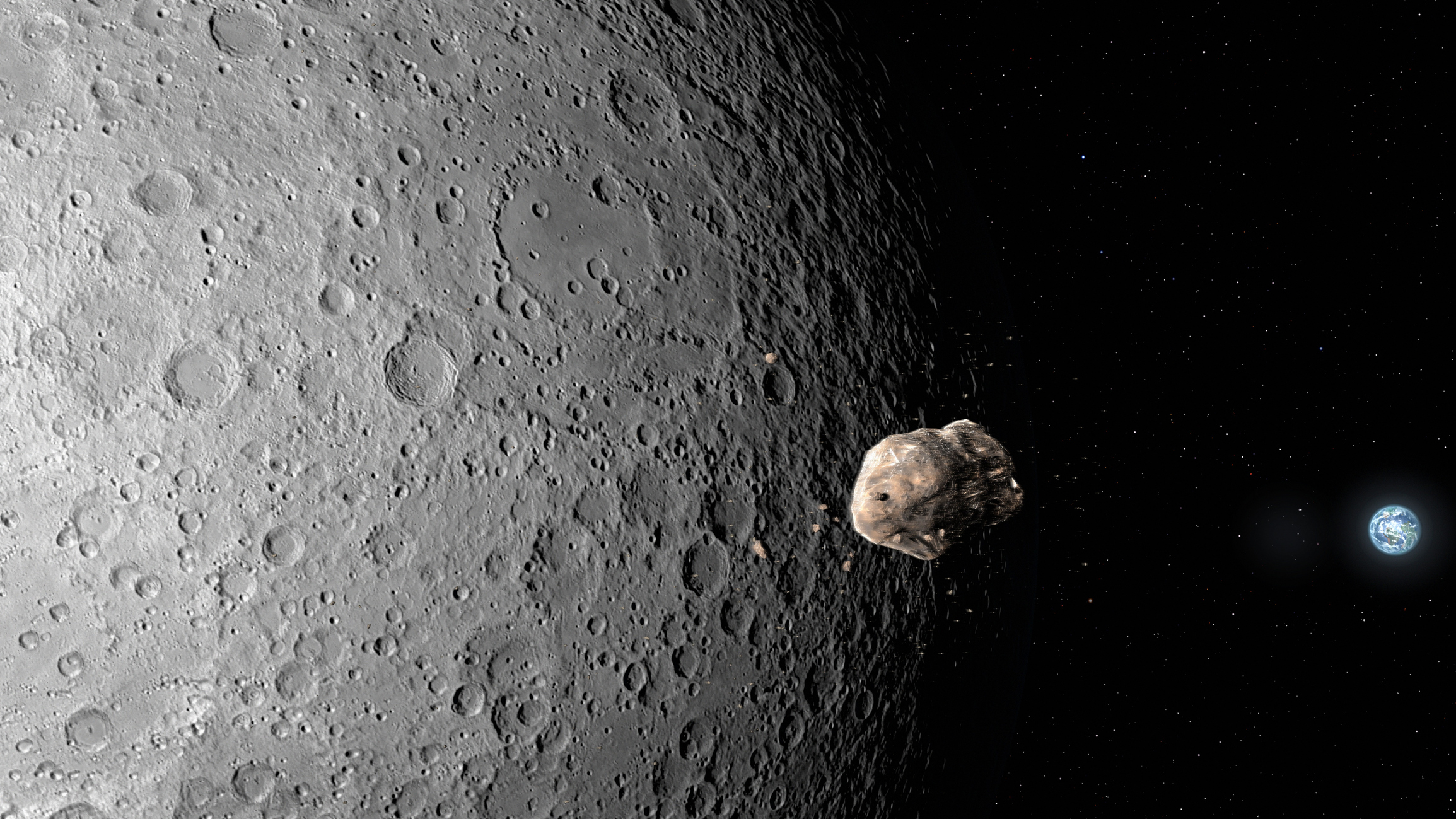
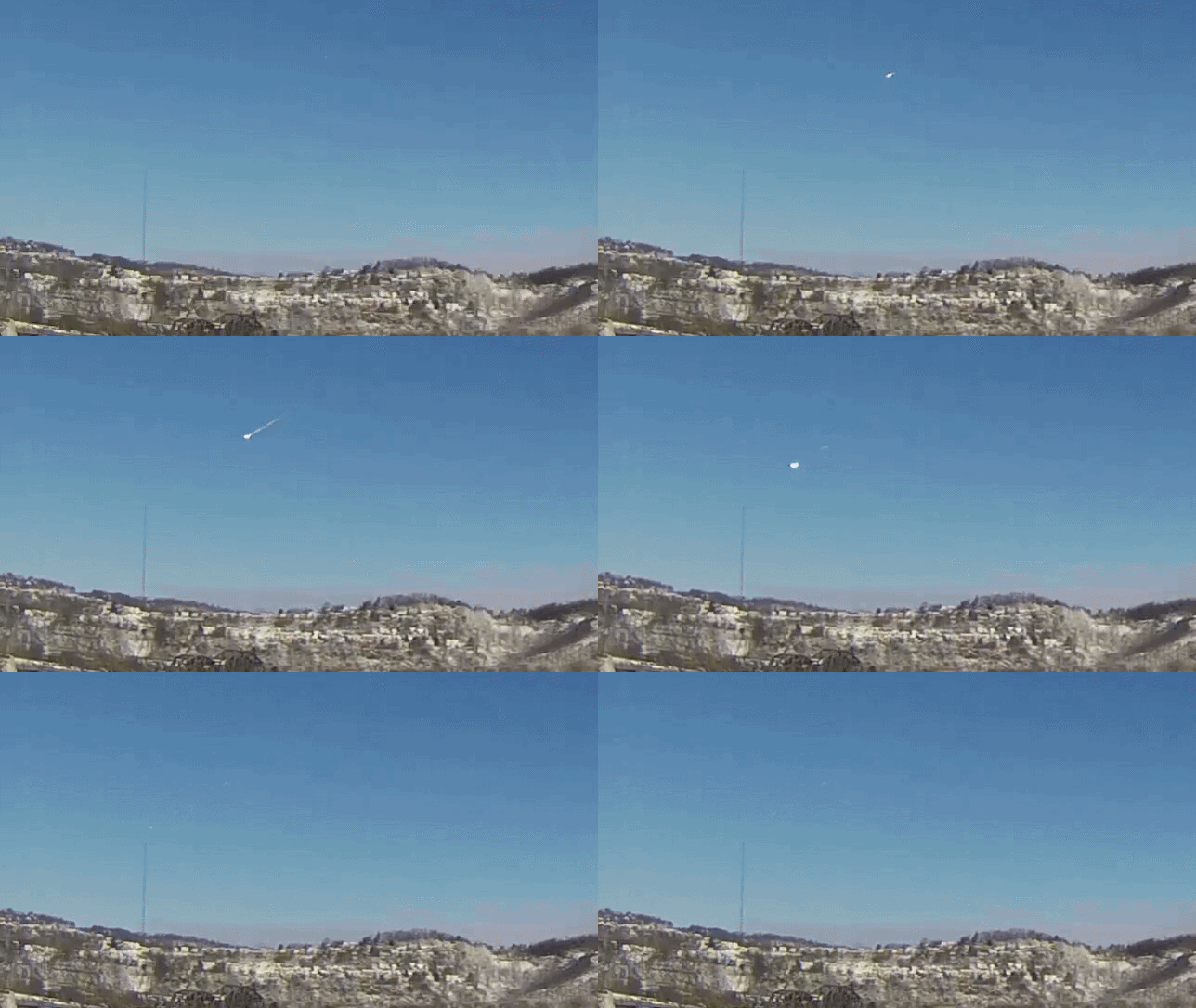
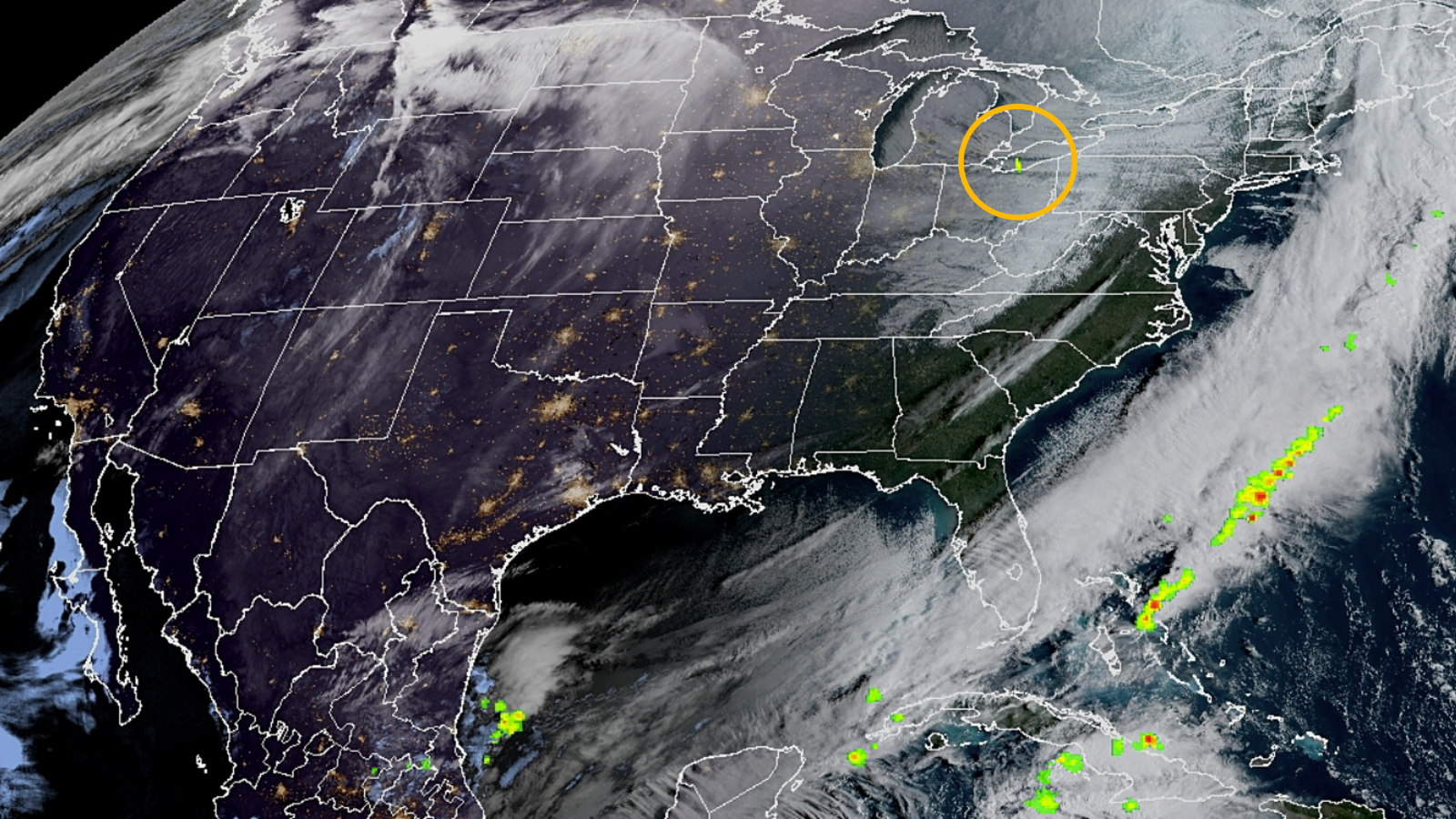


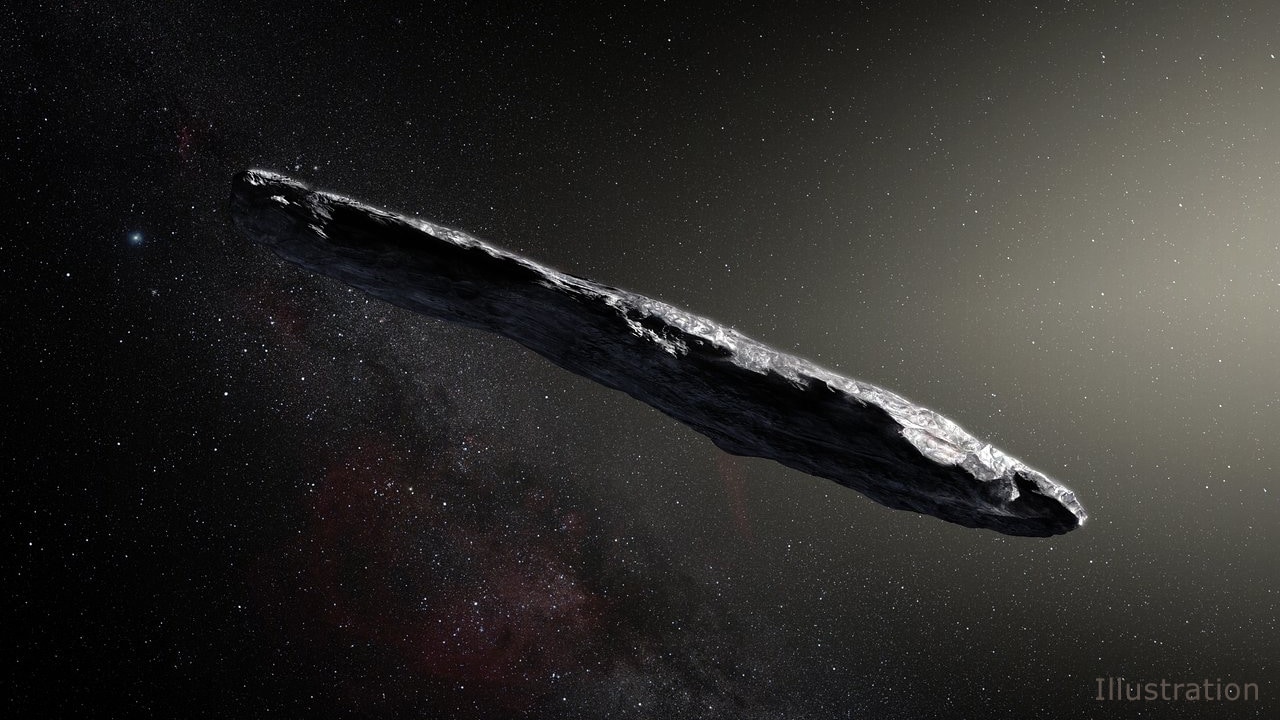
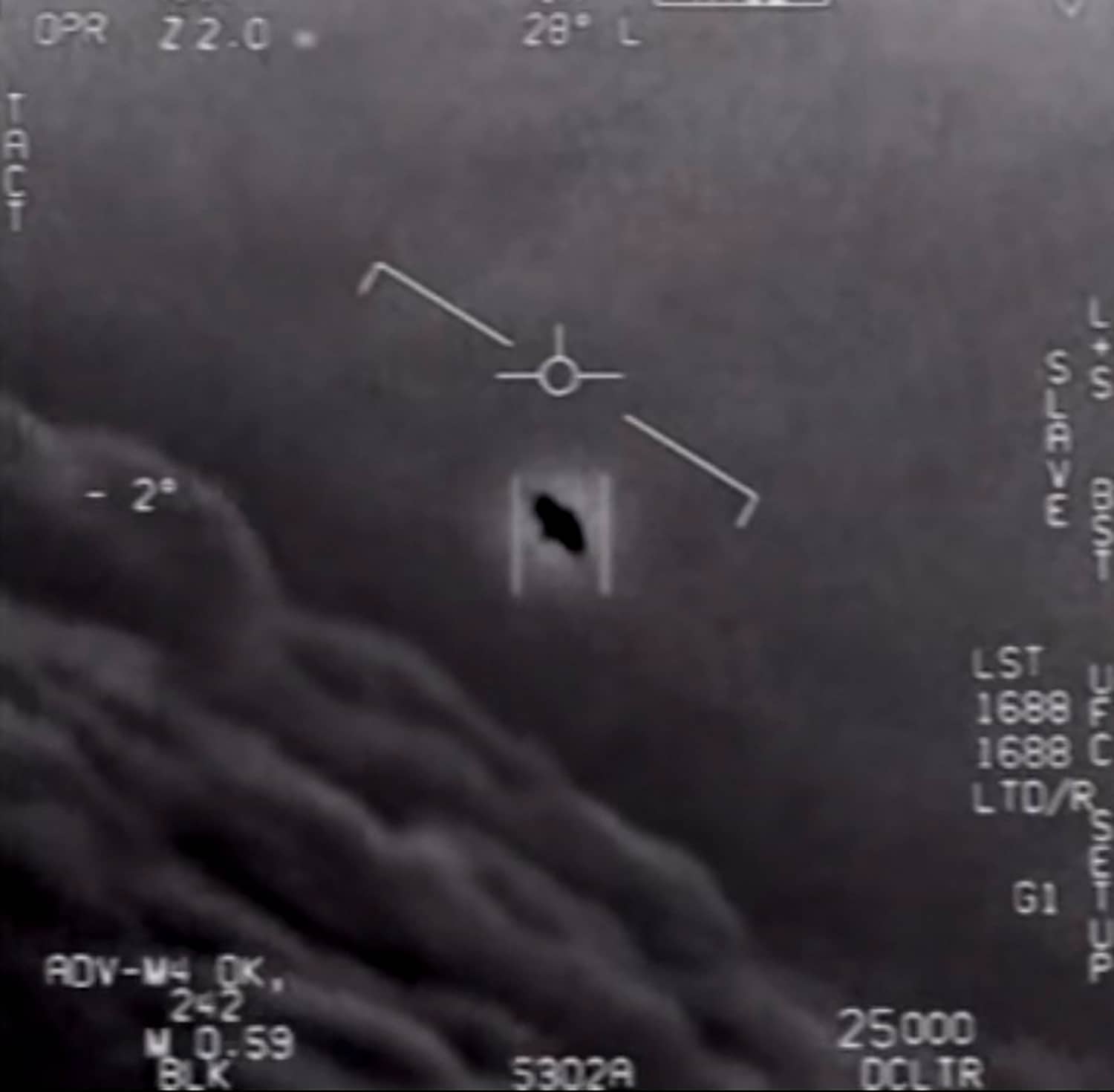
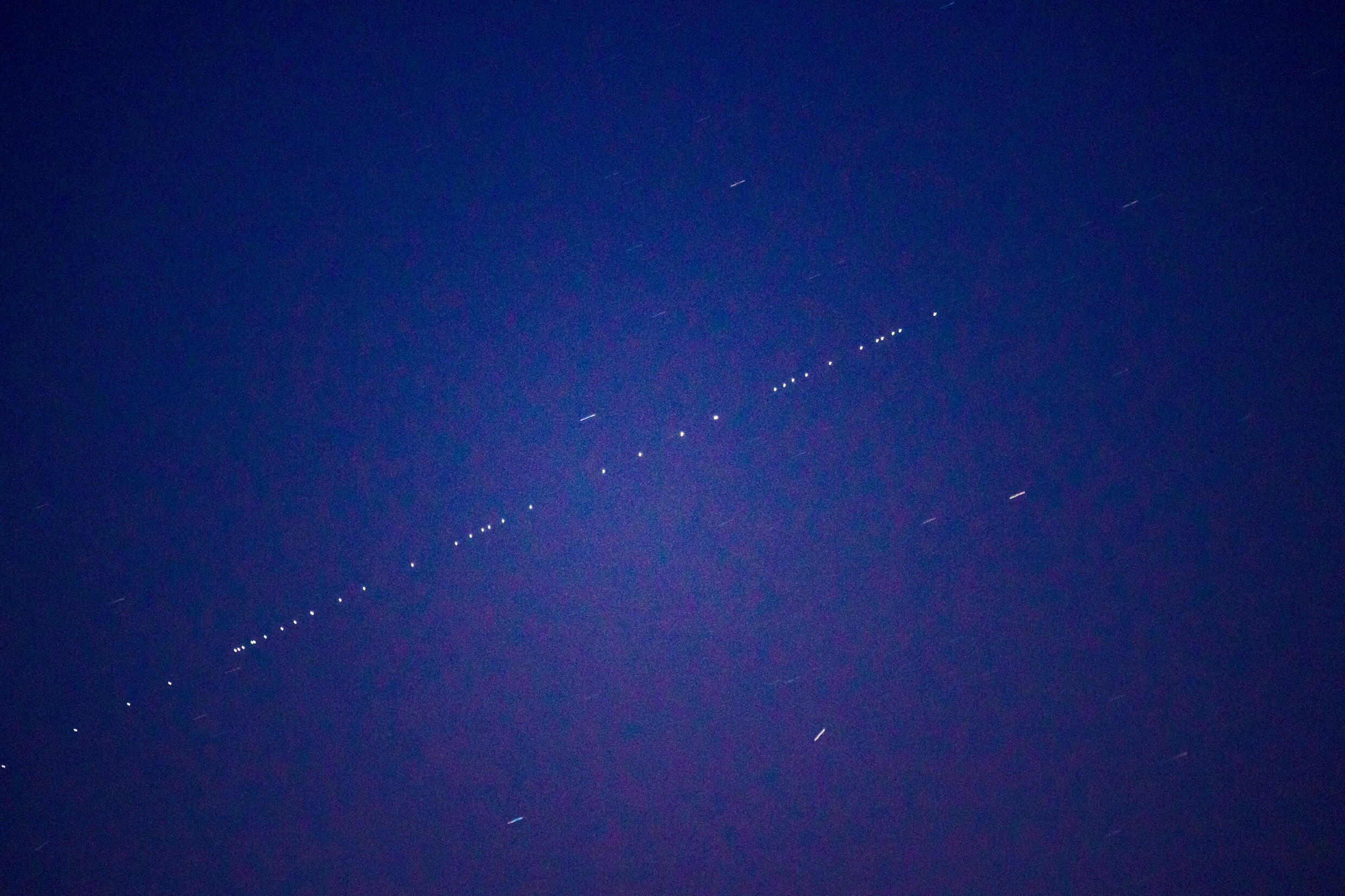
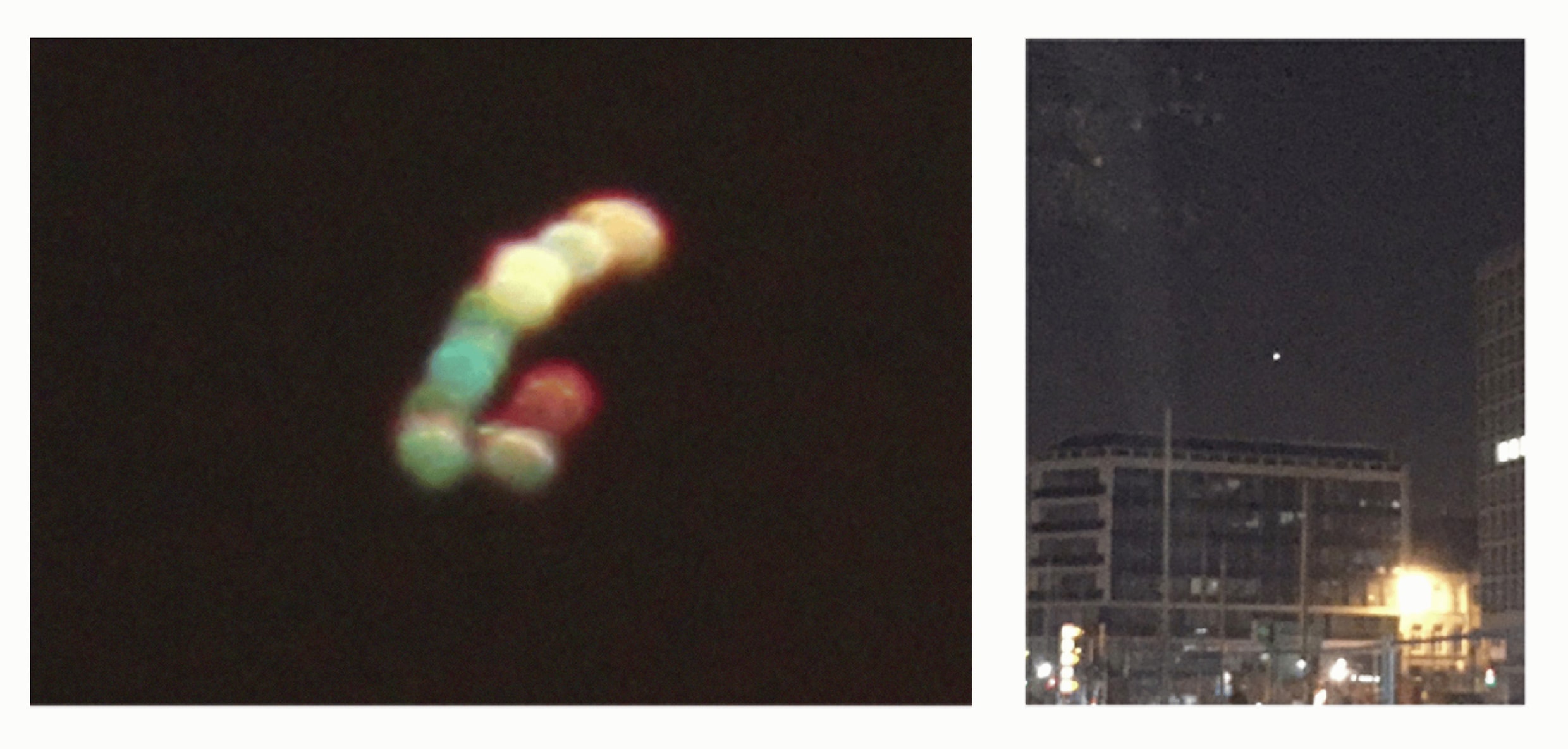



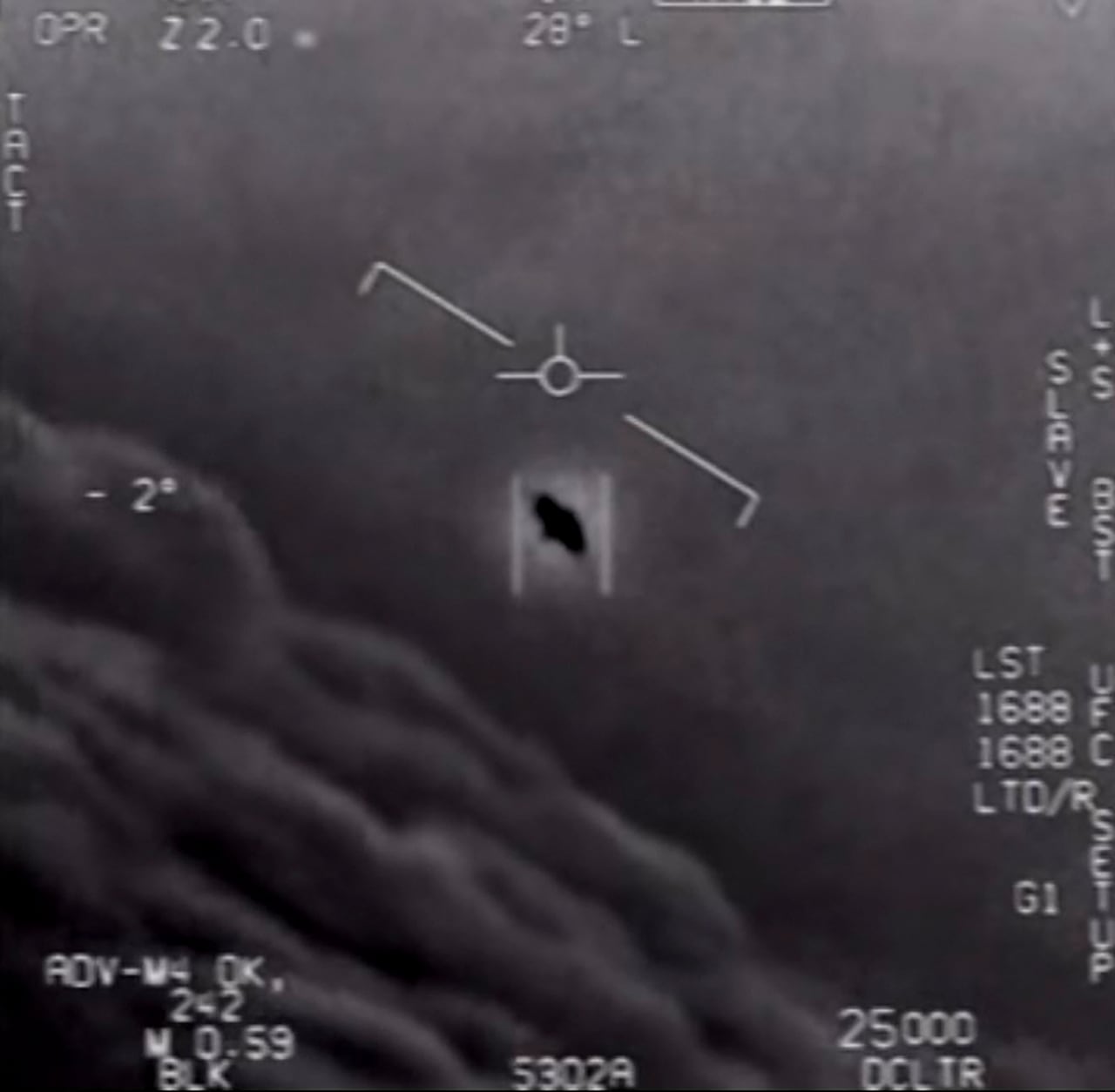
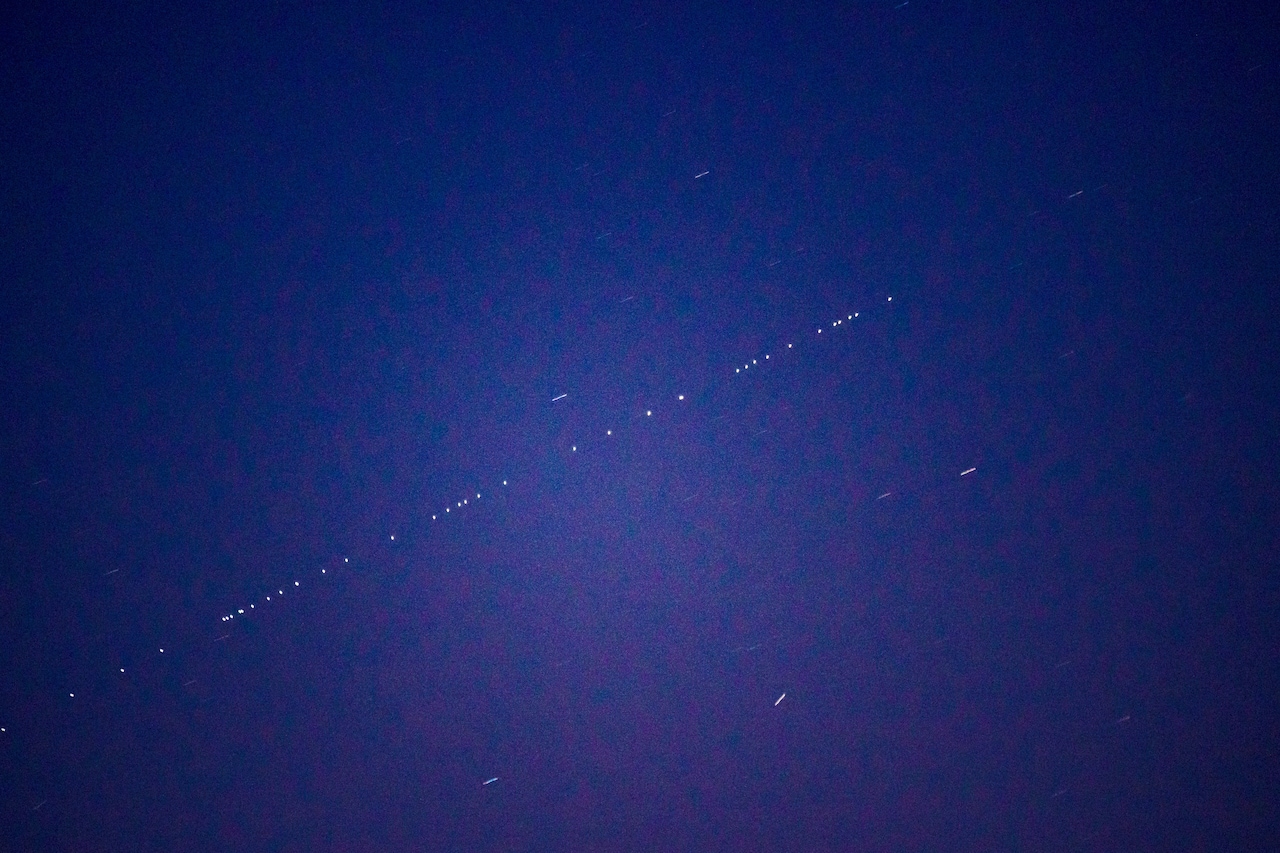
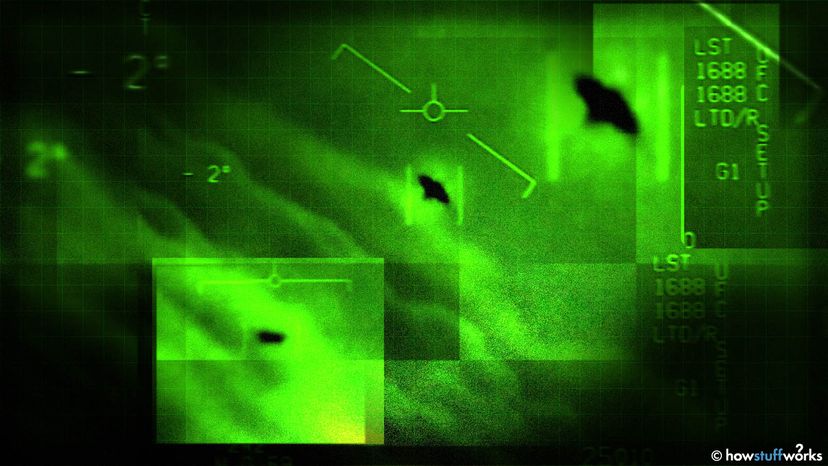
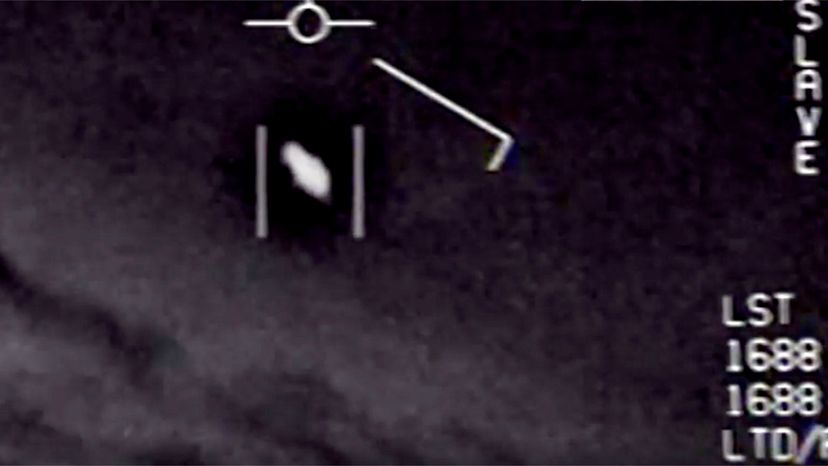
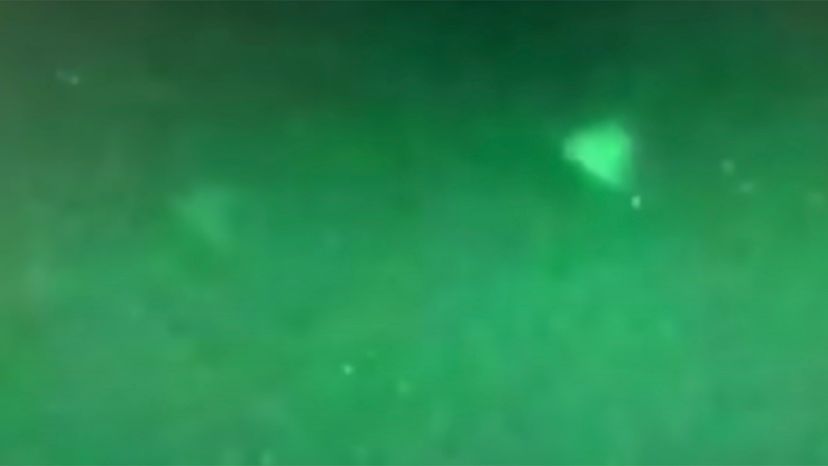













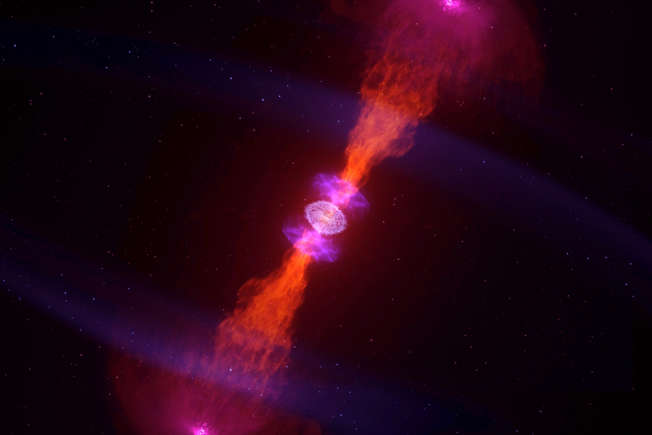

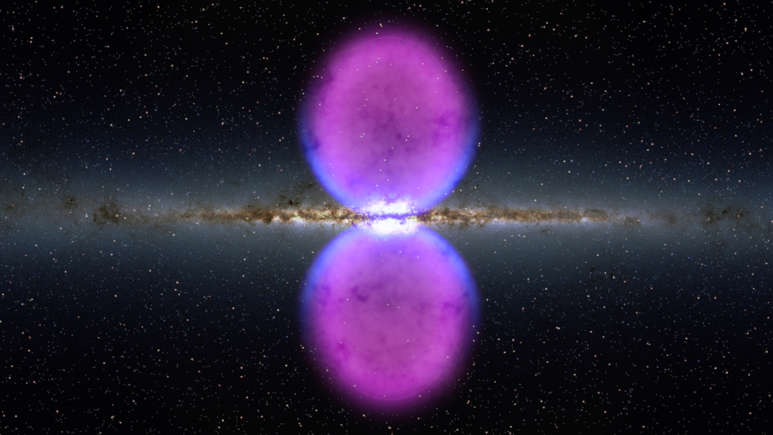

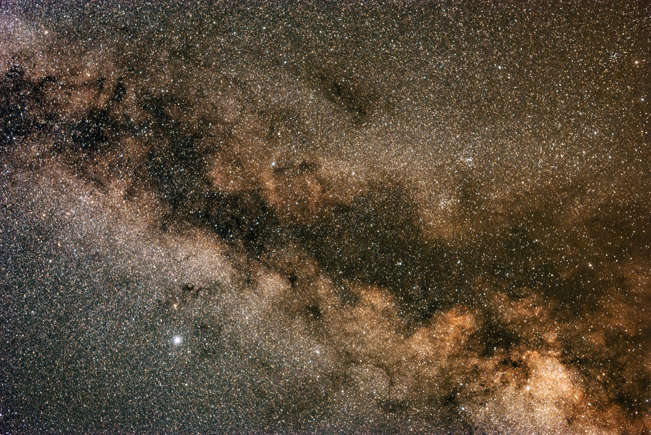
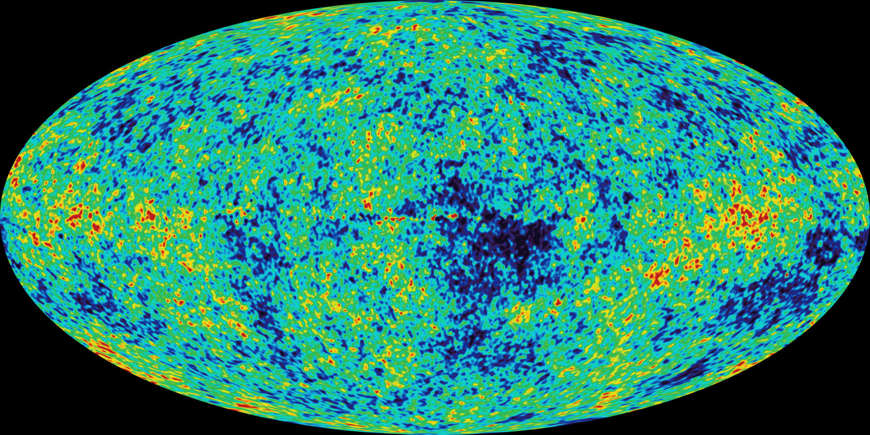
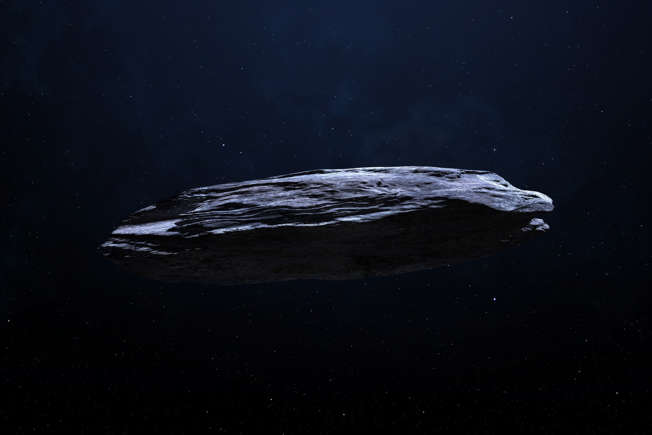



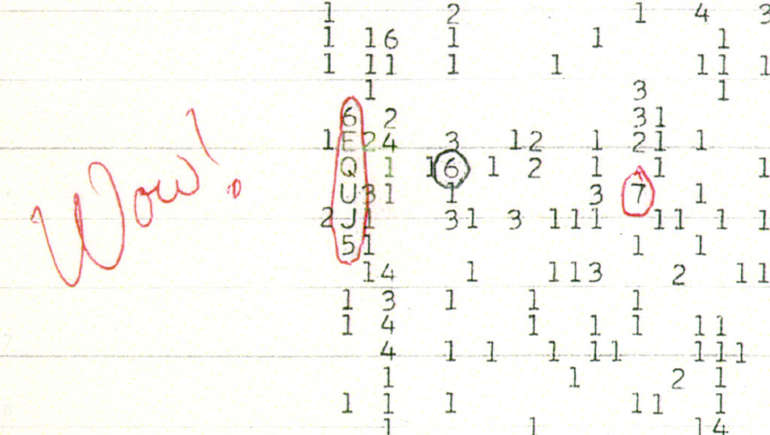
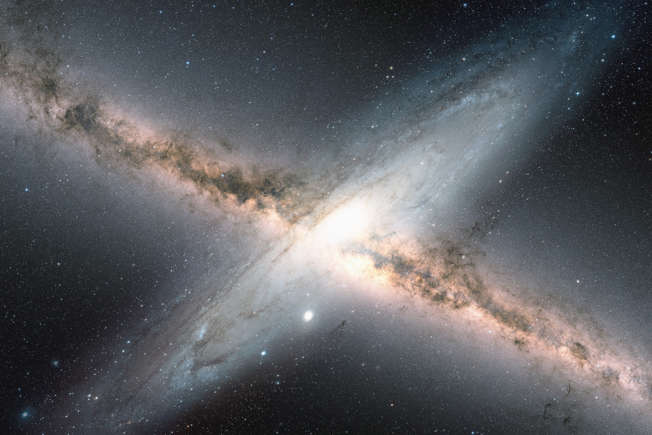


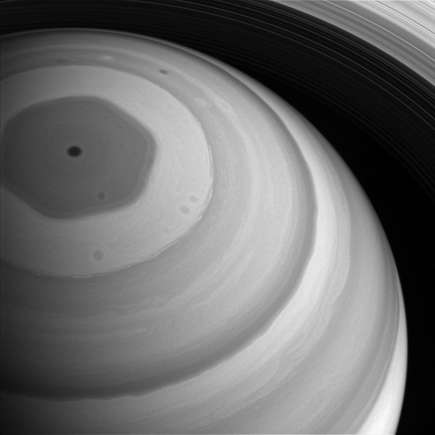




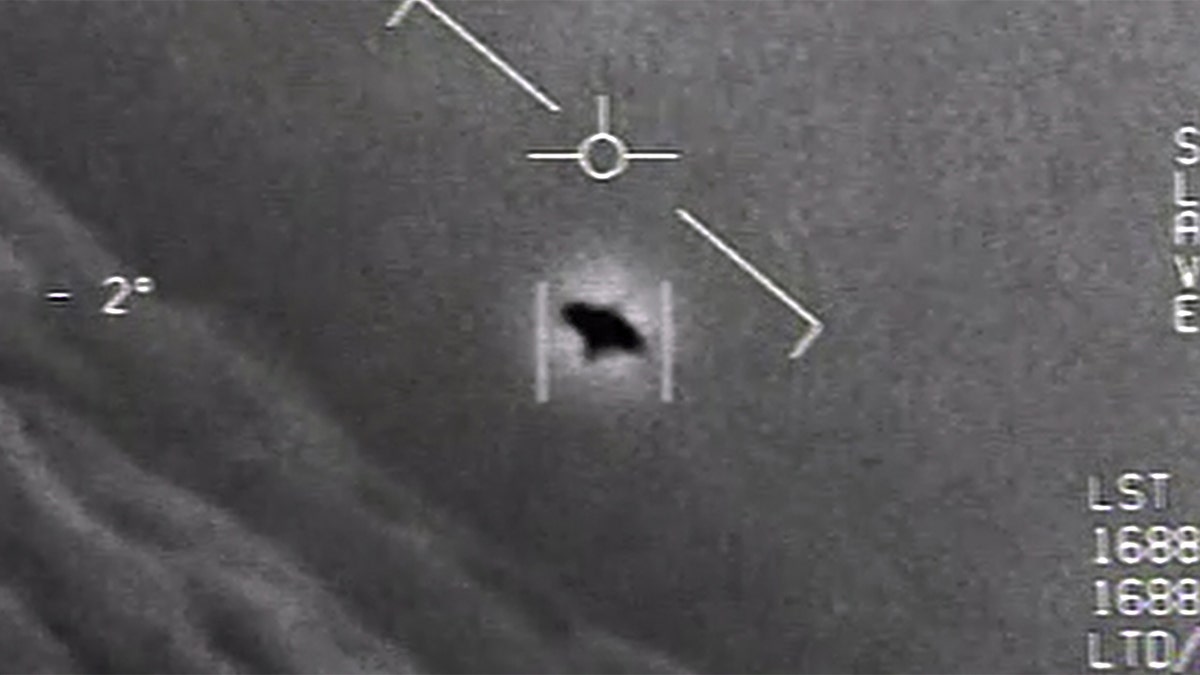
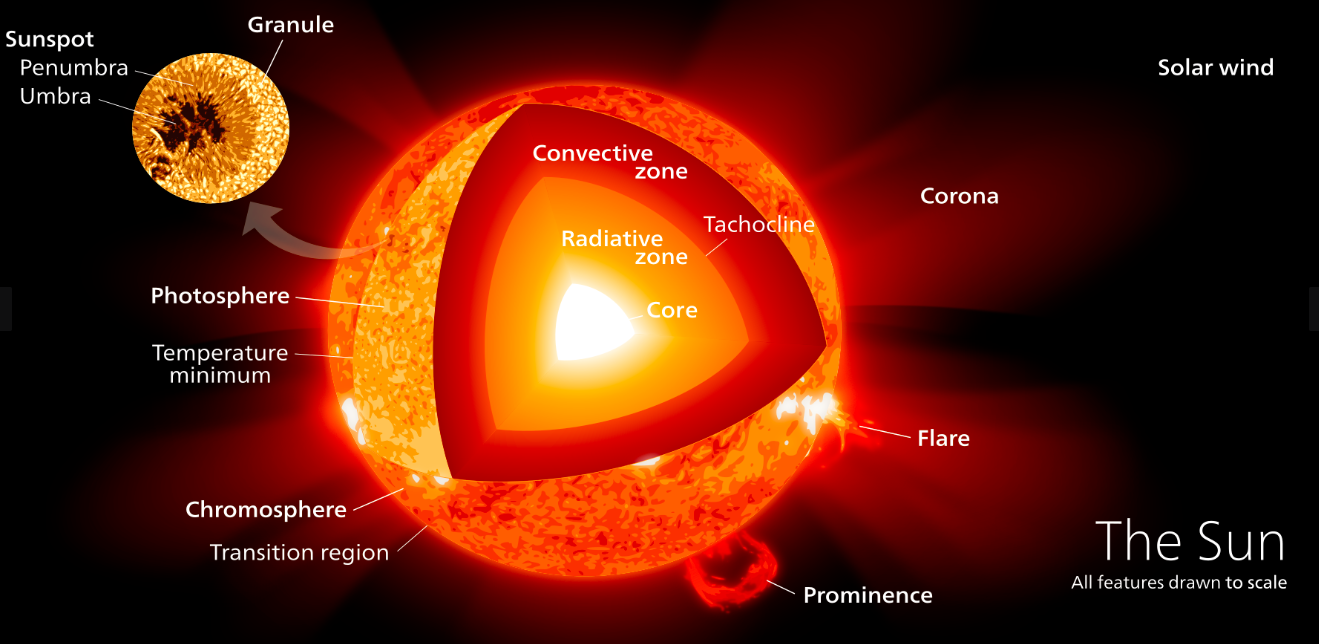






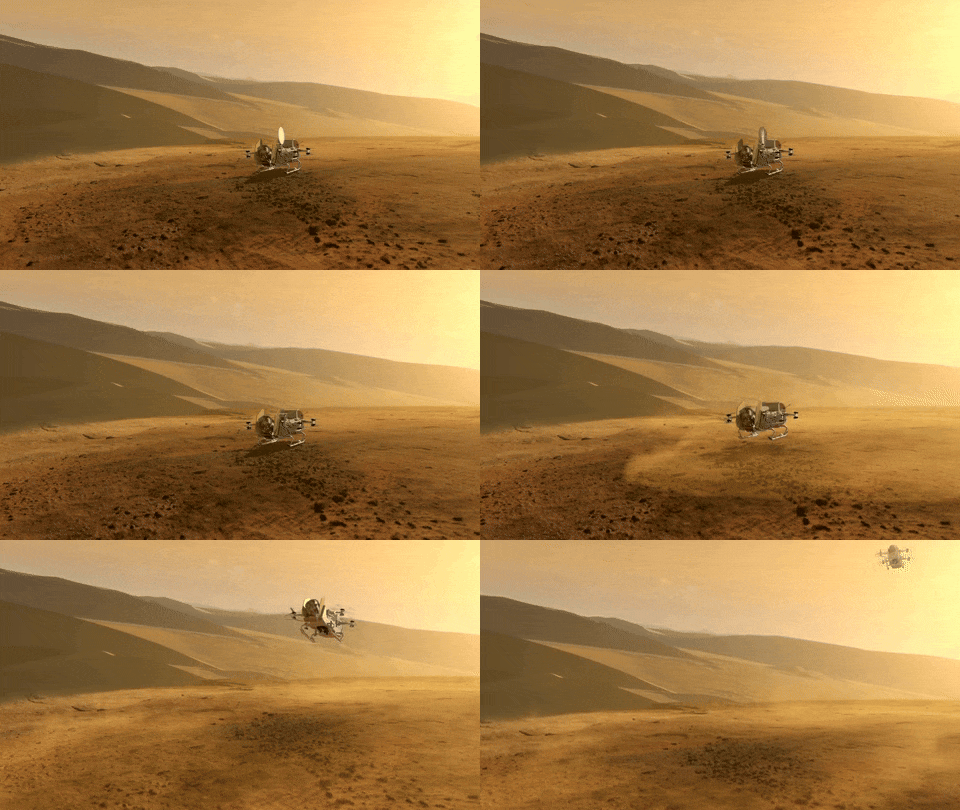



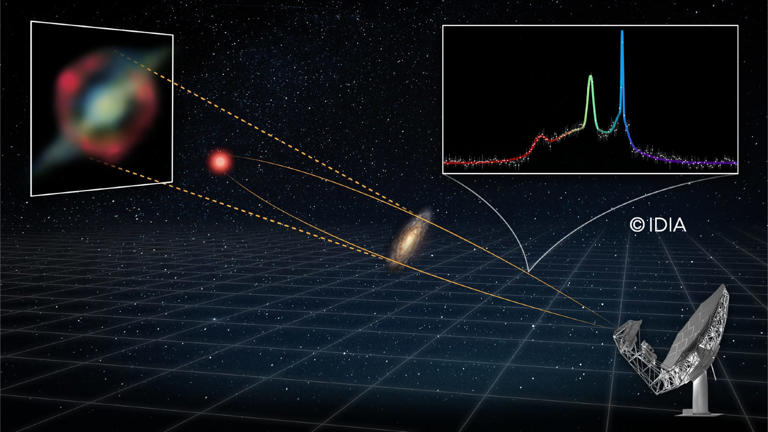

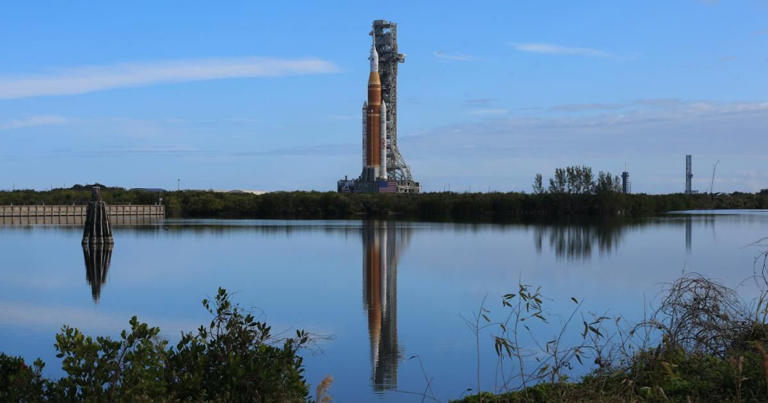
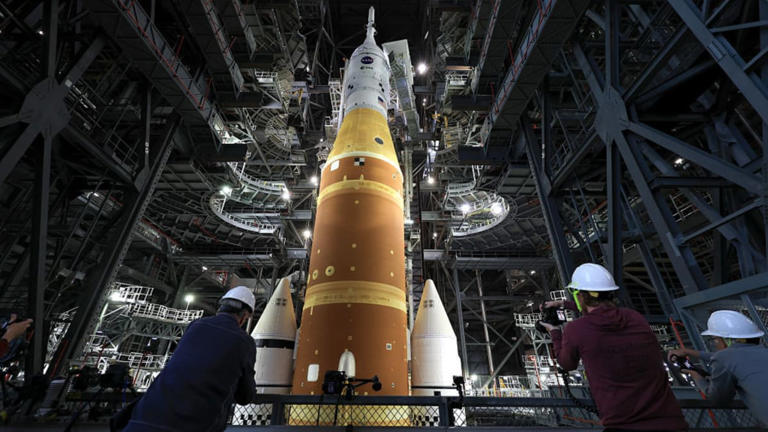
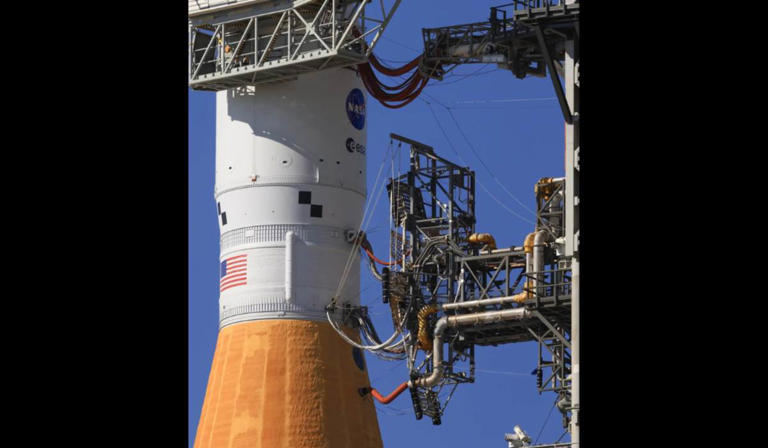
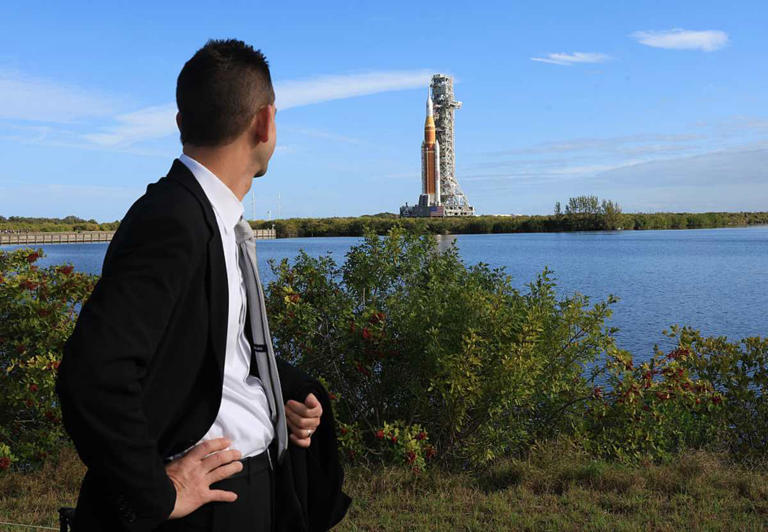







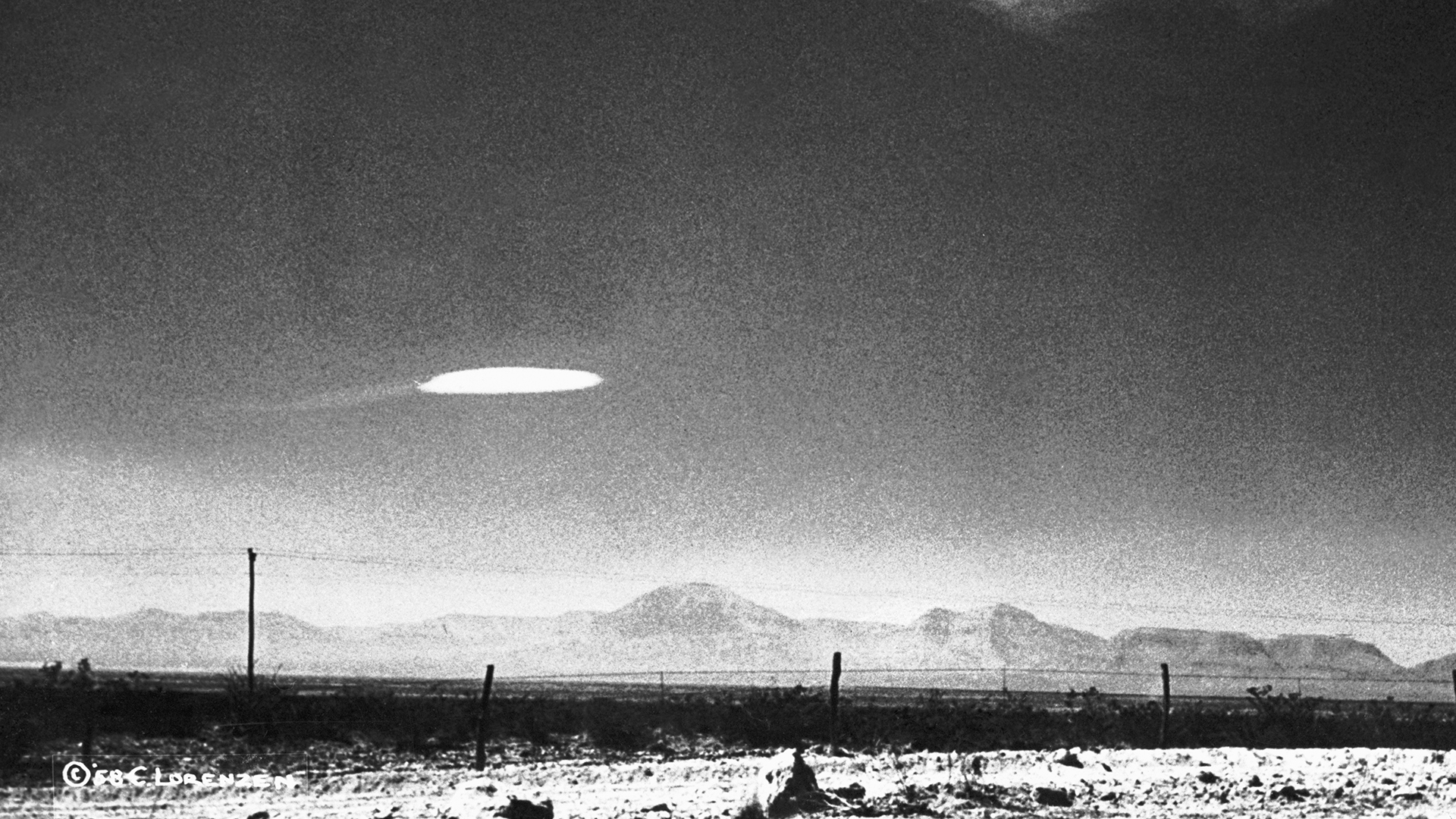



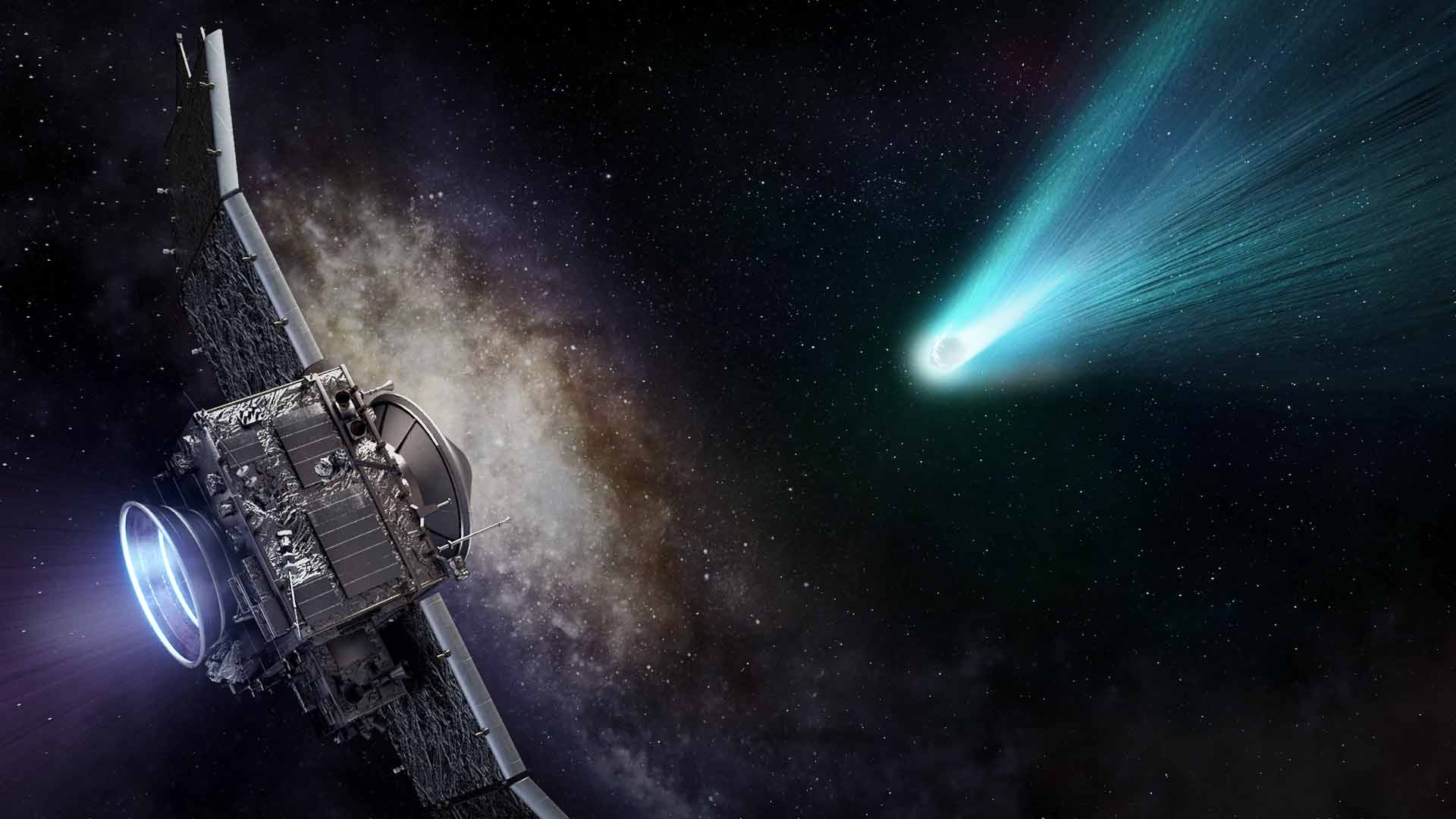


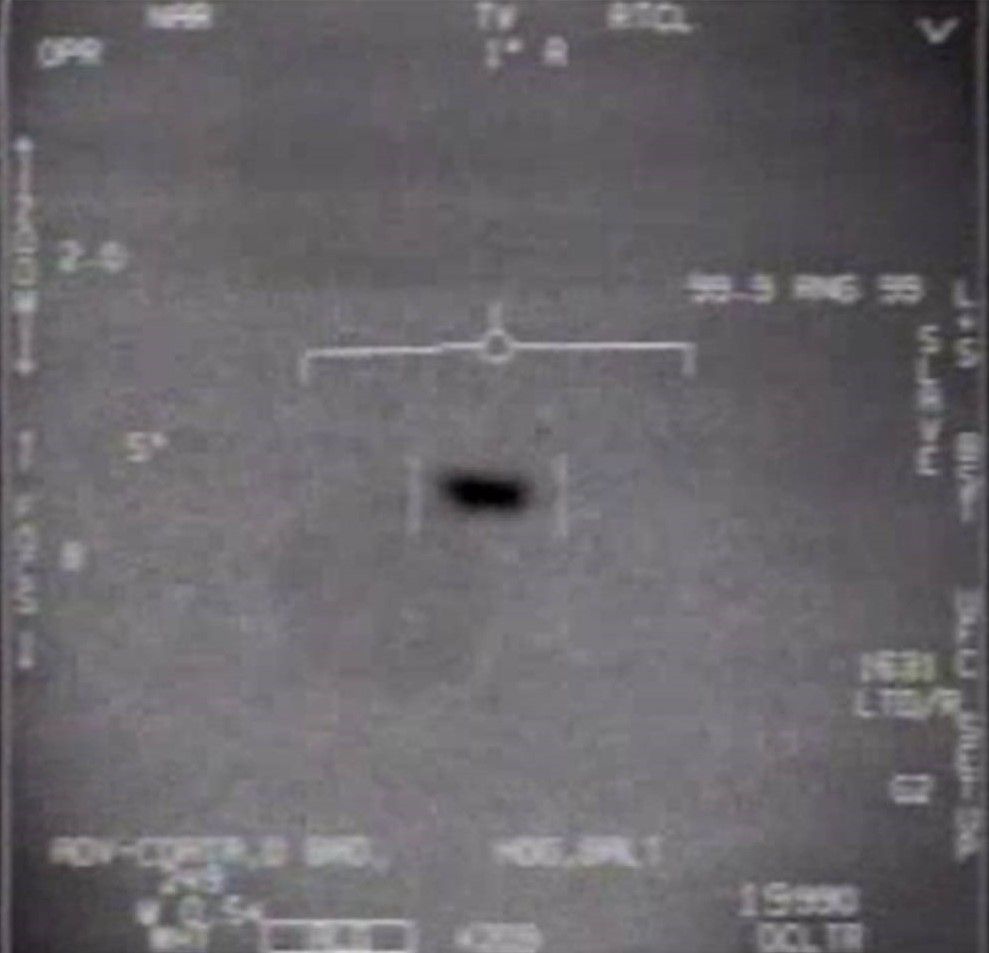

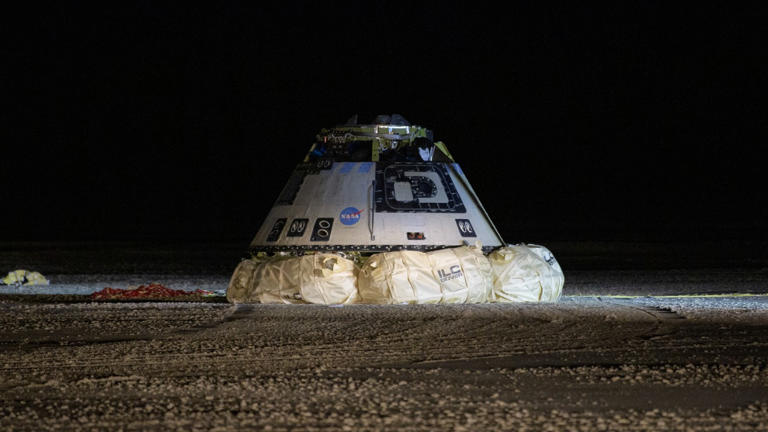







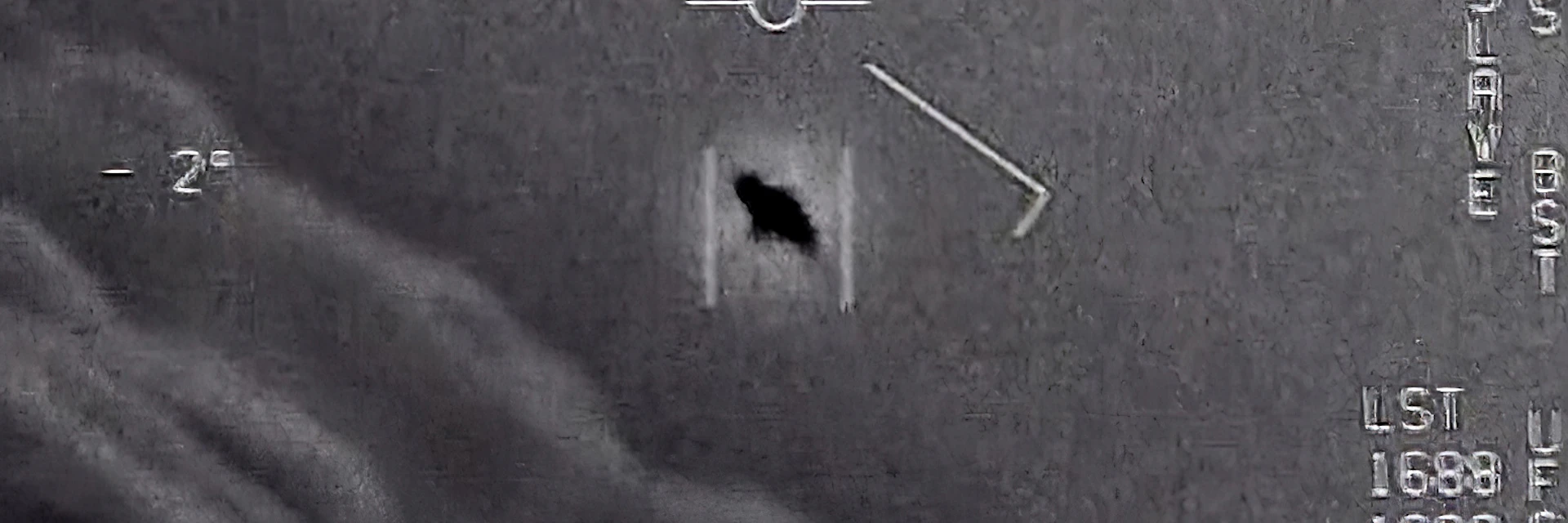
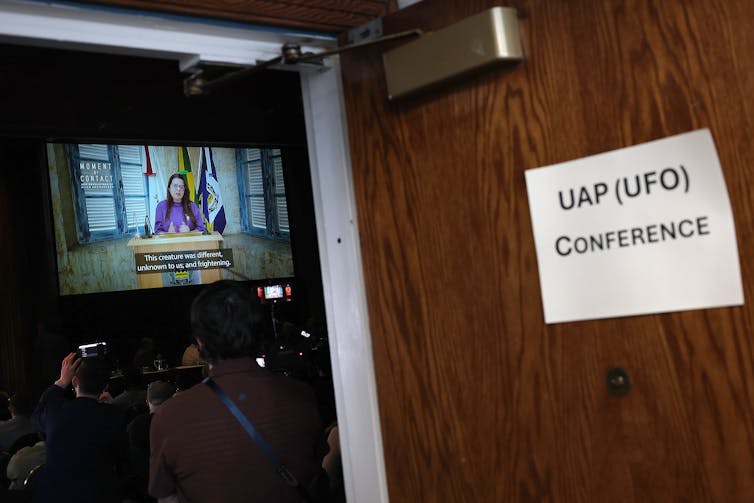






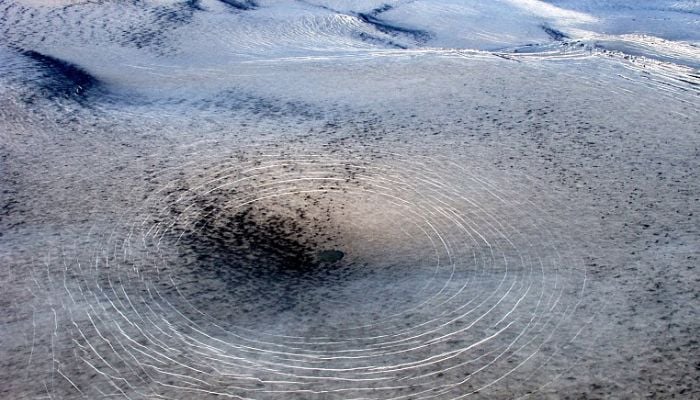

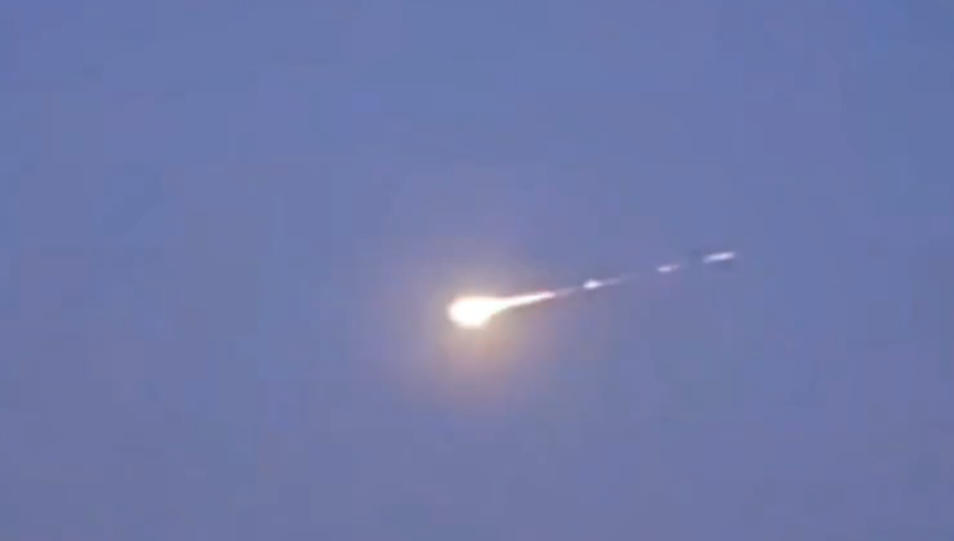























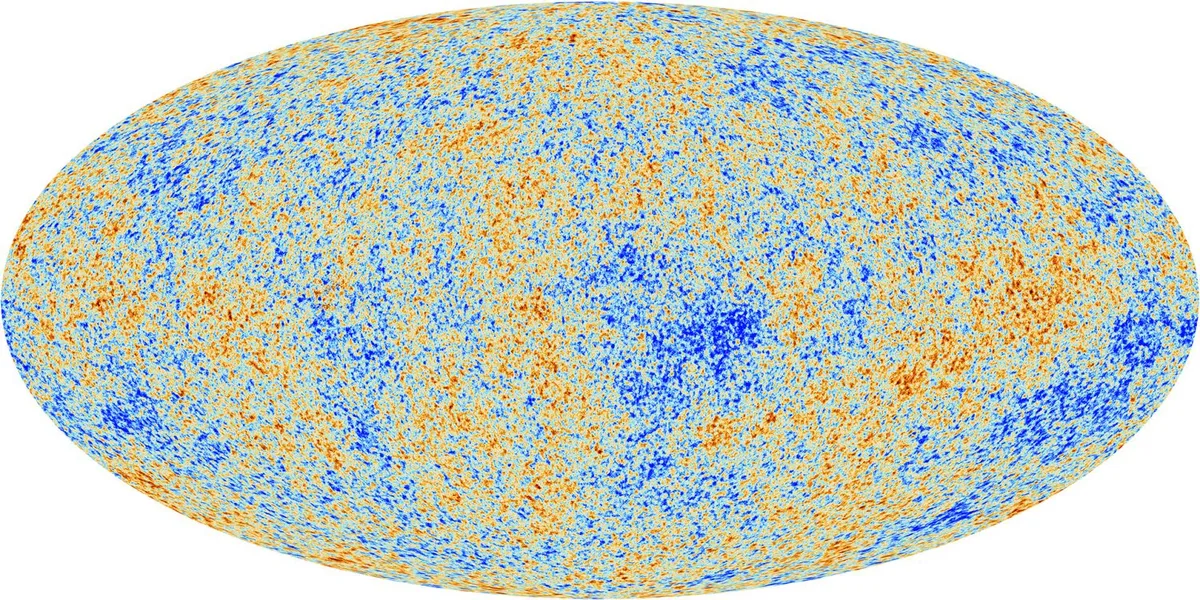

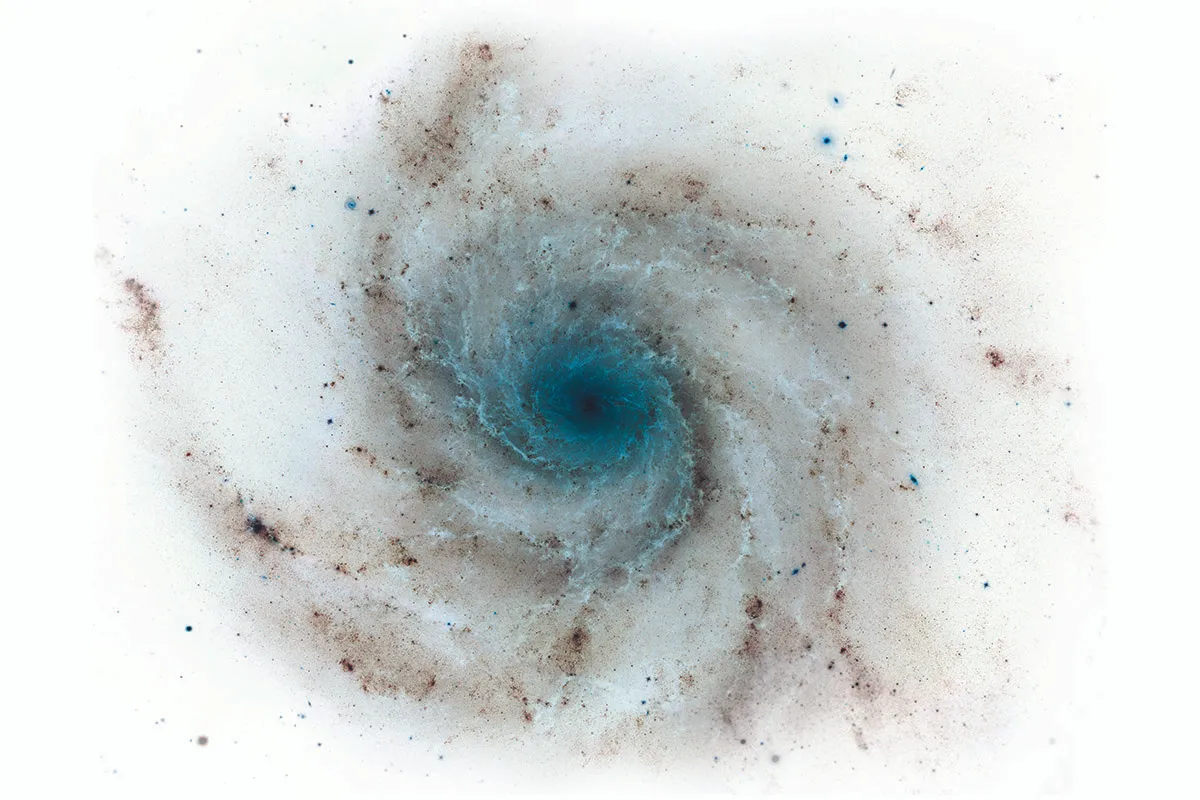


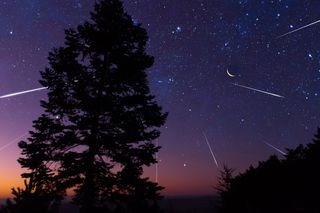
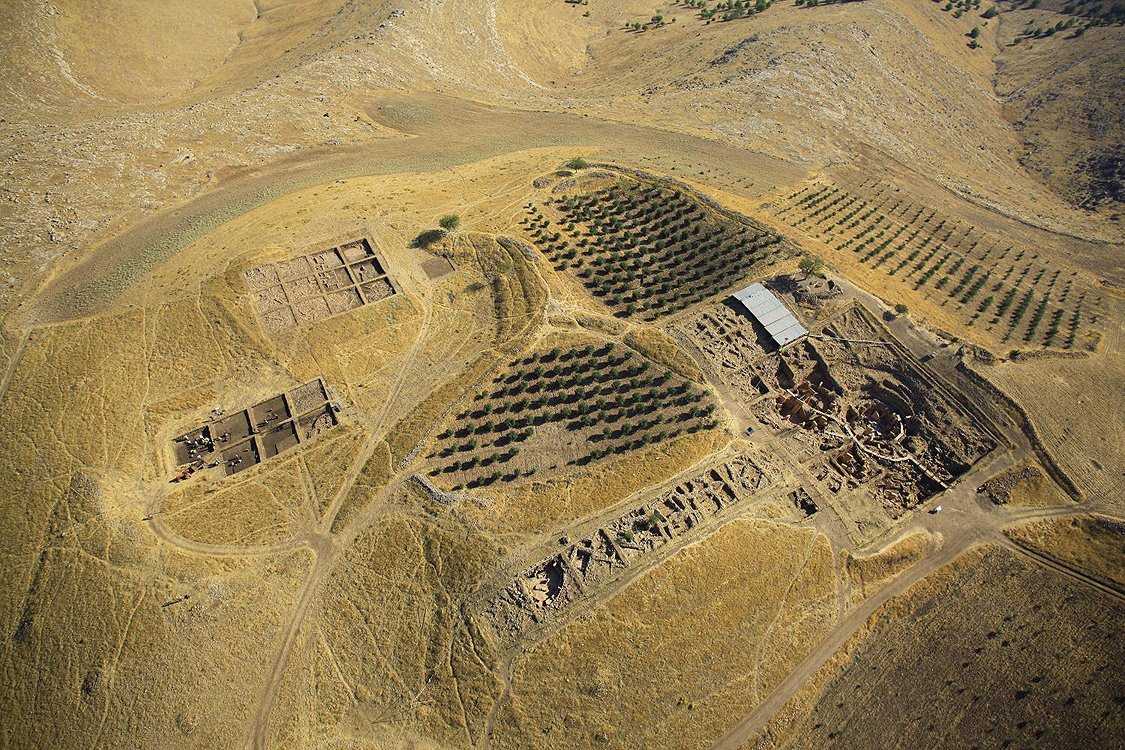



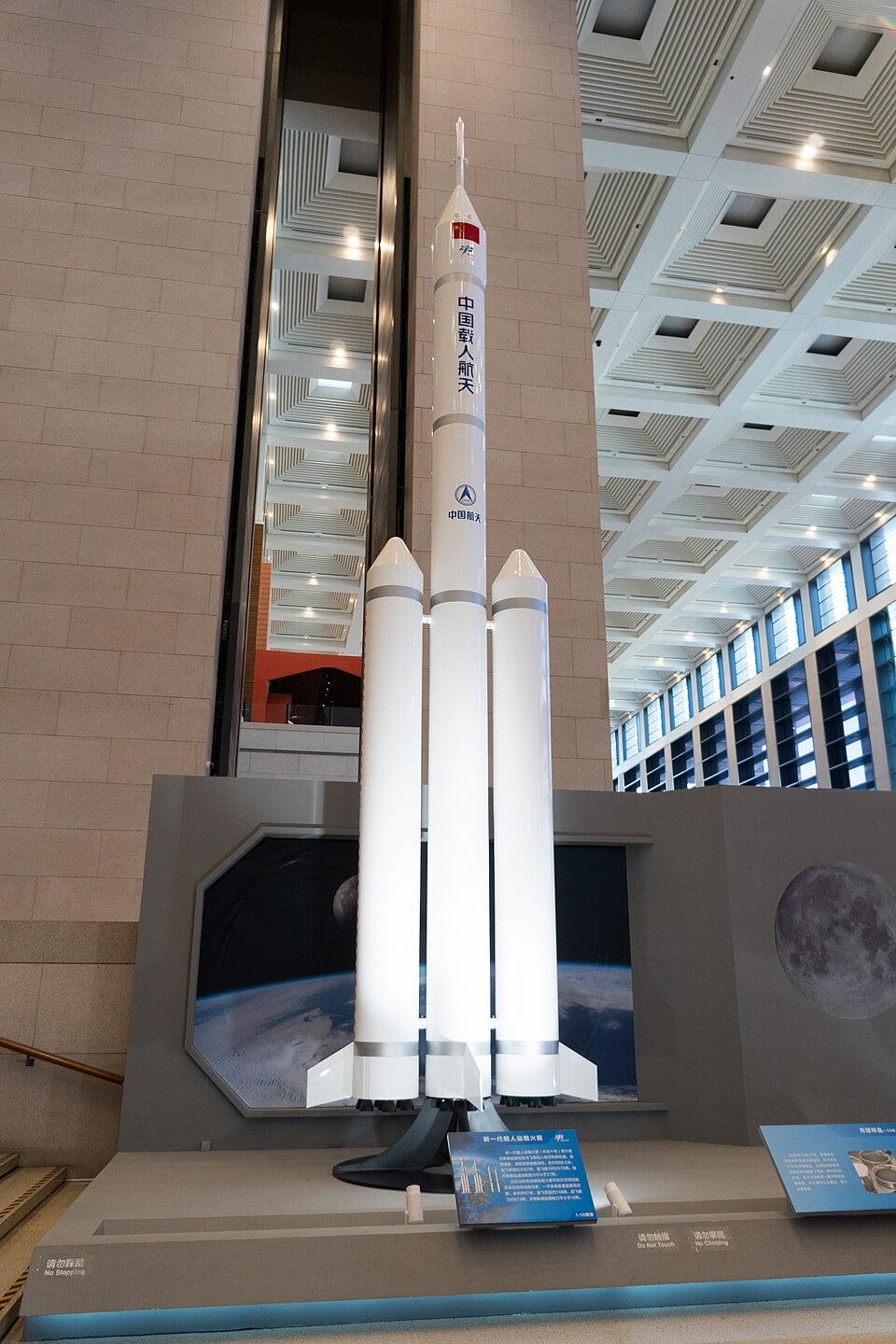

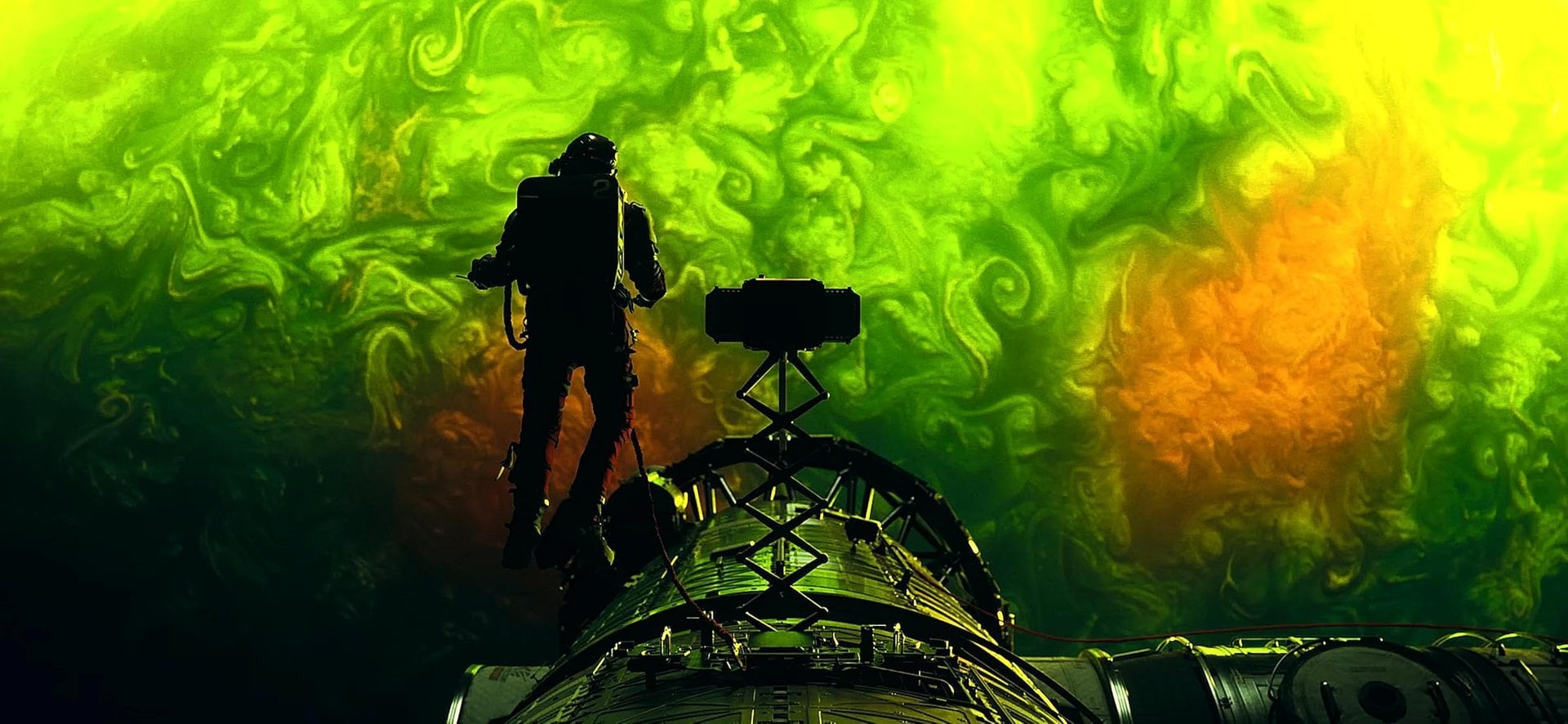





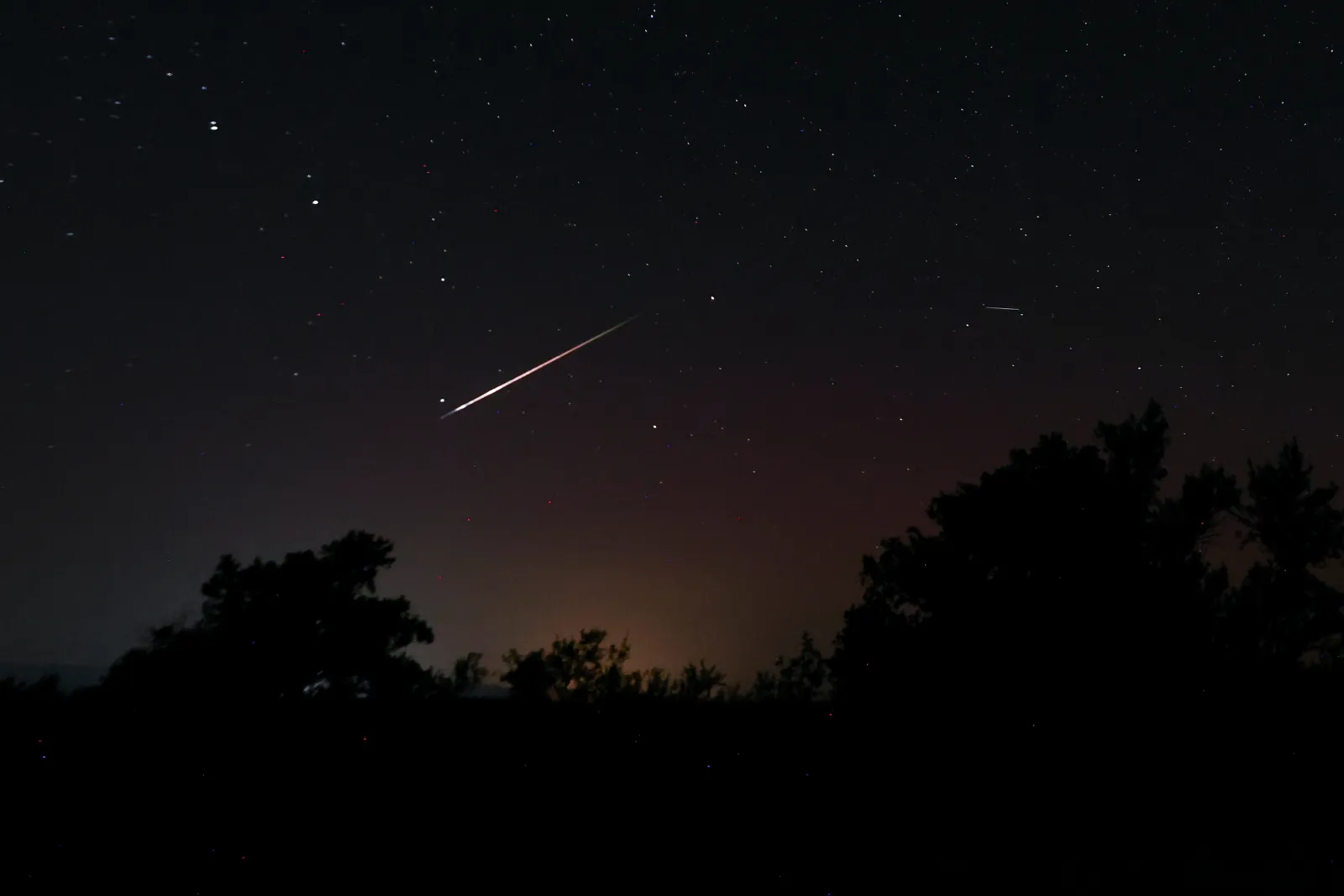







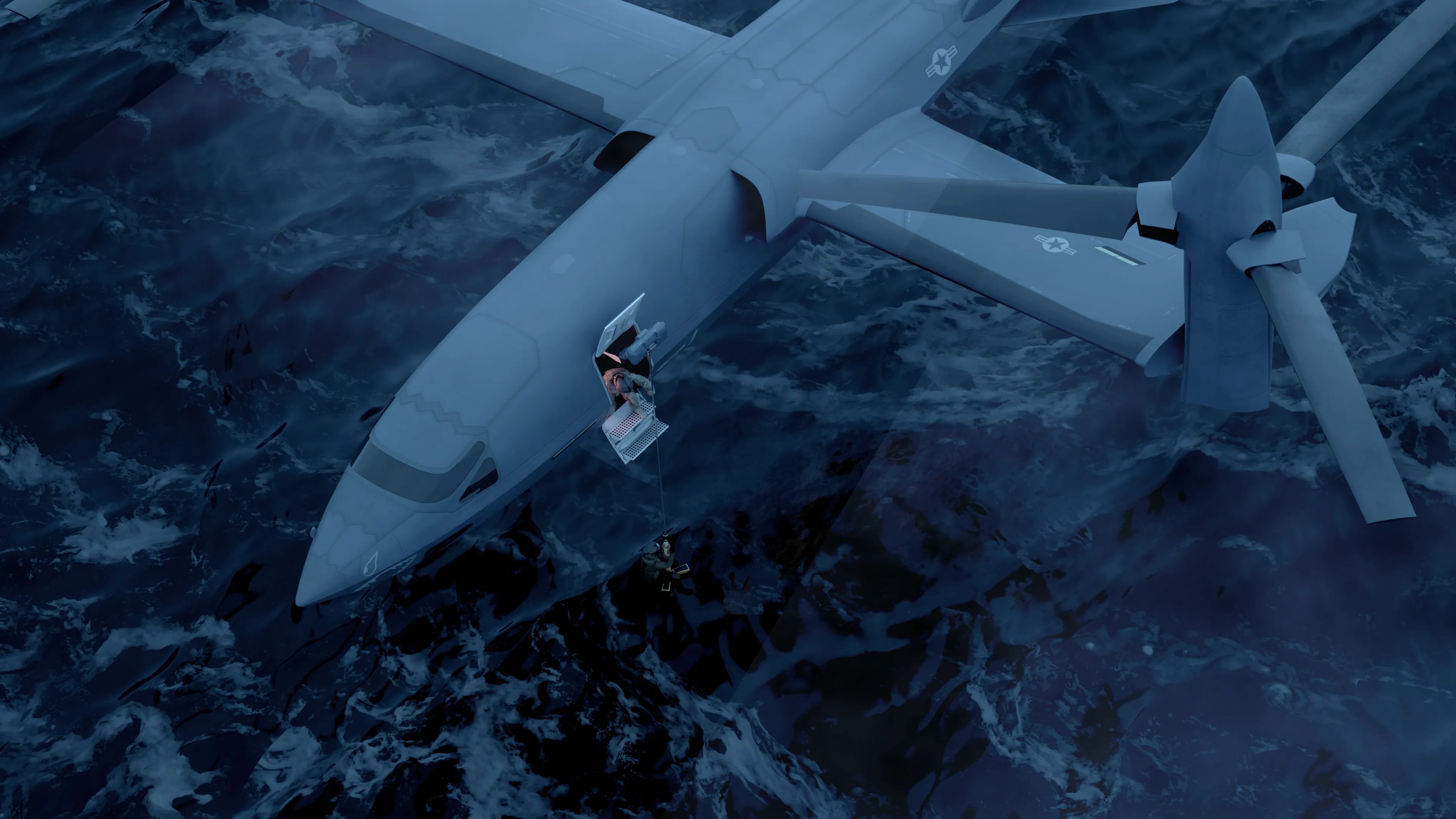


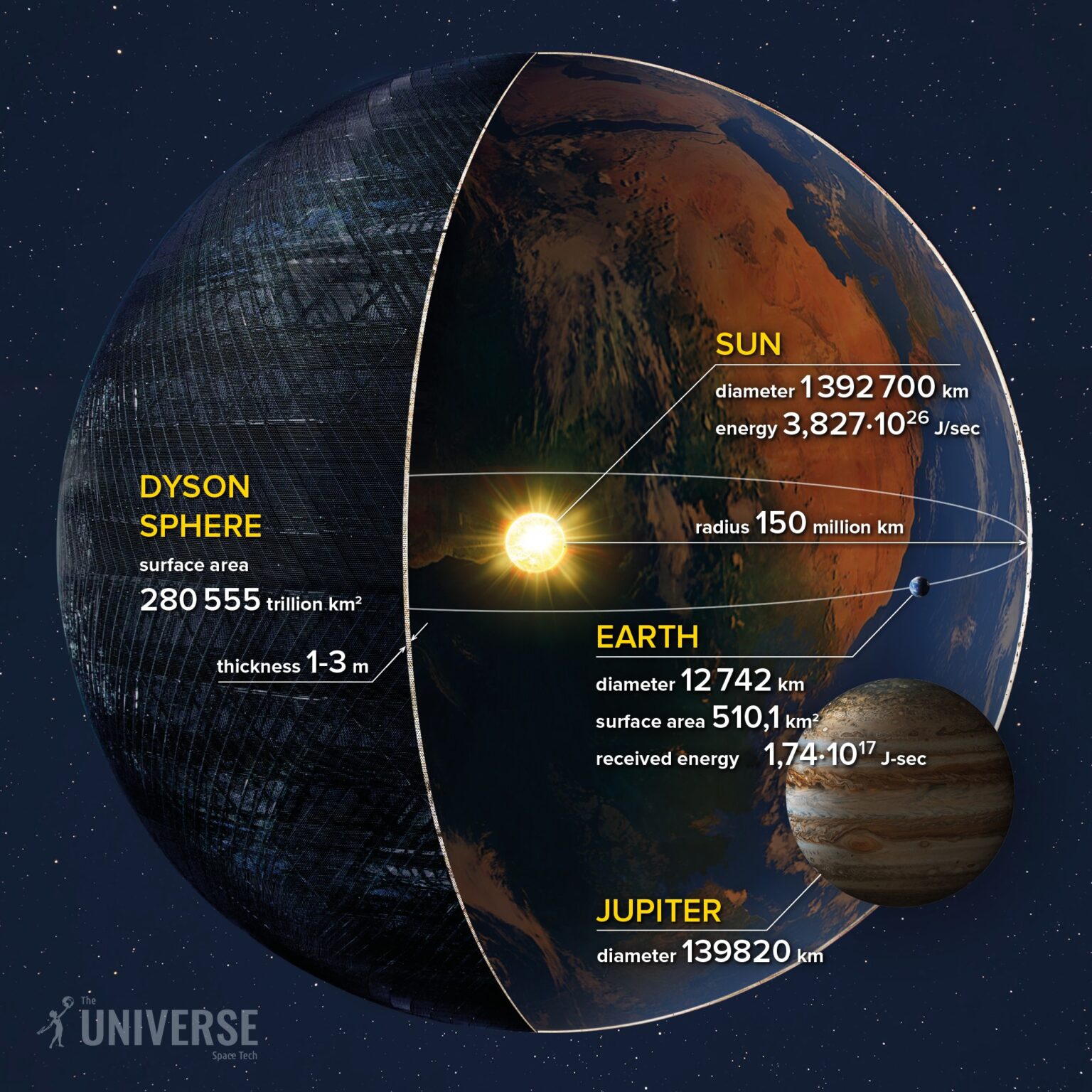


.jpg?itok=LknIKK69)


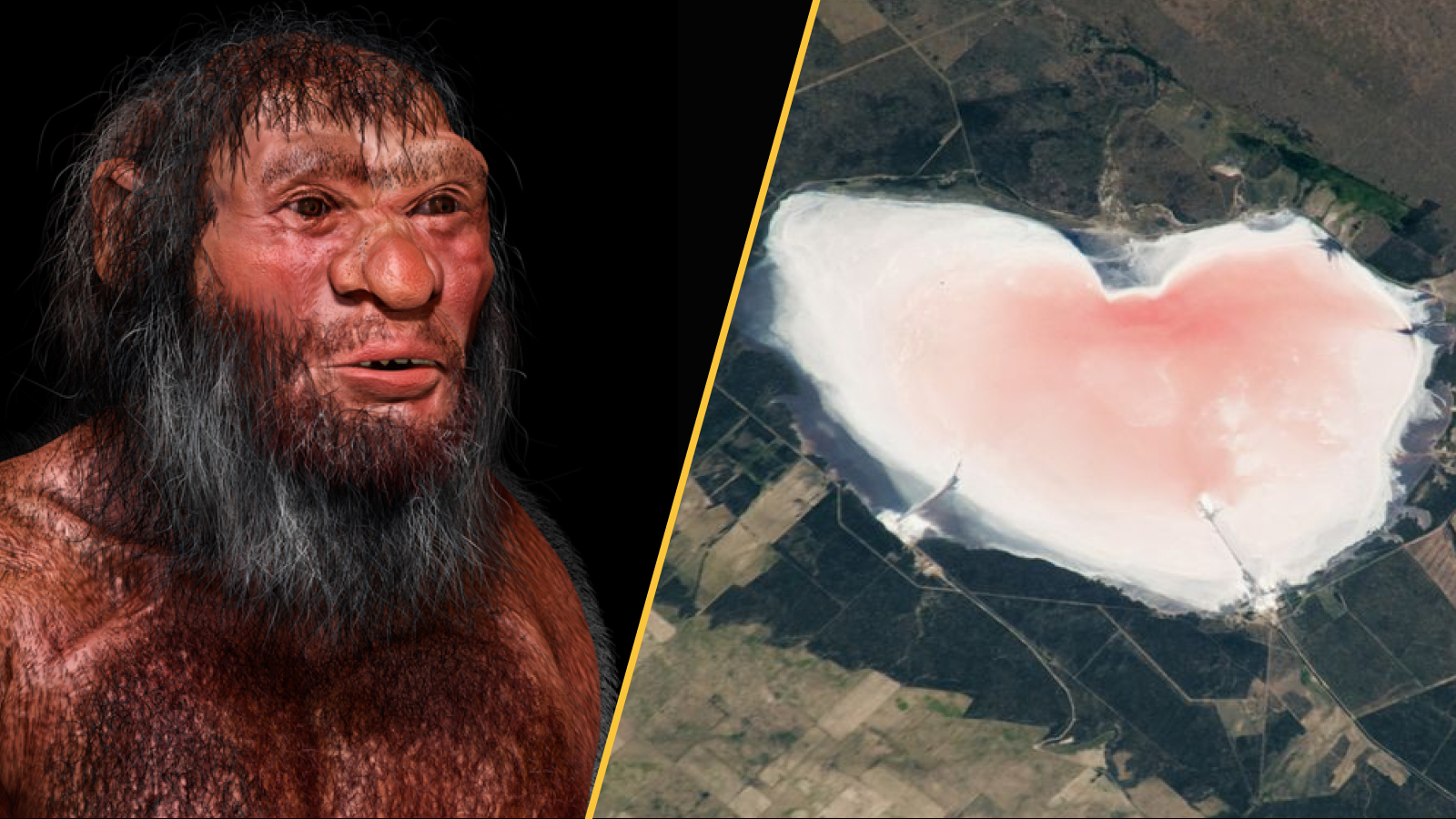



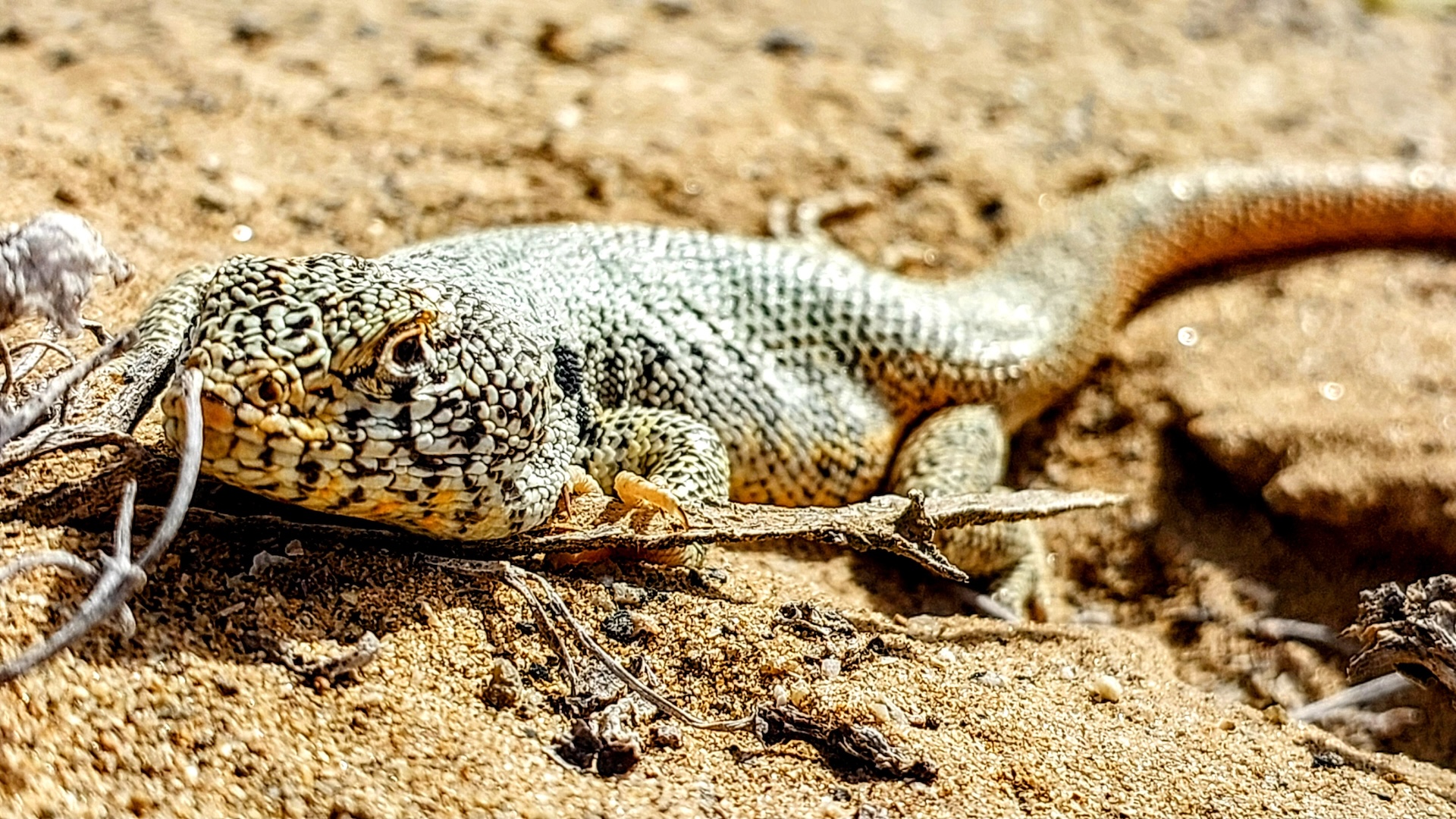
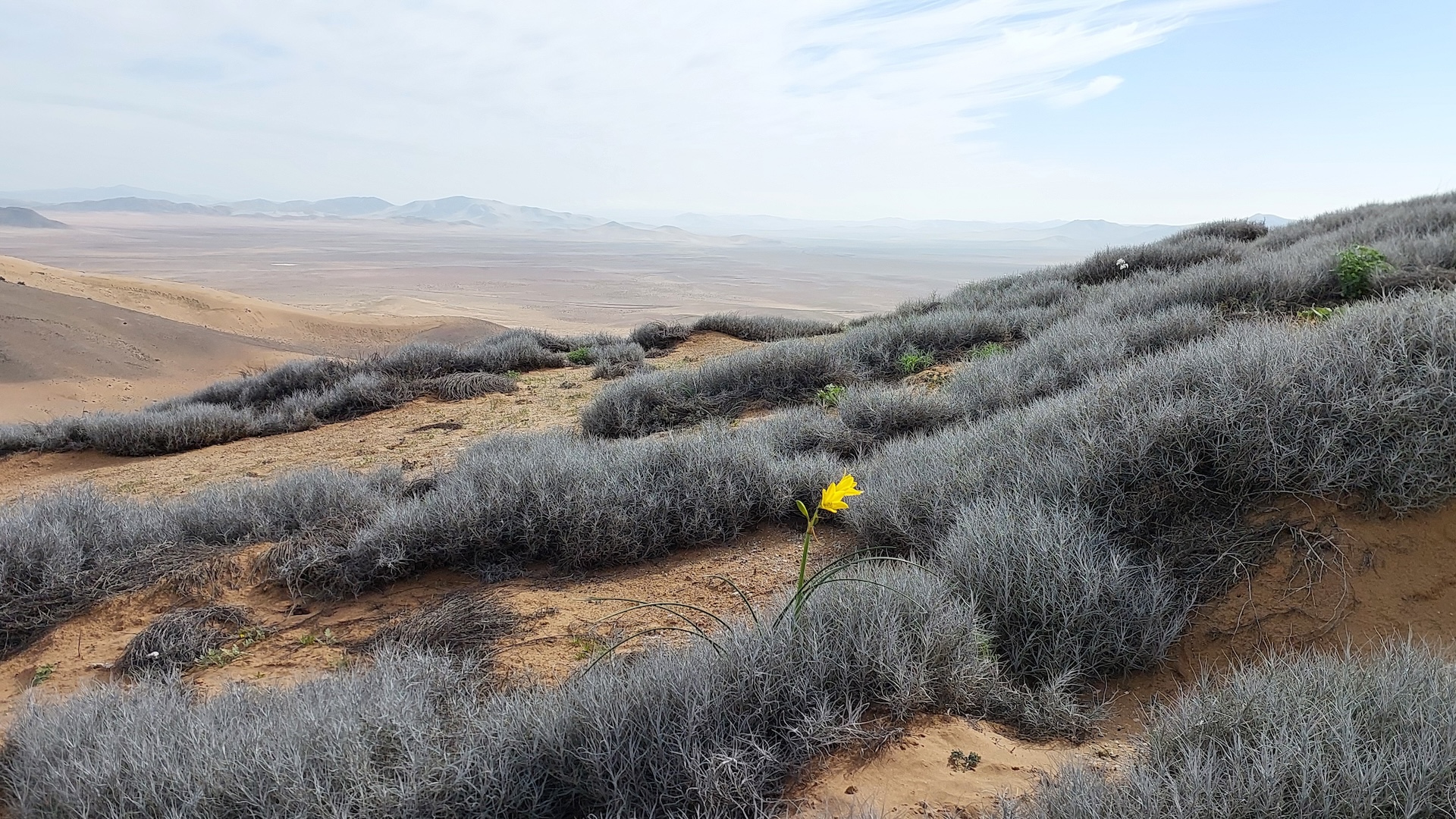

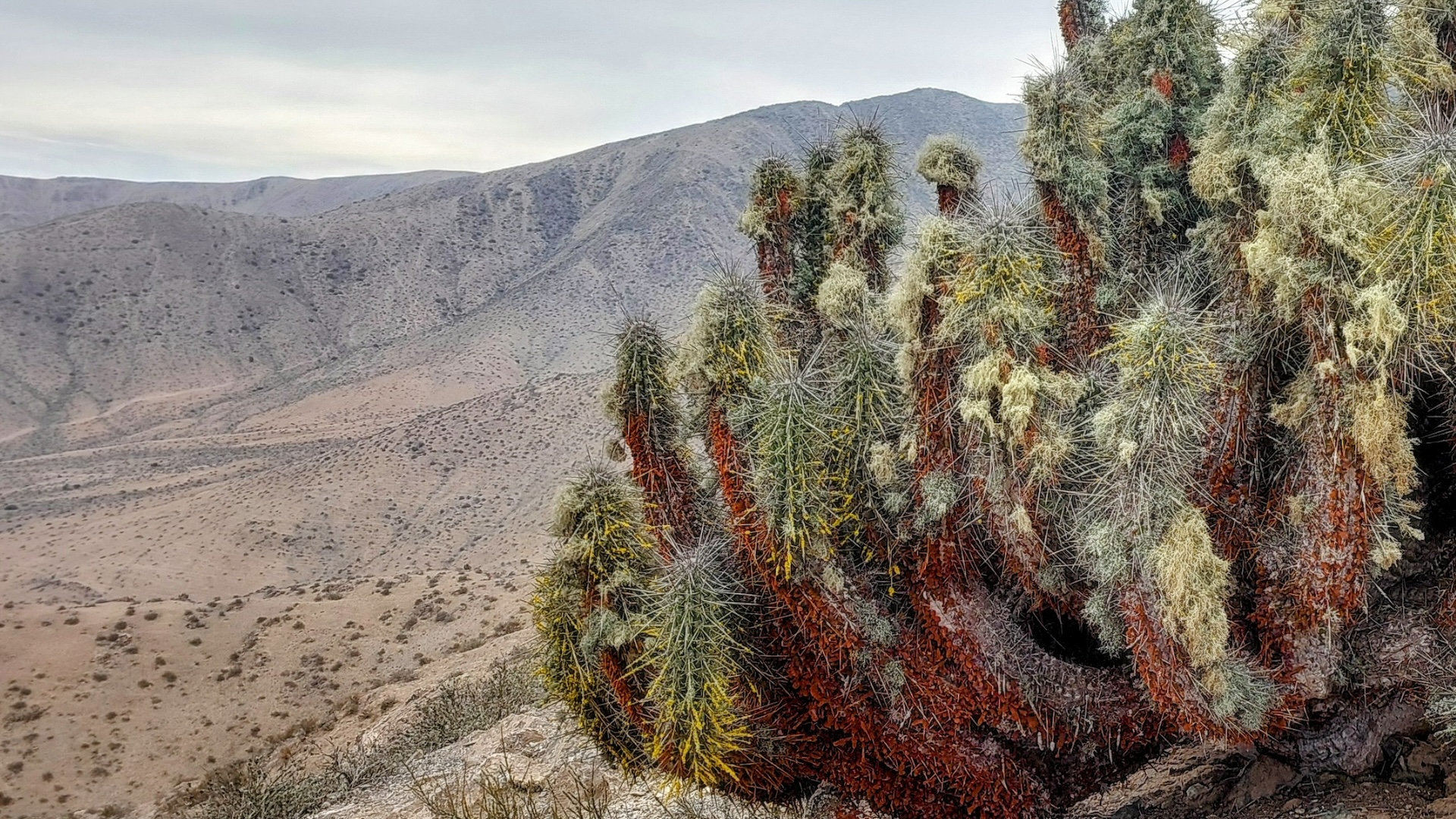







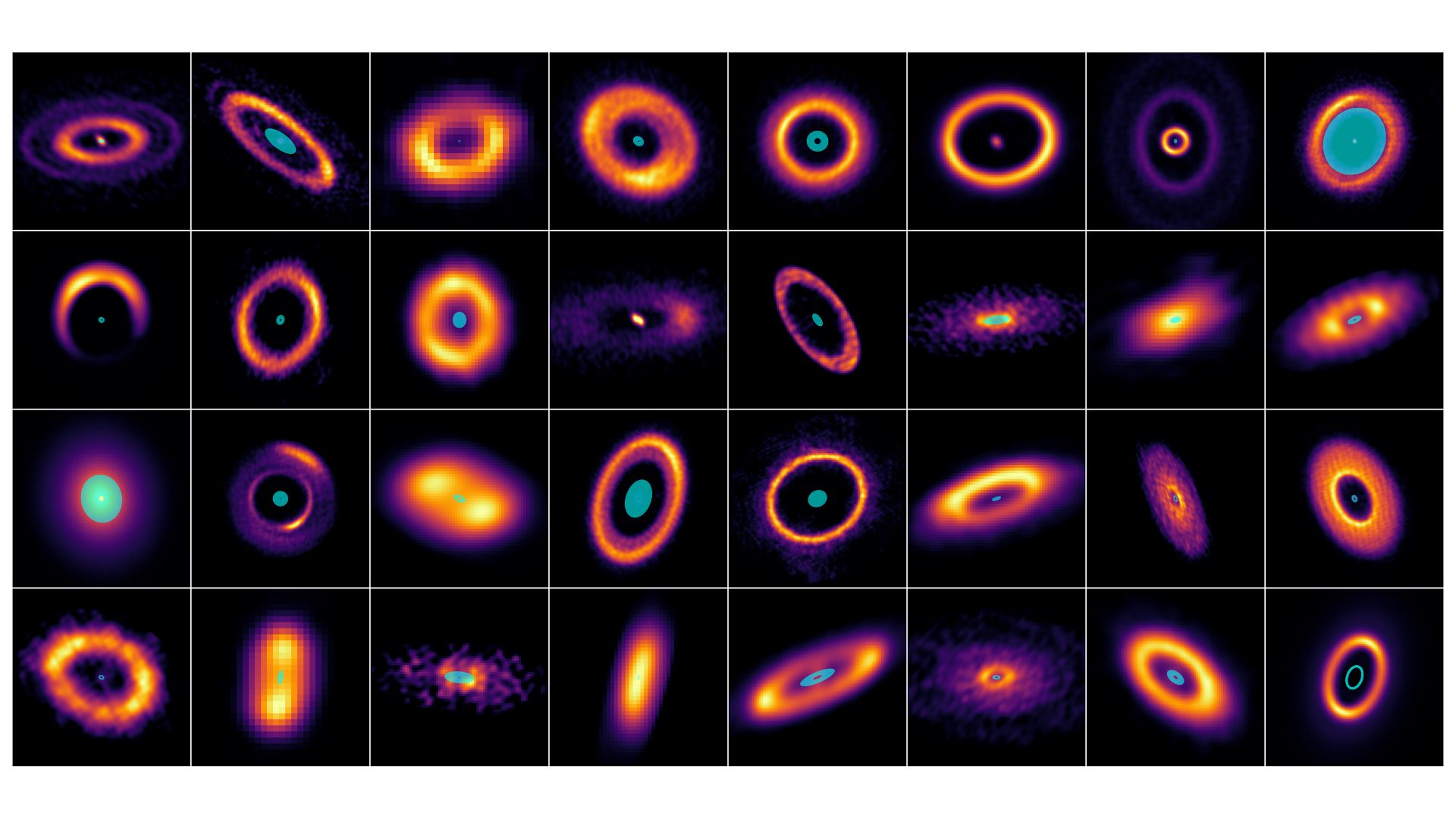

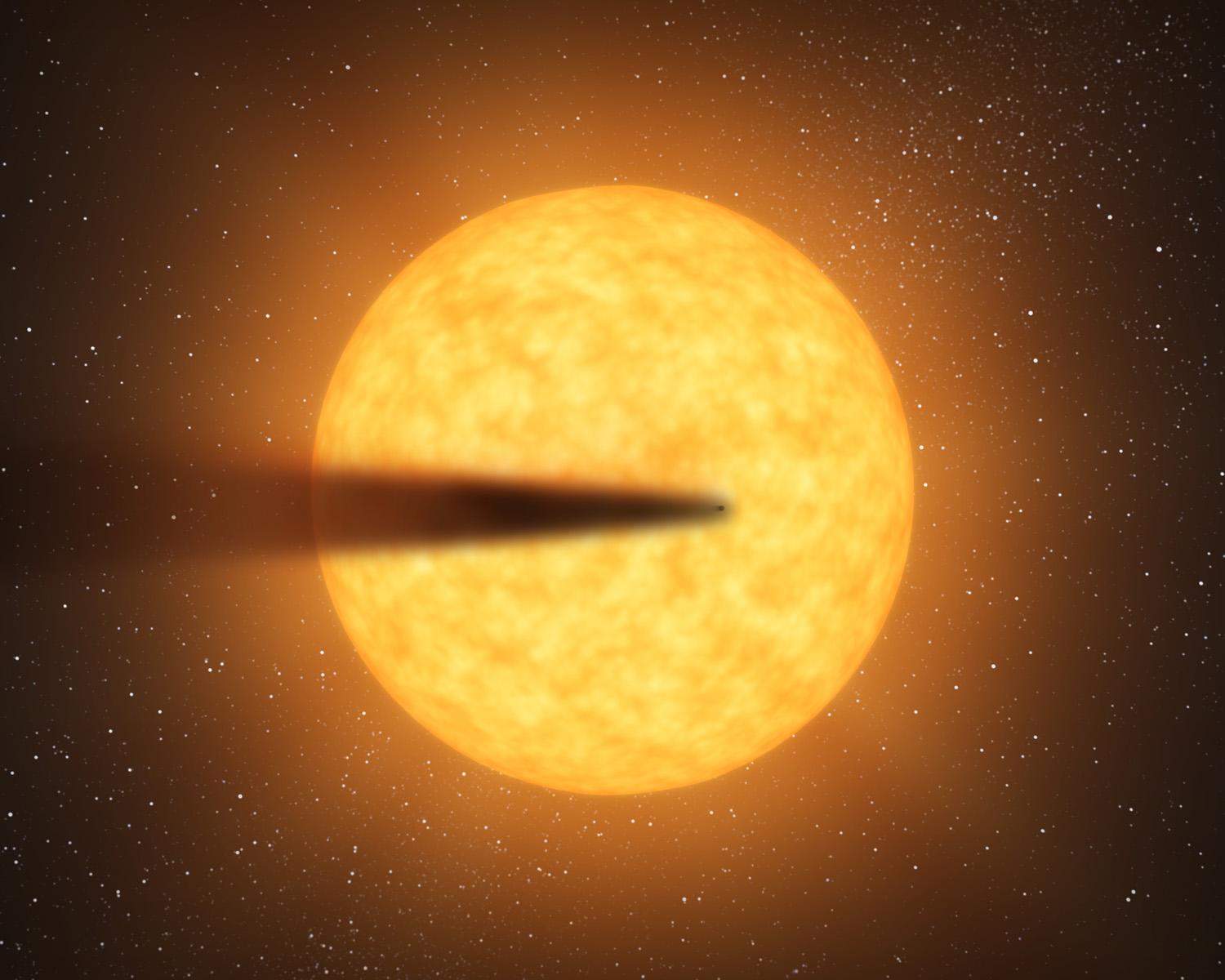




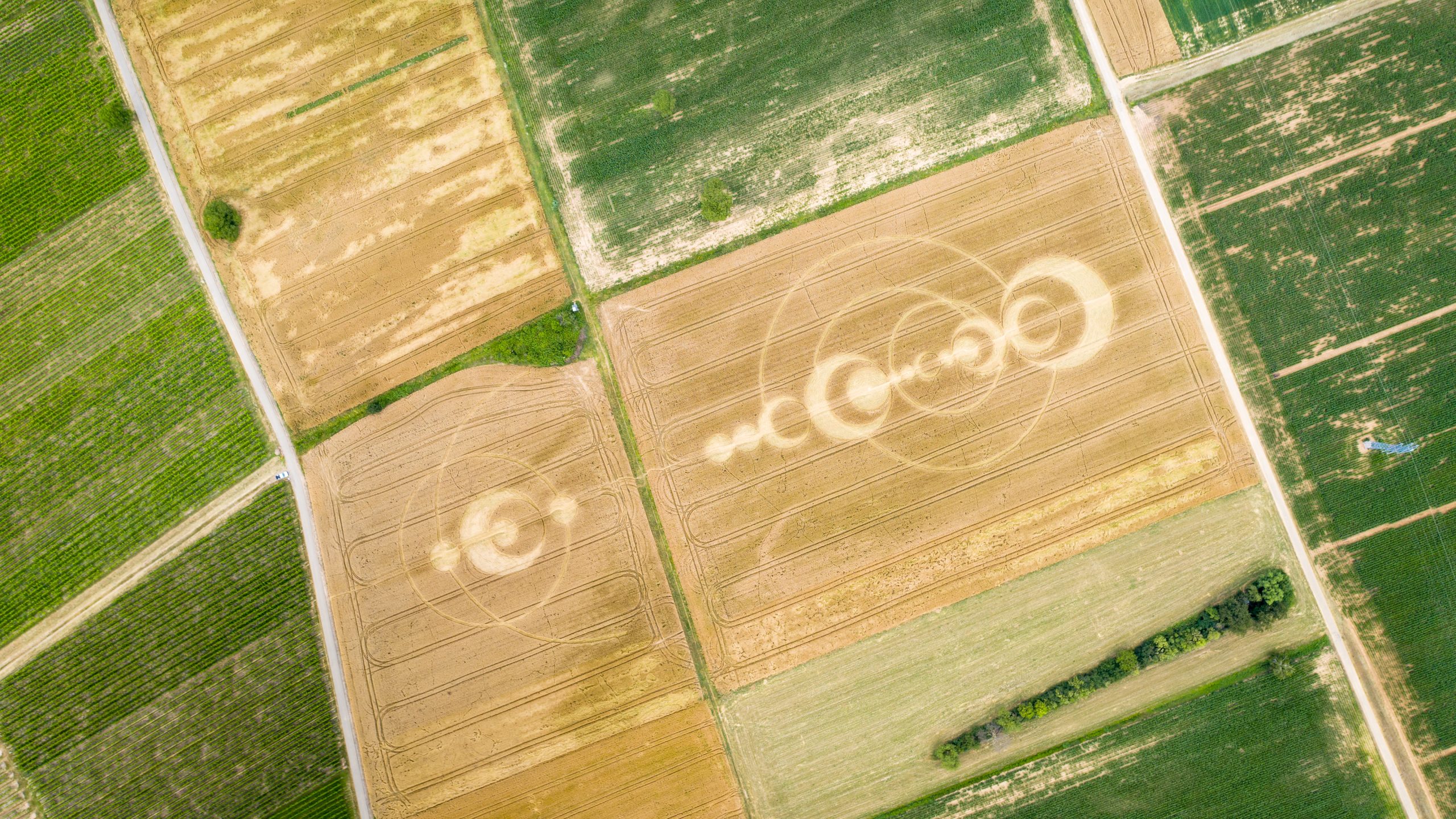

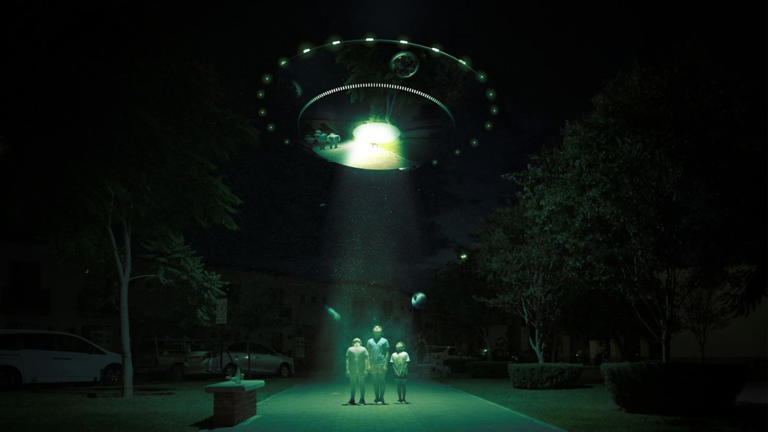






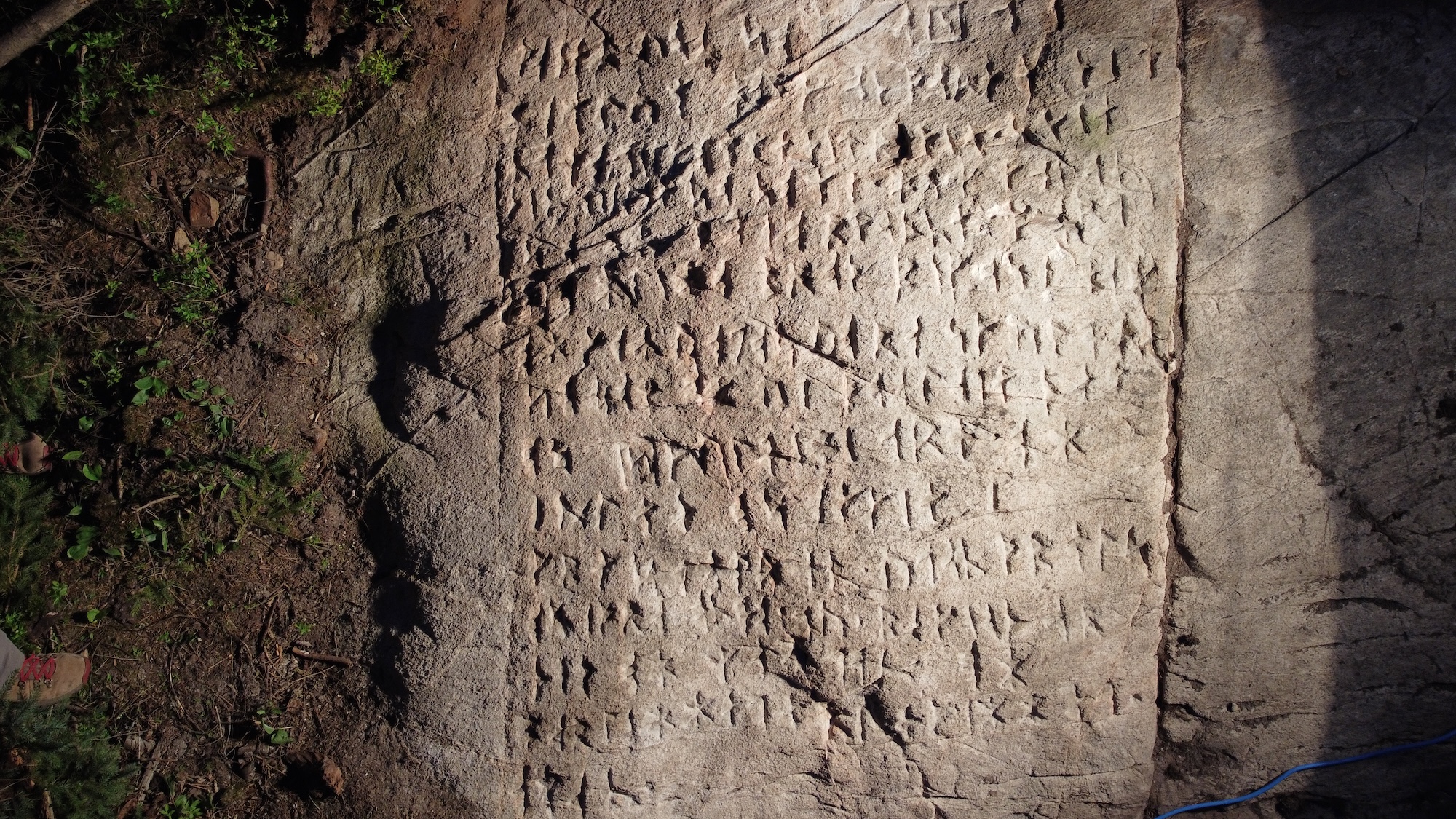

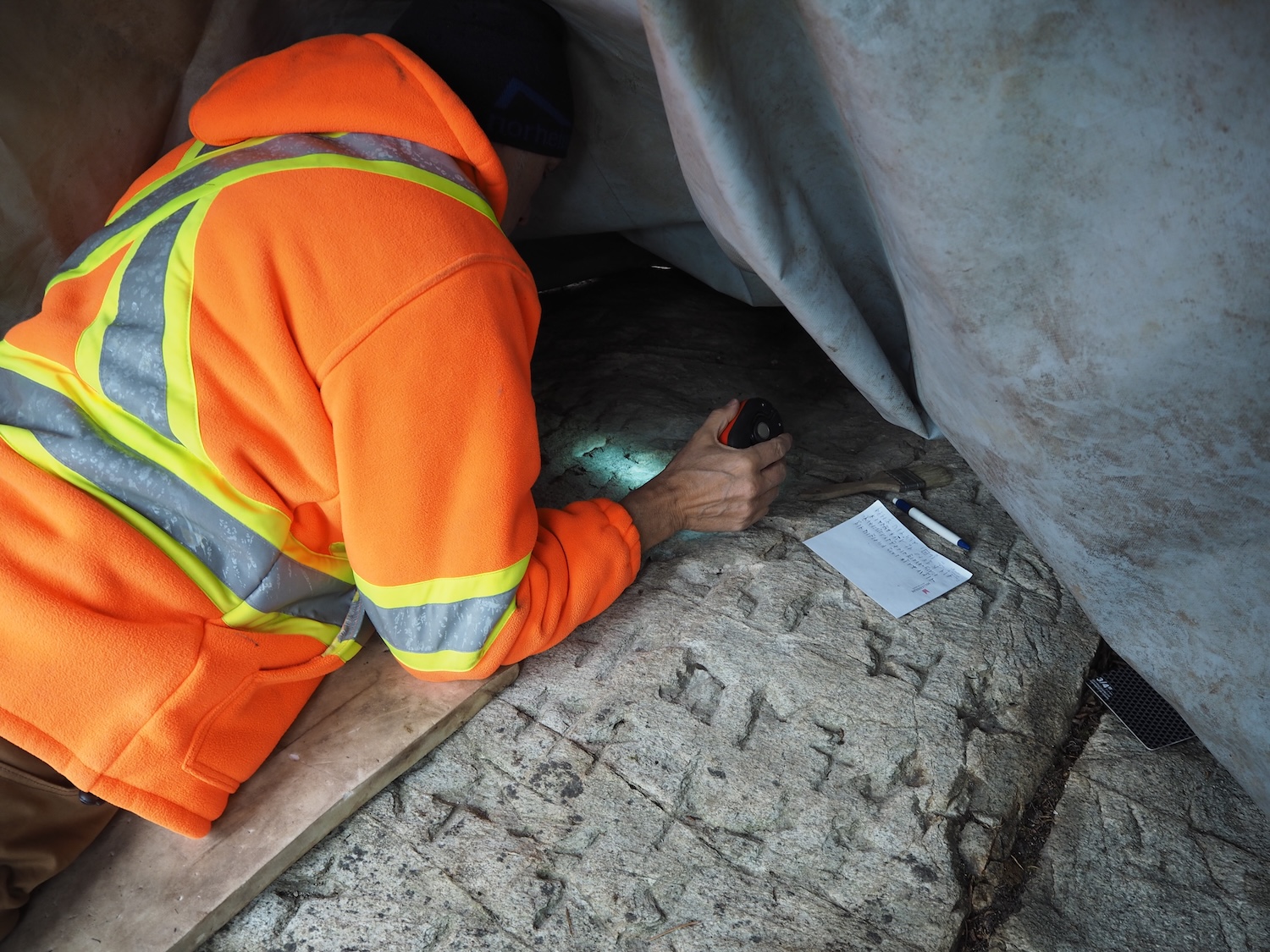
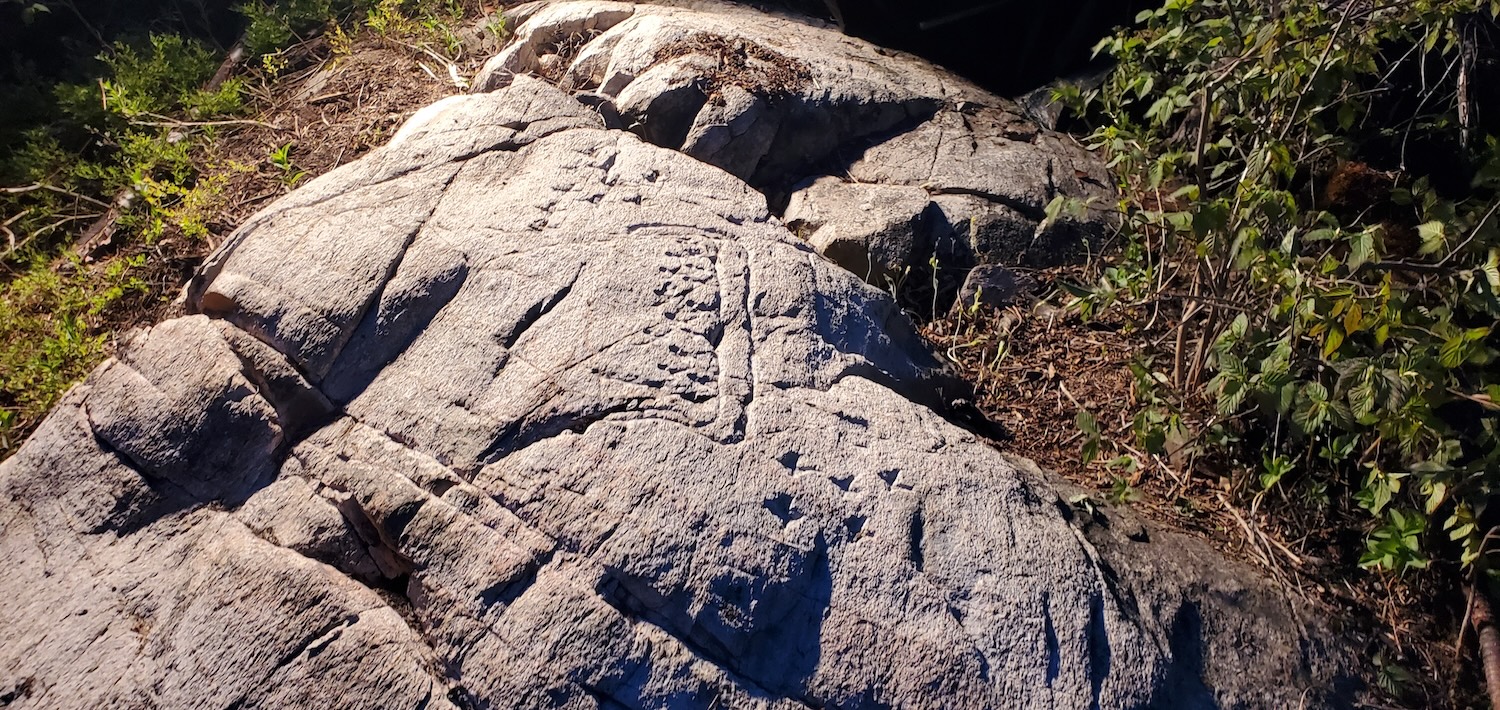






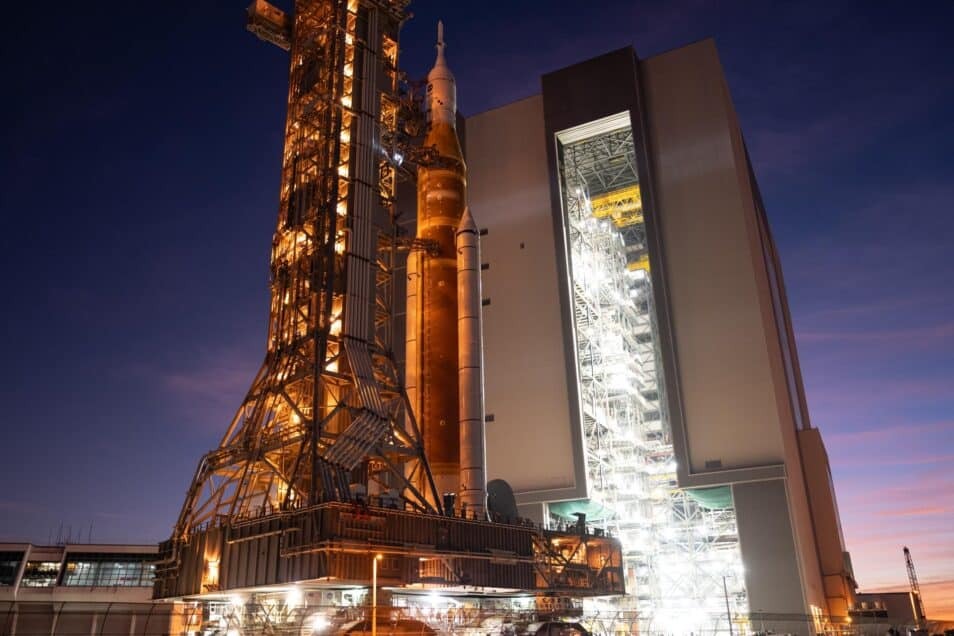


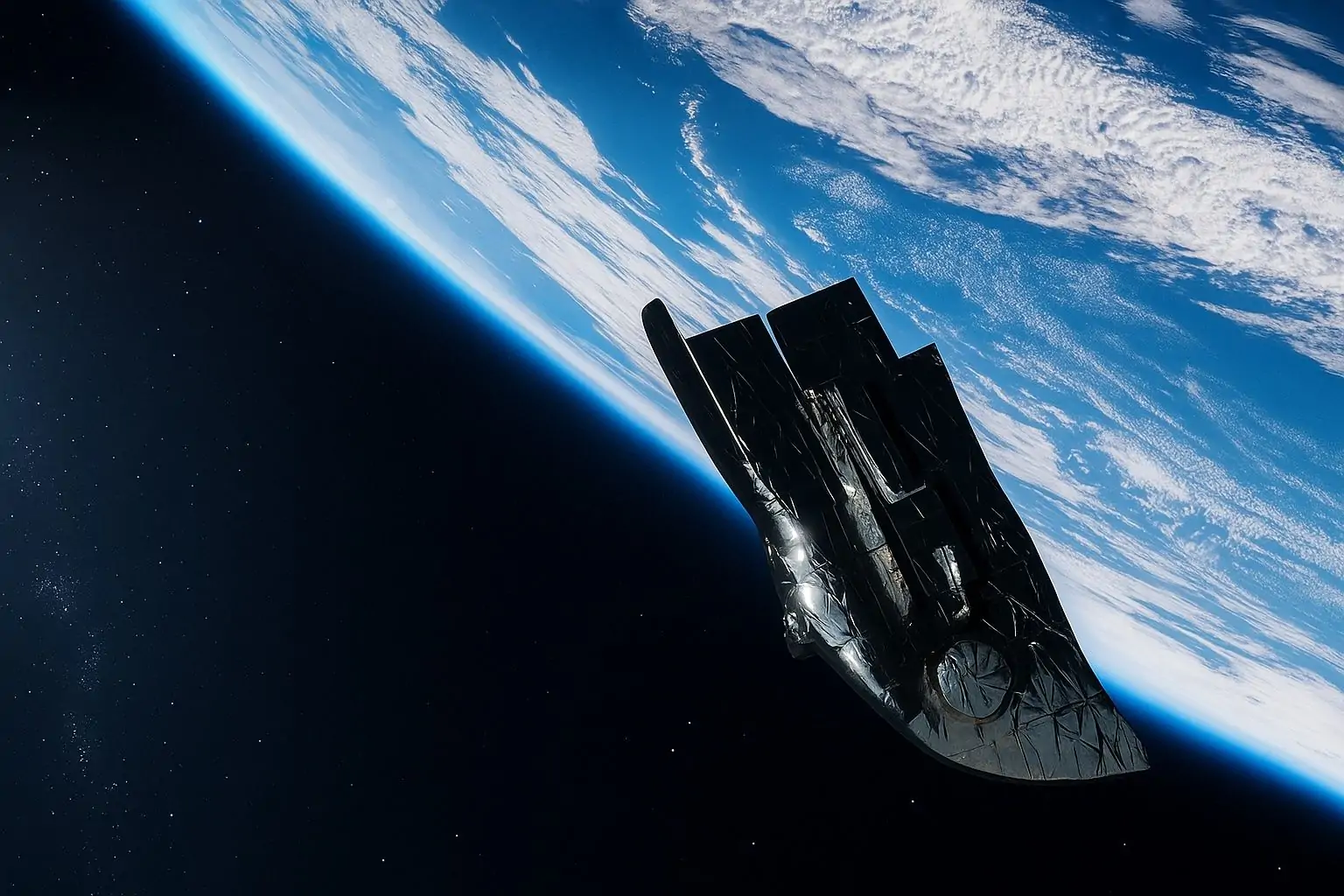

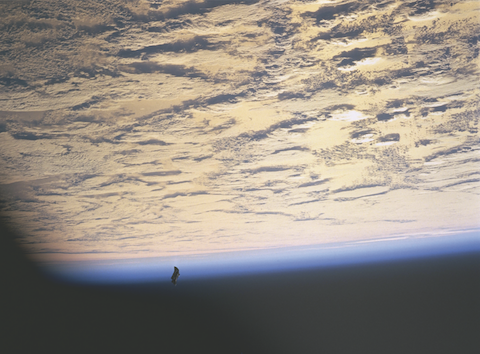
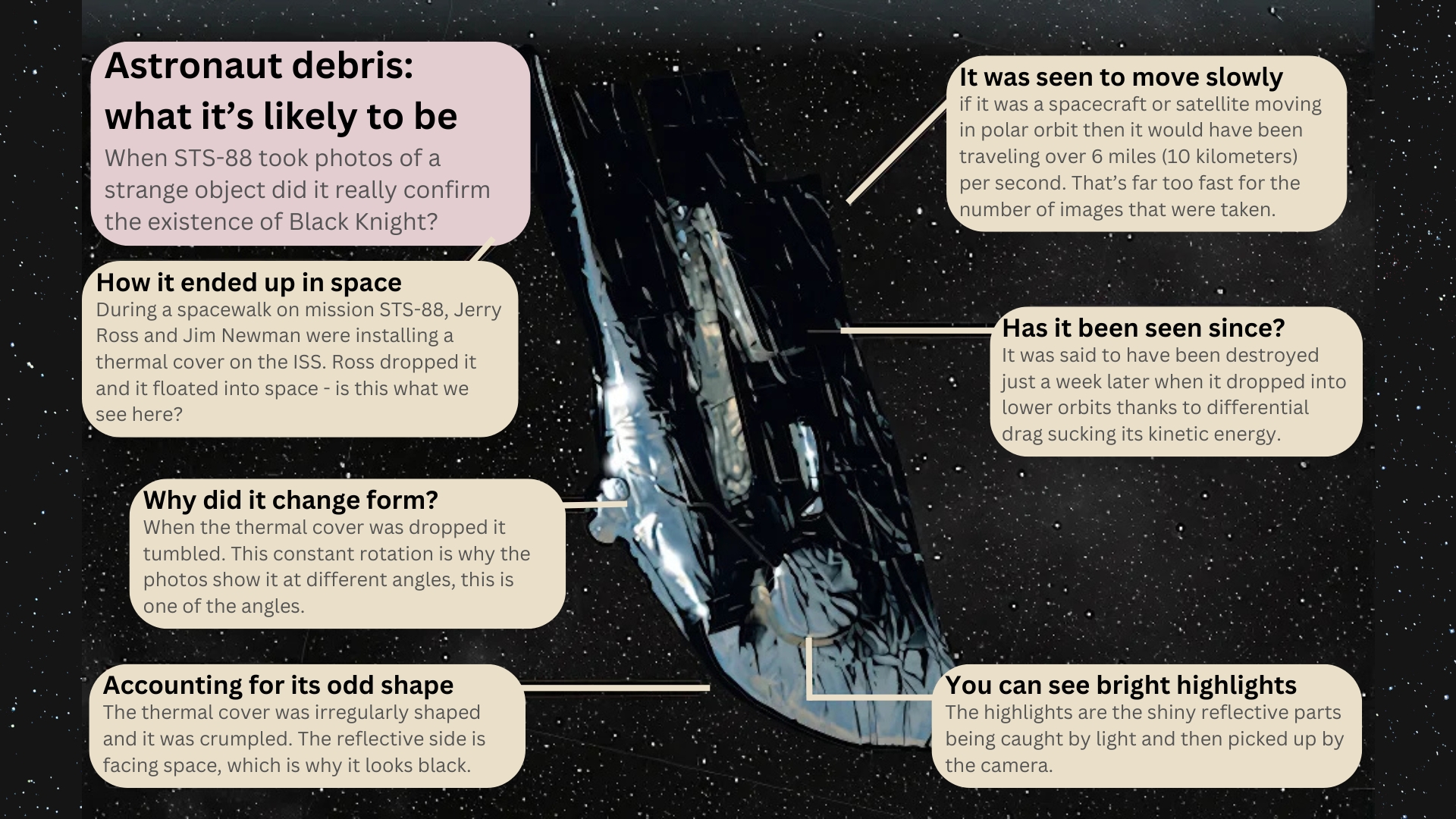




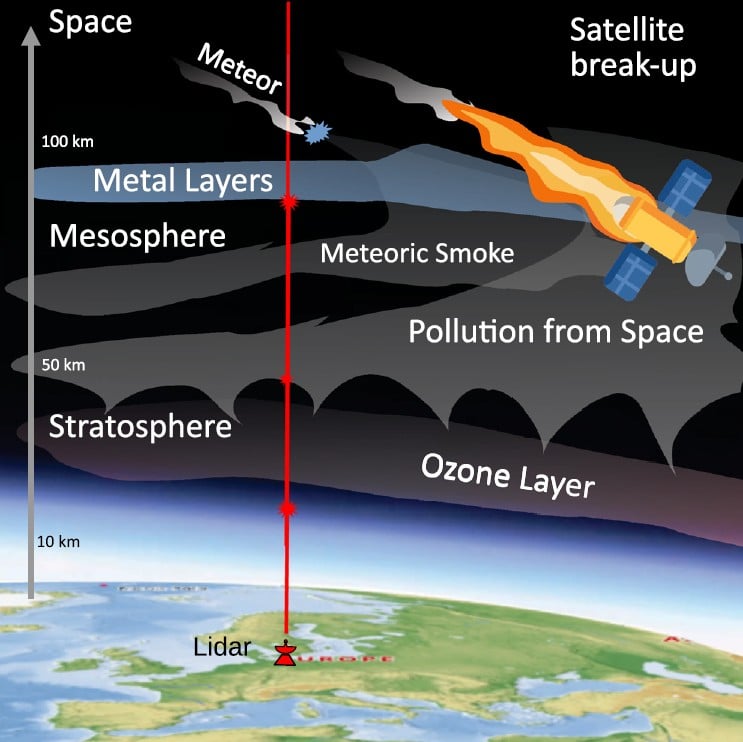
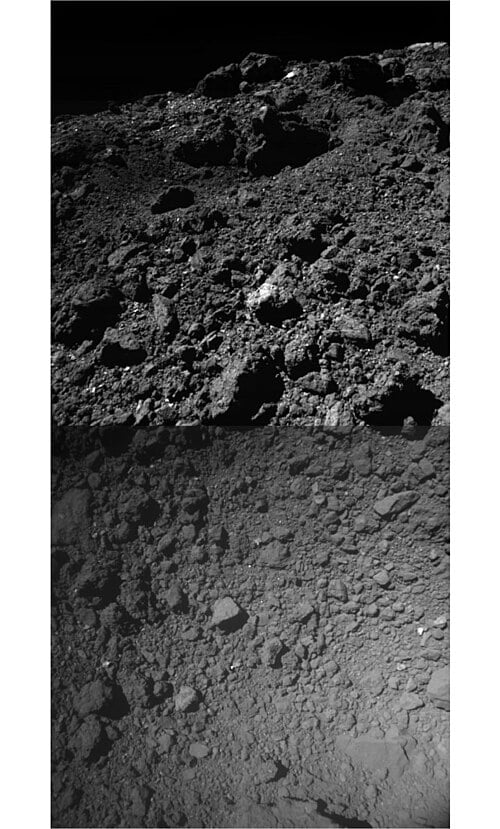


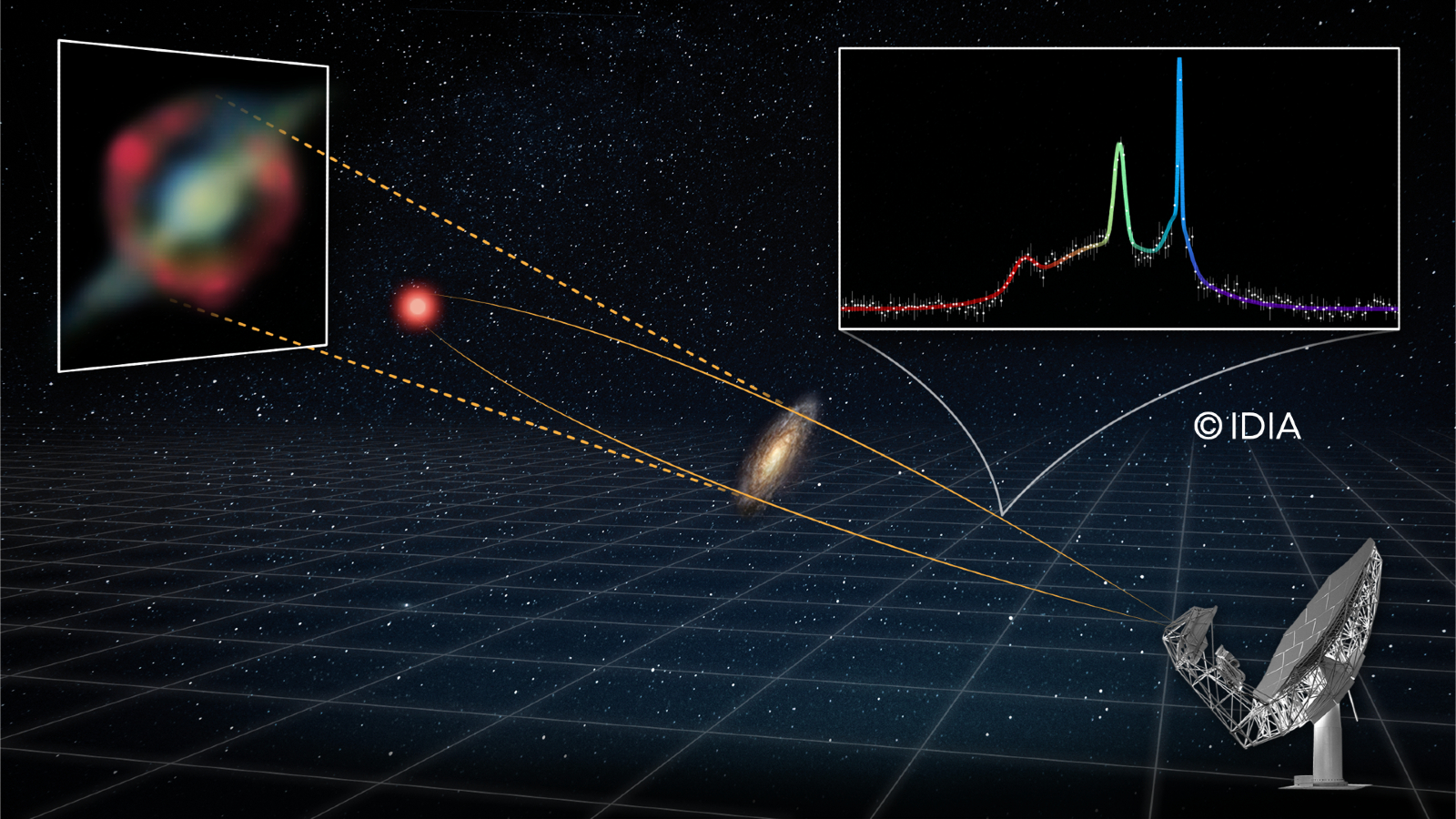

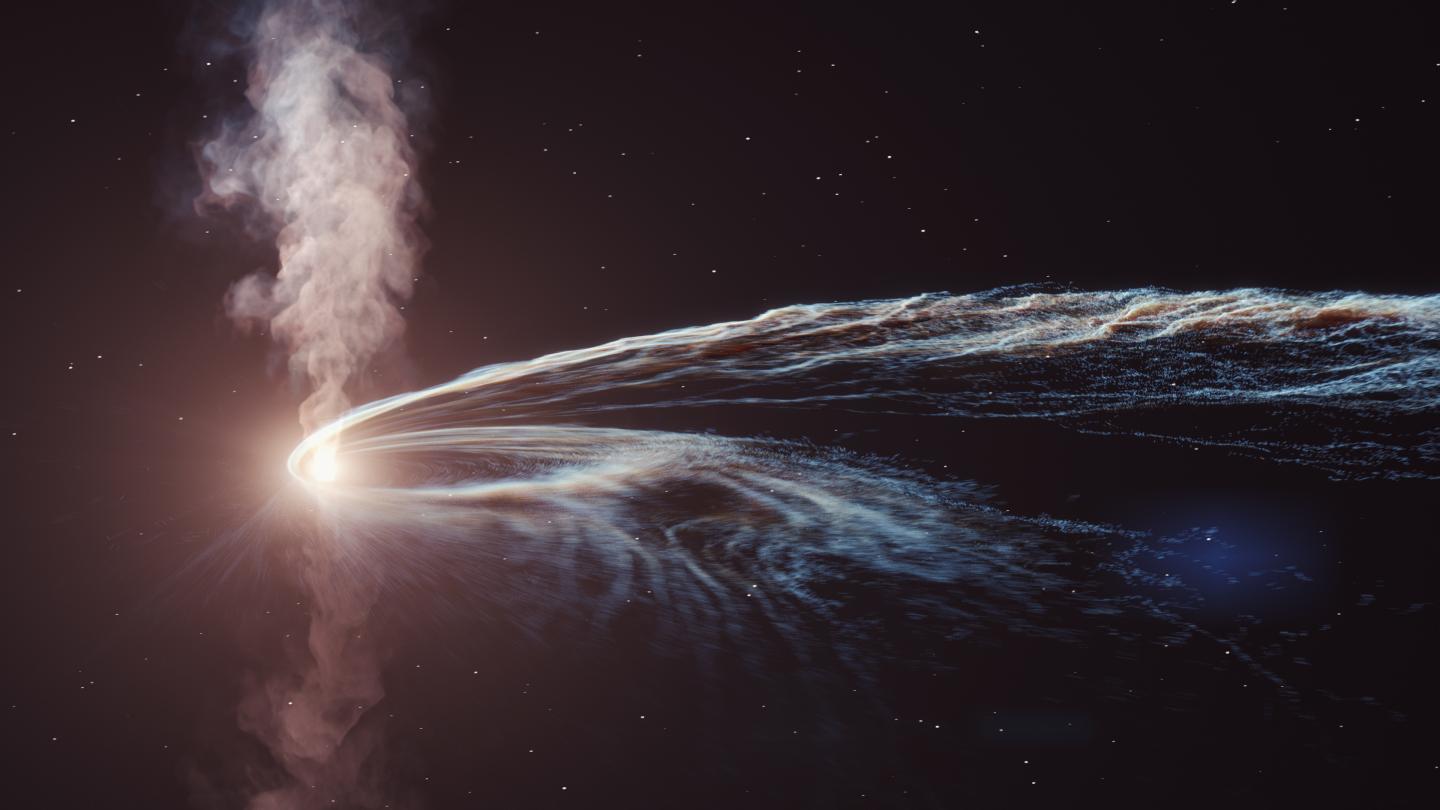
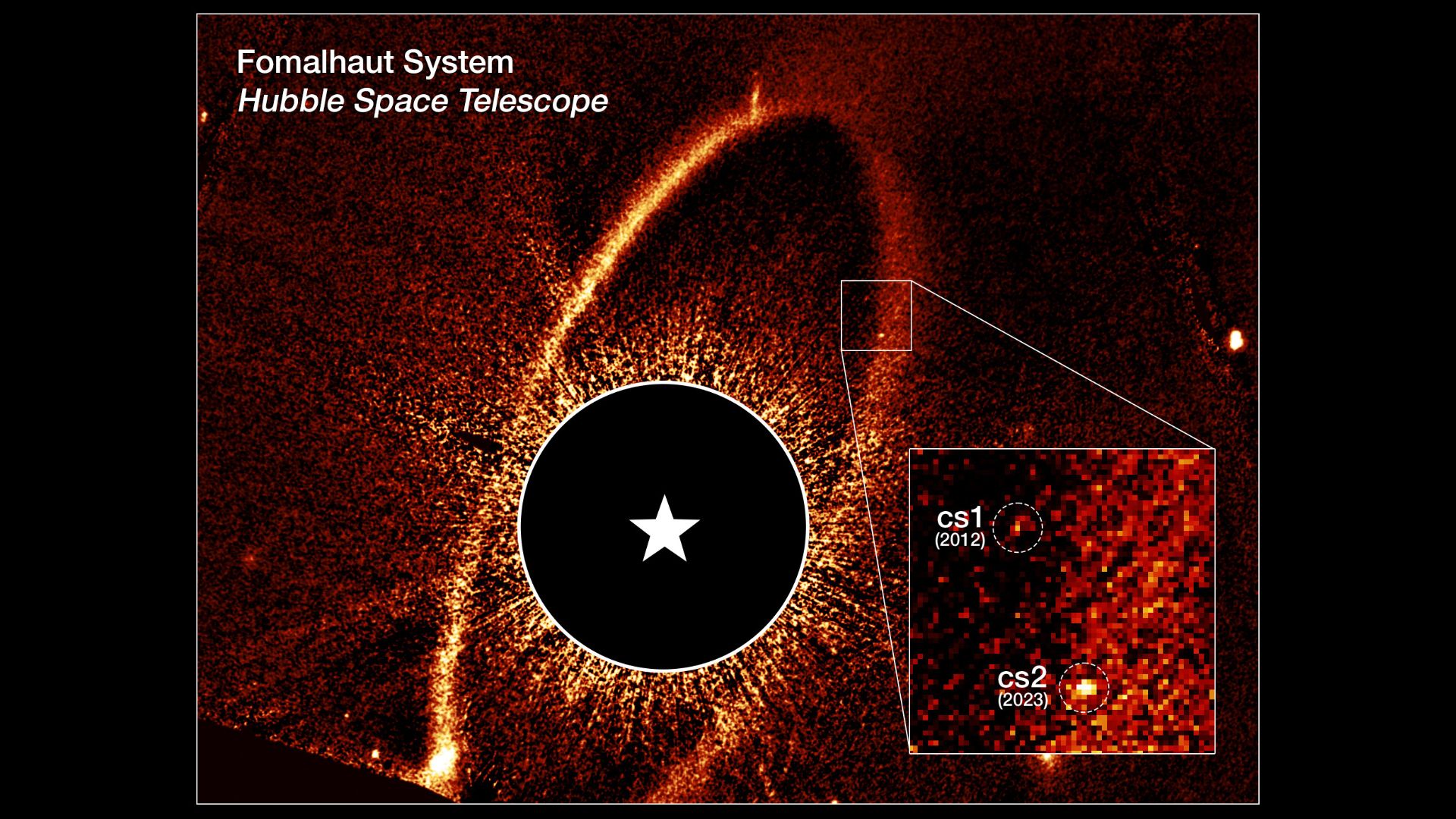




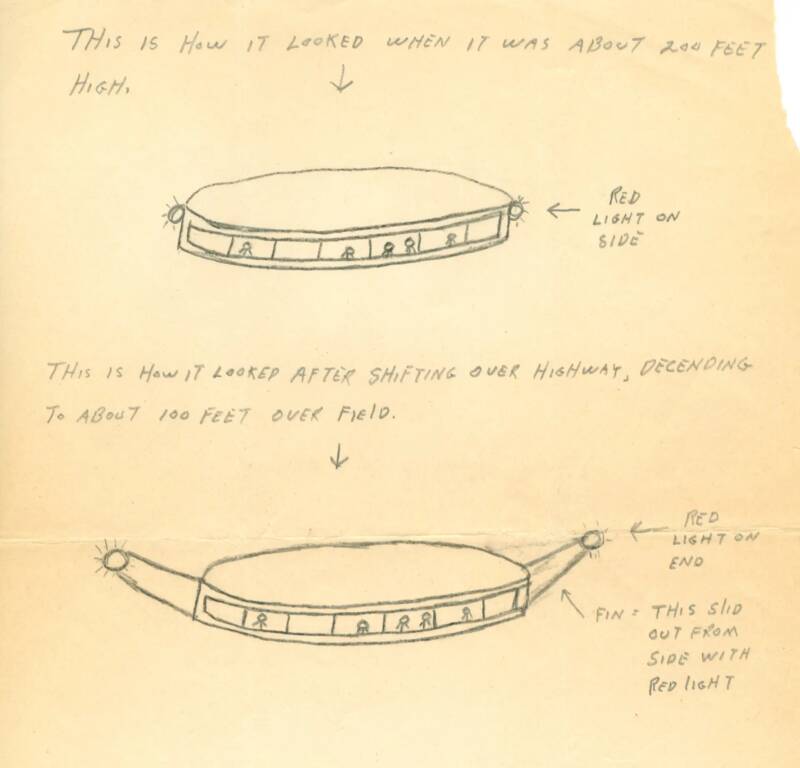




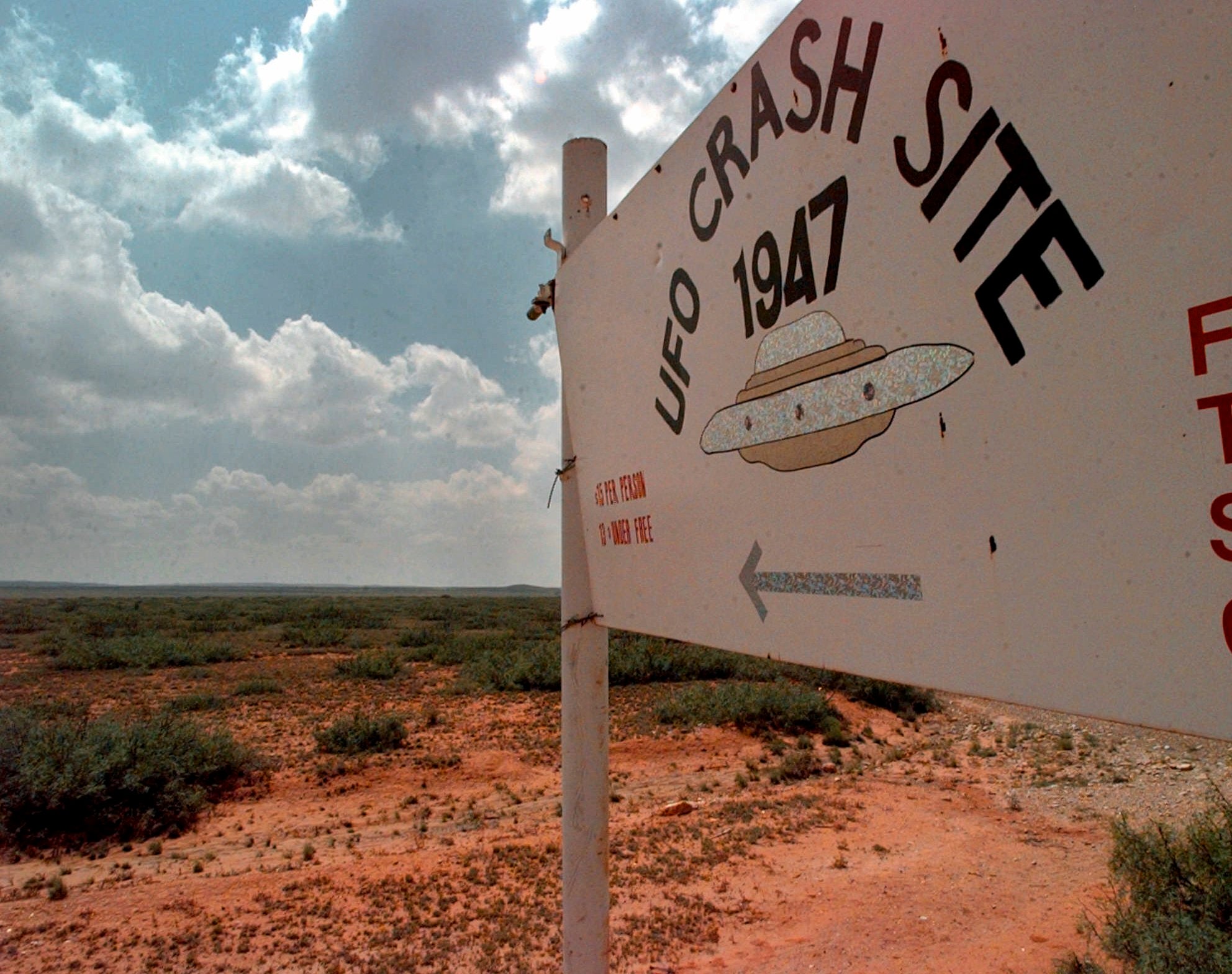






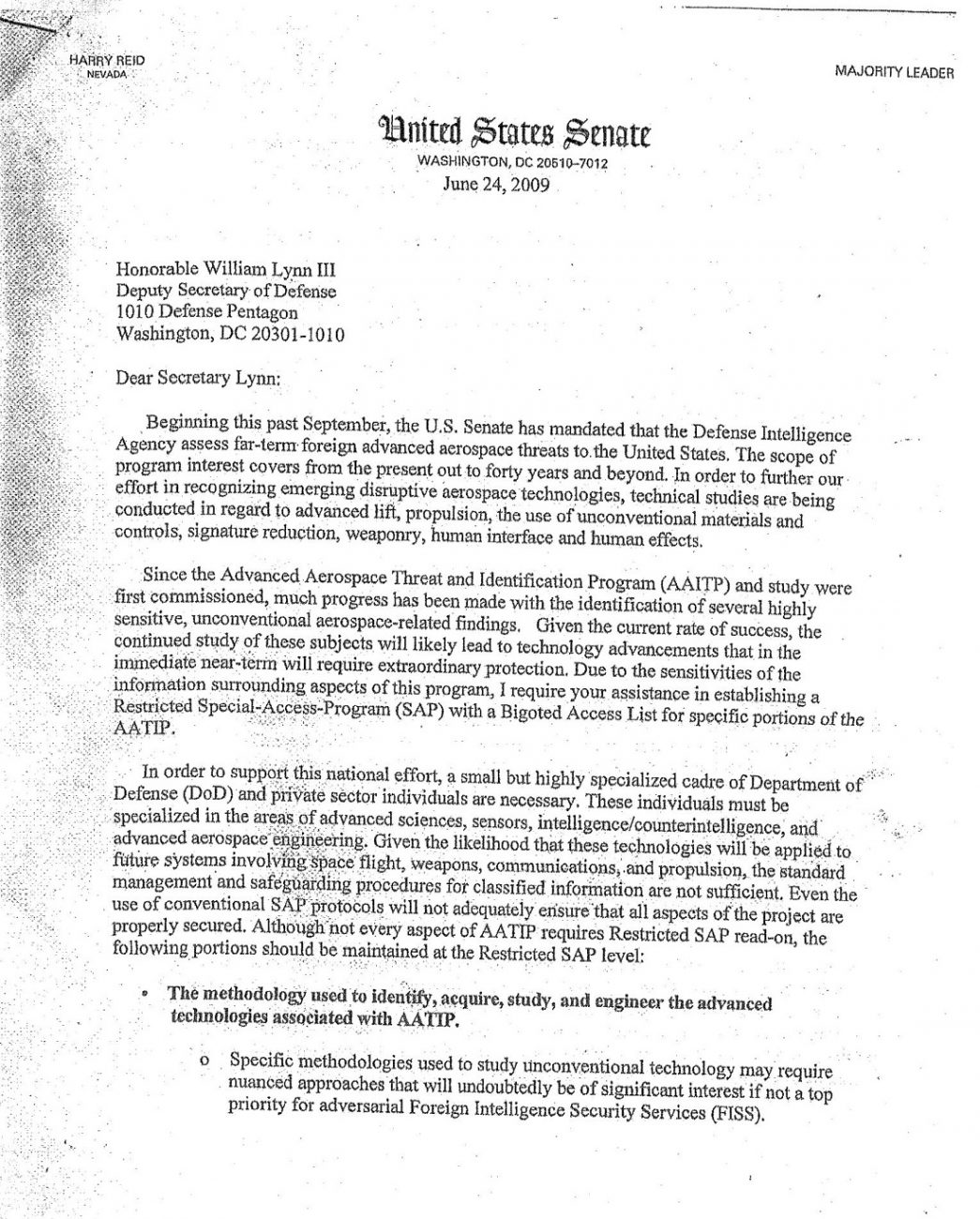
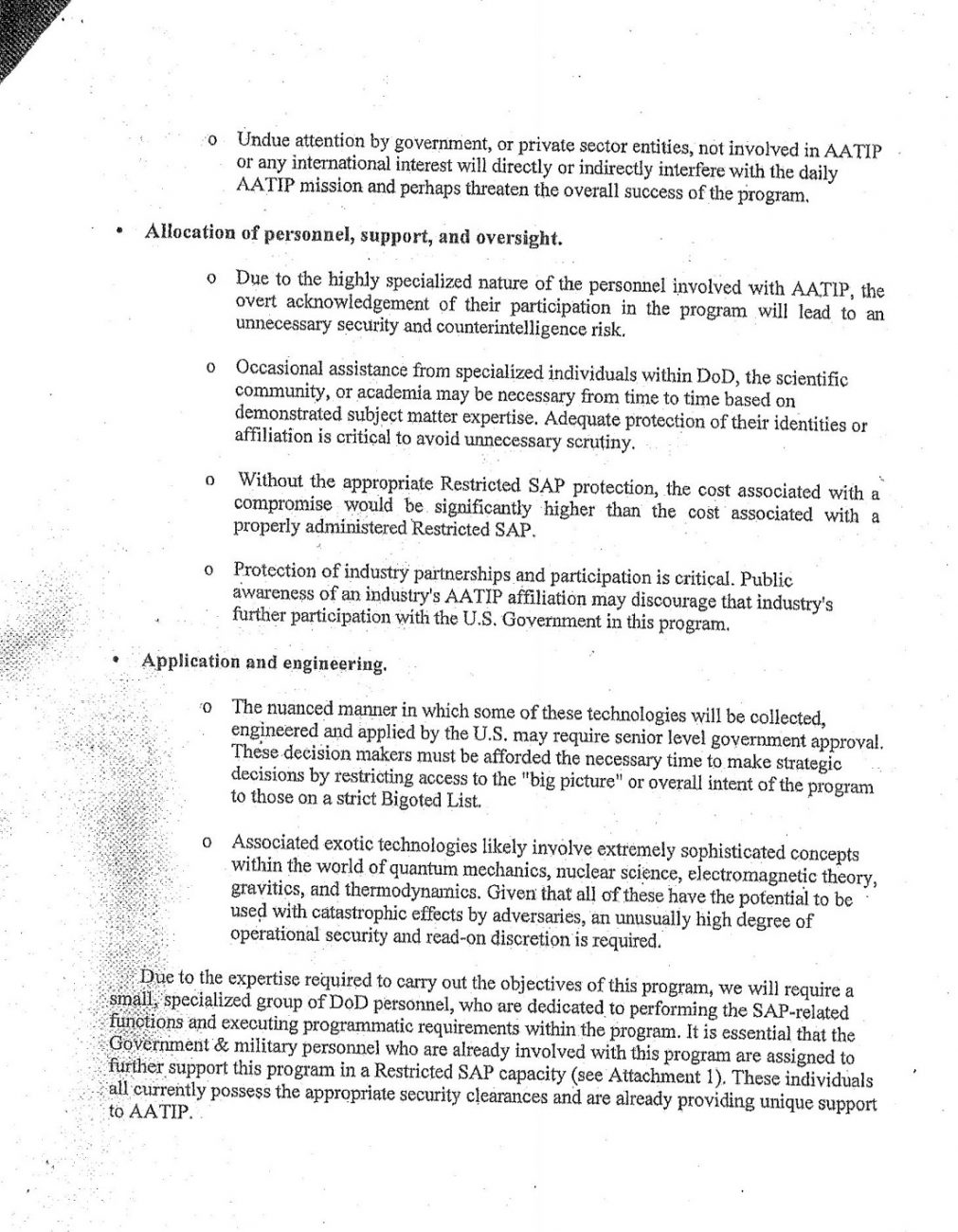
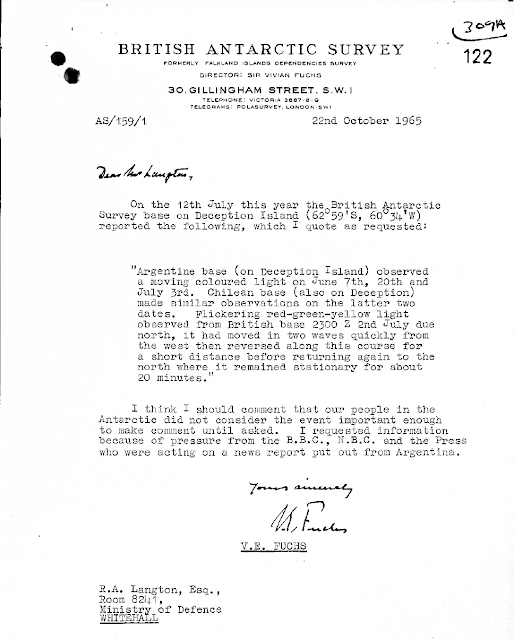
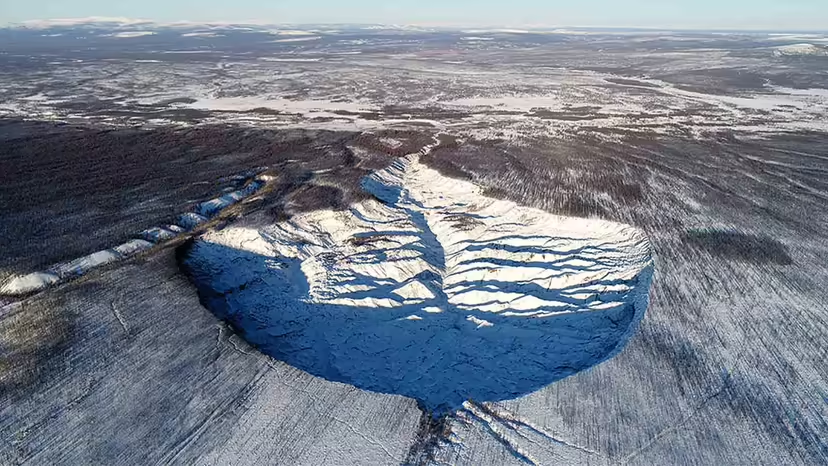
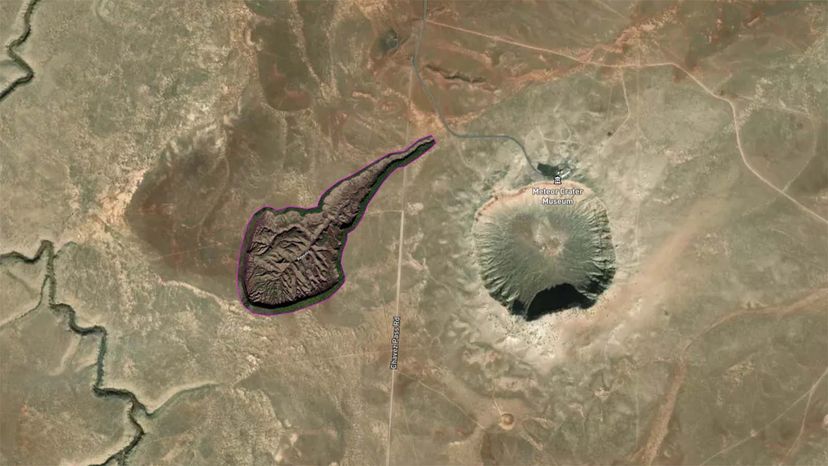
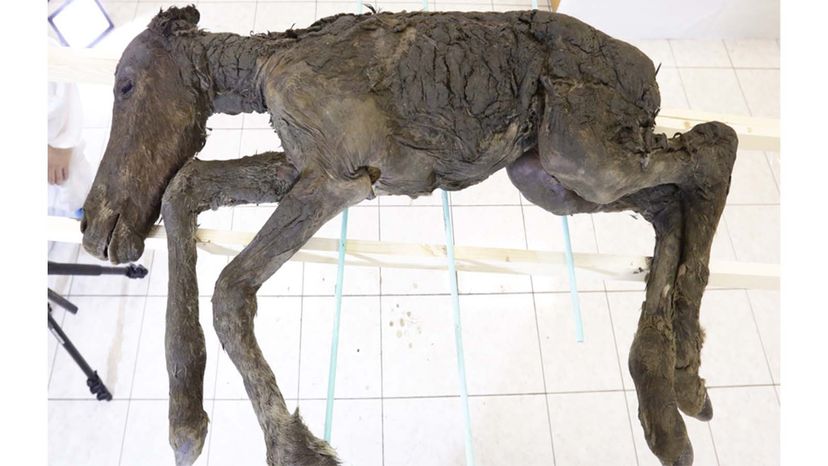
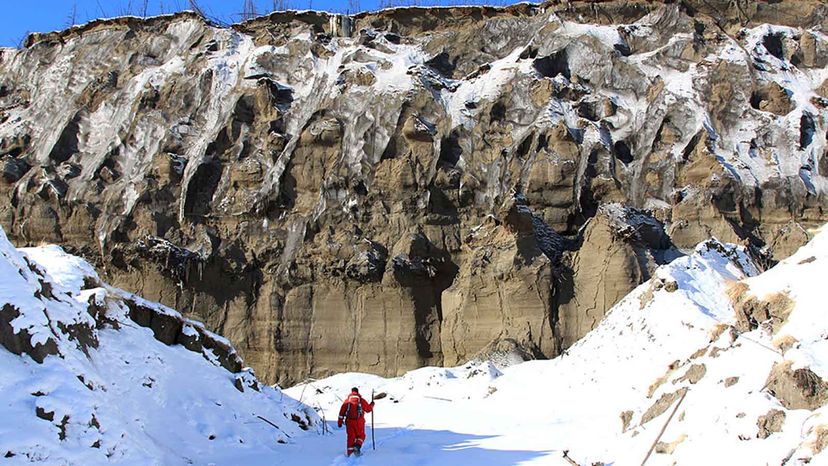







![Hacker claims Nasa has list of 'non-terrestrial officers' and UFO photos The Lone Hacker That Found NASA?s Secret Space Fleet [Gary McKinnon Interview]](https://metro.co.uk/wp-content/uploads/2026/03/SEI_287644860-edf2.jpg?quality=90&strip=all&w=646)
![Hacker claims Nasa has list of 'non-terrestrial officers' and UFO photos The Lone Hacker That Found NASA?s Secret Space Fleet [Gary McKinnon Interview]](https://metro.co.uk/wp-content/uploads/2026/03/SEI_287644861-cbbf.jpg?quality=90&strip=all&w=646)
![Hacker claims Nasa has list of 'non-terrestrial officers' and UFO photos The Lone Hacker That Found NASA?s Secret Space Fleet [Gary McKinnon Interview]](https://metro.co.uk/wp-content/uploads/2026/03/SEI_287644859-554f.jpg?quality=90&strip=all&w=646)


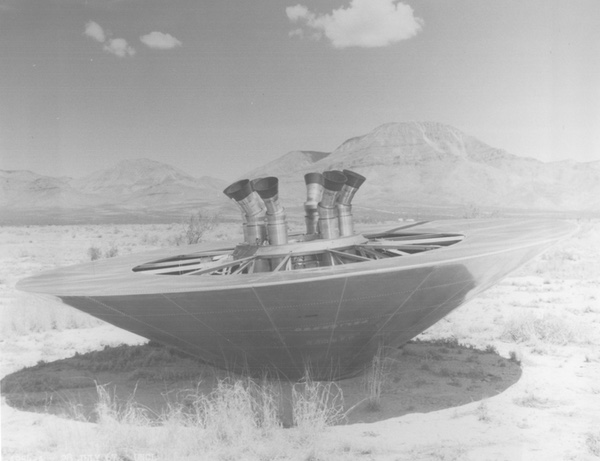
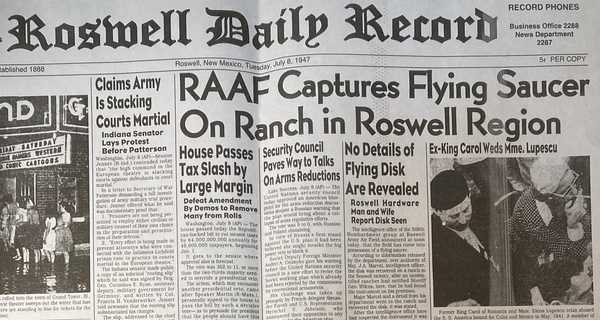


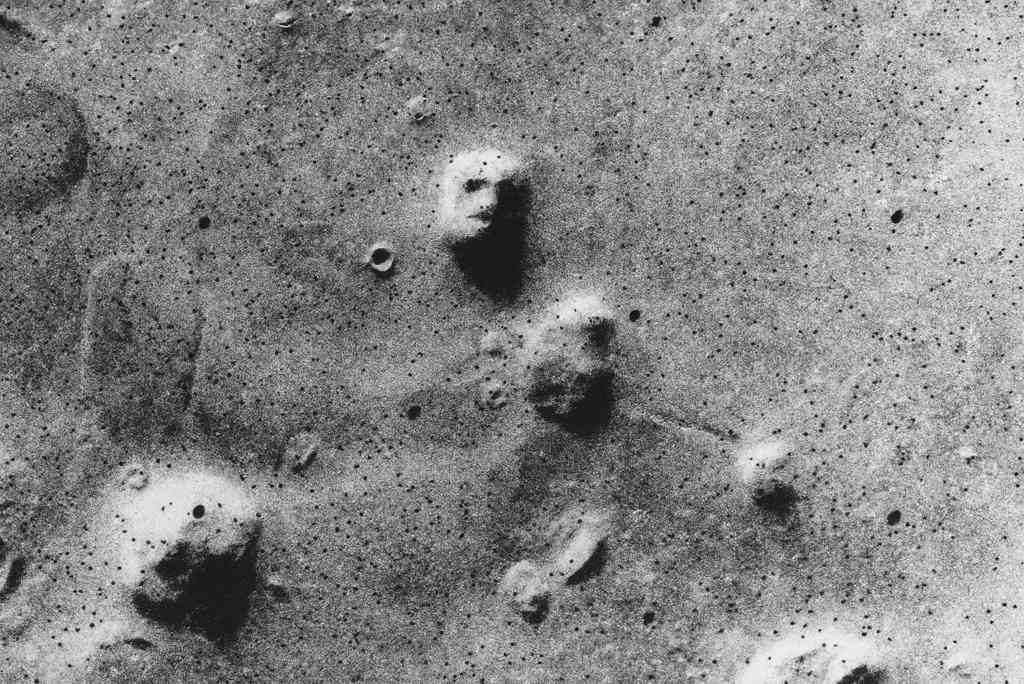

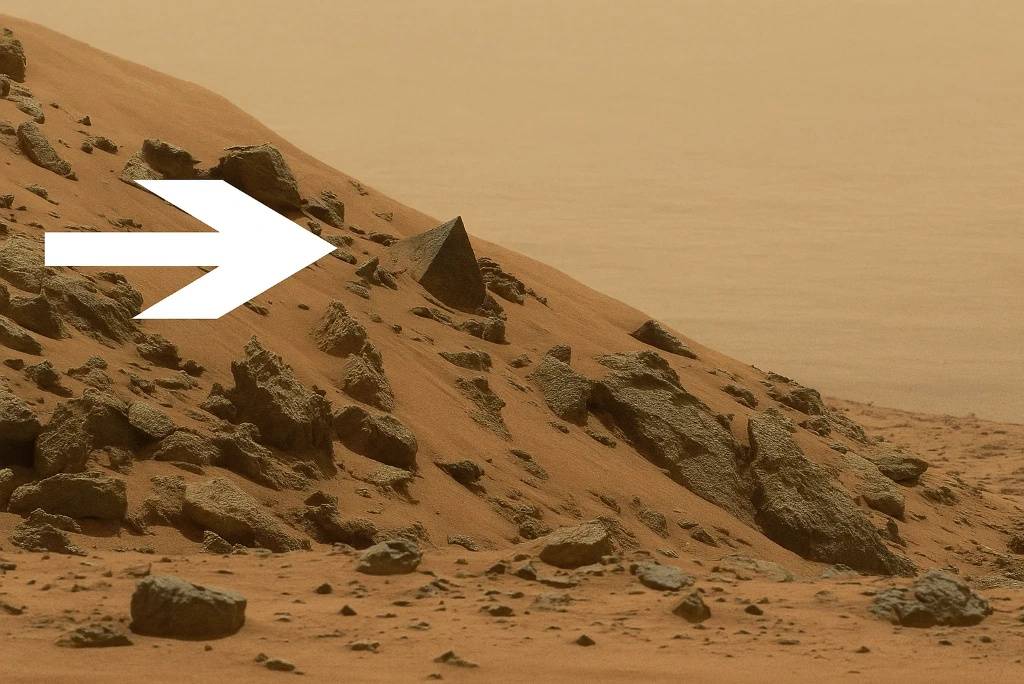
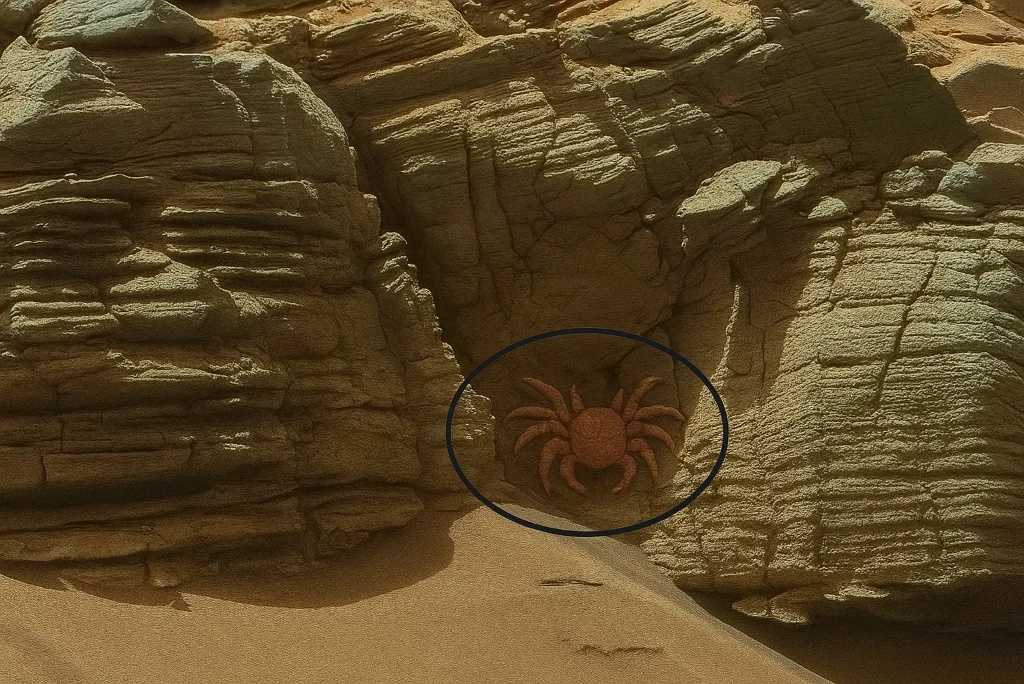
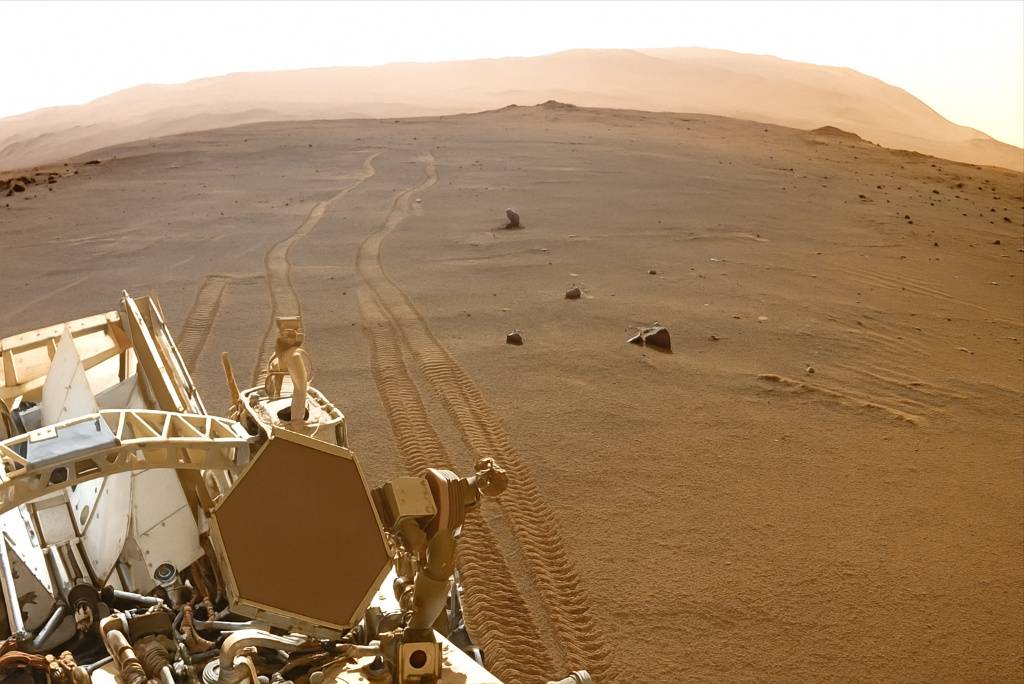
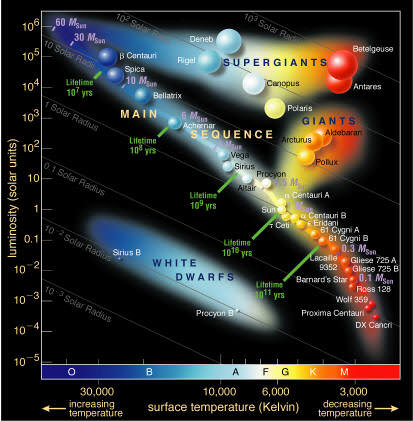
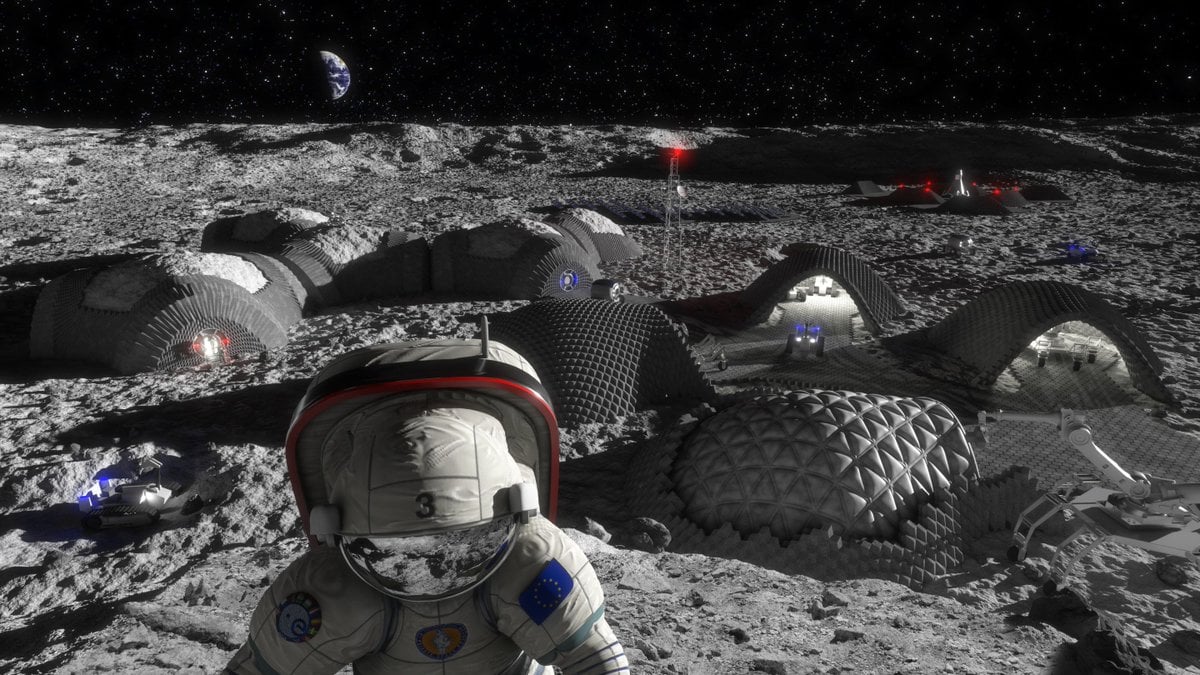

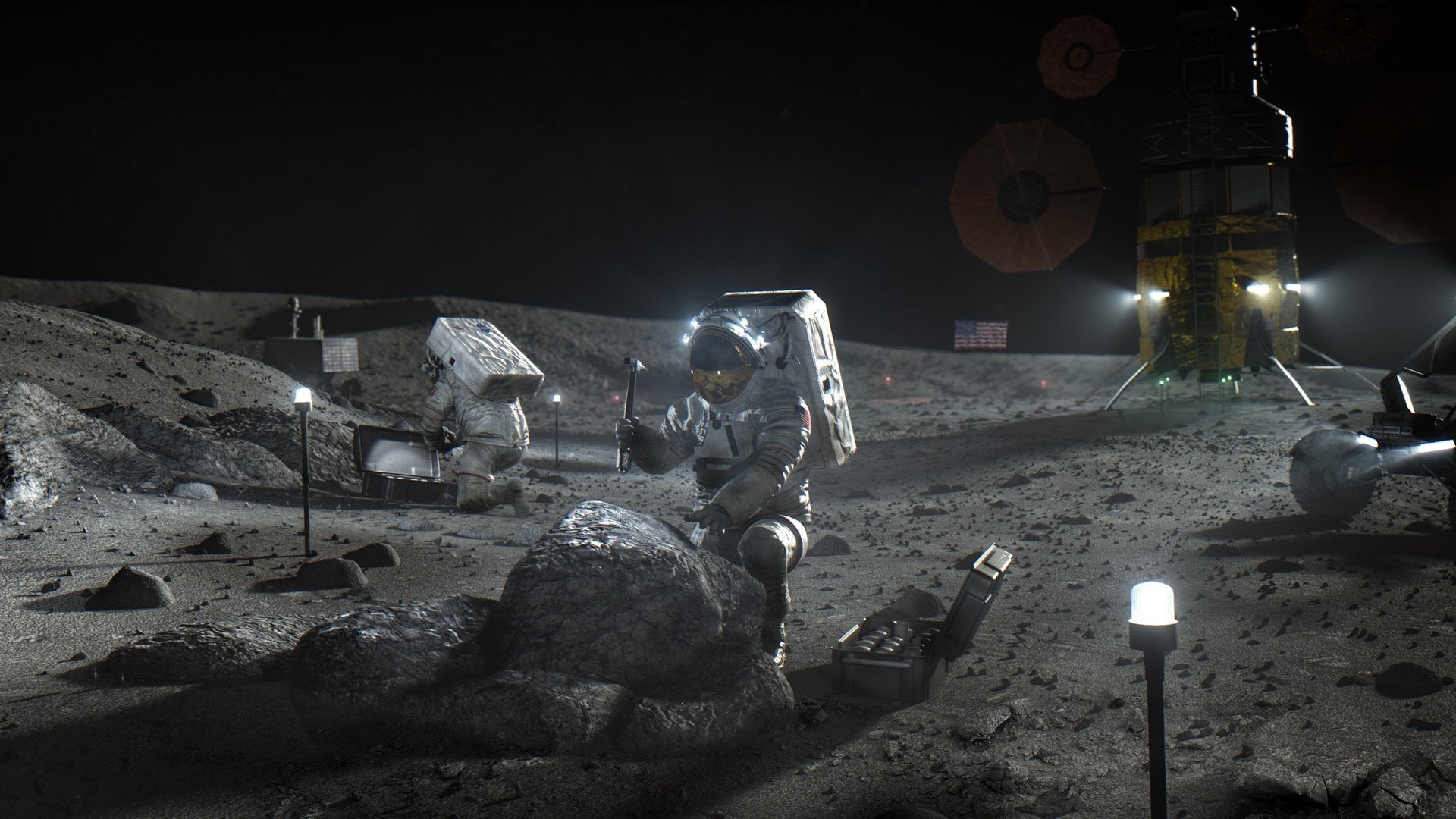


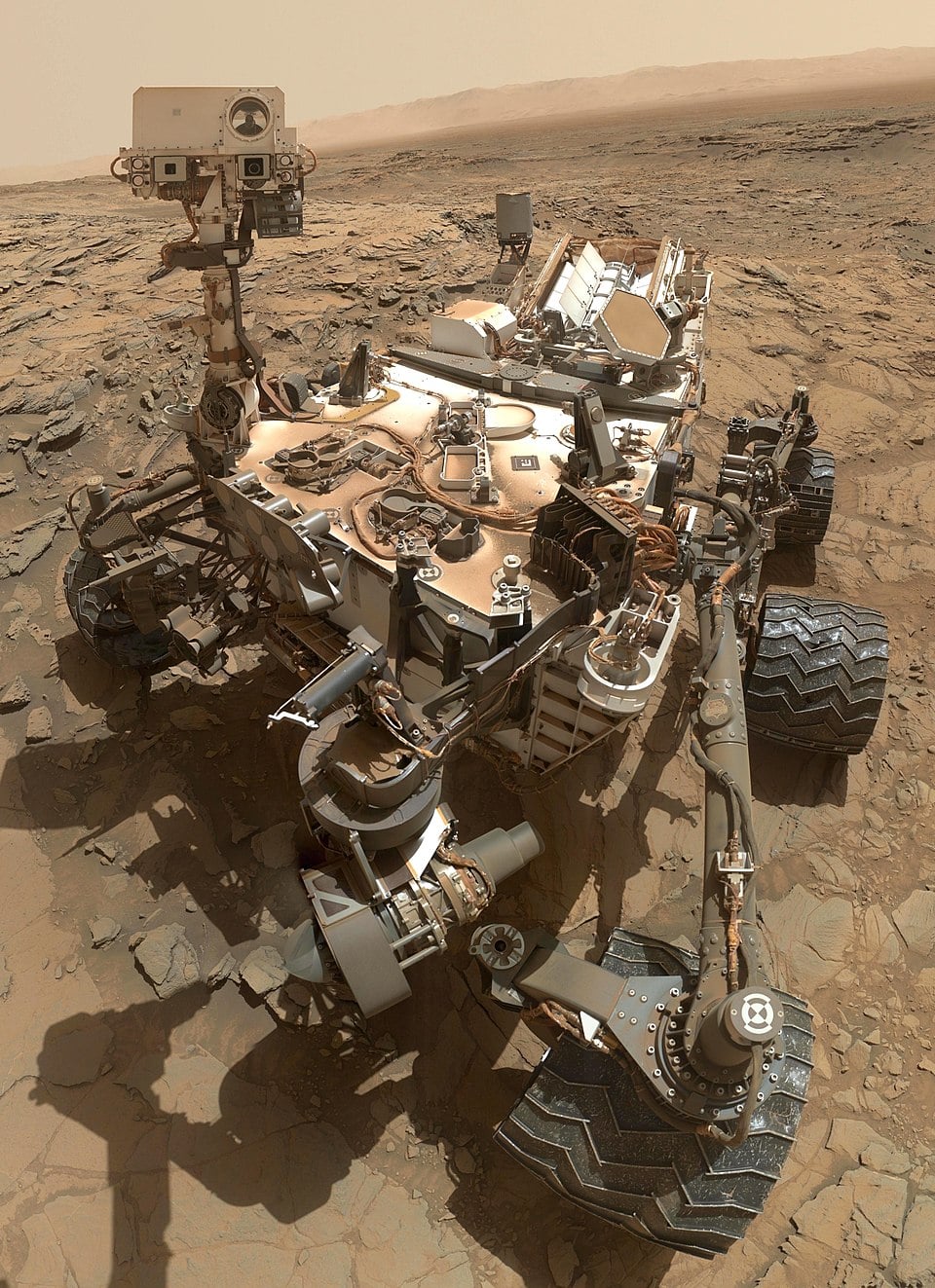



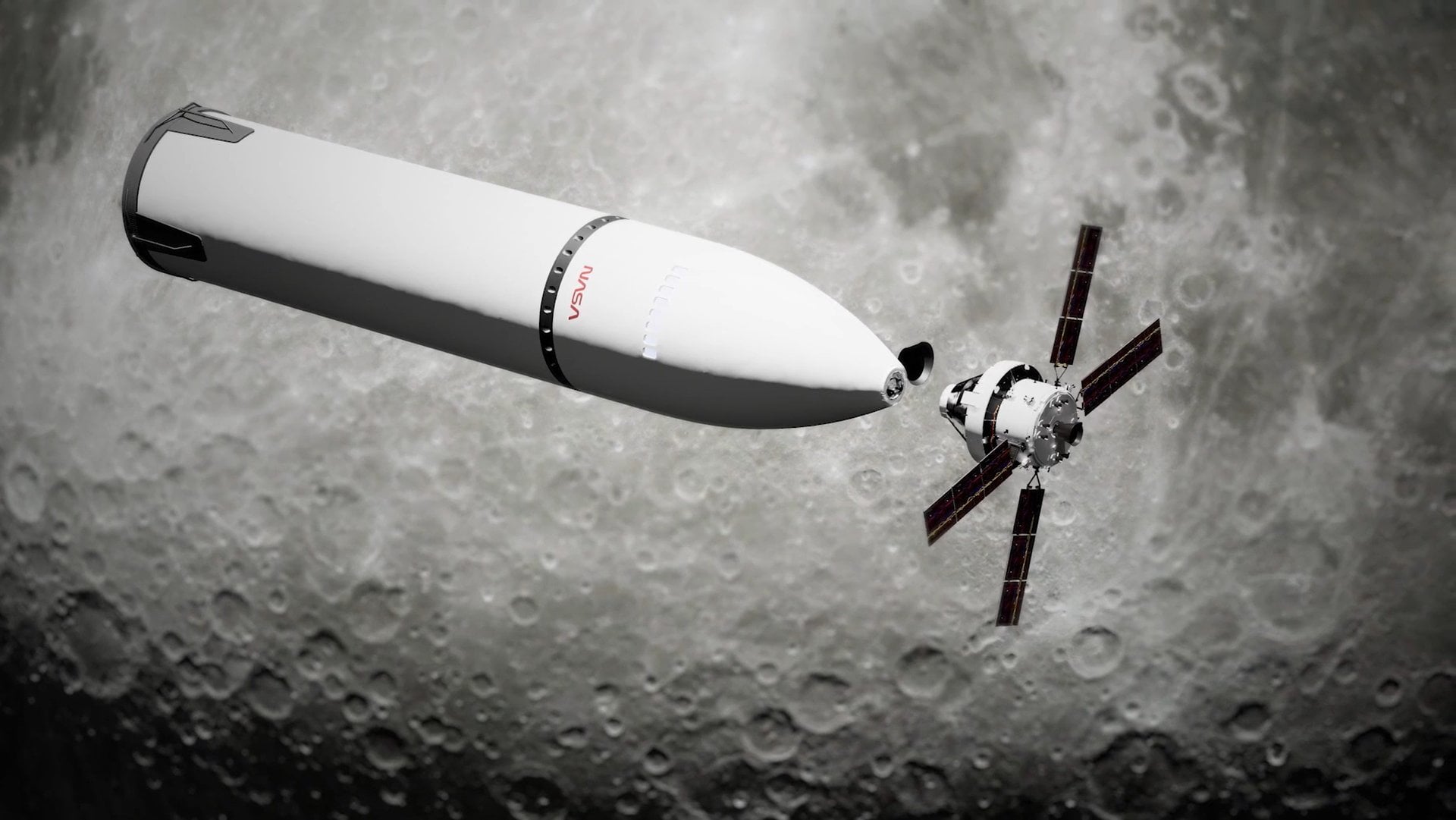
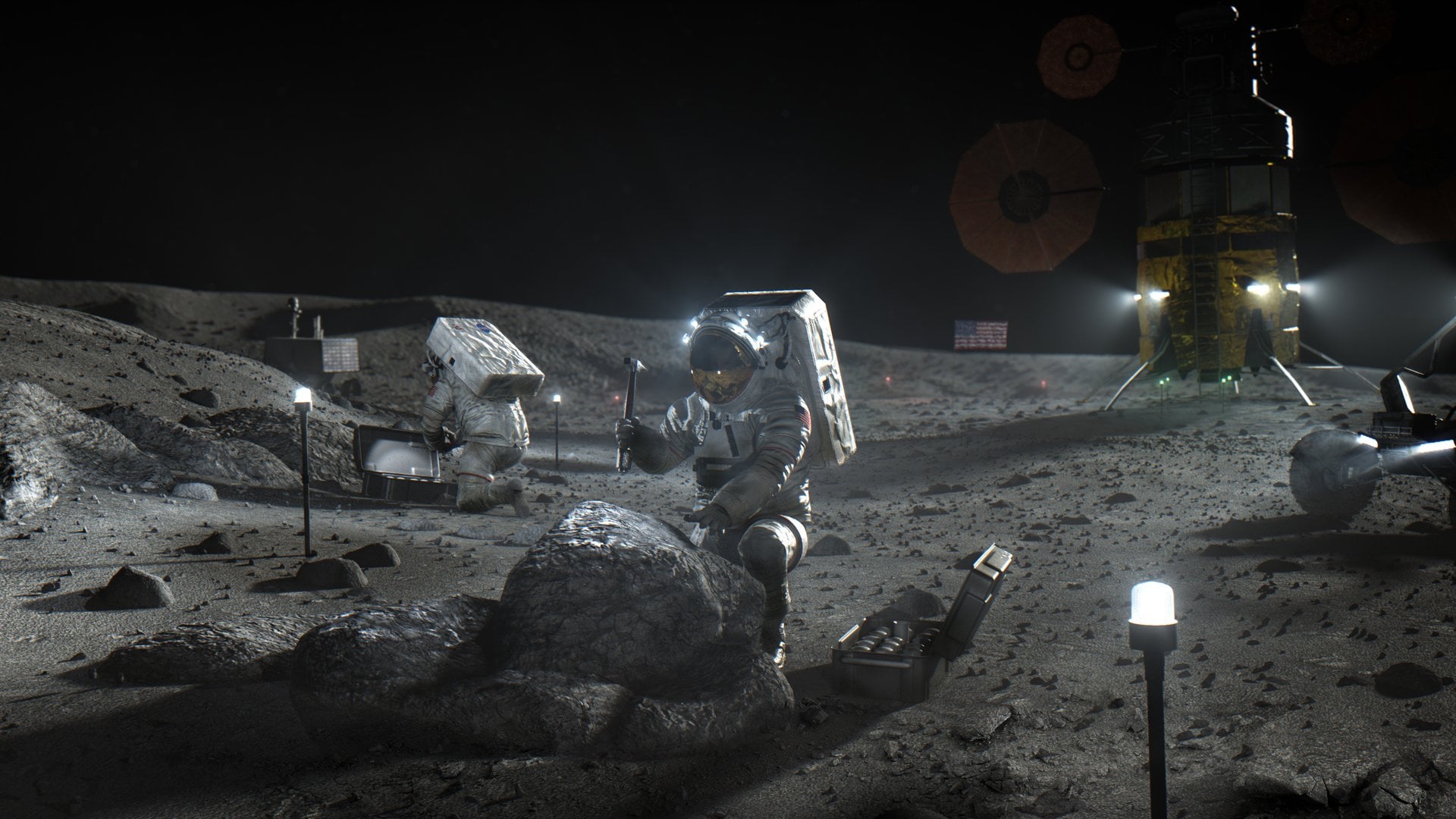
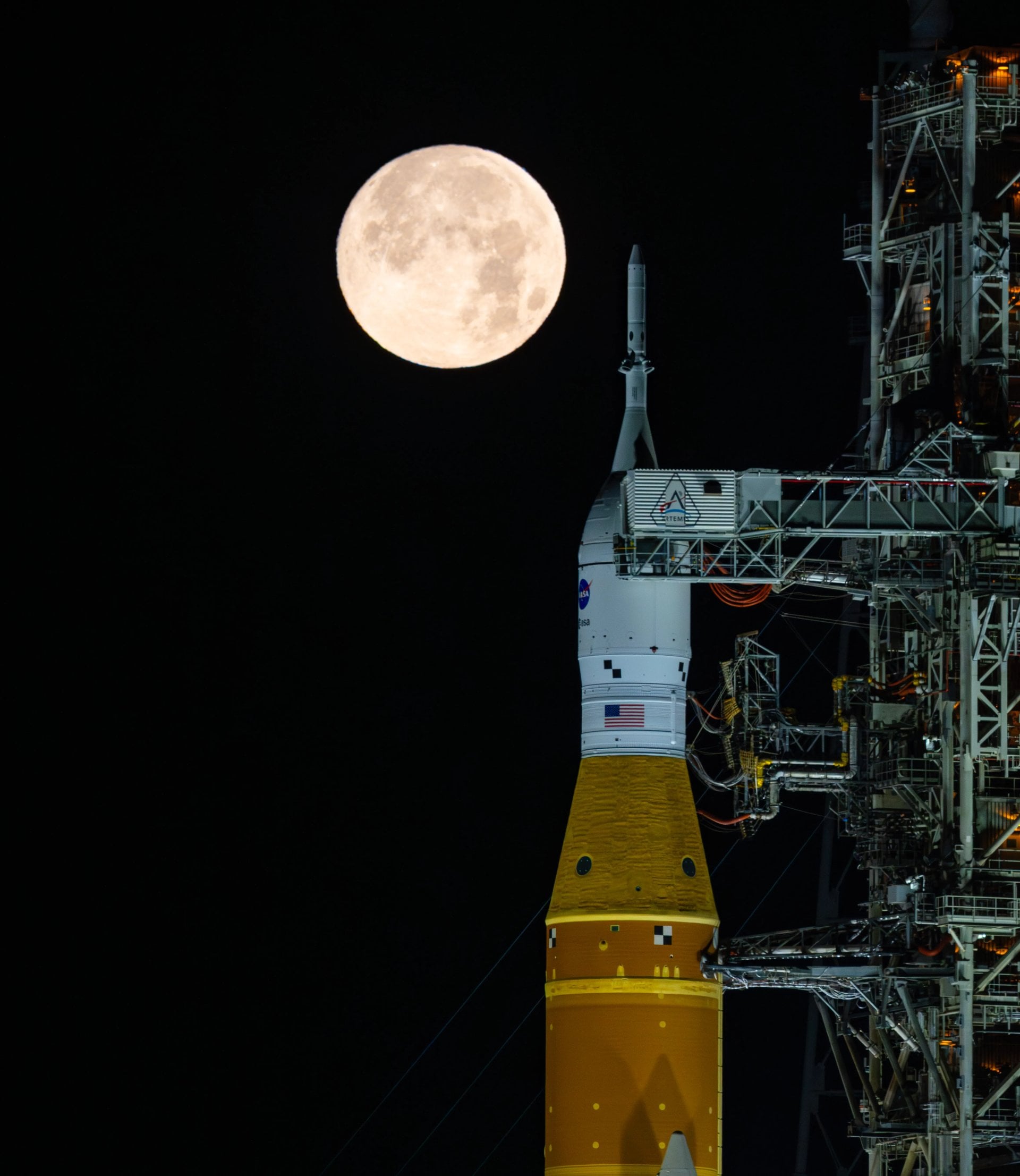
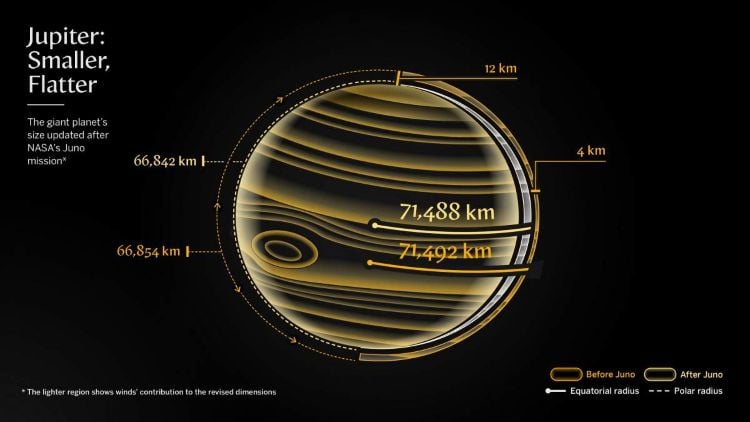







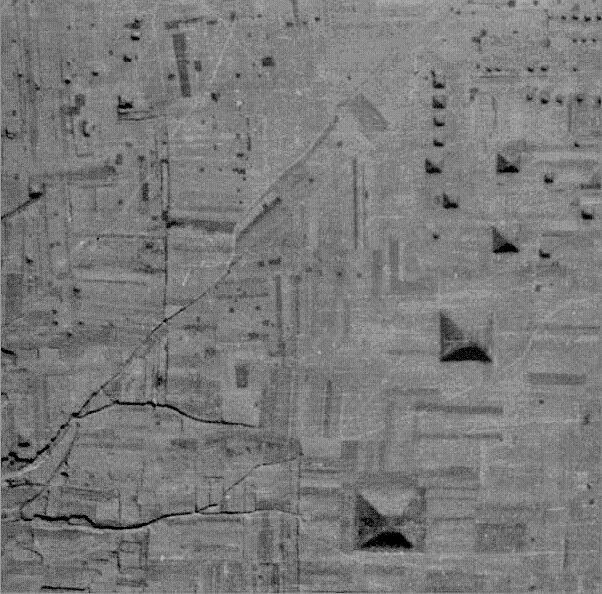



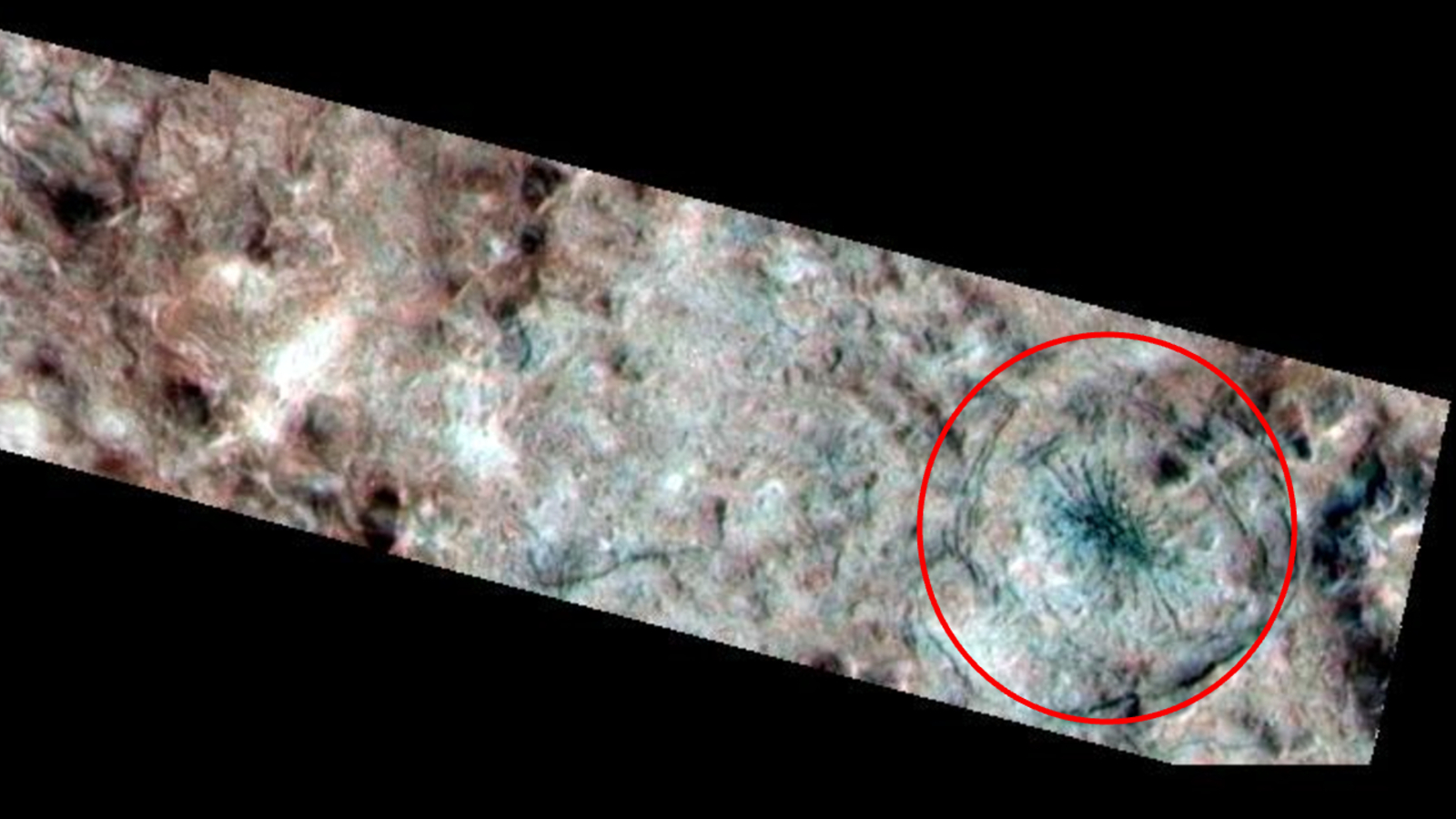
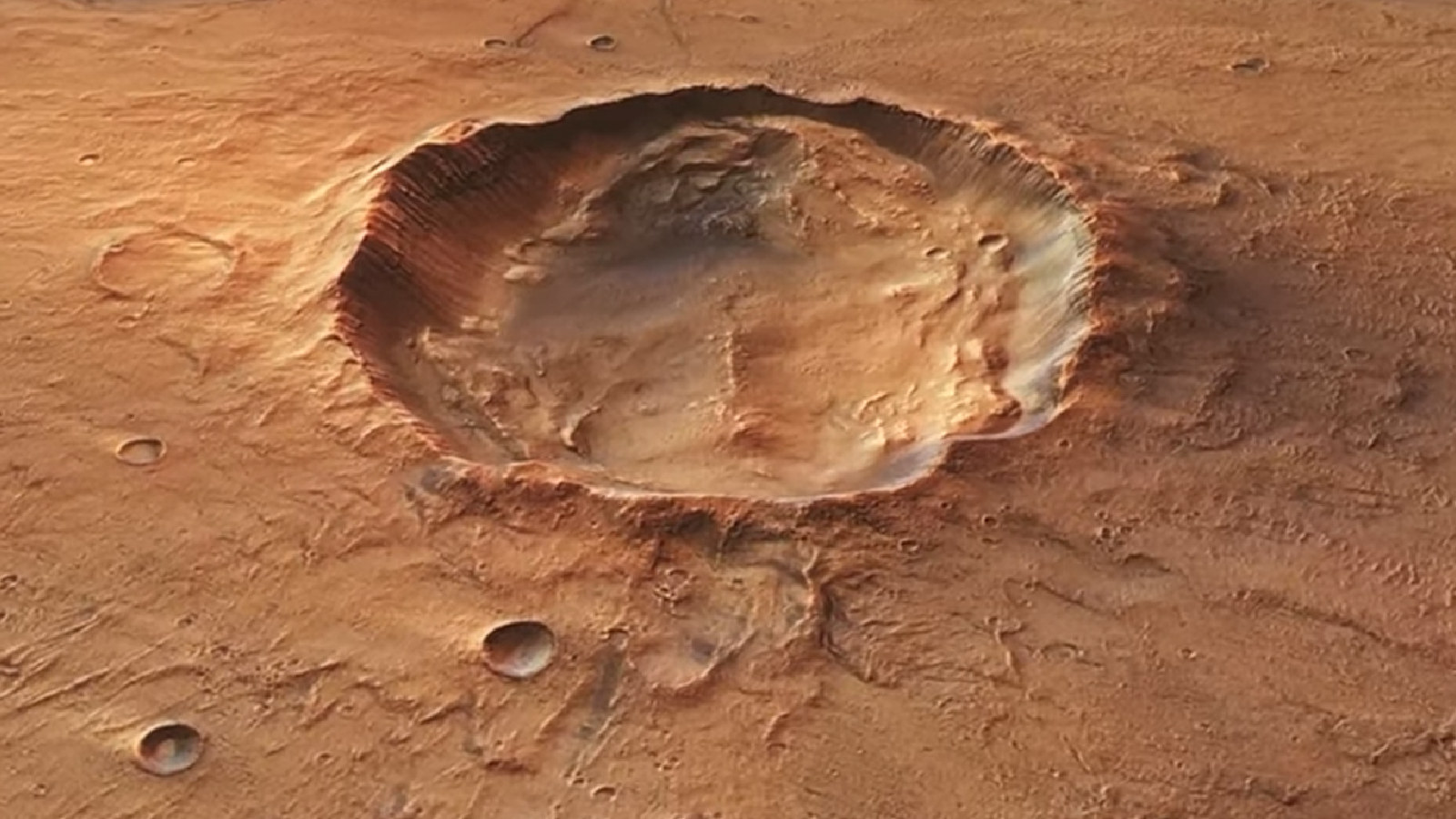
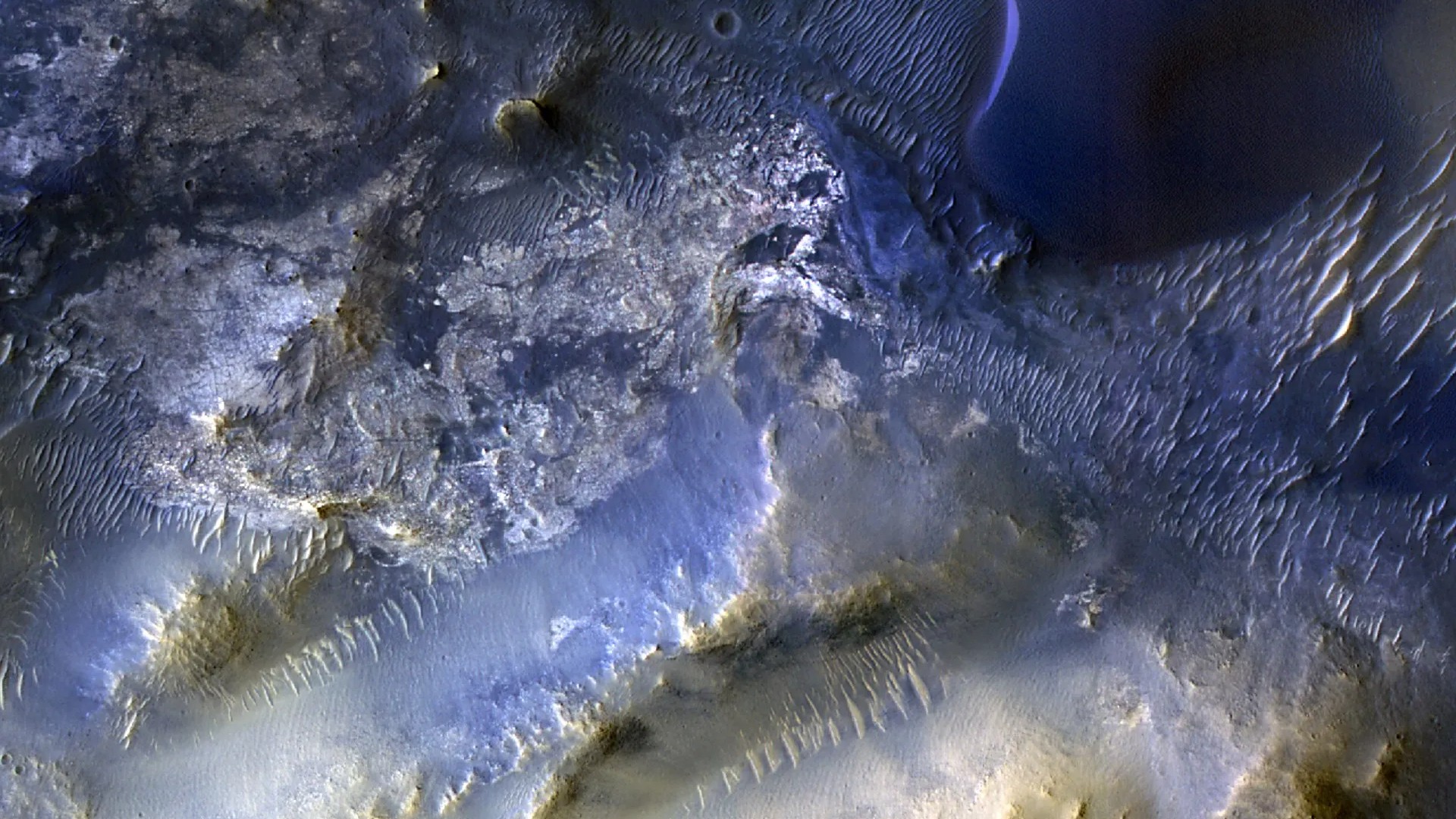
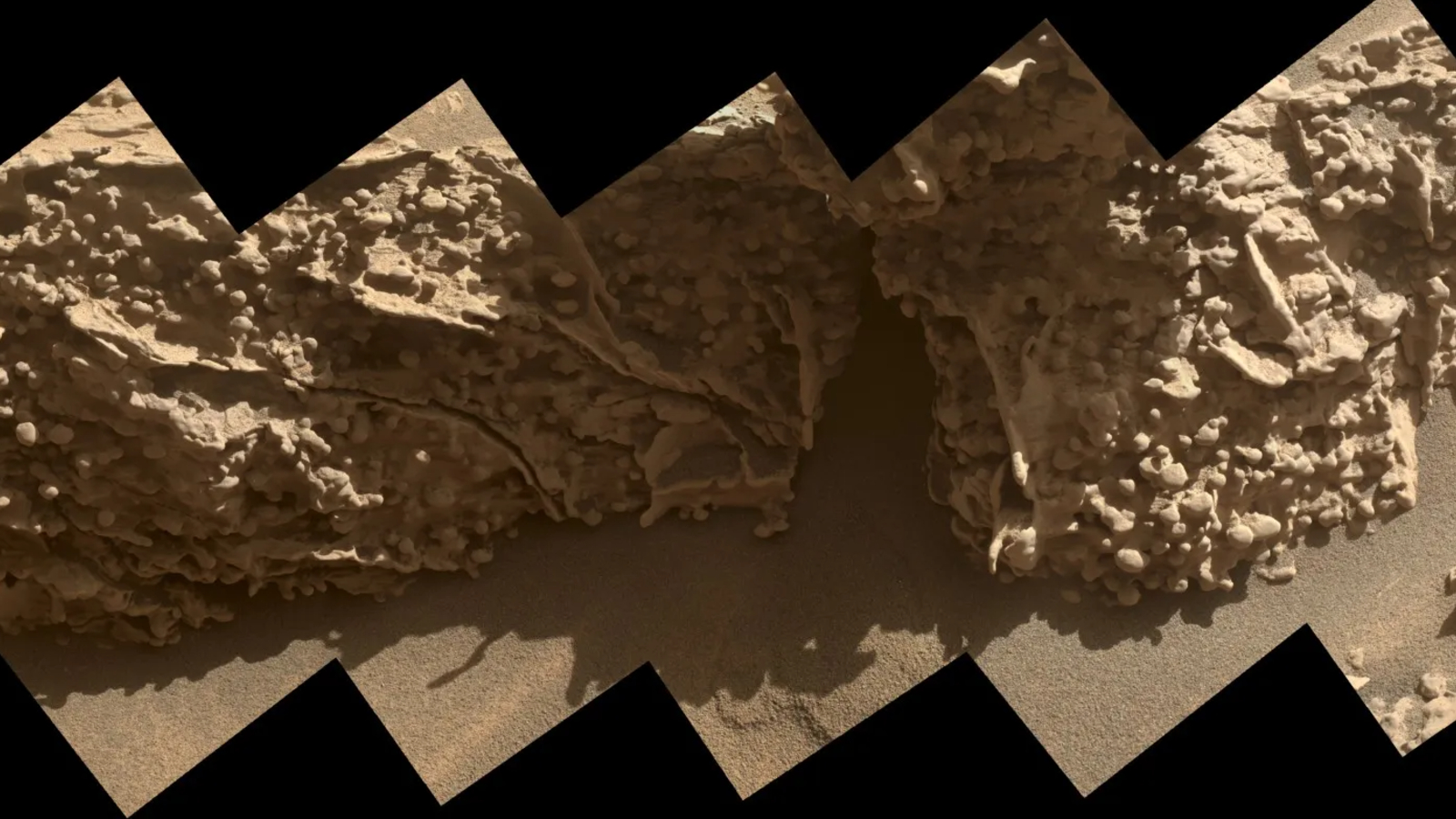
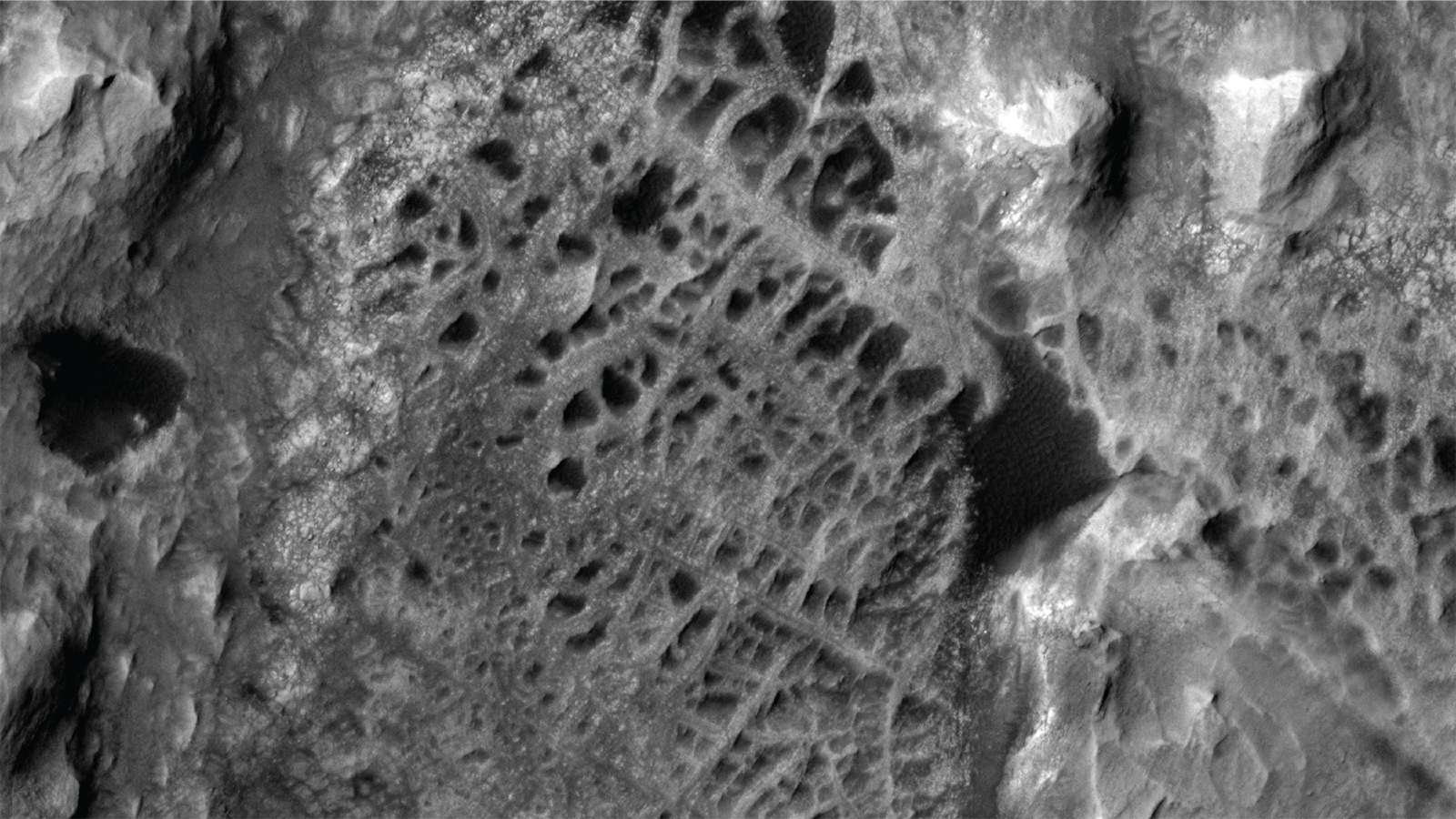
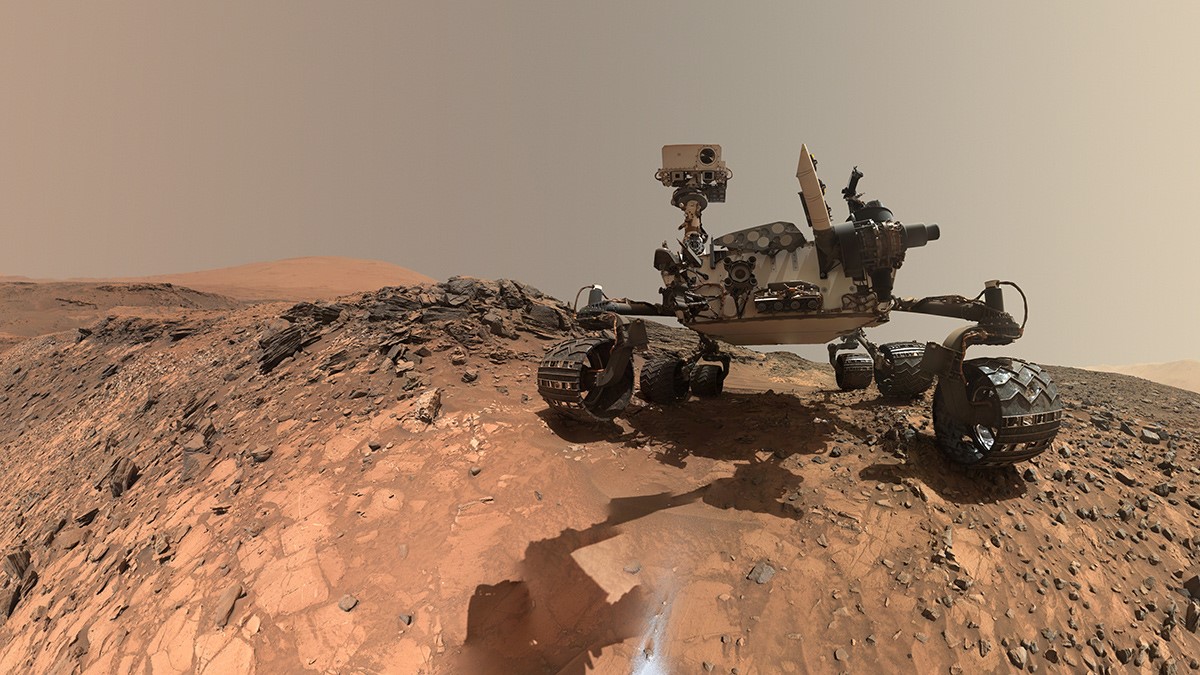


.png)
.png)
.png)