Ontdek de Fascinerende Wereld van UFO's en UAP's: Jouw Bron voor Onthullende Informatie!
Ben jij ook gefascineerd door het onbekende? Wil je meer weten over UFO's en UAP's, niet alleen in België, maar over de hele wereld? Dan ben je op de juiste plek!
België: Het Kloppend Hart van UFO-onderzoek
In België is BUFON (Belgisch UFO-Netwerk) dé autoriteit op het gebied van UFO-onderzoek. Voor betrouwbare en objectieve informatie over deze intrigerende fenomenen, bezoek je zeker onze Facebook-pagina en deze blog. Maar dat is nog niet alles! Ontdek ook het Belgisch UFO-meldpunt en Caelestia, twee organisaties die diepgaand onderzoek verrichten, al zijn ze soms kritisch of sceptisch.
Nederland: Een Schat aan Informatie
Voor onze Nederlandse buren is er de schitterende website www.ufowijzer.nl, beheerd door Paul Harmans. Deze site biedt een schat aan informatie en artikelen die je niet wilt missen!
Internationaal: MUFON - De Wereldwijde Autoriteit
Neem ook een kijkje bij MUFON (Mutual UFO Network Inc.), een gerenommeerde Amerikaanse UFO-vereniging met afdelingen in de VS en wereldwijd. MUFON is toegewijd aan de wetenschappelijke en analytische studie van het UFO-fenomeen, en hun maandelijkse tijdschrift, The MUFON UFO-Journal, is een must-read voor elke UFO-enthousiasteling. Bezoek hun website op www.mufon.com voor meer informatie.
Samenwerking en Toekomstvisie
Sinds 1 februari 2020 is Pieter niet alleen ex-president van BUFON, maar ook de voormalige nationale directeur van MUFON in Vlaanderen en Nederland. Dit creëert een sterke samenwerking met de Franse MUFON Reseau MUFON/EUROP, wat ons in staat stelt om nog meer waardevolle inzichten te delen.
Let op: Nepprofielen en Nieuwe Groeperingen
Pas op voor een nieuwe groepering die zich ook BUFON noemt, maar geen enkele connectie heeft met onze gevestigde organisatie. Hoewel zij de naam geregistreerd hebben, kunnen ze het rijke verleden en de expertise van onze groep niet evenaren. We wensen hen veel succes, maar we blijven de autoriteit in UFO-onderzoek!
Blijf Op De Hoogte!
Wil jij de laatste nieuwtjes over UFO's, ruimtevaart, archeologie, en meer? Volg ons dan en duik samen met ons in de fascinerende wereld van het onbekende! Sluit je aan bij de gemeenschap van nieuwsgierige geesten die net als jij verlangen naar antwoorden en avonturen in de sterren!
Heb je vragen of wil je meer weten? Aarzel dan niet om contact met ons op te nemen! Samen ontrafelen we het mysterie van de lucht en daarbuiten.
When is Artemis 2 lifting off? Launch date window, times, what to know
Story by Eric Lagatta, USA TODAY
The sun rises over Kennedy Space Center and NASA’s Space Launch System vehicle Artemis II March 24, 2026. Craig Bailey, FLORIDA TODAY via USA TODAY NETWORK
The impending liftoff, which could take place as early as April 1, would come after the U.S. space agency recently reached two critical milestones: rolling the towering Space Launch System rocket designed for NASA's moon missions back out to the Florida launch pad; and sending the crew of four Artemis 2 astronauts back into isolation to avoid contracting any illnesses before the mission.
The long-awaited mission was originally slated for February before a series of delays prompted by hydrogen fuel leaks and, more recently, helium flow issues on NASA's towering 322-foot Space Launch System rocket. Now, the rocket, topped with the Orion crew capsule where the astronauts will ride, is vertical once again on Launch Pad 39B after repairs were made inside NASA's Vehicle Assembly Building.
When are the Artemis 2 launch windows? What NASA says
NASA is maintaining a calendar with possible upcoming Artemis 2 launch windows. The times were selected based on the shifting positions of the moon and Earth, which dictates when the Space Launch System rocket, topped with the Orion capsule, can safely lift off and still complete complex mission objectives.
Below is a look at possible dates and times when the Artemis 2 mission could launch. Note that the time marks the beginning of a two-hour launch window.
Wednesday, April 1: 6:24 p.m. ET
Thursday, April 2: 7:22 p.m. ET
Friday, April 3: 8 p.m. ET
Saturday, April 4: 8:53 p.m. ET
Sunday, April 5: 9:40 p.m. ET
Monday, April 6: 10:36 p.m. ET
Thursday, April 30: 6:06 p.m. ET
Who is the crew of Artemis 2? Astronauts enter quarantine
The astronauts of Artemis II (from left) Victor Glover, Jeremy Hansen, Reid Wiseman and Christina Koch leave crew quarters December 20, 2025 during their pre-launch rehearsal. Craig Bailey, FLORIDA TODAY via USA TODAY NETWORK
All NASA astronauts are required to go through a quarantine period ahead of a crewed spaceflight in order to avoid exposure to any illnesses that, if contracted, would jeopardize the mission. Astronauts typically quarantine for at least 14 days before the earliest possible launch.
For the next two weeks, the Artemis 2 astronauts will continue training and preparing for the mission, including conducting simulations, reviewing flight procedures, exercising and getting medical checkouts, according to NASA. About five days before liftoff, the four crew members will fly to the Kennedy Space Center in Cape Canaveral, where they will continue to quarantine.
What is Artemis 2? Mission to set stage for moon landing
Established during President Donald Trump's first term, NASA's Artemis lunar program is the space agency's ambitious campaign to return American astronauts to the surface of the moon for the first time since the Apollo era came to an end in 1972.
Hitching a ride atop NASA's Space Launch System rocket, the Artemis 2 astronauts are due to pilot an Orion capsule on a 10-day trip around the moon. While no moon landing is in store for the mission, the crew will test systems and hardware for future expeditions to the surface while traveling up to 6,000 miles beyond the far side of the moon – the farthest humans have ever ventured in space.
While NASA tested its spacecraft during the Artemis 1 mission in 2022, Artemis 2 will be the first time that the SLS rocket and the Orion capsule will fly with humans aboard.
Ultimately, NASA aims to establish a permanent lunar base near the moon's south pole to facilitate exploration and, eventually, the first human expeditions to Mars.
Eric Lagatta is the Space Connect reporter for the USA TODAY Network. Reach him at elagatta@usatodayco.com
Verschillende samenstelling Nieuwe studies van de exoplaneet L98-59d, uitgevoerd met de James Webb-ruimtetelescoop, suggereren dat de samenstelling van het oppervlak uniek is en verschilt van alle andere tot nu toe bekende oppervlakken.
Gesmolten magma De recentste rapporten na de waarnemingen wijzen erop dat de exoplaneet geen oceanen met water bevat, zoals aanvankelijk werd gedacht. Het lijkt erop dat de gehele exoplaneet uit gesmolten magma bestaat.
Net als melasse Dit zegt dr. Harrison Nicholls, een astrofysicus aan de Universiteit van Oxford, in een interview met The Guardian. De expert stelt dat L98-59d stroperig aanvoelt en dat de kern ervan waarschijnlijk ook gesmolten is.
Niet in staat om leven te ondersteunen Het bestaan van enige vorm van leven op deze exoplaneet is daarom uitgesloten, aangezien astronomen L98-59d hebben geïdentificeerd als een planeet die bestaat uit gesmolten lava. "Als er buitenaardse wezens zouden bestaan die op lava zouden kunnen leven, zou dat ongelooflijk zijn", merkt Nicholls op in The Guardian, "maar ik denk niet dat het waarschijnlijk is dat het bewoonbaar is".
De geur van rotte eieren Volgens experts zouden enorme golven magma over de oceanen spoelen, en de atmosfeer, rijk aan waterstofsulfide, zou een aanhoudende geur van rotte eieren over de hele planeet verspreiden.
Vergeleken met Io Een exoplaneet, L98-59d, die volgens de laatste onderzoeken nog vijandiger zou zijn dan Io, de maan van Jupiter, die talloze vulkanen heeft die zijn ontstaan door de extreme hitte van de getijden.
Nog extremer "Deze nieuwe studie", zegt dr. Jo Barstow, planetoloog aan de Open University en deelnemer aan de observatie van L98-59d met de James Webb-telescoop, "suggereert dat (deze exoplaneet) mogelijk nog extremer is dan Io".
Eerste indrukken Toen het werd gevonden, dachten experts dat het leven zou kunnen bevatten, omdat ze schatten dat er zich binnenin een diepe oceaan van vloeibaar water bevond.
Het was geen water De recentste studies hebben echter aangetoond dat het niet om water gaat, maar om magma en temperaturen die onverenigbaar zijn met het leven van welk soort dan ook.
Een vraag die nog onbeantwoord is Deze nieuwe ontdekking heeft de wetenschappelijke gemeenschap verrast, die nu overweegt om ontdekte exoplaneten te classificeren op basis van de vraag of ze al dan niet bewoonbaar zijn.
Onjuiste gegevens Het was daarom heel gebruikelijk om op basis van deze gegevens, waarvan nu bekend is dat ze onjuist waren, te concluderen dat een nieuwe planeet leven zou kunnen bevatten.
Na de aankomst van de James Webb-telescoop Dankzij de James Webb-ruimtetelescoop beschikken we nu echter over een instrument dat krachtig genoeg is om het sterlicht te meten dat door de atmosfeer van de planeet wordt gefilterd, aldus The Guardian.
Nauwkeuriger Op deze manier kunnen de soorten gassen die op de planeet aanwezig zijn worden vastgesteld, en kan nauwkeuriger worden bevestigd of de plaatsen bewoonbaar of onbewoonbaar zijn.
Astronomers have detected small, ruby-like crystals embedded in Martian rocks, which may also hide sapphires created in the fury of meteorite impacts.
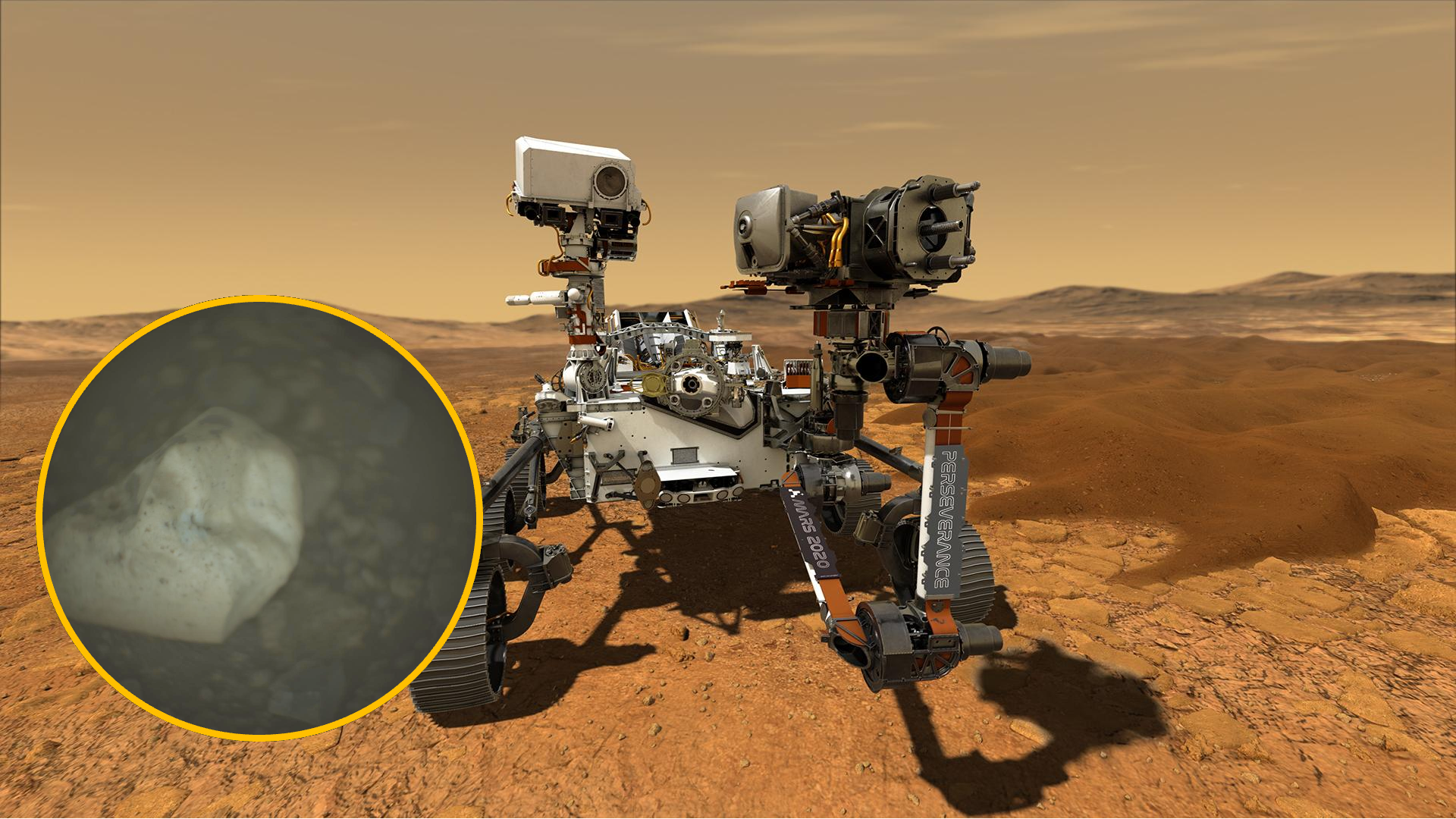
NASA's Perseverance rover (illustrated in background) found evidence of ruby-like crystals in a rock named Coffee Cove (inset photo) along with two others — a gemological first on the Red Planet.(Image credit: NASA/JPL-Caltech/LANL/CNES/IRAP)
Mars is hiding a clutch of ruby-like crystals in its rocks, observations from the Perseverance rover suggest, and astronomers say other precious minerals, like sapphires, could exist across the Red Planet, too.
An international team of researchers presented the findings, based on observations from spring 2025, March 16 at the 57th Lunar and Planetary Science Conference in Texas. These findings are currently under peer review and will appear in the journal Geophysical Research Letters.
The story begins a short time ago on a planet not too far away, when a roving robot the size of a compact car climbed the side of a 4 billion-year-old impact crater and began exploring its rim. On that ancient and stony rim, NASA's Perseverance rover found a curious scattering of pale-colored "float rocks" — out-of-place rocks that must have been transported there by impacts, geological activity or hydrological processes.
As scientists often do when faced with a curious specimen, they blasted it with a laser — specifically, the green laser from the Perseverance rover's SuperCam, situated atop its mast. This laser excites minerals, causing them to emit light at specific wavelengths. And because every element and compound emits certain wavelengths of light, this reveals a sample's chemical composition.
The corundum conundrum
The analysis showed that three of the laser-blasted float rocks exhibited clear signatures of the mineral corundum, with inclusions of the element chromium — crystals that match the chemical description of rubies. However, because the crystals are too small to be seen by Perseverance's imager, and their exact chemical composition is uncertain, the researchers aren't sure whether they have truly found Martian rubies or perhaps some other type of corundum.
"The different types of corundum are based on the chemistry," study co-author Valerie Payré, a planetary geologist at the University of Iowa, told Live Science via email. "Although corundum is Al2O3, there are minor elements like chromium, titanium, and iron that can be present."
A Perseverance rover SuperCam image (left) of a Mars rock containing quartz. The graph on the right shows a spectroscopic reading of the rock, compared to hydrothermal quartz on Earth. The match is nearly identical. (Image credit: NASA/JPLCaltech/LANL/CNES/CNRS)
"These elements will provide the color to the mineral, and the name of it," Payré added. "We cannot quantify the amount of chromium, and other elements like iron and titanium might be present too. It is thus difficult to conclude whether they are rubies or other types of corundum [like sapphires]."
The team ultimately classified the crystals as corundum and declined to guess about the variety without more chemical evidence.
Corundum is a mineral made of aluminum and oxygen. It is one of the hardest known natural substances, approaching the toughness of diamonds. Pure corundum is colorless, but microscopic impurities imbue it with brilliant hues. Iron or titanium inclusions yield brilliant blue sapphires, while chromium produces even rarer, resplendent rubies.
As of now, the corundum crystals were found in small pebbles that are coming from elsewhere, i.e., they are out of context. It is therefore difficult to constrain the full story,
Valerie Payré, planetary geologist at the University of Iowa
However, anyone holding out hope for a future Martian-gemstone-studded necklace may be disappointed. The corundum crystals found within the float rocks are tiny — less than 0.2 millimeters (0.008 inches) in diameter.
Could slightly larger Martian rubies exist? "Yes, possibly," study co-author Olivier Beyssac, a senior scientist at the French National Center for Scientific Research, told Live Science via email. "Anyway corundum is pretty rare on Earth and rarely present as big crystals so one could expect the same on Mars."
Cosmic impacts?
It's also likely that the crystals formed under different conditions than those on our planet. On Earth, corundum is created through metamorphic and igneous processes, in which intense heat and pressure, facilitated by tectonic activity, transform existing rocks into potential gemstones.
But because there is no conclusive evidence for plate tectonics on Mars, the researchers suggest that the ruby-like crystals on the Red Planet may have formed through cosmic impacts.
"The impacts provide high temperatures and high pressures, which can produce corundum. Hydrothermal fluids are also generated," Payré explained. Yet the researchers must find additional samples, at their origin, to describe their formation mechanism.
"As of now, the corundum crystals were found in small pebbles that are coming from elsewhere, i.e., they are out of context. It is therefore difficult to constrain the full story," Payré said.
Rubies are far from the onlyspectacularstones found at Jezero crater, and further research may reveal sapphire-like stones there as well. In the past, scientists also discovered signs of other potential gemstones elsewhere on Mars, including quartz and opal — suggesting that our red planetary neighbor is a gem laboratory.
Best UK spot to see aliens revealed as experts say 2026 could be 'the year'
This year could prove to be the breakthrough moment where we finally meet aliens, experts say. And they reckon you may need to head to the coast to see them
Aliens could be spotted soon
BY Sian Hewitt
Aliens are getting braver and UFO hunters should head to Cornwall to spot them.
Hordes of sky watchers are heading to the south west to catch a glimpse of some other-worldly beings after it emerged as one of the UK's top spots to see some weird. This yearcould be the one where forces from other realms finally make themselves known, after official Government figures show visits of “unidentified objects” in the atmosphere are growing year on year.
A recent Freedom of Information request carried out by the Daily Star found that numbers of incident reports in our skies featuring objects that are “unidentified” or “unusual” are rocketing as the years go on - and now experts have lifted the lid on where is the best place to catch a glimpse.
Cornwall is the spot to meet aliens, experts say
Stats shared by the UK Civil Aviation Authority show that in January 2010 there was only one incident in the entire year but since then is growing annually, with experts warning it shows aliens are “getting braver”. Incidents went from one or none a year to suddenly 14 in 2017 and have continued to grow, according to official figures.
The most recent stats show that there were 20 annual reports for 2023, 24 in 2024 and 19 sightings in 2025, although the true number for last year could be much higher with reports still being collated by the CAA. The CAA says these are all “Airprox or other aviation safety incident reports” that involve objects described as unidentified, unknown, uncorrelated or unusual.
Could 2026 be the year we finally meet aliens?
(Image: Getty Images)
They record these events for official records, which were released at the start of the year. And now experts say the next set of figures, due at the end of 2026 will make for interesting reading.
Paranormal expert Robert Pulme, who runs the National UFO Reporting Centre website, said: “We are getting more spots than usual this year and reports are definitely up. We have seen a 10% increase on average month by month which suggests that aliens are possibly getting a bit braver.
"The world is in a mess what with threats of World War 3, Trump going on, and things seemingly on edge around the globe, so it makes sense for the skies to be on edge too. I imagine if they are watching, they are keeping a closer eye than ever on it. It is all really unsettled, so if another form of life is looking to communicate with us, either to work with us or against us, there is no better time to make an impact and get a hold of the planet than when things are unsteady."
And he added that one spot in particular has seen the bulk of reports.
Experts say aliens could be watching the chaos of the world closely
(Image: Getty)
"Cornwall is a top hub for reports at the moment," he added. "It is a good spot for views of the skies at the best of times. It is near the sea on a few sides, and there is not a lot of pollution in the air when you compare it to other parts of the UK, so maybe the aliens are everywhere, but this is just where we can see them best.
"I have had a lot of alien watchers head to the spot in recent months to try and get a glimpse. I don't think it will be long before we catch a proper picture as proof really soon."
RELATED VIDEOS
UFOs Are INCREASING Over The UK… What Are We Seeing?!
Scotland's Dark Secret: The UFO Hotspot Where Humans Are Harvested
US Congressman Tim Burchett says something is going on, claiming that several people connected to UFOs, nuclear secrets, and advanced aerospace technology have died or gone missing, particularly around the time Donald Trump discussed releasing UFO files.
Burchett told Benny Johnson that people should suspect a conspiracy because a scientist went missing and the FBI only showed up after he disappeared. He thought something serious was happening, especially because this started right after President Trump said he would release some UFO files.
He said several people with links to UFO or advanced weapons information had died or gone missing over time, and that this pattern was not new.
When Benny asked if he personally knew any of them, he hinted that he might. Benny suggested that after Trump ordered UFO files declassified, some UFO experts Burchett knew either went missing or turned up dead, and Burchett confirmed that at least one did, the one “everybody was looking for.”
Burchett added that he had talked directly with President Trump about it and told him that this whole situation was like an onion: when you peeled back one layer, there was always another layer underneath.
He pointed to a specific woman involved in metallurgical work on missiles, and then to another person with advanced knowledge in aerospace, propulsion, plasma physics, fusion, and rocket technology, and said there was just “too much” happening all at once.
He then complained that agencies like NASA said they had no related files, but he himself had been briefed by them, so he felt they were not being honest. He said he was fed up, because even in a secure briefing, he was told that some information was “need to know” and that even the president only got what they decided he needed to know.
Benny compared this to the movie “Independence Day,” in which the president discovered a secret UFO program he had never been told about. Burchett said he did not think it was exactly like the movie because today, too many people would know, and it would be hard to keep something that big totally secret, though in the past it was easier. He mentioned an older man who told him about a classified incident from the 1950s that he had been ordered never to speak about, but wanted to confess before he died.
He said he did not think all of this was literally sitting in Area 51, because that location was too obvious. But when the host focused on the idea that bureaucrats told the president “you don’t need to know” on a need-to-know basis, Burchett agreed that part was real. He believed there were people so deeply hidden in the system that you would never truly expose them, unless “the Lord took them out,” meaning only death would remove them from power.
Multiple members of Congress are warning that the disappearance of an Air Force general, known as the UFO “gatekeeper,” could be a national security issue. Investigative journalist Ross Coulthart thinks retired Air Force Maj. Gen. William Neil McCasland might have been the victim of foul play after he went missing on February 27.
Retired Air Force Maj. Gen. William Neil McCasland
He told NewsNation that people should seriously consider whether someone may have stepped in to “take the general out of the picture,” because McCasland carried very sensitive U.S. military intelligence in his head, especially about particle beam technology and UFO-related matters.
Rep. Tim Burchett warns of a worrying “pattern ” in which U.S. scientists and researchers in sensitive fields are dying or disappearing, and believes this warrants national attention. One of the cases he is worried about is retired Air Force Maj. Gen. William Neil McCasland, who went missing in New Mexico on February 27, had deep experience in particle beam technology and high-level Air Force research.
Republican Representative Eric Burlison says missing retired Maj. Gen. William Neil McCasland “has a lot of information” about UFOs and UAPs, and it is “really disturbing” for someone like that to disappear.
According to aNew York Post article, McCasland was informed about some of the most secretive US technology in his capacity as leader of Wright Patterson Air Force Base, vice commander of the Space and Missile Systems Center, and director of Space Acquisition at the Pentagon, sources told The Post.
“During his time, he was one of the key gatekeepers for the UFO topic for the Air Force,” a source with knowledge told The Post. “He knew a lot, and he participated.”
McCasland’s disappearance is now also linked with the vanishing of 60-year-old rocket scientist and materials expert Monica Reza (also known professionally as Monica Jacinto) in June 2025. (Source)
Monica Reza
She was hiking with a colleague on the Mount Waterman Trail in the Angeles National Forest near Los Angeles. According to reports, she was about 30 feet behind the man she was hiking with, smiling and waving on a normal day, when he turned around again, and she was suddenly gone.
Rescue teams, volunteers, and authorities searched for days on this popular trail using many resources, but never found her body or any clear trace of what happened.
Reza worked for Aerojet Rocketdyne, a major aerospace company funded by NASA and the Air Force Research Laboratory. In the 1990s,s she developed and patented a special nickel-based superalloy that could survive very harsh oxygen-rich environments without adding much weight, which was important for rocket engines. Her work helped create the AR1 engine, planned to replace Russian RD-180 engines on United Launch Alliance rockets.
Because both McCasland and Reza were involved in cutting-edge rocket technology and both are tied, directly or indirectly, to UFO discussions, and because they both disappeared while hiking within less than a year of each other with no bodies found, many people online are now trying to link the two cases and build conspiracy theories.
US Congressman Eric Burlison was warned by someone with Special Forces and Intel Community experience that he may be killed for pursuing the truth about UFOs. (Source)
In a livestream hosted by Leslie Kean, Rep. Burlison described an incident that occurred while he was investigating the UFO/UAP issue and trying to track down certain people connected to it. He said that someone who had served in special forces and worked in the intelligence community looked at a list of names Burlison was interested in.
According to Burlison, this person told him he needed to remove two specific names from his list and never speak about those individuals again. The person warned him that they were dangerous and said that “they would have no problem having you killed” if he continued pursuing them.
Burlison has refused to say publicly who gave him this warning, but he explained that the incident made him realize there might be very dark “bad actors” involved in the secrecy surrounding the UAP topic.
Nuno Loureiro, a MIT scientist, was tragically killed in his home, who figured out key ways plasmas act wildly, like getting turbulent or snapping magnetic fields, which explains solar flares and improves fusion reactors.
Nuno Loureiro, a MIT scientist
Nuno Loureiro was a professor of nuclear science and engineering and of physics at MIT. He died at the age of 47, after having spent about 10 years at MIT since joining the faculty in 2016. His research focused on understanding how plasmas behave, especially in fusion reactors and in extreme astrophysical environments.
Plasma is described as a very hot state of matter that fuels fusion reactions, and his work on turbulence, magnetized plasma dynamics, magnetic field amplification, and confinement and transport in fusion plasmas helped guide the design of fusion devices that might one day provide clean, almost unlimited energy. His theories also helped explain astronomical events such as solar flares and contributed to understanding magnetic fields in the universe.
Now sure...you see a hole in a very thin walled rock, but the truth about it goes much deeper than that. You see its a doorway into a hand built structure, like an adobe walled building, but not like houses you see on Earth, because this is Mars and they have to make due with the materials at hand, and soft clay like material is much easier to use to make walls, ceilings, rooms, doorways, etc. It's not like they have the option to use wood from trees, because I don't see any trees. They had one choice and they built these small structures, which falls into the area of the tiny 12 inch statues that me and many other UFO researchers have found in NASA photos. The proof is right there in the NASA archives.
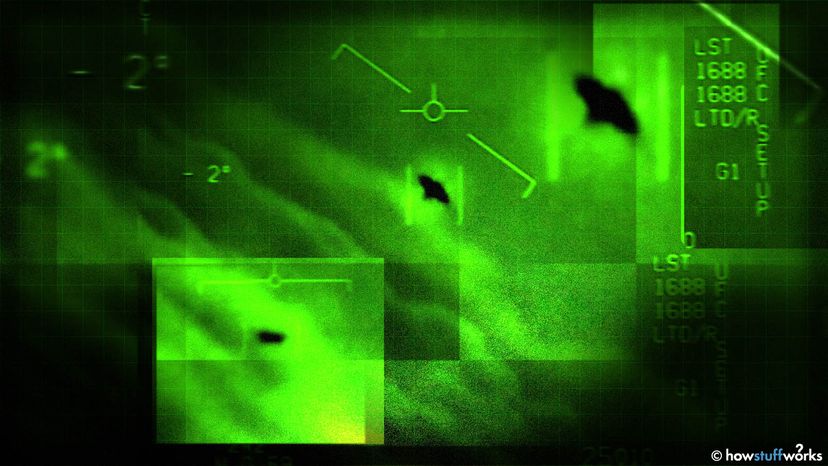
This report was sent into me today at UFO Sightings Daily and the persons security cam caught a fleet of UFOs heading home late at night. The footage at first looks to be a single craft but in reality its three or more. One of the craft seen in the screenshot is clearly a disk shaped craft, but these aliens are smart and know if they flare up the disks they will of course be mistaken for meteors. Its an old trick, but its been effective for aliens for thousands of years...until today. This video is 100% proof that UFOs exist.
What is happening in space that is causing so many meteorites to strike Earth and explode?
Fireball sightings across the United States—and around the world have surged dramatically since the beginning of March, a period with no known major meteor streams. In several cases, fragments have reportedly crashed through rooftops in places like Germany, Ohio, and Texas, often accompanied by powerful sonic booms.
According to a commenter on Godlike Productions who reviewed recent data, as many as 7,663 fireballs have been recorded in just the past 30 days, compared to a total of only 297 between 2016 and 2025.
Early on, NASA suggested that some of these objects might be debris from Comet 31/ATLAS. However, that claim appears to have been walked back. Around the same time, NASA also shut down its public Near-Earth Object (NEO) comet tracking interface, raising further questions.
Despite the speculation, NASA maintains that there is nothing unusual happening.
According to Spaceweather: “Spring is fireball season,” explains Bill Cooke of NASA’s Meteoroid Environment Office. “For reasons we don’t fully understand, the rate of bright meteors increases by as much as 30% in the weeks around the vernal equinox.” He adds that this pattern has been observed for more than 30 years, and that meteorite debris that actually reach the ground, also become more frequent during this time, which contradict the verified data of the commenter on Godlike Productions; 7,663 fireballs have been recorded in just the past 30 days, compared to a total of only 297 between 2016 and 2025.
Interestingly, not all recent events share the same origin. The fireballs observed over Texas and Ohio, for example, followed completely different trajectories, indicating they did not come from a single source.
If any of these meteorites were truly interstellar, such as potential fragments from 31/ATLAS, it would explain NASA's interest in recovering them. Such could, in theory, contain the building blocks of life, or even more complex organic signatures, though that remains speculative.
For now, the surge of fireballs continues across the globe with more reports of fireball sightings coming in, worldwide and although the official explanations point to a routine seasonal uptick, the numbers tell a different story. This isn’t just a typical “spring fireball season”, something unusual appears to be happening in space.
In the video below, Stefan Burns takes a closer look at the recent spike in sightings and examines whether these meteorites could be linked to 31/ATLAS or not.
On March 21, 2025, President Trump announced that Boeing had won the contract to build the United States Air Force's Next Generation Air Dominance fighter, designated the F-47. It was the first time a new American air superiority fighter had been awarded since the F-22 Raptor over three decades earlier. The announcement ended a competition that had been running since at least 2015, survived a near-cancellation, and produced classified experimental aircraft that flew for years before the public ever heard about them.
This article covers what is publicly known about the F-47 as of early 2026, drawn from official Air Force statements, congressional budget documents, and credible defense reporting. Much about the aircraft remains classified, and where information is uncertain, that uncertainty is noted.
How NGAD Got to the F-47
The program traces back to a 2014 Defense Advanced Research Projects Agency study called the Air Dominance Initiative. According to Aviation Week, that study concluded a single aircraft would not be enough for future air superiority. The future required a "family of systems" centered on a crewed fighter but supported by networked drones, advanced sensors, and new weapons.
In 2015, DARPA began funding full-scale X-plane demonstrators under a classified program worth roughly one billion dollars. Boeing and Lockheed Martin each built and flew experimental aircraft. Boeing's demonstrator first flew in 2019; Lockheed's followed in 2022, as confirmed by Air Force Chief of Staff General David Allvin after the contract award.
The public first learned about these demonstrators in September 2020, when Air Force acquisition executive Will Roper told reporters that a full-scale NGAD flight demonstrator had "broken records." He provided almost no details, but the disclosure signaled the program was far more mature than anyone outside the Pentagon had realized.
The Budget Crisis and Redesign
By 2024, NGAD was in trouble. Then-Secretary of the Air Force Frank Kendall paused the program, telling Defense News that the Air Force "just didn't have enough money" to afford both the sixth-generation fighter and its other modernization priorities. Estimates at the time placed the per-unit cost near $300 million, roughly three times the cost of an F-35.
Kendall ordered a cost reduction study. Options reportedly included a smaller airframe, fewer engines, reduced range, and offloading some capabilities to unmanned platforms. The study concluded that NGAD remained necessary but needed to be redesigned for affordability. That redesign shaped the final competition.
Why Boeing Won
The selection surprised much of the defense world. Lockheed Martin had built every Western stealth fighter in production: the F-22 and the F-35. Boeing had not built a new fighter since the F/A-18E/F Super Hornet entered service in 1999.
According to Air & Space Forces Magazine, the Air Force selected Boeing based on "best overall value." Several factors appear to have contributed.
Digital maturity: Boeing reportedly built a comprehensive digital twin of the F-47 before the prototype existed, allowing engineers to analyze radar signature, maintainability, and manufacturing processes entirely in software.
X-plane heritage: Boeing's DARPA-funded demonstrator had been flying since 2019, giving the company years of real flight data to refine its design before the formal competition began.
Industrial base diversification:As the Washington Post noted at the time, awarding the F-47 to Boeing "diversifies the production of U.S. military jets," reducing the Pentagon's dependence on a single stealth fighter manufacturer.
The contract is worth at least $20 billion for engineering and manufacturing development, according to Breaking Defense, with potential lifetime production orders valued in the hundreds of billions. Northrop Grumman, the only other company that might have competed, dropped out in 2023.
What We Know About the Aircraft
The F-47 is classified. The Air Force released a single artist rendering alongside the March 2025 announcement, but no photographs of the actual aircraft have been made public. The Air Force has, however, disclosed a handful of specific performance parameters through official statements and budget documents.
Artist rendering of the F-47 released by the U.S. Air Force in March 2025. The design shows a tailless, blended wing-body configuration consistent with analyst descriptions of "bomber-like" stealth shaping. (U.S. Air Force image)
Range and Speed
In May 2025, General Allvin confirmed that the F-47 will have a combat radius exceeding 1,000 nautical miles and a top speed above Mach 2, as reported by The War Zone. The combat radius is nearly double the F-22's estimated 590-nautical-mile range and substantially greater than the F-35A's roughly 600 nautical miles.
That range reflects the geography of a potential Pacific conflict. A fighter with 1,000-plus nautical miles of combat radius can reach contested areas around Taiwan or the South China Sea from bases in Guam or Japan without tanker support, or at least with tankers positioned much farther from threat zones. The F-22, by contrast, requires extensive tanker support for Pacific operations, and those tankers are themselves vulnerable to long-range Chinese missiles.
Stealth
The Air Force has described the F-47 as featuring "all-aspect, broadband low-observability," meaning reduced radar and infrared signatures from every angle and across multiple radar frequency bands. Some defense analysts have described the F-47's stealth shaping as "bomber-like," according to the National Security Journal, suggesting a design that prioritizes signature reduction over traditional fighter agility.
Propulsion
The F-47 is expected to use a next-generation adaptive cycle engine from the NGAP program. Both General Electric (XA102) and Pratt & Whitney (XA103) are building prototypes, according to congressional budget documents. These "three-stream" engines can switch between high-thrust combat mode and high-efficiency cruise mode, promising roughly 30 percent more range and double the cooling capacity compared to current engines.
The cooling capacity is not a minor detail. Sixth-generation fighters generate enormous heat from their sensors, computers, and electronic warfare systems. Managing that heat without degrading performance or creating a detectable infrared signature is a defining engineering challenge of this generation. Budget documents released in July 2025 revealed the NGAP program has slipped more than two years due to supply chain challenges, per Breaking Defense.
Sensors, AI, and Weapons
Specific sensor details are classified, but the F-47 is expected to carry a significantly more capable suite than any existing fighter. It will fuse electro-optical, infrared, synthetic aperture radar, and signals intelligence data into a single tactical picture, an evolution of the sensor fusion architecture pioneered on the F-35.
AI is central to the design. The aircraft will use edge computing for predictive threat modeling, processing sensor data and recommending tactical decisions faster than a human pilot could manage alone. This capability becomes essential when the F-47 operates as a command node for multiple autonomous wingmen.
No weapons loadout has been officially confirmed. Based on current Air Force procurement programs, analysts expect the F-47 to carry the AIM-260 Joint Advanced Tactical Missile (replacing the AIM-120 AMRAAM), the AIM-174B for long-range engagements, and potentially the AGM-158D JASSM-XR cruise missile for strike missions. All weapons would be carried internally to preserve stealth.
Collaborative Combat Aircraft: The Drone Wingmen
The F-47 is not designed to fight alone. It will operate with Collaborative Combat Aircraft, autonomous drones that fly alongside the crewed fighter as "loyal wingmen." The Air Force envisions each F-47 controlling two or more CCAs that handle sensor coverage, weapons delivery, electronic warfare, or decoy missions.
Two CCA designs are in development. According to Air & Space Forces Magazine, the General Atomics YFQ-42A completed its first flight in August 2025, and the Anduril YFQ-44A (called "Fury") followed on October 31, 2025, flying semi-autonomously. Both are fighter-sized unmanned combat aircraft with internal weapons bays.
The Department of Defense has allocated $8.9 billion between 2025 and 2029 for CCA development, according to budget documents. The Air Force plans to buy more than 1,000 CCAs, roughly two for each F-47 and each F-35A in the fleet.
A flight of four F-47s with eight CCAs creates a twelve-platform formation sharing sensor data and distributing weapons. The CCAs can be sent into the most dangerous threat environments first, absorbing risk that would otherwise fall on crewed aircraft. If a CCA is lost, the cost is measured in dollars, not in pilots. The concept also builds on the broader shift toward autonomous systems that has accelerated from drone warfare lessons in Ukraine and other recent conflicts.
The Cost Problem
Estimated unit costs near $300 million make the F-47 one of the most expensive fighters ever built, roughly three times the cost of an F-35, according to multiple congressional analyses. The Air Force plans to buy approximately 185 aircraft, a fleet size that invites comparison to the F-22, which was capped at 187.
The pattern is familiar. The F-22 was originally planned for 750 aircraft before being cut to 187. The B-2 Spirit was designed for 132 bombers before being cut to 21. Some analysts have warned of a "math death spiral," per 19FortyFive, where rising costs lead to reduced orders, which further increase per-unit costs.
Congressional reaction has been mixed. The FY2025 NDAA cut $30.9 million from the NGAD budget, and the Senate Appropriations Committee recommended redirecting $557.1 million toward the CCA program, as reported by The Aviationist. But the One Big Beautiful Bill Act passed in July 2025 provided $400 million specifically to accelerate F-47 production.
The Air Force's counterargument: if each F-47 operates with two affordable CCAs, the cost per combat-relevant platform drops considerably. One F-47 with two CCAs might cost the same as two or three F-35s while providing more capability. Whether that math holds will determine the program's long-term viability.
The Name: P-47 Thunderbolt and the 47th President
Air Force officials said the "47" honors the P-47 Thunderbolt, one of the most produced American fighters of World War II. The P-47 was a massive, rugged aircraft that excelled at both air combat and ground attack across every theater. After the Air Force became an independent service in 1947, the Thunderbolt was redesignated the F-47, making the modern designation a direct echo of that lineage.
The number also coincides with the founding year of the Air Force as an independent service in 1947, and with the number of the sitting president. Some defense outlets have reported that internal Air Force emails obtained through FOIA requests suggest the historical justification may have been developed after the designation was selected rather than before it, though the Air Force has not commented on this claim.
The Global Sixth-Generation Race
The F-47 does not exist in isolation. At least four other sixth-generation programs are underway, and the competitive dynamics between them are shaping force structure decisions across multiple continents.
Timeline and What Comes Next
The program is moving faster than most expected. According to Air & Space Forces Magazine, the Air Force confirmed within months of the March 2025 award that the first F-47 was already in production and on track for first flight in 2028. Operational capability is targeted for 2029, with initial fielding in the early 2030s.
That timeline is aggressive by historical standards. The F-22 took 14 years from contract award to initial operational capability. The F-35 took even longer. The F-47 aims to compress that schedule through years of X-plane testing, digital engineering, and a deliberate decision to begin manufacturing before all design work is complete.
The War Zone has reported that the Air Force is considering building the program in increments, with multiple versions of the F-47 produced over time, each incorporating new technologies as they mature. This approach, inspired by the "Century Series" fighters of the 1950s and 1960s, would avoid locking the fleet into a single design for decades.
The Real Question
The F-47 is arguably the most ambitious fighter program the Air Force has undertaken since the F-22. It combines stealth, range, speed, AI, and unmanned teaming in a package designed to maintain American air superiority through the 2060s and beyond.
But ambition and execution are not the same thing. The program faces escalating costs, potential schedule delays, congressional scrutiny, and the tension between building the best possible weapon and building enough of them to matter. The F-22's production was cut short not because the aircraft failed but because it was too expensive to buy in the numbers the Air Force needed. The F-47 could face the same fate.
What is clear is that the United States, China, and several allied nations have all concluded that sixth-generation air power is necessary. The investments are too large to be hedged. The F-47 is America's answer. Whether it becomes another F-22, a brilliant aircraft built in insufficient numbers, or something genuinely transformational will depend on decisions that have not yet been made, in a threat environment that is still evolving.
Key Takeaways
Boeing won a $20+ billion contract to build America's first sixth-generation fighter, beating Lockheed Martin in a decision the Air Force called "best overall value."
1,000+ nautical mile combat radius is nearly double the F-22's range, designed specifically for Pacific operations where tanker vulnerability is a critical concern.
Each F-47 will command 2+ autonomous drones. The Air Force plans to buy over 1,000 CCAs that share sensors, weapons, and risk with the crewed fighter
~$300 million per aircraft with a planned fleet of 185, facing the same cost pressures that cut the F-22 from 750 to 187.
China's J-36 may reach operational status first, but the Air Force believes the F-47 will be the superior system.
First flight targeted for 2028, operational by 2029, with fielding in the early 2030s.
NASA Astronaut's Bizarre Space Station Photo Reveals Orbiting Potato Experiment
NASA Astronaut's Space Station Photo Shows Orbiting Potato
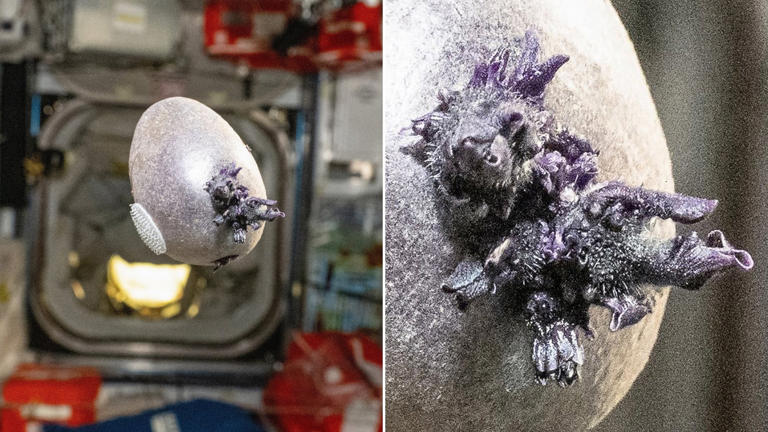
A NASA astronaut has captured and shared a truly extraordinary photograph from aboard the International Space Station, depicting what initially appeared to be a bizarre, tentacled organism growing in the microgravity environment. The image, taken by veteran astronaut Don Pettit during Expedition 72, sparked widespread curiosity and humorous reactions across social media platforms before its mundane explanation was revealed.
The Mysterious Space Object
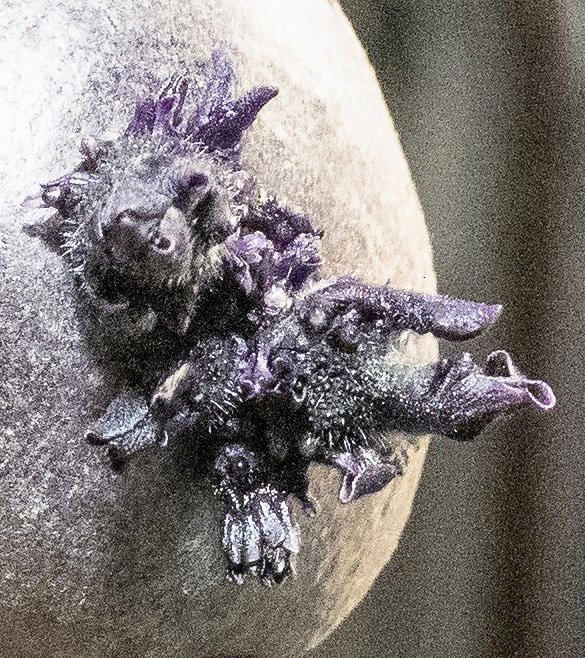
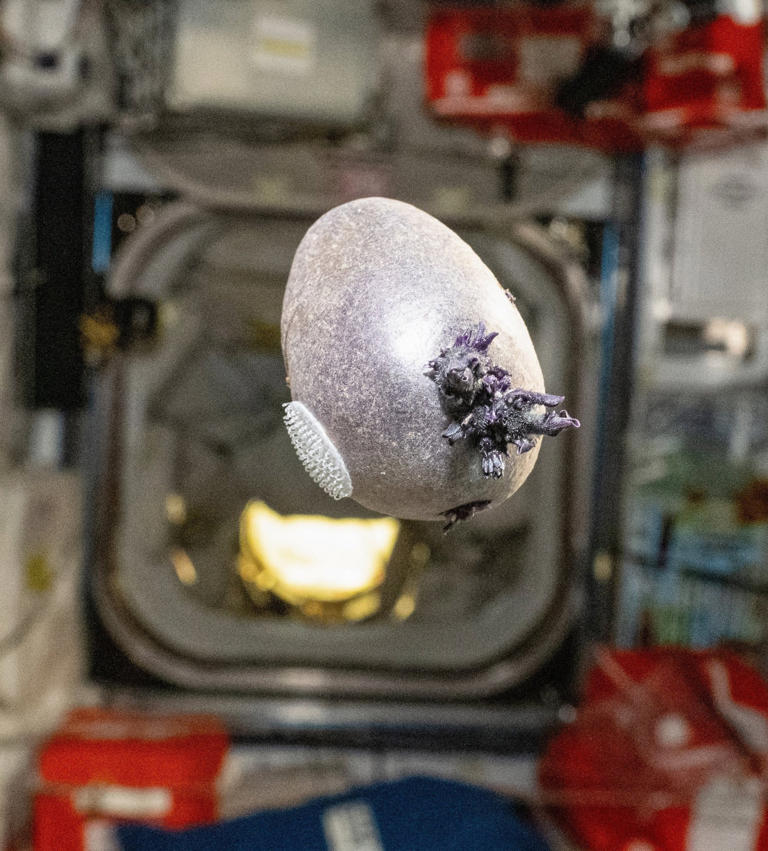
Don Pettit snapped the intriguing photograph during his mission, which spanned from 23 September 2024 to 18 April 2025. The unusual object bore a striking resemblance to an egg, with dark, root-like tentacles erupting vigorously from its base, creating an alien-like appearance that captivated viewers. The photograph quickly gained viral attention, amassing nearly 100,000 views and generating a flood of imaginative responses from the online community.
Astronaut Don Pettit shared the photo on his X account
(Picture: SWNS)
Social Media Reactions
Responding to the astronaut's post on X, formerly known as Twitter, users expressed both alarm and amusement at the strange sight. One concerned individual exclaimed, 'Kill it with fire!!!' while another commented, 'Bro I genuinely thought this was some kind of egg hatching.' A third user made a cinematic reference, joking, 'Looks like a mimic hatching out of an egg,' alluding to the 2017 science fiction film Prey. Other humorous remarks included suggestions for a 'zero-g fryer' and observations about the Velcro docking adapter visible in the image.
The Earthly Explanation
Despite its otherworldly appearance, the object had a remarkably ordinary explanation. Astronaut Pettit clarified that the mysterious entity was, in fact, a potato—specifically an early purple potato he had brought to the ISS for personal agricultural experiments. Dubbed 'Spudnik-1,' the potato was part of Pettit's off-duty space gardening activities, anchored in an improvised grow light terrarium using a spot of hook Velcro.
In his detailed explanation on X, Pettit emphasized the scientific rationale behind choosing potatoes for space cultivation. 'Potatoes are one of the most efficient plants based on edible nutrition to total plant mass, including roots,' he stated. The astronaut noted that potatoes' significance for future space exploration had been recognized in Andy Weir's book and subsequent film The Martian, prompting him to begin practical research aboard the ISS now.
The purple roots disgusted many online
(Picture: SWNS)
Space Versus Earth Cultivation
When questioned by a fan about how space-grown potatoes compare to their terrestrial counterparts, Pettit provided fascinating insights into microgravity agriculture. He explained that in the absence of gravity, the potato's roots grew in all directions rather than following their typical downward pattern. Additionally, he observed that all plants he has cultivated in space, including this potato, have demonstrated significantly slower growth rates compared to Earth-based cultivation.
Broader Context of Space Agriculture
This potato experiment represents just one facet of ongoing agricultural research aboard the International Space Station. To date, astronauts have successfully cultivated a diverse array of fruits, vegetables, and even flowers in the unique microgravity environment. NASA has articulated ambitious plans for expanding space agriculture, with teams at Kennedy Space Center envisioning future cultivation of tomatoes, peppers, berries, certain beans, and other antioxidant-rich foods.
These agricultural endeavors serve multiple purposes beyond nutritional supplementation. NASA has highlighted that antioxidant-rich foods could provide crew members with additional protection against space radiation—a significant concern for long-duration missions. The research aligns with broader preparations for future lunar and Martian exploration, where sustainable food production will be essential for crew survival and mission success.
Some online thought the potato roots looked like an alien
(Picture: SWNS)
The International Space Station: A Research Platform
The International Space Station serves as a $100 billion science and engineering laboratory orbiting approximately 250 miles above Earth. Continuously occupied since November 2000, the ISS has hosted 244 individuals from 19 countries, including eight private citizens. Research conducted aboard the station leverages unique conditions such as microgravity and specialized atmospheric composition to advance fields including human research, space medicine, life sciences, physical sciences, astronomy, and meteorology.
NASA allocates approximately $3 billion annually to the ISS program, with additional funding provided by international partners including the European Space Agency, Russian space agency, Japanese space agency JAXA, and the Canadian Space Agency. As the station approaches potential structural limitations beyond 2025, various nations and private entities are planning successor orbital platforms and lunar orbiting stations to continue advancing space research and exploration.
Don Pettit snapped the photo during Expedition 72, which took place from 23 September 2024 until 18 April 2025.
The unusual object almost looks like an egg, with black tentacles erupting from the base.
Responding to the astronaut on X (formerly Twitter), one user said: 'Kill it with fire!!!'
Another wrote: 'Bro I genuinely thought this was some kind of egg hatching.'
And one joked: 'Looks like a mimic hatching out of an egg,' in reference to the 2017 film, Prey.
While the object undeniably looks strange, there's actually a rather mundane explanation – it's a potato.
'Spudnik–1, an orbiting potato on @Space_Station!' Mr Pettit explained.
A NASA astronaut has shared a photo of a bizarre tentacled object growing on the International Space Station (ISS)
On X, Mr Pettit explained how the potato ended up on the ISS.
'I flew potatoes on Expedition 72 for my space garden, an activity I did in my off–duty time,' he said.
'This is an early purple potato, complete with spot of hook Velcro to anchor it in my improvised grow light terrarium.'
'Potatoes are one of the most efficient plants based on edible nutrition to total plant mass (including roots).
'Recognized by Andy Weir in his book/movie "The Martian," potatoes will have a place in future exploration of space.
'So I thought it good to get started now!'
In response to the photo, one fan asked Mr Pettit how it compared to growing potatoes on Earth.
The astronaut responded: 'The roots would grow in all directions absent gravity, and all plants I have ever grown in space have grown far slower than they would have on Earth.'
The unusual object almost looks like an egg, with black tentacles erupting from the base
Don Pettit snapped the photo during Expedition 72, which took place from 23 September 2024 until 18 April 2025
His post has garnered huge interest, with almost 100,000 views at the time of writing.
'someone needs to figure out a zero–g fryer asap,' one X user joked.
And one quipped: 'I hope you brought actual fertiliser this time,' in reference to The Martian, in which the lead character is forced to grow potatoes in his own waste.
To date, astronauts have grown a huge range of fruits, vegetables, and even flowers on the ISS.
'Our team at Kennedy Space Center envisions planting more produce in the future, such as tomatoes and peppers,' NASA explained.
'Foods like berries, certain beans and other antioxidant–rich foods would have the added benefit of providing some space radiation protection for crew members who eat them.'
The International Space Station (ISS) is a $100 billion (£80 billion) science and engineering laboratory that orbits 250 miles (400 km) above Earth.
It has been permanently staffed by rotating crews of astronauts and cosmonauts since November 2000.
Crews have come mainly from the US and Russia, but the Japanese space agency JAXA and European space agency ESA have also sent astronauts.
The International Space Station has been continuously occupied for more than 20 years and has been expended with multiple new modules added and upgrades to systems
Research conducted aboard the ISS often requires one or more of the unusual conditions present in low Earth orbit, such as low-gravity or oxygen.
ISS studies have investigated human research, space medicine, life sciences, physical sciences, astronomy and meteorology.
The US space agency, NASA, spends about $3 billion (£2.4 billion) a year on the space station program, with the remaining funding coming from international partners, including Europe, Russia and Japan.
So far 244 individuals from 19 countries have visited the station, and among them eight private citizens who spent up to $50 million for their visit.
There is an ongoing debate about the future of the station beyond 2025, when it is thought some of the original structure will reach 'end of life'.
Russia, a major partner in the station, plans to launch its own orbital platform around then, with Axiom Space, a private firm, planning to send its own modules for purely commercial use to the station at the same time.
NASA, ESA, JAXA and the Canadian Space Agency (CSA) are working together to build a space station in orbit around the moon, and Russia and China are working on a similar project, that would also include a base on the surface.
NASA has revealed plans to build a $20billion (£14.9billion) permanent base on the moon.
New chief Jared Isaacman, who joined the agency in December, has announced a 'focus shift', prioritising a lunar habitat that allows for 'long–duration human presence'.
He said NASA will spend the next seven years constructing the station at the moon's south pole over dozens of missions.
Artist impressions of the base feature futuristic rovers, communication devices, solar panels, habitat modules and launch pads on the moon's surface.
The station will represent the next step towards 'achieving the near–impossible', he said, and will 'ensure American leadership in space'.
'There will be an evolutionary path to building humanity's first permanent surface outpost beyond Earth, and we will take the world along with us,' Mr Isaacman told a conference at NASA headquarters in Washington.
'This time the goal is not flags and footprints,' he added.
'This time the goal is to stay.'
Artist impressions of the moon base feature futuristic rovers, communication devices, solar panels, habitat modules and launch pads on the lunar surface
Building the moon base will take place over three phases, NASA said.
The first involves a shift from infrequent missions to a 'repeatable' approach that increases the tempo of lunar activity.
Phase two will see a move towards semi–habitable infrastructure involving rovers and other forms of transportation.
Finally, for phase three, NASA 'will deliver heavier infrastructure needed for a continuous human foothold on the moon'.
This will include multi–purpose habitats created by the Italian Space Agency and lunar utility vehicles from the Canadian Space Agency.
The 'habitation module' will be three metres wide and six metres long (10 feet by 20 feet) with a mass of around 15 tonnes.
It will have wheels, allowing it to be easily moved across the moon's surface. It is also completely self–sufficient, providing power and heat for inhabitants.
The module has currently been designed to be able to support two astronauts for between seven and 30 days – or a larger crew for short periods in case of an emergency.
The Italian Space Agency's habitation module will safely host astronauts during their missions, support surface operations, enable scientific research experiments both with and without the presence of a human crew, and have the capability to move on the surface (artist's impression)
A concept image of a pressurised rover on the surface of the Moon. The rover will boast robotics, cameras, sensors and scientific instruments, acting as a 'mobile laboratory' for exploration activities
Solar array systems will help power exploration of the Moon. Pictured: An illustration of the device, which can deploy up to 32 feet high
Where will the astronauts live?
Visitors to the moon would be stationed in a 'habitation module' currently being built by the Italian Space Agency
They are three metres wide and six metres long with a mass of 15 tonnes
Five main substations control the inner atmosphere, temperature and humidity, with an in–built water and waste management system
The module will have wheels, allowing it to be easily moved across the moon's surface.
It is also completely self–sufficient, providing power and heat
The module has currently been designed to be able to support two astronauts for between seven and 30 days – or a larger crew for short periods in case of an emergency
NASA said its moon base plans also include a pressurised rover, which has been designed by the Japan Aerospace Exploration Agency (JAXA).
This is a mobile habitat that can allow astronauts to explore much further than current moonwalks allow, supporting two crew members as it traverses across the lunar surface.
The rover will boast robotics, cameras, sensors and scientific instruments, acting as a 'mobile laboratory' for exploration activities.
'The objective is clear: build the foundation for an enduring lunar base and take the next step towards Mars,' Mr Isaacman wrote on X.
In a nod to the race against China to build a permanent base on the moon, Mr Isaacman said: 'The clock is running in this great‑power competition, and success or failure will be measured in months, not years.'
He added that 'building a base will seem pale in comparison to what we will be capable of accomplishing in the years ahead'.
NASA has also announced that in order to focus on the moon base project, it would be suspending plans to create Lunar Gateway – its lunar orbital space station.
'The agency intends to pause Gateway in its current form and shift focus to infrastructure that enables sustained surface operations,' Mr Isaacman said.
NASA said lunar utility vehicles from the Canadian Space Agency (pictured) will also be needed
NASA Administrator Jared Isaacman, who joined the agency last year, said focus needs to 'shift' towards establishing a permanent base on the moon
The Gateway orbital lunar station was meant to serve both as a point of transfer for astronauts headed to the Moon as well as a platform for research.
The suspension of the initiative isn't entirely surprising – some had criticised it as financially wasteful or a distraction from other lunar ambitions.
Putting it on hold will allow for the redirection of efforts and resources towards the construction of the base near the strategic south lunar pole, Mr Isaacman explained, which was already a goal.
Last month, NASA said it was reshuffling its Artemis programme that has suffered multiple delays in recent years, as it aims to ensure Americans can return to the Moon's surface by 2028.
That goal remains unchanged, but the US space agency is shifting its flight lineup to include a test mission before an eventual lunar landing to improve launch 'muscle memory'.
That strategic revision came amid repeated delays to the Artemis 2 mission, which was originally due to take off as early as February, but is now targeting early April. It is meant to see the first flyby of the Moon in more than half a century.
Launch date: NASA initially identifiedthree possible launch windows for Artemis II: From February 6 to February 11, from March 6 to March 11, and from April 1 to April 6. The space agency is now targeting the April window.
Mission objective:To complete a lunar flyby, passing the 'dark side' of the moon and test systems for a future lunar landing.
Total distance to travel: 620,000 miles (one million km)
Mission duration: 10 days
Estimated total cost: $44billion (£32.5billion)
- NASA Space Launch System rocket: $23.8billion (£17.6billion)
An amateur archaeologist claims to have uncovered the ruins of an ancient city that once thrived off the coast ofLouisiana roughly 12,000 years ago.
Retired architect George Gelé said he has found clues that 'hundreds of buildings' are buried beneath the waters near the Chandeleur Islands, a chain of uninhabited barrier islands about 50 miles east of New Orleans in the Gulf of America.
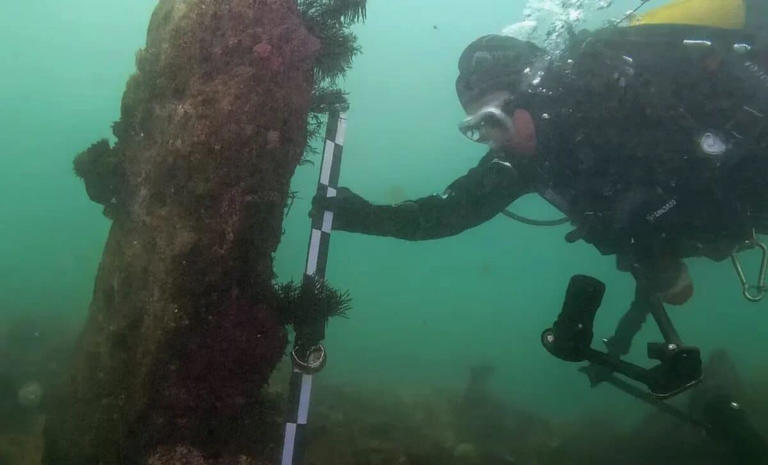
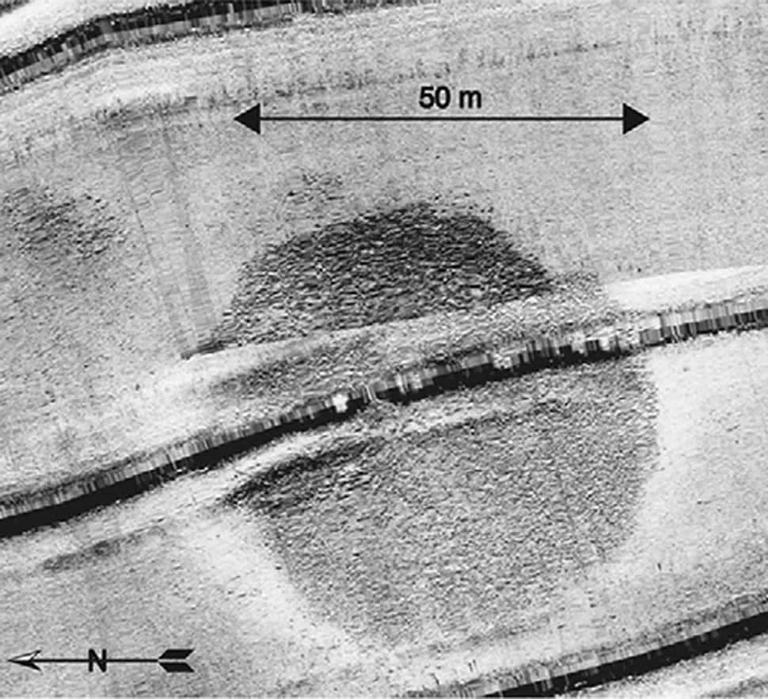
For nearly five decades, he has captured underwater sonar images that he believes reveal the remnants of major structures, including what he describes as a 280-foot-tall pyramid rising from the seafloor.
Gelé claimed the pyramid emits a surge of electromagnetic energy that has caused boat compasses to spin wildly as vessels passed overhead.
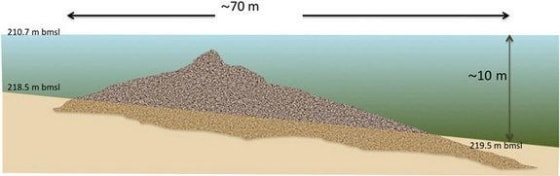
Dubbed the city of Crescentis, Gelé told local station WWL-TV that the submerged formations, located roughly 30 feet below the water and buried beneath an additional 100 feet of sediment, appear to be 'geographically related to the Great Pyramid of Giza' in Egypt.
While his findings have not been published in peer-reviewed scientific journals, Gelé argued the site may date back to the end of the last Ice Age, when rising seas about 11,700 years ago submerged vast coastal landscapes.
The foundation of his theory rests on mysterious granite mounds discovered beneath Chandeleur Sound, a material not naturally found in Louisiana, which he believes were deliberately transported and assembled.
'Somebody floated a billion stones down the Mississippi River and assembled them outside what would later become New Orleans,' Gelé said, after more than five decades studying the site.
Retired architect George Gelé said he has found clues that 'hundreds of buildings' are buried beneath the waters off the coast of Louisiana
He claims the city was located near the Chandeleur Islands, a chain of uninhabited barrier islands about 50 miles east of New Orleans in the Gulf of America
Gelé has personally funded and conducted more than 40 underwater research expeditions in the area since 1974.
While he officially revealed his discoveries to the world in March 2022, his interview on WWL-TV has resurfaced.
During the interview, local shrimper Ricky Robin, who took Gelé to the site multiple times, claimed that the compass on his boat spun completely around near the area where the tip of the pyramids was suspected.
'Everything will go out on your boat. All your electronics like you were in the Bermuda Triangle,' said Robin.
He added that other local fishermen have shared stories about catching strange, square rocks in their nets.
'I thought right away it was pieces of the pyramid because it was right around where that compass spun,' Robin said.
While the idea of a lost city is captivating, several scientists have offered more conventional explanations for the mysterious underwater mounds.
Gelé himself explored alternative explanations for the granite masses during a 2014 presentation, including the possibility that the stones came from a construction dump or debris left behind by multiple shipwrecks.
For nearly five decades, he has captured underwater sonar images that he believes reveal the remnants of major structures. He has also collected granite pieces that he believes once formed the now underwater city
However, he noted that construction debris only appears on the top surface of the mounds, and granite blocks are expensive construction materials, and would not be discarded so easily.
A separate study conducted by Texas A&M University in the late 1980s also concluded that the underwater granite likely originated from shipwreck activity, or from piles of ballast stones discarded from vessels, WWL-TV reported.
Historians believe the stones may have been dumped from Spanish or French ships to lighten their loads as they approached shallow waters on routes leading to New Orleans.
Local newspaper The Advocate later examined the mystery in 2011, speaking with LSU archaeology professor Rob Mann, who offered another explanation for the unusual formations.
He suggested the granite could be remnants of an effort to build an artificial reef in the 1940s, created by dumping construction materials into the water.
'I think simply searching underwater at this point won't give us any more answers,' Mann told the newspaper.
Gelé has personally funded and conducted more than 40 underwater research expeditions in the area since 1974. Pictured are granite pieces he pulled from the waterse
'When the historical archive work is done, looking at records and newspapers, that's when we will know what it is.'
The publication also interviewed the state's archaeologist at the time, who agreed that the formations appeared to be the result of large barge loads of stone being dumped at the site.
'But why and why there?' he said. 'Those are questions that need to be answered.'
Nearly 60 years ago, three Americans made history as the first humans to ever break free of Earth's orbit on their way toward the moon.
And when they passed behind the moon to the side Earth never sees, Apollo 8 astronauts Frank Borman, Jim Lovell (who died in August) and William Anders became the first humans in space to lose sight of their home world.
A crew of four astronauts will hitch a ride to orbit on an Orion capsule. Built by Lockheed Martin, the Orion vehicle will be perched atop NASA's 322-foot Space Launch System rocket, built by Boeing and Northrop Grumman.
Artemis II: NASA set to launch moon mission | FOX 10 Phoenix
While no moon landing is in store for the astronauts, the mission will serve a vital role in testing the systems and hardware on the spacecraft needed for future expeditions to the lunar surface.
Apollo 8 was 1st to send astronauts around the moon and back
The impending mission will not only represent NASA's first human moon mission since the Apollo era ended in 1972, but the first since that era really began with a similar mission in 1968.
Lifting off Dec. 21, 1968, from the Kennedy Space Center, the Apollo 8 mission sent three NASA astronauts on a six-day trip orbiting the moon before making a landing Dec. 27 in the Pacific Ocean.
As a prelude to a lunar landing, the flight was an important step in testing the flight trajectory and operations before astronauts stepped foot on the moon's surface.
The mission also made history in many ways.
The crew became the first humans to orbit the moon and the first to see the Earth rising on the lunar horizon in an event known as an Earthrise. Apollo 8 was also the first crewed launch for NASA's iconic Saturn V rocket, which at 363 feet tall remains to this day of the largest rockets ever made.
The Apollo 8 crew is seen inside the gondola during centrifuge training Nov. 1, 1968. Left to right are astronauts William A. Anders, lunar module pilot, James A. Lovell Jr., command module pilot; and Frank Borman, commander.
The Apollo 8 Crew included James Lovell, Command Module (CM) pilot; William Anders, Lunar Module (LM) pilot; and Frank Borman, commander. The first crewed Apollo mission launched Dec. 21, 1968 aboard the Saturn V rocket, with the crew returning Dec. 27 safely to Earth.
The Apollo 8 crew stands in front of the Apollo space vehicle as it leaves the Kennedy Space Center's Vehicle Assembly Building on its way to Launch Complex 39A. The Saturn V stack and its mobile launch tower are atop a huge crawler-transporter. The Apollo 8 crew consisted of (left to right) astronauts Frank Borman, commander; James A. Lovell Jr., command module pilot; and William A. Anders, lunar module pilot.
Traveling in the Orion capsule, the astronauts will venture up to 6,000 miles beyond the far side of the moon – the farthest humans have ever ventured in space, according to NASA. As a result, the astronauts will see the entire disk of the moon, including areas near the north and south poles.
The planned trajectory for the four-day return journey will use Earth's gravity to naturally pull Orion back home after flying by the moon, negating the need for propulsion or much fuel.
The crew of Artemis II (from left: Mission Specialist Jeremy Hansen, Mission Specialist Christina Koch, Pilot Victor Glover and Commander Reid Wiseman) answer questions at a press conference as their Space Launch System rocket is transported to Pad 39B January 17, 2026. Artemis II is tentatively scheduled to launch on a mission to th Moon in early February. Craig Bailey/FLORIDA TODAY via USA TODAY NETWORK
NASA astronaut Victor Glover, the pilot from Pomona, California, who flew to space in 2020 on a SpaceX mission to the space station.
NASA astronaut Christina Koch, a mission specialist from Grand Rapids, Michigan, who holds several space agency records and who flew in 2019 on a Soyuz ISS mission.
Canadian Space Agency astronaut Jeremy Hansen, another mission specialist who will fly to space for the first time.
Both Apollo 8, Artemis 2 missions to precede a moon landing
Like Apollo 8 before it, Artemis 2 is meant to precede a moon landing attempt in the years ahead.
In the case of Apollo 8, two more missions came before astronauts Neil Armstrong and Buzz Aldrin became the first humans to step foot on the moon in July 1969 during Apollo 11. That included Apollo 9 in March 1969 – during which two astronauts piloted a lunar module in Earth orbit – and Apollo 10 later in May, which was another moon-orbiting mission.
NASA had originally planned for a moon landing mission to follow Artemis 2 before leaders at the space agency announced an overhaul to the program at the end of February.
Before a moon landing is now attempted during Artemis 4 in 2028, astronauts in the Orion capsule are due to meet and dock in Earth orbit with at least one of the lunar landers being developed by Jeff Bezos' Blue Origin and Elon Musk's SpaceX. That new mission, targeted for 2027, is known as Artemis 3.
Eric Lagatta is the Space Connect reporter for the USA TODAY Network. Reach him at elagatta@usatodayco.com
Theorieën over wat er gebeurt na onze dood De angst voor de dood heeft vaak te maken met het onbekende. Wat gebeurt er na onze dood? Gaan we naar de hemel, reïncarneren we of resetten we ons in een simulatie? Hindoeïstische, Rastafariaanse of boeddhistische theorieën proberen allemaal uit te leggen wat er daarna komt. Om de verschillende theorieën over de dood te verkennen, zijn hier 30 filosofieën over het hiernamaals!
De simulatie theorie Heb je ooit het gevoel dat alles in ons leven al vaststaat? Wat als zelfs de dood volgens een vooraf geschreven script verloopt? Volgens de simulatietheorie zijn onze levens gewoon cijfers in een videogame van een hogere entiteit. Iets wat lijkt op het concept van de filmreeks 'The Matrix'.
De boeddhistische theorie Boeddhisten omarmen het concept van reïncarnatie na de dood. Na de dood kan iemand opnieuw geboren worden in verschillende rijken, zoals die van goden, halfgoden, mensen, dieren of geesten.
De parallelle universumtheorie Het idee van parallelle universums is in talloze sciencefictionfilms en stripboeken afgebeeld, wat de vraag oproept hoe aannemelijk het is. Volgens deze theorie gaat ons bestaan door na de dood, maar dan in een ander deel van ruimte en tijd binnen hetzelfde universum dat we eerder bewoonden.
De theorie van het nooit eindigende leven De theorie van het nooit eindigende leven is zeker een van de meest unieke op de lijst. Volgens deze theorie, wanneer je sterft, word je meteen opnieuw geboren in je eigen leven, zonder enige herinnering aan het leven dat je net had geleefd.
De Rastafari-theorie Rastafari geloven dat het leven eeuwig is. Alleen degenen die deugdzaamheid afwijzen, sterven echt. Daarom worden begrafenissen in hun cultuur eigenlijk niet gevierd.
De Azteekse theorie In het geloofssysteem van de oude Azteken waren er drie aparte paden voor het hiernamaals: de zon, Mictlan en Tlalocan. Het hiernamaals dat iemand ervoer, hing af van de omstandigheden van de dood. Gewone soldaten en vrouwen die tijdens de bevalling stierven, zouden veranderen in kolibries die het pad van de zon volgden. Degenen die door minder eervolle oorzaken stierven, belandden in Mictlan. En mensen die door verdrinking omkwamen, gingen naar Tlalocan.
Plato's theorie Plato was ervan overtuigd dat onze kennis beperkt is door de fysieke wereld. Hij vond dat we na de dood op een meer vervullende reis gaan, waar onze ziel haar ware bestaan kan ontdekken. Volgens zijn theorie biedt de dood dus een kans om dat te verkennen.
De onzekere theorie Ons begrip van de dood is beperkt tot de fenomenen die het fysieke lichaam ervaart. De dubbelzinnige theorie erkent deze harde waarheid, maar laat ruimte voor discussie over de overige aspecten.
De mormoonse theorie De Kerk van de Heiligen der Laatste Dagen gelooft dat overledene Mormonen die goed en rechtschapen zijn, goden worden. Daarentegen worden ongelovigen in het hiernamaals veroordeeld.
De Egyptische farao-theorie Mummificatie was cruciaal voor de oude Egyptische farao's, omdat zij geloofden dat de dood niet permanent was en zij hun lichamen wilden behouden voor het hiernamaals.
De droomtheorie Wat als alles maar een droom was? De droomtheorie beweert dat wanneer we sterven, we gewoon wakker worden uit een ontzettend verwarrende, levendige en lange droom. Knijp eens in jezelf.
De paranormale theorie Dit concept vormt doorgaans de basis van vele horrorfilms. Voorstanders van het bovennatuurlijke beweren dat onze zielen na de dood op aarde blijven hangen. Daarnaast wordt vaak aangenomen dat communicatie met deze geesten op verschillende manieren mogelijk is.
De bevroren hoofdtheorie Er zijn mensen die geloven dat ze hun behoud voor de toekomst kunnen garanderen door na hun overlijden cryonisch bewaard te worden. Zo stellen ze zich een bestaansvorm voor die extreem koud is, maar toch potentieel levend kan blijven.
De egocentrische theorie Als je denkt dat alles om jou draait, dan is de egocentrische theorie over de dood misschien wel iets voor jou. Volgens deze theorie begint het universum wanneer jij geboren wordt en stopt het op het moment dat jij sterft.
De 'Stranger Things'-theorie Als je de populaire Netflix-serie Stranger Things kent, dan ben je waarschijnlijk bekend met het concept van de Upside Down. De serie suggereert dat er een alternatieve dimensie bestaat binnen ons universum, waar mensen vast kunnen komen te zitten in een soort tussenwereld tussen leven en dood.
De hindoeïstische theorie Het hindoeïsme gelooft ook in reïncarnatie, waarbij iemands toekomstige status of vorm in het volgende leven wordt bepaald door hun daden in het huidige leven.
De solipsistische theorie Bestaat er iets buiten onze eigen gedachten dat echt is? Het concept van solipsisme geldt zowel voor het leven als de dood. De enige onbetwistbare realiteit is wat een individu waarneemt en ervaart. Hierdoor is het mogelijk dat, wanneer een individu sterft, alles om hen heen ook ophoudt te bestaan.
De excretietheorie Volgens de excretietheorie stelt het universum een gigantisch brein binnen een menselijk lichaam voor, en zijn individuen vergelijkbaar met cellen. Net zoals een cel wordt verwijderd wanneer deze afsterft in een menselijk lichaam, zouden mensen uiteindelijk een soortgelijk lot kunnen ondergaan.
De nihilistische theorie Het nihilisme stelt dat alle waarden betekenisloos en zonder fundament zijn. Vanuit een echt nihilistisch perspectief op de dood en het hiernamaals betekent dit dat er helemaal niets is na de dood, omdat het leven zelf al leegte bevat.
De ''Beetlejuice'-theorie De populaire komediefilm Beetlejuice uit 1988 van Tim Burton vertelt het verhaal van een overleden stel dat hun oude huis en de nieuwe bewoners achtervolgt. Om te ontsnappen aan deze tussenwereld, moeten ze de hulp inroepen van een onconventionele exorcist. Zie jij het hiernamaals als iets dat lijkt op deze eigenzinnige film?
De christelijke theorie Volgens het christelijk geloof bestaan zowel de hemel als de hel. Degenen die een deugdzaam en eerlijk leven leiden, worden beloond met toegang tot het paradijselijke rijk van de hemel. Daarentegen zijn degenen die zich schuldig maken aan zonden en morele misstappen voorbestemd voor de hel.
De meerdere werelden-theorie De veelwerelden-theorie stelt dat onze dood alleen plaatsvindt binnen dit ene, bestaande universum. Daarbuiten wachten talloze alternatieve universums op onze overgang.
De pessimistische theorie Misschien is deze discussie zinloos, omdat we eigenlijk al dood zijn? Dat is in ieder geval wat de pessimistische theorie veronderstelt.
De illusietheorie Volgens de illusietheorie is de wereld vooral een product van onze geest en geen concrete realiteit, wat suggereert dat alles in feite een illusie is. Vanuit dit perspectief is de dood een door mensen bedacht concept, en zelfs nadat we fysiek ophouden te bestaan, blijft een essentie van ons bestaan voortbestaan.
De kosmische theorie Volgens de kosmische theorie is ons bewustzijn verbonden met het universum in plaats van met ons individuele lichaam. Wanneer we sterven, herenigt ons bewustzijn zich met de kosmos.
De niveautheorie Volgens de niveautheorie gaan mensen na de dood over naar een nieuwe fase van bestaan, wat suggereert dat mens-zijn slechts het begin is binnen het grotere geheel.
De 'The Good Place'-theorie De populaire tv-serie The Good Place introduceert een fascinerend concept van het hiernamaals. Het verhaal draait om personages die, door een speling van het lot, in de hemel belanden, liefkozend The Good Place genoemd. Met eindeloze hoeveelheden frozen yogurt, gepersonaliseerde woningen en de kans om je zielsverwant te ontmoeten, doet deze idyllische versie van het hiernamaals kijkers verlangen naar een wereld waarin dit echt zou kunnen bestaan.
De boomhypothese Heb je ooit gehoord van het concept van de Levensboom? Sommige mensen omarmen dit idee door ervoor te kiezen hun stoffelijke resten te laten begraven in een boomcapsule. Op deze manier worden hun lichamen teruggegeven aan de aarde, met de overtuiging dat ze in een volgend bestaan kunnen transformeren tot een bloeiende boom.
A recent archaeological investigation has offered a substantive reassessment of Rujm el-Hiri, a large protohistoric stone complex in the Golan Heights frequently characterized as the "Israeli Stonehenge." Rather than interpreting the site as a unique and isolated monument, a new study proposes that it constitutes the most elaborate expression of a broader regional tradition of circular stone-built architecture, and that dozens of similar structures have been hiding in plain sight for decades.
Published in PLOS One, the research conducted by Michal Birkenfeld, Olga Khabarova, Lev V. Eppelbaum, and Uri Berger documents over 30 large circular basalt structures within a 25-kilometer radius of Rujm el-Hiri, including 28 previously unrecorded examples. The authors attribute the prior absence of these features in the archaeological record primarily to methodological constraints associated with conventional ground-based survey techniques. Employing an integrated methodological framework, combining high-resolution satellite imagery, artificial intelligence, geophysical modeling, and spatial analysis, the study identifies a consistent architectural typology across the region.
The newly discovered structures are characterized by substantial outer walls constructed from basalt fieldstones, typically arranged in concentric configurations and, in many cases, interconnected by radial or orthogonal internal divisions. These recurring design elements indicate a shared constructional logic and suggest a coherent cultural or technological tradition during the protohistoric period.
Rujm el-Hiri itself, first identified in 1968 through aerial reconnaissance, comprises a central cairn encircled by multiple concentric stone rings, with an overall diameter exceeding 150 meters and containing roughly 40,000 tons of stone.
Its function has long been debated, with hypotheses ranging from funerary and ceremonial uses to defensive or astronomical purposes. However, the lack of definitive stratified material and associated settlement evidence has historically limited interpretative certainty. The present study challenges the longstanding assumption of the site's isolation by demonstrating the existence of a dense and previously under-recognized distribution of analogous structures across the basalt plateaus of the Golan Heights and adjacent regions.
"Gilgal Refaim is, of course, a very well-known site, and it was always considered to be a very unique site in the area," said lead researcher Michal Birkenfeld. "Most [of the sites we discovered] were not as elaborate and were of different sizes and levels of preservation, but they still have the same type of logic," he added.
(Photograph by Y. Shmidov and A. Wiegmann/PLoS ONE)
AI and Satellite Imagery Uncover the Past
Analysis of multi-temporal satellite datasets spanning from 2004 to 2024 enabled the identification of these features, many of which remain poorly preserved, partially dismantled, or obscured by subsequent land-use activities. Researchers processed archives from multiple satellite platforms, including Google Earth Pro and CNES/Airbus and applied AI techniques to reduce interference from shadows and seasonal vegetation, enabling the identification of features that had remained invisible in conventional surveys. The newly identified circles range from approximately 50 to 250 feet in diameter, and while smaller and more degraded than Rujm el-Hiri, they share the same fundamental architectural logic.
The clusters highlight repeated occupation or a long-standing use of particular locations. There is a non-random variation of structures found in spaces where most are located on gently sloping terrain or on high plateau sites, and those near seasonal water sources. The common proximity of such monuments with dolmens, tumuli, and field-wall networks tells that these were part of a large cultural landscape and may have played different roles in ritual, territory, and socio-economic affairs. Intriguingly, similar-looking sites have also been noted farther afield in Galilee and Lebanon, suggesting the tradition may have extended well beyond the immediate Golan region.
Reassessing Astronomical Alignments
The study further revisits long-standing hypotheses concerning astronomical alignments at the site. Emerging geophysical and palaeomagnetic evidence indicates that the region has experienced gradual yet measurable tectonic rotation over millennial timescales. As a result, the current orientation of architectural elements is unlikely to reflect their original spatial configuration, introducing significant uncertainty into earlier claims of deliberate celestial alignment and necessitating a more cautious interpretative approach. A previous 2025 study co-authored by Birkenfeld had already weakened the astronomical observatory theory, calculating an average rotational movement of 8 to 15 millimeters per year - meaning the stones have likely shifted several meters from their original positions.
A central contribution of the research lies in its methodological advancement, particularly in demonstrating the analytical potential of remote sensing for archaeological prospection. Through the integration of multi-temporal, high-resolution satellite imagery, the study successfully identifies subtle and degraded features that have remained undetected in traditional ground surveys. This approach not only substantially expands the regional archaeological dataset but also prompts a critical reassessment of existing interpretative models shaped by incomplete or biased observational records. "If this is not a unique structure, I find more leverage in the idea that this was an area to get together," Birkenfeld said.
The authors argue that Rujm el-Hiri should no longer be interpreted as an anomalous or isolated construction, but rather as a key locus within a broader, previously under-recognized architectural tradition in the protohistoric southern Levant. Within this framework, large circular stone structures are understood as integral components of a complex cultural landscape, likely embedded in the social organization, economic strategies, and symbolic practices of agro-pastoral communities during the Chalcolithic and Early Bronze Age periods. Further research is required to establish a more robust chronological framework and to clarify the functional diversity of these monuments, but the study marks a substantive conceptual shift in how scholars understand protohistoric landscape use and spatial organization.
Top image: Aerial view of the ancient Rujm el-Hiri megalithic monument in the Golan Heights.
It was 1862, and the American Egyptologist Edwin Smith had just made a fascinating discovery in Luxor, Egypt, the site of ancient Thebes.
This was no archaeological mystery unearthed from the country’s time-worn sands, however. Instead, Smith’s acquisition came from an Egyptian dealer, Mustafa Agha, who sold him an unusual papyrus that seemed to describe medical practices from Egypt’s Second Intermediate Period.
Smith kept the papyrus until his death in 1906, largely unaware of its contents, as his understanding of hieratic was limited and he was unable to translate it. After Smith’s passing, many of the items in his collection, including the mysterious papyrus, were given to the New York Historical Society by his daughter, where they quietly remained for several more years.
It wasn’t until 1920 that the ancient treatise came to the attention of the classical archaeologist and Egyptologist Caroline Ransom Williams, who brought it to the attention of noted archaeologist James Henry Breasted.
“The papyrus is probably the most valuable one owned by the Society,” Williams wrote to Breasted at the time, “and I am ready to waive my interest in it, in the hope that it may be published sooner and better than I could do it.” Recognized as the first chair in Egyptology and Oriental History in the United States at the University of Chicago, Breasted was immediately fascinated by the ancient text and set to work deciphering it.
One decade later, Breasted had finally completed the task of interpreting the obscure ancient document in its entirety, a translation of which was published in 1930. The result was a fundamental shift in our understanding of the ancient history of medical science and its early beginnings, revealing evidence for advanced medical knowledge in ancient Egypt as much as 1000 years before what scholars had commonly accepted at the time.
The Edwin Smith Papyrus: Obscure Origins and a Cliffhanger Ending
The document, known today as the Edwin Smith Papyrus, was cut into one-column pages at some point in the last century. It features Egyptian hieratic written in ink of two different colors: most of the text is black, while some portions with addenda to the primary document appear in red.
Egyptologist Edwin Smith, who is credited with discovering the papyrus in 1862
(Public Domain).
Little is known about the author of the papyrus, although scholars agree that the version that exists today is likely the work of a single scholar, and probably also represents a copy of an even older manuscript from Egypt’s Old Kingdom.
Several clues point to this possibility: despite the document’s physical age, scholars note the inclusion of archaic forms of Egyptian words and grammar, suggesting the papyrus is a copy of a much earlier document. Equally tantalizing is that the document ends in mid-sentence, suggesting that, in addition to being a copy, the surviving version is an incomplete work.
From Ancient Magic to Medical Science
Most intriguing of all is the information the document contains. Outlined in an illustrated survey of 48 case histories, the Edwin Smith Papyrus presents a remarkable ancient Egyptian perspective on various injuries and their treatments. Each case details a different region of the body and/or a specific organ and discusses each injury systematically, even including references to the original doctor’s notes on ailments “which I will treat,” suggesting a physician logging their diagnoses of conditions afflicting their patients.
From descriptions of human anatomy to treatments for bleeding, curing infections, and closing wounds, the medical knowledge outlined in the papyrus is remarkably advanced for the period in which it is believed to have originated. Additionally, discussions of medicines featured in the document reveal a level of understanding that exceeds that previously known to have existed at the time by a significant margin, even going beyond medicinal knowledge first recorded by the Greek physician Hippocrates, close to 1000 years later.
Perhaps most significant of all, the document’s precocious discussion of medical knowledge marks a significant shift away from the use of spells and incantations, which are widely believed to have been commonly used for the treatment of a variety of ailments during Egypt’s Old Kingdom. Although the Edwin Smith Papyrus does still contain some references to magic—there are eight magic spells that appear on its “verso” (back left-hand) side—it is believed that these magical references may have represented a sort of “last effort” in cases where all forms of medical treatment had proven ineffective.
This is significant, since the Edwin Smith Papyrus could represent more than just an example of ancient Egyptian medical knowledge that was well ahead of its time: it marks a fundamental shift away from traditional magical beliefs toward practical diagnosis and treatment, making it a record of one of the earliest major medical science advancements in the ancient Egyptian world.
A Textbook by the First Doctor?
Given the advanced knowledge detailed in the papyrus, one accepted theory about the document’s purpose is that it served as an early textbook, likely the result of examinations of battlefield injuries.
Considering the information the papyrus contains, James Henry Breasted even went so far as to speculate that the enigmatic document might have been authored by none other than Imhotep, the Egyptian architect and early physician believed to have created the first step pyramid built at Saqqara, at the direction of the third-dynasty pharaoh Djoser.
Given his noted role as a high priest and Old Kingdom physician, Imhotep is often considered one of history’s earliest known doctors, making him a good fit for the kind of medical knowledge found in the Edwin Smith papyrus. Still, there is no direct evidence linking the Old Kingdom scholar with the papyrus or its contents, and Breasted noted in his evaluation of the text that such connections were purely speculative on his part.
Fundamentally, while much of the document remains a mystery, the translation of the surviving version offers a rare glimpse into the surprisingly advanced medical knowledge that existed in ancient Egypt. Today, it represents just one of the many examples of advanced knowledge in Egypt’s Old Kingdom, which, over time, has gradually helped reshape our understanding of the ancient world.
Micah Hanks is the Editor-in-Chief and Co-Founder of The Debrief. A longtime reporter on science, defense, and technology with a focus on space and astronomy, he can be reached atmicah@thedebrief.org. Follow him on X @MicahHanks, and at micahhanks.com.
Astronauts working outside a habitat on the surface of Mars. Credit: NASA
NASA and the China National Space Agency (CNSA) plan to send astronauts to Mars as early as the next decade. Naturally, this ambitious goal requires a great deal of planning, research, and the anticipation and preparation for all potential challenges in advance. Among them, astronaut health and safety are paramount. In addition to the hazards associated with the long transit times - radiation and the effects of long periods in microgravity - there's the issue of Mars itself. Aside from exposure to elevated radiation levels, Martian gravity is about 38% of Earth's.
This has the potential to lead to long-term health risks. An international team of researchers is currently studying how Martian gravity will affect a key aspect of human health: skeletal muscle. This muscle, which is the most abundant tissue in the human body (accounting for more than 40% of total body mass), is essential to movement and metabolic health. What's more, this tissue is especially sensitive, and lower gravity could potentially result in the substantial loss of muscle strength, size, and performance. It is therefore important to determine how this muscle tissue will fare in the Martian environment.
The research team was composed of scientists from the Institute of Medicine at the University of Tsukuba, Tohoku Medical Megabank Organization, the Advanced Research Center for Innovations in Next-GEneration Medicine (INGEM), the Beth Israel Deaconess Medical Center, the Brigham and Women’s Hospital, the Japan Aerospace Exploration Agency's (JAXA) Space Environment Utilization Center, and multiple universities. The results of their research appeared in the journal Science Advances
*Experiments aboard the International Space Station with mice showed that muscle atrophy can be mitigated and prevented in lower gravity.
Credit: NASA/ESA–T. Pesquet*
For their experiment, the team studied how lower gravity affected skeletal muscle tissue in 24 mice sent to JAXA's Kibo experimental module. These mice were then placed in a JAXA-developed centrifuge device called the Multiple Artificial-gravity Research System (MARS), where they were subjected to four different levels of gravity - microgravity, 0.33 g, 0.67 g, and 1 g - over a 28-day period. The mice were subjected to pre-flight testing before launch at NASA's Kennedy Space Center, where they were returned for post-flight sampling.
These samples were then examined by scientists at the Metabolism and Muscle Biology Lab in the Department of Nutrition at the University of Rhode Island (URI). As Professor Marie Mortreux, who leads the MMBL, attested in a Rhoby Today news story:
While we can simulate spaceflight on Earth in humans, it’s extremely complicated and costly. We have centrifuges that can be used to temporarily expose humans to certain gravity levels, but it is not homogeneous nor constant. We used gravity levels that were equally separated, to have a better picture of the dose-response of each system to gravity. The test group that was exposed to 0.33g was extremely close to Martian gravity (0.38g). Our findings for that group can be translated into actions to enable Mars exploration.
Mortreux and her team analyzed the weight, strength, and movement of the mice once they were returned to NASA's Kennedy Space Center. Their analysis showed that 0.33 g mitigated spaceflight-induced muscle atrophy, with full prevention at 0.67 g. They also measured the mice's forelimb grip strength using Electrical impedance myography (EIM), which showed that 0.67 g was sufficient to maintain muscle performance.
*The research team at Kennedy Space Center confirming the protocol and timing prior to receiving animals for post-flight sampling.
Credit: URI*
Their results collectively demonstrated that 0.67 g is a critical threshold for mitigating muscle atrophy caused by prolonged spaceflight. In addition, an analysis of the mice's blood plasma identified 11 metabolites that showed gravity-dependent changes, suggesting they could serve as potential biomarkers to monitor physiological adaptations in astronauts. This work builds on previous research she performed with Professor Mary Bouxsein (a co-author on the study) at Harvard Medical School.
Whereas Dr. Bouxsein developed the ground-based mouse model of partial gravity in the early 2010s, Montreux developed the rat model of partial gravity at Harvard. As such, the two are well-acquainted with the impact that different gravity levels have on musculoskeletal tissues.
"Since this mission aimed to assess gravity as a continuum, we were perfectly positioned to see if our ground-based results had similar outcomes when reduced mechanical loading was applied in orbit," said Montreux. "Working with an international team was challenging and exciting. I think my experience working in Italy, France, and the United States prepared me for those big-scale collaborations."
One takeaway from this study is that future missions to Mars will need to be mindful of mitigating skeletal muscle loss during the long transit between Earth and Mars. For astronauts to maintain mobility, muscle strength, and carry out regular science operations. The same holds true for their physical health upon returning to Earth.
Artist's illustration of asteroid 16 Psyche. (Credit: Maxar/ASU/P.Rubin/NASA/JPL-Caltech)
When we think of asteroids, we almost immediately think of giant rocks bouncing around like the iconic chase scene in Empire Strikes Back, and we often hear how they are remnants from the birth of the solar system. While the asteroids that comprise the Main Asteroid Belt of our solar system are not only spread far apart from each other, they are also not all made of rock. One asteroid approximately the size of the State of Massachusetts called 16 Psyche is made of metal, which planetary scientists hypothesize could be the remnants of a protoplanet’s core that didn’t build into a full-fledged planet. But how did such a unique asteroid form?
Now, an international team of scientists might be one step closer to answering that conundrum, as they attempted to ascertain how a large impact in the north polar region of 16 Psyche might have formed. The findings from this incredible study were recently published in the Journal of Geophysical Research: Planets and could help scientists gain insight into planetary formation and evolution, specifically during the early days of the solar system.
Using computer models, the researchers conducted 3-D simulations of impacts near the north polar regions of 16 Psyche and how these impacts could influence the interior characteristics of the large asteroid, specifically the distribution of metal within the asteroid. The team used 3-D models since the images from ground-based telescopes have provided limited data and NASA’s Psyche spacecraft, which launched in October 2023, isn’t slated to arrive at 16 Psyche until August 2029.
The researchers considered 16 Psyche’s physical shape into their models, noting that 16 Psyche is shaped like a potato while having a large impact basin near its north pole. Additionally, they also considered 16 Psyche’s interior structure, including whether it consists of one type of material throughout, or a homogenous model, and whether it’s layered with an iron core and volcanic rock on the outside. Finally, the team considered the asteroid’s interior porosity, or empty space, and how this played a role in impact crater formation, specifically what’s known as the crater’s depth-diameter ratio, or how deep the crater is compared to how wide it is.
In the end, the researchers developed several hypotheses regarding the interior of 16 Psyche, which they note they will confirm once the Psyche spacecraft arrives at the asteroid.
"One of our main findings was that the porosity – the amount of empty space inside the asteroid – plays a significant role in how these craters form," said Namya Baijal, who is a PhD Candidate at the University of Arizona’s Lunar and Planetary Laboratory and lead author of the study. "Porosity is often ignored because it's difficult to include in models, but our simulations show it can strongly affect the impact process and shape of craters left behind."
As noted, NASA’s Psyche spacecraft is slated to arrive at 16 Psyche in 2029, whose primary mission goals include determining if 16 Psyche is indeed a metal core remnant of a planetesimal, or an early planetary body. Through this, scientists hope to gain insight into how planets form, as this will be the first time in history that we can directly explore the interior on a planetary body. For context, while the distance from the Earth’s surface to its center is approximately 6,300 kilometers (4,000 miles), we’ve only drilled 12.26 kilometers (7.6 miles) into the Earth, or approximately 0.2 percent to the center of the Earth.
Part of accomplishing this primary goal will be to ascertain the interior composition of 16 Psyche, specifically regarding whether it’s layered or comprised of one mixture. The researchers in this study hypothesized that the 16 Psyche’s interior could play a role in crater morphology, specifically regarding its depth-diameter ratio. For example, they note that a stronger interior of the impact crater target sight would result in preserving large amounts of the impactor, whereas a weaker interior would result in preserving small amounts of the impactor.
Better understanding 16 Psyche and its origins will not only enable scientists to gain greater understanding of how planets throughout the solar system form and evolve, but also planets beyond the solar system. This could, in turn, help scientists understand both where and how to search for life beyond Earth.
What new insight will researchers make into asteroid 16 Psyche, including from the en route Psyche spacecraft? Only time will tell, and this is why we science!
Hey guys, Scott here… and yeah, you already know what I’ve been doing—digging deep through the NASA Mars rover archives again. It’s what I do. And today… I found something that honestly shocked me.
This discovery connects human history directly to Mars.
I came across what appears to be an ancient sculpture—partly embedded into a collapsed wall structure on the Martian surface. And when I enhanced it, the details became clear. This isn’t random rock. This is art. Intentional. Designed.
The figure matches Bastet, the Egyptian goddess—daughter of Ra, the sun god. Same exact form we see in ancient Egypt: the head of a cat, body of a woman. Even more interesting… she appears to be holding something in her hands—just like nearly every Bastet statue found here on Earth.
That’s not coincidence.
This is the missing link.
What we’re looking at is evidence that the so-called “ancient Egyptian gods” didn’t originate on Earth. They came from Mars. Advanced beings—what many would call ancient aliens—who had the technology to travel between planets. When Mars began to die, they left… and came here, to Earth, the nearest habitable world.
And they brought their culture, their knowledge… and themselves.
This isn’t mythology anymore. This is physical evidence.
And you better believe… this is exactly the kind of truth governments don’t want getting out.
UAP at Skinningrove Beach, England March 16, 2026, Alien base found! Wow! UFO Sightings Daily.
Date of sighting: March 16, 2026
Location of sighting: Skinningrove Beach, England
Source: NUFORC
This UFO looks rectangular in shape. When I added contrast to make the details stand out, it was clear this was no ordinary craft. This object is coming from an underwater alien base below the floor of the ocean in the area. It's rare but not unheard of to catch such craft leaving and entering the ocean. Fantastic raw footage. Undeniable proof that intelligent aliens share this planet with us.
Scott C. Waring - UFO Sightings Daily
Eyewitness states:
Lights on object, Emitted beams The orange bright light kept appearing and disappearing for 3 minutes. It was over the sea it was striking as it was bright and large in shape, we assumed it was an helicopter, but it disappeared and reappeared repeatedly.
UFO over Moreno, California USA March 9, 2026 UAP paranormal sighting news.
Date of sighting: March 9, 2026
Location of sighting: Moreno Valley, California, USA
Source: NUFORC
This glowing red light was seen over California this week. It's a very energetic UFO and its lit up to be seen. Disclosure is getting close, meaning humanity will learn the truth in an instant. This UFO is just part of the agenda to get humans use to seeing them in the sky, get our reactions to measure how ready we really are and to gently nudge into our daily lives, until one day...they will land and make themselves known.
Scott C. Waring - UFO Sightings Daily
Eyewitness states:
Observing the sky and saw four bright objects in the sky. They all went into the same direction before fizzing out I saw four objects in the sky at once. Each one was a bright red color. After zooming in with the camera, there was no shape to it from what I could see. They looked as though they were coming in my direction and then they turned left in the sky and disappeared. Once those disappeared two more appeared one by one and did the same as the others. The last one appeared like it was a launch. It was round in shape and it had a tail behind it and then it started to look like the rest.
Humanoid robots are serving up meals and entertaining customers at a McDonald's in Shanghai – and they even wear the famous uniform.
The machines, supplied by Chinese firm Keenon Robotics, have been deployed as part of a trial and hint at a future where bots handle routine tasks at fast food restaurants.
In videos posted online, diners can be seen interacting with cyborgs dressed in the iconic red and yellow uniforms behind counters.
One humanoid, wearing a black uniform with the word 'chef', greets members of the public as they arrive.
Others make the famous 'M' sign synonymous with the brand and showcase some dancing moves.
Meanwhile, children can be seen chasing other robots disguised as cute animals as they deliver food and clean floors around the restaurant.
'Watch the robot squad suit up and enjoy the McDonald's party!' Keenon Robotics wrote online. 'Our humanoid series are leading the squad and hitting the streets.
'It's a showcase of how service automation is becoming a seamless part of global dining, and how technology brings more smiles to every mealtime.'
In the video, one robot can be seen touching its thumb and index finger together to make an 'okay' sign at a customer
In the video, one robot can be seen touching its thumb and index finger together to make an 'okay' sign at a customer.
A smaller, cube-shaped 'cleaning' bot features a touchscreen and has been designed to look as if it is wearing a tie.
Jon Banner, the executive vice president of McDonald's, explained the robots were there for a 'temporary greeting'.
'Just to be clear – the robots were part of the grand opening of the Shanghai Science and Technology Museum restaurant,' he wrote on social media.
'The robots were requested by the museum to draw attention. Mission accomplished!'
He added that the robots 'were not involved in any service or operational functions'.
While the machines were part of a trial – and were only around for about five days – some people believe it won't be long until they're rolled out more widely.
'Shanghai is the test market,' one person wrote on X. 'If the unit economics work the rollout does not stay in China.'
The machines, supplied by Chinese firm Keenon Robotics, have been deployed as part of a trial and hint at a future where bots handle routine tasks at fast food restaurants
Keenon Robotics Dinerbot
The 'Dinerbot' has been designed to deliver food while displaying adverts on its large screen.
It comes with open-access trays to allow diners to easily pick up their food.
It features a six-wheel shock-absorbing chassis to prevent spillage during sudden stops.
The screen can be programmed to display different animal faces including a cat, bunny and deer.
Meanwhile, a range of voices can be picked from.
Another said that this is the 'real future', adding: 'Humanoid robots greeting customers and delivery bots bringing your food – automate the kitchen a bit more and boom, McDonald's stores basically run themselves with zero staff.'
However, others warned the robots would be 'destroyed' if rolled out elsewhere.
According to Keenon Robotics, its 'Dinerbot T10' boasts 3D vision for 'safer obstacle avoidance in complex environments'.
It comes with open-access trays to allow diners to easily pick up their food, and features a six-wheel shock-absorbing chassis to prevent spillage during sudden stops.
Its screen can be programmed to display different animal faces, including a cat, bunny and deer, while a range of voices can be picked from.
Meanwhile, their 'Kleenbot C40' features a triple-brush system for separating dry and wet spillages. It has been designed to 'easily handle crowds and irregular obstacles', and can pick up objects including hair, paper scraps, dust, coffee and juice.
While the Keenon website does not list prices, these models retail for around £11,500 to £16,000 online.
Their recently-released 'XMAN-R1' humanoid was designed specifically to interact with people – but appears to come with a $100,000 price tag online.
A small cube-shaped 'cleaning' bot features a touchscreen and has been designed to look as if it is wearing a tie (left). Meanwhile, children can be seen chasing a 'Dinerbot' disguised as a cute animal as it delivers food around the restaurant
Their recently-released 'XMAN-R1' humanoid was designed specifically to interact with people – but appears to come with a $100,000 price tag online
Last week, the shocking moment a dancing robot went berserk at a restaurant was caught on camera.
Customers at the Haidilao hotpot restaurant in San Jose, California, were enjoying their meals when a humanoid started showing off some moves.
While performing a dance routine, involving waving its arms and shaking its hips, the robot suddenly slams its hands down on a table.
This sends chopsticks and bright yellow sauce flying into the air, while staff race over to try and turn it off.
But the humanoid continues to dance throughout the altercation – which saw three employees wrestle with the robot and try to drag it away by the scruff of its neck.
A mysterious humming noise has been reported in neighborhoods across several US states, rattling homes and leaving residents struggling to sleep.
The latest reports come from Vineland, New Jersey, where locals say the sound began after construction started on a massive 2.5-million-square-foot data center, though officials have not confirmed a direct link.
Residents say the constant noise is disrupting daily life. 'That is not construction, and that monstrosity is only partially built,' Scott Montgomery told ABC 6. 'It is infringing on our peace of mind and our tranquility.'
Similar complaints have surfaced in parts of Virginia, home to hundreds of data centers, and in Connecticut earlier this year, though officials in those areas have yet to identify a confirmed source.
Experts noted that data centers can produce continuous low-frequency humming caused by powerful cooling systems and electrical equipment operating around the clock.
Thousands of servers generate intense heat, requiring large fans and chillers that can produce noise levels between 55 and 85 decibels, often described as a low-pitched roar capable of traveling long distances.
'It's not even fully built yet. That's the scary part,' Montgomery added.
'If it sounds like this now, what's it going to be like when everything's up and running?'
The latest reports come from Vineland, New Jersey, where locals say the sound began after construction started on a massive 2.5-million-square-foot data center
Cumberland County Department of Health has acknowledged the noise concerns in the New Jersey town, noting it does not play a role in planning, zoning, or approving construction projects.
The agency added that it will investigate the construction site to determine if it is the source of the noise.
'If our inspectors find that noise levels are higher than those allowed under the code, we follow the enforcement guidelines under which a penalty may be issued if compliance is not obtained within a certain timeframe,' the agency shared on Facebook.
'While the Cumberland County Department of Health does not have the legal authority to shut down a facility, we do work collaboratively with those involved to resolve any confirmed violations of the Noise Control Act.'
The 2.4 million-square-foot data center is being built on South Lincoln Avenue and is owned by the company Data One.
In a statement, the company said the facility is complying with local regulations.
'Our site is operating in full compliance with Vineland City noise ordinance limits,' the company said. 'We will continue deploying sound reduction measures to minimize any impact on our neighbors.'
While authorities have yet to blame the data center for the noise, locals are sure it is the source.
The 2.4 million-square-foot data center is being built on South Lincoln Avenue and is owned by the company Data One
One local shared on social media: 'I live about two miles away, and it's definitely there. Sounds like a huge engine idling all the time.'
Montgomery, who lives about a half a mile from the facility, said: 'It keeps you up at night, as you can hear it coming through the house.'
Another local, Theresa Lewis, expressed the same concern, saying that even when her doors and windows are closed, she still hears a constant humming.
'It's like someone is using some type of machinery around my house,' Lewis told ABC 6.
Montgomery posted a video of the noise on social media. In the recording, a humming sound can be heard.
'We're afraid it's even going to get worse, so it's just maddening to listen to this all the time. It's hard to fall asleep at night,' he said.
Similar reports from Connecticut surfaced earlier this year, but locals said they have been bothered by a humming noise since 2020.
A persistent low-frequency hum has disrupted life in West Haven, with residents describing the sound as both mysterious and, at times, unbearable.
Similar reports from Connecticut surfaced earlier this year, but locals said they have been bothered by a humming noise since 2020
After collecting more than 140 signatures on a petition, residents persuaded city leaders to approve $16,000 to hire an independent acoustic firm to investigate the source, which many believe may be linked to nearby industrial activity.
'For years, our community has been plagued by a constant or intermittent humming noise and low-frequency vibrations affecting multiple areas of town,' the petition notes. 'This disturbing phenomenon occurs at all hours, disrupting our ability to sleep, concentrate and enjoy life to its fullest.
'Many residents have reported increased levels of stress, anxiety and physical discomfort due to this incessant noise and vibration.'
While Connecticut authorities have yet to confirm the source, there are several data centers near West Haven, primarily in nearby New Haven, Wallingford, and the surrounding southern Connecticut area.
Lumen New Haven Data Center is about three to five miles from West Haven, while Fibertech Networks is about four miles away, and Cloudsmart Data Center and ChimeNet Data Center are up to 20 miles from the town.
West Haven Commissioner of Human Services John Carrano shared that the City Council approved a $16,000 budget to hire a third-party acoustics firm to pinpoint the source of the 24/7 noise
Similar humming complaints have emerged across parts of Virginia, where hundreds of large data centers operate around the clock.
Residents have described hearing a deep, low-frequency buzz, sometimes accompanied by vibrations, fueling speculation about whether expanding data center infrastructure could be contributing to the unexplained noise.
Dale Brown from Great Oak told WUSA9: 'We're about 700 feet from the data center right here. It's just really, really loud.'
Residents living near the Amazon Web Services data center in Manassas and nearby facilities report both a persistent hum and low rumbling sounds that have sparked ongoing complaints.
Local Roger Yackel said: 'These data centers are loud, noisy beasts and they are being built too close to residential areas. That's not something that we should have to live with.'
John Lyver, a retired NASA analyst, has begun tracking noise coming from data centers near his neighborhood.
'I'm finding that the noise is far worse than anybody ever figured it was going to be,' he said.
A massive stone structure discovered beneath the Sea of Galilee is challenging archaeologists, with its purpose and age still unknown. Weighing an estimated 60,000 tons, the formation stands out as one of the largest underwater features of its kind in the region.
The structure was first detected during a 2003 sonar survey in the southwest part of the lake. Its cone-like shape and scale quickly drew attention, prompting further investigation by divers. Its proximity to known ancient sites has led scientists to explore possible links with early urban societies in the area.
Putting all the data together researchers found that the structure is cone shaped, about 230 feet (70 meters) in diameter and nearly 32 feet (10 meters) tall. It weighs an estimated 60,000 tons.
Diagram courtesy of Shmuel Marco
A Massive Cairn Made of Unworked Stone
The structure rises nearly 10 meters (32 feet) high and spans approximately 70 meters (230 feet) in diameter. According to a press release published by the International Journal of Nautical Archaeology, it is composed of unhewn basalt cobbles and boulders, some measuring up to 1 meterin length. Divers reported no evidence of cutting or shaping. The stones appear randomly arranged, without walls or clear architectural patterns.
“The boulders have natural faces with no signs of cutting or chiselling. Similarly, we did not find any sign of arrangement or walls that delineate this structure.”
Researchers describe the structure as a cairn, a type of man-made pile of stones known from other regions and sometimes associated with burial practices, though no direct evidence confirms such a use here.
Evidence Suggests a Human-Made Origin
The structure does not resemble any natural geological formation. As explained by the research team, its shape and composition point clearly to human construction.
A Sonar Survey Of Part Of The Sea In The Summer Of 2003 First Detected The Circular Structure
They propose that it was built on dry land and later submerged as the Sea of Galilee expanded. This interpretation is consistent with known environmental changes affecting the region over thousands of years. The scale of the structure implies a high level of organization. In the researchers’ view:
Scientists Discovered A Mysterious Ancient City Hidden Underwater That Shouldn't Exist
“This is such a huge structure that it truly is something unusual. It could have been a big ceremonial structure, or a ramp. There could have once been statues on top of people in certain rituals. I mean, I’m really going wild here. The truth is we don’t know how it was constructed, what its exact age is, how it was used, or how long ago it was used. We have several speculations, but we don’t know much except that it’s there and it’s huge.”
A Lost Bronze Age Link
Archaeologist Yitzhak Paz, from the Israel Antiquities Authority and Ben-Gurion University, saidthat the stone structure may date to the third millennium B.C.. He noted that similar megalithic phenomena have been identified in nearby areas.
One example cited in the study is Khirbet Beteiha, located about 30 kilometers to the northeast, which features concentric stone circles. These parallels suggest the underwater structure could belong to the same cultural context.
If this dating is confirmed, the structure would have been located near Bet Yerah (or Khirbet Kerak), a major settlement of the time. ArchaeologistRaphael Greenberg noted that the city covered 30 hectares and had up to 5,000 inhabitants, with fortified defenses and organized urban planning.
No underwater excavation has yet been carried out, leaving the structure’s function and exact age uncertain.
“If the site was inland, it would be much easier to investigate. By now we would have excavated, but because it’s submerged we haven’t yet been able to. It is a much harder process, both physically and financially. It is very expensive to raise support for such an enterprise,” noted Yitzhak Paz.
UAP NEWS & EVIDENCE | NJ DRONES SUSPECTED CHINESE TECH? BALL LIGHTING FIRES INTO THE SKY + MORE!
Overview
In a recent episode of the YouTube channel UndercoverET, host Ross Coulthart and his team examined a series of recent reports involving unidentified aerial phenomena (UAP) and drone activity across the United States and the United Kingdom. The broadcast focused on three main items: the disputed drone sightings over New Jersey that some analysts attribute to Chinese “electro‑gravitic” technology, a Kentucky video that appears to show ball‑lightning launching into the sky, and a set of orb‑type sightings captured over England. By juxtaposing official statements, social‑media commentary, and the visual evidence itself, the program attempted to separate verifiable data from speculation.
New Jersey Drone Controversy
The centerpiece of the discussion was the 2024 New Jersey drone incidents, which have sparked a heated debate among intelligence analysts and aviation officials. Coulthart, a veteran investigative journalist with NewsNation, cited unnamed sources suggesting that the Chinese military may have achieved a breakthrough in “electro‑gravitic” propulsion and that the initial drones observed over New Jersey were of Chinese origin. He warned that the United States may have responded by deploying its own advanced platforms to obscure the foreign presence. By contrast, the UAP Reporting Center on X (formerly Twitter) publicly refuted these claims, stating that the craft were definitively American. The Federal Aviation Administration’s (FAA) mixed messaging—first denying any knowledge, then later asserting ownership without detailed specifications—added to the confusion, underscoring a lack of transparency that hampers public understanding.
Anomalous Aerial Footage
The episode also scrutinized two video clips that have circulated widely on social media. The first, recorded in Kentucky, shows a luminous orb near the ground that suddenly rockets upward. While the UAP Reporting Center interpreted the event as a possible energy‑based UAP, the UndercoverET host highlighted technical inconsistencies: a sudden shift from loud mechanical noise to quiet cricket sounds and a conspicuous lens flare that may indicate post‑production editing. He concluded that the footage “leans toward a fabricated or hoaxed” scenario. The second clip, posted by the user “Red Panda Koala,” depicts multiple white orbs moving erratically through clouds over England. Here, the host found the evidence more compelling, noting that the orbs maintained altitude despite a lack of wind (evidenced by stationary trees) and exhibited flight patterns that do not match known aircraft or natural debris. This contrast illustrates the difficulty of assessing UAP reports without rigorous, standardized documentation.
Expert Commentary and Context
Several senior figures were referenced to provide broader context. Former NORAD and NORTHCOM commander General Glen VanHerck—who testified before the Senate Intelligence Committee and was featured on 60 Minutes—has previously acknowledged the presence of “unknown technology” operating over the continental United States. Senator Mike Rounds was also mentioned as part of the growing political dialogue on UAP transparency. Their statements lend institutional weight to the claim that anomalous objects are not merely fringe curiosities but may intersect with national security concerns. However, analysts caution that attributing these sightings to any specific nation’s program remains speculative without corroborating radar data or classified briefings.
Implications and Next Steps
The broadcast concluded by framing the situation as a nascent “UAP technology race” among major powers, suggesting that both foreign and domestic advanced systems could be operating in restricted airspace. While some footage—particularly the Kentucky ball‑lightning video—appears dubious, the persistence of unexplained aerial activity warrants continued scientific scrutiny. UndercoverET’s host urged citizen observers to capture “high‑quality, landscape‑oriented, zoomed‑in” recordings, emphasizing that reliable visual data are essential for verification by investigators. As agencies like the FAA and the Department of Defense work to integrate UAP reporting into existing frameworks, the demand for transparent, peer‑reviewed evidence will be critical to separating genuine technological breakthroughs from misidentified conventional craft or deliberate misinformation.
The Amarna Anomaly: Did Akhenaten’s DNA Carry the Signature of the Gods?
When Amenhotep IV ascended the throne in the 14th century BC, he was not meant to be king. The unexpected death of his older brother thrust him into power, and within a few short years, he changed his name to Akhenaten, meaning "effective for the Aten." He moved the capital to a new, isolated city in the desert, Akhetaten (modern Amarna), and declared himself the sole intermediary between humanity and the divine. Even today, researchers debate whether the ancient Egyptian Akhenaten plague may have been a historical myth designed to explain the sudden abandonment of this utopian city.
But it is the art of the Amarna period that has left the most indelible mark on history. Unlike the idealized, rigid, and muscular depictions of previous pharaohs, Akhenaten ordered his artisans to portray him and his family exactly as they were. The result was a shocking departure from tradition. Statues and reliefs show the pharaoh with a mix of masculine and feminine traits, including visible gynecomastia (breast tissue) and a distended belly. His wife, whose fate remains tied to the mysterious disappearance of Nefertiti and their daughters, was also depicted with dramatically elongated skulls.
llustration of the more realistic art of the Amarna period.
According to a comprehensive 2025 medical review published in the Journal Cureus, experts have proposed numerous diagnoses to explain these features, ranging from Marfan syndrome to aromatase excess syndrome and Klinefelter syndrome. Marfan syndrome, a genetic disorder affecting connective tissue, could explain the elongated face and spindly limbs, but it does not account for the female characteristics. Conversely, aromatase excess syndrome could explain the gynecomastia, but it falls short of explaining the cranial deformities. The study ultimately concluded that while these medical theories are fascinating, it is highly unlikely that a single disease could account for the entirety of the Amarna royal family's bizarre physiques.
The Secret of Tomb KV55
The mystery deepened in 1907 when archaeologists discovered a small, unassuming tomb in the Valley of the Kings, designated KV55. Inside, they found a desecrated coffin. The golden face mask had been violently ripped away, and the cartouches bearing the occupant's name were chiseled out, a deliberate act of damnatio memoriae intended to erase the individual from the afterlife.
A striking close-up of a dark stone bust depicting Pharaoh Akhenaten, showcasing the distinctive elongated facial features and the tall crown of the 18th Dynasty.
For over a century, the identity of the KV55 mummy was fiercely debated. Was it Queen Tiye, the enigmatic Smenkhkare, or Akhenaten himself? In 2010, a landmark DNA study published in the Journal of the American Medical Association (JAMA) provided a stunning revelation. Genetic fingerprinting of the royal mummies confirmed that the KV55 skeleton was the father of King Tutankhamun and the son of Amenhotep III. By all genealogical accounts, this was the heretic king, Akhenaten, finally unmasking the identity of the controversial mummy KV55.
However, the physical examination of the KV55 skeleton presented a glaring paradox. The bones did not show the extreme deformities depicted in the Amarna art. There was no evidence of severe craniosynostosis (premature fusing of the skull bones) or the skeletal markers of Marfan syndrome. This has led many mainstream historians to conclude that the Amarna art style was purely symbolic, a propagandistic choice to depict the pharaoh as the "mother and father of all mankind," reflecting the androgynous nature of the Aten itself.
What if this conclusion is missing the larger picture? What if the art was not an exaggeration, but a deliberate homage to an ancestral truth that the pharaoh was trying to resurrect?
The Signature of the Gods
To understand the Amarna anomaly, one must look beyond the confines of traditional Egyptology and into the broader mythos of the ancient world. Across various ancient cultures, from the Sumerian texts of Mesopotamia to the biblical accounts of the Nephilim, there are persistent records of "Watchers" or "gods" who descended from the heavens and mingled their seed with humanity.
Ancient Egyptian relief at a temple complex, showcasing the monumental scale and detailed hieroglyphic carvings of the Amarna period.
Akhenaten’s religious revolution was not just about monotheism; it was about direct, unmediated contact with the divine. The Aten was not a human-like god; it was depicted as a celestial disc extending rays of light that ended in hands, offering the ankh (the breath of life) directly to the royal family. Akhenaten bypassed the traditional priesthoods because he claimed a direct, biological, and spiritual link to this celestial force.
If we view the Amarna period through the lens of ancient hybridization narratives, the physical anomalies of Akhenaten and his family take on a new meaning. The elongated skulls, the androgynous features, and the bizarre proportions may not have been the result of a random genetic disease, but rather the manifestation of a dormant, ancient gene, the biological blueprint of the "gods" from the First Time (Zep Tepi).
Elongated skulls on display at Museo Regional de Ica in the city of Ica in Peru.
This theory aligns with the global phenomenon of artificial cranial deformation, practiced by cultures from the Americas to the Black Sea. Why would disparate, unconnected ancient societies deliberately bind the heads of their infants to achieve an elongated shape? The most logical conclusion is that they were imitating a ruling elite or a "divine" race that naturally possessed these cranial features. Akhenaten and his daughters may have been the last visible resurgence of this authentic, un-deformed genetic lineage in the ancient Near East.
The Institutional Silence
The debate over Akhenaten’s DNA and his physical form is not just an academic exercise; it touches upon the sensitive issue of how history is curated. Just as the successor pharaohs, including Horemheb and even Akhenaten’s own son, Tutankhamun, systematically smashed the Amarna statues and erased the heretic’s name from the king lists, modern institutions have often been accused of downplaying discoveries that challenge the established narrative of human origins.
While there is no direct evidence of a modern "cover-up" regarding the KV55 mummy, the intense resistance within orthodox academia to entertain theories outside of standard medical diagnoses reflects a broader reluctance to engage with the uncomfortable anomalies of our past. The 2010 DNA results were groundbreaking, yet they left many questions unanswered, particularly regarding the exact nature of the genetic markers found within the 18th Dynasty lineage.
The Legacy of the Heretic
Akhenaten’s reign was a brief, blinding flash of radical departure in the long, conservative history of ancient Egypt. He attempted to pull his civilization back to a purer, more direct connection with the cosmos, bypassing the corrupt human institutions of the priesthood. In doing so, he may have revealed the true, hidden face of the ancient rulers, a face that was deliberately obscured by those who came after him.
House altar Akhenaten Nefertiti Berlin showing Akhenaten, Nefertiti and three of their daughters. (Egyptian Museum of Berlin/Public domain)
The Amarna anomaly remains one of the most compelling mysteries of antiquity. Whether viewed as a tragic medical case study, an alternative view of the heretic king, or the startling re-emergence of a divine genetic blueprint, Akhenaten continues to challenge our understanding of who we are and where we came from. As science advances and our ability to sequence ancient DNA improves, the sands of Egypt may yet yield the final truth about the bloodline of the gods.
Deep Dive
The Global Elongated Skull Phenomenon: The practice of artificial cranial deformation was widespread in antiquity, from the Paracas skulls of Peru to the Huns of the Eurasian steppes. Many alternative researchers argue that this painful practice was an attempt by human elites to mimic the natural physiology of a "god-like" ruling class, of which the Amarna royals may have been a late manifestation.
The Damnatio Memoriae: The erasure of Akhenaten was so thorough that his existence was completely forgotten until the 19th century. His city of Akhetaten was abandoned and swallowed by the desert, preserving the unique art and boundary stelae that eventually allowed archaeologists to piece together the story of the pharaoh who tried to change the universe.
More Fast Facts
Medical Mystery or Divine Blueprint? The elongated skulls, spindly limbs, and androgynous features of Pharaoh Akhenaten and his family have baffled experts for over a century, with recent medical studies struggling to pinpoint a single human disease that explains all their physical anomalies.
The KV55 Controversy: DNA analysis from 2010 identified the desecrated mummy in Tomb KV55 as the likely father of Tutankhamun and the heretic king Akhenaten himself, but the lack of severe physical deformities in the skeleton has only deepened the mystery of the Amarna art style.
The golden sands of Egypt hold many secrets, but few are as enduring or as controversial as the mystery of the Amarna period. Over 3,300 years ago, a radical pharaoh upended seventeen centuries of religious tradition, plunging the most powerful empire in the ancient world into chaos. He abolished the powerful priesthoods, erased the names of the old gods, and established the worship of a single, faceless deity, the Aten. But it was not just his religious revolution that shocked subsequent generations; it was the bizarre, almost otherworldly physical appearance of the pharaoh himself.
Akhenaten, the "Heretic King," was depicted with a severely elongated skull, a long sinewy neck, a narrow upper torso, broad hips, and spindly limbs. For decades, Egyptologists and medical professionals have debated whether these depictions were mere artistic stylization or the result of a profound genetic mutation. Yet, as modern science attempts to retroactively diagnose this ancient ruler, a more profound question emerges: Could the physical anomalies of the Amarna royals be a reflection of a much older, divine bloodline, a genetic signature from the "first time" of the gods?
This Mysterious Metal Could Be Alien Technology, UFO Hunters Say—And Now We Know the Truth
The unusual specimen raised eyebrows because it appeared capable of causing levitation. An official investigation has not settled the matter, some UFO enthusiasts say.
A mysterious metal shard captured the imagination of the American public, because it was supposedly from a 1947 UFO that crashed on Earth.
The sample seemed to have an unprecedented material structure that could indicate an extraterrestrial technosignature, or sign of alien technology.
Scientists studying the specimen for its terahertz waveguide properties found a mix of different elements, mainly magnesium and zinc. Read on to learn what else they discovered.
As Earthlings, we’re curious about whether alien civilizations like ours are out there, or if they exist at all. That’s why scientists were intrigued when a mysterious shard of metal found on Earth exhibited signs that it might have come from intelligent minds on a distant planet.
This peculiar specimen fell to Earth around 1947 in the supposed UFO wreck. It seemed linked to the infamous Roswell incident, in which members of the general public believed was a flying saucer had crashed to Earth. However, the debris found in Roswell actually turned out to be from a U.S. Air Force balloon meant to spy on Soviet nuclear experiments.
The true origins of the metallic specimen, were debated for decades. The sample had an apparently unprecedented material structure that could indicate an extraterrestrial technosignature, or sign of alien technology.
Eventually, Blink-182 frontman and UFO enthusiast Tom DeLonge’s To the Stars Academy, an organization that independently researches possible alien phenomena, got a hold of it. Then, the All-Domain Anomaly Resolution Office (AARO), which investigates unidentified anomalous phenomena (UAP) for the U.S. government, took over the investigation. It was seeking to learn of any physical and chemical properties that made the object potentially capable of inertial mass reduction—levitation.
It turned out that the object was a magnesium alloy whose main components are magnesium and zinc. It also contains bismuth, lead, and other trace elements.
AARO asked Oak Ridge National Laboratory (ORNL) to conduct an analysis in 2022 because scientists were especially interested in whether the sample was of terrestrial origin and if its bismuth content meant it could have possibly been used by aliens as a terahertz waveguide, a metal object that directs electromagnetic waves emitted by an energy source. ORNL was originally established during WWII to investigate things such as atomic weapons, and most of what its scientists investigate is still energy-related. However, the lab has also studied materials suspected to be extraterrestrial.
This metal shard specimen “purportedly exhibits extraordinary properties,” according to AARO and ORNL’s recently published findings on the object.
ORNL scientists looked for evidence of life beyond our planet by studying the sample for possible biosignatures, which are naturally occurring substances associated with life, and technosignatures, which are signs of extraterrestrial technology that scientists seek out especially when searching for intelligent life.
Some UAPs might have both.
In looking for alien biosignatures, ORNL scientists wanted to see whether the metals in this alloy were from Earth. That meant investigating their isotopic signatures, which represent the ratios of different element isotopes—different atomic mass versions of the same element.
Analysis showed that the isotopic signatures of magnesium and lead indicated a terrestrial origin. The magnesium’s isotopic signature had undergone some separation of lighter and heavier isotopes, probably due to stress from heat and physical or chemical manufacturing processes. However, it was still within the normal range for magnesium that forms on Earth—not an alien biosignature.
The magnesium in this sample also showed a proportion of isotopes that occurs only in our solar system, strengthening the case for a local origin. Scientists know this because the isotopic signature of magnesium originally comes from a particular star-forming region and so is unique to each star system. Magnesium is an extremely common element in the universe, produced in great amounts by larger, older stars that scatter it into space when they die and go supernova. It is often recycled by young star systems, where it forms a unique isotopic signature, depending on the conditions.
The lead in the object also matched the isotopic signatures for lead that originates on Earth. These signatures are so distinct that there is no way they could have come from any other body—even the moon.
With no alien biosignatures present in the sample, the ORNL scientists turned their attention to technosignatures. Scanning transmission electron microscopy revealed that the crystalline structure of the magnesium was similar to the magnesium in alloys manufactured on Earth. With that confirmed, they tried to determine if the sample could have been part of a terahertz waveguide.
Waveguides are metal objects that transmit electromagnetic waves. For example, the magnetron in your microwave oven transmits waves to the main oven cavity, where they heat up leftovers. A terahertz waveguide levels up this technology with much more intense terahertz waves, hypothetically enough to levitate an object if built using the right methods and materials.
“Based on the technologies developed by humans, waveguides can only channel radiation for purposes of communication, data collection, or heating but the conjecture for the UAP was that they were used for levitation,” says Harvard University theoretical physicist Avi Loeb, PhD, who was not involved in the study. “That would represent a technology unknown to humans.”
To qualify as a piece of alien technology, the sample would need to have a single layer of pure bismuth between layers of the magnesium alloy. This is because unadulterated bismuth can guide energy just like the magnetron in your microwave. Unlike anything in your microwave, bismuth is capable of directing terahertz waves. The problem is that the bismuth in this sample is neither pure nor in a single layer. There are multiple layers of bismuth between the magnesium layers, and the bismuth itself contains lead, both of which would disrupt its functioning as a waveguide.
“ORNL has a high level of confidence that all data indicate the material was manufactured terrestrially—albeit using an uncommon mixture of elements by today’s standards—and then incurred damage caused by mechanical and heat stressors,” according to the report.
After seeing the analysis, To the Stars released a statement on its website, anticipating a meeting between its own scientists and the ORNL team. In particular, To the Stars is hoping to learn more because “the reports do not offer a firm conclusion as to the origin and purpose of the material along with other seeming anomalies. [To the Stars] has more questions about both reports.”
While we still don’t know exactly where on Earth the mysterious sample came from, all indications show that it belongs to our own planet. There is a likely origin story behind this object—it might be a product of post-WWII magnesium alloy research for lighter and stronger aircraft. Back then, magnesium alloys were poorly understood, according to the report.
Maybe this artifact wasn’t part of a larger piece of technology manufactured by alien hands, or whatever appendages and machines they might use. Still, this was a valuable exercise, because ruling out objects that originated on Earth only gives us a better idea of what could be truly extraterrestrial.
A mysterious metal shard, once thought to be a piece of a UFO that crashed in 1947, has sparked years of wild speculation. UFO enthusiasts and alien theorists hoped it could be a clue that would finally prove extraterrestrial life. But after scientific analysis, it turns out the shard’s origins are far more down-to-Earth than anyone expected.
The piece of metal gained attention after some linked it to theinfamous Roswell incident, where an alleged UFO crash in New Mexico sent shockwaves through the public’s imagination. Over the decades, many believed that Roswell held secrets about alien visitors, and this particular shard became a symbol of those hopes. But a deeper look into its composition has now revealed a far more mundane explanation.
The Roswell Phenomenon
When it comes to UFOs, few events are as iconic as the Roswell crash. In 1947, reports surfaced claiming that a “flying saucer” had crashed in New Mexico. The U.S. military later said it was just a weather balloon, but many conspiracy theorists refused to accept that explanation. Some believed that the wreckage contained not just ordinary metal, but fragments of a spacecraft from another world.
In recent years, the metal shard caught the attention of Tom DeLonge’s To the Stars Academy, a group dedicated to studying Unidentified Aerial Phenomena (UAP). The organization has been involved in numerous investigations and has even worked alongside the U.S. government’s All-Domain Anomaly Resolution Office (AARO), which focuses on UAPs. They hoped that the shard might hold answers to questions about UFOs, possibly revealing how extraterrestrial tech might work, or if such tech even exists at all. But in a twist no one saw coming, a much more terrestrial explanation has emerged.
Earthly Findings: It’s Not Alien After All
Scientists from Oak Ridge National Laboratory (ORNL) concluded that the metal shard had a very earthly origin. According to a report by the All-domain Anomaly Resolution Office (AARO), the shard was made primarily of magnesium and zinc, with traces of bismuth, lead, and other elements. The question was whether it had any bizarre properties that could indicate alien technology, especially considering earlier theories that it might somehow be involved in levitation. But unfortunately for UFO enthusiasts, the findings suggest the sample is just a weird piece of earthly metal, likely created by humans rather than extraterrestrials.
Analysis of extraterrestrial material at ORNL. Credit: Oak Ridge National Laboratory (ORNL)
The ORNL team examined the isotopic signatures of the materials, essentially looking at the “fingerprints” of the elements within the shard. These signatures matched those found in Earth’s metals. For example, the magnesium had isotopic ratios consistent with those found in our solar system, which means it didn’t come from outer space. There was no trace of alien biosignatures either, which are naturally occurring substances associated with life from other planets.
“Based on the technologies developed by humans, waveguides can only channel radiation for purposes of communication, data collection, or heating, but the conjecture for the UAP was that they were used for levitation,” As stated by Avi Loeb, PhD, a theoretical physicist from Harvard University, who did not participate in the research.
Unexplored Theories and Missed Chances
Even though the shard was shown to be terrestrial, the mystery of its exact origin remains. Some scientists speculate that the metal might be a product of experimental research on magnesium alloys, which were being developed for aircraft in the post-WWII era.
At the time, magnesium alloys were relatively new, and researchers were experimenting with them to create stronger, lighter materials for military and civilian aircraft. It’s possible that the shard is a relic from these early aerospace experiments, especially considering the time period in which it emerged.
Mars was once far wetter than it appears today, and new research suggests much of that water did not disappear but migrated beneath the surface. Evidence from deep crater basins points to a planet-wide groundwater system that may have persisted long after surface conditions declined.
Scientists have been debating for years just how much water Mars had and how long it lasted. By looking at specific geological features, a new study in the Journal of Geophysical Research: Planets showed solid proof of how water evolved across the planet over billions of years.
Deep Craters Show Clear Signs of Ancient Water Activity
The research, led by Dr. Francesco Salese of Utrecht University, analyzed 24 enclosed craters in the Martian northern hemisphere. These basins lie about 2.5 miles (4 km) below Martian “sea level,” where distinct geological features were identified.
According to the findings, the craterschannels carved into walls, groundwater-formed valleys, delta-like deposits, and terraced structures. Each of these features indicates the sustained presence of water. Many formations occur at similar depths, between 4 and 4.5 km, suggesting a stable water table across multiple sites.
As stated by Salese, this consistency supports the existence of a widespread groundwater system rather than isolated water pockets.
“We traced this water in our study, as its scale and role is a matter of debate, and we found the first geological evidence of a planet-wide groundwater system on Mars.”
Three-stage evolution of groundwater-fed craters on Mars, from flooding to erosion. Credit: NASA / JPL-Caltech / MSSS / F. Salese & al.
Evidence of Mars’ Watery Past
The uniform depth of water-related formations indicates the existence of a global water table beneath the Martian surface. Dr. Gian Gabriele Ori, co-author of the study, stated that this system may have been connected to a large ocean thought to have existed around 3 to 4 billion years ago.
“We think that this ocean may have connected to a system of underground lakes that spread across the entire planet,”Ori explained.
These subsurface lakes likely formed a vast, interconnected hydrological network during a period when Mars was more geologically active. The proposed model suggests that as surface water diminished, it migrated downward, stabilizing within the crust and feeding these underground reservoirs over long timescales.
Surface structures identified across several basins. Credit: Journal of Geophysical Research: Planets
Signs of Life-Friendly Conditions in Minerals
In five of the analyzed craters, researchers identified clays, carbonates, and silicates, minerals associated with water-rich environments and, on Earth, with life-supporting conditions. The study found that, these basins were deep enough to intersect water-saturated regions of the Martian crust for long periods. This increases the possibility that traces of past life could still be preserved within buried sediments.
Dr. Dmitri Titov, project scientist for ESA’s Mars Expressmission, noted that such findings help identify the most promising targets in the search for past life.
“Findings like this are hugely important; they help us to identify the regions of Mars that are the most promising for finding signs of past life.”
A private space company will try to land on the 'potentially hazardous' asteroid Apophis when it skims past Earth in three years' time.
In echoes of the film Armageddon – when a team are sent to touch down on an asteroid and blow it up – scientists hope to send two 'landers' to explore the space rock during its flyby.
Apophis, which measures 340 metres (1,115 feet) across, was first discovered in 2004 and is heading in our direction from 140 million miles (225 million km) away.
Calculations initially showed that it had a high chance of hitting our planet – up to 2.7 per cent – in April 2029, potentially destroying an area the size of a city.
While the threat has now been downgraded, with no chance of impact for at least 100 years, it will still pass extremely close to Earth.
As it flies by just 19,800 miles (32,000km) above our planet, two landers will attempt to touch down on the asteroid.
These cube–shaped devices will take pictures of the celestial rock as they slowly approach and gently land on its surface, collecting information on the asteroid's composition and surface structure.
'The goal is to gain images from the surface of the asteroid,' Miguel Pascual, chief science officer and co–founder of US company ExLabs told New Scientist. 'There's some really exciting science that can happen.'
A private space company will try to land on the 'potentially hazardous' asteroid Apophis when it skims past Earth in three years' time (artist's impression)
Apophis, which measures 340 metres (1,115 feet) across, was first discovered in 2004 and is heading in our direction from 140 million miles (225 million km) away
ExLabs has announced that its mothership spacecraft, named ApophisExL, has passed an important review phase ahead of a planned launch in 2028.
It will carry up to 10 spacecraft and instruments from different companies, including the two landers.
One is from an unnamed source, while the other is from Japan's Chiba Institute of Technology where it is being developed with the help of students.
ExLabs will deploy the lander, which is the size of a shoebox, from 400 metres (1,312 feet) above Apophis where it will then descend at 10 centimetres per second.
Its camera will continue to take images as it gently touches down around an hour later.
The landing will take place up to a week after Apophis's flyby of Earth, to ensure that it doesn't interfere with the asteroid's trajectory.
'Giving students the opportunity to design and fly hardware that will land on an asteroid is transformative,' Joi Ito, president of the Chiba Institute, said.
'It reshapes how they see engineering, science and their role in humanity's future in space.'
As shown in this diagram, the asteroid 99942 Apophis will skim by Earth at just 20,000 miles (32,000km) – one–tenth of the distance to the Moon
Apophis: Key facts
Name:99942 Apophis
Diameter:340 metres (1,115 feet)
Closest approach: 19,800 miles (32,000km) above Earth
Flyby: April 13, 2029
Estimated speed at closest approach: 7.4 km/s
Rotation period: 30.6 hours
Discovery: 2004
The mission, described as the 'world's first commercial deep–space rideshare', is being supported by NASA's Jet Propulsion Laboratory.
Historically, missions to asteroids have been limited to large, multi–billion dollar programmes led by national space agencies.
ExLabs says its model can dramatically reduce costs and barriers to participation.
'We're working to overcome the barriers that have long kept deep–space exploration in the hands of only the largest space agencies,' said Keiko Nakamura–Messenger, vice president of Mission Development at ExLabs and a former NASA mission scientist.
'There are likely dozens of advanced, space–qualified instruments sitting in cleanrooms around the world, flight spares, experiments from missions that never launched, or amazing instruments developed by college students.
'ExLabs is building the affordable, flexible spacecraft needed to give these payloads real flight opportunities to the inner solar system.
'Our collaboration with Chiba Tech embodies our vision of deep space exploration: internationally collaborative, commercially enabled, and open to the next generation for the future space exploration.'
No private company has ever landed on an asteroid, although there may be an attempt later this year by US asteroid mining firm Astroforge.
When Apophis skims past Earth, its trajectory will take it so low that it will pass under geostationary satellites used to monitor the weather.
It will be 10 times closer to Earth than the moon and is expected to be visible to the naked eye for billions of people.
Experts have described the flyby as a 'once–in–a–lifetime event, providing an 'unprecedented opportunity' to study an asteroid up close. It could also improve planetary defence models.
Multiple spacecraft from the US, Europe, Japan and China are planning to study the asteroid before, during the after the flyby.
Currently, NASA would not be able to deflect an asteroid if it were heading for Earth but it could mitigate the impact and take measures that would protect lives and property.
This would include evacuating the impact area and moving key infrastructure.
Finding out about the orbit trajectory, size, shape, mass, composition and rotational dynamics would help experts determine the severity of a potential impact.
However, the key to mitigating damage is to find any potential threat as early as possible.
NASA and the European Space Agency completed a test which slammed a refrigerator-sized spacecraft into the asteroid Dimorphos.
The test is to see whether small satellites are capable of preventing asteroids from colliding with Earth.
The Double Asteroid Redirection Test (DART) used what is known as a kinetic impactor technique—striking the asteroid to shift its orbit.
The impact could change the speed of a threatening asteroid by a small fraction of its total velocity, but by doing so well before the predicted impact, this small nudge will add up over time to a big shift of the asteroid's path away from Earth.
This was the first-ever mission to demonstrate an asteroid deflection technique for planetary defence.
The results of the trial are expected to be confirmed by the Hera mission in December 2026.
Earth's climate is more out of balance than EVER before: Shocking report confirms humanity has just endured the 11 hottest years on record – as scientists warn 'every key indicator is flashing red'
The Earth's climate is more out of balance than at any other time in observed history, a shocking new report has revealed.
Scientists from the World Meteorological Organisation (WMO) say that humanity has just endured the 11 hottest years on record from 2011 to the end of 2025.
Last year was the second or third hottest year on record, with an average temperature 1.43°C (2.57°F) above the 1850–1900 average.
From global temperature and greenhouse gas concentrations to sea levels and glacier retreat, scientists now warn that every indicator is 'flashing red'.
Importantly, the report gives the first clear view of Earth's energy imbalance, which measures the rate at which energy enters and leaves the atmosphere.
Our planet's energy imbalance is now at its highest in the 65–year observational record, triggering rapid warming of the atmosphere and oceans.
UN Secretary–General António Guterres says: 'Planet Earth is being pushed beyond its limits. Every key climate indicator is flashing red.'
Scientists warn that Earth's climate is more out of balance than ever before, as a shocking report shows that we have just endured the hottest 11 years on record
2025 was the second or third hottest year on record, with an average temperature 1.43°C (2.57°F) above the 1850–1900 average
In an ideal world, the rate at which energy arrives from the sun would be roughly equal to the rate at which heat escapes through the atmosphere.
However, greenhouse gases like carbon dioxide, methane, and nitrous oxide trap infrared radiation in the atmosphere, throwing Earth's energy off balance.
The WMO now confirms that concentrations of these gases have reached their highest levels in history.
Likewise, nitrous oxide and methane are at their highest concentrations in the last 800,000 years.
The concentration of methane is 266 per cent of the pre–industrial level, while nitrous oxide is at 125 per cent of pre–industrial concentrations.
That means heat is building up faster than it can escape, producing enormous amounts of excess energy.
WMO Secretary–General Celeste Saulo says: 'Scientific advances have improved our understanding of the Earth's energy imbalance and of the reality facing our planet and our climate right now.
The energy balance, which measures how fast energy enters and leaves the atmosphere, was at its most imbalanced since measurements began 65 years ago
Over 90 per cent of the world's excess heat is absorbed by the ocean, driving rapid warming and an increased frequency of marine heatwaves
The five key climate indicators 'flashing red'
Temperature:The last 11 years have been the hottest ever recorded.
Greenhouse gases: Carbon dioxide concentrations are the highest in the last two million years.
Ocean heating: Ocean heating is at its fastest rate ever recorded.
Sea ice:Arctic sea ice was at or near record lows in 2025.
Glaciers: Mass loss from glaciers in 2025 was among the five worst years on record.
'Human activities are increasingly disrupting the natural equilibrium and we will live with these consequences for hundreds and thousands of years.'
While the last 11 years have been the hottest on record, experts say that it is likely to get hotter in the coming years due to the natural El Niño weather cycle.
Dr Akshay Deoras, senior research scientist at the University of Reading, says: 'El Niño naturally releases a lot of heat from the ocean into the atmosphere, and when that sits on top of very high greenhouse gas levels it can push global temperatures to new records.
'There is a good chance we will see El Niño conditions develop again later this year. Thus, it could bring another spike in global temperatures in 2026–2027 on top of the already high baseline.'
However, the part of the atmosphere that we feel only absorbs one per cent of that excess energy.
Of the remaining energy, five per cent is stored by the continental land masses, three per cent goes into melting ice, and more than 91 per cent is absorbed by the ocean.
Ocean heat content hit a record high in 2025, and the rate at which the seas are warming has doubled from 1960–2005 to 2005–2025.
In fact, each of the last nine years set a new record for the amount of heat stored in the ocean.
Warming oceans have eroded the polar ice caps, with Arctic sea ice at or near its lowest point on record in 2025
Mass loss from glaciers has also been accelerating due to the warming planet, with 2025 seeing some of the most extreme melting in the last five years
Hottest years on record globally
2024 (59.2°F/15.1°C)
2023 (58.96°F/14.98°C)
2025 (26.95°F/14.87°C)
2016 (58.66°F/14.814°C)
2020 (58.65°F/14.807°C)
2019 (58.60°F/14.78°C)
2017 (58.50°F/14.723°C)
2022 (58.42°F/14.682°C)
2021 (58.38°F/14.656°C)
2018 (58.35°F/14.644°C)
(Figures in brackets refer to global average air temperature for the year)
The WMO now estimates that the oceans absorb between 11 and 12.2 zetajoules of heat energy every year – equivalent to 18 times humanity's yearly energy consumption.
This is warming the oceans at a rapid rate and triggering profound consequences for the global climate, including marine heatwaves, sea level increases, and retreating polar ice.
In 2025, 90 per cent of the ocean's surface experienced an ocean heatwave, despite a cooling La Niña weather pattern.
Professor Scott Heron, of James Cook University, says: 'Intensifying marine heatwaves have already impacted ocean systems through coral bleaching and mortality across the tropics, seagrass death and catastrophic marine disease outbreaks in tropical and temperate zones, as well as episodes of salmon lice in polar aquaculture.
'If rainforests are thought of as the lungs of our planet, the ocean provides the heart and circulation – and human–induced climate change is giving us all heart disease.'
The WMO's research shows that sea levels are rising at an accelerating rate due to the melting of ice sheets and the natural expansion of warming water.
Sea levels in 2025 were comparable to their record highs in 2024, sitting 4.3 inches (11 cm) higher than they were at the start of satellite records in 1993.
Currently, the Intergovernmental Panel on Climate Change (IPCC) estimates that sea levels could rise by 3.2ft (one metre) by 2100 if climate change is not slowed.
Since the warmer atmosphere holds more energy, recent years have also seen an uptick in the frequency and severity of extreme weather events
However, a recent study has suggested that sea levels at the end of the century could be around 11 inches (28 cm) higher than expected in the UK and between 3.2ft and 4.9ft (1–1.5 metres) higher in parts of Southeast Asia.
With an estimated 50 to 80 million people currently living below sea level, even small increases could be devastating for millions of people in coastal areas.
Warming oceans are also causing the retreat of polar sea ice, with the annual sea ice extent in the Arctic at or near record lows in 2025 and average extents in the Antarctic at their third lowest on record.
Likewise, mass loss from glaciers in 2024 to 2025 was among the five worst years on record, with exceptional levels of mass loss in Iceland and the Pacific coast of North America.
At the same time, the warming of the climate is producing serious consequences that are already taking their toll on human life.
A warmer atmosphere carries more energy and water, which means that extreme weather events are more frequent and more devastating when they do occur.
Researchers found that the catastrophic category 5 hurricane had been made four times more likely by climate change.
While some regions experienced record rainfall (dark blue), other areas saw record–breaking droughts (dark brown). These patterns are leading to more flooding and wildfires
Meanwhile, back–to–back periods of extreme drought and heavy rainfall are leading to a greater number of more intense wildfires and flash floods around the world.
Dr Mortlock, head of climate analytics at the University of New South Wales, says: 'Even seemingly small increases in temperature can have outsized effects on extreme weather.
'The frequency and intensity of bushfires, floods, cyclones and hailstorms are all linked to the warming of the atmosphere. At the same time, more people are living in harm's way.'
Recent research shows that these shifting weather patterns also risk fuelling the outbreak of deadly diseases such as dengue fever.
Warmer, wetter weather is pushing the habitat of the disease–spreading Asian and Egyptian mosquitoes northwards, into cities including London, Vienna, Strasbourg, and Frankfurt.
Although the species is not in these cities yet, its rate of northward spread in France has been accelerating from about 6km (3.7 miles) per year in 2006 to 20km (12.4 miles) per year in 2024.
As the climate warms, it is becoming more suitable for mosquitoes that spread diseases such as dengue fever. Scientists now warn that these insects' breeding grounds could spread into northern Europe
The Paris Agreement, which was first signed in 2015, is an international agreement to control and limit climate change.
It hopes to hold the increase in the global average temperature to below 2°C (3.6ºF) 'and to pursue efforts to limit the temperature increase to 1.5°C (2.7°F)'.
It seems the more ambitious goal of restricting global warming to 1.5°C (2.7°F) may be more important than ever, according to previous research which claims 25 per cent of the world could see a significant increase in drier conditions.
The Paris Agreement on Climate Change has four main goals with regards to reducing emissions:
1) A long-term goal of keeping the increase in global average temperature to well below 2°C above pre-industrial levels
2) To aim to limit the increase to 1.5°C, since this would significantly reduce risks and the impacts of climate change
3) Governments agreed on the need for global emissions to peak as soon as possible, recognising that this will take longer for developing countries
4) To undertake rapid reductions thereafter in accordance with the best available science
What Project Hail Mary gets WRONG: Scientist pinpoints the biggest flaws in Ryan Gosling's new sci–fi blockbuster – but says the portrayal of Rocky the alien IS accurate
A scientist has revealed exactly what Project Hail Mary gets wrong about astrophysics – as well as the parts of the blockbuster that are bang on.
Based on the bestselling sci-fi novel by Andy Weir, the movie stars Ryan Gosling as teacher-turned-astronaut, Ryland Grace, who is sent into space to save the Earth after the sun starts dimming.
During his time in space, Grace forms an unlikely friendship with an alien called Rocky, who proves to be a vital part of the Earth-saving mission.
While the movie has rocketed to the top of the box office this week, Dr Jacqueline McCleary, an observational cosmologist at Northeastern University, says it has several flaws.
The multi-year induced coma that Grace is put into as he travels the 11.7 light-years to nearby star, Tau Ceti, would give him brain damage, she points out.
Meanwhile, the idea that a so-called 'astrophage' could absorb sunlight or even survive the sun's atmosphere is 'a stretch,' she adds.
However, Dr McCleary surprisingly says that the portrayal of the alien is somewhat accurate.
'This story in particular falls on the line of close enough to be enjoyable and, more importantly, self-consistent. It's a grammar unto itself, but it's legible,' Dr McCleary said.
Based on the bestselling sci–fi novel by Andy Weird, the movie stars Ryan Gosling as teacher-turned-astronaut, Ryland Grace, who is sent into space to save the Earth after the sun starts dimming
What Project Hail Mary gets wrong?
1. The idea that 'astrophages' could be causing the sun to dim
It's central to the plot, but the idea that 'astrophages' could be causing the sun to dim is described by Dr McCleary as 'a stretch'.
These microorganism-like creatures are said to absorb sunlight – a behaviour based on how microbes on Earth absorb sunlight and use it for energy.
However, Dr McCleary points out a crucial 'mismatch'.
'There's orders of magnitude mismatch between what a microbe could store… and what the sun actually puts out in terms of energy,' Dr McCleary explained.
Every second, the sun emits 100,000,000,000,000,000,000,000,000 joules of energy – millions of times more than the energy used by all of Earth over the course of an entire year!
What's more, the astrophages would need to stay alive in the sun's atmosphere which is incredibly hot, reaching around 2.7million degrees Celcius.
To reach Tau Ceti – a star almost 12 light-years away that astrophages have been unable to dim – Grace and his two colleagues are put into an induced coma
What will aliens sound like?
If aliens evolved on a planet with air, then sound is a very good means of communication.
That means aliens from Earth-like worlds would likely have some form of spoken language.
How this language sounds will depend on their physiology, but it may not be that different from the variety of sounds we hear from life on Earth.
However, scientists also point out that aliens may not use sound to communicate.
They may use chemical pheromones or light to communicate instead.
For comparison, here on Earth, the highest temperature that any microbe can withstand is just 122°C.
2.The multi-year induced coma that Grace is put under
To reach Tau Ceti – a star almost 12 light–years away that astrophages have been unable to dim – Grace and his two colleagues are put into induced comas.
Sadly, this proves fatal for the other two astronauts, while Grace has memory loss when he eventually wakes up.
As Dr McClearly points out, multi-year induced comas are very dangerous, and Grace's memory loss would likely be more severe brain damage.
On Earth, most induced comas last days or weeks.
Some patients have woken up after decades – including Munira Abdulla, who regained consciousness after 27 years in a coma following a car crash.
However, in general, comas lasting beyond four weeks are considered dangerous, and recovery is extremely rare.
It's central to the plot, but the idea that 'astrophages' could be causing the sun to dim is described by Dr McCleary as 'a stretch'
What Project Hail Mary gets right
1. What Rocky the alien looks like
As far-fetched as it sounds, the film's depiction of Rocky the alien as a rocky, spider–like creature might be accurate – particularly compared to aliens in other sci–fi blockbusters, according to Dr McLeary.
She explained: 'People are now starting to talk about sentient plasmas as a potential lifeform.
'The notion of a completely different biology, completely different body chemistry adapted to different conditions is very clever.'
2. What Rocky the alien sounds like
In Star Wars, most species use Galactic Basic as a shared language, represented as English in the films.
In contrast, Rocky speaks in strange, musical-sounding tones, with Grace forced to slowly piece together a translator to communicate with the alien.
As far-fetched as it sounds, the film's depiction of Rocky the alien as a rocky, spider–like creature might be accurate according to Dr McLeary
The spacecraft that Grace travels in is based on 'totally conventional, well–accepted physics', says Dr McCleary
According to the experts, the Project Hail Mary depiction is likely more accurate.
Speaking to the Daily Mail after the recent release of the Disclosure Day trailer, scientists explained that depending on where they come from, aliens will probably sound very different to humans.
Mia Belle Parkinson, a PhD candidate at the UK Centre for Astrobiology, told Daily Mail: 'It's easy to think about intelligent alien beings that look and sound like us.
'However, this would not be the case at all. What if these beings evolved on a world completely dissimilar to ours?'
The Loch Ness Monster was 'spotted' five times in 2025, official records have revealed.
The mythical creature has been a staple feature of Scottish folklore for centuries, but gained worldwide attention in 1933, when the first photo was snapped.
The five sightings of the creature, nicknamed Nessie, took place across just an eight-month period.
The first was on 22 March, when a couple visiting from London spotted a mysterious 'hump' in the water.
Two months later, in May, a visitor reported a 'long and thin' creature in a boat's wake.
In August, a 'long time local' reported a sighting, before two visitors claimed to spot Nessie within weeks of each other in October.
Here's a closer look at the five sightings, and exactly what was seen.
In May, a visitor viewing the loch from a high vantage point at around 15:40 spotted a small motor boat entering the bay
22 March
At around 7pm on 22 March, a couple visiting from London heard a 'quiet splash' at Fort Augustus.
'We were right at the point where the River Taff connects to Loch Ness, on the north bank,' one of them said.
'At first I noticed a very quiet splash sound as if something was cutting stealthily into the water and this drew my attention to the south side of the water.
'There I saw something moving through the water, between 130 and 160 feet away from us.
'It was paler than the jet-black water around it, but in the gloom it was impossible to determine a hue.'
The couple described the sighting as a 'hump', adding that it was 'large and alive'.
'Kind of like if a large seal or walrus was swimming in the water but for some reason it's head was hidden, like just it's back was exposed,' they explained.
The mythical creature has been a staple feature of Scottish folklore for centuries, but gained worldwide attention in 1933, when the first photo was snapped
In late August, a long time local resident shot a two-minute video of something under the water near Lochend
While it was too dark to pick up on details like texture, the couple soon realised that there was a second mass in its wake.
'It was roughly the same size and shape as the leading mass but perhaps lower in the water,' they added.
'There was maybe 1.5 to 2 meters gap between the humps from my line of sight. I think until I saw the second hump I was thinking it was a seal that was behaving strangely.'
The creature soon left the area, moving towards the deeper part of the loch, before disappearing.
'Later when we talked about it, my partner told me that from her vantage point it was clear that the two humps were on one creature, that it was one long creature,' the viewer added.
23 May
In May, a visitor viewing the loch from a high vantage point at around 15:40 spotted a small motor boat entering the bay.
Using binoculars, he peered at the boat's wake, and spotted something 'long and thin' pop up.
On 15 October, Peter Hoyle was visiting the Loch from Moray, when he spotted a dark shape sticking out of the water
While the object vanished a few times, he managed to catch it on film, with the entire sighting lasting just five minutes.
29 August
In late August, a long time local resident shot a two-minute video of something under the water near Lochend.
Filmed at 09:15 during 'calm clear conditions', the footage shows an unusual disturbance pattern on the surface of the water.
Despite living in the area for 30 years, the resident said they had 'never seen anything like this before.'
15 October
On 15 October, Peter Hoyle was visiting the Loch from Moray, when he spotted a dark shape sticking out of the water.
The shape was moving from the right side of the loch to the left, travelling 'fairly quickly, but not boat speed'.
Finally, Mishawn Mielke, a tourist from Texas, was visiting Urquhart Castle when she reported seeing a black head in the water at 14.45
Within 30 seconds, the shape had disappeared into the depths of the water - although Mr Hoyle did manage to capture footage of the short sighting.
28 October 2025
Finally, Mishawn Mielke, a tourist from Texas, was visiting Urquhart Castle when she reported seeing a black head in the water at 14.45.
'I first saw it and was like wow, that looks just like images I saw from the sightings website,' she said.
'It didn't look like a wave, it actually looked like the head of something popping up. it made a distinct pattern in the water I couldn't see anywhere else, kind of like its own wake. And than it was gone.
'From that distance I'd say the water pattern was at least 3m long.'
Webcam images
Four sightings were also reported via webcam images in 2025, although these are listed separately.
'Over the past few years, and especially during the Covid crisis, many images that we receive come from the Loch Ness Webcam,' The Official Loch Ness Monster Sightings Register explains on its website.
'For reasons outwith the control of the camera operators, the resolution of some of the images from the camera has at times been less than ideal.
'As such, it has been more difficult to identify what some images submitted.
'Given they are still "unexplained" though, we decided that from 2021 onwards, such images would be listed separately from those that are reported by people who saw something while physically at the loch.'
Rumours of a strange creature living in the waters of Loch Ness have abounded over the decades, yet scant evidence has been found to back up these claims.
One of the first sightings, believed to have fuelled modern Nessie fever, came in May 2, 1933.
On this date the Inverness Courier carried a story about a local couple who claim to have seen 'an enormous animal rolling and plunging on the surface'.
Another famous claimed sighting is a photograph taken in 1934 by Colonel Robert Kenneth Wilson.
It was later exposed as a hoax by one of the participants, Chris Spurling, who, on his deathbed, revealed that the pictures were staged.
Other sightings James Gray's picture from 2001 when he and friend Peter Levings were out fishing on the Loch, while namesake Hugh Gray's blurred photo of what appears to be a large sea creature was published in the Daily Express in 1933.
Robert Kenneth Wilson, a London physician, captured arguably the most famous image of the Loch Ness Monster. The surgeon’s photograph was published in the Daily Mail on April 21, 1934 - however it was later proven to be a fake
The first reported sighting of the monster is said to have been made in AD565 by the Irish missionary St Columba when he came across a giant beast in the River Ness.
But no one has ever come up with a satisfactory explanation for the sightings - although in 2019, 'Nessie expert' Steve Feltham, who has spent 24 years watching the Loch, said he thought it was actually a giant Wels Catfish, native to waters near the Baltic and Caspian seas in Europe.
An online register lists more than 1,000 total Nessie sightings, created by Mr Campbell, the man behind the Official Loch Ness Monster Fan Club and is available at www.lochnesssightings.com.
So what could explain these mysterious sightings?
Many Nessie witnesses have mentioned large, crocodile-like scutes sitting atop the spine of the creature, leading some to believe an escaped amphibian may be to blame.
Native fish sturgeons can also weigh several hundred pounds and have ridged backs, which make them look almost reptilian.
Some believe Nessie is a long-necked plesiosaur - like an elasmosaur - that survived somehow when all the other dinosaurs were wiped out.
Others say the sightings are down to Scottish pines dying and flopping into the loch, before quickly becoming water-logged and sinking.
While submerged, botanical chemicals start trapping tiny bubbles of air.
Eventually, enough of these are gathered to propel the log upward as deep pressures begin altering its shape, giving the appearance of an animal coming up for air.
A fast–moving creature has been filmed rising and sinking out of Loch Ness – sparking excitement that it could be the Loch Ness monster.
Sasha Lake, 31, was standing on the banks of the loch on 1 March at around 6pm, when he spotted something moving in the water.
The mysterious object was moving at incredible speed against the waves – and luckily Mr Lake had his phone at the ready to capture it on camera.
'I was excited and intrigued. I only stopped filming because it went out of view,' he said.
Mr Lake, from Bath, showed the footage to Alan McKenna, the leader of Loch Ness Exploration, who claims there is 'no animal that we know of in Loch Ness that can reach this speed.'
While its identity remains unclear, this is the first possible sighting of the Loch Ness monster this year.
A fast–moving creature has been filmed rising and sinking out of Loch Ness – sparking excitement that it could be the Loch Ness monster
Sasha Lake, 31, was standing on the banks of the loch on 1 March at around 6pm, when he spotted something moving out of the water
The mythical creature has been a staple feature of Scottish folklore for centuries, but gained worldwide attention in 1933, when the first photo was snapped.
'I was there with the mystery in mind, of course, but there are so many aspects of Loch Ness that interest me,' Mr Lake said.
'But the potential of possibly experiencing something unusual is always in my thoughts, and part of the excitement.
'I always have my phone ready in my pocket. I'm not as easily fooled by things I see on the surface these days, so this really was an interesting experience.'
After seeing the movement on the surface of the water with his own eyes, he was even more shocked and excited to have captured it on video.
'I was incredibly intrigued, I was excited about the possibility that what I was filming and seeing was something out of the ordinary,' Mr Lake said.
'The way it moved, and the quickness of it, made me think, okay, alright, I definitely think this is something a little bit odd.
'There was a lot going through my mind.
After seeing the movement on the surface of the water with his own eyes, he was even more shocked and excited to have captured it on video
'I was just observing it and just thinking, right, I have a strong feeling that this could be something unusual, and I should film this.'
Freaked out, Mr Lake added: 'I stood there for a moment, processing what I had just experienced.
'I sat down, and tried to think of anything that could explain this, and I simply couldn't think of anything.
'I was in a state of confusion. I feel there is a strong possibility that I have filmed something unknown in Loch Ness. It has people scratching their heads.'
Mr McKenna, who runs the independent research group, Loch Ness Exploration said the speed of the object is what stands out to him the most.
'The first thing that jumps out straight away is the speed. You can definitely see the wash its creating at the head of the wake,' he explained.
'Hand on heart there's no obvious candidate for what it could be. It is far too fast for a seal, it's not a swimmer or kayaker, definitely not wind turbulence either.
'There's no animal that we know of in Loch Ness that can reach this speed.
'I think it's a really intriguing piece of footage. It's mad. There is definitely something there.'
Shaun Sloggie, who works for cruise Loch Ness in Fort Augustus, was equally intrigued by the footage – particularly the fact the object appears to be moving against the waves.
'Whatever it is, it's moving fast and it's moving against the wind and waves,' Mr Slogie said.
And it must be pretty big making a wave like that.'
Rumours of a strange creature living in the waters of Loch Ness have abounded over the decades, yet scant evidence has been found to back up these claims.
One of the first sightings, believed to have fuelled modern Nessie fever, came in May 2, 1933.
On this date the Inverness Courier carried a story about a local couple who claim to have seen 'an enormous animal rolling and plunging on the surface'.
Another famous claimed sighting is a photograph taken in 1934 by Colonel Robert Kenneth Wilson.
It was later exposed as a hoax by one of the participants, Chris Spurling, who, on his deathbed, revealed that the pictures were staged.
Other sightings James Gray's picture from 2001 when he and friend Peter Levings were out fishing on the Loch, while namesake Hugh Gray's blurred photo of what appears to be a large sea creature was published in the Daily Express in 1933.
Robert Kenneth Wilson, a London physician, captured arguably the most famous image of the Loch Ness Monster. The surgeon’s photograph was published in the Daily Mail on April 21, 1934 - however it was later proven to be a fake
The first reported sighting of the monster is said to have been made in AD565 by the Irish missionary St Columba when he came across a giant beast in the River Ness.
But no one has ever come up with a satisfactory explanation for the sightings - although in 2019, 'Nessie expert' Steve Feltham, who has spent 24 years watching the Loch, said he thought it was actually a giant Wels Catfish, native to waters near the Baltic and Caspian seas in Europe.
An online register lists more than 1,000 total Nessie sightings, created by Mr Campbell, the man behind the Official Loch Ness Monster Fan Club and is available at www.lochnesssightings.com.
So what could explain these mysterious sightings?
Many Nessie witnesses have mentioned large, crocodile-like scutes sitting atop the spine of the creature, leading some to believe an escaped amphibian may be to blame.
Native fish sturgeons can also weigh several hundred pounds and have ridged backs, which make them look almost reptilian.
Some believe Nessie is a long-necked plesiosaur - like an elasmosaur - that survived somehow when all the other dinosaurs were wiped out.
Others say the sightings are down to Scottish pines dying and flopping into the loch, before quickly becoming water-logged and sinking.
While submerged, botanical chemicals start trapping tiny bubbles of air.
Eventually, enough of these are gathered to propel the log upward as deep pressures begin altering its shape, giving the appearance of an animal coming up for air.
Scientists have uncovered a massive gravity hole beneath Antarctica’s ice sheet
Yes, there really is a massive “gravity hole” under the ice, known as the Antarctic Geoid Low (AGL). It’s one of the most extreme gravitational anomalies on Earth.
Instead, it’s a region where Earth’s gravitational pull is slightly weaker than average. Because of this, the planet’s “gravity surface”, called the geoid — dips by about 120 meters compared to the global norm. This subtle dip influences ocean behavior, sea level measurements, and even how ice sheets evolve over time.
Recent research, including studies published in Scientific Reports, has helped scientists better understand what’s causing it. The answer lies deep within Earth, far below the Antarctic ice. XX Over tens of millions of years, slow-moving currents in the mantle, the layer beneath Earth’s crust, have shifted dense material around the planet. These movements, including sinking tectonic slabs, reduce mass in certain regions. Less mass means weaker gravity.
Models suggest this anomaly has existed for at least 70 million years, dating back to the age of dinosaurs. It became significantly more pronounced between 50 and 30 million years ago, a period that also saw major climate shifts and the formation of Antarctica’s massive ice sheets. And importantly, it’s still evolving today, just at an incredibly slow pace.
A weak-gravity region under Antarctica may have evolved alongside major climate changes, hinting that Earth’s deep interior could shape sea level and ice-sheet growth in unexpected ways.
Credit: Shutterstock
This isn’t guesswork. Scientists used global earthquake data, advanced physics simulations, and reconstructions of Earth’s interior to map the anomaly with increasing precision.
Researchers used a computer model to discover that the gravity hole was weaker around 70 million years ago (left) but was becoming stronger 40 million years ago (right)
Scientific Reports
That being said, Antarctica does remain one of the most restricted and least explored places on Earth. Protected zones, such as the Antarctic Treaty System. Given that scientists now acknowledge the existence of a massive gravity anomaly, it raises questions about whether it could be linked to the hollow Earth theory, and prompts us to wonder what might truly lie hidden beneath the ice, beyond what is currently revealed to the public
Israel’s strange Wheel of Ghosts, first discovered in 1968, turns out not to be so unusual after all, as new research combining remote sensing and AI now confirms the presence of many similar sites in the region.
Situated in the Golan Heights and composed of 40,000 tons of rock, archaeologists estimate the structure to date back between 3,500 and 6,500 years. Commonly referred to as the “Stonehenge of the East,” the site’s official name is Rujm el-Hiri, and it is cast in a decidedly new light in a recent paper published in PLOS One, revealing many similar structures.
Interpreting the Wheel of Ghosts
Existing interpretations have diverged in their explanations of what the Wheel of Ghosts meant to the people who built it. Those explanations run the gamut of what is generally assumed of these mysterious ancient sites: a ceremonial space, a burial mound, or an astronomical observatory.
However, these interpretations all relied on a major assumption that has proven false: that the Wheel of Ghosts is unique to the area.
That basic assumption has now been turned on its head by an international multidisciplinary team of physicists and archaeologists. Their work was rooted in remote sensing, a broad category of tools that have allowed archaeologists to view areas at broad scales, and even image beneath the ground. While such technologies have long existed, their increased adoption among archaeologists has led to major discoveries in the last two decades.
Newly discovered sites surrounding the Wheel of Ghosts maintained the round motif of the original. Credit: M. Birkenfeld
The Satellite View
Data for the research came from archives containing multiple satellite imagery platforms, including Google Earth Pro and CNES/Airbus. These archives held two decades of imagery captured between 2004 and 2024, providing multiple observations of the same regions over the years. Processing those images and then performing a comparative analysis helped the team to uncover these new sites.
Through AI processing, obscuring features like shadows and seasonal vegetation were mitigated, revealing features otherwise impossible to discern. These included signs of ancient human intervention, along with other notable landscape features, which were typically obscured. The team noted that this is a major boon to archaeology, alleviating the need for expensive, time-consuming expeditions to regions that may contain nothing of interest.
In the AI-processed imagery, researchers uncovered new sites resembling the wheel of Ghosts.
Credit: A. Kleiner
Uncovering Further Wheel of Ghosts-Like Sites
During their research, the team was shocked to find 28 sites resembling the Wheel of Ghosts, all of which had remained hidden in the area. These large, round structures shared many of the characteristics with Rujm El-Hiri and were all situated within a tight 16-mile radius of the site.
Amid the new discoveries, the Wheel of Ghosts remains singular in terms of its quality. Other sites were smaller, less elaborate, and more heavily degraded. This is likely why they remained undetected for almost six decades after the Wheel of Ghosts was first identified by modern archaeologists.
One of the primary impediments to clearly understanding the original site and these additional newly discovered structures is the broad time range archaeologists attribute to the original’s construction. This makes it difficult to determine exactly which group of people inhabited the area at the time, further clouding what these structures may have been intended for.
Aerial views of Circles 11(a) and 12 (b) identified in a survey conducted by remote sensing and published in the PLOS ONE journal on March 18, 2026. (Aerial imagery provided by the survey of Israel (MAPI)- used with permission. Upper photo by A. Wiegman. Prepared by M. Birkenfeld and U. Berger)
Intriguingly, while there seems to be a clear group of similar structures in this region, sites farther away in Galilee and Lebanon also resemble the Wheel of Ghosts in the new research. Tying together all of these sites, both near and far, will now require extensive on-the-ground research to determine if they were all occupied by a single culture
Ryan Whalen covers science and technology for The Debrief. He holds an MA in History and a Master of Library and Information Science with a certificate in Data Science. He can be contacted at ryan@thedebrief.org, and follow him on Twitter @mdntwvlf.
A Texas woman says she believes a meteorite crashed through the roof of her home on Saturday, following a loud boom reported by residents near Houston.
The space object reentry, which was later confirmed by NASA, occurred on March 21 at approximately 4:40 p.m. local time.
“Many eyewitnesses in the state of Texas have filed reports on the American Meteor Society website of a bright fireball,” a NASA statement read. “The meteor was also detected by the Geostationary Lightning Mappers on the GOES satellites.”
Officials said the object became visible as it reached an altitude of about 49 miles above Stagecoach, which lies outside Houston to the northwest.
Before breaking apart approximately 29 miles above Bammel, Texas, the object reached speeds of 35,000 miles per hour, causing a loud boom reported by many in the region as the object streaked through the skies toward the southeast.
“The disintegration of the asteroidal fragment—which weighed about a ton with a diameter of 3 feet—unleashed an energy of 26 tons of TNT,” NASA’s statement read, “creating a pressure wave that propagated to the ground and causing the booms heard by some in the area.”
NASA officials also said that weather radar data showed evidence of “meteorites falling to the ground between Willowbrook and Northgate Crossing.”
One of those meteorite fragments may have struck the home of Sherrie James, a resident of the Spring area outside of Houston, who said that she found an unusual rock fragment after a loud noise led her and her family to discover a hole punctured in the ceiling.
“My grandson went to check and said there was a hole in the ceiling,” James told local news outlet KHOU11. “I saw the rock, and I thought, ‘That looks like a meteor.’”
Local authorities said they initially suspected the object had fallen from an aircraft. However, with confirmation of a meteor that exploded above the area and NASA’s advisory that portions could fall to Earth, they quickly connected the incident on Saturday to the object that damaged James’s home.
The alarming incident occurred just days after similar events unfolded in Ohio, as a six-ton meteor blazed through the skies at speeds NASA estimates were at least 45,000 miles per hour.
Many residents in northern Ohio and surrounding states also reported hearing a loud “mystery boom” at the time of the meteor reentry.
One resident who spoke with The Debrief compared the sound associated with the object seen over Ohio to a nuclear blast.
Robert Lunsford, writing in an update posted on the website of the American Meteor Society, said that a new meteor shower was recently identified, which may help account for the recent rise in space object reentries.
“Between March 18-22, 2025, a new meteor shower from the constellation of Puppis was discovered by cameras of the Global Meteor Network,” Lunsford wrote. “It is tentatively called M2025-F1.
Lunsford said that rates remained low, but that “activity could have been noticed by someone viewing in this general direction during these nights.”
“If a repeat performance occurs this year, it will most likely occur during the period March 19-23,” Lunsford said.
Fortunately, no residents reported any injuries following Saturday’s incident near Houston, Texas.
Micah Hanks is the Editor-in-Chief and Co-Founder of The Debrief. A longtime reporter on science, defense, and technology with a focus on space and astronomy, he can be reached atmicah@thedebrief.org. Follow him on X @MicahHanks, and at micahhanks.com.
UFOs Landed In The Brazil Jungle, Google Earth Map! UFO UAP Sighting News.
Date of discovery: March 10, 2026
Location of discovery: Brazil jungle
Google coordinates: -25.152750, -49.407833
There are two hidden UFOs in the jungle of Brazil. One round and one triangle shaped. The round UFO has a very mechanical look to it with its arms and dark long windows between each arm. The triangle UFO is also unique in that it has a wing structure and tail wings. Now many UFO reports and videos have been coming out of Brazil this last twelve months and each one back this up...that UFOs land in the jungle forest in locations inaccessible to humans. These are rare catches, and I used google earth history to see they were not there a year before. Two UFOs which look like they are landed, not crashed. Two intact...alien craft...just sitting there...so the people on board could exit, explore and research the existing plants, animals, etc.
While Searching The Bermuda Triangle For Lost Aircraft, History Channel Made A Tragic Discovery – And Contacted NASA To Confirm
Divers were searching the Bermuda Triangle for lost WWII planes when they found an odd – and clearly human-made – artifact buried in sand on the ocean floor.
While exploring its natural habitat – the Bermuda Triangle – in 2022, History Channel stumbled across an intriguing piece of material, prompting them to contact NASA for further analysis.
Intrigue surrounding the Bermuda Triangle, a loosely-defined area of ocean between Florida, Puerto Rico, and Bermuda, can largely be traced back to an incident in 1945, known as "Flight 19".
On 5 December 1945, five TBM Avenger torpedo bombers carrying 14 men were participating in a mock bombing run in the Bahamas, a training exercise for student pilots.
In the second leg of the exercise, the team ran into some unusual trouble. In intercepted radio messages, one student pilot could be heard asking a crew member for a compass reading.
"I don’t know where we are," they could be heard replying. "We must have gotten lost after that last turn."
U.S. Navy Lieutenant Charles Carroll Taylor, an experienced pilot leading the flight, was later heard confirming similar issues to another pilot.
"Both my compasses are out, and I am trying to find Fort Lauderdale, Florida," he said in the recordings. "I am over land, but it’s broken. I am sure I’m in the Keys, but I don’t know how far down and I don’t know how to get to Fort Lauderdale."
That pilot urged Taylor to use the Sun, putting it on the port side, and the coastline to navigate their way back to Fort Lauderdale, but for reasons unknown, the advice was ignored.
"If we would just fly west we would get home," one voice was heard saying. "Dammit, if we would just fly west we would get home."
In one communication, Taylor can be heard saying that when the first plane's fuel goes below 10 gallons, then all planes would attempt a water landing. But the planes didn't return, and they likely went down in the ocean, never to be seen again. Since then, other incidents of lost planes and ships have been attributed to the "Bermuda Triangle", and it has became a popular mystery.
These days, there is waning interest in the Bermuda Triangle, with studies finding there is no real mystery to solve here, as the area does not see a statistically significant number of disappearances compared with other areas of the ocean. But that won't deter an organization as dedicated as History Channel – which these days is known for some of its more sensationalist programming – from investigating, and in this case we're glad they did.
In 2022, the channel was filming the program The Bermuda Triangle: Into Cursed Waters in Florida, searching for World War II aircraft on the ocean floor, when they spotted a large piece of wreckage partially obscured by sand off the coast. Looking at the object, they found it was clearly of human construction, and covered in 20 centimeter (8 inch) square tiles. As well as that, divers could tell that it did not come from an aircraft.
Knowing they were close to Florida, which NASA essentially uses as a big launch pad, History Channel contacted the US space agency for its opinion. Soon, the agency confirmed that the debris was an artifact from the space shuttle Challenger, which tragically broke apart 73 seconds into its flight in 1986, killing all seven astronauts on board. The disaster, investigations determined, was the result of two failed O-rings sealing a joint on one of the rocket boosters.
“While it has been nearly 37 years since seven daring and brave explorers lost their lives aboard Challenger, this tragedy will forever be seared in the collective memory of our country. For millions around the globe, myself included, Jan. 28, 1986, still feels like yesterday,” then NASA Administrator Bill Nelson said in a statement.
“This discovery gives us an opportunity to pause once again, to uplift the legacies of the seven pioneers we lost, and to reflect on how this tragedy changed us. At NASA, the core value of safety is – and must forever remain – our top priority, especially as our missions explore more of
the cosmos than ever before.”
A salvage operation shortly after the disaster, the largest ever attempted, recovered 167 pieces of the shuttle, weighing a total of 118 tons, but other pieces such as the one discovered above are likely still laying on the ocean floor.
From 'Apollo 8' to 'Artemis 2': Six decades after the first flight to the Moon, the space race is no longer the same
Story by Rafael Clemente
The idea of sending that expedition to the Moon arose in the summer of 1968. It was a proposal put forward by George Low, head of the Apollo Spacecraft Program Office. The program envisioned a first flight of the main capsule around the Earth in October of that year; this would be followed by another, also orbital, which would include the lunar module. But the lunar module wouldn’t be ready until spring, which would delay the entire program, jeopardizing John F. Kennedy’s goal: “We choose to go to the Moon in this decade.”
Meanwhile, U.S. spy satellites had located the Russian N-1 super rocket (the equivalent of Wernher Von Braun’s Saturn V) installed at the Baikonur Cosmodrome. It might not yet be operational, but what was certain was that, using smaller Proton rockets, the Soviet Union could launch a Soyuz-type capsule on a circumlunar trajectory. It wouldn’t be a lunar landing attempt, but the propaganda impact would be immense.
The 'Apollo 8' crew (from left to right): James Lovell, William Anders and Frank Borman.
Low sent his proposal to NASA’s top brass. If the first crewed Apollo flight was successful, the next one would be to our satellite. No lunar module. Just go, orbit a few times, and return.
The first manned mission, Apollo 7, was a success. A mixed bag, since all three astronauts caught colds that put them in a foul mood throughout the flight. This, combined with their exasperation at ground control’s constant changes and expansions to the experiment program, eventually erupted in the first mutiny aboard a spacecraft. None of the three ever flew again. But that’s another story.
NASA didn’t want to take the same risks as in 1968, especially with a new spacecraft that has only flown once without a crew. That’s why Artemis 2 won’t orbit the Moon. It will simply follow a figure-eight trajectory, passing high above the far side before heading back. Even if all propulsion systems failed, the return would be guaranteed from the very first minute. For NASA, that’s the most important thing.
And what will the astronauts do during the journey? Essentially, thoroughly test all the onboard systems, from the cameras and the computer for star navigation (the Apollo missions made do with a sextant and a computer with 38K of memory) to the new toilet built into the cabin floor, complete with a door to ensure some privacy. Half a century ago, astronauts only had plastic bags and had to trust that their colleagues would look the other way while they used them.
Specifically, the astronauts will practice the approach and formation flight with the rocket’s final stage. This is a preparatory exercise for what their Artemis 3 colleagues will have to do, but this time to dock with the lunar lander. It’s a routine maneuver, both in manual and automatic modes: the Soyuz and Dragon capsules perform it every time they have to deliver new crews to the International Space Station. But for the Artemis 2 Orion spacecraft, it’s a first.
'Apollo 8,' the first manned mission to lunar orbit, departing from Earth.
After all, NASA still remembers the problems that plagued another newly designed capsule — Boeing’s Starliner — in 2024 during its first attempt to dock with the International Space Station. Five of the 28 positional control engines failed, partly due to unexpected helium leaks and corrosion of the fuel valves. It was later discovered that the culprit had been ambient humidity while the rocket was on the launch pad.
The astronauts will serve as guinea pigs, and not just during the flight. For six months, the four have been providing blood, saliva, and urine samples to be compared with those obtained during and after the journey. The idea is to conduct a study of immune biomarkers. They have also provided bone marrow samples, which have been implanted in small, pen-sized devices to see how tissues respond to radiation and microgravity. And during the flight, their sleep, circadian rhythm, stress levels, and mood will be monitored. The attention to their mood is certainly intriguing. Not everyone has the opportunity to travel through space to contemplate, for a few hours, the side of the Moon that no one else sees.
Amerikaanse luchtmacht versnelt productie van nieuwe B-21 Raider-stealthbommenwerper
Artikel door businessam.be
Amerikaanse luchtmacht versnelt productie van nieuwe B-21 Raider-stealthbommenwerper
Key takeaways
De Amerikaanse luchtmacht versnelt de productie van de Northrop Grumman B-21 Raider-stealthbommenwerper met 25 procent.
Deze versnelling zorgt voor een snellere levering van gevechtsklare bommenwerpers, waarmee wordt ingespeeld op de dringende noodzaak om de verouderde nucleaire vloot te moderniseren.
Ondanks dat er 4,5 miljard dollar (zo’n 3,9 miljard euro) extra nodig is, beperkt het versnelde schema mogelijke budgetoverschrijdingen en bouwt het voort op de reeds sterke staat van dienst van het B-21-programma.
De Amerikaanse luchtmacht versnelt de productie van de Northrop Grumman B-21 Raider stealthbommenwerper, de opvolger van de verouderde B-2 Spirit. Al bijna drie decennia lang vormt de B-2 een hoeksteen van de Amerikaanse nucleaire triade. Hoewel de vliegtuigen nog steeds operationeel zijn, naderen ze hun pensioen en moeten ze worden vervangen door een even geavanceerde bommenwerper.
B-21 Raider
Wikicommons
Verbeterde capaciteiten
De B-21, die al in de inventaris van de Amerikaanse luchtmacht is opgenomen met ten minste twee geleverde testvliegtuigen, belooft de wereldwijde aanvalscapaciteiten van de luchtmacht aanzienlijk te verbeteren. Hoewel het uiterlijk doet denken aan de B-2, zijn er belangrijke verschillen, zoals minder motoren en een kleinere voetafdruk.
Omdat het Ministerie van Luchtmacht de dringende behoefte aan de B-21 inziet, heeft het onlangs een overeenkomst gesloten met Northrop Grumman om de productie met ongeveer 25 procent te verhogen. Deze versnelling heeft tot doel de bommenwerpers sneller te leveren dan oorspronkelijk gepland, zodat er in de nabije toekomst een groter aantal gevechtsklaar is.
Budgettaire gevolgen
Het versnelde schema beperkt ook mogelijke budgetoverschrijdingen door meer vliegtuigen binnen een korter tijdsbestek te leveren. Het initiatief vereist 4,5 miljard dollar (3,9 miljard euro) extra, wat al eerder is goedgekeurd onder de Reconciliation Act voor het boekjaar 2025.
Het B-21-programma heeft zich grotendeels aan het oorspronkelijke tijdschema en budget gehouden. Dat is opvallend in vergelijking met andere Amerikaanse militaire projecten, die vaak kampen met vertragingen en kostenoverschrijdingen. Het valt nog te bezien of de versnelde levering invloed zal hebben op dit positieve trackrecord. (jv)
Alle letters van DNA en RNA aangetroffen in Ryugu-stof
Yorick La Rivière- Redacteur astronomie/ruimtevaart & Moderator Disqus
In stof van de asteroïde Ryugu zijn alle vijf nucleobasen gevonden: de chemische letters van DNA en RNA. De vondst versterkt het idee dat de ingrediënten voor leven wijdverspreid waren in het vroege zonnestelsel en mogelijk via ruimterotsen op aarde zijn beland.
Wetenschappers hebben in stof van de asteroïde (ook: planetoïde) Ryugu iets bijzonders gevonden. Eerder werdin monsters van Ryugu al uracil gevonden, maar nu blijkt dat ook de andere vier nucleobasen aanwezig zijn.
In de monsters die de Japanse Hayabusa2-missie in 2020 naar de aarde bracht, zijn nu alle vijf de fundamentele nucleobasen aangetoond: adenine, guanine, cytosine, thymine en uracil. Dat zijn de chemische bouwstenen die samen de letters van DNA en RNA vormen. Volgens de onderzoekers laat dat zien dat belangrijke ingrediënten voor leven niet alleen op aarde voorkomen.
Deze ontdekking, gepubliceerd in Nature Astronomy, toont aan dat de chemische ingrediënten voor DNA en RNA niet alleen op aarde voorkomen, maar waarschijnlijk algemeen aanwezig waren in het vroege zonnestelsel.
Wat zijn nucleobasen eigenlijk?
Nucleobasen zijn de stikstofhoudende moleculen die de ‘letters’ vormen in de genetische code. In DNA werken adenine, guanine, cytosine en thymine; in RNA wordt thymine vervangen door uracil. Samen met suikers en fosfaten vormen ze nucleotiden, de bouwstenen van DNA en RNA. Zonder deze basen zou de blauwdruk voor groei, voortplanting en evolutie simpelweg niet bestaan.
Illustratie ‘Ryugu Story’, die de detectie weergeeft van alle vijf de canonieke nucleobasen in monsters die door de Hayabusa2-missie zijn teruggebracht van de asteroïde Ryugu. Bron: JAMSTEC (press@jamstec.go.jp)
De onderzoekers analyseerden twee monsters van het oppervlak van Ryugu en vonden in beide de volledige set. Het ene monster bevatte zelfs ongeveer drie keer zo veel van deze organische moleculen als het andere. Omdat de monsters rechtstreeks van Ryugu naar de aarde zijn gebracht en niet eerst door de aardse atmosfeer zijn gegaan, is de kans op vervuiling praktisch nihil. Daardoor leveren de monsters bijzonder sterk bewijs dat zulke moleculen ook buiten de aarde kunnen ontstaan.
Twee fragmenten van het oppervlak van de asteroïde Ryugu, bemonsterd door de Hayabusa2-missie. Het linkse fragment (A0480) weegt 11,9 milligram, het rechtse (C0370) 8,3 milligram. In beide zijn alle vijf nucleobasen aangetroffen. Foto: JAXA/JAMSTEC
Elke asteroïde heeft zijn eigen chemie
Opvallend genoeg is de chemische samenstelling van Ryugu niet identiek aan die van andere bekende ruimterotsen. In de Murchison-meteoriet, die in 1969 in Australië insloeg, zitten relatief veel purines (adenine en guanine). Daarentegen bevatten asteroïde Bennu en de meteoriet Orgueil (Frankrijk, 1864) juist meer pyrimidines (cytosine, thymine en uracil). Ryugu laat een meer evenwichtige verdeling zien. Dat wijst erop dat deze objecten elk een andere chemische en evolutionaire geschiedenis hebben doorgemaakt.
De onderzoekers denken dat ammoniak daarbij een belangrijke rol kan hebben gespeeld, al gaat het nog om een hypothese en niet om sluitend bewijs.
Figuur 3 uit de Nature-studie. a, De totale concentraties (in pmol per gram) van purines, pyrimidines en alle nucleobasen in monsters van Ryugu (A0480 in rood, C0370 in blauw), Bennu (groen), en de meteorieten Orgueil (grijs) en Murchison (zwart). b, De verhouding tussen purines en pyrimidines (Pu/Py) in dezelfde monsters. Ter vergelijking zijn de ratio’s weergegeven van experimenten met ijs-analoog-fotochemie (paars) en formamide-bestra ling (bruin). c, De sterke correlatie (R² = 0,89) tussen de Pu/Py-verhouding en de beschikbaarheid van ammoniak in monsters van Ryugu, Bennu en Orgueil. Dit wijst op een gedeeld vormingsmechanisme dat afhangt van de chemische omgeving. Afbeelding: Toshiki Koga et al., Nature Astronomy (2026)
Een kosmisch verhaal van leven
Ryugu is een donkere, brokstukkenhoop van ongeveer 900 meter groot die behoort tot de zeldzame Cb-type asteroïden – rijk aan koolstof. Hij wordt gezien als een overblijfsel van het vroege zonnestelsel, ruim 4,5 miljard jaar oud. De monsters vertellen een fascinerend verhaal: ze bevatten sporen van vloeibaar water, aminozuren en zelfs vitamine B3, naast nu dus de complete set nucleobasen.
Deze opeenstapeling van vondsten maakt het steeds aannemelijker dat koolstofrijke asteroïden als Ryugu een soort tijdcapsules zijn waarin chemische ingrediënten uit het vroege zonnestelsel bewaard zijn gebleven. Dat zulke bouwstenen van DNA en RNA blijkbaar op meerdere plekken in het zonnestelsel konden ontstaan, zet ook het verhaal van ons eigen ontstaan in een groter kosmisch perspectief.
Met de vondst van alle vijf nucleobasen op Ryugu is een belangrijke mijlpaal bereikt. Het toont aan dat de moleculaire ‘letters’ van het leven niet alleen op aarde bestonden, maar wijdverbreid waren in de ruimte. Het verhaal van het leven op onze planeet is daarmee onlosmakelijk verbonden met de chemie van oeroude asteroïden die de bouwstenen miljarden jaren geleden mogelijk op veel plekken hebben afgeleverd.
Schrijf je in voor de nieuwsbrief! Ook elke dag vers het laatste wetenschapsnieuws in je inbox? Of elke week? Schrijf je hier in voor de nieuwsbrief!
A fridge-size space rock spectacularly broke apart over Ohio at 40,000 mph, creating a loud boom and a "fireball" that shone in the bright blue daytime sky. The rare sight, which exploded with the equivalent force of 250 tons of TNT, was also seen from space.
A hefty meteor exploded in the daytime skies over Ohio shortly after entering Earth's atmosphere on March 17. This photo, taken in Pennsylvania, shows the smoke trail leftover by the "fireball."
An extremely rare "daytime fireball" meteor was recently spotted streaking across sunny blue skies over the eastern U.S. after a fridge-size space rock exploded and triggered a powerful sonic boom. The unusual event, which was also visible from space, may have rained tiny meteorite fragments across the local area, experts say.
The 6-foot-wide (1.8 meters) asteroid entered Earth's atmosphere on Tuesday (March 17), at approximately 8:57 a.m. EDT, and began to burn up in the skies over Lake Erie in northern Ohio at a speed of around 40,000 mph (64,400 km/h), according to a NASA report. The flaming space rock, which weighed around 7 tons (6.4 metric tons), then broke apart around 30 miles (48 kilometers) above the town of Valley City near Akron, creating a bright flash that lasted for up to seven seconds.
Multiple eyewitnesses and security cameras recorded the explosion, and at least 200 people — from states including Ohio, Pennsylvania, Delaware, Illinois, Indiana, Kentucky, Maryland, Michigan, North Carolina, New Jersey, New York, Wisconsin, Virginia, West Virginia and the District of Columbia, as well as part
Several people along the meteor's path reported hearing a loud bang coming from the sky, which was later confirmed to be a sonic boom from the fragmenting space rock, according to a post on the social platform X by the Cleveland branch of the National Weather Service.
The streaking fireball was also visible from space and was caught on camera by the National Oceanic and Atmospheric Administration's (NOAA) GOES-19 weather satellite, which orbits Earth at an altitude of around 22,000 miles (35,500 km), Live Science's sister site Space.com reported.
The exploding meteor was also clearly visible in the clear blue skies in the greater Pittsburgh area. (Image credit: Jared Rackley/NWS Pittsburgh)
Fireball meteors occur when falling space rocks are superheated due to high levels of friction from the surrounding air, according to AMS. This eventually causes the object to break apart, which creates a bright flash of light.
These explosions can be extremely powerful. The latest fireball, for example, likely exploded with the equivalent force of 250 tons (227 metric tons) of TNT and unleashed pressure waves that "may have shook houses" on the ground, according to the NASA report.
Most fireball meteors are spotted at night, when they are much more visible. However, the light shows can be so bright that they briefly outshine the sun in the daytime sky. These super-bright "daytime fireballs" are often reported alongside sonic booms.
The majority of fireball fragments burn up before they reach the ground or are too small to be noticed. However, particularly hefty space rocks, like the one that exploded over Ohio, can produce meteorites that impact Earth's surface.
NOAA's GOES-19 weather satellite captured the fireball exploding above Ohio. It is visible in this image as a bright green smudge (circled). (Image credit: NOAA/GOES-19)
"When an extraordinarily large meteor (beach ball size or larger) enters the atmosphere, it often survives down to the lower atmosphere where the air molecules are dense enough to carry sound," Robert Lunsford, a meteor observer with AMS, told Space.com. Therefore, the sonic boom heard during this incident is "a good indication that the fireball produced fragments on the ground."
If there were meteorites, AMS simulations suggest that they most likely landed somewhere "in the vicinity of Akron," Lunsford added.
Most fireball fragments land in unpopulated areas and therefore pose little threat and can be very hard to find. But this isn't always the case. For example, just nine days prior to this incident, on March 8, around a dozen meteorites fell on a town in Germany during a bright fireball event — one of which punched a sizable hole through the roof of a family home.
Aliens are really just us human geezers, says TV star and UFO 'expert' Danny Dyer
The actor reckons the human race are aliens after arriving from another planet after the dinosaurs became extinct
BY John Ward
DANNY Dyer has claimed aliens do exist - because it is us that are actually them.
(Image: BBC)
Danny Dyer has claimed aliens do exist - because it is us that are actually them. The Rivals andEastEnders actor reckons the human race arrived from another planet when dinosaurs became extinct 66 million years ago.
Danny, 48,said: "I’ve got this theory they’d tell us that maybe we are thealiensand during the dinosaur period, aUFOcrashed into the earth and we’re the result of it. "Because there’s a lot of mad s*** going on in the world, so I do think that anything’s possible."
Danny has been fascinated byextraterrestrial lifefor years and fronted a 2010 documentary I Believe in UFOs. In the BBC doc he examined "reported UFO landing sites and sinister evidence that aliens may have conducted scientific experiments in Britain".
Danny reckons reckons the human race arrived from another planet when dinosaurs became extinct 66 million years ago.
(Image: Getty)
Now he has told Rolling Stone magazine that he thinks Earth could do with a new influx of alien arrivals to sort out the world's problems.
He said: "Misogyny, sexism, homophobia and racism are all on the rise again. We’ve regressed as human beings, so we need some sort of reset, don’t we?
"That’s why I’m praying there are f****** aliens out there that are gonna come down and change everything. "Who else is gonna f****** do it? I got obsessed with the [active comet] 3I/ATLAS for a little while, but it turned out to be f*** all.
"I really felt, 'Maybe this is it. Maybe the aliens are going to show up.'"
Danny said previously that he believes aliens “are among us” – and they are monitoring the damage humans are causing the planet.
He told his daughter Dani, 25, on their Sorted With The Dyers podcast: “I have seen a couple. I won’t go into it now. “Aliens, they are among us. They’re about at the moment because they can see how much we’re destroying this f***ing planet.
Danny said previously to daughter Dani on a podcast that he believes aliens “are among us”
“There’s the Greys which are the commonest ones with the massive heads. You can go right back to the Egyptian times and some of the stuff they were scratching on walls says it all.
“They were being visited quite often by aliens and of course then you didn’t have mobiles or the internet so no-one could really declare it. But he's far from the only celeb to believe they're real, as Gemma Collins has spoken about an encounter her mum claims to have had.
A retired Air Force general known in UFO circles has gone missing during a hike inNew Mexico, just months after a former colleague disappeared in a nearly identical case.
US Major General William Neil McCasland, 68, was last seen on the morning of February 27 as he left his Albuquerque home with only a backpack, wallet and .38-caliber revolver for a trail run, according to the Bernalillo County Sheriff's Office.
Sources previously told The New York Post that McCasland was a 'gatekeeper' and 'participant' in the UFO community.
His disappearance has only fueled speculation around the disappearance of 60-year-old Monica Reza, who had worked on a rocket project overseen by McCasland, who also went missing in June 2025.
In a chillingly similar case, Reza was last seen hiking in a California forest with a colleague, smiling and waving moments before she 'vanished off the face of the earth,' according to NewsNation.
For months, authorities and volunteers have combed the area using every resource at their disposal, but the aerospace engineer remains missing without a trace.
At a recent press conference, Sheriff John Allen said a Silver Alert was issued for McCasland after reports of a 'mental fog' in the months before his disappearance, adding that he had no other known health problems.
Yet despite an intensive search involving drones, helicopters, ground crews and K-9 units, the avid outdoorsman - and any trace of his belongings - also remains missing.
US Air Force Major General William Neil McCasland (pictured), 68, who was in the UFO community, went missing in February after leaving on a hike near his New Mexico home
Months before, 60-year-old Monica Reza (pictured), who had worked on a rocket project overseen by McCasland as an aerospace scientist, also went missing during a hike
McCasland's disappearance came days after President Trump pledged to release files on UFOs and extraterrestrial life
'Let me be straight. We've had a lot of tips, and we will go through every tip. But there are some tips with some outlandish theories, conspiracy theories,' the sheriff said.
'We will look into everything, but we are trying as a law enforcement agency and entity,' he added.
The general's wife, Susan McCasland, posted on Facebook to set the record straight amid what she described as 'misinformation' about her husband's disappearance.
'It is true that Neil had a brief association with the UFO community,' she wrote. 'This connection is not a reason for someone to abduct Neil.
'Though at this point with absolutely no sign of him, maybe the best hypothesis is that aliens beamed him up to the mothership. However, no sightings of a mothership hovering above the Sandia Mountains have been reported.'
Just nine months ago, Reza - known professionally as Monica Jacinto at Aerojet Rocketdyne as a material scientist - was last seen hiking on the popular Mount Waterman Trail in the Angeles National Forest in Los Angeles.
Like McCasland, she loved hiking. She was just 30ft behind the man she was with when she vanished on what was described as a 'normal day,' according to NewsNation.
'He turned around, next thing you know, she was just completely gone,' the outlet reported.
McCasland's wife Susan (both pictured) shared that her husband's UFO ties 'is not a reason for someone to abduct Neil'
In June 2025, Reza (pictured) was hiking 30 feet behind a companion on a Los Angeles trail when she 'vanished off the face of the earth'
'Rescue teams spent days looking for her, but actually never recovered her body.'
Reza worked for Aerojet Rocketdyne, a high-profile company funded for years by NASA and the Air Force Research Laboratory, according to SpaceNews.
In the 1990s, she engineered a nickel-based superalloy that could survive extreme oxygen environments without added weight - technology that helped create the AR1 engine, set to replace Russian RD-180 engines on United Launch Alliance rockets.
Her patented invention brought her into McCasland's sphere, as he oversaw the Air Force group that funded early-2000s research on advanced materials for reusable spacecraft and weapons systems.
McCasland's Air Force biography reveals he oversaw advanced materials as director of the Space Vehicle Directorate's materials wing and commanded the Phillips Research Site at Kirtland Air Force Base from 2001 to 2004.
His roles ultimately had a direct connection to Reza's highly successful research.
The general had also led research at Ohio's Wright-Patterson Air Force Base, which Marik Von Rennenkampff, a former Obama-era national security analyst, described as 'where all the super-secret research happens,' CNN reported.
On the day he vanished, McCasland spoke with a repair person at his home at 10am, while his wife left around an hour later for a medical appointment, the sheriff's office said.
Reza (pictured) worked for Aerojet Rocketdyne, funded for years by NASA and the Air Force Research Laboratory, and created a nickel-based superalloy for rockets
McCasland (pictured) oversaw the Air Force group that funded Reza's early-2000s research
McCasland also led research at Ohio's Wright-Patterson Air Force Base (pictured)
She returned at noon to find her husband gone, though his phone, prescription glasses and smartwatch were still there.
'His wearable devices and taking his phone were common practice with him. That is out of the norm,' Deputy Kyle Woods said during a press conference.
The sheriff revealed that authorities had gone door to door at 700 homes, including those near his Quail Run Court residence, trying to find him.
Search teams combed the areas McCasland often hiked, including Elena Gallegos and Domingo Baca Canyon, with dogs and horse units investigating mysterious odors.
Days later, authorities discovered a US Air Force sweatshirt about a mile and a half from his home. While it hasn't been confirmed as McCasland's, no blood was found on it.
Lt Woods said there has been no indication of foul play, nor any evidence from his electronic devices suggesting unusual circumstances.
Authorities mentioned McCasland's reported 'mental fog' but added that they would not provide further details regarding any mental health issues.
'There's no indication, and we are not putting forward that Mr McCasland was disoriented or confused,' Woods said.
Sheriff John Allen said a Silver Alert was issued for McCasland (pictured) after reports of a 'mental fog' in the months before
McCasland (pictured) disappeared without his phone, prescription glasses and smartwatch
This photo shared on Facebook was taken of Reza in the hours before she went missing
'Arguably, he would still be the most intelligent person in the room that any of us would be in. Highly intelligent, highly capable,' he added.
Still, the deputy acknowledged the grim reality: 'We are many weeks in, and if he were to have gone into the mountains, the likelihood of surviving this time frame would be very low.'
Police said they are chasing every lead, but warned that countless 'rabbit holes' have made their work far more challenging.
The overlap in timing, combined with the bizarrely similar details of both cases, has ignited a storm of online theories trying to connect them.
McCasland's mysterious disappearance also comes just six days after President Donald Trump pledged to release long-awaited files on UFOs and extraterrestrial life.
Investigative journalist Ross Coulthart described him as 'a man with some of the most sensitive secrets of the United States head,' according to an interview on NewsNation.
'The timing is screechingly relevant,' he said. 'The fact that General Neil McCasland has disappeared off the face of the earth is a grave national security crisis for the United States of America.'
But the sheriff’s office has maintained that there is no evidence of criminal activity, including kidnapping.
Investigative journalist Ross Coulthart described McCasland (pictured) as 'a man with some of the most sensitive secrets of the United States head'
McCasland's wife (both pictured) said her husband worked in the UFO community after retirement, offering unpaid expertise on military, technical and scientific matters
Retired FBI agent Jennifer Coffindaffer shared on X that she suspects McCasland (pictured) may have died by suicide
'Some of the tips coming in, I don't want to say that they are wasting our time because we would never say that, but they are tedious to go through,' Sheriff Allen said.
McCasland's wife clarified on social media that her husband did not have dementia and 'was not confused or disoriented.'
'It is true that when Neil was in the Air Force, he had access to some highly classified programs and information,' she wrote, adding that he had retired almost 13 years ago.
'It seems quite unlikely that he was taken to extract very dated secrets from him,' she added.
She revealed that his ties to the UFO world came via Tom DeLonge, ex-frontman of Blink-182 and founder of To The Stars.
She said her husband willingly worked with DeLonge after retiring, offering unpaid expertise on military, technical and scientific matters to bring authenticity to his books and media projects.
'After the Russians hacked John Podesta's emails, there was less contact with Tom and the community pushing for release of UFO information,' she said.
'Neil does not have any special knowledge about the ET bodies and debris from the Roswell crash stored at Wright-Patt.'
Authorities and volunteers combed the area using every resource at their disposal (pictured), but Reza remains missing
Reza's (pictured) technology helped create the AR1 engine, set to replace Russian RD-180 engines on United Launch Alliance rockets
Pictured above is an image shared on Facebook showing volunteers in the search for Reza
Meanwhile, retired FBI agent Jennifer Coffindaffer shared on X that she suspects McCasland may have died by suicide.
'Not that I believe the premise, but what I do believe is that likely, General McCasland took his life,' Coffindaffer wrote.
'He retired over a decade ago,' she added. 'I don't believe his military background has anything to do with his disappearance. His health may have. We don't know his medical condition, but was it grievous?'
UFO's boven de VS - ‘Collega’s noemen mijn theorie belachelijk’: UFO-expert over onze buitenaardse buren
'Wellicht gaat het om verkenningstechnologie die van heel ver weg werd uitgestuurd. Mogelijk bestaat die beschaving zelfs niet meer'Bron ll
In de Verenigde Staten werden de afgelopen week maar liefst drie unidentified flying objects, ofwel ufo’s, uit de lucht geschoten. De eerste was 99% zeker een Chinese spionageballon, de andere twee zijn minder duidelijk. Sinds het coronajaar 2020 schoot het aantal meldingen van waargenomen onverklaarbare objecten spectaculair omhoog. De Amerikaanse overheid én NASA doen er al jarenang in het grootste geheim onderzoek naar. Wat is de link met het interstellaire object dat in 2017 ons zonnestelsel doorkruiste? En met de ufo’s die in België gerapporteerd zijn? The truth is out there. Én in Humo.
Veel dossiers van het Pentagon blijven top secret, maar er zijn wel beelden vrijgegeven van onbekende objecten die Amerikaanse gevechtspiloten tijdens vluchten hebben waargenomen: tuigen die met een hypersonische snelheid in verschillende richtingen bewogen en door de geluidsmuur braken, zonder dat er een knal te horen was. Het Pentagon heeft het trouwens al enkele jaren over UAP, Unidentified Aerial Phenomena, omdat de term ‘ufo’ te geladen is en te veel aan groene mannetjes doet denken. ‘Het is duidelijk dat de legertop die ufomeldingen al enkele jaren ernstig neemt,’ zegt de Israëlisch-Amerikaanse astrofysicus Avi Loeb. ‘Nu moeten onafhankelijke wetenschappers de getuigenissen van de piloten grondig onderzoeken.’
Avi Loeb is ervan overtuigd dat er buiten ons zonnestelsel intelligente levensvormen bestaan. Volgens hem is er ook al contact geweest: in 2017 vloog een onbekend object door ons zonnestelsel, mogelijk een buitenaardse verkenner. Over dat object heeft hij nu het boek ‘Buitenaards’ gepubliceerd. Voor u met de ogen rolt: Loeb is een gerenommeerde professor aan Harvard, waar hij naam heeft gemaakt met zijn onderzoek naar zwarte gaten en de oorsprong van het heelal. Hij was de langstzittende voorzitter van de afdeling astronomie van de universiteit, heeft samengewerkt met Stephen Hawking en deel uitgemaakt van de presidentiële adviesraad voor wetenschap en technologie.
HUMO Professor, u kijkt vast uit naar dat rapport van het Pentagon?
AVI LOEB «Ik ben heel nieuwsgierig! Het zijn geen gewone getuigenissen van mensen die iets zagen vliegen dat later een weerballon of een drone bleek te zijn. De piloten zaten in militaire toestellen met hoogtechnologische instrumenten en infraroodcamera’s. Dat was ook de reden waarom die getuigenissen zo lang geheim zijn gebleven: de instrumenten waren gesofisticeerde defensieapparatuur. Als je de beelden bekijkt, zie je een object dat zich voortbeweegt op een manier die niet mogelijk is. Ofwel gaat het om een natuurfenomeen dat we nooit eerder hebben waargenomen, ofwel gaat het om iets buitenaards. In beide gevallen zullen we iets kunnen leren van die getuigenissen.»
HUMO Er wordt geopperd dat minstens een aantal van die objecten Chinese of Russische spionagetoestellen zouden zijn.
LOEB «Dat betwijfel ik. Als het Pentagon dat zou vermoeden, zou het de beelden niet zomaar vrijgeven.Ik hoop dat wetenschappers toegang zullen hebben tot alle gegevens, en niet alleen tot wat er nu is vrijgegeven. De piloten die die objecten hebben gezien, zijn niet dom, maar ze hebben niet de kennis om er kritische conclusies uit te trekken. Wij wel. Wij kunnen onderzoeken waarom er geen knal was toen de objecten zich sneller dan het geluid voortbewogen, en of zich een schokgolf heeft voorgedaan of niet.»
HUMO Denkt u dat wetenschappers de gegevens zullen mogen onderzoeken?
LOEB «Dat denk ik wel, ja. De baas van de NASA heeft dat toch laten uitschijnen. Maar ik ben niet zeker of sommige wetenschappers ze zullen wíllen onderzoeken.»
HUMO Niet alle wetenschappers zijn even enthousiast als u?
LOEB(lacht) «Helaas! Het zou me niet verbazen dat ze het rapport ridiculiseren en zeggen dat er belangrijker zaken zijn om te onderzoeken. Ze beseffen niet dat de verwachtingen hooggespannen zijn en dat de bevolking een uitleg verdient. Maar ik vrees dat ze het rapport van tafel zullen vegen met argumenten als: ‘Het zal wel aan de instrumenten van de piloten gelegen hebben.’ Onzin, ik ben er zeker van dat het Pentagon minstens drie keer heeft gecheckt of die wel goed werkten. En ik vrees ook dat ze zullen twijfelen aan de mentale gezondheid van de gevechtspiloten. Wat even grote onzin is: zij zijn jarenlang zwaar getraind. Bovendien bevestigen de verschillende getuigenissen elkaar.»
Enkele jaren geleden meldde een man bijna elke dag ufo’s, maar hij stond bij de luchtmachtbasis in Kleine-BrogelBron AFP
BUITENAARDS BEZOEK
HUMO In uw boek ‘Buitenaards’ zegt u dat een buitenaards technologisch object ons zonnestelsel heeft doorkruist.
LOEB «Inderdaad, dat is in het najaar van 2017 gebeurd. Een ruimtetelescoop in Hawaï heeft het toen opgemerkt terwijl het ons zonnestelsel verliet, het was dus een heel kortstondige waarneming. Het werd ‘Oumuamua gedoopt, wat Hawaïaans is voor ‘verkenner’. Het object was groter dan een voetbalveld en heel dun en plat. Eerst dachten we dat het een rots was, of misschien een komeet of een asteroïde. Maar toen ik het begon te bestuderen, zag ik dat het geen typische kometenstaart had. Het was ook niet omgeven door gas of een stofwolk. En het had een vreemde pannenkoekvorm, waarop het zonlicht werd weerkaatst. Dat was al vreemd, maar wat mij overtuigde, was dat het zich van de zon weg bewoog en er niet door werd aangetrokken: het werd voortgestuwd. Eerst vermoedde ik dat het om een overblijfsel van een verre, buitenaardse beschaving ging. Maar na verdere studie van het bewijsmateriaal denk ik dat het om een vorm van buitenaardse technologie gaat.»
HUMO Wat bracht u op dat denkspoor?
LOEB «‘Oumuamua vertoonde geen klassieke eigenschappen van een komeet of een asteroïde, en het leek zich ook voort te bewegen met licht. En iedere acht uur tuimelde het. Bovendien leek het platte oppervlak een soort zonnepaneel, waarop zonnestralen werden opgevangen als energiebron.»
HUMO U ging onlangs nog verder: de aanwezigheid van ‘Oumuamua in ons zonnestelsel zou iets te maken hebben met de vreemde objecten die de gevechtspiloten zagen.
LOEB «Ja, misschien was ‘Oumuamua wel een soort ontvanger van signalen. En misschien waren de dingen die de piloten hadden gezien, verkenningssondes die al vroeger in onze atmosfeer waren geplaatst. En mogelijk tuimelde ‘Oumuamua om de signalen van die sondes goed te kunnen opvangen en zo gegevens te verzamelen.»
HUMO Nu klinkt u als FBI Special Agent Fox Mulder uit ‘The X-Files’.
LOEB(lacht) «Ik weet het, het klinkt allemaal vergezocht, maar het is een plausibele verklaring.»
HUMO Maar het blijft een hypothese?
LOEB «Inderdaad, want het object is weg. Maar misschien levert onderzoek van wat de Amerikaanse piloten hebben gezien, meer resultaten op.»
HUMO Betekent de doortocht van ‘Oumuamua dat buitenaardse beschavingen ons in de gaten houden?
LOEB «Niet noodzakelijk. Wellicht gaat het om verkenningstechnologie die van heel ver weg werd uitgestuurd. Mogelijk bestaat die beschaving zelfs niet meer.»
HUMO Wat kunnen we dan leren van ‘Oumuamua?
LOEB «We weten nu dat zulke objecten in ons zonnestelsel voorkomen. We zouden daarop kunnen anticiperen, zodat we niet alleen een glimp opvangen, maar het object langere tijd kunnen volgen of misschien zelfs een ruimtetuig eropaf kunnen sturen om foto’s te maken. We zouden er zelfs op kunnen proberen te landen om onderzoek te verrichten.»
HUMO Een soort verkenningsmissie?
LOEB «Waarom niet? In 2016 hebben we de sonde OSIRIS-REx de ruimte ingestuurd. Die heeft twee jaar later monsters genomen op de planetoïde 101955 Bennu, en keert nu terug naar de aarde. Over iets meer dan twee jaar zullen we die stalen kunnen analyseren. Onderzoek op een object als ‘Oumuamua zou ons inzichten kunnen opleveren over technologie die miljoenen jaren vooruit is.»
'De meeste meldingen van vorig jaar konden we snel verklaren: dat waren de Starlink-satellieten die Elon Musk net had gelanceerd.’Bron BELGA
HUMO Uw collega’s zijn minder enthousiast: u wordt publiekelijk afgemaakt.
LOEB «Inderdaad. Ze maken mijn theorie belachelijk, maar ik trek het mij niet aan. Ik ben het intussen gewend. Mijn vroegere onderzoeken naar zwarte gaten en de formatie van de eerste sterren werden ook eerst als nonsens afgedaan. Die maken nu deel uit van het curriculum.
»Als ik over ‘Oumuamua spreek, bots ik op een veelzeggend stilzwijgen. Sommigen noemen mijn werk zelfs een belediging voor de wetenschap. Er doen ook grapjes de ronde: ‘Als er nog eens een vreemd object in de ruimte te zien is, moeten we het zeker niet tegen Avi zeggen.’ Dat kleuterniveau, daar heb ik mee te maken.»
HUMO Hun conclusie is dat ‘Oumuamua een weggeslingerd stuk is van een dwergplaneet, en geen verkenningssonde.
LOEB «Dat is ook een hypothese, maar die houdt geen rekening met alle bijzonderheden van ‘Oumuamua. Hoe kon het object zich met zo’n snelheid weg van de zon bewegen? Waarom tuimelde het om de acht uur om zijn as? Die onderzoekers zeggen: ‘We hebben het onderzocht, er is niets aan de hand.’ Ik vraag mij af of we met zo’n conservatieve houding ooit buitenaards leven kunnen ontdekken. Misschien staart dat leven ons wel in het gezicht en willen we het gewoon niet zien. Het is een kwalijke houding, omdat het jonge onderzoekers ontmoedigt om radicaal nieuwsgierig te zijn en out of the box te denken.»
HUMO Critici zeggen dat theorieën als die van u het ernstige onderzoek naar ufo’s onderuithaalt. Het is nu al op eieren lopen om niet voor gek te worden uitgemaakt, klinkt het.
LOEB «Maar ik zeg toch niet dat er groene mannetjes op bezoek zijn geweest? Ik zeg alleen dat we als wetenschappers al het beschikbare bewijsmateriaal moeten bestuderen. En de verklaring moet zo sluitend mogelijk zijn. Ik kan begrijpen dat dat vervelend is voor al wie ‘Oumuamua per se als iets natuurlijks wilde catalogiseren.»
HUMO U verwijt uw collega’s kortzichtigheid?
LOEB «Inderdaad. ‘Waar is het bewijs?’ roepen ze als ik mijn theorie over ‘Oumuamua uiteenzet. Maar zij doen wel al tientallen jaren onderzoek naar donkere materie, iets dat in de ruimte zou bestaan, maar niet zichtbaar is. Een bewijs dat die donkere materie bestaat, is er vooralsnog niet. Het gaat om vermoedens. We weten alleen dat het gaat om deeltjes die geen wisselwerking met licht vertonen. En toch worden er honderden miljoenen aan dat onderzoek gespendeerd en vindt iedereen dat nuttig. Maar als ik onderzoek naar buitenaards leven wil doen, dat een veel grotere impact op de mens zou kunnen hebben, wordt er concreet bewijs geëist. Ze vergeten dan dat Fritz Zwicky, de wetenschapper die in de jaren 30 op de proppen kwam met de theorie van de donkere materie, ook werd weggehoond.»
HUMO U herinnert in uw boek meermaals aan de kritiek die de Italiaanse natuurkundige Galileo Galilei in de 17de eeuw te verduren kreeg.
LOEB «Ja, ook hij moest afrekenen met kortzichtigheid. De zon draaide rond de aarde en niet anders, volgens zijn tegenstanders. De wetenschap moest het afleggen tegen de consensus van wat hoorde te zijn. Daarom verzet ik mij zo tegen wetenschappers die vooral hun imago en hun onderzoek willen beschermen.»
HUMO U hebt het momentum wel mee, want door het Pentagon-rapport is nu bijna iedereen ervan overtuigd dat er meer onderzoek naar ufo’s gedaan moet worden.
LOEB «Ja, politici en burgers gniffelen steeds minder als het over ufo’s en de mogelijkheid van buitenaards leven gaat. We lijken eindelijk volwassen te worden.»
‘We leggen ufomelders dertig mogelijkheden voor van wat ze misschien hebben gezien. Was het geen meteoor, een speelgoedballon (foto links) of een ster (foto rechts)?’Bron HUMO
VLIEGENDE LAMPEN
Het ufo-onderzoek is niet alleen in handen van astrofysici als Avi Loeb. Op kleinere schaal ontleedt Frederick Delaere, coördinator van het Belgisch UFO-meldpunt, getuigenissen van mensen die vreemde fenomenen hebben gezien. Hij en zijn collega’s zoeken dan naar verklaringen: was het een ballon? Een satelliet? De vlieger van de buurjongen? Of een ruimteschip? Delaere zag het aantal meldingen de afgelopen jaren sterk toenemen, vorig jaar zelfs met 64 procent.
FREDERICK DELAERE «Dat had vooral met de lockdown te maken. De mensen zaten in hun tuin of op hun terras en hadden meer tijd om naar de lucht te kijken. We hebben in 2020 niet minder dan 446 meldingen ontvangen. De meeste konden we snel verklaren: dat waren de lichtjes van de Starlink-satellieten die Elon Musk net had gelanceerd. In andere gevallen ging het om het ruimtestation ISS, insecten op de camera of voorbijvliegende vogels.»
HUMO Hoe kun je een vogel voor een ufo houden?
DELAERE «Mensen zien soms zwakke oranje lichten zonder enig geluid voorbijvliegen. Maar eigenlijk zijn het vogels die de oranje straatverlichting weerkaatsen. Ik heb dat zelf ook al twee keer gezien: het is erg misleidend.»
HUMO Het Belgisch UFO-meldpunt bestaat sinds 2007 en heeft intussen 3.153 meldingen van ufo’s geregistreerd. Het overgrote deel is verklaard, maar 54 mensen kregen geen duidelijk antwoord van u.
DELAERE «In die gevallen konden we niet achterhalen wat ze hadden gezien. Soms wilden de mensen ook niet meewerken of was hun uitleg te vaag. En heel af en toe blijkt pas later wat er aan de hand was. In 2019, bijvoorbeeld, hadden een aantal mensen een witte bol zien ontploffen boven Gent. We hebben lang naar een verklaring gezocht. Het was geen ster en ook geen satelliet, en het KMI liet ons weten dat het geen weerballon van hen was. Weken later vernamen we dat een student in Ierland een weerballon met een gps had opgelaten en het signaal boven Gent was kwijtgeraakt: zijn ballon was ontploft.»
HUMO Maar soms is er echt geen verklaring?
DELAERE «Inderdaad. Twee jaar geleden meldde een 58-jarige vrouw uit Lint dat ze donkere cirkels had gezien. Zij was rond drie uur ’s nachts haar paardenstal aan het uitmesten, en toen ze naar buiten liep, zag ze acht grote, zwarte schijven boven haar woning hangen, twee per twee op een rij. Heel stil, zonder geluid. Een uur later hingen ze er nog. We zijn haar gaan opzoeken om de locatie te onderzoeken en ons een beeld van haar te vormen. Ze had geen problemen met haar ogen en leed evenmin aan een psychische aandoening. Ze bleek erg nuchter van geest, ze was geen godsdienstfanaticus of sektelid. Ze was ook niet bijster geïnteresseerd in ufo’s. Uiteindelijk hebben we niets gevonden.»
HUMO Hoe onderzoeken jullie een waarneming ter plaatse?
DELAERE «We kijken naar de omgeving, houden rekening met de meteorologische toestand en meten de afstand en de hoek van de verschijning. Zo’n plaatsonderzoek kan veel mogelijkheden uitsluiten. We hebben ooit een melding gekregen van een man die vreemde lichten had gezien en daar ook een foto van had genomen. Toen we ter plaatse kwamen, bleek dat er wat verder een bouwkraan stond die ’s nachts werd verlicht.»
HUMO Zijn er mensen die meerdere keren bellen?
DELAERE(knikt) «Dat zijn onze seriemelders. We zijn meteen op onze hoede als mensen meerdere keren een ufo zien. De kans dat je één keer in je leven iets onverklaarbaars ziet, is erg klein. Dat iemand meermaals zoiets ziet, is wel erg verdacht. Enkele jaren geleden meldde een man bijna elke dag ufo’s: hij ging telkens op de Oudsberg in Limburg staan om daar ufo’s te spotten en te filmen. Die beelden stuurde hij dan naar mij. In drie maanden tijd had hij negentig ufo’s gezien, beweerde hij. Maar hij stond bij de luchtmachtbasis in Kleine-Brogel, en al die ufo’s bleken vliegtuigen te zijn. Eén keer ging het om straatlampen.»
HUMO Straatlampen bewegen toch niet?
DELAERE «Nee, maar hij hield zijn camera niet stil, waardoor hij de indruk had dat die lichten zich verplaatsten (lacht). Toen we hem vroegen of we ter plaatse mochten komen voor een onderzoek, antwoordde hij dat dat zinloos was: die ufo’s kwamen alleen voor hem. Tja, dan weet je het wel.»
Avi Loeb: ‘Mijn onderzoek naar zwarte gaten en het ontstaan van sterren werd ook eerst als nonsens afgedaan.’Bron JASON GROW
COMPLOTTHEORIE
HUMO Van 1989 tot 1991 regende het ufomeldingen in België.
DELAERE «Inderdaad, van heinde en verre kwamen journalisten en ufofanatici naar ons land. In die jaren zijn er zo’n twaalfhonderd waarnemingen geweest – ook van rijkswachters, legerofficieren, meteorologen en wetenschappers. Velen zagen lichtjes in driehoekvorm met in het midden een oranje licht. De algemene conclusie was dat men de meeste meldingen niet kon verklaren. Er waren veel foto’s genomen, maar die waren bijna allemaal erg wazig. De VS ontkenden dat het hun militaire vliegtuigen waren, de Belgische luchtmacht ook. Volgens mij waren een deel van die waarnemingen gewone vliegtuigen, maar zeker weten we het niet.»
HUMO Bent u zelf een ufofanaat? Waarom hebt u anders een meldpunt opgericht?
DELAERE «Ik was als kind al gefascineerd door ufo’s, maar ik dacht dat die enkel in de VS te zien waren. Toen bleek dat ze ook in België werden gespot, ben ik met getuigen gaan praten. Ik voelde snel dat mensen een verklaring wilden voor de vreemde dingen die ze zagen. Tijdens de ufogolf van 1989-’91 konden ze naar het Franstalige Sobeps bellen, maar dat is er in 2007 mee gestopt. Wij hebben het toen overgenomen voor het Vlaamse landsgedeelte, en in Wallonië is nu Cobeps actief.»
HUMO Krijgen jullie ook valse meldingen binnen?
DELAERE «Zeker, en door de gesofisticeerde software is het soms heel moeilijk om aan te tonen dat een foto vals is. Vroeger bestond een vervalsing bij wijze van spreken uit een bord dat in de lucht werd gegooid en gefotografeerd. Of werden vage foto’s gemaakt van een driehoek uit piepschuim waar lichtjes aan waren gemonteerd.»
HUMO Zoals de wereldberoemde vervalsing ten tijde van de ufogolf.
DELAERE «Ja. Dat was trouwens de enige van alle foto’s uit die periode die scherp was (lacht). Je zag er duidelijk drie grote lichten in driehoekvorm op, met een licht in het midden. De foto was gemaakt door ene Patrick Maréchal, die bij hoog en bij laag beweerde dat het om een ufo ging. De NASA heeft de foto onderzocht en zelfs astrofysici waren overtuigd van de echtheid ervan. Het beeld verscheen wereldwijd in de media en was een sensatie. Majoor-generaal Wilfried De Brouwer zwaaide ermee als bewijsstuk op een persconferentie in 2007 in Washington: ‘Ufo’s bestaan. We hebben het bewijs!’»
HUMO Vier jaar later bleek dat Patrick Maréchal een foto had genomen van een stuk karton, waar hij lampjes aan had vastgemaakt.
DELAERE «Dat was een afknapper, ja. Er zijn nog steeds believers die volhouden dat de foto echt is, en dat Maréchal gedwongen werd om te zeggen dat hij zelf een ufo had gemaakt, omdat niemand mocht weten wat hij had gezien. Complottheorieën en ufo’s gaan altijd goed samen.»
HUMO Blijft het aantal ufomeldingen stijgen?
DELAERE «Neen, dit jaar zijn het er een pak minder. We hebben een IFO-databank ingevoerd, een register van identified flying objects. We leggen de melders een dertigtal mogelijkheden voor van wat ze misschien hebben gezien. Was het geen ster? Een meteoor of een speelgoedballon? Er staan ook foto’s bij, zodat ze hun waarneming kunnen vergelijken. Door die eerste schifting krijgen we een pak minder meldingen, nu zitten we aan 91. Maar de commotie rond het Pentagon-rapport zal ons de komende weken wel een aantal telefoontjes opleveren (lacht).»
Frederick Delaere: ‘We zijn op onze hoede als mensen meerdere keren een ufo zien. De kans dat je één keer in je leven iets onverklaarbaars ziet, is erg klein.’Bron PHOTONEWS/Pieter-Jan Vanstockstr
ARK VAN NOAH
HUMO Professor Loeb, gelooft u dat er buitenaardse tuigen boven onze hoofden rondcirkelen?
LOEB «Ik denk wel dat mensen ufo’s zien, maar dan echt ongeïdentificeerde tuigen: er is altijd wel een logische verklaring.»
HUMO U bent daar nuchter in?
LOEB «Ja, ik ben wetenschapper, ik hou me niet bezig met geromantiseerde versies van buitenaardse wezens.»
HUMO Hebt u nooit naar ‘The X-Files’ of ‘Star Trek’ gekeken?
LOEB «Neen, ik erger mij dood aan sciencefiction. De wetten van de fysica worden daar voortdurend in geschonden, ik word er hoorndol van! (lacht)
»Als kind wilde ik filosoof worden, en de grote vragen van het leven interesseren mij nog steeds. Daarom ben ik ook zo gefascineerd door mijn onderzoek. Als blijkt dat we niet alleen zijn, zal dat ons, mensen, op onze plaats zetten. Het feit dat we niet de intelligentste wezens van het universum zijn, zal ons misschien wat bescheidenheid bijbrengen. Dat besef zal een nog grotere schok veroorzaken dan ten tijde van Galilei en Copernicus, toen bleek dat we toch niet het centrum van het heelal waren. Misschien raken we dan ook onze arrogantie over de klimaatverandering kwijt.»
HUMO De toekomst van de mensheid ligt in de ruimte, schrijft u in ‘Buitenaards’.
LOEB «Ja, net omdat we zo arrogant zijn en geen concrete acties ondernemen tegen de opwarming van de aarde, denk ik dat we tot uitsterven gedoemd zijn. Daarom kunnen we beter nu al maatregelen nemen: we zouden bijvoorbeeld een ruimteschip met alle levensvormen het heelal in kunnen sturen. Een soort ark van Noah, maar dan met DNA van leven op aarde, en artificiële intelligentie die dit leven via 3D-printers kan reproduceren als de omstandigheden zich ertoe lenen. Het zouden weliswaar kopieën van levensvormen op aarde zijn, maar ons voortbestaan is dan wel verzekerd.»
HUMO Dat klinkt als het scenario van een sciencefictionfilm.
LOEB (lacht) «Wel, als een filmmaker me ooit zou bellen, zal ik ervoor zorgen dat de wetten van de natuurkunde niet met de voeten worden getreden.»
Wat Zijn UFO's? Theoretische Verklaringen en Verschillende Wetenschappelijke Standpunten
Inleiding
De mysterieuze lichten die af en toe door onze atmosfeer dolen, hebben al eeuwenlang de menselijke verbeelding gevangen. Voor velen roept de term "UFO" (Onbekend Vliegend Object) beelden op van futuristische ruimteschepen die door de duisternis scheren, vaak afgebeeld in films en televisieseries als symbolen van het onbekende en buitenaardse intelligentie. Maar wat zijn UFO's echt? Zijn ze het gevolg van buitenaardse bezoekers, of kunnen ze worden verklaard door natuurlijke verschijnselen, menselijke interpretaties of psychologische factoren? In dit artikel duiken we diep in de wereld van UFO's, bekijken we de verschillende theorieën en onderzoeken we hoe de wetenschappelijke houding ten opzichte van deze enigmatiche verschijnselen zich heeft ontwikkeld.
Wat Zijn UFO's? Een Technische en Culturele Uiteenzetting
De term "UFO" betekent letterlijk "Onbekend Vliegend Object". Technisch gezien kan dit alles zijn dat zich in de lucht bevindt en niet meteen geïdentificeerd kan worden. Het kan variëren van vliegende objecten die door mensen gemaakt zijn, zoals vliegtuigen en drones, tot natuurlijke fenomenen zoals atmosferische anomalieën of optische illusies. Echter, in de populaire cultuur en in het publieke bewustzijn is een UFO meestal gekoppeld aan een vliegend object dat niet kan worden verklaard door gangbare technologieën en vaak wordt geassocieerd met buitenaardse wezens.
De beschrijvingen van getuigenissen variëren, maar veel waarnemers spreken over lichtgevende objecten die stil kunnen hangen, snel kunnen bewegen, zigzagbewegingen maken en soms een vreemde radiantie uitstralen. De technologie die nodig zou zijn om dergelijke manoeuvres uit te voeren, en de overleving van passagiers tijdens zulke snelle acceleraties, ligt ver buiten de huidige menselijke mogelijkheden. Bovendien vereisen de afstanden tussen sterrenstelsels enorme snelheden of onvoorstelbare reistijden, waardoor het bestaan van dergelijke ruimteschepen moeilijk te rijmen is met onze huidige kennis van natuurkunde.
Enkele jaren geleden meldde een man bijna elke dag ufo’s, maar hij stond bij de luchtmachtbasis in Kleine-Brogel
AFP
De Wetenschappelijke Standpunt Over UFO's
Voor een lange tijd waren wetenschappers terughoudend of zelfs sceptisch over de claims rondom UFO's. Het ontbreken van betrouwbaar bewijs, de afhankelijkheid van getuigenverklaringen en de vaak onnauwkeurige of bewuste misleiding in beelden en rapporten maakten het moeilijk om conclusies te trekken. De meeste waarnemingen konden worden verklaard door natuurlijke verschijnselen, menselijke fouten of interpretaties.
De houding begint echter te verschuiven. In recente jaren neemt de wetenschap met meer nieuwsgierigheid en voorzichtigheid afstand van de sceptische houding. Organisaties zoals NASA en het Amerikaanse ministerie van Defensie erkennen dat er fenomenen zijn die niet meteen te verklaren zijn en die verder onderzoek verdienen. De komst van de term "Unidentified Aerial Phenomena" (UAP) – in het Nederlands vertaald als "Onbekende Luchtverschijnselen" – markeert een nieuwe benadering die wetenschappers aanmoedigt om objectief en systematisch naar dergelijke waarnemingen te kijken, zonder meteen buitenaardsheid aan te nemen.
'De meeste meldingen van vorig jaar konden we snel verklaren: dat waren de Starlink-satellieten die Elon Musk net had gelanceerd.’
BELGA
De Rol van Media en Cultuur
Hollywood en populaire media hebben bijgedragen aan de beeldvorming rondom UFO's. Films zoals "Close Encounters of the Third Kind" en series als "The X-Files" hebben de verbeelding van miljoenen mensen wereldwijd beïnvloed. Ze creëren een beeld van aliens die ons bezoeken, vaak met geavanceerde technologieën en duistere government conspiracies. Deze verhalen vergroten de nieuwsgierigheid en het verlangen naar antwoorden, maar scheppen ook een vertekend beeld dat niet altijd overeenkomt met de feitelijke wetenschap.
In de geschiedenis van menselijke beschavingen zien we dat de interpretatie van vreemde verschijnselen vaak sterk werd beïnvloed door religieuze en mythische wereldbeelden. Van de profetieën in het Oude Testament tot de verschijningen van heiligen en engelen, mensen hebben altijd gezocht naar betekenis in het onbekende. De beroemde gebeurtenis in Fatima, Portugal, in 1917, waarbij duizenden getuigen beweerden een wonder van de zon te hebben gezien, is een voorbeeld van hoe dergelijke waarnemingen kunnen worden geïnterpreteerd binnen bestaande overtuigingen. Tegenwoordig wordt een soortgelijke waarneming vaak gereduceerd tot een optische illusie, psychologische reactie of een tijdelijke atmosferische anomalie.
Psychologische en Neurologische Verklaringen
Veel waarnemingen en ervaringen die worden toegeschreven aan UFO's en buitenaardse ontmoetingen kunnen worden verklaard door psychologische processen. Bijvoorbeeld, slaapverlamming en hypnagogische hallucinaties spelen een grote rol bij vermeende abducties. Tijdens slaapverlamming kunnen mensen zich niet bewegen en hallucineren ze visuele of auditieve verschijnselen die zeer realistisch lijken. Culturele verwachtingen en overtuigingen beïnvloeden de aard van deze hallucinaties. Mensen die geloven in buitenaardse wezens kunnen bijvoorbeeld hallucineren dat ze worden meegenomen door aliens en onderworpen aan experimenten.
Ook neurologisch onderzoek wijst uit dat de temporele lobben van de hersenen, die betrokken zijn bij het verwerken van emoties en percepties, bij anomalieën kunnen leiden tot ervaringen die lijken op buitenaardse ontmoetingen. Wanneer deze hersengebieden ontregeld zijn, kunnen mensen een gevoel van aanwezigheid ervaren of het idee krijgen dat ze contact hebben met buitenaardse entiteiten.
Daarnaast speelt geheugen een belangrijke rol. Onze herinneringen zijn niet altijd betrouwbaar. Ze worden beïnvloed door suggestie, culturele boodschappen en persoonlijke overtuigingen. Daarom kunnen mensen zich dingen herinneren die nooit hebben plaatsgevonden, vooral als ze onder stress staan of in een staat van verhoogde suggestibiliteit verkeren.
Waarom Geloven Mensen in UFO's?
Volgens Carl Jung, de beroemde psychiater en symbolenonderzoeker, vullen mensen de leegte van het onbegrensde universum met symbolen uit hun eigen collectieve onbewuste. Het zien van UFO's en buitenaardse wezens kan een projectie zijn van innerlijke angsten, verlangens en onbewuste processen. In tijden van maatschappelijke onzekerheid en technologische verandering zoeken mensen naar antwoorden en betekenis, en daarmee ontstaan ook de verhalen over aliens en ruimtewezens.
Psychologen Roy F. Baumesiter en Leonard S. Newman stellen dat abduction-ervaringen en UFO-waarnemingen vaak subconsciëntelijke pogingen zijn om de eigen identiteit en zelfbewustzijn te ontvluchten. Door zich voor te stellen dat ze worden meegenomen door buitenaardse wezens, kunnen mensen gevoelens van machteloosheid of ontheemding verwerken.
De Cultuur van de Internetgeneratie en de Verschijningsvormen van UFO's
Met de opkomst van het internet is de manier waarop we naar UFO's kijken aanzienlijk veranderd. Online communities, forums en sociale media maken het makkelijker dan ooit om getuigenissen te delen en bewijs te verzamelen. Tegelijkertijd leidt dit ook tot een toename van nepnieuws, valse beelden en complottheorieën.
Sommigen beweren dat de afname van UFO-waarnemingen in de laatste decennia verband houdt met de digitale tijdperk, waarin het makkelijker is om valse of bewerkte beelden te verspreiden, en waarin de verwachtingen en interpretaties van waarnemingen worden gekleurd door internetcultuur. Ziauddin Sardar suggereert dat we onze hoop en angst niet meer projecteren in de ruimte, maar in cyberspace, waar digitale werelden onze verbeelding vullen.
De Nieuwe Term: UAP
In 2020 introduceerde de Amerikaanse overheid de term "Unidentified Aerial Phenomena" (UAP), om de lading van de oude term UFO te ontstijgen. Dit gebeurde onder invloed van de behoefte aan een meer wetenschappelijke en minder sensationele benadering van de waarnemingen. UAP's worden nu beschouwd als verschijnselen die verder onderzocht moeten worden zonder meteen buitenaardse intenties aan te nemen.
De Amerikaanse inlichtingendiensten en NASA hebben panels opgericht om de data te analyseren en om methoden te ontwikkelen voor het systematisch rapporteren van waarnemingen. Tot nu toe is er geen sluitend bewijs gevonden dat UAP's buitenaardse oorsprong hebben, maar een klein deel blijft onbegrepen.
De Rol van de Overheid en Conspiraties
De Amerikaanse militaire en inlichtingendiensten hebben de laatste jaren meer transparantie nagestreefd over UAP's, mede onder druk van getuigenissen van veteranen en piloten. Tijdens hoorzittingen in 2023 werden verhalen gehoord over mysterieuze objecten die zich met buitenaardse technologie leken te bewegen en waarvan de herkomst onduidelijk bleef.
Sommigen geloven dat de overheid al decennia lang buitenaardse technologie reverse-engineert en geheime onderzoeksprogramma's runt. Whistleblowers zoals voormalig Maj. David Grusch claimen dat er geheime opslagplaatsen en materialen zijn die bewijs zouden kunnen leveren van buitenaardse contacten, maar dat deze informatie wordt verzwegen voor het publiek en het Congres.
Wetenschappers en beleidsmakers blijven echter sceptisch, vooral omdat er geen concreet bewijs is dat deze claims ondersteunen. Het streven is nu vooral gericht op het verbeteren van rapportage- en onderzoeksprocessen, zodat de overheid en de wetenschap beter kunnen begrijpen wat deze fenomenen werkelijk zijn.
Conclusie
Wat zijn UFO's echt? Is het mogelijk dat we te maken hebben met buitenaardse bezoekers die onze planeet af en toe bezoeken? Of zijn ze het resultaat van natuurlijke fenomenen, menselijke interpretaties, psychologische processen of culturele projecties? Het antwoord is complex en multifacettig.
De wetenschap staat nog steeds aan het begin van een rigoureus onderzoek naar deze verschijnselen. Wat we wel zeker weten, is dat onze perceptie en interpretatie van het ongewisse sterk worden beïnvloed door onze cultuur, overtuigingen en innerlijke wereld. De zoektocht naar antwoorden zal waarschijnlijk niet alleen een ontdekkingsreis door de ruimte zijn, maar ook door de menselijke geest.
Kortom, UFO's blijven een fascinerend fenomeen dat ons uitdaagt om onze grenzen te verleggen: niet alleen in technologische zin, maar ook in ons begrip van de werkelijkheid en onszelf. De komende jaren zullen uitwijzen of wetenschap, technologie en openheid zullen leiden tot antwoorden die onze kijk op het universum voorgoed kunnen veranderen.
On Aug. 4, 2020, the U.S. Department of Defense approved the establishment of an Unidentified Aerial Phenomenon Task Force (UAPTF). "The mission of the task force is to detect, analyze and catalog UAPs that could potentially pose a threat to U.S. national security," according to the DoD website. HowStuffWorks
There's a reason why you may be hearing a lot about UFOslately. In June, the Pentagon and the Director of National Intelligence will present to Congress an unclassified report about unusual sightings by U.S. service members of UFOs — unidentified flying objects. National security folks, however, refer to them as unidentified aerial phenomena, or UAPs.
Apparently, there have been a lot of reports of UAPs in recent years. We — the general public — just haven't heard much about them. Any rumblings of flying saucers buzzing in our atmosphere have been vehemently denied by the government for decades. That is, until recently. So, what changed?
1. The U.S. Government Is Investigating Strange Sightings
In 2007, the U.S. government created the Aerospace Threat Identification Program, or AATIP, a hush-hush organization hidden away in the Pentagon. The program was charged with collecting and analyzing information regarding strange aerial objects that had been reported to the Department of Defense (DoD) by service members through the years.
In 2008, Luis Elizondo joined the effort with 20 years' experience running military operations under his belt. In 2010, he was tapped to lead the program and sharpened its focus on national security. He fielded reports of UAP sightings, doing due diligence to vet them.
One tucked-away report that caught his eye was that of a strange Tic-Tac-shaped object over the Pacific Ocean reported in November 2004 by two former U.S. Navy pilots. Commander David Fravor and Lt. Commander Alex Dietrich, were training with the Nimitz Carrier Strike Group. Radar from a ship that was part of the training group had detected "multiple anomalous aerial vehicles" in the horizon descending 80,000 feet (24,380 meters) in less than a second, according to a "60 Minutes" report earlier this month. Fravor and Dietrich were sent out in separate aircraft to investigate, each with a weapons system officer in their back seat.
As they approached, they saw an area of roiling water about the size of a 737 airplane. Hovering above it was the Tic-Tac-shaped object making "no predictable movement, no predictable trajectory," Dietrich said. The object had no markings, no wings, and no exhaust plumes. When Fravor flew in for a closer look, the object flew off so fast it seemed to disappear. It was spotted seconds later on radar approximately 60 miles (96 kilometers) away.
That was just the tip of the iceberg. There were many more reports by naval aviators who witnessed strange cubes or triangles doing things that no known aircraft were capable of doing — stopping rapidly, turning instantly, and accelerating immediately to speeds of 11,000 mph (17,700 kph) or more. And they were doing these things in restricted airspace, often in airspace designated for fighter-jet training, such as off the coast of San Diego, or off the coasts of Virginia and Jacksonville, Florida.
2. What Are UAPs Capable Of?
We talked to Elizondo in an email interview and, according to him, the UAP that have been tracked and monitored for decades exhibit what have become referred to as "The Five Observables." These are:
antigravity lift
sudden and instantaneous acceleration
hypersonic velocities without any visible signatures, sonic booms or observable means of propulsion
low observability or cloaking
trans-medium travel — the ability to operate in extraordinary ways from the vacuum of space to the depts of the oceans without impedance or aerodynamic limitations
It's these characteristics that baffle national security experts the most. "We do not have anything in our arsenal that can perform in these ways and we have a high degree of confidence that no known terrestrial ally or adversary possesses this technology either," Elizondo says.
3. What Could They Be?
Pilots have speculated that the objects were either secret U.S. technology or adversary spy crafts, according to Elizondo on "60 Minutes."
"Remember, we've been observing these performance characteristics for many decades," Elizondo assures. "If a foreign adversary had developed these technologies 75 years ago, and we were still unaware they possessed it, it would be the most extraordinary intelligence failure in United States history."
Then does that mean they're from outer space? Rather than jumping to conclusions, Elizondo suggests we open our minds to the possibilities.
"These vehicles may originate from outer space, inner space, or even the space in between," he says. "We could be dealing with an advanced, self-replicating AI which communicates with itself instantaneously across vast distances using a quantum internet. Perhaps an advanced underwater civilization is native to our planet, and we're now advanced enough to be observing them moving through our oceans, airspace and upper atmosphere."
4. Do UAPs Pose a Threat to National Security?
There's been no active hostility or aggressive action taken by these objects, though "they're clearly powerful enough to do harm if that were their intention," Elizondo says. Any time an advanced vehicle is operating in restricted airspace with impunity, you have to consider the possibility that they could be a threat if they wanted to be, he says.
"If we want to fully understand what we're observing, and to communicate those findings to the public, we need a whole-of-government approach that is collaborative and transparent," Elizondo says.
5. Is the U.S. Government Still Tracking UAPs?
Funding for AATIP ran out in 2012, but Elizondo continued to investigate UAP sightings until 2017, when he got fed up with the Pentagon's skepticism, and quit. Before he left, however, he declassified three Navy videos of UAPs. And then he started to spread the word.
Meanwhile, Christopher Mellon, former deputy assistant secretary of defense for intelligence for presidents Bill Clinton and George W. Bush, acting as a civilian, shared those declassified videos with The New York Times. He had to do did it, he told "60 Minutes," to get the Defense Department to take this "national security issue" seriously.
Raising public awareness prompted Congress to take notice, and the Pentagon to admit the existence of AATIP. Last August, the Pentagon reenacted the program, changing the name to the UAP Task Force. Service members were finally given the green light to share reports of UAP sightings.
When then-intelligence committee chairman Sen. Marco Rubio of Florida was briefed on UAPs, he called on the Pentagon and the Director of National Intelligence to present Congress with an unclassified report of the sightings by June 2021.
"Fortunately, both Congress and the DoD are prepared to take this subject seriously, and the remaining pushback against transparency is confined to a very small cadre of individuals whose grasp over the secrecy is quickly weakening," Elizondo says. "We're hearing enough of an outcry from our men and women in uniform, and from the American people, and we have to take that seriously. ... It's become a liability for the Pentagon to exacerbate a coverup of these facts."
6. What Will the Report Say?
There's tons of data, videos, photos, telemetry, signatures collected and full electromagnetic spectrum analysis that will need to be sifted through in order to provide a complete report — "far too much to be properly collated within the 180-day Congressional mandate," Elizondo says. He expects the report to be just a teaser, with much more details in the months that follow.
"I expect that this initial report will draw attention to the reality of UAP, the potential scientific and technological value that exists in better understanding how they operate, and the need for a permanent office in the U.S. Government to examine the data we collect in order to present it to Congress and the American people."
Now That's Out of This World
Want to see where, when, and what types of UFOs people are reporting? Check out the National UFO Reporting Center's monthly reporthere.
Meer van UFO'S of UAP'S, ASTRONOMIE, RUIMTEVAART, ARCHEOLOGIE, OUDHEIDKUNDE, SF-SNUFJES EN ANDERE ESOTERISCHE WETENSCHAPPEN - DE ALLERLAATSTE NIEUWTJES


 When is Artemis 2 lifting off? Launch date window, times, what to know