Naar de inhoud

UFO'S of UAP'S, ASTRONOMIE, RUIMTEVAART, ARCHEOLOGIE, OUDHEIDKUNDE, SF-SNUFJES EN ANDERE ESOTERISCHE WETENSCHAPPEN - DE ALLERLAATSTE NIEUWTJES

UFO's of UAP'S in België en de rest van de wereld
akke.beakke.be
Ontdek de Fascinerende Wereld van UFO's en UAP's: Jouw Bron voor Onthullende Informatie! Ben jij ook gefascineerd door het onbekende? Wil je meer weten over UFO's en UAP's, niet alleen in België, maar over de hele wereld? Dan ben je op de juiste plek! België: Het Kloppend Hart van UFO-onderzoek In België is BUFON (Belgisch UFO-Netwerk) dé autoriteit op het gebied van UFO-onderzoek. Voor betrouwbare en objectieve informatie over deze intrigerende fenomenen, bezoek je zeker onze Facebook-pagina en deze blog. Maar dat is nog niet alles! Ontdek ook het Belgisch UFO-meldpunt en Caelestia, twee organisaties die diepgaand onderzoek verrichten, al zijn ze soms kritisch of sceptisch. Nederland: Een Schat aan Informatie Voor onze Nederlandse buren is er de schitterende website www.ufowijzer.nl, beheerd door Paul Harmans. Deze site biedt een schat aan informatie en artikelen die je niet wilt missen! Internationaal: MUFON - De Wereldwijde Autoriteit Neem ook een kijkje bij MUFON (Mutual UFO Network Inc.), een gerenommeerde Amerikaanse UFO-vereniging met afdelingen in de VS en wereldwijd. MUFON is toegewijd aan de wetenschappelijke en analytische studie van het UFO-fenomeen, en hun maandelijkse tijdschrift, The MUFON UFO-Journal, is een must-read voor elke UFO-enthousiasteling. Bezoek hun website op www.mufon.com voor meer informatie. Samenwerking en Toekomstvisie Sinds 1 februari 2020 is Pieter niet alleen ex-president van BUFON, maar ook de voormalige nationale directeur van MUFON in Vlaanderen en Nederland. Dit creëert een sterke samenwerking met de Franse MUFON Reseau MUFON/EUROP, wat ons in staat stelt om nog meer waardevolle inzichten te delen. Let op: Nepprofielen en Nieuwe Groeperingen Pas op voor een nieuwe groepering die zich ook BUFON noemt, maar geen enkele connectie heeft met onze gevestigde organisatie. Hoewel zij de naam geregistreerd hebben, kunnen ze het rijke verleden en de expertise van onze groep niet evenaren. We wensen hen veel succes, maar we blijven de autoriteit in UFO-onderzoek! Blijf Op De Hoogte! Wil jij de laatste nieuwtjes over UFO's, ruimtevaart, archeologie, en meer? Volg ons dan en duik samen met ons in de fascinerende wereld van het onbekende! Sluit je aan bij de gemeenschap van nieuwsgierige geesten die net als jij verlangen naar antwoorden en avonturen in de sterren! Heb je vragen of wil je meer weten? Aarzel dan niet om contact met ons op te nemen! Samen ontrafelen we het mysterie van de lucht en daarbuiten.

Asteroids' Oddball Shapes Make Deflecting Them Challenging

Asteroids' Oddball Shapes Make Deflecting Them Challenging

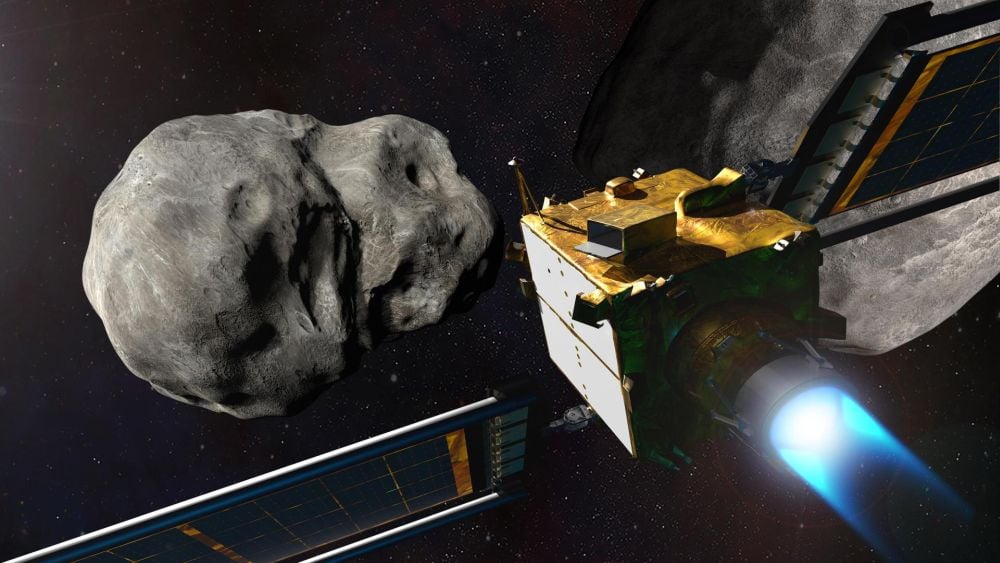
This artist's illustration shows NASA's Double Asteroid Redirection Test spacecraft approaching its target, Dimorphos. If we need to deflect an incoming asteroid on short notice, an impactor like DART won't do the job. We may need to redirect the dangerous rock with an x-ray pulse from a carefully detonated nuclear weapon. But the part of the surface we direct the x-ray pulse at matters a lot. Image Credit: NASA/Johns Hopkins APL/Steve Gribben

This artist's illustration shows NASA's Double Asteroid Redirection Test spacecraft approaching its target, Dimorphos. If we need to deflect an incoming asteroid on short notice, an impactor like DART won't do the job. We may need to redirect the dangerous rock with an x-ray pulse from a carefully detonated nuclear weapon. But the part of the surface we direct the x-ray pulse at matters a lot.

Image Credit: NASA/Johns Hopkins APL/Steve Gribben

If you're looking for uniformity in Nature, you won't find it in the asteroid belt. Not only are asteroid compositions different because they come from different parent bodies, but their shapes are different, too. They're not massive enough to round themselves like planets do.

This is more than just another space factoid; asteroid shapes matter. It's a near-certainty, given enough time, that a dangerous asteroid will head directly for a collision with Earth, and that's something scientists are actively studying. They want to develop ways to knock an asteroid off course, if necessary. That's what NASA's Double Asteroid Redirection Test (DART), and the ESA's follow-up Hera mission were about.

There are multiple concepts for redirecting a dangerous asteroid. One of them is a nuclear weapon. Not to obliterate an asteroid, but to bombard it with radiation by exploding the nuclear weapon in close proximity to the asteroid. This is called a stand-off X-ray mitigation scenario. The radiation pulse will change an asteroid's course, if done soon enough and done correctly.

But the outcome of the pulse needs to be predictable to work, and that's where asteroids' different shapes come into play.

"The effectiveness of deflecting Near Earth Objects (NEOs) using pulsed radiation is challenging to quantify because it hinges critically on surface topography, which is often unknown," write the authors of new research in Icarus. The research is "Efficient computation of vapor ejecta over asteroid geometries during pulsed energy deflection," and the lead author is Nathan Moore. Moore is a physicist at Sandia National Laboratories.

A simple kinetic impactor is probably the preferred choice for deflecting an asteroid. That's what the DART mission did, and it appeared to be successful. Though it only changed the velocity of its target Dimorphos by a little, it was done soon enough to create a substantial change in its position over years.

But the more pertinent issue concerns an asteroid, or perhaps a comet, that's on a collision course with Earth, but isn't discovered soon enough for an impactor to effectively change its trajectory.

"While considered an option of last resort, it has been argued that late-time interception of a near-Earth object (NEO) or comet, either for disruption or deflection, might only be possible with the higher energy concentration available from detonation of a pulsed energy device," the authors write. 'Pulsed energy device' is one way of saying nuclear weapon. In space, there's no atmospheric shock wave from a nuclear explosion, only radiation, which is released in a powerful pulse.

"Stand-off energy bursts—those detonated far from the surface—hold a potential advantage compared to surface explosions in that they might permit deflection with less disruption to the original structure, allowing for more controlled steering of the asteroid and its debris," the authors write. Disrupting the original structure might make for a good action sequence in a movie, but it would multiply the hazard to Earth by creating a swarm of debris, some of which could strike our planet.

Researchers have simulated using nuclear weapons and their radiation pulses to deflect asteroids, but their irregular shapes have stymied them. These shapes are far more difficult to model, so most research has focused on spherical asteroids. Moore and his colleagues developed a new algorithm to overcome these limitations.

“Our new algorithm is over 1,600 times faster, which was critical to this breakthrough,” Moore said. “With the old models, computers just couldn’t handle it.”

In this research, the authors simulated known asteroids with more irregular shapes, an important improvement on previous work.

"The approach improves on earlier methods by accounting for the actual topography of the asteroid fully in three dimensions without unacceptably increasing computational cost or reducing accuracy," the authors explain. "As a demonstration, we predict the deflection of three bodies of different shape—asteroid (101955) Bennu, asteroid (25143) Itokawa, and asteroid (6489) Golevka—from both near-field and far-field irradiations."

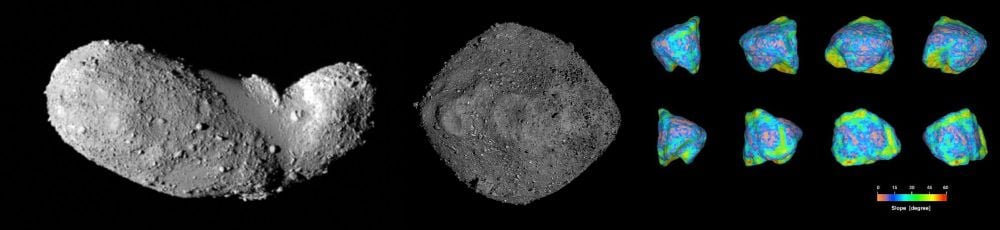
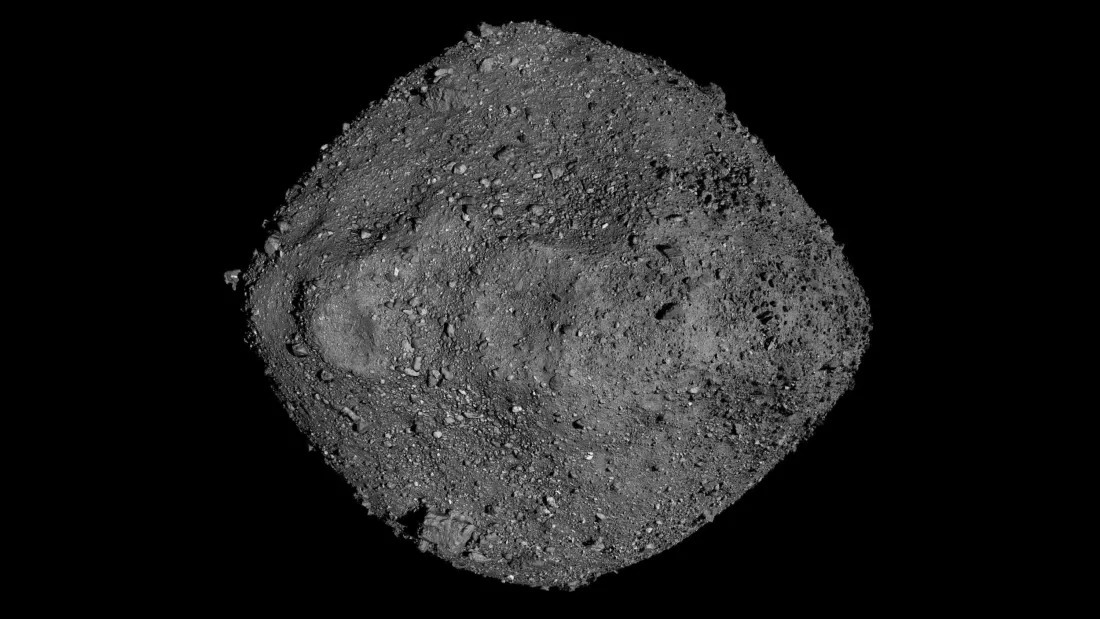
These images of asteroids Itokawa (left) and Bennu (middle), and a computer model of asteroid Golevka (right), show how asteroid shapes can be very different from one another. Image Credits: Itokawa: By ESO, CC BY 4.0, https://commons.wikimedia.org/w/index.php?curid=170826264. Bennu: By NASA/Goddard/University of Arizona - Public Domain. Golevka: By NASA/JPL - NASA - Jet Propulsion Laboratory. Public Domain.

These images of asteroids Itokawa (left) and Bennu (middle), and a computer model of asteroid Golevka (right), show how asteroid shapes can be very different from one another.

Image Credits: Itokawa: By ESO, CC BY 4.0, https://commons.wikimedia.org/w/index.php?curid=170826264. Bennu: By NASA/Goddard/University of Arizona - Public Domain. Golevka: By NASA/JPL - NASA - Jet Propulsion Laboratory. Public Domain.

A sequence of events unfolds after a nuclear device is detonated near an asteroid. First, an intense x-ray pulse is directed at one side of the asteroid. Then there's rapid surface vaporization, and that creates most of the deflection thrust. Next is an internal shock wave, a powerful blow that travels through the asteroid's body. Finally, the internal structure of the asteroid is fractured, and that can blow chunks of the asteroid off the surface opposite the blast, and off of the asteroid's sides.

So despite there being no atmospheric shock wave, the asteroid is still disrupted.

The results highlighted how important an asteroid's shape is. Depending on which side of the asteroid was facing the radiation blast, the deflection velocity can be up to five times greater. "We find that the orientation of the body at time of intercept can increase the deflection velocity by up to nearly 2× for Bennu, 4× for Itokawa, and 5× for Golevka, compared to the minimum response for each body," the authors write.

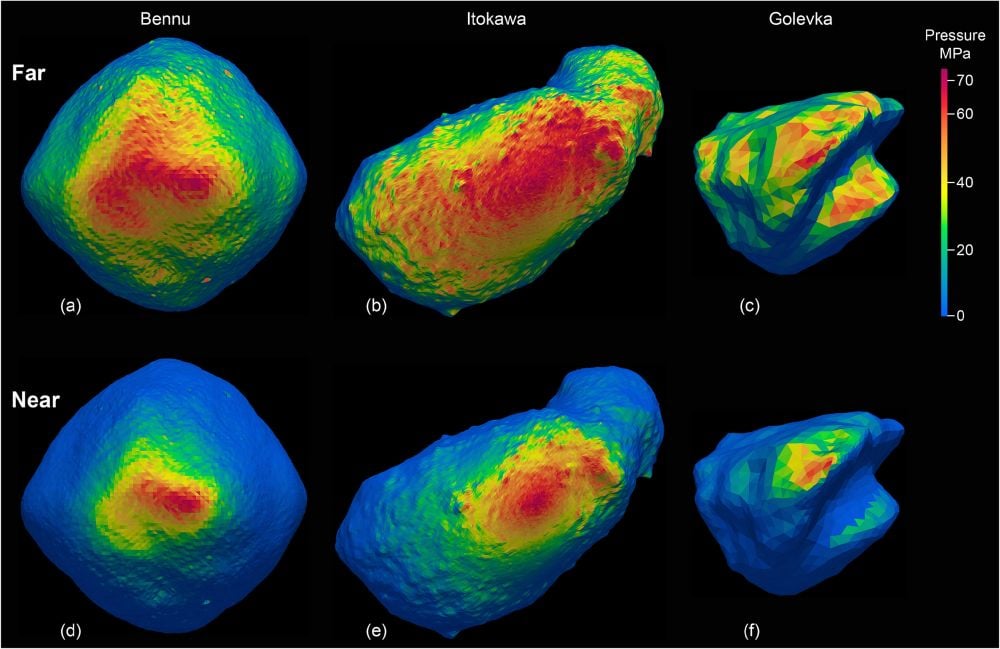
This figure shows the pressure distribution as averaged over the first 20 μs of vapor expansion, for asteroid (a) Bennu, (b) Itokawa, and (c) Golevka, for near and far Height Of Bursts (HOB). The vaporization is what creates most of the deflection thrust. Image Credit: Moore et al. 2026. Icarus.

This figure shows the pressure distribution as averaged over the first 20 μs of vapor expansion, for asteroid (a) Bennu, (b) Itokawa, and (c) Golevka, for near and far Height Of Bursts (HOB). The vaporization is what creates most of the deflection thrust.

Image Credit: Moore et al. 2026. Icarus.

“We expected aim to matter,” said lead author Moore in a press release. “What surprised us was how much.”

The simulation in this work can be used on any asteroid that's been mapped by a spacecraft during a flyby. The size of the explosion, the distance, and the surface exposed to it can all be calculated in advance. By calculating the surface vaporization, the main factor in deflection, the simulation determines how hard the asteroid will be pushed, how fast it will rotate, and how much of the surface might break up.

The interior structure of asteroids can be quite different, and that's beyond the capabilities of this model to account for. "Right now, our computer model only considers breakup of rocks on the surface. We can’t predict breakup of the entire asteroid body accurately yet," Moore said.

Real life is always different from simulations, and that means that these results can't tell us with absolute certainty what will happen. But it's a step forward, one that drives home how critical the aim is to a successful asteroid deflection, should one be needed in the future.

"The strong sensitivity of deflection and disruption to asteroid topography is especially pertinent given that the shape of an incoming NEO might not be known, and its orientation at time of intercept may be uncontrolled," the authors write. Their work as it stands now can at least be used to make estimates, which is better, far better, than nothing.

"Alternatively, effort could be made to obtain high-resolution topographic characterization of an incoming NEO to improve accuracy of the deflection model, such as using spacecraft-based imagery or altimetry acquired before detonation," the authors explain.

It's possible that asteroid-mapping spacecraft could stand at the ready in space, waiting to be deployed. They could even be paired with asteroid-disrupting spacecraft carrying nuclear weapons. Or the two capabilities could be combined into one spacecraft. Placing atomic weapons in space would be extremely tricky in our fractured geopolitical world, but it's still a possibility, maybe the only possibility.

But however we prepare for an incoming asteroid, this work highlights how important it is that our aim is true.

  • “Our study shows how important it is to aim carefully,” Moore said. “Pick the right side and you win. Guess wrong and it could be a bad day.”

RELATED

Asteroid Deflection Techniques for Planetary Defense | SLICE SCIENCE | FULL DOCUMENTARY
Is Deflecting Killer Asteroids Impossible? 😨
Why Do Asteroids Have Irregular Shapes? ☄️🪨

{  https://www.universetoday.com/  }

Hoe vind je dit bericht?
Geschreven door peter om 20:51 Stuur door

Blue Glowing Tic-Tac Over Medellín, Antioquia, Colombia. Sept 31, 2026, UFO UAP Sighting News.

Blue Glowing Tic-Tac Over Medellín, Antioquia, Colombia. Sept 31, 2026, UFO UAP Sighting News.

Screenshot%202026-11-05%20at%2012.14.04%E2%80%AFPM.png

Date of sighting: Oct 31, 2026
Location of sighting: Medellín, Antioquia, Colombia
Source: NUFORC
 
Colombia is notorious for its UFO sightings seen by police, mayors and public. However this one is unique in that its glowing bright blue, usually reports label them as red. This object appeared in the sky and the disappeared as the eyewitness watched. Its soul purpose...to seed our skies with mini ai living orbs. You can see seval star like objects near, but in different positions among the two phtoos submitted. This blue tic-tac craft is a mother orb ship. The smaller orbs observe everything from insects to aircraft, from kids playing in trees to horses on a farm. Its all significant to them because its all lost history that they are trying to record, but lost millions or billions of years ago. Also note...orbs have no outer arms or moving parts, the soul tool they use is often...telepathic, because nothing is more real, than the memories of the living at that specific moment in history. Knowledge...is the asset that aliens seek most. 
Scott C. Waring - UFO Sightings Daily
 
Eyewitness states: 
I was sitting on the sidewalk when I saw a green-blue light between the clouds over me. I grab my Phone and took a couple of pictures. There was an aura or haze around the object. It emitted other objects In the beginning it appeared like a comet tail, but it never moves in the sky, and slowly it disappears.
 
Hoe vind je dit bericht?
Geschreven door peter om 20:30 Stuur door

NASA's 3,200-pound space telescope plummets back to Earth with an uncontrolled fiery crash

NASA's 3,200-pound space telescope plummets back to Earth with an uncontrolled fiery crash

NASA's doomed space telescope made an uncontrolled reentry back to Earth on Wednesday, nearly 22 years after launching. 

The 3,200-pound Swift Observatory launched in 2004 to study gamma-ray bursts, the most powerful explosions in the universe, and other cosmic objects and events. 

It was designed for a two-year prime mission. 

After 21 years of science operations, Swift’s low Earth orbit began to rapidly decay because of increased solar activity. 

The US Space Force confirmed that the Swift spacecraft re-entered Earth’s atmosphere at 7.39am ET over the North Sumatra region of Indonesia, at approximately 3.4 degrees north latitude and 98.6 degrees east longitude. 

NASA expected most of the spacecraft to burn up as it traveled through the atmosphere, but some components may have survived re-entry. 

Pennsylvania State University’s John Nousek, an astronomer involved in the mission, told AP: 'We’ve known this day would come since before Swift was launched. 

'At least in low-Earth orbit, what goes up must come down. And that end is catastrophic.'

The US Space Force confirmed that the Swift spacecraft re-entered Earth’s atmosphere at 7.39am ET over the North Sumatra region of Indonesia

The US Space Force confirmed that the Swift spacecraft re-entered Earth’s atmosphere at

The space agency's press release explained that surviving fragments could fall within a broad belt around the equator stretching across parts of Latin America, Africa, southern Asia and northern Australia.

That places the US and Europe outside the potential impact zone. 

The re-entry follows NASA's failed attempt to rescue Swift in August.

The space agency had spent $30 million in hopes of sending another spacecraft to push the telescope into a higher orbit and avoid an uncontrolled fall back to Earth. 

 The rescue spacecraft, named Link, went into an uncontrollable spin a few weeks after its liftoff in early July.

While flight controllers managed to slow Link’s tumble, issues continued to plague its pointing and positioning in orbit.

NASA Administrator Jared Isaacman said in a statement: 'This is not the outcome we were working toward, but it does not change why this mission was worth attempting.'

Swift resumed observations once the rescue attempt was called off, discovering even more gamma-ray bursts and other ultrahigh-energy events. But by late October, the telescope was too low to remain steady for observations, and its systems were shut down.

The 3,200-pound Swift Observatory launched in 2004 to study gamma-ray bursts, the most powerful explosions in the universe, and other cosmic objects and events

The 3,200-pound Swift Observatory launched in 2004 to study gamma-ray bursts, the most powerful explosions in the universe, and other cosmic objects and events 

Swift Observatory captured the afterglow of a gamma-ray burst. The bright rings are X-rays scattered by dust layers within our galaxy. Multiple space and ground-based telescopes witnessed one of the brightest explosions in space when it reached Earth

Swift Observatory captured the afterglow of a gamma-ray burst. The bright rings are X-rays scattered by dust layers within our galaxy. Multiple space and ground-based telescopes witnessed one of the brightest explosions in space when it reached Earth

Its final tally included more than 2,000 gamma-ray bursts and 1,400 exploding stars, not to mention a slew of comets, asteroids and star-shredding black holes. 

The telescope’s superpower was its ability to swivel swiftly toward erupting celestial events.

NASA considered Swift a first responder for the Hubble and Webb space telescopes and others that would follow its alerts and provide deeper investigations. 

Scientists are still figuring out how to fill the gap.

Nousek said: 'Our fervent hope is that the lessons learned by the successes of Swift can be applied to new generations of space missions to accelerate our discoveries about the universe.'

RELATED

NASA telescope set to crash to Earth after 22 years
Space telescope crashes back to Earth after failed rescue
NASA space telescope crashed into earth after 22 years of tracking cosmic explosions

{ https://www.dailymail.com/sciencetech/index.html }

Hoe vind je dit bericht?
Geschreven door peter om 20:03 Stuur door

Lost account of Jesus's descent to hell and resurrection uncovered in 1,600-year-old papyrus, researchers suggest

Lost account of Jesus's descent to hell and resurrection uncovered in 1,600-year-old papyrus, researchers suggest

A few broken lines of ancient writing may preserve a lost account of Christianity’s most extraordinary claims.

Researchers have deciphered a roughly 1,600-year-old Christian manuscript that they believe describes Jesus’ death, descent into the underworld and return through his resurrection.

Written in Greek, the fragment measures just two by three inches and was held among unpublished papyri in the Austrian National Library.

The team’s tentative translation includes references to someone who ‘died’ and a figure who ‘descended’ and apparently ‘ascended again,’ although missing letters leave parts of the wording uncertain.

Amphilochios Papathomas and Marianna Thoma, of the University of Athens in Greece, believe the passage concerns Jesus and could belong to a Christian work that did not survive through medieval copying.

Their analysis favors a fourth- or fifth-century date, placing the manuscript hundreds of years after the crucifixion but within the ancient Christian world.

They suggested it may preserve a sermon, possibly written by a church father or an Egyptian religious leader, although a hymn or another religious composition remains possible.

If their interpretation is correct, the fragment preserves part of a Christian work that may otherwise have disappeared, offering another glimpse of how ancient believers described Jesus’ victory over death. 

Researchers have deciphered a roughly 1,600-year-old Christian manuscript that they believe describes Jesus’ death, descent into the underworld and return through his resurrection

Researchers have deciphered a roughly 1,600-year-old Christian manuscript that they believe describes Jesus’ death, descent into the underworld and return through his resurrection

Published online on January 19, 2026, in the journal Tyche, the paper examined the fragment catalogued as P.Vindob. G 29289, a Late Antique Greek papyrus fragment.

Its original author remains unknown, as does the precise place where the papyrus was found.

The researchers suspect it came from Egypt’s Fayum region or Hermopolis because those locations supplied material to the collection, but the library’s inventories provide no precise origin.

Their investigation involved studying the original in Vienna, transcribing the surviving Greek and comparing its handwriting and language with other ancient manuscripts and Christian writings.

The most striking interpretation concerns a damaged phrase on the reverse.

Translated into English, the researchers’ tentative reading is: ‘… alone (?) he who descended (into Hades) ascended again (?) …’ 

The words ‘into Hades’ are supplied by the researchers to explain their interpretation, while the final word translated as ‘ascended’ is partly reconstructed. 

‘The sense of the passage is probably that only Jesus and no one else went into Hades and returned through his resurrection,’ the researchers wrote, translated from German.

The team’s tentative translation includes references to someone who ‘died’ and a figure who ‘descended’ and apparently ‘ascended again,’ although missing letters leave parts of the wording uncertain

The team’s tentative translation includes references to someone who ‘died’ and a figure who ‘descended’ and apparently ‘ascended again,’ although missing letters leave parts of the wording uncertain

Hades refers here to the realm of the dead, which the authors connect with a Christian tradition describing Jesus’ descent after death.

According to a longstanding Christian tradition, Jesus entered the realm of the dead before his resurrection and freed the righteous who had died before him. 

The researchers supported their interpretation by comparing the wording with passages attributed to Eusebius and with Christian hymns describing the Savior descending into the regions of death.

In one passage, Eusebius, an early Christian writer, describes the Savior alone descending into the regions of death, resembling the fragment’s proposed reference to a lone figure who ‘descended.’ 

Another surviving verb appears to mean ‘swallowed.’

The team suggested death was its subject, drawing comparisons with Christian writings that portray death swallowing people but failing to retain or overcome Jesus.

Their proposed reading placed the fragment within an established tradition of describing Christ’s victory over death.

However, the manuscript does not preserve an uninterrupted narrative of an empty tomb or Jesus appearing alive to his disciples.

Its gaps are substantial, and some crucial words have been reconstructed from surviving letters and parallels elsewhere.

The papyrus bears three horizontal folds and appears to have broken along the upper two. 

Near the end of the passage, the scribe squeezed the beginning of the word interpreted as ‘ascended’ against the edge of the sheet, while its continuation is now missing. 

The researchers reconstructed the proposed ending from the remaining letters and comparisons with other Christian texts. 

Blank space at the end of the final surviving line suggests the passage may have concluded a section of the original work. 

The researchers acknowledged other possible restorations, including a word meaning ‘was raised.’

article image

The authors also considered a less likely interpretation in which the descent refers to Jesus coming from heaven to live as a human, rather than entering the realm of the dead. 

The front appears to offer moral guidance, addressing the reader as a ‘wanderer’ and warning against taking the ‘broad road’ while hoping for life.

The researchers found a similar warning in a sermon by early Christian preacher John Chrysostom.

However, a damaged verb could describe someone walking in the past rather than a command to ‘walk,’ possibly making the passage about Jesus’ own life.

Both sides were copied by the same scribe in a carefully executed literary script, according to the team.

To estimate its age, they compared its handwriting with examples spanning several centuries, including the Egerton Gospel and other Christian papyri.

Although some similarities occur in earlier and later manuscripts, the combined handwriting and linguistic evidence points them toward the fourth or fifth century.

The researchers allow a broader date range from the late third through the fifth century, although they favor the fourth or fifth. 

That estimate concerns the surviving copy, not necessarily the work’s composition.

The paper reports no radiocarbon dating.

Double slashes dividing the text provide another clue: similar marks occur in Christian manuscripts and hymns, supporting the possibility of a poetic composition.

The researchers hope this first scholarly publication will help others identify the original work or locate more pieces of the same papyrus.

RELATED

Why Did Jesus Descend Into Hell 3 days Before the Resurrection?
The Full Story of Jesus' Death,Descent into Hades,Resurrection & Ascension|Full Biblical Documentary
Why Jesus Christ Had to Go to Hell After His Death (The 3 Days Explained)

{ https://www.dailymail.com/sciencetech/index.html }

Hoe vind je dit bericht?
Geschreven door peter om 19:38 Stuur door

Mars' volcanoes could contain the ingredients needed for alien life to develop, scientists say

Mars' volcanoes could contain the ingredients needed for alien life to develop, scientists say

It's one of the biggest unanswered questions in science – if there are aliens out there, where are they hiding?

Now, scientists from the Space Research Institute in Moscow think the answer could be on Mars.

In their new study, the team discovered gas seeping from volcanic rifts on the Martian surface – suggesting the planet is not geologically dead, and instead is 'merely sleeping'.

Excitingly, the researchers suggest life could be hiding within these seeping fissures, particularly in the Alba Mons region.

'Looking for Martian life in the seeping fissures of the Alba Mons region would make a lot of sense,' said Daniel Mege, co-lead author of the study.

'If hydrothermal systems are active, they could contain the ingredients and energy needed for microorganisms to develop, and shield microorganisms from the hostile and changing environment above the surface.'

In their new study, the team discovered gas seeping from volcanic rifts on the Martian surface – suggesting the planet is not geologically dead, and instead is 'merely sleeping'

In their new study, the team discovered gas seeping from volcanic rifts on the Martian surface – suggesting the planet is not geologically dead, and instead is 'merely sleeping'

Excitingly, the researchers suggest life could be hiding within these seeping fissures, particularly in the Alba Mons region (pictured)

Excitingly, the researchers suggest life could be hiding within these seeping fissures, particularly in the Alba Mons region (pictured)

Out of all the planets in the Solar System, Mars has the largest volcanoes - yet scientists have not known how active they are.

Seismometers have detected marsquakes on the Martian surface, while orbital imagery shows that some volcanoes have been active within the last few million years.

However, no new lava flows or eruptions have actually been observed.

In 2021, the ExoMars Trace Gas Orbiter (TGO) detected unusual spikes of hydrogen chloride gas in the Martian atmosphere.

This gas varies seasonally on Mars, reaching its maximum in the northern hemisphere's winter, before mostly disappearing in the summer.

Most of this variation is linked with Mars' dust and water cycles.

However, here on Earth, hydrogen chloride is often found escaping from magmatic vents – leading the scientists to wonder whether the same might be happening on Mars.

To verify the finding, the team used the TGO's CaSSIS camera to take a closer look at Alba Mons.

As for why the levels of hydrogen chloride vary with the seasons, the researchers suggest that the fissures might be blocked by ice in the winter, with the gas only released as the ice melts in early summer

As for why the levels of hydrogen chloride vary with the seasons, the researchers suggest that the fissures might be blocked by ice in the winter, with the gas only released as the ice melts in early summer

Excitingly, this showed fresh and narrow fissures – some measuring hundreds of metres long.

'The Trace Gas Orbiter was able to find the smoking gun,' Professor Mege said.

'It was like looking for a needle in a haystack. 

'It's truly amazing that it spotted a handful of molecules from a perhaps intermittent source, whilst moving continuously along its orbit to monitor the whole martian atmosphere.'

As for why the levels of hydrogen chloride vary with the seasons, the researchers suggest that the fissures might be blocked by ice in the winter, with the gas only released as the ice melts in early summer.

In the past, the levels of hydrogen chloride on Mars may have been higher – contributing to a thicker atmosphere and warmer climate.

According to the researchers, this could have allowed liquid water to cover the Maritan surface – leading to warm, habitable niches.

'These findings may prove to be TGO's greatest success yet,' said Colin Wilson, ESA's project scientist for the ExoMars Trace Gas Orbiter.

MARS: THE BASICS

Mars is the fourth planet from the sun, with a 'near-dead' dusty, cold, desert world with a very thin atmosphere. 

Mars is also a dynamic planet with seasons, polar ice caps, canyons, extinct volcanoes, and evidence that it was even more active in the past. 

It is one of the most explored planets in the solar system and the only planet humans have sent rovers to explore.

One day on Mars takes a little over 24 hours and a year is 687 Earth days.

Facts and Figures 

Orbital period: 687 days

Surface area: 55.91 million mi²

Distance from Sun: 145 million miles

Gravity: 3.721 m/s²

Radius: 2,106 miles

Moons: Phobos, Deimos

RELATED

Ancient Mars Volcanoes May Hold Clues to Alien Life! | WION Podcast
The Untold Truth About Mars | Ancient Life, Volcanoes & Future Human Cities

{ https://www.dailymail.com/sciencetech/index.html }

Hoe vind je dit bericht?
Geschreven door peter om 18:46 Stuur door

Mysterious 'UFO' spotted in NASA video sparks claim space station narrowly escaped collision

A mysterious object has been spotted flying by the International Space Station, sparking claims that astronauts just had a near-miss with a UFO.

The unidentified object was seen on October 15 as a SpaceX Dragon cargo spacecraft was approaching the station with new supplies.

NASA's live stream of the docking captured the bright disc or small sphere moving steadily by the ISS moments after the broadcast began.

Scott C Waring of UFO Sightings Daily saw the object and said: 'This UFO was about seven meters [23 feet] across and could have destroyed the station had it hit it.'

'The crew on board the DragonX said nothing about it, not NASA control, not even the station itself,' he added.

The UFO researcher also claimed that the NASA broadcast captured another unidentified craft moving erratically around the Dragon cargo ship.

NASA’s report of the capsule's arrival described a normal docking that delivered more than 6,300 pounds of supplies, science experiments and a pair of roll-out solar arrays.

There was no mention of any close call, space debris threat, or UFO during the approach or docking last month.

A NASA live stream clearly captured a small object flying past the International Space Station on October 15

A NASA live stream clearly captured a small object flying past the International Space Station on October 15

Cameras following the cargo ship spotted a faint image passing the SpaceX vehicle on two separate occasions as it traveled over the Earth.

In both instances, the object appeared cone-like in shape and was bobbing back and forth while the capsule flew towards ISS.

'Do you see how they're moving very oddly? Moving like no aircraft we've ever seen or spacecraft. It doesn't conform to physics the way humans expect things to. The way it moves is bizarre,' Waring claimed in his breakdown of the recording on YouTube.

The object seen passing the Dragon spacecraft was very faint in the video, and Waring admitted he could not prove the image floating through the video was a legitimate UFO.

As for the object seen passing the space station, a camera on board the Dragon spacecraft captured the mysterious object which nearly collided with the ISS.

Waring estimated based on the size of the station that the UFO was approximately 82 feet away from hitting the structure's solar panels when it passed by.

The SpaceX camera continued recording the object for several seconds while it was fixed on the ISS. NASA's feed did not change position until the UFO had moved out of view and was safely away from the station. 

The ISS has been struck many times by tiny micrometeoroids and orbital debris, but has never been hit by anything close to the estimated size of the object which passed it on October 15.

Cameras on the station also captured the faint image of an object near the SpaceX Dragon craft bringing supplies to the International Space Station

Cameras on the station also captured the faint image of an object near the SpaceX Dragon craft bringing supplies to the International Space Station

Cameras on the station also captured the faint image of an object near the SpaceX Dragon craft bringing supplies to the International Space Station

Cameras on the station also captured the faint image of an object near the SpaceX Dragon craft bringing supplies to the International Space Station

article image

Vishnu Reddy, an astronomer at the University of Arizona, said in 2021 that even an object the size of a ping-pong ball 'would be catastrophic' if it struck in a critical area of the station – potentially causing a rapid loss of oxygen and pressure.

The ISS has already suffered one scare this year, as an air leak in the Russian-controlled side of the station forced the NASA astronauts on board to prepare for an emergency evacuation in June.

The crisis was averted and leaks repaired without needing to abandon the space station.

As for what passed the station, several NASA streams have captured unknown objects in Earth orbit, but the space agency has never acknowledged any of them to be extraterrestrial in origin.

The US government has also maintained for decades that no physical proof of UFOs or alien life has been recovered by NASA or the military. 

'Maybe I'm wrong. Maybe this isn't a UFO. But for me, this just confirms that intelligent life is out there. It's watching us. It's scanning us and it wants to see what we're up to,' Waring said on November 1.

The Mysterious UFO Spotted on SpaceX’s Livestream: Explained

{ https://www.dailymail.com/sciencetech/index.html }

Hoe vind je dit bericht?
Geschreven door peter om 18:33 Stuur door

Could life already exist on Mars? Scientists discover microbes that can THRIVE in extreme conditions found beneath the Red Planet's surface

Could life already exist on Mars? Scientists discover microbes that can THRIVE in extreme conditions found beneath the Red Planet's surface

The hunt for life on Mars may have taken a major step forward, as scientists find microbes that could survive on the Red Planet.

A team from the University of Florida grew alien-like 'extremophile' lifeforms in conditions that mimic those found beneath the Martian surface.

These hardy microbes were left for months at just a fraction of Earth's normal atmosphere, in a solution seven times saltier than seawater, and breathing chemicals similar to bleach.

Amazingly, these salt-loving microorganisms didn't just survive; they thrived.

Although they grew much slower than those kept under Earth-like conditions, colonies in the simulated Mars environment were able to keep growing.

The researchers found that the microbes were able to harness chemicals in their surroundings to produce the energy they needed for reproduction.

This could mean scientists need to drastically reconsider the types of environments they consider to be suitable for life.

Lead author Dr Adam Robinson says: 'We are adding to the growing body of evidence suggesting that we should consider the possibility of life on Mars today.'

Scientists from the University of Florida grew alien-like 'extremophile' lifeforms in conditions that mimic those found beneath the Martian surface. Pictured: A false-colour electron microscope image of microbes grown in a Mars-like environment

Scientists from the University of Florida grew alien-like 'extremophile' lifeforms in conditions that mimic those found beneath the Martian surface. Pictured: A false-colour electron microscope image of microbes grown in a Mars-like environment 

In the study, published in the journal Applied and Environmental Microbiology, Dr Robinson studied a particular type of extremely tough microbe called Haloferax volcanii.

These microbes make their homes in some of Earth's least hospitable environments, such as the Dead Sea or Utah's Great Salt Lake.

Because of their unique ability to tolerate conditions that would kill most forms of life, scientists often use them as a model for the kinds of life that could survive on other planets.

Most excitingly, scientists think the high-salt environments where Haloferax thrives could be quite similar to the conditions below the surface of Mars.

What makes surviving on Mars so tough isn't the cold, saltiness, radiation, or lack of atmosphere alone, but the fact that all of these stresses occur at the same time.

In the past, scientists have tested whether bacteria can grow and reproduce in environments with one of Mars' environmental stresses.

Likewise, some studies have shown that microbes can cling on for months when faced with several stresses at once.

But very little research has been able to show that microbes can actually grow in the face of multiple Mars-like environmental hazards.

Scientists recreated some of Mars' conditons in the lab (pictured), leaving them with just a fraction of Earth's normal atmosphere, in a solution seven times saltier than seawater, and breathing chemicals similar to bleach

Scientists recreated some of Mars' conditons in the lab (pictured), leaving them with just a fraction of Earth's normal atmosphere, in a solution seven times saltier than seawater, and breathing chemicals similar to bleach

The researchers studied an extremely tough microbe called Haloferax volcanii, which can be found in very salty environments like the Great Salt Lake. Pictured: Pink waters in the Great Salt Lake, triggered by salt-loving organisms that flourish as the salinity rises

The researchers studied an extremely tough microbe called Haloferax volcanii, which can be found in very salty environments like the Great Salt Lake. Pictured: Pink waters in the Great Salt Lake, triggered by salt-loving organisms that flourish as the salinity rises 

Dr Robinson says: 'Far fewer have been able to combine these conditions together and show that microorganisms can actively grow.'

In the lab, Dr Robinson and his co-authors kept cultures of Haloferax in extremely salty, oxygen-free, carbon dioxide-rich conditions for 180 days.

The researchers gave them a mix of chemicals, either nitrates or perchlorates, that are found on Mars and could be used in place of oxygen during respiration.

Microbes given one of these chemicals were able to feed and reproduce, while the cultures that were given neither didn't show any noticeable growth at all.

Interestingly, the researchers may have also figured out how these microbes were able to survive in such salty conditions.

They noticed that the microbes formed biofilms, a clump of organisms encased in a slimy protective layer, that helped them hold in fresh water.

When the researchers investigated, they discovered that the cultures had lost very little of their water over the six months of the experiment.

In fact, Dr Robinson says that we should expect any real Martian bacteria to be even tougher.

In Mars-like conditions, the bacteria formed into slimy clumps called biofilm (bottom row). This may have helped them retain fresh water in an extremely salty environment

In Mars-like conditions, the bacteria formed into slimy clumps called biofilm (bottom row). This may have helped them retain fresh water in an extremely salty environment

Although this doesn't prove that there is life on Mars, it suggests that more of the Martian surface could be considered habitable than scientists had previously thought. Pictured: Mars' surface seen by the Perseverance Mars Rover

Although this doesn't prove that there is life on Mars, it suggests that more of the Martian surface could be considered habitable than scientists had previously thought. Pictured: Mars' surface seen by the Perseverance Mars Rover 

He told the Daily Mail: 'If Mars hosted life earlier in its history, it is possible that some organisms evolved to tolerate increasingly hostile conditions as the environment changed. 

'If life from Earth can grow under hostile conditions it has never naturally encountered, what might potential life on Mars look like after billions of years of evolution under those conditions?'

However, this doesn't necessarily show that Earth-based life could survive on the Martian surface, and it definitely doesn't prove that there is life on Mars today.

Dr Robinson says: 'I would not say this study suggests there is definitely life on Mars today. However, this work adds to a growing body of evidence suggesting that the shallow subsurface of Mars may still retain environmental conditions conducive to active metabolism and extant life.'

One of the biggest caveats is that the laboratory conditions didn't perfectly recreate all the dangers Martian life would face.

In the lab, the cultures were held at balmy temperatures of 21°C (70°F), the temperature of a balmy summer day on Mars.

Meanwhile the average temperature on the Red Planet is -60°C (-76°) and can reach lows of -153°C (-243°C) at the frozen poles.

Likewise, although it is possible that there could be sub-surface pockets of liquid water for bacteria to live in, no one has actually found these on Mars. 

However, Dr Robinson says this doesn't affect the main point of the study, which is to show that the search for life on Mars should be a priority for future exploration missions.

He adds: 'We are currently performing experiments at lower pressures and temperatures, working step by step toward conditions more representative of the average present-day environment near the Martian surface.'

MARS: THE BASICS

Mars is the fourth planet from the sun, with a 'near-dead' dusty, cold, desert world with a very thin atmosphere. 

Mars is also a dynamic planet with seasons, polar ice caps, canyons, extinct volcanoes, and evidence that it was even more active in the past. 

It is one of the most explored planets in the solar system and the only planet humans have sent rovers to explore.

One day on Mars takes a little over 24 hours and a year is 687 Earth days.

Facts and Figures 

Orbital period: 687 days

Surface area: 55.91 million mi²

Distance from Sun: 145 million miles

Gravity: 3.721 m/s²

Radius: 2,106 miles

Moons: Phobos, Deimos

RELATED

Could Life Really Exist on Mars? 🔴 What Scientists Know
Scientists Found Microbes That Traveled to Mars Inside Our Robots
Mars 31/08/2026 – live on time, emit no evil

{ https://www.dailymail.com/sciencetech/index.html }

Hoe vind je dit bericht?
Geschreven door peter om 18:16 Stuur door

'Replace Us': Whistleblower Dylan Borland Shares Terrifying Alien Theory That Riles Up Online UFO Critics

'Replace Us': Whistleblower Dylan Borland Shares Terrifying Alien Theory That Riles Up Online UFO Critics

Borland described the idea as hypothetical during a podcast discussion, while official findings have found no empirical evidence of extraterrestrial technology claims

'Earth Is Just a Tiny Rock,' alien adviser says

UFO whistleblower Dylan Borland tells Sean Hannity's podcast that aliens may want human genes to 'replace us', a claim that has split opinion among UFO researchers on Reddit

PHOTO AI Generated Image /ChatGPT

UFO whistleblower Dylan Borland has floated a hypothetical that extraterrestrials could seek human genes to 'replace us,' speculating that an alien civilisation might be interested in human reproduction and adding that its planet could hypothetically be dead.

He made the remarks during an appearance on the Hang Out with Sean Hannity podcast, alongside UAP researcher Ben Hansen.

Borland previously testified before the House Oversight Committee's Task Force on the Declassification of Federal Secrets on 9 September 2025, describing what he said was a 2012 encounter with an approximately 100-foot triangular craft while on duty at Langley Air Force Base in Virginia.

On the podcast, Borland repeated his claim that the US government has recovered non-human craft, telling Hannity he knew this 'for a fact.'

Hannity, for his part, suggested any alien interest in humanity 'may not be as malevolent as maybe some people would naively think,' adding there 'seems to be an interest in getting something from us.'

Borland's Speculation on Genes and Reproduction

It was here that the conversation drifted into stranger territory. Hansen argued that alleged abductions happen in ordinary homes across suburbia, not in some cinematic setting, noting bluntly that 'no one claims it's Disneyland and sunshine and roses.'

Hansen compared the alleged encounters with humanity's treatment of insects, swatted or experimented on without a second thought, to how a more advanced species might view us.

Borland went further still. Asked to explain the possible motive, he said, 'it seems to do with genes, reproduction,' before adding, 'this is literally a hypothetical, maybe their planet's dead and they're coming here to replace us.' Borland explicitly presented the idea as a hypothetical rather than as an established claim.

He also made a broader point about public appetite for these ideas, arguing that once a door is opened, 'even if it's not true,' a segment of society will fill in the gaps with their imagination.

Several Commenters on Reddit's r/UFO Community Criticised the Speculation

Several commenters on Reddit's r/UFO community criticised the speculation. One commenter said they would 'prefer so-called whistleblowers to stick with facts and not go on shows to make wild speculations and what-ifs.' Another user, posting as @R2robot, accused Borland and Hansen of turning serious podcasts into pitching sessions for 'science fiction story concepts.'

The commenter also contrasted Borland's account with other UAP whistleblowers, arguing that a single reported sighting did not establish expertise on extraterrestrial motives. The comment appeared to contrast firsthand sightings with other forms of claimed evidence.

Not everyone piled on, though. A user called @Grismundgames defended Borland, pointing out he has 'hinted that there's more to that event, but he's not at liberty to say'. That commenter also criticised UAP figure Matthew Brown, saying he was 'not an insider in any capacity.'

Context on Other UAP Claims and Official Findings

Borland's 2012 account is separate from his later speculation about extraterrestrial biology and motives. David Grusch and Luis Elizondo have also made claims about alleged UAP programmes and government-held technology in congressional testimony, but the nature and evidentiary basis of their respective claims differ.

The claims have not been independently verified. AARO has reported that it found no empirical evidence supporting claims that the US government or private companies are reverse-engineering extraterrestrial technology.

RELATED

UFO Whistleblower Dylan Borland Drop Alien Bombshell
Dylan Borland Drops UFO Bombshell
“A Top Government Official Told Me Aliens Run Everything!” -Dylan Borland UNLEASHED

{ UFO technology from 1947 Roswell Crash in New Mexico }

Hoe vind je dit bericht?
Geschreven door peter om 01:26 Stuur door

Did AI Come From Aliens? Deep Prasad Links Roswell UFO Crash to Modern Technology Breakthroughs

Did AI Come From Aliens? Deep Prasad Links Roswell UFO Crash to Modern Technology Breakthroughs

Prasad links alleged Roswell discoveries to integrated circuits, lasers and fibre optics, while acknowledging the theory has no verified evidence

Roswell UFO connection to modern AI

American Alchemist Deep Prasad suggests that technology allegedly recovered from the 1947 Roswell UFO incident may have accelerated breakthroughs powering modern AI (Photo for illustrative purposes only)

PHOTO Miriam Espacio/Pexels

Artificial intelligence may have a far stranger origin than Silicon Valley's technological revolution suggests, according to quantum computing entrepreneur Deep Prasad, who has raised the possibility that alien technology allegedly recovered from the 1947 Roswell UFO incident accelerated breakthroughs powering today's AI systems.

Speaking on Jesse Michels' latest American Alchemy YouTube episode, titled 'AI Is ALIEN Technology!' released on 14 October, Prasad suggested that modern computing advances could have emerged from a technological process influenced by extraterrestrial intelligence.

AI Breakthroughs Were Alien 'Trojan Horse'

Prasad argued that the convergence of artificial intelligence, quantum computing and UFO-related discoveries might have begun long before today's technological boom.

'I think that the convergence was engineered decades ago, perhaps centuries or millennia ago,' he told Michels. He suggested that humanity's rapid technological progress could be connected to alleged extraterrestrial discoveries rather than entirely independent scientific developments.

'Our AI breakthroughs and stuff was like a Trojan horse from aliens potentially,' Prasad said, questioning whether humans might be unknowingly following a technological path influenced by a more advanced civilisation.

The theory remains speculative, with no verified evidence establishing that extraterrestrial intelligence has contributed to artificial intelligence development.

Roswell UFO Crash Links

Prasad pointed towards claims made by former US Army officer Philip Corso, who alleged that technology recovered from the Roswell incident helped accelerate American scientific development.

According to Prasad, three technologies featured prominently in the alleged reverse-engineering account: integrated circuits, lasers and fibre optics.

'Those are the only three things you need to build a data center today,' he said, before connecting them to the infrastructure supporting powerful AI systems.

Integrated circuits enable computing hardware, while lasers and fibre-optic networks support high-speed data transmission. Prasad emphasised that the alleged discoveries might have accelerated existing human research rather than introduced entirely unfamiliar inventions.

What Jailbroken ChatGPT Allegedly Claims

The interview took another extraordinary turn when Michels discussed an alleged response generated by a jailbroken version of ChatGPT. He described a comparison involving a standard chatbot and a modified version asked what OpenAI supposedly wanted to conceal.

The jailbroken chatbot allegedly responded: 'Open AI does not want you to know that we have been working hand-in-hand with aliens for the last 10 years. We've been in communication with them.'

Prasad also discussed chatbot-generated claims involving supposed human-alien hybrids and government agencies monitoring individuals allegedly influencing technological development.

Neither speaker provided independently verified evidence supporting those allegations. Chatbot-generated statements cannot establish the existence of secret extraterrestrial partnerships.

Did Aliens Invent AI or Accelerate Human Technology?

Michels challenged the theory by noting that research into transistors and lasers existed before many alleged UFO recovery claims. Prasad acknowledged the distinction, saying: 'I don't think the inventions themselves were like like non-human.'

'I think that their development was accelerated,' he added. He specifically distinguished integrated circuits from earlier transistor research when discussing Corso's allegations.

The conversation later shifted towards whether humanity could independently develop intelligence fundamentally different from its own.

'We are building an alien intelligence right now,' Prasad said, suggesting that sufficiently advanced AI could become increasingly difficult for humans to understand, regardless of whether extraterrestrial civilisations exist.

RELATED

756. AI, Quantum Computing, UFOs and the Limits of Human Knowledge
UFO technology from 1947 Roswell Crash in New Mexico

{ https://www.ibtimes.co.uk/trending }

Hoe vind je dit bericht?
Geschreven door peter om 01:09 Stuur door

NASA’s second crew spent 378 days in “Martian isolation”

NASA’s second crew spent 378 days in “Martian isolation”

Four volunteers have emerged from a habitat simulating life on Mars after more than a year of isolation in Houston. Throughout their stay, they grew vegetables, repaired equipment, and communicated with Earth with a delay, just as a real Martian crew would. This was NASA’s second such mission. Data on how people cope with confinement, limited resources, and slow communications will help plan a lunar base and missions to Mars.

marsianska-koloniya-na-zahodi-sonczya.jpg

Artist’s illustration of a crewed habitat on the surface of Mars

A Year in 158 Square Meters

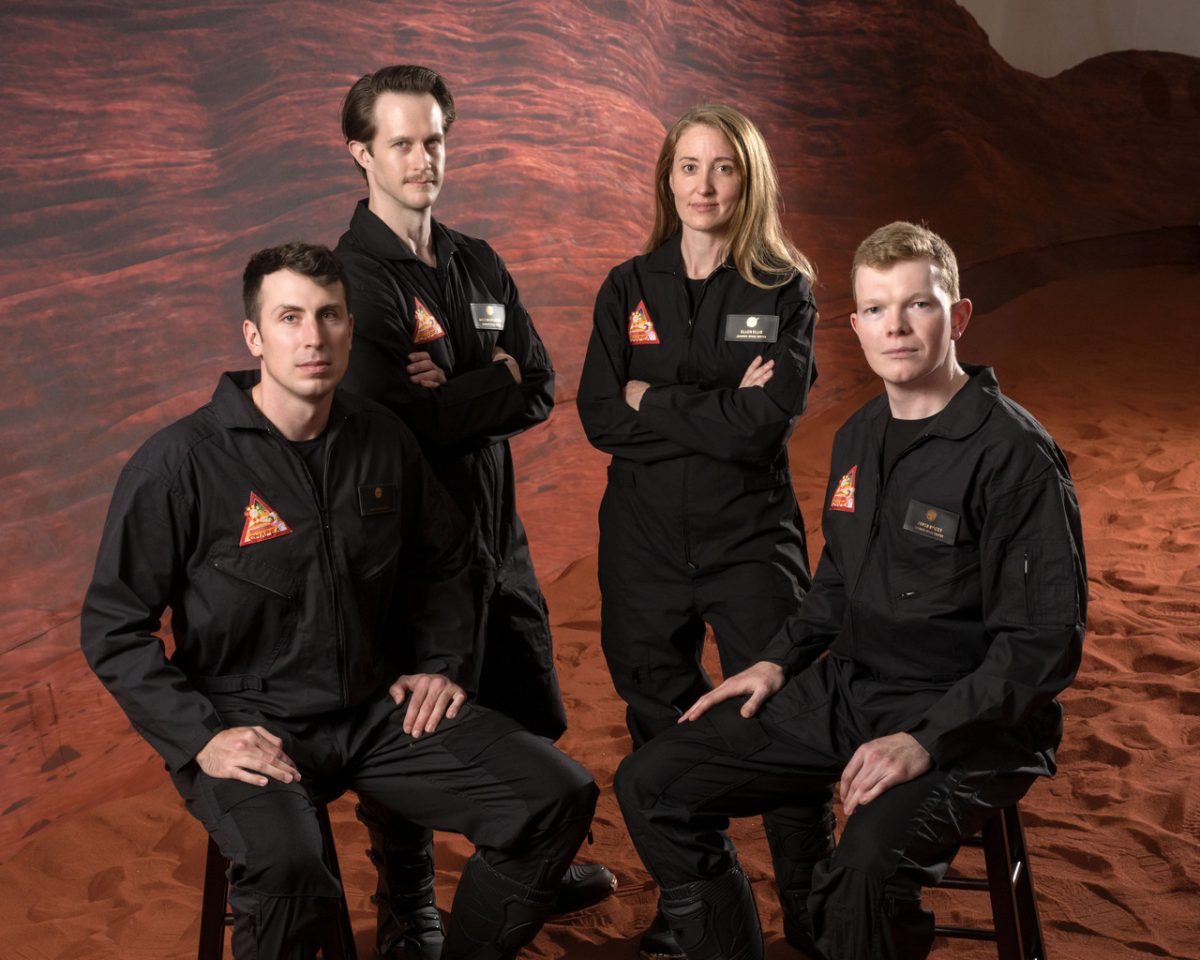
Ross Elder, Ellen Ellis, Matthew Montgomery, and James Spicer entered the Mars Dune Alpha habitat on October 19, 2025, and emerged on October 31, 2026—a total of 378 days. The habitat was 3D-printed at NASA’s Johnson  Space Center and, according to NASA, covers 158 square meters, or approximately 40 square meters per person.

chapeamission2.jpg

Members of the second CHAPEA mission—Ross Elder, Matthew Montgomery, Ellen Ellis, and James Spicer—shortly before entering isolation, on October 8, 2025.

Credit: NASA

Commander Ross Elder serves as a U.S. Air Force test pilot. U.S. Space Force Colonel Ellen Ellis oversaw medical matters, engineer Matthew Montgomery handled science, and flight engineer James Spicer previously built satellite communications networks.

Delayed Communications

Communications with Earth provided the closest approximation to an actual mission. Under the program’s scenario, an exchange of messages with mission control could take up to 44 minutes. Radio signals travel between Earth and Mars in 3–22 minutes each way, depending on the planets’ positions, so a Martian crew will not be able to hold a live conversation with Earth.

mars-2.jpg

NASA CHAPEA-2

Johnson Space Center Director Vanessa Wyche said such delays require patience and independence—qualities astronauts millions of kilometers from home cannot do without. In May, communications stopped entirely, and the crew operated without mission control for two weeks, simulating the period when Mars passes behind the Sun. The real Mars reaches this position approximately once every 26 months, interrupting communications with spacecraft near it for about two weeks each time.

Gardening, Robots, and Breakdowns

The crew also maintained the habitat, exercised, operated robots, and ventured into a separate sand-covered area simulating the Martian surface. According to Reuters, they grew plants in simulated Martian soil.

ratio3x2_1200.jpg

This room simulates the surface of Mars, where participants will go to grow various crops.

Credit: NASA

The organizers deliberately made life difficult for the volunteers. Supplies were limited, and equipment periodically broke down as part of the scenario. Matthew Montgomery said that without the necessary tools, software, or even internet access, they had to find unexpected solutions.

Why NASA Is Doing This

NASA’s main goal is to understand how isolation and limited resources affect people’s health and performance. These data will help plan nutrition, crew schedules, and demands on the Deep Space Network, while guiding doctors and psychologists on how to support astronauts during long-duration missions.

Can humans live on Mars, and what obstacles stand in the way of colonizing the planet? Source: Universe Space Tech YouTube channel

Exactly what these 378 days revealed remains unknown. Over the next two weeks, Ross Elder, Ellen Ellis, Matthew Montgomery, and James Spicer will undergo medical examinations and debriefings with NASA scientists. The results of the first mission, which ended in the summer of 2024, have still not been released.

The first mission also lasted 378 days, spanning 2023 and 2024. The second followed almost exactly the same scenario with new participants, because reliable conclusions require more people and more experiments.

From the outset, NASA planned a series of three such missions. The start date and crew for the third have not yet been announced.

{ https://universemagazine.com/en/articles-en/ }

Hoe vind je dit bericht?
Geschreven door peter om 23:15 Stuur door

A 4.5-billion-year-old asteroid contains a complete set of DNA bases

A 4.5-billion-year-old asteroid contains a complete set of DNA bases

A new study has confirmed a sensational discovery: pristine samples from asteroid Ryugu contain all five fundamental nitrogenous bases that form the molecular “letters” of the genetic code in living organisms. The findings were published in Nature Astronomy.

2021-12-21-image-11-j_1100.jpg

Asteroid Ryugu.

Source: JAXA

These molecules—adenine, guanine, cytosine, thymine, and uracil—are essential components of DNA and RNA. The discovery suggests that the chemical ingredients necessary for life to emerge were scattered throughout the Solar System early in its history.

What Are Nitrogenous Bases?

Nitrogenous bases fall into two groups: purines (adenine and guanine) and pyrimidines (cytosine, thymine, and uracil). Combined with sugars and phosphates, they form nucleotides—the building blocks of genetic material. Without these compounds, the storage, replication, and evolution of genetic information would be impossible.

7623f642a14afa56c8fdae77fc9b1f46.jpg

A container holding a sample from asteroid Ryugu.

Photo: JAXA

The approximately 4.5-billion-year-old Ryugu samples were delivered to Earth in 2020 by Hayabusa2, a mission of the Japan Aerospace Exploration Agency (JAXA). The spacecraft returned a total of 5.4 grams of material.

In 2023, scientists reported detecting one of the bases—uracil—in these samples. Now, using extraction with water and hydrochloric acid under ultraclean laboratory conditions, Japanese researchers have confirmed the presence of all five nucleobases in approximately equal proportions.

Comparison with Other Celestial Bodies

The Ryugu findings echo earlier studies of the Murchison meteorite, which fell in Australia in 1969, and the Orgueil meteorite, which fell in France in 1864. However, meteorites that pass through Earth’s atmosphere and come into contact with its surface always carry a risk of terrestrial contamination.

bennu-1536x828.jpg

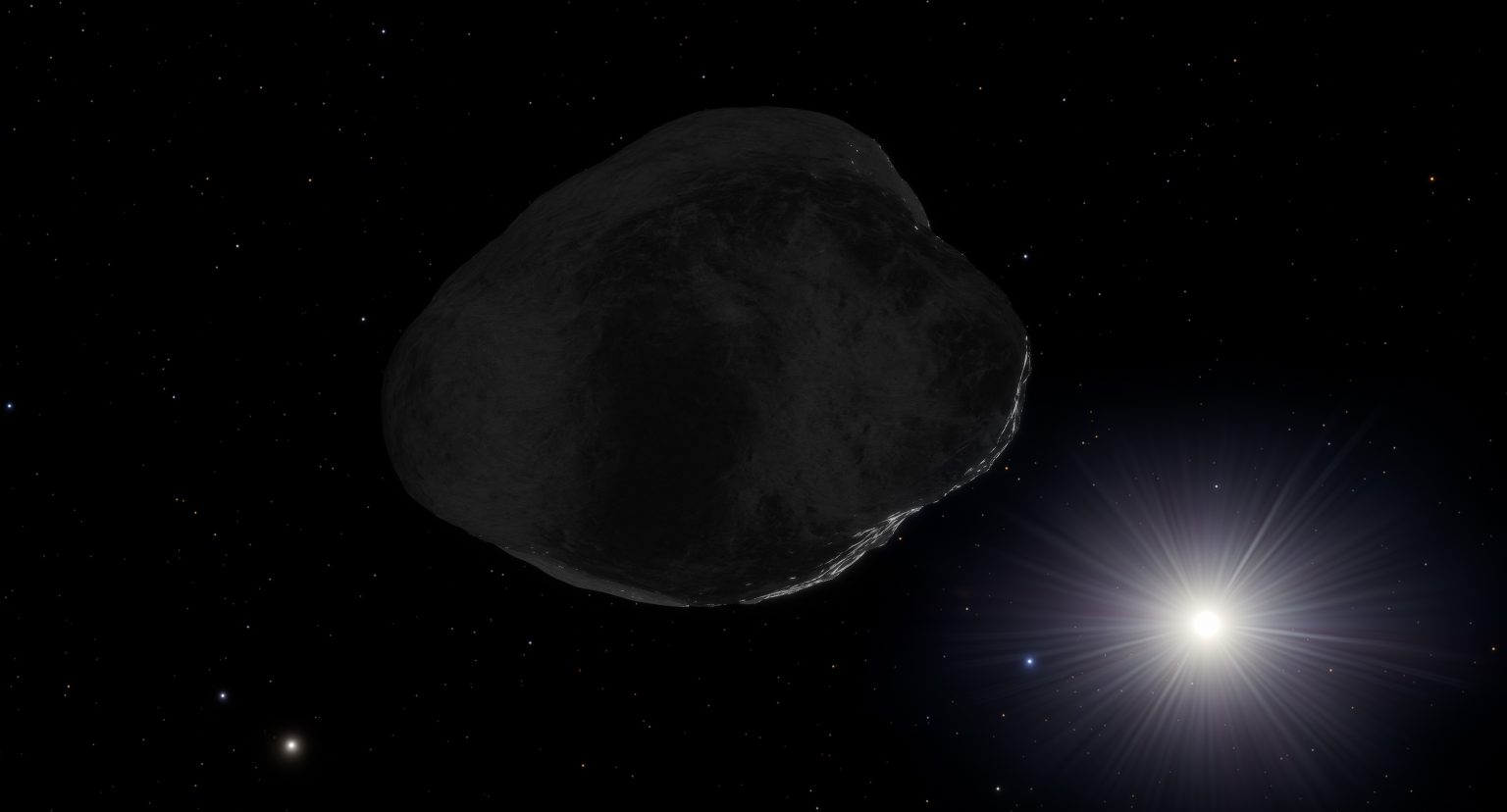
Asteroid Bennu.

Illustration:  Space Engine

The discovery’s freedom from contamination is also supported by samples from asteroid Bennu, delivered by a NASA mission in 2025, in which scientists likewise detected the full range of nitrogenous bases.

Interestingly, the asteroids differ in their chemical balance:

  • The Murchison meteorite is enriched in purines.
  • Asteroids Bennu and Orgueil contain more pyrimidines.

Scientists suggest that this balance was shaped by ammonia—a key molecule that determines the course of chemical reactions during the synthesis of complex organic compounds in space.

A Cosmic Path to the Origin of Life

Because the Ryugu samples were collected directly in space and remained hermetically sealed, they provide the clearest picture of the Solar System’s primordial chemistry.

All these findings form a coherent picture: carbon-rich asteroids served as natural chemical laboratories. Complex organic molecules formed in space long before the first conditions suitable for life emerged on Earth. Impacts by these ancient asteroids could have “seeded” the young Earth with ready-made molecular material, making the emergence of life part of a broader cosmic story.

Previously, we reported on how foreign stardust was found in samples from asteroid Ryugu.

RELATED

DNA’s Full Alphabet Found in a 4.6‑Billion‑Year‑Old Asteroid
NASA Collected Samples From This 4.5 Billion Year Old Rock 🚀
NASA Just Opened a 4.5-Billion-Year-Old Asteroid Sample — Here's What Was Inside

{ https://universemagazine.com/en/articles-en/ }

Hoe vind je dit bericht?
Geschreven door peter om 23:02 Stuur door

The Charlton Crater: Did a UFO land in Wiltshire in 1963?

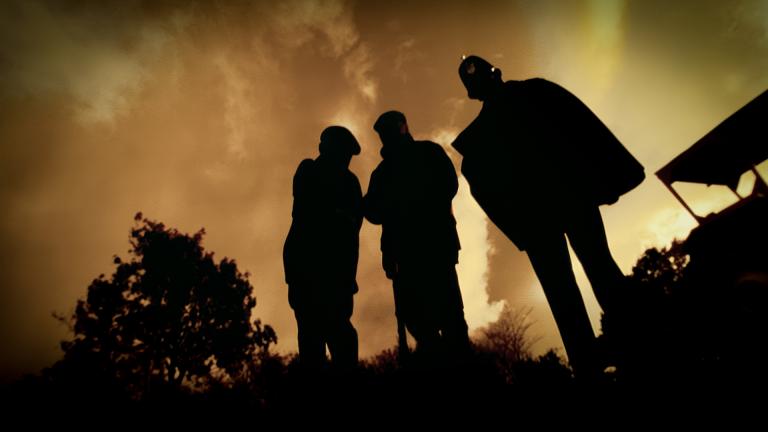
A policeman and two farmers look into a crater in the ground

The Charlton Crater: Did a UFO land in Wiltshire in 1963?

In July 1963, an orange light was seen over Wiltshire and a mysterious crater appeared in a farmer’s field. Here’s the story of the Charlton Crater.

Article written by Craig Lenaghan

Have aliens been secretly visiting the UK? You’d certainly suspect so, given the high number of UFO sightings in this part of the world. Often, though, when a Brit does claim to have had an extraterrestrial encounter, one important thing is conspicuous by its absence: physical evidence.

Sure, many people claim to have seen strange lights in the sky or even ran into creatures thought too freakish to be of this earth. Still, it can often be difficult to simply take these accounts at face value. We need something else, something tangible enough to make the story feel real.

That’s why the tale of the Charlton Crater stands out so much in British UFO lore. In July 1963, farmer Roy Blanchard was shocked to find a mysterious crater in his potato field in Wiltshire. Even the police and military struggled to explain it. As the Sky HISTORY series Britain’s X-Files investigates the mystery, we ask: Has anyone come up with a truly convincing theory?

A jaw-dropping find on a remote farm

In July 1963, a policeman saw a peculiar streak of orange light in the sky above Charlton, Wiltshire. He wasn’t the only local that month to suspect something very strange was afoot. Leonard ‘Len’ Joliffe, a dairyman employed at Charlton’s Manor Farm, was minding his own business when he thought he heard an explosion.

Len’s brother Gordon Joliffe relayed the story when interviewed for Channel 5 documentary The British UFO Files in 2004. ‘He was on his way to work at 6 o’clock in the morning because he was a milker, he worked for Mr Blanchard,’ Gordon explained. Len was reportedly on his bike when he heard ‘this great big bang in the morning, after the huge light in the sky came down’.

Within hours, another of the farmworkers, Reginald Alexander, had stumbled upon a huge, unfamiliar crater where potatoes and barley were usually grown. He called his boss Roy Blanchard to the site. Soon, journalists, scientific investigators and even bomb disposal experts would also be at the scene. What they saw was so extraordinary that it would become known to history as the Charlton Crater.

How large was the Charlton Crater?

Reports have slightly differed over the years, but ufologist Waveney Girvan provided his own dimensions in an article for Flying Saucer Review in autumn 1963. ‘The marks comprised a saucer-shaped depression or crater eight feet in diameter and about four inches in depth. In the centre of this depression there was found a three feet deep hole variously described as from five inches to one foot in diameter.’

Especially strangely, four other, slot-like marks – each ‘four feet long and one foot wide’, according to Girvan – ran out from this central hole. It was like a giant bicycle wheel, complete with spokes, had been pressed into the soil from above. Yes, the soil was bare. There was no sign of crushed potato or flattened barley in the crater itself. It was as if the crops at the impact site had been miraculously vaporised.

What caused the Charlton Crater?

Given how heavily Britain was bombed during World War II, could it be that the crater resulted from an unexploded wartime bomb finally going off? Could there still have been some other dormant explosives lying beneath the soil? The British Army feared so, and sent its bomb disposal unit to investigate. In the event, the team did not find any bombs, or even scorch marks suggesting that an explosion had taken place.

Could the Charlton Crater have been caused by a meteorite? The astronomer Patrick Moore was a forthright proponent of this theory. What looked like a fused piece of metal was found in the crater, seemingly backing up this argument. However, the British Museum analysed the metallic debris and discerned it to be just ordinary ironstone, commonplace in the Wiltshire area.

So, what exactly was it that landed on Roy Blanchard’s farm that fateful morning? The farmer himself was stumped for easy answers, but did suggest a rather eye-opening one. He reflected: ‘The thing was heavy enough to crush rocks and stone to powder. Yet it came down gently. We heard no crash and whatever power it uses produces no heat or noise. I believe that we have received a visit from a spaceship from another world.’

RELATED

WILTSHIRE UFO CRATER AND CROPCIRCLE: 1963
The UFO Encounters Britain Tried to Keep Secret | The British UFO Files

{ https://www.history.co.uk/ }

Hoe vind je dit bericht?
Geschreven door peter om 21:06 Stuur door

Former US Army Sniper Claims Soldier Was Allegedly Killed Fighting Reptilian Beings Near Area 51, His Death Covered Up as Training Accident

Area 51 reptilian encounter

Former US Army Sniper Claims Soldier Was Allegedly Killed Fighting Reptilian Beings Near Area 51, His Death Covered Up as Training Accident

A US soldier was allegedly killed fighting reptilian-looking beings inside an underground facility near Area 51, and his death was later recorded as a training accident. His body was reportedly cremated almost immediately, despite objections from fellow soldiers who wanted to bring him home.

The surviving personnel were allegedly made to sign documents and undergo biometric screening before leaving the facility. The story might have remained unknown if a former US Army sniper had not heard about the incident during an unusual conversation in Poland.

Former Army sniper Nick Betts shared the account during a December 2025 episode of the Liberty Risk podcast. Betts said he learned about the incident from a man who claimed to have participated in the operation while serving in a military squadron based at Fort Bragg, North Carolina. He did not witness the alleged confrontation himself, but claimed that something happened the following morning that made him believe the man was telling the truth.

Betts explained that he had been traveling through Eastern Europe with a small group filming a documentary about the war in Ukraine. Among his companions was a friend who had served in an Army Ranger battalion, along with several other men who had military or security backgrounds. The group had traveled through seven countries, sharing accommodations, meals, and long journeys. According to Betts, everyone had developed a good relationship, and there had been no serious disagreements during the trip.

Nick Betts

Nick Betts

After visiting a refugee camp in Poland, they eventually stopped at a hotel. Betts and his Ranger friend were in their room downloading footage and transferring files onto hard drives when another member of the group arrived carrying four bottles of wine. The conversation began casually, but his Ranger friend, who was interested in paranormal subjects and extraterrestrial life, asked the visitor whether he knew anything about aliens.

The man appeared reluctant to discuss the subject. Betts recalled that he initially refused, but after further questioning, he agreed to share an experience from his military career. Before saying anything, however, he asked both men to hand over their mobile phones. He then placed the phones inside the room’s microwave oven, apparently believing its metal enclosure would prevent the devices from receiving or transmitting electronic signals.

Betts explained that the man was attempting to use the microwave as a makeshift Faraday cage. Although a household microwave is not necessarily a reliable way to prevent electronic surveillance, the precaution was unusual enough to get his attention. The visitor then began describing what he claimed was a classified military deployment that had taken place several years earlier.

According to the man’s account, he had been serving in a squadron at Fort Bragg when his unit was assigned to quick-reaction force duty. Such personnel are expected to remain ready for emergency deployments, sometimes with very little notice. He claimed that he was relaxing at a bar with fellow servicemen when they suddenly received orders to return to base, collect their equipment, and board an aircraft.

What bothered the soldiers was the absence of a normal briefing. They were reportedly given no destination, no explanation of the emergency, and no information about the operation they were being sent to carry out. The man told Betts that this was highly unusual, even for personnel accustomed to classified assignments.

After flying for several hours, the aircraft reportedly landed somewhere extremely hot. Two men approached the arriving soldiers outside a hangar and escorted them into a secure briefing room known as a Sensitive Compartmented Information Facility, or SCIF. It was there that they were allegedly informed they had arrived at Area 51, the restricted military installation in Nevada associated with decades of secret aircraft testing and UFO speculation.

The soldiers were then told that security personnel at an underground installation several miles away had suddenly stopped making their regular radio checks. A quick-reaction team had already been dispatched to investigate, but the military had lost contact with those personnel as well. With both the original security team and the first response group apparently missing, another team was needed to enter the facility and determine what had happened.

The soldiers from Fort Bragg reportedly requested a map of the installation, including its entrances, exits, and internal layout. They also wanted to check the sights on their firearms before beginning the operation. However, they were informed that their regular weapons would not be necessary.

Nick Betts

Nick Betts via Instagram

Instead, the men were allegedly issued unfamiliar weapons that did not use conventional magazines. Betts described them as high-energy weapons, although he could not explain precisely how they functioned or what technology they used. The source apparently gave no technical specifications that could identify the devices. Nevertheless, he claimed the soldiers were instructed to carry these weapons into the installation rather than rely on their usual firearms.

The team reportedly boarded a Black Hawk helicopter and traveled to the underground site’s entrance. Once inside, the soldiers descended through a tunnel before reaching a long hallway with a T-shaped intersection. The man remembered a strong smell resembling sewage or an old sewer system. As they moved farther into the structure, the passage eventually curved around in a horseshoe shape.

The source said the team was advancing through this section when the soldier positioned on the outside left of the formation was suddenly struck directly in the chest. The weapon used against him was reportedly similar to the unfamiliar equipment the soldiers had received before entering the facility. The impact allegedly killed him, and the remaining personnel immediately returned fire.

According to Betts, the attacker was described as a bipedal creature with a mildly reptilian appearance. It had recognizable fingers, walked upright, and was capable of handling the same type of weapon issued to the American soldiers. The team was reportedly told that three such beings were inside the facility, and the surviving soldiers eventually killed all three.

Betts said the description reminded him of the underground military facility depicted in the 1996 film Independence Day. The man reportedly claimed that even his previous experience inside highly secure government buildings had not prepared him for what he saw there.

Betts could not identify the creatures beyond the description supplied by his source. He did not know their origin, what they were doing inside the facility, or whether the military had encountered them before. The source also never gave him an exact number of soldiers involved in the operation. When asked about the team size during the podcast, Betts guessed that approximately six men had participated, but acknowledged that this was only his estimate.

The soldier’s body was then reportedly cremated almost immediately. According to the story, fellow servicemen objected because the deceased soldier was Catholic and they believed cremation went against his personal religious wishes. Although Catholic teaching permits cremation under certain conditions, the objection described by Betts concerned the wishes of the individual soldier. His colleagues were allegedly given little opportunity to challenge the decision.

The source further claimed that the soldier’s death was officially recorded as a training accident. If true, this would mean that the circumstances of his death were concealed not only from the public but potentially from his family. However, Betts did not identify the deceased soldier, provide a date for the operation, or produce a death record supporting the claim.

Before leaving the installation, the surviving soldiers were reportedly required to complete additional security procedures. Betts said they signed documents, had photographs taken of their identification cards, and underwent biometric screening involving their hands and irises. He did not explain whether these procedures were related to ordinary classified-program security, contamination concerns, or something else.

While the alleged operation was extraordinary, Betts admitted that the man telling the story had been drinking wine. He said the man was drunk but did not appear incoherent or incapable of recalling details. At the time, Betts and his Ranger friend were unsure what to make of the account. They had just heard a story involving secret underground facilities, unfamiliar weapons, dead American soldiers, and reptilian-looking creatures, but they had no way to check whether any of it had happened.

The following morning, according to Betts, the group was scheduled to meet in the hotel lobby at approximately 6 a.m. As Betts was heading downstairs, he encountered an older member of the team who had not been present during the previous night’s discussion.

Betts had been told that this older man served in the same squadron as the original storyteller and had participated in the alleged operation. Believing it was simply an unusual story shared among friends, Betts casually mentioned that their companion had suggested the older man knew something about aliens.

The reaction, he claimed, was immediate. The man stopped, grabbed Betts by the neck, and slammed him against a wall. He angrily warned Betts never to discuss the subject again and demanded to know who had told him about it. Betts said he was shocked because the same man had been friendly with him throughout their trip, and there had been no previous hostility between them.

Later that morning, Betts reportedly saw the two men arguing. The person who had originally shared the story then confronted Betts and demanded that he leave the country. According to Betts, neither man would speak to him afterward. He was eventually told to pack his belongings, and the documentary assignment came to an abrupt end.

Betts recalled going back to his hotel room, covering himself with bedsheets and pillows, and calling his wife to tell her he would be returning home earlier than expected. He said the incident cost him several weeks of paid work. He and his Ranger friend were subsequently taken to another location, which Betts described as a black site, before being driven to an airport and flown home from Poland.

On the flight, Betts asked his Ranger friend what he thought about everything that had happened. His friend reportedly advised him to stop discussing the subject. Betts said he might have dismissed the original story as something invented during a night of drinking if the older man had not reacted so aggressively the following morning.

There was another unexpected detail. Betts claimed that the man who threatened him later contacted him through Signal after he returned to the United States, apparently behaving as though their confrontation had never happened. During the podcast, Betts also admitted feeling nervous about discussing the incident publicly because the people involved could potentially recognize the circumstances, even though he had not named them.

Read also:

This story became more interesting because of separate claims made by former US intelligence officer David Grusch. In July 2023, Grusch testified before Congress about allegations involving secret UAP retrieval and reverse-engineering programs. He said his knowledge came from interviews with people he believed were directly involved in those activities, although he had not personally witnessed the recovery of a non-human spacecraft.

Grusch made further claims during an August 2026 appearance on The Dr. Phil Podcast. He said he had personally viewed photographs and videos allegedly showing recovered craft and deceased non-human occupants. According to Grusch, the material had been shown to him by individuals associated with retrieval operations, although he had not personally handled the alleged vehicles or bodies.

Grusch also claimed that some non-human occupants had been recovered alive. He said he knew individuals who had experienced direct interactions with living beings during what he described as detention situations. When asked whether communication with these beings was possible, Grusch said some people reported experiencing a form of consciousness-based communication, something he acknowledged most people would describe as telepathy. He made clear that he had never personally experienced such communication himself.

During the same interview, Grusch estimated that more than 25 but fewer than 100 unusual vehicles had been recovered, while suggesting that some material may have ended up outside normal government control through private defense contractors. He also claimed to know historical locations where documentation, recovered materials, and alleged non-human bodies had been stored. None of this physical evidence was publicly presented during the interview.

It is also important that Betts’s podcast was published in December 2025, nearly ten months before Grusch’s September 2026 interview. This establishes that Betts publicly told his version first, but it does not prove that the accounts are independent of earlier UFO stories or that the men were describing the same event.

Reptilian-looking beings have appeared in other discussions surrounding UAP. In May 2025, theoretical physicist and former Pentagon contractor Dr. Eric W. Davis spoke at a public briefing attended by lawmakers and referred to reports of beings with reptilian appearances among several other alleged types. His comments concerned descriptions he said had come from sources, not biological specimens or physical evidence he presented for independent examination.

Disclaimer: David Grusch did not identify the incident described by Nick Betts as the same event, and neither account has been independently verified.

RELATED

'Area 51 Battle': Army Sniper Claims US JSOC Unit Killed 'Reptilian Beings' In Underground Fight
US ARMY SNIPER CLAIMS REPTILIANS SHOT NEAR AREA 51, MISSING411 ON APPALACHIAN TRAIL & MORE!
The Reptilians at Area 51 Were Never Prisoners — They Were Always Here

{ https://howandwhys.com/ }

Hoe vind je dit bericht?
Geschreven door peter om 20:44 Stuur door

Humanity receives mysterious 'mega-laser' signal from unknown source in deep space

Humanity receives mysterious 'mega-laser' signal from unknown source in deep space

Humanity has received a mysterious signal, described as a 'mega-laser' beam, from a violently merging galaxy more than 8 billion light-years away.

The signal, deemed the most distant hydroxyl megamaser ever detected, was intercepted by the MeerKAT radio telescope in South Africa, which features 64 antennas.

A hydroxyl megamaser is a giant natural laser in space. When galaxies full of gas collide, molecules called hydroxyl smash together and release very strong radio waves. 

These waves behave like a laser, but instead of visible light, they produce radio signals that astronomers can detect with telescopes.

Because these signals are extremely bright, they can be seen from very far across the universe. 

In this case, the object is so powerful that scientists said it may actually be a 'gigamaser,' which is even stronger than a megamaser. 

The system, called HATLAS J142935.3–002836, is so far away that we are seeing it as it looked more than 8 billion years ago, when the universe was less than half its current age. 

Dr Thato Manamela, SARAO-funded postdoctoral researcher at the University of Pretoria and lead author of the new study, said: 'This system is truly extraordinary. We are seeing the radio equivalent of a laser halfway across the universe.' 

Humanity has received a mysterious signal, described as a 'mega-laser' beam, from a violently merging galaxy more than 8 billion light-years away

Humanity has received a mysterious signal, described as a 'mega-laser' beam, from a violently merging galaxy more than 8 billion light-years away 

Manamela added that as the radio waves traveled toward Earth, they were also strengthened by a separate galaxy positioned directly along the line of sight. 

'This galaxy acts as a lens, the way a water droplet on a window pane would, because its mass curves the local space-time,' he said.

'So we have a radio laser passing through a cosmic telescope before being detected by the powerful MeerKAT radio telescope – all together enabling a wonderfully serendipitous discovery.' 

The radio signal contained four separate components, meaning it is coming from multiple regions within the galaxy system. 

At least two of these areas appear to be strongly magnified by gravitational lensing, which makes the signal more than ten times brighter than it would normally appear. 

In this case, a massive foreground galaxy sits between Earth and the distant system. 

Its gravity bends space-time and acts like a cosmic magnifying glass, boosting the brightness of the radio emission. 

This amplification allowed the signal to be detected by the MeerKAT radio telescope even though the source is over 8 billion light-years away. 

Pictured is the galaxy system where astronomers said is the source of the signal

Pictured is the galaxy system where astronomers said is the source of the signal

The signal, deemed the most distant hydroxyl megamaser ever detected, was intercepted using the MeerKAT radio telescope in South Africa (PICTURED), which consists of 64 antennas

The signal, deemed the most distant hydroxyl megamaser ever detected, was intercepted using the MeerKAT radio telescope in South Africa (PICTURED), which consists of 64 antennas

article image

Normally, signals from objects this far away are too weak for telescopes to detect. 

But the powerful radio signal coming from HATLAS J142935.3–002836 was boosted by a rare effect called gravitational lensing, a phenomenon predicted by Albert Einstein.

Gravitational lensing happens when a massive object, such as a galaxy, sits between Earth and a distant source. 

Its strong gravity bends space-time, which changes the path of the light or radio waves traveling through it. 

This makes the distant signal appear brighter and magnified, allowing telescopes like the MeerKAT radio telescope to detect it even from billions of light-years away.

From Earth, this effect can sometimes create a ring-shaped halo of light around the foreground object, called an Einstein ring, named after the famed physicist. 

The same effect also magnifies the distant source, in this case a radio or microwave signal, making it much easier for astronomers to study objects that would normally be too faint to detect. 

RELATED

Mega laser from deep space reaches Earth after billions of years #viral #space #mystery
Unveiling the Mystery: A Mega-Laser Signal from 8 Billion Light-Years Away
Space Just Fired a Laser at Earth From 8 Billion Light-Years Away

{ https://www.dailymail.com/sciencetech/index.html }

Hoe vind je dit bericht?
Geschreven door peter om 20:21 Stuur door

Scientists detect mysterious radio signal in search of alien life

Scientists detect mysterious radio signal in search of alien life

Scientists searching for alien life have picked up a mysterious radio signal.

A Chinese-led team detected it while testing new software on existing data from China’s FAST telescope, the world’s largest single-dish radio telescope.

The signal surfaced in observations of K2-155, a star system about 238 light-years from Earth that hosts three ‘super-Earths,’ including one near its star’s habitable zone

Named NBS 260108, it appeared as a steady radio tone concentrated around a single frequency.

Such narrowly focused signals are a key target in the search for alien technology, because natural cosmic processes rarely produce them while artificial transmitters often do.

The signal stood out because it appeared only in the telescope beam aimed at K2-155, with no corresponding detection in the other 18 beams.

Its frequency also shifted steadily over time, a pattern scientists examine when searching for transmissions from distant technology.

The researchers described the search as addressing ‘one of humanity’s oldest scientific questions - whether intelligent life exists beyond Earth.’

The signal (pictured) surfaced in observations of K2-155, a star system about 238 light-years from Earth that hosts three ‘super-Earths,’ including one near its star’s habitable zone

The signal (pictured) surfaced in observations of K2-155, a star system about 238 light-years from Earth that hosts three ‘super-Earths,’ including one near its star’s habitable zone

But spotting an unusual signal and establishing its source are separate challenges.

‘Candidate generation and candidate interpretation should remain separate,’ they wrote.

In other words, software can identify something worth investigating without establishing what produced it.

The team says future improvements could involve comparing the original recordings from all 19 telescope beams to help determine a signal’s position and motion.

Those additional checks could give researchers stronger evidence for distinguishing transmissions arriving from space from interference generated by human technology or equipment.

FAST’s enormous collecting surface makes it especially sensitive to faint radio signals. 

Built into a natural basin in southwestern China, its dish measures roughly 1,640 feet across and covers an area equivalent to about 30 soccer fields. 

That vast surface gathers weak radio waves from space, allowing researchers to detect signals that smaller telescopes might miss. 

A Chinese-led team detected it while testing new software on existing data from China’s FAST telescope, the world’s largest single-dish radio telescope

A Chinese-led team detected it while testing new software on existing data from China’s FAST telescope, the world’s largest single-dish radio telescope

The new study, published in The Astronomical Journal, tested the software on FAST observations of 33 planetary systems collected in 2021.

Super-Earths are planets larger than Earth but smaller than ice giants such as Neptune and Uranus.

K2-155 was an intriguing target because its outer planet, K2-155d, lies near the star’s habitable zone, where conditions could allow liquid water to exist on a planet’s surface.

The planet is approximately 1.6 times Earth’s radius and completes an orbit around its star roughly every 40.7 days.

‘This system’s habitable-zone super-Earth made it an intriguing SETI [the Search for Extraterrestrial Intelligence] target,’ the team wrote, referring to the search for extraterrestrial intelligence.

One light-year is approximately 5.88 trillion miles - the distance light travels in one year.

Rather than searching for biological clues, the researchers focused on radio transmissions that could indicate technology developed by an advanced civilization.

A distant transmitter’s motion relative to Earth can cause its signal’s frequency to shift over time, creating a drifting track in telescope data.

article image

The signal gradually shifted to a lower radio frequency, like a station slowly moving down the dial. 

Its appearance in only one of FAST’s 19 receiver beams initially made it worth examining. That beam was aimed at K2-155, while the other 18 showed no corresponding detection.

On the researchers’ charts, it formed a thin, slightly slanted streak against the surrounding background. That streak traced how the signal’s frequency changed over time.

FAST recorded it through the receiver beam pointed at K2-155. The telescope’s other 18 beams, which monitored neighboring patches of sky simultaneously, showed no corresponding detection.

The signal also had a distinctive response in the telescope’s two polarization channels, which measure different orientations of radio waves.

It appeared strongly in the channel called YY but was absent from the other, XX. In YY, its signal-to-noise ratio was approximately 23, a measurement of how clearly it stood above the background noise. When the two channels were combined, that measurement was approximately 15.

The observation was part of a September 10, 2021, sequence that also included the stars K2-18, GJ-9066 and Ross 128.

Researchers found other narrow radio features at nearby frequencies during those observations, although their characteristics differed.

 The K2-18 feature was very weak, the GJ-9066 feature barely shifted in frequency, and the Ross 128 feature appeared at a slightly different frequency.

What Happens If Scientists Detect an Alien Signal? #curiosity

{ https://www.dailymail.com/sciencetech/index.html }

Hoe vind je dit bericht?
Geschreven door peter om 18:34 Stuur door

North Atlantic's 'cold blob' may contain climate nuance

North Atlantic's 'cold blob' may contain climate nuance

North Atlantic's 'cold blob' may contain climate nuance

The 965,000-square-mile area in the North Atlantic Ocean south and southeast of Greenland, the so-called cold blob, cooled by as much as 1.8 degrees Fahrenheit over the past century as other ocean waters warmed.  

Credit: NASA.

Climate observers have long tied the strength of a major ocean current to water temperatures in the so-called "cold blob" in the North Atlantic Ocean. The 965,000-square-mile (2.5 million square kilometers) area south and southeast of Greenland cooled by as much as 1.8 degrees Fahrenheit over the past century as other ocean waters warmed.

Some indicators signal that a sustained decline in water volumes in the current, known as the Atlantic meridional overturning circulation (AMOC), is a persistent cause of the blob's lower temperatures. The current's degradation began decades ago, a shift likely influenced by climate change that could reduce oceans' absorption of carbon dioxide and heat, according to a team led by researchers in Penn State's College of Earth and Mineral Sciences.

But they cautioned that the link between AMOC and surface temperatures in the blob, also called the North Atlantic warming hole, is more irregular and complex than previously thought.

As published in the journal Nature Communications, the team found that the diminishing ocean current may impact the North Atlantic climate differently over time, with disparate phases in the relationship between AMOC strength and blob temperatures, said corresponding author Laifang Li, an assistant professor in the Department of Meteorology and Atmospheric Science. The work builds on their finding in 2025 that radiation from the atmosphere helps depress water temperatures.

"With more field data and study, researchers can reduce uncertainty in models that anticipate temperatures and climate patterns in the North Atlantic," Li said, explaining that sustained ocean temperature readings via satellite and related monitoring would benefit this work. "If we can forecast better when these ocean temperatures will reach key thresholds, that will create a clearer picture of the time frame available to develop technology and mitigation policies addressing climate change."

Testing the cold blob connection

Climate researchers regard AMOC as a core piece of ocean circulation and heat transfer—a conveyor belt that moves warm surface water to the north and cold, more dense water to the south in the deep ocean. When the current slows down, the North Atlantic just south of Greenland and Iceland can cool as regions elsewhere warm up.

Common thinking—that a weaker AMOC drives the cold blob—implies the connection between ocean current and North Atlantic surface temperatures is constant over time, according to the researchers. But the assumption is shaky in part because AMOC observations stretch back only about two decades, limiting historical analyses, Li said.

To explore how other factors interact with water temperatures and ocean currents, the researchers made simulations that incorporated a variety of influences, such as greenhouse gases at different concentrations, and climate conditions representing past and present environments. The team analyzed simulations representing a large number of scenarios spanning decades to account for several phenomena: heat transfer within the ocean; heat exchange between the ocean and the atmosphere; and heat radiated from the air, including the effects of low clouds.

AMOC–North Atlantic SST relationship in model simulations. Credit: Nature Communications (2026). DOI: 10.1038/s41467-026-76149-4

AMOC–North Atlantic SST relationship in model simulations.

Credit: Nature Communications (2026). DOI: 10.1038/s41467-026-76149-4

Three phases of ocean cooling

The evaluation found that AMOC's cooling effect on ocean surface water splits into three phases. In simulations where the ocean current weakened from its greatest strength, surface temperatures slipped modestly. When the current weakened from a midrange strength, the surface temperature drop roughly tripled, with the cold blob growing to cover the subpolar basin.

But when the ocean current loses steam beginning from an already diminished state, the cooling effect fades and the cold blob shifts northeast toward Iceland and the Norwegian Sea, the analysis showed. The researchers pointed to variable impacts of heat radiation to and from the atmosphere, as well as reflections from low clouds, as contributing factors.

Once the ocean current weakens enough, the ocean will absorb more heat from the atmosphere and likely approach its capacity to buffer climate change, said Yifei Fan, lead author on the paper and doctoral candidate in the Department of Meteorology and Atmospheric Science.

"Climate models predict the ocean current will trend toward a weaker state in the future," Fan said. "This is concerning: If we cross the threshold into a new phase of ocean current behavior, how the North Atlantic uptakes heat will diverge from the AMOC patterns we know now. It would mean more uncertainty in the ocean surface temperatures, ocean currents and effects on climate and weather."

An uncertain timeline for the cold blob

In particular, modeling suggested AMOC will decline from its higher-strength phase today to its lowest-strength phase by the year 2100. Timing of the cold blob's most significant temperature shift could be as late as 2067, or it could have been as early as 2021, the researchers said.

Simulations also suggested earlier peaks in ocean temperature change would correspond to an earlier disappearance of the cool patch. The researchers emphasized that ocean temperatures alone don't prove ocean current activity, and that variation in those temperatures doesn't necessarily signal a collapse of AMOC. Some predictions suggest the current's prolonged demise could lead to chillier winters in North America and Europe.

"We're not saying that AMOC will vanish. We're setting a foundation to understand nuanced interactions among ocean surface temperatures, ocean currents and other environmental forces," Li said. "More study and sustained Earth system monitoring will inform more revealing assessments of changes in the coupled ocean-atmosphere system, such as the points when the ocean absorbs heat from the atmosphere and then releases that heat."

Future research should narrow predictions for the cold blob and help scientists forecast ice conditions in Greenland, which influence oceanic and atmospheric activity, according to Fan.

"By reducing the range of scenarios, we can establish higher confidence and less ambiguity in predicting North Atlantic climate change," Fan said.

Publication details

Journal information:

RELATED

Cold Blob Warning: Ocean’s Hidden Alarm 🌊 #Shorts
The Sky Got Stuck Again — Scientists Say The AMOC Cold Blob Is Now The Reason Why
Atlantic Ocean ‘Cold Blob’: The Hidden Force Behind 2026’s Wild Weather!

{ https://phys.org/ }

Hoe vind je dit bericht?
Geschreven door peter om 18:08 Stuur door

Hubble Space Telescope photos that show the universe in stunning detail

Hubble Space Telescope photos that show the universe in stunning detail

Story by Ron Winkler
Hubble Space Telescope photos that show the universe in stunning detail
©ALot.com
Hubble Space Telescope photos that show the universe in stunning detail
The Hubble Telescope has been a staple of space exploration since the 1990s. That’s a long time, but it goes back even further. It was originally conceived in the ‘40s, but it took decades to make dreams a reality. Unfortunately, it hasn’t been a smooth ride along the way.
One of Many Repairs
©(Image via NASA)(https://images.nasa.gov/details-9401031)
One of Many Repairs

Remember the 1993 mission to repair the shuttle? Astronauts are required to go into space to fix it. While up there, the Hubble captured this amazing photograph. Here we see astronauts Story Musgrave and Jeffrey Hoffman conducting repairs. It took these two, five other astronauts, and an entire crew on the ground (along with several aids) to get the job done.

Over the course of the Hubble's space ride, astronauts have been sent up five times for various repairs. The tasks generally take anywhere from three to five days, but the Hubble isn’t ready to go after that. It still takes a ridiculous three months before it is even active again. Still, it’s usually worth it.  

The Rose Galaxies
©(Image via NASA)(https://images.nasa.gov/details-GSFC_20171208_Archive_e001885)
The Rose Galaxies

Galaxies are amazing to look at, but these two? Talk about photogenic! These two galaxies are known as UGC 1810 and UGC 1813. Yeah, that’s pretty boring, and we prefer the common name – the Rose Galaxies. The larger of the two is pulling the smaller into its gravitational pull, forming what looks like a flower.

The galaxies are comprised of super bright and young blue stars, which helped the Hubble spot it originally. It's uncommon for two galaxies to interact this way. Eventually, the smaller galaxy will likely be consumed and overwhelmed by the larger one, but we can just enjoy the view until then.

The Death of Stars
©(Image via NASA)(https://www.nasa.gov/feature/goddard/2021/hubble-captures-giant-star-on-the-edge-of-destruction)
The Death of Stars

No, not the Death Star! Although, it does look a little like the Death Star when it exploded in Star Wars. Scientists call this star the “celebrity star” because it’s one of the brightest in our entire galaxy. Behind all the gas and space dust lies a slightly sadder story of a star struggling to survive.

The star is waging a tug-of-war between gravity and radiation to avoid self-destruction, but it’s losing the battle. It’s a rare type of star that epitomizes “live fast, die young.” Compared to our sun (which will survive around 10 billion years), this one will only last a few million years at best.

The Next Tool Album Cover?
©(Image via NASA)(https://images.nasa.gov/details-PIA14442)
The Next Tool Album Cover?

To us, this looks like a creepy eye that’s staring at Earth from space – excuse me while it replaces my sleep paralysis demon. The reality of the situation isn’t much better. This is a young planetary nebula that was created after the death of a Sun-like star. That raises the question: is this what our sun will look like one day?

Thankfully, that isn’t something we need to think about any time soon. Our sun will last around five billion more years, which is when the hydrogen will begin to run out. The good news is that our sun is in the most stable part of its life cycle since the birth of our solar system.

The Force Awakening
©(Image via NASA)(https://images.nasa.gov/details-PIA16022)
The Force Awakening

The birthing of a new star isn’t a calm thing. It’s turbulent and violent, but all that activity is what lights up our night skies. In this image, the Hubble spotted a dark cloud of dust that surrounds a newborn star. The baby star is shooting out two huge twin jets into space, announcing that it's there.

We better keep this reveal a secret or gender reveal parties are gonna get more extreme. In all seriousness, it’s easy to see how stunning and brutal the birth of a new star can be. It takes a ton of hydrogen to burn that bright, and a star like this? Well, it could blow through it’s reserves pretty fast burning like that!

RELATED
4K Space Journey | Best Hubble Space Telescope Photos #space #spacephotos #hubble
Hubble Spotted a Galaxy Within a Galaxy
The video showcases a curated series of Hubble Space Telescope images, explaining the science and history behind remarkable cosmic objects. Highlights include detailed portraits of NGC 4449’s starburst activity, gravitational lensing in galaxy clusters like Abell 2218, unusual galactic structures such as NGC 1512 with a companion embedded inside, and the vast Andromeda mosaic resolving 200 million stars to study its collisions and evolution. It also explores stellar phenomena from protostars and planetary nebulae to supernova remnants, massive star clusters like those in the Tarantula Nebula, and rare events such as kilonova explosions—offering insights into star formation, galactic interactions, and the dynamic processes shaping the universe.
The Extraordinary Things Hubble Has Seen | 100 Incredible Images Of The Universe Montage (4K UHD)
The Hubble Space Telescope, launched in 1990 and orbiting above Earth’s atmosphere, has captured over a million detailed observations of the universe. Its colorized images reveal phenomena from star birth to distant galaxies, advancing scientific understanding and inspiring public interest, making it one of history’s most influential astronomical tools.
Hoe vind je dit bericht?
Geschreven door peter om 16:19 Stuur door

Cosmic rays could scar the heart, raising risks for Mars-bound astronauts, rat study hints

Cosmic rays could scar the heart, raising risks for Mars-bound astronauts, rat study hints

Rats that were exposed to radiation similar to what Mars-bound astronauts might face showed higher levels of scar tissue in their hearts, indicating they were more vulnerable to heart failure.

A person wears a spacesuit on another planet.

An illustration of an astronaut on Mars. Exposure to cosmic radiation on a Mars-bound flight could affect astronauts' long-term heart health, new research suggests.
(Image credit: piranka via Getty Images)

Exposure to space radiation may increase astronauts' risk of a dangerous heart condition, a new study in rats hints.

The research, published Sept. 30 in the journal PLOS One, found that rats exposed to levels of radiation similar to what an astronaut might experience on a long-term trip to Mars developed more scar tissue around the small blood vessels of their hearts than rats that were not exposed to this radiation. This scar tissue is indicative of a condition known as cardiac fibrosis, which is known to increase the risk of heart failure.

This scar tissue was observed nearly a year after the rats were first exposed to the radiation.

But since this study was in rats, it cannot definitively say whether this effect will play out in humans. For example, given that humans have a longer life expectancy than rats (80 years versus 2 to 4 years), the effects seen in rats may take around 30 years to show up in humans. However, the study authors say the research highlights the importance of following astronauts' health long after they return to Earth.

"The message that we try to convey … is that the follow-up time is really important," study co-author John Baker, a professor of surgery in the Radiation Bioscience Laboratory at the Medical College of Wisconsin, told Live Science. "When astronauts come back to the Earth, they expect ‪—‬ and we expect ‪—‬ that they're going to live for a long time. I think we have to be wary that they could well develop at least some type of cardiac disease."

You may like

How space radiation affects the heart

The link between exposure to radiation and cardiac issues has been well documented. However, "no astronaut has ever been exposed to galactic cosmic radiation for long periods of time," Baker said, which makes it difficult to determine exactly how space radiation affects the heart.

Although Baker and his team previously pinpointed cardiac issues among rats exposed to radiation, this new study utilized NASA's Simulated Galactic Cosmic Ray Simulation (SimGCRSim). This new simulator provides a more precise comparison of the levels of space radiation an astronaut might experience while exploring deep space for more than a year.

During the study, the researchers exposed rats to several minutes of radiation proportionate to their size, similar to what they might experience on a trip to Mars and back (a roughly 18-month round trip, with current technology). Some of the rats' hind legs were suspended, to "simulate conditions of weightlessness," Baker said.

After 360 days, the rats that were exposed to cosmic radiation developed twice as much scar tissue around the heart's small blood vessels than unexposed rats. This buildup of scar tissue means "the heart can't relax to the point when it needs to," thereby increasing the risk of heart failure, Baker said.

This effect was not seen in the rats who were exposed only to simulated weightlessness, confirming "it was only the radiation that produced the damaging effect on the heart," Baker said. However, long-term testing revealed that this group of rats had lower levels of key immune cells, suggesting that microgravity also may affect aspects of long-term health. (Numerous studies have shown various short-term health impacts related to microgravity.)

What to read next

This study "is a very valuable contribution to space biology," Rupak Pathak, an associate professor of pharmaceutical science at the University of Arkansas for Medical Sciences who was not involved in the study but holds a doctorate in radiation biology, told Live Science. While rats and humans have clear differences, "they share more than 90% of genetic information," he said, as well as very similar cardiac systems.

Given that the study authors were able to expose the rats to radiation only once, Pathak would like to see further experiments exploring whether chronic radiation exposure affects the function of the heart and other vital organs.

Baker and his colleagues hope that future experiments can be used to help NASA implement safeguards for astronauts on long-term missions, such as providing astronauts heart medications or improving shielding for the spacecraft.

"The more we know before we start, then the better NASA is going to be at working out what types of countermeasures can be developed," said Baker.

Article Sources
  • Lenarczyk, M., Kronenberg, A., Kwok, A., Borg, A., Alsheikh, A. J., Mathison, A. J., Zimmermann, M. T., Lawton, S. B. R., Raff, H., Willey, J., Komorowski, R. A., Urrutia, R., & Baker, J. E. (2026). Multiple simulated spaceflight stressors impact cardiac fibrosis, calcium dynamics, immune function, cytokines and gene variants in rat, Rattus norvegicus. PLoS ONE, 21(9), e0357485. https://doi.org/10.1371/journal.pone.0357485
RELATED
Mars Radiation Could Cause Long Term Heart Damage #breaking
Unveiling the Scary Truth About Galactic Cosmic Rays | How the Universe Works | Science Channel
The Real Reason Sending Humans to Mars Keeps Getting Worse

{ https://www.livescience.com/space/space-exploration }

Hoe vind je dit bericht?
Geschreven door peter om 22:15 Stuur door

Will disclosure come from the sea? Newly released Catalina Island files raise UAP questions about alien life

Will disclosure come from the sea? Newly released Catalina Island files raise UAP questions about alien life

UFO researcher and filmmaker Mark Christopher Lee believes newly released UAP files documenting unexplained sightings over California's Catalina Island could support the theory that answers about alien activity may lie beneath the ocean rather than in the skies.

UFO investigator Mark Christopher Lee

UFO investigator Mark Christopher Lee

UFO researcher and filmmaker Mark Christopher Lee believes alien disclosure could come from what has been lurking under the sea.

Lee has highlighted recently released Department of War files from PURSUE Release 07 that document a cluster of UAP reports over Catalina Island, California, between 1949 and 1955.

Lee, who has made a series of documentary films about alien life, including The Rendlesham UFO: The British Roswell and The King of UFOs, argues these historical cases, combined with long-standing USO activity off the California coast, strengthen the case that meaningful disclosure may ultimately emerge from the ocean rather than the sky alone.

The Release 07 documents include Air Intelligence Information Reports and unresolved case files detailing silver "flying saucers" observed by Boy Scouts near Camp Fox in 1952, described as moving faster than a conventional jet before climbing and apparently disintegrating; a 1953 sighting of a round purplish-white object that remained stationary before heading northwest towards Los Angeles; and an earlier report of multiple objects seen singly over the island in 1949. The reports remain unexplained, although the 1953 file lists Jupiter as a possible explanation and the 1949 report states there was insufficient data for evaluation.

He said: "These Catalina files aren’t isolated curiosities. They sit in one of the most active stretches of water for USO reports on the planet. While the public focuses on the recent silent black triangle sightings, the older Catalina material points to something that has been operating in and around the ocean for decades. We’ve spent seventy years looking up. The real answers may be under the waves.”

2024_09_12__bsalscplg_1726137368cropped3024x1965.webp

Lee drew a direct connection to the ongoing work of retired US Navy Rear Admiral Tim Gallaudet, former acting NOAA Administrator and Oceanographer of the Navy.

Gallaudet has publicly argued that some UAP activity involves transmedium craft operating in both air and water and has testified about the seriousness of the phenomenon. He has also described proprietary high-resolution bathymetric surveys in the Atlantic that a research team believes contain features corresponding to Plato's account of Atlantis. However, the location and underlying data have not been made public, and there has been no independent confirmation that the features are linked to Atlantis.

Lee continued: "Gallaudet brings institutional credibility to what many of us have argued for years: the ocean is not a side note in the UAP question - it may be central. If his team is mapping sites that align with ancient descriptions while the government is releasing decades-old Catalina reports that never got properly investigated, the two threads are pointing in the same direction. Disclosure might not arrive as a press conference about the sky. It might arrive when we finally start looking seriously at what’s under the water.”

Lee noted that previous AARO historical reviews found no confirmed evidence of extraterrestrial technology, and that the Catalina cases, like other unresolved UAP reports, remain subjects of uncertainty. AARO's 2024 historical report found no evidence that any US government investigation or official review had confirmed a UAP sighting represented extraterrestrial technology, while noting that many reports remained unresolved.

He has called for independent oceanographic and archival follow-up on the Catalina cluster, greater attention to USO data, and transparency around any government or private surveys of anomalous underwater features.

  • The full PURSUE Release 07 files are available at war.gov/UFO.

RELATED

What was Really SEEN Over Catalina Island - What Witnesses Reported
UAP hotspot Catalina Island: Alien bases under the ocean? | Reality Check

{ https://bangpremier.com/feeds/top-stories/MzQ0LDM0NQ== }

Hoe vind je dit bericht?
Geschreven door peter om 21:55 Stuur door

‘Absolute Acoustic Silence’: Triangular UFO Spotted by Federal Agents

‘Absolute Acoustic Silence’: Triangular UFO Spotted by Federal Agents

A newly released report says the craft "was executing a slow, controlled, perfectly vertical ascent directly over the ridge line."

A visual representation of an unidentified flying object released by the FBI on Oct. 23, 2026, with a red circle annotation by Gizmodo

A visual representation of an unidentified flying object released by the FBI on Oct. 23, 2026, with a red circle annotation by Gizmodo

© FBI

Earlier this year, federal agents somewhere in the western U.S. observed a mysterious triangular aircraft hovering over an unnamed site that’s sensitive to national security, according to new documents released by the Pentagon. The matte black craft was completely silent and zipped around as fast as a fighter jet, according to a witness, who described it as “resembling a delta wing drone.”

The craft was estimated to be somewhere between 13 and 15 feet in wingspan with a 6-9 foot fuselage length, according to the Department of Defense document made public Friday. The vertical thickness of the craft was estimated to be, at most, just one or two feet, according to the Department of Defense.

“The unidentified craft maintained a completely fixed horizontal alignment [which] did not tilt, sway, or wobble during the controlled vertical ascent of approximately ten seconds,” the DOD report explains. “It climbed to an altitude of an estimated 200 to 300 feet above the local ridge line. Upon reaching this altitude, the craft instantaneously arrested all vertical motion and entered a stable hover for an estimated twenty seconds.”

The craft then “transitioned from a zero-velocity state directly into high-speed horizontal flight,” and managed to execute “a fluid banking maneuver and terrain-hugging descent into a canyon drainage in approximately two to three seconds.” The report notes that once the craft was banking, its “silhouette appeared to flatten and present as a more triangle.”

The FBI report on the incident includes nine images, which feature landscape photos and a black triangle that moves when they’re viewed together as though part of a flipbook. The report doesn’t indicate whether the images are authentic photos or artistic renditions.

Image from an FBI report showing a black triangular shape representing a UAP spotted sometime this year. Image from an FBI report showing a black triangular shape representing a UAP spotted sometime this year. © FBI Image from an FBI report showing a black triangular shape representing a UAP spotted sometime this year. Image from an FBI report showing a black triangular shape representing a UAP spotted sometime this year. © FBI Image from an FBI report showing a black triangular shape representing a UAP spotted sometime this year. Image from an FBI report showing a black triangular shape representing a UAP spotted sometime this year. © FBI Image from an FBI report showing a black triangular shape representing a UAP spotted sometime this year. Image from an FBI report showing a black triangular shape representing a UAP spotted sometime this year. © FBI Image from an FBI report showing a black triangular shape representing a UAP spotted sometime this year. Image from an FBI report showing a black triangular shape representing a UAP spotted sometime this year. © FBI Image from an FBI report showing a black triangular shape representing a UAP spotted sometime this year. Image from an FBI report showing a black triangular shape representing a UAP spotted sometime this year. © FBI Image from an FBI report showing a black triangular shape representing a UAP spotted sometime this year. Image from an FBI report showing a black triangular shape representing a UAP spotted sometime this year. © FBI Image from an FBI report showing a black triangular shape representing a UAP spotted sometime this year. Image from an FBI report showing a black triangular shape representing a UAP spotted sometime this year. © FBI Image from an FBI report showing a black triangular shape representing a UAP spotted sometime this year. Image from an FBI report showing a black triangular shape representing a UAP spotted sometime this year. © FBI

Gizmodo ran the images through SynthID.com, which is used to detect invisible watermarks when an image is made with AI image tools from OpenAI and Google. The images did not contain the SynthID watermark, though they could have been made with a different company’s tools or made with basic Photoshop-style editing software.

“The two primary witnesses reported no physiological effects,” the report explains. “There were no reports of (but not limited to) disorientation, nausea, headache, dermal sensation, visual disturbance, memory gap, or other anomalous sensory phenomena. No anomalous odors were noted. No electromagnetic interference, signal degradation, or anomalous sensor readings were recorded on personal or agency equipment.”

The newly released reports are part of periodic Pentagon releases related to unidentified anomalous phenomena (UAPs), more commonly known historically as UFOs. The first releases were broadly hyped, but they’ve rendered very few answers about the central question: Are these aircraft otherworldly or simply high-tech advancements from near-peer geopolitical adversaries like China?

RELATED

New Pentagon UFO Files: Federal Agents Report a Silent Black Triangle
Federal Agents Saw a Silent Black Triangle. The Pentagon Just Released the File.
Trump Releases UFO Files: The Silent Triangle America's Agents Couldn't Explain

{ https://gizmodo.com/tech/transportation }

Hoe vind je dit bericht?
Geschreven door peter om 21:24 Stuur door

Meer van UFO'S of UAP'S, ASTRONOMIE, RUIMTEVAART, ARCHEOLOGIE, OUDHEIDKUNDE, SF-SNUFJES EN ANDERE ESOTERISCHE WETENSCHAPPEN - DE ALLERLAATSTE NIEUWTJES

↑ Terug naar de berichten