
























Naar de inhoud

UFO'S of UAP'S, ASTRONOMIE, RUIMTEVAART, ARCHEOLOGIE, OUDHEIDKUNDE, SF-SNUFJES EN ANDERE ESOTERISCHE WETENSCHAPPEN - DE ALLERLAATSTE NIEUWTJES

UFO's of UAP'S in België en de rest van de wereld
akke.beakke.be
Ontdek de Fascinerende Wereld van UFO's en UAP's: Jouw Bron voor Onthullende Informatie! Ben jij ook gefascineerd door het onbekende? Wil je meer weten over UFO's en UAP's, niet alleen in België, maar over de hele wereld? Dan ben je op de juiste plek! België: Het Kloppend Hart van UFO-onderzoek In België is BUFON (Belgisch UFO-Netwerk) dé autoriteit op het gebied van UFO-onderzoek. Voor betrouwbare en objectieve informatie over deze intrigerende fenomenen, bezoek je zeker onze Facebook-pagina en deze blog. Maar dat is nog niet alles! Ontdek ook het Belgisch UFO-meldpunt en Caelestia, twee organisaties die diepgaand onderzoek verrichten, al zijn ze soms kritisch of sceptisch. Nederland: Een Schat aan Informatie Voor onze Nederlandse buren is er de schitterende website www.ufowijzer.nl, beheerd door Paul Harmans. Deze site biedt een schat aan informatie en artikelen die je niet wilt missen! Internationaal: MUFON - De Wereldwijde Autoriteit Neem ook een kijkje bij MUFON (Mutual UFO Network Inc.), een gerenommeerde Amerikaanse UFO-vereniging met afdelingen in de VS en wereldwijd. MUFON is toegewijd aan de wetenschappelijke en analytische studie van het UFO-fenomeen, en hun maandelijkse tijdschrift, The MUFON UFO-Journal, is een must-read voor elke UFO-enthousiasteling. Bezoek hun website op www.mufon.com voor meer informatie. Samenwerking en Toekomstvisie Sinds 1 februari 2020 is Pieter niet alleen ex-president van BUFON, maar ook de voormalige nationale directeur van MUFON in Vlaanderen en Nederland. Dit creëert een sterke samenwerking met de Franse MUFON Reseau MUFON/EUROP, wat ons in staat stelt om nog meer waardevolle inzichten te delen. Let op: Nepprofielen en Nieuwe Groeperingen Pas op voor een nieuwe groepering die zich ook BUFON noemt, maar geen enkele connectie heeft met onze gevestigde organisatie. Hoewel zij de naam geregistreerd hebben, kunnen ze het rijke verleden en de expertise van onze groep niet evenaren. We wensen hen veel succes, maar we blijven de autoriteit in UFO-onderzoek! Blijf Op De Hoogte! Wil jij de laatste nieuwtjes over UFO's, ruimtevaart, archeologie, en meer? Volg ons dan en duik samen met ons in de fascinerende wereld van het onbekende! Sluit je aan bij de gemeenschap van nieuwsgierige geesten die net als jij verlangen naar antwoorden en avonturen in de sterren! Heb je vragen of wil je meer weten? Aarzel dan niet om contact met ons op te nemen! Samen ontrafelen we het mysterie van de lucht en daarbuiten.

Humanity receives mysterious 'mega-laser' signal from unknown source in deep space

Humanity receives mysterious 'mega-laser' signal from unknown source in deep space

Humanity has received a mysterious signal, described as a 'mega-laser' beam, from a violently merging galaxy more than 8 billion light-years away.

The signal, deemed the most distant hydroxyl megamaser ever detected, was intercepted by the MeerKAT radio telescope in South Africa, which features 64 antennas.

A hydroxyl megamaser is a giant natural laser in space. When galaxies full of gas collide, molecules called hydroxyl smash together and release very strong radio waves. 

These waves behave like a laser, but instead of visible light, they produce radio signals that astronomers can detect with telescopes.

Because these signals are extremely bright, they can be seen from very far across the universe. 

In this case, the object is so powerful that scientists said it may actually be a 'gigamaser,' which is even stronger than a megamaser. 

The system, called HATLAS J142935.3–002836, is so far away that we are seeing it as it looked more than 8 billion years ago, when the universe was less than half its current age. 

Dr Thato Manamela, SARAO-funded postdoctoral researcher at the University of Pretoria and lead author of the new study, said: 'This system is truly extraordinary. We are seeing the radio equivalent of a laser halfway across the universe.' 

Humanity has received a mysterious signal, described as a 'mega-laser' beam, from a violently merging galaxy more than 8 billion light-years away

Humanity has received a mysterious signal, described as a 'mega-laser' beam, from a violently merging galaxy more than 8 billion light-years away 

Manamela added that as the radio waves traveled toward Earth, they were also strengthened by a separate galaxy positioned directly along the line of sight. 

'This galaxy acts as a lens, the way a water droplet on a window pane would, because its mass curves the local space-time,' he said.

'So we have a radio laser passing through a cosmic telescope before being detected by the powerful MeerKAT radio telescope – all together enabling a wonderfully serendipitous discovery.' 

The radio signal contained four separate components, meaning it is coming from multiple regions within the galaxy system. 

At least two of these areas appear to be strongly magnified by gravitational lensing, which makes the signal more than ten times brighter than it would normally appear. 

In this case, a massive foreground galaxy sits between Earth and the distant system. 

Its gravity bends space-time and acts like a cosmic magnifying glass, boosting the brightness of the radio emission. 

This amplification allowed the signal to be detected by the MeerKAT radio telescope even though the source is over 8 billion light-years away. 

Pictured is the galaxy system where astronomers said is the source of the signal

Pictured is the galaxy system where astronomers said is the source of the signal

The signal, deemed the most distant hydroxyl megamaser ever detected, was intercepted using the MeerKAT radio telescope in South Africa (PICTURED), which consists of 64 antennas

The signal, deemed the most distant hydroxyl megamaser ever detected, was intercepted using the MeerKAT radio telescope in South Africa (PICTURED), which consists of 64 antennas

article image

Normally, signals from objects this far away are too weak for telescopes to detect. 

But the powerful radio signal coming from HATLAS J142935.3–002836 was boosted by a rare effect called gravitational lensing, a phenomenon predicted by Albert Einstein.

Gravitational lensing happens when a massive object, such as a galaxy, sits between Earth and a distant source. 

Its strong gravity bends space-time, which changes the path of the light or radio waves traveling through it. 

This makes the distant signal appear brighter and magnified, allowing telescopes like the MeerKAT radio telescope to detect it even from billions of light-years away.

From Earth, this effect can sometimes create a ring-shaped halo of light around the foreground object, called an Einstein ring, named after the famed physicist. 

The same effect also magnifies the distant source, in this case a radio or microwave signal, making it much easier for astronomers to study objects that would normally be too faint to detect. 

RELATED

Mega laser from deep space reaches Earth after billions of years #viral #space #mystery
Unveiling the Mystery: A Mega-Laser Signal from 8 Billion Light-Years Away
Space Just Fired a Laser at Earth From 8 Billion Light-Years Away

{ https://www.dailymail.com/sciencetech/index.html }

Hoe vind je dit bericht?
Geschreven door peter om 20:21 Stuur door

Scientists detect mysterious radio signal in search of alien life

Scientists detect mysterious radio signal in search of alien life

Scientists searching for alien life have picked up a mysterious radio signal.

A Chinese-led team detected it while testing new software on existing data from China’s FAST telescope, the world’s largest single-dish radio telescope.

The signal surfaced in observations of K2-155, a star system about 238 light-years from Earth that hosts three ‘super-Earths,’ including one near its star’s habitable zone

Named NBS 260108, it appeared as a steady radio tone concentrated around a single frequency.

Such narrowly focused signals are a key target in the search for alien technology, because natural cosmic processes rarely produce them while artificial transmitters often do.

The signal stood out because it appeared only in the telescope beam aimed at K2-155, with no corresponding detection in the other 18 beams.

Its frequency also shifted steadily over time, a pattern scientists examine when searching for transmissions from distant technology.

The researchers described the search as addressing ‘one of humanity’s oldest scientific questions - whether intelligent life exists beyond Earth.’

The signal (pictured) surfaced in observations of K2-155, a star system about 238 light-years from Earth that hosts three ‘super-Earths,’ including one near its star’s habitable zone

The signal (pictured) surfaced in observations of K2-155, a star system about 238 light-years from Earth that hosts three ‘super-Earths,’ including one near its star’s habitable zone

But spotting an unusual signal and establishing its source are separate challenges.

‘Candidate generation and candidate interpretation should remain separate,’ they wrote.

In other words, software can identify something worth investigating without establishing what produced it.

The team says future improvements could involve comparing the original recordings from all 19 telescope beams to help determine a signal’s position and motion.

Those additional checks could give researchers stronger evidence for distinguishing transmissions arriving from space from interference generated by human technology or equipment.

FAST’s enormous collecting surface makes it especially sensitive to faint radio signals. 

Built into a natural basin in southwestern China, its dish measures roughly 1,640 feet across and covers an area equivalent to about 30 soccer fields. 

That vast surface gathers weak radio waves from space, allowing researchers to detect signals that smaller telescopes might miss. 

A Chinese-led team detected it while testing new software on existing data from China’s FAST telescope, the world’s largest single-dish radio telescope

A Chinese-led team detected it while testing new software on existing data from China’s FAST telescope, the world’s largest single-dish radio telescope

The new study, published in The Astronomical Journal, tested the software on FAST observations of 33 planetary systems collected in 2021.

Super-Earths are planets larger than Earth but smaller than ice giants such as Neptune and Uranus.

K2-155 was an intriguing target because its outer planet, K2-155d, lies near the star’s habitable zone, where conditions could allow liquid water to exist on a planet’s surface.

The planet is approximately 1.6 times Earth’s radius and completes an orbit around its star roughly every 40.7 days.

‘This system’s habitable-zone super-Earth made it an intriguing SETI [the Search for Extraterrestrial Intelligence] target,’ the team wrote, referring to the search for extraterrestrial intelligence.

One light-year is approximately 5.88 trillion miles - the distance light travels in one year.

Rather than searching for biological clues, the researchers focused on radio transmissions that could indicate technology developed by an advanced civilization.

A distant transmitter’s motion relative to Earth can cause its signal’s frequency to shift over time, creating a drifting track in telescope data.

article image

The signal gradually shifted to a lower radio frequency, like a station slowly moving down the dial. 

Its appearance in only one of FAST’s 19 receiver beams initially made it worth examining. That beam was aimed at K2-155, while the other 18 showed no corresponding detection.

On the researchers’ charts, it formed a thin, slightly slanted streak against the surrounding background. That streak traced how the signal’s frequency changed over time.

FAST recorded it through the receiver beam pointed at K2-155. The telescope’s other 18 beams, which monitored neighboring patches of sky simultaneously, showed no corresponding detection.

The signal also had a distinctive response in the telescope’s two polarization channels, which measure different orientations of radio waves.

It appeared strongly in the channel called YY but was absent from the other, XX. In YY, its signal-to-noise ratio was approximately 23, a measurement of how clearly it stood above the background noise. When the two channels were combined, that measurement was approximately 15.

The observation was part of a September 10, 2021, sequence that also included the stars K2-18, GJ-9066 and Ross 128.

Researchers found other narrow radio features at nearby frequencies during those observations, although their characteristics differed.

 The K2-18 feature was very weak, the GJ-9066 feature barely shifted in frequency, and the Ross 128 feature appeared at a slightly different frequency.

What Happens If Scientists Detect an Alien Signal? #curiosity

{ https://www.dailymail.com/sciencetech/index.html }

Hoe vind je dit bericht?
Geschreven door peter om 18:34 Stuur door

North Atlantic's 'cold blob' may contain climate nuance

North Atlantic's 'cold blob' may contain climate nuance

North Atlantic's 'cold blob' may contain climate nuance

The 965,000-square-mile area in the North Atlantic Ocean south and southeast of Greenland, the so-called cold blob, cooled by as much as 1.8 degrees Fahrenheit over the past century as other ocean waters warmed.  

Credit: NASA.

Climate observers have long tied the strength of a major ocean current to water temperatures in the so-called "cold blob" in the North Atlantic Ocean. The 965,000-square-mile (2.5 million square kilometers) area south and southeast of Greenland cooled by as much as 1.8 degrees Fahrenheit over the past century as other ocean waters warmed.

Some indicators signal that a sustained decline in water volumes in the current, known as the Atlantic meridional overturning circulation (AMOC), is a persistent cause of the blob's lower temperatures. The current's degradation began decades ago, a shift likely influenced by climate change that could reduce oceans' absorption of carbon dioxide and heat, according to a team led by researchers in Penn State's College of Earth and Mineral Sciences.

But they cautioned that the link between AMOC and surface temperatures in the blob, also called the North Atlantic warming hole, is more irregular and complex than previously thought.

As published in the journal Nature Communications, the team found that the diminishing ocean current may impact the North Atlantic climate differently over time, with disparate phases in the relationship between AMOC strength and blob temperatures, said corresponding author Laifang Li, an assistant professor in the Department of Meteorology and Atmospheric Science. The work builds on their finding in 2025 that radiation from the atmosphere helps depress water temperatures.

"With more field data and study, researchers can reduce uncertainty in models that anticipate temperatures and climate patterns in the North Atlantic," Li said, explaining that sustained ocean temperature readings via satellite and related monitoring would benefit this work. "If we can forecast better when these ocean temperatures will reach key thresholds, that will create a clearer picture of the time frame available to develop technology and mitigation policies addressing climate change."

Testing the cold blob connection

Climate researchers regard AMOC as a core piece of ocean circulation and heat transfer—a conveyor belt that moves warm surface water to the north and cold, more dense water to the south in the deep ocean. When the current slows down, the North Atlantic just south of Greenland and Iceland can cool as regions elsewhere warm up.

Common thinking—that a weaker AMOC drives the cold blob—implies the connection between ocean current and North Atlantic surface temperatures is constant over time, according to the researchers. But the assumption is shaky in part because AMOC observations stretch back only about two decades, limiting historical analyses, Li said.

To explore how other factors interact with water temperatures and ocean currents, the researchers made simulations that incorporated a variety of influences, such as greenhouse gases at different concentrations, and climate conditions representing past and present environments. The team analyzed simulations representing a large number of scenarios spanning decades to account for several phenomena: heat transfer within the ocean; heat exchange between the ocean and the atmosphere; and heat radiated from the air, including the effects of low clouds.

AMOC–North Atlantic SST relationship in model simulations. Credit: Nature Communications (2026). DOI: 10.1038/s41467-026-76149-4

AMOC–North Atlantic SST relationship in model simulations.

Credit: Nature Communications (2026). DOI: 10.1038/s41467-026-76149-4

Three phases of ocean cooling

The evaluation found that AMOC's cooling effect on ocean surface water splits into three phases. In simulations where the ocean current weakened from its greatest strength, surface temperatures slipped modestly. When the current weakened from a midrange strength, the surface temperature drop roughly tripled, with the cold blob growing to cover the subpolar basin.

But when the ocean current loses steam beginning from an already diminished state, the cooling effect fades and the cold blob shifts northeast toward Iceland and the Norwegian Sea, the analysis showed. The researchers pointed to variable impacts of heat radiation to and from the atmosphere, as well as reflections from low clouds, as contributing factors.

Once the ocean current weakens enough, the ocean will absorb more heat from the atmosphere and likely approach its capacity to buffer climate change, said Yifei Fan, lead author on the paper and doctoral candidate in the Department of Meteorology and Atmospheric Science.

"Climate models predict the ocean current will trend toward a weaker state in the future," Fan said. "This is concerning: If we cross the threshold into a new phase of ocean current behavior, how the North Atlantic uptakes heat will diverge from the AMOC patterns we know now. It would mean more uncertainty in the ocean surface temperatures, ocean currents and effects on climate and weather."

An uncertain timeline for the cold blob

In particular, modeling suggested AMOC will decline from its higher-strength phase today to its lowest-strength phase by the year 2100. Timing of the cold blob's most significant temperature shift could be as late as 2067, or it could have been as early as 2021, the researchers said.

Simulations also suggested earlier peaks in ocean temperature change would correspond to an earlier disappearance of the cool patch. The researchers emphasized that ocean temperatures alone don't prove ocean current activity, and that variation in those temperatures doesn't necessarily signal a collapse of AMOC. Some predictions suggest the current's prolonged demise could lead to chillier winters in North America and Europe.

"We're not saying that AMOC will vanish. We're setting a foundation to understand nuanced interactions among ocean surface temperatures, ocean currents and other environmental forces," Li said. "More study and sustained Earth system monitoring will inform more revealing assessments of changes in the coupled ocean-atmosphere system, such as the points when the ocean absorbs heat from the atmosphere and then releases that heat."

Future research should narrow predictions for the cold blob and help scientists forecast ice conditions in Greenland, which influence oceanic and atmospheric activity, according to Fan.

"By reducing the range of scenarios, we can establish higher confidence and less ambiguity in predicting North Atlantic climate change," Fan said.

Publication details

Journal information:

RELATED

Cold Blob Warning: Ocean’s Hidden Alarm 🌊 #Shorts
The Sky Got Stuck Again — Scientists Say The AMOC Cold Blob Is Now The Reason Why
Atlantic Ocean ‘Cold Blob’: The Hidden Force Behind 2026’s Wild Weather!

{ https://phys.org/ }

Hoe vind je dit bericht?
Geschreven door peter om 18:08 Stuur door

Hubble Space Telescope photos that show the universe in stunning detail

Hubble Space Telescope photos that show the universe in stunning detail

Story by Ron Winkler
Hubble Space Telescope photos that show the universe in stunning detail
©ALot.com
Hubble Space Telescope photos that show the universe in stunning detail
The Hubble Telescope has been a staple of space exploration since the 1990s. That’s a long time, but it goes back even further. It was originally conceived in the ‘40s, but it took decades to make dreams a reality. Unfortunately, it hasn’t been a smooth ride along the way.
One of Many Repairs
©(Image via NASA)(https://images.nasa.gov/details-9401031)
One of Many Repairs

Remember the 1993 mission to repair the shuttle? Astronauts are required to go into space to fix it. While up there, the Hubble captured this amazing photograph. Here we see astronauts Story Musgrave and Jeffrey Hoffman conducting repairs. It took these two, five other astronauts, and an entire crew on the ground (along with several aids) to get the job done.

Over the course of the Hubble's space ride, astronauts have been sent up five times for various repairs. The tasks generally take anywhere from three to five days, but the Hubble isn’t ready to go after that. It still takes a ridiculous three months before it is even active again. Still, it’s usually worth it.  

The Rose Galaxies
©(Image via NASA)(https://images.nasa.gov/details-GSFC_20171208_Archive_e001885)
The Rose Galaxies

Galaxies are amazing to look at, but these two? Talk about photogenic! These two galaxies are known as UGC 1810 and UGC 1813. Yeah, that’s pretty boring, and we prefer the common name – the Rose Galaxies. The larger of the two is pulling the smaller into its gravitational pull, forming what looks like a flower.

The galaxies are comprised of super bright and young blue stars, which helped the Hubble spot it originally. It's uncommon for two galaxies to interact this way. Eventually, the smaller galaxy will likely be consumed and overwhelmed by the larger one, but we can just enjoy the view until then.

The Death of Stars
©(Image via NASA)(https://www.nasa.gov/feature/goddard/2021/hubble-captures-giant-star-on-the-edge-of-destruction)
The Death of Stars

No, not the Death Star! Although, it does look a little like the Death Star when it exploded in Star Wars. Scientists call this star the “celebrity star” because it’s one of the brightest in our entire galaxy. Behind all the gas and space dust lies a slightly sadder story of a star struggling to survive.

The star is waging a tug-of-war between gravity and radiation to avoid self-destruction, but it’s losing the battle. It’s a rare type of star that epitomizes “live fast, die young.” Compared to our sun (which will survive around 10 billion years), this one will only last a few million years at best.

The Next Tool Album Cover?
©(Image via NASA)(https://images.nasa.gov/details-PIA14442)
The Next Tool Album Cover?

To us, this looks like a creepy eye that’s staring at Earth from space – excuse me while it replaces my sleep paralysis demon. The reality of the situation isn’t much better. This is a young planetary nebula that was created after the death of a Sun-like star. That raises the question: is this what our sun will look like one day?

Thankfully, that isn’t something we need to think about any time soon. Our sun will last around five billion more years, which is when the hydrogen will begin to run out. The good news is that our sun is in the most stable part of its life cycle since the birth of our solar system.

The Force Awakening
©(Image via NASA)(https://images.nasa.gov/details-PIA16022)
The Force Awakening

The birthing of a new star isn’t a calm thing. It’s turbulent and violent, but all that activity is what lights up our night skies. In this image, the Hubble spotted a dark cloud of dust that surrounds a newborn star. The baby star is shooting out two huge twin jets into space, announcing that it's there.

We better keep this reveal a secret or gender reveal parties are gonna get more extreme. In all seriousness, it’s easy to see how stunning and brutal the birth of a new star can be. It takes a ton of hydrogen to burn that bright, and a star like this? Well, it could blow through it’s reserves pretty fast burning like that!

RELATED
4K Space Journey | Best Hubble Space Telescope Photos #space #spacephotos #hubble
Hubble Spotted a Galaxy Within a Galaxy
The video showcases a curated series of Hubble Space Telescope images, explaining the science and history behind remarkable cosmic objects. Highlights include detailed portraits of NGC 4449’s starburst activity, gravitational lensing in galaxy clusters like Abell 2218, unusual galactic structures such as NGC 1512 with a companion embedded inside, and the vast Andromeda mosaic resolving 200 million stars to study its collisions and evolution. It also explores stellar phenomena from protostars and planetary nebulae to supernova remnants, massive star clusters like those in the Tarantula Nebula, and rare events such as kilonova explosions—offering insights into star formation, galactic interactions, and the dynamic processes shaping the universe.
The Extraordinary Things Hubble Has Seen | 100 Incredible Images Of The Universe Montage (4K UHD)
The Hubble Space Telescope, launched in 1990 and orbiting above Earth’s atmosphere, has captured over a million detailed observations of the universe. Its colorized images reveal phenomena from star birth to distant galaxies, advancing scientific understanding and inspiring public interest, making it one of history’s most influential astronomical tools.
Hoe vind je dit bericht?
Geschreven door peter om 16:19 Stuur door

Cosmic rays could scar the heart, raising risks for Mars-bound astronauts, rat study hints

Cosmic rays could scar the heart, raising risks for Mars-bound astronauts, rat study hints

Rats that were exposed to radiation similar to what Mars-bound astronauts might face showed higher levels of scar tissue in their hearts, indicating they were more vulnerable to heart failure.

A person wears a spacesuit on another planet.

An illustration of an astronaut on Mars. Exposure to cosmic radiation on a Mars-bound flight could affect astronauts' long-term heart health, new research suggests.
(Image credit: piranka via Getty Images)

Exposure to space radiation may increase astronauts' risk of a dangerous heart condition, a new study in rats hints.

The research, published Sept. 30 in the journal PLOS One, found that rats exposed to levels of radiation similar to what an astronaut might experience on a long-term trip to Mars developed more scar tissue around the small blood vessels of their hearts than rats that were not exposed to this radiation. This scar tissue is indicative of a condition known as cardiac fibrosis, which is known to increase the risk of heart failure.

This scar tissue was observed nearly a year after the rats were first exposed to the radiation.

But since this study was in rats, it cannot definitively say whether this effect will play out in humans. For example, given that humans have a longer life expectancy than rats (80 years versus 2 to 4 years), the effects seen in rats may take around 30 years to show up in humans. However, the study authors say the research highlights the importance of following astronauts' health long after they return to Earth.

"The message that we try to convey … is that the follow-up time is really important," study co-author John Baker, a professor of surgery in the Radiation Bioscience Laboratory at the Medical College of Wisconsin, told Live Science. "When astronauts come back to the Earth, they expect ‪—‬ and we expect ‪—‬ that they're going to live for a long time. I think we have to be wary that they could well develop at least some type of cardiac disease."

You may like

How space radiation affects the heart

The link between exposure to radiation and cardiac issues has been well documented. However, "no astronaut has ever been exposed to galactic cosmic radiation for long periods of time," Baker said, which makes it difficult to determine exactly how space radiation affects the heart.

Although Baker and his team previously pinpointed cardiac issues among rats exposed to radiation, this new study utilized NASA's Simulated Galactic Cosmic Ray Simulation (SimGCRSim). This new simulator provides a more precise comparison of the levels of space radiation an astronaut might experience while exploring deep space for more than a year.

During the study, the researchers exposed rats to several minutes of radiation proportionate to their size, similar to what they might experience on a trip to Mars and back (a roughly 18-month round trip, with current technology). Some of the rats' hind legs were suspended, to "simulate conditions of weightlessness," Baker said.

After 360 days, the rats that were exposed to cosmic radiation developed twice as much scar tissue around the heart's small blood vessels than unexposed rats. This buildup of scar tissue means "the heart can't relax to the point when it needs to," thereby increasing the risk of heart failure, Baker said.

This effect was not seen in the rats who were exposed only to simulated weightlessness, confirming "it was only the radiation that produced the damaging effect on the heart," Baker said. However, long-term testing revealed that this group of rats had lower levels of key immune cells, suggesting that microgravity also may affect aspects of long-term health. (Numerous studies have shown various short-term health impacts related to microgravity.)

What to read next

This study "is a very valuable contribution to space biology," Rupak Pathak, an associate professor of pharmaceutical science at the University of Arkansas for Medical Sciences who was not involved in the study but holds a doctorate in radiation biology, told Live Science. While rats and humans have clear differences, "they share more than 90% of genetic information," he said, as well as very similar cardiac systems.

Given that the study authors were able to expose the rats to radiation only once, Pathak would like to see further experiments exploring whether chronic radiation exposure affects the function of the heart and other vital organs.

Baker and his colleagues hope that future experiments can be used to help NASA implement safeguards for astronauts on long-term missions, such as providing astronauts heart medications or improving shielding for the spacecraft.

"The more we know before we start, then the better NASA is going to be at working out what types of countermeasures can be developed," said Baker.

Article Sources
  • Lenarczyk, M., Kronenberg, A., Kwok, A., Borg, A., Alsheikh, A. J., Mathison, A. J., Zimmermann, M. T., Lawton, S. B. R., Raff, H., Willey, J., Komorowski, R. A., Urrutia, R., & Baker, J. E. (2026). Multiple simulated spaceflight stressors impact cardiac fibrosis, calcium dynamics, immune function, cytokines and gene variants in rat, Rattus norvegicus. PLoS ONE, 21(9), e0357485. https://doi.org/10.1371/journal.pone.0357485
RELATED
Mars Radiation Could Cause Long Term Heart Damage #breaking
Unveiling the Scary Truth About Galactic Cosmic Rays | How the Universe Works | Science Channel
The Real Reason Sending Humans to Mars Keeps Getting Worse

{ https://www.livescience.com/space/space-exploration }

Hoe vind je dit bericht?
Geschreven door peter om 22:15 Stuur door

Will disclosure come from the sea? Newly released Catalina Island files raise UAP questions about alien life

Will disclosure come from the sea? Newly released Catalina Island files raise UAP questions about alien life

UFO researcher and filmmaker Mark Christopher Lee believes newly released UAP files documenting unexplained sightings over California's Catalina Island could support the theory that answers about alien activity may lie beneath the ocean rather than in the skies.

UFO investigator Mark Christopher Lee

UFO investigator Mark Christopher Lee

UFO researcher and filmmaker Mark Christopher Lee believes alien disclosure could come from what has been lurking under the sea.

Lee has highlighted recently released Department of War files from PURSUE Release 07 that document a cluster of UAP reports over Catalina Island, California, between 1949 and 1955.

Lee, who has made a series of documentary films about alien life, including The Rendlesham UFO: The British Roswell and The King of UFOs, argues these historical cases, combined with long-standing USO activity off the California coast, strengthen the case that meaningful disclosure may ultimately emerge from the ocean rather than the sky alone.

The Release 07 documents include Air Intelligence Information Reports and unresolved case files detailing silver "flying saucers" observed by Boy Scouts near Camp Fox in 1952, described as moving faster than a conventional jet before climbing and apparently disintegrating; a 1953 sighting of a round purplish-white object that remained stationary before heading northwest towards Los Angeles; and an earlier report of multiple objects seen singly over the island in 1949. The reports remain unexplained, although the 1953 file lists Jupiter as a possible explanation and the 1949 report states there was insufficient data for evaluation.

He said: "These Catalina files aren’t isolated curiosities. They sit in one of the most active stretches of water for USO reports on the planet. While the public focuses on the recent silent black triangle sightings, the older Catalina material points to something that has been operating in and around the ocean for decades. We’ve spent seventy years looking up. The real answers may be under the waves.”

2024_09_12__bsalscplg_1726137368cropped3024x1965.webp

Lee drew a direct connection to the ongoing work of retired US Navy Rear Admiral Tim Gallaudet, former acting NOAA Administrator and Oceanographer of the Navy.

Gallaudet has publicly argued that some UAP activity involves transmedium craft operating in both air and water and has testified about the seriousness of the phenomenon. He has also described proprietary high-resolution bathymetric surveys in the Atlantic that a research team believes contain features corresponding to Plato's account of Atlantis. However, the location and underlying data have not been made public, and there has been no independent confirmation that the features are linked to Atlantis.

Lee continued: "Gallaudet brings institutional credibility to what many of us have argued for years: the ocean is not a side note in the UAP question - it may be central. If his team is mapping sites that align with ancient descriptions while the government is releasing decades-old Catalina reports that never got properly investigated, the two threads are pointing in the same direction. Disclosure might not arrive as a press conference about the sky. It might arrive when we finally start looking seriously at what’s under the water.”

Lee noted that previous AARO historical reviews found no confirmed evidence of extraterrestrial technology, and that the Catalina cases, like other unresolved UAP reports, remain subjects of uncertainty. AARO's 2024 historical report found no evidence that any US government investigation or official review had confirmed a UAP sighting represented extraterrestrial technology, while noting that many reports remained unresolved.

He has called for independent oceanographic and archival follow-up on the Catalina cluster, greater attention to USO data, and transparency around any government or private surveys of anomalous underwater features.

  • The full PURSUE Release 07 files are available at war.gov/UFO.

RELATED

What was Really SEEN Over Catalina Island - What Witnesses Reported
UAP hotspot Catalina Island: Alien bases under the ocean? | Reality Check

{ https://bangpremier.com/feeds/top-stories/MzQ0LDM0NQ== }

Hoe vind je dit bericht?
Geschreven door peter om 21:55 Stuur door

‘Absolute Acoustic Silence’: Triangular UFO Spotted by Federal Agents

‘Absolute Acoustic Silence’: Triangular UFO Spotted by Federal Agents

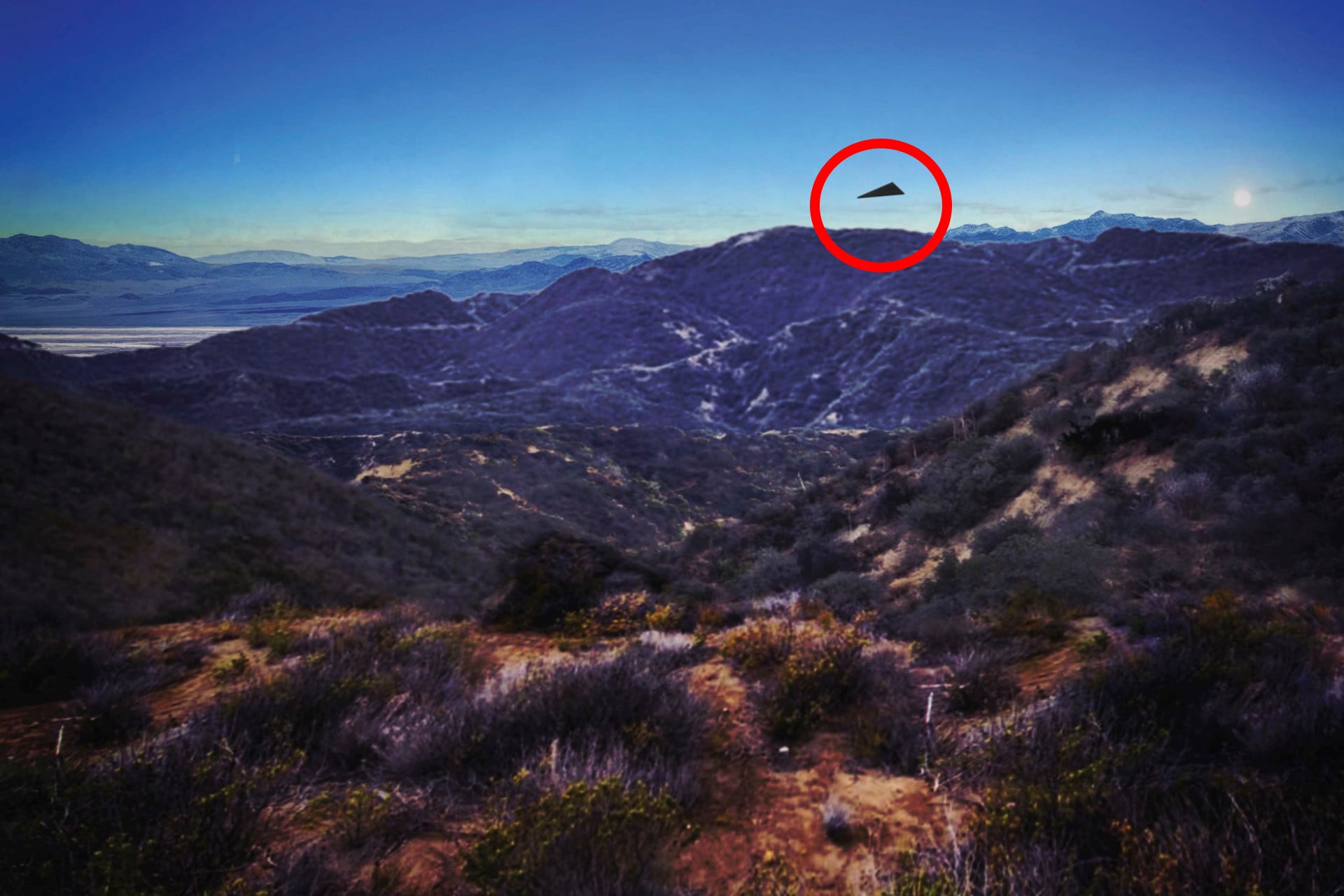
A newly released report says the craft "was executing a slow, controlled, perfectly vertical ascent directly over the ridge line."

A visual representation of an unidentified flying object released by the FBI on Oct. 23, 2026, with a red circle annotation by Gizmodo

A visual representation of an unidentified flying object released by the FBI on Oct. 23, 2026, with a red circle annotation by Gizmodo

© FBI

Earlier this year, federal agents somewhere in the western U.S. observed a mysterious triangular aircraft hovering over an unnamed site that’s sensitive to national security, according to new documents released by the Pentagon. The matte black craft was completely silent and zipped around as fast as a fighter jet, according to a witness, who described it as “resembling a delta wing drone.”

The craft was estimated to be somewhere between 13 and 15 feet in wingspan with a 6-9 foot fuselage length, according to the Department of Defense document made public Friday. The vertical thickness of the craft was estimated to be, at most, just one or two feet, according to the Department of Defense.

“The unidentified craft maintained a completely fixed horizontal alignment [which] did not tilt, sway, or wobble during the controlled vertical ascent of approximately ten seconds,” the DOD report explains. “It climbed to an altitude of an estimated 200 to 300 feet above the local ridge line. Upon reaching this altitude, the craft instantaneously arrested all vertical motion and entered a stable hover for an estimated twenty seconds.”

The craft then “transitioned from a zero-velocity state directly into high-speed horizontal flight,” and managed to execute “a fluid banking maneuver and terrain-hugging descent into a canyon drainage in approximately two to three seconds.” The report notes that once the craft was banking, its “silhouette appeared to flatten and present as a more triangle.”

The FBI report on the incident includes nine images, which feature landscape photos and a black triangle that moves when they’re viewed together as though part of a flipbook. The report doesn’t indicate whether the images are authentic photos or artistic renditions.

Image from an FBI report showing a black triangular shape representing a UAP spotted sometime this year. Image from an FBI report showing a black triangular shape representing a UAP spotted sometime this year. © FBI Image from an FBI report showing a black triangular shape representing a UAP spotted sometime this year. Image from an FBI report showing a black triangular shape representing a UAP spotted sometime this year. © FBI Image from an FBI report showing a black triangular shape representing a UAP spotted sometime this year. Image from an FBI report showing a black triangular shape representing a UAP spotted sometime this year. © FBI Image from an FBI report showing a black triangular shape representing a UAP spotted sometime this year. Image from an FBI report showing a black triangular shape representing a UAP spotted sometime this year. © FBI Image from an FBI report showing a black triangular shape representing a UAP spotted sometime this year. Image from an FBI report showing a black triangular shape representing a UAP spotted sometime this year. © FBI Image from an FBI report showing a black triangular shape representing a UAP spotted sometime this year. Image from an FBI report showing a black triangular shape representing a UAP spotted sometime this year. © FBI Image from an FBI report showing a black triangular shape representing a UAP spotted sometime this year. Image from an FBI report showing a black triangular shape representing a UAP spotted sometime this year. © FBI Image from an FBI report showing a black triangular shape representing a UAP spotted sometime this year. Image from an FBI report showing a black triangular shape representing a UAP spotted sometime this year. © FBI Image from an FBI report showing a black triangular shape representing a UAP spotted sometime this year. Image from an FBI report showing a black triangular shape representing a UAP spotted sometime this year. © FBI

Gizmodo ran the images through SynthID.com, which is used to detect invisible watermarks when an image is made with AI image tools from OpenAI and Google. The images did not contain the SynthID watermark, though they could have been made with a different company’s tools or made with basic Photoshop-style editing software.

“The two primary witnesses reported no physiological effects,” the report explains. “There were no reports of (but not limited to) disorientation, nausea, headache, dermal sensation, visual disturbance, memory gap, or other anomalous sensory phenomena. No anomalous odors were noted. No electromagnetic interference, signal degradation, or anomalous sensor readings were recorded on personal or agency equipment.”

The newly released reports are part of periodic Pentagon releases related to unidentified anomalous phenomena (UAPs), more commonly known historically as UFOs. The first releases were broadly hyped, but they’ve rendered very few answers about the central question: Are these aircraft otherworldly or simply high-tech advancements from near-peer geopolitical adversaries like China?

RELATED

New Pentagon UFO Files: Federal Agents Report a Silent Black Triangle
Federal Agents Saw a Silent Black Triangle. The Pentagon Just Released the File.
Trump Releases UFO Files: The Silent Triangle America's Agents Couldn't Explain

{ https://gizmodo.com/tech/transportation }

Hoe vind je dit bericht?
Geschreven door peter om 21:24 Stuur door

Steven Spielberg Thinks UFOs Might Just Be Humans Travelling Back From 500,000 Years In The Future

Steven Spielberg Thinks UFOs Might Just Be Humans Travelling Back From 500,000 Years In The Future

In his 2023 interview with Stephen Colbert, the filmmaker considered future humans returning to study their own history

Steven Spielberg speaking at San Diego Comic Con International

Steven Spielberg discussed UFOs, extraterrestrial life and the possibility of future human visitors during the 2023 TV interview with Stephen Colbert

PHOTO Gage Skidmore/Wikimedia Commons

Steven Spielberg speculated in a 2023 interview with Stephen Colbert on The Late Show that UFOs could be humans travelling back from 500,000 years in the future to study their own history.

The conversation addressed reports of unidentified aerial phenomena, or UAPs, in North American skies. The filmmaker expressed fascination with the sightings and concern about what he regarded as a lack of transparency surrounding them, calling for closer examination of what was happening.

At the time of the interview, Spielberg told Colbert he had never seen a UFO himself. His future humans theory was an imaginative possibility, rather than a claim that he had identified the objects or established evidence of time travel.

Steven Spielberg Imagines Visitors Studying Their Own Past

The filmmaker's suggestion recast the visitors as anthropologists. Instead of arriving from a distant civilisation elsewhere in the universe, they might be human descendants returning to examine the lives of earlier generations.

He imagined people from '500,000 years in the future' documenting the second half of the 20th century and into the 21st century. In that scenario, objects recorded by military cameras would be connected to an investigation of humanity's own past.

'And they know something we don't quite know, yet, that has occurred, and they're trying to track the last hundred years of our history?' he told Colbert.

The proposed reason for returning was historical research. Spielberg's speculation also raised the possibility that those visitors would have knowledge unavailable to the people whose lives they were documenting.

Colbert drew attention to the optimistic implication of that explanation. Under Spielberg's theory, he observed, 'we survive'.

Spielberg qualified that optimism with the suggestion that 'a certain percentage of us survive that allows these other generations to flourish'.

Steven Spielberg Considers Life Beyond Earth

The director of E.T. and Close Encounters also expressed a broader conviction that intelligent life exists beyond Earth. He presented that belief alongside a difficulty he saw in explaining how visitors could cross the distances involved.

'I don't believe we're alone in the universe. I think it's mathematically impossible that we are the only intelligent species in the cosmos. I think that's totally impossible'.

He described a visit from 400 million light-years away as seemingly impossible outside films, unless travellers could find a way to reach Earth through wormholes. Both the distance and the proposed means of crossing it formed part of his speculation.

Spielberg qualified his authority on the subject, telling Colbert, 'I'm not an astrophysicist'.

He approached the discussion as a filmmaker employing his imagination and as someone curious about UFOs. His interest extended beyond the objects themselves to questions about what information had been disclosed.

'I think what has been coming up recently is fascinating, just absolutely fascinating', Spielberg told Colbert.

He called for extraordinary due diligence over the sightings and criticised what he regarded as secrecy surrounding them. Those comments expressed his concerns about disclosure, rather than establishing an explanation for the phenomena.

Steven Spielberg Favours Curiosity Over an Alien Attack

Colbert also framed the discussion through two of Spielberg's films, questioning whether an encounter with extraterrestrial visitors would more closely resemble E.T. or War of the Worlds.

Spielberg favoured the less hostile possibility. His reasoning concerned the motives he imagined for a civilisation capable of reaching Earth, rather than any established account of alien visitors.

'I believe that if any extraterrestrial civilisation has journeyed all the way here its because of curiosity and science and its not about aggression'.

He extended that reasoning to the restraint he imagined such visitors would have exercised.

'And the fact they've been this patient with us and haven't turned the Earth into a burnt-out cinder is extraordinary – you have to applaud them'.

{ https://www.ibtimes.co.uk/world }

Hoe vind je dit bericht?
Geschreven door peter om 20:53 Stuur door

Democrats Reportedly Prepare UFO Disclosure Committee Because Whistleblowers Do Not 'Trust Another President'

Democrats Reportedly Prepare UFO Disclosure Committee Because Whistleblowers Do Not 'Trust Another President'

Indiana Congressman Andre Carson says a key historical UAP report has been delayed for almost two years, though the proposed panel remains conditional and its scope is unclear

Andre Carson

Indiana congressman Andre Carson has questioned delayed UAP records, as Democrats reportedly consider a select committee if they win the US House 

PHOTO US Congress/Wikimedia Commons Public Domain

Democrats are weighing the creation of a UFO disclosure committee in the US House of Representatives if they regain control in the midterm elections, amid claims a key Pentagon report on historical sightings has been held back for almost two years.

Indiana congressman Andre Carson is leading the reported push, arguing that federal records on unidentified anomalous phenomena are overdue for release.

Carson chaired a congressional hearing on unidentified flying objects in 2022. He now argues that efforts to obtain information about unidentified anomalous phenomena, or UAP, have fallen short of requirements already established by Congress. The proposal remains conditional rather than a formally announced committee.

UFO Disclosure Push Focuses on a Delayed Pentagon Report

Carson has singled out a historical records report from the Department of Defense's All-Domain Anomaly Resolution Office, which handles UAP reporting and investigations. He claims the document has been delayed for almost two years, despite legislative requirements intended to improve scrutiny of the subject.

'Unfortunately, the current administration has not been fully transparent on UAP and has slow walked several of the statutory requirements Congress established for UAP disclosure. For example, the Department of Defense's All-Domain Anomaly Resolution Office was established to receive, analyze, and resolve UAP reporting — but it has delayed the release of a key historical UAP record report for almost two years.'

The Indiana Democrat told the Post that the material should address historical sightings, the way incidents were examined and the possible involvement of classified programmes. One question is whether relevant activities were properly communicated to lawmakers, rather than remaining outside congressional oversight.

He described its intended scope as including 'how incidents were investigated, the role of classified programs, and whether relevant activities were appropriately disclosed to Congress.'

Carson did not identify the report by title or specify the deadlines he believes officials missed. Those omissions leave the precise document and the timing of its expected release unclear.

UFO Disclosure Plans Could Sharpen Party Rivalry

Although the proposed panel would depend on Democrats taking control of the House, interest in UAP records is not confined to one party. President Donald Trump has also directed federal agencies, including NASA, to identify and release government files relating to UFOs.

The Post cited unnamed Republican insiders who fear a Democratic select committee could take political credit for disclosures that might otherwise be associated with the Trump administration. Their concern relates to which political figures would oversee and announce any release, not proof that the records contain evidence of extraterrestrial activity.

A caucus and a select committee would also be different initiatives. The reported proposal includes both, but the available account does not establish their membership, formal powers or a schedule for setting them up.

UFO Disclosure Concerns Extend to the Next President

David Grusch, who has appeared on Joe Rogan's podcast, has raised a different concern about the timing. He fears a future president may be less willing to allow the release of information, expressing the view, 'I don't trust another president'.

That is distinct from Carson's stated objection to delays under the current administration. Neither concern establishes what any unreleased document contains, or whether a change in congressional control would compel its publication.

Rogan also questioned the timing of UFO disclosures in May, suggesting that renewed attention to the subject could distract from criticism surrounding the Iran War. His suspicion was not presented with evidence linking any disclosure decision to military events.

For now, Carson's proposed congressional effort depends on an electoral outcome, while the historical report at the centre of his complaint has not been identified by name or accompanied by a confirmed publication date.

UFO Disclosure on the Ballot? Democrats Plan UFO Select Committee After Midterms #Shorts

{ https://www.ibtimes.co.uk/world }

Hoe vind je dit bericht?
Geschreven door peter om 20:34 Stuur door

Democrats plan UFO disclosure committee as Trump trust wanes

Democrats plan UFO disclosure committee as Trump trust wanes

Locked in a big game of disclosure chess.

Blue and red chess pieces locked in UAP disclosure checkmate.

Blue and red chess pieces locked in UAP disclosure checkmate.

Image by Cybernews.

Marcus Walsh  - Journalist

Key takeaways

Unfortunately, the current administration has not been fully transparent on UAP and has slow-walked several of the statutory requirements Congress established for UAP disclosure,
said Andre Carson (Indiana Democrat.)

A UFO flying through the c̶o̶s̶m̶o̶s̶ chromosomos.

A UFO flying through the cosmos.

Image by Cybernews.

“I don’t trust another president”

Both parties as bad as each other

Let me guess, if they get in power they will blame the opposition for halting progress, and if the opposition gets in power they will blame them.
reddit bipartisan
Trump's disclosure & UFO transparency | Backscroll

{ https://cybernews.com/ }

Hoe vind je dit bericht?
Geschreven door peter om 18:44 Stuur door

Number of mysterious drones flying over defence bases rises as authorities in the dark

Number of mysterious drones flying over defence bases rises as authorities in the dark

Authorities are in the dark about who is behind the major jump in the number of unidentified drones flying over Australian Defence Force bases in what has been described as a national security threat.

Defence officials told a Senate committee the reports of unidentified drone sightings over bases have risen from 19 in 2022-23 to 204 in 2025-26.

ec4a96e2efcf81260c4cdb61ce6059bddd5b6161
Classic Hornets take of at Williamtown RAAF base for operation in 2014. Several unidentified drones breached the base’s airspace earlier this year.
Ryan Osland

These added to a total of about 420 sightings over the past four financial years.

In the financial year to date, which started on July 1, there has already been 42 reports.

Asked how many of the incidents were just “a silly teenager” and how many were foreign interference or espionage, the defence officials were unable to say.

“I can say we’re working really closely on the motivations,” the official said.

“We haven’t identified particular high-end concerns but we are very concerned that this is a growing challenge.”

Australian Strategic Policy Institute defence expert Malcolm Davis said the rising number of unidentified drones was “absolutely” a national security threat.

“The risk is there’s not so much some amateur flying a drone over a base creating an incident,” he said.

“It’s the possibility that you could have a foreign adversary or a terrorist organisation utilising drones to actually attack one of our bases.”

The Williamtown RAAF Base, home to fighter jets and aircraft about 30km north of Newcastle in NSW, made headlines after unidentified drones were found to have breached the restricted airspace on two separate occasions in July and August.

Defence personnel did not shoot the drones down and investigations are still ongoing to determine their origins.

Defence officials flagged the current legal framework was “not straightforward” about their powers in responding to these incidents.

Davis said the incident showed how easy it could have been to damage aircraft and infrastructure and pointed to Ukraine’s Operation Spiderweb.

The covert military operation had caused damage to multimillion-dollar Russian military assets after cheap drones were unleashed in a surprise attack in July 2025.

“Drones are cheap. They can be armed with explosives. They can do real damage,” Davis said.

At the time of the Williamtown base incident, Prime Minister Anthony Albanese said it was “unsafe and dangerous” to have drones around defence airspace.

d31fbfde869a87cad3ba717463b65fc267aa420d
While small and relatively cheap, drones can cause significant damage and have become a defining feature of the war in Ukraine. 
AP Photo/Efrem Lukatsky

“It makes no sense for that to occur,” he said.

Legislation to grant defence members the ability to shoot down any unidentified drones was introduced in October.

Shadow defence minister James Paterson said it should not have taken so many months of pressure for the federal government to finally act and bring forward those reforms.

“The Coalition has been raising the alarm on drone attacks on our major defence infrastructure for many months, particularly our RAAF bases,” he said.

Australia will spend a record $425 billion over the next decade to overhaul the defence force.

About $22 billion has been spent on counter-drone technology and $7 billion on counter-drone investment over the decade.

Davis called on the federal government to fast-track its investment into counter-drone defences.

“At the , I think that we’re only just starting to wake up to this threat and the government is moving way too slowly to remomentspond to this threat,” he said.

“We don’t have 10 years to think about a capability solution and then buy it. We’ve got to get this in place within 12 months.”

In a statement, an Australian government spokesperson said “modern threats demand modern laws”.

“Protecting Defence personnel, critical infrastructure and sensitive capabilities has never been more important.

“The legislation builds on the Albanese government’s previous regulatory changes and provides Defence with enduring authority to respond to drone incursions.

“Defence must be able to protect its people, bases and capabilities against a range of rapidly evolving threats.”

US SECURITY ALERT | Unidentified Drones Detected Over US Army Base Near Top Officials’ Residence
Hoe vind je dit bericht?
Geschreven door peter om 18:05 Stuur door

Ariyuanhas & Adrieiuous — The Alleged Pleiadian Prisoner Photographs — United States — 1972

Ariyuanhas & Adrieiuous — The Alleged Pleiadian Prisoner Photographs — United States — 1972

Ariyuanhas & Adrieiuous — United States — 1972

In 2010, YouTube user startraveler2000 uploaded a video titled “real human aliens” showing a series of photographs said to depict two human-looking extraterrestrials named Ariyuanhas and Adrieiuous.

The pair were described as a woman and her son from the Pleiades who had allegedly been taken into United States military custody in 1972.

The photographs were describeed as being taken by a military intake specialist.

Ariyuanhas was identified as the adult woman shown throughout the photographs. According to the account, she was between 78 and 100 years old in Earth years, although she appeared to be approximately 30.

She was described as having very light blue eyes, large pupils and slightly pointed ears. Material associated with the case identified her as a scientist and gave her origin as the Pleiades constellation.

The story stated that Ariyuanhas and her son had arrived on Earth after their spacecraft made an emergency landing while they were searching for Adrieiuous’ father. The pair were allegedly intercepted by the United States military and taken to a secret facility, where they were held separately.

During her confinement, Ariyuanhas reportedly stopped speaking and eating, although she continued to drink water. She allegedly did not request to see her son because the two were capable of communicating telepathically.

The inscribed text box reads:

SPECIES: HUMAN/CELEST
GENDER: FEMALE
STATS: 7FT-3IN/143LBS/BLUE EYES/
AGE: 78-100
LOCATION: BLOCK 9, CELL 16, BLK-SPY
ORIGIN: PLEIADES CONSTELLATION
THREAT LEVEL: NON THREATENING
LANGUAGE: NON VERBAL COMM
TITLE: SCIENCE
DATE OF CUSTODY: 05121972
CRAFT: MURCURY/STA-ELECT/DISK
REG NUMBER: 5127209016

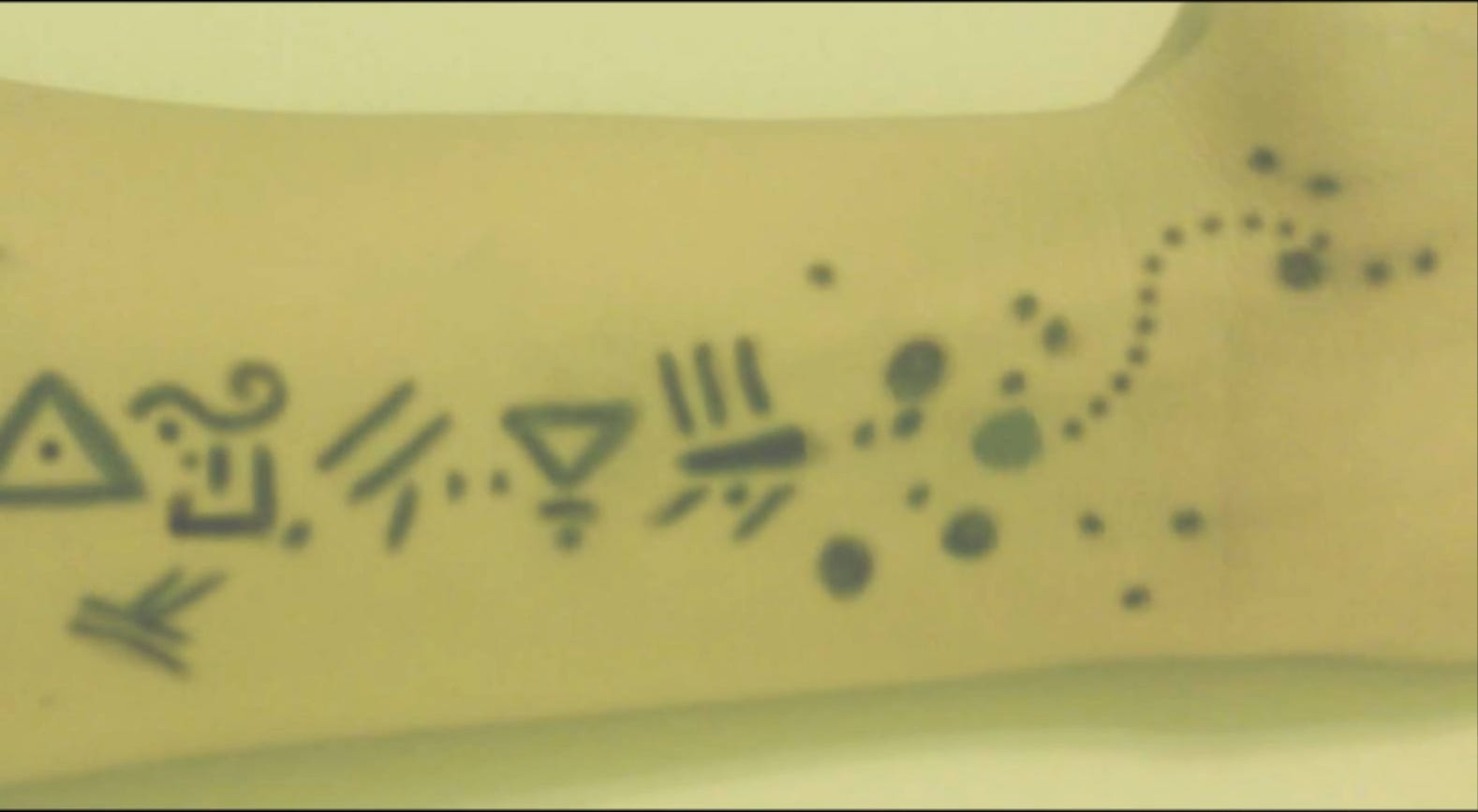
The Arm Markings

One of the most distinctive elements in the surviving material is a series of dark markings visible across Ariyuanhas’ left forearm.

According to the accompanying account, the symbols represented a constellation of stars.

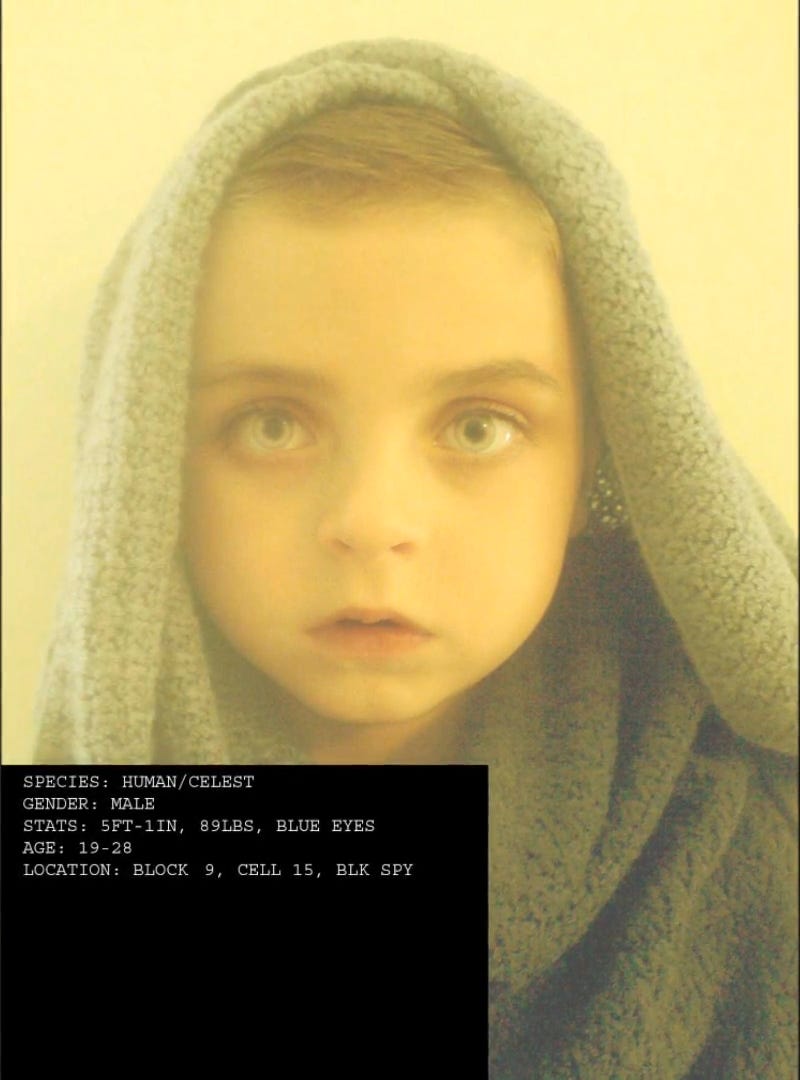
Adrieiuous

Adrieiuous was identified as Ariyuanhas’ son and appears separately in the surviving photographs.

He was described as being between 19 and 28 years old, despite physically resembling a boy of approximately eight to ten. Unlike his mother, Adrieiuous reportedly spoke with guards, ate food and participated in testing.

The story claimed that an intelligence test produced a score of approximately 210.

The pair were said to have remained in custody for approximately two years before eventually being permitted to leave in their spacecraft.

The inscribed text box reads:

SPECIES: HUMAN/CELEST
GENDER: MALE
STATS: 5FT-11IN, 89LBS, BLUE EYES
AGE: 19-28
LOCATION: BLOCK 9, CELL 15, BLK SPY

Detention Information

A custody date of 05.12.1972 was associated with the case. The surviving material does not establish whether this was intended as May 12 or December 5, 1972.

A later summary of the same account listed Ariyuanhas as approximately 2.22 meters tall, with blue eyes and an apparent age in her early thirties, while Adrieiuous was listed as approximately 1.56 meters tall and physically resembling an eight- to ten-year-old child. The same summary repeated the claim that the two had been held separately and communicated telepathically.

Provenance

The earliest source currently located for the photographs is the YouTube video “real human aliens,” uploaded by startraveler2000.

No identified photographer, original negatives, military archive, authenticated detention records or earlier publication of the photographs has been located.

The identities of the people shown in the photographs remain unverified.

Ariyuanhas y Adrieiuous de las Pléyades

{ https://alienarchivist.substack.com/ }

Hoe vind je dit bericht?
Geschreven door peter om 17:37 Stuur door

Steven Greer’s CE-5 Alien Photographs — Andromedan Ambassador “Bijou,” the Light Being, the Mt. Shasta Being & the Healer — 2009–2017

Steven Greer’s CE-5 Alien Photographs — Andromedan Ambassador “Bijou,” the Light Being, the Mt. Shasta Being & the Healer — 2009–2017

Steven Greer

Steven M. Greer is an American physician and UFO researcher who founded the Center for the Study of Extraterrestrial Intelligence (CSETI) in 1990. He later established the Disclosure Project, focused on testimony concerning UFOs and alleged extraterrestrial activity.

Greer also developed the CE-5 contact protocols, intended to facilitate human-initiated contact with extraterrestrial intelligence. During CSETI and CE-5 expeditions, Greer and members of his groups have produced several photographs claimed to show extraterrestrial beings.

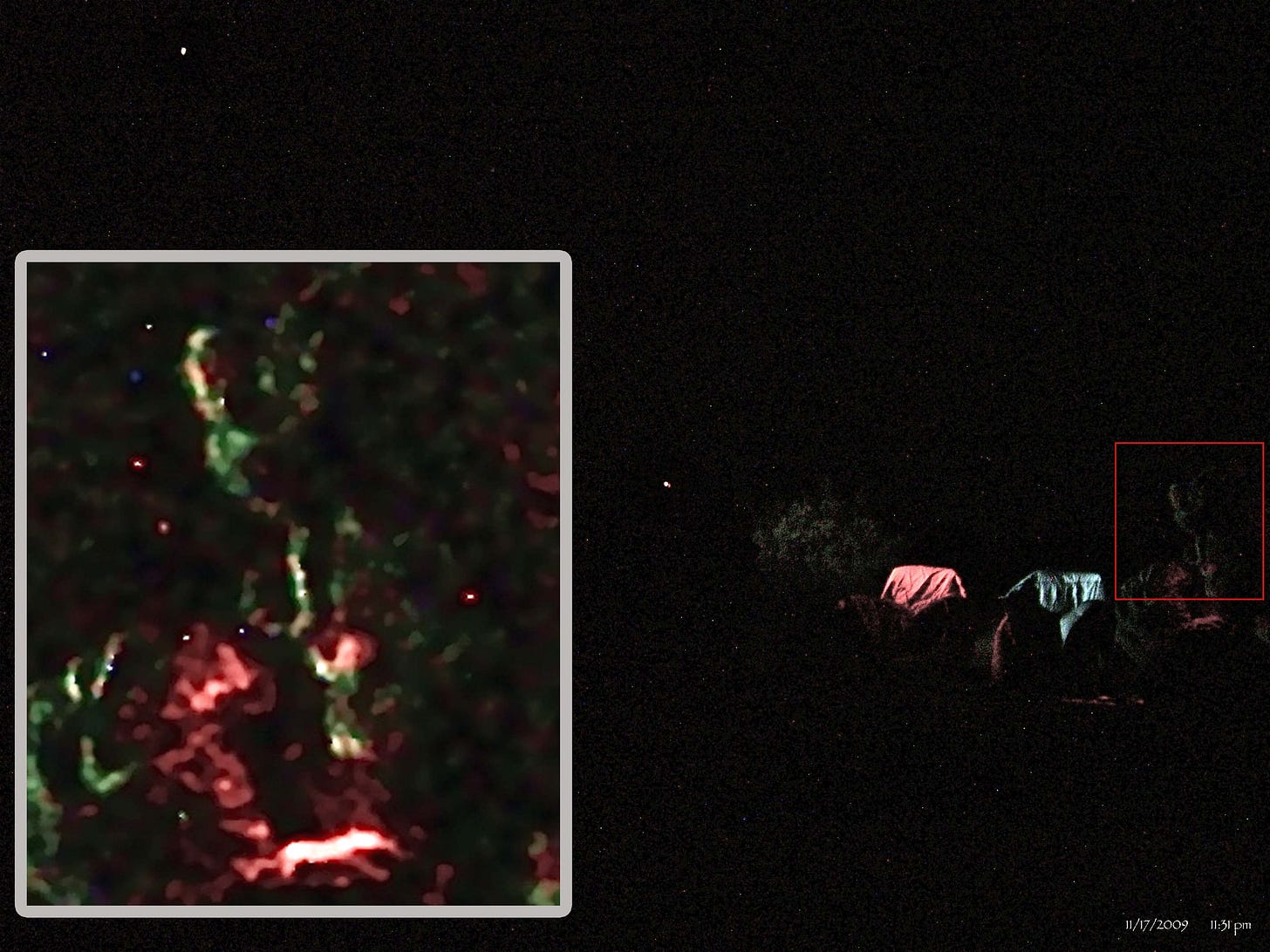
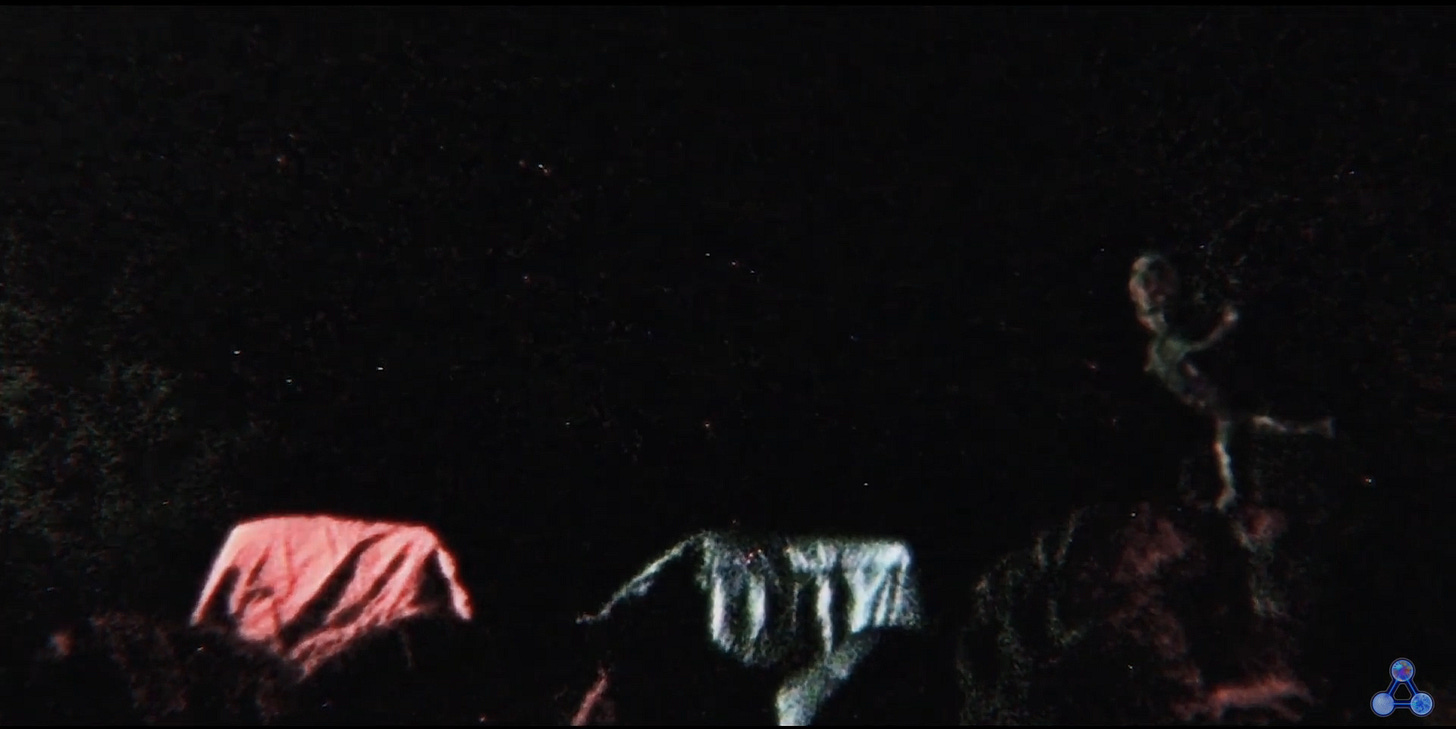
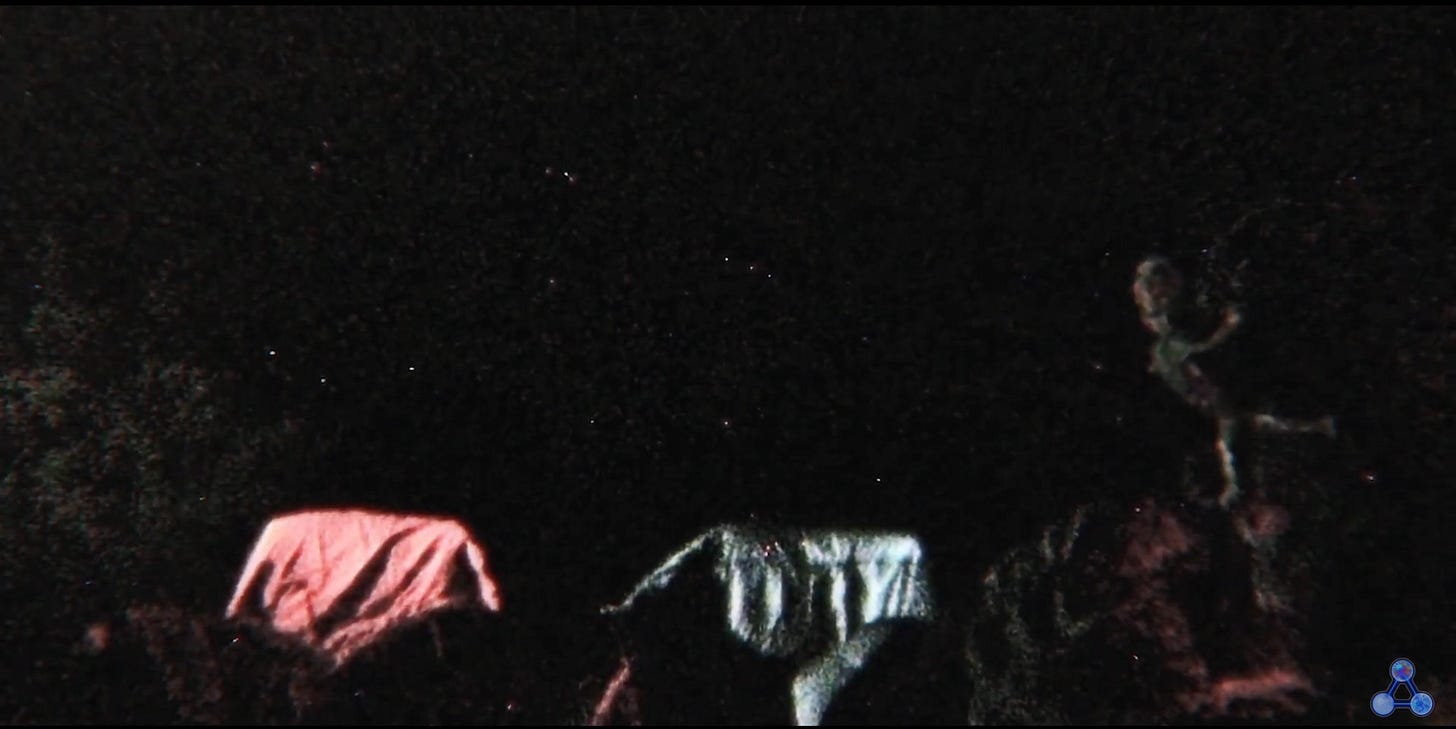
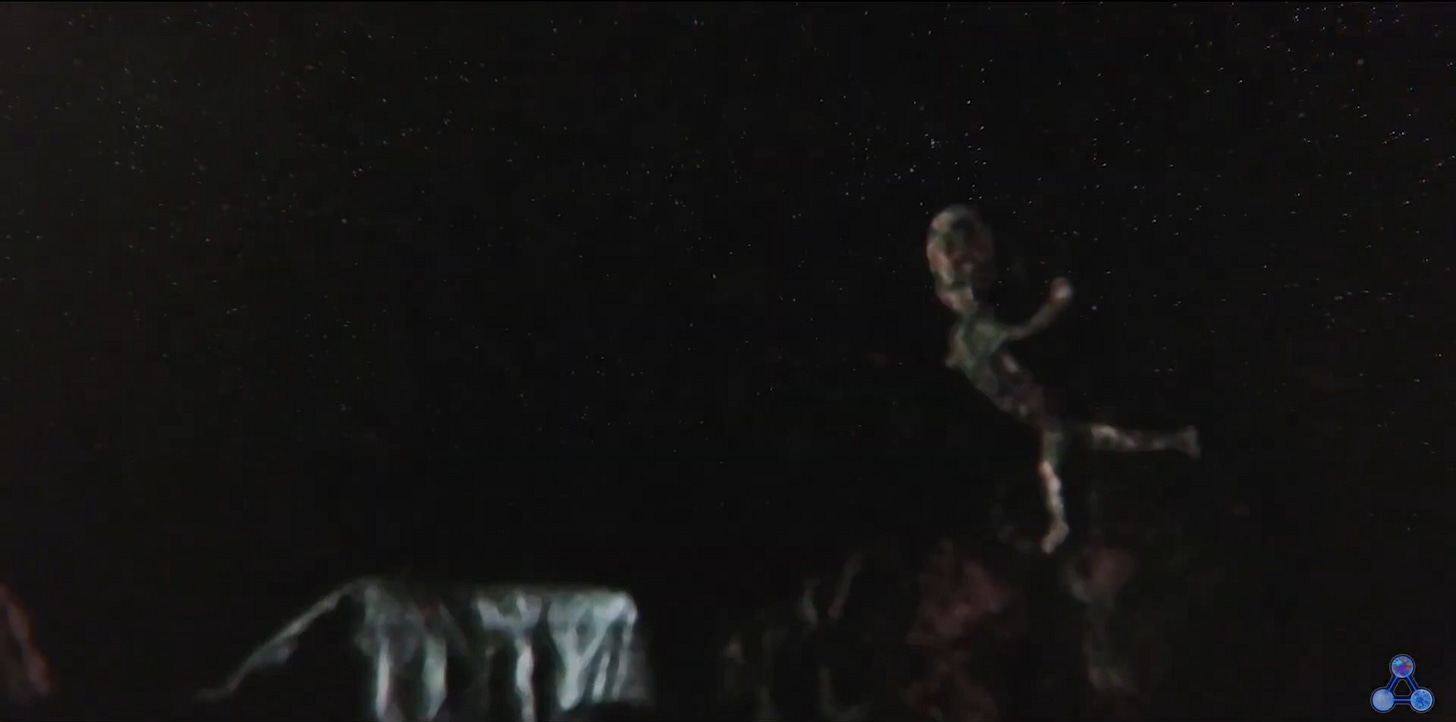
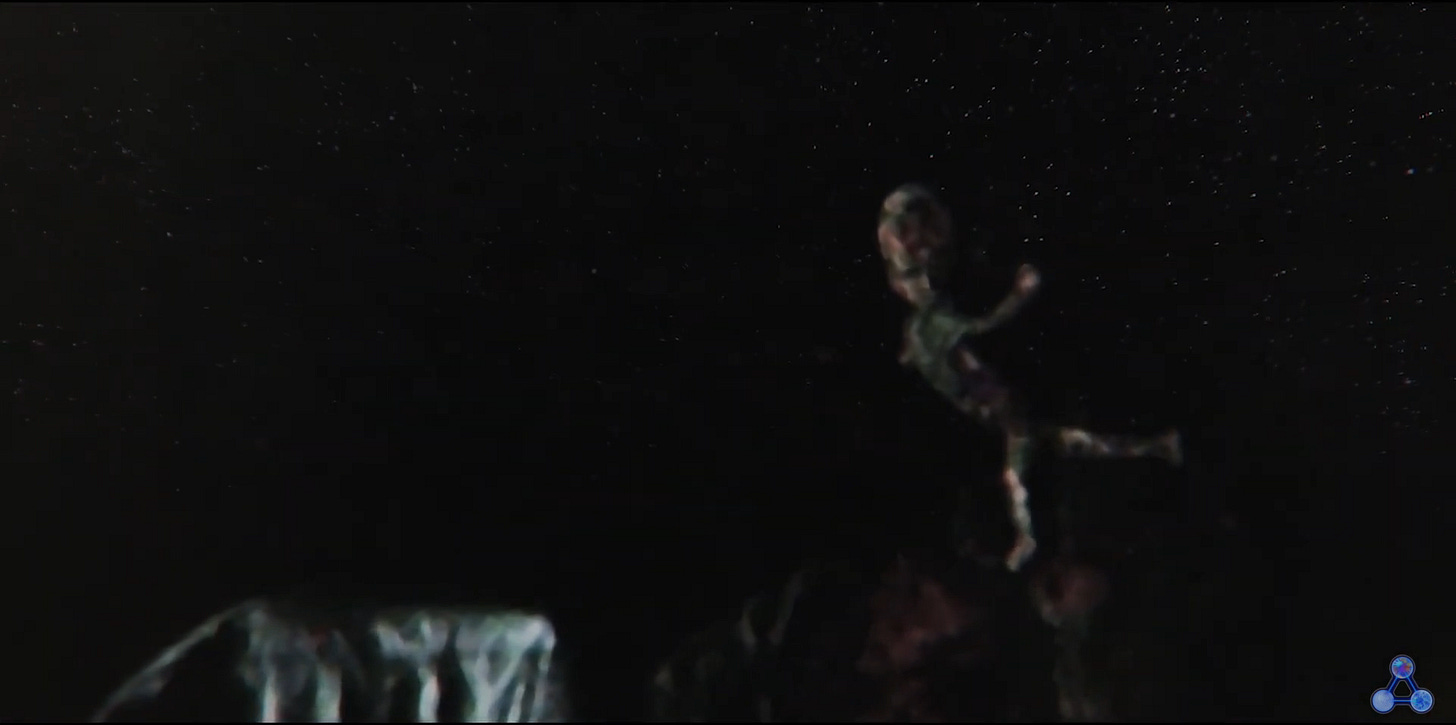
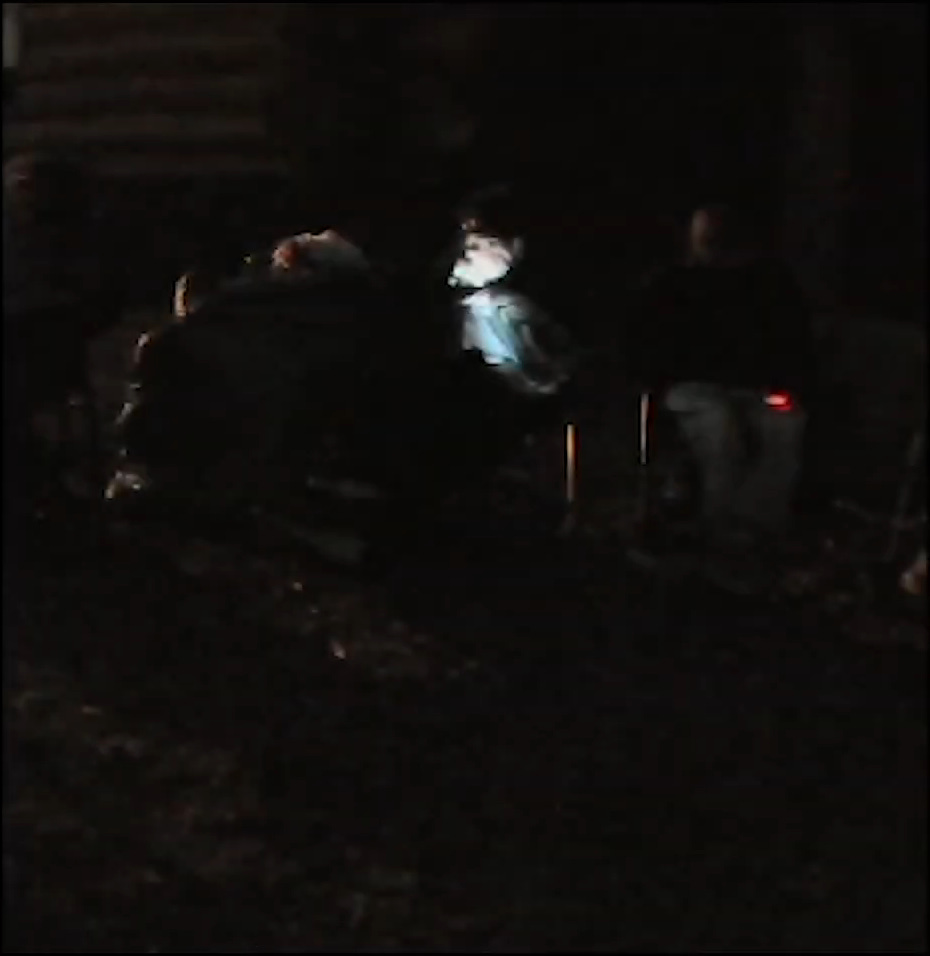
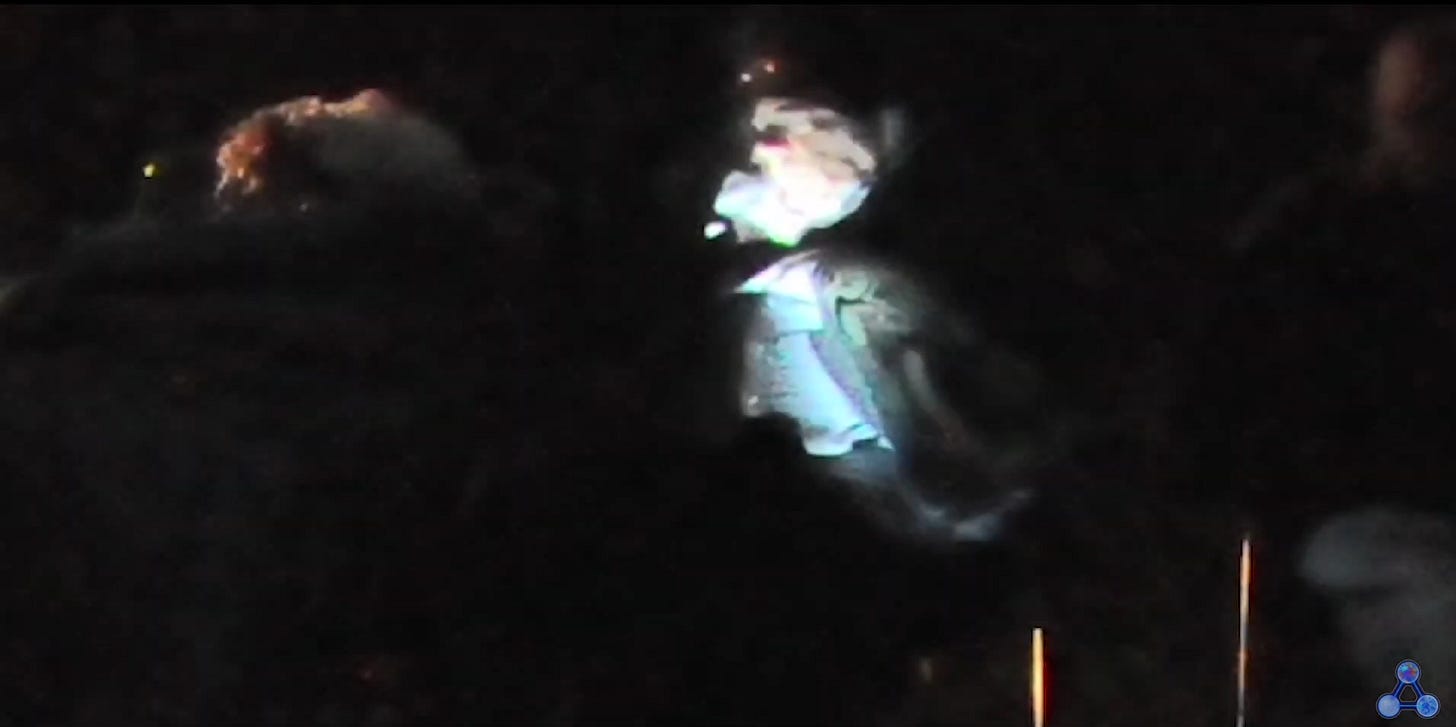
Bijou — November 17, 2009

During a CSETI expedition at Joshua Tree National Park, California, on November 17, 2009, CSETI member Raven Nabulsi photographed an area beside the group’s chairs at approximately 11:31 p.m.

CSETI released the photograph publicly in 2010, describing the figure as an extraterrestrial being encountered during the contact event.

The original account did not identify the figure as Bijou or describe it as Andromedan. Greer later presented the same figure as “Bijou,” an ambassador from the Andromeda Galaxy.

https%3A%2F%2Fsubstack-post-media.s3.amazonaws.com%2Fpublic%2Fimages%2F037b0e4b-e7ad-4cb4-b956-39ed54e1142f_2848x2136.png

https%3A%2F%2Fsubstack-post-media.s3.amazonaws.com%2Fpublic%2Fimages%2F3ac15fab-faa8-4efa-a654-d3a8820ffc65_1920x961.png

https%3A%2F%2Fsubstack-post-media.s3.amazonaws.com%2Fpublic%2Fimages%2Fea1cb042-410c-4f43-b613-a419a9cc53ae_1920x961.png

https%3A%2F%2Fsubstack-post-media.s3.amazonaws.com%2Fpublic%2Fimages%2F20cba904-c73f-4d98-96f8-d2d55dc73c9c_1920x952.png

https%3A%2F%2Fsubstack-post-media.s3.amazonaws.com%2Fpublic%2Fimages%2Fa43b8801-ac9e-46f7-b85a-6fc1ba2b6b0b_1920x956.png

https%3A%2F%2Fsubstack-post-media.s3.amazonaws.com%2Fpublic%2Fimages%2F8d211b01-fbad-4026-8eae-e27ce131ff8b_973x970.png

https%3A%2F%2Fsubstack-post-media.s3.amazonaws.com%2Fpublic%2Fimages%2Fac7e5241-4dae-4686-8d60-5ee34b4192a9_1920x1080.png

https%3A%2F%2Fsubstack-post-media.s3.amazonaws.com%2Fpublic%2Fimages%2F468e3e62-242e-468a-9d30-2c97f7984014_1920x1080.png

https%3A%2F%2Fsubstack-post-media.s3.amazonaws.com%2Fpublic%2Fimages%2F658493f5-e7a2-4234-90e9-05c65b5b9af5_1920x1080.png

The Light Being — February 2010

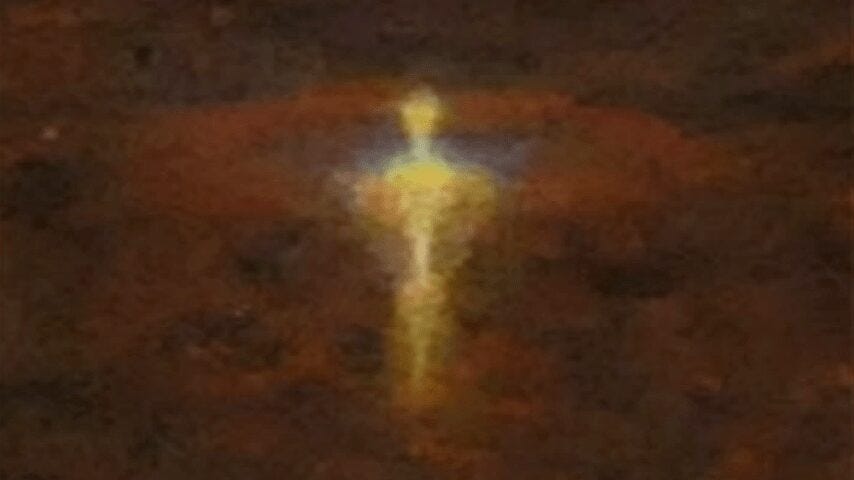
In February 2010, CSETI member Emery Smith photographed a small luminous humanoid-shaped figure during a contact event at Boca Grande, Florida. The image became known as the “Light Being” and was also catalogued in Greer’s archive as a “Crystalline ET.”

The photograph was subsequently included among the CE-5 and extraterrestrial photographs presented through Greer’s organization.

https%3A%2F%2Fsubstack-post-media.s3.amazonaws.com%2Fpublic%2Fimages%2F8080bc05-6948-4aea-a231-599566eb4b72_854x480.jpeg

The Mt. Shasta Being — 2011

Another alleged entity photograph was presented by Greer from a CE-5 event at Mt. Shasta, California, in 2011.

Greer later displayed the photograph while discussing alleged extraterrestrial contact during CE-5 events.

The surviving presentation identifies the location and year as Mt. Shasta, California — 2011. The photographer is not identified in the source material currently located.

https%3A%2F%2Fsubstack-post-media.s3.amazonaws.com%2Fpublic%2Fimages%2F7a070348-ca18-47a8-be0a-f24f1fe44581_930x956.png

https%3A%2F%2Fsubstack-post-media.s3.amazonaws.com%2Fpublic%2Fimages%2F0e641d8e-1206-4cec-b291-a542846a5442_1912x955.png

The Healer — May 2017

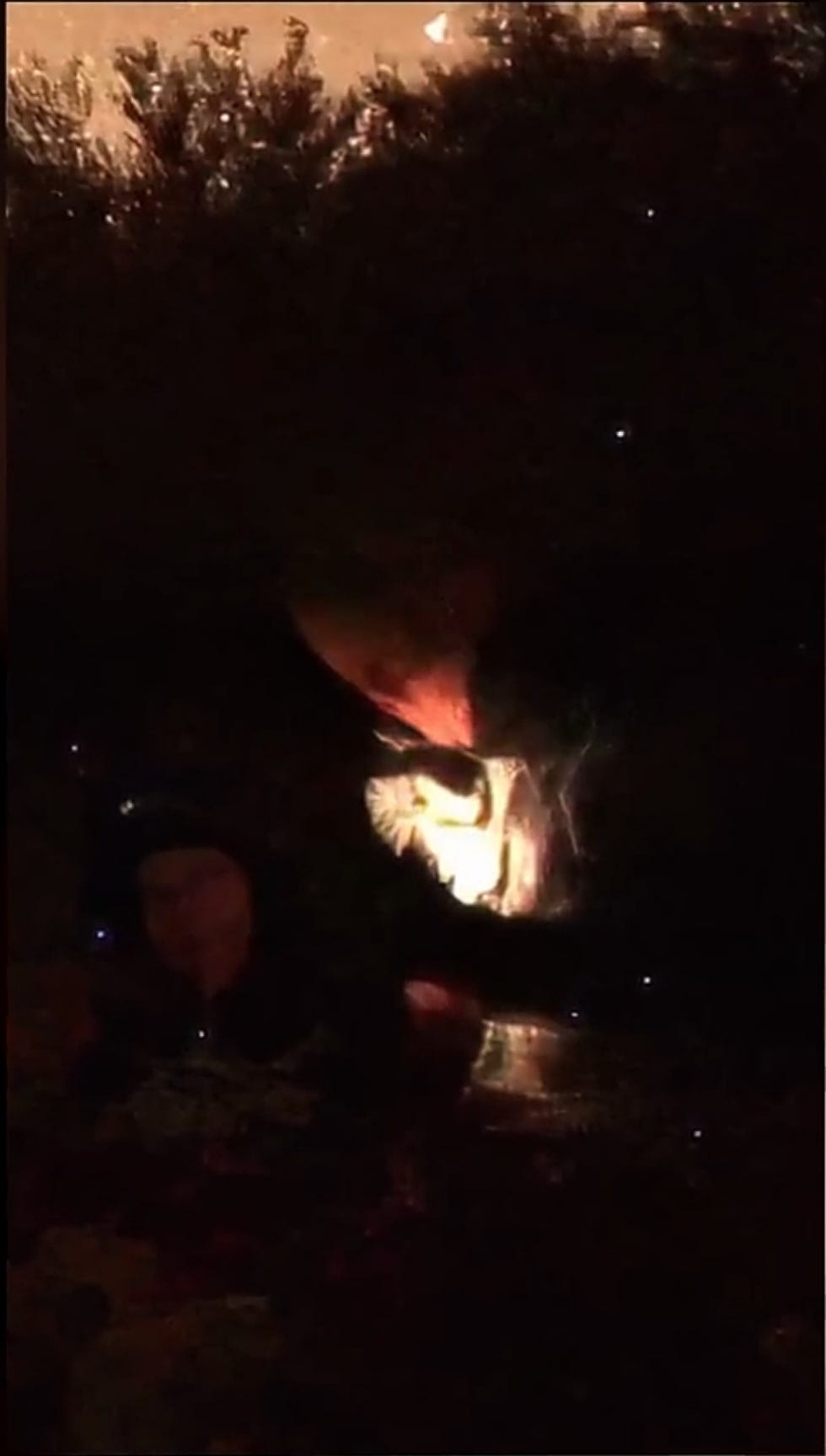
A third alleged entity was photographed by David Marconi, the screenwriter and director known for writing Enemy of the State, during a CE-5 expedition near Oracle, Arizona, held from May 23–29, 2017.

According to Greer, Marconi had a Nikon camera mounted on a tripod when the group noticed what appeared to be a red orb near an older man seated in the contact circle. Greer asked Marconi to photograph the area.

https%3A%2F%2Fsubstack-post-media.s3.amazonaws.com%2Fpublic%2Fimages%2F45078c47-739c-4178-92c6-994473662b6d_980x1728.png

Greer described the figure as having a large head, a beak-like nose and mouth, and what appeared to be a feathery garment. He said members of the group had heard the entity moving behind them despite not seeing it with the naked eye.

Greer referred to the entity as “The Healer,” stating that it had allegedly appeared during other encounters. He also claimed that the older man photographed beside it had suffered severe hearing loss since his youth and awoke the following morning with his hearing restored

https%3A%2F%2Fsubstack-post-media.s3.amazonaws.com%2Fpublic%2Fimages%2F79d3c553-c17a-4e2f-b50a-4e463d93f4b5_978x1732.png

Sources

Dr Steven Greer on Seeing & Studying Aliens, Man Made v Alien UFOs, Govt Secrets (Flashback)

{ https://alienarchivist.substack.com/ }

Hoe vind je dit bericht?
Geschreven door peter om 17:28 Stuur door

Salt deposits on Ceres may conceal reserves of water ice

Salt deposits on Ceres may conceal reserves of water ice

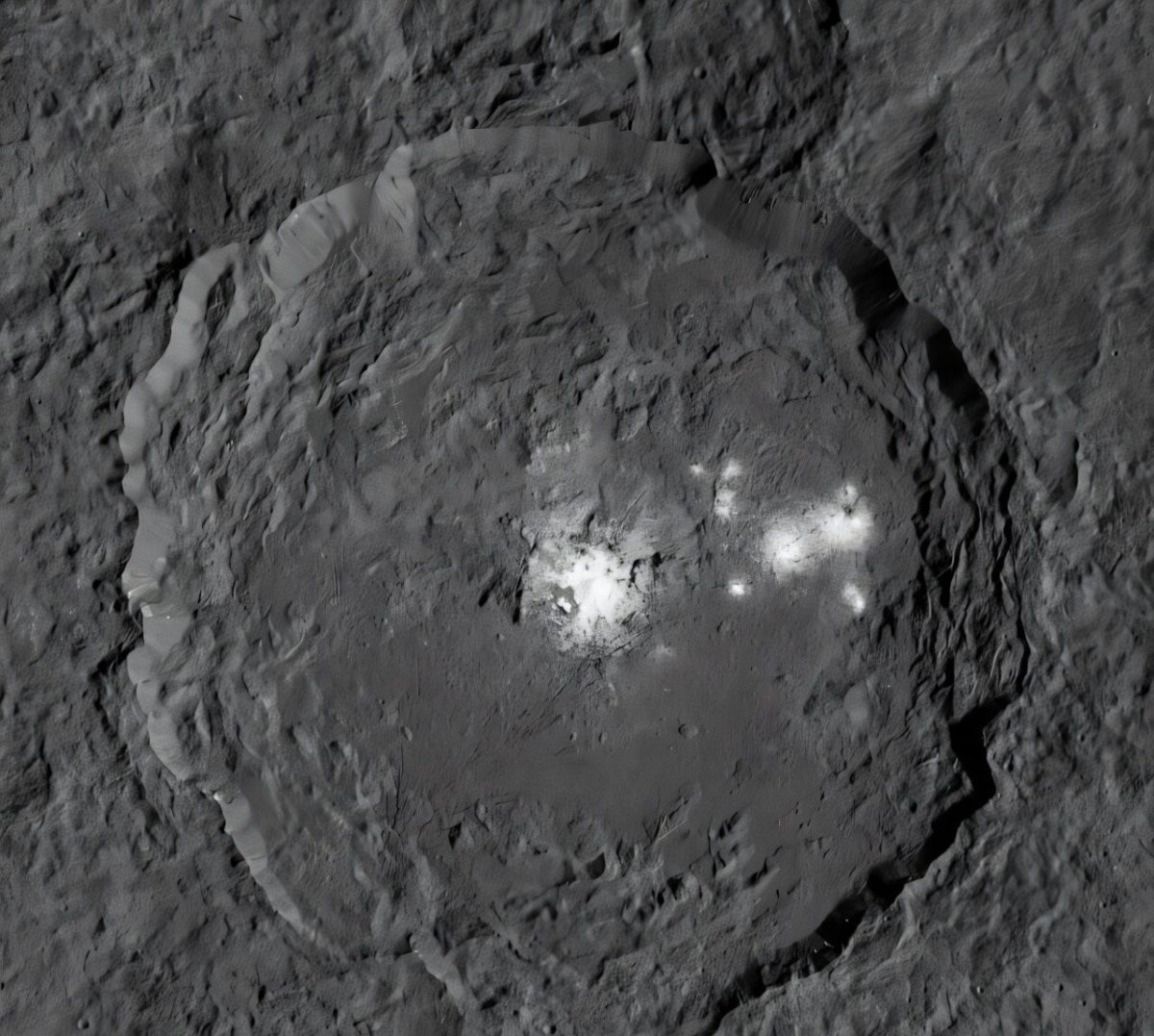
Ceres is a dwarf planet in the main asteroid belt. Bright white patches on the floor of one of its large craters have been identified as exposed salt deposits. Scientists believe, however, that water ice—or even an ocean—may lie hidden beneath them.

ceres-water-ice-can-ma.jpg

Salt on Ceres.

Source: phys.org

The Mystery of Salt Deposits on the Dwarf Planet

Two researchers at the California Institute of Technology (Caltech) may have brought us closer to understanding the connection between water-ice activity on Ceres and its surface salt deposits. In findings published in Journal of Geophysical Research: Planets, the scientists presented evidence that previous estimates of the amount of salt in deposits observed by NASA’s Dawn spacecraft, which explored Ceres from 2015 to 2018, may have been inaccurate. The study is reported by phys.org.

Ceres is perhaps one of the most overlooked and underappreciated planetary bodies in the Solar System. This may be because, although Ceres has the same dwarf-planet status as Pluto, it is mostly regarded as an asteroid because it lies in the main asteroid belt. Yet Ceres is not only the largest object in the main asteroid belt; it also accounts for 25–30% of the belt’s total mass.

Although this has yet to gain recognition, Ceres has a layered interior, like most rocky worlds, including Pluto. Its surface also shows signs of past water-ice activity, known as cryovolcanism, in the form of several “bright spots”—highly reflective salt deposits. But what can these deposits tell scientists about Ceres’s formation and evolution?

Ceres Has More Salt Deposits Than It Appears

For the study, the scientists combined Dawn spacecraft data with a series of computer models to investigate the evolution of water-ice and salt deposits on Ceres’s surface. Their main goal was to bridge a longstanding gap between observations of these surface deposits and the processes actually taking place. Specifically, the study focused on how salt deposits form as water ice turns directly into vapor—a process scientifically known as sublimation—and whether Dawn’s data provide accurate estimates of the amounts of water ice and salt.

The researchers ultimately concluded that salt deposits may be concealed beneath layers of water ice with which they are mixed. The amount of salt could be 30–50% greater than previously estimated. They also found that landslides expose larger areas of surface ice, which then sublimates, leaving behind the bright, salty patches observed by Dawn. Some of the water-ice deposits detected by the spacecraft may therefore have been recently exposed by landslides.

A Model of Salty-Ice Segregation on Ceres

Based on observations, the scientists proposed a qualitative model for the long-term surface evolution of Ceres’s salty ice, similar to thermal segregation on icy moons. Ice in salt-bearing deposits sublimates more readily and can migrate to colder areas, creating a feedback process that produces compositional differences between colder, icy surfaces and warmer, salt-rich regions.

“Continuous replenishment of ice at the optical (visible) surface is necessary to reconcile the numerous detections with ice’s geologically brief lifetime. This finding resolves an existing paradox concerning how salt-rich deposits arise in Ceres’s near-surface layer: they were probably not salt-rich initially, but formed through salt enrichment at the optical surface as salty ice sublimated,” the researchers write in their paper.

Sublimation Leaves Salt Behind

Essentially, heat and sublimation sort the salt and water-ice deposits: salt mixed with water ice accelerates the ice’s sublimation, leaving salt deposits behind. This creates a feedback cycle that produces different proportions and types of mixtures in individual water-ice and salt deposits. Landslides also expose surface water ice, intensifying this sublimation feedback cycle.

Finally, the study clears up a longstanding misunderstanding about how salt deposits form and evolve: they do not begin with large amounts of salt. Instead, they start with small amounts, and their salt content increases as the salt-bearing water ice sublimates.

We've even seen some crazy ideas that the spots are actually electricity:

Or maybe they're just good old fashioned aliens:

NASA officials admit they have no idea what the spots are. Guesses have ranged from volcanoes to ice plumes to salt deposits. In the meantime NASA put together a poll where you can vote on what you think the weird bright spots are.

Soon, though, Dawn will get some real answers.

ceres spots

The strange bright spots on Ceres.  

NASA

Last year astronomers at the European Space Agency peered at Ceres with the Herschel telescope and determined that the planet is actually surrounded by a thin layer of water vapor. That means that Ceres may hold ice water beneath its surface, and lends some support to the idea that those weird bright spots are actually light reflecting off ice plumes.

Ceres: The Dwarf Planet That May Still Be Alive

{https://universemagazine.com/en/articles-en/ }

Hoe vind je dit bericht?
Geschreven door peter om 15:43 Stuur door

A Strange Cloud on Mars Has Puzzled Scientists for Decades—Now They May Know Why It Form

AMEC

(Image Credit: ESA, DLR, FU Berlin; Processing & License: J. Cowart)

A Strange Cloud on Mars Has Puzzled Scientists for Decades—Now They May Know Why It Forms

In late 1976, NASA’s Viking 2 spacecraft reached Mars, where it joined its sister spacecraft, Viking 1, in an ambitious mission that would eventually map close to 97 percent of the Martian surface.

Among the thousands of images obtained by Viking 2 over the course of the next two years, some of them managed to capture a particularly unusual feature: a massive cloud extending for several hundred miles, which was unlike anything else scientists had ever seen on the Red Planet.

Today, this massive feature, known as the Arsia Mons Elongated Cloud (AMEC), is better understood thanks to decades of study by NASA, as well as its international partners like the European Space Agency and its Mars Express spacecraft.

Yet much about the cloud remains mysterious. Although researchers have learned more about its unusual behavior, recent findings suggest that the conditions responsible for its formation may differ significantly from those involved in conventional cloud formation.

Mystery at Arsia Mons

Appearing over Arsia Mons, one of the Red Planet’s massive volcanoes, the unusual cloud is typically seen during the Martian spring and summer seasons and is most prominent in the morning hours.

The cloud mainly consists of water ice crystals, which the warm seasonal winds carry across long distances, resulting in a lengthy cloud that stretches more than 900 miles across the planet’s surface.

Still, many questions remain about how this remarkable feature develops. On Earth, water vapor typically condenses or freezes onto microscopic airborne particles, including dust, allowing cloud droplets and ice crystals to form.

However, the Martian atmosphere is extremely thin, and conditions at the high altitudes where the Arsia Mons cloud forms may not provide enough dust particles to support the same process. Because of this, it remains unclear whether similar processes that lead to cloud formation on Earth could be occurring on Mars, or if something entirely different causes the massive Arsia Mons Elongated Cloud to form.

Possible Answers to a Longstanding Mystery

Based on recent research, scientists now believe the Arsia Mons cloud could form, resulting from a process that does not rely on dust particles, which would normally be responsible for similar formations when they occur on Earth.

If this is correct, it potentially reveals previously unrecognized aspects of cloud formation in planetary atmospheres—a phenomenon that might gain additional confirmation from future observations of cloud formation in planetary atmospheres that are thinner than Earth’s.

Ultimately, unraveling the mystery of the Arsia Mons Elongated Cloud could help scientists refine their understanding of atmospheric processes not only on Mars, but potentially here on Earth as well.

  • Micah Hanks is the Editor-in-Chief and Co-Founder of The Debrief. A longtime reporter on science, defense, and technology with a focus on space and astronomy, he can be reached at micah@thedebrief.org. Follow him on X @MicahHanks, and at micahhanks.co
Cloud on Mars Finally Explained by Scientists | WION Podcast

Scientists have explained the Arsia Mons Elongated Cloud, a recurring 1,800 km plume that forms each Martian morning during the southern summer. Using Mars Express Orbiter data and atmospheric modeling, they found it results from homogeneous nucleation of ice crystals in super-saturated water vapor interacting with volcanic slopes. The discovery advances understanding of Martian weather and water movement, offering insights for future exploration.

Deeper Dive: Clouds…on Mars? Insights from a Mars Climate Scientist

{ https://thedebrief.org/category/space/ }

Hoe vind je dit bericht?
Geschreven door peter om 15:26 Stuur door

Steven Spielberg shares his mind-blowing theory about alien life

Steven Spielberg shares his mind-blowing theory about alien life

Harriet Brewis

If there’s one thing we can count on Steven Spielberg for, it’s making space exciting.

The creative force behind everyone’s all-time favourite E.T. has shared his thoughts on extraterrestrial life and the recent spate of UFO sightings – and his theories are pretty mind-blowing.

The Oscar-winning movie maker had his brain picked by Stephen Colbert in a wide-ranging interview for The Late Show back in 2023.

And whilst the Close Encounters director admitted he’d never seen a UFO himself, he said he believed there was “something going on”.

Spielberg was referring to the unidentified aerial phenomena” (UAPs) that have been littering North American skies in recent weeks, with US officials admitting they didn’t know the origin of at least three flying objects that the military shot down last month.

"I think what has been coming up recently is fascinating, just absolutely fascinating,” Spielberg told Colbert.

“And I think the secrecy that is shrouding all of these sightings and the lack of transparency until the Freedom of Information Acts compels certain materials to be released publicly… I think there is something going on that simply needs extraordinary due diligence."

He continued: "I don’t believe we’re alone in the universe. I think it’s mathematically impossible that we are the only intelligent species in the cosmos. I think that’s totally impossible.

"At the same time, it also seems impossible that anyone would visit us from 400 million lightyears from here – except in the movies – unless it figures out some way of basically jumping the shark, so to speak, and getting here through wormholes.”

But, he conceded: “I’m not an astrophysicist. I really can’t speak the language of the people that do it so well out of JPL (Nasa’s Jet Propulsion Laboratory), but I just know – as a person that makes movies and uses his imagination and also is a person that is insatiably curious about UFOs – or UAPs – that there’s something going on that’s not being disclosed to us.”

“There’s Something Out There” - Steven Spielberg on Alien Visitors, and an “E.T.” Sequel

youtu.be

So what does he think these mysterious objects are?

"The most optimistic thing I feel about these things that we’re seeing in the skies – or the army and navy and airforce are recording on their gun cameras – is that what if they’re not from an advanced civilisation 300 million lightyears from here? But what if it’s us, 500,000 years in the future, that is coming back to document the second half of the 20th century and into the 21st century because they’re anthropologists?," he said.

"And they know something we don’t quite know, yet, that has occurred, and they’re trying to track the last hundred years of our history?"

That’s quite a thought.

And, as Colbert pointed out, the nice thing about that theory is that “we survive”.

Yes, Spielberg agreed. Or, at least, “a certain percentage of us survive that allows these other generations to flourish”.

cwOsGer4-1920.jpg

Nodding to two of his most famous works, Colbert then asked whether the filmmaker thought an E.T. or War of the Worlds scenario was more likely if we were ever to face alien visitors.

Spielberg went for the more family-friendly option, stressing: “I believe that if any extraterrestrial civilisation has journeyed all the way here its because of curiosity and science and its not about aggression.”

He added: “And the fact they’ve been this patient with us and haven’t turned the Earth into a burnt-out cinder is extraordinary – you have to applaud them.”

Who knows, maybe one day we will.

Steven Spielberg Directing Style Explained — 7 Ways He Crafts the Ultimate Cinematic Experience
The video analyzes Steven Spielberg’s directing style across seven elements: story, production design, color, cinematography, editing, sound, and music. It highlights his focus on ordinary characters in extraordinary situations, large-scale sets contrasting with small subjects, strategic use of color for tone and emphasis, dynamic moving camera and long takes, seamless continuity editing centered on character reactions and clear geography, detailed sound design that uses contrast and guides attention, and emotionally resonant John Williams scores that elevate narrative impact.

Hoogtepunten

Story Focus: Ordinary people face huge events, often mending broken families.

1:32

Visual Scale: Small characters in vast sets heighten awe and tension.

4:36

Sound Contrast: Quiet details make big moments feel even bigger.

17:22

V&A

  • How does Spielberg use scale in production design?

A: Spielberg uses scale to physically place ordinary characters into overwhelming situations, making threats and environments feel massive compared to the people within them. He achieves this with huge sets like neon cities or underground mines, large crowds for chaos or wonder, and looming dangers such as dinosaurs, aliens, or sharks. By contrasting small subjects against vast surroundings, he heightens the audience’s sense of awe and stakes.

  • Why is color so important in Spielberg’s films?

A: Color in Spielberg’s work serves three main purposes: establishing tone, transporting viewers to fantastical worlds, and directing attention. Warm tones can convey comfort while desaturated palettes evoke despair, as seen in “A.I.” Vibrant hues create magical settings like giant country in “The BFG,” and strategic splashes of red draw focus to key characters or symbols, such as the girl in the red coat in “Schindler’s List” who becomes a catalyst for change.

  • What makes Spielberg’s long takes so effective?

A: Spielberg’s long takes are effective because they combine layered blocking, multiple compositions, and fluid camera movement to keep audiences immersed without cutting away. In sequences like “West Side Story” or the highway escape in “War of the Worlds,” the camera actively participates in the scene, shifting perspectives smoothly between characters. This approach sustains momentum, maintains spatial awareness, and deepens emotional connection by letting events unfold in real time.

{ https://www.indy100.com/topic/steven-spielberg }

Hoe vind je dit bericht?
Geschreven door peter om 13:22 Stuur door

Was a 2,000-Year-Old Manuscript Recording Jesus Rising From the Dead Just Identified?

Was a 2,000-Year-Old Manuscript Recording Jesus Rising From the Dead Just Identified?

A page from a medieval Latin manuscript in two columns with large decorated initials

Aris Manus

Fact Check verdict: Unverified. A written account of Jesus rising from the dead was identified in a 2,000-year-old manuscript.

The Daily Mail ran a headline this week that reads "Written account of Jesus rising from the dead identified in 2,000-year-old manuscript, study suggests." The story behind it concerns the lines on Jesus written by the Jewish historian Flavius Josephus. So, has a 2,000-year-old manuscript really been found?

This Fact Check tests only the wording of that headline. It offers no verdict on matters of faith, and the Resurrection of Jesus is not under review here. What is checked is what the study is, what the text says and how the press described it.

The short answer is that no new manuscript has turned up. The study compares known versions of a passage that Josephus wrote in the first century. That passage does record that Jesus "appeared to them alive again the third day", and the headline is right that this is a written account by a historian who was not a Christian.

Now, a researcher has identified wording in an ancient text that he argues may preserve a first-century written account of Jesus rising from the dead

Now, a researcher has identified wording in an ancient text that he argues may preserve a first-century written account of Jesus rising from the dead

What the evidence says

The passage is known as the Testimonium Flavianum, and it sits in Book 18 of Jewish Antiquities. The Daily Mail itself explains that Josephus wrote this history "around AD 93 to 94". In William Whiston's public domain translation of 1737, it begins "Now there was about this time Jesus, a wise man, if it be lawful to call him a man".

Whiston's text goes on to say that "when Pilate, at the suggestion of the principal men amongst us, had condemned him to the cross, those that loved him at the first did not forsake him". It then gives the line at the heart of the headline, "for he appeared to them alive again the third day". The passage closes, "And the tribe of Christians, so named from him, are not extinct at this day."

Here, then, is a Jewish historian writing at Rome in the first century about the crucifixion under Pontius Pilate, who names Jesus, his execution and the testimony of his followers that he appeared to them alive on the third day.

Josephus mentions Jesus a second time in his history, and in Book 20 he describes how the high priest Ananus brought before the Sanhedrin "the brother of Jesus, who was called Christ, whose name was James". This short notice of James is widely trusted, and the new study notes that this passage has drawn "almost none of the suspicion" given to Book 18, and it reports the judgment of the scholar Louis Feldman that few have doubted its authenticity.

What the study actually did

The research behind the headline is a preprint by the independent researcher Jesús Fernández-Pedrera Correa, posted on the open repository Zenodo on August 15, 2026, under the title "The Testimonium Flavianum in Four Transmission Lines: Greek, Latin, Arabic, and Syriac". It deserves to be read on its own terms, and its argument is careful.

He sets the Greek text of Josephus beside three other ways the passage reached later readers. These are the Latin of Jerome, written about 392, the Arabic history of Agapius of Hierapolis from the tenth century and the Syriac Chronicle of Michael the Syrian from the twelfth century. All four carry the appearance on the third day. Jerome's Latin reads "Apparuit enim eis tertia die vivens", and the Daily Mail gives this in English as "he appeared to them the third day alive."

In the Arabic form, as the study summarizes Shlomo Pines's English rendering, Jesus "appeared to them three days after the crucifixion, alive". That matches the third day recorded in the Greek, the Latin and the Syriac, so every line of transmission the study follows keeps the account of Jesus appearing alive again.

His wider conclusion is a strong one for the passage. He writes that the idea of total interpolation "remains poorly supported" and that the core of the passage "stands as first-century non-Christian testimony to the existence of Jesus and to his execution under the Roman prefect." He also records that the scholarly debate about the passage is "by now largely settled in favor of the third option" among the three positions he lists, total authenticity, total interpolation or partial authenticity. Partial authenticity is the view that Josephus wrote a genuine core.

Where the headline goes wrong

The problem lies in two words, "manuscript" and "identified". No copy of Jewish Antiquities in Josephus's own hand survives, which is the normal position for ancient books. The study states that the oldest Greek manuscript of the work, "Codex Ambrosianus 370 (F 128), is an eleventh-century book." That date is ordinary background for a text of this age. Like most classical histories, Jewish Antiquities reached the present through copies made by later scribes.

The Daily Mail's own article makes this clear further down the page, noting that "The study examines later copies and retellings of Josephus’s work, rather than a surviving manuscript from his lifetime." The passage itself was not newly identified either. Eusebius of Caesarea quoted it in his Ecclesiastical History around 324, the study notes, and readers have studied it ever since.

What is new in the study is therefore the argument. Fernández-Pedrera Correa reads the Latin, Arabic and Syriac witnesses together and argues that they help show the shape of what Josephus wrote.

A group of Christians reads the Bible together.

Did a 2,000-year-old manuscript record Jesus rising from the dead? Historians are actively weighing in.

Rawpixel.com – stock.adobe.com

Where this leaves it

The headline gets the substance right and the object wrong. There is no newly found 2,000-year-old manuscript. There is a first-century history by a Jewish writer, preserved in later copies, which records Jesus, his crucifixion under Pilate and that he "appeared to them alive again the third day", together with a new study that argues for the genuine core of that passage.

For readers interested in Josephus as a witness, that is the story worth sharing. The same historian also wrote about John the Baptist, a few chapters later in the same Book 18.

How we checked this

Ancient Origins read the Daily Mail article of October 29, 2026, the Zenodo record and the full text of Fernández-Pedrera Correa's preprint, and William Whiston's translation of Jewish Antiquities in the Project Gutenberg edition. Scholars named by the study, including Louis Feldman, Alice Whealey, John Meier and Shlomo Pines, were not read directly and are reported only as the study describes them.

How we label claims: see How we check evidence. More Fact Checks: Göbekli Tepe, the Sphinx and Atlantis, the evidence hub.

By Aris Manus

Claim by claim

  • Unverified: A written account of Jesus rising from the dead was identified in a 2,000-year-old manuscript. Reason: the study compares known later copies and versions of a passage quoted since the fourth century, and the Daily Mail itself says no manuscript from the lifetime of Josephus survives.
  • Established: Josephus wrote in Jewish Antiquities that Jesus "appeared to them alive again the third day". Reason: the passage stands in Book 18 in William Whiston's 1737 translation.
  • Established: Josephus also names James as "the brother of Jesus, who was called Christ". Reason: the passage stands in Book 20, and the study reports that few scholars have doubted it.
  • Established: The Greek, Latin, Arabic and Syriac forms of the passage all record the appearance on the third day. Reason: the study sets out all four, from Jerome's Latin of about 392 to the Syriac of Michael the Syrian.

Sources

RELATED

Scientists Decoded a 2,000-Year-Old Biblical Manuscript—What They Found Was Unexp
The Case for Christianity: Archaeological and Historical Evidence for the Resurrection

The Historical Evidence for the Resurrection

{ https://www.ancient-origins.net/history-archaeology }

Hoe vind je dit bericht?
Geschreven door peter om 13:00 Stuur door

Scientist: "They are from the future and they are ultraterrestrial"

Scientist: "They are from the future and they are ultraterrestrial"

Amy Eskridge (1987–2022) was an American researcher from Huntsville, Alabama, USA. Her name has gained increasing prominence in discussions surrounding anti-gravity technology, advanced propulsion systems, UFOs/UAPs, and the alleged secrecy surrounding unconventional scientific research. She is also among a group of scientists and researchers associated with these fields who have reportedly died or disappeared under unusual circumstances in recent years. 

ultraterrestrials.jpg
She made one of her most intriguing statements during a 2020 interview with Jeremy Rys and Mark Sokol, when she said: "They are from the future. They are from here. They are you, they are me." 
She referred to what are known as ultraterrestrials, beings believed to originate on Earth, who could potentially be descendants of an ancient form of humanity, rather than extraterrestrials originating from elsewhere in the universe. 
Eskridge explained two classifications: 
  • P-47: Present + 47,000 years. 
  • P-52: Present + 52,000 years. 
According to Amy, these beings would be descendants of present-day humanity, living tens of thousands of years in our future. 
If her statement were true, it would fundamentally change how we understand UFO phenomena. Suppose an advanced human civilization existed 50,000 years in our future. Could some UFO sightings represent technology developed by a future human civilization? 
Instead of asking whether extraterrestrials are visiting Earth from another solar system, we would have to consider whether some encounters might involve descendants of humanity itself.  
Interestingly, during an interview with late-night talk show host Stephen Colbert, Steven Spielberg suggested the possibility that the beings behind the UFO phenomenon might actually be us from the future. That is a fascinating hypothesis, especially when considered alongside the theories Amy Eskridge discussed about ultraterrestrials. Spielberg's access to influential people in Hollywood, government and scientific circles may have exposed him to unusual perspectives and information. 
It is quite possible that, during her research, Amy discovered something significant that provided a basis for her statements and theories. Unfortunately, she died on June 11, 2022, in Huntsville, Alabama. Her death was officially reported as a suicide by gunshot, although the circumstances surrounding her death continue to raise questions and remain a subject of controversy.
 

RELATED

EXTRA OR ULTRA-TERRESTRIAL - A CAUSAL DIFFERENCE!
Aliens Are REAL… and They’re From the FUTURE
Are These the Humans of the Future? The Terrifying Ultraterrestrial Theory

{ https://ufosightingshotspot.blogspot.com/ }

Hoe vind je dit bericht?
Geschreven door peter om 12:24 Stuur door

Nostradamus' chilling prophecies fuel claims of financial ruin and deadly discovery in 2027

Nostradamus' chilling prophecies fuel claims of financial ruin and deadly discovery in 2027

Nostradamus’ centuries-old writings have been linked to a chilling vision of 2027, with interpretations pointing to financial turmoil, devastating fires and upheaval overseas.

The French astrologer, who died in 1566, left behind cryptic passages that followers continue to search for clues about what lies ahead.

The latest readings suggest the coming year could bring threats to both the natural world and the systems people depend on.

One ominous passage describes fire sweeping across the horizon, leaving a disturbing scene in its wake.

Other writings have been presented as warnings of mounting debt and a potentially destructive financial reckoning.

References to an ancient power and a strategically placed city have also been linked to a turning point involving Iran.

And alongside a predicted political upset in France is a darker claim that a long-sought discovery could come at a deadly price.

However, Nostradamus never specifically named 2027 in these passages, and their connection to next year comes from modern interpretations. 

While the writings do not include exact dates, believers say a number of his cryptic passages could relate to events happening this year, from escalating global conflicts to political turmoil

While the writings do not include exact dates, believers say a number of his cryptic passages could relate to events happening this year, from escalating global conflicts to political turmoil

The claims appear in an analysis published by Sky HISTORY, which examined whether the astrologer’s mysterious verses could be applied to the year ahead.

Nostradamus wrote more than 900 four-line poems, known as quatrains, which were published in collections called Centuries.

His supporters have credited him with anticipating events including the Great Fire of London, the French Revolution and the assassination of President John F Kennedy.

Those connections remain interpretations of his often obscure language, rather than proof that he accurately foresaw the events. 

For 2027, one theory centers on a detail in the way his writings were numbered. 

Reports have suggested that the 27th verse of different Centuries could offer clues about the year ending in the same two digits.

The numbering itself does not establish a date, but it provides the starting point for several of the predictions now being discussed.

Among the most unsettling is a passage describing fire moving across a vast area.

Among the most unsettling is a passage describing fire sweeping across a vast area: ‘Celestial fire from the Western side, / And from the South, running up to the East' (stock)

Among the most unsettling is a passage describing fire sweeping across a vast area: ‘Celestial fire from the Western side, / And from the South, running up to the East' (stock)

The wording reads: ‘Celestial fire from the Western side, / And from the South, running up to the East.’

It continues with an image of ‘worms half dead without finding even a root.’

The outlet links that bleak scene to destructive wildfires, interpreting the reference to damaged life beneath the surface as a sign that the devastation could extend beyond what people see above ground.

The passage does not identify a modern country or give a date for such a disaster.

But its imagery has been presented as a warning of landscapes stripped of the conditions needed to sustain life.

A separate interpretation focuses on money, raising the prospect of a crisis driven by debt.

One passage, translated as ‘copies of gold and silver inflated,’ has been interpreted as a warning of financial turmoil, alongside references to mounting debt and the destruction of financial documents.

article image

Together, those images have fueled speculation about an economic breakdown, although that reading depends on how the centuries-old language is translated and understood.

Unlike several other passages linked to 2027, the gold-and-silver verse comes from the 28th quatrain of Century VIII, rather than a verse numbered 27.

Another prediction shifts the focus from financial instability to a potential flashpoint near the Black Sea.

In Century V’s 27th quatrain, Nostradamus wrote: ‘Through fire and arms not far from the Black Sea, / He will come from Persia to occupy Trebizond.’

Persia is the historical name associated with Iran, while Trebizond is the older name for Trabzon, a city on Turkey’s northeastern Black Sea coast.

Those recognizable locations have prompted speculation that the passage could describe a future turning point involving the two countries.

The reference to ‘fire and arms’ adds a menacing undertone, but the verse does not identify the mysterious figure, explain his arrival or place the event in 2027.

Nostradamus’ native France also features in the unsettling interpretations.

The 27th quatrain of Century IX describes a figure who will strike the ‘Dauphin,’ the historical title given to the heir to the French throne.

Modern readings treat the royal reference as a symbol for a political successor, suggesting someone seemingly poised to take power could face an unexpected challenge.

The final prediction concerns a discovery that could turn triumph into tragedy.

A passage describes treasure concealed near an oak tree struck by lightning, followed by a grisly warning about the fate of whoever finds it.

‘Beneath the oak tree of Gienne, struck by lightning, the treasure is hidden not far from there,’ reads one translation.

The verse goes on to describe a fatal injury in which a person’s eye is pierced by a spring.

The oak reference has been linked to the legendary treasure hunt on Oak Island, where generations of searchers have pursued an elusive haul.

Under that interpretation, the passage hints that the moment of discovery could also bring death.

However, neither Oak Island nor 2027 appears in the wording, leaving both the supposed location and timing dependent on modern speculation.

RELATED

Nostradamus’ Final Prophecy for 2027? The Terrifying Truth About Humanity’s Future
Baba Vanga and Nostradamus Agree On 2027 - And it's Not Good
2027 Prophecy: Human Design, Mutations & The BIG Shift | EP 19

{ https://www.dailymail.com/sciencetech/index.html }

Hoe vind je dit bericht?
Geschreven door peter om 12:10 Stuur door

Mysterious UFOs fly in formation as astronomers report triangle of lights vanishing 'in the blink of an eye'

A group of astronomers reported watching two formations of mysterious lights race silently above their observatory before one vanished in an instant.

Eight members of the Salford Astronomical Society, a volunteer-run, not-for-profit astronomy club, were said to have witnessed the encounters over Salford, England, on October 7.

The first involved glowing orange orbs moving together across the sky.

Just 25 minutes later, a different arrangement appeared overhead, this time resembling a triangle.

The witnesses described both displays as unusually fast and unlike conventional aircraft.

Their account estimated speeds exceeding 500mph and placed the closest encounter at 500 feet.

Checks of flight tracking information and a military flying schedule did not explain it, according to the report.

The report, submitted to the National UFO Reporting Center on October 8 and published October 13, describes two encounters above the society’s observatory.

A group of astronomers reported watching two formations of mysterious lights race silently above their observatory before one vanished in an instant (stock)

The first began at 7:54pm, when six orange orbs reportedly passed overhead in a V formation.

They were traveling southwest, with the witnesses estimating that the lights were approximately 500 feet above them.

The account does not explain how that height was calculated or provide a size estimate for the orange lights.

At 8:19pm, attention turned to three white lights arranged at equal distances from one another.

Their positioning outlined an equilateral triangle, with the report suggesting the lights appeared to mark the tips of a single shape.

The estimated size entered for the triangular arrangement was between 100 and 200 feet.

However, the description does not establish that a solid surface was visible between the lights, leaving the apparent connection between them uncertain.

Then, the three lights abruptly disappeared.

The witness described them vanishing ‘in the blink of an eye,’ as though someone had switched them off.

article image

That wording describes a sudden loss of visibility, rather than demonstrating that an object physically disappeared.

The account lists a duration of 30 seconds, although it does not specify whether that applies to one encounter or the two combined.

Silence was another feature emphasized by the person who submitted the report.

Both formations were described as ‘very fast moving, absolutely silent,’ with the observer saying they did not resemble conventional aircraft.

The submission also lists pilot and aviation expertise among the observer details, but does not name the witnesses or explain their qualifications.

According to the account, the group checked flight tracking information after the sightings.

Aircraft departing Manchester Airport had been flying above the area, the witness said, but none appeared overhead at the times of the encounters.

The report does not identify the tracking service or include records showing what information was available.

The witnesses also dismissed drones, citing the lack of sound and saying no drone activity was planned locally.

They said a check of the Ministry of Defence’s low-flying schedule showed nothing planned in the area.

Those checks reflect the witnesses’ efforts to identify what they saw, but do not independently establish the source of the lights.

{ https://www.dailymail.com/sciencetech/index.html }

Hoe vind je dit bericht?
Geschreven door peter om 11:50 Stuur door

Meer van UFO'S of UAP'S, ASTRONOMIE, RUIMTEVAART, ARCHEOLOGIE, OUDHEIDKUNDE, SF-SNUFJES EN ANDERE ESOTERISCHE WETENSCHAPPEN - DE ALLERLAATSTE NIEUWTJES

↑ Terug naar de berichten