Woensdag 25 november 2026
 Speaking the Pharaoh’s Name Again
Speaking the Pharaoh’s Name Again
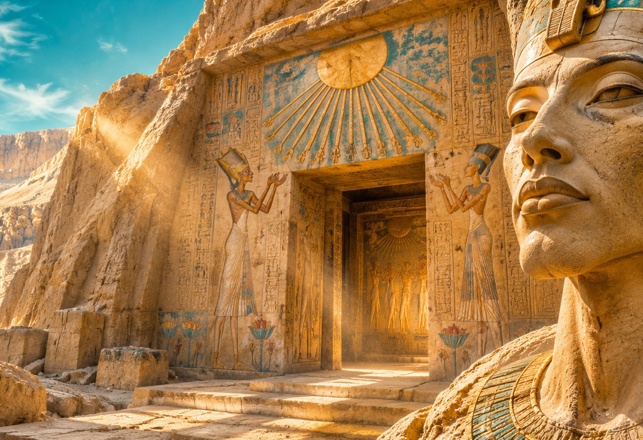
The rehearsal was supposed to help a dead king find peace. In a natural amphitheatre among the tombs of Egypt, a small group of amateur performers attempted something more ambitious than an evening’s entertainment: a play interceding for Akhenaten, the pharaoh whose name his successors had tried to erase. According to the account later associated with the production, a storm interrupted the performance. That night, two of the women dreamed of a statue of Amun coming to life and striking them. Both subsequently became seriously ill.
It is an unsettling opening for In Search Of… The Mummy’s Curse, the Leonard Nimoy programme available in the video linked below. Although the upload’s title gives 1976, the episode is catalogued as part of the series’ 1977 first season. Its twenty-two minutes bring together tomb discoveries, family recollections and the possibility that old religious prohibitions retained a force their modern intruders had underestimated. The Akhenaten story is its less familiar thread, running behind the much more famous death of Lord Carnarvon.
Watch In Search Of… The Mummy’s Curse in full on YouTube
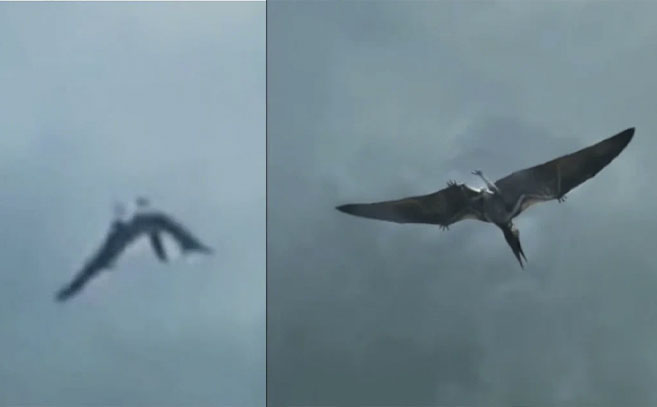
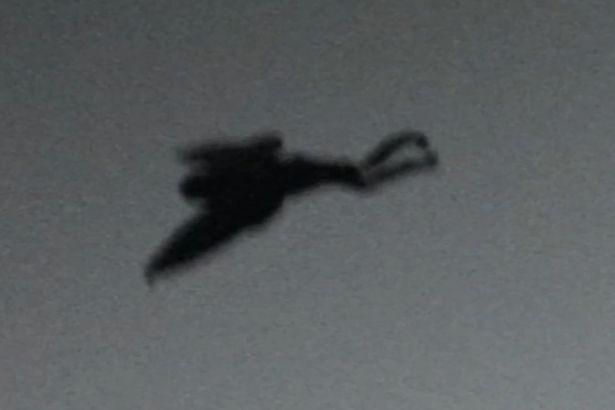
Screenshots: In Search Of… The Mummy’s Curse, Alan Landsburg Productions (1977).
The attraction of returning to the programme lies partly in the people it allows us to hear. Carnarvon’s son recalls his father’s final illness, while Henry Lincoln introduces the strange theatrical enterprise. The film moves between interviews, antiquities and dramatised scenes, giving the stories a physical setting without making every image a record of the original event. The women raising their arms beneath the night sky are part of the programme’s reconstruction. Their gestures make a memorable entrance to a story in which a performance was believed to have reached beyond its intended audience.
A play for a restless king
The artist behind the production was Joseph Lindon Smith. The Smithsonian’s account of his career describes a painter captivated by Egypt after his first visit in 1898. He specialised in carefully reproducing tomb sculpture and wall painting for museums and other institutions. He was also a prolific maker of plays, pageants and theatrical entertainments. The proposed Egyptian performance brought together two substantial parts of his life rather than an interest briefly adopted for a holiday.
A later account drawing on his posthumous Tombs, Temples, and Ancient Art places the enterprise in 1909, well before Tutankhamun’s discovery. Smith and the archaeologist Arthur Weigall devised the play. Their wives, Corinna and Hortense, took the roles of Akhenaten’s mother and the king himself. Its purpose was to release the pharaoh from an alleged condemnation to wander without rest. The dress rehearsal was reportedly held on 23 January, ahead of the intended performance three days later.
The weather grew violent as the invocation proceeded. In the story, Corinna attempted to continue her recitation despite wind, rain and hail. Afterwards came the dreams: each woman saw the god’s statue become animate and deliver a blow. Corinna’s was directed at her eyes, Hortense’s at her abdomen. The subsequent illnesses seemed to follow those injuries. One suffered severe trachoma; the other required an abdominal operation. The later retelling says both recovered, but the planned performance was cancelled.
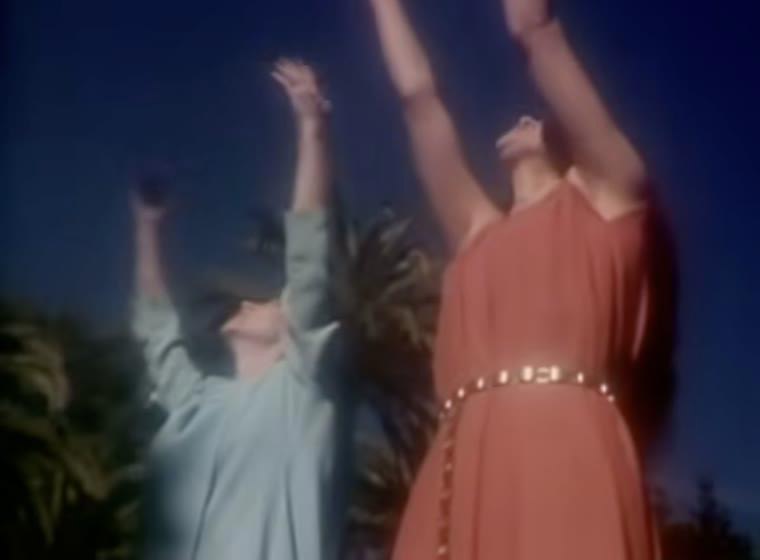
Dramatised play sequence, approximately 16:10. In Search Of… The Mummy’s Curse,
Alan Landsburg Productions (1977).
What makes the account so unusual is the intention behind it. Nobody was supposedly breaking into a burial chamber in search of treasure. The performers were trying to do something compassionate for a king imagined to remain trapped after death. Their attempt to help apparently brought them into conflict with the powers they were addressing. Within the story’s own logic, good intentions had not made the invocation harmless.
There is also a historical reason why Akhenaten’s name could carry such dramatic weight. His promotion of the Aten displaced the established religious order, especially the cult of Amun. After his reign, the new arrangements were reversed. The Metropolitan Museum describes the destruction of sculptured faces of Akhenaten and Nefertiti at Amarna; one surviving head has been assembled from three fragments. A modern viewer can encounter the damaged images themselves, quite apart from the later claim of a wandering spirit. The play gave that destruction an intensely personal consequence: a dead man whose exclusion might still be undone by speaking for him.
A name that kept returning
The story subsequently reached another writer who described strange experiences around the same pharaoh. In the introduction to The Ghost of Akhenaten, Moyra Caldecott explained that dreams and experiences involving mediums had influenced her belief in the alleged curse while she was writing an earlier novel. After publication, she encountered someone who claimed to have seen Akhenaten’s ghost in the Egyptian desert. A friend then lent her the Smiths’ account of their attempt to free him.
Caldecott also reported receiving letters from people claiming to be reincarnations of Akhenaten or members of his family, along with accounts of channelled messages. These are her statements in the introduction, distinct from the fictional events of the novel that follows. They extend the theme in an unexpected direction. Instead of remaining silent, the allegedly forgotten king continued to acquire voices, correspondents and people who felt personally involved in his unfinished story.
That connection makes the old television sequence worth revisiting. The rehearsal was not simply another item in a list of unlucky visitors to Egypt. It belonged to a continuing tradition in which people tried to approach the ancient dead directly, through performance, dreams or purported communication. Akhenaten’s fate became something in which a living person might intervene, and perhaps something that could answer.
The room at the end of the passage
Tutankhamun’s discovery supplied the more public drama. Howard Carter’s journal for 26 November 1922 preserves the moment before the objects became familiar museum treasures. He peered through an opening by candlelight, waited for his eyes to adjust, then widened the breach so that Carnarvon could look. A torch and another candle brought out the crowded chamber’s contents.
The inventory has the bewildering quality of a place only gradually becoming visible: black royal figures with gold sandals, strange gilded couches, painted boxes, shrines, vessels, chairs and the scattered parts of chariots. Carter compared the first impression with a theatrical property room belonging to a vanished civilisation. Even then, there was another sealed doorway beyond the sentinel figures. What they could see was an entrance to something still concealed.
The journal gives us the excitement without requiring any later supernatural addition. It also restores the pause between discovery and explanation. Carter and his companions had to understand the space, its objects and its sequence of doors. They closed the opening and went home contemplating the scene. The objects were real; their arrangement was unfamiliar; the king remained further within. It is easy to understand why that threshold became so important to subsequent tellings.
The earl’s last night
Carnarvon died in Cairo on 5 April 1923. The film’s interview with his son brings the familiar legend back to the experience of a family losing someone. He recalls being summoned to his father and needing a flashlight because the lights were out. The alleged correspondence between the death and the blackout became one of the curse story’s most persistent details. He also relates what he was told about a dog howling and dying back at Highclere.
Those memories have travelled alongside a documented final illness. The earl had suffered an infected mosquito bite and developed a fatal illness involving pneumonia. Highclere’s own account of the discovery describes the extraordinary publicity surrounding the excavation and the death that followed. The speed with which private grief became a worldwide story is part of what the programme preserves: a son remembering a sickroom while an audience already knows the death as the opening chapter of a curse.
The interview is more affecting than a procession of names labelled as victims. It lets a recollection remain a recollection. A failure of the lights can be a practical difficulty for the person trying to reach a bedside and, later, an event around which a much larger meaning gathers. The film’s strength is that the voice belongs to someone whose connection to the night was personal.
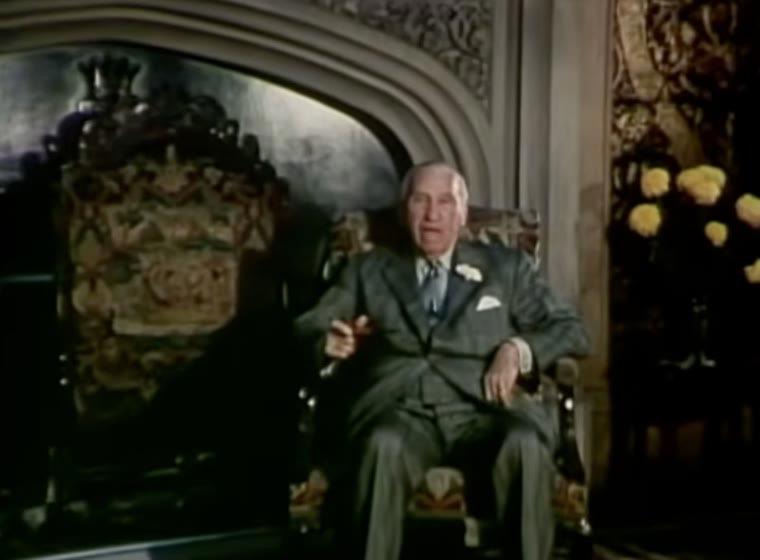
The sixth Earl of Carnarvon, approximately 3:10. In Search Of… The Mummy’s Curse,
Alan Landsburg Productions (1977).
A pharaoh arrives in Paris
Near its end, the episode turns to a remarkable contemporary event: the transfer of Ramesses II’s mummy to France in 1976 because its condition was deteriorating. At the time of the production, the ancient body’s examination could still be presented as an unfolding mystery. Seen today, the sequence has an additional value. It captures a moment before a conservation operation had acquired the settled outline of a historical achievement.
There is now a clear later chapter. In October 2026, the French research organisation CEA revisited the undertaking for its fiftieth anniversary. The mummy’s condition had prompted teams to find a treatment that would eliminate damaging microorganisms without destroying the remains they were trying to preserve. Following tests, the Nucléart team used gamma irradiation at Saclay. The operation united expertise in the ancient body with technology that its embalmers could never have imagined.
An International Atomic Energy Agency account adds that investigators found numerous fungi but no pathogenic bacteria. Extensive testing on samples from other mummies preceded the treatment. This was a real preservation problem, with a documented response. It should not be turned retrospectively into evidence of a lethal substance planted by ancient priests. What remains extraordinary is the effort required to keep a pharaoh’s body intact more than three millennia after his death.
Returning to Nimoy’s programme
The Mummy’s Curse works best as an invitation to follow its stories outward. Its archive of voices matters, as does the difference between an interview and a staged scene. Some of its unanswered questions have acquired later information; others lead back to the reported experiences of people who thought an ancient presence had entered their lives. The film remains atmospheric without needing every dramatic suggestion to become a historical conclusion.
The story of Smith’s play is the one that lingers. There is no stolen jewel at its centre, only a performance intended to grant a dead king peace. The storm, the dreams and the illnesses are remembered as the reply. Decades later, other people would again describe hearing from Akhenaten or meeting his wandering spirit. His name, once attacked in stone, continued to be spoken in circumstances its speakers found difficult to forget.
Further Reading
- The Mummy’s Curse episode
- Smith’s Egyptian theatre story
- Joseph Lindon Smith’s papers
- The Ghost of Akhenaten introduction
- Carter’s journal for 26 November 1922
- Akhenaten’s damaged portrait
- Carnarvon and the discovery
- Saving Ramesses II
- Ramesses II conservation report
- For another journey into Egyptian curse traditions and the mysterious Ka, listen to 22.08, The Vessel of the Ka. Join Mysterious Universe Plus+ at the Max tier to stream the episode and explore the available back catalogue.
RELATED
Geschreven door peter om 15:42
Stuur door