Iran’s Alien Files? Tehran’s U.S. Conspiracy Claim Takes on New Leverage in a High-Stakes War

Iran’s Alien Files? Tehran’s U.S. Conspiracy Claim Takes on New Leverage in a High-Stakes War
America ı By Samuel Lopez
INSIDE THIS REPORT
- Iranian media once promoted an extraordinary claim that alien forces secretly controlled the United States.
- No verified evidence establishes that Iran possesses UAP materials—or that the U.S. has an alien partnership.
- But in wartime, even unproven “disclosure” claims can become a potent tool of propaganda, pressure and psychological warfare.
By Samuel López | USA Herald
As U.S.-Iran hostilities continue to shake the region, an old and extraordinary allegation from Iranian state-aligned media is worth revisiting—not as proof of extraterrestrial contact, but as a warning about how UAP narratives can be turned into geopolitical weapons.
In January 2014, Iran’s semi-official Fars News Agency circulated a report claiming the United States had been governed since 1945 by a secret extraterrestrial “shadow government.” The story invoked a supposed alien agenda, alleged contact with President Dwight D. Eisenhower, and claims attributed to documents supposedly linked to former NSA contractor Edward Snowden. Radio Free Europe/Radio Liberty reported on the Fars publication and its allegations at the time.
The claim takes on a different significance in the middle of a real geopolitical crisis. The relevant question is no longer whether the 2014 story was credible—it was not supported by verifiable evidence—but whether Tehran could revive, expand or strategically deploy the same narrative if it claimed to possess proof that the United States has been governed by a secret extraterrestrial “shadow government” since 1945.
To be clear, there is currently no public, credible evidence that Iran possesses such proof, or that the United States has cooperated with extraterrestrial beings, or has hidden an alien program from Congress or the public.
The Pentagon’s All-domain Anomaly Resolution Office reached a similar conclusion in its historical report. Read AARO’s historical-record report here.
But, that doesn’t end the legal, political or national-security significance of the subject. It sharpens it.
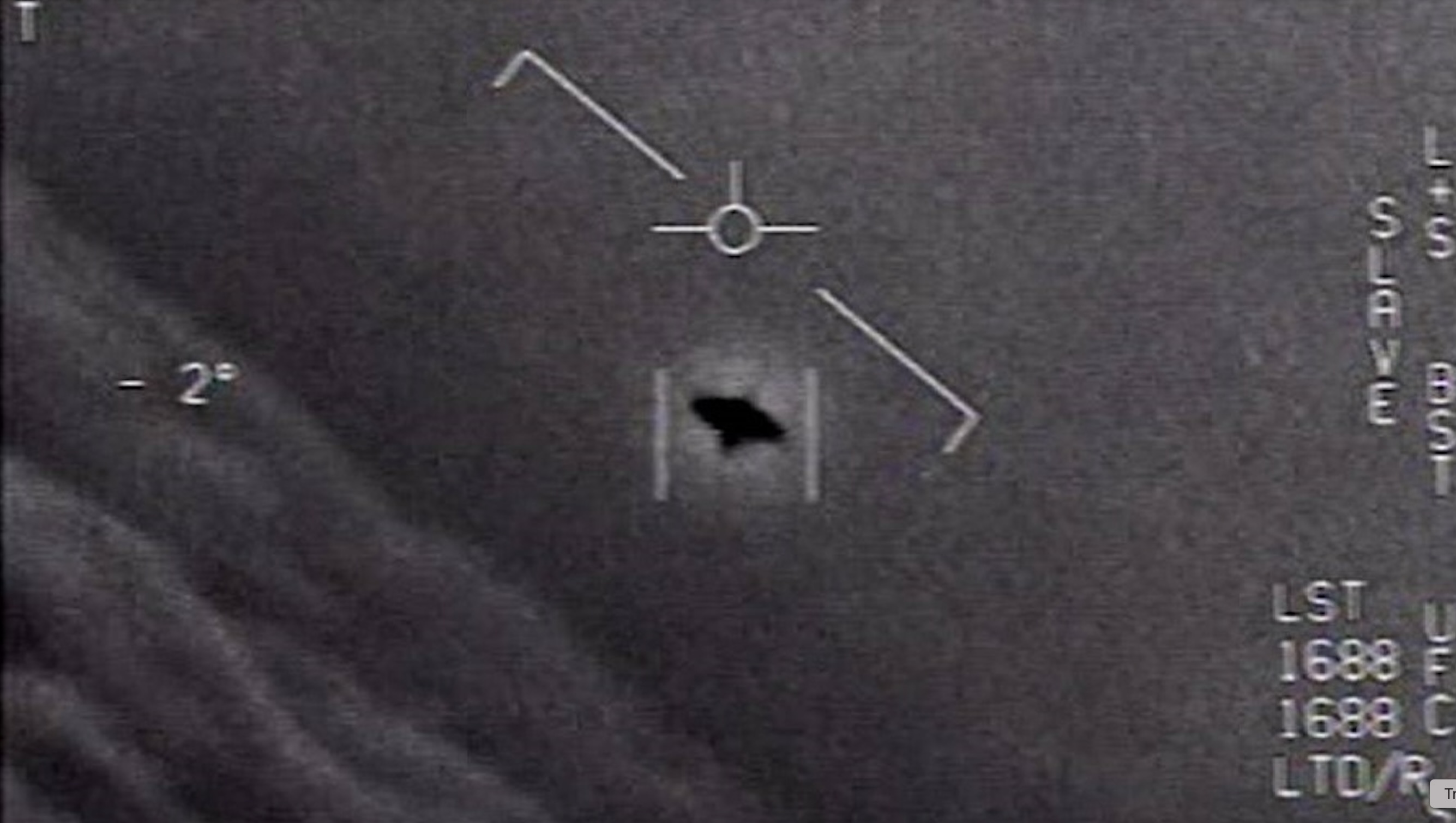
A government at war does not need authentic alien artifacts to exploit public interest in alien artifacts. It needs a plausible narrative, carefully timed releases, selectively edited footage, ambiguous radar tracks, alleged insider testimony, or claims that cannot immediately be disproven because the underlying information is classified.
If Iran were to announce that it possessed UAP-related material—whether real, misunderstood, fabricated, foreign-made, or simply unexplained—the first battlefield would be public confidence. Tehran could frame the release as evidence that Washington has concealed advanced technology, lied to its own citizens, or maintained secret arrangements beyond democratic oversight.
The immediate target would not necessarily be scientists. It would be American public trust.
That kind of disclosure campaign could be designed to trigger congressional demands for classified briefings, force the White House into rapid denials, fuel online speculation, and divide an already polarized public over whether officials are withholding information. It could also muddy the line between authentic classified aerospace programs, adversary technology, drone incursions and truly unresolved aerial events.
The strategic value would be especially high during sensitive diplomacy. A claimed Iranian “UAP disclosure” could be deployed to distract from sanctions negotiations, military setbacks, intelligence disclosures, weapons inspections or domestic unrest. Tehran could offer supposed evidence through intermediaries, friendly media channels, foreign intelligence contacts, or international institutions—then demand political concessions, sanctions relief, security guarantees, or a halt to military action in exchange for access to the material.
That would amount to leverage by ambiguity.
The legal problem for the United States would be just as serious as the public-relations problem. If Iran released purported documents identifying U.S. facilities, defense contractors, aviation programs or alleged recovery sites, federal officials could face a difficult choice: deny the allegations and risk validating portions of the disclosures, or refuse substantive comment and allow speculation to intensify.
American intelligence agencies have confronted versions of that dilemma for decades. Genuine classified programs, especially aerospace, surveillance and weapons-development projects—can create the appearance of a cover-up when viewed without context. AARO itself noted that secrecy surrounding legitimate national-security programs has fueled public speculation about hidden extraterrestrial knowledge.
Iran could exploit that uncertainty with remarkable precision.
Still, extraordinary claims require extraordinary proof. A grainy video, anonymous source, metal fragment, or government statement probably wouldn’t do much to establish ‘proof’ of an extraterrestrial U.S.-connection.
Without real and authenticated evidence, a revived Iranian claim that they have alien materials or proof that the “United States is being governed by a secret extraterrestrial “shadow government,” would be political theater—not disclosure.
But political theater can matter during war. It can move markets, influence public opinion, strain alliances and force governments to spend valuable time rebutting claims that were engineered to be impossible to conclusively disprove in real time.
Iran’s 2014 alien-shadow-government story may have been dismissed as fringe propaganda. In today’s environment, however, it offers a revealing preview of how UAP narratives could be repackaged as a modern instrument of state pressure: not to prove that aliens are here, but to exploit the fact that millions of people believe governments may know more than they are saying.