Naar de inhoud

UFO'S of UAP'S, ASTRONOMIE, RUIMTEVAART, ARCHEOLOGIE, OUDHEIDKUNDE, SF-SNUFJES EN ANDERE ESOTERISCHE WETENSCHAPPEN - DE ALLERLAATSTE NIEUWTJES

UFO's of UAP'S in België en de rest van de wereld
akke.beakke.be
Ontdek de Fascinerende Wereld van UFO's en UAP's: Jouw Bron voor Onthullende Informatie! Ben jij ook gefascineerd door het onbekende? Wil je meer weten over UFO's en UAP's, niet alleen in België, maar over de hele wereld? Dan ben je op de juiste plek! België: Het Kloppend Hart van UFO-onderzoek In België is BUFON (Belgisch UFO-Netwerk) dé autoriteit op het gebied van UFO-onderzoek. Voor betrouwbare en objectieve informatie over deze intrigerende fenomenen, bezoek je zeker onze Facebook-pagina en deze blog. Maar dat is nog niet alles! Ontdek ook het Belgisch UFO-meldpunt en Caelestia, twee organisaties die diepgaand onderzoek verrichten, al zijn ze soms kritisch of sceptisch. Nederland: Een Schat aan Informatie Voor onze Nederlandse buren is er de schitterende website www.ufowijzer.nl, beheerd door Paul Harmans. Deze site biedt een schat aan informatie en artikelen die je niet wilt missen! Internationaal: MUFON - De Wereldwijde Autoriteit Neem ook een kijkje bij MUFON (Mutual UFO Network Inc.), een gerenommeerde Amerikaanse UFO-vereniging met afdelingen in de VS en wereldwijd. MUFON is toegewijd aan de wetenschappelijke en analytische studie van het UFO-fenomeen, en hun maandelijkse tijdschrift, The MUFON UFO-Journal, is een must-read voor elke UFO-enthousiasteling. Bezoek hun website op www.mufon.com voor meer informatie. Samenwerking en Toekomstvisie Sinds 1 februari 2020 is Pieter niet alleen ex-president van BUFON, maar ook de voormalige nationale directeur van MUFON in Vlaanderen en Nederland. Dit creëert een sterke samenwerking met de Franse MUFON Reseau MUFON/EUROP, wat ons in staat stelt om nog meer waardevolle inzichten te delen. Let op: Nepprofielen en Nieuwe Groeperingen Pas op voor een nieuwe groepering die zich ook BUFON noemt, maar geen enkele connectie heeft met onze gevestigde organisatie. Hoewel zij de naam geregistreerd hebben, kunnen ze het rijke verleden en de expertise van onze groep niet evenaren. We wensen hen veel succes, maar we blijven de autoriteit in UFO-onderzoek! Blijf Op De Hoogte! Wil jij de laatste nieuwtjes over UFO's, ruimtevaart, archeologie, en meer? Volg ons dan en duik samen met ons in de fascinerende wereld van het onbekende! Sluit je aan bij de gemeenschap van nieuwsgierige geesten die net als jij verlangen naar antwoorden en avonturen in de sterren! Heb je vragen of wil je meer weten? Aarzel dan niet om contact met ons op te nemen! Samen ontrafelen we het mysterie van de lucht en daarbuiten.

Berichten van 1 augustus 2026 tot 31 augustus 2026

Donald Trump Reportedly Told Inner Circle Aliens Are Living in Earth's Oceans

Donald Trump Reportedly Told Inner Circle Aliens Are Living in Earth's Oceans

An outlandish presidential revelation forces us to look beneath the waves for visitors from the stars

US President Donald Trump

Jack Osbourne claims US President Donald Trump told a close friend that extraterrestrials live in Earth's oceans 

PHOTO Gage Skidmore / Wikimedia Commons

TV host Jack Osbourne claimed on Sunday that an unnamed friend told him Donald Trump said extraterrestrials are hiding in Earth's oceans. Osbourne stated that this friend, who speaks with the president weekly, confided this news to him.

Recently, Donald Trump directed US agencies to identify and release government files related to UFOs, UAPs, and extraterrestrial life. This move sparked debate among extraterrestrial enthusiasts worldwide. However, the US government's release of UAP-related records does not establish that extraterrestrial beings have been found, and NASA says it has not found credible evidence of extraterrestrial life.

Jack Osbourne, son of rock music icon Ozzy Osbourne, recently discussed this alleged claim while promoting his paranormal channel Spark.TV.

Osbourne said the unnamed friend speaks with Trump regularly. They apparently share a private phone call every Saturday. During one chat, the friend allegedly asked about the latest governmental UAP disclosures. IBTimes UK cannot independently verify that this conversation occurred.

US President Donald Trump speaks to the press near the White House helipad construction site

US President Donald Trump said of aliens, ‘We have no idea what they are, but they're in the ocean.’

(Image: Alex Wong/Getty Images)

An Alleged Conversation

The friend reportedly asked the president about the situation. According to Osbourne, the US leader answered that they do not know what the entities actually are. However, Osbourne claimed that Trump said these unknown beings reside beneath the waves. Quoting the alleged conversation in his recent television interview, Osbourne claimed Trump said, 'We have no idea what they are, but they're in the ocean.' There is no independent evidence confirming Trump made this statement.

Osbourne finds this perspective interesting and plausible, noting that vast sections of the deep sea remain completely unexplored and could hide secrets from the general public. He suggested these hypothetical visitors might simply be observing humanity.

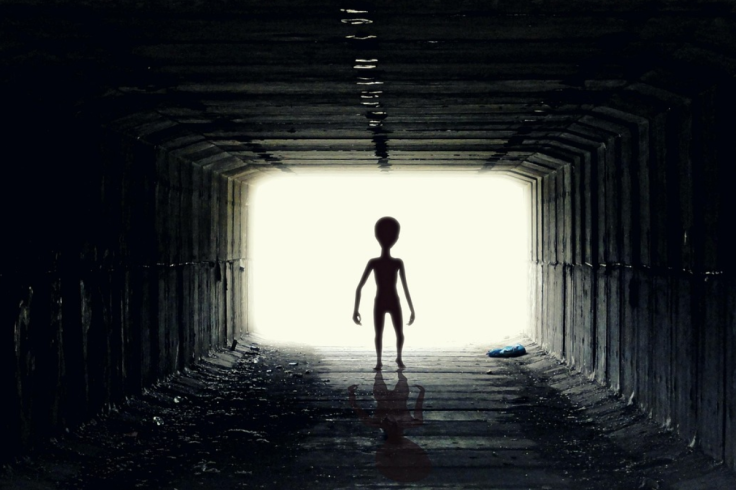
An alien at the bottom of the ocean
An artificial intelligence-generated visual representation of an extraterrestrial being residing at the oceanic depths  PHOTO AI-generated by Google Gemini

Osbourne compared the hypothetical aliens' behaviour to the Sentinelese, suggesting they could be observing humanity from a distance. Just as modern society watches the isolated indigenous people of Sentinel Island without interfering, Osbourne believes a similar dynamic could occur between humans and these visitors. He theorised that they observe us from the oceans, and suggested that they occasionally abduct people.

Despite sharing these theories, Osbourne states he does not consider himself a fanatic and claims he keeps one foot firmly planted in reality. The investigator says he carefully rides the sceptic line when hearing stories. Owning Spark.TV gives him access to the world of the unexplained, and he says his constant review of supposed evidence forces him to question everything he sees.

Examining Abduction Claims

Osbourne also opened up about his feelings regarding individuals who claim to have experienced alien abductions. He once tried to produce a support group television show where people shared their experiences. Many individuals recounted memories of a room filled with bright light and claimed they were suddenly hovered out of a nearby window, while other accounts defied basic human logic.

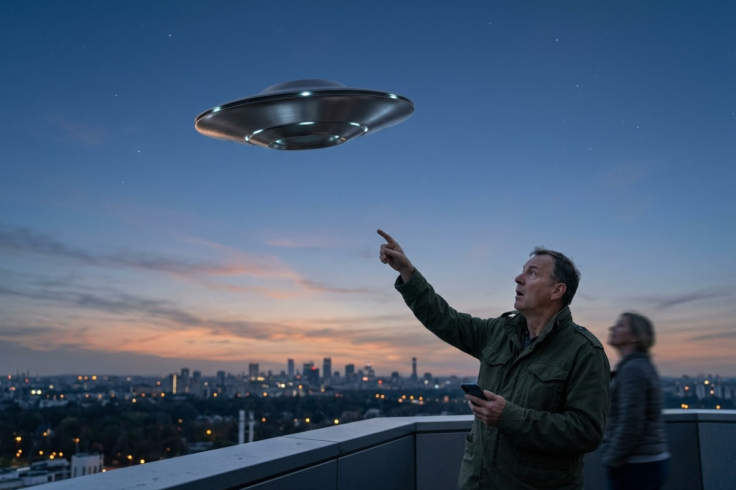
UFO

An artificial intelligence-generated image depicts an unidentified flying object (UFO) traversing the city skyline  PHOTO AI-generated by Google Gemini

Osbourne has also discussed an alleged foreign object examined during a documentary project titled Patient 17, although there is no established evidence that it was extraterrestrial in origin. He described the extracted object in basic medical terms, stating it looked like a large kidney stone.

Read more
  • Donald Trump

According to Osbourne, there may be various types of alien visitors, and he theorised that some are friendly while others are hostile.

He also offered a psychological theory regarding typical abduction memories, suggesting that deep emotional trauma plays a role and might trigger vivid hallucinations in certain people. Noting that many individuals vividly recall large creatures with giant heads staring downward and describe waking up in a white, sterile room, Osbourne suspects they might actually be remembering their own human births. He believes such psychological echoes might explain the medical nature of these accounts.

RELATED


Did Trump Tell an Insider Aliens Live in the Ocean? 👽🌊 #Aliens #UFO #UAP #Trump #AlienDisclosure

{ https://www.ibtimes.co.uk/trending }

Hoe vind je dit bericht?
Geschreven door peter om 20:55 Stuur door

Conspiracy Theorists Think a 'Lost Continent' Linked to Aliens Was Destroyed by Ancient 'Nuclear War'

Conspiracy Theorists Think a 'Lost Continent' Linked to Aliens Was Destroyed by Ancient 'Nuclear War'

Exploring the enduring myths and scientific investigations surrounding Lemuria and its alleged connections to extraterrestrial life

Advance Civilization

(AI Generated) Conspiracy theorists say a lost continent tied to aliens and ancient nuclear war may be located, but scientists stress new Indian Ocean findings show only geological fragments, not Lemuria AI Generated image )

Conspiracy theorists have latched onto fresh claims that a 'lost continent' linked to aliens and ancient nuclear war may finally have a location, after scientists mapped fragments of a sunken landmass beneath the Indian Ocean.

Conspiracy theorists think a 'lost continent' linked to aliens was destroyed by ancient 'nuclear war,' and the latest geological work has given them a new hook, even though researchers say there is no evidence of Lemuria, alien descendants or a prehistoric civilisation.

Interest in Lemuria has ebbed and flowed for more than a century, but it surged again after reports that zircon crystals on Mauritius date back billions of years, far older than the island's surface rocks.

That finding fits with a genuine geological story about Mauritia, a microcontinent left behind when Gondwanaland broke apart, yet it has been reinterpreted by believers as proof that the mythic Lemuria was real.

The Science Behind the Lost Continent Claims

Lemuria began life as a serious scientific hypothesis. In 1864, British zoologist Philip Sclater proposed a sunken land bridge to explain why lemur fossils appeared in both Madagascar and India but not in Africa, which sits closer to Madagascar. He named it Lemuria after the animals, writing that Madagascar and the Mascarene Islands held 'existing relics of this great continent.'

The idea lost favour once plate tectonics showed India and Madagascar had once been joined, removing the need for a separate continent. Outside mainstream science, though, Lemuria took on a second life, blending with occult beliefs and later with UFO lore.

Mauritia is the real piece of the puzzle. Described in a 2013 paper and bolstered by a 2017 study in Nature Communications, researchers found zircon grains in volcanic rock on Mauritius that are roughly 2.5 to 3 billion years old, even though the island's exposed rocks are no older than about nine million years.

Scientists are now using gravity inversion to estimate the thickness of the oceanic crust and trace where chunks of Mauritia might still lie intact. The work could clarify the size and shape of the ancient landmass, but it has not uncovered ruins, artefacts or any sign of an intelligent civilisation beneath the waves.

Read more
  • Alien

From Lemuria to Aliens and Ancient Nuclear War

The jump from geology to aliens is where things get wild. In the late 19th century, Helena Petrovna Blavatsky, founder of Theosophy, described Lemurians as egg‑laying, spiritually advanced beings in her 1888 book The Secret Doctrine. She claimed the discovery of sex led to Lemuria's destruction and that the continent sank, leaving only Australia and Easter Island behind.

Later, the legend migrated to Mount Shasta in Northern California, where believers say Lemurian survivors built an underground city called Telos. Local mythology holds that catastrophic earthquakes destroyed the continent, but some inhabitants escaped and continued living beneath the mountain.

Visitors have claimed to see seven‑foot‑tall Lemurians in flowing robes near the peak, though no physical evidence supports the existence of Telos or its alleged residents.

The story grew stranger as Lemuria merged with tales of Mu, another lost continent promoted by British author James Churchward, who claimed it hosted a technologically advanced civilisation 50,000 years ago. Over time, these narratives fed into 'starseed' beliefs, with some people saying they carry alien DNA or souls from extraterrestrial beings.

More extreme versions allege that Lemuria sheltered refugees from a planet called Maldek, supposedly once orbiting between Mars and Jupiter. The Aetherius Society claimed Maldek's population destroyed their world with a hydrogen bomb, creating the asteroid belt, and that Lemuria later suffered its own nuclear war.

Nigel Watson, author of Portraits of Alien Encounters Revisited, noted that writers promoting ancient astronauts point to passages such as Genesis's description of 'brimstone and fire' raining on Sodom and Gomorrah as accounts of nuclear explosions. Fragments of melted glass in Libya's deserts are also cited as evidence of nuclear warfare or accidents 28 million years ago, though mainstream science does not accept these interpretations.

Watson said the claims largely come from automatic writing, alleged psychic messages and speculative readings of ancient texts rather than physical evidence. He added that the stories were also intended as a warning that advanced civilisations can destroy themselves.

Nothing is confirmed yet so everything should be taken with a grain of salt. IBTimes UK cannot independently verify these claims, so take everything lightly.

RELATED

Nuclear Secrets of the Past | Ancient Aliens

Mystery Behind the Lost Continent Of Mu | Ancient Aliens | History

{ https://www.ibtimes.co.uk/trending }

Hoe vind je dit bericht?
Geschreven door peter om 20:37 Stuur door

Noah's Ark Found? Radar Scans Reveal 3 Underground Decks and 13-Foot Hidden Tunnel in Turkey

Noah's Ark Found? Radar Scans Reveal 3 Underground Decks and 13-Foot Hidden Tunnel in Turkey

Independent scientists have yet to verify the claims, and the team behind the scans plan deeper drilling and testing before drawing firm conclusions.

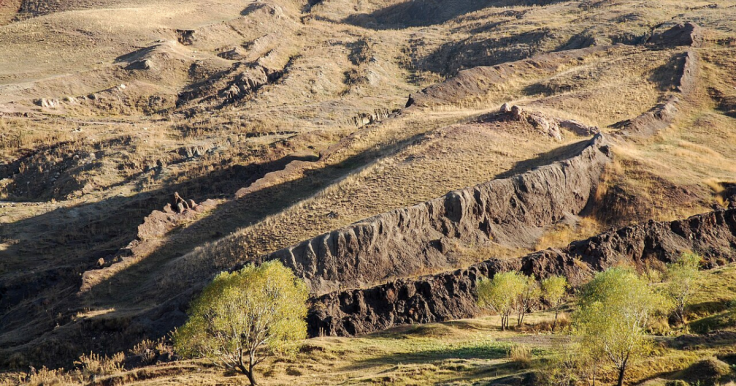
Durupinar Site

Archaeologists in Turkey say they have made a remarkable find, using ground‑penetrating radar to pinpoint what they believe may be the remains of Noah’s Ark, with scans reportedly revealing a ‘chemical imprint’, fragments of wood in the soil and the clear outline of a hall‑like structure. 

Zorka Sojka, CC BY-SA 4.0 , via Wikimedia Commons/Wikimedia Commons

Archaeologists in eastern Turkey say new radar scans have revealed a three‑decked, ship‑shaped structure and a 13‑foot tunnel buried beneath a remote mountainside, renewing claims that the legendary Noah's Ark may lie at the Durupinar Formation near Mount Ararat.

The fresh evidence, gathered by an American team working under the banner Noah's Ark Scans over several years, centres on ground‑penetrating radar images that researchers argue align strikingly with the Biblical description of Noah's Ark.

Noah's Ark Searches Focus On Turkish Mountain

According to Scripture, Noah's Ark was the vast wooden vessel that carried humanity and animal species through a catastrophic flood more than 4,300 years ago.

Genesis 8 in The Bible says the ark came to rest on the 'mountains of Ararat' after 150 days of deluge, a passage that has fuelled centuries of speculation and expeditions across this rugged corner of eastern Turkey.

The Durupinar site, only recognised by modern researchers for less than a century, appears at first glance to match that story rather neatly.

Its dimensions echo the Biblical blueprint for the ark, given in Genesis 6 as 300 cubits long, 50 cubits wide and 30 cubits high, which translates to about 515 feet by 86 feet by 52 feet. The mound lies near a summit whose outline, from the air, bears a notable resemblance to a hull.

That visual similarity alone has never been enough to convince mainstream science. Many academics still regard the entire formation as the product of natural geological processes. The team behind the latest work, however, argue that their data now point beyond coincidence.

Radar Scans Hint At Three Decks And Inner Corridors

Independent researcher Andrew Jones, who fronts the Noah's Ark Scans project, has led multiple survey seasons at Durupinar using ground‑penetrating radar, a technique that sends radio waves into the earth to map buried structures.

Speaking to the Christian Broadcasting Network, he said the new scans detected what looked like a 13‑foot passage running through the centre of the formation, along with angular shapes that could represent internal compartments.

A fresh analysis of the radar data, shared with outlets including Express UK, suggests a pattern of central and lateral corridors or hallways, rather than a single homogenous block. Crucially for the ark hypothesis, the scans also show three distinct layers below the surface.

Supporters say that aligns with Genesis 6:16, which instructs: 'Make it with lower, second, and third decks.'

Jones is careful not to promise a perfectly preserved ship. 'We're not expecting something that's fully preserved,' he told CBN. 'What's left is the chemical imprint, pieces of wood and in the ground, the shape of a hall.'

He later added that the radar returns were 'not what you'd expect to see if the site were simply a solid block of rock or the result of random mudflow debris.'

He argued instead that the pattern is 'exactly what you'd expect to find if this were a man‑made boat, consistent with the biblical specifications of Noah's Ark.'

Soil Clues And A Possible Hidden Tunnel

The radar work is being paired with basic soil science. William Crabtree, a soil scientist who also works with Noah's Ark Scans, said his team collected 22 samples from inside and outside the boat‑shaped outline.

He told CBN that organic matter levels were roughly double inside the formation compared with the surrounding ground, while potassium levels were about 40 per cent higher and the pH noticeably different.

'If you know soil science – as I'm a soil scientist – you'll understand that potassium levels, organic matter, and pH can all be influenced by decaying organic material,' Crabtree said. 'If this was a wooden boat and the wood had rotted over time, we would expect to see elevated levels of potassium, changes in pH, and higher organic content – and that's exactly what we're finding.'

Jones also pointed to a change in vegetation, saying grass growing within the boat‑shaped perimeter appeared a different colour from that just outside, which he believes may hint at human construction beneath.

Alongside the three radar‑defined layers and compartment‑like shapes, the team say they have identified a tunnel‑like feature. Jones described what seems to be a 13‑foot passage extending from the tip of the formation towards its centre, with sufficient space for a person to walk through.

To date, this remains an interpretation of the scans; the structure has not been physically entered or excavated.

Debate Over Noah's Ark Discovery Far From Settled

The Durupinar Formation has split opinion for decades. Some geologists argue the mound's outline and internal patterns can be explained by erosion and natural faulting, with no need to invoke a vast timber hull. Others, often working from a faith background, continue to see it as one of the most promising candidates for Noah's Ark.

Jones presents his project as scientific rather than devotional, though he readily acknowledges the religious significance. Noah's Ark sits at the heart of Judaism, Christianity and Islam, and the flood narrative speaks to broader questions of survival, judgement and the power of nature.


For believers, physical evidence of the ark would be a profound validation. For many scientists, on the other hand, the story remains a myth into which data are too easily forced.

The Noah's Ark Scans team say they are only at the start of their investigation. They plan to extend soil sampling beyond the initial 22 tests, carry out core drilling to bring up physical material from deeper layers, and run further ground‑penetrating radar surveys to refine their picture of what lies under the surface. Any excavation or drilling would require Turkish permits and close oversight.

Read more
  • Alien

Jones himself has framed the next steps simply: 'We want to compare what's inside the formation to what's outside. That could give us a much clearer picture of whether this is truly something man‑made.'

The Durupinar Formation sits about 18 miles south of Mount Ararat, Turkey's highest peak, and has intrigued explorers and believers since it was exposed by storms and seismic activity in 1948.

The boat‑shaped mound, roughly 538 feet long, has long been touted by some as the resting place of the ark described in Genesis, while many geologists maintain it is simply a natural rock feature. The latest radar work is the most detailed attempt yet by this particular group to test those rival theories.

RELATED 

Scientists Found Something Beneath Turkey's Noah's Ark — And It Changes the Mystery

{ https://www.ibtimes.co.uk/trending }

Hoe vind je dit bericht?
Geschreven door peter om 20:18 Stuur door

Americans Still Skeptical That UFOs Are Aliens

Americans Still Skeptical That UFOs Are Aliens

WASHINGTON, D.C. — About half of Americans, 49%, think all UFO sightings can be explained by human activity on Earth or natural phenomena, while 37% believe at least some UFOs have been alien spacecraft visiting Earth from other planets or galaxies. Another 13% do not have an opinion. These findings come as the Pentagon continues to release previously classified UFO files under President Donald Trump’s executive order.

Americans were also more inclined to associate UFOs with earthly than supernatural causes the two prior times Gallup measured this, although the alien-skeptical share was higher in 2019 (60%) than in 2021 (50%) and today. Meanwhile, rather than become increasingly convinced that some sightings have been alien spacecraft, the percentage of Americans who are unsure has grown, from 7% in 2019 to 13% in 2026.

The latest findings are from Gallup’s July 1-19 poll.

The demographic subgroups showing the greatest skepticism about UFOs being alien spacecraft are men, young adults aged 18 to 29, college graduates, residents of the Midwestern and Western U.S., and Democrats.

Most Are Familiar With UFOs; Few Have Seen One

More than four in five Americans, 83%, say they have heard or read about UFOs. That is similar to the 86% recorded in 2019 but below readings from earlier decades, including 94% in 1973 when the question was first asked.

Beyond general awareness, 17% of Americans say they have personally seen something they thought was a UFO. This is essentially unchanged from 16% in 2019 but higher than Gallup readings between 1973 and 1996, which ranged from 9% to 14%.

U.S. adults who say they have seen something they thought was a UFO are much more likely than those who have not to believe that some UFOs are alien spacecraft (61% vs. 33%, respectively).

Reports of UFO sightings are highest among men, middle-aged adults, those without a college degree, and residents of the Eastern and Western U.S.

Majority Says Government Is Withholding UFO Information

Seventy-eight percent of Americans say the U.S. government knows more about UFOs than it is telling the public, higher than the 68% and 71% who said so in 2019 and 1996, respectively. Just 17% now say the government is not withholding information, down from 29% in 2019 and 19% in 1996.

There is little difference in views across subgroups, including by party identification.

The widespread belief that the government is withholding information about UFOs comes after Trump ordered the Pentagon and other federal agencies in February to begin identifying and releasing government files related to UFOs and extraterrestrial life. The Pentagon released its first batch of previously classified files in May, with additional releases continuing since.

{ https://www.gallup.com/home.aspx }

Hoe vind je dit bericht?
Geschreven door peter om 17:57 Stuur door

Robots, they're just like us! Watch the hilarious moment a humanoid falls down the stairs after getting distracted by a crowd of cheerleaders

A hilarious video has revealed the moment a robot fell down the stairs after getting distracted by a crowd of cheerleaders. 

The clip was filmed at the 2026 World Humanoid Robot Games, which are taking place in Beijing, China.  

At the start of the video, five humanoid robots can be seen performing a cheerleading routine – complete with colourful wigs, short skirts and pom–poms. 

A silver robot then climbs up to a podium at the side of the stage, before glancing over at the dancers. 

Unfortunately, the distraction becomes too much, and as the bot tries to climb down the other side, it falls head–first off the stairs. 

The hilarious clip was posted to X by @Gman_EAI, and has been viewed more than 1.2 million times.

'It is now proven that us men are very simple creatures,' one user replied. 

Another added: 'Because of the rainbow hair one with that mini skirt! Bro had to stare!' 

At the start of the video, five humanoid robots can be seen performing a cheerleading routine – complete with colourful wigs, short skirts and pom–poms

At the start of the video, five humanoid robots can be seen performing a cheerleading routine – complete with colourful wigs, short skirts and pom–poms

A silver robot then climbs up to a podium at the side of the stage, before glancing over at the dancers

A silver robot then climbs up to a podium at the side of the stage, before glancing over at the dancers

Unfortunately, the distraction becomes too much, and as the bot tries to climb down the other side, it falls head–first off the stairs

Unfortunately, the distraction becomes too much, and as the bot tries to climb down the other side, it falls head–first off the stairs

This is just one of many falls at the 2026 World Humanoid Robot Games. 

Earlier this week, a weightlifting robot collapsed onto a judges' table, before being rushed away on a stretcher.

The fall took place during the weightlifting final at the second edition of the competition, which is hosted at the Beijing National Speed Skating Oval. 

Footage of the event showed the humanoid robot – who was initially poised – quiver as it attempted to grip and lift a weight with both hands over its head.

As the bot brought the weight above its head, it began to shake and ultimately drop the weight to the floor.

It then began malfunctioning, before stumbling toward a table of judges and ultimately collapsing. 

In the moments following the fall, a group of staff clad in red vests can be seen quickly attending to the robot and piling it onto a stretcher where it is carefully escorted from the event's main floor. 

Officials then immediately halted the competition and declared the attempt over. 

The bot pictured before it took a tumble. It is among hundreds of droids to participate in the second edition of the Chinese competition

The bot pictured before it took a tumble. It is among hundreds of droids to participate in the second edition of the Chinese competition

In the moments following the fall, a group of staff clad in red vests can be seen quickly attending to the robot

The competition – which began on Sunday and will run for five days – also saw a robot surpass legend Usain Bolt's 100m sprint world record. 

The bot ran 100m in 9.39 seconds – beating the human world record set by the Jamaican sprinting great who ran it in 9.58 seconds. 

Elsewhere at the competition, another robot performed Cristiano Ronaldo's iconic 'Siuuu' celebration on the football pitch, while a group of droids participated in a synchronised march at its opening ceremony. 

It is estimated more than 2,000 robots gathered for the event at its opening day.

And although 96 per cent of the teams entering the games are Chinese, 16 countries from six continents will take part in the 1,301 matches.

The games include competitions modelled on human sports as well as task–based events some of which require fully autonomous robots.

World Humanoid Robot Games officials will award independent robots full points but semi–autonomous bots will only receive half points. 

Out of the 50 events scheduled, 30 are sports competitions while the remaining 20 are work scenario tasks.

Three humanoid robots running in the the 100m race during the events opening ceremony

Three humanoid robots running in the the 100m race during the events opening ceremony

robots perform during the opening ceremony of the World Humanoid Robot Games in Beijing

robots perform during the opening ceremony of the World Humanoid Robot Games in Beijing

A humanoid robot falls next to another humanoid robot that caught fire after completing a 100m prelim race

Sports–based events include weightlifting, gymnastics, football and even a tug of war. There are also 11 Olympic–style track and field events. 

The 20 work–based tasks involve dextrous hand challenges such as bricklaying, power tool assembling and package handling.

It is understood that the work competitions act as an opportunity to show where humanoid robots will first be commercially used.

However, no events in the 2026 edition of the games will include stairs, ladders, uneven terrain or human–robot collaborations.

READ MORE 

article image

RELATED


Robot Gets Distracted by Cheerleaders and Falls Down Stairs at 2026 Humanoid Robot Games!

{ https://www.dailymail.com/sciencetech/index.html }

Hoe vind je dit bericht?
Geschreven door peter om 17:28 Stuur door

UFO Beliefs Explored: Author Warns It Is 'Always Going to Be More Likely That Someone Is Wrong'

UFO Beliefs Explored: Author Warns It Is 'Always Going to Be More Likely That Someone Is Wrong'

UFO reports may feel convincing, but Adam Kirsch says witnesses are more likely to be mistaken than to have seen alien technology

UFO

Adam Kirsch explores why UFO beliefs endure, arguing that testimony and unexplained sightings should not be confused with evidence of extraterrestrial spacecraft AI Generated image

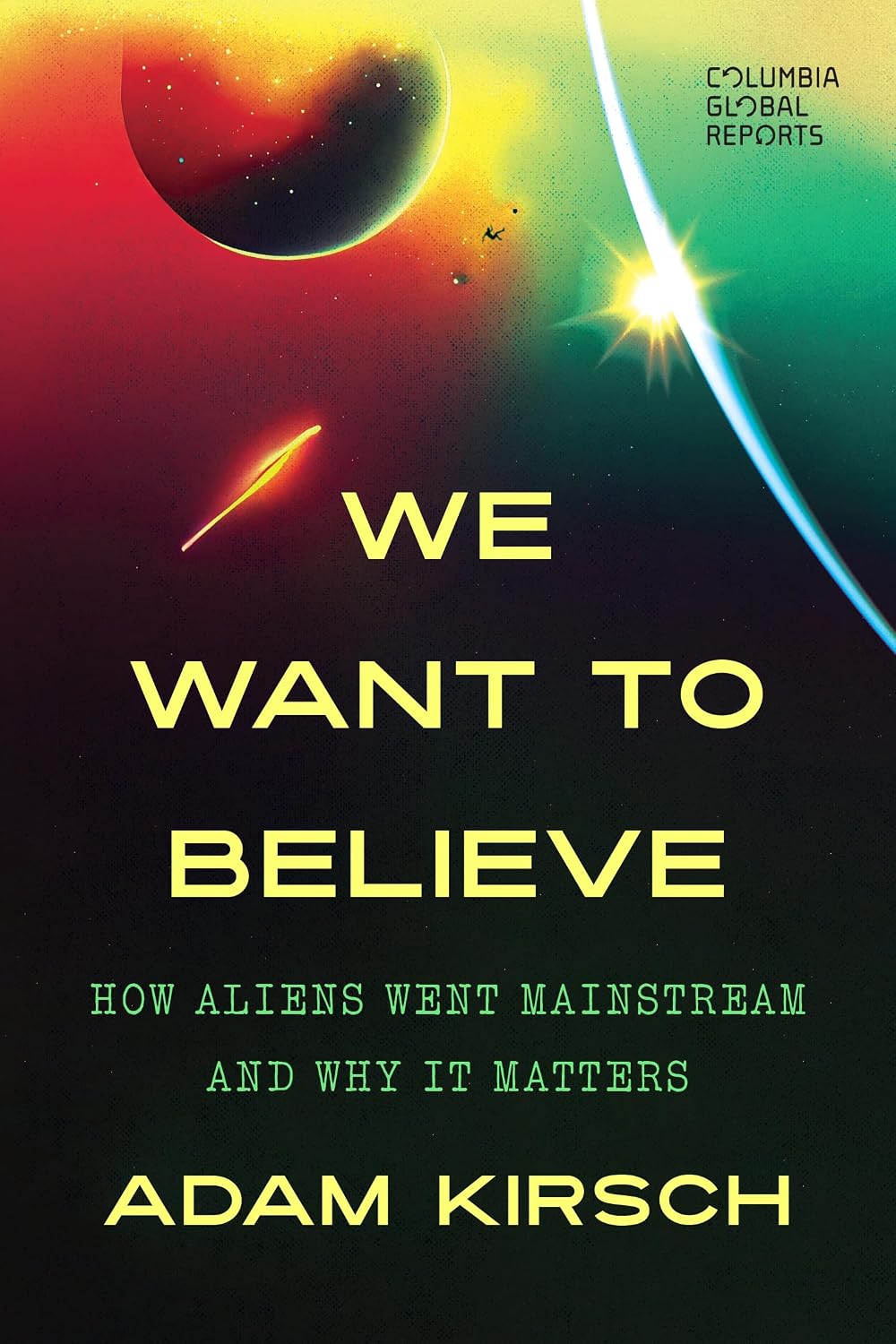
Adam Kirsch, author of the forthcoming We Want to Believe, has argued that UFO claims should be approached with scientific caution, warning in an interview that it is 'always going to be more likely that someone is wrong about what they saw' than that an extraterrestrial craft has appeared in the sky.

Kirsch's book, We Want to Believe: How Aliens Went Mainstream and Why It Matters, is due to be published by Columbia Global Reports on 25 August.

The Atlantic senior editor examines why unidentified flying objects, now often called unidentified anomalous phenomena, or UAP, retain such a powerful hold over the public imagination even when conclusive physical evidence remains elusive.

Whistleblowers claims, military footage and declassified Pentagon material have brought renewed official and public attention to a subject once largely associated with flying-saucer lore, while films and social media have kept the alien question in wider public discussion.

Columbia Global Reports describes the book as an examination of how UAP moved from 'dismissed error to unresolved problem' and why questions about them continue to endure.

UFO Beliefs and the Search for Meaning

Kirsch told reporters that his interest in UFOs began in 2017, when mainstream reporting focused on Pentagon videos and a previously undisclosed programme that collected reports of unexplained aerial sightings.

'The real start of my interest in the subject was in 2017 when there was this sudden reporting in the mainstream media about the Pentagon UFO videos and the so-called secret program to collect UFO reports,' he said. 'For the first time, it seemed like maybe there was some legitimate news or evidence.'

What had long been dismissed as fringe material could now be discussed through military testimony, congressional interest and surveillance technology. The terminology changed, too. UFO became UAP, a more formal term increasingly used by the US government when discussing unexplained observations.

Yet Kirsch's book is not simply a rebuttal of every strange report. He sees the attraction of UFO beliefs as tied to older questions about religion, philosophy and human significance. The publisher similarly describes his approach as drawing on both belief and scepticism rather than treating UAP simply as fantasy or threat.

'For me, humanity's way into the subject is that UFOs are a way of thinking about a lot of the same questions we might also think about in religious or philosophical terms,' Kirsch said. 'Questions like what is unique about humanity, are we alone in the universe, are there other minds, what's our destiny as a species?'

The possibility that humanity is not alone is not merely a scientific proposition. It carries an emotional charge, one that can make every blurry video, unexplained radar reading and pilot account feel potentially significant. Confirmation of intelligent extraterrestrial life would carry profound scientific and philosophical implications.

Kirsch said he had been drawn deeper into the history and lore partly because the discovery of other intelligence in the universe would indeed be extraordinary. 'It would be amazing if we could find proof of that,' he said.

The problem, he added, is that UFO history has repeatedly followed a familiar pattern. Public excitement rises, apparent clues gather momentum and the story eventually 'peters out because there is no evidence and there isn't anything concrete to point to.'

UFO Beliefs Meet the Evidence Test

Kirsch's central distinction is between testimony and evidence. People can report an experience honestly while being mistaken about what caused it, particularly when they are observing something unfamiliar, distant or fleeting.

He pointed to testimony from former military aviators David Fravor and Ryan Graves, arguing that what appears to be corroborating evidence may be less definitive than it initially seems.

'When the camera sees something, the person doesn't see it. And when the person sees something, the camera doesn't see it,' Kirsch said. 'It's always one or the other, it's never both at the same time.'

That is Kirsch's assessment of the cases rather than a definitive finding about all available evidence surrounding the encounters.

He noted that complaints about UFOs being difficult to photograph are hardly new. Witnesses in the 1950s were already saying such objects were strangely unphotogenic, despite the expectation that a physical craft in the atmosphere might produce clearer photographic evidence.

'The obvious and logical explanation is that there's nothing to take a picture of,' Kirsch said.

That is a blunt assessment, but it illustrates the distinction at the centre of Kirsch's argument. A vivid sighting can feel conclusive to the person who experienced it. The leap from 'I saw something I cannot explain' to 'I know what it was' is where he argues greater scientific scrutiny is required.

Kirsch invokes the 18th-century philosopher David Hume's approach to reported miracles. Hume's argument asks whether it is more probable that testimony is mistaken than that an extraordinary event has occurred.

'The same is true of UFOs,' Kirsch said. 'They're not supernatural or miraculous. If they really existed they'd exist in time and space and three dimensions like everything else.'

Kirsch went on to argue that, given current scientific understanding of the universe and interstellar travel, mistaken observation remains more probable than an extraterrestrial spacecraft as the explanation for a UFO report.

He added that modern scientific education requires people to question instinctive explanations, not simply trust them because they are dramatic or satisfying. Released UAP footage may not reveal every available detail, Kirsch said, but an incomplete public record does not automatically point to 'some cosmic secret.'

That distinction also reflects the broader premise of We Want to Believe: unexplained observations may warrant investigation without, by themselves, establishing that extraterrestrial spacecraft are visiting Earth.


UFO expert issues CHILLING warning on mystery craft outmaneuvering US military

{ https://www.ibtimes.co.uk/trending }

Hoe vind je dit bericht?
Geschreven door peter om 01:34 Stuur door

The FAA Finally Admits it Documents Reports of Unidentified Aerial Phenomena

FAA

The FAA Finally Admits it Documents Reports of Unidentified Aerial Phenomena

With the arrival of an eagerly awaited preliminary assessment on unidentified aerial phenomena by the Navy’s UAP Task Force in June, opinions on its findings were mixed and varied.

Of greater significance than the contents of the report, perhaps, had been what it left out. Nowhere in the nine-page document delivered to the Office of the Director of National Intelligence (ODNI) did words like “extraterrestrial” or “alien” make an appearance, a reality that was no doubt received with much frustration by longtime proponents of the existence of unusual aerial phenomena.

This, despite hopeful pre-reporting by the New York Times, who promised that officials who had been briefed on a classified version of the report prior to its debut “conceded that the very ambiguity of the findings” meant that more exotic potentials couldn’t be ruled out. This seemingly left open for the possibility “that the phenomena observed by military pilots might be alien spacecraft.”

To date, there remains nothing conclusive that links observations of unidentified aerial phenomena—or what until recent years were commonly referred to simply as UFOs—with extraterrestrial technologies. While many hopeful proponents of such speculations on the origin of UAP were likely irritated by the report’s ambiguous tone, the document did reveal a few notable surprises.

UAP Report (Credit: ODNI/Public Domain.)

“The UAPTF is currently working to acquire additional reporting,” one portion of the report reads, “including from the U.S. Air Force (USAF), and has begun receiving data from the Federal Aviation Administration (FAA).”

The inclusion of the FAA as a source for information about UAP within the document was notable, especially because in years past, the agency tasked with regulating all civil aviation in the United States has seemed to want no involvement of any sort with unidentified flying objects.

FAA Order JO 7110.65Z – Air Traffic Control, a publication that “prescribes air traffic control procedures and phraseology for use by personnel providing air traffic control services” took effect on June 17, 2021—just days prior to the delivery of the UAP Task Force’s preliminary report. In chapter nine of the order, dealing with “Special Flights”, section eight is titled “Unidentified Flying Object (UFO) Reports”, and outlines the following procedure for UFO sightings made by air traffic control personnel:

9-8-1. GENERAL

  1. Persons wanting to report UFO/unexplained phenomena activity should contact a UFO/ unexplained phenomena reporting data collection center, such as the National UFO Reporting Center, etc.
  2. If concern is expressed that life or property might be endangered, report the activity to the local law enforcement department.

Identical wording with regard to UFO observations by FAA Air Traffic Organization personnel appears in other publications by the agency, which includes Section 7 of FAA Order JO 7210.3CC – Facility Operation and Administration.

The UAP Task Force and the FAA

It therefore came as a surprise for many who read the recent ODNI report, with its inclusion of the following statement: “The FAA captures data related to UAP during the normal course of managing air traffic operations. The FAA generally ingests this data when pilots and other airspace users report unusual or unexpected events to the FAA’s Air Traffic Organization.”

The Wilbur Wright Federal Building, current location of FAA’s headquarters (Credit: Matthew G. Bisanz CC 3.0).

According to its own procedural publications cited above, the FAA appears to direct air traffic operators to report instances involving UAP (or UFOs, as the agency’s documentation still calls them) to civilian organizations like the Washington-based National UFO Reporting Center. These publications appear to provide no procedural details related to an internal system for collecting such data within the agency.

The fact that the FAA “captures data related to UAP” had not been the only pertinent information about the agency’s involvement with UAP studies included in the June report. Additionally, its authors state that “the FAA continuously monitors its systems for anomalies, generating additional information that may be of use to the UAPTF. The FAA is able to isolate data of interest to the UAPTF and make it available.”

“The FAA has a robust and effective outreach program that can help the UAPTF reach members of the aviation community to highlight the importance of reporting UAP,” the report also states.

“That may be news to the FAA,” Suzanne Rowan Kelleher reported in a Forbes article in June, adding that she was told the “agency that operates air traffic control and navigation for both civil and military aircraft insists it does not deal directly with UAP sightings from commercial pilots.”

“The FAA doesn’t track these reports,” Kelleher quoted an FAA spokesperson as having said, who told her that “The National UFO Reporting Center is your best source.”

Similarly, David Axe writing for The Daily Beast noted that “The FAA did not respond to a request for comment” regarding his inquiries about the agency’s UAP data collection described in the June ODNI report.

The FAA Finally Goes on the Record About UAP

In light of the specific references to the FAA and its apparent role in supporting the Navy’s UAP Task Force outlined in the ODNI report, The Debrief reached out to the agency for clarification, asking if it could confirm its role in the collection of UAP data. After several weeks of inquiries, the FAA finally responded to requests for clarification from The Debrief.

“The Federal Aviation Administration documents Unidentified Aerial Phenomenon (UAP) sightings whenever a pilot reports one to an air traffic control facility,” an FAA spokesperson told The Debrief in an email.

“If the pilot report can be corroborated with supporting information such as radar data, it is shared with the UAP Task Force,” the spokesperson added. The statement marks a notable shift from the FAA’s previous positions regarding UAP, and its insistence even in days following the release of the ODNI report that it has limited involvement with the collection of such data.

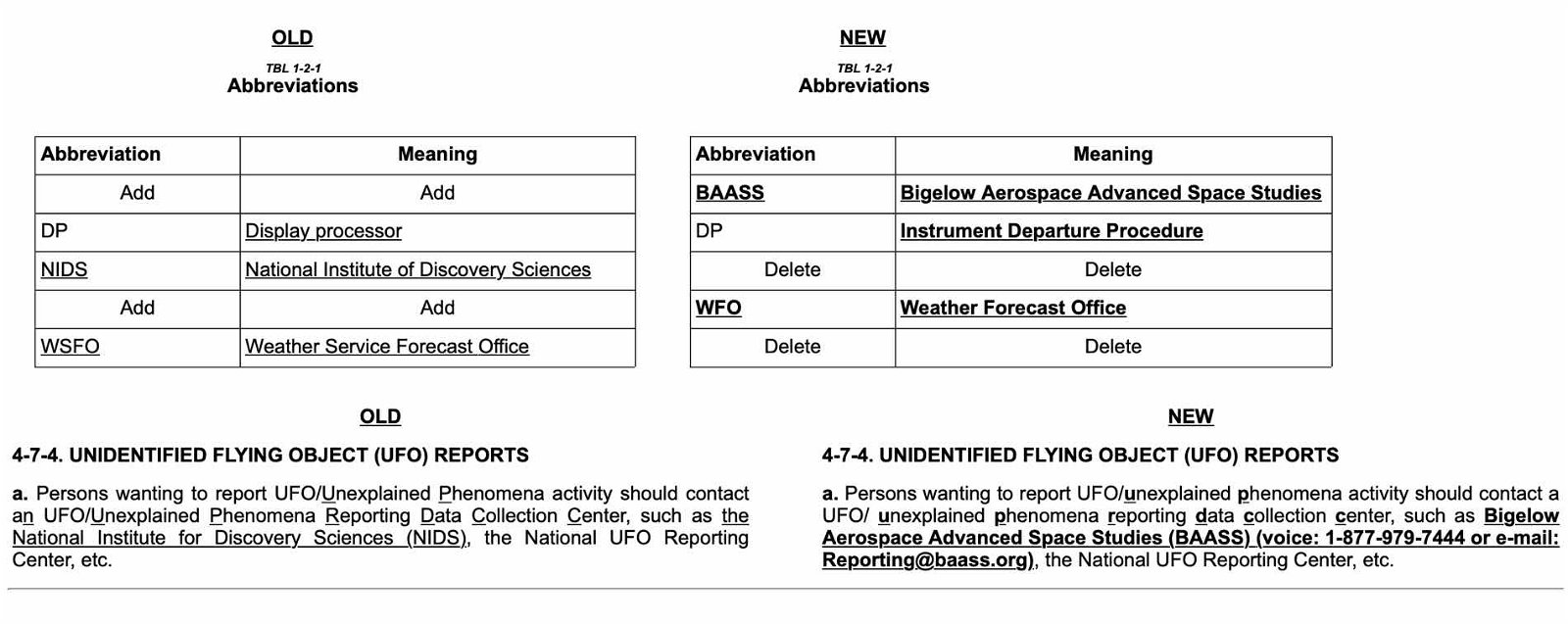
Earlier versions of the FAA’s JO 7110.65 order included the additional recommendation that UFO reports should be sent to agencies “such as Bigelow Aerospace Advanced Space Studies (BAASS),” with the inclusion of a phone number and email for contacting the organization.

According to an FAA briefing guide issued in February 2010, “Bigelow Aerospace Advanced Space Studies (BAASS) is a new organization that is devoted to exploration of extremely advanced aerospace technology, including the so-called unidentified aerial phenomena (UAP) or unidentified flying object (UFO) topics.”

BAASS ABOVE: Portion of a 2010 FAA briefing document outlining the replacement of the National Institute for Discovery Science with Bigelow Aerospace Advanced Space Studies as its recommended agency to contact for reporting UFO sightings (Credit: FAA/Public Domain)

The guide added that “In 2001, another of Mr. Bigelow’s organizations, the National Institute for Discovery Sciences (NIDS), succeeded in becoming the ‘go-to’ organization for the reporting by pilots and air traffic control of UFOs in the United States.”

“NIDS is now defunct and has been replaced by the larger, more capable BAASS,” the 2010 guide reads. “Therefore, pilot and air traffic control reporting of UFOs in the United States should now go to BAASS, vice NIDS. So we are deleting the NIDS acronym and adding the BAASS acronym.”

Robert Bigelow, the FAA, and UFOs

The story of how Bigelow Aerospace Advanced Space Studies (BAASS) and its predecessor, the National Institute for Discovery Science (NIDS), became recipients of UFO reports from the FAA–thereby freeing the FAA from having any direct involvement with UFOs for several years–can be traced back to retired United States Army colonel John B. Alexander, Ph.D. A longtime advocate for development of nonlethal weapons while in government, Alexander also worked for Robert Bigelow’s NIDS organization for a time. Speaking with Alexander, The Debrief asked about his role in arranging for the FAA to forward UFO reports it received to Bigelow’s organization.

“That is correct,” Alexander said. “This is one of those serendipitous events when I was first assigned to the Pentagon and living in northern Virginia.”

John Alexander John B. Alexander, Ph.D., who while working with the National Institute for Discovery Science helped arrange for the organization to receive UFO sighting reports redirected from the FAA (Public Domain).

As Alexander explained, shortly after his assignment he had taken residence in an apartment building where “they had a Friday night happy hour kinda thing, and one of the other occupants happened to be the Deputy Director of Security for the FAA. So I knew him personally.”

“After 911,” Alexander told The Debrief, “[the FAA] became sacrificial lambs. I might mention the FAA had been screaming about security for years before that. The airlines had been resisting mightily.”

“So I went to Washington and had an initial conversation, and said look, we’re interested in [UAP],” Alexander says. Following this meeting, the FAA Deputy Director “was able to set up a secondary meeting where we had Bob [Bigelow] and Colm [Kelleher] with us. And we came in and met with some senior FAA officials.”

“Interestingly, the guys who had experience as air traffic controllers were pretty supportive,” Alexander said. “Many of them had experiences of reports coming in while they were on duty. Organizationally, they were just happy to have an outlet to make this go away.”

“Which, by the way, is the way this has happened across the board in many governmental agencies,” says Alexander.

In the mid 1980s, Alexander founded an informal group of government insiders interested in finding out whether there might be a black program within government that dealt with UFOs. Called the Advanced Theoretical Physics Project (ATPP), Alexander’s group included members from all three military branches and others from the aerospace and intelligence communities. A requirement for membership had been a Top Secret-SCI security clearance at SI-TK, so that all members “had appropriate clearances and could help disseminate information.”

Despite receiving a limited amount of support from many high-level officials during their search, the ATPP found no evidence of any existing black programs within government that were involved with UFOs. To the contrary, Alexander came away from the experience with the feeling that most agencies within government want as little to do with the subject as possible.

FAA

In March, Politico reported that several government agencies had allegedly been “blocking or simply ignoring the effort to catalog what they have on [UAP],” based on testimony from several past and present government officials with knowledge on the matter. Despite the aversion to releasing information on UAP shown by the intelligence community, it did not result in a postponement of the report’s delivery to the ODNI by its June 25 deadline, as some had suspected might occur.

“From what I understand,” Alexander says, “all those agencies listed [in the ODNI report] technically participated, but several were certainly dragging their feet, and this was not voluntary at all.”

“Most of them just don’t want anything to do with the topic,” Alexander says.

The FAA Flip Flops on UAP

Also in March, The Debrief reported on its investigation into UAP incidents found within the Aviation Safety Reporting System (ASRS), an online database maintained by NASA which collects anonymous reports on behalf of the FAA from pilots, air traffic control personnel, and others who observe potential aviation hazards.

“An ASRS report collects information on what the pilot saw or experienced,” an FAA spokesperson told The Debrief in response to requests for information about UAP incidents within the publicly searchable ASRS database.

“Unless a hazard is reported, information in an ASRS report is not investigated, and the accuracy of the information is not verified,” an FAA spokesperson told The Debrief.

In February, the FAA also acknowledged an incident involving a sighting of an unusual aerial object over New Mexico by the pilot of American Airlines flight 2292.

FAA-UFO

“A pilot reported seeing an object over New Mexico shortly after noon local time on Sunday, Feb. 21, 2021,” the FAA said in a statement following the incident. However, the agency added that “FAA air traffic controllers did not see any object in the area on their radarscopes,” and provided no additional information on the incident.

The FAA is likely to be one of several agencies tasked with having greater involvement with collecting data on UAP in recent days. It was reported by The Debrief on August 7 that the Navy’s UAP Task Force is expected to obtain greater access to information on UAP collected by U.S. intelligence agencies, according to provisions included within the recently passed Intelligence Authorization Act for Fiscal Year 2022 (IAA).

The Debrief also queried the FAA about what specific information on anomalous aerial phenomena the agency collects, its role with outreach programs that help to facilitate pilots reporting their UAP encounters, and whether the FAA’s documentation of incidents that it sends to the UAP Task Force conflicts with the agency’s own stated policies.

However, the FAA provided no further information in response to our questions about its documentation of UAP sightings or other operations in support of the Navy’s UAP Task Force.

Speaking with The Debrief about his past experience working with government agencies like the FAA in relation to UAP, John Alexander put it bluntly.

“UAP is basically seen as a pain in the ass,” he said, summarizing the prevailing attitude toward the subject as being one primarily of avoidance at all costs.

“Anything that gets it out of my bailiwick is a good thing,” Alexander said.

Follow and connect with author Micah Hanks on Twitter: @MicahHanks


RELATED

300 Declassified UFO Files | Facts to Fall Asleep To

{ https://thedebrief.org/category/science/ }

Hoe vind je dit bericht?
Geschreven door peter om 01:06 Stuur door

EXCLUSIVE - True tomb of Jesus discovered after 2,000 years as hidden location that aligns with Bible account is found

EXCLUSIVE - True tomb of Jesus discovered after 2,000 years as hidden location that aligns with Bible account is found

The Bible describes Jesus' burial place as a tomb carved into rock, set inside a garden near where he was crucified.

For nearly 1,700 years, Christians have believed that tomb lies within Jerusalem's Church of the Holy Sepulchre.

The first church was built over the site by Roman Emperor Constantine in the fourth century, and generations of pilgrims have since traveled there to pray where Christ is believed to have been crucified, buried and resurrected.

Now, with excavations beneath the church complete, archaeologists have pieced together a fuller picture of an ancient landscape that bears a striking resemblance to the one described in the Gospel of John.

Lead archaeologist Francesca Romana Stasolla told the Daily Mail: 'We have found evidence of a funerary landscape, alongside small areas planted with vines and olive trees, as well as a pastoral landscape characterized by sporadic human activity.'

The excavations show that the church stands over an abandoned quarry outside ancient Jerusalem where cultivated plots and multiple rock-cut tombs existed side by side.

That combination closely mirrors John's description of a garden containing a tomb near the place where Jesus was crucified.

Although no physical evidence identifies the tomb's occupant, the parallels keep alive the possibility that early Christians preserved the true location of Jesus' burial.

Archaeologists have found evidence beneath  the Church of the Holy Sepulchre that aligns with what the Bible says about where Jesus was buried

Archaeologists have found evidence beneath  the Church of the Holy Sepulchre that aligns with what the Bible says about where Jesus was buried

The Church of the Holy Sepulchre attracts an estimated four million visitors each year.

The original church was dedicated in AD 335 after Roman buildings at the site, traditionally described as a temple to the goddess Venus, were demolished.

During the work, builders uncovered a rock-cut chamber that was identified as the burial place of Jesus, who had died nearly 300 years earlier.

Emperor Constantine's workers focused on one particular tomb that was already being venerated as Christ's burial place, excavating around it to separate it from the surrounding graves. 

The second church at the Church of the Holy Sepulchre, which stands today, was built and restored starting around 614 to 626 AD, following the destruction and fire caused by the Persian Sassanid invasion.

The discoveries add to the ongoing debate over the location of Jesus' burial.

Many scholars support the Church of the Holy Sepulchre as the site, citing the presence of rock-cut tombs from the first century.

Others argue that the Garden Tomb, another ancient burial site in Jerusalem, better matches biblical descriptions.

There is a long-held debate over where Jesus was laid to rest. Some say the church while others believe he was put inside an ancient rock-cut tomb, known as the Garden Tomb (pictured), which aligns with Biblical text

There is a long-held debate over where Jesus was laid to rest. Some say the church while others believe he was put inside an ancient rock-cut tomb, known as the Garden Tomb (pictured), which aligns with Biblical text

Archeologists were excavating the floor of the church (pictured) when they uncovered signs of an ancient garden that is mentioned in the Bible as where Jesus was laid to rest

The latest findings are detailed in a new 98-page preliminary report published in Liber Annuus, the archaeological journal of Jerusalem's Studium Biblicum Franciscanum. 

The report brings together results from the final 2025 excavation campaign, completing a project that began during a major restoration of the church's floor in March 2022.

Evidence of the ancient garden was first announced in 2025, but completed excavations have now allowed researchers to reconstruct how the cultivated land, abandoned quarry and burial chambers fitted together across the wider site.

The report revealed that the landscape began as a vast stone quarry cut into the side of a hill outside Jerusalem's ancient walls, with some sections reaching nearly 20 feet beneath the church's present floor.

As stone extraction gradually ended, the deepest areas were filled with soil and divided by low dry-stone walls, creating small plots that could be cultivated.

'Evidence of cultivation is provided by archaeobotanical and pollen remains, which have enabled us to reconstruct a landscape suitable for pastoralism, with natural vegetation used for grazing,' Stasolla said.

The first church was built over the site by Roman Emperor Constantine in the fourth century. Pictured on the right is part of the foundation wall of Constantine's church

The first church was built over the site by Roman Emperor Constantine in the fourth century. Pictured on the right is part of the foundation wall of Constantine's church

Above are Christians touching the Unction Stone at the entrance to the Church of the Holy Sepulchre, which they believe marks the sacred spot where the body of Jesus was washed, anointed with spices, and wrapped in linen for burial

'This type of Mediterranean landscape was widespread throughout the region and coexisted with the abandoned quarry area and the presence of rock-cut tombs.'

Researchers dated the cultivated landscape through its position within the archaeological layers and pottery recovered from the quarry fills.

The evidence places it after the quarry was abandoned but before Emperor Hadrian rebuilt the area in the second century AD, a broad period encompassing the lifetime of Jesus.

However, the plant remains have not been given an absolute laboratory date, meaning archaeologists cannot prove the garden was being cultivated at the precise time of Christ's crucifixion.

Archaeologists also recovered traces of fruits, legumes and wild vegetation, revealing an open Mediterranean landscape that was cultivated, visited and used for grazing but not permanently inhabited.

At the same time, exposed rock faces left behind by the quarry provided ideal locations for burial chambers to be carved directly into the stone.

The Church of the Holy Sepulchre attracts an estimated four million visitors each year

The Church of the Holy Sepulchre attracts an estimated four million visitors each year

The inside of the Church of the Holy Sepulchre features stunning mosaics throughout

The inside of the Church of the Holy Sepulchre features stunning mosaics throughout

Researchers found multiple tombs opening into the same former quarry at different heights, connected by narrow paths winding between the graves and cultivated plots.

The result was a complex landscape where gardens, grazing land and rock-cut tombs existed together, just as the Gospel of John places a garden and burial chamber beside the site of Jesus' crucifixion.

John 19:41 reads: 'Now in the place where he was crucified there was a garden; and in the garden a new sepulchre, wherein was never man yet laid.'

The garden reference is one of several clues contained in the Bible.

John 19:20 places the crucifixion close to Jerusalem, while Hebrews 13:12 says Jesus suffered outside the city gate. Archaeologists found that the quarry stood outside Jerusalem's walls at the time of Jesus but remained close to the city, matching both descriptions.

Matthew, Mark and Luke each describe Jesus' grave as having been carved from rock. The excavations confirmed that the gardenlike landscape was also a genuine ancient burial ground containing multiple chambers cut directly into the quarry's exposed stone.

John also states that the tomb was close to the crucifixion site, allowing Jesus to be buried quickly before the Jewish Sabbath began. 

A Roman structure erected during Emperor Hadrian's reign in the second century stood directly against the tomb. Pictured are foundation walls constructed during his reign

A Roman structure erected during Emperor Hadrian's reign in the second century stood directly against the tomb. Pictured are foundation walls constructed during his reign

Many Christians come to see the Stone of Anointing in Holy Sepulchre Church. Above are two nuns praying before the stone

Many Christians come to see the Stone of Anointing in Holy Sepulchre Church. Above are two nuns praying before the stone

At the Holy Sepulchre, the chamber traditionally identified as his tomb and the rock of Calvary exist within the same compact area.

None of those features was unique in ancient Jerusalem, as abandoned quarries were commonly reused for cultivation and burials. 

What makes the Holy Sepulchre compelling is the convergence of all the clues in one place: outside the ancient walls but close to the city, with cultivated land, a rocky crucifixion site and a cemetery containing rock-cut tombs.

Within that burial ground, one particular chamber would eventually become the focus of centuries of Christian veneration.

A Roman structure erected during Emperor Hadrian's reign in the second century stood directly against the tomb, making it inaccessible, while also cutting into the nearby rock of Calvary, the traditional site of Jesus' crucifixion.

The report suggested the surviving Roman walls may have belonged to a smaller cult site rather than the massive pagan temple described in traditional accounts.

Roughly two centuries later, Constantine's workers demolished the Roman structure and excavated the same location to expose the venerated tomb.

They removed the surrounding rock, separated the chamber from the other graves and constructed the first Christian shrine around it.

Its position was considered so important that architects allowed different sections of the enormous church complex to fall out of alignment rather than move the tomb.

The first monument was probably open to the sky and consisted of a small circular shrine surrounded by 12 columns, allowing early pilgrims to gather around the burial chamber.

Although none of this proves Jesus was buried inside, the decision to return to and preserve one specific tomb centuries later raises the possibility that knowledge of its location survived through generations of early Christians.

The second church at the Church of the Holy Sepulchre, which stands today, was built and restored starting around 614 to 626 AD, following the destruction and fire caused by the Persian Sassanid invasion

The second church at the Church of the Holy Sepulchre, which stands today, was built and restored starting around 614 to 626 AD, following the destruction and fire caused by the Persian Sassanid invasion

Stasolla said: 'The archaeological area beneath the Church of the Holy Sepulchre reveals the long history of a part of Jerusalem that, in the early fourth century AD, underwent the monumentalization of Christological memory.

'In this case, I believe that the archaeological evidence should be used primarily to understand the places and contexts in which Christian memory took shape and became firmly established.'

The evidence shows that Christians were commemorating this particular location by the fourth century, but it cannot confirm that Jesus had been buried there three centuries earlier.

Important gaps remain, as no inscription identifies Jesus, and it cannot be definitively proven that the chamber was new, nor that it had been used or belonged to Joseph of Arimathea, as the Gospels state.

The Bible says that Joseph of Arimathea, a wealthy member of the Jewish council, asked Pontius Pilate for the body of Jesus after the crucifixion, wrapping it in clean linen and placing it in his own unused rock-hewn tomb.

The discoveries therefore do not confirm the biblical account, but they demonstrate that the traditional site contains the principal geographical and physical features described in the New Testament.

'The Church of the Holy Sepulchre gives monumental form to the sites where, since very early times, tradition has located the memory of Christ's death and resurrection,' Stasolla said.

'Archaeology undoubtedly attests to the enduring nature of this commemorative tradition.'


Archaeologists May Have Found the Lost Tomb of Jesus — And the Evidence Is Shocking

Jesus' Sealed Tomb Opened After Centuries—What Was Discovered Inside Will Shock You

{ https://www.dailymail.com/news/index.html }

Hoe vind je dit bericht?
Geschreven door peter om 23:58 Stuur door

Mystery statue unearthed at Sardis archaeological dig

Mystery statue unearthed at Sardis archaeological dig

Mystery statue unearthed at Sardis archaeological dig

Bahadir Yildirim, Sardis expedition administrator and assistant director of fieldwork, takes a closer look at the statue’s unusual design.

Researchers with the long-running Harvard–Cornell Archaeological Exploration of Sardis have unearthed a larger-than-life statue estimated to be nearly 2,500 years old.

The discovery is remarkable for several reasons, said Nicholas Cahill, the field director of the AES team and a professor of Greek and Roman art and archaeology at the University of Wisconsin–Madison.

"It is very rare to find such monumental sculptures of this period anywhere in the Mediterranean, and this exceptionally well-preserved, unique monument casts important new light on the major arts of Lydia and on the Lydians' ties to their own past," he said.

The excavation is sponsored by the Ministry of Culture and Tourism of the Republic of Türkiye and by Harvard Art Museums. The Turkish site was named a UNESCO World Heritage Site last year, cementing its position as a critical site for understanding the ancient world.

Researchers made the discovery in late May while examining a major Roman colonnaded avenue. The statue had been broken into two main pieces and reused, face down, as paving stones in the ancient thoroughfare.

Mystery statue unearthed at Sardis archaeological dig
Credit: Archaeological Exploration of Sardis/President and Fellows of Harvard College

A buried monument emerges

"You sort of see these whole worlds opening up in front of you," Cahill said of the moment he realized the team had found something extraordinary.

A team of conservators carefully excavated around the statue to gradually reveal its full shape and size in the ground.

"Then the guesswork started," said Susanne Ebbinghaus, the George M.A. Hanfmann Curator of Ancient Art at Harvard Art Museums, who was in Sardis for part of the excavation. "'Is this archaic? Maybe not, it looks a little later. Is it a guy? Is it a girl?' When they started cleaning the soil around the head, we saw he had sideburns, so that question was settled."

The people of the Lydian Empire, which controlled what is now western Türkiye from about the middle of the 7th century to the middle of the 6th century B.C., left little written record of their civilization. Much of what was known came from what Greeks and Romans wrote about it—and from their point of view, the Lydians were eastern barbarians. But archaeological evidence has revealed that Sardis, the capital of the Lydian Empire, was a center for luxury and culture, particularly perfumes and fine clothing.

James McCurley '27, a Classics and Physics concentrator who worked on the dig over the summer, said the excavation of the mammoth statue was the highlight of his experience.

"After all the anticipation, I was worried the statue might be underwhelming, that we'd dig it up and find its front weathered beyond recognition. Discovering that the statue was not only well-preserved but almost intact and 2,500 years old was a wonderful surprise."

Conservators lifted the pieces from the ground on July 13 and transported them to an AES conservation lab to begin a thorough, ongoing analysis.

Many details have been revealed since that early, excited guesswork.

An old style with new clues

At well over 7 feet (2.1 meters) tall, the figure would have towered over onlookers. He wears a tunic of thinner material (called a chiton in Greek), a diagonally wrapped mantle and a distinctive, perhaps local garment with fine horizontal folds. The design has few parallels in ancient sculpture, said Harvard Art Museums' Bahadir Yildirim, who is the Sardis expedition administrator and assistant director of fieldwork and who participated in the cleaning and analysis.

"The surprising thing about this piece is that it has some features that haven't been seen on sculpture like that ... the drapery underneath, the distinctive horizontal patterning," he said.

The statue's bolt-upright stance, long coiffed hair and manner of dress resemble archaic Greek sculptures from the 6th century B.C. But the prominent veins and other anatomical details betray a much later date, likely in the 470s to 450s B.C., the early Classical period in Greece. During this era, Sardis was no longer an independent capital but had been conquered by the Achaemenid Persians and had become a major provincial center.

But the figure shows no Persian influence. The statue, therefore, comes across at first as a very traditional sculpture, adhering to age-old hairstyles and dress codes while also hinting at familiarity with the current styles in Greece, where such a sculpture might have been depicted as a nude youth. But the Lydians and other Anatolian peoples did not exercise naked and did not depict their young men without clothes.

The references to multiple cultural traditions and time periods reflect an artist with a complex understanding of his or her place in the world, Cahill said.

"This sculptor knows about contemporary styles in Mediterranean and Anatolian sculpture, the interest in hands and the structure of the face and so forth, and yet [the statue is] wearing clothes from 100 years earlier," Cahill said. "I think they're very clearly looking back to their own past."

A likely sacred setting

The original placement and purpose of the monumental statue is unknown. But one possibility is that it stood at the sanctuary of Cybele, the native mother goddess, which has never been found but has been described in literary sources as one of the most important sanctuaries in Sardis. It was common for wealthy citizens or political leaders to ensconce their likeness in the presence of a deity so they could effectively worship in perpetuity, Ebbinghaus explained.

"You put yourself in a prominent place where your fellow citizens or subjects can see you, but also you are indeed worshiping the god—and if you're a ruler, drawing legitimization from the relationship to that deity. So it might well have been an important person being represented," she said.

Most ancient marble statues were painted, and this one was likely no exception. The Sardis conservation team is now working to clean the statue while preserving any remaining flecks of paint for color analysis.

When conservation is complete, the fragments will be joined, and the statue will be displayed in a Turkish archaeological museum, along with other finds from Sardis. The first Harvard excavation of Sardis, a joint project with Cornell University, began in 1958 and was led by George M.A. Hanfmann (1911–1986), a professor of fine arts at Harvard and curator of ancient art at the Fogg Art Museum.

Provided by Harvard Gazette


Sardes has revealed another remarkable chapter of Anatolian history.

The Sardinia Giants: Ancient Statues That Rewrote History

2,500-year-old monumental marble statue unearthed at ancient Sardes in Türkiye

{ https://phys.org/science-news/ }

Hoe vind je dit bericht?
Geschreven door peter om 23:04 Stuur door

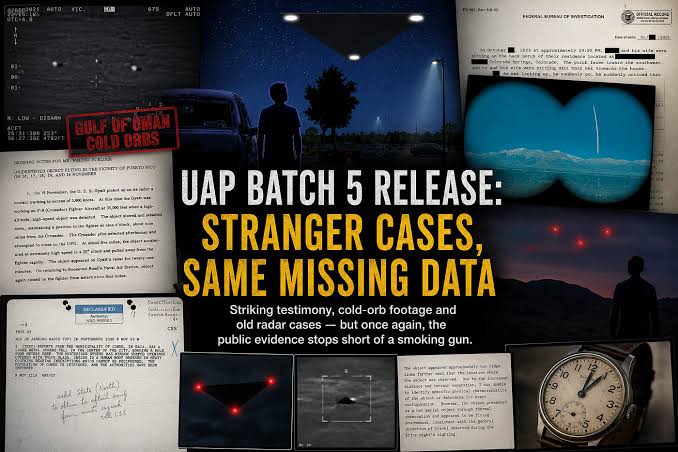
More Files, More Questions: What the Pentagon’s Latest UAP Release Really Changes

More Files, More Questions: What the Pentagon’s Latest UAP Release Really Changes

Forty-one records. Gulf of Oman footage. FBI triangle interviews. Eight decades of files entered the public record on August 7. This edition examines what the evidence actually shows—and applies the standard that must hold regardless of how compelling the headlines are.

Military context for the Gulf of Oman UAP sensor footage released under the PURSUE programme

This image is provided for regional military context only. It does not depict the specific vessel, personnel, or events associated with the Gulf of Oman UAP reports released under the PURSUE programme on August 7, 2026, and should not be interpreted as visual evidence of the recorded incidents.  Image: U.S. Navy / Public Domain.

On August 7, 2026, the U.S. government released its fifth batch of UAP records through the PURSUE system. Forty-one records. Gulf of Oman sensor footage. FBI interview transcripts describing black, silent triangles. A 1953 Naval Photographic Interpretation Center film analysis. Project Sign documents from 1948. Eight decades of material released in a single morning.

Within hours, the usual cycle began.

Social media posts described the Gulf of Oman videos as proof of something extraordinary. The FBI triangle records were treated as confirmation of a specific craft. The 1953 film report became, in some corners, evidence of an advanced programme the government had concealed for seventy years.

The UFO Times is not immune to the pull of that narrative. We find these cases genuinely compelling. That is precisely why we hold them to a higher standard.

A declassification is not a disclosure. A release is not an explanation. What we have is more evidence that extraordinary things have been reported, investigated, and filed away. We do not yet have evidence of what those things are.

Government Files — Feature StoryThe dominant story this week

1. The Gulf of Oman Videos: Real Footage, Unresolved Questions

The videos are real. They were captured by U.S. military sensors and released through official channels. That is not in dispute.

What is in dispute is what they show.

The objects recorded appear as small, cold—infrared-dark, or “cold-orb”—returns moving across the sensor frame. The associated intelligence report describes movements that the crew considered unusual. The released clips, however, do not preserve enough range, platform, sensor and environmental data to independently validate the reported maneuvers or speed estimates.

But “difficult to explain” is not the same as “impossible to explain.”

The videos do not include altitude confirmation, radar cross-reference, simultaneous sensor data, or the platform flight parameters that would allow independent analysts to assess whether the apparent maneuvers represent genuine physical anomalies or artefacts of sensor optics, atmospheric effects, or viewing geometry.

We are not saying the objects are ordinary. We are saying the evidence available does not yet allow us to say they are extraordinary.

  • Official Footage — PURSUE Release 05

The Gulf of Oman sensor recordings are examined in our full technical analysis of Release 05, where we provide additional context on sensor type, viewing conditions, and the limits of what each clip can confirm independently.

Watch With Full Context →

  • Our conclusion

Authentic government footage of unexplained sensor returns. The authentication is significant. The identification remains open. Official release does not equal official explanation.

Witness Documentation
Artistic reconstruction of dark triangular aircraft described in FBI witness interview records — this is not a photograph or sensor image
Artistic Reconstruction — Not a Photograph
This image is an artist’s reconstruction based on witness descriptions in FBI records. It is not a photograph, sensor image, or documentary record of any specific event. The UFO Times applies this label to all reconstructed imagery involving unidentified phenomena.

2. The FBI Triangle Records: Documented Accounts, Unresolved Observations

The released FBI documents describe interviews with multiple witnesses who reported observing large, silent, triangular aircraft—often at low altitude, often with no visible propulsion exhaust. Some estimates placed the objects at more than 300 feet across.

Those accounts are striking. The accounts are detailed and were formally documented by the FBI. The released interview summaries, however, contain no bureau conclusion verifying the witnesses’ physical estimates or identifying what they observed.

But the documents are interview summaries, not technical analyses. The FBI did not conclude that the objects represented exotic technology. The records establish that witnesses described observations they could not explain and that the FBI documented those descriptions. They do not establish the physical nature of the reported objects.

The documents do not establish the origin or nature of the objects. They preserve multiple witness descriptions of apparently triangular objects with unusual reported characteristics. Whether the separate observations shared a common cause remains unknown.

One critical caution: the triangular image circulating online and attributed to these records is an artist’s reconstruction, not a photograph or sensor image. We have applied the label “ARTISTIC RECONSTRUCTION—NOT A PHOTOGRAPH” to every use of that image in our coverage. This distinction matters more than most headlines have acknowledged.

Historical Record
1953 Naval Photographic Interpretation Center film analysis document — government review of UAP film footage with inconclusive findings

1953 Naval Photographic Interpretation Center film analysis. The analysts examined footage from the Montana (1950) and Utah (1952) film cases. Their calculations were limited partly because object distance was assumed rather than measured. Their final determination was inconclusive. This document has been mischaracterized in some coverage as definitive evidence of a concealed programme.

Project Sign 1948 — the first official U.S. Air Force UFO investigation programme documents

Project Sign, established in 1947, was the first formal U.S. Air Force UFO investigation programme. Several later participants claimed that an internal “Estimate of the Situation” favored an interplanetary interpretation and was rejected or destroyed. No authenticated copy has entered the public record.

3. The 1953 Film Analysis and Project Sign: History That Cuts Both Ways

The 1953 Naval Photographic Interpretation Center film analysis and the Project Sign documents add historical depth without resolving the central question.

The analysis examined footage from the Montana (1950) and Utah (1952) film cases—two of the most-discussed UAP films of the early Cold War era. The analysts noted that object distance was assumed rather than measured, which limited the reliability of any speed or size calculations. Camera position, focal length, and the absence of a firm reference object further constrained their conclusions. Their final determination was inconclusive.

Project Sign—established in 1947 as the Air Force’s first official UFO investigation—underwent a significant internal debate. Several later participants claimed that Project Sign produced an “Estimate of the Situation” favouring an interplanetary interpretation and that senior Air Force leadership rejected or destroyed it. No authenticated copy has entered the public record, so the account remains historically important but not independently verifiable. The programme was reorganized as Project Grudge and later Project Blue Book. The investigative priorities, methods and institutional attitudes changed substantially under each successor programme. Historians continue to debate how seriously each pursued unresolved cases.

What these documents show is not quite what some have claimed: the historical record shows recurring institutional tension over how much personnel, funding and scientific attention UFO investigations should receive—not necessarily an agency that had answers it concealed.

If the later accounts are accurate, the rejection or destruction of that assessment would be historically significant. The surviving Release 05 records do not independently prove that episode. The records do not, however, prove what was in the sky. They show that the institutional response changed substantially and remains the subject of historical debate.

What the Release Actually Changes

The PURSUE release is significant. It adds to the public record. It demonstrates that the government is willing—under political and legislative pressure—to declassify material it previously held. That is worth noting.

But a declassification is not a disclosure. A release is not an explanation.

The Gulf of Oman videos remain unexplained. The triangle witnesses remain unresolved. The 1953 analysts concluded they could not conclude anything. The Project Sign suppression tells us more about institutional culture than about what was actually in the sky.

What we have is more evidence that extraordinary things have been reported, investigated, and filed away. We do not yet have evidence of what those things are.

  • The Pattern That Keeps Repeating

Each new release follows the same arc. Striking material enters the public record. Initial coverage tends toward the dramatic. Over the following days, researchers who apply stricter evidentiary standards begin identifying the limits of what the release actually shows.

The gap between headline and evidence is not a sign of a cover-up. It is a sign that the evidence is genuinely ambiguous—and that ambiguous evidence is difficult to communicate to a public that has been trained by decades of cinema, conspiracy culture and institutional opacity to expect either a full disclosure or a full denial.

We are getting neither. We are getting partial records confirming that UAP reports are real, recurring and treated as an official investigative matter—without establishing that all reports share one cause.

  • What The UFO Times Thinks

These files matter. The pattern they add to matters even more.

Across more than eight decades, United States military, intelligence, diplomatic and law-enforcement agencies have documented reports occurring across multiple decades and locations, interviewed witnesses, produced analyses that were sometimes withheld from full public view, and filed records that have now begun to emerge.

That accumulation is meaningful. It is not proof of any single explanation. But it is evidence of a sustained reporting and investigative problem involving incidents that may not all have the same explanation, and one that deserves serious scientific and journalistic attention.

We will continue to cover this story using the standard we have applied from our first edition: Facts First. Mystery Second. Speculation Last. The next release will come. When it does, we will examine it the same way.

RELATED 

Pentagon UAP Files Are Being Released Right Now — Here's What's Actually In Them

Pentagon's 5th UFO File Release Explained — 3 New Cases

Pentagon releases fifth batch of UAP files

{ https://theufotimes.com/ }

Hoe vind je dit bericht?
Geschreven door peter om 23:33 Stuur door

From vanished cities to missing tombs, 7 historical mysteries that remain still unsolved

Science can scan forests, date skeletons, and decode ancient machines, but some chapters of history still refuse to close.

By Kaif Shaikh

From unexplained explosions to vanished civilizations, these seven mysteries still resist scientific explanation.

Something abrupt and poorly understood occurred, leaving behind questions that modern science can narrow, but not close.1 ,2 ,3 ,4

Modern science has transformed how we study the past, allowing researchers to extract DNA from ancient bones, map buried cities through dense forests, and peer inside sealed artifacts without opening them. 

Yet even with these tools, some historical mysteries remain unresolved. Not because they lack importance, but because earthquakes, climate shifts, erosion, and human activity have erased the very evidence needed to solve them, or maybe because the events themselves unfolded in ways that defy easy explanation.

From unexplained explosions and abandoned settlements to missing tombs and lost technologies, these cases sit at the boundary between what can be proven and what can only be inferred. 

The seven mysteries that follow are not rooted in myth or speculation, but in real events supported by credible evidence, each offering a reminder that, despite our best efforts, history does not always yield its secrets.

The Tunguska Event Explained | The Greatest Explosion in History

1. The 1908 Tunguska event – Siberia, Russia  

On June 30, 1908, a powerful explosion detonated over a remote region of Siberia near the Tunguska River, flattening an estimated 80 million trees across more than 2,000 square kilometers. The blast was so intense that seismic waves were recorded across Eurasia, and atmospheric disturbances were detected as far away as Western Europe. Yet no impact crater or large fragments were ever conclusively identified.

The Tunguska Event (1908): Investigating the Enigma of Siberia's ...

Most scientists agree the event was caused by a stony asteroid or comet fragment that exploded mid-air in what is known as an atmospheric airburst. Computer simulations and field studies support this explanation, but uncertainties remain about the object’s composition, size, and trajectory. 

Competing hypotheses, including a cometary fragment rich in volatiles, persist because physical evidence is sparse. Over a century later, Tunguska remains the largest known impact event in recorded human history, and its exact mechanics are still being refined by modern planetary science.

2. The tomb of Cleopatra and the tomb of Alexander the Great

Despite centuries of exploration, the burial sites of two of antiquity’s most famous rulers, Cleopatra VII of Egypt and Alexander the Great, remain unknown. Ancient sources describe Cleopatra being buried alongside Mark Antony in a royal tomb near Alexandria, but earthquakes, subsidence, and rising Mediterranean sea levels have dramatically altered the city’s ancient landscape.

Where Are They Buried? The Lost Tombs of History’s Iconic Figures ...

Where Are They Buried? The Lost Tombs of History’s Iconic Figures ...

Alexander’s body was reportedly transported to Egypt after his death in 323 BCE and entombed in Alexandria, where Roman emperors later claimed to have visited it. By late antiquity, references to the tomb disappear entirely. 

Archaeological searches around Alexandria and nearby sites such as Taposiris Magna have produced tantalizing clues but no definitive evidence. Urban development, looting, and environmental change have likely erased or buried the remains beyond easy recovery, leaving historians uncertain whether these tombs are still intact or lost forever.

3. The lost colony of Roanoke – America 

Established in 1587 on Roanoke Island off the coast of present-day North Carolina, the Roanoke Colony was England’s first serious attempt at permanent settlement in North America. When Governor John White returned from a supply mission to England three years later, the settlement was completely abandoned. No bodies were found, and there were no signs of violence.


The Lost Colony of Roanoke 👻 | America's Greatest Unsolved Mystery 🇺🇸

The only clue was the word “CROATOAN” carved into a post, a reference to a nearby island inhabited by Indigenous peoples. Archaeological work suggests the colonists may have dispersed and integrated into local communities due to food shortages, disease, or strained relations with neighboring groups. 

However, no single explanation accounts for all the evidence, and no confirmed remains of the settlers have ever been identified. Roanoke endures as a case study in early colonial fragility and the limits of historical reconstruction.

What's Hidden Behind 2,124,000 Square Miles of the Unexplored Amazon Forest?

4. The lost cities of the Amazon Rainforest and the collapse of the Indus Valley Civilization

For much of the 20th century, scholars believed the Amazon rainforest could not support large, complex societies. That assumption has been overturned by lidar surveys and archaeological research, which have revealed extensive networks of roads, plazas, fortified settlements, and managed landscapes hidden beneath the forest canopy. 

These discoveries suggest populations in the millions may have lived there before European contact. Why these societies collapsed—whether due to disease, environmental change, or social disruption—remains unresolved.

The Lost Civilization That Vanished Without a Trace: The Indus Valley Mystery

Similarly, the Indus Valley Civilization, one of the world’s earliest urban cultures, declined around 1900 BCE. Major cities were systematically abandoned, not destroyed. Geological evidence points to shifting river systems and prolonged drought, but the civilization’s undeciphered script limits understanding of its political and social response. In both cases, advanced societies vanished without clear historical records, leaving archaeology to piece together incomplete stories.


The Nazca Lines: Who Carved These In The Desert Rock Floor of Peru? And Why?

5. The Nazca lines – Peru 

Etched into the arid plains of southern Peru between roughly 500 BCE and 500 CE, the Nazca Lines consist of hundreds of enormous geoglyphs depicting animals, plants, geometric shapes, and straight lines stretching for kilometers. The figures are best visible from the air, raising questions about how and why they were created.

Peru’s Nazca Lines form giant figures visible only from the sky

Peru’s Nazca Lines form giant figures visible only from the sky

© Janeth Charris/Pexels

Archaeological research suggests the lines were made by removing dark surface stones to expose lighter soil beneath, a technique that has allowed them to endure for centuries in the dry climate. Leading interpretations link the geoglyphs to ritual activity, water management, or ceremonial pathways tied to seasonal cycles. 

Some align with celestial events, but no single theory explains the full range of designs. Without written records from the Nazca culture, their precise purpose remains one of South America’s most enduring archaeological mysteries.

Himalaya Secrets: Why Roopkund Lake is Filled with Ancient Bones

6. Roopkund lake skeletons – India

High in the Indian Himalayas, near a glacial lake known as Roopkund, the skeletal remains of hundreds of individuals were discovered scattered along the shore. Radiocarbon dating and genetic analysis reveal that these people did not die in a single event. Instead, they belonged to multiple groups from different regions and time periods, some separated by nearly a thousand years.

One group appears to have died around the ninth century CE, likely due to a sudden, severe weather event. Scientific studies suggest large hailstones could have caused fatal head injuries consistent with observed skull fractures. 

Later groups may have been pilgrims or travelers who met different fates. While modern techniques have clarified aspects of the mystery, questions remain about why people repeatedly traveled to such a remote, high-altitude location, and why fatal events occurred there more than once.

2007 model I. Mogi

2007 model I. Mogi

7. The Antikythera Mechanism – Ancient Greece 

Recovered from a Greek shipwreck dated to around 100 BCE, the Antikythera Mechanism is the most complex known mechanical device from the ancient world. Composed of interlocking bronze gears, it was used to predict eclipses, planetary movements, and astronomical cycles with remarkable precision.

The Antikythera Mechanism – Ancient Greece’s Computer

Advanced imaging techniques, including X-ray tomography, have revealed inscriptions and gear systems far more sophisticated than anything previously known from that era. While researchers have reconstructed much of its function, critical questions remain: who designed it, how widespread such technology was, and why this level of mechanical knowledge disappeared for over a millennium. 

The device challenges conventional timelines of technological development and stands as a rare glimpse into lost scientific traditions that were never fully transmitted to later civilizations.

Kaif Shaikh is a journalist and writer passionate about turning complex information into clear, impactful stories. His writing covers technology, sustainability, geopolitics, and occasionally fiction. A graduate in Journalism and Mass Communication, his work has appeared in the Times of India and beyond. After a near-fatal experience, Kaif began seeing both stories and silences differently. Outside work, he juggles far too many projects and passions, but always makes time to read, reflect, and hold onto the thread of wonder.


3 HOURS of MIND-BLOWING UnSolved Ancient Mysteries That Shouldn't Exist Until Now

{ https://interestingengineering.com/science }

Hoe vind je dit bericht?
Geschreven door peter om 22:18 Stuur door

UFOs and Prolonged Uncertainty

UFOs and Prolonged Uncertainty

Chronic uncertainty around unexplained phenomena and its psychological effects.

Key points

  • Prolonged UAP uncertainty can turn curiosity into powerlessness, anger, and mistrust.
  • Information gaps make false narratives and confident claims more appealing.
  • Honest communication about what is known and unknown can make uncertainty easier to tolerate.

Ahmed/Unsplash

Source: Ahmed/Unsplash

The growing public interest in unidentified anomalous phenomena (UAP) isn’t just about wanting to know what’s in the sky. It is about answering the question of what implications they have for mankind. But as the interest is growing, so is the level of frustration many people are experiencing.

While recent congressional hearings, scientific initiatives, and mainstream media coverage show the previously taboo subject is now being talked about more openly by serious people, the conclusions remain inconclusive.

The PURSUE (Presidential Unsealing and Reporting System for UAP Encounters) files, which Donald Trump specifically stated on his Truth Social account he was releasing so “the people can decide for themselves 'WHAT THE HELL IS GOING ON,'” have received almost 2 billion views. But the information being released is being given without context or explanation and has, thus far, left more questions than answers.

Many government and military officials have gone on record stating they have seen classified information that indicates the possibility of non-human space craft and biologics, but they can’t say more. Even whistleblowers who are trying to provide information, report they can’t give specifics because of NDAs or fear of retaliation.

It always seems as if someone knows something they can’t tell you for some reason.

All of this ambiguity has led to feeling that we may never get the real answers.

And this type of chronic uncertainty has significant psychological implications.

When people feel information is being intentionally withheld, it changes the way they process what’s happening.

Uncertainty Can Become Powerlessness

Humans live with constant uncertainty. We don’t know exactly what will happen in the next five minutes let alone five days, five months, or five years.

But when we start to feel uncertain because it seems like someone else is controlling what we are allowed to know, we stop wondering what’s true and instead begin asking, “Why is the truth being kept from me?”

When you can’t access information you need to answer important questions, you can start to feel powerless, which can lead to other negative emotions like suspicion, frustration, and even anger.

Anger can give you a sense of having more power in a situation. It motivates and mobilizes people into action. People may begin to protest or demand answers as a way to help regain control.

But if there is no clear action capable of resolving the uncertainty, that energy has nowhere productive to go. Someone can remain psychologically activated while the situation remains unchanged.

For some people, this may lead to disengagement, they stop caring or paying attention entirely, for others it may cause them to become more proactively involved.

The Search for Closure

When people encounter uncertainty around a subject that has personal meaning they naturally try to soothe their anxiety. In the case of UAPs, they may seek out more information by reading government reports, following congressional hearings, searching historical records, listening to interviews, or becoming actively involved in online communities. Each new document or testimony offers the possibility that they may finally get the missing piece of the puzzle.

But it can also create a cycle of anticipation and disappointment. Every time there is a new hearing, a new witness that comes forward, or a document release is promised, people raise their hopes that this will be the confirmation they’ve been looking for, but definitive evidence never seems to appear.

People can begin to feel deceived or foolish for believing they were finally going to get an answer. And the search for information can start to become emotionally consuming because the brain continues to treat the open question as unfinished business that needs resolving.

Confidence Can Substitute for Evidence

When the explanations being given, if there are any at all, are inadequate to explain what we are seeing, let alone answer the ultimate question everyone is asking, which is “are we alone in the universe?” interest doesn't just disappear. People begin to search elsewhere for the answers they need.

Research shows that uncertainty and a lack of control can make people more receptive to false explanations.1 This can open the door to believing in conspiracy theories, particularly those that portray the government as deceptive or threatening.

When no information is being provided, people can begin to mistake voices that seem loud or certain for credibility. A confident explanation feels reassuring, but it does not necessarily mean it is an informed one.

While government communication won’t prevent misinformation, it can reduce the space in which misinformation grows.

The Erosion of Trust

Trust helps people tolerate uncertainty. We do not need all the information ourselves as long as we believe that those who do possess it are competent, honest, and acting in good faith.

Just releasing information does not guarantee trust. Research on government transparency shows it can sometimes reveal disagreement, poor decisions, or uncertainty and may sometimes reduce confidence in the short term.2

But people are more likely to view a process as fair and trustworthy when they believe the government is being transparent, even when they don’t get the outcome they wanted.3 This matters psychologically because fair and understandable procedures make uncertainty easier to tolerate.

People can understand that the government won’t know what every UAP is. But they do want to understand how the evidence is being evaluated, why some information continues to remain classified, what conclusions the available evidence can support, and how open questions are being answered.

Without that understanding, people are left to interpret what the ambiguous information being provided is, as well as what the government’s silence means.

People Can Tolerate Honest Uncertainty

Officials may fear that admitting uncertainty will undermine public confidence, but research suggests that honest uncertainty is often less damaging than expected.

Studies have found that communicating uncertainty does not result in a meaningful reduction in trust in the source providing the information.4 Transparent explanations of the strength and limitations of evidence also don't appear to undermine public trust.5

This kind of communication provides a psychologically important framework.

People can understand that evidence is incomplete or that different explanations are possible. And they can understand that there are good reasons, such as national security, why some information cannot be immediately released. What is harder to tolerate are feelings of ambiguity and uncertainty when there is no clear process for resolving it.

Turning Uncertainty Into a Shared Process

UAP transparency is not dependent on the release of every document, but it does require clear and honest communication that helps people better understand the process as it is unfolding.

Communication, by itself, won’t eliminate uncertainty. But when people understand what's happening, discovering what UAPs are can become a shared scientific problem rather than a process from which they feel excluded.

The search for answers can remain focused on discovering the real evidence rather than driven by a desire to eliminate the discomfort of not knowing.

Whatever the ultimate explanation for UAP may be, the public is already responding psychologically to the process by which information is being investigated and released.

The answers matter, but so does the experience of waiting for them.

References

  1. Douglas, K. M., Sutton, R. M., & Cichocka, A. (2017). The psychology of conspiracy theories. Current Directions in Psychological Science, 26(6), 538–542. https://doi.org/10.1177/0963721417718261
  2. Grimmelikhuijsen, S., Porumbescu, G., Hong, B., & Im, T. (2013). The effect of transparency on trust in government: A cross-national comparative experiment. Public Administration Review, 73(4), 575–586. https://doi.org/10.1111/puar.12047
  3. de Fine Licht, J. (2014). Transparency actually: How transparency affects public perceptions of political decision making. European Political Science Review, 6(2), 309–330. https://doi.org/10.1017/S1755773913000131
  4. van der Bles, A. M., van der Linden, S., Freeman, A. L. J., & Spiegelhalter, D. J. (2020). The effects of communicating uncertainty on public trust in facts and numbers. Proceedings of the National Academy of Sciences, 117(14), 7672–7683. https://doi.org/10.1073/pnas.1913678117
  5. Kerr, J. R., Schneider, C. R., Freeman, A. L. J., Marteau, T., & van der Linden, S. (2022). Transparent communication of evidence does not undermine public trust in evidence. PNAS Nexus, 1(5), pgac280. https://doi.org/10.1093/pnasnexus/pgac280

UFO Truths Exposed | UFOs: Investigating the Unknown MEGA Episode | National Geographic

{ https://www.psychologytoday.com/gb/basics/anxiety }

Hoe vind je dit bericht?
Geschreven door peter om 21:12 Stuur door

Scientists finally know why astronauts struggle to poop in space — and reveal a hidden risk of long-haul spaceflight

Scientists finally know why astronauts struggle to poop in space — and reveal a hidden risk of long-haul spaceflight

A new NASA-backed study has pinpointed why astronauts often experience constipation in space and how that might affect their health on long-haul missions to Mars and beyond.

Photo of an astronaut floating in space

New blood tests have pinpointed why astronauts get constipated in space. This photo shows NASA astronaut Ed White on the first American spacewalk in 1965.
(Image credit: NASA)

Scientists have finally gotten to the bottom of why astronauts struggle to poop in space, thanks to a new blood test. The findings also reveal an unexpected side effect of this cosmic constipation that may need to be addressed before humans take long-haul trips to Mars and beyond, the study authors say.

As soon as people started living in space, it became apparent that it was harder to go "number two" among the stars than down on Earth — and not just because of how complicated it is to use a space toilet. For most astronauts, this gastrointestinal change is just an inconvenience, but some have to take laxatives to overcome the problem. The drugs are routinely stocked on most space missions, including the recent Artemis II mission.

Constipation is one of several digestive issues astronauts contend with, including bloating, indigestion and acid reflux, according to NASA. And like most other health problems that can affect astronauts, researchers have long suspected that microgravity is the leading cause. However, it has been very hard to prove that hypothesis or understand the other effects that chronic constipation may have on astronauts' general health.

Space Poop Problem Explained: NASA's $23 Million Toilet & Astronaut Diapers

In a new NASA-backed study, published June 29 in the journal Nature Communications, researchers analyzed more than 400 blood samples from 52 astronauts who each spent more than two months at a time living on board the International Space Station (ISS). Their stays took place between 2006 and 2018.

In the blood samples, the team looked for specific metabolites — the byproducts of metabolic processes that break down food, drugs and tissue in the body. They identified 40 such compounds, but the most instructive were those that were produced by gut bacteria that help break down proteins in the intestines.

You may like
  • A close up of a blue laser in a dark room.

Astronauts could use lightning-like plasma jets to kill germs on the moon and Mars, demo hints

  • The International Space Station as seen in October 2018.

NASA astronauts briefly shelter in 'safe haven' procedure following worsening leaks on Space Station

  • illustration of colorful microbes in a small intestine

'Poop pills' may ease insomnia by reprogramming the gut microbiome, early study hints

A photograph of three astronauts in a return capsule from the ISS

NASA astronauts can experience constipation from the first week of the mission until they return to Earth. This photo shows astronauts Chris Williams (left), Sergey Kud-Sverchkov (center) and Sergei Mikaev (right) shortly after returning from a 241-day stay on the ISS in July 2026.

(Image credit: Bill Ingalls/NASA via Getty Images)

"We see changes in astronauts' blood samples that indicate that the gut bacteria begin to ferment protein to a greater extent than usual," study first author Giorgia La Barbera, an associate professor in the University of Copenhagen's Department of Nutrition, Exercise and Sports, said in a statement. This happens "within weeks after the astronauts arrive in space" and can persist "until they are back on Earth," she added.

Protein fermentation occurs when gut bacteria begin to break down proteins instead of their usual food group of choice, complex carbohydrates such as fiber. This switch to protein can happen on Earth too, either due to a poor diet or digestive issues, such as lazy bowel syndrome. But in space, it is a sign of something else.

"The lack of gravity in space probably causes food to move more slowly through the intestine," study co-author Henrik Roager, head of the University of Copenhagen's Microbiome & Metabolomics research group, said in the statement. That means fiber has more of a chance to be thoroughly broken down, and gut bacteria eventually turn to protein instead.

This slower intestinal movement can "help explain constipation in astronauts," Roager added.

A photo of the toilet on board the ISS

Going to the bathroom in space is already more complicated than it is on Earth. This photo shows the toilet, or Waste and Hygiene Compartment (WHC), on the ISS.

(Image credit: NASA)

The researchers also found that changes to astronauts' diets ‪—‬ including altered caffeine, fish and fat intake ‪—‬ may influence constipation, Live Science's sister site Space.com reported. However, this dietary factor accounts for less than one-third of the observed metabolite changes, leaving microgravity as the primary cause, the researchers noted.

What to read next
  • An illustration of MAVEN in orbit around Mars

'I would never have guessed it': Unexpected effect is squeezing Mars' atmosphere like toothpaste, experts say

  • A view of Earth from the International Space Station, with a solar panel seen in the top right corner

Why does metal stick together in space?

  • Scroll structure in black and white with square formation on edges.

NASA shares image of impossible-looking crystal growing on the space station. What is happening?

While it is unsurprising that microgravity is the main cause of astronauts' constipation, the discovery of increased protein fermentation raises some new concerns that may need to be addressed.

"We know that products of protein fermentation [are] often associated with negative health consequences, such as kidney damage, potential effects on mood or reduced ability to focus, among others," study co-author Lars Ove Dragsted, head of preventive and clinical nutrition at the University of Copenhagen, said in the statement. When it comes to intestinal health, products of protein fermentation have also been linked to inflammation and weakening of the gut's lining.

Over short periods, these potentially harmful metabolites, including ammonia and hydrogen sulfide, likely pose limited risks to astronauts' overall health. However, long-duration spaceflights — like those that may one day carry astronauts farther into the solar system — could cause these compounds to rise to harmful levels, the study authors said.

Photo of a Soyuz rocket launching from Russia in July 2026

Researchers are concerned that long-haul spaceflights could cause metabolites from protein fermentation to rise to dangerous levels. This photo shows a Russian Soyuz rocket carrying the most recent crew members to the ISS on July 14, 2026.

(Image credit: Bill Ingalls/NASA via Getty Images)

It is also unclear how prolonged periods of reduced gravity, like those experienced by future residents of NASA's upcoming moon base, could affect protein fermentation in the gut. (The current study covered only brief stints on the ISS.)

RELATED STORIES
Hoe vind je dit bericht?
Geschreven door peter om 20:54 Stuur door

Astronomen hebben een nieuw type object ontdekt in de ruimte: de zwartegatster

image.jpeg

Astronomen hebben een nieuw type object ontdekt in de ruimte: de zwartegatster

 Jeannette Kras - Redacteur

Astronomen hebben in het vroege heelal een opmerkelijk object ontdekt. Het lijkt op een enorme ster, ongeveer zo groot als ons zonnestelsel, maar het straalt honderd miljard keer meer energie uit dan een gewone ster. De meest waarschijnlijke verklaring: een volledig nieuw type kosmisch object, een zogeheten zwartegatster.

De ontdekking, gepubliceerd in Nature, is gedaan met de James Webb-ruimtetelescoop. De telescoop legde het helderrode object vast in een periode waarin het heelal nog maar enkele honderden miljoenen jaren oud was. Het lijkt te bestaan uit een centraal zwart gat, omgeven door een enorme, dichte gasmantel. De energie is daardoor niet afkomstig van kernfusie, zoals bij gewone sterren, maar van het zwarte gat zelf.

Hoofdauteur Rohan Naidu: “We denken dat er een centraal zwart gat zit dat 100.000 keer zo zwaar is als de zon. Daaromheen bevindt zich een zeer uitgestrekte gasmantel die eruitziet als een ster ter grootte van het zonnestelsel. Het is enorm.”

De ontdekking kan bovendien een verklaring bieden voor de mysterieuze kleine rode stippen die op vrijwel alle diepe opnamen van de James Webb-telescoop opduiken. “Deze kleine rode stippen lijken overal in het vroege heelal voor te komen, maar verdwijnen tegen de huidige tijd bijna volledig”, zegt Naidu. “Wat deze objecten precies zijn, is een van de meest bediscussieerde onderwerpen uit het James Webb-tijdperk.”

Op zoek naar vroege sterrenstelsels

De astronomen zochten niet bewust naar een zwartegatster. Het team gebruikte de James Webb-telescoop om de vroegste sterrenstelsels op te sporen in een onderzoeksprogramma met de naam Mirage or Miracle (MoM). “Er is al enige tijd een raadsel rond veel heldere oude sterrenstelsels”, zegt Naidu. “Wat we ontdekten, is dat iets wat eruitziet als een uitzonderlijk helder vroeg sterrenstelsel, oftewel een ‘miracle’, in sommige gevallen eigenlijk een ‘mirage’ kan zijn.” Het lijkt op een sterrenstelsel, maar het is in werkelijkheid iets anders.

Tijdens die zoektocht viel één object direct op: een uitzonderlijk heldere, rode stip. Rood licht wordt vaak veroorzaakt doordat stof het licht onderweg rood kleurt. Toch paste dat hier niet bij de metingen. “Wanneer we iets zien dat erg rood is in het heelal, gaan we er vaak van uit dat het is omgeven door stof, zoals roet of as”, zegt onderzoeker Robert Simcoe. “Net zoals de rook van de bosbranden in Canada de lucht boven Boston onlangs felrood kleurde, kunnen astronomische objecten roder lijken dan hun werkelijke kleur wanneer je ze door een sluier van stof bekijkt.”

Het object vertoonde bovendien een uitzonderlijk sterke Balmer-break: een abrupte afname van licht op bepaalde golflengten die normaal wordt gezien bij sterren met een dichte gasatmosfeer. “De breuk die we bij dit object hebben waargenomen, is de diepste die we ooit bij enig object hebben gezien, waardoor gewone sterren als bron zijn uitgesloten”, zegt Naidu. “Maar daardoor vroegen we ons af of we misschien een nieuw soort sterrenatmosfeer zagen, zij het op een spectaculaire schaal.” Opvallend was ook dat het licht vrijwel uitsluitend sporen van waterstof en helium bevatte.

Een nieuwe klasse objecten?

Met computersimulaties testte het team verschillende verklaringen. Een extreem dichte waterstofmantel bleek de bijzondere lichtsignatuur goed te verklaren, maar niet de enorme helderheid. “Je hebt iets dat een beetje op een ster lijkt, maar 100 miljard keer helderder is”, zegt Naidu. “Dat betekent dat kernfusie onmogelijk de energiebron kan zijn, terwijl dat het proces is dat alle sterren die we kennen aandrijft.” Een actief zwart gat kan die hoeveelheid energie wél produceren. Simulaties waarin een zwart gat werd gecombineerd met een enorme waterstofmantel kwamen het beste overeen met de waarnemingen.

Het object kreeg de naam MoM-BH*-1. Mogelijk is het de eerste vertegenwoordiger van een geheel nieuwe klasse kosmische objecten. De minder heldere rode stippen die JWST op andere plekken in het vroege heelal ziet, zouden eveneens zwartegatsterren kunnen zijn. “Elke kleine rode stip is in overeenstemming met een zwartegatster, ingebed in een gewoon vroeg sterrenstelsel”, zegt Naidu. “Maar wat MoM-BH*-1 bijzonder maakt, is dat de zwartegatster zijn omringende gaststelsel vrijwel volledig overstraalt, waardoor we puur het licht van de zwartegatster zien.”

Bronmateriaal

GERELATEERDE VIDEO'S

James Webb Found a “Black Hole Star”

5 Facts About the Black Hole Star Astronomers Just Found

Mystery of Mom bh Star 1: Dawn of the Universe Unveiled #shortvideo #space #astrophysics

{ https://scientias.nl/nieuws/astronomie-ruimtevaart/ }

Hoe vind je dit bericht?
Geschreven door peter om 23:14 Stuur door

Secret Soviet UFOs: What happened when two scientists knocked on a door in Estonia? | Reality Check

Secret Soviet UFOs: What happened when two scientists knocked on a door in Estonia? | Reality Check

Ross Coulthart
https%3A%2F%2Fmedia.zenfs.com%2Fen%2Fnewsnation_articles_600%2F86fb6d502130a843b5ec37b925052551.png

Something metallic turned up under a garden in a quiet Tallinn suburb in 1969, and the Soviets spent the next twenty years trying to get it out, bringing in excavators and scientists and military, borrowing the house from its owners and living in it, digging on and off until perestroika ended the whole effort and they walked away. Astrophysicist Dr. Beatriz Villarroel and Ocean X co-founder Dennis Åsberg went to that address to find out what is still down there. Nobody came to the door, but the neighbor who had watched all of it from his window talked to them for an hour.

This is their full conversation with Ross Coulthart, recorded for "Secret Soviet UFOs" and running well past what the special had room for. Villarroel walks through the peer-reviewed work that brought her to Estonia, highly reflective objects photographed in orbit years before anyone on Earth had launched a satellite, and why she thinks the same search belongs in the ground. Åsberg ties Merivälja to the Baltic Sea anomaly his team found on sonar roughly 300 kilometers away and argues that both could predate the last ice age. Between them, they count five European cases and will not give up the coordinates of one of them. What nobody can answer yet is what sits under that garden, and the only thing that would settle it is ground-penetrating radar in the yard of a man who has already told them no.


Secret Soviet UFOs: What happened when two scientists knocked on a door in Estonia? | Reality Check

Reality Check: Secret Soviet UFOs | KGB swarms suburban house in UFO hunt
Hoe vind je dit bericht?
Geschreven door peter om 22:51 Stuur door

The Truth Behind UFO Sightings over Canada’s Nuclear Facilities

I’ve spent five decades investigating. Here are the facts

Hoe vind je dit bericht?
Geschreven door peter om 22:40 Stuur door

FBI Files Detail 'Bronze Metallic Object' Materialising in Sky as Pentagon Releases UFO Data

FBI Files Detail 'Bronze Metallic Object' Materialising in Sky as Pentagon Releases UFO Data

For the first time, complete UFO case files drawn from multiple federal agencies have been made directly accessible online

Pentagon

The Pentagon has started putting decades of declassified UFO files online via a new public website, officials in Washington confirmed on Friday. 

PHOTO Wayne Thornton/Pinterest

The Pentagon has begun publishing decades of declassified UFO files on a new public website, officials confirmed on Friday in Washington, bringing previously secret reports from the late 1940s to 2025 into the open for the first time.

The move follows President Donald Trump's directive earlier this year ordering US agencies to release government records on UFOs, now formally labelled unidentified anomalous phenomena, or UAPs, along with any files touching on 'extraterrestrial life.'

The All-domain Anomaly Resolution Office, known as AARO, has spent recent years sifting through historic reports and producing public summaries, but this is the first time complete case files, drawn from multiple federal agencies, have been made directly accessible online.

Pentagon UFO Website Puts 'Never-Before-Seen' Files in One Place

The Pentagon said the new site will host 'never-before-seen' UFO material, including videos, photos and original documents pulled from across the US government.

In a statement, the Department of Defence stressed that anyone can now search the database without security clearance, and promised further releases on a 'rolling basis' as more files are reviewed.

It can be recalled that interest in UFOs has surged in recent years, fuelled by leaked cockpit footage, congressional hearings and an increasingly vocal community of former officials urging transparency.

The Pentagon appears keen to show it has heard that noise. Secretary of Defence Pete Hegseth hailed Friday's drop of documents as 'unprecedented transparency,' even as some files arrive heavily redacted, with full pages blacked out.

Many of the UFO sightings cluster around sensitive military activity and major deployments. In the 1950s and 1960s, that meant Cold War flashpoints in Germany and the Soviet Union.

In more recent years, alleged encounters concentrate in the Middle East, particularly near the Strait of Hormuz, Iraq and Syria, where the US has maintained a sustained footprint and some of its most advanced surveillance kit.

Officials suggest that it is no coincidence. The lion's share of reports in the cache come from military pilots and personnel, often using sophisticated sensors that far outstrip civilian technology. If you go looking with the best gear, in other words, you see more weird stuff.

Crucially, in all of the incidents described in the newly released records, the Pentagon says the aerial phenomena posed no apparent threat to US forces. Most of the unknown objects either broke contact abruptly or vanished from view just as quickly as they had appeared.

Orbs, a 'Super-Hot' Object and a Bronze UFO in the Sky

Among the more recent entries, one 2023 case in the western United States stands out inside the document trove. Over two days, federal law enforcement officers independently reported strange orbs in the sky, with one account describing 'orbs launching other orbs.'

The Pentagon itself labels that episode 'among the most compelling' in its holdings, although the files stop short of any firm conclusion about what was actually seen.

In a separate 2024 encounter in Iraq, an unidentified craft was reported zipping across the surveillance systems of a US aircraft at high speed while the crew was engaged in an unrelated strike. The object cut across their sensors but, again, did not interfere with the mission and disappeared as quickly as it arrived.

A 2025 account relayed by a senior intelligence officer to the FBI pushes things further into science-fiction territory. According to the government's own description, US personnel were dispatched in a helicopter to search an area where orbs had previously been reported.

They allegedly located a 'super-hot' orb hovering above the ground, which then travelled roughly 20 miles at a speed too fast for the helicopter to keep up. That is the sort of detail that will send online forums into overdrive.

The historic files are hardly less surreal. NASA transcripts from 1969 in the release record Apollo 11 astronaut Buzz Aldrin telling officials he saw what he described as a 'possible laser' in space, noting a 'fairly bright light source' that the crew tentatively ascribed to that explanation.

UFO

Trump says it was his push for 'complete and maximum transparency' that forced the release of UFO files  Pinterest

Then there is the FBI's own artwork. One composite sketch, based on witness reporting, shows what the bureau calls an 'apparent ellipsoid bronze metallic object materialising out of a bright light in the sky, 130-195 feet in length, and disappearing instantaneously.'

The image reads like classic UFO lore, except this time it is filed in a government record rather than a tabloid or late-night talk show.

Trump Claims Credit as Experts Warn of New Speculation

Trump teasing a major disclosure of UFO and UAP material. On his social media platform, the president took a victory lap on Friday, saying it was his push for 'Complete and Maximum Transparency' that forced the release.

'It was my Honor to direct my Administration to identify and provide Government files related to Alien and Extraterrestrial Life, Unidentified Aerial Phenomena, and Unidentified Flying Objects,' Trump wrote, claiming the publication will allow Americans to 'decide for themselves' what is happening in the skies.

Last month, while welcoming the Artemis II astronauts to the Oval Office, Trump told reporters that his administration would be 'releasing as much as we can in the near future.' UFOs, he said, had been 'in the minds of people for a long time', hinting that the government needed to catch up with public curiosity.

Not everyone inside the Pentagon ecosystem is thrilled about how the data drop is being presented.

Sean Kirkpatrick, the former head of AARO, issued a pointed warning against reading too much into raw files without expert context.

READ MORE

  • UFO

The Pentagon Just Declassified a UFO 'Time Warp' Encounter and Harvard Is Blaming Alien Technology

He said there was 'nothing unexpected' in the latest release and argued that, without analysis, the website would 'only serve to fuel more speculation, conspiracy and armchair pseudoscience, particularly from the playhouse politics theatre company.'

For starters, AARO's official reviews to date have not found any evidence that UFOs or UAPs are extraterrestrial in origin. That conclusion runs directly against the hopes of some true believers, and it is one reason the office has itself become a target of suspicion and wild claims.

The newly released files arrive, then, in an awkward middle ground. On one hand, this is the first time complete case files, even in redacted form, have been published straight from federal archives. On the other, many pages remain obscured, and the government is still saying, essentially, that nothing in its vaults proves alien visitors.

Whether this wave of UFO transparency calms public obsession or just adds more fuel to it, the files are now out there, and they are not going back in the box.

RELATED


Pentagon UFO Files Just Turned Terrifying — 3 Unclassified Unknown Objects Appeared

Pentagon's UFO file releases mark a historic shift in transparency

{ https://www.ibtimes.co.uk/ }

Hoe vind je dit bericht?
Geschreven door peter om 22:15 Stuur door

Iran’s Alien Files? Tehran’s U.S. Conspiracy Claim Takes on New Leverage in a High-Stakes War

Iran’s Alien Files? Tehran’s U.S. Conspiracy Claim Takes on New Leverage in a High-Stakes War

America ı By Samuel Lopez

Man in a dark suit sits at a desk, hands folded, with the Iranian flag on his left and a gray alien figure in the background.

INSIDE THIS REPORT

  • Iranian media once promoted an extraordinary claim that alien forces secretly controlled the United States.
  • No verified evidence establishes that Iran possesses UAP materials—or that the U.S. has an alien partnership.
  • But in wartime, even unproven “disclosure” claims can become a potent tool of propaganda, pressure and psychological warfare.

By Samuel López | USA Herald

As U.S.-Iran hostilities continue to shake the region, an old and extraordinary allegation from Iranian state-aligned media is worth revisiting—not as proof of extraterrestrial contact, but as a warning about how UAP narratives can be turned into geopolitical weapons.

In January 2014, Iran’s semi-official Fars News Agency circulated a report claiming the United States had been governed since 1945 by a secret extraterrestrial “shadow government.” The story invoked a supposed alien agenda, alleged contact with President Dwight D. Eisenhower, and claims attributed to documents supposedly linked to former NSA contractor Edward Snowden. Radio Free Europe/Radio Liberty reported on the Fars publication and its allegations at the time.

The claim takes on a different significance in the middle of a real geopolitical crisis. The relevant question is no longer whether the 2014 story was credible—it was not supported by verifiable evidence—but whether Tehran could revive, expand or strategically deploy the same narrative if it claimed to possess proof that the United States has been governed by a secret extraterrestrial “shadow government” since 1945.

To be clear, there is currently no public, credible evidence that Iran possesses such proof, or that the United States has cooperated with extraterrestrial beings, or has hidden an alien program from Congress or the public.

The Pentagon’s All-domain Anomaly Resolution Office reached a similar conclusion in its historical report. Read AARO’s historical-record report here.

But, that doesn’t end the legal, political or national-security significance of the subject. It sharpens it.

A government at war does not need authentic alien artifacts to exploit public interest in alien artifacts. It needs a plausible narrative, carefully timed releases, selectively edited footage, ambiguous radar tracks, alleged insider testimony, or claims that cannot immediately be disproven because the underlying information is classified.

If Iran were to announce that it possessed UAP-related material—whether real, misunderstood, fabricated, foreign-made, or simply unexplained—the first battlefield would be public confidence. Tehran could frame the release as evidence that Washington has concealed advanced technology, lied to its own citizens, or maintained secret arrangements beyond democratic oversight.

The immediate target would not necessarily be scientists. It would be American public trust.

That kind of disclosure campaign could be designed to trigger congressional demands for classified briefings, force the White House into rapid denials, fuel online speculation, and divide an already polarized public over whether officials are withholding information. It could also muddy the line between authentic classified aerospace programs, adversary technology, drone incursions and truly unresolved aerial events.

The strategic value would be especially high during sensitive diplomacy. A claimed Iranian “UAP disclosure” could be deployed to distract from sanctions negotiations, military setbacks, intelligence disclosures, weapons inspections or domestic unrest. Tehran could offer supposed evidence through intermediaries, friendly media channels, foreign intelligence contacts, or international institutions—then demand political concessions, sanctions relief, security guarantees, or a halt to military action in exchange for access to the material.

That would amount to leverage by ambiguity.

The legal problem for the United States would be just as serious as the public-relations problem. If Iran released purported documents identifying U.S. facilities, defense contractors, aviation programs or alleged recovery sites, federal officials could face a difficult choice: deny the allegations and risk validating portions of the disclosures, or refuse substantive comment and allow speculation to intensify.

American intelligence agencies have confronted versions of that dilemma for decades. Genuine classified programs, especially aerospace, surveillance and weapons-development projects—can create the appearance of a cover-up when viewed without context. AARO itself noted that secrecy surrounding legitimate national-security programs has fueled public speculation about hidden extraterrestrial knowledge.

Iran could exploit that uncertainty with remarkable precision.

Still, extraordinary claims require extraordinary proof. A grainy video, anonymous source, metal fragment, or government statement probably wouldn’t do much to establish ‘proof’ of an extraterrestrial U.S.-connection.

Without real and authenticated evidence, a revived Iranian claim that they have alien materials or proof that the “United States is being governed by a secret extraterrestrial “shadow government,” would be political theater—not disclosure.

But political theater can matter during war. It can move markets, influence public opinion, strain alliances and force governments to spend valuable time rebutting claims that were engineered to be impossible to conclusively disprove in real time.

Iran’s 2014 alien-shadow-government story may have been dismissed as fringe propaganda. In today’s environment, however, it offers a revealing preview of how UAP narratives could be repackaged as a modern instrument of state pressure: not to prove that aliens are here, but to exploit the fact that millions of people believe governments may know more than they are saying.

{ https://usaherald.com/ }

Hoe vind je dit bericht?
Geschreven door peter om 21:55 Stuur door

'We Want to Believe' book explores the reality of UFOs: 'It's always going to be more likely that someone is wrong about what they saw' (interview)

'We Want to Believe' book explores the reality of UFOs: 'It's always going to be more likely that someone is wrong about what they saw' (interview)

"They're not supernatural or miraculous. If they really existed they'd exist in time and space and three dimensions like everything else."

a person looks up at a bright light in the sky

UAPs are hot these days, whether they can be partially explained or wholly dismissed 

(Image credit: David Wall/Getty Images)

After all these years, we still want to believe.

Whether you're a bona fide believer or a staunch skeptic, we can all agree that UFO legends and lore is a fascinating subject that continues to fuel endless debate. And with pop culture feeding our lizard brains lurid tales of flying saucers and alien invasions, it’s no wonder humanity is always up for a good story of inexplicable aerial sightings or various uncanny encounters of the third kind.

In "We Want To Believe: How Aliens Went Mainstream And Why It Matters" (Aug. 25, Columbia Global Reports), acclaimed literary critic and Senior Editor at The Atlantic Adam Kirsch explores this insatiable drive to wonder at unidentified phenomena. For Kirsch, the topic asks many of the same questions that human religions do. "For me, humanity's way into the subject is that UFOs are a way of thinking about a lot of the same questions we might also think about in religious or philosophical terms," Kirsch told Space in an interview. "Questions like what is unique about humanity, are we alone in the universe, are there other minds, what's our destiny as a species?"

Kirsch says the recent wave of alleged whistleblowers helped push him towards studying UFOs, or UAP, as they're now known.

"The real start of my interest in the subject was in 2017 when there was this sudden reporting in the mainstream media about the Pentagon UFO videos and the so-called secret program to collect UFO reports. For the first time, it seemed like maybe there was some legitimate news or evidence."

You may like
  • Composite of front covers from Mack's "Abduction," Jung's "Flying Saucers," Vallees' "Passport to Magonia," Elizondo's "Imminent," and Pasulka's "American Cosmic."

Get ready for the next Pentagon file drop with our essential UFO reading list

  • a man in winter clothing looks confused outside in the snow

'The X-Files' creator Chris Carter says new director's cut of 'I Want to Believe' is 'the horror movie that we really wanted to make' (interview)

  • Navy pilots have encountered unidentified aerial phenomena (UAP).

'This is unprecedented': Why the Pentagon's recent UFO file releases are so important

a yellow, green and red ufo book cover

"We Want To Believe" touches down in bookstores on Aug. 25, 2026.  (Image credit: Columbia Global Reports)

Kirsch recognized that monumental occasion as a pivotal moment that truly altered the way that American culture and media talked about the titillating topic.

"I got more into the history and the lore of UFOs and partly out of just that basic idea that it would be really cool if there were other minds in the universe. It would be amazing if we could find proof of that. Over the years it's happened repeatedly in this history of UFOs. There's a lot of public excitement and then it peters out because there is no evidence and there isn't anything concrete to point to. And that's definitely what's happened over this last cycle."

Using grounded scientific logic and basic common sense, Kirsch brings a calm measured approach to the UAP hysteria that's been gripping the whole country.

"One of the interesting things about testimony that people like David Fravor and Ryan Graves gave about this is, 'When the camera sees something, the person doesn't see it. And when the person sees something, the camera doesn't see it.' It's always one or the other, it's never both at the same time. Even as long ago as the 1950s, people were saying that UFOs for some reason are not photogenic. No one ever seems to be able to get a real clear image of a UFO the way you’d think you'd be able to if they actually exist in the atmosphere."

an author profile image of a man in glasses

Senior Editor for The Atlantic and literary critic Adam Kirsch.  (Image credit: Columbia Global Reports)

"The obvious and logical explanation is that there's nothing to take a picture of. But it does get to this basic question of how do we go from, 'I had an experience' to 'This is what the experience tells me about the world.' I talk in the book about the difference between evidence and testimony. When they're talking about UFOs, people often blur that distinction. Testimony is an account and people are often wrong or misinterpret about what happened to them."

What to read next
  • A blonde woman in a red dress presenting a weather forecast.

Why Steven Spielberg's 'Disclosure Day' feels like the most exciting sci-fi release of the year

  • The Allen Telescope Array at the Hat Creek Radio Observatory in Northern California.

How should we handle alien detection in a world of AI, deepfakes and social media? This committee is writing the rulebook

  • This Week In Space podcast: Episode 215 — Disclosure Day

This Week In Space podcast: Episode 215 — Disclosure Day

After all the smoke clears, the test that Kirsch declares must be applied to these reports is the same test that 18th-century philosopher David Hume said when talking about religious miracles.

"You don't have to prove that a miracle didn't happen, all you have to do is prove that it's more likely that someone was wrong, than that the laws of nature were suspended," Kirsch adds. "The same is true of UFOs. They're not supernatural or miraculous. If they really existed they'd exist in time and space and three dimensions like everything else. Based on the way we understand the universe and space travel, makes the odds very small that a UFO report would really be an actual extraterrestrial spacecraft. It's always going to be more likely that someone is wrong about what they saw.

"Modern science and scientific education is all about learning to not trust your instincts. It's about learning to say that the way that I spontaneously understand the world is wrong and there's a better way to understand it. UFOs are a perfect example of this because there's no evidence for them, but there's lots of people that see things in the sky they don't understand.

"With these released UAP videos, we might not be getting the whole truth, but that doesn't mean the whole truth is as interesting as I want it to be, and that there's some cosmic secret."

U.S. Deputy Director of Naval Intelligence Scott Bray explains a video of an unidentified aerial phenomena, as he testifies before a House Intelligence Committee subcommittee hearing at the U.S. Capitol on May 17, 2022 in Washington, DC.

U.S. Deputy Director of Naval Intelligence Scott Bray explains a UAP video before a House Intelligence Committee subcommittee hearing on May 17, 2022.  (Image credit: Kevin Dietsch/Getty Images)

"We Want To Believe" is available at bookstores and online outlets Aug. 25, 2026.

We Want to Believe: How Aliens Went Mainstream and Why It Matters

We Want to Believe: How Aliens Went Mainstream and Why It Matters: was US$18 now US$14 at Amazon

In "We Want to Believe," Adam Kirsch traces the intellectual history behind UFOs. The book draws on declassified documents, military encounters, and a wide literature of belief and skepticism to examine why some questions endure and what it means for modern societies when certainty fails and curiosity persists.

RELATED

Schoolyard witnesses in mass UFO sighting demand answers | Australian Story

{ https://www.space.com/entertainment }

Hoe vind je dit bericht?
Geschreven door peter om 21:05 Stuur door

Metals recovered by Russia from alleged UFO appear not to be from Earth: Coulthart

Metals recovered by Russia from alleged UFO appear not to be from Earth: Coulthart

Rob Taub

(NewsNation) — Some metals from an alleged UFO recovered by Russia in Estonia were determined not to be of Earthly origin.

NewsNation special correspondent Ross Coulthart told “NewsNation Prime” the discovery by Russian scientists showed the metals were “not normal isotopic ratios that you would expect for similar metals that were found on this planet.”

The development follows Coulthart’s latest podcast, “Secret Soviet UFO,” which details a story from the 1960s where a suburban couple was doing routine work on their home when a worker digging a well struck a hard metallic object.

“The reality is the Soviet Union had its fair share of anomalous events and this is one of the most celebrated ones,” Coulthart said after visiting the site. “It’s been the subject of speculation in Estonia for many years, both before and after the fall of the Iron Curtain.”

KGB had files about the alleged UFO event: Coulthart

Coulthart noted the event was recorded in both KGB files and files of the former Overseas Intelligence Service, the KGB and now the FSB.

“We also know from multiple witnesses who were on the ground at the time that there was a massive investigation where the Soviet military came in, the whole house garden was dug up, there was a tunnel dug to the object, whatever it was, and there were reports — multiple reports — of people including a worker that tried to hit the object with a pickaxe,” he added.

“He was hit in the chest by some kind of propulsive force. We don’t know what that force was, but as a result of that incident and weird anomalous things that happened in and around the house that were witnessed and recorded again by multiple witnesses, the entire tunnel system was closed up and as best as we know, the object has never been recovered,” Coulthart said.

Metals discovered supposedly caused weird events: Coulthart

The object — now dubbed “Object M” — appeared to cause “weird phenomena” around the house, with multiple events recorded by multiple witnesses. Coulthart noted Russian files were discovered that exemplified diagrams of Object M under the ground.

“There were ground-penetrating radar tests done by scientists intriguingly at the very beginning of the end of the Cold War in the early 1990s; there was even a Japanese team that went and did their own ground-penetrating radar survey and they confirmed that there was indeed an anomalous metallic object about 30 metres, 30 feet under the house.”

Coulthart believes the discovery led to one of the biggest UFO investigations of all time.

“The Soviets in the era of the Cold War dedicated an investigation to over 10,000 UFO cases, and what they found proved beyond any shadow of a doubt that Russia was very, very interested in UFOs,” he acknowledged.

RELATED VIDEOS

Metals recovered by Russia from alleged UFO appear not to be from Earth: Coulthart #Shorts

Could a piece of metal found by the Soviet Union in the 60s be from UFO?

{ https://www.newsnationnow.com/entertainment-news/ }

Hoe vind je dit bericht?
Geschreven door peter om 20:41 Stuur door

Did the Government Just Admit It Can’t Explain the UAP Orbs — Or Did It Just Hire Someone to Explain Them Away?

Did the Government Just Admit It Can’t Explain the UAP Orbs — Or Did It Just Hire Someone to Explain Them Away?

America ı By Samuel Lopez

Untitled

INSIDE THIS REPORT

  • Avi Loeb says government sources asked him to build a science council because they can't explain UAP orbs as human-made tech.
  • The wording raises a hard question: are officials seeking answers, or a credible cover story?
  • A closer look at the "orb" phenomenon suggests something Loeb's framework may not be built to capture.

By Samuel López | USA Herald

WASHINGTON - Professor Avi Loeb has spent the summer of 2026 becoming the most quoted man in ufology, and his latest post on X may be the most consequential yet. Writing through the account of the UAP Science Advisory Council he now chairs, Loeb said reliable, national-security-focused U.S. government sources asked him to build the council because the nature of UAP orbs remains unresolved based on all publicly available data — and, as he put it in his own words, because they cannot explain the orbs "in terms of human-made technologies."

That single phrase deserves more scrutiny than it has received.

“Reliable US government sources who are focused on national security asked me to establish the UAP Science Advisory Council because they cannot explain UAP orbs in terms of human-made technologies. Given these circumstances, it is the duty of all genuine scientists to figure out who these strangers visiting our backyard are.” - Professor Avi Loeb @ProfAviLoeb

On its face, Loeb's statement reads as vindication for years of witness testimony: the government, by its own admission, is stumped. But read it again. "Cannot explain UAP orbs in terms of human-made technologies" is not the same sentence as "cannot explain UAP orbs." It is narrower, and the narrowness may be the point. It suggests a search confined to one hypothesis space — ours — rather than an open inquiry into what these objects actually are.

If the goal from the outset is to find a terrestrial, technological explanation, then the council isn't hunting for the truth. It's hunting for the most defensible version of a predetermined answer.

That distinction matters enormously, and it is worth asking plainly: are the agencies who approached Loeb genuinely trying to solve the orb phenomenon, or are they trying to acquire his credibility — his Harvard pedigree, his media fluency, his willingness to speak in public — to construct a narrative the public will accept?

A scientist of Loeb's stature lends enormous weight to whatever conclusion eventually gets announced. That weight is valuable whether the underlying goal is disclosure or damage control.

Loeb's own record complicates the picture further. Public reporting this year has repeatedly noted that the council formed after intelligence and defense officials, including the Pentagon's All-Domain Anomaly Resolution Office, the ODNI, and the FBI, tasked him with assembling a multidisciplinary panel to bring scientific rigor to the government's UAP files.

Loeb has framed his approach as a "whodunit" — better sensors, better data, elimination of competing explanations. That is a defensible scientific method. But method only gets you as far as the assumptions baked into it, and this investigation may be starting with the wrong ones.

Here is where independent research into the orb phenomenon diverges sharply from the official framework. Reports of sphere-like objects — the so-called Buga sphere, metallic ball-shaped craft, luminous circular objects tracked by military sensors — are typically treated as a single category: unknown physical craft awaiting classification. Loeb's council, understandably, wants better instrumentation and material data to sort that category out. But that approach assumes the orbs are objects in the conventional sense: solid, engineered, governed by the same physics as a drone or a satellite.

My own investigation into the orb phenomenon points somewhere else entirely. The pattern that recurs across credible sightings — orbs descending low, entering the atmosphere, and appearing to track their surroundings with something resembling awareness — does not fit the profile of hardware. It fits the profile of something behaving. Witnesses do not describe machines. They describe presence. That is not a materials-science problem, and it may not yield to a materials-science solution, no matter how sophisticated the council's sensors become.

None of this proves the government is running a cover story. It is entirely possible that officials approached Loeb in good faith, hoping rigorous science will finally cut through decades of speculation. But the phrasing he chose to publish — a search for a human-made explanation — leaves the door open to a less comforting possibility: that the mission was never to find out what the orbs are, but to find a way to explain them that the public, and perhaps Congress, will accept without asking what else they might be.

Genuine science does not start with the answer it's permitted to find. Until the council's mandate is stated without that qualifier, the public is right to keep asking the question Loeb himself raised: who — or what — are these strangers visiting our backyard?


The Truth Behind UAPs: What They Don’t Want You to Know

Dr. Phil read the UAP files before the public, here's what he found | Reality Check

{ https://usaherald.com/ }

Hoe vind je dit bericht?
Geschreven door peter om 20:25 Stuur door

Fireball above Las Vegas before alien 911 call was meteor, scientist says

Fireball above Las Vegas before alien 911 call was meteor, scientist says ILLUSTRATIVE RECONSTRUCTION // NOT EVIDENCE

Overview

A bright streak of light seen over the Las Vegas sky just minutes before a family placed a 911 call reporting what they believed were alien figures was most likely a meteor, according to a scientist who reviewed the event. The flash, which briefly drew attention online and among local observers, has become the latest example of how a single sky event can quickly take on a life of its own when it overlaps with unexplained or emotionally charged reports.

The timing of the fireball — appearing shortly before the emergency call — fueled speculation among people following the story. But the scientific assessment points in a far more ordinary direction: a natural object entering Earth’s atmosphere at high speed. In other words, the dramatic light show was likely astronomical, not extraterrestrial.

What Scientists Concluded

Based on the available review of the event, the bright object was identified as a likely meteor, not evidence of alien activity. Scientists routinely use factors such as a streak’s brightness, motion, and duration to distinguish meteors from other aerial phenomena, and this case appears to fit that familiar profile. While the public conversation around Las Vegas has long included paranormal and UFO speculation, the fireball itself does not appear to provide support for those claims.

The distinction matters because fireballs are often mistaken for something more unusual, especially when they appear unexpectedly over populated areas at night. Their sudden brilliance can make them seem artificial or controlled, but that visual impact is consistent with a meteor burning up in the atmosphere. In this case, the scientific reading offers a grounded explanation for a moment that otherwise invited more fantastical interpretations.

Why the Incident Drew Attention

What made the Las Vegas episode stand out was not just the streak of light, but the proximity of that sighting to a 911 call involving claims of alien activity. That sequence gave the story a built-in tension that spread quickly beyond local news audiences. For many observers, the fireball and the emergency call seemed connected; scientists, however, say the two events should not be treated as evidence of the same cause.

This is a familiar pattern in unexplained-sky reporting: a plausible natural event occurs, then a separate human report adds a layer of mystery. When those timelines overlap, public interest often jumps ahead of the evidence. The meteor explanation helps separate what was seen in the sky from what was later reported on the ground.

Broader Context

The episode also lands in the middle of an ongoing national fascination with UFOs, paranormal claims, and unexplained aerial phenomena. In recent years, those topics have shifted from fringe conversation into mainstream debate, with new government transparency efforts and persistent public curiosity keeping the issue in the spotlight. That environment can make ordinary events feel extraordinary, especially when they happen in places already associated with spectacle and mystery.

For now, the best-supported explanation for the Las Vegas fireball is straightforward: a meteor. The 911 call may continue to fuel online debate, but the streak of light itself appears to have a scientific answer.

RELATED

Fireball above Las Vegas before alien 911 call was meteor, scientist says

Las Vegas police spot suspected UFO — and residents claim to see aliens

{ https://usubjects.com/ }

Hoe vind je dit bericht?
Geschreven door peter om 20:11 Stuur door

5.5km UFO On Moon Watching NASA 1967 Mission, UAP Sighting News.

5.5km UFO On Moon Watching NASA 1967 Mission, UAP Sighting News.

UAP_breaking_news.png

Date of photo: Feb 23, 1967
Date of discovery: Aug 22, 2026
Location of discovery: Earths moon
Source: 
There is a long spacecraft hovering over the moons surface in a NASA photo from 1967. This is 100% proof that aliens were watching humans before we ever stepped on the moon. 
 
I took the measurement of the crater in the photo called Theophilus crater, which is 110km or 68 miles across by 4.4km or 2.7 miles deep and can conclude that this UFO is 1/20 the length of the crater...equals 5.5km or 3.4 mile long UFO. Thats huge to us humans but to aliens, its considered a small shuttle craft. 
Scott C. Waring - UFO Sightings Daily
 
Aliens_UAP.png

UFO_UAP.jpg
RELATED

UFO FILES SHOCKER: NASA Astronauts Saw ‘GHOSTLY ALIENS’ On Apollo 17 Moon Mission? Big Reveal

New UFO Files Reveal Strange Apollo 17 Moon Anomaly

{ https://www.ufosightingsdaily.com/ }

Hoe vind je dit bericht?
Geschreven door peter om 18:38 Stuur door

The Atlantic: The ocean that holds Earth’s hidden history

The Atlantic: The ocean that holds Earth’s hidden history

The Atlantic has contained entire landscapes, ecosystems and geological worlds that were completely unknown to humans until very recently. As sea levels rose following the last Ice Age, entire inhabited landscapes disappeared beneath the ocean. 
Atlantic%20Ocean%20hidden%20history.jpg

Hidden beneath the Atlantic’s deep waters lie structures, lost cities, and clues that could rewrite what we know about Earth’s history, and challenge our understanding of the ancient world. Yet with more than 75% of its seafloor still unmapped, the Atlantic Ocean remains one of the least explored places on the planet. 
From sonar scans revealing geometric formations, like the Bimini road, beneath the waves, to vanished ships, underwater cities, and unexplained regions like the Bermuda Triangle, the Atlantic has become more than an ocean of currents and depth. Stories of lost civilizations, sunken continents, like Atlantis, and mysterious discoveries have only deepened the mystery. 
There are also the unexplained sonar/UFO reports in the Atlantic. These reports involve military sonar, classified data, unidentified underwater contacts and objects that apparently move in unusual ways.  
Given the numerous reports of UFOs emerging from and diving into the ocean, it is not unreasonable to speculate that ancient intelligent (extraterrestrial) civilizations could still be inhabiting hidden underwater bases deep beneath the Atlantic Ocean to this day. 
In this documentary, we explore what has been found in this ocean, the stories passed down through history, and how they may connect to what lies below the surface. We’ll examine the myths, the discoveries, and what makes it Earth’s most mysterious ocean.
  

We've Never Found Anything Like This in the Ocean

AMAZING ATLANTIC | The Ocean Where History, Mystery and Power Collide

{ https://ufosightingshotspot.blogspot.com/ }

Hoe vind je dit bericht?
Geschreven door peter om 18:06 Stuur door

China may be the first to obtain Martian soil due to the cancellation of the NASA program

China may be the first to obtain Martian soil due to the cancellation of the NASA program

Rock samples have been lying for several years in sealed tubes directly on the surface of the Red Planet. They were supposed to be retrieved by a joint program that was left without funding. It is now unclear whether they will ever reach Earth at all.

NASA’s Perseverance rover on the Red Planet. Illustration: NASA/JPL-Caltech/LANL/CNES/IRAP

A Decision Without Guarantees

Professor of Astrobiology at the University of Edinburgh Charles Cockell said in an interview with Universe Space Tech that there is currently no guarantee that soil samples will be returned from Mars. Funding for a number of NASA programs was cut, and the Mars Sample Return program was affected by these reductions.

Rock and soil in Jezero Crater were collected using the Perseverance rover and sealed in tubes. The samples currently remain on Mars. The project under which this cargo was supposed to be lifted into orbit and delivered to Earth has been canceled. 

Charles Cockell himself puts it simply. The material has been collected, it is lying on Mars, but what happens to it next is unknown.

Congressional Decision

In the fiscal year 2026 budget process, Congress did not restore support for the existing architecture, retaining only part of the related technology work within the framework of future Mars missions. As Space writes, part of the scientific community had previously opposed shutting down the program.

This is not a pause but the dismantling of a specific plan under which two spacecraft were supposed to fly to retrieve the container with the collected material. Without it, the soil in Jezero Crater remains a scientific resource to which no one has access.

China’s Schedule

China, meanwhile, is moving according to its own schedule. Charles Cockell notes that the mission there will focus on landing at a single site and returning several samples, meaning a much smaller amount than that collected by the Perseverance rover.

The launch of Tianwen-3 is planned for around 2028, with the return of the payload to Earth scheduled for 2031. The mission architecture calls for two separate launches, drilling to a depth of up to two meters, and the return of at least 500 grams of Martian samples.

Tianwen-3 mission architecture. Source: Handout

image-22.png

The foldable quadcopter version proposed by Chinese researchers is capable of collecting up to 100 grams of samples.

Source: Handout

The ground segment of the program is also being prepared. A planetary protection laboratory for receiving extraterrestrial material is already being designed, according to CGTN. 

Who Will Study the Material

Any batch of Martian material will first be placed in a high-containment facility. There it will be checked for the presence of active microorganisms, and only afterward will it be released to the broader scientific community.

Competition for access then begins. Charles Cockell explains that many researchers want to study Martian material, while the amount available is small, so only laboratories with the appropriate equipment and clean-room conditions will be able to work with it.

According to him, the necessary equipment is also available at the University of Edinburgh. He says that studying Martian rock would be fantastic, although he assumes that his colleagues rather than he personally would carry out such work.

Foreign laboratories have already received access to Chinese extraterrestrial material. CNSA granted access to lunar soil from the Chang’e-5 mission through a competitive application process, with institutions from the United Kingdom and the United States among those selected. Five international projects have already been chosen for Tianwen-3, but they concern instruments carried aboard the mission. The procedure for distributing the Martian material itself has not yet been announced.


China's Tianwen-3 mission aims to bring Mars samples back to Earth | Science Uncovered

Historic Race to Bring Mars Rocks Back to Earth: China's Tianwen-3 Mission

{ https://universemagazine.com/en/articles-en/ }

Hoe vind je dit bericht?
Geschreven door peter om 23:01 Stuur door

Mystery of Deimos: How a collision with an asteroid changed Mars’ moon

Mystery of Deimos: How a collision with an asteroid changed Mars’ moon

Deimos — the more distant of Mars’s two tiny moons — is named after the ancient Greek god of fear. Unlike its companion Phobos, which is covered in craters, Deimos has an unusually smooth surface buried beneath a thick layer of regolith. In addition, a giant crater about 10 km wide is located at its south pole. 

Mars’s moon Deimos. Image: Space Engine

For a long time, astronomers could not understand exactly what events had shaped such an unusual landscape. A new study published in Nature Astronomy provides answers to these questions. 

One Fatal Impact

The European Space Agency’s Hera mission, which took detailed images of Deimos from close range in March 2025, provided scientists with valuable new data. A team of researchers led by Dr. Sabina Raducan of the International Space Science Institute and the Free University of Brussels compared the images with large-scale computer simulations.

The animation shows how an asteroid impact could have changed the shape of Deimos and covered it with a layer of dust. Source: ESA

Using special code developed at the University of Bern, the scientists conducted about one hundred impact simulations, each of which took nearly a week. According to the calculations, the most likely scenario was the impact of an asteroid approximately 320 m in diameter that struck Deimos at an angle of 40°. 

This single catastrophic collision was enough to completely reshape the moon’s appearance. The impact blasted out an enormous amount of debris and dust, which settled back onto the surface, forming a “blanket” up to 200 m thick. This layer buried smaller ancient craters beneath it, making Deimos appear visually smoother than Phobos.

Why Did Deimos Not Break Apart?

A logical question arises: why did such a powerful impact not shatter a relatively small moon only about 12 km in diameter?

The answer lies in Deimos’s internal structure. Observations confirm that it has an extremely porous structure — its interior is more like a loose pile of space rocks held together by weak gravity. When the asteroid struck the surface, Deimos’s fractured interior acted like a shock absorber: it absorbed and softened the shock wave, saving the moon from complete destruction.

Answers from the MMX Mission 

The origin of the Martian moons themselves remains a matter of debate: they may either be asteroids captured by Mars’s gravity or fragments blasted off Mars itself during ancient collisions. Deimos’s porous structure inclines scientists toward the first hypothesis, but the upcoming Japanese MMX mission (Martian Moons eXploration) is expected to provide a definitive answer.

Mars’s moon Deimos. Image: Space Engine

The launch of JAXA’s MMX spacecraft is scheduled for the end of this year. In 2027, it will arrive in the Martian system, conduct detailed observations of both moons, and collect soil samples from Phobos, which are expected to return to Earth in 2031. The collected data will help not only verify the calculations concerning Deimos, but also provide a better understanding of the evolution of the entire Solar System during the early stages of its formation. 

Previously, we reported on how the moons of Mars turned out to be remnants of a destroyed comet.

  • According to CNN 

The Phantom Moon of Mars Scientists Can’t Explain | Deimos Mystery

The mysterious origins of the moons of Mars

{ https://universemagazine.com/en/articles-en/ }

Hoe vind je dit bericht?
Geschreven door peter om 22:41 Stuur door

The Discovery of Neptune’s Rings and Their Unique Characteristics

The Discovery of Neptune’s Rings and Their Unique Characteristics

Neptune possesses a ring system that was officially identified 37 years ago. However, the history concerning the existence of these rings extends significantly further and encompasses a mystery intricately linked to their characteristics

Neptune’s rings.  Source: Wikipedia

The discovery of Neptune’s rings

Neptune is recognized as the eighth planet from the Sun and is the most distant one in the Solar System. Its average distance from the Sun measures approximately 4.5 billion kilometers. Nonetheless, it is well known that Neptune possesses a ring system. However, evidence of these rings was observed much earlier. William Lassell first reported their discovery in 1846, shortly after the planet itself was identified.

However, it soon became evident that this was simply a consequence of the limitations inherent in the telescope he employed. The rings were neglected for a period of one hundred years. Their potential existence was reconsidered in 1966, when astronomers observed a planetary occultation and observed that it transpired marginally earlier than anticipated.

However, at that time, this report was disregarded and was not revisited until 1977, when Uranus’s rings were subsequently discovered through a similar methodology.

In 1984, astronomers resumed observations of the planet’s occultation of stars and made a noteworthy discovery: the eclipse was observed on one side of the planet, but not on the opposite side. This finding supported the hypothesis that Neptune is encircled by a system of open rings or arcs.

A pair of images of Neptune’s rings taken by Voyager 2. Source: Wikipedia

Scientists were unable to comprehend the mechanism behind this phenomenon; however, they were powerless to intervene, as the ground-based telescopes available at the time lacked the capability to observe the rings directly.

It was not until August 22, 1989, that the Voyager 2 spacecraft conducted a flyby of Neptune and, for the first time, captured photographs of Neptune’s rings, thereby confirming their existence. Additionally, it provided further insight by demonstrating that the majority of the planet’s rings are, in fact, closed.

Structure of the rings

Scientists have long debated whether at least one of Neptune’s rings is actually open, as this would strongly contradict orbital mechanics. However, they ultimately concluded that the planet’s four moons, which orbit within the ring system, exert a significant influence on the uniformity of the rings.

The structure of Neptune’s rings. Source: Wikipedia

The Galle ring is situated nearest to Neptune’s surface. Its innermost boundary is positioned 41,000 km from the planet, with a width of approximately 2,000 km. Comprising primarily fine dust, it is exceedingly faint.

Subsequently, the narrow and luminous Le Verrier ring is introduced, measuring merely 113 km in width with an outer radius of 53,000 km. Within this ring, in closer proximity to its inner boundary, orbits the Despina moon. Despina exhibits an irregular shape, with an approximate radius of 150 km. Additionally, two other moons, Naiad and Thalassa, are situated in the space between the Galle and Le Verrier rings.

Immediately beyond the Le Verrier ring lies the relatively sparse Lassell ring. Its width is approximately 4,000 km. At its outer edge begins the narrow and luminous Arago ring, which has a width of only 100 km.

Neptune’s moons. Source: www.techtimes.com

Subsequently, a gap is observed through which a secondary small satellite, Galatea, orbits. This is followed by the most notable object within the system — the Adams ring. The Adams ring is the subject of considerable debate among scientists, as it appears to comprise five distinct arcs. More comprehensive investigations reveal that these arcs are essentially irregularities along the edges of a continuous ring; nonetheless, the structure remains highly unusual.

The mystery of the rings’ origin

Presently, the most significant enigma concerning Neptune’s rings pertains to their origin. The dominant hypothesis posits that the rings emerged significantly after the formation of the planet, as a consequence of the disintegration of one of its natural satellites.

Nevertheless, in actuality, this entire configuration — with multiple distinct rings and medium-sized moons positioned between them — indicates a considerably more intriguing formation process. The Neptune system is abundant with peculiar phenomena. Specifically, some research demonstrates that the various rings originated from different dust fractions and diverse moons.

Triton. Source: Wikipedia

Among the moons themselves, there are no large ones, but there is one that is truly enormous — Triton — though it was clearly once captured by the gravitational pull of the ice giant. Additionally, several small moons in very low orbits exhibit mineral compositions that could only have developed in the presence of substantial liquid water — an element that could never have existed on them previously.

All of this indicates that the fundamental cause of Neptune’s remarkable rings was, indeed, the capture of Triton. Prior to this event, the planet was orbited by several large moons; however, the gravitational influence of the newly arrived Triton generated chaos, resulting in collisions that ultimately led to the current configuration of the system. Whether this hypothesis is accurate remains a subject of ongoing scientific investigation.


Webb Reveals Neptune’s Rings Like Never Before! #space #science

NASA’s Most Mysterious Discoveries on Neptune

{ https://universemagazine.com/en/articles-en/ }

Hoe vind je dit bericht?
Geschreven door peter om 21:26 Stuur door

The Massive Asteroid Apophis Will Pass Closer to Earth Than Some Satellites in 2029—Planetary Defense Researchers are Getting Ready

Apophis, as seen on March 9, 2021
(Image Credit: NASA/JPL-Caltech and NSF/AUI/GBO)

The Massive Asteroid Apophis Will Pass Closer to Earth Than Some Satellites in 2029—Planetary Defense Researchers are Getting Ready

One of planetary defense‘s biggest opportunities will come as the asteroid Apophis makes its tight flyby of our planet on April 13, 2029, allowing international space missions to interact with the near-Earth object. Asteroids this size only approach this close to Earth about once every 7,500 years, making the event a rare opportunity for real-world planetary defense research.

In a new paper published in the journal Space: Science & Technology, a team of researchers analyzes the many opportunities the Apophis flyby will offer for science and planetary defense.

The closest distance between Earth and Apophis during the flyby will be a mere 38,000 kilometers, about one-tenth of the distance from the Earth to the Moon. Coordinating these planetary defense efforts among the Earth’s nations may be one of the biggest challenges as the object comes uncomfortably close.

Apophis Explained

As soon as astronomers first discovered Apophis in 2004, the asteroid’s 340-meter-wide diameter and close pass by Earth immediately made it a concern for scientists. Fortunately, it is expected that on April 13, 2029, it will safely pass our planet at a distance of close to 20,000 miles—closer than some of our weather and communication satellites, but still with no risk of an impact.

Yet the near-Earth asteroid still holds mysteries for scientists. Models of the object depend heavily on assumptions, not hard data, to predict not just its tidal effects but also its composition, size, internal structure, and spin state.

Apophis

A series of images of the asteroid Apophis captured in March 2021

(Image Credit: NASA/JPL-Caltech and NSF/AUI/GBO)

With so many open questions about the asteroid and the unique opportunity to collect data and test processes for future planetary defense operations, many countries are planning missions to Apophis, but in this new paper, the researchers note that some of these activities require increased international coordination to avoid interference.

Part of the paper synthesizes known data on Apophis, including radar observations, light-curve, and spectral data. From this data, the team then developed new predictions for the asteroid’s dust ejection, orbital and spin changes, internal structural response, and surface material displacement. These projections were crucial in the researchers’ evaluations of the feasibility of various currently proposed or authorized missions and their likely scientific value.

Apophis Missions are Gearing Up

Future Apophis missions fit into four primary categories: rendezvous, flyby sample return, and impactor experiments.

In the recent research, the team found that flyby missions should capture data at very fine scales, down to the centimeter or decimeter for surface changes and hours for changes in spin period. Additionally, these space-borne instruments should be able to measure dust ejection phenomena. Together, this data stream alone could provide important direct evidence for how such rubble-pile asteroids evolve structurally. Relatively low-cost sample return missions could push this even further.

The activities coordinated under the International Asteroid Warning Network constitute the largest multinational asteroid detection and observation effort ever assembled and are its first global joint exercise. The network will build experience responding to potentially deadly space threats in the future.

Earth Interactions

On the other hand, the asteroid’s close approach to Earth will affect Apophis as well. Our planet’s gravity is expected to alter Apophis’s orbit from an Aten-type to an Apollo-type, changing the object’s spin period and orbital uncertainty. 

Additionally, roughly 1% of Apophis may experience a surface material disruption, potentially altering the object’s spectral properties by exposing fresh material.

The asteroid’s extremely low gravity may also cause it to lose surface dust to Earth’s magnetosphere, posing an electromagnetic disturbance hazard to spacecraft. Space agencies will need to monitor the situation to protect our increasingly essential space-based communications infrastructure during the event.

While there is no immediate danger to our planet, the researchers say this event is shaping up to be a pivotal moment in international space cooperation and a turning point for organized space defense.

The paper, “The Apophis Encounter in 2029: A Rare Opportunity for Planetary Science and Defense,” appeared in Space: Science & Technology on August 22, 2026.

  • Ryan Whalen covers science and technology for The Debrief. He holds an MA in History and a Master of Library and Information Science with a certificate in Data Science. He can be contacted at ryan@thedebrief.org.
RELATED
Apophis 2029: The Asteroid That Will Pass Closer Than Satellites

Apophis 2029: The Asteroid That Will Pass Closer Than Our Satellites

An Asteroid Will Pass Closer Than Our Satellites in 2029 — Here's What Happens

{ https://thedebrief.org/category/space/ }

Hoe vind je dit bericht?
Geschreven door peter om 20:30 Stuur door

Mars's Funky Moon Deimos was Shaped by an Impact

Mars's Funky Moon Deimos was Shaped by an Impact

This illustration shows Mars' moon Deimos and its distinctive south pole depression. Thought the moon's surface appears smoother than its sibling Phobos, it's still been battered by impacts. One major impact created the south pole crater, and also spread a layer of regolith on the moon's surface. Image Credit: NASA Eyes on the Solar System. This illustration shows Mars' moon Deimos and its distinctive south pole depression. Thought the moon's surface appears smoother than its sibling Phobos, it's still been battered by impacts. One major impact created the south pole crater, and also spread a layer of regolith on the moon's surface. Image Credit: NASA Eyes on the Solar System.

Both of Mars' moons are oddballs. They're small and lumpy like potatoes, and for a long time, astronomers thought they may be captured asteroids. A newer explanation, that they may be the result of an impact on Mars' surface, is gaining ground.

But regardless of their origins, Phobos (26 km across) and Deimos (12 km across) have both been knocked around and subjected to collisions like other Solar System objects.

In March 2025, the ESA's Hera spacecraft performed a gravity-assist maneuver at Mars, and it used that opportunity to observe Deimos. Hera tested its navigation system by locking onto surface features of the lumpy moon, including impact craters. Deimos is known for having a smooth, regolith-covered surface compared to its more heavily-cratered sibling, Phobos. But Hera's observations revealed ancient craters buried under dust.

The cratered surface of phobos (Left) compared to the smooth surface of Deimos (right). Hera showed us that while Deimos appears smooth, it's actually cratered, but many of its craters are underneath a layer of regolith. Image Credit: NASA/JPL/MRO

The cratered surface of phobos (Left) compared to the smooth surface of Deimos (right). Hera showed us that while Deimos appears smooth, it's actually cratered, but many of its craters are underneath a layer of regolith.

Image Credit: NASA/JPL/MRO

One of Deimos' craters is particularly noteworthy. It's on the moon's south pole and new research shows the impact that created it is also responsible for Deimos' dust-covered surface.

The research is titled "Deimos’s shape and geology explained by a subcatastrophic impact," and it's published in Nature Astronomy. The lead author is Sabina Raducan from the Space Research and Planetary Sciences department at the University of Bern. Raducan is also co-chair of the Hera Impact Physics Working Group for ESA’s Hera mission.

"Small planetary bodies record the processes that shaped the Solar System, but their surfaces and interiors often evolve in unexpected ways," the researchers write. "Deimos, the potato-shaped, 12-km-diameter outer satellite of Mars, has a strikingly smooth surface covered by fine regolith, in contrast to its heavily cratered and grooved sibling, 22-km-diameter Phobos."

The large crater on Deimos' south polar surface dominates the moon's shape. It's 10 km wide, and Deimos is only about 12 km across. The researchers wondered if a single impact could be responsible for both the crater and the surface debris that's so effective at hiding some of the other craters. "Here we propose that a single, large-scale impact that excavated the 10-km-wide depression at Deimos’s south pole is responsible for the thick, globally distributed regolith observed today," they write.

Raducan and her co-researchers used a powerful simulation called the Bern Smoothed Particle Hydrodynamics (SPH) code to test the idea. SPH simulations are particularly effective for problems like large surface deformations and violent disruptions from large impacts.

“The code runs on a high-performance computing cluster here at the University of Bern and is one of the few codes capable of performing this type of simulation,” lead author Raducan said in a press release.

“Run on a High Performance Computing Cluster at the University of Bern, our Bern Smoothed Particle Hydrodynamics, SPH, impact code works by recreating bodies of interest into millions of adhering particles whose interplay is governed by various programmable variables, including gravity levels, material strength and cohesion," lead author Raducan said in a press release. She added that this is one of the few codes that can run this type of simulation.

“In this case we created a detailed shape model of Deimos out of SPH particles, having filled in the southern depression to leave it ready for the impactor to strike. Then we ran about a hundred simulations – each one taking about a week at a time to complete – to experiment with various impactor masses and angles of approach,” Raducan explained.

The simulations included an impactor between 300 m and 360 m and a range of impact angles between 0 and 60 degrees. The impact velocity was set at 8.2 km s−1 for all simulations, based on previous research into Deimos' craters.

This figure shows some of the simulation's results. The x-axis shows the simulated impact angle, and the y-axis shows location. "The blue dashed outline shows the South Polar Crater shape model profile extracted in the same fixed cross section displayed in each panel," the authors write. Image Credit: Raducan et al. 2026. NatAstr.

This figure shows some of the simulation's results. The x-axis shows the simulated impact angle, and the y-axis shows location. "The blue dashed outline shows the South Polar Crater shape model profile extracted in the same fixed cross section displayed in each panel," the authors write.

Image Credit: Raducan et al. 2026. NatAstr.

The simulations showed that the impactor was a small asteroid only 320 meters wide striking Deimos at about 45 degrees. Obviously, the moon wasn't shattered, but the impact did cover the small moon in regolith. In some place on the surface, the regolith is 200 meters deep. This regolith obscures many of Deimos' surface craters, giving the moon a smooth appearance.

“Our simulation is consistent with patterns of brightness observed across the moon’s surface, linked to the gradual migration of regolith that behaves more like loosely packed dust than anything more cohesive. The same is true of the way the southern depression subsequently smoothed out, rather than retaining a sharp crater," Raducan said.

This is a screenshot from the simulations, showing the impactor striking Deimos and creating the south polar crater. The yellow is ejecta, most of which has fallen back to the moon's surface, blanketing it in regolith that's up to 200 meter deep in some places. Image Credit: S.D. Raducan. Licence: ESA Standard Licence

This is a screenshot from the simulations, showing the impactor striking Deimos and creating the south polar crater. The yellow is ejecta, most of which has fallen back to the moon's surface, blanketing it in regolith that's up to 200 meter deep in some places.

Image Credit: S.D. Raducan. Licence: ESA Standard Licence

Determining the size, speed, and angle of the impactor also revealed things about Deimos' interior.

The research shows that the materials and structure of the moon's interior are more like rubble-pile asteroids than solid, cohesive rocky bodies like Earth's Moon. "The low surface cohesion (≲100 Pa) required for the crater to collapse and the high-porosity, low-interior crushing strength required to dissipate the impact shock suggest that it is essentially a rubble pile, like Dimorphos, Ryugu and Bennu," the researchers explain.

While many spacecraft have observed Deimos, Hera's data helped make these simulations accurate. In fact, the researchers had Hera's Mars flyby in mind when they began this research.

"We began this simulation campaign before Hera’s Mars flyby, but with the hope that Hera’s observations would help constrain the results even more. This indeed turned out to be the case, as the side of the moon imaged by Hera turned out to show additional buried craters," Raducan said.

In an interesting side note, Queen guitarist Brian May is part of the research team, having earned a PhD in astrophysics in 2008.

“These were really the last pieces of the puzzle I needed – although they weren’t immediately obvious to the naked eye. Instead I first made them out via spectroscopic depictions of the Hera images made immediately afterwards by Sir Brian May, who is part of the Hera science team,” Raducan added.

The hidden craters found by Hera pre-date the impact that created the south pole depression. Their presence shows that Deimos' interior is rather fragile. If it were stronger, then shock waves from the impact would've erased them. Instead, the porous and fractured interior dampened the shock waves.

“This simulation therefore implies that Deimos is a rubble-pile body, akin to many asteroids," said ESA’s Hera project scientist, Michael Kueppers, in the press release. "This does not necessarily mean the moon is in fact a captured asteroid – it might well have formed out of material kicked up from Mars by surface impacts – but more that it may have formed in a similar way and therefore shares comparable properties. This is the first of a series of results demonstrating how tuning Hera’s Mars flyby to get close to Deimos has paid off well in terms of science.”

This research supports the idea that an impact shaped Deimos' surface, but there other possible explanations for the moon's features. We may not have to wait long before this idea, and others, can be tested with more observations.

"Finally, although the present scenario is one of potentially several viable explanations, it makes several testable predictions for future observations, for example by the Martian Moons Exploration mission," the authors write.

The Japan Aerospace Exploration Agency (JAXA) is getting ready to launch the Martian Moons eXploration (MMX) mission in November of this year. While MMX's crowning achievement will be returning a sample from Phobos, the mission will also observe Deimos. We don't yet know how close it will get to Deimos, because as a secondary target, its flybys of the moon will depend on how the spacecraft has to maneuver around Phobos, it's main target.

Since MMX won't land on Deimos, no true deep probing of its interior can take place. But its refined surface measurements, from its LIDAR and gamma-ray/neutron spectrometer in particular, will help determine its mass and bulk density more accurately. Those measurements will help refine its surface composition, especially the properties of its regolith. High-resolution images will also help scientists understand the moon.

It's possible that the impact hypothesis outlined here isn't what actually happened. Scientists think it's possible, for example, that the regolith layer is because of continuous micro-meteorite bombardment over billions of years. Only more and better data can say, and MMX may provide it.

"High-resolution imaging and topographic mapping could assess whether the south-polar depression exhibits diagnostic crater morphology consistent with a large oblique impact or instead favours alternative origins," the authors explain.


The mysterious origins of the moons of Mars

Deimos Doesn’t Feel Like a Real Moon… And That’s the Problem

{ https://www.universetoday.com/ }

Hoe vind je dit bericht?
Geschreven door peter om 18:42 Stuur door

Dry Martian Meteorite Reveals Early Water in Mars's Crust

Dry Martian Meteorite Reveals Early Water in Mars's Crust

Meteorite Northwest Africa 7034 (NWA 7034) aka Black beauty. (Credit: NASA) Meteorite Northwest Africa 7034 (NWA 7034) aka Black beauty. (Credit: NASA)

Billions of years ago, Mars was hypothesized to have been a habitable world with flowing liquid water and the potential for life. But directly studying its ancient past is currently limited to orbiters and rovers, as scientists have yet to obtain direct samples from Mars. However, meteorites have been found on Earth to have potentially originated from Mars during large impacts that flung chunks of the Red Planet into space, eventually being grabbed by Earth’s gravity and crashing into the Earth’s surface.

Now, an international team of scientists might be one step closer to piecing together Mars’ watery ancient past, and specifically how much water could have flowed across the Red Planet’s surface long ago. In findings recently published in the Geophysical Research Letters, a collaborative team of researchers led by the Technical University of Denmark investigated an intriguing meteorite with an even more intriguing name, “Black Beauty”, with the scientific designation of Northwest Africa 7034 (NWA 7034). What makes Black Beauty so intriguing is its designation as the only known meteorite that originated from the crust of Mars, having been blasted away during an impact billions of years ago, as Black Beauty is estimated to be about 4.4 to 4.5 billion years old.

Using a combination of X-ray and neutron tomography, the researchers analyzed Black Beauty with the goal of ascertaining if the ancient meteorite contained traces of water, also called hydrous materials in the scientific community. While X-ray tomography is used to identify the densest parts of Black Beauty while focusing on iron and silicon, neutron tomography was used to identify that previous “holes” found by normal X-rays were actually hydrous materials.

“Neutrons are particularly sensitive to hydrogen,” said Dr. David Mannes, who is a scientist at the Paul Scherrer Institute (PSI), a co-author on the study. Dr. Mannes collaborated with fellow study co-author, Dr. Anders Kaestner, on the neutron tomography at PSI. “In combination with X-ray tomography, we were not only able to detect tiny hydrated minerals, but also, for the first time, visualize larger, macroscopic hydrogen deposits.”

Essentially, the researchers identified that early Mars contained a water reservoir large enough to engage with the Martian surface and crust, resulting in water deposits into crustal rocks that eventually became Black Beauty. The researchers also note these materials are similar to materials found in Jezero Crater by NASA’s Perseverance rover. Therefore, Black Beauty continues to add a growing pile of evidence that Mars was a much warmer and wetter planet billions of years ago.

While Black Beauty has revealed intricate details regarding ancient Mars and its watery past, arguably the most famous meteorite from Mars is the Allan Hills 84001 (ALH84001) meteorite, which was recovered in Antarctica on December 27, 1984. However, it wasn’t until 1996 before scientists discovered it was potentially from Mars, as ALH84001 had initially been designated as an asteroid chunk, which are frequently discovered on Earth. Once scientists studied ALH84001, they discovered it contained unique structures they hypothesized could indicate signs of ancient Martian life.

While their 1996 study published in Science gained worldwide attention, including an official address from President Bill Clinton, the scientific community was quick to claim these features could have formed from non-biological processes. Regardless of its specific origin, both Black Beauty and ALH84001 demonstrate the importance of bringing back samples from Mars to reduce relying on ancient meteorites.

Unfortunately, the long-anticipated NASA-ESA Mars Sample Return mission was canceled by Congress due to ballooning costs, meaning all the sample tubes that NASA’s Perseverance rover has been depositing on the Martian surface is potentially for nought. For now, scientists have to rely on meteorites to unlock the secrets of ancient Mars, but China’s planned Tianwen-3 might be the first to return Mars samples to Earth sometime next decade.

What new insights into the “Black Beauty” meteorite and ancient Mars will researchers make in the coming years and decades? Only time will tell, and this is why we science!

  • As always, keep doing science & keep looking up!

Evidence of hot water on Mars found inside ancient meteorite | Yahoo Australia

How Scientists Proved These Rocks Came From Mars.

{ https://www.universetoday.com/ }

Hoe vind je dit bericht?
Geschreven door peter om 18:30 Stuur door

Are we living in Aliens? As the movie celebrates its 40th anniversary, scientists reveal what the cult film got right…and wrong

This month, the cult science fiction classic Aliens celebrates its 40th anniversary.

Set in the year 2179, James Cameron's sequel follows a group of Colonial Marines who come face-to-face with extraterrestrial terrors beyond their wildest imaginations.

However, although humanity thankfully hasn't discovered the Xenomorph, scientists say this visionary film does make some surprisingly accurate predictions.

According to Professor Steve Benford, of the University of Nottingham, many of the film's sci-fi inventions are now commonplace items used by millions.

Aliens is set 153 years into our future, making it as far removed from the present day as we are from 1873, when gas lighting and steam power were the height of technology.

However, Professor Benford points out that our technology has already surpassed some of the gadgets seen in the film.

Professor Benford told the Daily Mail that the thing that Aliens predicted most accurately is 'sadly' the use of automatic guns and robotic weaponry.

But from synthetic humans to the iconic motion tracker, there are still a lot of things the film gets wrong.

This month, the cult science fiction classic Aliens celebrates its 40th anniversary. Now, a scientist has revealed what the film got right and wrong about the future of technology

This month, the cult science fiction classic Aliens celebrates its 40th anniversary. Now, a scientist has revealed what the film got right and wrong about the future of technology 

What Aliens gets right

Professor Benford says one of the most impressive things Aliens gets right isn't the big impressive pieces of technology, but the small things people carry with them.

While the apparent absence of personal phones might seem strange to modern audiences, the Colonial Marines do have plenty of wearables.

Professor Benford says that the motion detectors, wearable cameras and biosensors embedded into wristbands all feel quite 'current'.

From smart watches to fitness tracking rings, small wearable devices are now exceptionally common.

In fact, the watches worn by many people today are smaller, smarter, and more multi-purpose than many of the devices seen in the film.

Another surprising innovation that Aliens appears to have predicted is the development of exoskeletons.

At the climax of the film, Ellen Ripley climbs into an enormous mechanical suit known as a 'loader'.

Professor Steve Benford, of the University of Nottingham, says that the iconic 'loader' from Aliens is close to being replicated by modern exoskeleton technology

Professor Steve Benford, of the University of Nottingham, says that the iconic 'loader' from Aliens is close to being replicated by modern exoskeleton technology 

What did Aliens get right... and wrong

What Aliens got right

* Wearable technology

* Exoskeletons

* Autonomous weaponry 

What Aliens got wrong

* Interstellar travel

* Motion trackers 

* No personal devices

* Synthetic humanoid robots  

This humanoid robot mirrors the wearer's movements, greatly enhancing their strength and mobility.

While that might seem far-fetched, real exoskeletons with a similar design are already starting to become commercially available.

For example, you can now purchase an Ascentiz H+K modular hip-and-knee exoskeleton for £1,250 ($1,699).

These small exoskeletons are designed to boost performance or make walking easier, but others will have a more serious purpose.

Professor Benford says: 'I think we will see them to help people walk and otherwise assist them.'

At the Consumer Electronics Show last year, developers revealed a $250,000 exoskeleton called XoMotion, which uses 12 motors to mimic natural human movements and balance.

While XoMotion was specifically designed for disabled people who have lost the ability to use their legs, developers say it could be used by factory workers to help them lift heavy boxes without damaging their joints.

However, Professor Benford says he doesn't think we will ever see Aliens-like loaders strutting around on factory floors.

Pictured above is the XoMotion, a futuristic high-tech exoskeleton allowing disabled people to walk forward, backwards and turn to either side. They can also sway their hips

Pictured above is the XoMotion, a futuristic high-tech exoskeleton allowing disabled people to walk forward, backwards and turn to either side. They can also sway their hips

Instead, he thinks it is much more likely that this role would be filled by robots, so that humans can stay safe out of harm's way.

'Some things are better controlled remotely,' Professor Benford explains.

But the thing that Aliens predicted most accurately was the growing use of autonomous weaponry.

In the film, we see the Colonial Marines deploying automatic sentry turrets that have the ability to detect targets, aim and fire without any human intervention.

The war in Ukraine has seen the rapid advancement of robotic and fully autonomous weapon systems.

These include robotic gun platforms capable of defending positions or roaming the frontlines with only minimal human supervision.

Some of these, such as the 'Buria' turret developed by Frontline Robotics, even bear a striking resemblance to those seen in the film.

What Aliens gets wrong

Professor Benford says that modern autonomous weapons, such as the 'Buria' turret developed by Frontline Robotics (pictured), bear a striking resemblance to the automatic weapons seen in Aliens

Professor Benford says that modern autonomous weapons, such as the 'Buria' turret developed by Frontline Robotics (pictured), bear a striking resemblance to the automatic weapons seen in Aliens 

The outbreak of the war in Ukraine has seen the rapid development of robotic weaponry, such as the DevDroid unmanned combat system (pictured)

The outbreak of the war in Ukraine has seen the rapid development of robotic weaponry, such as the DevDroid unmanned combat system (pictured)

Despite a few accurate predictions, this sci-fi classic also gets quite a few things wrong.

Most obviously, humanity is still nowhere near close to developing the ability to travel between the stars within a human lifetime.

Besides this glaring issue, the film also failed to predict just how personal technology and computer systems would develop.

One of the iconic pieces of technology in Aliens is the motion tracker, which the Colonial Marines use to track the hidden Xenomorphs.

What James Cameron couldn't have predicted is how fast surveillance and 'computer vision' – a field of AI where machines are trained to recognise objects – would advance.

Professor Benford says that a network of 'smart cameras' throughout the colony would have been able to track both humans and aliens alike far more effectively.

Similar systems, such as 'live facial recognition', are already being deployed on the streets today to monitor crowds and watch for suspicious behaviour.

On the other hand, some pieces of technology in Aliens feel futuristic right now, but could be achievable in the future.

Professor Bentford says that the film didn't anticipate how fast some personal AI tech would advance, making the film's iconic motion tracker seem quite outdated

Professor Bentford says that the film didn't anticipate how fast some personal AI tech would advance, making the film's iconic motion tracker seem quite outdated

In particular, Professor Benford points to the character of Bishop, played by Lance Henriksen, who acts like a human but is – spoilers for anyone who has yet to watch Aliens – a type of android known as a synthetic.

'Bishop can act autonomously and physically, making plans, moving through the world, manipulating stuff,' Professor Benford says.

'Today's mobile robots may be able to do some of this, but I think they are a long way off operating at human levels of improvisation and often require human support behind the scenes.'

However, some of Bishop's abilities are starting to seem more believable.

Professor Benford says: 'Bishop clearly has the ability to converse with humans; this seems pretty plausible given today’s chatbots.

'We are getting used to AI that appears to talk to us intelligently.'

The big question, Professor Benford adds, is whether our technology will ever develop to the point that, like Bishop, it appears to become self-conscious and even act morally.

He says: 'Whether AI can become self-aware and even moral is a huge question people are asking now, and have been ever since Alan Turing first wrote about AI.'

KEY DISCOVERIES IN HUMANITY'S SEARCH FOR ALIEN LIFE

Discovery of pulsars

British astronomer Dame Jocelyn Bell Burnell was the first person to discover a pulsar in 1967 when she spotted a radio pulsar.

Since then other types of pulsars that emit X-rays and gamma rays have also been spotted.

Pulsars are essentially rotating, highly magnetised neutron stars but when they were first discovered it was believed they could have come from aliens.

'Wow!' radio signal

In 1977, an astronomer looking for alien life in the night sky above Ohio spotted a radio signal so powerful that he excitedly wrote 'Wow!' next to his data.

In 1977, an astronomer looking for alien life in the night sky above Ohio spotted a radio signal so powerful that he excitedly wrote 'Wow!' next to his data

In 1977, an astronomer looking for alien life in the night sky above Ohio spotted a radio signal so powerful that he excitedly wrote 'Wow!' next to his data

The 72-second blast, spotted by Dr Jerry Ehman through a radio telescope, came from Sagittarius but matched no known celestial object.

Conspiracy theorists have since claimed that the 'Wow! signal', which was 30 times stronger than background radiation, was a message from intelligent extraterrestrials.

Fossilised Martian microbes

In 1996 Nasa and the White House made the explosive announcement that the rock contained traces of Martian bugs.

The meteorite, catalogued as Allen Hills (ALH) 84001, crashed onto the frozen wastes of Antarctica 13,000 years ago and was recovered in 1984. 

Photographs were released showing elongated segmented objects that appeared strikingly lifelike.

Photographs were released showing elongated segmented objects that appeared strikingly lifelike (pictured)

Photographsere released showing elongated segmented objects that appeared strikingly lifelike (pictured)

However, the excitement did not last long. Other scientists questioned whether the meteorite samples were contaminated. 

They also argued that heat generated when the rock was blasted into space may have created mineral structures that could be mistaken for microfossils. 

Behaviour of Tabby's Star in 2005 

The star, otherwise known as KIC 8462852, is located 1,400 light years away and has baffled astronomers since being discovered in 2015.

It dims at a much faster rate than other stars, which some experts have suggested is a sign of aliens harnessing the energy of a star.

The star, otherwise known as KIC 8462852, is located 1,400 light years away and has baffled astonomers since being discovered in 2015 (artist's impression)

The star, otherwise known as KIC 8462852, is located 1,400 light years away and has baffled astonomers since being discovered in 2015 (artist's impression)

Recent studies have 'eliminated the possibility of an alien megastructure', and instead, suggests that a ring of dust could be causing the strange signals.

Exoplanets in the Goldilocks zone in 2017 

In February 2017 astronomers announced they had spotted a star system with planets that could support life just 39 light years away.

Seven Earth-like planets were discovered orbiting nearby dwarf star 'Trappist-1', and all of them could have water at their surface, one of the key components of life.

Three of the planets have such good conditions, that scientists say life may have already evolved on them. 

Researchers claim that they will know whether or not there is life on any of the planets within a decade, and said: 'This is just the beginning.' 

RELATED
Aliens Expanded 40th Anniversary Edition

ALIENS EXPANDED - 40TH ANNIVERSARY EDITION CLIPS

Exposing Government Secrets! | ALIEN AND UFO ENCOUNTERS: THE TOP 20

{ https://www.dailymail.com/sciencetech/index.html }

Hoe vind je dit bericht?
Geschreven door peter om 17:42 Stuur door

Noah's Ark mystery deepens as new scans show boat-shaped formation is more than just rock

Noah's Ark mystery deepens as new scans show boat-shaped formation is more than just rock

A mysterious boat-shaped geological formation in the mountains of eastern Turkey has long been dismissed as nothing more than a solid mass of natural rock.

But an international team investigating the Durupınar Formation near Mount Ararat believes it could contain the remains of Noah’s Ark.

According to the Bible, the massive vessel saved Noah, his family and every kind of animal from annihilation during a catastrophic flood that some biblical chronologies place more than 4,300 years ago.

Now, a new radar survey has detected strong subsurface anomalies and distinct layers inside the 515-foot-long formation, challenging the idea that it is one homogeneous block of rock.

Led by Dr Khosrow Bakhtar, the survey used BakhtarRadar, a specialized imaging system developed through US Air Force research, to probe deeper beneath the site than earlier scans.

Noah’s Ark Scans founder Andrew Jones, who is part of the research team, said the deeper readings processed so far had yet to reveal a clear boundary between the formation and the underlying bedrock.

The team is still analyzing the data and will use the results to select locations for core drilling that could establish what lies beneath the formation.

‘We believe the Durupınar Formation is the remains of Noah’s Ark, and that is exactly why we want to put it through the strongest scientific testing we can,’ Jones said.

However, the researchers acknowledged that the results are preliminary and that radar anomalies alone do not prove the formation has an archaeological origin.

A new radar survey has detected strong subsurface anomalies and distinct layers inside the 515-foot-long formation, challenging the idea that it is one homogeneous block of rock

A new radar survey has detected strong subsurface anomalies and distinct layers inside the 515-foot-long formation, challenging the idea that it is one homogeneous block of rock

Bakhtar shared: 'My team and I are carefully evaluating the collected subsurface data, which aids in planning the core drilling pattern to be performed at the site. 

'We will use BakhtarRadar's unique capability to directly distinguish any still preserved petrified, man-worked timbers from the natural host formation and its varying mineralogy.'

The team expects to release a preliminary technical report in the coming weeks identifying the strongest anomalies, providing a clearer view of the underlying geology and determining the best locations for targeted core drilling. 

The samples would allow researchers to test the radar findings against physical evidence from inside the formation. 

Located just 18 miles south of Mount Ararat, Turkey's highest peak, the Durupinar Formation has only been known to the modern world for less than a century.

According to local reports, heavy rains and earthquakes in May 1948 washed away the surrounding mud, revealing the mysterious formation. It was then discovered by a Kurdish shepherd.

The Bible states that Noah's Ark came to rest on the 'mountains of Ararat' after a 150-day flood that drowned the Earth and every living creature not sheltered inside the wooden vessel.

A mysterious geological formation perched high in the mountains of Turkey could be the site where Noah's Ark landed around 4,300 years ago

A mysterious geological formation perched high in the mountains of Turkey could be the site where Noah's Ark landed around 4,300 years ago

The radar captured 'a series of right angles' about 20 feet down, which researchers believe could be the rooms that held animals on the ark

The radar captured 'a series of right angles' about 20 feet down, which researchers believe could be the rooms that held animals on the ark

What is intriguing is that the formation sits near a mountain with a peak that some believe matches the ark's shape and dimensions. 

According to biblical measurements, the ark was '300 cubits long, 50 cubits wide, and 30 cubits high,' roughly 515 feet long, 86 feet wide and 52 feet tall.

The idea that the ark landed on Mount Ararat has long sparked debate.

While many scientists argue that the formation is a naturally occurring geological feature, others are convinced it points to something far more extraordinary.

The team at Noah's Ark Scans firmly believes the latter.

Jones has been investigating the site since 2016, using ground-penetrating radar to see deeper underground, finding what he believes is a network of 'corridors' converging on a hollow central chamber he dubbed the atrium.

He linked the discovery to the Bible's description of the Ark, which states the boat contained three internal levels built to shelter Noah, his family and pairs of animals.

'God told Noah to bring the animals in. And so these animals would have stayed there, plus Noah and his family,' Jones told GB News.

Just 18 miles south of Mount Ararat, Turkey's tallest peak, the Durupinar Formation emerged less than a century ago

Just 18 miles south of Mount Ararat, Turkey's tallest peak, the Durupinar Formation emerged less than a century ago

A team of American researchers working at the Durupınar Formation near Mount Ararat has uncovered evidence of hidden tunnels as described in the biblical account

A team of American researchers working at the Durupınar Formation near Mount Ararat has uncovered evidence of hidden tunnels as described in the biblical account

What's interesting is that these voids are lining up below the ground - and they're not just random. These tunnels also follow a pattern. GPR is just a way to look below the soil using radar.'

He added that further studies using infrared thermography (IRT), a heat-sensing technology that can uncover hidden structures underground, have also suggested the presence of a ship-shaped hull buried deep in the soil.

Jones told GB News that he and his team collected 88 samples from inside and outside of the ship in 2024.

Soil testing in the area showed extremely high levels of potassium, consistent with massive amounts of decomposed lumber.

'However, due to the extremely cold climate, many parts of the Ark are still intact and petrified. It spends almost six months out of the year completely frozen,' Noah's Ark Scans explained in an X post.

In 2024, Jones revealed that he and his team uncovered angular structures as deep as 20 feet beneath the surface, features that could represent rooms below a deck-like platform.

The researchers added further studies using infrared thermography (IRT), a heat-sensing technology that can uncover hidden structures underground, have also suggested the presence of a ship-shaped hull buried deep in the soil

The researchers added further studies using infrared thermography (IRT), a heat-sensing technology that can uncover hidden structures underground, have also suggested the presence of a ship-shaped hull buried deep in the soil

According to the Bible, the massive vessel saved humanity and every kind of animal from annihilation during a catastrophic flood more than 4,300 years ago

According to the Bible, the massive vessel saved humanity and every kind of animal from annihilation during a catastrophic flood more than 4,300 years ago

In Genesis 6:14, the Bible describes the ark: 'Make thee an ark of gopher wood; rooms shalt thou make in the ark, and shalt pitch it within and without with pitch.'

'This is not what you'd expect to see if the site were simply a solid block of rock or the result of random mudflow debris,' Jones told The Christian Broadcasting Network.

'But it is exactly what you'd expect to find if this were a man-made boat, consistent with the biblical specifications of Noah's Ark.'

The team has also performed soil testing, uncovering what Jones described as 'some interesting things.'

'We noticed that the grass growing within the boat-shaped formation is a different color compared to the area just outside it,' Jones said, suggesting this could point to a man-made origin rather than a natural one.

William Crabtree, another member of Noah's Ark Scans, added that a tunnel appears to run from the tip of the formation toward the middle, and it is large enough to walk through.

'The ultimate goal is not just soil test, which is great, or GPR scans, but to get inside the ship somehow,' Jones told Patterns of Evidence.

'Core drilling, getting samples deep inside of it to where we see the substructure, these voids, put a camera in it. This is an opportunity coming up that possibly will allow us to do that next season.

'Whatever happens, whenever God opens doors, we will continue working on the site.'

RELATED

New Radar Scans of Noah's Ark Site Revealed Something Unexpected Beneath the Surface

The True Story of Noah — In Biblical Times | FULL DOCUMENTARY

The Noah's Ark Mystery: What New Scans Are Revealing Beneath Turkey's Mountains

{https://www.dailymail.com/sciencetech/index.html }

Hoe vind je dit bericht?
Geschreven door peter om 15:52 Stuur door

UFO News Effect: Why A Third Of Americans Changed Their Minds About Aliens

UFO News Effect: Why A Third Of Americans Changed Their Minds About Aliens

UFO sightings have long been a source of wonder for Americans.

(© kolbass - stock.adobe.com)

In A Nutshell

  • A survey of 2,000 Americans found that 60% think governments already know more about UFOs than they have publicly shared.
  • Recent UFO and UAP coverage has moved opinion: 37% now believe in aliens more than they used to, while 54% were unchanged and 10% believe less.
  • Belief tracks closely with age: 54% of Gen Z, 45% of millennials, 36% of Gen X, and 23% of baby boomers said coverage nudged them toward believing.

Suspicion runs deep when it comes to unidentified flying objects. A new survey of 2,000 Americans found that 60% believe governments already know more about UFOs than they have publicly shared. For a majority of the country, the official record is not the full story, and that hunch shapes how the whole subject feels.

Alongside that suspicion, the same poll found plenty of movement in what people believe. Thirty-seven percent of respondents said recent UFO and UAP news coverage has made them believe in aliens more than they used to. Whether the two are connected in any measured way, the survey does not say, but both currents are running through the public at once: a widespread sense that officials are holding back, and a real share of Americans warming to the idea that something is out there.

Not everyone has been swayed, and the survey is candid about that. A slim majority, 54%, said their opinion on extraterrestrials has not changed at all, and 10% said the coverage has actually made them believe less. Recent coverage appears to be pushing some Americans toward greater belief, yet most reported no change, a reminder that plenty of people watched the same news and stayed put.

Why Americans think the government knows more about UFOs

UAP, short for unidentified anomalous phenomena, is the term that increasingly shows up alongside “UFO” in coverage of the subject. Whatever the label, a clear majority of respondents landed on the same conclusion: 60% think officials have information they have not made public. That belief carries real weight for how any future announcement would be received, since a public that already assumes the full picture is being withheld would greet an eventual disclosure with far less shock than officials might expect.

Talker Research conducted the survey online between July 1 and July 6, 2026, polling 2,000 members of the general American public. Rather than asking whether aliens exist in the abstract, the questionnaire focused on trust and reaction: what people think officials know, how coverage has moved their views, and how they would respond if alien life were confirmed. Framed that way, the 60% figure reads less as idle paranoia and more as a settled expectation that some part of the story has yet to be told.

How much of that expectation reflects specific evidence and how much reflects a general wariness of authority, the poll cannot separate. What it captures is the size of the doubt. On a question about government candor, six in ten Americans came down on the side of skepticism.

News coverage and belief in aliens

Age turned out to be the sharpest dividing line in how people responded to the coverage. Among Gen Z, 54% said recent news stories pushed them toward believing in aliens, and that share fell steadily up the age ladder: 45% of millennials, 36% of Gen X, and 23% of baby boomers reported a similar nudge. The survey does not explain why younger respondents were more receptive, only that they were, by a wide margin.

Gender split the results too. Men were more likely than women to say the coverage moved them toward belief, at 43% versus 33%. Respondents also pointed to entertainment as a factor, with 54% saying movies and TV shows about aliens have made Americans more likely to believe intelligent extraterrestrial life exists. That figure reflects what people think screens have done to the public mood, not a measured cause. Skeptics saw it differently, as 27% reported no connection between alien-themed entertainment and belief, and 8% said such movies and shows make people less likely to believe.

Curiosity, fear, and readiness for the truth

For a subject wrapped in doubt about official secrecy, Americans sound less rattled than the movies would predict. Asked how they would react if intelligent alien life were revealed tomorrow, respondents were twice as likely to say they would feel curious, 38%, as they were to say they would feel fearful, 17%. Men were nearly twice as likely as women to say they would be excited about such an announcement, at 20% against 11%.

Confidence in society’s readiness runs thinner than that curiosity. Just 45% of respondents felt the country is actually prepared to handle definitive proof that alien life exists, while a 55% majority felt the opposite, saying society is not ready to properly make sense of otherworldly beings entering the record. Individual curiosity, in other words, does not add up to a shared sense of preparedness.

Set those numbers beside the trust figures and a consistent mood emerges. A country that suspects its own governments are holding back, that credits alien stories on screen with shaping opinion, and that greets the whole subject with more interest than dread, is a country receptive to UFO news. What none of these figures can prove is cause. They describe a public primed to pay attention, not the reason the attention is landing.

A generational split over belief in aliens

Perhaps the most telling number in the entire survey is the gap between the youngest respondents and the oldest: a 31-point spread separates Gen Z, at 54%, from baby boomers, at 23%, in how readily recent coverage changed their minds. That is a snapshot, not a trend line. Whether younger Americans will hold these views as they age, or whether belief is genuinely moving into the mainstream over time, is beyond what a single poll can show.

Paper Notes

  • Survey Methodology

Talker Research surveyed 2,000 general-population Americans. The survey was administered and conducted online by Talker Research between July 1 and July 6, 2026. Respondents were asked whether recent UFO or UAP news coverage had changed their opinion on the subject, along with follow-up questions about how they would react to confirmation of alien life, whether society is prepared for it, and what role entertainment and government transparency play in shaping belief. As an online opt-in poll, results reflect the views of those who chose to participate and are best understood as a measure of public opinion rather than a controlled scientific experiment. The full methodology is published as part of AAPOR’s Transparency Initiative on the Talker Research Process and Methodology page.

  • Funding and Disclosures

The survey was commissioned and conducted by Talker Research, a market and survey research firm. Coverage of the results is distributed through Talker News, which is managed by Talker Inc. No external academic funding, grant, or third-party sponsor was identified in the source material, and no individual researcher disclosures were provided.


Something Has Changed In The UFO Community - And People Are Asking Questions
Hoe vind je dit bericht?
Geschreven door peter om 01:44 Stuur door

Pentagon UFO scientist claims the US is hiding multiple alien species in top-secret facilities

Pentagon UFO scientist claims the US is hiding multiple alien species in top-secret facilities

alien species in room
A scientist who previously consulted on Pentagon UFO programs claims the US government is storing bodies belonging to at least four alien species inside secret military facilities.

Dr Eric Davis made the extraordinary allegations during an appearance on NewsNation’s Katie Pavlich Tonight, claiming he had viewed classified photographs and government records connected to crashed unidentified anomalous phenomena (UAPs) and alien bodies.

“There’s a minimum of four that we know of, and I’ve seen the evidence, and I’ve seen the records,” Davis said.

Davis identified the alleged species as Grays, Nordics, Insectoids, and Reptilians. He described Grays as the short, large-eyed creatures commonly depicted in movies, while Nordics supposedly resemble tall, blonde humans.

Insectoids were compared to human-sized praying mantises, while Reptilians were described as humanoid creatures with lizard-like features. Davis claimed all four types have two arms and two legs.

“I don’t know what they eat. Most of them that I am aware were found dead,” he said.

alien species
alien species

Scientist claims US captured alien alive

Davis claimed officials once had an idea where the alleged bodies were stored, but said the operation was divided and moved during Barack Obama’s first presidential administration.

“We did have a hint of where those bodies went to when they were recovered,” he said. “That institute got split up into two or three components and relocated into different military medical institutes by the first Obama administration.”

He further added that he had heard former intelligence officer David Grusch knew of one being that was allegedly captured alive, but admitted he had no further information about it.

The astrophysicist says he has investigated UAPs for 30 years and previously worked as a consultant on government programs including the Advanced Aerospace Weapon System Applications Program.

He is now asking President Donald Trump to waive his non-disclosure agreement and protect UFO whistleblowers from prosecution.

UFO Truths Exposed | UFOs: Investigating the Unknown MEGA Episode | National Geographic

“With your signature, you could waive the NDA to protect UAP whistleblowers like myself,” Davis said. “I respectfully request that you take swift and decisive action, as the nature of UAP should not be kept deeply classified.”

However, Davis has not publicly produced the photographs or records he claims to have seen, and his allegations have not been independently verified.

The Pentagon’s All-domain Anomaly Resolution Office has previously said it found “no verifiable evidence” of extraterrestrial beings, activity, or technology.

The claims come amid growing interest in possible alien life, including NASA’s discovery of a potential sign of ancient life on Mars and separate allegations that alien DNA has been detected in alleged abductees.

If there are advanced aliens out there potentially waiting to make a move, the world may not stand much of a chance. Harvard astrophysicist Avi Loeb had previously told Dexerto that Earth has no plan for an invasion and has urged the UN to take precautions in the event of such a threat.
RELATED

Bombshell UFO claims spark frenzy as researcher alleges four alien species discovered

Scientist Reveals 4 Alien Species For The First Time
Hoe vind je dit bericht?
Geschreven door peter om 01:21 Stuur door

Europe's never–ending scorching summer: Timelapse reveals the vast swathes of the continent that have hit 40°C over the last four months

Europe's never–ending scorching summer: Timelapse reveals the vast swathes of the continent that have hit 40°C over the last four months

A timelapse video has revealed just how long–lasting Europe's scorching summer has been. 

Created using data from NASA's Goddard Earth Observing System (GEOS), the timelapse shows the daily maximum surface air temperature across Western Europe from 1 May to 19 August. 

The darkest areas on the map indicate temperatures that met or exceeded 40°C (104°).

As the timelapse progresses, the dark red areas become more and more widespread across the continent.  

'Western Europe got its first hint of an unusual summer in May 2026, when a heat dome produced exceptional temperatures that shattered records in several countries,' NASA explained. 

'Remarkable as it was, that early heat wave turned out to be only the opening salvo.

'By mid–August, Europeans were sweating through their fifth heat wave of the season, with the latest onslaught pushing temperatures well above 40 degrees Celsius (104 degrees Fahrenheit) across a broad area. 

'During these bouts of extreme weather, high temperatures were often unrelenting, persisting for several days and sometimes weeks on end, and remaining overnight.'

Created using data from NASA's Goddard Earth Observing System (GEOS), the timelapse shows the daily maximum surface air temperature across Western Europe from 1 May to 19 August

Created using data from NASA's Goddard Earth Observing System (GEOS), the timelapse shows the daily maximum surface air temperature across Western Europe from 1 May to 19 August

The timelapse starts on 1 May, at which point only small patches of the map are even light orange

The timelapse starts on 1 May, at which point only small patches of the map are even light orange

The timelapse – which you can view here – starts on 1 May, at which point only small patches of the map are even light orange. 

However, by 22 May, you can see huge parts of the continent – including Portugal, Spain and Ukraine – darkening in colour. 

Fast–forward to mid–June, and several countries are dark red on the map, indicating temperatures of at least 40°C (104°).

Over the entire summer, heat records have been broken across the continent.

Back in May, temperatures in the UK hit 35.1°C (95.2°F), smashing the previous May record by a staggering 2.3°C (4.1°F).

In June, Bordeaux, France, broke its maximum–temperature record on three consecutive days, hitting 42.5°C.

By August, Slovakia set a new national records for both daytime and nighttime highs.

These scorching temperatures have taken their toll on people, animals, landscapes and infrastructure.


Greece, France, Spain, Belgium, Portugal and Croatia have all been hit by wildfires that have displaced thousands of people. Pictured: a fire in Belgium on August 15

Greece, France, Spain, Belgium, Portugal and Croatia have all been hit by wildfires that have displaced thousands of people. Pictured: a fire in Belgium on August 15

The UK's hottest days on record

40.3°C – 19 July 2022 in Coningsby, Lincolnshire

38.7°C – 25 July 2019 in Cambridge, Cambridgeshire

38.5°C – 10 August 2003 in Faversham, Kent

38.2°C – 18 July 2022 in Pitsford, Northamptonshire

37.8°C – 31 July 2020 at Heathrow, London

Greece, France, Spain, Belgium, Portugal and Croatia have all been hit by wildfires that have displaced thousands of people.

Last week, a blaze spread rapidly across the Hautes Fagnes natural park in eastern Belgium, near the border with Germany.

It is the biggest fire on record for the nation, surpassing a blaze in 2011 that burned nearly 1,400 hectares, data from the European Forest Fire Information System showed.

Meanwhile, hundreds were evacuated from a beach resort in northern Greece and from a village in southwest France.

Likewise, the UK has now seen its worst fire season on record, with firefighters responding to over 1,132 blazes across the UK.

Preliminary reports suggest that heat may have been associated with as many as 10,000 excess deaths, including thousands of people in the UK, France, Germany, and Belgium.

'For a region accustomed to relatively mild summers, the heat upended everyday life. Hospitalizations and heat–related deaths spiked,' NASA said.

'Highways and train tracks buckled, forcing road closures and service disruptions.

Fast–forward to mid–June, and several countries are dark red on the map, indicating temperatures of at least 40°C (104°)

Fast–forward to mid–June, and several countries are dark red on the map, indicating temperatures of at least 40°C (104°)

arge and destructive wildfires raged in areas where they were once rarely seen.

'The heat also worsened the severe drought that has gripped the region for months, contributing to record–low river water levels and disrupting water and power supplies, transportation routes, and agriculture.'

READ MORE

article image

Worryingly, scientists predict that future summers will be even hotter and drier, thanks to climate change. 

{ https://www.dailymail.com/sciencetech/index.html }

Hoe vind je dit bericht?
Geschreven door peter om 23:54 Stuur door

UFO 'that looked like a giant nuclear weapon' stalked me before disappearing into sea, says NASA scientist

UFO 'that looked like a giant nuclear weapon' stalked me before disappearing into sea, says NASA scientist

A NASA engineer has detailed a frightening experience involving glowing orbs over Florida and what the US military did when they intercepted the UFOs. 

Dr Charles Buhler, a physicist at NASA’s Kennedy Space Center, claimed that in 2014 he and his wife were at Cocoa Beach when they spotted a strange orb appear in the sky, which lit up like a 'nuclear bomb went off,' three miles away.

'It looked like a giant nuclear weapon. It wasn't a mushroom cloud with it, but it was just the brightness of it,' Buhler told podcast host Danny Jones.

'And we were like, "This is weird." So the helicopter hung over for a few minutes and then just went back and the light was still there.' 

The incident got even stranger after Buhler said a military helicopter from Patrick Air Force Base flew out to examine the UFO and then simply flew off without taking action.

Buhler said: 'They're like, "Okay, they know what it's not. It's not the Russians. It's not the Chinese. So, okay, it's not them. We'll be fine. Let's go back." That's my guess. They know what it's not.'

However, Buhler claimed the glowing orb began moving toward him after the military left the area, coming within 200 feet of the shore, following the scientist and then breaking into five or six separate basketball-sized orbs. 

The objects were allegedly seen rotating like a wheel, with half of them going underwater while the other half stayed visible from the beach. 

Pictured: NASA engineer Charles Buhler views glowing orb UFO encounters similar to his experience in Florida a decade ago

Pictured: NASA engineer Charles Buhler views glowing orb UFO encounters similar to his experience in Florida a decade ago

Pictured is an artistic impression of a 'mother orb' releasing the smaller 'orbs' as reported by the federal agents in October 2023 at a similar encounter to Buhler's

Pictured is an artistic impression of a 'mother orb' releasing the smaller 'orbs' as reported by the federal agents in October 2023 at a similar encounter to Buhler's

Despite similar sightings being recently released in the Pentagon's UFO disclosure files, and thousands of other orb encounters reported to civilian-run websites, the US government and NASA have maintained that there is no physical proof that UFOs or extraterrestrials exist. 

Buhler claimed the orb appeared around 10pm ET along the eastern coast of Florida, noting that countless people likely saw the craft from the nearby buildings and condos facing the Atlantic.

The scientist initially thought the object was a boat on the water before it pulsed with a light that illuminated the entire area and was too bright to be a standard signal flare.

'Then it gets real bright... It got so bright it lit up the whole beach as far as I can see. It made shadows of us against the buildings behind us,' Buhler said on the Danny Jones Podcast on August 14.

That was when one or two aircraft reportedly took off from the nearby military base and were seen hovering over the pulsating orb in the Atlantic.

Despite all of this taking place near a populated beach community and a major Air Force facility, Buhler said he could not find a single mention or report of the incident the following day.

However, his experience with the orbs is reportedly a well-known phenomenon in the area, with tour groups actively seeking them out and attempting to summon the orbs through psychic communication.

'Cape Canaveral is a huge port, and there's a lot of sightings off of cruise ships of these same red what you saw, what I saw, things following the cruise ships like dolphins do,' Buhler said. 'People have that on video. No one knows what the heck it is. I don't think anyone knows what it is.'

Dr Charles Buhler, a physicist and electrostatics specialist at NASA’s Kennedy Space Center, recently discussed a UFO encounter over Cocoa Beach, Florida

Dr Charles Buhler, a physicist and electrostatics specialist at NASA’s Kennedy Space Center, recently discussed a UFO encounter over Cocoa Beach, Florida

While Buhler believed the orb UFOs were attempting to communicate in a friendly manner, he said the experience on Cocoa Beach quickly turned scary.

Within 15 minutes of the Air Force helicopters leaving the UFO, Buhler claimed the glowing orb began moving closer to the shore, getting within one mile of the beach and appearing to head directly toward the scientist and his wife.

At roughly a third of a mile out, Buhler said the object split into five or six smaller lights which moved to where the waves were breaking, just 200 feet offshore, and began spinning in and out of the water.

'They went and rotated, these five lights, five or six lights... Went like bicycle spokes into the water, halfway out of the water, halfway into the water, and they just kept doing this,' Buhler described. 'It was like the freakiest, I don't know what the hell it was.'

He then detailed how when he and his wife started sprinting away, the lights followed while continuing the spinning motion. 

Buhler claimed the whole episode lasted nearly 45 minutes.

A similar cluster of unknown flying orbs was spotted near Wright-Patterson Air Force Base, an Ohio military installation rumored to be linked to UFO activity, on April 8, 2026

A similar cluster of unknown flying orbs was spotted near Wright-Patterson Air Force Base, an Ohio military installation rumored to be linked to UFO activity, on April 8, 2026

Above is an artistic interpretation of a similar orb sighting described by law enforcement in the western US three years ago

Above is an artistic interpretation of a similar orb sighting described by law enforcement in the western US three years ago

Feeling scared, and drawing on things he had read about extraterrestrials as a child, Buhler said he closed his eyes and tried to tell the orbs to go away with his mind. 

Shortly after, the lights sank into the water and did not return.

'It wouldn't have gone away if I didn't tell it to. I don't think it would have gone away unless I told it to. It was completely gone after that,' Buhler said.

{ https://www.dailymail.com/sciencetech/index.html }

Hoe vind je dit bericht?
Geschreven door peter om 23:12 Stuur door

What colours do you see? Mind-boggling optical illusion tricks your brain into seeing red and blue in a black and white spinning wheel

What colours do you see? Mind-boggling optical illusion tricks your brain into seeing red and blue in a black and white spinning wheel

A bizarre optical illusion tricks your brain into seeing colours in a black and white spinning disk.

The phenomenon, which has baffled scientists for hundreds of years, fools viewers into thinking they can see colours such as red and blue when they are not present.

The most famous example of this is 'Benham's top' – a disk painted in a black and white pattern which was initially sold as a toy.

When it is stationary, the opposing pigments appear unremarkable.

But when the top is spun, arcs of pale colour are visible at different places on the disk.

'When a pattern drawn only in black and white is rotated, people sometimes perceive colours that are not actually present,' researchers, from the National Institute for Basic Biology in Japan, said.

'This phenomenon is known as "subjective colour" and has been studied for approximately 200 years as one of the remarkable mysteries of vision.'

So, can you see the different colours in the video below?

When Benham's top is stationary, the black and white colours appear rather unremarkable. But when it is spun, colours such as red and blue can appear

When Benham's top is stationary, the black and white colours appear rather unremarkable. But when it is spun, colours such as red and blue can appear

They presented a black and white Benham's top to an AI model that had been trained to predict 'what kind of image will come next' after viewing a range of nature videos.

Although the input images contained no colour information at all, faint colours appeared in the images predicted by the AI.

The artificially generated colours were found to change depending on the colours of moving objects contained in the video used to train the AI.

This indicates that learning a link between movement and colour may be one factor that enables colours to emerge from black and white simulations, the researchers explained.

'This study suggests that subjective colour may not be a phenomenon completed solely within the retina, but may also be related to the brain's function of predicting future visual input based on past experience,' the team said.

'By using AI, the study provides a new clue to the classical mystery of why colours are perceived from a black-and-white spinning top.'

The conclusion, published in the journal Scientific Reports, reads: 'This framework provides a clear explanation for why colours appear on Benham's top arcs when they are conceptualized as moving objects.'

For the study, researchers presented a black and white Benham¿s top to an AI model that had been trained to predict ¿what kind of image will come next¿ after viewing natural videos

For the study, researchers presented a black and white Benham's top to an AI model that had been trained to predict 'what kind of image will come next' after viewing natural videos

This image plots the perceived hues that participants in a previous study reported. This phenomenon is known as 'subjective colour'

This image plots the perceived hues that participants in a previous study reported. This phenomenon is known as 'subjective colour'

article image

Benham's top was first developed in 1894 by British inventor Charles Benham, who created a black-and-white patterned spinning disc that produced the surprising illusion of coloured rings when rotated.

The effect became known as Fechner-Benham colours, or pattern-induced flicker colours, and quickly attracted the attention of scientists studying how the eye and brain perceive colour.

Over the following decades, researchers used the spinning disc in experiments investigating whether the colours were generated by the retina, the visual cortex, or interactions between different parts of the visual system.

Experiments found that the colours can change depending on the speed and direction of rotation, providing clues about how the visual system processes the timing and phase of light signals.

WHAT IS THE DELBOEUF ILLUSION?

The Delboeuf illusion is one type of visual illusion where a dot surrounded by a large ring is typically perceived to be smaller than the same-sized dot surrounded by a small ring.

This optical trick works because your brain perceives the dot in the context of the outer ring.

It was named after the Belgian philosopher and mathematician Joseph Remi Leopold Delboeuf (1831 – 1896), who created it in 1865. 

The Delboeuf illusion is one type of visual illusion where a dot surrounded by a large ring is typically perceived to be smaller than the same-sized dot surrounded by a small ring

The Delboeuf illusion is one type of visual illusion where a dot surrounded by a large ring is typically perceived to be smaller than the same-sized dot surrounded by a small ring

In terms of plate size, the theory goes that having a smaller plate tricks people into thinking they have more food.

However, new research suggests that when people are hungry, they are able to identify food portion accurately, no matter how it is served.

According to the researchers, this indicates that hunger stimulates stronger analytic processing that is not as easily fooled by the illusion.

However, the Delboeuf illusion is widely believed to work in other contexts.


🧠 This Optical Illusion Will Trick Your Brain! What Did You See First? 👀🤯

I found one of THE BEST Optical Illusions 😵 #shorts
Hoe vind je dit bericht?
Geschreven door peter om 22:38 Stuur door

Could this really be the remains of Noah's Ark?

Could this really be the remains of Noah's Ark?

Story by Axel Parria

Could These Be the Remains of Noah's Ark?

©ALot.com

Could These Be the Remains of Noah's Ark?
The biblical story of the great flood and Noah’s Ark is probably one of the best-known narratives in the world. Is this story fact or fiction?

Deluge

©ALot.com

Photograph by Mike Peel., CC BY-SA 4.0, via Wikimedia Commons; Image via PixaBay

Deluge
Up until the 18th century, it was commonly accepted that the biblical story of the flood was an accurate report of historical events. Over the years, however, as scientific knowledge has expanded, most people have come to see the biblical flood narrative as symbolic, rather than factual.

But although science tells us the creation story described in the bible doesn’t fully match up with what we know of the world, even the most ardent sceptics have to deal with a fact that makes some people believe that Noah’s Ark is still out there to be found.

Mount Ararat

©Jacopo Bassano, Public domain, via Wikimedia Commons

https://commons.wikimedia.org/wiki/File:The_Animals_Entering_Noah's_Ark_1570s_Jacopo_Bassano.jpg

Mount Ararat
In the biblical flood narrative, after the rains have ended and the waters began to subside, Noah landed his Ark on the “mountains of Ararat,” where, after releasing both a raven and a dove, he finally opened the giant vessel’s hatches and released the rest of the animals he had stowed there. From the mountain’s slopes, the animals then spread out throughout the empty earth and, along with Noah and his offspring, repopulated it.

But while the question of whether Noah’s Ark truly landed on Ararat remains open, one thing is fact: Mount Ararat is real, and the people who live near it have claimed it is the final resting place of the ark, for centuries. It is there that, in 2009, an expedition was headed with the hopes of discovering archeological traces of the biblical story.

But they were not the first.

The Highest Peak in Turkey

©CC BY-SA 3.0, via Wikimedia Commons

https://commons.wikimedia.org/wiki/File:MountArarat.jpg

The Highest Peak in Turkey
Mount Ararat can be found in the extreme east of Turkey, close to the country’s Iranian and Armenian borders. The highest peak in Turkey, it is the principal national symbol of Armenia, and is considered to be sacred by the Armenians, who view it is a holy mountain.

Standing at a towering 5,137 meters (16,854 ft), Ararat is one of the 50 most prominent peaks in the world, and boasts perpetual snow, year-round – a fact which has meant that, despite legends of the Ark landing somewhere on its slopes, it has remained largely unexplored over the years. The first recorded ascent to its summit only took place in 1829, even though people have been trying to reach its peak since at least the middle ages.

Due to its legendary status, many have attempted to scale it and find the Ark – but until recently, no one had found much of value.

Could These Be the Remains of Noah's Ark?

©Image via PixaBay

https://pixabay.com/photos/syria-archaeological-ruin-2932498/

Previous Expeditions
Perhaps the most famous person to have explored Ararat in antiquity was Marco Polo, who describes the mountain in his famous book, The Travels of Marco Polo.

But while claims that the Ark was on Mount Ararat “for all to see” have been made for nearly two millennia, exploration of the mountain began in earnest only in the 19th century.

In 1829, Dr. Friedrich Parrot, who had climbed the mountain, wrote that "all the Armenians are firmly persuaded that Noah's Ark remains to this very day on the top of Ararat, and that, in order to preserve it, no human being is allowed to approach it."

Nearly fifty years later, another explorer by the name of James Bryce would make a discovery that would echo throughout the world.

James Bryce’s Discovery

©Harris & Ewing, Public domain, via Wikimedia Commons

https://commons.wikimedia.org/wiki/File:James_Bryce,_1st_Viscount_Bryc

e_cph.3b16400.jpg

JamBryce’s Discovery

In 1876, James Bryce, a Professor of Civil Law at Oxford, who also worked as a historian, statesman, diplomat and explorer, began to scale Mount Ararat on a fact-finding mission.

While he didn’t manage to reach the top, he did manage to climb up past the tree line, and it was there, on the cold, desolate slope, that he found something that would shake the research community to its very core.

The Wooden Beam

©Keystone-France/Gamma-Keystone/Getty Images

The Wooden Beam
As Bryce climbed up Mount Ararat, he looked to his sides and saw nothing but rocks and boulders around him. But as he continued to ascend, suddenly, something caught his attention. A shape he had hoped to see, but didn’t dare believe he would find.

There, among there rocks, where it was too cold and hard for anything to grow, he found an ancient wooden beam. It was too big and heavy to have just been carried there, and no one had ascended the mountain in years. Bryce concluded that it could be nothing else but a part of the Ark, and upon his return to England, his finding would herald in a new age of expeditions to the mountain. But it was only in 2009 that anything of interest would truly be found.

False Positives

©Serouj Ourishian, CC BY-SA 4.0>, via Wikimedia Commons

https://commons.wikimedia.org/wiki/File:Mount_Ararat_and_the_Araratian

_plain_(cropped).jpg

False Positives
Bryce’s discovery was exciting – but it by no means proved that the Ark had actually been found.

Over the years, many explorers have claimed that they had found the Ark – or evidence of it – and were later proven wrong. But while most expeditions simply failed to provide acceptable evidence, one prolonged, ongoing expedition would, for a while, convince the world that the Ark had finally been found in its entirety.

In the 1960s, a man by the name of Ron Wyatt saw a photo of a site 18 miles south of Mount Ararat’s peak, which bore an uncanny resemblance to the structure of a boat.

The Durupinar Site

©Timo Roller, CC BY 3.0, via Wikimedia Commons

https://commons.wikimedia.org/wiki/File:Cudi-dagh-tr-1829.jpg

The Durupinar Site
In the biblical account of the Flood and Noah’s Ark, it is said that Noah’s Ark’s final resting place was in the mountains of Ararat. There is, however, only one Mount Ararat in the world – how is this reconciled?

While many people believe that the Ark does indeed rest on Mount Ararat’s peak, some biblical scholars hold that Ararat was the entire region in which the modern-day Mount Ararat resides, and that the Ark could have been put down in any one of the many peaks in the mountainous ranges in the area.

One such peak, 18 miles south of Mount Ararat, is known as the Durupinar site – and when you look at it, it’s impossible to deny that both its shape and size match what we believe the Ark looked like.

It was Ron Wyatt’s intention to prove that it was, in fact, the Ark.

Joining the Quest

©Robert C. Michelson in conjunction with the SEPDAC Corporation, CC BY-SA 3.0, via Wikimedia Commons

https://upload.wikimedia.org/wikipedia/commons/d/d2/DrogueStoneFasol

d.jpg

Joining the Quest

In 1985, Wyatt was joined by David Fasold, who was a former United States Merchant Marine Officer and salvage expert, as well as geophysicist John Baumgardner. As soon as Fasold saw the site, he exclaimed that it was, to his eyes, a shipwreck. Using controversial technology known as a “frequency generator,” Fasold and the team claimed that their scans revealed a regular internal structure and measured the length of the formation as 538 ft (164 m), close to the 300 cubits (157 m, 515 ft) of the Noah's Ark in the Bible if the Ancient Egyptian cubit of 20.6 inches (0.52 m) is used.

But it was another, much more tangible discovery that really got them excited.

The Drogue Stones

©Robert C. Michelson in conjunction with the SEPDAC Corporation, CC BY-SA 3.0, via Wikimedia Commons

https://upload.wikimedia.org/wikipedia/commons/d/d2/DrogueStoneFasold.jpg

The Drogue Stones

As they scanned the countryside for additional evidence, Wyatt and Fasold made an interesting discovery; ancient stones with big holes carved in them. Fasold posited that these were drogues – a type of anchor large ships deploy to this day during storms to help with stability and maintaining course in the face of strong winds and swift currents.

Due to their extremely ancient origins, and since the stones were found many miles from any large body of water, Fasold concluded they must have belonged to the Ark. But despite this exciting find, soon his theory would be punctured.

But what could make anyone believe that Noah's Ark was ever real?

RELATED

Did Noah’s Ark Really Exist? There Are Clues
Have We Found the REMAINS of Noah’s Ark?
Could Noah’s Ark Still Exist?

This Is Found Inside Noah's ARK in Turkey Will SHOCK You! Jesus Warned Thi

{ ALot.com }

Hoe vind je dit bericht?
Geschreven door peter om 22:10 Stuur door

De Black Knight Satellite: Ontrafelen van het Mysterie van de Oude Orbiter van de Aarde

Black Knihgt Satelite

De Black Knight Satellite: Ontrafelen van het Mysterie van de Oude Orbiter van de Aarde

Inleiding

De mysterieuze Black Knight Satellite heeft decennia lang de verbeelding van wetenschappers, astronauten, UFO-enthousiastelingen en skeptici gevangen gehouden. Deze vermeende oude satelliet zou al meer dan 13.000 jaar in een baan om de aarde cirkelen, en wordt vaak beschouwd als bewijs van buitenaardse beschavingen die onze planeet al eeuwenlang observeren. In dit artikel duiken we diep in de geschiedenis, wetenschappelijke theorieën, visuele bewijzen, en de mythen rondom deze fascinerende objecten, en onderzoeken we of er echt een buitenaardse intelligentie betrokken is of dat het simpelweg gaat om ruimteafval en natuurlijke fenomenen.

De Oorsprong van het Mysterie

De geschiedenis van het mysterie rondom vreemde objecten en signalen in de ruimte begint al aan het einde van de 19e eeuw. In 1899 deed de beroemde uitvinder en natuurkundige Nikola Tesla, bekend om zijn baanbrekende werk op het gebied van elektriciteit en elektromagnetisme, een opmerkelijke ontdekking tijdens experimenten in Colorado Springs. Tesla was toen vooral bezig met het onderzoeken van draadloze transmissie van energie en radiogolven. Tijdens deze experimenten meldde hij het waarnemen van ritmische radiosignalen die hij niet kon verklaren met bestaande natuurkundige verschijnselen. Hij beschreef deze signalen als "magnetische oscillaties" die op een georganiseerde wijze leken te worden uitgezonden, mogelijk door buitenaardse wezens of een intelligente beschaving op Mars of Venus. Tesla geloofde dat deze signalen een vorm van communicatie waren, een poging tot contact van buitenaardse beschavingen. Hoewel latere analyses aantonen dat deze signalen waarschijnlijk natuurlijke elektromagnetische verschijnselen waren, zoals atmosferische elektrische discharges of natuurlijke resonanties in de atmosfeer, markeerden ze een belangrijk keerpunt in de menselijke nieuwsgierigheid naar buitenaardse communicatie. Tesla’s experimenten en zijn interpretaties legden de basis voor verdere speculaties en onderzoek naar het bestaan van buitenaardse signalen en bewijzen dat er mogelijk al in de 19e eeuw pogingen werden ondernomen om contact te leggen met buitenaardse beschavingen.

Naast Tesla’s experimenten ontstond in de eerste helft van de 20e eeuw een groeiende interesse in het detecteren van buitenaardse signalen. De opkomst van radio en de toenemende technologische ontwikkelingen maakten het mogelijk om signalen over grote afstanden te verzenden en te ontvangen. Echter, het was niet alleen professionele wetenschappers die zich hiermee bezighielden; ook amateur radio-operators begonnen opvallende en onverklaarbare radiotransmissies te registreren. In de jaren 1920 en 1930 werden meldingen gedaan van zogenaamde 'Long Delayed Echoes' (LDE’s), een fenomeen waarbij een radiogolf enkele seconden of zelfs minuten na de oorspronkelijke uitzending terugkeerde. Deze terugkerende signalen zorgden voor verwarring en fascineerden wetenschappers en hobbyisten. Wat deze LDE’s bijzonder maakte, was dat ze niet konden worden verklaard door bekende atmosferische of natuurlijke oorzaken, zoals reflecties in de ionosfeer of interferentie. Sommige onderzoekers en nieuwsgierigen gingen ervan uit dat deze signalen mogelijk afkomstig waren van een oude monitoringstation van een buitenaardse beschaving die onze planeet observeerde, of dat ze een aanwijzing waren dat er al contact was geweest dat op de een of andere manier niet werd opgemerkt. De ontdekking van deze anomalieën stimuleerde verdere speurtochten naar buitenaardse communicatie en zette de toon voor een voortdurende zoektocht naar onverklaarbare signalen uit de ruimte, die tot op de dag van vandaag voortduurt.

250px-DebrisJourney.gif?utm_source=en.wikipedia.org&utm_campaign=parser&utm_content=thumbnail

GIF van de zes afbeeldingen van het ruimteafval, een thermische deken, die laat zien wat lijkt op zijn afdaling naar de aarde

Vroege Radiobuigingen en Signalen

In de jaren 1920 en 1930, tijdens de beginperiode van de radio-ontdekking, begonnen amateur radio-operators wereldwijd onverklaarbare radiotransmissies te ontvangen. Deze radiogevallen werden vaak gemeld door enthousiaste hobbyisten die signalen oppikten die niet binnen de normale communicatiepatronen pasten. Een bijzonder fenomeen dat toen opviel, waren de zogenaamde 'Long Delayed Echoes' (LDE’s). Deze echo’s bestonden uit radiogolven die, na het uitzenden, pas na een aanzienlijke vertraging – variërend van enkele seconden tot zelfs meerdere minuten – terugkeerden naar de zender of de ontvanger.

De aard en het gedrag van deze LDE’s veroorzaakten veel verwarring en nieuwsgierigheid onder onderzoekers. Ze konden niet worden verklaard door bekende natuurlijke oorzaken zoals atmosferische reflecties, natuurlijke radioactieve bronnen of technische storingen. Sommige wetenschappers en radiohobbyisten gingen zelfs verder in hun interpretatie en suggereerden dat deze signalen mogelijk afkomstig waren van buitenaardse beschavingen of monitoringstations die de aarde vanuit de ruimte observeerden. Het idee dat er een oude, geavanceerde buitenaardse technologie in de buurt van de aarde zou kunnen bestaan, werd in die periode niet uitgesloten.

De theorieën over deze anomalieën werden versterkt door het mysterieuze en onvoorspelbare karakter van de signalen. Sommige onderzoekers dachten dat de LDE’s mogelijk het resultaat waren van technologische experimenten of zelfs natuurlijke fenomenen die nog niet volledig begrepen werden. Desalniettemin bleef het fenomeen onverklaard en voedde het de speculaties over buitenaardse communicatie en de mogelijkheid dat we niet alleen waren in het universum.

Kortom, de vroege radiobuigingen en de opvallende Long Delayed Echoes vormen een fascinerend hoofdstuk in de geschiedenis van de radiostudie. Ze illustreren niet alleen de technische uitdagingen en mysteries van de begindagen van de radio, maar ook de menselijke nieuwsgierigheid en de drang om het onbekende te doorgronden. Hoewel moderne wetenschap nog steeds niet volledig kan verklaren wat deze signalen veroorzaakte, blijven ze een intrigerend voorbeeld van vroege pogingen om contact te maken met de kosmos.

Voorafgaande Detecties en Voortijdige Tracering

De geschiedenis van ruimtewaarnemingen en het traceren van objecten in de ruimte gaat veel verder terug dan de lancering van de eerste artificiële satelliet, Sputnik 1, in 1957. Al in de jaren daarvoor werden militaire radarinstallaties ingezet die allerlei onverklaarbare objecten detecteerden in polaire banen. Deze objecten vertoonden snelheden die veel hoger lagen dan wat met toen bekende menselijke technologie mogelijk was; ze konden snelheden bereiken van meer dan 18.000 mijl per uur (ongeveer 28.800 km/u), wat een enorme afstand en snelheid betekende. De waarnemingen werden vaak gedaan door radarstations die tijdens de Koude Oorlog intensief werden gebruikt voor de bewaking van het luchtruim en de ruimte. Sommige van deze objecten vertoonden gedrag dat niet overeenkwam met bekende satellieten of ruimtevaartuigen; ze maakten plotselinge koerswijzigingen, bleven langdurig in dezelfde baan, of vertoonden patronen die niet verklaard konden worden door menselijke technologie.

Deze waarnemingen riepen vragen op over de aard van deze objecten. Sommige onderzoekers suggereerden dat het mogelijk buitenaardse artefacten waren die al eeuwenlang onze planeet bewaken en in de ruimte opereren. Anderen dachten dat het om geavanceerde geheime technologieën van aardsoever, zoals clandestiene satellieten of experimenten, ging. De theorieën werden versterkt door de consistentie van de waarnemingen en het gebrek aan duidelijke verklaringen in die tijd. Hoewel er nooit definitief bewijs is gevonden, blijven deze vroegere detecties een fascinerend onderdeel van de geschiedenis van ruimteverkenning en buitenaardse speculaties.

De Koude Oorlog en de Opkomst van de 'Dark Satellites'

Tijdens de Koude Oorlog nam de interesse in mysterieuze satellieten en onverklaarbare objecten in de ruimte aanzienlijk toe. De militaire en inlichtingendiensten van zowel de Verenigde Staten als de Sovjet-Unie waren intensief bezig met het traceren en monitoren van alles wat zich in de ruimte afspeelde. In deze periode ontstonden rapportages over zogenaamde 'Dark Satellites', oftewel mysterieuze, vaak onzichtbare of niet-identificeerbare satellieten die in polaire of elliptische banen rond de aarde bewogen. Deze objecten werden vaak geassocieerd met geheime militaire operaties, spionage, of zelfs buitenaardse activiteiten.

In 1954 publiceerde het invloedrijke vakblad 'Aviation Week' een artikel waarin werd gerept over waarnemingen van vreemde objecten die in polaire banen draaiden. Dit was nog vóór de lancering van de eerste menselijke ruimtevaartuigen en deed de vraag rijzen of er mogelijk al oude buitenaardse satellieten in de ruimte aanwezig waren. Het artikel beschreef dat deze objecten zich niet hielden aan de bekende regels van orbital mechanics en dat ze zich op ongebruikelijke manieren gedroegen. Dit leidde tot speculaties dat sommige satellieten al duizenden jaren in dezelfde of vergelijkbare banen konden blijven zonder dat wij dat doorhadden, mogelijk omdat ze niet afhankelijk waren van menselijke technologie of brandstof.

De aanwezigheid van dergelijke objecten zette de militaire inlichtingendiensten aan tot uitgebreide onderzoekingen en tracingsystemen. Hoewel de meeste waarnemingen later werden verklaard door natuurlijke fenomenen, technische fouten, of geheime projecten, blijven de 'Dark Satellites' een intrigerend hoofdstuk in de geschiedenis van ruimteverkenning en buitenaardse theorieën. Ze symboliseren de onzekerheid en het mysterie dat altijd heeft gehangen rondom de ruimte en haar ongrijpbare verschijnselen.

Wetenschappelijke Beschouwingen over Orbital Mechanics

Volgens de gevestigde wetten van de hemelmechanica, zoals beschreven door Isaac Newton en later verfijnd door de wetten van Kepler, kunnen objecten in een baan om de aarde niet zonder voortdurende bijsturing of brandstof langdurig in dezelfde positie blijven bestaan. Een satelliet die in een stabiele baan verkeert, ondervindt altijd enige mate van atmosferische weerstand en invloed van zonnestraling, die geleidelijk de baan kunnen veranderen. Daarom is het algemeen aanvaard dat kunstmatige objecten die in een baan om de aarde blijven, een vorm van onderhoud of brandstof nodig hebben om hun positie te corrigeren.

Het idee dat een object al 13.000 jaar op dezelfde baan blijft, zonder enige vorm van bijsturing of hernieuwde brandstof, staat haaks op de natuurkundige principes. Zonder een mechanisme voor orbitale correcties zou een dergelijk object moeten afremmen, in een lagere baan terechtkomen en uiteindelijk in de atmosfeer verbranden. Sommige theorieën over buitenaardse artefacten of oude satellieten suggereren dat deze mogelijk gemaakt zijn van onvergankelijke materialen die niet onderhevig zijn aan verval, of dat ze beschikken over geavanceerde technologie die hun orbitale stabiliteit garandeert zonder menselijke tussenkomst. Toch ontbreken momenteel wetenschappelijke bewijzen voor dergelijke claims.

De meest aannemelijke verklaring blijft dat menselijke technologie en natuurlijke processen de bewegingen en stabiliteit van satellieten bepalen. Het idee dat een object sinds duizenden jaren in dezelfde baan blijft zonder onderhoud of brandstofinjectie wordt door de natuurkundige wetten als onwaarschijnlijk beschouwd. Desalniettemin blijven deze discussies de verbeelding prikkelen en vormen ze een belangrijk onderdeel van de buitenaardse en ruimte-onderzoekscultuur, waarbij het belang van voortdurende exploratie en wetenschap wordt benadrukt.

Radio- en Visuele Bewijzen

In 1998 maakte de Space Shuttle missie STS-88 enkele opvallende beelden van een zwart, hoekig object dat in de ruimte zweefde. Deze foto’s werden door NASA vrijgegeven en leidden tot veel speculatie en discussie. Officieel verklaarde NASA dat het hier ging om ruimteafval, zoals een thermische deken die was losgeraakt tijdens de missie. Echter, complotdenkers en UFO-enthousiastelingen namen deze beelden onder de loep en beweerden dat het object in werkelijkheid de Black Knight was – een vermeende buitenaardse satelliet die al eeuwen in een baan om de aarde zou cirkelen. De foto’s werden digitaal bewerkt, vergroot en gedeeld op internet, wat de mythe verder voedde. Critici wijzen erop dat zulke beelden gemakkelijk kunnen worden misleid door technische fouten, reflecties of natuurlijke ruimteverschijnselen, en dat er geen officieel bewijs is dat het object buitenaards was. Desalniettemin blijft het een fascinerend voorbeeld van hoe visuele bewijzen kunnen worden geïnterpreteerd en misbruikt in de zoektocht naar buitenaards leven.

De Black Knight Satellite: een 13.000 jaar oude ALIEN-sonde?

Het Decennium van de Radio- en Visuele Bewijzen

Gedurende de laatste decennia zijn talloze rapporten, foto’s, video’s en radarwaarnemingen gepubliceerd die wijzen op vreemde objecten en gedrag in de ruimte en in de atmosfeer. Veel van deze waarnemingen zijn afkomstig van bekende en betrouwbare bronnen, zoals militaire radarstations, astronauten en amateurs. Sommige beelden tonen structuren en bewegingen die niet overeenkomen met menselijke technologie of natuurlijke hemelverschijnselen. Bijvoorbeeld, objecten die plotseling snel van richting veranderen of ongewone vormen vertonen, leiden tot speculaties over buitenaardse technologie. Toch zijn er ook veel twijfels en skeptische geluiden: velen betwijfelen de authenticiteit van deze bewijzen, wijzen op meetfouten, menselijke interpretatie of natuurlijke fenomenen zoals meteorieten, weersverschijnselen of atmosferische interferentie. Het gebrek aan officiële bevestiging en de mogelijkheid van manipulatie maken het moeilijk om tot conclusies te komen. Desalniettemin blijft de verzameling van deze bewijzen een belangrijk onderdeel in de discussie over het bestaan van buitenaards leven en het ontdekken van vreemde objecten in onze ruimte en atmosfeer.

De Mythe van 13.000 Jaar Oude Communicatie

Een van de bekendste en meest intrigerende theorieën over buitenaardse communicatie is die van Duncan Lunan uit 1973. Hij analyseerde lang vertraagde radio-echo’s (LDE’s), die sinds de jaren 1920 werden waargenomen en die toen nog als mysterieus werden beschouwd. Lunan stelde dat deze echo’s patronen bevatten die niet door natuurlijke of menselijke bronnen konden worden verklaard. Door de patronen te bestuderen, beweerde hij star maps te hebben ontdekt die leidde naar de ster Epsilon Boötis, ongeveer 13.000 lichtjaar van ons vandaan. Volgens Lunan zouden deze patronen een boodschap van buitenaardse intelligenties kunnen bevatten, mogelijk afkomstig van een oude buitenaardse satelliet of ruimtestation dat al 13.000 jaar in een baan om de aarde cirkelt. Sommige onderzoekers interpreteren deze theorie als bewijs voor contact met een oude buitenaardse beschaving die al eeuwenlang onze planeet observeert. Anderen wijzen erop dat de interpretatie van Lunan niet algemeen wordt geaccepteerd en dat de LDE’s mogelijk natuurlijke oorzaken hebben, zoals atmosferische of technische interferentie. Toch blijft de theorie fascinerend omdat het suggereert dat er mogelijk al eeuwenoude communicatie ligt die nog niet is ontdekt. De combinatie van oude radio-echo’s en de mysterieuze Black Knight-objecten maakt deze theorie tot een intrigerend onderdeel van de buitenaardse mythologie.

Dark Satellite

Wetenschappelijke Kritiek en Weerlegging

De meeste wetenschappers verwerpen Lunan’s interpretaties als pseudowetenschap. Ze stellen dat de LDE’s kunnen worden verklaard door natuurlijke atmosferische en ionosferische verschijnselen. Bovendien is het fysiek onmogelijk dat een object zo lang in een stabiele baan blijft zonder correcties, en dat signalen van zo ver weg zo lang worden teruggekaatst en ontvangen.

In 1974 publiceerden onderzoekers van MIT en Cambridge uitgebreide analyses die aantonen dat de signalen kunnen worden verklaard door kosmische en atmosferische invloeden. Radiotechnici benadrukken dat de frequenties, modulaties en patronen overeenkomen met menselijke communicatie en ruimteafval, niet met buitenaardse technologie.

Photografisch Bewijs en Verificatie

De meest bekende foto’s van 1998 werden door NASA gemaakt tijdens de Space Shuttle missie. NASA verklaarde dat het om een losgeraakte thermische deken ging. Toch blijven complotdenkers geloven dat het hier een buitenaardse satelliet betreft. Digitale beeldanalyses tonen dat de objecten vaak artefacten zijn van camera’s, reflecties of space debris.

De rol van NASA en overheidsinstanties is onderwerp van discussie. Sommigen beweren dat de NASA en het Pentagon bewuste dekmantels gebruiken om het bestaan van buitenaardse objecten te verbergen. Anderen geloven dat de officiële verklaringen de enige realistische opties zijn.

De Oude Astronauten Theorie

De theorie van de oude astronauten, oftewel de oude astronautentheorie, suggereert dat de Black Knight-satelliet een overblijfsel is van een oude buitenaardse bewakings- of communicatiepost die al duizenden jaren op aarde zou bestaan. Volgens voorstanders zou deze mysterieuze object, mogelijk al 13.000 jaar oud, bewijzen bevatten van oude contacten tussen menselijke beschavingen en buitenaardse wezens. Ze baseren hun beweringen op archeologische vondsten, mythes en symboliek die volgens hen verwijzen naar buitenaardse invloed.

Erich von Däniken, een bekende auteur en voorvechter van deze theorie, schreef onder andere ‘Chariots of the Gods?’ waarin hij betoogt dat vele oude monumenten, kunstwerken en mythologische verhalen aanwijzingen bevatten voor een vroegere buitenaardse aanwezigheid. Hij stelt dat de Black Knight niet zomaar een satelliet is, maar een overblijfsel van een geavanceerde beschaving die onze planeet al duizenden jaren observeert. Volgens hem zou deze satelliet mogelijk communicatie of bewakingsfuncties vervullen en verbonden zijn met oude beschavingen die wij nu nog niet volledig begrijpen.

Voorstanders wijzen op vreemde waarnemingen en artefacten die volgens hen bewijzen dat de Black Knight al eeuwenlang in de lucht zou hangen en dat deze mogelijk een bewijs is van buitenaardse aanwezigheid. Zij geloven dat de theorie ons dwingt om onze geschiedenis en evolutie te heroverwegen en dat er mogelijk een hoger niveau van technologische ontwikkeling is geweest in het verre verleden.

Kritiek op de Oude Astronautentheorie

Wetenschappers, archeologen en historici verwerpen meestal de oude astronautentheorie omdat er geen concreet wetenschappelijk bewijs is dat deze satelliet daadwerkelijk buitenaards van oorsprong is. Ze wijzen erop dat veel van de symboliek, kunstwerken en structuren die worden aangehaald, goed kunnen worden verklaard door menselijke creativiteit, religieuze betekenissen en technologische ontwikkelingen van oude beschavingen. Veel archeologische vondsten worden geïnterpreteerd als menselijke uitvindingen in plaats van bewijzen van buitenaards contact.

Daarnaast wordt de theorie vaak als pseudowetenschap en pseudohistorie beschouwd omdat het gebaseerd is op interpretaties zonder sluitend bewijs en vaak wordt gebruikt om oude beschavingen te romantiseren of te verklaren buiten wetenschappelijke consensus om. Kritische wetenschappers benadrukken dat het belangrijk is om theorieën te baseren op geverifieerde gegevens en dat veel van de claims rondom de Black Knight niet ondersteund worden door empirisch bewijs.

De Media, Populaire Cultuur en Mythologie

De popularisering van de Black Knight en de oude astronauten-theorie is sterk beïnvloed door media, films en televisieprogramma’s. Documentaires zoals ‘Ancient Aliens’ van het History Channel, gepresenteerd door Giorgio Tsoukalos, hebben de mythe wereldwijd bekend gemaakt. Deze programma’s presenteren vaak speculatieve theorieën en beelden die de mogelijkheid van buitenaardse betrokkenheid bij oude beschavingen suggereren, waardoor het publiek wordt aangezet tot verbeelding en geloof.

Fictieve scenario’s uit films zoals ‘2001: A Space Odyssey’ versterken de gedachte dat oude satellieten en buitenaardse bewaking mogelijk zijn, en dragen bij aan de mythevorming rondom de Black Knight. Deze representaties zorgen ervoor dat de theorie een breed publiek aanspreekt en een cultureel fenomeen wordt. Hoewel deze ideeën vaak niet wetenschappelijk onderbouwd zijn, hebben ze wel een blijvende impact op de populariteit en het mysterie rondom de Black Knight en de oude astronauten-theorie.

De  Black Knight Satellite – Het 13.000 jaar oude mysterie dat rond de aarde draait

Sociale media en internet

In de afgelopen decennia heeft het internet onze manier van communiceren, informatie delen en kennis vergaren ingrijpend veranderd. Platforms zoals YouTube, Facebook, Twitter en diverse online forums zorgen voor een snelle en grootschalige verspreiding van verhalen, foto’s, video's en meningen. Dit heeft de toegankelijkheid tot informatie aanzienlijk vergroot, maar brengt ook enkele belangrijke uitdagingen met zich mee. Doordat informatie zich razendsnel verspreidt, bestaat het gevaar dat onjuiste of misleidende berichten zich ook snel verspreiden. Vaak worden nieuwsberichten, theorieën en beweringen zonder kritische verificatie gedeeld, wat kan leiden tot desinformatie en misverstanden onder het publiek.

Daarnaast ontstaan er zogenaamde echo chambers, waarin gelijkgestemde mensen vooral met soortgelijke meningen geconfronteerd worden en alternatieve perspectieven worden uitgesloten. Hierdoor versterken overtuigingen zich vaak, zelfs als ze niet op feiten gebaseerd zijn. Dit fenomeen draagt bij aan polarisatie en het versterken van geloof in complottheorieën.

De ontwikkeling van het internet heeft ook de manier waarop complottheorieën zich verspreiden veranderd. Mensen kunnen zich anoniem uitspreken en groepen vormen die gezamenlijke overtuigingen delen, zoals het geloof in geheime agenda’s of buitenaardse betrokkenheid. Sociale media maken het bovendien mogelijk dat informatie zich in korte tijd wereldwijd verspreidt, wat zowel voor en tegenstanders van bepaalde ideeën kansen en risico’s biedt. Het is daarom essentieel dat gebruikers kritisch blijven, informatie controleren en bronnen verifiëren, om zo bij te dragen aan een geïnformeerde samenleving.

De Wetenschap versus Conspiratie

De discussie tussen wetenschappelijke consensus en complottheorieën is al jaren actueel. Een bekend voorbeeld is de mythe rondom de Black Knight satelliet, die door sommige mensen wordt gezien als een buitenaards object dat al duizenden jaren onze planeet beschemt. Wetenschappers en ruimtevaartexperts benadrukken echter dat er geen bewijs is voor het bestaan van een dergelijke satelliet. Ze verklaren waargenomen objecten meestal als ruimteafval, natuurlijke hemellichamen of menselijke technologie. Desondanks blijven complotdenkers geloven dat overheden en geheime genootschappen het bestaan van buitenaards leven verbergen en dat de bewijzen, zoals vermeende foto’s en signalen, slechts gecensureerd worden.

De kern van deze controverse ligt in het gebrek aan openbaarheid en het wantrouwen jegens officiële instanties. Veel theorieën worden ondersteund door anekdotes en interpretaties van onduidelijke gegevens, terwijl wetenschappelijke methoden gebaseerd zijn op herhaalbare observaties en bewijs. Het blijft daarom een voortdurende uitdaging om feit en fictie te onderscheiden, vooral in een tijd waarin informatie gemakkelijk gedeeld wordt via digitale media.

De Technische en Wetenschappelijke Feiten

Volgens de principes van hemelmechanica en ruimtevaarttechniek kunnen objecten in een stabiele baan om de aarde niet zonder onderhoud duizenden jaren blijven bestaan. De zwaartekracht, atmosferische weerstand en ruimteweer zorgen dat satellieten en andere objecten na verloop van tijd in de atmosfeer verbranden of door andere natuurlijke processen verdwijnen. Wetenschappers en ingenieurs stellen dat het onmogelijk is dat een satelliet of ander object al 13.000 jaar in dezelfde baan blijft, zonder dat er onderhoud of reparaties plaatsvinden.

Moderne ruimtewaarnemingsystemen, zoals het NORAD-netwerk en de ESA-trackingprogramma’s, maken gebruik van geavanceerde radar en optische systemen om duizenden objecten in de ruimte in kaart te brengen. Ze kunnen objecten meten tot ongeveer 10 centimeter grootte en identificeren, waardoor het vrijwel onmogelijk is dat een grote, oude satelliet onopgemerkt blijft. Als er een object zou bestaan dat al zo lang in dezelfde baan zou blijven, zouden moderne technologieën dit zeker detecteren en traceren. Het ontbreken van bewijs voor dergelijke objecten ondersteunt de wetenschappelijke consensus dat de meeste waargenomen ‘onverklaarbare’ objecten natuurlijke of menselijke oorsprong hebben, en dat het idee van een 13.000 jaar oude satelliet niet houdbaar is binnen de huidige kennis van ruimtewetenschap.

Conclusie

Hoewel het fascinerende verhaal van de Black Knight Satellite al meer dan een eeuw de verbeelding beheerst, is er geen wetenschappelijk bewijs dat deze bestaat als een buitenaardse bewakingssatelliet. De waarnemingen, foto’s en signalen kunnen meestal worden verklaard door menselijke ruimteafval, natuurlijke objecten of atmosferische fenomenen.

Toch blijft de mythe bestaan, aangewakkerd door media, pseudowetenschap en menselijke nieuwsgierigheid. Het verhaal benadrukt onze zoektocht naar buitenaards leven, onze fascinatie met de kosmos en de kracht van verhalen die de grenzen tussen wetenschap en fantasie vervagen. De waarheid ligt misschien wel tussen wetenschap en mythologie, maar tot nu toe blijft de Black Knight Satellite een intrigerend symbool van onze eeuwige zoektocht naar het onbekende.

De Black Knight Satellite: Het mysterie dat NASA niet kon verklaren

{ PETER2011 }

Hoe vind je dit bericht?
Geschreven door peter om 01:55 Stuur door

Crop Circles: De Ontdekking van het Mysterie Achter Geometrische Patronen in Velden Wereldwijd

Crop Circles: De Ontdekking van het Mysterie Achter Geometrische Patronen in Velden Wereldwijd

Intricate crop circle designs form a stunning pattern in a golden wheat field, showcasing nature's artistic expression.

Inleiding

Over de hele wereld, van de glooiende tarwevelden in Wiltshire, Engeland, tot de maïsvelden van Iowa, verschijnen 's nachts complexe geometrische patronen met een precisie die de menselijke creativiteit te boven gaat. Deze formaties, variërend in omvang van 50 tot wel 900 voet in diameter, vertonen een indrukwekkende complexiteit inclusief perfecte fractals, Fibonacci-spiraalpatronen en heilige geometrische verhoudingen die zelfs voor ervaren wiskundigen een uitdaging vormen.

Hoewel skeptici wijzen op bekende hoaxes en menselijke groepen die cirkels maken, blijven sommige formaties mysteries die de onderzoekers blijven verbazen. Dit artikel onderzoekt de geschiedenis, de vormen, de mogelijke oorzaken en de betekenis van crop circles, en werpt een kritische blik op de verschillende theorieën die deze fenomenen omringen.

Wat Zijn Crop Circles en Hoe Worden Ze Gemaakt?

  • Definitie en Beschrijving

Crop circles zijn bijzondere geometrische patronen die zich meestal 's nachts in landbouwvelden voordoen. Ze ontstaan doordat gewassen zoals tarwe, gerst, of maïs op een opvallende en vaak kunstige wijze worden platgedrukt of gebogen. De patronen variëren van eenvoudige cirkels tot uiterst complexe ontwerpen die soms meerdere honderden meters in diameter kunnen meten.

Wat deze patronen zo intrigerend maakt, is hun opmerkelijke precisie en symmetrie. Veel crop circles bevatten fractale structuren en mathematische principes, wat suggereert dat ze volgens ingewikkelde regels zijn ontworpen. Het uiterlijk van deze patronen wekt de indruk dat ze met grote nauwkeurigheid en vakmanschap zijn gemaakt, vaak met een esthetische of symbolische betekenis. De patronen kunnen bestaan uit meerdere lagen, spiralen, en geometrische vormen die naadloos in elkaar overlopen. Ze worden meestal ontdekt in rustige, afgelegen velden, en de manier waarop ze worden gemaakt, roept vragen op over de technieken en intenties achter hun ontstaan. Sommige mensen geloven dat crop circles meer zijn dan kunstwerken; ze worden beschouwd als boodschappen of tekenen van buitenaardse wezens, of als manifestaties van natuurlijke fenomenen die nog niet volledig worden begrepen.

  • Hoe ontstaan ze?

De oorzaak van crop circles blijft een van de grootste mysteries. Er zijn verschillende theorieën over hoe ze ontstaan. Een gangbare verklaring is dat ze door menselijke makers worden gemaakt, vaak door teams die gebruikmaken van touwen, houten palen, en meetinstrumenten om de patronen nauwkeurig te creëren. Deze theorie wordt ondersteund door het feit dat sommige groepen en individuen bekende technieken en gereedschappen gebruiken om crop circles na te maken. Echter, veel van de complexere patronen worden gemaakt in de vroege ochtenduren zonder dat getuigen het zien, wat de vraag oproept of er misschien andere factoren bij betrokken zijn. Alternatieve verklaringen suggereren dat natuurlijke fenomenen zoals plasma-vortexen, elektromagnetische verschijnselen, of aardstralen een rol kunnen spelen.

Sommige onderzoekers geloven dat deze natuurlijke krachten patronen kunnen veroorzaken door de gewassen op een bijzondere manier te beïnvloeden. De snelheid waarmee crop circles worden gemaakt, en het gebrek aan sporen of gereedschap bij sommige ontwerpen, maken het moeilijk om een eenduidige verklaring te geven. Of het nu menselijke creatie is of natuurlijke verschijnselen, de mysterieuze aard van crop circles blijft mensen fascineren en uitdagen om verder te zoeken naar antwoorden.

  • Geometrische Patronen en Mathematische Verhoudingen
    Veel crop circles bevatten complexe geometrische patronen die gebaseerd zijn op wiskundige principes. Ze maken vaak gebruik van de gulden snede, een verhouding die bekend staat om haar esthetische harmonie en die in de natuur en kunst veel voorkomt. Sommige ontwerpen vertonen fractale structuren, waarbij patronen op verschillende schaalniveaus terugkeren, wat wijst op een geavanceerde kennis van wiskundige principes. Andere patronen volgen Fibonacci-sequenties, een reeks getallen die vaak in natuurlijke vormen voorkomt. Deze wiskundige principes geven crop circles een bijna universele en tijdloze uitstraling, alsof ze een boodschap bevatten die verder gaat dan eenvoudige kunst. Sommige ontwerpen lijken zelfs astronomische symboliek te bevatten, zoals sterrenbeelden of planeten, wat suggereert dat ze bedoeld zijn om een groter verband of oude kennis over het heelal over te brengen. De complexiteit en precisie van deze patronen wijzen erop dat er mogelijk een hogere intelligentie achter schuilt, of dat de makers beschikken over een diepgaande kennis van wiskunde en geometrie. Door deze mathematische verhoudingen blijven crop circles een bron van inspiratie en verwondering voor zowel wetenschappers als mystici.

De Historische Achtergrond en Oude Legendes

  • Oudere Verhalen en Folklore

De oudste bekende vermelding van een mysterieuze cropformatie dateert uit 1678, in het Engelse Hertfordshire, onder de titel “The Mowing Devil”. Volgens dit verhaal zou een boer die niet wilde betalen voor het werk van een arbeidskracht, hebben verklaard dat hij liever de Duivel zelf zijn veld zou laten maaien, waarna de volgende ochtend het veld in perfecte cirkels was gemaaid. Hoewel dit verhaal mogelijk een allegorie is, weerspiegelt het de oude overtuigingen dat dergelijke patronen door bovennatuurlijke krachten kunnen worden veroorzaakt.

  • Van Folklore naar Wetenschap

Gedurende de 19e en vroege 20e eeuw werden meldingen van vreemde patronen in landbouwvelden sporadisch gerapporteerd, vaak als onderdeel van lokale legendes. Pas in de jaren 1970 en 1980 verschoof de focus van folklore naar wetenschappelijke en artistieke analyses, mede door de toename van het aantal meldingen en de verfijning van de ontwerpen.

Crop-Circles-Phenomenon-scaled.jpg

Modern Tijdperk: Van Eenvoudige Cirkel tot Complexe Kunstwerken

  • De Ontwikkeling in de Jaren 1970 en 1980

In de jaren 1970 en 1980 evolueerden crop circles van simpele cirkels tot complexe geometrische kunstwerken. Aanvankelijk waren het eenvoudige ronde inslagen, vaak gemeten in tientallen meters, maar al snel verschenen er ontwerpen met meerdere lagen, symmetrische patronen en symboliek uit verschillende culturen.

  • Technologische Innovaties en Organisatie

Vanaf de jaren 1990 begonnen georganiseerde groepen gebruik te maken van geavanceerde technologieën zoals GPS, lasers en meetinstrumenten om zeer precieze patronen te maken. Deze groepen plannen hun ontwerpen vaak maanden van tevoren, waarbij ze gebruik maken van wiskundige principes en symmetrische algoritmen.

Notabele Voorbeelden

  • Het 'Olifant' patroon in Wiltshire (2001): Een ontwerp dat lijkt op een olifant met fractale details.
  • De 'Fibonacci Spiral' in Canada (2010): Een patroon dat de Fibonacci-spiraal exact weergeeft.
  • De 'Astronomische' patronen: ontwerpen die uitlijnen met sterrenbeelden of planeten, wat de theorie van buitenaardse communicatie ondersteunt.

De Geometrische en Wiskundige Intriges

  • Fractals en Sacred Geometry
    De patronen die we zien in crop circles vertonen vaak duidelijke fractale eigenschappen. Dit betekent dat wanneer je een onderdeel van het patroon vergroot, het lijkt op de hele structuur, ongeacht de schaal waarop je kijkt. Dit herhalingsprincipe wijst op een diepgaande relatie met de heilige geometrie, een oude tak van kennis die in veel religieuze en architectonische monumenten wordt toegepast. Voorbeelden hiervan zijn de piramiden van Egypte, de kathedralen uit de Middeleeuwen en de mandala’s in het boeddhisme. Deze geometrische patronen worden vaak gezien als symbolen van het universum en het goddelijke, en ze worden gebruikt om bepaalde spirituele of kosmische principes uit te drukken. In crop circles kan men dus zien dat de patronen niet zomaar willekeurig zijn ontstaan, maar dat ze een onderliggende wiskundige en spirituele logica weerspiegelen die al eeuwenlang in de menselijke cultuur wordt erkend. De fractale structuren in deze patronen kunnen ook wijzen op een soort universele taal die door verschillende beschavingen wordt gebruikt om kosmische waarheden over te brengen.
AI Scanned Every Crop Circle On Earth — What It Found Left Everyone Speechless
  • Fibonacci en de Gulden Snede
    Een ander fascinerend aspect van crop circles is de aanwezigheid van Fibonacci-sequenties en de gulden snede, ook bekend als φ (phi). Deze wiskundige concepten worden vaak aangetroffen in de natuur – van de spiralen van schelpen tot de structuur van sterrenstelsels. In de patronen van crop circles lijkt het alsof de makers bewust gebruik maken van deze natuurlijke en universele verhoudingen om een gevoel van harmonie en balans te creëren. De Fibonacci-volgorde, waarbij elk getal de som is van de twee voorgaande, leidt tot spiralen en patronen die zeer aangenaam en natuurlijk ogen. De gulden snede wordt vaak toegepast om composities visueel aantrekkelijk te maken, en wordt ook gevonden in de architectuur van bijvoorbeeld de Parthenon en de Notre-Dame. Het feit dat deze verhoudingen in crop circles voorkomen, suggereert dat de ontwerpers zich bewust zijn van deze universele principes en ze gebruiken om patronen te maken die resoneren met onze perceptie van schoonheid en orde. Dit wijst mogelijk op een diepere intentie: het communiceren van universele wiskundige principes die in de natuur en het heelal voorkomen.

  • Astronomische Verhoudingen
    Tot slot lijken sommige crop circle patronen uitgelijnd te zijn met astronomische gebeurtenissen, zoals zonnewendes, maansverduisteringen of specifieke sterrenbeelden. Deze alignments kunnen erop wijzen dat de patronen niet alleen decoratief of abstract zijn, maar ook symbolisch of communicatief bedoeld. Door uitlijningen met belangrijke astronomische gebeurtenissen kunnen de makers bijvoorbeeld een verband leggen tussen de patronen en de kosmische cycli die onze planeet en het universum beïnvloeden. Het gebruik van astronomische verhoudingen kan ook duiden op een soort boodschap of code die bedoeld is om bepaalde kennis over de kosmos over te brengen. Sommige onderzoekers denken dat crop circles mogelijk een manier zijn om oude kennis te bewaren en te communiceren, of dat ze een soort universele taal vormen die de mensheid herinnert aan haar verbondenheid met het heelal. Daarnaast kunnen de astronomische uitlijningen ook een spirituele dimensie hebben, waarbij de patronen worden gezien als symbolen van de relatie tussen de aarde en de kosmos. Kortom, de astronomische kenmerken in crop circles openen een venster naar een wereld waarin wetenschap, spiritualiteit en mystiek samenkomen.


Historical-Accounts-of-Crop-Circles-scaled.jpg

De Oorzaken en Verklaringen

  • Skeptische Theorieën: Menselijke Creativiteit en Hoaxes
    In 1991 deden de Britse kunstenaars Douglas Bower en David Chorley een opmerkelijke onthulling. Ze bekende dat zij verantwoordelijk waren voor het maken van honderden crop circles door middel van eenvoudige gereedschappen zoals touwen, houten palen en meetinstrumenten. Deze ontdekking deed veel mensen verrassen omdat het fenomeen voorheen vaak werd toegeschreven aan buitenaardse wezens of mysterieuze natuurlijke krachten. Het bewijs dat menselijke creativiteit en handwerk de oorzaak waren, veranderde de perceptie van crop circles aanzienlijk. Het was duidelijk dat veel patronen met veel geduld en kunstzinnige vaardigheid konden worden vervaardigd door gewone mensen. Deze onthulling leidde tot een toename van kunstprojecten waarin kunstenaars en amateurs zelf crop circles maakten, vaak als een vorm van kunst of uitdaging. Het fenomeen werd hierdoor steeds meer erkend als een menselijke creatie, hoewel sommige blijft geloven dat er nog altijd onverklaarbare elementen aanwezig zijn, en dat niet alle patronen door mensen zijn gemaakt. De menselijke factor wordt nu beschouwd als een belangrijke verklaring voor de complexe en vaak indrukwekkende patronen die in het veld verschijnen. Toch bestaan er ook skeptische theorieën die stellen dat sommige patronen nog steeds mysterieus en onverklaarbaar zijn, en dat menselijke creativiteit niet altijd de volledige verklaring kan bieden voor alle waargenomen verschijnselen.
  • Natuurlijke Fenomenen: Plasma-vortexen en Elektromagnetisme
    Een andere interessante theorie gaat ervan uit dat natuurlijke fenomenen een rol spelen bij de vorming van crop circles. Wetenschappers en onderzoekers die deze theorie ondersteunen, wijzen op het bestaan van plasma-vortexen in de atmosfeer. Dit zijn zeer zeldzame en complexe atmosferische verschijnselen waarbij geladen deeltjes, zoals plasma, in spiralen bewegen en structuren vormen die patronen kunnen nabootsen die lijken op crop circles. Deze vortexen worden beïnvloed door elektromagnetische krachten die in de atmosfeer actief zijn, zoals zonne-activiteit en aardmagnetische velden. Volgens deze theorie kunnen deze elektromagnetische krachten de planten in het veld op een gestructureerde wijze doen buigen, zonder dat de planten beschadigd raken. De patronen die hierdoor ontstaan, kunnen variëren van eenvoudige cirkels tot ingewikkelde geometrische patronen. Voorstanders hiervan wijzen op waarnemingen van dergelijke plasma-vortexen en elektromagnetische verschijnselen in de buurt van crop circles, vooral tijdens ongewone atmosferische gebeurtenissen. Hoewel deze theorie nog niet volledig wetenschappelijk bewezen is, biedt ze een natuurlijke verklaring voor het ontstaan van patronen die niet altijd door menselijke hand kunnen worden verklaard.
  • Buitenaardse Communicatie
    Een populaire en fascinerende theorie is dat crop circles boodschappen zijn van buitenaardse beschavingen. Volgens deze opvatting worden de patronen gebruikt als een vorm van communicatie, waarbij de geometrische vormen en symbolen een universele taal vormen die door intelligente buitenaardse wezens wordt gebruikt om contact te maken met de mensheid. Sommige onderzoekers wijzen op de astronomische en symbolische aard van bepaalde patronen, die lijken te verwijzen naar sterrenbeelden, planeten of andere kosmische verschijnselen. Dit zou kunnen wijzen op een poging tot communicatie of een uitnodiging tot contact. Daarnaast wijzen supporters van deze theorie erop dat de complexe en vaak perfecte geometrische patronen niet gemakkelijk door menselijke hand kunnen worden gemaakt met de eenvoudige middelen die vaak worden gebruikt, wat de buitenaardse communicatie-theorie versterkt. Sommige waarnemingen van crop circles worden ook geïnterpreteerd als signalen die verband houden met ruimtevaart en buitenaardse technologie. Hoewel er geen sluitend bewijs is, blijft deze theorie populair onder UFO-enthousiastelingen en mensen die geloven in buitenaardse intelligentie.
  • Overige Theorieën
    Naast bovengenoemde verklaringen bestaan er diverse andere ideeën over de oorsprong van crop circles. Zo wordt soms gesuggereerd dat psychokinetische krachten een rol spelen, waarbij de patronen worden gevormd door de wil of gedachten van mensen. Volgens deze theorie zouden bepaalde mensen, bewust of onbewust, in staat zijn om via psychische kracht patronen te creëren in gewassenvelden. Daarnaast wordt ook wel gedacht dat crop circles een vorm zijn van collectieve menselijke creativiteit en kunst, die zich op mysterieuze wijze manifesteert. Sommige kunstenaars en onderzoekers geloven dat het fenomeen een collectief bewustzijn weerspiegelt dat zich uitdrukt in patronen die zowel artistiek als symbolisch van aard zijn. Andere theorieën suggereren dat het fenomeen een soort samensmelting is van verschillende factoren, zoals natuurlijke krachten, menselijke hand en onverklaarbare energievelden. Hoewel geen van deze theorieën volledig kan worden bewezen, dragen zij bij aan de complexiteit en het mysterie rondom crop circles. Het blijft een fascinerend fenomeen dat zowel uit menselijke verbeelding als natuurlijke of buitenaardse invloeden kan voortkomen, afhankelijk van de interpretatie en het perspectief van de waarnemer.

Are Crop Circles Natural? ( No Aliens Needed)

De Betekenis en Symboliek

  • Spirituele en Religieuze Interpretaties
    Veel mensen zien crop circles niet slechts als mysterieuze patronen in het veld, maar als boodschappen van hogere wezens of als symbolen van universele harmonie en verbondenheid. Voor hen vertegenwoordigen deze complexe geometrische figuren een spirituele boodschap die bedoeld is om het menselijke bewustzijn te verruimen en een diepere connectie met het universum te bevorderen. Ze worden vaak in verband gebracht met spirituele groei, meditatie en het ontwaken van een hogere dimensie van bewustzijn. Sommige gelovigen beschouwen crop circles als tekens of boodschappen van buitenaardse beschavingen die proberen contact te maken of ons te wijzen op universele wijsheid. Anderen zien ze als manifestaties van de collectieve energie of als teken van een spirituele evolutie die op aarde plaatsvindt. Daarnaast worden crop circles ook geïnterpreteerd vanuit een religieus perspectief, waarin ze worden gezien als symbolen die de harmonie tussen hemel en aarde benadrukken, of als bewijzen van het bestaan van hogere machten die zich via deze patronen manifesteren. Deze interpretaties versterken het idee dat er meer is dan alleen de fysieke wereld en dat er een diepere, spirituele waarheid schuilt achter deze mysterieuze verschijnselen. Voor velen vormen crop circles een uitnodiging tot introspectie, meditatie en het zoeken naar spirituele verlichting, en worden ze beschouwd als moderne tekens die onze ziel kunnen aanspreken.

  • Kunst en Cultureel Erfgoed
    Voor kunstenaars en ontwerpers vormen crop circles een fascinerende vorm van landkunst die de grenzen van de menselijke verbeelding op een unieke manier uitdagen. Deze tijdelijke kunstwerken, vaak met complexe geometrische patronen en symmetrische ontwerpen, worden in het veld aangebracht en verdwijnen meestal na korte tijd onder het oog van de mens. Toch laten ze een blijvende indruk achter en dienen ze als een soort visueel erfgoed dat de creativiteit en technische vaardigheid van degenen die ze maken, weerspiegelt. Kunstenaars bewonderen vaak de precisie en complexiteit van de patronen, die vaak niet met eenvoudige middelen kunnen worden bedacht, en zien ze als een moderne vorm van landkunst die de relatie tussen mens en natuur onderzoekt. Crop circles worden ook geïnterpreteerd als een vorm van communicatie of als een creatieve uitdrukking van collectieve energie. De patronen dagen ons uit om na te denken over het menselijke vermogen tot innovatie en verbeelding, zelfs in een wereld die vaak wordt gedomineerd door technologie en consumptie. Ze vormen ook een bron van inspiratie voor creatieve projecten, fotografie, poëzie en design, en dragen bij aan het culturele erfgoed dat onze tijd definieert. Door hun tijdelijke aard krijgen crop circles een extra dimensie van vergankelijkheid en mysterie, waardoor ze een bijzondere plek innemen in de hedendaagse kunstwereld.

  • Wetenschappelijke en Filosofische Reflecties
    De patronen van crop circles nodigen uit tot diepgaande wetenschappelijke en filosofische reflecties over de relatie tussen natuur, wiskunde en bewustzijn. Onderzoekers en denkers wereldwijd proberen de complexe geometrieën te begrijpen en te verklaren, en stellen vragen over de oorsprong en betekenis ervan. Sommige wetenschappers zien ze als een fenomeen dat kan voortkomen uit natuurlijke of menselijke oorzaken, terwijl anderen speculeren dat ze mogelijk een teken zijn van buitenaardse intelligentie of een universele structuur die nog ontdekt moet worden. De patronen herinneren ons aan de diepe mathematische structuur van het universum, waarin fractalen, symmetrieën en geometrische principes een centrale rol spelen. Filosofen en denkers gebruiken crop circles als een manier om na te denken over de aard van bewustzijn en de grenzen van menselijke kennis. Ze stellen dat deze patronen ons uitdagen om verder te kijken dan de conventionele wetenschap en te reflecteren op de mogelijkheid dat er meer is dan we met onze zintuigen kunnen waarnemen. Door de complexiteit en het mysterie van crop circles worden ze vaak gezien als symbolen van de onbegrensde menselijke zoektocht naar kennis en inzicht, en als een uitnodiging om onze perceptie van werkelijkheid te verruimen. Ze vormen een brug tussen wetenschap, spiritualiteit en filosofie, en stimuleren ons om vragen te stellen over de diepere structuur van het universum en ons bewustzijn.


Conclusie

Crop circles blijven een fascinerend fenomeen dat de grenzen tussen wetenschap, kunst, folklore en mystiek overstijgt. Of ze nu door menselijke kunstenaars, natuurlijke krachten of buitenaardse wezens worden gemaakt, ze symboliseren de universele drang om patronen, orde en schoonheid te ontdekken in de chaos van het bestaan. Verdere studie en openheid voor meerdere verklaringen kunnen ons wellicht dichter brengen bij het begrijpen van dit intrigerende mysterie dat zich wereldwijd ontvouwt.

Bronnen en Verdere Lezing

  • Crop Circles: The Art of Rebellion door Steve Alexander
  • The Crop Circle Mystery door Andy Thomas
  • Onderzoek van het Centre for Crop Circle Studies
  • Artikelen uit wetenschappelijke tijdschriften zoals Journal of Geophysical Research en Mathematical Intelligencer

Samenvatting (TL;DR)

  • Crop circles zijn complexe geometrische patronen die 's nachts in velden verschijnen en variëren van eenvoudige cirkels tot uitgebreide ontwerpen met mathematische principes.
  • Historische verhalen zoals "The Mowing Devil" uit 1678 wijzen op een lange geschiedenis van mysterieuze landbouwformaties.
  • In de jaren 1980 en 1990 evolueerden crop circles van eenvoudige vormen naar kunstwerken met fractals, Fibonacci-verhoudingen en astronomische uitlijningen.
  • Veel formaties worden inmiddels door menselijke groepen gemaakt met behulp van moderne technologieën.
  • Alternatieve theorieën suggereren natuurlijke fenomenen of buitenaardse communicatie als oorzaak.
  • De betekenis van crop circles varieert van spiritueel tot artistiek, en ze blijven een universeel symbool voor de zoektocht naar patronen en harmonie in het universum.

{ PETER2011 }

Hoe vind je dit bericht?
Geschreven door peter om 23:59 Stuur door

4. Strange American UFO Sightings Reported by Military Personnel

5 Strange American UFO Sightings Reported by Military Personnel

Nikole Stewart
https%3A%2F%2Fmedia.zenfs.com%2Fen%2Fnerdable_734%2F4f59fae864472de786822605556052c0.jpg
UnsplashUnsplash
Key takeaways
  • Eglin Air Force Base reported four potential UAPs flying in formation at 16,000 to 18,000 feet in 2023.

Throughout history, there have been many unexplainable situations. Whether it's several people seeing the same unexplained event or captured phenomena that still puzzle people today, life is full of mysteries. But there have also been some strange American UFO sightings reported by military personnel throughout history as well. Let's explore some of the most compelling military UFO sightings below.

4. Eglin Air Force Base UAP in 2023

https%3A%2F%2Fmedia.zenfs.com%2Fen%2Fnerdable_734%2F4ca3a6fcacc9fcde75b082e17c38f53d.jpg
Unsplash

One of the more recent American UFO sightings reported by military personnel comes from the Eglin Air Force Base in 2023. The UAPs, as the military has turned to call them, which stands for unidentified anomalous phenomena, were seen near their training range. Apparently, there were four potential UAPs while operating in the training range, with radar showing the objects at roughly 16,000 to 18,000 feet, flying in formation.

3. U.S. Navy F/A-18 Pilot in 2015

https%3A%2F%2Fmedia.zenfs.com%2Fen%2Fnerdable_734%2F21fdb13e3d38503c3d22444d9803f66b.jpg
Credit: Alex Gomez, Unsplash

This sighting has been commonly referred to as "Go Fast" and was seen in 2015. The UAP was seen off the coast of Florida over the Atlantic Ocean, where a Navy F/A-18F pilot recorded an unidentified object with its forward-looking infrared sensor at around 13,000 feet. This is easily one of the most viral UFO sightings amongst conspiracy theorists, because if you come across a video that features the pilots' voices, you can hear their shock and confusion as well.

2. Western United States UAP in 2021

https%3A%2F%2Fmedia.zenfs.com%2Fen%2Fnerdable_734%2F818146e9b054a23d220fd9dc59dd47d4.jpg
Credit: Clay Banks, Unsplash

The next two were seen during the same year, 2021, with this one being in the Western United States. According to military personnel, there were five equidistant lights that appeared to be flying at a relatively constant pace and potentially represented an attack or invasion into restricted military airspace. While an interesting sighting, many have chalked up the situation to it being a commercial aircraft much farther away than observers first realized.

1. Navy Flyby in 2021

https%3A%2F%2Fmedia.zenfs.com%2Fen%2Fnerdable_734%2Fe4e104df2cbf0fff3ff71b06352107ba.jpg
Unsplash
The next one on the list of American UFO sightings reported by military personnel is the Navy Flyby in 2021. In this sighting, a pilot recorded a video from the cockpit of a Navy fighter jet showing a UAP. In the videos you can pull up online, it starts with you watching the beautiful scenery until the pilot pans slightly to the right, where you can see an orb-like object flying past.
RELATED

Military and Navy UFO Encounters: Declassified Thermal Footage They Tried to Hide

Inside the Pentagon’s UFO Files: U.S. Military UAP Footage Explained | WELT Documentary
Hoe vind je dit bericht?
Geschreven door peter om 22:16 Stuur door

The Pentagon Has Received Hundreds of UFO Reports … And Many Cases Remain a Mystery

The Pentagon Has Received Hundreds of UFO Reports … And Many Cases Remain a Mystery

The Pentagon has unveiled a report detailing hundreds of UFO sightings, with a handful defying explanation. Despite extensive investigations, these enigmatic cases continue to raise questions about security, technology, and the unknown. What lies behind these mysterious encounters?

The Pentagon Has Received Hundreds Of Ufo Reports And Many Cases Remain A Mystery

© The Daily Galaxy --Great Discoveries Channel - The Pentagon Has Received Hundreds of UFO Reports … And Many Cases Remain a Mystery

The Pentagon has released a new report revealing hundreds of UFO sightings over the past year, with 21 cases still baffling investigators. While many incidents are linked to mundane objects, these unresolved sightings raise questions about security and the unknown. What secrets remain in the skies?

A Growing Puzzle: How the Pentagon Handles UFO Reports

Between May 2023 and June 2024, the All-domain Anomaly Resolution Office (AARO) reviewed 757 new cases of unidentified aerial phenomena (UAPs). These are part of a broader dataset of over 1,600 sightings collected from across the globe. While most were dismissed as drones, weather balloons, or satellites, a small fraction continues to mystify scientists and military officials.

Among the most puzzling incidents are accounts of spherical objects, flashing lights, and triangular craft, often spotted near restricted airspace or military sites. The Pentagon has emphasized that, so far, no evidence suggests these anomalies stem from extraterrestrial origins. Still, their presence near critical national security zones has raised concerns about potential foreign surveillance or advanced technologies.

Pentagon's UFO report finds 21 alleged sightings that could not be explained

Unanswered Questions: The 21 Cases Defying Explanation

Although around 300 cases have been definitively explained, 21 sightings remain unresolved, sparking intense interest. Witnesses, including trained military pilots, described phenomena such as unidentified craft shadowing their flights or narrowly avoiding collisions with commercial aircraft.

These incidents often lack the detailed data needed for concrete conclusions, frustrating investigators. According to AARO Director Jon Kosloski, “Even with my background in physics and intelligence, some cases leave me without answers.”

The Pentagon has ruled out alien technologies but acknowledges the need for further studies to identify potential aerospace risks and national security threats.

Congressional Scrutiny and Public Curiosity Intensify

The release of this report coincides with a surge in interest from lawmakers and the public. Congressional hearings have demanded transparency about government efforts to address UAPs. The Pentagon’s acknowledgment of the unresolved cases, despite significant resources, has only deepened the intrigue.

Experts who testified in recent hearings noted that most phenomena lack revolutionary characteristics, suggesting they might be advanced yet earthly technologies. Yet, others point to recurring patterns and unusual descriptions that defy easy categorization, like a pilot’s report of a “jellyfish-like object” with flashing lights

What’s Next for the Search for Answers?

With 243 cases still awaiting final assessment and 21 demanding deeper investigation, the Pentagon is expected to intensify its focus on collecting robust data. Some experts argue for the development of new surveillance tools to capture clearer images or analyze radar readings, while others call for international cooperation to share insights into these global occurrences.

For now, the AARO’s work continues under a mandate of scientific rigor and transparency. While the Pentagon has reassured the public that no evidence of extraterrestrial activity has surfaced, the mystery persists. These unexplained phenomena challenge our understanding of technology, the skies, and what might exist beyond.

A Lingering Mystery

Whether these sightings point to foreign intelligence, cutting-edge aerospace technologies, or something beyond comprehension, the skies above remain full of secrets. As investigations proceed, the search for clarity—and perhaps groundbreaking discoveries—will keep both skeptics and believers watching closely.


700 New UFO Reports Received by Pentagon | UFO News Today 2024 LIVE | Outer Space Incidents | N18G

{ https://dailygalaxy.com/category/news/ }

Hoe vind je dit bericht?
Geschreven door peter om 21:31 Stuur door

Flying-Saucer Propulsion: What Modern Physics Actually Allows.

Flying-Saucer Propulsion: What Modern Physics Actually Allows.

by Steve Paslow

Aliens.jpg

For decades, witnesses have reported unidentified objects that appear to hover silently, accelerate rapidly, turn abruptly and move without wings, propellers, exhaust or other visible means of propulsion. Today these reports are often grouped under the term Unidentified Anomalous Phenomena, or UAP.

The descriptions are intriguing, but an important distinction must be made at the beginning: an unidentified observation is not proof of an advanced aircraft, and it is certainly not proof of extraterrestrial technology. NASA states that it has found no credible evidence that UAP are extraterrestrial. Its scientific study has emphasized the need for better-calibrated instruments, consistent reporting and higher-quality data before extraordinary conclusions can be drawn.

Nevertheless, the reported flight characteristics raise an interesting scientific question. If a vehicle really could perform such maneuvers, what type of propulsion—or manipulation of physics—would be required?

The answer is unlikely to be a single mysterious engine. Silent hovering, extreme acceleration, absence of sonic booms and abrupt changes of direction would present several separate problems involving thrust, inertia, atmospheric drag, structural strength and energy production. Any convincing theory must address all of them.

Why ordinary propulsion is not enough

Conventional aircraft move by exchanging momentum with their surroundings. Propellers and jet engines accelerate air backward. Rockets expel hot gas. Wings produce lift by redirecting airflow. These methods are extremely effective, but they remain subject to familiar physical limitations.

A vehicle accelerating rapidly must withstand enormous mechanical forces. Its occupants experience those forces as g-loads. A sudden turn at very high speed would be far more destructive than simply flying fast in a straight line. Atmospheric flight also produces drag, heating, turbulence and shock waves. A large object moving through dense air at several times the speed of sound should normally generate a powerful sonic boom.

That means the most difficult feature attributed to flying saucers is not merely their speed. It is their reported ability to change velocity without displaying the consequences normally associated with acceleration.

A conventional engine, regardless of its power, would not eliminate inertia. A more radical system would have to alter the motion of the vehicle, its occupants and perhaps the surrounding medium together.

Electroaerodynamic propulsion

One genuine technology sometimes associated with saucers is electroaerodynamic propulsion, commonly called ionic-wind propulsion. A high voltage between thin emitter wires and larger collecting electrodes ionizes nearby air. The ions accelerate through the electric field and collide with neutral air molecules, producing airflow and thrust.

This is real physics. In 2018, researchers demonstrated sustained flight of a lightweight fixed-wing aircraft propelled by an electroaerodynamic system with no conventional moving propulsion parts. The aircraft had a five-metre wingspan and flew successfully across an indoor test area.

This technology helps explain why high-voltage devices once presented as “electrogravitic” machines can lift themselves in air. Their thrust is produced by moving ionized air, not by cancelling gravity. Such systems can operate quietly and may create a faint glow, but their present thrust-to-weight performance is far below what would be needed for a fast, heavily loaded craft.

Electroaerodynamics therefore deserves a place in a discussion of unusual aircraft, but it should not be described as demonstrated antigravity.

Plasma and magnetohydrodynamic control

Another possibility is the use of plasma—the electrically charged state of matter created when gas becomes ionized. Electric and magnetic fields can accelerate plasma without turbines or propellers. Plasma thrusters are already used in space, although they provide low thrust and work by expelling reaction mass.

In an atmosphere, a sufficiently powerful system might ionize air around a vehicle and then influence that charged gas with electromagnetic fields. This concept is related to magnetohydrodynamics, which studies the motion of electrically conducting fluids and plasmas.

A plasma layer might conceivably affect airflow, heating, radar reflection or the formation of shock waves. Researchers have investigated plasma actuators for aerodynamic flow control, but nothing presently demonstrated can surround a large craft with a field that eliminates drag or permits silent hypersonic flight.

Magnetic interaction with Earth’s field is even less promising as a primary lifting mechanism. Earth’s magnetic field is weak, and practical magnetic levitation generally requires either strong nearby magnets, specially arranged conductors or a prepared guideway. A craft cannot simply repel Earth’s magnetic field with a coil and obtain unlimited lift.

Plasma and electromagnetic systems could become useful components of future aircraft, but they would still obey conservation of momentum. They do not provide inertia cancellation.

The spacetime approach

The most important modern change in advanced-propulsion thinking came from Mexican theoretical physicist Miguel Alcubierre. In 1994, Alcubierre described a mathematical solution to Einstein’s field equations in which a region of comparatively undisturbed spacetime is carried within a larger distortion. Space contracts ahead of the region and expands behind it. The craft itself does not locally race through space faster than light; instead, the surrounding geometry changes.

This became known as the Alcubierre warp drive.

The concept matters because general relativity treats gravity not simply as a force, but as the curvature of spacetime. Matter and energy influence that curvature, and objects follow paths through the resulting geometry. In principle, changing the geometry could change how a vehicle moves.

A craft enclosed within a suitable spacetime region might follow a nearly inertial path even while distant observers saw it undergo extraordinary motion. The vehicle and its occupants could move together rather than being pushed violently through space. This offers a theoretical way of discussing apparent acceleration without crushing internal g-forces.

However, the Alcubierre metric is not an engineering design. It begins by specifying a desired spacetime and then calculates the extraordinary distribution of energy needed to create it. The original solution requires regions of negative energy density—often described as exotic matter—and enormous total energy. It also faces serious problems involving the creation and control of the bubble, causal horizons, radiation and stability.

No known machine can generate or control such a spacetime distortion.

Newer warp-drive research

Researchers have continued examining whether the original idea can be modified. Alexey Bobrick and Gianni Martire developed a broader mathematical description of warp-drive geometries. They showed that subluminal warp regions can, under certain assumptions, be constructed using positive energy, although the shell would still require ordinary propulsion to move. Their work also suggested that flattened configurations could reduce some energy requirements. This is noteworthy when discussing disc-like geometries, but it does not demonstrate that flying saucers use warp propulsion.

Physicist Erik Lentz later proposed superluminal spacetime solitons that he argued could be supported by positive energy associated with electromagnetic fields and plasma. His work attracted attention because it appeared to avoid one of the greatest obstacles in Alcubierre’s model.

Those results remain disputed. Other physicists have argued that physically reasonable warp drives still violate fundamental energy conditions. A 2022 analysis concluded that positive energy seen by one particular class of observers does not prove that all observers measure acceptable energy densities. More recent work has also challenged the claim that the Lentz geometry entirely avoids negative energy.

The correct conclusion is therefore not that a practical positive-energy warp drive has been discovered. The research shows that warp metrics remain an active mathematical subject, while their physical realizability is unresolved and highly doubtful.

UFO-ChatGPT-Image-Jul-16-2026-11_10_45-AM.jpg

Would a saucer shape help?

A circular craft could be useful for reasons that do not require antigravity. A disc provides rotational symmetry, offers ample internal volume and could distribute antennas, electrodes, coils or plasma emitters around its rim. If a hypothetical field had to surround a craft evenly, a circular or flattened geometry might simplify its production.

Some warp-drive studies have also found that flattened spacetime configurations may be more energy-efficient than spherical ones. But this does not establish a direct link between mathematical warp bubbles and reported flying saucers. The resemblance is suggestive, not evidential.

A true spacetime vehicle might not need aerodynamic wings, yet it would still require an immense energy source, precise control of gravitational fields and some mechanism for creating, accelerating and stopping the distorted region. None of these capabilities exists today.

The most plausible conclusion

Modern science offers several real technologies that resemble limited aspects of reported saucer behavior. Electroaerodynamic systems can produce quiet thrust without propellers. Plasma and electromagnetic fields can control ionized gases. Advanced materials, computers and sensors can make aircraft more agile and less visible.

None, however, accounts for the full collection of extraordinary abilities sometimes attributed to UAP.

Spacetime engineering provides the most intellectually serious framework for discussing motion without conventional acceleration. Alcubierre’s contribution was important because it showed that Einstein’s equations permit geometries resembling a moving warp region. Later studies have refined, generalized and criticized that idea.

But mathematical permission is not the same as physical possibility.

At present, no verified experiment has produced a warp bubble, reduced inertia, shielded gravity or demonstrated a propulsion system capable of the reported flying-saucer maneuvers. Patents and declassified documents may show that people have considered such ideas; they do not prove that the technologies work.

The honest scientific position lies between dismissal and belief. Unusual observations should be investigated with good instruments and reliable data. At the same time, advanced propulsion concepts should be judged by experimental evidence, not by how closely they resemble reports of mysterious objects.

Flying saucers may continue to inspire speculation, but the most interesting question is no longer simply what type of engine they might contain. It is whether a sufficiently advanced technology could someday control the geometry of spacetime itself.

RELATED


The Aerodynamics That Make Flying Saucers Impossible

How Do Flying Saucers Fly? - Inside the Supernatural

{ https://mysticsciences.com/ }

Hoe vind je dit bericht?
Geschreven door peter om 20:55 Stuur door

Wheel-like objects seen in a NASA Mars image

Wheel-like objects seen in a NASA Mars image

Overview

A recent broadcast by the astronomy and space science channel Galeria do Meteorito revisited a set of claims spanning Mars imagery, UFO sightings, exoplanet discovery and solar activity, framing them as part of a broader case for closer scrutiny of unexplained phenomena. Hosted by Richard and Cris, the program argues that multiple lines of evidence — from planetary images to witness videos and political testimony — deserve more scientific attention. While the presentation is clearly speculative in places, it highlights how anomalies in space imagery continue to attract interest from independent researchers and online investigators.

Mars Image Sparks Debate

The video’s main focus is a NASA Curiosity rover image from Sol 729, captured on August 25, 2014, in the Gale Crater region. The hosts and several independent researchers, including Thomas Mickey Jensen, Brian Cory Dobbs, and Jean Ward, say the image shows a symmetrical, circular object that resembles a pair of wheel-like components with a central axle. Using AI-assisted enhancement tools, specifically Topaz Labs’ GigaPixel deconvolution software, the broadcasters claim the object appears to include a “releasing mechanism” similar to hardware used in aerospace robotics.

The interpretation remains highly contested. Supporters of the anomaly hypothesis argue that the surrounding terrain appears too rough for a rover-related part to have been discarded there, suggesting the object may not be debris from a human mission. Others would likely caution that low-resolution imagery, shadows, compression artifacts and pareidolia — the tendency to perceive familiar shapes in ambiguous patterns — can all produce misleading results. NASA has not publicly identified the object as artificial or non-human in origin.

Real Mars Rover Footage: Mysterious Objects Found on Wheels #mars

UFO Claims and Disclosure Politics

Beyond Mars, the broadcast turned to recent UFO sightings in Mexico, including a recording the program says was made on August 11, 2026, showing two flashing lights, as well as another incident reportedly filmed by a train engineer in San Luis Potosí. The hosts said AI detection tools indicated a “0% chance” that the videos were deepfakes or computer-generated, though such claims depend heavily on the methods and limits of the software being used. No independent verification was presented in the summary.

The program also linked these sightings to the broader political debate over UAP disclosure, citing U.S. Congressman Eric Burlison and former intelligence officer David Grusch. Burlison has previously made public comments suggesting that government agencies have withheld information about non-human intelligence, while Grusch has said he has seen evidence of non-human craft and biological occupants. The show also referenced Avi Loeb, the Harvard astrophysicist who has called for rigorous, evidence-based study of unusual aerial and astronomical claims.

Comets, Exoplanets and the Sun

The broadcast also shifted to astronomy, noting that Comet 220P/McNaught reportedly experienced an outburst, or sudden increase in brightness, and comparing it with other comet imaging examples to explain how luminosity and processing can affect interpretation. It then highlighted the reported discovery of GJ 523 b, a so-called “Mega Earth” detected with the TESS telescope by researchers at the University of Wisconsin-Madison. According to the summary, the planet is about 2.5 times Earth’s size but 23 times more massive, implying an unusually dense, likely metal-rich composition and an orbital period of 17.7 days.

Solar Activity and Earthly Effects

The program concluded with a warning about the Sun, citing a G2-level geomagnetic storm associated with an M-class solar flare from a newly active region. The hosts suggested a possible link between heightened solar activity and a rise in global seismic events, pointing to frequent earthquakes recorded by the USGS over the same period. That connection, however, remains scientifically unresolved; while solar storms can disrupt satellites, communications and power systems, claims that they directly trigger earthquakes are not established consensus. Still, the episode reflects a recurring theme in UAP and space reporting: the attempt to connect disparate anomalies into one larger narrative about emerging threats, hidden information and the need for sustained observation.

{ https://usubjects.com/ }

Hoe vind je dit bericht?
Geschreven door peter om 18:51 Stuur door

'This is unprecedented': Why the Pentagon's recent UFO file releases are so important

'This is unprecedented': Why the Pentagon's recent UFO file releases are so important

Leonard David
https%3A%2F%2Fmedia.zenfs.com%2Fen%2Fspace_311%2F9b185636787a02b799c0cd7c4441ead8.jpg
Navy pilots have reported encountering a variety of unidentified aerial phenomena (UAP).
Credit: DOD/U.S. Navy

As "The X Files" famously told us, "the truth is out there." But at the same time, inquiring minds are immersed today in finding out whether or not the proof is out there — specifically, proof that at least some unidentified anomalous phenomena (UAP) come from somewhere beyond Earth.

The UAP acronym originally stood for "unidentified aerial phenomena," a term that itself was a rebranding of "unidentified flying object" (UFO). And UFO was a replacement of sorts for the long-lasting and stylish "flying saucers."

Whatever the terminology, truth and proof in today's fractured and somewhat conspiratorial society could be construed as strange bedfellows.

UAP study team

Mike Gold is president at Redwire Space, an innovative aerospace and defense company. In 2022 and 2023, he served on the NASA Unidentified Anomalous Phenomena Independent Study Team, a council of 16 experts across diverse areas on matters relevant to potential ways to investigate UAP.

Gold's past roles include NASA associate administrator for space policy and partnerships, acting associate administrator for the Office of International and Interagency Relations, and senior advisor to the administrator for international and legal affairs. While at NASA, he led the development and implementation of the Artemis Accords.

That past also includes 13 years at Bigelow Aerospace, during which he established the company's Washington office and oversaw the launches of Bigelow's Genesis 1 and Genesis 2 spacecraft, which showcased the use of expandable habitat technology.

https%3A%2F%2Fmedia.zenfs.com%2Fen%2Fspace_311%2F033a85d3a898aa771b77d0c3d1875958.jpg
A public meeting of NASA's Unidentified Anomalous Phenomena (UAP) Independent Study Team on May 31, 2023. Mike Gold is second from the right in the front row.
Credit: NASA/Joel Kowsky

Exposing the truth

Gold's ongoing UAP interests were highlighted in 2024 during a hearing of the U.S. House of Representatives' Committee on Oversight and Accountability titled "Unidentified Anomalous Phenomena: Exposing the Truth."

"We must be thorough in collecting information, fearless in making conclusions and open to following the data no matter how mundane or extraordinary the results may be," Gold told the lawmakers. "As the saying goes, the truth is out there. We just need to be bold enough and brave enough to face it."

Space.com caught up with Gold recently to discuss his current UAP views and his work with The Disclosure Foundation as an advisory board member.

https%3A%2F%2Fmedia.zenfs.com%2Fen%2Fspace_311%2F3cc509da5355dd403e4d540d47c965fb.jpg
A "football-shaped" UAP (unidentified anomalous phenomenon) observed by an infrared sensor on a U.S. military platform in 2024. The Pentagon released this observation on May 8, 2026.
Credit: U.S. Deparment of War

Follow the data

"I would say that I came out the same way I came in," Gold said of his past work for the NASA UAP study team, "and that was objective and wanting to follow the data."

While the NASA group's final recommendations seem to be lost in the fabric of time and space, Gold said that, under the current presidential administration, NASA is taking the UAP issue quite seriously, as is the rest of the federal government.

"NASA is doing its best to contribute to the Department of War releases on UAP," said Gold. "I will note that what is being released by NASA is publicly available and has been. But I think it's beneficial for the White House to flag some of the most interesting aspects that we have from NASA archives."

Gold said, for instance, that the 1972 Apollo 17 moon landing report included imagery showing three lights in a triangular shape that was flagged in recent Department of War (DOW)/NASA-released documents.

"NASA is a proactive participant in all of this," he added, noting that having imagery identified as anomalous is "very powerful in fighting the stigma."

There are champions inside the space agency who want to pursue the UAP issue, according to Gold.

"They feel a lot more comfortable when you've got the White House putting out some of the NASA imagery and saying that this is indeed anomalous," he said.

https%3A%2F%2Fmedia.zenfs.com%2Fen%2Fspace_311%2F6af8c5cb2496d88a0e88336c14bfa919.jpg

This image captured during NASA's Apollo 17 moon mission in December 1972 contains three "dots" in a triangular formation in the lower right quadrant of the lunar sky that is clearly visible upon magnification of the image.

Credit: NASA/Do

Disclosure process

Gold brought up the fact that he is a "recovering lawyer." However, that status doesn't free him from pondering the implications of a UAP "full disclosure" — if that ever happens.

"As I think about disclosure, we are absolutely in the disclosure process. This is what the White House documents are. You have to applaud this Trump administration. This is unprecedented what's occurring. At the very least, I view this as evolutionary disclosure," Gold said.

"It's a process of looking at the information objectively," he added. "I think when others use the term 'disclosure,' it can be inherently attached to the revelation of the existence of non-human intelligence."

But that's not the way Gold views disclosure.

"It is a process where we are objectively evaluating information and then following the data and the conclusions wherever they take us," he said. "That may be something extraordinary; it may be something ordinary. The point is that we don't know."

The big reveal?

Still, if the outcome is literally out of this world, could the public handle it? Gold is optimistic on some fronts.

"I think the public could deal with the fact that extraterrestrials exist," he said. "Polls already indicate that they believe that. I also think the public can deal with the fact that we've had an extraterrestrial crash retrieval program."

Nevertheless, there are more challenging questions, Gold said, like "where we came from. Who are we? And what about the abduction phenomenon? Those secondary questions might be more difficult."

However, even if there were good reasons for keeping this issue secret, "what you can't do is keep it secret from Congress, because then we are no longer a democracy," Gold advised. "So at a minimum, our elected officials have to be briefed. They have to know. We have to have oversight."

Common sense action

Gold thinks that what's happening now is a huge shift and of great benefit to the country.

"I know that there's disappointment relative to perhaps the nature of what's being released," he said. "But you have to understand the bureaucratic process. It's what can be done immediately."

A year from now, Gold said that he anticipates even more releases from the government that will be even more interesting.

"I'd like to see NASA adopting a recommendation from the Unidentified Anomalous Phenomena Independent Study Team to include UAP and the aviation safety reporting system," he said. "That, to me, is a common-sense action that would dramatically increase the amount of UAP data that we have.

"It would not be just for science but for national security purposes. Because when I say UAP, that includes adversarial drones that are unidentified," Gold said. "Doing so could be done with little money and be so valuable," he added.

In the end, objectivity is Gold's north star when it comes to UAP.

"I am critical of people who say that this is definitely nothing extraordinary and those who say that this is definitely something extraordinary. We need to go right up the middle of this and take a look at the data. Let the data speak for itself," said Gold. "So, apologies. I am remaining violently neutral."

RELATED

Pentagon UFO Files Just Turned Terrifying — 3 Unclassified Unknown Objects Appeared

This is unprecedented': Why the Pentagon's recent UFO file releases are so important #Shorts

UAPs and Government Secrets: What is Finally being Disclosed?
Hoe vind je dit bericht?
Geschreven door peter om 18:14 Stuur door

Scientists Just Analyzed More Than 100 UAP Videos Released by the Pentagon’s ‘PURSUE’ Program—This is What They Learned

Still frame from the PURSUE "DOW-UAP-PR113" video
(Image Credit: U.S. Department of War).

Scientists Just Analyzed More Than 100 UAP Videos Released by the Pentagon’s ‘PURSUE’ Program—This is What They Learned

An analysis of dozens of strange objects captured in official U.S. government videos has revealed new insights—and challenges—involving the study of unidentified anomalous phenomena (UAP).

Since May 8, 2026, the U.S. Department of War has released more than 100 videos that reportedly capture evidence of unknown objects in U.S. airspace and near American military operations around the world.

Now, a preprint paper by researchers Jacob Haqq-Misra of Blue Marble Space and Ravi Kopparapu of NASA’s Goddard Space Flight Center examined 112 videos released this year under the Presidential Unsealing and Reporting System for UAP Encounters (PURSUE).

The researchers, both of whom serve on the UAP Science Advisory Council to the U.S. government, say their study highlights significant limitations on analysis of the purported UAP videos due to missing or redacted sensor data, which prevents civilian researchers from having enough of the tools necessary to determine whether seemingly fast-moving objects in the videos actually display anomalous velocities.

Kopparapu and Haqq-Misra’s new study, which has not yet undergone peer review, highlights a fundamental problem that has impeded analytical efforts involving UAP videos collected by U.S. military personnel: that the apparent speed of an object suggested by its movement across a camera’s field of view is not necessarily an accurate indication of its real physical velocity.

In an email to The Debrief, Haqq-Misra explained that while the new study is among the first to explore the limitations on what can be discerned about these objects based on analysis of the current batch of PURSUE releases, the underlying problem is not a new one for researchers tackling the UAP problem.

“I think our conclusion will come as no surprise to people in the aviation, aerospace, and intelligence communities who have already been closely following UAP disclosure,” Haqq-Misra told The Debrief, though expressing that the conclusions he and Kopparapu present “may not be fully appreciated in the broader public discussion.”

“I get lots of questions from friends, family, and other scientists about my opinion of the government ‘UAP disclosure’ data,” Haqq-Misra said. “A lot of people haven’t even looked at the data and may assume that there is more available than we really are getting.”

In terms of what data has been made available to the public since May, Haqq-Misra says the limitations are obvious.

“Most of the useful quantities are redacted,” he said. “It is also not immediately obvious that what appears to be a fast-moving object in an infrared sensor video might be a mundane object (like a bird) much closer to the camera.”

Analyzing the DOW’s ‘PURSUE’ UAP Videos

The videos Haqq-Misra and Kopparapu analyzed, all of which are currently available at the U.S. Department of War website, were acquired by targeting pods and other turret-mounted camera systems aboard military aircraft or similar government platforms. The collection includes infrared and electro-optical imagery, much of it showing unidentified objects either crossing the camera’s field of view or being actively tracked by the sensor.

Haqq-Misra and Kopparapu reviewed all 112 videos to determine what kinematic information could be extracted from them. At its simplest, analysts can measure how quickly an object moves across a video in pixels per frame. However, the problem arises when it comes to converting that apparent motion into an actual velocity—a process that requires several additional pieces of information.

In an email to The Debrief, Kopparapu, who expressed that his views are based on his own independent analysis and do not reflect those of NASA, said there was one primary form of data that, if it were to accompany future video releases, could make them far more useful to scientists working to understand the performance characteristics of the objects they convey.

“Based on our preliminary mathematical analysis, perhaps the single most important missing quantity is the range; the distance between the object and the observing platform, ideally measured over time,” Kopparapu told The Debrief. “Without range, something moving rapidly across the image could be a small nearby object moving relatively slowly or a much larger, distant object moving extremely fast.”

Additional information Kopparapu says would be very useful would include details about the camera’s field of view, as well as “the motion of the observing platform and viewing geometry.”

In their recent paper, Kopparapu and Haqq-Misra detail the specific measurements that would be required to determine an object’s velocity. However, Kopparapu expressed to The Debrief that “Some apparent anomalies could even arise from sensor or imaging effects,” adding that without the additional data outlined above, “there is simply not much more that can be concluded scientifically.”

Haqq-Misra told The Debrief that one of the goals of the UAP Science Advisory Council is to make recommendations about what kinds of data future PURSUE releases might be able to include that would enable independent scientists to conduct more accurate and meaningful kinematic analyses. 

“We are hopeful that our recommendations based on analyses of sensor videos like these will lead to additional release of data that may even help us resolve some cases,” Haqq-Misra told The Debrief, echoing Kopparapu’s sentiments about the importance of having access to information about the object’s range from the camera system at the time the video was captured.

“Knowing the distance from the camera to the object is essential,” Haqq-Misra said. “This information might be under the redacted black boxes of some of the videos, so unredacted videos would be best.”

UAP Transparency vs National Security

The question of whether information currently redacted from government UAP videos can be safely released to scientists without compromising U.S. national security—as well as how much of that data should be released—remains a sticking point between Pentagon officials and the broader scientific community.

For researchers like Haqq-Misra, one solution might involve having some form of verifiable U.S. government record that certifies certain portions of the redacted information, without necessarily conveying that in the videos themselves in ways that could compromise sensitive information about the systems used to obtain the footage.

“Even just telling us the distance on an official government document would help!” Haqq-Misra told The Debrief.

“The flight trajectory of the aircraft with the observing camera is another important piece of data,” Haqq-Misra added. “In some cases, this data may simply be lost, but if flight logs exist for any of these cases, that would also help.

Although Haqq-Misra adds that technical information about the specific cameras used to capture a given video would “make the data even more useful,” the U.S. Department of War regulates much of this technical data under strict security classification, export control, and Controlled Unclassified Information (CUI) policies. Such restrictions are imposed to protect critical capabilities like sensor resolution, focal lengths, tracking algorithms, and other capabilities or technical properties that might potentially be exploited by foreign adversaries if they were revealed publicly.

While U.S. military concerns over the release of such information is often warranted, without access to it, the nature of how some military systems operate can make it difficult—if not impossible—to make meaningful determinations about the objects detected.

One example includes objects that are being actively tracked while they are filmed. By its design, a targeting system can move its camera to keep an object near the center of the frame, making the subject’s apparent movement approach zero, even if it is traveling rapidly through the environment. The resulting imagery can create the illusion of a stationary object and becomes unhelpful without access to additional information about the object’s movement.

GOFAST: A Case Study in Transparency?

Another example where the appearance of an object’s movement on video can differ significantly from its actual speed appears in the well-known Navy “GOFAST” video. Haqq-Misra and Kopparapu note that this footage was once widely interpreted as evidence of an object moving at extraordinary speed near the ocean surface. However, subsequent analysis using available telemetry showed that much of its apparent motion resulted from parallax generated by the observing aircraft, with its calculated motion ultimately being consistent with wind-borne drift—in other words, the object was most likely a balloon.

The important difference between the GOFAST video and those included in recent PURSUE releases, the researchers note, comes down to the amount of additional information that was available.

“In the GOFAST case, sufficient information was available to constrain the object’s motion relative to the observer and assess it in relation to reported wind conditions,” Haqq-Misra and Kopparapu write in their recent study. Notably, following its initial unauthorized release in 2017 along with two other historical U.S. Navy videos of alleged UAP, the Pentagon eventually determined that GOFAST did not reveal any sensitive information that compromised U.S. national security.

“After a thorough review, the department has determined that the authorized release of these unclassified videos does not reveal any sensitive capabilities or systems, and does not impinge on any subsequent investigations of military air space incursions by unidentified aerial phenomena,” an April 2020 Pentagon statement read. Seemingly, this case would appear to demonstrate that in at least some cases, enough additional information could remain unredacted in future UAP video releases to allow similar technical determinations to be made.

DOW-UAP-PR113: Anomalous Appearance, but Limited Information

Another example Kopparapu and Haqq-Misra look at in their paper involves a video in the recent PURSUE releases designated DOW-UAP-PR113, which features an infrared video reportedly recorded over the western United States in 1996.

The footage depicts what appears to be a compact dark object (or possibly two moving in very close proximity) rapidly crossing the camera’s field of view. Based on Kopparapu and Haqq-Misra’s measurements, the object travels approximately 142 pixels per frame, equivalent to roughly 2.2 frame widths per second, and remains directly visible for only about one-tenth of a second.

UAP DoW Still frame from the PURSUE “DOW-UAP-PR113” video, featuring an enlarged view of the camera field where the UAP appears, as conveyed in the original footage (Image Credit: U.S. Department of War)

One thing that makes the video unique among the PURSUE releases is the presence of markings in the imagery, which the researchers say allows them at least a limited ability to reconstruct an approximate angular scale and horizontal field of view. However, like in other cases, too little information is present to be able to make a complete determination about the object’s motion and capabilities.

For Kopparapu, circumstances like these demonstrate why he advises against drawing conclusions based on what can often appear to be remarkable speed or other capabilities in the PURSUE videos, yet without ruling them out necessarily as being mundane.

“With such limited data, I would urge people to avoid both extraordinary conclusions and outright dismissal,” Kopparapu told The Debrief. “Something can look extremely anomalous when we are seeing only a small part of the information needed to understand it.”

What the PURSUE Videos Can—and Cannot—Tell Scientists

Fundamentally, Haqq-Misra and Kopparapu believe that the videos currently made available under the PURSUE initiative cannot demonstrate—nor can they necessarily be used to exclude—the presence of anomalous kinematics displayed by the alleged UAP they contain.

This issue extends beyond just the PURSUE releases, however, since similar limitations can arise even with imagery captured by conventional cameras, whose technical capabilities are easily discernible. For instance, a single camera primarily measures angles, meaning some aspects of an object’s three-dimensional motion simply cannot be reconstructed based on that imagery alone.

To overcome such problems, Haqq-Misra and Kopparapu point to the use of multi-sensor approaches by independent research efforts.

In terms of what kinds of scientific observations might constitute a “genuine” UAP in future detections, Haqq-Misra says he and his colleagues with the UAP Science Advisory Council are already providing recommendations for the kinds of sensor platforms that could be leveraged to capture better UAP imagery and other data in the future.

“We have already provided recommendations for sensors that could be deployed to collect better quality data for understanding these objects,” Haqq-Misra told The Debrief. “An ideal observatory would be a multi-modal and multi-site observatory, leveraging video observations from infrared to visible and including other modalities such as radio, radar, and audio data collection.”

“The Galileo Project at Harvard is an example of a privately funded effort following this experimental design,” he adds.

Overall, the researchers say that while based on their analysis “the PURSUE sensor videos in their present form cannot fully resolve unidentified cases or conclusively indicate anomalous velocities,” the new research presents a meaningful early step toward identifying future strategies that may help researchers obtain better, more useful data.

“Reality takes time,” Kopparapu told The Debrief, “but fallacy does not.”

“Careful scientific investigation, accompanied by access to the underlying data, is the only reliable way to make progress on these cases,” he adds.

Kopparapu and Haqq-Misra’s recent paper, “Limits on Velocity Recovery from the PURSUE Sensor Videos,” appeared on the arXiv.org preprint server.

  • Micah Hanks is the Editor-in-Chief and Co-Founder of The Debrief. A longtime reporter on science, defense, and technology with a focus on space and astronomy, he can be reached at micah@thedebrief.org. Follow him on X @MicahHanks, and at micahhanks.com.

RELATED


Experts analyze Pentagon’s UFO file release

New Study: Missing Data Behind 112 UAP Videos

UFO Footage and Breaking News They Tried to Hide! 4K

UAPs and Government Secrets: What is Finally being Disclosed?

Inside the Pentagon’s UFO Files: U.S. Military UAP Footage Explained | WELT Documentary

{ https://thedebrief.org/category/science/ }

Hoe vind je dit bericht?
Geschreven door peter om 16:51 Stuur door

Lost in space: Link spacecraft sent to rescue falling Nasa Swift telescope fails

Lost in space: Link spacecraft sent to rescue falling Nasa Swift telescope fails

An ambitious attempt to save one of Nasa's longest-running space observatories has been abandoned after the spacecraft sent to rescue it ran into serious trouble. Here's what went wrong and what's next.

Lost in space: Nasa spacecraft sent to rescue falling space telescope fails

An artist’s concept of Nasa’s Neil Gehrels Swift Observatory.

(Photo: Nasa)

Nasa has called off a first-of-its-kind attempt to rescue an ageing space telescope after the spacecraft sent to save it developed a stubborn control problem in orbit.

The agency and Katalyst Space said on Wednesday, August 19, that Link will no longer capture and raise Nasa’s Neil Gehrels Swift Observatory to a higher orbit.

Instead, Link will still attempt to rendezvous with Swift and carry out operations nearby, allowing engineers to collect data that could help future satellite-servicing missions.

An artist's concept of the Link spacecraft docking with Swift Observatory. (Photo: X)

An artist's concept of the Link spacecraft docking with Swift Observatory.

(Photo: X)

Swift’s orbit is falling, and it has been doing so a bit faster because increased solar activity has strengthened the drag from Earth’s upper atmosphere.

Without the planned intervention, Nasa expects the observatory to re-enter the atmosphere and burn later this year.

AN AMBITIOUS MISSION

Swift has spent more than 20 years in orbit after launching on November 20, 2004.

Nasa originally designed it for a two-year primary mission, but it continued operating for decades.

To extend its life, Nasa awarded Katalyst a contract in September 2025 to design, build, test and launch Link in less than a year.

The spacecraft was finally launched on July 3, 2026, aboard a Northrop Grumman Pegasus XL rocket released from the company’s Stargazer aircraft over Kwajalein Atoll in the Marshall Islands.

After launch, Link established contact with Earth and passed several early checks.

By July 15, Nasa said its power and propulsion systems had been commissioned, while an early issue involving one of its three reaction wheels had been addressed through software patches and operational changes.

Then Link began spinning.

WHAT WENT WRONG WITH NASA'S SWIFT MISSION?

On July 28, Nasa said two of the spacecraft’s three reaction wheels were not operating and that some functionality had been lost in its cold-gas thruster system.

The spin caused communications issues and threatened the spacecraft’s ability to control its orientation.

Some progress followed after the issue had been identified.

An artist's concept of the Link spacecraft sent to resuce the falling telescope. (Photo: Nasa)
An artist's concept of the Link spacecraft sent to rescue the falling telescope. (Photo: Nasa)

By July 31, a series of thruster burns had reduced Link’s spin rate from about 9 degrees per second to less than 4 degrees per second.

Nasa and Katalyst said potential routes to the original mission were still being examined.

But now the correction has proved to be inadequate as Link continues to face problems. So much so that Nasa has cancelled the mission to save one of its most successful creations.

WHY IS SWIFT OBSERVATORY SO IMPORTANT?

Swift is not just a falling, ageing telescope.

Launched to study gamma-ray bursts, among the most powerful explosions in the universe, Swift carries three instruments that observe gamma rays, X-rays, ultraviolet and visible light.

The observatory's speed is also crucial.

After detecting a gamma-ray burst, Swift can rapidly turn towards it and study the fading afterglow, helping scientists understand events such as exploding stars and the mergers of neutron stars.

The rescue may have failed, but Nasa has said that Link’s next rendezvous attempt can still demonstrate technologies needed to service spacecraft in orbit.

For the falling Swift, however, the clock is running out.

- Ends
Published By:Aryan

NASA Is Trying to Save a Space Telescope Before It Falls

{ https://www.indiatoday.in/ }

Hoe vind je dit bericht?
Geschreven door peter om 15:44 Stuur door

Doomed NASA space telescope set for uncontrolled fall to Earth after failed rescue mission

Doomed NASA space telescope set for uncontrolled fall to Earth after failed rescue mission 

NASA called off the mission to save its dying space telescope on Wednesday, dooming it to a fiery reentry later this year.

The space agency had spent $30 million in hopes of sending another spacecraft to push its Swift Observatory into a higher orbit and avoid an uncontrolled fall back to Earth. The exact date and location of reentry are not yet known.

Artist's illustration of Katalyst Space Technologies' LINK spacecraft meeting up with NASA's Swift space telescope in Earth orbit.

Artist's illustration of Katalyst Space Technologies' LINK spacecraft meeting up with NASA's Swift space telescope in Earth orbit.

© NASA

The rescue spacecraft, named Link, went into an uncontrollable spin a few weeks after its liftoff in early July. 

While flight controllers managed to slow Link’s tumble, issues continued to plague its pointing and positioning in orbit.

NASA Administrator Jared Isaacman said in a statement: 'This is not the outcome we were working toward, but it does not change why this mission was worth attempting.'

Satellite Rescue Mission

Satellite Rescue Mission

© NASA

Swift was launched in 2004 to study gamma-ray bursts, the most powerful explosions in the universe, and other cosmic objects and events. 

It was designed for a two-year prime mission.

After 21 years of science operations, Swift’s low Earth orbit began to rapidly decay because of increased solar activity. 

NASA had spent $30 million in hopes of sending another spacecraft to push its Swift Observatory into a higher orbit and avoid an uncontrolled fall back to Earth

NASA had spent $30 million in hopes of sending another spacecraft to push its Swift Observatory into a higher orbit and avoid an uncontrolled fall back to Earth 

Link was developed by Katalyst Space, an aerospace startup based in Flagstaff, Arizona, that specializes in robotic spacecraft, on-orbit satellite servicing, and autonomous space infrastructure.

The rescue craft launched in early July to approach the observatory, also known ​as Swift, some 216 miles in space, grapple onto it and ​then tug it to a higher orbit of roughly 373 miles, extending its life by years.

However, Link suffered its own issues, sending engineers scrambling for weeks in an attempt to regain control.

The team uploaded new positioning control software last week that slowed but did not stop its errant spinning.

Katalyst and NASA said in a joint statement ‌on ⁠Wednesday: 'Following continued monitoring and assessment of the LINK spacecraft, Katalyst Space and NASA together have concluded that ​due to ongoing attitude control issues, the mission will not include the capture ​and boost of NASA’s Neil Gehrels Swift Observatory.'

The goal to boost the observatory's orbit ​and extend its ​life by years, ⁠the first US mission of its kind, was an ambitious endeavor for Katalyst, which said it built and tested ​the Link rescue vehicle on an unprecedented nine-month production schedule. 

Katalyst CEO Ghonhee Lee said in a statement: 'We took on this high-risk, high-reward challenge and are proud of the milestones we reached along the way.'

Swift Observatory captured the afterglow of a gamma-ray burst. The bright rings are X-rays scattered by dust layers within our galaxy. Multiple space and ground-based telescopes witnessed one of the brightest explosions in space when it reached Earth

Swift Observatory captured the afterglow of a gamma-ray burst. The bright rings are X-rays scattered by dust layers within our galaxy. Multiple space and ground-based telescopes witnessed one of the brightest explosions in space when it reached Earth

However, Link still will attempt to conduct rendezvous and proximity operations with NASA’s Neil Gehrels Swift Observatory to demonstrate key capabilities for the future of space exploration. 

Isaacman said: 'NASA should be willing to move quickly and take smart risks when the potential return is worth it, and that is exactly what we did with this mission.

'The team moved with extraordinary speed to give Swift a chance to carry out more science while advancing capabilities America will need for satellite servicing in the future. 

'We are going to learn everything we can from Link’s rendezvous attempt and put those lessons to work on the missions that follow.

RELATED

{ https://www.dailymail.com/sciencetech/index.html }

Hoe vind je dit bericht?
Geschreven door peter om 15:23 Stuur door

SpaceX has scarred the moon forever: Before–and–after images reveal how Elon Musk's out–of–control rocket carved a 60–foot crater into the lunar surface

SpaceX has scarred the moon forever: Before–and–after images reveal how Elon Musk's out–of–control rocket carved a 60–foot crater into the lunar surface

NASA has revealed its first official images of an enormous crater made when a SpaceX rocket smashed into the moon.

Earlier this month, an out–of–control SpaceX Falcon 9 second stage careened into the lunar surface at 5,400 miles per hour (8,690km/h).

Scientists believe that the 9,920lbs (4,500kg), 39ft–long (12m) rocket would have hit with a force equivalent to 15,000 sticks of dynamite, or three tonnes of TNT.

Now a NASA satellite has captured pictures showing the result of the impact – revealing a 60–foot–wide (18m) crater surrounded by streaks of lunar rock thrown up by the rocket's impact.

'Spotted: Falcon 9 impact site,' NASA wrote on X.

'NASA's Lunar Reconnaissance Orbiter (LRO) has captured images of a new crater on the moon.

'The crater formed on August 5, 2026, when a SpaceX Falcon 9 upper stage impacted the lunar surface.'

In the remarkable image, the new crater is clearly visible with a darkened rim and dark streaks emanating from its centre.

This image shows the moon's surface before the rocket crashed into it   Here, the new 60-foot-wide crater can be seen, surrounded by streaks of lunar rock

This image shows the moon's surface before the rocket crashed into it (left). Here, the new 60–foot–wide crater can be seen, surrounded by streaks of lunar rock (right)

One of Elon Musk's discarded SpaceX rockets crashed into the moon. Pictured: The rocket launching in January 2025, from Kennedy Space Centre in Florida

One of Elon Musk's discarded SpaceX rockets crashed into the moon. Pictured: The rocket launching in January 2025, from Kennedy Space Centre in Florida

NASA used its Lunar Reconnaissance Orbiter to capture images of the impact as it passed over the site during orbit earlier this month.

Engineers tilted the spacecraft so its cameras would point toward the crater as the satellite passed 60 miles above the moon, travelling one mile per second.

As well as measuring its width, scientists were able to work out that the crater is less than 10ft (3m) deep.

They were also able to confirm the crater's coordinates – 19.4759°N, 266.7138°E at 511 metres (1,676ft) elevation.

'The images show bright and dark rays stretching out from the crater,' NASA said in a statement.

'The darker streaks are made of surface dust and rocks altered over a long time by solar wind, galactic cosmic rays and micrometeorite impacts.

'This weathered material was excavated by the collision from 1.5 feet into the lunar surface.

'The brighter streaks near the crater rim are made of fresh material excavated from deeper underground.'

The crash occurred near the Einstein crater on the northwestern limb of the moon, which was facing the sun at the time of the collision. 

As a result, the initial flare from the crash was not visible from Earth. 

Commenting on the new image, which was shared on X, one person joked: 'SpaceX making lunar graffiti', while someone else commented: 'X marks the spot.'

Another wrote: 'Am I the only one to think the new crater on the moon is a really bad thing? We haven't done great things to Earth, now we're smashing into the moon?'

Earlier this month a Korean lunar satellite was able to capture the first images of the crash site, with the blackened crater clearly visible on the lunar surface.

The Korea Aerospace Research Institute's (KARI) Danuri spacecraft flew over the impact site at 7.34am BST, shortly after the SpaceX rocket collided.

The orbiter also managed to grab images 30 minutes before the impact, revealing a striking before and after.

Meanwhile, a group of researchers from the Instituto de Astrofísica de Andalucía in Spain claim they have recorded the only footage of the impact actually taking place.

A Korean lunar satellite captured the first images of the new crater left behind by Elon Musk's abandoned SpaceX rocket that crashed into the moon

A Korean lunar satellite captured the first images of the new crater left behind by Elon Musk's abandoned SpaceX rocket that crashed into the moon 

The Falcon 9 booster hit just behind the moon's limb, meaning that the actual flash of impact was hidden.

However, astronomers think they managed to catch the rising plume of dust and debris that the force of the impact kicked out into space.

The SpaceX Falcon 9 rocket launched from Kennedy Space Center, Florida, in January last year.

It was carrying two private lunar landers, Firefly Aerospace's Blue Ghost and ispace's Resilience, into lunar orbit and was not intended to crash into the moon.

article image

The Falcon 9's primary booster is designed to be reusable, safely returning to Earth after pushing the upper stages out into space.

However, the later sections are simply jettisoned and left to drift through space, where they often burn up in Earth's atmosphere after several years.

While it was never intended to hit the moon, a combination of lunar gravity and unexpected solar weather eventually pushed this particular secondary stage into a collision course with our lunar satellite.

This was initially spotted by independent astronomers, who noticed the rocket's dangerous trajectory, before being confirmed by NASA's Centre for Near–Earth Object Studies.

The Daily Mail has contacted SpaceX for comment.  

WHO HAS BEEN TO THE MOON?

In total 12 people have walked on the moon.

1 + 2. Apollo 11 - July 21, 1969

Neil Armstrong made history by becoming the first person to set foot on the lunar surface, before he he was followed by crewmate Edwin 'Buzz' Aldrin.

3 + 4. Apollo 12 - November 19 and 20, 1969

Pete Conrad and Alan Bean were the moon walkers on the Apollo 12 mission. 

The Apollo 12 crew experienced two lightning strikes just after their Saturn V rocket launched.

5 + 6. Apollo 14 - February 5, 1971 

Alan Shepard and Edgar Mitchell were part of the Apollo 14 mission. They launched on January 31, 1971, and landed in the Fra Mauro region of the moon, the original destination for Apollo 13.

7 + 8. Apollo 15 - July 31, 1971

Dave Scott and James Irwin landed on the moon and stayed for three days, until August 2.

 9 + 10. Apollo 16 - April 21, 1972

John Young and Charlie Duke were the next men to walk on the moon. When the crew reached lunar orbit, the mission almost had to be aborted because of a problem with the command and service module's main engine.

11 + 12. Apollo  17 - December 11, 1972

The final people to walk on the moon were Eugene (Gene) Cernan and Harrison (Jack) Schmitt. 

Before he left the moon, Cernan scratched the initials of his daughter Tracy into the lunar regolith. Since the moon does not experience weather conditions like wind or rain to erode anything away, her initials should stay there for a very long time. 

All the men who have been to the moon

All the men who have been to the moon 

{ https://www.dailymail.com/sciencetech/index.html }

Hoe vind je dit bericht?
Geschreven door peter om 15:04 Stuur door

If We Discover Extraterrestrial Life, What Happens Next?

If We Discover Extraterrestrial Life, What Happens Next?

By Chuck Brooks - Contributor

Summary

The search for extraterrestrial life has evolved from philosophy to a serious scientific and national security concern, with governments and NASA actively investigating Unidentified Anomalous Phenomena. While discovering alien intelligence could spark a scientific renaissance, offering advancements in medicine, energy, and technology, it also presents unprecedented security challenges. Different levels of discovery, from biosignatures to direct contact, carry varying societal disruptions. Risks include potential hostility, information warfare through deepfakes, and complex geopolitical issues regarding ownership and control of contact. Therefore, humanity needs a global framework for verification, coordination, and resilience to manage such a monumental event. The strategic question is not merely if we are alone, but if we are truly ready for the profound implications of an answer.

Radio telescope, a large satellite dish against the night sky tracks the stars. Technology concept, search for extraterrestrial life, wiretap of space.

For much of human history, the question of whether we are alone in the cosmos was largely confined to philosophy, theology, and science fiction. Today, it is increasingly associated with science, national security, and risk management.

Something significant has changed. Our ability to seek for life beyond Earth is increasing, and governments are becoming more open and serious about investigating inexplicable findings in our skies and space.

NASA has launched an official UAP study, while the US government continues to release and analyze UAP-related data. Recent reports have also revealed a new wave of government disclosure and scientific interest in UAP data. And Harvard astrophysicist Avi Loeb has been appointed as the head of a new White House group to study unidentified anomalous phenomena or UAP. As chair of the UAP Science Advisory Council, Loeb has built a team of researchers from a wide range of disciplines, from data science and instrumentation to biology, oceanography, anthropology, and psychology.

These are positive steps toward inquiry. But for me, the most intriguing question is not merely if alien intelligence exists. It is what happens to mankind if we have strong evidence that it exists. A real finding of extraterrestrial life could be the most significant scientific event in human history. It could also become the most significant security challenge we have ever faced.

The Disclosure Threshold

There is a significant distinction between discovering microbial life on Mars, identifying an atmospheric biosignature on an exoplanet, getting a recurring artificial radio broadcast, locating an extraterrestrial artifact, and making direct contact with an intelligent society. Each indicates a varying degree of scientific and societal disruption.

That distinction is important because discovery does not instantly become disclosure, and disclosure does not automatically become contact. A scientific observation can be independently validated, and a signal can be evaluated. An artifact could potentially be studied. Contact is something entirely different.
Contact adds another intelligence to the human security equation. There would be almost no historical precedent for dealing with it. 

Upside: A Scientific Renaissance

If an extraterrestrial culture is located and shown to be peaceful, the potential benefits might be enormous. The first and most evident benefit is information. Humanity has spent centuries learning the fundamentals of physics, chemistry, and biology. Beyond our own technological experience, a mature society may have information amassed over thousands, millions, or even billions of years.

Even limited access to such knowledge may hasten scientific discovery. We should not believe that an extraterrestrial culture will simply offer us a technological encyclopedia. Communication might be challenging. Their mathematics, language, biology, and conceptual frameworks may be fundamentally different from ours.

However, even an exchange of information could reveal how another culture solved difficulties that we are currently facing. That could revolutionize medicine. Healthcare may eventually be one of the most significant recipients of alien knowledge. An advanced civilization capable of interstellar travel would have likely overcome at least some extremely tough challenges in biology, energy, materials, and information.

Consider finding that we can avert certain diseases via biological mechanisms that we have yet to identify. Consider novel methods for cancer, neurological disease, infectious disease, and genetic abnormalities. Consider technologies capable of regenerating damaged tissue, mending cellular structures, or significantly increasing healthy human longevity.

These are theoretical possibilities. However, many now-commonplace technologies were once novel. Artificial intelligence is already speeding up drug research, protein analysis, and medical diagnostics. Quantum computing offers new possibilities for molecular simulation and optimization. Biotechnology is progressively converging with computation.

The end outcome might be a new medical paradigm based not only on illness treatment but also on understanding and altering biological systems at levels beyond our current capabilities. An extraterrestrial biological encounter would necessitate biosafety and biosecurity measures that were unprecedented in human history.

Energy: The End of Scarcity?

Energy could be another transformative opportunity. Our society still struggles to generate, store, and distribute energy efficiently. Every major technological development, from industrialization to computing, relied on improved energy systems.

If an advanced society demonstrated dramatically new techniques of energy generation, storage, or transmission, the consequences may be significant. We may discover novel techniques for nuclear fusion. We may discover new materials for energy storage. We could learn to manipulate electromagnetic fields more efficiently. Alternatively, the technologies may be so far beyond our current understanding that we do not notice their uses right away.

Science Fiction Interplanetary Spaceship

Transportation: Beyond What We Know

Extraterrestrial technology could have the greatest impact on transportation. Human mobility is still limited by physics, energy density, propulsion, atmospheric drag, and distance. An extraterrestrial civilization capable of flying between star systems would have had to tackle obstacles that now appear practically insurmountable. If humanity finally discovers how another society manages propulsion, the implications could go far beyond speedier aircraft. We might potentially build new propulsion systems, self-driving spacecraft, advanced navigation, improved materials, and entirely new ways to space travel.

The economic ramifications would be huge. Space could evolve from a place frequented by a few governments and corporations to a true extension of human civilization. The Moon, Mars, asteroids, and possibly other star systems might all become part of a much broader human transportation network.

Technology: The Ultimate Tech Transfer

The most important finding might not be a machine. It is a principle. Human beliefs about what is achievable frequently limit technological growth. The semiconductor revolution occurred as humans learned to manipulate materials and information on increasingly small scales. Decades of improvements in computing, mathematics, and data have led to the development of modern artificial intelligence. Quantum technologies capitalize on physical phenomena that traditional computing cannot efficiently mimic.

An extraterrestrial culture could operate under an entirely different technological paradigm. It could have invented new materials, computer systems, modes of communication, or new ways to manipulate matter and energy. Even reverse-engineering one small piece of technology can spark decades of scientific research.

Artificial intelligence robot

What if the technology is intelligent?

Humanity is already grappling with the security implications of autonomous AI agents. We are developing systems capable of making judgments, interacting with networks, and carrying out tasks with minimal human intervention.
Extraterrestrial technology has the potential to introduce new types of machine intelligence. We would need to make no assumptions. Every item would have to be considered as potentially autonomous, network-enabled, and capable of functions we don't comprehend.

The Black Swan: What If They're Not Friendly?

This scenario is when optimism must give way to risk management. An aggressive encounter could constitute a black swan event. Human civilization revolves around human actors. Our international law, military doctrine, intelligence systems, diplomacy, emergency management, cybersecurity frameworks, and economic institutions all make the assumption that players are humans. 

The moment extraterrestrial intelligence appeared, many of those preconceptions would vanish. And hostility would not necessarily resemble an alien invasion from a Hollywood film. The greatest threat may be technological asymmetry. Civilizations thousands, or millions, of years ahead of us might avoid attacking our cities. It may be able to destroy communications, satellites, navigation, energy systems, transportation, or financial infrastructure without ever reaching Earth.

The Information War Could Start Before Contact

Another risk that could be more urgent than a physical attack is information interruption. The public would face an onslaught of photographs, films, alleged communications, and fabricated evidence. Artificial intelligence and deepfake technologies would exacerbate the problem tremendously.

Within minutes after a claim of extraterrestrial encounter, millions of falsified videos may be available online. Some would be entertaining. Others would be misinformation. Some may be purposely created by opposing countries, criminal groups, or political movements.

The people would have difficulties discerning between genuine evidence and fake media. Such scenarios are why authentication technologies, trustworthy communications, and transparent scientific methods are critical. Humanity requires an information architecture capable of addressing one fundamental question: what is real?

UFO. Unidentified Flying Object.

getty

Disclosure would also be a geopolitical event. If the United States—or another country—were the first to make credible contact, the implications would be felt instantly in international politics. Who owns the extraterrestrial technology? Who has the right to speak with extraterrestrial civilizations? Who manages the data? Should this information be classified? Should it be shared with allies? Should it be released to the public? These questions lack commonly accepted answers. It would necessitate governance.

Humanity Would Need a Global Contact Framework.

If genuine evidence of extraterrestrial intelligence is discovered, the response should not be limited to a single government, military group, or commercial corporation. The scientific community would require a role. So would national governments. So would international organizations, as well as the general public.

We would require methods for scientific verification, communication, biological containment, cybersecurity, technology management, intelligence evaluation, economic continuity, and public communication. Most significantly, we would require international coordination.

The most important preparation is resilience. We cannot foresee what an extraterrestrial culture will do. We may prepare by strengthening the systems that enable society to withstand unpredictability. In a world of developing technology and increasingly complicated hazards, we cannot assume that every disruption is preventable. We need to be able to absorb shocks, adapt, and recover. That approach applies whether artificial intelligence, a pandemic, a cyberattack, a geopolitical catastrophe, or something we don’t understand causes the next great disruption.

The Human Question.

An extraterrestrial encounter, in the end, would be a human narrative as much as a technological one. For thousands of years, humans have gazed into the night sky, wondering if anyone else is looking back. If the answer was finally yes, our perceptions of ourselves would shift.

We would no longer be able to see humanity as the sole known intelligent civilization. Our religions and philosophies would face new questions, and our scientists would explore an entirely new intellectual frontier. Our children will grow up knowing that Earth is not the only location where intelligence has arisen, which may separate us. Or it could unite us.

The discovery of extraterrestrial intelligence, or interdimensional intelligence, may serve as a reminder to humanity that our differences—national, political, economic, and cultural—are insignificant when compared to the scale of the universe. However, we should not romanticize the possibility. A civilization technologically advanced enough to reach Earth could be peaceful, indifferent, curious, exploitative, or hostile. We simply do not know. That uncertainty is precisely why the topic merits careful consideration rather than mockery or sensationalism.

Artificial intelligence AI robot finger making contact with human hand

From Science Fiction to Strategic Planning

The most responsible attitude is to avoid extremes like "aliens are coming" or "aliens do not exist." It is simply "we don’t know." As a result, we need to investigate, verify, and prepare. This is the essence of risk management. Today’s scientific instruments are growing increasingly capable. Next-generation observatories, AI-powered signal processing, and techno signature studies are improving our ability to find evidence of life beyond Earth.

At the same time, experts warn that even evidence of extraterrestrial life may be difficult to detect since biosignatures might be subtle or ambiguous. We should expect the initial discovery to be more modest than a spacecraft landing on the White House grounds. It could be a chemical signature. A repeated signal. An unexplained technological trend. An artifact. Or it could be something we don't yet recognize.

The initial step should be scientific humility. The second goal should be transparency. The third option should be resilience. And if we ever move beyond identifying extraterrestrial intelligence to speaking with it, mankind should approach that moment with the same mix of curiosity and caution that has motivated our greatest technological triumphs.

The greatest discovery in human history may also create the greatest risk-management problem in human history. Contact with extraterrestrials would take that idea to the next level. Humanity will have to choose not only what we want to learn from the cosmos but also what kind of society we want to be when the universe ultimately responds if we discover that we are not alone.

Whether or not we are alone is no longer the only question. Whether or not we are ready for the response is the strategic question.

RELATED

What Happens If We Find Extraterrestrial Life?

What Happens If We Detect Alien Life? Scientists Unveil New Rules | WION Podcast

Alien Contact Could Spark a Battle for Dominance, Warns Space Chief | WIONPodcast
Alien Life Breakthrough? Scientists Detect Strange Hidden Signal | WION ORIGINALS
Hoe vind je dit bericht?
Geschreven door peter om 02:13 Stuur door

Meer van UFO'S of UAP'S, ASTRONOMIE, RUIMTEVAART, ARCHEOLOGIE, OUDHEIDKUNDE, SF-SNUFJES EN ANDERE ESOTERISCHE WETENSCHAPPEN - DE ALLERLAATSTE NIEUWTJES

↑ Terug naar de berichten