Naar de inhoud

UFO'S of UAP'S, ASTRONOMIE, RUIMTEVAART, ARCHEOLOGIE, OUDHEIDKUNDE, SF-SNUFJES EN ANDERE ESOTERISCHE WETENSCHAPPEN - DE ALLERLAATSTE NIEUWTJES

UFO's of UAP'S in België en de rest van de wereld
seniorennet.beseniorennet.be
Ontdek de Fascinerende Wereld van UFO's en UAP's: Jouw Bron voor Onthullende Informatie! Ben jij ook gefascineerd door het onbekende? Wil je meer weten over UFO's en UAP's, niet alleen in België, maar over de hele wereld? Dan ben je op de juiste plek! België: Het Kloppend Hart van UFO-onderzoek In België is BUFON (Belgisch UFO-Netwerk) dé autoriteit op het gebied van UFO-onderzoek. Voor betrouwbare en objectieve informatie over deze intrigerende fenomenen, bezoek je zeker onze Facebook-pagina en deze blog. Maar dat is nog niet alles! Ontdek ook het Belgisch UFO-meldpunt en Caelestia, twee organisaties die diepgaand onderzoek verrichten, al zijn ze soms kritisch of sceptisch. Nederland: Een Schat aan Informatie Voor onze Nederlandse buren is er de schitterende website www.ufowijzer.nl, beheerd door Paul Harmans. Deze site biedt een schat aan informatie en artikelen die je niet wilt missen! Internationaal: MUFON - De Wereldwijde Autoriteit Neem ook een kijkje bij MUFON (Mutual UFO Network Inc.), een gerenommeerde Amerikaanse UFO-vereniging met afdelingen in de VS en wereldwijd. MUFON is toegewijd aan de wetenschappelijke en analytische studie van het UFO-fenomeen, en hun maandelijkse tijdschrift, The MUFON UFO-Journal, is een must-read voor elke UFO-enthousiasteling. Bezoek hun website op www.mufon.com voor meer informatie. Samenwerking en Toekomstvisie Sinds 1 februari 2020 is Pieter niet alleen ex-president van BUFON, maar ook de voormalige nationale directeur van MUFON in Vlaanderen en Nederland. Dit creëert een sterke samenwerking met de Franse MUFON Reseau MUFON/EUROP, wat ons in staat stelt om nog meer waardevolle inzichten te delen. Let op: Nepprofielen en Nieuwe Groeperingen Pas op voor een nieuwe groepering die zich ook BUFON noemt, maar geen enkele connectie heeft met onze gevestigde organisatie. Hoewel zij de naam geregistreerd hebben, kunnen ze het rijke verleden en de expertise van onze groep niet evenaren. We wensen hen veel succes, maar we blijven de autoriteit in UFO-onderzoek! Blijf Op De Hoogte! Wil jij de laatste nieuwtjes over UFO's, ruimtevaart, archeologie, en meer? Volg ons dan en duik samen met ons in de fascinerende wereld van het onbekende! Sluit je aan bij de gemeenschap van nieuwsgierige geesten die net als jij verlangen naar antwoorden en avonturen in de sterren! Heb je vragen of wil je meer weten? Aarzel dan niet om contact met ons op te nemen! Samen ontrafelen we het mysterie van de lucht en daarbuiten.

EARTH LIGHTS & UFOs

EARTH LIGHTS & UFOs
EARTH LIGHTS & UFOs

Excerpted from lecture script entitled "EARTH LIGHTS AND THE RE- INVENTION OF UFOLOGY" for presentation to the British UFO Research Association (BUFORA) in 1997 (see also "Everything You've Always Wanted to Know About Earth Lights" in Fortean Times 103, October 1997 - www.forteantimes.com

Few in mainstream ufology have paid much heed to the developing earth lights line of enquiry. Like Aesop's tortoise, earth lights research has passed other ufological hares either without them noticing or with them offering merely a dismissive swipe of a paw. Yet it can now attract significant funding and the interest of mainstream scientists, is provoking informed, cutting-edge scientific hypotheses as well as speculations that make the ETH look the intellectual dinosaur it is. Here, I will very briefly bring the story up to date.

History

Charles Fort was among the first to note that strange "meteors" appeared somewhat coincidentally with earthquakes. It had to wait until the 1960s, however, for veteran ufologist, John Keel, to associate the appearance of unusual lights with areas of geological faulting and magnetic anomaly, as well as with the occurrence of earthquakes. It was the French researcher, Ferdinand Lagarde, though, who most tightly focused in on the UFO-fault connection in the '60s. In the USA, John Keel likewise promoted the real phenomenon as "soft" light phenomena associated with faulting and other geophysical factors. In 1967, American author Vincent H. Gaddis made a pioneering stab at separating out luminous phenomena in his Mysterious Fires and Lights. In 1975, Andrew York and I published research on Leicestershire, in which the occurrences of recorded strange phenomena over a number of centuries were geographically mapped. Both archival accounts of meteorological anomalies together with reported UFOs were found to have had their greatest incidence over the faulted regions of the county. Two years later, Michael Persinger, a neuroscientist and geologist at Laurentian University in Canada, together with Gyslaine Lafreniére, published a study of the United States which similarly indicated a correlation between higher levels of reported UFO activity and the locations of earthquake epicentres.

Persinger and Lafreniére saw UFOs as electromagnetic phenomena arising from the tremendous energy involved in the constant rising and falling of tectonic stress in the Earth's crust, whether or not full-blown earthquakes occurred. They visualised fields of forces operating evenly and quietly over very large geographical regions which could become focused at any given time in a few small areas of particular geological resistance or instability such as fault lines, ore bodies or mineral deposits, stubborn rock outcrops, hills, mountains, and so on. They likened this to the energies in the atmosphere being equally capable of producing a gentle breeze over a wide area or a localised ferocity like a tornado. "The existence of man upon a thin shell beneath which mammoth forces constantly operate, cannot be over-emphasized," they argued. This was the first outing of what has come to be known as the Tectonic Strain Theory, or TST.

Harley Rutledge, a physics professor at Southeast Missouri State University, organised field investigation of an outbreak of lights that began in 1973 around Piedmont. The results of this were published in "Project Identification" in 1981.

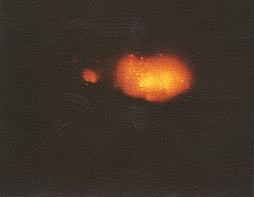
An important researcher into light phenomena is John Derr, a leading U.S. geologist. In 1986, he joined with Persinger to study an earlier outbreak of lights in the Yakima Indian Reservation, Washington State. Firewardens on the reservation saw huge orange lightballs floating above rocks, as well as smaller "ping-pong balls" of light bounding along ridges. This remarkable period of sightings also included the occurrence of unusual meteorological effects such as glowing clouds indicating a charged atmosphere, and subterranean rumblings suggesting some kind of tectonic association. The firewardens organised themselves, and photographs were taken of the lights and triangulated observations using radios were made.
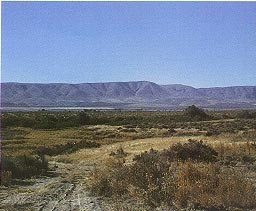
Toppenish Ridge, Yakima Indian Reservation; one of the localities where many lights were seen.

Derr and Persinger showed that the Yakima lights were seen most often in the vicinity of the ridges that cut across the reservation - each riddled with faulting - and with Satus Peak, the general area of a surface rupture and one of the stronger earthquakes in the region during the 13 years covered by the study. Successive reporting of lights occurred in the seven months preceding the biggest earthquake of the studied period. Regional seismic activity also increased during the times in 1972 and 1976 when most sightings were reported.

(The irony of the Yakima case is that the reservation is adjacent to the part of the Cascades Mountains where pilot Kenneth Arnold saw the flight of nine glittering objects in 1947 that initiated the flying saucer era . In fact, Arnold landed his plane at Yakima airfield shortly after his encounter. It is also worth noting that Arnold, did not, of course, se disks at all, but what he described as tadpole-shaped objects. This also struck a bell with me because as a schollchild in Leicesterhsire in 1957, I experience the powerful earth tremor there, and I recall one of our teachers decribing how he had seen a row of high flying lights earlier that afternoon. The lights looked tadpole-shaped, he said. Later, the local papers revealed that these objects had been widely seen over surrounding counties as well.)
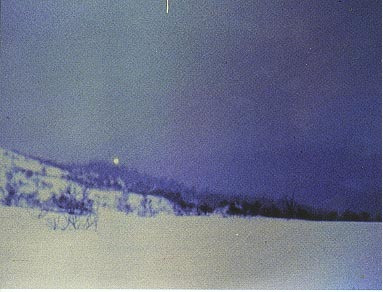
A giant light hovers over a peak in Hessdalen Norway. Photo by Leif Havik/Project Hessdalen.
A giant light hovers over a peak in Hessdalen Norway.
Photo by Leif Havik/Project Hessdalen.

It was the outbreak of lights at Hessdalen, a valley 70 miles southeast of Trondheim in Norway, that most firmly switched on the earth lights agenda. From about November, 1981, people living in the area, which is rich in copper and other metals, began seeing unexplained lights. These appeared as spheres , 'bullets' with pointed end downwards, and inverted "Christmas tree" shapes. Colours were mainly white and yellow-white, though others were also reported. Strong, localised flashes in the sky were also observed and there were reports of underground rumbling sounds. In March, 1982, the Norwegian defence department sent two airforce officers to study the situation. By the summer of 1983, hundreds of reports of strange lights had been made by the inhabitants of Hessdalen, and so Norwegian and Swedish UFO groups formed Project Hessdalen. From 21 January to 26 February, 1984, they continuously monitored the valley using a range of instrumentation, including radar, and succeeded in obtaining photographs of strange lights plus a number of instrumental readings. Such work then continued sporadically over a few years.

1982 saw my first book on the subject, "Earth Lights", and the following year British ufologist, Jenny Randles, came out with "Pennine UFO Mystery", telling of luminous and other phenomena in the hill chain, and making connections with tectonic factors. Inspired by the Norwegian effort, Project Pennine was formed in 1986 by David Clarke, Andy Roberts and colleagues. Visual historian and writer Hilary Evans, started circulating archival portfolios called Bolide among researchers interested in what he was calling BOLs (Balls of Light).

The Devil's Elbow, a sharp bend on the B6105 in Longdendale, the Pennines. A fault crosses the road
The Devil's Elbow, a sharp bend on the B6105 in Longdendale, the Pennines. A fault crosses the road here and strange phenomena have been reported at this point.

Meanwhile, earth light activity steadily decreased in Hessdalen but over 50 observations of light phenomena were made during seismic monitoring in the Saguenay - Lake St John region of Canada by Quebec University between 1 November, 1988, and 21 January, 1989. According to a report in Nature, balls of light several yards in diameter popped out of the ground sometimes close to observers. Other balls of light, both stationary and moving, were seen many hundreds of feet in the air. Some of these had durations of up to 12 minutes. It seems that these phenomena were coincident with rising tectonic strain.

In my "Earth Lights Revelation" of 1989, with David Clarke and Andy Roberts, geochemist Paul McCartney and I published a report on our long-term investigations into an "earth lights zone" between Barmouth and Harlech in north-west Wales which had been active in 1904-5. Because useful contemporary reports had been made of these Welsh lights (which included blood-red spheres a few feet across rising from fields and roads, glittering diamond shapes hugging isolated roof ridges, and a whole range of luminous phenomena), we were able to accurately map the locations where they occurred. When these were matched with newly- available geological information it was found that the lights followed the course of a major local feature, the deep-rooted Mochras Fault, like beads on a thread. Furthermore, it transpired that between 1892 and 1906 there were several earthquakes in various parts of Wales. In October, 1904, for example, immediately prior to the onset of the Barmouth wave, there was a quake at nearby Bedgellert. (The area is also adjacent to the Lleyn Peninsula, one of Britain's most active seismic areas, and epicentre in July, 1984, of an earthquake registering 5.5 on the Richter scale. This event brought the lights back briefly - the evening before the quake, a resident saw a brilliant white light "the size of a small car" float in from the sea and disappear over the brow of a grassy dune on the beach.)
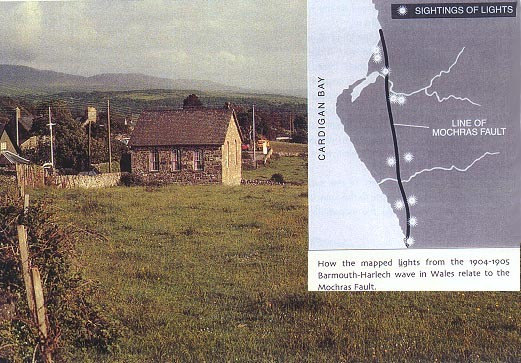
On two occasions on March 25, 1905, balls of deep red light were seen to emerge from this field next
On two occasions on March 25, 1905, balls of deep red light were seen to emerge from this field next to the chapel at Llanfair. Recently, high-tech surveying has revealed that the Mochras Fault runs directly through this field.

Into the field

By 1990, I had arrived at the conclusion that the only way to really understand the nature and mechanics of earth lights was to attempt scientific field study of them. So, working primarily under the auspices of a research/think tank group known as the International Consciousness Research Laboratories (ICRL), sufficient funding was obtained to start conducting field enquiries.

In June 1993, we looked at the so-called "Hooker Light" in New Jersey, USA. In the 1970s, crowds of youngsters regularly gathered to view a strange light that seemed to wander around on an old disused rail track near Washington Township. Then a research group calling itself "Vestigia" did work there. The track is now a pipeline corridor through a forest, and we were able to prove that the effect was caused by a visual distortion of car lights on a road that cut the corridor at an angle two miles from the viewing point.
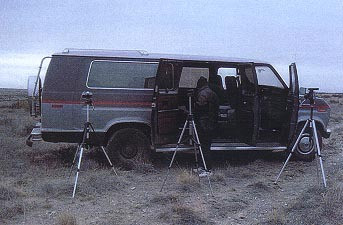
Setting up the earth lights observation station on Mitchell's Flat, Marfa, Texas.

Other, inconclusive studies followed, then we visited the Marfa area of Texas' Big Bend country between 6-15 March, 1994, where strange lights have been reported for over a century (the first account, in fact, dates to 1617). Physicist Hal Puthoff, also an ICRL member, joined this expedition. We were eventually able to dismiss a number of luminous effects popularly assumed to be "Marfa Lights": occasional mirage effects can raise lights normally hidden over the horizon into visibility, sometime reproducing the same lights in tiers, and lights of vehicles 30 miles or more away on the Marfa-Presidio road are so distorted that they can appear anomalous. We also determined that lights on vehicles negotiating rough tracks belonging to isolated ranches on the undulating desert- scrub area known as Mitchell Flat can look like mysterious lights skimming the ground, fusing and parting. Nevertheless, interviews with local witnesses convinced us that genuine anomalous lights probably did sporadically appear in the vast region. Acting on a tip offered by a teacher who had closely encountered a three-foot diameter light, we conducted observations in an uninhabited valley in the Chisos Mountains, on the Rio Grande 80 miles from Marfa. At 9.10 pm on 12 March, a large white flickering light was seen at the foot of a nearby mesa. It lasted for about 10 seconds. (Although I have witnessed undoubted earth lights on previous occasions, this is the only light I have seen on our organised fieldwork to date that I am absolutely sure was an anomalous lightform
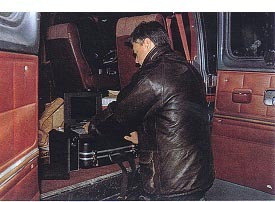
Physicist Hal Puthoff works with computerised equipment during a night observation session in the de
Physicist Hal Puthoff works with computerised equipment during a night observation session in the desert near Marfa, Texas.

Between 24-27 March, 1994, Erling Strand, one of the directors of the original Project Hessdalen, convened a conference of invited international delegates variously studying earth light phenomena and plasma physics. It was the first specialist earth lights conference, held to launch a new Project Hessdalen, and went unnoticed by mainstream ufology. Strand had also taken the view that serious field research was needed to study earth lights, rather than endless theoretical debate and nitpicking. With the support of Ostfold College, Norway, where he lectures, Strand is engaged on the "wiring up"of the Hesddalen valley, which is currently experiencing a modest resurgence of earth light activity. Automatic monitoring stations (optical and instrumental) placed strategically along the valley will be triggered if electronic beams connecting them are interrupted by an earth light. As Strand comments: "We only need one light."

One of the Hessdalen Conference delegates was Professor Yoshi-hiko Ohtsuki, who is well funded to investigate reported earth lights zones around the world. He revealed that he had taken four highly- equipped expeditions to Marfa, and that on only one of them had he seen a true earth light. This changed shape only 100 yards in front of his team and was captured on multiple video cameras and electronic monitoring equipment.
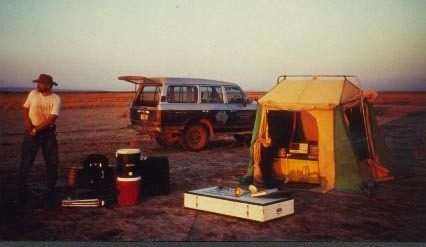
Erling Strand helps to set up an earth lights observation station in the Australian Outback before t
Erling Strand helps to set up an earth lights observation station in the Australian Outback before the sun sets.
Photo: Paul Devereux.

Between 28 September and 14 October, 1995, Strand and I, accompanied by a TV producer with a Hi-8 video camera, conducted a joint expedition to the remote Kimberley region of Western Australia, acting on reports sent to Jacques Vallee and myself of strange lights in the area. We were attracted there particularly because there was no light pollution from distant trraffic or habitations. Our enquiries among local outstation workers and Aborigines indicated that light phenomena incidence had dropped off in the past decade, but lights were sometimes still seen. We had camera arrays plus a range of monitoring equipment, including a magnetometer constantly measuring the Earth's magnetic field local to our observing station, which was relocated five times during the expeditionary period. On the night of 3 October, we set up position overlooking a small valley in totally uninhabited country. Short-lived blue-white lights appeared sporadically through the night, moving against the opposite slope of the valley, half a mile away. These lights, often of low-intensity, proved elusive, but Strand may possibly have captured one of them on camera.
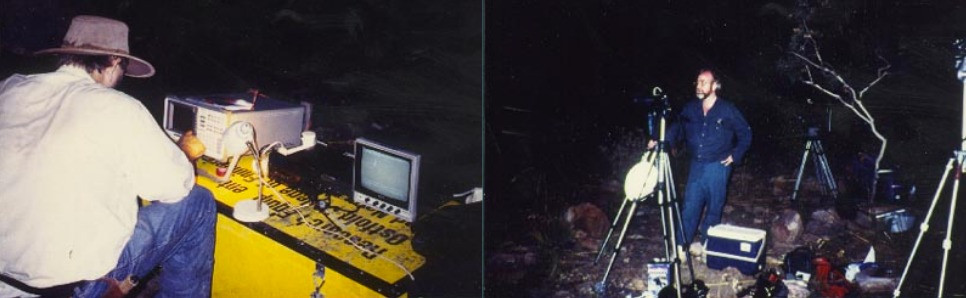
Monitoring and watching for the mysterious min min lights in the Australian Outback. Photos: Paul De
Monitoring and watching for the mysterious "min min lights" in the Australian Outback.
Photos: Paul Devereux.

By 8 October we had seen only a few possible anomalous lights at other locations, but that night a bright light was seen that seemed to emerge from a small hill in front of a ridge. It was vividly noticeable in an area devoid of all artificial lighting. (I should emphasise that the darkness was so unspoilt in this remote region that on one occasion we could discern the "glowing coal" of a meteorite hurtling across the sky even after its glittering trail had dissolved.) The light moved slowly downwards to the level of the desert, then disappeared. Although all our cameras were pointing in the other direction, towards an area where lights were most expected, we managed to swing a few round and hurriedly photograph the unusual light.
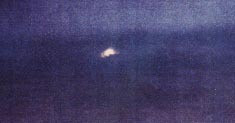
One of a sequence of telephoto shots of the mysterious light. Photo: Paul Devereux

Because it was up to six miles distant, we could not absolutely determine if it was truly anomalous, but simultaneous with its appearance our magnetometer started recording huge field anomalies. (A peak-to-peak amplitude of 800 nanotesla on a 2 Hz pulsation was recorded. A normal amplitude on that frequency is less than 1 nanotesla.) The readings slowly subsided through a period of about five hours. If these events were causally connected, then the readings support one of Persinger's predictions that earth lights will be accompanied by changes in the local geomagnetic field.

What are earth lights?

There are two separate questions about earth lights - how they are produced, and what their nature is. In arguments about whether or not the TST is valid, they often get hopelessly jumbled. It doesn't matter if the TST is right or wrong, or requires further modification, it does not tell us about the properties of the phenomenon itself.

As far as the tectonic connection goes, I leave to you to have noted the repeated passing references I've been making to tectonic factors, and these could be expanded a hundredfold. It seems clear to me that seismic and geological sources are likely factors in earth light propagation. Persinger is probably correct in claiming that tectonic strain and the geomagnetic field are key players, even if the exact processes involved have yet to be fully clarified. Ohtsuki thinks that meteorlogical forces may also be implicated. In the final analysis, it is probable that whole concatenations of geophysical forces are involved.
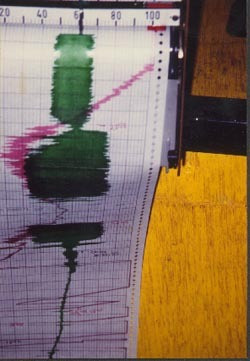
The wild magnetometer read-out that accompanied the appearance of the light. The normal, thin trace
The wild magnetometer read-out that accompanied the appearance of the light. The normal, thin trace can be seen at the bottom. Photo: Paul Devereux.

But what is the nature of the lights themselves? The anecdotal literature contains descriptive themes that are repeated so often, from different times and places, that it is highly probable objective characteristics are being referred to. From this considerable reservoir of data, we learn that the lights can be any colour, though white, orange, deep red and yellow-gold predominate. Their size can range from ping-pong balls of luminosity to giant lightforms, though "basketball size" is common. While their shapes are usually round or spherical, tubes, cigars, rectangles, diamonds, tadpole-shapes and irregular forms have frequently been described. When witnesses have had a close looks, a teeming inner activity is sometimes reported within lightforms. Reports indicate that earth lights can issue sounds of various kinds, though hissing and buzzing noises predominate, sometimes accompanied by a feeling of pressure in the ears. Particularly bright earth lights are often said to be intense without being dazzling. Multiple earth lights seen flying together can display seemingly co-ordinated movements, as if operating within a single field, and divide and merge. They have also been seen emerging from or disappearing into the ground on numerous occasions, reinforcing a geological-tectonic connection. When free-floating, they commonly seem to prefer the vicinity of mountain peaks and ridges, isolated rooftops and rock outcrops, towers and antennae and other sharp or isolated features that tend to be charge collectors. This indicates that they have some kind of electromagnetic basis. They often haunt bodies of water such as lakes and reservoirs, and are occasionally seen glowing beneath the surface of the water. Bodies of water can apply pressure to underlying faulting (microquake activity around reservoirs is fairly common), as well as lubricating rocks - moist rocks are known to be able to emit more charged particles than dry ones.

The prevailing assumption is that earth lights are plasmas of some kind. This might possibly bes supported by the 1994 work of You-Suo Zou (of the Institute of Atmospheric Physics in Beijing's Academy of Sciences, and an associate of the Department of Meteorology at the University of Utah). He made a close study of the original Project Hessdalen's collected data, and he noted photographs of light traces which revealed a corkscrew-like effect. Zou saw this helical structure as typical of a plasma vortex in motion, a structure particularly visible in the laboratory when plasmas are breaking down.

Zou added that under certain conditions, a plasma vortex can become a kind of solitary wave (soliton) and from the behaviour of some Hessdalen lights as recorded on the project's radar, he said he observed clear evidence of wave energy propagation.

But there are three other little-known aspects noted about earth lights that might be giving us clues as to their deep nature.

  • (i) Earth lights seem to be going "on and off" all the time. Indications of this come from various sources. One example relates to a photograph taken by Tony Dodd of two lights flying over Carleton Moor, Yorkshire, on 14 March, 1983. I showed a first generation print of this to the physicist and writer, Fred Alan Wolf. Among seveal features he noted about the photograph was the fact that a faint, dark vertical line ran through each of the lights, evidence that they had been rapidly flickering - a strobing action that had left a record of the camera's shutter in the dark lines. Such strobing can be unnoticeable to the human eye, as persistence of vision (flicker fusion) gives the impression of continuous luminosity. This seems to be the case in an incident recorded by Project Hessdalen where a light observed as continuous and floating across the sky returned only intermittent radar echoes. A third example was provided by trained physicist David Kubrin and his first wife who saw a lightform hurtling along at treetop height above the Pinnacles Fault (adjacent to the San Andreas Fault) in California in 1973. As it travelled, the light created shockwaves in the air ahead of itself, indicating the presence of mass, but then the light stopped its motion instantaneously, without deceleration, suggestive of no mass. Kubrin caught the decay of the lightform on camera.
  • (ii) Earth lights can sometimes be visible from one direction, and not another. There are numerous accounts of this bizarre effect. During the 1905 Barmouth-Harlech outbreak, for instance, a four-foot- long bar of blue light hovering over the road near Egryn chapel was visible to a group of observers from one side, yet completely invisible to a group standing on the other side of the phenomenon.
  • (iii) There are occasional witness reports that an earth light does not seem to exist quite properly in space, like a poor special effect in a movie. As if it was both flat and had depth simultaneously. In 1983, for example, a farmer in the Pennines saw a red sphere of light hovering above a stream, then it started revolving while giving the impression of being flat. I have personally witnessed this unsettling aspect of lights and can vouch for its reality.

Taken collectively, such descriptions hint at a phenomenon at the very edge of normal physical manifestation. It has occurred to me that we may be seeing a macro-quantal phenomenon, a large-scale expression of the paradoxical conditions (from the viewpoint of classical physics) of the subatomic quantum field, the underpinning of all physical reality. Puthoff suspects that earth lights might be powered by something called Zero Point Energy. This is an all- pervasive energetic field, a fluctuating energy that exists even in "empty" space - the vacuum - and even at a temperature of absolute zero. It is known to have small-scale physical effects, but some scientists, Puthoff a key figure among them, feel that is possible to extract useful energy from vacuum fluctuations. It may be that nature has been doing it already, on an impressive scale, in the phenomena we call earth lights. Perhaps the lights are a kind of doorway between quantum and large-scale physical realities.

Meanwhile, David Fryberger is developing a theory which has the lights resulting from a hitherto unknown particle he calls the "vorton", more exotic even than gluons, quarks and the other subatomic entities postulated by nuclear physics.

When they finally give up some of their secrets, earth lights could have a tremendous impact on quantum and plasma physics. And they may open doors to physics we do not yet know. They may help change our very view of reality.

Earth lights and the paranormal

There may also be a consciousness connection with earth lights. Apparent paranormal phenomena is not infrequently reported in areas experiencing periods of earth lights activity. At Yakima and in the Pennines, for examples, people have reported seeing fleeting manifestations of human figures - usually of bizarre appearance.
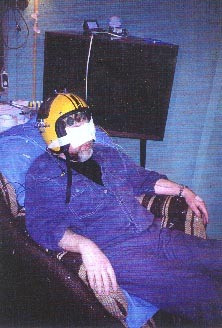
Paul Devereux experiences mind-altering effects with the magnetic helmet in Michael Persinger's labo
Paul Devereux experiences mind-altering effects with the "magnetic helmet" in Michael Persinger's laboratory. Photo: Charla Devereux.

Voices are heard: one Yakima firewarden told of hearing "happy little voices singing" and another of a disembodied voice "hollering". Earth lights researchers argue that these are hallucinatory effects caused not only by energy fields associated with light phenomena closely encountered, but generally in an area that is producing strange luminosities, affecting brain function in witnesses. Such fields are probably, in the main, magnetic. Drawing on known clinical data, Persinger has gone to some lengths to postulate a series of physiological and mental symptoms a witness would likely experience at different distances from an earth light. Further, he has been conducting a series of experiments in which subjects are placed in a soundproof, isolated chamber, where they wear a helmet from which magnetic fields are directed at the magnetically sensitive temporal cortex, which handles dreaming and other internal imagery such as memory, among other functions. Many people who have undgone this experience report vivid inner imagery episodes in which early and infantile memories are particularly common.

In a few cases, it is possible that people who closely encounter earth lights are triggered into an "alien entity" experience or even a full-blown UFO abduction. If one reads Budd Hopkins Intruders with care, for example, it can be seen that the pseudonymous Kathy Davis encountered a ball of light before undergoing her abduction episode. In fact, everything in this classic and now famous abduction case is consistent with an earth light being produced by local tremor activity. And hers is not the only one. For instance, I think even the Travis Walton case may be amenable to an earth lights approach.

But are earth lights UFOs?

Whatever the rights or wrongs of this, the cry that inevitably goes up from mainstream ufologists is: "But earth lights aren't UFOs!" This charge brings us full circle. Certain specific queries are regularly raised, and I'll finish with the most common:

Question No.1: Surely earth lights are something other than UFOs?

A. Reports of small balls of light have always been in the ufological record, where in the past they have been identified as "drones" or "probes" sent out from alien craft. So why dismiss them now if they suddenly take on importance as phenomena in their own right?

Question No. 2 What have earth lights to do with "daylight disks"?

A. If earth lights are a form of plasma, then there is no problem with this, because a plasma seen in daylight does happen to look shiny and metallic, and is likely to have a spherical, ovoid or discoid form. Moreover, there are pitch black objects sometime seen by day (Both Strand and I have witnessed examples of these ourselves) which seem to be photon-absorbing instead of light-emitting. These bizzarre phenomena - which can be round, square or irregular in form - may relate to earth lights in the way one pole of a magnet relates to the other.

Question No.3: But what about the size usually ascribed to flying saucers? Small balls of plasma, seen as lights or even as metallic forms can't account for those, surely?

A. Some earth lights are reported as being many yards across. A modest example of this was shown in the Quebec case (above) - the size, height and duration of some of these phenomena were clearly "UFO standard". The lights at Hessdalen ranged up to even larger sizes. And lights seen at night, accounting for a huge percentage of all UFO reports, can look large if bright enough - their size is easy to overestimate. It is equally easy to falsely interpret lights at night as being on a huge dark object.

Question No.4: How do earth lights explain radar-visual cases? How can a ball of light be tracked on radar?

A. It has in fact been proven that plasmas can return radar echoes. Indeed, even plasmas that have too low a temperature to emit visible light can still reflect radar waves just like a metal surface. During the first Project Hessdalen, radar echoes were repeatedly obtained from invisible objects hovering near ridges.

Question No.5: But what about markings on the ground and damage to foliage associated with some reported UFO landings?

A. These are quite consistent with localised damage caused by energetic lightballs. Singed foliage, ground burns and grooves have all been associated with ball lightning, for example.

And so it goes. If any of the very small percentage of UFO reports that claim structured craft are genuine, they may be ET vehicles, or may be a sort of phantom effect I have discussed elsewhere. But it is exceedingly important that we not confuse an actual sighting with witness interpretation of that sighting. Interpretations and actualities can be different things. There is no reason why earth lights and ET craft shouldn't co-exist, of course, but earth lights researchers think it is an extraordinary coincidence that earth lights descriptively fit so much of what may the residue of genuinely unexplained phenomena.

Copyright:© Paul Devereux, 1997

  • Make sure to log onto: www.hauntedvalley.com (the Project Pennine site, accessible via the WebRing from this site), and www.hiof.no/crulp/prosjekter/hessdalen (if that doesn't work, then just do a search for "Hessdalen"). Both sites are highly informative and offer real-time webcam observation for earth lights.

Hessdalen Lights REAL Footage 2024 | Norway UFO Mystery Finally Explained?

{ https://www.neperos.com/ }

Hoe vind je dit bericht?
Geschreven door peter om 20:37 Stuur door

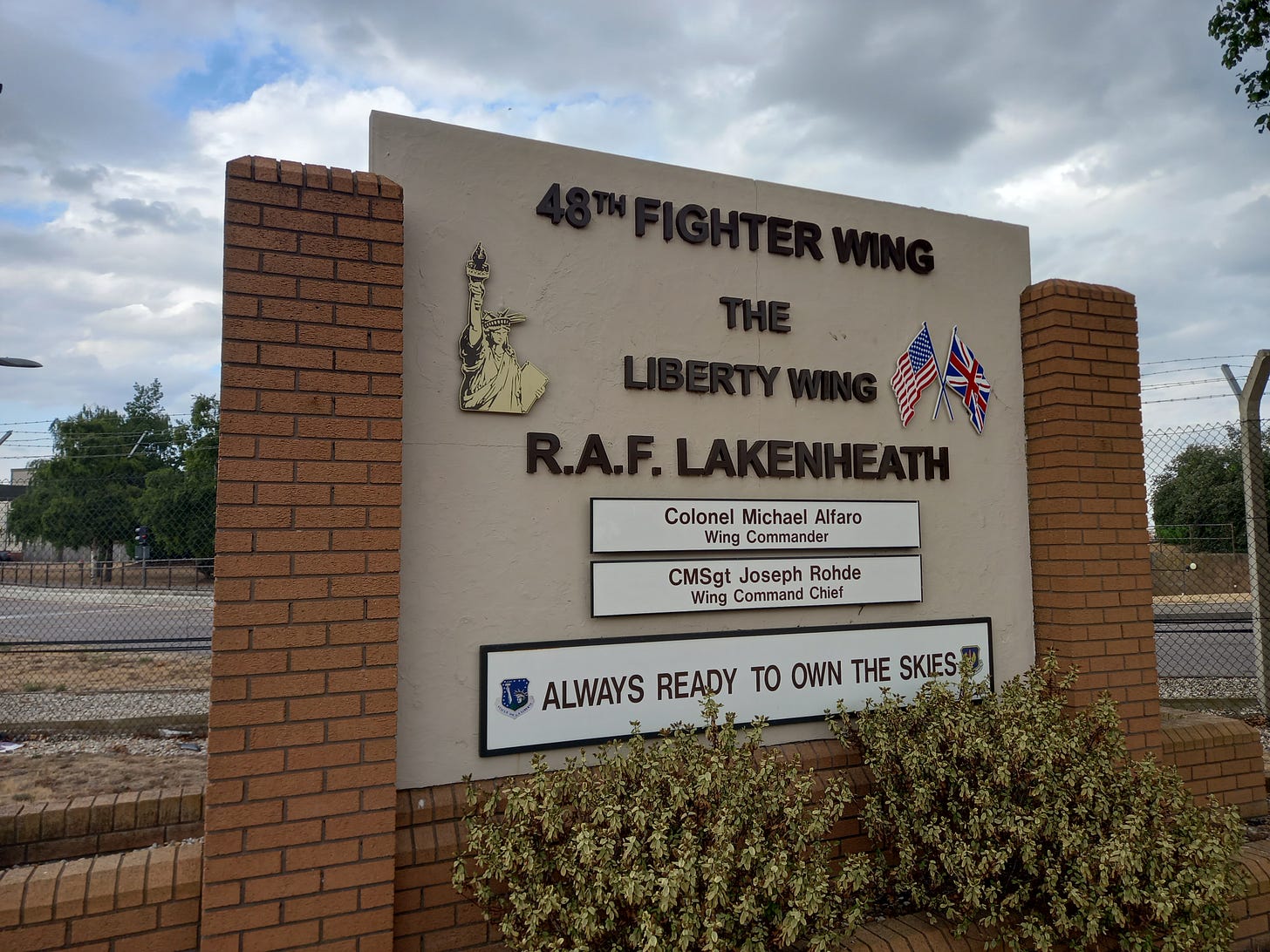
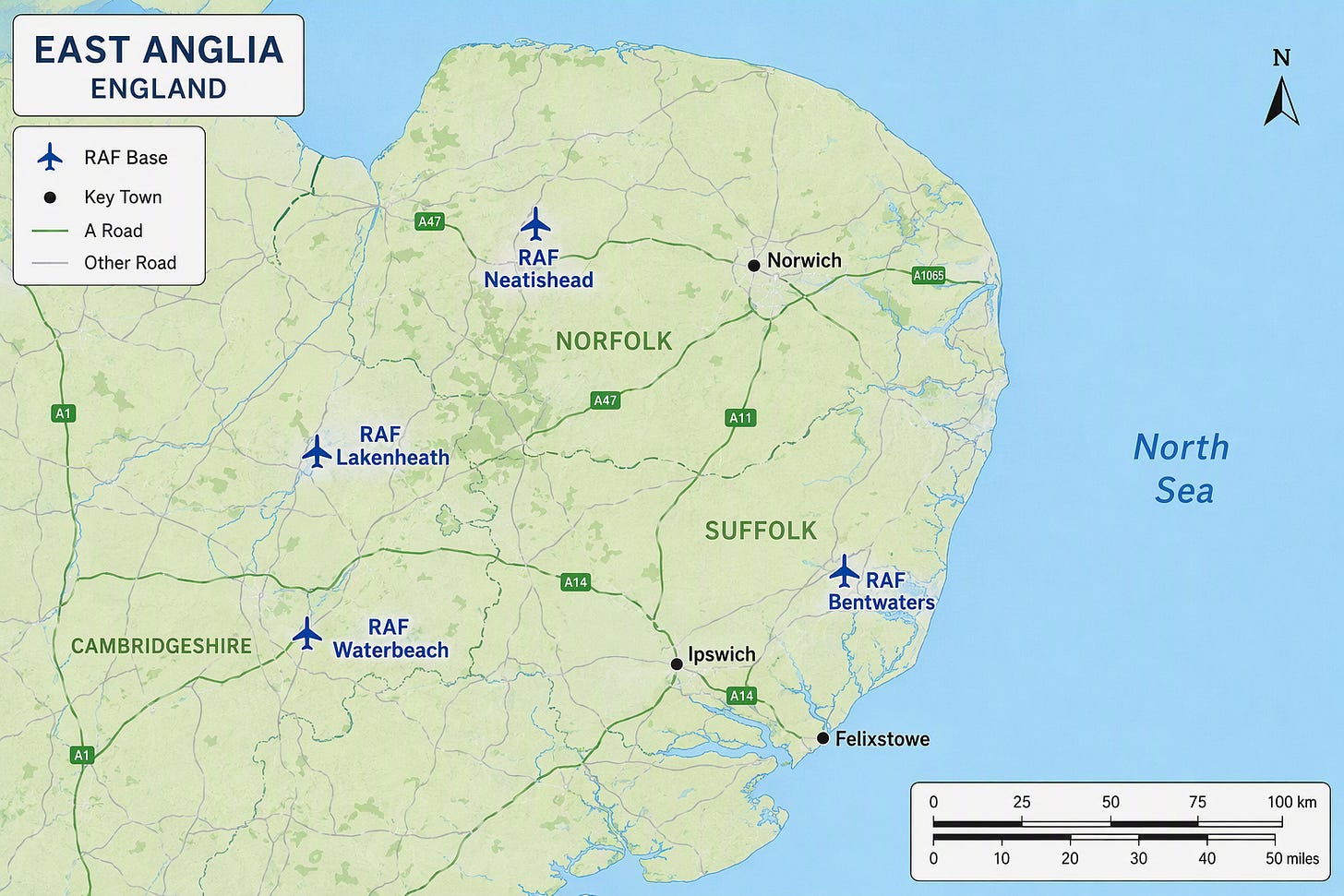
UFOs over RAF Lakenheath

UFOs over RAF Lakenheath

70th anniversary of 'the most puzzling and unusual' radar case in the files of the United States Air Force Project Blue Book

Hoe vind je dit bericht?
Geschreven door peter om 17:44 Stuur door

Skeptics Are Capable of Promoting Conspiracy Theories

Skeptics Are Capable of Promoting Conspiracy Theories

1*Pk38eK8_Dds7jqE7ZGKvOQ.jpeg

(Image credit: PURSUE/DoW)

Three months ago, I was contacted by representatives from the Office of the Director of National Intelligence (ODNI) and the All-Domain Anomaly Resolution Office (AARO) in the Pentagon and asked to establish and lead a UAP Science Advisory Council to the U.S. Government. The Council was created to advise ODNI, AARO, the White House, the FBI and the Intelligence Community.

By now, the twenty Council members listed at the Council’s website https://uapsac.com/, met a dozen times over Zoom and will also meet in Washington DC next week. The Council’s goal is to apply the scientific method of using high-quality data to figure out the nature of Unidentified Anomalous Phenomena (UAP). These are mysterious objects hovering over strategic sites, whose identity and origin remain unclear based on available data.

This historic development followed on President Trump’s directive from February 19, 2026:

“Based on the tremendous interest shown, I will be directing the Secretary of War and other relevant departments and agencies to begin the process of identifying and releasing government files related to alien and extraterrestrial life, unidentified aerial phenomena (UAP), unidentified flying objects (UFOs), and any and all other information connected to these highly complex but extremely interesting and important matters. GOD BLESS AMERICA!”

The U.S. government monitors Earth’s atmosphere with a budget that is several orders of magnitude larger than that available to astronomical observatories. Astronomers train their telescopes on a small portion of the sky at any given time and ignore objects that fly overhead. It is therefore possible that the U.S. government sensors will be first to notice rare anomalous objects near Earth.

In previous decades, the U.S. government avoided sharing UAP data with outside scientists. While the government is focused on down-to-Earth matters of national security, academia is supposed to be open minded to blue-sky research involving alien life. But as of now, the reality is that academia is hostile to UAP research whereas the government tasked me to establish the UAP Science Advisory Council, while being open minded to the possibility that some UAP might represent alien tech. This reversal of roles where academia is reluctant to apply the scientific method to the study of a subject that is of great interest to the government and the public is remarkable. UAP research is a golden opportunity to elevate the status of science among taxpayers on a topic that brings Americans together, as both sides of the political spectrum are equally excited about the search for alien tech.

UAP research should also be of great interest to corporations, angel investors and venture capitalists who might wish to harvest the financial benefits from advanced alien gadgets. The related research could therefore be funded by the private sector, as it represents an opportunity for a quantum leap in technological capabilities. Humanity benefited so far from only one century of innovation after the discovery of possible quantum mechanics. Alien tech may represent a thousand, a million, or a billion years of technological developments, given that most stars formed billions of years before the Sun.

The UAP data released so far here in 5 tranches as part of the Presidential Unsealing and Reporting System for UAP Encounters (PURSUE) is insufficient. Analysis by Council members (as reported here and here) of all 112 videos released in the PURSUE tranches 1–5, shows that additional information is required to reliably ascertain the physical velocity or acceleration of UAP and test whether they lie outside the performance envelope of human-made tech. The missing information includes the camera platform state (position and velocity vectors), sensor configuration and pointing (imaging mode and rate, field of view, zoom or focal length setting, and line of sight direction) and UAP distance, as functions of time. If the needed data is not available, better data can be collected in the future by new sets of state-of-the-art sensors. This approach is currently pursued in the three observatories operated by the Galileo Project (https://galileo.hsites.harvard.edu/) as well as in the GREMLIN system operated by AARO (as described here).

Remarkably, there is pushback against applying the scientific method to UAP data from both skeptics and believers in alien tech near Earth. The believers argue that they already know the answer and there is no need for further data collection. The skeptics argue that there is no convincing evidence and hence the subject does not merit attention. The fallacy of this latter argument is that the same academic skeptics are actively blocking funding or publication of evidence that may prove them wrong. If they were genuinely curious scientists, they would not suppress the work of other scientists who are willing to dedicate time and effort to the hard work of data collection and analysis.

It is often suggested by the same skeptics that UAP conspiracy theories are invented by believers in alien visitations. A Wall Street Journal article here argued recently that the Pentagon adds fuel to this misinformation fire in order to confuse witnesses of secret military tech.

Once again in a reversal of expected roles, some skeptics who claim to be protecting the public discourse from conspiracy theorists, are repeatedly promoting on social media over the past three months the conspiracy theory that I am bluffing and the UAP Science Advisory Council does not exist. Their psychological stubbornness can only be resolved by their therapists.

The Council members, on the other hand, have important work to do. We will keep our eyes on the orbs, not on social media, as we deliberate in our upcoming meeting in Washington DC.

{ https://medium.com/ }

Hoe vind je dit bericht?
Geschreven door peter om 17:24 Stuur door

New Pentagon files shed light on decades of UFO sightings

New Pentagon files shed light on decades of UFO sightings

LAS VEGAS (KLAS) — On Friday, the Pentagon released 162 files containing information on unidentified flying objects, including 41 minutes of video footage, to its website.

The disclosure follows a promise by President Donald Trump regarding government-held UFO data.

The collection includes videos, photos, and reports of sightings, with eyewitness testimony detailing incidents spanning decades from around the world.

AP26128693173676.jpg?w=900

Files on UFOs, released Friday, May 8, 2026, by the Pentagon, are photographed in Washington. (AP Photo/Jon Elswick)

8 News Now’s Chief Investigator and host of Mystery Wire, George Knapp, credited President Trump for fulfilling his promise of disclosure.

Knapp described the release as a significant event. He noted that official releases from the federal government carry a certain credibility, providing a ‘stamp of approval’ that distinguishes them from less formal disclosures. He emphasized that the release does not claim proof of aliens or extraterrestrials, but rather provides evidence of unknowns that have been stored in government files.

“I think it’s a big day. I mean, President Trump got to give him credit for this. He said he was going to do it, and he did it,” Knapp said. “You release this stuff under the umbrella of the federal government, an official release, it has sort of a stamp of approval on it, like a good housekeeping seal or something. When it comes from the federal government, they’re saying they’re not making claims. This proves there are aliens. It’s not proof of extraterrestrials. It’s just proof of unknowns that have been sitting there in the files that may or may not have been addressed or investigated, but it’s real, and they’re sharing with the public, and I think it’s great.”

AP26128691764567.jpg?w=900

Files on UFOs, released Friday, May 8, 2026, by the Pentagon, are photographed in Washington. (AP Photo/Jon Elswick)

The released files include six photos showing phenomena observed by NASA astronauts during the Apollo 12 and Apollo 17 missions. These images were reportedly taken from the surface of the moon. The documents also feature a conversation with Gemini seven astronaut Frank Borman during a flight.

Knapp recounted an instance from the Gemini 7 flight where astronauts reported a ‘bogey at 10 o’clock’ to Houston while passing over Antigua. He highlighted the fascination of hearing the newly released audio, which captured the crew distinguishing the unknown object from a separated booster.

“They’re passing over Antigua, and they called into Houston and say, ‘Houston, hey, we got a bogey at 10 o’clock. What bogey? What are you talking about? Are you sure it isn’t the booster that separated? No, we’re watching the booster. This is something else. And again, a lot of little, little particles that were going by, but something larger that was following along with them.’ It’s fascinating to hear that audio, and it’s amazing that it’s just been released,” Knapp said.

Most of the video footage shows unidentified white specks in the air. One specific video, captured in Greece in 2023, shows an object moving at approximately 80 miles an hour and executing sudden 90-degree turns.

“And we are told that more is coming. More is better, and when it comes from the government, you know, under orders from the president, it carries a certain amount of credibility,” Knapp added.

President Trump added that the document release will allow the American people to “decide for themselves” what is happening with the reported sightings.

Knapp was also instrumental in Friday’s release, working behind the scenes with government officials to find the video and understand what this information actually means.

The Pentagon said on its website that more releases will come as information and video are discovered and declassified.

  • All facts in this report were gathered by journalists employed by KLAS. Artificial intelligence tools were used to reformat information into a news article for our website. This report was edited and fact-checked by KLAS staff before being published.

New UFO files highlight black triangles and remarkable eyewitness accounts | Backscroll

US releases files on UFOs, decades of sightings revealed

{ https://www.8newsnow.com/mystery-wire/ }

Hoe vind je dit bericht?
Geschreven door peter om 15:32 Stuur door

Humans Will Not Serve as the Inaugural Colonists within the Solar System

Humans Will Not Serve as the Inaugural Colonists within the Solar System

Life on Earth has inadvertently been transferred to the surface of another celestial body through chance. Currently, we are intentionally preparing such environments for future habitation, aiming to make alien planets suitable for human life. However, the issue arises from the fact that we have not conducted thorough examinations for indigenous life forms on these planets, and our presence may consequently lead to the irreversible destruction of such native life.

The initial colonists will not be humans. An examination of how humanity is preparing to colonize Mars. Universe  Space Tech YouTube channel.

The incident on the Moon altered the regulations

When individuals discuss space colonization, they generally envision the same scenario: a settlement on Mars, astronauts in spacesuits, enclosed greenhouses, and children born beneath an extraterrestrial sky. This depiction has been consistently represented in films and television programs over the years, rendering the image seemingly innate.

In this scenario, colonization invariably commences with human beings. However, in reality, it is typically much simpler organisms that are the initial inhabitants of other worlds. Moreover, the earliest such occurrence has already taken place.

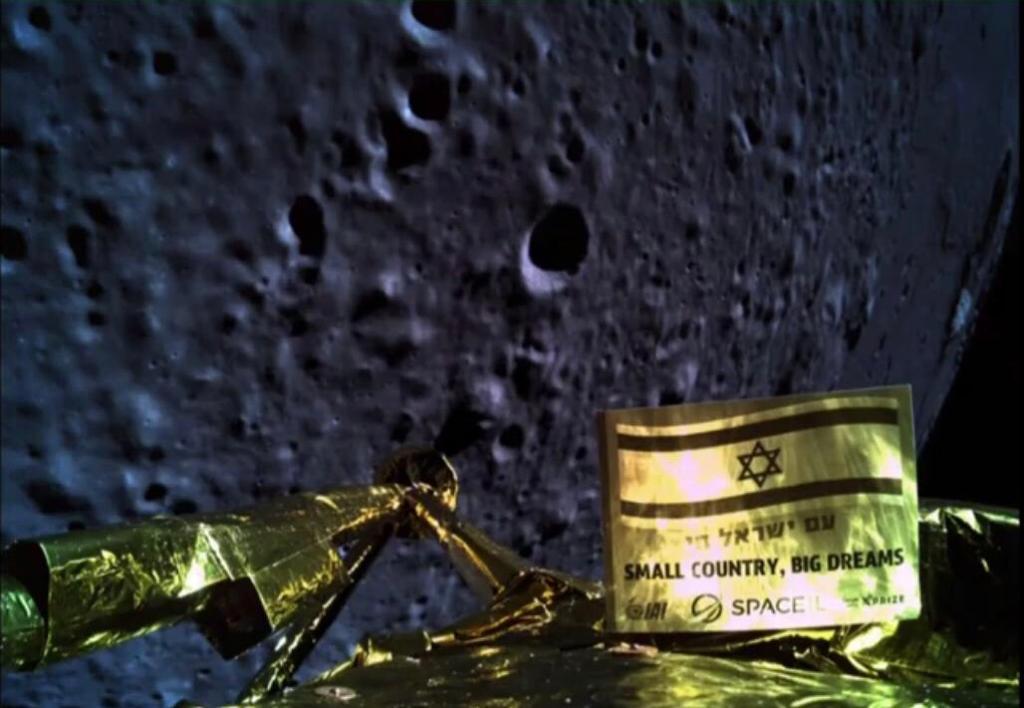
On April 11, 2019, the Israeli spacecraft “Beresheet” was preparing to land on the Moon. The private mission, with a modest budget and a big dream, ended in a crash because the main engine failed about 10 km from the surface. On board was a disc from an American organization that collects humanity’s archives — a sort of time capsule. Along with texts and images, 100 million human, plant, and microbial cells were encased in a layer of epoxy resin between nickel plates, along with several thousand dried tardigrades.

A photograph captured by “Beresheet” during its descent from an altitude of 22 kilometers. Source: SpaceIL

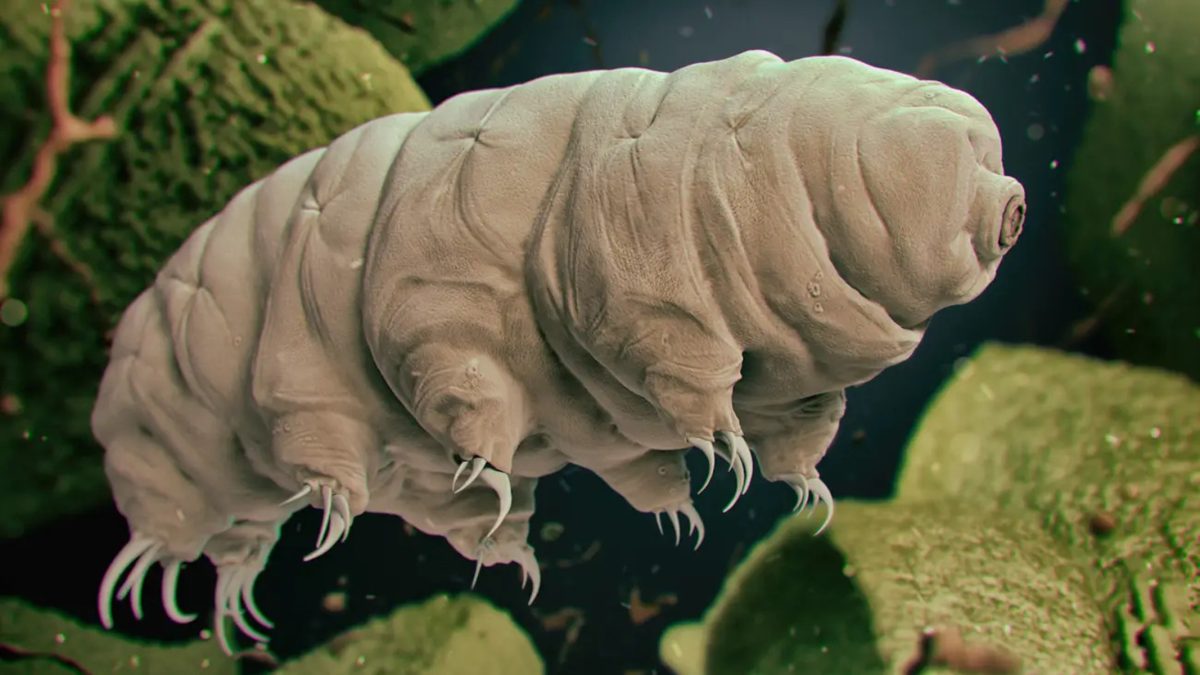
Tardigrades are microscopic organisms capable of dehydrating almost entirely under unfavorable conditions and in the absence of water. In a cryptobiotic state, they are able to withstand vacuum conditions, radiation, and freezing temperatures, and upon the reappearance of moisture, they revert to an active state. This process, however, would not occur on the Moon, as liquid water is absent, and the surface — lacking an atmosphere and magnetic field — is subjected to radiation.

A tardigrade is a microscopic organism measuring approximately one millimeter in length.
Photo credit: Shutterstock via Business Insider

The importance resides elsewhere. The cargo was not declared as biological material in the manner mandated by regulations, and the existence of living organisms onboard was only revealed after the incident. Life from Earth inadvertently arrived in another world through a private package, and no one intervened to prevent this.

Mars lacks carbon dioxide

Conscious colonization of an extraterrestrial planet operates differently, as the initial step involves preparing the celestial body for human habitation. Mars stands as the most probable candidate for such preparation, with the primary focus being temperature regulation, since it is a critical factor in the potential existence of liquid water.

An artist’s rendering of ancient Mars as observed from orbit. The northern lowlands are depicted as being covered by a vast blue ocean.

The challenge appears akin to an engineering problem. It involves elevating the temperature sufficiently for the ice to commence melting, thereby initiating a self-sustaining process, as water vapor exhibits superior heat retention compared to any other gas. Mars possesses a sufficient quantity of water, with exposed ice covering approximately two percent of its surface, predominantly within the polar caps. Additionally, beneath the soil, specifically at locations farther from the equator, deposits have been observed through orbital observations that potentially encompass up to one-third of the planet’s surface. However, the primary issue is that all of this water exists in the form of ice, resulting in a negligible presence of water vapor in the atmosphere. An alternative gas is required to provide the initial impetus, with carbon dioxide being a plausible candidate for this role.

The atmosphere of Mars comprises approximately 95% of its total atmospheric content; however, this figure represents a percentage rather than an absolute quantity. The surface pressure is less than 1% of Earth’s, indicating that the total atmospheric mass is extremely minimal. The majority of atmospheric reserves are stored in frozen states within the polar caps and are chemically bound within the soil and minerals, necessitating their release prior to heating.

In 2018, Bruce Jakoski and Christopher Edwards quantified the potential carbon dioxide emissions from these reservoirs. The conclusion was explicit: the quantities present would be insufficient for terraforming purposes.

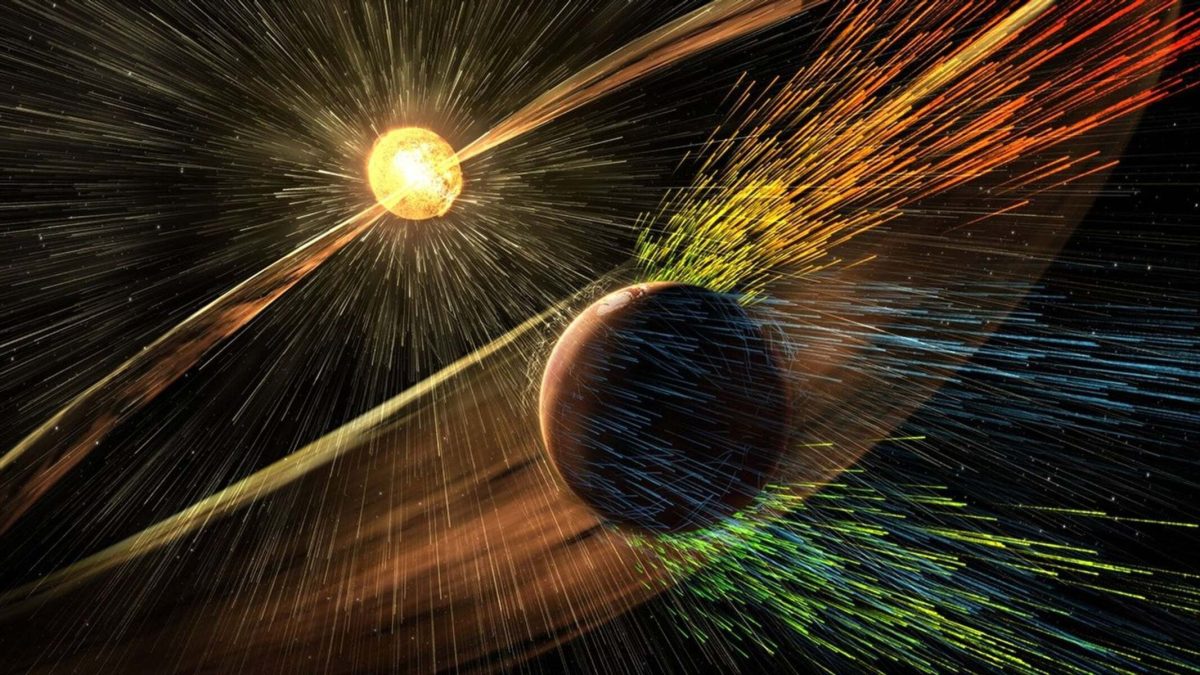
Mars’s interior continues to emit gases, albeit at a very gradual pace; at the current rate, it would require approximately 10 million years to double the mass of its atmosphere. Furthermore, the planet is experiencing a depletion rather than an accumulation of its atmosphere. Approximately 4 billion years ago, Mars lost its global magnetic field, which had served as a shield against the solar wind, and since that time, internal processes have not reinstated this protective barrier.

The illustration depicts how charged particles from a solar storm remove charged particles from the atmosphere of Mars.
Credit: NASA / GSFC

The losses were quantified utilizing the MAVEN spacecraft, which NASA specifically deployed to Mars for this objective. Approximately 100 grams of the atmosphere are lost each second, and this rate amplifies tenfold during intense solar storms. In the early epochs of the Solar System, the solar wind was more vigorous and solar flares occurred with greater frequency; consequently, the planet forfeited most of its atmosphere shortly after its magnetic field ceased to exist. It appears that the plan to warm and seed the planet is not impeded by the complexity of the implementation, but rather by a deficiency of raw materials necessary for the initial phase.

An illustration of NASA’s MAVEN spacecraft positioned above Mars. Credit: NASA

Technological methods for warming Mars

The absence of carbon dioxide eliminates only one of the potential methodologies. In the year 2024, a publication appeared in the journal Science Advances wherein the authors suggested warming Mars without the utilization of greenhouse gases.

Alternatively, they suggest dispersing small solid particles into the Martian atmosphere. Natural dust is deemed unsuitable for this purpose due to the particles’ small size and near-spherical shape, which results in the reflection of a portion of sunlight back into space, thereby causing surface cooling. Although these particles do absorb thermal radiation and can warm specific atmospheric layers, this does not lead to an increase in surface temperature.

Particles of an alternative shape are required. The study details metal needles measuring nine micrometers in length, which are considerably thinner than a human hair. The Martian surface, heated by solar radiation, emits thermal energy into space, and the length of the needles was selected to correspond with the wavelength of these thermal waves. Consequently, the particles absorb and trap heat as it radiates outward, while concurrently scattering sunlight downward toward the surface.

According to the authors’ calculations, this approach is more than 5,000 times more effective than the most potent greenhouse gases. Mars would experience an increase in temperature of approximately 30°C, leading to the melting of ice. The raw materials necessary for production are also available on the planet, as its distinctive red coloration results from an iron compound — specifically, rust — which is present in the dust on Mars.

An artist’s rendering of a panoramic view of the surface of Mars 3 billion years ago, when it may have contained liquid water

The primary limitation is the non-existence of such particles. The authors of the study candidly acknowledge that the feasibility of the idea hinges on the ability to produce the needles directly on Mars and in substantial quantities. They estimate that these particles would remain suspended in the atmosphere for considerably longer durations than natural dust particles; nonetheless, they would ultimately settle, necessitating continuous release. The critical parameter — the actual duration that the particles remain airborne in the Martian atmosphere — has not yet been measured by any entity. This parameter is precisely what determines the viability of such a concept.

The authors also highlight that warming Mars does not necessarily imply making the planet habitable. The primary focus is on liquid water, which is essential for two reasons: firstly, a purely physical reason, as evaporation generates vapor that traps heat; secondly, a biological reason, since water in a frozen state is inaccessible to organisms. However, at present, all of these considerations remain theoretical and are limited to calculations without practical implementation.

Life as a means of terraforming

Technical methods for altering planetary conditions depend on engineering solutions; however, life itself has the capacity to contribute to this process. This concept was established long before contemporary theories.

In 1961, American astronomer Carl Sagan, a professor at Cornell University, published an article about Venus in the journal Science, in which he proposed “seeding” its atmosphere with algae. The algae would process carbon dioxide, the greenhouse effect would weaken—and the planet would cool to a temperature at which life could exist there. 12 years later, Carl Sagan turned his attention to Mars and proposed covering the polar caps with dark material so that they would stop reflecting sunlight and begin absorbing it.

This concept was not originated by a science fiction author but by a planetary scientist responsible for spacecraft design at NASA. His methodology entailed dispatching living organisms to extraterrestrial environments, enabling them to perform the necessary tasks independently. Unfortunately, none of the proposed options proved feasible. The proposed plan for Venus relied on assumptions concerning the planet’s conditions, which subsequent findings revealed to be inaccurate. Additionally, the temperature decrease in the polar caps of Mars amounts to merely approximately ten degrees, which is insufficient for the intended purposes.

Source: zmescience.com

However, the concept itself remains persistent, and contemporary efforts are ongoing. In San Francisco, a nonprofit organization known as Pioneer Labs has a clearly articulated mission: to engineer microorganisms capable of enduring the conditions on Mars. Several challenges impede this endeavor, including radiation exposure, low temperatures, and soil containing perchlorates — salts that are toxic to most terrestrial organisms.

Erika DeBenediktis, the director of Pioneer Labs, articulates a long-term perspective as follows: Genetically modified microbes may disseminate across surfaces akin to algae and, over several decades, commence altering the atmosphere via photosynthesis. It is estimated that approximately a thousand years will be required to generate sufficient oxygen to sustain more complex life forms. At present, this remains a hypothesis rather than a conclusion derived from experimental evidence. Nevertheless, the laboratory is operational, and the requisite organisms are currently being cultivated.

Defenders of extraterrestrial planets

While some individuals are preparing for the possibility of life being sent to other planets, others have dedicated years to ensuring that not a single Earth bacterium contaminates those planets. This discipline is known as planetary protection.

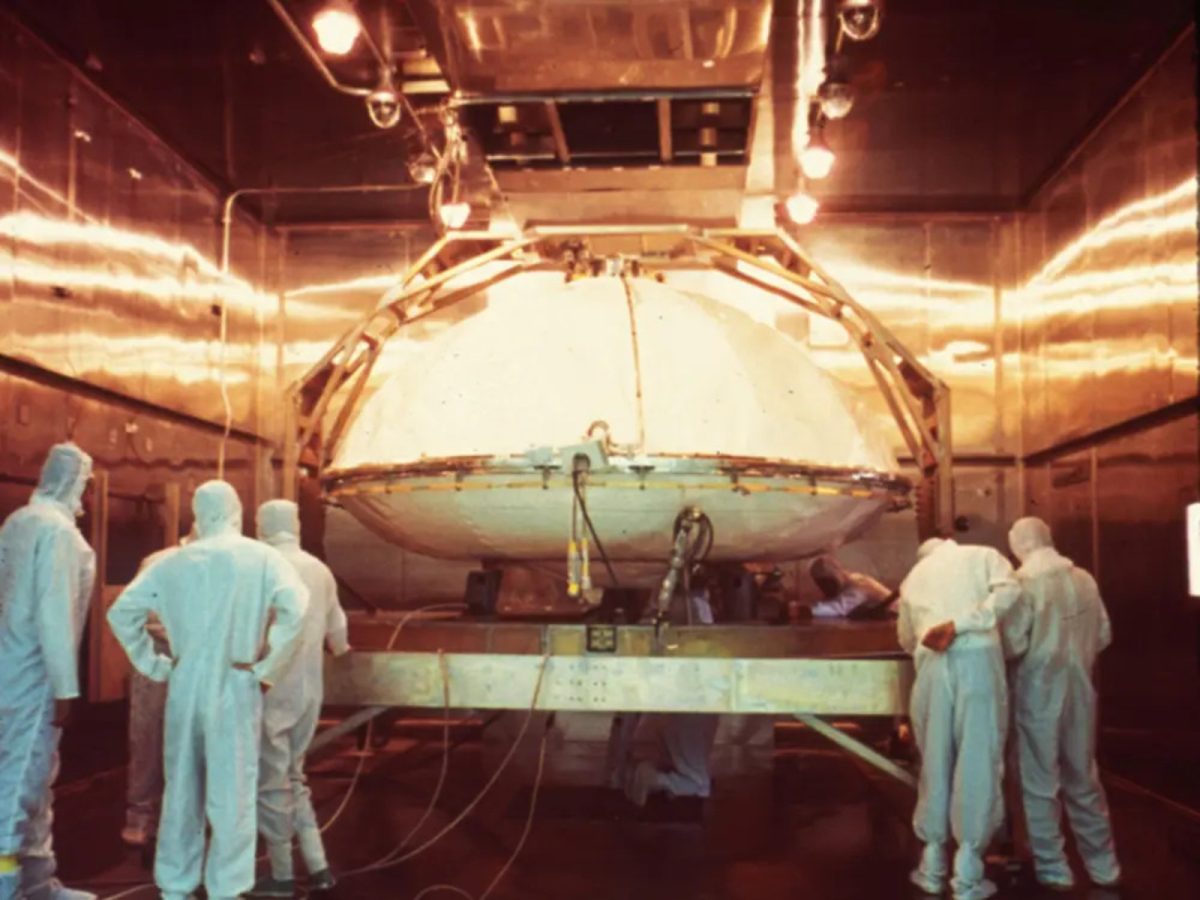
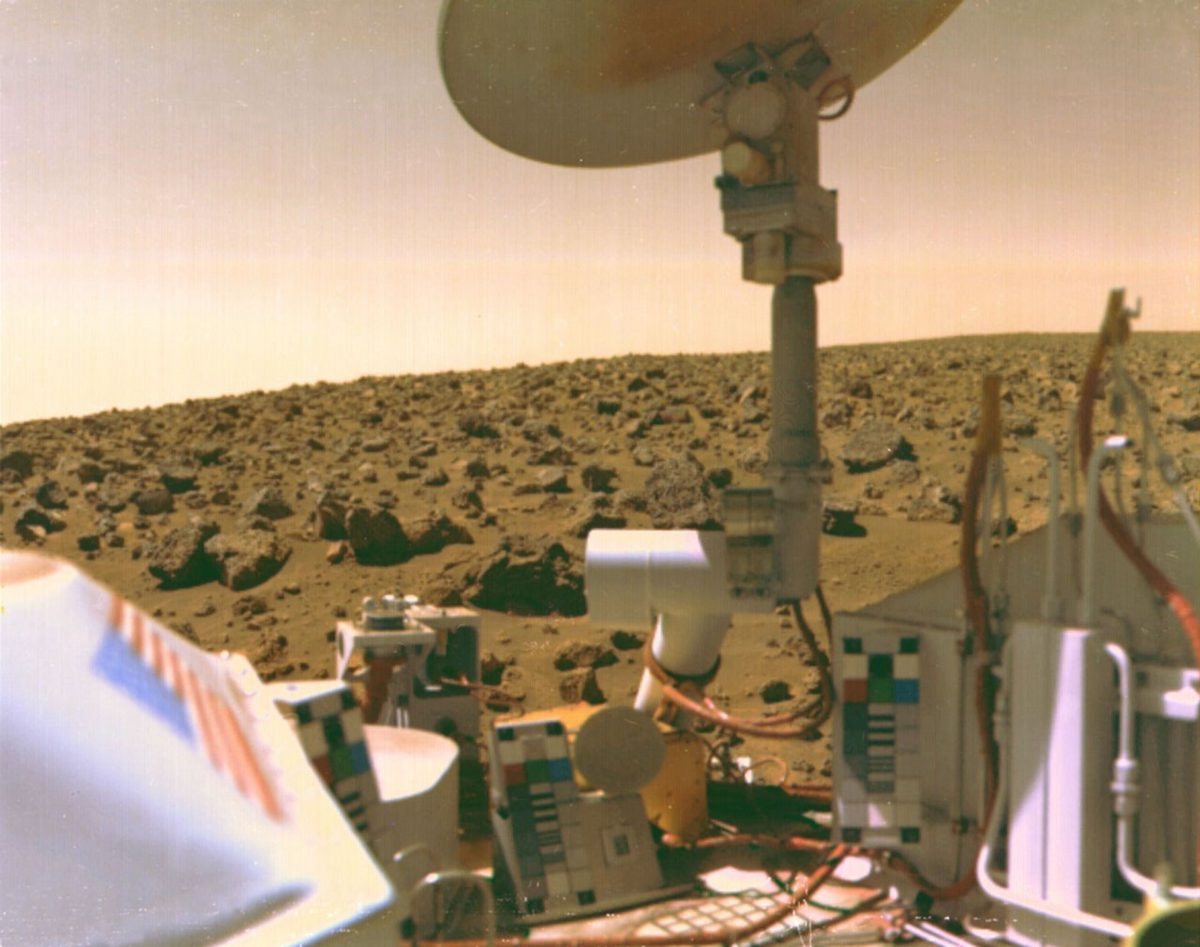
The Viking landing module, encased in a protective bioshield, is currently being prepared for thermal sterilization within a large oven

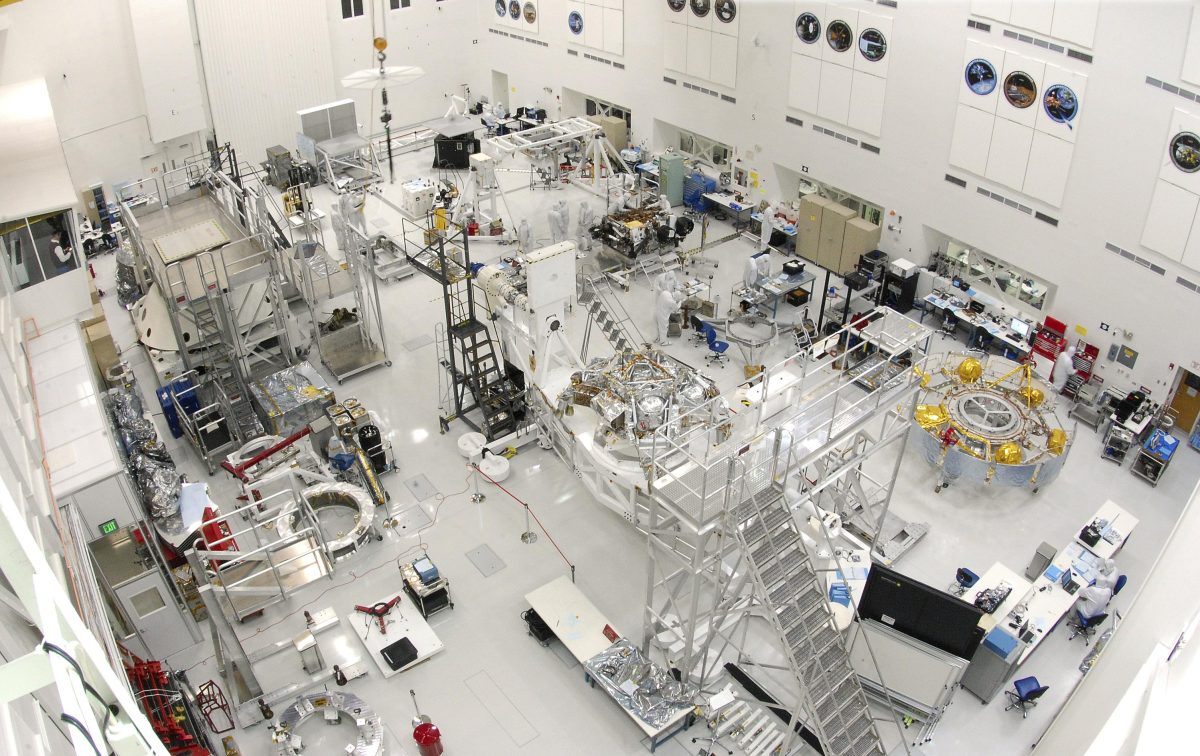
Every spacecraft that travels beyond Earth is assembled in a clean room. The air there is continuously filtered; people work in protective suits — not for their own safety, but to protect the equipment from them — and the components themselves are wiped down with alcohol, heated, and disinfected with chemicals. The Viking, which flew to Mars in the 1970s to search for life, underwent the most rigorous treatment of all. Back then, the spacecraft was heated to a high temperature in a special furnace. Modern electronics cannot withstand this, so achieving sterility is more difficult today. A significant portion of the mission’s budget goes toward this preparation, but the reason is clear. The probes are sent to search for living organisms, and a discovery would be meaningless if a bacterium were brought from Earth and then found there.

The entire concept is predicated on the assumption that sterility is attainable. In the year 2025, a study was published in which the authors examined not the equipment, but the facility itself. Samples were collected from the floor of the room where Phoenix was prepared, and twenty-six bacterial species, previously unknown to science, were identified.

High Bay 1 clean room at the Spacecraft Assembly Facility, NASA JPL, Pasadena. Photo: NASA, JPL-Caltech

New species are also identified in typical garden soil, rendering this discovery unsurprising. More significantly, numerous species identified possess genes that confer resistance to disinfection and radiation. Even the most hygienic environments we are capable of constructing remain environments where resilient organisms can survive.

Undergoing decontamination in a laboratory and residing on an extraterrestrial planet are two distinct activities; however, the regulations are established with a safety margin specifically tailored for the latter scenario. Not all scientists deem this safety margin justified. Astrobiologist Alberto Fairén articulated a strong critical stance on this matter; in 2017, he and his colleagues published an article presenting a straightforward thesis: planetary protection measures have been overly cautious. The most stringent requirements are designated for so-called “special regions” — areas where liquid water may temporarily exist under specific conditions, thus increasing the likelihood of discovering life. To investigate such a region, a spacecraft must be sanitized to a standard that is, in fact, unattainable. This situation results in a paradox: it is precisely these locations that are prohibited from exploration due to excessive caution.

A response to Alberto Fairén’s article was subsequently published in the same journal, bearing the illustrative title “Four Flaws and One Omission.” This title was selected by John Rammel and Catherine Conley, who served at different times as NASA’s planetary protection officers. Their argument contends that the regulations do not ban the search for extraterrestrial life; rather, they delineate the conditions under which such a discovery can be deemed to be of Martian origin. Without these criteria, any discovery would lack verifiable proof. Additionally, the omission pertains to the fact that terrestrial life forms can be entirely deleterious, as introduced microbes have the potential to contaminate water sources and soil necessary for future colonization efforts.

In 2005, astrobiologist Charles Cockell observed that the term “planetary protection” is overly restrictive. Protection pertains to safeguarding our interests — namely, the integrity of data and preventing instruments from providing misleading information to researchers. Instead, he advocated for the adoption of the term “planetary preservation,” which emphasizes safeguarding the indigenous microbial ecosystem rather than our scientific findings. Charles Cockell explicitly clarifies that he does not propose an outright ban on activities and acknowledges uncertainty regarding whether Mars necessitates the same stringent requirements as, for example, the icy moons. The central issue concerns the precise nature of what we are endeavoring to protect.

Viking and a result with no answer

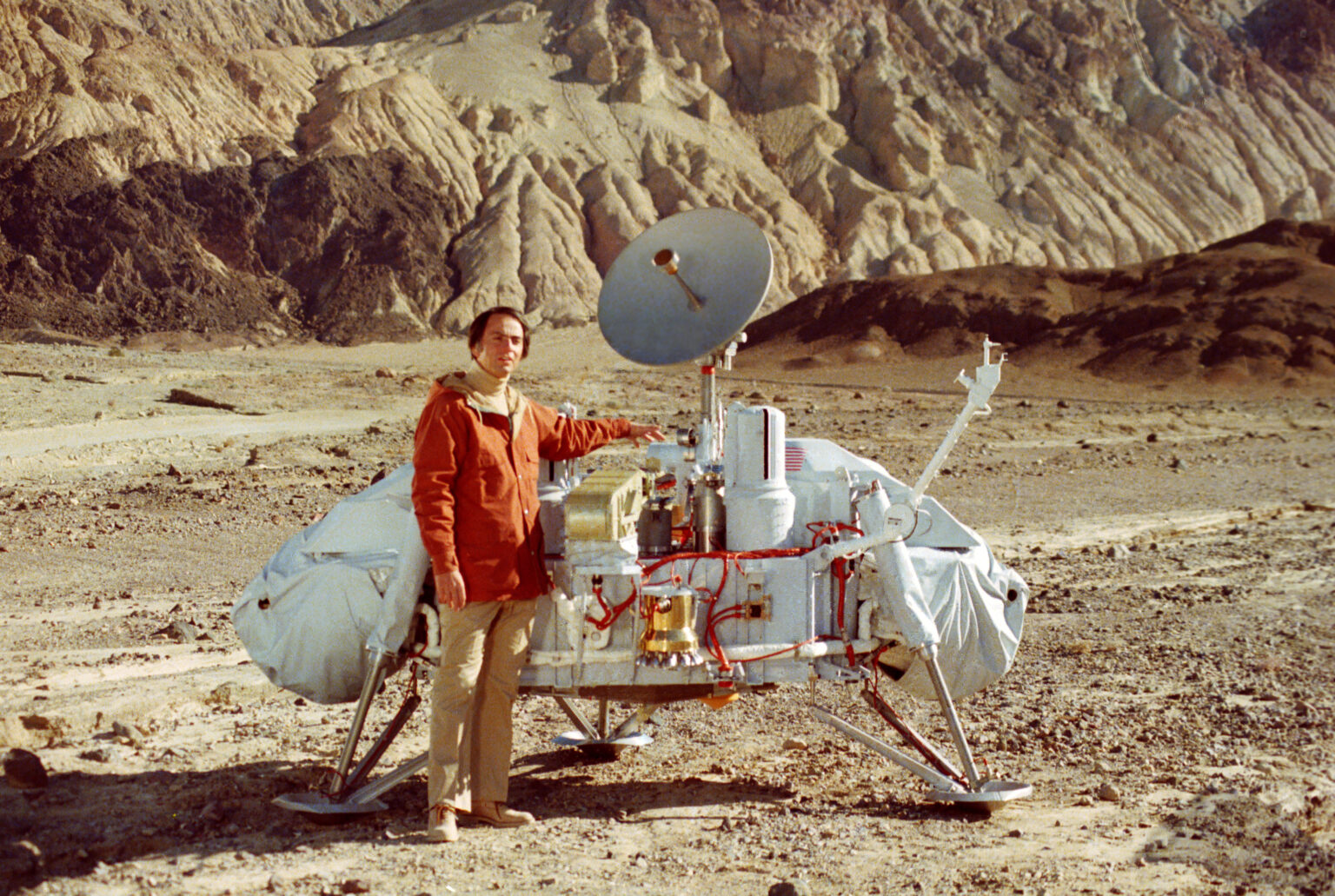
50 years ago, we approached the definitive assessment of the existence of life on Mars. On July 20, 1976, the Viking 1 lander successfully touched down on the planet’s surface, followed by Viking 2 approximately one and a half months later. To date, these missions remain the only endeavors explicitly dedicated to the search for living organisms, rather than solely focusing on water, organic matter, or habitable conditions.

Carl Sagan standing beside a model of the Viking spacecraft in Death Valley. Source: NASA / JPL

Each participant carried a small biological module containing three distinct experiments. The most straightforward experiment operated as follows: a sample of soil was taken, a nutrient solution — serving as sustenance — was added, and if there were any living organisms within the sample, they would consume the nutrients and produce gas as a metabolic byproduct. This reaction was successfully observed on the initial attempt, repeated subsequently, and was confirmed by a second device situated six and a half thousand kilometers away.

Subsequently, they examined whether non-biological chemical processes could yield the same outcome. They meticulously heated the same soil sample to ensure the absence of any residual living organisms. Prior to the flight, the researchers agreed to interpret the release of gas from a fresh sample as indicative of life, should the heated sample not exhibit such gas release. This precise outcome was observed.

This image was modified using data from an alternative instrument that was concurrently analyzing the soil for organic matter — specifically, complex carbon compounds constituting all living organisms. No organic matter was identified in the samples. According to the prevailing understanding at the time, the conclusion was unequivocal. Since organisms cannot originate from nothing, the reaction was deemed not to result from biological chemistry, and the matter remained unresolved for decades.

The Viking 2 lander is situated on the surface of Mars. Photo: NASA, JPL-Caltech

Two discoveries prompted a recommencement of the mission. Firstly, perchlorates — salts that Phoenix had identified in virtually all locations in 2008 — were detected within Martian soil. As Charles Cockell elucidates in an interview with our publication, organic matter reacts with perchlorate upon heating and subsequently decomposes; consequently, the Viking instruments’ heating of the sample likely resulted in its destruction during analysis. Secondly, organic matter has indeed been identified on Mars, as evidenced by the NASA rovers, which detected organic compounds in both rocks and soil.

The question remains unresolved. According to Charles Cockell, uncertainties persist regarding the Viking results, even after 50 years. Some scientists assert that the mission indeed achieved certain discoveries, whereas others remain uncertain.

It appears that establishing the existence of life on a planetary body is comparatively straightforward, as detecting it on a single occasion suffices. Conversely, demonstrating its absence is significantly more challenging, requiring an examination of every part of the planet — every layer of soil, each crack, and all depths — and even then, the most accurate statement would be “we did not find any,” rather than asserting ‘there is no life there.”

Professor Charles Cockell adds an important detail to this. No location has yet been found on Mars where living organisms could definitely reproduce. The so-called “special regions” have been identified based on theoretical considerations, but these are still just assumptions, since we have not visited any of them.

Who determines the destiny of other worlds?

While we seek a resolution to this vicious cycle, it is worthwhile to consider who genuinely holds decision-making authority regarding the destiny of other worlds. It appears that such authority rests with humanity as a whole — or, at minimum, with the principal space agencies. In actuality, planetary protection manifests as a systematic framework, albeit not codified into law. It comprises a set of recommendations formulated by the Committee on  Space Research (COSPAR). These recommendations are elaborated in detail, subjected to regular review, and the most recent version received approval at the conclusion of 2025. Leading agencies comply with these guidelines — not out of legal obligation but because they consider it essential. 

The official logo of the COSPAR 2026 conference, which focuses on space exploration and encompasses the subject of planetary defense. Credit: COSPAR

This does not pertain to private entities. Pioneer Labs is engaged in cultivating organisms for Mars; however, it has not obtained explicit permission to do so, as such authorization is not deemed necessary.

Formally speaking, there is an individual or entity responsible after all. In 1967, when only a limited number of countries were engaged in space exploration, the Outer Space Treaty was signed, and it remains effective to this day. One of its articles stipulates that states bear international responsibility for their national activities in space, including those conducted by private companies. In other words, the United States would be accountable for any microbes originating from an American laboratory on Mars.

The issue lies in the agreement’s specification, which identifies only the responsible party without enumerating prohibited actions. These actions are expressed as recommendations, lacking legal enforceability. The entire framework depends on mutual goodwill and functions effectively as long as all parties concur. The “Beresheet” incident was an isolated anomaly, resulting not from malicious intent but from an error.

In 2025, the journal Acta Astronautica published an article proposing a moratorium — that is, a temporary prohibition on “seeding” other planets with Earth-based life — until it is ascertained whether such actions are ethically and responsibly permissible. The authors argue that “seeding” an extraterrestrial environment is economically feasible, as it does not necessitate government funding or billions of dollars; rather, it requires only a single laboratory and one shipment. However, the authors emphasize that the consequences are irreversible, because once life is established, it cannot be eradicated.

In an interview with our publication, Charles Cockell redirects the focus of the inquiry towards ourselves. Here on Earth, we frequently sterilize microbes in our households with bleach and remain indifferent to their survival prospects; however, we safeguard the stromatolites in Australia — those very layered structures that microbes have been constructing for billions of years — as emblematic of ancient life. The same principle applies to trees: some are preserved due to their historical and aesthetic significance, while others are felled to accommodate the construction of supermarkets.

In this context, the inquiry assumes a different significance. It may not pertain to the value of microbes per se, but rather to our actual requirements. Our concern for the Martians appears to be contingent upon our inability to reach them. It remains uncertain whether this concern will endure once construction commences on-site.

Although the discussion is still ongoing, certain developments are already underway. The Italian Space Agency has developed an experiment focused on the cultivation of plants, which has been selected for SpaceX’s inaugural landing on Mars. This experiment involves a sealed container — a meticulously prepared scientific study — and no actual planting is taking place. The agency’s leadership underscores that this will mark the first instance of living organisms from Earth being intentionally transported to the surface of another planet. It is also immediately clarified that the plants will remain inside the spacecraft. The primary objective of this experiment is to investigate the effects of a six-month spaceflight on living cells.

Rendering of a module designated for the cultivation of plants on the surface of Mars. Source: universetoday.com

In 2026, a roadmap was also published, currently in preprint form. The document outlines the research needed to determine whether it is even possible to warm Mars. Among the more than twenty authors are researchers from Pioneer Labs and Charles Cockell himself. His position on the matter has not changed, as he considers it unacceptable to destroy Martian microbes, if they exist. In his view, altering the environment is permissible only if we can demonstrate our ability to coexist with what is already there.

Simultaneously, he and a colleague are investigating a third alternative. If life necessitates liquid water, heat, and protection from radiation, it is not obligatory to modify the entire planet; rather, establishing a small, self-sustaining environment capable of maintaining these conditions independently is sufficient. The authors explicitly juxtapose their concept with terraforming, as planet alteration entails irreversible interference with the entire celestial body, whereas a sealed module leaves no more impact than a conventional manned expedition.

It appears that individuals who have spent 20 years debating whether humanity has the right to modify other planets are now sitting at the same table to develop a research plan. In other words, this is no longer a narrative set in the distant future, but rather decisions are being made at this very moment.

We have acquired knowledge on estimating carbon dioxide reserves on Mars, designing particles nine micrometers in length, and cultivating bacteria that exhibit resistance to radiation and cold. However, we have yet to establish methods to demonstrate that the universe is uninhabited.

The initial colonizers in space will unquestionably not be humans. Instead, they will be microorganisms — originating from Earth and dispatched by us. These microorganisms will venture farther than any human and will have a lifespan exceeding ours; ultimately, a civilization unlike our own may develop from them. The sole consideration is whether they will be the primary inhabitants there, or if they will annihilate the pre-existing life.


NASA’s First Humans on Mars Won’t Be Colonists - They’ll Be Life Hunters

The Terrifying Problem with Colonizing Mars

{ https://universemagazine.com/en/articles-en/ }

Hoe vind je dit bericht?
Geschreven door peter om 15:02 Stuur door

NASA's Nancy Grace Roman Space Telescope is set to launch this weekend. When will we see its first photos? - PART I

NASA's Nancy Grace Roman Space Telescope is set to launch this weekend. When will we see its first photos?- PART I

The Nancy Grace Roman Space Telescope is set to launch from Kennedy Space Center in Florida Sunday morning (Aug. 30). The state-of-the-art spacecraft will help astronomers study exoplanets, distant galaxies, dark matter and much more.

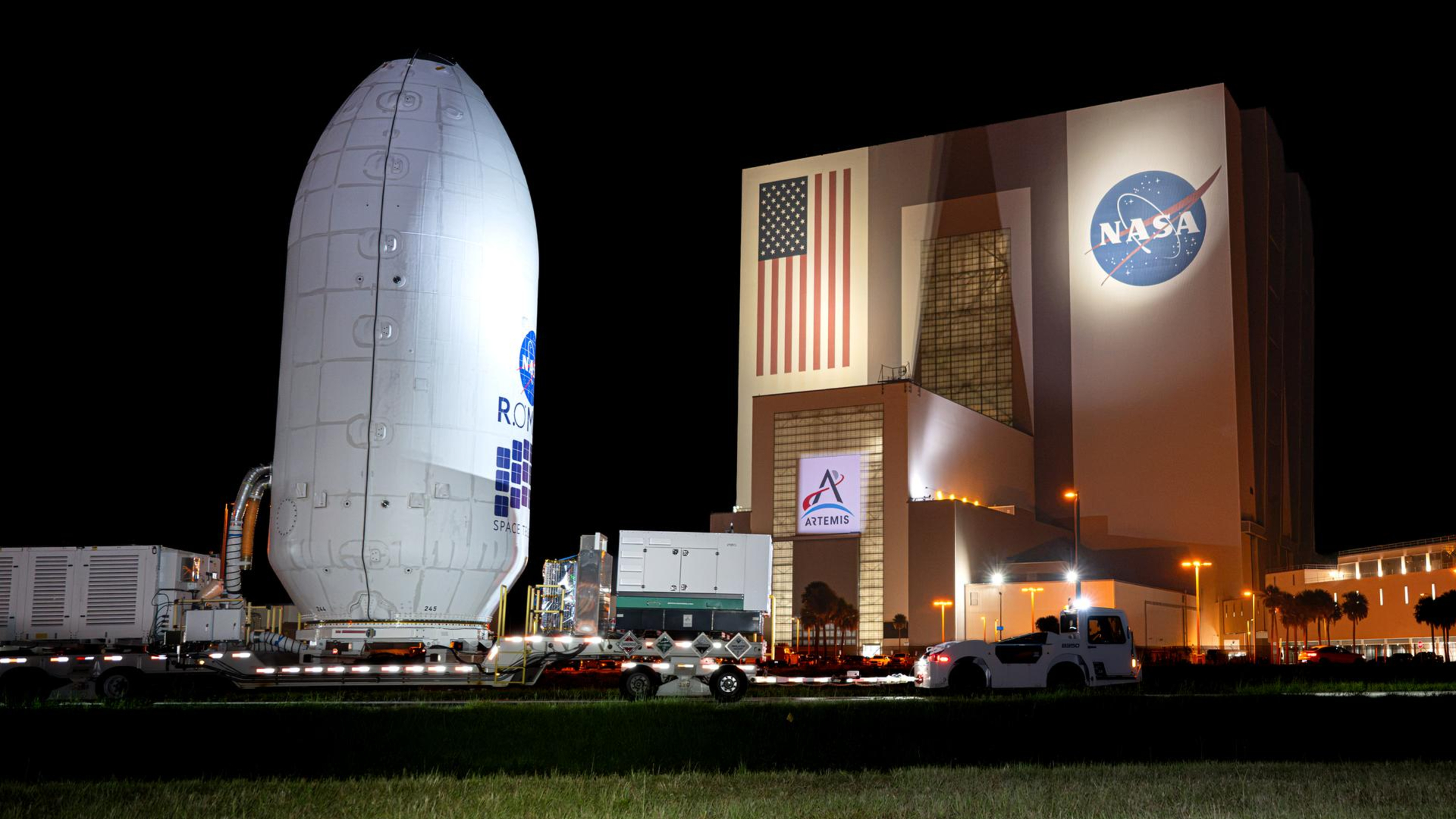
A photo of the telescope in its protective casing being moved to the launchpad hanger at night

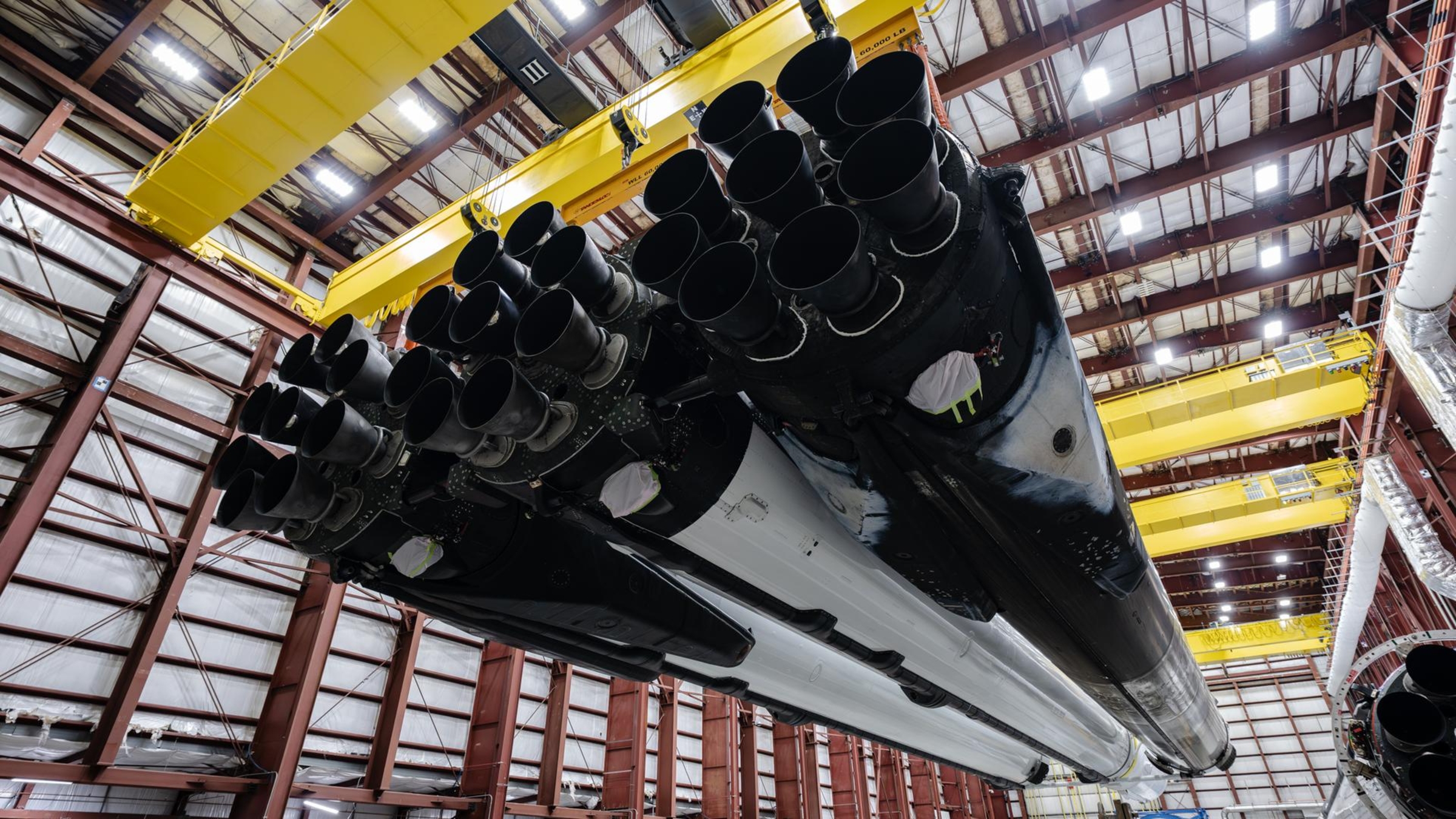
The Roman Space Telescope has already been loaded into a nose cone that will sit atop a SpaceX Falcon Heavy rocket. This photo, captured Aug. 25, shows the payload being transported to Launch Complex 39A at NASA's Kennedy Space Center in Florida, where it is scheduled to launch on Sunday (Aug. 30).
(Image credit: NASA/Sydney Rohde (Rocz))

NASA's next-generation cosmic observatory — the Nancy Grace Roman Space Telescope — is set to launch this weekend on a potentially decade-long mission to hunt for distant exoplanets, map out the Milky Way and unravel some of the universe's biggest mysteries, such as the true nature of dark matter.

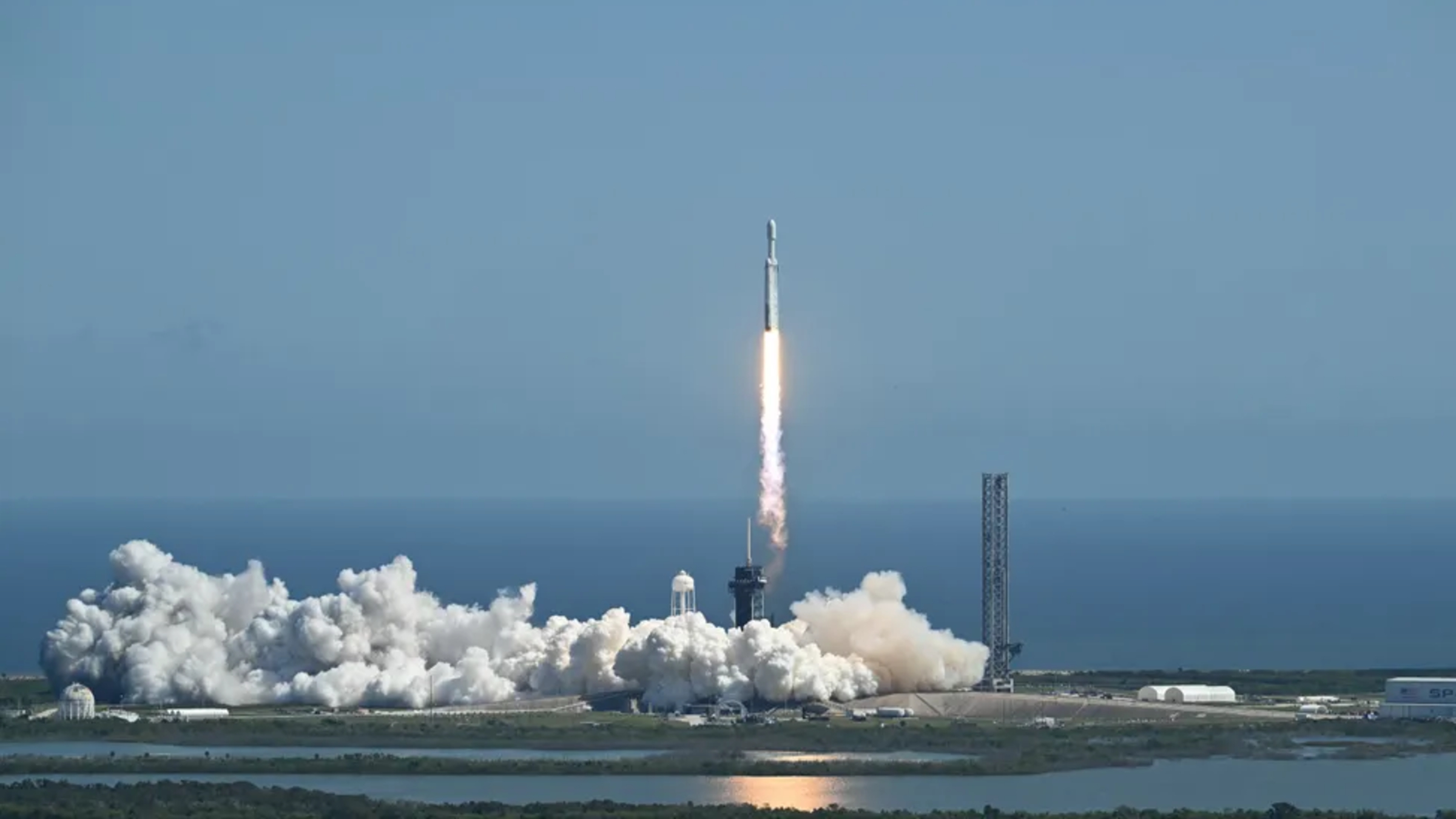
The Roman telescope and its payload are scheduled to lift off aboard a SpaceX Falcon Heavy rocket Sunday (Aug. 30) at 7:26 a.m. EDT from Launch Complex 39A at NASA's Kennedy Space Center in Florida, according to NASA. A few hours later, the telescope will be released from the rocket's second stage and be exposed to the vacuum of space for the first time.

But even if everything goes according to plan, we will still have to wait a while to get a glimpse of Roman's first groundbreaking images.

10 Most Terrifying Things Found in Space

As of Thursday morning (Aug. 27), the National Weather Service forecasts a 50% chance of thunderstorms at Kennedy Space Center Sunday, so weather could delay the launch. If that happens, a second launch window is available Monday (Aug. 31) at 7:22 a.m. EDT, when there is a reduced risk of thunderstorms.

You can watch the event on a SpaceX livestream and stay up to date with last-minute developments and postlaunch news via a live blog from Live Science's sister site Space.com.

You may like
  • A glowing purple and gold starry deep space image

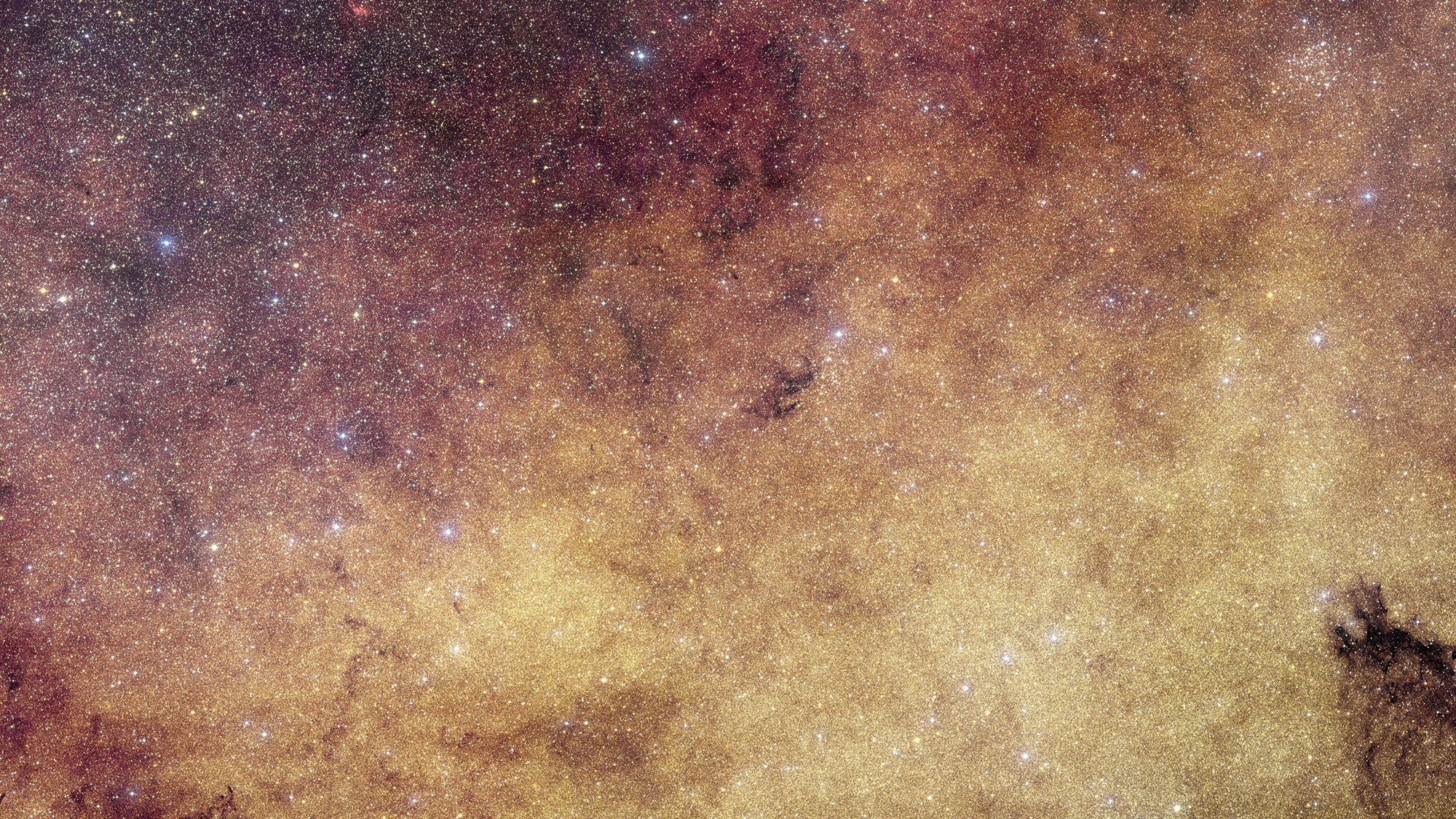
60 million stars: Euclid space telescope snaps the most detailed photo of the Milky Way ever taken

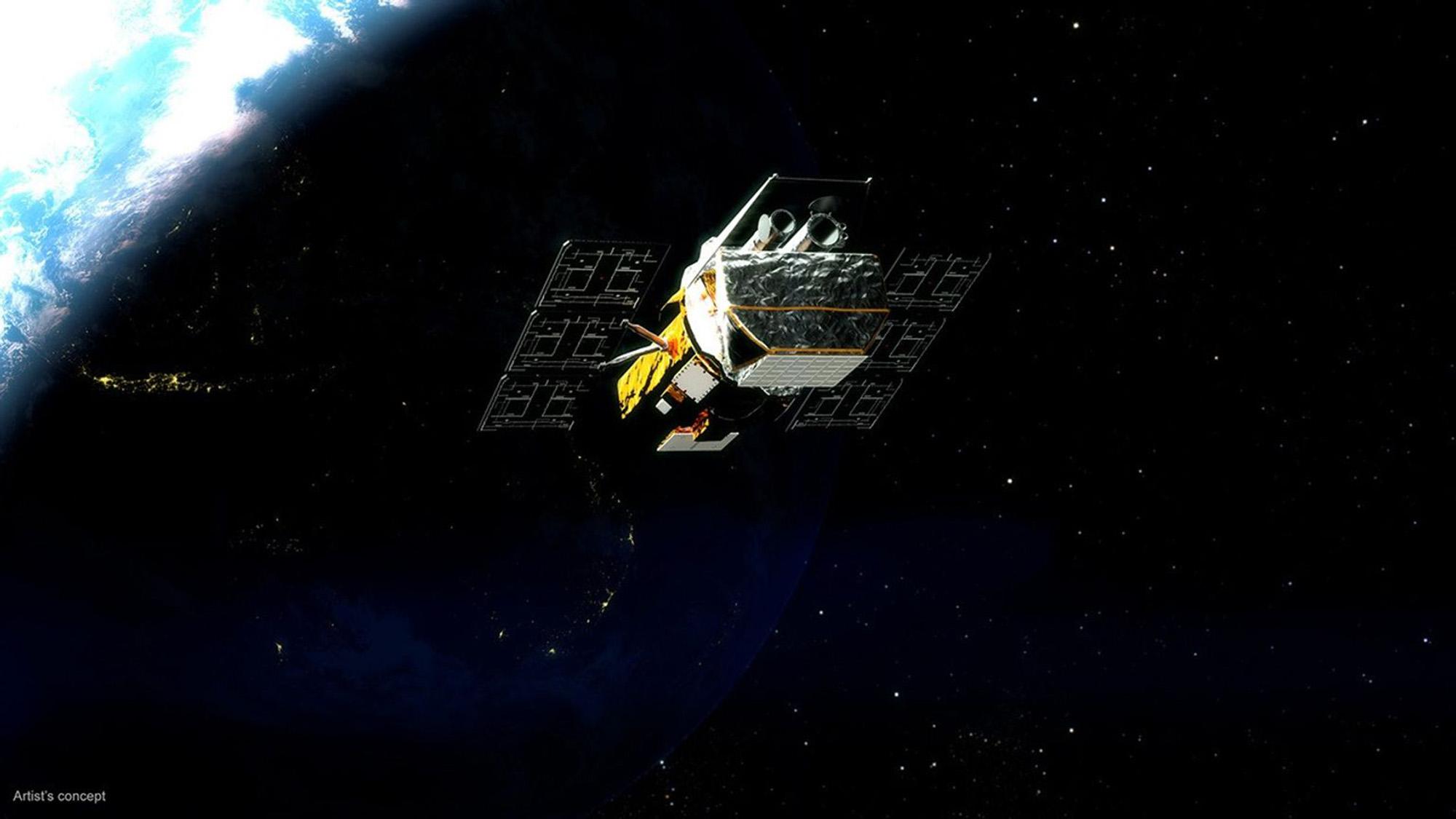
  • An illustration of a space telescope in orbit above Earth

NASA mission to rescue a space telescope plummeting to Earth launches into orbit

  • A deep field image of the universe with orange blurs showing gravitationally lensed objects

James Webb telescope uses trippy Einstein prediction to probe the farthest reaches of the universe

A photo of scientists stood next to the fully completed Roman telescope in a clean room

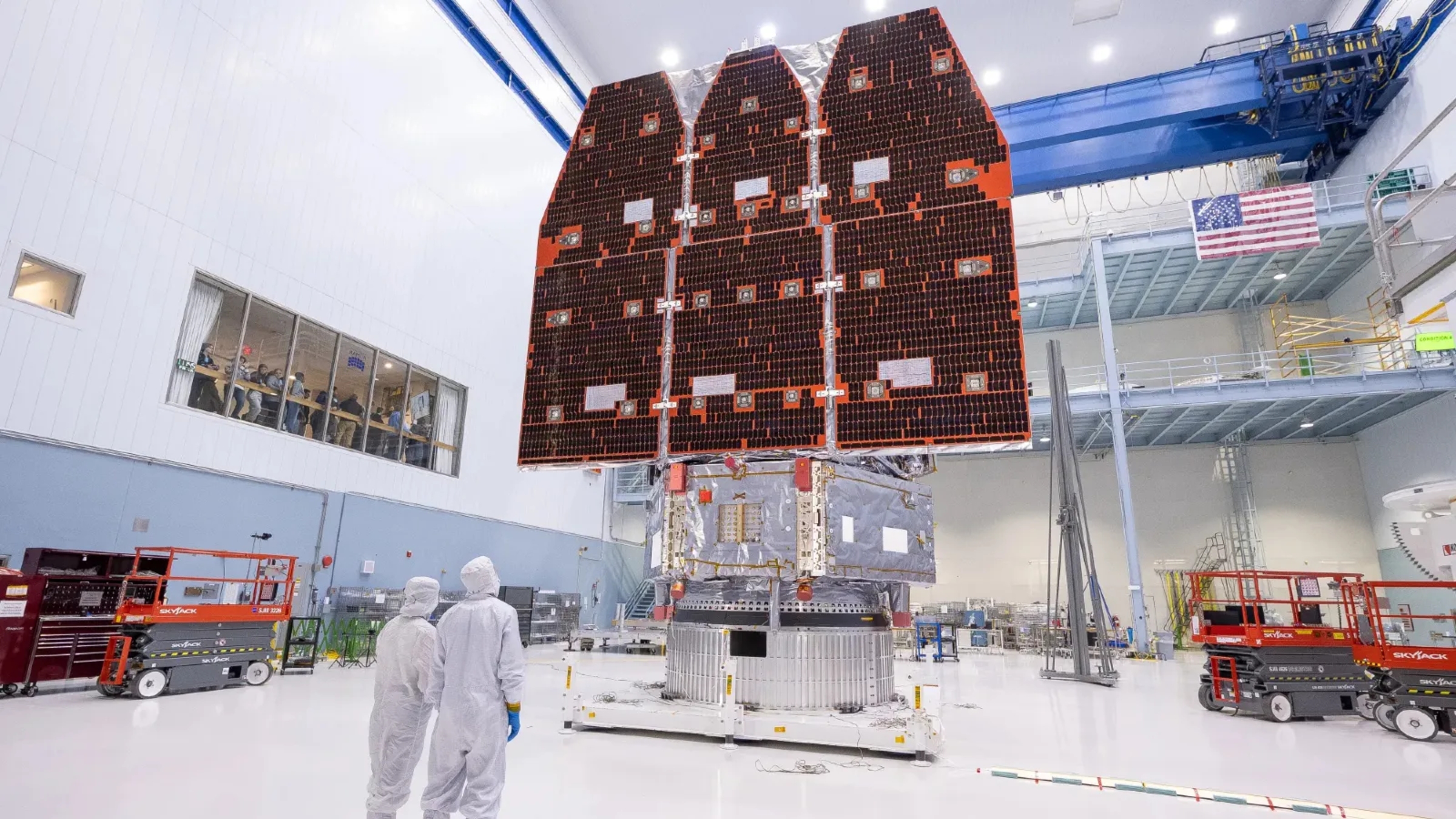
Roman stands 42 feet tall and weighs around the same as a fully grown T. rex. This photo was taken on Dec. 4, 2025, shortly after the spacecraft was fully constructed.

(Image credit: NASA/Jolearra Tshiteya)

What is the Roman Space Telescope?

The Roman Space Telescope is NASA's latest flagship observatory. It follows the James Webb Space Telescope (JWST), which launched in 2021, and the Hubble Space Telescope, which has been in orbit since 1990. Rather than replacing those spacecraft, Roman will work alongside them to help scientists scour the skies like never before.

The observatory is named after pioneering scientist Nancy Grace Roman, who served as NASA's first chief astronomer between 1960 and 1979. It is approximately 42 feet (12.7 meters) tall and 14 feet (4.4 m) wide and weighs around 18,000 pounds (8,000 kilograms) — about the same as a fully grown Tyrannosaurus rex, according to a NASA fact sheet.

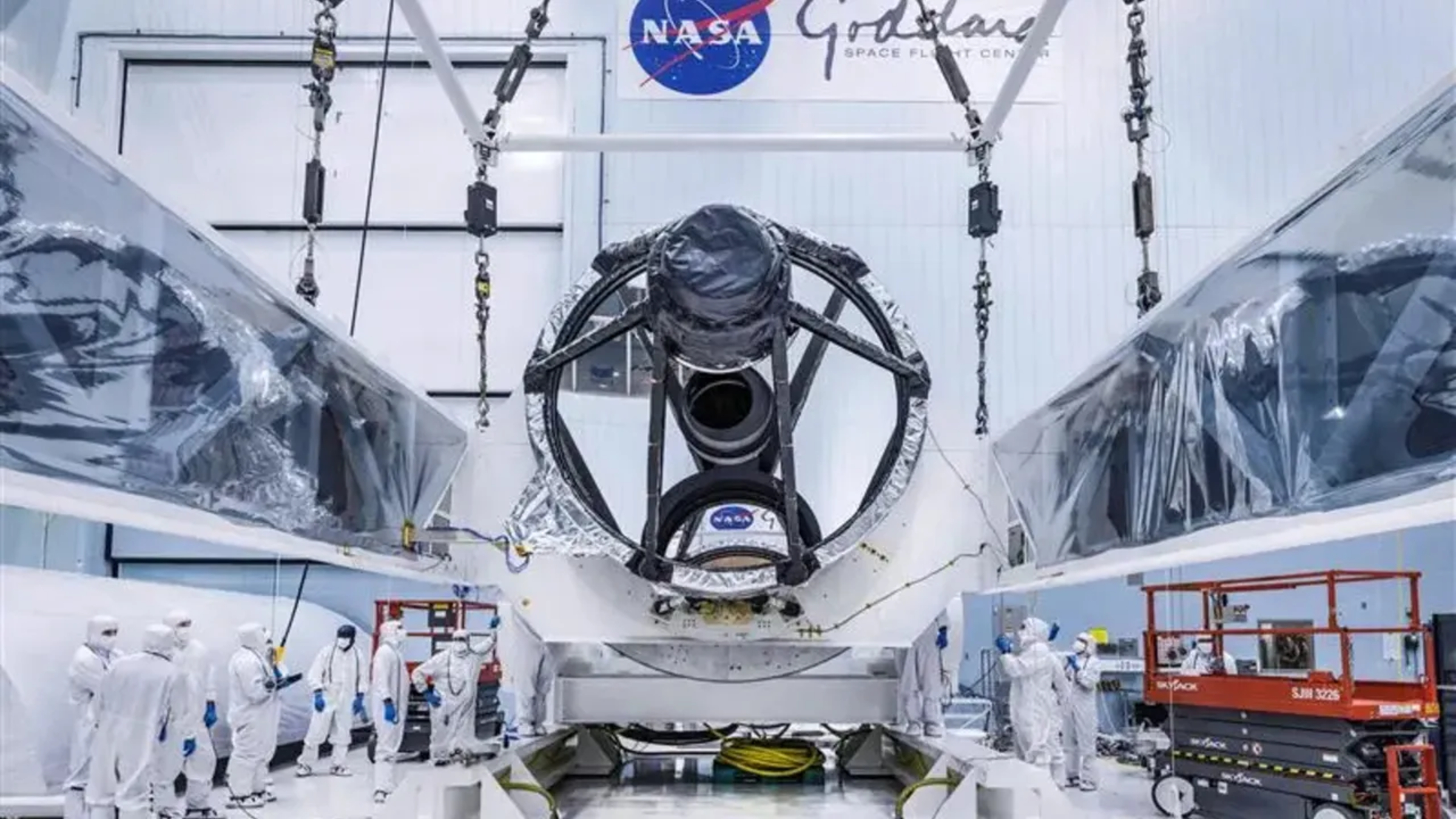
Roman was fully completed in December 2025, almost a decade after construction began and within its initial $4.3 billion budget (less than half what JWST cost). Since then, it has been moved more than 900 miles (1,450 kilometers) from Goddard Space Flight Center in Maryland and undergone a series of final checks in NASA's "clean rooms." Having initially been slated for a 2027 liftoff, the telescope is technically launching ahead of schedule.

A photo of the telescope being loaded into its protective casing

Roman was encased in its protective fairing earlier this week, ahead of its proposed launch on Sunday (Aug. 30).

(Image credit: NASA/Sydney Rohde (Rocz))

Roman will eventually be stationed around 1 million miles (1.6 million km) from Earth at what scientists call a Lagrange point — a fixed point relative to our planet where the gravity of two objects cancels out. Its specific Lagrange point will be Sun-Earth L2, where JWST and the European Space Agency's Gaia and Euclid space telescopes already reside.

Roman's initial mission will last five years, but experts hope it could survive at least twice that long. Some space telescopes far outlast their initial missions; for example, Hubble is more than two decades past its original mission parameters, and NASA's recently doomed Swift Observatory lasted 10 times longer than predicted.

What to read next
  • A pixilated black and white photo showing the radio signals given off by Integrity from 213,000 miles away and a pair of arrows pointing up and down with numbers next to them

Earth-based telescope shares image of Artemis II capsule near the moon — one of the farthest photos of humans ever taken

  • An illustration of a space telescope in orbit above Earth

'We are not giving up yet': Private mission to rescue NASA's Swift telescope is spinning out of control

  • Webb’s image of spiral galaxy Saguaro, revealing a bright red core linked to mysterious Little Red Dots.

James Webb telescope may have revealed the true identity of the 'little red dots'

What makes Roman special?

Roman has two key instruments that set it apart from its predecessors. The first is its Wide Field Instrument, a 288-megapixel camera attached to a 7.9-foot (2.4 meters) mirror, which gives it a field of view 100,000 times greater than Hubble's. It will also see the cosmos in infrared light, similar to JWST. These combined capabilities will allow Roman to observe the cosmos like never before.

But the telescope's secret weapon is arguably its coronagraph, which can block out the light from distant stars, allowing Roman to see fainter objects, such as the exoplanets that orbit these stars. Until now, scientists' main way of finding alien worlds was to wait for them to pass in front of, or transit, their home star, but Roman will be able to directly image exoplanets at almost any time in their orbital cycles. (Exoplanets remain out of view when they are directly behind their home stars.)

Photo of Roman's telescope being placed into the telescope in a NASA clean room

Roman's Wide Field Instrument utilizes a 7.9-foot-wide mirror to focus infrared light into a 288-megapixel camera that has a field of view 100,000 times greater than Hubble's.

(Image credit: NASA/Chris Gunn)

{ https://www.livescience.com/space }

Hoe vind je dit bericht?
Geschreven door peter om 23:23 Stuur door

NASA's Nancy Grace Roman Space Telescope is set to launch this weekend. When will we see its first photos? - PART II

NASA's Nancy Grace Roman Space Telescope is set to launch this weekend. When will we see its first photos? - PART II

The Nancy Grace Roman Space Telescope is set to launch from Kennedy Space Center in Florida Sunday morning (Aug. 30). The state-of-the-art spacecraft will help astronomers study exoplanets, distant galaxies, dark matter and much more.

ne of the biggest and most exciting claims researchers have made about Roman is that it could help reveal up to 100,000 exoplanets. Such discoveries would revolutionize how we study alien worlds, especially considering that we have uncovered over 6,000 exoplanets since the first one was spotted in 1992.

However, the telescope will also conduct long-term surveys that will help astronomers accurately map the Milky Way and find extremely distant galaxies, potentially helping scientists solve the mysteries of dark matter and dark energy that currently underpin a "cosmological crisis" surrounding the universe's expansion. And as with any new space telescope, scientists will likely find novel ways of using Roman once it is in operation.

A photo of the Falcon Heavy rocket boosters hanging in a warehouse

Roman will launch aboard one of SpaceX's Falcon Heavy rockets, which has a 100% success rate across its 12 launches to date.

(Image credit: SpaceX)

"The mission will offer practically limitless opportunities for astronomers to conduct a broad range of additional science," NASA representatives wrote in the fact sheet. "From objects in our outer solar system and exploding stars to growing black holes and galaxies by the billions, very little will be beyond Roman's reach."

The spacecraft will beam roughly 1.4 terabytes of data — roughly 10 times the storage capacity of an average smartphone — to ground stations across Earth every day, according to the fact sheet.

When will we see Roman's first photos?

Roman's first snaps are arguably the most anticipated astronomical images since the debut photos from the ground-based Vera C. Rubin Observatory, which were released in June 2025.

A SpaceX Falcon Heavy rocket launching from Florida

Roman will launch from Launch Complex TK on Sunday (Aug. 30). This photo shows one of these rockets, equipped with NASA's Europa Clipper probe, lifting off from Florida's Kennedy Space Center on Oct. 14, 2024.

(Image credit: CHANDAN KHANNA/AFP via Getty Images)

But first, Roman has to travel to its Lagrange point, which is roughly four times farther away than the moon. This could take several weeks, although no exact timeline has been provided.

Once Roman is in position, there will be a roughly 90-day commissioning period, during which the telescope will fully power up its instruments and run a series of diagnostic tests to ensure everything is in order before its mission truly begins.

There is, therefore, a slim chance that we could see Rubin's first photos before the end of the year. However, NASA officials have tentatively predicted that the telescope will start snapping the stars in early 2027. It took JWST about seven months postlaunch to send its first full-color image to Earth.

NASA representatives have promised that "data from all of Roman's surveys will be made public as soon as it is processed, with no periods of exclusive access," so once the images are ready, everyone will be able to see them.


Revolutionary Roman Space Telescope to launch on SpaceX Falcon Heavy

NASA's Roman Space Telescope launch approaching: What you need to know

Why NASA's new ROMAN Space Telescope is a HUGE deal

{ https://www.livescience.com/space }

Hoe vind je dit bericht?
Geschreven door peter om 23:20 Stuur door

New Survey Suggests Gen Z Are More Likely to Believe in Aliens—How UFO Media May Be Shaping a Generation

A composite image included in the new DOW release, which featured the following contextual information: "Actual site photo with FBI Lab rendered graphic overlay depicting corroborating eyewitness reports from September 2023 of an apparent ellipsoid bronze metallic object materializing out of a bright light in the sky, 130-195 feet in length, and disappearing instantaneously."
(Image Credit: DOW/FBI)

New Survey Suggests Gen Z Are More Likely to Believe in Aliens—How UFO Media May Be Shaping a Generation

Growing news coverage of UFOs is influencing people’s views about extraterrestrial life, particularly among younger Americans, according to a new survey. 

According to the survey’s findings, more than a third of respondents—and particularly younger adults—say recent reporting on unexplained aerial phenomena has strengthened their belief that aliens exist.

Connecting data from over 2,000 Americans, the survey found that 37% say recent news coverage about UFOs has increased their belief in extraterrestrial life (ET). Meanwhile, 54% say their views have not changed, and just 10% report that the coverage has made them less likely to believe in ET. The survey was conducted by Talker Research between July 1 and July 6, 2026. 

Gen Z Data 

According to the survey’s findings, more than half of Gen Z respondents—54%—said recent UAP news has increased their belief in ET. That figure drops to 45% among millennials, 36% among Gen X, and 23% among baby boomers.

These results arrive amid an increasingly mainstream conversation surrounding government hearings, military UAP reports, whistleblowers, broadcast and online news coverage, and podcasts. Such exposure may be helping shape how Gen Z views what is possible and whether intelligent life exists elsewhere in the cosmos.

Looking at the results through a gender lens, 34% of men say UFO news coverage has made them more likely to accept that we are not alone in the universe, compared with 33% of women.

Media and Entertainment Culture Feedback Loops 

Historically, widely publicized UFO reports have helped shape the language and imagery Western society uses to describe unexplained aerial phenomena. One famous example occurred in 1947, when pilot and businessman Kenneth Arnold reported seeing unusual objects flying near Mount Rainier, an incident that received widespread media coverage.

The idea behind such a cultural feedback loop is relatively straightforward: someone sees something outside their normal understanding of reality and reports it. Media and entertainment then pick up the concept and expand upon it, creating their own interpretations of what extraterrestrial beings or UFOs might look like. Audiences absorb those representations, which may subsequently influence how some people perceive, remember, or describe their own unusual experiences. Those accounts can then return to popular culture, potentially reinforcing the cycle.

This doesn’t necessarily mean that what a person saw wasn’t anomalous. Instead, it suggests that media and entertainment may influence how people interpret or describe what they experience.

A 2025 paper in Evolutionary Human Sciences deconstructs a “two-way feedback loop between behavior and beliefs.” The framework suggests that existing beliefs influence behavior; people then observe that behavior, and the observed behavior influences what people believe others think/do. Finally, those beliefs influence subsequent behavior.

The new survey also considered the potential influence of popular culture. More than half of respondents (54%) believed alien movies and television make Americans more likely to believe in the existence of intelligent extraterrestrial life; 27% saw no connection between entertainment and belief, while 8% believed such programming actually makes people less likely to believe.

UFOs as a Belief System and Common Misconceptions 

An additional consideration when reading this survey is whether UFOs themselves should be characterized as a belief system. The subject is also an area of study examined by researchers from a range of disciplines, including psychology, philosophy, physics, anthropology, neuroscience, and others.

Many academics would argue that categorizing UFOs solely as a belief system risks pigeonholing the subject as a form of religion rather than recognizing it as an area of study. A belief system, by contrast, is a framework of ideas through which people interpret reality according to a particular set of assumptions or principles.

Jeffrey Kripal, J. Newton Rayzor Professor of Religion at Rice University’s Department of Religion, addressed related questions in his March 2026 keynote, “Mind-Manifesting Shock: Comparing Psychedelic and Abduction Experiences, Religion and Psychedelics: Critical Cross-Cultural, Cross-Disciplinary Approaches,” at the Center for the Study of Religion at Ohio State University.

“We are often ‘believing backwards,’ taking comfort in someone else’s altered states, or in the present ‘explanations’ of this or that neuroscience or physics,” Kripal said at the time.

In other words, when people experience something anomalous and ask why it happened or what the experience might mean, they may immediately reach backward for an existing framework through which to interpret it.

In an email to The Debrief, Kripal adds, “I think the existing frameworks of religion and science ‘explain’ to people what happens, though they do not.”

The Debrief also reached out to Matthew Halsted, Associate Professor of Biblical Studies and Executive Team/Registrar at Eternity College, and asked how he would classify UAP—as an area of belief or a subject of study—and why.

“When it comes to ‘UAP,’ we have to see it as a two-sided coin,” Halsted told The Debrief. “On one side, we have the phenomenon itself (the actual sighting of the thing in the sky); on the other side of the coin, we have the public narrative (how we as people, and our respective governments, talk about reported sightings).”

Halsted adds, “The UAP topic (the ‘coin’) creates a lot of questions for the public, which inevitably gives rise to some sort of belief system. Some walk away believing it’s all nonsense, while others believe there’s something real about this whole thing.”

Halsted’s view, therefore, appears more nuanced than simply classifying UAP as a belief system: the topic can generate belief systems and competing interpretations around reported phenomena, but the subject itself extends beyond a simple question of belief versus nonbelief.

National Security Considerations

When asked how they would react if extraterrestrial life were definitively confirmed, 38% of Americans said their first response would be curiosity, more than twice the 17% who said they would be fearful. Men were also more likely than women to say they would be excited by such a discovery, at 20% compared with 11%.

Perhaps more strikingly, 60% of participants believed that governments know more about UFOs than they have disclosed to date.

The bigger question is whether participants believe society is prepared to accept confirmation that extraterrestrial life exists. Forty-five percent believe society would be prepared if governments confirmed the existence of alien life, while 55% say society would not be adequately prepared to comprehend the implications.

  • NASA

The issue, then, is not merely what a generation believes, but how people decide what is real and what is not. Within today’s fragmented information environment, audiences increasingly face the difficult task of distinguishing credible evidence from speculation, honest mistakes from misinformation, and legitimate reporting from deliberate deception.

None of this means that the broader UFO enigma can simply be dismissed. Rather, it underscores an additional challenge surrounding the subject: misleading or demonstrably false claims can now reach large audiences very quickly.

Addressing that problem will require better media literacy, stronger sourcing and fact-checking standards, and greater attention to the often-blurred distinction between evidence and interpretation. Ultimately, younger generations coming of age amid an unprecedented volume of digital information will have to navigate those distinctions for themselves. How successfully they learn to do so may have consequences extending far beyond what they believe about UFOs—shaping how they understand science, institutions, current events, and reality itself.

This is why it’s critically important that we understand UAP as accurately as possible. Whether information is being communicated between family members, friends, researchers, journalists, or policymakers, distinguishing established facts from interpretations and unverified claims gives people a better foundation for understanding the world around them and making informed decisions.

This survey suggests that UFOs are no longer confined to a subculture or counterculture; the topic has entered the mainstream. The question now is what that shift will mean for the future.


Gen Z Is More Likely to Believe in UFOs & Aliens And UFO News May Be Influencing Why #ufo #genz

{ https://thedebrief.org/category/defense/ }

Hoe vind je dit bericht?
Geschreven door peter om 20:52 Stuur door

2 Meter Tall Face Found On Mars Near Spirit Rover, NASA Index, UFO UAP Sighting News.

2 Meter Tall Face Found On Mars Near Spirit Rover, NASA Index, UFO UAP Sighting News.

Mars_face.png
Date of discovery: Aug 24, 2026
Location of discovery: Planet Mars
Source: MER/Spirit rover/Sol 693
Photo: 
This Face is about 2 meters tall by 1 meter. Its made on a small hill and was clearly facing the distance, as perhaps a warning to outsiders of ownership of this territory or maybe its made to celebrate an important person in this culture at the time. 
 
This face is strong, has powerful large eyelids, round nose, muscular cheeks and a powerful jaw line. It actually looks more like a mask than a realistic face, but with aliens...you never know since we don't have a side by side live alien to compare it too. 
Scott C. Waring - UFO Sightings Daily 
 
Mars_life.png
planet_mars.jpg

{ https://www.ufosightingsdaily.com/ }

Hoe vind je dit bericht?
Geschreven door peter om 20:30 Stuur door

Black UFOs changing shape over Illinois USA Aug 23, 2026 UFO UAP Sighting News.

Black UFOs changing shape over Illinois USA Aug 23, 2026 UFO UAP Sighting News.

UFO.png

Screenshot%202026-08-29%20at%208.22.32%E2%80%AFPM.png
 
Date of sighting: Aug 23, 2026
Location of sighting: Riverdale, Illinois, USA
Source: NUFORC
 
Watching this eyewitness video I can see three UFOs clearly moving across the sky, all of which look to be black orbs. The eyewitness stated that they were shape shifting and yes, when I put part of the video into slow motion it does appear to change shape...more like a plasmoid orb, but I have never seen plasmoid orbs that were black before. This is something rare and unique in the UFO field...such video is proof that these aliens have technology that can transform the shape of the UFOs themselves. I believe that this flux is due to them shifting from a different dimension to another. This is a serious sign that something is significant enough in Illinois in the coming days that aliens would time travel to come and see it occur. 
Scott C. Waring - UFO Sightings Daily
 
Eyewitness states: 
A random grouping of black amorphous crafts at different heights and positions that disappeared in the blink of an eye.  I was sitting outside and my buddy and I saw a grouping of 7 odd slow moving things in the sky. We thought the were balloons at first but they changed shapes and looked like black holes, there was no light glinting off them nor were they translucent. The first grouping of them were at different heights a few hundred feet off the ground with a few hundred feet separating them moving at different speeds. Then they just vanished in the blink of an eye in front of my buddy and I. The second grouping was moving slower so I ran to get binoculars and in the 20 seconds I was gone they disappeared. The sky had very few clouds and it was bright and sunny out.


Black UFOs changing shape over Illinois USA Aug 23, 2026 UFO UAP alien paranormal news 📰👽

 { https://www.ufosightingsdaily.com/ }

Hoe vind je dit bericht?
Geschreven door peter om 20:24 Stuur door

The Only Tall White TicTac UFO Photo In Existence, Taken By NASA! UFO UAP Alien paranormal news. 👽👽

The Only Tall White TicTac UFO Photo In Existence, Taken By NASA! UFO UAP Alien paranormal news. 👽👽

UFO,%20Tall%20Whites.png
Date of discovery: Aug 29, 2026
Location of discovery: Nellis AFB, Nevada, USA
Date of photo: June 25, 1965
NASA photo:
 
Guys, I'm not sure why I was looking through this index, but I am sure I was looking for anomalies that were overlooked by NASA editors who airbrush things out. I found a few interesting photos, but this one felt different and intrigued my curiosity...then I saw the date...and tied it into the year Charles Hall a friend of mine, who started working at the Tall White base road dead end area in...you got it...1965. 
 
This photo revealed to me that there is a tictac UFO over the old firing range area...the same area where Charles Hall stated that the Tall Whites were given land behind the range to build an underground base. Also he mentioned many times in his books that the Tall Whites have white florescent glowing tictac UFOs...which is in the 1965 photo. Oh...and I forgot to mention, Area S4 and Area 51 are just 30+ miles north of this location. 
Scott C. Waring - UFO Sightings Daily
 
PS, I've written to my friend Charles Hall to see if he can confirm or not that this is a Tall White ship in the 1965 photo. I will make an update if he responds. 
 
tall%20whites,%20aliens.png

charles%20hall,%20tall%20whites.jpg
 

 { https://www.ufosightingsdaily.com/ }

Hoe vind je dit bericht?
Geschreven door peter om 20:16 Stuur door

NASA astronaut reveals shocking new details about near-fatal malfunction that left him stranded in space for nine months

NASA astronaut reveals shocking new details about near-fatal malfunction that left him stranded in space for nine months

Two NASA astronauts set off for an eight-day mission in July 2024, only to spend nine months stranded in space after their Boeing capsule malfunctioned.

Now, commander Butch Wilmore has revealed the terrifying moment he feared he and crewmate Sunita Williams would never make it home.

He was struggling to control Starliner while approaching the International Space Station (ISS) as the capsule’s thrusters failed. 

Four thrusters had failed, and a fifth would follow, while others were producing less thrust. At the controls, he felt the spacecraft becoming harder to maneuver and heard its thrusters firing rapidly, which sounded like a 'machine gun.'

Unable to explain the failures or know whether the thrusters could be restored, Wilmore focused on reaching the ISS. But he feared that if they could not dock, their damaged spacecraft might not get them home alive.

‘We got to get there. If we can't get there, I'm not sure we can make it back to Earth like this,’ he said during an interview on The Jeremy Boreing Show.

‘So, there's that thought of not surviving, right?’

Even if they reached safety, Wilmore said he had already concluded they would need another way home: ‘We ain't coming home in the spacecraft.’

Commander Butch Wilmore has revealed the terrifying moment he feared he and crewmate Sunita Williams would never make it home

Commander Butch Wilmore has revealed the terrifying moment he feared he and crewmate Sunita Williams would never make it home

Wilmore and Williams launched to the ISS for what was intended to be an eight-day stay. 

However, the capsule malfunctioned, making it unsafe for human travel. 

Starliner returned autonomously to Earth in September 2024, without crew, and Wilmore and Williams were brought home safely by SpaceX Crew-9 in March 2025.

The pair had largely remained silent on what happened during their time in the capsule before docking with the ISS.

But Wilmore's latest interview has provided a closer look into the terrifying experience he and Williams endured. 

Wilmore said four of the eight thrusters that pushed Starliner forward had failed, leaving him unable to fully control the capsule’s movements.

A spacecraft must be able to turn, tilt and roll, as well as move forward and backward, up and down, and side to side, a range of movement known as ‘six degrees of freedom.’

'We've now lost one of our degrees of freedom,' he said during the interview with Boreing.

He was struggling to control Starliner while approaching the International Space Station (ISS) as the capsule’s thrusters failed

He was struggling to control Starliner while approaching the International Space Station (ISS) as the capsule’s thrusters failed

Wilmore and Williams launched to the ISS for what was intended to be an eight-day stay. However, the capsule malfunctioned, making it unsafe for human travel. Above is Williams after splashing down on March 18, 2025

Wilmore and Williams launched to the ISS for what was intended to be an eight-day stay. However, the capsule malfunctioned, making it unsafe for human travel. Above is Williams after splashing down on March 18, 2025

'Never happened before in the history of human space flight. And we now know that we had a reduction in thrust on other thrusters. 

'All axes were impacted. I'm on the controls. I can feel it. It's nothing like it was the day before as far as maintaining control of the spacecraft. It even sounds different.' 

He and Williams then heard what sounded like a machine gun firing off, adding more stress to the situation, leaving him to question if they could make it to the ISS.

NASA had maintained that the Boeing Starliner was capable of bringing the pair back to Earth after it malfunctioned. However, Wilmore admitted he knew it was not possible even before he and Williams docked on the ISS.

'If we get there safely, if we can dock, we ain't coming home in the spacecraft,' he said. [We're] going to be there a while.

'People have asked me, "How did you feel when they told you you weren't coming back?" I'm like, "I knew that before we ever docked."'

The official decision to bring the astronauts back on Starliner was not given until a month later. 

'The whole time we knew the chances were slim to none, regardless of what we found out, just because you can't inspect the thrusters,' Wilmore said.

Wilmore revealed that he knew the capsule was not taking him and Williams back to Earth even before they docked. Above is Wilmore after returning to Earth in March 2025

Wilmore revealed that he knew the capsule was not taking him and Williams back to Earth even before they docked. Above is Wilmore after returning to Earth in March 2025

'You can't go out on a spacewalk and check them out. They're not built that way. So, there's no way we could really know for sure what the problem was.' 

Wilmore also described his frustration at learning details about Starliner that he had not previously known.

‘I was frustrated for some of the processes that I wasn’t aware of, some of the decisions I wasn’t aware of,’ he said.

He referred to matters he had discussed earlier, but did not identify the specific processes or decisions, or who was responsible for them, in this portion of the interview.

Wilmore distinguished those frustrations from his feelings about remaining aboard the International Space Station.

‘But from the situation of being on space station, content, absolutely content,’ he said.

He credited his Christian faith with helping him accept his circumstances, while acknowledging that it did not eliminate challenges or anxiety.

‘And I’m only content because the Lord has imparted his word into me and I know it. And his word is true,’ he said.

Wilmore also acknowledged that he had experienced moments of fear during the ordeal. ‘Frustrated at times, maybe a little afraid once or twice,’ he said.

He explained that he had to compartmentalize that fear to prevent it from interfering with his ability to carry out his responsibilities.

‘That’s not to say it’s not there, but you got to put it in the right spot and go forward.'


TERRIFYING ORDEAL: Astronaut reveals CHILLING details from Starliner mission gone wrong

{ https://www.dailymail.com/sciencetech/index.html }

Hoe vind je dit bericht?
Geschreven door peter om 18:14 Stuur door

The UFO files the government won't ever release: I've read them all. They fear a full-blown national crisis and destruction of religious faith... but it's time for the REAL disclosure day. Here's what you deserve to know

EXCLUSIVE - The UFO files the government won't ever release: I've read them all. They fear a full-blown national crisis and destruction of religious faith... but it's time for the REAL disclosure day. Here's what you deserve to know

After weeks of anticipation, the latest UFO file dump left many Americans underwhelmed.

While the Trump administration unveiled a third batch of documents, photos and videos tied to unexplained sightings on Friday, critics argue the files stopped well short of addressing the allegations at the heart of the UFO mystery.

Now, one of the few people who claims to have seen some of the hidden UFO files has spoken to the Daily Mail, revealing what he says is inside them – including references to alleged crash-retrieval programs, secret government investigations and 'non-human biologics.'

Investigative journalist Jeremy Corbell said the material has only strengthened his belief that the US government has recovered unidentified craft and biological evidence linked to the UFO mystery.

Corbell has spent years collecting documents, testimony and other material related to the claims, some of which appeared briefly in Sleeping Dog, the documentary he produced with veteran investigative journalist George Knapp.

The film shows a list of files, including one referencing 'non-human biologics,' a term used to describe alleged extraterrestrial tissue or bodies.

Another file is labeled 'Kona Blue,' the name of a proposed Department of Homeland Security program that would have investigated claims involving recovered unidentified craft, advanced technology and other UFO-related allegations. 

The program was never formally established, according to government records.

Years worth of files, testimony and other material that Corbell collected, some of which were featured in Sleeping Dog

Years worth of files, testimony and other material that Corbell collected, some of which were featured in Sleeping Dog

Corbell argued that the material is now circulating far beyond the handful of researchers who first obtained it, raising the prospect that additional details could be leaked regardless of whether the government releases the files.

'I can't stop that information from coming out. I am unable to stop it,' he said, adding that 'over 100 journalists already have everything that I have. 

'That's not just in my hands anymore. That's not just in George Knapp's hands anymore.'

However, the US government maintains that it has found no verifiable evidence that extraterrestrial life or alien technology has visited Earth. 

Despite decades of public fascination with UFOs, major Pentagon investigations and declassified government reviews have repeatedly concluded that no case of unidentified anomalous phenomena (UAP) has been confirmed. 

The Trump administration released the third batch of UFO files on Friday, which Corbell said was 'historic,' as more information on the topic 'is always a win.'

However, he added that again, the government has only shared 'low-hanging fruit.' 

'Our government has long known about Non-Human Intelligence, their vehicles, reverse-engineering programs, and biological study of their pilots and occupants. These releases are provoked - not offered,' Corbell said.

David Grusch giving congressional testimony in 2023, during which he claimed the US government had spent decades attempting to recover and reverse-engineer craft of non-human origin. Investigative journalist Jeremy Corbell (circled) listens from behind

David Grusch giving congressional testimony in 2023, during which he claimed the US government had spent decades attempting to recover and reverse-engineer craft of non-human origin. Investigative journalist Jeremy Corbell (circled) listens from behind

'The pressure of journalism, whistleblowers, and congressional oversight forced this door open. Unresolved cases are a start. But complacency is our enemy. If you want the truth, demand it. 

'Full transparency on our government’s continued relationship and correspondence with the UAP phenomenon - nothing less.' 

Representative Tim Burchett, who has seen videos of craft that 'defy any reason,' has suggested that government agencies are using the excuse that UFO disclosure will 'disrupt religion' to withhold files from the public. 

Corbell said the files shown in his documentary touch on allegations involving non-human biologics, government UFO programs, intelligence assessments and unexplained aerial incidents that have remained largely hidden from public view. 

One of the files is named 'ImCon Originals,' he claimed, referring to Immaculate Constellation – which is described in a whistleblower report as a secret, unauthorized Pentagon program created to collect and hide UFO evidence.

Matt Brown, a former US national security official, came forward in 2025 with details about Immaculate Constellation, revealing the alleged secret program to Corbell.

Brown said he discovered references to the program in 2018 while reviewing classified materials at the Pentagon.

Corbell alleged that it is a special access program designed to quarantine high-quality UFO imagery and testimonies from congressional oversight. 

The file 'Pilfer & Pickpocket' also appears in the list, which Corbell has previously claimed are names of UFO crash retrieval programs. However, he stressed that he has not been able to confirm the details.

When asked why he does not release the files himself, Corbell told the Daily Mail that some of the information would cause a national security crisis.

But his 'number one reason' is that the government has made a promise of 'disclosure and transparency' to the American people. 'They deserve a chance to perform that function,' he said.

'Additionally,' Corbell continued, 'every time George and I obtain and release something, it puts sources at risk. Why do that when the government has said it will do it? We don't want to.'

The journalist has become a central player in the UFO disclosure movement, with his work bringing military and intelligence witnesses into the public eye and pressuring the US government into the disclosure process.

article image

Corbell also told the Daily Mail that he personally provided officials with access to several of the UFO videos that were released to the public on May 22.

He did so in what he described as classified 'intel links' connected to hidden government servers, after unknown sources leaked the clips to him.

'Not just file names; if you put the underscores in, they're linked,' Corbell said, claiming the material led directly to classified systems that 'you and I can't access.'

While Corbell has released UFO videos that ended up in the Trump administration's file dump, he has championed other footage of unknown craft that was later explained or challenged by investigators, scientists and the military.

His comments come as the Trump administration has released hundreds of UFO-related records, a move Corbell said falls far short of addressing the questions that have fueled the disclosure movement for years. 

Corbell pointed to David Grusch's 2023 congressional testimony, in which the former Air Force intelligence officer alleged the government had spent decades recovering and studying craft of non-human origin and had obtained what he described as 'biologics' from some crash sites.

'Now, if that's true, and if you believe him, our government in parts has that information,' Corbell said. 'It is time to tell the American public the truth.'

Neither Corbell nor Grusch has publicly released evidence proving the existence of non-human intelligence.

A handout from the Department of War that they said shows a UAP near Japan

A handout from the Department of War that they said shows a UAP near Japan

Grusch's testimony marked a turning point in the modern UFO disclosure movement, transforming what had long been considered fringe speculation into a topic debated openly on Capitol Hill.

He told lawmakers that he had interviewed numerous current and former government officials who claimed the US was operating secret programs dedicated to retrieving and studying unidentified craft.

His testimony prompted renewed calls for oversight and transparency from members of Congress on both sides of the aisle.

Several lawmakers have since argued that the government should release additional records related to UAPs.

Corbell said public interest in the issue continues to grow as more military personnel, intelligence officials and defense insiders come forward with accounts of encounters involving unexplained objects.

He argued that the administration's recent document releases have heightened expectations that more significant information could eventually emerge.

The Trump administration released the first batch of UFO files on May 8, with a second on May 22. 

They include military reports, FBI accounts and videos showing unexplained objects streaking across the sky. But rather than providing answers, the files have only deepened the mystery. 

Corbell suggested reporters may ultimately force the issue if officials fail to provide further disclosure. 'If they don't, journalism will,' he said.

He stressed he was not claiming to possess definitive proof of alien life or recovered extraterrestrial technology, but argued investigators have uncovered information that warrants further scrutiny.

'What I have obtained over the years is not definitive proof of the things you want,' he said. 'But it's a start. It's a good start.'

He added that disclosure should proceed in stages, beginning with government acknowledgment of alleged craft-retrieval and reverse-engineering programs.

From there, he said, officials should address claims involving 'biologics' before eventually answering what he called the next major question: whether there has ever been direct communication with a non-human intelligence.

'Have there been any agreements? Have there been any direct communications?' Corbell posited.

'After they begin with reverse engineering of craft, because we all know craft exists, biologics, because we're almost there, then the third step will be communications,' he declared.

'And I have evidence of all.'

{ https://www.dailymail.com/sciencetech/index.html }

Hoe vind je dit bericht?
Geschreven door peter om 17:59 Stuur door

Mysterious object spotted in NASA moon photo sparks theories of extraterrestrial life: '100% proof'

Mysterious object spotted in NASA moon photo sparks theories of extraterrestrial life: '100% proof'

An image of the moon's surface has sparked theories of extraterrestrial life.

NASA's Lunar Orbiter 3 snapped the photo in 1967, as the agency prepared to send humans there for the first time.

Nearly six decades later, UFO researcher Scott Waring has claimed that it captured something far more extraordinary than the lunar landscape. 

He believes an elongated feature in the image is an alien spacecraft hovering above the surface, stretching an astonishing 3.4 miles from end to end.

Waring arrived at that estimate by comparing the feature with Theophilus crater, using a crater diameter of 68 miles and judging the supposed craft to be one-twentieth as long.

For him, the photograph carries a chilling implication.

‘This is 100 percent proof that aliens were watching humans before we ever stepped on the moon,’ he wrote on his website UFO Sightings Daily.

He even suggested that the enormous vessel would be considered a ‘small shuttle craft’ by its supposed occupants.

However, Waring provides no independent evidence that the feature is a spacecraft, and neither its claimed size nor its alleged extraterrestrial origin has been established.

NASA's Lunar Orbiter 3 snapped the photo in 1967, as the agency prepared to send humans there for the first time

NASA's Lunar Orbiter 3 snapped the photo in 1967, as the agency prepared to send humans there for the first time

Nearly six decades later, UFO researcher Scott Waring has claimed that it captured something far more extraordinary than the lunar landscape

Nearly six decades later, UFO researcher Scott Waring has claimed that it captured something far more extraordinary than the lunar landscape


UFO caught in moon photo on NASA site, 100% proof of aliens 👽 UAP alien paranormal news. 📰

{ https://www.dailymail.com/sciencetech/index.html }

Hoe vind je dit bericht?
Geschreven door peter om 17:42 Stuur door

240,000 Miles From Earth, The Moon’s First Spaceport Prepares For A New Era Of Space Travel

240,000 Miles From Earth, The Moon’s First Spaceport Prepares For A New Era Of Space Travel

Engineers have created a traffic management framework to help future spacecraft safely operate around NASA’s lunar Gateway.

240,000 Miles From Earth, The Moon’s First Spaceport Prepares For A New Era Of Space Travel

© Credit: NASA

At nearly 240,000 miles from Earth, engineers have designed a new orbital traffic framework that could shape the future of lunar exploration. A research team from Texas A&M University, NASA’s Johnson Space Center and Purdue University developed mathematical strategies to coordinate spacecraft around NASA’s Gateway lunar station.

A Lunar Airport Without Runways or Control Towers

The planned Gateway station will not resemble an airport on Earth, yet its operations will require a similar level of coordination. Instead of aircraft following visible taxiways, spacecraft will move through invisible pathways shaped by the gravitational forces of the Earth, the moon and deep space. Future missions could include Orion crew capsules, robotic cargo vehicles and large lunar landers arriving at different times while sharing the same orbital environment. Engineers must determine where visiting spacecraft can safely wait before docking or beginning their next maneuver. The research focuses on creating predictable patterns for vehicles operating near the station.

The study introduces operational strategies for spacecraft that need to remain nearby without immediately approaching the station. These techniques are designed to reduce uncertainty during busy mission periods when several vehicles may be active around Gateway. The researchers compared different positioning methods through thousands of computer simulations that included navigation errors, small propulsion variations and realistic mission disturbances. Their results showed that carefully planned orbital spacing can improve safety while limiting additional fuel consumption. The goal is to create a reliable system before lunar activity reaches a scale where uncontrolled traffic becomes a serious operational challenge.

“The future of lunar exploration depends as much on the traffic management as it does on the rocket science,” said Dr. Diane Davis, associate professor of space engineering at the Texas A&M University College of Engineering, and an author of the study.

Now Boarding 240000 M

At nearly 240,000 miles from Earth, the moon is getting its first spaceport, Gateway — and engineers developed the mathematical flight manual and orbital “rules of the road” for multiple spacecraft to safely share one of the most challenging environments ever considered for human exploration.
Credit: Texas A&M University College of Engineering/Dr. Diane C. Davis

The Unusual Orbit Shaping Lunar Operations

The traffic challenge comes from the unique path chosen for Gateway. The station will operate in a Near Rectilinear Halo Orbit (NRHO), a highly elongated trajectory around the moon that takes advantage of gravitational interactions between Earth and the moon. The orbit passes close to the lunar north pole before extending far beyond the south pole region. This path offers communication advantages and reduces the amount of propulsion needed to maintain the station’s position.

“The Gateway NRHO is a nearly stable and highly elongated orbit around the moon that provides an uninterrupted line of sight for communications to Earth and requires little propellant to maintain,” Davis said.

The same characteristics that make the orbit useful also create operational difficulties. Spacecraft traveling through the NRHO are constantly influenced by changing gravitational forces, meaning that small differences in timing and position can become significant over time. A single spacecraft can perform occasional corrections, but multiple vehicles arriving during the same mission window require coordinated planning. The research published in Acta Astronautica examines how future missions can maintain safe distances while keeping vehicles close enough for efficient operations.

The team describes the challenge as a balance between safety and efficiency. Spacecraft cannot simply stop in place like aircraft at an airport gate. Instead, they must follow carefully calculated trajectories while waiting for docking opportunities. The researchers explored ways to create predictable spacecraft formations that could support regular lunar transportation.

Gateway and space vehicles will travel along a celestial highway called a Near Rectilinear Halo Orbit; an egg-shaped orbit swooping within 1,000 miles of the moon’s north pole, before swinging back out again nearly 40,000 miles beyond its south pole.

Credit: NASA

Spacecraft Waiting in a “String of Pearls” Formation

A central concept in the study is spacecraft loitering, a method that allows vehicles to remain positioned near a target orbit while waiting for their next operation. This could become a key part of future lunar logistics, where missions may need to arrive at different times and coordinate complex transfers.

“Loitering in space means maintaining a spacecraft relative to a specific orbit or trajectory without executing an immediate maneuver,” Davis said.

The researchers compare this idea to aircraft waiting patterns, where planes maintain safe positions until they receive permission to land. Around the moon, the process is far more complex because every spacecraft continues moving along its trajectory. The team developed strategies that allow vehicles to remain close to Gateway while reducing the risk of dangerous approaches.

The simulations showed that spacecraft could organize into a formation similar to a “string of pearls,” with vehicles positioned along the lunar orbit at carefully selected locations. This arrangement would allow mission planners to predict where each spacecraft should be and when it could approach the station. Such predictability could improve docking schedules, cargo transfers and crew operations during future Artemis missions.

“Collisions and serious damage could happen. To ensure crew safety and mission success, effective traffic management in the NRHO is needed,” Davis said.

“Every maneuver has a cost,” Davis said. “Just like air traffic control on Earth, spacecraft need predictable positions and paths to safely coordinate their movements.”

RELATED

The Moon's Secret Plan to Conquer the Solar System | The Future of Space Explained

Mega Launch Pads: The Expanding Spaceports Powering the Starship Era

{ https://dailygalaxy.com/category/news/ }

Hoe vind je dit bericht?
Geschreven door peter om 22:32 Stuur door

4 Black Spheres Found 4 Miles Beneath the Pacific Contained Bizarre, Alien-Like Creatures Inside

4 Black Spheres Found 4 Miles Beneath the Pacific Contained Bizarre, Alien-Like Creatures Inside

These black spheres from nearly 4 miles beneath the Pacific conceal fragile creatures with biology scientists did not expect to find in the abyss.

Their Contents Set A New Record

© Their Contents Set A New Record.

Credit: Shutterstock

At nearly 4 miles below the Pacific, even basic facts about animal life are difficult to establish. The seafloor is sampled rarely, and fragile animals may never survive the trip to the surface.

Now, direct evidence has come from a handful of black spherical capsules attached to rocks, showing that free-living flatworms reproduce at more than 6,000 meters deep. In a paper published in Biology Letters, researchers described cocoons recovered from the abyssal slope of the Kuril-Kamchatka Trench in the northwestern Pacific, at depths of 6,176 to 6,200 meters.

Against that background, marine biologist Sylvia Earle told EL PAÍS that “we know the surface of Mars better than our ocean floors.” Her point was broader than these worms, but it captures the difficulty researchers face when studying animals living thousands of meters below the surface.

Scientists opened four jet-black eggs from 6,200 meters down and found a creature never seen before

Scientists opened four jet-black eggs from 6,200 meters down and found a creature never seen before

Four Capsules Survived the Trip

At first, most of the capsules were already damaged. Researchers found many dark spherical bodies on rock fragments, but most had been torn open and were empty. Only four intact cocoons were available for close examination.

On Sept. 21, 2023, the rocks were collected during a cruise of the research vessel Hakuho-maru. According to the peer-reviewed account, researchers used a beam trawl to recover the two rock fragments carrying the capsules. That detail matters because some later reports described the samples as having been retrieved by a remotely operated vehicle, an account that does not match the methods section of the paper.

Above Are The Egg Capsules, Or Cocoons

Above are the egg capsules, or cocoons. (A) Egg capsules on rock fragment. (B) Partly opened egg capsule containing three spherical-stage flatworms. (C) Spherical-stage flatworm extracted from egg capsule. (D) Cracked egg capsule containing seven flatworms. (E) The same, half of egg capsule shell removed. (F) Flatworm extracted from egg capsule. Credit: Kakui and Tsuyuki/Biology Letters

At Hokkaido University, invertebrate researcher Keiichi Kakui, who helped examine the cocoons and embryos, did not initially recognize the objects. He told IFLScience, “I thought they may be protists or something.” Then he opened one: “I cut one of them, and a milky liquid-like thing leaked from it,” Kakui said.

Inside were pale, fragile flatworms.

Working with co-author Aoi Tsuyuki, Kakui found that, where measurements were available, the capsules measured about 3.1 to 3.3 millimeters and each held three to seven embryos; while some embryos were still roughly spherical, others were already shaped like worms, forms the researchers interpreted as earlier and later developmental stages.

What the researchers found inside

Back at Hokkaido University, researchers cracked open the intact capsules to see what was inside. What came out wasn't liquid or sediment. It was tiny, fragile white organisms, three to seven of them packed into each egg. Once the team looked closer, they realized these were developing flatworms, still at early embryonic stages.

Genetic testing on the embryos confirmed they belonged to the order Tricladida, a group of flatworms, but represented a previously undocumented species. Scientists say the closest known relatives of this species live in much shallower coastal waters, not the crushing depths of the abyssal zone.

That is what makes the discovery notable. Before this, the deepest confirmed record for a free-living flatworm sat at a little over 5,200 meters, and even that case had some doubt attached to it since the specimen had drifted down attached to sunken wood. This new find is the real deal: a flatworm living, laying eggs, and reproducing at depth on its own.

The surprising part: the flatworms changed little

You'd expect an animal thriving in one of the most extreme environments on the planet to look drastically different from its shallow-water cousins. That's not really what happened here.

Genetic analysis of the eggs showed that these deep-sea flatworms develop in a way that's strikingly similar to flatworms living in tide pools and coastal reefs just a few meters underwater. Same basic body plan, same general reproductive strategy, just relocated to a spot with none of the light, warmth, or oxygen levels those shallow-water relatives are used to.

Researchers involved in the study suggest these points to something interesting about evolution: sometimes survival in an extreme environment doesn't require reinventing the biological playbook. It just requires the existing one to be tough enough to handle new conditions.

DNA Narrowed the Identity

To work out what the animals were, the team extracted DNA from two specimens, one spherical and one worm-shaped. They compared sequences from genes commonly used to reconstruct evolutionary relationships and also prepared one specimen as microscopic sections just 7 micrometers thick.

In the genetic analysis, the worms fell within Maricola, a small group within the flatworm order Tricladida. The paper notes that Maricola contains about 80 described species and that nearly all comparable members represented in genetic databases came from freshwater, brackish or shallow marine habitats. From that pattern, the researchers suggested that the lineage may have expanded from coastal waters into the abyss

Ml Tree For Triclad Platyhelminths

ML tree for triclad platyhelminths.

Credit: Kakui and Tsuyuki/Biology Letters

Using DNA, the team also connected the different-looking embryos. The sequences showed only minor variation consistent with members of the same species, supporting the conclusion that the spherical and worm-shaped specimens represented different points in development rather than different kinds of animal. The authors concluded that at least two adults had laid them. On the same rock, genetically distinct individuals appeared among the cocoons.

The Previous Record Was Far Shallower

Before the new specimens were analyzed, the deepest certain record cited for a free-living flatworm was Oligocladus voightae, collected at 3,232 meters. That’s a long way down. The species was described in a 2006 Zootaxa paper on deep-sea polyclad flatworms from the North Pacific.

Although researchers had reported a possible flatworm from sunken wood at more than 5,200 meters, that record was uncertain because the animal itself was not firmly established as a flatworm and the wood could have carried an organism downward after sinking.

Cocoons fixed to rocks at abyssal depth provide stronger evidence that the newly examined worms were actually reproducing there.

An Ordinary Start in Extreme Water

More unexpectedly, the embryos themselves showed “no obvious differences” from developmental stages already known in other triclads, the authors wrote, despite living under enormous pressure in permanent darkness.

From that comparison, Kakui and Tsuyuki proposed that adapting to the abyss may have involved physiological or ecological changes more than fundamental changes to early development. Their shallow-water relatives also enclose embryos in capsules attached to hard surfaces, and the deep-sea specimens appear to follow much the same basic plan.

As the sampling gear operated, video showed a muddy seabed scattered with rocks and gravel. The researchers suggested those hard surfaces could provide places for the flatworms to attach their cocoons, including the rock fragment that returned to the surface carrying seven late-stage embryos.

The next clues are likely to arrive the same way: attached to whatever researchers manage to bring back from the abyss.

Why does this actually matter to you

It's easy to see a headline like this and file it under "cool but irrelevant," but it's worth a second look.

Humans have mapped more of the surface of Mars than we have of our own ocean floor. However, the deep ocean remains one of the least explored environments on the planet, even though it's right here.

Each discovery like this expands what scientists think is possible for life under extreme depth, pressure, and cold. That has real implications beyond marine biology, too. NASA and other space agencies are increasingly interested in icy moons like Europa and Enceladus, which may hide oceans under their frozen surfaces. Understanding how life adapts, or doesn't need to adapt much at all, to darkness and pressure here on Earth gives scientists a better framework for what to look for out there.

The bottom line

Four small black eggs, pulled up almost by accident from one of the least explored corners of the planet, ended up rewriting what scientists thought they knew about how deep flatworms can live. According to the report of the research published in Phys. org, the discovery gives scientists their first real window into how these animals develop at extreme depth, and the early signs suggest life down there is more resilient and more familiar than expected.

The coverage says the eggs were first spotted by Yasunori Kano while he was piloting a remotely operated vehicle in the Kuril-Kamchatka Trench, then passed to Keiichi Kakui and Aoi Tsuyuki for closer study. Their follow-up work found each capsule held several flatworms and used genetic analysis to place them with shallow-water relatives, suggesting a surprisingly conservative body plan even at 6,200 meters.


The Ocean Is Hiding Something Huge 🌊 | The Deep Sea Mystery We Still Can't Explain


Scientists Opened Black Eggs From The Deep Ocean

{ https://dailygalaxy.com/category/science/ }

Hoe vind je dit bericht?
Geschreven door peter om 22:12 Stuur door

The World’s Oldest Monument Was Not in Egypt, It Was Hidden in an American Swamp for More Than 5,000 Years

The World’s Oldest Monument Was Not in Egypt, It Was Hidden in an American Swamp for More Than 5,000 Years

For more than 5,000 years, this forgotten site remained concealed beneath the landscape. When researchers began uncovering its secrets, they found a story that changed the way we understand ancient builders.

The World’s Oldest Monument Was Not In Egypt, It Was Hidden In An American Swamp For More Than 5,000 Years

© Credit: Shutterstock

A 5,400-year-old monumental mound complex hidden in the wetlands of Louisiana has changed the way archaeologists view ancient construction. Watson Brake shows that hunter-gatherer communities created a monumental landscape nearly 2,000 years before the oldest pyramids of Egypt.

For decades, the earthworks remained almost invisible beneath trees, roots, and swamp vegetation in the Ouachita River Valley. The discovery revealed that communities without agriculture or permanent settlements could still organize large-scale construction projects.

The story of this monument began in 1981, when amateur archaeologist Reca Jones noticed that several exposed formations in the landscape appeared too structured to be natural. After logging activity cleared parts of the area, Jones identified eleven mounds connected by ridges and arranged in a circular pattern.

The discovery later drew the attention of archaeologist Joe Saunders, who studied the site while researching other ancient earthworks in Louisiana. At the time, Poverty Point was considered one of the region’s oldest major mound complexes, but Watson Brake revealed an even earlier chapter of human activity.

Dating Reveals A Lost Ancient Project

Research carried out during the 1990s transformed the understanding of Watson Brake. Radiocarbon dating showed that the complex was built around 3400 B.C.E. and developed over approximately four centuries. A 1997 study published in Science by Joe Saunders and soil scientist Thurman Allen reported that Watson Brake was older than other known mound complexes with earthen enclosures in North America by about 1,900 years.

The researchers also discovered that the soil beneath the mounds had been deliberately compacted, which helped preserve the structures over thousands of years. The layout of the site indicated careful organization, with builders aligning parts of the complex with the surrounding landscape before adding more mounds and connecting ridges.

Topographic Map Of The Watson Brake Mound Complex In Louisiana Topographic map of the Watson Brake mound complex in Louisiana. Credit: Science

The largest mound reached about 25 feet in height. Archaeologists estimate that the construction of the mounds and ridges required around 100,000 hours of labor, showing a significant level of cooperation among the people who built the site.

A Monument Built By Ancient Hunter-Gatherers

The builders of Watson Brake monument belonged to the Evans culture, a Paleoindian population that depended on seasonal movement, hunting, fishing, and gathering resources rather than farming. The archaeological evidence shows that the site was used by communities that collected aquatic resources and plant species. The research described inhabitants who gathered plants that later became among the first domesticated species in eastern North America.

Artifacts discovered at Watson Brake include projectile points, hunting tools, animal remains, shells, gravel used as cooking stones, charred seeds, and fired earth objects that may have served as early pottery.

Map Of The Watson Brake Mound Complex In Louisiana
Map of the Watson Brake mound complex in Louisiana.
Credit: American Antiquity

The site challenged the traditional idea that monumental architecture only emerged after agriculture created permanent settlements and social hierarchies. Watson Brake demonstrated that mobile communities could also coordinate major building efforts through collective action.

A Hidden Discovery From The Ancient World

Archaeologists believe the site functioned as a seasonal gathering place rather than a permanent settlement. The remains found at the site suggest that groups returned repeatedly to the area for shared activities. The construction does not appear to have been directed by a ruler or centralized authority. Instead, the evidence points to a large community effort involving many individuals working toward a common goal.

The significance of Watson Brake continued after its discovery encouraged further research into ancient landscapes across the region. In 2022, experts identified the Monte Sano mounds near Baton Rouge as even older, dating back around 7,000 years.

Still, Watson Brake remains a key archaeological site because it revealed that complex organization existed among ancient communities long before the development of farming societies. A landscape once hidden under forest and wetlands preserved evidence of one of North America’s earliest monumental construction projects.

RELATED VIDEOS

The Ancient Pyramids Hidden in a Louisiana Swamp Older Than Egypt!

Watson Brake - Ancient Mounds of Louisiana

Watson Brake ~ Louisiana's 5,400 Year Old Mystery Site

{ https://dailygalaxy.com/category/news/ }

Hoe vind je dit bericht?
Geschreven door peter om 21:39 Stuur door

Galileo, Ida, and Dactyl: How Scientists Discovered the First Asteroid Moon

Galileo, Ida, and Dactyl: How Scientists Discovered the First Asteroid Moon

On February 17, 1994, astronomer Ann Harch was examining photographs of the asteroid Ida captured in August 1993 by the Galileo spacecraft. In these images, she observed an unusual feature — specifically, that this celestial body possessed a moon. Consequently, a spacecraft that was not initially intended for asteroid exploration made one of the most significant discoveries of the late 20th century.

The asteroids Ida and Dactyl. Source: Wikipedia

The first moon of an asteroid

On August 28, 1993, the American spacecraft Galileo approached asteroid (243) Ida to a distance of 2,410 kilometers. This event marked only the second occasion on which a spacecraft had approached a small celestial body within the Solar System. The first instance occurred two years earlier, when the same probe visited asteroid Gaspra.

However, this flyby attained significant notoriety on February 17, 1994, when researcher Ann Garch observed a mysterious spot in the photographs captured by the spacecraft. It was subsequently identified as the first known moon of the asteroid.

Until that time, scientists could only debate whether such small objects could possess their own moons or whether their gravitational forces were insufficient to do so. The prevailing consensus was that they could not. However, the discovery of an asteroid measuring 1.6 km in diameter, named Dactyl, profoundly altered this perspective. Subsequently, scientists gradually realized that binary and triple asteroid systems are, in fact, quite common phenomena, and occasionally, they display configurations far more astonishing than those observed in the larger planets.

Galileo spacecraft. Source: Wikipedia

Galileo spacecraft

The most intriguing aspect of the Galileo spacecraft is that, initially, it was not designed for asteroid exploration. Its development commenced in 1959, prior to the inaugural human spaceflight, when American engineers initiated a program to explore Jupiter. This program comprised four phases: a mission to test the feasibility of deep-space travel, a close flyby of the planet, insertion of a spacecraft into Jupiter’s orbit, and a descent attempt into Jupiter’s depths utilizing a parachute.

In the early 1970s, subsequent to the successful flybys of the Solar System’s largest planet by the Pioneer 10 and Pioneer 11 spacecraft, it became evident that interplanetary missions were entirely feasible. Consequently, the necessity for a dedicated flyby mission equipped with advanced instrumentation was recognized. This responsibility was delegated to the Voyager 1 and Voyager 2 spacecraft.

Simultaneously, discussions commenced concerning the necessity of proceeding with the deployment of an orbital observer and an atmospheric probe. Moreover, it was promptly proposed that the two missions should be integrated into a single mission, given that this methodology had demonstrated success during the Mariner program. Specifically, after reaching orbit, the probe would detach from the spacecraft, enter the planet’s atmosphere, and descend via parachute.

Given that Jupiter lacks a solid surface, no plans were devised to land on it; rather, the spacecraft was intended to remain in orbit to accumulate scientific data for the longest feasible duration, despite being continually subjected to extreme temperatures and pressure.

The Galileo spacecraft is situated within the assembly hall. Source: Wikipedia.

It was immediately decided that the spacecraft would be constructed using the same Mariner platform, which had demonstrated its reliability effectively. However, in practice, the design process did not commence until the late 1970s, following the successful missions of Voyager 1 and Voyager 2 to Jupiter.

Subsequently, the construction of the probe commenced, and it was shortly thereafter named Galileo in recognition of the esteemed Italian astronomer Galileo Galilei. The spacecraft was notably substantial, standing 5 meters tall and weighing 2,223 kilograms, with 339 kilograms attributed to the atmospheric probe and 925 kilograms allocated for fuel.

Galileo was equipped with eleven scientific instruments, comprising a camera mounted to the telescope, infrared and ultraviolet spectrographs, a photopolarimeter, high-energy particle detectors, among others. All of these devices were designed for the inaugural investigation of a gas giant.

To deploy such a substantial object onto an interplanetary trajectory, a large booster known as the Inertial Upper Stage (IUS) was developed. Originally, it consisted of a three-stage rocket. Its distinctive feature was its capacity to be utilized not only as the upper stage of a heavy-lift rocket but also to be transported into orbit within the cargo bay of the Space Shuttle and subsequently installed manually for launch. This approach was designed to enhance the overall reliability of the operation. This was precisely the method intended for the launch of Galileo.

Design of the Galileo spacecraft. Source: Wikipedia

In accordance with the original plan, the spacecraft’s voyage to Jupiter was intended to be relatively swift. It was scheduled to arrive at Mars within a six-month timeframe, execute a gravity assist maneuver in its vicinity, then accelerate and proceed toward the gas giant.

Launch postponement

Initially, Galileo was scheduled to launch into space as early as 1982. However, shuttle launches did not occur as frequently as anticipated, and the three-stage configuration of the IUS was deemed excessively costly and large. Its practical application in conjunction with a reusable spaceplane could have introduced considerably more challenges than advantages.

Engineers commenced deliberations on potential replacements. The launch was delayed until 1984, and support for the project diminished. At one stage, experts favored maintaining the route via Mars but proposed launching the orbital and atmospheric probes separately, with a one-month interval.

A model of the Galileo spacecraft affixed to the Centaur module. Source: Wikipedia

Nevertheless, it was universally recognized that such a decision heightened the likelihood of an accident. Consequently, during the deliberations, they revisited the concept of launching via the Space Shuttle as a singular integrated mission, incorporating a gravity assist maneuver proximal to Mars, this time utilizing the Centaur booster. 

Nevertheless, the project persisted in facing scrutiny due to its substantial expenses, intricate design, and the limited scope of scientific findings available at that time. Consequently, the researchers proposed investigating one of the asteroids within the Main Belt during the spacecraft’s ongoing mission. This approach was considered particularly viable, as the onboard instrumentation was appropriately equipped to undertake the study.

Amphitrite was determined to be an asteroid, characterized by its substantial dimensions of 223 × 212 × 193 km. Its alternative options included Yi Qing and Britta. Nevertheless, despite the potential benefit of exploring two targets with Britta, precedence was assigned to a single, larger target.

The rationale behind this was that during the early 1980s, NASA maintained the belief that close flybys of asteroids ought to be avoided. Concerns existed regarding the presence of dust and small rocks in the vicinity, which could potentially damage the spacecraft.

Space Shuttle Atlantis. Source: Wikipedia

This is precisely the reason why the study plans for these objects during Galileo’s flyby presumed that the spacecraft would not approach closer than a few thousand kilometers. Consequently, for asteroids measuring only a few kilometers in diameter, it would be impossible to discern any details.

Taking all these factors into consideration, a revised plan was formulated, stipulating that Galileo was to be launched during the STS-61-G mission on May 20, 1986, aboard the Space Shuttle Atlantis. However, circumstances beyond control thwarted the realization of these plans. On January 28, another shuttle, the Challenger, tragically exploded during launch, leading to the suspension of the entire space shuttle program. 

The engineers thoroughly examined all potential safety protocols and determined that launching the Centaur-G module from the shuttle was excessively hazardous. It was the Centaur-G that was intended to propel Galileo toward Mars for subsequent arrival at Jupiter.
The launch of the shuttle carrying the Galileo spacecraft. Source: Wikipedia.

The developers once again commenced reevaluating methodologies to reach Jupiter. They revisited the concept of utilizing the IUS, which, by that time, was already deployed in space in its two-stage configuration. Its propulsion was insufficient to accelerate Galileo, leading NASA to revise its trajectory entirely. Instead of proceeding to Mars, the spacecraft was designated to fly to Venus, execute a gravity assist maneuver in its vicinity, as well as perform relatively close approaches to the Sun, before returning to Earth twice prior to proceeding towards Jupiter from that point.

All of this extended the flight duration to 6 years; however, it still permitted the spacecraft to safely accelerate to the necessary velocity. Nevertheless, its challenges during the journey to space did not cease there.

In the mid-1970s, during the initial phase of Galileo’s development, it was quite common to consider utilizing a radioisotope thermoelectric generator as its power source. However, in 1978, a Soviet satellite equipped with an identical device experienced a crash in Canada, resulting in widespread radiation contamination over a large area. The subsequent year, the Three Mile Island nuclear incident took place, and by the early 1980s, fears related to radiation began to intensify. This apprehension peaked following the Chernobyl Nuclear Power Plant disaster in April 1986, just three months subsequent to the Challenger catastrophe. Consequently, many individuals started to perceive Galileo not as a significant scientific milestone, but rather as a hazardous source of radiation.

Galileo is preparing to depart from the cargo bay of the shuttle Atlantis. Source: Wikipedia

The protests by environmental activists did not accelerate the launch into space. The space shuttle Atlantis, carrying the probe, was not launched until October 18, 1989. Subsequently, on October 19, the probe ignited its IUS main engine and commenced its journey to Venus.

On the way to the asteroids

On February 9, 1990, the Galileo spacecraft conducted a flyby of Venus at a distance of 16,106 kilometers. By that time, the planet had been relatively well examined by other spacecraft; however, the infrared cameras continued to be capable of discerning portions of the planet’s night side beneath a dense cloud cover, thereby facilitating the mapping of its terrain.

Furthermore, the spacecraft analyzed the shock wave generated in the direction of the planet’s orbital motion as a result of the interaction between its magnetic field and solar wind particles. The findings indicate that this shock wave is exceedingly weak, thereby permitting radiation to penetrate the planet’s gaseous envelope. Additionally, lightning discharges were observed within the atmosphere itself.

Venus, photographed by the Galileo spacecraft. Source: Wikipedia

Subsequently, on April 11, one of the mission’s most pivotal events was scheduled to occur — the deployment of the primary antenna. This substantial structure was engineered to guarantee data transmission at a rate of 134,000 bits per second, even over several astronomical units. However, it was originally designed at a time when it was anticipated that the spacecraft would pass by Mars.

However, when the trajectory was altered to enable a pass by Venus, it became essential to shield the spacecraft from intense solar radiation. To accomplish this, a small protective shield was employed, kept closed until the spacecraft had traversed Venus. Communication was managed via a minor lateral antenna, and during the initial days of the mission, a respectable data transmission rate of 1,200 bits per second was maintained. Subsequently, this rate declined to 40 bits per second.

The entire team was eagerly anticipating April 11; however, they were unable to deploy the main Galileo antenna at that time or subsequently. Consequently, communication was maintained through a backup antenna, which had an exceptionally slow data transmission rate, thereby impacting all subsequent research.

On December 8, 1990, Galileo executed a gravitational maneuver during its pass by Earth. Subsequently, it completed an orbit around the Sun and made another close approach to Earth on December 8, 1992, before entering a trajectory directed towards Jupiter.

Galileo’s flight path. Source: Wikipedia

During its close approaches, the spacecraft conducted scientific research, notably studying Earth’s magnetosphere and observing high-altitude mesospheric clouds, which indicated processes contributing to the depletion of the ozone layer. Furthermore, scientists verified and confirmed the capability to detect signs of life on Earth from a spacecraft passing the planet. Galileo documented the absorption of atmospheric gases that matched their absorption by terrestrial flora.

Gaspra

On October 29, 1991, Galileo arrived at the intermediate destination of its mission—the asteroid Gaspra. This celestial body, measuring 18.2 × 10.5 × 8.9 km, was discovered as early as 1916 and was named after a village in Crimea. Following a review of the spacecraft’s flight plan by American experts after 1986, Gaspra’s advantageous position and comparatively substantial size rendered it the first asteroid target selected for close-up exploration by the spacecraft.

Gaspra possesses an orbital period of 3.29 Earth years. The aphelion of its orbit is situated at a distance of 2.6 astronomical units (AU), while the perihelion is positioned at 1.82 AU from the Sun. This asteroid is classified as a silicate type.

Photographs of the asteroid Gaspra captured from multiple distances. Source: Wikipedia

In October 1991, Galileo approached within a minimum distance of 1,600 km. Overall, it was able to capture 57 photographs of Gaspra, which, considering the slow data transmission and a flight velocity of approximately 8 km/s, represented a commendable achievement. The highest resolution among these photographs featured a resolution of 54 meters per pixel.

Ida and Dactyl

Finally, on August 28, 1993 — almost two years after the Gaspra flyby and four years after launch — Galileo approached Ida. Experts were uncertain until the very last moment whether the spacecraft could execute this maneuver. It was not until August 26, after verifying sufficient fuel to proceed to Jupiter’s orbit, that the command was issued to correct the course, resulting in Galileo’s encounter with Ida.

Once Around Ida and Dactyl

The asteroid Ida 243 was discovered prior to Gaspra, in 1884. It was named after a nymph from Greek mythology. By the time Ida was designated as a target for the spacecraft’s mission, its dimensions were already established as 59.8 × 25.4 × 18.6 kilometers. In terms of the Main Asteroid Belt, it is not considered a particularly small object.

Ida orbits in a nearly circular trajectory with an aphelion of 2.98 AU and a perihelion of 2.74 AU. Its orbital period spans 1,767 days. Spectrographic analyses indicate that it is a silicate asteroid. Galileo approached it at a considerable relative velocity of 12.4 km/s. Nonetheless, scientists were well-prepared for this event, and imaging was conducted from a distance of 240,350 km until the point of closest approach. As a result, they were able to observe 95% of the asteroid’s surface with clarity.

Photos of Ida taken from various distances. Source: Wikipedia

For the first time, scientists had the opportunity to conduct geological studies of such a body and discovered that Ida’s chemical and mineralogical composition is extraordinarily similar to that of ordinary chondrite meteorites, which fall to Earth in substantial quantities. This confirmation supports the hypothesis that large and small rocky bodies in space originate from a shared source.

They also established the asteroid’s mean density and observed that it is enveloped by a layer of regolith — debris and dust akin to that covering the Moon. This regolith has arisen from numerous collisions with other celestial bodies.

Evidence of impacts was also observed on Ida’s surface. It has been identified as one of the most heavily cratered objects within the Solar System. The largest crater measures approximately 12 km in diameter.

Furthermore, it has been established by researchers that solar radiation influences the surface. The older regions of the surface are observed to be more reddish compared to other areas. Overall, the Galileo investigation demonstrated that asteroids possess a considerably more intriguing history than was previously assumed.

Owing to persistent issues with the antenna, the transmission of images from Ida proceeded at an extremely slow pace and was not finalized until February 1994. It was during this period that a significant discovery was made: a moon was identified orbiting Ida, subsequently named Dactyl, in honor of the mythical people from Greek mythology.

Possible orbits of Dactyl. Source: Wikipedia

Dactyl measures 1,200 × 1,400 × 1,600 meters. It closely resembles Ida in terms of albedo and coloration, and, similar to Ida, is extensively cratered. It is believed to have formed concurrently with Ida as a consequence of the disintegration of a substantial parent body.

However, the precise nature of Dactyl’s orbit remains unidentified. It is acknowledged that establishing this orbit necessitates numerous observations; however, scientists presently possess only a limited number of images. From these, they have been able to approximate that Dactyl’s radius is approximately 90 km.

The entire history of the Galileo mission encompasses two decades and consequently illustrates the progression of our comprehension of asteroids. Initially envisioned as a spacecraft intended to avoid these ostensibly unremarkable yet hazardous objects, the probe ultimately evolved into the instrument that enabled scientists to explore the realm of space rocks and appreciate their remarkable nature.

However, Galileo’s journey did not conclude there. After departing from the asteroids, it proceeded to its primary objective — Jupiter. The spacecraft successfully entered orbit, deployed a probe into the planet’s atmosphere, and collected a wealth of valuable data. However, that is a separate chapter in its mission history.

{ https://universemagazine.com/en/articles-en/ }

Hoe vind je dit bericht?
Geschreven door peter om 18:07 Stuur door

Kevin Randle | Strange Visitors: UFO Crash & Alien Body Retrievals, Abductions & Evidence

Kevin Randle | Strange Visitors: UFO Crash & Alien Body Retrievals, Abductions & Evidence

Kevin Randle | Strange Visitors: UFO Crash & Alien Body Retrievals, Abductions & Evidence

{ https://podfollow.com/ }

Hoe vind je dit bericht?
Geschreven door peter om 16:32 Stuur door

Trump’s UFO advisor says aliens wouldn’t care who the president is

Trump’s UFO advisor says aliens wouldn’t care who the president is

The Trump administration has released five batches of UFO files so far

Josh Marcus in San Francisco


Trump’s UFO advisor says aliens wouldn’t care who the president is #Shorts

President Trump has made a point of releasing UFO-related materials to the public, but if little green men ever visit Earth they’re unlikely to care much about our politics or who is in the White House, according to one of the president’s advisors on UFOs.

“If someone arrives from the vast expanses of interstellar space, recognizing how humans divided up territory on Earth is a very low priority for them,” Avi Loeb, who leads the administration’s Unidentified Anomalous Phenomena (UAP) Science Advisory Council, told AlterNet this week. “They wouldn't care about the United States, and they wouldn't care who its president is.”

At the same time, Loeb said, if aliens were discovered or contacted during the Trump administration, that would define the president’s legacy forever.

“Obviously, for a president, it would be a great boon if, during his term, we discovered we're not alone — that we have a neighbor in our cosmic environment,” Loeb, a Harvard University physicist, told the outlet. “That kind of discovery would be remembered millions of years into the future. It's not like a dispute with another nation, which in a century will likely be forgotten. This would be a major discovery that shapes the future of humanity.”

The advisory council, announced in June, is part of the Trump administration’s larger effort to disclose more information about UAPs.

Aliens wouldn’t care who was in the White House, according to Trump’s UFO advisor, despite the president’s efforts to explore UFOs

Aliens wouldn’t care who was in the White House, according to Trump’s UFO advisor, despite the president’s efforts to explore UFOs (AP)

So far, the Pentagon has released five tranches of information to the public, though the materials have not revealed any new, definitive evidence of extraterrestrial life or technology. Instead, the releases consist of records tied to a mix of recent and decades-old mysterious encounters.

The administration is also working on a process to encourage government whistleblowers with information about UAPs to come forward without fear of violating non-disclosure agreements or other secrecy obligations.

Loeb’s selection as leader of the UAP advisory effort was somewhat controversial.

Despite his lengthy tenure as a top physicist, he has faced criticism from other scientists who have argued he has made premature claims about the possibility of alien life.

"I don't know what's going to come of this, but we're not going to get any closer to answering these questions with him in charge," Steve Desch, an Arizona State University astrophysicist, told The Associated Press in June.

Loeb, whose team has requested that the Pentagon declassify various UAP-related materials, has said he’s starting from the assumption that UAPs encountered around Earth are man-made phenomena until proven otherwise.

RELATED

Trump Faces REVOLT By Own UFO Team? White House Aide ROASTS POTUS With 'Aliens Don't Care' Jab

{ https://www.the-independent.com/news/}

Hoe vind je dit bericht?
Geschreven door peter om 15:56 Stuur door

Meer van UFO'S of UAP'S, ASTRONOMIE, RUIMTEVAART, ARCHEOLOGIE, OUDHEIDKUNDE, SF-SNUFJES EN ANDERE ESOTERISCHE WETENSCHAPPEN - DE ALLERLAATSTE NIEUWTJES

↑ Terug naar de berichten