Naar de inhoud

UFO'S of UAP'S, ASTRONOMIE, RUIMTEVAART, ARCHEOLOGIE, OUDHEIDKUNDE, SF-SNUFJES EN ANDERE ESOTERISCHE WETENSCHAPPEN - DE ALLERLAATSTE NIEUWTJES

UFO's of UAP'S in België en de rest van de wereld
akke.beakke.be
Ontdek de Fascinerende Wereld van UFO's en UAP's: Jouw Bron voor Onthullende Informatie! Ben jij ook gefascineerd door het onbekende? Wil je meer weten over UFO's en UAP's, niet alleen in België, maar over de hele wereld? Dan ben je op de juiste plek! België: Het Kloppend Hart van UFO-onderzoek In België is BUFON (Belgisch UFO-Netwerk) dé autoriteit op het gebied van UFO-onderzoek. Voor betrouwbare en objectieve informatie over deze intrigerende fenomenen, bezoek je zeker onze Facebook-pagina en deze blog. Maar dat is nog niet alles! Ontdek ook het Belgisch UFO-meldpunt en Caelestia, twee organisaties die diepgaand onderzoek verrichten, al zijn ze soms kritisch of sceptisch. Nederland: Een Schat aan Informatie Voor onze Nederlandse buren is er de schitterende website www.ufowijzer.nl, beheerd door Paul Harmans. Deze site biedt een schat aan informatie en artikelen die je niet wilt missen! Internationaal: MUFON - De Wereldwijde Autoriteit Neem ook een kijkje bij MUFON (Mutual UFO Network Inc.), een gerenommeerde Amerikaanse UFO-vereniging met afdelingen in de VS en wereldwijd. MUFON is toegewijd aan de wetenschappelijke en analytische studie van het UFO-fenomeen, en hun maandelijkse tijdschrift, The MUFON UFO-Journal, is een must-read voor elke UFO-enthousiasteling. Bezoek hun website op www.mufon.com voor meer informatie. Samenwerking en Toekomstvisie Sinds 1 februari 2020 is Pieter niet alleen ex-president van BUFON, maar ook de voormalige nationale directeur van MUFON in Vlaanderen en Nederland. Dit creëert een sterke samenwerking met de Franse MUFON Reseau MUFON/EUROP, wat ons in staat stelt om nog meer waardevolle inzichten te delen. Let op: Nepprofielen en Nieuwe Groeperingen Pas op voor een nieuwe groepering die zich ook BUFON noemt, maar geen enkele connectie heeft met onze gevestigde organisatie. Hoewel zij de naam geregistreerd hebben, kunnen ze het rijke verleden en de expertise van onze groep niet evenaren. We wensen hen veel succes, maar we blijven de autoriteit in UFO-onderzoek! Blijf Op De Hoogte! Wil jij de laatste nieuwtjes over UFO's, ruimtevaart, archeologie, en meer? Volg ons dan en duik samen met ons in de fascinerende wereld van het onbekende! Sluit je aan bij de gemeenschap van nieuwsgierige geesten die net als jij verlangen naar antwoorden en avonturen in de sterren! Heb je vragen of wil je meer weten? Aarzel dan niet om contact met ons op te nemen! Samen ontrafelen we het mysterie van de lucht en daarbuiten.

Archief

Ex-NASA Engineer: There Is Extraterrestrial Activity In Saturn’s Rings, Earth-Size UFO Spotted

Dr. Norman Bergrun

Ex-NASA Engineer: There Is Extraterrestrial Activity In Saturn’s Rings, Earth-Size UFO Spotted

The space industry growth is booming and Morgan Stanley’s Space Team estimates that the roughly $350 billion global space industry could surge to over $1 trillion by 2040. Such advancement has given new opportunities for scientists to sneak deep into the dark valleys of space. This led to more people supporting the existence of intelligent species other than humans in the universe. There are many occasions when the NASA workers claimed to have seen unnatural phenomena, objects, and even beings in space. Dr. Norman Bergrun, who had worked for NASA, claimed that there were massive alien spacecraft proliferating in the rings of Saturn.

Dr. Bergun is the author of the books “Ringmakers of Saturn” and “Tomorrows Technology Today,” which document the existence of extraterrestrial vehicles of immense power. A scientist who pioneered the methodology of thermal ice prevention design, he is also credited with roll-stability laws for airplanes and missiles.

Dr. Bergrun was manager of test planning and analysis for the Polaris Underwater Launch Missile System and evaluated satellite system applications. Also a director of Information Systems, he founded his own company in 1971 and is cited in “Who’s Who in the World” and other reference works. He was an alumnus of Ames Research Laboratory, NACA (National Advisory Committee for Aeronautics), predecessor of Ames Research Center, NASA where he worked for 12 years as a research scientist.

Ringmakers of Saturn Dr. Norman Bergrun. Image credit: Legacy.com

There has been a theory that NASA employees cannot talk too much. A few former NASA employees shared some details that they could not have given out because of the confidentiality agreement. Dr. Bergrun said that it is Saturn that can be the refuge of an alien civilization, and NASA just hide their evidence, using it for their own purposes.

Read also:

Dr. Norman Bergrun played a key role in the Voyager missions, the probes that were sent out and tasked with photographing Saturn, its rings and moons. There is a photo shown below from that mission he was able to obtain from the agency of a large unidentified flying object hovering just outside Saturn’s rings. It is huge, approximately the size of Earth, and is published in his book, “Ringmakers of Saturn.”

Saturn ring ufo

A UFO The Size Of Planet Earth Seen Hovering Near Saturn. Credit: Dr. Norman Bergrun

Dr. Bergrun said: “What I found out is, these things inhabit Saturn, that’s where I first discovered them, and they’re proliferating. You can find them around Uranus and Jupiter. Wherever you see some rings, that’s where I see the aircraft, I call them a ring maker. I say that it is electromagnetic because I can identify streamline patterns with respect to it that I knew were what we called ‘potential lines’ and that says it was electrical.”

In that book, Dr. Bergrun analyzed photographs of Saturn’s rings taken by the Voyager 1 and Voyager 2 spacecraft in 1980 and 1981. He detailed his theory that the rings were formed by giant Electro-Magnetic Vehicles (EVMs), which are possibly being controlled by intelligent beings. He stated that the 7000-mile-long elliptical ships are currently orbiting Saturn within the rings and emitting visible exhaust. Later, analysis by Bergrun and others suggested the same or similar ships are in orbit around the Sun, Jupiter and Uranus.

Dr. Bergun claimed that he had to go through a lot of trouble in publishing his book, according to retired U.S. Army Command Sergeant Major Bob Dean. Below is the transcription of the interview between Kerry Cassidy of Project Camelot and Dr. Bergun:

Kerry Cassidy: “Have you heard that NASA alters their footage, coming from the moon, etc?

Bergrun: “I know some of the things they do with it, yeah”

Kerry: “Okay, so even their footage is not always dependable right, although I guess it’s dependable to begin with, it’s just that they start altering it later?”

Dr. Bergun: “I have been told by a very reliable source, he asked me, what camera did I get that image from on the moon, I said ‘Hasselblad,’ and he said, ‘That’s right.’ He says, ‘I thought we darkened that enough that you wouldn’t find it.’”

Kerry: “So you were finding things they thought they covered up? Incredible.”

Dr. Bergun: “Yeah, and this guy says, ‘Well I suppose you want me to go out and tell everybody about that?’ I said ‘No, I don’t want to embarrass you, that doesn’t make any difference to me, whatever you want to do is fine with me, I’m just saying I found what you saw.’ “

He died on July 1, 2018, at Tracy Nursing and Rehabilitation Center at the age of 96. Unfortunately, Dr. Bergun was just another name on the list of NASA whistleblowers who is forgotten and ignored due to a lack of followers and media attention.

{ https://www.howandwhys.com/ }

Hoe vind je dit bericht?
Geschreven door peter om 00:53 Stuur door

MYSTERIOUS “STRING” SPOTTED BY MARS ROVER SUDDENLY DISAPPEARS

bNuNoHUg?format=jpg&name=900x900

Image Credit NASA/JPL-CalTech

MYSTERIOUS “STRING” SPOTTED BY MARS ROVER SUDDENLY DISAPPEARS

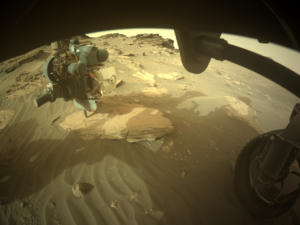
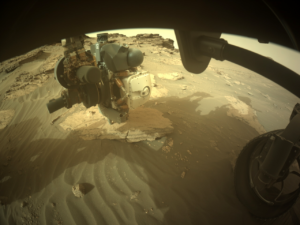
A piece of string-like material photographed on Mars by the Perseverance Rover just last week has suddenly disappeared, according to recent NASA photos obtained by its rover on the Red Planet.

The wiry-looking substance many likened to a piece of string or thin pasta first appeared in photographs taken by the rover on July 12th, photos that were shared by NASA earlier this week. However, a photo taken four days later shows the string has somehow disappeared.

Mars String

Photo taken by Perseverance on July 12 shows Martian “string”

Image Credit NASA/JPL-CalTech

Mars String

Photo taken by Perseverance on July 16 reveals the “string” has disappeared.

Image Credit NASA/JPL-CalTech

Since landing on the red planet, humanity’s various rovers have made a habit of taking odd, unusual, often perplexing photos. In some cases, like the “flower” or recently discussed “door” on Mars, the photos ultimately proved to be natural formations instead of foreign objects.

Of course, Martian rovers bring their own junk with them. And many of the more infamous photos sent back from those rovers are of their own pieces of human-made debris.

NASA’s experts told the media the recent photograph is likely something artificial and not a natural formation masquerading as a manufactured object. However, rather than a remnant of a kite flown by E.T. on his Martian holiday, the same experts say this string was also probably a piece of material from the rover’s landing rocket.

“The string could be from the rover or its descent stage, a component similar to a rocket-powered jet pack used to lower the rover to the planet’s surface safely,” a Perseverance mission spokesperson at NASA’s Jet Propulsion Laboratory told CNN.

The same spokesperson concedes that the string was photographed in an area not previously visited by Perseverance but guessed that the string likely blew there on its own.

Either that. Or it has a completely different origin.

Adding more mystery to the mystery, when the rover passed over the same spot on July 16th, the string had magically disappeared. Once again, most suggest that the string left the same way it arrived, on a gust of wind.

Still, given the incredibly thin Martian atmosphere and the great lengths designers had to go through just to get the Ingenuity helicopter to grasp that atmosphere and take flight, it would take some mighty gusts of wind to send that string into and out of the same spot within a four day period. So, for now, at least, the mystery of the Martian string remains.

  • Follow and Connect with Author Christopher Plain on Twitter @plain_fiction

 { https://thedebrief.org/ }

Hoe vind je dit bericht?
Geschreven door peter om 00:30 Stuur door

Uranus and Neptune are Actually Pretty Much the Same Color

Scientists reprocessed Voyager 2 images to get the "true" colors of Uranus and Neptune. Turns out they're a pretty blueish-green. Courtesy NASA/Irwin, et al, Anton Pozdnyakov.

Scientists reprocessed Voyager 2 images to get the "true" colors of Uranus and Neptune. Turns out they're a pretty blueish-green. Courtesy NASA/Irwin, et al, Anton Pozdnyakov.

Uranus and Neptune are Actually Pretty Much the Same Color

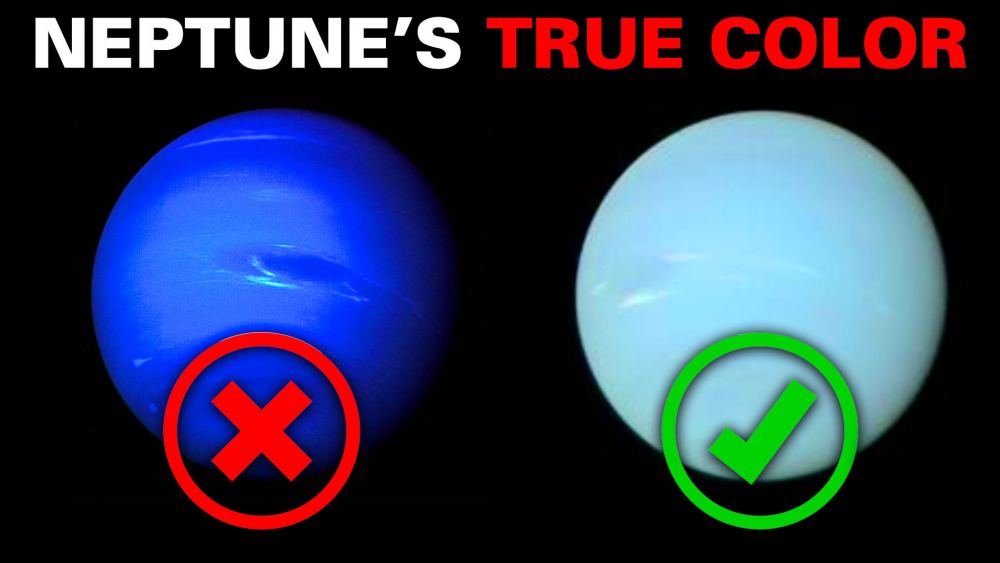
In the late 1980s, the Voyager 2 spacecraft snapped the “canonical” up-close images of Uranus and Neptune. In those views, Uranus was a pretty greenish-blue and Neptune appeared a deep azure color. It turns out that both planets are pretty close in color: a greenish-blue more akin to Uranus’s appearance.

No, Uranus and Neptune haven’t swapped color values. It turns out that those images aren’t precise recordings of their actual colors. Planetary scientists re-examined the Voyager 2 images and compared them to more recent observations made with both space-based and ground-based observatories. Then they created a model of what the colors should be. After that, they re-processed the images to come up with a more “true color” view of each planet. The result is a more realistic view of both worlds.

Having a better sense of each planet’s true color allows scientists to better understand actual changes in their atmospheres due to internal activity and seasonal shifts in position and temperature. In particular, the observations and color redefinitions help reveal something about the mysterious color changes that Uranus undergoes during its 84-year orbit.

Voyager 2/ISS images of Uranus and Neptune, released shortly after the Voyager 2 flybys in 1986 and 1989, respectively, compared with a reprocessing of the individual filter images in this study to determine the best estimate of the true colours of these planets. Credit: Patrick Irwin, University of Oxford.

Voyager 2/ISS images of Uranus and Neptune were released shortly after the Voyager 2 flybys in 1986 and 1989, respectively. They’re compared here with a reprocessing of the individual filter images to determine the best estimate of the true colors of these planets. Credit: Patrick Irwin, University of Oxford.

What Voyager 2 Saw at the Ice Giants

The Voyager 2 spacecraft whizzed past Uranus and Neptune in 1986 and 1989, respectively. It was on a lightning-fast visit to each planet. Both close approaches lasted less than a day apiece. That gave the spacecraft a finite amount of time to gather as much information as possible. To get good pictures of the planets, Voyager’s cameras took images through different filters. The imaging team was under tremendous time constraints, with press conferences to prepare for nearly every day. They combined the single-color images and processed them to make the “press release” views we all know and love.

NASA’s Voyager 2 spacecraft captured these views of Uranus and Neptune (l, r, respectively) during its flybys of the planets in the 1980s.

NASA’s Voyager 2 spacecraft captured these views of Uranus and Neptune (l, r, respectively) in the 1980s.

Think of it like taking a landscape image with your smartphone in black-and-white mode. Then you take the same one with different-colored filters. After that, you’d drag them into an image-processing software package and combine them. Depending on how they look, you might tweak them a bit in the contrast. Or you could enhance some colors to bring out specific features.

That’s what the Voyager imaging team did. For Neptune, they cranked up the image contrast to bring out specific clouds, cloud bands, and storms. That meant applying a bit more blue to increase the contrast. The resulting image was pretty and certainly did showcase those odd features—which caught everyone’s attention during the flybys. But, did the images reflect reality?

Neptune, as seen by Voyager 2 in 1989. The deep blue color applied helped enhance the view of features in the atmosphere. Image Credit: NASA/JPL

Neptune, as seen by Voyager 2 in 1989. The deep blue color applied helped enhance the view of features in the atmosphere. Image Credit: NASA/JPL

The same question gets asked about Uranus’s color, especially since its appearance has changed slightly from the canonical Voyager 2 image in the intervening decades. The Voyager 2 mission took spectra of Uranus as it flew by and confirmed that the planet’s atmosphere is mainly hydrogen and helium, with a small amount of methane. That composition was well-known from ground-based observations and spectra since the early part of the 20th century.

Determining True Planetary Colors of Uranus and Neptune

Professor Patrick Irwin and a team of scientists at Oxford University in the UK set out to answer questions about the actual colors of Uranus and Neptune. They analyzed the Voyager 2 images, plus studies made by the Hubble Space Telescope, ESO’s Very Large Telescope, and others, to come up with a model of the planets’ actual colors.

“Although the familiar Voyager 2 images of Uranus were published in a form closer to “true” color, those of Neptune were, in fact, stretched and enhanced, and therefore made artificially too blue,” said Irwin. “Even though the artificially saturated color was known at the time amongst planetary scientists – and the images were released with captions explaining it – that distinction had become lost over time. Applying our model to the original data, we have been able to reconstitute the most accurate representation yet of the color of both Neptune and Uranus.”

A reconstruction by Irwin, et al, of the visible colors of Uranus and Neptune from Voyager 2/ISS NAC observations, using their processing model to even out the colors. Courtesy: Irwin, et al.

Essentially, the team “rebalanced” the colors of both planets. The result is that both are similar shades of greenish-blue, although Neptune still has a bit more blue to it than Uranus does. However, Uranus sometimes develops a bit more green over its poles.

These colors seem to better match long-stand observations of both planets made at Lowell Observatory between 1950 and 2016. According to Heidi Hammel, a scientist who has studied the two planets for years, rebalancing the colors in Uranus and Neptune imagery is a good thing. “The misperception of Neptune’s color, as well as the unusual color changes of Uranus, have bedeviled us for decades,” she said. “This comprehensive study should finally put both issues to rest.”

What Causes Color Changes on Uranus?

Scientists may be happy with the colors of these ice giants now, although they do still note some slight seasonal color shifts in both planets throughout their orbits. In particular, the changing appearance of Uranus over time remains something of a mystery to be solved. For example, the Lowell observations show something intriguing: Uranus appears a little greener at its winter and summer solstices. That’s the point in its orbit when one of the planet’s poles is pointed towards our star. Things change during the equinoxes when the Sun is over the equator. Then, it has a somewhat bluer tinge.

Part of that change is due to Uranus’s unusual spin. It rolls around the Sun on its side, pointing one or the other of its poles at the Sun during the solstices. (Recently, JWST took advantage of that positioning to grab a look at its northern polar region.) The “tipped” position of Uranus likely forces some changes in its reflectivity at those times, making it look brighter to us here on Earth. Now the big question is, do those changes indicate something else happening in the atmosphere?

Uranus imaged by Voyager 2 in 1986. Its rotational axis is tipped over 89 degrees from the plane of the Solar System. During its "year" one pole or the other points toward the Sun at the solstices. Credit: NASA

Uranus was imaged by Voyager 2 in 1986. Its rotational axis is tipped over 89 degrees from the plane of the Solar System. During its “year” one pole or the other points toward the Sun at the solstices. Credit: NASA

In the paper they published about this work, Irwin and the team suggest that the changes that Lowell Observatory saw could be caused by Uranus’s distance from the Sun. That affects the production of a dark haze—a sort of “polar hood”. It settles over the upper atmosphere at the poles. Production would be more intense when Uranus is closest to the Sun. That would explain a change in reflectivity and brightness. The team modeled a hood that produced a steadily thickening haze, probably consisting mostly of methane ice. The model simulation showed that the ice particles increased reflection at green and red wavelengths at the poles. That could explain the greenish tint astronomers see at solstice.

Tracking Changes on Uranus

The modeling and re-jiggering of imagery of Uranus, in particular, go a long way toward explaining Uranus’s color changes. “This is the first study to match a quantitative model to imaging data to explain why the color of Uranus changes during its orbit,” said Irwin.

At the moment, Uranus is heading into its high summer season. That should cause its northern polar hood to thicken and grow. It may end up looking more like the hood seen in the Voyager 2 images and the team’s model. Irwin suggests that the Hubble Space Telescope and the Very Large Telescope should focus on spectroscopic studies of the planet to watch it change. Future Hubble observations should also use filtering methods that correlate with the Voyager imaging system filters to make better comparisons. It’s likely that future studies should be able to replicate the work Irwin and his team have done, and do more to explain the changes that Uranus’s atmosphere appears to experience as it moves through its seasons.

For More Information

{ https://www.universetoday.com/ }

Hoe vind je dit bericht?
Geschreven door peter om 00:19 Stuur door

NASA Selects the MAGGIE Solar-Powered Aircraft for the 2024 NIAC Program

2024-ph-i-zha-graphic-2000x1200.jpg

Graphic depiction of Mars Aerial and Ground Global Intelligent Explorer (MAGGIE). Credit: Ge-Cheng Zha

NASA Selects the MAGGIE Solar-Powered Aircraft for the 2024 NIAC Program

Since 1998, the NASA Innovative Advanced Concepts program has fostered innovation by accepting new and unconventional proposals from the scientific community. Those selected are awarded funding to conduct early-stage technology studies that could lead to applications that help advance the agency’s scientific and exploration objectives. In a recent press statement, NASA announced the 13 concepts it has selected for Phase I development, which will receive a combined award of up to $175,000 in grants to assess the concepts’ feasibility and develop the technology further.

This year’s selectees range from a sample return from the surface of Venus, a fixed-wing aircraft for Mars, a swarm of probes to travel to Proxima Centauri and explore its system of exoplanets, and more. One of the more eye-catching is the Mars Aerial and Ground Global Intelligent Explorer (MAGGIE) proposed by Ge-Cheng Zha, a Professor of Aerodynamics at the Univeristy of Miami and the President of Coflow Jet LLC. The concept calls for a compact, fixed-wing, solar-powered aircraft capable of vertical take-off and landing (VTOL).

A collage of illustrations highlighting the novel concepts proposed by the 2024 NIAC Phase I awardees. Credit: (clockwise, from upper right) Benner/Zhang/McQuinn/Romero-Calvo/Eubanks/Carpenter/Bickford/Romero/Calvo/Cabauy/ Landis/Rothschild/Zha/NASA

Through the NIAC, NASA maintains a strong tradition where game-changing proposals submitted by the public became missions that made crucial contributions. As NASA Associate Administrator Jim Free said in the statement:

“The daring missions NASA undertakes for the benefit of humanity all begin as just an idea, and NIAC is responsible for inspiring many of those ideas. The Ingenuity helicopter flying on Mars and instruments on the MarCO deep space CubeSats can trace their lineage back to NIAC, proving there is a path from creative idea to mission success. And, while not all these concepts will fly, NASA and our partners worldwide can learn from fresh approaches and may eventually use technologies advanced by NIAC.”

According to Zha’s proposal paper, the inclusion of the CoFlow Jet (CFJ) deflected slipstream technology means that MAGGIE will be capable of cruising at Mach 0.25 (~300 km/h; 190 mph) with a cruise lift coefficient (CL) of 3.5 – nearly an order of magnitude higher than conventional subsonic aircraft in Mars’ thin atmosphere. A fully charged battery would last 7.6 Martian days (sols), giving MAGGIE a range of 179 km (111 mi) at an altitude of 1,000 m (3280 ft). The total range of MAGGIE for an entire Martian year – which works out to 668 sols or 687 Earth days – is 16,048 km (9972 mi). As Zha told Universe Today via email, the proprietary CFJ technology consists of three elements:

“First, CoFlow Jet (CFJ) active flow control enhances lift coefficient, which is needed to overcome the low air density on Mars (1% of that on Earth). Conventional lift coefficient will not be able to lift a useful payload. Second, CFJ removes flow separation or stall. Due to the low air density on Mars, the Reynolds number is very low, which makes the  Aircraft prone to flow separation and stall. If the aircraft stalls, the aircraft will crash, and the game is over.

“Third, CFJ enables deflected slipstream, which is the flow pulled by the propeller. It can turn the flow 90 deg downward so that the VTOL aircraft does not need to tilt the propellers upward at hover. The propeller will remain at the forward-facing position like the at cruise. The CFJ is used in the flap to turn the flow. It makes the VTOL aircraft much simpler than conventional aircraft.”

Mars Ingenuity helicopter on the surface of Mars

Image of the Mars Ingenuity helicopter.

Credit: NASA

The mission profile envisioned here would consist of three atmospheric and geophysical investigations. These would explore how long Mars had a magnetic field, the source of methane signals detected by the Curiosity rover in the Gale Crater, and in-depth mapping of the subsurface water ice observed around Mars’ mid-latitudes. Its reliance on solar energy also means that the mission (barring an accident) could remain operational indefinitely. In short, MAGGIE would be able to perform the first global-scale atmospheric mission of Mars and would be the first concept to enable the ongoing exploration of the Red Planet.

“It has a global scale range. It can go anywhere on Mars,” said Zha. “All the previous rovers can only explore a point on Mars. Their ranges are very limited. MAGGIE can not just do the examination on the ground surface, but also examine the atmosphere since it flies.”

The professor also noted how his concept pays homage to the Ingenuity helicopter, which effectively demonstrated the potential for airborne missions on Mars. MAGGIE, he claims, would be similarly engaging to the public because of its audacious nature and the variety of environments it could explore, study, and image. In keeping with the proud tradition of NASA Spinoff, Zha also noted how developing this concept for investigating extraterrestrial environments will have applications for VTOL technologies here on Earth:

“Currently, there is a big movement on Earth to develop eVTOL for urban air mobility. They all need to use tilt rotors, tilt wings, and lift-plus-cruise. It is heavy, draggy, and inefficient. Using the same technology of CoFlow Jet deflected slipstream of MAGGIE, we can improve the efficiency of the eVTOL on Earth significantly.”

Further Reading: 

{ https://www.universetoday.com/ }

Hoe vind je dit bericht?
Geschreven door peter om 22:37 Stuur door

Titan’s “Magic Islands” Could Be Floating Blobs of Organic Solids

078.jpg

A false-color image based on Cassini data shows Ligeia Mare on Titan. Credit: Howard Zebker / Stanford

Titan’s “Magic Islands” Could Be Floating Blobs of Organic Solids

When the Cassini spacecraft returned radar scans of the surface of Saturn’s moon Titan, the results were mindblowing. It revealed giant lakes or seas of liquid methane, a complete absence of waves and what seemed to be islands in the giant bodies of water. Now a team of scientists think they may be blobs of organic molecules that form in the atmosphere, collect in the lakes and float around!

The bus sized space probe Cassini was launched in October of 1997. The journey took the craft 3.5 billion km using gravitational slingshots following launch from Venus (twice), Earth and Jupiter before arriving in July 2004. The mission at Saturn lasted for 14 years when Cassini dived into the atmosphere of Saturn on 15 September 2017. While it was there it orbited Saturn a total of 290 times, explored many of its moons and discovered seven more. 

Artist impression of Cassini Space Probe

A particularly interesting part of the mission was the Huygens probe that hitched a ride aboard Cassini with Titan as its destination. Titan is Saturn’s largest moon, the second largest moon in our Solar System and larger even than our own Moon and the planet Mercury. It’s also the only moon known to have a dense atmosphere and large, stable bodies of water on its surface. 

Natural color image of Titan taken by Cassini in January 2012. (Credit: NASA/JPL-Caltech/Space Science Institute)

The atmosphere of Titan has a neat trick, it transforms gasses like methane and nitrogen (of which there is plenty in the atmosphere) into organic compounds. The team, led by Xinting Yu from the University of Texas studied what happens to those compounds when they reach the surface of the Moon. 

Surpisingly, they found that the compounds reach the surface as solids, even on the lakes. Just what happens then was what the team were interested to explore. If they were structured like a sponge, mostly full of empty space then they would simply float. If on the other hand they were solids, they may still float depending on their composition, otherwise they will just sink to the lake bed. 

One mysterious feature of the Titanian (if that’s even a word) lakes that was picked up ws temporary bright spots seen by radar. They were dubbed ‘magic islands’ because they seemed to be only temporary features. The team found that the only plausible explanation for the observations was that the solid material landing on the surface.. and by chance, in the lakes, must be porous in nature giving it the ability to float. 

Source : 

{ https://www.universetoday.com/ }

Hoe vind je dit bericht?
Geschreven door peter om 22:26 Stuur door

Japan’s New X-Ray Observatory Sees First Light

XRISM-supernova-remnant.jpg

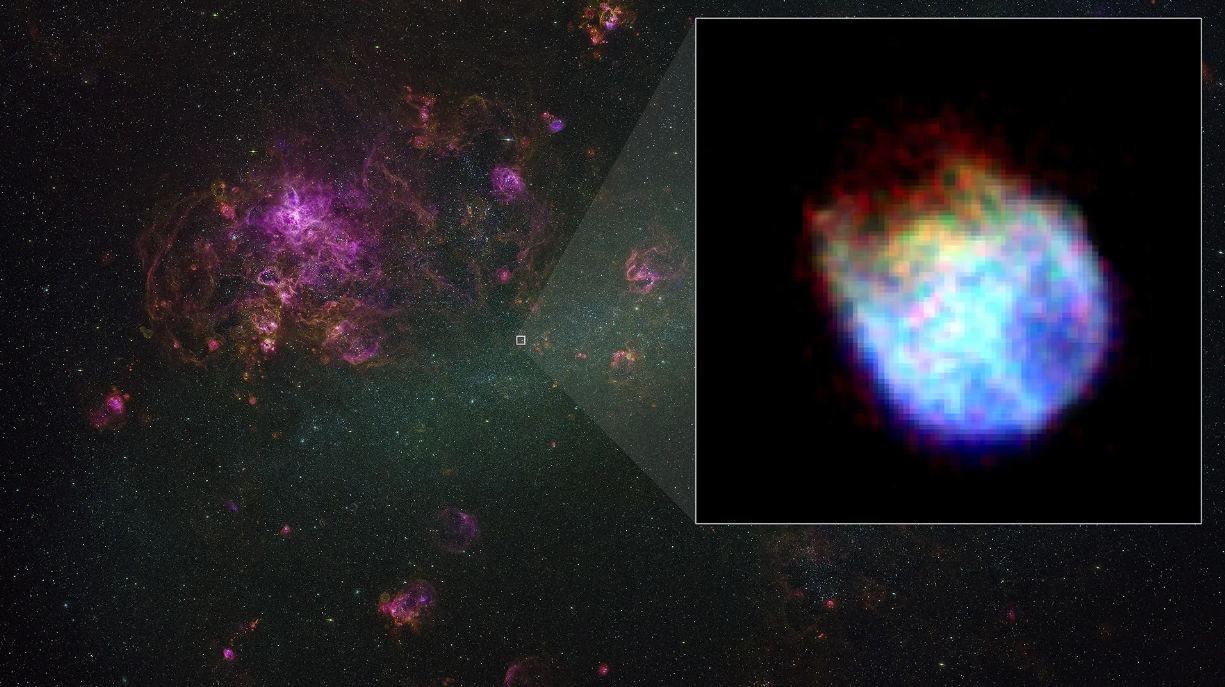
Supernova remnant N132D lies in the central portion of the Large Magellanic Cloud, a dwarf galaxy about 160,000 light-years away. XRISM’s Xtend captured the remnant in X-rays, displayed in the inset. Although bright in X-rays, the stellar wreckage is almost invisible in the ground-based background view taken in optical light. Credit: Inset, JAXA/NASA/XRISM Xtend; background, C. Smith, S. Points, the MCELS Team and NOIRLab/NSF/AURA

Japan’s New X-Ray Observatory Sees First Light

XRISM, the X-ray Imaging and Spectroscopy Mission, is a joint NASA/JAXA mission led by JAXA. The X-ray space telescope began its mission in low-Earth orbit on September 6th, 2023. Science operations won’t begin until later this year, but the satellite’s science team has released some of the telescope’s first images.

XRISM is a stop-gap telescope. Our existing X-ray observatories, XMM Newton and Chandra, are aging, and their missions will end soon. Their replacement, the European Advanced Telescope for High Energy Astrophysics (ATHENA), won’t launch until 2035, leaving a years-long gap with no X-ray telescope coverage. Japan’s Hitomi X-ray observatory was meant to succeed XMM Newton and Chandra, but it failed a few weeks after launch.

Even though XRISM is intended as a fill-in mission, it’s still very powerful and will deliver robust scientific observations.

“XRISM will provide the international science community with a new glimpse of the hidden X-ray sky,” said Richard Kelley, the U.S. principal investigator for XRISM at NASA’s Goddard Space Flight Center in Greenbelt, Maryland. “We’ll not only see X-ray images of these sources but also study their compositions, motions, and physical states.”

Some new images from the telescope show just how powerful this ”stop-gap’ observatory is.

XRISM has two instruments: Resolve and Xtend. Resolve is a microcalorimeter spectrometer, a cryogenic instrument that’s kept at barely above absolute zero. When a photon hits it, it warms the detector by a specific amount related to its energy. “By measuring each individual X-ray’s energy, the instrument provides information previously unavailable about the source,” NASA explains.

Xtend is an X-ray CCD camera with a higher resolution than its predecessor on the failed Hitomi observatory.

The first image from XRISM at the top of the page is of a supernova remnant (SNR) in the Large Magellanic Cloud called N132D. The remnant is almost unseeable in the optical light image but is bright in X-rays. XRISM is a spectrometer and it created the most detailed X-ray spectrum of N132D ever.

XRISM's X-ray spectrum of N132 reveals the presence of Silicon, Sulfur, Argon, Calcium, and Iron. The numbers indicate the number of electrons lost, or the ionization state, required to produce each peak. These elements originated in the remnant's progenitor star and blasted out into space when it exploded as a supernova. Image Credit: JAXA/NASA/XRISM Resolve and Xtend

XRISM’s X-ray spectrum of N132 reveals the presence of Silicon, Sulfur, Argon, Calcium, and Iron. The numbers indicate the number of electrons lost, or the ionization state, required to produce each peak. These elements originated in the remnant’s progenitor star and blasted out into space when it exploded as a supernova. Image Credit: JAXA/NASA/XRISM Resolve and Xtend

The progenitor star was about 15 times as massive as the Sun and exploded when it depleted its hydrogen and collapsed in on itself. The wreckage, the supernova remnant, is about 3,000 years old and is still expanding. These remnants are important because they spread heavy elements throughout the galaxy, heat the interstellar medium, and accelerate cosmic rays. Their shockwaves can even compress nearby gas and trigger new star formation.

Brian Williams, NASA’s XRISM project scientist at Goddard, explained how XRISM will help us understand SNRs.

“These elements were forged in the original star and then blasted away when it exploded as a supernova,” said Williams. “Resolve will allow us to see the shapes of these lines in a way never possible before, letting us determine not only the abundances of the various elements present but also their temperatures, densities, and directions of motion at unprecedented levels of precision. From there, we can piece together information about the original star and the explosion.”

Measuring the chemical composition of objects is important in astrophysics, and XRISM is proving to be even better than expected at that task.

“Even before the end of the commissioning process, Resolve is already exceeding our expectations,” said Lillian Reichenthal, NASA’s XRISM project manager at Goddard. “Our goal was to achieve a spectral resolution of 7 electron volts with the instrument, but now that it’s in orbit, we’re achieving 5. What that means is we’ll get even more detailed chemical maps with each spectrum XRISM captures.”

Xtend, XRISM’s X-ray imager, plays an important role in the observations. Its large field of view means it can observe an area about 60% larger than the full Moon. The science team released an Xtend X-ray image of Abell 2319, a nearby galaxy cluster that’s the object of frequent study.

XRISM's Xtend instrument captured galaxy cluster Abell 2319 in X-rays, shown here in purple and outlined by a white border representing the extent of the detector. The background is a ground-based image showing the area in visible light. The pink is X-ray light from gas that permeates the cluster heated to millions of degrees. By measuring it with XRISM, astronomers can measure the mass of the entire cluster, an important point in understanding it. Image Credit: JAXA/NASA/XRISM Xtend; background, DSS

XRISM’s Xtend instrument captured galaxy cluster Abell 2319 in X-rays, shown here in purple and outlined by a white border representing the extent of the detector. The background is a ground-based image showing the area in visible light. The pink is X-ray light from gas that permeates the cluster heated to millions of degrees. By measuring it with XRISM, astronomers can measure the mass of the entire cluster, an important point in understanding it. Image Credit: JAXA/NASA/XRISM Xtend; background, DSS

The purple in the image is gas that is leftover from billions of years of star birth and death. XRISM will tell astronomers what elements are present and how abundant they are, especially elements heavier than hydrogen and helium, called ‘metals’ in astronomy. These XRISM observations will help us understand how the Universe has become enriched in metals over its 13+ billion-year history.

Astronomers have observed Abell 2319 with the Chandra and identified different substructures in the intracluster medium (ICM.) They found cold fronts between masses of cooler and warmer gases and even finer substructures within the fronts. It all hints at more complexity than previously thought, triggered by mergers between galaxies and groups and interactions with the cluster’s AGN. Abell 2319 is currently undergoing a major merger event, and since XRISM is more powerful than Chandra, it should reveal even more details about the merger.

But alongside the success represented by these first images, XRISM is facing its first challenge. An aperture door that protects the Resolve detector before launch hasn’t opened. This means that photons below 1,700 electron volts can’t reach the detector. XRISM personnel have made several attempts to open it but haven’t yet been successful. If it remains closed, then the mission won’t detect photons below 1,700 electron volts, while it’s designed to measure photons as low as 300 electron volts. This problem, however, doesn’t affect Xtend, and the XRISM team is still working on a solution.

Though the XRISM mission is primarily a partnership between NASA and JAXA, the ESA and the Canadian Space Agency are also involved.

An aperture that protects the Resolve instrument is stuck closed, meaning XRISM can't operate at its full electron volt detection range. Xtend, which has its own aperture, is unaffected. Image Credit: By ESA - https://www.esa.int/ESA_Multimedia/Images/2023/08/XRISM_in_a_nutshell, CC BY-SA 3.0 igo

An aperture that protects the Resolve instrument is stuck closed, meaning XRISM can’t operate at its full electron volt detection range. Xtend, which has its own aperture, is unaffected. Image Credit: By ESA – https://www.esa.int/ESA_Multimedia/Images/2023/08/XRISM_in_a_nutshell, CC BY-SA 3.0 igo

“It’s so exciting to see XRISM already carrying out such marvellous scientific observations, even though it is not yet fully calibrated,” says ESA Director of Science Carole Mundell. “It shows the potential this mission offers to our science communities for groundbreaking discoveries in the study of the most energetic phenomena in the Universe.”

{ https://www.universetoday.com/ }

Hoe vind je dit bericht?
Geschreven door peter om 22:19 Stuur door

Project 8200 Exposed: Unearthing the CIA’s Psychic Quest for Alien Base

Project 8200 Exposed  CIA Psychics Find Alien Bases Underground

In the shadowy corridors of Cold War espionage, where the United States and the Soviet Union vied for global supremacy, a lesser-known but equally intriguing battle was waged. This battle didn’t involve traditional weapons or soldiers but the human mind’s uncharted territories. Project 8200, a clandestine CIA initiative, epitomized this era’s peculiar mix of hard science and fringe exploration as it sought to employ psychic abilities to uncover alien bases purportedly hidden deep underground.

The Genesis of Psychic Spying

The 1970s marked a period when America, reeling from the cultural and political upheavals of the ’60s, was willing to explore unconventional military and intelligence tactics. The CIA, intrigued by reports of Soviet experiments in psychic espionage, initiated its own program to explore remote viewing — the practice of projecting one’s consciousness to remote locations to gather intelligence.

This initiative, which would later evolve into Project 8200, recruited individuals with purported psychic abilities. These individuals were tasked with using their powers to spy on Soviet installations and, quite accidentally, stumbled upon something even more extraordinary — alien bases concealed within Earth’s remote landscapes.

Mount Hayes: The Psychic Revelation

The turning point for Project 8200 came when one of the remote viewers, by a twist of fate, found himself projecting his consciousness to Mount Hayes in Alaska. This remote mountain, far from any civilization, was not just an ordinary peak but allegedly a covert extraterrestrial base. As the psychic delved deeper, he claimed to see non-human-built structures and sophisticated technology, far beyond human capabilities.

VIDEO:

This revelation was just the beginning. Further psychic investigations purportedly uncovered additional alien bases in Mount Perdido in Spain, Mount Inyangani in Zimbabwe, and Mount Ziel in Australia. These sites were described as hubs of high technology and energy, possibly serving as monitoring stations or relay points for an unknown extraterrestrial purpose.

The Science and Skepticism

Skeptics might dismiss Project 8200’s findings as fanciful at best. After all, remote viewing is a highly contested field, with many scientists questioning its validity. However, proponents argue that the consistency of psychic reports and the detailed descriptions of technology and locations lend some credence to the claims. Furthermore, the project’s existence reflects a period when the boundaries of science and pseudoscience were fluid, and the hunger for any strategic advantage in the Cold War led to some of the era’s most outlandish and fascinating explorations.

The Legacy of Project 8200

The supposed discovery of alien bases by CIA psychics is more than just a tale of Cold War eccentricity. It’s a narrative about the human quest for understanding, the desire to know what lies beyond our current capabilities, and the eternal question of whether we are alone in the universe. Project 8200 may not have provided definitive answers, but it certainly expanded the dialogue around these profound questions.

As we continue to explore space and the potential for extraterrestrial life, the legacy of Project 8200 reminds us that sometimes the search for the unknown takes us to the most unexpected places — even within the depths of our own minds. Whether or not alien bases exist tucked away in Earth’s remote landscapes, the very idea challenges us to keep an open mind about the possibilities of the universe and our place within it.

{ https://www.latest-ufo-sightings.net/ }

Hoe vind je dit bericht?
Geschreven door peter om 20:41 Stuur door

Five UFOs Over Area 51 Military Firing Range! Gov Release, UFO Sighting News.

Five UFOs Over Area 51 Military Firing Range! Gov Release, UFO Sighting News. 👽👀🛸

UAP,%20%E0%A4%89%E0%A4%AB%E0%A5%8C%20,%20%E0%A6%87%E0%A6%89%E0%A6%8F%E0%A6%AB%E0%A6%93,%20%C4%91i%CC%83a%20bay,%20MUFON,%20%E7%9B%AE%E6%92%83%E3%80%81%E3%82%A8%E3%82%A4%E3%83%AA%E3%82%A2%E3%83%B3,%20%20UFO,%20UFOs,%20%D0%9D%D0%9B%D0%9E%20,%20NLO,%20sighting,%20sightings,%20alien,%20aliens,%20ET,%20anomaly,%20anomalies,%20ancient,%20astrobiology,%20vreemdelinge,%20%203%20copy%206.png

If you ever see an airliner jet flying at this angle, get out of the way, its about to crash, these 5 UFOs identified by the US gov as passenger jets are not, I debunked the US gov theory. 

UAP,%20%E0%A4%89%E0%A4%AB%E0%A5%8C%20,%20%E0%A6%87%E0%A6%89%E0%A6%8F%E0%A6%AB%E0%A6%93,%20%C4%91i%CC%83a%20bay,%20MUFON,%20%E7%9B%AE%E6%92%83%E3%80%81%E3%82%A8%E3%82%A4%E3%83%AA%E3%82%A2%E3%83%B3,%20%20UFO,%20UFOs,%20%D0%9D%D0%9B%D0%9E%20,%20NLO,%20sighting,%20sightings,%20alien,%20aliens,%20ET,%20anomaly,%20anomalies,%20ancient,%20.png
 
Date of recording: May 31, 2023
Location of sighting: Area 51 old military firing range
Gov Source: 
Now this video release by the US gov just came out this week and it shows five cigar UFOs flying at the same angle, side by side in military formation over a western US military firing range, and guess what? The screams out Area 51! Thats right, it's the biggest and oldest firing range in that area. Also I believe that these UFOs are alien technology in the hands of the USAF. Why? Because Area S4 is within Area 51, and Area S4 is where they learn to use alien technology and scientist Bob Lazar said he saw 8 UFOs and he worked on one of them personally. Apparently some military person recorded this video and everyone else in the military tried to dismiss it as passenger jets. Guys, this is 100% proof that the USAF has whole fleets of alien built spaceships in that hands of USAF pilots. 
 
Scott C. Waring

{ https://www.ufosightingsdaily.com/ }

Hoe vind je dit bericht?
Geschreven door peter om 20:28 Stuur door

UFO that's shaped like the Millennium Falcon from Star Wars leaves experts baffled

UFO that's shaped like the Millennium Falcon from Star Wars leaves experts baffled

Boffins have spent six years probing the sighting in the village of Brandon, northeast of Bishop Auckland, Co Durham with boffins labelling it an 'unidentified object of some sort'

Hoe vind je dit bericht?
Geschreven door peter om 22:07 Stuur door

UFO that's shaped like the Millennium Falcon from Star Wars leaves experts baffled

UFO that's shaped like the Millennium Falcon from Star Wars leaves experts baffled

Boffins have spent six years probing the sighting in the village of Brandon, northeast of Bishop Auckland, Co Durham with boffins labelling it an 'unidentified object of some sort'

Hoe vind je dit bericht?
Geschreven door peter om 22:07 Stuur door

Meer van UFO'S of UAP'S, ASTRONOMIE, RUIMTEVAART, ARCHEOLOGIE, OUDHEIDKUNDE, SF-SNUFJES EN ANDERE ESOTERISCHE WETENSCHAPPEN - DE ALLERLAATSTE NIEUWTJES

↑ Terug naar de berichten