Naar de inhoud

UFO'S of UAP'S, ASTRONOMIE, RUIMTEVAART, ARCHEOLOGIE, OUDHEIDKUNDE, SF-SNUFJES EN ANDERE ESOTERISCHE WETENSCHAPPEN - DE ALLERLAATSTE NIEUWTJES

UFO's of UAP'S in België en de rest van de wereld
akke.beakke.be
Ontdek de Fascinerende Wereld van UFO's en UAP's: Jouw Bron voor Onthullende Informatie! Ben jij ook gefascineerd door het onbekende? Wil je meer weten over UFO's en UAP's, niet alleen in België, maar over de hele wereld? Dan ben je op de juiste plek! België: Het Kloppend Hart van UFO-onderzoek In België is BUFON (Belgisch UFO-Netwerk) dé autoriteit op het gebied van UFO-onderzoek. Voor betrouwbare en objectieve informatie over deze intrigerende fenomenen, bezoek je zeker onze Facebook-pagina en deze blog. Maar dat is nog niet alles! Ontdek ook het Belgisch UFO-meldpunt en Caelestia, twee organisaties die diepgaand onderzoek verrichten, al zijn ze soms kritisch of sceptisch. Nederland: Een Schat aan Informatie Voor onze Nederlandse buren is er de schitterende website www.ufowijzer.nl, beheerd door Paul Harmans. Deze site biedt een schat aan informatie en artikelen die je niet wilt missen! Internationaal: MUFON - De Wereldwijde Autoriteit Neem ook een kijkje bij MUFON (Mutual UFO Network Inc.), een gerenommeerde Amerikaanse UFO-vereniging met afdelingen in de VS en wereldwijd. MUFON is toegewijd aan de wetenschappelijke en analytische studie van het UFO-fenomeen, en hun maandelijkse tijdschrift, The MUFON UFO-Journal, is een must-read voor elke UFO-enthousiasteling. Bezoek hun website op www.mufon.com voor meer informatie. Samenwerking en Toekomstvisie Sinds 1 februari 2020 is Pieter niet alleen ex-president van BUFON, maar ook de voormalige nationale directeur van MUFON in Vlaanderen en Nederland. Dit creëert een sterke samenwerking met de Franse MUFON Reseau MUFON/EUROP, wat ons in staat stelt om nog meer waardevolle inzichten te delen. Let op: Nepprofielen en Nieuwe Groeperingen Pas op voor een nieuwe groepering die zich ook BUFON noemt, maar geen enkele connectie heeft met onze gevestigde organisatie. Hoewel zij de naam geregistreerd hebben, kunnen ze het rijke verleden en de expertise van onze groep niet evenaren. We wensen hen veel succes, maar we blijven de autoriteit in UFO-onderzoek! Blijf Op De Hoogte! Wil jij de laatste nieuwtjes over UFO's, ruimtevaart, archeologie, en meer? Volg ons dan en duik samen met ons in de fascinerende wereld van het onbekende! Sluit je aan bij de gemeenschap van nieuwsgierige geesten die net als jij verlangen naar antwoorden en avonturen in de sterren! Heb je vragen of wil je meer weten? Aarzel dan niet om contact met ons op te nemen! Samen ontrafelen we het mysterie van de lucht en daarbuiten.

Archief

Unveiling the Mysteries of the Sky: Extraordinary UFO Sightings in the Alaska Triangle

Unveiling the Mysteries of the Sky: Extraordinary UFO Sightings in the Alaska Triangle

The Most Shocking UFO Reports With Chilling EVIDENCE

The Alaska Triangle, a region famous for its pristine wilderness, also harbors a mystifying secret: it boasts the highest number of UFO sightings per capita in the United States. These sightings, coupled with compelling evidence, paint a picture of a sky teeming with unexplained phenomena.

The Enigmatic Encounters

Tales of strange lights and silent, flying objects have long been part of Alaska’s lore. One riveting account comes from Terry, who, along with his wife, witnessed two glowing orbs traversing the sky in a controlled manner. These orbs, described as cauldrons of molten metal with rotating lights, left no trace but awe and wonder in their wake.

In October 2020, the Alaskan coast became a stage for another unusual light display, performing maneuvers that defied conventional explanation. From Skagway to Juneau, numerous videos and photographs have captured these bewildering aerial phenomena.

Ketchikan’s Spectacular Sightings

Ketchikan, a southeastern Alaskan city, stands out with its frequent and vivid UFO encounters. A notable example is a video taken on New Year’s Eve 2012, showing unexplained lights on a mountain that remain a mystery to this day.

The Pyramid Enigma

Adding to the intrigue, counterintelligence agent Doug Mutchler unveiled a startling discovery: a subterranean structure in Alaska, shaped like a pyramid and larger than the Great Pyramid of Giza. This revelation, originating from seismic wave analysis following a nuclear detonation in China, points to hidden wonders beneath the Alaskan wilderness.

Recent Sightings and Continuing Mystery

As recently as 2020, residents of Wasilla and Palmer reported extraordinary sightings. From silent triangular formations to lights that defy physics, these accounts add layers to the already dense mystery enveloping Alaska.

VIDEO:

  • The Most Shocking UFO Reports With Chilling EVIDENCE | The Alaska Triangle

The Alaska Triangle remains a hotbed for UFO activity, with each sighting contributing to the enigma. These accounts, backed by visual evidence, challenge our understanding and invite us to look skyward, pondering the possibilities of what lies beyond.

RELATED

{ https://www.latest-ufo-sightings.net/ }

Hoe vind je dit bericht?
Geschreven door peter om 21:54 Stuur door

Bestaat Nessie echt? Duik in het mysterie van het monster van Loch Ness

Bestaat Nessie echt? Duik in het mysterie van het monster van Loch Ness

Bestaat Nessie echt? Duik in het mysterie van het monster van Loch Ness

©Shutterstock

In een verrassende gang van zaken hebben wetenschappers het bestaan ​​van Nessie als ‘plausibel’ bestempeld nadat ze gefossiliseerde plesiosaurusbeenderen in een Afrikaanse rivierbedding hadden ontdekt. Eerder werd aangenomen dat deze zeereptielen met lange nek, die lijken op het mythische monster van Loch Ness, uitsluitend in zout water leefden. Zou Nessie een levend overblijfsel uit het dinosaurustijdperk kunnen zijn? Voorlopig is er niets noemenswaardigs gevonden. Het mysterie rond het kolossale wezen van het meer blijft bestaan, en de twijfels over het bestaan ​​van het monster blijven bestaan.

De ontdekking

©Getty Images 

De ontdekking 

Een team van wetenschappers heeft gefossiliseerde overblijfselen van plesiosauriërs, kleine zeereptielen met lange nek, gevonden in een 100 miljoen jaar oud riviersysteem in de Sahara. Deze ontdekking heeft de speculatie doen herleven over de mogelijkheid dat het monster van Loch Ness meer is dan alleen een fictief verhaal.

Sahara woestijn
Sahara woestijn

De fossielen werden ontdekt in de Sahara-woestijn van Marokko. De bevinding suggereert dat deze reptielen niet alleen in zoutwater- maar ook in zoetwateromgevingen hebben gewoond, in tegenstelling tot eerdere opvattingen.

©Shutterstock 

"Aannemelijk"

Britse wetenschappers hebben de mogelijkheid van het bestaan ​​van een monster van Loch Ness in het verleden als ‘plausibel’ beschouwd vanwege een verbazingwekkende ontdekking.

Wat zijn ze?

©Shutterstock 

Wat zijn ze?

Plesiosaurussen, een groep zeereptielen, ontstonden ongeveer 230 miljoen jaar geleden. Deze opmerkelijke waterdinosaurussen floreerden tijdens het Jura-tijdperk en vertoonden zowel een enorme omvang als een indrukwekkende behendigheid.

Top roofdier

©Shutterstock 

Top roofdier

Plesiosaurussen zagen er intimiderend uit als een toproofdier in de oceanen, die snel grote prooien achtervolgden en verslonden. Hoewel de zoetwaterclassificatie niet eerder aan hen was toegewezen, trekt een recente ontdekking deze overtuiging in twijfel.

Een zoetwatermonster?

©Shutterstock 

Een zoetwatermonster?

Wetenschappers heroverwegen de mogelijkheid van een 'monsterbewoner' in het zoetwater Loch Ness in Schotland vanwege recente Noord-Afrikaanse fossiele ontdekkingen.

Loch Ness

©Shutterstock 

Loch Ness

Loch Ness ligt in de Schotse Hooglanden, ten zuidwesten van Inverness. Het is een uitgestrekte watervlakte met een lengte van ongeveer 37 km, met een diepste punt van 230 m (755 ft). Legenden over een wezen dat in de diepte rondspookt, zijn terug te voeren op de oudheid en de verhalen die door de Pictische volkeren werden verteld.

Oorsprong van de ijstijd

©Shutterstock 

Oorsprong van de ijstijd

De vorming van het meer vond plaats als gevolg van gletsjerprocessen in de Great Glen meer dan 10.000 jaar geleden, aan het einde van de laatste ijstijd. De Great Glen-breuk ontstond ongeveer 400 miljoen jaar geleden.

Natuurlijk geschiedenismuseum

©Shutterstock 

Natuurlijk geschiedenismuseum

De opmerkelijke ontdekking van Mary Anning, een skelet van een plesiosaurus, wordt nu permanent tentoongesteld in het Natural History Museum in Londen.

Plesiosaurus-fossielen

©Shutterstock 

Plesiosaurus-fossielen

Deskundigen zijn verbaasd over de bevindingen in Marokko. De indrukwekkende collectie omvat botten en tanden van volwassen individuen met een lengte van 3 meter, evenals een armbeen van een baby van 1,5 meter lang. De omstandigheden rond hun ontdekking op de rivierbedding in het Krijt-tijdperk blijven echter onverklaard.

Zoetwater- en zeewatertolerant?

©Shutterstock 

Zoetwater- en zeewatertolerant?

Nieuwe bevindingen uit de Sahara hebben paleontologen ertoe aangezet de habitat van bepaalde soorten waarvan voorheen werd aangenomen dat ze uitsluitend marien waren, te heroverwegen. Er wordt nu verondersteld dat plesiosauriërs het opmerkelijke vermogen hadden om te overleven in zowel zoet- als zoutwateromgevingen.

Aquatische dinosaurussen

©Getty Images 

Aquatische dinosaurussen

Onderzoekers geven aan dat de plesiosaurus in zoet water leefde en zich voedde, naast kikkers, krokodillen, schildpadden, vissen en andere waterdinosaurussen.

Spinosaurus

©Shutterstock 

Spinosaurus

Spinosaurus leefde ongeveer 99 miljoen jaar geleden in het huidige Noord-Afrika. Ondanks dat het een enorm landroofdier was, bezat het semi-aquatische neigingen en dook hij in het ondiepe water om vissen en andere zeedieren te vangen als aanvulling op zijn dieet.

Nothosaurus

©Shutterstock 

Nothosaurus

Nothosaurus, een zwemmend reptiel uit het Trias, leefde van vis en inktvis. Zodra de Nothosaurus zijn prooi onder water had gevangen, kwam hij weer boven water om stenen en kustlijnen te verslinden.

Ceratosaurus

©Shutterstock 

Ceratosaurus

Ceratosaurus, een vleesetende dinosaurus uit het Jura-tijdperk, staat bekend om zijn snuithoorns. Op deze afbeelding zien we er een die in een rivier waadt terwijl hij op waterdieren zoals vissen jaagt.

Zouden Plesiosauriërs in Loch Ness kunnen overleven?

©Shutterstock 

Zouden Plesiosauriërs in Loch Ness kunnen overleven?

Wetenschappers geloven dat het mogelijk is dat plesiosauriërs in zoet water hebben bestaan, wat de vraag doet rijzen of men in Loch Ness had kunnen gedijen.

Dinosaurus tijdperk

©Getty Images

Massale sterfte

De theorie verliest enige geloofwaardigheid als gevolg van het uitsterven van plesiosaurussen, dat samenviel met de ondergang van dinosauriërs 66 miljoen jaar geleden. De recente fossiele ontdekking in Afrika heeft echter onverwachts de discussie over ‘Nessie’ weer doen oplaaien.

Waarnemingen

©Getty Images 

Waarnemingen

Tijdens de jaren 1870 en 1880 waren er meerdere meldingen van een object dat het water bewoog en verstoorde, evenals de waarneming van een groot dier met korte poten dat uit Loch Ness tevoorschijn kwam. Deze observaties werden echter niet algemeen erkend. Niettemin begon in 1933 de legende van het monster van Loch Ness aan kracht te winnen.

Nessie op de foto?

Nessiemania
©Getty Images 

Nessiemania

In het begin van de jaren dertig verspreidde een rage genaamd Nessiemania zich over Groot-Brittannië. Op deze foto uit 1933 wordt een replica van het monster van Loch Ness voor de kerstperiode per aanhanger vervoerd naar Bertram Mills Circus in Olympia, Londen.

Aanvullend fotografisch bewijsmateriaal

©Getty Images 

Aanvullend fotografisch bewijsmateriaal

Het ongeïdentificeerde wezen kreeg al snel het label ‘Nessie’, wat leidde tot wijdverbreide fascinatie. Op deze foto uit 1954 voegt Urquhart Castle context toe, terwijl het vermeende monster in de buurt van het belangrijke monument lijkt te zwemmen.

Beroemdheidsstatus

©Getty Images 

Beroemdheidsstatus

Nessie's bekendheid zorgde ervoor dat ze een beroemdheid werd. Deze foto uit 1969 toont een lid van het Loch Ness Monster Investigation Team dat ijverig het oppervlak van Loch Ness in de gaten houdt op tekenen van leven.

Wat ligt eronder?

©Getty Images 

Wat ligt eronder?

In 1969 bouwde een Amerikaan genaamd Dan Scott Taylor Jr. zijn eigen gele onderzeeër genaamd de "Viperfish" en maakte meerdere duiken naar de bodem van Loch Ness. Zijn doel was om te ontdekken welke mysteries eronder lagen, maar helaas heeft hij tijdens zijn expedities niets gevonden.

'Loch Ness' (1996)

©Getty Images 

'Loch Ness' (1996)

De televisieserie 'Loch Ness' concentreert zich op het familiedrama en bevat Ted Danson en Joely Richardson. De plot volgt Dr. Jonathan Dempsey (Danson), een wetenschapper die ernaar streeft bewijs te leveren voor het bestaan ​​van het wezen.

Zinspelend als altijd

©Getty Images 

Zinspelend als altijd

Hier is de echte wetenschapper Thayne Smith Lowrance, in 1999 afgebeeld met een sonarapparaat tijdens een van zijn vele pogingen om het legendarische wezen te vinden. Maar Nessie bleek even zinspelend als altijd.

Werd Nessie gelokt door een paling?

©Getty Images 

Werd Nessie gelokt door een paling?

In 2019 was er een aankondiging die erop wees dat Nessie misschien wel een kolossale paling zou kunnen zijn. Onderzoek uitgevoerd naar het omgevings-DNA gevonden in Loch Ness bracht een aanzienlijke hoeveelheid paling-DNA aan het licht, zoals professor Neil Gemmell, een geneticus van de Universiteit van Otago (foto) beweert. Niettemin werd er geen bewijs voor het bestaan ​​van een monster ontdekt.

Nessie gevonden!

©Getty Images 

Nessie gevonden!

In het jaar 2016 werd een interessante ontdekking gedaan: de overblijfselen van een model dat het monster van Loch Ness afbeeldt uit de film 'The Private Life of Sherlock Holmes', gemaakt in 1970. Ingenieur John Haig, op de foto te zien, vond deze overblijfselen met behulp van een onderwaterrobot die kan worden ondergedompeld in Loch Ness.

Centrum en tentoonstelling van Loch Ness

©Shutterstock 

Centrum en tentoonstelling van Loch Ness

Toeristen die hopen op een Nessie-waarneming bij Loch Ness worden misschien teleurgesteld, maar ze kunnen nog steeds genieten van het unieke Loch Ness Centre & Exhibition in Drumnadrochit. Verrassend genoeg kun je zelfs een glimp opvangen van het legendarische wezen, dat gracieus poseert voor foto's!

Bronnen: (Newsweek) (Cretaceous Research), (BBC) (The Independent) (UOL) (The Guardian)

RELATED

{ http://starsinsider.com/ }

Hoe vind je dit bericht?
Geschreven door peter om 21:15 Stuur door

Virgin Galactic Flies Science Experiments to the Edge of Space

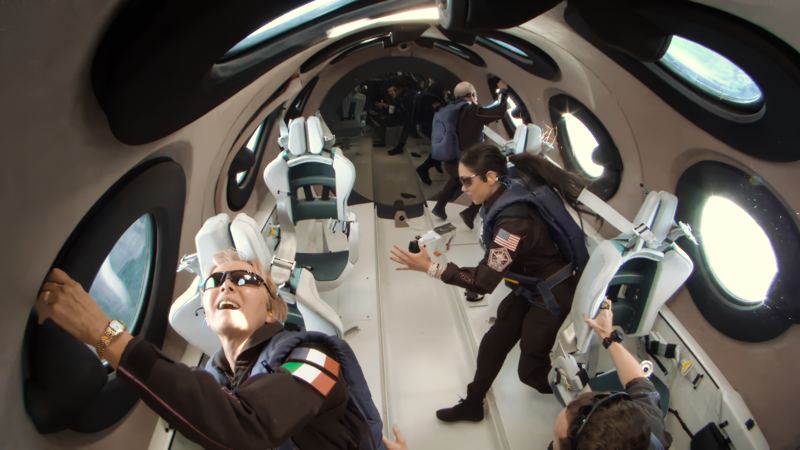
The Galactic 05 expedition crew at work at apogee. Courtesy Virgin Galactic.

The Galactic 05 expedition crew at work at apogee. Courtesy Virgin Galactic.

Virgin Galactic Flies Science Experiments to the Edge of Space

On November 2, Virgin Galactic flew Unity 2 on the Galactic 05 mission. It carried two scientists, a private tourist, and an astronaut trainer on a sub-orbital trip flown by Pilots Mike Masucci and Kelly Latimer. It was the company’s sixth successful flight in six months and the last for 2023.

The scientists aboard were Dr. Alan Stern of Southwest Research Institute (SWRI), joined by Kellie Gerardi, who was sponsored by the International Institute for Astronautical Sciences (IIAS) in Canada. Stern is also the principal investigator of the New Horizons mission to Pluto and the Kuiper Belt and is vice president at SWRI. He’s a long-time planetary scientist who has served on a number of missions. Stern has conducted suborbital research aboard NASA sounding rockets. He is the former board chair of the Commercial Space Flight Federation and a current member of the National Science Board.

Kelli Gerardi is active in aerospace, and bioastronautics and served as a payload specialist for this mission. She leads mission operations for Palantir Technologies, serves on the Defense Council for Truman National Security Project, and served on the board of directors for The Explorers Club. In addition, she is a prolific science communicator with several books and a Website to her credit. She also maintains an active social media presence.

During its almost four minutes in microgravity at apogee at 87.2 kilometers (54.2 miles) above Earth, the science team performed a series of biomedical experiments aimed at tracking human performance in space. Also included was a microgravity fluids experiment and a human-tended practice session with a mockup of a camera that will fly on future space missions.

Carrying Science to Apogee

During his brief time in microgravity, Stern used the Accutracker II heart and pulse monitor to collect physiological data on himself. “This particular version flew on the Shuttle many times,” he said. Stern and his co-investigator, Dr. Dan Durda have also flown with the harness on high-performance F-104 flights and parabolic missions aboard the so-called “Vomit Comet” aircraft. Stern described the flight on Galactic 05 as a risk-reduction mission to test the technology. “For me, this was mostly a training flight,” he said, noting that NASA will sign a contract with Virgin after 13 successful test flights like this one.

The Accutracker II harness worn by Alan Stern aboard Virgin Galactic's 05 expedition. Courtesy  Dan Durda/SWRI.

The Accutracker II harness worn by Alan Stern aboard Virgin Galactic’s 05 expedition. Courtesy Dan Durda/SWRI.

Their second experiment was a practice run learning to use a handheld Xybion wide-field visible and ultraviolet astronomical imager. “What we carried today was a mockup of the camera we’ll carry on the next flight,” he said. “It’s a training and learning experience, but this is part of the new era that it’s affordable enough that you can do that. I’m going to recommend to my colleagues in the funding agencies that they give these training flights to people.

Practicing for Future Flights

Essentially, the team has to show NASA that they can manipulate the camera in space efficiently. Stern’s aim was to learn to maneuver the camera in space. He had to stabilize it in microgravity and get the timing sequences down for a successful run with the real thing. “We now, as a result of Galactic 05 have videos of it in flight that tell us how long it took to do all the steps,” he said.

Other aspects of using the camera in space revolve around the transmissive nature of Unity’s windows on Unity. “What you don’t know is how glints affect the camera, how micro-abrasions and scratches on the windows produce flaws, what kind of exhaust film gets on them,” he said. ” “The only way to find that out is to get data through the windows in flight, to get data from three different windows, three geometries, and then compare it to Shuttle data that we have.”

Alan Stern practicing with a mockup of an astronomical camera his team hopes to fly aboard Virgin Galactic. Courtesy Virgin Galactic.

More Biomedical Studies at Apogee

Kellie Gerardi’s experiments collected biomedical and fluid behavior data during the Unity 2 flight. Her sponsor developed all three through a series of reduced gravity flights prior to the mission. The first examined questions about how confined fluids behave in low-gravity environments. That has implications for everything from spacecraft life support systems to administering medications in space through special syringes.

In her second experiment, Gerardi gathered biometric data from the Astroskin biomonitoring device built into a “smart shirt”. It provided ECG data as well as heart rate, breathing rate, and air volume. It also measured skin temperature during flight. Unity 2’s flight was the first time it collected data through all phases of a mission. Interestingly, hospitals, first responders, and others here on Earth also use this Astroskin.

Kellie Gerardi tested a biomedical Astroskin, a blood glucose monitor, and monitored a fluids experiment during Virgin Galactic's 05 expedition. She also made time to simply gaze at the view out the portholes during flight. Courtesy Virgin Galactic.

Kellie Gerardi tested a biomedical Astroskin suit, a blood glucose monitor, and tended a fluids experiment. She also made time to simply gaze at the view out the portholes during flight. Courtesy Virgin Galactic.

The third experiment measured blood glucose changes during flight. Changes in blood sugar are a well-known aspect of long-duration flight aboard the Shuttle and International Space Station. This is because prolonged periods of weightlessness induced a sort of “pre-diabetes” condition in astronauts. This sort of insulin resistance affects the way the muscles and liver absorb glucose and regulate blood sugar levels. The aim of Gerardi’s experiment was to see if that was affected during launch, apogee, and return to Earth.

Science at Suborbital Heights

After landing, both scientists talked about their experiences and the experiments they conducted. For Stern and SWRI, the mission was critical and went beyond just the two experiments he conducted. “When we set the objectives for this flight for Southwest Research, we had 8 objectives. Some were what we call minimum mission success and then accomplishing what we call slow mission success,” he said. “We got everything we wanted. All eight objectives were fully accomplished.”

Just after landing, Kellie Gerardi (left), Alan Stern (center), and space tourist Kettie Maisonrouge (right), talked about their experience during the Virgin Galactic flight. Image credit: Carolyn Collins Petersen

Just after landing, Kellie Gerardi (left), Alan Stern (center), and space tourist Kettie Maisonrouge (right), talked about their experience during the Virgin Galactic flight. Image credit: Carolyn Collins Petersen

For Gerardi, her Institute’s tests were critical confirmation of prior work. “The Astroskin unit I was wearing is the identical unit that is flown currently on the International Space Station,” said Gerardi. She noted that there was a significant difference between its use there and on her Virgin Galactic flight. “I was able to wear it during the launch, reentry, and landing portions of the flight. Normally astronauts put it on once they’re already in a microgravity environment,” she said. “So, it’s measuring pretty much all of the things you would expect. It’s like free vector cardiography (VCG is a method of getting 2D images of cardiac electrical activity). It’s got pulse oximetry and a number of different sensor data.”

Her third experiment focused on continuous blood glucose monitoring during flight. This test is in response to evidence that long-duration space missions produce insulin resistance in astronauts. The data from the monitor she wore adds new data to studies of this condition in space flyers. It should help answer questions about how quickly that resistance resolves after flight.

Gerardi was particularly excited about the fluids payload, and its operation in microgravity. “One of the experiments we flew had Shuttle heritage. It was bolted down on the Shuttle and the G jitter really disrupted the data,” she said. The Unity 2 flight was a good chance to see how the fluids in the experiment would behave. “What we saw was extraordinary. We exceeded anything that we have seen in parabolic flight here on Earth…we were collecting the highest-quality data and watching some really novel behavior from the fluid cell and being able to react to that in real-time.”

Why Do Suborbital Science?

A question that keeps coming up is, “Why do suborbital flights? Why not just go to the International Space Station?” It’s not like suborbital science is new. Scientists have been doing suborbital science for years—using sounding rockets and high-altitude balloons. Those continue today. So, going to suborbital heights is not a new idea. Going to orbit, on the other hand, adds several challenges. One is accessibility. The ISS is a limited commodity. To get an experiment on it takes years of planning and waiting for a launch window. Getting onto a suborbital flight still has some lead time, but as more of these missions happen, the accessibility increases.

A NASA Black Brant IX sounding rocket soars skyward into an aurora over Alaska during the launch on 5:13 a.m. EST, Feb. 22, 2017. Credit: NASA/Terry Zaperach

Suborbital Is Economical

Another challenge is cost. Cost figures vary across launch platforms, but, for example, a seat on Axiom can cost in the range of $70 million. Going up on suborbital flights to microgravity to do short-term experiments (or even a tourist ride) is much more accessible and much less expensive, Stern pointed out. “The new commercial vehicles, such as the Virgin rocket ship that we just flew on, fly at ten times lower costs and they fly presently about ten times more often, and soon hundreds of times, and then soon many hundreds of times more frequently,” he said. “So, it’s opening up access in a way that we never could afford to do, or had the capacity to do all the way back to the 1950s, when rocket-borne research was really getting underway.”

Virgin Galactic’s VSS Unity conducted her second powered test flight on Tuesday, May 29th. With six flights under their belts, the VG crews are planning for more in 2024. Credit: Virgin Galactic

Virgin Galactic’s VSS Unity conducted her second powered test flight on Tuesday, May 29th. With six flights under their belts, the VG crews are planning for more in 2024. Credit: Virgin Galactic

At the current time a tourist seat on Virgin Galactic’s Unity 2 cost around half a million dollars. (Those prices may well rise to ~$1 million, according to recent announcements from the company.) Science teams can expect to pay around $650,000 for a seat and equipment to get four minutes of microgravity in suborbital space. By comparison, someone flying a hyperbolic “vomit comet” type flight pays around $10,000 for an experience in a lunar-gravity (1/6 G) environment. An uncrewed suborbital rocket costs around $3 to $5 million (at the low end).

Training Scientists in Suborbital Space

Suborbital flight puts scientists back in control of experiments to be done in space. “You know, volcanologists go to volcanoes, astronomers go to observatories, oceanographers go into the ocean space, but space scientists have been going to control rooms,” Stern said. “And that’s not the best way to do your experiment because automating things is expensive and it’s error-prone, with lots of failure modes.” Gerardi agreed and pointed out that the research she did onboard allowed her to do things in microgravity that couldn’t be done on the ground.

Putting people into space, even for short periods of time in microgravity, is changing the face of space flight, according to both Unity 2 astronauts. “It’s going to be really transformative all the way across the 21st century and probably forever,” said Stern, also pointing out that his flight put Southwest Research Institute (where he is a vice-president), in a very competitive place for continuing human spaceflight for suborbital science. For IIAS, it’s a chance to enhance its robust educational programs that train future astronauts and explorers. “It’s a new era of access to space,” she emphasized, “for scientists and for civilians.”

The Galactic 05 expedition was the last Unity flight of the year. The next Unity 2 mission is planned for January 2024 and the company will then begin phasing out those flights by mid-year. The company is already working on the Delta suborbital craft to replace it and plans to open a new spacecraft plant in Phoenix next year. Virgin has announced layoffs as part of a process of streamlining the non-Delta workforce. The first Delta craft may launch as soon as 2026, and the company expects to serve both tourist and science research passengers.
For More Information

{ https://www.universetoday.com/ }

Hoe vind je dit bericht?
Geschreven door peter om 23:51 Stuur door

The Lunar Swirl Mystery Deepens

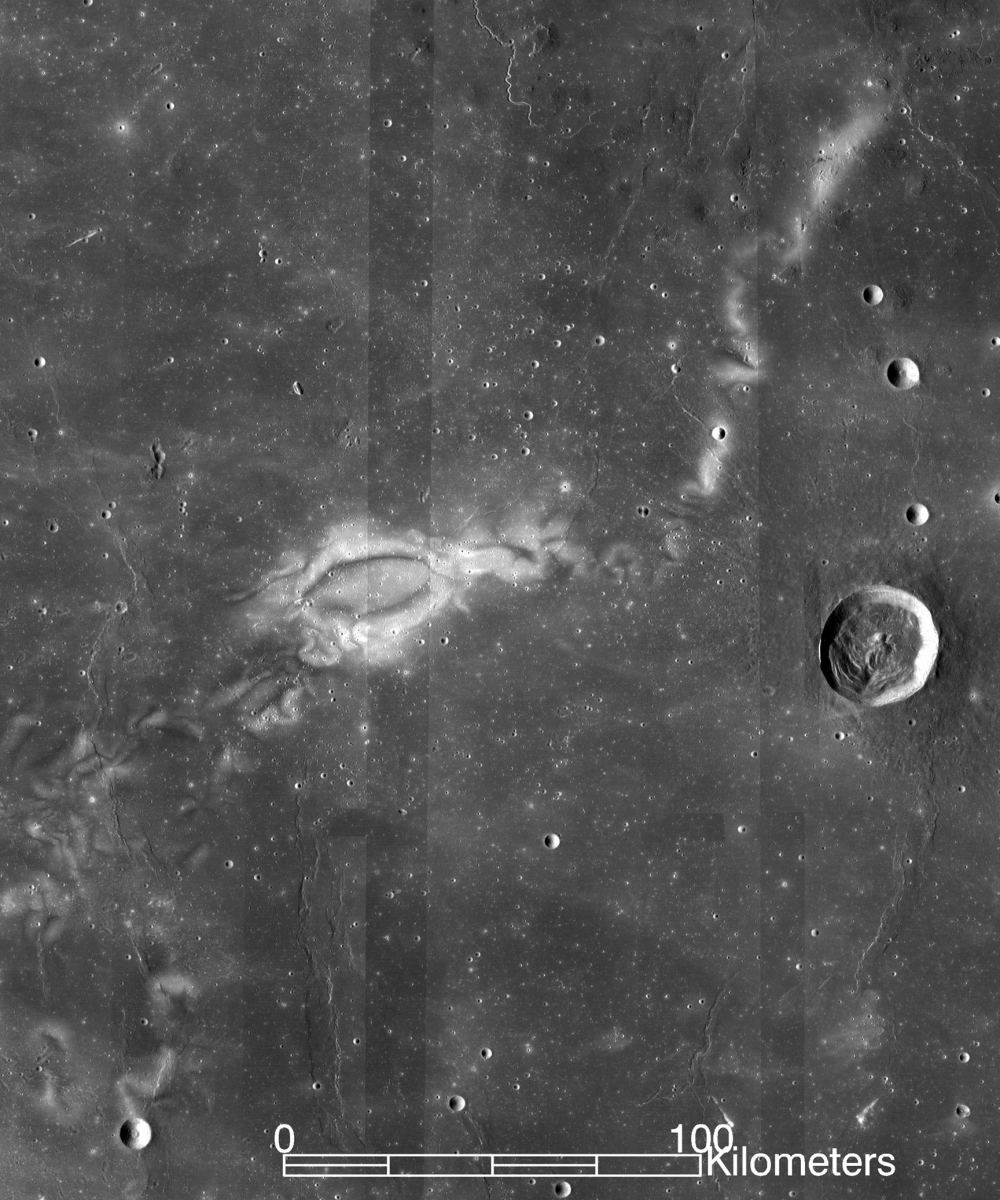
This is an image of the Reiner Gamma lunar swirl from NASA's Lunar Reconnaissance Orbiter. Credits: NASA LRO WAC science team 

This is an image of the Reiner Gamma lunar swirl from NASA's Lunar Reconnaissance Orbiter. Credits: NASA LRO WAC science team

The Lunar Swirl Mystery Deepens

For years, people noticed strange features on the Moon dubbed “Lunar Swirls.” They’re bright regions that appear to be concentrations of lighter-colored material on the surface. It turns out that interactions between the solar wind and magnetic regions on the Moon may play a role at two sites.

Scientists long thought that these swirls weren’t related to the surrounding topography, but it turns out there’s some kind of interaction going on between the swirl deposition and the surface. Planetary Science Institute senior scientist John Weirich led a team to study topographic data for lunar swirls at high resolution. They found a correlation between the swirl areas and lower topography in a region called the Reiner Gamma swirl.

About Swirl Regions

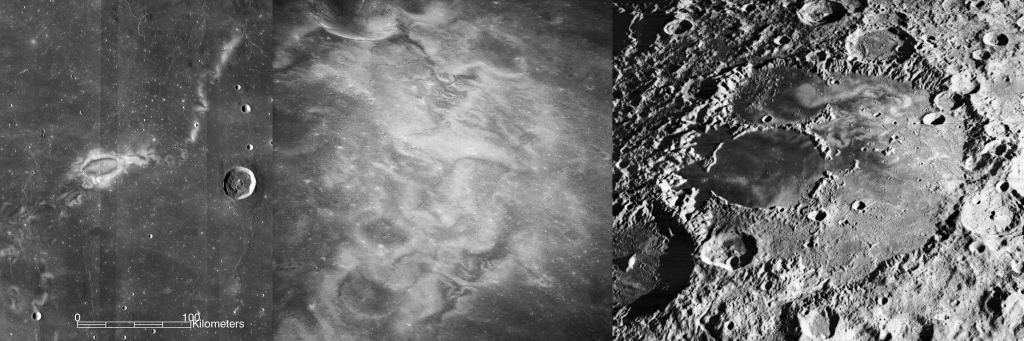
The Moon has a number of similar regions with high-contrast bright markings that appear to loop across the surface. Generally, they look like wide bright swirls separated by darker off-swirl lanes. The fact that they exist spurs questions about how they form and there isn’t a clear answer, yet. Once that mystery is solved, scientists will have a better understanding of how the lunar surface is affected by the solar wind, bombardment by micrometeorites, how the lunar soil “migrates”, and what other effects the local environment has on the surface.

Lunar swirls are found in several regions on the Moon. Courtesy NASA.

Lunar swirls are found in several regions on the Moon. Courtesy NASA.

“Lunar swirls have piqued scientists’ interest since they were discovered, partly because the scientific community doesn’t completely understand how they formed. There are many hypotheses about their formation process. Each hypothesis has observations that support it, but there are also other observations that contradict them,” Weirich said. “Since we don’t have a full understanding of how these swirls formed, we don’t completely understand the story they can tell us about the Moon. Forming them could involve a combination of well-understood processes interacting together or a currently unknown process. Unusual objects or phenomena are sometimes the key to obtaining deeper knowledge, and for this reason, lunar swirls are very intriguing. And the fact that they look really cool.”

Studying Swirls in Higher Detail

To do their work, Weirich’s team looked at earlier research showing that bright areas are 2-3 meters lower than dark areas, particularly in the Mare Ingenii lunar swirl. “However, it is not as simple as the bright areas are uniformly lower than the dark areas. If that was the case this relationship between topography and swirl would be easy to demonstrate by comparing an elevation map to a picture of the swirl. Instead, this relationship is only seen when we compare the average height of the bright areas and the average height of the dark areas.”

Weirich studied Lunar Reconnaissance Orbiter mission images and applied a special software suite to determine the surface topography. The team also used machine-learning tools on specific images. It classified the swirls into various units: bright areas (on-swirl)and dark areas (or “off-swirl”). The studies allowed them to identify transition regions between the two units, and they labeled those “diffuse-swirl”.

The correlation between topography and swirl formation still doesn’t explain exactly why they form. But, it does give planetary scientists some new clues as they study other swirl features on the Moon. At present, there are several theories about formation, but none of them explain all of the details. One idea is that they formed as a result of cometary impacts. That explains the brightness of these features. Another theory is that the swirls form when weak magnetic fields protect lighter-colored lunar surface soil (regolith) from the solar wind. Finally, weak electric fields created by brief interactions between the magnetic anomalies and solar wind plasma could play a role. Those fields could affect electrically charged fine dust on the surface. How topography plays into any of these theories is still an unknown.

How They Did It

The specialized software the team used does stereophotoclinometry to analyze the topography of a surface. It combines stereo imaging and photoclinometry to get the surface height of a region. The swirl units of interest were defined by machine learning procedures. The team then compared that information to the SPC-derived topography. That allowed them to statistically determine if height correlations existed and what differences they showed.

The SPC methodology has been used on various surfaces, including using data from the OSIRIS-REx mission, among other missions. Planetary scientists use SPC methodologies to describe the shapes of planets, asteroids, comets, and other small bodies. Still, there’s not yet a definite explanation for these swirls. However, the combo of high-resolution imaging, machine learning, and advanced software techniques gives planetary scientists more insight into their still-mysterious origins.

For More Information

{ https://www.universetoday.com/ }

Hoe vind je dit bericht?
Geschreven door peter om 23:21 Stuur door

NEW DETAILS ON SECRETIVE U.S. MILITARY X-37B SPACEPLANE’S NEXT MISSION ARE REVEALED, ALONG WITH A SURPRISE

VVLjOEuS?format=jpg&name=900x900

(USSF/Staff Sgt. A. Shanks)

NEW DETAILS ON SECRETIVE U.S. MILITARY X-37B SPACEPLANE’S NEXT MISSION ARE REVEALED, ALONG WITH A SURPRISE

Details about the seventh mission of the U.S. military’s mysterious X-37B Orbital Test Vehicle have been revealed, along with surprising news about the secretive spaceplane’s upcoming launch.

For the first time, X-37B Mission 7 (OTV-7) will see the robotic spaceplane launched on a SpaceX Falcon Heavy rocket, according to an announcement from The Department of the Air Force Rapid Capabilities Office and its partners at the U.S. Space Force.

The launch will occur on December 7, 2023, lifting off from Florida’s Kennedy Space Center.

While much is known about the X-37B and its past missions, several of the reusable robotic spaceplane’s operations remain mysterious. Carried into space aboard a rocket during its missions, the X-37B carries out orbital operations overseen by the Space Force, demonstrating reusable spaceflight technologies while facilitating a range of experiments and other operations for various agencies.

The spaceplane’s December launch, dubbed USSF-52, will include various experimental capabilities with several objectives.

X-37B

The X-37B is seen after its sixth mission, OTV-6

(Credit: Staff Sgt. Adam Shanks),

X-37B Program Director Lt. Col. Joseph Fritschen said the tests will help to broaden the current capabilities of the reusable spaceplane and, with the help of SpaceX’s Falcon Heavy rocket, will be able to carry out “multiple cutting-edge experiments for the Department of the Air Force and its partners.”

“These tests include operating the reusable spaceplane in new orbital regimes, experimenting with future space domain awareness technologies, and investigating the radiation effects on materials provided by NASA,” the U.S. Space Force said in a statement on November 8.

One of the experiments, aptly named “Seeds-2,” will be carried out during OTV-7 as part of a NASA test that will expose seeds to the radiation conditions of long-duration spaceflight. In addition to helping scientists better understand how radiation impacts plant seeds, the experiment aims to support NASA’s objectives in the coming years to facilitate long-term crewed space missions.

The X-37B’s last mission saw the introduction of a new service module, which broadened the mysterious spaceplane’s capabilities and facilitated more experiments than its initial five missions.

spaceplane

(Credit: Boeing)

X-37B Mission 6 (OTV-6) was the first to undertake a research experiment undertaken by the U.S. Naval Research Laboratory, called the Photovoltaic Radio-frequency Antenna Module experiment, which successfully displayed the capability of generating radio and microwaves through the collection of solar power.

Other experiments carried out during OTV-6 included tests similar to NASA’s upcoming “Seeds-2” experiment and the deployment of a small satellite called FalconSat-8 procured by the U.S. Air Force Academy and the Air Force Research Lab.

Fundamentally, the forthcoming OTV-7 mission will aim to perform similar tests with experimental technologies to help ensure space domain awareness during future missions.

“The X37B continues to equip the United States with the knowledge to enhance current and future space operations,” said Gen. B. Chance Saltzman, Chief of Space Operations, who said X-37B’s forthcoming mission will help showcase “the USSF’s commitment to innovation and defining the art-of-the-possible in the space domain.”

RELATED

{ https://thedebrief.org/ }

Hoe vind je dit bericht?
Geschreven door peter om 21:30 Stuur door

JAMES WEBB SPACE TELESCOPE HAS DISCOVERED SOMETHING ON A NEARBY EXOPLANET THAT COULD “RESHAPE OUR UNDERSTANDING” OF PLANETARY EVOLUTION

 YjaE1zqd?format=jpg&name=900x900

(European MIRI EXO GTO team/ESA/NASA)

JAMES WEBB SPACE TELESCOPE HAS DISCOVERED SOMETHING ON A NEARBY EXOPLANET THAT COULD “RESHAPE OUR UNDERSTANDING” OF PLANETARY EVOLUTION

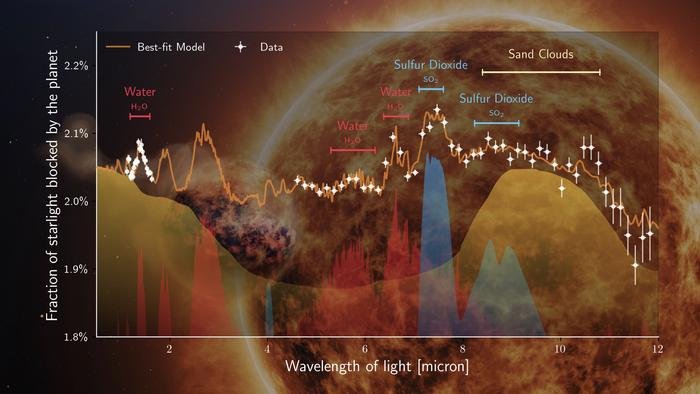
Astronomers report that the James Webb Space Telescope (JWST) recently detected water vapor, sand clouds, and sulfur dioxide in the atmosphere of the exoplanet WASP-107b, according to newly published findings. 

Led by a team of European astronomers from Belgium’s KU Leuven University, the researchers pointed the JWST’s Mid-Infrared Instrument (MIRI) at the exoplanet, located roughly 211 light-years from Earth. Their discovery, now published in Nature, has revealed the presence of water vapor, sulfur dioxide, and silicate sand clouds while notably lacking methane, a common greenhouse gas​

WASP-107b is a low-density exoplanet orbiting WASP-107. Discovered in 2017, the exoplanet immediately challenged our understanding of planetary development. The super-Neptune planet, meaning it’s larger than Neptune, has a surprisingly low density. This has implications for our understanding of gas giant formation and structure.

Moreover, it orbits very close to its star, with a year lasting only about 5.7 Earth days. Due to its proximity to its star, astronomers still need clarification on how the planet can retain an atmosphere, which generally would burn up due to its proximity to its star.

The recent discovery has only complicated astronomers’ understanding of this unique gas giant.

wasp-107b A transmission spectrum of the warm Neptune exoplanet WASP-107b, captured by the Low Resolution Spectrometer (LRS) of the Mid InfraRed Instrument (MIRI) on board JWST, reveals evidence for water vapour, sulfur dioxide, and silicate (sand) clouds in the planet’s atmosphere.
(Image: Michiel Min / European MIRI EXO GTO team / ESA / NASA; Klaas Verpoest (LUCA School of Arts, Belgium.)

Due to its atmospheric conditions, Neptune is distinguished by its ‘fluffy’ nature. Astronomers were able to peer deep into its atmosphere. This fluffiness, combined with the precision of the JWST infrared system, has enabled a new understanding of the planet’s atmospheric composition. 

The absence of methane in WASP-107b’s atmosphere is intriguing, hinting at a potentially warm interior and shedding light on the planet’s internal heat dynamics. Detecting sulfur dioxide, typically associated with the smell of burnt matches, was unexpected, as previous models had not predicted its presence. 

According to the report, due to the “fluffy” atmosphere and the general cooler temperatures of the planet’s host star, photons from the star can penetrate deeper into the planet’s gaseous atmosphere, allowing for complex chemical reactions to occur. Moreover, the discovery of water vapor in the atmosphere was also surprising since it seems connected to giant clouds made of sand.

Elements like water and sulfur do not appear often in cloudless atmospheres, so the fact that they were detected indicates that WASP-107b has high-altitude clouds. The JWST was able to peer into these clouds and indicated that they were a silicate-type material, similar to sand on Earth. According to traditional models of exoplanet formation, sand clouds like this usually form much closer to the planet’s surface, where the temperature is much warmer. However, since WASP-107b’s atmospheric temperature sits at around 500 degrees Celsius, the clouds seemingly “fluff” up into the upper atmosphere due to its close proximity to a star.

The endurance of these high-altitude sand clouds is similar to Earth’s water cycle. Silicate vapors from evaporated sand droplets in hotter, deeper layers rise and then recondense into clouds at cooler, higher altitudes. This vaporization and condensation process keeps the sand clouds persisting high in the atmosphere.

“The fact that we see these sand clouds high up in the atmosphere must mean that the sand rain droplets evaporate in deeper, very hot layers and the resulting silicate vapour is efficiently moved back up, where they recondense to form silicate clouds once more,” explained lead author Dr. Michiel Min. “This is very similar to the water vapour and cloud cycle on our own Earth but with droplets made of sand.”

  • electron

Professor Leen Decin of KU Leuven emphasized that JWST’s discovery is reshaping our comprehension of planetary formation and evolution, offering new perspectives on the Solar System itself. Moreover, the study demonstrates how JWST can characterize exoplanets without counterparts in our own Solar System.

WASP-107b, with all its fluffiness, points astronomers to a whole new host of possible planetary incarnations that have yet to be discovered. While this exoplanet is undoubtedly inhospitable to life, at least as we know it, it allows us to imagine strange new worlds that do not fit the mold of planetary evolution. 

{ https://thedebrief.org/ }

Hoe vind je dit bericht?
Geschreven door peter om 20:35 Stuur door

Mysterious 'explosive' sound from a 'UFO' over New England shook homes and rattled windows - and a Harvard physicist believes he has located the source

Mysterious 'explosive' sound from a 'UFO' over New England shook homes and rattled windows - and a Harvard physicist believes he has located the source

  • A loud boom that lasted for 12 seconds was heard and felt in New England
  • An observatory also pictured up the sound, leading to an investigation
  • READ MORE:  Harvard scientist believes 'exotic' metals found at the bottom of the ocean came from Earth-like exoplanet

New Englanders reported hearing a 'strange' sound on the evening of October 20, which shook homes and raddled windows for at least 12 seconds.

Harvard University's astronomical instruments recorded the noise, finding it did not resemble anything from birds, aircraft or wind.

Alien-hunting physicist and Harvard's former head of astronomy Avi Loeb to investigate the source of the 'unidentified flying object.'

Loeb determined the UFO released explosive energy equivalent to 2,400 pounds of TNT detected from over a 10-mile radius.

The sound was moving 1,115 feet per second when an observatory in Cambridge, Massachusetts detected it.

Loeb determined that the energy source likely came from an exploding mile-wide meteor during the Orionid shower that peaked in the area on October 21.

Avi Loeb determined the UFO released explosive energy equivalent to 2,400 pounds of TNT detected from over a 10-mile radius. The sound was moving 1,115 feet per second when an observatory in Cambridge, Massachusetts detected it

Avi Loeb determined the UFO released explosive energy equivalent to 2,400 pounds of TNT detected from over a 10-mile radius. The sound was moving 1,115 feet per second when an observatory in Cambridge, Massachusetts detected it

Loeb's Galileo Project observatory recorded the boom using a giant, ultra-sensitive microphone (pictured) he installed on the roof of a building on Harvard's campus

Loeb's Galileo Project observatory recorded the boom using a giant, ultra-sensitive microphone (pictured) he installed on the roof of a building on Harvard's campus

Loeb's Galileo Project observatory recorded the boom using a giant, ultra-sensitive microphone he installed on the roof of a building on Harvard's campus.

Andy Mead, who designed and constructed the system, contacted Loeb on October 21 after noticing something strange picked up by the sensors.

'I started getting messages this morning about a 'viral' sound that was heard throughout New England,' Mead shared in the note.

'Notably, the Mount Washington Observatory made a post about it as they had so many inquiries. 

'That post now has over 4,000 reactions, 1,000 comments, and 751 shares, many of whom heard the sound and are following the story.'

Reports stemmed from both states, traveling through Mount Washington, Boothbay Harbor, Maine and Sturbridge, where people heard an explosion over their homes around 7:43pm ET on October 20.

Andy Mead, who designed and constructed the AMOS system, contacted Loeb on October 21 after noticing a social media post about something strange in New Hampshire (pictured)

Andy Mead, who designed and constructed the AMOS system, contacted Loeb on October 21 after noticing a social media post about something strange in New Hampshire

(pictured)

Mead told Loeb he checked AMOS, finding 'a very interesting sound' that lasted for 12 seconds.

Loeb then created a website to crowdsource reports from other locations that could constrain the distance of the mystery source.

Harvard University's observatory recorded the noise, leading alien-hunting physicist Avi Loeb to investigate the source of the 'unidentified flying object'

Harvard University's observatory recorded the noise, leading alien-hunting physicist Avi Loeb to investigate the source of the 'unidentified flying object'

'Given the mission of the Galileo Project, one question came to mind: 'Is this an Unidentified Anomalous Phenomenon (UAP)? Are aliens using advanced technologies near Earth,' the physicists shared in a Medium post.

The signal was short but produced a sudden release of energy that sent a wave through Earth's atmosphere. 

Loeb found that the pressure wave had weakened by the time AMOS detected the sound, as it was moving 1,115 feet per second.

'Multiplying this speed by the duration of the pulse, 12 seconds, implies a shell width of 4 kilometers [2.4 miles] for the blast wave, implying a distance of about 40 kilometers [24.8 miles] from the explosion,' he shared.

'At that distance, the measured pressure disturbance suggested an explosive energy release of 2.4 kilotons of TNT. The inferred energy and distance are reminiscent of meteors, which are known to make their own music at high altitudes.'

The Orionid Meteor Shower, which takes place every autumn when Earth passes through a stream of debris from Halley's Comet, peaked on October 21 with up to 25 shooting stars every hour

The Orionid Meteor Shower, which takes place every autumn when Earth passes through a stream of debris from Halley's Comet, peaked on October 21 with up to 25 shooting stars every hour

The Orionid Meteor Shower, which takes place every autumn when Earth passes through a stream of debris from Halley's Comet, peaked on October 21 with up to 25 shooting stars every hour. 

Meteors, also known as shooting stars, come from leftover comet particles and bits from broken asteroids.

When comets come around the sun, the dust they emit gradually spreads into a dusty trail around their orbits.

Every year, Earth passes through these debris trails, which collide with our atmosphere and disintegrate to create fiery and colorful streaks in the sky.

Because this is an annual event, residents of New England reported hearing the same 'boom' in 2021, also on October 20.

{ https://www.dailymail.co.uk/ }

Hoe vind je dit bericht?
Geschreven door peter om 20:12 Stuur door

ESA’s Trace Gas Orbiter Observes Green Atmospheric Nightglow on Mars

ESA’s Trace Gas Orbiter Observes Green Atmospheric Nightglow on Mars

The atmospheric nightglow is observed on Earth. On Mars, it was something expected, yet never observed in visible light until now.

This image shows an artist’s impression of what nightglow might look like to an astronaut in the polar winter regions of Mars at night. Image credit: NASA / JPL-Caltech /Cornell University / Arizona State University / E.W. Knutsen.

This image shows an artist’s impression of what nightglow might look like to an astronaut in the polar winter regions of Mars at night.

Image credit: NASA / JPL-Caltech /Cornell University / Arizona State University / E.W. Knutsen.

Airglow occurs when two oxygen atoms combine to form an oxygen molecule, about 50 km above the planetary surface.

The oxygen atoms form on Mars’s dayside when sunlight gives energy to carbon dioxide molecules, making them split apart.

When the oxygen atoms migrate to the night side and stop being excited by the Sun, they regroup and emit light at lower altitudes.

“This emission is due to the recombination of oxygen atoms created in the summer atmosphere and transported by winds to high winter latitudes, at altitudes of 40 to 60 km in the Martian atmosphere,” said Dr. Lauriane Soret, a planetary scientist at the University of Liège.

The illumination from the nightglow could be bright enough to light the way of future see the glow as bright as moonlit clouds on Earth.

“These observations are unexpected and interesting for future trips to the Red Planet,” said Dr. Jean-Claude Gérard, a planetary scientist at the University of Liège.

ESA’s Mars Express spacecraft observed the Martian nightglow in infrared wavelengths a decade ago.

ESA’s Trace Gas Orbiter followed up by detecting glowing green oxygen atoms high above the dayside of Mars in 2020 — the first time that this dayglow emission was seen around a planet other than Earth.

These atoms also travel to the nightside and then recombine at lower altitude, resulting in the visible nightglow detected by the orbiter.

Orbiting Mars at an altitude of 400 km, Trace Gas Orbiter was able to monitor the night side of Mars with the ultraviolet-visible channel of its NOMAD instrument.

The instrument covers a spectral range from near ultraviolet to red light and was oriented towards the edge of the planet to better observe the upper atmosphere.

“The nightglow serves as a tracer of atmospheric processes,” the researchers said.

“It can provide a wealth of information about the composition and dynamics of a region of the atmosphere difficult to measure, as well as the oxygen density.”

“It can also reveal how energy is deposited by both the Sun’s light and the solar wind.”

“Understanding the properties of the Martian atmosphere is not only scientifically interesting but it is also key for missions to the planet’s surface.”

“Atmospheric density, for example, directly affects the drag experienced by orbiting satellites and by the parachutes used to deliver probes to the Martian surface.”

The team’s paper was published in the journal Nature Astronomy.

  • JC. Gérard et al. Observation of the Mars O2 visible nightglow by the NOMAD spectrometer onboard the Trace Gas Orbiter. Nat Astron, published online November 9, 2023; doi: 10.1038/s41550-023-02104-8

{ https://www.sci.news/ }

Hoe vind je dit bericht?
Geschreven door peter om 18:28 Stuur door

Visible Spectrum Unveils New Clues: Is This the Same Mysterious Gimbal UFO?

Visible Spectrum Unveils New Clues: Is This the Same Mysterious Gimbal UFO?

navy-ufo

In the realm of the unexplained and the extraordinary, UFO sightings occupy a unique and captivating space. The recent surge in reports of unidentified flying objects has reignited public and scientific interest alike. As we delve into the latest UFO sightings, we unravel a tapestry of mystery, skepticism, and boundless curiosity.

Video:

  • The initially released Gimbal, showcased in the infrared spectrum.

The Resurgence of UFO Interest

The phenomenon of UFO sightings is not new, but recent advancements in technology and a shift in governmental transparency have brought it back into the spotlight. High-quality video recordings and enhanced imaging techniques have allowed for more detailed observations than ever before. In 2022, the United States government’s establishment of the Anomaly Resolution Office (AARO) marked a significant step in recognizing and investigating these enigmatic occurrences.

The Gimbal Sighting: A Case Study

Among the numerous reports, the “Gimbal UFO” sighting stands out. Originally captured by a U.S. Navy jet’s infrared camera, this sighting showcases a flying object with extraordinary aerodynamic capabilities. Unlike conventional aircraft, the Gimbal UFO demonstrates an ability to hover, rotate, and change directions at seemingly impossible speeds. The release of this footage by the AARO has sparked a wave of speculation and analysis among both enthusiasts and skeptics.

Analyzing the Evidence

What makes the Gimbal sighting particularly intriguing is the clarity and quality of the footage. Experts and amateurs alike have pored over this video, debating the physics of the UFO’s movements and the potential technologies behind it. Some suggest experimental military aircraft or drones, while others lean towards extraterrestrial origins. The lack of definitive answers only adds to the allure of the phenomenon.

New video in the visible light spectrum. Could it be the same object?

The Impact of Technology on UFO Reporting

The proliferation of smartphones and social media has played a crucial role in the increase of UFO sightings. People around the globe can now capture and share their experiences in real-time, creating a vast network of eyewitness accounts. This democratization of reporting has led to a significant uptick in UFO sighting reports, providing researchers with a wealth of data to analyze.

The Role of Government and Scientific Inquiry

The establishment of organizations like the AARO represents a paradigm shift in how governments approach UFO sightings. No longer dismissed outright, these phenomena are being studied with a scientific lens. This change is encouraging more witnesses to come forward, shedding light on incidents that might have otherwise gone unreported.

The Future of UFO Sightings

As we continue to explore the skies and beyond, the mystery of UFO sightings remains an enticing puzzle. With each new report, we edge closer to understanding whether these sightings are earthly in origin or point to something beyond our current comprehension. The quest for answers continues, fueled by human curiosity and the relentless pursuit of the truth.

The world of UFO sightings is as mystifying as it is fascinating. With advancements in technology and a shift in attitude towards these phenomena, we are entering a new era of discovery. Whether the truth behind these sightings is terrestrial or not, the journey of exploration and understanding is in itself a remarkable adventure.

RELATED

{ https://www.latest-ufo-sightings.net/ }

Hoe vind je dit bericht?
Geschreven door peter om 18:09 Stuur door

Wetenschappers van KU Leuven ontdekken zandwolken op exoplaneet WASP-107b: "Wetenschappelijke mijlpaal"

Wetenschappers van KU Leuven ontdekken zandwolken op exoplaneet WASP-107b: "Wetenschappelijke mijlpaal"

Artikel van Vincent Merckx  

Stel het je eens voor: in de plaats van de regenbuien die we momenteel over onze hoofden uit gegoten krijgen, valt zand uit de lucht. Dat zand wordt door luchtstromen de atmosfeer in gestuwd, bevriest daar en "regent" vervolgens weer uit. Dat hele proces herhaalt zich opnieuw en opnieuw en opnieuw.

Klinkt een beetje apocalyptisch, niet? Toch doet precies dát zich voor 200 lichtjaar hiervandaan, op de exoplaneet WASP-107b. Dat ontdekte een team van Europese astronomen, geleid door onderzoekers van het Instituut voor Sterrenkunde aan de KU Leuven. Ze publiceren hun bevindingen vandaag in het wetenschappelijke tijdschrift Nature.

Kringloop van zand

Eerst iets meer over die exoplaneet - een planeet buiten ons eigen zonnestelsel, dus. WASP-107b draait rond een ster die iets koeler is dan "onze" zon. Het is ook een erg ijle exoplaneet, een zogenoemde gasreus. WASP-107b heeft ongeveer de massa van Neptunus, maar is meer dan twintig keer groter. Doordat de atmosfeer er zo ijl is, kan je er ook makkelijk doorheen kijken.

Dat biedt een mooie kans voor onderzoekers die de verschillende lagen van die atmosfeer willen onderzoeken. Het team van astronomen, onder wie professor Leen Decin van de KU Leuven, analyseerde de atmosfeer door de golflengtes op te meten van het licht dat erdoorheen viel. De verschillende golflengtes van dat licht leerden hen op hun beurt iets over de chemische samenstelling van de atmosfeer van WASP-107b.

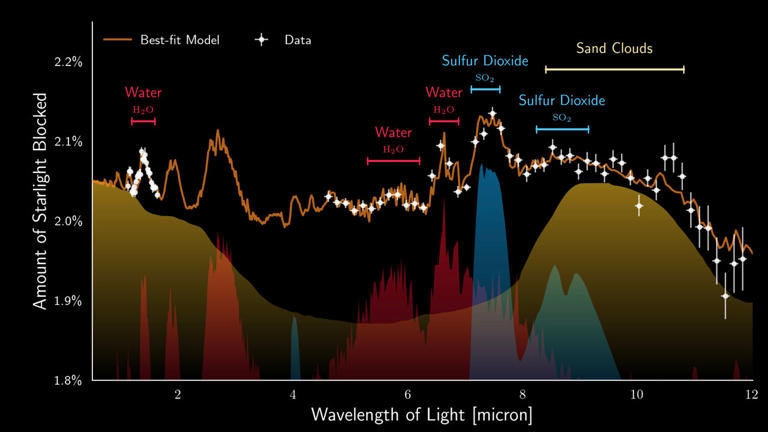
Zo ziet het lichtspectrum van de atmosfeer van WASP-107b eruit.
© VRTNWS

Daarbij deden ze twee opvallende ontdekkingen: zwaveldioxide (SO₂) en siliciumwolken. Die zwaveldioxide was een grote verrassing. Volgens wetenschappelijke modellen kon er immers geen zwaveldioxide aanwezig zijn.

Dat er wolken waren, was op zich niet zo nieuw. Die zijn al vaker aangetroffen op exoplaneten. Wel slaagde het team er als eerste in om de chemische samenstelling van de wolken uit te lezen. Ze bleken te bestaan uit kleine deeltjes silicium (het belangrijkste bestanddeel van zand op onze Aarde).

Dat silicium vormt op WASP-107b een kringloop zoals die van water en wolken op onze planeet, legt Michiel Min uit. Hij is astronoom aan het SRON Netherlands Institute for Space Research en werkte mee aan het onderzoek. "Het feit dat we deze zandwolken hoog in de atmosfeer zien, moet betekenen dat de zandregendruppels verdampen in diepere, zeer hete lagen van de atmosfeer en dat de resulterende siliciumdamp omhoog wordt getransporteerd, waar ze opnieuw condenseren om opnieuw siliciumwolken te vormen."

Immense spiegel

We hebben de ontdekkingen te danken aan de James Webb-ruimtetelescoop, zegt Decin van het Instituut voor Sterrenkunde, en dan in het bijzonder het instrument MIRI. Daar is twintig jaar lang aan gewerkt door een team van Europese en Amerikaanse wetenschappers. De KU Leuven leverde daar een belangrijke bijdrage aan.

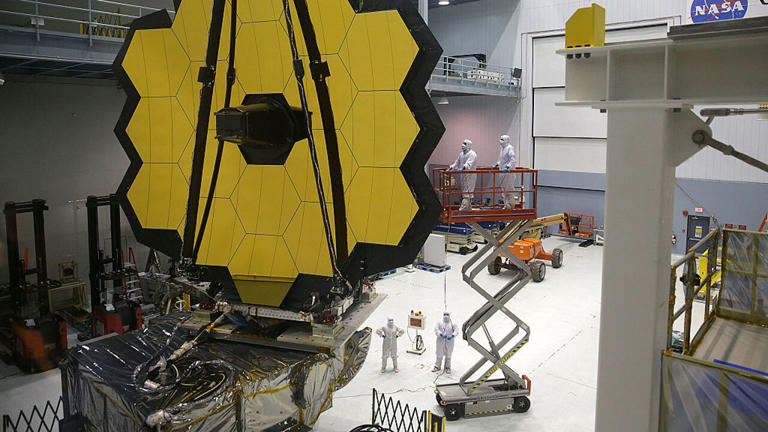
De gigantische spiegel van de James Webb-telescoop kan veel zwakkere lichtsignalen opvangen.
© 2016 Getty Images

Maar ook de immense spiegel van de James Webb-ruimtetelescoop was onmisbaar. Die heeft een diameter van zes meter. "Die spiegel zorgt dat je dingen kan waarnemen die vroeger veel te zwak waren om te zien", legt Decin uit. "Planeten zenden geen eigen licht uit, die reflecteren licht van hun moederster. Dat vraagt om krachtige instrumenten om dat zwakke signaal te kunnen waarnemen."

Gigantisch veel andere zonnestelsels

Maar waarom is die ontdekking van siliciumwolken en zwaveldioxide nu belangrijk?

Decin noemt het "een wetenschappelijke mijlpaal". "Het verandert ons begrip van de vorming en evolutie van planeten en werpt een nieuw licht op ons eigen zonnestelsel."

"Zwaveldioxide, dat kennen we op aarde bijvoorbeeld van de geur van verbrande lucifers. We begrepen niet hoe dat op een exoplaneet gevormd zou kunnen worden. Als we onze kennis enkel baseren op wat hier op aarde te zien is, dan is dat onvoldoende om te begrijpen wat er gebeurt op exoplaneten."

Dit dwingt ons om onze horizonten te verbreden, vindt Decin. "Ons zonnestelsel is maar één planetenstelsel. Daarbuiten bestaan gigantisch veel andere architecturen met compleet andere chemische samenstellingen dan wat we kennen van hier op Aarde of hier in ons eigen zonnestelsel."

{ https://www.vrt.be/vrtnws/nl/ }

Hoe vind je dit bericht?
Geschreven door peter om 17:47 Stuur door

Meer van UFO'S of UAP'S, ASTRONOMIE, RUIMTEVAART, ARCHEOLOGIE, OUDHEIDKUNDE, SF-SNUFJES EN ANDERE ESOTERISCHE WETENSCHAPPEN - DE ALLERLAATSTE NIEUWTJES

↑ Terug naar de berichten