Naar de inhoud

UFO'S of UAP'S, ASTRONOMIE, RUIMTEVAART, ARCHEOLOGIE, OUDHEIDKUNDE, SF-SNUFJES EN ANDERE ESOTERISCHE WETENSCHAPPEN - DE ALLERLAATSTE NIEUWTJES

UFO's of UAP'S in België en de rest van de wereld
akke.beakke.be
Ontdek de Fascinerende Wereld van UFO's en UAP's: Jouw Bron voor Onthullende Informatie! Ben jij ook gefascineerd door het onbekende? Wil je meer weten over UFO's en UAP's, niet alleen in België, maar over de hele wereld? Dan ben je op de juiste plek! België: Het Kloppend Hart van UFO-onderzoek In België is BUFON (Belgisch UFO-Netwerk) dé autoriteit op het gebied van UFO-onderzoek. Voor betrouwbare en objectieve informatie over deze intrigerende fenomenen, bezoek je zeker onze Facebook-pagina en deze blog. Maar dat is nog niet alles! Ontdek ook het Belgisch UFO-meldpunt en Caelestia, twee organisaties die diepgaand onderzoek verrichten, al zijn ze soms kritisch of sceptisch. Nederland: Een Schat aan Informatie Voor onze Nederlandse buren is er de schitterende website www.ufowijzer.nl, beheerd door Paul Harmans. Deze site biedt een schat aan informatie en artikelen die je niet wilt missen! Internationaal: MUFON - De Wereldwijde Autoriteit Neem ook een kijkje bij MUFON (Mutual UFO Network Inc.), een gerenommeerde Amerikaanse UFO-vereniging met afdelingen in de VS en wereldwijd. MUFON is toegewijd aan de wetenschappelijke en analytische studie van het UFO-fenomeen, en hun maandelijkse tijdschrift, The MUFON UFO-Journal, is een must-read voor elke UFO-enthousiasteling. Bezoek hun website op www.mufon.com voor meer informatie. Samenwerking en Toekomstvisie Sinds 1 februari 2020 is Pieter niet alleen ex-president van BUFON, maar ook de voormalige nationale directeur van MUFON in Vlaanderen en Nederland. Dit creëert een sterke samenwerking met de Franse MUFON Reseau MUFON/EUROP, wat ons in staat stelt om nog meer waardevolle inzichten te delen. Let op: Nepprofielen en Nieuwe Groeperingen Pas op voor een nieuwe groepering die zich ook BUFON noemt, maar geen enkele connectie heeft met onze gevestigde organisatie. Hoewel zij de naam geregistreerd hebben, kunnen ze het rijke verleden en de expertise van onze groep niet evenaren. We wensen hen veel succes, maar we blijven de autoriteit in UFO-onderzoek! Blijf Op De Hoogte! Wil jij de laatste nieuwtjes over UFO's, ruimtevaart, archeologie, en meer? Volg ons dan en duik samen met ons in de fascinerende wereld van het onbekende! Sluit je aan bij de gemeenschap van nieuwsgierige geesten die net als jij verlangen naar antwoorden en avonturen in de sterren! Heb je vragen of wil je meer weten? Aarzel dan niet om contact met ons op te nemen! Samen ontrafelen we het mysterie van de lucht en daarbuiten.

Archief

Starship Could Be Ready to Launch on Friday

SpaceX Starship's Superheavy Booster, serial no. B7, being tested on the orbital launch pad at Starbase, Boca Chica, Texas in February 2023.

SpaceX Starship's Superheavy Booster at Starbase, Boca Chica, Texas (Credit : Mobilus In Mobili)

Starship Could Be Ready to Launch on Friday

Space exploration should never be run of the mill nor something that finds itself on the back pages of the newspaper.  Captain James T. Kirk was right that space really is the final frontier and making it more accessible is one of the driving forces behind SpaceX.  Their mission to seek out new life and new civilisations, wait that’s wrong – that’s Starfleet.  The SpaceX mission ‘to revolutionise space technology, with the ultimate goal of enabling people to live on other planets is at the forefront of the development of the enormous Starship which may make another launch attempt as soon as this Friday 17th November. 

SpaceX is a company that shot to fame since it was founded (I really wanted to type ‘launched’ but resisted) back in 2002 by Elon Musk. Musk had a vision to revolutionise space exploration by reducing costs and more excitingly he wanted to colonise Mars. SpaceX operate the Falcon rockets, the Dragon capsule that is often transporting supplies to and from the International Space Station and skywatchers around the globe are familiar with the infamous Starlink project that has launched more than 5,000 small satellites into orbit providing global internet coverage.  There is no doubt the SpaceX brand is a well known one. 

SpaceX Falcon 9 rocket carrying the company’s Crew Dragon spacecraft is launched from Launch Complex 39A (Credit : NASA/Joel Kowsky)

One of the more recent additions to the SpaceX fleet is the super heavy lift launch vehicle known rather imaginatively as Super Heavy and, when coupled with Starship in its final configuration has the capability of lifting at least 150 tonnes into low earth orbit. It is the tallest and most powerful rocket ever to have flown at an immense 120m tall but the real headline statement for Starship is that it is designed to be fully re-usable with both stages being recovered after launch and used again.  If you haven’t yet watched the Starship stages landing then you really should hunt them down, I never tire of watching it. 

The plans for Super Heavy and Starship are not just to get objects into low earth orbit though, there are plans to use them to refuel other Starships in orbit, to be a part of the NASA Artemis program to get humans back to the Moon and ultimately the colonisation of Mars.   The power behind Super Heavy are the powerful Raptor rocket engines that burn liquid methane and oxygen to get off the launchpad but fire again to slow down the booster during descent to a graceful landing, ready to be used again.

SpaceX sea-level Raptor at the company headquarters at Hawthorne, California. The bell nozzle is used to direct thrust of the methane exhaust, which is compressed inside the main combustion chamber in the middle of the image. The left bulge is the turbopump, where liquid propellants are turned into gas.

SpaceX sea-level Raptor at the company headquarters at Hawthorne, California (Credit : Brandon De Young)

This all sounds pretty amazing but as we saw on 20 April this year, space flight is anything but routine.  Four minutes after launch, at an altitude of 39km above the Gulf of Mexico, Musk’s beloved Starship failed to separate from the booster leading to the whole system exploding in a fireball on its maiden voyage. The FAA grounded the entire fleet but, it looks like we may be set for a fresh attempt this Friday 17th November subject to final approval from the FAA.   If or when the launch finally goes ahead, it will be from a new reinforced launch site and will use a new separation technique known as Hot Staging where the second stage engines will fire to put the booster away! Good luck SpaceX.

Source : 

{ https://www.universetoday.com/ }

Hoe vind je dit bericht?
Geschreven door peter om 18:31 Stuur door

Old footage shows unknown ancient devices found during Nazi expeditions in Antarctica and Egypt

Old footage shows unknown ancient devices found during Nazi expeditions in Antarctica and Egypt

This is said to be a rare footage from an unknown private film collection archive, that supposedly shows objects and ancient devices that were discovered and then taken away during the Nazi expeditions in Egypt and Antarctica, which are still secret! 
secret%20ancient%20devices%20found%20in%20Antarctica%20en%20Egypt.jpg

I do know for a fact that many artifacts have been looted in previous wars but I have never seen anything like this before.
It would be great if it could be proven that the ancient artifacts shown in the short film were made by ancient civilizations with advanced technology, extraterrestrial intervention, or other supernatural explanations, but... as long as they keep it a secret and withhold the truth about our history, the origin of these objects will remain a mystery. 
It will be interesting to learn how they will explain the discovery of these objects.

{ http://ufosightingshotspot.blogspot.com/ }

Hoe vind je dit bericht?
Geschreven door peter om 16:31 Stuur door

UFO the size of a football field hovered over Vandenberg Air Force Base

UFO the size of a football field hovered over Vandenberg Air Force Base

In 2003, an unidentified flying object, comparable in size to a football field, reportedly hovered over Vandenberg Air Force Base, as disclosed during a House Oversight Committee's national security subcommittee hearing on UFOs. The hearing, held on Wednesday, delved into UFOs, now termed "unidentified anomalous phenomena" by the U.S. government. 
ufo%20Vandenberg%20Air%20Force%20Base.jpg

The proceedings included whistleblower accounts that shed light on purported government UFO programs spanning multiple decades, according to retired major David Grusch. Former Navy fighter jet pilot Ryan Graves, founder of the non-profit Americans for Safe Aerospace, presented testimony regarding the alleged UFO sighting at Vandenberg. 
During questioning by Representative Anna Paulina Luna, Graves recounted the 2003 incident: "In the 2003 timeframe, a sizable group of Boeing contractors near a launch facility at Vandenberg observed a large, 100-yard-sided red square approaching from the ocean. It hovered at low altitude over the launch facility for about 45 seconds before rapidly darting off over the mountains around 8:45 a.m." 
Graves further described a subsequent event 24 hours later, involving additional sightings on the base, with some objects displaying aggressive behavior toward security guards. The information, according to Graves, came from a witness who approached him at Americans for Safe Aerospace, and this witness possessed documented police blotter and records from the 2003 incidents. 
Testimonies from former Major Grusch and ex-U.S. intelligence officer David Fravor were also part of the hearing, although they refrained from answering certain questions. Representative Tim Burchett emphasized the importance of government transparency in addressing the issue, clarifying that the aim was to uncover facts without sensationalizing the subject.
  

{ http://ufosightingshotspot.blogspot.com/ }

Hoe vind je dit bericht?
Geschreven door peter om 16:17 Stuur door

Shocking Encounter: 6 British Soldiers Face Triangular UFO & Missing Time Near Salisbury Plain!

Shocking Encounter: 6 British Soldiers Face Triangular UFO & Missing Time Near Salisbury Plain!

ufo-sighting

Unveiling the Mystery: The Enigmatic UFO Sightings Over Salisbury Plain

In the realms of the unexplained and the unknown, few phenomena capture the imagination quite like UFO sightings. The late 1980s and early 1990s were a particularly fertile period for such sightings, with numerous reports of mysterious crafts filling the skies worldwide. Among these, the Salisbury Plain incident in the UK stands out for its complexity and intrigue.

The Encounter: A Triangular Enigma

It was a cold winter night in 1989-1990 when a group of six British soldiers, engaged in night maneuvers near Salisbury Plain, witnessed something extraordinary. Their encounter with a colossal, black, triangular craft, reportedly the size of a football pitch, marked a chilling chapter in UFO sightings history.

Renowned UFO researchers Jon King and Timothy Good have scrutinized this incident, adding credibility to the soldiers’ accounts. King, the editor of “UFO Reality,” and Good, a respected figure in the field, bring a critical eye to these unexplained events, which often go dismissed as mere fantasy or misidentified military exercises.

Advanced Technology: Beyond Human Capabilities

What sets the Salisbury Plain sighting apart is not just the size of the craft but its purported advanced technology. Comparable sightings in Belgium, where UFOs executed maneuvers impossible by today’s aviation standards, echo this narrative of technological marvels. These crafts’ abilities to move thousands of meters in a blink have fueled theories ranging from extraterrestrial visitations to top-secret military projects.

The Human Experience: A Soldier’s Tale

Central to the Salisbury Plain story is Mark, a former British soldier whose identity remains concealed for fear of repercussions. His experience, and that of his fellow soldiers, encapsulates the human element in UFO encounters. The group’s collective memory lapse, the strange sensations of being controlled, and the appearance of a mysterious figure dressed in black, wielding a rod-like object, all contribute to a deeply unsettling experience.

The Aftermath: Questions and Theories

The soldiers found themselves disoriented and off-course, grappling with missing time and lingering emotional distress. Such experiences raise profound questions about the nature of these sightings. Are they evidence of extraterrestrial intelligence, or do they hint at something else entirely?

VIDEO:

The Salisbury Plain UFO encounter remains an enigmatic piece in the vast puzzle of UFO sightings. It challenges our understanding of technology, physics, and perhaps the very notion of life beyond our planet. As we continue to seek answers, stories like these keep the flame of curiosity alive, urging us to look skyward and question what lies beyond.

  • The Pentyrch UFO Incident | Documentary Special

{ https://www.latest-ufo-sightings.net/ }

Hoe vind je dit bericht?
Geschreven door peter om 16:00 Stuur door

Mysterious Night Skies: Dual UFOs Captured Over Alicante, Spain

Mysterious Night Skies: Dual UFOs Captured Over Alicante, Spain

Spain UFOs

In the serene night skies of the Province of Alicante, Spain, a remarkable event unfolded on the 12th of November, 2023, reigniting the ever-fascinating discussion of UFO sightings. This time, the awe-inspiring moment was captured through a night vision camera, NVG10, presenting a crystal-clear and intriguing view of what appears to be two interconnected UFOs.

The footage, filmed with the cutting-edge NVG10 night vision camera (Amazon link), known for its high-resolution imaging and advanced low-light capabilities, showcases a pair of luminous, unidentified flying objects. These UFOs, linked together by an unexplained force, glide seamlessly across the nocturnal backdrop, leaving viewers mesmerized and curious about their origin.

This sighting in Alicante, a region known for its picturesque landscapes and tranquil nights, adds a new chapter to the ever-growing anthology of UFO encounters. The two linked objects, with their synchronized movement and radiant appearance, challenge our understanding of the skies above and beckon us to question what lies beyond our terrestrial realm.

What makes this footage particularly compelling is the clarity provided by the NVG10 camera. Its ability to capture detailed images in low-light conditions has not only provided UFO enthusiasts with captivating visual evidence but also has sparked interest among skeptics and scientists alike.

As the debate around the existence of extraterrestrial life continues, this latest sighting in Alicante offers a fresh perspective and a tantalizing glimpse into the unknown. Whether these UFOs are a testament to otherworldly visitors, a natural phenomenon, or something else entirely, remains a topic of intrigue and wonder.

For those keen on exploring the mysteries of the night sky, the NVG10 night vision camera emerges as a tool of choice, bridging the gap between the seen and the unseen, and potentially unlocking new secrets of our universe.

As we delve into this extraordinary encounter, we invite you to watch the video and join the conversation. What are these mysterious objects? Are we alone in this vast cosmos, or is this sighting in Alicante a beacon of otherworldly presence? The skies above continue to hold their secrets, but with each new sighting, we inch closer to unraveling the mysteries of the universe.

RELATED

{ https://www.latest-ufo-sightings.net/ }

Hoe vind je dit bericht?
Geschreven door peter om 15:30 Stuur door

NASA JUST LOST COMMUNICATION WITH ITS ROBOT SCIENTISTS ON MARS. THIS PHENOMENON IS TO BLAME.

rdFZIYJA?format=jpg&name=900x900

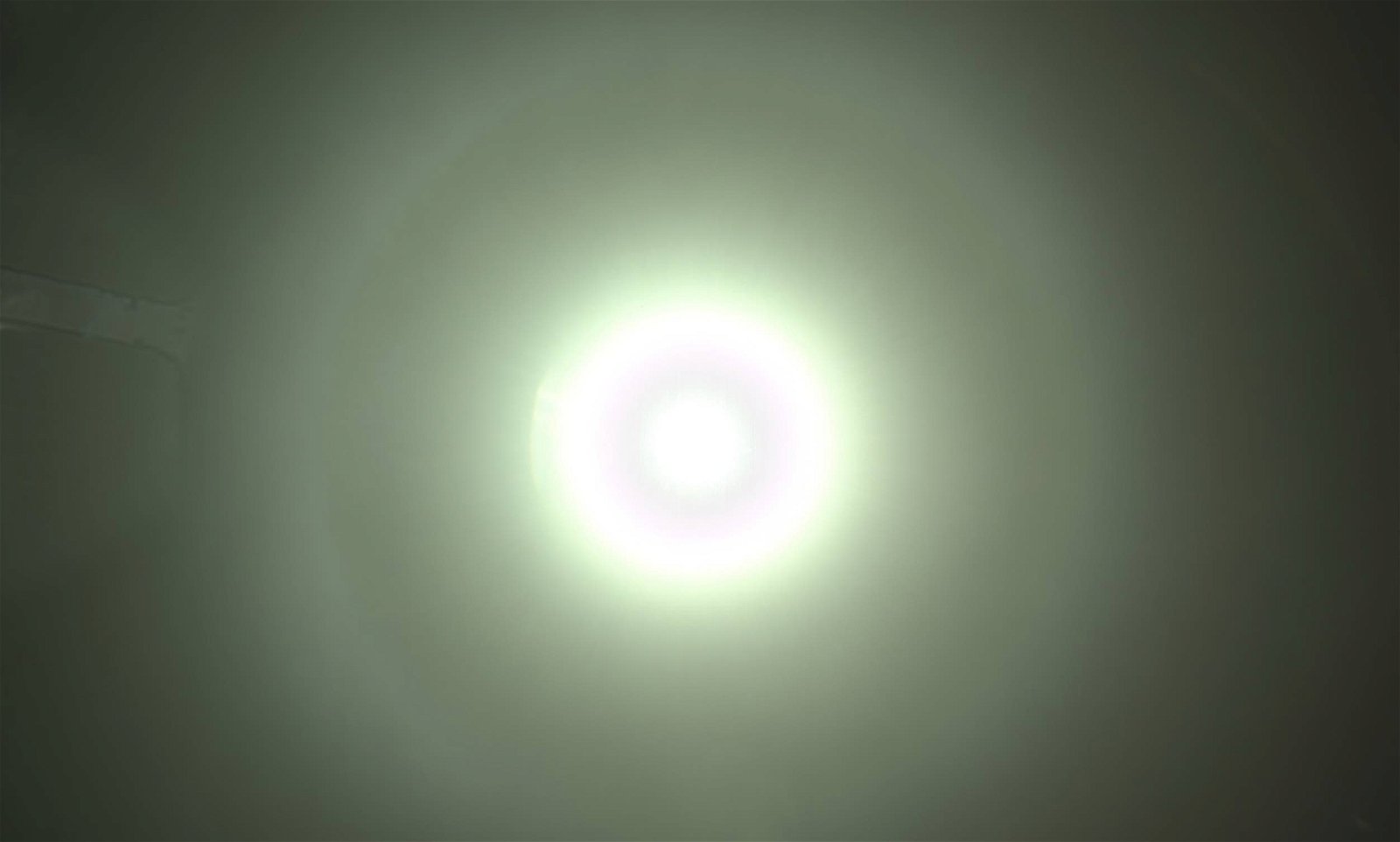
Perseverance's view of the Sun on its its 842nd Martian day
(NASA/Caltech).

NASA JUST LOST COMMUNICATION WITH ITS ROBOT SCIENTISTS ON MARS. THIS PHENOMENON IS TO BLAME.

NASA has temporarily lost the ability to communicate with its Mars fleet, according to a statement issued by the space agency citing a phenomenon that occurs every two years that blocks commands from being sent to its robotic explorers.

The phenomenon, known as Mars solar conjunction, occurs when the Sun moves between Earth and Mars every other year.

“Like dancers on either side of a huge bonfire, the two planets are temporarily invisible to each other,” reads a NASA FAQ page describing the biennial celestial event.

Mars solar conjunction

The Sun photographed by Perseverance on Nov. 7, 2023 (Sol 965), just prior to the onset of the 2023 Mars solar conjunction

(NASA/Caltech).

NASA says its rovers and orbital craft currently engaged in science missions on Mars will not discontinue operations, although data collection will remain limited for two weeks while Earth and Mars remain on either side of the Sun.

This year’s solar moratorium officially began on November 11 and will last until the 25th.

During the period of interrupted communication, some of the instruments are temporarily taken offline by engineers at NASA’s Jet Propulsion Laboratory, and no new instructions are dispatched to the robotic scientists on the Red Planet due to the likelihood that they will be lost once they encounter the interference caused by the Sun and the highly charged particles it emits.

However, in preparation for the communication breakdown, NASA sends two weeks’ worth of commands to its Mars fleet so that limited operations can continue.

2023 Mars solar conjunction

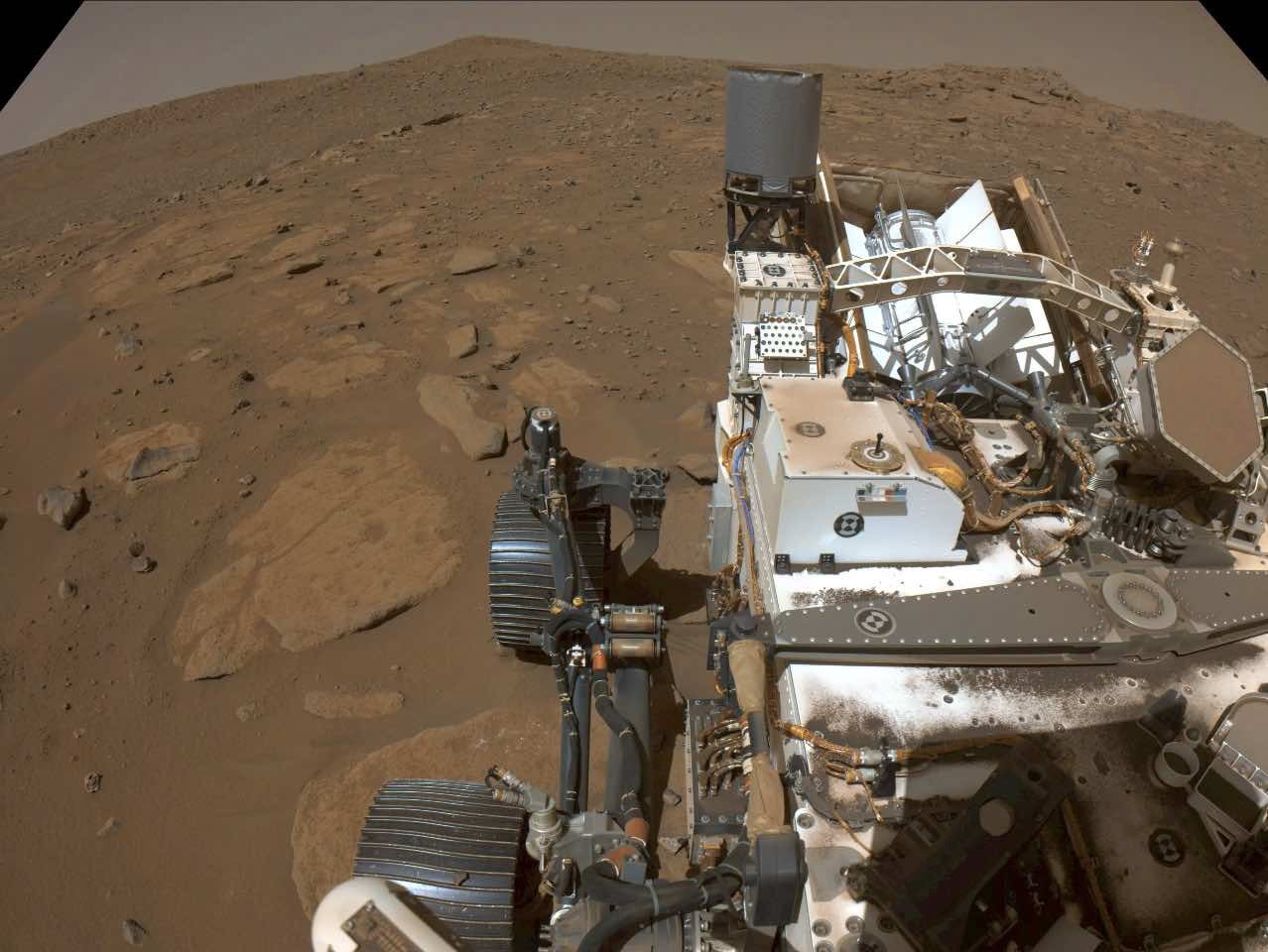
Perseverance captured a selfie from the location where it will remain parked during the 2023 Mars solar conjunction

(NASA/Caltech).

Currently, NASA says its Perseverance and Curiosity rovers are being tasked with ongoing monitoring of surface conditions on Mars, as well as observations of weather conditions, radiation levels, and other information their onboard sensors can continue to monitor.

The Ingenuity Mars Helicopter has also been tasked with observing the motion of sand on the Red Planet throughout the course of the solar conjunction, while the Mars Reconnaissance Orbiter and the Odyssey orbiter will keep their camera eyes trained on the Martian surface from their positions in orbit, along with the MAVEN spacecraft’s collection of data about the Martian atmosphere.

  • star

Limited information about the status of the Mars fleet will continue to be dispatched back to NASA, all except for a period of two days at the height of the conjunction where Mars and Earth are on the exact opposite ends of the Sun from each other.

“We’ll still be able to hear from them and check their states of health over the next few weeks,” said Roy Gladden, manager of the Mars Relay Network at NASA’s Jet Propulsion Laboratory (JPL), in a NASA statement.

After November 25, full communication is expected to be restored, and science data that has remained in limbo for the previous two weeks will be sent back to Earth, while new instructions will also be sent to the Mars fleet.

{ https://thedebrief.org/ }

Hoe vind je dit bericht?
Geschreven door peter om 23:32 Stuur door

NASA Wants to Learn to Live Off the Land on the Moon

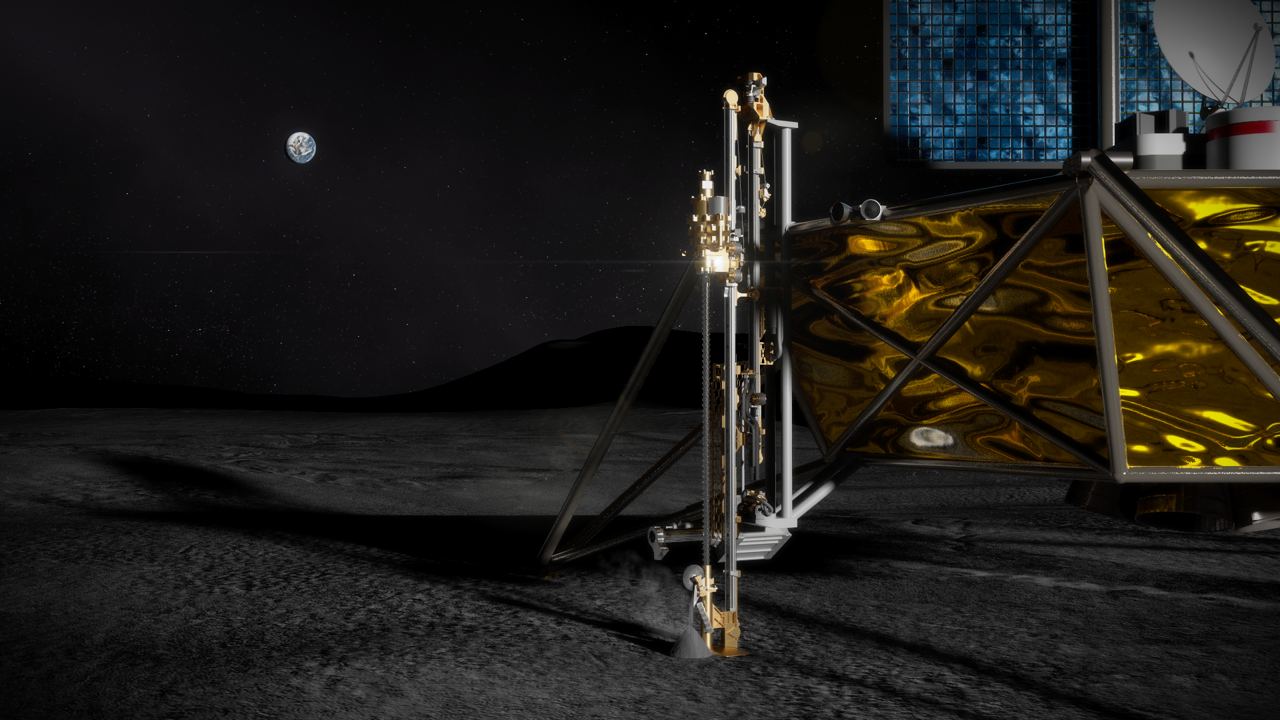
Picture1.jpg

Artist rendition of an In-situ Resource Utilization (ISRU) technology demonstration on the lunar surface. NASA is working with industry and academia to develop technologies for future production of fuel, water, or oxygen from local resources, thus advancing space exploration capabilities. (Credit: NASA)

NASA Wants to Learn to Live Off the Land on the Moon

In preparation for the upcoming Artemis missions to the lunar south pole, NASA recently solicited a Request for Information (RFI) from the lunar community to map out its future Lunar Infrastructure Foundational Technologies (LIFT-1) demonstration for developing In-situ Resource Utilization (ISRU) technologies as part of the agency’s ambitious Lunar Surface Innovation Initiative (LSII). The primary goal of LIFT-1, which is being driven by NASA’s Space Technology Mission Directorate (STMD), is to advance ISRU technologies for extracting oxygen from the lunar regolith, including manufacturing, harnessing, and storing the extracted oxygen for use by future astronauts on the lunar surface. Proposals for LIFT-1 became available to be submitted via NSPIRES on November 6, 2023, with a deadline of December 18, 2023.

Artist rendition of future Artemis astronauts on the lunar surface using available resources for production of fuel, water, and oxygen. (Credit: NASA)

“The LIFT-1 demonstration creates a viable path to launch, land, and conduct operations on the lunar surface. This is the infusion path we need for ongoing industry and NASA center-led technology development activities,” said Dr. Prasun Desai, who is the acting associate administrator of STMD at NASA Headquarters in Washington DC. “Using in-situ resources is essential to making a sustained presence farther from Earth possible. Just as we need consumables and infrastructure to live and work on our home planet, we’ll need similar support systems on the Moon for crew and robots to operate safely and productively.”

NASA is heavily invested in developing ISRU technologies and is in collaboration with industry and academia in a wide range of studies involving lunar regolith, including construction, oxygen extraction, and growing plants. In addition to using lunar regolith to extract oxygen, efforts are being made to extract oxygen from lunar water ice, which is the primary reason Artemis is targeting the lunar south pole due to its proximity to the permanently shadowed regions (PSRs) of the Moon.

Lunar regolith being used to grow plants at the University of Florida, which is an example of NASA collaborating with academia in developing ISRU technologies for future human missions to the Moon. (Credit: UF/IFAS photo by Tyler Jones)

The purpose of ISRU is to “live off the land” through the resources that are available on-hand without the need for constant resupply from Earth. Future astronauts on both the Moon and Mars will need both food and water to survive for long-term missions, and supply missions from Earth can be both costly and risky, especially as humans venture farther out into the cosmos. Therefore, steps are being taken to learn how future astronauts can use available resources to their benefit, specifically for food, water, and oxygen.

An example of the most recent off-Earth ISRU technology demonstration is the toaster-sized Mars Oxygen In-Situ Resource Utilization Experiment (MOXIE) onboard NASA’s Perseverance rover with the goal of extracting oxygen from the carbon dioxide-heavy Martian atmosphere, which was accomplished in April 2021, only a few months after Perseverance landed in Jezero Crater. After just over an hour of the test, MOXIE produced 5.37 grams (0.01 pounds) of breathable oxygen, which is enough breathable oxygen for an astronaut to use for approximately 10 minutes. After this successful test, NASA now aspires to use develop similar technologies on the Moon using lunar resources, specifically lunar regolith and water ice found at the poles.

“An ISRU technology demonstration approach has been a topic of discussion within the Lunar Surface Innovation Initiative and Consortium communities for several years,” said Niki Werkheiser, who is the director of Technology Maturation in STMD at NASA. “This RFI is the next phase to make it a reality.” 

As noted, LIFT-1 is part of NASA’s Lunar Surface Innovation Initiative, but developing ISRU technologies is just one of six areas the Initiative is targeting, with the other areas of interest being surface power, excavation and construction, extreme environment, dust mitigation, and extreme access. The development of these various technologies is a massive collaborative effort between various industries and academia, and will involve both human and robotic exploration efforts, as well. But development of these various technologies will not be limited to just the Moon, as NASA is hoping to use the lessons learned from Artemis to establish the necessary technologies for future human missions to Mars and beyond.

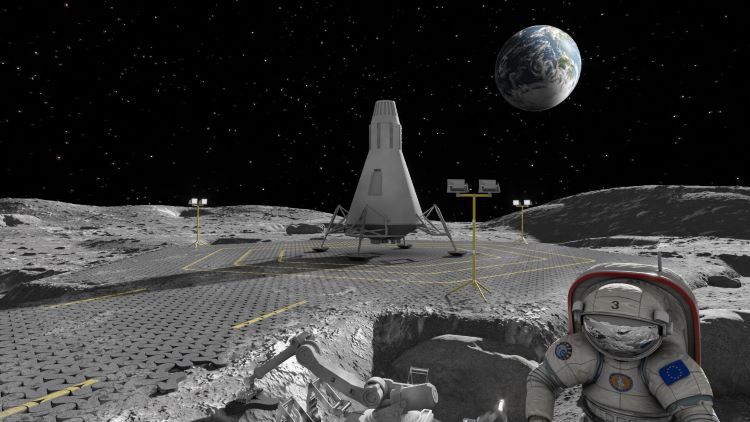
Artist illustration showing the construction of a landing pad at a future lunar base. (Credit: European Space Agency)

How will ISRU help improve the upcoming Artemis missions and what new discoveries with ISRU technologies will be made in the coming years and decades? Only time will tell, and this is why we science!

  • As always, keep doing science & keep looking up!

RELATED

{ https://www.universetoday.com/ }

Hoe vind je dit bericht?
Geschreven door peter om 23:06 Stuur door

If You Account for the Laniakea Supercluster, The Hubble Tension Might Be Even Larger

laniakea-2000x1200.jpg

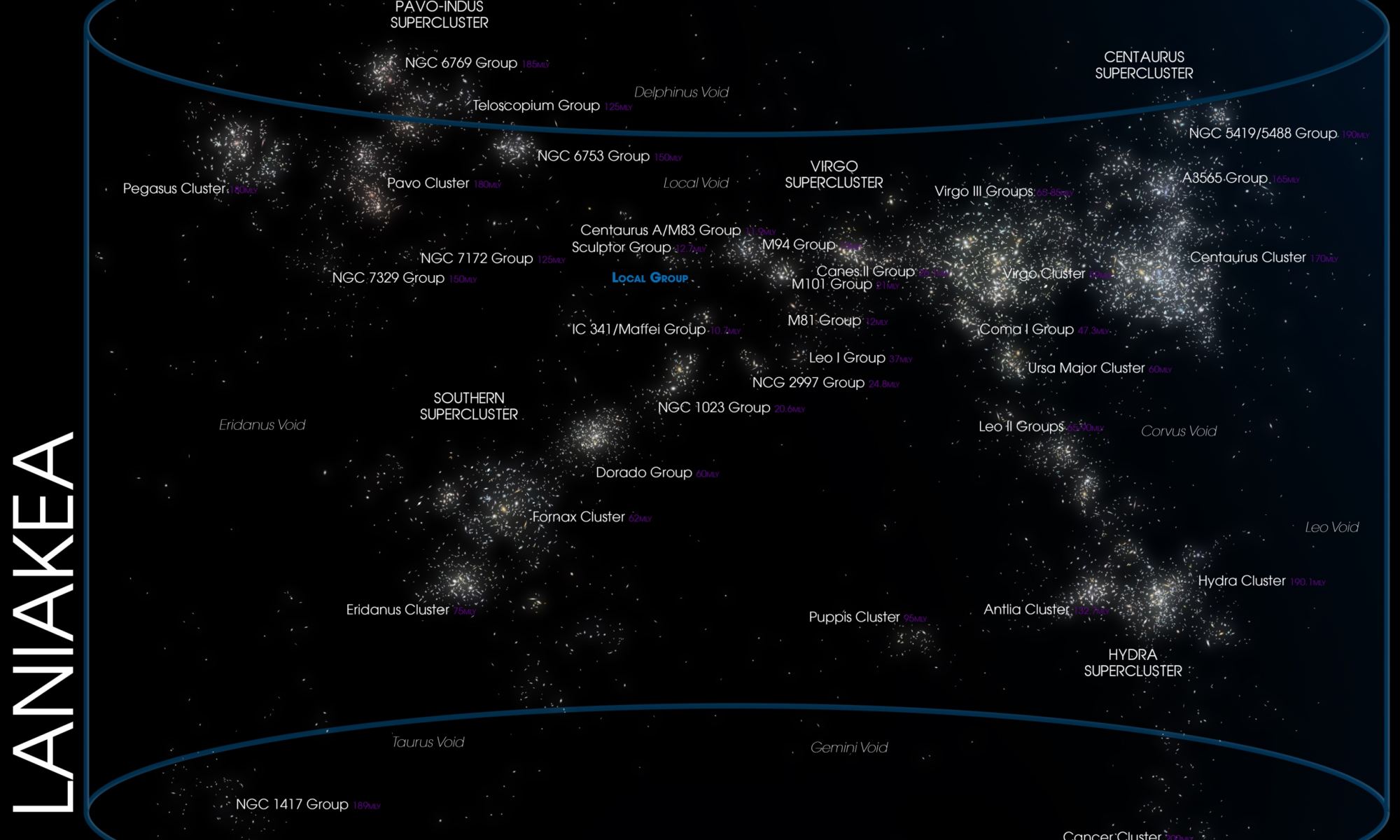
Illustration of the Laniakea Supercluster. Credit: Andrew Z. Colvin

If You Account for the Laniakea Supercluster, The Hubble Tension Might Be Even Larger

One of the great unsolved mysteries of cosmology is known as the Hubble tension. It stems from our inability to pin down the precise rate of cosmic expansion. There are several ways to calculate this expansion, from observing distant supernovae to measuring the Doppler shift of maser light near supermassive black holes, and they all give slightly different results. Maybe we don’t fully understand the structure of the Universe, or maybe our view of the heavens is biased given that we are located deep within a galactic supercluster. As a new study shows, the bias problem is even worse than we thought.

If we were floating deep in space, far away from any galaxies, then our view of cosmic expansion would be free of gravitational influences and we could better see how distant galaxies move away from us. Since we are part of a local cluster of galaxies, we have a bit of bias in our data. This is why many local galaxies are blue-shifted. The Universe isn’t contracting near us, we’re just in a galactic gravitational well. We can easily account for this bias, so it isn’t a problem. However, given the Hubble tension, a team recently looked for gravitational biases beyond the local group, hoping it would solve the issue.

They looked at the largest gravitational structure we’re a part of, known as the Laniakea Supercluster. It is a massive cluster of galaxies more than 520 million light-years across, containing more than 100,000 galaxies, including the Milky Way. Our local group is being pulled toward the heart of Laniakea, and thus our motion through the Universe could skew our observations of cosmic expansion.

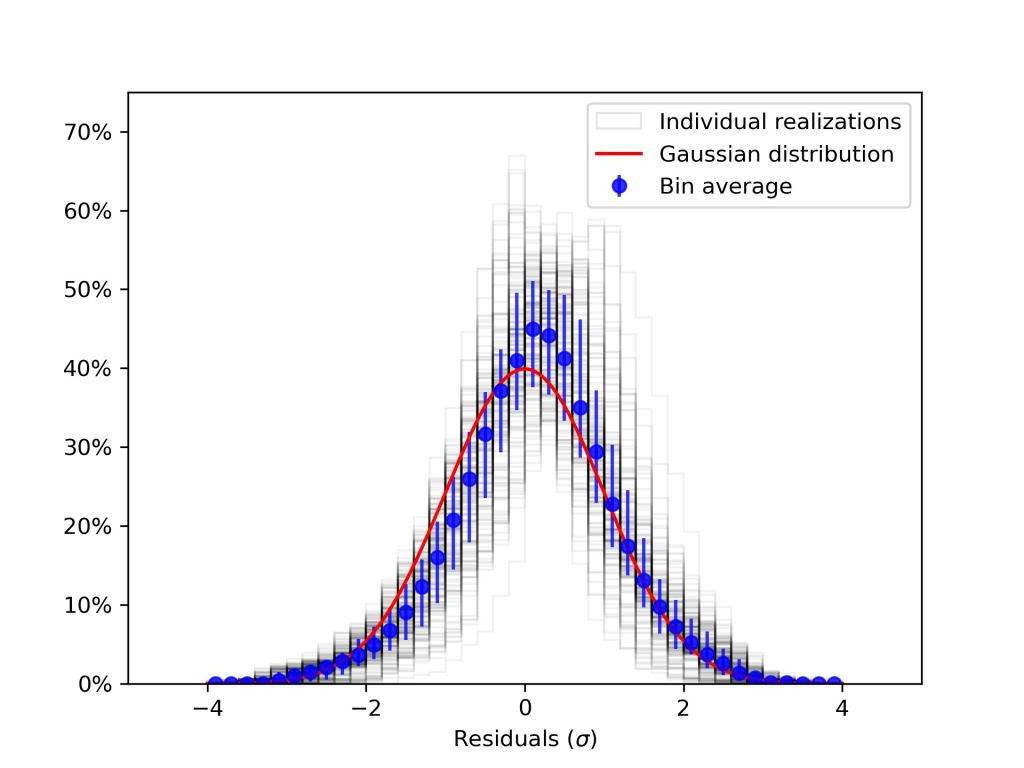
Observations show a statistical bias in the data. Credit: Giani, et al

When the team measured the gravitational influence of the supercluster as a whole, they found it does bias our observations by about 2% – 3%. But it’s biased in the wrong direction. In other words, by not taking the effect of Laniakea into account, the Hubble tension seemed smaller than it actually is. These new results show that the tension is 2% – 3% greater than we thought. Even some of the more recent Hubble constant measurements that seemed encouraging aren’t enough to account for the Laniakea bias.

Removing subtle biases from our cosmological data is challenging, so it is possible that further observations may swing the results back in the right direction. But we can’t rely on bias alone to solve this mystery. Clearly, something subtle and strange is going on, and the solution isn’t obvious. It will take a great deal more study to understand Hubble’s tension.

Reference: 

RELATED

{ https://www.universetoday.com/ }

Hoe vind je dit bericht?
Geschreven door peter om 22:42 Stuur door

China Wants to Retrieve a Sample of Mars by 2028

tianwen-1-in-mars-orbit.jpg

This image was taken by a small camera that was jettisoned from China's Tianwen-1 spacecraft to photograph the spacecraft in orbit above the Martian north pole. Credit: CNSA/PEC

China Wants to Retrieve a Sample of Mars by 2028

China continues to take great strides as part of its goal to become a superpower in space and a direct competitor with NASA. In addition to its proposed expansion of the Tiangong space station and the creation of the International Lunar Research Station (ILRS), China is also planning on sending crewed missions to Mars in the coming decade. In preparation for the arrival of taikonauts on the Red Planet, China is gearing up to return samples of Martian soil and rock to Earth roughly two years ahead of the proposed NASA-ESA Mars Sample Return (MSR).

This mission will be the third in the China National Space Administration’s (CNSA) Tianwen program (Tianwen-3) and will consist of a pair of launches in 2028 that will return samples to Earth in July 2031. According to a new study recently published in the journal Chinese Science Bulletin, Chinese scientists announced that they have developed a new numerical model to simulate the atmospheric environment of Mars. Known as the Global Open Planetary atmospheric model for Mars (aka. GoPlanet-Mars, or GoMars), this model offers research support in preparation for the Tianwen-3 mission.

The paper, titled “Development of a new generation of Mars atmosphere model GoPlanet-Mars,” was performed by researchers from the Institute of Atmospheric Physics Chinese Academy of Sciences (IAP-CAS), the State Key Laboratory of Numerical Simulation of Atmospheric Science and Geohydrodynamics (LASG), and the School of Earth and Planetary Sciences at the University of Chinese Academy of Sciences (SEPS-UCAS). The study was led by Wang Bin, a Senior Researcher with the CAS-IAP who specializes in climate modeling.

A wireless camera took this ‘group photo’ of China’s Tianwen-1 lander and rover on Mars’ surface. Credit: Chinese Space Agency

In the past two decades, the number of missions and space agencies engaged in the exploration of Mars has increased considerably. At present, ten robotic missions are exploring its surface and atmosphere, including seven orbiters, two rovers, and one helicopter. And with many more destined for Mars in the next decade (as well as crewed missions), the demand for Martian weather forecasts is growing. As they indicate in their paper, “The world’s aerospace powers have developed Mars atmosphere models to provide meteorological environment protection for landing exploration.”

To provide information on the meteorological conditions around the Tianwen-3 mission’s potential landing sites, the research team built a global open planetary atmospheric model for Mars. They then used this model to replicate the three critical cycles of the Martian atmosphere: dust, water, and carbon dioxide. They then tested the model using the Open access to Mars Assimilated Remote Soundings (OpenMARS) dataset, a global record of Martian weather from 1999 to 2015, as well as observations made by China’s Zhurong rover (part of China’s Tianwen-1 mission) and NASA’s Viking 1 and 2 landers.

Their results showed that the GoMars model successfully reproduced the unique characteristics of surface pressure on Mars and provided good simulation performance for the surface temperature, zonal wind, polar ice, and dust. According to Wang, the Tianwen-3 mission will expand upon Tianwen-1 by adding the additional tasks of landing, sampling, and returning, which requires detailed information about Mars’ atmospheric conditions. This is crucial given how sandstorms caused multiple missions to be lost, such as Opportunity, Insight, and Zhurong – all due to the buildup of dust on their solar panels.

In addition, the Perseverance rover suffered damage to one of its wind sensors during a sandstorm due to airborne pebbles colliding with it. Since observation data is in short supply for Mars, the model also has applications for virtual reality simulations. This is necessary when prepping missions to remote planets, which helps them design vehicles and select appropriate landing sites. In this respect, a “virtual Mars” program that incorporates GoMars and future observations could take a lot of the guesswork out of future mission planning.

Since the 1960s, when the Soviet and American space programs began sending probes to Mars, scientists have been developing Martian atmospheric models in the hopes of overcoming the “Mars Curse.” With a growing number of nations sending missions to Mars, the need for climate modeling has become all the more crucial. In the end, dust and weather can have a significant impact on the entry, descent, and landing (EDL) phase. They can also affect surface operations, particularly where solar panels, communications, and sensitive instruments are concerned.

They can also be a problem during the ascent phase, where missions attempt to reach orbit and return to Earth – for example, as part of a sample return mission. As Wang commented in an interview with the Xinhua News Agency:

“The dust cycle on Mars is as important as the water cycle on Earth. GoMars can be used to simulate the dust activity before and after the rover’s dormancy, which can provide atmospheric environment data to analyze the possible causes of the dormancy. For example, GoMars can simulate the temperatures of the landing zone, and scientists can use these data to design materials that are suitable for building Mars rovers to cope with extreme cold.”

Early in the next decade, NASA and the ESA also intend to send the Mars Sample Return (MSR) mission to retrieve samples obtained by the Perseverance rover. This will consist of a NASA Sample Retrieval Lander, two Sample Recovery Helicopters, a Mars Ascent Vehicle, and an ESA Earth Return Orbiter. NASA and the ESA currently expect this mission to launch no sooner than 2033, coinciding with NASA’s first crewed mission to Mars leaving Earth. Clearly, the new Space Race extends beyond the Moon and now includes reaching Mars!

Further Reading: 

{ https://www.universetoday.com/ }

Hoe vind je dit bericht?
Geschreven door peter om 22:28 Stuur door

The Oort Cloud Might be More Active Than We Thought

hyperbolic-2000x1200.jpg

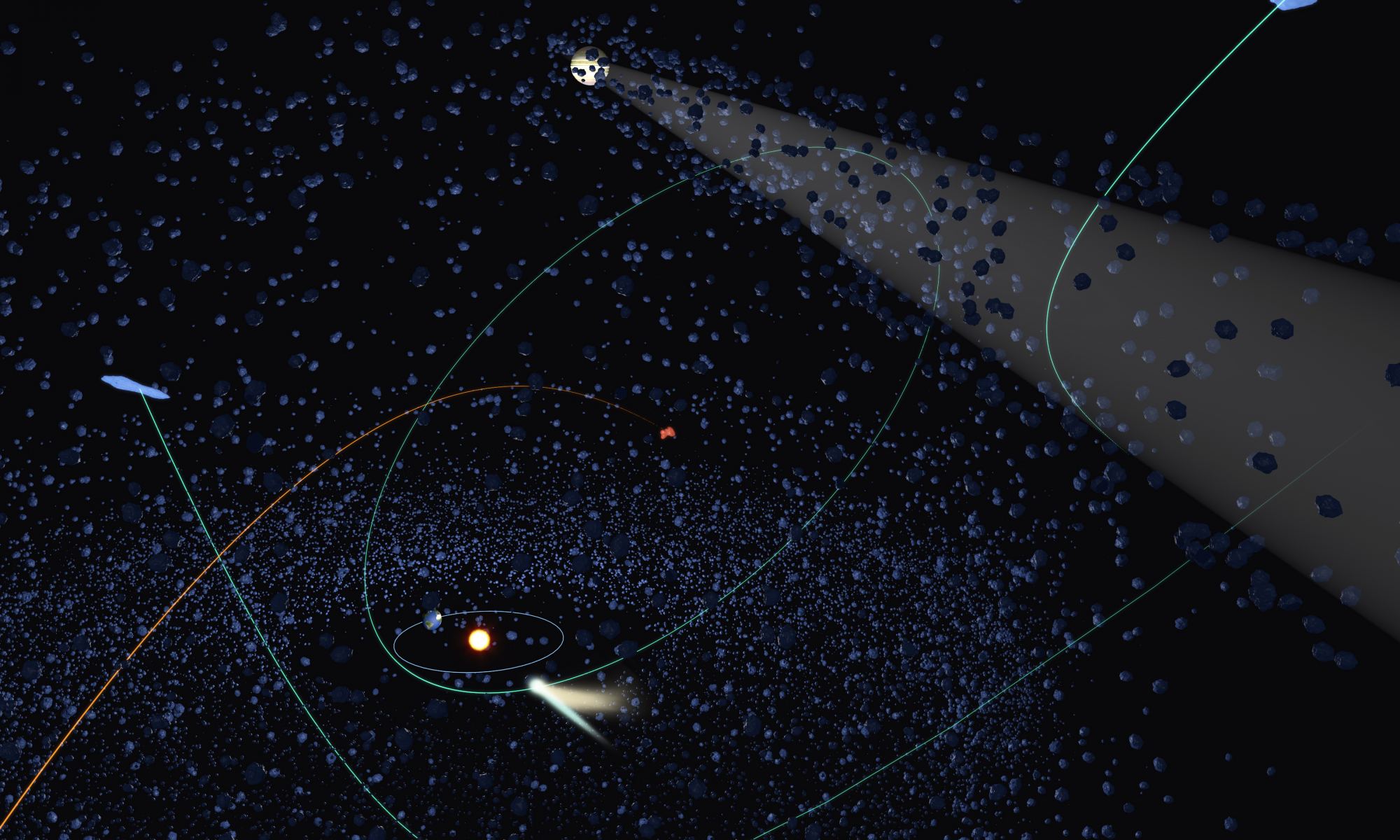
The paths of hyperbolic-orbit comets. Credit: NAOJ

The Oort Cloud Might be More Active Than We Thought

Every now and then a comet or asteroid comes to our solar system from interstellar space. We have observed two interstellar objects in recent years, Oumuamua in 2017, and Borisov in 2019. One would assume then that in the past at least some interstellar objects have struck Earth. But we’ve never found an interstellar meteorite. A new study argues that this is because the Oort cloud is much more active than we thought.

The Oort cloud is a halo of icy material on the outermost edge of the solar system, where the Sun’s gravity is barely strong enough to hold them in a stellar orbit. When another star passes somewhat near the Sun, members of the Oort cloud can be nudged toward the inner solar system, where they can become long-period comets. We have never observed the Oort cloud, but we know it’s there because comets can approach the Sun from every direction, not just the orbital plane of the planets.

Astronomers can distinguish between Oort cloud objects and interstellar objects by their orbits. Interstellar objects have a hyperbolic orbit, meaning that if you traced their path purely under the gravitational influence of the Sun, it would continue on to interstellar space, never to return. Oort cloud objects, on the other hand, have an orbital path that is closed. They may travel to the most distant region of space, but they are gravitationally bound to the Sun.

Of course, some interstellar objects could make a close approach to Jupiter or another planet, where the gravitational tug of that world shifts it into a bound orbit. So some interstellar objects could appear similar to Oort cloud objects. The opposite chance encounter, where an Oort cloud object is nudged into a hyperbolic orbit, was thought to be much more rare.

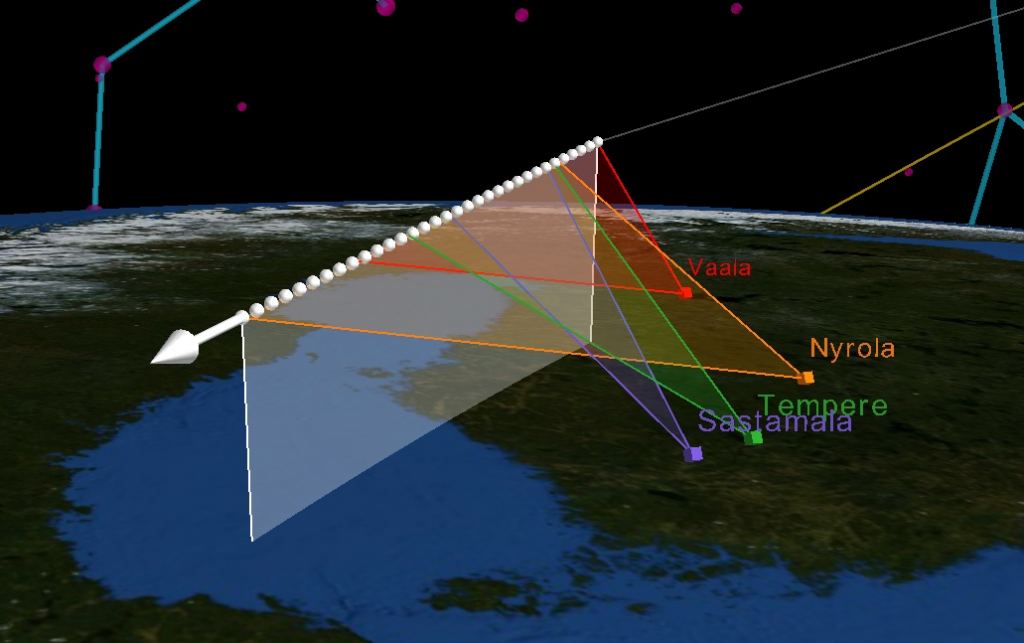
The path of a meteor as calculated from observations. Credit: Peña-Asensio, et al

We have observed some meteors with hyperbolic paths. By combining multiple images of a meteor path, we can calculate the path of entry into Earth’s atmosphere. In this study, the team looked at a meteor seen in Finland in 2022, which appeared to have a hyperbolic path. They found that based on the uncertainties of the observations, the meteor is statistically more likely to be a perturbed Oort cloud object rather than a true interstellar object. Applying the same statistics to six other hyperbolic meteors, they found four of them showed a similar statistical leaning toward being Oort objects. This would imply that most hyperbolic meteors are not interstellar.

Interstellar objects have still likely struck Earth, but more rarely than the initial data suggested. So our search for interstellar meteorites is going to be a challenge.

Reference: 

{ https://www.universetoday.com/ }

Hoe vind je dit bericht?
Geschreven door peter om 22:18 Stuur door

Meer van UFO'S of UAP'S, ASTRONOMIE, RUIMTEVAART, ARCHEOLOGIE, OUDHEIDKUNDE, SF-SNUFJES EN ANDERE ESOTERISCHE WETENSCHAPPEN - DE ALLERLAATSTE NIEUWTJES

↑ Terug naar de berichten