Ontdek de Fascinerende Wereld van UFO's en UAP's: Jouw Bron voor Onthullende Informatie!
Ben jij ook gefascineerd door het onbekende? Wil je meer weten over UFO's en UAP's, niet alleen in België, maar over de hele wereld? Dan ben je op de juiste plek!
België: Het Kloppend Hart van UFO-onderzoek
In België is BUFON (Belgisch UFO-Netwerk) dé autoriteit op het gebied van UFO-onderzoek. Voor betrouwbare en objectieve informatie over deze intrigerende fenomenen, bezoek je zeker onze Facebook-pagina en deze blog. Maar dat is nog niet alles! Ontdek ook het Belgisch UFO-meldpunt en Caelestia, twee organisaties die diepgaand onderzoek verrichten, al zijn ze soms kritisch of sceptisch.
Nederland: Een Schat aan Informatie
Voor onze Nederlandse buren is er de schitterende website www.ufowijzer.nl, beheerd door Paul Harmans. Deze site biedt een schat aan informatie en artikelen die je niet wilt missen!
Internationaal: MUFON - De Wereldwijde Autoriteit
Neem ook een kijkje bij MUFON (Mutual UFO Network Inc.), een gerenommeerde Amerikaanse UFO-vereniging met afdelingen in de VS en wereldwijd. MUFON is toegewijd aan de wetenschappelijke en analytische studie van het UFO-fenomeen, en hun maandelijkse tijdschrift, The MUFON UFO-Journal, is een must-read voor elke UFO-enthousiasteling. Bezoek hun website op www.mufon.com voor meer informatie.
Samenwerking en Toekomstvisie
Sinds 1 februari 2020 is Pieter niet alleen ex-president van BUFON, maar ook de voormalige nationale directeur van MUFON in Vlaanderen en Nederland. Dit creëert een sterke samenwerking met de Franse MUFON Reseau MUFON/EUROP, wat ons in staat stelt om nog meer waardevolle inzichten te delen.
Let op: Nepprofielen en Nieuwe Groeperingen
Pas op voor een nieuwe groepering die zich ook BUFON noemt, maar geen enkele connectie heeft met onze gevestigde organisatie. Hoewel zij de naam geregistreerd hebben, kunnen ze het rijke verleden en de expertise van onze groep niet evenaren. We wensen hen veel succes, maar we blijven de autoriteit in UFO-onderzoek!
Blijf Op De Hoogte!
Wil jij de laatste nieuwtjes over UFO's, ruimtevaart, archeologie, en meer? Volg ons dan en duik samen met ons in de fascinerende wereld van het onbekende! Sluit je aan bij de gemeenschap van nieuwsgierige geesten die net als jij verlangen naar antwoorden en avonturen in de sterren!
Heb je vragen of wil je meer weten? Aarzel dan niet om contact met ons op te nemen! Samen ontrafelen we het mysterie van de lucht en daarbuiten.
BREAKING: Former Gov Insider CONFIRMS US Unraveling Alien Tech Secrets! #UFOTechReveal
In today’s world, the term “UFO” isn’t just confined to science fiction movies or late-night radio shows. With a staggering increase in UFO sightings reported around the globe, the topic has propelled itself from the fringe to the forefront of international attention.
The evolution of technology, especially with the ubiquity of smartphones, has allowed people from various walks of life to capture and share mysterious objects in the sky with ease. But is this sudden surge in reports merely a result of our hyper-connected age? Or is there something more to these UFO sightings?
Several prominent figures, from former military personnel to respected journalists, have engaged in passionate discussions on this topic. This very discourse has been amplified recently when a certain podcast delved deep into potential government knowledge about unidentified aerial phenomena. Their guest lineup, featuring experts like Luis Elizondo, Jeremy Corbell, and James Fox, added credibility to the claims of potential otherworldly encounters.
Video:
Ex-Government employee reveals the US is indeed reverse engineering UFO technology?! | The Big Thing
Interestingly, the overwhelming public interest isn’t solely based on grainy videos or obscure testimonies. The conversation took a curious turn when David Grusch, a renowned entity in this domain, became the focal point of discussion, hinting at potentially game-changing revelations in the next six months to a year.
Speculation aside, this upsurge in UFO sightings isn’t just about trying to prove the existence of extraterrestrial life. It’s about humanity’s innate desire to understand the unknown and broaden its horizon. Whether these sightings will lead to conclusive evidence or remain a tantalizing mystery is still up in the air (pun intended!). But one thing’s for certain, as our world becomes increasingly interconnected, the quest for truth about these enigmatic events will only intensify.
Aurora records in royal chronicles from Korea show that during the 'Maunder Minimum' between 1645 and 1715, the sun's solar cycles became several years shorter than they are today.
An annotated section of the historical Korean texts that mentions auroras occurring during the Maunder Minimum. (Image credit: Yan et al. 2023)
The sun's solar cycles were once around three years shorter than they are today, a new analysis of centuries-old Korean chronicles reveals. This previously unknown anomaly occurred during a mysterious solar epoch known as the "Maunder Minimum," more than 300 years ago.
The sun is constantly in a state of flux. Our home star cycles through periods of increased activity, known as solar maximum, when solar storms become more frequent and powerful, as well as spells of reduced activity, known as solar minimum, when solar storms almost completely disappear.
It currently takes about 11 years for the sun to complete a solar cycle, from minimum to maximum and back again. Scientists can track the sun's progress through a solar cycle by counting the number of sunspots on the star's surface, which appear more frequently in the lead-up to and during solar maximum.
But just as the sun fluctuates within individual cycles, historical sunspot records show that over longer periods, spanning decades or centuries, the overall output of solar cycles can also rise and fall.
The Maunder Minimum, sometimes referred to as the Grand Solar Minimum, was a period of greatly reduced solar activity between 1645 and 1715 when sunspots "effectively disappeared," Scott McIntosh, a solar physicist at the National Center for Atmospheric Research in Colorado who was not involved in the recent research, told Live Science in an email._
A comparison of the sun during solar maximum (left) and solar minimum (right). (Image credit: NASA/Solar Dynamics Observatory)
During this time, the sun's output was so low that average global temperatures also dropped, in what scientists have dubbed a "mini ice age," according to NASA — though it was also likely linked to high levels of volcanic eruptions at the time.
Sunspot records paint a general picture of the Maunder Minimum, which is named after the English astronomer Edward Walter Maunder. But there is still much about the period that scientists don't know.
In the new study, published Oct. 3 in the journal AGU Advances, researchers analyzed historic auroral records from Korea and found that solar cycles during the Maunder Minimum were only eight years long on average — three years shorter than modern cycles.
This graph shows how solar activity (measured by estimated solar irradiance) dropped off during the Maunder Minimum. (Image credit: NASA/University of Colorado'/LASP Interactive Solar Irradiance Datacenter)
The aurora records were part of three separate books, or chronicles, written on behalf of Korean kings that contained detailed daily reports of royal business, state affairs, weather and astronomical phenomena that occurred within the Korean peninsula between 918 and 1910, according to the 2021 study that first described them.
The astronomical sections of the chronicles frequently speak of "red vapors" or "vapors like firelight." The researchers believe these descriptions refer to the West Pacific Anomaly (WPA) — an area above Korea that produces regular red auroras despite being far from the magnetic poles. Like other auroras, the WPA occurs when solar radiation collides with Earth's magnetic shield. But unlike other auroras at the time, these lightshows persisted despite a decrease in solar activity because the Earth's magnetic field is thinner in this region, which makes them a great proxy for solar cycle progression, the researchers wrote.
A diagram of Earth showing the location of the West Pacific Anomaly (WPA). (Image credit: Yan et al. 2023)
The dates when these auroras occurred show that solar radiation from the sun followed an eight-year cycle.
Scientists don't know what causes long-term solar cycle trends like the Maunder Minimum, McIntosh said. There are "many things" that could influence solar activity over such long periods, he added. It is also unclear why the solar cycles shortened during that time. But the new findings could provide "pivotal clues" in understanding this mysterious epoch in greater detail, researchers wrote in the paper.
Over the last few solar cycles, solar activity has decreased slightly, and there have been some slight fluctuations in cycle length. This led some experts to predict that we were entering a new epoch of reduced solar activity.
Lunar Astronauts Will Need Easy Walking Trails Around the Moon's South Pole
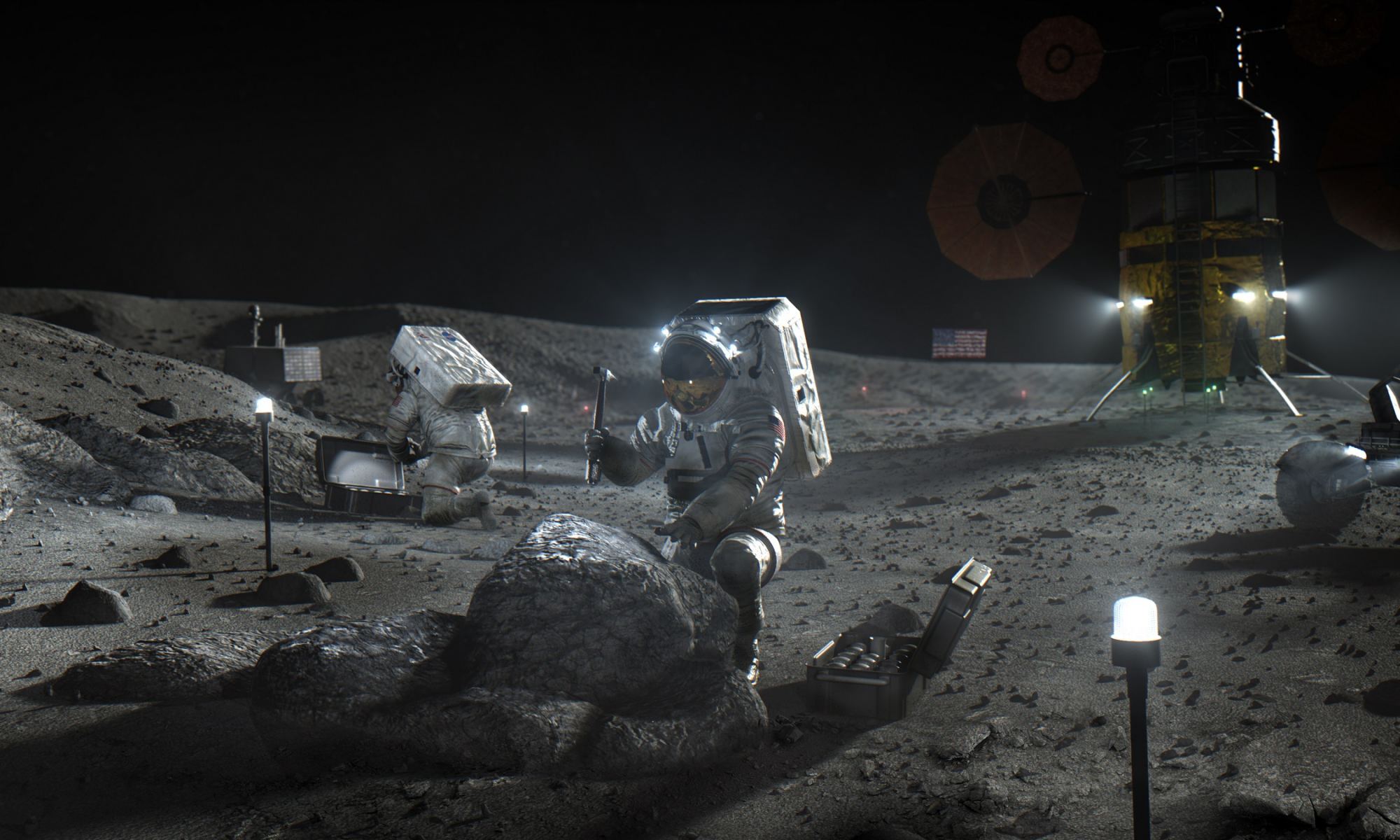
Before this decade is out, NASA plans to return astronauts to the Moon for the first time since the Apollo Era and build the necessary infrastructure to keep sending them back. And they will hardly be alone. Alongside NASA’s Artemis Program, the European Space Agency also plans to send astronauts to the Moon and establish a permanent habitat there (the Moon Village), while China and Russia are working towards creating the International Lunar Research Station (ILRS). Numerous commercial space companies will also be there to provide crew transportation, cargo, and logistical services.
All of this will happen in the Moon’s southern polar region, a topographically complex region characterized by craters, permanently shadowed regions (PSRs), and undulating slopes. This terrain could prove difficult for crews conducting extravehicular activities (EVAs) away from landing sites and habitats. In a recent study, an international team of researchers used data from NASA’s Lunar Reconnaissance Orbiter (LRO) to create a detailed atlas of the region that accounts for all the traverses and descents. This atlas could prove very useful for mission planners as they select landing sites for future exploration.
Shown here is a rendering of 13 candidate landing regions for Artemis III. Each region is approximately 15 x 15 km (9.3 x 9.3 mi). A landing site is a location within those regions with an approximate 100-m (328-ft) radius. Credits: NASA
“EVAs will be required to conduct planned scientific expeditions, assemble structures, perform nominal maintenance, and intervene and solve problems outside of the vehicle that cannot be solved either robotically or remotely. The ultimate success of future Exploration missions is dependent on the ability to perform EVA tasks efficiently and safely in these challenging environments. With lunar missions planned for up to 30 times more EVA hours than during the Apollo era, exploration missions to the moon and Mars will present many new challenges with regard to crew health, safety, and performance.”
While mission planners anticipate EVAs much longer than any performed by the Apollo astronauts, NASA’s understanding of human health and performance parameters in lunar gravity is limited to lessons learned from the Apollo Era. Subsequent observations and studies involving microgravity EVAs aboard the Space Shuttle and the International Space Station (ISS) have provided invaluable lessons. However, this data has mainly been used to design new spacesuits, like the recently unveiled Exploration Extravehicular Mobility Unit (xEMU).
Nevertheless, the report also indicates that there has been limited quantification of the physiological and biomechanical variables associated with suited activities in unit and partial gravity. For the astronauts conducting EVAs as part of Artemis III (and subsequent missions), the risks and hazards largely depend on the distance being explored and whether a rover is involved. As study co-author David A. Kring, a researcher with the CLSE-LPI, told Universe Today via email:
“The initial Artemis missions will be limited to walking. The principal challenge in that type of mission will be terrain slope. Any traverse needs to be on slopes less than 20 degrees. Astronauts will also be asked to stay within 2 kilometers [1.24 mi] of the lander and, ideally, keep the lander in sight. After rovers are deployed, astronauts can travel farther from a lander. It may also be possible to reuse rovers in multiple missions. In that case, Houston will telerobotically drive rovers from one astronaut landing site to another. Topography and slope will affect the paths taken. Some of the lunar mountains are larger than Mt. Everest on Earth.”
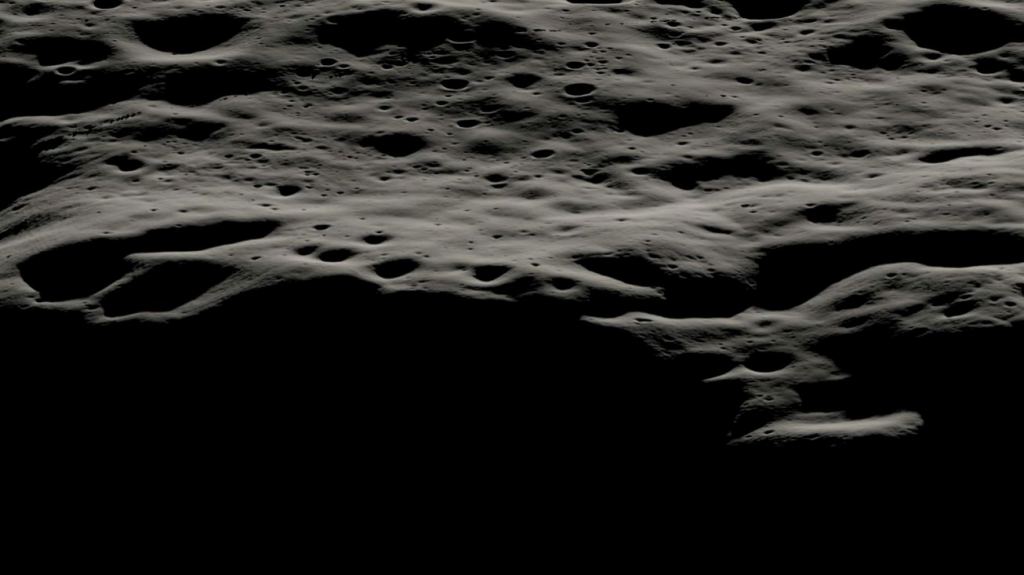
Data visualization shows the mountainous area west of the Nobile Crater and the smaller craters that litter its rim at the lunar south pole. Credit: NASA
Exploring the Lunar South Pole
What is needed to ensure that crews don’t exhaust themselves or fall prey to the many geographical hazards that characterize the terrain, Kring and his colleagues consulted data from the LRO’s Lunar Orbiter Laser Altimeter (LOLA), which obtained 5-meter per pixel (16.4 ft/pixel) measurements the Moon’s southern polar region in 2015 – from which, they identified 521 PSRs. They then created an automated pipeline called MoonPath, which combines a Monte Carlo approach with Dijkstra’s minimum cost path algorithm to calculate traverse paths that minimize metabolic workload.
Like the other candidate landing regions, they are of significant scientific interest due to the potential presence of volatile compounds like water ice, which could be used to produce everything from drinking water and oxygen gas to rocket propellants. As Pena-Asensio explained, the resulting algorithm operates under a set of constraints, including round-trip traverses, minimizing steep slopes, avoiding large boulders, and restricting the overall distance to a 2 km (1.24 mi) radius:
“The optimal strategy for minimizing metabolic workload is to find the shortest and flattest route. Our tool evaluates the properties that an astronaut would encounter along the traverse, such as topographical variations, the incidence of sunlight on their bodies, direct line-of-sight to the lunar lander, temperature, and bearing capacity. Additionally, we estimate the walking speed and time based on Apollo mission records.”
Atlas for Artemis
The result of their work was an atlas that included all 521 traverses and descents to PSRs in the southern polar region. Based on their analysis, the team found that 94?% of all these PSRs are accessible from the rim on slopes below 15°. They further determined that 20 and 19 PSRs are accessible from potential landing sites 001 and 001(6) (respectively), four of which are accessible on slopes entirely below 10°, and that traverses around site 004 are more workload-demanding. This type of information is critical for optimizing astronaut EVAs and identifying accessible targets for science operations.
As they indicate in their paper, the pipeline and traverse atlas can be used to support mission planning for the collection of ice and volatile samples and address major scientific priorities. It can also be used to calculate the minimum workload astronaut paths to any other geologic and exploration targets within the AEZ or elsewhere on the Moon. As Kring summarized:
“The planning tool that the team developed will sharpen our ability to plan geologic traverses that astronauts can successfully complete on schedule. The tool be used to sharpen individual notional traverses. The tool can also be used in an automated mode that allows the team to investigate a constellation of traverse options and, thus, identify the best one from a metabolic perspective. The team developed the tool to assist Artemis astronauts, but it can also be used to explore robotic missions to the lunar surface.”
The Moon is 40 Million Years Older Than We Thought
An object the size of Mars crashed into the Earth over 4 billion years ago, creating a cloud of debris that formed the Moon. When the Apollo astronauts landed on the lunar surface, they found and brought back Moon rocks that helped pinpoint when this event happened. Now, a new study of crystals in the lunar samples pushed that event back even further –about 40 million years earlier than previous estimates — setting the Moon’s formation to about 4.46 billion years old – not long after the Earth formed.
Researchers at Northwestern University and the Field Museum in Chicago, along with the University of Glasgow in Scotland used an atom-probe tomography facility to study Moon rocks and dust collected during the Apollo 17 mission in 1972. This facility allowed them to perform an improved form of radiometric dating. Radiometric dating calculates an age in years for geologic materials by measuring the presence of a short-life radioactive element, such as carbon-14, or a long-life radioactive element plus its decay.
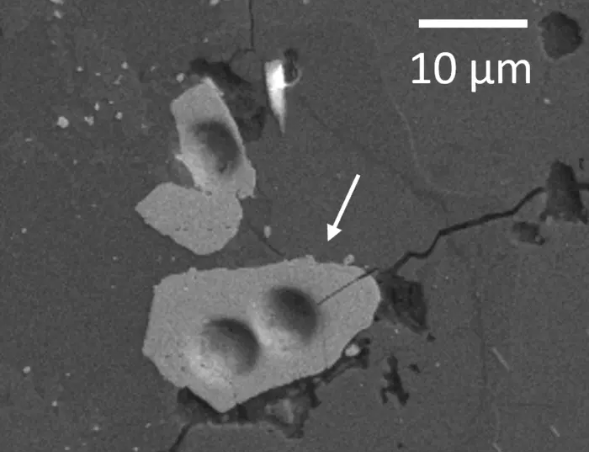
A lunar zircon grain under a microscope.Credit: Photo courtesy of Jennika Greer.
The facility, which includes a sensitive high-resolution ion microprobe, allowed the researchers to look at every atom in the zircon crystals and count how many of the atoms have undergone radioactive decay. When an atom undergoes decay, it sheds protons and neutrons to transform into different elements. Uranium, for example, decays into lead, and zircon contains the radioactive element uranium. Uranium has been called “the clock within zircon” because it converts to the element lead at a specific rate over a long span of time.
“This study is a testament to immense technological progress we have made since 1972 when the last [crewed] Moon mission returned to Earth,” said Northwestern’s Dieter Isheim, who co-authored the paper, published in the journal Geochemical Perspectives Letters. “These samples were brought to Earth half-a-century ago, but only today do we have the necessary tools to perform microanalysis at the requisite level, including atom-probe tomography.”
When the Mars-size object hit the Earth and formed the Moon, the energy of the impact melted the rock that eventually became the Moon’s surface.
“When the surface was molten like that, zircon crystals couldn’t form and survive,” explained Philipp Heck from the Field Museum, another co-author. “So, any crystals on the Moon’s surface must have formed after this lunar magma ocean cooled. Otherwise, they would have been melted and their chemical signatures would be erased.”
Apollo 17 was the sixth and final Apollo mission to land people on the Moon and was the only Apollo mission to have a trained geologist among its crew. Lunar module pilot and geologist Harrison Schmitt joined Commander Gene Cernan and Command Module Pilot Ron Evans. The astronauts landed on the southeastern rim of the Serenitatis Basin, known as Taurus-Littrow. Schmitt and Cernan collected about 243 pounds (110.4 kg) of soil and rock samples that were brought back to Earth for further study. Previous studies concluded that the samples from Apollo 17 came from the oldest known impact craters on the Moon.
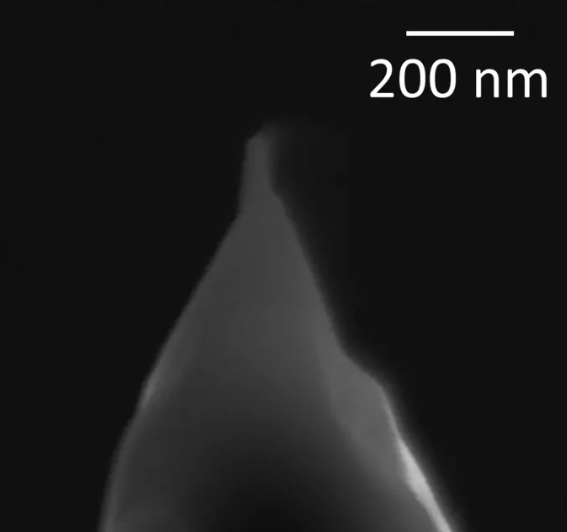
The microscopic sharpened tip of a lunar crystal. Credit: Courtesy of Jennika Greer
For the new experiment on these samples, a small portion of the lunar sample was sharpened into a very sharp tip, using a focused ion beam microscope. Then, UV lasers evaporate atoms from the surface of that tip. The atoms travel through a mass spectrometer, and how fast they move provides evidence of how heavy they are, which in turn tells the scientists what the atoms are made of.
“These crystals are the oldest known solids that formed after the giant impact,” Heck said. “And because we know how old these crystals are, they serve as an anchor for the lunar chronology.”
Heck said that radiometric dating works somewhat like an hourglass.
“In an hourglass, sand flows from one glass bulb to another, with the passage of time indicated by the accumulation of sand in the lower bulb,” he said. “Radiometric dating works similarly by counting the number of parent atoms and the number of daughter atoms they have transformed to. The passage of time can then be calculated because the transformation rate is known.”
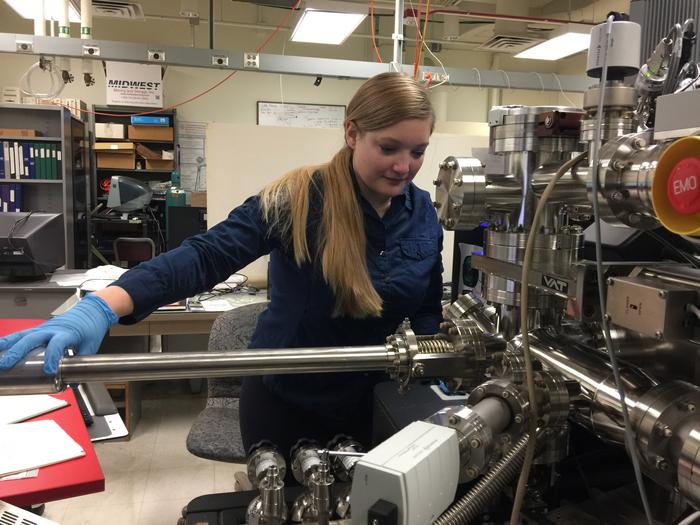
Lead author Jennika Greer working with the atom probe. Credit: Courtesy of Dieter Isheim, Northwestern.
A previous study by co-author Bidong Zhang suggested this older age of the lunar surface. Zhang worked with lead author Jennika Greer to use the atom probe tomography facility at Northwestern to get a nanoscale look at the lunar samples, which confirmed the age of this oldest known lunar crystal
Greer was a doctoral candidate at the Field Museum and the University of Chicago and is now a research associate at the University of Glasgow.
“It’s amazing being able to have proof that the rock you’re holding is the oldest bit of the Moon we’ve found so far,” said Greer. “It’s an anchor point for so many questions about the Earth. When you know how old something is, you can better understand what has happened to it in its history.”
The researchers said it’s important to know when the Moon formed since it is such an important part of our planetary system.
“It stabilizes the Earth’s rotational axis, it’s the reason there are 24 hours in a day, it’s the reason we have tides,” said Heck. “Without the Moon, life on Earth would look different. It’s a part of our natural system that we want to better understand, and our study provides a tiny puzzle piece in that whole picture.”
The Tunguska event was a mega explosion, which occurred near the Podkamennaya Tunguska River in what is now Krasnoyarsk Krai, Russia, on June 30, 1908. It is classified as an impact event even though it exploded in the sky rather than hit the surface with as a result that about 2,000 square km of forest was flattened.
No one disputes it occurred, but how it occurred is a heated controversy.
Despite the best efforts of mainstream science, we still haven't gotten anything but ad hoc explanations that leave some inescapable facts shouting for attention.
The event began around 7:15 in the morning of June 30th, 1908. A blue-white fireball that some say was brighter than the Sun raced across the sky and then exploded (with the power) of a 10 to 15 megaton hydrogen bomb.
The shockwave alone was enough to knock people off their feet and break windows hundreds of kilometers away. The explosion though devastated 2,000 square kilometers, felling almost 60 million trees, and yet somehow left a ring of burned trees standing near the epicenter. Even stranger, several more unburned trees remained in the middle of those.
Seismic stations across Europe and Asia felt the explosion, and even as far as Britain fluctuations of atmospheric pressure were detected. That pulse of air pressure circled the Earth twice. Astronomers observed a red-glowing haze in the upper atmosphere for several nights after, even if they didn't understand what had caused it.
And then comes another oddity. Reports of an unusually bright nighttime sky begin coming out the night before the Tunguska event and several more unusually bright nights follow. For weeks, reports say the night sky was so bright you could read under it. Both the Smithsonian Astrophysical and Mount Wilson Observatories reported a decrease in atmospheric transparency that would persist for several months.
Most astronomers today figure the destruction was caused by either a small comet or asteroid bursting a few miles off the surface, with estimates putting the object around 100 meters in diameter. According to the calculations of Christopher Chyba of NASA's Goddard Space Flight Center in Greenbelt, Maryland, only a stony meteorite would explode at 10 kilometers up where the Tunguska blast is thought to have occurred.
However, a comet of that size would disintegrate much higher in the atmosphere, causing less damage on the ground. Yet, over a hundred years later scientists still argue over several unexplained facts and to this day no trace of the impacting object has ever been found.
Andrei Ol’khovatov, an independent Russian physicist who was intrigued by the Tunguska then agrees that the impact theory leaves too many unanswered questions.
He points out witnesses reporting strange weather and increased seismic activity in the area for days before the event. This absence of any coherent explanation has invited plenty of speculation from the mainstream. Everything from a miniature black hole passing through the earth to anti-matter bombs going off in the night. UFOs, extraterrestrial weaponry, even a theory about Tesla's death ray have been introduced to explain the unexplained.
But guess what they left out - 'the electrical force'. The one single force that allows for a unified solution that doesn't need to leave out any fields of evidence.
Proponents of the Electric Universe ask us to judge this perspective based on predictive success and their theories’ ability to explain all relevant data, without leaving a substantial collection of evidence on the cutting room floor, like the mainstream. So, let's pencil electricity into the equation and see what happens - the extraordinary power of a high-energy explosion above ground. The most likely origin of the object responsible for the Tunguska event was the short-period comet Encke acknowledged source of the Beta Taurid meteor shower which was at its peak on June 30th, 1908.
In the Electric model, the energy released by a comet fragment when they encounter Earth isn't limited to the mass and kinetic energy of a fragment. Instead, it packs the entire punch of the charge differential between itself and the earth.
What did they leave out? Electricity. Researchers who ignore the electrical force end up theorizing an object with grossly exaggerated mass and size, and these inaccuracies have made the search for fragments of the original bolide difficult. They're looking in the wrong places. Repeated testimony of strange sounds before the event
In terms of the speed of sound in the earth's atmosphere, the reports of weird sounds in advance, might seem absurd. But not when you consider electrophonic sounds that are heard either before or during sightings of brilliant meteor fireballs up to a hundred kilometers distant. Electrophonic sounds are a direct conversion by transduction of very low frequency electromagnetic energy into sound, through a medium that can be as simple as a gold tooth or a pair of glasses.
Reports of such unusual sounds connected with meteors, auroras, earthquakes, and even nuclear bomb tests, substantiate this effect. The easiest way to understand it, is as a natural resonance of extensive plasma discharge in earth's atmosphere, or underground in the case of earthquakes. In the case of the incoming comet, the body is electrified in respect to the earth.
Plasma Sheath
In our electric solar system, planets and comets all have a plasma sheath that isolates them electrically from the solar plasma. But when these plasma sheaths touch, the two bodies see each other electrically for the first time.
Now consider that these comets have plasma sheaths that are millions of kilometers in diameter. Even at the incredible speeds they're traveling, their plasma sheaths reach us days in advance, causing electrical interaction with the earth long before any physical encounter.
Strange Weather
Reports of strange weather before the event.” In our electric solar system it's the flow of electric current between the planets and the solar plasma that primarily drive earth’s weather patterns. Seen in these terms, electrical disturbances resulting in unusual weather would be expected, even days before a comet's arrival.
Reports of strange seismic activity before the event
New evidence is linking earthquakes to occurrences of underground lightning. The intrusion of even a minor electrical charged body approaching the earth, could certainly trigger earthquakes in the same way electrical sunspot activity does.
Geomagnetic storms
Geomagnetic effects before the event. Professor Weber of Kiel University observed unusual regular periodic deviations of the compass needle. An effect repeated each evening from the 27th through the 30th of June 1908. The recordings look like geomagnetic storms often caused by solar electrical activity. But in this instance, it was the approaching comet causing the disturbance. The duration of these storms indicate that comets are copious sources of electrons, meaning they carry substantial negative charge compared to the inner solar system and have a vastly greater influence than mere gravitational or inertial considerations would suggest.
Global atmospheric pressure pulse
The earth's atmosphere forms the dielectric of a capacitor with the two plates being pressure pulses earth and the ionosphere. The comet’s electrical disturbances cause pressure pulses through the atmosphere, both before and when the comet arrives. Consider the giant ionospheric disturbance that accompanied the 9.3 magnitude Sumatra earthquake on December 26, 2004, where the ionosphere moved up and down by almost 40 kilometers. Such changes have been recorded in the atmosphere five to ten days before an earthquake.
Missing crater
When a comet passes close to earth, the plasma discharge that takes place between them can cause the comet to fragment or burst from internal electrical stresses. Now these fragments can melt or vaporize in the intense plasma discharge leaving nothing left to create a crater on the ground.
Interestingly, the Tunguska epicenter is over the top of a Triassic volcano. Volcanoes are the focus of electrical discharge activity and may retain electrical conductivity that differs from the surrounding crust, adding another credible argument that the blast was electrical.
Absence of meteoric fragments
If it was just the fire and air friction breaking the bolide apart, we'd expect to find its stony remains, but as noted above all this gets vaporized in the discharge. Also, ground zero has nothing to do with any impact or crater, but is instead the spot where a focused plasma discharge between earth and comet occurs, meaning most Standard Model researchers don't even know where to look.
Instantaneous eruption of fire across hundreds of square kilometers
A discharge at these levels would have been like nothing the locals had ever seen. Both regular radiation fires and electrically ignited ones would have erupted all over a wide area, all at the same time, setting it all ablaze.
Frightful lightning and thunder in the midst of the firestorm. Saint Elmo's fire and ball lightning are generated at the earth's surface and the locals would have seen lightning snaking across a clear blue sky.
Lightning
Blasts of heat, along with a shock wave many kilometers from the explosion. Wherever the discharge touches down, there's intense heat and a blast, but these touchdown points are often far from the bolide’s track or the epicenter of the explosion. ”Presence of microscopic glassy spheres over a large area.” When those comet fragments vaporize, the explosion sprays glassy spherules outward from the discharge.
Electrical fusing
It's a common effect of lightning and yes easily demonstrated in the lab. After a hundred years, the experts are still debating if this was a comet or an asteroid that exploded over Tunguska. The comet camp points out cometary material found in a wide area, but the asteroid camp claim a fragile comet would get destroyed too high in the atmosphere. What neither side understands is that a comet is just an asteroid large enough to hold its own charge, while moving along a highly elliptical orbit through the Sun's electric field. There are no icy dirt balls. Both form the same way, and an asteroid that's big enough can become a comet simply by being knocked out of its regular circular orbit.
The above theory proposed by the Electric Universe model of cosmology could be the answer to the question of what really caused the Tunguska event. It's electric!
The Electric Universe Theory generally states that electricity is the engine behind a long list of natural and astrophysical spectacles. It supports the idea that invisible electricity powers surround our planet, our solar system, the galaxy and... everything and that cosmic occurrences are electrical in nature.
Crystals packed inside Apollo's lunar rocks suggest that the Moon could be a much older age than we thought.
Half a century after the last Apollo mission departed the Moon in December 1972, scientists have taken a fresh look at its precious parcels. A team sharpened the lunar rocks the astronauts had ferried to Earth, and then, by using a precise dating technique that measures the decay of unstable molecules called isotopes, researchers concluded that the Moon is at least 4.46 billion years old. Their new estimate, published in a new study in the journal Geochemical Perspectives Letters, suggests the Moon is older than previously estimated by 40 million years.
“It’s amazing being able to have proof that the rock you’re holding is the oldest bit of the Moon we’ve found so far,” Jennika Greer, lead author of the new study and former doctoral candidate at the Field Museum of Natural History in Chicago, said in an announcement.
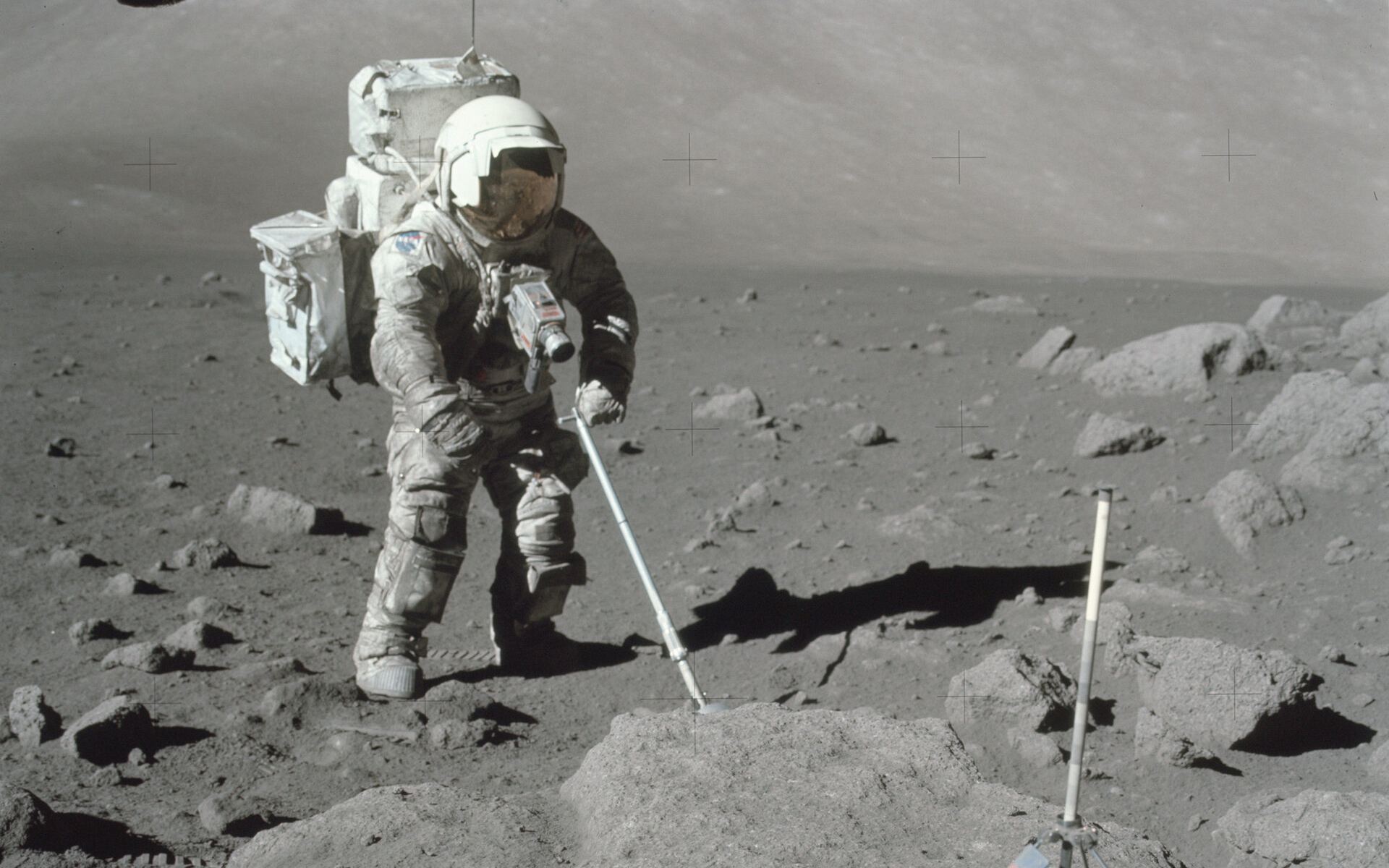
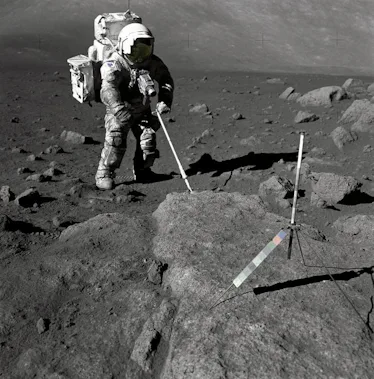
Apollo 17 astronaut Harrison Schmitt in 1972.
COURTESY OF NASA
HOW DID THE MOON FORM?
The crystals that researchers examined are traces of a violent encounter between ancient Earth and a Mars-sized object. Fittingly, it's called the Giant Impact hypothesis.
This crash is time zero on the clock for the Moon’s existence as we know it. The event would have caused a molten ocean across the Moon’s entire surface.
As Philipp Heck, curator for meteoritics and polar studies at the Field Museum and the study’s senior author, explained in the announcement, “When the surface was molten like that, zircon crystals couldn’t form and survive.” Once the magma ocean cooled down, the zircon crystals would begin to form. They are, therefore, a good way to estimate the minimum possible age for the Moon.
HOW DID THEY FIGURE OUT THE MOON’S AGE?
Greer says the team used a focused ion beam microscope like “a very fancy pencil sharpener” to prepare the lunar sample for observation. The team produced five of these “nanotips.” Ultraviolet lasers then evaporated atoms from the tip; this allowed the team to learn what they were made of.
The next step was to look at the proportion of different isotopes. The team could then discern how many atoms had transformed during the passage of time as they underwent radioactive decay. This technique, which Heck described as an “hourglass,” provides a reliable way to learn the ancient age of a sample.
This new study is proof that astronomers need only peer into the nearby universe to make exceptional discoveries.
The need for self-defense has always been present in history, especially in the ancient world. Sometimes, however, the common folk were not provided with adequate weapons or sufficient training, which greatly reduced their effectiveness in battle. In many cultures, people chose to instruct themselves, and thereby developed unique martial arts that could be very deadly forms of self defense. Many of these martial arts survived through the centuries, being refined and perfected. Here are ten deadly martial arts of the ancient world!
1. Tahtib
Tahtib, also known as Arnis sa Kawayan or simply “stick fighting,” is a traditional martial art that originated in ancient Egypt. Rooted in history and culture, tahtib involves combat techniques using a long bamboo stick as the primary weapon . Practitioners of tahtib engage in choreographed movements that simulate combat scenarios, incorporating strikes, blocks, thrusts and sweeps. The art emphasizes fluid and rhythmic footwork, balance and coordination, making use of the stick as both an offensive and defensive tool.
Tahtib has cultural significance beyond self-defense, often being performed in celebratory events, festivals, and social gatherings. It serves as a means of entertainment, storytelling, and preserving historical heritage. While tahtib's prominence waned over time, efforts have been made to revive and preserve this ancient art. Modern practitioners study tahtib to connect with Egypt's martial history, promote cultural appreciation, and foster a sense of community.
Tahtib showcases the ingenuity of ancient Egyptian combat traditions and contributes to a broader understanding of the diversity and depth of martial arts across different cultures.
Kung Fu is a diverse and multifaceted martial arts discipline that originated in China and has gained global recognition. Rooted in ancient traditions, Kung Fu encompasses a vast array of styles, techniques, and philosophies that have evolved over centuries.
Kung Fu techniques include a wide spectrum of strikes, kicks, punches, blocks, joint locks, throws, and more. It emphasizes fluidity of movement, balance, flexibility, and the integration of mind and body, and it can be quite deadly when used in true combat. Many styles are named after animals, imitating their characteristics and movements. Beyond combat, Kung Fu embodies a philosophy of self-discipline, personal development and respect for others. It encompasses principles like harmony, balance and the pursuit of inner peace. Traditional Kung Fu schools often integrate meditation , philosophy and healing practices into their teachings.
The practice of Kung Fu has influenced various aspects of Chinese culture, including literature, theater and film. It gained global popularity in part due to its portrayal in movies and television. Different styles of Kung Fu, such as Shaolin , Wing Chun, Tai Chi and Wushu, showcase its versatility and adaptability to different goals, whether they be self-defense, physical fitness, artistic expression or spiritual growth.
3. Bataireacht
Bataireacht, also known as Irish stick fighting or cudgel play, is a traditional martial art that originated in Ireland. Rooted in the country's history and culture, bataireacht involves the skilled use of a wooden stick or cudgel for combat.
Practitioners of bataireacht develop proficiency in various techniques, including strikes, blocks, parries and footwork. The art emphasizes fluid movements, precision and timing, making use of the stick as an extension of the body. Bataireacht techniques can be applied in both one-on-one combat and in larger-scale confrontations.
Historically, bataireacht played a role in Ireland's fight for independence, as well as in everyday self-defense among common people. The art was often practiced covertly due to its association with resistance against British rule. While bataireacht's prominence waned over time, efforts have been made to preserve and revive its techniques and cultural significance.
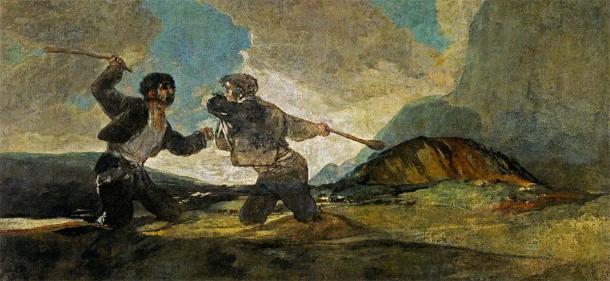
Fight with Cudgels by Francisco de Goya, circa 1820, resembles a bataireacht brawl.
Pankration was an ancient Greek martial art that emerged in the early Olympics and has left an indelible mark on combat sports history. Combining elements of boxing and wrestling, pankration was a no-holds-barred fighting discipline that allowed for a wide range of techniques, including strikes, joint locks, chokes, and throws.
In pankration, combatants aimed to incapacitate or submit their opponents through a combination of brute force and strategic finesse. Matches could become intense and often ended only when one fighter either surrendered, was rendered unconscious, or was unable to continue. Despite its aggressive nature, there were rules in place to prevent maiming or death.
Pankration was held in high esteem in ancient Greek society, celebrated for its physical prowess and mental fortitude. Its champions were regarded as true all-around athletes, showcasing a blend of strength, agility, and tactical acumen.
Pankration's legacy can be seen in the modern evolution of mixed martial arts (MMA), as it bears similarities to the diverse combat techniques and versatility displayed in contemporary cage fighting. While pankration itself is no longer widely practiced, its influence endures through its impact on combat sports.
5. Kalaripayattu
Kalaripayattu is an ancient Indian martial art with roots in the state of Kerala. Considered one of the world's oldest fighting systems, it encompasses a holistic approach to physical, mental, and spiritual development. Kalaripayattu is known for its distinctive blend of striking techniques, weaponry and physical conditioning.
This martial art is divided into various stages of training, beginning with the practice of Meipayattu (body conditioning) to develop flexibility and strength. Kolthari involves training with wooden weapons like staffs, Ankathari introduces metal weapons like knives and swords, and Verumkai focuses on unarmed combat.
Kalaripayattu's unique techniques include intricate footwork, graceful movements and powerful strikes aimed at vital points on the body. It emphasizes a deep understanding of the body's energy flow and pressure points for both offense and defense.
Beyond combat, Kalaripayattu incorporates healing techniques, known as Marma Chikitsa, to treat injuries and restore balance. It's also an essential part of Kerala's cultural heritage and has influenced other martial arts like Silambam and certain aspects of traditional dance forms.
Two Kalaripayattu swordsmen in mock sword against sword martial arts combat in Kerala.
Karate is a traditional Japanese martial art that originated on the island of Okinawa and later gained worldwide recognition. Characterized by its emphasis on striking techniques using various parts of the body, karate focuses on delivering powerful punches, kicks, knee strikes and elbow strikes. It embodies principles of discipline, respect, and personal development.
Karate practitioners, known as karateka, train in forms (kata), which are choreographed sequences of movements that simulate combat scenarios. These forms help practitioners develop techniques, balance, coordination and mental focus. Karate also includes sparring (kumite), where practitioners engage in controlled, supervised combat to apply techniques in a dynamic setting.
Different styles of karate exist, each with its own philosophy and techniques. Shotokan, Shito-ryu, Goju-ryu, and Wado-ryu are some of the most well-known styles. Karate has been influenced by Okinawan and Chinese martial arts, and it has evolved over time to include both traditional and sport-focused elements.
Karate's popularity as a martial art, self-defense system and competitive sport has led to its inclusion in international events like the Olympic Games. Beyond physical skills, karate fosters mental resilience, self-confidence and a sense of community.
7. Ninjutsu
Ninjutsu is a historic and secretive Japanese martial art that encompasses a wide range of skills and techniques associated with espionage, sabotage and unconventional warfare. Originating during feudal Japan, ninjutsu was developed and practiced by the ninja, covert agents skilled in espionage and guerrilla tactics.
Ninjutsu encompasses various disciplines, including espionage, disguise, stealth, camouflage, escape, evasion and unconventional combat techniques. Practitioners, known as shinobi or ninja, were trained to operate in a clandestine and covert manner, using their specialized skills to gather information, conduct assassinations and disrupt enemy activities.
The art of ninjutsu places a strong emphasis on adaptability, deception and survival. Techniques include unarmed combat, weapon handling, explosives, poisons and the use of everyday tools as weapons. Additionally, the art includes meditation and mental training to enhance focus, awareness and control.
Ninjutsu's mystique has been popularized in modern media, though historical records are often limited due to its secretive nature. While the traditional role of the ninja has evolved, the legacy of ninjutsu endures as a symbol of ingenuity, resourcefulness, and the art of adapting to challenging circumstances.
8. Silambam
Silambam is an ancient martial art hailing from the southern regions of India, particularly Tamil Nadu and Kerala. Rooted in tradition and culture, Silambam revolves around the skillful use of a bamboo staff, also known as silambu or lathi, as a versatile weapon for both offense and defense.
Practitioners of Silambam engage in a dynamic and rhythmic dance-like combat, focusing on fluid movements, footwork and precise strikes. The art incorporates a wide range of techniques, including strikes, blocks, sweeps, thrusts and spins, making it a comprehensive, deadly, and adaptable form of self-defense.
One of Silambam's distinctive features is its emphasis on weapon-to-weapon combat, as well as unarmed techniques that complement the staff work. The art's historical roots trace back to ancient battles and warrior traditions, where the silambu was utilized to defend against various opponents and weaponry.
Over time, Silambam has evolved into a cultural expression and a symbol of regional heritage. It has gained recognition as a sport and a means of promoting physical fitness, coordination and discipline. The practice of Silambam continues to be celebrated through performances, competitions and demonstrations, showcasing its significance in preserving the rich martial heritage of South India.
9. Eskrima / Kali / Arnis
Arnis is the national martial art of the Philippines. Also known as Eskrima or Kali, this is a versatile and comprehensive martial art that can be very lethal. This ancient system places a strong emphasis on weapon-based combat, with a primary focus on sticks, blades and improvised weapons. Eskrima practitioners develop a deep understanding of both armed and unarmed techniques, making it effective for self-defense in various scenarios.
Practitioners learn to strike, block, disarm and manipulate opponents' weapons with precision and speed. The art's footwork and body positioning contribute to its effectiveness, enabling practitioners to maintain a balanced and controlled approach to combat.
While weapons training is a cornerstone of Eskrima, it also incorporates empty-hand techniques, grappling, and throws, providing a well-rounded self-defense system. The art's adaptability has led to its integration into modern law enforcement and military training, as well as its continued practice in various cultural and sporting contexts.
Eskrima remains an integral part of the nation's cultural identity, celebrated for its practicality, efficiency and holistic approach to combat and self-preservation.
Eskrima practitioner wearing a traditional headdress and striking with a stick as part of this unique martial art.
Varma Kalai is an ancient martial art and healing system that originated in the region of Tamil Nadu in South India. Rooted in the Siddha tradition, Varma Kalai focuses on the manipulation of vital points ( varma) on the body to both incapacitate opponents and promote healing, depending on the need. This martial art encompasses a wide range of techniques, including strikes, pressure point manipulation, joint locks and weapon-based combat.
Varma Kalai practitioners are trained to target specific points on the body, believed to be interconnected with the body's energy pathways, nerves, and vital organs. Strikes and pressure applied to these points can disrupt an opponent's physiological functions, causing pain, paralysis or even death. However, the art also emphasizes the ethical use of its techniques and places great importance on understanding the body's energy flow and balance.
In addition to combat applications, Varma Kalai includes a comprehensive system of healing and medicine, utilizing the knowledge of vital points to treat injuries, ailments and imbalances in the body. While the ancient art of Varma Kalai has diminished in prominence over time, efforts to preserve and revive its teachings continue, allowing its unique blend of martial prowess and therapeutic knowledge to persist as a cultural and historical treasure.
These ten martial arts, whether showcasing the graceful but lethal moves in Kalaripayattu or the brute force encounters of pankration in ancient Greek arenas, offer a deep dive into the ingenious methods developed for self-defense and warfare. They stand not just as methods of physical combat, but also as spiritual disciplines, philosophies, and influential cultural symbols woven deeply into the tapestries of their respective societies.
De maan is nog 40 miljoen jaar ouder dan gedacht, wijst nieuw onderzoek uit
Artikel van Radio 1, Maxine Rappé
Minstens 4,46 miljard jaar. Dat is de leeftijd van de maan, blijkt uit nieuw Brits en Amerikaans onderzoek. “Dat is bijna zo oud als de aarde”, zegt sterrenkundige Katrien Kolenberg in “Nieuwe feiten” op Radio 1. Voordien dacht men dat het hemellichaam 4,42 miljard jaar was.
De geboorte van de maan
Wetenschappers vermoeden dat de maan in het vroege zonnestelsel ontstond na een botsing. Een object zo groot als Mars stootte tegen de aarde, waardoor een deel van onze planeet werd weggeslingerd. Die gesteentes smolten later samen tot de maan.
“Eens dat gestold was, hebben er zich op het maanoppervlak kristallen gevormd”, zegt Kolenberg. Die werden 51 jaar geleden meegenomen door astronauten van de Apollo 17-missie, de laatste missie waarbij voet op de maan werd gezet.
Een zirkonenkristal.
Beeld Jennika Greer
Oude stenen, nieuwe inzichten
Het zijn die 51 jaar oude kristallen die nu voor meer duidelijkheid zorgen. “Ze zijn recent onderzocht door Britse en Amerikaanse onderzoekers met een nieuwe techniek: atoom sonde tomografie.” Die techniek, gebaseerd op de datering van radioactief verval, laat toe om de leeftijd van gesteente in detail vast te stellen. Met een laser worden atomen uit kristallen verdampt.
Het huidige maanoppervlak bestaat uit gesteente dat is gesmolten door de energie die vrijkwam toen de maan werd losgeslagen van de aarde. De meegebrachte kristallen kunnen zich pas hebben gevormd nadat het gesteente was afgekoeld, zegt Philipp Heck, een van de auteurs van het onderzoek.
“Nu hebben we de technieken om meer details te ontrafelen”, zegt Kolenberg. Dat verschil van "amper" 40 miljoen jaar in de datering van de maan lijkt misschien onbenullig. Toch is het een stap vooruit voor de wetenschap. “Het leert ons iets bij over de geschiedenis van ons zonnestelsel, en hoe vroeg het er al was.”
Toen het object op de aarde knalde en de maan vormde, smolt door de energie van de impact het gesteente dat uiteindelijk het maanoppervlak zou vormen. “Toen het oppervlak zo gesmolten was, konden zirkonenkristallen niet ontstaan of overleven. Dus alle kristallen op het maanoppervlak moeten zijn ontstaan nadat deze magma-oceaan op de maan was afgekoeld”, legt Heck uit. “Anders zouden ze zijn gesmolten en was hun chemische signatuur vernietigd.”
Volgens Heck is het belangrijk om te weten wanneer de maan is ontstaan om het leven op aarde beter te begrijpen. De maan stabiliseert onder meer de rotatie-as van onze planeet. Bovendien zorgt de aantrekkingskracht van de maan voor eb en vloed. “Het is een onderdeel van ons natuurlijke systeem dat we beter willen begrijpen. Onze studie is een klein puzzelstukje in dat hele plaatje”, zegt Heck.
Guys, check this amazing fossil I found recently on Mars. The fossil is about 1 meter across and looks much more worn than similar size clam fossils on earth that are 500 million years old. This is 100% proof that an ancient ocean once existed on Mars. Imagine what we the public could accomplish if given control of the rover for one year. We would make more discoveries than NASA did in its whole 55 year existence.
Meer van UFO'S of UAP'S, ASTRONOMIE, RUIMTEVAART, ARCHEOLOGIE, OUDHEIDKUNDE, SF-SNUFJES EN ANDERE ESOTERISCHE WETENSCHAPPEN - DE ALLERLAATSTE NIEUWTJES


 Ever think about ET Bases on the Moon? NASA Photo is proof, UFO Sighting News.