Huge object travels through our solar system

Huge object travels through our solar system
New UFO report from Missouri: Witness filmed 2 fast UFOs a few days ago

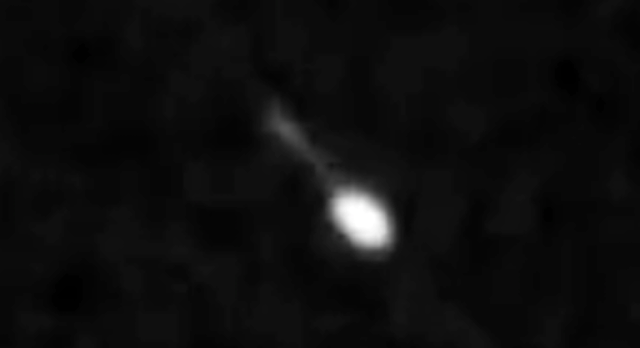
Witness in Nixa, Missouri filmed these two really fast unidentified flying objects. What do you think this is? Please leave a comment below!
Filmed on Tuesday, 16th June 2020.
Witness report:
Was with sister in car about to leave parking lot spotted multiple sets of pairs on ufo From the SW heading NE and I videotaped w iPhone.
SCIENTISTS GROW PETRI DISH MINI-BRAINS WITH NEANDERTHAL DNA

ALLAN HENDERSON
To study how early humans related to the ancient human subspecies known as Neanderthals, CNN reports, a team of European scientists grew mini-brains from human stem cells that contain Neanderthal DNA and proteins.
“We were curious how much of the Neanderthal genome could be explored if you just have access to stem cells from the right people,” Grayson Camp, lead author of a new study published in the journal Stem Cell Reports today and genomics PhD at the Institute of Molecular and Clinical Ophthalmology in Switzerland, told CNN.
The team analyzed genomes from individuals with Northern European descent and compared them to a reference Neanderthal genome created in 2010 by geneticist Svante Pääbo “to figure out which parts were likely derived from Neanderthals and which parts were not,” according to Camp.
“Per individual, there’s something like between 1 percent and 4 percent of the genome likely derived from Neanderthals,” he added.
From there, the team grew three-dimensional blobs of brain tissue inside a petri dish. These tiny brains, also called organoids, are often used to test the effects of drugs.
They are specifically not “lab-grown Neanderthal brains,” as Camp assured CNN. “These are human cells, they’re not Neanderthal cells but human cells that have Neanderthal DNA naturally inside them,” Camp said.
The research also could give us insight into the early diet of Neanderthals, he said, and how their traits shaped human ones over thousands of years.
Death from above? Fireball may have destroyed ancient Syrian village
There could be up to 6 billion Earth-like planets in the Milky Way according to explosive new researchIllustration © Pixabay / flflflflfl
So far, humanity has confirmed the existence of 4,164 exoplanets, most of which are gas or ice giants similar to Jupiter or Neptune. At present, there are an estimated 100 to 400 billion stars in the Milky Way, roughly seven percent of which are similar in composition and size to our sun. These are known as G-type main-sequence stars.
Michelle Kunimoto from the University of British Columbia (UBC) in Canada, an expert in exoplanets, applied a technique known as forward modelling to a database of 200,000 stars studied by the Kepler planet-hunter between 2009 and 2018, to see how many potential new Earths could be out there orbiting around these stars.
“My calculations place an upper limit of 0.18 Earth-like planets per G-type star,” Kunimoto, who recently discovered an additional 17 exoplanets in Kepler space telescope data, said. Previous estimates noted a frequency of between 0.2 and one potentially habitable planets per sun-like star.
“Estimating how common different kinds of planets are around different stars, can provide important constraints on planet formation and evolution theories, and help optimise future missions dedicated to finding exoplanets.”
The distances involved in the Kepler data set make it harder to spot the smaller, rocky planets similar to Earth and Mars, because we detect faraway planets based on the impact they have on their stars. The smaller the planet, the smaller the impact on its star and thus, the harder they are to spot.
While frustrating, this indicates that there are likely far more exoplanets out there than we have yet discovered using current methods.
Kunimoto simulated the full population of exoplanets around the stars observed and studied by Kepler, and marked each as 'detected' or 'missed' based on how likely it was that the forward modelling technique was to have found them.
She then compared her findings with the actual catalogue to test the accuracy of the modelling technique and found that, given the degree of accuracy contained therein, the potential maximum of exoplanets in the Milky Way is somewhere in the region of six billion planets.
The real number will likely be much smaller, once their habitability and other factors are taken into account, but it’s a good starting point and one that inspires confidence in finding some likely candidates for colonization at some point in humanity's future.
Potentially habitable planets are defined as between .75 and 1.5 times the mass of the Earth, orbiting a G-type star at a distance of between 0.99 and 1.7 times the distance between the Earth and our sun, inhabiting the so-called Goldilocks zone where the planet could host liquid water and, therefore, life.
‘Final proof life existed on Mars' is claimed after discovery of ‘ALIEN KING’S skeleton'
Balloon-like UFO spotted in skies above northeastern Japan
An official from the Japan Meteorological Agency's Sendai office in Miyagi Prefecture confirmed it was not an item flown by the agency, saying, "We checked with the Sendai municipal government and the Self-Defense Forces, but they have no idea either."
According to the agency, calls about a mysterious floating object began arriving around 7 a.m.
It was observed in Sendai and Fukushima Prefecture and a cross-shaped item, described by an agency official as resembling some type of observational equipment, could be seen hanging from the sphere.
Related coverage:
The Miyagi prefectural police also flew a helicopter to check on the object traveling at more than 2,000 meters above the ground but have yet to determine its origin and identity.
"We just have to keep our eyes on where it's going," a police official said. The police lost the exact location of the object in the evening after clouds blocked them from tracking it.
The transport ministry's office at Sendai airport said there had been no requests for flying an aerial vehicle as per aviation law.
"As it is not on any flight paths, it will not impact aircraft operations, but we will continue to keep an eye on it," an official at the office said.
On Twitter, one user asked "Could it be a UFO?" while another said, "It looks like a hot-air balloon."
The earliest dinosaurs probably laid soft-shelled eggsThe earliest dinosaurs probably laid soft-shelled eggs

Researchers from the American Museum of Natural History and Yale University analyzed the eggs of two different non-avian dinosaurs to find that they resemble those of turtles in terms of microstructure, composition, and mechanical properties.
Meaning that early dinosaurs likely laid soft-shelled eggs. Under pressure from predators or the environment, dinosaurs evolved hard-shelled eggs at least three independent times, the team adds.
“The assumption has always been that the ancestral dinosaur egg was hard-shelled,” said lead author Mark Norell, chair and Macaulay Curator in the Museum’s Division of Paleontology. “Over the last 20 years, we’ve found dinosaur eggs around the world. But for the most part, they only represent three groups — theropod dinosaurs, advanced hadrosaurs like the duck-bill dinosaurs, and advanced sauropods.”
“At the same time, we’ve found thousands of skeletal remains of ceratopsian dinosaurs, but almost none of their eggs. So why weren’t their eggs preserved? My guess — and what we ended up proving through this study — is that they were soft-shelled.”
Amniotes are a group of animals including birds, mammals, and reptiles, which reproduce by laying eggs with an inner membrane or “amnion”. This membrane helps keep the embryo from drying out. Some amniotes, the team explains, including many turtles, lizards, and snakes, lay soft-shelled eggs, whereas others (mostly birds) lay hard-shelled eggs. Their hardness comes from high levels of calcification in the shell.
Harder eggshells provide better protection from the environment and was a big development for amniotes, as it allowed for more eggs to survive until hatching in more varied environments.
Modern crocodilians and birds, the closest living relatives to the dinosaurs, lay hard-shelled eggs. The fact that soft-shelled eggs rarely fossilize also helped as it made it extremely difficult to study the transition from soft to hard eggshells. So, it was assumed that non-avian dinosaurs used this type of shell.
But this was not the case, a new study reports. The authors studied embryo-containing fossil eggs of Protoceratops (a sheep-sized herbivore) and Mussaurus (a long-necked, big herbivore dino).
The skeletons of six among the Protoceratops embryos have been preserved surrounded by a black-and-white, egg-shaped halo, according to the team. Two of them (potentially hatched) were largely free of this halo. A closer analysis showed that the shapes were created from chemically-altered residues of the membrane lining the inside of all modern archosaur eggs. The same was true for the Mussaurus embryos.
Comparing the minerals that made up these shells with those in the eggshells of modern species, the team determined that the Protoceratops and Mussaurus eggs were indeed non-biomineralized, meaning they were leathery-soft.
“It’s an exceptional claim, so we need exceptional data,” said study author and Yale graduate student Jasmina Wiemann. “We had to come up with a brand-new proxy to be sure that what we were seeing was how the eggs were in life, and not just a result of some strange fossilization effect.”
“We now have a new method that can be applied to all other sorts of questions, as well as unambiguous evidence that complements the morphological and histological case for soft-shelled eggs in these animals.”
Using chemical composition data and the mechanical properties of eggshells from 112 other extinct and living relatives, the team determined that calcified eggs evolved independently at least three times in dinosaurs, probably from a soft-shelled type.
Soft eggshells are more sensitive to water loss and offer little protection against mechanical stress, so Protoceratops and Mussaurus probably buried them in sand or soil and incubated them with heat from decomposing plant matter, as some reptiles do today.
Unique Green Glow Spotted on Mars – First Time Around a Planet Other Than Earth
Artist’s impression of ESA’s ExoMars Trace Gas Orbiter detecting the green glow of oxygen in the martian atmosphere. This emission, spotted on the dayside of Mars, is similar to the night glow seen around Earth’s atmosphere from space.
Credit: ESA
ESA’s ExoMars Trace Gas Orbiter has detected glowing green oxygen in Mars’ atmosphere – the first time that this emission has been seen around a planet other than Earth.
On Earth, glowing oxygen is produced during polar auroras when energetic electrons from interplanetary space hit the upper atmosphere. This oxygen-driven emission of light gives polar auroras their beautiful and characteristic green hue.
The aurora, however, is just one way in which planetary atmospheres light up. The atmospheres of planets including Earth and Mars glow constantly during both day and night as sunlight interacts with atoms and molecules within the atmosphere. Day and night glow are caused by slightly different mechanisms: night glow occurs as broken-apart molecules recombine, whereas day glow arises when the Sun’s light directly excites atoms and molecules such as nitrogen and oxygen.
On Earth, green night glow is quite faint, and so is best seen by looking from an ‘edge on’ perspective – as portrayed in many spectacular images taken by astronauts aboard the International Space Station (ISS). This faintness can be an issue when hunting for it around other planets, as their bright surfaces can drown it out.
Airglow occurs in Earth’s atmospheres as sunlight interacts with atoms and molecules within the atmosphere. In this image, taken by astronauts aboard the International Space Station (ISS) in 2011, a green band of oxygen glow is visible over Earth’s curve. On the surface, portions of northern Africa are visible, with evening lights shining along the Nile river and its delta.
Credit: NASA
This green glow has now been detected for the first time at Mars by the ExoMars Trace Gas Orbiter (TGO), which has been orbiting Mars since October 2016.
“One of the brightest emissions seen on Earth stems from night glow. More specifically, from oxygen atoms emitting a particular wavelength of light that has never been seen around another planet,” says Jean-Claude Gérard of the Université de Liège, Belgium, and lead author of the new study published in Nature Astronomy.
“However, this emission has been predicted to exist at Mars for around 40 years – and, thanks to TGO, we’ve found it.”
Jean-Claude and colleagues were able to spot this emission using a special observing mode of the TGO. One of the orbiter’s advanced suite of instruments, known as NOMAD (Nadir and Occultation for Mars Discovery) and including the ultraviolet and visible spectrometer (UVIS), can observe in various configurations, one of which positions its instruments to point directly down at the martian surface – also referred to as the ‘nadir’ channel.
ESA’s ExoMars Trace Gas Orbiter has detected glowing green oxygen in Mars’ atmosphere – the first time that this emission has been seen around a planet other than Earth.
Credit: Courtesy of J.-C. Gérard et al. (2020)
“Previous observations hadn’t captured any kind of green glow at Mars, so we decided to reorient the UVIS nadir channel to point at the ‘edge’ of Mars, similar to the perspective you see in images of Earth taken from the ISS,” adds co-author Ann Carine Vandaele of the Institut Royal d’Aéronomie Spatiale de Belgique, Belgium, and Principal Investigator of NOMAD.
Between 24 April and 1 December 2019, Jean-Claude, Ann Carine, and colleagues used NOMAD-UVIS to scan altitudes ranging from 20 to 400 kilometers from the martian surface twice per orbit. When they analyzed these datasets, they found the green oxygen emission in all of them.
“The emission was strongest at an altitude of around 80 kilometers and varied depending on the changing distance between Mars and the Sun,” adds Ann Carine.
Studying the glow of planetary atmospheres can provide a wealth of information about the composition and dynamics of an atmosphere, and reveal how energy is deposited by both the Sun’s light and the solar wind – the stream of charged particles emanating from our star.
To better understand this green glow at Mars, and compare it to what we see around our own planet, Jean-Claude and colleagues dug further into how it was formed.
“We modeled this emission and found that it’s mostly produced as carbon dioxide, or CO2, is broken up into its constituent parts: carbon monoxide and oxygen,” says Jean-Claude. “We saw the resulting oxygen atoms glowing in both visible and ultraviolet light.”
Simultaneously comparing these two kinds of emission showed that the visible emission was 16.5 times more intense than the ultraviolet.
“The observations at Mars agree with previous theoretical models but not with the actual glowing we’ve spotted around Earth, where the visible emission is far weaker,” adds Jean-Claude. “This suggests we have more to learn about how oxygen atoms behave, which is hugely important for our understanding of atomic and quantum physics.”
Oxygen emission detected in dayside limb spectra from the UVIS channel of the NOMAD instrument on ESA’s ExoMars Trace Gas Orbiter. Different colours show the measurements at different altitudes in the martian atmosphere. Oxygen dayglow appears to be brightest at 80 km, reaching a second peak around 120 km, and dissipating above 150 km. This is the first time that this emission has been seen around a planet other than Earth.
Credit: Courtesy of J.-C. Gérard et al. (2020)
This understanding is key to characterizing planetary atmospheres and related phenomena – such as auroras. By deciphering the structure and behavior of this green glowing layer of Mars’ atmosphere, scientists can gain insight into an altitude range that has remained largely unexplored, and monitor how it changes as the Sun’s activity varies and Mars travels along its orbit around our star.
“This is the first tim this important emission has ever been observed around another planet beyond Earth, and marks the first scientific publication based on observations from the UVIS channel of the NOMAD instrument on the ExoMars Trace Gas Orbiter,” highlights Håkan Svedhem, ESA’s TGO Project Scientist.
“It demonstrates the remarkably high sensitivity and optical quality of the NOMAD instrument. This is especially true given that this study explored the dayside of Mars, which is much brighter than the nightside, thus making it even more difficult to spot this faint emission.”
Understanding the properties of Mars’ atmosphere is not only interesting scientifically, but is also key to operate the missions we send to the Red Planet. Atmospheric density, for example, directly affects the drag experienced by orbiting satellites and by the parachutes used to deliver probes to the martian surface.
“This type of remote-sensing observation, coupled with in situ measurements at higher altitudes, helps us to predict how the martian atmosphere will respond to seasonal changes and variations in solar activity,” adds Håkan. “Predicting changes in atmospheric density is especially important for forthcoming missions, including the ExoMars 2022 mission that will send a rover and surface science platform to explore the surface of the Red Planet.”
Reference:
The NOMAD experiment is led by the Royal Belgian Institute for Space Aeronomy (IASB‐ BIRA), assisted by Co‐PI teams from Spain (IAA‐CSIC), Italy (INAF‐IAPS), and the United Kingdom (Open University). This project acknowledges funding by the Belgian Science Policy Office, with the financial and contractual coordination by the European Space Agency Prodex Office, by the Spanish MICINN through its Plan Nacional, as well as by UK and Italian Space Agencies.

Pole Shift: Are We Long Overdue for an Extinction Event, Is One Underway Now?

COAST TO COAST AM – In the first extinction, 441 million years ago, around 86% of all life forms died. It’s possible, he postulated, that we live in a double-star system, “and our companion comes close every 70 million years or so, and when it does, the gravity from it throws all these distant bodies that are out in the Oort cloud” hurling toward us.
He shared different Armageddon fears, such as when the tail of Halley’s Comet passed through Earth in 1910, and many thought they might die from cyanide exposure. Berman also pointed out that the Earth’s north and south poles have been moving rapidly, and we’re seeing a weakened magnetic field. While a pole reversal may be underway, he noted that it generally takes between 100 to 1,000 years for this play out.
David Wilcock: New Secret Space Age Secrets Revealed.jpg)
.jpg)
David Wilcock: New Secret Space Age Secrets Revealed
Join David and Dannion in this rare joint appearance to discuss the deeper mysteries behind current events, and how our collective awakening process continues forward at this time. David and Dannion discuss how the upsetting and distressing events of our time help construct a Pathway to Peace for planet Earth.
Wonders beyond our wildest imaginations are in store for us as we discover the true scope of what has been kept secret from us all… and the implications for us entering into a new Space Age! We will end once again with a guided global peace meditation.
Antarctica "UFO" Guarded by Tanks! Project Highjump Connected to Roswell / USS Nimitz UAP~UFO.jpg)
.jpg)
Foo Fighters balls of light Antarctica Expedition gone bad was it UFOs or something else ……..
Antarctica UFO guarded by Tanks project Highjump….. World War II Foo Fighters balls of light chasing Pilots through the Antarctica Skies
Antarctica “UFO” Guarded by Tanks! Project Highjump Connected to Roswell / USS Nimitz UAP~UFO
Coal-Burning in Siberia Caused Earth's Greatest Extinction by Catastrophic Global Warming after 2 Million Year Volcanic Eruption
A team of researchers led by Arizona State University School of Earth and Space Exploration Professor Lindy Elkins-Tanton has provided the first ever direct evidence that extensive coal burning in Siberia is a cause of the Permo-Triassic Extinction, the Earth’s most severe extinction event. The results of their study have been recently published in the journal Geology.
For this study, the international team led by Elkins-Tanton focused on the volcaniclastic rocks of the Siberian Traps, a region of volcanic rock in Russia. The massive eruptive event that formed the traps is one of the largest known volcanic events in the last 500 million years. The eruptions continued for roughly 2 million years and spanned the Permian-Triassic boundary. Today, the area is covered by about 3 million square miles of basaltic rock. A cliff over 300 feet high on the Angara River, consisting entirely of volcaniclastics.

Calculations of sea water temperature indicate that at the peak of the extinction, the Earth underwent lethally hot global warming, in which equatorial ocean temperatures exceeded 104 degrees Fahrenheit. It took millions of years for ecosystems to be re-established and for species to recover.
Among the possible causes of this extinction event, and one of the most long-hypothesized, is that massive burning coal led to catastrophic global warming, which in turn was devastating to life. To search for evidence to support this hypothesis, Elkins-Tanton and her team began looking at the Siberian Traps region, where it was known that the magmas and lavas from volcanic events burned a combination of vegetation and coal.
While samples of volcaniclastics in the region were initially difficult to find, the team eventually discovered a scientific paper describing outcrops near the Angara River.
“We found towering river cliffs of nothing but volcaniclastics, lining the river for hundreds of miles. It was geologically astounding,” Elkins-Tanton said.
Coal and charcoal pieces in the volcanic rocks of the Siberian flood basalts (A&B). In northern Siberia, coal was sometimes liquefied by the heat of lava, and squeezed like toothpaste into cracks, solidifying lava (C). In both northern and southern Siberia, the team found lava filled with pieces of baked hydrocarbons, like raisins in a cake (D).


Over six years, the team repeatedly returned to Siberia for field work. They flew to remote towns and were dropped by helicopter either to float down rivers collecting rocks, or to hike across the forests. They ultimately collected over 1,000 pounds of samples, which were shared with a team of 30 scientists from eight different countries.
As the samples were analyzed, the team began seeing strange fragments in the volcaniclastics that seemed like burnt wood, and in some cases, burnt coal. Further field work turned up even more sites with charcoal, coal, and even some sticky organic-rich blobs in the rocks.
Elkins-Tanton then collaborated with fellow researcher and co-author Steve Grasby of the Geological Survey of Canada, who had previously found microscopic remains of burnt coal on a Canadian arctic island. Those remains dated to the end-Permian and were thought to have wafted to Canada from Siberia as coal burned in Siberia. Grasby found that the Siberian Traps samples collected by Elkins-Tanton had the same evidence of burnt coal.
“Our study shows that Siberian Traps magmas intruded into and incorporated coal and organic material,” Elkins-Tanton said. “That gives us direct evidence that the magmas also combusted large quantities of coal and organic matter during eruption.”
And the changes at the end-Permian extinction bear remarkable parallels to what is happening on Earth today, including burning hydrocarbons and coal, acid rain from sulfur and even ozone-destroying halocarbons.
“Seeing these similarities gives us extra impetus to take action now, and also to further understand how the Earth responds to changes like these in the longer term,” Elkins-Tanton said.
Additional study co-authors include Benjamin Black of City College of New York, Roman Veselovskiy of the Institute of Physics of the Earth (Russia), Omid Haeri Ardakani of the Geological Survey of Canada, and Fariborz Goodarzi of FG & Partners Ltd.
Contacts and sources:
Publication:
Source:
Advanced Civilization Hollow Earth Discovered? Scientists Detect Extensive Structures Near Earths Core

Scientists Detect Extensive Structures Near Earths Core, Advanced Civilization Hollow Earth?
If there is, it’s obvious that an advanced “race”, doesn’t want anything to do with we “surface” people. Proably, think we are worthless & violent, never realizing that its’ our masters that are the worthless violent types. Most of us just want to “get along” with all. Our “surface” race will never advance as long as we have the “1%” making all our decisions. GF
“Structure” doesn’t have to mean “man made”. Crystals are structures, structures can be natural too.
Scientists Uncover That Humans Have A ‘Magnetic 6th Sense’ To Detect Something We Can’t Even See (Video)
by N.Morgan

This newly discovered phenomenon is called magnetoreception, and it refers to the ability to perceive magnetic fields. Several animals use it to find their way over long distances by aligning themselves with the Earth’s magnetic field. Sea turtles. honeybees, spiny lobsters, dolphins, migratory birds, and more all have a magnetic compass which allows them to use the information that’s coded into magnetic fields.
We know little beyond that, however. How they use them, how they sense them, and what information they are getting from them remains up for speculation. For all we know, these magnetic fields could be used for much more than navigation for certain species.
According to Joe Kirschvink, the geophysicist at the California Institute of Technology who is currently testing humans for a magnetic sense, “it’s part of our evolutionary history. Magnetoreception may be the primal sense.” (source)
A recent study published by Kirschvink in the journal Nature Communications suggests that a protein in the human retina, when placed into fruit flies, has the ability to detect magnetic fields. The research claims that it can serve as a magneto sensor, but whether or not humans actually use it in this way is unknown.
“It poses the question, ‘maybe we should rethink about this sixth sense,’” University of Massachusetts Medical School researcher Steven Reppert told LiveScience. “It is thought to be very important for how animals migrate. Perhaps this protein is also fulfilling an important function for sensing magnetic fields in humans.”
In one of Kirschvink’s recent experiments, a rotating magnetic field was passed through study participants while their brainwaves were measured. He discovered that when the magnetic field was rotated counterclockwise, certain neutrons responded to this change which, in turn, generated a spike in electrical activity. This suggests a possible magnetic sense in humans.
Yet multiple questions still remain. For example, was this neural activity evidence of a magnetic sense or something else? Even if the human brain responds to these fields in some way, that doesn’t mean that information is being processed by the brain. There is still the question of what mechanisms are in place within the brain or body that receive these signals. If the body does indeed have magneto receptors, where are they? The next step for researchers is to identify them.
Kirschvink’s study is one of many publications delving into the mysteries of magnetic fields and what impact they have on human beings. The leaders in this area of research will most likely be found at the HeartMath institute. An internationally recognized nonprofit research and education organization dedicated to helping people reduce stress, self-regulate emotions, and build energy and resilience for healthy, happy lives, HeartMath tools, technology, and training teach people to rely on the intelligence of their hearts in concert with that of their minds at home, school, work, and play.
Researchers at HeartMath have begun what’s called The Global Coherence Initiative (GCI), an international cooperative effort to help activate the heart of humanity and facilitate a shift in global consciousness. It aims primarily to invite people to participate by actively adding more heart-coherent love, care, and compassion into the planetary field. The second focus is scientific research into how we are all energetically connected with each other and the planet, and how we can utilize this interconnectivity to raise our personal vibration and thereby help create a better world.
These energetic fields are known to scientists, and the notion that solar activity and the rhythms taking place on Earth’s magnetic fields have an impact on health and behavior has been firmly established in the scientific literature. (source)(source)
Scientific literature is also clear on the fact that several physiological rhythms and global collective behaviors are not only synchronized with solar and geomagnetic activity but also that disruptions in these fields can create adverse effects on human health and behavior
When the Earth’s magnetic field environment is distributed it can cause sleep problems, mental confusion, usual lack of energy or a feeling of being on edge or overwhelmed for no apparent reason. At other times, when the Earth’s fields are stable and certain measures of solar activity are increased, people report increased positive feelings and more creativity and inspiration. This is likely due to a coupling between the human brain, cardiovascular and nervous system with resonating geomagnetic frequencies. (source)(source)(source)
The Earth and ionosphere generate frequencies that range from 0.01 hertz to 300 hertz, some of which are in the exact same frequency range as the one happening in our brain, cardiovascular system, and autonomic nervous system. This offers one way to explain how fluctuations in the Earth’s and Sun’s magnetic fields can influence us. Changes in these fields have also been shown to affect our brainwaves, heart rhythms, memory, athletics performance, and overall health.
Changes in the Earth’s fields from extreme solar activity have been linked to some of humanity’s greatest creations of art, as well as some of its most tragic events. (source)
We know how these fields affect us, but what about how we affect these fields? That’s the real question here. GCI scientists believe that because brain wave and heart rhythm frequencies overlap the Earth’s field resonance, we are not just receivers of biologically relevant information, but also senders of it. We feed information into the global field, thus creating a feedback loop with the Earth’s magnetic fields.
Human emotions and consciousness interact with and encode information into the geomagnetic field and this information is distributed globally. . . . We are suggesting in essence that this encoded information is communicated nonlocally between people at a subconscious level, in effect linking all living systems. Magnetic fields act as carrier waves for this information, which can influence all living systems – positively or negatively – within the field environment as well as our collective consciousness.
If we look at the heart, for example, it emits electromagnetic fields which change according to our emotions, and these can actually be measured up to several feet away from the human body.
These fields have been shown to affect not only ourselves but those around us. You can read more about that here.
This research on this topic, which is still in its infancy, has immense ramifications for our world. It will further prove and highlight the great extent to which our attitudes, emotions, and intentions matter, and that these factors within the realm of non-material science can affect all life on Earth. The coherent, cooperative intention could impact global events and improve the quality of life on Earth. Practicing love, gratitude, and appreciation, as well as bettering ourselves as individuals, are some of the many crucial action steps towards changing our planet for the better.
.jpg)
References:
Videos, selected by peter2011
Black Shiny UFOs Flutter Around Over Home At Isle If Wright, England June 2020, Video, UFO Sighting News.
Single Wing UFO Seen Hovering Over City In Taiwan, Raw Footage Here, June 18, 2020, UFO Sighting News.
3 UFOs Recorded On Security Cam Entering ET Base Below Cabo Rojo, Puerto Rico, Video, UFO Sighting News.
Alien Watching Pedestrians In New York, Google Earth Discovery, UFO Sighting Global Latest News.
Recent crop circle report: Hunt’s Down, Wiltshire 2020

Another great crop circle report is coming from Wiltshire. This one was found in Hunt’s Down on 17th June 2020.