Ontdek de Fascinerende Wereld van UFO's en UAP's: Jouw Bron voor Onthullende Informatie!
Ben jij ook gefascineerd door het onbekende? Wil je meer weten over UFO's en UAP's, niet alleen in België, maar over de hele wereld? Dan ben je op de juiste plek!
België: Het Kloppend Hart van UFO-onderzoek
In België is BUFON (Belgisch UFO-Netwerk) dé autoriteit op het gebied van UFO-onderzoek. Voor betrouwbare en objectieve informatie over deze intrigerende fenomenen, bezoek je zeker onze Facebook-pagina en deze blog. Maar dat is nog niet alles! Ontdek ook het Belgisch UFO-meldpunt en Caelestia, twee organisaties die diepgaand onderzoek verrichten, al zijn ze soms kritisch of sceptisch.
Nederland: Een Schat aan Informatie
Voor onze Nederlandse buren is er de schitterende website www.ufowijzer.nl, beheerd door Paul Harmans. Deze site biedt een schat aan informatie en artikelen die je niet wilt missen!
Internationaal: MUFON - De Wereldwijde Autoriteit
Neem ook een kijkje bij MUFON (Mutual UFO Network Inc.), een gerenommeerde Amerikaanse UFO-vereniging met afdelingen in de VS en wereldwijd. MUFON is toegewijd aan de wetenschappelijke en analytische studie van het UFO-fenomeen, en hun maandelijkse tijdschrift, The MUFON UFO-Journal, is een must-read voor elke UFO-enthousiasteling. Bezoek hun website op www.mufon.com voor meer informatie.
Samenwerking en Toekomstvisie
Sinds 1 februari 2020 is Pieter niet alleen ex-president van BUFON, maar ook de voormalige nationale directeur van MUFON in Vlaanderen en Nederland. Dit creëert een sterke samenwerking met de Franse MUFON Reseau MUFON/EUROP, wat ons in staat stelt om nog meer waardevolle inzichten te delen.
Let op: Nepprofielen en Nieuwe Groeperingen
Pas op voor een nieuwe groepering die zich ook BUFON noemt, maar geen enkele connectie heeft met onze gevestigde organisatie. Hoewel zij de naam geregistreerd hebben, kunnen ze het rijke verleden en de expertise van onze groep niet evenaren. We wensen hen veel succes, maar we blijven de autoriteit in UFO-onderzoek!
Blijf Op De Hoogte!
Wil jij de laatste nieuwtjes over UFO's, ruimtevaart, archeologie, en meer? Volg ons dan en duik samen met ons in de fascinerende wereld van het onbekende! Sluit je aan bij de gemeenschap van nieuwsgierige geesten die net als jij verlangen naar antwoorden en avonturen in de sterren!
Heb je vragen of wil je meer weten? Aarzel dan niet om contact met ons op te nemen! Samen ontrafelen we het mysterie van de lucht en daarbuiten.
Maandag 7 maart 2022
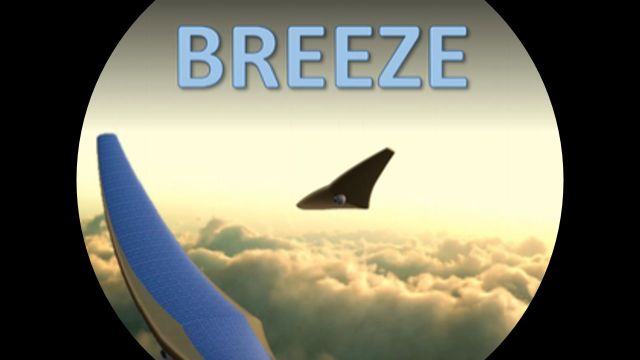
They will explore Venus using a manta ray inspired spacecraft
They will explore Venus using a manta ray inspired spacecraft
Researchers are working on a concept that could change the way we explore the intense environment of Earth’s closest planetary neighbor.
Studying Venus will help us better understand why it harbors such an extreme environment and unlock the mysteries of how planets evolve, including Earth.
A network of tensioning cables are used to actuate the pectoral and pelvic fins (equivalent to wings and horizontal stabilizers of a fixed wing aircraft, respectively). They will furnish articulated flapping flight for achieving thrust, control, stability, and additional lift.
Furthermore, the same tensioning network may be used to provide the mechanical compression required for active buoyancy control. This makes BREEZE an ideal alternate approach to the Venus.
Actually it is a bit strange that they now want to explore Venus with such a manta ray craft, since they already sent in the late 80s and 90s the Magellan spacecraft to Venus which already collected an enormous amount of images that have finally been published by NASA in which huge cities, artificial structures and all kinds of elements that seem to obey constructions appear intelligent effected by some kind of alien race that inhabited or colonized the second planet in our solar system.
The I-Team caught up with polygraph expert Terry Tavernetti 30 years after KLAS featured him in an 8-part investigative series about the weird world of UFO conspiracies.
The Enigma of Prehistoric Skulls with Bullet-Like Holes
Nearly one century ago, a Swiss miner was searching for metal ore deposits in the limestone caves of Kabwe, Zambia, when he found a prehistoric skull that dated back between 125,000 and 300,000 years. It was the first fossil to be discovered in Africa with Homo sapiens characteristics.
But there was an even bigger surprise. The prehistoric skull had a small, circular shaped hole on the side, which forensic scientists say could only have been created by an extremely high-velocity projectile, such as that caused by a bullet. The mystery was compounded by the discovery of an ancient auroch skull with exactly the same feature. The discoveries have led to many wild and wonderful speculations, but we are really no closer to solving the puzzle.
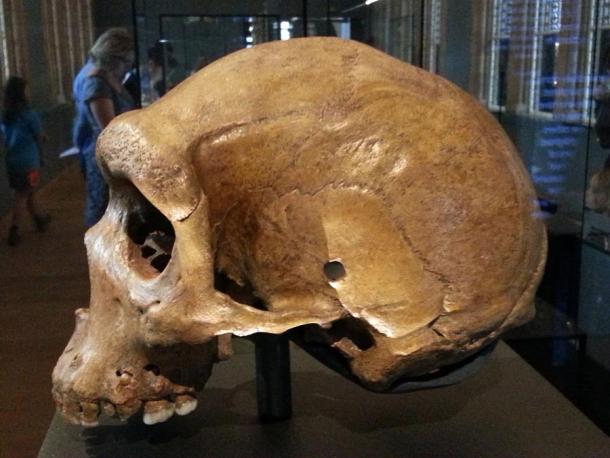
Replica of the prehistoric Kabwe skull, housed in Mauer Museum, in Heidelberg, Germany.
Trying to Classify Prehistoric Skulls – The Case of the Kabwe Skull
The skull found in Kabwe (also known as Broken Hill) attracted a great deal of attention when it was first discovered. According to the Smithsonian Institution , it was initially believed that the Kabwe prehistoric skull was the first ever example of a new species of hominid called Homo rhodesiensis .
It was subsequently assigned the classification of Homo heidelbergensis , although more recent research has shown that several characteristics shown similarities to Homo erectus , Homo neanderthalensis , and modern Homo sapiens . Whoever the skull belonged to, it appears he or she may have been the product of interbreeding between different hominid species.
But its unique combination of features was not all that was unique about the Kabwe skull. It was also found to have a small, perfectly-round hole on the left side of the cranium, as well as a shattered parietal plate on the opposite side.
This suggests the projectile that entered on the left side, passed through the skull with such force that it completely shattered the right side. Strangely, the presence of these highly-unusual characteristics are missing from descriptions of the Kabwe skull on the Smithsonian Institution page, as well the Natural History Museum of London, although their photos clearly depict the hole in the skull.
A replica of the prehistoric Broken Hill or Kabwe skull from the Museum in Livingstone, Zambia, with the apparent bullet hole visible on the left.
What Could Have Caused the Hole in the Kabwe Skull?
While it is natural to assume that the hole may have been caused by a high-speed spear or javelin, investigations proved this was not possible. “When a skull is struck by a relatively low-velocity projectile – such as an arrow, or spear – it produces what are known as radial cracks or striations; that is, minute hairline fractures running away from the place of impact,” wrote The Shields Gazette . “As there were no radial fractures on the Neanderthal skull, it was unanimously concluded that the projectile must have had a far, far greater velocity than an arrow or spear.”
According to the book Technology of the Gods: The Incredible Sciences of the Ancients by David Hatcher Childress, a German forensics expert came to an even more radical conclusion: “the cranial damage to Rhodesian man’s skull could not have been caused by anything but a bullet.” Researcher Rene Noorbergen, who investigated the mystery in Secrets Of The Lost Races , concurred, saying that “this same feature is seen in modern victims of head wounds received from shots from a high-powered rifle.”
If this were true, it would mean that a) the skull is not as old as claimed, b) the ancient skull was shot in modern times, c) the ancient skull was shot in ancient times by a technologically advanced civilization. The first and second options are discounted by the fact that the skull was found 60 feet (18.2 m) below the surface, which confirms that it is at least several thousand years old.
It was not located near enough to ground level to have been accidently or intentionally shot in recent decades. Does that just leave us with the third option, or could there be other explanations in the mix?
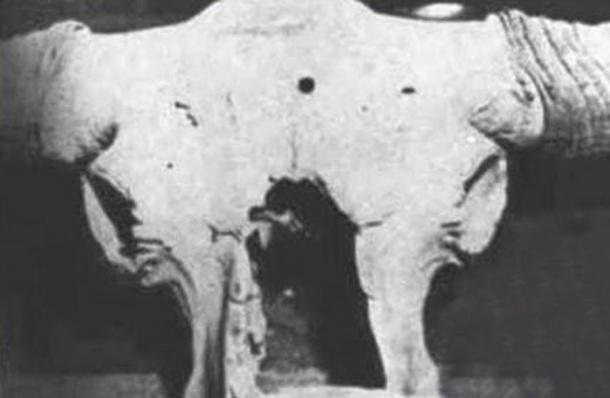
Auroch skull with bullet-like hole in the forehead.
Before exploring other hypotheses, we must give consideration to another prehistoric skull discovery which further compounds the mystery. Thousands of miles away, along the Lena River in Russia, another ancient skull was discovered with the same clean, round hole.
The skull belonged to an auroch, an extinct species of wile cattle that lived between 2 million and 4,000 years ago. Like the Kabwe skull, the hole in the auroch skull is also missing radial cracks that would result from spear or arrow projectiles.
The prehistoric skull, which is now on display in Moscow’s Museum of Paleontology, could not have been struck by a bullet in more modern times because calcification around the bullet hole shows that the auroch survived the wound for some time afterwards.
The Kabwe skull, or Broken Hill skull, with its bullet-like hole clearly visible on the site, on display in the National History Museum in London.
All these pieces of the puzzle have really brought us no closer to learning the truth. Numerous hypotheses and speculations have surfaced, from radical theories, such as the idea proposed by The Shields Gazette that “someone from the future, carrying a firearm, travelled back into the past and engaged in some sort of trans-temporal hunting expedition,” to the slightly more plausible suggestion that the holes were caused by shrapnel from a small meteorite or something similar.
In alternative archaeology circles, the most popular perspective is that ancient man may have been technologically developed to a very high degree, before virtually all traces were lost. But could two separate societies, separated by thousands of years and a vast cultural gulf, have both invented weapons that just happened to fire small, cylindrical projectiles at high speed?
The only lukewarm attempt to debunk the alternative theories comes from the Bad Archaeology website, which denies the injuries to the right-side of the skull exist. Although they present no explanation or evidence, they claim that the bullet-like hole was caused by “a pathological, rather than a traumatic lesion, caused by an infection in the soft tissue over it.”
At this stage, none of the hypotheses are supported by adequate evidence or logic. Unless more prehistoric skulls or fossils are discovered with the same type of injuries, we may never hold the real answers to the Kabwe skull enigma.
Top image:The Kabwe Skull with bullet-like hole. prehistoric skulls.
WETENSCHAPPERS ONTHULLEN HET UNIEKE LOOPJE VAN HET GROOTSTE VLIEGENDE DIER DAT OOIT OP AARDE HEEFT GELEEFD
Vivian Lammerse
Lopen met vleugels van 6 meter lang valt echt niet mee…
Als je vandaag de dag door moerassig gebied loopt, zie je hooguit één meter lange reigers in ondiep water waden, op zoek naar visjes, insecten of schaaldieren. Maar zo’n 70 miljoen jaar geleden zou je langs de Texaanse Rio Grande-rivier een indrukwekkender en enger wezen door de moerassen hebben zien struinen. Het gaat om een vrij angstaanjagende pterosauriër, bekend als Quetzalcoatlus. Dit beest, met een spanwijdte van bijna 12 meter, was het grootste vliegende dier dat ooit op aarde leefde. En in een nieuwe studie schetsen onderzoekers nu het meest complete beeld van dit gevreesde familielid van de dinosaurus.
Mysterie In de jaren zeventig van de vorige eeuw ontdekte wetenschappers in het Amerikaanse Big Bend National Park de gefossiliseerde botten van de pterosauriër. Eén van de mysteries is echter sindsdien geweest hoe een dier met zes meter lange vleugels rond kon lopen… De vleugels zouden zelfs opgevouwen de grond moeten hebben geraakt. Bovendien gingen er onder zijn enorme vleugels in verhouding vrij kleine beentjes schuil. En dus is het de vraag hoe Quetzalcoatlus het luchtruim koos. “Dit oude vliegende reptiel is legendarisch,” zegt onderzoeker Kevin Padian. “Maar dit is de eerste keer dat we een grondige blik werpen op het grootste dier dat ooit op aarde rondvloog.”
Studie De onderzoekers bogen zich over de gefossiliseerde botten en vergeleken deze met talrijkere exemplaren van een kleinere Quetzalcoatlus-soort om het vlieg-, loop- en lanceergedrag beter te begrijpen. En uiteindelijk slaagde het onderzoeksteam erin het unieke loopje van Quetzalcoatlus te onthullen.
Vleugels Het beeld dat het onderzoeksteam uiteindelijk schetst, is van een dier dat best wat weg heeft van hedendaagse reigers, gecombineerd met kenmerken van condors en gieren. “Pterosauriërs hebben enorme borstbeenderen – de plek waar de vliegspieren zich hechten – dus het lijdt geen twijfel dat het geweldige vliegers waren,” zegt Padian. “Hun opperarmbeen – de humerus – kenmerkt zich door enorme, benige toppen waar de spieren die ze gebruikten om te vliegen, worden verankerd. Deze zijn groter dan die van vogels en veel groter dan die van vleermuizen. De vleugels werkten in wezen hetzelfde als die van vogels en andere dinosauriërs, waaraan pterosauriërs het nauwst verwant zijn.”
Meer over Quetzalcoatlus De onderzoekers vermoeden dat Quetzalcoatlus geen veren had: zijn lichaam – inclusief vleugels – was bedekt met haar, zoals bij alle pterosauriërs. Net als dinosaurussen waren ze warmbloedig en actief. Quetzalcoatlus had geen staart, vermoedelijk om zo wendbaarder te zijn. Daarnaast leek hij een beetje op een uit de kluiten gewassen ooievaar. De pterosauriër hield er waarschijnlijk een gevarieerd dieet op na en zocht in de modder naar krabbetjes, wormen en kokkels, maar ook kleine visjes, insecten, slangen en hagedissen stonden geregeld op zijn menu.
Net als vogels, vleermuizen en zelfs mensen, hebben de voorpoten van pterosauriërs drie segmenten: de humerus, de onderarm en de pols- en handbotjes. Maar in tegenstelling tot vogels en vleermuizen, bestaat het buitenste deel van de pterosauriërvleugel uit een gigantische ‘vleugelvinger’. “Het is vergelijkbaar met een skistok die zich vanaf het begin van je vingers uitstrekt en 90 graden naar buiten buigt,” legt Padian uit.
Tweevoetig Quetzalcoatlus was tweevoetig, wat betekent dat hij op twee benen liep. Maar omdat de botten van de voorpoten zo langwerpig zijn, raakten zijn vleugels de grond wanneer ze opgevouwen waren. Dit deed sommigen vermoeden dat de pterosauriërs zich net als een vampiervleermuis voortbewogen; die gebruiken hun voorpoten om zichzelf op de grond voort te stuwen.
Een schets van de botten van Quetzalcoatlus northropi. Het dier hield er een uniek loopje op na, die duidelijk verschilde van die van een vampiervleermuis.
Afbeelding: John Conway
De onderzoekers komen nu echter tot de ontdekking dat Quetzalcoatlus hier waarschijnlijk niet toe in staat was: als hij op de grond stond, kon hij zijn vleugels alleen naar voren of opzij bewegen. “Eenmaal op de grond, kon hij zijn voorpoten niet terugdraaien om vooruit te komen,” zegt Padian. “Het bot in zijn schouder zat daarvoor in de weg.” Om toch op de grond vooruit te komen, hief de pterosauriër eerst zijn linkerarm op, zette vervolgens met zijn linkerbeen een stap en plaatste zijn linkerarm op de grond. Dit proces herhaalde hij aan de rechterkant. “Dit lijkt misschien wat omslachtig,” zegt Padian. “Maar het dier kon de gang snel en gemakkelijk uitvoeren.”
Opstijgen Hoe Quetzalcoatlus opsteeg? Omdat zijn poten korter waren dan zijn vleugels, kon hij niet simpelweg met zijn vleugels klapperen om zichzelf te lanceren. De onderzoekers vermoeden dan ook dat de pterosauriër zijn sterke achterpoten gebruikte om omhoog te springen. Vervolgens begon hij, zodra er enige ruimte onder hem was gekomen, met zijn vleugels te klapperen. Reigers en zilverreigers doen hetzelfde, hoewel ze aanzienlijk kleiner zijn dan Quetzalcoatlus.
Een stapsgewijze reconstructie van hoe Quetzalcoatlus opsteeg. De pterosauriër hurkt, springt en begint dan met zijn vleugels te klappen.
Afbeelding: Kevin Padian and John Conway
De bevindingen zijn revolutionair voor de studie naar pterosauriërs – de eerste dieren, na insecten, die ooit een gemotoriseerde vlucht ontwikkelden. Padian geeft toe dat er nog steeds enkele vragen over Quetzalcoatlus en pterosauriërs in het algemeen onbeantwoord blijven. Maar dankzij het omvangrijke onderzoek hebben we nu wel een veel beter beeld van hoe het grootste vliegende dier dat ooit op aarde leefde, zich – op vrij eigenaardige wijze – voortbewoog.
An unexplained object is seen at center of the image from video provided by the Department of Defense labelled Gimbal, from 2015. “There's a whole fleet of them,” one naval aviator tells another, though only one indistinct object is shown. “It's rotating."
(DEPARTMENT OF DEFENSE/AP)
American officials and analysts globally are raising alarm about a new Defense Department office that will handle the U.S. government’s examination of unidentified flying objects, warning that the move indicates the military wants to end a brief spell of transparency and shove UFO reports back into a closet under lock and key.
The Pentagon quietly announced the Tuesday night before Thanksgiving that it had formed the esoteric-sounding Airborne Object Identification and Management Synchronization Group. Working with the intelligence agencies, it serves as the follow-on to a government-wide effort earlier this year to document and analyze reports of encounters with unidentified objects – “Unidentified Aerial Phenomena” or UAPs in Pentagon jargon – predominantly from military pilots.
The new office, which reports to the undersecretary of defense for Intelligence and Security, will now oversee the entire government’s study of UFOs, focusing on sightings within restricted military airspace and will also “assess and mitigate any associated threats to safety of flight and national security,” a spokeswoman says.
The Defense Department has since justified the composition of the office as necessary to provide uniformity to the reporting process and subsequent analysis.
But some researchers characterize the Pentagon’s latest move as an “insulting” attempt to run around specific efforts by civilian organizations and leaders in Congress to exercise greater oversight over the government’s study of UFOs.
“It represents a brazen step towards completely stifling the burgeoning demand from both the public and Congress for increased UFO transparency,” says Peter Whitley, a researcher based in Japan and a member of the Mutual UFO Network, or MUFON, which considers itself one of the largest and oldest of its kind. “Clearly, the DOD is attempting to reverse course on this trend and shut the door on further disclosure of any kind.”
Others who follow the issue closely see it as nothing more than a play by the Pentagon to control a subject that should belong in the arena of scientific study – at the expense of proper oversight.
“It is clear that the Pentagon does not want any civilian interference in this,” says Clas Svahn, chairman for the Sweden-based Archives for the Unexplained, among the most comprehensive digital libraries for UFO sightings and investigations into them by governments worldwide. “This is a power struggle over who should have access to UAP information.”
So-called “ufologists” around the world expressed optimism this summer at the congressionally mandated effort led by the civilian Office of the Director of National Intelligence into the government’s handling of UFO sightings. It culminated in a report released in June that offered few exciting conclusions – no documentation of “little green men,” for example – but elevated the reputation of an often-ridiculed subject to one deserving of serious consideration among the world’s most powerful countries.
The Pentagon through the formation of the new office has begun to dash those hopes with what some consider a unilateral power grab. And, indeed, even some lawmakers have expressed concerns of their own.
Sen. Kirsten Gillibrand has sponsored a pending bipartisan amendment to this year’s military budget bill that would ramp up government study of the issue and add more layers of oversight, in addition to determining whether any sighting amounts to a threat from unknown technologies fielded from Russia, China – or elsewhere. It calls for the creation of a new advisory committee composed of experts from civilian agencies such as NASA and the Federal Aviation Administration as well as from academia to strengthen public discourse over the findings.
“While we appreciate the DOD’s attention to the issue, the AOIMSG doesn’t go nearly far enough to help us better understand the data we are gathering on UAPs,” a spokeswoman for the New York Democrat, Lizzie Landau, tells U.S. News. The framework she has proposed “does much more to address the UAP issue while also maintaining public oversight.”
The Defense Department, however, has pushed back on the notion that its supremacy over the issue amounts to anything nefarious and says it can practice transparency on its own.
“This is a chance for us to be much more organized in the way we process these reports,” Pentagon spokesman John Kirby told reporters this week. “And we will certainly continue to be as transparent as we can about these phenomena and the impact that they may or may not be having on our ability to operate.”
Kirby then tempered expectations about what the public may learn of the newly formed office’s findings.
“I don't want to leave you with the impression that there'll be sort of a regular drumbeat of, you know, of some kind of report that gets posted on a website, you know, every couple months,” he added.
The Pentagon’s approach has deeply frustrated those who have followed the issue closely, particularly after it finally acknowledged that for years it has neglected to adequately analyze its encounters with unknown objects in U.S. airspace.
“This is an end-around to cut the legs out from Sen. Gillibrand in her amendment to the next defense spending bill,” says Robert Spearing, MUFON’s director of international investigations, who is based in Costa Rica. “She wants a government office that utilizes input from civilian organizations. In essence, the Pentagon doesn’t want this.”
Two former defense officials who previously worked on UFO assessments told The Hill in an interview that the latest initiative is woefully underprepared to handle the issue.
“If we want 70 more years of secrecy on this topic, then [the undersecretary for intelligence’s office] is the perfect place to put it. They’ve had four years so far, and we have little in the way of efforts serving the public interest,” Luis Elizondo, the former head of an informal Defense Department unit that assessed military UFO reports, told the paper.
Elizondo isn’t the only expert to question the Defense Department’s assertions that it alone can determine what materials to make public.
“To be ‘as transparent as we can’ means nothing much,” Svahn says. The military’s approach is particularly frustrating “when it comes to observations and reports that are made by Air Force and Navy pilots inside restricted airspace, since they most certainly will be seen as something that could threaten national security.”
“Now,” he adds, “UAPs will only be seen as a threat – and treated as that.”
1952 was the year America caught flying-saucer fever.
So when a rash of strange sightings was reported in the skies over Washington D.C. that summer, the press and the public demanded answers. Were these unexplained radar blips, crafts that in some cases outran jets, part of a nuclear-armed Soviet invasion—a very real threat at the height of the Red Scare? Or were they evidence of something far more mysterious?
The Washington, D.C. sightings of July 1952, also known as “the Big Flap,” hold a special place in the history of unidentified flying objects. Major American newspapers were reporting multiple credible sightings by civilian and military radar operators and pilots—so many that a special intelligence unit of the U.S. Air Force was sent in to investigate. What they found—or didn’t find—along with the Air Force’s official explanation, fueled some of the earliest conspiracy theories about a government plot to hide evidence of alien life.
UFO mania takes hold
Pilots E.J. Smith, Kenneth Arnold, and Ralph E. Stevens look at a photo of an unidentified flying object which they sighted while en route to Seattle, Washington, 1947.
Bettmann Archive/Getty Images
It all started in 1947, when a search-and-rescue pilot named Kenneth Arnold reported nine "saucer-like things...flying like geese in a diagonal chainlike line" at speeds exceeding 1,000 m.p.h. near Mount Rainier in Washington State. Within weeks, “flying saucer” sightings had been reported in 40 other states.
In the name of national security, Air Force General Nathan Twining launched Project SIGN (originally named Project SAUCER) in 1948, the first official military-intelligence program to collect information on UFO sightings. Its investigators dismissed the vast majority as hoaxes or misidentifications of known aircraft or natural phenomena.
But a few cases remained “unexplained.”
By 1952, the UFO-investigation unit was called Project Blue Book, led by Captain Edward Ruppelt at the Wright-Patterson Air Force Base in Dayton, Ohio. Ruppelt and his team would probably have continued to investigate a couple dozen sightings a month if not for the April 1952 issue of LIFE magazine. Just above its knockout cover shot of Marilyn Monroe ran an equally eye-catching headline: “There is a Case for Interplanetary Saucers.”
The article, written with Ruppelt’s full cooperation, explained the Air Force’s national-security interest in UFOs. And it made a convincing case—through the colorful retelling of 10 unexplained UFO “incidents”—that these unidentified objects were extraterrestrial in origin. As one rocket scientist working on “secret” projects for the U.S. told LIFE: "I am completely convinced that they have an out-of-world basis."
According to The Washington Post, the number of UFO sightings reported to the Air Force jumped more than sixfold, from 23 in March 1952 to 148 in June. By July, the precise conditions were in place for a wildfire of UFO mania: widespread Cold War anxiety, mainstream press coverage of unexplained UFO incidents and a healthy dose of “midsummer madness.” All that was needed was a spark.
Mysterious radar blips buzzing over the White House
The Washington National Airport, 1953.
PhotoQuest/Getty Images
Shortly before midnight on Saturday, July 19, 1952, air-traffic controller Edward Nugent at Washington National Airport spotted seven slow-moving objects on his radar screen far from any known civilian or military flight paths. He called over his supervisor and joked about a “fleet of flying saucers.” At the same time, two more air-traffic controllers at National spotted a strange bright light hovering in the distance that suddenly zipped away at incredible speed.
At nearby Andrews Air Force Base, radar operators were getting the same unidentified blips—slow and clustered at first, then racing away at speeds exceeding 7,000 mph. Looking out his tower window, one Andrews controller saw what he described as an “orange ball of fire trailing a tail.” A commercial pilot, cruising over the Virginia and Washington, D.C. area, reported six streaking bright lights, “like falling stars without tails.”
When radar operators at National watched the objects buzz past the White House and Capitol building, the UFO jokes stopped. Two F-94 interceptor jets were scrambled, but each time they approached the locations appearing on the radar screens, the mysterious blips would disappear. By dawn of July 20, the objects were gone.
Nobody bothered to tell Ruppelt, the Air Force’s lead Project Blue Book investigator, about the sightings. He found out a few days later when he flew into Washington, D.C. and read news reports. Ruppelt tried to get out to National and Andrews to interview radar operators and air-traffic controllers, but was denied a government-issued car or even cab fare. Frustrated, he flew back to Ohio with nothing.
The very next Saturday, the UFOs were back over the nation’s capital. Again, Ruppelt found out through a phone call from a reporter, and immediately called on two Air Force colleagues to check out the situation at National. The same radar blips were back, and radar operators wondered out loud if the dozen or so objects on their screens couldn’t be caused by a temperature inversion, a common phenomenon in D.C.’s hot, muggy summer months.
A temperature inversion occurs when a layer of warm air forms in the low atmosphere, trapping cooler air beneath. Radar signals can bounce off this layer at shallow angles and mistakenly show near-ground objects as appearing in the sky. Ruppelt’s Air Force colleagues, however, were convinced that the objects on the radar screen weren’t mirages, but solid aircraft.
To be safe, two more F-94 jets were scrambled to chase down the unidentified targets appearing on radar screens at both National and Andrews. A game of high-speed Whack-a-Mole ensued, where the jets would race to a location targeted by radar, only for the blips to vanish. Finally, one of the jet pilots caught sight of a bright light in the distance and gave chase.
“I tried to make contact with the bogies below 1,000 feet,” the pilot later told reporters. “I saw several bright lights. I was at maximum speed, but even then I had no closing speed. I ceased chasing them because I saw no chance of overtaking them.”
Captain Edward Ruppelt, standing, and General John Samford, seated to the right of him, discussing the reports of unidentified flying objects with other Air Force officers at a 1952 news conference.
Bettmann Archive/Getty Images
The next day, newspaper headlines across America screamed “Saucers Swarm Over Capital” and “Jets Chase D.C. Sky Ghosts.” The publicity and public panic over the sightings were so great that President Harry Truman himself asked aides to get answers. When they called Ruppelt, he said it could have been caused by a temperature inversion, but more investigation was needed to fully explain both the radar images and credible eyewitness accounts.
But before such an in-depth investigation could take place, the Air Force called a press conference, the longest such news event since World War II. The Air Force brass had decided, without consulting Ruppelt or the Project Blue Book team, that the best response to the sightings was to feed the press and the public an easy-to-swallow explanation.
Dodging specific questions about what pilots and radar operators had seen in the skies over the Capitol, Major General John Samford came back again and again to the temperature-inversion theory. Never mind that Ruppelt had since come to the opposite conclusion.
“The investigators had ruled out the inversion,” says Alejandro Rojas, editor of the UFO news site OpenMinds. “They had examined that situation. The radar operators said, ‘Inversions happen. We know what inversions look like. This is not an inversion. This is not the same thing at all.’”
To Ruppelt’s disappointment, the Air Force’s press conference worked exactly as planned. The papers reported the temperature-inversion story and the public largely seemed to accept it. In his 1956 book, The Report on Unidentified Flying Objects, Ruppelt reports that after the press conference, UFO sightings dropped from 50 a day to 10.
Skeptics, however, weren’t satisfied with the pat government response. Many accused Air Force and Project Blue Book investigators of devious behavior and secret knowledge. It wasn’t until Project Blue Book documents were made public in 1985 that UFO sleuths could see that the closest thing to a government cover-up of UFO sightings in the nation’s capital was actually a conspiracy of ignorance.
“The Washington UFO flap perfectly illustrates the real government 'cover-up',” says Nick Pope, a UFO journalist who used to run UFO-investigations unit for the British Ministry of Defense. “It’s not a situation where the authorities conspired to keep some terrible truth about UFOs from the people, but rather, the government doing its best to keep people from realizing that they didn't have all the answers.”
The Ateshgah Baku Fire Temple: Built On an Azerbaijan Natural Gas Vent
The Ateshgah Baku fire temple, located in the capital of Azerbaijan, was built over a natural gas vent, and constructed between the late 17th and early 18th centuries AD. There is evidence, however, that an older temple once stood at the site. One of the interesting features of the Ateshgah Baku fire temple are the inscriptions on the temple used by Zoroastrians, Hindus, and Sikhs. The Ateshgah has since lost its religious function and was converted into a museum during the 1970s.
Inscriptions in Arabic and Indian on the Ateshgah Baku fire temple, located in the suburb of Surakhany, Baku, Azerbaijan.
The Baku Fire Temples: Already in Use in the 10th Century AD
The Ateshgah Baku fire temple is located in Surakhany, a suburb of Baku, Azerbaijan. Due to the many natural gas vents under the Absheron Peninsula (where Baku is situated), fire rituals have been carried out in the area since the 10th century AD. The natural gas vents provided fuel for flames that could burn perpetually, the so-called “eternal flames.” This natural phenomenon can also seen at Yanar Dag (meaning “Burning Mountain”) near Baku.
Baku was once on the famous Silk Road . In addition to goods, this trade route also allowed news to travel from East to West, and vice versa. It is thought that through the Silk Road, merchants in India heard of stories about the Absheron Peninsula and its eternal flames. As a result, pilgrims from India began to travel to Baku to worship the sacred flames. At the same time, they brought their own gods to this foreign land, and worshipped them alongside these flaming gas vents.
The current Ateshgah Baku fire temple was built between the late 17th and early 18th centuries AD. When renovations were carried out in 1969, part of an older structure was found beneath the current temple. This suggests that the site was already used for religious purposes prior to the 17th century. Although it is speculated that the older temple extended beyond the perimeter of the current temple, this may be impossible to ascertain, since the remains were probably destroyed from the 19th century onwards as the surrounding area was excavated for oil and gas.
An inscribed invocation to Lord Shiva of the Hindu religion written in Sanskrit at the Ateshgah Baku fire temple.
The current Ateshgah fire temple consists of a circuit of pentagonal walls surrounding a courtyard, in the middle of which is the altar. This altar takes the form of a pavilion and was built on top of a natural gas vent. Through the gases from this vent, the flame in the middle of the pavilion and four smaller ones on the rooftop corners are maintained. Within the courtyard, and around the altar, are small cells that provided accommodation for pilgrims and ascetics.
The architecture of the Ateshgah fire temple incorporates elements from both Zoroastrianism and Hinduism. It is still a matter of debate, however, whether the temple was originally founded as a Zoroastrian or Hindu place of worship. The current consensus is that whilst the Ateshgah was initially established as a Zoroastrian temple, it developed into a predominantly Hindu site over time.
In addition to the Hindu architectural elements, the other sign of the presence of Hindus at the Ateshgah is the inscriptions dedicated to the Hindu gods Ganesha and Shiva. Apart from these, there are also inscriptions dedicated by Sikh pilgrims who came to the Ateshgah to worship. Although Ateshgah is also associated with Zoroastrianism, there is in fact only a single Zoroastrian inscription at the temple. In any case, the inscriptions indicate that the sacred site was shared by the three different religions.
An engraving of the Ateshgah Baku fire temple of Azerbaijan showing pilgrims visiting the site.
It seems that by the late 19th century, the Ateshgah Baku fire temple was abandoned, possibly due to the decline in Azerbaijan’s Indian population. Nevertheless, even during that century, Parsis and Zoroastrians, who migrated to India following the Islamic conquest of Persia during the 7th century AD, continued to make pilgrimages to the site. Moreover, the site also became a tourist attraction for European tourists travelling in Azerbaijan.
As mentioned earlier, the Ateshgah Baku fire temple was renovated in 1969. Incidentally, in that same year, the eternal flame at the altar died, due to the intensive exploitation of the natural gas reserves on the Absheron Peninsula. Although the flame is still maintained today, its source of fuel is provided by Baku’s main gas supply.
In 1975, the Ateshgah was converted into a museum. The cells surrounding the altar, for instance, are used to tell the stories of the pilgrims who once travelled to the temple to worship.
As the Ateshgah fire temple is located in a suburb of Baku, it is not close to any of the city’s metro stations. Instead, there are buses that run from some of the stations to the site. Apart from that, one could also travel to the temple by taxi. The Ateshgah is open every day from 10:00 to 18:00, and tickets are required to enter the site.
Top image: The altar of the Ateshgah Baku fire temple in the capital of Azerbaijan. Source: vadim.nefedov / Adobe Stock
New Denisovan Fossils From Siberian Cave Are The Oldest Ever Found
Researchers from the Max Planck Society and the Universities of Vienna and Tübingen have found new fossilized human-like remains mixed in an assortment of bone samples taken from Siberia’s famed Denisova Cave. This includes three fragments that belonged to actual Denisovans, the much-speculated-about species that gave the cave its name. These bones will be added to the growing collection of Denisovan fossils connected to the most intriguing of all the extinct human species, which lived on the Earth at the same time as Neanderthals and early modern humans yet left such a light footprint as to be virtually undetectable.
Remarkably, these Denisovan fossils were recovered from a deep excavation layer that dated to 200,000 years in the past. These are the earliest Denisovan remains ever found, and they prove that Denisova Cave was occupied by archaic humans more than 150,000 years before modern humans reached the Siberian region following their migrations out of Africa. The analysis results of the newly discovered Denisovan fossils have been published in a study in the Nature Ecology & Evolution journal.
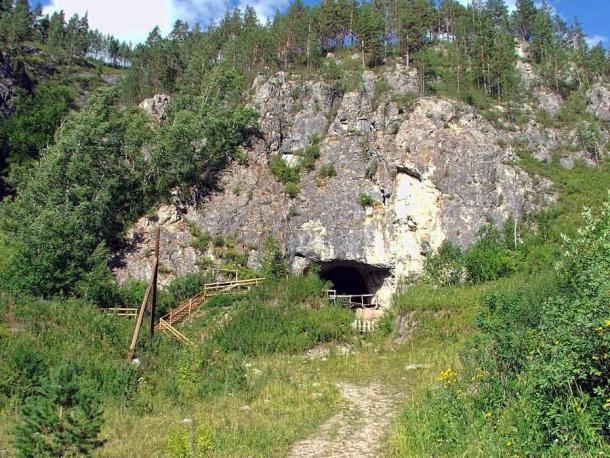
The latest Denisovan fossils were found in a deep layer of Denisova Cave in Siberian Russia and proven to date back about 200,000 years, making them the oldest Denisovan remains ever found.
Evidence Found In a Haystack of Denisovan Fossil Fragments
Science first learned of the existence of the Denisovans in 2008. That’s when a small number of fossilized bones and teeth were recovered from an isolated cave in the Altai Mountains in southern Siberia.
Unfortunately, the Denisovan fossil fragments found at the Denisova Cave were few. They revealed scarce details about this long-lost Homo sapiens cousin, which is believed to have died out approximately 50,000 years ago. In the years that have passed since, archaeologists and anthropologists have been frantically searching for more remains left behind by this elusive species. They’ve been searching primarily in northern, central, and eastern Asia, where traces of their DNA have been found in indigenous residents.
Archaeologists and anthropologists have been optimistic about eventually finding Denisovan fossils in these other locations (a fossilized Denisovan jawbone found in a cave in Tibet generated much excitement). But many scientists have continued to focus their search on Siberia’s Denisova Cave, where the ancient Denisovan presence has been most firmly established.
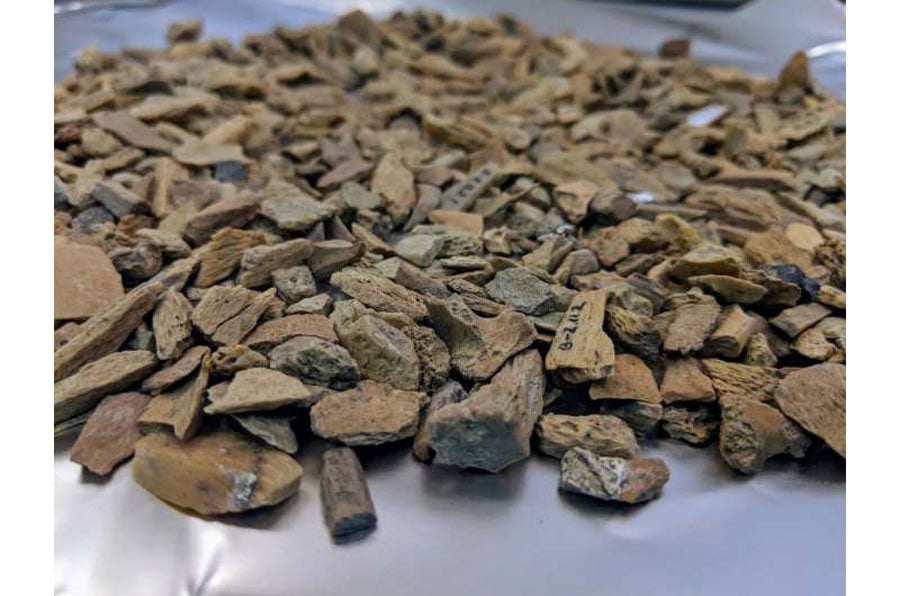
In this extraordinarily successful new study, scientists working under team leader Katerina Douka, an assistant professor in the University of Vienna’s Department of Evolutionary Anthropology, spent several years analyzing ancient DNA samples and assorted proteins extracted from approximately 3,800 bone fragments taken from the cave. As they explain in a new article in the journal Nature Ecology and Evolution , these bones included a diverse mixture of animal and human fossils, and it would have been impossible to identify anything visually.
Zooarchaeology by Mass Spectrometry or ZooMS was used to analyze the recently discovered Denisovan fossils, which are now the oldest ever!
For a Positive ID Researchers Relied on Peptide Analysis
To make a positive ID, the researchers only option was to use a technology known as Zooarchaeology by Mass Spectroscopy, or ZooMS. This high-tech tool can identify peptides (strings of amino acids) that are found specifically in the human body, and in the body of human ancestor species as well.
With this reliable technology at their disposal, the scientists concentrated on fossils excavated from the cave’s most ancient layer, which had been dated back 200,000 years. The bones collected from this layer were truly a fragmented and haphazard jumble, and that’s why little work had been done on them in the past. But with ZooMS, there was an opportunity to search for Denisovan fossils in a collection of bones that had not been fully examined before.
Team member Samantha Brown, a doctoral student at the University of Tubingen, was assigned the task of performing the actual analysis of the approximately 3,800 previously unidentified bone fragments. The vast majority of these fossil bones had belonged to animals, making the search for human remains the equivalent of looking for the proverbial needle in a haystack.
With enough time and diligence, even the smallest needle can be found eventually, and Brown’s research ultimately proved successful. Aided by the precise ZooMS technology, she found five bones with collagen profiles that matched those of humans.
But which types of humans? Certainly not modern humans ( Homo sapiens ), which would not arrive in Siberia until much later. That left Neanderthals and Denisovans as the two possible candidates.
To solve this mystery, the scientists turned to another high-tech innovation that has revolutionized archaeological and anthropological practice: DNA analysis. Out of the five human bones Brown identified, four contained significant enough traces of genetic material to allow for a mitochondrial DNA reconstruction. These tests showed that one of the bone fragments had belonged to a Neanderthal, while the other three were all Denisovan.
At an age of 200,000 years, this DNA typing officially established the three bone samples as the oldest remains of Denisovans ever found.
"Denisova is an amazing place for DNA preservation, and we have now reconstructed genomes from some of the oldest and best-preserved human fossils," Dr. Diyendo Massilani, a genetic researcher from the Max Planck Institute of Evolutionary Anthropology in Leipzig, explained in an Institute press release announcing this amazing discovery.
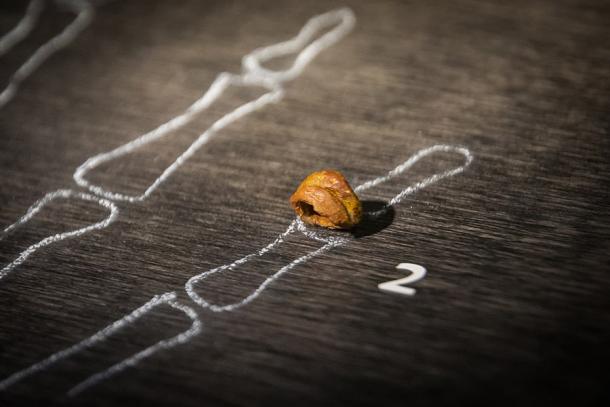
The Denisova 3 fifth distal finger phalanx of 13.5-year adolescent Denisovan female, the first bone fossil uncovered at Denisova Cave in 2008.
Finding New Denisovan Fossil Bones and Lithic Stone Tools
There is no underestimating the impact and importance of this discovery. "We were extremely excited to identify three new Denisovan bones amongst the oldest layers of Denisova Cave," Katerina Douka told Live Science . "We specifically targeted these layers where no other human fossils were found before, and our strategy worked."
"Finding one new human bone would have been cool, but five? This exceeded my wildest dreams," Samantha Brown added.
The discovery of the age of the 200,00-year-old Denisovan bones was exciting. But there is another part to the story that is perhaps even more significant.
Inside the deep layer of the cave where the fossils were found, archaeologists also unearthed a large number of lithic stone artifacts dating to the same time period. These included several scaping tools, which presumably were used to process animal skins.
Notably, none of these tools were similar to any that had been found in central or northern Asia before.
"This is the first time we can be sure that Denisovans were the makers of the archaeological remains [the stone tools] we found associated with their bone fragments," Douka confirmed.
Previously discovered Denisovan fossils had either been found separate from artifacts, or alongside artifacts that were suspected to have been left by Neanderthals. The two ancient species frequently occupied the same caves and territories and were known to have interbred .
There were also thousands of pieces of animal bones found in the oldest layer of Denisova Cave. They have now been identified as belonging to such species as deer, wild horses, bison, gazelles, and wooly rhinoceroses, all of which could have been hunted by Denisovans 200,000 years ago. Many of the bones contained marks consistent with butchering, while others had been damaged by fire (meaning the flesh of the animals had been cooked).
"The site's strategic point in front of a water source and the entrance of a valley would have served as a great spot for hunting," Douka noted.
If Denisova Cave contains more Denisovan bones or artifacts, the researchers intend to find them. Katerina Douka confirms that her team is continuing its search at the cave, while also carrying out excavations at several other Asian sites where they are hopeful Denisovan fossil remains might be found.
Top image: Denisovan fossils look a bit unremarkable, but these bone fragments, mostly from animals, were perfect for Zooarchaeology by Mass Spectroscopy and DNA analysis, which were used in the recent study .
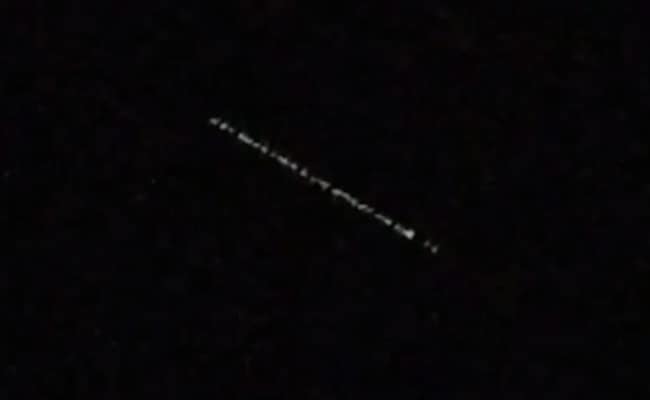
Watch: Mysterious Lights In The Sky Puzzle Residents In Punjab City
The phenomenon appeared in the sky for a few minutes shortly before 7 pm.
Residents described seeing a string of bright, white lights.
Chandigarh: A line of bright lights darting through the night sky in Punjab's Pathankot left residents confused on Friday evening.
The phenomenon appeared in the sky for a few minutes shortly before 7 pm.
"We saw the fast-moving object with bright lights, like a train. It looked just like a train at a distance. The light was very bright and white. It was the first time we saw something like this. We saw it for five whole minutes, after which it vanished," said one resident.
The unidentified object also sparked chatter on Twitter.
Believe it or not, not every searcher for a lost underwater city is looking for Atlantis. George Gelé has been seeking what was once a major city 12,000 years ago in the Gulf of Mexico off the coast of the state of Louisiana. He claims his 50-year search has resulted in sonar images of buildings and a pyramid, and he has witnesses who claim they’ve experienced strange electrical anomalies in the area. Needless to say, Gelé has his doubters. What exactly does he think he’s found and what is his evidence?
“What’s down there are hundreds of buildings that are covered with sand and silt and that are geographically related to the Great Pyramid at Giza. Somebody floated a billion stones down the Mississippi River and assembled them outside what would later become New Orleans.”
In an interview with WWL-TV, Gelé claimed he has located large underwater granite mounds near the Chandeleur Islands that were once the site of a lost city he calls “Crecsentis.” The Chandeleur Islands are a chain of uninhabited barrier islands east of New Orleans in the Gulf of Mexico that form the Chandeleur Sound. The islands were in the news a number of times recently – they were partially destroyed in 2005 by Hurricane Katrina, and in 2010 hundreds of miles of the Chandeleur Sound’s coastline marshes were destroyed by the Deep Horizon oil spill. Neither of those deterred Gelé in his search for “Crecsentis.”
An aerial view of Chandeleur Islands. Louisiana, Chandeleur Islands, St. Bernard Parish.
“What’s important is to figure out what’s there because whatever it is, it belongs to the people of Louisiana.”
There is a consensus that there is indeed something big and made of granite in the Gulf off the coast of St. Bernard Parish. Gelé began looking for it after studying architecture at Louisiana State University and archeology on a student trip to Mexico. Since 1976, he has made 44 trips to the site that is well known to Isleño (descendants of Canary Islanders) fishermen and other boaters. He’s measured the largest pyramidal part (200 feet by 700 feet by 280 feet tall) and compares it to the Superdome in New Orleans. On diving expeditions, he’s brought up old pieces of building material, but local fisherman have netted pieces of granite which are not from Louisiana.
“Everything will go out on your boat, all your electronics. Like as if you were in the Bermuda Triangle. That’s exactly what we got here.”
Local shrimper Ricky Robin told the Sun he’s taken Gelé to the spot where his electronics go haywire – the same spot where granite is found. Gelé claims he’s taken sonar images at the spot that show the pyramid and remains of large buildings. While he’s open to suggestions about the rubble piled on top of the pyramid, he seems committed to the pyramid being from a 12,000-year-old civilization predating the Maya, Inca, and Aztecs. While he doesn’t say how, he claims “Crecsentis” could be linked to those civilizations.
Who controls what’s hidden in the depths of the Gulf of Mexico?
This mysterious rock mound in the Gulf is known to archeologists – a study by Texas A&M in the late 1980s concluded it’s a pile of shipwrecks or ballast stones dumped by Spanish or French boats. vessels. Gelé has had permission to dive to the spot since 2011 but hasn’t returned with any solid evidence of “Crecsentis.” Nor have the electrical anomalies claimed by Robin been confirmed by anyone else. Obviously, it hasn’t discouraged Gelé, but it has drained his finances and the state of Louisiana, while interested in what he finds, isn’t interested in kicking in any cash.
George Gelé has spent almost 50 years studying the site where he believes a lost city is hiding underwater.
Is George Gelé chasing a real Gulf of Mexico Atlantis or just a pile of rocks? The Gulf holds many mysteries but is controlled by the oil industry. The only thing they can’t control is hurricanes. Perhaps one will help Gelé find “Crecsentis” … or prove him wrong.
Mention “false flag,” “aliens” and “UFOs” in a sentence and most people are reminded of Project Blue Beam — the infamous conspiracy theory of Serge Monast in the early 1990s warning that NASA was working with the United Nations to establish a New Age religion with the Antichrist at its head and start a New World Order by creating giant holograms to fool the public. However, when retired FBI agent John DeSouza uses those terms, he’s referring to the Tic Tac UFOs encountered by the U.S. military and his alleged inside knowledge that their sightings will increase under a fake alien invasion scenario to scare the world. Is this scenario for real?
Another Project Blue Beam?
“One of the things that I see happening throughout 2022 is going to be … they’re gonna make these Tic Tacs, and these Tic Tacs come in many different shapes and sizes like they are sometimes cylinders, they are sometimes motherships, they are in all different shapes and sizes.”
John DeSouza is in the news this week because of his interview with Michael Salla, founder of Exopolitics.org, who was also in the news this week with his ‘revelation’ that Vladimir Putin invaded Ukraine to gain possession of an “ancient space ark” which the world would see flying soon – and this is just one of two in Russia’s possession and there are more managed by the U.S. and China as well as on the Moon and Mars. In his quest to reveal what’s ‘really’ going on in the world of UFOs, extraterrestrials and world politics, Salla interviewed DeSouza – whose bio says he’s a “FBI Special Agent (RET.) Investigator for 25 years and collector of the real life “X-Files.” He is also the author of three books on paranormal subjects.
“… what we’re going to be seeing is we’re going to be seeing these Tic Tacs, also called UAPs, that’s the new terminology, as well we’re going to be seeing them actually engaging civilian ships and vessels in a hostile aggressive manner.”
The key word in DeSouza’s interview (you can watch it in its entirety here) with Salla is “civilian” – he’s predicting the Tic Tac UFOs/UAPs, which have until now only appeared around Navy ships, will soon become hostile and aggressive to civilians in boats. How hostile and aggressive?
“They may not be killing people yet, but they will be doing things to disable ships, disable vessels, actually have real physical confrontation.”
Physical confrontations, disabling civilian ships but no killing … “yet.” Why will this happen?
“Because at this point they need to ratchet up the fear more than what it’s been. It can’t just be this – oh, the Tic Tacs appeared and they zipped around and then they disappeared. They’re gonna need to kick that up a level.”
Since DeSouza worked for the U.S. FBI, we can assume the “they” in his scenario refers to the U.S. government. Why would our government or any other governments attack their own civilians under the guise of an extraterrestrial attack? Salla himself brings up Project Blue Beam, which Monast linked to NASA and the UN. Taking advantage of his platform, DeSouza seemed to try to get everything he knows into the interview – the Men in Black, the Moon being an artificial structure, motherships or alien arks.
“My calling is to show people they already have what they need to ascend. The first and greatest lie has been exploded: that this material façade is all there is. Next we must awaken to our own supernatural abilities. These abilities must then be joined to faith and belief. Faith and supernatural abilities will then determine everything in life and beyond.”
While he’s often billed as the “real” X-man, DeSouza seems to live on the pseudo-religious side of UFOs and aliens than the physical evidence side. While he talks about frauds and fakes, he doesn’t (at least in this interview) present any evidence to back up his claims. Without that, it’s hard to determine who is waving the false flag.
Here Are 20 Years of UFO Sightings We Got From the Canadian Government
VICE World News obtained nearly 300 pages of documents through freedom of information requests that include strange sightings from pilots, soldiers, and police officers.
THE DOCUMENTS, TOTALLING 290 PAGES, CONTAIN DOZENS OF STRANGE SIGHTINGS FROM COMMERCIAL PILOTS, SOLDIERS, AND COPS.
STOCK PHOTO BY GETTY IMAGES
The Canadian government has released 20 years of UFO reports.
The 500-plus reports spanning nearly 300 pages contain dozens of strange sightings from commercial pilots, soldiers, and police officers. (Here are some of the highlights.) Obtained by VICE World News through Canadian freedom of information laws, the reports were made to federal transportation authorities as recently as last year, when a Canadian military flight spotted a “bright green flying object” that “flew into a cloud then disappeared” over eastern Canada.
Other unusual observations include Newfoundland police “tracking two brightly coloured flying objects” in August 2001 and a December 2018 passenger flight from Alaska to Seattle that reported “pulsating lights” descending from 60,000 feet.
“I would be inclined categorically to believe anybody that reported something,” former Canadian fighter pilot John “Jock” Williams told VICE World News. “There’s no upside to making a fake report.”
Williams is an aviation consultant who has also worked as a federal flight safety officer.
“There is a definite reluctance to report stuff,” he said. “I’m amazed at the amount of the material they sent you, and some of it actually is pretty good.”
All 290 pages of reports have been included at the bottom of this story as a downloadable PDF.
There are loads of civilian sightings too, such as a large glowing “object seen hovering quite quickly back and forth just above the tree line” near Peterborough, Ontario, in January 2011.
One uncommonly long report even details a sighting that was confirmed by military radar. On the night of Dec. 23, 2018, a fisherman in the Bay of Fundy and a woman at home in Yarmouth, Nova Scotia, both contacted a search and rescue centre to report a light that “was yellow, steady, and hovering” high above the Atlantic Ocean. When Royal Canadian Air Force (RCAF) personnel reviewed radar data from NORAD, the joint Canada-U.S. air defence alliance, they “observed three primary radar hits” that correlated almost exactly to the time and location of the sighting.
“This is an area that has good low level radar coverage, so there is no explanation of why there were only three points all at exactly 12,800 ft with no points leading up to or continuing on at any other altitudes,” a Canadian Air Defence Sector report states.
The best guess was “independent radar hits on weather and not an actual airborne object,” even though the “no threat” report notes it was a partly cloudy night with good visibility.
Less than an hour’s drive from Yarmouth, the nearby fishing village of Shag Harbour, Nova Scotia, was the site of a famous 1967 mass sighting of a large luminous object that disappeared into the ocean.
The reports also include previously unpublished documents on Canadian UFO cases covered in earlier VICE World News stories, like Alberta air traffic controllers who spotted a “solid bright light” that “appeared too fast to be any commercial aircraft” in December 2009, a Manitoba police officer who filmed “an unidentified bright yellow and orange light” with their cruiser’s dashcam in April 2011, and an April 2018 cargo flight from New York to Alaska that “reported an object flying sporadically… and moving at Mach 4” over northern Canada.
Have an unusual observation or document to share? Reach out to Daniel Otis via Twitter at @dsotis or email otisstories (at) gmail (dot) com.
VICE World News acquired the documents last month via two separate access to information requests that were filed in April and September with Transport Canada, the government department that oversees aviation. Most were forwarded to Transport Canada by the private company Nav Canada, which owns and operates the country’s civilian air traffic control infrastructure. The releases also feature nearly two dozen reports sent by the Canadian military. Many—but not all—were later edited and published on Transport Canada’s online aviation incident database.
Together, the two releases are meant to capture all “CIRVIS” reports held by Transport Canada that were created over the past two decades. Short for “Communication Instructions for Reporting Vital Intelligence Sightings,” an April 2021 VICE World News story showed how versions of this Cold War-era threat reporting procedure are still being used by Canadian air traffic controllers and the RCAF to document credible UFO cases.
In a statement to VICE World News, Transport Canada described CIRVIS reports as “a U.S. government instrument” that “usually fall outside the scope of Transport Canada’s mandate.”
“CIRVIS reports are infrequently reported to Transport Canada as the reports received are a result of natural phenomena such as fireballs, weather balloons, and meteors,” a spokesperson said.
Canada’s military isn’t as dismissive, but also generally considers UFOs to be outside their purview.
“The Canadian Armed Forces and the Royal Canadian Air Force do not typically investigate sightings of unknown or unexplained phenomena outside the context of investigating credible threats, potential threats, or potential distress in the case of search and rescue,” a spokesperson told VICE World News.
In the U.S., government-funded UFO research programs have existed almost continuously since 2007. The public got a glimpse of those efforts last June, when intelligence officials released a fascinating report on recent U.S. military sightings, which have included objects that appeared to “maneuver abruptly, or move at considerable speed, without discernible means of propulsion.” Signed by President Joe Biden in late December, the 2022 U.S. defence spending bill even contains a provision to create a new UFO office.
For more than two decades, the closest thing Canada had to an official UFO office was civilian researcher Chris Rutkowski.
Rutkowski received many of the reports contained in the two releases directly from transportation or military officials, often soon after the sightings. A handful of Canadian military UFO report forms even include instructions to fax copies to Rutkowski. The Winnipeg-based ufologist’s quiet relationship with Canadian authorities appears to have ended without warning in mid-2021.
“I have noticed an abrupt halt to my receiving of UFO reports through the Department of National Defence and Transport Canada,” Rutkowski told VICE World News. “UFOs may now be getting more attention from the government, which is ostensibly a good thing, but as a consequence the subject will be much less open to public scrutiny.”
While Rutkowski featured data from many of the reports in his annual Canadian UFO Survey, which has documented more than 22,000 UFO sightings since 1989, the reports themselves—especially those from the last decade—have largely not been made public.
“I needed to respect the confidential nature of such reports while at the same time requiring information for research on the topic,” Rutkowski said. “I do not believe there has been a release like this previously.”
There is some overlap between the two releases, which total 290 pages. The reports also include what are clearly drone, meteor, balloon, and satellite sightings—like a December 2019 Air Canada Express flight that reported “40 lights in the sky…travelling in groups of 15,” which was very likely a then relatively uncommon constellation of SpaceX Starlink internet satellites. Others almost seem psychedelic, like a Saint Walburg, Saskatchewan, resident who notified an air force base in October 2020 of “thousands of diamond-shaped objects passing overhead at a very high rate of speed.”
But the releases also contain dozens of reports that underscore the simple fact that credible witnesses like pilots, soldiers, and cops see things in the sky that they can’t identify. In other words, the evidence says UFOs exist. The real question is: what are they?
“I have no theory, to tell you the truth,” said Williams, the former RCAF pilot and Transport Canada safety officer. “But I have no reason to doubt anybody that’s putting in a report of that sort.”
RUSSIA RELEASES BIZARRE VIDEO OF SPACE STATION BREAKING APART
WHAT EXACTLY... ARE THEY SUGGESTING?
RIA NOVOSTI / NASA WATCH / FUTURISM
Break Up
We’re not exactly sure what Russia’s space agency head Dmitry Rogozin is threatening the US with, but he certainly seems to be alluding to… something. A bizarre new video posted by state controlled media RIA Novosti showed the International Space Station breaking apart in an artist rendering after Russian cosmonauts bid adieu.
NASA Watch, a space news blog, tweeted the video with some important context earlier today. It’s accompanied by some kind of ironic classical singing?
“@Rogozin is clearly threatening the ISS program,” the outlet said Saturday, pictured below.
It was only weeks ago that Rogozin threatened to smash the US with debris from a defunct ISS by detaching the Russian segment, which SpaceX CEO Elon Musk responded to with his own company’s logo and a promise to keep the huge craft aloft. This time, it’s not clear if Rogozin is threatening to bring the ISS down into the atmosphere or just remove the Russian portion and fly solo.
Foot Sandwich
This is hardly the first time the chief of Roscosmos, which is essentially the Russian equivalent of NASA, has tossed insults and threats NASA’s way. Rogozin is also quite the colorful character, having taken it personally when SpaceX ended US reliance on Russian spacecraft to reach the ISS. There’s also, you know, that time Russia accidentally spun the ISS around — twice.
Despite the conflict, though, NASA has tried to keep the relationship stable. The organization released a statement after Russia’s ISS threat back in February, according to ScienceAlert.com
“[NASA] continues working with all our international partners, including the State Space Corporation Roscosmos, for the ongoing safe operations of the International Space Station,” the space agency said according to the industry outlet.
Like much of Russia’s ongoing and unprovoked invasion of Ukraine, there are more questions than answers about Rogozin’s threat and if he’s even being serious. Another Twitter user and space expert put it perfectly.
“I can’t wait for Twitter to cut off Russian government accounts so we won’t have to suffer through the trolling from @Rogozin (and other bots),” Alan Boyle, creator of space news outlet Cosmic Log, said online under a NASA Watch tweet.
In many respects an empty threat during a full-scale invasion is as worrying as a real one, so perhaps pulling the plug on Rogozin’s accounts really could dampen further escalation.
Amerikaanse straaljager uit Zuid-Chinese Zee gevist
door Dario Van Fleteren
De Amerikaanse F-35 die in januari neerstortte in de Zuid-Chinese Zee, is weer boven water gehaald. De VS wilden het vliegtuig zo snel mogelijk terug in handen krijgen uit angst voor spionage.
Na complexe takelwerken waarbij het hypermoderne toestel vanop de bodem van de Zuid-Chinese Zee werd opgevist, is het vliegtuig nu terug bij de Amerikanen. Eind januari kwam de F-35 in de zee terecht na een tuimeling van een vliegdekschip. Sindsdien lag het staaltje technologie drie kilometer onder het wateroppervlak. De straaljager kost ongeveer 100 miljoen euro.
Het is vooral een grote opluchting voor de VS. Zij vreesden dat de Chinezen, of andere landen, zelf moeite gingen doen om het vliegtuig te bemachtigen. Zo zouden ze gemakkelijk Amerikaanse technologie kunnen bespieden. Of dat het geval was, wordt nu in het wrak onderzocht. De Chinezen ontkenden altijd dat ze enige interesse hadden.
The James Webb Space Telescope might be grabbing all the headlines right now, but NASA has big plans for another space-based telescope too: The Nancy Grace Roman Space Telescope. Set to launch in 2027, Roman will survey the sky in the infrared wavelength to learn about big topics in cosmology like dark energy as well as perform a census of exoplanets. Now, NASA has shared more information about the kinds of planets that Roman could find, including the possibility it could take the first image of a Jupiter-like world.
Roman will be armed with a coronagraph instrument which is designed to block out light from very bright objects like stars to allow observation of the planets around them, opening the possibility of directly imaging planets. This is exciting because most exoplanets discovered now are detected indirectly, by looking at the star they orbit. Being able to image an exoplanet directly can give more information, for example about the planet’s atmosphere.
NASA’s Nancy Grace Roman Space Telescope, named after NASA’s first Chief of Astronomy.NASA
“We will be able to image worlds in visible light using the Roman Coronagraph,” said Rob Zellem, an astronomer at NASA’s Jet Propulsion Laboratory (JPL) who is working on Roman, in a statement. “Doing so from space will help us see smaller, older, and colder planets than direct imaging usually reveals, bringing us a giant leap closer to imaging planets like Earth.”
This also opens up more possibilities in the type of planets that could be discovered. Most methods used to detect exoplanets currently find large, young planets which glow brightly, and are typically located far from their host star. These factors make them easier to spot using current methods. But Roman’s coronagraph could spot rocky, Earth-sized planets, perhaps even within the habitable zone of sun-like stars. In addition, it could view planets in the visible light wavelength as opposed to the infrared wavelength more commonly used now.
“To image Earth-like planets, we’ll need 10,000 times better performance than today’s instruments provide,” said Vanessa Bailey, an astronomer at JPL and the instrument technologist for the Roman Coronagraph. “The Coronagraph Instrument will perform several hundred times better than current instruments, so we will be able to see Jupiter-like planets that are more than 100 million times fainter than their host stars.”
AWKWARD! A NASA ASTRONAUT IS CURRENTLY SCHEDULED TO FLY BACK TO EARTH IN A RUSSIAN SPACECRAFT
WHAT WILL THE SMALL TALK BE LIKE?
ROSCOSMOS
Awkward Vibes
NASA astronaut Mark Vande Hei, currently stationed on board the International Space Station, is scheduled to return to Earth in a Russian Soyuz spacecraft — an awkward predicament, given the extraordinarily tense situation between Russia and the United States developing back on the ground.
The international space community has been actively distancing itself from Russia after the country invaded Ukraine, a growing humanitarian crisis of devastating proportions. But for many years, Russia’s Soyuz rockets were the de facto way to send astronauts to and from the ISS, especially since NASA retired the Space Shuttle back in 2011.
That’s started to change over the past few years, with SpaceX’s Crew Dragon shifting the power dynamics by letting NASA send astronauts to the station directly again. But Vande Hei got to the station on a Soyuz last year, meaning it’ll be his trip home as well. Let’s just hope he’s good at small talk.
One Last Time
One possibility to avoid the awkward trip was that Vande Hei could crowd into Axiom Space’s upcoming private Ax-1 mission on its return from the station. But a space reporter asked NASA whether that was being considered and they said “no.”
NASA has repeatedly claimed operations on board the International Space Station are going fine, despite all the tension back on Earth. That sentiment stands in stark contrast with recent comments made by Dmitry Rogozin, head of Russia’s space corporation Roscomos, who appeared to threaten the US last week with the ISS dropping out of orbit uncontrollably.
It’s a precarious situation, given that the ISS is the product of decades of collaboration between the US and Russia. For now, it looks like Vande Hei will have to board a Soyuz rocket to end his astonishingly long 355 day stint on board the orbital outpost.
In all likelihood, though, he’ll be one of the last NASA astronauts to rely on a Soyuz trip — both because of SpaceX’s increasing prowess and because of breaking-point tensions between the US and Russia.
THE BATTERIES OF THE FUTURE COULD EXPLOIT QUANTUM PHYSICS.
BERNDTHALLER/VICTOR TANGERMANN
Quantum Battery
A team of scientists from the universities of Alberta and Toronto have laid out the blueprints for a “quantum battery” that never loses its charge.
To be clear, this battery doesn’t exist yet — but if they figure out how to build it, it could be a revolutionary breakthrough in energy storage.
“The batteries that we are more familiar with — like the lithium-ion battery that powers your smartphone — rely on classical electrochemical principles, whereas quantum batteries rely solely on quantum mechanics,” University of Alberta chemist Gabriel Hanna said in a statement.
Dark State
A paper describing the research was published in the Journal of Physical Chemistry C. in July. The battery works by harnessing the power of “excitonic energy” — the state in which an electron absorbs sufficiently charged photons of light.
The researchers found that their resulting battery model should be “highly robust to energy losses,” thanks to the fact that their battery is prepared inside a “dark state” where it cannot exchange energy — by absorbing or releasing photons — with its surroundings.
Large Charge
By breaking down this “dark state” quantum network, the researchers claim the battery could be able to discharge and release energy in the process.
But the team has yet to come up with viable ways of doing so. They will also have to figure out a way to scale the technology for real-world applications as well.
THE UNIVERSE MAY HAVE A FIFTH DIMENSION, ACCORDING TO NEW RESEARCH
A FIFTH DIMENSION COULD FINALLY EXPLAIN THE MYSTERIES OF DARK MATTER.
ZOLTAN TASI VIA UNSPLASH / FUTURISM
5D Everything
A team of German and Spanish scientists says they’ve found a “natural explanation” for dark matter and other unresolved scientific mysteries — but their work depends on the existence of a new theoretical subatomic particle and an entire fifth dimension of the universe.
The new particle, a yet-undiscovered type of fermion, would be able to traverse this new dimension and bind dark matter to the luminous matter that makes up everything in the universe we can see or touch, Motherboard reports, in a way that doesn’t contradict any of the other models we have on how dark matter behaves. It’s seems a bit far-fetched — physicists creating new rules for the universe in order to explain their own theory — but if it pans out, it could vastly improve our understanding of the cosmos.
“Unique Window”
The scientists explained to Motherboard that this new particle would likely be similar to and interact with the Higgs Boson, but that it would be too heavy to detect with the current generation of particle accelerators and colliders.
But assuming the particle and the fifth dimension it navigates both exist, it “represents a unique window” into dark matter, according to the team’s paper, published in The European Physical Journal C last month.
“If this heavy particle exists, it would necessarily connect the visible matter that we know and that we have studied in detail with the constituents of the dark matter, assuming that dark matter is composed out of fundamental fermions, which live in the extra dimension,” a member of the team told Motherboard.
Now What
In lieu of a tangible way to prove that this mysterious particle or the fifth dimension exists, the researchers told Motherboard they hope that other scientists keep their model in mind as they continue to study particle physics and cosmology.
“This could also eventually lead to an interesting cosmological history of the universe and might lead to the production of gravitational waves,” the team told Motherboard. “This is an interesting line of research, which we plan to follow in the months ahead.”
Researchers and scientists spoke to The Daily Beast this week to express horror at Musk’s goal of connecting human brains to computers. Ultimately, at the heart of their trepidation is the infusion of Big Tech into the human mind.
“I don’t think there is sufficient public discourse on what the big picture implications of this kind of technology becoming available are,” Dr. Karola Kreitmair, assistant professor of medical history and bioethics at the University of Wisconsin, told the website.
“I worry that there’s this uncomfortable marriage between a company that is for-profit,” she added.
Indeed, the ethics surrounding technology such as the Neuralink is uncharted territory. As such, many are concerned about how these products — ostensibly meant to help those with disabilities — can ultimately be exploited for profit.
“If the ultimate goal is to use the acquired brain data for other devices, or use these devices for other things — say, to drive cars, to drive Teslas — then there might be a much, much bigger market,” Dr. L. Syd Johnson, associate professor at the Center for Bioethics and Humanities at SUNY Upstate Medical University, told the Daily Beast.
“But then all those human research subjects — people with genuine needs — are being exploited and used in risky research for someone else’s commercial gain,” she continued.
Kreitmair echoed the sentiment. While she believes that the technology could be “life-changing” for paralyzed people, she told the Daily Beast that its potential for consumer uses “raises such a slew of ethical concerns.”
Some experts are also worried that Musk is nothing but a carnival barker who’ll say anything and stop at nothing to make a buck — which, well, fair. He’s been known to make lofty promises before only to grossly underdeliver before. Who’s to say Neuralink won’t be the same?
“With these companies and owners of companies, they’re kind of showmen,” Dr. Laura Cabrera, a neuroethics researcher at Penn State, told the Beast. “They’ll make these hyperbolic claims, and I think that’s dangerous, because I think people sometimes believe it blindly.”
She later added, “I’m always cautious about what [Elon Musk] says.”
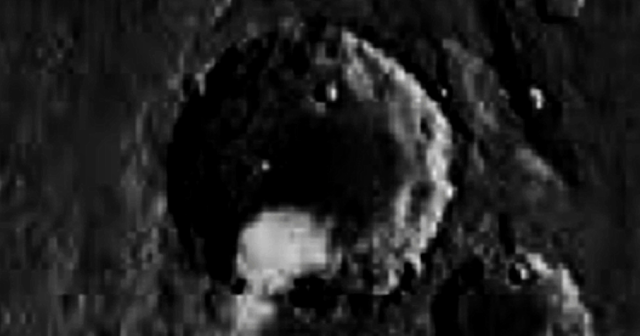
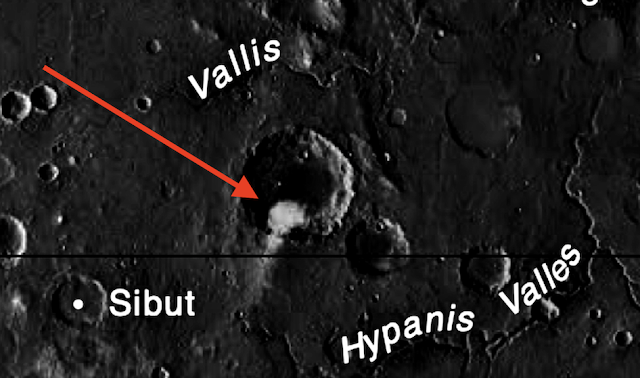
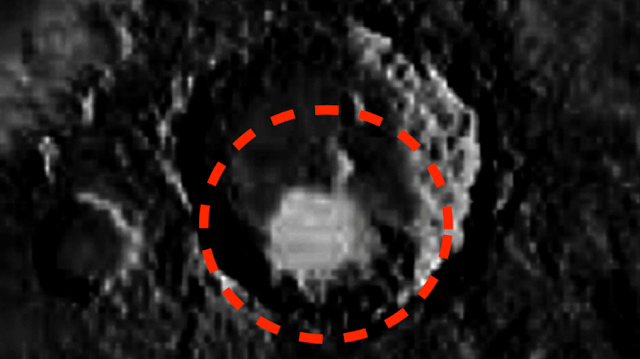
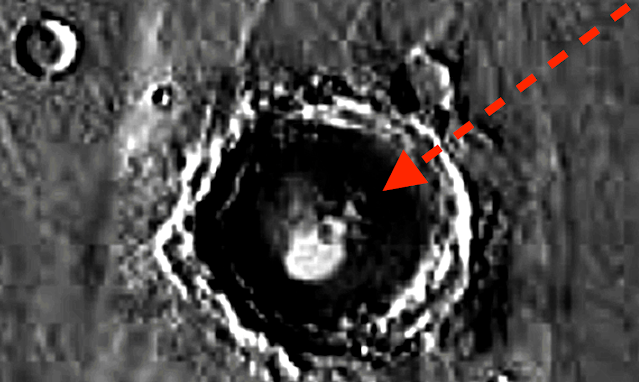
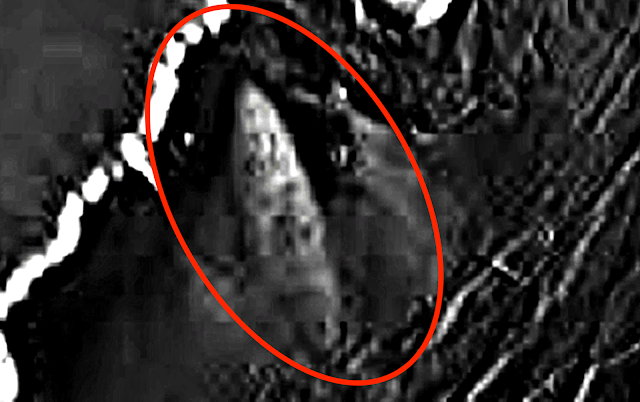
This is one of the best close ups of a white reflective structure that I have ever found. I have found about ten of such quality...each unique, each white, reflective and if the sunlight hit it, it would be impossible to photograph. The half of the crater wall its touching...is not stone, but metallic grey structures. Different structures have different environments and uses. The white structures are a upper class, higher ranking area. The grey metallic structures are the lower level grunt area of manual labor. Its not the only structure I have found in this photo...its only one of dozens.
I also found that most the structures were blurred out using a special digital program. Lucky for us, back in 2014 that tech was poorly made and now outdated. Had they used todays software programs...I would have found nothing of interest. Times change, how they edit changes, but one thing never changes...NASA is lying to us all!
Scott C. Waring - Taiwan
Below is a spaceship that is miles long. It was blurred out 70% but I restored some of it. Its huge and its old.
Meer van UFO'S of UAP'S, ASTRONOMIE, RUIMTEVAART, ARCHEOLOGIE, OUDHEIDKUNDE, SF-SNUFJES EN ANDERE ESOTERISCHE WETENSCHAPPEN - DE ALLERLAATSTE NIEUWTJES


 They will explore Venus using a manta ray inspired spacecraft