There's no doubt at all that it's hard to make the difference between UFOs and high-tech military craft, We'll begin with a near-legendary craft that went by the name of the Aurora. In the early 1990s, rumors began to circulate among the aviation world that a highly secret, futuristic aircraft was being flown out of Area 51 – and under distinctly covert circumstances. The reportedly large, black-colored, triangular-shaped aircraft which could fly at incredible speeds, could outmaneuver just about anything else on the planet. It was rumored to be known as the Aurora. Officially, at least, and according to the U.S. Government, the Aurora does not exist and has never existed. But, that was once said about Area 51, too. So, with that in mind, we need to tread cautiously when it comes to official proclamations of the controversial type. The story began – publicly, at least – in March 1990. That was when the well-respected magazine Aviation Week & Space Technology covered the story. They revealed that the term “Aurora” had appeared in the 1985 U.S. budget – and had possibly appeared by mistake, which makes sense if the program was so highly sensitive that its existence had to be denied at all costs. And talking of costs,
it was rumored that around $455 million had been provided to those working out at Area 51 on secret, futuristic aircraft. AW&ST suspected that Aurora was a codename for multiple kinds of aircraft that were both radical in design and technology. Other investigators, though, concluded that Aurora referred to just one type of aircraft. AW&ST learned that by 1987 the budget had soared to in excess of two billion dollars. Bill Sweetman is one of the leading figures in the field of aviation and someone who took a deep interest in the Aurora saga. His books include F-22 Raptor, Inside the Stealth Bomber, and Soviet Air Power. And, then there is his 1993 book, Aurora: The Pentagon's Secret Hypersonic Spyplane. Of the Aurora, Sweetman says: “Does Aurora exist? Years of pursuit have led me to believe that, yes, Aurora is most likely in active development, spurred on by recent advances that have allowed technology to catch up with the ambition that launched the program a generation ago.”
This was all very interesting for those who follow the world of exotic aircraft, such as Bill Sweetman and the staff of Aviation Week and Space Technology – and it still is of interest to them. But, where was the evidence for the existence of Aurora? Was there any evidence? Yes, there was. And it came from a highly credible man with an impeccable background. His name: Chris Gibson. It was in the summer of 1989 that Chris Gibson had what can accurately be termed the encounter of a lifetime. An engineer with an Honors degree in geology and someone who’s worked focused on oil-exploration, Gibson was also attached to the U.K.’s Royal Observer Corps. The work of the ROC – which closed down in December 1995, after seventy years of work to help protect the United Kingdom from attack – required its volunteers to keep a careful watch on the skies above and what was flying in those same skies, too. As luck – or fate - would have it, and at the time when the Aurora program may very well have been compromised, Gibson was working on an oil rig in the North Sea. The name of the rig was the Galveston Key. It was August 1989, specifically, when one of Gibson’s colleagues, a friend named Graeme Winton, who went to university with Gibson, excitedly told Gibson to come with him to the deck. There was something Winton needed to show him.
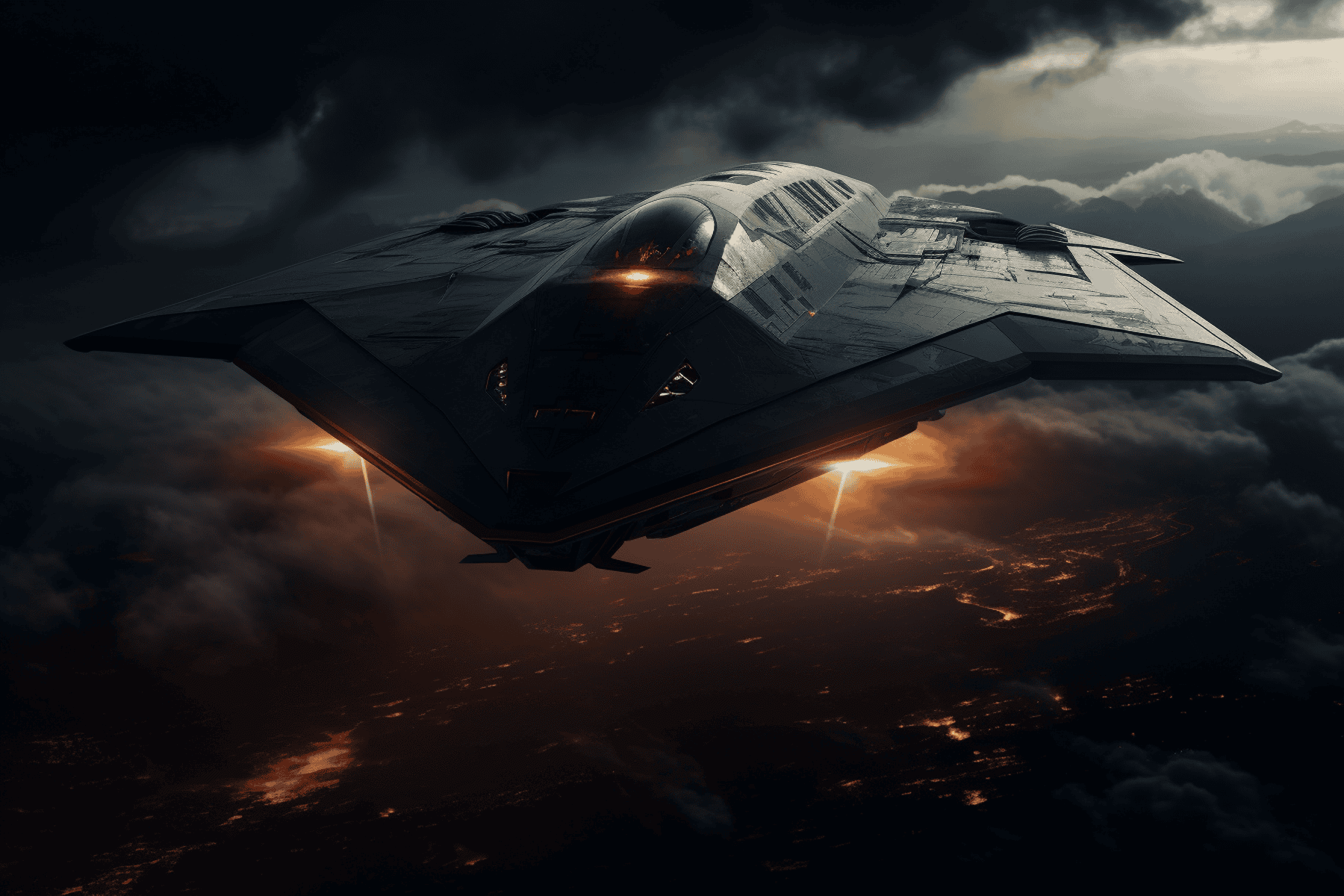
A startled and amazed Gibson caught sight of something incredible in the skies above. A pair of General Dynamics’ F1-11 aircraft were shepherding a very strange-looking, completely black aircraft. And, a Boeing KC-135 Stratotanker seemed to be fueling it. It was in the form of a triangle. For a moment or two, Gibson pondered on the possibility that what he and Winton were seeing was the F-117 stealth fighter. But, the design was clearly wrong. And the aircraft was significantly larger than the stealth fighter. Gibson knew this, as the four aircraft were not flying high; in fact, they were fairly low. Gibson was completely and utterly stumped by the strange appearance of the plane. It was something he had never seen before. Gibson said: “We discussed what to do about it but decided that if it were reported through official channels, it would be at best rubbished, at worst lead to trouble. Having signed the [British Government’s] Official Secrets Act I didn’t want to jeopardize my position in the recognition team [of the Royal Observer Corps], so I kept my mouth shut.” Gibson did, however, contact Bill Sweetman, who found the encounter to be of extreme interest. Gibson added: “It is the only aircraft I have ever seen that I could not identify.”
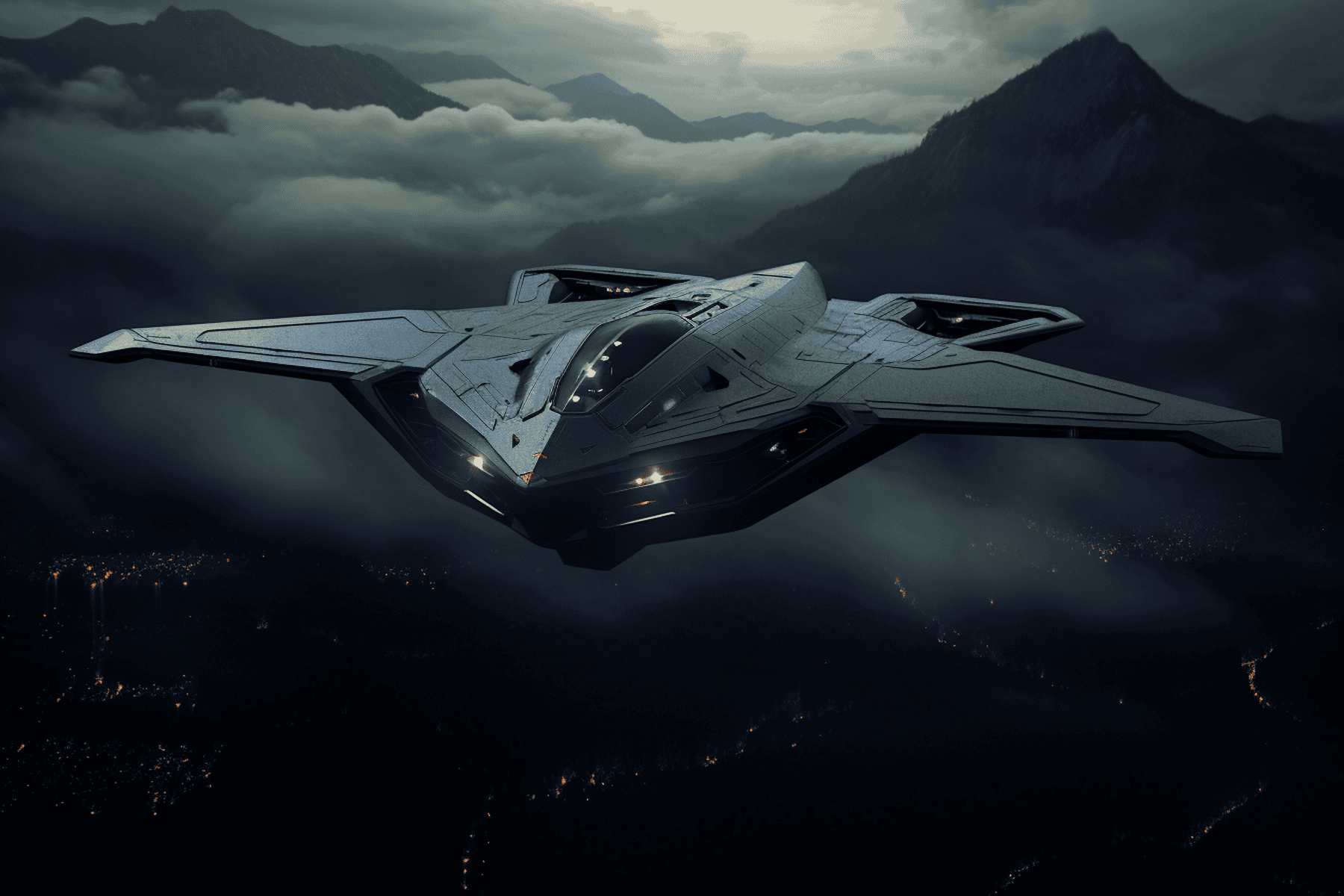
That the Aurora – which it almost certainly was – was seen over the North Sea, off the east coast of England, is intriguing, because a series of encounters of a near-identical kind were reported over mainland U.K. in March 1993. In between the time that Gibson had his encounter midway through 1989, the Aurora had a new nickname in the UFO research community: the Flying Triangle. Although, it’s important to note that more than a few researchers believed that the FTs were extraterrestrial in origin. Of one thing that pretty much everyone was in accord with, was that the Flying Triangles and the Aurora existed. But were they ours or “theirs?” Since the 1980s, sightings of large, triangular-shaped UFOs, usually described as being black in color, making a low humming noise, and very often with rounded rather than angled corners, have been reported throughout the world. The sheer proliferation of such reports has led some ufological commentators to strongly suspect that the Flying Triangles (as they have come to be known) are prime examples of still-classified aircraft, namely, the Aurora. It was one single wave of encounters in the U.K., in early 1993, which ultimately led senior military and defense personnel to liaise with their American counterparts to try and determine, once and for all, if the FTs are the Aurora or if they have extraterrestrial origins.
Now, some words from Nick Pope. And a fascinating case from the 1990s. Long-since retired from the MoD, Pope reveals his role in – and his knowledge of – the March 1993 UFO encounters over the United Kingdom: “I arrived at the office at about 8.30 a.m. or 9.00 a.m. on the morning of March 31, 1993, and my telephone was ringing. I picked it up and there was a police officer on the other end making a UFO report. Now, he was based in Devon and told me an account of an incident that had taken place in the early hours of that particular day when he and a colleague who had been on night patrol saw a triangular-shaped UFO at fairly-high altitude. He said that the motion was fairly steady and that there were lights at the edges with a fainter light in the middle.To me, this was already a description that was becoming quite familiar both from one or two reports that I’d received at the Ministry of Defense over the years and from my own study and research into the UFO literature. In other words, I was aware that this was a commonly reported shape for a UFO.”
Pope continued: “I was also quite pleased to get a report from a police officer. I won’t say that it was rare, but it was slightly unusual to have reports from trained observers like police and military. I would say that, of the reports I received in my time at the UFO desk, less than five per cent came from, collectively, pilots, military officers and the police. I had spoken, socially, to numerous Royal Air Force pilots who’d had personal sightings, but who had never reported them for fear of ridicule.“But that police report was very much the first of many that came in that day and over the next week or so. When taken together, the sightings described took place in a range of times – the earliest was about 11-11.30 p.m. on the evening of the 30th and the latest was about 1.45 a.m. in the early hours of the 31st.” What was it precisely that made the police officer’s report stand out? “He said to me: ‘I’ve been on night patrols for years, but I’ve never seen anything like this in my entire life.’ Well, reports such as this came through thick and fast over the course of the next week or so; more and more reports came in from police stations, the public and local RAF stations. In fact, I would say that the total number of reports easily exceeded one hundred.”
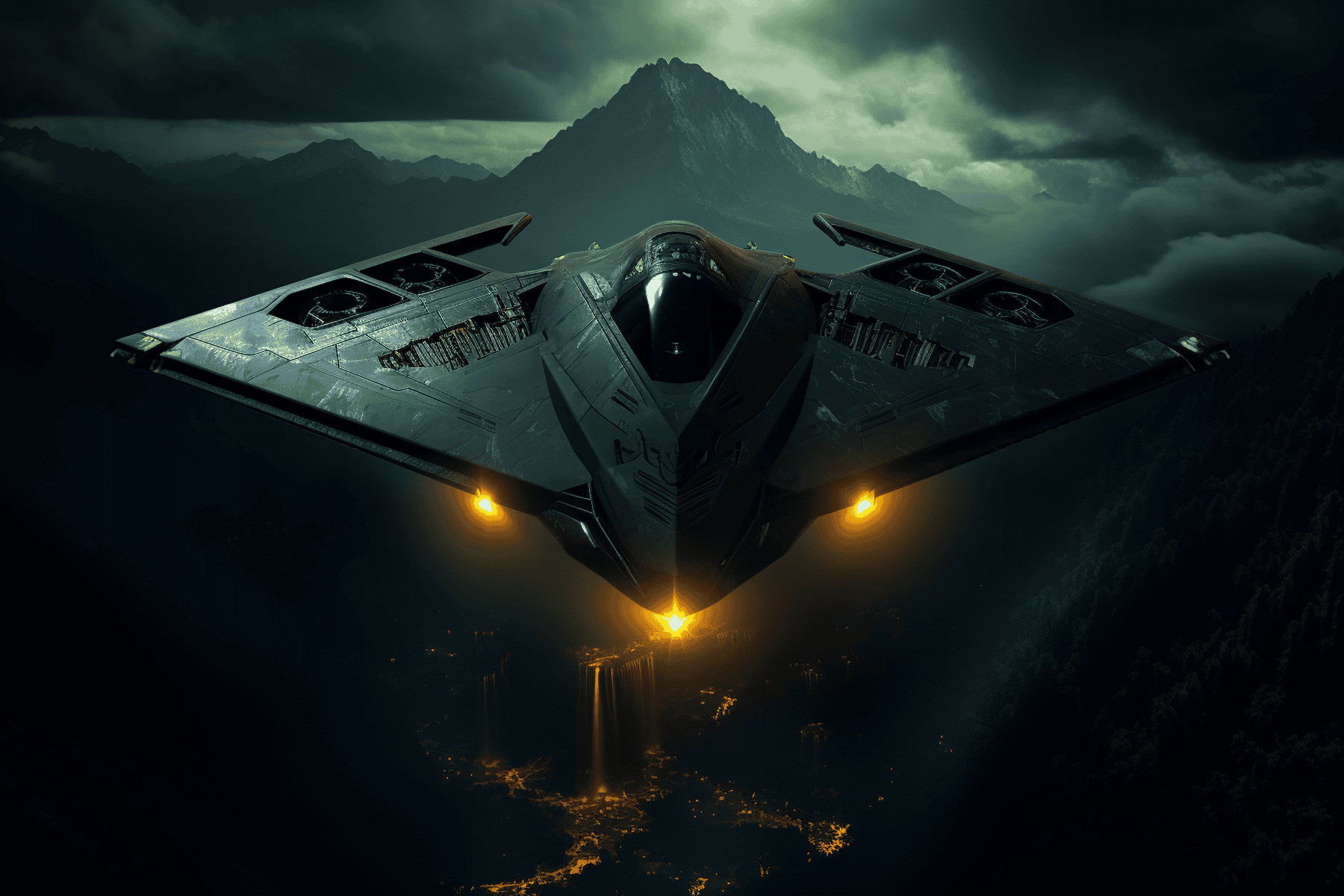
It is clear from what Pope has to say that there were three reports in particular that stood out more than any other – the first of which concerned a family based in Rugeley, Staffordshire, England, who had viewed a remarkable aerial vehicle near the sprawling forest that is Cannock Chase. Pope reveals the facts: “This report was brought to my attention by the Community Relations Office at RAF Cosford [Shropshire]. The report had come direct from the family and sounded particularly interesting because, unlike some of the other sightings, this one was of an object flying at very low level. There had been a family gathering and several members of the family were out on the drive – really just saying goodbye to their relatives who were about to drive off. Suddenly, this large, triangular-shaped craft flew over them very, very slowly. This was a flat triangle, with a light in each corner and a larger light in the direct centre of the underside of the craft.” In fact, not unlike the report filed by the police reports from Devon?
“Exactly. But there was something else that I’d come across in my investigations that was also present in the Rugeley case,” says Pope. “This was a low-frequency humming sound coming from the UFO; a humming that they actually described as being quite unpleasant. Imagine standing in front of the speakers at a pop concert and almost feeling the sound as well as hearing it – that was the effect that they reported. Well, they were so excited and overwhelmed that two of them leapt into the car to give chase! “As they did so, they came to a point where they thought the UFO was so low that it must have come down in a nearby field. Well, they parked the car, jumped out and looked around. But there was absolutely nothing there; the UFO had gone.” The night’s activities had barely begun: “The two most significant reports began at RAF Cosford shortly after the encounter at Rugeley. This was definitely the highlight and was one of the best sighting reports I received in my entire posting. The report itself came from a guard patrol at Cosford. They were on duty manning entrance points, checking the perimeter fence and such like. All the members of the patrol saw the UFO and, again, the description was pretty much the same as most of the others. In this case, though, the UFO was at medium-to-high altitude.”
Pope makes an important observation: “Remember that these witnesses were people who see in a normal course of business all sorts of aircraft activity, meteorites, fireballs and so on, and they considered it absolutely out of the ordinary.“They didn’t make a standard report: what they did was to submit an actual 2-3 page report which went up their chain of command and then the report was forwarded on to me. In that report, they stated that the UFO passed directly over the base and that this was of particular concern to them. They made immediate checks with various Air Traffic Control radar centres but nothing appeared on the screens. It was this factor that made them particularly keen to make an official report. This was at around 1.00 a.m.” Whatever the origin of the unknown vehicle, it appeared that its activities were far from over. “They noticed that this Flying Triangle was heading on a direct line for RAF Shawbury, which is some twelve to fifteen miles on. Now, the main concern of the Cosford patrol was to alert Shawbury that the UFO was coming their way; but they also wanted confirmation that they weren’t having a mass hallucination. “They took a decision to call Shawbury and this was answered by the Meteorological Officer. You have to realize that at that time there was literally just a skeleton staff operating, so the Met. Officer was, essentially, on his own. So, he took a decision to go outside, look in the direction of RAF Cosford and see what he could see.
“Sure enough, he could see this light coming towards him and it got closer and closer and lower and lower. Next thing, he was looking at this massive, triangular-shaped craft flying at what was a height of no more than two hundred feet, just to the side of the base and only about two hundred feet from the perimeter fence.” Bearing in mind the fact that the Meteorological Officer at RAF Shawbury could be considered a reliable witness, and someone well-trained in recognizing numerous types of aerial phenomena, was he able to gauge the size of the object? Pope said back then: “Very much so: military officers are very good at gauging sizes of aircraft and they’re very precise. His quote to me was that the UFO’s size was midway between that of a C-130 Hercules and a Boeing 747 Jumbo Jet. Now, he had eight years’ worth of experience with the Royal Air Force, and a Met. Officer is generally much better qualified than most for looking at things in the night sky. And there were other factors too: like the family in Rugeley, he heard this most unpleasant low-frequency hum; but unlike their experience, he saw the craft fire a beam of light down to the ground. He felt that it was something like a laser beam or a searchlight. The light was tracking very rapidly back and forth and sweeping one of the fields adjacent to the base.
“He also said – and he admitted this was speculation – that it was as if the UFO was looking for something. Now, the speed of the UFO was extremely slow – no more than twenty or thirty miles per hour, which in itself is quite extraordinary. As far as the description is concerned, he said that it was fairly featureless - a sort of flat, triangular-shaped craft, or possibly a bit more diamond-shaped. But if all the descriptions had been identical I would have been surprised.” Perhaps the most eye-opening and revealing aspect of the RAF Shawbury encounter was the way in which the object made its exit, as Nick Pope reveals: “He said that the beam of light retracted into the craft, which then seemed to gain a little bit of height. But then, in an absolute instant, the UFO moved from a speed of about twenty or thirty miles per hour to a speed of several hundreds of miles per hour – if not thousands! It just suddenly moved off to the horizon and then out of sight in no more than a second or so – and there was no sonic boom. Well, of course, when I received this report and the one from Cosford, I launched as full an investigation as I possibly could.” As Nick Pope now makes abundantly clear, that investigation proved to be extraordinary, to say the least.
"Even though it was fairly obvious to me that there were a number of things that this object was not, I still made the checks anyway to try and eliminate absolutely every possibility." Pope also noted: “I had a feeling that this one was going to go right up the chain of command.” He was not wrong. “Checks were also made with various Air Traffic Control Centers, with Air Defense experts and Air Defense radar systems; and although at one point we thought we had caught the UFO on radar, it eventually turned out that there was nothing. After these checks were made and we were able to establish that the UFO hadn’t been caught on radar, the Royal Air Force was quite interested. There isn’t really a corporate view on UFOs; it really does go down to the belief of the individual. But, enough people realized that there was something exciting and out of the ordinary going on and they, too, got caught up in all that excitement.” Initially, suggestions were put forward that all of the sightings were simply the result of a satellite re-entering the Earth’s atmosphere: “I spoke to the Space Information Officer at RAF Fylingdales; this is the Ballistic Missile Early Warning Centre. They’ve got very powerful space tracking radar that can pick up and track all sorts of objects at orbital heights. Now, they raised the possibility that we were looking at the re-entry of one of the Russian Cosmos satellites.
“Contrary to what some people have said, however, Fylingdales were very unsure as to whether or not the satellite would even have been visible from the U.K. at all during that time. But even if there was a re-entering satellite in the skies, it certainly couldn’t explain the very close encounter at RAF Shawbury. Don’t forget, too, that a satellite burn-up is very much like a meteor shower with a few tracks of light flashing across the sky. In this sighting, however, it was a case of one military base actually reporting to another and saying: ‘It’s coming your way…’ So this rules out a satellite burn-out.” Pope then took his investigation to another level. “My next step was to get a map and plot out the various locations where the UFO – or UFOs – had been seen. Well, that didn’t work out. I was confronted with a map of haphazard sightings all around the country. There was certainly a concentration of sightings in Devon, Cornwall, South Wales and the Midlands. But there were also sightings from Southampton and Yorkshire; and I knew that there were reports from Ireland, Belgium and elsewhere in Europe. And these were just the tip of the iceberg .“One interesting point that then occurred to me was that we were dealing with activity on exactly the same night – but three years later - to a very famous wave of sightings of very similar craft seen over Belgium. And my favorite theory about this or at least an idea I floated about – was that this was a deliberate move on the part of whoever was operating the craft.”
Pope explained his line of thinking: “For example, if the media had got a hold of this, it would have been too late to get it in the newspapers on March 31; so, the earliest date that the story could have run would have been April 1 – April Fools’ Day! Again, a little indicator, perhaps, of an intelligence and possibly even some form of humor.” Of course, it could be argued that this would serve as excellent cover if the Flying Triangle that was seen near RAF Shawbury was a terrestrial aircraft (albeit a distinctly secret one) as opposed to something extraterrestrial. Pope acknowledges this. “We decided that we couldn’t ignore the various rumors that were doing the rounds about a supposed Top Secret aircraft developed by the U.S. Government and called Aurora - or, indeed, any hypersonic and/or prototype aircraft operated by the Americans.“There had been persistent rumors in the aviation world and amongst the UFO lobby that the SR71 Blackbird had been replaced by a hypersonic aircraft code-named Aurora and that that was what the Flying Triangles really were. I was well aware that there had been some interesting stories about visual and radar sightings around certain air bases; however, I hadn’t put much store in these rumors – not least because there had been some very definitive denials from the Americans.
“I know there’s a lot of cynicism about government and the military. And although officialdom may refuse to answer a question and may sometimes give a misleading answer, outright lying is incredibly rare. And when it does occur, if it’s uncovered it almost certainly leads to resignation.“But with the March 1993 sightings – and in spite of the denials from the Americans that they were responsible for the Flying Triangles – we did contact them to make inquiries. This was because they have the responsibility pertaining to the U.S. presence in Britain. Those inquiries bore absolutely no fruit at all. The Americans said: ‘No. We can shed no light at all on the UFO sightings that have led to your inquiry.’” Pope is able to disclose, however, that the liaison with the Americans was not without its moment of intrigue. “If anything,” he now relates, “there was an interesting little hint that the Americans, too, were seeing these Flying Triangles over their territory. As we were making our inquiries, they turned the question around and wanted to know if our Royal Air Force had a triangular-shaped, hypersonic prototype aircraft of some sort. So, presumably, the Americans were having Flying Triangle sightings, too.“But this was interesting, in light of the fact that the Americans supposedly got out of UFO investigations back in 1969 when the Air Force’s Project Blue Book closed down. Of course, you may not officially be in the UFO game, but you are certainly going to be aware of – and take an interest in – reports of structured craft in your airspace. So, essentially, we drew blanks with the Americans.”’
Back to Nick Pope: “Bearing in mind that the Americans had inquired – at an official level, no less – if the British Royal Air Force had in its employ something broadly fitting the description of a Flying Triangle, and we had said ‘No,’ I still felt obliged to address the issue of whether or not the rumors about secret aircraft being flown by us were true. First, from my own knowledge of prototype aircraft, un-manned aerial vehicles and so on, the Triangles don’t fit into the typical pattern, and I’ll explain why. Where we do have such pieces of kit, they’re not tested over the heads of ‘Joe Public;’ they’re tested in a small number of clearly defined ranges and danger areas – mostly out at sea such as the Abberporth Range in Cardigan Bay.” Pope also states on this highly-controversial matter: “You simply do not fly a prototype craft over a military base or over the centre of Rugeley or wherever, and run the risk that someone will either (a) scramble a [Tornado] F-3 [aircraft] to try and intercept it; or (b) take a photograph of it which will end up on the front page of The Sun or Jane’s Defense Weekly. It’s simply not the way that things are done.
“We checked domestically anything that might have been flying. But if we’d have been poking our noses into something that didn’t concern us, the investigation would have been quietly switched off. In fact, the opposite happened. We were making big waves throughout the Royal Air Force, the Ministry of Defense and at an international level. So the domestic secret aircraft theory is interesting but it doesn’t hold water.” Three years prior to the extraordinary events at RAF Cosford and RAF Shawbury, similar objects were seen on repeated occasions in Belgian airspace in 1989 and 1990. In view of this, was any form of approach made to the Belgian military to ascertain their views? “Yes,” says Pope. “I approached the Belgians to get a comparison after their sightings. I phoned the Air Attaché at the British Embassy in Brussels and he spoke to one of the F-16 pilots who had been scrambled to intercept a Flying Triangle over Belgium back in 1990. Well, the Air Attaché reported back to me that the corporate view of the Belgian Defense Staff was that they did believe that they were dealing with a solid, structured craft. “Apparently, the word from the Belgians was: ‘Thank God it was friendly.’ If it hadn’t been, it was made clear to me that there was very little that the Belgian Air Force could have done anyway - despite the fact that the F-16 is no slouch.”
With the secret weapon angle disposed of as far as Nick Pope was concerned, what was his next step in the investigation? “There was only one place to go and that was up the chain of command and I briefed my head of division. He was notoriously skeptical about UFOs and generally made no secret of the fact that he thought that it was all a waste of time and resources. But he had been quite impressed by the Shawbury and Cosford events – even to the point of making some attempts to plot the course of the UFO. “In fact, I recall him bounding into the office in a state of some considerable excitement when he thought that he had found indications of a straight-line track. I had copied some of the reports; but what he didn’t have was a batch of reports that had just come in and that painted a totally different picture.“Well, I just thought that this needed to go up the chain of command. The main addressee was the Assistant Chief of the Air Staff; so what I did was to summarize the events on a couple of sides of paper and attach the original reports – the typed report submitted by the patrol sighting at Cosford and my own write-up of the RAF Shawbury sighting. “He took a few days to have a look at all the paperwork and then passed it back down the chain of command with a message that said: ‘This is extremely interesting. It is a genuine mystery but clearly you’ve made all the checks that we could reasonably make and it’s difficult to see how we can take this any further.’ And that was essentially where the matter rested.”
Today, does Nick Pope feel that the assessment of the Assistant Chief of the Air Staff was a fair one? “Well, yes and no. I felt extremely uncomfortable that we had a clear breach of the U.K. air defense region; and we had two Royal Air Force bases pretty much being over-flown by a structured craft and yet we had nothing on radar and absolutely no explanation. I applied our own standard line on UFOs and asked myself the questions: Is this of no defense significance? What if the craft had been hostile? What if a bomb-bay had suddenly opened up and it had attacked these bases? If that had been the case, and with the UFO not appearing on radar, the first we would have known would have been when the bombs were falling. So, I came to the conclusion that this was of extreme defense significance.“I’m naturally suspicious of anyone that doesn’t declare their hand. And although there may be some very good reasons for them remaining covert, I think that from a military and defense point of view, you have to say that there is a potential UFO threat.“Personally, I felt that saying ‘Object Unexplained; Case Closed’ was not satisfactory. On the other hand, I had every sympathy with the Assistant Chief of the Air Staff; there was no faulting his logic. What else could he have done? Really, it was an impossible situation.
RELATED VIDEOS


 MoD UFO Files