 Future Mars Helicopters Could Explore Lava Tubes
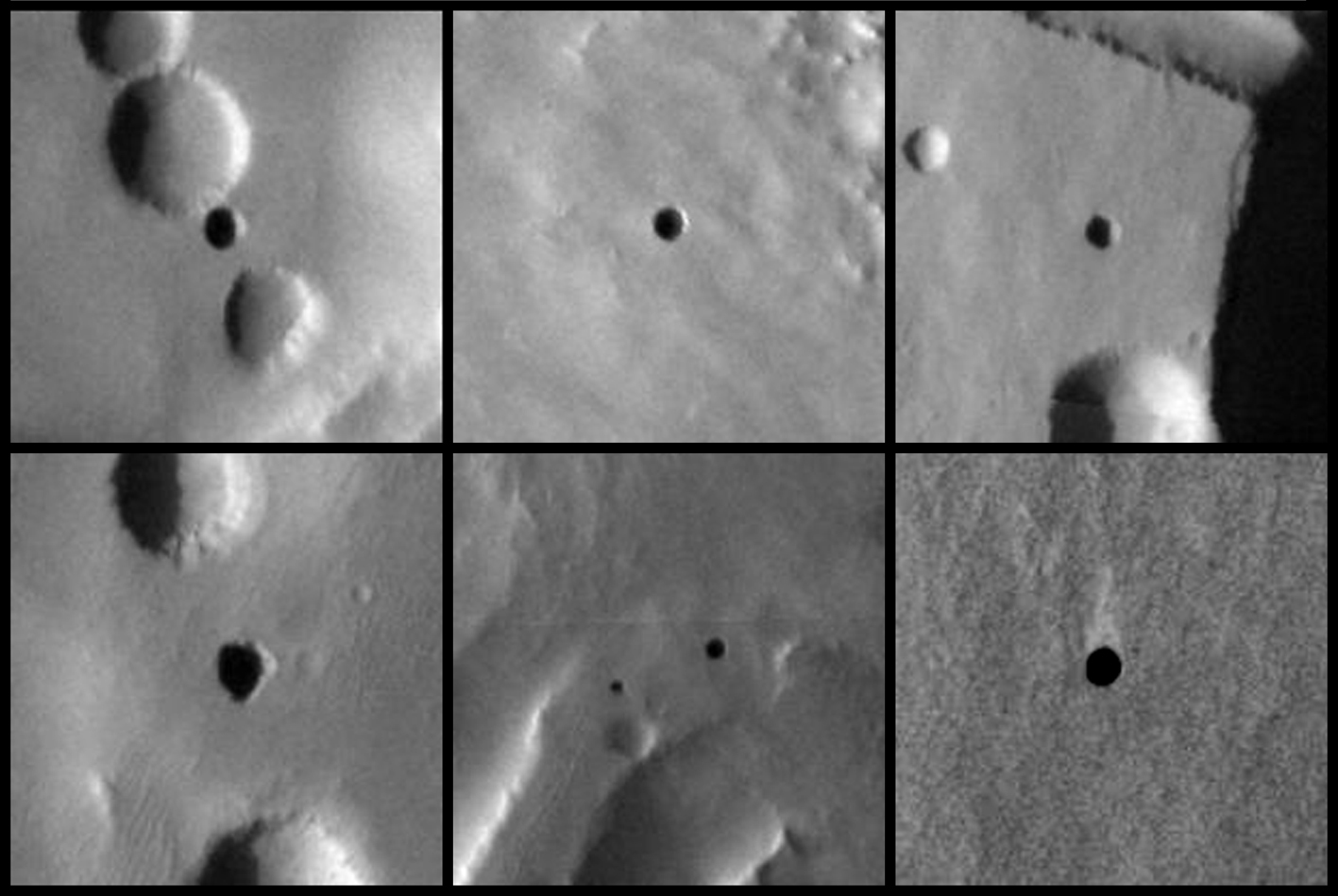
The exploration of Mars continues, with many nations sending robotic missions to search for evidence of past life and learn more about the evolution of the planet’s geology and climate. As of the penning of the article, there are ten missions exploring the Red Planet, a combination of orbiters, landers, rovers, and one helicopter (Ingenuity). Looking to the future, NASA and other space agencies are eyeing concepts that will allow them to explore farther into the Red Planet, including previously inaccessible places. In particular, there is considerable interest in exploring the stable lava tubes that run beneath the Martian surface.
These tubes may be a treasure trove of scientific discoveries, containing water ice, organic molecules, and maybe even life! Even crewed mission proposals recommend establishing habitats within these tubes, where astronauts would be sheltered from radiation, dust storms, and the extreme conditions on the surface. In a recent study from the University Politehnica Bucuresti (UPB), a team of engineers described how an autonomous Martian Inspection Drone (MID) inspired by the Inginuity helicopter could locate, enter, and study these lava tubes in detail.
The study was conducted by Daniel Betco and Sabina Ciudin, two aerospace engineers at the University of Bucharest Polytechnic, with the support of Petrisor Valentin Parvu, an associate professor with UPB’s Department of Aerospace Sciences. The paper that details their concept, “Autonomous Navigation for the Martian Inspection Drone,” recently appeared in Acta Astronautica. In it, they describe how guidance, navigation, and control operations could be developed for their MID concept, which would rely on a convolutional neural network (CNN) to ensure autonomy.
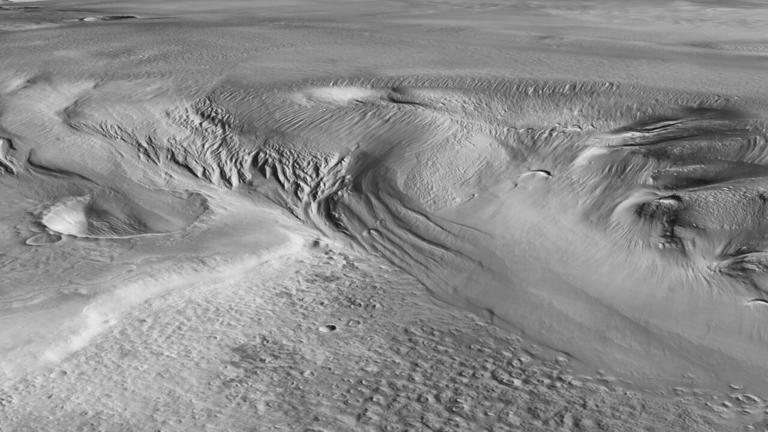
Martian lava tubes were first noticed by the Viking orbiters, that studied Mars between 1976 and 1980. The images acquired by these missions revealed many features that showed how Mars was once a very different place. These included flow channels, basins, and alluvial deposits that indicated Mars once had flowing water on its surface. The presence of these lava tubes was confirmed by subsequent orbiters like the Mars Odyssey, Mars Global Surveyor (MGS), Mars Express, and Mars Reconnaissance Orbiter (MRO), which indicated that it was geologically active in the past as well.
As Betco and his colleagues told Universe Today via email, there are many things that make Martian lava tubes appealing to scientists. Much like lava tubes on the Moon, which are similarly large enough to accommodate entire planetary bases (or even whole cities), this includes natural radiation shielding and protection against the elements:
“In some instances, predicted surface values are reduced by as much as 98%. These lava tubes are of particular interest to astrobiology as they may preserve evidence of life on Mars by offering protection from UV radiation. Additionally, the caves could serve as a refuge for future human missions exploring Mars. Deeper locations within the caves could be utilized as a shield against micrometeoroids or as a heat insulator.”
There is also considerable research that suggests that lava tubes may contain water ice and even be a haven for Martian life (most likely in the form of hardy bacteria). This makes lava tubes a viable location for astronaut habitats, astrobiology research, and possibly permanent settlements. Many mission concepts have been proposed for exploring these lava tubes, including networked rovers and robotic snakes. However, the Ingenuity helicopter – a technology demonstrator that accompanied the Perseverance rover to Mars – effectively demonstrated that aerial vehicles could be the best option for exploring Mars.
As Betco and his colleagues indicated, this includes the lava tubes that run beneath its surface, which would be tricky for rovers to navigate. “Aerial vehicles are well-suited for lava cave exploration as they can move in any direction in three-dimensional space, allowing them to enter the lava tube for inspection,” they said. “In comparison, a rover is limited to two dimensions and would require a highly complex configuration to enter and navigate within a lava tube.”

Using the Ingenuity helicopter as their touchstone, the team produced a design for their Martian Inspection Drone (MID). But whereas Ingenuity relies on two coaxial rotors, their vehicle has an octocopter configuration with eight. The vehicle will also have a suite of advanced scientific instruments for inspecting the cave and lava tube interiors. It will weigh a maximum of 15 kg (33 lbs), making it significantly heavier than Ingenuity – which weighs just 1.8 kg (4 lbs). As they describe it, the MID will also rely on an autonomous navigation system and AI to ensure it can make decisions without human controllers:
“A foldable mechanism is proposed to occupy a smaller volume during launch. Its autonomous navigation relies on acquiring data from sensors such as accelerometers, gyroscopes, altimeters, and cameras, processing them to determine the position and attitude of the drone during flight. Another layer of autonomy is implemented through MID’s capability to make decisions regarding the next steps based on a trained Convolutional Neural Network (CNN) model. This model offers the possibility to detect and inspect lava-tube entrances (pits).”
Looking to the future, it is clear that aerial vehicles will play a significant role in exploring extraterrestrial environments. This includes NASA’s Dragonfly mission, the nuclear-powered quadcopter that will explore Saturn’s largest moon, Titan (starting in 2034). Other concepts, like solar-powered aircraft and fleets of balloons, are being considered as a possible means of exploring the cloud tops of Venus and deploying sample-return drones to the surface. An autonomous helicopter, said Betco and his colleagues, could drastically expand future exploration efforts on Mars:
“Our work’s potential implications lie in the efficient exploration of the Martian planet, as the drone offers the possibility to survey and inspect areas of interest without requiring constant human intervention. The development of MID contributes to the integration of artificial intelligence in Martian missions. Even though the technology is not quite ready for this, the lessons learned and technologies developed now will drastically benefit future exploration of the Red Planet.”
The team is currently working on implementing new capabilities that will allow their concept to inspect the insides of lava tubes using Simultaneous Localisation and Mapping (SLAM) techniques. If realized, similar concepts could be used to explore lava tubes and recesses on the Moon, Mercury, and anywhere else in the Solar System they are found.
Further Reading: