The man known as George Valiantine was born in 1874 in Williamsport, New York, and was a rather late bloomer as far as supposed psychics go. Where many psychics are aware of something different about them from childhood, Valiantine only first discovered his alleged powers at the age of 43, during which time he had been living a humble life as a manufacturer. His first introduction to his own psychic abilities allegedly happened quite by accident one night as he was staying at a hotel. During the night, he claimed to have heard mysterious raps on the walls and ceiling that seemed to be trying to tell him something, and which responded when asked questions. When Valiantine told of this to a friend who was into Spiritualism, she suggested that he try and hold a séance to invoke the spirits that seemed to be trying to communicate with him. During this séance, he would conjure up the spirit of his deceased brother-in-law, Bert Everett, who allegedly told him that the spirits had been trying to make contact with him for some time.
Valiantine would begin to hold regular séances after this, where he would purportedly regularly invoke several different spirits, including Everett, a mysterious “Dr. Barnett," as well as three Native Americans named "Hawk Chief,” "Kokum," and “Blackfoot,” all of whom had wildly different voices and speech patterns. One of his main tricks was using a trumpet, through which the spirits would occasionally speak as it floated through the air, and another draw for his seances was when he would channel spirits from various places all around the world, often speaking in foreign languages that Valiantine did not supposedly speak. This attracted the attention of a psychic researcher by the name of H. Dennis Bradley, who met with the medium in 1923 and decided to try and test out his abilities in a controlled setting.
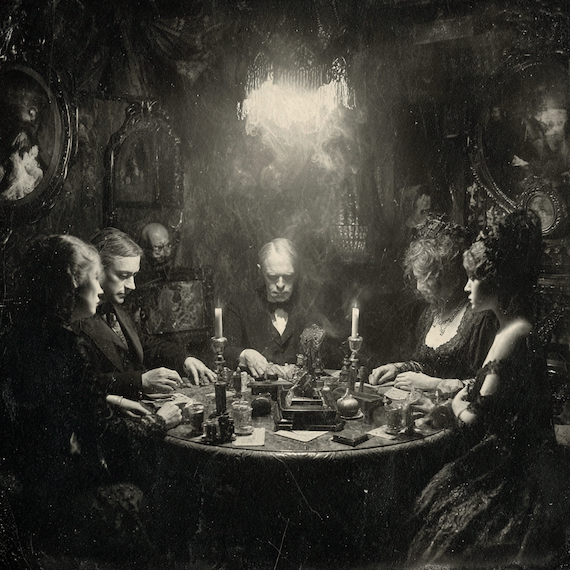
Bradley would witness all manner of weirdness during his sittings with the medium. Valiantine would conjure up numerous spirits, both men and women, who spoke in tones that Bradley was sure could not have been faked or produced by the medium, saying “each spirit was distinct and each spoke with an accent unlike the other.” He also saw the trumpet float through the air with his own eyes, and he would often hear the voices of the spirits and Valiantine speak simultaneously. These spirits often gave information on Bradley and the other sitters that Valiantine could not have possibly known. Other phenomena reported by Bradley were floating orbs of light that would careen around the room, taps and raps on the walls and furniture, and even a few occasions where an unseen hand rested upon his shoulder. Through all of this, neither Bradley nor any of his assistants could rationally explain it, with Valiantine clearly seen to be still tied to his chair and no apparent evidence of any trickery. Even when his mouth was taped, the spirits and voices would come, leading Bradley to come away from these séances convinced that Valiantine was the real deal.
In late 1923, The Scientific American of New York offered a prize of $2,500 to anyone who could provide proof of a genuine spiritualist phenomenon under test conditions. Valiantine entered the contest with the full support of Bradley, after which two private preliminary sittings were arranged by Gardner Murphy of Columbia University and Kenneth Andrews of the New York World. The seances were by all accounts a success, and Valiantine moved on to the real test before the committee of The Scientific American. During these sittings, Valiantine allegedly channeled a total of eight different spirits, their voices coming from high in the air and holding conversations with those present. The trumpet was also witnessed to hover through the air, but while it was all very impressive and no one could figure out how it was being done, there were some red flags. It seems that the committee had secretly installed an electrical pressure sensor into Valiantine’s chair to measure whether he left it during the sittings, and on several occasions, it registered the medium leaving the chair for short durations. Psychical researcher Harry Price would say of this:
“At the final sitting, in complete darkness, on May 26, 1923, special apparatus was installed. This was an electrical circuit which included the chair on which the medium sat. When the medium rose from his seat, a light went out in an adjoining room. Dictaphone notes were taken of all that occurred. It was found that Valiantine left his chair fifteen times when he should have been in it, sometimes for as long as eighteen seconds, and that these periods corresponded with those when the sitters were touched by the ‘spirits'."
Partly due to this, while much of what was witnessed was not able to be easily explained away as tricks, it was nevertheless deemed to be inadmissible as actual proof, and so Valiantine did not win the prize. Indeed, he was mostly painted as being a fraud by the Scientific American committee, yet despite this setback, he was wholeheartedly endorsed by Bradley and continued to amaze audiences with his seances. Valiantine began travelling to England and Europe to give demonstrations, often leaving audiences flabbergasted as to how the spirits he channeled knew so much about them and could speak in different languages, but there were still plenty of skeptics. One of these was a wealthy American financier by the name of Joseph de Wyckoff, who had several samples of writings channeled through Valiantine’s hand by spirits analyzed by experts. It was found that the spirit writing was most definitely written by Valiantine himself. Of course, Valiantine himself vehemently denied this, all the while continuing his séances and maintaining his believers. During one particularly spectacular séance held in 1924, Valiantine channeled an estimated one hundred different spirits in the presence of a crowd of fifty people, of which de Wyckoff was one, causing him to question whether he was wrong about the medium being a fraud, but he was still suspicious.
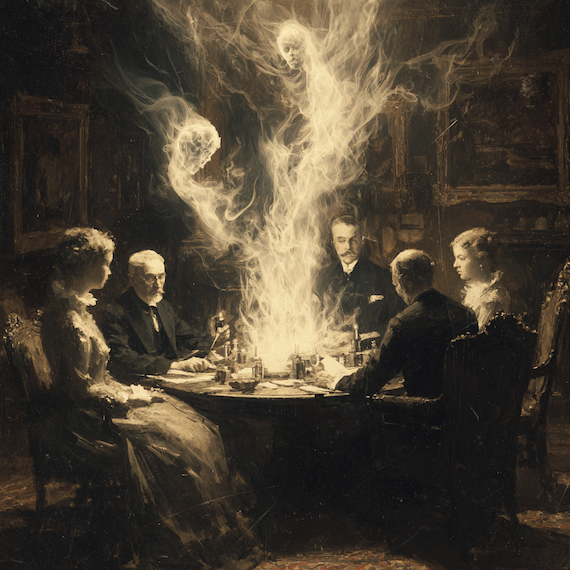
It seems that Wyckoff would become a constant thorn in Valiantine’s side, continuing his efforts at debunking it all, but on the opposite end of the spectrum, Bradley continued his experiments with the medium and came away convinced every time. Further tests were arranged to investigate the viability of Valiantine’s ability to channel foreign languages. When Valiantine began claiming that he could channel the spirit of the great Chinese philosopher Confucius himself, Bradley brought in Dr. Neville Whymant, an authority on Chinese history, philosophy, and ancient literature, who said of what he witnessed at the séance:
“Suddenly, out of the darkness was heard a weird, crackling, broken little sound, which at once carried my mind straight back to China. It was the sound of a flute, rather poorly played, such as can be heard in the streets of the Celestial Land but nowhere else. Then followed in a low, but very audible voice the words 'K'ung-fu T'Zu.' Few persons, except Chinese, could pronounce the name correctly as the sounds cannot be represented in English letters. The idea that it might be Confucius himself never occurred to me. I had imagined that it might be somebody desirous of discussing the life and philosophy of the great Chinese teacher.”
Whymant even asked questions of Confucius that only a person from that era of Chinese history could know, and Valiantine passed with flying colors. On top of all of this, Valiantine demonstrated the ability to write out ancient Chinese characters accurately in near complete darkness. Indeed, Whymant came away very impressed by it all, stating that not only did the voice speak with Chinese that was period accurate for the era, but also that it had knowledge that it was seemingly impossible for Valiantine to know. Whymant would claim that there were “only about six Chinese scholars in the world whose knowledge would have been equal to the one displayed by the direct voice.” How could the medium possibly be able to fake this? It is all even more impressive when one considers that Valiantine was not particularly well-educated or even fully literate, of which Bradley would say:
“He is a man of instinctive good manners but it is essential to state that he is semi-illiterate. He possesses no scholastic education whatever, beyond the ordinary simplicities; he is ill versed in general conversation and ideas. I mention these facts because many of the communications which have been made in the direct voice under his mediumship have been brilliant in their expressions and culture.”
It is interesting in that one of the most bizarre aspects of Valiantine’s career as a psychic medium is just how inconsistent he was. For every amazing and truly unexplainable display, there would be another in which signs of trickery were found. For instance, one psychical researcher, Ernest Palmer, found after examining Valiantine’s trumpet that it was warm to the touch and had moisture in the mouth piece in exactly the way one would suspect if a human had used it and not a spirit. On other occasions, there were found fraudulent movements from the medium during sittings were found, and perhaps the most famous sign of trickery happened in 1931, when Valiantine agreed to produce spirit fingerprints in wax of such names as Sir Arthur Conan Doyle, Lord Dewar, and Sir Henry Segrave. The procedure involved the imprints of these spirits’ fingerprints being put into a wax mold, but the imprints left behind were disappointing. For instance, the imprint from Sir Arthur Conan Doyle was found to be a match to the print of Valiantine's big toe on his right foot, the spirit thumbprint of "Lord Dewar" was the same as that of Valiantine's left big toe, and a spirit fingerprint of "Sir Henry Segrave" was the print of Valiantine's middle finger. Nevertheless, Valiantine would never admit to any fraud.
Rather oddly, over the years, opinions on Valiantine’s abilities would shift. Bradley, who had carried out over one hundred experiments on the medium and had always held up as genuine, would become rather skeptical when he found what he believed to be signs of cheating and later deemed him to be a fraud, even writing a whole book about why he thought so in 1931. Yet at the same time, Valiantine’s nemesis, Whymant, would come to the conclusion that he really did possess mediumship abilities, but was just not able to fully control them, and they would appear only sporadically, therefore forcing him to occasionally resort to fraudulent means. Valiantine has gone on to become quite the polarizing force in the history of supposed psychic phenomena, with people seemingly equally divided down the line between thinking he was a huckster and those who truly believe he was the real deal. Which was it? Was he one of the biggest frauds of all time, or one of the greatest psychics there ever was? It is really hard to say, and all we can do is wonder.
Moving to our next case, the life of one of the most celebrated mediums and psychics of the 19th century began in 1833, when Daniel Dunglas Home was born in Currie, Scotland, and was soon adopted by a childless aunt and uncle when he was just a baby, as his own parents were unable to handle all of their eight children and Home was a sickly and weak child that was proving to be a burden. Even as a baby, weird stories were starting to orbit Home, as he had come from a long line of psychics and seers in his family, including his mother, and it was claimed that his cradle would sometimes rock by itself, and as a young child, he allegedly accurately predicted the death of a cousin. In other words, he was a creepy kid from the beginning, but things would really get interesting when he emigrated to America when he was just 9 years old, and the next chapter of his strange life would begin.
He and his aunt and uncle settled in Greeneville, Connecticut, and Home would be mostly a loner and friendless, yet he did form a bond with another boy named Edwin, with whom he took an oath that if ever either of them died, they would try to contact the other from the afterlife. This would lead to his first real full-blown spiritual vision, when one day Edwin appeared to him, surrounded by a bright light, and it would turn out later that the boy had died three days before, which should have been impossible for him to know, as they had moved to Troy, NY, which is about 155 miles from Greeneville. A few years after this, he would also predict the death of his own mother after she appeared to him in a vision, allegedly right down to the very hour. Then there was the poltergeist activity, such as moving objects or furniture, and anomalous noises such as strange raps and knocks from within the walls. This only ever seemed to happen when Home was around, and all of this proved to be too odd for his adopted family. Believing him to be possessed by the Devil, they kicked Home out when he was just 17, and he was left on his own.
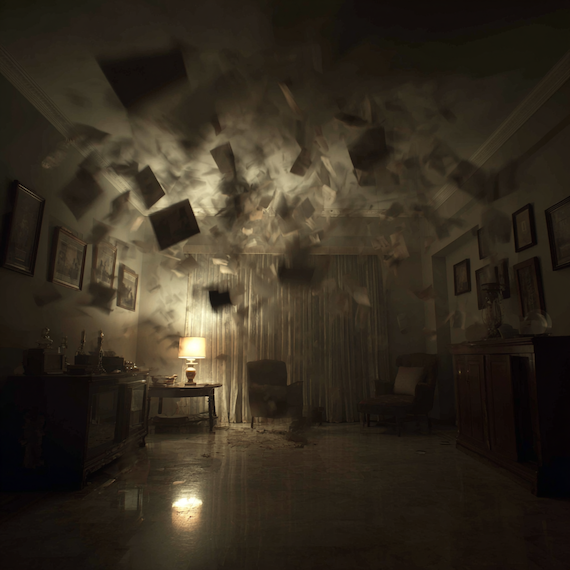
This seemed to have done little to deter Home, who began to believe that he had a powerful gift and started arranging séances, which were all the rage at this time when spiritualism was en vogue. He certainly made an impression, as during his first séance in March 1851, a table reportedly moved on its own, despite the efforts of the guests to physically stop it. This incident would hit the news and make Home practically an overnight sensation, launching his career as a medium. He would begin travelling all over New England performing séances, sometimes six or seven a day, in which he reportedly was able to cause moving objects or inexplicable lights, heal people of ailments, and provide uncannily accurate information and divulge details gleaned from the spirits of the dead that he could not have possibly known. These apparent potent psychic abilities caused Home’s fame to spread far and wide.
Making it all the more interesting is that Home at no point ever asked for money in exchange for performing these seemingly miraculous feats, although he did receive donations and gifts, and he was also very willing to carry out his séances in well-lit conditions and under the scrutiny of more skeptical observers. Indeed, many skeptics, including scientists and trained observers, often came away from Home’s séances convinced that they had not been deceived in any way. He was not totally without his critics, for instance, Vanity Fair writer William Makepeace Thackeray once called his act “dire humbug, dreary and foolish superstition,” yet even he was supposedly impressed when Home had a table move during one of his sessions without any discernible trickery.
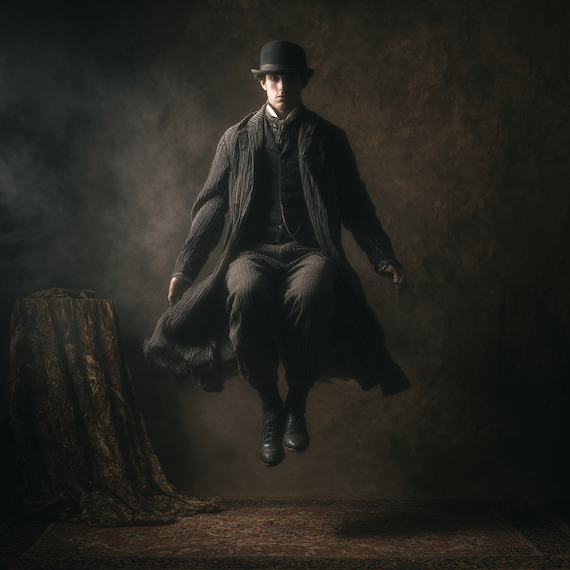
Home really got people’s attention when he began demonstrating the apparent ability to actually levitate. His first show of this power was in August 1852, in South Manchester, Connecticut, where he was reported as levitating twice, floating all the way up to the ceiling in full view of an astonished audience. Some reports of this event claim that when people tried to pull him down, they were lifted up off the floor as well. When the levitation was added to his bag of tricks, Home became more popular than ever before, becoming a common fixture at the homes of society’s elite, yet he still refused any payment for these performances and séances despite money being shoved at him. While all this was going on, Home decided to pursue a profession that he could do to make a stable living on his own, and to this end, he began to study medicine at Newburgh, Connecticut, but this was cut short when he fell ill with tuberculosis in 1854. Doctors recommended that he return to Europe to recover, and so in March of 1855, he departed America’s shores on his way to the next chapter of his unusual life.
Home would settle in London, where he lived for free at a sprawling hotel owned by a fan of his named William Cox, and it was not long before he was back to performing séances. As in America, he quickly made a name for himself and was soon entertaining the high class, elite, and royalty, including Napoleon III, the Czar of Russia, and Queen Sophia of the Netherlands, at the same time adding to his bizarre repertoire by including so-called “phantom hands,” which would appear to poke or touch people present, and the ability to hold white-hot embers in his bare hands without injury. Most of these witnesses to his apparently vast powers were convinced that it was all genuine, and both shocked and awed by what they saw in Home’s presence. Queen Sophia would say of the séances she participated in:
“I saw him (Home) four times...I felt a hand tipping my finger; I saw a heavy golden bell moving alone from one person to another; I saw my handkerchief move alone and return to me with a knot... He himself is a pale, sickly, rather handsome young man but without a look or anything which would either fascinate or frighten you. It is wonderful. I am so glad I have seen it.”
As before, Home conducted these séances in brightly lit rooms or in broad daylight, and once again, levitation featured in his séances. Paranormal historian Frank Podmore would say of one such instance, "We all saw him rise from the ground slowly to a height of about six inches, remain there for about ten seconds, and then slowly descend." Indeed, these displays became more impressive than ever, including levitating chairs while people sat in them, and in 1868, he reportedly pulled his greatest feat of all, purportedly levitating right out of a 3rd story window to come hovering back in through a different window. One of the more famous supporters of Home was the writer and spiritualist Sir Arthur Conan Doyle, who was impressed by the fact that Home had a vast array of psychic abilities, including the ability to let spirits speak through him or to audibly speak, the gift of clairvoyance, and most incredible of all his ability to move objects with his mind and levitate, a combination that few possessed. Indeed, his powers were so amazing and seemingly real that Home was actually expelled from Rome in 1864 on the charge of sorcery.
Of course, he did have his critics, who believed that this was all trickery, illusion, and sleight of hand. One of these was famed illusionist and escape artist Harry Houdini, who was actually well-known at the time as an intrepid debunker of spiritualism and séances. Houdini claimed that Home was using the tricks of illusionists and magicians, and even proclaimed that he was able to reproduce the same results himself, although it seems he was never able to demonstrate this, ultimately leaving even him a bit baffled by it all. However, Houdini remained convinced that Home was using some sort of illusion to pull off his stunts; it was just a matter of how, and others were willing to take Home to task through controlled experiments, which, surprisingly, the medium was all up for.
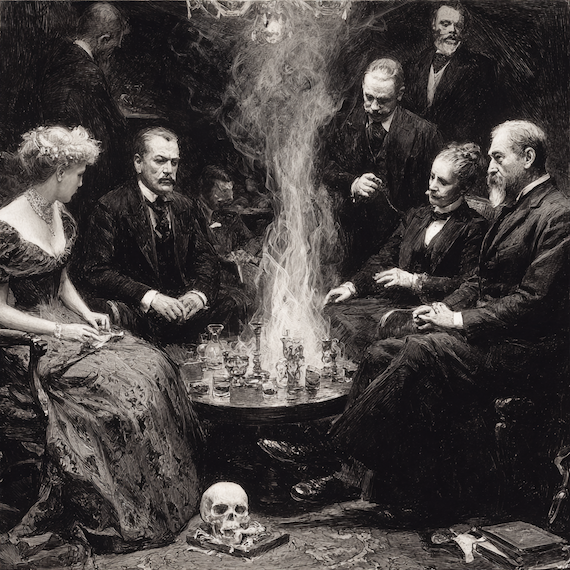
Perhaps one of the most well-known of these experiments was carried out over several years by the respected English chemist, physicist, and fellow of the Royal Society, William Crookes, beginning in 1871. The experiments were conducted in a self-built laboratory in North London, using a series of different tests in an effort to measure Home’s “psychic force.” During the experiment, Crookes would become convinced that Home’s powers were genuine and that they could not be explained by current science. Crookes would say:
“During the whole of my knowledge of D. D. Home, extending for several years, I never once saw the slightest occurrence that would make me suspicious that he was attempting to play tricks. He was scrupulously sensitive on this point, and never felt hurt at anyone taking precautions against deception. To those who knew him Home was one of the most lovable of men and his perfect genuineness and uprightness were beyond suspicion.”
However, the experiment would be criticized because it was not under ideal conditions, lacked proper scientific controls and protocols, and it was not repeatable, sometimes failing to measure any phenomena at all, and so it was largely scoffed at by mainstream scientists of the day. There is also the fact that Crookes was well-known for testing a variety of other psychics, and that he truly sought to prove psychic abilities, which may have made his results somewhat biased. Home's nemesis, Houdini, would say of Crookes and his folly of an experiment:
“There is not the slightest doubt in my mind that this brainy man was hoodwinked, and that his confidence was betrayed by the so-called mediums that he tested. His powers of observation were blinded and his reasoning faculties so blunted by his prejudice in favor of anything psychic or occult that he could not, or would not, resist the influence.”
Yet for all of the criticism of Home and his alleged powers, it seems that no one was ever able to figure out how he actually did it, and no one was ever able to successfully replicate any of his “tricks.” Speculation ran rampant, including that he was using secret pulley systems, magic tricks, tiny gadgets hidden on his person, mass hypnosis, or even trained monkeys to move things around, but no one knew for sure. By all accounts, if he wasn’t a real psychic, then he was perhaps the greatest magician and illusionist who had ever lived. Home would continue baffling people all over Europe until his tuberculosis finally caught up to him, and he died on June 22, 1886, after a career of over 1,500 séances and countless private demonstrations.
In more modern times, it has come to light that Home was, in fact, caught cheating on several occasions in private, and that these were simply not reported on publicly, but there is still much that is mysterious about Daniel Home, in that many of his greatest performances have never been adequately explained or recreated. If he was a fraudster and an illusionist, then he was extremely skilled and gifted, but how he did it all was taken to the grave with him. The fact that he was able to work his way into high society and impress so many, as well as that he never asked for payment, only further cements his legend. Was Home a charlatan and trickster, or did he perhaps have access to powers of the mind beyond our understanding? The answer to that largely depends on who you ask, but one thing that is for certain is that he is one of the most prominent and greatest mediums and psychics who has ever lived.
In another amazing case, born in Ireland in 1893, Eileen J. Garrett had a rough go of things from an early age. Her mother killed herself by drowning just a few days after she was born, and her father followed suit just 6 weeks later by shooting himself, leaving her doomed to never even really know their faces. She was sent off to live at a rural farmhouse with her aunt, who was overbearing and prone to fits of rage that often sent the young child off on her own in her own little world. She felt more of a connection with nature than with people at this time, spending most of her time wandering the moors. It was at about 4 years of age that she began to be aware that she had certain gifts. She started to see and communicate with spirits, in particular those of two girls and a boy around her age, and she also developed the powers of precognition, clairvoyance, telepathy, and the ability to see the energy auras of people and objects, which she called “the surround.” She would say of this ability:
“I saw all bodies surrounded by a nimbus of light, not merely as physical bodies, but as if each were set within a nebulous egg-shaped covering of his own. This surround, as I called it for want of a better name, consisted of transparent changing colors, or could become dense and heavy in character—for these coverings changed according to the variations in people's moods. From the beginning, space has never been empty for me. There was both sound and movement in the 'space' of every area, and I could discriminate among environments by the impressions of this tremendous 'vitality' that I appear to gather otherwise than by means of my five senses.”

She also would claim to be able to see the life force leave a body upon death. For instance, once when she was angry at her aunt, she killed some ducks on the farm as revenge, and as they died, she could see “a gray, smoke-like substance rose up from each small form.” These powers would grow and follow her as she grew up, but so did misfortune and tragedy. She would marry three times and lose three sons as infants, each time reportedly witnessing their souls leave their bodies. Her marriages were marred by this tragedy, as well as hallucinations and signs of dissociative identity disorder that led one of her husbands to describe her as “on the brink of madness.” Her second husband died in an explosion during World War I, an event she had a premonition of during a dinner party, of which she would say:
“I was caught in the shattering concussion of a terrible explosion. I saw my gentle, golden-haired husband blown to pieces. I floated out on a sea of terrific sound. When I came to myself, I knew that my husband had been killed.”
It was yet another horrific tragedy for Garrett, but nevertheless, her psychic abilities had also grown. She became convinced that she was imbued with “cosmic consciousness,” and that she was being followed around by a sort of guardian angel in the form of man “in gray garments", who had helped save the life of her ailing daughter, Babette, when she was ill with pneumonia. In the 1920s, she began to try and focus her gifts for spirit mediumship, in particular what is called “trance mediumship,” during which the medium goes into a deep trance and channels spirits through them. Garrett very quickly became popular in the spiritualist movement at the time, and was a regular feature of high-profile seances and mediumship sessions. During these years, she became aware of what she called “spirit controls,” who were sort of spirit guides, and she claimed to have two. One of these was named Ouvani, or Uvani, who was apparently a 14th-century Persian soldier, and the other was the man in grey himself, known as Abdul Latif, a 13th-century Muslim physician. These spirit controls helped her to hone and improve her powers and gave her insight and guidance into the afterlife. In one instance, the spirit control Uvani channeled the spirit of British barrister Sir Edward Marshall Hall, who allegedly told the audience of his experience with the afterlife:
“I fear I am going to disappoint you, but this is not heaven, neither is it hell, though it savors of both. My friends are still tied up with knots and problems, but I played at both things and was terribly sincere when I played. I am still playing. This is not a state of spirit any more than the one I have left, and I am young here, a mere baby. I have only been over a year or two. I am doing what the other infants do, opening my eyes, looking around and asking questions. There is still a lot of earth man left in me, thank God. I am still in a state of matter, with a more beautiful and much less troublesome body. I take a hand in everything that is going on ... This is a place where free will predominates . . . All experience is growth ... it can be Hell or Heaven . . . from my own point of view, I am not in Hell ... I am now in a comfortable part of the globe ... Here is freedom from pain, freedom from sorrow, the vision which has led me all my life and which I would not change.”
Garrett steadily rose to international fame through her sessions, and it was this high profile that brought her to the attention of many researchers, scientists, parapsychologists, and spiritualists, including such organizations as the American Society for Psychical Research, Duke University’s parapsychology laboratory, and the British College of Psychic Science. In 1931, she moved to the United States and famously subjected herself to a series of experiments to test her abilities. In one of these, carried out by the National Laboratory of Psychical Research, she contacted the spirit of Herbert Carmichael Irwin, captain of the British R101 airship, which crashed in 1930, killing 48 people. During this session, he apparently gave information and technical details that only he could have known, and it was big news at the time. Psychical researcher Harry Price would say of this particular experiment:
“It is not my intention to discuss if the medium were really controlled by the discarnate entity of Irwin, or whether the utterances emanated from her subconscious mind or those of the sitters. "Spirit" or "trance personality" would be equally interesting explanations – and equally remarkable. There is no real evidence for either hypothesis. But it is not my intention to discuss hypotheses, but rather to put on record the detailed account of a remarkably interesting and thought-provoking experiment.”
During another experiment, Garrett also allegedly channeled the spirit of the mother of the famous film producer Cecil B. DeMille, who wanted to give her son advice on a movie he was making. She was also studied by J. B. Rhine and William McDougall at Duke University, the Boston Society for Psychic Research, the Psychological Laboratory at the University College London, the psychical researcher Hereward Carrington and Dr. Adolph Meyer of Johns Hopkins University, among others, but the results of these were mixed at best, with conclusions ranging from that she was genuinely psychic to that she was merely conjuring up alternate personalities in her own psyche, to that she was no more successful than random guessing.

Garrett would head back to Europe, where she assisted in the French Resistance during World War II, after which she immigrated permanently to the United States in 1941 to flee the Nazi occupation. There she established her own New Age publishing company, Creative Age Press, which published the well-received publication Tomorrow, and she wrote many of her own books, including My Life in Search for the Meaning of Mediumship, Telepathy: In Search of a Lost Faculty, Awareness, The Sense and Nonsense of Prophecy, Life is the Healer, Many Voices, and others, as well as three fiction novels. In 1951, she helped found the Parapsychology Foundation along with U.S. Congresswoman Frances Bolton. In addition to hosting various conferences with the Foundation, she continued her forays into psychic powers, including a case in which she exorcised the supposed spirit of a witch who had been plaguing a wealthy young married woman living in an opulent townhouse on New York's Upper East Side. She also became involved with the psychedelic movement in the 60s, falling in with the renowned psychedelic author and researcher Aldous Huxley and his research team. Garrett would claim that psychedelics helped her greatly expand her powers, at one point saying:
“I have had psychic experiences which occur at the height of the LSD experience. I believe the drug has made me a better, more accurate sensitive when I perceive, hear, think and feel.”
She was so enamored with the psychedelic culture that the Parapsychology Foundation carried out its own experiments into LSD and its effects on psychic abilities and other psi phenomena, and they held several conferences on the matter. Indeed, Garrett would be seen as a pioneer in the world of psychedelic research. It is interesting that in later years, Garrett distanced herself from the idea that she was being guided by outside spirits, instead embracing the theory that these spirit controls were merely aspects of her own mind linked into the cosmic consciousness. Indeed, she would state that she did not believe that there was even necessarily a spirit world at all, although she still insisted that her powers were very real; she just was not sure exactly from where they sprang. However, she constantly tried to downplay her abilities while at the same time fighting off skeptics, and would once say, “I have been called many things, from a charlatan to a miracle woman. I am, at least, neither of these.”
Garrett continued her work and demonstrations up until September 15, 1970, when she tragically passed away from heart failure during the Parapsychology Foundation's nineteenth international conference, in Nice, France. There is no way of knowing if she could ever do the things she claimed, and the tests done on her were inconclusive at best, so we are left to wonder. Who was this mysterious woman, and what was she really capable of? If she did possess these powers, then from where did they originate? In the end, it doesn't really seem to matter, as Eileen J. Garrett has most certainly cemented herself into place as one of the most famous psychics of the century, and no matter what the story behind her story might be, she will likely remain that way for some time to come.
We are left to wonder just what was going on with these people. Did they ever have the psychic powers they claimed they had, and which were witnessed by so many? Or was this all smoke and mirrors and trickery? How can we explain some of the more amazing feats we have looked at here? Whatever you may think ion these claims, all of the people we have looked at here have left their indelible mark upon history and the world of psychics, and are among the most famous and allegedly most powerful the world has ever seen.


 Million-Year-Old Skull Discovery Rewrites Human Evolution Timeline




 Infrared photograph showing the moment when Table Mountain Observatory transmits a laser signal to the Psyche spacecraft.
Source: NASA/JPL-Caltech
Infrared photograph showing the moment when Table Mountain Observatory transmits a laser signal to the Psyche spacecraft.
Source: NASA/JPL-Caltech