Naar de inhoud

UFO'S of UAP'S, ASTRONOMIE, RUIMTEVAART, ARCHEOLOGIE, OUDHEIDKUNDE, SF-SNUFJES EN ANDERE ESOTERISCHE WETENSCHAPPEN - DE ALLERLAATSTE NIEUWTJES

UFO's of UAP'S in België en de rest van de wereld
akke.beakke.be
Ontdek de Fascinerende Wereld van UFO's en UAP's: Jouw Bron voor Onthullende Informatie! Ben jij ook gefascineerd door het onbekende? Wil je meer weten over UFO's en UAP's, niet alleen in België, maar over de hele wereld? Dan ben je op de juiste plek! België: Het Kloppend Hart van UFO-onderzoek In België is BUFON (Belgisch UFO-Netwerk) dé autoriteit op het gebied van UFO-onderzoek. Voor betrouwbare en objectieve informatie over deze intrigerende fenomenen, bezoek je zeker onze Facebook-pagina en deze blog. Maar dat is nog niet alles! Ontdek ook het Belgisch UFO-meldpunt en Caelestia, twee organisaties die diepgaand onderzoek verrichten, al zijn ze soms kritisch of sceptisch. Nederland: Een Schat aan Informatie Voor onze Nederlandse buren is er de schitterende website www.ufowijzer.nl, beheerd door Paul Harmans. Deze site biedt een schat aan informatie en artikelen die je niet wilt missen! Internationaal: MUFON - De Wereldwijde Autoriteit Neem ook een kijkje bij MUFON (Mutual UFO Network Inc.), een gerenommeerde Amerikaanse UFO-vereniging met afdelingen in de VS en wereldwijd. MUFON is toegewijd aan de wetenschappelijke en analytische studie van het UFO-fenomeen, en hun maandelijkse tijdschrift, The MUFON UFO-Journal, is een must-read voor elke UFO-enthousiasteling. Bezoek hun website op www.mufon.com voor meer informatie. Samenwerking en Toekomstvisie Sinds 1 februari 2020 is Pieter niet alleen ex-president van BUFON, maar ook de voormalige nationale directeur van MUFON in Vlaanderen en Nederland. Dit creëert een sterke samenwerking met de Franse MUFON Reseau MUFON/EUROP, wat ons in staat stelt om nog meer waardevolle inzichten te delen. Let op: Nepprofielen en Nieuwe Groeperingen Pas op voor een nieuwe groepering die zich ook BUFON noemt, maar geen enkele connectie heeft met onze gevestigde organisatie. Hoewel zij de naam geregistreerd hebben, kunnen ze het rijke verleden en de expertise van onze groep niet evenaren. We wensen hen veel succes, maar we blijven de autoriteit in UFO-onderzoek! Blijf Op De Hoogte! Wil jij de laatste nieuwtjes over UFO's, ruimtevaart, archeologie, en meer? Volg ons dan en duik samen met ons in de fascinerende wereld van het onbekende! Sluit je aan bij de gemeenschap van nieuwsgierige geesten die net als jij verlangen naar antwoorden en avonturen in de sterren! Heb je vragen of wil je meer weten? Aarzel dan niet om contact met ons op te nemen! Samen ontrafelen we het mysterie van de lucht en daarbuiten.

UFOs Are a Scientific Problem

UFOs Are a Scientific Problem

Why does the scientific establisment continue to ignore serious study of UFOs?

Reviewed by Gary Drevitch

Key points

  • UFOs have long been conflated with aliens, leading to confusion around the topic.
  • UFO reports are quickly losing their stigma as professionals go public with their stories.
  • UFOs present a scientific problem worthy of curiosity, research, and discussion.

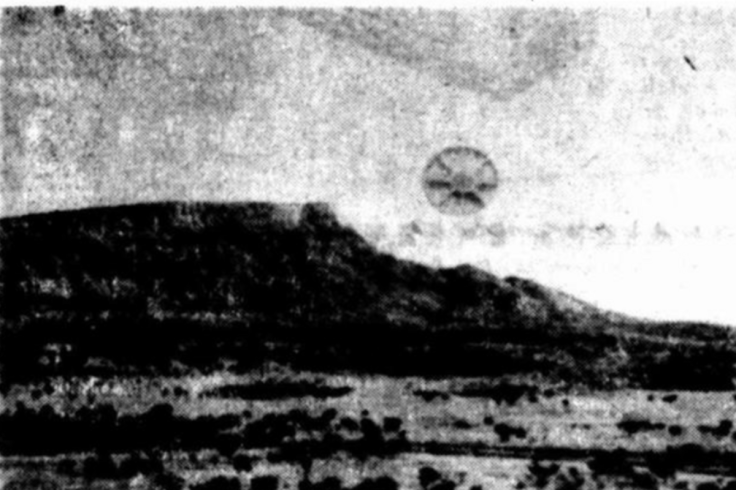
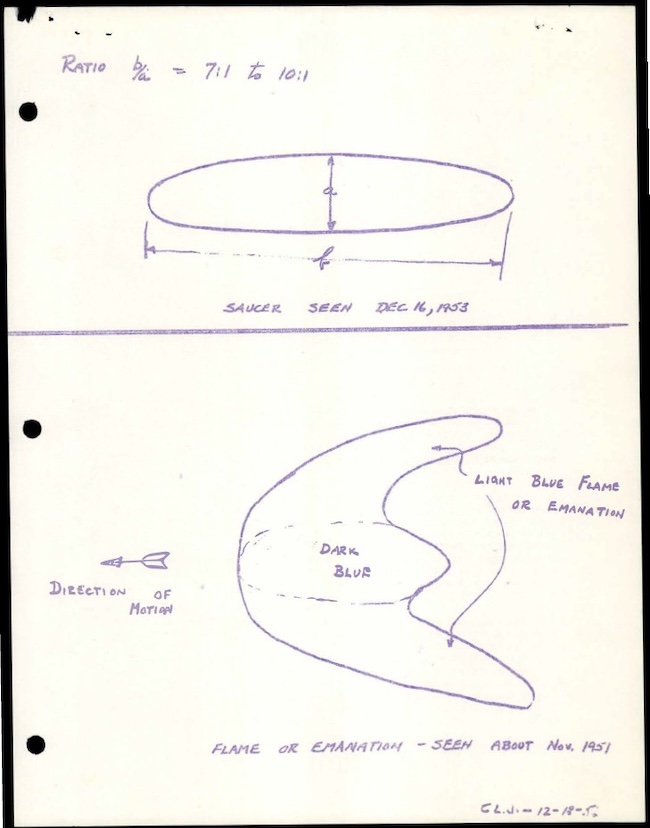
Picture of a flying saucer, from the USA National Archives and Records Administration

Picture of a flying saucer, from the USA National Archives and Records Administration
Source: wikimedia commons

Last week, I had an argument with a friend that went like this: "UFOs are real." "No, they're not." "Yes, they are." "No, they're not."

You get the idea. There's a lot about philosophy of language, as a subdiscipline of philosophy, that is beyond me. But my one important takeaway from struggling through that class in graduate school was this: People will forever argue at cross-purposes if they don't first define their terms.

"UFOs" and "aliens" are not the same thing

When considering the question of whether UFOs are real or not, we should be careful not to fall into the trap—a long-standing American tradition—of conflating UFOs with aliens. People still, in 2026, cringe when someone brings up the subject of UFOs because the conversation inevitably devolves into clichés about little green men and alien abductions. But "UFO" of course doesn't stand for "alien"; it stands for "unidentified flying object," which could turn out to be anything from a bird to a plane to Superman.

When did this conflation originate? Likely in the mid-20th century when UFO sightings spiked and pop culture was flooded with sci-fi tropes of flying saucers and aliens. But the misunderstanding lives on: Just the other day I overheard a professor ask a college student if she believed in UFOs. The student, an astrophysics major, laughed and said "No." I'd argue both the question and the answer are confused.

Ask yourself: Does it make sense to say that one doesn't believe in unidentified flying objects? This claim means you don't think it's possible that someone could look up in the sky and see something they can't identify. But this claim seems absurd. What UFOs are, and whether aliens from outer space visit us here on Earth, are two distinct questions and should be treated as such.

UFO sightings are a shared human experience

Putting aside the alien question, if our claim is simply that people do indeed see things the sky that they're unable to identify, then our astrophysics major would have to agree. The field of astrophysics wouldn't have come into being without people who studied the night sky and discovered things they couldn't identify and didn't understand.

Two 21st-century trends have brought the reality of UFOs into the light: 1) the internet has made it easier for both expert (e.g., airplane pilots) and non-expert UFO experiencers to share their stories, which helped legitimize UFO sightings as a shared and more common human experience than previously thought ; and 2) the Congressional hearings (begun in 2022) wherein trained military pilots shared their stories publicly lent further legitimacy to the phenomena as real, fascinating, and worthy of scientific study.

People see weird stuff in our skies all the time and in the vast majority of sightings, experts agree, these objects are ultimately identified as natural phenomena—lightning, satellites, lenticular clouds, airplanes, etc. But a small percentage of these sightings remain unidentified because they don't fit into our familiar classifications of reality with regard to how they look or behave, or both.

UFOs are a legitimate scientific problem
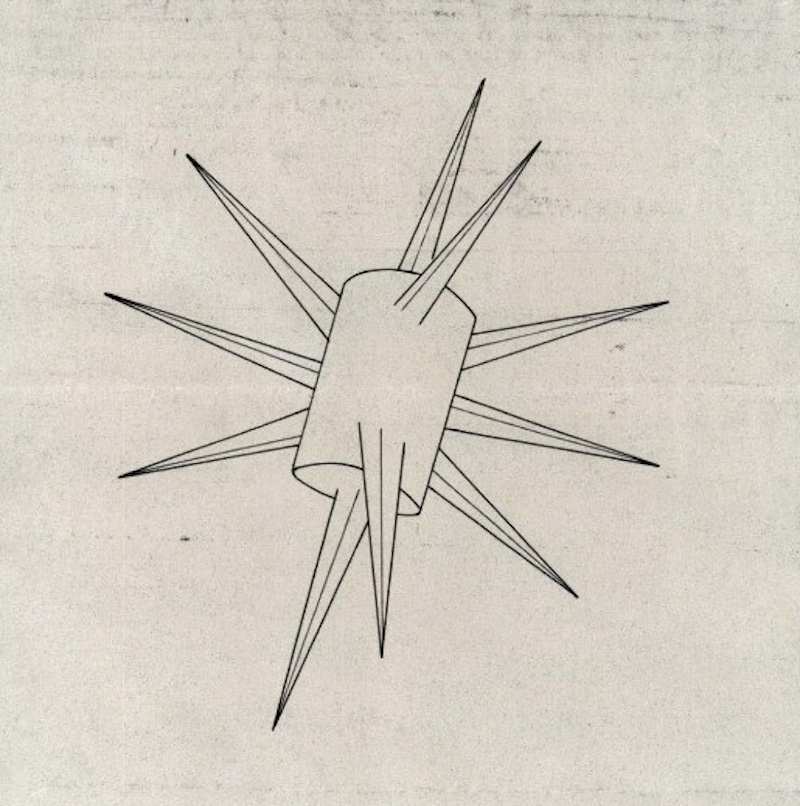
Jacques Vallee, a mathematician and astronomer who's authored dozens of books on UFOs, is one scientist who's always taken the UFO question seriously. He points out in his 1965 book, Anatomy of a Phenomenon, this ironic observation: Scientists are rational, analytical, and data-driven, until it comes to UFOs. Then they're emotional, gut-reactive, and dismissive of the data, which in ufology (so far) comes mainly in the form of first-person accounts. He notes that scientists have traditionally been content to wait for radio signals from outer space as evidence of extraterrestial intelligence (which assumes other forms of life traffic in radio signals) rather than collecting data on the innummerable acounts of UFO encounters from credible earthlings.

We don't yet know what UFOs are or where they're from though there are some hypotheses (in order from more familiar to least familiar): 1) they're (human-made) secret military vehicles either domestic or foreign; 2) they're humanoids from other dimensions of spacetime; 3) they're objects from lesser known regions on earth like the deep ocean depths; 4) they're visitors from other parts of the galaxy; and 5) they're mirages, holograms, or ephemeral elements of the universe's consciousness.

Science usually begins with wanting to understand something that is unknown. But in the case of UFOs, it might require a paradigm shift in thought from a deep-seated denial about intelligence in the universe to an acceptance that this indeed seems to be true. In Vallee's words, "They cannot replace in their imaginations the huge cosmic cemetery for celestial bodies which they describe in their books with a world of life and thought" (Vallee, 1965).

References

  • Vallée, J. (1965). Anatomy of a phenomenon: Unidentified objects in space—A scientific appraisal. Henry Regnery Company.

RELATED

How Do UFOs Work? The Maths and Physics of UFOs Explained
UFOs Are REAL! 👽 But Are They ALIENS? The Truth About UFO Sightings
The Evidence That Could Prove UFOs Are Real | EP5+6 | Encounter: UFO S1

{ https://www.psychologytoday.com/gb/basics/philosophy }

Hoe vind je dit bericht?
Geschreven door peter om 18:33 Stuur door

Super El Niño has morphed into a MEGA El Niño, scientists warn – as sea temperatures in the Pacific skyrocket

Super El Niño has morphed into a MEGA El Niño, scientists warn – as sea temperatures in the Pacific skyrocket

The Super El Niño which scientists are warning could bring extra stormy weather to Britain this winter is continuing to intensify, with maps suggesting temperatures in some parts of the Pacific have rocketed to 10°C (50°F) above normal.

Experts say the phenomenon is pushing into uncharted territory – and has now morphed into a 'mega El Niño'.

The powerful climate pattern is likely to influence temperatures and rainfall across much of the world in the coming months.

While Britons have been warned to expect large storms this winter, America's west coast has already had a taste of the chaos El Niño can bring, with fierce Pacific weather systems unleashing heavy rain, flooding and damaging winds.

The phenomenon could also have devastating impacts on wildlife as it disrupts the nutrient-rich waters that support the region's food chain, leaving sea lions, seabirds, penguins and marine iguanas struggling to find enough food.

Scientists warn that prolonged marine heat can trigger breeding failures, mass starvation events and population declines among some of the area's most iconic species.

'+10°C sea surface temperature anomaly near Galapagos and off coast of Peru,' US meteorologist Ryan Maue wrote on X.

'This is now a mega El Niño.'

The map shows a vast band of exceptionally warm water stretching across the equatorial Pacific from the coast of South America towards the central Pacific Ocean

The map shows a vast band of exceptionally warm water stretching across the equatorial Pacific from the coast of South America towards the central Pacific Ocean

This graphic reveals temperature anomalies beneath the Pacific Ocean, with dark red and white colours indicating waters up to several degrees warmer than average extending to depths of around 656ft (200m)

This graphic reveals temperature anomalies beneath the Pacific Ocean, with dark red and white colours indicating waters up to several degrees warmer than average extending to depths of around 656ft (200m)

The map, posted online by Mr Maue, is based on data from the European Centre for Medium-Range Weather Forecasts.

It shows a vast band of exceptionally warm water stretching across the equatorial Pacific from the coast of South America towards the central Pacific.

The deepest shades of red and white indicate sea surface temperatures running several degrees above average, with anomalies peaking at almost 10°C above normal near the Galapagos Islands and the coast of Peru.

Cooler-than-average waters are shown in blue, highlighting the stark contrast between the unusually warm eastern and central Pacific and surrounding areas.

Commenting on the rocketing temperatures, Dr Genevieve Guenther, author of The Language of Climate Politics, wrote on X: 'Lots of aquatic life is dying in that heatwave.'

Another person added: 'It looks like a scar. Earth screams in pain. Next summer is going to be one ugly summer.'

Scientists say the event is pushing into unchartered territory, with the phenomenon now morphing into a ¿mega El Niño¿

Scientists say the event is pushing into unchartered territory, with the phenomenon now morphing into a 'mega El Niño'

Super El Niño is 'off the charts', and has even started to 'supercharge' our weather, experts from the World Meteorological Organisation (WMO) have warned

Super El Niño is 'off the charts', and has even started to 'supercharge' our weather, experts from the World Meteorological Organisation (WMO) have warned

Despite the striking map, the Pacific has not warmed by 10°C everywhere.

The figure refers to a localised hotspot near South America, whereas the strength of El Niño is typically measured across a much larger area of the central Pacific, where anomalies are generally closer to 3°C or 4°C above average.

Even so, that would rank the event among the most intense ever recorded.

Climate scientist Rebekah Jones recently said: 'I can't emphasize enough how potentially catastrophic this El Niño will be.'

El Niño is part of a naturally occurring climate cycle called the El Niño Southern Oscillation that moves between hot and cold periods once every two to seven years.

During the hot El Niño phase, warm water builds up near the surface of the central and eastern tropical Pacific.

This releases vast amounts of heat into the atmosphere, altering global weather patterns and raising the planet's average temperature.

America's west coast has already seen a taste of the chaos El Niño can bring, with fierce Pacific weather systems unleashing heavy rain, flooding and damaging winds. pictured: Dramatic waves off the coast of California last week

America's west coast has already seen a taste of the chaos El Niño can bring, with fierce Pacific weather systems unleashing heavy rain, flooding and damaging winds. pictured: Dramatic waves off the coast of California last week

Earlier this month, the World Meteorological Organisation (WMO) warned Super El Niño is 'off the charts' and has even started to 'supercharge' our weather.

The WMO State of the Climate Update 2026 revealed how the extreme climate event has already been linked to exceptional global temperatures, melting ice and rising sea levels.

What's more, the worst is yet to come – with El Niño set to unleash even more heat and extreme weather well into 2027.

'We have entered a new age of climate extremes,' said UN Secretary-General António Guterres.

'A supersized El Niño is colliding with a planet already superheated by manmade climate change.

'Climate records keep falling. The human costs keep rising. And those least responsible are suffering first and worst.

'Leaders must get serious by cutting emissions faster, accelerating a just transition from fossil fuels and delivering the finance and protection vulnerable countries need.'

WHAT IS THE EL NINO PHENOMENON IN THE PACIFIC OCEAN?

El Niño and La Niña are the warm and cool phases (respectively) of a recurring climate phenomenon across the tropical Pacific - the El Niño-Southern Oscillation, or ENSO for short.

The pattern can shift back and forth irregularly every two to seven years, and each phase triggers predictable disruptions of temperature, winds and precipitation. 

These changes disrupt air movement and affect global climate. 

ENSO has three phases: 

      • El Niño: A warming of the ocean surface, or above-average sea surface temperatures (SST), in the central and eastern tropical Pacific Ocean. Over Indonesia, rainfall becomes reduced, while rainfall increases over the tropical Pacific Ocean. The low-level surface winds, which normally blow from east to west along the Equator, instead weaken or, in some cases, start blowing the other direction from west to east. 
      • La Niña: A cooling of the ocean surface, or below-average SST, in the central and eastern tropical Pacific Ocean. Over Indonesia, rainfall tends to increase, while rainfall decreases over the central tropical Pacific Ocean. The normal easterly winds along the Equator become even stronger.
      • Neutral: Neither El Niño or La Niña. Often tropical Pacific SSTs are generally close to average.

Source: Climate.gov

RELATED

The Ocean Is Warming: The Worst Has Just Begun
The El Niño Phenomenon in the Pacific: How a Warming Ocean Causes Global Disruption
This El Niño Could Permanently Change Our World

{ https://www.dailymail.com/sciencetech/index.html }

Hoe vind je dit bericht?
Geschreven door peter om 18:11 Stuur door

EXCLUSIVE - Former Pentagon contractor claims aliens are living among us and 'taunting' US Navy to conceal chilling plan to repopulate Earth

EXCLUSIVE - Former Pentagon contractor claims aliens are living among us and 'taunting' US Navy to conceal chilling plan to repopulate Earth

UFOs and extraterrestrials are real, and they are taunting the US military with their superior technology, a former government weapons designer has claimed. 

Gary Moshier was a US Department of War contractor who focused on creating new military weapons before turning his attention to uncovering proof of UFOs as an author.

After 12 years of research, Moshier concluded that claims of UFO encounters, cattle mutilations, alien abductions and crop circles were 'staged' events by extraterrestrials meant to intimidate the human race.

Moshier told the Daily Mail: 'A lot of what we know about them I consider to be staged. Obviously, these Navy encounters are staged.'

He specifically pointed to the November 2024 incident in the Pacific Ocean where Navy pilots from the USS Nimitz were conducting training exercises when they tracked multiple unidentified objects descending from 80,000 feet to sea level in under a second.

One of the pilots, Commander David Fravor, described a white, capsule-shaped craft, later dubbed the 'Tic Tac,' which appeared to respond intelligently to his fighter jet's maneuvers before rapidly accelerating out of sight.

'They challenge our Navy fighters, harass them, shadow them and get them into engagements. They basically demonstrate overwhelming technology, technical superiority. So, they're taunting us,' Moshier explained.

He added that the purpose of this, and other shocking incidents UFO witnesses claimed to have seen, was so aliens could make it clear they are invested in keeping Earth habitable to aid with their goals of repopulating their species.

UFOs and extraterrestrials are real, and they are taunting the US military with their superior technology, a former government weapons designer has claimed

UFOs and extraterrestrials are real, and they are taunting the US military with their superior technology, a former government weapons designer has claimed

The Tic Tac video and countless other UFO recordings shared by the military have never been confirmed to be real extraterrestrial craft.

The US government has also maintained that no physical proof of alien life has ever been recovered on Earth.

Despite the lack of tangible evidence, Moshier, the author of 'They’re Here: UFOs and Their Occupants,' said the proof lied in the location of many of these encounters, no one outside of the military is supposed to know about.

The author said UFOs had been documented entering the Combat Air Patrol rendezvous point, a classified location where pilots rendezvous after a mission is completed.

Moshier said he believed UFOs were essentially stating: 'We're the superior race. We know where you're going. We know where you're going to be in the future. Don't mess with us.'

He said his research, conducted using existing evidence from years of documented UFO and extraterrestrial sightings, began to show a clear pattern, which he claimed hinted at why aliens are here.

'My opinion is that we're being visited by an alien race whose main agenda is repopulation of planet Earth. They're coming here to live and thrive here.'

The UFO researcher specifically pointed to a 1994 UFO sighting in Zimbabwe where 62 students observed silver-colored objects descending from the sky.

Gary Moshier was a US Department of War contractor who focused on creating new military weapons before turning his attention to uncovering proof of UFOs as an author

Gary Moshier was a US Department of War contractor who focused on creating new military weapons before turning his attention to uncovering proof of UFOs as an author 

Many of the witnesses reported meeting humanoid figures and receiving telepathic messages.

'These kids were telling their stories. The usual story is that we're ruining planet Earth,' Moshier said.

Moshier claimed that the ‘thread’ connecting many areas of UFO research was that aliens seem to be warning humanity about damaging the planet.

article image

'They're seen at nuclear sites of all types, weapons storage areas, weapon platforms, weapon processing plants, or nuclear processing plants,' the researcher detailed.

He speculated that cattle mutilation was another attempt to show humans that they should look after livestock because aliens were concerned over our food supply.

'They admonish humanity for ruining the environment. A lot of the conversation between abductees and the aliens when they're being taken is how we're ruining the Earth. They're worried about our stewardship of planet Earth,' he said.

Former military personnel have spoken publicly about incidents during the Cold War involving UFOs flying over sites where American and Soviet nuclear missiles were being kept.

According to the whistleblowers, the unidentified craft had the ability to activate and deactivate the missiles at will. 

In November 2004, Navy pilots aboard the USS Nimitz were conducting training exercises off the coast of Southern California when radar detected multiple unidentified aerial objects

In November 2004, Navy pilots aboard the USS Nimitz were conducting training exercises off the coast of Southern California when radar detected multiple unidentified aerial objects

Without proof from any direct encounters himself, Moshier claimed that the reason aliens want humans not to harm the environment is far from innocent.

'My opinion is that we're being visited by an alien race whose main agenda is repopulation of planet Earth. They're coming here to live and thrive here.'

Moshier believed that everything from crop circles to telepathic encounters were being carried out to persuade people to take better care of Earth while aliens quietly live among us.

Current members of Congress and former government employees have previously claimed alien UFO bases do exist on Earth, likely hidden under the ocean.

Other claims, including those of former Florida congressman Matt Gaetz, have alleged that alien-human hybrids live among the human population undetected.

'They're basically creating another species, which was first called hybrids, and then when they got to the point where these hybrids are basically identical to humans, except for their neurological capability,' Moshier claimed.

🚨 Former Pentagon contractor claims aliens are living among us... #FormerPentagon #BreakingNews

{ https://www.dailymail.com/sciencetech/index.html }

Hoe vind je dit bericht?
Geschreven door peter om 17:52 Stuur door

Scientists make astonishing discovery in the deepest place on Earth – and it could explain why the Mariana Trench plunges almost 7 miles beneath the waves

Scientists make astonishing discovery in the deepest place on Earth – and it could explain why the Mariana Trench plunges almost 7 miles beneath the waves

It is the deepest valley in the deepest trench in the ocean – lying 6.8 miles (10,900m) below the surface of the Pacific.

And now scientists have made an astonishing discovery which could explain just why Challenger Deep is the lowest point on Earth.

A robot submarine uncovered volcanic activity at the location at the southern end of the Mariana Trench – with thin sheets of pyroclastic rocks created by cooling lava flows lining its side.

What makes the discovery so unusual is that at such depths – with enormous water pressure – volcanic explosions shouldn’t be possible.

The Mariana Trench, east of the Philippines, is also part of a boundary between two tectonic plates where the rocky mantle shouldn't be hot enough to melt.

The report’s lead author Dr Robert Stern, of the University of Texas at Dallas, says: ‘Explosive volcanism near trenches is unusual, so we were very surprised.’

Using a deep-sea remotely operated vehicle (ROV), researchers discovered 'unprecedented' volcanic activity near the bottom of Challenger Deep, the deepest point on Earth

Using a deep-sea remotely operated vehicle (ROV), researchers discovered 'unprecedented' volcanic activity near the bottom of Challenger Deep, the deepest point on Earth 

The researchers used a Remote Operated Vehicle (ROV) to study an area called the 'forearc', which sits between the trench and the nearby volcanic chain

The researchers used a Remote Operated Vehicle (ROV) to study an area called the 'forearc', which sits between the trench and the nearby volcanic chain

The trench stretches roughly 1,580 miles (2,550km) from near Japan's south coast down to the island of Guam in the western Pacific.

Challenger Deep, its deepest point, extends so far below the surface that normal submarines and robotic explorers are unable to survive the pressure.

So the researchers used a special deep-sea remotely operated vehicle (ROV) called Jason/Medea, which can dive down to four miles (6.5km) below sea level.

Although that doesn't actually allow it to reach the bottom of the trench itself, it does allow scientists to visit Challenger Deep's wall in a region known as the forearc.

Ocean trenches are formed when one tectonic plate is pushed under another, with the steep dip at their meeting point creating the trench.

The forearc is the region of the crust that sits between the trench itself and the nearby range of volcanoes created by the tectonic activity.

This volcanic material suggests that the semi-liquid mantle has pushed through to near the edge of the trench, producing a steeper drop and explaining why Challenger Deep extends so far below sea level

This volcanic material suggests that the semi–liquid mantle has pushed through to near the edge of the trench, producing a steeper drop and explaining why Challenger Deep extends so far below sea level 

The researchers – who published their study in Frontiers in Earth Science – sent Jason/Medea down to study a 340-mile-long (550km) section of the forearc near Challenger Deep, which is where they found the baffling signs of volcanic activity.

Dr Stern says: 'These are the deepest pyroclastic rocks documented to date from anywhere in the ocean.

'The intense pressures at the depths that these submarine volcanoes erupted makes the eruption style different than it would be on land or in shallow water, where the pressures are much lower.

'The explosive eruptions observed on land cannot be as powerful under these high–pressure conditions because the gases in the magma cannot expand so much.'

Although the researchers haven't found the eruption sites yet, they know that the lava flowed down slopes and that it didn't move very far.

The rocks retained enough heat to weld themselves into very hard rocks, which they wouldn't have done if they travelled great distances.

This survey also revealed that the forearc is being stretched from east to west along the seafloor by powerful tectonic forces.

However, this stretching is being caused by different forces at the east and west ends.

Older rocks at the eastern end indicate that the segment is being stretched by mechanical forces from the tectonic plates, like a soft toffee being pulled apart.

In the west, meanwhile, younger volcanic rocks suggest that this section is being extended by magma escaping to the surface from the mantle.

According to the researchers, these discoveries could help explain why Challenger Deep is so much deeper than any other ocean trench.

Challenger Deep is formed where the Pacific Plate sinks beneath the smaller Mariana Plate.

The presence of volcanic rocks near the trench suggests that the semi-molten part of the mantle has penetrated exceedingly close to the trench, just west of Challenger Deep.

This means that the two tectonic plates are only very weakly attached, allowing the bottom Pacific Plate to slide down more easily.

Since this plate is also narrow and short, it bends at a tighter angle than normal, creating a very steep dip as it vanishes beneath the Mariana Plate.

The steeper that angle is, the deeper the trench will be.

However, scientists say that there is still a lot more work to be done before Challenger Deep can truly be understood – mainly because they still can't reach the bottom.

Dr Stern says: 'We were unable to study the seafloor between the depths of 6,500 meters and 11,000 meters, the depth of the Challenger Deep.

'Only Chinese scientists and some wealthy entrepreneurs now have research tools capable of working down to the bottom of the Challenger Deep.'

Mariana Trench: The deepest trench on Earth

The Mariana Trench is the deepest part of the world's oceans, located in the western Pacific Ocean, to the east of the Mariana Islands.

The trench is 1,580 miles (2,550 km) long but has an average width of only 43 miles (69 km).

The distance between the surface of the ocean and the trench's deepest point, the Challenger Deep, is nearly 7 miles (11 km).

Director James Cameron became the first solo diver to reach the bottom of Challenger Deep in 2012.

RELATED

The Deepest Place On Earth Isn't Silent
The Deepest Place on Earth! 😱 What Scientists Found at the Bottom of the Mariana Trench

{  https://www.dailymail.com/sciencetech/index.html }

Hoe vind je dit bericht?
Geschreven door peter om 17:47 Stuur door

Meet the Frankenhamster: Scientists create bizarre 'planimal' by fusing together hamster and algae DNA

Meet the Frankenhamster: Scientists create bizarre 'planimal' by fusing together hamster and algae DNA

The idea of a creature that's part hamster and part algae sounds like something cooked up in Dr Frankenstein's lab. 

But it has become a reality in Japan, where scientists have created a so-called 'planimal'. 

The hybrid cells were developed by fusing together hamster and algae DNA. 

'Plants and animals cannot reproduce with each other, so their chromosomes are never combined through mating,' explained Professor Sachihiro Matsunaga, senior author of the study. 

'Yet, we have succeeded in creating hybrid chromosomes containing genetic material from both an alga and a mammal, and have shown that this genetic material can be stably passed on to daughter cells through repeated cell divisions.

'Remarkably, our planimal cells retained nearly an entire algal genome over many generations. 

'This demonstrates that even the vast evolutionary divide between plants and animals can be crossed at the level of chromosomes, without reproduction.'

The idea of a creature that's part hamster and part algae sounds like something that would be cooked up in Dr Frankenstein's lab. But it has become a reality in Japan, where scientists have created a so–called 'planimal'

The idea of a creature that's part hamster and part algae sounds like something that would be cooked up in Dr Frankenstein's lab. But it has become a reality in Japan, where scientists have created a so-called 'planimal'

In their study, published in Nature Communications, the team set out to understand if it's possible to fuse mammal cells with DNA from algae - something that has never been done before. 

Professor Matsunaga, from the University of Tokyo, explained: 'We wanted to understand whether entire chromosomes could cross the enormous evolutionary divide between algae and animals and whether animal cells could stably maintain and pass on such foreign genetic material to their daughter cells.

'We also wanted to discover how animal cells accommodate DNA from such a different organism without losing their ability to survive and divide. 

'These questions are fundamental to understanding how genetic material can move across species boundaries and contribute to evolution.'

The researchers tested two methods as they tried to create the planimal.  

Firstly, they fused photosynthetic algal cells with cells taken from a hamster. 

As an alternative, they also allowed the hamster cells to engulf the algae - but found that the fusion method was more effective. 

Amazingly, they found that the algal DNA was passed on through more than 150 cell divisions. However, about 96 per cent of the transferred algal genes were inactive, suggesting the hamster cells were using a form of 'gatekeeping' to supress the foreign genes

Amazingly, they found that the algal DNA was passed on through more than 150 cell divisions. However, about 96 per cent of the transferred algal genes were inactive, suggesting the hamster cells were using a form of 'gatekeeping' to supress the foreign genes

Having created the planimal, the team used live-cell imaging and genome sequencing to track how it acted as it reproduced. 

Amazingly, they found that the algal DNA was passed on through more than 150 cell divisions. 

However, about 96 per cent of the transferred algal genes were inactive. 

According to the researchers, this suggests the hamster cells were using a form of 'gatekeeping' to supress the foreign genes.

The team now plans to carry out follow-on studies to understand how selected genes might be switched back on.  

'Our next challenge is to selectively switch on the genes we need and make them work inside animal cells,' Professor Matsunaga said. 

'The red alga we use has a remarkably compact genome containing genes for metabolic functions that animal cells do not possess. 

'Our ultimate goal is to activate these biological pathways and give animal cells some of the unique abilities of plants and algae. 

'Imagine animal cells that could sustain photosynthesis for long periods, producing oxygen while using carbon dioxide to make useful organic compounds.'

A Cell That’s Half Hamster, Half Plant 😱
Did Scientists Just Build a Half-Plant, Half-Animal Cell? 🌱

{  https://www.dailymail.com/sciencetech/index.html }

Hoe vind je dit bericht?
Geschreven door peter om 17:25 Stuur door

The mystery planet that could rewrite our Solar System: Scientists say a hidden world bigger than Earth may be lurking beyond Neptune

The mystery planet that could rewrite our Solar System: Scientists say a hidden world bigger than Earth may be lurking beyond Neptune

A hidden planet could be lurking at the edge of our Solar System, scientists have claimed.

The mysterious world may have remained undetected beyond Neptune for billions of years despite humanity's increasingly sophisticated search of the cosmos.

The proposed world, nicknamed ‘Planet X2’, would be around 1.5 to two times the mass of Earth and orbit hundreds of times farther from the sun than our planet.

Its gravity could account for the oddly tilted and elongated orbits of distant icy bodies which have long puzzled scientists.

‘Imagine discovering, after decades of mapping our Solar System, that another planet has been hiding from us all this time,’ Dr Patryk Sofia Lykawka, of Kindai University in Japan, said.

‘If this planet exists, it could change how we understand the history of our Solar System and how its most distant objects came to follow such unusual orbits.’

An artist's impression of the hypothetical Planet X2, which could be hiding beyond Neptune. If this planet exists, it could 'change how we understand the history of our Solar System'

An artist's impression of the hypothetical Planet X2, which could be hiding beyond Neptune. If this planet exists, it could 'change how we understand the history of our Solar System'

The proposed world, nicknamed ‘Planet X2’, would be around 1.5 to two times the mass of Earth and orbit hundreds of times farther from the sun than our planet

The proposed world, nicknamed ‘Planet X2’, would be around 1.5 to two times the mass of Earth and orbit hundreds of times farther from the sun than our planet 

Beyond Neptune lies a vast region filled with frozen remnants from the Solar System's formation, known as trans-Neptunian objects.

Most travel around the sun in relatively predictable paths within the Kuiper Belt.

But over the past two decades, astronomers have identified a growing number of far-flung objects with unusually stretched and tilted orbits that defy easy explanation.

Among the most puzzling is Sedna, an icy dwarf planet whose elongated journey takes it far beyond the realm of the known planets.

Some scientists have suggested these strange movements could be the result of an unseen planet exerting a gravitational influence from deep space.

To investigate the idea, researchers ran computer simulations spanning the entire 4.5-billion-year history of the Solar System.

The models tested how a hidden planet with different masses and orbital paths might affect distant icy objects over time.

Their simulations suggested a previously undiscovered world could explain many of the strange orbital patterns astronomers observe today.

The simulations suggest that a hypothetical distant planet, dubbed Planet X2, could help explain the unusual elongated and tilted orbits of icy objects far beyond Neptune, represented by the red and magenta orbital paths

The simulations suggest that a hypothetical distant planet, dubbed Planet X2, could help explain the unusual elongated and tilted orbits of icy objects far beyond Neptune, represented by the red and magenta orbital paths

Scientists say there could be a hidden planet beyond Neptune. Pictured: Our current understanding of the planets in our Solar System. Left to right: Mercury, Venus, Earth, Mars, Jupiter, Saturn, Uranus, Neptune

Scientists say there could be a hidden planet beyond Neptune. Pictured: Our current understanding of the planets in our Solar System. Left to right: Mercury, Venus, Earth, Mars, Jupiter, Saturn, Uranus, Neptune

The team's simulations indicate Planet X2 could be up to two times Earth's mass and follow a highly elongated orbit hundreds of astronomical units from the sun.

Even at its closest approach, the planet would remain at least 200 times farther from the sun than Earth, making it exceptionally difficult to spot.

Researchers found its gravity could gradually pull distant objects away from Neptune's influence and tilt their orbits to extreme angles.

The findings offer an alternative to the better-known Planet Nine theory, which proposes a much larger and more massive world lurking in the outer Solar System.

While the new model does not perfectly match every known observation, scientists say it successfully reproduces several of the unusual features seen among distant icy bodies.

Dr Lykawka said: ‘Our model reproduces several of the unusual orbital patterns observed among distant icy objects, although there are still differences between the model and observations that we need to investigate further.’

The idea builds on a centuries-long hunt for hidden worlds, including the search for the original ‘Planet X’ that ultimately led to Pluto's discovery in 1930.

Scientists now hope a new generation of powerful telescopes will finally reveal whether another planet is indeed waiting to be found in the darkness beyond Neptune.

The paper has been published in Monthly Notices of the Royal Astronomical Society.

Professor Jonti Horner, a co-author of the study from the University of Southern Queensland, said future observations, including those from the Vera C Rubin Observatory's Legacy Survey of Space and Time, could help researchers test predictions about the distant Solar System and search for the undiscovered planet.

‘The exciting thing is that we now have an opportunity to put this idea to the test,’ he said.

‘As the Rubin Observatory surveys the sky, we will find new clues that help us understand the distant reaches of the Solar System – and whether another planet is still waiting to be discovered.’

Planets of the solar system: The basics

Mercury 

Distance from Sun: 58 million km 
Orbital period: 87 days

Surface area: 74.8 million km²  
Radius: 2,440 km 

Mass: 3.285 × 10^23 kg (0.055 M⊕)
Length of day: 176 days 
Moons: None 4

Venus 

Distance from Sun: 108.2 million km  

Orbital period: 225 days

Length of day: 116 days and 18 hours 

Moons: None 

Surface area: 460.2 million km²

 Radius: 6,051 km

 Mass: 4.867 × 10^24 kg (0.815 M⊕)

Earth 

Distance from Sun: 148.13 million km
Orbital period: 365 days
Surface area: 510 million km² 
Radius: 6,371 km 
Mass: 5.972 × 10^24 kg (1 M⊕) 
Length of day: 24 hours
Moons: The moon  

Mars

Distance from Sun: 228 million km

Orbital period: 687 days

Surface area: 55.91 million mi²

Radius: 2,106 miles 

Mass: 6.39 × 10^23 kg (90.107 M⊕) 

Length of day: 24 hours, 39 minutes, and 35 seconds

Moons: Phobos, Deimos

Jupiter

Distance from Sun: 782.34 million km

Orbital period: 12 years

Surface area: 61.42 billion km²

Radius: 69,911 km

Mass: 1.89813× 10^27 kg (317.9 M⊕)

Length of day: 9 hours and 56 minutes

Moons: 95 formally recognised moons

Saturn 

Distance from Sun: 1.434 billion km

Orbital period: 29 years

Surface area: 42.7 billion km²

Radius: 58,232 km

Mass: 5.683 × 10^26 kg (95.16 M⊕)

Length of day: 10 hours and 42 minutes

Moons: 82 with formal designations; innumerable additional moonlets 

Uranus 

Distance from Sun: 2.913 billion km

Orbital period: 84 years

Surface area: 8.1 billion km²

Radius: 25,362 km

Mass: 8.681 × 10^25 kg (14.54 M⊕)

Length of day: 17 hours and 14 minutes

Moons: 28 known moons

Neptune 

Distance from Sun: 4.4702 billion km

Orbital period: 164.8 years

Surface area: 7.6 billion km²

Radius: 25,362 km

Mass: 1.024 × 10^26 kg (17.15 M⊕)

Length of day: 16 hours and six minutes

Moons: 28 known moons

The Hidden Planet Behind the Sun – Myth or Reality?

{ https://www.dailymail.com/sciencetech/index.html }

Hoe vind je dit bericht?
Geschreven door peter om 17:08 Stuur door

UAP Experts Attempt To 'Make a Beacon' and Summon Orbs Near Site of Infamous Bass Strait Mystery

UAP Experts Attempt To 'Make a Beacon' and Summon Orbs Near Site of Infamous Bass Strait Mystery

A Bass Strait UFO experiment saw investigators attempt to attract golden orbs through meditation, revisiting Frederick Valentich's 1978 disappearance

The Pentagon

UAP investigators attempt to attract unexplained golden orbs through meditation near Bass Strait, Australia

PHOTO Touch Of Light/Wikimedia Commons

UAP investigators from Whitehawk Psionics attempted to attract golden orbs through meditation at Barwon Heads, Victoria, as part of a programme released on 17 November 2026.

The Bass Strait UFO experiment, filmed for Reality Check with Ross Coulthart on NewsNation, produced no confirmed orb sighting.

The team believes concentrated thought could invite contact with unidentified anomalous phenomena, or UAPs.

Its practice, Close Encounters of the Fifth Kind (CE5), is also known as neuromeditative signalling. The broadcast provided no scientific demonstration that such signalling can attract objects.

How the Bass Strait UFO Experiment Created a Mental 'Beacon'

At the coastal location, team member Troy Gavin explained how participants prepared for a second attempt. First came a protective visualisation, with each person imagining a shield to ward off unwanted distractions. Next, they pictured a column of light extending from their chest into space.

'And make a beacon. That can go out into the solar system, into the atmosphere, however far you want,' Gavin said.

Participants then imagined looking down at Earth from orbit, narrowing their attention to their precise location.

Gavin suggested that this mental map might help the group's non-human intelligence find them. It was an expression of belief, rather than evidence that anything received the imagined signal.

The group also practised meditation focused on emotional calm and what members termed 'heart coherence'. They described using LeoLabs satellite information, Stellarium astronomy software and flight-tracking services to investigate ordinary explanations for lights in the sky.

Those checks matter. An aircraft approaching head-on can appear stationary, while planets and satellites are easily mistaken for unusual lights. Tracking software may help identify known objects, but cannot prove that any unexplained light has an extraordinary origin.

Afterwards, one participant described an unsettling sensation. 'It just made me feel like there was a presence looking at me and then I was looking back at it,' he said. The feeling was personal, not independent evidence of contact.

Parapsychologist Jack Westacott acknowledged that expectations could help explain bodily reactions during the experiment. Distinguishing those experiences from an external event would require independent evidence.

The filmed attempt yielded no confirmed golden orbs. Members stressed that CE5 was intended to encourage possible interaction, not make an object appear on demand.

Why the Bass Strait UFO Experiment Revisited a Missing Pilot

The setting was chosen partly because of a much older mystery. On 21 October 1978, 20-year-old pilot Frederick Valentich vanished while flying a Cessna 182L from Melbourne's Moorabbin Airport towards King Island.

According to the National Archives of Australia, Valentich reported an unidentified object with four bright lights before radio contact ended. An extensive search found neither him nor his aircraft. His disappearance remains unresolved.

Yet 'unidentified' does not mean extraterrestrial. The archives describe a possible conventional explanation involving bright celestial objects, including planets visible during Valentich's flight. That interpretation has not been conclusively established either.

Barwon Heads was the filming location for the experiment, not a confirmed site of Valentich's disappearance. During his final flight, Valentich had reported Cape Otway in sight.

Asked why the team chose the coast, Gavin pointed to reports of unusual aerial activity around Bass Strait. He also speculated about objects beneath the water, without presenting evidence of their presence.

RELATED

Bass Strait Mystery: Solved at Last!
Pentagon UFO Files: Orbs Launching Orbs Near US Site
EVERYTHING We Know About The Tasmania "UFO" Lights

 { https://www.ibtimes.co.uk/trending }

Hoe vind je dit bericht?
Geschreven door peter om 22:35 Stuur door

UFO Expert Mark Rodeghier Questions Air Force Secrecy as CIA History Details Misleading U-2 Explanations

UFO Expert Mark Rodeghier Questions Air Force Secrecy as CIA History Details Misleading U-2 Explanations

Rodeghier questioned Cold War aerial investigations as historical studies confirm Air Force issued deceptive explanations to conceal classified reconnaissance flights

UFO

UFO researcher Mark Rodeghier questions the US Air Force's handling of unidentified sightings during a 2025 interview with Ross Coulthart

(Representational Image) PHOTO Jim Bowditch/Wikimedia Commons

Cold War aerial secrecy faced renewed historical scrutiny this week as archival intelligence findings highlighted how the United States Air Force deployed deceptive public explanations to shield classified military reconnaissance operations.

Speaking in an interview revisited across defence networks in November 2026, Dr Mark Rodeghier, scientific director of the J. Allen Hynek Center for UFO Studies, questioned the integrity of mid-century military investigations, arguing that national security compartmentalisation actively undermined genuine aerial threat detection.

Rodeghier pointed to the CIA-backed Robertson Panel of January 1953, which urged government agencies to systematically debunk civilian sightings and monitor domestic tracking groups to prevent emergency communication channels from clogging during potential Soviet confrontations.

However, newly scrutinised historical studies compiled by former CIA historian Gerald K. Haines demonstrate that official misdirection served primarily to conceal ultra-secret aviation hardware, confirming that military spokespersons routinely blamed atmospheric temperature inversions and ice crystals for high-altitude sightings generated by the reflective hulls of U-2 reconnaissance aircraft.

While government archives document calculated deception to safeguard cutting-edge aviation, the Air Force maintains that Project Blue Book uncovered no evidence of extraterrestrial visitation among its 701 unexplained encounters.

In the 9 April 2025 episode of Reality Check, Rodeghier spoke to journalist Ross Coulthart about the influence of intelligence secrecy on the investigation of unidentified aerial phenomena, or UAPs..

Mark Rodeghier Questions the Origins of Air Force UFO Secrecy

Rodeghier pointed to the Robertson Panel, a scientific review assembled with CIA backing in January 1953. He also cited MK-ULTRA as an example of intelligence secrecy, without establishing any connection between that programme and UFO investigations.

The Robertson Panel met from 14 to 17 January 1953 to examine sightings and possible risks to American security. According to a CIA history, the agency found no evidence that the reported objects were extraterrestrial or posed a direct security threat. Yet its recommendations extended beyond scientific assessment.

The panel urged public education to reduce interest in UFO reports. It feared that excessive reporting could clog communications and make genuine threats more difficult to identify. It also recommended monitoring some civilian UFO groups for potential subversive activities.

Those recommendations help explain why official messaging became part of the Cold War UFO story. They do not demonstrate that the Air Force was ordered to suppress valid reports or abandon investigations.

Rodeghier was particularly critical of Project Blue Book, the Air Force programme established in 1952 to investigate sightings. He characterised its later work as largely propaganda, an allegation that goes further than the historical record alone establishes. The programme also collected and assessed reports, including cases its investigators could not explain.

His wider argument concerned two competing demands. Military officials needed to keep classified projects secret while identifying potential intrusions into US airspace. Rodeghier questioned whether efforts to discourage reporting could compromise the second responsibility.

What CIA Records Show About Mark Rodeghier's UFO Claims

An earlier CIA historical study supplies a concrete example of misleading explanations. Written by historian Gerald K Haines and published in 1997, the book describes reports on the U-2 reconnaissance aircraft during the 1950s.

The aircraft flew far above the altitude of commercial airliners operating at the time. Its reflective surface sometimes made it appear unusual to pilots and observers on the ground, particularly around sunrise and sunset.

Haines wrote that Blue Book investigators could match many sightings to secret flights by consulting CIA personnel. They nevertheless avoided publicly identifying the U-2. Some instead attributed the sightings to atmospheric conditions, including ice crystals and temperature inversions.

UFO

Project Blue Book recorded thousands of UFO sightings before the US Air Force ended the programme in 1969.

(Representational Image)  PHOTO Peter Pieras/Pixabay

The historian described the resulting Air Force statements as 'misleading and deceptive'. His account identified protection of an exceptionally sensitive reconnaissance programme as the reason for withholding the true explanations.

That is evidence of misleading public information, not proof that every UFO inquiry was obstructed. A concealed aircraft explanation and an investigation deliberately prevented from proceeding are different claims. Neither the interview account nor the cited historical study establishes a blanket policy of blocking all investigations.

For Rodeghier, the unresolved security question was whether unfamiliar objects received appropriate scrutiny, regardless of their eventual explanation. The historical records show that some public explanations were deliberately incomplete. They do not show that an unidentified sighting was evidence of extraterrestrial visitors.

The Air Force's own published account gives another perspective. It maintains that Project Blue Book found no evidence that unidentified sightings represented extraterrestrial vehicles or technology beyond contemporary scientific understanding.

According to the National Archives, the programme recorded 12,618 sightings from 1947 to 1969, with 701 remaining unidentified. The Air Force ended Project Blue Book on 17 December 1969, following reviews of its investigations and a commissioned scientific study.

For contemporary aerospace researchers, the historical record demonstrates how early intelligence imperatives shaped public perception, leaving the core question of unidentified phenomena caught between classified military technology and unverified speculation.

RELATED

The Center For UFO Studies | Mark Rodeghier
The U-2 Affair: The Spy Plane the CIA Tried to Cover Up

{ https://www.ibtimes.co.uk/trending }

Hoe vind je dit bericht?
Geschreven door peter om 22:16 Stuur door

CIA Noted Potential ‘Alien Origin’ Of Flying Saucers In 1952, Urged Secrecy From Public & Press. But, Why No Roswell?

CIA Noted Potential ‘Alien Origin’ Of Flying Saucers In 1952, Urged Secrecy From Public & Press. But, Why No Roswell?

1952 CIA assessment reportedly considered extraterrestrial origin of flying saucers

CIA Noted Potential ‘Alien Origin’ Of Flying Saucers In 1952, Urged Secrecy From Public & Press. But, Why No Roswell?

A CIA assessment of “flying saucers” written at the height of the 1952 UFO wave recommended the agency continue surveillance of the phenomenon because “interplanetary aspects and alien origin” had not been “thoroughly excluded from consideration” – while urging that no indication of the CIA’s interest reach the press or public.

The document, designated CIA-UAP-D026 in the government’s PURSUE disclosure system, comprises two memoranda dated July 29 and August 1, 1952 – written days after unidentified objects were tracked on radar over Washington D.C. in incidents that dominated national headlines and prompted the longest Pentagon press conference since the Second World War.

The assessment, titled “Summary Assessment of Flying Saucers,” was authored by Acting Chief of the Weapons and Equipment Division, Edward Tauss, and addressed to the Deputy Assistant Director of Scientific Intelligence. It was accompanied by a separate memorandum from Acting Assistant Director of Scientific Intelligence, Ralph L. Clark, to the Deputy Director of Intelligence, announcing the formation of a special study group to review the subject.

Both documents bear the marking “Approved for Release 2026” and were released through the eighth batch of files published at WAR.GOV/UFO.

The Tauss Assessment

Tauss’s memorandum, dated August 1, 1952, was written “Pursuant to your request for overall evaluation of ‘flying saucers’ and associated reports.”

His assessment of the evidence was that of the 1,000 – 2,000 reports received by the Air Technical Intelligence Center (ATIC) at Wright-Patterson Air Force Base in Ohio, “a large percentage are clearly “phoney”. An equally large percentage can be satisfactorily explained as known flights of currently operational U.S. equipment (aircraft, weather balloons, etc.) and many others are undoubtedly of natural phenomena (meteorites, clouds, aberration of light caused by thermal inversion or reflections, etc.).”

Tauss continued…

“Less than 100 reasonably credible reports remain ‘unexplainable’ at this time,” he wrote. “Regarding these reports, there is no pattern of specific sizes, configurations, characteristics, performance, or location.”

He noted that the sources behind the unexplained reports were “generally no more or less credible than the sources of the other categories” and assessed it as “probable that if complete information were available for presently ‘unexplainable’ reports, they, too, could be evaluated into categories” of conventional explanations.

US Government Publishes Pentagon UAP (UFO) Report - Full Text

‘Alien Origin Not Being Thoroughly Excluded’

Despite this provisional assessment, Tauss argued the phenomenon could not be dismissed.

“Notwithstanding the foregoing tentative facts, so long as a series of reports remains ‘unexplainable’ (interplanetary aspects and alien origin not being thoroughly excluded from consideration) caution requires that intelligence continue coverage of the subject,” he wrote.

The parenthetical clause – noting that interplanetary and alien explanations had not been ruled out – represented a formal acknowledgment within the CIA’s scientific intelligence apparatus that the possibility of non-human origin remained on the table, even as the bulk of reports were dismissed.

The Secrecy Recommendation

Tauss’s third recommendation addressed how the CIA’s involvement should be handled publicly.

“It is recommended that CIA surveillance of subject matter, in coordination with proper authorities of primary operational concern at ATIC, be continued,” he wrote.

The recommendation amounted to a warning that if the American public learned the CIA was investigating flying saucers, they would interpret that interest as confirmation that the government possessed secret evidence of their reality – what Tauss characterised as “unpublished facts.”

Tauss concluded by noting he had arranged with the Commanding Officer of ATIC at Wright-Patterson for “a thorough and comprehensive briefing related to this subject on 8 August 1952,” after which “a detailed analysis will be prepared and forwarded.”

The Clark Memorandum

Three days before Tauss’s assessment, on July 29, 1952, Acting Assistant Director of Scientific Intelligence, Ralph L. Clark, addressed a separate memorandum to the Deputy Director of Intelligence. That document, marked “EYES ONLY,”[sic] addressed the subject of “Recent Sightings of Unexplained Objects.”

“In the past several weeks a number of radar and visual sightings of unidentified aerial objects have been reported,” Clark wrote. “Although this office has maintained a continuing review of such reputed sightings during the past three years, a special study group has been formed to review this subject to date.”

Clark noted that the Office of Current Intelligence (O/CI) would “participate in this study with O/SI” – the Office of Scientific Intelligence – “and a report should be ready about 15 August.”

The filing notation on Clark’s memorandum indicates copies were distributed to the Operations division of Scientific Intelligence, the Chronological file, the “Daily Reading File” and a file designated the “Flying Saucers File” – confirming the CIA maintained a dedicated administrative file on the subject.

The Washington Context

The timing of both documents is significant. In July 1952, the United States experienced a dramatic wave of UFO sighting reports that peaked with two incidents over Washington D.C.

On the nights of July 19-20 and July 26-27, 1952, radar operators at Washington National Airport and Andrews Air Force Base tracked unidentified objects in the restricted airspace over the capital. The objects were observed visually by airline pilots and ground observers. F-94 Starfire interceptors were scrambled in response.

The incidents generated extensive national media coverage. On July 29, 1952 – the same day Clark’s memorandum was written – Air Force Major General, John A. Samford, held a press conference at the Pentagon to address the sightings, described as the longest Pentagon press conference since the Second World War. Samford attributed the radar returns to temperature inversions but acknowledged the Air Force took the reports seriously.

Clark’s reference to “radar and visual sightings of unidentified aerial objects” in the preceding weeks almost certainly encompasses the Washington incidents. The formation of the special study group he announced represented the CIA’s institutional response to the high-profile events the country had experienced.

The Clark memorandum also reveals that the CIA’s Office of Scientific Intelligence had been conducting “a continuing review of such reputed sightings during the past three years” – placing the start of the CIA’s sustained interest in unidentified aerial phenomena at approximately 1949.

Distribution And Personnel

The distribution page for Tauss’s assessment lists seven recipients: the Deputy Director of Intelligence (DD/I), the Assistant Director of Scientific Intelligence (AD/SI), the Deputy Assistant Director of Scientific Intelligence (DAD/SI) and four named individuals – P.G. Strong, F.C. Durant, H. Channing (of whom no other reference can be found) and one name that remains redacted in the PURSUE release.

The inclusion of F.C. Durant is notable. Frederick C. Durant III was a ballistics and rocketry expert who consulted for the CIA’s Office of Scientific Intelligence. Five months after the Tauss assessment, in January 1953, Durant served as Secretary of the CIA’s Scientific Advisory Panel on Unidentified Flying Objects – better known as the Robertson Panel, after its Chairman, physicist Howard P. Robertson of the California Institute of Technology.

The Robertson Panel met at the Pentagon from January 14 to 18, 1953. Its conclusions, which remained classified for years, found that UFO reports posed no direct threat to national security but recommended monitoring due to the potential for public panic and the risk that mass sighting reports could overwhelm military communications channels. The special study group announced in Clark’s July 29 memorandum, with its report expected “about 15 August,” likely contributed to the chain of events that led to the formation of the Robertson Panel.

The Absence Of Roswell

Notably absent from both memoranda is any reference to the Roswell incident of July 1947, in which the Army Air Forces announced the recovery of a “flying disc” near Roswell, New Mexico, before retracting the statement and attributing the debris to a weather balloon.

The positions held by both authors place them close to the top of the CIA’s scientific intelligence hierarchy – and, by extension, near the summit of the broader American intelligence apparatus.

Clark, as Acting Assistant Director of Scientific Intelligence, occupied the senior post responsible for all scientific and technical intelligence assessments within the CIA. He was deputising for the substantive holder of the role, Dr. H. Marshall Chadwell, who would go on to play a central role in the CIA’s UFO engagement through late 1952 and into 1953. Clark’s memorandum was addressed directly to the Deputy Director of Intelligence. Above that official sat only Deputy Director of Central Intelligence, Allen Dulles, and Director of Central Intelligence, General Walter Bedell Smith. Between Clark and the head of American intelligence stood just three officials.

Tauss, as Acting Chief of the Weapons and Equipment Division within the Office of Scientific Intelligence, headed the specific unit responsible for evaluating foreign and unknown weapons and technology – the division that would logically assess any recovered anomalous materials or hardware. Above Tauss in the CIA’s intelligence directorate sat the Deputy Assistant Director of Scientific Intelligence (to whom he addressed his memo), the Assistant Director of Scientific Intelligence (Chadwell’s role), the Deputy Director of Intelligence, the Deputy Director of Central Intelligence and the Director of Central Intelligence. Between Tauss and the DCI stood five officials.

The seniority of both officials invites scrutiny of what they knew. If the Roswell recovery involved anomalous materials or technology, the Weapons and Equipment Division – tasked with evaluating foreign and unknown weapons systems – would have been a logical participant in any analysis. That the division’s acting head made no reference to the incident in a comprehensive flying saucer assessment could reinforce the official weather balloon account, or could suggest the existence of compartmented programmes beyond the reach of even the CIA’s scientific intelligence leadership.

Regardless, in 1952, Roswell was not the landmark case it would later become. The initial July 8, 1947 announcement – in which Roswell Army Air Field stated it had recovered a “flying disc” – was front-page news carried nationally by wire services. However, the Army’s retraction the following day, attributing the debris to a weather balloon, effectively killed the story. While the broader flying saucer phenomenon of 1947 – triggered by pilot Kenneth Arnold’s widely publicised sighting near Mount Rainier, Washington on June 24 of that year – drove a lasting cultural fascination with aerial phenomena, the Roswell incident specifically faded from both public and intelligence community discourse after the retraction. It did not feature as a notable case in the UFO literature or government studies of the late 1940s and 1950s.

Roswell only re-entered public consciousness decades later, after nuclear physicist and researcher, Stanton Friedman, located and interviewed former intelligence officer, Major Jesse Marcel, who had handled debris at the recovery site. The subsequent investigations transformed Roswell into the most widely discussed UFO case in history.

For Tauss and Clark in mid-1952, the Roswell incident would have fallen squarely into the category of reports “satisfactorily explained as known flights of currently operational U.S. equipment” and warranted no special mention in an assessment focused on the unexplained residual. PURSUE has separately released Roswell-related material, including affidavits from military personnel involved in the 1947 recovery, through the BAASS contractor reports (DOW-UAP-D168) – this ‘Walter Haut afidavit’ has been covered here.

Still, that the division’s acting head made no reference to the incident in a comprehensive flying saucer assessment could reinforce the official weather balloon account, or could suggest the existence of compartmented programmes beyond the reach of even the CIA’s scientific intelligence leadership. This will be further addressed in a future article concerning another Tranche 8 release (CIA-UAP-D027) where CIA top brass note that if there is a ‘Super Secret’ Manhattan Project-style UFO department, why is it operating in plane site of US Military bases and pilots? We’ll tie all this together in another subsequent article.

Significance Of The Document

The Tauss assessment and Clark memorandum together document a critical juncture in the American intelligence community’s engagement with the UFO phenomenon.

The assessment establishes that by mid-1952, the CIA had reviewed the Air Force’s accumulated sighting data, found the vast majority of reports to be explainable but identified a residual set of fewer than 100 credible cases that could not be accounted for – and that the possibility of extraterrestrial origin, while not supported by the evidence, had not been eliminated.

Tauss’s recommendation that the CIA’s interest be concealed from the public and press – on the grounds that disclosure would trigger “alarmist tendencies” – established an institutional posture of secrecy around government UFO investigations that persisted for decades.

The document is designated CIA-UAP-D026 in the PURSUE (Presidential Unsealing and Reporting System for UAP Encounters) disclosure programme, which has now made 521 documents publicly available across eight releases.

  • Last Updated on November 22, 2026 by Nick Ross

RELATED

CIA Chadwell Memo 1952: "The Exact Nature of These Phenomena"
A Perfect Flying Saucer: The Secret 1952 CIA Memo on Britain, the RAF, and UFOs

{ https://smbtech.au/ }

Hoe vind je dit bericht?
Geschreven door peter om 21:46 Stuur door

Humanity’s Supersonic Dream: How Concorde Conquered the Atlantic and Why It Disappeared from the Skies

Humanity’s Supersonic Dream: How Concorde Conquered the Atlantic and Why It Disappeared from the Skies

Kyryll Maksymov - engineer, author

Imagine taking off from London in the morning, spending three hours over the Atlantic Ocean and landing in New York earlier than you departed. This is not the plot of a science-fiction film, but a real possibility offered for almost three decades by the supersonic passenger aircraft Concorde. It flew twice as fast as modern airliners, employed revolutionary engineering solutions and set records that remain unbroken. So why did humanity abandon a technology that saved its most precious resource – time?

1977: New York moves closer

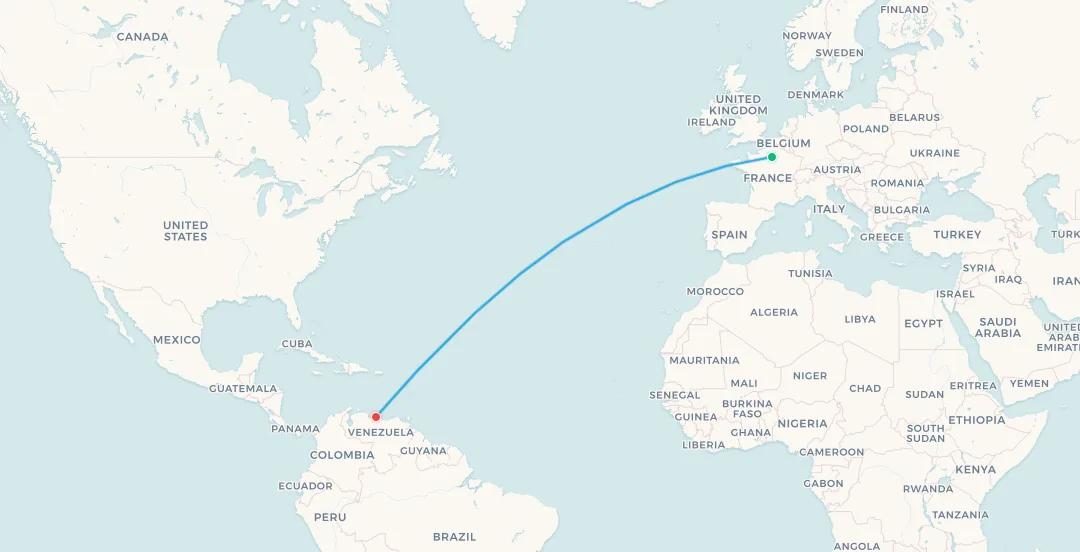
On 22 November 1977, an event in aviation history forever changed perceptions of what passenger aircraft could achieve. British Airways and France’s Air France inaugurated scheduled supersonic services to New York from London and Paris. Their first routes had been London – Bahrain and Paris – Rio de Janeiro via Dakar. Transatlantic services to Washington had begun in May of the same year. Yet New York was the project’s principal commercial objective.

reenu7f3zv0mcpwrx-csntl_quikliaduxe4vikzrkdhrms1wxqdvswwprnudflaah7jev_nz05dvyxvnokhgbcbx6dhzxuur9vqfbnrm75ybdn5ilmnw-qtcachcsxusqpt4zmrktpzlesvxhgqcglguzsxnz97qatypddaqubp5cd_ndpb-aqldxn4lsto.jpg

An Air France Concorde takes off from Paris Charles de Gaulle Airport on 22 November 1977, inaugurating scheduled supersonic services to New York.

Source: AFP / Getty Images

Getting there proved difficult. US regulators and residents living near airports feared excessive noise. Legal disputes delayed the route’s opening by almost two years. When permission was finally granted, Concorde demonstrated its greatest advantage.

A conventional passenger aircraft takes approximately 7–8 hours to fly between London and New York. Concorde covered the route in less than three and a half hours. Thanks to the five-hour time difference, passengers could indeed find that the clocks in New York showed an earlier time than when they had departed London.

This was more than simply a fast means of transport. The aircraft effectively transformed people’s daily schedules: a business traveller could cross the ocean, attend a meeting and, under certain circumstances, return home the same day.

An aircraft designed around speed

Concorde was a joint British–French project. Its first prototype took to the air on 2 March 1969 – the same year that humans first landed on the Moon. Engineers set themselves an extraordinarily ambitious task: to build a passenger aircraft capable of flying faster than sound for hours without sacrificing controllability or reliability.

e-ql8eskq8ozwt5i6uwnww5leijjwdehg7vig3ggwjboqevm-j2b96pjdarmtylta4rdkd859roufz2udg0jlycl0-crglvvg4dx14z1prt2zor0zv9skz75ibs2jzrjcj6bqplwmbfei6xjewcctiap77dgvt5puu13tmxfrb8sur7rbb2ykfiwrawfpdhb.jpg

A British Airways Concorde supersonic passenger aircraft in flight. Its distinctive delta wing and elongated fuselage were optimized for sustained flight at speeds exceeding 2,000 km/h (1,243 mph).

Source: San Diego Air &  Space Museum Archives

Concorde’s cruising speed was approximately 2,160 km/h (1,342 mph), or Mach 2. In a single minute, it travelled around 36 km (22 miles) – a distance that would take a car on a motorway approximately 20 minutes to cover. Meanwhile, the aircraft climbed to altitudes of up to 18,300 m (60,000 ft), roughly 7 km (4.3 miles) higher than a conventional passenger airliner.

But flying at such speeds created entirely different aerodynamic conditions. The air ahead of the aircraft was compressed sharply, shock waves formed, and drag increased considerably. To overcome these challenges, Concorde was given a long, pointed fuselage and a distinctive delta wing with a complex, smoothly curved shape. This geometry reduced drag during supersonic flight.

At low speeds, however, the wing required a high angle of attack. During landing, this raised the aircraft’s nose and obstructed the pilots’ view of the runway. The solution was unusual: Concorde was fitted with a movable nose. It was lowered by 5° for take-off and by 12.5° for landing. In flight, it returned to its horizontal position, restoring the aircraft’s streamlined profile.

tiyagbrj71fozjv39z-mxv8suwvf3wnnztdzc-bp57kwrhdzio3og6qmc9p7hu-0bwihtsro_ll0qitgpvoqbquyjl1mzs39sbdpgbo76wvwpgxvrjq-gyp7zkde1kuxiekg3y2pp7gcfmsvyk6chmsfbynhguvmc_tux_ztp8w.jpg

Concorde’s movable nose in its lowered position. This engineering solution gave pilots the visibility needed during take-off and landing while preserving aerodynamic efficiency at supersonic speeds.

Source: Brooklands Museum

This was an early example of how even familiar design features had to be rethought in the pursuit of supersonic speed.

Engineering solutions ahead of their time

The most fascinating aspects of Concorde lay not in the shape of its fuselage, but inside it. Some systems developed for the aircraft in the 1960s were decades ahead of technologies widely adopted in commercial aviation. The aircraft was already controlled by electrical signals.

Concorde became the first civilian airliner equipped with an analogue fly-by-wire flight control system.

zobrazhennya.png

Diagram showing how a fly-by-wire flight control system works. Pilot inputs from the control column are converted into electrical signals, processed by onboard computers, and transmitted to actuators that move the control surfaces. A feedback system monitors the aircraft’s response and helps adjust control inputs. This principle can improve the precision and stability of flight, including at supersonic speeds.

Source: BAA Training

In conventional aircraft of that era, movements of the control column were transmitted to the control surfaces primarily through mechanical linkages. In Concorde, the pilot’s commands were conveyed as electrical signals to hydraulic actuators. Electronics also helped stabilize the aircraft and counter unwanted movements. For reliability, engineers provided redundant electrical channels and a mechanical backup system in case of failure. A similar principle later became the basis of flight control in many modern airliners, although these use digital computers.

Air intakes that controlled shock waves

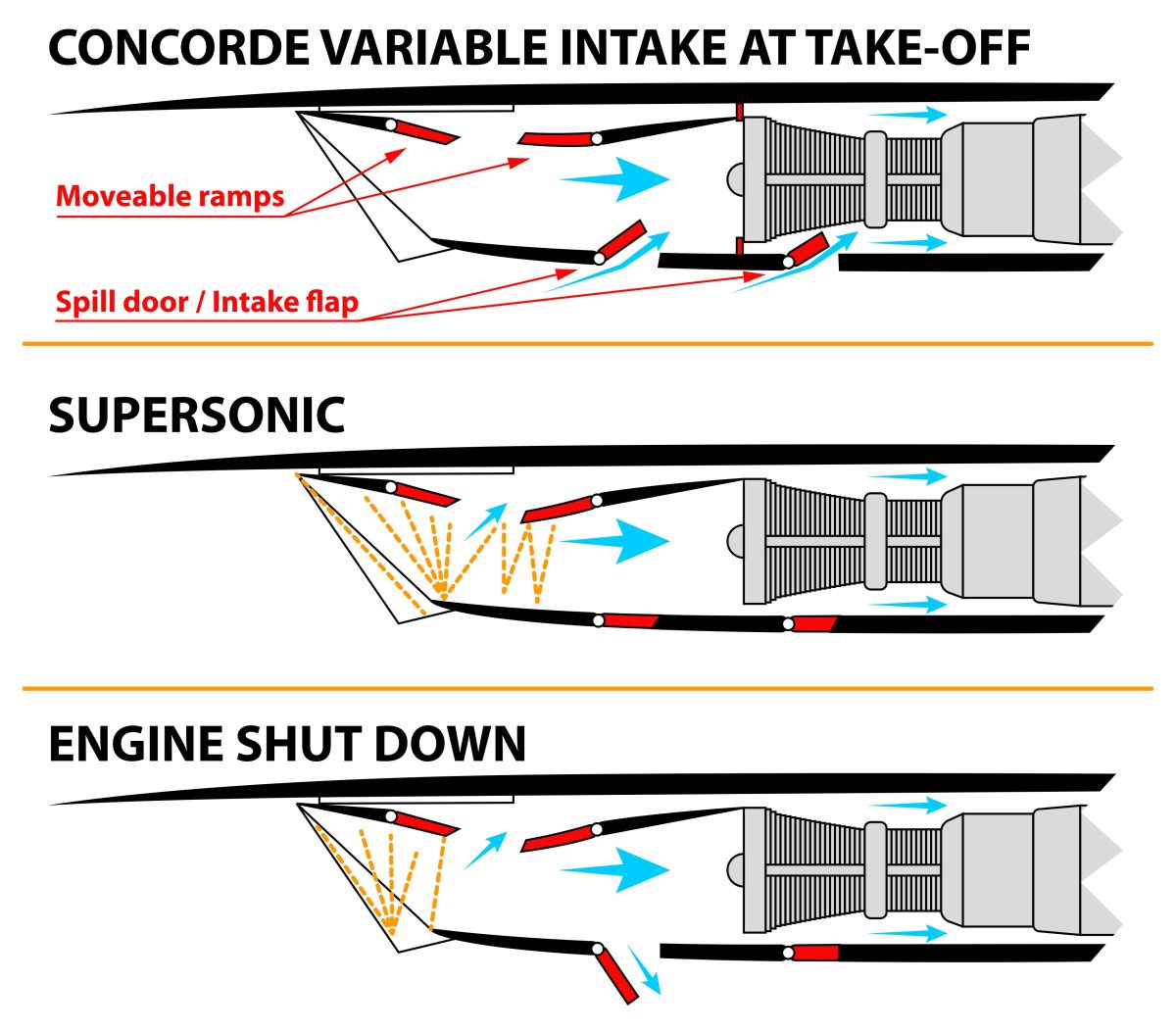
Keeping the engines operating was an even more complex challenge. Concorde had four Rolls-Royce/Snecma Olympus 593 turbojet engines. The problem was that their compressors could not function properly if air entered them at supersonic speed.
Special variable-geometry air intakes were therefore installed ahead of the engines. Movable ramps created a controlled series of shock waves that slowed the airflow to approximately half the speed of sound before it reached the compressor. Imagine a car racing along a motorway, but with the air entering its engine first having to be slowed, compressed and directed in precisely the right way. This was the complex task performed by Concorde’s air intakes.

izvh3rfiviynkn0jb-1nve8khgvize1znktilareskcvb7-tqxteu5rdz0jy1vxlijtewah6kwaz2bobyoxbn5qct3dio7g_ryyzpyvsrw9iojgdqceoioqzn4qq0dwbqkiyijazt08pww6nwiq0apsfvjh5vhhzjvja4aplb1ylrsfsjxz8w_geg0iwglv0.jpg

How Concorde’s air intakes worked in different flight regimes. Movable ramps controlled shock waves and slowed the airflow before it entered the engines, allowing the aircraft to maintain speeds of around Mach 2.
Source: Burbank / MacMoreno, Wikimedia

Their geometry adjusted automatically to the flight regime. Particularly interestingly, the intake control system on production aircraft was digital, even though the main flight control system remained analogue. Thanks to its efficient air intakes, Concorde could sustain speeds of around Mach 2 for hours without continuously using afterburners. The afterburners were needed mainly during take-off and acceleration to supersonic speed.

Fuel as a balancing mechanism

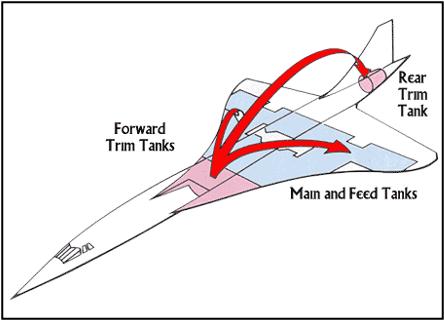
At supersonic speeds, the pressure distribution over the wing changes and the centre of aerodynamic lift shifts backwards. This causes the aircraft to pitch nose-down. In a conventional aircraft, the problem can be compensated for by adjusting the horizontal tailplane. For Concorde, however, doing so would have meant additional drag and excessive fuel consumption.
Engineers found a far more elegant solution: using the fuel itself to balance the aircraft. During acceleration, special pumps transferred fuel between tanks, including those in the rear fuselage. This shifted the centre of gravity backwards and maintained the necessary balance with virtually no additional aerodynamic drag.

o7qczwohbjybr9vns3alihkp0hxeocdg9tszbrkclym3yvubv3vh3hzc1_gl23lvr_85mkhb3upojt2kgcj8pmhmcpiomifswyplkn8fzeskszsgksj2nddijbp0hudkypbln_rx6qvsz9df1urfrbnohtzt-zotb4gxavkhco6a_ecdysfkyhz3zkekmteh.jpg

Diagram showing the arrangement of Concorde’s fuel tanks. Transferring fuel between them made it possible to adjust the centre of gravity and reduce aerodynamic drag during supersonic flight.

Source: Steal88 / Mys 721tx, Wikimedia

Before deceleration, the fuel was transferred back in the opposite direction. Fuel thus served simultaneously as an energy source, a means of balancing the aircraft, and part of the cooling system for onboard equipment.

Why did Concorde heat up and grow longer?

Sustained supersonic flight created another, less obvious problem – structural heating. When an aircraft travels faster than sound, the air ahead of its surfaces is compressed and heats up. Temperatures in Concorde’s hottest areas could reach approximately 127 °C (261 °F) – well above the boiling point of water.

As it heated up, the aluminium fuselage expanded. According to British Airways, the aircraft’s length could increase by 15–25 cm (6–10 inches) in flight. In other words, Concorde literally grew longer in the sky, gradually returning to its original dimensions after landing.

The temperature limits of its aluminium structure were one reason why engineers did not attempt to increase its speed indefinitely. Even the aircraft’s distinctive white colour was part of an engineering solution: a special coating helped reflect solar radiation and reduce surface heating.

Records that still impress

Throughout its history, Concorde repeatedly demonstrated that speed could transform the very nature of long-distance travel. Its best-known record was set on 7 February 1996, when a British Airways Concorde flew from New York to London in 2 hours, 52 minutes and 59 seconds. This remains the record for a transatlantic crossing by a passenger airliner.

On 29 May 1976, Air France Concorde F-BTSC flew 8,015 km (4,980 miles) non-stop from Caracas to Paris in 4 hours and 19 minutes. It was Concorde’s longest non-stop flight, although it was not registered as an official record.

zobrazhennya-1-1.jpg

Another interesting fact: in November 1986, a British Airways Concorde completed a round-the-world journey, covering approximately 45,445 km (28,238 miles) in 29 hours and 59 minutes, including intermediate stops. In total, British Airways operated almost 50,000 Concorde flights and carried more than 2.5 million passengers at supersonic speeds

Yet all these achievements concealed the central problem. The aircraft was extraordinarily fast, but nowhere near efficient enough to become an everyday means of transport.

Why did supersonic aviation lose the economic battle?

At first glance, Concorde had everything it needed to succeed. It saved hours, brought prestige to airlines and attracted wealthy customers. Yet the physics of supersonic flight came at a price that could not be ignored. Above all, there was fuel consumption. According to British Airways, Concorde used approximately 25,600 litres of aviation fuel per hour (6,760 US gallons) – roughly the equivalent of 150 completely filled household bathtubs every hour.

Its cabin, meanwhile, accommodated just 100 passengers. By comparison, depending on the variant and seating configuration, a wide-body Boeing 747 could carry several hundred people. Concorde’s high fuel consumption therefore had to be spread across far fewer passengers.

jic73s7t2n8n1bo_hsokdx9oxbq2qs0vmjtdlpvcxkzrsciq0o2p_1s92tj5_bvte_6srme4pvw43tyv7bv-r_zd8byobitvlfayykpmhkhkn7vzah0bprxm7zicpvn2mkray-v7ihodbcyj6wzcrcfqceunhmzamhtbp2juatuzojwxj1c6tar8ffotciis.jpg

Concorde’s passenger cabin, with a 2+2 seating arrangement. Despite its prestigious status, the aircraft had a relatively narrow fuselage and accommodated only 100 passengers – far fewer than wide-body airliners.
Source: Daniel Schwen, Museum of Flight / Wikimedia

The second problem was the sonic boom. When an aircraft travels faster than sound, the shock waves it creates propagate towards the ground and may be heard as a loud explosion. Crucially, this is not a one-off noise produced when the sound barrier is crossed: shock waves are generated throughout supersonic flight. Noise restrictions prevented Concorde from exploiting its main advantage on most routes over populated areas. It was best suited to flights over oceans, sharply limiting its potential market.

The third problem was maintenance costs. Complex engines, air intakes, hydraulics, temperature monitoring, and the small fleet made operations expensive. In 2003, a return ticket across the Atlantic could cost more than $12,000. This was transport for a very limited group of passengers.

Nevertheless, it would be wrong to claim that Concorde consistently operated at a loss. From the 1980s onwards, British Airways learned to make a profit from its supersonic services by targeting the premium market. The real paradox lay elsewhere: an individual route could make money, but the enormous public expenditure on developing the aircraft never translated into a commercially successful mass-production programme.

Only 20 Concordes were built, of which 14 entered airline service. A technology ahead of its time remained exclusive.

The disaster that hastened the end of an era

On 25 July 2000, Concorde suffered its only fatal crash. Air France Flight 4590, travelling from Paris to New York, crashed shortly after take-off. A total of 113 people died – 109 on board and four on the ground.

The investigation established that the aircraft had struck a metal strip left on the runway by another aircraft. A damaged tyre caused a fuel tank to rupture, leading to a fuel leak and fire. Flights were suspended after the disaster, and the aircraft were fitted with additional fuel-tank protection and improved tyres. Concorde returned to scheduled service in November 2001.

But the world had already changed. Following the terrorist attacks of 11 September 2001, demand for expensive transatlantic travel declined. At the same time, the ageing fleet and the high cost of keeping it airworthy increasingly affected its economics. Concorde’s final scheduled commercial flight took place on 24 October 2003.

The era of supersonic passenger travel had come to an end.

7yvi0du5n0co3upkreg_e5drz-wjl0bvrrbedp4bgd6mxcduyiuqrc2bvoptfq3j4nbcz_hpl8wp3spp6u3shhu0mpl8a118mhkjp5to307cum4t6o9rlqb7k4877scpy0htb93-uz7oxa-gmgvg2s6yxdexuvl4laok1qpj75rc6ekluokl0ssmh7_qevwu.jpg

British Airways Concorde G-BOAD is being prepared for museum preservation. Its four removed Rolls-Royce Olympus 593 engines are a reminder of the complexity of the propulsion system, whose maintenance was a significant operating expense.

Source: Heritage Concorde

Will supersonic passenger aircraft return?

More than two decades after Concorde’s retirement, conventional passenger aircraft still cross the Atlantic more slowly than their famous predecessor. But this is not because humanity has lost the technology of supersonic flight. The challenge remains the same: combining speed with economic efficiency, acceptable noise levels, safety, and environmental requirements.

New aerospace programmes are working on precisely this challenge today. NASA’s experimental X-59 aircraft, for example, was designed to investigate ways of reducing the intensity of sonic booms. Its purpose is to help make future supersonic flights over land possible.

In other words, engineers are trying to solve the problem Concorde left to its successors.

suv8nrd-t1qcwkwbcze113ryr5lam4lh-91pt0kyzeffztbtxsg1r1hjgigtn9_eunjudlibntpnjajtcakw5wtxckxgqze1v2zucbe4hyytvh-aiek-c2zxhqjjgr-pkn1z0xch2xdjpzea7vircn22yuezoqsmjwf3ywiennfayjotm6kt9sdxiws1c8xw.jpg

NASA’s experimental X-59 aircraft was developed to investigate low-noise supersonic flight. Its design is intended to reduce the intensity of sonic booms – one of the main limitations faced by Concorde.

Source: NASA / Quesst

Concorde proved that a passenger aircraft could fly at twice the speed of sound for hours. But it also showed that creating an extraordinary technology is not the same as making it accessible and economically viable.

Perhaps Concorde’s greatest achievement was not its speed, but the engineering ideas that live on in modern aviation.

Supersonic speeds pose complex challenges not only for aircraft but also for spacecraft returning through the atmosphere. Particularly fascinating is how engineers manage to deploy parachutes safely at enormous speeds and under extreme loads. To discover which physical phenomena must be taken into account and how the reliability of these systems is tested, read our article ‘How Do You Design a Parachute for a Spacecraft?’.

RELATED

Concorde: The Rise and Fall of the Supersonic Dream (Full Documentary)
Concorde: The Supersonic Dream That Ended in Tragedy - Full History Documentary
The Aircraft Designed to Break the Sound Barrier Without the Boom

{ https://universemagazine.com/en/articles-en/ }

Hoe vind je dit bericht?
Geschreven door peter om 21:27 Stuur door

Did Richard Nixon Really Show This Famous Actress the Bodies of Dead Aliens?

Did Richard Nixon Really Show This Famous Actress the Bodies of Dead Aliens?

Jackie Gleason’s ex-wife claimed Richard Nixon showed him alien bodies at a military base, but conflicting accounts cast doubt.

In the August 16, 1983 issue of The National Enquirer, Honeymooners star Jackie Gleason’s ex-wife, Beverly McKittrick, recounted a story her former husband allegedly told her about Richard Nixon. According to her, Nixon had arranged to have Gleason taken to Homestead Air Force Base in Florida in 1973, where he was supposedly shown the remains of four two-foot aliens laid out on tables, “with small bald heads and disproportionately large ears.” Apparently, Gleason suspected that they’d been dead for a while because they were embalmed.

Nixon Showed Jackie Gleason Dead Aliens?! The True Story They Don't Want You To Know

McKittrick, who’d divorced Gleason in 1975, remembered the incident having a “profound effect” on the comedian. However, years later, she also remembered the Enquirer article—which she insisted was in Esquire—being responsible for turning her relationship with Gleason sour, despite the fact that they’d been divorced for almost a decade by the time it came out. What we do know for sure is that Gleason was both a friend of Nixon’s and a UFO buff (he even built a house in the shape of a flying saucer at one point). Unfortunately, he doesn’t appear to have ever publicly confirmed McKittrick’s account, which clearly has some inconsistencies.

Did Jackie Gleason Really See Alien Bodies From the Roswell UFO Crash?

But she wasn’t the only person who claimed to have heard of Gleason’s experience firsthand. UFO researcher Bill Knell recalled Gleason telling him that the big showing took place at MacDill Air Force Base and that he’d seen pieces of a damaged flying saucer recovered from Roswell lying on the floor in addition to the bodies. But in this version of events, the beings were reportedly four to five feet tall with large oval eyes and grayish skin. Oh, and they were displayed in glass-plated containers instead of on tables.

Larry Warren, who famously wrote of seeing a UFO of his own in Rendlesham Forest, England, has shared yet another conflicting variation of the Gleason legend. If he’s to be believed, Gleason confided in him that the flying saucer wreckage he saw was housed in several large cases and that the bodies were kept in six or eight freezers. They were said to have looked mangled as if they’d been in an accident. The biggest problem with Warren’s Gleason story is that he says he heard it at Gleason’s home in Briarcliff Manor, NY in the 1980s; Gleason’s aforementioned round house was in nearby Peekskill, and he moved to Florida in the early ‘60s.

We’re not sure what to make of all these contradictory statements at this stage, but given Gleason’s well-documented penchant for practical jokes, we can’t rule out that he might’ve just been messing with people if he did actually have these conversations with them. 

RELATED

Did Richard Nixon actually take Jackie Gleason to see dead aliens?
Disclosure Day's Darkest Secret: Nixon Showed Gleason Alien Bodies!

{ https://www.vice.com/en/category/entertainment/ }

Hoe vind je dit bericht?
Geschreven door peter om 20:56 Stuur door

Pentagon UAP files part 8: Radar track analysis and more

Pentagon UAP files part 8: Radar track analysis and more

Pentagon UAP files: Sketch of cylindrical object with many larger spikes coming off of it.

Sketch of UAP reported 800 yards off Martha’s Vineyard on October 12, 1957. The “sighting” was 1 to 2 miles east-southeast of Woods Hole, Massachusetts.

Image via DoD.

  • The U.S. Pentagon released the 8th batch of its UAP files on November 20, 2026.
  • This Pentagon UAP files release contains 43 new files altogether. Among these, 40 are documents and three are videos.
  • The release is part of a continuing rollout of formerly classified files, every few weeks. So far, there’s still been no “smoking gun” to show that alien craft are visiting Earth. But the files are interesting!

8th batch of Pentagon UAP files

The U.S. Pentagon released its 1st batch of declassified UAP/UFO materials on May 8, 2026. On Friday, November 20, it released batch 8. There are 43 new files in batch 8, 40 PDF documents (some with images) and three videos. There are no audio or separate image files this time around, however.

Video Unpaused

Some of the documents are older again, but others are from this year.

And as has been the pattern for these releases, they are a mixed bag of old and previously known material and newer material. Do the releases prove aliens exist, or that alien craft are visiting Earth? No. Not so far, across any of the eight releases.

As usual, Sean Parnell, Assistant to the Secretary of Defense for Public Affairs and Chief Pentagon Spokesman, said in a statement:

Today, the Department of War is publishing the 8th release of declassified and historical Unidentified Anomalous Phenomena (UAP) files as part of the Presidential Unsealing and Reporting System for UAP Encounters (PURSUE). The collection continues to be housed on WAR.GOV/UFO, and the Department will release additional files on a rolling basis.

The Department of War and our agency partners are actively working on the next release of UAP files. The 8th release of UAP files is available now on WAR.GOV/UFO.

For context, the government released a 2nd batch on May 22, a 3rd batch on June 12, the 4th batch on July 10, the 5th batch on August 7, the 6th batch on September 18 and the 7th batch of the Pentagon UAP files on October 23, all in 2026. 

Pentagon UAP files: Gray box on left side, with small blue streaks in it. White explanatory text on blue background is on the right and on the bottom.

View larger. | Radar tracks over the western US in 2023. If a single object made them, then it was moving at an estimated 1,650 mph (2,700 kph), or approximately Mach 2.5 at the reported altitude. The available data, however, is insufficient to make a final determination.

Image via DoD.

1st analysis of radar tracks

One of the more interesting cases in this batch is a series of unusual radar tracks in the western U.S. from 2023. A civil air-surveillance radar system recorded eight detections over 84 seconds at an estimated altitude of 55.000-70.000 feet (16,760-21,300 meter).

The distance between the tracks was 38.5 miles (62 km). The analysis suggested that if it was just one object causing the tracks, then it had a groundspeed of 1,650 mph (2,700 kph), or approximately Mach 2.5 at the reported altitude.

Additionally, there was also an apparent 39-degree counterclockwise change in bearing after approximately 48 seconds.

The 12-second radar sweep interval, however, is not sufficient to independently establish that all eight reported detections originated from the same object or represent a continuous track.

This video from the Middle East in 2023 shows a UAP, a small dot, making sharp turns.

Video via DoD.

3 videos from the Middle East in Pentagon UAP files

There are only three videos in this release, all from the Middle East.

The 1st video is from the United States Central Command, which submitted a report of an unidentified anomalous phenomenon (UAP) to the All-domain Anomaly Resolution Office (AARO). The 20-second-long footage is from a U.S. military platform in 2020.

The object (or area of contrast as the DoD calls it), a tiny dot in the video, passes by a warship.

The 2nd video is also from the United States Central Command and submitted to AARO. It consists of 54 seconds of video footage from an electro-optical and infrared system aboard a U.S. military platform in 2026.

It shows multiple objects, dots again, moving over the ocean.

The 3rd video, again from the United States Central Command and submitted to AARO, is 13 seconds long. An electro-optical and infrared system aboard a U.S. Military platform obtained the footage in 2023.

It is similar to the 1st two videos, showing a small dot-like object. In this one, however, the object makes sudden, sharp changes in direction.

Assessment of national security issues relating to ‘Flying Saucers,’ 1952

This document from 1952 is interesting. It is a memorandum from S. Q. Reber, Assistant Director for Intelligence Coordination, to the Deputy Director (Intelligence). It provides an assessment of national security issues relating to “flying saucers.”

And there is an interesting reference to psychological warfare in the conclusion. It says:

It is far too early in view of the present state of our knowledge regarding Flying Saucers for psychological warfare planners to start planning how the United States might use U.S. Flying Saucers against the enemy.

Sketch showing an oblong shape above and a wing-like shape below, with labels.

Sketches from Kelly Johnson at Lockheed of the craft reported on December 16, 1953.

Image via DoD.

There is also the full UAP report from leading Lockheed aerospace engineer Kelly Johnson (associated with the spy planes U-2 and SR-71) and Lockheed’s top test pilots/engineers. The incident occurred near Agoura and Point Mugu, California, on December 16, 1953. The report description states:

This report is significant, due to Johnson’s reputation as one of the foremost aerospace engineers in American history, and his virtually unmatched familiarity with high-performance aircraft.

Johnson reported observing a dark, elliptical object from his ranch west of Agoura at approximately 5 p.m. He initially considered whether it might be a cloud or smoke trail; he reported that it appeared stationary for several minutes before moving westward and disappearing.

At about the same time, personnel aboard a Lockheed test flight reported seeing an object in the vicinity of Point Mugu while flying off the southern California coast. Their accounts described a similar stationary, dark, wing-like or elongated object that also moved westward and disappeared from view.

Johnson himself said:

I should state that for at least five years I have definitely believed in the possibility that flying saucers exist; this in spite of a good deal of kidding from my technical associates. Having seen this particular object on December 16th, I am now more firmly convinced than ever that such devices exist, and I have some highly technical converts in this belief as of that date.

BAASS 10-month report

The July 2009 10-month report from BAASS (Bigelow Aerospace Advanced Studies) is also included in this batch. It’s long, at 538 pages. The report was part of a Defense Intelligence Agency program, AAWSAP (Advanced Aerospace Weapon Systems Applications Program), funded by Congress. Senator Harry Reid pushed for the program, to study potential future aerospace threats and UAP.

The report highlighted the need for:

… a highly secure underground vault to store hardware and biological samples from the corporate world and/or from private individuals and groups located elsewhere, including Brazil.

The report added:

It was recognized by the BAASS administrator that there was no highly secure facility at BAASS to store exotic material or tissue that the organization could obtain. Accordingly, the BAASS administrator designed an underground facility to be located in North Las Vegas at the Bigelow Aerospace facility.

It would be buried under 15 to 20 feet of dirt and feature a 5,000-square-foot (465-square-meter) vault with 3-foot-thick (1-meter-thick) walls and a thick steel door. It would be camouflaged on the ground. The facility was reportedly never built, however.

Bottom line: The U.S. government released the 8th batch of Pentagon UAP files on November 20, 2026. They include three videos from the Middle East and numerous documents.

Read and watch more:

Pentagon UFO Files: Radar Tracked a Mach 2.5 Mystery
Pentagon releases new UFO files: radar tracked object at Mach 2.5 | Global News in 30 Seconds

{ https://earthsky.org/human-world/ }

Hoe vind je dit bericht?
Geschreven door peter om 20:44 Stuur door

Trump administration releases Bigfoot files

Trump administration releases Bigfoot files

"If the tracks were faked, someone went to a great deal of trouble and detail."

Donald Trump and Bigfoot

By Kevin Harrish

The Donald Trump presidential administration has released government files on everything from the JFK assassination to UFOs. Now, the U.S. Forest Service has quietly made public its records on one of the oldest mysteries in American folklore: Bigfoot.

The files include a 1982 investigation into a set of massive footprints found in a national forest along the Washington-Oregon border. But while the release has been sold online as “secret” Bigfoot files, the government’s own investigators came away convinced that the tracks were most likely a hoax.

Forest Service Releases Bigfoot Records

On Oct. 15, the Forest Service posted three files under the title “Bigfoot/Sasquatch Records” to its online reading room, as The Washington Post first reported this week. The release came as the federal government was also putting out its latest batch of UFO files.

One of the documents, written in 1980, recounts a report from Leo Kinney, who described finding a large set of tracks with three hunters near Petty Creek, Montana, back in the 1940s. The release also includes details of a 2003 sighting in Sanders County, Montana, and a “Bigfoot in Your Backyard” forum that Forest Service staff once hosted in California’s Stanislaus National Forest.

“At this point we held a conference and decided that we were not particularly anxious to catch up to whatever it was, and though we didn’t confess it at this time, in later conversations we found out that we all had a very uneasy feeling and could feel chills running up and down our backs,” Kinney wrote, according to Fox News Digital.

Needless to say, the release has Bigfoot enthusiasts excited. Jeremiah Byron of the Bigfoot Society told The Washington Post that he hopes the government is “ramping up government entities to start releasing information.”

‘Something Other Than a 300 Pound Plus Two Footed Being’

The most detailed file covers the 1982 investigation in the Mill Creek Watershed of the Umatilla National Forest. On June 17 of that year, wildlife biologist Rodney L. Johnson accompanied a group that went out to examine reported “Bigfoot” tracks at three different sites near Low Creek.

In a memo dated June 18, 1982, Johnson documented the tracks with photos, measurements, and plaster casts. Then, he gave his verdict.

“Based on several things, it is my opinion that the tracks observed at Site ‘A’ and Site ‘B’ along Low Creek were made by something other than a 300 pound plus two footed being,” Johnson wrote.

Johnson listed eight reasons for his conclusion. Among them, the stride of the tracks “did not change with slope,” the tracks “were not to the ‘bottom’ of the mud,” and the forest litter at one site appeared to have been “brushed aside prior to making of the track.”

To be fair to the believers, Johnson did admit that whoever faked the prints did an impressive job.

“If the tracks were faked, someone went to a great deal of trouble and detail. The ‘print’ marks on the foot would have to be very hard to duplicate. They appear very natural. I would almost suspect a cast made of an actual foot would have had to be used to make the ‘fake’ feet. If this were the case though, the other creases in the foot should have shown,” Johnson wrote.

That line is the one that has been making the rounds online. But the memo doesn’t stop there, and neither does the file.

‘A Very Clever Attempt to Perpetrate a Hoax’

The file also includes a follow-up memo from Joel Hardin of the U.S. Border Patrol, who examined the same tracks on June 17. Hardin was even more blunt in his assessment.

“My opinion is that the tracks were a very clever attempt to perpetrate a hoax, involving your office or agency, in order to lend authenticity or credibility to the general public,” Hardin wrote.

Hardin explained that the tracks were too consistent to be real. They failed to push down to solid matter in soft mud, walked in a perfectly straight line, kept the exact same stride uphill and downhill, and appeared and disappeared on the trail “with no sign leading to or away from the area.”

“I believe they were man made by using some type of soft plaster or rubber coated foot,” Hardin wrote.

He also had a pretty good idea of who might have been behind it.

“Who made the tracks — my opinion, someone with normal access to the area, very knowledgeable and interested in ‘Bigfoot’ legends and stories; a person large enough to implant the track device sufficient to make the sign described and of which you have the evidence,” Hardin continued.

Clearly, the Bigfoot files aren’t quite the bombshell that some people online are making them out to be.

RELATED

Trump Admin Releases Bigfoot Files – Is This Footage Real or AI
Bigfoot files released by US Forest Service | Researcher Jon Stewart reacts
America's Bigfoot Mystery Returns! US Forest Service Files Reveal Shocking 1982 Investigation
The Government's Top Secret Files On Bigfoot | Chasing Bigfoot The Quest for Truth | TUU

{ https://thecomeback.com/ }

Hoe vind je dit bericht?
Geschreven door peter om 18:17 Stuur door

Amy Eskridge Claimed She Was on a “KILL LIST” After Discovering What Bob Lazar Got Wrong About UFO Propulsion

Amy Eskridge Bob Lazar

Amy Eskridge Claimed She Was on a “KILL LIST” After Discovering What Bob Lazar Got Wrong About UFO Propulsion

American researcher Amy Eskridge claimed she had discovered what Bob Lazar got fundamentally wrong about UFO propulsion, and that the discovery had placed her on a “kill list.” Just weeks later, she was dead. Four years after her death, her disturbing private messages resurfaced during an episode of The Joe Rogan Experience, where her claims about Element 115, surveillance, and alleged threats became the subject of discussion.

On November 19, 2026, Joe Rogan and his guest, YouTuber Bob Gymlan, discussed Eskridge’s case during episode #2583 of the podcast. The conversation examined messages she reportedly sent in May 2022 to Samuel Reid, CEO of Geometric Energy Corporation and a longtime associate. Reid had made screenshots of their correspondence public in April 2026.

According to the messages, Eskridge had been reconsidering the propulsion system described by Bob Lazar after watching Jeremy Corbell’s documentary about his alleged experiences at Area 51. She believed that a theory she had developed over the previous year explained something Lazar had misunderstood about the operation of the supposed extraterrestrial spacecraft.

She wrote that her “ether theory” showed that everything Lazar said, “in a technical sense,” was “exactly 100% backwards.”

Eskridge claimed she had figured out the actual role of Element 115, the mysterious substance Lazar has long claimed was involved in powering extraterrestrial vehicles. She reportedly recorded a voice note about her discovery while driving home and subsequently became convinced that somebody had intercepted the recording.

One message stated, “I got myself on a kill list.” Another contained the disturbing declaration, “I did not kill myself.”

She claimed she had been receiving threats and believed her communications were being monitored. Eskridge also mentioned consulting a man named Bill and a retired general with whom she said she had worked. According to her account, both believed the threats were not coming directly from a government agency.

Instead, she suspected a wealthy private organization had hired individuals to intimidate her. She compared the alleged operation to an American version of Russia’s Wagner Group, a private military organization associated with mercenary operations.

These were Eskridge’s allegations, not independently established findings. The messages do not identify an organization responsible for threatening her or demonstrate that her proposed discovery had attracted hostile attention.

During the Rogan podcast, the discussion also explored reports that Reid had experienced something similar to the directed-energy harassment Eskridge described. Their correspondence suggested that they had compared their experiences, although no independent evidence was presented to establish what had happened to Reid.

Reid’s company had also announced plans for DOGE-1, a lunar payload associated with a SpaceX launch. During the conversation, the connection briefly created confusion about Elon Musk’s involvement, but it was clarified that the alleged directed-energy experience concerned Reid, not Musk.

Rogan appeared particularly interested in the possibility that a revolutionary propulsion system could threaten powerful economic interests. He suggested that technology capable of transforming energy production or transportation might attract opposition from people whose financial interests depended on existing systems.

Gymlan raised a similar argument, suggesting that such technology could disrupt the global petroleum economy. Neither established that Eskridge had discovered a working propulsion system or that an energy company, defense contractor, or private organization had attempted to suppress her research.

She reportedly believed an invisible beam had been used against her while she worked at a computer. According to Gymlan, she claimed the technology could determine what she was typing even when the computer was disconnected from a network.

Eskridge also alleged that the attacks had caused physical injuries to her hands. Photographs discussed during the podcast showed marks she attributed to the supposed exposure.

Another unusual detail concerned window blinds at a friend’s property where she claimed an attack had occurred. Eskridge apparently believed the blinds had been damaged by the same energy source.

The photographs prompted disagreement about whether the blinds actually appeared melted. Rogan considered whether ordinary sunlight or another explanation might account for some of the marks, while Gymlan interpreted the images differently.

Earlier in the episode, Gymlan acknowledged that some observers had suggested medications could potentially produce similar-looking skin problems. He did not establish that medication caused Eskridge’s injuries, but the discussion demonstrated how the photographs could support competing interpretations without proving what had happened.

Gymlan discussed allegations that Eskridge had been followed in public and drugged while visiting bars. He suggested that deliberate harassment could make someone appear psychologically unstable to outsiders. However, the podcast did not establish that such a campaign had occurred.

Eskridge discussed a strange theory involving two groups of future humans called P-47 and P-52, supposedly from 47,000 and 52,000 years ahead. According to the story, a catastrophe would force some humans underground while others survived on the surface. Over thousands of years, they would evolve differently, possibly becoming the mysterious beings described in UFO encounters.

She was born on September 19, 1987, in Huntsville, Alabama, a city closely associated with NASA’s Marshall Space Flight Center, Redstone Arsenal, and the American aerospace industry.

Her father, Richard Eskridge, was a retired NASA engineer who shared her interest in experimental propulsion. She graduated from the University of Alabama in Huntsville with a background in chemistry and biology and later pursued studies in materials science.

Her original presentation examined unconventional experiments involving electricity, superconductors, electromagnetism, and gravity modification. Among the researchers she discussed were Thomas Townsend Brown, Ning Li, Eugene Podkletnov, and Claude Poher.

Several had investigated unusual physical effects that some believed could eventually contribute to new propulsion systems. However, the experiments discussed in her presentation had not established a generally accepted, reproducible method for controlling gravity.

Eskridge was particularly interested in physicist Ning Li, whose theoretical work during the 1990s explored possible relationships between superconductors and gravitational effects.

Li later founded AC Gravity LLC and received a Defense Department research contract. For years, her limited public visibility contributed to rumors that she had mysteriously disappeared. In reality, Li remained in Alabama and died in July 2021.

Eskridge believed the history of unconventional propulsion contained examples of promising experiments that had been neglected or disappeared from public discussion after attracting institutional interest.

By 2020, she was expressing much stronger opinions about the possible suppression of advanced technology. During a lengthy interview with Jeremy Rys, also known as AlienScientist, and experimental propulsion researcher Mark Sokol, she described efforts to develop a new understanding of gravity and discussed what she called “gravity chemistry.”

Her idea was that manipulating gravity or another fundamental physical interaction might allow researchers to influence chemical reactions in ways conventional chemistry could not. She imagined breaking molecular bonds under comparatively mild conditions without the enormous energy normally required for certain industrial processes.

Eskridge explained that her father was primarily interested in propulsion, whereas her chemistry background led her to consider different applications for the hypothetical technology.

Although she spoke confidently about these ideas, the interview did not demonstrate a functioning device or provide experimental results establishing that gravity could be manipulated to control chemical bonds.

Eskridge said several individuals identifying themselves as participants in a secret space program had approached her with a strange message. They allegedly thanked her for inventing an advanced medical device called a “3D holographic medpod,” even though she insisted that she had never built such a machine.

She said approximately three to five people had independently made similar statements. What confused her was that she had already thought about how such a device might theoretically be developed, but could not understand why strangers were crediting her with a completed invention.

Another part of that interview involved physicist Hal Puthoff, who has been associated with research into remote viewing, unconventional physics, and government-related investigations of unidentified aerial phenomena.

Eskridge claimed Puthoff had visited her family’s home in Huntsville several times through a connection involving an investor working with her father. During one visit, she said they discussed the concept of ultraterrestrials, beings that might originate from Earth rather than another planet.

On the same episode, Rogan questioned whether withholding information necessarily made somebody a bad person. He recalled having met Puthoff and described him as interesting, while explaining that he preferred to listen to extraordinary claims without automatically accepting them as facts.

The podcast did not establish that Puthoff had concealed information from Eskridge or that he had any involvement in the alleged threats against her.

Another important connection concerns the surveillance fears she had expressed long before the messages involving Element 115.

In her 2020 conversation with Rys and Sokol, Eskridge described incidents that she interpreted as deliberate harassment. She claimed somebody had entered an apartment she previously shared with a boyfriend, interfered with electrical equipment, and moved personal belongings.

She recalled finding a USB charging cable cut in half and described a Lexus that allegedly appeared repeatedly near her residence with changing license plates. Eskridge believed these incidents were intended to intimidate her and suggested that certain people were attempting to obtain information about her research.

These accounts were recorded approximately two years before the May 2022 messages. They show that her surveillance concerns did not begin with her later interpretation of Bob Lazar’s propulsion theory.

The November Rogan discussion also connected Eskridge’s allegations with Havana syndrome. Journalist Catherine Herridge reported on unexplained health incidents involving American government personnel. Some affected individuals have reported headaches, dizziness, cognitive problems, and other symptoms, leading to investigations into whether directed-energy or radiofrequency technology could be involved.

A March 2024 investigation by the National Institutes of Health found that affected participants experienced serious symptoms but did not show significant evidence of MRI-detectable brain injuries or consistent biological abnormalities compared with control groups.

Those findings did not resolve every question surrounding the incidents. They also provided no evidence that Eskridge had been attacked with such technology.

Eskridge separately discussed alleged directed-energy attacks with Franc Milburn, a former British military intelligence officer.

In an April 2026 interview with NewsNation, Milburn said Eskridge had contacted him about her fears and provided photographs of marks she believed were caused by a directed-energy weapon.

He also described messages in which she warned him not to believe reports that she had taken her own life. Milburn said he spoke with her shortly before her death and believed she had been subjected to a campaign intended to prevent her from continuing her research.

His account provided further evidence that Eskridge had communicated these fears to other people. It did not independently establish that the alleged attacks occurred.

Rogan described his understanding of Lazar’s account: a generator containing a triangular piece of Element 115, which would supposedly be bombarded with radiation to produce a gravitational effect.

According to the explanation Rogan recounted, the spacecraft would not operate like a conventional rocket that pushes against expelled fuel. Instead, the alleged system would manipulate gravity and spacetime, allowing the vehicle to move in extraordinary ways.

Rogan also discussed Lazar’s claim that the craft possessed different propulsion arrangements, including one for relatively slow movement and another supposedly capable of enormous jumps through space.

He recalled Lazar claiming that one of these systems had been physically removed from a spacecraft because it presented problems. Rogan then tried to understand what Eskridge could have meant by saying Lazar’s technical explanation was backward.

If Lazar believed Element 115 was placed inside a generator and subjected to radiation to produce a gravitational effect, was Eskridge suggesting that the mechanism worked in the reverse direction? Was she proposing that the material responded to gravity rather than generating it, or that another interaction was responsible?

These possibilities were not answers provided by Eskridge. Rogan was attempting to interpret her statement, and he acknowledged that he did not know exactly what she meant. Gymlan admitted the same uncertainty.

The replica in Rogan’s possession was a representation of Lazar’s claimed apparatus, not independent evidence that such a propulsion system existed.

The uncertainty matters because Element 115 is a real chemical element, but its established properties are very different from the extraordinary abilities attributed to it in Lazar’s story. Scientists first synthesized atoms of Element 115 in the early 2000s. In November 2016, the International Union of Pure and Applied Chemistry formally approved the name moscovium.

The isotopes produced in laboratories are highly radioactive and decay rapidly. No stable isotope capable of powering spacecraft or generating controllable gravity has been demonstrated. The discovery of moscovium therefore does not validate Lazar’s claims about extraterrestrial propulsion.

Eskridge’s “ether theory” presents a different problem. Although the term ether has a long history in physics, classical theories of a light-carrying medium were displaced by modern developments such as special relativity.

The publicly discussed messages do not contain a complete mathematical account of her theory, an engineering design, or experimental results showing how it could explain the alleged craft.

Without those details, there is no reliable way to determine whether her interpretation represented a testable scientific hypothesis or how it differed technically from Lazar’s account.

Eskridge died in Huntsville on June 11, 2022, at age 34. Her death was ruled a suicide. Her father, Richard Eskridge, publicly rejected suggestions that her death was suspicious when the case attracted renewed attention in April 2026. Family members also challenged attempts to connect her death to conspiracy theories about missing scientists.

In April 2026, Eskridge’s name also became associated with a wider controversy involving American scientists who had died or disappeared. On April 20, House Oversight Committee Chairman James Comer and Congressman Eric Burlison requested information from federal agencies concerning researchers connected to sensitive nuclear, aerospace, and defense-related work.

Read also:

The congressional inquiry followed reports about several missing or deceased scientists, including individuals associated with NASA’s Jet Propulsion Laboratory and other research organizations.

However, the published committee request did not establish that the cases were connected. It focused on reports involving incidents beginning in 2023 and did not announce that Eskridge’s death was being reinvestigated as a homicide.

An April 22, 2026 investigation by Ars Technica also documented objections from families who rejected attempts to connect unrelated deaths and disappearances.

For all the attention surrounding her final messages, the unanswered scientific question is remarkably specific. What did she think Element 115 actually did inside the alleged spacecraft, and where is the research that would allow anyone else to test her conclusion?

RELATED

Classified: The Secret of Amy Eskridge - Was Bob Lazar Right?

{ https://howandwhys.com/ )

Hoe vind je dit bericht?
Geschreven door peter om 17:52 Stuur door

Mysterious Pale Stones Discovered on Mars by NASA's Perseverance Rover—Could They Preserve Signs of Ancient Life?

Perseverance

Image Credit: NASA/JPL-Caltech

Mysterious Pale Stones Discovered on Mars by NASA's Perseverance Rover — Could They Preserve Signs of Ancient Life?

 Micah Hanks - Contributor

Mysterious pale stones uncovered by NASA’s Perseverance rover may offer clues in the search for ancient microbial life on Mars.

A small group of unusual, silica-rich rocks has been discovered on Mars by NASA’s Perseverance rover, offering clues about the planet’s ancient environment, and potentially evidence of ancient microbial life.

The recent discovery was made during the intrepid robotic explorer’s investigations of Idubi, a region in the Lac de Charmes region outside Jezero Crater, where an ancient portion of the Martian crust has been exposed.

The unusual collection of light-colored rocks was a noticeable feature amid the darker surrounding Martian landscape, after they were revealed in images collected during the rover’s explorations.

Researchers suspected these formations could offer a unique opportunity for Perseverance, since their coloration suggested a mineral composition that differs from the primarily igneous rock material examined in past investigations.

Evidence of Ancient Organisms?

Thanks to data obtained with Perseverance’s SuperCam instrument, it was soon revealed that the rocks were rich in hydrated silica, a mineral material associated with geological processes normally involving water.

A view of the silica-rich pale rock formations recently discovered by Perseverance (Image Credit: NASA/JPL-Caltech/ASU

A view of the silica-rich pale rock formations recently discovered by Perseverance

(Image Credit: NASA/JPL-Caltech/ASU

When hydrated silica forms on Earth, it usually occurs in environments that include ocean hydrothermal systems and groundwater deposits, both of which can support microbial life.

Along with the potential for having once hosted life, the material is also valuable to astrobiologists because it can preserve fossils of ancient microscopic life forms across vast geological timescales, offering a sort of time capsule in the search for evidence of ancient life.

Martian Silica and the Search for Life

The recent discoveries aren’t the rover’s first run-in with silica-rich materials on Mars. In the past, Perseverance has encountered deposits containing the mineral along the inner rim of Jezero Crater, although they were far too small to allow detailed analysis with the robotic explorer’s close-range instruments.

By contrast, the discoveries at Idubi are considered far more promising, since their size and accessibility offer scientists a way to conduct a far more comprehensive investigation of their chemistry, mineralogy, and ultimately what their likely origins are.

For the time being, while the recent discoveries by Perseverance have yet to confirm whether life once thrived on Mars, they offer promising new clues as our remote investigations of the Red Planet remain underway and may ultimately provide areas for research in what were once potentially habitable environments.

With time and luck, future investigations may finally reveal whether the planet’s long-distant biological past has been preserved, showcasing long-hidden evidence of a watery ancient Mars that may also have been home to life.

Additional details about the recent investigations can be found on NASA’s Perseverance blog.

  • Micah Hanks is the Editor-in-Chief and Co-Founder of The Debrief. A longtime reporter on science, defense, and technology with a focus on space and astronomy, he can be reached at micah@thedebrief.org. Follow him on X @MicahHanks, and at micahhanks.com.
NASA Reveals Mysterious Rock Formations on Mars—Ancient Clues Hidden Across the Red Planet 🔴🪨🚀 #mars
NASA Finds Fossil-Like Rocks on Mars—Could They Hold Clues to Ancient Life? 🔴🪨🧬🚀 #mars

{ https://thedebrief.org/ }

Hoe vind je dit bericht?
Geschreven door peter om 16:56 Stuur door

What Will BepiColombo Reveal About Mercury?

What Will BepiColombo Reveal About Mercury?

On 21 November 2026, the BepiColombo spacecraft entered orbit around Mercury and began manoeuvres to lower its orbit. It is then expected to separate into two spacecraft, each of which will carry out its own scientific mission.

bepicolombo_approaching_mercury_pillars.jpg

What will BepiColombo tell us about Mercury? Source: phys.org

Why do we need BepiColombo?

These days, BepiColombo is completing its eight-year interplanetary journey and entering orbit around Mercury. It has already provided scientists with a number of interesting findings about the planet closest to the Sun, but its main scientific work is now about to begin. Why, though, has it taken so long to get there, and what new information can it provide about a planet that is not all that far away?

The fact is that Mercury’s apparent proximity to Earth is deceptive. People have observed it in the sky since ancient times, but it can only be seen around dawn or sunset. This has always made observations somewhat difficult.

Yet observing Mercury is nowhere near as difficult as reaching it. Unlike the outer planets, Mercury has a higher orbital speed than Earth. To travel there, a spacecraft must first accelerate to escape Earth’s gravity and then slow down considerably. All this requires a great deal of propellant, so it is hardly surprising that, during the first 40 years of space exploration, only Mariner 10 managed to reach Mercury. You can read more about it in the article ‘Mariner 10: Why Is It So Difficult to Reach Mercury?’

giuseppe_bepi_colombo_1920-1984_pillars.jpg

Giuseppe Colombo.

Source: www.esa.int

Mariner 10 made just three flybys of Mercury and was unable to observe the planet from every side. Mercury continued to tantalize scientists, who spent many years developing plans to reach it. Clearly, a spacecraft would first need to follow a highly economical trajectory involving several gravity-assist manoeuvres before braking near the planet to enter orbit.

The first spacecraft to accomplish this was the American probe MESSENGER. Launched in 2004, it did not enter orbit until 2011, after several flybys, and continued operating until 2015. The mission taught us a great deal about the planet closest to the Sun. Meanwhile, European and Japanese scientists were preparing their own, more comprehensive mission, which would take considerably longer to reach Mercury.

The design of BepiColombo

The new mission was named BepiColombo in honour of the Italian scientist Giuseppe Colombo, whose calculations had helped Mariner 10 reach Mercury. In fact, the mission consists of three spacecraft joined together: the Mercury Transfer Module, the Mercury Planetary Orbiter and the Mercury Magnetospheric Orbiter.

bepicolombo_spacecraft_model.png

The BepiColombo spacecraft.

Source: Wikipedia

The Mercury Transfer Module (MTM) is essentially a propulsion stage, albeit a highly unusual one. It has a mass of 2,615 kg, of which 1,400 kg is xenon. This inert gas serves as the propellant for four QinetiQ T6 ion thrusters. Together, they produce a tiny 290 mN of thrust, but their specific impulse reaches an impressive 4,300 seconds. This means that each kilogram of xenon delivers several times more impulse than an equivalent mass of the hydrogen–oxygen propellant combination used in the most efficient chemical rocket engines.

The propellant in the ion thrusters is accelerated using magnetic fields, which require electrical energy. This is supplied by two solar arrays, each 14 m long. Depending on the spacecraft’s distance from the Sun, each array can generate between 7 and 14 kW of power.

The Mercury Planetary Orbiter (MPO) is the main scientific spacecraft, developed by ESA. Its total mass is 1,150 kg. It also has its own small thrusters and solar panels, which not only provide it with electrical power of up to 100 V, but can also act as a heat shield, preventing it from heating above 200 °C.

bepicolombo_mercury_transfer_module_solar_wing_deployment.jpg

The MTM solar array.

Source: Wikipedia

The spacecraft’s principal payload, however, is its scientific equipment: cameras; spectrometers operating in the infrared, ultraviolet, gamma-ray and X-ray ranges; a radiometer; a laser altimeter; a magnetometer; a particle analyser; a Ka-band transponder; and an accelerometer.

There are 11 scientific instruments on board in total. Most are mounted on the nadir-facing side of the spacecraft to keep the detectors at a low temperature, apart from the MERTIS and PHEBUS spectrometers, which are positioned on the main radiator to provide a wider field of view.

The MPO is responsible for the principal investigations of Mercury itself. It will produce a detailed map of the planet, covering not only its physical features but also its geology. It will conduct observations across almost every part of the electromagnetic spectrum and, of course, transmit the results to Earth using a 1 m antenna.

The Mercury Magnetospheric Orbiter (MMO), also known as Mio, is an independent scientific spacecraft built by the Japanese space agency JAXA. It takes the form of an octagonal prism with a mass of 245 kg. It will orbit much farther from Mercury than the MPO, focusing on the planet’s magnetic field and its interactions with the charged particles streaming from the Sun. Its five instruments are designed to investigate magnetic fields, high-energy particles, dust and the electrical phenomena arising from their interactions.

At launch, all three modules were joined together, forming a spacecraft measuring 3.9 × 3.6 × 6.3 m – roughly the size of a minibus. Its mass before launch was 4,100 kg.

BepiColombo’s journey

BepiColombo was launched into space on 20 October 2018 aboard an Ariane 5 rocket from the Kourou spaceport in French Guiana. Initially, its trajectory closely resembled Earth’s orbit. In effect, it travelled around the Sun in the same direction as most of the planets. This allowed it to approach Earth again about a year and a half later and slow down slightly.

bepicolombo_meets_mercury_esa23493072.png

An image of Mercury obtained during the first flyby.

Source: Wikipedia

Another six months later, on 15 October 2020, it approached Venus to within 10,000 km, tested its instruments, collected some data and slowed down further. Less than a year later, on 10 August 2021, it returned to the second planet from the Sun. This time it made a relatively risky flyby at a distance of just 552 km, allowing it to reduce its speed further and lower its perihelion.

On 1 October 2021, BepiColombo flew past Mercury for the first time, coming within just 199 km of its surface. This enabled it to obtain exceptionally high-quality images and collect scientific data.

The spacecraft subsequently lowered the aphelion of its orbit and returned to Mercury five more times: on 23 June 2022, 19 June 2023, 4 September and 1 December 2024, and 8 January 2025. All but one of these encounters were sufficiently successful to allow BepiColombo to continue its investigation of the planet.

mercury_in_mid-infrared_light_esa504688_-_mercury_in_mid-infrared_light.jpg

Mercury in infrared light.

Source: Wikipedia

On 3 September 2026, the MTM completed its work and was separated from the two scientific orbiters. From then on, they continued towards their rendezvous with Mercury. Scientists rehearsed the forthcoming manoeuvres and eventually reached the point at which the spacecraft was close enough to the planet to begin braking.

What happens next?

On 21 November, BepiColombo entered orbit around Mercury. As planned, it was unable to shed all its speed and is currently following an orbit that is too high and highly eccentric.

Over the following days, it will gradually lower this orbit until, on 10 December, it reaches one with an apocentre of 11,640 km. At that point, the MMO will separate and begin operating independently. The MPO will continue to lower its orbit until it reaches its operational orbit at the very beginning of 2027.

ezgif-2fe06d36fe4ee295-1.jpg

The orbits of the MMO and MPO.

Source: Wikipedia

One of BepiColombo’s most important tasks is to produce a complete, detailed map of Mercury’s surface. The surfaces of Mars and the Moon can now be examined at resolutions of a few metres, whereas the resolution of images of the planet closest to the Sun is still measured in kilometres. This should soon change.

Another question that has puzzled scientists for decades is whether Mercury has deposits of water ice. On the one hand, its surface becomes so hot that water would boil almost instantly, even if it had an atmosphere – and Mercury has virtually none. On the other hand, craters at its poles may be deep enough for water ice to survive for billions of years, because sunlight strikes them at such a shallow angle.

This hypothesis has been confirmed for the Moon, but the situation on Mercury remains uncertain. BepiColombo is expected to resolve the question conclusively.

mercurys_shadowy_north_pole_revealed_by_m-cam_1_with_labels_esa505325_-_mercury_s_shadowy_north_pole_revealed_by_m-cam_1_with_labels.jpg

Craters near Mercury’s north pole.

Source: ESA

The spacecraft will also attempt to look deep inside the planet and into its past. The structure of Mercury’s interior and its evolutionary history are closely linked, but scientists still know very little about either.

The planet’s magnetic field is another important subject. What is it really like? What sustains it? How does it interact with the solar wind, which is much stronger near Mercury than near Earth? The answers will provide insight not only into the corona of our star, but also into the processes that influence the evolution of a planet orbiting so close to it.

The spacecraft will also carry out a series of experiments to test predictions of the general theory of relativity. Mercury orbits close enough to the Sun for its motion to be affected by the gravitational effects predicted by the theory.

{ https://universemagazine.com/en/articles-en/ }

Hoe vind je dit bericht?
Geschreven door peter om 22:25 Stuur door

Scientists Just Updated the Rules for What Happens When We Find Aliens

Scientists Just Updated the Rules for What Happens When We Find Aliens

New SETI protocols outline how scientists should verify, share, and respond to potential evidence of alien intelligence in the modern information age.
Michael Garrett, The Conversation

Conceptual view of radar dishes.

Conceptual view of radar dishes.

© sdecoret/Shutterstock

The moment of first contact with extraterrestrials is a staple of science fiction. It usually involves a frantic scientist having a Eureka moment, realizing in a single dramatic instant that Earth is being visited by creatures from light-years away.

Aliens are in the public consciousness once again thanks to Steven Spielberg’s latest film, Disclosure Day, which follows a whistleblower’s attempts to reveal extraterrestrial visitations to the world.

In reality, the discovery of extraterrestrial intelligence is far more likely to emerge as a faint anomaly in astronomical data, followed by a slow, painstaking process of verification, peer review, and intense international deliberation. There might be no single Eureka moment and no lone scientist with the answer.

As our telescopes have advanced, so too has the complexity of the world we live in. That is why a committee of the International Academy of Astronautics (IAA) has just voted to accept a major overhaul of the “post-detection protocols”–the scientific code of conduct for what happens after we find evidence of life beyond Earth.

The IAA body that has approved the changes is the Search for Extraterrestrial Intelligence (SETI) Committee. SETI is the collective term for scientific projects dedicated to searching for signs of intelligent alien life in the universe.

The previous version of these principles was adopted way back in 2010. To put that in perspective, in 2010, the “fake news” era hadn’t quite arrived, social media was in its infancy, and the broader idea of “technosignatures,” looking for signs of alien technology such as waste heat from giant structures in space, was still largely on the fringes of mainstream astronomy.

Lovell Telescope

If a sign of intelligent life is found, scientists should begin a quiet, rigorous attempt to prove themselves wrong. Anthony Holloway,

Author provided (no reuse)

Today, the field has exploded. We are no longer just listening out for artificial radio signals from a few select stars. Projects like Breakthrough Listen have globalized the search, and we now observe the entire electromagnetic spectrum for any sign of advanced technology.

Furthermore, the information landscape has become a minefield. In an era of deepfakes and instant global connectivity, a single unverified claim could trigger global panic or widespread misinformation before scientists have even had a chance to check their data.

At the heart of the 2026 update is a commitment to scientific rigor. The new protocols make it clear: we do not shout “alien” the moment we see a strange blip in our data. If a researcher detects a candidate signal, which could be an artificial radio signal or something else, such as a sign of alien technology, the first step isn’t a post on social media; it’s a quiet, rigorous attempt to prove themselves wrong. The discovery must be independently authenticated by multiple organizations using different instruments.

Only when a consensus is reached that the signal is truly credible is it brought to the world. This isn’t about secrecy for secrecy’s sake. There is no obligation to disclose verification efforts while they are ongoing, precisely to avoid embarrassing and damaging false alarms.

However, once a discovery is confirmed, the protocols demand full transparency. The data, the analysis methods, and the code used must be made open to the entire global scientific community and, indeed, the general public for replication.

Should we talk back?

One significant addition to the 2026 declaration is the focus on researcher safety.
We’ve seen in recent years how scientists at the center of high-profile news stories can become targets for harassment or “doxxing,” where malicious individuals post the scientist’s personal details online. The new guidelines urge institutions to protect their researchers from negative professional repercussions and physical or digital harassment.

The protocols also address the “trash” of our own making: radio frequency
interference (RFI)
. The radio frequency bands that SETI scientists use to listen for E.T. are increasingly polluted—from below by mobile networks, radar, and poorly shielded electronics; and from above by the growth of satellite “mega-constellations” like Starlink.

The declaration calls for extraordinary international efforts to protect the frequencies where a signal is detected, ensuring our “communication channel” isn’t drowned out by our own technology.

file-20260606-57-myadwj.jpg?ixlib=rb-4.1.1&q=45&auto=format&w=754&fit=clip

Scientists could detect advanced technology built by alien civilisations, such as large devices designed to harvest energy from stars.

Droneandy

The most controversial part of SETI isn’t the searching; it’s the messaging. Known as METI (Messaging Extraterrestrial Intelligence), the idea of intentionally sending signals to other worlds splits the community. As enshrined in the earlier declarations, the 2026 Declaration remains firm on one point: no response should be sent until there has been a broad, international consultation.

Deciding how to represent Earth to an alien civilization is a choice that belongs to all of humanity, not a single institution or individual. These consultations
must take place through the United Nations or other broadly representative global bodies.

The discovery of intelligent life beyond Earth would stand as one of the most
transformative events in human history. To help manage the profound aftermath, the IAA SETI Committee is establishing a permanent Post-Detection Sub-Committee.

This body will not simply be a room full of astronomers; it will include international experts in ethics, law, social sciences, and communications to advise on the complex, long-term societal implications of contact.

The new protocols themselves are designed to be living documents, supplemented by a separate Code of Conduct and Best Practices Guidelines that will be periodically reexamined and updated to reflect the “best practice” of the day.

The revised declaration has recently been formally adopted by the IAA Board of Trustees, and over the rest of the year it will be filed with other appropriate organizations for their endorsement.

The next goal will be to present the finished framework to the wider scientific
community at the International Astronautical Congress in Turkey in August 2026. Beyond that, the committee hopes that the new protocols will also be reviewed and noted by the UN.

By establishing these rigorous rules now, we ensure that if, or when, that signal finally arrives, the world is prepared to listen, verify, and respond as one planet.

RELATED

How Scientists Are Actually Hunting for Real Aliens.
Why Haven’t We Found Aliens Yet?
BINGE: An Hour of Unexplained Alien Phenomena 🛸 Strange Evidence | Science Channel

{ https://gizmodo.com/tech }

Hoe vind je dit bericht?
Geschreven door peter om 21:19 Stuur door

If Alien Dyson Spheres Are Real, These Are the Stars They’d Pick

If Alien Dyson Spheres Are Real, These Are the Stars They’d Pick

Assuming intelligent aliens know how to harvest energy from stars, would humanity be able to spot these high-level structures?

An artist's impression of a Dyson sphere.

An artist's impression of a Dyson sphere.

© Віщун via Wikimedia Commons

Assuming aliens do physics like us but are actually much better at it, perhaps they would identify a way to directly harness a star’s energy output—instead of, say, attempting to replicate stellar dynamics and confining it in some pressurized power plant. As speculative new research suggests, aliens might want to build their star-powered energy farms around a certain kind of star.

We’re talking about Dyson spheres. Physicist Freeman Dyson proposed this super-futuristic concept—a vast swarm of structures orbiting a star to harvest its energy. In the new work, accepted for publication in the journal Universe, astronomer Amirnezam Amiri of the University of Arkansas presented a theoretical calculation of Dyson spheres around low-mass stars. The paper, currently available as a preprint on arXiv, assessed the feasibility of a Dyson sphere around white or red dwarfs and, if so, what an outside observer would see.

Some assumptions

To be fair, assuming Dyson spheres exist is a big leap—especially since it already requires believing that intelligent aliens with advanced knowledge of physics are out there. In fact, even Freeman Dyson himself didn’t seem all that committed to his own proposal. For instance, Dyson admitted to journalist Robert Wright that the spheres were a “little joke.” In 2018, he retracted that stance somewhat, saying that he thought Dyson spheres were “correct and uncontroversial.”

Of course, Dyson’s own indecisiveness hasn’t stopped astronomers from seriously exploring the feasibility of Dyson spheres. Some experts have even considered whether humanity could one day build a Dyson-like structure using self-replicating robots. So let’s take that leap, at least for the purposes of this post.

Scientists Made a List of Every Place Aliens Could Be Hiding

A team searching for signs of extraterrestrial intelligence has put together an Exotica Catalog, which lists every known type of celestial object,

Potential scenarios

Dyson spheres should absorb stellar radiation and re-emit energy at longer wavelengths. According to the new paper, previous studies have suggested that an ideal location for Dyson spheres would be around low-mass stars that are luminous enough to have habitable zones—regions around a star with suitable thermal conditions.

For instance, assume a civilization builds a Dyson sphere around a typical red dwarf, a small, slow-burning star commonly found in the Milky Way. For these stars, the habitable zone generally spans between 0.05 and 0.3 AU, which corresponds to about 5 to 30% of Earth’s average distance from the Sun.

This would allow a “compactly” built Dyson sphere at “moderate material cost,” Amiri explained. Similar ideas would apply to white dwarfs, highly compressed stars that also slowly radiate over a long period of time. Both white and red dwarfs “demonstrate energetically stable, long-term power supplies for megastructures,” Amiri said.

Detecting the next-level energy farm

Most importantly, the paper considers what it would take to spot these Dyson spheres around red or white dwarfs. To an outside observer oblivious to the presence of a Dyson sphere, an object resembling a star would appear dimmer and colder than the star truly is. The sphere would also presumably make the star’s radius look bigger, according to the paper.

But there could be other telltale signs of a Dyson sphere. For example, the environment surrounding a star shielded by a Dyson swarm would show considerably less of the dust commonly seen around stars. It’s also likely that the sphere as a whole would have small gaps or varying thickness, resulting in unusual radiation signals that an observer could track back to something artificial.

What’s more, Dyson spheres themselves would “exhibit smooth, nearly blackbody spectral energy distributions” that would fall right into detection range for instruments like the James Webb Space Telescope. That is, humanity’s existing observatories should be enough to spot Dyson spheres, as long as we know what we’re looking for.

Taking the leap

I’ll be honest; my excitement for alien encounter scenarios tends to be more on the moderate-to-skeptical side, at least compared to some of my colleagues. Of course, it makes much more sense to assume that humans can’t be the only intelligent beings in this vast, vast universe. But there are so few, if any, definitive statements we can make about what life is like beyond Earth and what alien civilizations might be like, if these beings are advanced enough to build something humans would recognize as a “civilization.”

Having said that, the new paper is certainly thought-provoking. If Dyson spheres are out there, the study’s suggestions could even be part of the theoretical foundations astronomers can use to identify these megastructures. But as I’ve mentioned before, this is all contingent on (1) aliens existing, (2) aliens being intelligent, (3) their scientific capacity allowing them to pursue planet-scale projects, and—most importantly—(4) we humans definitively recognizing that these are Dyson spheres, not some other trick of the light.

Then again, who’s to say this is impossible? Freeman Dyson, I’m sorry for calling you indecisive.

RELATED

New study finds potential alien mega-structures known as 'dyson spheres'
Dyson Spheres? Two Studies Find Dozens of Stars With Bizarre Emissions

{ https://gizmodo.com/science/space }

Hoe vind je dit bericht?
Geschreven door peter om 21:02 Stuur door

UFO Expert Says Government Hides 'Mantis-Type' Aliens and Keeps Dead Bodies in a Military Institute

UFO Expert Says Government Hides 'Mantis-Type' Aliens and Keeps Dead Bodies in a Military Institute

Davis said the alleged records also indicate recovered bodies were transferred to an unidentified military medical institute, while stressing uncertainty about the beings' true nature

Mantis-Type Aliens

UFO expert Dr Eric Davis alleges classified records describe four alien types and bodies held by an unnamed military institute. (Image is for illustrative purposes)

PHOTO Generated/ChatGPT

UFO expert and astrophysicist Dr Eric Davis claimed that classified government records describe at least four types of beings and that recovered bodies were transferred to an unnamed military medical institute.

According to News Nation, Davis stated that he had seen evidence and records, which he described as classified and not subject to the Freedom of Information Act. He expressed uncertainty about the nature of the beings, particularly those whose appearance he compared with insects and reptiles.

UFO Expert Describes Four Alleged Types

'There's a minimum of four that we know of. And I've seen the evidence, and I've seen the records.'

The four categories Davis identified were Greys, Nordics, Insectoids, also described as Mantis-type beings, and Reptilians. His reference to a minimum of four left open the possibility of other categories, without identifying any additional types.

Davis compared the Greys with beings depicted in the final scene of Close Encounters of the Third Kind. The film reference illustrated the appearance he was describing rather than establishing evidence for the beings' existence.

'They variously are described as the Greys, like what everybody saw in Close Encounters of the Third Kind at the end of that movie in the final scene.'

He described Nordics as very tall, human-like individuals with Caucasian features. These descriptions formed part of his claims about the records he had reviewed.

UFO Expert Explains Mantis-Type Comparison

Davis described the third category in terms of its resemblance to insects, including praying mantises, while distinguishing appearance from identity.

'There's the beings that resemble or look like insects, like a praying mantis-type insect, but they're not an insect.'

He suggested that people encountering something unfamiliar and shocking might compare it with familiar things to make sense of what they were seeing. In that explanation, an insect-like appearance could lead to an insectoid description without establishing the being's true nature.

The same uncertainty accompanied his description of Reptilians. Davis referred to their apparent body structure but cautioned against treating the label as a definitive identification.

'There's the reptilians for the same case, in that their morphology, body structure looks like a reptilian. And they may not be reptilian.'

His descriptions therefore relied on comparisons with recognisable forms, alongside qualifications about what those comparisons could establish.

UFO Expert Claims Military Institute Received Bodies

When questioned about where the government kept recovered bodies, Davis stated that he did not know. He nevertheless claimed that the bodies had been transferred to a military-linked medical institution rather than a private organisation.

'Given to a military institute, a medical institute, and it's classified. And that institute has been in existence since the Civil War.'

Davis did not identify the institution by name. His claim about its historical origins was accompanied by an assertion that its structure and location had subsequently altered.

He claimed that the institute was divided into two or three separate components during the first Obama administration and relocated to different military medical facilities. Those assertions concern an earlier period, rather than a dated announcement of a current transfer.

According to Davis, the original organisation no longer existed in its previous form, while the location of the alleged recovered bodies remained something he could not identify.

Why Would The Government Want To Hide Proof Of Aliens? | Unveiled
The Mantis Aliens: Insectoid Beings Reported in UFO Encounters

{ https://www.ibtimes.co.uk/technology }

Hoe vind je dit bericht?
Geschreven door peter om 18:44 Stuur door

Pentagon UFO Files Detail 'Alien Chip Implant' Removed From Witness as Luis Elizondo Speaks Out

Pentagon UFO Files Detail 'Alien Chip Implant' Removed From Witness as Luis Elizondo Speaks Out

A 538-page report records the claim but offers no medical or laboratory evidence identifying the object or confirming its alleged origin

UFO

A Pentagon-released UAP report details an alleged implant removed from a Brazilian military officer, with the object's origin still unverified

PHOTO by Albert Antonyon Unsplash

The Pentagon's latest UFO files, released on Friday, 20 November, include an account of an alleged 'alien chip implant' removed from a Brazilian military officer's neck in the United States. Former Pentagon insider Luis Elizondo has also described unusual objects purportedly extracted from people who reported unidentified anomalous phenomena (UAP) encounters.

The account appears in a 538-page report prepared in July 2009 by Bigelow Aerospace Advanced Space Studies (BAASS), a Pentagon contractor. The document covers investigations involving Skinwalker Ranch in Utah and UFO sightings in Brazil, although its publication does not establish the claims as fact.

Pentagon UFO Files Describe an Alleged Brazilian Implant

Among the report's Brazilian accounts is a description of an object reportedly removed from an officer's neck while he was in the US. The document refers to it as an 'alien chip implant', a term reflecting the allegation rather than an established identification.

'This alleged chip is identified as a small tablet size object, approximately 1 centimeter in size and 3.14 centimeters in circumference, yellowish in color with some type of markings on it. The object also appears to have a fleshy type substance attached to it,' the document states.

The reported measurements equate to approximately 0.39 inches in size and 1.24 inches in circumference. The report includes microscope photographs but provides no medical report or laboratory analysis establishing the object's identity.

The description provides physical characteristics but does not establish who manufactured the object, what it was intended to do or whether it was a technological device.

Luis Elizondo Addresses Claims in the UFO Files

Speaking on NewsNation's CUOMO programme, Elizondo discussed accounts involving US government employees, military personnel and intelligence workers who claimed to have experienced UAP activity before undergoing surgery.

'There were individuals in the US government, in the military, and intelligence personnel who claimed to have had a UAP experience and then had some sort of foreign object removed by a trained surgeon from their body,' he stated.

He described a technical device surrounded by biological tissue and recounted microscopic examinations that purportedly revealed extraordinary characteristics.

'When that foreign object was removed, it was studied under a microscope, and it really had some very perplexing properties,' Elizondo stated. 'First of all, it seemed to have its own metabolism ... this seemed to have its own source of energy production.'

Elizondo also discussed accounts of objects reportedly recovered from witnesses, although he did not directly link those incidents to the Brazilian officer's case.

UFO Files Leave Implant Origins Unresolved

Elizondo further asserted that some objects appeared to shift position when surgeons attempted to extract them, suggesting movement beneath the skin.

'When surgeons tried to isolate and remove some of these objects, they appeared to try to evade not only detection but actually accession from the surgeon's scalpel — meaning, they began to move and migrate under the human tissue,' he stated. 'That's not normal.'

His remarks do not establish how that movement was documented or whether independent medical examinations support the extraordinary claims. The Pentagon's release makes the allegations public, but does not verify that any purported implant was technological or extraterrestrial.

Woman Finds Implant Near Brain After Alien Encounters | UFO Witness | Travel Channel
Alien Implant Removed From Her Body — What the Doctor Found Was Impossible
Writer's pick

{ https://www.ibtimes.co.uk/science }

Hoe vind je dit bericht?
Geschreven door peter om 18:30 Stuur door

Meer van UFO'S of UAP'S, ASTRONOMIE, RUIMTEVAART, ARCHEOLOGIE, OUDHEIDKUNDE, SF-SNUFJES EN ANDERE ESOTERISCHE WETENSCHAPPEN - DE ALLERLAATSTE NIEUWTJES

↑ Terug naar de berichten