Ontdek de Fascinerende Wereld van UFO's en UAP's: Jouw Bron voor Onthullende Informatie!
Ben jij ook gefascineerd door het onbekende? Wil je meer weten over UFO's en UAP's, niet alleen in België, maar over de hele wereld? Dan ben je op de juiste plek!
België: Het Kloppend Hart van UFO-onderzoek
In België is BUFON (Belgisch UFO-Netwerk) dé autoriteit op het gebied van UFO-onderzoek. Voor betrouwbare en objectieve informatie over deze intrigerende fenomenen, bezoek je zeker onze Facebook-pagina en deze blog. Maar dat is nog niet alles! Ontdek ook het Belgisch UFO-meldpunt en Caelestia, twee organisaties die diepgaand onderzoek verrichten, al zijn ze soms kritisch of sceptisch.
Nederland: Een Schat aan Informatie
Voor onze Nederlandse buren is er de schitterende website www.ufowijzer.nl, beheerd door Paul Harmans. Deze site biedt een schat aan informatie en artikelen die je niet wilt missen!
Internationaal: MUFON - De Wereldwijde Autoriteit
Neem ook een kijkje bij MUFON (Mutual UFO Network Inc.), een gerenommeerde Amerikaanse UFO-vereniging met afdelingen in de VS en wereldwijd. MUFON is toegewijd aan de wetenschappelijke en analytische studie van het UFO-fenomeen, en hun maandelijkse tijdschrift, The MUFON UFO-Journal, is een must-read voor elke UFO-enthousiasteling. Bezoek hun website op www.mufon.com voor meer informatie.
Samenwerking en Toekomstvisie
Sinds 1 februari 2020 is Pieter niet alleen ex-president van BUFON, maar ook de voormalige nationale directeur van MUFON in Vlaanderen en Nederland. Dit creëert een sterke samenwerking met de Franse MUFON Reseau MUFON/EUROP, wat ons in staat stelt om nog meer waardevolle inzichten te delen.
Let op: Nepprofielen en Nieuwe Groeperingen
Pas op voor een nieuwe groepering die zich ook BUFON noemt, maar geen enkele connectie heeft met onze gevestigde organisatie. Hoewel zij de naam geregistreerd hebben, kunnen ze het rijke verleden en de expertise van onze groep niet evenaren. We wensen hen veel succes, maar we blijven de autoriteit in UFO-onderzoek!
Blijf Op De Hoogte!
Wil jij de laatste nieuwtjes over UFO's, ruimtevaart, archeologie, en meer? Volg ons dan en duik samen met ons in de fascinerende wereld van het onbekende! Sluit je aan bij de gemeenschap van nieuwsgierige geesten die net als jij verlangen naar antwoorden en avonturen in de sterren!
Heb je vragen of wil je meer weten? Aarzel dan niet om contact met ons op te nemen! Samen ontrafelen we het mysterie van de lucht en daarbuiten.
Berichten van 1 augustus 2019 tot 31 augustus 2019
Have you ever sat in bad rush hour traffic (isn’t that redundant?) and said to yourself, “I could get out of this if I had a wormhole”? Me neither, but apparently some astrophysicists have and they’ve developed and published a set of step-by-step do-it-yourself instructions for building one – along with the prerequisite admonishments that these are for informational purposes only and you shouldn’t try this at home. HA! Let’s get started with our wormhole.
“We construct traversable wormholes by starting with simple four-dimensional classical solutions respecting the null energy condition and containing a pair of oppositely charged black holes connected by a non-traversable wormhole. We then consider the perturbative back-reaction of bulk quantum fields in Hartle-Hawking states. Our geometries have zero cosmological constant and are asymptotically flat except for a cosmic string stretching to infinity that is used to hold the black holes apart. Another cosmic string wraps the non-contractible cycle through the wormhole, and its quantum fluctuations provide the negative energy needed for traversability.”
OK, so all we need are a couple of oppositely charged black holes and two cosmic strings. For where to order those online, you might want to check with Zicao Fu, Brianna Grado-White, and Donald Marolf, authors of “Traversable Asymptotically Flat Wormholes with Short Transit Times,” a preprint paper published recently in arXiv.org. Fu is a PhD candidate, Grado-White a graduate student and Marolf a professor in the Department of Physics at the University of California, Santa Barbara. Their paper does indeed give step-by-step instructions, including the supporting documents and mathematical formulas, for building a wormhole that doesn’t have the instability problem most wormholes have.
“But this wormhole-via-charged-black-holes has two issues. One, it’s still unstable, and if something or someone actually tries to use it, it falls apart. The other is that the two oppositely charged black holes will be attracted to each other — both through gravitational and electric forces — and if they fall together you just get a single, big, neutrally charged and altogether useless black hole.”
Fortunately for those of us who are not astrophysicists, astrophysicist, Paul Sutter at The (trademark pending) Ohio State University has a simple explanation in Live Science. His good news is that charged black holes are real. His bad news is that using a pair with opposite charges means they want to come together right now over me. (John Lennon would have LOVED the idea of wormholes.) The good news is, a cosmic string – extremely thin 1-dimensional topological defects which may have formed during the early days of the universe – could be used to keep them separated … not perfectly, but better than the referee between contestants in a professional wrestling match. The paper suggests getting two cosmic strings and forming a closed loop between the black holes. The loop would then vibrate and churn the space around them until the energy goes negative, creating a negative mass that would stabilize the wormhole, allowing matter (cars?) or even just messages (Anybody home? Marco!) to pass through.
The bad news is (you knew there was more), cosmic strings are hypothetical. However, Sutter gives one more tantalizing bit of good news:
“Still, there’s no reason they can’t exist, so they’re fair game.”
Fair game? Game on! Stop wasting your time honking your horn in that traffic jam and start figuring out a way to get some black holes and a couple of cosmic strings.
Throughout history there have been those great figures whose names everyone seems to know, regardless of whether they actually know anything about them. These are the big hitters of history, seemingly larger than life, almost transcending the bounds of physical entities to become legends. Yet for as well known as they are and for as much as historians might know about their deaths, some of these legendary figures have managed to pose great mysteries in their passing, leading mighty lives only to vanish without a trace after death, only their memories remaining.
Going back into the mists of time we have the great Egyptian ruler Cleopatra, the last active ruler of the Ptolemaic Kingdom of Egypt, and her Roman General lover Mark Anthony. When Antony and Cleopatra were defeated in a massive naval battle against Octavian’s forces the during at the 31 BC Battle of Actium, Octavian moved to invade Egypt in 30 BC. Antony’s forces were crushed, and in defeat he committed suicide, likely by stabbing himself, although no one is quite certain. When Cleopatra learned of this death and was faced with being brought in before to a Roman triumphal in celebration of the loathed Octavian’s victory, she too killed herself in a fit of depression and defiance.
Mysteries have long swirled ever since around Cleopatra’s death, and despite the fact that she is one of the most recognizable, iconic, and well-known rulers in history, even all the way up into modern times, there is much we still don’t know about her last days and moments. One persistent mystery is how she died in the first place. The most common theory is that she killed herself by enticing an asp or other venomous snake to bite her arm, but there are all sorts of other ideas, including that she used a poison loaded hairpin she is said to have carried at all times, that she applied some sort of poisonous ointment to her skin, or that she simply overdosed on opium. No one really knows. We also don’t know where her final resting place is, as it was never recorded, although it was written that she was buried together with Mark Antony.
It has been theorized that Cleopatra would have had a tomb prepared for herself in some form, probably near Alexandria, but where it could be is anyone’s guess. There have been many digs trying to find the lost tomb of Cleopatra, and in 2009 archeologists investigated a promising site at the Taposiris Magna temple in Abusir, Egypt. Here there were found mummies, busts featuring her visage, a mask believed to have belonged to Mark Anthony, and coins with their likenesses, all of which seemed to suggest that Cleopatra and Antony were not far away, but the dig was ultimately unsuccessful. In more recent years it has been suggested that her tomb in fact might now lie under the sea, and in the end the lost tomb of Cleopatra is one of the holy grails of archeology.
Just as famous as Cleopatra was the iconic Alexander III of Macedon, more popularly known as Alexander the Great, who ruled from 356 BC to 323 BC and is well-known for his reign of stunning conquests spanning an empire from Greece to India and covering large swaths of Asia and northeast Africa. His inexorable, unstoppable path of victory came to an end in 323 BC, when he was killed in Babylon. His body was then supposedly placed within an opulent sarcophagus fashioned of solid gold and filled with honey, all of which was then placed within a golden casket and put on display in a tomb in Alexandria, where the sarcophagus was visited by such notable historical figures as Julius Caesar, Augustus, Cleopatra, Octavian, Caligula, Hadrian, Severus, Caracalla, and many others. The tomb was finally sealed after it was plundered for gold and Alexander’s breast plate was stolen, and it remained that way until Christianity came to the region in the 4th century and paganism was outlawed. After this, Alexander the Great’s tomb and casket just sort of vanished off the face of the earth. To this day no one has any idea where Alexander the Great’s tomb and sarcophagus are, with it being theorized to rest at a variety of places including Alexandria, Greece, or even all the way over in Venice, but despite countless expeditions it remains one of the great historical mysteries.
Speaking of empire building warlords, here we have the founder and first emperor of the Mongol Empire, Genghis Khan. During his reign and ruthless expansion across vast areas he would conquer regions sprawled out from the Caspian Sea to the Pacific and encompassing large portions of Eurasia and most of Central Asia and China. It would become one of the largest empires the world has ever known, all fashioned through a brutal and bloody campaign, and all darkly shadowed by a cloud of violent genocide and punctuated by the merciless massacres of countless innocent people. Genghis Khan is one of the most notorious, vicious, and feared tyrants in history, and upon his death on August 18, 1227 during a military campaign in China it is probably safe to say that there was no love lost among the cowering populace of the lands he had held in an iron, ravenous grip. However, for as much as we know about his specacular life, his death and final resting place remain complete mysteries.
Genghis Khan
One mystery is his exact cause of death, which has been variously theorized to have been dying in action, falling from a horse, or succumbing to some illness or infection of a wound, or even being murdered by his own men, but no one really knows. What we do know is that Genghis Khan had stipulated to his men that upon his death he was to be buried in an unmarked grave and its location kept a total secret. To this end, his closest men really went overboard. It is said that the location where he was buried was intentionally trampled over by nearly a thousand horsemen in order to mask its location, after which every single one of the horsemen was killed. Even as the body was being moved to its final resting place it is believed that his personal funeral escort had everyone who witnessed their movements executed, as well as the ones who dug the grave, to keep it all secret, with the final result being that no one has a clue as to where one of the most fearsome warlords in history is buried.
Of course with such a veil of secrecy there are other legends surrounding the grave of Genghis Khan as well, such as the legend that a whole river was diverted over the burial site to hide it. Although there is a mausoleum with some of Genghis Khan’s possessions located in the town of Ejin Horo Banner, Inner Mongolia, this is not his actual resting place, and archeologists have scoured the world trying to locate it, utilizing ground penetrating radar, satellite imagery, and all manner of cutting edge technology, but it has evaded all attempts to find it and remains lost to history.
Quite similar is the lost grave of another great ruler, Attila the Hun, who ruled the Huns from 434 to 453, and was the head of a great empire of tribes that stretched across large swaths of Central Asia, the Caucasus, and Central and Eastern Europe. He was known as a fearsome conqueror and plunderer who sought to spread out across Europe and Persia seeking to invade and dominate new lands, constantly battling the Romans and establishing himself as one of the Roman Empire’s greatest foes. In 453 Attila the Hun would according to records die a rather unusual death when he purportedly choked on a nosebleed at his own wedding feast, an odd end to such a ferocious and feared conqueror. Upon his death, it is said that Attila the Hun was buried within a coffin lavishly covered with gold and silver and filled with gems and other treasure, and that just as with Genghis Khan a river was diverted to hide the grave, and everyone who dug it was mercilessly killed to preserve its secret. Attila the Hun’s grave has never been found, and both he and even the Hunnic people themselves largely remain mysteries.
Attila the Hun
In later eras we have other tyrants and rulers who are known for their mysterious graves. Between 1448 to 1476, the area of modern day Romania known as Wallachia was ruled by Vlad III Dracula, also known as Vlad the Impaler, and perhaps even more known as the inspiration behind Bram Stoker’s Dracula, as well as for his infamous cruelty and his gruesome habit of impaling enemies on spikes. Vlad the Impaler was killed in battle against Ottoman forces and his body supposedly decapitated and chopped into pieces, but where his final grave is has remained a mystery. It was long thought that he was interred in the Monastery of Snagov outside of Bucharest, with an unmarked tombstone long thought to be his. However, in the 1930s this grave was dug up only to find the bones and jaws of horses. Since then there have been many proposed sites for Vlad the Impaler’s final resting place, but so far it has not been found, and the grave of the real life Dracula remains steeped in mystery.
It is not only rulers and warlords who are well known for their elusive final resting places, and some of the more famous mysterious lost graves belong to well-known artists. Perhaps the most famous of all of these is that of the great artist, inventor, overall polymath and master of the Renaissance, Leonardo Da Vinci. After dying in 1519 at the age of 67, which was quite old for the era, Da Vinci was supposedly interred beneath a church that was destroyed during the French Revolution in 1789. When workers rebuilding the site went through the rubble, they are said to have found some human remains and a part of a demolished headstone that were believed to have belonged to Da Vinci, and that these were brought to another chapel. Although his official resting place is France’s Chateau d’Amboise, it is still unknown if these remains and the piece of headstone kept there are really his at all, and even the description displayed at the grave explains it as merely the “presumed remains” of Da Vinci.
Leonardo Da Vinci
There is also the story of the grave of one of history’s great composers, Wolfgang Amadeus Mozart, who died in 1791 at the age of 35 from an unidentified illness. Considering how incredibly famous Mozart has become over the centuries, one would think that his grave would be known as well, but this does not seem to be the case. One of the problems is that in life he was not nearly as well-known as he would go on to be, after his death, and so his burial was not all that big of an event. In fact, it seems what has gone on to be considered one of the greatest composers of all time was rather unceremoniously put in a cheap wooden coffin and buried in a cemetery in a common, unmarked grave, possibly even buried in a sort of mass grave with others. Making things even more difficult is that in that era it was common to remove all of the graves to make way for new ones every 10 years, so Mozart’s remains could have gone anywhere, possibly even crushed or cremated and otherwise destroyed. In 1801, a gravedigger came forward to claim that he had in his possession the skull of Mozart, but DNA tests in later years have cast doubt on this. Where are Mozart’s remains? Ideas range from that they have vanished forever to that fans of the composer had them moved to a safe location, but in the end no one really knows.
Here we have looked at only a few of the lost graves and tombs of some of history’s most important people. Where did they go? How could such prominent, larger than life figures in life figures just disa ppear in death? Some of these lost graves have gone on to become some of the most highly sought after treasures in archeology, yet they remain hidden and evasive, keeping their secrets close. One day we may find the answers we seek, but for now these spectacular historical figures remain enigmas in death, seemingly eveporating into the mists of time.
Our Facebook page UFO sightings Hotspot has suddenly been terminated by Facebook because links posted on the page to articles on this website is against their community standards.
Facebook also has removed all the content on our back-up page Truth Behind Scenes for the same reason.
This is 100% proof that Facebook is working together with certain organizations to remove and hide all UFO evidence and is a serious attack on freedom of speech.
Weather Radar Map: High Speed Object Appears To Enter A "Vortex/Portal" In The Sky Over Long Valley
There was an incredible amount of lightning in the Long Valley on August 28, 2019, 9.45 pm, when a strange vortex/portal appeared on the weather radar map just above Long Valley.
Next, an anomaly came out of nowhere, entered and flew through the vortex/portal at a very high rate of speed on which then the vortex/portal disappeared.
According to MrMB333 the anomaly covered a distance of 60 miles in 20 minutes which is about 180 mph.
So, it looks like a portal opened up and something went through it, but what could it have been?
I was looking over a live volcano cam when I found an unknown object flying through the plume of smoke over the volcano. The object has no wings, tail or contrail. When I focus the object using a photo program, it appears to be a white disk with a dark hump at its lower center. There are no identifying marks on the craft. Also the second cam in the upper left corner caught nothing at all. It was invisible to that cam! That sound like the cloaking technology of aliens to me. So I'm calling this a real UFO. Scott C. Waring
UFO Surround Hot Air Balloon Over Netherlands On Video, UFO Sighting News.
Date of sighting: Aug 29, 2019
Location of sighting: Hoeven, Netherlands
An eyewitness was watching a hot air balloon when they noticed four UFOs, two on either side above the ballon. The UFOs seem to take this opportunity to both observe a human in a balloon and to reveal themselves to others. UFOs like to investigate literally anything that flies because its closest to them and because its human technology that needs to be scanned and recorded by them.
Notice how the all four UFOs are tilted to one side? Although inside the pilots will not notice that tilt. These are real UFO guys.
Scott C. Waring-Taiwan
Eyewitness states:
On August 29 around 19:00 2019 in village Hoeven in the Netherlands I got the feeling that I had to look outside and saw a hot air balloon with 4 orbs, saturn-like orbs next to it. I grabbed my phone to film it. In this video you can see the orbs, at the end of the video the video is 400% zoomed in to better see the moving orbs.
Five UFOs with Incandescent Lights Spotted Moving Above Fukushima, Japan
Conspiracy theories state that aliens from far away planets of the universe have visited earth for hundreds of thousands of years to monitor humankind’s activities.
According to many conspiracy theorists, paintings on Earth showing UFOs and extraterrestrial-like creatures indicate that space aliens had come to the earth in the past.
In a recent UFO sighting report, a YouTube video shows five UFOs moving over the Fukushima nuclear power plant in Japan. The video reveals that the mysterious event was recorded on August 20, 2019.
The UFOs on the video appear to have spherical shapes and incandescent lights while moving mysteriously in the skies. It cannot be determined in the footage whether the five lights come from different flying objects or multiple lights from a giant UFO.
Several viewers of the video commented that the existence of alien life on Earth is real and the latest UFO sighting video is undeniable evidence of their presence.
Similar lights were spotted over the Fukushima nuclear power plant a few hours before the earthquake that struck in 2011. During the earthquake that caused enormous damage to infrastructure and deaths, spheres of light had been observed coming out of the water at the edge of the power plant.
Today (July 31), The Planetary Society announced mission success as LightSail 2 — the bread-loaf-sized, crowdfunded, solar-powered spacecraft orbiting Earth — officially raised its orbit with the power of sunlight alone.
"Today, we declare mission success — we're going to a higher orbital altitude without rocket fuel, just with the push of sunlight,"
Planetary Society CEO Bill Nye said in a press conference.
Bill Nye✔@BillNye
We are officially declaring MISSION SUCCESS for our crowdfunded @exploreplanets#LightSail2 spacecraft! We did it people(s)!
"This is a very exciting day for us and for me personally," Nye said in the conference. "This idea that you could fly a spacecraft and could get propulsion in space form nothing but photons, it's surprising, and for me, it's very romantic that you'd be sailing on sunbeams."
After LightSail 2 successfully deployed its solar sail last week, mission managers remotely optimized the craft's orientation. With these small changes, the craft began raising its orbit above our planet, raising its apogee, or orbital high point. Within the past four days, the craft has raised its apogee about 1.2 miles (2 kilometers). The mission team behind the craft confirmed that this orbital raising could be due to nothing other than successful solar sailing, or propulsion from photons, particles that transmit light, from the sun.
The Planetary Society’s LightSail 2 captured this picture of Earth’s limb on July 6, 2019, at 12:41 a.m. EDT from a camera mounted on its dual-sided solar panels. The spacecraft was headed into orbital sunset at the time, and the sun is visible to the right. The photo is unmodified and shows a number of lens flare artifacts caused by sunlight scattering around the camera optics. LightSail 2’s dual fisheye cameras have fields of view of about 180 degrees, causing the arcs in the corners and some distortion.
(Image credit: The Planetary Society)
With this accomplishment, LightSail 2 becomes the first spacecraft to be propelled by solar sailing in Earth orbit; the first small spacecraft to be propelled by solar sailing; and the second-ever spacecraft, after Japan's IKAROS mission, to successfully use solar sailing, The Planetary Society said.
On June 25, LightSail 2 launched from NASA's Kennedy Space Center aboard a SpaceX Falcon Heavy rocket. On July 2, the 11-lb. (5 kilograms) cubesat signaled to Earth, marking the spacecraft's successful arrival in low Earth orbit. On July 23, the craft successfully deployed its solar sail and early data showed that its small motor was rotating and it had begun to turn the sail to the sun. That maneuver facilitates an extra "push" from the sun once per orbit. So far, the craft has captured and sent home images of its stellar view and solar sail deployment.
LightSail 2 aims to prove the effectiveness of solar sails, which propel spacecraft using photons. While photons have no mass, they can still transfer a tiny bit of momentum. So, when photons hit a spacecraft, for example, the craft is pushed very slightly away from the sun. Photons hit us here on Earth as well, but we aren't affected by their force.
Solar sails, like the one deployed by LightSail 2, are flat, ultrathin, mirror-like sheets that push a spacecraft forward when hit with photons. The main benefit of using this technology is that a craft with a solar sail wouldn't need to carry fuel and so could theoretically travel for longer periods of time, as it wouldn't need to refuel.
With the success of this mission, The Planetary Society has demonstrated the capabilities of solar sailing with the LightSail 2 craft. The organization hopes that this success will support future solar sailing efforts. Because spacecraft using solar sails don't require fuel, these missions could theoretically help scientists to reach farther out into the cosmos.
With solar sailing technology, "we'd ferry cargo to Mars, look for signs of life and change the course of human history!" Nye said to Space.com in the conference. "This technology enables us to take things to extraordinary destinations in the solar system and maybe even beyond in a way that's never been possible before, because you don't need fuel and you don't need all the systems to control fuel and manage fuel and handle fuel and buy fuel," he said.
Those curious about the spacecraft's continued journey around Earth should check in at LightSail 2 Mission Control, a dashboard displaying up-to-date information about the craft. The site is updated every time LightSail 2 beams down to Earth, and those visiting the site can check out the craft's location, mission time, battery charge and the status of any new developments like solar sail deployment.
This photograph shows the Laser Ranging Facility at the Geophysical and Astronomical Observatory at NASA's Goddard Space Flight Center in Greenbelt, Md. The observatory helps NASA keep track of orbiting satellites.
NASA
If there are advanced civilizations out there in the cosmos, the chances are they will have tried to contact us. Might they be using laser-based communications to do that?
Breakthrough Listen, an initiative to find signs of intelligent life in the universe, has announced that it will begin a search for a new kind of “technosignatures” beyond the Earth. “When it comes to intelligent life beyond Earth, we don’t know where it exists or how it communicates,” says Yuri Milner, founder of the Breakthrough Initiatives. “So our philosophy is to look in as many places, and in as many ways, as we can.”
What are technosignatures?
Technosignatures, also known as a “technomarker,” are signs of technology developed by intelligent life. We have not idea what form they would take, and whether we would be able to detect them. Perhaps they can only ever be recognizable to us 21st-century humans if they already exist on our own planet. For example, the mysterious dimming of Tabby's Star/Boyajian’s Star (actually called KIC 8462852) in the constellation of Cygnus, detected by Tabetha S. Boyajian in 2015, could be explained by the existence of an alien megastructure around the star periodically blocking light. To find those, telescopes need to look for optical pulses. Another avenue is to look for much faster optical pulses, which could be evidence of optical communications. That’s what Breakthrough Listen is now looking for.
The Laser Communications Demonstration (LLCD) demonstration consisted of a space terminal on the LADEE spacecraft and three ground terminals on Earth. Together, they demonstrated that it was possible to transfer up to 622 Mbps of data from the Moon with a space terminal that weighs less, uses less power, and occupies less space than a comparable RF system.
NASA
Why are we looking for fast optical pulse
Today In: InnovationOptical communication is about transmitting information via lasers. Essentially it’s an advance from radio frequency, which is limited in terms of bandwidth and spectrum. “Optical communication has already been used by NASA to transmit high definition images to Earth from the Moon, so there’s reason to believe that an advanced civilization might use a scaled-up version of this technology for interstellar communication,” says Dr. Andrew Siemion, leader of the Listen team at the University of California, Berkeley’s SETI Research Center (BSRC). In 2013-2014, NASA tested optical communication technology using lasers between its LADEE spacecraft in orbit of the Moon and three ground terminals on Earth. If we’re already sending "optical pulses" out into the cosmos, might advanced civilizations also be doing so?
VERITAS (Very Energetic Radiation Imaging Telescope Array System) is a major ground-based gamma-ray observatory located at the basecamp of the Fred Lawrence Whipple Observatory in southern Arizona. VERITAS comprises an array of four 12m optical reflectors for gamma-ray astronomy in the very high energy range.
THE VERITAS COLLABORATION
How Breakthrough Listen will search for technosignatures
Breakthrough Listen is after "pulsed optical beacons," which might reveal themselves as blue flashes high in the Earth’s atmosphere. If that’s the case, a bank of four 12-meter telescopes called VERITAS (the Very Energetic Radiation Imaging Telescope Array System) will find them.
Situated at the Center for Astrophysics/Harvard & Smithsonian, Fred Lawrence Whipple Observatory in Amado, Arizona, VERITAS telescopes–the world’s most powerful telescope array for studying high energy astrophysics with gamma rays–already conduct a radio frequency survey and a spectroscopic optical laser survey. This time, they’re looking for pulsed optical beacons as brief flashes of blue “Cherenkov” light (gamma rays coming from space) created when they hit the top of the Earth’s atmosphere.
“Using the huge mirror area of the four VERITAS telescopes will allow us to search for these extremely faint optical flashes in the night sky, which could correspond to signals from an extraterrestrial civilization,” remarked Prof. Holder.
How bright might these fast optical pulses be?
An artists illustration of the possible structures surrounding the star KIC 8462852. The Kepler observatory has discovered massive objects in orbit around the star. It is a possible sign of an advanced civilization.
GETTY
Will they be easy to detect?
Although the flashes of light–the pulsed optical beacons–will only last several nanoseconds, they will easily outshine any stars that lie in the same direction on the sky. Here’s the logic: the most powerful lasers on Earth deliver about 500 terawatts in a pulse lasting a few nanoseconds. If that kind of laser comes our way from a star system at the same distance as Tabby’s Star (1,468 light-years), the VERITAS telescopes will detect it.
However, most of the stars on the target list are at least 10 times closers, and some of them 100 times closer, than that. All four telescopes will monitor the sky simultaneously to avoid mistakes.
What is Breakthrough Listen?
A search for evidence of life in the Universe, Breakthrough Listen aims to survey one million nearby stars, the entire galactic plane and 100 nearby galaxies at a wide range of radio and optical bands.
A sister initiative, Breakthrough Watch, is conducting an optical search for Earth-like planets in the habitable zones of nearby stars, as is Breakthrough Starshot, an attempt to design and develop a space probe capable of reaching another star.
“Breakthrough Listen is already the most powerful, comprehensive, and intensive search yet undertaken for signs of intelligent life beyond Earth,” says Siemion. “Now, with the addition of VERITAS, we’re sensitive to an important new class of signals.”
India’s 2nd moon mission, Chandrayaan-2, successfully carried out its 3rd orbit-raising maneuver on Monday. It will soon enter trans-lunar orbit, with the goal of landing on the moon on September 7.
Mission sequence showing Chandrayaan-2’s trajectory. Image via ISRO.
India’s second spacecraft to the moon – an unprecedented attempt to soft-land on the lunar south pole – is steadily breaking free of Earth’s gravity. Chandrayaan-2, consisting of an orbiter, lander and rover, launched on July 22, 2019, from India’s spaceport in Sriharikota, Andhra Pradesh.
Once launched, the spacecraft entered a highly elliptical orbit around Earth. Multiple orbit-raising maneuvers have been now steadily increasing its altitude until Earth’s gravitational force becomes weaker and the moon’s influence can begin to take over. The third such maneuver was carried out successfully today, according to ISRO:
Third earthbound orbit raising maneuver for Chandryaan-2 spacecraft has been performed successfully today (July 29, 2019) at 1512 hrs (IST) as planned, using the onboard propulsion system for a firing duration of 989 seconds. The orbit achieved is 276 x 71792 km. All spacecraft parameters are normal. The fourth orbit raising maneuver is scheduled on August 2, 2019, between 1400 – 1500 hrs (IST).
If everything goes well, Chandrayaan-2 will soon enter trans-lunar orbit and land on the moon on September 7, 2019.
The instruments onboard the spacecraft will study the moon’s topography and chemical composition, and map the abundance of lunar water, especially at the polar regions. Chandrayaan-2’s predecessor, Chandrayaan-1, launched in 2008, confirmed the presence of lunar water.
The moon is positioned in such a way that some parts of the polar regions are permanently shadowed. Chandrayaan-1 also provided evidence of ice being present in craters of the south pole. Places like these allow water to freeze and to remain frozen. Building upon its precursor’s findings, Chandrayaan-2 will land on a high plain between two such craters in the southern hemisphere – Manzinus C and Simpelius N. While the evidence of lunar water is not new knowledge, the south pole is still unfamiliar terrain.
If Chandrayaan-2 is successful, India will be the fourth country after the U.S., China, and the Soviet Union to complete a soft landing on the moon. A recent attempt by an Israeli group was unsuccessful.
Chandrayaan-2 sits atop the GSLV MkIII-M1 rocket at the Satish Dhawan Space Centre in India.
Chandrayaan-2’s orbiter, rover, and lander are housed inside the Geosynchronous Satellite Launch Vehicle MkIII-M1 – India’s most powerful rocket.
Soon, the spacecraft will enter a Lunar Bound Phase where its propulsion systems will be fired to slow it down and insert it into an orbit around the moon. On day 43, the lander, called Vikram, will separate from the orbiter from a distance of 62 miles (100 km).
The lander will then attempt to soft-land – a first of its kind for India – using complex braking mechanisms. A few meters above the ground, all thrusters will shut off to allow a free fall. The quiet landing will ensure that the moon’s surface remains undisturbed and its dust unmoved, dust which could otherwise spurt all around the spacecraft due to the thrusters’ force and spoil its circuitry systems.
Once firmly on the ground, the lander will deploy its rover, called Pragyaan, which will perform on-site chemical analysis for one lunar day (14 earth days). Onboard Pragyaan, a suite of spectroscopic instruments will fire lasers at different locations on the lunar surface to analyze its chemical composition. The rover will primarily hunt for major rock-forming minerals such as sodium, magnesium, and iron. The orbiter carries the highest number of instruments and is also responsible for a large chunk of information. Studies such as 3-D mapping of the lunar surface, solar radiation monitoring and analyzing the moon’s ionosphere are crucial to understanding the moon’s evolution.
All in all, Chandrayaan-2 will not only help us understand our natural satellite better, but will also inform future manned missions to the moon, such as NASA’s Artemis in 2024.
Bottom line: India’s second spacecraft to the moon – Chandrayaan-2 – is steadily breaking free of Earth’s gravity. If everything goes well, it will soon enter trans-lunar orbit and land on the moon on September 7, 2019.
The U.S. Navy is working on new guidelines for its personnel to report sightings and other encounters with “unidentified aircraft,”Politico reports.
It sounds like a major step toward taking UFO encounters more seriously: the Navy’s new process would create formalized guidelines for sailors and pilots alike to report and analyze each one of the encounters.
The Truth Is Out There
No, this is definitely not the Navy confirming the existence of extraterrestrials, as Politico points out. It’s just giving the rank and file a chance to have their encounters examined by military authorities.
“There have been a number of reports of unauthorized and/or unidentified aircraft entering various military-controlled ranges and designated air space in recent years,” the Navy said in a statement to Politico. “For safety and security concerns, the Navy and the [U.S. Air Force] takes these reports very seriously and investigates each and every report.”
A Second Look
Rather than ignoring and dumping the data collected during sightings of UFOs and other “unexplained aerial phenomena,” as Pentagon officials put it, the sightings would be investigated and studied by personnel — though exactly who gets to review the data is unclear.
In 2017, the New York Times reported on a $22 million program by the Pentagon called the Advanced Aerospace Threat Identification Program that allegedly was devoted to the investigation of UFOs. Perhaps the Navy’s upcoming guidelines could simply be an outcome of that.
The iconic Arecibo Observatory in Puerto Rico has received new NASA funding to serve as one of Earth's asteroid guardians.
NASA awarded the University of Central Florida (UCF) — which oversees the Arecibo Observatory — a $19 million grant to observe and characterize near Earth objects that could pose a potential threat to the planet, or may be viable candidates for future space missions.
Asteroids that come within 5 million miles (8 million km) of Earth's orbit are deemed potentially hazardous by NASA, with the agency keeping track of them just in case one asteroid does pose a threat to Earth in the future. That's where the new grant comes in.
"Arecibo plays an important role in discovery and advancing our knowledge of our solar system and our universe," Francisco Cordova, observatory director, said in the statement. "We also play a critical role in helping to protect our planet through providing knowledge and unique expertise. It’s part of our mission and one of the reasons we are so passionate about our work."
UCF manages the Arecibo Observatory facility on behalf of the National Science Foundation.
Since the mid-1990's, the Arecibo radio telescope has been observing up to 120 objects a year. NASA uses that data in order to identify which asteroids or comets could pose a threat to Earth, and how to mitigate the potential risk. The data also helps NASA determine which asteroids could be fit for a space mission, how to land on an asteroid and potentially mine its raw material.
Members of the team working on the NASA project at the Arecibo Observatory review images of asteroids.
(Image credit: University of Central Florida)
"We can use our system to constrain the size, shape, mass, spin state, composition, binarity, trajectory, and gravitational and surface environments of NEOs and this will help NASA to determine potential targets for future missions," Anne Virkki, the Arecibo planetary radar program’s principal investigator, said in the statement.
The grant will also go towards supporting STEM education for high school students in Puerto Rico, providing classes for 30 students per semester on the science and research that goes on at the observatory.
Any theory of quantum gravity is going to have to grapple with some weird time stuff.
You've probably heard ofSchrödinger's cat, the unfortunate feline in a box that is simultaneously alive and dead until the box is opened to reveal its actual state. Well, now wrap your mind around Schrödinger's time, a situation in which one event can simultaneously be the cause and effect of another event.
Such a scenario may be inevitable in any theory of quantum gravity, a still-murky area of physics that seeks to combine Albert Einstein's theory of general relativity with the workings of quantum mechanics. In a new paper, scientists create a mashup of the two by imagining starships near an enormous planet whose mass slows time. They conclude that the starships could find themselves in a state where causation is reversed: One event could end up causing another event that happened before it.
"One can devise this kind of scenario where temporal order or cause and effect are in superposition of being reversed or not reversed," said study co-author Igor Pikovski, a physicist at the Center for Quantum Science and Engineering at Stevens Institute of Technology in New Jersey. "This is something we expect should take place once we have a full theory of quantum gravity."
The famous Schrödinger's cat thought experiment asks a viewer to imagine a box holding a cat and a radioactive particle, which, once decayed, will kill the unfortunate feline. By the principle of quantum superposition, the cat's survival or death is equally likely until measured — so until the box is opened, the cat is simultaneously alive and dead. In quantum mechanics, superposition means that a particle can exist in multiple states at the same time, just like Schrödinger's cat.
The new thought experiment, published Aug. 21 in the journal Nature Communications, combines the principle of quantum superposition with Einstein's theory of general relativity. General relativity says that the mass of a giant object can slow down time. This is well established as true and measurable, Pikovski said; an astronaut orbiting Earth will experience time just a smidge faster than his or her twin back on the planet. (This is also why falling into a black hole would be a very gradual experience.)
Thus, if a futuristic spacecraft were near a massive planet, its crew would experience time as a little bit slower than would people in a fellow spacecraft stationed farther away. Now, throw in a little quantum mechanics, and you can imagine a situation in which that planet is superpositioned simultaneously near to and far away from the two spacecraft.
Time gets weird
In this superpositioned scenario of two ships experiencing time on different timelines, cause and effect could get wonky. For example, say the ships are asked to conduct a training mission in which they fire at each other and dodge each other's fire, knowing full well the time the missiles will launch and intercept their positions. If there's no massive planet nearby messing with time's flow, this is a simple exercise. On the other hand, if that massive planet were present and the ship's captain didn't take the slowing of time into account, the crew might dodge too late and be destroyed.
With the planet in superposition, simultaneously near and far, it would be impossible to know whether the ships would dodge too late and destroy each other or whether they would move aside and survive. What's more, cause and effect could be reversed, Pikovski said. Imagine two events, A and B, that are causally related.
"A and B can influence each other, but in one case A is before B, while in the other case B is before A" in a superposition state, Pikovski said. That means that both A and B are simultaneously the cause and effect of each other. Fortunately for the likely-confused crews of these imaginary spacecraft, Pikovski said, they would have a mathematical way to analyze each other's transmissions to confirm that they were in a superpositioned state.
Obviously, in real life, planets don't move around the galaxy willy-nilly. But the thought experiment could have practical implications for quantum computing, even without working out an entire theory of quantum gravity, Pikovski said. By using superpositions in computations, a quantum-computing system could simultaneously evaluate a process as a cause and as an effect.
"Quantum computers may be able to use this for more efficient computation," he said.
The fully assembled James Webb Space Telescope with its sunshield and “unitized pallet structures” (which fold up around the telescope for launch) are seen partially deployed to an open configuration to enable telescope installation.
NASA's next big space observatory has finally come together.
Engineers have joined both halves of the $9.7 billion James Webb Space Telescope, which is scheduled to launch in March 2021, NASA officials announced today (Aug. 28).
"The assembly of the telescope and its scientific instruments, sunshield and the spacecraft into one observatory represents an incredible achievement by the entire Webb team," Webb project manager Bill Ochs, of NASA's Goddard Space Flight Center in Greenbelt, Maryland, said in a statement.
"This milestone symbolizes the efforts of thousands of dedicated individuals for over more than 20 years across NASA, the European Space Agency, the Canadian Space Agency, Northrop Grumman and the rest of our industrial and academic partners," Ochs added.
NASA's James Webb Space Telescope, the agency's next giant space telescope, is seen completely assembled for the first time at Northrop Grumman’s facilities in Redondo Beach, California in this image released Aug. 28, 2019.
(Image credit: NASA/Chris Gunn)
A side view of the James Webb Space Telescope after its spacecraft and telescope sections were assembled. (Image credit: NASA/Chris Gunn)
The James Webb Space Telescope's optical section (top) is carefully lowered into place on its Spacecraft Element in this view taken just before integration.
(Image credit: NASA/Chris Gunn)
The recent work took place at the Redondo Beach, California, facilities of Northrop Grumman, the prime contractor for Webb, which NASA bills as the successor to the iconic Hubble Space Telescope.
Using a crane, engineers gently lowered the telescope element, which consists of the optical and scientific gear, onto the spacecraft body. Webb's complex, foldable sunshield, which will keep the telescope's instruments cool during operation, was already connected to the spacecraft segment.
The team then connected the two halves mechanically. Technicians still need to make, and then test, the electrical connections between the pieces, NASA officials said.
The assembly milestone was a long time coming; the Webb Space Telescope mission has endured a series of delays and cost overruns. Since 2009, for example, the project's price tag has almost doubled, and its target launch date has been pushed back by nearly seven years.
But the telescope's great scientific potential makes all that hard work and struggle worthwhile, NASA officials have said. The powerful Webb, which is optimized to view the universe in infrared light, will allow astronomers to address some of the biggest cosmic questions once it's up and running at the sun-Earth Lagrange Point 2, a gravitationally stable point in space about 930,000 miles (1.5 million kilometers) from Earth.
Researchers will use the observatory to hunt for signs of life in the atmospheres of nearby alien planets, for example, and to study the formation of the universe's first stars and galaxies about 13.5 billion years ago.
"This is an exciting time to now see all Webb's parts finally joined together into a single observatory for the very first time," Gregory Robinson, the Webb program director at NASA Headquarters in Washington, D.C., said in the same statement. "The engineering team has accomplished a huge step forward, and soon we will be able to see incredible new views of our amazing universe."
Mike Wall's book about the search for alien life, "Out There" (Grand Central Publishing, 2018; illustrated byKarl Tate), is out now. Follow him on Twitter @michaeldwall. Follow us on Twitter@Spacedotcom orFacebook.
IS DIT HERT DOOR EEN UFO OP HOOGSPANNINGSKABELS GEDROPT? ( VIDEO )
Al tientallen jaren zijn er talloze voorvallen waarbij dieren op bijna chirurgische wijze verminkt worden aangetroffen.
De ingrepen lijken uitgevoerd met een soort lasers en tal van mensen hebben deze verminkingen willen verklaren, maar geen enkele theorie heeft volledig inzicht over het fenomeen kunnen bieden.
Je vindt er zelden of nooit verhalen over in de mainstream media. De vreemde onverklaarbare verminkingen van dieren, waarvoor tot op de dag van vandaag nog geen verklaringen zijn gevonden.
Deze ingrepen zouden met de grootste (chirurgische) precisie uitgevoerd zijn en zelfs vermoedelijk met gebruik van lasers zijn gedaan. Tal van mensen hebben deze verminkingen willen verklaren, maar geen enkele theorie heeft volledig inzicht over het fenomeen kunnen bieden. Volgens sommigen zijn het UFO's die dit veroorzaken en anderen spreken dan weer van een grootscheepse samenzwering binnen de overheid die tests doen op deze dieren.
Een website die uitgebreid aandacht besteedt aan dit fenomeen is Ufowijzer. Paul Harmans vertelt het volgende over dierverminkingen:
"Het dierverminkingsfenomeen is er één waarbij veel mensen niet eens de moeite nemen er iets over te lezen, ze menen het zo wel te weten, hun ‘gezonde verstand’ spreekt hen in dat het gewoon menselijke dierenbeulen zijn die zo slim zijn dat ze nog nooit gepakt zijn, die zelfs nog nooit van afstand zijn waargenomen tijdens hun gruwelijke daden en die beschikken over technieken waar onze medische specialisten jaloers op zijn.
En ervaren spoorzoekers zouden van hen ook wel eens willen weten hoe ze hun voetsporen en dergelijke zo perfect kunnen uitwissen, veefokkers zouden ze willen vragen hoe ze zo snel en deskundig vee kunnen slachten dat een kwartier daarvoor nog springlevend was en politieagenten en zelfs de FBI ligt de brandende vraag op de lippen hoe zij al 40 jaar de perfecte misdaad hebben kunnen plegen. Maar we horen liever, van alweer de gedreven sceptici (ik kan er ook niets aan doen), dat het allemaal verklaarbaar is als zijnde een, weliswaar onbegrijpelijke, menselijke daad, dat slaapt toch veel rustiger?
Er doen zich ook andere onverklaarbare zaken voor met dode dieren zoals de dode elanden nabij een graancirkel waarover we het volgende schreven:
Zoals wevorige maand schreven in een artikel, lijkt het erop dat het aantal vreemde dierverminkingen weer aan het toenemen is.
"Harten, uiers, tepels, oren, tongen en reproductieorganen zijn lichaamsdelen die worden verwijderd en in de meeste gevallen is dat met chirurgische precisie gebeurd. Er is ook geen enkel spoor van bloed. Soms worden de verminkte dieren achtergelaten in de modder of diepe sneeuw, maar ondanks dat zijn er geen voetsporen of andere aanwijzingen dat er iemand is geweest".
Dat zien we in het onderstaande geval niet. Wel meer dan 100 dode elanden waar niemand een verklaring voor heeft. Echter, vlak in de buurt van deze dode dieren verschijnt er wel ineens een graancirkel.
Er zijn een aantal redenen om aan te nemen dat deze dieren misschien niet zijn overleden aan een plotseling optredende infectiezite zoals de autoriteiten zeiden te vermoeden.
Met het bovenstaande in het achterhoofd is de volgende foto zeer verbazingwekkend.
Het is een groot hert dat wordt gevonden bovenop hoogspanningsmasten en het ziet er als volgt uit:
Echter, er zijn talloze andere mensen die zeggen dat hoewel de foto wel degelijk echt is deze is genomen in de buurt van de Canadese stad Headingly en dat ze dit met eigen ogen hebben gezien.
Natuurlijk wordt er volop gespeculeerd over hoe dat hert daar in 's hemelsnaam terecht is gekomen. De enige “verklaring” die men kan bedenken is dat omdat er niet ver van die plek een spoorlijn loopt het dier wel door een trein geraakt zal zijn en omhoog geslingerd.
Door wetenschappers wordt dit echter tegengesproken vanwege het simpele feit dat als een dier door een rijdende trein gegrepen zou zijn het heel anderssoortige verwondingen zou hebben dan de op een merkwaardige wijze verminkte achterpoten.
Het zijn juist deze verminkingen aan de achterpoten die de theorie voeden dat het dier wellicht door een ufo is “onderzocht” en vervolgens gedropt waarbij het op de hoogspanningskabels terechtkwam.
Er is trouwens nog een vreemd mysterie met een hert en dat betreft de vondst van een jager in Delaware County in de Amerikaanse staat New York.
Een meter of vijf boven de grond hangt een groot hert in de bomen en niemand heeft enig idee hoe het daar terecht is gekomen.
Er kunnen natuurlijk andere verklaringen mogelijk zijn zoals een stelletje grappenmakers die dit hebben gedaan, maar dat lijkt niet echt waarschijnlijk. Zeker niet in afgelegen gebieden zoals waar bovenstaande voorvallen plaatsvonden.
Wel zijn er voorbeelden van bijvoorbeeld grote adelaars die proberen een jong hert mee te nemen en dit vervolgens laten vallen. Maar, de herten hierboven zijn te groot daarvoor en bovendien heeft de ene vreemde verminkingen aan de achterpoten.
An Anomalous Sudden Stratospheric Warming Is Forming Over Antarctica Right Now
A Sudden Stratospheric Warming is currently sweeping across parts of Antarctica right now. This is only the third such anomalous event in the southern hemisphere after 2002, and twice in 2010.
Find out now what they are and what are their possible impacts below. A sudden stratospheric warming (SSW) is an event where the polar vortex of westerly winds in the winter hemisphere slows down or even reverses direction over the course of a few days.
The change is accompanied by a rise of stratospheric temperature by several tens of kelvins.
The Earth is changing in so many ways. Hurricane headed to FL as we speak. Thanks for stopping by.
In an online chat with Apollo 11 astronaut Michael Collins, one Twitter user asked him, “Do you believe in life outside Earth?” and he simply replied, “Yes”. So, does that mean that he believes that microorganisms may live deep within layers of ice on far away planets, or does he believe that actual aliens really do exist? It’s a pretty vague answer that raises even more questions on what he believes in and what the astronauts may have witnessed while they were on the moon.
Back in 1969 when Collins, Neil Armstrong, and Buzz Aldrin conducted the first ever manned moon landing, there was a very odd exchange between the Apollo 11 crew and Mission Control. On the third day, Armstrong witnessed an unexplained object moving parallel to them, but it was brushed off as just the third stage of the Saturn-V rocket that had brought them into space. When Armstrong asked Mission Control, “Do you have any idea where the S-IVB is with respect to us?” they responded with, “The S-IVB is about 6,000 nautical miles from you now. Over.” Many people believe that what the crew witnessed was actually a UFO.
Michael Collins
And while Collins’ response on whether he believes life exists outside of Earth was a simple one-worded answer, he isn’t the first Apollo 11 astronaut to give his opinion on other worldly topics.
Buzz Aldrin and three other astronauts (Al Worden, Edgar Mitchell and Gordon Cooper) took part in a study where they all passed lie detector tests when asked about their experiences with UFOs. Aldrin has stated many times that he witnessed a UFO following them while he, Collins, and Armstrong were on their way to the moon. He stated, “There was something out there that was close enough to be observed, sort of L-shaped.”
Buzz Aldrin
And while Neil Armstrong never publicly discussed any interest in aliens, a letter that had been discovered suggests that he was in fact fascinated by UFOs and that he even invited a UFO expert to join him for dinner – where they more than likely discussed the topic of extraterrestrials.
Neil Armstrong
Another interesting fact about Armstrong is that he may have possibly been contacted by the “Men in Black”. In one portion of the 18-page FBI file on Armstrong, it stated that two “well-dressed” men walked into an Ohio Town Hall and asked several very personal questions about the astronaut, such as his address, how many children he had, and which restaurants he ate at. Seems a little suspicious if you ask me…
If you see the words “US military,” “secret urban tunnels,” “underground experimentation” and “urgent need” in the same sentence, it can’t be good news. If you see them in a tweet that links to an actual government website soliciting actual requests for proposals to satisfy those needs, it may be time to worry. If they emphasize that they need them “right away,” is it time to book the next flight to New Zealand? Or Mars?
@DARPA
Attention, city dwellers! We’re interested in identifying university-owned or commercially managed underground urban tunnels & facilities able to host research & experimentation. https://go.usa.gov/xVWCn
It’s short notice… We’re asking for responses by Aug. 30 at 5:00 PM ET.
That’s the ‘take us to your tunnels’ tweet posted on August 28, 2019 – just two days before they’re urgently needed – by the Defense Advanced Research Projects Agency (DARPA), the agency of the US Department of Defense responsible for the development of emerging technologies for use by the military. The link takes you to FedBizOps.gov, the Federal Business Opportunities website where private contractors can learn about open government projects. While it seems hard to believe that DARPA would be so public with its urgent needs, perhaps that’s part of the plan – make part of the project public so no one gets suspicious. Too late for that!
@DARPA
The ideal space would be a human-made underground environment spanning several city blocks w/ complex layout & multiple stories, including atriums, tunnels & stairwells. Spaces that are currently closed off from pedestrians or can be temporarily used for testing are of interest.
Testing? Testing what? The comments on the tweets give plenty of ideas from the ridiculous to the downright scary. They also point out that there are PLENTY of vast unused or unfinished tunnels and spaces around the country that were once planned for subways, cars, pedestrians, shopping malls and other innocent but underfunded purposes that had to be closed down before they could be completed and opened.
The subterranean domain – whether human-made tunnels, urban underground infrastructure, or natural cave networks – is becoming increasingly relevant for global security and disaster-related search and rescue missions As such, DARPA is interested in understanding the state-of-the-art in innovative technologies that have the potential to disruptively and positively impact how the underground domain is leveraged without prohibitive cost and risk to human lives.
DARPA is interested in understanding the state-of-the-art in innovative technologies that may enable future solutions to rapidly map, navigate, and search unknown complex subterranean environments to locate objects of interest. To support these technologies, DARPA is looking to find locations that researchers can utilize to experiment and enhance their innovative approaches.
The short explanatory document doesn’t really explain much. While it claims the project has a noble cause – training for “global security and disaster-related search and rescue missions” – it also wants to learn how to “rapidly map, navigate, and search unknown complex subterranean environments to locate objects of interest.” Whose tunnels are they planning to find and what “objects” are they interested in? Have they found the secret underground location of the Ark of the Covenant? The hiding place of the long-rumored-not-to-be-dead Elvis? A time machine? Putin’s mini-nukes? Anybody’s mini-nukes?
Is this test a failure or a success?
All of this sounds sinister, yet it also sounds like a moneymaker for a cash-strapped city stuck with an unfinished public works tunnel and looking for ways to pay for filling potholes. (Are you listening, Cincinnati?) Is the money worth the risk of DARPA collapsing the city into a massive sinkhole for “testing” purposes?
Sorry, DARPA. Only people are innocent until proven guilty, and that’s getting a little shaky these days. Secret government agencies that develop futuristic technologies are always under suspicion.
More and more, and day by day, people are asking me for my thoughts on the “Storming Area 51” saga. I’ll get right to the point. No one at all should ever be contemplating illegally penetrating a U.S. military base or a classified government facility. Trying to break into such a place should not be considered a bit of fun. It’s dangerous, reckless, and potentially deadly for anyone who thinks it’s cool to descend on Area 51. And, you would be breaking the law, to the extent that you would almost certainly end up serving significant jail-time. Just because the installation has a longstanding history of ties to the UFO phenomenon does not give anyone the right to try and “invade” the place. The only result for the idiots (there’s no other word that fits them better) who might be contemplating such a thing is a very, very bad one. It should be noted that something similar – to a degree anyway – occurred decades ago in the U.K. It was a situation that led the 1950s/1960s-era Ufologists involved to become the subjects of U.K. government files. In today’s world, however, things would be much more worse than having a Top Secret dossier opened on you. Let’s now take a look at that little-known, long-gone affair.
An arm of the U.K. Government’s Ministry of Defense, the Atomic Weapons Establishment – known informally as “Aldermaston” – is situated on what was previously a military base: Royal Air Force Aldermaston, Berkshire, England. It takes its name from the village that is home to the AWE. It’s important to note that in the late 1950s there was a great deal of concern on the part of the people of the U.K. that, in the event of a nuclear confrontation, the U.K. would end up getting dragged into the maelstrom and, inevitably, totally wiped off the map. The outcome of these concerns was that more and more people chose to take a highly proactive approach to making their concerns and fears known to the government of the day. This was largely due to the creation, in 1957, of the Campaign for Nuclear Disarmament (CND).
In an effort to highlight their views and worries relative to ever-growing nuclear proliferation, the CND decided to organize what became known as the “Aldermaston Marches.” The public was encouraged to hit the road – on foot – and head off from London to the AWE facility in the sleepy little village of Aldermaston, which dates back to the 12th century and that, today, has a population of barely one thousand. The first such march took place on the Easter weekend of April 4-7, 1958. It was a big event, one which let the U.K. Government know that not everyone was in accord with officialdom’s policy on nukes.
Several thousand people took to the highways and the byways, all to have their say. Loudly. The presence and actions of the CND clearly had sizable numbers of the people of the U.K. all revved up and ready to go. As evidence of this, in the march of 1960, more than sixty thousand people turned up at Trafalgar Square, London, with more than one hundred thousand making the trek to Aldermaston. It’s very important to note that members of the UFO/alien-themed Aetherius Society took a proactive part in every march from 1958 to 1965 (and, as a result, became the subject of secret, government surveillance). Such was the CND’s satisfaction with the first weekend of protest, the march became a yearly event: it continued until 1965 and was briefly resurrected in 1972.
It was certainly the case that the Aldermaston marches largely went ahead with an absolute minimum of violence. U.K. authorities, though, were very concerned (and justifiably concerned) by the possibility that the demonstrations just might have been secretly infiltrated by “Communist agitators;” even by Russian operatives, passing themselves off as members of the U.K. public and doing their utmost to whip up a frenzy and to get the lowdown on the CND. Both MI5 (the U.K.’s equivalent of the FBI) and MI6 (the U.K.’s CIA) were deeply worried that the Russians had wormed their way into the hearts of the CND and those who were coordinating the annual marches to Aldermaston.
For those fucking morons (and yes, you are fucking morons) who are still contemplating heading out to “storm” Area 51, in light of the Aldermaston affair of the 1960s and the concerns of MI5 and MI6, you may want to think carefully on the possibility that some of the “stormers” among you may not be ufologists, but foreign spies, seeking out what’s afoot at Area 51. Invading a government facility is something is something that should not be on the minds of anyone. Of course, the whole thing – that began as a stupid joke – may simple collapse on itself. That would be the best outcome possible. My final words to the would-be stormers: DON’T DO IT.
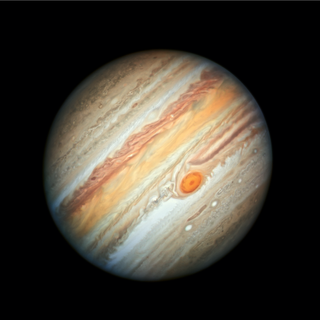
Jupiter has a total of 79 known moons and now five more of them have been givennew names with help from the public. Pandia, Ersa, Eirene, Philophrosyne, and Eupheme are the names of the moons.
With the approval of the International Astronomical Union (IAU), a contest was conducted by the Carnegie Institution for Science so the public could pick the names. Interestingly enough, the majority of the suggested names were submitted by children. Normally, the IAU picks out the names of planets and moons, but in more recent times, they have allowed the public to get involved with the naming process. In fact, the public has had a hand in naming several objects, such as alien stars and planets, as well as Mercury craters.
The process involved with picking a name is rather complicated. Those who participated in the contest earlier this year had to abide by several rules that included staying within the correct number of characters, as well as matching the direction of the moon’s orbit as that’s what decided the last letter of the name.
“There are many rules when it comes to how we name moons,” explained Carnegie astronomer Scott Sheppard who led the discovery of twelve of the moons that are orbiting Jupiter – and five of those twelve were the ones that were being named in the contest. He continued by stating, “Jovian naming conventions require its many moons to be named after characters from Greek and Roman mythology who were either descendants or consorts of Zeus, or Jupiter.”
So, let’s take a look at the origins of these very interesting new names for the five moons.
Pandia(formerly known as S/2017 J4) was named after the daughter of Zeus and the moon goddess Selene.
Ersa(formerly known as S/2018 J1) was named after another daughter of Zeus and Selene; also the sister of Pandia.
Eirene(formerly known as S/2003 J5) was named after the goddess of peace; she was the daughter of Zeus and Themis.
Philophrosyne(formerly known as S/2003 J15) was named after the spirit of welcome and kindness; and the granddaughter of Zeus.
Eupheme(formerly known as S/2003 J3) was named after the spirit of praise and good omen; also the granddaughter of Zeus and the sister of Philophrosyne.
I found this fascinating black structure on the moon Europa. Jupiter actually has 79 known moons so if this one has alien bases, then you can count on the others having them too. I made a video below to show how easy it is to find this structure. It has some remarkable right angles, huge fusalodge like body, dark large openings at its center, perhaps for docking ships, and two long wings, one on each side. This is huge guys, its about 20 miles across. I also notice a lot of other structures, however NASA has blurred them out so that the detail was lost. Watch the video I made and tell me what you think. Scott C. Waring-Taiwan
33 Meter UFO At Area 51, On Google Earth Map - Video, UFO Sighting News.
Hello everyone. I found this UFO back in 2010 and made a video that got 1.4 million views on it. So I wanted to show the public that they can still see it. Most people don't know how to see the old photos on Google map, so here I show you how to see the 33 meter UFO. Google owns Youtube and they both have changed their publicity algorithms...a mathematical AI code that finds anything with fake news keywords...like the words UFO sighting, or aliens and labels them as fake news, then hiding them from the public. This is Google working with the US government to cover up any UFO or alien evidence and hide it from the public. I promise you...at the end of the week I will only have about 5,000 views on this video. The UFO is real, its still there, and I teach you how to find it in this video.
Its not Facebook the public should be worried about. Its Google and Youtube. They should be investigated by the FTC antitrust investigators for using Youtube channels data in illegal ways and uses that Youtube users do not agree too. We need the Federal Trade Commission to officially investigating Youtube and Google for potential violations of US antitrust law. By using the users data to regulate what the viewers see and don't see, Youtube is breaking its companies privacy policy deciding what a third party (viewers) are allowed to see and not see. Congress needs to investigate into why Youtube is attacking UFO researchers in such an unfair, segregated and bullying way. I will tweet to the house judicial committee about it. Perhaps they know something about this?
We visited the moon half a century ago, and have not been back since. During that time, we've launched robotic spacecraft across our solar system and learned about distant worlds. Meanwhile, scientists continue to ponder the rocky visitor to our night sky.
The Apollo missions helped us solve many of the moon's mysteries, but there are still many more questions that have been left unanswered — and even a couple that arose as a result of the samples brought back by the Apollo astronauts.
"There are numerous scientific questions that have emerged in part of the Apollo evidence," Roger Launius, former NASA chief historian, told Space.com. "There's a whole series of things to be gained from going back, such as collecting additional material and gathering new data."
As NASA prepares to send astronauts to the moon once again by the year 2024, and amid mixed messages from the U.S. administration regarding the upcoming mission, scientists reaffirm that the moon still holds many secrets that we need to explore.
"We have a lot of great questions," Sarah Noble, the Apollo next-generation sample analysis program executive at NASA headquarters in Washington, told Space.com. "What has happened over the past decade was that we put a lot of things in the orbit around the moon, which has given us a global picture.
"We know where to go to answer these questions now," Noble added.
Nearly 40 years after returning from the moon, water was found inside rock samples brought back by the Apollo 15 mission. The 2009 discovery opened up a whole new area of lunar research because it suggested that water could have existed on the moon since its formation.
Having water on the moon is crucial for future space exploration, as it could be used for drinking water and rocket fuel.
"For 40 years, we thought the samples were completely dry," Noble said. "We now understand that there's a water cycle, but we don't understand how it works."
We may not understand the water cycle yet, but we do have the tools to crack it now.
"From my perspective, we have all kinds of instruments that didn't exist before," Paul Hayne, assistant professor at the Department of Astrophysical and Planetary Sciences at the University of Colorado, told Space.com.
Hayne added that the instruments have become so miniaturized that they now easily fit into spacecraft.
Aside from water, recent evidence also suggested that there is ice on the moon. A 2018 study confirmed that there was frozen stuff on the ground in the moon's north and south poles.
"The one [question] that I'm very interested in is the question of ice and the poles," Hayne said. "We'd like to know how much [ice there is] and where, and collect new data to investigate this."
In order to detect the ice on the lunar surface, Hayne said that there are new tools such as infrared instruments to detect the chemical fingerprint of ice, thermal cameras and other heat-sending tools.
Samples of basaltic rocks, or solidified molten lava, brought back by the Apollo missions were mostly old, but some were found to be as young as a billion years old, according to Noble. (Scientists believe that the moon itself is 4.51 billion years old.)
Scientists know that volcanic eruptions took place on the lunar surface, but they are still unsure about the timeline over which these eruptions occurred and when the moon stopped being volcanically active.
"There's still some questions about how active the moon is today — that's kind of a hot area," Hayne said.
He added that besides not knowing when these volcanic eruptions stopped occurring, we also don't know what caused them in the first place — whether they were triggered by a giant impact to the moon or if the moon is radioactive.
Recent research has pointed out that moon rocks are rich in radioactive material like uranium, and a 2014 paper in Nature suggested that heat-producing elements like uranium, thorium and potassium are causing the lunar surface to expand and contract as it gets hotter and cooler. The cracks on the surface caused by this process would have allowed for the lava to flow through them.
Hayne suggests that scientists need to revise their models of the moon's volcanic activity as most of them think that it stopped being active a long time ago, which may not be true — some scientists believe that the moon is still tectonically active.
There is also debate over how old our moon is, with ages ranging from 4.5 billion years to a much younger 150 to 200 million years.
According to Noble, scientists have attempted to estimate the moon's age by analyzing the lunar rocks brought back by Apollo and by trying to date when the craters formed on the lunar surface, but there has been no consensus thus far.
"It's one of the big questions we want to answer," Noble said.
However, Noble added, it's not just about determining the moon's age but rather figuring out the ages of other rocky bodies in the solar system such as Mercury or Mars.
Once we know the age of the moon, we can estimate the age of other planets by comparing the number of craters between the moon and Mars or Venus. The more craters there are on the surface, the older the rocky body is.
Collecting as much information as we can from the moon will also eventually lead to a better understanding of other planetary objects in our solar system that we want to explore in the future. -
"The moon can help us understand how to live and operate on another body, say, for example, if we go to Mars," she said.
Amid an ongoing debate over whether we should return to the moon, lunar scientists reaffirm that it is absolutely necessary we do it for the sake of future space exploration and to learn more about our own planet.
"As a lunar scientist, I'm very excited about the science we can do on the moon," Noble said. "Our current plan is to hit the moon so we can move on and hit Mars."
Hayne agreed. "We have so much to learn still about the moon, which then not only tells us about other planets in the solar system but about the Earth itself," he said.
"Lastly, it's exciting," Hayne added. "It inspires people. There's no substitute to having boots on the ground."
The NASA veteran played a critical role in the first manned Moon landing alongside colleagues Neil Armstrong and Buzz Aldrin. After retiring from NASA in 1970, the astronaut has been a vocal supporter of establishing a human presence on Mars. Now, astronaut Michael Collins, 88, has opened up about the ultimate question of are we alone in the universe. In an online question and answer session on Twitter, Mr Collins’ 56,600 Twitter followers were given a chance to submit any burning queries they have.
In other cosmic queries, regarding his time in space, Mr Collins was asked about eating bacon in space, his favourite moments from Apollo 11 and why he grew a moustache during the Moon landing.
In regards to enjoying the bacon, the astronaut said: “No. Bacon should not be cubed!”
Mr Collins is a former American test pilot who served in the United States Air Force before joining NASA.
As a test pilot, Mr Collins has logged more than 4,200 hours in flight.
Through is work in the US Air Force, Mr Collins retired with the rank of major general.
Many of Mr Collins' followers also believe life in some form exists outside of Earth (Image: TWITTER)
Michael Collins flew the Command Module during the Apollo 11 Moon landing in 1969
(Image: NASA)
In July 1969, the astronaut flew the Command Module spacecraft around the Moon while astronauts Neil Armstrong and Buzz Aldrin descended to the surface for the first time in history.
NASA said: “After he graduated from the US Military Academy in West Point, New York, in 1952, he chose to become an Air Force test pilot.
“Selected by NASA as an astronaut in 1963, he served as the pilot for Gemini X and as the command module pilot for the Apollo 11 mission, the first time humans set foot on another celestial body.
“Collins retired from the Air Force as a major general and left NASA in 1970.”
Are White Holes Real And Can They Connect To Parallel Universes?
By: Michael Chary
What Are White Holes?
When Stephen Hawking proposed the idea that a black hole will eventually evaporate by leaking radiation from its event horizon, there was a problem. If it evaporates, what happens to all of the information it sucked in?If quantum theory is correct, this would defy a fundamental law that information cannot be lost – it’s called the no-hiding theorem.
With the no-hiding theorem, if information is missing from one system, then it must simply be residing somewhere else in the universe – a cosmic game of hide-and-seek. So theoretically, if information is getting sucked in, it must be getting spat back out somewhere, and likely that’s through a white hole. But is it really possible that white holes exist?
One way to conceptualize this in a very basic mathematical sense is to think about the square root of 9. The answer is both 3 and -3. This is fundamentally part of what’s known as Schwarzchild geometry, the formulae used in general relativity to describe the gravitational field outside a spherical mass.
Just like the color black is the opposite of white, the white hole is the opposite of a black hole in every way. Light cannot escape a black hole, so light cannot enter a white hole. This would obviously make a white hole incredibly bright, and some quantum physicists believe that maybe some of the light in the universe we thought was coming from supernovae, may actually be from white holes.
Physicists also believe this concept could be germane when talking about the big bang and how our universe came into existence. They believe it’s possible that at the moment of creation, everything was expelled from a massive white hole on an incredibly large scale.
The premise of white holes is based on a theory positing that space-time is made of granular building blocks that can be quantified. This quantification comes in the form of loops, almost like little threads that are of a finite size – so finite they cannot be subdivided any further. To a viewer these loops would be make space-time appear to be smooth and continuous, but their granular nature would prevent highly dense bodies like neutron stars from collapsing into a point of infinite density.
So, in the case of black holes, these incredibly finite loops would prevent a collapse into infinity, but eventually the loops would only be able to compress to a certain point, until they exert an outward pressure, almost like a spring. This is referred to as quantum bounce, a rebound from a black hole ingesting everything into a white hole expelling everything.
Many argue, however, that white holes are theoretically impossible because they violate the second law of thermodynamics, stating that entropy cannot decrease in a system. But it depends on how one looks at entropy, with some physicists saying it refers to disorder, while others say it refers to information used to describe a system, and an argument over semantics ensues.
The aforementioned Schwarzchild geometry implies that a wormhole would connect a black hole and white hole with two distinct universes connected at their horizons, also known as an Einstein-Rosen bridge.
Unforunately, these wormholes would be highly unstable if they were even possible. It would also be impossible, with physics as we know it, for one to pass through a wormhole into another universe (also theoretical) due to a number of pesky things like being spaghettified when passing through a black hole’s event horizon before being compressed at the singularity. Though you might at least get to see some distorted light from the parallel universe on the other side.
But since this is mostly theoretical, there are always theoretical solutions, like using exotic matter to stabilize a wormhole. Exotic matter has negative mass and positive surface pressure. This would keep the throat of the wormhole stable, while also preventing it from collapsing. This could hypothetically allow for travelers to pass through.
Will we ever figure out if wormholes exist and whether they can be used for time travel or inter-dimensional travel? Or have we already?
Five Things You Didn’t Know About White Holes
Scientists believe they may have witnessed a white hole when a sudden burst of white light appeared out of nowhere and then vanished. Unfortunately, there haven’t really been any other similar events recorded to study.
In The Hitchhiker’s Guide to the Galaxy the people from the planet Magrathea create luxury planets for the galaxy’s richest people from the matter retrieved from white holes.
White holes are essentially time-reversed black holes containing a singularity existing in the past.
In the ‘70s, Stephen Hawking said black and white holes absorb and emit the same amount of radiation when they are in thermal equilibrium, making them indistinguishable. According to physicist Stephen Hsu, when a white hole is in isolation surrounded by empty vacuum space, it’s not in equilibrium, meaning it has nothing to absorb. This forces it to explode and release a large amount of thermal energy – what Hsu calls ‘quasithermal energy.’
SPOTTED: A BLACK HOLE THAT SHOULDN’T BE PHYSICALLY POSSIBLE
IMAGE VIA NEEDPIX/VICTOR TANGERMANN
DAN ROBITZSKI
Chonk
Equipment designed to detect gravitational waves have picked up on some bizarre signals — possibly originating from a black hole twice as massive as physicists previously believed was possible.
The potential black hole would have to be 100 times as massive as our Sun to give off the signals that the facilities recorded, according to Quanta Magazine. Physicists now find themselves in a whirlwind as they try to sort out how the absolute unit of a black hole came to be.
Dead Zone
Normally, a black hole is formed when a star runs out of fuel and collapses. But that only works if the star’s core is less than 50 times the mass of our Sun, according to Quanta.
Otherwise, the core becomes unstable, either shedding matter until it’s small enough or obliterating itself in a spectacular supernova. Black holes larger than 130 solar masses can still form because the core’s collapse is like a runaway train too strong to stop — M87*, for instance, a black hole that scientists imaged back in April, is 6.5 billion times as massive as the Sun.
Reconciliation
To reconcile the new findings with existing theory, Quanta reports that astronomers suspect the bizarre black hole is the result of two smaller ones colliding and merging.
They suspect that in a dense pocket of the universe, 30 and 50-solar mass black holes could have merged together, and then once more collided with another small one to give off the signals that were just detected.
In a remarkable evolutionary windfall, fossil hunters have discovered neatly fitting halves of a nearly complete, 3.8-million-year-old hominid skull. This unexpected specimen shines some light on poorly understood, early members of the human evolutionary family.
The East African skull, which turned up at Ethiopia’s Woranso-Mille site, has been classified as Australopithecus anamensis. It is the oldest known species in a hominid genus that includes Australopithecus afarensis, known best for Lucy’s 3.2-million-year-old partial skeleton (SN: 10/28/14).
The research team, led by paleoanthropologist Yohannes Haile-Selassie of the Cleveland Museum of Natural History, describes its analysis of the skull in two papers published online August 28 in Nature.
“This specimen provides the first glimpse of the face of Australopithecus anamensis,” Haile-Selassie said during an Aug. 27 news conference. The skull, which is slightly larger than a modern adult human’s fist, also includes the first good example of an A. anamensisbraincase.
For early-hominid investigators, “this is the specimen we have been waiting for,” says paleoanthropologist Carol Ward of the University of Missouri in Columbia. Ward was not part of the Woranso-Mille team.
Until now, A. anamensis fossils consisted only of partial upper and lower jaws, isolated teeth, a braincase fragment and some lower-body bones (SN: 2/18/15). Those specimens, previously unearthed in Kenya and Ethiopia, date to between 4.2 million and 3.9 million years ago.
Then, on February 10, 2016, a member of the Woranso-Mille team noticed the lower part of a hominid skull protruding from eroding sediment. Later that day, Haile-Selassie found the braincase lying on the ground about three meters from the initial find. Soil sieving produced additional skull fragments.
Paleoanthropologist Yohannes Haile-Selassie holds a nearly complete Australopithecus anamensis skull shortly after its discovery at an Ethiopian site.CLEVELAND MUSEUM OF NATURAL HISTORY
Geoscientist Beverly Saylor of Case Western Reserve University in Cleveland led an effort to date the fossil by estimating the ages of nearby volcanic rock layers. Known reversals of Earth’s magnetic field in Woranso-Mille sediment also aided dating.
Geologic evidence indicated that the fossil A. anamensis individual had been covered in sandy deposits where a river entered a lake. The surrounding region was largely dry, but included some forested areas. Volcanic eruptions occasionally blanketed the lake and its surroundings.
A digital reconstruction of the Woranso-Mille skull helped to establish its species. The braincase displays features, such as a long, narrow shape and a roughly chimpanzee-sized brain, similar to those of even older proposed hominids such as Sahelanthropus tchadensisand Ardipithecus ramidus (SN: 2/16/11). In contrast, forward-projecting cheek bones recall those of later hominids, such as 2.5-million-year-old Paranthropus aethiopicus. That species belonged to an African line of big-jawed, small-brained creatures that died out around 1 million years ago. It’s hard to know whether these shared traits evolved independently, or if the traits signal an evolutionary relationship.
Further comparisons connected the Woranso-Mille skull to earlier A. anamensis finds. Many of the skull’s features differ from those of Lucy’s kind, Haile-Selassie says. For instance, A. anamensis possessed a sloping face, unlike the flat faces of A. afarensis.
Crucially, the Woranso-Mille skull differs enough from an approximately 3.9 million-year-old hominid forehead bone discovered in East Africa in 1981 to assign that older find, known as the Belohdelie frontal, to A. afarensis, Haile-Selassie contends. If so, A. anamensis— now placed at between 4.2 million and 3.8 years ago — and Lucy’s kind — dating to between 3.9 million and 3 million years ago — overlapped for at least 100,000 years. That scenario contradicts an earlier hypothesis that A. anamensis evolved directly into Lucy’s kind, with the earlier species disappearing as it morphed into its descendant species (SN: 4/12/06).
A discovery at an Ethiopian desert site of a nearly complete, 3.8-million-year-old Australopithecus anamensis skull is letting researchers reconstruct what the ancient individual looked like and its relationship to Lucy’s species.
A large A. anamensis group might have become isolated from its species-mates and then evolved into an early version of A. afarensis, Haile-Selassie speculates. In that case, other A. anamensis groups would have coexisted for a while with Lucy’s species.
While the newly discovered skull “fills a critical gap in Australopithecus evolution,” the evolutionary status of the Belohdelie frontal remains unknown, says paleoanthropologist William Kimbel of Arizona State University’s Institute of Human Origins in Tempe. More A. anamensis skulls are needed to assess whether the Belohdelie frontal displays traits more typical of that species or of Lucy’s kind, Kimbel says.
Paleoanthropologist Berhane Asfaw of Rift Valley Research Service in Addis Ababa, Ethiopia, agrees. Asfaw described the Belohdelie frontal in a 1987 paper. Frontal bone shapes vary considerably in Lucy’s species, which includes four partial skulls, he says. “And we don’t know what kind of face the Belohdelie frontal had.”
In all its largely intact glory, the Woranso-Mille skull highlights how little is known about the relationship between A. anamensis and Lucy’s kind, Ward says.
Meet the new moons of Jupiter. After a public contest, five newly discovered Jovian satellites now have official astronomical names, the International Astronomical Union announced August 26.
Planetary scientist Scott Sheppard of the Carnegie Institution for Science in Washington, D.C., reported the discovery of the moons in July 2018 (SN: 7/17/18), along with seven others. He and his colleagues spotted the moons while searching for a theoretical Planet Nine orbiting beyond Neptune (SN: 7/5/16).
The team solicited name suggestions for the moons on Twitter. There were some rules, most notably that Jupiter’s 79 known moons must all be named for descendants or consorts of the god Jupiter from Roman mythology, or Zeus in Greek myths. But that didn’t stop people from suggesting the names of beloved pets or, perhaps inevitably, Moony McMoonface.
Here are the winners:
Pandia:A daughter of Zeus and the moon goddess Selene, Pandia is the goddess of the full moon. One of the groups to enter this name in the contest was the astronomy club of the Lanivet Community Primary School in Bodmin, England, whose mascot is a panda.
Ersa: Sister of Pandia, Ersa is the goddess of dew. Several people suggested this name, including 4-year-old moon expert Walter, who got the judges’ attention with a song listing the largest moons of the solar system in size order.
Eirene:The goddess of peace, Eirene is the daughter of Zeus and Themis, a Greek Titaness who personifies divine order, justice and law.
Philophrosyne:A granddaughter of Zeus, Philophrosyne is the spirit of welcome and kindness.
Eupheme:Sister of Philophrosyne, Eupheme is the spirit of praise and good omen.
Pourquoi l’agence militaire américaine cherche-t-elle d’urgence une grande installation souterraine ?
La DARPA a publié cette nuit un drôle de tweet qui intrigue… et inquiète.
C’est un tweet qui pose question, et qui n’a pas manqué de soulever inquiétudes et probablement d’imaginer les hypothèses les plus farfelues. D’autant qu’il n’émane pas de n’importe-qui, ni de Donald Trump (qui a dit c’est pareil ?) mais de la DARPA, (Defense Advanced Research Projects Agency), la très sérieuse – et parfois controversée – agence du département de la Défense des États-Unis chargée de la recherche et développement des nouvelles technologies destinées à un usage militaire. Pour mémoire, on attribue l’invention d’internet à cette agence dans les années 60.
Dans ce Tweet, la DARPA indique qu’elle est à la recherche d’installations souterraines urbaines capables d’accueillir des travaux de recherche et d’expérimentation. Jusque-là, rien de très affolant. Mais ce qui est plus étonnant, et a ouvert la voie à toutes les spéculations et tous les fantasmes, est le délai indiqué par le tweet. Il semblerait en effet que ce soit urgent, très urgent, puisque la date limite est celle du 30 août à 17h, heure de la côte est américaine.
Des installations souterraines pour autopsier des aliens ?
Pourquoi une telle urgence ? Que va-t-il se passer d’ici-là ? Mystère et boule de gomme. Probablement rien, comme vous pouvez très bien l’imaginer. Mais il n’en faut pas plus pour laisser nos esprits vagabonder et élaborer toutes sortes d’hypothèses, d’autant que la Darpa n’a pas voulu expliquer pourquoi elle avait besoin d’une installation souterraine aussi vite, alors que tous les détails de sa requête figurent dans une note officielle.
« Les infrastructures souterraines urbaines complexes peuvent présenter des défis importants pour la connaissance de la situation dans des scénarios sensibles au facteur temps, tels que le combat actif ou d’intervention en cas de catastrophe. La DARPA est intéressée à explorer ce domaine pour que les chercheurs puissent analyser et améliorer les approches visant à améliorer la connaissance de la situation et les délais d’intervention dans les scénarios d’urgence. Les sites soumis pourraient aider le milieu de la recherche à identifier des sites pertinents pour d’autres expériences sur le terrain afin d’accélérer la mise au point de ces technologies. », a déclaré à nos confrères de Gizmodo par courriel un porte-parole de Darpa qui a demandé à rester anonyme.
Alors, que va-t-il se passer d’ici demain soir ? Les paris sont ouverts (et les complotistes vont passer une bonne journée).
The little chopper will be the first rotorcraft ever to ply alien skies.
An engineer works on attaching NASA's Mars Helicopter to the belly of the Mars 2020 rover — which has been flipped over for that purpose — on Aug. 27, 2019, at the Jet Propulsion Laboratory in Pasadena, California.
The first-ever off-Earth helicopter just hooked up with its traveling companion.
Engineers at NASA's Jet Propulsion Laboratory (JPL) in Pasadena, California, attached the tiny Mars Helicopterto the agency's car-size Mars 2020 rover today (Aug. 28), agency officials announced.
The duo will launch together in July 2020 and touch down inside the Red Planet's Jezero Crater in February 2021. Once on Mars, the solar-powered, 4-lb. (1.8 kilograms) helicopter will detach and begin flying test sorties.
"Our job is to prove that autonomous, controlled flight can be executed in the extremely thin Martian atmosphere," Mars Helicopter project manager, of JPL, said in a statement. (Mars' air is just 1% as dense as that of Earth at sea level.)
"Since our helicopter is designed as a flight test of experimental technology, it carries no science instruments," she added. "But if we prove powered flight on Mars can work, we look forward to the day when Mars helicopters can play an important role in future explorations of the Red Planet."
For example, helicopters could serve as scouts for robots or human pioneers on Mars. Red Planet rotorcraft could also carry instruments and conduct a variety of science work of their own, NASA officials have said.
Mas 2020, which will soon get a catchier moniker via a student naming competition, will hunt for signs of long-dead Red Planet life in Jezero Crater, which hosted a river delta in the ancient past. The rover will also characterize the site's geology, collect and cache samples for future return to Earth and demonstrate gear that will generate oxygen from the carbon-dioxide-dominated Martian air, among other tasks.
"With this joining of two great spacecraft, I can say definitively that all the pieces are in place for a historic mission of exploration," Thomas Zurbuchen, associate administrator of the Science Mission Directorate at NASA's headquarters in Washington, D.C, said in the same statement. "Together, Mars 2020 and the Mars Helicopter will help define the future of science and exploration of the Red Planet for decades to come."
NASA plans to launch another rotorcraft soon as well — Dragonfly, which will soar through the thick atmosphere of Saturn's huge moon Titan. The life-hunting Dragonfly is scheduled to lift off in 2026 and land on Titan's frigid surface in 2034.
Mike Wall's book about the search for alien life, "Out There" (Grand Central Publishing, 2018; illustrated byKarl Tate), is out now. Follow him on Twitter @michaeldwall. Follow us on Twitter@Spacedotcom orFacebook.
In a bid to Expand Military Outreach, US to Launch Space Command Today
In a bid to Expand Military Outreach, US to Launch Space Command Today :- The United States will officially launch the Space Command, also known as SPACECOM, on Thursday with a White House ceremony hosted by President Donald Trump and Vice President Mike Pence.
US to Launch Space Command Today
The SPACECOM is a key step for the US military to establish a proposed sixth branch of the military known as the Space Force. U.S. Air Force Gen. John Raymond will serve as the first head of Space Command (SPACECOM). At launch, Raymond will lead 87 active units handling operations such as missile warning, satellite surveillance, space control, and space support, Gen. Joseph Dunford said at a meeting of the National Space Council earlier this month.
In a press conference on August 20, Vice President Mike Pence said, “The United States Space Force will ensure that our nation is prepared to defend our people, defend our interests, and to defend our values in the vast expanse of space and here on Earth with the technologies that will support our common defence for the vast reaches of outer space.”
He further added, “The United States Space Force will ensure that our nation is prepared to defend our people, defend our interests, and to defend our values in the vast expanse of space and here on Earth with the technologies that will support our common defense for the vast reaches of outer space.”
Trump had directed the Pentagon to create a sixth military branch in June 2018. He said that the establishment of the SPACECOM was crucial in protecting the country’s interests amid pressure from international rivals Russia and China.
Meanwhile, as per the former Deputy Defence Secretary Patrick Shanahan, the SPACECOM will be different from the Space Force but they will work together.
He tweeted, “The Space Force will serve as a force provider for personnel, assets, and capabilities supporting space operations, while Space Command will serve as the operational command that will employ space capabilities and lead space operations. The differences between Space Force and US Space Command will largely parallel those of the other five military services and four functional combatant commands.”
NatureUit een analyse van de schedel van MRD blijkt dat hij ongeveer 3,8 miljoen jaar oud is.
WETENSCHAPTot voor kort was Lucy wellicht het beroemdste lid van het geslacht Australopithecus, een directe voorouder van de mens. Daar brengt het fossiel van MRD waarschijnlijk verandering in. Tenslotte kunnen we dankzij MRD, een mannelijke Australopithecus anamensis, eindelijk een gezicht plakken op een van onze oudste voorouders. Bovendien schudt MRD de evolutionaire tijdlijn door elkaar.
Lucy behoorde tot de Australopithecus afarensis, een soort die volgens de evolutionaire tijdlijn na de Australopithecus anamensis (rechtop) op aarde rondliep. Dat betekent dat Lucy en MRD elkaar nooit ontmoet zouden hebben. Maar nu blijkt uit een analyse van de schedel van MRD dat hij ongeveer 3,8 miljoen jaar oud is. Dat betekent dat de anamensis nog leefde toen zijn opvolger afarensis al bestond. Meer zelfs, de twee soorten zouden maar liefst 100.000 jaar samengeleefd hebben. De familie van MRD van 4,2 tot 3,8 miljoen jaar geleden en de familie van Lucy van 3,9 tot 3 miljoen jaar terug. De overlapping van de twee soorten schudt de evolutionaire tijdlijn - alsook het idee van een simpele, lineaire evolutie - grondig door elkaar.
Dat beschrijven de onderzoekers van het Cleveland Museum of Natural History in niet één maar wel twee papers in het vaktijdschrift Nature. In een eerste artikel omschrijven ze hun vondst, terwijl ze in een tweede artikel uit de doeken doen hoe ze de leeftijd van MRD bepaalden.
De verantwoordelijke voor de evolutionaire ‘chaos’ is Ali Bereino, een Ethiopische boer die in 2016 per ongeluk een schedel opgroef. Hij was eigenlijk een hol aan het graven om zijn pasgeboren geitjes te beschermen tegen hyena’s toen hij opmerkte dat er enkele tanden in het zand begraven waren. Al snel haalde hij er een volledig kaakbeen uit dat hij naar het team van antropoloog Yohannes Haile-Selassi van het Cleveland Museum of Natural History, bracht. Dat team groef uiteindelijk een vrijwel volledige schedel op.
Nature/ Cleveland Museum of Natural HistoryUit een analyse van de schedel van MRD blijkt dat hij ongeveer 3,8 miljoen jaar oud is.
MRD
MRD - genoemd naar de vindplaats Miro Dora, zo’n 50 kilometer ten noorden van Hadar waar Lucy gevonden werd - was een man met een hersengrootte van zo’n 370 kubieke centimeter, vergelijkbaar met die van een chimpansee. Hij had uitstekende jukbeenderen, langwerpige hoektanden en ovale oorschelpen. Op die manier kon er een gezicht gereconstrueerd worden van MRD. Zijn leeftijd werd bepaald door de bodemlaag waarin zijn schedel gevonden werd, te analyseren.
Het grote verschil tutssen MRD en Lucy? Lucy had een rond hoofd terwijl de schedel van MRD smaller en langwerpig is. MRD leek volgens paleontologen nog iets meer op een aap dan zijn opvolger. Toch behoorde hij wel degelijk tot de mensachtigen. “De ruggenwervel van MRD komt niet aan de achterkant van de schedel binnen, zoals bij viervoeters, maar aan de onderkant. Dat bewijst dat de soort op twee benen liep, en dus een mensachtige is”, aldus Fred Spoor, paleontoloog aan het Natural History Museum in Londen.
YOU WON’T BELIEVE WHAT’S BURIED UNDER THE SAHARA… HIDDEN LOST ANCIENT CIVILIZATIONS BY BRIGHT INSIGHT
I love the Bright Insight’s channel and I’m always happy to share Jimmy’s latest videos, like this one, which dropped last night. Are the sands of the Sahara Desert covering up ancient civilizations..?
Ancient Greek historian, Herodotus (484 – 425 BC) described the Nile River as moving from west to east, not from South to North, as it does today.
Jimmy from the Bright Insight YouTube channel is an Iraq War veteran who got to see some of these ancient wonders of the Middle East with his own eyes but he’s not content to merely point out how incredible they are. He has this to say about Ancient Egypt and the Sahara Desert: “The experts have always claimed that the Sphinxmust be around 4,500 years old, yet recent geological analysis implies that this cannot be the case, as the last time the Nile Delta region had significant rainfall was more than seven thousand years ago…Right in the timeframe of when the Sahara was Green and had ten times the rainfall that it does today…
“The scientific data overwhelmingly suggests that the Sphinx is at least double the age of what we were taught in school, which of course only further adds to the mystery of ancient Egypt, itself but think about what all of this means.
“The ancient ruins and relics that have been found from the Egyptians are concentrated largely around the Nile River and this makes total sense, as civilizations exist where there’s water. “So, combine that with the timeframe estimates of when the Sahara went from a lush green tropical paradise to a massive barren desert, several thousand years ago, well there’s obviously a connection here and going back to what I just pointed out, regarding the ancient Egyptians developing their civilization along the Nile River.
“While taking into account that the Sahara Desert was actually a hospitable environment, made up of rivers and lakes at that same period of time, we should ask ourselves if the old legends, stating that the Nile River once ran from west to east have merits… “Ancient rivers in the Sahara would have likely supported human migration routes. It seems to me that these areas around the rivers [in Northwest Africa] need to be excavated now.”
Je gelooft nooit wat er onder de Sahara begraven ligt. Kijk deze video over verloren beschavingen+
De grootste woestijn op aarde blijkt een enorme begraafplaats te zijn waar talloze mysterieuze ruïnes en resten van onbekende beschavingen worden gevonden.
Ze zijn in de vergetelheid geraakt en duizenden jaren geleden verzwolgen door het zand. Vanaf hier wordt het vreemd.
In de afgelopen jaren verschenen er allerlei berichten waaruit blijkt dat de Sahara ooit groen en bewoond was.
Oogwenk
Met behulp van satellieten werden er oude riviernetwerken, megameren en sporen van verloren beschavingen ontdekt in en onder de woestijn.
Verder is gebleken dat de Sahara in een oogwenk is veranderd van een grasrijk landschap in dorre woestijn. Wat is er gebeurd?
We learn from our personal interaction with the world, and our memories of those experiences help guide our behaviors. Experience and memory are inexorably linked, or at least they seemed to be before a recent reporton the formation of completely artificial memories. Using laboratory animals, investigators reverse engineered a specific natural memory by mapped the brain circuits underlying its formation. They then “trained” another animal by stimulating brain cells in the pattern of the natural memory. Doing so created an artificial memory that was retained and recalled in a manner indistinguishable from a natural one.
Memories are essential to the sense of identity that emerges from the narrative of personal experience. This study is remarkable because it demonstrates that by manipulating specific circuits in the brain, memories can be separated from that narrative and formed in the complete absence of real experience. The work shows that brain circuits that normally respond to specific experiences can be artificially stimulated and linked together in an artificial memory. That memory can be elicited by the appropriate sensory cues in the real environment. The research provides some fundamental understanding of how memories are formed in the brain and is part of a burgeoning science of memory manipulation that includes the transfer, prosthetic enhancement and erasure of memory. These efforts could have a tremendous impact on a wide range of individuals, from those struggling with memory impairments to those enduring traumatic memories, and they also have broad social and ethical implications.
In the recent study, the natural memory was formed by training mice to associate a specific odor (cherry blossoms) with a foot shock, which they learned to avoid by passing down a rectangular test chamber to another end that was infused with a different odor (caraway).The caraway scent came from a chemical called carvone, while the cherry blossom scent came from another chemical, acetophenone.The researchers found that acetophenone activates a specific type of receptor on a discrete type of olfactory sensory nerve cell.
They then turned to a sophisticated technique, optogenetics, to activate those olfactory nerve cells. With optogenetics, light-sensitive proteins are used to stimulate specific neurons in response to light delivered to the brain through surgically implanted optic fibers. In their first experiments, the researchers used transgenic animals that only made the protein in acetophenone-sensitive olfactory nerves. By pairing the electrical foot shock with optogenetic light stimulation of the acetophenone-sensitive olfactory nerves, the researchers taught the animals to associate the shock with activity of these specific acetophenone-sensitive sensory nerves. By pairing the electrical foot shock with optogenetic light stimulation of the acetophenone-sensitive olfactory nerves, the researchers taught the animals to associate the two. When theylater tested the mice, they avoided the cherry blossom odor.
These first steps showed that the animals did not need to actually experience the odor to remember a connection between that smell and a noxious foot shock. But this was not a completely artificial memory, because the shock was still quite real. In order to construct an entirely artificial memory, the scientists needed to stimulate the brain in such a way as to mimic the nerve activity caused by the foot shock as well.
Earlier studies had shown that specific nerve pathways leading to a structure known as the ventral tegmental area (VTA) were important for the aversive nature of the foot shock. To create a truly artificial memory, the researchers needed to stimulate the VTA in the same way as they stimulated the olfactory sensory nerves, but the transgenic animals only made the light-sensitive proteins in those nerves. In order to use optogenetic stimulation, they stimulated the olfactory nerves in the same genetically engineered mice , and they employed a virus to place light-sensitive proteins in the VTA as well. They stimulated the olfactory receptors with light to simulate the odor of cherry blossoms, then stimulated the VTA to mimic the aversive foot shock. The animals recalled the artificial memory, responding to an odor they had never encountered by avoiding a shock they had never received.
For a long time, it has been a mystery how memories are formed in the brain—and what physical changes in the brain accompany their formation. In this study, the electrical stimulation of specific brain regions that led to a new memory also activated other brain regions known to be involved in memory formation, including an area called the basolateral amygdala. Because nerve cells communicate with one another through junctions called synapses, it has been assumed that changes in synaptic activity account for the formation of memories. In simple animals, such as the sea slugAplysia, memories can be transferred from one individual to another using RNA extracted from the one who experienced them. The RNA contains the codes for proteins made in the nerves of the animal associated with the memory. Memories have been partially transferred in rodents by using recordings of electrical activity of a trained animal’s memory center (the hippocampus) to stimulate similar patterns of nerve activity in a recipient animal. This process is similar to the new report described here, in that stimulating the electrical activity of specific neural circuits is used to elicit a memory. In the case of memory transfer, that pattern came from trained animals, whereas in the optogenetics study, the pattern of electrical activity associated with the memory was built de novo within brain of the mouse. This is the first report of a completely artificial memory, and it helps establish some fundamental understanding of how memories may be manipulated.
Research into memory and efforts to manipulate it have progressed at a rapid pace. A “memory prosthetic” designed to enhance its formation and recall by electrical stimulation of the memory center in the human brain has been developed with support from the Defense Advanced Research Projects Agency (DARPA). In contrast, memory erasure using what has been nicknamed the Eternal Sunshine drug (zeta inhibitory peptide, or ZIP)—after Eternal Sunshine of the Spotless Mind, a Hollywood movie with a mnemonic theme—is being developed to treat recollections of chronic pain.
There are legitimate motives underlying these efforts. Memory has been called “the scribe of the soul,” and it is the source of one’s personal history. Some people may seek to recover lost or partially lost memories. Others, such as those afflicted with post-traumatic stress disorder or chronic pain, might seek relief from traumatic memories by trying to erase them.
The methods used here to create artificial memories will not be employed in humans anytime soon: none of us are transgenic like the animals used in the experiment, nor are we likely to accept multiple implanted fiber-optic cables and viral injections. Nevertheless, as technologies and strategies evolve, the possibility of manipulating human memories becomes all the more real. And the involvement of military agencies such as DARPA invariably renders the motivations behind these efforts suspect. Are there things we all need to be afraid of or that we must or must not do? The dystopian possibilities are obvious.
Creating artificial memories brings us closer to learning how memories form and could ultimately help us understand and treat dreadful diseases such as Alzheimer’s. Memories, however, cut to the core of our humanity, and we need to be vigilant that any manipulations are approached ethically.
Well, pack it in kids, we’ve finally gone and done it. We reached grade A, genuine sci-fi dystopia. Scientists have now successfully created and implanted an artificial memory. That is, a memory of an event that never happened created from the ground up and implanted into an animal. They’ve only done it to a mouse so far, so we’ve still got a bit of time before this whole thing starts feeling like a David Lynch movie. But boy, oh boy, this definitely feels like one of those “so focused on if we could, we never stopped to think if we should” type of deals.
According to a recent article in the journal Naturetitled Memory formation in the absence of experience, scientists reverse engineered a memory to map the brain circuits involved in creating it—in this case the association of the smell of cherry blossoms with an electrical shock to the foot—then artificially implanted that memory in a mouse. Tests showed that the mouse behaved as if it actually remembered being shocked in the foot whenever it smelled cherry blossoms, despite the mouse never having been shocked nor been exposed to the scent of cherry blossoms.
Even ones that never happened!
Previous research had shown that it was possible to partially transfer memories from one rodent to another via reproducing the electrical activity associated with a specific memory in one mouse and jolting it into the brain of another mouse. This new experiment is different. This time the memory was created completely artificially from the ground up. This consisted of a few parts.
First, they used a technique called optogenetics. This involves fiber optic cables surgically implanted into the olfactory region of the mice’s brain so that light can be used to turn on proteins associated with specific smells. To do that, the mice had to be genetically engineered to only produce the light-sensitive protein in the region associated with acetophenone—AKA the scent of cherry blossoms. Now they could artificially create the scent of cherry blossoms in the brain of a mouse.
So we’re already into some wacky stuff, but don’t worry. It gets wackier.
The scientists identified the region of the brain responsible for creating an aversion to being shocked in the foot, an area called the ventral tegmental area (VTA). To link the two regions together, scientists then used a virus (yes, that’s correct) to implant those same light-sensitive proteins into the VTA. This way, they could use light to stimulate both regions at once. Fake memories at the speed of light.
And it worked. The mice were then placed in a rectangular chamber, one end of which smelled like cherry blossoms, while the other smelled like caraway. The mice avoided the end that smelled like cherry blossoms, because they remembered being shocked by it. In an article for Scientific American, Robert Marcone puts it this way:
The animals recalled the artificial memory, responding to an odor they had never encountered by avoiding a shock they had never received.
A little poke here, a little twist there, and you’ll remember that time you were the king of France.
Now, this is still a long ways off from being used in humans. But it is an active area of research. Of course it is important to study memory. Dementia and Alzheimer’s disease are nothing but tragedies, and the memory of trauma can take hold over a person’s life and never let go. It’s a very important area of study, but we must be careful. If there was a way to Eternal Sunshine of the Spotless Mind away painful events, would you do it? Maybe not, but someone would. Would you implant a fake memory of a trip around the world, or how about a fake memory of hitting a walk-off home run, just to boost your confidence and self image? How many companies— companies that already specialize in creating false narratives and self images built like houses of cards—are already working to sell you that walk-off home run?
Research like this is like playing with fire. That’s a neutral statement; playing with fire brought us down from the trees and allowed us to build a civilization, overcome the bounds of gravity, and put people on the moon. But it can also burn your house to the ground.
While most of Brazil is focused on the out-of-control fires in the Amazon (and rightly so), a few people are excited about new information and a possible new release of previously classified documents which revealed unbelievable details about an “invasion of UFOs” in 2008 that brought with them “luminous beings.” Why are they calling it an “invasion,” what were these luminous beings and what else might the Brazilian Air Force and government be hiding?
“It all started around 10 pm on a Wednesday night, November 19, 2008, just before Brazil’s match against Portugal, when from her apartment, Mrs. Renata Veloso Guerck Austriaco spotted a hexagonal light object accompanied of two other spherical flying objects that rotated under its orbit. As the UFO approached the Nossa Senhora Aparecida church, the streetlights of the Bela Vista neighborhood had a blackout, extinguishing block by block. From that moment, several claudienses began to observe the strange lights flying over the city and arriving to land in the countryside, along the MG 260 highway.”
That Google translation of Portuguese comes from a recent investigative report in the Brazilian media source saudedomeio.com, which brings readers up-to-date on the original 2008 sighting in Cláudio, a city in the state of Minas Gerais in southeastern Brazil. Police officers called to the scene said “We saw an oval-shaped, rectangular-shaped perched object, the size and appearance of a wheelless minibus, emitting white light, like a xenon headlight. This light came out of an opening that cut through the middle of that object. Then he went up until we lost sight of him.” Multiple witnesses reported seeing the lights over the next few days. (Photograph here.)
In 2015, investigators from Ovni Pesquia (UFO Search) magazine requested and received police documents which revealed much more. On November 20, two officers reported seeing aliens.
“We saw two luminous beings, about three feet tall, gliding through the reeds. We were in the Mitsubishi pickup truck on a back road when Sergeant William saw something in the woods. He turned the car 13533 towards the ‘luminous beings’, as we approached (15 or 20 meters), they began to slide through the reeds. We were about 20 km / h and these continued forward and to the right, it was noticeable that those things ‘walked’ without touching the ground. We saw no feet, no toes, but we saw arms, legs, and oval heads, and though they were bright, they did not illuminate.”
Illustration of another luminous being with oval head
The witnesses believed the aliens controlled their thoughts because they later had headaches, confusion, anxiety and a period of unaccountable time. The report states that other non-military witnesses had similar alien contacts and also reported electrical problems with their cars.
That brings us to new information uncovered in February of 2019 by investigators from Ovni Pesquia. They interviewed the witness who took the photographs (Corporal Rabelo) who revealed he was visited by “military personnel from Lagoa Santa Air Base” who took away his digital photo cards (luckily, he had a backup) and told him what he saw was “artificial gas burning.” Rabelo told the magazine investigators that the “artificial gas” looked more like a “two-story wheelless minibus UFO” that was also seen by another witness they interviewed as well, who told them this:
“It was the size of a truck, a minibus! It made no noise, just floated. I saw the reeds shine, because it was a very bright light. It looked like it had fire inside, very strange color.”
Were the aliens just making a pit stop?
Based on that, UFO Search investigators made yet another request through the Citizen Information Service for the official report, a reported sketch and the photos. That was in late February and, as of this writing of the new report in saudedomeio.com this week, they have received nothing and are crying cover-up:
“Will we have news of this “invasion” or will our Brazilian Air Force continue to cover the facts in that mining city? This is the question that doesn’t want to shut up!” }Will they ever get the secret report? Will they get a visit from mysterious men asking questions and taking their photo cards?
Uranus is one of the solar system’s most mysterious planets.
Scientists had long believed that the “ice giant” world has clouds of hydrogen sulfide, a compound that smells bad to people, but they couldn’t be certain.
New telescope observations confirm the planet is clouded by the chemical.
The discovery may help astronomers further unravel the twisted history of the solar system‘s formation.
Foto: NASA/JPL-Caltech A photo of Uranus taken by Voyager 2 in 1986 (edited to show its moon and rings).
Uranus, the seventh planet from the sun, has held a vital (and smelly) secret of the solar system for decades.
An international team of researchers reported on Monday that they’ve discovered evidence that Uranus holds one of the most unpleasant-smelling chemicals known to humankind.
“They found hydrogen sulfide, the odiferous gas that most people avoid, in Uranus’s cloud tops,” according to a press release from Gemini Observatory, a high-power telescope atop a Hawaiian volcano.
Voyager 2was the only spacecraft ever to visit the chilly, blue-green “ice giant.” The probe tried to see which chemicals were in Uranus’ clouds during its 1986 flyby, but it couldn’t tell scientists for certain.
Now, however, astronomers have used an instrument at the Gemini Observatory to “sniff” the planet’s gases from Earth. Their discovery could help write the book on when and where the planets of the solar system formed – and if they ever switched places.
“This is evidence of a big shakeup early on in the solar system’s formation,” Glenn Orton, a co-author of the new study and a planetary scientist at NASA’s Jet Propulsion Laboratory, told Business Insider. “There was definitely a migration taking place.”
The journal Nature Astronomy published the findings on Monday.
Why it took so long to detect Uranus’s stinky clouds
Foto: The Gemini North telescope at Mauna Kea, Hawaii, which is part of the Gemini Observatory project.sourceDave Mosher
The reason most people avoid hydrogen sulfide is because the compound is a signature ingredient in the scent of rotten eggs – and farts.
Humans can smell hydrogen sulfide when it makes up as little as three out of every billion molecules in the air, the EPA says. At higher concentrations, such as near volcanic areas, it can be poisonous. Breathing a concentration of a few hundred parts per million can kill a person in about half an hour, according to the Centers for Disease Control.
“If an unfortunate human were ever to descend through Uranus’s clouds, they would be met with very unpleasant and odiferous conditions,” Patrick Irwin, a physicist at the University of Oxford who led the new study, said in the press release. But he added that “suffocation and exposure” to Uranus’ -200 degree Celsius temperatures “would take its toll long before the smell.”
Researchers had long suspected that Uranus’s atmosphere was laced with hydrogen sulfide, and in concentrations dozens of times higher than at Saturn or Jupiter.
They couldn’t be certain, though, since Uranus orbits the sun from 1.85 billion miles away.
The vast distance, aside from making the planet distant and difficult to study, leads to blisteringly cold temperatures that freezes hydrogen sulfide. Hydrogen-sulfide ice can form clouds, but the solid crystals are hard for chemical-analyzing instruments called spectrometers to study. (The method works far better with liquids and gases.)
Irwin and others suspected there were at least whiffs of hydrogen sulfide gas drifting above the clouds. And now, thanks to an extremely sensitive Gemini instrument that can see light invisible to humans, Irwin said scientists “have the fingerprint which caught the culprit.”
Why the discovery might ‘shake up’ ideas about the solar system’s evolution
Foto: An artist’s conception of the dust and gas surrounding a newly formed planetary system. source NASA
Astronomers like Irwin have an interest in hydrogen sulfide on Uranus that goes far beyond the gas’ smell.
The discovery of hydrogen sulfide may help piece together the story of how the solar system formed and arranged itself some 4.6 billion years ago. Figuring out the exact makeup of distant planets could help determine where in the solar system they first formed – and how far they migrated away from the sun afterward.
Like all planets, Uranus and Neptune formed from a giant disk of gas and dust that shrouded the sun some 4.6 billion years ago. The planets are mostly made of heavier elements, and didn’t balloon with lightweight hydrogen and helium gases.
“Uranus and Neptune never had the time to grow into gas giants like Jupiter and Saturn,” Imke de Pater, an astronomer at the University of California Berkeley who wasn’t involved in the study, wrote in an accompanying article in Nature Astronomy. “The composition of a celestial body is a fundamental parameter in determining its formation and evolutionary history.”
The two planets failed to become gas giants (and instead became “ice giants”) for two main reasons.
First, the solar system’s early disk of dust and gas grew more diffuse farther out from the sun. With less material available, it took Uranus and Neptune longer to form.
Second, this slower formation gave the sun more time to blow hydrogen and helium out of the solar system with its stellar winds – before Uranus and Neptune could grow massive enough to capture it with their gravity.
“Giant planets form really fast, in a few million years,” Kevin Walsh, who studies planet formation at the Southwest Research Institute in Colorado, told Space.com in March. “That creates a time limit because the gas disk around the sun only lasts 4 to 5 million years.”
Scientists agree on this much, but Orton said they have “too many theories” about the migration of Uranus and Neptune, which came next.
Foto: A true-color photo of Uranus (left) and a false color image (right) taken at the turn of 1986 by NASA’s Voyager 2 probe. source NASA/JPL-Caltech
One leading idea says the planets coalesced millions of miles closer to the sun, then quickly migrated outward.
But Orton said the newly detected hydrogen sulfide – and a strange lack of ammonia in the Gemini Observatory readings – suggest the planets actually formed farther out, then moved inward. (The ratio of the two molecules suggests the worlds were once even colder than they are today.)
To solve the question once and for all, Orton says researchers need to send spacecraft to plunge through the clouds of Uranus, not unlike how the Cassini probe dove into Saturn. The goal: figure out the exact abundances of hydrogen sulfide and ammonia, among other gases, and use the readings to pin the exact birth locations of Uranus and Neptune.
“We’re working on that now,” Orton said, referring to a proposal for a new Uranus probe.
A massive planetary embryo may have hit Jupiter 4.5 billion years ago.
This Hubble Space Telescope view of Jupiter, taken on June 27, 2019, reveals the giant planet's trademark Great Red Spot, and a more intense color palette in the clouds swirling in Jupiter's turbulent atmosphere than seen in previous years. One new study suggest that the gas giant's dilute core was formed by a massive collision billions of years ago.
About 4.5 billion years ago, a young Jupiter collided head-on with a planetary embryo 10 times more massive than Earth. This giant impact formed Jupiter's dilute core, which contains hydrogen and helium, one new study suggests.
Before NASA's Juno mission launched to orbit and study Jupiter, scientists thought that the planet's core was dense and compact. "Astronomers assumed that Jupiter has a small compact core with a mass ranging from 5 to 20 Earth masses," lead study author Shangfei Liu of Sun Yat-sen University in Zhuhai, China, said in an email to Space.com.
This was assumed because Jupiter started off as a rocky and icy planetary embryo. However, studies using data from Juno found that the planet has an extended, dilute core — a core that is not only made up of rocky material and ice, but also hydrogen and helium. This "also means there is no sharp transition between the core and the envelope as we previously envisioned from planet formation theory," Liu said. This dilute core is something that scientists determined could not form naturally.
According to one new study, Jupiter's dilute core was formed by a collision with a massive, planetary embryo. This impact can be seen in this visualization.
(Image credit: Astrobiology Center, Japan)
"That's why we came up with the impact idea: Jupiter was smacked head-on by another massive planetary embryo (about 10 Earth masses) shortly after its formation," Liu said. "Such a catastrophic collision destroyed Jupiter's primordial compact core, and a dilute-core-like structure was formed."
The cores of both the young Jupiter and the planetary embryo merged in this violent impact, the authors of this new study suggest. The materials from both of these cores partially mixed with Jupiter's gaseous envelope, which can be detected in the planet's structure still today.
According to one new study, led by researcher Shangfei Liu, Jupiter's dilute core was created by a collision with a massive planetary embryo. This figure from the study visualizes that collision.
(Image credit: Shangfei Liu)
When Jupiter began building the massive, gaseous envelope that surrounds its core, "its mass increases about 30 times in a fraction of a million years," Liu said. This process, known as the runaway gas accretion stage, disturbed planetary embryos that were developing nearby.
"Through computational simulations, we show that there is at least 40% chance that Jupiter would collide with another planetary embryo in the next few million years," Liu added.
The team determined that the developing planet that collided with Jupiter must have been about 10 times the mass of the Earth, because "smaller impactors cannot penetrate Jupiter's massive envelope," Liu said. Additionally, the collision must have been head-on, because if the object didn't hit Jupiter directly, it would slowly sink toward the center instead of destroying the planet's core, as it would have less impact energy.
Surprise Discovery Reveals Ancient City of Troy is 5,500 Years Old
The city of Troy has fascinated people for millennia. Once thought to be purely mythological, the lost city emerged as a real place in history when it was discovered in Turkey by Heinrich Schliemannin the 1870s. Archaeologists in Turkey have now made a surprising discovery indicating the ancient city could be 600 years older than previously believed. This could transform our understanding of the historic city and our past.
Experts from the Archaeology Department of Canakkale Onsekiz Mart University (COMU) have been working on the archaeological site of Troy in recent years.
Troy is located in Turkey’s north-western Çanakkale province. It is located on a mound or tell, Hisarlık overlooking the Aegean. Troy has been a UNESCO World Heritage Site since 1988 and in 2018 the Turkish government celebrated the 20th anniversary of the awarding of this accolade.
The ruins of the legendary ancient city of Troy in Turkey.
Troy was immortalized by the legendary Greek poet Homer in his epic poem The Iliad . The work was a key text in the Classical World and is often regarded as the first work in Western Literature. The historicity of the city was proven by German archaeologist Heinrich Schliemann in the 1870s, who is regarded as one of the founders of modern archaeology. The Daily Sabahreports that Troy was the setting of the ‘‘Greek Trojan War in which Spartan and Achaean warriors from Greece besieged the city in 13th century B.C’’.
When Schliemann found the site, he believed that he had found evidence of the Trojan War that was so famously portrayed in the epic poem The Iliad . The German even named gold items he found after characters in the Homeric poem, such as ‘ Priam’s treasure’ and ‘Helen’s jewels’. However, there is much more to the history of the city than the reputed Greek and Trojan war.
Troy was destroyed and rebuilt many times over the millennia. It was built on a very strategic site and was as a result possibly attacked many times by invaders. The city may also have been burnt down accidentally. Moreover, earthquakes also may have destroyed the legendary city.
Since the 19 th century, ‘‘a total of 10 layers of settlements were discovered’’ reports Greece High Definition . Experts have called the layers Troy I to Troy XI. The first layer was found by Schliemann and every layer found since has been numbered and they have yielded many artifacts. These layers all represent settlements from Bronze Age cultures to the Byzantine Empire.
The Original Troy
The new layer which indicates a previously unknown destroyed settlement on the site has been termed Troy 0. Rüstem Aslan of COMU told the Daily Sabbah. "We found traces of burns, pottery and wooden beams in the Troy 0 layer". The archaeologists had found evidence for the earliest occupation of the location.
Based on the evidence found previously it was believed that the city was approximately 4,900 years old and dated to the Bronze Age. However, the latest discovery would indicate that the city was first established around 3,500 BC. This means that the settlement to the south of the Dardanelles dates back an astonishing 5,500 years. According to Greece High Definition , this ‘‘suggests the area may have been used as a settlement more than six centuries earlier than previously known’’.
The Enigma of Troy
Based on the various layers found at the ancient site, it appears the city had a very ancient and complex history. The latest finds, according to Argophila ‘‘may reshape our view of this fascinating ancient city’’. Historians are hoping the new layer at Troy may also provide new information not only on the evolution of the city but also on Bronze Age societies. Given the cultural and historic significance of the storied city, any future investigations will be closely followed around the globe.
Top image: Fresco of the battle of Troy. Credit: quasarphotos / Adobe Stock
The most recent social media movement regarding UFOs and Aliens involves Area 51. The idea is that a few hundred thousand people will attempt to #StormArea51 in search of UFOs and dead/alive alien bodies. Arguably, this can be blamed on various factors such as Bob Lazars appearance on Joe Rogan and an increased public interest in the UFO phenomena in recent years.
The idea of storming Area 51 is a joke, it is unlikely that most anyone will take the movement seriously or actually turn up. The secret military in Nevada base is most famously known for its development of advanced, next generation aircraft. However, some claims over the years have suggested there are other areas (S4) connected to the base that have crashed flying saucers. Bob Lazar being the most credible person to make such claims.
Area 51 itself doesn’t have UFOs, or aliens, and even if they ever did they would have been surely moved after the first unauthorised leak of the base by Bob back in 1989.
Despite the idiocy, illegal and bat-spit craziness of the idea of actively taking control of Area 51 there is something to be said for the baseline concept. Disclosing the secrets that are held by parts of the United States government on UFOs and Aliens, whatever they may actually be.
Tom Delonge, the head of To The Stars Academy (TTSA) took to social media (before deleting the tweets) to give an overview about the nature of the secrecy. TTSA have been working with congress to change the nature of national security policy regarding how UFOs are reported by military pilots.
Interestingly, Tom eludes to the fact the government does have detailed information, technology and ‘biological treasures’ aka dead aliens in jars. TTSA are working within the system to change the system, they aren’t tying to break it. The problem is that illegally storming Area 51 will bring about not much. Maybe a lot of violence. The movement may do better to peacefully demonstrate the request for congress to change policy, so that in time we can all see what the true reality actually is.
Nearly 40,000 fires are burning in Brazil’s Amazon rainforest, the latest outbreak in an overactive fire season. Don’t blame dry weather, say environmentalists. These Amazonian wildfires are a human-made disaster.
Smoke billows from a fire in the Amazon rainforest near Humaita, in the state of Amazonas, in the northwest corner of Brazil, on August 17, 2019.
Nearly 40,000 firesare incinerating Brazil’s Amazon rainforest, the latest outbreak in an overactive fire season that has charred 1,330 square miles (2,927 square km) of the rainforest this year.
Don’t blame dry weather for the swift destruction of the world’s largest tropical forest, say environmentalists. These Amazonian wildfires are a human-made disaster, set by loggers and cattle ranchers who use a “slash and burn” method to clear land. Feeding off very dry conditions, some of those fires have spread out of control.
Brazil has long struggled to preserve the Amazon, sometimes called the “lungs of the world” because it produces 20% of the world’s oxygen. Despite the increasingly strict environmental protections of recent decades, about a quarter of this massive rainforest is already gone – an area the size of Texas.
Deforestation in the Amazon has spiked since the election last year of the far-right President Jair Bolsonaro. Arguing that federal conservation zones and hefty fines for cutting down trees hinder economic growth, Bolsonaro has slashed Brazil’s strict environmental regulations.
There’s no evidence to support Bolsonaro’s view, Garrett says. She said:
Food production in the Amazon has substantially increased since 2004.
The increased production has been pushed by federal policies meant to discourage land clearing, such as hefty fines for deforestation and low-interest loans for investing in sustainable agricultural practices. Farmers are now planting and harvesting two crops – mostly soybeans and corn – each year, rather than just one.
Garrett’s research found that improved pasture management in line with stricter federal land use policies led the number of cattle slaughtered annually per acre to double. She wrote:
Farmers are producing more meat – and therefore earning more money – with their land.
Locations of fires, marked in orange, detected by NASA’s MODIS satellite from August 15 to August 22, 2019.
President Bolsonaro is also pushing forward an ambitious infrastructure development plan that would turn the Amazon’s many waterways into electricity generators.
The Brazilian government has long wanted to build a series of big new hydroelectric dams, including on the Tapajós River, the Amazon’s only remaining undammed river. But the indigenous Munduruku people, who live near the Tapajós River, have stridently opposed this idea.
According to Robert T. Walker, a University of Florida professor who has conducted environmental research in the Amazon for 25 years:
The Munduruku have until now successfully slowed down and seemingly halted many efforts to profit off the Tapajós.
But Bolsonaro’s government is less likely than his predecessors to respect indigenous rights. One of his first moves in office was to transfer responsibilities for demarcating indigenous lands from the Brazilian Ministry of Justice to the decidedly pro-development Ministry of Agriculture.
And, Walker notes, Bolsonaro’s Amazon development plans are part of a broader South American project, conceived in 2000, to build continental infrastructure that provides electricity for industrialization and facilitates trade across the region.
For the Brazilian Amazon, that means not just new dams but also “webs of waterways, rail lines, ports and roads” that will get products like soybeans, corn and beef to market, according to Walker. He said:
This plan is far more ambitious than earlier infrastructure projects that damaged the Amazon.
If Bolsonaro’s plan moves forward, he estimates that fully 40 percent of the Amazon could be deforested.
3. Road-choked streams
Roads, most of them dirt, already criss-cross the Amazon.
That came as a surprise to Cecilia Gontijo Leal, a Brazilian researcher who studies tropical fish habitats. She wrote:
I imagined that my field work would be all boat rides on immense rivers and long jungle hikes. In fact, all my research team needed was a car.
Perched culverts disrupt the water flow of Amazonian streams, isolating fish.
Image via Catesby Holmes.
Traveling on rutted mud roads to take water samples from streams across Brazil’s Pará state, Leal realized that the informal “bridges” of this locally built transportation network must be impacting Amazonian waterways. So she decided to study that, too. She said:
We found that makeshift road crossings cause both shore erosion and silt buildup in streams. This worsens water quality, hurting the fish that thrive in this delicately balanced habitat.
The ill-designed road crossings – which feature perched culverts that disrupt water flow – also act as barriers to movement, preventing fish from finding places to feed, breed and take shelter.
4. Rewilding tropical forests
The fires now consuming vast swaths of the Amazon are the latest repercussion of development in the Amazon.
Set by farmers likely emboldened by their president’s anti-conservation stance, the blazes emit so much smoke that on August 20 it blotted out the midday sun in the city of São Paulo, 1,700 miles (2,736 km) away. The fires are still multiplying, and peak dry season is still a month away.
Apocalyptic as this sounds, science suggests it’s not too late to save the Amazon.
Tropical forests destroyed by fire, logging, land-clearing and roads can be replanted, say ecologists Robin Chazdon and Pedro Brancalion.
Using satellite imagery and the latest peer-reviewed research on biodiversity, climate change and water security, Chazdon and Brancalion identified 385,000 square miles (997,145 square km) of “restoration hotspots” – areas where restoring tropical forests would be most beneficial, least costly and lowest risk. Chazon wrote:
Although these second-growth forests will never perfectly replace the older forests that have been lost, planting carefully selected trees and assisting natural recovery processes can restore many of their former properties and functions.
The five countries with the most tropical restoration potential are Brazil, Indonesia, India, Madagascar and Colombia.
Editor’s note: This story is a roundup of articles from The Conversation’s archives.
It's just over 50 years since the the Apollo 11 mission first landed humans on the moon, and (finally) the world's space agencies are now setting their sights on a new, ambitious target. It's quite possible that the next generation of astronauts may include the first person to set foot on Mars.
But if that's going to be the case, there's plenty of work to do yet. Successfully landing on Mars will mean overcoming a whole new set of challenges.
"We are not born to live in space – for us, space is still a hostile environment," says Tommaso Ghidini, head of the structures, mechanisms and materials division at the European Space Agency (ESA).
While it took days to the reach the moon, it's months or even years for the red planet. A zero gravity environment, loneliness and isolation, and a dangerous environment beyond the reach of traditional medical care all add up to make the journey to Mars one filled with risk.
For starters, astronauts on their way to Mars will need to deal with the higher levels of radiation that come with a journey outside the Earth's atmosphere and magnetic field. According to the ESA's ExoMars Trace Gas Orbiter, one single journey to Mars could see astronauts racking up 60% of the total radiation they should be exposed to in their entire lives – much more than their counterparts on the International Space Station, and several hundred times more than a human back on Earth would face in the same period. Increased radiation exposure is linked to a number of cancers, particularly leukaemia, so future Mars missions will need to develop new ways to cut the levels of carcinogens that astronauts are subjected to.
The solution, according to Ghidini, is some elegant engineering. Hydrogen-containing substances are proven to be good at protecting against radiation, which would mean water could be used as a protective layer within Mars-bound spacecraft. But water is both heavy and bulky, and very expensive to transport into space.
So the ESA is planning to use the fluids that are already onboard – like drinking water for the astronauts or propellants – and store them around areas where the astronauts sleep to give them the best radiation for the longest time. "That way, the water that you have to bring anyway is doing another noble function – protecting the astronauts," Ghidini says.
Water-lined space suits, with fluids concentrated around blood-producing areas of the body, which are already being tested on the ISS, would also be deployed to reduce radiation exposure.
A prolonged lack of gravity, both in space and on Mars, is another problem. As new bone forms along lines of stress; regular weight bearing exercise (even if it's just carrying your own body weight) is needed to stop bone withering away. As space is close to a zero G environment, astronauts experience little stress on their bones, and so fall victim to osteoporosis, a condition where bones can thin and fracture more easily.
While osteoporosis is a common condition on Earth, the near zero G environment in space could cause a new problem for astronauts' bones: they may be at risk of shattering, rather than fracturing as they might here on Earth. Astronauts will need to have a way of replacing any bone that may beyond repair.
The answer, says Ghidini, could lie in 3D bioprinting, where human skin, bones, and even organs could be printed on-demand in spacecraft or on the planet's surface.
Having on-demand replacement bones and organs available to Mars astronauts is one thing, but having the skills onboard the spacecraft when you need them to do the surgery is another.
"Once you have started the mission, you cannot abort it – you can't come back if you have a medical issue. You have to be able to heal the astronaut," Ghidini says.
Using robotic surgery equipment remotely operated by Earth-bound surgeons would seem like the ideal solution to onboard medical emergencies, but there's a 40-minute lag between a communication from Earth reaching Mars due to the distances involved – not the near real-time link that telemedicine would need.
Instead, one of the Mars crew would need to be the designated surgeon. If an emergency did strike, medical experts on earth could build a simulation of the astronaut-patient, which could be used by the astronaut-surgeon to practice on via an augmented reality (AR) headset, until they felt skilled enough to undertake the real surgery. The ISS has already tested the use of AR to help walk astronauts through new projects.
Space is a lonely place, so mental health is crucial.
Getty Images/iStockphoto
But the health problems that could dog a Mars mission would not only be physical: trapped in a small box floating through empty space with the same handful people for years would put a strain on anyone.
Keeping astronauts in good mental health is another priority for the ESA's researchers. The International Space Station is already seeing the first fruits of its work into mental health in the shape of an AI-equipped robot known as CIMON. It could eventually be used to help monitor and improve an astronaut's mood.
Keeping astronauts entertained is another way of helping their mental health hold up. Food, according to Ghidini, will be one source of distraction for the space travellers.
"We need to have, from an eating perspective, something that is more like an event – it's more social, it's even cultural. It's something where you stay together, you use your creativity, and you relax," he says.
That means cooking. Astronauts could be able to use 3D printing used to create meals with a sense of occasion, a break from a non-stop diet of pouches of dehydrated food. Ghidini's team has already 3D printed a pizza to show how on-demand food could help break the monotony of space dining.
Technologies developed as part of the race for space have now become commonplace: the CT scanner that was developed to test the structural integrity of materials used in the shuttle is now found in hospitals worldwide, while filters developed to recycle astronauts' urine inspired the filters used around the world to purify contaminated or unclean water.
Ghidini hopes that technology created for future Mars missions will eventually be used to improve the conditions for people here. And those next-generation technologies will have to be greener, too.
"We want to go to Mars in a respectful manner, and avoid the mistakes we have done on Earth. We want to go and do recycling on a massive scale – that's the way you do a mission like that, there is no other way. You have to recycle all the equipment, you have to use the resources you find in situ, and that is another lesson we need to bring back to Earth," Ghidini says.
Perhaps space travel will ultimately lend humanity a better perspective on its home planet.
"We are going to Mars because, first of all, we want to protect the Earth much better. Mars was an Earth before, and then it aged incredibly fast – we don't know why – and became what it is today, a cold desert with a mainly CO2 atmosphere. We want to understand what happened to Mars in order to avoid that it happens on Earth."
Explorations on Mars could point the way to new opportunities back on Earth.
Here's yet another reminder that alien worlds are far stranger and more diverse than our own solar system might suggest.
Astronomers just found a giant exoplanet three times more massive than Jupiter that loops around its host star on a highly elliptical path.
If this alien planet, known as HR 5183 b, were magically dropped into our solar system, its orbit would reach inside that of Jupiter but extend way out beyond the path of Neptune, discovery team members said.
This animated graphic shows the bizarre looping orbit of the alien planet HR 5183 b as compared to the orbits of planets in our own solar system. It takes between 45 and 100 years to complete one orbit, scientists say.
(Image credit: W. M. Keck Observatory/Adam Makarenko)
"This planet is unlike the planets in our solar system, but more than that, it is unlike any other exoplanets we have discovered so far," Sarah Blunt, a graduate student at the California Institute of Technology (Caltech) in Pasadena and lead author of a new study announcing the existence of HR 5183 b, said in a statement.
"Other planets detected far away from their stars tend to have very low eccentricities, meaning that their orbits are more circular," Blunt added. "The fact that this planet has such a high eccentricity speaks to some difference in the way that it either formed or evolved relative to the other planets."
HR 5183 b orbits a star that lies about 100 light-years from Earth. Blunt and her colleagues found the planet using the radial velocity method, which looks for the gravitational tugs a world exerts on its host star.
The research team has been watching the parent star with several different telescopes since the 1990s. That's not long enough to capture a full orbit of the newfound world, which takes between 45 and 100 Earth years.
But the astronomers were still able to confirm HR 5183 b's existence, showing that the radial-velocity method can identify planets even with such partial information.
"This planet spends most of its time loitering in the outer part of its star's planetary system in this highly eccentric orbit; then, it starts to accelerate in and does a slingshot around its star," study team member Andrew Howard, an astronomy professor at Caltech, said in the same statement.
"We detected this slingshot motion," Howard added. "We saw the planet come in, and now it's on its way out. That creates such a distinctive signature that we can be sure that this is a real planet, even though we haven't seen a complete orbit."
The magnitude of HR 5183 b's gravitational tug allowed the team to calculate the planet's mass: about three times that of Jupiter.
The exoplanet almost certainly started life on a circular path but then had its orbit reshaped by a gravitational encounter, probably with a similarly sized neighbor world, study team members said.
HR 5183 b reinforces a cosmic truth: Our Milky Way galaxy is studded with a staggering array of planets. There are worlds with three parent stars and "rogues" that zoom through space alone, forever in the dark. There are huge "hot Jupiters" that circle their parents in just a few Earth days, and there are big worlds like HR 5183 b that take decades to complete a lap.
"Copernicus taught us that Earth is not the center of the solar system, and as we expanded into discovering other solar systems of exoplanets, we expected them to be carbon copies of our own solar system," Howard said.
"But it's just been one surprise after another in this field," he added. "This newfound planet is another example of a system that is not the image of our solar system but has remarkable features that make our universe incredibly rich in its diversity."
The new study will appear in The Astronomical Journal.
Mike Wall's book about the search for alien life, "Out There" (Grand Central Publishing, 2018; illustrated byKarl Tate), is out now. Follow him on Twitter @michaeldwall. Follow us on Twitter@Spacedotcom orFacebook.
Starhopper is passing the test-flight torch to orbital prototypes.
Starhopper's biggest leap was also its last.
SpaceX's first prototype for its Mars-colonizing Starship vehicle aced its final test flight today (Aug. 27), rising several hundred feet off the ground at the company's facility in the tiny South Texas town of Boca Chica.
Starhopper lifted off just after 6 p.m. EDT (2200 GMT; 5 p.m. local Texas time), reached a hover altitude and then flew sideways to touch town at a separate nearby landing pad. The entire flight lasted just 57 seconds.
"Congrats SpaceX team!!" SpaceX CEO Elon Musk wrote on Twitter just after the flight.
SpaceX launched its Starhopper rocket prototype on its highest flight ever on Aug. 27, 2019. The reusable hopping rocket flew from one pad to the other, with a targeted 500-foot (150 meters) ceiling at SpaceX's South Texas test site near Boca Chica Village.
(Image credit: SpaceX)
SpaceX launched its Starhopper rocket prototype on its highest flight ever on Aug. 27, 2019. The reusable hopping rocket flew from one pad to the other, with a targeted 500-foot (150 meters) ceiling at SpaceX's South Texas test site near Boca Chica Village.
(Image credit: SpaceX)
SpaceX launched its Starhopper rocket prototype on its highest flight ever on Aug. 27, 2019. The reusable hopping rocket flew from one pad to the other, with a targeted 500-foot (150 meters) ceiling at SpaceX's South Texas test site near Boca Chica Village.
(Image credit: SpaceX)
SpaceX launched its Starhopper rocket prototype on its highest flight ever on Aug. 27, 2019. The reusable hopping rocket flew from one pad to the other, with a targeted 500-foot (150 meters) ceiling at SpaceX's South Texas test site near Boca Chica Village.
(Image credit: SpaceX)
SpaceX launched its Starhopper rocket prototype on its highest flight ever on Aug. 27, 2019. The reusable hopping rocket flew from one pad to the other, with a targeted 500-foot (150 meters) ceiling at SpaceX's South Texas test site near Boca Chica Village.
(Image credit: SpaceX)
SpaceX launched its Starhopper rocket prototype on its highest flight ever on Aug. 27, 2019. The reusable hopping rocket flew from one pad to the other, with a targeted 500-foot (150 meters) ceiling at SpaceX's South Texas test site near Boca Chica Village.
(Image credit: SpaceX)
SpaceX launched its Starhopper rocket prototype on its highest flight ever on Aug. 27, 2019. The reusable hopping rocket flew from one pad to the other, with a targeted 500-foot (150 meters) ceiling at SpaceX's South Texas test site near Boca Chica Village.
(Image credit: SpaceX)
The ceiling for today's flight was 150 meters (about 500 feet), SpaceX founder and CEO Elon Musk said via Twitter this week. That limit was imposed by the U.S. Federal Aviation Administration, which grants licenses for launches and test flights.
So, today's leap was quite a bit higher than Starhopper's three previous forays off of terra firma. The first two, conducted in early April, produced barely any separation between the craft and the ground; Starhopper was tethered for safety's sake both times. The prototype was first unleashed on July 25; the vehicle rose an estimated 65 feet (20 m) into the Texas sky.
Starhopper is powered by a single Raptor, the next-generation engine that SpaceX is developing for use on Starship and its giant rocket partner, Super Heavy. The 100-passenger Starship will have six Raptors and the Super Heavy will sport 35, with space for two more on the rocket, Musk has said.
Those numbers could change, however. The billionaire entrepreneur has promised to give a Starship design update soon after Starhopper's final flight.
Starhopper now hands the test-flight reins to two orbital prototypes, which SpaceX calls Starship Mk1 and Mk2. The company is building Mk1 in Boca Chica and Mk2 on Florida's Space Coast, reasoning that a little intra-company competition will improve the final Starship design.
Both Mk1 and Mk2 will be powered by at least three Raptors, Musk has said. The test launches of these prototypes will pave the way for operational Starship flights, which could begin as early as 2021.
Those first few commercial liftoffs will probably loft communications satellites. But the first passenger trip could follow shortly thereafter; Japanese billionaire Yusaku Maezawa has booked a Starship flight around the moon, with a target launch date of 2023.
Mars missions will be next, if all goes according to plan. Indeed, that's SpaceX's ultimate goal; Musk has repeatedly said that he founded the company back in 2002 primarily to help humanity colonize the Red Planet and become a multiplanet species.
Starhopper's flying days may be done, but the stubby prototype will be retasked rather than put out to pasture.
"Yes, last flight for Hopper. If all goes well, it will become a vertical test stand for Raptor," Musk said via Twitter on Saturday.
Mike Wall's book about the search for alien life, "Out There" (Grand Central Publishing, 2018; illustrated byKarl Tate), is out now. Follow him on Twitter @michaeldwall. Follow us on Twitter@Spacedotcom orFacebook.
In the early 1990s, one thing was fairly certain about the expansion of the universe. It might have enough energy density to stop its expansion and recollapse, it might have so little energy density that it would never stop expanding, but gravity was certain to slow the expansion as time went on. Granted, the slowing had not been observed, but, theoretically, the universe had to slow. The universe is full of matter and the attractive force of gravity pulls all matter together. Then came 1998 and the Hubble Space Telescope (HST) observations of very distant supernovae that showed that, a long time ago, the universe was actually expanding more slowly than it is today. So the expansion of the universe has not been slowing due to gravity, as everyone thought, it has been accelerating. No one expected this, no one knew how to explain it. But something was causing it.
Eventually theorists came up with three sorts of explanations. Maybe it was a result of a long-discarded version of Einstein's theory of gravity, one that contained what was called a "cosmological constant." Maybe there was some strange kind of energy-fluid that filled space. Maybe there is something wrong with Einstein's theory of gravity and a new theory could include some kind of field that creates this cosmic acceleration. Theorists still don't know what the correct explanation is, but they have given the solution a name. It is called dark energy.
What Is Dark Energy?
More is unknown than is known. We know how much dark energy there is because we know how it affects the universe's expansion. Other than that, it is a complete mystery. But it is an important mystery. It turns out that roughly 68% of the universe is dark energy. Dark matter makes up about 27%. The rest - everything on Earth, everything ever observed with all of our instruments, all normal matter - adds up to less than 5% of the universe. Come to think of it, maybe it shouldn't be called "normal" matter at all, since it is such a small fraction of the universe.
This diagram reveals changes in the rate of expansion since the universe's birth 15 billion years ago. The more shallow the curve, the faster the rate of expansion. The curve changes noticeably about 7.5 billion years ago, when objects in the universe began flying apart as a faster rate. Astronomers theorize that the faster expansion rate is due to a mysterious, dark force that is pulling galaxies apart.
Credit: NASA/STSci/Ann Feild
One explanation for dark energy is that it is a property of space. Albert Einstein was the first person to realize that empty space is not nothing. Space has amazing properties, many of which are just beginning to be understood. The first property that Einstein discovered is that it is possible for more space to come into existence. Then one version of Einstein's gravity theory, the version that contains a cosmological constant, makes a second prediction: "empty space" can possess its own energy. Because this energy is a property of space itself, it would not be diluted as space expands. As more space comes into existence, more of this energy-of-space would appear. As a result, this form of energy would cause the universe to expand faster and faster. Unfortunately, no one understands why the cosmological constant should even be there, much less why it would have exactly the right value to cause the observed acceleration of the universe.
This image shows the distribution of dark matter, galaxies, and hot gas in the core of the merging galaxy cluster Abell 520. The result could present a challenge to basic theories of dark matter.
Another explanation for how space acquires energy comes from the quantum theory of matter. In this theory, "empty space" is actually full of temporary ("virtual") particles that continually form and then disappear. But when physicists tried to calculate how much energy this would give empty space, the answer came out wrong - wrong by a lot. The number came out 10120 times too big. That's a 1 with 120 zeros after it. It's hard to get an answer that bad. So the mystery continues.
Another explanation for dark energy is that it is a new kind of dynamical energy fluid or field, something that fills all of space but something whose effect on the expansion of the universe is the opposite of that of matter and normal energy. Some theorists have named this "quintessence," after the fifth element of the Greek philosophers. But, if quintessence is the answer, we still don't know what it is like, what it interacts with, or why it exists. So the mystery continues.
A last possibility is that Einstein's theory of gravity is not correct. That would not only affect the expansion of the universe, but it would also affect the way that normal matter in galaxies and clusters of galaxies behaved. This fact would provide a way to decide if the solution to the dark energy problem is a new gravity theory or not: we could observe how galaxies come together in clusters. But if it does turn out that a new theory of gravity is needed, what kind of theory would it be? How could it correctly describe the motion of the bodies in the Solar System, as Einstein's theory is known to do, and still give us the different prediction for the universe that we need? There are candidate theories, but none are compelling. So the mystery continues.
The thing that is needed to decide between dark energy possibilities - a property of space, a new dynamic fluid, or a new theory of gravity - is more data, better data.
What Is Dark Matter?
By fitting a theoretical model of the composition of the universe to the combined set of cosmological observations, scientists have come up with the composition that we described above, ~68% dark energy, ~27% dark matter, ~5% normal matter. What is dark matter?
We are much more certain what dark matter is not than we are what it is. First, it is dark, meaning that it is not in the form of stars and planets that we see. Observations show that there is far too little visible matter in the universe to make up the 27% required by the observations. Second, it is not in the form of dark clouds of normal matter, matter made up of particles called baryons. We know this because we would be able to detect baryonic clouds by their absorption of radiation passing through them. Third, dark matter is not antimatter, because we do not see the unique gamma rays that are produced when antimatter annihilates with matter. Finally, we can rule out large galaxy-sized black holes on the basis of how many gravitational lenses we see. High concentrations of matter bend light passing near them from objects further away, but we do not see enough lensing events to suggest that such objects to make up the required 25% dark matter contribution.
One of the most complicated and dramatic collisions between galaxy clusters ever seen is captured in this new composite image of Abell 2744. The blue shows a map of the total mass concentration (mostly dark matter).
However, at this point, there are still a few dark matter possibilities that are viable. Baryonic matter could still make up the dark matter if it were all tied up in brown dwarfs or in small, dense chunks of heavy elements. These possibilities are known as massive compact halo objects, or "MACHOs". But the most common view is that dark matter is not baryonic at all, but that it is made up of other, more exotic particles like axions or WIMPS (Weakly Interacting Massive Particles).
Take heart, Pluto-is-a-planet believers. You have a comrade at NASA. In fact, it’s the head honcho himself – Jim Bridenstine, the current NASA Administrator. While on a recent tour of the University of Colorado Boulder’s Aerospace Engineering Sciences Building, Bridenstine unexpectedly blurted this out:
“Just so you know, in my view, Pluto is a planet. You can write that the NASA administrator declared Pluto a planet once again. I’m sticking by that, it’s the way I learnt it, and I’m committed to it.”
OK, we just wrote it, Jim. However, does it really mean anything? Is Pluto officially a planet again? Will science textbooks and science fair solar system models be forced to change once more? What about some of the other so-called dwarf planets – at least one of which is actually larger than Pluto? Should they start lobbying?
A “dwarf planet” is a celestial body that (a) is in orbit around the Sun, (b) has sufficient mass for its self-gravity to overcome rigid body forces so that it assumes a hydrostatic equilibrium (nearly round) shape, (c) has not cleared the neighbourhood around its orbit, and (d) is not a satellite.
The IAU further resolves: Pluto is a “dwarf planet” by the above definition and is recognized as the prototype of a new category of Trans-Neptunian Objects.
The reason for Pluto getting voted off the planetary island by the IAU is that it has not used its gravitation to clear the area around it of space debris. The International Astronomical Union, founded in 1919, is an organization of the world’s astronomers whose mission is “to promote and safeguard the science of astronomy in all its aspects” and whose primary purpose is to hold scientific meetings. However, deeper down in its mission statement, it also takes on the responsibility of serving as “the internationally recognized authority for assigning designations to celestial bodies and surface features on them.” Did we get to vote on this? Can we vote them out now?
One astronomer thinks so. Planetary scientist Alan Stern, leader of NASA’s New Horizon’s mission – the one that sent back all of those fabulous photos of Pluto – had this to say about the IAU.
“My conclusion is that the IAU definition is not only unworkable and unteachable, but so scientifically flawed and internally contradictory that it cannot be strongly defended against claims of scientific sloppiness, “ir-rigor,” and cogent classification. The New Horizons project, like a growing number of the public, and many hundreds if not thousands of professional research astronomers and planetary scientists, will not recognise the IAU’s planet definition resolution of Aug. 24, 2006.”
Stern was, and still is, mad enough to invent a new word to describe the lack of stiff scientific discipline (ir-rigor) by the IAU in knocking Pluto out of the planet club. Bridenstine is no astronomer (hence not a member of the IAU) and his only qualifications for the NASA administrator job were that he’s a former Republican congressman who once ran the Air and Space Museum in Tulsa. He’s also a former climate change skeptic who has since publicly admitted he’s changed his mind about that, so perhaps he can get the IAU to change ITS mind about Pluto. He can use those NASA New Horizon photos showing Pluto’s mountain ranges and plains, evidence of avalanches, plutoquakes and possible liquid oceans, and its nice spherical shape, which many scientists now believe are all better signs that a space rock is qualified to be a planet.
Senator Vows A Disclosure on Aliens and UFOs If He Takes the White House
Vermont Senator Bernie Sanders promised to tell the American public anything he learns about UFOs or aliens if elected president next year. The senator, who’s seeking the Democratic nomination to take on President Donald Trump, did the pledge in an interview recently released.
When pressed whether he would be open about alien knowledge with the public if he takes the White House, he said that his wife would demand to let the public know. Sanders explained that his wife is not a UFO nut, but she always asks information about the subject and even asks if he does have any access.
When questioned if he does have any access, Sanders responded that he honestly doesn’t, but he will declassify any information concerning aliens or UFOs.
The idea of aliens and UFOs has become an increasingly hot topic online in recent months. It started earlier this summer with the launching of the Facebook event titled “Storm Area 51, They Can’t Stop All of Us,”
The event ended up getting the attention of the Air Force after it racked up hundreds of thousands of Facebook users who signed up to raid the secret military facility in Nevada.
The Air Force made a warning to the would-be raiders that they are ready to defend the base that serves as their open training range.
The event page and its backup were shut down recently by Facebook because of violations to “community standards.”
Meer van UFO'S of UAP'S, ASTRONOMIE, RUIMTEVAART, ARCHEOLOGIE, OUDHEIDKUNDE, SF-SNUFJES EN ANDERE ESOTERISCHE WETENSCHAPPEN - DE ALLERLAATSTE NIEUWTJES


 Astrophysicists Publish Instructions For a Do-It-Yourself Wormhole