Naar de inhoud

UFO'S of UAP'S, ASTRONOMIE, RUIMTEVAART, ARCHEOLOGIE, OUDHEIDKUNDE, SF-SNUFJES EN ANDERE ESOTERISCHE WETENSCHAPPEN - DE ALLERLAATSTE NIEUWTJES

UFO's of UAP'S in België en de rest van de wereld
akke.beakke.be
Ontdek de Fascinerende Wereld van UFO's en UAP's: Jouw Bron voor Onthullende Informatie! Ben jij ook gefascineerd door het onbekende? Wil je meer weten over UFO's en UAP's, niet alleen in België, maar over de hele wereld? Dan ben je op de juiste plek! België: Het Kloppend Hart van UFO-onderzoek In België is BUFON (Belgisch UFO-Netwerk) dé autoriteit op het gebied van UFO-onderzoek. Voor betrouwbare en objectieve informatie over deze intrigerende fenomenen, bezoek je zeker onze Facebook-pagina en deze blog. Maar dat is nog niet alles! Ontdek ook het Belgisch UFO-meldpunt en Caelestia, twee organisaties die diepgaand onderzoek verrichten, al zijn ze soms kritisch of sceptisch. Nederland: Een Schat aan Informatie Voor onze Nederlandse buren is er de schitterende website www.ufowijzer.nl, beheerd door Paul Harmans. Deze site biedt een schat aan informatie en artikelen die je niet wilt missen! Internationaal: MUFON - De Wereldwijde Autoriteit Neem ook een kijkje bij MUFON (Mutual UFO Network Inc.), een gerenommeerde Amerikaanse UFO-vereniging met afdelingen in de VS en wereldwijd. MUFON is toegewijd aan de wetenschappelijke en analytische studie van het UFO-fenomeen, en hun maandelijkse tijdschrift, The MUFON UFO-Journal, is een must-read voor elke UFO-enthousiasteling. Bezoek hun website op www.mufon.com voor meer informatie. Samenwerking en Toekomstvisie Sinds 1 februari 2020 is Pieter niet alleen ex-president van BUFON, maar ook de voormalige nationale directeur van MUFON in Vlaanderen en Nederland. Dit creëert een sterke samenwerking met de Franse MUFON Reseau MUFON/EUROP, wat ons in staat stelt om nog meer waardevolle inzichten te delen. Let op: Nepprofielen en Nieuwe Groeperingen Pas op voor een nieuwe groepering die zich ook BUFON noemt, maar geen enkele connectie heeft met onze gevestigde organisatie. Hoewel zij de naam geregistreerd hebben, kunnen ze het rijke verleden en de expertise van onze groep niet evenaren. We wensen hen veel succes, maar we blijven de autoriteit in UFO-onderzoek! Blijf Op De Hoogte! Wil jij de laatste nieuwtjes over UFO's, ruimtevaart, archeologie, en meer? Volg ons dan en duik samen met ons in de fascinerende wereld van het onbekende! Sluit je aan bij de gemeenschap van nieuwsgierige geesten die net als jij verlangen naar antwoorden en avonturen in de sterren! Heb je vragen of wil je meer weten? Aarzel dan niet om contact met ons op te nemen! Samen ontrafelen we het mysterie van de lucht en daarbuiten.

Berichten van 1 september 2016 tot 30 september 2016

VIDEO: Conventionele wapens blijken compleet nutteloos tegen UFO boven Peru

VIDEO: Conventionele wapens blijken compleet nutteloos tegen UFO boven Peru

VIDEO: Conventionele wapens blijken compleet nutteloos tegen UFO boven Peru

Uit een recente peiling blijkt dat 80 procent van de Amerikanen gelooft dat de overheid informatie over het bestaan van buitenaards leven verborgen houdt. Waarom wordt er dan zo weinig aandacht besteed aan berichten over buitenaardse bezoekers? Waarom houden de media en de overheid deze informatie achter?

Mensen eisen dat de overheden geheime stukken over buitenaards leven vrijgeven. Langzaam maar zeker wordt hier gehoor aan gegeven. Tot dusver hebben 40 landen documenten geopenbaard, waaronder Canada, Frankrijk, Engeland en Japan. Zelfs Amerika heeft een aantal stukken vrijgegeven.

Geabsorbeerd

Er zijn al veel piloten geweest die geconfronteerd werden met een UFO. In alle gevallen was het onbekende object de piloot te snel af. Het komt ook vaak voor dat hun instrumenten en wapens worden uitgeschakeld, meldt het programma Unsealed Alien Files.

In april 1980 kreeg een piloot de opdracht om een UFO neer te schieten boven La Joya in Peru. Het object was opgepikt door de radar boven verboden gebied. Toen de piloot het vuur opende op de UFO, was het net alsof de kogels van zijn boordkannon werden geabsorbeerd, aldus Nick Pope, die van 1998 tot 2006 voor het Britse ministerie van Defensie werkte.

Gloeilamp

Het object explodeert niet, lijkt de kogels volledig te negeren en vliegt vervolgens met hoge snelheid weg. De wapens die de piloot tot zijn beschikking had, waren compleet nutteloos tegen de UFO. Twintig minuten lang spelen de twee een kat-en-muis spelletje, waarna er iets onverwachts gebeurt.

De piloot weet dichterbij te komen en ziet dat de UFO de vorm van een gloeilamp heeft en voorzien is van een crèmekleurige koepel. Het object heeft geen vleugels en geen ramen.

Het ministerie van Defensie concludeerde dat de piloot het vaartuig onderschepte en onder vuur nam, maar geen schade toebracht. Wat heeft de piloot gezien?

[Unsealed Files]

Hoe vind je dit bericht?
Geschreven door peter om 21:33 Stuur door

ENGELSE POLITIEHELIKOPTER FILMT UFO VOOR DE KUST

ENGELSE POLITIEHELIKOPTER FILMT UFO VOOR DE KUST 

ufe.jpg

De bemanning van een Engelse politiehelikopter is in verwarring omdat ze een vreemd vliegend object filmen voor de kust van Wales. 

Daarnaast is er een boek opgedoken uit 1716 met op de voorpagina een retro UFO, compleet met wolken en bliksem, net zoals wij vandaag de dag overal zien. 


Soms komen er in onze geschiedenis verrassende dingen boven water zoals een boek uit 1716 geschreven in Latijn en waarvan de omslag er meer dan interessant uit ziet. Met een accreditatie van een inauguratierede/oratie getiteld: Het Goddelijk wiskundig principe.

Het boek ziet er origineel zo uit:


xxx

Wanneer je het plaatje wat uitvergroot, zie je het volgende:


xxx

Over het wat en hoe van de afbeelding is verder weinig bekend, maar dat het erg doet denken aan een zogenaamde klassieke retro UFO lijkt wel duidelijk. Wat ook opvalt is de tekst die lijkt te verwijzen naar een bijbelvers Psalm 84 vers 12: "Want God, de HEERE, is een Zon en Schild; de HEERE zal genade en eer geven; Hij zal het goede niet onthouden degenen, die in oprechtheid wandelen". En de tekst boven de rots die vrij vertaald lijkt te zeggen: verdedig het goede.

Ook het tweede aspect, de wolken en de bliksem, zijn dingen die we tegenwoordig iedere keer terug zien en waarbij de kunstmatige wolken enerzijds grotere moederschepen verbergen en anderzijds kunnen fungeren als een soortdimensieportalen. 

Bovenstaand zijn enorm belangrijke ontdekkingen, want we hebben met dat boek niet te maken met een fantast op Youbube die wat in elkaar knutselt, maar iets wat iemand in die dagen heeft waargenomen. 

De kans dat een dergelijke afbeelding wordt gemaakt met deze vorm UFO en de bliksem die erbij hoort, berust op toeval, is te verwaarlozen. En daarmee vormt dit boek weer een puzzelstukje in het zo langzamerhand overweldigende bewijs dat er buitenaardsen op deze planeet waren in het verleden en er ook nu nog steeds zijn. 

Tegenwoordig moet je er altijd rekening mee houden dat een dergelijke UFO ook door mensen gemaakt kan zijn. In het jaar dat het boek uitkwam, in 1716, was daar geen sprake van en mag je aannemen dat die UFO op die afbeelding van buitenaardse oorsprong is. 

Toen waren de mensen in verwarring als ze iets dergelijks observeerden en wat dat betreft is er tegenwoordig niet zo gek veel veranderd. 

Een Engelse politiehelikopter vliegt enkele dagen geleden boven het Bristol Channel wanneer hun infraroodcamera een rond object waarneemt. 

Het voorval vond plaats afgelopen zaterdagavond rond half tien en het object vloog op een hoogte van ongeveer 300 meter (heel laag dus). 

Ze dachten in eerste instantie te maken te hebben met een soort Thaise lampion, maar bedachten later dat dit niet mogelijk was omdat het object tegen de wind in bewoog.


xxx


xxx

De bemanning heeft geen enkel idee waar ze mee te maken hadden en hebben het object 7 minuten lang kunnen volgen. Ze hebben geprobeerd over te schakelen naar een daglicht-camera, maar daar was niets op te zien. 

Het object was er wel degelijk omdat het hitte afgaf en daardoor werd geregistreerd door de infraroodcamera. 

Ufoloog Scott Waring is ervan overtuigd dat deze UFO afkomstig is uit de zee, vanuit een buitenaardse basis aldaar voor de kust en dat wanneer de helikopter hem wat langer had gevolgd, ze deze waarschijnlijk in de zee hadden kunnen zien verdwijnen.

{ http://niburu.co/ }

Hoe vind je dit bericht?
Geschreven door peter om 21:21 Stuur door

Origin Unknown! Police Helicopter Chases UFO! Biological USOs UK! TR3B Canada! +BONUS UFO Video 2016

NWj7a5InWss.jpg

Origin Unknown! Police Helicopter Chases UFO! Biological USOs UK! TR3B Canada! +BONUS UFO Video 2016

Kirk Michaels “last night at 10:25 pm last night on the Napa Vallejo line I just couldn’t come up with an explanation as to why a plane would be flying at what seemed like 5 mph.. I’ve been on planes many times in the day and at night and it didn’t seem like a plane” 

https://www.youtube.com/watch?v=iRkme1T6qNk

Mark Video taken of a white sphere hoovering on top of trees in the park ( Mark, Vancouver, BC, Canada). On September the 23rd 2016 around noon, I was having cigarette before I go to the university. While sitting on the balcony ( approximately 12pm, noon and cloudy, raining day). After few seconds I realized that I see something very bright hoovering over the tees in the park. I looked around and believe me or not coming to this space to have a cigarette five times a day I know where all city lights usually are. Especially it was day time, you know how strong that light have to be in order to shine this way. First, I thought maybe its one of the lights coming from the bridge we have far down an that area but after fog cleared I see that that was not the spot where the bridge is, plus we never have lights working day time only at night. Coming back to its shine power, seriously it was emitting light like small star but during the day ( imagine how bright that would be at night)? https://www.youtube.com/watch?v=W0hmL1nZ1dI

Police Helicopter Films UFO With Infra Red Camera link 

https://twitter.com/NPAS_StAthan/status/779325831101423617

UFO Sightings Police Helicopter Chases UFO! Biological USOs UK!? TR3B Canada! 9/27/2016

#1 Most Viewed UFO Youtube Channel Thirdphaseofmoon Shares Your Incredible UFO Videos To the World! Upload your UFO Video To Youtube, Then Copy Paste The Link To My Email!cousinsbrothersproductions@gmail.com Keep Your Eyes on the Skies! We are not Alone!


{ http://www.niburu.nl/categorie/ufo/ }

Hoe vind je dit bericht?
Geschreven door peter om 21:12 Stuur door

Missouri witness photographs silent hovering sphere

Missouri-witness-photographs-silent-hovering-sphere

Missouri witness photographs silent hovering sphere

A Missouri witness at O’Fallon reported watching and photographing a sphere-shaped object that was hovering and slow moving overhead at an undetermined altitude, according to testimony in Case 79276 from the Mutual UFO Network (MUFON) witness reporting database.

Witness image 1. (Credit: MUFON)

Witness image 1.

(Credit: MUFON)

The reporting witness and his wife had a similar experience about one month ago, but were unable to capture the object with a camera. At 4:30 p.m. on September 19, 2016, a similar object appeared in the sky and the witness was able take photos.

“We were relaxing outside on our patio and I looked up,” the witness stated.“There was a white dot in the sky. It was pretty much stationary. I asked my wife to get my camera. It had not moved and I went back in to get my telephoto lens. A 55 to 300mm zoom. I took several pictures of the object.”

Cropped and enlarged witness image 2. (Credit: MUFON)

Cropped and enlarged witness image 2.

(Credit: MUFON)

Cropped and enlarged witness image 3. (Credit: MUFON)

Cropped and enlarged witness image 3.

(Credit: MUFON)

The witness could not determine the object’s size or altitude.

“Not having anything for size reference I could not determine the altitude that it was at. The sky was perfectly clear and what struck me interesting was that there was no air traffic the whole time we were outside. We were outside for approximately 45 minutes. We went into the house to prepare dinner. I checked on it several times and it was still visible. So the entire time it was directly overhead was probably an hour. I stopped looking at that time.”

Cropped and enlarged witness image 4. (Credit: MUFON)

Cropped and enlarged witness image 4.

(Credit: MUFON)

The witness described the object.

“It was silent and appeared to be stationary. It did move from the west to the east over the hour we watched it. If I were to estimate the distance it traveled in that timeframe, I would put it at one to two miles at the most. Our dogs were outside with us and showed no behavior change or even sensed what we were seeing. I used a Nikon 12 MP camera with the telephoto to take the pictures. I probably shot over 100. It was just so slow moving that I took several in hopes of getting some clear images. I thought it might have been a weather balloon. It moved so slowly that I felt it probably wasn’t a balloon. I am attaching several pictures for your review. Maybe it’s a balloon…maybe not.”

Cropped and enlarged witness image 5. (Credit: MUFON)

Cropped and enlarged witness image 5.

(Credit: MUFON)

O’Fallon is a city along Interstate 70 and Interstate 64 between Lake St. Louis and St. Peters in St. Charles County, Missouri, population 79,329. Missouri Chief Investigator Joe Palermo is investigating. The witness provided five images with the MUFON report, which was filed on September 19, 2016. Please remember that most UFO sightings can be explained as something natural or man-made. The above quotes were edited for clarity. Please report UFO activity to MUFON.com.

{ http://www.niburu.nl/categorie/ufo/ }

Hoe vind je dit bericht?
Geschreven door peter om 21:01 Stuur door

Missouri witness photographs silent hovering sphere

Missouri-witness-photographs-silent-hovering-sphere

Missouri witness photographs silent hovering sphere

A Missouri witness at O’Fallon reported watching and photographing a sphere-shaped object that was hovering and slow moving overhead at an undetermined altitude, according to testimony in Case 79276 from the Mutual UFO Network (MUFON) witness reporting database.

Witness image 1. (Credit: MUFON)

Witness image 1.

(Credit: MUFON)

The reporting witness and his wife had a similar experience about one month ago, but were unable to capture the object with a camera. At 4:30 p.m. on September 19, 2016, a similar object appeared in the sky and the witness was able take photos.

“We were relaxing outside on our patio and I looked up,” the witness stated.“There was a white dot in the sky. It was pretty much stationary. I asked my wife to get my camera. It had not moved and I went back in to get my telephoto lens. A 55 to 300mm zoom. I took several pictures of the object.”

Cropped and enlarged witness image 2. (Credit: MUFON)

Cropped and enlarged witness image 2.

(Credit: MUFON)

Cropped and enlarged witness image 3. (Credit: MUFON)

Cropped and enlarged witness image 3.

(Credit: MUFON)

The witness could not determine the object’s size or altitude.

“Not having anything for size reference I could not determine the altitude that it was at. The sky was perfectly clear and what struck me interesting was that there was no air traffic the whole time we were outside. We were outside for approximately 45 minutes. We went into the house to prepare dinner. I checked on it several times and it was still visible. So the entire time it was directly overhead was probably an hour. I stopped looking at that time.”

Cropped and enlarged witness image 4. (Credit: MUFON)

Cropped and enlarged witness image 4.

(Credit: MUFON)

The witness described the object.

“It was silent and appeared to be stationary. It did move from the west to the east over the hour we watched it. If I were to estimate the distance it traveled in that timeframe, I would put it at one to two miles at the most. Our dogs were outside with us and showed no behavior change or even sensed what we were seeing. I used a Nikon 12 MP camera with the telephoto to take the pictures. I probably shot over 100. It was just so slow moving that I took several in hopes of getting some clear images. I thought it might have been a weather balloon. It moved so slowly that I felt it probably wasn’t a balloon. I am attaching several pictures for your review. Maybe it’s a balloon…maybe not.”

Cropped and enlarged witness image 5. (Credit: MUFON)

Cropped and enlarged witness image 5.

(Credit: MUFON)

O’Fallon is a city along Interstate 70 and Interstate 64 between Lake St. Louis and St. Peters in St. Charles County, Missouri, population 79,329. Missouri Chief Investigator Joe Palermo is investigating. The witness provided five images with the MUFON report, which was filed on September 19, 2016. Please remember that most UFO sightings can be explained as something natural or man-made. The above quotes were edited for clarity. Please report UFO activity to MUFON.com.

{ http://www.niburu.nl/categorie/ufo/ }

Hoe vind je dit bericht?
Geschreven door peter om 21:01 Stuur door

World Scientist Warns Alien UFO Threat Is Real! Get Ready Something Is Happening! 9/24/2016

sDUZiVwoK90.jpg

World Scientist Warns Alien UFO Threat Is Real! Get Ready Something Is Happening! 9/24/2016

World Scientist Warns Alien Threat Is Real! Get Ready Something Is Happening! 9/24/2016 Is The MATRIX And HAWKING Theory Correct? Over 58% Of Scientist Think We Are Living In A Matrix!

#1 Most Viewed UFO Youtube Channel Thirdphaseofmoon Shares Your Incredible UFO Videos To the World! Upload your UFO Video To Youtube, Then Copy Paste The Link To My Email!cousinsbrothersproductions@gmail.com Keep Your Eyes on the Skies! We are not Alone!

{ http://www.niburu.nl/categorie/ufo/ }

Hoe vind je dit bericht?
Geschreven door peter om 20:57 Stuur door

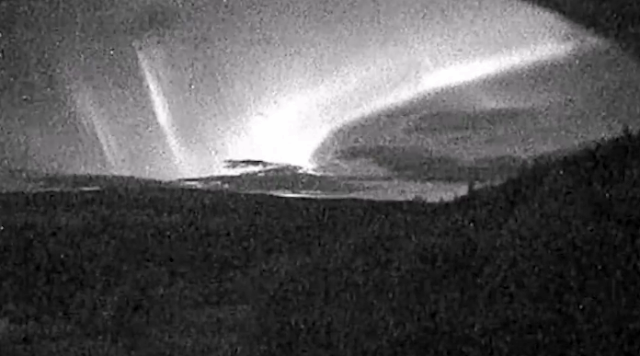
Giant UFO Seen On Live Cam Over Hessdalen, Norway On Sept 26, 2016, Video, UFO Sighting News.

Giant UFO Seen On Live Cam Over Hessdalen, Norway On Sept 26, 2016, Video, UFO Sighting News.

wikileaks%252C%2Bsun%252C%2Bsolar%252C%2BSOHO%252C%2BW56%252C%2Bconspiracy%252C%2BUFO%252C%2BUFOs%252C%2Bsighting%252C%2Bsightings%252C%2Balien%252C%2Baliens%252C%2Bbase%252C%2Bmoon%252C%2Blunar%252C%2BBigelow%2BAerospace%252C%2Bphil%2Bplait%252C%2Bbad%2Bastronomer%252C%2Banomaly%252C%2BMars%252C%2BAnomalies%252C%2Bjapan%252C%2Bjapanese%252C%2BDavid%2BIcke%252C%2BHessdalen%252C%2Bbiology%252C%2BMartian%252C%2Bworld%252C%2B.png
Date of sighting: Sept 26, 2016
Location of sighting: Hessdalen, Norway
Source cam: http://www.hessdalen.org/station/stream2.shtml


Streetcap1 caught this light as it rides the edge of a giant disk hidden in the cloud. Hessdalen is a small valley in the central part of Norway. Ever since 1981 residents of the Valley have been concerned and alarmed about strange, unexplained lights that appeared at many locations in the sky. Since then, thousands of lights were observed, but the Norway Gov refuses to investigate, probably due to them having an agreement with the aliens. Hessdalen is home to an alien base 3-5km deep below the surface, and they are sometimes seen during their exit and entrance into this base.
Scott C. Waring

Streetcap1 states:

I thought these were the Northern Lights at first, maybe they are, but we are looking West from the webcam. I checked about a half hour later and there were no lights, just clear sky. I will link this so you can check live for yourselves and maybe catch something interesting. Streetcap1.

{  http://www.ufosightingsdaily.com/ }

Hoe vind je dit bericht?
Geschreven door peter om 20:49 Stuur door

New video of UFOs over Las Vegas, Nevada 25-Sep-2016

New video of UFOs over Las Vegas, Nevada 25-Sep-2016

las-vegas-ufos

Here’s a new footage of a bright unknown object flashing in the sky above Las Vegas in Nevada. This was filmed on 25th September 2016.

Witness report: 

I shot this video from my backyard in the Summerlin area of Las Vegas, Nevada on the night of September 25, 2016.
It was another clear night last night. Very unusual because earlier the local news weatherman said we were experiencing wind gusts between 40 and 50 miles per hour. The wind wasn’t much of a problem at all on my side of town. I trained the camera on one spot and allowed it to film until the battery ran dead and this is the result. If I had to guess it looks as if there was an object that remained stationary for more than an hour while other objects tended to it for reasons unknown.

Author (Steven Barone @ youtube)

{ http://www.latest-ufo-sightings.net/ }

Hoe vind je dit bericht?
Geschreven door peter om 20:36 Stuur door

Police Thermal Cameras Reveal Invisible UFO Over UK

Police Thermal Cameras Reveal Invisible UFO Over UK

bristol flying saucer

 An unidentified flying object (UFO) that was invisible to the naked eye apparently capable of being seen in footage from a police helicopter.

Police officers piloting a chopper discovered the button-shaped aerial object zipping through the air over the Bristol Channel.

Details posted along with the video revealed that the air traffic control did not detect the mysterious shape, and it was only spotted on thermal cameras.

The cops dismissed obvious suggestions as to what it could be since the UFO had a heat signature and was traveling against the wind.

A police chopper based in St. Athan, a small village in South Wales, reportedly captured the footage, which was later uploaded to its Twitter account.

Information posted to its account revealed the strange craft was discovered flying around 1000 feet up at 9:30 pm on Saturday evening.

Multiple viewers said it was a balloon or Chinese lantern, but these explanations can be ruled out with the heat and movement of the UFO.

Without obvious answers as to what the chopper just recorded on video, many suggested it was aliens.

The police Twitter account indicated that it was not a lantern as it was going into the wind. It adds that they filmed it for over seven minutes, but it ‘s hard to judge the size.

{ http://www.latest-ufo-sightings.net/ }

Hoe vind je dit bericht?
Geschreven door peter om 20:33 Stuur door

New Book Details The English Woman Alien Abduction Experience

New Book Details The English Woman Alien Abduction Experience

ufo-reality-book

A new book by renowned author and UFO expert Roy Dutton will detail a terrifying extraterrestrial experience that happened more than 20 years ago to an English woman.

The Moment Alien Abduction Took Place
Valerie Walters revealed that her alien abduction experience happened at around 1:45 a.m. on July 16, 1981, when she was 26 years old. She was driving home together with two friends Vivienn and Rosemary from a night out in Sheffield, UK.

Walters and her friends began to get terrified after a strange light appeared in their view in the sky. Then they started to get panic after they spotted a huge craft hovering above their car.
After that moment, Walters can’t exactly remember what took place next. She recalled hearing a beeping noise that made her sleepy.

How Aliens Abducted Walters
Walters recalled that her friends were gone, so, she came out of the car to look for them. Strangely, the car suddenly vanished, and she heard an unusual voice telling her not to get afraid.
After listening to the odd voice, Walters said that she felt like being vacuumed. The next thing she recalled was when she was in front of some strange beings.

Walters said that she was in a room, which she described as white and wedge in shape, with a male and female humanoid beings having shoulder length dark hair and blue eyes.

Walters stated that she and her friends reported their terrifying experience to the police, but the case wasn’t taken seriously. She also disclosed that her friends could not recall entirely what had transpired.

{ http://www.latest-ufo-sightings.net/ }

Hoe vind je dit bericht?
Geschreven door peter om 20:29 Stuur door

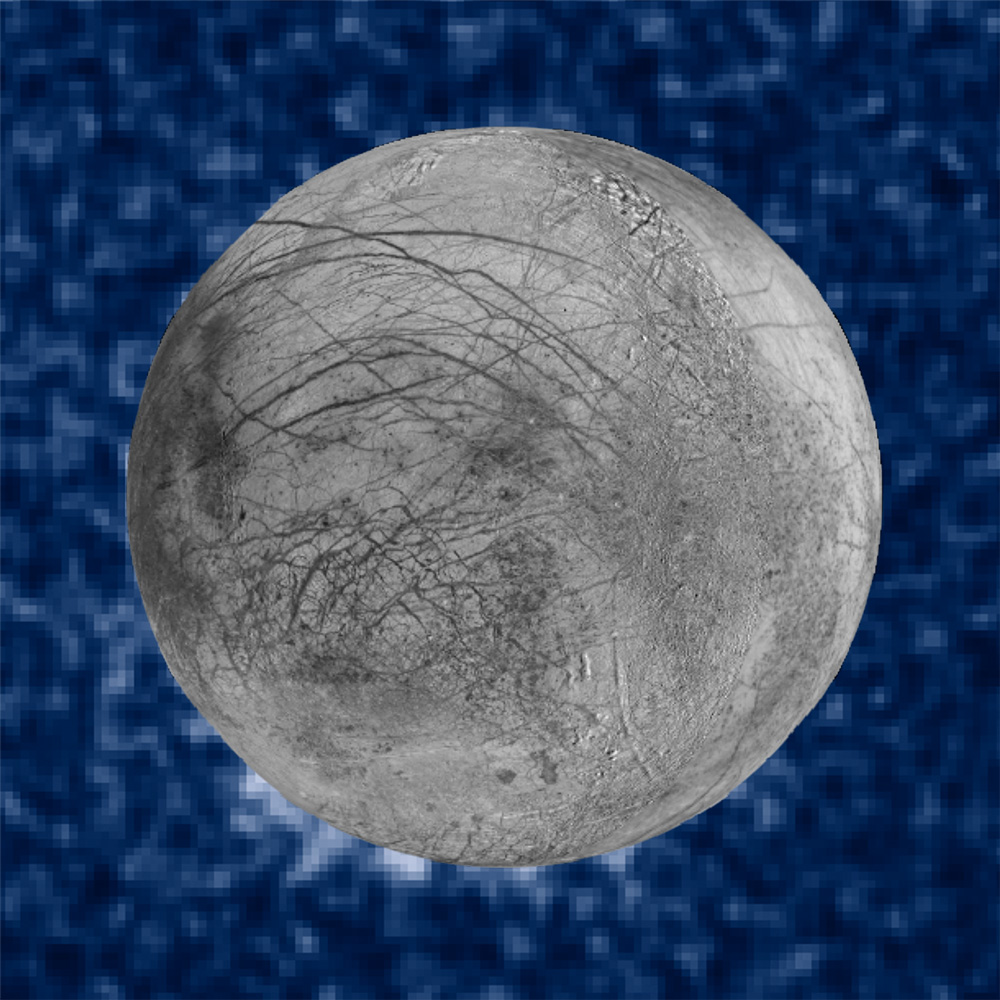
NASA’s Hubble Spots Possible Water Plumes Erupting on Jupiter's Moon Europa

NASA’s Hubble Spots Possible Water Plumes Erupting on Jupiter's Moon Europa

Composite image of Europa superimposed on Hubble data

This composite image shows suspected plumes of water vapor erupting at the 7 o’clock position off the limb of Jupiter’s moon Europa. The plumes, photographed by NASA’s Hubble’s Space Telescope Imaging Spectrograph, were seen in silhouette as the moon passed in front of Jupiter. Hubble’s ultraviolet sensitivity allowed for the features -- rising over 100 miles (160 kilometers) above Europa’s icy surface -- to be discerned. The water is believed to come from a subsurface ocean on Europa. The Hubble data were taken on January 26, 2014. The image of Europa, superimposed on the Hubble data, is assembled from data from the Galileo and Voyager missions.
Credits: NASA/ESA/W. Sparks (STScI)/USGS Astrogeology Science Center

Astronomers using NASA's Hubble Space Telescope have imaged what may be water vapor plumes erupting off the surface of Jupiter's moon Europa. This finding bolsters other Hubble observations suggesting the icy moon erupts with high altitude water vapor plumes.

The observation increases the possibility that missions to Europa may be able to sample Europa’s ocean without having to drill through miles of ice.

“Europa’s ocean is considered to be one of the most promising places that could potentially harbor life in the solar system,” said Geoff Yoder, acting associate administrator for NASA’s Science Mission Directorate in Washington. “These plumes, if they do indeed exist, may provide another way to sample Europa’s subsurface.”

The plumes are estimated to rise about 125 miles (200 kilometers) before, presumably, raining material back down onto Europa's surface. Europa has a huge global ocean containing twice as much water as Earth’s oceans, but it is protected by a layer of extremely cold and hard ice of unknown thickness. The plumes provide a tantalizing opportunity to gather samples originating from under the surface without having to land or drill through the ice.

The team, led by William Sparks of the Space Telescope Science Institute (STScI) in Baltimore observed these finger-like projections while viewing Europa's limb as the moon passed in front of Jupiter.

The original goal of the team's observing proposal was to determine whether Europa has a thin, extended atmosphere, or exosphere. Using the same observing method that detects atmospheres around planets orbiting other stars, the team realized if there was water vapor venting from Europa’s surface, this observation would be an excellent way to see it.

"The atmosphere of an extrasolar planet blocks some of the starlight that is behind it," Sparks explained. "If there is a thin atmosphere around Europa, it has the potential to block some of the light of Jupiter, and we could see it as a silhouette. And so we were looking for absorption features around the limb of Europa as it transited the smooth face of Jupiter."

In 10 separate occurrences spanning 15 months, the team observed Europa passing in front of Jupiter. They saw what could be plumes erupting on three of these occasions.

NASA's Hubble Space Telescope took direct ultraviolet images of the icy moon Europa transiting across the disk of Jupiter. Out of 10 observations, Hubble saw what may be water vapor plumes on three of the images. This adds another piece of supporting evidence to the existence of water vapor plumes on Europa; Hubble also detected spectroscopic signatures of water vapor in 2012.
Credits: Goddard/Katrina Jackson

This work provides supporting evidence for water plumes on Europa. In 2012, a team led by Lorenz Roth of the Southwest Research Institute in San Antonio, detected evidence of water vapor erupting from the frigid south polar region of Europa and reaching more than 100 miles (160 kilometers) into space. Although both teams used Hubble's Space Telescope Imaging Spectrograph instrument, each used a totally independent method to arrive at the same conclusion.

"When we calculate in a completely different way the amount of material that would be needed to create these absorption features, it's pretty similar to what Roth and his team found," Sparks said. "The estimates for the mass are similar, the estimates for the height of the plumes are similar. The latitude of two of the plume candidates we see corresponds to their earlier work."

But as of yet, the two teams have not simultaneously detected the plumes using their independent techniques. Observations thus far have suggested the plumes could be highly variable, meaning that they may sporadically erupt for some time and then die down. For example, observations by Roth’s team within a week of one of the detections by Sparks’ team failed to detect any plumes.

If confirmed, Europa would be the second moon in the solar system known to have water vapor plumes. In 2005, NASA's Cassini orbiter detected jets of water vapor and dust spewing off the surface of Saturn's moon Enceladus.

Scientists may use the infrared vision of NASA’s James Webb Space Telescope, which is scheduled to launch in 2018, to confirm venting or plume activity on Europa. NASA also is formulating a mission to Europa with a payload that could confirm the presence of plumes and study them from close range during multiple flybys.

“Hubble’s unique capabilities enabled it to capture these plumes, once again demonstrating Hubble’s ability to make observations it was never designed to make,” said Paul Hertz, director of the Astrophysics Division at NASA Headquarters in Washington. “This observation opens up a world of possibilities, and we look forward to future missions -- such as the James Webb Space Telescope -- to follow up on this exciting discovery.”

The work by Sparks and his colleagues will be published in the Sept. 29 issue of the Astrophysical Journal.

The Hubble Space Telescope is a project of international cooperation between NASA and ESA (the European Space Agency.) NASA's Goddard Space Flight Center in Greenbelt, Maryland, manages the telescope. STScI, which is operated for NASA by the Association of Universities for Research in Astronomy in Washington, conducts Hubble science operations.

For images and more information about Europa and Hubble, visit:

http://www.nasa.gov/hubble

and

http://hubblesite.org/news/2016/33

{ http://www.nasa.gov / }

Hoe vind je dit bericht?
Geschreven door peter om 01:30 Stuur door

” V ” Shaped Alien Craft Encounter In California

” V ” Shaped Alien Craft Encounter In California


(Before It's News)

article-v-shape-ken-pfeifer-9-26-16 
 
” V ” SHAPED ALIEN CRAFT ENCOUNTER IN CALIFORNIA
 
NOVEMBER 15, 2008 ………………… WEST HILLS CALIFORNIA
 
I have been to untold air shows and really enjoy the most exotic of aircraft and what I saw that friday evening frightened the hell out of me.   I pointed it out to my girlfriend and she asked what it was, I replied, “looks like a friggin’ ufo to me babe!”.   Just between hers and her neighbors house low in the northeastern sky from up here in the foothills an absolutely enormous v shaped craft was lazily headed due north, it’s lack of forward speed almost suggested a lighter than air vehicle if it was a reasonably sized craft, but I knew what I was seeing was either a distorted sense of scale, or this “v” had to be several hundreds of feet across minimum!  There were numerous red lights visible from the lower rear three quarters degree view we had, so we were at it’s “8 o clock low” from it’s vantage.  
As far as the number of lights  I cannot say for certain.  I am now uncertain if they lined the forward leading edge perimeter, or were line abreast, across the bottom surface, (ventral) at right angle to the center line on the v.  There was a reddish glow emeinating or reflecting off of the bottom, almost a shimmering, with some intricate fine detail barely visible underneath through the reddish glow.  I first attributed to reflection from the nearby forrest fire.
There were no visible meansof propulsion evident.  I cannot stress the lumberingly slow movement of this object away from us and when it passed behind a neighbors leafless tree.  I quickly sped 30 feet out of the driveway to gain a better unobstructed vantage again, away from the tree, no more than 5 seconds, it was gone!   I could not see any possible obstruction that could have prevented visual re acquisition.  It just vanished!  
My girlfriend remembers being very aware then of numerous private and light commercial traffic in the sky, as there is always in the vicinity of the Van Nuys airport.  I had this impression as well but feel it was a result of such intense target fixation observing the object then having no stimulus directly forward tends to widen your perception from the tunnel vison we experienced.  We humans are preditors by nature with both eyes fixed forward for expanded depth perception, keyed to movement.  I wish I could say I photographed my sighting, but there are seldom good cameras when you need them around.  I did make a crude animated .Gif file the very next day to try and record the event to the best of my and my gf’s recollection.  I didn’t come forward earlier because I have always scoffed and outwardly derided people who have claimed to have witnessed things like I now have.  I didn’t want to be,”one of those people” but I I am now.  
I’m not going to pilgramage out to roswell or anything or claim abduction stories, but I will share what I saw, and know to be seen by at least me and my girlfriend. Thank god she was there to back me up!  Lastly, this was above a major population area of more than 1.8 million in the valley alone, within easy visual range of one of the busiest private avaition airports in the world, van nuys airport. it doesn’t add up? 
NOTE: The above image is CGI.
 
KEN PFEIFER WORLD UFO PHOTOS AND NEWS
THANKS TO http://ufostalker.com

{ http://beforeitsnews.com/ }

Hoe vind je dit bericht?
Geschreven door peter om 01:16 Stuur door

Father-Of-Two Gardener Stunned To See A UFO Above The Clouds

Father-Of-Two Gardener Stunned To See A UFO Above The Clouds

manchester-ufo

A UFO allegedly soaring high over a busy tram stop stunned a gardener. A father-of-two Peter Lee was out with his daughters on Sunday when they spotted the circular silver shape hovering in the sky in broad daylight.

The trio were waiting to catch a tram when the UFO suddenly appeared at around 2 p.m.  The unidentified object reportedly drifted into sight and left them in awe.

Peter, 57, said that they were watching planes flying overhead as they waited for a tram. Then there was a sudden appearance of the UFO to their view. Peter stated that it was flying higher than some planes, and was moving thousands of feet, very slowly up in the air.

So bizarre for them, Peter made sure he took multiple photos.

Some people who read the news and saw some of Peter’s pictures think it is a helium balloon. However, Peter doesn’t agree because balloons don’t go that high. Peter explained that looking at the pictures would tell that the UFO was right above the clouds.

Peter said that he always brings the Canon camera with him as he loves to take pictures of everything. The father believes he snapped a UFO because it is something that is unidentified and they don’t know its identity.

{ http://www.latest-ufo-sightings.net/ }

Hoe vind je dit bericht?
Geschreven door peter om 00:22 Stuur door

The 18th Century Book Is Believed To Carry Evidence On UFOs Visiting Mankind For Centuries

The 18th Century Book Is Believed To Carry Evidence On UFOs Visiting Mankind For Centuries

ufo-middle-age

A Mathematics Latin textbook that was published in 1716 interestingly shows a UFO emerging from the clouds on the cover.

The UFO looks very similar to the reported unidentified flying objects above the Earth. Thedisc-shaped object is seen above rough seas and below the clouds that produce lightning. The book titled “Liber De Coloribus Coeli, Accedit Oratio Inauguralis De Deo Mathematicorum Principe,” (Amazon link) is written by Johann Caspar Funck.

The book has gained attention after it was republished on Google Books.

Writer Reid Moore shared his findings and speculated the disk shape on the cover is a UFO.

Legends of UFOs started even before the flying saucer stuff became popular.

In the early 20th century, mysterious airships spotted over Britain even prompted Winston Churchill to order a probe.

Moore wrote in his blog that the illustration depicts a classic UFO, and the similarity of it to the current consensus of flying objects makes it even more interesting. He pointed out particularly the rounded shape hovering in a dramatic effect – behind storm clouds and propelled by an electrical phenomenon.

Moore is aware that flying machines have been depicted for centuries in art. However, he still considers the UFO on the book cover unusual considering the 300-year-old date.

The image on the book cover may be the proof that flying saucer UFOs have been here on Earth since the early 1700s or at very least, it is evidence that some people in that time seem to have thought flying saucers visiting Earth, according to Moore.

{ http://www.latest-ufo-sightings.net/ }

Hoe vind je dit bericht?
Geschreven door peter om 00:21 Stuur door

Tennessee Man Witnesses A UFO That He Describes As Orange Line

Tennessee Man Witnesses A UFO That He Describes As Orange Line

usa-ufo

A bright orange line in the sky was spotted by a man in Nashville in Tennessee. The orange line seemed to be two separate lights after zooming in the video recording.

The witness was on a work break when the incident took place. It was at three early in the morning on August 15, 2016, when he noticed a brilliant orange light in the sky, unlike anything he had ever seen in his usual spot for smoking. The brightness of the light caught his attention, as well as the color that appeared like a street light, but way too big.

His first thought was the moon behind cloud cover, but he noticed the moon was directly above him. Furthermore, there wasn’t cloud cover that time. Because it was very dark and the object was far away, the witness could not make out any features on it.

Even after a thorough look, the witness could still not find any details as the lights on the object appeared to cover it. The witness used his phone to record a video of it and after zooming in, he realized the lights were actually two separate lights with a small gap in between. After around a minute, the object started to shrink and turned pure white in a gradual manner. Two minutes later, the object faded away, and the witness lost sight of it.

The unnamed witness reported his sighting to MUFON, and it is filed under case 78626.

Hoe vind je dit bericht?
Geschreven door peter om 00:15 Stuur door

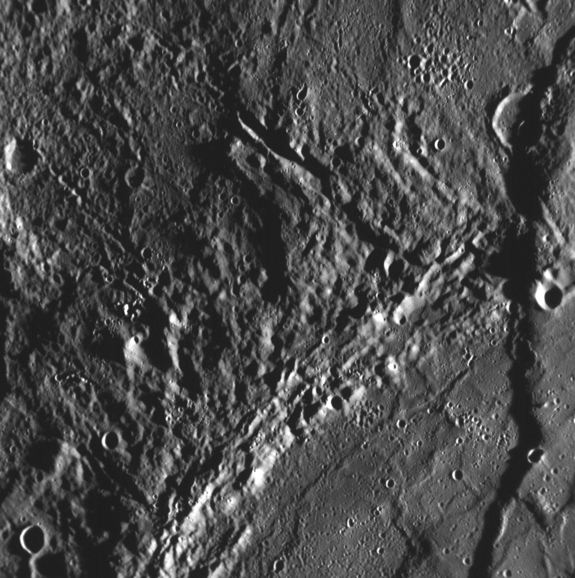
Mercuryquakes May Currently Shake Up the Tiny Planet

Mercuryquakes May Currently Shake Up the Tiny Planet

mercury-surface-map.jpg
Mercury appears to experience quake-like activity as it shrinks, making it tectonically active just like Earth, scientists say.
Credit: NASA/JHUAPL/Carnegie Institution of Washington/USGS/Arizona State University

Mercury may still rumble with earthquakes, or "Mercuryquakes," according to a new study of cliffs on the planet's surface.

The finding suggests that Earth is not the only tectonically active planet, the authors of the research say.

Mercury is the smallest and innermost planet in the solar system, and was a mysterious world until NASA's MESSENGER spacecraft became the first probe to orbit Mercury in 2011. The only other visits it received were the flybys made by NASA's Mariner 10 probe more than 40 years ago. [Photos of Mercury from NASA's Messenger Spacecraft]

Mariner 10 discovered a vast array of large fault scarps, or cliffs, on Mercury, and MESSENGER revealed that the largest of these scarps are more than 600 miles (1,000 kilometers) long and more than 1.8 miles (3 km) high. 

Long, steep cliffs (scarps) on the surface of Mercury hint at the possibility that the planet experiences earthquakes, or
Long, steep cliffs (scarps) on the surface of Mercury hint at the possibility that the planet experiences earthquakes, or "mercuryquakes."
Credit: NASA/Johns Hopkins University Applied Physics Laboratory/Carnegie Institution of Washington

Fault scarps form when rocks are pushed together and thrust upward along faults — or fractures — in a planet's crust. The most widely accepted model of the origin of the large fault scarps on Mercury is that they are essentially wrinkles that formed on the planet's surface as that world's heart cooled over time, leading Mercury to shrink in size. Previous research suggested that Mercury may have contracted by about 1.8 to 8.7 miles (3 to 14 km) in diameter.

During the last 18 months or so of the MESSENGER mission, the spacecraft descended closer to Mercury, helping it to snap pictures of its surface in greater detail. Now scientists have discovered small fault scarps that are less than 6 miles (10 km) long and only up to dozens of feet high.

The new analysis shows that the pristine appearance of these small fault scarps suggests that they are less than 50 million years old. Previous research suggests that older features would get pockmarked with craters from meteoroid impacts.

The young nature of these small fault scarps suggests that Mercury is still experiencing quakes that are likely driven by the continued cooling and shrinking of the planet, said study lead author Thomas Watters, a planetary scientist at the Smithsonian Institution's Center for Earth and Planetary Studies in Washington.

"These faults on Mercury have got to be accompanied by seismic activity," Watters told Space.com.

Comparable scarps are seen on the moon, and four seismometers set up on the moon by the Apollo missions detected moonquakes reaching up to magnitude 5 on the Richter scale. 

"We might expect shallow seismic events of a comparable level on Mercury," Watters said. "We might even see events significantly greater than magnitude 5 with the older, larger scarps."

The seismometers on the moon detected 28 shallow moonquakes ranging from about magnitude 1.5 to 5 on the Richter scale between 1969 and 1977. 

"Mercury has the potential for many more earthquakes than the moon, since it's contracted a lot more than the moon has," Watters said.

It remains a mystery how a planet as small as Mercury has not already cooled down completely and lost all its heat. Instead, Mercury remains warm enough to keep shrinking and to have a molten outer core that has supported a magnetic field for billions of years. 

"The way that terrestrial bodies like Mercury, Earth and even the moon have evolved thermally is emerging as one of the puzzles that researchers need to solve in planetary science," Watters said.

The scientists detailed their findings online today (Sept. 26) in the journal Nature Geoscience.

Follow Charles Q. Choi on Twitter @cqchoi. Follow us @Spacedotcom,Facebook and Google+. Original article on Space.com.

{ http://www.space.com/ }

Hoe vind je dit bericht?
Geschreven door peter om 23:58 Stuur door

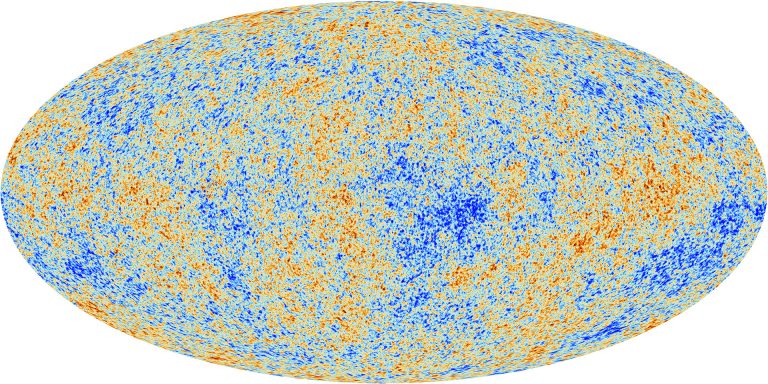
The Universe Is Directionless, Study Finds

The Universe Is Directionless, Study Finds

The Universe Is Directionless, Study Finds
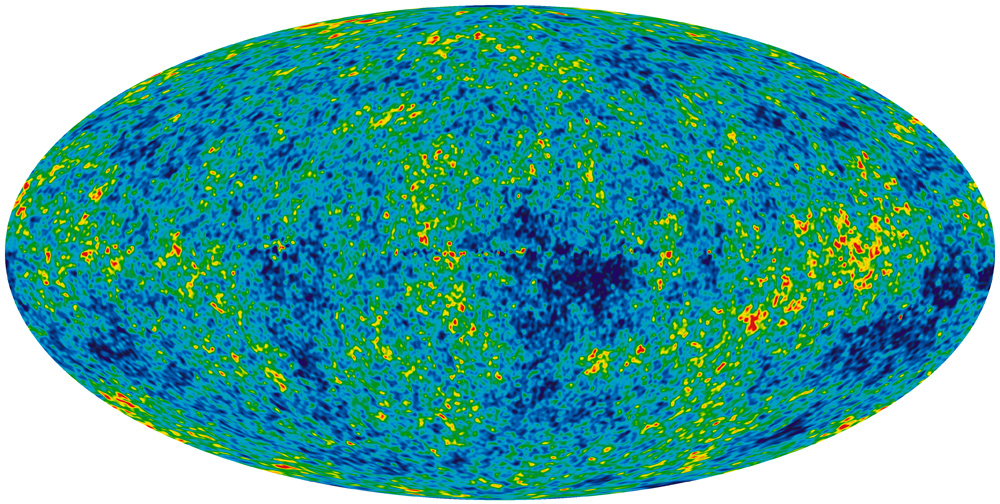
This map, produced using data collected by the Planck satellite, shows a map of the light left over from the big bang. If the universe were not isotropic, scientists think they would find evidence in maps like this one.
Credit: ESA/Planck Collaboration.

The universe, it turns out, looks the same in every direction.

Of course, this isn't true on a "small scale" — the stars, galaxies, dark matter and interstellar gas that fill the universe are strewn about and clumped together in unique ways. But on a much size scale encompassing the entire universe, new research shows the cosmic landscape doesn't have any preferred direction — there's no axis of spin like the Earth, no massive asymmetries that would orient a cosmic traveler.

The new study appears to be the most in-depth attempt to answer this question, which confirms a long-held assumption in physics. In addition, it touches on the idea that Earth does not occupy a special place in the universe by showing that not only is no preferred location in the universe, there is no preferred direction.


Some things in the universe look different depending on where you're standing when you look at them, or from which direction you view them. For example, the Milky Way galaxy is a disk that rotates around a central axis like a record on a turntable. The galaxy looks different depending on where its viewed from, so observers in different places see different things.  But a galaxy is also anisotropic — that is, an observer in one location can look in different directions and will see something different. The stars  located far out in the disk move faster as they whip around the center, compared with stars close to the middle. (This is true for an observer inside the galaxy or outside it).

It's that latter kind of variation that's addressed in the new research paper. If the universe looks the same no matter what direction its viewed from, it's isotropic. If it does have a large-scale dependence on direction, it's anisotropic. 


If the large-scale structure of the universe is anisotropic — different depending on the direction it is viewed from — that feature would have been present from the get-go. 

A tiny fraction of a second after the universe sprang to life in the Big Bang, scientists think the cosmos underwent a period of rapid inflation, like a loaf of bread expanding in the oven. Very small, random "fluctuations" (like air bubbles in the dough) made it so the matter in the universe didn't spread out evenly, at least on small scales; It clumped together to form stars, galaxies and galaxy clusters, while leaving some areas mostly empty. (This clumping is also observed in dark matter, the mysterious substance that makes up about 80 percent of mass in the universe).

But what if the entire loaf of bread was warped, and not just on small scales? For example, what if space-time, the fabric of the universe, was spinning when inflation began? That would certainly affect how a loaf of bread looked when it finished baking, and it would certainly influence how the universe looks today.

For example, the universe is still expanding, albeit slower than it was during inflation. That means new space is being created between stars and galaxies, so these objects are all moving away from each other. If scientists measured the rate of expansion and found that things were moving a little faster in one direction and a little slower in another direction, that would indicate that something was lopsided in the universal fabric. That would be evidence of anisotropy.

If the universe were anisotropic (did not look the same regardless of direction), it would leave an imprint in the cosmic microwave background. This map shows what one such anisotropy might look like (minus the small-scale fluctuations in the light).
Credit: D. Saadeh, S. M. Feeney, A. Pontzen, H. V. Peiris, J. D. McEwen

The universe expanding at different rates in different directions is the simplest way that anisotropy might play out, according to Daniella Saadeh, a graduate student in physics and astronomy at University College London and the lead author of a new research paper that shows the large-scale universe is, in fact, isotropic.

Saadeh and colleagues looked for signs of anisotropy in data from the European Space Agency's Planck satellite, collected between 2009 and 2013, which maps of the oldest light in the universe — the cosmic microwave background, or the light left over from the Big Bang. If the universe were warped or twisted in some way, that light would likely bear some sign of it, according to the authors.

Mathematicians have already pointed out ways in which the universe could have been warped or twisted or formed in some way as to create a directional dependence. Those variations can be deduced from Einstein's theory of relativity. Saadeh and her colleagues used computer models to simulate all the ways the universe could be anisotropic, and what each of how each of those outcomes would leave an imprint on the light collected by the Planck satellite. In order to pull this off, Saadeh and colleagues needed both the high-quality data provided by Planck, as well as computer programs that could run through all the possible ways those tweaks could influence how the CMB looks over the span of the entire universe.

The left panel shows an anisotropic imprint on the cosmic microwave background; the middle panel shows the small-scale variations in the CMB; the right panel shows the combination of those two.
Credit: D. Saadeh, S. M. Feeney, A. Pontzen, H. V. Peiris, J. D. McEwen

"This is a serious challenge, as we found an enormous number of ways the universe can be anisotropic," said Stephen Feeney, a co-author on the paper, who at the time was a postdoctoral researcher at Imperial College London. "It's extremely easy to become lost in this myriad of possible universes — we need to tune 32 dials to find the correct one."

Because the finding is based on statistical analysis, the conclusion is actually expressed as a likelihood: There is a 1 in 121,000 chance that the universe is not the same in all directions. Saadeh says if anyone wants to improve on that number, they'll likely have to wait for another CMB space observatory that is superior to Planck, and nothing of that nature is under construction.

In a statement from the University College London, Saadeh notes that "universes that spin and stretch are entirely possible, so it’s important that we've shown ours is fair to all its directions."

But in fact, the rule book that modern physics follows ― known as the standard model ― assumes that the universe is isotropic, and has no major variations on large scales.

The standard model describes everything scientists know about the world — all the particles that exist in it, the forces that influence those particles, the laws that govern it all. The model also makes predictions; the discovery of the Higgs boson in 2012 had been predicted by the standard model about four decades prior. If Saadeh and colleagues had found evidence that the universe was anisotropic, that would have thrown a wrench in the standard model.

In some ways, that would have been extremely exciting, but Saadeh said in the release:

 "We’re very glad that our work vindicates what most cosmologists assume. For now, cosmology is safe."

Follow Calla Cofield @callacofield.Follow us @Spacedotcom, Facebook and Google+. Original article on Space.com.

{ http://www.space.com/ }

Hoe vind je dit bericht?
Geschreven door peter om 23:44 Stuur door

On Jupiter's Moon Europa, More Tantalizing Signs of Giant Water Plumes

On Jupiter's Moon Europa, More Tantalizing Signs of Giant Water Plumes

On Jupiter's Moon Europa, More Tantalizing Signs of Giant Water Plumes
A suspected water plume erupts from Jupiter's icy moon Europa (visible at the 7 o'clock position at lower left) in this composite image taken by NASA's Hubble Space Telescope on Jan. 26, 2014. NASA unveiled the image on Sept. 26, 2016.
Credit: NASA/ESA/W. Sparks (STScI)/USGS Astrogeology Science Center

Good news on the alien-life-hunting front: The towering plumes emanating from Jupiter's ocean-harboring moon Europa appear to be real.

In late 2012, NASA's Hubble Space Telescope spotted what seemed to be 125-mile-high (200 kilometers) geysers of water vapor erupting from Europa's south polar region. This news was exciting for astrobiologists and space geeks alike, for it suggested that a robotic probe may be able to sample Europa's huge global ocean — which lies beneath the moon's miles-thick icy shell — without even touching down.

The 2012 observation remained a tantalizing outlier for years, however; astronomers failed to find the plume again with Hubble despite repeated attempts. But that long-sought repeat detection has finally been made, scientists announced today (Sept. 26). [Possible Water Vapor Plumes On Europa Spotted by Hubble Again (Video)]

A team led by William Sparks of the Space Telescope Science Institute in Baltimore used Hubble to hunt for Europa plumes on 10 separate occasions over a 15-month span. They had success three times, spotting apparent plume activity in January, March and April of 2014.

"They appear to be real," Sparks said during a news conference today. "The statistical significance is pretty good, and I don’t know of any other natural alternative."

Still, Sparks stopped short of calling the repeat detection a definitive confirmation. The newly announced detections were made when Europapassed in front of Jupiter from Hubble's perspective, and plume material seemed to block ultraviolet light coming from the giant planet. The observations Hubble made are right on the edge of the iconic telescope's capabilities, Sparks said.

"We remain cautious," he said. "The problem is that there may be something we don't understand about the instrument, or about our model of the scene, or what Europa looks like in the ultraviolet light."

Analyzing the Hubble data is also a complex process, which explains why the team is revealing the detections now, more than two years after they were made, Sparks added.

Two images of Europa created in 2012 and 2014 by separate research teams using different observation methods reveal activity at a common location on Europa. The transit image on the left shows dark patches of light absorption in the same spot where researchers later found auroral emission from hydrogen and oxygen, the dissociation products of water.
Credit: NASA, ESA, W. Sparks (left image) L. Roth (right image)

The 2012 detection, which was actually announced in December 2013, was made by a different research group, one led by Lorenz Roth of the Southwest Research Institute in San Antonio. Roth and his colleagues used a different method to spot the apparent plume, but the two teams' observations dovetail nicely; both conclude that the plume is about 125 miles high and centered in Europa's southern reaches.

The plume's likely existence should influence the planning of NASA's Europa mission, which the agency aims to launch in the 2020s. This Jupiter-orbiting mission will make multiple flybys of the moon over the course of several years, in an attempt to learn more about Europa's ocean and its potential to support life as we know it.

"Today's results increase our confidence that water and other materials fromEuropa's ocean — Europa's hidden ocean, hidden under miles of ice — might be on the surface of Europa and available for us to study, without landing and digging through those unknown miles of ice,"said Paul Hertz, director of the Astrophysics Division at NASA Headquarters in Washington, D.C.

This illustration of ridges and fractures on Europa shows one possible way that water could reach Europa’s surface. Chloride salts in the underground ocean bubble up to the moon's frozen surface.
Credit: NASA/JPL-Caltech

The combined Hubble observations also show that the Europa geysers, if they exist, are intermittent phenomena. If scientists learn more about when and why the geysers erupt, it might even be possible for the as-yet-unnamed NASA mission to fly through a Europan plume.

"One of the biggest unknowns we have with these putative plumes is understanding their timing," said Curt Niebur, the Europa program scientist at NASA Headquarters. "And I think the more observations we can get with Hubble and with JWST [the James Webb Space Telescope, which NASA aims to launch in 2018] to better understand that, the better we can use that to construct a schedule for when we search for these plumes at close range from the Europa flyby mission."

Sparks and his team are publishing their results in the Sept. 29 issue of the Astrophysical Journal.

Follow Mike Wall on Twitter @michaeldwall and Google+. Follow us@Spacedotcom, Facebook or Google+. Originally published on Space.com.

EDITOR'S RECOMMENDATIONS

{  http://www.space.com/ }

Hoe vind je dit bericht?
Geschreven door peter om 23:16 Stuur door

What Is “Healthy Skepticism” in Science?

What Is “Healthy Skepticism” in Science?

2014-10-31T185135Z_01_RPR27_RTRIDSP_3_FRANCE-SCIENCE-2528.jpg?uuid=0LYmHGONEeSf3NQ7BT7LTQ 
A researcher, seen through a window, prepares DNA in a laboratory at the Bioaster Technology Research Institute in Lyon.
(Robert Pratta/Reuters)
 
IN BRIEF
Skepticism is a fundamental doctrine for any scientist that asserts nothing should be accepted nor rejected without considerable evidence. Science denial, on the other hand, abjectly refuses to accept established facts.

THROUGH SQUINTING EYES

The exercise of critical thinking has always been one of the core principles in the study of the various scientific fields. It is a skill that is hammered into every aspiring scientist through years of training, mountains of literature, and heaps of experimental data. To this end, each scientist is expected to maintain a certain level of skepticism in performing experiments, and indeed, in the practice of science in general. By being skeptical, one eliminates complacency or bias in research, ideally leading to results that model the real world as closely as possible.

This principle does not apply only in the sciences. In fact, considering how powerful an impact scientific news makes on our day-to-day lives, it makes sense for everyone to adopt a healthy level of skepticism. This entails not only questioning the significance of the results but aspects of the studies themselves. How was it set up? Who conducted it?

It’s important to remember that every study conducted is only an attempt to simulate the real world and replicate things as they are. Since these are only simulations, there are bound to be factors that exist in the real world that are not taken into consideration in the study, and vice-versa  — unavoidable errors that exist purely because of simulation.

THROUGH CLOSED EYES

Taken to the extreme, however, skepticism transforms into denial.

Science denial, says Dennis W.C. Liu from the Howard Hughes Medical Institute, is the “systematic rejection of empirical evidence to avoid undesirable facts or conclusions.” Over the years, the list of contentious issues subject to science denial has grown to a vast list, which includes evolution, holes in the ozone layer, ill effects of genetically modified products, harm in cigarette smoking, etc.

Denialism in science obviously leads to more harm than good. Take Charlie as an example: Charlie doesn’t think that the universe is really 13.8 billion years old. He thinks it is just a few thousand years old. Even though it has been established through a plethora of evidence that the universe is far, far older thank Charlie thinks, Charlie denies this fact, and he reinforces his own beliefs by resorting to “evidence” that has not passed the peer review process. Charlie may even speak of collusions and say that people are covering up “real” evidence. Charlie cannot prove any collusion or coverups. Thus, Charlie rejects evidence provided by actual experts and supplements it with his own, private conclusions.

In short: Healthy skepticism demands evidence. Denialism rejects sound evidence when it is provided.

To this end, in general, we should favor the result with more evidence and choose the answer that has been intensively and repeatedly verified by many. At the same time, scientists and researchers should not favor provocative results over standard (and far more likely) ones.

A healthy level of skepticism in science is by no means easy to achieve, but it should be something towards which everyone strives.

Hoe vind je dit bericht?
Geschreven door peter om 23:01 Stuur door

Hubble ziet mogelijk waterpluimen op Jupiters maan Europa

{ http://www.scientias.nl/ }

Hoe vind je dit bericht?
Geschreven door peter om 22:39 Stuur door

Wat heeft NASA ontdekt op de maan Europa?

Hoe vind je dit bericht?
Geschreven door peter om 22:30 Stuur door

De possibles geysers de vapeur d'eau sur une lune de Jupiter

De possibles geysers de vapeur d'eau sur une lune de Jupiter

De possibles geysers de vapeur d'eau sur une lune de Jupiter
Vision artistique de la NASA obtenue le 12 mars 2015 de la lune de Jupiter Ganymède

Espace: la Nasa a détecté de possibles geysers de vapeur d'eau à la surface gelée d'une des lunes de Jupiter, sous laquelle se trouve un océan

Des astronomes de la Nasa ont annoncé lundi avoir détecté ce qui paraît être des geysers de vapeur d'eau à la surface gelée d'Europe, une des lunes de Jupiter, sous laquelle se trouve un océan.

Ces observations, effectuées à l'aide des émissions de rayons ultraviolets du télescope spatial Hubble, accroissent la possibilité de recueillir des échantillons de cette eau et glace sans avoir à poser un robot sur la surface d'Europe et à faire des forages.

"L'océan d'Europe est considéré comme l'un des endroits les plus prometteurs dans le système solaire, où la vie pourrait potentiellement exister", a souligné Geoff Yoder, directeur par intérim de la Nasa pour la science.

"Ces geysers, si leur existence est confirmée, pourraient offrir un autre moyen d'obtenir des échantillons de l'eau se trouvant sous la glace", a-t-il ajouté.

Ces jets atteignaient environ 200 kilomètres d'altitude, faisant retomber apparemment des matériaux sur la surface de la lune. 

Au cours de dix observations du passage d'Europe devant Jupiter, effectuées sur une période de quinze mois, ces scientifiques ont pu apercevoir à trois reprises ce qui paraît être des geysers, ont précisé les scientifiques, dont William Sparks, un astronome du Space Telescope Science Institute à Baltimore.

Sans pouvoir affirmer avec certitude qu'il s'agit bien de jets de vapeur d'eau, ces astronomes jugent ces probabilités "substantielles".

En 2012, une autre équipe scientifique dirigée par Lorenz Roth, du Southwest Research Institute à San Antonio, avait déjà détecté de la vapeur d'eau jaillissant de la surface d'Europe dans la région du pôle sud, atteignant 160 km dans l'espace. 

Les deux équipes ont utilisé le même instrument d'Hubble pour leurs observations, un spectographe, mais des méthodes totalement différentes, et sont arrivés à la même conclusion.

Si ces observations de geyser sont confirmées, Europe serait la deuxième lune dans le système solaire connue pour avoir de tels phénomènes.

En 2005, la sonde Cassini de la Nasa avait détecté des jets de vapeur d'eau sortant de la surface d'Encelade, une des lunes de Saturne.

Europe contient un vaste océan contenant deux fois plus d'eau que tous les océans terrestres réunis, mais il se trouve sous une croute de glace extrêmement froide et très dure, dont l'épaisseur est à ce stade inconnue.

Cette dernière observation sera publiée dans la prochaine édition de la revue américaine Astrophysical Journal.

{ http://r.orange.fr }

Hoe vind je dit bericht?
Geschreven door peter om 21:51 Stuur door

La Nasa pourrait confirmer l'existence d'un océan sur une lune de Jupiter

La Nasa pourrait confirmer l'existence d'un océan sur une lune de Jupiter

La Nasa pourrait confirmer l'existence d'un océan sur une lune de Jupiter
Vision artistique de la NASA obtenue le 12 mars 2015 de la lune de Jupiter Ganymède

Espace: la Nasa dévoilera de nouvelles "indications surprenantes d'activité" sur une lune de Jupiter pouvant confirmer la présence d'un océan

L'agence spatiale américaine doit dévoiler lundi de nouvelles "indications surprenantes d'activité" sur Europe, une lune de Jupiter, pouvant confirmer la présence d'un océan sous son épaisse couche de glace qui offrirait des conditions propices à l'existence de la vie.

Ces résultats d'une campagne d'observations avec le télescope spatial Hubble devaient être présentés lors d'une conférence de presse à partir de 18H00 GMT.

La Nasa n'a fourni aucun détail supplémentaire sur cette présentation très attendue à laquelle doivent notamment participer Paul Hertz, directeur de la division astrophysique de la Nasa, et William Sparks, un astronome au Space Telescope Science Institute de Baltimore.

Selon les scientifiques, Europe --l'une des 67 lunes de Jupiter-- est "l'endroit de notre système solaire où il est actuellement le plus probable de trouver de la vie" en dehors de la Terre. 

De précédentes observations de la Nasa avaient déjà détecté sur cette lune jovienne des indices de la présence d'un océan d'eau liquide de près de cent kilomètres de profondeur sous une épaisse couche de glace, ouvrant la possibilité à l'existence d'une vie microbienne.

"Le cycle de l'oxygène et de l'hydrogène constitue un moteur important de la chimie de l'océan d'Europe et donc de la vie qui pourrait y exister, exactement comme sur la Terre", concluait Steve Vance du Jet Propulsion Laboratory (JPL) de la Nasa, dans une étude publiée en mai par la revue américaine Geophysical Research Letters.

Ses recherches avaient permis de constater que les proportions de ces deux éléments clé pour l'apparition de la vie étaient comparables dans les océans terrestres et sur Europe. A savoir que la production d'oxygène est environ dix fois supérieure à celle d'hydrogène.

Les observations avec Hubble des rayonnements ultraviolets pourraient conforter ces conclusions, ainsi que des mesures effectuées pour évaluer la quantité de carbone, d'azote, de phosphore et de soufre sur Europe.

La Nasa avait annoncé en 2015 une mission robotique vers Europe d'ici 2020, et précisé en mai dernier la sélection de neuf instruments à bord du vaisseau spatial.

- Océan sub-glaciaire sur Ganymède -

Des scientifiques avaient aussi annoncé en 2015 avoir détecté, également grâce à Hubble, un vaste océan d'eau salée sous l'épaisse croûte glacée de Ganymède, la plus grosse des lunes de Jupiter. 

La sonde américaine Galileo, qui avait exploré Jupiter et ses lunes de 1995 à 2003, avait détecté pour la première fois des indices de la présence de vastes océans sur Europe et sur Ganymède. 

Cette découverte d'eau liquide multiplie les pistes de recherche de l'existence de vie extraterrestre dans le système solaire, soulignait alors la Nasa.

Selon les scientifiques, l'océan sub-glaciaire de Ganymède est profond d'une centaine de kilomètres, dix fois plus que ceux de la Terre, et est enterré sous une croûte de 150 kilomètres d'épaisseur formée pour l'essentiel de glace.

Dès les années 1970, les planétologues soupçonnaient que Ganymède, découverte en 1610 par Galilée, pourrait posséder un océan.

C'est en observant le mouvement des aurores boréales sur Ganymède et sur Jupiter que les scientifiques ont pu déterminer l'existence d'un vaste océan d'eau salé qui affecte le champ magnétique de cette lune. 

Etant donné que l'eau salée est meilleure conductrice d'électricité que l'eau plate, le mouvement de l'océan influence le champ magnétique, expliquait la Nasa.

De son côté, l'Agence spatiale européenne (ESA) doit envoyer sa première sonde, baptisée Juice, en 2022 pour étudier Jupiter et ses lunes. 

Juice (JUpiter ICy moons Explorer) devrait être lancée par une fusée Ariane 5 depuis Kourou en Guyane française.

{  http://r.orange.fr }

Hoe vind je dit bericht?
Geschreven door peter om 21:41 Stuur door

VIDEO: “Aliens plegen mijnbouw op de maan”

VIDEO: "Aliens plegen mijnbouw op de maan"

VIDEO: “Aliens plegen mijnbouw op de maan”

De Fin Mark Sawalha heeft op het maanoppervlak een ongewoon object gespot dat volgens hem zou kunnen wijzen op het bestaan van buitenaards leven. Op een foto, die is gemaakt door NASA’s Lunar Reconnaissance Orbiter, lijkt een smalle structuur te staan.

“Dit zou de antenne van een ondergrondse buitenaardse basis kunnen zijn, omdat zich onder deze naald een plateau bevindt,” vertelde hij aan de Sun Online. “Ik denk dat er ook mijnbouw wordt gepleegd op de maan. Buitenaardsen gebruiken maanmineralen en hebben daar ook bases. Veel andere vondsten ondersteunen deze theorie.”

“De NASA is hiervan op de hoogte, maar kiest ervoor om dit soort dingen niet te publiceren,” vervolgde hij. “Dat is misschien ook de reden waarom ze sinds het Apolloprogramma geen nieuwe missies naar de maan hebben georganiseerd.”

Eerder dit jaar werd een soortgelijk object ontdekt op de maan, maar volgens een wetenschapper van de Lunar Orbiter-missie was dat een optische illusie.

De Britse oud-sportverslaggever David Icke suggereerde onlangs nog dat de maan in werkelijkheid een reusachtig ruimteschip is dat is achtergelaten door een oude beschaving. Hij zei dat de maan fungeert als een soort Ark van Noach en ooit misschien een hele beschaving huisvestte.

[The Sun]

Hoe vind je dit bericht?
Geschreven door peter om 21:26 Stuur door

UFO Shows UP To Catch UK Air Show And Surprises Spectators, Photos, UFO Sighting News.

UFO Shows UP To Catch UK Air Show And Surprises Spectators, Photos, UFO Sighting News.

wikileaks%252C%2BEngland%252CUK%252C%2Bconspiracy%252C%2BUFO%252C%2BUFOs%252C%2Bsighting%252C%2Bsightings%252C%2Balien%252C%2Baliens%252C%2Bbase%252C%2Bmoon%252C%2Blunar%252C%2BBigelow%2BAerospace%252C%2Bphil%2Bplait%252C%2Bbad%2Bastronomer%252C%2Banomaly%252C%2BMars%252C%2BAnomalies%252C%2Bjapan%252C%2Bjapanese%252C%2BDavid%2BIcke%252C%2Bartifact%252C%2Bbiology%252C%2BMartian%252C%2Bworld%252C%2B2.png

Date of sighting: 2013 but reported Sept 25, 2016
Location of sighting: Scarborough, UK
Source: MUFON #79384

This UFO was reported today at MUFON, but it occurred back in 2013. It shows a dark disk flying past a jet stream in the air, which seems to be analysing the pollutants from the jets. UFOs are often attracted to aircraft, because they have the newest in flight technology and seeing the jets show off their capabilities is of high interest to some aliens. This way they can accurately predict when we will have public space craft carrying us from planet to planet. Algorithms predicting the future...they rely on this too much, and one day, we may too.

Scott C. Waring

Eyewitness states:

My father in law was watching an display team flying in formation over the north bay in Scarborough, UK. He took a few shots with his iPhone and when he reviewed them later that day he noticed the object in the picture. He did not notice it at the time and it did not show up in any other frames. I imported the picture into iPhoto on my Mac and was able to enlarge the image to show the approx size and shape in more detail. There was many other people watching the display and it is highly likely that this object was caught by another person with a camera.

wikileaks%252C%2BEngland%252CUK%252C%2B%252C%2Bconspiracy%252C%2BUFO%252C%2BUFOs%252C%2Bsighting%252C%2Bsightings%252C%2Balien%252C%2Baliens%252C%2Bbase%252C%2Bmoon%252C%2Blunar%252C%2BBigelow%2BAerospace%252C%2Bphil%2Bplait%252C%2Bbad%2Bastronomer%252C%2Banomaly%252C%2BMars%252C%2BAnomalies%252C%2Bjapan%252C%2Bjapanese%252C%2BCIA%252C%2BFBI%252C%2BNews%252C%2Bface%252C%2Blife%252C%2Bbiology%252C%2BMartian%252C%2Bworld%252C%2B3.png
wikileaks%252C%2BEngland%252CUK%252C%2B%252C%2Bconspiracy%252C%2BUFO%252C%2BUFOs%252C%2Bsighting%252C%2Bsightings%252C%2Balien%252C%2Baliens%252C%2Bbase%252C%2Bmoon%252C%2Blunar%252C%2BBigelow%2BAerospace%252C%2Bphil%2Bplait%252C%2Bbad%2Bastronomer%252C%2Banomaly%252C%2BMars%252C%2BAnomalies%252C%2Bjapan%252C%2Bjapanese%252C%2BDavid%2BIcke%252C%2Bface%252C%2Blife%252C%2Bbiology%252C%2BMartian%252C%2Bworld%252C%2B1.jpg

{ http://www.ufosightingsdaily.com/ }

Hoe vind je dit bericht?
Geschreven door peter om 21:07 Stuur door

UFO Giving Off Heat Signature Seen Flying Against Wind By Wales Police Helicopter, Sept 2016, Official Video, UFO Sighting News.

UFO Giving Off Heat Signature Seen Flying Against Wind By Wales Police Helicopter, Sept 2016, Official Video, UFO Sighting News.

infrared%252C%2BWales%252C%2BUK%252C%2BCIA%252C%2Bmilitary%252C%2BUFO%252C%2BUFOs%252C%2Bsighting%252C%2Bsightings%252C%2BClinton%252C%2Bobama%252C%2Blazar%252C%2Bbob%252C%2BCIA%252C%2Bfrance%252C%2Borb%252C%2Busaf%252C%2Bdisclosure%252C%2Bpluto%252C%2Bspace%252C%2Bsky%252C%2Bhunter%252C%2Bproject%2BAurora%252C%2B43.png

infrared%252C%2BWales%252C%2BUK%252C%2Bmissle%252C%2Bmilitary%252C%2BUFO%252C%2BUFOs%252C%2Bsighting%252C%2Bsightings%252C%2BClinton%252C%2Bobama%252C%2Blazar%252C%2Bbob%252C%2BCIA%252C%2Bfrance%252C%2Borb%252C%2Busaf%252C%2Bdisclosure%252C%2Bpluto%252C%2Bspace%252C%2Bsky%252C%2Bhunter%252C%2Bproject%2BAurora%252C%2B42.png

Date of sighting: Sept 16, 2016
Location of sighting: Bristol, Wales, UK
News source: NPAS Twitter account

I just got this over Twitter a few minutes ago. The police helicopter over Brisitol, Wales recorded a dark round UFO with infrared heat vision this week. It was confusing to them because it was moving against the wind and did have a heat signature. They even tried to switch to day time color camera, but it was not visible and could only be seen with the infrared camera. As I have said many times before, many UFOs have a cloak that can only be seen with an IR converted camera, the same ones that are seen on Ebay (click here to view). The UFO was seen over the Bristol Channel and probably came from below the water. I am confident if the police continued to follow it, they would see it disappear under the water to return to the alien base it came from. 
Scott C. Waring

infrared%252C%2BWales%252C%2BUK%252C%2Bblack%2Bopps%252C%2Bmilitary%252C%2BUFO%252C%2BUFOs%252C%2Bsighting%252C%2Bsightings%252C%2BClinton%252C%2Bobama%252C%2Blazar%252C%2Bbob%252C%2BCIA%252C%2Bfrance%252C%2Borb%252C%2Busaf%252C%2Bdisclosure%252C%2Bpluto%252C%2Bspace%252C%2Bsky%252C%2Bhunter%252C%2Bproject%2BAurora%252C%2B44.png


infrared%252C%2BWales%252C%2BUK%252C%2Bdrone%252C%2Bmilitary%252C%2BUFO%252C%2BUFOs%252C%2Bsighting%252C%2Bsightings%252C%2BClinton%252C%2Bobama%252C%2Blazar%252C%2Bbob%252C%2BCIA%252C%2Bfrance%252C%2Borb%252C%2Busaf%252C%2Bdisclosure%252C%2Bpluto%252C%2Bspace%252C%2Bsky%252C%2Bhunter%252C%2Bproject%2BAurora%252C%2B41.png

Eyewitness states:
Any suggestion?? Nothing seen by local ATC... 👽??
Our clock is out by 1hr so it was pitch black. tried on day camera, nothing seen. this clip is just a small part of the vid.

It was on Saturday night about 21:30 and was spotted over the Bristol channel at approx 1000ft

Really difficult to judge the size but we filmed it for just over 7 minutes as we were coming back into land.

Only slight problem is the amount of heat and it was travelling into wind?

We really don't know but doubt it was a lantern as it was going into the wind.. 


{  http://www.ufosightingsdaily.com/ }

Hoe vind je dit bericht?
Geschreven door peter om 21:02 Stuur door

Flying Saucers to Mind Control: 7 Declassified Military & CIA Secrets

Hoe vind je dit bericht?
Geschreven door peter om 23:54 Stuur door

De opvallende rol van maan en getijden bij zware aardbevingen - HLN.be

De opvallende rol van maan en getijden bij zware aardbevingen - HLN.be

Bron: LA Times

media_xll_9101278.jpg

© thinkstock.

WETENSCHAP Hoe komt het dat sommige kleine aardbevingen uitgroeien tot grote en andere niet? Dat is een kwestie waar wetenschappers weer een iets beter beeld van hebben gekregen na een studie over de invloed van de maan en de getijden. Het onderzoek staat in het vakblad Nature Geosciences.

Lees ook

De wetenschappers namen de periodes onder de loep waarin sprake is van 'hoge getijdenstress', een fenomeen dat twee keer per maand plaatsvindt tijdens volle maan en nieuwe maan. De zee komt dan het verst bij vloed en trekt zich ook het verst terug bij eb. Die bewegingen van die enorme hoeveelheid zeewater zet meer druk op breuklijnen.

media_xll_9101315.jpg Een satellietbeeld van de tsunami die Zuidoost-Azië trof op 29 december 2004. © afp.

Klein duwtje

media_l_9101338.jpg In het Japanse district Fukushima werden onlangs de vijfde verjaardag van de tsunami en de kernramp die erop volgde, herdacht. © epa.

Die druk kan een van de oorzaken zijn dat kleine aardbevingen heel groot worden. Kàn, want er spelen nog veel andere factoren mee. Maar de druk van de getijden kan een kleine breuk net dat kleine duwtje geven om uit groeien tot een enorme scheur, luidt de theorie. 

De aardbevingen die enorme tsunami's veroorzaakten in 2004 in Zuidoost-Azië en in 2010 in Chili hadden een kracht van respectievelijk 9,1 en 8,8. Ze vonden allebei plaats nabij een volle maan, dichtbij de piek van de getijdenstress.

Eerdere studies suggereerden ook een invloed van de getijden op massief gesteente. Een onderzoek van eerder deze zomer wees op een mogelijk verband met kleine bevingen diep onder de grond langs de San Andreas-breuklijn in het Californische Monterey County.

media_xll_9101279.jpg © thinkstock.

Slechts een factor

media_l_9101342.jpg De schade na de tsunami in 2011 was verschrikkelijk. © reuters. media_l_9101341.jpg © epa.

Uiteraard zijn de getijdenkrachten niet de belangrijkste oorzaak van het ontstaan van aardbevingen. Die ontstaan voornamelijk doordat de tektonische platen van de Aarde tegen elkaar duwen en schuren. Daardoor neemt de druk toe op de breuklijnen, tot die zo hoog wordt dat hij plots vrijkomt in de vorm van een aardbeving.

Zo ontstaan ook veel aardbevingen wanneer er weinig druk is van de getijden, zegt Satoshi Ide, hoofdonderzoeker van de studie en professor seismologie aan Universiteit van Tokio. "Aardbevingen zijn bijna een willekeurig proces", aldus Ide. "Getijdenkrachten zijn slechts een element in een ingewikkeld proces. Er zijn nog veel andere factoren."

Een theorie gaat ervan uit dat alle aardbevingen klein starten op dezelfde manier. Of ze blijven groeien, hangt dan af van andere factoren die ze tegenkomen, zoals getijdenstress. Een andere theorie stelt daarentegen dat er een wezenlijk verschil is tussen het ontstaan van grote en kleine aardbevingen.

media_xll_9101293.jpg © thinkstock.

Nut

media_l_9101339.jpg © ap.

Het onderzoek kan niét helpen bij betere voorspellingen van het tijdstip en de plaats waar aardbevingen zullen toeslaan. Maar dergelijke studies kunnen wetenschappers wel helpen begrijpen hoe en waarom grote bevingen voorkomen. 

En zo kunnen ze de snelheid en precisie van waarschuwingssystemen verbeteren die alarm slaan meteen na het ontstaan van een beving. De huidige systemen kunnen namelijk wel goed de impact van gematigde aardbevingen inschatten, maar schieten tekort voor de grote.

Het Japanse waarschuwingssysteem had de intensiteit van de aardbeving van 2011 in hoofdstad Tokio bijvoorbeeld onderschat. Een beter begrip van wat een aardbeving groot maakt, zou dus vooral meteen na het ontstaan ervan een grote vooruitgang zijn.

{ http://www.hln.be/ }

Hoe vind je dit bericht?
Geschreven door peter om 23:22 Stuur door

U-2 Spy Plane Crash: Why 'Cold War' Aircraft Are Still Relevant Today

U-2 Spy Plane Crash: Why 'Cold War' Aircraft Are Still Relevant Today


u-2-spy-plane.jpeg
One of the U.S. Air Force's Lockheed U-2 Dragon Lady.
Credit: U.S. Air Force

A U-2 spy plane that crashed in northern California earlier this week, killing one of the two pilots, focused attention on a normally clandestine aspect of the U.S. military. The U-2 plane has a long and storied history that stretches back to the late 1950s, but how is the reconnaissance aircraft used today?

U-2 planes have been flown by the United States and other nations for more than 60 years, as both a spy plane and an instrument of science. They key to the aircraft's longevity is its robust and efficient design, said Richard Aboulafia, vice president of analysis at Teal Group Corp., which conducts research and analysis on the aerospace and defense industry. He added that Clarence "Kelly" Johnson, the man who designed the U-2, "got it right."

"Those designers at the Lockheed Skunk Works deserve their legendary status," Aboulafia told Live Science. [Supersonic: The 11 Fastest Military Airplanes]

What sets the U-2 apart is its ability to fly higher than any other aircraft for long periods, which is what makes it a good spy plane, he said.

And spy planes are still relevant today, even in the age of satellites. "Satellites are an additional layer," Aboulafia said. "But they can't be retargeted quickly. They are in whatever orbit and they can't be moved, and they are easily blocked by bad weather." Spy planes, on the other hand, have a lot more flexibility. "They can be easily moved from one part of the Earth to another, at any time," Aboulafia said.

By the time the first U-2 flew in 1955, the problem of gathering intelligence was becoming more acute. Spy planes were in operation as far back as World War I, when aircraft were used to take photos of enemy positions. But during the Cold War, the U.S. government wanted a way to fly over what was then the Soviet Union without being detected or shot down.

In fact, the U.S. had been flying spy planes into the USSR as early as the 1940s, according to Gregory Pedlow and Donald Walzenbach, authors of "The Central Intelligence Agency and Overhead Reconnaissance: The U-2 and OXCART Programs, 1954-1974" (Military Bookshop, 2013).

Pedlow and Walzenbach said the USSR didn't have complete radar coverage of its borders or interior at that time, and modified B-47 bombers would fly in to take photos of sensitive targets, and then fly out. Moscow protested these flights but didn't shoot any down (though they fired warning shots). That changed in 1950, when the USSR shot down a U.S. plane over the Baltic Sea. Later that year, with the outbreak of the Korean War, Moscow adopted a policy of shooting down aircraft that violated its airspace. [Flying Saucers to Mind Control: 7 Declassified Military & CIA Secrets]

The U.S. Air Force asked aircraft companies to submit designs for a plane that could reach altitudes of 65,000 to 70,000 feet (20,000 to 21,300 meters), and just as important, be able to stay there for long periods. One of the changes to previous designs was that the plane didn't have to be equipped with the heavy armor or weaponry that were the hallmarks ofmilitary planes before, Pedlow and Walzenbach wrote. — Such specifications added weight, and made it more difficult to design a plane that could fly high enough.

It was Johnson's design that won out. To make the plane efficient at high altitudes, he adopted long and straight wings rather than a swept-back design, to improve lift at relatively low speeds (for a jet). The airframe also wasn't as strong or as heavy as the usual military-grade models, allowing for higher flight with less fuel. Johnson's design also dispensed with conventional landing gear and a pressurized cabin.

The U-2 was introduced into military service in 1957. Even after the USSR shot down one of the planes in 1960, the aircraft was still used in a number of conflicts such as the Vietnam War, providing intelligence to the U.S. and its allies. (The Christian Scence Monitor reported that a U-2 was even stationed in Cyprus in 2011, to monitor the no-fly zone established in Libya). In 1971, NASA started using U-2s as part of the agency's Earth Resources Aircraft program, flying the plane over the United States to gather scientific data. While NASA no longer uses the original U-2 model, a modified U-2, called the ER-2, still flies for the agency.

The first U-2s carried large-format cameras, but the sensors on board have grown much more sophisticated over the years, as have the controls. The engines, avionics and surveillance equipment have all been updated as technology has improved.

"You can fit a lot more [monitoring instruments] on them now than you could then," Aboulafia said. [7 Technologies That Transformed Warfare]

According to the U.S. Air Force, the U-2 carries an "electro-optical infrared camera, optical bar camera, advanced synthetic aperture radar, signals intelligence and network-centric communication" for reconnaissance flights.

But the U-2 is still a notoriously difficult aircraft to fly, Aboulafia said, even though the only remaining part from the 1950s version of the plane is the airframe.

The U-2 still conducts reconnaissance missions; there are two flying in the Middle East on any given day to monitor the Islamic State, reported the Los Angeles Times. The plane flies high enough to "peer in" to airspaces where they might not be allowed, as it's no longer a good assumption that radar can't detect the planes or that a surface-to-air missile can't hit them. (Although, the kind of missile that could reach a U-2 is more likely to be in the repertoire of a major military power than a small group of militants in a remote area, Aboulafia noted.)

In September 2015, 60 years after the U-2 was introduced, Lockheed Martin said it would unveil a replacement for the venerable spy plane, called the TR-X. According to a report from Defense News, the Air Force hasn't formally committed to it, though there is a plan to retire the U-2 in 2019. That may not happen, though, as the U-2 has already outlasted some of the planes that were supposedly more advanced, including theLockheed SR-71, which could reach similar altitudes and travel at 3.5 times the speed of sound. The SR-71 was retired in 1998 because it was too expensive to fly regularly.

Original article on Live Science.

{ http://www.livescience.com/ }

Hoe vind je dit bericht?
Geschreven door peter om 23:00 Stuur door

Ancient Cult Site in Rugged Mountains Revealed with Drones

Ancient Cult Site in Rugged Mountains Revealed with Drones

Ancient Cult Site in Rugged Mountains Revealed with Drones
Interpretation of where an ancient sites might be in an aerial drone photo taken in the Le Pianelle area.
Credit: A. Hamel.

Ancient Roman ruins that lie hidden below the surface at the Apennine Mountains of Italy have largely escaped discovery because the rugged terrain makes them difficult to spot by foot and dangerous to find by airplane.

Now, using small airborne drones, archaeologists have found that an ancient settlement in the Apennines was much more dense and organized than previously thought, a new study reveals. The study offered evidence that dronescould help uncover more unknown sites in mountains worldwide.

Scientists investigated the area of Le Pianelle in the Tappino Valley in the mountainous southern Italian region of Molise. This area was known as Samnium in antiquity. [7 Bizarre Ancient Cultures That History Forgot]

"The way this mountain society was organized remains poorly understood," said study author Tesse Stek, a Mediterranean archaeologist at Leiden University in the Netherlands.


drone-photo-le-pianelle.jpg?1474461918?interpolation=lanczos-none&downsize=*:1400
Aerial drone photo of the Le Pianelle area in the Apennine Mountains of Italy. A grid of features is visible in the middle of the picture.
Credit: T.D. Stek.

Previously, construction accidentally unearthed two ancient temples in the area. However, "there was no good knowledge about other sites, such as villages, farms, villas, graveyards and so on, that could tell us more about the ancient inhabitants in the area that visited the cult sites," Stek told Live Science. "They seemed to be cathedrals in the desert, so to say."  [5 Surprising Ways Drones Could Be Used in the Future]

One theory is that these temples served as road stations and places of commerce along routes where sheep, cattle, goods and information traveled. Another theory suggests that these temples marked the frontier of a large state, such as the territory of the ancient Samnites.

Archaeologists might want to conduct aerial surveys to help discover anyruins hidden beneath the surface. These require slow, low-altitude flights where researchers can take pictures of sites from the right angles and with the right lighting reveal ancient complexes.

For instance, on farmland, ancient walls may present themselves "as stripes where the grain is lower," Stek said. "Sometimes this is hard to see from a distance, but it becomes especially visible when the sun is low, and shadow effects enhance the differences in corn height."

However, in rugged terrain, "flying low is very difficult, dangerous, and time-costly," Stek said. "In the mountainous, fragmented area where we work, previously normal aerial archaeology had not had success.

"Drones now change the picture completely," Stek said. "They offer a fast and entirely noninvasive method for discovering and mapping sites hidden in the ground." [Photos: Drones Explore Mysterious Plain of Jars Site]

In 2013, 2014 and 2015, the researchers investigated Le Pianelle using small commercial DJI Phantom quadcopter drones with cameras capable of taking photos both downward and from the side. The scientists remotely programmed the drones with flight plans to examine areas where researchers had discovered artifacts on foot.

The main advantage of using drones "is that you can choose very precisely which angle to take photos at the time you want," Stek said. "You can wait for the exact right moment in a specific field, make a flight of, say, 10 to 20 minutes' length, and take photos from all directions. With a normal airplane, you would need to be very lucky to catch the right moment, or you'll fly too high for good visibility or resolution, or the moment may not be right."

The elements made drone-flying difficult at times. "We actually lost one drone during a long, automated flight due to strong winds in a narrow valley," Stek said.

Despite such challenges, the drones helped reveal what appear to be the remains of several likely related archaeological complexes. "I could not believe it at first, but as they showed up on the computer screen at our base camp, the whole team started to yell, 'Wow!'" Stek said. [Incredible Drone Photos: Contest-Winning Images from Above]

Artifacts previously found in the area suggest these ruins date from the Classical to Late Roman period spanning from about the fifth century B.C. to the seventh century A.D. The researchers found that settlements at Le Pianelle were "much more dense, organized and articulated than previously thought," Stek said.

 "We have a very complete overview of the internal organization of the settlement, including its disposition along the road, storage spaces, domestic areas and so on."

These new findings suggest the temples that were previously discovered in this area were not located away from civilization, but were rather "actually located at the center of dense, rural communities," Stek said.

Drones will not replace traditional archaeology, Stek emphasized. "If you do not see anything on drone footage, it does not mean that there is nothing underneath," he said. "There are many different factors influencing the detectability of sites by drones, so other types of research, such as field surveys, geophysics and excavations, remain fundamental, too."

The scientists are talking with local authorities to excavate these sites. "Protecting the site from damage from agricultural use and robbing is the first priority now," Stek said.

Stek added that in the spring, "I plan an aerial campaign in which we aim to investigate a large swath of territory in two weeks." In addition, the scientists are experimenting with near-infrared cameras to detect even more hidden details, "with very good results," Stek said.

Stekdetailed his findings online July 4 in the Journal of Cultural Heritage.

Original article on Live Science. }

{ http://www.livescience.com/

Hoe vind je dit bericht?
Geschreven door peter om 22:33 Stuur door

How I Learned to Stop Worrying and Love the Big Bang

How I Learned to Stop Worrying and Love the Big Bang

How I Learned to Stop Worrying and Love the Big Bang
This map of the cosmic microwave background, the light released just 380,000 years after the Big Bang, was created using observations by NASA's WMAP spacecraft.
Credit: NASA/WMAP Science Team

Paul Sutter is an astrophysicist at The Ohio State University and the chief scientist at COSI Science Center. Sutter is also host of Ask a Spaceman,RealSpace, and COSI Science Now. 

Unfortunately, the Big Bang theory can be a pretty contentious topic. You mention it in casual conversation (well, maybe you don't, but I drop it into as many inappropriate places as possible), and some folks get all up in arms and defensive. 

When this happens, I take a long breath and recite my Big Bang Mantra: The Big Bang is not a theory of the creation of the universe, but a model of the history of the universe. Look, I'll even show you a baby picture!

And at this point I pull out my wallet. Instead of smiling kids or cozy family group shots, I've got the cosmic microwave background (CMB). It's about the right age: it's a photograph of the universe when it was only 380,000 years old, which is equivalent to a picture taken of a baby at the end of its first day. [Cosmic Microwave Background: Big Bang Relic Explained (Infographic)]

That image is solid evidence, a smoking microwave gun, in favor of the Big Bang theory. Scientists are some of the most critical people you'll ever meet, forever reluctant to accept a new idea. It took decades of developing theories and accumulating evidence before the Big Bang was even warmly thought of, but the detection of the cosmic microwave background forced even the most truculent astronomers to grudgingly accept it.

The early universe was a hot and sweaty place, a seething mosh pit of electrons, protons and high-energy photons. The CMB was released when the universe cooled off juuuust enough that stable atoms could form, turning the entire universe transparent and letting that high-energy light go free. Over the eons that radiation has traveled the cosmos, stretching along with the expansion of the universe, shifting down from white-hot intensity to a feeble few Kelvin above absolute zero. 

That leftover light is in the form of microwaves, and is incredibly, fantastically … boring. To one part in 10,000, it's exactly the same, from one end of the sky to the other.

But if you examine those minute differences, strange features appear. Some parts of the CMB sky are 0.0001 Kelvin hotter or cooler than others. There are big patches twice the width of the full moon, and many small bumps and wiggles overlying them. What's going on?

Those larger patches in the CMB are the early universe rocking out. In that hot dense plasma of the infant cosmos, gravitational pressures pulled gases in, and radiation pressure pushed those gases back out. This constant seesaw reverberated throughout the volume of the universe, echoing from one end to the other.

What we see in the CMB is a frozen moment in time, the drums in mid-beat, the cymbals in mid-crash, the guitar in mid-note. Once the radiation disconnected from the protons and electrons, the music couldn't go on, but an image of it remained. Caught in the act, some parts of the universe were slightly denser and hotter than others, and these patterns imprinted themselves on the radiation left behind.

So when we examine those 1-in-10,000 differences, we're really mapping out the state of the universe as it was just 380,000 years into the cosmic concert.

The beautiful technical term for this process is "baryon acoustic oscillations." Baryon = stuff. You and me are made of baryons. Acoustic: something to do with sound. Oscillations: something to do with waves. It's really a fancy way of saying "sound waves," but hey, what's the point of getting a Ph.D. if you can't say fancy things every once in a while?

[Watch this video to learn more about sound waves in the early universe.]

Those bumps and wiggles in the CMB — those echoes of the crashing chaotic cosmic symphony — are a treasure trove of information. By studying the CMB, we are looking directly at the early universe, and we can use those glorious photons to deduce all sorts of juicy cosmological information.

For example, the global shape of the universe. The big patches in the CMB give us a very handy ruler for measuring shapes. It turns out it's really, really easy (well, OK, only sort-of easy) to figure out how big the patches ought to be. Sure, the universe back then was a crazy-hot plasma, but we're pretty good at figuring out how crazy-hot plasmas operate, especially when the universe was still young and hadn't developed complex structures yet.

We can compare how big those patches ought to be to how they look. If the universe was curved on a global scale (like, say, the surface of a sphere), light from the CMB would bend on its way to Earth, either converging or diverging — making the patches look bigger or smaller than they should.

The result: the scale of the largest patches is precisely what we would expect for a perfectly flat universe. Parallel light rays in our cosmos stay parallel. No hints of exotic geometry to report.

[Watch more about cosmic flatness in this video.]

That's not all. The CMB teaches us about the composition of the early universe. Neutrinos zooming around? Dark matter lurking mysteriously? Exotic relics of even earlier epochs wreaking havoc? All those things affect the statistics of the bumps and wiggles in the CMB: how large the largest patches are, how many large versus small patches, the maximum or minimum temperatures, etc. We can toss in any ingredient we want and see how it affects the detailed structure in that ancient light pattern.

The result from decades of analysis of the CMB: We live in a flat universe, dominated by dark energy, with a healthy dose of dark matter, and a few floating bits of normal everyday matter to lighten things up.

We're still not exactly sure what dark matter and dark energy are, but no matter what, the overall picture of the Big Bang remains unchanged: At one time, the universe was small, hot, and dense, and it left us a postcard.

Learn more by listening to the episode "What is the Cosmic Microwave Background? (Part 2)" on the Ask A Spaceman podcast, available on iTunesand on the Web at http://www.askaspaceman.com. Thanks to Arlington T., Jeffrey B., Edward J., Jason A., Ernie J., Rea N., Chris L., and Randy B. for the questions that led to this piece! Ask your own question on Twitter using #AskASpaceman or by following Paul@PaulMattSutter andfacebook.com/PaulMattSutter.

Follow us @Spacedotcom, Facebook or Google+. Originally published onSpace.com.

{ http://www.space.com/ }

Hoe vind je dit bericht?
Geschreven door peter om 22:22 Stuur door

Pluto's 'Heart' Hints at Deep, Underground Ocean

Pluto's 'Heart' Hints at Deep, Underground Ocean

Pluto's 'Heart' Hints at Deep, Underground Ocean
Pluto's heart holds clues about an underwater ocean on the dwarf planet.
Credit: NASA/JHUAPL/SwRI

A new simulation of how Pluto got its "heart" suggests that the dwarf planet most likely has a deep ocean beneath its surface.

Scientists have long suspected that Pluto has liquid water hidden underground. When NASA's New Horizons mission first set sail to the outskirts of the solar system, scientists were already planning to investigatewhether the dwarf planet harbors water.

When New Horizons flew past Pluto in July 2015 and beamed its observations back to Earth, scientists found evidence suggesting that Pluto had water at some point. However, they weren't sure whether Pluto's had an existing ocean, or if it had frozen solid over time.

In a new study, scientists have determined that Pluto's subsurface ocean probably does exist, and that liquid water beneath the dwarf planet's icy shell is at least 60 miles (100 kilometers) deep and about as salty as the Dead Sea on Earth. For perspective, the deepest part of Earth's ocean is about 7 miles (11 km) deep, and Earth is about 150 times the size of Pluto.

However, many details about this possible ocean remain elusive.

"Thermal models of Pluto's interior and tectonic evidence found on the surface suggest that an ocean may exist, but it's not easy to infer its size or anything else about it," Brandon Johnson, lead author of the study and an assistant professor at Brown University's Department of Earth, Environmental and Planetary Sciences, said in a statement. "We've been able to put some constraints on its thickness and get some clues about [its] composition."

Johnson and his team discovered this information about Pluto's ocean by simulating the huge asteroid impact that left the flat, icy patch called Sputnik Planum on Pluto's surface, the western half of Pluto's famous heart-shaped feature. But first, they had to look at Charon, Pluto's largest moon. Charon and Pluto are both tidally locked, so they always face each other with the same sides. Sputnik Planum is found on the side of Pluto that constantly faces Charon, and that positioning implies that the area is what scientists call a "positive mass anomaly," meaning it contains more mass than the rest of Pluto's surface, on average.

At first, this doesn't make any sense. The side of Pluto that faces Charon has a gigantic crater, which is "basically a hole in the ground," Johnson said. "You're taking a bunch of material and blasting it out, so you expect it to have negative mass anomaly. But that's not what we see with Sputnik Planum. That got people thinking about how you could get this positive mass anomaly."

That's where the asteroid simulation comes in. Brown and his team ran several simulations of a 200-km (125 miles) asteroid — the appropriate size for Sputnik Planum's 900-km (560 miles) basin — striking Pluto's icy surface with varying depths of liquid water underneath. During this major impact, the asteroid created a huge dent on Pluto. As the asteroid's remains bounced off of the surface, Pluto's interior bounced back, too.

During this rebound, Pluto's interior was pulled toward the surface at the impact site. If the moving material is dense enough, the weight could make up for the missing mass at the impact site and even out Pluto's weight distribution. So the side of the dwarf planet that appears as though it should be lighter actually weighs about the same as the other side. This process is called "isostatic compensation," and it appears to be the reason why Pluto's dented side is so heavy, the researchers said in the new study; after the asteroid took away Pluto's icy crust, denser water from Pluto's interior evened out the missing mass.

But what really tipped the scale for Pluto was the subsequent sea of nitrogen ice that filled Pluto's heart after the impact: The amount of nitrogen ice in Sputnik Planum doesn't weigh enough to explain the tidal locking alone, Johnson said.

"This scenario requires a liquid ocean," Johnson said. "What this tells us is that, if Sputnik Planum is indeed a positive mass anomaly — and it appears as though it is — this ocean layer of at least 100 kilometers has to be there. It's pretty amazing to me that you have this body so far out in the solar system that still may have liquid water."

The new work was detailed Sept. 19 in the journal Geophysical Research Letters.

Email Hanneke Weitering at hweitering@space.com or follow her@hannekescience. Follow us @Spacedotcom, Facebook and Google+. Original article on Space.com.

{ http://www.space.com/ }

Hoe vind je dit bericht?
Geschreven door peter om 21:53 Stuur door

Stephen Hawking Is Still Afraid of Aliens

Stephen Hawking Is Still Afraid of Aliens

Stephen Hawking Is Still Afraid of Aliens
Astrophysicist Stephen Hawking views a CGI alien civilization on the exoplanet Gliese 832c in this still from the new documentary "Stephen Hawking's Favorite Places."
Credit: "Stephen Hawking’s Favorite Places"/CuriosityStream

Humanity should be wary of seeking out contact with alien civilizations, Stephen Hawking has warned once again.

In 2010, the famed astrophysicist said that intelligent aliens may be rapacious marauders, roaming the cosmos in search of resources to plunder andplanets to conquer and colonize. He reiterates that basic concern in "Stephen Hawking's Favorite Places," a new documentary streaming now on the CuriosityStream video service.

"One day, we might receive a signal from a planet like this," Hawking says in the documentary, referring to a potentially habitable alien world known as Gliese 832c. "But we should be wary of answering back. Meeting an advanced civilization could be like Native Americans encountering Columbus. That didn't turn out so well."

For what it's worth, some other astronomers believe Hawking's caution is unwarranted. Any alien civilization advanced enough to come to Earth would surely already know of humans' existence via the radio and TV signals that humanity has been sending out into space since 1900 or so, this line of thinking goes. 

The alien musings are just a small part of "Stephen Hawking's Favorite Places." The 26-minute documentary shows the scientist zooming through the cosmos on a souped-up CGI spaceship called the "S.S. Hawking," making five separate stops.

Hawking observes the Big Bangthat created the universe, visits the monster black hole at the center of the Milky Way, journeys to Gliese 832c and tours Saturn in Earth's own solar system. Then, he makes a final stop in Santa Barbara, California, which Hawking calls "my home away from home."

"In 1974, Caltech [the California Institute of Technology] offered me a job in California," the Englishman Hawking says in the documentary. "I jumped at the opportunity. In the sun with my young family, it was a world away from the gray skies of Cambridge, [England]. I've traveled the globe, but I've never found anywhere quite like this."

You can watch a preview of "Stephen Hawking's Favorite Places," and learn how to subscribe to CuriosityStream, at the video service's website:www.curiositystream.com.

Follow Mike Wall on Twitter @michaeldwall and Google+. Follow us@Spacedotcom, Facebook or Google+. Originally published on Space.com.

{ http://www.space.com/ }

Hoe vind je dit bericht? 1 stem
Geschreven door peter om 21:39 Stuur door

'Impossible' Cloud On Saturn's Moon Titan May Resemble Earth's Ozone Killers

'Impossible' Cloud On Saturn's Moon Titan May Resemble Earth's Ozone Killers

'Impossible' Cloud On Saturn's Moon Titan May Resemble Earth's Ozone Killers
Saturn's largest moon, Titan, is visible in front of the planet and its rings in this photo taken by NASA's Cassini spacecraft, shown in true color.
Credit: NASA/JPL-Caltech/Space Science Institute

A strange cloud on Titan that seems to appear out of nowhere may form through process similar to one that depletes the ozone layer at Earth's poles. This process involves reactions with solid crystals rather than vapor. 

The weird cloud, which NASA officials described as "impossible" in a statement, is made of dicyanoacetylene (C4N2), which is one of several hydrocarbons that give Titan's atmosphere it's orange-brown hue. One cloud just like it was first seen by Voyager 1, which passed by Saturn in 1980. Strangely, though, there didn't seem to be enough dicyanoacetylene in Titan's atmosphere to make such a cloud — only 1 percent of the amount needed. 

Observations of this newer cloud, taken by the Cassini orbiter currently exploring Saturn's system, yielded similar results: The spacecraft saw a high-altitude cloud, but there was not enough raw material to make one. At first, the scientists thought the problem was that the Voyager instrument wasn't sensitive enough to pick up the dicyanoacetylene. But when Cassini got the same result, that explanation was scrapped, researchers said in the NASA statement. 

Clouds are usually formed via condensation; a gas will rise to a certain height before cooling enough to turn to liquid vapor. This is what water does on Earth, forming clouds, and what methane does on Titan.

In the upper atmosphere, the process differs slightly; in that case, warm air is pushed to the poles and then sinks, where it condenses into clouds. 

Carrie Anderson, a planetary scientist at NASA's Goddard Space Flight Center in Greenbelt, Maryland, led a team at Goddard and the California Institute of Technology that proposed a different model for those clouds' formation: reactions among solid ice particles. 

Researchers think "solid state" chemistry similar to that on Earth's poles might help form the clouds on Saturn's moon Titan.
Credit: NASA/JPL-Caltech/GSFC

Under this process, crystals of another hydrocarbon, cyanoacetylene (HC3N), would condense as the gas moves downward through Titan's upper atmosphere. On the way, the crystals get coated by hydrogen cyanide (HCN). The little coated particles get hit with ultraviolet light from the sun, and the result is a reaction that forms dicyanoacetylene ice and hydrogen. 

This process is similar to one on Earth involving clouds that sometimes form in the stratosphere and chlorine-bearing chemical pollutants. The chlorine chemicals stick to the ice crystals, react when hit with UV light and create ozone-destroying chemicals. 

The study appears in the journal Geophysical Research Letters.

You can follow Space.com on Twitter @Spacedotcom. We're also onFacebook & Google+. Original story on Space.com. 

{ 

Hoe vind je dit bericht?
Geschreven door peter om 21:26 Stuur door

Cosmic 'Echoes' Reveal Stars Devoured by Black Holes

Cosmic 'Echoes' Reveal Stars Devoured by Black Holes

Cosmic 'Echoes' Reveal Stars Devoured by Black Holes
As a star is devoured by a supermassive black hole, it emits a bright stream of material called a tidal disruption flare.
Credit: NASA/JPL-Caltech

A doomed star falling into a black hole may produce a flare of light that "echoes" through nearby dust clouds, according to two new studies. 

Monster black holes can be millions of times more massive than the sun. If a star happens to wander too close, the black hole's extreme gravitational forces can tear the star into shreds, in an event called "stellar tidal disruption." 

This kind of stellar destruction may also spit out a bright flare of energy in the form of ultraviolet and X-ray light. The two new studies examine how surrounding dust absorbs and re-emits the light from those flares, like a cosmic echo, according to a statement from NASA's Jet Propulsion Laboratory (JPL). [Millions of Black Holes Seen by WISE Telescope (Photos)]

"This is the first time we have clearly seen the infrared-light echoes from multiple tidal disruption events," Sjoert van Velzen, a postdoctoral fellow at Johns Hopkins University and lead author of one study, said in the statement. 

The new studies use data from NASA's Wide-field Infrared Survey Explorer (WISE). The NASA study led by van Velzen used these "echoes" to identify three black holes in the act of devouring stars. The second study, led by Ning Jiang, a postdoctoral researcher at the University of Science and Technology of China, identified a potential fourth light echo. 

Flares emitted from stellar tidal disruptions are extremely energetic and "destroy any dust" that is within the immediate neighborhood, according to NASA. However, a patchy, spherical web of dust that resides a few trillion miles (half a light-year) from the black hole can survive the flare and absorb light released from the star being gobbled up. 

"The black hole has destroyed everything between itself and this dust shell," van Velzen said in the statement. "It's as though the black hole has cleaned its room by throwing flames."

The absorbed light heats the more distant dust, which in turn gives off infrared radiation that the WISE instrument can measure. These emissions can be detected for up to a year after the flare is at its brightest, the statement said. Scientists are able to characterize and locate the dust by measuring the delay between the original light flare and the subsequent echoes, according to the NASA study, which will be published in the Astrophysical Journal.

"Our study confirms that the dust is there, and that we can use it to determine how much energy was generated in the destruction of the star," Varoujan Gorjian, an astronomer at JPL and co-author of the paper led by van Velzen, said in the statement. 

Follow Samantha Mathewson @Sam_Ashley13. Follow us @Spacedotcom,Facebook and Google+. Original article on Space.com.

{ http://www.space.com/ }

Hoe vind je dit bericht?
Geschreven door peter om 21:14 Stuur door

NASA: Activity Spied on Europa, But It's 'NOT Aliens'

NASA: Activity Spied on Europa, But It's 'NOT Aliens'


europa-simulated-view-illustration.jpg?interpolation=lanczos-none&downsize=*:1400
Artist's concept showing a simulated view from the surface of Jupiter's moon Europa, with the giant planet looming over the horizon.
Credit: NASA/JPL-Caltech

On Monday, NASA will host a teleconference "to present new findings from images captured by the agency's Hubble Space Telescope of Jupiter's icy moon, Europa."

If, like me, you were hopeful that this announcement might include hints of an extraterrestrial flavor, the space agency was keen to quickly nip any alien-related rumors in the bud:

View image on Twitter

Monday, we’ll announce new findings from Jupiter’s moon Europa. Spoiler alert: NOT aliens: http://go.nasa.gov/2djp4RG 

Of course, any revelations about Europa's hypothetical alien inhabitants probably wouldn't have been a possibility; this is a Hubble-related astronomical discovery and we don't currently have a mission close enough to the enigmatic moon to seek out direct evidence for extraterrestrial life. But as noted in the NASA press release, the announcement is related to the "presence of a subsurface ocean on Europa," which is the key factor behind the moon's habitable potential.

RELATED: Europa's Epsom Salt May Indicate Ocean Life

There's already strong evidence that Europa possesses a sub-surface ocean cocooned inside a protective icy shell. Other studies suggest that the ocean circulates the crater-free surface, creating icy tectonics, absorbing chemicals from the surface into the ocean below. Interactions between Europa's hot, rocky core could make the water salty. All of these factors means that any hypothetical lifeforms in that ocean could have access to nutrients.

WATCH VIDEO: HUGE Water Geysers Found on Jupiter's Moon!

Some of the more interesting hypotheses about Europa include the possibility that the ocean may not only be able to support basic microbial life, there could be enough dissolved oxygen to support the evolution of complex, multi-cellular life forms. If you're thinking Europan jellyfish, you're not alone.

ANALYSIS: Dazzling New View of Europa's Frozen Red Veins

In 2013, Hubble detected the presence of a plume of water vapor surrounding the moon, boosting hopes that geysers are blasting through Europa's thick crust, releasing some of the ocean's water to space. Europa became the second moon in the solar system, after Saturn's moon Enceladus, to be known to vent water through its icy crust. Not only does the presence geysers provide further powerful evidence of the existence of a liquid water ocean, venting it into space provides an opportunity for our robotic missions to directly sample the chemicals it contains. NASA's Cassini mission at Saturn has sampled Enceladus' briny water vapor and, after the 2013 Hubble find, hopes were high the same could be done for Europa.

However, the excitement was short-lived; Hubble couldn't repeat the observation, possibly indicating that the first vapor detection was in error, or a transient event like an asteroid impact.

RELATED: NASA's Europa Mission Will Look for Life's Ingredients

Could this "surprising activity" on Europa announcement on Monday be related to the detection of another plume of water vapor? If so, it will be a veryexciting find, confirming the moon has an active sub-surface ocean that is released via geysers to space. And if this is the case, it will surely boost excitement for NASA's "Europa Clipper" concept as not only a mission that will study the moon up-close, but a sampling mission that could get a taste of Europa's sub-surface ocean to find out if it has the right ingredients for life.

Originally published on Discovery News.

 { http://www.space.com/ }

Hoe vind je dit bericht?
Geschreven door peter om 20:54 Stuur door

Giant Green Space Blob Mystery Solved

Giant Green Space Blob Mystery Solved

A giant blob of gas and dust far off in the universe mysteriously glows bright green, and astronomers have finally
figured out why. Two huge galaxies were observed in the blob's core, and they're surrounded by a swarm of smaller galaxies in what appears to be the birth of a massive cluster of galaxies.

Astronomers spotted the blob's central galaxies using the Atacama Large Millimeter/submillimeter Array (ALMA) and the Very Large Telescope at the European Southern Observatory in Chile. The glowing space blob was first discovered in 2000, and the source of its light has been a mystery ever since. Scientists created this video to zoom in on the space blob  and reveal its inner galaxies.

One study published in 2011 suggested that polarized light emitted by the blob could have come from hidden galaxies. The new observations with ALMA and VLT allowed researchers to pinpoint two big galaxies as the sources of this light. [See Amazing Photos of the Very Large Telescope]

Further observations by the Hubble Space Telescope and the Keck Observatory in Hawaii revealed the swarm of small, faint galaxies surrounding the bigger two in the heart of the blob. Here, galaxies are forming stars at 100 times the rate of the Milky Way.

A giant green
A giant green "space blob" - called the Lyman-alpha blob LAB-1 - is seen in this composite of two different images taken by the Very Large Telescope in Chile. The LAB-1 space blob is 300,000 light-years across, making it one of the largest known single objects in the universe.
Credit: ESO/M. Hayes

"For a long time, the origin of the extended Lyman-alpha light has been controversial," Jim Geach, the study's lead author, said in a statement. "But with the combination of new observations and cutting-edge simulations, we think we have solved a 15-year-old mystery."

So-called "Lyman-alpha blobs" are some of the biggest things in space. This particular space blob, named SSA22-Lyman-alpha Blob 1 (LAB-1), is the largest of its kind. It measures about 300,000 light-years across, or three times the size of the Milky Way galaxy.

LAB-1 is located 11.5 billion light-years from Earth, so the light we observe from it is almost as old as the universe (13.8 billion years). This means that looking at LAB-1 provides a window into the early history of the universe.

Lyman-alpha blobs consist mainly of hydrogen gas and emit a particular wavelength of ultraviolet light called Lyman-alpha radiation. The light looks green to viewers on Earth, because its wavelength is stretched by the expanding universe during its long trip here.

This is a snapshot from a computer simulation of the evolution of a Lyman-alpha Blob similar to LAB-1. Gas within the dark matter halo is color- coded so that cold gas (mainly hydrogen) appears red and hot gas appears white. At the center of this system are two star-forming galaxies surrounded by hot gas and many smaller satellite galaxies that appear as small red clumps.
Credit: J. Geach / D. Narayanan / R. Crain

Once they had observed the sources of light from within the blob, the researchers created simulations of galaxy formation using NASA's Pleiades supercomputer. They wanted to show that ultraviolet light — a byproduct ofstar formation — scatters off hydrogen gas to create a bright, glowing mega-blob like LAB-1.

"Think of a streetlight on a foggy night — you see the diffuse glow because light is scattering off the tiny water droplets," Geach said in the same statement. "A similar thing is happening here, except the streetlight is an intensely star-forming galaxy and the fog is a huge cloud of intergalactic gas. The galaxies are illuminating their surroundings."

This diagram explains how a Lyman-alpha Blob, one of the largest and brightest objects in the uUniverse, shines.
Credit: ESO / J. Geach

The simulations also track gas and dark matter in the blob as it evolves into a galaxy. "Lyman-alpha Blob-1 is the site of formation of a massive elliptical galaxy that will one day be the heart of a giant cluster," Geach added.

Email Hanneke Weitering at hweitering@space.com or follow her@hannekescience. Follow us @Spacedotcom, Facebook and Google+. Original article on Space.com.

{ http://www.space.com/ }

Hoe vind je dit bericht?
Geschreven door peter om 20:39 Stuur door

Hessdalen Lights :: UFO's over Norway :: 3D

Hessdalen Lights :: UFO's over Norway :: 3D

Uploaded on Feb 2, 2012

The official 20 minute documentary about the Hessdalen phenomena. UFO's that scientists confirm are there.

Hessdalen Lights. UFO. Unexplained phenomena

Published on Jul 5, 2016

The Hessdalen lights are of unknown origin. They appear at night, and seem to float through and above the valley. They are usually bright white, yellow, or red and can appear above and below the horizon. The duration of the phenomenon may be from a few seconds to longer than an hour. Sometimes the lights move with enormous speed, and at other times, seem to slowly sway back and forth. On yet other occasions, they hover mid‑air. Some[who?] hypothesise that the light is ionised iron dust.

Unusual lights have been reported in the region since at least the 1930s.[2] Especially high activity occurred between December 1981 and mid-1984, at which point the lights were being observed 15–20 times per week, which attracted many overnight tourists.[3] As of 2010

100,000s of UFOs in Norway

Published on Aug 28, 2014

Mysterious UFO like lights have been spotted in Hessdalen, Norway as much as 500 times per year…

Mysterious lights have been reported in the sky of Hessdalen, Norway ever since the 1940s. This isn’t your average UFO phenomenon though, as the lights are observed…as witnessed in the year 1984, 15-20 times per week.

In fact, the mysterious lights appear so often that tourists used to and sometimes still do camp out to see the phenomenon in the sky. 
Since 1984, though, the lights are only observed 10-20 times per year.

The lights usually consist of a bright colored light – they can even take on any number of shapes or formations. They can last up to an hour.

The Hessdalen lights are a true 100% UFO. They remain completely unidentified.

Sometimes they even take on a metallic like appearance…leading some to believe they are alien in nature.

They have been recorded to even reach speeds of 30,000 kilometers per hour – which is much much faster than any human aircraft.

Norway even set up a permanent station to study the lights – but the exact cause of the lights is still a mystery.

Scientists have a variety of theories…one of the more prominent ones is that the lights are caused by earth acting as a giant battery of sorts….but this is one of many, many theories.

Just what could these lights be? Perhaps their explanation lies in interdimensional travelers…perhaps in a more scientific one….
Whatever the answer is, the mystery has yet to be solved – even after 70 years. 

Subscribe and discover more mysteries you probably shouldn’t.

..

Hoe vind je dit bericht?
Geschreven door peter om 19:12 Stuur door

ER IS GEEN ONTKOMEN AAN DE KOMST VAN NIBIRU

peter2011= = Heb besloten dit artikel toch te plaatsen!  Onheilsprofetie? Of zit er toch een grond van waarheid in en wordt er veel voor ons verzwegen?

ER IS GEEN ONTKOMEN AAN DE KOMST VAN NIBIRU

mm.jpg

Met iedere dag die verstrijkt komt er een mini zonnestelsel dichterbij de aarde en zal straks voor de nodige chaos zorgen. 

Talloze experts beginnen nu alarm te slaan en treffen voorbereidingen om de komende roerige tijden te kunnen overleven. 


Tot nog niet zo gek lang geleden werden wij volkomen voor gek verklaard omdat wij al jaren en jaren schrijven over de komst van een onbekende planeet. 

Inmiddels is het ook een geliefd onderwerp geworden in de mainstream-media en is het duidelijk dat de bevolking wordt voorbereid op de komst van een bruine dwergster Nemesis, de kleine tweeling van onze zon, omringd door een aantal planeten en manen, waarvan Nibiru er één is. Men noemt dit zonnestelsel ook wel het Planet X complex. 

We hebben kunnen zien hoe de bekende remote viewer Ed Dames onlangs zijn allerlaatste seminar heeft gegeven en zich terug gaat trekken naar een veilige locatie. 

Ook de bekende onderzoeker Marshall Masters maakt soortgelijke geluiden en we hebben onlangs kunnen zien hoe deonroerend goed markt voor rijken in Amerika volledig is ingestort, alsof zij iets weten dat wij (nog) niet weten. 

De komst van dit Planet X complex zal gepaard gaan met een enorme toename van wat we noemen ruimtepuin. Asteroïden die in ongekende hoeveelheden door de krachten van dit stelsel onze kant op zullen worden geslingerd. 

Enkele dagen geleden schreven wij al over de alarmerende toename van vuurbollen in de lucht. Dit is absoluut geen toeval en hoort bij de symptomen van de nadering van dit Planet X stelsel. Net zoals dat het geval is met veranderende weerpatronen door de zogenaamde wobble op het noordelijk halfrond, de spectaculaire toename van vulkaanuitbarstingen en andere tekenen van de nadering zoals aardbevingen, sinkholes en extreem weer. 

Een voorbeeld van hoe sterk die vuurbollen in aantal toenemen. Volgens de American Meteor Society (AMS) was er in augustus van dit jaar sprake van 24 procent toename van het aantal vuurbollen ten opzichte van augustus vorig jaar. 

Hieronder staat een video van Coast to Coast radio met een heel recent interview met Marshall Master. Wij willen iedereen aanraden om dat te gaan beluisteren omdat er veel waardevolle informatie in wordt gegeven. 

Dit soort video’s wordt vaak weer snel off line gehaald en mocht dat met deze ook gebeuren, wij hebben hem gedownload en kan door ons dan op verzoek worden toegestuurd. 

Masters legt duidelijk uit in die video dat we te maken hebben met een zonnestelsel, waarbij de donkere tweeling van onze zon, Nemesis, een passage zal maken ergens tussen Mars en Jupiter, waardoor het niet waarschijnlijk is dat deze ster tussen ons en de zon zal passeren. 

Nibiru is de buitenste planeet van het zonnestelsel en zal wel tussen de aarde en de zon passeren, waardoor ook de drie dagen duisternis zullen ontstaan zoals die bijvoorbeeld in de bijbel voor komen. 

Volgens Ed Dames zal de planeet Nibiru duidelijk voor iedereen zichtbaar zijn in december 2017 en wat er eigenlijk daarna gaat gebeuren en hoe snel, daar zijn de meningen nogal over verdeeld. 

Interessant gegeven is ook dat wanneer je de periode neemt van 3.600 jaar voor een passage van dit zonnestelsel het eigenlijk niet helemaal klopt. Dit komt volgens Master omdat de auteur Zecharia Sitchin uit ging van de Gregoriaanse kalender zoals wij die hanteren, maar wanneer je de maankalender gebruikt wat hij eigenlijk had moeten doen en je gaat terugrekenen, kom je uit in de dagen van Exodus uit de Bijbel. 

Navolgend eerst het interview met Marshall Masters en daaronder een deel van een onderzoek gedaan door Franklin ter Horst over de periode dat de Exodus zou hebben plaatsgevonden. 


Zo was de situatie ten tijde van de vorige passage van het Planet X stelsel: 

Een papyrustekst die bewaard wordt in de Ermitage in Sint-Petersburg in Rusland geeft ook een uiteenzetting van een ramp die zich in Egypte voltrekt. 

Het land is volkomen verwoest er rest niets meer. De zon is versluierd en schijnt niet in de ogen van de mensen. Niemand kan meer leven. De rivier is droog en de aarde is tot ellende vervallen. 

Aan de Rode zee op het Arabisch schiereiland bestaan overleveringen die vertellen dat een geweldige vloedgolf het land overspoelde en dat de mensen door zware stormen werden weggeslingerd. De aarde beefde hevig en daaraan gingen diverse natuurverschijnselen vooraf. Het toneel van deze gebeurtenissen staat bekend onder de naam "Idam "wat razernij betekent. De Arabische schrijvers van dit verhaal waren zich niet bewust van enigerlei verband tussen hun verhaal en de omschreven rampen in het boek Exodus. 

In een geschrift met de naam "Ipoewer" beschrijft een Egyptische ooggetuige een serie rampen die direct doen denken aan de Bijbelse plagen. Dit geschrift is gevonden in Memphis in de omgeving van de piramide van Sakkara. In 1828 kwam de papyrus in het bezit van het museum van Leiden waar het in de catalogus staat vermeld als Leiden 1344. Het is een geschrift vol klaagliederen en een beschrijving van een ingrijpende natuurramp die vergezeld ging van aardbevingen en hevige stormen. De papyrus vertelt dat een uitzonderlijke krachtige westenwind zeven dagen duurde en dat al die tijd het land in een diepe duisternis gehuld was. Stofwolken kleurden het water rood als was het bloed en een alles verwoestende hagel sloeg enorme wonden in huid van mens en dier. De papyrus verhaalt de gebeurtenissen op de volgende wijze. 

Voorwaar, het land draait rond als het wiel van een pottenbakker. De steden zijn verwoest. Opper Egypte is dor geworden. Alles ligt in puin. De residentie is in een oogwenk vernietigd. Er komt geen eind aan het rumoer. Pest heerst door het hele land. Bloed is overal, zelfs de rivier is bloed. Mensen huiveren het te drinken. Menselijke wezens, dorsten naar water. Dit is ons water, ons geluk, wat zullen we ten aanzien daarvan doen ? Alles is verwoesting, alle vissen zijn dood. 

Dit onheilspellend gebeuren ging gepaard met verterend vuur en dit vuur verspreidde zich over het hele land. 

Vuur schoot naar de aarde. En terwijl er vuur door de hagelbuien heenflikkerde, hagelde het buitengewoon zwaar. Voorwaar, poorten, zuilen en muren werden verteerd door vuur. Beneden-Egypte weent. Het gehele paleis van de Farao is zonder zijn inkomsten. Daartoe behoren tarwe en gerst, ganzen en vis. Voorwaar, het koren is aan alle kanten vergaan. Alles is vergaan wat gisteren nog werd gezien. Het land is aan zijn moeheid overgeleverd als afgesneden vlas. 

De melding dat de oogsten te velde in een enkele dag werden verwoest sluit droogte, de gebruikelijke oorzaak van een slechte oogst uit. Alleen hagel en vuur konden akkers hebben achtergelaten als na het afsnijden van vlas. 

Bomen zijn vernield.Geen vruchten noch kruiden worden meer gevonden. Er heerst honger onder de overlevenden. Alle dieren, hun harten wenen. Het vee kermt. Zie, het overgebleven vee heeft zich verstrooid en er is niemand het te verzamelen. Voorwaar, de kinderen van de prinsen worden op de straat gesmeten. Niemand aanschouwde de doodsnood in de kerker, een kuil in de grond waarin gevangenen werden opgesloten, toen deze kerker door aardbevingen werd dichtgegooid. De gevangenis is verwoest. Het kermen dat door het land gaat is doortrokken van klaagzangen. 

De ongeborenen, klaagt Ipoewer, gingen het eeuwige leven binnen nog eer zij het licht van de wereld hadden aanschouwd. Zelfs zwangere vrouwen op het punt te baren, kregen een miskraam en stierven omdat de verwoester rondwaarde en al wat hij vond verwoestte. Wanneer men een aantal van de voorvallen uit de papyrus vergelijkt met de Bijbelse plagen dan ontdekt men de volgende overeenkomsten.

{ http://niburu.co/  }

Hoe vind je dit bericht? 1 stem
Geschreven door peter om 18:03 Stuur door

UFO Caught In Early Morning Over India On Sept 25, 2016, Video, UFO Sighting News.

UFO Caught In Early Morning Over India On Sept 25, 2016, Video, UFO Sighting News.

wikileaks%252C%2Bmoon%252C%2BSOHO%252C%2BW56%252C%2Bconspiracy%252C%2BUFO%252C%2BUFOs%252C%2Bsighting%252C%2Bsightings%252C%2Balien%252C%2Baliens%252C%2Bbase%252C%2Bmoon%252C%2Blunar%252C%2BBigelow%2BAerospace%252C%2Bphil%2Bplait%252C%2Bbad%2Bastronomer%252C%2Banomaly%252C%2BMars%252C%2BAnomalies%252C%2Bjapan%252C%2Bjapanese%252C%2BDavid%2BIcke%252C%2BIndia%252C%2Bbiology%252C%2BMartian%252C%2Bworld%252C%2B.png

Date of sighting: Sept 25, 2016
Location of sighting: India

This UFO sometimes looks like a pentagon, and other times like a hexagon. It was seen over India this week in the early morning. A lot of aliens think that flying between 12 midnight and 5 am lowers the risk of being seen and allows them to do what they got to do. 

Scott C. Waring

Eyewitness states:

Early morning around 5 am 25 sept 2016 over India.

{ http://www.ufosightingsdaily.com/ }

Hoe vind je dit bericht?
Geschreven door peter om 15:06 Stuur door

Man Spots UFO Over City In UK On Sept 18, 2016, UFO Sighting News.

Man Spots UFO Over City In UK On Sept 18, 2016, UFO Sighting News.

wikileaks%252C%2BEngland%252CUK%252C%2BSOHO%252C%2BW56%252C%2Bconspiracy%252C%2BUFO%252C%2BUFOs%252C%2Bsighting%252C%2Bsightings%252C%2Balien%252C%2Baliens%252C%2Bbase%252C%2Bmoon%252C%2Blunar%252C%2BBigelow%2BAerospace%252C%2Bphil%2Bplait%252C%2Bbad%2Bastronomer%252C%2Banomaly%252C%2BMars%252C%2BAnomalies%252C%2Bjapan%252C%2Bjapanese%252C%2BDavid%2BIcke%252C%2Bface%252C%2Blife%252C%2Bbiology%252C%2BMartian%252C%2Bworld%252C%2B.png

Date of sighting: Sept 18, 2016
Location of sighting: Radcliffe, UK
News Source: 
http://www.express.co.uk/news/uk/713277/picture-shows-UFO-flying-sky-day

This UFO is very similar to the UFO seen on top of the World Trade Center Memorial light back on Sept 11, 2016. The shape and and size would match. It looks like a person in a white cloak and a hoodie looking down at the ground. 
Scott C. Waring

News states: 
Peter Lee, from Radcliffe, Greater Manchester, was out at 2pm on September 18 with his daughters when he spotted the circular silver shape hovering in the sky.

The trio were watching planes fly overhead as they waited to catch a tram when the unidentified object drifted into sight and left them open mouthed.


Mr Lee, 57, said: "We always look at planes as they fly over and then there it was - we all saw it.


"It was thousands of feet up in the air, higher than some of the planes, and was moving very, very slowly.


"It was so unusual looking I made sure I took a couple of pictures.


"A lot of people have said it's a helium balloon, but they don't go that far.

wikileaks%252C%2Bsun%252C%2Bsolar%252C%2BSOHO%252C%2BW56%252C%2Bconspiracy%252C%2BUFO%252C%2BUFOs%252C%2Bsighting%252C%2Bsightings%252C%2Balien%252C%2Baliens%252C%2Bbase%252C%2Bmoon%252C%2Blunar%252C%2BBigelow%2BAerospace%252C%2Bphil%2Bplait%252C%2Bbad%2Bastronomer%252C%2Banomaly%252C%2BMars%252C%2BAnomalies%252C%2Bjapan%252C%2Bjapanese%252C%2BDavid%2BIcke%252C%2BGreat%2BBritain%252C%2BMartian%252C%2Bworld%252C%2B.png

"When you look at the pictures it's right above the clouds." 

It's like everything else, such as ghosts, you don't believe it until you see it.


Keen amateur photographer Mr Lee said that his camera goes everywhere with him, much to his daughters' mirth.


Mr Lee said: "My daughters take the mickey that I always have my Canon camera with me - it comes with me everywhere.


"They laugh because I take pictures of everything - so they weren't surprised I took this." Declassified MOD files released in 2013 revealed that UFO reports had been made in several areas of Greater Manchester over the years, including Radcliffe.

{ http://www.ufosightingsdaily.com/ }

Hoe vind je dit bericht?
Geschreven door peter om 15:02 Stuur door

Nan Madol: The Mysterious Ancient Coral Reef City

Nan Madol: Ceremonial Center of the Eastern Micronesia: Pohnpei Island.

Nan Madol is the only ancient city ever built upon a coral reef.  It is comprised of a set of almost 100 stone and coral fill platforms atop artificial islands separated by narrow channels and enclosed by an outer seawall and includes the remains of stone palaces, temples, tombs and residential domains. Yet despite the enormity of the undertaking in building the city, no records exist as to when exactly it was built, where the enormous rocks came from, how they were transported there, and for what reason it was constructed on top of a reef.

UNESCO has finally paid attention to the immense historical significance of Nan Madol, a mysterious ancient coral reef city off the island of Pohnpei in Micronesia, by placing it on the World Heritage List. Describing it as a “globally significant masterpiece of creative genius”, Nan Madol is an engineering marvel, but it has not yet given up all its secrets.

The ancient city of Nan Madol was built atop a coral reef.

The ancient city of Nan Madol was built atop a coral reef. © Adam Thompson / UNESCO

Evidence of the early human activity on the islands dates back to the first or second century BC, but it is not known exactly when the construction of the artificial islets started. Theories range from the 5 th to the 11 th century AD, purportedly built as a ritual and ceremonial centre for the ruling chiefs of the Saudeleur Dynasty.  UNESCO dates the site at 1200 to 1500 AD. The Saudeleur dynasty was the first organized government uniting the people of Pohnpei island, ruling from around 1100 to around 1628 AD. However, this era was preceded by the Mwehin Kawa (“period of building”) and Mwehin Aramas (“period of peopling”).

The name Nan Madol means “spaces between” and refers to the canals that criss-cross the ruins. However, its traditional name was  Soun Nan-leng  (Reef of Heaven), according to Gene Ashby in his book  Pohnpei, An Island Argosy .

The total area of the enclosure is 75 hectares. The foundations of the islets were constructed of huge basalt boulders, on which walled enclosures were built using columnar basalt in a header and stretcher pattern in-filled with coral rubble. Walls were as high as 15 metres and up to 5 metres thick. The average weight of each stone is 5 tons, with some weighing as much as 50 tons and it has been estimated that the total weight of the columnar basalt that makes up the city’s construction is up to 750,000 metric tons.

The walls of Nan Madol.

The walls of Nan Madol. © Takuya Nagaoka / UNESCO

Probable quarry sites around the island have been identified, but the exact origin of the stones used in the construction of Nan Madol is yet to be determined.  No quarries exist in the immediate vicinity meaning that the stones must have been transported to their current location. What is even more incredible is that the builders managed to accomplish the task without pulleys, levers or metal to aid in the process.

Most Pohnpeians still believe the legend that Nan Madol began with the arrival of twin sorcerers Olisihpa and Olosohpa from the mythical Western Katau.  The twins were said to be much taller than native Pohnpeians. The brothers sought a place to build an altar so that they could worship Nahnisohn Sahpw, the god of agriculture. The two sorcerers successfully built an altar at Nan Madol, where they performed rituals to levitate the huge stones with the aid of a flying dragon. When Olisihpa died of old age, Olosohpa became the first Saudeleur.

Historians and archaeologists have suggested that they huge rocks may have been floated via raft to the islets, however, the exact means of engineering with which the massive stones were moved from their distant quarries, over land and water, and erected on the reef complexes is still unknown. 

According to UNESCO, Nan Madol represents a “globally significant masterpiece of creative genius” because it exhibits the most perfectly preserved habitation, leadership and ceremonial plan of an architectural ensemble of the Pacific region. In a statement published on their website, they write: “The huge scale of the edifices, their technical sophistication and the concentration of megalithic structures bear testimony to complex social and religious practices of the island societies of the period.”

Huge stones were transported to the ancient city.

Huge stones were transported to the ancient city. © Osamu Kataoka / UNESCO

The Tyrannical Saudeleur Dynasty

Nan Madol housed the ruling elite caste of Saudeleur dynasty and was used as a political and ceremonial seat of power. As a means of control of their subjects, Saudeleur rulers forced local chieftains to leave their home villages and move to the city where their activities could be more closely observed.

The islets to the northeast, particularly Nan Douwas, were used for rituals and ceremonies, while over time all the seawall islets (nearly 60) functioned as burial places.  Other islets were administrative and residential, and some served special purpose, such as food preparation, coconut oil production or canoe construction.

Plan of Nan Madol.

Plan of Nan Madol. May by Holger Beher (Wikimedia Commons)

Rule was maintained by one man, the Saudeleur, at Nan Madol. The land, its contents, and its inhabitants were owned by the Saudeleur ruler, who leased the land to landlord classes overseeing commoners harvesting the land. The commoners were required to present the ruler with frequent tributes of fruit and fish. The logistical difficulties of the site, which involved having no fresh water and no place capable of growing crops, were not a problem for the Saudeleur because the people of the islands brought everything that was needed.

The Saudeleur dynasty ruled the islands for more than a millennium, yet there is nothing left of them but legend and the crumbling black basalt ruins. No art, no carvings, no writing.  The only knowledge that remains is that which has been passed down through oral history by the Pohnpeians, who describe the Saudeleurs as deeply religious, tyrannial and cruel, and the remains of their civilization are often viewed with fear and superstition by modern-day Pohnpeians.

According to local lore, the ultimate downfall of the Saudeleurs was their increasingly oppressive rule and centralised social system. The dynasty was toppled in 1628 by the semi-mythical warrior Isokelekel, who came from the island of Kosrae 530 km to the east, creating the modern Nahnmwarki system of tribal chiefdom that has existed in one form or another to this day in the island’s five municipalities.

Nan Madol: Ceremonial Center of the Eastern Micronesia

Nan Madol: Ceremonial Center of the Eastern Micronesia: Nandowas Islet. Copyright: © Osamu Kataoka / UNESCO

There is great variation among sources for the exact events before, during and after the invasion of Nan Madol by Isokelekel; at least 13 different accounts of the war have been published and told by the the Pohnpeians. In most versions of the legend, the Saudeleur ruler had become oppressive and its lords had offended the Thunder God revered by the Pohnpeians.  The Thunder God left Pohnpei for Kosrae, where he impregnated a human by feeding her a lime. This union produced the semi-divine Isokelekel, who in the womb knew his destiny of vengeance.

There are many accounts of Isokelekel’s battle with the Saudeleur ruler. In one version, Isokelekel's warriors are aided by hidden weapons that suddenly appeared. The tide of war reversed several times, but ended against the Saudeleur, who retreated with his army into the main island of Pohnpei. Legend recounts that the battle ended with the Saudeleur lord retreating uphill to a stream, where he transformed into a fish and remains today. Isokelekel took the title of Nahnmwarki and assumed the seat of power in Nan Madol as had the Saudeleur Dynasty before him.

When the period of the Nahnmwarkis began, the new rulers at first resided at Nan Madol but they could not depend on anyone regularly supplying them with food and water and eventually they moved back to their own districts, abandoning Nan Madol forever.

By any measure, the city of Nan Madol is impressive. The work required to build it was on such an enormous scale, yet the current inhabitants of Pohnpei live in humble grass huts. What accounts for this huge contrast? More importantly, how was the city built in the first place? The fact that there are no existing records on Nan Madol means that we may never know the secrets buried within the walls of this unique coral reef city.

Top image: Nan Madol: Ceremonial Center of the Eastern Micronesia: Pohnpei Island. Copyright: © Osamu Kataoka / UNESCO

By April Holloway

References:

Ceremonial Centres of the Early Micronesian States: Nan Madol and Lelu – UNESCO

The Ruins of Nan Madol - The Basement Geographer

Nan Madol Ruins – Atlas Obscura

Video of Nan Madol:

Nan Madol ancient city of Ponhpei

{ http://www.ancient-origins.net/ }

Hoe vind je dit bericht?
Geschreven door peter om 14:48 Stuur door

China has lost control of its Tiangong-1 space station

China has lost control of its Tiangong-1 space station

China has lost control of its Tiangong-1 space station

China launched its prototype space station called Tiangong-1 back in September 2011. The name Tiangong-1 translates to mean Heavenly Palace 1, but 5 years on from that launch and there’s nothing heavenly about the state of China’s space palace anymore. In fact, they’ve had to admit control of the space station has been lost.

Rather than stating “we’ve lots control,” Chinese officials instead have said that Tiangong-1 will fall back to Earth at some point in late 2017. Some point is the best estimate we will get as China no longer has control of the station so it will come down when it’s good and ready.

The one concern about this situation is how much of Tiangong-1 won’t burn up in Earth’s atmosphere during its uncontrolled descent. Any parts that don’t will fall to Earth, and may fall on populated areas. The chances of that happening are small due to the sheer size of Earth and how much of our planet is covered in water, but the Chinese simply don’t know when re-entry will happen, so there’s no guarantees.

The last crew to visit Tiangong-1 departed in June 2013 and the station has been in sleep mode ever since while China continued to collect data about the health of its components. That data collection ended in March of this year, with the plan to perform a controlled descent and burn up in Earth’s atmosphere. But clearly something went wrong.

Craigboy on Wikipedia

Meanwhile, China’s Tiangong-2 (Heavenly Palace 2) space station launched last week on September 15 from the Jiuquan Satellite Launch Center located in the Gobi desert. Several manned missions are planned to visit the new station.

Source www.geek.com

{ http://alien-ufo-sightings.com/ }

Hoe vind je dit bericht?
Geschreven door peter om 00:57 Stuur door

Scientists Simulating March Mission is long Hawaii for end-to-year in isolation

Scientists Simulating March Mission is long Hawaii for end-to-year in isolation

Scientists simulating Mars mission on Hawaii long for end to year in isolation

US, French and German volunteers have been living on freeze-dried food and trying to avoid personal conflicts on the red planet-like slopes of Mauna Loa

Six scientists are close to wrapping up a year of near isolation in a Mars simulation on a Hawaii mountain.

The scientists are housed in a dome on Mauna Loa and can go outside only in spacesuits, the Hawaii Tribune-Herald reported.

They manage limited resources while conducting research and working to avoid personal conflicts. Communication is delayed by 20 minutes, the length it would take to relay messages from Mars.

Kim Binsted, principal investigator for the Hawaii Space Exploration Analog and Simulation (Hi-Seas), said this simulation was the second-longest of its kind after a mission that lasted 520 days in Russia.

“They’re doing OK, as far as we can tell,” Binsted said of the scientists.

Previous simulations in the Mauna Loa dome have lasted four to eight months. Mauna Loa soil is similar to what would be found on Mars. The area’s high elevation means almost no plant growth. Nasa funded the study run through the University of Hawaii.

The scientists will have access to fresh produce and other foods not available to them in the dome when the simulation ends on 28 August.

“They are clamoring to get into the ocean,” Binsted said. “I think they will enjoy having a beer as well.”

The current simulation has been the fourth and longest, with volunteers from France, Germany and the United States, including a soil scientist, an astronomer, a physicist and an astrobiologist, who have survived on freeze-dried foods for months. An eight-month simulation starts in January.

Source www.theguardian.com

{ http://alien-ufo-sightings.com/ } 

Hoe vind je dit bericht?
Geschreven door peter om 00:46 Stuur door

Teleported Laser Pulses? Quantum Teleportation Approaches Sci-Fi Level

Teleported Laser Pulses? Quantum Teleportation Approaches Sci-Fi Level

Teleported Laser Pulses? Quantum Teleportation Approaches Sci-Fi Level
Credit: agsandrew | Shutterstock.com

Crewmembers aboard the starship Enterprise on the iconic TV series "Star Trek" could "beam up" from planets to starships, making travel between great distances look easy. While these capabilities are clearly fictional, researchers have now performed "quantum teleportation" of laser pulses over several miles within two city networks of fiber optics.

Although the method described in the research will not replace city subways or buses with transporter booths, it could help lead to hack-proof telecommunications networks, as well as a "quantum internet" to help extraordinarily powerful quantum computers talk to one another.

Teleporting an object from one point in the universe to another without it moving through the space in between may sound like science fiction, but quantum physicists have actually been experimenting with quantum teleportation since 1998. The current distance record for quantum teleportation — a feat announced in 2012 — is about 89 miles (143 kilometers), between the two Canary Islands of La Palma and Tenerife, off the northwest coast of Africa. [10 Futuristic Technologies 'Star Trek' Fans Would Love to See]

Quantum teleportation relies on the bizarre nature of quantum physics, which finds that the fundamental building blocks of the universe, such as subatomic particles, can essentially exist in two or more places at once. Specifically, quantum teleportation depends on a strange phenomenon known as "quantum entanglement," in which objects can become linked and influence each other instantaneously, no matter how far apart they are.

Currently, researchers cannot teleport matter (say, a human) across space, but they can use quantum teleportation to beam information from one place to another. The quantum teleportation of an electron, for example, would first involve entangling a pair of electrons. Next, one of the two electrons — the one to be teleported — would stay in one place while the other electron would be physically transported to whatever destination is desired.

Then, the fundamental details or "quantum state" of the electron to be teleported are analyzed — an act that also destroys its quantum state. Finally, that data is sent to the destination, where it can be used on the other electron to recreate the first one, so that it is indistinguishable from the original. For all intents and purposes, that electron has teleported. (Because the data is sent using regular signals such as light pulses or electrons, quantum teleportation can proceed no faster than the speed of light.)

Now, two research groups independently report quantum teleportation over several miles of fiber-optic networks in the cities of Hefei, China, and Calgary, Alberta. The scientists detailed their findings online Sept. 19 in two independent papers in the journal Nature Photonics.

Quantum teleportation is the key to many potential future technologies. For instance, quantum cryptography could use quantum teleportation to transmit data securely between two points in a way that can automatically detect any intrusion. In addition, people could use quantum teleportation in a "quantum internet" to share data with quantum computers, which previous research suggested could run more calculations in an instant than there are atoms in the universe. [8 Ways You Can See Einstein's Theory of Relativity in Real Life]

"In the future, if you have a quantum computer, if users wanted to use it, they could send data to the quantum computer and get results, just like with modern cloud computation," Qiang Zhang, a quantum engineer at the University of Science and Technology of China and co-senior author of the Hefei work, told Live Science.

Each of the two quantum-teleportation experiments involved communication across up to 7.7 miles (12.5 km) between three distinct locations to mimic the structure of future quantum networks. The only previous experiment with such a three-lab setup involved distances of less than 0.6 miles (1 km).

Previous experiments involving a three-lab setup used pulses of visible light, which cannot travel great distances within optical fibers. In contrast, the new studies employed the kind of infrared light often used in everyday telecommunications networks, which can travel farther. They also used pre-existing fiber-optic networks in each city.

Long-distance quantum teleportation involves laser beams that are synchronized until they are indistinguishable from each other down to the level of single photons, even after zipping through several miles of fiber optics laid within changing environments. Both research teams benefited from recent improvements in single-photon detectors made by the telecommunications industry, the researchers said.

"We are proud that the results observed in field tests have not degraded compared with those observed in laboratory tests," Qi-Chao Sun, a quantum engineer at the University of Science and Technology of China and lead author of the Hefei study, told Live Science. "This means that our system is robust against noises arising from complex environments in the real world."

The Calgary experiment had a faster teleportation rate of about 17 photons per minute (or 1,020 per hour), compared to about two photons per hour for the Hefei experiment. However, the procedures the Calgary researchers carried out to accomplish these teleportation speeds limit its immediate practical applications, Frédéric Grosshans, a quantum information researcher at the University of Paris-Sud in France, said in a review of both teams' studies.

Both research teams also used a variety of methods to keep lasers synchronized with one another. Each group used a different technique, which suggests that elements from both strategies could be combined for even better results, Grosshans wrote in his review.

One future direction will be to extend quantum teleportation networks "to 100-kilometer [60 miles] scales, which will allow intercity quantum teleportation," Sun said. This will involve improving detector efficiency and suppressing sources of interference, Sun added.

Original article on Live Science.

{ http://www.livescience.com/ }

Hoe vind je dit bericht?
Geschreven door peter om 00:33 Stuur door

NASA PICTURE THAT REVEALS POSSIBLE 'ARCHAEOLOGICAL SITE' ON MARS (VIDEO)

NASA PICTURE THAT REVEALS POSSIBLE 'ARCHAEOLOGICAL SITE' ON MARS (VIDEO)

Possibly a 'Archaeological Site' spotted in NASA "Global Mars Surveyor Mission" photo. 
 
Mars Global Surveyor was the first successful U.S. mission launched to Mars since the Viking mission in 1976. 
 
MGS arrived at Mars on September 11, 1997, and has contributed a multitude of findings, including signs of past, persistent water such as an ancient delta and currently active water features in the gullies of canyon walls.
 
 It completed its primary mission in January 2001 and was in its third extended mission phase when, on 2 November 2006, the spacecraft failed to respond to messages and commands. A faint signal was detected three days later which indicated that it had gone into safe mode. Attempts to recontact the spacecraft and resolve the problem failed, and NASA officially ended the mission in January 2007. 
 
From all the photos i have seen from Mars Global Surveyor this is probably the most intriguing photo I've seen on Mars, looks like a square fort ruins or an ancient city surrounded by huge walls made by a martian ancient civilization. 
 
watch video below and let me know what you think! 


http://www.disclose.tv/

{ http://7tales.net/}

Hoe vind je dit bericht?
Geschreven door peter om 23:40 Stuur door

A ‘Star Child’ Speaks out: I can ‘heal water,’ calls for society to WAKE UP

A ‘Star Child’ Speaks out: I can ‘heal water,’ calls for society to WAKE UP

The young star child receives messages in languages ‘not from Earth’ and understands what they are saying to her. She says that they are important and humanity must wake up.
 
In recent years, people are starting to think about alien life on a whole other level. Thinking about life, we are coming to accept that it is possible that there are things in the universe that go beyond our current understanding. Life does not have to be physical in order to exist.
 
While the story might sound fascinating and unbelievable to some, people around the world are convinced that among us live Star Children, and Indigo children.
 
Previously we wrote about Boriska; a young boy said to have lived on Mars and reincarnated on Earth. According to reports Boris Kipriyanovich, who lives in Russia’s Volgograd region, reincarnated as an Indigo Child.
 
His knowledge and skills have fascinated not only his parents but researchers who have studied the young boy.
In this article, we take a look at another fascinating story which speaks of another Star Child.
 
According to an article from higher journeys, a nine-year-old star child claims she can heal water and is asking humanity to wake up finally.
 
While the story may sound ludicrous to some who do not believe in the existence of such beings, the text is written below (an Excerpt from the forthcoming book The New Human by Mary Rodwell) is certainly worth reading.
 
While many of us will remain skeptical about such claims, the article delivers a powerful message.
 
  • “Poor us. poor kids who come to volunteer; we have such a difficult time ahead of us, a real fight. I am here to help my family ‘wake up,’ EVERYONE is sleeping.”
 
According to the mother of a nine-year-old child, Cathy speaks ‘star languages’ that can heal WATER.
  • “My nine-year-old daughter speaks ‘star languages’ to heal water. I live in Northern Europe and have four children. At the time of my first pregnancy, a ‘voice’ told me my children were not mine. They would only come through me. These children belong to no one. It wasn’t until recently that I was aware there were such things as extra-terrestrials.”
  • “My nine-year-old daughter is a special girl who finds the conventional world and rules difficult. She asks me why isn’t she allowed to do things her own way. Cathy has healing abilities and dictated some healing words in an ET language to purify water. I noticed the water actually tasted different afterward. She says that Star languages are from a place outside of the Universe.”
Healing water? According to a researcher from Europe, there are ways we can energize water.
 
Dr. Ohlson States:
  • “As a scientist, the spiral formations I’ve been working with in my water research, such as loading energy back in water, helps healing recharges and strengthens the energy field, the aura. Healing works on a cellular level, whether you believe it or not. The healing from my hands affected the protein binding to a gene P53, which plays a role in turning genes on and off. Rightly used, it could be bliss for humanity in rebuilding our earth.”
Furthermore, Cathy describes how she has information passed on to her through (books, as she calls them) which she says contain valuable information for humanity:
  • The red book is about creation and our origins.
  • The brown one is about different planets and the life there.
  • The light green one is about nature, and how we can make contact with plants and animals and understand nature.
  • The dark green one is about the body, how it really works and how we get it to evolve.
  • The blue book is about light and truth.
  • The red-brown book she can’t open yet, because ‘a dragon took the key’ from her sometime in the 1700s.
  • The black book explains about darkness and evil and is dangerous.

To find out more about this story, please visit Higher Journeys.

http://www.ewao.com/

{ http://7tales.net/ }

Hoe vind je dit bericht?
Geschreven door peter om 23:36 Stuur door

A TOP-SECRET, black budget Space program built with reverse-engineered ALIEN TECH

A TOP-SECRET, black budget Space program built with reverse-engineered ALIEN TECH

There is ample evidence to support theories that suggest there is a top-secret, black-budget space program built with reverse engineered alien technology. In fact, a 1997 US Senate report accurately describe the nature behind these as: “so sensitive that they are exempt from standard reporting requirements to the Congress.”
 
Does the existence of a top-secret, black-budget space program sound ludicrous? Well, to some it may seem so, but the truth is that there are a lot of things that most of us have absolutely no idea about.
 
Only in the past couple of years have researchers, former astronauts and military officials opened out about Alien life, UFO’s and otherworldly technology, helping us open our eyes to what is really out there.
 
The easiest things most of us can do is completely dismiss anything related to UFO’s and aliens thinking it’s a complete hoax.
 
The truth, however, is that there are things out there that deserve to be properly researched.
 
Even though there is an ample amount of evidence related to UFOs, Alien tech, and life elsewhere in the cosmos, society has continued to ignore the facts, undermining the idea we are not alone in the universe.
 
But interestingly, even though we have tried very hard to answer in the last couple of decades whether or not we are alone in the universe, the debate about Alien life isn’t something new to modern times.
 
Since recorded history, people have asked what if somewhere out there is life similar to that on Earth.
  • “To consider the Earth as the only populated world in infinite space is as absurd as to assert that in an entire field of millet, only one grain will grow.” – Metrodorus, Greek philosopher of the fourth century B.C.
The evidence is here, and we only have to be willing to read, research and think about it without prejudice.
  • “Intelligent beings from other star systems have been and are visiting our planet Earth. They are variously referred to as Visitors, Others, Star People, Et’s, etc…They are visiting Earth now; this is not a matter of conjecture or wistful thinking.”  – Theodor C. Loder III, Ph.D., Professor Emeritus of Earth Sciences, University of New Hampshire. 
But perhaps one of the best people to say what’s really going on out there is Dr. Farouk El Baz, a NASA scientist who said that: “Not every discovery has been announced.”
But despite all of the above, society has remained cautious and skeptical when it comes to Alien life, Alien technology, and beings visiting us from elsewhere in the universe.
 
Why? Mostly because of a fake alien propaganda that has been ‘inducted’ into our lives; Little Green Martians, flying saucers, and the absurd amount of ‘hoaxes’ that circulate the internet.
 
The truth is that behind all of this, BIG things are happening without us even noticing.
 
Behind the scenes, high-ranking Air Force officers are soberly concerned about UFOs. But through official secrecy and ridicule, many citizens are led to believe the unknown flying objects are nonsense.” –Former head of CIA, Roscoe Hillenkoetter, 1960 (source)
 
Professor Hermann Oberth is a German rocket expert considered as the founding father of the space age, rocketry and space travel.
 
In 1955, he was invited by Dr. Werner von Braun to the United States where he participated with the Army Ballistic Missile Agency and NASA. A year before that, Oberth showed an active interest in UFOs.
 
On one occasion he said:
  • It is my thesis that flying saucers are real and that they are space ships from another solar system. I think that they possibly are manned by intelligent ‘observers’ who are members of a race that may have been investigating Earth for centuries.
 
 
These so-called top-secret, black budget space programs are real and usually referred to as Special Access Programs (SAP).
 
While these programs do not exist publicly, they are there behind the scenes. Some call them ‘deep black programs.’
 
Interestingly, a 1997 US Senate report accurately describe the nature behind them as: “so sensitive that they are exempt from standard reporting requirements to the Congress.” (source)
 
Even more fascinating is the fact that in 1993, during a lecture at the UCLA Alumni Center, Ben Rich, former CEO of Lockheed Martin held a very interesting speech about technological advancements in space engineering in a period of forty years. He concluded his speech with the following quote: “
 
We now have the technology to take ET home.” – Ben Rich, CEO of Lockheed Skunk Works, 1993


Looking more into the subject of Alien technology and reverse-engineered alien technology we find that Jack A. Shulman, president of American Computer said that the invention of the transistor may have been inspired by the study of the remains of a crashed alien spacecraft, basically reverse engineered technology.
 
Alien Technology and humans reverse engineering it was first mentioned in 1997 when, American Computer Company (ACC) suggested the possibility that the study of the remains of a crashed alien spaceship in Roswell in 1947, or another crashed Alien spaceship might have been definitive for the development of the transistor, made in 1948 by Shockley, Bardeen and Brattain doctors in the Research Center of Electronic Circuits at Bell Laboratories.
Hoe vind je dit bericht?
Geschreven door peter om 23:30 Stuur door

Egyptoloog: “Piramides en Sfinx zijn veel ouder dan wetenschappers willen toegeven”

Egyptoloog: "Piramides en Sfinx zijn veel ouder dan wetenschappers willen toegeven"

Egyptoloog: “Piramides en Sfinx zijn veel ouder dan wetenschappers willen toegeven”

In deze fascinerende vijf uur durende video lopen we een dag mee met Emmy-winnaar en egyptoloog John Anthony West, die samen met geoloog Robert Schoch de legendarische film ‘The Mystery of the Sphinx’ maakte.

In die film toonde het tweetal aan dat de Sfinx van Gizeh en de piramides veel ouder zijn dan mainstream wetenschappers willen toegeven. Na een korte introductie presenteert West de nieuwste ontdekkingen die zijn achtergehouden voor het volk.

Dr. Schoch zei begin jaren negentig al dat de Sfinx duizenden jaren ouder moet zijn dan algemeen wordt aangenomen. Hij baseerde zich daarbij op de erosiepatronen op de Sfinx en omliggende rotsen. Volgens hem dateert het bouwwerk mogelijk van 6000 tot 12.000 voor Christus.

Bij nadere inspectie ontdekte Schoch bovendien dat farao Khafre de Sfinx op een bepaald moment heeft opgeknapt. Door de tijd heen is het uiterlijk van het bouwwerk meerdere keren veranderd, zo zegt hij. Hij stelt dat de Sfinx oorspronkelijk een leeuw is geweest.

De van oorsprong Belgische ingenieur Robert Bauval en Graham Hancock hebben deze theorie voor een breder publiek toegankelijk gemaakt. In de video gaat West ook in op de zondvloed, de betekenis van magie, geometrie en de vele zaken die verborgen worden gehouden.

[UFOTV]

Hoe vind je dit bericht?
Geschreven door peter om 22:58 Stuur door

VIDEO: Student maakt per ongeluk revolutionaire batterij die een mensenleven meegaat

VIDEO: Student maakt per ongeluk revolutionaire batterij die een mensenleven meegaat

VIDEO: Student maakt per ongeluk revolutionaire batterij die een mensenleven meegaat

Nooit meer batterijen kopen! Wetenschappers van de Universiteit van Californië in Irvine hebben een batterij ontwikkeld die een mensenleven mee kan gaan. De meeste batterijen gaan maar 5000 tot 7000 cycli mee, maar de Amerikaanse onderzoekers hebben er één gemaakt die berekend is op 200.000 cycli.

Vijfdejaars student Mya Le Thai ontdekte bij toeval dat batterijen veel langer meegaan als je het medium in batterijen – elektrolyt – in gelvorm gebruikt. Elektrolyt in gelvorm blijkt namelijk uitermate geschikt als beschermlaag voor nanodraden, draden die duizend keer dunner zijn dan een menselijke haar en die heel goed elektriciteit kunnen geleiden.

Nooit vervangen
VIDEO: Student maakt per ongeluk revolutionaire batterij die een mensenleven meegaat

Mya Le Thai (UCI)

Le Thai ontdekte dat de nanodraden met gel veel flexibeler worden en niet zo snel kapot gaan. Zo stuitte de student onverwacht op een mogelijke manier om batterijen te maken die nooit hoeven te worden vervangen.

Wetenschappers experimenteren al geruime tijd met het gebruik van nanodraden in batterijen. Normaal gesproken zijn de draadjes extreem breekbaar. De wetenschappers losten dit probleem op door een gouden nanodraad te coaten in mangaanoxide en het geheel onder te brengen in een elektrolyt die is gemaakt van een plexiglas-achtige gel.

Experimenteel stadium

De technologie bevindt zich echter nog in een experimenteel stadium en er zijn dan ook nog geen producten op de markt. Het onderzoek is gepubliceerd in het tijdschrift ACS Energy Letters.

Bekijk ook onderstaande video over de revolutionaire batterij:

[UCI]

© Copyright (c) NineForNews.nl
Hoe vind je dit bericht?
Geschreven door peter om 22:50 Stuur door

Meer van UFO'S of UAP'S, ASTRONOMIE, RUIMTEVAART, ARCHEOLOGIE, OUDHEIDKUNDE, SF-SNUFJES EN ANDERE ESOTERISCHE WETENSCHAPPEN - DE ALLERLAATSTE NIEUWTJES

↑ Terug naar de berichten