Naar de inhoud

UFO'S of UAP'S, ASTRONOMIE, RUIMTEVAART, ARCHEOLOGIE, OUDHEIDKUNDE, SF-SNUFJES EN ANDERE ESOTERISCHE WETENSCHAPPEN - DE ALLERLAATSTE NIEUWTJES

UFO's of UAP'S in België en de rest van de wereld
akke.beakke.be
Ontdek de Fascinerende Wereld van UFO's en UAP's: Jouw Bron voor Onthullende Informatie! Ben jij ook gefascineerd door het onbekende? Wil je meer weten over UFO's en UAP's, niet alleen in België, maar over de hele wereld? Dan ben je op de juiste plek! België: Het Kloppend Hart van UFO-onderzoek In België is BUFON (Belgisch UFO-Netwerk) dé autoriteit op het gebied van UFO-onderzoek. Voor betrouwbare en objectieve informatie over deze intrigerende fenomenen, bezoek je zeker onze Facebook-pagina en deze blog. Maar dat is nog niet alles! Ontdek ook het Belgisch UFO-meldpunt en Caelestia, twee organisaties die diepgaand onderzoek verrichten, al zijn ze soms kritisch of sceptisch. Nederland: Een Schat aan Informatie Voor onze Nederlandse buren is er de schitterende website www.ufowijzer.nl, beheerd door Paul Harmans. Deze site biedt een schat aan informatie en artikelen die je niet wilt missen! Internationaal: MUFON - De Wereldwijde Autoriteit Neem ook een kijkje bij MUFON (Mutual UFO Network Inc.), een gerenommeerde Amerikaanse UFO-vereniging met afdelingen in de VS en wereldwijd. MUFON is toegewijd aan de wetenschappelijke en analytische studie van het UFO-fenomeen, en hun maandelijkse tijdschrift, The MUFON UFO-Journal, is een must-read voor elke UFO-enthousiasteling. Bezoek hun website op www.mufon.com voor meer informatie. Samenwerking en Toekomstvisie Sinds 1 februari 2020 is Pieter niet alleen ex-president van BUFON, maar ook de voormalige nationale directeur van MUFON in Vlaanderen en Nederland. Dit creëert een sterke samenwerking met de Franse MUFON Reseau MUFON/EUROP, wat ons in staat stelt om nog meer waardevolle inzichten te delen. Let op: Nepprofielen en Nieuwe Groeperingen Pas op voor een nieuwe groepering die zich ook BUFON noemt, maar geen enkele connectie heeft met onze gevestigde organisatie. Hoewel zij de naam geregistreerd hebben, kunnen ze het rijke verleden en de expertise van onze groep niet evenaren. We wensen hen veel succes, maar we blijven de autoriteit in UFO-onderzoek! Blijf Op De Hoogte! Wil jij de laatste nieuwtjes over UFO's, ruimtevaart, archeologie, en meer? Volg ons dan en duik samen met ons in de fascinerende wereld van het onbekende! Sluit je aan bij de gemeenschap van nieuwsgierige geesten die net als jij verlangen naar antwoorden en avonturen in de sterren! Heb je vragen of wil je meer weten? Aarzel dan niet om contact met ons op te nemen! Samen ontrafelen we het mysterie van de lucht en daarbuiten.

Berichten van 1 mei 2017 tot 31 mei 2017

8 Creepy Sounds Recorded in Space by NASA

8 Creepy Sounds Recorded in Space by NASA

Spacecraft traveling to the far reaches of the solar system pick up some spooky sounds
8 Creepy Sounds Recorded in Space by NASA
"In space, no one can hear you scream," reads the tagline for the original Alien movie. And that's true: for the most part, interplanetary space is just a big bag of nothing. But that doesn't mean it's completely silent.

Human ears are specially designed to translate changing pressures traveling through a medium (i.e. sound waves). These sound waves are rendered mute once the medium they are traveling through comes to an end (say, when the atmosphere on Earth gives way to the emptiness of space). However, there are plenty of waves that can move through a vacuum. We can then translate these vacuum-friendly waves into sounds that humans can hear (that's how things like radio transmissions work).

Over the past few decades, we've sent a number of satellites to the far reaches of the solar system (and beyond, as you'll see below). For research and communication reasons, these vessels left with sensors designed to "hear" things like radio and plasma waves that flow freely through interplanetary space. Using a technological intermediary, humans are able to "hear" these space waves as audible sounds.

Turning space waves into sounds has a scientific advantage—evolution has cultivated the human brain to be really good at discerning tiny sonic nuances. This ability helped our ancestors know a growling predator was in the area and was instrumental in developing the complexities of speech. In the days before beefy analytical software, listening to audio interpretations of space waves was one of the best ways to learn what was going on.

However, on a more visceral level, these literally alien noises have a definite effect on the human brain—they're super spooky! These audio files are just about the only ways we can appreciate what it's like to actually be in outer space. Here are eight creepy sonic experiences captured by NASA over the past few decades.

View As: One Page | Slides
  • 1. What Jupiter Sounds Like

    During its historic 20-year mission to Saturn, NASA's Cassini spacecraft stopped by Jupiter to receive a gravitational boost en route to its final destination). During its fly-by in January 2001, it captured these spooky and quite alien radio signals.

  • 2. What Europa Sounds Like

    As the Galileo spacecraft passed by the Jovian moon Europa, it read these plasma fluctuations resulting from the interaction of Europa and Jupiter's magnetospheres.

    3. What Ganymede Sounds Like

    As Galileo passed by Jupiter's moon Ganymede, it discovered some strange plasma wave observations that confirmed Ganymede has its own magnetosphere. Translating the moon's interactions with Jupiter's more massive magnetosphere resulted in these spooky sounds.

    4. Jupiter's 'Bow Shock'

    The sun emits a steady stream of charged "solar wind," which can be repelled by a strong magnetic force—say from the magnetic field of a large planet. When the solar wind meets this strong magnetic force surrounding a planet, it is deflected and all its energy of motion is converted to thermal energy. This energized region is known as a "bow shock" (which borrows its name from a similar phenomenon in aerodynamics). The "sound" of passing through this region was recorded by the Voyager spacecraft.

    5. What Callisto Sounds Like

    The moon Callisto appears to have the weakest interaction with Jupiter's magnetosphere of any of the four largest moons.

    6. The Sounds of a Thunderstorm on Saturn

    Researchers have noted evidence of lightning deep within Saturn ever since Voyager flew by. These static-y crackles in radio waves were captured by Cassini in 2006 and show the chaotic environment simmering deep below Saturn's cloud top.

    7. What Crossing Saturn's Ring Sounds Like

    This static was recorded by Cassini's Radio and Plasma Wave Science instrument as it crossed the plane of Saturn's rings in December 2016.
  • 8. Voyager Crossing Into Interstellar Space

    This sound isn't a real-time recording, but rather an audio version of a graph of the Voyager's Plasma Wave Science observations of several months spanning 2012-13. These readings mark the period at which scientists believe Voyager exited our solar system's heliopause—the area in which the pressures from outside our solar system force what's left of the sun's solar wind to turn back. In effect, this is the point at which Voyager left the solar system—the first human-made object to do so.

{ http://nl.pcmag.com/  }

Hoe vind je dit bericht?
Geschreven door peter om 18:10 Stuur door

Mysterious ‘alien’ radio signal is still puzzling astronomers

Mysterious ‘alien’ radio signal is still puzzling astronomers

a5ab067b753005e70189c1b5e9a2cefe

A mysterious powerful pulse of radio energy from space has baffled astronomers – despite looking at it through 11 different telescopes.

Dubbed a Fast Radio Burst (FRB), it is one of just 22 known examples of a phenomenon that has puzzled scientists since 2007 – incredibly short, high-energy pulses which last for a few milliseconds and erupt with the energy the sun releases in a day.

Scientists are genuinely baffled by the signals from space – and some have suggested the signals could come from aliens.

MORE:  PM’s ‘sadness’ at not having children

MORE: Jeremy Corbyn’s election manifesto

A new scientific paper describes a fast radio burst called FRB 150215 which was picked up in ‘real time’ by the Parkes radio telescope in Australia in 2015.

Emily Petroff from the Netherlands Institute for Radio Astronomy says, ‘We spent a lot of time with a lot of telescopes to find anything associated with it.

https://www.graphiq.com/vlp/cHTa1FFM7sh?utm_source=viz.email&utm_medium=viz.social&utm_campaign=viz.soc.7294

‘We got new wavelength windows we’ve never gotten before. We’re still trying to figure out where this one came from.’

The researchers write, ‘The burst was followed up with 11 telescopes to search for radio, optical, X-ray, gamma-ray, and neutrino emission.

‘Neither transient nor variable emission was found to be associated with the burst, and no repeat pulses have been observed in 17.25 hours of observing.’

Hoe vind je dit bericht?
Geschreven door peter om 17:52 Stuur door

Is ET trying to contact Earth? Source of the latest 'alien' signals has left astronomers baffled

Is ET trying to contact Earth? Source of the latest 'alien' signals has left astronomers baffled

  • Fast radio bursts are rare and brief bursts of cosmic radio waves
  • FRB 150215 was first detected in 2015, and researchers have studied it since
  • They have used 11 telescopes around the world to search for the source
  • But they have admitted that they're still clueless about where it comes from 

Since they were first detected 10 years ago, rare and brief bursts of cosmic radio waves, known as fast radio bursts, have remained one of the biggest mysteries in astrophysics.

And the latest fast radio burst, called FRB 150215, might be the most perplexing one yet.

Despite spending the last two years using telescopes to find anything associated with it, researchers have admitted they're still clueless about where this one came from.

Scroll down for video 

Since they were first detected 10 years ago, rare and brief bursts of cosmic radio waves, known as fast radio bursts, have remained one of the biggest mysteries in astrophysics. And the latest fast radio burst, called FRB 150215, might be the most perplexing one yet

Since they were first detected 10 years ago, rare and brief bursts of cosmic radio waves, known as fast radio bursts, have remained one of the biggest mysteries in astrophysics. And the latest fast radio burst, called FRB 150215, might be the most perplexing one yet

FRB 150215

FRB 150215 can be viewed through several telescopes, but has not left any detectable signal or trace of light.

In their paper, published in arXiv, the researchers said: 'The burst was followed up with 11 telescopes to search for radio, optical, X-ray, gamma-ray, and neutrino emission. 

'Neither transient nor variable emission was found to be associated with the burst, and no repeat pulses have been observed in 17.25 hours of observing.'

Adding to the mystery is the fact that FRB 150215 shouldn't have been detectable from Earth given the direction in space it is coming from.

It had to pass through an extremely dense region of the Milky Way to reach us.

The galaxy's magnetic field should have changed the way the light from the radio burst travelled – but it didn't. 

Researchers from the Netherlands Institute for Radio Astronomy first detected FRB 150215 in 2015, and have been working since to understand its source.

Speaking to Gizmodo, Emily Petroff, who is leading the study, said: 'We spent a lot of time with a lot of telescopes to find anything associated with it.

'We got new wavelength windows we've never gotten before.

'We're still trying to figure out where this one came from.'

Fast radio bursts, or FRBs, are radio emissions that appear temporarily and randomly, making them not only hard to find, but also hard to study.

The mystery stems from the fact it is not known what could produce such a short and sharp burst.

This has led some to speculate they could be anything from stars colliding to artificially created messages.

So far, 22 FRBs have been detected, but astronomers believe that there could be up to 2,000 in the Universe every day.

While astronomers can usually use telescopes to pinpoint the likely source of the burst, FRB 150215 has left the Dutch team baffled.

It can be viewed through several telescopes, but has not left any detectable signal or trace of light.

In their paper, published in arXiv, the researchers said: 'The burst was followed up with 11 telescopes to search for radio, optical, X-ray, gamma-ray, and neutrino emission.

FRB 150215 can be viewed through several telescopes, but has not left any detectable signal or trace of light

FRB 150215 can be viewed through several telescopes, but has not left any detectable signal or trace of light

WHAT ARE FAST RADIO BURSTS?

Fast radio bursts, or FRBs, are radio emissions that appear temporarily and randomly, making them not only hard to find, but also hard to study.

The mystery stems from the fact it is not known what could produce such a short and sharp burst.

This has led some to speculate they could be anything from stars colliding to artificially created messages.

The first FRB was spotted, or rather 'heard' by radio telescopes, back in 2007.

But it was so temporary and seemingly random that it took years for astronomers to agree it was not a glitch in one of the telescope's instruments.

'Neither transient nor variable emission was found to be associated with the burst, and no repeat pulses have been observed in 17.25 hours of observing.'

Adding to the mystery is the fact that FRB 150215 shouldn't have been detectable from Earth given the direction in space it is coming from.

It had to pass through an extremely dense region of the Milky Way to reach us.

The galaxy's magnetic field should have changed the way the light from the radio burst travelled – but it didn't.

Speaking to Gizmodo, Ms Petroff said: 'It probably travelled through some kind of hole in the Milky Way that makes it easy to find compared to normal searches in the galaxy.'

While some have questioned whether FRBs are signs that aliens are trying to contact us, Ms Petroff does not think that this is the case.

Fast radio bursts are radio emissions that appear temporarily and randomly. The mystery stems from the fact it is not known what could produce such a short and sharp burst. This has led some to speculate they could be anything from stars colliding (artist's impression)

Fast radio bursts are radio emissions that appear temporarily and randomly. The mystery stems from the fact it is not known what could produce such a short and sharp burst. This has led some to speculate they could be anything from stars colliding (artist's impression)

On Twitter, she said: 'Just to be clear, we don't know what is causing the fast radio bursts we see, but we don't think it's anything to do with aliens!' 

But the researchers added that they weren't disheartened by their findings. 

Ms Petroff added: 'It's not very often in science that you get to work on something that's so brand new and so unknown that you get to answer the fundamental questions.'

While some have questioned whether FRBs are signs that aliens are trying to contact us, Ms Petroff does not think that this is the case. On Twitter, she said: 'Just to be clear, we don't know what is causing the fast radio bursts we see, but we don't think it's anything to do with aliens!'

While some have questioned whether FRBs are signs that aliens are trying to contact us, Ms Petroff does not think that this is the case. On Twitter, she said: 'Just to be clear, we don't know what is causing the fast radio bursts we see, but we don't think it's anything to do with aliens!'

{ http://www.dailymail.co.uk/ }

Hoe vind je dit bericht?
Geschreven door peter om 17:27 Stuur door

Bizar ruimtesignaal ontvangen. Hiervan staan astronomen met hun oren te klapperen

Bizar ruimtesignaal ontvangen. Hiervan staan astronomen met hun oren te klapperen

Bizar ruimtesignaal ontvangen. Hiervan staan astronomen met hun oren te klapperen

Snelle radioflitsen werden 10 jaar geleden voor het eerst ontdekt, maar zijn nog altijd een mysterie. De nieuwste, FRB 150215 geheten, is misschien wel de meest mysterieuze tot nu toe.

Het ruimtesignaal is twee jaar bestudeerd, maar wetenschappers tasten volledig in het duister.

“We proberen nog steeds te achterhalen waar deze vandaan kwam,” zei hoofdonderzoeker Emily Petroff in gesprek met Gizmodo.

Niet bekend

Snelle radioflitsen zijn radiopulsen met een lengte van slechts enkele milliseconden die niet worden herhaald.

Om die reden zijn ze niet alleen erg lastig te vinden, maar is het ook moeilijk om ze te bestuderen.

Het is niet bekend wat de exacte herkomst van de signalen is. Sommigen speculeren dat het gaat om boodschappen van buitenaardse beschavingen.

2000 per dag

Er zijn tot nu toe 22 snelle radioflitsen ontdekt, maar astronomen denken dat er tot wel 2000 per dag worden geproduceerd in ons universum.

FRB 150215 stelt het onderzoeksteam van het Nederlands instituut voor radioastronomie (ASTRON) voor een raadsel.

In een paper schrijven ze dat het ruimtesignaal met 11 verschillende telescopen is onderzocht, maar dat het geen detecteerbaar signaal of lichtspoor heeft achtergelaten.

Groter

Gezien de richting van waaruit de flits kwam zou hij bovendien niet detecteerbaar moeten zijn geweest vanaf de aarde, wat het mysterie alleen maar groter maakt.

Het ruimtesignaal moet een extreem dicht gebied in de Melkweg gepasseerd hebben om ons te kunnen bereiken.

“Waarschijnlijk is het door een soort gat in de Melkweg gereisd waardoor het makkelijk te vinden was,” zei Petroff.

Geen aliens

Ze denkt echter niet dat snelle radioflitsen signalen van buitenaardsen zijn.

“We weten niet wat de oorzaak is van de snelle radioflitsen die we zien, maar we denken niet dat het iets te maken heeft met aliens!” schreef ze op Twitter.

Just to be clear, we don't know what is causing the fast radio bursts we see, but we don't think it's anything to do with aliens!

[MailOnline] 

Hoe vind je dit bericht?
Geschreven door peter om 17:14 Stuur door

Mysterieus zeemonster spoelt aan op strand. Wat in hemelsnaam is dit?

Mysterieus zeemonster spoelt aan op strand. Wat in hemelsnaam is dit?

Mysterieus zeemonster spoelt aan op strand. Wat in hemelsnaam is dit?

Op een strand in de Indonesische provincie Maluku is een gigantisch karkas aangespoeld. Lokale bewoners en autoriteiten staan voor een raadsel.

Het enorme ‘zeemonster’ werd dinsdagavond ontdekt door de 37-jarige Asrul Tuanakota, schrijft de Jakarta Globe.

Boot

Hij zag de enorme massa eerst aan voor een gestrande boot, aldus de krant. Vanaf woensdag doken de eerste beelden op van het karkas, dat 15 meter lang is en twee ton weegt.

Gedacht wordt dat het enorme dier al tenminste drie dagen dood was toen het werd ontdekt.

Massive sea creature washes up on Indonesian beach. Sign up for the Newswire: http://bit.ly/1Y13gaA 

Walvis

Lokale media melden dat vissers dachten aan een reusachtige inktvis, maar het Indonesische Marine and Coastal Resources Management Project denkt eerder aan een walvis.

Het aangespoelde wezen doet denken aan een ‘zeemonster’ dat in februari in de Filipijnen gevonden werd. Achteraf bleek dat het ging om een aangespoelde walvis van 4,5 meter lang:

[Telegraph, Nieuwsblad] 
Hoe vind je dit bericht?
Geschreven door peter om 17:13 Stuur door

RAADSELACHTIG OBJECT BOVEN ZEEBRUGGE, BELGÏE

RAADSELACHTIG OBJECT BOVEN ZEEBRUGGE, BELGÏE

zb2.jpg

Een passagier is vanuit het Engelse Southampton aangekomen in Zeebrugge in België en neemt nog even een foto van het schip. 

Echter, later ontdekt deze dat er boven het schip een bijzonder object vliegt in de vorm van een bekende klassieke of retro UFO. 


Het volgende voorval is ingediend bij Mufon en staat geregistreerd onder nummer 83616. 

Het gaat om een bijzondere foto die volgens getuige is gemaakt in de haven van Zeebrugge, na aankomst vanuit Southampton. 

Het verhaal erbij is als volgt: 

Ik was op een cruise van Southampton naar Zeebrugge in België. Op zaterdag 6 mei 2017 rond kwart voor twee ’s middags nam ik een foto va het cruiseschip vanuit de bus (door het raam). 

Op dat moment zag ik niets in de lucht. 

Toen we later weer aan boord kwamen, ging ik door de foto’s die ik had gemaakt en zag het object. 

De foto was genomen met een Samsung S7 Edge op de maximum resolutie van 12M. 

Dit is de foto waar het om gaat:


xxx

Wanneer we het wat uitvergroten, zie het er zo uit:

xxx

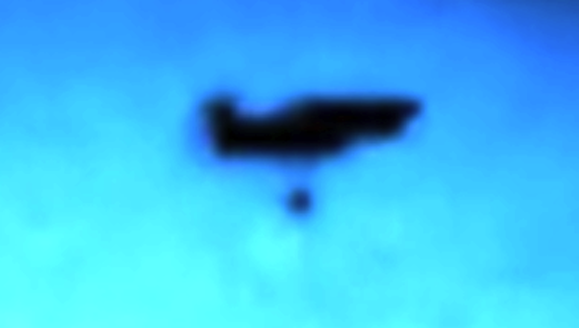
En met nog wat dichterbij halen, zien we iets dat duidelijk lijkt op een klassieke retro UFO, met bovenop een kleine koepel en daarnaast nog een kleine ronde UFO.

xxx

Wat door de getuige zelf niet is gemeld en misschien ook helemaal niet is gezien, is dat er op een ander deel van de foto nog zo’n kleine ronde UFO voorkomt.

xxx

Dus, waar hebben we hier mee te maken? 

Feit is dat de getuige zegt niets met het blote oog te hebben waargenomen en dat zegt vaak niets omdat dit soort objecten soms zo snel vliegen of in een frequentiegebied verkeren wat onze ogen niet kunnen zien waardoor ze met het blote oog nauwelijks worden waargenomen, maar wel worden “gevangen” door een moderne camera. 

Een tweede belangrijk punt is dat de foto is genomen door het raam van de bus, waardoor je allerlei mogelijke reflecties kunt krijgen die lijken op een object buiten, maar dit niet zijn. 

Een leuk voorbeeld daarvan hadden we twee jaar geleden, toevalligerwijze op ongeveer dezelfde plek toen we een plaatje kregen van een lezer die een foto had genomen vanuit een casino waarbij vreemde lichten waren te zien boven de Belgische kust.


xxx

Alhoewel de lezer ons toen bezwoer dat het absoluut geen reflectie kon zijn, bleek dit later toch wel degelijk het geval. 


xxx

Dat wil niet zeggen dat de foto uit Zeebrugge ook automatisch een reflectie is, maar die kans is aanwezig. 

Mochten er mensen zijn die slimme ideeën hebben, dan horen we dat graag. 

Wie de originele Mufon foto wil bekijken, kan dat hier doen.

{ http://www.niburu.co/ }

Hoe vind je dit bericht?
Geschreven door peter om 17:02 Stuur door

UFO OVER AREA 51, MAY 2017

UFO OVER AREA 51, MAY 2017

A couple of UFO enthusiasts went to Area 51 and captured this interesting footage. A bright object appeared out of nowhere and started to accelerate until it reached an unreal speed. It did not make any sound and no sonic boom was heard.

{  http://www.disclose.tv/ }

Hoe vind je dit bericht?
Geschreven door peter om 16:52 Stuur door

UNACKNOWLEDGED - STEVEN GREERS NEW UFO DOCUMENTARY

UNACKNOWLEDGED - STEVEN GREERS NEW UFO DOCUMENTARY

Dr. Steven Greer’s new documentary “UNACKNOWLEDGED” presents brand new, top-secret evidence supporting Extraterrestrial contact including witness testimony, classified documents, and UFO footage while also exploring the consequences of ruthlessly enforcing such secrecy.

{  http://www.disclose.tv/ }

Hoe vind je dit bericht?
Geschreven door peter om 16:49 Stuur door

'ANCIENT TANK' SPOTTED ON THE MOON SHOCKS UFO EXPERTS?

'ANCIENT TANK' SPOTTED ON THE MOON SHOCKS UFO EXPERTS?

The Moon definitely has it's share of mysteries. We know for a fact that astronauts have stepped on the Moon's surface and collected some samples here and there, which was an historic moment for all of humanity as quoted by Neil Armstrong: "That's one small step for a man, one giant leap for mankind".

But there have been several conspiracy theories since then about a 'Moon landing hoax' where it was staged here on Earth. And other creepy theories regarding alien encounters on the Moon being one of the reasons why nobody ever returned there with fears of an invasion. 

Many think that the Moon is actually hollow and has an extraterrestrial base inside overlooking our World.

But there are quite some strange things that have been spotted on the moon like strange looking objects and some that even resemble things we see here on Earth.

One such strange sighting is a TANK found near several other bizarre objects.

Watch the following video to know more!

RELATED ARTICLES

{ http://www.disclose.tv/ }

Hoe vind je dit bericht?
Geschreven door peter om 16:37 Stuur door

BRIGHT ORANGE ORB HOVERS "MOTIONLESS" OVER CALIFORNIA AND SCARES WITNESS

BRIGHT ORANGE ORB HOVERS "MOTIONLESS" OVER CALIFORNIA AND SCARES WITNESS

A MUFON report has just been submitted that details an "orange reddish sphere" hovering over Orinda, California in January 2011. Although the sighting occurred a while ago, it clearly affected the witness, who is only just now coming forward with testimony and a photo. According to the witness, the ball of light hovered before taking off at great speed. What do you think this UFO could be? Ball lightning, a ghostly orb, an inter-dimensional alien traveler, or something else entirely?

{ http://www.disclose.tv/ }

Hoe vind je dit bericht?
Geschreven door peter om 16:30 Stuur door

UFO MAKES "U" SHAPED TURN ACROSS THE MOON

UFO MAKES "U" SHAPED TURN ACROSS THE MOON

New video from France shows several UFOs changing direction in space. The first UFO makes a subtle course correction from its original trajectory, while the second UFO turns completely around. No known aircraft or technology is known to be able to accomplish such a feat.

{ http://www.disclose.tv/ }

Hoe vind je dit bericht?
Geschreven door peter om 16:24 Stuur door

INDIAN UFO INVESTIGATOR INTRIGUED BY UFO MYSTERY KONGKA LA PASS, LADAKH

INDIAN UFO INVESTIGATOR INTRIGUED BY UFO MYSTERY KONGKA LA PASS, LADAKH

In January 2017, the CIA declassified and shared 930,000 UFO documents on its website. One of these included a document from 1968 detailing six UFO sightings in India, Nepal, and Bhutan.

An April 1968 report - part of the 930,000 disqualified documents recently posted online by the Central Intelligence Agency (CIA) - details six sightings of unidentified flying objects on Ladakh, Sikkim (then Protectorate of India), Bhutan and Nepal in the previous months. 

Although the American security establishment has largely demystified the UFO issue in recent years, the CIA and the US Air Force have taken reports of flying saucers in the 1950s and 1960s so seriously that the intelligence office of the intelligence agency formed A scientific advisory panel to study the phenomenon.

The CIA report, originally not intended to be shared with foreigners, contains "details of bright objects seen on South Ladakh, Northeast Nepal, North Sikkim and Western Bhutan."

In incisive and precise terms, the report mentions that an object was tracked moving east and west over Chang La, Fukche and Koyul in Ladakh at 13h on March 4, 1968. "A white light and simultaneously two very loud bang were Ears. In addition, a reddish light followed by white smoke, "the report said in its description. 

RELATED ARTICLES

{ http://www.disclose.tv/ }

Hoe vind je dit bericht?
Geschreven door peter om 16:21 Stuur door

Stone Tablet May Be Proof That Tower of Babel Was Real

Stone Tablet May Be Proof That Tower of Babel Was Real

As an Assyriologist, I don’t deal in the Bible, and I am not a religious person, but in this case, I can say there is an actual building which does seem to be the inspiration for the Biblical narrative.

Assyriologist Dr. Andrew George, a professor of Babylonian at the University of London, is referring to a sixth-century BCE stone tablet with a carving of a ziggurat – a terraced step pyramid common in Mesopotamia. The ziggurat is flanked by a figure identified as King Nebuchadnezzar II and an inscription that reads, “Tower of Temple of Babylon.” The 2.600-year-old tablet was discovered a century ago. What took so long to connect these seemingly obvious dots?

For those not up on biblical or Babylonian history, Genesis 11:4 says, “Come, let us build ourselves a city and a tower with its top in the sky, and so make a name for ourselves; otherwise we shall be scattered all over the Earth.” It then explains that God didn’t approve, confused the languages and scattered the people building the tower, which is then called Babel, possibly from the Hebrew word balal, which means to jumble or confuse. Archeologists have attempted to link the biblical Tower of Babel to real structures – such as Etemenanki, a ziggurat dedicated to the Mesopotamian god Marduk by Nabopolassar, king of Babylonia – but they’ve never had any conclusive proof.

The Tower of Babel Stele (from the Schøyen Collection)

Until now. According to Dr. George, the tablet, discovered a century ago in the Babylonian area of Iraq, is currently in the private collection of Norwegian businessman Martin Schøyen and has never been available for close study until recently. In an upcoming series produced by the Smithsonian, George dates the baked clay tablet to around 600 BCE and illustrates how the faint carvings show the seven tiers of a giant ziggurat. He also shows how the outline next to it is a giant depiction of King Nebuchadnezzar II, who reigned from around 605-562 BCE.

But the key is the faint text carving, which Dr. George translates as:

NEBUCHADNEZZAR, KING OF BABYLON AM I – IN ORDER TO COMPLETE E-TEMEN-ANKI AND E-UR-ME-IMIN-ANKI I MOBILIZED ALL COUNTRIES EVERYWHERE, EACH AND EVERY RULER WHO HAD BEEN RAISED TO PROMINENCE OVER ALL THE PEOPLE OF THE WORLD – LOVED BY MARDUK, FROM THE UPPER SEA TO THE LOWER SEA, THE DISTANT NATIONS, THE TEEMING PEOPLE OF THE WORLD, KINGS OF REMOTE MOUNTAINS AND FAR-FLUNG ISLANDS – THE BASE I FILLED IN TO MAKE A HIGH TERRACE. I BUILT THEIR STRUCTURES WITH BITUMEN AND BAKED BRICK THROUGHOUT. I COMPLETED IT RAISING ITS TOP TO THE HEAVEN, MAKING IT GLEAM BRIGHT AS THE SUN

Painting of the Tower of Babel by Marten van Valckenborch the Elder, Flemish Renaissance painter

So what about the babbling and the collapse of the tower? In an interview with Breaking Israel News, George theorizes that the multitudes of languages referred to in the story of the tower may refer to the fact that a monument of that magnitude needed many workers from many countries.

The myth about the multitude of tongues comes from the context described in the stele about the multitude of peoples enlisted in the construction of the tower. There were many languages spoken on the construction site. From that it may be that the Bible got the idea of the confusion of tongues.

That ‘confusion of tongues’ may have also had led to construction problems which caused the project to take 43 years. That may also be why the tower didn’t withstand the test of time and is now most likely the rubble that is at the Etemenanki site.

Good evidence that the Tower of Babel existed and is depicted on a stone tablet? Yes. Undeniable? Not yet. A lesson for construction bosses on big projects? Definitely … always carry a translation app.

 TAGS: archeology, Babylon, bible, biblical archaeology, biblical history, mysterious places, Nebuchadnezzar II, Science, Tower of Babel, ziggurat

{ http://mysteriousuniverse.org/ }

Hoe vind je dit bericht?
Geschreven door peter om 11:37 Stuur door

From Black-Eyed Kids to Loch Ness & Death

From Black-Eyed Kids to Loch Ness & Death

Reading Brent Swancer’s May 8 article, “Mysterious Deaths and the Black Eyed Kids,” reminded me of the strange story, and untimely death, of a certain pursuer of the Loch Ness Monster. His name was F.W. “Ted” Holiday. He was the author of a number of very good books: The Great Orm of Loch Ness; The Dragon and the Disc; and The Goblin Universe. Like more than a few monster-hunters, Holiday started out as someone who believed the Nessies to be flesh-and-blood animals, but who later came around to the idea that they had paranormal origins – and were deeply dangerous, too. But, I’m not here today to talk about Holiday’s theories on what the beasts of Loch Ness are. Or are not. Rather, I’m here to share with you a strange saga that involved a creepy character in black, two suicides, and a couple of heart-attacks. One of them fatal.

On the night of June 2, 1973, Ted Holiday took part in an exorcism at Loch Ness – an exorcism which was performed by the Reverend Donald Omand, who had a deep interest in tales of lake-monsters and who believed them to have had paranormal origins. It was a drama-filled affair, to say the least. Before heading home, Holiday had a very ominous encounter. In Holiday’s own words (extracted from the aforementioned The Goblin Universe: “The next morning before breakfast I decided to step down to the lower caravan to collect some oddments from my suitcase. It was a beautiful fresh morning and the lawns were wet with dew. As I turned the corner of the house I stopped involuntarily. Across the grass, beyond the roadway and at the top of the slope leading down to Loch Ness at the top of which the caravan was located, stood a figure.”

Holiday continued: “It was a man dressed entirely in black. Unlike other walkers who sometimes pause along here to admire the Loch Ness panorama, this one had his back to the loch and was staring at me fixedly as soon as I turned the corner.”

F.W. “Ted” Holiday

It’s important to note that this was no regular man. Perhaps, the darkly-dressed figure wasn’t even human. On looking at the Man in Black, said Holiday, he felt “…a strong sensation of malevolence, cold and passionless.” The mysterious figure was attired in an outfit that Holiday said looked like “black plastic.” He wore black gloves and black headgear which resembled a biker’s helmet. Holiday tentatively walked towards the definitive Man in Black. As Holiday got close to the MIB, he was shocked to see that the man wore goggles, but appeared to have no eyes behind the goggles.

Holiday’s quickly thought out intention was to pretend to fall on the grass and reach out to the man for support – specifically to see if he was physical in form, or some kind of intangible specter. Holiday was prevented from doing so, however, when the sounds of whistling and unintelligible whispering filled the air, and the MIB vanished – as in dematerialized, literally. As Holiday – now petrified out of his wits – shakily scanned the half a mile of open road that dominated the landscape, it became clear to him that there was simply no way the man could have made good a stealthy escape in conventional fashion. Stunned to his core, Holiday tried to reconcile the whole thing as nothing but a bizarre hallucination – a theory that, he knew deep down, simply wasn’t viable. He tried to take his mind off the matter by saying his goodbyes to the Reverend Omand. It was all to no avail; the specter of the thing in black remained, like an albatross around Holiday’s neck.

There is a decidedly sinister sequel to this aspect of Ted Holiday’s quest for the truth of the Loch Ness Monster and his Man in Black experience, as Holiday himself noted: “When I returned to Loch Ness in 1974 to continue investigations, I was stopped after a few days with a heart attack. As a stretcher carried me up the side of the loch, I peered groggily over the side and noted with cynical approval that we had just passed over the exact spot [italics mine] where the man in black had stood the previous year. Synchronicity and the forces that control it never give up.” Ted Holiday died from a second heart attack in 1979. He wasn’t even sixty.

There is something else, too. Ted Holiday’s biker in black reminds me of the supernatural bikers in a British horror movie which was released in 1973 (the same year of the “Nessie exorcism” and of Holiday’s MIB encounter). The title of the movie: Psychomania. It’s interesting to note that one of the stars of the movie was George Sanders, who committed suicide not long after Psychomania was completed. Intriguingly, George Sanders was a former owner of Boleskine House – which, until it was destroyed by fire in December 2015, stood over Loch Ness. Its most famous owners were Aleister Crowley and Led Zeppelin’s Jimmy Page, both of whom were deeply interested in the occult.

All of which brings me back to Brent Swancer and his article. Ted Holiday said of the Man in Black that he (or it) provoked “…a strong sensation of malevolence, cold and passionless.” Brent Swancer’s notes that the Black Eyed Children “…are almost always described as exuding an intense wave of dread and panic.”

Then, there’s the matter of the eyes. We all know why the Black Eyed Children have the name that has become so infamous in paranormal circles. On the matter of Holiday’s MIB, he was sure that the man completely lacked eyes. But, I have to wonder, if the MIB was wearing tinted goggles, and if the man’s eyes were actually as black as those of the infamous and creepy kids, that might explain why, while he was wearing tinted goggles, it was near-impossible for Holiday to see his eyes. Granted, that’s simply a tenuous theory and absolutely nothing else, but it’s worth pondering on. A black-eyed adult, maybe?

There’s also the color of the clothing: Holiday’s figure was dressed totally in black. The BEK’s are very often seen wearing black hoodies. Finally, there is the matter of death. We have this from Brett: “Scattered amongst the many, many reports of encounters with Black Eyed Kids are those that seem to show a rather malevolent tendency for witnesses to meet with tragic misfortune and death, further casting a wicked shadow over them.”

And on the matter of “tragic misfortune and death”…

As we have seen, Ted Holiday couldn’t fail to note the eerie fact that the site of his 1974 heart-attack was “…the exact spot where the man in black had stood the previous year.” Plus, he died young from another heart-attack in ’79. And let’s not forget that George Sanders topped himself after making Psychomania – which is filled with supernatural bikers. Sanders was not alone in being an owner of Boleskine House who went on to kill himself. Crowley’s old abode was once owned by Major Edward Grant, a retired British Army officer. In 1960, Grant blew his head off, in his bedroom. His housekeeper, Anna MacLaren, told of seeing the major’s little dog, Pickiwig, racing around the house with a piece of the major’s skull in his mouth.

 TAGS: Biker, Loch Ness, Ted Holiday

{ http://mysteriousuniverse.org/ }

Hoe vind je dit bericht?
Geschreven door peter om 11:31 Stuur door

A Strange, Primitive Atmosphere Has Been Discovered Around a Water-Rich Alien World

NASA/GSFC

A Strange, Primitive Atmosphere Has Been Discovered Around a Water-Rich Alien World

We didn't know planets like this were possible.

PETER DOCKRILL

Unexpected findings about the atmosphere of a distant Neptune-sized world have surprised scientists, acting as a reminder that as we discover more about planets beyond our Sun, the lessons we've learned from our own Solar System certainly don't always apply.

In this case, HAT-P-26b – located some 437 light-years away from Earth – is what's called a 'warm' or 'hot Neptune', meaning its mass is similar to Neptune, but that the planet closely orbits its host star. These kinds of worlds have been discovered before, but nothing quite like HAT-P-26b.

"Astronomers have just begun to investigate the atmospheres of these distant Neptune-mass planets, and almost right away, we found an example that goes against the trend in our Solar System," says one of the researchers, Hannah Wakeford from NASA's Goddard Space Flight Centre.

"This kind of unexpected result is why I really love exploring the atmospheres of alien planets."

What's unusual about HAT-P-26b is its unexpectedly primordial atmosphere, composed almost entirely of hydrogen and helium. For a planet that hangs so close to its star – orbiting it in just 4.23 days, in fact – that breaks a pattern astronomers are used to seeing in the atmospheric composition of other planets.

As it happens, that tight orbit is what made HAT-P-26b easy to study. One of the ways scientists can research the atmosphere of alien worlds is by observing planets as they transit (pass in front of) their host stars.

When planets do this, telescopes can analyse the starlight that gets filtered by the planet's atmosphere, which can tell us about the chemicals that make up that airspace.

The number of planets known around other stars has exploded in recent years, thanks in the main to the astonishingly successful Kepler spacecraft.

NASA Ames/W Stenzel, Princeton University/T Morton

Using data from NASA's Hubble and Spitzer space telescopes, Wakeford's team found that HAT-P-26b's atmosphere is largely clear of clouds but reveals a strong water signature – what the researchers say is the best measurement to date of water on an exoplanet of this size.

Crucially, that water signature enabled the team to estimate HAT-P-26b's metallicity: the extent to which the planet's atmosphere is dominated by elements heavier than hydrogen and helium.

In the case of our own Solar System, metallicities are lower for bigger planets – evidenced by the gas giants Jupiter and Saturn, with Jupiter having a metallicity up to 5 times that of the Sun, while Saturn contains about 10 times as much as the Sun.

What this means is that their atmospheres are mostly made up of hydrogen and helium. By contrast, Uranus and Neptune, which are smaller and orbit the Sun more distantly, contain greater metallicity – of around 100 times that of the Sun.

The pattern here is that, among our Solar System's outer planets at least, metallicities are lower for the bigger planets that lie closer to the Sun.

Scientists think that this is because, when these worlds formed from the protoplanetary dust that surrounded the Sun when the Solar System was young, Jupiter and Saturn were bombarded by less icy debris rich in heavy elements.

As a result, their subsequent atmospheres retain less metallicity today.

But in the case of HAT-P-26b, we've got a world that's not far out from its host star – and is in fact virtually clinging to it – and yet its atmosphere is almost entirely composed of hydrogen and helium, much like Jupiter and Saturn.

"[T]hat means that it probably formed much closer to its star, or later in the disc lifetime where it wasn't bombarded by icy debris and rich heavy elements whilst it was forming," Wakeford told Amina Khan at the Los Angeles Times, although in either case the researchers say it's a surprising result.

"We did not know that you could form these-sized planets closer to their star."

While it's definitely a quirk, it's an incredibly valuable one for astronomers, because it tells us that there are a lot more planetary possibilities than the template laid down in our own cosmic neighbourhood – and that means there's more surprising space science coming our way in the future.

"This analysis shows that there is a lot more diversity in the atmospheres of these exoplanets than we were expecting, which is providing insight into how planets can form and evolve differently than in our Solar System," one of the team, David K. Sing from the University of Exeter in the UK, explains in a press release.

"I would say that has been a theme in the studies of exoplanets: Researchers keep finding surprising diversity."

The findings are reported in Science.

{ http://www.sciencealert.com/ }

Hoe vind je dit bericht?
Geschreven door peter om 11:23 Stuur door

Alien breakthrough: Water found on 'Warm Neptune' could hold key to extraterrestrial life

Alien breakthrough: Water found on 'Warm Neptune' could hold key to extraterrestrial life

WATER vapour and exotic clouds found on a distant planet dubbed "Warm Neptune" could hold the key to finding alien lifeforms.

ALIEN SKY: Water has been discovered in the atmosphere of an exoplanet

“This new discovery about its atmosphere feels like a big breakthrough”

David Sing

The planet known as Hat-P-26b is roughly the same size as Neptune and was found closely orbiting its own star.

Using NASA's Hubble and Spitzer space telescopes, astronomers have found evidence of water and exotic clouds in the planet's air.

Finding water, which holds the key to life, is extremely rare on exoplanets due to them being so far away.

University of Exeter astrophysics professor David Sing said: "This exciting discovery shows there is a lot more diversity in the atmospheres of these exoplanets than we have previously thought.

"This 'warm Neptune' is a much smaller planet than those we have been able to characterise in depth.

"So this new discovery about its atmosphere feels like a big breakthrough in our pursuit to learn more about how solar systems are formed, and how it compares to our own."

But any space enthusiasts keen to make first contact with Warm Neptune could be in for a long wait, as it lies 430 light years away from Earth.

Space boffins have long believed that extraterrestrials could inhabit exoplanets,.

NASA unveiled seven Earth-like dwarf planets in a system known as Trappist-1, a series of exoplanets with qualities similar to Earth, which could have its own population of aliens.

RELATED ARTICLES

{ http://www.dailystar.co.uk/ }

Hoe vind je dit bericht?
Geschreven door peter om 11:08 Stuur door

Discovery of 'Warm Neptune' Challenges Theories on Planet Births

Planet births and deaths HAT-P-26b

Discovery of 'Warm Neptune' Challenges Theories on Planet Births

Monica Hunter-Hart

Around 437 light years away lies the mysterious exoplanet HAT-P-26b — which is a terrible name, but blessedly it’s also known as “Warm Neptune.” Scientists discovered the planet in 2010, but have just now uncovered information about its composition that could totally reshape how we think about the births and deaths of planets.

“Warm Neptune” is roughly the same mass as Neptune and Uranus, so scientists expected there to be many similarities between the planets. However, a new study conducted using NASA’s Hubble and Spitzer telescopes found an atmosphere made of unexpectedly light elements: mostly helium and hydrogen. The atmosphere also contains water signatures and scarcely any clouds.

The findings indicate that the planet’s formation probably happened differently than that of Neptune or Uranus, both of which have atmospheres that are rich in heavy elements. Scientists think that our “ice giants” formed near the edge of a giant ring of debris that whirled around the new sun. Being out on the fringe, Neptune and Uranus were hit with the icy, heavier parts of the debris — planets like Saturn and Jupiter got the warmer stuff — which then became part of their atmospheres.

HAT-P-26b Atmosphere An artist imagines the atmosphere of HAT-P-26b, or "Warm Neptune."

So if “Warm Neptune” doesn’t have those heavy elements, how did it form? The planet may have developed closer to its host star than Neptune and Uranus were to the sun. Alternatively, it could have formed later in the creation of its planetary system than our planets did in the development of the solar system. Or both possibilities could be true.

“This measurement is the first hint that giant planets may not all form the way the ones in our solar system did,” the lead author of the study, Hannah Wakeford, tells Inverse. She says that it’s not yet clear whether the anomaly is “Warm Neptune” or the planets in our solar system; extensive further research is needed.

“The big question we are trying to answer here is: How easy or hard is it to make a solar system like our own?” Wakeford explains. “This question has important implications for planet formation theories and how our planets evolved.”

Photos via NASA/GSFC (1, 2)
WHAT'S NEXT

{ https://www.inverse.com/ }

Hoe vind je dit bericht?
Geschreven door peter om 10:49 Stuur door

Curiosity Delivers Beautiful Footage of Mars' Linear Dunes

Curiosity Delivers Beautiful Footage of Mars' Linear Dunes

Cassie Kelly

The Curiosity Rover is on an important geological mission in the Bagnold Dunes, collecting samples and climbing the tallest mountain on Mars’ Mount Sharp. NASA has compiled a breathtaking 360-degree video of the rover’s latest views of active linear dunes near the base of the mountain on the red planet.

The dune campaign, which Curiosity has been on since late 2015, is helping scientists understand how wind affects the planet.

Mars isn’t nearly as windy as Earth, mostly because it lacks a dense atmosphere. But, heat causes winds to rise and it’s enough to pick up the sand and push it around. So far, the campaign has turned up a lot of interesting data including footage of “dust devils,” which are small tornado-like wisps.

Mars' Bagnold dune field on lower Mount Sharp. This view from the Mast Camera (Mastcam) on NASA’s Curiosity Mars rover shows two scales of ripples, plus other textures, in an area where the mission examined a linear-shaped dune in the Bagnold dune field on lower Mount Sharp in March and April 2017.

NASA’s goal with this campaign is to learn how Mount Sharp influences the wind and if the wind separates mineral deposits on the surface. In its first phase of the campaign, Curiosity examined crescent-shaped dunes, which didn’t seem to be affected much by the mountain. But, in the second phase, looking at active linear dunes, there are noticeable differences in composition.

Based off the new footage, NASA believes Mount Sharp is significantly contributing to the movement of the linear dunes, unlike the crescent dunes. This could be because the linear dunes are about a mile uphill; closer to the action, so to speak.

“At these linear dunes, the wind regime is more complicated than at the crescent dunes we studied earlier,” Mathieu Lapotre of Caltech, leading the Curiosity team, said in a release.

The linear dunes also change shape more frequently, especially during the high-wind season, and ripples can be seen cascading across the sand. But, there is still more work to do before scientists can fully understand what we are working with on the Red Planet. The rover’s next step will be to measure the strength of the wind and collect and analyze samples of the sand for their mineral composition.

Curiosity’s continued success is helping NASA plan future landings, which will one day contain humans in hopes of inhabiting the planet. So, one step closer for Curiosity is indeed one step closer for mankind.

Photos via NASA
WHAT'S NEXT

{ https://www.inverse.com/ }

Hoe vind je dit bericht?
Geschreven door peter om 10:44 Stuur door

TRAPPIST-1-systeem onstabiel? Nee hoor!

{ https://www.scientias.nl/ }

Hoe vind je dit bericht?
Geschreven door peter om 10:27 Stuur door

Exo-Neptunus heeft een relatief primitieve atmosfeer

{ https://www.scientias.nl/ }

Hoe vind je dit bericht?
Geschreven door peter om 10:21 Stuur door

Cassini maakt scherpste foto ooit van propellers in de A-ring van Saturnus

{ https://www.scientias.nl/ }

Hoe vind je dit bericht?
Geschreven door peter om 10:16 Stuur door

Weer ontdekking gedaan op Mars. Is dit een dode alien?

Weer ontdekking gedaan op Mars. Is dit een dode alien?

Weer ontdekking gedaan op Mars. Is dit een dode alien?

UFO-jagers menen op een NASA-foto van Mars een ‘dode alien’ te hebben gevonden. Dat meldt het Russische persbureau Sputnik.

Door complottheoretici wordt druk gespeculeerd over de doodsoorzaak van de alien, schrijft de Russische internetkrant ng.ru.

De UFO-jagers zien op de foto een figuur, die mogelijk is geplet door een stuk rots. Daarbij zijn het hoofd, een arm en een been van het wezen intact gebleven.

Vulkanisme

De doodsoorzaak hebben ze nog niet kunnen achterhalen. Ze noemen onder meer vulkanisme op de rode planeet als mogelijke oorzaak.

De houding van de figuur doet hen denken aan die van de slachtoffers van de uitbarsting van de Vesuvius.

In 79 na Christus begroef die vulkaan het dorp Pompeii onder een laag lava en as. Alles in en rondom het dorp is perfect bewaard gebleven.

Verborgen

UFO-enthousiastelingen ontdekken vaker vreemde voorwerpen op Mars. Zij stellen dat de NASA dingen voor ons verborgen houdt.

Wetenschappers spreken in dergelijke gevallen echter van pareidolie, de aangeboren neiging van de hersenen om onduidelijke en willekeurige waarnemingen betekenis te geven.

Ons brein is getraind om snel verbanden te leggen tussen de verschillende stimuli die het ontvangt. Het is een nuttig overlevingsmechanisme.

De oorspronkelijke foto is hier te vinden.

[Sputniknews] 
Hoe vind je dit bericht?
Geschreven door peter om 09:56 Stuur door

Canadian witness says UFO followed car 20 feet overhead

image-1-ftr

Canadian witness says UFO followed car 20 feet overhead

A Canadian witness at Edson reported a glowing object following her vehicle just 20 feet overhead, according to testimony in Case 83272 from the Mutual UFO Network (MUFON) witness reporting database.

The witness first thought the bright light was a vehicle approaching from behind. Pictured: Downtown Edson, AB, Canada. (Credit: Wikimedia Commons)

The witness first thought the bright light was a vehicle approaching from behind.

Pictured: Downtown Edson, AB, Canada.

(Credit: Wikimedia Commons)

The witness was returning home from the hospital at 10 p.m. on April 19, 2017, when the incident occurred.

“It was about a 15-minute drive,but felt much longer that night,” the witness stated.“No vehicles in sight. Out of nowhere a bright, yellow-colored light appeared in my rearview mirror nearly blinding me.”

The driver eventually released the object was 20 feet over the vehicle as she approached Edson. (Credit: Google)

The driver eventually released the object was 20 feet over the vehicle as she approached Edson.

(Credit: Google)

The witness first thought the light might be a vehicle approaching from behind.

“I continued driving and slowed down a little, hoping it was passing me. That’s when it started to speed up and that’s when I realized it was above the car, maybe a 20-foot distance.”

The witness described the object.

“I noticed it was a bright, yellow-orange color and glowed. I could not make out the details as it was too bright. I sped up to get away from it, but it continued at the same speed overhead. For 15minutes, it remained this way. When I got closer to my destination, I went down a hill to get to my turn and slowed right down. The UFO then abruptly changed direction towards where I was headed to. Hovered above the property and then the UFO glowing light went dim and disappeared into the darkness of the night.”

Once at her destination, the object briefly hovered over the property before moving away. Pictured: Edson, AB, Canada. (Credit: Google)

Once at her destination, the object briefly hovered over the property before moving away.

Pictured: Edson, AB, Canada. (Credit: Google)

Edson is a town in west-central Alberta, Canada, population 8,414. MUFON Canada is investigating. Please remember that most UFO sightings can be explained as something natural or man-made. The above quotes were edited for clarity. Please report UFO activity to MUFON.com.

Popular Posts:

{ http://www.openminds.tv/ }

Hoe vind je dit bericht?
Geschreven door peter om 09:47 Stuur door

UFO At Space Station On Live NASA Cam, May 2017, Video, UFO Sighting News.

UFO At Space Station On Live NASA Cam, May 2017, Video, UFO Sighting News.

orbit%252C%2Bspace%2Bstation%2B%252CISS%252C%2BAI%252C%2Bartificial%2BIntelligence%252C%2Btank%252C%2Barcheology%252C%2BGod%252C%2BNellis%2BAFB%252C%2BMoon%252C%2Bunidentified%2Bflying%2Bobject%252C%2Bspace%252C%2BUFO%252C%2BUFOs%252C%2Bsighting%252C%2Bsightings%252C%2Balien%252C%2Baliens%252C%2BFox%252C%2BNews%252C%2Bastronomy%252C%2Btreasure%252C%2B.png
Date of sighting: May 2017
Location of sighting: Earths Orbit At ISS
 
There is no place other than space that aliens want to see humanity...at their finest, reaching for the stars. This UFO is seen on the other side of the solar panels in the far distance. It look like is about the size of city bus and is disk shaped. A great catch by Streetcap1 of Youtube. 
 
Many say its impossible to catch a UFO at the space station, however those people never put more than 5 minutes into looking. If you search for about 1-2 hours. I guarantee you will see a UFO. 
Scott C. Waring
 
Streetcap1 states: 
This looks like a craft behind the ISS speeding off into the distance. NASA must have been on their coffee break. SC1.

singing%252C%2Buniverse%252C%2Bgalaxy%252C%2BAI%252C%2Bartificial%2BIntelligence%252C%2Btank%252C%2Barcheology%252C%2BGod%252C%2BNellis%2BAFB%252C%2BMoon%252C%2Bunidentified%2Bflying%2Bobject%252C%2Bspace%252C%2BUFO%252C%2BUFOs%252C%2Bsighting%252C%2Bsightings%252C%2Balien%252C%2Baliens%252C%2BFox%252C%2BNews%252C%2Bastronomy%252C%2Btreasure%252C%2B.png

{ http://www.ufosightingsdaily.com/ }

Hoe vind je dit bericht?
Geschreven door peter om 09:34 Stuur door

The Crab Nebula

The Crab Nebula

The Crab Nebula
The Crab Nebula, the result of a supernova noted by Earth-bound chroniclers in 1054 A.D., is filled with mysterious filaments that are are not only tremendously complex, but appear to have less mass than expelled in the original supernova and a higher speed than expected from a free explosion. The Crab Nebula spans about 10 light-years. In the nebula's very center lies a pulsar: a neutron star as massive as the Sun but with only the size of a small town. The Crab Pulsar rotates about 30 times each second.

Image Credit: NASA, ESA, J. Hester, A. Loll (ASU)
 
Last Updated: July 31, 2015
Editor: NASA Administrator
Hoe vind je dit bericht?
Geschreven door peter om 00:51 Stuur door

Water, Weird Clouds Found on Alien 'Warm Neptune'

Water, Weird Clouds Found on Alien 'Warm Neptune'

Water, Weird Clouds Found on Alien 'Warm Neptune'
By combining observations from NASA’s Hubble and Spitzer space telescopes, researchers found that the atmosphere of the distant “warm Neptune” exoplanet HAT-P-26b, illustrated here, is unexpectedly primitive, composed primarily of hydrogen and helium. The astronomers also detected water and evidence of exotic clouds in the planet’s air.
Credit: NASA/GSFC

Astronomers have spotted water vapor and evidence of exotic clouds in the atmosphere of an alien planet known as HAT-P-26b.

The researchers also determined that HAT-P-26b's atmosphere is dominated by hydrogen and helium to a much greater degree than that of Neptune or Uranus, the alien world's closest counterparts in our own solar system in terms of mass.

"This exciting new discovery shows that there is a lot more diversity in the atmospheres of these exoplanets than we have previously thought," David Sing, an astrophysics professor at the University of Exeter in England, said in a statement. [Gallery: The Strangest Alien Planets]

"This 'warm Neptune' is a much smaller planet than those we have been able to characterize in depth, so this new discovery about its atmosphere feels like a big breakthrough in our pursuit to learn more about how solar systems are formed, and how it compares to our own," added Sing, the co-leader of a new study about HAT-P-26b that was published online today (May 11) in the journal Science.

HAT-P-26b lies about 430 light-years away from Earth. The alien planet circles very close to its host star, completing one orbit every 4.2 Earth days. This proximity suggests that HAT-P-26b is tidally locked, showing the same face to its star at all times, said Hannah Wakeford, co-leader of the new study and a postdoctoral researcher at NASA's Goddard Space Flight Center in Greenbelt, Maryland.

Sing, Wakeford and their colleagues analyzed observations made by NASA's Hubble and Spitzer space telescopes when HAT-P-26b crossed its parent star's face from the telescopes' perspectives. The planet's atmosphere filtered out certain wavelengths of starlight during these "transits," allowing the study team to identify some of the molecules swirling in HAT-P-26b's air.

One such molecule is water.

"For this mass range, this is the strongest water-absorption feature that we have ever measured," Wakeford told Space.com.

The data also indicate that clouds scud across HAT-P-26b's skies, but relatively deep in the atmosphere; they do not block much of the water-absorption signal, Wakeford said. These clouds are probably made of disodium sulfide, not water vapor like those of Earth, she added.

"This would be a very alien sky that you would be looking at," Wakeford said. "These clouds would cause scattering in all of the colors, so you'd get a kind of scattery, washed-out, gray sky, which is interesting, if you were looking through these clouds."

Ultrabright light streaming from the nearby star would bombard an observer above the clouds, she added. "There's nothing there to really help stop that sunlight from reaching you."

Clues about planet formation

Using the transit data, the study team also calculated the "metallicity" of HAT-P-26b's atmosphere — how much of it is made up of elements other than hydrogen and helium. (To an astronomer, anything heavier than helium is a metal.)

In Earth's solar system, metallicity goes down as a planet's mass goes up. For example, Neptune and Uranus both have metallicities about 100 times greater than that of the sun (which is almost entirely hydrogen and helium), whereas the much larger Saturn and Jupiter are just 10 and five times more metallic than the sun, respectively.

But HAT-P-26b does not fit that pattern. Though the exoplanet is about as massive as Neptune, its metallicity is more in line with that of Jupiter, the researchers in the new study found.

This surprising bit of information holds clues about HAT-P-26b's formation and evolution, Wakeford said.

"It suggests that this smaller planet actually formed closer to its star, more like where Jupiter formed," she said. "And we didn't know before that you could form [such] planets in that region. We expected the smaller worlds to be formed further out, where they would accumulate clumps of icy debris and richer heavy elements during the formation in the [protoplanetary] disk." (In these scenarios, planets such as HAT-P-26b migrate inward, toward their stars, after they form.)

Over the last decade or so, NASA's Kepler space telescope and other planet-hunting instruments have revealed a staggering array of alien worlds and solar system architectures. The new study, and others like it, should help researchers better understand the reasons for this variety, Wakeford said.

"This is the first step toward looking at the diversity in the formation process as well," she said.  

Follow Mike Wall on Twitter @michaeldwall and Google+. Follow us @Spacedotcom, Facebook or Google+. Originally published on Space.com.

EDITOR'S RECOMMENDATIONS

{ http://www.space.com/ }

Hoe vind je dit bericht?
Geschreven door peter om 00:41 Stuur door

New Instrument May Aid Search for Extraterrestrial Life

New Instrument May Aid Search for Extraterrestrial Life

For 2 weeks on the Greenland ice cap, scientists tested an instrument that might help us find life on icy moons with oceans beneath their crusts.

A researcher looks over the Greenland ice cap, a “frozen ocean.” Eleven scientists just returned from a field campaign testing an instrument that can scrutinize holes in ice for signs of life. Someday, such an instrument might find its way to Europa or Mars. Credit: NASA/JPL-Caltech/Michael J. Malaska

By JoAnna Wendel  

Ocean worlds are on planetary scientists’ minds. More and more, evidence rolls in about the potential habitability of ice-covered bodies like Jupiter’s moon Europa or Saturn’s moon Enceladus. The findings point to heat-driven processes in their subsurface oceans that could support life. Scientists are now beginning to wonder: Could the search for life end on one of these icy satellites?

Assuming humanity does land a spacecraft on Europa or Enceladus, any evidence of life it might uncover would receive heavy scrutiny. In a recent report on a possible landing mission to Europa, scientists devoted multiple chapters to discussing the kinds of evidence they’d need—like finding amino acids and other organic molecules in patterns similar to those in organic matter on Earth.

     The idea would be to include a WATSON-like instrument on a lander            bound for Europa, Enceladus, or even Mars’s polar ice caps.      But even before these signatures can be detected by a probe or                    scrutinized by researchers in a lab, scientists need an instrument that          can take data directly from a hole drilled into an icy surface.

Now scientists at NASA have begun to test such an instrument, a culmination of 20 years of technological development, called the Wide Angle Topographic Sensor for Operations and Engineering, or WATSON. The idea would be to include a WATSON-like instrument on a lander bound for Europa, Enceladus, or even Mars’s polar ice caps, said Rohit Bhartia, a planetary scientist at NASA’s Jet Propulsion Laboratory (JPL) in Pasadena, Calif., and a WATSON team member.

Bhartia and a group of scientists recently returned from a 2-week field campaign in southern Greenland, where they tested out WATSON in holes they drilled into the Greenland ice cap.

“What we were doing in Greenland has never been performed before,” Bhartia said. “The technology was simply not available.”

Frozen Ocean

Ice poking out of the landscape. Mike Malaska said that ice poking out of the landscape reminded him of waves or shark fins. Credit: NASA/JPL-Caltech/Michael J. Malaska

Each day of the trip, the team would greet the Greenland morning from their dormitories at the Kangerlussuaq Science Support Facility, which hosts teams of scientists conducting research. They’d load their equipment into a couple of trucks and drive about an hour onto the ice, where they’d spend several hours drilling, looking for new sites to drill, or analyzing boreholes with WATSON.

For Mike Malaska, another WATSON team member and planetary scientist at JPL, the trip was “epically awesome.” It was his first experience conducting field work on a large ice cap.

“It’s hard to put it into words, but you just felt the vastness and largeness of the landscape,” he said. The wind- and Sun-sculpted peaks of ice poked up like shark fins, making the icy scenery look like a “frozen ocean.”

Each fresh snowfall or cloudy sky changed the scenery to dramatic effect, Malaska said. “Every direction we looked it was just an incredible beautiful vastness that couldn’t be captured by a photo; it had to be experienced in person,” he said.

Science on Ice

The WATSON instrument analyzes a drill hole, using fluorescence/Raman spectroscopy to detect organic molecules. The WATSON instrument analyzes a drill hole, using fluorescence/Raman spectroscopy to detect organic molecules. Credit: NASA/JPL-Caltech/Rohit Bhartia

The researchers set out to study the kinds of signatures life leaves in the ice, like organic molecules or even physical alterations, which will help future scientists evaluate potential evidence for life elsewhere in the solar system, Bhartia said.

Scientists know that microbes on Earth can live under, inside, and around glaciers, but they can’t do any analysis in the field because the technology doesn’t yet exist. Currently, researchers remove an ice core, package it, ship it thousands of kilometers, and study it at a lab bench. Not only can this contaminate the core, but it also leaves out important context about the environment in which the core was found, like how microbes got into the ice: Was it through a subglacial lake? An aboveground fracture?

Enter WATSON, an instrument that can analyze the environment surrounding a core. After the researchers drilled into the ice, they lowered WATSON—a long, silver tube attached to a tripod—into the hole to analyze its walls and hunt for signs of microbes. WATSON contains an instrument called a fluorescence/Raman spectrometer that can detect organic molecules in the ice. It does so by zapping the walls of the borehole with an ultraviolet laser that excites some molecules into a higher-energy state, Malaska said. The molecules then return to their original state, emitting the excess energy as photons. The device collects and measures the energies of those photons to determine what kinds of organic molecules are present on the inner surface of the borehole. It also detects molecules by looking at how much they scatter or change the light of the laser. Other components of WATSON create a visible map of that surface that scientists can overlay with the spectrometer data.

Scientists extracting a core from the ice. Scientists extracting a core from the ice. Credit: NASA/JPL-Caltech/Michael J. Malaska

Once it is fully operational, WATSON should be able to rapidly combine these data sets to identify regions of interest within the walls of the borehole. The combined data set will reveal the distribution of the molecules to help scientists conducting these field tests learn more about the many kinds of signatures that indicate the presence of microbial life, Malaska said.

Next Steps

The April campaign was only the first step in testing WATSON, a step Bhartia called “wildly successful.” WATSON functioned as intended—quite a feat, as it was designed, fabricated, tested, and deployed within less than a year, Bhartia said. WATSON generated heaps of data about the organic molecules within the test boreholes. The researchers also collected ice cores from the locations where they drilled, which they will analyze in the coming months at Montana State University in Bozeman. There, the researchers will use the core data to verify WATSON’s data.

The team is currently “feverishly analyzing” their data and preparing for more Greenland field campaigns in 2018 and again in 2019, Bhartia said. If all goes as planned, on those future trips, the researchers will have integrated WATSON with a drill to test the feasibility of the fully operational instrument.

—JoAnna Wendel (@JoAnnaScience), Staff Writer

Citation: Wendel, J. (2017), New instrument may aid search for extraterrestrial life, Eos, 98,https://doi.org/10.1029/2017EO073189. Published on 10 May 2017.
© 2017. The authors. CC BY-NC-ND 3.0

{ https://eos.org/news-types/news }

Hoe vind je dit bericht?
Geschreven door peter om 00:28 Stuur door

Evidence of ancient life in hot springs on Earth could point to fossil life on Mars

Evidence of ancient life in hot springs on Earth could point to fossil life on Mars


Fossils from 3.5 billion years ago change our ideas about early life on Earth, and how we might look for life on Mars.


file-20170508-20740-1qr428g.jpg Ridges in the Dresser Formation in the Pilbara Craton of Western Australia that preserve ancient stromatolites and hot spring deposits.  Kathleen Campbell, Author provided

Fossil evidence of early life has been found in old hot spring deposits in the Pilbara, Western Australia, that date back almost 3.48 billion years. The Conversation

This extends the known evidence of life at land-based hot springs on Earth by about 3 billion years.

Not only is the find exciting for what it might say about the evolution of early life on Earth, but it also has implications for the search for life on Mars.

Our understanding of these deposits would not be possible without the foundations laid by earlier researchers.

Ancient stromatolites

In the late 1970s, fossilised stromatolites – rock structures built by communities of microorganisms – were discovered within these Pilbara deposits.

These were interpreted as once living in a quiet, shallow water coastal environment much like we see in the modern setting of Shark Bay.

But extensive research over the past 20 years has led to a much better understanding of the environment that suggests it was actually part of an ancient volcano.

In modern volcanic settings, hot fluids circulate in the rocks underground and manifest as hot vents at the bottom of the salty ocean, such as the black or white smokers, or terrestrial hot springs on land where fresh rainwater is available.

What was unclear about the volcanic setting in the Pilbara was whether these hot circulating fluids were indeed discharging on land, producing hot springs – such as those we see in Rotorua, New Zealand – and could we link these hot springs to signs of life?

The smoking gun

Our recent findings from the Pilbara, published today in Nature Communications, provide a smoking gun to a terrestrial hot spring scenario in the form of a particular rock type called geyserite. This was found alongside a variety of textures that indicate life.

Geyserite only forms around the edges of terrestrial hot spring pools and geysers. These are found actively forming today in New Zealand, Yellowstone National Park and Iceland to name a few.

The biological signatures that we’ve found include stromatolites, but also some newly identified microbial textures. This includes a microbial texture (called palisade fabric) that represents microbes that grew upon the ancient sinter terraces – the rocks that form around hot spring pools.

We also found evidence of gas bubbles that must have been trapped in a sticky substance (microbial) in order to be able to preserve the bubble shape.

Spherical bubbles preserved in 3.48 billion year old rocks in the Dresser Formation in the Pilbara Craton in Western Australia provide evidence for early life having lived in ancient hot springs on land.  UNSW, Author provided

Importantly, all of these textures are comparable to fossil textures found in modern hot spring settings such as Yellowstone National Park or Rotorua, New Zealand.

Ancient life on land

The Earth’s geological and fossil record is like a thousand-piece puzzle, but we only have a few pieces. Every missing piece we discover helps us to better shape our understanding of life.

But these new findings don’t just extend back the record of geyserite and life living in hot springs on land by 3 billion years, they also indicate that life was inhabiting the land much earlier than previously thought, by up to 580 million years.

Before these findings, the world’s oldest evidence for microbial life on land was from ancient, organic matter-rich soils from South Africa, aged between 2.7 billion and 2.9 billion years.

The new discovery has implications for the evolution, and perhaps even the origin, of life on Earth.

Scientists are currently considering two hypotheses regarding the origin of life: that it began in the ocean in hot vents, or alternatively that it began on land in a version of Charles Darwin’s “warm little pond” which was connected to a hot spring system.

The discovery of biological signatures and fossil preservation in such ancient hot springs provides at least a geological perspective of the types of environments available and inhabited by life very early on in Earth’s history.

This may lend weight to the hypothesis that life originated on land and then took a downhill adaptive evolutionary pathway to the salty ocean, whereas the opposite is typically proposed.

Life on Mars

These findings have major implications regarding the search for life elsewhere in the universe, or at least our solar system. Our neighbouring planet, Mars, has long been a target in the search for extraterrestrial life.

It is widely accepted that the red planet was likely similar to Earth once upon a time, in that it had liquid water flowing on its surface and active volcanoes.

Recent data from the spirit rover has even identified ancient hot springs, of a similar age to early Earth, in an area called Columbia Hills.

In fact Columbia Hills is one of the top three potential landing sites chosen for NASA’s upcoming Mars2020 rover that’s includes a primary objective to search for fossil life on Mars.

Our findings imply that if life ever developed on the red planet, and it is preserved in ancient hot springs on Earth, then there is a good chance it could be preserved in ancient hot springs on Mars too.

Tara Djokic, PhD Candidate - Earth’s earliest evidence of life, UNSW

This article was originally published on The Conversation and republished here with permission. Read the original article.

{ https://cosmosmagazine.com/ }

Hoe vind je dit bericht?
Geschreven door peter om 00:18 Stuur door

The Upside In Transmitting Messages To Extraterrestrials

The Upside In Transmitting Messages To Extraterrestrials

aliens

Officially, humanity has not found any proof of space alien existence despite many years of searching in the cosmos. However, if Earthlings succeed in encountering alien species, will the aliens be hostile, indifferent, or a little nice?

Dough Vakoch of METI International, a group of scientists that has been sending radio signals out into the void in an attempt to communicate with alien life, says that it is challenging to second-guess alien motivations. SETI scientists have often assumed ETs that will make contact have survived long enough and overcome any warlike traits during the process of their evolution.

akoch explains that if space aliens have not learned to behave nicely with others, they will not have survived at least thousands of years necessary to be a stable interstellar civilization.

Stephen Hawking has warned about transmitting messages to aliens. He said that intelligent aliens might come to Earth to strip mine. However, Vakoch does not think Hawking’s theory is realistic as it makes no economic sense the idea of aliens traveling across the galaxy to look for something that can be found in their backyard. Second, according to Vakoch, a civilization that can traverse the distances between the stars may already know about our presence, so scientists do not expose our lives to any additional threats in transmitting intentional signals. Vakoch further explains that there is, in fact, an upside to sending such messages and that is to intrigue the aliens about humanity and make a reply.

{  http://www.latest-ufo-sightings.net/ }

Hoe vind je dit bericht?
Geschreven door peter om 00:09 Stuur door

Remember Brazil UFO incident in Varginha

Remember Brazil UFO incident in Varginha

A close encounter of the third kind or a hoax?

The small town of Varginha, in the state of Minas Gerais, is not particularly pretty. It has no touristic attractions. Actually, Varginha could very well cross history without ever being noticed by the rest of Brazil – let alone the world. That changed on January 20, 1996, when the town became the stage of the most famous Brazil UFO incident.

Three adolescents claimed that they saw a weird being. The creature was short and had V-shaped feet, horns and red eyes. “It wasn’t a man or an animal. It was something different,” they said at the time. Overnight, the three young women put Varginha on the map.

Reports about creatures and UFOs, military operations, strange coincidences, and mysterious deaths followed January 20. In fact, many questions remain unanswered to this day.

Something weird did happen in 1996

Brazil UFO incident in Varginha began when two sisters and a friend saw a strange creature. That encounter unchained a series of events upon which the Brazilian media feasted, and hysteria spread throughout the residents of Varginha. It didn’t help that the Brazilian Army made a spectacular and costly operation to investigate the case.

Within 24 hours, more reports about UFO appeared. A couple of farmers said they saw something resembling a gray spaceship overflying their cattle. “The cows are running from it. The object was surrounded by fog, but had no lights on it and didn’t make any noise,” said one of the farmers.

Also, another strange creature was seen next to the city’s zoo. Then, animals started dying for no apparent reason.

All incidents, of course, remain unproven. According to Marco Petit, a Brazilian ufologist, that’s because of a government cover-up operation. In a book called “Varginha, toda a verdade revelada” (literally “Varginha, the entire truth revealed”), he says that the case is bigger and more important than people think.

“The military’s high command took part of the case. I present their names so people won’t say I’m kidding about ufology,” he told G1 in 2015. Petit points out that some reports stated that the military found a spaceship and captured part of its crew.

Rumor has it that the bodies of the extraterrestrials were examined by Doctor Badan Palhares, who was Brazil’s leading forensic expert at the time. Palhares, however, has always denied the claims, calling it “utter nonsense.”

The military’s official version

In October 2015, weekly magazine IstoÉ publish an article containing official documents of the Brazilian Army. According to the official reports of the time, the “creature” that the three young women saw was not an ET. It was, in fact, a man who suffered from mental illnesses and lived next to the vacant lot in which they had their “close encounter of the third kind.”

A Brazilian Roswell?

Although every single one of those claims remains unproven, the incident catapulted Varginha into a touristic spot for UFO believers. The Wall Street Journal said about the town: “a hot spot in the intergalactic search for intelligent life.”

Whether the Brazil UFO incident was true or false never mattered for the city. The city was smart in trying to capitalize on it. Until this day, local vendors sell dolls of the “Varginha ET,” as Brazilians call it. Restaurants and stores have alien-themed decorations.

In 2001, the Mayor’s Office inaugurated a 12-meter high glowing tower in the city’s central square (you can see it on the main photo of this article). Its shape? You guessed right, a spaceship.

Hoe vind je dit bericht?
Geschreven door peter om 22:21 Stuur door

Golvende lava ontdekt in Io's grootste vulkaankrater

Hoe vind je dit bericht?
Geschreven door peter om 18:10 Stuur door

Watch Adam Savage nerd out over Alien: Covenant's space suits

Watch Adam Savage nerd out over Alien: Covenant's space suits

The film’s designers didn’t want to copy Prometheus or Alien
Hoe vind je dit bericht?
Geschreven door peter om 17:57 Stuur door

Scientists are having fun explaining the physics of Alien: Covenant

Scientists are having fun explaining the physics of Alien: Covenant

Q: How much pressure does it take to burst someone's chest open?

A: Lots

Around the time of Star Wars Episode VII: The Force Awakens, astrophysicist Neil DeGrasse Tyson decided to spoil everyone’s fun by imposing actual physics on its far-away universe. Would BB-8 actually be able to roll on sand? Would TIE fighters actually make any sound in space? Are Roman Numerals actually a viable counting method in the 21st century? Stuff like that.

Now two Australian scientists have done the same thing with Alien: Covenant, out tomorrow, on Aussie-founded academic site The Conversation. Michael Milford (Associate professor, Queensland University of Technology) and Juxi Leitner (Research Fellow, Robotics & AI, QUT) ask questions like: Can glass withstand insane pressure? Would 20 crewmates want to kill each other after years on a ship? How much force would an alien need to break out of someone’s chest? Here’s what they reckoned.

1. Wouldn’t this glass panel break?

giphy.gif

Maybe, maybe not.

Over at The Conversation the science-men did some complex maths that they’re modestly downplaying as ‘back of the envelope calculations’. Ultimately they decided that the pressure exerted on the glass by the alien’s head in the above clip was 18,130 Pascals per square inch, which may or not make the glass break. They explain: “tough tempered glass is known to break at somewhere in the 10,000 to 24,000 PSI range, so it looks like it could be touch and go”.

2. Wouldn’t the crew hate each other?

Alien Covenant

Yes – unless they were hand-picked first

This question presupposes that the company that sent the Covenant spaceship didn’t handpick its crew – which they probably did – but the maths is still interesting, so let’s take a look.

If you’ve got a group of 20 randomly selected people, chances are there are going to be some major personality clashes, especially over a long trip through space. This is simply because of how probability works: imagine there’s a 5% chance that you really don’t get on with someone – if it’s just you and someone else, the scientists at The Conversation say the probability you get on with them is something like this: ‘chance you like them x chance they like you’. This would be (1 – 0.05) × (1 – 0.05), which is equal to 0.9025, or 90.25%. So 9 times out of 10, you and a random other person will get on great.

That chance rapidly decreases the more people you add to the equation. “Grab any random group of 20 people with those individual characteristics, and there’s only a tiny chance there won’t be some significant conflict potential there”. The figure they come up with is about 0.00000034%. “That’s why there’s so much psychological profiling for missions to Mars,” they say.

3. How does an alien break out of someone’s chest?

Method A: cutting

The ‘elegant’ method

If a newly ‘hatched’ alien only weighs 5kg, it’d have to be very strong to break through the chest of something with 16 times its own body mass. But imagine an alien’s incisors working like a saw to cut open a human chest, like sternum saws might do for open heart surgery. Leitner and Milford imagine that, in relation to its body mass, an alien is four times as strong as a human – so, they say, “if the ‘chestburster’ could apply its incredible power as efficiently to cutting its way out as a cardiac surgeon does with a saw, this approach is feasible.”

Method B: brute force

If at first you don’t succeed…

The human ribcage is very strong – a well-placed blow with a force of 3,300 Newtons will break a rib only one in four times. And that’s the force an Olympic boxer might have – not, perhaps, a newly born alien. So can an alien break out of a chest purely by bashing its way out? Leitner and Milford estimate the alien could only produce about 1,175 Newtons of force, so it would probably take a long time, and a lot of bashing to burst from someone’s chest like it does in the original Alien. Cutting > bashing, says science.

{ http://www.nme.com/ }

Hoe vind je dit bericht?
Geschreven door peter om 17:48 Stuur door

DISCLOSURE DUE? Declassified file shows US UFO interest years after '1960s scrapped probe'

DISCLOSURE DUE?

Declassified file shows US UFO interest years after '1960s scrapped probe'

THE US military was still taking an active interest in the UFO phenomena as frequently as 2002, a newly declassified document has revealed.

UFO-Files

GETTY

The files were released under the US Freedom of Information Act.

Government officials claimed they stopped investigating UFOs in the 1960s after it was said there was no threat to civilisation or evidence of intelligent aliens visiting the planet.

But, the new file released under the Freedom of Information Act (FOIA), shows it was still actively monitoring the matter in 2002, conspiracy theorists have claimed.

The new document even explains to investigators how to photograph a UFO and record a sighting.

The US Department of Defense file, from 2002, contains a manual on how to snap suspected spaceships.

RELATED ARTICLES

The document, entitled ‘DoD Instruction 5040.6, Life-Cycle Management of DoD Visual Information (VI)’, is 27 pages long.

Section 21 of Chapter five of the document says: "The following table concerns imagery that records UFOs and other aerial phenomena not obviously identifiable as conventional aircraft or missiles.

"The table also lists the priority assigned to each category of imagery and provides relevant handling instructions."

It advises military personnel to make digital copies and send all pictures or footage to the Defence Visual Information Center.

JIMMY KIMMEL LIVE / YOUTUBE
Former Pres. George W. Bush discusses alleged secret UFO files with Jimmy Kimmel on March 2, 2017.

RELATED ARTICLES

How can they keep a straight face about the UFO issue when they shove it in plain English for the Armed Forces to digest.

Paul Dean

The document was uncovered by Paul Dean, a UFO researcher and blogger, who used a Freedom of Information Act request to obtain them from the department.

He was gobsmacked by what he received.

He told Mysterious Universe: "What's particularly odd about that the table of what to photograph and what not to, is that it doesn’t vaguely say ‘UFOs’.

"It lays out fully both ‘Unidentified Flying Objects’ with descriptors, and then ‘Aerial Phenomena’ with descriptors."

He said it "blows out of the water" the widely held belief and claim that the US stopped documenting and researching UFOs after the 1960s.

He added: "How can they keep a straight face about the UFO issue when they shove it in plain English for the Armed Forces to digest.

RELATED ARTICLES

"It’s actually asking for photos of damn UFOs."

Conspiracy theorists claim the US Government is aware aliens have visited Earth, but have put in place a "truth embargo" to prevent it getting out to the public.

Disclosure activists, like Steve Bassett, head of Paradigm Research Group, campaign for the embargo to be lifted.

Earlier this month Express.co.uk revealed how Mr Bassett believes that disclosure could be imminent after the CIA put thousands of formerly classified files, including stuff on UFOs, on its website.

Related articles

Hoe vind je dit bericht?
Geschreven door peter om 17:00 Stuur door

This Morning viewers in hysterics as Peter Andre 'hunts' aliens and speaks to 'mysterious girl' who encountered the supernatural

This Morning viewers in hysterics as Peter Andre 'hunts' aliens and speaks to 'mysterious girl' who encountered the supernatural

The singer believes alien spacecraft have visited this planet after a personal encounter with UFOs in the Nevada desert

BY KYLE O'SULLIVAN

This Morning viewers were let in hysterics after Peter Andre spoke to a woman who encountered the supernatural in his "hunt" for aliens.

The singer admitted he believes alien spacecraft have visited this planet after personal witnessing UFOs flying in the sky above him on a trip to the Nevada desert.

Today marked the launch of a new three-part series called 'Peter Andre's World of Weird' that will see him investigating the paranormal and supernatural.

He spoke to a "mysterious girl" who described how she saw a "massive thing" which shone lights from above the sea before zooming off into the air.

Peter Andre is on the hunt for aliens  (Photo: ITV)
Jo Wood encountered a flying spacecraft in Brazil  (Photo: ITV)

Speaking on This Morning about his reasons for believing in the paranormal, he said: "Witness testimonies and video footage of UFOs are often dismissed as hoaxes or the product of over reactive imagination.

"But you see I do believe alien spacecraft have visited this planet. Why? Because I’ve seen one."

Describing his supernatural experience, Peter said: "A few years ago I was driving through the Nevada dessert with my family close to the famous area 51 military base.

"Now you’re only allowed within a certain distance of the base but believe me I got as close as I could. And what I saw was unbelievable.

The UFO shone bright lights over the sea  (Photo: ITV)

"I've never seen anything like it, there were crafts, they were erratic - objects going from one point in the sky to the other in split seconds and disappearing and reappearing - it blew my mind.

"Even since then I've seen loads of things, that in itself made me believe."

The series, which will see Peter tackling the topics of alien visitors, ghosts, and reincarnation, started with an interview with Jo Wood.

Peter will interview abductees and spend a night in a haunted house  (Photo: ITV)

Explaining her encounter with the supernatural, Jo said: "I was in Recife in Brazil with my ex Ronnie and our kids. He [Ronnie] was out wandering around and he started shouting 'Jo, Jo, come here, come here, there's something weird over by the sea'..."

Jo added: "Above the sea was this massive thing and the lights came down on the sea from underneath it, and as I'm watching it, it just suddenly went [swift movement action] and stopped and then went... it was gone, just like that."

As the series progresses, Peter will also speak to abductees and witnesses, spend an evening in a haunted castle, and even undergo a past-life regression.

Have aliens visited this planet?  (Photo: ITV)

This Morning viewers were left in hysterics as they joked about Peter and his supernatural beliefs.

One viewer said: "Peter Andre believes in aliens on the basis that he once saw a Mysterious Girl

Another added: "Out of all the people @ThisMorning could've got to do an alien report - @MrPeterAndre is who they've chosen."

A third said: "I'm still aghast that Peter Andre exists.....never mind f***ing aliens."

* 'Peter Andre's World of Weird' will be on ITV's This Morning on Thursdays at 10.30am

{ http://www.mirror.co.uk/ }

Hoe vind je dit bericht?
Geschreven door peter om 16:38 Stuur door

New Zealanders on Their Extraterrestrial Encounters

New Zealanders on Their Extraterrestrial Encounters

SASHA BORISSENKO

Hoe vind je dit bericht?
Geschreven door peter om 16:25 Stuur door

X-37B : après 700 jours dans l'espace, le mystérieux vaisseau de l’US Air Force est de retour sur Terre

X-37B : après 700 jours dans l'espace, le mystérieux vaisseau de l’US Air Force est de retour sur Terre

Après un séjour de presque deux ans en orbite, le drone militaire américain X-37B est revenu sur Terre le dimanche 7 mai 2017.

Après un séjour de presque deux ans en orbite, le drone militaire américain X-37B est revenu sur Terre le dimanche 7 mai 2017. -

USAF/Cover Images/SIPA

Parti en mai 2015, le vaisseau X-37B de l'US Air Force est revenu sur Terre samedi dernier en Floride, bouclant une mission historique de 718 jours dans l'espace dont l'objectif est toujours classé secret défense.

Après deux ans passés dans l'espace, le X-37B a fait son grand retour sur Terre. Samedi 7 mai, à 7H47 heure locale, le vaisseau de l'US Air Force a atterri sur le tarmac du Kennedy Space Center en Floride. Un atterrissage très remarqué alors que l'engin de 9 mètres de long et 4,5 m d'envergure a émis juste avant un puissant bang supersonique qui a surpris les habitants aux alentours.  

Le retour du vaisseau aux allures de navette spatiale était aussi très attendu. Parti en mai 2015, le X-37B dépourvu d'équipage a bouclé là une mission inédite qui aura duré 718 jours. "Aujourd'hui marque un jour incroyablement excitant pour l'unité 45th Space Wing alors que nous continuons à briser les barrières", a commenté dans un communiqué, Wayne Monteith, brigadier général de l'US Air Force et commandant de l'unité.

"Notre équipe prépare cet évènement depuis plusieurs années et je suis extrêmement fier de voir que notre dur travail et notre dévouement ont abouti à l'atterrissage réussi du X-37B", a-t-il ajouté. Mais si le vaisseau fait beaucoup parler de lui, ce n'est pas pour ses prouesses techniques, c'est plutôt pour l'objectif de sa mission classée secret défense.

Ce matin, le #x37b s'est posé en Floride après 718 jours dans l'espace à faire... on ne sait quoi.

Checkez cet atterrissage!

Un 4e vol en orbite à l'objectif inconnu 

Le X-37B Orbital Test Vehicle revenu ce week-end est le quatrième du nom à s'envoler sous l'égide de l'US Air Force, l'armée de l'air américaine. Le premier vol a eu lieu en 2010 et duré 224 jours. Le dernier s'était achevé en 2014 après une durée record de 674 jours dans l'espace. Or si la plupart des détails techniques du projet ont été rendus publics, les missions restent très mystérieuses.

Interrogé par Space.com en 2014, le général William Shelton avait déclaré : "X-37 fait un excellent travail. Je ne peux pas vous dire ce qu'il fait, mais il le fait très bien". Selon les communiqués de l'US Air force et de Boeing, le X-37B servirait "des objectifs spatiaux à long terme". Plus précisément, il servirait à tester de nouveaux matériaux et technologies dans l'environnement spatial.

Alimenté par l'énergie solaire, l'OTV est un véhicule capable de décoller, rester en orbite basse et revenir sur Terre de façon autonome. Il permettrait ainsi à l'armée américaine d'envoyer des équipements dans l'espace et de voir à leur retour comment ils ont résisté. Pour ce 4e vol, un propulseur de la société Aerojet Rocketdyne aurait notamment été transporté. Néanmoins, ces affirmations sont loin de convaincre tout le monde.

View image on Twitter

X-37B spaceplane returns to Earth and makes precision autopilot landing http://dlvr.it/P4vbnc 

Du vaisseau d'espionnage au bombardier

Depuis sa première mission, le X-37B suscite de nombreuses théories plus ou moins étayées. Et les débats se sont intensifiés quand des observateurs ont révélé avoir constaté que le X-37B survolait à plusieurs reprises certaines régions telles que l'Iraq, l'Iran, le Pakistan, l'Afghanistan et la Corée du Nord. Largement de quoi attiser les rumeurs.

Pour certains, ces observations renforcent la théorie selon laquelle le vaisseau serait utilisé pour espionner des régions géopolitiques sensibles. D'autres suggèrent qu'il servirait à mettre hors d'état de nuire des satellites redoutés par le gouvernement américain ou à l'inverse, à déployer lui-même des satellites de reconnaissance.

Plus insolite, des conspirationnistes ont évoqué la possibilité que le X-37B serve en quelque sorte de bombardier permettant de larguer une arme sur Terre depuis l'espace. Une théorie rapidement écartée par les experts au vu des caractéristiques techniques du vaisseau.

Petit et difficile à manœuvrer

"Le X-37 fait la taille d'un pick-up, ce serait difficile de mettre des armes efficaces à bord", a expliqué à l'AFP Victoria Samson, spécialiste de la fondation américaine Secure World Militant pour le développement durable dans l'espace. Par ailleurs, le X-37B étant alimenté via des panneaux solaires, il serait difficile de beaucoup le manœuvrer. 

"D'une manière générale, manœuvrer en orbite nécessite une énorme quantité de carburant, donc je ne le vois pas faire beaucoup" de déplacements, a-t-elle détaillé. Or, larguer une arme sur Terre nécessiterait de cibler une zone particulière et donc de changer le plan orbital du vaisseau. De même, ses caractéristiques ne paraitraient pas idéales pour lui confier des missions d'espionnage selon les experts.

Si c'était le cas, "je ne vois pas l'intérêt de l'alourdir avec des ailes et un train d'atterrissage, et de le rendre si visible de la Terre que même des amateurs peuvent le suivre", a relevé Mark Gubrud, physicien spécialiste des technologies militaires spatiales de l'Université de Caroline de Nord. Durant son 4e vol, le X-37B a en effet été repéré à plusieurs reprises par une communauté d'observateurs amateurs. 

Pour les spécialistes, le X-37B serait donc davantage un banc d'essai volant qu'une arme potentielle. De son côté, l'US Air Force s'est contentée d'affirmer que le projet ne visait "aucune capacité offensive". "Si les militaires américains voulaient calmer les spéculations, ils pourraient le faire", a jugé Victoria Samson. "Mais peut-être que c'est dans leur intérêt de laisser les gens dans l'incertitude !" Pour l'heure, on ignore si d'autres vols sont prévus.  

Publié par Émeline Ferard, le 09 mai 2017

{ http://www.maxisciences.com/sciences }

Hoe vind je dit bericht?
Geschreven door peter om 16:04 Stuur door

Hallo Atlantis? Wetenschappers ontdekken bijzondere gangen onder Antarctica

Hallo Atlantis? Wetenschappers ontdekken bijzondere gangen onder Antarctica

Hallo Atlantis? Wetenschappers ontdekken bijzondere gangen onder Antarctica

FOTO: RR

Het idee dat Antarctica meer herbergt dan alleen maar ijs is een populaire theorie onder complotdenkers. De theorieën variëren van UFO’s naar de verborgen resten van een oude beschaving, en deze recente ontdekking zal alleen nog maar olie op het vuur gooien.

Onder de ijskappen van Antarctica vonden wetenschappers een heel stelsel van gangen en structuren die doen denken aan gewelven. Sommige van die gewelven zouden zo hoog zijn als de Eiffeltoren. De mysterieuze gangen bevinden zich onderaan een de meer dan 800 meter dikke ijskap.

Wetenschappers van de VUB hebben het over stromingen en verzamelingen van sediment onder de Antarctische ijsplaat. In essentie betekent dat dat er groot netwerk van tunnels en richels loopt onder het ijs. Deze natuurlijk gevormde structuren zouden bijdragen aan de stabiliteit van de ijskap.

Hallo Atlantis? Wetenschappers ontdekken bijzondere gangen onder Antarctica
Op deze beelden zie je de locatie van de gangen (boven) en hoe diep ze zich in het ijs bevinden (onder)FOTO: RR

Hoe de gangen ontstaan zijn, is nog niet geheel duidelijk, maar zou te maken hebben met het feit dat rotsen krassen maken in de onderkant van de ijsplaat. Die krassen zouden door het water verder uitgehold worden en gevoeliger zijn voor smelten wanneer de ijsplaat in contact komt met warmer water.

Eenmaal de wetenschappers voldoende kunnen begrijpen hoe die gangen juist gevormd worden, geloven ze dat ze ook de gevolgen van de klimaatopwarming op het smelten van de ijskappen beter zullen kunnen inschatten.

{ http://www.nieuwsblad.be/ }

Hoe vind je dit bericht?
Geschreven door peter om 15:39 Stuur door

Mysterieuze gangen ontdekt onder Antarctica. Wie heeft ze gemaakt?


Mysterieuze gangen ontdekt onder Antarctica. Wie heeft ze gemaakt?

Mysterieuze gangen ontdekt onder Antarctica. Wie heeft ze gemaakt?

Onder de ijskap van Antarctica hebben wetenschappers mysterieuze gangen en structuren gevonden die doen denken aan gewelven.

Sommige daarvan zijn net zo hoog als de Eiffeltoren. De vreemde gangen zijn ontdekt onder de bijna één kilometer dikke ijskap.

Onderzoekers van de Vrije Universiteit Brussel stuitten op een groot netwerk van tunnels en richels onder het ijs.

Littekens

Ze kunnen nog niet met zekerheid zeggen hoe de gangen zijn ontstaan. Mogelijk maken rotsen openingen in de onderkant van de ijslaag, die verder uitgehold worden door warmer water.

Gedacht wordt dat deze formaties bijdragen aan de stabiliteit van de ijskap. De gigantische landmassa’s maken scheuren in het ijs, waardoor ‘littekens’ ontstaan.

De ontdekking zal ongetwijfeld leiden tot speculatie onder mensen die geloven dat Antarctica UFO-bases en resten van een verloren beschaving herbergt, schrijft The Sun.

Verloren stad

Sommige onderzoekers claimen op basis van een 500 jaar oude kaart die gemaakt is door een Ottomaanse generaal dat er mogelijk een verloren stad ligt onder Antarctica.

Anderen zijn er heilig van overtuigd dat Atlantis verborgen ligt onder het ijs van Antarctica.

Volgens de wetenschappers is hier slechts sprake van natuurlijke formaties. Zij spreken in het tijdschrift Nature Communications van stromingen en verzamelingen van sediment onder de ijskap.

[Nieuwsblad] 
Hoe vind je dit bericht?
Geschreven door peter om 15:32 Stuur door

A FLYING HUMANOID ENTITY ATTACKED A POLICE OFFICER IN MEXICO

A FLYING HUMANOID ENTITY ATTACKED A POLICE OFFICER IN MEXICO

The city of Monterrey in Mexico has been thrown into a panic after a bizarre story has emerged regarding a police officer being attacked by what has been described as a ‘flying humanoid entity’. 

The police officer, Leonardo Samaniego from Guadalupe in Mexico was on patrol in his car around the Colonia Valles de la Silla in the city at around 3.15 in the morning. When Samaniego turned into Alamo Street, he noticed that something was amiss. He says that he saw a huge, black object fall from a tree but that it seemed to stop itself from hitting the ground by levitating. It then slowly touched down to the ground and slowly turned around to face him. A shocked Officer Samaniego turned on the high beams of his patrol car to investigate.

The lights appeared to anger the creature which covered its face. Officer Samaniego said that he could see the being quite clearly. He described it as a woman with two big black eyes without eyelids and very dark skin. He said that the female figure was dressed all in black with a cloak like a witch. After observing him for a few seconds, the creature suddenly burst into a violent rage and leaped upon the hood of the patrol car in an attempt to attack the police officer. Officer Samaniego attempted to reverse the car and called for back-up.

He managed to get away from his attacker and reached the end of the street where he lost consciousness. He was found, unhurt but still unconscious, by officers in two patrol cars and first responders from an ambulance unit.

When other officers heard Samaniego’s story, many of them were incredulous. The officer was asked to undergo several drug tests in order to ensure that he was not under the influence of narcotics or alcohol. All of the tests were negative. He also submitted himself to a psychiatric evaluation at the Hospital Universitario where he was found to be psychologically healthy.

In addition to his clean bill of health, the police officer’s story has gained credibility as others have come forward claiming to have seen the bizarre creature around the city. Two more policemen from the Regia Police have claimed that they saw a flying creature in the sky a few days previously, as have many members of the public. 

RELATED ARTICLES

{ http://www.disclose.tv/ }

Hoe vind je dit bericht?
Geschreven door peter om 15:13 Stuur door

THERE ARE NOW 22 ALIEN SIGNALS THAT NOBODY CAN EXPLAIN

THERE ARE NOW 22 ALIEN SIGNALS THAT NOBODY CAN EXPLAIN

Ever heard of fast radio bursts (FRBs)? These bursts of energy last but merely a split of a second at most, but the energy generated by each burst are billions of times more than whatever we know of currently in our world. To put it into a simple perspective, think 500 million of our Suns put together. That is the amount of energy generated by an FRB within a split second. 

Till date, scientists are still confounded by FRBs. We have not even a vague idea of where it comes from, what it does or even what they are exactly. Theories about FRBs span from powering alien spaceships to our regular microwaves on Earth. To think that such an occurrence is rare isn't surprising, however, scientists predict that daily, about 2000 occurrences happen.

However, that is still a highly debatable subject as only 22 signals in the world are confirmed as to date. FRBs are notoriously hard to capture as signals only last for milliseconds before they've entirely vanished without a trace.

The most recent discovery has scientists left in a trail of shock. The FBR 150215, the first of its kind to be clearly recorded, was heard in Australia on 15th February 2015.

The FBR 150215, recorded as clear as day 

We have been detecting FBR for years, but what makes this one so special? Firstly, Petroff, from the Netherlands Institute for Radio Astronomy, has claimed that this FBR is detectable through many telescopes but however leaves no trace or signals. More than that, it is even weirder as it is scientifically impossible for us to hear to capture this signal, as the direction it was coming from makes it impossible as it had to travel through a very dense milky way before it can reach Earth. However, miracles happen every day, or maybe it is just another alien spacecraft being powered up some light years away, as some have suggested.

There is still a lot more of the world, much less the galaxy that we are missing out on. 

RELATED ARTICLES

{ http://www.disclose.tv/ }

Hoe vind je dit bericht?
Geschreven door peter om 15:05 Stuur door

UFOS AND DEAD ALIEN BODIES ARE BEING STORED BUT NOT IN AREA 51

UFOS AND DEAD ALIEN BODIES ARE BEING STORED BUT NOT IN AREA 51

Everyone has an opinion about Area 51 and what may or may not be contained there. Even those who would not consider themselves a conspiracy theorist has their suspicions of what top-secret government actions are taking place at the Nevada desert location. However, many are now coming forward to say that while Area 51 does have its secrets, the real action is in an underground bunker in the Papoose Mountain Range a few miles away. 

Area 51 rose to fame when in 1947, it is believed an alien spacecraft crashed near Roswell, New Mexico. For days government officials scoured the site of what they alleged to be an Air Force balloon crash making sure to erase any traces of what had occurred. People involved with the recovery of the craft stated that the remains of any ship or passengers thereof were hurriedly carried away to what they believed the destination to be Area 51.

UNDERGROUND AND UNDER WRAPS

RELATED ARTICLES

Recently, some in the watchdog community have theorized that while Area 51 does house secret government military technologies, any alien tech is stored approximately 15 miles away from the famous site. It could be that the government allows speculation to run rampant about Area 51 to draw attention away from the true site of the government alien archives.

This mountain site would be the perfect place to hideaway and experiment with found alien technology and perhaps study beings from other worlds who found themselves stranded on our planet. Away from public eyes and with Area 51 shouldering the majority of suspicion, those officials and scientists at the Papoose Mountain facility would be more free to develop the government's own devices and weaponry. 

If the government were in possession of alien spacecraft, it is certain that its top priority would be to re-create the technology contained within for its own advancement. This is what Jan Harzan, Executive Director of The Mutual UFO Network (MUFON) believes makes up close to ten percent of the reported UFO sightings his organization receives. MUFON dedicates itself to documenting any sightings of strange aircraft so concerned individuals can look for correlation and validation between their own personal experience of extraterrestrial beings or crafts and those of similarly minded people around the globe.

The difference in obviously earth-made vessels and vessels made using the technology of alien races is obvious in construction and appearance. While man-made ships have hard lines, visible riveting, and external plumbing systems, ships made with the construction knowledge of advanced beings are smooth and rounded without visible signs of the construction process. It could be that with the information learned from collecting alien tech recovered on Earth, scientists have been successful in recreating the engineering feats of our extraterrestrial neighbors.

It is certain that there are things not easily explained navigating the skies around the world. Perhaps mankind is further along in their development of airspace travel than those in power would like us to believe. Whether the base for alien technology research is at the popular Area 51 or nestled within a secluded mountain range in rural Nevada, those with inquiring minds are keeping their watchful eyes open for signs of the truth.

RELATED ARTICLES

{ http://www.disclose.tv/ }

Hoe vind je dit bericht?
Geschreven door peter om 14:56 Stuur door

THE LATEST DISCOVERY IN QUANTUM PHYSICS SHOWS REALITY IS NOT WHAT IT SEEMS

THE LATEST DISCOVERY IN QUANTUM PHYSICS SHOWS REALITY IS NOT WHAT IT SEEMS

All of the major theories of science are predicated on the idea that everything in this world is formed from building blocks of material particles. However, new advances in the fascinating and ever-expanding field of quantum physics suggest that this long-held assumption might be completely wrong.

THE WORLD IS COMPOSED OF ENERGY, NOT OF MATTER

New experiments and studies conducted in laboratories such as CERN seem to suggest that everything is actually composed of energy rather than material particles, including human beings.

Researchers examining the behavior of particles on the quantum level have found through various experiments with particle accelerators such as the Large Hadron Collider at CERN that the building blocks of matter appear to be composed of pure energy.

These experiments have also yielded some incredibly interesting results about the way sub-atomic particles behave when exposed to different interactions and observations. It has been found that when these particles are being observed, they begin to act as physical units. However, when they are left unobserved for any period of time, they act as energy waves. This has suggested to many theoretical physicists that the material world is held together by consciousness rather than material reality.

Perhaps even more interestingly, researchers have also discovered that everything in the universe appears to be connected. This concept, which is referred to as quantum entanglement demonstrates that once particles have interacted with each other on one occasion, then they are irrevocably connected to one another and will respond to each other’s energetic cues. This response occurs no matter how physically distant the two particles are from one another. Given that all of the particles currently in existence have been present in the universe since the Big Bang, it seems logical to assume that every single particle in the universe is connected in this manner.

The scientific theories that explain the bizarre behavior of particles on the quantum level are still in progress, and a great deal more research will need to be conducted before researchers truly understand what these observations mean. However, it is certain that the discoveries relating to quantum physics over the past few years have the capacity to forever change the way that human beings understand and interact with the universe. 

RELATED ARTICLES

{ http://www.disclose.tv/ }

Hoe vind je dit bericht?
Geschreven door peter om 14:44 Stuur door

Don’t mess with aliens, warns director Ridley Scott

aliencovenant-ftr

Don’t mess with aliens, warns director Ridley Scott

Another chapter in the “Aliens” saga is about to be released, and that gives director and “Alien” franchise founder Ridley Scott a chance to talk to the media about aliens again. This time he is warning people not to mess with any visitors from advanced civilizations or else you might be “taken out.”

Ridley Scott. (Credit: Gage Skidmore/Wikimedia Commons)
Ridley Scott.
(Credit: Gage Skidmore/Wikimedia Commons)

First, I have to brag a bit. Sorry. But as I write this I am excitedly awaiting a sneak peek of “Alien: Covenant,” the second prequel to the legendary franchise. While writing is not always lucrative, it can get you some perks, like early press movie screenings. The movie is set to officially release in the U.S. on May 19.

I am not as used to thrillers as I was when the first “Alien” movies came out, or even the first prequel, “Prometheus,” so I hope I do not squeal in the theater, or worse, wet myself in terror. This one is supposed to be pretty scary.

Even scarier than watching aliens wreak havoc on innocent human colonists seeking to find a new life on an extraterrestrial planet is the real-life prospect of getting annihilated by visitors from outer space.

“I believe in superior beings. I think it is certainly likely,” Scott recently told  Agence France-presse (AFP). “An expert I was talking to at NASA said to me, ‘Have you ever looked in the sky at night? You mean to tell me we are it?’ That’s ridiculous.”

However, if you “see a big thing in the sky,” Scott says you better run for it. Because, according to Scott, “they are a lot smarter than we are, and if you are stupid enough to challenge them you will be taken out in three seconds.”

In his movies, Scott’s aliens dispatch humans even faster than that.

This, of course, is not the first time Scott has shared his ideas about extraterrestrial life. In the first of the “Alien” prequels, “Prometheus,” suggested that life on earth was seeded by an intelligent alien species. This idea is the focus of the television series Ancient Aliens, and was referred to as the “ancient astronaut theory” in the 70s. It was popularized by a series of books written by Eric van Daniken. Books that Scott has apparently read.

While promoting “Prometheus” in 2011, Scott told the Hollywood Reporter:

NASA and the Vatican agree that is almost mathematically impossible that we can be where we are today without there being a little help along the way . . . That’s what we’re looking at (in the film), at some of Eric van Daniken’s ideas of how did we humans come about.

One of my favorite scenes from “Prometheus” is when the protagonists are landing their spaceship in a valley surrounded by mountains. It is a beautiful shot. At the far end of the valley is a mountain that looks like an ancient extraterrestrial ruin, and, of course, it turned out it was.

Extraterrestrial valley from a scene in "Prometheus." (Credit: 20th Century Fox)

Extraterrestrial valley from a scene in “Prometheus.”

(Credit: 20th Century Fox)

Scott’s reference to the growing belief that life must exist elsewhere in the universe, coupled with the burgeoning private space industry, makes his version of the future more and more likely. The idea that humans may discover ancient alien relics one day, like in the landing scene, fuels my deep interest in these topics. I just hope that when, or if, we do discovery intelligent alien life, it has more regard for us earthlings than the aliens in Scott’s movies.

Fortunately, I would argue, most scientists do not share Scott’s pessimistic outlook on our galactic neighbors. Sure, Stephen Hawking is often talking about how aliens might treat us like the Europeans treated Native-Americans, but others, such as Carl Sagan and Michio Kaku disagree. In fact, Time Magazine recently posted an article on why scientist do not think aliens will eat us.

So sleep tight tonight, and do not fear being mauled by aliens (fingers crossed). However, I will not blame you if you take Scott’s advice and run the opposite direction if you see a UFO. Better safe than sorry, right?

Popular Posts:

{  http://www.openminds.tv/ }

Hoe vind je dit bericht?
Geschreven door peter om 14:35 Stuur door

UFO Making Orbs Seen Over Ocean On Belgium Cruise, May 2017, Photos, UFO Sighting News.

UFO Making Orbs Seen Over Ocean On Belgium Cruise, May 2017, Photos, UFO Sighting News.

ship%252C%2Bflorida%252C%2BAI%252C%2Bartificial%2BIntelligence%252C%2Btank%252C%2Barcheology%252C%2BGod%252C%2BNellis%2BAFB%252C%2BMoon%252C%2Bunidentified%2Bflying%2Bobject%252C%2Bspace%252C%2BUFO%252C%2BUFOs%252C%2Bsighting%252C%2Bsightings%252C%2Balien%252C%2Baliens%252C%2BFox%252C%2BNews%252C%2Bastronomy%252C%2Btreasure%252C%2B3.png
Date of sighting: May 6, 2017
Location of sighting: Between UK & Belgium, ocean
Source: MUFON #83616
 
This UFO was seen over the ocean during a cruise to Belgium from the UK. Strangely enough, the UFO also has to small craft that came out of it and are flying away. Since the ocean covers 75% of the Earths surface and since UFOs are air tight and fly in space, it just stands to reason that UFOs can also travel under water (slower of course). It also stands to reason that 75% of all aliens and UFOs come from the ocean too. Its just logical. 
Scott C. Waring
 
Eyewitness states: 

I was on a cruise from Southampton (UK)to Zeebrugge (Belgium). On the Saturday 6th May 2017 at 13.45 I took a picture of the cruise ship from inside the coach (through the window). At the time I did not notice anything in the sky. When we got back on the ship I was going through the pictures and saw the object. The picture was taken on a Samsung S7 Ed

ge on the maximum resolution 12M.


ship%252C%2Bflorida%252C%2BAI%252C%2Bartificial%2BIntelligence%252C%2Btank%252C%2Barcheology%252C%2BGod%252C%2BNellis%2BAFB%252C%2BMoon%252C%2Bunidentified%2Bflying%2Bobject%252C%2Bspace%252C%2BUFO%252C%2BUFOs%252C%2Bsighting%252C%2Bsightings%252C%2Balien%252C%2Baliens%252C%2BFox%252C%2BNews%252C%2Bastronomy%252C%2Btreasure%252C%2B1.png

ship%252C%2Bflorida%252C%2BAI%252C%2Bartificial%2BIntelligence%252C%2Btank%252C%2Barcheology%252C%2BGod%252C%2BNellis%2BAFB%252C%2BMoon%252C%2Bunidentified%2Bflying%2Bobject%252C%2Bspace%252C%2BUFO%252C%2BUFOs%252C%2Bsighting%252C%2Bsightings%252C%2Balien%252C%2Baliens%252C%2BFox%252C%2BNews%252C%2Bastronomy%252C%2Btreasure%252C%2B2.jpg

{ http://www.ufosightingsdaily.com/ }

Hoe vind je dit bericht?
Geschreven door peter om 14:25 Stuur door

Moon size UFO Near Sun, Looks Like Star Trek Enterprise Ship, May 2017, Video, UFO Sighting News.

Moon size UFO Near Sun, Looks Like Star Trek Enterprise Ship, May 2017, Video, UFO Sighting News.

rocks%252C%2BYuri%2BMilner%252C%2Bstatue%252C%2BSOHO%252C%2Bdaily%252C%2BMars%2B%252C%2Bsphinx%252C%2BMoon%252C%2Bsun%252C%2BAztec%252C%2BMayan%252C%2BWarrier%252C%2Bfight%252C%2Btime%252C%2Btravel%252C%2Bface%252C%2Bportrait%252C%2Bsculpture%252C%2BUFO%252C%2BUFOs%252C%2Bsighting%252C%2Bsightings%252C%2Balien%252C%2Baliens%252C%2B2017%252C%2B2016%252C%2Btech%252C%2B2.png
Date of sighting: May 10, 2017
Location of sighting: Earths sun
 
These awesome UFOs were caught by Youtube user UFOnearSun. For those who are new to all this, UFO researchers look for the UFOs that are near the sun, because two Russian scientists about 10 years ago came out and told the world about many large moon and Earth size UFOs that orbit the sun and make erratic path changes like making 90 degree hard turns, suddenly speeding up, or even reversing course. This announcement all happened before Youtube, so no records exit today, however there are many of us that remember the Russian announcement from that day. 
Scott C. Waring
rocks%252C%2BYuri%2BMilner%252C%2Bstatue%252C%2BSOHO%252C%2Bdaily%252C%2BMars%2B%252C%2Bsphinx%252C%2BMoon%252C%2Bsun%252C%2BAztec%252C%2BMayan%252C%2BWarrier%252C%2Bfight%252C%2Btime%252C%2Btravel%252C%2Bface%252C%2Bportrait%252C%2Bsculpture%252C%2BUFO%252C%2BUFOs%252C%2Bsighting%252C%2Bsightings%252C%2Balien%252C%2Baliens%252C%2B2017%252C%2B2016%252C%2Btech%252C%2B1.png

rocks%252C%2BYuri%2BMilner%252C%2Bstatue%252C%2BSOHO%252C%2Bdaily%252C%2BMars%2B%252C%2Bsphinx%252C%2BMoon%252C%2Bsun%252C%2BAztec%252C%2BMayan%252C%2BWarrier%252C%2Bfight%252C%2Btime%252C%2Btravel%252C%2Bface%252C%2Bportrait%252C%2Bsculpture%252C%2BUFO%252C%2BUFOs%252C%2Bsighting%252C%2Bsightings%252C%2Balien%252C%2Baliens%252C%2B2017%252C%2B2016%252C%2Btech%252C%2B3.png
Hoe vind je dit bericht?
Geschreven door peter om 14:20 Stuur door

Scientists Dug 12 km Into Our Planet—What They Found Left Me Speechless [VIDEO]

Scientists Dug 12 km Into Our Planet—What They Found Left Me Speechless [VIDEO]

Some call it the ‘Door to Hell’. At 12,262 meters the Kola Superdeep Borehole is the deepest artificial point on our planet. No one expected these discoveries.

There are some who firmly believe the human race knows more about distant galaxies and alien planets located light years away from Earth than what lies beneath the surface of our planet.

Curiously, it took the Voyager 1 spacecraft nearly 26 years to exit our solar system, which is about the same amount of time scientists on Earth needed to penetrate 12 kilometers into our planet’s surface.

After more than two decades, scientists created the Kola Superdeep Borehole and a drill depth of more than 7.5 miles (12 kilometers).

The Kola Superdeep Borehole reached 12,262 meters (40,230 ft) in 1989 becoming the deepest artificial point on our planet.

To put that into perspective, the Kola Superdeep Borehole descends further than the deepest point of the ocean, which lies at nearly 6.8 miles (11 kilometers).

To put things into perspective.

Image credit: Imgur

SO, WHAT DID SCIENTISTS FIND DOWN THERE?

Well, after 26 years of intensive drilling efforts, experts found that there’s a LOT of water down there. Scientists discovered hot mineralized water almost everywhere down the drilling path.

But not only is there water down there, scientists discovered the Earth has Gas. Not that type of gas. Scientists found, helium, hydrogen, nitrogen, and even carbon dioxide (from microbes) all along the borehole.

One of the greatest surprises was that experts found there is no basalt under the continent’s granite. Scientists believed that at 9,000 meters the granite would give way to basalt. However, to their surprise, it doesn’t.

See also: What Scientists Just Found Deep In The Ocean Is Seriously Unbelievable. I’m Still In Shock!

Furthermore, scientists discovered there are FOSSILS in granite located around 6,700 meters below the surface.

In addition to the above, scientists found that the temperature at the bottom of the hole reached a staggering 180 degrees celsius, officially too hot to continue, and rightfully earning the nickname ‘Door to Hell’.

But perhaps what’s even more impressive is the fact that scientists estimate that the distance to the center of our planet is nearly 4,000 miles (6,400 kilometers). Turns out, 6,500 kilometers isn’t anywhere close and what scientists managed to drill trough barely scratches the surface.

“By far the most riveting discovery from the project, however, was the detection of microscopic plankton fossils in rocks over 2 billion years old, found four miles beneath the surface,” reports Bryan Nelson from Mother Nature Network.

“These ‘microfossils’ represented about 24 ancient species, and were encased in organic compounds which somehow survived the extreme pressures and temperatures that exist so far beneath the Earth.”

The project was officially terminated in 2005, leaving only a rusted metal cap as a marker of its existence.

ORIGINALLY PUBLISHED ON ANCIENT-CODE

Reference: Science Alert, Atlas Obscura

{https://simplecapacity.com/ }

Hoe vind je dit bericht?
Geschreven door peter om 01:10 Stuur door

Cassini ziet wolkenbanden drijven op Titan

Hoe vind je dit bericht?
Geschreven door peter om 00:58 Stuur door

UFO captured on video by drone over North Carolina

UFO captured on video by drone over North Carolina

A North Carolina witness at Ayden reported discovering a UFO in video shot from a drone, according to testimony in Case 80053 from the Mutual UFO Network (MUFON) witness reporting database.

The 59-year-old witness is retired from the USAF with a 20-year military career who shot the footage at 2:12 p.m. on October 26, 2016.

Cropped and enlarged still frame from the witness video.

(Credit: mjlstudios1)

“I thought I had seen it all,” the witness stated.“This footage took me back. I was flying my aerial camera from Ayden District Park. The skies were clear with unlimited visibility. I did not witness this object first hand; it wasn’t until I reviewed the 4K footage on my 4K TV that I first spotted the object on video.”

The witness explained the footage.

“I shoot in 4K/30fps and you can view this object in 10 frames as it flies towards and passes under my drone. During these 10 frames of viewing, this object travels three-quarter to one mile in one-third of a second – about 10,000 mph. The object appears to be solid and emitting its own light, or reflecting light.”

Cropped and enlarged still frame from the witness video.

(Credit: mjlstudios1)

The file size prevented the witness from uploading the video with his report and it was then posted on YouTube.

MUFON North Carolina Field Investigator Sanford Davis closed this case as an Unknown.

“This anomaly was neither observed or experienced firsthand,” Davis stated in his report.“It was observed as the witness was reviewing aerial drone footage.The whole sighting occurs within a third of a second – a streak arising in the background, streaking across the screen before disappearing in the foreground. The film slowed down, it appears as a white dot, flatting out somewhat into a ‘light disk’ right before it disappears off screen. Our own MUFON photo resource person reviewed the video without a definitive conclusion. A drone flying underneath was considered, then a shadow, then a refection or projection of some overhead object, then a glare, and finally a glitch in the drone camera.  No one explanation stands out.”

Cropped and enlarged still frame from the witness video.

(Credit: mjlstudios1)

Please remember that most UFO sightings can be explained as something natural or man-made. The above quotes were edited for clarity. Please report UFO activity to MUFON.com.

Popular Posts:

{ http://www.openminds.tv/ }

Hoe vind je dit bericht?
Geschreven door peter om 00:47 Stuur door

Will sending selfies to Jupiter moon get the attention of an E.T.?

Will sending selfies to Jupiter moon get the attention of an E.T.?

 by Louis Sahagun, Los Angeles Times
Europa
The Galileo spacecraft took this image of Europa, which is about the size of Earth's moon, in 1996. Credit: NASA.

Emcee Tom O'Key seemed giddy as dozens of guests filed into an outdoor theater in this Mojave Desert town on a recent Saturday night to learn about an icy moon of Jupiter and take a stab at connecting with whatever - or whomever - may be living there.

"We're sending selfies to Europa here tonight, folks," O'Key told those who had gathered in the Joshua Tree Astronomy Arts Theater. "Take a moment to reach out to the cosmos and say, 'We here on Earth care.'"

Sponsored by the Southern California Desert Video Astronomers, the public program featured a documentary, 3-D holographic projections, views through telescopes and what was believed to be the first opportunity to send video selfies to a moon of Jupiter that NASA scientists have identified as one of the likeliest homes of extraterrestrial life in our solar system.

Zerrin Leckey, 9, was among the first to take a few deep breaths, smile, then speak into the lens of a video camera connected to a device that converts audio and visual images into flashes of laser aimed at the moon - only 37 minutes away at light speed.

"Hi, Europa!" he said. "This is Zerrin on Earth. I'm turning 10."

Next up was Jean Mueller, 67, a retired telescope operator at the Palomar Observatory who has discovered more than 30 comets.

"I photographed everything in the sky except you, Europa," she said. "Now, I'm talking to you in person, and that's pretty nice."

The casual tone of these pioneering attempts at intragalactic communication was fine with O'Key, who didn't hesitate to note the limits of the technology in the astronomy club's "Europa is Alive!" event or "the giggle factor involved in all this."

It was O'Key, 63, a retired technical consultant in personal injury litigation cases, and Leonard Holmberg, 62, a retired developer of optics-based products, who put together the selfie-sender: "An instrument comprised of a video camera, a laptop computer, fiber-optics technology and a yellow laser that cost us about $400," O'Key said.

"We like to think we're bringing extraterrestrial adventure to everyday people," he said.

"Of course, we'd need the power of the sun to generate a coherent beam strong enough to hit Europa," Holmberg said. "But at least some of the photons in the transmissions we're sending are reaching their target. No doubt about it."

The project, Holmberg said, suggests how far technology has advanced since charismatic physicist Carl Sagan popularized the possibility of making contact with extraterrestrial life.

Sagan led a team that developed communications materials that were aboard the Voyager 1 and 2 space probes launched in 1977 to make drive-by visits to planets in this solar system and then continue on to explore space. The packages included images of a nude man and woman and musical samplings, including Chuck Berry's "Johnny B. Goode."

O'Key and Holmberg consider themselves "Saganites," inspired by NASA's recent announcement that Europa and Saturn's moon, Enceladus, harbor all the ingredients needed for life to evolve: heat, organic material and vast oceans of water capped by ice.

"What they're doing is fine with me," said Seth Shostak, senior astronomer at the nonprofit Search for Extraterrestrial Intelligence Institute based in Mountain View, Calif. "But it's fair to say we don't know if aliens are friendly, or if they even exist. If they do, will they be cute and cuddly like the one in the movie 'E.T.,' or will they be like the Kardashians?

"In that case," he continued, "we should keep a low profile. You don't want your tombstone to read: I'm responsible for the obliteration of the human race."

Jim Bell, an astronomer at Arizona State University and president of the Pasadena-based Planetary Society, described the Joshua Tree effort as "delightful."

"It's a testament," Bell said, "to the ability of every man nowadays to have access to technology that was only a dream a decade ago."

Scientists have been searching the skies for signs of alien civilizations for decades, mostly based on the premise that they, like us, would use bursts of radio and laser light we might be able to hear or see.

The SETI Institute runs an array of radio telescopes designed to act as an enormous ear capable of scanning more than a million stars over 10 billion radio frequencies. It still has not detected any signal produced by someone else out there.

The Mars lander Phoenix, launched in 2007, carried recorded greetings. A year later, NASA beamed the Beatles' "Across the Universe" at the North Star, Polaris.

In 2012, a now-defunct company leased a huge radio telescope in Carmel Valley, Calif., and offered to transmit personal messages and photos from Earth to various stars for free.

Now, there's the astronomy club led by O'Key, who as a boy liked to shine a flashlight beam at the Earth's moon knowing it would get there in 1.2 seconds.

"The only exceptional thing about our attempt to communicate with an alien world," he said, "is how easy and inexpensive it has become to give it a try."

 Explore further: NASA to reveal 'surprising' activity on Jupiter's moon Europa

{ https://phys.org/ }

Hoe vind je dit bericht?
Geschreven door peter om 00:41 Stuur door

Meer van UFO'S of UAP'S, ASTRONOMIE, RUIMTEVAART, ARCHEOLOGIE, OUDHEIDKUNDE, SF-SNUFJES EN ANDERE ESOTERISCHE WETENSCHAPPEN - DE ALLERLAATSTE NIEUWTJES

↑ Terug naar de berichten