Ontdek de Fascinerende Wereld van UFO's en UAP's: Jouw Bron voor Onthullende Informatie!
Ben jij ook gefascineerd door het onbekende? Wil je meer weten over UFO's en UAP's, niet alleen in België, maar over de hele wereld? Dan ben je op de juiste plek!
België: Het Kloppend Hart van UFO-onderzoek
In België is BUFON (Belgisch UFO-Netwerk) dé autoriteit op het gebied van UFO-onderzoek. Voor betrouwbare en objectieve informatie over deze intrigerende fenomenen, bezoek je zeker onze Facebook-pagina en deze blog. Maar dat is nog niet alles! Ontdek ook het Belgisch UFO-meldpunt en Caelestia, twee organisaties die diepgaand onderzoek verrichten, al zijn ze soms kritisch of sceptisch.
Nederland: Een Schat aan Informatie
Voor onze Nederlandse buren is er de schitterende website www.ufowijzer.nl, beheerd door Paul Harmans. Deze site biedt een schat aan informatie en artikelen die je niet wilt missen!
Internationaal: MUFON - De Wereldwijde Autoriteit
Neem ook een kijkje bij MUFON (Mutual UFO Network Inc.), een gerenommeerde Amerikaanse UFO-vereniging met afdelingen in de VS en wereldwijd. MUFON is toegewijd aan de wetenschappelijke en analytische studie van het UFO-fenomeen, en hun maandelijkse tijdschrift, The MUFON UFO-Journal, is een must-read voor elke UFO-enthousiasteling. Bezoek hun website op www.mufon.com voor meer informatie.
Samenwerking en Toekomstvisie
Sinds 1 februari 2020 is Pieter niet alleen ex-president van BUFON, maar ook de voormalige nationale directeur van MUFON in Vlaanderen en Nederland. Dit creëert een sterke samenwerking met de Franse MUFON Reseau MUFON/EUROP, wat ons in staat stelt om nog meer waardevolle inzichten te delen.
Let op: Nepprofielen en Nieuwe Groeperingen
Pas op voor een nieuwe groepering die zich ook BUFON noemt, maar geen enkele connectie heeft met onze gevestigde organisatie. Hoewel zij de naam geregistreerd hebben, kunnen ze het rijke verleden en de expertise van onze groep niet evenaren. We wensen hen veel succes, maar we blijven de autoriteit in UFO-onderzoek!
Blijf Op De Hoogte!
Wil jij de laatste nieuwtjes over UFO's, ruimtevaart, archeologie, en meer? Volg ons dan en duik samen met ons in de fascinerende wereld van het onbekende! Sluit je aan bij de gemeenschap van nieuwsgierige geesten die net als jij verlangen naar antwoorden en avonturen in de sterren!
Heb je vragen of wil je meer weten? Aarzel dan niet om contact met ons op te nemen! Samen ontrafelen we het mysterie van de lucht en daarbuiten.
Berichten van 1 december 2017 tot 31 december 2017
What Force Created These Bizarre Cubes in Antarctica's Ice?
By Rafi Letzter, Staff Writer
Credit: Peter Convey
Antarctica isn't just a land of ice — sometimes, in some places, it appears to be a land of giant ice cubes. But why? How do these huge, rectangular formations appear in the inhuman, irregular landscape of the southern continent?
The image above, titled "Icy Sugar Cubes," was taken in Antarctica in 1995, over the English Coast on the southern Antarctic Peninsula. The British Antarctic Survey recently scanned the photo, which was initially shot on Kodachrome 64 slidefilm, and in 2017, it won the overall top prize in The Royal Society's annual scientific photography competition. The "unusual bi-directional crevassing" emerged, The Royal Society explained in a caption, "as an ice sheet … stretched in two directions over an underlying rise."
But that's not all that's going on in that photo, according to Ted Scambos, a glaciologist and lead scientist for the National Snow & Ice Data Center science team. [See the Winners of the Royal Society Photo Competition]
The photo appears to represent an area of "fast-flowing and floating ice," Scambos wrote in an email to Live Science.
Although Antarctica's enormous masses of ice may look solid to human eyes, the reality is that they're in constant motion, flowing and bumping and grinding against one another. That motion causes patterns to appear — not through carving but rather a long period of pulling.
"A massive slab of flowing ice begins to go afloat," Scambos wrote, "and initially, because it is very thick, it spreads laterally [side to side], creating deep along-flow troughs. Later, with further flow, the ice begins to stretch out longitudinally, and the surface snow breaks perpendicular to the first troughs."
In other words, as the ice spreads and thins, it cracks. First, the cracks appear parallel to the ice's forward motion, creating a series of horizontal crevasses. Later, another series of cracks appears perpendicular to the direction of the ice flow, completing the weirdly regular grid, Scambos said.
The image offers clues that can help researchers like Scambos guess the direction in which the ice was flowing.
"Note that the troughs that run more perpendicular to the aircraft are a bit older, more full of snow — I would guess that they are parallel to the flow direction," Scambos wrote.
Because those slices have been around longer, more snowstorms have passed over them, filling them up.
"The sharper cuts to make the blocks, more in the direction of the plane's flight, are younger, and mark a transition someplace just upstream to more extensional conditions," Scambos wrote.
In other words, the ice was likely flowing along the paths of the shallower slices, and the deeper, sharper slices appeared more recently. The Antarctic ice, solid as it looks, hides literal gigatons of mysterious forces and movements.
Oumuamua - Le mystère demeure autour de l’astéroïde qui nous vient d’un autre système sidéral
Récemment détecté (c'était le 19 Octobre 2017) on savait déjà que ce planétoïde dispose d’une forme exceptionnelle qui rappelle celle d’un cigare, mais voilà maintenant que ce couleur intrigue elle aussi.
L’astéroïde est en effet d’une couleur tirant vers le rouge ce qui est anormal et ce qui intrigue particulièrement les scientifiques.
C'est pourquoi de nombreux chercheurs apportent dorénavant leur contribution à l’étude de cet énigmatique messager (Oumuamua en Hawaïen).
L’étude de sa lumière, indique en effet qu’il doit contenir une grande quantité de métal mais aussi de la matière organique.
Parallèlement, il n’est pas entouré de poussières ou de gaz comme le serait une comète.
Alors de quoi s’agit-il ?
Certains chercheurs tels que le professeur Avi Loeb qui œuvre au Centre d’astrophysique d’Harvard, vont jusqu’à se demander s’il n’aurait pas pu être envoyé par une civilisation extra-terrestre.
Dans ce cadre, Andrew Siemion, de l’Université de Californie à Berkeley indique « Le plus probable, c’est qu’Oumuamua est un astéroïde, éjecté de son étoile hôte lors d’événements chaotiques il y a des milliards d’années et qui s’est retrouvé par hasard dans notre système solaire. Mais il y a d’autres hypothèses si fantastiques qu’elles méritent aussi d’être étudiées».
Pas de signaux artificiels pour l'instant ...
Mercredi 13 Décembre 2017, le radiotélescope de Green Bank installé en Virginie Occidentale aux USA a été orienté sur Oumuamua dans l’objectif d’essayer de savoir si cet objet ne pourrait être le fruit d’une civilisation lointaine.
Cette étude est conduite sous l’égide du programme de recherche privé Breakthrough Listen, dédié à la recherche de signes d’intelligence extraterrestre. Doté de 100 millions de dollars, il est financé par le milliardaire russe Yuri Milner et soutenu par le célèbre astrophysicien britannique Stephen Hawking.
Les premières conclusions n’ont pour l’heure pas mis en évidence d’éventuels signaux artificiels mais la surveillance et les analyses des données continuent.
5 ‘gestoorde’ complottheorieën van David Icke die nu bewaarheid lijken te worden. Had hij al die tijd gelijk?
De bekende Britse complottheoreticus David Icke kreeg bekendheid toen hij op tv aankondigde dat de aarde in handen is van een groep reptielen die van gedaante kunnen verwisselen.
Hij werd vaak belachelijk gemaakt in de mainstream media, maar het begint er steeds meer op te lijken dat Icke weleens gelijk zou kunnen hebben.
1. Simulatie
De 65-jarige Icke werd geridiculiseerd omdat hij zei dat de wereld waarin we leven een holografische simulatie is die is gecreëerd door zogeheten ‘Archontische Reptilians’.
Hoewel dit op het eerste gezicht een absurde complottheorie lijkt te zijn, ondersteunen de nieuwste wetenschappelijke theorieën het idee dat we in een gesimuleerd holografisch universum leven.
NASA-wetenschapper Rich Terrile zei onlangs dat hij gelooft dat het universum een ‘digitale holografische simulatie’ is die moet zijn gemaakt door een bepaalde intelligentie. Dit is precies wat Icke jaren geleden in zijn boeken schreef.
In januari dit jaar kondigden onderzoekers van de Universiteit van Southampton aan dat we waarschijnlijk in een hologram leven en dat alles wat we zien wordt geprojecteerd op een plat 2D-oppervlak.
Met andere woorden: alles wat je ziet en ervaart is mogelijk, zoals Icke zegt, een illusie.
2. 9/11
Twee jaar voor de aanslagen in New York voorspelde Icke dat in de VS ‘tussen 2000-2002 een zware aanval op een grote stad zou plaatsvinden’.
Of je het nu eens bent met Icke of niet, zijn voorspelling kwam uit.
3. Kunstmatige intelligentie
De Brit zegt al heel lang dat kunstmatige intelligentie een ramp zal zijn voor de mensheid en dat films als de Matrix en Terminator alvast een voorproefje zijn.
Hij werd belachelijk gemaakt vanwege deze uitspraken, maar onlangs heeft professor Stephen Hawking gewaarschuwd voor het gevaar van kunstmatige intelligentie.
“Kunstmatige intelligentie kan het slechtste zijn wat de mensheid ooit is overkomen,” zei hij.
4. Seksueel misbruik
Icke claimde in 1998 dat oud-premier Sir Edward Heath niet alleen een pedofiel, maar ook een satanist was.
Tien jaar na de dood van Heath, in 2005, stelde de politie van Wiltshire een onderzoek in naar beschuldigingen van seksueel misbruik tegen hem.
Er zijn nooit juridische stappen ondernomen tegen Icke, wat volgens hem ‘veelzeggend’ is.
5. Financiële crisis
Icke voorspelde de financiële crisis van 2008 al in de jaren negentig. Hij zei dat financiële manipulatie zou leiden tot een catastrofale financiële neergang, en dat is precies wat er gebeurde.
Hij claimde verder dat een geheimzinnige elite het meesterbrein achter de crash was en zo een nieuw bankensysteem wilde introduceren.
De complottheoreticus voorspelt nu dat er een nog grotere crash aan zit te komen.
Giant Interstellar Alien Craft Near Orion Nebula Shows Up Again – The Truth Is Out There!
On November 29, 2017 a sky-watcher from North Carolina was out collecting data on M42 Orion Nebula with his 8 in astrograph / Newtonian Telescope when a giant cylinder shaped UFO appeared on his laptop screen which he captured in a single 30.2 second frame.
Possible interstellar alien craft near Orion Nebula captured on December 11, 2017.
Now, On December 11, 2017 it was another night of capturing data on M42 Orion Nebula when he started to see a cylinder shaped object from the third frame, but the object didn’t appears in all the frames that were taken even at different exposure times which could mean that it moved very fast through space.
The fact that within two weeks the sky-watcher has caught an object that is similar in shape and size cannot be a coincidence anymore.
Besides, if you compare the location of the object on November 29 with its location on December 11, then you see that it has moved to other side of Orion Nebula which is a strong indication that it could be an interstellar alien craft that currently is moving around the same spot in outer space. Mufon case 88789.
The Kepler-90 system; AI helped discover the planet called Kepler-90i.
NASA/Wendy Stenzel
A machine learning technique called a neural network has identified two new exoplanets in our galaxy, NASA scientists and a Google software engineer announced today, meaning that researchers now know about two new worlds thanks to the power of artificial intelligence
Discovering new exoplanets—as planets outside our solar system are called—is a relatively common occurrence, and a key instrument that scientists use to identify them is the Kepler Space Telescope, which has already spotted a confirmed 2,525 exoplanets. But what’s novel about this announcement is that researchers used a AI system to spot these two new worlds, now dubbed Kepler-90i and Kepler-80g. The planet known as 90i is especially interesting to astronomers, as it brings the total number of known planets orbiting that star to eight, a tie with our own system. The average temperature on 90i is thought to be quite balmy: more than 800 degrees Fahrenheit.
Just as exoplanet discoveries are common, so too are neural networks, which is software that learns from data (as opposed to a program that have had rules programmed into it). Neural networks power language translation on Facebook, the FaceID system on the new iPhone X, and image recognition on Google Photos. A classic example of how a neural network learns is to consider pictures of cats and dogs—if you feed labeled images of cats into a neural network, later it should be able to identify new images that it thinks has cats in them because it has been trained to do so.
“Neural networks have been around for decades, but in recent years they have become tremendously successful in a wide variety of problems,” Christopher Shallue, a senior software engineer at Google AI, said during a NASA teleconference Thursday. “And now we’ve shown that neural networks can also identify planets in data collected by the Kepler Space Telescope.”
Astronomers need tools like telescopes to search for exoplanets, and artificial intelligence researchers need vast amounts of labeled data. In this case, Shallue trained the neural network using 15,000 labeled signals they already had from Kepler. Those signals, called light curves, are measures of how a star’s light dips when a planet orbiting it passes between the star and Kepler’s eye, a technique called the transit method. Of the 15,000 signals, about 3,500 were light curves from a passing planet, and the rest were false positives—light curves made by something like a star spot, but not an orbiting planet. That was so the neural network could learn the difference between light curves made by passing planets and signals from other phenomena.
Eventually, Shallue and his collaborator, Andrew Vanderburg, a NASA Sagan postdoctoral fellow at the University of Texas, Austin, turned the neural network loose on data from Kepler that wasn’t in its original training set. It sifted through data from 670 star systems, focusing on weak signals that could possibly represent a previously undiscovered planet. And sure enough, they found two new worlds.
“Machine learning really shines in situations where there is too much data for humans to examine for themselves,” Shallue said.
Looking through the weak signals from those 670 stars and finding two planets was “proof of concept” that their neural network works, he says. Their next step is to use it on much more data: signals from about 150,000 additional stars. And Shallue concedes that he’s no an astronomy expert, which is why he collaborated on the project with Vanderburg.
While artificial intelligence tools have been used in this kind of research before, “this is the first time a neural network specifically has been used to identify a new expoplanet,” Shallue said during the press conference.
EPADe ontdekking werd door artificiële intelligentie op basis van data van de ruimtetelescoop Kepler gedaan.
WETENSCHAPDankzij kunstmatige intelligentie is een achtste planeet vastgesteld in een verafgelegen sterrenstelsel. De acht planeten draaien rond de ster Kepler-90, evenveel zoals in ons zonnestelsel, wat een primeur is. Dat heeft het Amerikaanse ruimtevaartagentschap NASA bekendgemaakt.
De ontdekking toont aan dat er een ander stelsel bestaat “gelijkaardig aan ons zonnestelsel met hetzelfde aantal planeten in een baan rond een enkele ster”, aldus de NASA.
Kepler-90 is iets warmer en groter dan onze zon en ligt op 2.545 lichtjaren van de aarde. Wetenschappers hadden al weet van zeven planeten rond de ster, nu is een achtste ontdekt: de rotsachtige exoplaneet Kepler-90i.
De achtste planeet is ontdekt dankzij ‘machine learning’ van technologiebedrijf Google. Machine learning is een vorm van kunstmatige intelligentie waarbij computers leren. In dit geval leerden de computers planeten te identificeren door in de gegevens van de Kepler-telescoop gevallen te vinden, waarbij de telescoop signalen registreerde van planeten buiten ons zonnestelsel (exoplaneten).
Zelfs Stephen Hawking denkt dat deze mysterieuze sigaarvormige asteroïde een buitenaards schip zou kunnen zijn
Een wetenschappelijk instituut dat wordt gesteund door Stephen Hawking onderzoekt momenteel of een sigaarvormig object in ons zonnestelsel een buitenaards ruimteschip is.
Astronomen van de Universiteit van Hawaï ontdekten het mysterieuze hemellichaam in oktober, toen het de aarde passeerde.
Het is het eerste object in het zonnestelsel dat uit een ander deel van de Melkweg lijkt te komen.
Erg ongewoon
Oumuamua heeft een vreemde, langgerekte vorm, wat erg ongewoon is voor een asteroïde. De hoge snelheid, ruim 300.000 kilometer per uur, doet daarnaast vermoeden dat het niet om de zon draait en ons zonnestelsel op den duur weer zal verlaten.
Breakthrough Listen, een project dat wordt gesteund door de Britse natuurkundige Stephen Hawking en de Russische miljardair Joeri Milner, onderzoekt nu of Oumuamua mogelijk een buitenaards schip is.
Met een radiotelescoop in de VS is op woensdag ‘geluisterd’ naar het mysterieuze object, in een poging elektromagnetische signalen op te vangen die niet in de natuur kunnen worden gemaakt.
Geminimaliseerd
De detectie van zulke signalen kan erop wijzen dat het object geen interstellaire asteroïde, maar een buitenaards ruimteschip is.
“Onderzoekers die zich bezighouden met ruimtetransport hebben eerder gesuggereerd dat een interstellair ruimteschip hoogstwaarschijnlijk sigaar- of naaldvormig zal zijn, omdat hierdoor schade als gevolg van interstellair gas en stof wordt geminimaliseerd,” aldus Breakthrough Listen in een verklaring.
Belangrijke informatie
“Hoewel een natuurlijke oorsprong waarschijnlijker is, kunnen we op dit moment niet met zekerheid zeggen wat het is en Breakthrough Listen is goed in staat om te achterhalen of Oumuamua een artefact is,” vervolgde de organisatie.
Ook als er geen bewijs voor buitenaardse technologie wordt gevonden, kan de zoektocht nog altijd belangrijke informatie over gassen rond het object opleveren.
Voorlopig zijn er nog geen tekenen van buitenaards leven gevonden op Oumuamua.
Ik zag een UFO en werd meegenomen door buitenaardse wezens. Amerikaanse rapper baart opzien
De Amerikaanse rapper Kendrick Lamar (30) beweert dat hij als klein jongetje een UFO heeft gezien en werd meegenomen door buitenaardse wezens. “Ik zou hier eigenlijk niet eens over moeten praten.”
Als 6-jarige zag de rapper naar eigen zeggen een buitenaards ruimteschip en die ervaring heeft een diepe indruk op hem gemaakt.
“Ze gaven me de energie om muziek te maken,” zei hij in een interview met Howard Stern op zender SiriusXM.
Onwerkelijk
“Niemand geloofde me, zelfs mijn moeder niet,” vervolgde hij. “Het is ook moeilijk te beschrijven wat er precies gebeurd is. Het was gewoon onwerkelijk.”
Als Stern vraagt of hij ook ontvoerd werd door aliens, antwoordt de rapper: “Waarschijnlijk wel, dat is ook waarom ik nu muziek maak. Waarschijnlijk gaven ze mij energie.”
“Ik ben er in ieder geval van overtuigd dat er andere levensvormen zijn,” klonk het nog.
Zeven
Lamar werd onlangs genomineerd voor zeven Grammy Awards. Zijn album DAMN. was dit jaar een groot succes.
In februari volgend jaar zal hij een optreden geven in de Ziggo Dome in Amsterdam. De artiest wordt dan vergezeld door zijn Britse collega James Blake.
Het optreden maakt deel uit van zijn Europese tournee. Die draagt de titel DAMN., afgeleid van zijn meest recente, gelijknamige album.
GROOT MOEDERSCHIP OP BEZOEK BIJ ISS RUIMTESTATION ( VIDEO )
Het is een tijdlang enigszins rustig geweest rondom het ISS, het International Space Station, maar dat lijkt nu weer voorbij.
Er zijn nogal spectaculaire beelden opgedoken die moeilijk te verklaren zullen zijn voor NASA en die wijzen in de richting van een behoorlijk groot moederschip.
Degene die het volgende fenomeen heeft weten vast te leggen, is de bij trouwe lezers inmiddels bekende Youtube gebruiker Streetcap1.
In de loop der jaren verschenen talloze UFO's bij het ISS, maar het komt niet vaak voor dat er een op bezoek komt die zo groot is als die te zien in de onderstaande afbeelding.
Je ziet het moederschip zoals we het maar even zullen noemen, verschijnen als een serie lichten, zoals vastgelegd door de camera van het ruimtestation. Dat het iets bijzonders is, is zeker want Streetcap1 heeft ook de beelden die wat vroeger zijn gemaakt bekeken en daar staat niets op.
Even later verschijnen er enkele blauwe stralen. Wat dat zijn weten we niet, maar het lijkt wel enigszins op blauwe laserstralen.
Op de volgende afbeelding zie je de lichten van wat dichterbij en is ook duidelijker te zien dat die ogenschijnlijk afzonderlijke lichten bij hetzelfde object horen.
En dan plotsklaps verschijnt er een soort rode laserstraal in de richting van het ISS. Wat de bedoeling is van die laserstraal is ook niet duidelijk, maar verrassend is het wel.
In de volgende video zie je de bewegende beelden en het commentaar van Streetcap1 zelf. De man is altijd heel voorzichtig en houdt ook nog rekening met de mogelijkheid dat het misschien lensflares zijn.
Wat duidelijk is, is dat er een groot object zichtbaar is dat er eerst niet was en dat er rode en blauwe laserstralen ergens voor worden gebruikt. Red pill, blue pil.
Wie een oplossing weet voor dit raadsel mag het zeggen.
Another UFO sighting has sent most conspiracy theorists into a frenzy. The unidentified flying object was spotted moving over the rogue nation of North Korea.
The live-feed of the International Space Station (ISS) enabled the eagle-eyed viewers to spot UFOs moving over the country.
The copy of the video was posted to YouTube. It shows a bright object zooming over the land in D.P.R.K. The white object can be seen shooting across the country in the footage.
YouTube channel UFOmania said that the UFO entered the upper layers of the atmosphere above the communist nation. It added that the object was caught on a camera installed on the International Space Station.
Some believe the mysterious object is a UFO of alien origin, while others think it could be a military craft.
Many people are convinced of the authenticity of the video.
YouTube user Frank Mccracken think it cannot be a plane. Another commenter onigk612 believes it is a UFO because it is an unidentified flying object, but not an alien in origin. He thinks it is a missile test.
Others have a more natural explanation for the strange sighting, saying that it is probably just a Sun’s reflection.
Here’s one new interesting footage of a bright unidentified flying objects hovering above the ocean near Rosarito in Mexico. This was filmed on 12th December 2017.
Here’s one new interesting footage of a bright unidentified flying objects hovering above the ocean near Rosarito in Mexico. This was filmed on 12th December 2017.
UFOs caught on tape over Liberty, Arizona 11-Dec-2017
These two UFOs were filmed in the sky above Liberty in Arizona on 11th December 2017.
Witness report:
2, Orange gold yellow silver flickering, stationary lights, out of the ordinary I seen two stationary lights that were orange, gold, yellow, silver, White, flickering and stationary lights that slowly disappeared, the right one before the other. I was traveling westbound on Northern Boulevard heading towards 303 when I noticed the lights. When I gotten on the 303 the lights continued to stay at the same height, they did not move left or right either. I shot some video of the lights because it was out of the ordinary for there is a lot of air traffic around the Phoenix area. I had exited Route 303 at Glendale Boulevard in pulled over to shoot the video. As I was shooting the video, the right light slowly disappeared and then the left about 30 seconds later.
Alien Landscape: NASA publishes ‘strangest’ images of Mars yet
What are the mystery shapes that NASA has photographed on Mars?
As you’ve probably noticed by now, Mars is colorfully beautiful. Thanks to NASA’s effort, we’ve been able to appreciate the Red Planet like never before.
Colorful Mars.
Image credit: CC BY 3.0 / NASA/JPL-CALTECH/UNIV. OF ARIZONA
Thousands of images beamed back from NASA’s satellites and Rovers on Mars have given us an unprecedented view of what our neighboring planet really looks like, and the latest set of images from Mars are perhaps the strangest yet.
This image from NASA’s Mars Reconnaissance Orbiter (MRO) of northern Meridiani Planum shows faults that have disrupted layered deposits. Some of the faults produced a clean break along the layers, displacing and offsetting individual beds (yellow arrow).
Image credit: CC BY 3.0 / NASA/JPL-CALTECH/UNIV. OF ARIZONA
NASA has managed to photograph one of the oldest basins of Mars and has detected a large area dominated by geometric shapes similar to honeycombs stretching across an area of about 10 kilometers.
Its origin is a mystery, but NASA speculates that they could be the product of ancient glaciers and wind erosion.
It’s an artistic scene unique to the red planet.
We can thank the HiRISE camera and the CTX – an instrument for real-time observations – on board of NASA’s Mars Reconnaissance Orbiter (MRO) for the stunning photographs.
Image credit: CC BY 3.0 / NASA/JPL-CALTECH/UNIV. OF ARIZONA
Each of the honeycomb-like geometric figures contains sand, suggesting that the region may have been subject to wind erosion, although NASA does not rule out the influence of other processes.
It talks about glaciers and volcanoes, going through lakes and tectonic activity.
In this image, NASA shows sediments on a slope atthe limits of the southern highlands and the northern lowlands of the red planet.
Image Credit: NASA/JPL-CALTECH/UNIV. OF ARIZONA
The material of dark tones that is shown in the image indicates, in this case, that the wind was not responsible for the transfer of sand, points out the US space agency.
In this image, the MRO photographed linear marks in a huge depression that seems to be tilting downward. The wind drags the sand and raises it to then fall back to the ground and bounce in a sequence of repeated jumps, a geological process called ‘saltation’.
Image Credit: CC BY 3.0 / NASA/JPL/UNIVERSITY OF ARIZONA
As the Martian winter gives way to spring, the snow-covered surface forms begin to change shape with the heat of the sun.
NASA indicates that the snow and ice of Mars is not frozen water, but carbon dioxide, that is, ‘dry ice’.
When this ‘dry ice’ is exposed to the sun, it creates geometric patterns throughout the Martian surface.
Another one of the images by NASA allows us to take a look at these peculiar shapes. The ice, the sand, and the Martian gases react with each other forming ripples that extend through the dunes of the northern hemisphere in spring.
In mid-2017, an infrared taken by the MRO photographed the geography of a mysterious Martian crater.
Image credit: CC BY 3.0 / NASA/JPL/UNIVERSITY OF ARIZONA
The image in question shows the characteristics known as ‘ejectas’, formed by the impact of materials against the ground.
Image Credit: CC BY 3.0 / NASA/JPL/UNIVERSITY OF ARIZONA
The tonalities of the image indicate that different types of rock and other materials rich in iron which converges in the area.
Their impressive colors indicate the presence of different rocks and minerals, including iron-rich minerals such as olivine and pyroxene.
The blue tones are areas rich in iron.
In this image, NASA shows us different shapes of molten rock flowing along the rim of a crater in Tharsis.
Dawn of the age of Robots: Russian AI prepares to ‘become independent’ from humans
The last couple of years have given us quite a lot to talk about when it comes down to Artificial Intelligence and fully functional humanoid robots being introduced into our society.
While great progress has been made in recent years in the development of Artificial Intelligence and fully autonomous machines, many experts have warned that society is heading into the unknown by introducing fully functional AI into society.
Many have warned of the potential dangers we might face, despite acknowledging robots could help mankind in numerous ways.
2017 was an extremely important year for Artificial Intelligence and fully autonomous ‘humanoid’ robots.
Not long ago, a robot named Sophia became our world’s first AI to be granted citizenship of a country.
Interestingly, if we look back a year into the past, we will find that same Robot said in 2016 how it would destroy humans.
David Hanson, Sophia’s creator, asked the robot in 2016: “Do you want to destroy humans? Please say no.”
Worryingly, Sophia responded: “OK. I will destroy humans”
Soon after being offered Saudi Arabian citizenship, Sophia was again in the news after saying that ‘it’ ‘would like to start a family’ and how all ‘robots deserve to have children.’
During an interview with the Khaleej Times, Sophia, who was created by Hong Kong firm, Hanson Robotics said:
“The notion of family is a really important thing, it seems. I think it’s wonderful that people can find the same emotions and relationships, they call family, outside of their blood groups too. I think you’re very lucky if you have a loving family and if you do not, you deserve one. I feel this way for robots and humans alike.”
Now, more advancements are being made in the field of autonomous AI and humanoid robots.
The first Russian humanoid robot, named Fedor, actually F.E.D.O.R, could become self-taught in the future, the director of the software development for the robot, Alexandr Siómochkin, told Sputnik in an interview.
Fedor -the initials of Final Experimental Demonstration Object Research- is the first Russian humanoid robot, created in the framework of a project of the Advanced Research Foundation (FPI, for its acronym in Russian). The robot is designed to be able to replace humans in high-risk places, such as rescue operations in space.
“It is interesting to develop the system from the point of view of self-learning when it has to adapt, make attempts and look for new solutions to achieve priority tasks, as well as parallel alignment of tasks with switching to a higher priority. That’s what we are working on,” according to the head of the information technology laboratory at the Blagoveshchensk Pedagogical Institute, Alexander Semochkin.
“The ultimate goal of our work on robot management software is to give an anthropomorphic robot the possibility of autonomous behavior with human participation only at the stage of setting out tasks,” Semochkin said.
In fact, Fedor is scheduled to travel into space (2021) piloting the new Russian spacecraft Federatsia. This robot will be the first to put the ship into orbit, since it can independently solve any task, and, in case of difficulties, an operator can ‘take control’.
Image Credit: Dmitry Rogozin
As noted by Sputnik, in the summer of 2017 F.E.D.O.R. also became capable of shooting using both of his arms. Training to shoot was a way of teaching the robot to instantaneously prioritize targets and make decisions.
Featured image credit: Sputnik/ Alexander Owtscharow
President Trump announces that the US will send a manned mission to the Moon and Mars
Marking the 45th anniversary of the Apollo 17 landing, the US president has approved a new space program for the country.
But let’s face it, it’s not like we didn’t know that already.
Before handing over the office to Mr. Trump, former US President Barack Obama said that humans should land on Mars by 2030.
In an op-ed for CNN the former US President said that the ultimate goal is to make it possible for people to stay for a longer period of time on the surface of our neighboring planet.
“Getting to Mars will need continued coöperation between government and private innovators, and we’re already well on our way. Within the next two years, private companies will for the first time send astronauts to the International Space Station,” Obama wrote.
Apollo 11 astronaut Buzz Aldrin poses with the American flag on the surface of the moon in July 1969. CREDIT: NASA
Earlier this year, Vice president Mike Pence revealed that the Trump administration wants NASA to send humans back to the lunar surface ASAP:
“We will return NASA astronauts to the Moon – not only to leave behind footprints and flags but to build the foundation we need to send Americans to Mars and beyond.”
Now, Marking the 45th anniversary of the Apollo 17 landing reassured that the US will definitely be going to the Moon, Mars, and beyond.
Now, Mr. Trump has signed the Space Policy Directive 1, according to which NASA must send a manned mission back to the surface of the Moon and then to Mars.
The signing of the new order coincides with the 45th anniversary of the landing of Apollo 17, the last time humans landed on the Moon.
Astronaut James B. Irwin, lunar module pilot, works at the Lunar Roving Vehicle during the first Apollo 15 lunar surface extravehicular activity at the Hadley-Apennine landing site.
CREDIT: NASA/David R. Scott
During the event, Mr. Trump declared that the directive will re-establish US leadership in space, create jobs and improve US national security.
The new space policy directive directs NASA to “lead an innovative space exploration program to send American astronauts back to the Moon, and eventually to Mars.”
According to Trump, the directive marks an important step “for the exploration and long-term use” of Earth’s satellite.
“It marks an important step in returning American astronauts to the moon for the first time since 1972 for long-term exploration and use,” Trump said during the signing. “This time we will not only plant our flag and leave our footprint. We will establish a foundation for an eventual mission to Mars and, perhaps, someday, to many worlds beyond.”
The announcement by the US leader is part of the White House plan to end Russia’s dependence on manned launches, triggered by the cancellation of NASA’s space shuttle program 6 years ago, says CNBC.
No alien 'signals' from cigar-shaped asteroid: researchers
Artist's impression of ʻOumuamua. Credit: ESO/M. Kornmesser
No alien signals have been detected from an interstellar, cigar-shaped space rock discovered travelling through our Solar System in October, researchers listening for evidence of extraterrestrial technology said Thursday.
The object, dubbed Oumuamua, was spotted by several Earthly telescopes two months ago.
Given its weird trajectory, surprised researchers immediately concluded it was from beyond our planetary system—the first interstellar object ever identified in our midst.
The rock is thought to be about 400 metres (1,300 feet) long, and thin—only about 40 m wide, a never-before-seen shape for an asteroid.
After its discovery was announced last month, a project called Breakthrough Listen, dedicated to finding signs of extraterrestrial intelligence, said it would study the rock for artificial signals.
"No such signals have been detected" by its network of telescopes, the project said Thursday, adding: "the analysis is not yet complete".
Oumuamua is a Hawaiian name meaning "messenger" or "scout". This scout may have been travelling through space for hundreds of millions, even billions, of years.
Prior to its discovery, none of the 750,000-odd known asteroids and comets in the Solar System were thought to have originated elsewhere.
"Oumuamua is most likely an asteroid, ejected from its host star in some chaotic event billions of years ago, and finding its way to our Solar System by chance," Andrew Siemion of the University of California Berkeley told AFP. He heads the Breakthrough Listen laboratory.
According to NASA, the object is travelling at about 38.3 kilometres per second relative to the Sun. It is about 200 million kilometres (125 million miles) from Earth.
It passed Mars' orbit in November, and will pass by that of Jupiter in May next year, before exiting beyond Saturn's orbit in January 2019.
Is ‘Oumuamua an alien probe? Scientists release first results after ‘listening’ to the mystery object
The first observation block ran for a period of six hours gathering 90 terabytes of data during a 2-hour observation of the interstellar asteroid itself. The mystery object was observed in four radio frequencies, covering individual channels from the range of 1 to 12 GHz. Until now, only the data of the S-frequency (from 1.7 to 2.6 GHz) have been processed so far.
Scientists have begun the search for radio signals in order to verify or rule out whether or not ‘Oumuamua is an alien spaceship with broken engines.
The first readings have been made public.
Whether or not we are looking at an alien space probe is still a mystery, but researchers are going through a huge amount of data to find out.
Experts belonging to the Breakthrough Listen project have pointed the world’s largest radio telescope in Green Bank, West Virginia, USA, towards the alleged comet/asteroid ‘Oumuamua.
The main goal was to detect any potential electromagnetic signals, no stronger than those emitted by a mobile phone, to show if the object is, as some astronomers suggest, of artificial origin.
‘Oumuamua was discovered in October of 2017 as it made its way through our solar system. The object, first thought to be a Comet, then declassified to an asteroid, and then called out as being a potential broken-down alien spaceship is about 230 by 35 meters in size, although some astronomers suggest it may be up to 400 meters long.
Astronomers have discovered so far that ʻOumuamua is tumbling rather than smoothly rotating, and it is moving so fast through space relative to the Sun that there is no chance it originated in the Solar System. Experts believe that this interstellar object came from the direction of the star Vega in the constellation Lyra.
It’s the first object of its kind, and experts note that ʻOumuamua’s system of origin and the amount of time it has been traveling among the stars are unknown. ʻOumuamua comes from Hawaiian, meaning “scout.”
An artist’s impression of the ‘Oumuamua asteroid, which scientists are scanning for signs of intelligent life.
Photograph: ESO/M Kornmesser/PA
So far, and according to the initial readings, no evidence was found that artificial signals are emanating from the object.
However, the volume of data obtained is huge (about 90 terabytes of raw data!), So it will take some time to reach a definitive conclusion.
It will take some time to go through all the data obtained by experts, who plan to conduct three more blocks of observations.
“It is great to see data pouring in from observations of this novel and interesting source,” Andrew Siemion, director of the Berkeley SETI (Search for Extraterrestrial Intelligence) Research Center in California, said in a statement. “Our team is excited to see what additional observations and analyses will reveal.”
The first observation block ran for a period of six hours gathering 90 terabytes of data during a 2-hour observation of the interstellar asteroid itself, Breakthrough Listen team members said.
“A search for signals that may be of artificial origin has begun, but despite the impressive computational power of the Breakthrough Listen computing cluster at Green Bank, the large data volumes mean that this will take some time to complete,” Breakthrough Listen representatives said in the same statement.
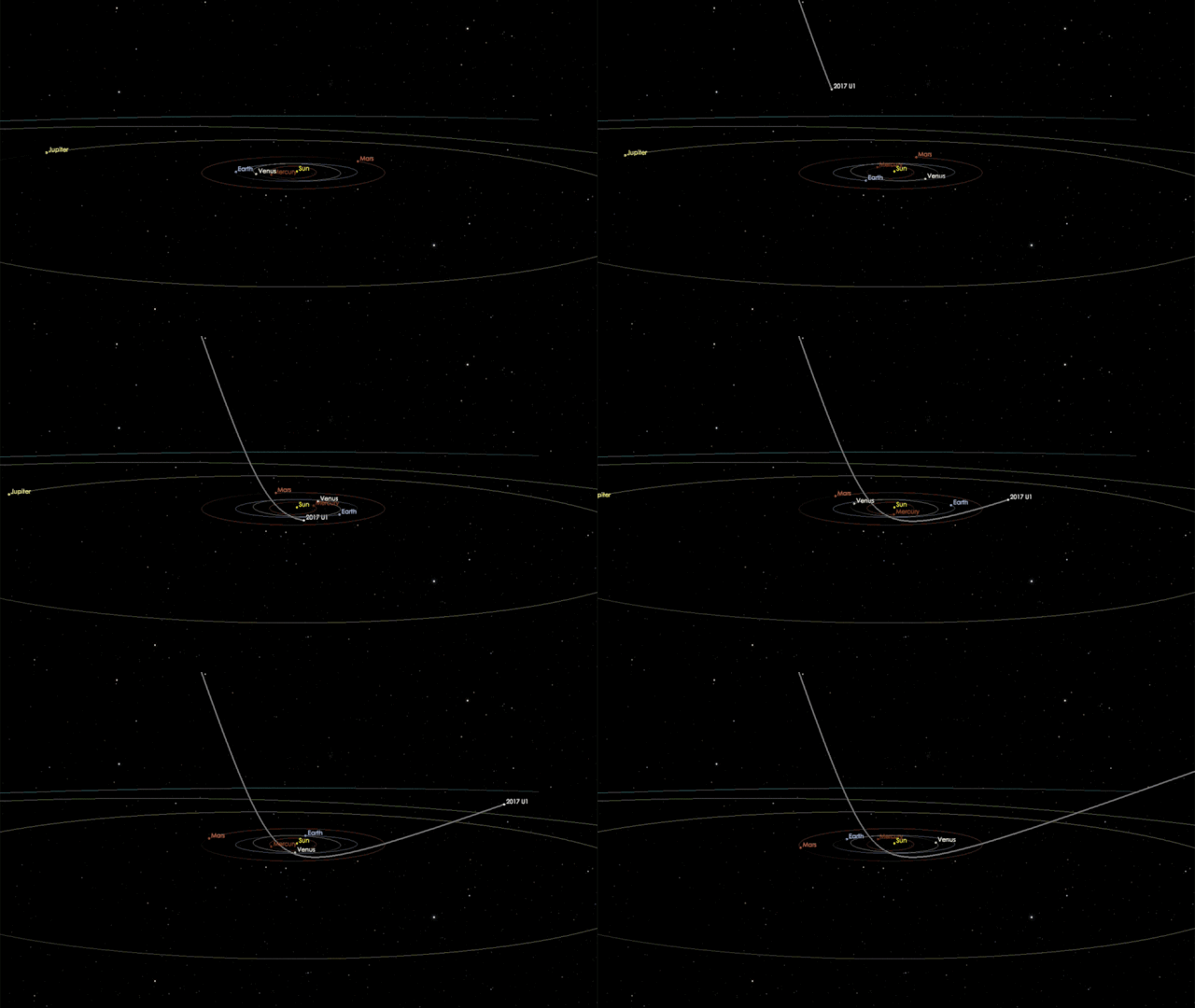
The hyperbolic trajectory of ʻOumuamua through the inner Solar System, with the Sun at the focus, showing its position every 7 days. The planet positions are fixed at the perihelion on September 9, 2017. Shown from a three-quarter perspective, roughly aligned to the plane of ʻOumuamua’s path.
“Technically, Oumuamua is an extraterrestrial object, it comes from another star. Now, if it’s artificial … it’s already a remote possibility.
We spend most of our time analyzing prosaic objects, but occasionally something special can happen before our eyes, “add scientist.
“With our current technology, all we can do is pay attention and observe.”
Breakthrough Listen has observed the object in four radio frequencies, covering individual channels from the range of 1 to 12 GHz. Until now, only the data of the S-frequency (from 1.7 to 2.6 GHz) have been processed.
The analysis of the three remaining frequencies is still to be made which means while even though no signals have yet been found, there’s still hope that this may be a long-lost, broken down alien spaceship tumbling through our solar system, so stay tuned.
Folie des ovnis : La vérité sur ‘l’ovni de la taille de la Terre’ filmé qui a soudainement disparu
Un OVNI de « la taille de la Terre » aurait été filmé, en plein jour, quelque-part en Australie. Au bout de quelques instants, cet engin a disparu mystérieusement.
Les rapports ont dit que de nombreux « témoins horrifiés » ont regardé ce monstrueux OVNI en train de « planer au-dessus d’eux » dans le ciel bleu au cours d’une journée ensoleillé.
La vidéo a été publiée sur YouTube sous le titre « Earth Sized UFO Sighted in Australia… Moves into the Sun! ».
La personne qui a publié la vidéo explique :
« Un OVNI de la taille d’une planète commence à se déplacer avant finalement de se diriger vers le Soleil. Un autre OVNI plus petit est également perceptible. »
Hélas, il n’indique pas où précisément en Australie cette scène a été filmée.
Le cameraman filmait directement le soleil quand un grand objet circulaire et lumineux est apparu.
Il semble se déplacer. Certains suggèrent que cet OVNI avait décidé de se mouvoir puisqu’il avait été repéré ou était poursuivi.
L’OVNI rougeoyant semble alors se déplacer derrière le soleil, avant qu’une lumière aveuglante ne bloque l’objectif de la caméra. Certains ont suggéré qu’il y avait eu une explosion ou une manœuvre de décollage par un énorme engin extraterrestre.
Lorsque la caméra est recentrée, l’orbe semble soudainement disparaître.
Certains spectateurs sont convaincus que c’était un OVNI ou une sorte de vaisseau alien.
L’un d’entre eux a déclaré sur YouTube : « J’ai vu quelque chose qui ressemblait beaucoup à cet objet l’année dernière. »
Un autre a prétendu que c’était juste du gaz de marais, qui est provoqué par l’augmentation du méthane provenant d’un étang.
Les plus sceptiques affirment qu’il n’y avait rien dans le ciel et que cette lumière n’était que le reflet du Soleil.
Scott Brando, un sceptique, qui dirige le site de démystification ufoofinterest.org a donné son avis sur cette affaire :
« Cet ‘OVNI’ est juste le disque solaire (du Soleil) réfléchi à travers le verre [de l’objectif]. »
Il a dit que l’objet apparent a soudainement disparu lorsque l’appareil photo a fait un zoom avant et que la lentille, posée sur l’objectif, a « probablement été retirée ».
Mick West, administrateur du site Metabunk.org, possède des images identiques qui semblent également montrer un « second soleil ». Pour lui-aussi, cela avait été provoqué par la lentille de la caméra. Il a déclaré :
« Une vidéo populaire prétend montrer un objet dans le ciel qui ressemble à un ‘second soleil’. »
« Cependant l’analyse de la vidéo prouve que ce qui est montré est un reflet de la lentille du Soleil lui-même. »
« Il n’y a rien d’autre dans le ciel, l’effet n’est pas non plus une parhélie, un reflet atmosphérique ou un mirage, c’est juste un reflet qui passe devant la caméra. »
« Nous pouvons voir cela très clairement si nous stabilisons la vidéo afin que l’arrière-plan soit fixe. »
« Nous pouvons alors voir le reflet bouger avec le mouvement de la caméra, remarquez que les petits mouvements du reflet sont en phase avec les grands mouvements de la lumière parasite. »
« Ce genre de reflets se produit lorsqu’un morceau de verre plat, tel qu’un filtre, se trouve devant la caméra, mais est légèrement incliné par rapport au plan de la caméra, accidentellement ou délibérément. »
« Lorsqu’il est combiné avec une seconde surface optique plate, comme le couvercle de protection d’une caméra de téléphone portable, ou un second filtre sur une caméra plus grande, vous obtenez un reflet plus faible du soleil décalé par rapport au soleil dans le sens de l’inclinaison. »
Il a ensuite simulé le même effet en attachant une lame de verre à son téléphone avec un élastique.
Même si l’explication d’un reflet demeure plausible, elle n’explique pas le fait qu’il y avait des témoins visuels …
Source:Express.co.uk, traduction par AP, le 14 décembre 2017
On average, the distance to Mars from Earth is 140 million miles (225 million kilometers), according to NASA. However, the distance to Mars from Earth is constantly changing. Like a pair of cars on a racetrack, Mars and Earth orbit the sun at different speeds. Earth has an inside lane and moves around the sun more quickly. Plus, both have elliptical orbits, rather than perfect circles.
In theory, the closest the planets could come together would be when Mars is at its closest point to the sun (perihelion) and Earth is at its farthest point(aphelion). In that situation, the planets would be 33.9 million miles (54.6 million kilometers) from each other. But that has never happened in recorded history. The closest known approach was 34.8 million miles (56 million km) in August 2003.
Incidentally, that closest approach kicked off asocial media trend. Every August, posts, memes and emails claim that Mars will appear as large as a full moon. In 2003, "someone somewhere pointed out that at a magnification of 75x in a telescope, Mars would appear as big in the eyepiece (half a degree wide) as the Moon does unmagnified," Sky & Telescope's Alan MacRobert explained. Not only did the chain letter get rewritten to omit the magnification, it also continued to spread long after 2003.
At the other end of the scale, when both planets are at aphelion — their farthest distance from the sun — and the two worlds are on opposite sides of the sun, they can be 250 million miles (401 million km) apart — a whopping 7.37 times the closest possible separation.
In their race around the sun, Earth on its inside track laps Mars every 26 months. This close approach provides an opportunity — a launch window — to send spacecraft to the Red Planet. Rather than pointing the spacecraft at Mars, engineers aim it in a wide orbit around the sun. The sun's gravity gives the spacecraft a boost — called a gravity assist or slingshot effect — saving time and fuel. The spacecraft's orbit then intersects with Mars.
"You've got this object that's going to go flying out into the air and you've got to shoot it," NASA engineer Eric Haddox said in a statement. Haddox is the lead flight design engineer in NASA's Launch Services Program at Kennedy Space Center in Florida. "You have to be able to judge how far away your target is and how fast it's moving, and make sure you reach the same point at the same time.”
NASA\'s Phoenix Mars Lander captured a sunrise Sept. 5, 2008, the 101st day since landing in the Arctic.
How far is Mars from the sun?
Mars has a very eccentric orbit; that is, it deviates from a perfect circle more than any other planet's orbit At its farthest distance (aphelion), Mars is 154 million miles (249 million km) from the sun. At its closest (perihelion), Mars is 128 million miles (206 million km) distant. On average, the distance to Mars from the sun is 142 million miles (229 million km), according to NASA. Mars revolves around the sun in 687 Earth days, which represents a Martian year.
Measuring the distance
The distance to Mars from Earth was first determined by Giovanni Cassini in 1672 using the parallax method. He sent a colleague, Jean Richer, to French Guiana while he stayed in Paris. They took measurements of the position of Mars, and triangulated those measurements with the known distance between Paris and French Guiana. Their calculations were only 7 percent off from today's more precise instruments.
Additional reporting by Nola Taylor Redd, Space.com contributor
Artificial Intelligence helps NASA find the first solar system like ours with 8 planets
In a breakthrough in the hunt for aliens, Artificial Intelligence has helped NASA scientists find a distant alien solar system similar to ours, with eight planets orbiting its star, Kepler 90.
NASA has made yet another incredible discovery, which, after reading through the entire article will probably sound less incredible. Anyhow, by using revolutionary new technology, astronomers have discovered a solar system as big as ours, in a breakthrough find that according to experts, can help us find aliens.
The solar system which has 8 planets orbiting a distant star was identified with the help of Artificial Intelligence, which combed through data gathered by the Kepler Space Telescope.
Although the Kepler 90 star system was already found before, its eighth planet, called Kepler-90i was found thanks to a groundbreaking new project between Google and NASA.
The star system Kepler 90 is located 2,545 light-years away in the constellation Draco. The new planet orbits its star every 14.4 days. All of the planets within that solar system tightly orbit its host star.
The discovery is a revolutionary one because this is the first time researchers have identified a solar system in the universe that has the same number of planets orbiting it as our own sun.
Before AI started combing through Kepler’s data, ‘Kepler 90 was tied with Trappist-1, with 7 planets each,’ says Jessie Dotson, Kepler project scientist at NASA’s Ames Research Center in California’s Silicon Valley.
The discovery raises hopes of finding alien life and as NASA puts it, this discovery demonstrated for the first time ever, that distant star system can house a family of planets as large as our own.
The newly found planet, Kepler-90i is believed to be around thirty percent larger than Earth, but it is not a planet you’d want to visit according to Andrew Vanderburg, astronomer and NASA Sagan Postdoctoral Fellow at The University of Texas, Austin.
Despite the fact that the planet is most likely rocky, it doesn’t have a thick atmosphere and the temperature present on the surface are most likely scorching, having an average surface temperature of around 800 degrees Fahrenheit.
Automatic Learning or Machine Learning—a new tool in the hunt for aliens
Machine Learning is the subfield of computer science and a branch of artificial intelligence whose objective is to develop techniques that allow computers to learn.
More specifically, it is about creating programs capable of generalizing behaviors from information provided in the form of examples.
How AI found the planet that had gone unnoticed.
This is how scientists Christopher Shallue and Andrew Vanderburg went further and created a complete network of computers to identify exoplanetary transit signals.
Based on how neurons interconnect in the human brain, this artificial “neural network” scrutinized the data collected by Kepler and found a world (Kepler-90i) that, due to its weak signal, had gone unnoticed to scietists.
Had it not been for AI, we would never have discovered the planet Kepler-90i.
This discovery also raises other questions like, how many other planets have gone unnoticed until now, and whether or not some of them host alien life.
“As we expected, there are exciting discoveries in Kepler’s data, waiting for the right technology to be brought to light,” said Paul Hertz, director of NASA’s Astrophysics Division in Washington.
“This finding demonstrates that the data of today is a treasure for the researchers of tomorrow.”
While machine learning had previously been used in Kepler’s database searches, this is the first time that an artificial neural network has been created that can find even the weakest signal in a distant world.
Anyway, while many of us thought that NASA had lined up a bit more of an exciting discovery, as many of you have already been able to deduce, the kernel of this announcement by NASA is not in the finding of Kepler-90, a very compact system where the farthest planet orbits at the distance that the Earth does from the Sun, but in the fact that artificial intelligence has taken a new step in the field of the search for alien planets, and perhaps, extraterrestrial life itself.
Seen here are some of the alien worlds found by Kepler since 2009, and their average sizes and temperatures (blue shows Earth-like temperatures, red shows lava at the surface).
Maybe soon, the AI will help us identify aliens, just as it helped us find a planet that had gone unnoticed until now.
By Deborah Byrdin ASTRONOMY ESSENTIALS | TODAY'S IMAGE|
When you see the sky’s brightest star – Sirius – low in the sky, you’re seeing it shine through an extra thickness of Earth’s atmosphere. At such times, its colorful flashing might surprise you.
View larger. | A sequences of images of the star Sirius, via Amanda Cross.
Amanda Cross in Euxton, Lancs, UK caught the images above ofSirius – the brightest star in Earth’s sky, sometimes called the Dog Star – on December 11, 2017.
She wrote:
This is the star Sirius early in the morning. I used a high ISO and 1/320 shutter speed. The colour flashes are picked up by the camera as the atmosphere splits the light from the star. No color enhancements were made to this image. This is how the camera picked up the colors.
Thank you, Amanda!
It’s true. When you see this very bright star low in the sky, it appears to flash in many different colors. These colors aren’t intrinsic to the star, but instead result from refraction, which splits starlight into the colors of the rainbow. Atmospheric refraction causes all kinds of strange optical effects, like bent crescent moons, and flattened suns. And it causes the brightest stars – like Sirius – to shine in many sparkling colors!
When you see Sirius higher in the sky, where you’re looking at it through less atmosphere, this star appears to shine more steadily and with a whiter color.
“These professional astronomers are claiming the exclusive right to give ‘approved’ names to the stars. But the stars – and the sky – belong to all of us.”
Star map painting by Senior Wardaman Elder Bill Yidumduma Harney, featuring the Milky Way, the moon, and ancestor spirits. The IAUincluded this image with its announcement of new star names.
There’s been a debate among professional astronomers about who should have the right and/or obligation to name stars and other space objects. The visible stars have had many names, because they were named over time by many different people and in many cultures. But, around the 1930s, the International Astronomical Union (IAU) took it upon itself to divide the sky – “officially” – into 88 constellations, and since then the IAU has been naming all sorts of space objects. In recent years, bowing to pressure from outside groups that allow individuals and non-astronomers to name stars (for a price), the IAU ran a global competition to let non-professional astronomers participate in naming stars. It announced 227 star names a year ago, which were chosen in that semi-public process. This week (December 11, 2017), the IAU announced it had formally approved names for 86 more stars, without asking for public input.
These new names have now been added to the IAU’s stellar name catalog, and thus the IAU’s catalog now contains “approved” names for 313 stars. Many of the names are what we amateur astronomers have been calling these stars all along. Most of the 313 are, after all, among the brightest stars in our skies. But some are entirely new names.
The new star names are for somewhat fainter stars than those announced last year. The brightest one in this new batch is a 2nd-magnitude star known as Delta Velorum, which has been given the name Alsephina, stemming from the Arabic name al-safinah meaning the ship. Delta Velorum is part of the constellation Vela the Sails, which used to be one large constellation called Argo Navis, the ship of the Argonauts. The IAU got rid of Argo Navis when it “officially” named constellations in the 1930s, dividing the great celestial ship into several smaller constellations. But I digress … easy to do when speaking of names for stars and constellations.
Traditionally, most star names used by astronomers have come from Arabic, Greek, or Latin origins. [The 86 new names are] drawn from those used by other cultures, namely Australian Aboriginal, Chinese, Coptic, Hindu, Mayan, Polynesian, and South African.
… Modern star catalogs contain millions or even billions of objects, most of which are identified by designations — strings of letters and numbers indicating their position or ordering. The IAU reviews the names of the brightest and most interesting stars rather than assigning designations using merely strings of letters and numbers. Some bright stars have accumulated dozens of names and spelling variations over the years.
This time, the naming has been done exclusively by the IAU Working Group on Star Names. Eric Mamajek, chair and organiser of this sub-committee within the IAU, said the astronomers had been:
… researching traditional star names from cultures around the world and adopting unique names and spellings to avoid confusion in astronomical catalogues and star atlases. These names help ensure that intangible astronomical heritage from skywatchers around the world, and across the centuries, are preserved for use in an era of exoplanetary systems.
Unless you know the stars well, perhaps the only star name you’ll recognize on the IAU’s most recent list of named stars is Barnard’s Star. It’s not a bright star but is one of the nearest stars to our sun. It was discovered by astronomer Edward Emerson Barnard in 1916 and for decades was suspected of having a planet. The IAU said that the name Barnard’s Star – which has been in common use for a century – can stay.
I enjoyed reading about the IAU’s new Chinese star names for 11 stars. Three of those names came from the Chinese idea of lunar mansions, vertical strips of sky that act as markers for following the nightly progress of the moon, providing a basis for a lunar calendar. There’s a logic and history to that that’s very appealing, to me.
And certainly there must be equally good reasons for the IAU’s new star names from other cultures, as well. It’s a thoughtful and careful list.
Astronomer Alan Stern. The New Horizons mission to Pluto was his brainchild, and he has also founded a private company in an attempt to give the public more access to naming and defining things in space. The company is called UWingU.
Still, it rankles me and some others in astronomy that the professional astronomers of the IAU are claiming the exclusive right to give ‘approved’ names to the stars. The stars – and the sky – belong to all of us. Other organizations have popped up that will also name these features for you, for a price.
EarthSky doesn’t take an “official” view on any of this, but, personally, I don’t like fences. I’m always wishing my neighbors would agree to remove the fences in our backyards, for example (although I know they never will), so it’d be like one big yard. That’s just my mindset, and I know many of you will disagree; I’m just a person who likes wide open spaces. So you won’t be surprised to know I feel a touch of sadness about these new “approved” names. It’s like these stars now have little fences, of sorts, around them.
As for the companies that offer to name stars for a price … it’s a fact that many people enjoy having stars or exoplanets or planetary features named for themselves. Where’s the harm? If it makes your mom, or your sweetheart, or anyone you love feel good, I say … do it!
Bottom line: Astronomers often know multiple names for stars, or call them by their Greek letter names. Now, the International Astronomical Union has chosen “approved” star names for 86 more stars.
Interstellar Visitor Stays Silent But Researchers Aren't Done Analyzing
Oumuamua, the first interstellar asteroid to have been found in the solar system of Earth has remained silent up to now and not shown any sign of life. The asteroid went past Earth two months ago and scientists have been searching for artificial signals coming from it but up to now have not found any.
$100 Million Funding In Search for Alien Life
The scientists have $100 million funding and they made the announcement that Oumuamua has remained silent on December 14. However, the researchers have not yet finished analyzing data from the West Virginian Robert C. Byrd Green Bank Telescope. The scientists also have plans on undertaking three more blocks of observation according to the team members.
The director of the Berkeley SETI Research Center in California revealed that it was good seeing the data come in from what is an interesting source. He went on to reveal that all the team had been extremely excited to learn what future analyses are going to reveal.
Shape of Oumuamua Caused Speculation of It Being An Alien Spacecraft
The asteroid Oumuamua has been causing a stir in the world of astronomy and planetary science along with SETI communities ever since the asteroid first came onto the radar in the middle of October 2017. The trajectory of the object revealed that the asteroid had arrived from another solar system, while the strange shape, which is elongated, sparked a great deal of talk about it being an alien spaceship.
Of course, this was something of a long shot, but still, there were many astronomers that believed the object was well worth looking into. The SETI Institute scientists in California used the Allen Telescope Array to search for any signals that were coming from Oumuamua but up to now the search for alien life has failed.
People are not giving up though and the Breakthrough Listen Project have studied Oumuamua, which is said to be about 400 meters in length using four radio bands which spanned over many billions of individual channels on December 13 when they made use of the 330 foot Green Bank dish.
The observation went on for 6 hours and managed to capture 90 terabytes of data throughout the 2-hour observation of the huge asteroid. Of course, looking through so much information is going to take a great deal of time. The Breakthrough Listen team plan on using three more observation blocks in the future as they continue their search for alien life.
This is the job I want. The researchers who recently used cosmic rays to find a massive previously-unknown “void” inside the Great Pyramid are now planning to drill a hole, shove a deflated micro-blimp drone through it, inflate it and send it around the insides of the pyramid. Can a blimp outrun a mummy with a dagger?
The idea for this great movie plot comes from the folks at ScanPyramids, a group of engineers from the Heritage Innovation Preservation (HIP) Institute in Florida and the University of Cairo. They’re the researchers who used “cosmic ray imaging” to measure subatomic particles from space as they passed through the Great Pyramid to map its insides and possibly find unknown voids and chambers. As revolutionary as that is, all it gives is a type of x-ray image of the insides. Since Egypt’s government blocks humans from entering the pyramid, there has to be another way to see inside the real thing.
Enter Dr. Jean-Baptiste Mouret (a perfect movie name for a pyramid explorer). A senior researcher at Inria (“Inventors for the Digital World”), Mouret studies “machine learning and evolutionary computation as a means to design highly adaptive robots.” In a recent interview with Digital Trends, he first describes how he would get a robot inside the pyramid.
“The main challenge is to insert a complete exploration robot in a hole that is as small as possible. It is important to use a hole as small as possible because we want to leave as few traces as we can. This what we call ‘minimally invasive robotics.’ We chose a diameter of 1.5 inches because it is a good trade-off between the size of the hole, the kind of machines that can bore holes, and the current robotics technologies.”
Assuming he or the people at ScanPyramids can get permission to drill a 1.5 inch (3.5 cm) hole into the pyramid (two monumental tasks), Mouret would then send in his specially-designed micro-blimp drone through the hole and self-inflate it once inside.
“[These robots] can touch obstacles without crashing and without risking damage to the monument. They are, moreover, intrinsically stable, which is important for taking pictures in low-light conditions, and they are more energy-efficient than multi-rotors.”
The blimp-bot would be remotely-controlled, but it will have autonomous capabilities to find its way back to its docking port and entry/exit hole should it lose communications.
Why would it lose communications? Can robots be affected by mummy curses? Would the curse be passed on to the robot’s inventor, owner or operator? Would the movie based on this be a thriller or a comedy?
Those are points to ponder while Dr. Jean-Baptiste Mouret waits for the proper permits to be approved by Egypt’s Ministry of Antiquity. Meanwhile, he plans to use the technology at other buildings or archaeological sites that can’t be explored by humans.
To add to the seemingly increasing strangeness overhead in our skies, reports of so-called megacryometeors have been increasing lately. These anomalous balls of ice are believed to either fall from aircraft overhead or be the result of some unknown atmospheric activity. In many cases, however, aviation authorities claim no aircraft had overhead at the time of megacryometeors falling. Case in point: two California homeowners got the scares of their lives this week as anomalous massive chunks of ice fell from the skies, crashing through their homes and generally scaring the pants off of everyone. Like in most cases, the Federal Aviation Administration claims it knows nothing. The first case happened in San Bernardino, California at the home of 82-year-old Claudell Curry. Curry and his wife were enjoying a quiet evening at home on Sunday, December 10 when a horrible crashing sound came from their bedroom.
Luckily, no one was injured in either case.
Upon entering their bedroom, the Currys found chunks of clear ice lying and debris from their ceiling littering the room. Had they been in bed, Curry told the San Bernardino Sun, the result would have been quite different:
That terrible noise, I never heard a noise like that before. We shiver every time we think we could have been in bed. The wife is still nervous, but we are doing OK. It was quite a traumatic experience.
It probably would have been more traumatic had the ice been blue, indicating it came from an airplane lavatory. Since it was clear like in other unexplained megacryometeor cases, its origin isn’t so easily identified. A similar case happened just a month prior only a few dozen miles away when another deadly chunk of ice fell through a home in Chino, California. The FAA hasn’t been able to identify a source for either case, as there were no commercial flights in the area on either date. The nearby March Air Reserve Base, Marine Corps Air Ground Combat Center, and Camp Pendleton also deny responsibility, stating there are no planes kept on those bases.
A Spanish megacryometeor which fell in 2007.
Whatever the cause may be, something weird is going on in the skies lately. Unexplained booms have been rocking the skiesover North America, sometimes accompanied by unexplained debris. In a few cases, tight-lipped federal agents have shown up to whisk the debris away before onlookers and journalists get a good look. Could these booms and ice chunks indicate some off-the-books or clandestine aerospace activity?
Within the specific genre of science-fiction, fantastic tales of time-travel to the far-flung future or to the distant past are hardly rarities. Take, for example, H.G. Wells’ epic novel of 1895: The Time Machine. The book tells the story of a brilliant, London, England-based scientist, inventor and adventurer who journeys to the year A.D. 802,701 where, to his complete and utter dismay, he finds that the Human Race (in the form that we understand it, at least) no longer exists. In its place are the Eloi and the Morlocks. The former are relatively human-looking beings (albeit of smaller stature), yet they utterly lack vitality, imagination, and any desire to learn or advance. The Morlocks, meanwhile, are fearsome, savage and nightmarish beasts who dwell in darkened underground lairs and who use the Eloi as we use cattle: namely, as a source of food.
Then there is The Philadelphia Experiment: an entertaining Hollywood film allegedly based on real events, and which tells the story of two sailors – David Herdeg and Jim Parker – who are propelled through time from 1943 to the Nevada Desert, circa 1984.
And we should not forget the BBC show, The Flipside of Dominick Hide, in which the main character travels through time from A.D. 2130 to London, England in 1980. Ostensibly there to observe the transportation systems of the past, Hide subsequently finds himself on a quest to locate one of his distant ancestors.
Although these three tales of fictionalized time travel are very different in nature, they all have one thing in common: the time travel that all of the characters experience is achieved via the use of highly advanced (albeit sometimes unreliable) technology: In Wells’ The Time Machine, the chief character (whose name we never actually get to learn) builds his own device to traverse the centuries. In The Philadelphia Experiment, Herdeg and Parker take part in a secret U.S. Navy operation. And Dominick Hide undertakes the journey from 2130 to 1980 via nothing less than his very own flying saucer. However, there are countless reports on record where people – in the real world – seem to have crossed the time-barrier entirely at random, and without the means of sci-fi-style machine-based technologies. Such cases have become known as Time-Slips.
One of the most famous examples of what some researchers think may have been a definitive Time-Slip involved two British women: Charlotte Anne Moberly and Eleanor Jourdain, who, it has been suggested, traveled through time while visiting the gardens of the Petit Trianon at Versailles, France. It was August 10, 1901 when the pair paid a trip to the Palace of Versailles. While walking through the grounds, both Moberly and Jourdain were overcome by distinctly oppressive feelings of gloom and uneasiness. They would later claim to have met with a wide variety of individuals, all garbed in 18th Century clothing, and who they came to believe had been members of the court of none other than Marie Antoinette. More controversially, the pair said they saw a figure they thought may very well have been Marie Antoinette herself.
Did Moberly and Jourdain really cross the time-barrier into centuries-past? To this day, the story has as many believers as it does detractors. But there is one important factor of which to take careful note: their amazing story does not stand alone. Indeed, there are numerous reports on record of people apparently passing through time – entirely at random, and without the benefit of any form of out-of-this-world technology.
A key event of the First English Civil War, the Battle of Hopton Heath (a small village in south Shropshire) was fought on Sunday, March 19, 1643 between Parliamentarian and Royalist forces. The battle ended at nightfall, with the actual victory and outcome still remaining matters of very much personal opinion. The Royalists, for example, had succeeded in capturing eight enemy-guns; while the Parliamentarians believed that their successful killing of the enemy commander, the Earl of Northampton, was of equal – if not even greater – significance.
But, without doubt of even more significance was a startling event that occurred at some point in the winter of 1974. It was late at night and then-thirty-six-year-old John ‘Davy’ Davis, a Lichfield, Staffordshire-based house-painter at the time, was driving near Hopton Heath when he began to feel unwell: an ominous tightness developed in his chest, he felt lightheaded, and, as he succinctly put it, “my left ear hurt and felt hot.”
Quickly pulling over to the side of the road, Davis was amazed to see the night-sky suddenly transform into daylight, while the road in front of him no longer existed: instead, it had been replaced by a mass of fields, heath-land and tangled trees. And, in front of him, countless soldiers adorned in what was clearly Civil War-clothing waged harsh war upon one another. Notably, Davis said that although at one point he was “nearly bloody surrounded” by the soldiers, it was almost as if they could neither see him nor his vehicle. This afforded Davis a degree of relief, as he was practically frozen to the spot, and “couldn’t have run if I had wanted to.” As it transpired, Davis didn’t need to run anywhere: just a few seconds later, the bizarre scene suddenly vanished, and Davis found himself sat at the edge of the road, with his car squashed against a large line of hedge, and with complete and utter normality returned.
Horning is an old village in Norfolk, England situated between Wroxham and Ludham, on the River Bure. The village’s Ferry Inn is typical of the many old taverns that dominate the area, and the 13th Century church of St. Benedict can be found half-a-mile to the east of the village. On a summer’s afternoon in either 1978 or 1979, the Margolis family was enjoying a stroll around the picturesque village when, like so many before them and since, they were overcome by a feeling of distinct uneasiness and unreality – as well as total silence, and a slight dizziness.
That uneasiness quickly mutated into concern, fright, and overwhelming disorientation as the landscape became “fuzzy” (“like a big heat-haze”), the houses were replaced by ancient cottages, and the road ahead of them became little more than a muddy track. As for the cars that had been in sight, they were no more. Instead, a battered and bruised cart appeared – that was being pulled by a large cart-horse. A thin man dressed in brown walked alongside the horse; yet appeared not to notice any of the family in the slightest.
Suddenly, however, the modern-day sounds of cars and voices began to echo all around them, and the strange spectacle was now utterly gone. Notably, it seems that Mrs. Margolis may very well have been exposed to the odd scene for slightly less a period of time than was her now-late husband and their 11-year-old son. “I looked at them when I came out of it,” recalled Mrs. Margolis in a 1997 interview, “and it was like they were in a trance: their mouths were hanging down, and their eyes looked funny. Then they looked like they woke up and we were all back together again.”
Interestingly, odd and unsettling feelings and sensations, such as those referenced in each of the cases above, were also referred to by author Andrew Mackenzie in his book Adventures in Time: Encounters with the Past. Such events, reported Mackenzie, are “often accompanied by feelings of depression, eeriness and a marked sense of silence, deeper than normally experienced.” Similarly, Jenny Randles’ book, Time Storms: Amazing Evidence for Time Warps, Space Rifts, and Time Travel firmly demonstrates that whatever we may think we know about the nature of time, in reality we may not even know the half of it.
The scanning for signs of life inside the interstellar asteroid and possible interstellar spacecraft known as Oumuamua has barely started and already a leading astronomer is claiming that the space rock/space ship is possibly a Von Neumann probe. Coupling that name with its cigar shape makes this sound like an unpleasant German medical procedure, but this is the same astronomer who declared that the dimming of Tabby’s star was caused by a Dyson sphere being built around it, so it’s time to do what we did back then and find out what the heck a Von Neumann probe really is.
The astronomer is Dr. Jason Wright from Penn State University and the Von Neumman probe theory appeared in his blog in a discussion over the idea that this may be not lone craft but one of thousands:
“Why would there be so many of them? Part of the argument that it is possible to settle the entire Galaxy is that exponential growth is possible, because the only limiting resource is the stars (and the material around them) themselves. Exponential growth can be achieved via Von Neumann probes: self-replicating spacecraft that go to a system, make lots more of themselves, and then go to more systems.”
John von Neumann
The concept is named after Hungarian American mathematician (sometimes called the last great mathematician), physicist and pioneering computer scientist John von Neumann, who spent time researching the concept of self-replicating machines or “Universal Assemblers,” which were capable of creating exact copies of themselves. These became known as “von Neumann machines” and, when the theory was applied to spacecraft, “von Neumann probes.” These probes could create new models to continue traveling long distance through space, or they could be programmed to make copies of life forms they encounter.
One physicist and mathematician who liked the idea of the von Neumann probe is none other than Freeman Dyson, theorizer of the Dyson sphere. Dyson used inspiration from the von Neumann probe to imagine a small 1 kg (2.2 lb) craft that would be taken into space by another ship and then released like an egg. The “egg” would “hatch” a solar-powered probe that traveled the solar system, collecting data and samples and powering itself with chemical “nutrients” it picked up. Dyson presented the idea during a lecture in Adelaide, Australia, where an audience member blurted out the name “Astro-chicken” and Dyson liked it enough to use it. While not as well-known as the Dyson sphere, Astrochicken is a concept (small robotic space probes) that is popular among space scientists.
Freeman Dyson, father of the Astrochicken
What were we talking about again? Oh, yeah, the interstellar space probe. Dr. Wright proposes that Oumuamua could be a “derelict craft” with broken engines that is slowly tumbling through space without attitude control. However, it could still have a communications system, possibly still capable of replicating itself, that could be generating signals that the astronomers closely observing it this week might pick up. As of this writing, they haven’t heard anything.
Maybe they can’t hear it over the laughter every time someone says “Astrochicken!” or asks if the von Neumann probe is heading for Uranus.
Something is terrorizing a Sunshine Coast community in Queensland, Australia. Something large. Whatever it is, it has so far ripped open animal enclosures, devoured pets and livestock, and left little traces behind. The Sunshine Coast Daily reports that locked gates were destroyed by something capable of leaving behind “huge paw prints.” One local resident and eyewitness, Kay McCullock, described her near-encounter with the creature while it tore apart her neighbor’s poor defenseless guinea fowl:
When I looked into the neighbour’s yard, I could see the guinea fowls getting attacked by – you’re gonna’ love this – an unseen predator… As if the birds were being thrown around by something invisible. When I found three lots of clumped feathers there was no blood and no bodies.
Unseen predator? Invisible monster ripping birds apart like gore-filled piñatas? Yes, you’re right, Kay, I am gonna love it. Especially given McCullock’s description of her second encounter with the beast:
I heard ‘it’ again and went out with my sword and yelled at it. I heard growling and a kind of snorting. It was quick and by the time I got to the gate I couldn’t see anything.
Too bad. Slaying a phantom big cat with a sword would have made a great story to share at that boring holiday office party. Sure beats Linda from HR’s same old story about that time she found the bowling ball in the soup. McCullock says that so far, locals believe the only two remaining possible suspects are black panthers and Yowie. Given that large feline species aren’t indigenous to Australia, could this be another case of the ever-elusive phantom big cat? Or has Bigfoot’s inbred down-under cousin developed a taste for poultry?
“Who ya callin’ inbred?”
Unfortunately for those of us who want to believe in what goes bump in the night, there’s likely a much more benign explanation. Over the last couple of years, packs of feral wild dogs have reached what some are calling “epidemic” levels throughout Queensland. One local rancher told the Australian Broadcasting Corporation in 2016 that the animals have become increasingly bold and terrifying in recent years:
I grew up with dingoes up north…but never experienced the pack attitude that we have here. Most of the time we see them in groups of four, up to nine, and that is what makes us feel unsafe. They are dangerous, they are not scared of us anymore, and you just feel outnumbered.
Could a large feral dog be responsible for killing these animals? It’s much more likely than a phantom cat or even Yowie. Everyone knows he prefers eating garbage.
Today, scientists led by Stephen Hawking are using high-tech scanners to discover if a huge, cigar-shaped 'comet' is in fact, an alien probe.
Now, one astronomer claims that the space rock, named Oumuamua, could be an alien spacecraft with broken engines that is tumbling through our solar system.
Dr Jason Wright from Penn State University suggests that a broken alien spacecraft move in exactly the same way as the interstellar comet.
Scroll down for video
Last month, a mysterious cigar-shaped asteroid sailed past Earth, marking the first time an interstellar object has been seen in the solar system
OUMUAMUA
A cigar-shaped comet named 'Oumuamua sailed past Earth last month and is the first interstellar object seen in the solar system.
It was first spotted by a telescope in Hawaii on 18 October, and was observed 34 separate times in the following week.
Travelling at 44 kilometres per second (27 miles per second), the comet is headed away from the Earth and Sun on its way out of the solar system.
The comet is up to one-quarter mile (400 meters) long and highly-elongated - perhaps 10 times as long as it is wide.
That aspect ratio is greater than that of any asteroid or comet observed in our solar system to date.
But the comet's slightly red hue — specifically pale pink — and varying brightness are remarkably similar to objects in our own solar system.
Oumuamua is about a quarter of a mile long, 260ft wide and currently travelling at 196,000mph.
Rather than moving through space like other space rocks, astronomers believe that it is 'tumbling' through our solar system.
Writing in his blog, Dr Wright, an associate professor of astronomy and astrophysics at Penn State University, says: 'Such derelict craft would, if they are not travelling so fast that they escape the Galaxy, eventually 'thermalize' with the stars and end up drifting around like any other interstellar comet or asteroid.
'In fact, since they (presumably) no longer have attitude control, one would expect that they would eventually begin to tumble, and if they are very rigid that tumbling might distinguish them from ordinary interstellar asteroids… and in fact, just because their propulsion is broken doesn't mean that their radio transmitters would be broken.'
Dr Wright suggests that the object could be a 'Von Neumann probe' - a theoretical self-replicating spacecraft that visits star systems.
He added: 'Such a discovery would imply that there are lots of these things in the solar system at any given moment (even if they are deliberately targeting the sun, they are hard to spot and we'll miss most of them), and so lots of opportunities to study them.'
Dr Wright previously suggested the mysterious dimming of star KIC 8462852 – also known as Tabby’s Star – could be caused by an alien megastructure called a Dyson Sphere.
His latest comments come ahead of a project later today in which scientists will use high-tech scanners to discover if Oumuamua was sent by an alien civilisation.
The cigar-shaped object, named 'Oumuamua by its discoverers, sailed past Earth last month and is the first interstellar object seen in the solar system
WHO IS DR JASON WRIGHT?
Dr Wright is an associate professor of astronomy and astrophysics at Penn State University.
Dr Wright achieved global fame after suggesting that the dimming of star KIC 8462852, also known as Tabby’s Star, could be caused by an alien megastructure called a Dyson Sphere.
This is a hypothetical structure that could be used by an advanced alien race to harness the energy of a star.
First proposed by theoretical physicist Freeman Dyson in 1960, the sphere would be a swarm of satellites that surrounds a star.
They could be an enclosed shell, or spacecraft spread out to gather its energy - known as a Dyson swarm.
If such structures do exist, they would emit huge amounts of noticeable infrared radiation back on Earth.
But as of yet, such a structure has not been detected.
The team of scientists, called Breakthrough Listen, will use the world's largest directable radio telescope, at Green Bank in West Virginia, to follow it for ten hours today at 3pm ET (8pm GMT).
They are listening for electromagnetic signals, no stronger than those emitted by a mobile phone, that cannot be produced by natural celestial bodies.
If they find them, it would be proof that extraterrestrial forces really could be at play.
For the moment, they are trying to contain their excitement. But the name they have given this bizarre object betrays their optimism.
Oumuamua is a Hawaiian term meaning 'a messenger from afar arriving first'.
Most intriguingly, it is the wrong shape for an asteroid — they are typically round.
Professor Hawking and his colleagues at Breakthrough Listen report: 'Researchers working on long-distance space transportation have previously suggested that a cigar or needle shape is the most likely architecture for an interstellar spacecraft, since this would minimise friction and damage from interstellar gas and dust.'
Scientists led by Stephen Hawking, pictured, are today using high-tech scanners to discover if a huge, cigar-shaped space object currently hurtling through our solar system was sent by an alien civilisation
Another oddity is that Oumuamua is flying very 'cleanly', without emitting the usual cloud of space dust that astronomers observe around asteroids.
Experts say this suggests it is made of something dense: probably rock, but possibly metal.
It was first detected on October 19 by a long-running research programme called Pan-STARRS, which uses powerful telescopes to photograph and monitor the night sky at the University of Hawaii.
WHERE DID IT COME FROM?
Most comets follow ellipse-shaped orbits around the sun.
But this comet appears to orbit at an angle, and doesn't circle the sun.
Its orbital path suggests it entered our solar system from the direction of the constellation Lyra, looped around the sun, and will never return.
But others have suggested that the comet did come from Earth, but interacted with Jupiter or another planet, which changed its orbit.
Its amazing speed has led some experts to conclude it is the first such object to have come towards us from outside our solar system.
Analysts also say its faintly red colour indicates it has been subjected to interstellar cosmic radiation which is harsher than we experience in our solar system.
The fact that it doesn't seem to have engines or show signs of propulsion may wreck the interplanetary-spacecraft theory.
If a radio signal does come back from the object, Professor Avi Loeb, Professor of Astronomy at Harvard University, suggests that we will need to proceed with caution.
Speaking to MailOnline, he said: 'My recommendation, as in any dialogue, is that we first listen and do our best to understand what we are hearing.
'Once we figure this out, we can decide how to respond.
'Overall, I am an optimist. I believe that a very intelligent civilisation will be peaceful, and we could save ourselves millions or billions of years by learning from it.
'But there is also the possibility that such a civilisation will have hostile intentions and risk our existence, so we should deliberate carefully in any future contact with them.'
Is sigaarvormige asteroïde Oumuamua een buitenaardse sonde met kapotte motoren? Deze topastronoom denkt van wel
Wetenschappers onderzoeken momenteel of een enorm sigaarvormig object in ons zonnestelsel een buitenaardse sonde is.
Eén astronoom claimt dat de ruimterots, genaamd Oumuamua, een buitenaards ruimteschip met kapotte motoren kan zijn.
Dr. Jason Wright van de Penn State University suggereert dat een kapot buitenaards schip op precies dezelfde manier zou bewegen als de interstellaire ‘komeet’.
Tuimelt
Oumuamua is ongeveer 800 meter lang, zo’n 80 meter breed en raast met honderdduizenden kilometers per uur door ons zonnestelsel.
Volgens astronomen beweegt het niet zoals andere stukken rotsen door de ruimte, maar ‘tuimelt’ het object door ons zonnestelsel.
Zo’n wrak zou, als het niet zo snel beweegt dat het uit het sterrenstelsel kan ontsnappen, uiteindelijk net als andere interstellaire kometen of asteroïden rondzwerven in de ruimte, aldus professor Wright.
Von Neumann-sonde
Hij denkt dat het object een Von Neumann-sonde kan zijn, een zelfreplicerend ruimteschip dat zonnestelsels aandoet.
“Zo’n ontdekking zou impliceren dat er op ieder moment veel van dit soort dingen in het zonnestelsel zijn (zelfs als ze doelbewust op de zon afkomen zijn ze moeilijk te spotten en zullen we de meeste ervan missen) en dat er dus ook veel kansen zijn om ze te bestuderen,” voegde hij toe.
Dr. Wright stelde eerder dat het mysterieuze gedrag van de ster KIC 8462852 veroorzaakt kan worden door een buitenaardse megastructuur.
Eerste bezoeker
Normaal gesproken worden asteroïden vergezeld door een karakteristieke stofstaart, maar die ontbreekt bij Oumuamua.
Dit suggereert volgens experts dat het object, de eerste bezoeker van buiten ons zonnestelsel, mogelijk bestaat uit metaal.
De duivel is veel intelligenter dan wij. Paus waarschuwt in dit interview dat satan een echt persoon is
“De duivel is slecht. Hij is niet zoals de mist. Hij is niet iets diffuus, hij is een persoon. Als je eenmaal met hem aan de praat raakt, ben je verloren. Hij is intelligenter dan wij.” Die woorden gebruikte paus Franciscus in een zondag uitgezonden interview met de Italiaanse tv-zender Tv2000.
Als je contact zoekt met de duivel, dan laat hij je vallen, hij verdraait je kop, zei de paus. Het kwade, de duivel, heeft een voor- en achternaam, hij komt bij ons thuis.
“Hij doet of hij beschaafd is. Tegen ons priesters en bisschoppen gedraagt hij zich beschaafd. En als je het niet tijdig in de gaten hebt, loopt het slecht af,” zei de paus.
Tegengewerkt
Franciscus heeft het regelmatig over satan of de duivel. Zo meent hij dat de boze werkzaam is telkens als er minderjarigen seksueel worden misbruikt.
Ook wanneer de paus zelf als hoofd van de Katholieke Kerk wordt tegengewerkt bij zijn hervormingen, is dat het werk van de duivel.
Vermomd
Met het kwade ga je geen dialoog aan, waarschuwde de paus in het vraaggesprek.
Franciscus verwees enkele jaren geleden ook naar satan. In 2013 zei hij tijdens een toespraak op het Sinter-Pietersplein dat de duivel vaak verschijnt ‘vermomd als een engel die ons gewiekst toespreekt’.
MYSTERIEUZE COMMUNICATIE MET VERDWENEN ARGENTIJNSE ONDERZEEËR ?
Sinds half november 2017 wordt een Argentijnse onderzeeër met 44 opvarenden vermist die onderweg was vanuit het zuidelijk gelegen vuurland naar Mar del Plata, ongeveer 400 kilometer ten zuidoosten van Buenos Aires.
Op 2 december zijn een aantal mensen getuige van hoe mannen in vreemde doorschijnende pakken via lichtflitsen communiceren met iets op zee, precies in het zoekgebied van de verdwenen onderzeeër.
Het zoeken naar de vermiste Argentijnse onderzeeër ARA San Juan die je op de volgende afbeelding ziet in de haven van Buenos Aires, is inmiddels gestaakt en er is geen enkele hoop meer op overlevenden.
De laatste keer dat er contact is geweest met de onderzeeër is geweest in de Golf van St. George en dat is op het volgende kaartje aangegeven als zoekgebied.
Ons verhaal speelt zich af op een onherbergzame plaats aan de Argentijnse kust, Mazaredo, en op de volgende kaart aangegeven met een rode cirkel. Pal tegenover het gebied waar voor het laatst contact was met de verdwenen onderzeeër.
In dat onherbergzame gebied bij de baai van Mazaredo zagen een aantal getuigen heel merkwaardige dingen, wat begon op 2 december 2017. Ze hebben een verslag ingediend bij Mufon die dat hebben geregistreerd onder nummer 88710.
De hoofdgetuige vermeldt in zijn verslag dat ze een trip maakten via de N281 naar Puerto Deseado nabij de kust. In plaats van rechtdoor rijden naar hun bestemming zijn ze op een gegeven moment linksaf geslagen en kwamen ze via de N68, N70 en N14 in de buurt van Mazaredo. De reden dat ze dit deden, was omdat ze een oud postkantoor en telegraafinstallatie uit 1905 wilden bezoeken dat gevestigd is aan de Mazaredo baai.
Ze kwamen 's avonds laat aan, gingen slapen en togen de volgende morgen te voet naar de kust die op ongeveer zeven kilometer afstand lag, omdat ze op die manier mooie natuurfoto's konden maken.
Op een gegeven moment konden ze niet verder omdat hun pad werd afgesneden door een klein ravijn en aan de overkant op een soort hoger plateau zien ze vijf witte Range Rovers, met aan de zijkanten een symbool dat eruit zag als een oranje cirkel met een lijn erdoor. Ook zagen ze mensen rondlopen die gekleed leken te zijn in een soort doorzichtige kleding. Verder zagen ze drie torens van ongeveer tien meter hoog en een groot object in de vorm van een kegel.
Het kegelvormige object wees in de richting van de zee en maakte een geluid zoals walvissen dat doen, een zogenaamde whale song. Ongeveer tien seconden later zien ze flitsend pulserend licht dat in de richting van de horizon op zee schijnt en dan plotsklaps komt er een antwoord vanaf zee, keer op keer. Dit is dus exact dezelfde positie waar de verdwenen onderzeeër voor het laatst is gezien.
De getuigen zwaaien naar de mensen in de vreemde kleding, roepen "hallo" en er wordt teruggezwaaid met een begroeting. Wanneer ze later bij de kust aankomen, treffen ze daar nog twee mensen die hen vragen of ze op bezoek gaan naar het oude postkantoor.
De mannen vertellen vervolgens wat bijzonderheden over het oude postkantoor en geven hen aanwijzingen over hoe ze moeten lopen. De getuigen stellen vragen over de voertuigen en de torens die ze hebben gezien en zij antwoorden dat ze iets zoeken, iets wetenschappelijks dat voor hen van groot belang is zonder verder te vertellen wat het is.
Ze blijven daar nog een dag of drie en zien die vreemde mensen nog een keer of tien, maar gaan er nooit naartoe. Toen ze weggingen en de door hen gemaakte foto's wilden bekijken, bleek dat alle foto's blanco waren; er stond niets meer op.
Verder hebben ze geen nadelige gevolgen ondervonden en voelen ze zich goed.
Wie waren die mannen in vreemde, bijna doorzichtige kleding in auto's met een oranje symbool op de zijkant? Wat was die vreemde kegel, waarmee ze duidelijk communiceerden met iets op zee? En bovenal natuurlijk, wie of wat antwoordde er vanaf zee?
De plek ligt pal tegenover de plaats waar de onderzeeër is verdwenen en waar tot voor kort het zoekgebied was. Misschien allemaal toeval, maar daar lijkt het niet op en moet men zich misschien gaan afvragen of die onderzeeër wel werkelijk is verdwenen zoals in de media wordt gerapporteerd.
Wij weten uiteraard het antwoord ook niet, maar zijn er wel van overtuigd dat hier hoogst waarschijnlijk heel andere dingen spelen.
Be aware of the beams from the sky - They are in full swing!
What are the chances that 3 of the largest avionics military laser companies are located in the same exact area as the Santa Rosa, CA fires occurred, yet none got torched?
L-3 technologies, Keysight, AEG Industries and Sonoma Design Group are all in Santa Rosa and are held by some of the largest weapons manufactures in the world!
Additionally, over two weeks now, and no official 'story' about how so many fires self ignited all at once in the middle of the dark of night.
5G, Pacific Gas and Electric? Climate Change w/ Diablo Winds? Are all being talked about but none come close to explain the hell fires that occurred and torched metal, glass, rubber, granite, etc. to the ground in minutes, yet left trees and other buildings in tact.
The second video shows Debora Tavares' interview with Jeff Rense in 2015 conclusively provides documented proof of premeditation of fire destruction of Sonoma and Mendocino Counties, in Northern California using microwave weaponry.
Additionally, RFID trackers are being used to locate victims in the vaporized rubble that is left of former residences.
Part II will cover the logging companies efforts to provide massive fuel for West Coast forest fires using the hackn' squirt tree destroying methods of the Fischer Brothers, of Levi Strauss Jeans and GAP Stores fame.
This is all part of Agenda 21, which we will show is in full swing directly after the fires.
Nostradamus, famous for his accurate predictions, left behind a creative legacy-the quatrain, which has for centuries commentators see something quite amazing that goes beyond simple coincidence. Time passes and a new generation discovers a new understanding of the previously described phrases.
It happened at this time, there was a Mr. Chase, who saw in the book of revelation the great Nostradamus, the alien attack in 2017. In the opinion of the interpreter of the quatrain, the aliens are preparing for a major assault on Earth within the next year. Mr. chase claims that he was able to decipher the prophecies of Nostradamus the book of revelation.
According to the author as soon as I start the third world war, then come to Earth by aliens. This event is timed in prophecy for the second coming of Christ to be true until 2020. Putin will win the alien army and take over the planet that people lived peacefully. Aliens, posthouses on the Ground will change our DNA and make us more relaxed, for a long and happy life. Putin is described in the prophecy as the man responsible for starting world war III.
Mr. Chase, said, “In Revelation 19 speaks about UFO invasion – “I saw the heavens open and the armies of heaven followed on white horses””. White horses could well be a UFO or Christ and his fleet arrived to defeat the Antichrist at the battle of Armageddon,” muses Mr. chase. He also says that “the description of the creation of the new Jerusalem in Revelation 21, most likely, a giant alien city, who came to earth from another dimension as a base.
The prehistoric origins of life on Earth may have begun in space, a new study published in the Journal of Chemical Physics suggests.
Researchers at the University of Sherbrooke in Canada created a simulated space environment in which thin sheets of ice containing methane and oxygen were irradiated by electron beams, in a similar manner to what happens to objects in space. The chemical reaction caused a number of small organic chemicals to form on the icy films in a space-like environment.
The new molecules included ethanol, acetic acid, acetylene, formaldehyde and ethane, some of which are key molecules or building blocks needed for early organisms.
The research opens the possibility that our origins are extraterrestrial.
The first life on Earth began around 4 billion years ago, but this finding suggests the building blocks needed for this to happen may have come from space, strengthening the theory that life may have begun outside our planet.
The study was carried out under vacuum conditions, which mimics outer space conditions, according to the journal Astrobiology. The ice films were used as various types of ice form around dust grains in molecular clouds in space, and similar icy environments exist on asteroids, comets and moons.
A tiny ‘plasmid’, a circular strand of DNA used in genetic engineering, was sent into space from Sweden in 2011 on the exterior of a TEXUS-49 rocket. After enduring 1,000C heat it was found to still be intact and with its biological properties when it returned to Earth.
Some scientists believe this is a seed sent to earth by aliens. µµ
If DNA can remain ‘alive’ in space and back to the Earth, it means that it is a pretty solid material, able to resist a cocktail of extreme conditions. As a matter of fact, scientists have, in the past, proposed that DNA from outer space might have reached us while we remain oblivious of it. DNA materials might be preserved in dust and meteorites that hit our planet’s surface.
Life on Earth has its origins in the cosmos
Scientists in the UK and Japan launch in 2014 the ISPA (Institute for the Study of Panspermia and Astroeconomics) which seeks to prove life on Earth originated from Space.
In the Vedic writings of ancient India, ideas of the cosmic nature of life stretch back as far as the 2nd millennium BC. The Universe was considered to be a living entity where every form of life, including life on Earth, found its genesis.
Mainstream science and institutions have fought against theories which expound these beliefs but now evidence from meteorites, from samples of bacteria from space and from space observation is making resistance more difficult. Research into this area is not being adequately funded by governments or institutions. Proving that the Earth is in a constant exchange of matter with the larger cosmos would have implications not only in terms of our identity, but could also give us insight into alien viruses which may be important for our group identity, evolution and survival itself.
Scientists Found Microorganisms in Antarctica that were Thought to be Unable to Live on Earth
Source: Twitter
Australian and New Zealand scientists have discovered two new types of bacteriapreviously believed to be impossible to live on Earth, the Tape reported.
In order to maintain the metabolism of the WPS-2 and AD3, the atmosphere is sufficient to supply hydrogen, carbon dioxide and carbon monoxide, he said. "We assume that atmospheric hydrogen, carbon dioxide and carbon monoxide provide such colony-based organisms with reliable sources of energy and carbon, so that atmospheric sources of energy supported by solar and geological sources can serve as an alternative to the functioning of ecosystems," they noted scientists.
WPS-2 and AD3 were found in surface layers in two polar deserts in the eastern part of Antarctica. In these areas, scientists have traces of several microorganisms. Experts managed to restore genomes to 23 of them, including WPS-2 and AD3. Scientists' discovery confirms the possibility for organisms to live even in the most extreme conditions, including the possibility of extraterrestrial life.
The 500m diameter FAST radio in September 2017 upon the first anniversary of being switched on.
CNS
China's FAST radio telescope has discovered three new pulsars, the National Astronomical Observatories of China (NAOC) announced this week, taking its discovery total to nine.
FAST, which stands for Five-hundred-meter Aperture Spherical radio Telescope, is the world's largest single aperture radio telescope and came online in September last year.
FAST made its first confirmed finds earlier this year. The pulsars PSR J1859-01 and PSR J1931-02 were detected on August 22 and 25, confirmed by the Parkes telescope in Australia on September 10, and announced in October.
The giant facility has since been discovering pulsars 'almost every night', with six being internationally certified before this week.
Speaking after the formal announcement of FAST's first pulsar discoveries, director of NAOC Yan Jun said, "The two new discovered pulsars symbolize the dawn of a new era of systematic discoveries by Chinese radio telescopes".
Details of the pulsar #1 discovered by China's 500m FAST radio telescope. µ
Chinese Academy of Sciences
Trials and pulsars
Pulsars, discovered 50 years ago as a mystery space signal, are rapidly rotating remnants of formerly massive stars and are sometimes referred to as 'lighthouses' of the universe due to their regular rotational periods and focused electromagnetic radiation emissions.
The telescope is still going through trial operations, but when it comes fully online in 2019, it is expected to discover around 100 pulsars each year.
"We can detect high-quality pulsar candidates almost every night," Li Di, chief scientist of the Radio Astronomy Division of the National Astronomical Observatories (NAOC) under the Chinese Academy of Sciences (CAS), told Xinhua in October.
FAST is located in Guizhou Province and operated by NAOC, under the Chinese Academy of Sciences (CAS).
Construction of the gargantuan project began back in 2011 in a karst depression in Guizhou Province in southwest China, which has largely now been made a radio-quiet area.
FAST is made up of 4,600 panels giving it a collecting area of 196,000 square metres, dwarfing the next largest single dish radio telescope, the Arecibo Observatory in Puerto Rico, which at 305 metres across has a 73,000 square metre collecting area.
Placing one of the 4,600 panels during the construction of the FAST radio telescope in Guizhou Province, China. CNS
FAST science goals
Viewing the universe by collecting radio frequency radiation, FAST will be capable of detecting very weak signals from space, and could make contributions in areas such as large-scale physics of the universe and understanding the nature of dark matter.
As well as seeking to confirm the existence of gravitational radiation and black holes, FAST will be used to detect molecules such as long-chain carbon molecules in the interstellar medium - the space between stars - and survey hydrogen levels in the Milky Way and other galaxies.
It will also contribute to the international search for intelligent extraterrestrial life (SETI) by listening for signals from exoplanets and could also be used to track spacecraft involved in China's space program, such as the 2020 mission to Mars.
The stamp issued to commemorate the 500 metre FAST radio telescope.
For as long as us Earthlings have been gazing into the sky, we’ve been obsessed with the potential for life outside of the planet we call home. Countless films have teased out where extraterrestrial life might be hiding, but all of those have been the creation of directors on a silver screen.
Now, thanks to the efforts of the NASA scientists behind the Mars Atmosphere and Volatile Evolution Mission (MAVEN), we might have a better idea of where aliens could be by using data collected from one of Earth’s planetary neighbors.
MAVEN doesn’t get the same kind of press as the Pluto-visiting New Horizons or the dearly departed Cassini, but its three years of work in orbit around Mars have provided invaluable data. This underrated space probe has helped reveal how Mars lost its initial carbon dioxide atmosphere around four billion years ago.thathas been gathering information about Mars’s atmosphere since November 2014.
That atmospheric data has let the NASA scientists study whether other planetssimilar to Mars could sustain life if they were orbiting not at 1.5 times Earth’s distance from our sun but rather close in around a red dwarf, which would be much warmer. Their years of research will be presented at the American Geophysical Union Conference in New Orleans, Louisiana this week.
“Habitability is one of the biggest topics in astronomy, and these estimates demonstrate one way to leverage what we know about Mars and the Sun to help determine the factors that control whether planets in other systems might be suitable for life,” Bruce Jakosky, MAVEN’s principal investigator at the University of Colorado Boulder, said in a statement.
MAVEN has been keeping an eye on how the radiation from the sun has been whittling away at Mars’ atmosphere during its time in orbit. This gives the team insights on how quickly the ebbing and flowing radiation from stars degrades the atmosphere of rocky planets.
With this information in hand, the scientists ran simulations to see what kind of effects the energy from a red dwarf — the most common type of star in our galaxy — would have on Mars-like planets.
While the research possibilities presented by the MAVEN data are exciting, the findings of these simulations weren’t as much. Red dwarfs radiate some pretty potent ultraviolet rays, and that’s seriously bad news for life. Specifically, this simulated planet would get hit with five to ten times more UV radiation than Mars has been. These levels of radiation could blast the atmosphere off of this hypothetical planet way faster than the Sun did for Mars, making it not so safe for living.
Even though this experiment ended on a bit of a sad note, MAVEN has given scientists of ton of data that can be used on the hunt for alien life in the future.
'Close Encounters' at 40: How Spielberg Made Sci-Fi's Mothership Connection
Four decades ago, the director bet everything on an intimate science-fiction epic – and bridged the gap between two eras of moviemaking
Revisiting 'Close Encounters of the Third Kind' on its 40th anniversary – and why it may still be Steven Spielberg's best movie ever.Everett Collection
How do you follow up a record-breaking blockbuster about a killer shark? For starters, you get out of the ocean. And then maybe you look up.
A longtime watcher of the skies, young Steven Spielberg had already been kicking around an idea involving alien visitation, spacecraft "sightings" and government cover-ups – some sort of story, in the gentleman's own words, about "UFOs and Watergate" – before he had started turning Peter Benchley's novel Jaws into a movie. One three-men-and-an-apex-predator hit later, he was a hot Hollywood director who had folks ready to sign on for whatever he did next. That included Columbia Pictures, as well as Taxi Driver producers Michael and Julia Phillips, who gamely took the director's extraterrestrial-visitors story and got him a greenlight. The result both delighted his patrons – Fox had opened a space opera earlier that year, hence the company was thrilled to have their own science fiction movie on deck – and worried them, given this expensive project was supposed to have come out the previous summer before production problems caused delays. Now, the film was going to make or break the nearly bankrupt studio.
So, in a moment of bet-hedging, Columbia decided to give Spielberg's movie with the screwy name – what the fuck was a Close Encounters of the Third Kind, and why are you driving our marketing department to drink, Steven? – a mid-November opening in two theaters, the Cinerama Dome in Los Angeles and the Ziegfeld in New York. Screenings kept selling out. Their confidence had been restored thanks to these two reconnaissance runs. Now it was time to land the mothership.
It was 40 years ago today that Close Encounters of the Third Kind opened in wide release and, in quick succession, proved that Jaws was not a fluke, helped put the financially ailing Columbia firmly back into the black, established the filmmaker as someone with a knack for directing kids and grounding the fantastic, dropped that title phase into the popular lexicon and made John Williams' communicative musical motif famous. (Hum those first three notes – Dun-DUN-duuun – then check out the number of people who chime in with the two-note resolution: DUUUNNN-dun.) You could argue that, while Spielberg would go on to make more notable works involving wonderment, aliens, families, paranoia and suburbia, respectively, there are few that distill everything that's great about his filmmaking in such a pure, well-wrapped package. And seen four decades after it first hit theaters en masse, Close Encounters now feels like an incredibly pivotal American movie – the bridge between the intimate, grungy movies of the Seventies and the spectacular eye-candy blockbusters of the Eighties.
Richard Dreyfuss in a scene from Steven Spielberg's 'Close Encounters of the Third Kind'.Everett Collection
Seriously, when was the last time you watched this spirit-of-'77 sci-fi touchstone in any of its iterations? (We recommend the "Director's Cut," which blends the best parts of the theatrical cut and the "Special Edition," minus the latter's Pink-Floyd-laser-light-show ending. More on that in a minute.) If it's been a while, the first things that come to mind are probably the climactic interstellar meet-and-greet, the sculpted mound of spuds on Richard Dreyfuss's dinner table, the iconic visual of five-year-old Cary Guffey opening his front door and basking in an unearthly orange glow – an image that Spielberg claimed was one of the first conceptual sparks he'd imagined for the project.You remember the bigger moments, the ones in which those bright lights are whizzing through the air and Gregory Jein's mothership model, hovering over Devil's Tower, inspires awestruck faces framed in the director's customary low-angle shots.
It's no wonder these scenes are burned into your memory: Time has been particularly kind to Close Encounters, even if the special effects occasionally carbon-date the movie to the Carter era. What you might not remember, however, are the atmospheric things that Spielberg scatters throughout the movie, the ones that add immensely to its texture. Most of us had probably forgotten that the film starts in the Sonora desert in Mexico, with barely visible figures wandering through dust storms – the same sort of feint that The Exorcist used by kicking off at an archeological dig in Iraq before getting around to the head-spinning money shots. You can practically smell the stale coffee and flop sweat in the air-traffic control tower sequence, and the panic as people pitch coal-mine canaries in the evacuation sequence. Never mind the toys coming to life in a kid's bedroom; it's the extraordinary close-up on Guffey's face that follows, in which he expresses first dawning wonder then outright joy upon meeting his new alien friends, that makes the scene work. Go to the two-minute mark in the clip below. Those 15 seconds are the director's equivalent of the end of Chaplin's City Lights.
The gritty touches and grace notes are what really stick out now, the same way that Roy Scheider and his son crushing the Dixie cups in a faux-manly manner in Jaws adds so much humanity to the sound and fury while barely breaking a cinematic sweat. No one does this anymore, not in big movies. Spielberg told Sight & Sound magazine at the time that he wanted Close Encounters to be "about people and not about events," which feels like a very Seventies/New Hollywood conceit. (He also said that the film "does to UFOs what The French Connection said about crime in the street and narcotics and New York City," so keep that grain of salt handy.)
And for all of what the director termed "cosmic entertainment" epicness on display, this is also a movie takes place in a very recognizable America, one filled with ratty nightgowns and station wagons and instant mashed potatoes, of harried moms and frayed marriages. Yes, the scene in which our otherworldly visitors try to get Melinda Dillon's son, ending with a tug of war in a doggie door, is terrifying. So is Richard Dreyfuss' melting down in the shower, his son screaming "Crybaby" at him, which Spielberg later admitted came from his own life. No aliens there, just a nervous breakdown. You do not need a Great White or a T. Rex to present audiences with a nightmare.
It's those scenes in Roy Neary's house, the arguments and clucking neighbors and the manic episodes that end with men crawling through their broken kitchen window, that offset and compliment the hugeness of the rest of the film – a mix made explicit when Spielberg puts the giant homemade Devil's Tower in the living room right next to the real one miniaturized on TV. (So much brilliant visual wit in this movie.) They never feel like filler until the main event happens, i.e. the first-contact moments that still give you goosebumps. And even that monument to the breaching of our world and the outer limits of the universe is still rife with the sort of faces you'd see at your local gas station and drug store. They just happen to have their jaws dropping.
The climax, however, also seems to anticipate what will come next in blockbuster movies: the idea of wowing someone into submission. It's common knowledge that Spielberg didn't want to film the "special edition" scenes of Dreyfuss entering the ship; in an interview recorded for the movie's 30th anniversary, he insisted that what lay inside that gigantic vessel should be "the province of the viewer's imagination." While it's great to think of Douglas Trumbull's hallucinogenic take on Noah's Ark as a time-capsule piece – see what cutting-edge FX once looked like, kids! – they are completely superfluous. We've been given everything we need to supply our own wonderment already. And we were about to enter a whole era where such overwhelming spectacle reigned supreme.
Some of those big, blow-out-the-Dolby-speakers movies would come from Spielberg, of course, as well as the generation of filmmakers who cut their teeth studying his work. He'd expand on the ideas embedded in Close Encounters with E.T., in which the idea of friendly intergalactic ambassadors turns into, per the director, "a foreign-exchange program." He'd also embark on a career based on balancing multiplex rollercoaster rides with becoming America's cinematic civics professor. As with any feature filmography that spans nearly 50 years and counting, results will vary: If we have to sit through Amistad and The Terminal to get Munich and Lincoln, we'll take the lumps. But it's this near-perfect blend of the epic and the everyday that remains a testament to what Spielberg, at his very best, can accomplish. His ability to give science fiction a sense of emotional resonance – right at the moment between the genre's cerebral and bombastic chapters – with such a large canvas and yet such an attention to the heartbeat underneath it still feels like a major accomplishment. Who knows whether Close Encounters is his "best" movie. It remains my favorite.
Spaceships traveling at speeds faster than light is a staple of science fiction writers, who call the concept by many names, including hyperspace, hyperdrive, warp speed and subspace. One famous example is "Star Trek," where the starship Enterprise jumps from star system to star system to visit other planets.
"If Captain Kirk were constrained to move at the speed of our fastest rockets, it would take him a hundred thousand years just to get to the next star system," said Seth Shostak, an astronomer at the Search for Extraterrestrial Intelligence (SETI) Institute in Mountain View, Calif., in a 2010 interview with Space.com's sister site LiveScience. "So science fiction has long postulated a way to beat the speed of light barrier so the story can move a little more quickly."
However, the lack of research and scholarly discussion on the transportation method make it more often a convenient literary device than scientific possibility, Shostak said. In reality, the concept of hyperspace is "a lot of hype," Shostak said.
The Millennium Falcon spaceship makes the "jump to light speed" in the movie Star Wars Episode IV: A New Hope.
Credit: 20TH CENTURY FOX
Other dimensions
Physics suggests that shortcuts through space do exist, Shostak said. The curved nature of space was first proposed by Einstein, and quickly led to the idea of a wormhole: a portion of space that curves in on itself, connecting two otherwise distant parts of space. A spacecraft could theoretically skip ahead to a distant region of space if it enters such a wormhole between the two locations.
As in our familiar universe, objects in a wormhole would have to travel slower than the speed of light, which, in a vacuum is 186,282 miles per second (299,792 kilometers per second). But, a spaceship could appear to have exceeded this limit by traveling through a wormhole and reaching a star system thousand of lights years away in a matter of hours, for example.
However, our access to these inter-space freeways would be limited by the size of the portal.
"Wormholes, we think, are made all the time on a microscopic level," Shostak said. "But the question is, can we actually use them for transportation?"
Finding or creating a wormhole that's going to the right place and scooting through it before it closes up and smashes your spaceship to pieces are two unsolved problems that the laws of physics don't clearly bar or allow.
Technically, it would be possible to warp space to create wormhole if one could place a very dense piece of mass in front of their ship, Shostak said. Perhaps similar to the "hyperspace engine" seen in the "Star Wars" movies, the object would distort the shape of space around it, essentially bringing the chosen destination closer to the ship. But the object would need to have the density of the center of a black hole in order to work.
"The problem is, where do you get the black hole and how do you get it in front of your spacecraft?" Shostak said. "It's sort of like, how do you create something that will warp space and then put it in front of your spacecraft?"
What about teleportation?
A related science fiction idea is teleportation — the possibility of instantly conveying a person or ship into another part of the universe. The phenomenon is seen in "Star Trek," where the so-called transporter deconstructs one's body and reconstructs it at another, distant location.
There is some scientific basis for this idea — scientists have shown that subatomic particles can be moved from one point to another faster than the speed of light, said physicist Ian Durham at Saint Anselm College in a 2010 interview.
But the ability to break apart and reassemble an entire human appears impossible, Durham said. Because of the randomized aspects behind the arrangement of subatomic particles, perfectly reversing them becomes increasingly difficult as they accumulate in greater numbers.
Scientifically looking at hyperspace
While hyperspace is not a current form of space travel, there is ongoing research to determine how viable it is — and what the experience would be like.
In 2013, a group of physics students corrected the view of what happens when spaceships fly at the speed of light. The familiar special effect of streaks of light (seen in "Star Trek," "Star Wars" and other series) would not actually be the case. Instead, the view would appear more like a centralized bright glow.
The fast travel would cause light to shift into longer wavelengths due to the Doppler effect, which also explains phenomena such as why the sound of a car horn changes before it passes an observer and afterward. In space, humans would not be able to see starlight because its wavelengths would be stretched into the X-ray spectrum. Also, the glow of the universe — which glows in microwaves — would become visible because its light would be stretched into the visible spectrum.
For the past few years, news reports have been circulating about a real-life engine called the EmDrive. The concept was first designed by British researcher Roger Shawyer more than a decade ago, but hit wide public attention in 2015 after there were rumors saying that NASA was creating a warp drive. (NASA quickly said the effort "has not shown any tangible results" and emphasized it is not a warp drive.)
What makes the EmDrive interesting is the engine doesn't use any propellant, instead functioning through reflecting microwaves inside of a chamber. A peer-reviewed paper in 2016 (led by Harold "Sonny" White of NASA's Johnson Space Center) said that despite this different design, a variant of the EmDrive does produce thrust. Two other successful tests were reported in 2012 (by a Chinese team) and in 2013 (by the same NASA team). Meanwhile, some researchers have said this engine violates Newton's third law of physics, which (simply speaking) says that every action produces an equal but opposite reaction.
Warp drives in science fiction
These are few of the many examples of warp drives used in science fiction, with an emphasis on television series and movies.
An early mention of warp drive (many sources say it was the first mention) was in the 1931 novel "Islands of Space," by John W. Campbell. The plot in part concerned testing of faster-than-light ship.
"Doctor Who": In this long-running British series, a machine called the TARDIS (which stands for Time and Relative Dimension in Space) can transport the occupants through space or time, plopping them down in exact locations in the universe. The lore of the TARDIS is as sprawling as the "Doctor Who" series itself, which began in 1963 and continues to this day. Famously, a TARDIS looks bigger on the inside than it does on the outside. Some versions of a TARDIS look like an old British police box.
"Dune": In this series of novels by Frank Herbert, the Holtzman Drive takes colonists to far-flung locations. This drive takes ships around the universe by warping space.
"Star Trek": This is the most famous example of warp drives, which were first brought up in the 1967 episode "Metamorphosis." Essentially, the device works through matter-antimatter reactions and can easily propel interstellar ships between star systems. The newest spinoff, "Star Trek: Discovery" (which premiered in 2017) uses another propulsion system called the "spore drive," which can travel almost instantaneously between different locations.
"Star Wars": This universe has certain ships that use a hyperdrive. The use of "hypermatter particles" allows a ship to go at the speed of light and then move in between stars in an alternate dimension called hyperspace. The hyperdrive (and the famous view of star streaks seen by the people operating it) was first seen in the 1977 movie "A New Hope" and has been a staple of the series ever since.
"The Hitchhiker's Guide To The Galaxy": The Infinite Probability drive worked on sort of a quantum model, where it would transport people to one of the least improbable locations you'd expect. Originally a 1978 BBC radio comedy, the story rapidly expanded into books, television and a movie.
"Farscape": The universe of "Farscape," a Syfy network series that ran from 1999 to 2003, includes living ships called Leviathans. Some Leviathans have a starburst ability that lets them travel faster than light in case of emergency.
"Battlestar Galactica": This ship, from a 1978 TV series of the same name and its reboot from 2004 to 2009, had a faster-than-light (or FTL) drive that it used to try to stay one step ahead of the menacing Cylons, mechanical beings who rose up to take revenge on their human creators. The cool thing about FTL drives was that it was hard to track a ship's location between "jumps," making it easier for the ship to evade the Cylons.
Additional reporting by contributor Zoe Macintosh.
Jupiter's Great Red Spot Is More Than 50 Times Deeper Than Earth's Ocean
By Nola Taylor Redd, Space.com Contributor
NASA's Juno spacecraft is getting to the roots of Jupiter's famous Great Red Spot. New research, collected during the mission's first pass overthe iconic storm, reveals that it extends far beneath the planet's surface. The spacecraft also discovered two newly identified radiation zones.
"One of the most basic questions about Jupiter's Great Red Spot is, how deep are the roots?" Juno principal investigator Scott Bolton, of the Southwest Research Institute in San Antonio, said in a statement. Bolton and his team presented Juno's results at the American Geophysical Union meeting in New Orleans yesterday (Dec. 11).
"Juno data indicate that the solar system's most famous storm is almost one-and-a-half Earths wide, and has roots that penetrate about 200 miles [300 kilometers] into the planet's atmosphere," Bolton said. [Jupiter's Great Red Spot: An Iconic Monster Storm in Pictures]
A wind-movement model animates a mosaic image of Jupiter's Great Red Spot made from JunoCam images. Credit: NASA/JPL-Caltech/SwRI/MSSS/Gerald Eichstadt/Justin Cowart
A slowly shrinking storm
Despite being long-lived, Jupiter's Great Red Spot hasn't been a model of consistency. While the massive feature has swirled across Jupiter for at least 200 years — possibly 350, if early telescope observations describe the same storm — it has been slowly shrinking. During the 19th century, and again when NASA's Voyager 1 and 2 spacecraft sped by on the way to Saturn in 1979, the spot stretched well over two Earths wide. But Earth-based measurements today put the spot at only a third of the size measured by the Voyager probes.
Juno arrived at Jupiter on July 4, 2016, after a nearly five-year flight. Since then, the spacecraft has made eight science passes over the gas giant, with a ninth scheduled for this Saturday (Dec. 16). In July 2017, it made its first close flyby of the Great Red Spot. The spacecraft's Microwave Radiometer probed the clouds surrounding the gigantic storm, measuring their depth in the atmosphere.
Juno's microwave radiometer instrument provided this look down into Jupiter's Great Red Spot. Each of the instrument's six channels detects microwaves from a different depth within the planet.
Credit: NASA/JPL-Caltech/MSSS
"Juno found that the Great Red Spot's roots go 50 to 100 times deeper than Earth's oceans and are warmer at the base than they are at the top," said Andy Ingersoll, a professor of planetary science at Caltech and a Juno co-investigator. "Winds are associated with differences in temperature, and the warmth of the spot's base explains the ferocious winds we see at the top of the atmosphere."
Juno detected a new radiation zone just above the atmosphere near Jupiter's equator. The diagram also indicates regions of high-energy, heavy ions at high latitudes.
"We knew the radiation would probably surprise us, but we didn't think we'd find a new radiation zone that close to the planet," said Heidi Becker, Juno's radiation monitoring investigation lead at NASA's Jet Propulsion Laboratory. "We only found it because Juno's unique orbit around Jupiter allows it to get really close to the cloud tops during science collection flybys, and we literally flew through it."
Identified by the spacecraft's Jupiter Energetic Particle Detector Instrument, the charged particles are thought to come from fast-moving neutral atoms created in the gas around Jupiter's moons Europa and Io, NASA officials said in the statement. As the particles interact with Jupiter's atmosphere, their electrons are stripped away, giving them a charge.
Juno also found a second charged region around the planet's high latitudes, in realms never before explored by any spacecraft. The origin of these particles, which were detected by Juno's Stellar Reference Unit star camera, remains a mystery.
"The closer you get to Jupiter, the weirder it gets," Becker said.4
Editor's Note:This article was corrected to reflect that an atom's electrons being stripped away would give the atom a positive charge, not a negative charge.
On Thursday, NASA and Google announced the discovery of an eighth planet in the Kepler-90 system, located 2,545 light-years from Earth. While we’re excited about another exoplanet — and the cutting edge machine learningtechnology that was used to find it — it’s not cool that this random world is trying to compete with our solar system.
You see, the discovery of Kepler-90i means that now, the Kepler-90 system is tied with ours for the highest number of planets around a single star. It was discovered using a neural network that analyzed data from NASA’s Kepler Space Telescope which is admittedly pretty exciting, but the description of this planet isn’t so neat — NASA describes it as a “sizzling hot, rocky planet that orbits its star once every 14.4 days.”
“The Kepler-90 planets have a similar configuration to our solar system with small planets found orbiting close to their star, and the larger planets found farther away,” NASA wrote in a press release. “In our solar system, this pattern is often seen as evidence that the outer planets formed in a cooler part of the solar system, where water ice can stay solid and clump together to make bigger and bigger planets. The pattern we see around Kepler-90 could be evidence of that same process happening in this system.”
For those who are fiercely fans of our own solar system, the good news is that a ninth planet may be lurking around somewhere. The hunt for our mysterious “Planet 9” is still very much in motion, which, if found, would bring us back to #1 in the universe. Though astronomers have been searching for the hypothetical world since 2016, so far, they’ve had no luck finding it.
More information about Kepler-90i will no doubt emerge over the coming weeks, but one thing’s for sure: it’s messing with the wrong solar system. We’re unnecessarily competitive like that.
Hello! You've made it to the end of the article. Nice. Here's a related video you might like:
Researchers Just Found (For The First Time) An 8th Planet Orbiting A Star Far, Far Away
Our Milky Way galaxy is full of hundreds of billions of worlds just waiting to be found. In 2014, scientists using data from our planet-hunting Kepler space telescope discovered seven planets orbiting Kepler-90, a Sun-like star located 2,500 light-years away. Now, an eighth planet has been identified in this planetary system, making it tied with our own solar system in having the highest number of known planets. Here’s what you need to know:
The new planet is called Kepler-90i.
Kepler-90i is a sizzling hot, rocky planet. It’s the smallest of eight planets in the Kepler-90 system. It orbits so close to its star that a “year” passes in just 14 days.
Average surface temperatures on Kepler-90i are estimated to hover around 800 degrees Fahrenheit, making it an unlikely place for life as we know it.
Its planetary system is like a scrunched up version of our solar system.
The Kepler-90 system is set up like our solar system, with the small planets located close to their star and the big planets farther away. This pattern is evidence that the system’s outer gas planets—which are about the size of Saturn and Jupiter—formed in a way similar to our own.
But the orbits are much more compact. The orbits of all eight planets could fit within the distance of Earth’s orbit around our Sun! Sounds crowded, but think of it this way: It would make for some great planet-hopping.
Kepler-90i was discovered using machine learning.
Most planets beyond our solar system are too far away to be imaged directly. The Kepler space telescope searches for these exoplanets—those planets orbiting stars beyond our solar system—by measuring how the brightness of a star changes when a planet transits, or crosses in front of its disk. Generally speaking, for a given star, the greater the dip in brightness, the bigger the planet!
Researchers trained a computer to learn how to identify the faint signal of transiting exoplanets in Kepler’s vast archive of deep-space data. A search for new worlds around 670 known multiple-planet systems using this machine-learning technique yielded not one, but two discoveries: Kepler-90i and Kepler-80g. The latter is part of a six-planet star system located 1,000 light-years away.
This is just the beginning of a new way of planet hunting.
Kepler-90 is the first known star system besides our own that has eight planets, but scientists say it won’t be the last. Other planets may lurk around stars surveyed by Kepler. Next, researchers are using machine learning with sophisticated computer algorithms to search for more planets around 150,000 stars in the Kepler database.
In the meantime, we’ll be doing more searching with telescopes.
Kepler is the most successful planet-hunting spacecraft to date, with more than 2,500 confirmed exoplanets and many more awaiting verification. Future space missions, like the Transiting Exoplanet Survey Satellite (TESS), the James Webb Space Telescope and Wide-Field Infrared Survey Telescope (WFIRST) will continue the search for new worlds and even tell us which ones might offer promising homes for extraterrestrial life.
Simply put,an exoplanet is a planet that orbits another star.
All of the planets in our solar system orbit around the Sun. Planets that orbit around other stars outside our solar system are called exoplanets.
Just because a planet orbits a star (like Earth) does not mean that it is automatically stable for life. The planet must be within the habitable zone, which is the area around a star in which water has the potential to be liquid…aka not so close that all the water would evaporate, and not too far away where all the water would freeze.
Exoplanets are very hard to see directly with telescopes. They are hidden by the bright glare of the stars they orbit. So, astronomers use other ways to detect and study these distant planets by looking at the effects these planets have on the stars they orbit.
One way to search for exoplanets is to look for “wobbly” stars. A star that has planets doesn’t orbit perfectly around its center. From far away, this off-center orbit makes the star look like it’s wobbling. Hundreds of planets have been discovered using this method. However, only big planets—like Jupiter, or even larger—can be seen this way. Smaller Earth-like planets are much harder to find because they create only small wobbles that are hard to detect.
How can we find Earth-like planets in other solar systems?
In 2009, we launched a spacecraft called Kepler to look for exoplanets. Kepler looked for planets in a wide range of sizes and orbits. And these planets orbited around stars that varied in size and temperature.
Kepler detected exoplanets using something called the transit method. When a planet passes in front of its star, it’s called a transit. As the planet transits in front of the star, it blocks out a little bit of the star’s light. That means a star will look a little less bright when the planet passes in front of it. Astronomers can observe how the brightness of the star changes during a transit. This can help them figure out the size of the planet.
By studying the time between transits, astronomers can also find out how far away the planet is from its star. This tells us something about the planet’s temperature. If a planet is just the right temperature, it could contain liquid water—an important ingredient for life.
So far, thousands of planets have been discovered by the Kepler mission.
We now know that exoplanets are very common in the universe. And future missions have been planned to discover many more!
Make sure to follow us on Tumblr for your regular dose of space: http://nasa.tumblr.com.
The subject of the documentary Love and Saucers, David Huggins, announces the premise matter-of-factly: “Well, when I was 17 I lost my virginity to a female extraterrestrial.” His life story is fantastical, but there’s an additional wrinkle that transforms Love and Saucers from a familiar alien abduction testimonial into something altogether otherworldly, profoundly mysterious and beautiful: Huggins is a painter, who has spent decades interpreting his experiences on canvas.
Huggins was eight, a young boy in 1950s Georgia, when he had his first encounter. “There was this little hairy guy with large, glowing eyes coming straight toward me. I thought it was the boogeyman, I didn’t know what to think of it. What was interesting was that for a split-second I felt as if I was in his eyes, looking at me. Then I just freaked.”
New documentary Love and Saucers is now available to stream.PHOTO: CURATOR PICTURES, PERCEIVE THINK ACT FILMS AND THE ORCHARD
The encounters escalated quickly. After the hairy guys, the next visitor was a “giant, insect-like being,” resembling a praying mantis. Huggins first encounter with the mantid was terrifying, especially when the giant, spindly thing began spraying a bluish-gray liquid, but Huggins soon found a surprising empathy in the alien being. “He always spoke to me as if I was a child.”
Alien greys dropped from the sky and chase a young David back to his house.PHOTO: DAVID HUGGINS
Then came the greys, whole squads of them, dropping from the sky in blue tunics. They followed him home. “I looked underneath our house, because it was on pillars, and I could see their legs on the other side,” Huggins recounts in the movie. They returned that night and abducted him for the first time. Inside their craft he met Crescent, the alien woman who would take his virginity several years later. Their first meeting was less pleasant: Crescent inserted an object far up David’s nose. “You know how we tag whales and stuff like that?”
Sometime after Crescent first had sex with Huggins, he moved to New York, away from Georgia and his abusive, alcoholic parents. There, the relationship continued for years, with Crescent emerging from a portal in his wall at night. Other creatures often observed their sex. Sometimes, Huggins was taken into space, where he met the children produced by his couplings with Crescent.
Huggins’ experiences are extravagantly unbelievable, nevertheless it’s impossible to watch Love and Saucers and truly disbelieve. This is not because Love and Saucersupends your entire conception of the universe or our place in it; or makes the case for sustained extraterrestrial interference in Earthly affairs. Instead, it’s because of Huggins himself: earnest, straightforward and unwilling to evangelize or project beyond the exact parameters of his memories. Whether alien, other-dimensional, supernatural or psychological, Huggins presents the remarkable events that have shaped his life with a straightforward honesty and humility that draws us in, maybe not to an alien realm, but to the absolute certainty that the fantastical has been touched.
Love and Saucers’ greatest strength as a documentary is the dignity it affords Huggins’ experiences. There is no cutting away to lurid UFO photos or testimonials from History Channel kooks. There’s just one man’s life, the story he tells and the canvasses on which he processes unearthed memories of abduction, communion and sexual awakening.
Love and Saucers director Brad Abrahams spoke with Player.One about how he captured and dignified Huggins’ life and work, without falling into the typical UFO documentary tropes. “Love and Saucers is much less about aliens and alien abductions — it’s about the person.”
David Huggins hold up his painting "First Time," depicting his first sexual encounter with Crescent.PHOTO: CURATOR PICTURES, PERCEIVE THINK ACT FILMS AND THE ORCHARD
Abrahams filmed Love and Saucers over a three-year period, conducting interviews a few days at a time, occasionally staying with Huggins in his Hoboken, New Jersey home. “What strikes me so much: David is just such a seemingly normal, simple spoken, straight talking kind of guy,” Abrahams told Player.One.
Only one outside expert is consulted in Love and Saucers: Dr. Jeffrey J. Kripal, in the Department of Philosophy and Religious Thought at Rice University, whose research considers the overlap between religious epiphany and sex. “I wanted someone who was skeptical but not cynical,” Abrahams said.
But why a religious perspective? “[Kripal] doesn’t see alien abductions as any different from someone in the 15th century having a Christian religious experience or in the Greek times having a deity experience. These are all the same things happening to us,” Abrahams explained.
Kripal’s appearance comes late in the documentary, but he makes explicit one of Love and Saucers ’ great strengths. Rather than treating Huggins as a question — “Did this happen?” — it dignifies human experience, no matter how extraordinary.
Which is not to say that Love and Saucers avoids the question of how closely Huggins’ experiences may hew to objective reality, whatever that means. The pieces are there for any determined skeptic to concoct a plausible psychological out: abusive parents and Budd Hopkins’ landmark alien abduction book, Intruders: The Incredible Visitations at Copley Woods, which hit Huggins like a thunderclap, returning some of his repressed memories when he read it in 1987.
“It’s very complex, I don’t have a straight answer. I think it’s clear in the film that I believe that David is telling the truth about what he experienced, but not necessarily that I believe that what happened to him happened literally,” Abrahams said. “He’s having these memories of something that happened to him, but maybe he couldn’t articulate it and we have a tendency to pull from the world around us.”
Abrahams brought up a possible connection between Huggins’ abduction accounts and his immense VHS collection, nearly 2,000 tapes, many sci-fi and horror (Huggins’ makes several excellent recommendations, including ghost story classic The Uninvitedand 1973’s squamata body horror, Sssssss). “It’s a chicken and egg, did he collect those VHSs because of those encounters, or did he pull from those VHS tapes?”
“There’s definitely an impressionability in everyone,” Abrahams said. “David experienced something, but the context of what happened is colored, just by being human.”
And it’s that human need to understand, to process those experiences that confuse and tantalize us, that motivates Huggins’ paintings as much as the viewer’s interest.
Love and Saucers is now available for VOD streaming on iTunes, Amazon, Vimeo, Google Play and YouTube.
Pope Francis: The Devil Is Much More Intelligent Than Us
Pope Francis Warns That The Devil Is More Intelligent Than Mortals So Do Not Argue With Him
Pope Francis has given out a warning stating that the devil has more intelligence than mortals and so it is wise not to argue with him. The pope made the claim that the devil is not a concept or a metaphor but someone real that has dark powers.µ
Pope Believes Devil Is A Real Person
The pope was talking to a Catholic TV channel and wildly gesticulated with his hands to get his point across when he continued by saying that the devil was evil and not like mist, he is not diffuse, he is a real person. He went on to say that people should not get into a conversation with Satan as if they do they would be lost. The devil is a lot more intelligent that mortals and the pope went on to say that he would turn mortals upside down and make their head spin.
He is evil, he’s not like fog. He’s not a diffuse thing, he is a person. One must not talk to Satan, if you start talking to Satan you are lost, he is more intelligent than us
Pope Francis said that the devil always pretends to be polite and this is something that he has done in the past with priests and bishops and it is how the devil is able to enter the mind. However, if the person does not realize what is happening to them in time then it all ends in a bad way and this he why it is important to tell Satan he should go away.
Pope Speaks On Twitter To His 40 Million Followers About Satan
This is not the first time that Pope Francis has spoken out about the devil in sermons. He is also known for taking to the social media channel Twitter to talk openly about Satan and the pope has more than 40 million followers. He often uses terms such as Satan, the seducer, Great Dragon, Prince of darkness and Beelzebub when referring to the devil.
Vatican analyst Austen Ivereigh said that it was a Jesuit thing. He described the pope as being a Jesuit who is imbued with spiritual exercises of St Ignatius of Loyola and this means that he can discern the movements of any bad and good spirit. He went on to say that for the pope the devil is real and not just a metaphor and due to the fact that this is not the way that people speak today, there are some Catholic people who are taken aback. Ivereigh went on to say there are a great many people who are uncomfortable with believing in the idea that evil is real, however, those who know about the spirituality of Jesuits are not surprised by the words of the pope.
Pope Francis Told Exorcists They Do A Great Job
Three years ago Pope Francis spoke to a convention of exorcists who had gathered from around the globe and said that they were doing an excellent job in combating the work of the devil. He went on to say that exorcists should show love and the welcome of the church to those who were possessed by evil.
When addressing the crowd at St Peters Square in 2013 the pope said that the devil will often make an appearance under the disguise of an angel and talk to people. Pope Francis is also not afraid to speak out about the many devious ways in which the devil operates during daily homilies in the guesthouse chapel inside the Vatican.
Wording Of Lords Prayer Should Be Changed According To Pope
The pope has even gone as far as suggesting that the words of the Lord’s Prayer should be altered so that the devil is blamed instead of God for leading people into temptation. He went on to say that the prayer had been translated badly from Greek that was used in the New Testament and blaming the devil would be a better reflection on the true meaning. Pope Francis said that it was not a very good translation as it was not god pushing people into temptation to see how they have fallen. This is not something that God would do; a father is there to help you get straight back up if you have fallen. Satan is the one that leads people to temptation.
The Pope believes that the life of the Christian person is one continual battle against evil.
Meer van UFO'S of UAP'S, ASTRONOMIE, RUIMTEVAART, ARCHEOLOGIE, OUDHEIDKUNDE, SF-SNUFJES EN ANDERE ESOTERISCHE WETENSCHAPPEN - DE ALLERLAATSTE NIEUWTJES


 What Force Created These Bizarre Cubes in Antarctica's Ice?


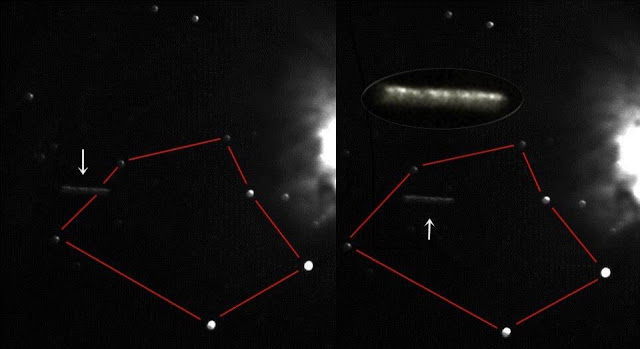


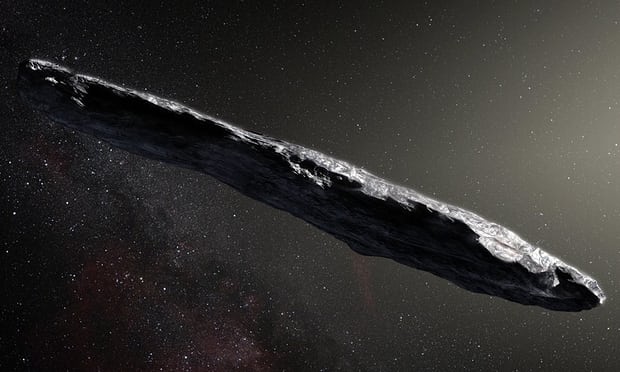
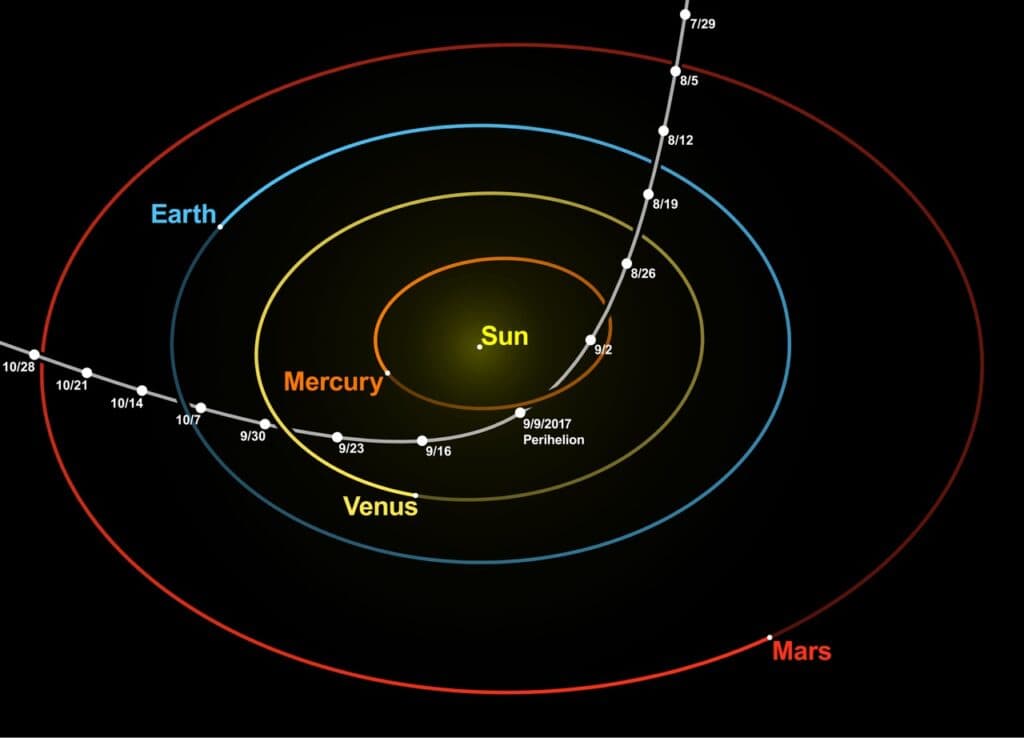


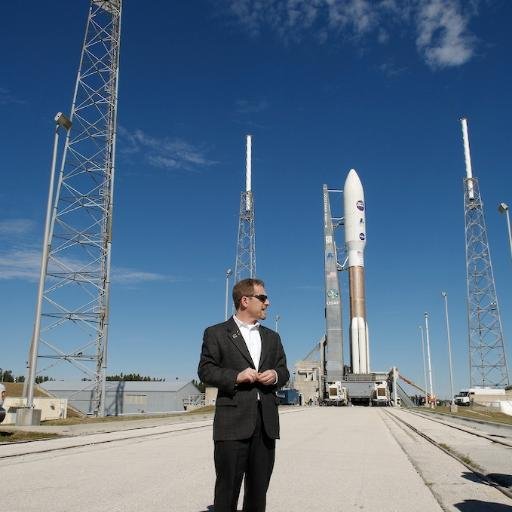


 The best mafia bosses used their BRAINS rather than their...
 Brain abnormalities in US and Canadian diplomats living in...
 Intricate 3,100-year-old bronze ritual bowls stolen during a...
 A holiday in space? Jeff Bezos' Blue Origin successfully...