Ontdek de Fascinerende Wereld van UFO's en UAP's: Jouw Bron voor Onthullende Informatie!
Ben jij ook gefascineerd door het onbekende? Wil je meer weten over UFO's en UAP's, niet alleen in België, maar over de hele wereld? Dan ben je op de juiste plek!
België: Het Kloppend Hart van UFO-onderzoek
In België is BUFON (Belgisch UFO-Netwerk) dé autoriteit op het gebied van UFO-onderzoek. Voor betrouwbare en objectieve informatie over deze intrigerende fenomenen, bezoek je zeker onze Facebook-pagina en deze blog. Maar dat is nog niet alles! Ontdek ook het Belgisch UFO-meldpunt en Caelestia, twee organisaties die diepgaand onderzoek verrichten, al zijn ze soms kritisch of sceptisch.
Nederland: Een Schat aan Informatie
Voor onze Nederlandse buren is er de schitterende website www.ufowijzer.nl, beheerd door Paul Harmans. Deze site biedt een schat aan informatie en artikelen die je niet wilt missen!
Internationaal: MUFON - De Wereldwijde Autoriteit
Neem ook een kijkje bij MUFON (Mutual UFO Network Inc.), een gerenommeerde Amerikaanse UFO-vereniging met afdelingen in de VS en wereldwijd. MUFON is toegewijd aan de wetenschappelijke en analytische studie van het UFO-fenomeen, en hun maandelijkse tijdschrift, The MUFON UFO-Journal, is een must-read voor elke UFO-enthousiasteling. Bezoek hun website op www.mufon.com voor meer informatie.
Samenwerking en Toekomstvisie
Sinds 1 februari 2020 is Pieter niet alleen ex-president van BUFON, maar ook de voormalige nationale directeur van MUFON in Vlaanderen en Nederland. Dit creëert een sterke samenwerking met de Franse MUFON Reseau MUFON/EUROP, wat ons in staat stelt om nog meer waardevolle inzichten te delen.
Let op: Nepprofielen en Nieuwe Groeperingen
Pas op voor een nieuwe groepering die zich ook BUFON noemt, maar geen enkele connectie heeft met onze gevestigde organisatie. Hoewel zij de naam geregistreerd hebben, kunnen ze het rijke verleden en de expertise van onze groep niet evenaren. We wensen hen veel succes, maar we blijven de autoriteit in UFO-onderzoek!
Blijf Op De Hoogte!
Wil jij de laatste nieuwtjes over UFO's, ruimtevaart, archeologie, en meer? Volg ons dan en duik samen met ons in de fascinerende wereld van het onbekende! Sluit je aan bij de gemeenschap van nieuwsgierige geesten die net als jij verlangen naar antwoorden en avonturen in de sterren!
Heb je vragen of wil je meer weten? Aarzel dan niet om contact met ons op te nemen! Samen ontrafelen we het mysterie van de lucht en daarbuiten.
Flying saucer FILMED over Victoria, Australia – May 2018
Check out this really interesting daytime footage of a flying disc over Hastings, Victoria, Australia. This was filmed in late May 2018.
What do you think about this footage? Real of CGI?
Witness report:
I dropped my mom to work that day. and On my way home saw this strange object flying in the sky. So I pulled over on the side of the road and took a video of it. Can anyone please tell me What is this? Thank you.
The good news unbeknownst to many is that much of the debunking criticism against the extraterrestrial hypothesis, ufology, exopolitics, experiencers, socially conscious insiders and/or whistleblowers can be considered as rationally flawed.
Institutional defenders of conventional, official truths have sometimes avoided the UFO question but have occasionally misrepresented facts. For example, as physicist Stanton Friedman often points out, the Secretary of the Air Force D. Quarles said to reporters that no flying saucer had flown over the U.S.; that only 3% of reports received by Project Blue Book remained “unknown”and that eventually even that percentage would be identified as conventional phenomena or illusions. But in, truth, the percentage of overall “unknowns” which had been presented earlier inside the Air Force by Project Blue Book’s Special Report number 14 had been 21.5%. Furthermore, if the witnesses level of education was greater and the case provided greater details, the percentage of “unknowns” went up to 30%. Moreover, a chi square analysis performed by Battelle Memorial Institute comparing “unknowns” with the “knowns” (or clearly identified objects) gave a probability of less than 1% that the “unknowns” would simply be misperceptions or mistakes.Therefore, there was at least a truly puzzling phenomenon taking place (in fact worldwide) even though it was being publicly dismissed while secretly reported in a completely different manner.
An accumulation of observations is important and an accumulation of analyzed witness testimonies does not have to be a form of weak or irrelevant evidence in the natural sciences. Inductive reasoning is most fundamental to the advancement of SCIENCE because experience is what brings in data and information that requires new explanations. New scientifically designed, international, anonymous surveys with a larger, anonymous population like that conducted by F.R.E.E. (the Edgar Mitchell Foundation for Research into Extraterrestrial and Extraordinary Encounters (www.experiencer.org)) provide statistical patterns that increase the gravitas of testimonial evidence. It is unreasonable to simply think that thousands of witnesses are lying or definitely mistaken in their observations although they are willing to anonymously answer hundreds of questions. There is a place for human testimony, not only in the social sciences and in a court of law but also in the natural sciences. In part it depends on how scientifically that testimony is acquired and treated. This statistical quantitative and qualitative data (which in some important aspects contradicts popular notions about extraterrestrials) must be taken into account.
Science advances when theories adapt to evidence and experience and theories should not be considered final but, rather, well-organized, temporary and probable explanations that best explain phenomena and data accumulating through experience. Taken as well-organized explanations – hopefully with predictive power – theories must evolve as new data and experiences are registered and accepted. However, oftentimes, the acceptance of data and phenomena is precluded by biases and there often are sociological and psychological reasons to unscientifically reject phenomena that don’t fit in well with accepted theory.
It is becoming clear that we only perceive a limited segment of reality. There may well be ‘laws of physics’, inter-reality processes and types of energies that contend with phenomena not currently accepted by mainstream science, an endeavor still excessively biased toward representing all experienced reality as based upon materialism and mechanicism. This occurs in spite of alternative implications from quantum physics regarding the “de-materialization” of matter and the inseparable role of choice, consciousness and the observer affecting what seems to be a non-local, information substratum.
Status quo power networks traditionally reject new perceptions of reality both when new instruments extend human detection and decoding capacities (remember Galileo’s telescope and Van Leewenhoek’s use of the microscope) and when theories and underlying worldviews need to be modified to account for those detections. But this holding on at all costs to a classical preference for exclusivist materialism and mechanicism lends itself to the fallacy of trying to explain all phenomena under specific and previously accepted ad hoc explanations. Regardless of how thoroughly the scientific method has been followed, this often means trying to explain some phenomena which MAY be conventionally explained as if it necessarily follows that their explanation MUST be conventional. This is also popularly also called “dogmatism.”
But it is becoming quite acceptable for educated individuals to recognize that there indeed is an abundance of recurrent phenomena (“anomalies” from the perspective of conventional theories) unremittingly reported by credible individuals and groups around the world; phenomena which – if seriously considered – bring into question the completeness of classical materialist and mechanicist explanations. Furthermore, individuals not intimately associated with any of the major modern institutions often have the willingness and freedom to openly consider these phenomena real and significant. Some even know that their formal acceptance would logically require re-assessing known theories and suggesting alternative scientific hypotheses. Some are – thankfully – taking the lead to make this happen.
Baye’s Theorem helps us ASSESS the probability that a hypothesis among others is valid based on new experience. In the XXVIII Century Reverend Thomas Bayes tried to show how to use new evidence to update beliefs. It goes hand in hand with induction and not with a rigid, unequivocal logical deduction. Through induction, we approximately “know” that it is more likely that Earth will continue turning and that tomorrow there’ll be another sunrise, but we don’t know this with absolute certainty. Like the so-called “principle of parsimony” (or “Occam’s Razor”) Baye’s Theorem is more like a “heuristic,”which can be understood as a generalrule of thumb helping us to assess the validity or usefulness of a hypothesis. Both are “shortcuts” simply assisting us to come up with probable explanations. However, if we apply them mechanically based on wrong premises about reality they may even sidetrack us into not recognizing more feasible and obvious explanations.
Baye’s Theorem requires having several hypotheses at hand in order to compare them. It is structured to help us come up with an approximate probability and it states that The Probability of an Hypothesis Explaining the New Results= The Probability of Obtaining the New Results if the Hypothesis is True ÷ The Probability of Getting the New Results Whether the Hypothesis is True or Not. Then, multiply that division by The Probability of the Hypothesis Before Considering the New Results.
Just like Baye’s Theorem is a practical recommendation attempting to approximately give us a clue on the probability of the validity of an hypothesis by also considering several competing hypotheses in light of new information regarding phenomena, “Occam’s Razor” is not like a physical principle or a principle set in stone as an unfailing rule. The latter (re-stated by several philosophers following Aristotelian thinking but also more associated with theologian, nominalist philosopher and Franciscan friar William of Occam) basically states: “entities should not be multiplied beyond necessity.” To my understanding, this means that when an explanation is sufficient to explain a phenomenon, it is not recommended to seek a greater number of alternative explanations. However, in the case of phenomena challenging conventional explanations, the question would also be if all possible “sufficient explanations” rest upon a classical materialist-mechanicist worldview or, in effect, that the most straightforward and sufficient explanation would be a hypothesis that better fits or corresponds with the facts, however challenging.
Another way of stating “Occam’s Razor” is that it is generally preferable not to assume more hypothesis as causes than the minimum necessary to explain a phenomenon. Said differently, trying to extend the materialist and mechanicist worldviews (and paradigms) in convoluted ways in order to reductionistically explain (or to explain away) the experiential facts and “anomalous” data gathered around the UFO Phenomenon, may actually be not following Aristotle’s and Occam’s recommendation but instead doing just the opposite. While exclusivist materialism is clearly incorrect and insufficient, materialism in itself may be correct but only as an integral part of a network of metaphysical positions, each explaining “reality” from a different angle and all of them arising from a deeper pattern. We will need to understand that “deeper pattern” in order to make sense of phenomena that objectively combine subjective and psychic aspects altering conventional physical life.
Once again, these “heuristics” are basically recommendations generally useful on how to proceed to choose among various hypotheses that might explain a phenomenon. Moreover, unfortunately “Occam’s Razor” has often been misunderstood by closed-minded skeptics (normally defending conventional theories associated with materialism and mechanicism) in their blindly dogmatic search for every which way to ridicule or dismiss evidence pointing toward the “extraterrestrial hypothesis” (or variations within that hypothesis) pertaining to some of the most ‘anomalous’ aspects of the UFO phenomenon.
There’s still another recommendation that can be considered as a useful heuristic. It is the advice to avoid Type Two Errors.In statistics, a null hypothesis is a hypothesis one tries to cancel out by using evidence to the contrary. In statistical hypothesis testing, a Type II Error (or Error of the Second Kind) is the failure to reject a FALSE null hypothesis. In other words, it is a failure to detect some aspect of reality that is suggested by the statistical evidence. This becomes a useful heuristic to think about any accepted percentage of truly unconventional UFO cases.
The concept that “UFO’s are nothing but natural phenomena or phenomena that can be explained by conventional science” would be a false null hypothesis that has not been invalidated based on the best UFO evidence and statistics. This is because the evidence and statistics clearly also suggest that something truly distinct and quite possibly anomalous is going on. Fixated UFO debunkers (and debunkers of the reasonable likelihood of there being genuine “experiencers” interacting with a variety of intelligent extraterrestrial beings which may be able to manipulate spacetime in unconventional ways) are clearly committing a Type Two Error or Error of the Second Kind.
The relevant and scientifically honest (and highly relevant for humanity) situation here is that the “extraterrestrial hypothesis” or ETH (ifnot limited to a “nuts & bolts” approach) may well be the MOST STRAIGHTFORWARD HYPOTHESIS OR EXPLANATION. In general this hypothesis is not discarded within some foreign governments and Air Force teams researching “Unidentified Aerial Phenomena” or “Anomalous Aerial Phenomena” (like the Chilean CEFAA or Committee for the Studies of Anomalous Aerial Phenomena functioning under the General Secretary of the DGCA (the Ministerial Department of Civil Aeronautics), itself under the jurisdiction of the Chilean Air Force).
The initial (often not quoted) step in the “scientific method” is observation of a phenomenon in the natural world. While individual testimony of an anomaly in a non-controlled setting may be considered a weak piece of evidence, the fact that thousands upon thousands (including some astronomers) have observed and reported UFOs that resist conventional explanations can be considered part of the initial step. Today, besides these individual testimonies (given to civilian and military institutions) there have been a few scientifically conducted surveys (like the anonymous international survey Edgar Mitchell Foundation for Research on Extraterrestrial and Extraordinary Encounters). As witness testimony goes, the latter is stronger from a natural science point of view. However, besides witness testimony, after-the-event analysis of photographs, radar cases, landing traces with soil modification and other forms of “physical evidence” also accumulate in favor of the “Extraterrestrial Hypothesis (ETH).”
The ETH hypothesis is neither discarded beforehand (for instance by introducing pre-conceived conclusions into the premises) by the high-level military and scientific French GEIPAN (Study Group and Information on Non-Identified Aerospace Phenomenon) analysts working under the jurisdiction of CNES (the National Center for Space Studies) who in 1999 produced the so-called “COMETAReport.” Likewise, this reasonable hypothesis is endorsed by the “Sigma/3AF Commission” of the Aeronautical & Astronomical Association of France. In fact, given the evidence available, the ETH cannot be reasonably discarded in advance without incurring dishonesty. Sigma/3AF considers the ETH valid and plausible. They are scientists and are being reasonable – rather than dogmatic – based on a rational analysis of UAP/UFO cases.
Moreover, it might be possible to improve “after-the-fact ufology” by propitiating field experiments that interact with the phenomenon. If consciousness (besides objectivity) is a key ingredient for their success, so be it. The science-based ufologist expanding his or her methods would learn to work with this.
Interactive field experiments using instruments and live empirical observation to test hypothesis might be achievable with the assistance of CE-5 approaches, “prime contactees,” adequate preparation, equanimity and fearlessness and – above all – a respectful attitude of any intelligences behind the phenomenon as well as experiencer-contact processes that involve consciousness, group effort, feelings and ideologies. Through this “experimental ufology” we may complete the steps of the scientific method pursuant genuine UFOs: Observation of a phenomenon, gathering information about what is known about it, proposing a reasonable hypothesis to explain the phenomenon, testing the hypothesis, analyzing the results, concluding if they verify the hypothesis or not, sharing the method, results, and conclusions with other scientists, replicating the research and – eventually – modifying theory.
Humanity needs its academic, religious and political leaders to come to terms with the fact that the ETH is a reasonable and rational perspective backed-up by the finest inductively-derived, independently assessed and cross-tabulated evidence gathered by sincere, mentally sound, capable and reputable UFO researchers across several decades; by some courageous and honest scientists, a good number of political, military and intelligence community whistleblowers and witnesses and by thousands of individuals from around the world (individuals who for the most part don’t do it for personal gain but who, instead, oftentimes face ridicule from peers in the name of truth).
This evidence also includes, highly trained witnesses capable of recognizing a variety of flying objects, alleged landings leaving anomalous and analyzed physical signatures, clear visual, radar and radar-visual sightings, military intercept missions; photographic and film analyses passing adequate tests, the analysis of a few solid objects with highly anomalous characteristics (such as those which podiatric surgeon Roger K. Leir collected from alleged abductee-experiencers) and leaked or formerly classified government documents that indicate longstanding, official interest in “flying discs,” “flying saucers” or “UFO anomalies.”
Moreover, after thousands upon thousands of psychologically healthy and socially functional “citizen-experiencers” reporting intelligent physical interactions with otherworldly extraterrestrial beings; after metallic-looking disc-shaped, triangular-shaped, sphere-shaped and tubular-shaped objects have been reported zigzagging and departing in abrupt ways defying momentum and inertia (sometimes after apparently interacting with witnesses for instance by responding with right-angle formations) the lack of formal academic investigation onto what may be going on (at least from a social and psychological perspective) is a failure against modern, humanistic, democratic and scientific ideals.
It simply looks as if FEAR and personal convenience got the upper hand in the innards of modern academic and political institutions since facing the facts would probably challenge the premises those institutions are based in and thus internal social forces arise to prevent individuals from stepping out of line. To this we must add possible private interests to take advantage of technological developments besides the national security need to maintain a possible advanced technology out of reach from enemies; something which can be overdone and – once a vast secret apparatus around this issues has been established – it becomes increasingly difficult to eventually inform civilians as time passes by. Perhaps many unconstitutional actions were taken throughout the decades at least since 1947, especially if taboo, ridicule and a highly classified secrecy did not allow for the application of constitutional supervision or checks and balances.
Nonetheless, theforces of social control (among them ridicule), or even active repression and suppression cannot forever hold back the truth in order to sustain the status quo or an outmoded way of thinking, especially if the intermittent and phenomenon were to be interactive and clearly related with human interests.
In relation to UFOs, for the Principle of Parsimony (a.k.a. “Occam’s Razor”) multiplying explanations to uphold the materialist-mechanicist premises may not be the way to arrive at a “sufficient explanation.” Then, Baye’s Theorem asks us to compare several hypotheses and not to discard any plausible one offhand. Finally, the advice to avoid Type Two Errorsor Errors of the Second Kind (the failure to detect some aspect of reality which is suggested by the statistical evidence) also reminds us to become aware of our blinding cognitive biases when the evidence is displayed before us within a complex phenomenon. I wonder how many “Close Encounters of the Second Kind” interesting pieces of unique evidence (as described by J. Allen Hynek’s six-fold classification scale for UFO encounters) have been so dismissed…
All of these HEURISTICS basically warn us against inflexibly holding on to our conventional ‘pet’ theories. In relation to truly anomalous UFOs and in the offing human-extraterrestrial interactive encounters we seriously need to change our premises and face the facts.
To conclude, the three heuristics mentioned are not inimical with the Extraterrestrial Hypothesis (ETH) and, what is more, an intelligent use of them clearly suggests that the ETH MUST be seriously considered. It is a matter of time before good old common sense prevails as the need to adapt to reality has the real final say with its own complex (emergent and self-organizing) ways to assert itself.
What effect would Alien disclosure have on you personally?
Being told very simple organisms or bacteria have been found under the surface of mars or europa's ice is one thing , now being told a mile long object has entered our solar system and is stationary behind our moon is another . I'm fairly confident life in basic forms could be present elsewhere , I've no proof of this, it's just my own humble opinion.
If we were told by NASA or ? that very basic life had been discovered and this is the proof that was always needed . Personally i would be both happy and relieved, the thought of being just a series of freak occurrences always filled me with dread . Life for me wouldn' change though , I'd still work /pay taxes and see out my days with family .
Now if NASA or ? told us the mile long object is still behind the moon and have no idea what it is or what's it's purpose , now that would be different altogether . I think fear of the unknown and the fact whoever /whatever has brought this object into our solar system must be a lot more advanced than us .
To be honest , this would change my life a lot,
Could i continue my daily routine while knowing what's above us ? My mind would be racing going through the different possibilities , worried about the outcome of both our actions and theirs . All them films I've watched from an early age , the huge motherships hovering over the cities , the panic , the running , and the screaming , no wonder I'm fearful of such things 😊
So for me , Alien disclosure would really depend on many things , I'm not religious so my faith in God wouldn't change , if it was basic life then good , if it was advanced or on a similar level too us then maybe not , but these are just my opinions , it's just something i find intereting and often think about , I'd love to read your posts and what effect this would have on you 👍
Photo Credit: Gemini Observatory/AURA/NSF star trail image compiled by Joy Pollard
The Week's Top Space Stories
An observatory on Hawaii's Big Island filmed stars streaking over Kilauea's volcanic glow, space enthusiasts mourned the loss of two astronauts and researchers discovered exotic dunes on Pluto. These are just some of the top stories this week from Space.com.
Photo Credit: NASA/Johns Hopkins University Applied Physics Laboratory/Southwest Research Institute
1. Dunes in Pluto's heart
In a study published May 31, researchers announced the discovery of a dune system on the dwarf planet Pluto. The study team spotted ridges on Sputnik Planitia, the huge plain that makes up the left lobe of Pluto's famous "heart," thanks to imagery taken by NASA's New Horizons mission in July 2015. The features look similar to Earth dunes, but Pluto's aren't made of sand; the wind-blown grains are probably frozen methane.
Apollo astronaut Alan Bean, the fourth person to walk on the moon and a professional artist, died on May 26 at the age of 86. Bean flew two space missions and logged over 31 hours on the lunar surface. He then spent four decades interpreting his experiences as an astronaut into paintings.
[Full Story: Astronaut Alan Bean, Apollo Moonwalker-Turned-Artist, Dies at 86;
Astronaut Don Peterson, a crewmember of the space shuttle Challenger's first mission, died on May 27 at the age of 84. Peterson made history in 1983, when he and his crew became the first to wear Extravehicular Mobility Unit (EMU) spacesuits to perform a spacewalk from a space shuttle.
In late July, Mars will come closer to Earth than it has since 2003. The orange-red shine of Mars will be visible toward the east-southeast, but will be low in the sky if viewed from the United States. Mars will shine at its brightest in the constellation Capricornus, the sea goat.
Photo Credit: Gemini Observatory/AURA/NSF star trail image compiled by Joy Pollard
5. Watch stars streak over volcanic glow
The Gemini Observatory sitting atop Hawaii's Mauna Kea peak captured the glow of the Kilauea volcano eruption the night of May 21 to May 22. Observatory team members released a stunning time-lapse video showcasing the sight, which emanated from the region where the eruption generated lava-releasing fissures.
In a statement issued after the May 24 signing of Space Policy Directive 2, the Commerce Department released plans to combine several existing offices into a "one-stop shop" called the SPACE (Space Policy Advancing Commercial Enterprise) Administration. A former government official commented that the move, while welcomed by some, might not be sufficient to address bigger coordination issues surrounding space activities.
Researchers discuss the physical and moral challenges of human reproduction on Mars in a new paper published in the June issue of the journal Futures. The authors discussed ethically debatable solutions to family planning and medical safety and even touched on the possibility of genetic engineering so the off-Earth population could acquire traits more favorable for survival on their adopted world.
Photo Credit: NASA/CXC/Columbia Univ./C. Hailey et al.
8. Virtual tour of black hole swarm
A monster black hole called Sagittarius A* lies at the heart of the Milky Way, and NASA has released a new virtual tour of its cosmic vicinity. The tour features the swarm of thousands of black holes that scientists discovered last month around Sagittarius A*.
NASA intends to buy rides on small commercial lunar landers by the end of the year. NASA's deputy associate administrator for the Space Technology Mission Directorate, speaking on May 24 at the Space Tech Expo, said there's "a strong push" to get a lunar lander service going as soon as possible. The agency will probably conduct its own lander studies as well.
10. China, UN invite research proposals for Chinese space station
On May 28, the United Nations Office for Outer Space Affairs and China's Manned Space Agency announced they are now accepting applications to conduct experiments on China's space station, which the nation aims to have up and running by 2022. The initiative invites organizations from United Nations Member States to apply, and UN officials said they especially encourage proposals from institutions in developing countries.
These days on Hawaii's Big Island, there's plenty going on above the surface to keep a host of scientists occupied, due to Kilauea's month-long and sometimes rapidly changing eruption. But soon, there will be a few more scientists focused on the island—although they'll be looking to understand a much more alien phenomenon than lava.
NASA scientists are spending research seasons this year and next piloting a submersible vessel off the coast of the Big Island to explore Lo'ihi, the still-underwater volcano that will thousands of years from now become the newest island in the Hawaiian chain.
They hope the life they find there will help them learn what to look for in a similar but much less accessible environment—like that trapped under the icy surface of Saturn's moon Enceladus. It's one of astrobiologists' most intriguing candidates for finding life beyond Earth.
Although scientists studied the moon in a fair amount of detail with the Cassini mission that ended last fall, it will be quite a while before they'll get another chance to look at Enceladus up close.
Saturn's moon Enceladus is covered by an icy shell that hides a global ocean that could hold life.
NASA/JPL-CALTECH/SPACE SCIENCE INSTITUTE
The soonest such a mission could launch is the mid 2020s, and that doesn't even include travel time. It's a long time to sit around dreaming of distant microbiology.
So in the meantime, scientists are headed to Hawaii with a NASA project called Systematic Underwater Biogeochemical Science and Exploration Analog or SUBSEA. The project will let the scientists send a robotic drone to explore hot springs bubbling up about 3,000 feet below the ocean's surface.
In particular, they want to better understand temperature and pressure conditions found around these springs. They'll also look at which microbes are present and how they come together to build communities.
The project has a second goal as well: to help scientists practice working far away from their experiments, as they do with robots working on the Moon and Mars. So next year, to spice things up a little, NASA will artificially lag communication to and from the submersible while it works at a second destination.
That way, when a real Enceladus mission comes along, scientists will be ready to tackle whatever mysteries the moon throws at them.
Extraterrestrial Communicator? Japanese boy found communicating with UFOs via telepathy
Ido has allegedly some extra-sensory skills to communicate with UFOs via telepathy and that he can clearly access the course of UFOs besides taking photographs of these alien crafts.
Japanese boy Haruya Ido is found to have telepathy to communicate with UFO or alien crafts
(Youtube)Youtube
After the Russian boy who claimed to have born on Mars in his previous birth, another teenager has emerged as the new sensation among UFO buffs and alien enthusiasts. Haruya Ido, the teenage Japanese boy is now rechristened as the 'UFO boy' in the country as people are literally mesmerized by his psychic abilities.
It was the popular UFO researcher Toshitaro Yamaguchi who initially identified the mettle of Ido. In a recent talk with the Japanese media, Toshitaro Yamaguchi revealed that Ido has that extra-sensory skills to communicate with UFOs via telepathy. As per Yamaguchi, Ido can clearly access the course of UFOs and he can also take photographs of these alleged alien crafts.
To substantiate his claims, Yamaguchi also released four images of UFOs which are apparently taken by Ido from various locations in Japan over the last one year. In all the four images, we can see bizarre objects hovering across the skies of Japan.
The veteran UFO researcher also added that Ido has the peculiar ability to do Shamanism, a practice that involves the practitioner exploring the subconscious mind and interact with the spiritual world. Experts say that a person who practices Shamanism can easily transcend energies from the spiritual world to our material world.
In Japan, Shamanism is part of the indigenous Ainu religion and Japanese religion of Shinto.
As Yamaguchi's claims went viral, conspiracy theory YouTube channel 'UFOmania' uploaded a video about Ido. The video soon went viral, and it has already racked up more than 4,100 views on YouTube.
After watching the video, viewers started speculating various explanations to define the extrasensory abilities of Ido.
A YouTube user named 'Sonicbios' claimed that Ido might be an alien hybrid, and his peculiar genetic traits might be helping him to communicate with unidentified flying objects.
"He is communicating with demons manifesting as fake aliens, that's all it is," commented 'End of Times Preparation', another YouTube user.
Another black project or alien craft? UFO sighting at Australian military base sparks debate
An Australian Junelyn Bitalac noticed the strange disc-shaped object in the sky in Australia near a military site and it was uploaded on Secureteam10: YouTube channel triggering debate over its alien nature
An Australian Junelyn Bitalac noticed the strange disc-shaped object in the sky in Australia near a military site.
YoutubeSecureteam10: YouTube
Tyler Glockner, a conspiracy theorist who runs a YouTube channel has uploaded a bizarre video showing a disc-shaped flying object apparently flying above the skies of Victoria, Australia. Interestingly, the sighting happened nearer to a military base, similar to such sightings reported near US and UK military areas.
The bizarre sighting was originally captured by Junelyn Bitalacm who noticed the strange disc-shaped object in the sky when she was driving back after dropping her mom off at work. Seeing the weird nature of the unidentified flying object, she soon took her smartphone and recorded the object.
After capturing the video, she shared it on her YouTube channel where it was viewed by more than 2,500 people. Picked up soon by 'Secureteam10', the video went viral registering more than 2,40,000 views.
Soon the enthusiasm among the viewers kicked off a debate over its military nature that could be a another black project, while UFO afficianados were quick to speculate its alien nature.
Most of the viewers who watched the video strongly argued that these disc-shaped objects are actually anti-gravity flying machines used for interstellar travel. They even claim that aliens might be controlling these spacecraft and the government may well be aware of their existence.
On the other hand, a section of other conspiracy theorists alleged that this spacecraft is a secret military vessel developed by the Australian government, just like the military craft TR-3B in the US.
However, some skeptics strongly speculated that the object purportedly found in the Australian sky could be a mere drone.
"Here in Australia, we refer to these objects as unmanned drones doing their testing and surveillance, much more activity around the Eastern coastlines from Victoria to the Cape in Queensland... Hopefully, we don't get a false flag invasion to depopulate," commented Blitzkrieg, a YouTube user.
Others said that no UFO will travel at such a low speed like the one spotted in the video.
NASA's SOFIA airborne observatory resumed science flights May 22 after a hiatus of more than six months caused by extended maintenance on the Boeing 747SP aircraft. Credit: NASA
WASHINGTON — A NASA airborne observatory that enjoys unusual protection from regular reviews resumed science flights recently after an extended maintenance period.
The Stratospheric Observatory for Infrared Astronomy (SOFIA) made its first science flight in more than half a year May 22, a 10-hour flight out of NASA’s Armstrong Flight Research Center in California. SOFIA is scheduled to fly to New Zealand June 1 for a campaign of southern hemisphere observations.
The science flight was the first since late 2017 for the airborne observatory, a Boeing 747SP with a 2.5-meter infrared telescope. The plane flew to Germany in November 2017 for maintenance known in aviation as a “C-check” by Lufthansa Technik. That work was scheduled to be completed in January.
However, during that C-check, workers found a fuel leak in the aircraft where the outer left engine attaches to the wing. In addition to repairing that leak, Boeing directed Lufthansa Technik to inspect all four engine pylons for potential leaks, a process that took several more weeks. That work was finally completed in May, and SOFIA flew back to the United States May 18.
SOFIA provides a unique platform for performing infrared astronomy, flying above most of the infrared-absorbing water in the atmosphere while also accommodating multiple instruments that can be updated or replaced. However, SOFIA is among the most expensive astrophysics missions to operate, second only to the Hubble Space Telescope.
SOFIA, whose development dates back to the 1990s, is exempt from a process called senior reviews where the agency examines the status of science projects that have completed their prime missions to determine if proposed extensions should be funded. A provision in the report accompanying the omnibus spending bill for fiscal year 2018 prevents NASA from including the mission in the next astrophysics senior review in 2019.
Congress made that determination by declaring that SOFIA now has a prime mission of 20 years. “The agreement notes that SOFIA, which began its prime mission in 2014, has a prime mission lifetime of 20 years,” it states. The bill also provided SOFIA with $85.2 million, $5.3 million above the agency’s request.
A fiscal year 2019 spending bill approved by the House Appropriations Committee May 17 again provides $85.2 million for SOFIA, compared to a request of $74.6 million that declines to zero by 2022. NASA said in the request — released prior to the completion of the 2018 omnibus spending bill — that SOFIA would participate in the 2019 senior review. If it passed the review, NASA noted, it would budget funding for future years.
The new House report, though, reiterates that SOFIA is exempt from the next senior review. “The Committee is concerned with NASA’s proposed inclusion of SOFIA in the 2019 Senior Review, given it began its prime mission in 2014 and has 15 years of prime mission lifetime remaining,” it states. “Accordingly, the Committee directs NASA to only undertake a Senior Review of SOFIA at the time SOFIA completes its planned mission lifetime.”
That language has puzzled many in the astronomy community, who note that SOFIA will not have to participate in a senior review until at least 2034. Most other NASA missions, by comparison, have far shorter prime missions, such as five years for the James Webb Space Telescope.
SOFIA’s prime mission was also originally set for five years, and thus would have been part of the 2019 senior review prior to the congressional report language. A March 2017 presentation by Harold Yorke, director of SOFIA science mission operations, noted that five-year prime mission, but added there were plans to operate SOFIA out to 2034, including securing of spare parts from other Boeing 747SP aircraft.
However, agency officials said there will be other mechanisms other than the senior review process to monitor SOFIA’s effectiveness, such as program implementation reviews used by NASA programs in general. “One doesn’t go 20 years without reviewing a program, especially a program as complicated and as costly as SOFIA,” said Paul Hertz, director of NASA’s astrophysics division, during a March meeting of the National Academies’ Committee on Astronomy and Astrophysics.
BLOWING IN THE WIND This image from the New Horizons spacecraft’s 2015 flyby of Pluto shows dunes (center bottom and right) along a mountain range. The ripples are made of sand-sized grains of methane ice, researchers say.
SWRI, JHU APPLIED PHYSICS LAB, NASA
Pluto’s heart-shaped plains are striped with sand dunes, where the sand is made of solid methane ice, a new study finds.
Images from the New Horizons spacecraft’s July 2015 flyby of Pluto show 357 linear ridges that planetary scientist Matt Telfer of the University of Plymouth in England and colleagues interpret as dunes that have been shaped by a novel process, the team reports in the June 1 Science.
The ripples lie parallel to the Al-Idrisi Montes mountain range at the western edge of Sputnik Planitia, the wide plains of nitrogen and methane ice that form part of Pluto’s famous heart-shaped region. Relatively strong winds, between about 1 and 10 meters per second, should blow from those mountains across the plains.
Computer simulations suggest that despite Pluto’s thin atmosphere, these winds are strong enough to keep sand-sized methane ice particles moving once they become airborne. But the winds are probably too weak to lift the grains off the ground in the first place.
Instead, little puffs of air coming from Sputnik Planitia’s nitrogen ice as the sun heats it could boost the methane ice particles skyward and into the wind, the team suggests. That process by which solids turn directly into vapor is called sublimation.
Wider context
Streaks that look like dunes (yellow arrow) were found in the northwest of a vast plain called Sputnik Planitia, and run parallel to the Al-Idrisi Montes mountain range. Winds blow across the range and help sculpt the features, which are made of solid methane ice, a new study proposes.
SWRI, JHU APPLIED PHYSICS LAB, NASA
“That’s a novel, interesting idea,” says planetary scientist Alexander Hayes of Cornell University who was not involved in the work, but wrote a commentary piece in the same issue of Science. But the notion raises a reason for caution: Sublimation alone could explain some of the features, without the need for wind, he says.
Dunes are found across the solar system, from Earth(SN: 12/26/15, p. 5) to Mars(SN Online: 2/10/10) to Saturn’s moon Titan(SN Online: 8/28/13). Each of these worlds has the ingredients for dunes: a supply of loose, grainy material and an atmosphere or fluid to carry grains around.
“When you look at dunes across the solar system, something that always strikes me is that they form the same patterns, regardless of the environment,” Hayes says. Finding dunes on Pluto, too, suggests that the features may be ubiquitous. “If you have the material and a way to move it, you form dunes. That’s what this is telling us.”
Citations
M.W. Telfer et al. Dunes on Pluto.Science. Vol. 360, June 1, 2018, p. 992. doi:10.1126/science.aao2975.
60 BILLION ALIEN PLANETS COULD SUPPORT LIFE, STUDY SUGGESTS
Though only about dozen potentially habitable exoplanets have been detected so far, scientists say the universe should be teeming with alien worlds that could support life. The Milky Way alone may host 60 billion such planets around faint red dwarf stars, a new estimate suggests.
Based on data from NASA’s planet-hunting Kepler spacecraft, scientists have predicted that there should be one Earth-size planet in the habitable zone of each red dwarf, the most common type of star. But a group of researchers has now doubled that estimate after considering how cloud cover might help an alien planet support life.
“Clouds cause warming, and they cause cooling on Earth,” study researcher Dorian Abbot, an assistant professor in geophysical sciences at the University of Chicago, said in a statement. “They reflect sunlight to cool things off, and they absorb infrared radiation from the surface to make a greenhouse effect. That’s part of what keeps the planet warm enough to sustain life.”
The habitable zone is defined as the region where a planet has the right temperature to keep liquid water on its surface, thought to be a requirement for life as we know it. If a planet is too far from its star, its water freezes; too close, water vaporizes. Since red dwarfs are dimmer and cooler than our sun, their habitable zone is much cozier than our solar system’s.
“If you’re orbiting around a low-mass or dwarf star, you have to orbit about once a month, once every two months to receive the same amount of sunlight that we receive from the sun,” explained another study author, Nicolas Cowan, a postdoctoral fellow at Northwestern University.
With such a snug orbit, a habitable planet around a red dwarf would become tidally locked, meaning it would always have one side facing its star, much like the moon faces Earth. This side would see eternal daylight.
In the new study, the researchers used 3D simulations to model the way air and moisture would move over a planet tidally locked around a red dwarf. The team found that any surface water would result in water clouds. What’s more, highly reflective clouds would build at the point of the star-facing side where it’s always high noon. This would have a cooling effect in the inner ring of the habitable zone, meaning the planets there would be able to sustain water on their surfaces much closer to their star, the researchers say.
The findings could give scientists a new way to confirm the presence of liquid water on the surface of alien planets with the James Webb Space Telescope (JWST), a new space-based observatory scheduled for launch in 2018, the researchers say.
“If you look at Brazil or Indonesia with an infrared telescope from space, it can look cold, and that’s because you’re seeing the cloud deck,” Cowan said. “The cloud deck is at high altitude, and it’s extremely cold up there.”
The same could be true of a habitable exoplanet with a highly reflective cloud cover, the researchers say. If JWST detects a similar cold signal over the dayside of an alien world, Abbot said, “it’s almost definitely from clouds, and it’s a confirmation that you do have surface liquid water.” The research was detailed June 27 in the journal Astrophysical Journal Letters.
ANCIENT MARTIAN CIVILIZATION WAS DESTROYED BY A NUCLEAR ATTACK FROM ANOTHER EXTRATERRESTRIAL RACE – PHYSICIST SAYS
One physicist says he can scientifically prove that two Martian civilizations were annihilated by nuclear explosions.
As far as we can tell, Mars is a desolate-looking desert, with no obvious life. Sure, there may still be microbes there, but I think it’s safe to say that there is not an advanced civilization living on the Red Planet. But was it always that way? Did Mars once host a bustling civilization, one that perhaps was capable of nuclear warfare? Let’s check in with some conspiracy theorists to find out.
I’m going to let Andrew, a guy who runs the UFO Sightings Cape Town on YouTube, set the scene.
“There are literally hundreds of building ruins in a few of NASA’s panoramic images. What has happened on Mars? Was it a Nuclear WAR, or perhaps Asteroid hits? The fact of the matter is, that there are many pockets of living humanoids all over Mars,” he wrote on a YouTube video showcasing some of these “building ruins.”
Let’s just put this out there. This is one of the fringiest of fringe conspiracy theories out there. Andrew is probably just a wee bit off his rocker, but he didn’t randomly make up the idea that there was civilization on Mars and that it could have died in a nuclear WAR.
A separate conspiracy theorist believes the Martian holocaust and the Ark of the Covenant are related.
For that, let’s take a look at an excerpt from Did Spacemen Colonize the Earth?, a book published by Robin Collyns in 1976. Earlier in the following passage, Collyns argues that there certainly were nuclear explosions on Mars.
“It is difficult to imagine a nuclear explosion on Mars that was not deliberately caused,” Collyns writes. “It is very likely that the explosion was made for some constructional purpose. Thus, the [nuclear observations] can serve as one of the proofs in the favor of existence of rational life on mars.”
Pseudoscience and wild conjecture are fun, but John Brandenburg, a plasma physicist who got his degree from UC Davis and who has seemingly had a relatively normal, distinguished career for a scientist, has staked his reputation on his theory that Martian life was, perhaps purposefully, destroyed with nukes.
Brandenburg’s appearance on Supreme Master Television Screengrab: Supreme Master Television
In an oddly disconcerting interview with “Supreme Master Television,” a thoroughly bizarre station run by the Supreme Master Ching Hai International Association cult, Brandenburg notes that Mars had two ancient humanoid civilizations, called Cydonia and Utopia, which had a level of technology similar to that of the ancient Egyptians.
What happened to those Martians? Nukes, he says.
“Two great disasters happened on Mars,” he told Supreme Master TV, pointing to Utopia on a map. “One here, and then an asteroid impact happened here, and Cydonia was right in between them. That’s puzzling. Why would so many bad things happen in one area of mars that just so happened to have archaeology on it?”
That was back in 2011. Since then, Brandenburg has decided that both disasters were nukes, and possibly “natural” nuclear explosions that could have been caused by some cosmic weirdness like an asteroid hitting radioactive material or something like that. Today, however, he has upped the ante.
This weekend, he’s going to present new research at a meeting of the American Physical Society that he says proves that there were indeed nuclear explosions on Mars and that they are consistent with nuclear bomb “airbursts,” meaning that there’s no possible way these were natural. He said in a statement emailed to me that the evidence he’s found is “consistent with mixed fusion-fission explosions.”
Here’s his case, set to be published in the Journal of Cosmology and Astrophysics, a journal that just published a study about the Big Bang being a hologram:
“The high concentration of Xenon-129 atmosphere, the evidence from Krypton-80 and the detected pattern of excess abundance of Uranium and Thorium on Mars surface, relative to Mars meteorites, first seen by the Russians and now confirmed by the Mars Odyssey Spacecraft Gamma Ray Spectrometer, mean that the surface of Mars was apparently the site of massive radiological events, which created large amounts of signature isotopes and covered the surface with a thin layer of radioactive debris enriched in certain elements relative to its subsurface rocks. This pattern of phenomenon can be explained as due to two large anomalous nuclear explosions on Mars in the past.”
Alleged ruins on Mars.
Screengrab: UFOSightingsCapeTown
So, there’s the theory. Reading that, it’s possible, until you get to the last line, to think that hey, here’s a scientist who thinks something weird happened on Mars—the idea of there being a naturally occurring nuclear explosion on a planet that has radioactive elements on it hasn’t been completely ruled out by NASA, after all.
But then, well, he is presenting published, quasi-scientific research suggesting that these were anomalous and not natural. If that’s not clear enough, maybe the description and title of his upcoming book Death on Mars: The Discovery of a Planetary Nuclear Massacre will drive it home.
Or we can just read the conclusion to his paper, a preprint version of which he shared with me.
“Given the large amount of nuclear isotopes in Mars atmosphere resembling those from hydrogen bomb tests on Earth, Mars may present an example of civilization wiped out by a nuclear attack from space,” he wrote.
“It is possible the Fermi Paradox means that our interstellar neighborhood contains forces hostile to young, noisy, civilizations such as ourselves,” he added. “Such hostile forces could range from things as alien as AI (Artificial Intelligence) ‘with a grudge’ against flesh and blood, as in the movie Terminator, all the way to things as sadly familiar to us as a mindless humanoid bureaucrat like Governor Tarkin in Star Wars, eager to destroy planet Alderann as an example to other worlds.”
It is of course worth noting that no high profile scientists have given any credence at all to this theory.
To gauge whether Brandenburg’s thoughts have gained any traction with conspiracy theorists, I hunted around for their reactions to his earlier work. Here’s what I came across:
“Having seen the evidence presented by Dr. Brandenburg, I feel certain that we need to actively plan for a possible defense against whoever perpetrated the assault on Mars. In fact, as U.S. Space Command has access to all the data that he (and this family) have, as well as all the other pertinent data that exists out there, I’d be amazed to learn that our preparations have not been underway for a very long time.”
“There are other possibilities as well. Consider a very high tech civilization where a few folks mis-applied high energy technology and it got out of hand, causing a sever explosion and catastrophe a couple of million years ago. Perhaps a similar thing occurred on earth about 13,000 ya resulting in a cataclysmic event sinking Atlantis and energetically causing the Bermuda Triangle (and other anomalies) to activate. It may not have been “nuclear” and may not have been used in warfare.”
“I believe that after a nuclear war broke out on Mars. The surviving Martian race emigrated to the Earth, building the Pyramids and Sphinx to represent the features on mars so that when we were intelligent enough we might discover that there was once a thriving powerful E.T race on mars.”
So, there you have it. Were ancient Martians blown up by other aliens? Almost certainly not, but if we are similarly destroyed, at least one dude will be able to say “told you so.”
NADINE LALICH AND HER EXPERIENCE OF ABDUCTION BY ALIENS
“… While waiting for my turn, I, surprisingly, felt emotionally detached – no fear!The aliens put me in their “dental” chair and implanted one implant under the crown of my molar tooth, and another tiny black “pea” was sewn into the brush of my hand. “
Nadine Lalich, a resident of California and our contemporary, is not accidentally called a woman of the Renaissance.The author of books, the artist-designer, the businessman, the worker of court – in a word, the person bright and many-sided, she of 19 years hid, that it is periodically abducted by aliens.Then she decided and wrote about 25 cases from personal experience in the book “Experienced with Aliens”, illustrating the text with her own drawings.
It is curious that since 1991, Nadine, without any hypnosis, has gradually recalled almost 90% of her adventures connected with “abnormal beings”.In 2004, after a period of particularly intense contacts, she decided that she was being prevented from “coming out of the underground” of fearing her career and her personal life.But she knows a lot of things that would help others!For example, what technologies are used by aliens to “work” with earthlings.
Armchairs for experiments
In one of the chapters of his book Nadine Lalich talks about the adaptations that mysterious kidnappers use to investigate people.One of these devices, she called a chair for access to the back.Nadine says that this is a chair of ordinary size, made of a material like acrylic, but in the form of a barrel with a back, reaching up to the floor and slightly concave inside.In the middle there is a hole in it about 20×25 centimeters, providing access to the waist of a person sitting on a chair.
“I was put on this chair,” recalls Nadine, “and completely immobilized, as if paralyzed.They made me concentrate on what was happening at the table right in front of me.And in the meantime (and I felt it!) The “gray” stranger performed some painful procedures on my loin-maybe implanted an implant under the skin or even in the spinal cord. “
“They have other chairs.One of them resembles those that stand in the offices of dentists – continues his story Nadine.– This chair, standing on a support about a meter in height, is made of a smooth hard metal like a matt stainless steel.The back of it is slightly inclined to the back and narrows above.The aliens conducted their experiment, not embarrassed at all.Watching the man sitting in this chair, I noticed that the back is several inches above the head, so that the subject could not have looked back.In addition, his elongated arms were fixed on long rectangular metal panels-armrests.Aliens were free to manipulate the head and hands of the seated.I watched the man planted in this chair with a man screaming in horror, and then three “gray” men began to take hold of his head and hands. “
During one of the kidnappings, Nadin was seated at the table, and in front of her put two round jars of transparent glass.One of the jars, about two centimeters deep and more than six in diameter, was covered with a lid-like lid, through which the woman saw a caterpillar about 2.5 centimeters long in the jar.
“For some reason I thought that the aliens would force me to eat this abomination,” Nadine writes in her book.But when the cap was removed, it turned out that it was not a caterpillar, but a sort of tiny comb much smaller in size, it seemed through a magnifying glass – just a millimeter three long.This implant, according to Nadine, was inserted into her nasal cavity.
One night
One day Nadine woke up in the middle of the night.Something made her get up and leave the house in her nightdress.With surprise, she saw that many of her neighbors were also in their own yard in a hypnotic state.“Having descended from the porch,” recalls Nadine, “I felt fear.Through the fence, I saw another group of people in their underwear – those, like somnambulists, were walking along the street towards us.Standing in front of the house, I peered into the clear summer sky and saw several triangular UFOs hovering at an altitude of about thirty meters.Suddenly, small “plates” flew out of them.Regardless of each other, they began to decline. “
A minute later, one of these objects landed at Nadine’s feet.It was a silver disc about 20 centimeters in diameter with a notch running from the edge to the center.On the disk were engraved strange icons or, perhaps, letters, representing tiny rectangular grooves.“Immediately I realized that these disks are special devices that gather information about people or groups of people who are decided to kidnap, transfer information on board the mother ship, and determine their location and notify nearby spacecraft.”
When the hour of X comes
In his book, Nadine describes two different devices designed to affect the subconscious of people.During one of the abductions, so-called training sessions were conducted with her.On the table in front of her put a rectangular box about 30x10x2.5 cm in size from a transparent material.When it was opened, she began glowing gently from the inside.
There were many thin translucent sheets, stitched on one side, like pages in a book, and on them there were some symbols cut out in a sheet and covered with a transparent, shimmering film.According to Nadin, this film contains some information – like a computer diskette.Nadine was ordered to concentrate on these symbols and, it seems to her, she subconsciously absorbed some information.
Another version of the device for programming is a set of ten transparent tubes with a height of 15 to 45 centimeters, glowing from the inside and filled with some liquid.From them came the sounds of different frequencies.During the experiment, there was certainly a “duty officer” nearby.
“This insectoid-type creature resembled a huge mantis,” Nadine says.“It scanned my brain or carried out some other kind of telepathic control.”As Nadin suggests, aliens at the same time introduce certain commands or behaviors into the human subconscious that can be activated when the X-hour comes.
Underground “octopus”
Nadine talks about the terrible spectacle, which she witnessed during one of the training sessions.At the same time there were several tall white aliens.Before Nadine placed a screen on which, demonstrated a variety of video.She was shown a certain situation from the future, when the aliens’ mass arrival on Earth will take place.First, a large capsule appeared on the screen resembling a badminton shuttlecock.This capsule descended from the night sky into the desert, about 20-30 kilometers from the city reminiscent of Las Vegas.
Touching the ground, the capsule began to rotate rapidly, simultaneously opening, like a bud of a flower, and pushing in all its “petal-tentacles”, which began to bite into the ground and simultaneously lengthen.After them, the capsule also went to a depth of several hundred meters and there it turned into a kind of octopus 15 meters in diameter with a dozen 30-meter tentacles diverge in all directions.Completely entrenched in the ground, the massive object continued to rotate rapidly in the cavity dug by it, generating some energy, which, according to the “instructors”, could physically affect the people of the whole city.
“Thus,” Nadine sums up, “the aliens demonstrated to me their ability to control us not only individually through telepathy or brain scanning: they made it clear that their technologies can control the nervous system and the brain of many people at the same time.Their intentions, I think, are that when landing aliens on Earth, one could at once introduce into the passive, peaceful state the maximum number of people who after that would be easy to manipulate. “
(Natural News) As far as we can remember, the concept of time has always been there. But what really is time? Is it truly the fourth dimension that comes after space?
Joseph Glenn Jessome of the Jessome Society shared his insights on the real meaning of time in the latest episode of CounterThink with Mike Adams. For starters, Jessome called the Big Bang theory a “Catholic creation myth.” He revealed, although many believe it to be an atheistic theory, the famous study was actually largely supported by the Vatican’s Pontifical Academy of Scientists. Furthermore, he implied that the book, “A Brief History of Time” by Stephen Hawking, received funding from the Catholic Church before it became a massive hit.
Essentially, the Big Bang theory suggests that the universe is expanding and just like everything else, time begins to exist when the universe became denser. Jessome said, scientists seem to only wait for a great miracle before creating theories. He then began questioning time, saying it cannot be the fourth dimension of space since it cannot be drawn, and that no one can actually justify this claim whether logically or metaphorically.
For time to be a property of space, it would have been “spatial, visualizable, and it’s construction would have to follow the hierarchical pattern of the previous dimension,” according to Jessome’s model. However, it has none of the said characteristics which made him rediscover that time, rather than being caused by space, is the cause of all physical changes. The former Math teacher also argued that the natural phenomenon of time is the cause of motion, gravity, and consciousness.
In the interview, Jessome also mentioned how Albert Einstein himself admitted that there are a lot of flaws in the concept of general relativity.
Understand the Jessome model more by watching the whole, uninterrupted interview at CounterThink.com now. Learn what Glenn Jessome thinks about how the Big Bang should have been presented and a lot more in this interesting episode.
Oerknal is mythe en tijd is niet de vierde dimensie. Ex-wiskundeleraar presenteert zijn ideeën
Voor zover we weten heeft tijd altijd bestaan. Maar wat is tijd nu werkelijk? En kan tijd na hoogte, breedte en lengte worden gezien als een vierde dimensie?
Joseph Glenn Jessome van de Jessome Society ging tijdens een nieuwe aflevering van CounterThink in op deze vragen.
Jessome noemt de oerknaltheorie een ‘katholieke, creationistische mythe’. De beroemde studie die als bewijs wordt gezien voor de oerknal bleek grotendeels gefinancierd te zijn door de Pauselijke Academie voor de Wetenschappen van het Vaticaan, onthult hij.
Katholieke kerk
Hij stelt verder dat de bestseller ‘A Brief History of Time’ van Stephen Hawking werd gefinancierd door de katholieke kerk.
De oerknaltheorie suggereert dat het universum uitdijt en dat tijd is ontstaan toen het universum dichter werd.
Jessome begon zich af te vragen of tijd wel bestaat. Hij zegt dat het niet in de vierde dimensie kan bestaan omdat je tijd niet kunt uitbeelden.
Oorzaak
Als tijd een eigenschap van de ruimte was, zou het ‘ruimtelijk en toonbaar’ moeten zijn en zou ‘de structuur ervan het hiërarchische patroon van de vorige dimensie moeten volgen’.
Uit Jessome’s model blijkt dat tijd niet wordt veroorzaakt door ruimte, maar de oorzaak is van alle fysieke veranderingen.
Vol fouten
De voormalige wiskundeleraar stelt verder dat tijd de oorzaak is van beweging, zwaartekracht en bewustzijn.
In het interview merkt Jessome op dat Albert Einstein zelf heeft toegegeven dat het concept algemene relativiteit vol fouten zit.
GELEKT AMERIKAANS MARINE DOCUMENT TOONT BESTAAN UFO'S AAN ( VIDEO )
Een Amerikaans televisiestation uit Las Vegas heeft de hand weten te leggen op een uitgelekt marine document waarbij iedere twijfel over het bestaan van UFO’s wordt weggenomen.
Het toont aan dat UFO’s zich onzichtbaar kunnen maken voor radar en onder water net zo gemakkelijk lijken te opereren als in de lucht.
Eind vorig jaar werd met veel bombarie een geheim Pentagon project bekendgemaakt dat met een totaal budget van 22 miljoen zich bezig zou hebben gehouden met UFO onderzoek.
Als onderdeel van dat programma zijn er toen ook video’s vrijgegeven waarop te zien is hoe een aantal F-18 gevechtsvliegtuigen proberen een UFO te achtervolgen. Deze is duidelijk op het radarscherm te zien en heeft een beetje vreemde vorm zoals een bekend snoepje en krijgt daarom de bijnaam tiktak UFO.
Wij schreven toen een artikel dat dit allesbehalve Disclosure was, maar eerder een afleidingsmanoeuvre van het werkelijke geheime ruimteprogramma dat natuurlijk niet met een budget van enkele miljoenen, maar eerder biljoenen werkt.
Dat alles neemt niet weg dat de vrijgegeven video-opnames wel degelijk echt zijn zoals we ook aangaven in het eerdere artikel:
Naast de bekendmaking van het project van 22 miljoen dollar zijn er ook enkele video's vrijgegeven uit 2004 die absoluut echt zijn en waarbij op de radarschermen van gevechtsvliegtuigen objecten te zien zijn die allesbehalve lijken op vliegtuigen zoals wij die kennen en die op een gegeven moment ook met hoge snelheid wegvliegen.
Hierbij nogmaals één van die video’s.
Via een televisiestation in Las Vegas zijn er nu originele marine documenten uitgelekt, waaruit inderdaad blijkt dat het verhaal waar is en waar nog veel meer interessante informatie in staat dan tot nu bekend was.
Het KLAS televisiekanaal zegt, dat hoewel er geen logo’s en dergelijke te zien zijn op het intern marineverslag, dit wel degelijk echt is en dat dit is bevestigd door vier verschillende mensen die dat zouden kunnen weten.
Interessant is dat ze het object geen UFO noemen, maar AVV, wat staat voor anomalous aerial vehicle. Een vliegend object dat er eigenlijk niet hoort te zijn.
Hierna volgt de originele samenvatting van het verslag en daarin is te lezen dat het voorval zich uitstrekt over een periode van ongeveer zes dagen.
Het volgend plaatje laat de voornaamste conclusies zien die in het rapport worden genoemd.
Zoals dat het object dat is waargenomen absoluut niet thuishoort in de Amerikaanse marine of luchtmacht.
Dat het object zichzelf als het ware onzichtbaar kan maken (cloaking) voor de huidige radarsystemen.
Dat het over verbazingkwekkende aerodynamische eigenschappen beschikt, maar dat er helemaal niets te zien is zoals vleugels, aandrijving of uitsteeksels.
En dan nog iets bijzonders want het object beweegt zich klaarblijkelijk onder water net zo gemakkelijk als in de lucht.
Het totale rapport beslaat zo’n 13 pagina’s en is hier te lezen. Dit rapport werd vijf jaar na de gebeurtenis samengesteld en volgens KLAS TV is het daarna aan de kant gelegd omdat binnen het Pentagon er eigenlijk niemand in was geïnteresseerd en het object duidelijk geen gevaar opleverde.
Wat uiteraard ook een mogelijkheid is, is dat we hier niet te maken hebben met een UFO van buitenaardse makelij, maar met een exemplaar van de geheime ruimtevloot zoals die enkele jaren voor het incident van de marine werd gebruikt voor de aanslag op de Twin Towers tijdens 9/11.
Normaal marinepersoneel heeft uiteraard ook geen weet van het bestaan van een geheime ruimtevloot en dus zijn zij net zo verbaasd als de rest van de bevolking, schrijven zij braaf hun rapporten die vervolgens ergens in een bureaula verdwijnen.
Aan de andere kant, misschien zijn het wel degelijk buitenaardsen en dat is toch iets waar de meeste mensen vanuit gaan als er ondubbelzinnig is bewezen dat UFO's echt bestaan.
Nadat we dit artikel hadden geschreven, ontvingen we van Paul Harmans een video van Tyler van Secure Team over dit onderwerp die hij in het Nederlands heeft ondertiteld.
Onze dank en veel lezers zullen daar blij mee zijn en dus bij deze:
A flying saucer has been filmed over Huntsville, Alabama on June 1, 2018. The metallic looking object was noticed by the witness at the moment he drove in his car.
The unique footage shows lightning in the background when suddenly a UFO disk appears from out of the dark night sky.
Then the UFO becomes very clear at the moment city lights illuminate the UFO.
Triangle UFO Over Moons Surface In Photo Taken March 31, 2018, UFO Sighting News.
Date of sighting: March 31, 2018
Location of sighting: Earths moon
Source: MUFON #92437
This triangle UFO was recorded by a person taking photos of the moon. The object is a dark triangle. The surface of the triangle and the coloration of the moon itself indicate that the UFO is actually rising from the moons surface, not passing by it. Such UFOs have been recorded before by astronomers. I will include a video of one older case below.
Shutterstock Zachery Brasier and Debra Kelly @_EllaSaturday
Fossils capture the imagination, giving us a glimpse into the past. While many of the more mysterious fossils have been explained away by now, a few remain a total enigma, with theories ranging from giants, missing link humans, sea-floor cacti, and even fossils from outer-space.
1. ALH84001 (the Martian bacterial fossil)
Shutterstock
Countless science fiction stories revolve around life on Mars, and more than a few pseudo-scientists have found "proof" of life in odd Martian rock formations and camera glitches. But scientists take possible life on Mars seriously, and actually might have proof in the mysterious meteorite known as ALH84001.
The little meteor fell to Earth in 1984 and seemed like an interesting, albeit normal, meteor sample. With more study, scientists came to a shocking conclusion. The meteor was from Mars and was 4.1 billion years old. It was blown off the planet during a collision and traveled space since then, finally coming down to Earth. Even more shockingly, it had what looked like features of fossilized bacteria in it. Overnight, ALH84001 became the most famous meteor on Earth.
Since then, scientists have debated among themselves about the nature of the rock. Sure, it looks like there are bacteria embedded in it, but further study has proven inconclusive. It could just be remnants of mineral structures found on Mars all those years ago, or a fluke of geologic formation. What makes ALH84001 so amazing is that, even after thirty years of study, it's still a mystery. Scientists still take it very seriously, with groups even proposing that ALH84001 provides evidence that the Moon and other worlds could be littered with fossils knocked away from Earth by asteroid collisions. Possibly, the planets are constantly trading rocks through this mechanism, and maybe even trading life as well.
You would think that a claim of alien life in a meteor would get shut down rather quickly, but this little meteor still stumps scientists. Maybe they should try to reanimate the bacteria. Jurassic Park was cool, but Martian Park would be 10 times cooler
2. Homo naledi
Getty Images
Since the discovery of early hominid fossils, most researchers focused in small geographic areas where they felt certain they'd find fossils of our ancestors. All that changed in 2015, when researchers in South Africa found hominid fossils that didn't relate to any of the known hominid fossil families. Named Homo naledi, the fossils were from a new family of human predecessors.
Homo naledi fossils occupy a weird place in the human family tree, falling between hominids and apes both structurally and behaviorally. This has led some researchers to propose that they're not truly hominids, but instead some sort of evolutionary middle child that defies classification. Oddly, the specimen was less than 350,000 years old, meaning it lived right before Homo sapiens appeared. Yet, their bodies are more similar to older hominid specimens. This would be like finding out that neanderthals were still alive somewhere in the world (railing against ignorant car insurance companies, probably). Homo naledi was that out of place.
More mysteries crop up when analyzing their behavior. All of the fossils were found in a large burial hole. The discoverers proposed that this was a ritualistic burial ground, showing high levels of sophistication. However, on further review, it seems like the Homo naledi might have just dumped the bodies there without any ritual.
All of this adds up to a puzzling picture, especially when you consider that this species might have survived up until the development of Homo sapiens. This means that our ancestors probably had contact with small-brained hominids, contrary to what was previously thought, forcing us to re-evaluate the timeline of human development. How Homo naledi developed at all, and whether our ancestors actually interacted with them, is still a mystery.
3. Tully Monster
Shutterstock
Discovered in 1955 by collector Francis Tully, the first Tully Monster fossil completely defied explanation. Paleontologists eagerly attempted to place the fossil within well-known classifications, but nobody could figure out what the monster was actually related to.
Looking at reproductions of the monster show why it was so confusing. The main part of the creature had a body like a cuttlefish, with vertical fins sticking off the top. It had no bones in its body, but could keep a rigid shape like mollusks or worms do. Eye pods stuck out from the sides of the body. Most unusually, the monster had a long, segmented proboscis with a "head" on the end. Unlike the proboscis found on animals like butterflies, the Tully Monster's proboscis ended in a set of jaws with teeth. Adding it all up, the Tully Monster looked like something a child would draw.
When trying to set it into classification, researchers were completely stumped about where it fit. They thought it might be related to a worm, mollusk, arthropod, or a conodont. Unfortunately, all those classifications are unrelated to each other. Finally, some samples showed up with a rudimentary spinal cord, letting researchers know that they could at least classify it as an early vertebrate. Aside from that, the Tully Monster still remains a baffling evolutionary turn in our planet's history. Researchers are still trying to decide how it evolved and what place it held in the prehistoric ecosystem.
4. The dinosaur fossils found in the frozen Arctic
Getty Images
When we imagine dinosaurs, we usually picture them in warm, tropical climates, or in the warm oceans. Since most dinosaur fossils are discovered in these types of climates, that image makes sense. But recently, scientists have discovered a new species of dinosaur living in the most unlikely of places: Arctic Alaska.
The new dinosaurs have the fun name Ugrunaaluk kuukpikensis, and lived 70 million years ago in the frozen North. The discovery of these duck-billed dinosaurs have created countless questions, forcing paleontologists to completely rethink what they believe about dinosaurs. Since these giant lizards lived in polar climates, they must have created their own heat, totally changing the idea that dinosaurs were only cold-blooded creatures. Most likely, their blood systems were much more diverse than original thought.
But the biggest mystery is how these frigid dinosaurs made it up there in the first place, so far removed from the biggest populations of their scaly cousins. Something had to get them up there, and scientists are hard-pressed to figure out what made them migrate North. Whatever the case, these dinosaurs lived a rough life, combating months of snow and darkness since they lived in the Arctic year-round. With the mystery of their migration, blood chemistry, and the other gnawing question of what exactly they ate in the frozen tundra, Alaska is rapidly becoming the last frontier of paleontology, one of the last places where mysteries about these scaly creatures still abound.
5. Klerksdorp Spheres
Shutterstock
The Klerksdorp Spheres were first discovered in Ottosdal, Africa during mineral deposit excavations. The spheres became an intense curiosity among the miners and geologists as more cropped up during the dig. As the name suggests, they're spherical in shape and made out of an extremely hard mixture of metals.
Most spheres have a groove running around their equator. These spheres' groovers date back to 3 million BC, which quickly led to conspiracy theories about ancient aliens or highly advanced prehistoric civilizations. The spheres just seemed too perfect for any natural process. A story quickly circulated that NASA tested one of the spheres, found that they were perfectly balanced, and concluded that only zero-gravity environments would allow someone to manufacture a sphere so perfectly balanced. Ancient astronaut theorists quickly latched on to the story and speculated that these were out-of-place artifacts left by aliens.
Of course, party-pooper geologists were quick to shoot down the idea. They pointed out that the fossils could have occurred due to natural, volcanic activity. Certain types of volcanic metals are apt to form spherical shapes, and weather could have created the equatorial groves. Geologists point out that spherical rocks are not uncommon, but conspiracy theorists hold onto the idea that the spheres are part of the fossil record of ancient alien contact with the Earth.
Honestly, neither group has an airtight theory about the spheres' origin. Geologists have remained skeptical, but have not yet come up with a solid explanation, and ancient alien conspiracists still can not explain why aliens would come down to Earth just to litter metal spheres all over South Africa. That's an awful long route to travel just to relieve boredom, after all.
6. Godzillus
Amateur paleontologists are often the ones digging up mysterious and surprising fossils. Recently, Ron Fine and his team found an incredibly unusual fossil just outside of Covington, Kentucky. Finding various chunks with plant-like patterns during a dig, Fine realized that they had discovered a broken-up fossil. After excavating the chunks, they reassembled the fossil to reveal its mysterious form. Oblong in shape, the fossil was gigantic, coming in around seven feet long and consisting of multiple lobes organized in an elliptical shape.
Further research dated the fossil to 450 million years ago, a time when life on Earth thrived in the water. Fine's dig site was underwater during that time, so the team assumed they had found some sort of strange sea monster. The fossil structure was unlike anything paleontologists had seen before. It consists of layers and oblong surfaces, much like a flattened cactus. Fine believes that creature stood up to 9 feet tall (which explains why he and his team named their find Godzillus), and had arms or branches radiating from the side.
Oddly, nobody knows if Godzillus was a plant or an animal. Fine's team theorized that it was a soft-bodied animal, which means 450 million years ago, there were 9-foot-long, slug-like giants wandering our ocean. Others believe it is merely a mat of algae, which sounds far more plausible, but also way less fun.
7. Homo Floresiensis
Shutterstock
Discovering new ancestors of modern humans is always fascinating, but sometimes completely baffling. When an Australian-Indonesian team discovered the fossils of a small hominid in 2003, they realized they would open new mysteries and questions about the human family. Indeed, their discovery, named homo floresiensis, has forced researchers to rethink the human family history and the place of modern humans in it.
The hominid was diminutive, with samples averaging only a little over 3 feet tall, with big feet. Researchers began calling them Hobbits, which caused the Tolkien estate to threaten legal proceedings. Still, the nickname persisted, because what else are you going to call them?
So far, homo floresiensis has only been found on one island in Indonesia, and records indicate they lived a mere 50,000 years ago. Since the Hobbits are so close in timeline to our own species, researchers are utterly baffled by them. Some contend that it's a totally separate species from humans, meaning Homo sapiens were not the only hominid species inhabiting the planet back in ancient times. This completely flies in the face of the old consensus Homo sapiens they were the only hominid species remaining when they took over the world. Others believe that the Hobbits were actually Homo sapiens who settled on Indonesia and, over centuries of inbreeding, developed dwarfism. Oddly, it seems like the second option has captured more steam among researchers, though if anybody digs up a shiny gold ring and dubs it their precious, all bets are off.
8. Chandra Wickramasinghe's meteorite fossils
Shutterstock
Fossils don't just come from underground — now they can come from outer space! On December 29, 2012, a meteorite allegedly fell in Sri Lanka. We say "allegedly" because the International Meteorite Society did not record the impact, yet fringe scientists began studying the meteorite sample anyway, which was in good shape once recovered. While studying the dusty space rock, Chandra Wickramasinghe made a startling discovery: the meteorite had signs of fossilized life.
Wickramasinghe and his team published a paper outlining their discovery of diatom in the sample. These are microscopic phytoplankton that scientists use to monitor environmental conditions from the past. Diatoms preserve extraordinarily well in even the most extreme conditions. Wickramasinghe supposedly found multiple samples in the meteorite, which were in turn studied by diatom expert Patrick Kociolek, who verified that the microscopic creatures were diatoms, but noted that they shared similar evolutionary traits to diatoms on Earth. That means either the rock wasn't a meteorite, or life out in space took a similar evolutionary route to life on Earth.
Other scientists threw out the claim, believing that lightning actually formed the rock. Another hypothesis came forward that the rock was from both space and Earth, having been blasted into orbit during a bombardment event in the remote past. Among mainstream astrobiologists, Wickramasinghe's results are not taken seriously, but nobody has proven a better idea, so for now, consider him we shall.
9. Conrad's skull
Shutterstock
Around 360 million years ago, Earth entered the Carboniferous Era, when carbon and swamps covered large parts of the land. Generally, life was becoming more modern during that era, with large plant populations and fish with the same characteristics as their modern brethren. However, no hominid samples have been traced back to that era, except for one mysterious skull found by Ed Conrad.
Conrad discovered the skull in 1981 in Pennsylvania. The skull was in an area of prehistoric coal, indicative of the Carboniferous Era. Conrad, and others, believe the skull had the same normal features of a human skull, but with one major complication: there was no evidence that hominids existed in the Carboniferous Era, hundreds of millions of years before the first known hominids appeared, roughly 4.5 million years back.
After doing more research on the skull, Conrad was sure that it was human and came from the Carboniferous Era, and dated it as roughly 280 million years old, but mainstream science did not support his claim, citing the whole "no humanoids back then" factoid most people just accept by now. In 2011, however, a study from Taiwan concluded that Conrad's fossil was, in fact, a human skull. Oddly enough, the story was picked up by creationists to show that Darwin was wrong when dating human life, though they seem unwilling to admit that this also means that a Biblical interpretation of the origins of life (that the world and everything in it is only 6000 years old) is also false.
10. The Nampa Stone Doll
Most people don't think of Idaho as a hotspot for archaeological mysteries, but it's actually the home of a mysterious figure that remains unexplained. The figure was dug up in 1889 when workers were digging a well in Nampa, Idaho, right outside of Boise. Resembling a human doll, but made of stone, the figure was buried 320 feet below the surface of the Earth. Finding a stone doll is weird enough — finding it that deep is a spine-tingling mystery.
The rock around the doll dated to two million years ago, far before any hominid made it to Idaho. This was also millions of years before Homo sapiens or comparable species walked the Earth, period. Paleontologists assume that only Homo sapiens have the ability for this sort of workmanship, but they only appeared 200,000 years ago. Here is a stone doll that was at least a million and a half years older, with ornate designs that were clearly carved by hand. The right arm is even cemented to the doll, showing clear signs of artistic workmanship. This was certainly created by ancient humans that should not have existed at the time.
So, how did it get in the rock? Of course, skeptics have proposed a variety of mechanisms, but to this day, the doll remains unexplained. If it is evidence of ancient humans in Idaho, it would completely rewrite the evolutionary timeline of humanity, showing that Homo sapiens — or a currently-unknown, comparable species — existed way before we expected it. Idaho could become one of the most interesting spots for ancient human origins, marking one of the few times "interesting" and "Idaho" get mentioned in the same sentence outside of potato conventions.
11. UC Riverside's mysterious circles
Shutterstock
In 1986, scientists at the University of California-Riverside found a mysterious rock in Wisconsin, dated to back when the state was covered in water. The rock had mysterious circles on it, raised above the surface and perfectly circular. Scientists studied the weird rock for awhile and then, stumped, filed it away as an unsolved mystery.
Jump forward to 2015, and the fossil was still a mystery. Nobody could explain what could make perfect circles in the sea bed 450 million years ago. At a complete loss of ideas, UC Riverside scientists did what scientists rarely do: they opened it up to the internet and asked Reddit users to propose theories. Ideas ranged from sarcastic (typical for Reddit) to shockingly well-thought out. Some theorized that these were the work of prehistoric snails. Others though that jellyfish or sea sponges could have caused the shape. Overall, while the social media involvement was a success in brainstorming possible angles, none of the theories perfectly fit. All we know is what we already knew: 450 million years ago, something was making perfect circles on the seafloor in Wisconsin.
12. The Nevada giants
Shutterstock
The Paiute Indians in Nevada tell stories of the Si-Te-Cah, a race of red-haired giants that had lived in Nevada for thousands of years before the Paiute settled the land. Other Indian tribes throughout the United States tell a similar story. According to the Paiute, the tribes unified to defeat the giants and finally kicked them out of their homeland after a protracted war.
Settlers to the West did not originally believe the Indians, dismissing the legends as pointless stories. That changed in 1911 when miners discovered Lovelock Cave while trying to harvest bat guano for fertilizer. The cave was huge, and the miners could see that it was previously inhabited. When they began digging, they discovered hundreds of ancient artifacts, along with huge bones that looked human, but that had to come from people nearly ten feet tall. The site garnered intense interest, and soon amateur archaeologists and paleontologists swarmed the area, discovering more huge bones that seemingly came from giants. Digging also revealed fossilized hand-prints that were much bigger than any human hand print.
The most interesting find, however, was the skulls. Each skull found had an oddly shaped jaw bone, and elongated features. Besides being bigger than a human skull, the features all point to a strange new species that existed in the Lovelock caves. The skulls are now held at a nearby museum, providing evidence that the Native American legend might be real. If so, that means at some point in the distant American past, there was an epic battle between Native Americans and giants. If that's not a movie in the next five years, humanity has officially failed itself.
Submerged cities are, by their very nature, baffling to behold, but sometimes these underwater towns are discovered under especially mystifying circumstances. From unexpected scientific encounters with ancient fabled societies, to strategically pinpointed subaquatic findings, here are some underwater cities which were found in unexpected, mysterious places.
1. The Yonaguni Monument
Archaeologists can't quite seem to agree on whether the Yonaguni Monument (called the Yonaguni Pyramid, by some) is man-made, or a coincidentally sophisticated construct of nature. If this giant stone monument is a relic of a civilization past, as some suspect, it could be the creation of a complex society of human beings that existed between 5,000 to 10,000 years ago.
The potential ruins were discovered by divers in 1986, near Japan's Yonaguni Jima island near the Ryukyu tip, and is estimated by those who believe it to be a city structure which sank into the sea after an earthquake around 2,000 years ago. The reason some scientists believe the site is of human design is that it consists of sharp angles in the stones, apparent cascading staircases, and even some potential cultural indicators like animal and character monuments discovered in and around the sizable structure.
Those who believe it's simply a product of natural governance, however, point to how there are also no discernible seams in the sandstone, which is known to geologists to fragment at sharp angles. For them, this could indicate that even the most convincing edging might have been done by Mother Nature, rather than mankind. There's also the fact that, given its location near Japan, the timing of its construction would run counter to the small type of human communities that were known to exist at the time.
Until proven otherwise, though, divers who visit the site are consistently impressed by the angular structures of the monument and overwhelmed by the powerful sensation that this is an artificial construction of our ancestors, rather than a naturally developed mountain system which was submerged.
2. Cleopatra's Palace
Cleopatra was the last Egyptian pharaoh, and ruled the city of Alexandria for two decades from her perch in the city's fabled island of Antirhodos. However, the site vanished beneath the sea some 14 centuries ago, during a particularly vicious earthquake series. In 1996, it was rediscovered by a dive team led by archaeological explorer Franck Goddio, who used classic Grecian literary descriptions to find the well-preserved site. Once located, Goddio's team unearthed vast amounts of ancient artifacts which were found lurking in the long-abandoned ruins, including royal statues and sphinxes, jewelry, coins, and other temple pieces.
The impact of the massive discovery is vast, as the site contains a literal treasure trove of antiquities, many of which have not been brought to the surface, so Egypt hopes to capitalize on the international interest in the site by launching an underwater museum wherein visitors could view its sunken city first-hand without disturbing their millennium-plus-old resting place by traveling through strategically positioned underwater tunnels.
3. Thonis-Heracleion
A few years after Goddio's discovery of Antirhodos, another lost Egyptian city was discovered by Goddio and his team. This time, it was Thonis-Heracleion, a city that was fabled by both the Greeks and ancient Egyptians for its status as a grand port of trade between the Mediterranean and the Nile River. The city was home to the Temple of Amun and is thought to have been swallowed by the sea in the 8th century A.D. due to natural disasters and left to live on in legends alone until it was rediscovered in the year 2000. Among the recovered objects from the site were statues, a massive temple, and even ceramic pottery pieces, which supported the long-dormant theory that this city was once the site of much wealth.
Goddio told The Telegraph that his findings proved "It was the port of entry to Egypt, so all trade had to go through the city. Furthermore, it possessed a temple where every pharaoh had to go in order to receive the title of their power, as universal sovereign, from the supreme god Amun. So it was very wealthy." Goddio also discovered the lost Egyptian city of Canopus, another major port for Greek trade which had been lost to the depths of forgotten literature before he was able to locate it and reintroduce it to the modern world.
4. Pavlopetri
One of the world's oldest sunken cities is Pavlopetri, which lies beneath the Mediterranean Sea near Laconia in Greece and is estimated to be about 5,000 years old. Some believe it may have even been the inspiration for Plato's mythical Lost City of Atlantis, as it is the first underwater city which predates his myth.
The city was discovered in 1967 by Nicholas Fleming and, later, his team archaeologists from the University of Cambridge. It is considered to be a hugely significant finding for researchers of the Stone and Bronze Ages. "The site is unique in that we have almost the complete town plan, the main streets and domestic buildings, courtyards, rock-cut tombs and what appear to be religious buildings, clearly visible on the seabed," said Dr. Jon Henderson from the University of Nottingham, who used modern sonar technology to return to the site and map it so thoroughly that his team can now imagine what the city would have looked like in its prime.
So what happened to Pavlopetri to make it such a pristine piece of human history? It is thought to have been submerged in full during an earthquake and/or tsunami, but no matter how it happened, the city went underwater and never reemerged to be reoccupied or rebuilt, so it is perfectly preserved in its original state of antiquity. Residents of the neighboring town of Neapolis had an inkling that something existed beneath the sea, but they had no idea what lay beneath was such a vital piece of the historic puzzle.
5. Lion City
What happens when a city is flooded on purpose and then forgotten about? It becomes amazing, that's what. Commonly known as China's own Atlantis or the Atlantis of the East, the city of Shicheng was wilfully flooded by the government in 1959, during construction of the Xin'an Dam and the man-made Qiandao Lake in the Zhejiang province, and it was mostly forgotten about until 2001, when officials funded an underwater exploration of the site.
The city, which still boasts architecture from the Ming and Qing dynasties from over 600 years ago, is stunningly well-preserved by the very water which destroyed it. So much so, in fact, that the forgotten drowned town has become a tourist haven for curious divers interested in learning the secrets of this once-bustling political center, from within its watery time capsule.
6. Dwarka
The name of this lost city of India, Dwarka, means "gateway to Heaven," so right off the bat there's some chilling significance to the accidental finding of what may very well be the world's oldest underwater city. In 2002, scientists happened across an ancient submerged city in India's Gulf of Cambay while measuring pollution levels in the area, and divers later recovered human artifacts from the site, including beads and pottery, along with human teeth that were reportedly carbon-dated to be as many as 9,500 years old.
The importance of the finding cannot be overstated, according to experts. Per the BBC, one ancient civilization authority said that finding a sunken city of this scale calls into question the long-lived archaeological holding that cities of this scale weren't known to exist more than 4,500 years ago when Mesopotamia was erected.
The legendary city of Dwraka, which may have sunk as a result of the last ice cap melt nearly 10,000 years ago, is considered sacred to several religions, including Hinduism and Buddhism, and was thought to have been occupied by the Hindu god Krishna when it was considered the capital of the Anarta Kingdom.
7. Lake Titicaca
Shutterstock
Lake Titicaca was the source of much mythology for the ancient Incas, who believed it to be their civilization's birthplace, so it's a little auspicious that scientists located a 1,000 to 1,500-year-old temple that predated them right there in their legendary waters. The Incas believed in the submerged city of Wanaku and claimed to have originated from the lake itself, when the Children of the Sun emerged from its waters. According to Bolivian officials, the ruins prove that "our civilizations have left more footprints than we had thought." Given the perceived aged of the site, experts believe the temple may have been a worship site for the Tiahuanaco, which eventually assimilated into the Inca civilization, so that Children of the Sun myth doesn't sound so crazy anymore, does it?
8. Atlit-Yam Haifa
Another chance encounter with an amazing ancient underwater civilization happened in 1984, when marine scientists spotted the 7,700-year-old remains of a sunken city during their search for shipwrecks near the Bay of Atlit in Israel. Later explorations revealed that the site contains rectangular houses and a circular stone well, indicating that Atlit-Yam may be one of the earliest known villages that used agricultural and marine resources to subsist, sometime between the years of 6900 and 6300 B.C. Among the remains discovered at the site were the first confirmed humans to have contracted and died from tuberculosis, the first evidence of olive oil creation, and, most importantly, the first known discovery of a civilization which used situ burials.
The city is believed to have been suddenly abandoned after a volcanic collapse caused a tsunami swell, which led to the evacuation of the town. Atlit-Yam, like so many others of such pre-historic origins, has often been called the "Neolithic Atlantis."
9. Baiae, Italy
Shutterstock
The Roman city of Baiae was once a home away from home for some of Rome's most powerful (and controversial) figures, including Julius Caesar, the emperor Caligula, and the philosopher Marcus Cicero. The once-vibrant city existed as something of an elitist pleasure resort of the Gulf of Naples, which included baths and possibly even an ancient variation of a Las Vegas casino. The city was mostly abandoned in the 8th century A.D., after Muslim raiders wrecked the city. It was later completely abandoned, once malaria arrived a few centuries later, and volcanic activity is considered to have sunk the city sometime after it was emptied of its inhabitants.
However, the underwater city was rediscovered in the 1950s by an Italian archaeologist, after its above-water portions were concealed by 15 feet of vine overgrowth. The city is now one of the world's only official underwater parks, and attracts divers who can get up close and personal with an ancient sunken nymphaeum.
'Triangle Of Lights' Spotted Hovering In The Sky Of Arkansas
It seems more advanced, bigger and brighter than the TR-3B.
This is a military black project, I have seen a few in southern Ohio close to Wright-Patterson Air Force Base over the last few years. It's a military anti-gravity tech, and it's American.
A teenager in England captured some curious UFO footage of a rather odd craft in the sky near a British air base. The interesting video was taken by a young man named Lucal Budel, who told a newspaperin England that he had been sitting at his computer when suddenly a bright flash in the sky caught his attention.
Although he initially thought the anomaly had been a meteor entering the atmosphere when he looked closer and began watching it, he was amazed to see it was not descending, but performing elaborate maneuvers.
Hubble fotografeert de nasleep van een kosmische botsing
Tim Kraaijvanger
500 miljoen jaar geleden botsten twee sterrenstelsels tegen elkaar. In het samengesmolten sterrenstelsel zijn de gevolgen van deze kosmische crash nog steeds zichtbaar.
Sterrenstelsel NGC 3256 is honderd miljoen lichtjaar van de aarde verwijderd en is ongeveer even groot als ons eigen sterrenstelsel. NGC 3256 heeft een paar flinke staarten, die om het sterrenstelsel krullen. In deze gasarmen bevinden zich veel jonge blauwe sterren.
Veel sterren zouden niet zijn geboren als de twee sterrenstelsels niet tegen elkaar botsten. Door de botsing zijn veel gas- en stofwolken flink opgeschud, waardoor er massaal nieuwe sterren ontstonden. NGC 2356 huisvest sterren die veel infrarood licht uitstralen, waardoor het sterrenstelsel oplicht in het verre infrarode spectrum.
Er is nog veel meer te vinden in NGC 3256, zoals meer dan duizend helderde sterrenclusters. In het centrum zijn twee heldere kernen te zien. Dit zijn de overblijfselen van de kernen van de oude sterrenstelsels. Een van de twee kernen wordt omgeven door donkere nevels en is daarom alleen goed zichtbaar op andere golflengten.
Ook het Melkwegstelsel en het Andromedastelsel botsen in de toekomst. Dit gebeurt over zo’n vier miljard jaar. Zodra de stelsels met elkaar in botsing komen, duurt het nog zo’n twee miljard jaar voor de twee sterrenstelsels helemaal één zijn geworden. Sterren in de sterrenstelsels komen door de botsing waarschijnlijk in nieuwe banen terecht. Ook de zon wordt wellicht naar een nieuw deel van het sterrenstelsel verhuisd. Tegen die tijd zijn we waarschijnlijk allang verkast naar andere (exo)planeten, want de zon verandert de komende miljarden jaren in een rode reus.
Are humans destined to be evil galactic overlords? Photo credit: Getty
Humanity's quest for the stars will be the death of countless alien species if they exist, a scientist has claimed.
Theoretical physicist Alexander Berezin of the National Research University of Electronic Technology in Russia has published a new paper outlining what he calls the "first in, last out" theory of space travel.
"No present observations suggest a technologically advanced extraterrestrial intelligence has spread through the galaxy," he writes in the paper, published online.
This seems unlikely, he says, because of the sheer number of stars and galaxies out there - suggesting humanity might be the first to do it.
And though that sounds like good news, Dr Berezin says it isn't, unless you like the idea of being responsible for a galactic genocide.
"What if the first life that reaches interstellar travel capability necessarily eradicates all competition to fuel its own expansion?" he writes.
Much like how the Vogons obliterate Earth to make way for a space highway in Douglas Adams' Hitchhiker's Guide to the Galaxy novels, we just won't care for comparatively primitive species on other planets.
"I am not suggesting that a highly developed civilisation would consciously wipe out other lifeforms. Most likely, they simply won't notice, the same way a construction crew demolishes an anthill to build real estate because they lack incentive to protect it."
Dr Berezin said he hopes he's wrong, but there's only one way to find out.
"We are the first to arrive at the stage. And, most likely, will be the last to leave."
WE Are The ALIENS: We are Made of STARDUST From Galaxy Far, Far Away
Take a VR journey to an exoplanet with NASA’s new ‘Travel Bureau’
NASA/JPL
NASA has opened a new Exoplanet Travel Bureau, a place where you can journey through the cosmos and imagine what it might be like to stand on the surface of an alien planet.
The website offers an intergalactic vacation in the form of interactive visualizations of planets beyond our solar system. No actual images of these planets exist, of course, but the artistic conceptions are based on observations from the Kepler Space Telescope.
The 360-degree visualizations are available for desktop or mobile devices, as well as virtual reality headsets.
Accompanied by cool retro-style travel posters, there are three planets to visit, with more on the way. The “nightlife never ends” on PSO J318.5-22, because it doesn’t orbit a star, but wanders freely through space. The latest entry, Kepler-186f, has a setting that lets you toggle atmosphere on or off.
“Because Kepler-186f and the majority of Kepler-discovered planets are so distant, it is currently impossible to detect their atmospheres — if they exist at all — or characterize their atmospheric properties,” said NASA scientist Martin Still in a blog post.
“Consequently, we have limited knowledge about what these distant worlds are really like, but these surface visualizations allow us to imagine some of the possibilities,” he added. “Current and future NASA missions, including TESS and the James Webb Space Telescope, will find the nearest exoplanets to our solar system and characterize their atmospheres, bridging the gap between speculation and what’s really out there.”
The Travel Bureau was designed by NASA’s Exoplanet Exploration Program at the Jet Propulsion Laboratory in California.
Although hundreds of potential exoplanets have been discovered so far, scientists arte particularly intrigued by those in the “Goldilocks Zone,” the orbit in a temperature range that could support liquid water and, possibly, extraterrestrial life.
The Kepler spacecraft, which trails the Earth in an orbit around the sun, has produced most of the exoplanet discoveries, but it’s out of gas and about to end its mission. However, the just-launched TESS (Transiting Exoplanet Survey Satellite) and the upcoming James Webb Space Telescope are both specifically designed to search for exoplanets, and thousands of alien worlds await discovery.
A topographical chart centred on Groom Lake and the base known as Area 51
Ancient Aliens looks at the infamous United States Air Force known as Area 51 and wonders if its very notoriety could be aiding a much wider cover-up, extraterrestrial research taking place all over the globe.
Area 51 is remote base lying in the Nevada Test and Training Range and over the years it has fired the imagination and interest of both the media and conspiracy theorists.
Officially known as Homey Airport and Groom Lake, the base has been called Area 51 since a CIA document revealed it was the term they used for the facility.
This CIA document from the Vietnam War refers to Area 51
Its very existence was only official acknowledged by the CIA in 2005, when a freedom of information request saw them release various documents pertaining to the base and its function.
The secret development of many advanced aircraft has taken place at Area 51 over the years, with the likes of the A-12, U2, D-21 and the F-117 all being tested there.
Area 51 warning signs advise that lethal force is authorised, but every country needs secrets…right?
However, there are also various theories about the base and its use for storying and test extraterrestrial technology and even aliens themselves. Theories range from it being a meeting place for talks between Earth and alien government through to being a place where crashed UFOs are reverse engineered.
There is also a theory that the attention given to Area 51 is a very convenient distraction from much wider research being done into alien technology, in multiple locations.
If you’re a big fan of this topic be sure to check out our new site, Paranormal Papers, that runs daily news on UFOs, the paranormal and other interesting topics.
Ancient Aliens: Area 52 airs at 9:00 PM on History Channel.
The clip shows a UFO travelling at pace not too far from a militay base.
It was captured by Junelyn Bitalac, who says she noticed the phenomenon after dropping her mum off at work.
She immediately pulled over and recorded it, baffled by what it could be.
After reviewing the video, captured in Hastings, Australia, Junelyn still had no idea what it was, so she has now taken to the internet to solve the mystery.
YOUTUBE
BIZARRE: Could this be a secret project?
“Most likely a secret governmental black project craft”
YouTube viewer
After sharing the clip on her YouTube channel on May 31, she has already racked up 2,500 hits.
But the video really gained popularity after being shared on conspiracy page secureteam10, where it has gained more than 100,000 views in a matter of hours.
And many were quick to speculate what it could be.
One comment read: “Most likely a secret governmental black project craft.”
And another added: “Obviously some sort of experimental aircraft, possibly military.”
Before a third pointed out: “Right next to the military base – must be a drone.”
But others were not as convinced, claiming it could possibly be a remote controlled drone or even CGI.
It is not the first time we have seen this type of activity, though.
NASA Is About to Have Its Closest Encounter Ever with Dwarf Planet Ceres
By Tariq Malik, Space.com Managing Editor
NASA's Dawn spacecraft captured this photo of Ceres on May 16, 2018, as it approached its lowest orbit ever of the dwarf planet in the asteroid belt. At the time of this photo, Dawn was about 270 miles (440 kilometers) from Ceres.
Credit: NASA/JPL-Caltech/UCLA/MPS/DLR/IDA
A NASA spacecraft is about to get up close and personal with Ceres, a giant asteroid that also happens to be the only dwarf planet in the inner solar system.
This month, NASA's Dawn spacecraft will shift into an orbit that will skim just 22 miles (35 kilometers) above Ceres at its closest point, allowing Dawn to get its best views yet of the dwarf planet. At its farthest point, the new elliptical orbit will carry Dawn out 2,500 miles (4,000 kilometers).
"The team is eagerly awaiting the detailed composition and high-resolution imaging from the new, up-close examination," Carol Raymond, principal investigator for the Dawn mission at NASA's Jet Propulsion Laboratory, said in a statement. "These new high-resolution data allow us to test theories formulated from the previous data sets and discover new features of this fascinating dwarf planet." [See Dawn's Amazing Photos of Dwarf Planet Ceres]
One target on Ceres is especially tantalizing during the new, lower orbit. That's Occator Crater, a place with strange, bright white spots.
"As a bonus objective, scientists would like to study the elements in one of their favorite places (and perhaps one of yours as well): Occator Crater, site of the highly reflective salt deposits, famous not only on Ceres but also on Earth and everywhere else that readers follow Dawn's discoveries," Marc Rayman, mission director and chief engineer for Dawn at JPL, wrote in an April 29 blog post. "Studying this one crater and the area around it (together known as a geological unit) could reveal more about the complex geology there."
At its lowest point, Dawn will be 10 times closer to Ceres than the probe has ever been. In fact, Rayman said it will be the closest Dawn has been to an object in the solar system since it launched from Earth.
"The last time it was that close to a solar system body was when it rode a rocket from Cape Canaveral over the Atlantic Ocean more than a decade ago," he said.
This NASA diagram shows the initial orbit of the Dawn spacecraft around Ceres (outer green ellipse) and its near-final orbit (center green ellipse), with the blue lines indicating the probe's path in between.
Credit: NASA/JPL-Caltech
In addition to photos, Dawn will use its instruments to understand the chemical composition of the top layer of Ceres' surface.
The Dawn spacecraft has been orbiting Ceres in the asteroid belt (between the orbits of Mars and Jupiter) since March 2015. NASA launched the mission in 2007, sending Dawn first to the large asteroid Vesta — the second largest object in the asteroid belt after Ceres — before moving on to Ceres itself. Dawn is equipped with a fuel-efficient ion drive that allowed it to fly between asteroids.
In 2016, the probe went into a high orbit above Ceres to study the dwarf planet from a distance that ranged between 2,800 miles (4,400 km) and 24,300 miles (39,100 km). Dawn spent much of the last year in that orbit and began lowering its path around Ceres on April 16 of this year, Rayman said.
Finding an orbit that would both get close to Ceres and allow for good science observations was a challenge for mission engineers, NASA officials said. Engineers ran through more than 45,000 potential variations before hitting on one that worked.
NASA's $466 million Dawn mission is in its second extended phase and will end its days in orbit around Ceres. After launching in 2007, the spacecraft headed to Vesta and spent a year orbiting that asteroid (from 2011 to 2012).
Email Tariq Malik at tmalik@space.com or follow him @tariqjmalik.
Experience a Soyuz Spacecraft Landing with This Amazing 360-Degree, VR Video
By Tariq Malik, Space.com Managing Editor
When astronauts return home from space on a Russian Soyuz spacecraft, you can be sure NASA will be there with live video of the landing. But what's it really like to be there when a spaceship touches down?
Wonder no more. NASA's got you covered with a new 360-degree video suitable for any virtual-reality device. The video is a great primer ahead of the next Soyuz landing, on Sunday (June 3), which will return NASA astronaut Scott Tingle, Roscosmos cosmonaut Anton Shkaplerov and Japan Aerospace Exploration Agency astronaut Norishige Kanai home from the International Space Station.
"How'd you like to stand on the snowy ground of Kazakhstan to retrieve a crew from the International Space Station?" the video description reads. "If you'd like to do it without having to wear a parka, check out this 360 VR video captured in February 2018 and join NASA personnel on the last leg of the trip to pick up astronauts Joe Acaba and Mark Vande Hei and cosmonaut Alexander Misurkin at the end of Expedition 54 after five and a half months in space." [See Awesome Photos of Their Soyuz Landing!]
The 4-minute video chronicles the last leg of NASA's trip to pick up Acaba, Vande Hei and Misurkin when their Soyuz landed on the chilly steppes of Kazakhstan on Feb. 27. At the beginning of the video, recovery crews wait at an airfield to board Russian Mi-8 helicopters or all-terrain vehicles to make the trek out to the Soyuz's drop zone. Another scene shows what it's like inside one of the Mi-8 helicopters.
The scene then jumps to the Soyuz just after it's landed. Just after touchdown, recovery teams swarm to the landing site to extract the space crew. Sometimes, a Soyuz capsule rolls on its side after landing and has to be moved upright for extraction.
In the NASA video, the capsule is upright, and the recovery team has already set up a three-legged access ladder to reach the crew from the Soyuz's top hatch. You can watch as the astronauts ride a little slide off the Soyuz. (That's right, after their fiery plunge through the atmosphere, parachute descent and bumpy landing with retrorockets, space crews finally reach Earth on a little slide!)
Once the space travelers are pulled from the Soyuz, they take a break in special couches set up outside. If you explore the 360-degree view in the NASA video, you can see the crew mobbed by photographers and videographers as they sip water or make calls to family. This is the last photo op before the astronauts are moved to nearby tents for health checks to make sure they're OK after months in space.
After the medical checks, the station crewmembers begin the trip home. This means a helicopter ride back to the airfield in Kazakhstan, where the crewmembers are given a traditional Kazakh welcome ceremony and presented with gifts. This is where the Russian and U.S. crewmembers typically say farewell.
Surrounded by members of the search-and-rescue teams, NASA astronaut Joe Acaba (left), Russian cosmonaut Alexander Misurkin (center) and NASA astronaut Mark Vande Hei sit in reclining chairs outside the Soyuz MS-06 space capsule after their landing on Feb. 27, 2018.
Credit: Bill Ingalls/NASA
For Expedition 54, that means Acaba and Vande Hei returned home to NASA's Johnson Space Center in Houston, while Misurkin headed back to Star City in Russia, home of the Yuri Gagarin Cosmonaut Training Center.
You can watch the next Soyuz landing live on Space.com, courtesy of NASA TV, this weekend. The webcast coverage begins Saturday (June 2) with a change-of-command ceremony in which NASA astronaut Drew Feustel will take charge of the orbiting laboratory as Expedition 56 commander.
Tingle, Shkaplerov and Kanai are ending their Expedition 55 mission to the space station. NASA will webcast their return to Earth Sunday starting at 1:30 a.m. EDT (0530 GMT), when they bid farewell to Feustel, NASA astronaut Ricky Arnold and cosmonaut Oleg Artemyev, who will remain behind as the Expedition 56 crew.
The Soyuz returning the Expedition 55 crew to Earth is scheduled to land at 8:40 a.m. EDT (1240 GMT) on Sunday. Three new space station crewmembers are scheduled to launch June 6 to restore the Expedition 56 team to full size.
Visit Space.com Sunday for complete coverage of the Expedition 55 crew's landing.
Email Tariq Malik at tmalik@space.com or follow him @tariqjmalik.
Un porte-avion américain suivi pendant des jours par un ovni, selon un rapport du Pentagone
Selon un rapport du Pentagone cité par la presse américaine, un ovni de la taille d'un avion de ligne mais de la forme d'un «œuf allongé», est apparu à proximité d'un porte-avion américain, plusieurs jours durant en 2004.
Un rapport du Pentagone révélé par la chaîne de télévision américaine KLAS fin mai et amplement cité par la presse anglo-saxonne, livre de nouveaux détails sur un objet volant non identifié (ovni) qu'ont observé, plusieurs jours durant en 2004, des militaires américains au large de la côte californienne. Le New York Times avait publié une vidéo de l'incident en question en décembre dernier, dans un article traitant du programme d'étude des ovnis financé aux Etats-Unis par le Pentagone.
Selon ce rapport, l'objet, de la taille d'un avion de ligne et de forme ovale, a été repéré une première fois par le radar de l'USS Princeton, un porte-avion américain, alors qu'il volait à 60 000 pieds (plus de 18 000 mètres). Il a alors subitement plongé vers la surface de l'océan, pour l'atteindre en quelques secondes seulement. Peu après, l'ovni s'est éloigné à une vitesse si impressionnante que les membres d'équipage ont pensé qu'ils s'agissait d'un missile balistique.
Deux jours plus tard, toujours selon le rapport du Pentagone, l'objet est à nouveau apparu près de l'USS Princeton et a cette fois été pris en chasse par deux F-18. Mais les pilotes ont expliqué qu'ils avaient été incapables de l'intercepter, l'ovni s'étant brusquement rendu invisible. Il pouvait cependant toujours être détecté, à cause de l'onde visible à la surface de l'eau créée sous lui, «d'environ 50 à 100 mètres de diamètre».
L'engin a été décrit par un des pilotes comme étant «blanc uni, lisse, sans bords, uniformément coloré, sans nacelles, pylônes ou ailes» et ressemblant à «un œuf allongé ou un Tic Tac». D'après le rapport du Pentagone, un avion de surveillance E-2C Hawkeye a réussi à détecter l'objet mais sans pouvoir le «verrouiller», ce qui laisse penser qu'il était capable d'esquiver le radar.
Le rapport se conclut en confirmant que l'engin ne correspondait à «aucun avion ou véhicule aérien actuellement connu dans l'inventaire des Etats-Unis ou de toute autre nation étrangère».
Angleterre : Un OVNI se divise en deux au-dessus d’une base militaire
Un OVNI se divise en deux au-dessus d'une base militaire
Un inquiétant phénomène inexpliqué et inconnu est apparu dans le ciel au-dessus d’une base militaire britannique. Les habitants de la région ont été déconcertés par ces images époustouflantes.
Lucas Budel, âgé de 19 ans, a déclaré avoir repéré cet OVNI chez lui à High Wycombe, dans le comté de Buckinghamshire. Cette ville abrite une importante base administrative de la Royal Air Force. Dans cette station militaire, on retrouve le HQ Air Command ainsi que le Groupe aérien européen (une force aérienne multinationale européenne).
Mais cette base a également été utilisée pour enquêter sur les observations d’OVNI, ce qui a donné lieu à de nombreuses théories.
Lucas a pris des séquences vidéo de ce phénomène inexplicable. Sur ces images, on peut voir cet orbe blanc effectuer une multitude de mouvements inhabituels. Derrière lui, il laisse une traînée blanche et épaisse dans les airs.
Lucas raconte : « J’étais simplement assis dans ma chambre devant mon ordinateur quand j’ai vu une lumière extrêmement brillante tomber du ciel. »
« J’ai d’abord pensé que c’était un météore qui tombait, ce qui est déjà assez inhabituel à voir, jusqu’à ce qu’il s’arrête de se mouvoir pendant quelques secondes et qu’il remonte vers le haut. »
« J’étais tellement impressionné que je n’ai pas eu le temps de le filmer. Il a ensuite disparu. »
Mais quand l’OVNI a réapparu, Lucas était prêt.
« Je suis retourné à mon bureau et j’ai pris mon téléphone portable. Dès lors, quand je l’ai revu, je l’ai utilisé pour le filmer », a-t-il ajouté.
« La meilleure façon de le décrire était qu’il ressemblait à un nuage électrique se déplaçant continuellement dans des directions alternées. »
« À un moment donné, il semblait que des étincelles rouges ou de l’électricité s’en échappaient. »
« À un autre moment, il a semblé qu’il avait perdu toutesa puissance et il a commencé à tomber en direction sol avant que ses ‘moteurs’ ne redémarrent et qu’il reprenne de l’altitude. »
Lucas prétend également avoir vu l’objet se diviser en deux.
Il a ajouté : « Je suis certain que c’était un phénomène inexpliqué. »
« Cela pourrait êtrede la foudre en boule, des essais militaires secrets ou quelque chose d’origine extraterrestre. Cela ressemblait à un nuage électrique en train de s’évaporer. »
« Quelqu’un a aussi dit que ça pourrait être un avion télécommandé mais d’après ce que j’ai vu, ça ne ressemblait pas du tout à ça. »
« Je n’ai jamais rien vu d’autre de pareil, surtout
dans ma région. »
La boule de foudre est un phénomène atmosphérique inexpliqué et dangereux. Il se présente sous la forme d’un objet sphérique lumineux pouvant atteindre plusieurs mètres de long.
EXPERT SAYS HUMANS ARE NOT FROM EARTH — WE WERE BROUGHT ON THE PLANET BY ALIENS TENS OF THOUSANDS OF YEARS AGO.
Do you believe that maybe we are the aliens we are looking for all this time? Some experts say that people were most likely crossbred with other species. Perhaps from the star system Alpha Centauri — which is one of the closest solar systems to Earth — in the distant past, giving birth to modern humans.
Tell Al-Uhaymirit was a modern day in Iraq, in the area of the ancient Sumerian city of Kish. Archaeologists found one of the oldest ancient documents on the planet — the tablet of Kish which is believed to date back to the year 3500 BC.
They discovered that Kish was the first city to have kings following the deluge, beginning with Yushu’s. Yushu’s successor is called Kullassina-bel. This is actually a sentence in Akkadian meaning “All of them were lord”.
This ancient document is the writing of the Sumerians and the Egyptian hieroglyphs for almost one hundred years.
The ability to write this language is one of the first ways in which man differed from the animal kingdom.
We know that humans developed electricity, divided the atom, developed computers, and led man to the moon. We have achieved things that other species still haven’s.
No other species on earth can show this good and unique achievement in such a short period of time. Interestingly, compared to other species on earth, our ‘evolution’ is relatively short.
Can you imagine, if, for some reason, mankind had to return to the jungle, and survive there? Experts say that most of them would not survive for a very long period of time.
Scientists say that people are not very capable to have a big range of environments. Humans are very limited when it comes to our planet.
People, unlike animals, have fascinating intelligence. Biologists have found the contrast between human physiology and that of other animals on earth. Experts say that compared to other species on earth, humans are rather strange. For example, a baby giraffe when is born is able to walk and function almost independently. A human baby can not, which makes us quite helpless. We are born before being neurologically ready for life.
Human beings did not evolve alongside other lifeforms on Earth.
The book called ‘Humans are not from Earth: a scientific evaluation of the evidence’ is basically a resume of theories mostly against man’s evolution on Earth. In the book written by Dr. Ellis Silver, you can see him going through an evaluation of thirteen leading hypothesis and seventeen factors which suggest HUMANS ARE NOT FROM EARTH.
According to Dr. Ellis, humans might suffer from back pain because our species initially evolved on another planet with a lower gravity. It is strange that newborns have large heads and make it difficult for mothers to give birth, which can result in fatalities for both mother and child.
So what do you think, where do we come from?
There are millions of people around the globe who ‘feel’ that they do not belong on Earth.
Dr. Ellis says that “mankind may have evolved on a different planet, and we may have been brought here as a highly developed species. Maybe the Earth is a prison planet since we seem to be naturally violent species and we’re here until we learn to behave ourselves.”
Dr. Ellis thinks that mankind did not evolve from that particular strain of life, but was transported to Earth (as fully evolved Homo sapiens) between 60,000 and 200,000 years ago.
Where did Rh negative blood come from?
Is it possible to explain this by a rather controversial theory? A theory which suggests that humanity isn’t, in fact, one race, but a hybridized species.
Sepehr thinks that when one race dies, another has taken its place. With a few holding on to the memories and knowledge of the past race.
People think that we have discovered some of the great truths of science and technology. We are in fact only just beginning to rediscover the profound wisdom of past civilizations. Sepher thinks that we are like an awakening Species with Amnesia, learning to reclaim our forgotten past.
POURQUOI DANS CETTE IMAGE LA NASA DIT-ELLE QUE C'EST UN FOSSILE OU UNE CRÉATURE EXTRATERRESTRE ?
Nous pensons qu'il est plus que curieux qu'une page du Jet Propulsion Laboratory de la NASA fasse de tels commentaires concernant les images obtenues de Mars. Mars a toujours été lié aux théories des civilisations extraterrestres de la part des théoriciens extraterrestres, mais jamais sur une page officielle.
L'image correspond à une image de la mission Mars Odyssey 2001. Informations sur l'image : Instrument VIS. Latitude 82,4N, longitude 314,5E. Résolution de 40 mètres / pixel.
Selon les notes techniques, cette image visuelle THEMIS n'a pas été calibrée radiométriquement ou géométriquement pour cette version préliminaire. Une correction empirique a été faite pour éliminer les effets instrumentaux. Un déplacement linéaire a été appliqué dans la direction transversale et descendante pour approcher le mouvement de l'engin spatial et planétaire. Les images entièrement calibrées et projetées géométriquement seront lancées à travers le système de données planétaires selon les politiques du projet à un moment ultérieur.
NASA sur le site officiel a mis ce qui suit
Retour à la demande populaire : THEMIS ART IMAGE # 73 Ces dunes polaires du nord semblent étranges, comme une plante, un fossile ou une créature extraterrestre. Vous pouvez le vérifier à partir d'ici
Si nous regardons plus en détail l'image ressemblerait à un fossile animal ou quelque chose de très similaire, mais même si c'était le cas, nous ne le saurons jamais.Bien que cela semble curieux, la NASA a apparemment écrit cela après les commentaires des internautes
Mais quand la NASA a ignoré les théories extraterrestres ?En saura-t-il plus ou tentera-t-il simplement d'accroître l'incertitude s'il y a de la vie sur Mars ou pas ?
The military keeps encountering UFOs. Why doesn’t the Pentagon care?
We have no idea what’s behind these weird incidents because we’re not investigating.
By Christopher MellonMarch 9
Christopher Mellon served as deputy assistant secretary of defense for intelligence in the Clinton and George W. Bush administrations. He is a private equity investor and an adviser to the To the Stars Academy for Arts and Science.
In December, the Defense Department declassified two videos documenting encounters between U.S. Navy F-18 fighters and unidentified aircraft. The first video captures multiple pilots observing and discussing a strange, hovering, egg-shaped craft, apparently one of a “fleet” of such objects, according to cockpit audio. The second shows a similar incident involving an F-18 attached to the USS Nimitz carrier battle group in 2004.
The videos, along with observations by pilots and radar operators, appear to provide evidence of the existence of aircraft far superior to anything possessed by the United States or its allies. Defense Department officials who analyze the relevant intelligence confirm more than a dozen such incidents off the East Coast alone since 2015. In another recent case, the Air Force launched F-15 fighters last October in a failed attempt to intercept an unidentified high-speed aircraft looping over the Pacific Northwest .
A third declassified video, released by To the Stars Academy of Arts and Science , a privately owned media and scientific research company to which I’m an adviser, reveals a previously undisclosed Navy encounter that occurred off the East Coast in 2015.
Military jet video tracks high-speed UFO
(To the Stars Academy of Arts & Science)
Is it possible that America has been technologically leap-frogged by Russia or China? Or, as many people wondered after the videos were first published by the New York Times in December, might they be evidence of some alien civilization?
Unfortunately, we have no idea, because we aren’t even seeking answers.
I served as deputy assistant secretary of defense for intelligence for the Clinton and George W. Bush administrations and as staff director for the Senate Intelligence Committee, and I know from numerous discussions with Pentagon officials over the past two years that military departments and agencies treat such incidents as isolated events rather than as part of a pattern requiring serious attention and investigation. A colleague of mine at To the Stars Academy, Luis Elizondo, used to run a Pentagon intelligence program that examined evidence of “anomalous” aircraft, but he resigned last fall to protest government inattention to the growing body of empirical data.
Meanwhile, reports from different services and agencies remain largely ignored and unevaluated inside their respective bureaucratic stovepipes. There is no Pentagon process for synthesizing all the observations the military is making. The current approach is equivalent to having the Army conduct a submarine search without the Navy. It is also reminiscent of the counterterrorism efforts of the CIA and the FBI before Sept. 11, 2001, when each had information on the hijackers that they kept to themselves. In this instance, the truth may ultimately prove benign, but why leave it to chance?
(A Pentagon spokesman did not respond to requests from The Washington Post for comment, but in December, the military confirmed the existence of a program to investigate UFOs and said it had stopped funding the research in 2012.)
The military personnel who are encountering these phenomena tell remarkable stories. In one example, over the course of two weeks in November 2004, the USS Princeton, a guided-missile cruiser operating advanced naval radar, repeatedly detected unidentified aircraft operating in and around the Nimitz carrier battle group, which it was guarding off the coast of San Diego. In some cases, according to incident reports and interviews with military personnel, these vehicles descended from altitudes higher than 60,000 feet at supersonic speeds, only to suddenly stop and hover as low as 50 feet above the ocean. The United States possesses nothing capable of such feats.
On at least two occasions, F-18 fighters were guided to intercept these vehicles and were able to verify their location, appearance and performance. Notably, these encounters occurred in broad daylight and were independently monitored by radars aboard multiple ships and aircraft. According to naval aviators I have spoken with at length, the vehicles were roughly 45 feet long and white. Yet these mysterious aircraft easily sped away from and outmaneuvered America’s front-line fighters without a discernible means of propulsion.
Footage shows encounter between U.S. navy jet and unknown aircraft
Footage shows an encounter between U.S. fighter jets and “anomalous aerial vehicles.”(To The Stars Academy of Arts and Science)
From my work with To the Stars Academy, which seeks to raise private funds to investigate incidents like the 2004 Nimitz encounter, I know they continue to occur, because we are being approached by military personnel who are concerned about national security and frustrated by how the Defense Department is handling such reports. I am also familiar with the evidence as a former Pentagon intelligence official and a consultant who began researching the issue after the Nimitz incident was brought to my attention. On several occasions, I have met with senior Pentagon officials, and at least one followed up and obtained briefings confirming incidents such as the Nimitz case. But nobody wants to be “the alien guy” in the national security bureaucracy; nobody wants to be ridiculed or sidelined for drawing attention to the issue. This is true up and down the chain of command, and it is a serious and recurring impediment to progress.
If the origin of these aircraft is a mystery, so is the paralysis of the U.S. government in the face of such evidence. Sixty years ago, when the Soviet Union put the first manmade satellite in orbit, Americans recoiled at the idea of being technologically surpassed by a dangerous rival, and the furor over Sputnik ultimately produced the space race. Americans responded vigorously, and a little more than a decade later, Neil Armstrong set foot on the moon. If these craft mean that Russia, China or some other nation is concealing an astonishing technological breakthrough to quietly extend its lead, surely we should respond as we did then. Perhaps Russian President Vladimir Putin’s recent chest-thumping claims about propulsion breakthroughs are not pure braggadocio. Or, if these craft really aren’t from Earth, then the need to figure out what they are is even more urgent.
Lately, media coverage of the issue of unidentified aerial vehicles has focused on an expired $22 million congressional earmark for Bigelow Aerospace, a contractor with ties to former Senate Democratic leader Harry Reid (Nev.). The money mostly funded research and analysis by that contractor, without participation from the Air Force, NORAD or other key military organizations. The real issue, though, is not a long-gone earmark, helpful though it may have been, but numerous recent incidents involving the military and violations of U.S. airspace. It is time to set aside taboos regarding “UFOs” and instead listen to our pilots and radar operators.
Within a roughly $50 billion annual intelligence budget, money is not the issue. Existing funds would easily cover what’s needed to look into the incidents. What we lack above all is recognition that this issue warrants a serious collection and analysis effort. To make headway, the task needs to be assigned to an official with the clout to compel collaboration among disparate and often quarrelsome national security bureaucracies. A truly serious effort would involve, among other things, analysts able to review infrared satellite data, NORAD radar databases, and signals and human intelligence reporting. Congress should require an all-source study by the secretary of defense while promoting research into new forms of propulsion that might explain how these vehicles achieve such extraordinary power and maneuverability.
As with Sputnik, the national security implications of these incidents are concerning — but the scientific opportunities are thrilling. Who knows what perils we may avoid or opportunities we might identify if we follow the data? We cannot afford to avert our eyes, given the risk of strategic surprise. The future belongs to not only the physically brave but also the intellectually agile.
Fatima set a precedent for so-called sun miracles that continue into modernity. However ancient goddesses were able to "spin" the sun. This is why, in L.A, Marzulli's opinion; Fatima was a harbinger of deception!
L.A. Marzulli recently went to Portugal to investigate the event, which has been called the "Miracle of the Sun" that took place on October 13, 1917 and witnessed by 70,000 people in a field in Fatima.
Word had spread about the apparitions the children were seeing, and Lucia had been told that a sign would be presented for all to see on the 13th.
After a morning of rain, the clouds parted, and the sun came out. From out of a cloud an object appeared, spinning on its axis, as it cast vibrant colors over the crowd.
Then, the disc-shaped object descended, before flying low over the gathering.
Rather than a holy miracle, Marzulli has concluded that it was a UFO of demonic origin that the crowd witnessed. The following video shows some of these “Sun Miracles” including images of the 1917 Fatima incident.
Dwarf Ceres Index that NASA has put up for the public has been taken down. There was once hundreds of photos, but now there are only there. If you go to the link and click on Dwarf Planets, you will see only three photos. This Is NASA trying to hide the true nature of Ceres white spots from the public. Many times I have reported these white spots looking like structures, but now NASA has removed them in hopes of preventing the public from investigating this further. As I said before, the reason NASA was created 50 years go was to hide the existence of alien life from the public. They are on a mission to drip feed the public useless scientific facts that change nothing...they drip feed the public so that the public gets some satisfaction about learning about space...and keeps the public in the dark. Scott C. Waring
Aliens Are Real, But Humans Will Probably Kill Them All, New Paper Says
By Brandon Specktor, Live Science Senior Writer
If mankind is destined to meet aliens, we are probably also destined to destroy them (according to one Russian physicist).
Credit: Shutterstock
If you've ever looked up into the unfathomable night sky and wondered, "Are we alone?" then you are not alone.
About 70 years ago, physicist Enrico Fermi looked up into the sky and asked a similar question: "Where is everybody?"
There are hundreds of billions of stars in the Milky Way galaxy alone, Fermi reckoned, and many of them are billions of years older than our sun. Even if a small fraction of these stars have planets around them that proved habitable for life (scientists now think as many as 60 billion exoplanets could fit the bill), that would leave billions of possible worlds where advanced civilizations could have already bloomed, grown and — eventually — begun exploring the stars.
Now, Alexander Berezin, a theoretical physicist at the National Research University of Electronic Technology in Russia, has proposed a new answer to Fermi's paradox — but he doesn't think you're going to like it. Because, if Berezin's hypothesis is correct, it could mean a future for humanity that's "even worse than extinction."
"What if," Berezin wrote in a new paper posted March 27 to the preprint journal arxiv.org,"the first life that reaches interstellar travel capability necessarily eradicates all competition to fuel its own expansion?"
In other words, could humanity's quest to discover intelligent life be directly responsible for obliterating that life outright? What if we are, unwittingly, the universe's bad guys?
First in, last out
In the paper, Berezin called this answer to Fermi's paradox the "first in, last out" solution. Understanding it requires narrowing down the parameters of what makes "intelligent life" in the first place, Berezin wrote.
For starters, it doesn't really matter what alien life looks like; it could be a biological organism like humans, a superintelligent AI or even some sort of planet-size hive mind, he said.
But it does matter how this life behaves, Berezin wrote. To be considered relevant to Fermi's paradox, the extraterrestrial life we seek has to be able to grow, reproduce and somehow be detectable by humans. That means our theoretical aliens have to be capable of interstellar travel, or at least of transmitting messages through interstellar space. (This is assuming humans don't reach the alien planet first.)
Here's the catch: For a civilization to reach a point where it could effectively communicate across solar systems, it'd have to be on a path of unrestricted growth and expansion, Berezin wrote. And to walk this path, you'd have to step on a lot of lesser life-forms.
"I am not suggesting that a highly developed civilization would consciously wipe out other lifeforms," Berezin wrote. "Most likely, they simply won't notice, the same way a construction crew demolishes an anthill to build real estate because they lack incentive to protect it."
For example, a rogue AI's unrestricted drive for growth could lead it to populate the entire galaxy with clones of itself, "turning every solar system into a supercomputer," Berezin said. Looking for a motive in the AI's hostile takeover is useless, Berezin said — "all that matters is that it can [do it]."
A fate worse than extinction
The bad news for humans isn't that we might have to face off against a power-crazed race of intelligent beings. The bad news is, we might be that race. "We are the first to arrive at the [interstellar] stage," Berezin speculated, "and, most likely, will be the last to leave."
Stopping humans from accidentally obliterating all rival life-forms would require a total culture shift spurred by "forces far stronger than the free will of individuals," Berezin wrote. Given our species' impressive talent for expansion, however, such forces could be hard to muster.
Then again, this is all just a theory. The paper has yet to be peer-reviewed by fellow scientists, and even Berezin is rooting against his own conclusions.
"I certainly hope I am wrong," Berezin wrote. "The only way to find out is to continue exploring the universe and searching for alien life."
Billions of galaxies and trillions of planets populate our universe. Yet, to the best of our knowledge, ours is the only one to host living organisms. As we hurtle down a path of climate change and possible self-destruction, some scientists are asking the question: Is it actually possible to build a sustainable energy-intensive civilization or are all doomed to fail?
Adam Frank, a professor of physics and astronomy at the University of Rochester, New York, and colleagues published a study in the journal Astrobiology looking at the various possible pathways open to alien civilizations (or "exo-civilizations") as they develop, exploit their planet's resources, and deal with the ensuing climate change.
“Given that more than 10 billion trillion planets likely exist in the cosmos, unless nature is perversely biased against civilizations like ours, we’re not the first one to appear,” he wrote in an article for The Atlantic.
"And just as most species that have ever lived on Earth are now extinct, so too most civilizations that emerged (if they emerged) may have since ended.”
The study involves mathematical models built from laws in physics, chemistry, and simple population biology. In the end, they found there were three distinct trajectories a civilization may take. But be warned, it makes for rather grim reading.
The Die-Off
This "cosmic Easter Island"-type scenario was, Frank points out, disconcertingly the most common. Here, the civilization uses the energy available to it and grows exponentially as a result. However, by doing so, they change the environment. The planet can no longer sustain the population and so a "die-off" occurs, killing as much as 70 percent of the civilization until it achieves a viable – and sustainable – state.
The Soft Landing
The best possible trajectory for a civilization that has "out-grown" its host is the soft landing. As in the previous scenario, the population grows and the environment changes but together the civilization and planet reach a new equilibrium, thereby preventing a mass die-off.
The Full-Blown Collapse
As you might tell from the name, this would be the absolute worst outcome. It could happen if the planet is unable to cope with the changes to the environment and the conditions change rapidly, causing the civilization to "nose-dive" into extinction.
It's worth noting that the model is fairly simplistic. Frank says they made the equations as straightforward as possible and calls it a "first stab" at the science of exo-civilizations. However, the more accurate and detailed we can get the climate physics and the models, the more accurate and detailed we can get the results.
"[I]t’s too early to answer the question, 'Does anyone make it?'" he explains. Then adds, "Even though our initial models were simple, they still revealed a radical truth about the challenge we face as we push the Earth into its human-dominated era."
UFO disk flying in the sky over Hastings, Australia, the UFO follows a certain flight path and is clearly under intelligent control.
Witness: on May 30, 2018 I dropped my mom to work that day and on my way home saw this strange object flying in the sky, so I pulled over on the side of the road and took a video of it.
Area 51 under scanner again? Continuous UFO sightings in Nevada desert sparks alien debate
The man who shot the video speculates that the UFO might be of alien origin, and it is attracted by the Luxor lights of the sin city. The uploader has also released an enhanced version of the clip, and it clearly shows that the alleged UFO has a number of lights attached to its body.
Conspiracy theory channel 'Disclose Screen' has recently released a video featuring a UFO in the skies above Nevada desert. The object spotted in the video moves erratically before it disappears into thin air. Interestingly, the video was apparently shot somewhere near Area 51, the most confidential military site in the US. Now, conspiracy theorists have started saying that the government is testing secret alien experiments in the base, and the increasing number of UFO sightings in the area is a clear cut evidence of this.
The man who shot the video speculates that the UFO might be of alien origin, and it is attracted by the Luxor lights of the sin city. The uploader has also released an enhanced version of the clip, and it clearly shows that the alleged UFO has a number of lights attached to its body.
In the same video, the conspiracy theory channel shared the visuals of another weird sighting. In the second video, a white snake-like object is seen flying across the sky, and adding the mystery quotient, it moves in such a way that all the laws of physics have been defied.
As the video went viral, viewers started putting forward various theories explaining the weird phenomenon.
"The first group of objects certainly were strange, but without extreme zoom and clarity, we're stuck once again, without any definitive answers. As for the second one, I was expecting either someone to come rushing by, having snagged their shoot in mid-air or I was trying to figure out what other man-made objects it could be other than a long cut of fabric or paper and if it was either, where did it come from, as it was not floating but falling," commented Headon Enterprises, a YouTube user.
Most of the viewers who watched the video strongly argue that aliens are in constant touch with the government, and they used to visit military bases like Area 51. They even claim that these extraterrestrials are now gearing up for a disclosure which will reshape the entire course of humanity.
The new video was released just a few days after another clip showing an alien-like figure took the internet by a storm. The uploader of the alien video argued that the clip was shot from the S4 Base medical laboratory in Papoose Lake near AREA 51, Nevada. After watching this video, many conspiracy theorists stated that many aliens are being kept as captives in Area 51 after their UFO gets crashed.
UFO'S/Lights over the luxor light, Vegas May 20 (Disclose Screen)
How Area 51 became the center of alien conspiracy theories
Intriguing footage has emerged of a bright, circular UFO moving over Leeds last weekend.
The object had no wings, made no sound and appeared roughly 300 meters above the ground. It was described as being a pure "ball of white light" and moving with "absolute purpose" across a clear sky.
Evidence of the strange object was captured on a smartphone camera by Leeds resident James Goldman, 30, who was at a loss to explain what he was witnessing.
"It definitely wasn't a plane and it was too low to be a satellite. I know what drones look like and it just wasn't a drone either. I doubt it was a military craft because they wouldn't be flying something like that over a populated area," he told Mirror Tech.
A zoomed in image of the UFO that was spotted over Leeds last weekend(Image: James Goldman)
As the footage above shows, the UFO appears smaller and dimmer than the nearly full moon that was also present in the sky.
Gary Heseltine, a retired Detective Constable and UFO expert, verified the footage and was also unable to come to a conclusion over what it might be.
"It was an interesting piece of footage and based on the information supplied by the witness it appears to be anomalous," said Gary, who also runs UFO Truth Magazine which documents unexplained sightings.
This particular UFO was spotted at 10.30pm on Sunday night and moved at a speed Mr Goldman estimates to be around 200kph (124mph) - putting it beyond the speeds of any commercially-available drone.
"It was just a round bright white lit ball slightly metallic in nature," Mr Goldman said, likening it to the kind of light you see when metal is being welded.
It also bore a striking similarity to the Death Star space station from the Star Wars film series.
"I couldn’t believe such an object would fly so low," Mr Goldman said.
The UFO was spotted flying fast and low over Leeds
The question naturally arises whether or not the object was extra-terrestrial in nature and Mr. Goldman confirmed that he had nothing against that idea.
He told Mirror Tech that he had never seen a UFO before and had always been sceptical of mainstream media reports of alien visitors.
But witnessing the object in the sky at the weekend has made him more uncertain.
"It was much clearer with the eye than what the camera has captured," he said. "After I stopped recording it continued to move at a 45-degree angle upwards and disappeared into the distance. It didn't blink out suddenly or anything like that, it just petered out into the distance."
They may often be sidelined as the hobby of conspiracy theorists, but the British government has actually been taking UFOs seriously for many years.
In 2008, the government started to release its UFO files to the public in the hopes of being as transparent as possible.
But while the release process was expected to take three years at most, three files still haven’t been made public, according to Nick Pope, a former employee at the Ministry of Defence (MoD).
Mr Pope said: “Having worked on the Ministry of Defence's UFO project and having written many of the documents that have already been released, I'm extremely disappointed that ten years after the release of the first files, the project is still incomplete.”
Why the Government is withholding the files remains unclear, but Mr Pope explained that the files have been sent backwards and forwards between the MoD and The National Archives at least twice, adding to people's suspicions.
Mr Pope said: “A lot of people think the government is covering up the truth about UFOs and this unfortunate situation is only adding fuel to the fire with regard to these conspiracy theories.”
Mr Pope added that while he and his colleagues took the issue of UFOs seriously, they were often forced to ‘spin’ the subject for the media, ‘disingenuously stating that the subject was of "no defence significance"'.
Do you have any idea what the Leeds UFO might be? Let us know in the comments below or get in touch on Twitter.
How The Blink 182 Guy Brought UFO News Into The Mainstream
JAZZ SHAW
If you know about Tom DeLonge, you probably recognize the name first from his work as the frontman for Blink-182 and classic albums such as Enema of the State. But as the popularity of the band decreased, DeLonge began using his good fortune to pursue another interest of his. That was the paranormal, including everything from Bigfoot to the Loch Ness Monster was on the table. But what the singer was really interested in was UFOs and extraterrestrials. The odd thing is, people began taking him seriously… and that includes people in the United States government.
As I wrote about just before Christmas last year, DeLonge was part of the To the Stars Academy of Arts and Science which brought forward news of a secret government program which had been studying possible extraterrestrial phenomenon and led to the release of military videos showing flying craft which nobody could quite explain. But a number of military pilots thought they had an explanation: aliens. Still, given all of the politicians, military personnel and scientists who were involved, the question still remains… how did a rock star wind up playing such an integral role in making this happen? The Washington Post dug into that curious arrangement this week and came up with at least a few answers.
At a launch event for To the Stars Academy in Seattle last fall, he explained that he was expanding his small entertainment venture — which has mostly published his graphic novels and books about UFOs and the paranormal — into a far more ambitious scientific operation, to explore “the most controversial secret on Earth.”
DeLonge, who was unavailable for comment, explained at the launch that he had used his fame to meet with the keepers of that secret, in “clandestine encounters” in “desert airports” and “vacant buildings deep within Washington, D.C.”
Some of those people sat behind DeLonge onstage, including former intelligence officer Luis Elizondo, the former director of a hush-hush UFO program at the Pentagon.
“The phenomenon is indeed real,” Elizondo said when it was his turn to speak. Just days before, the 22-year Defense Department veteran had submitted a resignation letter to the Pentagon, citing its disregard of “overwhelming evidence” that unexplained phenomena have been interfering with the U.S. military.
Reading this story it becomes clear that there was nothing particularly magical or mysterious as to how DeLonge managed to pull this off. It was just tenaciousness. He had made a fair amount of money (and plenty of contacts) through his work in music and publishing and once he launched into the UFO question he just didn’t give up. He was willing to talk to anyone – really anyone – who claimed to have information and he gained a foothold through some people with both government and military contacts. And then he kept on digging.
The biggest barrier DeLonge faced was the fact that there’s an unspoken rule about possible UFO phenomenon. Whether you’re in the government, the military or the media, you don’t talk about it. At least not seriously. To do so is a career death sentence and you’ll be mocked for it relentlessly. But Brad DeLonge had nothing to lose on that score and he kept digging, eventually finding some people willing to share information from inside the government and also some fighter pilots who had questions they knew they weren’t supposed to be asking. What were these things that they had been seeing?
DeLonge’s group has promised that there are more videos and reports being reviewed which will be released. None of it is conclusive… at least not yet. There could still be some perfectly acceptable terrestrial explanations for what they’ve found, though it would likely mean there is technology out there which most of us can’t even imagine and aren’t being told about. Perhaps it’s all U.S. black ops work. Or worse, something from the Russians or the Chinese. Or, just maybe… from somewhere further away.
Good for Brad Delonge. We don’t know what, if anything, he’s actually found yet. But these are questions worth answering and a very improbable agent was the guy who brought the conversation out into the daylight for examination.
Pluto has had a tough few years since losing its planet status. In the years since its demotion, NASA scientists found the trans-Neptunian object to be a colder, hazier hellscape than once believed, and other researchers are actively searching for Pluto’s replacement in the elusive Planet Nine. It’s about time Pluto got some good news.
According to a new study published in the journal Science on Thursday, the surface of Pluto is more geologically diverse and dynamic than had been expected. One surprising find is that Pluto has dunes that give the demoted dwarf planet “Earth-like characteristics” rarely seen elsewhere in the Solar System. Outside of Earth, dunes only exist on Mars, Venus, Saturn’s moon Titan, and, somewhat randomly, Comet 67P.
Led by Matt W. Telfer, Ph.D., of the University of Plymouth, and the team first identified Pluto’s dunes from images taken by the New Horizons spacecraft. Unlike the sandy hills found on Earth, Pluto’s dunes are made from solid methane ice grains, found on the dwarf planet’s mountainous Sputnik Planitia region.
Dunes (black lines) at the margins of western Sputnik Planitia. Prominent wind streaks are marked with orange lines.
“When we first saw the New Horizons images, we thought instantly that these were dunes but it was really surprising because we know there is not much of an atmosphere,” said Jani Radebaugh, Ph.D. and co-author from Brigham Young University. “However despite being 30 times further away from the sun as the Earth, it turns out Pluto still has Earth-like characteristics. We have been focusing on what’s close to us, but there’s a wealth of information in the distant reaches of the solar system too.”
While Pluto’s dunes, situated at the edges of mountains near visible wind streaks, certainly give off an Earthly vibe, the dwarf planet’s atmosphere is considered too thin to actually pick up the tiny grains of methane to form these dunes. Dunes normally require a lot of wind-power to form, and it’s still unclear how Pluto’s methane dunes got there. Telfer’s team posits that methane grains could have been sent into the atmosphere due to the melting of nitrogen ice, or blown down from nearby mountains in Sputnik Planitia.
The age of Pluto’s dunes is also forcing researchers to reconsider what is known about the shamed former-planet. As observed by Telfer and Radebaugh’s team, these methane dunes appear largely undisturbed, which suggests that they were formed within the past 500,000 years or earlier. If they have, indeed, formed in the recent geological past, it would mean that Pluto, at 4.5 billion years old, still hosts an active and changing atmosphere that produces geologically young landforms.
While Earth-like characteristics might not bring back Pluto’s planet status, the rarity of this find means the dwarf planet still has a lot of insight to offer scientists. This discovery means researchers now must rethink the role of a space object’s atmosphere in shaping the surface landscape.
Dunes on Pluto
Top 10 AMAZING Facts About PLANET PLUTO (Dwarf Planet)Photos via Matt W. Telfer/Science, NASA, NASA/Johns Hopkins University Applied Physics Laboratory/Southwest Research Institute
Aside from a stray asteroid whizzing past Earth every now and then, our little corner of the Milky Way may seem pretty peaceful. But in reality, our galactic neighborhood is being held together by an army of the most destructive and mysterious beings in the universe: black holes. Now, for the first time, NASA has captured this terrifying squad in living color.
We first got a hint of how many black holes formed this squad in April, when a Naturearticle revealed estimates that the center of the Milky Way is home to tens of thousands of black holes. In April, when InverseinterviewedChuck Hailey, Ph.D.,the co-director of the Columbia Astrophysics Laboratory and lead author of that paper, he explained that this mob of black holes occupies an area only three light years away from the supermassive black hole that also resides at the center of our galaxy — Sagittarius A*.
Now, thanks to NASA we no longer have to imagine what the gaping jaws of death in the Milky Way’s core look like. On Thursday, the space agency published an image of the black hole cluster it rendered from data collected by the Chandra X-ray Observatory.
All black holes are completely invisible to us because they don’t emit or reflect light — they just gobble it up. Luckily, the region of space shown above is also inhabited by tons of stars, gas, dust for the black holes to feed on. For us to capture images of these perplexing, insatiable life-suckers, they need to be constantly feeding on these celestial bodies.
As debris from nearby stars spiral into a black hole, they form an accretion disk, which is a rotating disk of superheated particles. The debris in these discs heat up to millions of degrees and emit powerful X-rays before disappearing into oblivion. Telescopes like Chandra can pick up on those distant X-rays, which are represented by the bright white spots in the image.
While this image, with its numerous white spots, might seem more surreal than informative, astronomers can tell the relative sizes of some of the black holes by comparing their accretion disks. This also offers insight into how these monolithically destructive forces are transforming the core of our galaxy.
It’s a sobering thought: If you’re ever feeling stressed out or sad by minor Earth things, just remember that our existence is held in the balance by 10,000 to 20,000 black holes.
Ze bestaan niet uit zand, maar uit korreltjes methaanijs.
Onderzoekers ontdekten de duintjes op foto’s die ruimtesonde New Horizons in juli 2015 maakte terwijl deze langs Pluto scheerde. De duintjes bevinden zich aan het randje van Sputnik Planitia – een gigantische gletsjer – en lopen min of meer paralel aan de bergketen al-Idrisi Montes. In totaal ontdekten de onderzoekers in een vrij klein gebied meer dan 350 van deze duintjes.
Vraagstuk In eerste instantie geloofden de onderzoekers hun eigen ogen niet. Want hoe konden in de dunne atmosfeer van Pluto krachtige winden ontstaan die in staat waren om materiaal van het oppervlak op te pakken en elders weer neer te leggen? Om dat vraagstuk op te kunnen lossen, gingen de onderzoekers aan de slag met onder meer computermodellen. En ze denken er nu uit te zijn: het materiaal wordt opgezwiept door sublimatie, waarna de zwakke winden op Pluto het alleen nog maar mee hoeven te vervoeren.
Duintjes op Pluto.
Afbeelding: NASA / Johns Hopkins University Applied Physics Laboratory / Southwest Research Institute.
Methaan Volgens de onderzoekers zijn de duintjes opgebouwd uit methaanijskorrels die ongeveer net zo groot zijn als zandkorrels. En die methaanijskorrels kiezen het luchtruim door sublimatie. Je moet bedenken dat het oppervlak van Pluto bestaat uit methaan- en stikstofijskristallen. Wanneer die sterk genoeg door de zon verwarmd worden, verdampen ze. De gassen die zo ontstaan, haasten zich weg van het oppervlak en lanceren de methaanijskorrels die ze onderweg tegenkomen. Eenmaal in de lucht kunnen die methaanijskorrels – mede dankzij de beperkte zwaartekracht op de dwergplaneet – gemakkelijk door Pluto’s zwakke winden (met snelheden tussen de 30 en 40 kilometer per uur) worden meegevoerd. Waarna ze vervolgens aan de rand van de grote ijsvlakte die aan de voet van het gebergte ligt, worden afgezet.
Afgaand op onder meer de tamelijk onverstoorde vorm van de duintjes, denken de onderzoekers dat deze nog vrij jong zijn. Ze zouden in de afgelopen 500.000 jaar zijn ontstaan.
'We roeien aliens uit vóór we ze kunnen ontdekken'
Caroline Kraaijvanger
Met die opmerkelijke verklaring voor de Fermi Paradox komt een Russische onderzoeker op de proppen.
Voor zover we nu weten, komt er alleen op onze aarde leven voor. En heel lang werd onze planeet dan ook als heel bijzonder beschouwd. Maar hoe langer astronomen het heelal in turen, hoe duidelijker wordt dat zowel onze zon als onze planeet en de chemie die aan het leven ten grondslag ligt, helemaal niet zo bijzonder is. In andere woorden: het lijkt zeer aannemelijk dat er elders in het heelal leven te vinden is. Het roept natuurlijk de vraag op waarom we dat buitenaardse leven dan nog niet ontdekt hebben. Het wordt de Fermi Paradox genoemd.
Verschillende oplossingen Over de oplossing van die paradox hebben heel veel intelligente mensen al heel lang nagedacht. En het leidt tot verschillende visies. Zo denken sommigen dat het feit dat we nog geen aliens gevonden hebben, bewijst dat zij er niet zijn. Anderen denken weer dat we geen aliens kunnen vinden, doordat zij reeds zijn uitgestorven.
First in, last out In een nieuw paper – dat nog peer review moet ondergaan – komt de Russische onderzoeker A.A. Berezin echter met een heel andere – en ietwat teleurstellende – oplossing. Hij heeft deze de ‘first in, last out-oplossing’ gedoopt. “Wat als de levensvormen die als eerste in staat zijn tot interstellair reizen automatisch alle competitie uitroeien om hun eigen expansie mogelijk te maken?” zo vat hij de oplossing samen. “Ik suggereer niet dat een hoogontwikkelde beschaving andere levensvormen bewust uit zou roeien. Waarschijnlijk merken ze het niet eens, net zoals bouwvakkers een mierennest vernietigen om een gebouw neer te kunnen zetten en een motief om dat mierennest te beschermen, missen.”
Wij zijn de eersten In de vergelijking van Berezin zijn wij niet de mieren. Nee, wij zijn de bouwvakkers. “Wij zijn hier, onze planeet en onze ster zijn nog relatief intact en we denken reeds na over de eerste interstellaire sondes. Als we aannemen dat bovenstaande hypothese (de first in, last out-oplossing, red.) klopt, wat betekent dat dan voor onze toekomst?” Berezin gaat er vanuit dat onze aanwezigheid erop wijst dat wij de eersten zijn die het interstellair reizen onder de knie gaan krijgen – want anders waren we in lijn met zijn hypothese toch al uitgeroeid door aliens? Wij zijn de eersten die dit stadium (het stadium van interstellair reizen, red.) bereiken. En zeer waarschijnlijk ook de laatste.”
Het is een behoorlijk droevige oplossing, vindt ook Berezin. “Het voorspelt een toekomst voor onze eigen beschaving die nog erger is dan extinctie.” Hij schrijft dan ook dat hij hoopt dat hij er met zijn oplossing naast zit. “De enige manier om daar achter te komen, is door het universum te blijven verkennen en naar buitenaards leven te zoeken.”
Wetenschap onthult waar we op Mars gefossiliseerde aliens kunnen vinden
Caroline Kraaijvanger
In ijzerrijke gesteenten nabij oude meren.
Die conclusie trekken onderzoekers van de universiteit van Edinburgh in het blad Journal of Geophysical Research. Ze baseren zich op een vrij uitgebreid onderzoek, waarbij eerst gekeken werd waar we hier op aarde zeer oude fossiele resten kunnen terugvinden. Vervolgens werden in het lab de omstandigheden op verschillende plaatsen op Mars nagebootst om vast te stellen waar we het beste kunnen gaan zoeken naar gefossiliseerde Martianen.
Gesteente Het onderzoek wijst uit dat sedimentaire gesteenten die bestaan uit modder of klei de grootste kans hebben om fossielen te herbergen. Deze gesteenten moeten zijn ontstaan op de bodem van meren. Ze zijn rijk aan ijzer en een mineraal dat siliciumdioxide wordt genoemd en bijdraagt aan het behoud van fossiele resten. Deze gesteenten ontstonden tussen de drie en vier miljard jaar geleden. In die tijd was er op Mars waarschijnlijk zeer veel water te vinden waarin eventuele levensvormen konden gedijen.
Goed bewaard Wanneer we in deze gesteenten op zoek gaan naar fossiele resten, hebben we één groot voordeel, zo stellen de onderzoekers. De gesteenten zijn namelijk veel beter bewaard gebleven van gesteenten van een vergelijkbare leeftijd op aarde. Dat komt doordat op Mars geen sprake is van platentektoniek die er door de tijd heen voor zorgt dat gesteenten – en eventuele fossiele resten die daarin zitten opgesloten – vernietigd worden.
Missies naar Mars Het onderzoek kan letterlijk richting geven aan toekomstige missies naar Mars. Denk dan bijvoorbeeld aan de volgende Marsrover die NASA – rond 2020 – naar de rode planeet wil sturen. Deze zal actief op zoek gaan naar sporen van leven op Mars. Daarbij is het de bedoeling dat de rover gesteenten verzamelt die in een later stadium terug kunnen worden gebracht naar de aarde. En ook de Europese ruimtevaartorganisatie werkt aan een soortgelijke missie. Dit onderzoek kan de ruimtevaartorganisaties helpen bij het kiezen van een geschikte landingsplek. “Er zijn veel interessante plekken op Mars waar we op zoek zouden willen gaan naar fossielen,” stelt onderzoeker Sean McMahon. “Maar aangezien we niet naar al die plekken een rover kunnen sturen, hebben we geprobeerd om de meest veelbelovende afzettingen op basis van de beste informatie die we tot onze beschikking hebben, op een rijtje te zetten.”
Vervolgonderzoek kan dat rijtje met veelbelovende plekken mogelijk nog wat overhoop gooien. Zo wijzen de onderzoekers er in hun paper op dat er nog moet worden uitgezocht hoe eventuele Martiaanse levensvormen onder de omstandigheden waarmee de rode planeet 4 miljard jaar geleden te maken had, fossiliseerden.
Het sterrenschip van de toekomst evolueert onderweg
Caroline Kraaijvanger
Vergeet de Enterprise en Voyager. Echte interstellaire ruimteschepen zullen er héél anders uitzien en bovendien continu veranderen.
Op dit moment zijn we nog druk bezig met het verkennen van ons eigen zonnestelsel. En het moet worden toegegeven: daar valt ook nog genoeg te ontdekken. Maar het lijkt een kwestie van tijd voor we het verderop gaan zoeken; de interstellaire ruimte lonkt. Voor een reis naar andere sterren hebben we echter heel andere ruimteschepen nodig dan de exemplaren die we nu of in de nabije toekomst gebruiken om naar het ISS, de maan en Mars te reizen. Grote vraag is natuurlijk hoe zo’n interstellair ruimteschip er dan precies uit moet zien. Een onderzoeksgroep aan de TU Delft doet daar, onder leiding van Angelo Vermeulen, momenteel onderzoek naar. De studie zal niet resulteren in de bouw van zo’n sterrenschip of het ontwikkelen van de benodigde hardware, maar stevent af op een conceptueel ontwerp waar de eerste interstellaire reizigers over enkele decennia of in de loop van de volgende eeuw wellicht hun voordeel mee kunnen doen.
Apollo-missies De afgelopen decennia heeft de mensheid behoorlijk wat ervaring opgedaan met ruimtereizen; we bouwden een paar ruimtestations, zetten mensen op de maan en organiseerden tal van onbemande missies naar andere planeten, planetoïden en kometen in ons zonnestelsel. En er is zelfs één onbemande ruimtesonde die ons zonnestelsel reeds verlaten heeft. Al die ervaring komt natuurlijk van pas wanneer we een bemande interstellaire ruimtereis gaan uitstippelen. Maar tegelijkertijd moeten we ons realiseren dat zo’n interstellaire ruimtereis in niets te vergelijken is met wat de mensheid tot op heden in de ruimte heeft uitgespookt. “Dat heeft vooral te maken met de schaal van het interstellaire reizen,” vertelt Vermeulen aan Scientias.nl. “Tijdens het Apolloprogramma en ook de missies naar Mars zie je dat we stapsgewijs naar ons doel toe werkten. Eerst cirkelden de astronauten om de maan heen, tijdens een latere missie naderden ze het oppervlak, om vervolgens toch weer terug te keren naar de aarde en tijdens een volgende missie pas op het oppervlak te landen. Dat is een heel zinvolle strategie, die je in staat stelt om de risico’s in kaart te brengen. Bij interstellair reizen gaat dat niet. Je kunt niet een stukje interstellair gaan en dan weer terug.”
Neil Armstrong zette in 1969 voet op de maan.
Afbeelding: NASA.
Waar Armstrong gewapend met een draaiboek naar de al uitgebreid in kaart gebrachte maan ging, zullen de eerste interstellaire reizigers een veel onzekerdere toekomst tegemoet gaan. Ze weten niet wat ze buiten ons zonnestelsel tegen gaan komen en dus ook niet wat ze aldaar nodig zullen hebben. Wat ze wel weten, is dat ze niet op de aarde hoeven te rekenen. Een reis naar de interstellaire ruimte duurt decennia of misschien zelfs eeuwen. Even teruggaan om een probleempje of tekort op te lossen, is geen optie: waar de interstellaire reizigers ook tegenaan lopen, ze zullen het zelf moeten oplossen. En met dat alles in het achterhoofd ga je als vanzelf heel anders nadenken over het ruimtevaartuig dat zij daarbij nodig zullen hebben. “Ingenieurs moeten iets ontwerpen zonder dat ze weten waar het in de toekomst mee te maken krijgt.”
Een sterrenschip zoals we dat kennen uit sciencefiction. Mooi om te zien, maar wellicht niet zo praktisch als we denken.
Evolutie Hoe pak je zoiets aan? “De biologie heeft er een antwoord op,” stelt Vermeulen. Sterker nog: eigenlijk komt de natuur met twee antwoorden. “De eerste oplossing is redundancy. Je ziet dat veel bij bloemen en vissen. Zij produceren heel veel zaden of eitjes, in de hoop dat een klein percentage daarvan het gaat redden. Dat is een manier om met een onzekere toekomst om te gaan.” Een andere manier is: evolueren. “In dat scenario is er een compleet ontwerp, dat zich vervolgens middels evolutie aanpast aan de veranderende omstandigheden.” Het is een effectieve manier waarop je een onzekere toekomst kunt omarmen in plaats van eraan onder door te gaan. Vermeulen en collega’s hebben zich dan ook door deze oplossing van de natuur laten inspireren: ze denken momenteel na over een sterrenschip dat evolueert. In dat scenario gaat het ruimteschip zich bijna gedragen als een levend organisme dat gaat roeien met de riemen die het heeft en materialen die het in de ruimte aantreft, gaat gebruiken om zichzelf aan te passen en de overlevingskansen te optimaliseren. Dat klinkt prachtig. Maar hoe gaat dat dan in de praktijk? Daar buigen Vermeulen en collega’s zich momenteel over. Voor nu steven ze af op een ‘asteroid starship‘: een sterrenschip dat uit een kleine ruimtesteen verrijst.
Een 3D-model van een interstellair ruimteschip dat op een kleine ruimtesteen verrijst.
Afbeelding: Nils Faber & Angelo Vermeulen.
Planetoïde Wanneer je een ruimteschip wilt laten evolueren, heb je vanzelfsprekend grondstoffen nodig. En dat is een uitdaging, zo vertelt Vermeulen. “Bij interstellair reizen ligt je snelheid heel hoog. Je kunt dus niet zo gemakkelijk afremmen om wat grondstoffen te verzamelen en daarom moet je eigenlijk ruwe materialen meenemen.” Dat klinkt logisch. Maar hoe zwaarder je ruimtevaartuig is, hoe duurder het is om het te lanceren. Daarom stelt Vermeulen voor om die grondstoffen kort na de lancering in de ruimte op te duikelen. Heel concreet: hij wil een proto-ruimteschip op een ruimtesteen laten landen, waarna die ruimtesteen eigenlijk deel uit gaat maken van de interstellaire missie en dienst doet als bron van grondstoffen. Die grondstoffen worden bijvoorbeeld gebruikt om het proto-ruimteschip groter te maken (dat zal nodig zijn naarmate de populatie aan boord van het ruimteschip groeit). Maar ook om levensondersteunende systemen verder te ontwikkelen (ruimtestenen bevatten water en organisch materiaal) en het ruimteschip aan te passen aan de grillen van de interstellaire ruimte (denk bijvoorbeeld aan straling en inslagen van kleine stofdeeltjes, die door de grote snelheid heel wat schade kunnen aanrichten). In feite wordt de planetoïde zo langzaam maar zeker uitgehold, terwijl het ruimteschip groeit en verandert. Daarbij is overigens een cruciale rol weggelegd voor 3D-printers die de ruwe materialen om kunnen zetten in datgene wat de interstellaire reizigers nodig hebben.
Hier zien we de verschillende modules van dichtbij. Je ziet dat ze verschillende kleuren hebben. Deze vertellen iets over het materiaal waarvan de modules zijn gemaakt. Ook staat op elke module een icoontje dat meer vertelt over de functie ervan (zie inzet).
Afbeelding: Nils Faber.
Het is een prachtig idee dat Vermeulen en collega’s op dit moment verder verkennen. Want er valt nog veel te onderzoeken. Zo wordt momenteel met simulaties bekeken welk type ruimtesteen nu het meest geschikt is om tijdens een interstellaire ruimtereis mee te nemen. “Daarbij kijken we niet alleen naar welke materialen er in een ruimtesteen aanwezig zijn, maar ook hoe ze over de ruimtesteen verdeeld zijn.” Met behulp van simulaties wordt ook bestudeerd hoe een sterrenschip het beste kan evolueren. “Voor nu richten we ons op een modulaire architectuur.” Oftewel een uit verschillende modules opgebouwd sterrenschip. “Dat leent zich goed voor het uitbouwen. Maar evolutie gaat verder dan dat: evolutie herschikt ook. En dat kan met de modules heel goed.” Verder moet ook nog gekeken worden wat de drijvende kracht achter de evolutie in de ruimte moet worden. En wanneer deze aanpak wel en niet werkt.
Reacties Je kunt dan ook rustig stellen dat het conceptuele ontwerp – helemaal in lijn met wat Vermeulen voor ogen heeft – nog volop evolueert. Maar de reacties op de voorlopige resultaten van de onderzoeksgroep zijn overwegend positief. En recent werd het concept zelfs door ESA gepubliceerd als Technology Image of the Week. “Mensen vinden het mooi dat wij de verbeelding aanzwengelen en dat ons werk tegelijkertijd wel verankerd is in concrete data en concreet onderzoek. Dit is in die zin dus geen puur speculatieve studie.”
Dat de mens ooit de interstellaire ruimte ingaat, daar twijfelt Vermeulen geen moment over. Of daarbij gebruik wordt gemaakt van een evoluerend sterrenschip? Die kans acht hij groot. “Als gekozen wordt voor een systeem dat niet evolueert, zul je zien dat interstellaire reizigers het onderweg toch moeten veranderen. Alleen zal dat dan op veel primitievere manieren gebeuren dan wanneer je kiest voor een evoluerend ruimteschip.” Hij ziet dan ook eigenlijk geen reden om het evoluerende sterrenschip niet in te zetten. “Als je toch weet dat je dingen moet gaan veranderen, kun je het maar beter omarmen en ermee werken.” Het zal een behoorlijke ommezwaai worden voor de huidige ruimtevaartsector. “In de ruimtevaart heerst toch een cultuur van controle. De dagschema’s van de astronauten in het ISS zijn bijvoorbeeld tot op vijf minuten bepaald.” Heel anders zal het zijn tijdens de eerste interstellaire reis: aardbewoners zullen al spoedig niet meer weten wat de mensen aan boord van het sterrenschip aan het doen zijn en alleen maar kunnen gissen naar hoe het sterrenschip waarin de interstellaire reizigers vertrokken er na een paar jaar uitziet.
Bronmateriaal:
Interview met Angelo Vermeulen Afbeelding bovenaan dit artikel: Nils Faber & Angelo Vermeulen
Finger-print like pattern observed near al-Idrisi Montes mountain on Pluto.
Credit: NASA.
For some time, scientists have been intrigued by strange, regularly spaced ridges, that stuck out of Pluto’s cold, dark plains like thumbprints pressed into ice. Now, a new study suggests that these formations are actually dunes made out of methane “sand,” which is striking considering the dwarf planet’s extremely thin atmosphere.
“When we first saw the New Horizons images, we thought instantly that these were dunes but it was really surprising because we know there is not much of an atmosphere. However despite being 30 times further away from the sun as the Earth, it turns out Pluto still has Earth-like characteristics. We have been focusing on what’s close to us, but there’s a wealth of information in the distant reaches of the solar system too,” said Dr. Jani Radebaugh, Associate Professor in the Department of Geological Sciences at Brigham Young University.
Earth is not the only place in the solar system with dunes. Previously, scientists had spotted them on Mars, Titan, and even on a freaking comet. Now, Pluto, a place few expected could harbor such formations, joins the list of dune-bearing worlds.
“We knew that every solar system body with an atmosphere and a solid rocky surface has dunes on it, but we didn’t know what we’d find on Pluto,” said Dr Matt Telfer, Lecturer in Physical Geography at the University of Plymouth, lead author of the new study published in Science.
The dunes were first spotted by NASA’s New Horizons spacecraft in 2015 when it found methane mounds nestled beside the massive glacier that makes up the western half of Pluto’s Sputnik Planitia, the famous heart-shaped region. The mounds stretch for more than 12 miles and occupy an area equivalent to twice that of Utah Lake.
Pluto’s heart-shaped Sputnik Planitia.
Credit: NASA.
The frozen sand whose features resembles earthly dunes is shaped by winds blown on the glacial plain from the direction of a mountain range found along Planitia’s border. Scientists know this because of the shape of the piles of sand whose dark streaks allowed them to retrace the direction from which the wind blew.
This was a surprising observation. With an atmosphere 100,000 times thinner than on Earth and an average temperature hovering at about -230°C, it’s difficult to imagine the wind blowing anything there. The surface patterns recorded by New Horizons don’t lie, though.
Researchers modeled the conditions they saw and concluded that the ‘sand’ is made of nitrogen or methane ice. There’s plenty of nitrogen ice adorning the glacier nearby from the dunes while methane is likely sourced from the snowcaps of nearby mountains like al-Idrisi Montes, which drifts down into the plane.
Once airborne, the particles are pushed by winds that blow between 18 and 24 miles an hour. The winds may be powered by the sublimation of surface ice which turns from solid directly into gas when sunlight hits. The upward force is what drives the piles of particles at the surface.
“On Earth, you need a certain strength of wind to release sand particles into the air, but winds that are 20% weaker are then sufficient to maintain transport. The considerably lower gravity of Pluto, and the extremely low atmospheric pressure, means the winds needed to maintain sediment transport can be a hundred times lower. The temperature gradients in the granular ice layer, caused by solar radiation, also play an important role in the onset of the saltation process. Put together, we have found that these combined processes can form dunes under normal, everyday wind conditions on Pluto,” said Dr Eric Parteli, Lecturer in Computational Geosciences at the University of Cologne.
The researchers also think that the dunes are young, rather than ancient, and might still be active. For instance, Pluto’s heart-shaped central plain has a peculiar polygonal pattern which resembles the surface of gently boiling water. This feature is the result of slow convection in the thick layer or nitrogen and other ices over hundreds of thousands of years, according to one hypothesis. If this is true, the dunes have to be more recent than the action of this convection otherwise they’d be churned apart by it.
Personally, I find it remarkable every time we get to see familiar Earthly features on alien worlds, be them tall mountains, vast deserts, or undulating canals. Sights like these, including these most recent findings on Pluto, remind us that, in some respects, our world isn’t that special at all.
Govert Schilling neemt je mee naar een fascinerende bestemming, op 4,2 lichtjaar van onze aarde.
Met een onvoorstelbare snelheid vliegen we door het heelal. De zon is achter ons ineengeschrompeld tot een heldere ster. Voor ons, oogverblindend fel inmiddels, schittert Alfa Centauri. Maar ons werkelijke reisdoel is dat onopvallende rode sterretje rechts daarvan, pas sinds kort zichtbaar met het blote oog, nu we al aardig in de buurt komen. Dat is Proxima, de ster die het dichtst bij de zon staat, op 4,2 lichtjaar afstand.
Onze geigertellers slaan op hol wanneer een tsunami van geladen deeltjes ongehinderd op het planeetoppervlak inbeukt
Het wemelt in het Melkwegstelsel van de rode dwergen. Proxima is de dichtstbijzijnde. Nauwelijks groter dan de reuzenplaneet Jupiter, maar wel minstens honderd keer zo zwaar. Veel energie produceert hij niet; het oppervlak is nog geen 3.000 graden Celsius heet. We brengen ons ruimteschip in een baan rond de dwergster. De cockpit hult zich in een mysterieus oranjerood licht.
En kijk, daar cirkelt planeet Proxima b rond, op slechts 7,5 miljoen kilometer afstand van zijn ster. Een wereld die vergelijkbaar is met de aarde. Proxima b is weliswaar een slag groter en zwaarder, maar heeft ook een kern van ijzer en een rotsachtig oppervlak. En er heerst een aangename temperatuur. Wie weet stroomt er water op deze planeet. Misschien is er leven.
De remraketten gaan aan; we maken een zachte landing op het buitenaardse oppervlak. Gehuld in beschermende ruimtepakken stappen we even later de ladder af. De omgeving ligt bezaaid met rotsblokken. In de verte is een hoge bergrug te zien. Het terrein is kaal en ruig; het oogt zwartgeblakerd.
Op Proxima b valt de nacht. Rechtsboven de rode dwergster Proxima fonkelen piepklein de sterren Alfa en Bèta Centauri.
De blik gaat al snel omhoog, naar die vreemde zon. Proxima b staat zo dicht bij zijn kleine moederster dat die aan de hemel toch nog twee keer zo groot lijkt als de zon vanaf de aarde. En ondanks de relatief lage temperatuur is Proxima veel te fel om in te kijken. Dit mag dan een zwak dwergsterretje zijn, het blijft een gigantische bal van gloeiend heet gas, aangedreven door kernfusiereacties in het inwendige.
En dan gebeurt het. Vanaf het oppervlak van de ster schiet een gigantische tong van vuur de ruimte in. De explosie breidt zich binnen een paar minuten uit over het hele steroppervlak. Proxima verandert in een kolkende zee van energie. De ster straalt steeds feller en feller, tot hij uiteindelijk bijna zeventigmaal zijn oorspronkelijke lichtkracht bereikt. We knijpen onze ogen dicht; zelfs het donkere planeetlandschap is nu oogverblindend helder.
Een uur lang baadt Proxima b in een allesverzengende vloedgolf van uv- en röntgenstraling. Gelukkig bieden onze ruimtepakken afdoende bescherming, anders werden we levend geroosterd. Even later slaan onze geigertellers op hol wanneer een tsunami van geladen deeltjes ongehinderd op het planeetoppervlak inbeukt. Tegen dit kosmisch geweld is geen enkel organisme opgewassen.
Na een paar uur is de supervlam gedoofd, en keert de rust weer. Opeens is het niet langer zo verwonderlijk dat Proxima b zo’n getormenteerd uiterlijk heeft. Dat de dampkring die de planeet misschien ooit had al lang geleden weggeblazen is. Dat geen enkel complex molecuul, laat staan een levende cel, het lang uithoudt in deze hel.
’s Nachts straalt er een heldere ster aan de hemel: onze zon, op een afstand van een slordige 40 biljoen kilometer. Ook die vertoont af en toe uitbarstingen en explosies, maar vergeleken bij Proxima is zij de rust zelve. Met weemoed denken we terug aan onze paradijselijke aarde.
Leven is er niet op Proxima b. We moeten elders zoeken. Verder. Gelukkig heeft het heelal nog veel meer voor ons in petto.
Meer van UFO'S of UAP'S, ASTRONOMIE, RUIMTEVAART, ARCHEOLOGIE, OUDHEIDKUNDE, SF-SNUFJES EN ANDERE ESOTERISCHE WETENSCHAPPEN - DE ALLERLAATSTE NIEUWTJES


 Flying saucer FILMED over Victoria, Australia – May 2018


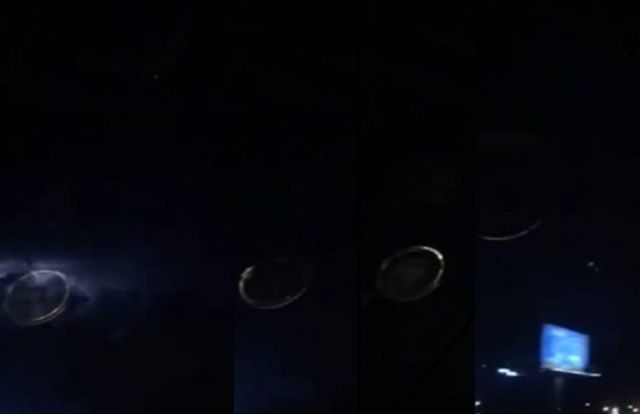


 µ


