Ontdek de Fascinerende Wereld van UFO's en UAP's: Jouw Bron voor Onthullende Informatie!
Ben jij ook gefascineerd door het onbekende? Wil je meer weten over UFO's en UAP's, niet alleen in België, maar over de hele wereld? Dan ben je op de juiste plek!
België: Het Kloppend Hart van UFO-onderzoek
In België is BUFON (Belgisch UFO-Netwerk) dé autoriteit op het gebied van UFO-onderzoek. Voor betrouwbare en objectieve informatie over deze intrigerende fenomenen, bezoek je zeker onze Facebook-pagina en deze blog. Maar dat is nog niet alles! Ontdek ook het Belgisch UFO-meldpunt en Caelestia, twee organisaties die diepgaand onderzoek verrichten, al zijn ze soms kritisch of sceptisch.
Nederland: Een Schat aan Informatie
Voor onze Nederlandse buren is er de schitterende website www.ufowijzer.nl, beheerd door Paul Harmans. Deze site biedt een schat aan informatie en artikelen die je niet wilt missen!
Internationaal: MUFON - De Wereldwijde Autoriteit
Neem ook een kijkje bij MUFON (Mutual UFO Network Inc.), een gerenommeerde Amerikaanse UFO-vereniging met afdelingen in de VS en wereldwijd. MUFON is toegewijd aan de wetenschappelijke en analytische studie van het UFO-fenomeen, en hun maandelijkse tijdschrift, The MUFON UFO-Journal, is een must-read voor elke UFO-enthousiasteling. Bezoek hun website op www.mufon.com voor meer informatie.
Samenwerking en Toekomstvisie
Sinds 1 februari 2020 is Pieter niet alleen ex-president van BUFON, maar ook de voormalige nationale directeur van MUFON in Vlaanderen en Nederland. Dit creëert een sterke samenwerking met de Franse MUFON Reseau MUFON/EUROP, wat ons in staat stelt om nog meer waardevolle inzichten te delen.
Let op: Nepprofielen en Nieuwe Groeperingen
Pas op voor een nieuwe groepering die zich ook BUFON noemt, maar geen enkele connectie heeft met onze gevestigde organisatie. Hoewel zij de naam geregistreerd hebben, kunnen ze het rijke verleden en de expertise van onze groep niet evenaren. We wensen hen veel succes, maar we blijven de autoriteit in UFO-onderzoek!
Blijf Op De Hoogte!
Wil jij de laatste nieuwtjes over UFO's, ruimtevaart, archeologie, en meer? Volg ons dan en duik samen met ons in de fascinerende wereld van het onbekende! Sluit je aan bij de gemeenschap van nieuwsgierige geesten die net als jij verlangen naar antwoorden en avonturen in de sterren!
Heb je vragen of wil je meer weten? Aarzel dan niet om contact met ons op te nemen! Samen ontrafelen we het mysterie van de lucht en daarbuiten.
Berichten van 1 februari 2019 tot 28 februari 2019
Eeuwen geleden is het al in de bijbel voorspeld: “Aan het einde der tijden zult gij vreemde gezichten zien”. Wanneer ik zo eens om me heen kijk en het internet rond speur kan ik niets anders concluderen dan dat wij leven in het einde der tijden. Ook de Maya’s hebben eeuwen geleden al voorspeld dat 2012 het jaar zou zijn van een groot omslagpunt, het einde van een langdurig tijdperk.
Het jaar is 2012 is daar ook goed omschreven, want we weten inmiddels dat dit jaar inderdaad een omslagpunt was, waarbij de aardbevingen letterlijk in een stroomversnelling gingen. We zijn inmiddels alweer jaren verder en de aarde gaat tekeer als nooit tevoren.
Wanneer je regelmatig beelden bekijkt van wat er zoal gebeurt, dan zou je bijna bang worden en iedere keer als je denkt dat het niet veel heftiger kan worden, dan gebeurt dit toch weer en wordt er wederom een of ander record gebroken.
We krijgen van meerdere kanten tekenen dat dit inderdaad wel eens de eindtijd zou kunnen zijn. Zoals bijvoorbeeld tekenen uit de natuur, zoals onlangs ook weer in Japan.
Iets waar men in dat land als de dood voor is, is de riemvis.
Riemvissen (Regalecidae) vormen een familie uit de orde van de koningsvissen. Riemvissen komen overal voor in het open water van de oceanen. De vissen kunnen zeer lang worden, de ('gewone') riemvis tot 11 meter. De vissen hebben geen aarsvin, wel een zeer lange rugvin die voor op de kop begint. De eerste acht tot tien vinstralen van de rugvin zijn helder rood gekleurd en opvallend lang. De vissen hebben kleine ogen en geen tanden.
Het is niet dat men zozeer bang is voor wat deze vis hen kan aandoen, als wel de boodschap die deze vis brengt. In Japan hebben deze vissen een heel speciale betekenis en het volgende is wat wij hier al eerder over schreven.
In maart 2010 viel Japanse vissers een sterke toename van het aantal riemvissen op die of aanspoelden of werden gesignaleerd. Dat was in dezelfde maand dat er een heel krachtige aardbeving was van 8.8 op de schaal van Richter in Chili. Een die zo heftig was, dat men vermoedt dat de aardas zelfs iets is verschoven.
Omdat normaal gesproken deze vissen op een diepte van zo’n 1.000 meter leven is het ongewoon als ze naar de oppervlakte komen en volgens de Japanse folklore gebeurt dit als waarschuwing voor een op handen zijnde aardbeving. Volgens sommige wetenschappers kan hier misschien wel waarheid in schuilen, omdat vissen die op de bodem van de zee wonen, gevoeliger zijn voor seismische veranderingen.
In de maanden voor de zware aardbeving in Japan in maart 2011, werden er meer dan een dozijn aangespoelde riemvissen gesignaleerd die of waren aangespoeld of die verstrikt waren geraakt in de netten van vissers. Dit gebeurde in de districten Ishikawa, Toyama, Kyoto, Shimane en Nagasaki. Allemaal vlak in de buurt van het epicentrum van de aardbeving.
Nu schijnt het echter weer te beginnen en zijn er aan de Japanse westkust de afgelopen weken drie exemplaren of aangespoeld of gevangen in de netten van vissers.
De lokale sociale media gaan in overdrive en veel Japanners zetten zich schrap voor wellicht een volgende grote aardbeving, al dan niet met tsunami.
Het is slechts één van de vele ongewone dingen die zich voor doen. Ook bij ons hebben we nu te maken met een onverklaarbaar verschijnsel in de natuur:
De afgelopen weken zijn ruim 20.000 zeekoeten doodgegaan. "Dat is veel", zegt onderzoeker Mardik Leopold van de Wageningse universiteit. "Zo'n massale sterfte kennen we alleen uit de jaren 80 en 90." Dagelijks wordt er op elke kilometer strand langs de Nederlandse kust zo'n dode vogel gevonden. En dagelijks worden tientallen zieke, magere en ernstig verzwakte dieren bij de vogelasiels langs de kust binnengebracht. "Er is sprake van een alarmfase." De doodsoorzaak is nog niet duidelijk, al wordt er wel gezocht naar een verklaring.
Natuurlijk komt er een verklaring met een oorzaak. Er komt altijd een verklaring met een oorzaak, ook al hebben ze geen flauw idee wat het heeft veroorzaakt. Een verklaring met oorzaak is nodig om ervoor te zorgen dat de bevolking rustig verder slaapt en geen lastige vragen gaat stellen.
Maar, wat misschien nog wel het meest indringende van alles is, zijn beelden. Neem heel even de tijd en kijk wat er zoal gebeurde aan heftige dingen in de laatste dagen van januari.
Naast beelden zijn er geluiden. Geluiden die ergens vandaan komen en niemand weet waar. Geluiden die door merg en been gaan en waarvan je instinctief voelt dat ze niet alledaags zijn.
En de mens die bezig is onder de ontzielende leiding van de Saoedische kroonprins Mohammed Bin Salman de bouw van een New World Order stad, genaamd Neom. Dat niet alleen, die stad wordt gebouwd precies bij de Sinaïberg, de plek waar Mozes de tien geboden kreeg. Dit stuk land en de bijbehorende historie wordt verstopt gehouden door de Saoedi's en het is zelfs afgezet en ontoegankelijk gemaakt voor het publiek.
In the paranormal reporting business, there are occasionally stories that make you want to pass because there’s no way they can be true. And yet, with many of them, it’s not the first time an incident like it has happened and there could be more to it. Such is the case of a small report in the Mountain Reporter about an accident on a California highway that the driver insists was caused by extraterrestrials. Does this sound familiar to you?
“The man was not transported for his injuries and his claims of “alien intervention” during the traffic accident are under investigation by the California Highway Patrol.”
That’s the most interesting line of the brief account in theMountain Reporter of a traffic accident on State Route 18, the main highway into the rugged San Bernardino mountains in Southern California. Three California Highway Patrol units arrived at the scene around 1:30 pm to find a white Ford E350 van overturned. (Photo of the van here.) Why were three CHP cars in such a remote area near Rimforest?
“According to CHP transcripts of the original 911 call, the driver adamantly stated that his van was flipped over by aliens.”
A similar white Ford van
No incident report was available and the Mountain Reporter didn’t say if the driver – never named — was tested for impairment … the logical first thought in these types of incidents. However, those who follow UFO reports will know that unidentified flying objects have sometimes been said to stop cars and cause accidents. A series of such incidents occurred in 1965 in England and became known as the ‘Warminster Thing’. Many people reported hearing mysterious booms and seeing an orange flame in the sky emitting hisses and crackles. Among the reports were incidents of moving cars stopping after either the boom was heard or the flash was seen. While investigated for over 50 years, the mystery of the Warminster Thing and its effect on cars has never been solved.
No question what caused this accident … or is there?
This year (2019) marks the 40th anniversary of a police car accident in Marshall County, Minnesota, which the driver, Deputy Sheriff Val Johnson, blamed on a UFO. Johnson never changed his story from his original report of a bright beam of light heading towards his car, then surrounding it and rendering him unconscious. He claimed to be out for 39 minutes, during which time his watch stopped for 14 minutes, his windshield was shattered, lights were damaged and an antenna bent. Johnson had bruises and eye damage which a doctor compared to welder’s burn – a severe irritation caused by staring at a welder’s flame. Johnson refused to take a lie detector test but his testimony was accepted because of his clean record as a sheriff and because examinations of the accident scene and the car (which is on display at the Settler’s Square Historical Museum in Warren, MN) by professionals and UFO investigators could not definitively identify the cause of the accident and damages. Non-believers say either Johnson concocted the story to hide an accident or he was a victim of a prank gone bad.
Will more information come out about the “alien intervention” accident in California? We’ll keep watching. Was it a DUI? Let’s hope not. Will it become a San Bernardino Thing or a Rimforest incident? Let’s hope so … we need some good new UFO stories.
We’ve always known that the wars of the future would be fought with laser weapons and, well, here we are in the future. The militaries of all three of the world’s superpowers – China, Russia, and the US – are busy developing laser weaponspresumably capable of zapping a human being into dust in mere seconds. Or at leastcausing an excruciatingly painful burn. I mean, it’s 2019 after all. If we can’t have flying cars we might as well have giant death ray lasers, right?
Or tiny handheld laser pistols, I’m not picky.
This week, government and technology watchdog site Nextgov spotted a curious document published by the Naval Surface Warfare Center at the White Sands Missile Range in New Mexico. The weapons research facility published a solicitation for contractors to bid on destruction services, a fairly common occurrence in top-secret research circles. However, the nature of the materials to be destroyed is somewhat conspicuous: the Navy needs someone to destroy 4,000 pounds of hard disks and other digital media related to its laser weapons research and to do so with the utmost secrecy and security. What does this mean for the US military’s research into directed energy weapons?
It’s hard to say, as all of the materials slated for destruction are classified. The call for bids states that for an incineration facility to be considered for the contract, it must be within ten driving hours of White Sands Missile Range, be capable of destroying the materials down to ash within eight to ten hours, and have “at the minimum, secure entry, 24-hour armed guards and 24/7 camera surveillance with recordable date and time capabilities.” What could be stored in these media that’s so sensitive?
The US Navy has for some time been looking into using “directed energy weapons” like lasers to shoot down drones and missiles.
According to Nextgov, the Navy’s call for bids disappeared within hours. Has someone won the contract to destroy all of this secret weapons research? What does this revelation mean for the Navy’s development of directed energy weapons? Have they perfected a design and no longer need all of the prototypes and test data produced along the way? As with all things related to secret weapons research, we’ll likely never know – until the laser beams start flying.
Thanks to the provisions of the Freedom of Information Acts of both the United States and the United Kingdom, we know with complete certainty that various military and intelligence agencies have opened secret files on countless people who claim to have encountered otherworldly beings. The evidence, we know, dates back to the early 1950s. That was when the Federal Bureau of Investigation quietly opened files on numerous people in the Contactee field. They included George Adamski,George Van Tassel, Orfeo Angelucci, and Truman Bethurum. All of them – and many more too – came under the careful and secret scrutiny of J. Edgar Hoover’s G-Men. The surveillance had very little to do with the claimed encounters of the characters above, but just about everything to do with the pro-Russian statements some of the Contactees made.
Of course, the Contactee experience didn’t involve people being abducted against their will. For the most part, the so-called Space Brothers would invite amazed people onto their craft. The Space Brothers were benevolent, human-looking figures who wanted nothing more than to help steer us away from worldwide, nuclear destruction and the extinction of life on Earth. This is in stark contrast to what erupted, all across the globe, just a few years after the likes of Van Tassel and Adamski were riding high. Suddenly, government agencies were faced with another non-human phenomenon – a very much unforeseen one. It was a phenomenon which concerned the governments of both the United States and the United Kingdom.
A stark and chilling realization hit government agencies square in the face: strange creatures from faraway worlds were kidnapping citizens of this planet. People were being subjected to medical experiments of kinds which puzzled those tasked with studying the situation; memories were being wiped clean; and there was a new threat to national security. Forget the Russians: sinister entities from an entirely different realm of existence to ours were using us like cattle. And, in the very early days – when the Betty and Barney Hill saga reached the media and the public – it seemed that nothing could be done to bring the onslaught to an end. Indeed, not only were government agencies confused and vulnerable to the activities of the new gang in town; they were hit by a terrible realization that they were unable to do anything about the growing intrusion in our very midst.
In other words, in the early years of the alien enigma, agencies were still very much in the dark, doing their utmost to come to grips with something that overwhelmingly baffled them. The military was used to dealing with enemies that wanted to destroy us. The United States Government knew that the Soviets were a major threat – and they knew how to handle them, in just the same way that the Soviets knew how to handle the Western world. The problem, as we have seen, though, is that the Grey abductors didn’t act like regular enemies: they didn’t attack us, they didn’t destroy our cities in Independence Day-style, and they never landed on the White House lawn and demanded worldwide surrender. Rather, they acted in a stealthy, odd way which agencies – particularly the military – had a hard time coming to grips with. There was no outright aggression, but there was no friendly approach either.
So, what did our leaders do? Agencies took what they felt was the best approach possible – maybe even the only approach possible, taking into consideration the fact that the aliens were infinitely years ahead of us, in terms of science and technology. There really was only one option available to governments. That was to watch – and watch closely – what was going on. To keep the abductees under surveillance.. To stay fully aware of the growing alien abduction epidemic – at least, to the extent that they were able to. And to stand ready and prepared for any significant changes in the clandestine actions of the Greys.
This is why, as the 1960s became the 1970s, we saw the rise of the black helicopter and “phantom helicopter” phenomena. It was in the early 1970s that elements of the government secretly assigned a significant budget towards creating helicopter-based quick-reaction teams that could respond to alien abduction events, and monitor the homes of abductees across the United States. The project even used those same helicopters to try and figure out the connection between abductions and the cattle mutilation phenomenon. That encounters involving alien abductees and those mysterious helicopters are still being reported is a very good indication that this particular kind of aerial surveillance is still very much afoot.
Let’s not forget that there is an even stranger aspect to all of this. It’s that of the MILABS controversy. We’re talking about Military-based abductor teams fabricating abduction events – such as the trauma-filled Charles Hickson-Calvin Parker abduction late one night in October 1973 in Mississippi – to try and place the aliens in an even more dangerous light than they already seem to be. Or, in the Brazilian affair of Antonio Villas Boas in October 1957, to make the whole abduction issue appear utterly ridiculous by bringing the issue of wild alien-human sex into the equation. Many researchers of the UFO issue outright dismissed the Villas Boas story when it first surfaced – which was exactly what the government wanted: keep Ufologists from investigating the real abductions, by trying to convince those same Ufologists that all of the tales of alien abduction – and sex with extraterrestrials – were ludicrous and the works of hoaxers.
From the 1950s to the present day, it has been an undeniably wild ride.
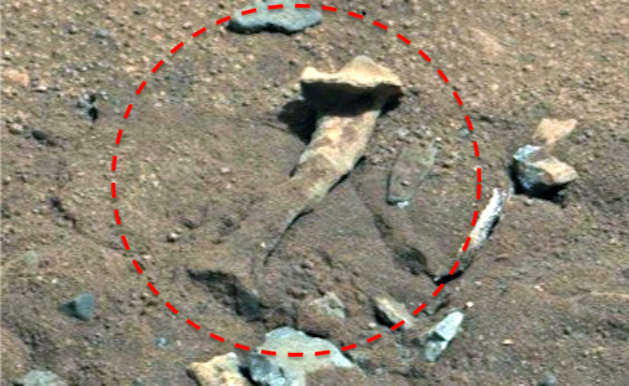
I was looking through some gigipan photos of Mars and found some really strange objects, each of which tells it own story from its detail. First is the skull above which has a lower jaw beak like a turtle or even the upper and lower beak of a triceratops dinosaur. The detail is extraordinary and had the rover spotted it, it would have intrigued world scientists for months. I believe this is a sculpture...since it lacks the upper face details most fossils would defiantly have. There was also a flat sculpture of a bearded face. I added color to it to more easily see the details due to its crude and aged appearance. It would appear that the culture that made these were of lower intelligence...like that of prehistoric earth. Did you notice his ear is lower than ours?
Then at the bottom of this post is a screenshot of another face...again a old male with an open mouth and high detailed lower teeth and jaw. His eyebrows, eyes, mouth nose, cheeks all highly stand out. These sculptures are undeniable proof that aliens...intelligent or not...once lived on Mars.
I would also like to add something...this ancient society on Mars...is a male dominate culture. I find very few female faces and most the faces I find are male with beards, crowns, moustaches, aged older males with wrinkles. That alone may account for a large reason why their species went extinct...they dismissed the intelligence and ingenuity of the females of their species, thus increasing the odds of destroying themselves and their society. Male and female combined intelligence creates a balance and increases the chance of survival of any species. Scott C. Waring-Taiwan
UFO Sighting Video: Mysterious Objects Seen Flying In Formation Over China
Many UFO enthusiasts suggest that aliens are watching us after a fleet of unidentified flying objects were seen hovering over a Chinese city.
A video that was uploaded to YouTube appears to show multiple UFOs moving above China. While the details of the video may be scarce as the uploader doesn’t say which area of China they are spotted, the clip clearly shows something suspicious. The video shows three UFOs in formation moving overhead.
The strange aerial objects differ in size with the center one being by far the biggest.
The variation of size had led some to think that the UFOs were not human-made as the fleet would likely all have been of the same aircraft if they were terrestrial.
Some UFO enthusiasts believe that extraterrestrials are watching us across the globe. They say that UFOs are everywhere and they vary in size, some are big and some are as small as baseballs.
Certain quarters of conspiracy theorists say that China being the secretive nation has its own Area 51. They believe it is located in the middle of nowhere in the Gobi Desert where they see a series of strange structures.
Open Minds UFO Radio:Nick Pope investigated UFOs for the United Kingdom’s Ministry of Defense (MoD) for several years in the early 1990s. He was skeptical about the phenomenon when he began looking into the matter. However, after having reviewed several credible cases Nick concluded that UFOs pose a real mystery, and unidentified vehicles in our airspace could pose a threat to national security. Since he has left the MoD, Nick has authored a book on the UK’s most credible and famous UFO case, Encounter in Rendlesham Forest: The Inside Story of the World’s Best-Documented UFO Incident. He is also a journalist and media commentator.
Recently, Nick was able to obtain Department of Defense (DoD) files regarding Advanced Aerospace Identification Program (AATIP), often referred to as the Pentagon’s secret UFO project. These are some of the very few official releases of documents related to AATIP that have surfaced. In this episode, we discuss what is in the files and how he received them. Nick also explains what we can infer from the documents, and why they are significant.
For more information about Nick, visit: NickPope.Net.
The observable universe is some 93 billion light-years across. The whole universe is almost certainly much larger than that. But we still don’t know whether or not it’s infinite.
It takes some mental gymnastics to wrap your head around how big the universe is — and we’re not even sure of its actual size is (we’ll get to that a bit later). Think of it this way: in a single second, light travels around 300,000 kilometers (186,000 miles). The distance that light traveling at this speed travels in a year is called a light-year. The observable universe is 93 billion light-years across. What lies beyond that, we don’t know — we can’t observe it in any possible way and we’re not really sure. So we suspect that there’s still a lot of universe beyond that, though we’re not sure how much.
Although astronomers have frantically looked for an answer, we also don’t know if the universe is infinite or not — and to make matters even more complicated, “infinite” might also mean more than one thing.
Let’s see what we know so far, what the plausible possibilities are, and what we can guess off of that.
The observable universe
For starters, the fact that we know the observable universe to be 93 billion light-years across is astonishing — that’s a great story in itself, and you can read about it extensively here — but how do we know it? Well, the story starts out with an Austrian mathematician and physicist called Christian Doppler.
In the 19th century, Doppler tried to explain an unusual phenomenon about electromagnetic waves: if and observer moves towards or away from the source of a wave, the length of that wave decreases or increases respectively. This is now called the Doppler effect and was confirmed for essentially all types of waves.
For astronomers, this is extremely important. If you have some stars you can use as a reference (a sort of cosmic “candle“), you can look for all sorts of anomalies in the wavelengths you’re seeing. If you’re seeing increased wavelengths, the object is moving away from you (redshift), and if the wavelengths are getting smaller, it’s moving towards you (blueshift).
In the 1920s, Edwin Hubble discovered something unusual. Sure, some things are moving towards each other and others are moving away, but in a general sense, everything seems to be moving away from everything else. Simply put, the universe appears to be expanding. This was truly a groundbreaking moment — a paradigm shift from the universe which was once thought to be fixed and stable. Not only that, but this universal expansion also appears to be accelerating. We still don’t know exactly why or how this happens, but subsequent measurements have confirmed and refined this idea.
Studying redshift is fundamental for studying cosmic distances, especially for things which lie far away. But this is where things start to get a bit tricky.
If you’re looking at something that’s, say, 1 light year away, you see it the way it was 1 year ago. But in that year, the universe has expanded, so the distance between you and that object is now greater than 1 light year.
Astronomical observations have found the age of the universe to be around 13.7 billion years, and one of the farthest objects we’ve ever discovered is a galaxy called GN-z11. This galaxy is 13.4 billion years old, which is incredibly old. However, although it took light from it 13.4 billion to reach us, the galaxy lies way farther than 13.4 billion light-years away — in fact, astronomers believe it to be a whopping 32 billion light-years from Earth! So it’s misleading to think that the age of the universe (in years) also represents its size (in light years). But we can go even farther than that.
We can detect some photons which were formed before any other star or galaxy. These earliest photons come from the so-called cosmic microwave background (CMBR), faint cosmic background radiation filling all space. This is the earliest known electromagnetic radiation — and as far as we can tell, it’s the oldest thing we can detect.
Some of our most accurate estimates of the CMBR come from the Wilkinson Microwave Anisotropy Probe (WMAP), which, along with other estimates, found that farthest observable photons come from 46.5 billion light-years away. This would mean that our observable universe is, at the very least, 93 billion light-years across (46.5 in both directions).
We have no idea where we are in relationship to the universe in general, but there’s no reason to believe that we occupy a special position. At any rate, the observable universe is estimated to be about 93 billion light years. But what lies outside our observable universe?
Wrap your head around this
The blunt answer is… we don’t really know. We can’t observe anything outside of the observable universe (doh!), so we can’t really know for sure — but that doesn’t mean we can’t make assumptions.
There are different studies attempting to calculate the real size of the universe. For instance, one statistical estimate carried out by Oxford researchers found that the universe might be 251 times larger than the observable universe, which would put it at 23,343 light-years across. Even so, that’s on the conservative side — one study reports that the universe is megaparsecs across, with one megaparsec being 3.26 million light years. That’s a number so big that the unit of measure doesn’t even count. Whether you express it in meters or light-years or megaparsecs, the different just gets lost in the final digits.
The structure of the Universe does not appear to repeat in some significant way. For all we know, it could very well be infinite.
If the universe were to be this big, then even if it’s not technically infinite, it could still be practically infinite — nothing from our location could reach its edge or vice versa. But it gets even weirder!
Remember, we live in an expanding universe — we know that from Hubble. But Hubble was off on his initial measurements: recent studies have converged on an expansion rate around 70/km/megaparsec. So if something is one megaparsec away, it’s moving away at a rate of 70 km/s. If it’s 2 megaparsecs, it’s receding at 140 km/s, at 3 megaparsecs it’s 210 km/s, and so on.
Let’s do a gross simplification: the observable universe is 93 billion light-years across — that’s 28.500 megaparsecs. This would mean that the points which are farthest away are receding at a speed of about 2,000,000 km/s — that’s almost 10 times higher than the speed of light! But the theory of special relativity tells us nothing can move faster than the speed of light, so what gives?
Well, technically, the universe isn’t moving. It’s not like something is moving at 2 million km/s — space itself is expanding at that rate. General relativity does a better job of dealing with this type of conundrum, but even general relativity is, in a sense, a local law — with “local” being limited to our universe. We have no idea what’s going on “outside” the universe, if such an outside exists, or if it even makes sense.
Furthermore, notice that the expansion rate isn’t a speed: it’s a speed per distance. So while cosmic objects are getting farther away from one another, they aren’t moving away from one another. But if you were to try to reach these far away places, you’d have to travel faster than the speed of light, which is impossible (according to our knowledge). You can even calculate that objects farther than 4,740 megaparsecs are moving away at a rate higher than the speed of light and could therefore never reach one another. Galaxies closer than that are still emitting light that can reach us. Of course, this all relies on the assumption that the universe will continue to expand, which may or may not be true. The universe could stop expanding and start collapsing onto itself for all we know, or it could expand faster and faster forever.
So even if the universe is not theoretically infinite, from a practical point — it quite likely is. But that still doesn’t really answer the question, does it?
To infinity… and beyond!
The universe may be infinite, but we can only analyze a finite part of it (the part in which light has had time to reach us). As far as we can see, there are galaxies in every direction with no sign of slowing down. Simply put, we’ve seen no sign of an edge of the universe.
Olber’s paradox says that if the universe extends infinitely, then no matter where you look, you would eventually fall on the direction of a star, so the night sky would completely light up. Since this doesn’t happen, then the universe can’t be infinite. However, Olber’s paradox might be explained by the fact that some objects are simply too far away for their light to reach us, or there is just too much dust in the universe obscuring our view. It could also be that stars aren’t distributed on random directions, but rather take on a fractal distribution — so Olber’s paradox doesn’t ultimately do all that much in the way of disproving an infinite universe.
Another argument attempting to debunk an infinite universe is that during the Big Bang, the universe was condensed into an infinitesimal point, so how can something infinite derive from something finite?
This, however, relies on an incorrect assumption: the Big Bang wasn’t an eruption in space, it was an eruption of space. Before it, space did not exist, so something could not be big or small. It was a point of infinite energy, which again, doesn’t do much to clear up whether the universe can be infinite or not.
Let’s approach things another way: if the universe is expanding, what is it expanding into? Well, as far as we can tell, it’s not that the universe is expanding into something — space itself is expanding. In other words, it’s not like the edge of the universe is always moving forward, but more like all points in the universe are moving apart. Think of it like raisins in a dough: you put it in the oven, and all the raisins are pushed apart by the expansion of the dough. But still, if the universe is finite, then it probably has an edge and an “outside” — what those things would be like, however, we don’t really know.
Here’s another intriguing question: if the universe really is infinite, does that mean there’s an infinite number of you’s out there? Are there different variations of you, like one in which you have cat ears, and another one in which you’re immortal? That may very well happen, surprisingly enough — but it’s not that simple.
The odds of someone exactly like you are infinitesimal — from a cosmic standpoint, the odds are so small that they’re essentially 0. If the universe is infinite, then the odds of a new you are basically infinity times zero — a type of problem which has haunted mathematicians for centuries.
0 × ∞ = ?
For the less math-savvy out there, this is a type of indeterminate problem: on one hand, the answer should be 0, because everything multiplied by zero is zero. But on the other hand, the answer should be infinity, because everything multiplied by infinity is infinity. The answer relies on how “zero” that zero really is, and how “infinite” that infinity really is. In our practical case, we don’t know how infinitesimal the odds of evolving a specific life form are, so the problem remains indeterminate. You could be the only you out there, or there could be an infinite number of variations — it’s also possible that there’s a finite number of you’s out there, which makes it even weirder.
Drawing the line
You’ve probably realized that there’s a lot of if‘s, maybe‘s, and we don’t know‘s in this conversation. That’s just the way things are right now — we’re still only starting to scratch the surface of cosmic truths.
There’s no clear-cut answer to whether the universe is infinite or not, but in this case, the reward is in the journey, not the destination.
The one thing we do know is that the universe is big. It’s a big and mysterious place, equally wondrous and terrifying. The fact that we, the results of stardust and physical forces, are trying to understand its nature is equally wondrous — and equally terrifying.
In Californië weten ze niet wanneer maar wel dat het zal komen; een allesvernietigende aardbeving die ze de Big One noemen.
Met tektonische platen die bewegen en 39 afzonderlijke aardbevingen in een tijdsbestek van 24 uur, begint men zich nu toch wel wat zorgen te maken.
Het is bijna niet voor te stellen dat de maatschappij gewoon iedere dag doorgaat met waar ze gisteren zijn gebleven en geen enkel oog heeft voor de tekenen die ons om de oren vliegen.
De mainstream media verkneukelden zich eind 2012 toen de wereld niet werd vernietigd door een Apocalyps.
Wat bijna niemand in de gaten had, was dat eind 2012 een enorm keerpunt voor de wereld betekende. Dit was het moment waarop aardveranderingen in een enorme stroomversnelling terechtkwamen en waarbij het aantal jaarlijkse aardbevingen letterlijk als een raket omhoog schoot.
Niet alleen worden dit soort dingen systematisch voor het publiek verborgen gehouden, ook is het naïef om te denken dat dit alles zonder verdere gevolgen zal blijven.
En zo komen we terecht in de Amerikaanse staat Californië, waar wetenschappers al heel lang zeggen dat The Big One zal toeslaan op “een kwade dag”. The Big One is een allesvernietigende aardbeving aan de westkust en plaatsen zoals Los Angeles en San Francisco.
Dit gebied ligt ook nog eens op de bekende Ring of Fire, waardoor de gevaren nog eens extra worden versterkt.
Er komen dan ook steeds meer aanwijzingen dat The Big One veel dichterbij is dan men graag zou willen. Afgelopen week is het heel erg onrustig geweest in dat gebied. Zoals in het weekend toen de kust voor Californië minimaal tien aardbevingen te verwerken kreeg van een kracht van minimaal drie op de schaal van Richter.
De lokale kranten brengen berichten waarin ze schrijven dat ze hopen dat dit niet de opmaat is naar iets veel groters en dat het hierbij zal blijven.
Het begon zaterdagochtend met de bevingen en het bleef maar doorgaan. Bevingen met een kracht van 3.0 tot en met 4.5. Iets verder naar het zuiden werd bij Mexico afgelopen vrijdag een beving gemeten met een kracht van 6.6 op de schaal van Richter.
En de miljoen mensen die wonen in en rondom de eerder genoemde steden gaan gewoon door met hun leven en hopen maar dat er niets zal gebeuren. Eigenlijk is dat vreemd zeker gezien de conclusie van een recent wetenschappelijk onderzoek.
Die conclusie is dat wanneer er echt een grote aardbeving in dat gebied voorvalt, er een aanzienlijke kans is dat grote delen van Californië in een oogwenk in zee zullen verdwijnen. En het sinistere is dat dit kan gebeuren zonder ook maar de geringste waarschuwing.
Volgens professor Matt Kirby van de Cal State Fullerton universiteit zal het zo snel gaan, dat tegen de tijd dat je in de gaten hebt wat er eigenlijk aan de hand is, het al te laat is en je het zeewater ziet binnenstromen.
Californië ligt op één van de meest bekende breuklijnen ter wereld, de San Andreas, en wanneer je naar het volgende plaatje kijkt, dan zul je zien dat het niet ondenkbaar is dat er een deel van deze staat zal afbreken en in zee terechtkomen.
Het volgende is wat we eerder schreven over de breuklijnen in Californië.
De tektonische platen van de aarde schijnen ook steeds meer in beweging te komen en op sommige plaatsen zelfs af te breken. Op het onderstaande kaartje zie je de situatie voor de kust van Californië.
Je ziet daar dat er twee van die platen langs elkaar schuiven. Hierdoor ontstaat volgens wetenschappers ooit de situatie dat Los Angeles naast San Francisco zal liggen. Dit soort bewegingen vindt plaats langs de San Andreas breuklijn.
Dan is er voor de kust daar ook nog een gebied waar de dunnere tektonische plaat van de oceaan onder die van het continent duikt. Men noemt dit de Cascadia Subduction Zone.
Hoewel minder bekend dan de San Andreas breuklijn, denken wetenschappers dat dit gebied de “Big One” zal gaan veroorzaken.
Autoriteiten nemen de dreiging in ieder geval wel serieus, want ze hebben afgelopen juni een enorme oefening gehouden met de naam Cascadia Rising waarbij de gevolgen van een 9.0 aardbeving werden gesimuleerd.
An incredible image was captured that shows the entire dark side of the Moon as well as Earth in the distance. Since we can’t see the dark side of the Moon from here on Earth, this is one spectacular photo to say the least.
The image was captured on February 3rd by a team of radio amateurs who were using the Chinese Longjiang-2 satellite. Once they took the picture, they downloaded it with the Dwingeloo Radio Telescope which is located in the Netherlands. The team, which is led by Harbin Institute of Technology, sent twin micro-satellites into space last spring along with China’s Queqiao satellite.
Previously taken picture of the Moon (not the photo indicated in this article)
After a quiet period in order to prevent interfering with the Chang’e 4 Lunar landing, the satellite started up again on January 13th. Then on February 3rd, the team sent a command to start taking pictures and that’s when they noticed that Earth, as well as the entire dark side of the moon, were seen together.
In a blog post, astronomer Cees Bassa wrote, “The first image from this time-lapse was downloaded with the Dwingeloo telescope on February 4, 2019. For the first time, the entire Moon and Earth are in view.” In previous photos, they were able to get images of Earth but only a portion of the moon, that’s why this photograph of the both of them is so stunning.
Previously taken picture of Earth from the Moon surface (not the photo indicated in this article)
The team explained that it’s an exhausting and very carefully planned procedure to set up the shots and receive the data from them. But it’s definitely worth it when they capture a picture like the one they took on February 3rd.
It’s only been in the past several decades that humans have seen for the first time the dark side of the Moon. Since it always faces away from Earth, nobody has seen it except for a very lucky few. In fact, it was only in 1959 that the Soviet Luna 3 spacecraft took the first pictures of the far side of the Moon. And it took another nine years, in 1968, before astronauts on the Apollo 8 spacecraft became the first ever humans to see its far side when they were orbiting our Moon. Then just this year, on January 2, 2019, China’s Chang’e 4 became the first spacecraft to touch down on the lunar’s far side.
‘Oumuamua has been on a long, strange journey not only in terms of its voyage from a distant corner of space and through our own Solar System, but also in terms of the discussion surrounding the mysterious interstellar object. Since its initial discovery in 2017, professional astronomers and amateur stargazers alike have put forward all manner of theories concerning the curious traveler, most prominent being the claim made by Harvard astronomy chair Avi Loeb who adamantly stands by his claim that ‘Oumuamua could be an alien spacecraft.
Loeb argues that ‘Oumuamua could be a type of solar sail which uses the radiation from stars to propel itself through space.
Naturally, dead-eyed, cynical astronomy professors in their ivory towers everywhere have been attacking Loeb’s theory. How dare a scientist consider all possibilities and acknowledge the possibility, however small, that intelligent life could exist somewhere other than Earth! While Loeb and other scientists publicly debate whether or not ‘Oumuamua could be an alien craft or probe traveling by means of solar sail, a NASA astronomer quietly published a paper this week with his own theory about the first known interstellar visitor to our Solar System.
Zdenek Sekanina, an astronomer at NASA’s Jet Propulsion Laboratory, believes that ‘Oumuamua could be a “monstrous fluffy dust aggregate” left behind by the violent destruction of a comet. According to a new study Sekanina published in the open source journal arXiv.org, ‘Oumuamua very well could be a loosely-bound cloud of dust zooming through the universe like a cosmic zombie after a “recent explosive event” destroyed what was once a comet.
Who knows, maybe alien civilizations somewhere can create spacecraft which look to us like fluffy clouds of dust. We have no clue what any alien races, if they exist, are capable of producing.
Sekanina cites an Oort Cloud comet known as C/2017 S3 which exploded and left behind another “monstrous, extremely fluffy aggregate of loosely bound dust grains” which continued to fly through the cosmos. Could ‘Oumuamua be another one of these comet corpse clouds? Ultimately, we may never know, as the object quickly sped past Earth and around the Sun on its way to eventually exit our Solar System in 20,000 years. Will we ever know the true nature of this interstellar visitor? Could ‘Oumuamua indeed be an alien probe or is it a fluffy cloud of dust?
On January 29, 2019 a giant anomaly, possible an alien mothership, suddenly appeared on the Secchi Cor2A satellite.
It is possible that the object is closer to the camera than the sun, even though the size must be enormous.
And it is not for the first time that UFOs have been spotted on NASA’s satellites.
Many UFOs, other unknown objects possible under intelligent control and even triangular craft like a TR-3B have been observed near the sun over the years and despite decades of denial by NASA we all know that it is not always a camera reflection or a cosmic dust particle.
The melting of the Arctic and Greenland ice sheets have long been known to be caused by climate change. Now, two new papers conclude that the effects of this melting have been overestimated: they may cause much less sea rise and climate shifts than we thought. However, ice will continue to melt at an accelerated rate, causing even more global warming.
Very young sea ice and sea smoke in from of the Stange ice shelf in the Ronne Entrance, Southern Bellingshausen Sea. Image credits: Mark Brandon.
While some media and politicians are still debating whether climate change is happening and what its causes are, the science is very clear on this: climate change is happening, and we are causing it. Moderate estimates find that temperatures will rise by 3-4 degrees Celsius by the end of the century, and we are already feeling the effects.
However, the details of this warming are still being analyzed. For instance, we know that melting ice sheets will accelerate global warming largely due to the albedo effect: ice and snow are white and they reflect much of the Sun’s energy. When they melt, they leave behind something darker, which will absorb more solar energy and exacerbate the warming.
However, it’s still not clear just how much this accelerated melting will contribute to sea level rise. Two papers shed some new light on this phenomenon, concluding that things are (surprisingly) a bit better than we anticipated.
In the first paper, Nicholas Golledge and colleagues use satellite measurements of recent ice-mass changes to refine simulations of the melting Antarctic and Greenland ice sheets and their potential impacts. Their models suggest that the melted ice will form a freshwater lens on the surface, allowing rising water to spread out, causing further melting of ice underwater and furthering overall melting. However, even with this effect, we might not see the sea level rise all that much worldwide — contradicting some predictions from 2016, which claimed that this type of cliff collapse could add more than a meter to rising seas by 2100.
Renegar Glacier, Transantarctic Mountains, East Antarctica. Once considered inert, the East Antarctic Ice Sheet is now showing increasing signs of change.
Image credits: Nick Golledge.
The reason for this contradiction is connected to ice collapse. Most previous studies analyzing sea level rise used ice-cliff collapses to explain the observed measurements. However, when Golledge and colleagues looked at ice-losses 3 million years ago, 125,000 years ago, and over the last 25 years in more detail, they found that the results can be explained without the need for such collapses. So it’s not clear if or how such collapses should be included in future predictions. Dr. Tamsin Edwards, Lecturer in Physical Geography at King’s College London who led the work, says:
‘We’ve shown that ice-cliff instability doesn’t appear to be an essential mechanism in reproducing past sea level changes and so this suggests ‘the jury’s still out’ when it comes to including it in future predictions. Even if we do include ice-cliff instability, our more thorough assessment shows that the most likely contribution to sea level rise would be less than half a metre by 2100.’
In the second paper, Associate Professor Nick Golledge from Victoria University of Wellington and colleagues including Dr. Edwards report that current climate models do not consider the full effect of melting ice sheets in Greenland and Antarctica.
Essentially, melting will slow the Atlantic ocean circulation, trapping warm water below the surface in the southern hemisphere and hereby causing more Antarctic loss. This also increases temperatures variability, resulting in more frequent extreme weather events. Golledge comments:
“Melt from these ice sheets is going to significantly disrupt the global climate making temperatures in some areas vary much more from one year to the next. This unpredictability is going to prove extremely disruptive for all of us, and will make adaptation and planning much more difficult.”
So while both papers suggest that sea level rise won’t be as dramatic as some models predicted, it’s quite likely that ice will melt at an accelerated rate, with severe consequences worldwide. It’s yet another reminder that climate change has diverse and often unpredictable effects.
Journal References:
“Global environmental consequences of twenty-first-century ice-sheet melt,” by Golledge et al. DOI 10.1038/s41586-019-0889-9.
“Revisiting Antarctic ice loss due to marine ice-cliff instability,” by Edwards et al. DOI 10.1038/s41586-019-0901-4
Amazing UFO fleet sighting in Denmark (video analysis) is about several unknown lights caught on video over Alleroed city on August 7th 2010. The sighting was recorded with an iPhone and the unknown lights seen in the video stands out pretty clear. What youtube user Femse filmed that night, is in my opinion one of the more interesting UFO sightings from Denmark.
You can hear the witnesses speak almost excitedly in the video (Danish language) which is fully understandable in relation to what they are seeing. There was real magic in the air that night, the unidentified aerial phenomenon (UAP) lasted for whole 20 minutes.
Amazing UFO fleet sighting
Then I first saw this video, I was amazed by the details of some of the lights. There are two large unidentified flying objects in the footage. The first large object shown in below picture has one big white light and four smaller more faint ones, also white. You will find it at the start of the video (above) at 0:12 where it is seen together with a smaller object that seems spherical.
The other large object shown in below picture has two big lights, one green, and one white. It is followed by a triangle with what appears to be three spherical objects. You will find it at the very end of the video (above) at 4:36
If you see the video to the end, you will notice that there are a whole fleet of UFOs. The partly shaken recording does not prevent us from discovering multiple lights in the footage.
SUFOI says chinese lanterns
Scandinavian UFO Information (SUFOI) immediately turned this UFO sighting down, claiming it was just Chinese lanterns. But the two pictures above with the two large objects seem not to resemble Chinese lanterns.
The lights on the first large object seem to render up an actual fixed structure behind the white glowing lights. The other large object has a clear green and white light, not really the typical Chinese lantern-profile with the orange-reddish glow.
I wonder why SUFOI chose to go with the lantern theory alone? Some of the small objects actually have a red glow more than orange. If they were the only type of objects seen I understand. But the small ones are seen together with the large ones. So why they chose to put the blind eye on the large objects is a mystery to me.
The witness account translated from Danish
I stood in my garden and smoked a cigarette when I suddenly saw a big ball come flying. It flew faster than a plane and was completely silent. Since I could not see it anymore, I looked back from where it first came, and then 2 more, and so it went on for approx. 20 min. There were maybe 50 of them. We filmed it on the phone and took pictures with a digital camera. They flew all along the same route and same height. They were all the same size but one that was maybe twice as big. It seemed like it flew closer, and not quite the same path as the others, but ended with flying the same course as the first and then disappeared into the horizon. It ended with I could not see them anymore because they were blocked from my field of view of trees and roofs.
The UFO sighting in Denmark is an interesting case, because the same type of mysterious light, specifically the large objects, were also observed in North Carolina in Hendersonville on October 17, 2011, one year and 70 days after the sighting in Denmark.
The North Carolina UFO was observed by three witnesses who recorded the object, as it traveled across the sky, exactly as the UFOs did in Denmark. I think the sighting in Hendersonville supports Femse´s sighting in Denmark, because it reveals that she was probably not the only one who saw this aerial phenomenon.
The UFO from North Carolina that was reported to MUFON under case number #32678, have the same profile as the one filmed in Denmark. It has one big light and two smaller ones. There is indeed some correlation in the characteristics here, please go and see for your self in the North Carolina UFO Sighting
UFO fleet sighting short video analysis
I made a short video analysis for the UFO fleet sighting in Denmark, pointing out the large vessels seen in the footage. Here you can see more about the North Carolina UFO relation. The video was made in relation to an old blog I do not author anymore.
What do you think about this UFO fleet sighting? Are they all Chinese lanterns or is this actually the UAP (unidentified aerial phenomenon) unfolding right in front of you? To say that the two large objects are real UFOs together with a flock of Chinese lanterns would also be quite an amazing thought.
In my humble opinion, this was one of the largest UFO sightings in Denmark caught on video, which should have had its own place in the history of Danish ufology. But our local reporting center SUFOI turned it down…
14 UFO REPORTS BY PILOTS AND ASTRONAUTS THAT WILL HAVE YOU CONVINCED
UFO encounters are often dismissed by skeptics as the product of attention-seekers, hoaxes, or simply overactive imaginations. But what happens when the UFO is seen by some of the most trained and trustworthy professionals around? Compared to encounters by ground-dwelling civilians, cases of UFOs seen by pilots and astronauts are some of the most credible UFO stories around.
These UFO sightings are, perhaps, the most convincing because these witnesses are highly respected professionals whom we trust with our lives. These individuals have nothing to gain by putting their careers and reputations on the line reporting bizarre happenings in the skies.
More shocking is the sheer volume of these reported incidents that happen every year. Here’s a list of some of the more notable sightings of alien spacecraft by pilots and astronauts.
1. Pilots Chiles and Whitted Reported a Double-Decker “Flying Cigar”
Photo: Clarence Chiles/United States Air Force
The granddaddy of all UFO encounters has been giving professionals the chills for decades because of the credibility of the witnesses and the fact that it proceeded “UFO mania” in the popular media.
The event happened in the early morning hours of July 24, 1948. Clarence Chiles, chief pilot, and John Whitted, co-pilot, were flying an Eastern Airlines passenger plane near Montgomery, Alabama, at about 5,000 feet altitude on a clear night.
At about 2:45 am, Chiles “saw a dull red glow above and ahead of the aircraft.” He told Whitted, “Look, here comes a new Army jet job.”
The object closed on their DC-3 in a matter of seconds, and flew past the right side of their plane before it pulled “up with a tremendous burst of flame out of its rear and zoomed up into the clouds.” The pilots said that the object looked like a flying cigar with two decks and windows.
One of the plane’s passengers, C.L. McKelvie, also reported seeing a “bright streak of light” that flashed by his window.
The military and scientific skeptics later challenged the account, saying that it was probably a meteor the pilots and passenger saw – although it must be pointed out that few meteors have windows for passengers or zoom straight up in a rapid climb, rather than falling down to earth. Additionally, both men claimed they got a good, long (10 to 15 seconds) look at the object. The event remains one of the most cited examples of credible “UFO” encounters.
2. Astronaut Leroy Chiao Reported a UFO While on a Space Walk with the ISS
In 2005, astronaut Leroy Chiao, commander of the International Space Station, reported a UFO encounter during a space walk. He and a colleague were installing navigation antennas when something unusual caught Chiao’s eye. Below him in the Earth’s atmosphere he saw a line of lights that looked like “an upside-down question mark.”
One non-UFO explanation for Chiao’s sighting offered by skeptics is that Chiao simply saw the bright lights of a fishing boat hundreds of miles below him. Of course, those would have to be some pretty insanely powerful fishing lights to be seen all the way in outer space – and why Chiao didn’t see the lights of other boats all over the ocean has never been explained.
One of the most well-known early UFO encounters involved Lieutenant George F. Gorman of the North Dakota Air National Guard, who said he had a twenty-seven minute “dogfight” with a UFO in the skies above Fargo.
On the night of October 1, 1948, Gorman was preparing to land his P-51 when he saw a light aircraft outlined plainly about 500 feet below him. He called the tower, but the operator there told him they knew of no other planes in the area.
Gorman informed the tower that he was going to investigate. He closed to within about 1,000 yards and took a good look at the object.
It was about six to eight inches in diameter, clear white, and completely round without fuzz at the edges. It was blinking on and off. As I approached, however, the light suddenly became steady and pulled into a sharp left bank. I thought it was making a pass at the tower.
Gorman says the light suddenly charged him. When collision seemed imminent, the object suddenly shot straight up into the air in a steep climb-out, disappearing overhead. Gorman again attempted to pursue it, but his plane went into a power stall at about 14,000 feet, and the object was not seen again. It was then 9:27 pm.
In the airport control tower, traffic controllers Lloyd D. Jensen and H. E. Johnson also saw a strange light near the airfield. In a statement to Major D. C. Jones, commander of the 17th Fighter Squadron at Hector airport, Gorman said he was convinced that there was “thought” behind the maneuvers.
George F. Gorman retired from the Air Force in 1969 with the rank of Lieutenant Colonel and settled in Texas.
4. Major Cooper Witnessed a UFO, But NASA Forbade Reporters to Ask Him About It
Photo: US Air Force/Public Domain
Even the original Mercury astronauts had strange encounters in outer space. Major Gordon Cooper (who was later famously played by actor Dennis Quaid in the blockbuster film The Right Stuff) had more than one UFO encounter.
The most well-known one took place on May 15, 1963, when he was shot into space in a Mercury capsule for a 22-day journey around the world. During the final orbit, Cooper told the tracking station at Muchea (near Perth, Australia) that he could see a glowing, greenish object ahead of him that was closing fast on his spacecraft. The UFO was picked up by Muchea’s tracking radar – so there is no doubt it actually existed.
Cooper’s sighting was reported by NBC, but when Cooper landed, reporters were told that they would not be allowed to question him about the UFO sighting.Major Cooper later testified before the United Nations on the subject, saying:
I believe that these extra-terrestrial vehicles and their crews are visiting this planet from other planets… Most astronauts were reluctant to discuss UFOs… I did have occasion in 1951 to have two days of observation of many flights of them, of different sizes, flying in fighter formation, generally from east to west over Europe.
5. Pilot Bethune Spotted a Gigantic Floating Object Over Canada
On February 10, 1951, US Naval Reserve Lieutenant and co-pilot Graham Bethune was occupying the captain’s seat near Newfoundland, Canada, when he spotted a huge floating object (he claimed it was 300 feet in diameter) on a near collision course with their aircraft.
The co-pilot stated in his official report:
I observed a glow of light below the horizon about 1,000 to 1,500 feet [330-470 meters] above the water. We both [the pilot as well] observed its course and motion for about 4 or 5 minutes before calling it to the attention of the other crew members…
Suddenly, the object changed direction at incredible speed, and began to pulsate and change its colors, as well. Then it somehow reversed its course and tripled its speed until it at last disappeared over the horizon.
Bethune’s report says that the object came within five miles of his aircraft – a fact proven by radar evidence provided by the DEW Line Ground Radar at the base in Goose Bay, Labrador, that tracked the object.
6. Two Turkish Pilots Saw a Mysterious Object – And So Did Citizens Below
Pilots from Turkish Airlines were flying from the Turkish resort town of Bodrum to the country’s largest city, Istanbul. Suddenly, a mysterious green light appeared over the plane. As the pilot later testified,“An unidentified object with green lights passed 2- to 3,000 feet above us. Then it disappeared all of a sudden. We are guessing that it was a UFO.”
The UFO was also reported to be seen around Istanbul’s Silivri district.
The General Directorate of State Airports Authority denied spotting any image that fitted the description of the pilot. Doubters claim that the pilots saw a green laser pointer that was reflecting off a cloud. However, it seems pretty hard to believe pilots would never have seen a laser pointer before – plus, that would have had to be a pretty huge laser pointer to create an effect such as they described.
For the record, pilots do not generally report fleeting flashes of light as UFOs.
7. Andrew Danziger Claims That Most Pilots Believe in UFOs
This famous encounter was recounted by pilot Andrew Danziger. It happened during a routine flight on April 10, 1989. It was about 8 pm on a clear night with a full moon. Shortly after take-off from the Kansas City International Airport, Danziger saw a white disc clearly visible through the clouds just off to his right. It appeared to be flying parallel to them, matching their speed and direction.
The captain of the flight admitted he had noticed the same thing since they had leveled off. The pilots describe the light:
It looked similar to the moon faintly visible though thin fog, except the two were visible at the same time on opposite sides of our cockpit…. The captain and I had cumulatively spent many years flying and were accustomed to seeing – day and night – all manner of airplane, blimp, hot air balloon, satellite, and bird. But neither of us had any idea what this disk could be.
All of a sudden, the white disk turned into a giant red ball of light. The red light hovered in the air and then disappeared into some clouds as the plane descended for landing.
Danziger explains how common this is for pilots:
I’m not going too far out on a ledge to say that virtually all pilots believe in UFOs. Little green men, ‘close encounters,’ alien kidnappings… not so much. But with billions of stars and trillions of planets out there, ‘ya gotta believe,’ and almost all of us do.
8. Reports Claim UFOs Met Astronauts During the Moon Landing
According to unconfirmed reports, both Neil Armstrong and Edwin “Buzz” Aldrin saw UFOs shortly after that historic landing on the moon in Apollo 11 on July 21, 1969. Viewers listening to the broadcast heard Armstrong refer to lights above a crater before his audio feed went dead for a few minutes.
According to former NASA employee Otto Binder, unnamed radio hams with their own VHF-receiving equipment (that bypassed NASA’s broadcasting) picked up the following exchange:
NASA: What’s there?Apollo 11: These babies are huge, sir! Enormous! OH MY GOD! You wouldn’t believe it! I’m telling you there are other spacecraft out there, Lined up on the far side of the crater edge! They’re on the moon watching us!
Armstrong and Aldrin have denied the exchange took place, but other have insisted that off the record, the astronauts have admitted to many scientists that they did indeed see something.
9. Gemini Astronauts Reported a UFO to NASA in Orbit
In December 1965, Gemini astronauts James Lovell and Frank Borman also saw a UFO during the second orbit of their record-breaking 14-day flight.
Skeptics later pointed out that Cape Kennedy identified the object as the final stage of their Titan booster rocket… Which would make perfect sense, except for the fact that Lovell says he could also see the booster rocket nearby. Their exchange:
Lovell: Bogey at 10 o’clock high.
CAPCOM: This is Houston. Say again, 7.
Lovell: Said we have a bogey at 10 o’clock high.
CAPCOM: Gemini 7, is that the booster or is that an actual sighting?
Lovell: We have several… actual sighting.CAPCOM: …estimated distance or size?
Lovell: We also have the booster in sight….
10. Mercury Astronaut Slayton Tracked a Flying Saucer
Gordon Cooper wasn’t the only Mercury astronaut to report strange encounters.Deke Slayton revealed in an interview he had seen UFOs in 1951:
I was testing a P-51 fighter in Minneapolis when I spotted this object. I was at about 10,000 feet on a nice, bright, sunny afternoon. I thought the object was a kite, then I realized that no kite is gonna fly that high. As I got closer, it looked like a weather balloon, grey and about three feet in diameter. But as soon as I got behind the darn thing, it didn’t look like a balloon anymore. It looked like a saucer, a disk. About the same time, I realized that it was suddenly going away from me – and there I was, running at about 300 miles per hour. I tracked it for a little way, and then all of a sudden the damn thing just took off. It pulled about a 45-degree climbing turn and accelerated and just flat disappeared.
11. Pilots Reported a Flying Saucer Over Bariloche Airport During a Mysterious Blackout
In 1995, an Aerolineas Argentinas flight landing at Bariloche airport in Argentina reported that it was “buzzed” by a luminous disk moving in a way that defied the laws of physics. According to reports, the pilot was forced to take evasive maneuvers to avoid a collision. Strangely, at the same time, there was also a mysterious power shortage in Bariloche.
There was also a power outage at the airport. One Argentine newspaper reported the air traffic control personnel as saying, “The control instruments went crazy.”
The UFO was also seen by personnel on the ground, as well as the crew of a police plane flying 600 meters (2,000 ft) above.
12. The FAA Investigated a 1986 UFO Sighting by Japanese Pilots
Captain Kenju Terauchi and a crew of two were on a special flight delivering French wine when suddenly Captain Terauchi saw lights to the left and right of the plane. At first he thought it was US fighter planes patrolling the border with the Soviet Union, but his opinion changed when then the objects suddenly reappeared much closer to the aircraft.
“Two spaceships stopped in front of our face, shooting off lights,” Terauchi was quoted as saying. “The inside cockpit shined brightly, and I felt warm in the face.”
The captain described the objects as square-shaped spaceships with jet propulsion systems that had horizontal lines of circular exhausts clustered around a dark center. Terauchi also reported the spacecraft interfered with ground communications, jamming his signals.
Terauchi’s testimony was called into question because his testimony varied somewhat from what he originally said to the FAA during the encounter and his co-pilot and flight engineer described the objects as nothing more than lights – however, they did not dispute that they were UFOs.
The Committee for Skeptical Inquiry suggested that the phenomenon was caused by light refraction through ice crystals suspended in clouds. Well, at least they didn’t say it was a weather balloon!
13. Creepy Audio From American Airline Pilots Indicates They Think They Saw A UFO In 2017
On February 24, 2018, two pilots flying two separate planes both claim to have seen an unidentified flying object during flights to the American Southwest, not far from Roswell, New Mexico. One of the pilots reported the UFO flying overhead, above the plane, and denied that it could have been a weather balloon. Audio footage is an unsettling behind-the-scenes look at what the aircraft might have been
“I don’t know what it was. It wasn’t an airplane but it was, the path was going in the opposite direction,” the pilot reportedly told Air Traffic Control.
14. US Navy Pilots Were “Weirded Out” By Possible UFOs In 2004
When the Pentagon program was publicly revealed in 2017, indicating the US government had been keeping track of reported UFO and alien sightings for a number of years, many stories emerged based on the program’s reports and records. One told the story of Naval pilots who, in 2004, tracked a conglomerate of unidentified flying objects for several weeks. According to records reported in the NY Times, “The objects appeared suddenly at 80,000 feet, and then hurtled toward the [Pacific Ocean], eventually stopping at 20,000 feet and hovering. Then they either dropped out of radar range or shot straight back up.”
At one point after a few weeks of monitors, two fighter jet pilots — Cmdr. David Fravor and Lt. Cmdr. Jim Slaight — were ordered to investigate further, and honed in on the crafts. One unidentifiable, white-colored aircraft reportedly hovered about 50 feet above the water, sending a roiling churn through the sea. According to the record it “around 40 feet long and oval in shape. The craft was jumping around erratically, staying over the wave disturbance but not moving in any specific direction.”
When the pilots headed toward a rendezvous point so they could figure out an approach to the UFOs, the object headed toward it at incredible speed before disappearing entirely. The objects were not seen again and the pilots claimed they were “weirded out” by the whole encounter. “It accelerated like nothing I’ve ever seen,” Commander Fraser said.
WVU researcher unearths an ice age in the African desert
WVU's Graham Andrews' study of volcanic rocks in Namibia led to the discovery of drumlins, a type of hill often found in places once covered in glaciers.
While exploring the desert country in southern Africa, they stumbled upon a peculiar land formation—flat desert scattered with hundreds of long, steep hills. They quickly realized the bumpy landscape was shaped by drumlins, a type of hill often found in places once covered in glaciers, an abnormal characteristic for desert landscapes.
Drumlins, hills formed in places once covered by glaciers, were discovered in Namibia by WVU's Graham Andrews.
Credit: WVU
“We quickly realized what we were looking at because we both grew up in areas of the world that had been under glaciers, me in Northern Ireland and Sarah in northern Illinois,” said Andrews, an assistant professor of geology. “It’s not like anything we see in West Virginia where we’re used to flat areas and then gorges and steep-sided valleys down into hollows.”
After returning home from the trip, Andrews began researching the origins of the Namibian drumlins, only to learn they had never been studied.
“The last rocks we were shown on the trip are from a time period when southern Africa was covered by ice,” Andrews said. “People obviously knew that part of the world had been covered in ice at one time, but no one had ever mentioned anything about how the drumlins formed or that they were even there at all.”
Andrews teamed up with WVU geology senior Andy McGrady to use morphometrics, or measurements of shapes, to determine if the drumlins showed any patterns that would reflect regular behaviors as the ice carved them.
While normal glaciers have sequential patterns of growing and melting, they do not move much, Andrews explained. However, they determined that the drumlins featured large grooves, which showed that the ice had to be moving at a fast pace to carve the grooves.
These grooves demonstrated the first evidence of an ice stream in southern Africa in the late Paleozoic Age, which occurred about 300 million years ago.
Andrew McGrady.
Credit: WVU
“The ice carved big, long grooves in the rock as it moved,” Andrews said. “It wasn’t just that there was ice there, but there was an ice stream. It was an area where the ice was really moving fast.”
McGrady used freely available information from Google Earth and Google Maps to measure their length, width and height.
“This work is very important because not much has been published on these glacial features in Namibia,” said McGrady, a senior geology student from Hamlin. “It’s interesting to think that this was pioneer work in a sense, that this is one of the first papers to cover the characteristics of these features and gives some insight into how they were formed.”
Their findings also confirm that southern Africa was located over the South Pole during this period.
“These features provide yet another tie between southern Africa and south America to show they were once joined,” Andrews said.
“This is a great example of a fundamental discovery and new insights into the climatic history of our world that remain to be discovered,” said Tim Carr, chair of the Department of Geology and Geography.
IJstijd blootgelegd in de Afrikaanse woestijn. Onderzoekers doen onverwachte ontdekking
Geologen Graham Andrews en Sarah Brown van de West Virginia University hebben in Namibië een onverwachte ontdekking gedaan.
Terwijl ze rondliepen in het woestijnachtige land in het zuiden van Afrika stuitten ze op een vreemde formatie in het landschap: honderden langgerekte, steile heuvels.
Ze beseften al snel dat het drumlins waren, heuvels die gevormd zijn door gletsjers.
Nooit eerder
“We herkenden ze gelijk omdat we zelf zijn opgegroeid in gebieden die onder gletsjers hebben gelegen,” zei Andrews.
Eenmaal thuisgekomen besloot Andrews onderzoek te doen naar de oorsprong van de Namibische drumlins.
Hij kwam er al snel achter dat ze nog nooit eerder waren bestudeerd.
Bedekt met ijs
“De stukken steen die we te zien kregen tijdens de trip dateren uit een periode waarin het zuiden van Afrika was bedekt met ijs,” zei Andrews.
Niemand heeft ooit iets geschreven over de manier waarop de drumlins zijn gevormd of het feit dat ze zich daar bevinden, aldus de geoloog.
IJsstroom
Aan de hand van metingen wisten Andrews en zijn collega Andy McGrady vast te stellen dat het ijs zich in rap tempo moet hebben verplaatst. Ze spreken van een ijsstroom.
McGrady gebruikte Google Earth en Google Maps om de lengte, breedte en hoogte van de drumlins te bepalen.
Het onderzoek is gepubliceerd in het wetenschappelijke tijdschrift PLOS ONE.
Two years ago, the Central Intelligence Agency declassified and released more than 12 million files as part of its new online CIA Records Search Tool, or CREST. Since then, journalists and sleuths have been poring over the documents in search of any new information or clues to some of the longstanding mysteries surrounding the CIA and some of the spookier stuffthe intelligence agency has gotten into over the years.
Already, strange files have been discovered among the millions of documents which shed some light on the CIA’s research into paranormal phenomena including a whole trove of UFO reports and documents pertaining to so-called “remote viewing” in which agents could be trained as telepathic spies. It may be a shocker, but that one didn’t exactly pan out – at least according to what’s been made public.
In 1978, the CIA established the Stargate Project to test how viable it would be to attempt to train spies to psychically “see” events, sites, or information from a great distance.
However, two curious and unexplained images were posted online this week which could be further evidence that the CIA’s remote viewing projects may be more extensive than we know of. The images were brought to light by non-profit watchdog site MuckRock which “brings together journalists, researchers, activists, and regular citizens to request, analyze, and share government documents.” MuckRock volunteers are currently sifting through the CIA’s CREST files in search of interesting evidence, and they’ve certainly found it in these images.
The images were found in a file from 1971 titled “PICTURE OF A MAN” and appear to depict the silhouettes of two individuals wearing suits. The silhouettes are composed of visual noise, almost like television static, and have empty voids where their faces should be. By far, the most curious aspect of the pictures are the two numbers emblazoned across the individuals’ torsos. One bears the number “1569” while the other figure, a mirror image of the first, sports the number “1572.”
CIA shadow man 1569
It’s unknown what the numbers may mean or what these images may have been used for. Why would the CIA have made and archived these images? Who, or what, do these pictures depict? Given the CIA’s history with MKULTRA and the Stargate Project and the like, there’s no telling what high strangeness these images were intended for. For now, this one remains a mystery – a creepy one.
Experts baffled by mysterious creature discovered in Kiwi's kitchen
An Auckland man and experts have been left baffled after his mother discovered alien-like looking creatures on her kitchen floor. / Supplied by Tim Clerke
NZ Herald
An Auckland man and experts have been left baffled after his mother discovered alien-like looking creatures on her kitchen floor.
On Facebook Tim Clerke shared a video on Facebook of the bizarre creatures on his mum's hands, asking if people knew what they were.
"My mother found these on the kitchen floor this morning," he wrote.
"One is still alive. Anyone know what they are? Nikki is horrified and will have nightmares for weeks!"
Many of Facebook speculated what the creatures could be, while others were freaked out by the video.
"Those are miniature bats. Duh," one person wrote.
"I was thinking more alien," Clerke replied.
Another guessed: "Ew gross mutant mice??"
"Arghh, they're horrible!! Kind of stingray-like," another suggested.
"What the ...!!!! That is like a horror movie!", one person said in disbelief.
Despite the video having over 3000 views, Facebook users could not identify what the animals were, even experts couldn't come to a conclusive decision.
Experts contacted by Yahoo7 News at University of Sydney and the Australian Museum could not identify the creature, however experts in New Zealand had differing opinions.
An Auckland man and experts have been left baffled after his mother discovered alien-like looking creatures on her kitchen floor. Photo / Tim Clerke Facebook
The Biosecurity New Zealand entomology team suggested the video showed the detached legs of a moth.
"They suggest that something [possibly a cat] had just recently eaten the body of the moth, which may explain why a few of the legs were still twitching," a spokesperson told Yahoo!7.
However, the Department of Conservation has other ideas.
Eric Edwards who is an insect expert, said it was possible the unknown specimens could be a rat-tailed maggots but he wasn't entirely sure.
The true identity of the animals is yet to be confirmed.
The creatures were found crawling on a kitchen floor in Auckland, New Zealand
Humans have long expressed a mixture of fascination and fear around the question, “Were there giants on Earth?” Whether in legends or life, giants have been worshipped, reviled, ostracized, and celebrated. While the existence of dinosaurs is largely accepted, and millions of people travel across continents to marvel at majestic, larger than life monuments, the facts about human giants, or giant races, are much debated. Regardless of whether they are dismissed as myth or accepted as fact, giants represent important aspects of our individual and collective psyche. They capture our imagination, appear in religious texts, and drive scientific endeavor. But the question still remains —did giants once roam the earth?
WHAT ARE GIANTS? A BRIEF LOOK AT GIGANTISM
Merriam-Webster defines a giant as being a “legendary humanlike being of great stature and strength,” as well as “a living being of great size.” In physical terms, a giant is a person over seven feet tall with a condition known as “gigantism.” The tallest person documented modern history was Robert Wadlow (1918-1940), known as the “Alton Giant,” or the “Giant of Illinois,” who stood 8 feet 11 inches tall.
Robert Wadlow, the Alton Giant
Wadlow intended to study law, but lived as a celebrity after traveling with the Ringling Brothers Circus and as a spokesman for giant-sized shoes. He died at a young age, an all too common end for those with gigantism — their weight and size puts constant strain on the heart and skeletal system.
Today genetic giants are gaining acceptance because overall, humans have evolved into a taller species. According to Max Roser, an economist studying global standards of living conditions, between 1810 and 1980 European male height grew from an average of 160 centimeters to 185 centimeters. But despite this acceptance, giants can still find life in a normal-sized world stressful and lonely, and like Wadlow, are treated as an oddity. This contradiction mirrors the way in which giant races have been regarded throughout history.
EVIDENCE OF GIANTS: DISCOVERED, DISREGARDED, AND DISCARDED
In the mid-1800’s, a flurry of activity emerged across North America in the fields of archeology and anthropology, triggered in part by the discovery of the Chickasawba tribal burial mounds of Oklahoma, in which were found human bones seven feet and longer in length. In fact, during the years ranging from the late 1800’s all the way to the 1990s, over 1000 reports of giant-sized human skeleton remains were found across North America. These stories were met by the general public with curiosity and an increased appetite for the possibility that giants once roamed the country.
In the United States, this period of archeological discovery took place during the Manifest Destiny period, which began in 1845 and was highlighted by rapid and aggressive territorial growth. A Puritan-led religious fervor fueled expansion across the West; Native Americans were looked upon as heathens, to be converted, civilized, or eliminated. Discoveries of ancient, pre-New World giant races directly contradicted the Manifest Destiny’s ideals of white racial, religious, and ethnic superiority; it was common for giant skeletal remains to be confiscated and destroyed.
According to Richard Dewhurst, author of “The Ancient Giants Who Ruled America,” The Smithsonian Institute, then in its early stages of establishment, administered the Manifest Destiny philosophy through the Powell Doctrine, named after John Wesley Powell, the first bureau head of the Smithsonian Department of Ethnology. The doctrine reflected the isolationist mindset of the times and mandated that no archeological or anthropological research would include mention of ancient tribal cultures. Despite the documented existence of ethnology reports stating that the Smithsonian was in possession of giant human remains, none can be found today.
But what else might have contributed to these attitudes and actions surrounding proof of giants on Earth? Was it megalophobia, the psychological fear of large objects or people, or something deeper that has been present since the time of ancient cultures?
LEGEND OF GIANTS AROUND THE WORLD
Ancient traditions overflow with legends of giants — St. Christopher, Goliath, the Nephilim, Gilgamesh, Viracocha, Sasquatch, and more, across continents, languages, and landscapes. Old Testament accounts of the Nephilim, a biblical race of giants and demigods, stated that they were so large they made the Israelites feel like, “Grasshoppers in our own eyes, and we looked the same to them.” (Numbers 13: 28-33). The Paiute myth of Si-Te-Cah, is a tale of a giant tribe of cannibals who were eventually destroyed by their maker. This is similar to the myth of the first people created by Viracocha, the ancient Inca god, who he destroyed because of their uncontrollable and unruly behavior.
Carol Rose, author of Giants, Monsters, and Dragons: An Encyclopedia of Folklore, Legend, and Myth, writes that giants “exist beyond the realm of human order and had to be controlled, banished, or defeated,” and were considered “destructive entities.” Natural disasters were associated with mythical giants, who were also thought of as terrifying hybrids and mutations representing the darker side of our psyche.
Elusive proof of giants remains a compelling narrative fueling controversy and connecting us to aspects of Earth’s past. As more is discovered through scientific advancements with DNA and forensics, we can anticipate these conversations continuing now and into the future.
Bewijs voor reuzen op aarde weggemoffeld. Waar waren ze zo bang voor?
Leefden er ooit reuzen op aarde? Halverwege de 19e eeuw zorgden archeologische vondsten in Oklahoma voor consternatie.
In de Chickasawba Mound, die het Smithsonian-instituut de naam 3M55 heeft gegeven, werden menselijke skeletten gevonden die minstens 2,1 meter lang waren.
Tussen het einde van de 19e eeuw en de jaren negentig kwamen in heel Noord-Amerika ruim 1000 meldingen binnen van reuzenskeletten.
Manifest Destiny
Foto: 2,1 meter lang skelet zonder onderbenen
(Jeffrey Wilson)
In die tijd werden inheemse Amerikanen gezien als heidenen, die bekeerd of uitgeroeid moesten worden.
De Democratische Partij geloofde dat het lot de Verenigde Staten had voorbeschikt om uit te groeien tot een grote mogendheid. Deze stroming wordt ook wel Manifest Destiny genoemd.
De stroming heeft bijgedragen aan de Spaans-Amerikaanse oorlog en de verdrijving van de indianen.
Haaks
De ontdekking van een oud reuzenras dat leefde voor de komst van de eerste ontdekkingsreizigers stond haaks op alles waar Manifest Destiny voor stond: blanke, religieuze en etnische superioriteit.
Om die reden werden de reuzenskeletten in beslag genomen en vernietigd.
Volgens Richard Dewhurst, auteur van ‘The Ancient Giants Who Ruled America’, was het Smithsonian-instituut een fervent aanhanger van de stroming.
Nephilim
Hoewel er volgens krantenberichten talloze reuzenskeletten zijn gevonden, die vervolgens zouden zijn onderzocht door het Smithsonian, zijn ze vandaag de dag nergens meer te bekennen.
Oude geschriften staan vol met verhalen over reuzen. In het Oude Testament wordt gesproken over Nephilim, die zo lang waren dat de Israëlieten ‘in hun ogen sprinkhanen waren’.
“Wij hebben ook daar de reuzen gezien, de kinderen van Enak, van de reuzen; en wij waren als sprinkhanen in onze ogen, alzo waren wij ook in hun ogen.” – Numeri 13:33
Onderzoek naar één van de grootste mysteries uit Russische geschiedenis heropend. Wat gebeurde er in de Djatlovpas?
Het onderzoek naar één van de grootste mysteries uit de Russische geschiedenis wordt heropend: het ongeluk in de Djatlovpas, waarbij negen mensen onder bizarre omstandigheden om het leven kwamen. Het incident wordt omgeven met complottheorieën.
Sommigen denken dat de skiërs zijn aangevallen door aliens of de verschrikkelijke sneeuwman. Anderen zeggen dat ze in een militair testgebied waren beland.
Op de Russische tv is binnenkort een nieuwe serie te zien over het mysterieuze incident.
Heropend
Daarnaast heeft de Russische openbaar aanklager Andrej Koerjanov gezegd dat het onderzoek naar het ongeluk is heropend.
Er worden maar liefst 75 theorieën bestudeerd in de hoop de zaak na 60 jaar definitief te sluiten.
In 1959 reisden 10 skiërs (acht mannen en twee vrouwen) af naar de Dode Berg in het noordelijke deel van de Oeral.
Honderden meters
Slechts één persoon kwam levend terug.
Enkele groepsleden werden honderden meters van het tentenkamp dood en bevroren aangetroffen in hun ondergoed.
Bij een ander groepslid ontbrak de tong.
Pas twee maanden na het incident werden de resterende skiërs gevonden onder een dikke laag sneeuw.
Zwaar toegetakeld
Ze droegen de kleren van de expeditieleden die eerder waren gevonden.
De kleding zou besmet zijn met radioactieve straling en daarnaast waren de lichamen zwaar toegetakeld.
Nabestaanden zeiden dat de haren en huid van sommige groepsleden een bizarre oranje en grijze kleur hadden, wat wijst op radioactieve besmetting.
Maandenlang afgesloten
De Djatlovpas werd maandenlang afgesloten door de autoriteiten.
Een andere groep skiërs die in de buurt was claimde vreemde lichten te hebben gezien in de lucht.
Om deze reden vergelijken veel Russen het ongeluk met het Roswellincident in de Verenigde Staten in de jaren veertig.
Als we ervan uit gaan dat buitenaards leven bestaat en dat de aarde door hen wordt bezocht, dan is het logisch om aan te nemen dat ze ook op de maan zijn geweest.
En de recente ontdekking van een intact ruimteschip doet onmiddellijk weer denken aan de buitenaardse vrouw die tijdens de Apollo missies werd gevonden op de maan.
Alhoewel NASA haar uiterste best doet om zoveel mogelijk interessante informatie voor het grote publiek verborgen te houden, is er toch veel te vinden.
Je moet dan wel weten waar je moet zoeken en je moet ook weten waar je op moet letten. Iemand die daar in de loop der jaren een meester in is geworden is ufoloog Scott Waring. Als hij getrouwd is zal zijn vrouw waarschijnlijk niet echt blij met hem zijn, want de man schijnt niets anders te doen dan opnames van NASA doorspitten, op zoek naar juweeltjes.
Op één van de vele foto's die door NASA in de loop der jaren van het maanoppervlak zijn genomen, heeft Scott een vreemd object ontdekt in een krater.
De foto ziet er als volgt uit:
Zo op het eerste gezicht lijkt er niet zoveel bijzonders te zien in de rood omcirkelde krater. Totdat je wat verder inzoomt.
En dan begint zich iets af te tekenen dat hoe dan ook geen "natuurlijk object" is. Het is niet iets dat hoort bij het maanoppervlak, maar waar het wel veel op lijkt is een object zoals je die vroeger bij de Transformers tegenkwam.
En zeker als je nog wat verder inzoomt op het object op de maan, dan zie je dat het waarschijnlijk een ruimteschip is wat zich daar in die krater bevindt.
Een ruimteschip dat zich in opmerkelijk goede staat lijkt te bevinden.
Het zou ook niet het eerste ruimteschip zijn dat is gestand op de maan. Er is natuurlijk ook het verhaal van de geheime Apollo 20 missie, waarvan door officiële kanalen uiteraard wordt gezegd dat het een hoax is, maar gezien bovenstaande is dat helemaal niet zo zeker.
We hebben over die geheime missie eerder het volgende geschreven. Kijk en oordeel zelf of het een hoax is, of misschien toch de waarheid.
Het verhaal is afkomstig van een man die beweert dat hij meegeweest is op een speciale NASA missie: William Rutledge, gepensioneerd en woont nu in Afrika. Hij kwam naarvoren met een aantal verbazingwekkende feiten over zijn betrokkenheid bij NASA aan het eind van de jaren '70.
Rutledge claimt dat hij op tenminste twee missies naar de Maan is geweest, inclusief de mislukte Apollo 19 en de Apollo 20 missie, die naar hij zegt werd gelanceerd in augustus 1976 vanaf de VandenBerg luchtmachtbasis. Deze beide missies waren “geheime gezamenlijke ruimtemissies”, uitgevoerd door de Amerikanen en de Russen. Je vindt ze niet terug op de lijst van officiële missies en als het verhaal waar is, is daar een goede reden voor.
Het doel van deze missies was het onderzoeken van een groot object aan de achterkant van de maan in de Delporte_Iszak regio. Het was voor het eerst ontdekt door de Apollo 15 missie. Het lijkt op een neergestort gigantisch ruimteschip uit oude tijden. Op de volgende foto krijg je ongeveer een idee hoe groot het is:
Rutledge zegt dat hij samen met de Russische astronaut Lexei Leonov landde in een door Rusland gemaakte Lunar Module vlakbij het ruimteschip en dat ze daadwerkelijk naarbinnen gingen. Er werden voorwerpen ontdekt en meegenomen, inclusief twee lichamen van de “piloten”. Eén daarvan was in een verrassend goede conditie en bleek een vrouw te zijn. Deze vrouw heeft de naam “Mona Lisa” gekregen.
Zoals Rutledge vertelt:
“We gingen het grote ruimteschip binnen en ook in een kleinere met een driehoekige vorm (naast het grote schip was vlakbij ook nog een kleinere ontdekt). Het was een moederschip, heel erg oud, dat waarschijnlijk meer dan een miljard jaar geleden door het universum kruiste. Er waren veel aanwijzingen binnenin het schip over biologie, oude overblijfselen van een begroeiing in een “machinekamer”, speciale rotsen waar geelachtige vloeibare “tranen” uitkwamen die helende eigenschappen bezaten en natuurlijk de overblijfselen van wezens.
We vonden overblijfselen van kleine lichamen van ongeveer 10 centimeter groot die leefden in een netwerk van tubes door het hele schip, maar de grootste ontdekking was de twee lichamen, waarvan één helemaal intact.
Ik kan mij niet meer herinneren wie de naam voor de vrouw heeft bedacht, Leonov of ik. Het was een compleet intact humanoïde wezen, 1 meter 65 groot, met genitaliën, haar en zes vingers. Dit was de piloot, een besturingsorgaan was vastgemaakt aan de vingers en de ogen, geen kleren, we moesten twee kabels doorsnijden die verbonden waren met de neus. Geen neusgat. Leonov maakte het apparaat van de ogen los en er kwam bloed of biovloeistof tevoorschijn dat bevroor bij de mond, neus, ogen en sommige lichaamsdelen. Bepaalde lichaamsdelen waren in een buitengewone goede conditie”. Bovenstaande is een stukje uit een interview met William Rutledge, voor het volledige interview in het Engels, klik hier.
A fascinating new colour map of the world's river systems has revealed the flowing arteries of the planet as never seen before.
The guide, created by analyst Robert Szucs, shows every river basin on the globe with a different colour and width depending on water depth
The design has been several months in the making, with the 31-year-old saying he was desperate 'to do justice' to a subject he loves.
Mr Szucs has produced several national maps but has now completed his first world design (pictured). Every river basin is represented by a different colour, which is contrasted with a dark, black background
This map shows the United States of America and reveals the flow of rivers across the country. Mr Szucs collects his data with painstaking patience, assembling information from a variety of government and non-government agencies. He has created a system whereby the thicker lines represent higher stream orders, meaning the tributaries will be much smaller than the main river itself
The Hungarian native has no previous artistic background but says he was inspired by the 'boring nature' of textbooks. The images (pictured left is the United Kingdom and right Africa) have proved so successful that Robert is earning a steady income from them, although he still finds it odd when people refer to him as 'an artist'
In each map every river basin is given a different colour and width depending on water depth. And then thicker lines represent higher stream orders - such as in this image of the United Kingdom. It's a long process but Mr Szucs is adamant it's worth it
Mr Szucs, a geographic information system (GIS) analyst by trade, has spent most of his working life studying the geography of different countries.
In recent years however he has experimented at turning geographical maps into beautiful pieces of art.
He has produced several national maps but has now completed his first world design.
The result is a striking image which shows the veins of the world in stunning and eye-catching detail.
Every river basin is represented by a different colour, which is contrasted with a dark, black background.
Mr Szucs collects his data with painstaking patience, assembling information from a variety of government and non-government agencies.
The Hungarian native has no previous artistic background but says he was inspired by the 'boring nature' of textbooks.
He has created a system whereby the thicker lines represent higher stream orders. It's a long process but Robert is adamant it's worth it.
Mr Szucs, who lives in Birmingham, said: 'I am inspired by a determination to do justice to the beauty of rivers.
'Most river maps you see, especially in textbooks, are rather dull, so if there are any textbook publishers out there they can feel free to reach out.
'Assembling the data is a slow and painful process and as a perfectionist, I'm never 100 per cent happy. However, I am really pleased with this one.'
Rivers in Europe are shown in this remarkable map including the Ebro in Spain (bottom left in dark blue) and the Seine in France (in light blue). Mr Szucs has made a number of specific maps to areas of the world
Mr Szucs comes from a science background, having completed an MSc in Geography, and now finds it strange to hear people refer to him as an artist. His work (including this map of Europe) can be bought online and printed on to a number of surfaces including canvas, paper, metal, wood and glass
The world map can be bought online with prices starting at just £7.90 for a downloadable HD image.
The picture can then be printed on to a number of surfaces including canvas, paper, metal, wood and glass.
Buyers receive a digital, ultra-high resolution image and are then free to do as they wish with it.
The images have proved so successful that Robert is earning a steady income from them, although he still finds it odd when people refer to him as 'an artist'.
Mr Szucs said: 'The response has been completely positive and unexpectedly huge. It's rare that a hobby project does so well but I'm now trying to make a living out of this, so I'm more than thankful.
'I came from a scientific background, having an MSc in Geography so people calling me an artist now is still quite strange even now.'
Waist deep in the Big Mars-y And the big fool says to push on
If folk singer Pete Seeger were alive today (and don’t we wish he were), he might pen an update to his classic “Waist Deep in the Big Muddy” to pay tribute to the news that a delta that might inspire similar folk or blues songs has been discovered far from Mississippi – on the surface of Mars.
It’ll be a little soggy but just keep slogging. We’ll soon be on dry ground.
In a joint press release by the European Space Agency (ESA) and Russia’s Roscosmos, a stunning panoramic photo (see it here) taken on November 16, 2018, by the Colour and Stereo Surface Imaging System (CaSSIS) on the ExoMars orbiter shows the Eberswalde crater delta in the southern hemisphere of Mars. The Roscosmos announcement almost waxed poetic (lyrics to a new song?) as it described the picture of a 31 km (19.25) wide swatch of the Martian surface.
This intricate structure of an ancient river delta once carried liquid water across the surface of Mars.
To best enjoy this image, produced with infrared and visible filters on the Colour and Stereo Surface Imaging System (CaSSIS) of the ESA-Roscosmos ExoMars Trace Gas Orbiter, view through red/green ‘3D’ glasses. To create a stereo view like this, the orbiter’s camera uses a motor to rotate its telescope and take photos from different angles. The two views can be put together to make a three-dimensional view. Click here to see one of the pair of images that comprise the ‘stereo pair’.
The distinctive form of a delta arises from sediments that are deposited by a river as it enters slower-moving water, like a lake or a sea, for example. The Nile River delta is a classic example on Earth, and uncannily similar features have been spotted on Saturn’s moon Titan and – closer to home – Mars. While liquid water is no longer present on the surface of Mars, features in the left portion of this image provide strong evidence of it having played an important role in the history of the Red Planet. Furthermore, water-ice is still stable on the surface today, and a recent discovery from Mars Express detected a pocket of liquid water below the surface.
The 100-metre-thick fan-shaped deposit seen in this image is found in Eberswalde crater in the southern hemisphere of Mars (326.33ºE/23.55ºS). The image covers an area of 31 x 7.5 km and was taken on 16 November 2018.
While presented in beautiful aqueous blues and greens, the image is false-colour. The layered rocks that comprise the delta deposits are indicated in white/yellow to purple/blue. The yellow represents the presence of oxidised iron deposits, indicating that the rocks were altered by the presence of water, while the blues signify less altered materials. This suggests that the influence of liquid water reduced over time, perhaps relating to a change in environmental conditions.
After the deposition of the delta sediments in the crater’s ancient lake, fresher sediments – some perhaps deposited by wind – accumulated to cover up a major part of the delta and its connecting channels. These secondary sediments were later eroded in the delta, exposing an inverted relief of the structure that is observed today.
This particular delta was first observed by NASA's Mars Global Surveyor and has also been imaged by ESA’s Mars Express. It sits inside a 65 km wide impact basin called Eberswalde, which is almost completely buried by material ejected from the much larger and younger nearby Holden Crater.
Another example of a martian delta can be found in Jezero Crater, which was recently selected as the landing site for the NASA Mars 2020 rover. Meanwhile the ESA-Roscosmos ExoMars rover, also launching in 2020, will target the ancient, once water-rich plains of Oxia Planum. The ExoMars rover will drill down to two metres below the surface to search of clues for past life preserved underground.
ESA has been exploring Mars for more than 15 years, starting with Mars Express that arrived at the Red Planet at the end of 2003, and which continues to return results today. Meanwhile the Trace Gas Orbiterwill complete its first year of science investigations in April; it is sniffing the atmosphere to seek out the faint traces of gases that might be linked to active biological or geological process, and mapping the distribution of underground water-ice. It is also a data relay, providing essential communications infrastructure for current and future surface assets.
ESA and NASA are also preparing for the next stage of Mars exploration: returning a sample from the Red Planet. NASA’s 2020 rover is set to collect surface samples in small canisters that could later be retrieved by a second mission, and launched into Mars orbit. A third mission would rendezvous with the samples and return them to Earth, where they could be accessed by teams of scientists across the world.
Long-term planning is crucial to realise the missions that investigate fundamental science questions, and to ensure the continued development of innovative technology, inspiring new generations of European scientists and engineers.
Science is everywhere at ESA. As well as exploring the Universe and answering the big questions about our place in space we develop the satellites, rockets and technologies to get there. Science also helps us to care for our home planet. All this week we're highlighting different aspects of science at ESA. Join the conversation with #ScienceAtESA.
Id 415964
“The layered rocks that make up the delta deposits are marked with white-yellow and purple-blue flowers. Yellow is the deposition of iron oxides, which indicates chemical changes due to exposure to water, blue is less modified deposits. The overall situation around the crater Eberswalde describes the smooth changes in the environment that occurred during times when the delta was still filled with water.”
If that doesn’t make you want to view it, the joint announcement points out that the photo is in 3D and recommends staring intently through 3D red-and-blue glasses for the maximum mind-blowing effect. (Links to the hi-res photo for 3D viewing here.) The delta on the left side is about 100 meters (328 feet) thick and the release compares its shape to the Nile River delta on Earth – without the water, of course. However, water was definitely the cause of the delta, with the liquid running through it from an ancient lake that once covered part of the crater.
The Sergeant said, “Sir, are you sure, This is the best way back to the base?” “Sergeant, go on! I forded this river ‘Bout a mile above this place.
This is not the first image taken of the Eberswalde crater delta – it was discovered in September 2011 by the ESA Mars Expressorbiter. These deltas are rare on Mars and – because of their obvious water-logged past – are attractive places to consider landing future missions and possibly building bases. A delta in the Jezero Crater is the targeted landing site for the NASA Mars 2020 rover and another in the Oxia Planum will be the landing site of the 2020 ESA-Roscosmos ExoMars rover mission.
Looks too deep from here, Big Fool
What might happen when these rovers attempt to ford these ancient river deltas? Let’s hope the programmers listen to the advice of Pete Seeger and his experience on the Mississippi.
We stripped and dived and found his body Stuck in the old quicksand I guess he didn’t know that the water was deeper Than the place he’d once before been
Waist deep! Neck deep! Soon even a Tall man’ll be over his head, we’re Waist deep in the Big Mars-y And the big fool says to push on!
What is behind themystery boom phenomenonNorth America is currently experiencing? I’ve been tracking reports of these unexplained explosions for a few years now, and they are without a doubt on the rise as this week a startlingly high number of mystery booms were reported throughout North America. It began on January 31 when residents of three separate counties in Tennessee reportedhearing a loud boomaround 11:30 a.m. Local chemical plants were contacted but reported nothing anomalous. Authorities in Bradley, McInn, and Polk counties are still investigating what could have caused such a powerful noise.
That same day, local news in North Carolina reported that people in Wake and Franklin counties have been calling law enforcement agencies to report unexplained loud blasts and booms that keep them awake at night. Two homeowners even reported that the booms are so powerful that they have briefly lost power as a result of the tremors. So far, the Wake County Sheriff’s Office has been unable to pinpoint the source of the booms.
People in Cranston and Johnston, Rhode Island reported strange booms loud enough to shake their entire houses on February 2.
The next night on February 3, residents of Park Slope, Brooklyn heard a powerful anomalous boom and notified the NYPD and FDNY. While a manhole explosion was suspected in that case, neither agency could identify the cause of the explosion-like sound.
On February 4, local CBS affiliate 4WWL reported that people in Harahan and River Ridge, Louisiana have been hearing “strange cannon-like sounds” that wake them up at night. Residents say the sounds have been going on for weeks, and nobody seems to know what causes them. River Ridge resident Crystal Roddy told 4WWL that the sounds sound like “something is dropping and something big landed on the ground.” According to the report, Louisianians say the booms are becoming more frequent.
Today, February 5, Philadelphians are once again wonderingwhat could be causing mysterious explosions, this time a series of them. Philadelphia was rocked by a series of mystery booms exactly one week ago, and both incidents have yet to be explained.
Day after day, local news stations around the country publish reports which show an endless stream of terrifying, ground-shaking explosions powerful enough to shake houses, wake people up in the middle of the night, and generally terrify everyone who hears them. Why isn’t more attention being paid to the phenomenon? Could it be that officials are paying attention and merely not telling us about it? Cryoseisms or “frost quakes” have been suspected in some incidents in cold climates, but the booms have been heard in areas where temperatures don’t typically plunge low enough for the phenomenon – not to mention the fact that the booms are heard throughout the year. Could these anomalous sounds be sonic booms caused by undisclosed aircraft activity? Any guess is as good as any at this point.
Deep within the Earth, a fierce molten core is generating a magnetic field capable of defending our planet against devastating solar winds.
The protective field extends thousands of miles into space and its magnetism affects everything from global communication to animal migration and weather patterns.
But this magnetic field, so important to life on Earth, has weakened by 15 per cent over the last 200 years. And this, scientists claim, could be a sign that the Earth’s poles are about to flip.
Scroll down for videos...
The Earth's protective field extends thousands of miles into space and its magnetism affects everything from global communication to animal migration and weather patterns
Experts believe we're currently overdue a flip, but they're unsure when this could occur.
If a switch happens, we would be exposed to solar winds capable of punching holes into the ozone layer.
The impact could be devastating for mankind, knocking out power grids, radically changing Earth’s climate and driving up rates of cancer.
‘This is serious business’, Richard Holme, Professor of Earth, Ocean and Ecological Sciences at Liverpool University told MailOnline. ‘Imagine for a moment your electrical power supply was knocked out for a few months – very little works without electricity these days.’
The Earth's climate would change drastically. In fact, a recent Danish study believes global warming is directly related to the magnetic field rather than CO2 emissions.
The study claimed that the planet is experiencing a natural period of low cloud cover due to fewer cosmic rays entering the atmosphere.
Radiation at ground level would also increase, with some estimates suggesting overall exposure to cosmic radiation would double causing more deaths from cancer.
Researchers predict that in the event of a flip, every year a hundred thousand people would die from the increased levels of space radiation.
'Radiation could be 3-5 times greater than that from the man-made ozone holes. Furthermore, the ozone holes would be larger and longer-lived,' said Dr Colin Forsyth from the Mullard Space Science Laboratory at UCL.
The magnetosphere is a large area around the Earth produced by the planet's magnetic field. It presence means that charged particles of the solar wind are unable to cross the magnetic field lines and are deflected around the Earth
The magnetosphere is a large area around the Earth produced by the planet’s magnetic field. It presence means that charged particles of the solar wind are unable to cross the magnetic field lines and are deflected around the Earth.
Space agencies are now taking the threat seriously. In November, three spacecraft were launched as part of the SWARM mission to uncover how the Earth’s magnetic field is changing.
The mission plans to provide better maps of our planet's magnetic field and help scientists understand the impact of space weather on satellite communication and GPS.
‘Whilst we have a basic understanding of the interior of the Earth, there is much we still don’t know,’ said Dr Forsyth.
‘We do not fully understand how the Earth’s magnetic field is generated, why it is variable and the timescales of these variations.’
The mission will provide a current map of Earth’s magnetic field. But historic evidence of its decline has already been found in a surprising source – ancient pottery.
Scientists have discovered that ancient pots can act as a magnetic time capsule. This is because they contain an iron-based mineral called magnetite. When pots form, the magnetite minerals align with the Earth’s magnetic field, just like compass needles.
WHAT IS GEOMAGNETIC REVERSAL?
The Earth’s magnetic field is in a permanent state of change. Magnetic north drifts around and every few hundred thousand years the polarity flips so a compass would point south instead of north. The strength of the magnetic field also constantly changes and currently it is showing signs of significant weakening.
The Earth magnetic field is mainly generated in the very hot molten core of the planet. The magnetic field is basically a dipole (it has a North and a South Pole). Magnetic reversal or flip is the process by which the North Pole is transformed into the South and vice versa, typically following a considerable reduction in the strength of the magnetic field. However, weakening of the magnetic field does not always result in a reversal.
During a reversal, scientists expect to see more complicated field pattern at the Earth's surface, with perhaps more than one North and South Pole at any given time. The overall strength of the field, anywhere on the Earth, may be no more than a tenth of its strength now.
The Earth's magnetic field is generated in the very hot molten core of the planet. Scientists believe Mars used to have a magnetic field similar to that on Earth which protected its atmosphere
By examining pottery from prehistory to modern times, scientists have discovered just how dramatically the field has changed in the last few centuries.
They’ve found that Earth’s magnetic field is in a permanent state of flux. Magnetic north drifts and every few hundred thousand years the polarity flips so a compass would point south instead of north.
If the magnetic field continues to decline, over billions of years, Earth could end up like Mars - a once oceanic world that has become a dry, barren planet incapable of supporting life.
WHAT ARE THE DANGERS OF A MAGNETIC FLIP?
Life has existed on the Earth for billions of years, during which there have been many reversals.
There is no obvious correlation between animal extinctions and those reversals. Likewise, reversal patterns do not have any correlation with human development and evolution.
It appears that some animals, such as whales and some birds use Earth's magnetic field for migration and direction finding.
Since geomagnetic reversal takes a number of thousands of years, they could well adapt to the changing magnetic environment or develop different methods of navigation.
Radiation at ground level would increase, however, with some estimates suggesting that overall exposure to cosmic radiation would double causing more deaths from cancer. ‘But only slightly,’ said Professor Richard Holme.
‘And much less than lying on the beach in Florida for a day. So if it happened, the protection method would probably be to wear a big floppy hat.’
Electric grid collapse from severe solar storms is a major risk. As the magnetic field continues to weaken, scientists are highlighting the importance off-the grid energy systems using renewable energy sources to protect the Earth against a black out.
'The very highly charged particles can have a deleterious effect on the satellites and astronauts,' added Dr Mona Kessel, a Magnetosphere discipline scientist at Nasa.
In one area, there is evidence that a flip is already occurring. ‘The increasing strength of the South Atlantic anomaly, an area of weak field over Brazil, is already a problem,’ said Professor Richard Holme.
The Earth's climate could also change. A recent Danish study has found that the earth's weather has been significantly affected by the planet's magnetic field.
They claimed that fluctuations in the number of cosmic rays hitting the atmosphere directly alter the amount of cloud covering the planet.
Henrik Svensmark, a weather scientist at the Danish National Space Centre who led the team behind the research, believes that the planet is experiencing a natural period of low cloud cover due to fewer cosmic rays entering the atmosphere.
But scientists claim the rate of decline is too fast for the Earth’s core to simply burn out. Instead, the story told by ancient pottery suggests the Earth's poles could be about to undergo another flip.
According to the British Geological Survey, the Earth's magnetic field has on average four or five reversals in polarity every million years and we’re now overdue a similar event.
‘At the moment, we cannot accurately determine whether or not the Earth’s field is about to flip,’ said Dr Forsyth. ‘We have only been recording the Earth’s field for around 170 years; about 1-15 per cent of the time a flip is expected to take.’
If a flip occurs, it would cause the Earth’s magnetic shield to be weakened for thousands of years, opening up our defences and causing cosmic radiation to get through.
'We have a double layer defence shield,' said Jim Wild a space scientists at Lancaster University.
'Space is full of stuff that’s not great for biological tissue. If we didn’t have an atmosphere, that stuff would be hitting us. It’s the magnetic field protects atmosphere from the solar wind.'
Not all of the effects of a weak magnetic field will be bad. The much sought-after spectacle of an aurora would be visible every night all over the Earth as solar winds hit the atmosphere
‘Satellites flying over have far more problems than in other locations. Astrophysical satellite are just switched off in this location, but from my perspective, this isn’t much good if you want to study the Brazilian rainforest.’
'The very highly charged particles can have a deleterious effect on the satellites and astronauts,' added Dr Mona Kessel, a Magnetosphere discipline scientist at Nasa.
Scientists however, are quick to point out that while a magnetic flip could cause problems for mankind, the event won’t be a catastrophic.
‘We’ve had many reversals in the past, and haven’t been able to show that they had anything to do with, for example, mass extinctions,’ said Professor Holme.
And not all of the effects will be bad. The much sought-after spectacle of an aurora would be visible every night all over the Earth as solar winds hit the atmosphere.
There remains, however, much work yet to be done in understanding the properties of the deep Earth.
The Earth’s core is a hostile world where the crushing forces and temperatures, similar to that of the surface of the sun, take our scientific understanding and abilities to the limit.
'This isn't some crazy theory that might happen,' said Professor Wild. 'There is evidence, but we still need to do more science to understand the impact...I'm confident we can come up with a solution.'
WHAT IS THE SWARM MISSION?
Swarm is a ESA satellite mission which was launched on 22nd November 2013.
The mission consists of three identical satellites which will precisely measure the strength and direction of Earth's magnetic field. The new data will be processed by British Geological Survey to produce an accurate map of this field.
In order to best measure the field, the satellites will orbit in a unique configuration. Two satellites will fly side-by-side at height of 450 km, while the third satellite will fly at an altitude of 530 km.
The lower two satellites will allow very fine measurements of the magnetic field generated by the rocks in the Earth's crust, which are difficult to detect otherwise. The upper satellite will give a simultaneous measurement at a different location.
The classic children’s book image of the North Pole has it looking more like a barber pole – candy-cane red-and-white stripes with a bright ball on top. Those are also the colors of “Waldo of the ubiquitous Where’s Waldo series, that may be more than just a coincidence – a new announcement by NASA reveals that the magnetic North Pole has been on the move and is becoming exceeding difficult to find. The latest data actually has it moving towards Siberia. Should we also drop the search for Waldo and start watching for Yakov?
“Due to unplanned variations in the Arctic region, scientists have released a new model to more accurately represent the change of the magnetic field.”
The announcement comes from the National Centers for Environmental Information (NCEI), a part of the National Oceanic and Atmospheric Administration and carries the scary title: “World Magnetic Model Out-of-Cycle Release.” Out-of-cycle is never good news – whether it’s referring to reports, machines or ovulations. In this case, it refers to the World Magnetic Model, which is an official map of the Earth’s magnetic field created by the U.S. National Geospatial-Intelligence Agency (NGA) and the United Kingdom’s Defence Geographic Centre (DGC). It’s used by the U.S. Department of Defense, the U.K. Ministry of Defence, the North Atlantic Treaty Organization (NATO) and civilian organizations for navigation, attitude and heading referencing systems using the geomagnetic field. The model is produced at 5-year intervals, with the current model expiring on December 31, 2019.
(Wikipedia)
However …
The most famous element of the planet’s magnetic field – the magnetic North Pole which all compasses actually point to – has been moving unpredictably and inexplicably around the Northern Hemisphere for the past few years at speeds and increments so large that the NCEI decided not to wait until New Year’s Eve 2019 and instead issue an out-of-cycle state of the mag pole address. And what exactly IS its address these days? Well, what day is this? The pole is moving at a speed of up to 60 km (37 mi) per year towards Russia and has crossed the International Dateline into the Eastern Hemisphere. Beyond that, the formula is located somewhere deep inside the out-of-cycle release, while those in charge assure us that everything is now fine and your GPS won’t direct you over a cliff.
Except …
The out-of-cycle release was knocked even further out-of-cycle by the recent U.S. government shutdown, which the powers that be also assure us did not contribute to the problem.
Really? Then what is causing this mysterious pole migration anyway?
At the 2018 American Geophysical Union fall meeting, geophysicist Phil Livermore blamed it on an epic underground battle going on right now between a magnetic field in northern Canada and one in Siberia over the control of the magnetic pole. Canada is weakening and Siberia is winning, although he’s not really sure why. Nor does he say if this is linked to the prediction that the magnetic north and south poles are due to flip relatively (in terms of geology) soon. Good luck using your GPS when that happens (not for thousands of years, but it’s always good to be prepared, especially when dealing with government-related predictions).
Should we be worried about the on-the-move-to-parts-unknown-for-no-apparent-reason North Magnetic Pole? Geoff Reeves, a space scientist at Los Alamos National Lab, said this in National Geographic:
“We know that the pole now is moving faster than it has for decades, but how often does that happen in the long historical record? We don’t have any idea. What we know is what it’s doing now is different, and that’s always exciting scientifically.”
If you’re looking for Waldo, you might want to start at the bottom of a cliff, staring and swearing at his GPS.
"Leaked" footage of United Nations discussing giant UFO pyramid over the Pentagon, Feb 2019, video, UFO Sighting News.
Date of sighting: December 21, 2018 (4PM) Here is something mind-blowing. A speech was given by Aliya Prokofyeva in the United Nations building...yes its really at the United Nations. Its not faked. This is video taken at the United Nations podium. She gives witness testimony about a giant triangle UFO hovering over the Pentagon in Washington DC. Even thought the UN asked to not record...of course thats the time when you know something important is worth recording. So yes, its legit. What really is interesting here is that its a Russian woman, probably a spy that is releasing the information to the UN, not an American, not a US congressman or Senator or President...but a Russian! Scientists recently measured mysteriously repeating radio signals coming from a galaxy 1.5 billion light-years away. FRB 180814.J0422+73 was the signals name. The repeating signal was part of 13 fast radio bursts (FRBs) detected by a new telescope in Canada. This signal was the same signal received from the triangle UFO over the Pentagon. The meaning of the signal...still not divulged to the public...but must be very significant...maybe even a final warning before a cataclysmic event. Now hear me. Many will try to debunk and tell you that this video is a lie...but believe me...they base their words on optioning without a single fact to back them up. This...is 100% real. Scott C. Waring
In windmolens, zonnepanelen, batterijen en elektrische auto’s zitten metalen van vaak bedenkelijke herkomst. Om onze honger naar hernieuwbare energie te stillen, zullen we er veel meer van nodig hebben en Europa wil de handen zelf niet vuilmaken. 'We zijn naïef en hypocriet.'
Willen we de opwarming van het klimaat binnen de perken houden, dan moeten we tegen 2050 al onze elektriciteit klimaatneutraal opwekken. Daarvoor moet de hoeveelheid elektriciteit die we met zonnepanelen en windmolens opwekken volgens het volgens het Internationaal Energieagentschap (IEA) ongeveer vertwintigvoudigen.
De enorme aangroei van windmolens, zonnepanelen en elektrische voertuigen zal de vraag naar bekende en minder bekende metalen doen stijgen
Ook transport moet elektrisch. In 2017 kwamen iets meer dan een miljoen nieuwe elektrische auto’s op de weg, wat het totaal op ruim drie miljoen brengt. Ze worden steeds goedkoper. Experts schatten dat ze tussen 2020 en 2025 met de klassieke auto zullen wedijveren. Wetenschappers aan de Vrije Universiteit Brussel verwachten dat tegen 2030 een kwart van de wereldwijd verkochte auto’s hybride of volledig elektrisch rijdt, goed voor een kleine 140 miljoen nieuwe elektrische wagens per jaar.
Die enorme aangroei van windmolens, zonnepanelen en elektrische voertuigen zal de vraag naar bekende en minder bekende metalen doen stijgen. ‘Slagen we er niet in de stijgende behoefte aan metalen te dekken, dan kan dat stokken steken in de wielen van de energietransitie’, zegt Elmer Rietveld, ingenieur aan de Nederlandse Organisatie voor toegepast-natuurwetenschappelijk onderzoek (TNO).
De TNO identificeerde recent zeventien metalen die belangrijk zijn voor de energietransitie en waarvoor een ‘nooit geziene toename’ van de ontginning nodig is. Ook de Europese Commissie houdt nauwlettend een lijst bij met zogenoemde ‘kritieke grondstoffen’, waarvan de bevoorrading onzeker is. Voor sommige essentiële grondstoffen kan dat al tegen 2030 problematisch worden.
Volgens sommige schattingen moeten we tussen nu en 2025 jaarlijks een nieuwe lithiummijn openen om de vraag te kunnen volgen.
Dat is onder meer het geval voor lithium en kobalt, onderdelen van de populaire lithiumionbatterijen, en voor indium en zilver, nodig voor zonnepanelen. Ook de beschikbaarheid van neodymium, praseodymium en dysprosium kan een probleem vormen. Die zogenoemde zeldzame aarden zitten in magneten die cruciaal zijn in bepaalde types windmolens en in elektrische motoren. Een gemiddelde elektrische fiets bevat ongeveer 85 gram neodymium, een elektrische auto zo’n 800 gram.
We moeten rekenen op een forse toename van de vraag naar zulke grondstoffen. De Wereldbank verwacht dat de vraag naar batterijmetalen als nikkel, aluminium, lithium en kobalt tegen 2050 met meer dan 1000 procent zal toenemen, in een scenario waarin we de opwarming tot twee graden Celsius proberen te beperken. Volgens sommige schattingen moeten we tussen nu en 2025 jaarlijks een nieuwe lithiummijn openen om de vraag te kunnen volgen.Voor cruciale metalen in windmolens en zonnepanelen verwacht de Wereldbank ruwweg een verdubbeling van de vraag.
Niet zeldzaam, wel corrupt
Het probleem is niet zozeer dat de stoffen in kwestie schaars zijn. Als je enkel kijkt naar de voorraden die in de aardkorst aanwezig zijn, komen we voor de meeste elementen nog voor eeuwen toe. Zelfs de zeldzame aarden zijn, anders dan de naam doet vermoeden, helemaal niet zeldzaam. Wel zijn er niet zoveel ertsen die rijk genoeg zijn aan zeldzame aarden om ontginning economisch rendabel te maken.
Zeldzame aarden komen vaak samen voor met de radioactieve elementen thorium en uranium. De ontginning kan daardoor erg vervuilend zijn
Waarom zijn zoveel experts dan onzeker over de beschikbaarheid van kritische stoffen? Doorgaans heeft dat meer te maken met geopolitieke factoren dan met fysieke schaarste. De echte moeilijkheid is dat een aantal cruciale grondstoffen vooral uit politiek instabiele of corrupte landen komt. Uit een onderzoek van het International Institute of Sustainable Development (IISD) blijkt dat ongeveer 70 procent van de reserves aan kobalt, grafiet, molybdeen en seleen zich in staten bevindt die kwetsbaar zijn voor conflicten en politieke instabiliteit.
Bovendien zijn we voor sommige elementen afhankelijk van een beperkt aantal leveranciers. Zo’n 95 procent van de zeldzame aarden komt uit China, 65 procent van het kobalt komt uit Congo. Daar staan issues als mensenrechten en milieu doorgaans niet hoog op de agenda.
In Congo, ook een belangrijke leverancier van tantaal, tin, koper en goud, is de ontginning van kobalt gelinkt met uitbuiting, geweld en kinderarbeid. Volgens Amnesty International komt ongeveer een vijfde van het Congolese kobalt uit kleine, artisanale mijnen, waar de veiligheidsmaatregelen vaak te wensen overlaten.
Zeldzame aarden komen vaak samen voor met de radioactieve elementen thorium en uranium. De ontginning kan daardoor erg vervuilend zijn. De Bayan Obomijn nabij Baotou in Binnen-Mongolië is de grootste mijn voor zeldzame aarden ter wereld. De streek is er sterk vervuild door de chemicaliën die mijnbouwers gebruiken bij de ontginning en door thoriumhoudend afval uit bezinkingsbekkens. Voorts is een onduidelijke hoeveelheid zeldzame aarden afkomstig uit illegale mijnbouw, waarvan geen gegevens over mensenrechten en milieuzorg bekend zijn.
Waartoe de afhankelijkheid van één of een beperkt aantal leveranciers kan leiden, werd in 2011 duidelijk. China voerde toen strenge exportquota voor zeldzame aarden in. De prijs van sommige metalen vertienvoudigde. Inmiddels zijn die prijzen weer gedaald. ‘Die daling is vermoedelijk slechts tijdelijk’, zegt Koen Binnemans (KU Leuven). China voert een heel bewuste politiek rond zeldzame aarden, aldus de expert in kritieke metalen. ‘Door de prijzen aanvankelijk laag te houden, hebben buitenlandse mijnen en bedrijven die in recycling investeerden de deuren moeten sluiten. China heeft vervolgens handig gebruik gemaakt van zijn monopolie en de prijzen opgetrokken. Om ze daarna weer te laten zakken en zo nieuwe buitenlandse initiatieven te torpederen.’
‘Het lijkt officieel niet zo, maar China hanteert nog steeds exportquota’, zegt Binnemans. ‘Het land wil zijn grondstoffen zo duur mogelijk verkopen. Het verandert tegelijk van een exporteur in een importeur.’ China is momenteel de grootste koper van kobalt, lithium en nikkel. ‘Dat doet het deels om de enorme binnenlandse vraag te dekken: vandaag rijden naar schatting 200 miljoen elektrische fietsen rond in China. Verder exporteert het land liever afgewerkte producten als batterijen en motoren dan metalen. Dat vormt een bedreiging voor onze eigen clean tech-industrie.’
Harde les
De zeldzame-aardencrisis van 2011 is een wake-up call geweest. ‘Europa hoopte onafhankelijk te worden van China. Inmiddels is duidelijk dat ons dat absoluut niet zal lukken’, zegt Binnemans. ‘Het is mogelijk dat de crisis zich herhaalt’, besluiten ook experts van het European Rare Earths Competency Network (ERECON) in een rapport. Om onze afhankelijkheid van een beperkt aantal dubieuze leveranciers te verminderen, schuiven experts drie oplossingen naar voren: kritieke metalen zoveel mogelijk vervangen, recyclen, en nieuwe mijnen openen. Geen van die drie is evident.
‘We willen schone technologie, maar de nodige metalen mogen niet hier worden ontgonnen. Sta mij toe dat hypocriet te noemen’
Kritieke elementen vervangen door andere lukt maar tot op zekere hoogte. ‘Voor neodymium in magneten hebben we nog geen goed alternatief, en dat zal er wellicht ook niet snel komen’, denkt Binnemans. Hoewel elektrische-autobouwer Tesla voor zijn eerste modellen motoren zonder zeldzame aarden gebruikte, is de fabrikant daarvan afgestapt. Motoren met neodymium zijn compacter en efficiënter. En hoewel er ook batterijen zonder kobalt bestaan, lijkt het erop dat de li-ionaccu mét kobalt de dominante technologie wordt. De energiedichtheid en compactheid zijn hoger. Ook windmolens zonder magneten – of neodymium – zijn een optie, alleen zijn die minder efficiënt en vragen ze meer onderhoud. Dat maakt ze minder geschikt voor offshoretoepassingen.
Massaal recyclen dan maar. Al hebben we ook daar een aantal hindernissen te overwinnen. Om recycling rendabel te maken, moeten materiaalverwerkers genoeg afgedankte producten binnenkrijgen. Dat is voor de relatief jonge groene technologieën vaak nog niet het geval, al kan dat snel veranderen. Doorgaans zijn producten ook niet ontworpen om te worden gerecycled. ‘Fabrikanten focussen vrijwel uitsluitend op hoe hun groene technologie presteert, en niet op hoe ze die circulair kunnen ontwerpen’, zegt Rietveld.
Het kost te veel moeite om producten uit elkaar te halen en de waardevolle materialen te recupereren. Dat is onder meer het geval voor elektrische motoren. ‘Die belanden nu gewoon op de schroothoop en de zeldzame aarden zijn we kwijt’, zegt Peter Tom Jones, expert duurzaam materialenbeheer aan de KU Leuven. In het door de KU Leuven gecoördineerde Demeterproject ontwikkelden onderzoekers een prototype van een elektrische motor waarvan de magneten wél makkelijk te verwijderen en recyclen zijn. Het zal nog even duren voor die is opgeschaald en op de markt komt.
Dan is het nog de vraag of bedrijven interesse tonen. ‘Er is al heel wat technologie beschikbaar om zeldzame aarden te recyclen, maar het gebeurt nauwelijks’, zegt Jones. ‘Het is goedkoper om nieuw ontgonnen metalen te kopen.’ De zeldzame-aardencrisis is een harde les geweest, aldus Jones. ‘Europa heeft toen enorm geïnvesteerd in onderzoek naar recycling van zeldzame aarden. Dat heeft veel technische oplossingen opgeleverd. En hoeveel zijn er inmiddels commercieel toegepast? Niet één. Ze kunnen niet op tegen de goedkope zeldzame aarden uit China.’
Een laatste uitdaging is afgedankte producten op de juiste plek krijgen. Volgens Recupel, dat afgedankte elektronica inzamelt, slingeren bij Belgische gezinnen meer dan drie miljoen oude gsm’s rond, minstens één per gezin. Terwijl die waardevolle metalen bevatten. Het Belgische metaalbedrijf Umicore recyclet vandaag al kobalt, koper, nikkel en lithium uit batterijen en mobiele telefoons. De pilootinstallatie van het bedrijf in Hoboken kan jaarlijks 7.000 ton afgedankte batterijen en elektronica verwerken. Dat komt overeen met zo’n 35.000 autobatterijen, 2 miljoen fietsbatterijen, of 250 miljoen mobiele-telefoonbatterijen. ‘Jaarlijks produceren fabrikanten 1,5 miljard smartphones‘, zegt Marjolein Scheers (Umicore). ‘De afgedankte toestellen zouden genoeg kobalt kunnen opleveren voor 2 miljoen elektrische auto’s.’
Geen mijn in mijn tuin
Zelfs als we erin slagen veel beter te recyclen, zal er meer mijnbouw nodig zijn. Met de enorm groeiende vraag naar kritieke metalen kan dat niet anders. Hoe zorgen we er dan voor dat we duurzaam ontginnen? ‘Er bestaan richtlijnen voor verantwoorde mijnbouw, maar die moeten dan wel worden nageleefd’, zegt Rietveld. ‘In de praktijk is daar weinig toezicht op, en valt het moeilijk te achterhalen waar metalen precies vandaan komen.’ ‘We willen meer transparantie bij de toeleveringsketens’, zegt Clare Church van het IISD. ‘Nu weten we amper wie het goed doet en wie niet.’
De Europese Unie heeft een nieuwe regelgeving ingevoerd die moet garanderen dat Europese bedrijven vanaf 2021 geen conflictmineralen meer invoeren. Zulke mineralen liggen aan de basis van mensenrechtenschendingen, corruptie en geweld. Maar die regels gelden enkel voor tin, tantaal, wolfraam en goud. ‘De meeste groene conflictmineralen vallen niet onder de nieuwe regelgeving‘, merkt het IISD op. ‘Bestaande regels zouden ook op alle mineralen voor groene technologie van toepassing moeten zijn, in de eerste plaats op kobalt, zeldzame aarden en lithium.’
Jones is sceptisch. ‘In de praktijk komt er weinig terecht van die mooie ethische principes. De meeste bedrijven zijn in de eerste plaats geïnteresseerd in de prijs van hun grondstoffen. Het milieu en ethische principes komen helaas meestal pas op de tweede plaats.’
Waarom de grondstoffen dan niet gewoon dichter bij huis halen, waar verantwoorde ontginning meer voor de hand ligt? ERECON wijst op het potentieel om zeldzame aarden in Europa te winnen, onder meer in Zweden en Groenland. De ontginning zou er nog voor 2020 van start kunnen gaan. Ze zou de Europese vraag naar zeldzame aarden decennialang kunnen dekken. Europa beschikt ook over kobalthoudende ertsen in Griekenland, Cyprus en Macedonië. ‘Die zijn minder rijk en kunnen daardoor niet concurreren met kobalt uit Congo’, zegt Binnemans. ‘Dat kan veranderen als we bereid zouden zijn iets meer te betalen voor ons kobalt’.
‘In de huidige situatie kunnen we zonder overheidssteun geen nieuwe mijnen openen of de industrie voor de verwerking van de ertsen op poten zetten’, zegt Jones. ‘En dat is in strijd met de Europese regels rond vrije marktwerking. Terwijl één nieuwe mijn voor zeldzame aarden ons bevoorradingsprobleem in één klap zou oplossen. Als je ziet hoe andere landen zoals China, de Verenigde Staten en Japan wél effectief hun belangen beschermen, zijn we in Europa naïef.’
Nieuwe mijnbouwprojecten maken weinig enthousiasme los. Niemand wil een mijn in zijn achtertuin. De Zweedse Nora Kärrmijn zou in haar eentje de Europese vraag naar zeldzame aarden voor de komende vijftig jaar kunnen dekken. Een petitie met 45.000 handtekeningen stak – voorlopig – een stokje voor de ontginning. ‘In West-Europa willen we schone technologie, maar we willen niet dat de metalen die daarvoor nodig zijn hier worden ontgonnen’, zegt Jones. ‘Laat ze dat maar in China of Congo doen. Zo wentelen we de milieu-impact af op het Zuiden. Sta mij toe dat hypocriet te noemen.’
Volgens Jones moet het anders, en snel. ‘Als we de overgang naar een klimaatvriendelijke economie serieus nemen en minder afhankelijk willen zijn van de rest van de wereld, hebben we dringend nood aan beleid dat inzet op maximaal recyclen van kritieke metalen én verantwoorde mijnbouw in Europa.’
Nu in Eos magazine
Wie is bang voor chemische stoffen?
De angst dat chemicaliën in onze omgeving ons ziek maken, neemt hand over hand toe. Is dat terecht, en zijn er nadelen aan de afkeer van chemie?
NASA Finally Explains the Origin of the Apocalyptic Noise Heard from the Skies
Several days ago, we released the story about the spooky trumpet sound heard in different nations all over the world. The unusual sounds which supposedly came in the heavens played once again, but this time, the hair raising sound was heard last June 4th at around 3 P.M in Batangas, Philippines.
Although it’s quite funny the occurrence received minimal hoopla until this year, the odd sound were heard around in Germany, Russia, Australia, Usa, Canada, and in other components of the world since it was recorded in 2008. Those who’ve heard the sound on video related the baffling sounds to the apocalyptic prophesy while others believe these are coming from UFOs and extraterrestrial beings said in the bible, and personally.
View this video from Batangas:
No one has described the source of the sound–until now, although some have doubted the credibility of the records.
The National Aeronautics Space Administration (NASA) clarified that neither angels nor extraterrestrial beings have anything related to the occasion. The truth is, they said these sounds are but a natural phenomenon that happen on a regular basis.
A representative from NASA who was quoted by a nearby US media said, “We could really hear the typical tunes of symphony in the sound of unexpected thunderstorm coming from our planet, and no alien spaceship.”
The sounds are not audible to human ears unless the volume is high. This background noise” that is “ is not dissimilar to what we hear from sci-fi movies, although this comes from ground.
Dr. Steven Greer, a leading figure in the UFO disclosure movement, has just proposed an audacious idea concerning official disclosure of extraterrestrial life. In his expert opinion, acquired over more than 25 years of disclosure advocacy, continued secrecy is better than disclosing the truth about visiting aliens if they are depicted in any other way than peaceful nonviolent beings attempting to advance the evolution of human life on Earth.
In the February 5 installment of Gaia TV’s Disclosure series, Greer was interviewed on the topic of the “Architecture of Secrecy” and explained his view about how official disclosure should be handled. He asserted his controversial idea that continued secrecy is better than any disclosure scenario that depicts extraterrestrials as in any way constituting a threat:
My biggest concern is that there’s a hijacking of disclosure around a narrative of a threat, of an us versus them scenario. That is the sort of thing that can lead to the worst possible outcome. I wrote a paper called “When Disclosure Serves Secrecy”. Disclosure that would serve the secret agenda is not something that we need. I’d rather have the secrecy continue, frankly. But a disclosure that would be truthful and would be forward looking, and that would have an interplanetary peace initiative, and communication and contact initiative, and that would have the release of these technologies for peaceful energy generation, transportation and what have you, that would transform the planet very quickly (Video: 9:45)
Greer explicitly referred to Luiz Elizondo and Dr. Hal Puthoff, who are senior figures in Tom DeLonge’s To The Stars Academy, as a major part of the threat scenario that is being currently put out into the public arena through the major news media. On that score, I would agree with Greer that the “Advanced Aerospace Threat Identification Program” (AATIP) which was created within the Defense Intelligence Agency in 2007, and headed by Elizondo up to 2017, was unnecessarily framing the UFO issue in terms of it being a threat to national security.
If Greer only limited himself to critiquing depictions of UFOs and all extraterrestrial visitors as a threat, which AATIP appeared to be doing, he would be on solid ground. However, Greer in the Disclosure interview, as well as in past public statements, made it clear that he is against researcher that depict any extraterrestrials, even if only a small percentage, as a threat in any way.
On May 2, 2006, Greer launched an extraordinary public attack on my exopolitics research for having committed the egregious sin of proposing that extraterrestrials could in any way behave similarly to humans in terms of a wide range of motivations. My research dividing extraterrestrials into different motivational categories, e.g., the good, the bad and the indifferent, was lambasted by Greer as fueled by disinformation.
Greer is no doubt correct that elements of the Military Industrial Complex are exaggerating the threat narrative when it comes to UFOs and extraterrestrial visitation, which AATIP appeared to be currently doing and which I acknowledged back in my 2006 response to Greer. In it, however, I also pointed out that Greer’s bold assertion that there is no evidence of hostile extraterrestrial behavior, can be easily shown to be wrong by examining multiple sources revealing the egregious behavior of some extraterrestrial visitors.
On July 26, 2010, Greer was confronted by Project Camelot founders, Kerry Cassidy and Bill Ryan, over the same issue, and they presented their own evidentiary sources that some extraterrestrial visitors were behaving unethically and maliciously.
In 2018, Greer attacked two of the insider sources I have cited extensively in my secret space program book series, Corey Goode and William Tompkins, as putting out disinformation about aggressive extraterrestrials, Draconian Reptilians, who are described as a prominent part of the planetary control system. In this case, he speculated that both Goode and Tompkins were implanted with false memories and were unwittingly spreading disinformation.
Again, I responded to Greer by pointing out the abundant evidence refuting his audacious assertion that no extraterrestrials behave in ways that are unethical or malicious. Indeed, I showed how his dismissal of Tompkins claims, in particular, ignored the impressive documentation substantiating his information.
With that brief background on Greer’s past public statements on the issue of some, not all, extraterrestrials being unethical and malicious, the context has been set for better understanding the implications of what Greer had to say next in the February 5 interview.
Greer repeated his assertion that continued secrecy is preferable to any official disclosure announcement describing aliens as a threat, even if only partially or a subset of the entire alien visitation scenario:
The disclosure of this subject is the most important announcement in the history of the human race. How it’s handled, it has to be handled with great wisdom and great care. If it is handled with the kind of buffoonery and clumsiness that is evolving, or with partial truths, mixed in with disinformation, with frightening scenarios that scare the hell out of the public, I actually prefer the secrecy. (17:34)
What makes Greer’s views significant is that he claims to be in touch with members of the oversight group of up to 200 members commonly referred to as the MAJIC committee. Greer asserts that he is providing them with an expert civilian perspective on disclosure, where, incredibly, he appears to be advocating continued secrecy if an official disclosure statement is not framed in the way he prescribes.
In short, what is widely regarded as “full disclosure”, where all the facts and evidence of visiting extraterrestrials – good and bad – along with the truth about secret space programs is publicly revealed in an official announcement, is not supported by Greer. On the contrary, he only supports a “limited disclosure” statement where all references to unethical or malicious aliens is sanitized.
It’s hard to envisage that a leading figure in the disclosure advocacy movement could support continued secrecy on any grounds, let alone the dubious grounds Greer asserts, which I and others have shown ignores a large body of evidence. As to why Greer is taking such an extreme position, there are a number of explanations that come to mind. One is that he is personally invested in a secret Vatican initiative to establish a “New Cosmic Esoteric World Religion” through a “false flag alien savior event” as described elsewhere. Another is that Greer has been co-opted or compromised by the MAJIC Committee in charge of extraterrestrial related projects and is sabotaging the disclosure movement by imposing unreasonable demands for a future official disclosure announcement.
Greer’s position that continued secrecy is better than an official disclosure announcement which contains reference to any extraterrestrial visitors as a threat, is a position that he will find increasingly difficult to defend given the public’s growing awareness of all the available evidence of visiting aliens, and the diverse motivations behind their activities. Full disclosure is already well underway through multiple public initiatives disclosing all aspects of visiting extraterrestrial life and secret space programs, and any effort to filter or curtail such information in ways favored by Greer, are certain to fail.
A giant, spiraling storm in Jupiter’s southern hemisphere is captured in this animation from NASA’s Junospacecraft. The storm, called Oval BA, is approximately 5,000 miles (8,000 km) across and moves counterclockwise. You can see similar rotation in Jupiter’s famous Great Red Spot, at the top left of the animation.
Juno took the nine images used to produce this movie sequence on December 21, 2018. At the time the images were taken, the spacecraft was between approximately 15,400 miles (24,800 km) and 60,700 miles (97,700 km) from the planet’s cloud tops above southern latitudes spanning about 36 to 74 degrees.
Citizen scientists Gerald Eichstädt and Seán Doran created this animation using data from the spacecraft’s JunoCam imager. You can peruse JunoCam’s raw images and process images yourself here.
Bottom line: Short movie shows a swirling storm on Jupiter.
An atmospheric scientist explains why water can do some strange-looking things at very cold temperatures, and what’s different about snowfalls on Mars.
Editor’s note: Extreme cold weather can produce unusual phenomena, from so-called sea smoke to slushy ocean waves. As atmospheric scientist Scott Denning explains, these striking events are caused mainly by the behavior of water at very cold temperatures.
Why do lake and ocean waters appear to steam during cold snaps?
There are three phases, or states, of water: solid ice, liquid water and gaseous water vapor. Even in extremely cold weather, liquid water can’t be colder than the freezing point – about 32 degrees Fahrenheit (0 degrees C) – so the surface of the ocean is much warmer than the air above it.
A lot of water evaporates from the warmer ocean into the colder dry air above. As soon as this invisible gas rises even just a little bit above the relatively warm water, it hits air that is much colder and can’t hold much vapor, so the vapor condenses into microscopic droplets of liquid water in the air.
Some people call the wispy clouds caused by condensation just above the winter ocean or lakes sea smoke. That’s a better term than steam. Real steam is very hot water vapor – that is, water in its gas phase, which is invisible.
Lake Michigan at 39th Street Harbor in Chicago, January 30, 2019.
Weather watchers seem to get very excited about thundersnow. What is it and why is it rare?
Thunder is a sonic boom created when a lightning bolt causes the air to expand faster than the speed of sound. Lightning is formed by sparks of static electricity between the clouds and ground. The friction that forms this static is usually caused by rapidly rising thermals of buoyant air on hot summer days, which is why thunderstorms are common in summer.
Air can’t rise from the cold winter ground because cold air is dense, so thunder in winter is pretty unusual. Thundersnow happens when really cold air blows in from up north. This cold air is denser than the air at the surface, so it literally falls down, pushing surface air up over the top of it. This can create exactly the same kind of static charge as a summer thunderstorm, and BOOM – thundersnow! This only happens with a really dramatic change in temperature, such as the approach of an Arctic cold front.
Thundersnow episodes in New England, March 8, 2018.
How common is it for the oceans to freeze outside of the polar regions?
Saltwater has a lower freezing point than fresh water, which is why we put salt on our streets and sidewalks to melt ice in winter. Seawater is salty enough that it has to get really cold to freeze – around 28 F (-2.2 degrees C). It’s pretty unusual for seawater to freeze in the continental United States, though it happens all the time in the Arctic winter.
When seawater freezes, most of its salt is pushed down into the ocean water underneath it. This is why people in the Arctic can melt sea ice for drinking water. As little bits of freshwater ice form at the ocean’s surface, the remaining water gets saltier and saltier, so it gets harder and harder for it to freeze.
But sometimes when it’s been extremely cold, little ice floes form at the surface of the ocean. Waves break them up, so that the surface can become like a wavy slurpee. For anyone willing to brave the cold, it’s wild to stand by the shore and watch the smoking slushy sea with its slow-motion surf. At the poles, it’s so cold that floating ice crystals eventually converge and solidify into sea ice.
Slushy surf off Nantucket, Mass., January 5, 2018.
Scientists have found that Mars has snowfalls too. How are they different from snow on Earth?
The atmosphere on Mars is nearly pure carbon dioxide, which we know as the main greenhouse gas that’s driving climate change here on Earth. But Mars’ atmosphere is much thinner than ours, so it doesn’t trap much heat. On a nice Martian summer day, temperatures can reach 70 degrees F (21 degrees C) and then fall to -100 degrees F (-73 degrees C) the same night.
Winters are even colder there. It gets so cold in polar winters on Mars that the air itself freezes, making tiny carbon dioxide snowflakes the size of red blood cells, which pile deep enough to make polar caps of dry ice.
A mesa of frozen carbon dioxide at Mars’ south pole.
During the long polar night, around 1/3 of Mars’ entire atmosphere falls as snow. This makes a partial vacuum, sucking the winds from the planet’s summer hemisphere to its winter hemisphere to make up the difference. In spring, these planet-scale winds reverse direction as the dry ice turns back to gas and starts to fall out on the other end of Mars.
Further out in the solar system, the “ice giant” planets and many of their moons have huge amounts of water and carbon dioxide ice – much larger quantities than all of our oceans. But on Earth, dry ice can’t form above -110 degrees F (-79 degrees C). So there will never be carbon dioxide snow on our planet – just frozen water in all of its many forms.
Bottom line: An atmospheric scientist explains some weird winter weather phenomena, such as thundersnow, steaming lakes, slurpee waves and why and what’s different about snowfalls on Mars.This article is republished from The Conversation under a Creative Commons license. Read the original article.
Yellowstone volcano Ground Rising after 121 earthquakes
Yellowstone volcano Ground Rising after 121 earthquakes
YELLOWSTONE volcano’s ground is slowly creeping upward around its most active geyser basin, USGS officials have revealed after seismographs have confirmed more than 120 earthquakes across Yellowstone Park.
Yellowstone volcano officials are paying attention to an ongoing shift in the supervolcano’s landscape, which began as early as 2015. Yellowstone’s Norris Geyser Basin, Yellowstone’s hottest geyser basin, witnessed ground levels rise by almost an inch last year. Officials from the United States Geological Survey (USGS) confirmed in the latest Yellowstone activity update, the basin rose by 0.78 inches (2cm) in 2018. GPS data collected throughout the Yellowstone volcanic caldera suggests this part of the national park has been rising for at least three years now.
In the same Yellowstone update, the USGS revealed a total of 121 earthquakes were recorded in the Yellowstone area in December 2018 alone.
The earthquakes struck in rapid swarms and singular tremors throughout the park.
What Lies Beneath Area 51 + Man Who Spoke Out About Area 51 Has An Invention (Video)
MYSTERIOUS crater-shaped hole in the ground near to Area 51 is “unlike anything ever seen” and has prompted theories that the bizarre crater could be an entrance to an underground military base.
A bizarre crater appeared on Google Earth earlier this week close to Area 51 and appears man-made with a strange tower emerging out of the huge ditch. The incredible discovery was revealed by Blake and Brett Cousins – of YouTube channel thirdphaseofmoon – who captioned the footage: “We Found Something Underneath Area 51.” In the footage, a large, thin object can be seen poking out of the middle of a large circular hole in the ground.
The shock revelaton has sparked a frenzy of theories, including that the huge tower inside the vent is the tower of a new top-secret underground military base.
Speaking about his discovery, Blake Cousins says: “Conspiracy theorists are going wild right now.
“This could be some sort of vent or a tower embedded within a crater close to Area 51. This not a natural phenomenon, it is quite a mystery.
He said: “It doesn’t relate to any of the other craters in the area – this one looks like a tower or a vent.
“It is a massive crater – the tower looks like it is dozens of feet tall.
“This crater doesn’t relate to any of the other craters. There is no measuring device coming out of it.
“There might be a base or something underneath. It has been dug out, carved out by humans. You hear about Area 51 as a massive city underneath the ground. This could be linked.
“It shouldn’t be there, it shouldn’t exist.
The crater is just miles from the top-secret military base Area 51, which has previously been linked to various alien experiments.
The Man Who Spoke About Area 51 And Was Ridiculed, Now He Invented A Car That Runs With Water,
WETENSCHAP & PLANEETEen vooraanstaand Amerikaans onderzoekscentrum is bezig met het ontwerpen van een raket die onze aarde moet beschermen tegen een potentiële en verwoestende inslag van een asteroïde. Het Applied Physics Laboratory (APL) van de Johns Hopkins University wil over twee jaar een eerste test doen. Het wordt de eerste grote missie van ruimtevaartorganisatie NASA die niet als doel heeft de ruimte te verkennen, maar om ons ertegen te beschermen.
Algemeen wordt aangenomen dat de bekendste en meest ingrijpende inslag van een asteroïde 65 miljoen jaar geleden plaatsvond in de Golf van Mexico en verantwoordelijk was voor het uitsterven van de dinosauriërs. Het ging om een asteroïde van 8 tot 10 kilometer diameter. “We hebben alle asteroïden van die omvang in onze buurt intussen gelokaliseerd en hoeven daar niet bang voor te zijn”, verzekert Paul Chodas van het Jet Propulsion Laboratory (JPL) van de NASA aan het California Institute of Technology. Maar kleinere asteroïden kunnen ook grote schade aanrichten.
“Zelfs een asteroïde van 1 kilometer doorsnee kan wereldwijde verwoesting veroorzaken als hij op de verkeerde plaats inslaat. Het zijn eigenlijk de kleine asteroïden die het meeste risico inhouden”, aldus de wetenschapper in de Amerikaanse krant The Washington Post.
Amper 100 jaar geleden was het al een keer bijna prijs. Op 30 juni 1908 ontplofte een meteoor boven een verlaten gebied in Siberië en die vernietigde 1.200 vierkante kilometers bos. Volgens onderzoek zou de vuurbal even krachtig geweest zijn als 185 keer de atoombom op Hiroshima en zou de lucht verhit zijn tot een temperatuur van bijna 50.000 graden. Was de meteoor 3 uur later ingeslagen, dan had hij door de draaiing van de aarde de Russische hoofdstad Moskou volledig van de kaart kunnen vegen. En dat zou de geschiedenis van de 20ste eeuw volledig herschreven hebben. (lees hieronder verder)
RVEen beeld van meer dan een eeuw geleden toont de schade van de inslag van een asteroïde in 1908.
Maar ook recenter was er een incident. Exact 6 jaar geleden ontplofte opnieuw een meteoor boven Siberië, deze keer met de kracht van 1 atoombom. De meteoor had de grootte van een schoolbus en een snelheid van 64.000 kilometer per uur. De schokgolf vernielde bijna alle ramen in de stad Tsjeljabinsk. Meer dan 1.000 mensen raakten gewond.
Ramkoers
Wetenschappers overleggen al lang over wat er nu precies moet gebeuren als ze een asteroïde zouden ontdekken die op ramkoers met de aarde ligt. De NASA overwoog al om er kernkoppen op af te schieten, maar dan bestaat het risico dat brokstukken alsnog op aarde terechtkomen. Ander idee is om er met een ruimtetuig naast te gaan vliegen en de asteroïde door de zwaartekracht van zijn baan te doen afwijken. Maar er is nóg een optie en die wordt nu als eerste getest. (lees hieronder verder)
RVDe asteroïde die bijna alle ramen deed sneuvelen in de stad Tsjeljabinsk in 2013 werd gefilmd.
De wetenschappers van APL zijn begonnen met het ontwerpen en bouwen van een DART-ruimtetuig, wat staat voor ‘Double Asteroid Redirection Test’. Het doel is om het op een ruimterots af te sturen en het ermee te laten botsen: niet zo hard dat hij in stukken breekt, maar wel hard genoeg om hem van zijn koers te doen afwijken. Het ruimtetuig heeft de grootte van een Honda Civic en moet in de zomer van 2021 gelanceerd worden. Zijn bestemming: een kleine maan van een asteroïde.
De asteroïde en haar maan worden Didymos genoemd, wat Grieks is voor ‘tweeling’. Ze draaien rond de zon in een baan tussen de aarde en de Planetoïdengordel (ruwweg tussen Mars en Jupiter). De maan is maar een 150 meter in doorsnede: heel klein in astronomische termen.
Maan
Het DART-ruimtetuig zal energie krijgen van zonnepanelen die op vleugels zullen lijken en zal meer dan een jaar onderweg zijn naar zijn bestemming. “We zullen de maan pas zien als we er nog maar een uur van verwijderd zijn”, aldus de hoofdingenieur van de missie, Elena Adams. (lees hieronder verder)
NASA
DART zal een snelheid van 24.000 kilometer per uur halen en moet in oktober 2022 de maan bereiken. Een kleine satelliet die meevliegt, moet registreren wat het effect van de inslag is.
Doel is om op termijn met dergelijke ‘duwtjes’ een asteroïde van koers te doen veranderen. Als één duw niet genoeg is, kunnen er nog meer volgen. Volgens de betrokken wetenschappers is de missie momenteel de beste strategie om de aarde te beschermen tegen een potentiële inslag. Desalniettemin hopen ze dat ze haar nooit zullen moeten gebruiken.
AMATEURASTRONOOM ONTDEKT VLOOT RUIMTESCHEPEN ( VIDEO )
Vroeger waren we voornamelijk afhankelijk van NASA om ons beelden uit de ruimt te bezorgen.
Steeds vaker echter komen amateurastronomen, in het bezit van krachtige telescopen, met verbluffende opnames, zoals een vloot ruimteschepen.
Met moderne technieken en krachtige telescopen is tegenwoordig veel te ontdekken in de ruimte als amateur astronoom.
En steeds vaker komen er bijzondere ontdekkingen uit de buurt van de Orionnevel.
De Orionnevel, ook bekend als M42, is een prachtig diep-luchtobject in het sterrenbeeld Orion. Hoewel de meeste nevels (wolken van interstellair gas en stof) moeilijk of onmogelijk te zien zijn met het blote oog, is M42 vrij eenvoudig te zien aan de nachtelijke hemel gedurende een groot deel van het jaar. Met een beetje hulp kun je de Orionnevel zien met je ogen, een verrekijker of je telescoop.
Een groot Youtubekanaal zoals dat van Secureteam heeft het voordeel dat veel abonnee's leuke dingen insturen of hen ergens op attenderen.
En zo kwam Tyler aan beelden van een amateurastronoom die met een sterke telescoop de Orionnevel observeerde en via zijn camera iets merkwaardigs vastlegde.
Je ziet de beelden van wat in eerste instantie één langwerpig ruimteschip lijkt, maar wat volgens Tyler van Secureteam bestaat uit waarschijnlijk vier schepen die in een rechte lijn door de ruimte koersen.
In de video onderaan dit artikel zie je de bewegende beelden van deze objecten. Links zie je de Orionnevel en het is bijna onmogelijk om te schatten op wat voor afstand die schepen zich bevinden.
Alleen al het feit dat er duidelijk vanaf de aarde is te zien dat er ruimteschepen door het heelal koersen, zou reden moeten zijn voor onmiddellijke Disclosure. Planeten bewegen niet met grote snelheid noch met een kaarsrechte koers door de ruimte.
Met wat daar beweegt en hoe, is het redelijk om aan te nemen dat we hier te maken hebben met een object dat onder intelligente controle staat.
Het merkwaardige is dat er regelmatig vreemde objecten/ruimteschepen worden waargenomen in de buurt of richting van de Orionnevel.
Een voorbeeld daarvan is de volgende, eerder gemaakte opname (oktober 2017).
In de video van Secureteam zie je nog meer grote sigaarvormige schepen in de buurt van of zelfs in de Orionnevel.
Aan het einde van de video is er nog een interessant onderwerp en dat is dat er in een haven aan de Oostzee duizenden dode vissen zijn aangespoeld. Op zich niet zo bijzonder, want de laatste jaren gebeurt dit op talloze plaatsen op aarde, alleen hier is iets opvallends aan de hand.
De meeste vissen drijven in het water zonder kop. Dat niet alleen, als je goed kijkt dan zie je dat er iets is gebeurd waardoor die koppen met een soort chirurgische precisie/mechanisch zijn afgesneden.
These are the voyages of the starship Enterprise. Its five-year mission: to explore strange new worlds. To seek out new life and new civilizations. To boldly go where no man has gone before!
If only we knew what was the true mission of the “USS Enterprise” spotted above California this week. One of the most mysterious aircraft in the world, a U-2 Dragon Lady, was seen flying above California last weekbroadcasting the call sign NCC-1701A – the same registry as the legendary USS Enterprisefrom the Star Trek franchise. The U-2 spy plane took off from Beale Air Force Base in Northern California on January 30th then flew a trapezoidal pattern above Northern California for four hours, crossing into Nevada at one point before circling back. Beale Air Force Base is home to the USAF’s 9th Reconnaissance Wing which conducts high-altitude surveillance and intelligence missions in support of combat forces.
A U-2 Dragon Lady. Not exactly a Constitution-class starship but still very impressive.
What was the plane doing up there, and why was it broadcasting such an iconic, conspicuous call sign? In all likelihood it was merely a test flight or basic exercise and the call sign was someone’s way of making their work day slightly more interesting. However, it could very well be that the plane was conducting reconnaissance ahead of a mysterious and slightly unnerving special operations exercise which took place in California this week.
The U.S. Armed Forces are currently conducting urban operations drills in Los Angeles and Long Beach known as Emerald Warrior/Emerald Trident. The operations have seen military helicopters conducting mock raids in densely populated urban environments and all manners of spy planes circling overhead conducting electronic and visual surveillance of the ground below. Videos posted to social media show MH-6 Little Bird helicopters landing on L.A. rooftops to pick up and drop off special operators. Curiously, the public and LAPD were not notified of the operation until moments before the first helicopters started landing.
As aviation watchdog blogs have noted, those exercises have seen some of the American military’s most advanced and secretive spy planes fly curious circular routes above California. Again, it’s highly likely these are all just part of the Emerald Warrior/Emerald Trident drills, but I’m left to wonder why the military would risk conducting drills in such densely populated areas where the risk of harming civilians is so high. Is there something to these secretive operations the military isn’t telling us? Probably not, although how can we know for sure?
Odd cylinder UFO appears over Cheadle staffordshire, UK
40 years ago a very strange cylinder UFO has been photographed over Cheadle staffordshire, UK.
The photographer who has submitted the image to Mufon states:
A little late on reporting something that happened 40 years ago, but then I had no idea who you would report it to, and perhaps more so.... who would believe it anyway.
So my experience. Well as I say.... it happened some 40 years ago when I was working a night shift on security.
It was a bitter cold night with the ground covered in ice, and the sky was very clear. I was walking from one building to another as my job routine. While walking I noticed a light in the air flying very low and head towards me from a north eastern angle. My first and obvious thought was of course... helicopter!
There was something that was a little odd though. First was the fact... one single white light. Then I conceded that it was now getting very close and heading more or less straight for me.
I thought that I should be able to hear the thing by now. You could have heard a pin drop in these early hours and it was very still with zero wind. It intrigued me enough to stop me in my tracks for me to observe.
It came towards me slowly, at around maybe 10mph. By the time it got to within around 50 feet away from me, I knew I was seeing something beyond the ordinary.
It came to a complete halt right in front of me, directly hovering in total stillness over the roof of the building.
Suddenly it shot of as fast as light. No noise no fuss. It looked for all the world like a comet. I did not like the experience one bit. 40 years ago and I still remember it as if it happened yesterday.
One fact remains.... we are being visited and that is a simple fact. I saw more than enough. For 40 years I have thought the same thing, that if I know.... I am dam sure the government and even our scientists must surely know.
I found this fossilised bone on Mars this week and it has been run over by the Mar rover. Now scientists at NASA often say how careful they are not to hurt or destroy their chances of finding life on Mars...and yet, we see the evidence of the rovers tire marks treading over this ancient fossil as if it were nothing. If a person had found this at a park or beach...it would turn into an investigation into a murder...since it looks a lot like a leg bone. But since its Mars NASA makes it into their personal road, driving over and ignoring any real evidence of life on Mars.
If president Trump wants real discoveries from Mars, then Trump needs to make me head of NASA and I will expose the truth, unmask all secrets held in their vaults and use the evidence to announce that evidence of alien life on Mars is real and also expose any and all evidence they hold of any life or intelligent beings living on any planet, moon or space in our solar system. That would be real change.
Divers from oil companies in the North Sea have discovered the remains of a drowned ancient city that once stretched from Britain to Denmark. An ancient city so massive that its population is suspected has been estimated to be in the tens of thousands.
A team of climatologists, archaeologists and geophysicists have now successfully mapped the area. This has shown how large and far-reaching this once “lost land was .” Many specialists claim that this is once the “true heartland” of Europe.
This enormous civilization is thought to have declined about 8000 years ago and that the landmass was sunk over several thousand years, an immersion that began about 20,000 years ago.
Dr. Richard Bates, from St Andrews ‘ Department of Geosciences, who organized the Drowned Landscapes exhibition and covered the finds in the UK, says the data reveals the human history behind Doggerland, a now flooded one City of the North Sea, which used to be larger many modern European countries.
Could these discoveries expose Doggerland as the truly lost city of Atlantis?
Several hypotheses have placed the sunken island of Atlantis within modern northern Europe, among which Olaus Rudbeck is best known. Anyone who suspected that Doggerland, as well as Viking Bergen Island, which is said to have been swamped by a megatsunami after the Storegga slide in 6100, is the real setting for Atlantis, a suggestion he proposed as early as the 16th century.
Some have suggested the Celtic shelf as a possible location and there are certainly links to Ireland. Many places have been proposed for the possible location of the sunken city over the years, but no ruins worthy of such claims have been found. Many of these areas were too small to have hosted such a huge city.
Doggerland, however, fits the law, it could not only turn out to be the largest ancient civilization on earth, but is also located in a possible place based on historical investigations, because the city of Atlantis had at some point sunk in England its History, and it reveals amazing ruins of a once great and hitherto unknown civilization.
Dr Bates, a geophysicist, said: ‘ Doggerland was the real heartland of Europe until sea levels rose to give us today’s UK coastline.
“We have speculated for years about the existence of the lost land of bones dredged up by fishermen across the North Sea, but it is only since we worked with oil companies in recent years that we have succeeded in rebuilding the lost land. Create.
‘ When the data was first processed, I thought it was unlikely it would give us useful information. However, as more area was covered, a huge and complex landscape was revealed. “We have now been able to model its flora and fauna, build a picture of the ancient people living there and understand some of the dramatic events that have subsequently changed the country, including the rise of the sea and a devastating tsunami. ”
In what’s being called humankind’s 1st planetary defense test, space scientists are planning to visit a double asteroid – Didymos and its tiny moon – and crash into the moon in attempt to change its orbit.
NASA’s Deep Impact spacecraft struck a 4-mile-wide (6-km-wide) comet – called Tempel 1 – on July 4, 2005. This image was acquired 67 seconds after impact.
EDITOR’S NOTE: This article originally stated, erroneously, that NASA’s DART mission and ESA’s planned Hera mission both fell under the heading of a joint mission called AIDA. But the joint mission AIDA is no more, since ESA did not approve funding for its portion of the mission. However, NASA plans to push ahead with its asteroid-deflection test mission, called DART. And now a new ESA contribution is under study again – the Hera mission – as described in this article and in the video below. Our thanks to Linda Billings – a consultant o NASA’s Astrobiology Program and Planetary Defense Coordination Office (@lbillin on Twitter) – for setting us straight!
In the past several decades, astronomers have woken up to the reality that asteroids orbiting our sun do sometimes strike the Earth. It’s now know that the relativelylittle ones strike fairly often, mostly disintegrating in Earth’s protective atmosphere, and/or falling into the ocean. But larger asteroids have been known to pierce Earth’s atmosphere as well, such as the one that enteredover Russia in 2013, causing a shock wave that broke windows in several Russian cities. At present, astronomers do not expect any large, world-destroying asteroids to be on a collision course with Earth, in the foreseeable future. But smaller asteroids – those capable of causing destruction on a regional or city-wide scale, for example – are possible. And what if we learned that one was headed our way while there was still time to try to avert the collision? Could we deflect it? How?
Astronomers have been meeting and seriously talking about what might be needed to deflect an asteroid for at least a couple of decades. Those talks have evolved into action; NASA’s DART mission is planned to launch in 2021, with the goal of ramming an asteroid in 2022, and testing the asteroid’s response. Meanwhile, a planned ESA mission called Hera is currently under study. A February 4, 2019, statement from ESA explained:
The target of [both DART and Hera] is a double asteroid system, called Didymos, which will come a comparatively close 11 million km (about 7 million miles) to Earth in 2022. The 800-meter-diameter main body (about 2,600 feet) is orbited by a 160-meter-diameter moon (about 525 feet), informally called ‘Didymoon’.
DART is currently planned to launch in 2021. As being planned at present, Hera would arrive at Didymos a few years after DART’s impact. ESA explained:
…Hera will follow-up with a detailed post-impact survey that will turn this grand-scale experiment into a well-understood and repeatable planetary defense technique.
ESA also said the Hera mission will be the first spacecraft to explore a binary asteroid system – the Didymos pair. Also, the moon Didymoon will be the smallest asteroid ever visited by a spacecraft. It is about the same size as the Great Pyramid of Giza. Hera manager Ian Carnelli said:
Such a binary asteroid system is the perfect testbed for a planetary defense experiment but is also an entirely new environment for asteroid investigations. Although binaries make up 15 percent of all known asteroids, they have never been explored before, and we anticipate many surprises.
Check out the scale chart below – prepared by the Planetary Society – of all asteroid and comets so far surveyed by spacecraft. On this chart, the larger Didymos asteroid would form a modest dot, with its smaller moonlet struggling to make a single pixel.
View larger. | The Planetary Society created this comparison chart of all the asteroids and comets visited so far by spacecraft. On this chart, the larger Didymos asteroid would form a dot, with Didymoon struggling to make a single pixel.
ESA said Didymoon’s small size was one reason it was chosen for a pioneering planetary defense experiment. As it happens, this little asteroid moonlet is also in the riskiest class of near-Earth asteroids because of its size: larger bodies can more easily be tracked, smaller bodies will burn up or do limited damage, while a Didymoon-sized impactor could devastate an entire region of our planet.
Read more about the Hera mission from ESA, and the DART mission from NASA, or check out the video below:
Bottom line: In what’s being called humankind’s 1st planetary defense test, space scientists are planning send a spacecraft to a double asteroid – Didymos and its tiny moon – and crash it into the moon in attempt to change its orbit.
THE US ARMY IS EQUIPPING SOLDIERS WITH POCKET-SIZED RECON DRONES
JON CHRISTIAN
Recon Drones
The U.S. Army has placed a $39 million order for tiny reconnaissance drones, small enough to fit in a soldier’s pocket or palm.
The idea behind the drones, which are made by FLIR Systems and look like tiny menacing helicopters, is that soldiers will be able to send them into the sky of the battlefield in order to get a “lethal edge” during combat,according to Business Insider.
Battlefield View
FLIR Systems is currently delivering its “nano-unmanned aerial vehicles,” which it calls Black Hornet Personal Reconnaissance Systems, according to a press release that says the Army is starting an “initial integration” of the drones.
“This contract represents a significant milestone with the operational large-scale deployment of nano-UAVs into the world’s most powerful Army,” said Jim Cannon, the CEO of FLIR Systems, in the press release.
NASA's InSight lander has deployed its first instrument onto the surface of Mars.
New images from the lander show the seismometer on the ground, after it was lifted onto the surface by the lander's robotic arm.
It will record the waves traveling through the interior structure of the planet, and could help explain mysterious 'marsquakes' scientists believe occur regularly.
Scroll down for video
New images from the lander show the seismometer on the ground, after it was lifted onto the surface by the lander's robotic arm. It will record the waves traveling through the interior structure of the planet, and could help explain mysterious 'marsquakes' scientists believe occur regularly. This was the first time a science instrument had ever been placed onto the surface of another planet.
WHAT WILL THE SEISMOMETER DO?
The seismometer allows scientists to peer into the Martian interior by studying ground motion — also known as marsquakes.
Each marsquake acts as a kind of flashbulb that illuminates the structure of the planet's interior.
By analyzing how seismic waves pass through the layers of the planet, scientists can deduce the depth and composition of these layers.
NASA said the lander war performing flawlessly, and was ahead of schedule.
'InSight's timetable of activities on Mars has gone better than we hoped,' said InSight Project Manager Tom Hoffman, who is based at NASA's Jet Propulsion Laboratory in Pasadena, California.
'Getting the seismometer safely on the ground is an awesome Christmas present.'
The InSight team has been working toward deploying its two dedicated science instruments onto Martian soil since landing on Mars on Nov. 26.
To deploy the seismometer (also known as the Seismic Experiment for Interior Structure, or SEIS) and the heat probe (also known as the Heat Flow and Physical Properties Probe, or HP3), engineers first had to verify the robotic arm that picks up and places InSight's instruments onto the Martian surface was working properly.
Engineers tested the commands for the lander, making sure a model in the test bed at JPL deployed the instruments exactly as intended.
Scientists also had to analyze images of the Martian terrain around the lander to figure out the best places to deploy the instruments.
NASA InSight✔@NASAInSight
Whew – winding down after a long day, but I’ve done it: I’ve placed my seismometer on the surface of Mars! With SEIS, I’ll be able to listen in for marsquakes and help reveal the heartbeat of #Mars. http://go.nasa.gov/2QGBeYX
On Tuesday, Dec. 18, InSight engineers sent up the commands to the spacecraft.
On Wednesday, Dec. 19, the seismometer was gently placed onto the ground directly in front of the lander, about as far away as the arm can reach — 5.367 feet, or 1.636 meters, away).
'Seismometer deployment is as important as landing InSight on Mars,' said InSight Principal Investigator Bruce Banerdt, based at JPL.
'The seismometer is the highest-priority instrument on InSight: We need it in order to complete about three-quarters of our science objectives.'
The 'Martian rock garden' it built in a Pasadena warehouse to test its InSight rover Engineers practice deploying InSight's instruments in a lab at NASA's Jet Propulsion Laboratory in Pasadena, California. Several of them are wearing sunglasses to block the bright yellow lights in the test space, which mimic sunlight as it appears on Mars.
The seismometer allows scientists to peer into the Martian interior by studying ground motion — also known as marsquakes.
'Having the seismometer on the ground is like holding a phone up to your ear,' said Philippe Lognonné, principal investigator of SEIS from Institut de Physique du Globe de Paris (IPGP) and Paris Diderot University.
'We're thrilled that we're now in the best position to listen to all the seismic waves from below Mars' surface and from its deep interior.'
In the coming days, the InSight team will work on leveling the seismometer, which is sitting on ground that is tilted 2 to 3 degrees.
The first seismometer science data should begin to flow back to Earth after the seismometer is in the right position.
INSIGHT'S THREE KEY INSTRUMENTS
The lander that could reveal how Earth was formed: InSight lander set for Mars landing on november 26th
Three key instruments will allow the InSight lander to 'take the pulse' of the red planet:
Seismometer: The InSight lander carries a seismometer, SEIS, that listens to the pulse of Mars.
The seismometer records the waves traveling through the interior structure of a planet.
Studying seismic waves tells us what might be creating the waves.
On Mars, scientists suspect that the culprits may be marsquakes, or meteorites striking the surface.
Heat probe: InSight's heat flow probe, HP3, burrows deeper than any other scoops, drills or probes on Mars before it.
It will investigate how much heat is still flowing out of Mars.
Radio antennas: Like Earth, Mars wobbles a little as it rotates around its axis.
To study this, two radio antennas, part of the RISE instrument, track the location of the lander very precisely.
This helps scientists test the planet's reflexes and tells them how the deep interior structure affects the planet's motion around the Sun.
'We look forward to popping some Champagne when we start to get data from InSight's seismometer on the ground,' Banerdt added.
'I have a bottle ready for the occasion.'
Meanwhile, the Rotation and Interior Structure Experiment (RISE), which does not have its own separate instrument, has already begun using InSight's radio connection with Earth to collect preliminary data on the planet's core.
Not enough time has elapsed for scientists to deduce what they want to know — scientists estimate they might have some results starting in about a year.
This image shows some of the instruments visible in the selfie image sent back to Earth by InSight early last Tuesday morning
NASA also recently has finally pinpointed the exact landing location of its new Mars explorer, thanks to a powerful camera on its Mars Reconnaissance Orbiter.
While the space agency knew InSight had landed within an 81-mile-long (130 km) ellipse on the red planet, there was no way to determine exactly where it touched down within this region.
Now, a series of images captured this week by MRO's HiRISE camera have confirmed that the lander, heat shield, and parachute all sit within 1,000 feet of each other on a lava plain called Elysium Planitia.
NASA has finally pinpointed the exact landing location of its new Mars explorer, thanks to a powerful camera on its Mars Reconnaissance Orbiter. While the space agency knew InSight had landed within an 81-mile-long (130 km) ellipse on the red planet, there was no way to determine exactly where it touched down within this region
In the images released today by NASA, InSight and its parts appear as bright teal specks on rust-colored landscape.
But in reality, this is only a trick of the light.
'Light reflected off their surfaces causes the color to be saturated,' NASA explains.
'The ground around the lander appears dark, having been blasted by its retrorockets during descent. Look carefully for a butterfly shape, and you can make out the lander's solar panels on either side.'
Just days ago, NASA's new InSight lander snapped its first selfie from the red planet, giving the mission team (and the rest of the world) a good look at its solar panels and deck now that it's settled in.
InSight also sent back the first complete view of the 14-by-7-foot swath of land that will soon serve as its 'workspace.'
In the images released today by NASA, InSight and its parts appear as bright teal specks on rust-colored landscape. But in reality, this is only a trick of the light
A series of images captured this week by MRO's HiRISE camera have confirmed that the lander (red dot), heat shield, and parachute all sit within 1,000 feet of each other on a lava plain called Elysium Planitia. Previously, the space agency only knew they'd landed within an 81-mile ellipse (blue)
Each of the new images is a mosaic of several captures stitched together.
While the selfie, captured by the robotic arm, is a composite of 11 pictures, the workspace view includes 52 individual photos.
This is allowing scientists to get a good look at the area well before InSight starts putting down its instruments and digging into the ground.
'The near-absense of rocks, hills, and holes means it'll be extremely safe for our instruments,' said InSight's Principal Investigator Bruce Banerdt of NASA's Jet Propulsion Laboratory.
'This might seem like a pretty plain piece of ground if it weren't on Mars, but we're glad to see that.'
NASA has confirmed the landing sites for InSight, its parachute, and other components thanks to new images from the Mars Reconnaissance Orbiter
InSight previously sent back the first complete view of the 14-by-7-foot swath of land that will soon serve as its 'workspace,' indicated in the blue crescent. The team says it looks 'extremely safe'. Its parachute, back shell, and heat shield all landed about 1,000 feet away
Even Mars robots act like tourists every once in a while. NASA's new InSight lander has snapped its first selfie from the red planet, giving the mission team (and the rest of the world) a good look at its solar panels and deck now that it's settled in
Over the last week or so, InSight has sent back the first of its observations – including a clip of light passing over the surface, and recordings of Martian winds.
All of this comes as the lander and the team behind its operations prepare for it to begin work in the next few months.
For now, however, InSight is taking baby steps.
The lander flexed its 6-foot-long arm this week, snapping images of the terrain directly in front of it.
'By carefully swinging my arm out in front of me, I'm starting to get a better look at the ground in front of me where I'll be doing my work', the Nasa InSight account tweeted.
'Meanwhile, kind of hypnotized by the play of light and shadow on my arm'.
'By carefully swinging my arm out in front of me, I'm starting to get a better look at the ground in front of me where I'll be doing my work', the Nasa InSight account tweeted this week. 'Meanwhile, kind of hypnotized by the play of light and shadow on my arm'. This effect can be seen in the clip above
The data collected by InSight's Seismic Experiment for Interior Structure (SEIS) in the months before it's moved onto the ground will eventually be used to cancel out background noises as it works to detect marsquakes
Just days prior, NASA revealed the InSight lander captured the sound of a Martian 'dust devil' during its first days on the red planet.
According to the space agency, this is the first time we've ever heard Martian winds.
The low rumble detected by InSight's sensors are estimated to be blowing between 10 to 15 mph (5 to 7 meters a second) from northwest to southeast – and, the recordings are within the range of human hearing.
NASA says the sounds recorded on December 1 line up with dust devil streaks observed in the landing area.
The vibrations were recorded at a very low pitch, though those with sharp ears will be able to hear it as is, using headphones or subwoofers.
To make it clearer, NASA boosted the pitch by two octaves, making it audible on laptops and mobile devices.
The space agency shared a series of high-resolution photos captured this week. InSight will soon begin snapping images of the terrain directly in front of it, so the team can select the best location to drill down. The solar panel that will help power the machine is pictured
While InSight didn't set out to record Martian winds, specifically, the team says this type of data collection comes with the territory.
The lander detected wind vibrations with two of its sensors: one designed to measure air pressure, and with a seismometer on the deck.
'Capturing this audio was an unplanned treat,' says Bruce Banerdt, InSight principal investigator at NASA's Jet Propulsion Lab.
'But one of the things our mission is dedicated to is measuring motion on Mars, and naturally that includes motion caused by sound waves.'
According to the InSight team, the two different instruments recorded the noise in different ways.
While the Auxiliary Payload Sensor Subsystem's air pressure sensor recorded the vibrations directly, the seismometer picked up vibrations caused by the wind passing over the lander's solar panels.
The data collected by InSight's Seismic Experiment for Interior Structure (SEIS) in the months before it's moved onto the ground will eventually be used to cancel out background noises as it works to detect marsquakes.
Its short period (SP) silicon sensors can detect vibrations with frequencies of up to 50 hertz, which sits at the lower range of human hearing, NASA says.
'The InSight lander acts like a giant ear,' said Tom Pike, InSight science team member and sensor designed at Imperial College London.
'The solar panels on the lander's sides respond to pressure fluctuations of the wind.
'It's like InSight is cupping its ears and hearing the Mars wind beating on it. When we looked at the direction of the lander vibrations coming from the solar panels, it matches the expected wind direction at our landing site.'
InSight touched down in a region known as Elysium Planitia. Its location can be seen in the map above, not far from the landing site of the 2012 Curiosity mission, the last NASA probe to land on Mars
NASA's InSight lander has finally removed the lens cover from its cameras, allowing the robotic explorer to take its clearest pictures yet of its new home
The team has released both a raw, unaltered audio sample of the seismometer recording and a second version that's been raised two octaves to make it easier to hear.
For the latter, the APSS sample was sped up by a factor of 100.
According to the experts, the source of the sound is pretty straightforward; vibrations detected by the instruments are much like the air pressure changes you hear when a flag whips around in the wind.
'That's literally what sound is — changes in air pressure,' said Don Banfield InSight's science lead for APSS from Cornell University in Ithaca, New York.
'You hear that whenever you speak to someone across the room.'
An artist's depiction of alien solar systems of exoplanets.
Credit: M. Kornmesser/ESO
Scientists peering at analien solar systemhave spotted a pair of planets so different that their traits may be evidence of a massive collision.
The key difference is in the planets'density— although the two neighboring planets are similar in size, one is more than twice as dense as the other. The researchers who measured the density imbalance suggest that the stark difference was most likely caused by a giant impact that stripped away much of the less-dense mantle from one of the planets.
The planets, which were first discovered in 2014, orbit a star called Kepler-107 with two other companions. The two innermost planets, Kepler-107b and c, seemed to be about the same size, and in the new research, scientists revisited them in order to try to determine their mass. [Gallery: A World of Kepler Planets]
Here's how that works. The planets were originally detected with the Kepler space telescope, which tracked small dips in a star's brightness that are caused by a planet coming between the telescope and the star. This approach is called the transit method, and those dips are proportional to the relative sizes of the star and the planet.
But a different technique commonly used to identify exoplanets is the radial velocity method, which tracks small wiggles in the star's movement that are caused by the tug of a planet's gravity. That means scientists can use it to estimate a planet's mass.
When the team combined the two types of measurements, they realized the two inner Kepler-107 planets were distinctly different. And the system is particularly intriguing because the denser planet is farther from the star than the less dense planet. In other pairs scientists have studied, the reverse has been true, and researchers have come up with a handful of different potential mechanisms that might result in a denser inner planet.
But those mechanisms don't make sense when the denser planet isn't the one that's closest to the star. That makes the researchers behind the new study suspect that Kepler-107c became so dense because a giant impact stripped away outer, less-dense layers of the planet.
Scientists even think they've watched relatively large collisions take place in distant solar systems: At last month's American Astronomical Society meeting, researchers argued that debris clouds twice observed around a star called NGC 2547-ID8 are best explained by large asteroids colliding.
Solar systems are just messy places, it turns out.
The research is described in a paper published today (Feb. 4) in the journal Nature Astronomy.
A pyramid in Indonesia is thought to be the oldest pyramid in the world, according to scientists. New research presented at the AGU 2018 Fall Meeting in Washington suggests it is could be more than 10,000 years old. It has been found to have layered foundations dating as far back as this after the hill on top of Mount Padang in West Java was found not to be natural as first thought, but in fact, made by humans. The team used a number of methods to gain information, such as archaeological digs and tomography.
What is previously seen as just surface building, it's going down — and it's a huge structure
Andang Bachtiar
Andang Bachtiar, an independent geologist who observed the discovery, told LiveScience: "What is previously seen as just surface building, it's going down — and it's a huge structure,"
One of the researchers explained: "Our studies proves that the structure does not cover just the top but also wrap around the slopes covering about 15 hectares area at least.
"The structures are not only superficial but rooted into greater depth."
It is thought the layers were built up over a number of periods over millennia.
The first layer has been dated back 3,500 years, with the second layer around 8,000 years old.
Oldest pyramid: Research in Indonesia has found a pyramid dating further back than the Giza
(Image: Danny Hilman Natawidjaja)
Oldest pyramid: Padang in West Java has revealed multiple layers dating thousands of years
(Image: Danny Hilman Natawidjaja)
The third layer has been measured as at least 9,500 years old, and could be as much as 28,000 years.
The pyramid is thought to have religious connotations, although this is currently speculation.
This is because of the current location being used by locals for praying, as it is seen as a sacred region.
It is also unlike other pyramids - instead of being symmetrical like many are, the elongated structure has a semi-circle on the front.
It predates the Great Pyramid of Giza which was thought to be around 4500 years old, built over 20 years during the 4th dynasty in Egypt.
A recent discovery in Egypt appears to reveal how the large structure was built so long ago.
A transport system leading from an alabaster quarry to the pyramid was found, made up of a ramp and two staircases.
This is thought to be the way the large blocks were moved to the site.
A statement explained: "Using a sled which carried a stone block and was attached with ropes to these wooden posts, ancient Egyptians were able to pull up the alabaster blocks out of the quarry on very steep slopes of 20 percent or more.”
This map shows the location of the north magnetic pole (white star) and the magnetic declination (contour interval 2 degrees) at the beginning of 2019.
Credit: NOAA NCEI/CIRES.
Earth’s northern magnetic pole isn’t fixed but, rather, is in a perpetual motion driven by the movement of the planet’s liquid outer core. In the last couple of decades, scientists have noticed that the northern magnetic pole has been shifting away from the Canadian Arctic toward Siberia at an unprecedented rate. This anomalous variation has forced scientists at the National Centers for Environmental Information to publish their update to the World Magnetic Model (WMM) a year early in order to avoid significant inaccuracies in navigation and positioning. The WMM is used by everything from smartphones to the military.
The planet’s outer core is formed of liquid iron which constantly moves as the planet’s interior gradually cools down. This motion creates electric currents as electrons move through the liquid and, in the process, the energy of the fluid is converted into a magnetic field. If we imagined that Earth’s magnetic field is similar to a bar magnet (or dipole), then we can locate a geomagnetic north and south pole. However, this is an oversimplification of the complexity and variation of Earth’s true magnetic field.
Confusingly, scientists refer to the places where the planet’s magnetic field is vertical as the north and south magnetic poles. If you were standing over the north magnetic pole with a compass, the needle would dip and point towards the south pole, hence its other name: the magnetic dip pole. Over the south magnetic pole, the compass needle would try to point upward.
The northern dipole is roughly off the northwest coast of Greenland and its position has changed very little over the last century. The same can’t be said about the northern dip pole (true magnetic north pole), which has marched north by hundreds of miles in the last couple of decades. Up until the 1950s, the north magnetic pole had been moving at a rate of about 11 km (7 miles) per year but since the 1990s, this rate has jumped to about 54 km (34 miles) per year. Strangely, the south magnetic pole has shifted very little during this time.
Credit: University of Kyoto.
Scientists aren’t sure what causes this anomaly but the leading theory is that surges and flows in the swirl of liquid iron in the core are creating a tug between two magnetic patches: one under northern Canada and one under Siberia. The latter patch seems like its exerting more influence, hence the rapid shift of the magnetic north towards it.
Historically, the WMM has been updated every five years in order to keep up with these movements. The most recent update was scheduled for 2020 but researchers at the National Centers for Environmental Information — a collaboration between NOAA and the British Geological Survey — decided that it had to be released much sooner so as not to disrupt navigation, especially over the Arctic. The new model was pre-released online in October 2018 but its official release was delayed by a 35-day government shutdown. It’s only recently, after President Trump temporarily lifted the shutdown on January 25, that the WMM has finally been updated.
The new model has the North Pole a good 25 miles away from the one previously predicted. This gross discrepancy means that updates in the future will have to be made much more often than before, preferably yearly. But while the WMM is also incorporated by things like Google Maps, regular folks shouldn’t worry too much since the north magnetic pole’s movements aren’t all that important for latitudes below 55 degrees.
A fossil hunter found a “golden cannonball” rock on a beach, and when he opened it, he discovered an ancient fossil dating back 185 million years. Aaron Smith discovered the rock covered in iron pyrite while he was exploring Sandsend Beach in Yorkshire, England. Interestingly enough, the 22-year-old already has a huge collection of fossils that he found.
These pyritic concretions – or cannonballs – are often found in shales along the Yorkshire coastline. They get their “golden cannonball” name because of the smooth polished finish of the pyritic crust which appears to be a golden color when it’s polished.
Since Mr. Smith has been collecting fossils for a while, he had a hunch that the rock may have a fossil inside of it and that’s when he opened it to find a spiral-shaped cleviceras fossil inside which is a form of ammonite. Cleviceras are an extinct genus of cephalopod which once belonged to the Hildoceritidae family during the Jurassic period. The most commonly known cephalopods from the present time are octopuses and squids.
These ancient sea creatures lived between 240 and 65 million years ago before becoming wiped out along with the dinosaurs. Ammonites fed on starfish, small marine creatures, and other small crustaceans like shrimp. They moved in a similar manner as our modern-day squid by using a tube located near their mouth that squirted water.
Cephalopods are hardly found as fossils as they do not have a hard shell, which is why fossils like cleviceras and ammonites are often found perfectly preserved in the limestone core of the cannonballs which protects them.
Mr. Smith posted a video online of his discovery. He said, “It still impresses me that these 185 million-year-old fossils are along our beautiful Yorkshire Coastline waiting to be found.” He went on to explain how much he loves searching for fossils by saying, “I go fossil hunting twice a week when I’m at home from university. Fossil hunting is a hobby of mine, or perhaps more like a serious passion.”
He explained that he got into fossil hunting because his dad was interested in it. “I remember very distinctly searching for our very first ammonite, when we cracked it open we were all so excited! This lit the fire for our future passion to develop,” adding, “Often we can tell that a rock contains a fossil because you can see the edge of the fossil around the outside of the rock.”
A fossil hunter has uncovered a 185-year-old fossil after cracking open a 'golden cannonball' limestone rock on a beach in Yorkshire. Aaron Smith spotted the rock coated in iron pyrite while exploring Sandsend Beach and realised it showed signs that it contained a fossil
Footage shows Aaron Smith, 22, opening the cannonball-shaped rock to reveal the palm-sized Elegantericeras inside before closing it up again. He regularly searches for fossils on the beach nearby his home and has built up a huge collection
The golden cannonballs are given their name because the pyritic crust's smooth polished finish can appear golden when polished
WHAT ARE AMMONITES?
Ammonites (artist's impression) sported a ribbed spiral-form shell, and lived between 240-65 million years ago
Ammonites are perhaps the most widely known fossil, particularly in the UK where hundreds are dug up along the Jurassic Coast every year.
The ancient sea creatures sported a ribbed spiral-form shell, and lived between 240-65 million years ago, when they were wiped out along with the dinosaurs.
Ammonites were cephalopods; their nearest living relatives are animals like squid, octopus and cuttlefish.
They ate starfish, small crustaceans such as shrimp and other small marine creatures, using their tentacles to probe the seafloor before snapping up prey.
The creatures moved using jet propulsion via a tube near their mouth that squirted water, much like some species of modern squid.
Archaeologists working in the Sahara have published their findings outlining the discovery of mysterious stone structures found scattered throughout the world’s largest desert. The structures come in various shapes and forms and appear to date back thousands of years, although researchers still aren’t sure when they were build or what their purpose may have been.
“The archaeological map of Western Sahara remains literally and figuratively almost blank as far as the wider international archaeological research community is concerned, particularly away from the Atlantic coast,” write the University of East Anglia’s Joanne Clarke and independent researcher Nick Brooks, authors of a new book outlining their work studying these unknown and mysterious structures. Clarke and Brooks spent the better part of a decade studying these structures between 2002 and 2009 and have cataloged hundreds of them ranging from straight lines to rectangular platforms to giant circles or crescents. One structure appears to be a combination of smaller forms including lines, stone circles, and platforms, forming a structure over 2,000 feet (600 meters) long.
Some of the structures are thought to mark the location of graves, although most of the structures remain a complete mystery until further research can be conducted. Due to security concerns, however, archaeologists are unable to venture into the area due to the fact that terrorist groups like al-Qaeda operate in the region and are known to kidnap outsiders. For now, these structures will remain an enigma until the Western Sahara can be effectively secured.
While we’re just beginning to scratch the surface of what may lie beneath the shifting sands of the Sahara, these preliminary discoveries only further highlight how many chapters of hidden or unknown history may have been lost to the sands of time. The Sahara is full of mysterious ruins like these stone structures which hint at long-lost knowledge and civilizations. Could the Washington Monument or Eiffel Tower one day fall into ruin only for the historians of the future to puzzle over?
What will future archaeologists make of these ruins near Tunisia?
Perhaps the sonnet “Ozymandias” (1818) by Percy Bysshe Shelley can sum it up best:
I met a traveller from an antique land
Who said: Two vast and trunkless legs of stone
Stand in the desert… near them, on the sand,
Half sunk, a shattered visage lies, whose frown,
And wrinkled lip, and sneer of cold command,
Tell that its sculptor well those passions read
Which yet survive, stamped on these lifeless things,
The hand that mocked them and the heart that fed;
And on the pedestal these words appear:
‘My name is Ozymandias, king of kings;
Look on my works, ye Mighty, and despair!’
Nothing beside remains. Round the decay
Of that colossal wreck, boundless and bare
The lone and level sands stretch far away.
What will the historians of the future make of our crumbling, irradiated stone and metal structures after we’re vaporized to dust?
Meer van UFO'S of UAP'S, ASTRONOMIE, RUIMTEVAART, ARCHEOLOGIE, OUDHEIDKUNDE, SF-SNUFJES EN ANDERE ESOTERISCHE WETENSCHAPPEN - DE ALLERLAATSTE NIEUWTJES


 AAN HET EINDE DER GELIJKE TIJDEN ZUL JE VREEMDE GEZICHTEN ZIEN... ( VIDEO )


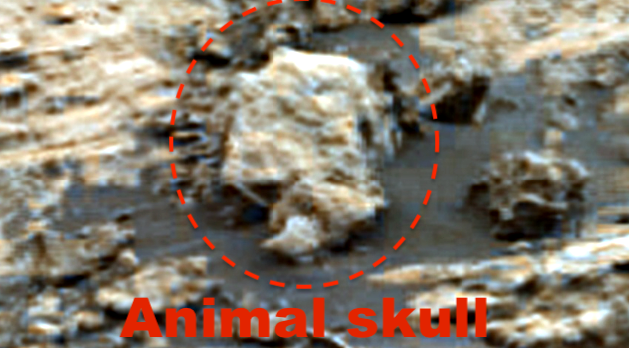


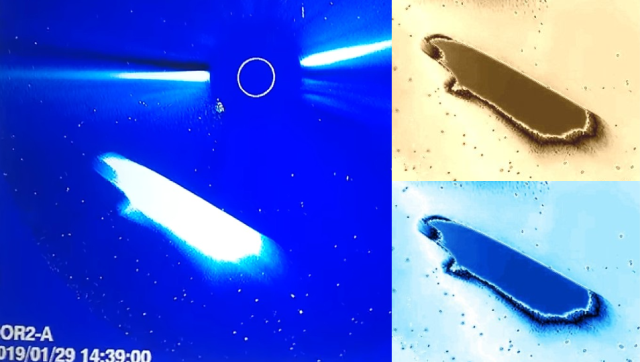







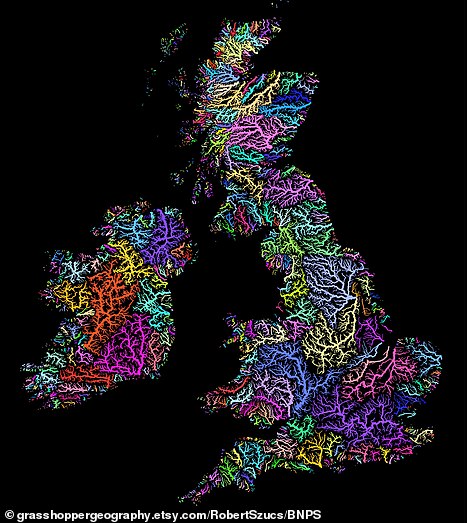


 The REAL bloodbath Britain: Interactive murder map of...




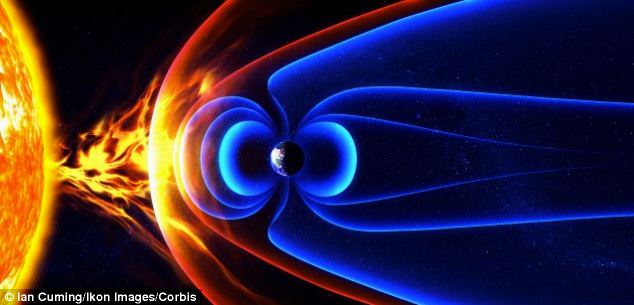
 Are there planets MORE suitable for life than Earth?...
 Stephen Hawking stuns physicists by declaring 'there are no...