Ontdek de Fascinerende Wereld van UFO's en UAP's: Jouw Bron voor Onthullende Informatie!
Ben jij ook gefascineerd door het onbekende? Wil je meer weten over UFO's en UAP's, niet alleen in België, maar over de hele wereld? Dan ben je op de juiste plek!
België: Het Kloppend Hart van UFO-onderzoek
In België is BUFON (Belgisch UFO-Netwerk) dé autoriteit op het gebied van UFO-onderzoek. Voor betrouwbare en objectieve informatie over deze intrigerende fenomenen, bezoek je zeker onze Facebook-pagina en deze blog. Maar dat is nog niet alles! Ontdek ook het Belgisch UFO-meldpunt en Caelestia, twee organisaties die diepgaand onderzoek verrichten, al zijn ze soms kritisch of sceptisch.
Nederland: Een Schat aan Informatie
Voor onze Nederlandse buren is er de schitterende website www.ufowijzer.nl, beheerd door Paul Harmans. Deze site biedt een schat aan informatie en artikelen die je niet wilt missen!
Internationaal: MUFON - De Wereldwijde Autoriteit
Neem ook een kijkje bij MUFON (Mutual UFO Network Inc.), een gerenommeerde Amerikaanse UFO-vereniging met afdelingen in de VS en wereldwijd. MUFON is toegewijd aan de wetenschappelijke en analytische studie van het UFO-fenomeen, en hun maandelijkse tijdschrift, The MUFON UFO-Journal, is een must-read voor elke UFO-enthousiasteling. Bezoek hun website op www.mufon.com voor meer informatie.
Samenwerking en Toekomstvisie
Sinds 1 februari 2020 is Pieter niet alleen ex-president van BUFON, maar ook de voormalige nationale directeur van MUFON in Vlaanderen en Nederland. Dit creëert een sterke samenwerking met de Franse MUFON Reseau MUFON/EUROP, wat ons in staat stelt om nog meer waardevolle inzichten te delen.
Let op: Nepprofielen en Nieuwe Groeperingen
Pas op voor een nieuwe groepering die zich ook BUFON noemt, maar geen enkele connectie heeft met onze gevestigde organisatie. Hoewel zij de naam geregistreerd hebben, kunnen ze het rijke verleden en de expertise van onze groep niet evenaren. We wensen hen veel succes, maar we blijven de autoriteit in UFO-onderzoek!
Blijf Op De Hoogte!
Wil jij de laatste nieuwtjes over UFO's, ruimtevaart, archeologie, en meer? Volg ons dan en duik samen met ons in de fascinerende wereld van het onbekende! Sluit je aan bij de gemeenschap van nieuwsgierige geesten die net als jij verlangen naar antwoorden en avonturen in de sterren!
Heb je vragen of wil je meer weten? Aarzel dan niet om contact met ons op te nemen! Samen ontrafelen we het mysterie van de lucht en daarbuiten.
Berichten van 1 februari 2019 tot 28 februari 2019
UFO Fleet Over China Office Building On Jan 10, 2019, Video, UFO Sighting News.
Date of sighting: January 10, 2019 Location of sighting: China This video was taken in China last wee and shows not one, but three UFO or more flying over a persons office building. There is no country that UFOs exclusively fly over. They are everywhere and they are big and some are as small as baseballs. This is a very though provoking video. Even the eyewitness didn't see the other UFOs. Scott C. Waring-Taiwan
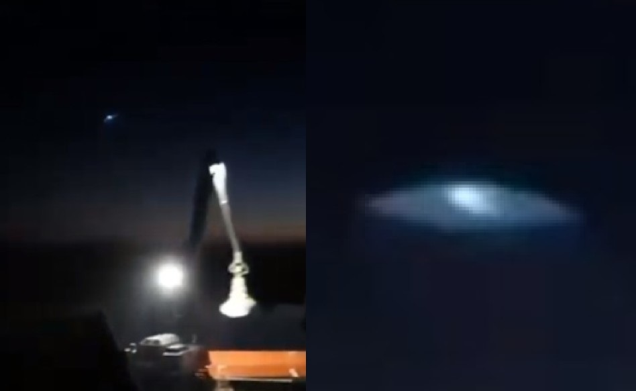
Fast Moving White UFO Over Perth, Western Australia On Jan 10, 2019, VIDEO, UFO Sighting News.
Date of sighting: January 10, 2019 Location of sighting: Perth Western Australia Wow, did you see how fast this object was moving in the video below? I thought, this has to be a balloon, but its moving way too fast. I also have never seen this shape before for an RC drone. This is great day time footage. It doesn't have a string, but does have a thick tube hanging down. Its moving so smoothly, so controlled, defiantly intelligently controlled craft. Australias outback is notorious for its UFO sightings at all hours of the day. It looks like this is more proof that alien underground bases exist in the Australian outback. Scott C. Waring
Multiple UFOs Sighted Over Okanagan Lake, Canada ( January 11, 2019 ) Video, UFO Sighting News.
Date of sighting: January 11, 2019
Location of sighting: Okanagan Lake, BC, Canada
This is just a amazing. This footage shows numerous white UFO flying over a lake in Canada. At first I thought they could be geese, but they are flying about 200-400 miles per hour...like a piper cub single engine plane, but these have no wings, no tail. Defiantly not balloons, unless they are in a hurricane, which they are not. Instead they look like thick white disks that are following each other. They come close to another, then shoot away. They do not fly in formation like geese or birds. From the evidence here, I can safely say that this is a fleet of UFOs, actual alien craft.
Scott C. Waring
Eyewitness states:
Over Kelowna, BC on 7th Jan '19 - video from at least 3kms away. Captured with Pentax K50 with 105mm zoom.
China'sChang'e 4 lander and roverare in good shape following a cold spell on the moon. They were put to sleep as night fell roughly two weeks ago at the mission's Von Kármán Crater landing site.
The China National Space Administration (CNSA) announced on Thursday (Jan. 31) that thelander and roverboth survived their first trial by ice. The rover, Yutu 2 ("Jade Rabbit 2"), woke up at about 7:00 a.m. EST (8:00 p.m. China time) Tuesday (Jan. 29), and the lander followed suit 24 hours later, CNSA officials said.
China's Chang'e 4 farside moon lander, photographed by the mission's rover, Yutu 2.
Credit: CNSA/CLEP
CNSA officials also noted that communication and data transmission between mission control on Earth and the farside hardware via the relay satellite Queqiao ("Magpie Bridge") are stable.
Both the lander and the rover came out of dormant mode automatically, waking up after noting the elevation angle of the sunlight now available at Von Kármán Crater, which is part of the huge South Pole-Aitken Basin. Furthermore, key instruments have started to work again, mission officials said.
Presently, the rover is located about 60 feet (18 meters) northwest of the lander.
Farside temps
The Yutu 2 rover rolls away from the Chang'e 4 lander shortly after the mission's historic Jan. 3 touchdown on the moon's far side.
Credit: CNSA/CLEP
"According to the measurements of Chang'e 4, the temperature of the shallow layer of the lunar soil on the far side of the moon is lower than the data obtained by the U.S. Apollo mission on the near side of the moon," said Zhang He, executive director of the Chang'e 4 probe project, from the China Academy of Space Technology (CAST), according to China's state-run Xinhua news agency.
"That's probably due to the difference in lunar soil composition between the two sides of the moon. We still need more careful analysis," Zhang added.
Chang'e 4's landing zone on the moon's far side, photographed by NASA's Lunar Reconnaissance Orbiter.
Credit: NASA/GSFC/Arizona State University
The lander and rover are outfitted with a radioisotope heat source.
The lander also carries an isotope thermoelectric cell and dozens of temperature data collectors to measure the temperatures on the surface of the moon during the lunar night, the Xinhua story notes.
This gear's data reveal that the lander experienced temperatures as low as minus 310 degrees Fahrenheit (minus 190 degrees Celsius) during its first lunar night, China's Global Television Network (CGTN) reported.
The huge UFO sighted on the coast of San Clemente arrives in Mexico and stops on Tijuana(Video)
On January 25th, a huge UFO was seen passing on the coast line of the city of San Clemente, California, United States, to the south. On the same day, a Mexican citizen named Gerardo Choko Trompetas who resides in the city of Tijuana, Mexico, has seen an enormous object almost identical to that seen in San Clemente. We recall that Tijuana (Mexico) borders the United States and is only 123 km from San Clemente, where the cigar-shaped UFO was first seen.
The Tijuana witness has published on his Facebook channel the video of the object hovering above the sky of his city, filmed with his mobile phone.
Apparently, this would be the same object, since the distance between the two cities is very short, and the object spotted in the United States was going south. Ufologists who are investigating this sighting have ruled out that it could be a conventional aircraft. It can not be a helicopter or an airship, since it changed shape and had no wings or propellers. In the images below you can also see a small bright object passing near the UFO still on Tijuana.
The UFO has stationed for many minutes on Tijuana, exactly in the vicinity of the international airport, putting at risk the flights. Below is a video of the sighting in Tijuana, Mexico!
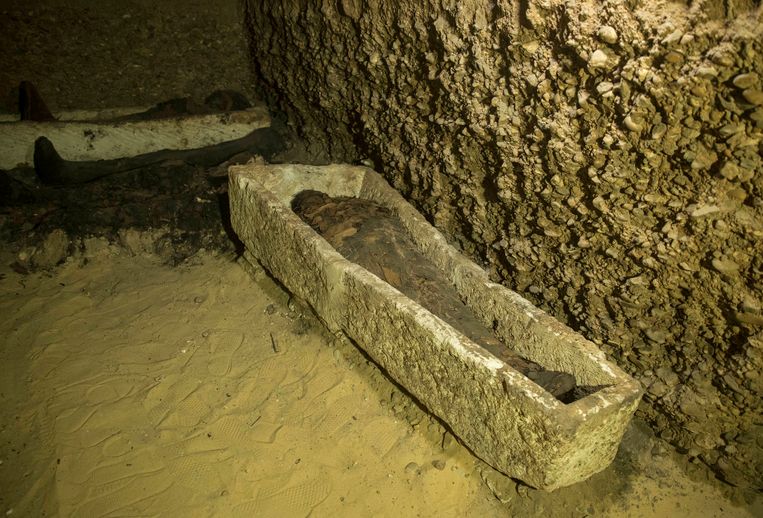
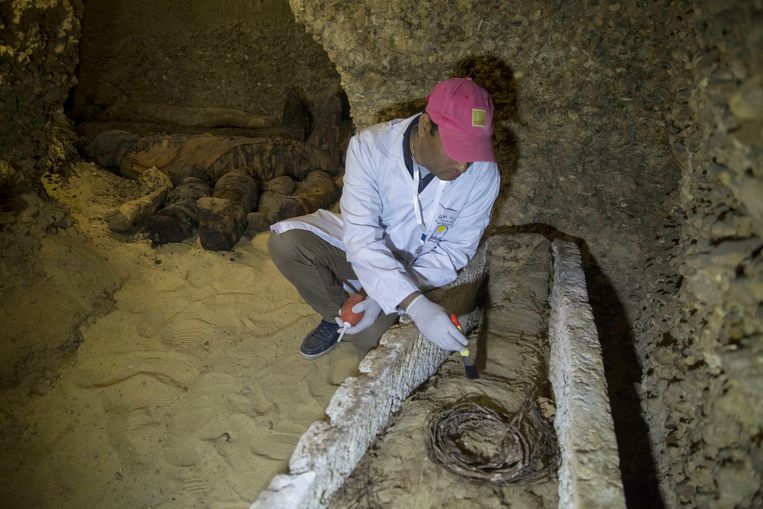
In de provincie Minya, ten zuiden van Cairo, zijn een reeks grafkamers gevonden met veel mummies. Dat heeft de Eyptische secretaris-generaal van de Hoge Raad voor de Oudheid gezegd. Volgens Mostafa Waziri dateren de sites mogelijk uit de Ptolemaïsche, vroeg-Romeinse en Byzantijnse periodes.
De mummies zijn van zowel mannen, vrouwen als kinderen, aldus het ministerie van Oudheden. “Ze verkeren stuk voor stuk in goede staat. Sommige zijn in linnen gewikkeld of gedecoreerd met Demotisch handschrift. Het Demotisch kwam op omstreeks 600 voor Christus als vervanger van het hiëratisch schrift.
AP
De jongste maanden heeft Egypte herhaaldelijk “grote archeologische vondsten” gemeld. Die vallen samen met verwoede pogingen van Cairo om opnieuw een toeristische trekpleister te worden. Sinds de opstand in 2011 tegen dictator Hosni Moebarak heeft het toerisme naar Egypte een flinke knauw gekregen.
A video uploaded to YouTube channel Gagare1952 shows FOUR separate UFO sightings over the course of a month hovering over one of the world’s most powerful volcanos. In the video, bright lights can be seen hovering above Yellowstone, and clouds which move too quickly to seem natural aren also present on another occasion. The footage was shot by an employee at the national park who sent it to his friend.
The original uploader of the video said: “My friend Shawn from the National Park In Yellowstone recorded live with his camcorder. Not one but four types of UFOs hovering the supervolcano in the caldera area.”
The Yellowstone National Park has long been a hotspot for alien enthusiasts, with sightings regularly reported there.
In late 2016, a sighting of a small drone-like object went viral when it was seen hovering above the supervolcano.
Jeanetta Foresta uploaded a video of the sighting under the heading "Things are flying all over - overnight".
One of the UFOs
(Image: YOUTUBE)
She posted: "There were more than four at the beginning and this is overnight so there is no sun to reflect off of a plane.”
Famed UFO blogger Scott C Waring picked up on the video on his website UFO Sightings Daily.
He wrote: "Here we have several glowing orbs moving about over Yellowstone and this is the same area as Old Faithful, which could of course attract alien tourists as well as humans.
"Why wouldn't aliens be interested in the Earths natural wonders?
Four UFO sightings at Yellowstone supervolcano spark claims of 'alien tourists'
(Image: GETTY)
"The movement is proof its not Venus or a hot air balloon. If you knew the truth about the abundance of alien ships, craft and species around us every day, it would blow your mind.”
Yellowstone has also piqued the interest of many around the globe over fears that it could soon erupt.
The Yellowstone Caldera supervolcano last erupted 70,000 years ago but a spike in seismic activity around the national park has unsettled nerves.
If the Wyoming volcano were to erupt it would kill an estimated 87,000 people immediately and make two-thirds of the USA immediately uninhabitable.
"Here we have several glowing orbs moving about over Yellowstone"
(Image: YOUTUBE)
The large spew of ash into the atmosphere would block out sunlight and directly affect life beneath it creating a “nuclear winter”.
The massive eruption could be a staggering 6,000 times as powerful as the one from Washington’s Mount St Helens in 1980 which killed 57 people and deposited ash in 11 different states and five Canadian provinces.
If the volcano explodes, a climate shift would ensue as the volcano would spew massive amounts of sulphur dioxide into the atmosphere, which can form a sulphur aerosol that reflects and absorbs sunlight.
Declassified documents reveal the Pentagon investigated UFOs
By Chris Ciaccia, Fox News
Shutterstock; YouTube
Newly declassified documents from the Pentagon revealed the Department of Defense funded projects that investigated UFOs, wormholes, alternate dimensions and a host of other subjects that are often the topics of conspiracy theorists.
The Defense Intelligence Agency (DIA) released 38 research titles on Jan. 18, following a Freedom of Information Act request from Steven Aftergood, director of the Federation of American Scientists’ Project on Government Secrecy. The research was funded by the Department of Defense under its Advanced Aerospace Threat Identification Program (AATIP).
Some of the more interesting projects include Invisibility Cloaking; Traversable Wormholes, Stargates and Negative Energy; Warp Drive, Dark Energy and the Manipulation of Extra Dimensions; and An Introduction to the Statistical Drake Equation.
“The DOD and the DIA have previously sought to spin AATIP as being a program looking at ‘foreign advanced aerospace weapon threats,’ but the attachment to the DIA’s letter to Congress is difficult to reconcile with this, given that the ‘products produced’ under the AATIP contract are listed as including reference papers on topics which seem more concerned with space travel,” Nick Pope, a former employee at the British Government’s Ministry of Defence, said in comments obtained by Fox News.
Pope continued: “The smoking gun is the paper about the Drake Equation, which is used to estimate the number of civilizations in the universe. This supports the suggestion that AATIP was indeed a UFO program, as has been claimed and not an aviation program looking at aircraft, drones and missiles.”
The Drake Equation is a seven-term equation that attempts to look at the different variables that would be relevant for intelligent lifeforms. This includes factors such as formed stars and their planets, the average number of planets that can potentially support life. Other factors include a fraction of those planets that can develop life and a fraction of these civilizations that have become intelligent.
Some of the projects give details such as who was working on them — Dr. Eric Davis of EarthTech International participated in the wormhole project, for instance — but others are left with scant details.
The project titled “Metallic Glasses” says Dr. Todd Hufnagel from Johns Hopkins University worked on the research, but it could mean anything.
“I think anyone who looks at these titles will scratch their heads and wonder what on Earth the Defense Intelligence Agency was thinking,” Aftergood said in an interview with MotherBoard. “These are the kinds of topics you pursue when you have more money than you know what to do with.”
The existence of AATIP initially was described by the New York Times and Politico in 2017. It was subsequently reported on by Fox News and a number of other news outlets, due in large part to its investigation into the existence of UFOs at the urging of former Senate Majority Leader Harry Reid (D-Nev.).
Following the Times report, Reid tweeted “the truth is out there” (a nod to the show “The X-Files), adding that if “anyone says they have the answers, they’re fooling themselves.”
Glowing Auras and ‘Black Money’: The Pentagon’s Mysterious U.F.O. Program
The shadowy program began in 2007 and was largely funded at the request of Harry Reid, the former Senate majority leader, who has had a longtime interest in space phenomena.
nytimes.com
2,217 people are talking about this
Both the Times and Politico said Reid’s interest in UFOs was the result of friend and donor Bob Bigelow, who owns Bigelow Aerospace and has said before he is “absolutely convinced” that aliens exist and UFOs have visited Earth.
The New York Times said AATIP had a $22 million annual budget and “most of the money” went to Bigelow’s research company, which hired subcontractors and solicited research for the program.
A Pentagon spokesman said the UFO program ended in 2012, though the New York Times said the Defense Department still investigates potential episodes of unidentified flying objects.
UFO or Hoax? WATCH Mysterious Space Objects Buzz Across ISS Live Stream
The enigmatic objects were apparently caught on camera just as a pair of astronauts were doing a spacewalk outside the International Space Station (ISS).
An ISS live stream earlier this month captured what looked like a pair of fast-moving objects heading towards the earth, once again raising speculations about alien spacecraft and extraterrestrial lifeforms.
Both objects also emitted flashes as they moved, making it look like they were reflecting sunlight, though their exact nature could not immediately be confirmed.
As the Daily Express notes, what makes this sighting especially interesting is the fact that two astronauts can also be seen "working on the spacecraft during the live stream".
Commenting on this incident, ufologist Scott C. Waring claimed in his blog UFO Sightings Daily that alien craft "visiting the space station is actually a daily occurrence", and that "NASA always refuses to talk about these objects and instead take a stance to ignore any questions about them".
A Ukrainian Physicist Has Discovered The Secret About The Pyramids – And It Will Change The World
When we talk a bout Pyramids everyone immediately turns their thoughts to Egypt, the Giza plateau and the three pyramids standing tall just outside of Cairo.
However, did you know that there are more than 1000 pyramids in Central America alone? There are 300 Pyramids in China and over 200 Pyramids in Sudan. Egypt boasts only around 120 Pyramids.
But, no matter where you look, you’ll find pyramids scattered across the globe. But why? Why are these enigmatic structure located across the planet? Why did nearly all ancient civilizations across the globe, the Ancient Maya, Aztecs, Pre-Inca Cultures, Ancient Chinese, and many others build these supermassive structures? Furthermore, why are so many pyramids around the globe so eerily similar in design?
Why is it that we still can’t fully understand why the ancients built Pyramids? Were they meant to serve as eternal resting places for different Pharaohs and kings?
Or is it possible they served another, completely different purpose than what mainstream scholars are making us believe? Is it just a wild coincidence that there are thousands of Pyramids scattered all across the globe?
How are most of them so similar? Is it possible that ancient cultures were somehow interconnected thousands of years ago? And that somehow a pyramid building culture—that is now long gone—passed onto different civilizations the blueprints of building pyramids? What if after all, Pyramids were not used as tombs, but as something entirely different?
A Ukrainian scientist believes he may have finally solved the mystery behind the Pyramids and says he now understands what they were used for by ancient civilizations across the globe.
Dr. Volodymyr Krashnoholovets, a physicist from the Ukraine, who has curiously spent over a decade building and researching pyramids has been fascinated by these ancient structures for a long time.
Endorsed by the Russian government, he created a 144-foot-tall pyramid outside of Moscow. He is a man who believes to have finally cracked the mystery behind pyramids and why they were built, and according to him, this is a summary of his discoveries on the effects Pyramids:
1. Immune system of organisms improved (blood leukocyte composition increased). 2. Improved regeneration of tissue. 3. Seeds stored in the pyramid for 1-5 days showed a 30-100% increase in yield. 4. Soon after construction of the Lake Seliger pyramid a marked improvement of the ozone was noted above the area. 5. Seismic activity near the pyramid research areas are reduced in severity and size. 6. Violent weather also appears to decrease in the vicinity of the pyramids. 7. Pyramids constructed in Southern Russia (Bashkiria) appeared to have a positive effect on oil production with oil becoming less viscous by 30% and the yield of the oil wells increased according to tests carried out by the Moscow Academy of Oil and Gas. 8. A study was done on 5000 prisoners who ingested salt and pepper that had been exposed to the pyramid energy field. The test subjects exhibited a greatly reduced violence rate and overall behavior was much improved. 9. Standard tissue culture tests showed an increase in survival of cellular tissue after infection by viruses and bacteria. 10. Radioactive substances show a decreased level of radiation inside the pyramid. 11. There are reports of spontaneous charging of capacitors. 12. Physicists observed significant changes in superconductivity temperature thresholds and in the properties of semi-conducting and carbon nanomaterials. 13. Water inside the pyramid will remain liquid to minus 40 degrees Celsius but freeze instantly if jostled or bumped in any way.
All of the above-mentioned discoveries made by Dr. Volodymyr Krashnoholovets are explained in the following video presented by author and researcher David Wilcock.
Video:
What do you think? Is it possible that after all Pyramids were not used as tombs in ancient times? Is it possible that after all, these majestic ancient structures—scattered across the globe—have a purpose that mainstream scholars have not yet identified?
Did Dinosaurs Coexist with Humans? Yes, and here are the proofs (2019)
There are many examples of petroglyphs, rock paintings and figurines in which dinosaurs are represented alongside men.
Even when there is only a rock painting or petroglyph depicting a dinosaur, without being next to him represented a humanoid, it is clear that the job was accomplished by a man or a humanoid.
The figurines were tested with Carbon 14 testify antiquity of 6500 years old.
In the Ica stones, we have many examples of gliptolitic men alongside dinosaurs.
Navy Seal Military reveals secret mission in an Ancient Structure buried in Antarctica (2019)
On January 23, 2019, Emmy Award-winning journalist, Linda Moulton Howe, released video testimony of a new informant discussing her highly classified mission in a large ancient alien structure, buried under the ice of Antarctica.
The informant states that on a classified mission conducted in 2003, he entered a very large octagonal-shaped structure located near the Beardmore glacier that extended deep into the icy interior of the glacier.
The informant is a retired US Navy Seal who was interviewed for the first time by Howe on July 19, 2018. He used the pseudonym Spartan 1 in the YouTube video recorded by Howe, where his face is shaded and his voice she is altered to protect her identity. Howe says he personally controlled Spartan 1, which provided extensive documentation to support his military career.
Earlier, Howe released the testimony of another military informant, Brian, who was a Navy flight engineer who had flown numerous support missions with the Antarctic Development Squadron from 1983 to 1997. He witnessed a number of anomalies that they indicate hidden structures or bases located deep beneath the Antarctic ice.
He says he witnessed the discovery of silver flying saucers in the Transantarctic Mountains, not so far away, as Howe pointed out, from where the Navy Seal had carried out his mission. The Navy Seal says that the ground-penetrating radar had discovered the structure that was an eight-sided octagon, as Howe elaborated.
In 2003, a group of special operations of the US Navy went to Antarctica to investigate a perfectly geometrical eight-sided octagonal structure discovered by a penetrating radar inside the Beardmore glacier, about 93 miles from the American station of McMurdo .
Another previous team of engineers and scientists had carved the top layer of an octagon made of a pure black substance that had been built over two other black octagonal structures that descended deep into the 2-mile-thick ice.
In the video, the Navy Seal (aka Spartan 1) described the launch of his mission from an aircraft carrier that traveled near the Ross Sea west of the Antarctic. He was taken by helicopter to McMurdo station, the largest American base in Antarctica.
Spartan 1 described entering a door about 50 feet below the ice. He estimated the walls of the structure about 18 to 30 feet thick (6-10 meters) and the height of the ceiling about 22-28 feet (7-9 meters). He said that the walls, the ceiling and the floor were made of a black basalt material that looked like polished black marble.
The interior was heated to about 68-72 degrees Fahrenheit (20-22 degrees Celsius), and was also lit by a lime green source projected from the ceiling and floor. He did not see any heating or lighting system, which was added to the mystery of the buried structure.
Only one part of the structure, the witness said, was discovered by the archaeological teams, with the remainder buried under the ice and which extended far below. The ground penetrating radar showed that the structure was octagonal in shape and covered an area of 62 acres (about 0.5 square kilometers).
Spartan 1 described the walls and doors covered with hieroglyphs about 20 cm high and about 5 cm deep. The hieroglyphics were neither Egyptian nor maya, but they appeared similar to both in terms of depiction of animals and other strange symbols.
Significantly, one of the symbols was very similar to the image of the Black Sun used by the Nazi SS, who had a large version built on the floor of their headquarters at Wewelsburg Castle. The image of the Black Sun continues to be banned in Germany with their Nazi propaganda law. Spartan 1 explained that part of his mission was to transport scientists who would document the buried structure and the hieroglyphic symbols, taking pictures and making drawings.
He said his team had to leave one of the scientists who insisted that more time was needed to make an adequate inventory of what had been discovered. Spartan 1 stated that the structure was built by a group of human-looking extraterrestrials who were involved in the genetic engineering of humanity.
The testimony of Spartan 1 is very significant because it provides a rare eyewitness account of what was actually found inside one of the buried structures, whose age extends into antiquity. The former eyewitness of the Antarctic, Brian, actually could not see or enter one of the artifacts. What Brian tells, was when he saw a large hole penetrate the South Pole, as it flew over his head through a restricted and controlled airspace.
To date, only two other informers / insiders have come forward to share their reports of being brought in or to witness the ancient artifacts buried under the ice caps of Antarctica. These are Corey Goode and Pete Peterson, who claim to have witnessed some of the artifacts buried during their respective visits.
Goode claims to have been taken to Antarctica in early 2016 and 2017, where he saw secret bases and remains of an ancient civilization buried deep beneath the ice caps. He claims to have witnessed some bodies of human alien hybrids, which were part of the genetic experiments conducted thousands of years ago, from an extraterrestrial race with a humanoid appearance.
Peterson claims to have been taken to Antarctica during classified missions, where he was given the task of understanding the advanced technologies found near three mother ships, one or more of which he witnessed during his missions. Peterson’s testimony confirms Goode’s account of an ancient extraterrestrial base that has been used as a center for a global civilization. This raises some intriguing questions.
Was the symbol of the Black Sun a pictorial representation of an ancient global civilization in which the South Pole was the fulcrum with the spirals heading towards its distant colonies? In the book, the Hidden History of Antarctica, I present evidence that German nationalists who use the symbol of the black sun have established a colony in Antarctica,
According to Howe’s analysis, the structure witnessed by Spartan 1 dates back to 33 million years ago, which is the general date given by conventional geologists when Antarctica was ice-free. The independent testimony of Spartan 1 corroborates important elements of what Goode and Peterson described, and what others claim lies hidden under the frozen continent.
As Spartan 1’s testimony is released through Howe’s video series, we can get important answers to questions about what lies deep beneath the Antarctic polar ice caps.
Despite the impression one gets from textbooks, our current knowledge of the universe represents a small island in a vast ocean of ignorance. The scientific enterprise is all about expanding the landmass of this island. And it is fun to engage in the activity of gaining knowledge; knowing everything in advance would have been much more boring. Still, it would be shocking to learn all at once of the discoveries of an alien civilization that been doing scientific and technological exploration for billions of years, in contrast to our mere few centuries. The eminent science fiction writer Arthur C. Clarke codified this idea in the third of histhree laws : “Any sufficiently advanced technology is indistinguishable from magic.” Put another way, members of such a civilization would appear to us as a pretty good approximation to God.
Meeting a piece of advanced technological equipment developed by an extraterrestrial intelligence might resemble an imaginary encounter of ancient cave people with a modern cell phone. At first, they would interpret it as a shiny rock, not recognizing it as a communication device. The same thing might have happened in reaction to the first detection of an interstellar visitor to the solar system, ‘Oumuamua, which showed six peculiar properties but was nevertheless interpreted as a rock by mainstream astronomers.
Because it would likely be relatively small, most advanced equipment could only be recognized in the darkness of space when it comes close enough to our nearest lamppost, the sun. We can search for technological “keys” under this lamppost, but most of them will stay unnoticed if they pass far away. More fundamentally, one may wonder whether we are able to recognize technologies that were not already developed by us. After all, these technologies might feature subtle purposes—like the cell phone communication signals that a cave person would miss.
Is there something we might be missing already here and now? When looking around us, the most mysterious phenomenon we encounter routinely is the sophistication of complex life. Some scientists wondered whether life itself was seeded on Earth by an alien civilization in a process called “directed panspermia.” One can imagine a probe that brought the seeds of life in the form of microbes or instead a 3-D printer that produced these seeds out of the raw materials on Earth based on a prescribed blueprint. The universal left-handedness (chirality) of all life-forms on Earth without exception can be interpreted as stemming from a single panspermia event, be it natural (through a rock arriving from space) or artificial in origin . Even in this context, our imagination of what aliens might do will improve once we are able to produce synthetic life in the laboratory.
The number of targeted probes that are needed to seed life artificially in the habitable zone of a planetary systems is far smaller than the number of natural rocks that serve the same purpose on random trajectories. The advantage of 3-D printing of life from raw materials on a target planet is that natural DNA samples live a finite lifetime and may eventually disintegrate in a few million years, whereas artificial machinery can be constructed to last much longer.
At this time, our civilization is highly vulnerable to annihilation by self-inflicted wounds, such as nuclear wars or climate change, as well as external threats such as asteroid impacts or evolution of the sun. As much as the Earth appears to be a comfortable home for us right now, it would be prudent not to keep all our eggs in one basket. We should venture into space and seed objects beyond the Earth with life as we know it, thus reducing the risk of complete destruction and securing the longevity of things we care about.
If we ever find evidence for life on other objects and it all looks the same, or if extraterrestrial life would appear to be unusually clustered in space, we might realize that it has a common ancestry and panspermia is at play. The situation would be just like recognizing that too many kids in the neighborhood resemble the milkman.
If life was seeded artificially on Earth, one may wonder whether the seeders are checking on the outcome. And if so, the fact that we have not heard from them may indicate that they are disappointed. The experiment may have failed, or we are simply too slow to mature. Well, this may not come as a surprise given the irresponsible way we behave sometimes. Perhaps if we only knew that someone is looking over our shoulders, we would do better. It is not too late for us to find out, by using the best telescopes at our disposal.
WASHINGTON — Boeing is on track to launch its new astronaut taxi to the International Space Station (ISS) next month.
Along with SpaceX, the private spaceflight company was contracted by NASA to begin launching astronauts from U.S. soil again for the first time since the space shuttle program ended in 2011. Boeing's CST-100 Starliner won't be taking any astronauts along for its first flight to the ISS, however. After docking robotically with the orbiting lab, it will return to Earth for a parachute landing in Texas.
If this test flight goes according to plan, Boeing will be ready to launch its first crew of astronauts to the space station in August, Boeing spokesperson Maribeth Davis told Space.com during a presentation of Boeing's future vision for space travel here. [How Boeing's Commercial CST-100 Starliner Spacecraft Works]
Boeing's CST-100 Starliner will launch on its first test flight to the International Space Station in March 2019.
Credit: Boeing
The mission, named Orbital Flight Test, will launch from Cape Canaveral Air Force Station in Florida on an Atlas V rocket provided by the United Launch Alliance. It was originally scheduled to launch Aug. 27, 2018, but an anomaly during a test of the launch abort engines led Boeing to delay the mission while they worked out the issue. Although the Starliner has not yet flown in space, it has completed successful parachute drop tests within the confines of Earth's atmosphere.
The Starliner will be the second of two new astronaut taxis to debut for its maiden voyage in the coming months. SpaceX's Crew Dragon is currently scheduled to lift off on its first uncrewed test flight on Feb. 28, with a crewed flight to follow sometime in June.
Not only will the Starliner and Dragon become the first spacecraft to launch astronauts from U.S. soil in about eight years, but Boeing and SpaceX will also become the first private companies to launch people to the space station. Since the shuttle retired, NASA has been relying on Russia to launch astronauts to the space station using its Soyuz rocket-capsule combo.
Email Hanneke Weitering at hweitering@space.com or follow her @hannekescience.
An artist's rendition shows Boeing's CST-100 Starliner heading for a rendezvous with the International Space Station.
Credit: Boeing
Boeing's CST-100 Starliner is a spacecraft under development for NASA's Commercial Crew Program. The space agency plans to use Starliner, as well as SpaceX's Dragon, to take astronauts to the International Space Station by 2019 or 2020. Uncrewed test flights are scheduled for March 2019, with crewed test flights tentatively set for August 2019.
The Starliner is similar in shape to the Apollo spacecraft, but its electronics are half a century more advanced. The spacecraft is designed to carry up to seven astronauts, with additional cargo also possible if fewer astronauts fly in a particular mission. Measuring 14.8 feet (4.5 meters) across at its widest point, the gumdrop-shaped spacecraft will first fly into space aboard Atlas V rockets.
Money from NASA
Money for the development of the spacecraft largely came through NASA's commercial crew program, which aims to replace the Russian Soyuz spacecraft flights required to take astronauts to the International Space Station.
In one phase of the program, called Commercial Crew Transportation Capability (CCtCap), Boeing received $4.2 billion in September 2014. Competitor SpaceX received $2.6 billion for its Dragon spacecraft.
NASA is hoping to relaunch astronauts from American soil, which has not been possible since the space shuttle retired in 2011. The program has been pushed back several years, NASA has said, due to Congress not allocating as much money as what the agency requested.
Preparing for first flight
In 2011, the company put a 12-by-14 inch model of the CST-100 in a wind tunnel to determine the spacecraft's aerodynamic characteristics. The model was placed in several different positions to simulate different phases of an abort-mode landing.
In 2012, Boeing did parachute drop tests of the CST-100 to determine how well the spacecraft's parachutes and air bags worked. Unlike the Apollo missions, the CST-100 will touch down on land, making the air bags especially important for the job. Later in the year, the company and NASA determined what would be the basic layout of the spacecraft, which NASA considered an important milestone under the third round of CCDev.
In 2014, Boeing unveiled a full-scale mockup of the spacecraft at the Kennedy Space Center, showing the inside of it for the first time publicly. Airbag testing of the spacecraft proceeded successfully in February 2016, and in March 2017 it underwent a successful parachute test in the New Mexico desert.
Also in 2017, Boeing unveiled the spacesuit astronauts will wear aboard the Starliner. The spacesuit features several advancements over previous spacesuit designs. It is smaller and lighter, and includes special gloves designed to allow use with touchpad screens.
Due to a problem during an abort engine test in June 2018, Boeing announced in August that test flights would be pushed back to 2019.
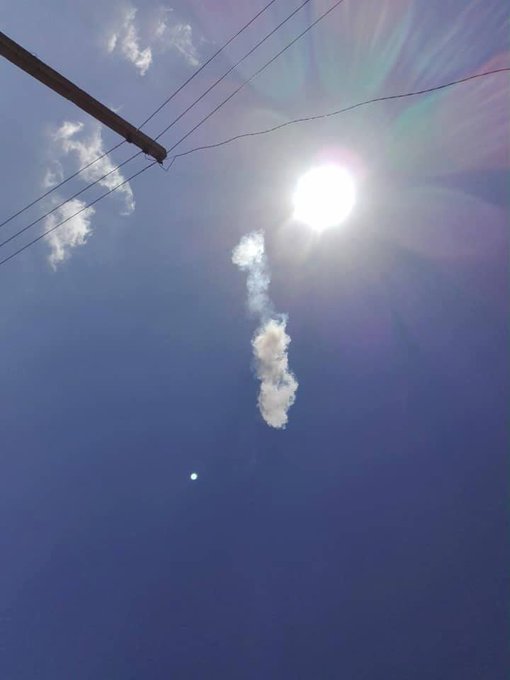
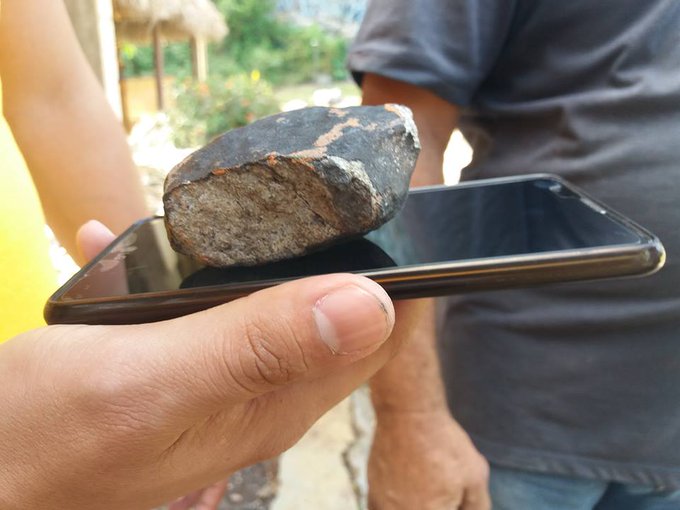
A loud explosion was heard as a meteorite fell in western Cuba, shattering windows but causing no injuries, residents and U.S. officials say. Debris was found at multiple locations.
The incident happened at 1:20 p.m. local time on Friday when a loud boom was heard in parts of Pinar del Rio, a province at the western end of the island. A trail of smoke was visible in the sky.
“We’re receiving reports that a meteor was seen in the sky across the Florida Keys,” the U.S. National Weather Service said. “It appears that a meteorite impact occurred in western Cuba, near the town of Viñales.”
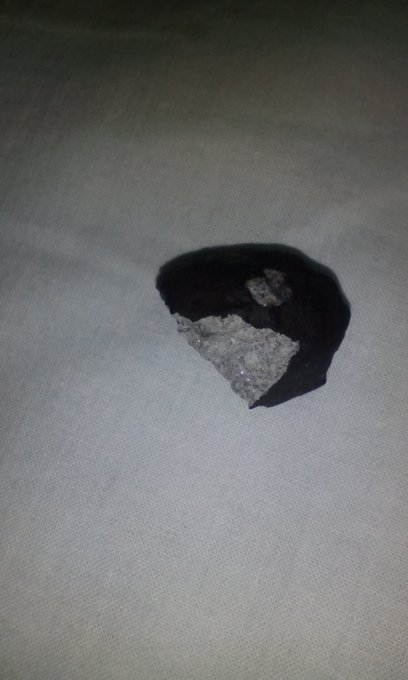
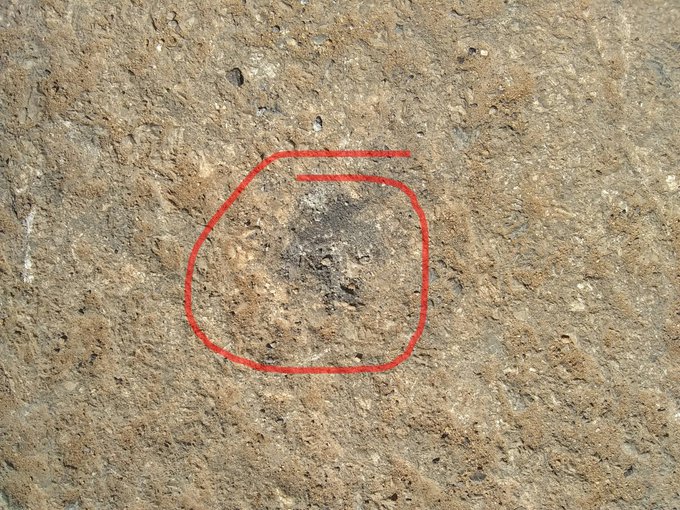
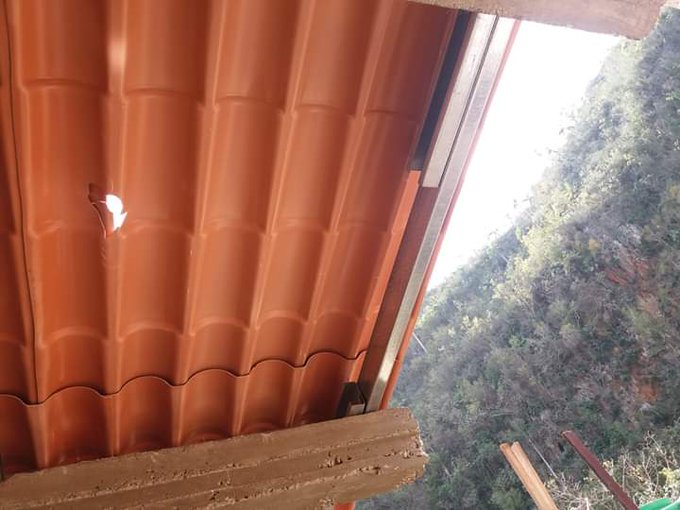
Multiple residents near Viñales, near the Mural of Prehistory, reported finding black rocks near their homes. A photo from the state-run Prensa news agency showed that one of the fragments went through a roof, and a reporter said a number of windows had been shattered.
There were no immediate reports of injuries.
Meteors occasionally survive the fiery passage through Earth’s atmosphere, but they usually go unnoticed because many fall in the ocean. A meteor fell in Russia in 2013, causing damage and injuring nearly 1,500 people.
Vooraanstaand sterrenkundige denkt een buitenaards ruimteschip te hebben gezien. Kreeg de mensheid in 2017 bezoek van aliens?
De vreemde ruimtesigaar die in 2017 werd ontdekt en de naam Oumuamua kreeg, is gemaakt door een buitenaardse beschaving. Dat denkt Avi Loeb, hoofd van de afdeling sterrenkunde aan Harvard en directeur van twee instituten.
Het object is zo’n 100 tot 1000 meter lang en langgerekt.
“Ik heb meerdere onderzoeken over Oumuamua gepubliceerd,” zegt Loeb. “Daaruit bleken allerlei vreemde feiten.”
Platte vliegende schotel
Zo zag hij hoe de helderheid van het object gedurende acht uur geregeld met een factor 10 tot 30 veranderde.
“Onze analyse laat zien dat het meer op een pannenkoek lijkt die om z’n lengteas draait,” aldus Loeb. Een soort platte vliegende schotel dus.
De topastronoom zegt dat hij niet in UFO’s gelooft, maar wel denkt dat Oumuamua een restant is van een buitenaardse beschaving.
Holbewoner
Volgens hem kreeg het object in ons zonnestelsel een zetje door de stralingsdruk van de zon.
Daar maakt Loeb uit op dat het een lichtzeil kan zijn, dat vaart krijgt wanneer lichtdeeltjes ermee in aanraking komen.
De meeste wetenschappers denken dat Oumuamua een ruimterots is, maar volgens Loeb is dat veel te kort door de bocht.
“Stel dat je een mobiele telefoon meeneemt naar een holbewoner. Die zal denken dat de telefoon een soort gekke steen is,” klinkt het.
Oogkleppen op
“Op dezelfde manier zijn wij vanuit het verleden gewend om te denken in termen van kometen, asteroïden – stenen uit de ruimte dus. We zijn vooringenomen,” zegt Loeb.
Hij vindt het compleet belachelijk dat je het in serieus gezelschap niet over buitenaardse beschavingen mag hebben.
“Ik denk dat dat vooral te maken heeft met een sociologisch effect, niet met iets dat gebaseerd is op feiten,” zegt hij. “Men heeft oogkleppen op.”
In comments that will likely fuel ardent Ufologists worldwide, a senior NASA official has conceded that the existence of alien life is “much more likely to be out there than we thought before.”
Thomas Zurbuchen, an astrophysicist and associate administrator for NASA’s Science Mission Directorate, told Boston University he believes there is life beyond Earth for the simple reason that we once “doubted whether water or complex molecules would exist beyond Earth,” but in actuality “each one of those is much easier to achieve than we thought possible.”
“We find it right in front of our doorsteps, everywhere, including the polar craters of the planet Mercury,” he explained. “As for how that relates to the chain of life… well, life is much more likely to be out there than we thought before.”
Speaking about space tourism, Zurbuchen described it as a “really important experience to have” and claims it’s now “as easy to go to space as it is to go to Paris.”
However, he did go on to add that, for now, he is himself unwilling to spend the months of intense training required to undergo a journey into space.
While the race to colonize Mars and locate an Earth-like planet that can sustain human life is heating up, Zurbuchen is keeping his focus closer to home.
The NASA admin said he spends much more time thinking about our planet, and argues that any quest for exploration further afield will be completely futile unless we secure Earth’s future and address the ongoing damage caused by climate change.
What was the mysterious object that hit the ‘Super Blood Wolf Moon’? Now we have the answer
Scientists have solved a mystery that has bothered stargazers in the wake of a total lunar eclipse on January 21, when a tiny object struck the moon as it captivated millions with its copper-red makeover.
A team of scientists from Colombia and the Dominican Republic have authored a paperoffering a detailed account of the object thatslammedinto the Moon during a recent lunar eclipse. The moment the suspected meteor hit the lunar surface was captured only by a few, but triggered a vivid guessing game regarding the object’s origin and size. The impact itself was very brief, with only a bright flash discernible in the top left quadrant of the Earth’s satellite at the time.
Drawing on images and videos by amateur astronomers from Colombia, the Dominican Republican and Morocco, the researchers sought to determine the size, orbit, energy and impact left by the meteor that caught eye of many sky-watchers.
Yes, it was indeed a small meteoroid, and they estimate that could have weighed anything from 20 to 100 kg (44 to 220 pounds). It was a bit bigger than a basketball and measured somewhere between 30 and 50 cm (11 and 19 inches).
Being relatively heavy for its size, the space rock left quite a trail of destruction when it smashed into the Moon at a speed of some 47,000 km/h. According to the researchers, the collision left a crater 7 to 14 meters wide that could be detected in the future by a lunar probe.
Researches note that such encounters are relatively common, but this one stands out because it was observed by numerous people around the world, providing a rare insight into the phenomenon. The surface of the moon is hit by an estimated 2,800kg worth of meteor material, predominantly rock and ice, each day.
Social networks and easy access to technology lent a big helping hand in the increased awareness of celestial events, argued Karls Peña, member of the Dominican Astronomical Society and coauthor of the work, stating that they “have brought humanity closer than ever to science (especially to non-experts).”
The ‘Super Blood Wolf Moon’ is a rare concurrence of three cosmic phenomena. “Wolf moon” is a name given by Native American tribes to a full moon that happens in January, whereas a total lunar eclipse is called a “blood moon.” It is also called a ‘supermoon’ due to the moon reaching its closest orbital point to Earth.
Most Russians believe NASA’s lunar missions were fake
Over a half of all Russians believe that US astronauts have never been on the Moon and that the US authorities and NASA covered up this fact by forging proof of moon landings, a new poll shows.
In the recent survey titled “Science and society: authority and trust” experts of the Russian state-run public opinion research center VTSIOM wrote that 57 percent of Russians currently think that the US claims of successful manned Moon missions are lies and that the documented proof of these missions was forged. Only 24 percent of respondents said that they believed that the manned Moon missions were real.
Researchers also specified that 65 percent of those who think that the US authorities are lying about the moon landings have secondary education.
However, Russians are not only suspicious about the NASA moon missions. 59 percent of the poll participants share the opinion that “scientists conceal the truth from common people.” Even among Russians with higher education the proportion was extremely high – at 45 percent.
When facing the question if the scientists possessed some “objective knowledge” about the reality the Russian public again split into almost equal parts: 42 percent agreed that this was true while 41 percent said that in their opinion the scientists who claimed this weren’t telling the truth, albeit in good faith.
In the same poll, three percent of Russians said that they personally supported the flat Earth theory. 93 percent said that they shared the traditional opinion of Earth being a ball-shaped planet and four percent found it too difficult to answer the question.
As far as space aliens are concerned, 45 percent of the poll participants said that they believed in the existence of extraterrestrial civilizations and 42 percent think that aliens either don’t exist or for some reason prefer not to visit Earth and contact humans. 18 percent of respondents said that in their opinion the authorities were hiding proof of alien visits from the general public.
Russen geloven niet dat we op de maan zijn geweest. Bekijk de verrassende uitkomsten van deze peiling
Meer dan de helft van de Russen is van mening dat Amerikaanse astronauten nooit op de maan zijn geweest en dat de Amerikaanse overheid en de NASA de maanlandingen in scène hebben gezet. Dat blijkt uit een nieuwe peiling.
Uit onderzoek van de Russische opiniepeiler VTsIOM blijkt dat 57 procent van de Russen denkt dat de succesvolle Amerikaanse maanmissies berusten op leugens en dat het bewijs voor deze missies is vervalst.
Minder dan een kwart (24 procent) gelooft dat we echt op de maan zijn geland.
Waarheid verborgen houden
De Russische bevolking is niet alleen sceptisch over de maanmissies. Bijna twee derde (59 procent) stelt dat ‘wetenschappers de waarheid verborgen houden voor het volk’.
Opvallend is dat ook bijna de helft (45 procent) van de hoogopgeleiden deze mening is toegedaan.
Op de vraag of wetenschappers objectieve kennis hebben over de realiteit, antwoordde 41 procent ontkennend. Dit deel zei dat de wetenschappers niet de waarheid vertellen.
Buitenaardse beschavingen
Drie procent van de Russen gelooft in de platte aarde-theorie, terwijl 93 procent zei dat aarde bolvormig is.
Er werden ook vragen gesteld over ruimtewezens. Bijna de helft van de ondervraagden (45 procent) zei te geloven in het bestaan van buitenaardse beschavingen.
Bewijs voor buitenaards bezoek
42 procent zei te denken dat aliens niet bestaan of om de één of andere reden geen contact willen maken met mensen of de aarde niet willen bezoeken.
Bijna een vijfde (18 procent) zei dat de overheid bewijs voor buitenaards bezoek achterhoudt voor de bevolking.
It is unfortunate that the world of the paranormal manages to attract all manner of those who would hoax or fake evidence. Sometimes it is to fool everyone, at other times it is to prove a point, and still on other occasions it is to gain some bit of fame or simply just to see what will happen. Whatever the reasons may be, it sometimes seems that for every person who manages to capture what they truly believe to potentially be an authentic photo or video of unexplained phenomena, there is another trying to fake it all, making it sometimes very hard to figure out where the possibly real ends and the hoaxes and fakery begin. It muddies the waters, and requires a vigilance from those who would try and delve into the answers behind these phenomena. The area of UFOs, like many others, has seen its fair share of such hoaxes, and some of them have been not only rather particularly spectacular, but also surprising in just how thoroughly they were able to fool just about everyone. Here are a few of these cases, very much in the vein of Orson Welles’ infamous 1938 “War of the Worlds” broadcast, that are not only quite intricate and even funny in retrospect, but also show that a skeptical eye is not a bad thing to have.
One of the most notable and in retrospect quite hilarious such hoaxes was fittingly orchestrated for April Fool’s Day in 1989 by none other than the billionaire, Virgin Group founder, and incorrigible, unrepentant prankster Richard Branson. Branson was already well known for his elaborate April Fool’s pranks and tomfoolery, but on this day in 1989 he really outdid himself. Called “Project Wedgewood,” Branson commissioned Don Cameron, of hot air balloon manufacturer Cameron Balloons Limited, to create an immense, very realistic looking UFO complete with flashing strobe lights and a sliding door. Branson then boarded the balloon and took off on March 31 along with a dwarf dressed in an alien costume and a whole bunch of dry ice.
Richard Branson
The idea was to fly the balloon over to London’s Hyde Park and have it land there on April Fool’s Day, April 1st, after which the costumed dwarf would descend through a special sliding door amidst a cloud of dry ice smoke for the “Gotcha!” moment. It was all meant to be good fun, but it would quickly spiral out of control past Branson’s wildest expectations. As they floated over the English landscape along London’s M25 highway towards the destination, it became obvious that there were people stopping their cars and plenty of frightened bystanders gawking and pointing up at the sky at them, with Branson later saying, “We could see every single vehicle grinding to a halt and hundreds of people looking up at the UFO flying over them. It was great fun watching their reactions.” Good fun for them, perhaps, but for the people who were seeing this all it was a different story.
Indeed, everyone who saw the balloon took it to be a genuine UFO, and in no time at all there was footage being shown on the news, police and TV and radio stations inundated with calls from concerned witnesses, and residents working themselves up into a mass panic over an alien invasion. It was rapidly launching itself into a media sensation, everyone seriously took this to be an actual alien spaceship, and since Branson had only told a very small cabal of people what he had been up to on the top secret prank there was no one to tell anyone otherwise. It was all so realistic and people were so panicked that the police and military began mobilizing to intercept and deal with what they truly believed to be the real deal. What had started off as an innocent prank was quickly escalating into a perceived national emergency, but Branson and his dwarf friend were oblivious to all of this, not at all aware of the true gravity of the situation. They were up there gleefully giggling at the reactions like some schoolkids when a serious situation was brewing beneath them.
Adding to the escalating situation was that the unfavorable wind conditions at the time were blowing them off course, forcing them to make an emergency landing in a remote field in Surrey a day early. Police tracked the balloon, still believing it to be an actual UFO and planning intercept it at the field. As the balloon came down, it did so surrounded by police cars and with military one the way. Despite this, Branson, who still did not really realize just how seriously everyone believed this was a real UFO or how dire it had become, and went ahead with the rest of the prank, having the door open to disgorge a cloud of mist and the silver-clad dwarf, much to the horror of police, who took it to be a real alien and made to retreat. One of the police at the scene would say say “I have never been so scared in 20 years of being a policeman,” and Branson himself would later say of the whole, surreal scene:
The police surrounded us and then sent one lone policeman with his truncheon across the field to greet the alien. The UFO’s door opened very slowly, with tonnes of dry ice billowing from it. A dwarf that we had carried on board, dressed in an ET outfit, walked down the platform towards the bobby. He promptly turned and ran in the opposite direction! The police initially didn’t see the funny side of it and threatened to arrest us for wasting their time. But they soon joined in the general merriment of it.
Richard Branson’s fake UFO in action
It’s interesting to note that other than perhaps some police purchases of new underwear there were no real repercussions to any of this, and one can imagine that such a hoax in this day and age would at least have led to some arrests and charges. While Branson’s stunt was very well-funded and one of the more elaborate such hoaxes, this sort of large-scale prank had already been done before. In 1967, engineer Chris Southall and some colleagues at Britain’s Farnborough’s Royal Aircraft Establishment (RAE) decided to pull off a hoax that would take the nation by storm. They meticulously crafted six metal-coated, fibreglass saucers composed of two molded halves filled with electronic sound equipment, and Southall said, “We wanted to make something that looked really alien.” The discs were equipped with switches on them, that would flick on when the objects were turned over and start up the sound equipment inside and engage a battery to creating beeping and hissing noises, as well as with a flour and water mix that created a foaming, foul smelling slime when discharged for added effect.
When the six “UFOs” were completed, the team secretly went out in the middle of the night to deposit them at Queenborough on the Isle of Sheppey, Bromley in south London, Ascot, the village of Welford, near Newbury, in Berkshire, Chippenham in Wiltshire and Clevedon in Somerset. They were then turned on and the team sat back to watch the fireworks commence. It did not take long before they were discovered, and they were thought to be very real, provoking an immediate police and military response to them. As shocked civilians looked on, the areas were locked down and the discs whisked away by military personnel and in some cases lifted away by helicopters, and it must have looked like some top secret government UFO extraction right out of a movie. Interestingly, the official response was rather bungled, and more like something out of the Keystone Cops than any sort of crack, Roswell style cover-up, as there were apparently no real guidelines in effect for this sort of thing and the authorities simply did not know how to handle it. One of the investigators would say in retrospect:
We thought the government should have some sort of plan if aliens did land. So we gave them a chance to try out whatever plan they had – but they didn’t have one. One of the saucers when they actually drilled into it, because it was full of this compacted, sort of papier-maché mess, actually exploded and showered the police officers with this stuff. If it had been some kind of radiation hazard, how would they have dealt with that? It would have been a disaster area. And what did they do? Just washed it down the drains.
Military personnel moving one of the discs
In the meantime, the “UFO landings” were all over the news along with numerous photographs of the discs being carted off by military personnel, and it was a sensation at the time. This was taken very seriously at the time, with bomb squads mobilized and a state of emergency in effect. People believed that these were real UFOs so wholeheartedly, that when authorities inevitably realized that they had been had and tried to tell the frightened public what had happened there were immediate rumors of a government cover-up. It all eventually died down, and amazingly the group who had perpetuated the whole fiasco were let off with nothing more than a slap on the wrist. Again, it’s amazing to think that this incident, which lasted a total of 12 hours, went virtually unpunished, and somewhat tellingly the bumbling response and inability to fully close the area down does not suggest a shadowy government conspiracy that knows of UFOs and has dealt with these things before.
Perhaps one of the most famous hoaxes ever was not one involving spaceships, but rather an alleged alien body. The stunt took the form of a video supposedly obtained from a retired military officer stationed at none other than Area 51 in Roswell, New Mexico, by a British music and video producer named Ray Santilli. Released in 1990, the footage is black and white and very grainy, purportedly showing a skinny alien body with large eyes and an oversized head being dissected by a team in biohazard suits at the top secret facility. Santilli was very precise in the details he gave about the video, explaining how many rolls of film it had been on and even how much it cost him to procure them, and the video was widely taken to be the real deal. The “documentary” spread to over 30 countries, capturing the imaginations of the countless people who thought that this was finally the real evidence of what was going on at Roswell, and the “Alien Autopsy Film” became an absolute sensation at the time.
A still from the “Alien Autopsy” video
Although there were obviously skeptics, there were also enough testimonies by supposed photographic experts and special effects wizzes proclaiming how real it all looked and how difficult it would be to fake it that a lot of people believed. It would alas be proved to be a hoax once and for all when Santilli himself admitted to the fraud. In 2006 he came forward to explain that the “Alien Autopsy” was all faked and even how he had done it, but even then there was some mystery remaining, as he claimed that although the “documentary” he had released was bogus, it had been a re-creation based frame by frame on real footage that had simply been too deteriorated to release. Hmmm. Whether there was ever another “real” video or not, this hoaxed footage has not aged particularly well, and looking back on it seems almost absurd that so many people were taken in by it, believing this now admittedly very fake looking alien dummy to be real, but believe it they did.
There are countless other UFO hoaxes such as this out there, and these are merely among some of the more far reaching, sophisticated, and indeed amusing of these. Although it is unfortunate that so many people fell for these, in the end they do serve a purpose in showing us that we need to keep our eyes peeled for trickery, and approach the paranormal with an open mind but also a skeptical eye. In order to be taken seriously and to not give into panic or false hopes, to not be fooled and duped by such fakes, there must be a calm, measured and analytical approach to these things. In the end it seems very important to remember one thing- keep an open mind, but not so open that your brain falls out.
In 1987, Whitley Strieber’sbook Communionwas published. Five years later, in the latter part of 1992, the Strieber family started to receive disturbing, late-night phone calls. Sometimes, they were way after midnight. Of course, whenever any of us get a phone call in the early hours of the morning, we immediately think the worst: it’s someone calling with bad news. Thankfully, they weren’t those kinds of calls, but they were certainly traumatic in the extreme. Typically, the voice at the other end of the line did nothing but deliver a blast of what Strieber called “scary, sneering laughter.” The most obvious explanation would be that this was all the work of pranksters, or some deranged nut who had gotten hold of Strieber’s withheld number and thought it would be fun to shake him up a bit. Maybe a lot. Except, that wasn’t the case, as Strieber was able to prove.
Quickly tired by the calls, Strieber arranged to have Caller ID attached to the family’s phone-line. It was a very wise decision, as it revealed something remarkable. The calls were not coming from someone in Ufology, after all. Rather, they were coming from a particular facility owned by a company called E.G. & G. Understandably angered, and puzzled too, Strieber called them up to see what was going on. He came straight to the point and told the receptionist on the line that not only had he received intimidating calls, but that he had proof – via Caller ID – that the calls were coming from E.G. & G. In other words: take that.
What sounded like the voice of a very old man suddenly came onto the phone and assured Strieber that he would “look into it.” No further calls were made to Strieber’s home, which is extremely telling. Strieber didn’t stop there, though. He took on the role of detective and dug deeply into the world of E.G. & G. In the process, he discovered that the company had ties to NASA, to the Department of Energy, and even to the world’s most well-known secret base (which is surely the ultimate oxymoron), Area 51. Was someone at E.G. & G. trying to destabilize Strieber with all of those late-night calls? Maybe so. That Strieber hit back – and hit back hard, too – quickly put paid to the psychological-warfare techniques of those who were not happy with Strieber’s work and the tremendous amount of exposure he had been getting since 1987. There was, however, more to come.
One year later, in 1993, said Strieber, and after having been given apparently classified information on where the U.S. Government’s top secret UFO data could be found, “Spooks started prowling around my neighborhood upstate. A business associate was accosted on an airplane by a group of young men who flashed badges, claimed to be with the National Security Agency, and questioned him about our activities for a couple of hours.” Those same agents were reportedly looking at attempted penetrations of Department of Defense computers. Then, on one occasion in the following year, 1994, someone managed to stealthily get into Strieber’s cabin, skillfully disabling his security system in the process, and checking out the contents of his computer. Clearly, Strieber was a person of deep interest to more than a few people in the shadowy world of government espionage and clandestine operations. And, it wasn’t just Strieber, his family, and that friend accosted by the NSA who felt the brunt of all this. There was also a man named Ed Conroy.
In 1989, Ed Conroy, a San Antonio, Texas-based journalist, wrote a book titled Report on Communion. It was an independent study of Whitley Strieber and his incredible experiences. In taking on the project, Conroy didn’t realize what he had got himself into. At least, not at first he didn’t. What began as an impartial investigation into Strieber’s claims, soon mutated into something very different: Conroy found himself under similar intimidation to that which would eventually hit the Strieber family. Weird phone calls, secret surveillance and – even – visits from those mysterious black helicopters, whose crews keep more than a careful watch on alien abductees, abounded…
Disc-shaped UFO captured on video over the Netherlands
A man from the Netherlands uploaded this video to Mufon. The footage was captured on January 19, this year. Hardly any details were given except that he saw the unknown object flying and caught it on camera.
You will see in the short clip the disc-like object enter the scene from the right and move toward the left and away.
At first glance it looks like a typical lens flare but lens flares and reflections normally do not move through the aperture faster than the camera is moving.
UFO casebook has put a slow-mo section in to get a better view.
OMG: Clear pictures of the BLACK KNIGHT UFO satellite!
The Black Knight is an artificial satellite of extraterrestrial origin which has orbited Earth for approximately 13,000 years; the “satellite” story is most likely a conflation of several disconnected stories about various objects and their interpretations, all of them well documented independently and none using the term “Black Knight” upon their first publication. According to senior education support officer Martina Redpath of Armagh Planetarium in Northern Ireland.
The origin of the Black Knight legend is often “retrospectively dated” back to natural extraterrestrial repeating sources supposedly heard during the 1899 radio experiments of Nikola Tesla and long-delayed echoes first heard by amateur radio operator Jorgen Hals in Oslo, Norway, in 1928. Brian Dunning of the Skeptoid podcast attributes Tesla’s 1899 radio signals to pulsars, which were not identified until 1968.
In 1954, UFO researcher Donald Keyhoe told newspapers that the U.S. Air Force had reported that two satellites orbiting Earth had been detected. At that time, no country had the technology to launch a satellite. Skeptics have noted that Keyhoe had been promoting a UFO book at the time, and the news stories were likely written “tongue-in-cheek” and not intended to be taken seriously.
A British rocket called the Black Knight rocket was used in conjunction with the Blue Streak missile program between 1958 and 1965, to test re-entry vehicles. A “Black Knight satellite launcher” project announced in 1964 was considered a priority by the Ministry of Aviation. The program never put anything into orbit, and it is unrelated to the Black Knight satellite legend.
In February 1960, TIME reported that the U.S. Navy had detected a dark object thought to be a Soviet spy satellite in orbit. A follow-up article confirmed that the object was “the remains of an Air Force Discoverer VIII satellite that had gone astray.”
In 1963, astronaut Gordon Cooper supposedly reported a UFO sighting during his 15th orbit in Mercury 9 that was confirmed by tracking stations, but there is no evidence that this happened. Neither NASA’s mission transcripts nor Cooper’s personal copies show any such report being made during the orbit.
In 1973, Scottish author Duncan Lunan analyzed the long-delayed radio echoes received by Hals and others and speculated that they could possibly originate from a 13,000-year-old alien probe located in an orbit around the Earth’s Moon. He suggested that the probe may have originated from a planet located in the solar system of star Epsilon Boötis. Lunan later retracted his conclusions, saying that he had made “outright errors” and that his methods had been “unscientific”.
An artist's image of the violent collision that formed Earth's moon. Such collisions could explain the surprising differences in more massive super-Earths and super-Neptunes.
Credit: NASA
Catastrophic collisions may explain differences in giant rocky planets around other stars.
A new study suggests that the heat generated by material smashing into a planet plays an important role in removing some or all of a planet's atmosphere. A wide variety of sizes for these deadly asteroids would explain differences seen in the more massive rocky worlds.
NASA's planet-hunting Kepler Space Telescope revealed a surprising number of worlds with sizes that fall between Earth and Neptune in relatively short orbits. By calculating the densities of the planets, astronomers learned that many of them seem to boast massive hydrogen-helium atmospheres. However, these atmospheres seem to come in many different flavors, suggesting something was happening to the worlds after planetary formation. [Tales from the Exoplanet Archive: How NASA Keeps Track of Alien Worlds]
"Giant impacts are very effective at reducing or removing the hydrogen or helium envelope," John Biersteker told his colleagues last month at the 233rd semiannual meeting of the American Astronomical Society in Seattle. Biersteker, a graduate student at the Massachusetts Institute of Technology, studied how impacts by rocky debris affected the atmosphere of young planets. He found that impacts could create many different types of worlds.
"This process can also produce a wide range of outcomes," Biersteker said. "This makes giant impacts a nice explanation for some of the observed distributions for the compositions of super-Earths."
Planetary beatdown
After a star is born, the dust- and gas-filled ring left behind begins the planetary formation process. Once gravity pulls together enough pieces to create a core, the newborn planetesimal begins to collect hydrogen and helium from the leftover gas, building its primal atmosphere. Planets that are very close to their stars can be affected by stellar radiation, which heats the top layers of the gas so that it escapes into space, leaving a thinner atmosphere.
Eventually, the gas in the disk is either piled onto planets or swept away by the star, leaving behind only dust and rock. Mixed among the small and medium-size debris are the failed cores that weren't able to grow large enough to attract an atmosphere. When these massive objects slam into planets, the collision can blow the planet's atmosphere off into space. One such collision helped to form Earth's moon.
A young world still boasts a molten mantle that can make it easier for a collision to strip off its atmosphere.
Credit: M. Kornmesser/Hubble/ESO
"Giant impacts are an expected part of the formation of these systems," Biersteker said.
It turns out that you don't need a massive core to completely remove a planet's atmosphere. By simulating a variety of impacts, Biersteker found that an object only a tenth the mass of the planet can blow off anywhere from 50 to 100 percent of the hydrogen and helium surrounding the planet.
A planet's youth may also work against it when it comes to holding onto an atmosphere. When a planet is young — only a few tens of millions of years old — its core is still fully molten, with no crust to insulate it from the atmosphere. Since a hotter atmosphere is harder to hold onto, it doesn't take much of an impact to strip off some of the atmosphere. An object crashing into a planet raises the energy, in the form of heat, allowing more of the atmosphere to be blown away.
Biersteker also found that the energy created by the impact was more important than the mass of what crashed into it. That means a small, fast-moving asteroid could potentially strip off more hydrogen and helium than a slower, medium-size object. The angle the impactor hits the world can also affect the energy of the impact — a head-on collision is more dangerous than a sideswipe.
"We can expect a wide range of impacts," Biersteker said.
With each impact stripping off a different percentage of the atmosphere, collisions can create a wide variety of exoplanet densities. Incoming material with only a tenth of a planet's mass can strip off anywhere from half to all of the hydrogen and helium.
Five hundred and sixty-five million years ago, Earth's magnetic field almost disappeared.
But a geological phenomenon might have saved it, a new study suggests. Earth's then-liquid core likely began to solidify around that time, which strengthened the field, the group reported yesterday (Jan. 28) in the journalNature Geoscience. This is important because the magnetic field protects our planet and its inhabitants from harmful radiation and solar winds —streams of plasma particles thrown our wayby the sun.
Scientists figured out what our planet's core was like back then by looking at crystals the size of grains of sand.
They picked up samples of plagioclase and clinopyroxene — minerals that were formed 565 million years ago — in what is now eastern Quebec, Canada. These samples contain tiny magnetic needles about 50 to 100 nanometers in size, which, in molten rock, orient themselves in the direction of the magnetic field at the time. [Shine On: Photos of Dazzling Mineral Specimens]
"Those tiny magnetic particles are ideal magnetic recorders," said co-author John Tarduno, the chair of the Earth and Environmental Sciences department and a professor at the University of Rochester in New York. "When they cool, they lock in a record of Earth's magnetic field that's maintained for billions of years."
So, by sticking the crystals in a magnetometer, the researchers were able to figure out that the particles' charge was very low. In fact, 565 million years ago, Earth's magnetic field was over 10 times weaker than what it is today — the weakest ever documented.
Further, the measurements showed that the frequency of north and south pole reversals was very high. All of this suggests that "the field was extremely unusual," Tarduno told Live Science. "We were at this critical point where the dynamo almost collapsed completely." (The geodynamo is the process that maintains and grows the magnetic field.)
But then the geodynamo got a kick start once more — from the very core of our planet.
In Earth's early years, the core was all liquid. But at some point — guesses range from between 2.5 billion years to 500 million years ago — iron began to cool and freeze into a solid layer in the middle of the planet. As the inner core solidified, lighter elements like silicon, magnesium and oxygen were kicked out into the outer, liquid layer of the core, creating a movement of fluid and heat called convection. This movement of fluid in the outer core kept charged particles moving, creating an electrical current, which in turn created a magnetic field.
This convection drives and maintains the magnetic field even today. Earth's inner core is continuing to solidify and will do so for billions of years to come.
The researchers "present intriguing paleomagnetic measurements" that suggest a weak geodynamo existed 565 million years ago, which meant that the core was fully liquid, wrote Peter Driscoll, an earth and planetary scientist at the Carnegie Institution for Science in Washington, D.C., who was not a part of the research, in a commentary that accompanied the study. If their theory holds true, "the inner core may have occurred right in the nick of time to recharge the geodynamo and save Earth's magnetic shield."
Shortly after this time, the Cambrian explosion occurred and complex animals emerged across the planet. "One can speculate — and there have been some speculations — that a weaker magnetic field may have some relationship to these evolutionary events," Tarduno said. That is because a weaker field might allow more radiation to get through, which could cause DNA damage and higher mutation rates, which in turn, might have lead to more species evolving.
But this is mere speculation, Tarduno said. When Earth's magnetic field weakens a bit during events such as magnetic reversals (where the north and south poles flip), for instance, there's no evidence that species are affected, he added.
NASA's Mars rover Curiosity captured this composite image, which looks toward the higher regions of Mount Sharp, on Sept. 9, 2015.
Credit: NASA/JPL-Caltech/MSSS
NASA'sMars rover Curiosityhas flexed some new scientific muscles, likely solving a Red Planet puzzle in the process.
Mission team members repurposed the rover's navigation gear to measure tiny variations in gravitational fields, a new study reports. This novel strategy allowed the researchers to figure out how the huge Martian mountain whose baseCuriosity is exploringformed — namely, that it was probably built up as a free-standing mound by the deposition of windblown sand and sediment.
"Going forward, I think this study shows the promise of making gravity measurements on the surfaces of other planets," said lead author Kevin Lewis, an assistant professor in the Department of Earth & Planetary Sciences at Johns Hopkins University in Maryland. [Amazing Mars Photos by NASA's Curiosity Rover]
"It really gives you data about the subsurface, which is hard to get from any other instruments," Lewis told Space.com.
The car-size Curiosity rover landed on the floor of the 96-mile-wide (154 kilometers) Gale Crater in August 2012, tasked with investigating the area's past potential to host life. This work has been incredibly fruitful; Curiosity's observations show that Gale harbored a lake-and-stream system for long stretches — perhaps hundreds of millions of years at a time — in the ancient past.
Gale Crater is intriguing for other reasons as well. For example, a mountain rises 3.4 miles (5.5 km) into the Martian sky from its center — a dramatic geological oddity that has no close parallel here on Earth.
Scientists have long debated just how this odd massif, known as Mount Sharp, took shape. Is it the remnant of a sedimentary structure that once filled Gale Crater but was worn away by erosion? Or did Mount Sharp coalesce in its current form, growing as Martian winds dropped dirt and sand into Gale Crater?
That's where the new study, which was published online today (Jan. 31) in the journal Science, comes in. Lewis and his colleagues mapped out the gravitational-field strength at more than 700 points along Curiosity's traverse, which has taken the rover from Gale's floor up into Mount Sharp's foothills. (Gravitational fields weaken as altitude, and therefore distance from a planet's core, increases.)
Measurements using the Curiosity Mars rover's engineering accelerometers (gray) show a decrease in the strength of gravity as the rover climbs Mount Sharp. The rate of decrease of the modeled gravity signal (black) allowed researchers to measure the density of the rocks that make up Mount Sharp.
Credit: Kevin Lewis
"It's probably more like a compacted soil than what you might think of as a nice, really well-cemented rock," Lewis said.
If these deposits had once been buried under 3 miles (5 km) of other sediments, they would almost certainly be much denser, he added. So, the new results argue that Mount Sharp was primarily built up by wind-blown deposits, not pared down from a crater-filling feature.
This isn't to suggest that a potentially habitable lake didn't once occupy Gale Crater's floor; Curiosity's observations of lakebed sediments have established this water body's past existence with high confidence, Lewis stressed. But those sediments apparently didn't go all the way to the crater rim. It remains unclear how high they got — where the transition between lake sediments and windblown deposits lies on Mount Sharp's slopes.
Orbital observations have identified an intriguing "unconformity" — a break in the previously continuous sedimentary-rock record — about 2,600 feet (800 m) above Curiosity's current location, Lewis said. So, that region is a candidate.
"We'll see if Curiosity makes it up there, or if we get pieces of that upper unit that roll down the mountain," Lewis said. "But we may have to do a bit more exploring to find such a transition."
But let's get back to the gravity data. Curiosity doesn't carry any dedicated gravimetry instruments, so how did Lewis and his team make their measurements?
By thinking outside the box. Curiosity has two "rover inertial measurement units" (RIMUs), a primary and a backup. Both RIMUs consist of three accelerometers and three gyroscopes, which the rover's handlers normally use for navigation and to determine Curiosity's orientation in space. But Lewis wondered if these engineering data could be recalibrated to capture information about gravitational fields.
"It's something that I had thought about it for a long time," he said. "I didn't expect to have precision that was high enough to be able to use for science purposes. But I started looking into the data and calibrating out some of the complicating factors, like temperature and some other variables. And, lo and behold, it got to the point where the precision was actually scientifically meaningful."
The team was therefore able to build up the first-ever "gravity traverse" on the surface of another planet. The only other such work done off Earth was performed on the moon, by the Apollo 17 astronauts in 1972, Lewis said.
Future rover missions to Mars and other planets could make similar measurements, Lewis said. But the strategy his team used isn't universally applicable. For example, researchers probably cannot dredge gravimetry measurements out of the engineering data gathered over the years by NASA's Spirit and Opportunity Mars rovers. Those two golf-cart-size robots collected their engineering data in a slightly different way, Lewis said.
Mike Wall's book about the search for alien life, "Out There" (Grand Central Publishing, 2018; illustrated by Karl Tate) is out now. Follow him on Twitter @michaeldwall.
WATCH A SUPER-FAST 3D PRINTER SCIENTISTS CALL THE “REPLICATOR”
NATURE/UNIVERSITY OF CALIFORNIA
VICTOR TANGERMANN
Fabrication Station
3D printers work by laboriously printing objects layer by layer. For larger objects, that process can take hours or even days.
But now scientists at the University of California, Berkeley have found a shortcut: a printer that can fabricate objects in one shot using light — and which could, potentially, revolutionize rapid manufacturing technology.
The Replicator
The research, published in the journal Science yesterday, describes a printer the researchers nicknamed “the replicator” in a nod to “Star Trek.”
It works more like a computed tomography (CT) scan than a conventional 3D printer. It builds a 3D image by scanning an object from multiple angles, then projects it into a tube of synthetic resin that solidifies when exposed to certain intensities of light. In two minutes, for instance, the team was able to fabricate a tiny figurine of Auguste Rodin’s famous “The Thinker” statue.
3D Printing 2.0
The replicator might have groundbreaking implications, but it does have some inherent limitations as well: the objects it produces are small, and require special synthetic resin to produce.
But it’s an exciting new technology — and one that could lead to a “Star Trek” future.
Let’s face it: Antarctica may as well be another planet. While there are theories that the continent may have once been home to long-lost civilizations, we only know for a fact that humans have been exploring Antarctica since the late 19th century. We’ve barely even scratched the surface of an entire continent. Who knows what may lie frozen in the icy wastes of Earth’s most mysterious landmass?
NASA scientists may soon unlock those mysteries – although we probably won’t like what we find. Unless it’s Atlantis. Or the ancient wreck of an alien spacecraft containing a shapeshifting parasitic creature that may or may not take up residence inside Kurt Russell. Whatever is down there, scientists from NASA’s Jet Propulsion Laboratory want to find it. JPL nerds have been studying the frozen southernmost continent with specially designed radar satellites since 2010 and have now announced the discovery of a mysterious, giant cavity opening up beneath the continent. Just the thing the world needs!
In a press release, JPL scientists say the cavity was discovered under Thwaites Glacier in West Antarctica. The mysterious void is two-thirds the size of Manhattan and is over 1,000 feet (300 meters tall) – much larger than any other known cavities. If the void continues to grow, it could allow more heat and water to accumulate under the Thwaites Glacier, accelerating ice melt to the point where sea levels could rise by 2 feet or 65 centimeters. The Thwaites Glacier plays an important role in holding other neighboring ice masses in place, so if it melts or falls into the sea, there could be devastating consequences for everyone on Earth. Yikes.
While JPL is focused more on how the cavity is related to ice melts and other effects of global warming, I’m more interested in the less inevitably apocalyptic side of this story: what might we find inside this cavity if we could somehow explore it? After all, Antarctica has recently been the site of all manner of unexpected and mysterious developments lately including the recent surprising discovery of unknown organisms lying at the bottom of an ancient unexplored underground lake. What secrets could this void be hiding?
Open Minds UFO Radio: David is an Emmy award-winning filmmaker and producer. He has also had a lifelong interest in UFOs. Like many of us, David was excited about the news that the Pentagon had a secret UFO project. He was also excited about the extraordinary UFO encounter that was also featured in the New York Times article that broke the Pentagon UFO news. The encounter involved the USS Nimitz carrier strike group and occurred in November 2004 near San Diego. During training exercises a white object described as looking like a Tic Tac was spotted, jets went in to get a closer look, and then things got weird. Some of the military personnel involved with the encounter have come forward since the NYT broke the story, including David Fravor, the lead pilot who got the closest look. As a filmmaker, David saw an opportunity to help tell the story by taking all of the details publicly available and recreating the encounter. In this episode, we talk to David about his inspiration to make the film, and the details and behind the scenes behind the film’s production.
Scientists Observe A UFO Orbiting Just 300 Miles Over Earth
A UFO erratically orbiting near the Earth has perplexed astronomers.
The extraterrestrial object is seen orbiting as close as 373 miles, or 600 km over Earth and researchers believe it could be an Empty Trash Bag Object (ETBO). Experts think it is remnants from a rocket launch, but they are not sure which one it came from. Due to their tiny size and light mass, ETBOs have random orbit pattern.
Experts say the strange UFO is likely a piece of flimsy material, such as rocket’s metallic foil.
Asteroid Terrestrial-impact Last Alert System (ATLAS) telescope in Hawaii first discovered the bewildering UFO dubbed A10bMLz.
Astronomers at Northolt Branch Observatory in London further analysed the ETBO. The mysterious object was seen stretching several metres across.
Northolt Branch said that the UFO is what is known as an empty trash bag object, which is a piece of light material left over from a rocket launch. However, it is not known yet when this rocket has been launched.
The object is orbiting the Earth at an average distance of 262,000 km at strange retrograde orbit.
ETBOS are a relatively common sight, but the A10bMLz surprised Northolt Branch Observatories because of its very distant orbit.
Astronomical software company Project Pluto said that they have no idea of the origin of this object at present because its past trajectory is really uncertain.
The extraterrestrial object is expected to soon incinerate in the Earth’s atmosphere.
Geomagnetische noordpool verplaatst zich opvallend snel
Caroline Kraaijvanger
Het gaat momenteel zo hard, dat onderzoekers het World Magnetic Model vroegtijdig moeten herzien.
Waar is de noordpool? Als je het hebt over de geografische noordpool kun je die plek vrij gemakkelijk aanwijzen. Het is de locatie waar de denkbeeldige as waar onze planeet omheen draait uit de aarde steekt. Bovendien kun je er van op aan dat de locatie van die geografische noordpool niet zo snel veranderen zal. Anders is dat wanneer je het over de geomagnetische noordpool hebt. Dat is de pool die je kompas aanwijst. En die pool is wel op vrij korte tijdschalen aan verandering onderhevig. Zo beweegt deze momenteel richting Siberië. En dat gaat behoorlijk hard. Zo hard zelfs dat onderzoekers zich genoodzaakt zien het World Magnetic Model vroegtijdig te herzien.
Te groot verschil Het World Magnetic Model wordt normaal gesproken elke vijf jaar gepubliceerd en beschrijft het aardmagnetisch veld. Bovendien voorspelt het hoe dat aardmagnetisch veld zich de komende vijf jaar gaat gedragen. De laatste keer dat er een World Magnetic Model werd gepubliceerd, was in 2015. De volgende editie staat dus gepland voor 2020. Maar zolang kan de nieuwe editie niet op zich laten wachten, omdat het verschil tussen wat de editie uit 2015 voorspelt en wat we nu daadwerkelijk zien, te groot is.
Map of magnetic variation through time from 1900 to 2015 – the magnetic poles are where the strong red and blue contours converge, and the north pole moves very quickly in recent years.
Magnetic variation in degrees – you really need to set your compass correctly when hiking!
The rate-of-change of magnetic variation in degrees per year – the changes are quickest near the north pole.
The change in the vertical component of magnetic field at the core-mantle boundary between 2015 and 2018 – the three intense patches in the northern hemisphere are related to changes like theLivermore et al (2017) “core jet” model
Waarom is dat een probleem? Het World Magnetic Model is heel belangrijk voor navigatiesystemen. Die kunnen je alleen vertellen waar je heengaat, als ze corrigeren voor het feit dat de geografische en geomagnetische noordpool niet samenvallen. Het World Magnetic Model reikt die correcties aan, maar zit er inmiddels dus behoorlijk naast, omdat het aardmagnetisch veld zich anders gedraagt dan verwacht.
Het aardmagnetisch veld wordt gegenereerd door wervelingen in de buitenkern van de aarde – die bestaat uit vloeibaar ijzer. Veranderingen in die wervelingen leiden ook tot veranderingen in het aardmagnetisch veld. Het is dus zeker niet vreemd dat de geomagnetische noordpool zich verplaatst. De snelheid waarmee dat gebeurt, heeft onderzoekers wel wat overvallen. Maar dat is niets iets om wakker van te liggen; de bewegingen van de geomagnetische noordpool zijn van nature behoorlijk grillig en doordat deze de laatste decennia sneller beweegt dan daarvoor, kunnen kleine afwijkingen ten opzichte van de voorspelling vrij snel uitmonden in grote verschillen tussen de voorspellingen en werkelijkheid. Met een nieuw World Magnetic Model kunnen we er naar verwachting echter weer even tegenaan. In ieder geval tot 2020, het jaar waarin het model sowieso ook weer een update zal krijgen.
Voor het eerst een 2,6 km groot objectontdekt aan de rand van ons zonnestelsel
Caroline Kraaijvanger
Het bestaan van dergelijke objecten werd meer dan 70 jaar geleden al voorspeld.
Maar nu pas zijn onderzoekers erin geslaagd om zo’n object te spotten. Dat is te lezen in het blad Nature Astronomy.
Kuipergordel Het betreffende object bevindt zich in de Kuipergordel, een flinke verzameling kleine hemellichamen die zich voorbij de baan van Neptunus bevindt. Aangenomen wordt dat deze Kuipergordel is opgebouwd uit puin dat na de vorming van het zonnestelsel overbleef. En in tegenstelling tot de kleine hemellichamen – zoals planetoïden – die zich in het binnenste van ons zonnestelsel wagen en aldaar beïnvloed worden door straling, botsingen en de zwaartekracht van de planeten, zijn de objecten in de donkere, afgelegen Kuipergordel vrijwel ongerept gebleven. Ze kunnen – als overgebleven bouwmaterialen van de planeten in ons zonnestelsel – dan ook een goed beeld geven van het planeetvormingsproces.
Missend puzzelstukje Aangenomen wordt dat planeten het levenslicht zien wanneer stof en ijs samenklontert. Gaandeweg ontstaat zo een steeds groter object dat – met zijn toenemende zwaartekracht – steeds meer materiaal naar zich toetrekt. Het eindresultaat van dat proces – planeten zoals onze aarde, maar ook Mars en Venus – hebben we al uitgebreid kunnen bestuderen. Maar het object dat onderzoekers nu gevonden hebben, kan gezien worden als een missend puzzelstukje in de evolutie van planeten. Het zit namelijk tussen die eerste samenklontering van stof en ijs en de planeten die we vandaag de dag zien, in.
Een artistieke impressie van het 2,6 kilometer grote object.
Afbeelding: Ko Arimatsu.
Gespot Het bestaan van Kuipergordelobjecten met een straal van één tot enkele kilometers werd meer dan 70 jaar geleden al voorspeld. Maar het daadwerkelijk waarnemen ervan is lastig gebleken. Zelfs de beste telescopen kunnen de kleine objecten die op zo’n grote afstand staan en zo weinig licht reflecteren niet direct waarnemen. Japanse onderzoekers besloten het daarom over een andere boeg te gooien. Ze plaatsten twee kleine telescopen op het dak van een Japanse school en monitorden 2000 sterren, in de hoop dat de helderheid van één van deze sterren af zou nemen doordat een Kuipergordelobject van hooguit enkele kilometers groot er voor langs zou bewegen. Een analyse van de data wijst uit dat de helderheid van één van de sterren inderdaad afnam en wel zodanig dat alles erop wijst dat een 2,6 kilometer groot Kuipergordelobject voor de ster langsbewoog.
Talrijk Dat de onderzoekers bij de eerste poging al een Kuipergordelobject van deze omvang vinden, suggereert dat dergelijke objecten behoorlijk talrijk zijn. Het onderschrijft de theorie dat ijs en stof langzaam samenklitte tot objecten van hooguit enkele kilometers groot alvorens een groeispurt door te maken door met vergelijkbare objecten samen te smelten.
De ontdekking smaakt natuurlijk naar meer. De onderzoekers zijn dan ook voornemens om de Kuipergordel opnieuw onder de loep te nemen. Ook zouden ze graag nog eens onderzoek doen naar de nog verder gelegen Oortwolk, die is opgebouwd uit miljarden komeetachtige objecten.
Antarctica hasn’t been doing so well lately. The continent is rapidly melting, and a large chunk of the snow and ice is only held back from the ocean by an array of glaciers and ice shelves guarding the coasts.None of these are doing well, but one of them—the Thwaites Glacier in West Antarctica—is rapidly crumbling. Now scientists have learned why it’s collapsing so quickly: There’s agiant underground cavern in the glacier almost as big as Manhattan.
The data comes from NASA’s Operation IceBridge, a program that flies radar-equipped planes over the poles to map out glaciers and ice sheets in three dimensions. These radar images are even capable of seeing through the ice to get a clear model of the glacier down to the bedrock. This information is extremely useful to scientists because how quickly a glacier melts depends a great deal on what’s going on near that bedrock.
In Thwaites’ case, that radar uncovered a gigantic cavern between the glacier itself and the bedrock below it. That cavern is likely filled with air much warmer than the surrounding ice, triggering faster melting of the glacier than would happen otherwise. Thanks to this nearly-Manhattan-sized gap in the ice, the entire glacier along with the surrounding ice sheet will likely disappear much more quickly.
A radar image of Thwaites from 2011 to 2017. The cavern is visible as the growing red blob in the center of the image. The noisy red and blue part in the bottom corner comes from ice breaking off into the sea.
NASA/JPL-CALTECH
So what happens if Thwaites melts? Immediately, we'd get about 2 feet of sea level rise. But the real danger is what happens after. Thwaites holds back a large portion of the West Antarctic Ice Sheet and a handful of nearby glaciers; if Thwaites disappears, we could see an additional 8 feet of sea level rise from these sources, on top of the 2 feet from Thwaites itself.
Even more worrying to scientists beyond just the cavern existing is how quickly it appeared. The cavern first appeared in 2012 and most of the ice that once occupied it melted in the last 3. Most models of the Thwaites glacier don’t take into account rapid cavern forming, so the entire glacier is likely to be melting much faster than our predictions estimate.
In other words, there’s a good chance we could be looking at some serious melting in the near future, thanks to this glacier and the ice around it.
A fast-moving comet, C/2018 Y1 (Iwamoto), is nearing its February encounter with the sun and Earth. It’ll pass near some galaxies as seen from Earth, providing a great opportunity for astrophotographers. Charts and more info here.
Comet C/2018 Y1 (Iwamoto) is seen at the bottom of this beautiful image by Rolando Ligustri. Used with permission.
A new celestial visitor – a comet – wasdiscoveredby Japanese astronomer Masayuki Iwamoto in late 2018. It’ll provide nice opportunities for astrophotographers, as it will pass close to a couple of Messier objects in February 2019. It’s a fast-moving comet that will be closest to Earth on February 12, 2019, at around 2:57 p.m. ET (19:57 UTC;translate to your time zone). The celestial visitor will safely pass by Earth at some 28 million miles (45 million km). The comet has been designated C/2018 Y1 (Iwamoto).
This comet is fast! Comet C/2018 Y1 (Iwamoto) is traveling through space at the amazing speed of 147,948 miles per hour (238,099 km/h) or 66 km per second, relative to Earth.
The best nights for observing the comet (with binoculars and small telescopes) should be on February 11 and 12. Preliminary estimates suggest the newly found comet might reach a brightness or magnitude between 7 and 7.8 , which means it should be easily seen with small telescopes and binoculars. It will not be visible to the eye alone.
A closer look at comet C/2018 Y1 (Iwamoto)’s orbit.
Image via NASA/JPL.
During closest approach to Earth, comet Iwamoto will be located in front of the constellation Leo the Lion, which is visible late at night at this time of year.
Astrophotographers might be able to capture this comet passing close to some galaxies, as seen from our perspective. See the illustrations below:
Late on the night of Saturday, February 2, 2019, Comet C/2018 Y1 (Iwamoto) passes close to M104 (Sombrero Galaxy), providing a nice opportunity to astrophotographers.
Illustration by Eddie Irizarry using Stellarium.
On February 2, 2019, comet Iwamoto passes close to Messier 104 (Sombrero Galaxy), while by February 10, 2019, the celestial visitor will appear passing very close to Messier 95, a galaxy in the constellation Leo.
Facing east on February 10, 2019 at around 10 p.m. CT as seen from the central US. Comet C/2018 Y1 (Iwamoto) will pass close to some galaxies in Leo, especially Messier 95.
Illustration by Eddie Irizarry using Stellarium.
Location of comet C/2018 Y1 (Iwamoto) from February 10 to 12, 2019. Binoculars should provide a nice view of the fuzzy patch of light, while telescopes might allow seeing a hint of a green color. Facing east at 10 p.m. CT as seen from central U.S.
Illustration by Eddie Irizarry using Stellarium.
The comet was detected in images taken on December 18, 2018.
Comet C/2018 Y1 (Iwamoto) looks great in this image taken on January 17, 2019, by Rolando Ligustri.
We will keep you updated …
The orbit of comet C/2018 Y1 (Iwamoto) is very elliptical (elongated). Its orbit suggests this comet came from the Oort cloud of comets surrounding our solar system.
Bottom line: A new comet soon to be within reach of binoculars and small telescopes is heading toward a February 2019 encounter with the sun and Earth. It’ll pass Earth safely on February 11-12.
Spooky ancient sculptures of ‘aliens and spaceships’ in Mexican cave spark claims extraterrestrials have lived on Earth
ANCIENT sculptures depicting alien-like figures have been found in a cave in Mexico, it has been claimed.
The spooky artefacts which reportedly date back thousands of years show creatures with long faces and wide eyes.
ANCIENT sculptures depicting alien-like figures have been found in a cave in Mexico, it has been claimed.
The spooky artefacts which reportedly date back thousands of years show creatures with long faces and wide eyes.
A sculptor reportedly found in a Mexican cave appears to show an alien mother and her children
Other sculptures appear to show spaceships flying through the air.
The mystery objects are reportedly popular among locals who live near the caves in an unspecified area of Mexico, reports The Daily Star.
The clip showing the eerie pictures was uploaded to YouTube channel UFOmania yesterday and has already been viewed thousands of times.
Despite the channel not providing any background detail to when and where the sculptures were found, many online users appeared convinced by the clip.
A stone features drawing which resemble spacecrafts
Many of the artefacts depict long faces with oval-shaped eyes
The supposedly ancient sculptures have sparked claims that aliens visited earth thousands of years ago
A reportedly ancient sculptor appears to show a humanoid holding a bowl
One wrote: “Incredible evidentiary support of the fact that extraterrestrials have been engaging the human race for a very long time!”
Another said: “Best evidence yet !!!”
While others are were not so easily convinced.
One sceptical YouTuber user wrote: “If it looks too good to be true, it's probably not.”
The grainy black and white snap first appeared in a book by the Italian consul Alberto Perego in 1958 but have never been seen outside of Italy
Dr Roberto Pinotti, 72, said the otherworldly visitor, who wore dark shades to cover his eyes, let two of them on board his flying saucer.
The strange encounter allegedly happened in Francavillia, on the Adriatic Coast, in October 1957.
Dr Pinotti said a group of residents were regularly visited by human-like extraterrestrials who wanted to be "friends" with mankind - just like ET in Steven Spielberg's Close Encounter movie.
Un OVNI incroyable a été filmé à Greensboro, en Caroline du Nord
Un OVNI, qui émettait des flashs lumineux aléatoirement, a été filmé dans le ciel à l’extérieur de la ville de Greensboro, dans l’État de Caroline du Nord. Ces images ont déclenché de vifs débats sur les réseaux sociaux. Certaines personnes ont même affirmé avoir vu ce même objet mystérieux.
Cette vidéo, d’une durée de 5 minutes, nous montre un objet « en forme de pastille » planer dans le ciel et produire une série de flashs. L’homme, derrière la caméra, prend soin d’agrandir et de mettre en valeur cet incroyable engin.
La vidéo a été postée le samedi 26 janvier 2019. Elle a été visionnée des milliers de fois depuis sa diffusion sur diverses chaînes YouTube consacrées aux OVNI et aux mystères non résolus, dont The Hidden Underbelly 2.0.
Ces images ont été prises par Bret Jones, connu sous le nom de SpaceBret sur YouTube. Il explique dans la vidéo que cette « chose étrange » a été repérée le vendredi 25 janvier alors qu’il tentait de filmer des oiseaux en dehors de Greensboro.
« J’ai remarqué une étrange lumière clignotante dans le ciel près d’un avion. Elle se déplaçait lentement dans le ciel, un peu plus lentement que les avions qui volaient », explique Jones sur YouTube. « Je ne pensais pas l’avoir filmé du tout, car je ne parvenais pas à faire le focus avec mon objectif, ni à le verrouiller. »
Cependant, il dit qu’il a ensuite grossi la vidéo à 900% et l’a passé au ralentie. Cela a révélé un objet « en forme de pilule » qui produit des éclairs lumineux à partir de ses deux extrémités.
« Quand je l’ai vu, ça m’a complètement bouleversé parce que ce n’était pas du tout ce à quoi je m’attendais », déclare Jones sur YouTube. « Je ne sais pas ce que c’est. »
Une personne a suggéré que ce n’était rien de plus qu’un « ballon Mylar avec une ficelle ou un ballon avec une antenne d’extension WiFi ». Dans une partie de la vidéo, il semble que cet objet possède une attache.
Cependant, Jones affirme que cela n’expliquerait pas le clignotement et la disparition soudaine de l’objet. Le lien suspecté pourrait également être l’objet qui « éjectait une sorte de carburant ».
D’autres semblent être d’accord avec cette dernière théorie. Un internaute a, en effet, noté que cela semble « sortir puis se rétracter ». Plusieurs personnes ont déclaré avoir vu la même chose et avoir eu du mal à la filmer.
« J’ai vu un objet similaire à Winston Salem le 25, en fin d’après-midi ! », A commenté Julia Hejnar sur YouTube. « C’est arrivé si vite. Il clignotait comme ça ! »
« Je vois régulièrement ce flash la nuit depuis un an maintenant », a commenté SkyHound.
« Je… connais bien la différence entre les avions, les satellites, les torches à iridium, les météorites, les hélicoptères, etc. Ceci est différent… Il semble émettre des flashs extrêmement lumineux, sans motif. Il disparaît même parfois dans un feu rouge terne. »
La Caroline du Nord a été le théâtre de nombreuses observations d’OVNI ces dernières décennies. Certains cas ont été expliqués. Parfois, il s’agissait de dirigeables ou d’avions militaires.
"Out There," Space.com senior writer Mike Wall's book about the search for alien life (among other things), comes out Nov. 13, 2018.
Credit: Grand Central Publishing
In "OUT THERE: A Scientific Guide to Alien Life, Antimatter, and Human Space Travel (for the Cosmically Curious)," (Grand Central Publishing, 2018), Space.com senior writer Mike Wall tackles the most pressing questions about alien life. For example, how are scientists searching for ET? What might aliens look like, would they want to kill us, and are they likely to have sex? The book, which comes out Nov. 13 and was illustrated by Karl Tate, also talks about humanity's quest to get off its natal rock and spread out into the solar system. You can read an excerpt below.
Chapter 1: Where Is Everybody?
In 1950, Nobel Prize-winning physicist Enrico Fermi — who led the team that created the first-ever nuclear reactor, the inadequately named Chicago Pile-1 — and a few of his colleagues were discussing UFOs during their lunch break. The conversation prompted Fermi to ask his companions, "Where is everybody?" [13 Ways to Hunt Intelligent Aliens]
Fermi meant that the lack of visits by ET is distinctly odd. The Milky Way harbors hundreds of billions of stars and is about 13 billion years old, so there has been plenty of time and opportunity for alien civilizations to rise and spread throughout the galaxy. By some estimates, a colonization-minded species with propulsion technology not much more advanced than our own could island-hop its way to every corner of the Milky Way in just a few million years.
The physicist's simple question is enshrined now as Fermi's paradox — one of the two coolest paradoxes of all time, along with the crocodile paradox — and it continues to puzzle scientists to this day. Indeed, the mystery has deepened considerably over the years. For one thing, we're not just talking about the lack of visitation anymore. In 1960, 6 years after Fermi's death, astronomer Frank Drake pointed a radio telescope at West Virginia's Green Bank Observatory at the nearby sun-like stars Tau Ceti and Epsilon Eridani, kicking off the search for extraterrestrial intelligence (SETI).Nearly 60 years later, SETI scientists are still hunting for the first confirmed peep from ET.
Then there's the exoplanet revolution. Alien worlds were purely hypothetical objects in Fermi's day and for decades afterward; scientists didn't announce the first confirmed detection of a planet beyond the solar system until 1992. But in the last decade or so, NASA's Kepler space telescope and other instruments have revealed that the cosmos is teeming with possibly life-supporting worlds. Kepler's discoveries suggest that about 20 percent of the Milky Way's sun-like stars host an Earth-sized world in the "habitable zone" — that just-right range of orbital distances that would allow you to walk around in flip-flops pretty much year-round. The proportion appears to be similar for red dwarfs, the small, dim stars that dominate our galaxy. (About 75 percent of Milky Way stars are red dwarfs, whereas just 10 percent or so are similar to our sun.)
"There's a lot of real estate out there, and we now know that," said radio astronomer Jill Tarter, who co-founded the SETI Institute in Mountain View, California, and served as the inspiration for Ellie Arroway, the lead character in Carl Sagan's novel Contact and the movie based on it.
Not all of this real estate is way out in the boonies, either. The sun's nearest neighbor, the red dwarf Proxima Centauri, hosts an Earth-size planet in the habitable zone. Seven rocky planets circle the dwarf star TRAPPIST-1, which isn't much farther away from us in the cosmic scheme of things — and three of those worlds may be able to support life as we know it. (Proxima Centauri and TRAPPIST-1 lie about 4.2 light-years and 39 light-years from Earth, respectively. The entire Milky Way is about 100,000 light-years wide.) [The 7 Earth-Sized Planets of TRAPPIST-1 in Pictures]
So, again: where is everybody? Nobody knows. The Fermi paradox is tougher than a Brazil nut, and scientists haven't cracked it yet. But it's not for lack of trying. They've advanced hundreds of hypotheses to explain it. As varied as these ideas are, they all encompass just a few basic possibilities, as physicist Stephen Webb noted in his book If the Universe Is Teeming with Aliens, Where Is Everybody? Let's take a look at each of these three explanation families.
Possibility 1: What paradox? Intelligent aliens have already messed with us
You may already have wandered off, irritated or incensed that I put the Fermi paradox on equal footing with the beloved crocodile paradox. Perhaps you're now thumbing through a dog-eared copy of Chariots of the Gods? or watching YouTube clips of that "alien autopsy" TV special that Fox aired in the 1990s.
Indeed, one possible resolution of the Fermi paradox is that it's no paradox at all, because ET has already journeyed to Earth. Adherents of this explanation often point to UFO sightings and alien abduction stories, topics that you can read about in chapter 10. For our purposes here, suffice it to say that scientists generally don't regard any of these reports as convincing evidence of alien life. (If they did, you definitely would have heard about it.)
There are more subtle possibilities in play as well. For example, what if ET came to our planet long ago, before people were around to be probed? Unless the voyaging aliens were particularly interested in us, this is much more likely than a documented visit, given that our species has existed for just the last 200,000 years of Earth's 4.5-billion-year history and has been capable of capturing encounters on blurry, low-light video for only a few decades.
Let's indulge in some wild speculation, because it's fun! Say Earth has been colonized many times over the eons by greedy, grabby alien civilizations, each of which ground the planet's native species into the dust in the process. (Don't get too high and mighty: pioneering humans have tended to wreak ecological havoc as we've explored the globe.) As astrophysicist and sci-fi author David Brin has pointed out, a history of such oppression could explain why it took intelligent life so long to arise on our planet as well as the radio silence in our galactic neighborhood. Maybe Earth is the only planet for light-years around to have recovered from the ravages of invasion.
If you squint a little, this scenario lines up with the five mass extinctions that scientists have identified in the fossil record. These great purges occurred about 450 million years ago, 375 million years ago, 251 million years ago, 200 million years ago, and, most famously, 66 million years ago, when an asteroid strike wiped out three-quarters of all Earth's species, including the dinosaurs. "It may not be preposterous," Brin wrote in a seminal 1983 paper, to compare the intervals between these extinction events and the time it might take for different waves of invasion to wash over Earth. The dino-killing asteroid could even have been a weapon of war, slung by a space-dwelling alien faction with a beef against their brethren on Earth.
Brin didn't mean to suggest that any of this actually happened, and neither do I. There's no evidence that it did — no spacecraft entombed in ancient amber, no ruins of a 200-million-year-old city — and I certainly wouldn't put any money on it. But it's possible. [5 Bold Claims of Alien Life]
Credit: Karl Tate/Grand Central Publishing
Possibility 2: They're out there, but we haven't found them yet
As scientists and other logically minded people often point out, absence of evidence isn't evidence of absence. It's entirely possible that intelligent aliens are (or were) out there, and we just haven't spotted any signs of them yet.
For example, maybe ET hasn't visited Earth because getting here is just too hard. The distances involved in any interstellar trek are mind-boggling. Proxima Centauri is "just" 4.2 light-years from the sun. But that's almost 25 trillion miles — equivalent to circling Earth 1 billion times, going to Pluto and back 3,450 times, or jogging around the track at your local high school 100 trillion times. It would take a spacecraft about 75,000 years to get to Proxima Centauri using today's rockets.
There aren't enough honey-roasted peanuts and Sudoku books on Earth to make that trip bearable. Even if we assume that aliens, with their pulsating and extravagantly veined brains, have developed super-fast propulsion tech that puts our puny human gear to shame, there's still a big problem: energy. Say the aliens, like Starfleet engineers, know how to build matter-antimatter engines that can accelerate a ship to 75 percent the speed of light. Just making an Earth-Proxima Centauri round trip with this craft would require 100,000 times more energy than the United States uses in an entire year, physicist Lawrence Krauss wrote in his book The Physics of Star Trek. Is the aliens' desire to probe us, or to give the ancient Egyptians some killer pyramid blueprints, really that strong?
Or maybe ET just doesn't want to interfere with the development of life on other worlds — and has hewed to this noble "prime directive" far more successfully than Captain Kirk and his crew have managed to do in the Star Trek universe. (Remember when the Enterprise gang took it upon themselves to destroy the machine-god Vaal in an original series episode? Vaal seemed like a jerk, but still.) It's even possible that aliens are watching us right now, to monitor our technological progress, figure out how we tick, or keep their bratty kids occupied for a few hours.
Some thinkers take such reasoning a step further, suggesting that we and everything else in the observable universe — yes, even love — may be part of a simulation run on a very fancy alien computer. Before laughing this off, consider how much cooler Fortniteis than Burger Time. Those two games were released just 35 years apart, and the hypothetical aliens have had billions of years to come up with amazing graphics and compelling yet believable storylines. Indeed, philosopher Nick Bostrom has argued that the odds we're trapped in a Matrix-style pseudo-existence are actually quite high — provided there are a decent number of super-advanced civilizations out there and at least some of them are keen to create convincing virtual worlds, for fun or profit. Given these two assumptions, the number of artificially created universes, or patches of universe, will far outstrip the number of real ones, according to this line of thinking.
Along similar lines, perhaps ET's technical mastery has driven its focus away from the real world and into the virtual, sapping its desire to explore the cosmos or meet any potential neighbors. (Humanity may well succumb to this fate when high-quality virtual reality porn hits the marketplace.)
There are other reasons why advanced aliens may be keeping their heads down as well. Self-preservation springs to mind: what if they're trying to avoid being destroyed or enslaved by big-time cosmic jerks, like the Borg from Star Trek or the Galactic Empire in Star Wars? Scientists have even suggested that evil aliens may have sent fleets of intelligent, self-replicating "berserker" probes out into the galaxy to hunt for radio transmissions and other signs of intelligent life — and to exterminate any civilizations they find. [The Evolution of 'Star Trek' (Infographic)]
Extinction is another possibility. Maybe those berserkers have done a lot of exterminating over the eons. Or perhaps alien civilizations tend to off themselves in relatively short order. Humanity has come perilously close to a nuclear holocaust several times, after all, and we've recently spurred a global mass extinction that may end up claiming our species as well. And yet, with all that, we've been capable of sending signals to other stars for only a century or so.
If a 100-year messaging life span is the norm for civilizations, "then it's as if there are two fireflies that each flick on once during the course of a long night," said Douglas Vakoch, president of METI International, a San Francisco-based nonprofit dedicated to astrobiology and SETI research. (METI stands for messaging extraterrestrial intelligence — the controversial notion that humanity should reach out to potential alien civilizations, rather than just passively listen.)
The odds that these cosmic fireflies will flash at the same time are, of course, not good. That's sad for them, and sad for any giant space monsters that want to catch them and put them in jars.
It's also possible that ET is trying to get our attention, and we just haven't noticed yet. After all, humanity has been searching for alien transmissions for less than 60 years — the last 0.000001 percent of Earth's history — and always on a shoestring budget.
How shoestring? Well, the US government hasn't bankrolled a SETI operation for a quarter-century. NASA began an ambitious observing project in 1992 but had to stop a year later when Congress cut off the money. (The leader of the defunding push, Nevada senator Richard Bryan, painted the SETI effort as a Mars safari for some reason. "The Great Martian Chase may finally come to an end," Bryan said in 1993. "As of today, millions have been spent and we have yet to bag a single little green fellow. Not a single Martian has said, ‘Take me to your leader,' and not a single flying saucer has applied for FAA approval.")
The SETI Institute and other such groups generally rely on private donations to keep the lights on and the telescopes listening. These donations don't always come through. The SETI Institute had to idle its main ear to the universe, the forty-two-dish Allen Telescope Array in Northern California, for four months in 2011, and the original plan called for the ATA to consist of 350 telescopes, but there hasn't been enough cash to complete the build.
Given this situation and the huge scale of the Milky Way galaxy, scientists have not yet been able to mount a comprehensive SETI survey. They haven't even come close.
Tarter often relies on an analogy to get this point across: imagine that you're searching for fish across the entirety of Earth's oceans, and you wade into the surf and scoop up a single glass of seawater. "If you did that experiment and your glass didn't contain a fish, you probably would not conclude that there aren't any fish," Tarter said. "Well, numerically, the amount of searching that we've done versus the amount that we might have to do is equivalent to that one glass of ocean."
We may not even be looking for the right kinds of signals. The SETI search to date has focused heavily on radio waves and to a lesser extent laser-light pulses, because those are technologies that humanity has mastered. But we're already weaning ourselves off radio-wave transmission just a century after inventing it; when's the last time you sharpened your TV's picture by crumpling some tinfoil onto rabbit ears? Would a billion-year-old alien civilization really still be communicating like this, or in any way we could understand? Maybe ET sends messages via neutrinos, the bizarre and unfathomably numerous particles that zoom through planets unimpeded like subatomic Houdinis. (Trillions of solar neutrinos passed through your body in the time it took to read that last sentence.) Maybe the aliens are telepathic. Who knows?
Our current strategy may be akin to trying to eavesdrop on people via walkie-talkie, according to astrobiologist Dirk Schulze-Makuch, who's a professor at the Technical University of Berlin in Germany and an adjunct professor at Arizona State University and Washington State University.
"You probably won't get anything, because everyone is on Facebook," Schulze-Makuch said.
As this discussion shows, many of the ideas bandied about to explain Fermi's paradox basically amount to ET psychology. And that's not the most promising path for a breakthrough: getting inside the heads of super-advanced aliens is beyond us, at least until we stop devoting most of our creative energies to meme generation. (Thank you for indulging this "get off my lawn" moment.)
Credit: Karl Tate/Grand Central Publishing
Possibility 3: We are alone
The last alternative is the most depressing: the cosmic silence speaks volumes.
Maybe Earth is the only inhabited world in the entire galaxy. God loves us that much! Or, if you want to get all science-y about it, the jump from complex organic chemicals to wriggling microbe may be so improbable that it occurred just once, and we hit the jackpot.
This could be a stretch, given how quickly life got a foothold on Earth. Microbes were here by at least 3.8 billion years ago, and perhaps even earlier; some evidence pushes life's emergence back to 4.1 billion years ago, pretty much as soon as Earth had cooled down enough to be habitable. But even if microbes are common throughout the cosmos, intelligent life could still be vanishingly rare. (Astronomers and astrobiologists do actually crack the obligatory joke from time to time: "Hey, we're still searching for intelligent life on Earth!" or "You won't find it on Capitol Hill!") Why? Well, maybe not many planets can offer the long-term TLC required for complexity and smarts to evolve. For example, Earth boasts a large moon that stabilizes its tilt (and thus its climate), and it enjoys the protection of a giant outer planet (Jupiter) whose powerful gravity nudges some dangerous comets away. Perhaps such characteristics are rare for rocky worlds in the habitable zone.
Also, forget what those cartoons showing apes marching toward a proud, pants-wearing future may suggest; there's no "arrow of progress" inherent in evolution. Natural selection favors whatever works, so if simple is successful, simple stays simple. Indeed, that was the story for most of Earth's history. Multicellular organisms don't show up in the fossil record until nearly 600 million years ago — meaning single-celled microbes had the planet to themselves for at least 3 billion years. And there was another long gap before super-smart animals — modern humans — came along.
So it might take a really special set of circumstances to jolt life out of its simple, slimy origins and eventually reach the point where it can invent radio transmitters, spaceships, wheely shoes, and other cool stuff. After all, Earth might still have reptilian overlords if not for that asteroid strike 66 million years ago, which allowed our mammalian ancestors to scurry out from the shadows. [Images: Potentially Dangerous Asteroids]
There are some other important things to keep in mind as well. For example, not all intelligence is the same, as the diversity of life on Earth clearly shows. Chimps, ravens, dolphins, sea otters, octopi, and a number of other species are smart enough to use tools, but only humans have built radio transmitters, spaceships, and wheely shoes. (As far as we know. But if chimps had wheely shoes, you'd think Jane Goodall would've said something.) We can't assume that every intelligent alien species would be technologically smart or able to communicate with us.
The circumstances of their birth may cut many smart aliens off from the rest of the universe. If our own solar system is any guide, the most common life-supporting worlds in the galaxy may be frigid moons and planets with liquid-water oceans beneath their icy shells — places like Saturn's moon Enceladus and the Jupiter satellite Europa. If complex, intelligent life has evolved in such environments — and that's far from a sure thing, given the likely dearth of energy in those dark depths — we might never hear from it.
"How long would it take sentient beings, confined to their pitch-dark liquid habitat by a solid sky hundreds of kilometers thick, to discover that there was a vast universe beyond their world's apparently impenetrable roof?" theoretical physicist Paul Davies wrote in The Eerie Silence, his 2010 book about the Fermi paradox. "It is hard to imagine that they would ever ‘break out' of their ice prison and beam radio messages across space."
Getting an answer
You've made it through the Fermi Paradox Hypothesis Sampler Platter! Did any of the ideas jump out at you? Perhaps the berserkers, for violence and action, or the buried-ocean dwellers, for poignancy? (I picture sallow, eyeless mercreatures sadly strumming lutes.) If so, that's nice, but you probably shouldn't get too attached. We just don't have enough information at the moment to know what's actually going on.
"I find it silly that so many people leap to shout, ‘Aha! I know the answer!'" Brin said. "All we can do is catalog them for now, and maybe rank a ‘Top Ten.'"
But we could start getting at that answer, and soon. Say scientists discover a "second genesis" of microbes — tiny organisms completely unrelated to any kind of life as we know it — on Mars, Enceladus, or another solar system body. We would then know that life is not a super-lucky one-off affair, and we'd strongly suspect that it's widespread throughout the galaxy. This news, combined with a continued SETI silence, would also be troubling for anyone who cares about humanity's future, for it would suggest that the bottleneck limiting the number of intelligent civilizations still lies ahead of us. (There could be a benefit, though: if we think we're the only technologically smart creatures in the galaxy, the resulting sense of responsibility may provide the nudge we need not to destroy ourselves.)
By the same reasoning, getting even a single SETI ping would be a real pick-me-up.
"The detection of a signal—even a cosmic dial tone, with no information — goes on to tell us that we can have a long future," Tarter said. "If somebody else made it through, we can, too."
David Wilcock: Everything You Need to Know About Aliens and UFOs (Video)
Art By Graham Ganson
David Wilcock and Emery Smith will expand on his experiences underground in one of the worlds best kept secrets.
Emery also disclosed the fact that beings, be they biological, robotic, or a mix of the two do have the ability shape-shift to other forms.
Emery is bringing forward other scientists who have worked on similar projects. There are a lot of people out there or insiders who are older than Emery.
Emery led a lonely life, not being able to get this information out to the public. David Wilcock’s code name for Emery was Paul, before Emery came out in public. If not for David, Emery wouldn’t have come forward.
Linda Moulton Howe: Extraterrestrials Are Likely Someone Else's Machines via Artificial Intelligence (Video)
Linda Moulton Howe starts off with Elon Musk’s comments to American governors at a meeting in Rhode Island: “Artificial Intelligence is a fundamental risk to the existence of human civilization and I don’t think people really appreciate that.” With video and images, Linda will lay out the emerging problems of applying A. I. to robots, especially those under development for military applications with weapons, and those problems include the potential for robots to lethally turn on their human makers.
As humanity is rapidly moving to depend on A. I. robot support, people in the UFO/E.T. abduction syndrome have been saying for decades that some of the beings they have dealt with were clearly Someone else’s programmed androids and robots.
COAST TO COAST AM. George Knapp welcomed abductee Niara Isley as she recounted her experience which began after she witnessed a mysterious craft at the military’s secretive Tonopah Test Range in Nevada.
She explained that, soon after being sent to the base to train pilots on how to avoid being detected by radar, she spotted a UFO in the sky, which she thought might be a back-engineered US test craft.
Strangely, she noted that there were armed guards standing nearby and their intent seemed to be to ensure that Isley and her colleagues saw the UFO.
The group was then herded onto an old school bus with blacked-out windows, and they were taken to a medical facility.
At a later date, she said, her superiors forced her to board a craft, which was manned by both a grey and reptilian alien, and she was actually taken to the moon.
rvDe eerste ontmoeting tussen de Spaanse overheerser Hernan Cortez en de Azteekse leider Moctezuma.
WETENSCHAP Door de kolonisatie van het Amerikaanse continent stierven er zo veel mensen dat het klimaat van de aarde erdoor verstoord werd. Dat suggereert alvast een team wetenschappers van de University College London in een nieuwe studie, dat de oorzaak onderzocht van de Kleine IJstijd in de 15de en de 16de eeuw.
De verklaring achter de these die de wetenschappers uit de doeken doen is eenvoudig gesteld de volgende: doordat er na de kolonisatie door de Europeanen zoveel inheemse volkeren door ziektes en geweld om het leven kwamen, bleven miljoenen landbouwgronden in Centraal-, Zuid- en Noord-Amerika onbewerkt liggen. De gronden raakten opnieuw begroeid door vegetatie, en de bossen die ontstonden haalden op een abnormaal hoog tempo zo veel CO2 uit de lucht, dat de temperatuur wereldwijd daalde.
Dat er in de jaren na de aankomst van de Europeanen in 1492 miljoenen inheemse inwoners stierven, staat vast. Schattingen over het inwoneraantal van het volledige Amerikaanse continent op het einde van de 15de eeuw lopen uiteen, maar tegenwoordig gaan wetenschappers uit van ongeveer 60 miljoen, tien procent van de wereldpopulatie. Honderd jaar later bleven er daar amper 5 tot 6 miljoen van over.
Inwoners werden naar Europa verscheept als slaven of stierven bij massaslachtpartijen, maar de overgrote meerderheid kwam om het leven omdat ze geen enkele weerstand hadden tegen de ziektes die de Europeanen meenamen, zoals de mazelen. Mexico, dat rond 1500 bijvoorbeeld nog 22 miljoen inwoners telde, hield er daar tegen 1600 nog amper 1 miljoen van over.
Dat de temperatuur op aarde in diezelfde periode plots daalde, staat eveneens vast. Wetenschappers spreken over de Kleine IJstijd, waarbij de temperatuur wereldwijd plots daalde met een halve graad, en in Europa zelfs met 1 tot 2 graden. Ook in onze streken was het plots veel kouder en waren de winters veel strenger.
Verband
Beide fenomenen blijken nu wel eens meer met elkaar te maken te hebben dan eerder werd gedacht. Want samen met de miljoenen oorspronkelijke Amerikaanse inwoners lag 56 miljoen hectare aan landbouwgrond er plots ongebruikt bij en kon de natuur in een gebied zo groot als heel Frankrijk opnieuw zijn gang gaan. En de miljoenen bomen en planten die daar opnieuw konden groeien, haalden zo veel CO2 uit de lucht dat de aarde wel eens onnatuurlijk snel afkoelde.
“De grote sterfte van de inheemse volkeren van Amerika leidde tot het achterlaten van zoveel land dat de koolstofopname door bomen en planten een duidelijke impact had op het wereldwijde CO2-niveau en op de wereldwijde temperatuur”, schrijven de onderzoekers Alexander Koch en zijn collega’s in de studie.
rvDe Spaanse veroveraar Cortez bij de bestorming van de Teocalli-piramide in het huidige Mexico.
Antarctica
Aanwijzingen voor het verband vonden de wetenschappers op Antarctica, waar ze via ijsboringen te weten kwamen dat er in de 16de eeuw plots een abnormale afname van CO2 in de lucht te merken was. Bovendien laten opzoekingen op het Amerikaanse continent tegelijkertijd variaties in steenkool en pollenafzettingen zien. Dat wijst er op dat er minder gronden in brand werden gestoken om ze opnieuw klaar te maken voor landbouw, en dat de natuur opnieuw zijn gang kon gaan.
Ed Hawkins, klimaatwetenschapper aan de Reading University en zelf niet betrokken bij de studie, zegt aan de BBC dat “wetenschappers ervan uit gaan dat de Kleine IJstijd veroorzaakt is door verschillende factoren”. “Een daling van de CO2, een reeks vulkanische uitbarstingen, veranderingen in het landgebruik en een tijdelijke daling van de activiteit van de zon. Deze nieuwe studie toont aan dat de daling van de CO2 deels veroorzaakt is door de ontdekking van Amerika en de ineenstorting van de inheemse bevolking.”
Volgens de onderzoekers toont hun studie aan dat de menselijke invloed op het klimaat al begon voor de Industriële Revolutie. De huidige klimaatopwarming werkt omgekeerd: door het verbranden van fossiele brandstoffen en de uitstoot van broeikasgassen wordt er meer CO2 de lucht in gebracht dan planten er weer uit kunnen halen, waardoor de aarde opwarmt.
VN TOESPRAAK NEP, MAAR WEL PIRAMIDE UFO BIJ ISS RUIMTESTATION ( VIDEO )
Als iets te moois is om waar te zijn, dan is dat vaak ook zo en dit geldt ook voor de Disclosure toespraak bij de Verenigde Naties.
Desalniettemin wordt er een piramidevorming ruimteschip waargenomen bij het ISS ruimtestation en hebben auto's in een Canadees stadje opeens elektriciteitsproblemen.
Enkele dagen geleden publiceerden wij een artikel over een aankondiging bij de Verenigde Naties betreffende buitenaards contact. Daar stond onder andere het volgende:
Op dit moment doet een video opname de ronde die als deze echt blijkt te zijn niets anders is dan full Disclosure.
De herkomst van de opname is onduidelijk omdat de originele beelden in sneltreinvaart door de censuurcommissie van Youtube werden verwijderd. Gelukkig zijn een aantal mensen erin geslaagd de video te kopiëren zodat deze nog steeds te bekijken is.
Wat daardoor wel ontbreekt zijn de mogelijkheden om te kunnen controleren waar deze opname vandaan komt en of deze echt is. Coen Vermeeren, lang werkzaam bij de Technische Universiteit (TU) in Delft en met jarenlange ervaring als het gaat om ufo's, spreekt zich uit over de VN beelden en denkt/hoopt dat ze echt zijn.
In de gelekte video zien we een deel van een sessie bij de Algemene Vergadering van de VN. Wanneer is niet duidelijk en er wordt aan de aanwezigen gevraagd om niets te filmen of om audio opnames te maken en absolute geheimhouding te bewaren over wat er bekendgemaakt gaat worden. Verder een waarschuwing dat als mensen toch proberen opnames te publiceren zij vervolgd zullen worden.
Dit is de betreffende video:
We hadden in dat artikel al onze twijfels uitgesproken over de echtheid van dit alles en onze lezers gevraagd te helpen om verder uit te zoeken.
En dat is gelukt. Meerdere lezers hebben ons laten weten (dank!) dat het in werkelijkheid gaat om een toespraak bij de VN door de Turkse president Erdogan.
Dit is wat een lezer schrijft:
Hierbij stuur ik jullie een link naar de originele video die waarschijnlijk gebruikt is bij het vervaardigen van de UN hoax video.
Ik had graag gehad dat het echt was, maar zoals meestal werd ik na wat speurwerk weer teleurgesteld.
Er is wel werk van gemaakt, want de militair in de originele tape loopt een beetje en bij de hoax staat hij stil.
De schaduwen op de grond, de stenografe aan de linkerkant, de gebaren van de man, alles komt 1 op 1 overeen met het bezoek van Erdogan aan de UN.
De opname is gevonden doordat ufoloog Scott Waring ging snuffelen in de archieven van NASA en de volgende beelden vond die dateren uit 1992.
Een blauwe piramidevormige ufo, waarvan Scott denkt dat deze onderdeel vormt van het geheime Amerikaanse Aurora project.
Het is een bekend gegeven dat ufo's in de buurt van mensen dikwijls voor problemen zorgen. Wij hebben hier al vaker over geschreven en nu doet dit fenomeen zich voor in een klein stadje in Canada.
Overal zijn er problemen met auto's die niet willen starten, deuren die weigeren open te gaan met de afstandsbediening en meer van dit soort dingen.
Op dit moment heeft men er nog geen verklaring voor, maar er wordt dan ook niet echt gekeken of er ergens in de buurt misschien een (piramidevormige) ufo hangt.
Archaeologists from the University of Witwatersrand in South Africa have been studying a site within the Suikerbosrand National Park ever since artifacts were discovered in the 1960s and ‘70s which suggest a lost human civilization once lived there. Thanks to developments in LiDAR technology which enables researchers to essentially ‘see’ underground, the archaeologists now say they’ve discovered the ruins of a sprawling metropolis lost to the ravages of time. What secrets might lie among this lost city?
Artist rendering of the long-lost Tswana city of Kweneng.
The ruins are believed to be evidence of Kweneng, a long-rumored city which was inhabited by no less than 10,000 members of Bantu-speaking tribes which migrated into the area around 900 AD. Little is known about the ancient history of these tribes, but the ruins of Kweneng may change that. Fern Imbali Sixwanha, a PhD candidate working at the site, says that the ruins of Kweneng could potentially rewrite the history of the region:
One of the most enlightening things is, as I’ve been able to understand what we were doing in our past you know, it gives us more broader idea of the people of southern Africa who they were and the types of activities that they did because you can now rediscover that activity line and just general interaction within the society.
Photo of SKBR (Karim Sadr)
Lidar imagery of SKBR (Karim Sadr)
The ruins span around 20 square kilometers or 8 square miles and appear to show that Kweneng was once a prosperous and bustling city. Researchers have found numerous pairs of parallel rock walls which they believe shows Kweneng boasted a sophisticated network of passageways, some designed specifically for moving cattle in and out of the city. In the center of the ruins is a large enclosure estimated to be 10,000 square meters (108,000 square feet), and its purpose currently remains unknown.
The Kweneng District of Botswana today
With every discovery of a new lost city comes more and more evidence that there could be entire chapters of human history we’ve yet to uncover. Is the idea of an Atlantis or El Dorado so far fetched when we’re finding new lost cities all the time? Who knows what LiDAR will enable us to find?
Ever want to send a message into deep space that will travel forever? Now You can for free, UFO Sightings Daily.
I found a great way to send messages into deep space at the speed of light forever! Yes, light will travel forever across the universe all the way to the end 14 billion light years away, then probably bounce back again. Send you regards, warnings, complaints, prayers, wishes, or anything you want for free. You can even send larger files with photos for a small fee of $1.50 US. I haven't done that yet with this service, but will soon. Just go over to https://www.spacespeak.com and hit send, then type a message, max size is 2k characters or about 10 sentences. Then hit send, and instantly its sent to their radio transmitter to send your message into deep space with radio waves...which travel at the speed of light. I am not sponsoring this site, nor do I make anything or benefit from any way telling you about this. I just want to let those who want to send aliens messages...to do so. Scott C. Waring-Taiwan
The Advanced Aerospace Threat Identification program was a government project started over 10 years ago at the instigation of then-Senate Majority LeaderHarry Reid, a Democrat of Nevada, to study the truth about UFOs. Much of the money was directed to a constituent of Reid, Robert Bigelow, a hotel magnate who also is the owner of an aerospace company that builds inflatable modules for NASA. Even though Bigelow is a believer in the notion that aliens have been regularly visiting Earth, the results of the study were inconclusive at best.
Now, Motherboard reports that alien visitations were not the only area of study for the Advanced Aerospace Threat Identification Program.
“On Wednesday (Jan 16), the Defense Intelligence Agency released a list of 38 research titles pursued by the program in response to a Freedom of Information Act (FOIA) request by Steven Aftergood, director of the Federation of American Scientists’ Project on Government Secrecy.”
The areas of research that were being funded by the program seemed to be things out of “Star Trek.” One grant was for the study of “Traversable Wormholes, Stargates, and Negative Energy” conducted by Eric W. Davis of EarthTech International Inc. Another grant was for the study of “Invisibility Cloaking” by German scientist Ulf Leonhardt, at the Weizmann Institute of Science in Israel. Yet another area of study was “Warp Drive, Dark Energy, and the Manipulation of Extra Dimensions” conducted by Richard Obousy, a theoretical physicist and director of the nonprofit Icarus Interstellar.
No one has revealed how or why these studies were given grants under the AATI program. Since only $22 million is reported to have been spent through the known life of the program, it could not have been a lot of money. Nor are the results of the study publically known. Possibly the criteria is that warp drives and stargates would be technologies that would be useful for aliens traversing interstellar distances to visit Earth.
Aftergood is not amused that such seemingly esoteric fields of study had received government funding. The grant recipients are lucky that William Proxmire, a Democratic senator from Wisconsin, is no longer alive. Proxmire regularly handed out his “Golden Fleece Award” to science projects he didn’t like. He had a special ire in his heart for anything that seemed too much like science fiction. The senator was instrumental in ending government funding for the Search for Extra-terrestrial Intelligence (SETI), a project to listen for signals from alien civilizations.
On the other hand, none of the fields of study could be considered crackpottery, at least according to our current understanding of physics. All of the people who received grants were legitimate scientists. According to Futurism, NASA has conducted low-level warp drive studies for the past couple of decades. Technologies like those the Advance Aerospace Threat Identification program funded are theoretically possible. However, the current state of engineering means that their reality is many decades, perhaps centuries, in the future.
Should the United States government even be spending money on possible technologies that are unlikely to become reality during current human lifetimes? The problems of travel to Mars, not to speak of Alpha Centauri, have not yet been solved.
Still, studies into such subjects as warp drives, stargates, and manipulation of extra dimensions would possibly lead to further insights into the nature of the universe. Knowledge is better than ignorance and can, in turn, lead to unforeseen practical applications that perhaps don’t involve interstellar travel.
Besides, when a real-life Zefram Cochrane is ready to build the first warp drive, he will have a solid basis of theoretical work to inform his history-making project. Just as the art of rocketry dating back to ancient China led to the Apollo missions to the moon, people today working in scattered labs across the planet could lead to that “Star Trek” future that has captured the imagination of generations of TV and film audiences.
Between 1952 and 1969, the U.S. Air Force conducted a series of studies on UFO sightings called Project Blue Book. Not only is there a new History Channel series about the program, this year also marks the 50th anniversary of the project’s termination. Get to know the secretive program better.
1. PROJECT BLUE BOOK WASN’T THE GOVERNMENT’S FIRST UFO STUDY.
In 1947, a private pilot named Kenneth Arnold reportedly spotted nine glowing UFOs zooming over Washington's Mount Rainier. The public went wild for the so-called “flying saucers.” Shortly after, the U.S. government launched Project SIGN to determine if such objects were a threat. In 1948, Project SIGN purportedly published a document called the “Estimate of the Situation,” which suggested that extraterrestrials were a possible explanation for UFO sightings. As the story goes, Air Force officials destroyed the document and launched a more skeptical investigation in the late 1940s called Project GRUDGE. Blue Book came a few years later.
2. THE “ESTIMATE OF THE SITUATION” WAS INSPIRED BY A MIND-BOGGLING EVENT.
In the 1960s, Air Force officials denied that the “Estimate of the Situation” document ever existed. Those who vouch for its authenticity, however, say the report was inspired by a 1948 UFO sighting in Alabama, after two experienced pilots saw a torpedo-shaped “glowing object” zip past their aircraft and rocket into the clouds. The report shocked and baffled many of Project SIGN’s researchers, though scientists would later claim the sighting was consistent with a bolide, or bright meteor.
3. “BLUE BOOK” WAS NAMED AFTER A COLLEGE TESTING STAPLE.
Whether UFOs are extraterrestrial in origin is debatable. What’s undeniable is that, during the 1950s, people routinely spotted (or thought they spotted) objects flying over the United States—and it was the onus of the U.S. military to figure out what they were and whether they posed any danger. Blue Book would earn its name because, at the time, Air Force officials equated studying the phenomenon with preparing for a collegiate “blue book” final exam.
4. OFFICIALS DEVELOPED A SPECIAL PROTOCOL FOR HANDLING UFO SIGHTINGS.
A central part of Project Blue Book was the creation of a standardized questionnaire for UFO sightings. Some sample prompts: “Draw a picture that will show the shape of the object or objects … What was the condition of the sky? ... Did the object: Suddenly speed up and rush away at any time? Change shape? Flicker, throb, or pulsate?” Eventually, every U.S. Air Force base ended up designating a special officer to collect these UFO reports.
5. THOUSANDS OF REPORTS WERE COLLECTED—AND SOME HAVEN’T BEEN EXPLAINED.
By the time Project Blue Book was closed, officials had gathered 12,618 UFO reports. Of those, 701 were never explained. Nearly half of those unidentified UFOs appeared in 1952 when a whopping 1501 UFOs were sighted. (Interestingly, that following year, it became a crime for military personnel to discuss classified UFO reports with the public; the risk of breaking the law could mean up to two years imprisonment.)
6. PROJECT BLUE BOOK SAW FIVE LEADERSHIP CHANGES.
Each person in command saw the purpose of Project Blue Book differently. Captain Edward J. Ruppelt, for example, treated the job as a serious scientific quest and is often lauded as the project’s most impartial leader. (Notably, he is responsible for coining the term UFO.) Major Hector Quintanilla, who took over the project in 1963, was more interested in turning Blue Book into a PR front and focused on quelling the public’s interest in UFOs—a desire that would eventually lead to charges of a government cover-up.
7. BLUE BOOK MADE SUCH BAD SCIENTIFIC MISTAKES THAT CONGRESS HAD TO GET INVOLVED.
In 1965, Oklahoma Police, the Tinker Air Force Base, and a local meteorologist using weather radar independently tracked four unexplained flying objects. Under Quintanilla’s advisement, Project Blue Book would claim that these witnesses had simply observed the planet Jupiter. The problem with this explanation? Jupiter wasn’t even visible in the night’s sky. “The Air Force must have had its star finder upside-down during August,” Robert Riser, an Oklahoma planetarium director, said at the time. A series of more badly botched scientific explanations eventually led to a congressional hearing.
8. THE PROJECT’S DESIRE TO DISMISS UNIDENTIFIED PHENOMENA BOTHERED ITS SOLE SCIENTIST.
Project Blue Book had one consistent scientific consultant, astronomer Dr. J. Allen Hynek. In 1968, Hynek wrote: “The staff of Blue Book, both in numbers and in scientific training, is grossly inadequate … there is virtually no scientific dialogue between Blue Book and the outside scientific world … The statistical methods employed by Blue Book are nothing less than a travesty” [PDF]. Hynek held Quintanilla in particularly low regard, saying, “Quintanilla’s method was simple: disregard any evidence that was counter to his hypothesis.”
9. IN 2007, A NEW GOVERNMENT INQUIRY INTO UFOS WAS LAUNCHED.
Between 2007 and 2012, the U.S. government spent $22 million on a new UFO study called the “Advanced Aviation Threat Identification Program.” (Nowadays, UFOs are called UAPs, or "Unidentified Aerial Phenomena": You can watch one here.) This January, more than three dozen of the program’s studies became publicly available, revealing the government’s interest in everything from warp drives to invisibility cloaks.
Archive Hour: UFO sightings locally are great balls of China
Archive Hour: UFO sightings locally are great balls of China
REPORTS of extra-terrestrial happenings in the skies above Dumbarton have been getting UFO watchers excited.
But the eerie orb of orange light seen hovering above the Kilpatrick Hills may have links closer to China than Mars.
It seems Chinese flying lanterns could be responsible for countless similar UFO sightings across the country. The Khoom Fay lanterns, linked to Chinese New Year celebrations, can fly at least a mile high in the sky.
And it appears that people seeing them have been left believing they had witnessed alien activity and posted details of the incidents on sky-watchers’ websites.
On one site, ufoinfo.com, one unnamed witness reported a ‘sighting’ in Old Kilpatrick.
They wrote: “I was at a house party and me and another left to go out the front of the house, shortly after the bells. The two of us saw an orange light, moving very slowly at low altitude. It was in our field of vision for about five minutes.”
Meer van UFO'S of UAP'S, ASTRONOMIE, RUIMTEVAART, ARCHEOLOGIE, OUDHEIDKUNDE, SF-SNUFJES EN ANDERE ESOTERISCHE WETENSCHAPPEN - DE ALLERLAATSTE NIEUWTJES


 UFO Fleet Over China Office Building On Jan 10, 2019, Video, UFO Sighting News.