Ontdek de Fascinerende Wereld van UFO's en UAP's: Jouw Bron voor Onthullende Informatie!
Ben jij ook gefascineerd door het onbekende? Wil je meer weten over UFO's en UAP's, niet alleen in België, maar over de hele wereld? Dan ben je op de juiste plek!
België: Het Kloppend Hart van UFO-onderzoek
In België is BUFON (Belgisch UFO-Netwerk) dé autoriteit op het gebied van UFO-onderzoek. Voor betrouwbare en objectieve informatie over deze intrigerende fenomenen, bezoek je zeker onze Facebook-pagina en deze blog. Maar dat is nog niet alles! Ontdek ook het Belgisch UFO-meldpunt en Caelestia, twee organisaties die diepgaand onderzoek verrichten, al zijn ze soms kritisch of sceptisch.
Nederland: Een Schat aan Informatie
Voor onze Nederlandse buren is er de schitterende website www.ufowijzer.nl, beheerd door Paul Harmans. Deze site biedt een schat aan informatie en artikelen die je niet wilt missen!
Internationaal: MUFON - De Wereldwijde Autoriteit
Neem ook een kijkje bij MUFON (Mutual UFO Network Inc.), een gerenommeerde Amerikaanse UFO-vereniging met afdelingen in de VS en wereldwijd. MUFON is toegewijd aan de wetenschappelijke en analytische studie van het UFO-fenomeen, en hun maandelijkse tijdschrift, The MUFON UFO-Journal, is een must-read voor elke UFO-enthousiasteling. Bezoek hun website op www.mufon.com voor meer informatie.
Samenwerking en Toekomstvisie
Sinds 1 februari 2020 is Pieter niet alleen ex-president van BUFON, maar ook de voormalige nationale directeur van MUFON in Vlaanderen en Nederland. Dit creëert een sterke samenwerking met de Franse MUFON Reseau MUFON/EUROP, wat ons in staat stelt om nog meer waardevolle inzichten te delen.
Let op: Nepprofielen en Nieuwe Groeperingen
Pas op voor een nieuwe groepering die zich ook BUFON noemt, maar geen enkele connectie heeft met onze gevestigde organisatie. Hoewel zij de naam geregistreerd hebben, kunnen ze het rijke verleden en de expertise van onze groep niet evenaren. We wensen hen veel succes, maar we blijven de autoriteit in UFO-onderzoek!
Blijf Op De Hoogte!
Wil jij de laatste nieuwtjes over UFO's, ruimtevaart, archeologie, en meer? Volg ons dan en duik samen met ons in de fascinerende wereld van het onbekende! Sluit je aan bij de gemeenschap van nieuwsgierige geesten die net als jij verlangen naar antwoorden en avonturen in de sterren!
Heb je vragen of wil je meer weten? Aarzel dan niet om contact met ons op te nemen! Samen ontrafelen we het mysterie van de lucht en daarbuiten.
Learn About Alien Abductee Case Files Which Reveal Who Aliens Are And What They Want, UFO Sighting News.
Here is a great video about a UFO and alien researcher who has learned a lot from her work and shares her discoveries with us. Some of the things you are going to hear are probably things that you have never heard, but may have thought existed. Understand that abductees are not all abducted by the same species, but rather often have different experiences due to the difference of the aliens that abducted them. Different cultures, different behaviors. Scott C. Waring Video states:
This talk will share big insights into abduction drawn from many case files. Laurie finds that one of the more difficult areas for researchers is sorting out the large number of alien races that appear in abductee testimonies. Laurie will discuss what the ETs want from us and what effect their activities might be having on human consciousness. She will tell us how the experiences of abductees from different cultures and geographic areas differ.
Three UFOs Over The UK Just 15 Min Ago From My Tour Bus!
Saw three grey triangle UFOs over Wittering, UK 🇬🇧 about five min ago from my bus. Could only get a single shot and the disappeared. Far left of photo. I only saw it for about 15 seconds and reached over my wife trying to take a photo but the bus was a bit bouncy and had trouble getting more shots. It’s really far away but huge! Sorry, writing this from my phone. 😬
A mysterious monolith has been discovered buried on the sea bed off the coast of Sicily.
Broken into two parts, the rock has three holes that experts say could not have formed naturally and it is thought the structure was crafted 10,000 years ago.
The Stonehenge-style monument could shed light on the earliest civilisations to call the Mediterranean basin home.
A mysterious underwater monolith has been discovered 37 miles (60km) off the coast of Sicily. Broken into two parts (top image), the rock has three holes (shown bottom right and left) that experts say could not have formed naturally and the structure is thought to have been crafted 10,000 years ago
The archaeological site has been surveyed using geophysical and geological methods.
One of the holes in the 15-tonne monolith travels through both parts, while the other two are on the sides of the 39ft-long (12 metre) rock.
Zvi Ben-Avraham, of Tel Aviv University, and Emanuele Lodolo of the National Institute of Oceanography and Experimental Geophysics in Trieste, Italy, wrote in the Journal of Archaeological Science: ‘There are no reasonable known natural processes that may produce these elements’.
The monolith was discovered 131ft (40 metres) below the waves on what was once an island called Pantelleria Vecchia Bank in the Sicilian Channel.
The archaeological site has been surveyed using geophysical and geological methods. This 3D map shows how the monolith is elevated in the Mediterranean Sea
The Stonehenge-style monument could shed light on the earliest civilisations to call the Mediterranean basin home. It is not known whether the Mediterranean monolith stood alone or as part of a group, as seen at Stonehenge, which is younger, constructed in around 2,600BC (pictured)
WHO WERE THE ISLANDERS THAT BUILT THE MONOLITH?
Little is known about the people who lived on Pantelleria Vecchia Bank in the Sicilian Channel some 10,000 years ago.
However, the construction of the stone shows they were skilled workers, able to extract, cut and transport a huge stone.
Experts believe the people traded fish they caught with other islands.
The stone may have served as a primitive kind of 'lighthouse' or local beacon, or even as a place to tie and anchor fishing boats.
The Stonehenge-style monument could shed light on the earliest civilisations to call the Mediterranean basin home.
The island was submerged during a flood 9,500 years ago, after the Last Glacial Maximum.
This was the last period in the Earth's climate history during the last glacial period when ice sheets were at their most prominent.
‘The Sicilian Channel is one of the shallow shelves of the central Mediterranean region where the consequences of changing sea-level were most dramatic and intense,' the experts explained.
'The ancient geography of the Mediterranean Basin was profoundly changed by the increase in sea level following the Last Glacial Maximum.
‘This global event has led to the retreat of the coastlines, especially in lowland areas and shallow shelves, such as the Sicilian Channel.’
Beforehand, the shallowest north-western part of the Sicilian Channel was connected to Sicily, forming a peninsula that was separated from North Africa by just 30 miles (48km).
But most of the peninsula was flooded with the exception of some high points that formed an archipelago of islands surrounded by shallow sea, including Pantelleria Vecchia Bank.
The discovery of the monolith suggests a prehistoric civilisation thrived on the island and ancient people may have colonised others nearby.
The study said: ‘This discovery provides evidence for a significant Mesolithic human activity in the Sicilian Channel region.’
The location of submerged Pantelleria Vecchia is shown in the top map. Map 'B' shows how the Sicilian and Tunisian shorelines changed. The brown contour shows what they would have looked like when the sea level was 393ft (120 metres) lower than present day, and in grey, 164ft (50 metres) lower when the island thrived
One of the holes in the monolith is seen through both parts, while the other two (pictured) are on the sides of the 39ft-long (12 metre) rock
Dr Lodolo told Discovery News: This discovery reveals the technological innovation and development achieved by the Mesolithic inhabitants in the Sicilian Channel region,’ before the island was submerged 9,500 years ago.
The monolith was hewn from a single block of stone, demonstrating the ancient culture were able to extract, transport, cut and install the monument.
‘Such an effort undoubtedly reveals important technical skills and great engineering,’ he said.
Dr Lodolo believes the stone could have served a purpose to the community, who were thought to have traded fish with neighbouring islands, leading him to suggest it may have acted as a 'lighthouse' or local beacon for seafarers, or even as a place to anchor boats.
The discovery of the monolith suggests a prehistoric civilisation thrived on the island and ancient people may have colonised others nearby. This map shows the sea floor near the monolith
It is not known whether the substantial stone stood alone or as part of a group, as seen at Stonehenge, which is younger, constructed in around 2,600BC.
The famous Neolithic monument in Wiltshire is aligned to the sunset of the winter solstice and the sunrise of the summer solstice and is thought to have been used by ancient people to survey the heavens.
It's thought the monument was also a meeting point for ancient people and may have been a religious site at which people worshiped their ancestors.
Some have suggested it was a place of the dead, while others say it was a place of healing, because the bluestones could be struck to make a noise thought to have mystic or healing powers.
Dr Lodolo believes submerged settlements in the Mediterranean Sea may help fill in gaps in understanding about ancient cultures in the region.
Israel's Beresheet Lunar Lander Is About To Arrive On The Surface of Moon
U.S. space agency NASA initially set its return to the Moon in 2028. However, in response to Vice President Mike Pence's challenge to uphold NASA's mandate to move the U.S. Space industry forward, NASA Administrator Jim Bridenstine moved up the target date to 2024.
Considering the mammoth effort of bringing men to the Moon back in the 1960s, one would wonder what's causing the rush this time. First of all, U.S. President Donald Trump might have something to do with it.
In a tweet made earlier this month, the U.S. President shared that he wanted America to return to space in a "BIG WAY."
"Under my Administration, we are restoring NASA to greatness and we are going back to the Moon, then Mars. I am updating my budget to include an additional $1.6 billion so that we can return to Space in a BIG WAY!" Pres. Trump said.
The upcoming Moon mission billed "Artemis" — named after the Greek Moon goddess and the twin sister of Apollo, god of the Sun — is set to be the first lunar mission that will deliver the first woman to the Moon. The first American Moon missions in the 1960s and the 1970s have all been realized with men.
This herculean project will definitely bode well for Trump's administration as it would speak big in terms of his administration's political will and how it acts on momentum. According to Vox, it would make a lot of sense to complete even one moonshot in this administration.
Water on the moon may be present as OH or hydroxyl, which is made up of one oxygen atom and one hydrogen atom and is a more reactive relative of H2O NASA/JPL/USGS
Before Trump, George W. Bush's admin vied for a Moon mission without success, while President Barrack Obama's term veered further into space by working on the start of missions to Mars. NASA has been clamoring for major space missions in recent years as counterparts from other international space agencies have been overshadowing their efforts. In fact, even astronauts headed to the International Space Station (ISS) often rely on hitching an expensive ride on Russian spacecraft just to get to space.
Despite Trump's enthusiasm to make it back to the lunar surface, however, one would wonder how this will be completed. The report described the ongoing preparation for 2024 as "Trumpian" in grandiosity, meaning the plans could be big in papers but also impractical.
Rockets and spacecraft to be used for the mission remain unfinished and even non-existent. And considering the major budget cuts of NASA, one would wonder who will pay for such an ambitious project.
Notwithstanding the challenges, a Moon mission would be a significant study not only in the U.S. but for the rest of the world as well, so pushing for it to happen is understandable.
The Moon would be able to help scientists understand more about the origin and development of the entire solar system. The Moon, dated at around 3.5 billion years old, could tell so much of our celestial history by studying its craters, surface make-up and other important geological aspects.
"The Moon has recorded impact processes that have gone on throughout the entire solar system," Georgiana Kramer, a planetary scientist who has done an extensive study of the Moon, said.
Even small rocks brought back by earlier Moon missions have already helped scientists understand not only how the Moon was formed but also how the Earth likely developed as well. Going back and collecting more samples, especially those from the far side of the Moon, could mean additional historical data that would give scientists like Kramer a more significant POV of how the solar system began and where it will most likely be headed.
An important breakthrough like this would certainly establish America's position as ahead of its pack in the space industry.
In the story of Snow White a young princess is tricked into eating a poisoned apple, which places her in a deep sleep until she is awoken by a prince.
Since the Brothers Grimm made the concept famous over two hundred years ago, the idea of using 'suspended animation' has appeared in countless science fiction films to help humans travel to the stars.
But now Nasa is funding an aerospace engineering company to develop technology for putting humans into a state of deep sleep for use in space transportation.
Scroll down for video
A space company in Atlanta is developing a space habitat (pictured) for putting humans into a state of deep sleep for use in space transportation. Nasa has just awarded the project $500,000 (£350,000) to take it to the next stage
The US space agency has awarded SpaceWorks $500,000 (£350,000) to develop the project.
Films like Interstellar and Alien have all used cryosleep as a way to allow humans to travel deep into space on journeys that can take years.
In real-life space missions, human crew and everything that goes along with it have a direct impact on mission mass, as well as number of launches required for the trip.
But putting astronauts into short-term hibernation could make space travel more efficient.
THE POINT OF 'CRYOSLEEP'
In space missions, human crew and everything that goes along with it have a direct impact on mission mass, as well as number of launches required for the trip.
But putting astronauts into short-term hibernation could make space travel more efficient.
The habitat design is capable of placing the crew in an inactive, 'torpor' state for the duration of the in-space mission segments.
A torpor state a state of short-term hibernation, when physiological activity is decreased, usually by a reduced body temperature and metabolic rate.
This substantially reduces the mass and size of the habitat, which ultimately leads to significant reductions in the amount of mass needed on board.
The habitat designed by Atlanta-based SpaceWorks is capable of placing the crew in an inactive 'torpor' state for the duration of the in-space mission segments.
This substantially reduces the mass and size of the habitat, which ultimately leads to significant reductions in the amount of mass needed on board.
'The idea of suspended animation for interstellar human spaceflight has often been posited as a promising far-term solution for long-duration spaceflight,' said Dr John Bradford, CEO of SpaceWorks.
'It was very exciting to receive notice of our selection, I know there is always a lot of competition for these awards,' Dr Bradford told MailOnline.
'We have a great project plan outlined and really appreciate NASA giving us the opportunity to further explore and develop this idea.'
The SpaceWorks habitat design a very small, pressurized module that is docked around a central node/airlock permitting direct access to the Mars ascent/descent vehicle and Earth entry capsule by the crew.
'We believe the crew habitat mass can be reduced to only 5-7 metric tonnes (mt) (11,000 - 15,000 lbs) for a crew of 4 to 6, compared to 20-50 mt (44,000 - 110,000 lbs) currently,' Dr Bradford said.
'The total habitat module volume would be on the order of 20 square metres (215 square feet), compared to 200 square metres (2150 square feet) for most current designs.'
The habitat designed by Atlanta-based SpaceWorks is capable of placing the crew in an inactive, 'torpor' state for the duration of the in-space mission segments. This substantially reduces the mass and size of the habitat, which ultimately leads to significant reductions in the overall architecture size
Since the Brothers Grimm made the concept of 'suspended animation' famous in 1812 with the story of Snow White, the concept has remained firmly in the realm of fiction, until now. An 1852 depiction of Snow White laid in a glass coffin during her period of magically induced suspended animation shown
The SpaceWorks habitat design a very small, pressurized module that is docked around a central node/airlock permitting direct access to the Mars ascent/descent vehicle and Earth entry capsule by the crew (pictured)
While the crew members are in a hypothermic state, various sensors would be hooked up to them so their conditions can be monitored.
They would receive nutrition intravenously through total parenteral nutrition (TPN) - where a liquid containing all the essential elements needed for a human body to function and catheter to drain urine.
The crew would be in this medically induced hypothermic state for 14 days at a time, with crew members taking turns being awake for two or three days at a time to ensure the needs of the crew and ship are met.
Medically induced hypothermia is already used to treat a variety of conditions, including after heart attacks or brain and spinal cord injuries.
While the crew members are in a hypothermic state, SpaceWorks has said various sensors would be hooked up to them so their conditions can be monitored. They would receive nutrition intravenously from a liquid that would contain all the essential elements for a human body to function
In the 2014 film 'Interslettar, hypersleep pods (pictured) are used to slow the aging process of the human body so that astronauts do not incur excessive senescence and not overly consume limited supplies while on their missions
The project is part of Nasa's Innovative Advanced Concepts (NIAC) Program, with 8 projects in total selected to proceed to the next stage of development, each receiving as much as $500,000 (£350,000) for a two-year study.
THE FINAL EIGHT PROJECTS
Nasa has funded eight projects as part of its Innovative Advanced Concepts Program.
Here is the final list:
Spaceworks Engineering - Advancing sleep inducing habitats for humans on deep space missions
Robert Youngquist - Cryogenic selective surfaces
Embry-Riddle Aeronautical University - Flight demonstration of novel atmospheric Satellite Concept
MSNW - Magnetoshell aerocapture for manned missions and planetary deep space orbiters
University of California, Santa Barbara -Directed Energy for interstellar study
University of Missouri -Experimental demonstration for plasmonic force propulsion
Texas Engineering Experiment - Approaches to creating a growable habitat
Northwestern University - Development of an aperture for an 'extremely large reflective telescope'
'The NIAC program is one of the ways Nasa engages the US scientific and engineering communities,' said Steve Jurczyk, associate administrator of Nasa's Space Technology Mission Directorate in Washington.
'[This] including agency civil servants, by challenging them to come up with some of the most visionary aerospace concepts,' said Steve Jurczyk, associate administrator at Nasa.
'This year's Phase II fellows have clearly met this challenge.'
SpaceWorks said it will use the funding to better understand the effects of prolonged hypothermia, and consider the technology's impact on other exploration missions.
'We will be working on both the engineering/aerospace aspects required for the system as well as the medical research,'Dr Bradford told MailOnline.
'On the engineering front, we will be refining our technology and the torpor habitat designs.
'We will also be looking at destinations beyond Mars,'We have expanded our team to include leading researchers and experts in the field.'
Another project involving cryogenic preservation is called 'Cryogenic Selective Surfaces', led by Dr Robert Youngquist, lead scientist at Nasa's Kennedy Space Flight Center.
The project is aimed at creating a material that can thinly coat the space ship, reflecting more than most of the light and allowing it to reach incredibly low temperatures, and it could also be used for cryogenic storage.
The coating, called 'Solar White' is predicted to reflect more than 99.9 per cent of the sun's energy when used in deep space.
'The ramifications of such a coating are broad and significant, ranging from enabling long-term cryogenic storage to allowing passive high temperature superconductor operation in space,' he said.
'As we venture into the solar system we would like to take oxygen with us,' Dr Youngquist told MailOnline.
'Right now we have to do this with heavy pressurized containers, but if we could make the oxygen cold enough it becomes a liquid and storing large amounts of it becomes much easier. The cryogenic coatings I've proposed appear to allow these very cold temperatures to be reached, potentially allowing us to bring liquid oxygen (LOX) out into the solar system.
This could cool fuel tanks in space down to 300°F below zero (-184°C), with no energy input needed.
'My cryogenic coatings should allow cryogenic temperatures to be reached in space, something that is difficult to do now,' he said.
'So any application of cryogenics we have on earth, be that operating superconductors or preserving people, will now be possible in space.'
The 'Cryogenic Selective Surfaces'project is aimed at creating a material (pictured) that can thinly coat the space ship, reflecting more than most of the light and allowing it to reach incredibly low temperatures, and it could also be used for cryogenic storage
The project is part of Nasa's Innovative Advanced Concepts (NIAC) Program, with 8 projects in total selected to proceed to the next stage of development, each receiving as much as $500,000 (£350,000) for a two-year study
Nasa says it selected these projects for their 'innovativeness and technical viability.'
'Phase II decisions are always challenging, but we were especially challenged this year with so many successful Phase I studies applying to move forward with their cutting-edge technologies,' said Jason Derleth, the NIAC program executive at Nasa Headquarters in Washington.
Also included as part of the portfolio is a dual aircraft platform that may be able to stay aloft for weeks or even months at a time. The work is being led by Embry-Riddle Aeronautical University and consists of two glider-like unmanned aircraft which are connected via a thin, ultra-strong cable.
A separate group is working on parachute made of plasma that can be trapped in a magnetic field to help probes glide safely back to Earth. Aerospace firm MSNW of Redmond, Washington, won a Nasa grant to demonstrate the technique on a CubeSat.
Meanwhile, Texas Engineering Experiment is working on the design of a rotating habitat with a robotic system that constructs the structure allowing to 'grow' while in space.
Engineers are developing a dual aircraft platform that may be able to stay aloft for weeks or even months at a time. The work is being led by Embry-Riddle Aeronautical University and consists of two glider-like unmanned aircraft which are connected via a thin, ultra-strong cable
A separate group is working on parachute made of plasma that can be trapped in a magnetic field to help probes glide safely back to Earth. Aerospace firm MSNW of Redmond, Washington, won a Nasa grant to demonstrate the technique on a CubeSat
'Whether it's tensegrity habitats in space, new ways to get humans to Mars, delicate photonic propulsion, or any one of the other amazing Phase II studies NIAC is funding, I'm thrilled to welcome these innovations and their innovators back to the program.
'Hopefully, they will all go on to do what NIAC does best - change the possible.'
All projects are still in the early stages of development, most requiring 10 or more years of concept maturation and technology development before use on a Nasa mission.
Texas Engineering Experiment is working on the design of a rotating habitat with a robotic system that constructs the structure allowing to 'grow' while in space
NASA JUST RELEASED AN INCREDIBLE MAP OF ALL KNOWN EXOPLANETS
NASA
VICTOR TANGERMANN
Exoplanet Map
NASA just dropped an astonishingly elaborate map of more than 4,000 exoplanets known to exist outside our Solar System, which takes the form of a video that shows how many exoplanets we’ve discovered each year since 1991.
Exoplanets are not only interesting to us because they orbit a different star, but also because they have the potential to harbor life.
It’s an impressive visualization of the exponential rate at which we’re discovering outside worlds many light-years away. That’s in part thanks to the Kepler Space Telescope, NASA’s now-retired orbital imaging craft that searched the far reaches of deep space for exoplanets since it launched in 2009.
Space Telescopes
While Kepler had to be retired last year, other satellites and space telescopes have picked up where it left off, including NASA’s Transiting Exoplanet Survey Satellite, which recently spotted its smallest exoplanet ever.
And future space telescopes are also in the planning stages, such as the European Characterising Exoplanets Satellite, scheduled to launch later this year.
Unfortunately, NASA’s latest planned space telescope, the James Webb Telescope, has been facing a lot of delays, while getting heat from Congress about NASA drastically going over budget for the project.
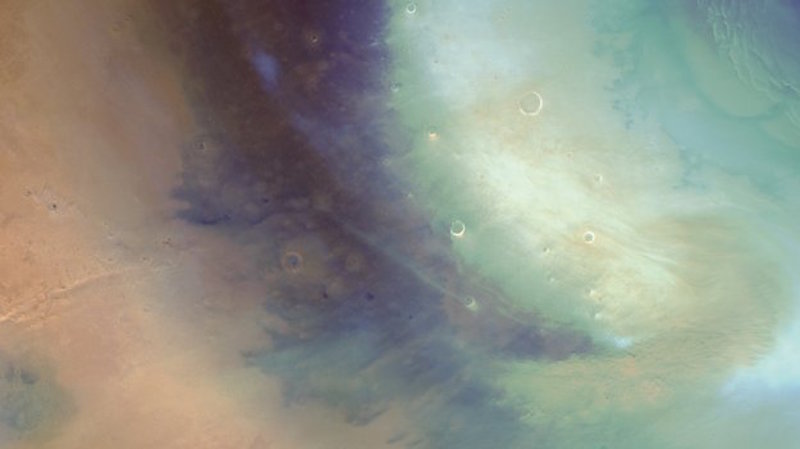
Over the last month, ESA’s Mars Express has been watching dust storms brew at the planet’s north pole and disperse toward the equator.
In late May 2019, a spiral-shaped dust storm at the north polar ice cap of Mars was observed by several instruments onboard Mars Express. A Mars Express camera captured this image on May 26. The dust storm’s brown color contrasts with the white ice of the north polar ice cap below. The image covers an area of about 1,200 x 3,000 miles (2,000 x 5,000 km).
The European Space Agency’s (ESA) Mars Express spacecraft has been monitoring dust storms brewing at Mars’ north pole over the last month, and watching as the storms disperse toward the equator. The spacecraft observed at least eight different storms at the edge of the ice cap between May 22 and June 10, 2019, which formed and dissipated very quickly, between one and three days.
It’s currently spring in the northern hemisphere of Mars, and water-ice clouds and small dust-lifting events are frequently observed along the edge of the seasonally retreating ice cap. Local and regional storms lasting for a few days or weeks and confined to a small area are common on Mars, but at their most severe they can engulf the entire planet, as experienced last year in a global storm that circled the planet for many months.
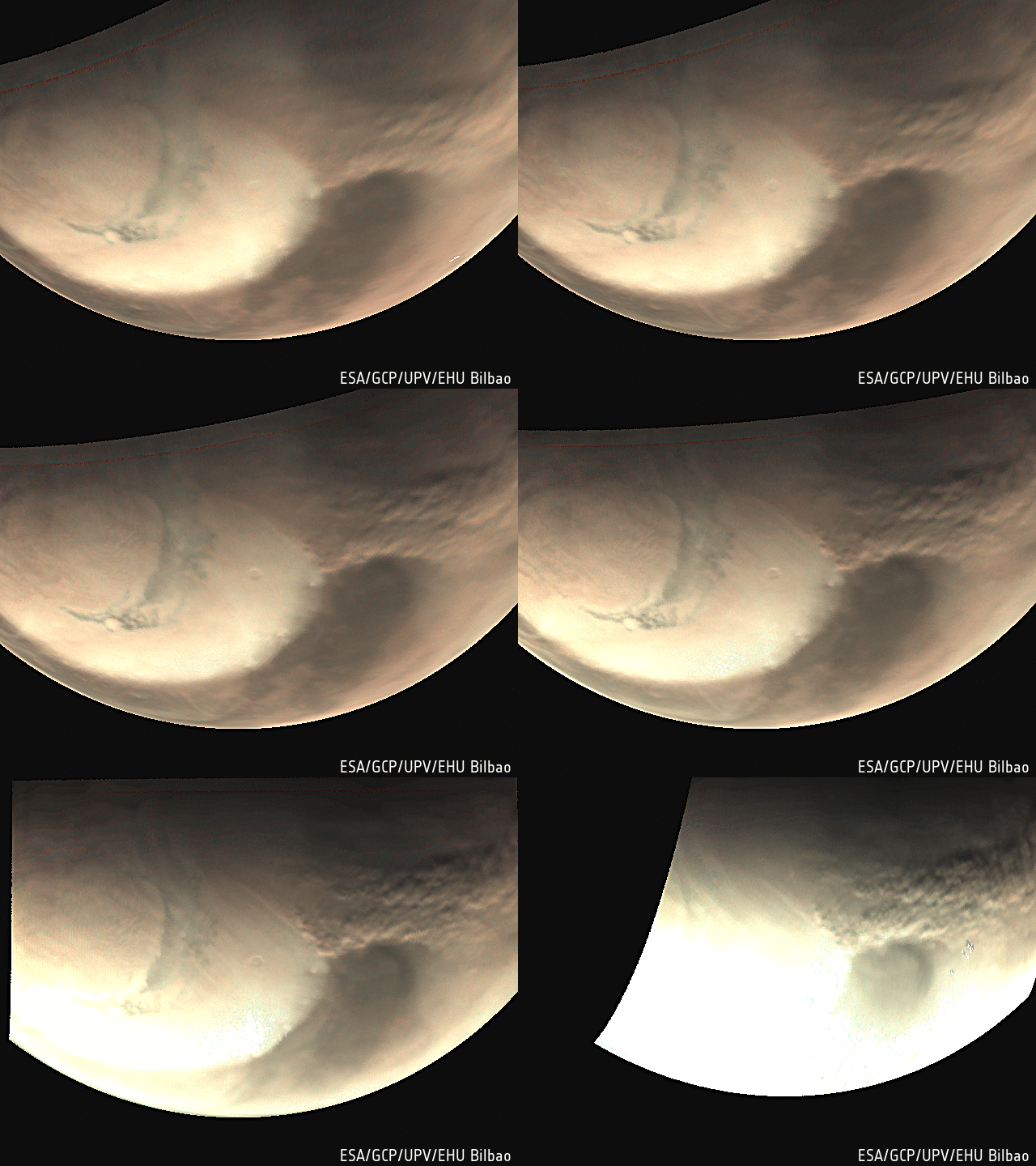
Mars dust storm in motion. This animated sequence was compiled from images of a different storm captured by the VMC over a period of 70 minutes on May 29, 2019. This particular storm started on May 28 and continued to around June 1, moving toward the equator during that time.
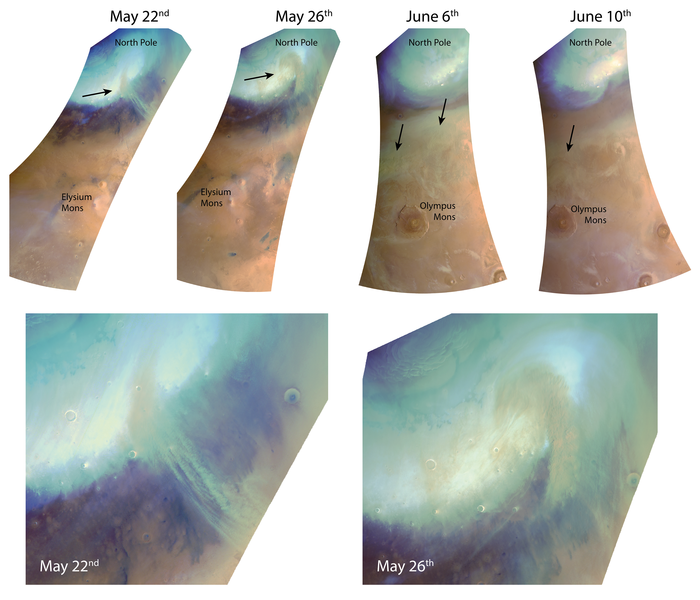
This montage of images shows 3 different storms developing on May 22, 2019, on May 26, and between June 6 and 10. In the latter case, the cameras watched the storm evolve for several days as it moved in an equator-ward direction. At the same time, wispy patches of light-colored clouds can be seen at the outer margin of the polar cap and also several thousand kilometers away (several thousand miles), close to the volcanoes Elysium Mons and Olympus Mons.
Both Mars Express and NASA’s Mars Reconnaissance Orbiter observed that when the dust storms reached the large volcanoes Elysium Mons and Olympus Mons, orographic clouds – water ice clouds driven by the influence of a volcano’s leeward slope on the air flow – that had been developing, started to evaporate as a result of the air mass being heated by the influx of dust.
These regional dust storms only last a few days. The planet’s circulation moves the elevated dust and spreads it out into a thin haze in the lower atmosphere. Some traces of dust and clouds remained in the volcanic province into mid-June.
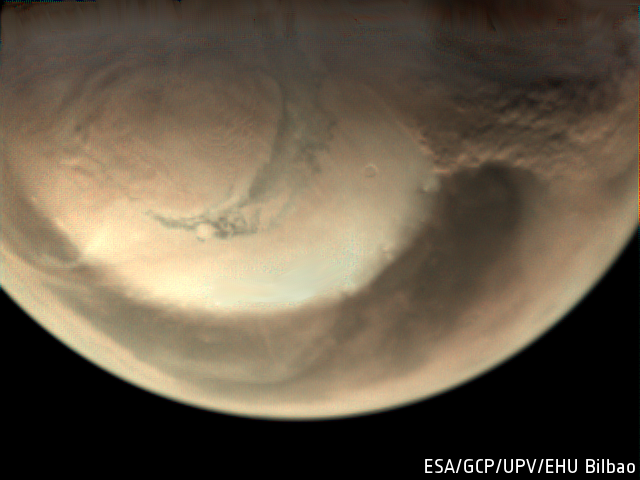
A dust storm underway at the edge of the north polar ice cap of Mars. The image was taken by the Mars Express Visual Monitoring Camera on May 29, 2019.
THAT’S NO MOON Comets around distant stars, shown in this artist’s illustration, could be explained by “ploonets” — moons that were freed from their orbits around migrating gas giants.
LYNNETTE COOK/FUSE/NASA
Meet ploonets: planets of moonish origin.
In other star systems, some moons could escape their planets and start orbiting their stars instead, new simulations suggest. Scientists have dubbed such liberated worlds “ploonets,” and say that current telescopes may be able to find the wayward objects.
Astronomers think that exomoons — moons orbiting planets that orbit stars other than the sun — should be common, but efforts to find them have turned up empty so far (SN Online: 4/30/19). Astrophysicist Mario Sucerquia of the University of Antioquia in Medellín, Colombia and colleagues simulated what would happen to those moons if they orbited hot Jupiters, gas giants that lie scorchingly close to their stars (SN: 7/8/17, p. 4). Many astronomers think that hot Jupiters weren’t born so close, but instead migrated toward their star from a more distant orbit.
“This process should happen in every planetary system composed of a giant planet in a very close-in orbit,” Sucerquia says. “So ploonets should be very frequent.”
Some ploonets may be indistinguishable from ordinary planets. Others, whose orbits keep them close to their planet, could reveal their presence by changing the timing of when their neighbor planet crosses, or transits, in front of the star. The ploonet should stay close enough to the planet that its gravity can speed or slow the planet’s transit times. Those deviations should be detectable by combining data from planet-hunting telescopes like NASA’s TESS or the now-defunct Kepler, Sucerquia says.
Ploonethood may be a relatively short-lived phenomenon, though, making the worlds more difficult to spot. About half of the ploonets in the researchers’ simulations crashed into either their planet or star within about half a million years. And half of the remaining survivors crashed within a million years.
Even with few visible survivors, ploonets could help explain some bizarre exoplanetary features. Moon debris from such crashes could lead to giant ring systems around planets, like the 37 rings that encircle exoplanet J1407b, the team says.
Or, if the ploonet had an icy surface or an atmosphere before moving close to its star, the star’s heat would evaporate it, giving the ploonet a tail like a comet’s. Evaporating ploonets zipping by with a long light-blocking tail could explain strangely flickering stars like Tabby’s star, Sucerquia says (SN: 12/22/18, p. 9).
“Those structures [rings and flickers] have been discovered, have been observed,” Sucerquia says. “We just propose a natural mechanism to explain [them].”
While the solar system doesn’t have any hot Jupiters, ploonethood may be possible here, too. Earth’s moon is moving slowly away from the Earth, at a rate of about 4 centimeters per year. When it eventually breaks free, “the moon is a potential ploonet,” Sucerquia says — although that won’t happen for about 5 billion years.
The study is a good first step for thinking about what would happen to exomoons in real planetary systems, says planetary astrophysicist Natalie Hinkel of the Southwest Research Institute in San Antonio, who wasn’t involved in the new work. “Nobody’s looked at the problem quite like this,” she says. “It adds to the layers of how complex these systems are.”
Plus, ploonet is “a wonderful name,” Hinkel says. “Normally I sort of eye-roll at these made-up names, but this one is a keeper.”
An epic lunar laser experiment is still going strong, five decades after the Apollo astronauts set it up on the surface.
The moonwalking crew of Apollo 11, which landed on the moon 50 years ago this month, put special retroreflectors on the lunar surface, as did the later crews of Apollo 14 and 15, in 1971. (Another retroreflector, built by the French, sits on the Soviet Lunokhod 2 rover that landed without a crew in 1973.)
The NASA experiment, called the laser ranging retroreflector, is "a special type of mirror with the property of always reflecting an incoming light beam back in the direction it came from," explained the Lunar and Planetary Institute (LPI) in a statement. And the reflector is key for measuring the distance between the Earth and the moon, the institute added.
The way it works is an observatory — quite often the McDonald Observatory in Texas, although many others have participated — shoots a laser beam at the moon. "They remain tightly focused for large distances," the institute explained, although there is some dispersion. By the time the beam bounces off the mirror and returns to Earth, it has widened to about 12 miles (20 kilometers) in diameter. This beam dispersion makes it more difficult to view the reflection.
The reflector itself doesn't require any power, which is why it's still operating decades after other instruments on the moon fell silent. This instrument includes 100 "corner cubes" (or fused silica half-cubes), which are placed in an 18-inch-square (46 centimeters square) aluminum panel, according to NASA's Jet Propulsion Laboratory (JPL). It's due to the shape of these corner cubes that any laser shot at them reflects light directly back. Over the years, measurements of the moon's distance have improved thanks to better laser and computing equipment.
"Once the laser beam hits a reflector, scientists at the observatories use sensitive filtering and amplification equipment to detect any return signal," JPL said. "The reflected light is too weak to be seen with the human eye, but under good conditions, one photon, the fundamental particle of light, will be received every few seconds."
Observations must be made over several hours to account for the weak signal. But by averaging out the signal, researchers can calculate the moon's distance down to a precision of less than 1 inch (2 cm), JPL said. That's not a bad margin of error given that the moon's distance averages 238,855 miles (384,400 km) from our planet, or about 30 Earth diameters away from us. It's a distance so vast that it took Apollo astronauts three days to get there.
While the experiment is most famous for its measurements of lunar distance, researchers have also used the data to show that the moon has a fluid core and that the natural satellite is moving slowly away from Earth, said James Williams, a scientist at NASA's Jet Propulsion Laboratory involved in the experiment, in a 2009 Space.com interview.
The timing of the laser round trip provided evidence supporting Albert Einstein's theory of general relativity. That theory says, in part, that the speed of light in a vacuum is independent of any observer's motion. This experiment also showed that Isaac Newton's gravitational constant is extremely constant, changing by less than 1 part in 100 billion between 1969 and 2004, NASA stated.
As this sign outside of Nevada’s infamous Area 51 military base reminds would-be visitors, guards are authorized to respond to trespassers with deadly force.
Pack your shades, your sunscreen and your coziest tinfoil hat, because the late-summer event of the season is happening in Nevada's scenic Area 51, and you're invited.
According to a tongue-in-cheek Facebook event called "Storm Area 51, They Can't Stop All of Us," a ragtag army of alien hunters will meet up near the top-secret Air Force base in the predawn hours of Sept. 20, coordinate a plan of attack, then raid the grounds in search of captive aliens. Per the event's hosts (a page that posts memes and a guy who streams video games on Twitch), the delicate operation will involve running supernaturally fast — faster than the guards' bullets can fly — but will be worth it to "see them aliens."
So far, nearly 200,000 Facebook users have signed up to attend, with another 200,000 "interested" in the affair.
This event is, of course, a joke (please, do not raid this or any other military base). Area 51 — a massive plot of desert about 80 miles (129 kilometers) northwest of Las Vegas — is a top-secret military installation that is infamously well-guarded by fences, radars and heavily armed "camo dudes" in white trucks. After more than 60 years of operations, the base's primary purpose remains classified and its grounds restricted to the public, fomenting an aura of spooky secrecy that has intrigued all manner of skeptics and conspiracy theorists for decades.
This much is known about the base: It's huge, covering a total of 2.9 million acres (1.2 million hectares) and 5,000 square miles (12,950 square km) of restricted airspace. Officially, the base is part of the Nevada Test and Training Range (NTTR), which is affiliated with Nellis Air Force Base; according to the Air Force, it is the largest combined air and ground space for peacetime military operations in the free world.
Since the Air Force set up shop there in 1955, Area 51 has hosted hundreds of nuclear weapons tests and has served as a training-and-testing ground for all manner of top-secret stealth aircraft, Live Science previously reported. If you believe the most popular conspiracy theory about the base, one of those aircraft may be an alien saucer that crash-landed in Roswell, New Mexico, in the late 1940s.
Poll: Do You Believe Alien Life Exists?
I'm not sure
No - Aliens are just part of science fiction.
Yes - We may not have found them yet, but they're out there.
The U.S. military claimed that the mysterious object was a weather balloon (a 1994 Air Force report confirmed this to be true — albeit, a souped-up weather balloon designed to detect far-off nuclear fallout). However, conspiracy theorists insisted that the wreck was indeed an alien spacecraft, which had been subsequently transported to Area 51 to be broken apart, studied and put back together again. This theory gained traction in the 1980s, when a man claiming to have worked at Area 51 told the news media that he had actually seen scientists reverse engineer alien saucers there.
This man, it turns out, was a liar who never set foot on the base (he also lied about the colleges he went to and other past employment); but his stories gained enough attention that Area 51 had a new, permanent reputation as that eerie place in the desert where scientists might be tinkering with aliens. Subsequent tests of experimental, top-secret aircraft at the base have only strengthened this far-out legacy.
The allure of the mysterious desert base is undeniable. So, what happens if you do attempt to trespass into Area 51 and liberate the juicy alien secrets contained within? For starters, you'll probably be stopped at gunpoint by guards dressed in camo, as two intrepid adventurers experienced in 2016 after trying to sneak a camera through the base's back gate.
According to signs posted around the base, these infamous "camo dudes" are permitted to greet trespassers with deadly force — but, if past encounters are any indication, trespassers are more likely to be met with a hefty fine and a court date. When an SUV filled with tourists accidentally crossed into the base's restricted area a few years ago, the driver and four passengers were each cited with a $650 fine and a misdemeanor charge. The unwary passengers eventually got their charges dropped, but the driver had to pay up — and was banned from leading tours in the area for several years.
If you happen to join the joke raid proposed for this September, keep that man's story in mind. When it comes to unearthing the truth of Area 51, you may have only one shot. Choose your plan wisely.
It looks like Japan's Hayabusa2 spacecraft has snagged its second souvenir from asteroid Ryugu, marking one of the last major milestones of the probe's visit.
Today's (July 10) maneuver was a calculated risk, as mission staff sought to weigh the scientific value of a subsurface sample with the possibility that failure would jeopardize the sample that the team believes is on board the spacecraft. Now, Hayabusa2 has just one more rover to deploy on the space rock before it departs at the end of the year.
The maneuver stretched on for hours as the Japan Aerospace Exploration Agency's (JAXA) Hayabusa2 slowly lowered itself to the surface. At 100 feet (30 meters) above the surface, the spacecraft spotted the bright, white target marker it had dropped during a preparatory procedure.
That marker is 65 feet (20 m) north of the site where, in April, the spacecraft deployed a copper bomb to create an artificial crater in order to look below the asteroid's surface. (JAXA had decided that sampling sites within the crater itself were too rocky and would risk the spacecraft's safety.)
Finally, at about 9:15 p.m. EDT (0115 GMT on July 11), Hayabusa2 touched down, fired a tantalum bullet into the space rock and — if all went according to plan — collected a bit of the resulting debris. That debris should be extra-special — not just any space rock, but pristine material dug out from below the surface of the space rock by the formation of the crater.
Because Ryugu does not have an atmosphere or magnetic field, the asteroid's surface is exposed to all the hazards of space. Cosmic rays and charged particles of solar wind streaming off the sun pummel Ryugu and its companions, altering the rock at the exterior of these bodies.
But underneath these shells, asteroids contain the rubble left over from the birth of the planets. That's why scientists hope that today's procedure in particular will help them understand how the solar system formed: by allowing them to not just analyze the crater that Hayabusa2 created on the surface but also get that rock into labs here on Earth.
[PPTD] July 11 at 10:39 JST. The antenna has switched to the HGA (high-gain) and telemetry data has been received. We are now checking the state of the spacecraft.
HAYABUSA2@JAXA@haya2e_jaxa
[PPTD] July 11 at 10:51 JST: Gate 5 check. The state of the spacecraft is normal and the touchdown sequence was performed as scheduled. Project Manager Tsuda has declared that the 2nd touchdown was a success!
The Hayabusa2 spacecraft was designed with three compartments for sample storage. Mission staff believed two of those compartments were already holding pieces of Ryugu; now they hope the third one does as well.
But until the spacecraft makes its way back to Earth and scientists can get inside that sample storage system, they aren't sure what's in there. Once the samples arrive, the team will first weed out anything from the spacecraft's operations; the metals of the bomb and bullets used during the mission were chosen because they do not exist on asteroids and so will be easy to identify and discard.
Then, it's all about the asteroid science, whatever that turns out to be. JAXA ran into trouble during the sampling portion of Hayabusa2's predecessor mission and ended up with minuscule grains of an asteroid called Itokawa in 2010. Yet scientists have still made discoveries based on that dust. For example, they found that there is water on the space rock and that Itokawa seems to be built from rubble formed during a large collision. If Hayabusa2 has grabbed larger hunks of asteroid, that's more material for more science.
Of course, all that will have to wait until the spacecraft makes its journey back to Earth. It has one more task to accomplish first: deploying a small rover, called MINERVA-II2, later this summer. Then, in November or December, Hayabusa2 will head home, delivering its bounty toward the end of next year.
How moon landing conspiracy theories began and why they persist today
Bill Kaysing was a former US Navy officer who worked as a technical writer for one of the rocket manufacturers for NASA’s Apollo moon missions. He claimed that he had inside knowledge of a government conspiracy to fake the moon landings, and many conspiracy theories about the Apollo moon landings which persist to this day can be traced back to his 1976 book,We Never Went to the Moon: America’s Thirty Billion Dollar Swindle.
The basic template of the conspiracy theory is that NASA couldn’t manage to safely land a man on the moon by the end of the 1960s as President John F Kennedy had promised, so it only sent astronauts into Earth orbit. Conspiracy theorists then argue that NASA staged the moon landings in a film studio and that there are tell-tale signs on the footage and the photos that give the game away. They claim that NASA has covered up the elaborate hoax ever since.
Moon landing sceptics point to supposed clues such as photos that appear to show the astronauts in front of cross hairs that were etched on the camera glass, or a mysterious letter C visible on a moon rock. These and many other seeming anomalies have been debunked, but moon landing conspiracy theories have persisted in the popular imagination.
In the US, opinion polls indicate that between 5-10% of Americans distrust the official version of events. In the UK, a YouGov poll in 2012 found that 12% of Britons believed in the conspiracy theory. A recent survey found that 20% of Italians believe that the moon landings were a hoax, while a 2018 poll in Russia put the figure there as high as 57%, unsurprising given the popularity of anti-Western conspiracy theories there.
To the moon and beyond is a new podcast series from The Conversation marking the 50th anniversary of the moon landings. Listen and subscribe here.
Ready to disbelieve
That Kaysing’s conspiracy theory took hold in mid-1970s America is in large part due to a wider crisis of trust in the country at the time. In 1971, citizens read the leaked Pentagon Papers, showing that the Johnson administration had been systematically lying about the Vietnam War. They tuned in nightly to the hearings about the Watergate break-in and subsequent cover-up.
A series of congressional reports detailed CIA malfeasance both at home and abroad, and in 1976, the House Select Committee on Assassinationsconcluded – in contrast to the Warren Commission more than a decade earlier – that there was a high probability that there had been a conspiracy to kill Kennedy. These revelations had helped fuel a wider shift in conspiracy thinking since the late 1960s, from a belief in external enemies, such as Communists, to the suspicion that the American state was itself conspiring against its citizens.
Moon landing conspiracy theories have proved particularly sticky ever since. To understand their popularity we need to consider their cultural context, as much as the psychological dispositions of believers.
As with the Kennedy assassination, they formed a new kind of conspiracy theorising. These theories reinterpret the publicly available evidence, finding inconsistencies in the official record, rather than uncovering suppressed information. Visual evidence is crucial: for all their scepticism, their starting point is that seeing is believing. In the realm of photo evidence, the assumption is that everyone can be a detective. In the conspiracy theory communities that emerged at the tail-end of the 1960s, the self-taught buff became central.
The moon landing conspiracy theories also brought to the mainstream the notion that significant events are not what they seem: they have been staged, part of an official disinformation campaign. The idea that tragic events are created by “crisis actors” employed by the government has become the default explanation for many events today, from 9/11 to mass shootings. This type of conspiracy theory is particularly harmful – for example, parents of children killed in the Sandy Hook elementary school shooting have been relentlessly hounded by internet trolls claiming they are merely paid stooges.
However, the story that the lunar landings were staged also resonates with the more plausible notion that the space race itself was as much a Cold War spectacle as a triumph of the human spirit.
The 1978 Hollywood film Capricorn One did much to popularise moon landing conspiracy theories. Based on Kaysing’s book, it imagined that a Mars landing was faked in a film studio, tapping into conspiracy rumours that the moon landings themselves had been directed by Stanley Kubrick. This suggestive myth is based in part on the idea that special effects had become much more sophisticated with Kubrick’s 1968 film 2001 A Space Odyssey, although still far from the capabilities that the conspiracy theories suppose.
Even if they are far-fetched in factual terms, moon landing conspiracy theories nevertheless call up the more plausible possibility that in our media-saturated age reality itself is constructed, if not actually faked.
We zijn nooit op de maan geweest. Hoe complottheorieën over de maanlandingen zijn ontstaan
Bill Kaysing was een voormalige Amerikaanse marineofficier die werkte voor één van de fabrikanten die de raketten leverden voor de Apollomissies van de NASA.
Hij claimde in zijn boek ‘We Never Went to the Moon’ (We zijn nooit op de maan geweest) dat de overheid de maanlandingen in scène had gezet.
Veel mensen geloven dat de maanlandingen nooit hebben plaatsgevonden. Uit een recente peiling blijkt bijvoorbeeld dat een vijfde van de Italianen gelooft dat de maanlandingen een hoax waren.
Complot
Een peiling uit 2018 laat zien dat bijna zes op de 10 Russen niet geloven dat de Amerikanen op de maan zijn geweest.
Het boek van Kaysing kwam uit in 1976. Enkele jaren daarvoor, in 1971, onthulden de gelekte Pentagon Papers dat de regering-Johnson lange tijd had gelogen over de Vietnamoorlog.
Daarnaast concludeerde de zogeheten House Select Committee on Assassinations van de Amerikaanse overheid in 1976 – in tegenstelling tot de Commissie-Waren – dat de vermoorde president Kennedy hoogstwaarschijnlijk het slachtoffer was geweest van een complot.
Filmstudio
Het gevolg hiervan was dat het vertrouwen van de Amerikaanse burger in de overheid steeds verder wegzakte.
In 1978 kwam de Hollywoodfilm Capricorn One uit, gebaseerd op het boek van Kaysing.
De film gaat over een landing op Mars die in werkelijkheid is opgenomen in een filmstudio, als verwijzing naar geruchten dat de maanlandingen waren geregisseerd door Stanley Kubrick.
India keert terug naar de maan met nieuwe missie ‘Chandrayaan-2’ -HLN.be
EPADe Chandrayaan-2 wordt zondag 14 juli gelanceerd. Twee maanden later, op 6 of 7 september, zal het ruimtetuig landen op de maan.
De race naar de maan is er eentje waar tal van landen aan deelnemen. Daaronder ook India. Zij maken de Chandrayaan-2, een onbemande lander, klaar om de maan te veroveren. Indian Space Research Organization (ISRO)plant de lancering op zondag 14 juli 2019.
Na het succes van de vorige Indiase missie naar de maan, Chandrayaan-1, gaat de nieuwe missie alweer een stapje verder. Dit keer moet het ruimtetuig ook landen op de maan. Dat zal onbemand gebeuren. Als India daarin slaagt, zal het land het vierde ter wereld zijn om een maanrover te laten rondrijden op de maan.
Op 14 juli wordt de maanrover reeds gelanceerd. En als alles zoals gepland gaat, zal de maanrover twee maanden later – op 6 of 7 september – eveneens landen op het maanoppervlak. Dat gebeurt zo’n 600 kilometer van de zuidpool van de maan, een plaats waar voorlopig geen enkele ruimtetuig landde. Daar zal de lander gedurende een jaar gesteenten en maanbevingen bestuderen.
Ook NASA heeft plannen met de maan. De Amerikaanse ruimtevaartorganisatie wil een nieuw ruimtestation rond de maan bouwen.
EPADe Chandrayaan-2 wordt zondag 14 juli gelanceerd. Twee maanden later, op 6 of 7 september, zal het ruimtetuig landen op de maan.
WETENSCHAP In de nacht van 14 op 15 juli lanceert het Indiase ruimteagentschap ISRO de maansonde Chandrayaan-2, aan boord van de Indische draagraket GSLV Mk-III. Het Luikse bedrijf Amos produceerde de optische onderdelen van het hyperspectrale instrument (IIRS) aan boord van de orbiter, meldt het vandaag.
Deze infrarode afbeeldingsspectrometer zal de minerale en volatiele verbindingen in kaart brengen, en de overvloed aan water en hydroxylionen op het maanoppervlak karakteriseren, aldus het bedrijf.
WETENSCHAP & PLANEETEr is leven ontdekt op een van de extreemste plekken op aarde en dat zou wel eens kunnen betekenen dat er op Pluto ook leven mogelijk is. Wetenschappers trokken naar hooggelegen ijspieken in een afgelegen gebied in de Andes, waarvan gedacht werd dat leven er onmogelijk was. Maar nu zijn er in die ijspieken, die ook op Pluto voorkomen, toch organismen ontdekt.
Hoog in de Andes bevinden zich metershoge ijspieken, of zogenaamde penitenten, die recent ook zijn ontdekt op Pluto. Ze zijn een zeldzaam verschijnsel op Aarde en komen enkel voor in de meest extreme situaties, waar de temperaturen hevig schommelen, de wind gevaarlijk hard waait en de UV-straling intens is. Het lijken onmogelijke levenssituaties, maar onderzoekers hebben nu ontdekt dat er toch een soort eencellige sneeuwalg leeft. Het is voor het eerst dat ze kunnen aantonen dat er op dergelijke ijzige pieken leven mogelijk is.
Rode verkleuringen
Tijdens een zware expeditie naar ’s werelds tweede grootste vulkaan in de Andes namen de biologen rode verkleuringen waar in de hoge penitenten, iets wat wijst op microbiologisch leven. De onderzoekers namen enkele stalen mee en nadat ze die hadden onderzocht, konden ze de aanwezigheid van twee algensoorten bevestigen.
Dat er leven gevonden is in dergelijke extreme omstandigheden, bewijst volgens de onderzoekers dat er op heel wat plaatsen leven mogelijk is, hoe uitdagend de omgeving ook is. De enige voorwaarde is dat er vloeibaar water aanwezig is, aldus Lara Vimercati, hoofdonderzoekster bij het project. Deze voedselarme en extreme locatie zou de uitgelezen situatie zijn om te testen wat de precieze limieten van leven zijn en wat naast de aanwezigheid van water nog vereisten zijn.
Leven op Pluto
De resultaten van het onderzoek zijn heel interessant. Niet alleen omdat ze bewijzen dat ook op extreme plaatsen leven mogelijk is, maar ook omdat op Pluto dergelijke ijspieken aanwezig zijn. Daar zijn ze tot wel 500 meter hoog. Als op ijspieken op aarde micro-organismen voorkomen, is dat misschien ook wel elders mogelijk.
WETENSCHAP De Japanse sonde Hayabusa-2 is er voor de tweede keer in geslaagd om kort neer te strijken op de asteroïde Ryugu. Dat heeft het Japanse ruimtevaartbureau Jaxa gemeld. De asteroïde met een diameter van 900 meter bevindt zich op ongeveer 280 tot 300 miljoen kilometer van ons.
Het vluchtleidingscentrum kreeg volgens een woordvoerder van Jaxa signalen binnen die de geslaagde landing zouden bevestigen. Er is echter nog een definitieve bevestiging nodig, maar die wordt pas later verwacht, luidde het.
De asteroïde met een diameter van 900 meter bevindt zich op ongeveer 280 tot 300 miljoen kilometer van ons. Doel van de huidige missie van de Hayabusa-2 is het verzamelen van monsters van onder het oppervlak van het hemellichaam.
lees verder onder de foto:
EPADe schaduw van de 'Hayabusa 2' toont hoe de ruimtesonde landt op de Ryugu-asteroïde.
Stalen
Het avontuur van de Hayabusa-2 begon op 3 december 2014. De sonde startte toen een lange reis van 3,2 miljard kilometer, een reis die nog lang niet voorbij is. In februari slaagde de Hayabusa-2 er al een eerste keer in om kort te landen op Ryugu.
Eind 2020 moet de ongeveer 600 kilo wegende sonde naar de aarde terugkeren met stalen van de asteroïde. Wetenschappers hopen aan de hand van de verzamelde gegevens meer kennis te verwerven over ons zonnestelsel met als ultieme doel het ontstaan van leven op aarde beter te begrijpen.
Kyodo/via REUTERSDe lancering van de raket die de Hayabusa-2 draagt in december 2014.
The long-buried structure, dating back at least 4,600 years, was constructed of marble transported from nearby Aegean islands on tiny wooden ships.
"It is by far the largest prehistoric marine transport operation that has ever come to light anywhere in the world," said Dr Julian Whitewright, a leading maritime archaeologist at the University of Southampton, told the Independent.
"It demonstrates quite clearly just how important, and integral to their culture, seafaring was to these early Bronze Age Aegean people.”
The huge quantity of white marble was shipped from Naxos, an island some six-and-a-half miles away.
Based on illustrations of early Greek sailing craft on Bronze Age pottery, archaeologists estimate that it would have required over 3,500 trips with 24 sailors rowing solidly for five hours in open water.
The Greeks built a huge structure, using up to 10,000 tonnes of marble, completely transforming the shape of the island of Keros – known today as Dhaskalio.
“These very early Greeks were organisationally, technically and politically much more advanced than previously thought”
Michael Boyd
CONCEALED: The white marble pyramid was hidden on the Greek island (Pic: Cambridge Keros Project)
Elsewhere on the island, archaeologists have found innumerable knives, tools, and small sculptures which may have been left as offerings by those visiting the island.
It was part of a worldwide explosion of monumental building – the ruined pyramid of Dhaskalio is roughly the same age as Stonehenge, the lost city of Eridu in Iraq, and the earliest pyramids in Egypt.
The pyramid structure seems to have occurred independently to the Greeks and Egyptians, and a little later the Aztecs, as the ideal shape for monumental building.
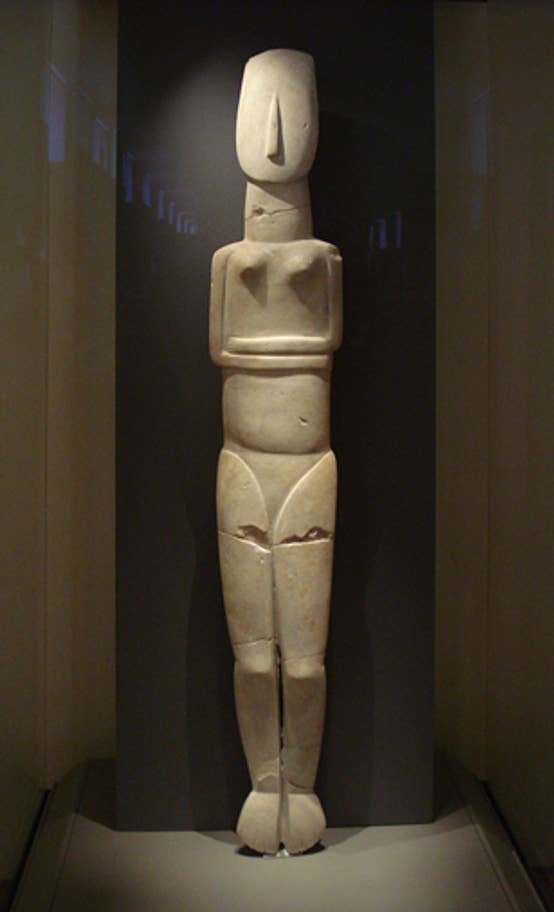
BEGINNINGS: Cycladic culture blossomed into the Greek civilisation inspired Western culture (Pic: National Archaeological Museum of Athens)
When Dhaskalio was newly-built the white marble structure would have been an amazing sight to seafarers in the region and was almost certainly a site of major religious significance across the region.
Creation myths of many early cultures revolve around a mountain emerging from the chaos of the sea and it’s possible that Dhaskalio was intended to represent that first land.
ENGINEERING: The pyramid shape of the island is man-made (Pic: Cambridge Keros Project)
"It is potentially a fundamental place of origin for the phenomenon of sacred mountains within the Greek world," said Dr Alan Peatfield of University College Dublin's School of Archaeology, who is a renowned expert on Greek mountaintop sanctuaries
Michael Boyd of Cambridge University's McDonald Institute for Archaeological Research, who is a co-director of the investigation, told the Independent: ”Our investigation has been transforming our understanding of early Bronze Age Cycladic culture and suggests that these very early Greeks were organisationally, technically and politically much more advanced than previously thought.”
4,600-Year Old Pyramid As Old As Stonehenge Reveals Beginnings Of Ancient Greek Civilisation In What Today Is The Island Of Dhaskalio
The long-buried pyramid of Dhaskalio, dating back at least 4,600 years, was constructed of marble transported from nearby Aegean islands on tiny wooden ships.
More than 4,600 years ago builders carved out the entire surface of a naturally pyramid-shaped promontory on the Greek island of Keros. They shaped it into terraces covered with 1,000 tonnes of specially imported gleaming white stone to give it the appearance of a giant stepped pyramid rising from the Aegean: the most imposing manmade structure in all the Cyclades archipelago.
But beneath the surface of the terraces lay undiscovered feats of engineering and craftsmanship to rival the structure’s impressive exterior. Archaeologists from three different countries involved in an ongoing excavation have found evidence of a complex of drainage tunnels – constructed 1,000 years before the famous indoor plumbing of the Minoan palace of Knossos on Crete – and traces of sophisticated metalworking.
A Mysterious Pyramid As Old As Stonehenge Has Been Discovered On Tiny Greek Island.
FROM DAILY STAR UK: “It is by far the largest prehistoric marine transport operation that has ever come to light anywhere in the world,” said Dr Julian Whitewright, a leading maritime archaeologist at the University of Southampton, told the Independent. “It demonstrates quite clearly just how important, and integral to their culture, seafaring was to these early Bronze Age Aegean people.” The huge quantity of white marble was shipped from Naxos, an island some six-and-a-half miles away.
Based on illustrations of early Greek sailing craft on Bronze Age pottery, archaeologists estimate that it would have required over 3,500 trips with 24 sailors rowing solidly for five hours in open water. The Greeks built a huge structure, using up to 10,000 tonnes of marble, completely transforming the shape of the island of Keros – known today as Dhaskalio. Elsewhere on the island, archaeologists have found innumerable knives, tools, and small sculptures which may have been left as offerings by those visiting the island.
It was part of a worldwide explosion of monumental building – the ruined pyramid of Dhaskalio is roughly the same age as Stonehenge, the lost city of Eridu in Iraq, and the earliest pyramids in Egypt.
The pyramid structureseems to have occurred independently to the Greeks and Egyptians, and a little later the Aztecs, as the ideal shape for monumental building. When Dhaskalio was newly-built the white marble structure would have been an amazing sight to seafarers in the region and was almost certainly a site of major religious significance across the region.
Creation myths of many early cultures revolve around a mountain emerging from the chaos of the sea and it’s possible that Dhaskalio was intended to represent that first land. “It is potentially a fundamental place of origin for the phenomenon of sacred mountains within the Greek world,” said Dr Alan Peatfield of University College Dublin’s School of Archaeology, who is a renowned expert on Greek mountaintop sanctuaries
Michael Boydof Cambridge University’s McDonald Institute for Archaeological Research, who is a co-director of the investigation, told the Independent: ”Our investigation has been transforming our understanding of early Bronze Age Cycladic culture and suggests that these very early Greeks were organisationally, technically and politically much more advanced than previously thought.” READ MORE
Here are some cool ancient alien artefacts found by Youtube Whatsupinthesky27. The objects are clear indications that intelligent beings once thrived on this planet. One of the objects has a jar shape, but is fallen over on its side. It not a jar of course, its clear that its more high tech than that with all its pipes and tubes moving down its side. It looks very similar to a lot of jars seen recored from old roman digs. The other object has a lot layers and was obviously some kind of mechanical device. Scott C. Waring
New Crop Circle Found In Farmers Field In Switzerland July 1, 2019, UFO Sighting News.
Date of discovery: July 1, 2019 Location of formation: Bern, Switzerland A farmer in Switzerland went out to his field and found a crop formation. He says he lost 100 Francs in corn from it being there and knows people are going to want to see it so he is expecting visitors. These crop formations didn't start recently.
Probably the most renowned is the "Mowing Devil" case in Hertfordshire in 1678, in which a farmer's field was said to have been visited by a devilish entity that trampled the crops down in a circle. The event was captured for posterity on a wood engraving. Also a book called "A Natural History of Staffordshire" in 1686, in which was reference to rings, circles and other shapes found in grassy fields. So you see, crop circles in the UK have been appearing for hundreds of years or more. I believe these circles re the locations where UFOs have entered and exited alien bases. The base would be deep under the ground probably around 5-6km and a tubular space would be formed in the ground lowering the UFO slowly like an elevator. Aliens have control of everything and controlling dirt and grass is much easier than you might think. Scott C. Waring
Eyewitness states:
During the daily inspection on Monday, farmer Hans-Rudolf Wyder discovered holes in his cereal field in Büren an der Aare: "In the beginning, I thought these were caused by wind and rain - but somehow they were too regular." The farmer decided to take photos to shoot a drone. "When I saw in the pictures that it was a crop circle, that was a terrible mistake." How and when the crop circle came into its field, the farmer can not explain. It is not small: according to Wyder, the artwork has a diameter of around 50 meters.
So far, he has not recorded any visitors, but he expects that they will appear soon - on Facebook, the first images would be shared. Wyder says he has mixed feelings about the circle: "It is beautiful and anything but ordinary, but it also means a loss of income for me. That's why I lose a good 1000 francs in corn. "He does not know who made the circle:" Anyone should believe in what he wants anyway. "He himself had never believed that these circles were made by extraterrestrials or other powers "But when I look at how regular and perfect this circle is done, it astonishes me a lot."
Robot-Ants Jump, Communicate And Work Together in a Swarm
Robot ants
Credit: EPFL
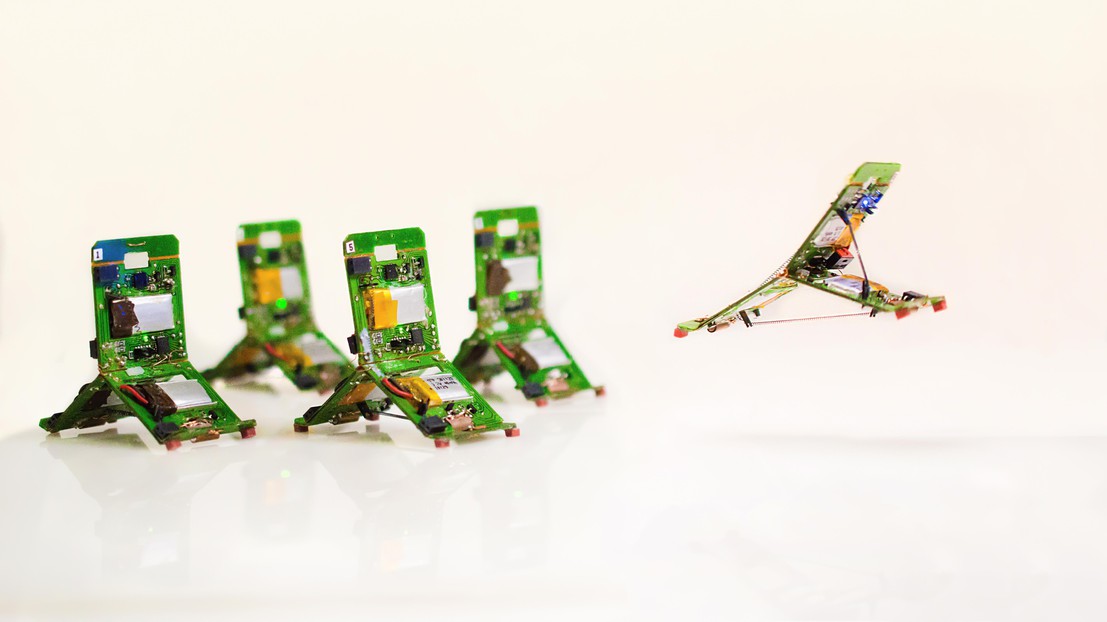
A team of EPFL researchers has developed tiny 10-gram robots that are inspired by ants: they can communicate with each other, assign roles among themselves and complete complex tasks together. These reconfigurable robots are simple in structure, yet they can jump and crawl to explore uneven surfaces. The researchers have just published their work in Nature.
Individually, ants have only so much strength and intelligence. However, as a colony, they can use complex strategies to complete sophisticated tasks and evade larger predators.
At EPFL, robotics researchers in Professor Jamie Paik’s Laboratory have reproduced this phenomenon, developing tiny robots that display minimal physical intelligence on an individual level but that are able to communicate and act collectively. Despite being simple in design and weighing only 10 grams, each robot has multiple locomotion modes to navigate any type of surface. Collectively, they can quickly detect and overcome obstacles and move objects much larger and heavier than themselves. The related research has been published in Nature.
Credit: Marc Delachaux / EPFL
Robots inspired by trap-jaw ants
These three-legged, T-shaped origami robots are called Tribots. They can be assembled in only a few minutes by folding a stack of thin, multi-material sheets, making them suitable for mass production. Completely autonomous and untethered, Tribots are equipped with infrared and proximity sensors for detection and communication purposes. They could accommodate even more sensors depending on the application.
“Their movements are modeled on those of Odontomachus ants. These insects normally crawl, but to escape a predator, they snap their powerful jaws together to jump from leaf to leaf,” says Zhenishbek Zhakypov, the first author. The Tribots replicate this catapult mechanism through an elegant origami design that combines multiple shape-memory alloy actuators. As a result, a single robot can produce five distinct locomotion gaits: vertical jumping, horizontal jumping, somersaulting to clear obstacles, walking on textured terrain and crawling on flat surfaces – just like these creatively resilient ants.
Roles: leader, worker and explorer
Despite having the same anatomy, each robot is assigned a specific role depending on the situation. ‘Explorers’ detect physical obstacles in their path, such as objects, valleys and mountains. After detecting an obstacle, they inform the rest of the group. Then, the ‘leader’ gives the instructions. The ‘workers,’ meanwhile, pool their strength to move objects. “Each Tribot, just like Odontomachus ants, can have different roles. However, they can also take on new roles instantaneously when faced with a new mission or an unknown environment, or even when other members get lost. This goes beyond what the real ants can do,” says Paik.
Zhenishbek Zhakypov and Jamie Paik. (Photo : Mac Delachaux / EPFL)
Future applications
In practical situations, such as an emergency search mission, Tribots could be deployed en masse. And thanks to their multi-locomotive and multi-agent communication capabilities, they could locate a target quickly over a large surface without relying on GPS or visual feedback. “Since they can be manufactured and deployed in large numbers, having some ‘casualties’ would not affect the success of the mission,” adds Paik.““With their unique collective intelligence, our tiny robots can demonstrate better adaptability to unknown environments; therefore, for certain missions, they would outperform larger, more powerful robots.”
This work is the result of a joint collaboration between EPFL and Osaka University
In April, Jamie Paik has presented her reconfigurable robots at the TED2019 conference in Vancouver. Her talk will be available July 10th here https://go.ted.com/jamiepaik at 11 a.m. EST.
Photo: Bret Hartman / TED
On July 10th, Jamie Paik and several eminent scientists joined famous writer Professor Harari on stage at a special event to help mark EPFL’s 50th anniversary year.
Contacts and sources: Laure-Anne Pessina Ecole Polytechnique Fédérale de Lausanne
Citation: Zhenishbek Zhakypov, Kazuaki Mori, Koh Hosoda and Jamie Paik, Designing Minimal and Scalable Insect-Inspired Multi-Locomotion Millirobots, Nature, 10 July 2019. DOI 10.1038/s41586-019-1388-
Linda Moulton Howe: What's Really Going On With Dwarf Planet Ceres
The DAWN spacecraft approaching the dwarf planet Ceres in the asteroid belt between Mars and Jupiter returned images that showed two bright “lights” shining from a dark crater. Not far from this crater was another large crater that is curiously a 6-sided hexagon.
Linda spoke with Marc Rayman, Ph.D., Dawn Mission Director and Chief Engineer, NASA/JPL, who expressed excitement that the spacecraft had reached its target after 7½ years of interplanetary flight. Because of the direction DAWN is currently flying over Ceres, we won’t get more pictures of the “lights” until early May, though he surmises they aren’t indicative of technological signs or extraterrestrial life.
Featured guests also include: James Fox News segment guests: James Sanders, Peter Breggin, Peter Davenport
Jim Marrs: Texas UFO Crash of 1897, Pilot Not of the World
COAST TO COAST AM. Author and journalist Jim Marrs discussed the Aurora, Texas UFO crash of 1897, which he considers to be the “smoking gun” of the UFO issue.
It’s early date belies the explanation that it could have been a misidentified aircraft, as it was six years before the Wright Brothers first flew their planes, he noted.
The date fits into the context of the ‘Great Airship Mystery’ of 1896-7, in which a large cigar-shaped object was seen in the skies of numerous American states.
The Dallas Morning News reported that the airship hit a windmill on a judge’s property and crashed, and that the pilot who died was “not of this world.”
For the ufologically-minded, Jim Moseley was without a doubt most associated with his highly entertaining newsletter, Saucer Smear. It was a semi-regular, self-published collection of Moseley’s comments, rants and observations on the UFO research scene. Moseley was someone who, in later years, focused just about all of his time and effort on poking fun at ufologists whenever and wherever he could. He did so in a very witty fashion, too. I should stress, though, that Moseley did have a real, deep interest in the UFO phenomenon itself. And a firm belief in it, too. Right up until the time of his death. Back in 1953 Moseley hit the road – in what really was a definitive Jack Kerouac/Neal Cassady-style – in search of the answers to what was going on in the heavens above. What Moseley found out, as he traveled from New York to California and back again, was a significantly varied and entertaining collection of eccentrics, liars, nut-jobs, and – to Moseley’s relief – genuinely interesting eyewitnesses to strange, aerial craft in the skies of 1950s America. Altogether, Moseley interviewed around one hundred people, on a clunky, big recorder, which was no mean feat. The list of interviewees included George Adamski himself and Frank Scully, of Behind the Flying Saucers infamy.
Moseley’s coast-to-coast trip was funded by a guy named Ken Krippine. He was a somewhat shady, dubious character who had suggested that if he, Moseley, would do all of the research, then Krippine would write a book on Moseley’s UFO findings. The two would then split the profits right down the middle. Sounds good, right? Well, for a while, yes, it sounded verygood. The proposed book, however, did not materialize; at least, not as Moseley and Krippine had originally planned things. No, it wasn’t due to the infernal intervention of the mysterious Men in Black. Rather, it was all due to a distinct lack of interest on the part of just about every publisher that Moseley approached with his well-thumbed and increasingly-creased and crumpled manuscript. Moseley was not one to be daunted, however. Years later – decades, in fact – he put just about all of his old notes and audio-recordings to good use in his hilarious autobiography, Shockingly Close to the Truth, which was written with Karl Pflock.
It was in 1955 that Moseley, in his own words, “had fallen under the influence” of a man named Charles Samwick. The latter was someone who, before retiring from the U.S. Army, worked in the hall-and-mirrors-filled world of counter-intelligence, which included keeping a very close eye on what the Russians were said to be up to inside the United States. Not only that, Moseley was able to determine that Samwick had, in some hazy, unclear fashion, ties to the CIA’s Robertson Panel and had once helped to bust a Soviet spy-ring in Washington, D.C. Samwick and Moseley soon became good buddies, with Moseley somewhat dazzled and disturbed by one particular thing that Samwick had to say. He told Moseley: “The Communist Party has planted an agent in every civilian saucer club in the United States.” Whether this was true, or amounted to hard-to-prove words inspired by the likes of Joseph McCarthy, Moseley was in no position to disagree with his well-informed source. But, he did make Samwick’s revelations the subject of an editorial in his pre-Saucer Smear newsletter, Saucer News. In the June-July 1955 issue Moseley revealed the following to his eager readers, but specifically without revealing Samwick’s name.
Moseley said: “Although it is perhaps unwise to inject a political note into a flying saucer magazine, we feel obliged to point out to our readers certain dangers which, taken together, add up to a possible Communist menace to saucer enthusiasts. First, for several months we have had good reason to believe that Communist agents have been planted in all of America’s leading saucer groups, for information-gathering purposes. This in itself is not a startling fact, but it should serve as a note of caution to saucer researchers who in the course of their studies might unearth information of a technical military nature.
He continued: “Secondly, let us all give some very serious consideration to the many alleged space men being called to the public’s attention – all of whom invariably tell us of the dangers of war and the exploitation of atomic energy. No one desires peace any more than we do, but let us remember too that it is part of the Communist ‘peace line’ to frighten the American people into ceasing our atomic experiments. It is quite possible that some of these ‘space men’ are unwittingly playing into the hands of the Communists. Last but not least, let us not fall into the pitfall of condemning the Government of the United States just because the Air Force refuses to tell us all we would like to know about flying saucers – I have been told that some of the remarks made at the Saucer Convention last March came dangerously close to sedition!
In conclusion, Moseley said: “Even as ardently loyal saucer fans, we all can and should face the fact that there are more important and immediate problems in the world today. Whether the saucers are held to be from Space or Earth, it is quite obvious that they present no immediate threat to the safety of this Country; so there is nothing to worry about. Of course everyone would be happier if ‘officialdom’ would be more generous with its information on saucers, but for the present we can only assume that that there is a good sufficient reason for the continuing scarcity of information from official sources. In making the above remarks, we are not referring to any particular individual or organization in the field of saucer research. We are merely observing that the saucerian field is alarmingly ripe for use in furthering Communist ends. Let each individual among us be on his guard that he does not fall into such a trap.”
A dig led by the Israeli Antiquities Authority unearthed what they believe is the biblical city of Ziklag where David took refuge from King Saul. The remains of several buildings and artifacts from the Philistine-era were discovered underneath a burnt settlement from the time of King David.
According to ancient biblical texts, the Philistines ruled the central and southern part of Israel and the Gaza Strip, and were feared by the Israelites. David (who wasn’t a king yet) ended up seeking refuge with the Philistines from King Saul who was trying to kill him. However, when King Saul heard that David was being protected by Philistine King Achish of Gath, “he sought him no more”.
King David
The city of Ziklag was given to David as a gift from the Philistine king. However, while David was away fighting with the Philistine army, the city was burnt down by Amalekite raiders. They enslaved the residents of Ziklag as retaliation for an attack conducted on the Kingdom of Israel. David would later become the second king of Israel.
The exact location of the city has been debated over the years, as twelve previous locations around the southern part of Israel were thought to have been the site of Ziklag. But none of the previous sites proved to have had Philistine and Israelite settlements. Now, however, with the most recent discovery at the Khirbet Al-Rai site in the central part of Israel (close to Kiryat Gat), the mystery surrounding the exact location of the ancient biblical city may finally be solved.
“It is not 100 percent sure, but I think it’s 90 percent that this was biblical Ziklag,” archaeologist Yosef Garfinkel of the Hebrew University stated to UPI.
King David
Excavations began in 2015 and since then archaeologists have unearthed artifacts from the Philistine civilization in addition to pottery vessels from the same time that the biblical King lived. They have dug in three primary locations on the site which covers an area of 10,764 square feet in total. The date of the remains is believed to have been from between the 12th and 11thcenturies BC.
According to Saar Ganor of the Israel Antiquities Authority, four houses have been unearthed so far and one of those homes contained over 1,500 tools that were used to cut wheat. Other discovered artifacts include statues, vessels, storage jars (for oil and wine), and other different types of pottery from the Philistine culture. In fact, they match previous Philistine-era artifacts that were recovered from Ashdod, Ekron, Ashkelon, and Gath.
You can see pictures here of some of the artifacts that were uncovered.
Volunteers excavate pottery from Khirbet a-Ra'i, which archaeologists have identified as biblical Ziklag.
(Excavation expedition to Khirbet a-Ra‘i)
A volunteer excavates pottery from Khirbet a-Ra’i, which archaeologists have identified as biblical Ziklag.
(Excavation expedition to Khirbet a-Ra‘i)
A volunteer excavates at Khirbet a-Ra’i, which archaeologists have identified as biblical Ziklag.
(Excavation expedition to Khirbet a-Ra‘i)
Pottery assemblage from Khirbet a-Ra’i, which archaeologists have identified as biblical Ziklag.
NASA is heading to Saturn’s ‘Titan’ moon in 2026 to look for signs of past or present life.
Researchers from Southern Methodist University (SMU) could help determine if Saturn’s icy moon – Titan – has ever been home to life long before NASA completes an exploratory visit to its surface by a drone helicopter.
This illustration shows NASA’s Dragonfly rotorcraft-lander approaching a site on Saturn’s moon, Titan.
Credits: NASA/JHU-APL
NASA announced in late June that its “Dragonfly” mission would launch toward Saturn’s largest moon in 2026, expecting to arrive in 2034. The goal of the mission is to use a rotorcraft to visit dozens of promising locations on Titan to investigate the chemistry, atmospheric and surface properties that could lead to life.
SMU was awarded a $195,000 grant, also in June, to reproduce what is happening on Titan in a laboratory setting. The project, funded by the Houston-based Welch Foundation, will be led by Tom Runčevski, an assistant professor of chemistry in SMU’s Dedman College of Humanities and Sciences. SMU graduate student Christina McConville was also awarded a fellowship by the Texas Space Grant Consortium to help with the project.
Before the rotorcraft lands on Titan, chemists from SMU will be recreating the conditions on Titan in multiple glass cylinders — each the size of a needle top — so they can learn about what kind of chemical structures could form on Titan’s surface. The knowledge on these structures can ultimately help assess the possibility of life on Titan — whether in the past, present or future.
Scientists have long considered Titan to be very similar to pre-biotic Earth, even though it is a frigid world much farther from the sun than our planet. Titan is the only moon in the solar system to have a dense atmosphere like Earth, and is also the only world other than Earth to have standing bodies of liquids, including lakes, rivers and seas, on its surface. In addition, NASA scientists believe Titan may have a subsurface ocean of water.
“Titan is a hostile place, with lakes and seas of liquid methane, and rains and storms of methane. The storms carry organic molecules produced in the atmosphere to the surface, and at the surface conditions, only methane, ethane and propane are liquids. All other organic molecules are in their solid form – or, as we would call them on Earth, minerals,” Runčevski explained.
“We are interested in the chemical composition and crystal structure of these organic minerals, because it is believed that minerals played a key role in the origins of life on Earth,” he said. “Hence, our research may help assess these possibilities for strange “methanogenic” Titanean life.”
Runčevski added that any information that they get about the structure of Titan’s upper layer crust, which is made of organic minerals, could prove very useful to NASA’s Dragonfly mission.
In order to create these “Titans in a jar” at SMU, Runčevski said they will use information about the conditions on Titan that were obtained during the mission Cassini-Huygens, which ended two years ago.
“We can recreate this world step by step in a cylinder made of glass,” he said. “First, we will introduce water, which freezes into ice. Second, we will top that layer of ice with ethane that liquidizes as a ‘lake.’ Then we will fill the remaining cylinder with nitrogen.”
After that, they can introduce different molecules into the system, mimicking the rainfall. Lastly, they will “dry” the lakes by slightly raising the temperature and produce the surface of the moon. The cylinder that this moon will be created inside is specifically designed, so that multiple state-of-the-art experiments can be done and they can learn from the structure of the real Titan. Large parts of these experiments will be performed at research facilities that provide modern synchrotron and neutron radiation, such as Argonne National Laboratory in Illinois and the National Institute and Technology in Maryland.
Contacts and sources: Southern Methodist University
Ik ben geen believer, maar alles is mogelijk. President Trump spreekt zich uit over UFO’s
Tijdens een interview met Fox News-presentator Tucker Carlson zei president Trump niet overtuigd te zijn van het bestaan van UFO’s, maar wel een open geest te hebben.
“Ik wil er niet al te diep op ingaan, maar persoonlijk betwijfel ik of ze bestaan,” zei Trump. “Ik ben geen believer, maar alles is mogelijk.”
Carlson vroeg de president ook naar een recente briefing met gevechtspiloten die ‘vreemde objecten’ hadden gezien die hypersonische snelheden bereikten en geen zichtbare motor hadden.
Zweren
Vorige week werden senatoren door het Amerikaanse ministerie van Defensie ingelicht over onbekende objecten in het luchtruim.
“Je hebt mensen die erbij zweren,” zei Trump. “Er zijn mensen, piloten, die hebben gezegd dat ze dingen hebben gezien.”
Carlson informeerde over een bewering gedaan door een overheidsfunctionaris.
UFO-wrak
Die zei dat de Verenigde Staten een UFO-wrak in bezit hebben op een legerbasis.
Trump zei dat hij hier zelf niets over had gehoord, maar wel de uitzending van Carlson hierover had bekeken.
“Ik denk dat het niet klopt,” zei hij. “Maar ik heb een open geest.”
An underwater archaeologist has told the BBC of the extraordinary lengths he went to to access a pharaoh's tomb underneath a pyramid.
Pearce Paul Creasman and his team were the first people to go into the tomb for 100 years and, in that time, it has become harder to access because of the rising water level.
Mr Creasman told BBC Newsday that this was the first time underwater archaeology had been carried out in Sudan, the location of the ancient royal burial site of Nuri.
"The gold offerings were still sitting there - these small glass-type statues had been leafed in gold. And while the water destroyed the glass underneath, the little gold flake was still there," he told Newsday.
He believes these offerings were for Nastasen, a minor pharaoh who ruled the Kush kingdom from 335 BC to 315 BC.
Mr Creasman told the BBC that the team "dug as far as we could" down a 65-step stairway which led to the tomb entry but "we got about 40 stairs down until we hit the water table and knew we wouldn't be able to go any further without putting our heads under".
Normal scuba tanks "would have been too cumbersome", he said, so instead they used a hose that pumped oxygen from the surface on the dive in January.
He described what he found as "remarkable":
"There are three chambers, with these beautiful arched ceilings, about the size of a small bus, you go in one chamber into the next, it's pitch black, you know you're in a tomb if your flash lights aren't on. And it starts revealing the secrets that are held within."
The tomb is part of the ancient site of Nuri which is spread across more than 170 acres in northern Sudan.
These pyramids mark the burials of Kushite royals who are sometimes referred to as "black pharaohs". The Kush kingdom lasted for many hundreds of years and, in the 8th Century BC, it conquered Egypt which it ruled for almost a century.
Image copyright NURI ARCHAEOLOGICAL EXPEDITION/PEARCEPAULCREASMAImage captionSudan has more pyramids than Egypt
One difference between the pyramids in Sudan and the much more famous pyramids in Egypt is that the kings were buried below them, instead of inside.
Een onderwaterarcheoloog heeft toegang weten te krijgen tot de tombe van een farao onder een piramide in Soedan.
Er was al zo’n 100 jaar niemand meer geweest in de tombe, die steeds lastiger te bereiken is vanwege het stijgende water.
Pearce Paul Creasman zei tegen de BBC dat er voor het eerst onderwaterarcheologisch onderzoek is gedaan in Soedan.
Opmerkelijk
In de tombe trof hij onder meer figuurtjes van aardewerk en bladgoud aan.
Creasman denkt dat het gaat om offers aan Nastasen, een zwarte farao die over Koesj – een rijk in Nubië – heerste.
Wat hij in de tombe aantrof omschreef hij als ‘opmerkelijk’.
Geheimen
“Er zijn drie kamers met prachtig gewelfde plafonds ter grootte van een bus,” zei hij. “De geheimen die in de tombe verborgen liggen worden nu geopenbaard.”
De tombe is onderdeel van de archeologische vindplaats Nuri in het noorden van Soedan.
In de achtste eeuw voor Christus veroverde het Koesj-rijk Egypte. De zwarte farao’s werden in Soedan onder de piramides begraven.
Piloot filmt twee cirkelvormige objecten boven Grand Canyon. Zijn dit UFO’s?
In een filmpje dat door Mike Wagner op YouTube is geplaatst is de Grand Canyon in Arizona te zien. Op een gegeven moment verschijnen er twee objecten in beeld, schrijft de Britse Daily Star.
Ze lijken in formatie over de beroemde kloof te vliegen.
Onder meer YouTube-kanaal ‘The Hidden Underbelly’ besteedde aandacht aan het fragment en sprak van ‘twee UFO’s die in tandem over de Grand Canyon in Arizona vliegen’. Het filmpje in inmiddels duizenden keren bekeken.
Soortgelijke ervaring
Eén iemand reageerde: “Buitenaardse schepen!”
Een ander zei: “Dat is prachtig.”
Een derde persoon liet weten een soortgelijke ervaring te hebben gehad in de regio.
“Ik keek naar mijn nieuwste vlog (ook in Arizona) en zag dat ik iets had vastgelegd wat de vorm van een sigaar had,” schreef ze.
TRUMP WILT VRAAG OF UFO'S ECHT ZIJN NIET BEANTWOORDEN
Nog niet zo lang geleden werden ufo’s belachelijk gemaakt in het mainstream nieuws en werden degenen die er wel over berichtten uitgemaakt voor aluhoedjes.
Tegenwoordig zijn ufo’s “hot” en worden er zelfs vragen over gesteld aan de Amerikaanse president.
Hieronder een interessant kort interview dat Tucker Carlson had met Donald Trump tijdens hun trip naar Azië vorige week.
Tucker zegt tegen Trump: “U heeft onlangs een briefing gehad over ufo’s, bestaan ze echt?”. Waarop je ziet dat Trump even nodig heeft om een antwoord te bedenken en dan vervolgens zegt: “Ik wil er niet teveel op ingaan, maar persoonlijk heb ik mijn twijfels”.
Hij ontkent het bestaan niet en ook op de vraag of het waar is wat een hooggeplaatste regeringsfunctionaris onlangs beweerde dat het waar is dat de Amerikaanse overheid in het bezit is van een gecrashte ufo, antwoordt hij ontwijkend en zegt daar niets over gehoord te hebben, maar dat alles mogelijk is en hij wel een “open mind” heeft.
Vervolgens komt er dan een stukje met de bekende Engelse ufo onderzoeker Nick Pope die het feit dat Trump bereid is hierover te praten en het onderwerp niet belachelijk maakt, “verfrissend” noemt.
De man waar Tucker Carlson in bovenstaande video over spreekt is Luis Elizondo, waar wij enkele weken geleden het volgende over publiceerden:
Degene die destijds de belangrijkste man was bij dat Pentagon onderzoek is Luis Elizondo. Enkele dagen geleden was hij op bezoek bij Tucker Carlson, waar hij een aantal interessante dingen zei die in onderstaande video te beluisteren zijn. Belangrijk om te onthouden is dat een dergelijke man helemaal niets zegt, voordat hij het groene licht van Washington heeft gekregen.
Hierna volgt die uitzending, door Paul Harmans voorzien van Nederlandse ondertiteling.
Je weet dat de man liegt door het simpele feit dat hij aan het eind van het programma toegeeft dat de Amerikaanse overheid beschikt over wrakstukken van ufo’s.
Even daarvoor zegt hij dat we eigenlijk totaal niet weten wat het zijn, wie het zijn en waar ze vandaan komen. En om het helemaal bont te maken zegt hij dat de overheid dit onderwerp tot voor kort niet erg serieus nam.
Hoeveel leugen op een rij wil je hebben? Je hebt een land dat beschikt over wrakstukken van ufo’s, maar tot voor kort namen ze ufo’s niet serieus.
Dit alles heeft dan weer te maken met de door Donald Trump opgezette Space Force, waarbij stap voor stap en na nogmaals het verdwijnen van enorme hoeveelheden geld, de geheime ruimtevloot langzaam maar zeker “bekend” zal worden bij het grote publiek.
Dit gebeurt door iedere keer kleine stukjes van de waarheid op tafel te leggen, waardoor iedereen straks gelooft dat de geheime ruimtevloot is ontwikkeld via het nieuwe Space Force programma.
Ook het interview met Trump past in het boven geschetste plaatje. Trump die niet ontkennend antwoord op de vraag of ufo’s echt zijn, maar zegt daar niet over te willen spreken. Die vervolgens marine piloten aanhaalt die onbekende objecten hebben waargenomen en die zegt een “open mind” te hebben en dat alles mogelijk is.
Wat te denken bijvoorbeeld van het volgende object dat enkele jaren geleden een bezoek bracht aan het ISS ruimtestation? Er worden vaker objecten daar waargenomen, maar onderstaande is een wel heel bijzondere.
De opname is gemaakt door de vorig jaar overleden Streetcap1 en is 100 procent echt. Vlak nadat Streetcap1 dit object had “gevangen”, werd de communicatie met het ruimtestation, zoals gewoonlijk, verbroken “wegens storing”.
Aards of buitenaards? Feit is dat er langzaam maar zeker door de Amerikaanse overheid ergens naartoe wordt gewerkt. Iedereen hoopt dat het eindelijk de echte Disclosure zal zijn, maar velen vermoeden toch dat dit alles bedoeld is om de enorme bedragen die zijn verdwenen wit te wassen via de erkenning dat er een geheime aardse ruimtevloot bestaat.
The national park system is one of America’s crowning achievements. For a lot of us, it’s easy to forget that America has some of the most spectacular geography and landscapes in the world, and the preservation of huge swaths of wilderness as national parks that anyone can visit and explore is truly fantastic. But the wilderness of America is a strange place, and the national parks are all hotbeds of paranormal activity from UFOs to the Missing 411 cases and everything in between. Recent footage allegedly taken by a pilot flying over the Grand Canyon purports to show some of that strangeness.
According to the YouTube channel The Hidden Underbelly 2.0, who shared the video (you can see the footage for yourself here), the footage was taken by pilot Mike Wagner as he was flying over the Grand Canyon in broad daylight. It shows two white, reflective objects flying in tandem beneath the plane, over the canyon. The objects have no discernible features, but could be seen as having a similar shape to the “tic-tac” UFO seen from the USS Nimitz in 2004, which has been at the center of the ongoing saga of the military’s relationship to UFOs. But then again, lots of things look like a white tic-tac when seen from far away, or blurred from enlarging the footage.
“Tic-tac,” “flying saucer,” and “cigar” are all pretty similar descriptive names.
One alternative explanation would be that the objects are actually distant and blurry birds. But that doesn’t seem all that likely, due to the video actually being in slow-motion. According to Mike Wagner in the description of the originally uploaded video, the footage was shot at 120 fps and slowed down to 24 fps. Considering that even at 24 fps, the video is only 30 or so seconds long, and the objects only appear briefly, they must have only appeared for a split second in real time. If they are in fact actual objects flying above the Grand Canyon, then they were probably flying incredibly fast. It would be nice to see the real time footage.
Without seeing the original video at actual speed it’s hard to say what these objects are, or if they’re actually objects at all. The cynic in me wants to say that there’s a nefarious reason for not showing the 120 fps video. At full speed is it clear that the UFOs are scratches on the glass? Or glinting sunlight? Maybe. But maybe not, both of those explanations seem to fall short as well. Perhaps it’s just impossible to see anything at 120 fps. The other explanation, and it’s just as painful to say it this time as always, is that it’s a couple of drones. That’s not necessarily the best explanation, but it’s always a possibility now.
“Fun ruiner”
While this footage isn’t conclusive by any means, the Grand Canyon does have a history of weirdness. Last year, a series of cattle mutilations were reported in Arizona near the Grand Canyon. Then there are the tales of a mysterious underground civilization below the canyon, first reported in 1909. Cattle mutilations, mysterious lost civilizations, and UFOs all go together pretty well when you’re cooking up a spooky stew. This footage certainly isn’t proof of any of it, but next time you’re in one of the national parks remember to keep a camera at the ready. And for the love of all that is holy, buy a telescopic lens.
Miners in Alberta, Canada, were searching for the rainbow-colored gemstone called ammolite when they instead discovered a well-preserved fossil of a mosasaur – or more specifically, a Tylosaurus. The marine reptile that lived 70 million years ago with the dinosaurs was unearthed in a part of the province that had previously been underwater many years ago, under the Western Interior Seaway that stretched from the Arctic Sea all the way down to the Gulf of Mexico.
The Tylosaurus has been nicknamed the “T-Rex of the sea” because of its large size and frightening nature. They could grow up to 50 feet long with their huge head taking up approximately one-sixth of their entire weight.
Tylosaurus
The workers who found the sea creature were from Enchanted Designs Limited which is a company that makes jewelry out of ammolite that comes from the fossilized shells of ammonites (extinct marine mollusk with a round shell and who were distant relatives of the nautilus).
The crew was mining in the Bearpaw Shale rocks when they came upon the remains of the Tylosaurus. It was pretty well-preserved because it had been inside of a soft black-shale mudstone. Donald Henderson, who is the curator at the Royal Tyrrell Museum of Palaeontology in Drumheller, Alberta, told Live Science, “We’ve got everything from the head almost to the tip of the tail, adding, “We don’t have much in the way of flippers. They were lost to decay, or maybe they were bitten off.”
Tylosaurus
The skeleton of the sea creature was approximately 20 to 23 feet in length. Since the contents in its stomach were still well-preserved, it was possible to identify what exactly it feasted on – turtles, fish, ammonites, and other mosasaurs. The Tylosaurushad backwards curving teeth which helped them eat their prey. “Once they grabbed you with their main teeth and started to work you back, those teeth would keep the food from struggling out,” Henderson explained.
It’s unclear whether the Tylosaurus will be displayed for public to view. An illustration of the Tylosaurus as well as a picture of the site where it was discovered can be seen here.
Unnatural looking Hexagon Structure spotted in Pyramus Fossae on Mars
A hexagon shaped structure with a possible dome has been discovered in a photograph taken by NASA’s Mars Reconnaissance Orbiter on 17 August 2008 and is described as 'Possible Olivine-Rich Terrain.'
Jean Ward shows us, besides the hexagon structure, other unnatural looking structures that don’t fit in the surrounding landscape.
These strange structures, especially the hexagon structure, indicate that this area was once inhabited?
UFO Seen During Day Over Maui, Hawaii OnJuly 2019, Video, UFO Sighing News.
Date of sighting:July 3, 2019 Location of sighting: Maui, Hawaii, USA This object looks similar to some other UFOs that have been reported in the past. The large flat square UFO with two shiny ends. The UFO is tilted which means it was moving when it was caught in the photo. The grey metallic glint coming off of it shows us it is a metal object. With Hawaii surrounded by water its obvious that this UFO came from an underwater base not far away. This makes me wonder, are aliens the cause of the volcanic activity on the islands? Scott C. Waring Eyewitness states: "the object was in only one frame, nothing before or after. unkown altitude but as you can see it was above the cloud line."
Eyewitness Who Went Aboard A Alien Ship And Met Them Speaks Out In Interview, Video, UFO Sighting News.
James Gilliland is famous for owning a ranch that is visited by UFOs, orbs on a daily basis. Even the US government and news agencies have gone there and confirmed that its true. So listen to his words, he is not a man that has anything to hide. He lays it all on the table and is an open book. I like that about him. I wish more people were that way. Scott C. Waring
Video states: James Gilliliand had no idea about the ships and the ETs in the area before he moved to ECETI Ranch. But pretty soon after he moved in they started appearing regularly. The ufos are often out of the range of out physical eyes yet cameras especially digital can pick up more of the light spectrum and peek into other dimensions occasionally. Although we don't understand very thing that happens, one thing is for sure, unprecedented events are unfolding at the Gilliland Ranch that have the potential to change the course and destiny of Humanity and the Earth.
Ruim 170.000 alienjagers willen ‘Area 51 bestormen’ om waarheid boven tafel te krijgen. Gaat het ze lukken?
Meer dan 172.000 mensen zijn van plan om ‘Area 51 te bestormen’ in een poging bewijs voor buitenaards contact te vinden. Dat schrijft Metro.
Op 20 september aanstaande om drie uur ’s nachts moet het gaan gebeuren.
Mensen die mee willen doen zullen bijeenkomen in het Area 51 Alien Center in Amargosa Valley in Nevada en vervolgens afreizen naar Area 51, een geheime legerbasis in de woestijn.
Neergeschoten
Op de Facebookpagina Storm Area 51, They Can’t Stop All Of Us hebben inmiddels 172.000 mensen aangegeven mee te zullen doen aan de actie. Nog eens 208.000 mensen geven aan geïnteresseerd te zijn.
Area 51 is hermetisch afgesloten en wordt streng bewaakt.
In januari probeerde een man met een cilindervormig voorwerp het terrein van de basis op te rijden. Hij werd neergeschoten.
Onduidelijk
Het is onduidelijk of datzelfde zal gebeuren met de tienduizenden UFO-enthousiastelingen die de basis in september willen bestormen.
Volgens velen liggen er buitenaardse vaartuigen opgeslagen in Area 51 en worden er zelfs lichamen van aliens bewaard.
Een trollactie of een serieuze poging om toegang te krijgen tot de mysterieuze basis? We gaan het zien.
NASA proof of aliens? Did NASA photograph a flying bird on Mars? UFO expert stunned
NASA’S Curiosity Mars Rover has photographed an unexpected anomaly amid the Red Planet’s rocky surface – an terrestrial bird seemingly in flight, which a UFO expert claims could be proof Curiosity is not on Mars at all.
US space agency NASA has been exploring the Gale Crater on Mars since 2012 via its car-sized Curiosity rover. The NASA rover’s comprehensive mission involves examining the apparently arid Martian climate and geology and even assessing whether microbial forms of alien life ever existed on the Red Planet. Now a prominent conspiracy theorist believes the NASA Curiosity Rover has captured a flying bird in one of its Red Planet photos.
Well-known alien life hunter and UFO conspiracy theorist Scott C Waring took to his etdatabase.com blog to broadcast his outlandish claims.
Either animals exist on Mars or ... the rover might not be on Mars at all, but on Devon Island
Scott Waring
He wrote: “This flying bird on Mars was found by Marcelo Irazusta who actually found a bird flying across the surface of Mars captured last week by the Curiosity Rover!
“This is impossible, and yet, there it is … captured in a photo on a NASA website.
“The Curiosity Rover has a 13 minute delay from the time they push the keys on Earth to the time rover gets it.
“So if this is a large bird, then it was taken by accident and was probably not in that area for long.
NASA proof of aliens? A UFO hunter claims to have spotted a bird in flight on Mars
(Image: NASA/Getty)
NASA proof of aliens? The so-called sighting is little more than a black speck
(Image: NASA)
“Of course it could be a UFO – aliens like to use nature to inspire their structures and ships.’
The so-called sighting is little more than a black speck showing up against a great sky in the black and white photograph taken on Sol 2446.
Mr Waring speculated about the potential ramifications of such a dubious find.
He wrote: “It looks like a soaring eagle … which if this is true, it may mean one of two things.
“Either animals exist on Mars or – and I hate this idea, but it needs to be considered – the rover might not be on Mars at all, but on Devon island in Canada.
“Devon is a desolate island area with only a handful of people and NASA has gone there many times to test the rovers in a environment similar to Mars.”
Devon Island is the world's largest uninhabited island selected by NASA for testing its Mars exploration technology.
This is because Devon Island’s harsh climate mimics the environmental conditions on Mars and other planets.
Unexpected anomalies on photographs taken on Mars and the Moon and beamed back to Earth for further examination by NASA are nothing new.
NASA proof of aliens? Curiosity rover has roamed 13.38 miles (21.58km) on Mars
(Image: NASA)
NASA proof of aliens? Ironically, NASA is confident of discovering microbial forms of life on Marsl
(Image: Getty)
However, the reality of the anomaly is far more prosaic.
Camera lens flares, cosmic rays or just reflected sunlight are the most likely candidates for the Mars anomaly.
Cosmic rays are formed by highly charged atomic particles, often travelling from outside the solar system, which are capable of producing tricks of the light on impact.
Cosmic rays are more common on Mars than on Earth due to the Red Planet's thin atmosphere which offers little resistance to such cosmic radiation.
Kijken: ruimtewagen Curiosity legt vreemd object vast boven het Marsoppervlak
Marswagen Curiosity heeft iets vreemds vastgelegd boven het Marsoppervlak. Voor nu is het unidentified, maar sommigen denken dat het gaat om een vogel.
De Marsrover doet al sinds 2012 onderzoek in de Gale-krater op de rode planeet.
De bewuste foto is op 24 juni jongstleden gemaakt met Curiosity’s Navcam.
Op de zwartwitfoto is boven de Marsduinen een zwarte vlek te zien in de lucht, schrijft de Britse Daily Express.
Het vreemde verschijnsel werd opgemerkt door de Argentijnse onderzoeker Marcelo Irazusta.
Bekijk close-ups van het object in onderstaand filmpje:
Out in a rural, remote area of the U.S. state of Arkansas, at a small town called Gurdon, in Clark County, about 75 miles south of Little Rock and a few miles off Interstate 30, is a deserted stretch of railroad track just outside of town near the Sandy Creek cemetery and paralleled by a dusty, pockmarked dirt road that would not look out of place in some horror movie. If you are to come here to this forgotten place and walk along the tracks to a specific spot just before where the tracks cross State Road 53, you may be treated to quite an outlandish sight. Coming through the gloom ahead you might notice a bobbing white orb of light, sometimes bluish green and at other times a reddish orange, with a very defined and clear shape, which will hover and float along about 3 feet over the railroad tracks before veering off and flickering out. What you are seeing is a persistent phenomenon that has been witnessed by hundreds of people, and what has come to be called the “Gurdon Spook Light” has become entwined with the fabric of the local folklore, and is one of Arkansas’s most well-known paranormal mysteries.
The most persistent tale surrounding the origin of the mystery light is that it is ghostly in nature. The Encyclopedia of Arkansas History holds the tale of a railway foreman named Will McClain, who in December of 1931 was murdered by a worker he had fired named Louis McBride. The disgruntled McBride apparently ruthlessly killed McCain with a pickaxe or spiked maul, after which he placed the body on the tracks for it to be cut in half by a passing train. Police would arrest McBride, find him guilty, and have him executed by electric chair in 1932, and it was not long after this murder that the mysterious light began appearing, hence the idea that it is actually the spirit of McClain, carrying the lantern he had used while working on the tracks.
While the the players and murder are a real part of history, what is not clear is whether this is really a ghost or not. Nevertheless, it is from that point that the light became entrenched in the area’s lore, and would be sighted by numerous people, starting with a conductor who said that he was followed by an orb of light for several miles before it suddenly shot straight up into the air. The light has gone on to be seen very frequently and regularly, to the point that the trail leading out to where the tracks are has become quite well-defined from all of the curiosity seekers who come here to see it. Many of the locals have seen it so often that it is just sort of a part of the landscape, and one local named Robert Nunnally has said of it:
I grew up in Gurdon, and have seen the light many times. It tends to appear as a colored spherical light, hovering in a ghostly or space alien way in mid-air. The legend surrounding the light is that a headless railroad man, victim of a revenge murder, hunts for his head with a lantern. The phenomenon transcends the legend, though, as the experience of seeing the Gurdon Light is both frequent and unusual — a natural roadside attraction of the highest order.
The phenomenon has been covered on a November 1994 episode of Unsolved Mysteries and it has gone on to generate quite a lot of interest and debate over the years. That the light does indeed exist is not really disputed, but what it is depends largely on who you ask. Besides the ghost theory, there is also the idea that what people are seeing is simply headlights off on the nearby I-30, but this explanation is problematic as the phenomenon had been seen since long before the interstate was there. There are also many trees and hills standing between the interstate and the location of the light, and in an article for the Arkansas Gazette a local graduate student researching the light said of this theory:
The nearest interstate to the tracks is about four miles away, and a large hill stands in between the tracks and the interstate. If the light was caused by passing headlights, it would have to be refracted up and over the hill to be visible on the other side.
The Gurdon Spook Light
Swamp gas, which is a highly combustible gas produced be decomposing vegetation, has also been offered as a possibility, but this could not account for the light being seen in very windy conditions, and it fails to explain why it is always such a well-defined orb and why it is only ever seen in this one place. It could also be due to the high concentration of quartz in the area releasing some sort of electrical charge, but how would this explain the shape, movement, and almost intelligent behavior the spook light is said to exhibit, as well as the sheer frequency with which it is seen and its limited area? It has also been offered that it is a mirage, but a physics professor named Dr. Charles Leming thoroughly studied the light without ever finding an answer, and he claimed that through filters the Gurdon Light did not polarize as a mirage would be expected to do. He also found that it produced no electromagnetic current and is always the same size and shape no matter what the atmospheric conditions are. So what could it be? Who knows? One witness has said of the light:
A ball of yellowish light will almost always appear, hovering over the tracks. The light seems to be about the size of a basketball, and around fifty yards away. If you walk toward it, the light will receed away from you or disappear, sometimes reappearing behind you. I myself have seen it, and believe me when I tell you that it is not a hoax, a mirage, or “reflected light”… something very strange is going on in Gurdon. A great “X-files” style road trip destination.
What is going on here? There has been no completely satisfactory consensus on it all, and the only way to really know is to go out there and check it out for yourself. If you do lan on going, please do go in prepared, as it is said that the trestles or the railway are perilous, the terrain is rugged and rocky, and it is completely pitch black and rugged out there. For the time being, the spook light of Gurdon remains a perplexing mystery and regional phenomenon that has so far defied any concrete answers, and it continues to be regularly seen right up to this day. What is it? Is it a ghost, a natural phenomenon, or something else. No one really seems to know, and it continues to bob along out there in the wilds as it has for years and may do for many more.
I’m a sucker for unidentified sonic phenomena. The latest weird noise to pop up in the news comes by way of the Bedford–Stuyvesant neighborhood in Brooklyn, New York, where residents say a mysterious and unidentified noise has been causing painful side-effects and curious medical conditions for months. Oddly enough, some of the symptoms seem eerily similar to the unexplained medical complications reported by U.S. diplomats at several embassies reportedly plagued by sonic attacks over the last few years. Could the two related?
The story of the strange Brooklyn hum first appeared on Patch.com last week. According to reports, up to a half a dozen complaints have been filed with city officials concerning the pain-inducing noise but no action has been taken as nobody knows where the sound is coming from. Locals describe the sound as a “mysterious, headache-inducing tone” or a “high pitched noise” that can be heard both inside homes and on city streets.
Bedford–Stuyvesant
Some Bedford-Stuyvesant residents report that the noise has been causing them headaches, mental stress, or even “hangover-like symptoms.” Painful sinus pressure and “mental stress” have also been reported since the unidentified tone first appeared.
One Bed-Stuy local says the noise seems to be getting louder in recent weeks after first being noticed in May. “I couldn’t run away from it,” Drew Robbi told Patch.com. “I went inside it was still piercing. If it’s emanating from a house it would get higher, but that’s not been the experience. It’s even throughout the whole block.” Have a listen for yourself: Robbi posted a recording of the noise to Twitter. It’s an objectively miserable sound and one you certainly wouldn’t want to hear 24 hours a day.
Local police and utility officials have looked into the noise but have not been able to identify a cause. The best theory going is that a malfunctioning air conditioning unit could be to blame, but the New York City Department of Environmental Protection does not have the resources to hunt down every single A/C unit in the city. Instead, they recommend all residents turn their units off briefly to determine if they might be the ones responsible for the piercing noise. With temperatures climbing higher as summer drags on, it will prove difficult to convince Brooklyn residents to turn their A/C units off.
Rooftop air conditioning units
Another unexplained hum caused similar issues for Michigan residents back in March, and the strange saga of the sonic “attacks” at embassies has been well-documented. What could be behind these unexplained sonic phenomena? Are they merely an unfortunate byproduct of modern technology and infrastructure? Maybe we’re doomed to live in a noisy, headache-inducing world as more machinery comes to occupy human spaces alongside us.
Maybe though, just maybe, something stranger is lying under the surface of all of these seemingly unrelated stories. Unidentified visual phenomena tend to receive much more attention than unidentified sonic phenomena, but many disparate stories about strange noises over the last few years prove that high strangeness can come in many forms. What’s causing the strange tone in Brooklyn?
X-rays Spot Spinning Black Holes Across Cosmic Sea
Like whirlpools in the ocean, spinning black holes in space create a swirling torrent around them. However, black holes do not create eddies of wind or water. Rather, they generate disks of gas and dust heated to hundreds of millions of degrees that glow in X-ray light.
Image credit: NASA/CXC/Univ. of Oklahoma/X. Dai et al.
Using data from NASA’s Chandra X-ray Observatory and chance alignments across billions of light years, astronomers have deployed a new technique to measure the spin of five supermassive black holes. The matter in one of these cosmic vortices is swirling around its black hole at greater than about 70% of the speed of light.
The astronomers took advantage of a natural phenomenon called a gravitational lens. With just the right alignment, the bending of space-time by a massive object, such as a large galaxy, can magnify and produce multiple images of a distant object, as predicted by Einstein.
In this latest research, astronomers used Chandra and gravitational lensing to study six quasars, each consisting of a supermassive black hole rapidly consuming matter from a surrounding accretion disk. Gravitational lensing of the light from each of these quasars by an intervening galaxy has created multiple images of each quasar, as shown by these Chandra images of four of the targets. The sharp imaging ability of Chandra is needed to separate the multiple, lensed images of each quasar.
The key advance made by researchers in this study was that they took advantage of “microlensing,” where individual stars in the intervening, lensing galaxy provided additional magnification of the light from the quasar. A higher magnification means a smaller region is producing the X-ray emission.
The researchers then used the property that a spinning black hole is dragging space around with it and allows matter to orbit closer to the black hole than is possible for a non-spinning black hole. Therefore, a smaller emitting region corresponding to a tight orbit generally implies a more rapidly spinning black hole. The authors concluded from their microlensing analysis that the X-rays come from such a small region that the black holes must be spinning rapidly.
The results showed that one of the black holes, in the lensed quasar called the “Einstein Cross,” is spinning at, or almost at, the maximum rate possible. This corresponds to the event horizon, the black hole’s point of no return, spinning at the speed of light, which is about 670 million miles per hour. Four other black holes in the sample are spinning, on average, at about half this maximum rate. (The 6th did not enable an estimate of spin.)
For the Einstein Cross the X-ray emission is from a part of the disk that is less than about 2.5 times the size of the event horizon, and for the other 4 quasars the X-rays come from a region four to five times the size of the event horizon.
How can these black holes spin so quickly? The researchers think that these supermassive black holes likely grew by accumulating most of their material over billions of years from an accretion disk spinning with a similar orientation and direction of spin, rather than from random directions. Like a merry-go-round that keeps getting pushed in the same direction, the black holes kept picking up speed.
The X-rays detected by Chandra are produced when the accretion disk surrounding the black hole creates a multimillion-degree cloud, or corona, above the disk near the black hole. X-rays from this corona reflect off the inner edge of the accretion disk, and the strong gravitational forces near the black hole distort the reflected X-ray spectrum, that is, the amount of X-rays seen at different energies. The large distortions seen in the X-ray spectra of the quasars studied here imply that the inner edge of the disk must be close to the black holes, giving further evidence that they must be spinning rapidly.
The quasars are located at distances ranging from 8.8 billion to 10.9 billion light years from Earth, and the black holes have masses between 160 and 500 million times that of the sun. These observations were the longest ever made with Chandra of gravitationally lensed quasars, with total exposure times ranging between 1.7 and 5.4 days.
A paper describing these results is published in the July 2nd issue of The Astrophysical Journal, and is available online. The authors are Xinyu Dai, Shaun Steele and Eduardo Guerras from the University of Oklahoma in Norman, Oklahoma, Christopher Morgan from the United States Naval Academy in Annapolis, Maryland, and Bin Chen from Florida State University in Tallahassee, Florida.
NASA’s Marshall Space Flight Center in Huntsville, Alabama, manages the Chandra program for NASA’s Science Mission Directorate in Washington. The Smithsonian Astrophysical Observatory in Cambridge, Massachusetts, controls Chandra’s science and flight operations.
Contacts and sources: Lee Mohon NASA’s Chandra X-ray Observatory
Advanced Ancient Civilizations Before The Egyptians
The temples near the Sphinx are built from stones weighing up to 150 tons slotted together like a jigsaw puzzle in a way that could not be even be reproduced with today’s technology, he marveled.
While West doesn’t entirely rule out the ancient ET hypothesis, he finds no evidence for it. He believes a lost civilization with advanced skills, predating the known ancient Egyptians, created the Sphinx.
He also talked about how the pyramids at Giza seem to be connected as part of a mysterious grand unified plan or machine. The focus of all Egyptian religion deals with the quest for immortality, he added.
Abducted Eyewitness Warns World Against Contacting Aliens, Video, UFO Sighting News.
Here is an interesting eyewitness who started getting visits from an aliens when he was only age 4. He felt intimidated and frighted of the creature and never had any positive experiences with them. The same aliens comes to see him every few years and the eyewitness feels victimised by the alien, violated and abused. He tries to tell the world that aliens are evil and should be feared. I believe he is wrong. You see there are many alien species out there not just one. He only had interactions with a single alien from a single species. To judge an entire species by one individual is insane. You just can't do that. Thats like aliens judging humans by using only one individual...Trump. We are not all Trumps. We prize our individuality and uniqueness and most alien species probable do too. So as you see, his interview is legit, his fear and anger is real, but when we react in anger our minds are not fully in control. Are there alien species to be feared? Yes of course. Are there humans to be feared? Yes, of course. So...lets look for the good ones. Scott C. Waring
This video contains many UFOs shooting out of our sun and around the SOHO satellite. Its amazing that so many videos of UFOs exist and yet the US government wont take any of it seriously. Which means they are deliberately hiding the truth from the public. This video was posted by SolarBug of Youtube. (click link to follow him) He caught many UFOs shooting out of our sun, but also caught some life forms that look almost squid like in nature. These longer life forms may have been close to the SOHO sun satellite or not too far away and got caught in the video. The screenshot above shows three black UFOs shooting out of the suns explosion, yet just 3 seconds earlier there were three white UFOs in the exact same position also shooting out of the sun. It would be logical to conclude the aliens crafts caused the solar flare to take place. However about four to six other objects papers to zoom out in a loop that moves towards the explosion, through it and away from the sun. I assume its an illusion and the life forms are actually much close to the satellite. These long life forms have a front that is almost catfish like...they have 4-6 feelers or antenna sticking out the front of the creatures. Yes, life exists everywhere, not all life forms need planets to exist. Thanks to SolarBug for this awesome discovery. Click here to subscribe to his channel. Scott C. Waring
Crazy Cool UFO Seen At Space Station On Live Cam, Video, UFO Sighting News.
Date of sighting: 2016 Location of sighting: Space station This footage was originally recorded by Streetcap1 of Youtube but was uploaded by another Youtube. It shows an extraordinary UFO with a shape unlike anything I have ever seen before. The object was recorded on live NASA space station cam and has a very strange appearance. Its clear to me that UFOs frequently visit the space station to keep an eye on humanities progress. Scott C. Waring
A Group Of US Senators Receives Classified Briefing On Encounters With UFOs
Democratic Virginia Senator Mark Warner said through his spokeswoman Rachel Cohen that he wanted answers if pilots at Oceana or elsewhere were reporting UFO sightings that interfere with training or put them at risk. The senator could not ask pilots to put their lives at risk unnecessarily regardless if the UFOs were weather balloons, little green men, or something else entirely, according to Cohen.
Spokesman Joseph Gradisher for the Deputy Chief of Naval Operations for Information Warfare also confirmed the briefing happened.
Gradisher said Navy officials did indeed meet with some congressional members and staffers interested on the matters this week to give a classified brief on efforts to understand and identify UFO threats to the safety and security of aviators.
Follow-up discussions with other interested staffers were done the day after, Gradisher revealed. Gradisher added that Navy officials would continue to keep interested congressional members and staff informed. However, he stressed that they wouldn’t comment on the specific information provided in briefings given the classified nature of these discussions.
President Donald Trump also confirmed recently he was briefed on reports of Navy pilots encountering UFOs
This Golden Asteroid Could Make Everyone On Earth A Billionaire, And Now NASA Is Chasing It
There is an inordinate number of asteroids in the solar system, each one with their own characteristics. Most are nothing but rock and other sediments. However, every now and then there's a special one.
NASA is currently following one of these special asteroids. They are looking at a nearby asteroid that contains enough gold to make everyone on Earth a billionaire - crazy, right?
Gold Asteroid
The asteroid in question is called Psyche 16, and it is nestled between the orbits of Mars and Jupiter. This asteroid isn't the average one as it’s actually made of solid metal. Along with large amounts of gold, there are huge quantities of platinum, iron, and nickel. All of those metals are pretty expensive, so how much is the asteroid itself actually worth?
There have been a number of estimations in regards to the total value of Psyche's various metals and the final number has been decided at about $10,000 quadrillion. While this may sound appealing, bringing it back to Earth would destroy the world's commodity prices as well as the economy, which is only worth a measly $75.5 trillion.
NASA does have plans to launch a mission in summer 2022 which will arrive at the asteroid in around 4 years time, in 2026. Bringing back such a huge amount of gold would annihilate the global economy so NASA has no plans to mine, it is purely deemed a research mission.
Benefits
According to some researchers, Psyche is a survivor of violent hit-and-run collisions between planets which were common when the solar system was forming. Therefore, it could potentially reveal how Earth’s core was formed. This could have huge scientific benefits, as well as financial ones. Asteroid ownership was made legal in 2015 and so a number of mining companies are gearing up for a gold rush.
To be specific, Deep Space Industries and Planetary Resources both have their eyes on the 2011 UW158 asteroid which is twice the size of the Tower of London and worth up to $5.7 trillion. While this would also have a profound effect on the global economy, it would be nothing compared to that of Psyche.
Meer van UFO'S of UAP'S, ASTRONOMIE, RUIMTEVAART, ARCHEOLOGIE, OUDHEIDKUNDE, SF-SNUFJES EN ANDERE ESOTERISCHE WETENSCHAPPEN - DE ALLERLAATSTE NIEUWTJES


 Learn About Alien Abductee Case Files Which Reveal Who Aliens Are And What They Want, UFO Sighting News.


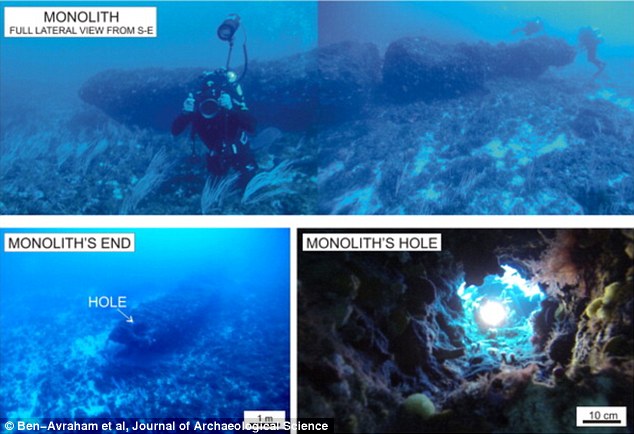
 Black hole 'fountain' gives birth to stars: 'Thunderstorms'...
 Finally! Apple's iOS 9 will automatically switch between...

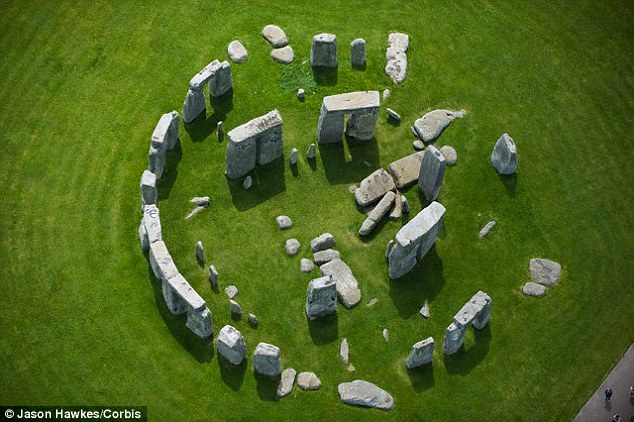

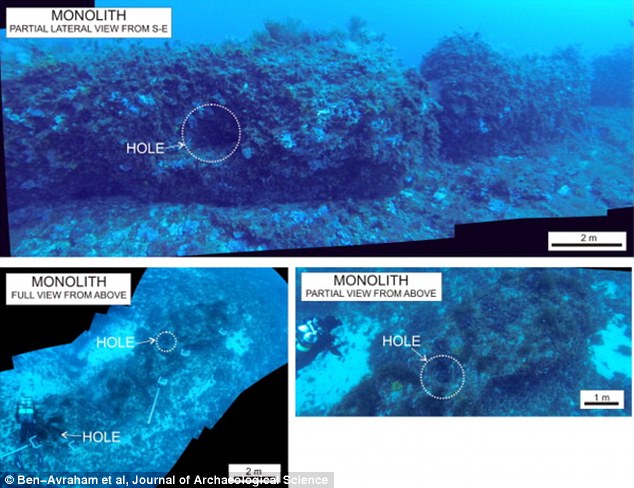
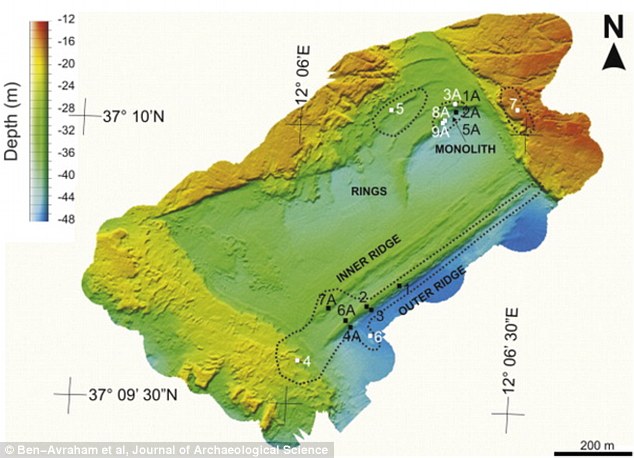


 Is dark matter 'changing its stripes'? Mysterious invisible..
 Is Jupiter hiding a rocky surface? Nasa's Juno probe to...
 Google faces record antitrust fine: European authorities may...
 No more moths 'eating' your clothes! Pheromone treatment...