Ontdek de Fascinerende Wereld van UFO's en UAP's: Jouw Bron voor Onthullende Informatie!
Ben jij ook gefascineerd door het onbekende? Wil je meer weten over UFO's en UAP's, niet alleen in België, maar over de hele wereld? Dan ben je op de juiste plek!
België: Het Kloppend Hart van UFO-onderzoek
In België is BUFON (Belgisch UFO-Netwerk) dé autoriteit op het gebied van UFO-onderzoek. Voor betrouwbare en objectieve informatie over deze intrigerende fenomenen, bezoek je zeker onze Facebook-pagina en deze blog. Maar dat is nog niet alles! Ontdek ook het Belgisch UFO-meldpunt en Caelestia, twee organisaties die diepgaand onderzoek verrichten, al zijn ze soms kritisch of sceptisch.
Nederland: Een Schat aan Informatie
Voor onze Nederlandse buren is er de schitterende website www.ufowijzer.nl, beheerd door Paul Harmans. Deze site biedt een schat aan informatie en artikelen die je niet wilt missen!
Internationaal: MUFON - De Wereldwijde Autoriteit
Neem ook een kijkje bij MUFON (Mutual UFO Network Inc.), een gerenommeerde Amerikaanse UFO-vereniging met afdelingen in de VS en wereldwijd. MUFON is toegewijd aan de wetenschappelijke en analytische studie van het UFO-fenomeen, en hun maandelijkse tijdschrift, The MUFON UFO-Journal, is een must-read voor elke UFO-enthousiasteling. Bezoek hun website op www.mufon.com voor meer informatie.
Samenwerking en Toekomstvisie
Sinds 1 februari 2020 is Pieter niet alleen ex-president van BUFON, maar ook de voormalige nationale directeur van MUFON in Vlaanderen en Nederland. Dit creëert een sterke samenwerking met de Franse MUFON Reseau MUFON/EUROP, wat ons in staat stelt om nog meer waardevolle inzichten te delen.
Let op: Nepprofielen en Nieuwe Groeperingen
Pas op voor een nieuwe groepering die zich ook BUFON noemt, maar geen enkele connectie heeft met onze gevestigde organisatie. Hoewel zij de naam geregistreerd hebben, kunnen ze het rijke verleden en de expertise van onze groep niet evenaren. We wensen hen veel succes, maar we blijven de autoriteit in UFO-onderzoek!
Blijf Op De Hoogte!
Wil jij de laatste nieuwtjes over UFO's, ruimtevaart, archeologie, en meer? Volg ons dan en duik samen met ons in de fascinerende wereld van het onbekende! Sluit je aan bij de gemeenschap van nieuwsgierige geesten die net als jij verlangen naar antwoorden en avonturen in de sterren!
Heb je vragen of wil je meer weten? Aarzel dan niet om contact met ons op te nemen! Samen ontrafelen we het mysterie van de lucht en daarbuiten.
Are you curious about upcoming UFO videos from 2020? Do you want to learn more about when the next one is going to be appearing? Well, if you are not a member of an online UFO channel, then you can definitely join one so that you can get access to all of these latest announcements and UFO videos from this year. The information that you will be receiving from your membership will include upcoming appearances by these UFO videos from this year.
The best thing about joining up with an online UFO channel is that they can provide you with details on all of the exciting new developments that you can expect in the field of UFO research. They can also give you details on the videos that they will be showing this year as well as all of the features that they are going to have to offer on their website.
Some of the videos that they will be showing in the next few months include the ones from the National Geographic channel that will be highlighting the research that they have done about extraterrestrial life and contact with other civilizations. Also, there will be a video from the Discovery Channel that will focus on some of the latest discoveries that are being made about strange lights in the sky.
The videos that will be coming from the History Channel will also focus on the videos that they have available on the Roswell incident from the year 1947. They will also have video segments where they will be interviewing people about the new technology that they have discovered in the past few years. They will also be talking about all of the UFO videos that they have obtained that were released in the past few years.
If you are a fan of science fiction, then you are going to be very excited to see a video segment from the UFOCenter channel that is going to be focused on some of the videos that they have released for the past several years. You will also be able to see a new video segment from the Sci-Fi channel that is going to be focusing on some of the upcoming features that they are going to be presenting on the topic of the UFO phenomenon.
Finally, there are many more videos that they are going to be presenting as they continue to explore the topic of UFOs. These UFO videos from the following years that they are going to be releasing include the ones from the Discovery Channel, the National Geographic channel, and the History Channel.
With all of the information that you are going to be receiving about these upcoming UFO videos from this year, you will no doubt be looking forward to some of the videos that they are going to be publishing in the near future. When it comes to finding out what you will be seeing and hearing from these videos, you can be sure that you are going to be getting the most comprehensive information when it comes to these videos that you are going to be watching.
This will give you the opportunity to gain insight into the world of UFO technology and the subjects that are being covered by the videos that you will be receiving from these channels. Take some time and look over all of the videos that they have and consider signing up for an online UFO channel that will give you all of the information that you are looking for.
Ancient Discoveries That Can Only Be Seen from Space... Who Made Them?
Ancient Discoveries That Can Only Be Seen from Space… Who Made Them?
With the use of modern technologies we can now view the planets land masses and the sea bed for ancient anomalies. One of the most perplexing discoveries is that of huge earth works that must have been created thousands upon thousands of years ago. These remain totally mindblowing.
Here you will find interviews, lectures and documentaries on archaeological findings and alternative viewpoints and explanations of science, archaeology, mythology, religion, paranormal, supernatural and history from around the world. Some of the content on this channel are from an archived collection, and all programming showcased is licensed.
A Lost World of Giants... A World-Wide Phenomena With Brad Olsen
Beyond Belief TV Series Special…Habitable life on this planet is far older than scientific cred-it is given and the research of Brad Olsen reveals that hominid life is far more diverse than anyone could have ever imagined. Legends of peoples great and small permeate every culture throughout the world. Teams of archaeologists and anthropologists have made amazing finds which substantiate the truth to such legends.
But to protect the accepted narrative of mainstream science, these findings have been quickly swept away and kept out of the inquisitive eye of the public. With the stirrings in Antarctica becoming more well-known, these secrets may not remain hidden for much longer.
Brad Olsen is the author of nine books, including two in his Esoteric Series: “Modern Esoter-ic” and “Future Esoteric.” An award-winning author, public speaker, radio show host of “The Esoteric Circle,” book publisher and event producer, his keynote presentations and interviews have enlightened audiences at convention all over the world.
It’s pretty clear that humans can have doppelgangers – other persons who look exactly like them, whether in the present or the past – but can galaxies? Astronomers studying fast radio bursts (what astronomer ISN’T studying fast radio bursts these days) hit a quintuple whammy recently when they traced four sets of fast radio burst back to the exact galaxies they were emitted from. And the fifth whammy came from follow-up observations which determined that these galaxies are doppelgangers of the Milky Way. Working its way up to whammy status is the last observation – while they can’t determine the exact cause of these FRBs, they’ve eliminated supermassive black holes – the generally accepted origin theory. That leaves … doppelganger aliens?
“Just like doing video calls with colleagues shows you their homes and gives you a bit of an insight into their lives, looking into the host galaxies of fast radio bursts gives us insights to their origins.”
Who knew we’d someday be Zooming with aliens — or at least with their galaxies? Dr. Shivani Bhandari, an astronomer with Australia’s national science agency (CSIRO) and lead author of a study published in the Astrophysical Journal Letters, explains in a CSIRO press release that this astronomical breakthrough comes from using a specially designed transient detector on CSIRO’s ASKAP radio telescope in Western Australia. Not only did this telescope follow the trail back to the exact galaxies of four fast radio bursts, it was even able to determine where in the galaxies the signal source was located.
I’m listening.
“These precisely localized fast radio bursts came from the outskirts of their home galaxies, removing the possibility that they have anything to do with supermassive black holes.”
OK, not from supermassive, galaxy-central black holes. Aliens? Co-author CSIRO Professor Elaine Sadler thinks they might be coming from merging or colliding white dwarfs (small, dense stars) or neutron stars (collapsed stars that were too small to form a black hole) or magnetars (neutron stars with strong magnetic fields).
It sounds like the number of possible causes is expanding. However, Dame Jocelyn Bell Burnell, who in 1967 was the first to detect the rapidly spinning neutron stars we now know as ‘pulsars’ (you have to admit, that’s pretty impressive – she should have gotten the Nobel Prize but at least she’s a Dame) had this to say:
“Positioning the sources of fast radio bursts is a huge technical achievement and moves the field on enormously. We may not yet be clear exactly what is going on, but now, at last, options are being ruled out.”
Try again … we dropped the signal
But not aliens … at least, not yet. Fast radio bursts continue to be one of the greatest and most mysterious discoveries of our time. The rapid pace of new discoveries as a result makes this an exciting time – a time that gives hope we may soon replace “I Want to Believe” memes with “I Believe!” facts.
Who knows? You just might have a doppelganger in another galaxy thinking the same thing.
Soon after the Australian Square Kilometre Array Pathfinder (ASKAP) radio telescope pinpointed a fast radio burst, named FRB 181112, ESO’s Very Large Telescope (VLT) took this image and other data to determine the distance to its host galaxy (FRB 181112 location indicated by the white ellipses). The analysis of these data revealed that the radio pulses have passed through the halo of a massive galaxy (at the top of the image) on their way toward Earth.
ESO/X. PROCHASKA ET AL.
CSIRO’s ASKAP radio telescope in Western Australia detected the precise location of four fast radio ... [+]
Flying robots that can ‘think’ for themselves are already being developed, which some people fear will be able to snoop on and attack people living below.
And now a team of Hungarian scientists have managed to engineer the first ‘flock’ of drones that can fly as a coordinated group.
The collection of 10 copters can fly in formation, follow a leader and change flight patterns without human input, to act a little like migratory birds.
Scroll down for video
High flyers: A team of Hungarian scientists have managed to engineer the first 'flock' of drones that can fly as a coordinated group (pictured). The collection of 10 copters can fly in formation, follow a leader and change flight patterns without human input
THE ABILITIES OF THE DRONES
They are the first ‘flock’ of drones that can fly autonomously as a coordinated group.
The collection of 10 copters can fly in formation, follow a leader and change flight patterns without human input.
They can be instructed to form a circle and they each find a position along it and rotate slowly in the same direction. Their autonomous decisions avoid collisions in the air.
The drones are commercially available quadcopters – with four rotor blades – but have specially designed hardware on board that allow them to act as a swarm.
Created by scientists at Eötvös Loránd University in Budapest, the drones navigate using signals from GPS receivers and let each other know their positions via radio, Nature reported.
The researchers' breakthrough could mean that flocks of autonomous flying robots could take to the skies sooner than previously thought.
Experts created their own computer simulation after fitting tiny GPS trackers to pigeons (stock image pictured) to see how the birds fly as a flock and used the knowledge to inform the behaviour of their drones
Tamás Vicsek, a physics professor at the university, explained that the group of 10 drones can coordinate their movements to form circles or lines, which could be useful if one day the technology is used to create swarms of surveillance drones.
He and his team was inspired to create the robots after seeing a 1986 computer game called Boids that simulated flying objects according to three rules – alignment, attraction and repulsion - so that robots could fly in formation without crashing into each other.
The scientists created their own computer simulation (pictured) after fitting tiny GPS trackers to pigeons. While some people might fear that swarms of thinking drones could prove a surveillance menace, the scientists said they could be used for many peaceful applications, such as delivering food
They created their own computer simulation using the same ideas after fitting tiny GPS trackers to pigeons to see how they fly as a flock and used the knowledge to inform the behaviour of their drones.
‘We fed flocking algorithms to them so the copters can fly autonomously – totally eliminating the need for manual control,’ Professor Vicsek said.
‘Each has a little brain in the form of an on-board computer and is completely autonomous. All decisions, directions, flight positions are decided by them,’ he explained.
The drones can be instructed to form a circle and they each find a position along it and rotate slowly in the same direction. Their autonomous decisions avoid collisions in the air.
The group of 10 drones can coordinate their movements to form circles (pictured) or lines, which could be useful if one day the technology is used to create swarms of surveillance drones
The researchers had to overcome the challenges of noise and delay, which it hard for copters to ‘see’ each other’s positions and sped up their reaction times. They plan on replacing radio signals with cameras to help the drones ‘see’ one another more easily in the future.
They will present their research at the International Conference on Intelligent Robots and Systems, to be held in Chicago, Illinois in September.
While some people might fear that swarms of thinking drones could prove a surveillance menace, the scientists said they could be used for many peaceful applications, such as delivering food and parcels.
Commenting on the study, Iain Couzin, an expert on collective animal behaviour at Princeton University in New Jersey, told Nature: ‘This is remarkable work. It is the first outdoor demonstration of how biologically inspired rules can be used to create resilient yet dynamic flocks.’
The research suggests that ‘we will be able to achieve large, coordinated robot flocks much sooner than many would have anticipated,’ he added.
One of the most bizarre aerospace-related stories in recent memory was the saga of the unidentified drones that were reportedly seen throughout eastern Colorado and western Nebraska. Numerous reports were filed with various local, state, and federal law enforcement agencies, and a joint task force was eventually formed to investigate the phenomenon. Despite the attention the alleged mystery drones received, the case has largely faded out of the public eye, likely due to the lack of either answers or definitive evidence related to the drones’ origins.
Editor's Note:We asked our readers to help us investigate this image for a good reason. One of our esteemed commenters @Orb, found the photo using a reverse image search tool called Yandex. It appears to have emanated from a coordinated drone demonstration in this video. So we can safely say that the image included in the FOIA documents is not of the Colorado incidents.
The War Zone and Douglas D. Johnson of the Scientific Coalition for UAP Studies are still filing records requests at the federal and state level in relation to the apparent drone mystery and information is now starting to trickle in. As part of those requests, Johnson recently received a single email from the FAA that may contain the best image of the mystery drones we have seen, if that is indeed what the photograph shows.
The Unresolved Saga of the Mystery Drones of America’s West and Midwest
The War Zone was among the first outlets to report on the bizarre saga of the mystery drones being reported in the skies above Colorado and Nebraska. Reports of the drones first appeared in December 2019 and sightings continued into the first few months of 2020. Public concern grew so large that the FAA along with federal, state, and local law enforcement agencies formed a task force that included a PC-12 surveillance aircraft operated by the Colorado Division of Fire Prevention and Control. The War Zone is still actively pursuing Colorado state records in relation to that aircraft and its use to hunt for the drones, although those requests have faced significant delays due to disruptions stemming from the coronavirus pandemic.
Public interest in the alleged drones seems to have died down and there is some speculation that a portion of these sightings could have been of misidentified satellites or conventional aircraft, which is far from implausible. Still, many of the sightings and accounts of drones have been made by trained personnel including law enforcement officers and the similarities among the most credible reports do suggest that formations of small unmanned aircraft have indeed been spotted flying around the region at low-level.
There was also rampant speculation that the drones were somehow related to or operated by nearby military installations including F.E. Warren Air Force Base. Emails obtained by Douglas D. Johnson of the SCU show that there was confusion and concern about the drones among personnel at the base and do not provide any conclusions that explain away the mystery. Nearly all the images in the documentation from F.E. Warren Air Force Base were strangely redacted, as well.
So, as it sits now, the strangest part of this bizarre saga is the lack of a resolution. No conclusive answers or pieces of evidence have been provided about the identity of the alleged drones, their operators, or how so many people, including reliable observers, were mistaken and by what. However, the addition of this latest image, obtained through the Freedom Of Information Act, could lend credence to the existence of the unidentified drone swarms.
The FAA’s Mysterious Image
The image Douglas Johnson obtained appears to show a formation of ten pairs of lights in the twilight or early morning sky, possibly belonging to the craft. Another object can be seen in the lower-right portion of the image which may be an individual’s silhouette, although the low resolution and the lighting conditions make it difficult to tell what exactly can be seen in the foreground in the photograph, but the lights of the airborne formation are distinct.
In the initial coverage of the unidentified drones in December 2019, The Denver Post reported that eyewitnesses described small aircraft featuring red, white, and blue lights. In the image included in the FAA email, some of the lights appear to be blue and red.
FAA VIA FOIA
The photograph was included in an email exchange between Ian Gregror, Communications Manager for the FAA Pacific Division, and Rick Breitenfeldt, a public affairs officer at the William J. Hughes Technical Center housed at the Atlantic City International Airport. From the email, it appears that the photograph was taken by a friend of Breitenfeldt’s brother-in-law who lives in central Nebraska. There is no other information in the emails, although Gregor did state that he wanted to pass the image on to local law enforcement agencies, presumably in Nebraska.
VIA FOIA
It’s still unclear what the photograph shows, although if confirmed to actually be a swarm of unmanned aerial vehicles, it would certainly support many of the eyewitness reports of formations of drones moving through the skies above Colorado and Nebraska. It's also entirely possible that it could be from some other source material unrelated to the Colorado drone scare, but the fact that the FAA official passed it along with a personal reference is significant evidence that would seem to point to the contrary.
We invite our readers to help with this investigation. Does this image look familiar? Let us know in the comments below or via email.
We will continue to investigate the rash of reports of unidentified drones over the Central United States last winter and will have future updates as more information surfaces and our records requests are fulfilled.
Thanks once again to Douglas D. Johnson and the Scientific Coalition for UAP Studies (SCU) for providing The War Zone with these documents.
A new virtual reality experience lets you fly closely, but safely, towards the supermassive black hole embedded in the heart of our galaxy, the Milky Way.
The "adventure" visualization is called Galactic Center VR and is based on data from NASA's Chandra X-Ray Observatory, as well as other telescopes. The latest iteration allows viewers to see 500 years of evolution at Sagittarius A* (Sgr A*), the black hole in the Milky Way's Center. You can view the experience for free from Steam or Vivepoint.
The Sgr A* simulation is based on modeling from 25 extremely bright and massive objects, called Wolf-Rayet stars. Similarly to supernovas, or star explosions, Wolf-Rayet stars push their outer layers of material into space. At Sgr A*, this star-shedding activity produces supersonic winds, and the material is picked up in the black hole's gravity.
"When the winds from the Wolf-Rayet stars collide, the material is heated to millions of degrees by shocks — similar to sonic booms — and produce copious amounts of X-rays," NASA said in a statement. "The center of the galaxy is too distant for Chandra to detect individual examples of these collisions, but the overall X-ray glow of this hot gas is detectable with Chandra's sharp X-ray vision."
A new visualization, made with data from NASA's Chandra X-ray Observatory and other space telescopes, allows users to experience 500 years of cosmic evolution around the supermassive black hole at the center of the Milky Way galaxy. (Image credit: NASA/CXC/Pontifical Catholic Univ. of Chile /C.Russell et al.)
The visualization displays about three light-years of space centered on Sgr A*, but the black hole is not shown to scale. It is enlarged by about 10,000 times to make it more visible; otherwise, NASA said, Sgr A* would only occupy a single pixel of space in the simulation.
Users can move around the simulation in different directions, playing with aspects such as the playback speed and the number of Wolf-Rayet winds shown. The visualization shows the Wolf-Rayet stars in white, with their orbits represented in gray. X-ray emissions are shown in blue and cyan, and wind material is portrayed in red and yellow. The overlap of wind materials and X-ray emissions is shown in purple.
Chandra is one of the two remaining NASA "Great Observatories" that launched to space in the 1990s and 2000s to observe astronomical phenomena in different wavelengths of light. The other observatories are the Hubble Space Telescope (still active), the Compton Gamma Ray Observatory (decommissioned in 2000) and the Spitzer Space Telescope (retired earlier this year).
Not a furry mole, of course; the term is the nickname for the instrument formally known as the Heat Flow and Physical Properties Package on board NASA's InSight lander mission. The lander, which touched down on Mars in November 2018, is designed to give scientists a look inside the Red Planet and gather data to help them understand its geology and internal structure. The mole is one of the lander's three key tools to accomplish that — but for more than a year, mission personnel have struggled to deploy it.
But after serious challenges, the mole has finally reached a new milestone. "After several assists from my robotic arm, the mole appears to be underground," the official Twitter account for the mission wrote yesterday (June 3). "It's been a real challenge troubleshooting from millions of miles away. We still need to see if the mole can dig on its own."
The mole consists of a drillbit-like assembly full of heat sensors that are attached to the main body of the lander by a taillike tether. The instrument is designed to hammer itself up to 16 feet (5 meters) into the Martian surface near InSight's home in a region called Elysium Planitia. The idea is that as it burrows down, the mole's temperature sensors will study the rock it digs through and evaluate how energy moves out from the planet's core.
It's a completely new type of instrument for Mars but, although the team tested it extensively in chambers of dirt on Earth, such analogs can never precisely match circumstances on the Red Planet. And so, just about as soon as the mole set out on its Martian dig, it struggled, getting stuck or backing out. Since then, InSight personnel have tried a range of tactics to get the mole digging successfully, running into obstacles every time.
The most recent technique involved using an arm on the lander to gently push the end of the mole as it dug to keep the probe from bouncing out. That's a delicate proposition since the InSight team needed to be careful to not damage the tether connecting the mole to the lander.
NASA InSight✔@NASAInSight
After several assists from my robotic arm, the mole appears to be underground. It’s been a real challenge troubleshooting from millions of miles away. We still need to see if the mole can dig on its own. More from our @DLR_en partners: http://bit.ly/3gSvB38#SaveTheMole
But according to a new blog post from Tilman Spohn, the German space agency scientist leading the mole team, this technique finally yielded some progress. The mole is now nearly entirely buried in the Martian soil, he wrote, with the scoop at the end of the lander arm near the surface. All told, that means the mole has moved about 2.8 inches (7 centimeters) into the rock between March 11 and May 30.
(Because the mission's instruments were supposed to be fully deployed by now and project personnel have other work to complete, the lander can only work on the mole problem once a week, slowing progress further, Spohn wrote.)
Next will come what the team calls the "free-mole" test, as the instrument progresses deeper than the lander's arm can assist. From now on, the mole will have to make its own way; whether it can likely depends on how much traction it can find in the column of dust and rock surrounding it.
However, external forces may soon interfere with the mole campaign, according to the blog post. "Winter is approaching on Mars' northern hemisphere and dust storm season will begin soon," Spohn wrote. "The atmosphere is already getting dustier and the power generated by the solar panels is decreasing. This may affect our ability to performing energy consuming operations with the arm in the near future. Stay tuned and keep your fingers crossed."
Cosmologists have only been able to find half the matter that should exist in the universe. With the discovery of a new astronomical phenomenon and new telescopes, these researchers say they’ve just found the rest.
Diligence, technological progress and a little luck have together solved a 20 year mystery of the cosmos.
In the late 1990s, cosmologists made a prediction about how much ordinary matter there should be in the universe. About 5%, they estimated, should be regular stuff with the rest a mixture of dark matter and dark energy. But when cosmologists counted up everything they could see or measure at the time, they came up short. By a lot.
The sum of all the ordinary matter that cosmologists measured only added up to about half of the 5% what was supposed to be in the universe.
This is known as the “missing baryon problem” and for over 20 years, cosmologists (like us) looked hard for this matter without success.
It took the discovery of a new celestial phenomenon and entirely new telescope technology, but earlier this year, our team finally found the missing matter.
Origin of the problem
Baryon is a classification for types of particles – sort of an umbrella term – that encompasses protons and neutrons, the building blocks of all the ordinary matter in the universe. Everything on the periodic table and pretty much anything that you think of as “stuff” is made of baryons.
Since the late 1970s, cosmologists have suspected that dark matter – an as of yet unknown type of matter that must exist to explain the gravitational patterns in space – makes up most of the matter of the universe with the rest being baryonic matter, but they didn’t know the exact ratios. In 1997, three scientists from the University of California, San Diego, used the ratio of heavy hydrogen nuclei – hydrogen with an extra neutron – to normal hydrogen to estimate that baryons should make up about 5% of the mass-energy budget of the universe.
Yet while the ink was still drying on the publication, another trio of cosmologists raised a bright red flag. They reported that a direct measure of baryons in our present universe – determined through a census of stars, galaxies, and the gas within and around them – added up to only half of the predicted 5%.
This sparked the missing baryon problem. Provided the law of nature held that matter can be neither created nor destroyed, there were two possible explanations: Either the matter didn’t exist and the math was wrong, or, the matter was out there hiding somewhere.
Remnants of the conditions in the early universe, like cosmic microwave background radiation, gave scientists a precise measure of the unverse’s mass in baryons.
Astronomers across the globe took up the search and the first clue came a year later from theoretical cosmologists. Their computer simulations predicted that the majority of the missing matter was hiding in a low-density, million-degree hot plasma that permeated the universe. This was termed the “warm-hot intergalactic medium” and nicknamed “the WHIM.” The WHIM, if it existed, would solve the missing baryon problem but at the time there was no way to confirm its existence.
In 2001, another piece of evidence in favor of the WHIM emerged. A second team confirmed the initial prediction of baryons making up 5% of the universe by looking at tiny temperature fluctuations in the universe’s cosmic microwave background – essentially the leftover radiation from the Big Bang. With two separate confirmations of this number, the math had to be right and the WHIM seemed to be the answer. Now cosmologists just had to find this invisible plasma.
Over the past 20 years, we and many other teams of cosmologists and astronomers have brought nearly all of the Earth’s greatest observatories to the hunt. There were some false alarms and tentative detections of warm-hot gas, but one of our teams eventually linked those to gas around galaxies. If the WHIM existed, it was too faint and diffuse to detect.
The red circle marks the exact spot that produced a fast radio burst in a galaxy billions of light-years away.
Image via J. Xavier Prochaska (UC Santa Cruz)/ Jay Chittidi (Maria Mitchell Observatory)/ Alexandra Mannings (UC Santa Cruz).
An unexpected solution in fast radio bursts
In 2007, an entirely unanticipated opportunity appeared. Duncan Lorimer, an astronomer at the University of West Virginia, reported the serendipitous discovery of a cosmological phenomenon known as a fast radio burst (FRB). FRBs are extremely brief, highly energetic pulses of radio emissions. Cosmologists and astronomers still don’t know what creates them, but they seem to come from galaxies far, far away.
As these bursts of radiation traverse the universe and pass through gases and the theorized WHIM, they undergo something called dispersion.
The initial mysterious cause of these FRBs lasts for less a thousandth of a second and all the wavelengths start out in a tight clump. If someone was lucky enough – or unlucky enough – to be near the spot where an FRB was produced, all the wavelengths would hit them simultaneously.
But when radio waves pass through matter, they are briefly slowed down. The longer the wavelength, the more a radio wave “feels” the matter. Think of it like wind resistance. A bigger car feels more wind resistance than a smaller car.
The “wind resistance” effect on radio waves is incredibly small, but space is big. By the time an FRB has traveled millions or billions of light-years to reach Earth, dispersion has slowed the longer wavelengths so much that they arrive nearly a second later than the shorter wavelengths.
Fast radio bursts originate from galaxies millions and billions of light-years away and that distance is one of the reasons we can use them to find the missing baryons.
Image via ICRAR.
Therein lay the potential of FRBs to weigh the universe’s baryons, an opportunity we recognized on the spot. By measuring the spread of different wavelengths within one FRB, we could calculate exactly how much matter – how many baryons – the radio waves passed through on their way to Earth.
At this point we were so close, but there was one final piece of information we needed. To precisely measure the baryon density, we needed to know where in the sky an FRB came from. If we knew the source galaxy, we would know how far the radio waves traveled. With that and the amount of dispersion they experienced, perhaps we could calculate how much matter they passed through on the way to Earth?
Unfortunately, the telescopes in 2007 weren’t good enough to pinpoint exactly which galaxy – and therefore how far away – an FRB came from.
We knew what information would allow us to solve the problem, now we just had to wait for technology to develop enough to give us that data.
Technical innovation
It was 11 years until we were able to place – or localize – our first FRB. In August 2018, our collaborative project called CRAFT began using the Australian Square Kilometre Array Pathfinder (ASKAP) radio telescope in the outback of Western Australia to look for FRBs. This new telescope – which is run by Australia’s national science agency, CSIRO – can watch huge portions of the sky, about 60 times the size of a full moon, and it can simultaneously detect FRBs and pinpoint where in the sky they come from.
The technology and technique worked. We had measured the dispersion from an FRB and knew where it came from. But we needed to catch a few more of them in order to attain a statistically significant count of the baryons. So we waited and hoped space would send us some more FRBs.
By mid-July 2019, we had detected five more events, enough to perform the first search for the missing matter. Using the dispersion measures of these six FRBs, we were able to make a rough calculation of how much matter the radio waves passed through before reaching Earth.
We were overcome by both amazement and reassurance the moment we saw the data fall right on the curve predicted by the 5% estimate. We had detected the missing baryons in full, solving this cosmological riddle and putting to rest two decades of searching.
Sketch of the dispersion measure relation measured from FRBs (points) compared to the prediction from cosmology (black curve). The excellent correspondence confirms the detection of all the missing matter.
Image via Hannah Bish (University of Washington).
This result, however, is only the first step. We were able to estimate the amount of baryons, but with only six data points, we can’t yet build a comprehensive map of the missing baryons. We have proof the WHIM likely exists and have confirmed how much there is, but we don’t know exactly how it is distributed. It is believed to be part of a vast filamentary network of gas that connects galaxies termed “the cosmic web,” but with about 100 fast radio bursts cosmologists could start building an accurate map of this web.
“For the dinosaurs, the worst-case scenario is exactly what happened … because it put more hazardous debris into the upper atmosphere and scattered it everywhere, the very thing that led to a nuclear winter.”
Artist’s concept of the fiery meteor that struck Earth 66 million years ago, bringing the age of dinosaurs to an end.
New computer simulations by an international team of researchers suggest the asteroid that doomed the dinosaurs, 66 million years ago, struck Earth at the “deadliest possible” angle. That is, these researchers say, it struck at an angle of about 60 degrees, thereby maximizing the amount of climate-changing gases thrust into the upper atmosphere. Such a strike would have unleashed billions of tons of sulphur into the air, blocking the sun, and triggering a nuclear winter that killed the dinosaurs and 75 percent of life on Earth at the time.
All of this is according to a study published May 26, 2020 in the peer-reviewed journal Nature Communications,
The – from Imperial College London, the University of Freiburg, and the University of Texas at Austin – examined the shape and subsurface structure of the Chicxulub meteorite crater in what’s now Mexico. Afterwards, they used that geophysical data to create computer models of the event. Their computer simulations helped them diagnose the impact angle and direction of the incoming meteor. They said in a statement that the new models are:
… the first ever fully 3D simulations to reproduce the whole event, from the initial impact to the moment the final crater.
Gareth Collins, of Imperial College London is the new work’s lead author. Collins said:
For the dinosaurs, the worst-case scenario is exactly what happened. The asteroid strike unleashed an incredible amount of climate-changing gases into the atmosphere, triggering a chain of events that led to the extinction of the dinosaurs. This was likely worsened by the fact that it struck at one of the deadliest possible angles.
Our simulations provide compelling evidence that the asteroid struck at a steep angle, perhaps 60 degrees above the horizon, and approached its target from the north-east. We know that this was among the worst-case scenarios for the lethality on impact, because it put more hazardous debris into the upper atmosphere and scattered it everywhere – the very thing that led to a nuclear winter.
Gravity map showing asymmetries in the Chicxulub crater reflect the asteroid’s impact angle.
The upper layers of earth around the Chicxulub crater contain high amounts of water as well as porous carbonate and evaporite rocks. When heated and disturbed by the impact, these rocks would have decomposed, says the study, flinging vast amounts of carbon dioxide, sulphur and water vapor into the atmosphere. According to the research:
The sulphur would have been particularly hazardous as it rapidly forms aerosols – tiny particles that would have blocked the sun’s rays, halting photosynthesis in plants and rapidly cooling the climate. This eventually contributed to the mass extinction event that killed 75 per cent of life on Earth.
It turns out that an impact angle of about 60 degrees is ideal for hurling as much vapour into the air as possible, Collins told New Scientist. If the asteroid ha came in from straight overhead, he said, the asteroid would have smashed up more rock but not sent as much into the atmosphere, and if it was more of a glancing blow, less rock would have been vaporized.
The analysis by these researchers was also informed by recent results from drilling into the 125 mile (200 km) wide crater, which brought up rocks containing evidence of the extreme forces generated by the impact. Read about how the scientists conducted the study here.
Bottom line:A new study suggests that the asteroid that doomed the dinosaurs struck Earth at an angle of about 60 degrees, which maximized the amount of climate-changing gases thrust into the upper atmosphere.
Researchers at the University of Geneva have confirmed the existence of an Earth-sized exoplanet orbiting in the habitable zone of Proxima Centauri, the closest star to our sun.
View larger. | Artist’s concept of what Proxima Centauri b could look like on the surface.
Four years ago, scientists made one of the most exciting exoplanet discoveries so far, a rocky planet similar in size to Earth orbiting the nearest star to the sun,Proxima Centauri. While the detection seemed solid, more confirmation is always good, and now the ESPRESSO spectrograph on the Very Large Telescope (VLT) in Chile has provided that extra and more detailed confirmation. The news was announcedby the University of Geneva (UNIGE) on May 28, 2020.
A new paper about it was submitted to the journal Astronomy & Astrophysics on May 25, 2020.
In the past several years, astronomers have found a large and growing number of Earth-sized exoplanets orbiting distant stars. Some are in the habitable zones of their stars, where temperatures might allow liquid water to exist on their surfaces. That is exciting in itself, but Proxima Centauri b is of particular interest since it’s orbiting the closest star to our sun, only 4.2 light-years away.
Its confirmation underscores current findings that such worlds are common in our galaxy.
Proxima Centauri b is very similar in size to Earth, with a mass of 1.17 Earth masses. It orbits its star in only 11.2 days, in contrast to our Earth’s year-long orbit around our sun. That means Proxima Centauri b is a lot closer to its star than Earth is to the sun. But, because the star is a red dwarf – much smaller and cooler than our sun – its orbit is indeed within the habitable zone of Proxima Centauri. Interestingly, Proxima Centauri b receives about the same amount of solar energy from its star that Earth does from our sun.
Relative star sizes and photospheric temperatures. Any planet around a red dwarf, such as the one shown here (Gliese 229A), would have to huddle close – as Proxima Centauri b does – to achieve Earth-like temperatures.
So, theoretically, Proxima Centauri b could have water on its surface. It could be habitable, but, of course, we don’t yet know all the details about habitability for exoworlds. We do know that many factors affect a planet’s habitability, such as temperature, composition of the planet and atmosphere, water (or lack of) and radiation from its sun. Red dwarfs like Proxima Centauri are known to emit flares, and these flares make habitability for red dwarf exoplanets even more complex and interesting.
Astronomers first found Proxima Centauri b in 2016, using an older spectrograph called HARPS. The newer spectrograph, ESPRESSO – said to be “the most accurate in the world” – was able to conduct radial velocity measurements on Proxima Centauri that are the most precise to date. A total of 63 spectroscopic observations of Proxima Centauri were acquired by ESPRESSO in 2019. Francesco Pepe at UNIGE, the scientist in charge of ESPRESSO, said in a statement:
We were already very happy with the performance of HARPS, which has been responsible for discovering hundreds of exoplanets over the last 17 years. We’re really pleased that ESPRESSO can produce even better measurements, and it’s gratifying and just reward for the teamwork lasting nearly 10 years.
Depiction of the orbital phase of Proxima Centauri b in days.
Confirming the existence of Proxima b was an important task, and it’s one of the most interesting planets known in the solar neighborhood.
The mass of Proxima b was previously estimated to be 1.3 Earth masses. The accuracy of the new measurement of 1.17 Earth masses is unprecedented, according to Michel Mayor, the “architect” of all ESPRESSO-type instruments:
ESPRESSO has made it possible to measure the mass of the planet with a precision of over one-tenth of the mass of Earth. It’s completely unheard of.
The new confirmation of Proxima Centauri b is exciting, but there may be more surprises in store … there is also possible evidence of another and smaller planet in the newest data. A secondary detection was also made, although it isn’t certain whether it is actually a planet. If it is, it is even smaller than Proxima Centauri b.
The ESPRESSO spectrograph on the Very Large Telescope (VLT) in Chile. Image via UNIGE.
Pepe said:
If the signal was planetary in origin, this potential other planet accompanying Proxima Centauri b would have a mass less than one third of the mass of the Earth. It would then be the smallest planet ever measured using the radial velocity method.
If it is a planet, it would be more akin to Mars or Mercury in size and mass – estimated at a minimum Earth mass of 0.29 ± 0.08 – and orbits the star in only 5.15 days. It wouldn’t be too surprising, though, in that low-mass stars like red dwarfs tend to have multiple planets in their systems. More observations will be required to either confirm or refute this possible second planet.
But wait, there’s more! Last January, another research team announced their finding of another possible planet orbiting Proxima Centauri, called Proxima Centauri c. This one is also still just a candidate at this point, but if real, is about six time as massive as Earth. This would make it a super-Earth, planets that are significantly larger and more massive than Earth but smaller and less massive than Neptune. It is estimated to orbit the star every 5.2 years. If both of the new candidates were to be confirmed, that would mean Proxima Centauri would have at least three planets orbiting it!
Proxima Centauri is the nearest star to our sun, although it is actually part of a three-star system including the two stars of Alpha Centauri. They may be the closest stars, but the planets don’t transit in front of Proxima Centauri as seen from Earth, as most exoplanets are found, so astronomers have had to use the radial velocity method to find them, where the planets’ gravity causes a slight wobble in the star’s motion.
While little is known so far about what Proxima Centauri b is actually like, just the fact that it exists around the nearest star to our solar system supports previous research showing that Earth-sized and super-Earth-sized exoplanets are common in our galaxy. That is exciting, and bodes well for the search for life elsewhere.
Alejandro Suarez Mascareño, lead author of the new study.
One potential problem though is that red dwarf stars are very energetic and emit dangerous radiation that could strip the atmospheres off of planets that are too close. Whether this is the case for Proxima Centauri b is not known yet. If it does still have a substantial atmosphere, it would be an ideal target for other telescopes to look for possible biomarkers, chemical signatures of life. According to Christophe Lovis at UNIGE:
Is there an atmosphere that protects the planet from these deadly rays? And if this atmosphere exists, does it contain the chemical elements that promote the development of life (oxygen, for example)? How long have these favorable conditions existed? We’re going to tackle all these questions, especially with the help of future instruments like the RISTRETTO spectrometer, which we’re going to build specially to detect the light emitted by Proxima b, and HIRES, which will be installed on the future ELT 39 m giant telescope that the European Southern Observatory (ESO) is building in Chile.
The confirmation of Proxima Centauri b – now the nearest confirmed exoworld – is exciting. Its potential habitability and close proximity to our own solar system give us something to think about. It’s another big step towards finding an inhabited world beyond Earth.
Artist’s concept of Proxima Centauri b, an Earth-sized exoplanet orbiting the nearest star to our sun, Proxima Centauri.
Phantom ships that appear to be sailing in circles off the coast of San Francisco have been discovered by an analyst examining vessel tracking data. Bjorn Bergman, from SkyTruth and Global Fishing Watch, has identified nine boats broadcasting signals that suggest they were around Point Reyes, northwest of the city, when they were actually thousands of miles away.
Commercial boats of a certain size are required by U.S. and international law to have automatic identification systems (AISs). These systems provide information on where a ship is on the ocean, helping to inform maritime radar and avoid collisions.
Bergman has worked with SkyTruth and Global Fishing Watch for six years. The latter is a project to map global fishing activity using open-source data, normally on larger vessels. Using this information, the team can compare AIS data with satellite information to any find boats that may be fishing illegally.
Last year, Bergman had noticed false AIS locations appearing for several ships off the coast of China. When they got too close to a certain point on the shore, the AIS was scrambled and they appeared to be several miles away from their true location. At the time, Bergman determined this was a deliberate disruption of the GPS rather than being a malfunction of the AIS.
He then started looking more broadly for false AIS signals, and found a strange pattern, with boats appearing above Point Reyes. "Although the circling tracks look similar in both locations, the vessels on the Chinese coast were at most a few miles from the circling tracks, while the vessels broadcasting tracks above Point Reyes are actually thousands of miles away," he wrote in a blog post.
Image showing the circle tracks by the false AIS signals.
SKYTRUTH/GLOBAL FISHING WATCH/ORBCOMM/SPIRE
There is no known connection between any of the boats and their true locations were scattered across the globe. Some of the boats were in locations where boats are known to have had GPS scrambled, such as the Suez Canal, while others were not. What was causing these boats to all of a sudden put out false AIS locations is unknown. Bergman said it could be related to some sort of malfunction with the GPS device, or it could be deliberate manipulation. But both theories come with problems.
Image showing some of the original locations of ships that put out false AIS locations.SKYTRUTH/GLOBAL FISHING WATCH/ORBCOMM/SPIRE
Port Reyes was a U.S. Coast Guard site until 2015 when it was decommissioned, although volunteers continue to maintain the site. "It has a long history in maritime navigation," Bergman told Newsweek. "There must be some connection. I've got a lot of theories [but] we don't know One thing that could be plausible is that it's acting as a zero location because of the importance of this spot in developing maritime navigation systems. So if [a ship's] reception is blocked for whatever reason they're appearing there."
He said some have suggested the location is being deliberately selected to test a system where someone is artificially inputting data into the vessels. "It's an open question about what's being affected," he said.
Bergman hopes to find out more about the AIS devices being used on the nine ships that appeared above Point Reyes. If they were made by the same manufacturer, that would be a link that he could investigate further. That alone, however, would not explain the phantom circles. Manufacturers create thousands of devices, so even if they were the same make and model, why would only nine malfunction?
Todd Humphreys, associate professor of Aerospace Engineering and Engineering Mechanics at the University of Texas at Austin, researches technology relating to positioning, navigation and security. He told Newsweek the circles off Point Reyes were likely the result of GPS "spoofing" devices. This technology, he said, started to become more accessible around 2016.
"Fast forward to 2020 [and] what I think we're witnessing with the strange patterns...is the emergence of commodity off-the-shelf spoofing devices," he said. "Someone somewhere is selling cheap turnkey GPS spoofers...I think that's what's going on." He said over the last year there have been instances of ships off China, Iran and Africa transported to some strange location and "dragged around a circle."
"We know it's GPS spoofing because we also see it in the data from exercise apps. Usually the false location is near the true one, but in other cases it's half a world away, like Point Reyes for a ship off the coast of Africa."
Humphreys said the most likely motive is to ward off drones and to hinder the enforcement of oil sanctions. "It's pretty remarkable that there hasn't been a concerted crackdown on this, given how important GPS is for safe navigation," he said. "If I'm right and cheap spoofers are now for sale, you can bet a lot more 'GPS crop circles' will show up in the coming months and years, with negative implications for ships, aircraft, and ordinary turn-by-turn directions."
Dana Goward, president of the Resilient Navigation & Timing Foundation, said he also believes GPS spoofing devices are responsible. "This might be for the purpose of concealing the vessels' movements for some reason," he told Newsweek. "Almost certainly these devices have become available for purchase on the internet from sites that specialize in GPS jamming and spoofing equipment. Maritime is a lightly governed domain and there are lots of reasons to conceal the movements of vessels or individuals."
He said it is not clear why the tracks are circular, but it could be a feature of the hardware and software of the spoofing device. The track pattern may have only become apparent once the devices started being used. What the significance of Port Reyes was, Goward says, is a "complete mystery."
"I served with the Coast Guard for 40 years retiring as the U.S. maritime navigation authority. I can't imagine how a closed radio station could have anything to do with a navigation issue. Pretty darn sure it is just a coincidence."
Bergman said he now plans to continue monitoring data for more false AIS locations. He hopes to see if he can get more information from the nine ships' AIS broadcasts. "Maybe there's a way to tell if this is something that came out of a receiver or if it was synthetically produced," he said. "Hopefully I'll get some more information about that."
Goward says the potential widespread use of spoofing devices is very concerning. In the U.S., Congress has passed a law for terrestrial systems to back up GPS timing signals. This should make receivers highly resistant to interference. "Furthermore, the system must be expandable into a navigation system that can be used when GPS is not available," he said.
Numerous videos purportedly showing pulsating, ball-shaped objects over the skies of Brazil have sparked a flurry of speculation about possible UFO sightings.
Twitter was flooded with videos claiming to show the bizarre phenomenon in Mage, outside of Rio de Janeiro.
In one of the clips, a gyrating blue sphere is seen floating above the city. The video was tweeted at Elon Musk.
“There are reports that something fell over there in a lake ... But it doesn't seem to be a satellite,” Andre Di Mauro wrote.
Another video shows a group of five illuminated spheres in the night sky – a bizarre visual phenomenon which “many people saw,” according to one Brazilian who shared the clip. Others posted footage of a floating red orb, as well as strange flashing lights in the horizon.
Bomdialeo ✔@bomdialeo
Hey @tomdelonge yesterday in Magé - Brazil many people saw OVNI’s in the sky. Enjoy there is more vídeos like these and sorry for my bad english #aliensexist
According to reports, the terms “Mage” and “Pau Grande” – the district of the city where the alleged incident took place – trended on Brazilian social media on Wednesday.
Despite the chatter online, authorities claim they are unaware of any unusual incidents. The city issued a notice stating that it had no information on the matter, local media reported, adding that the Brazilian Air Force claims it received no calls regarding the unusual objects.
Check out this incredible photo from the ESA (European Space Agency). The photo shows the space station with the horizon of the earth beginning to light up. However there are also three glowing spacecraft to the far left of the space staton. One of the craft appears in high detail to be golden disk. The other two craft are golden orbs that are accompanying the disk. Often alien spacecraft have small orbs making orbits around the main craft in order to monitor and more safely travel. Thus they avoid any unexpected problems...like flying into something by accident. This is 100% proof that the ESA is aware of aliens near our space station and that they record them in their archives. However this photo seems to have been released to the public by accident. Scott C. Waring
Here is a cool photo from the NASA Spaceflight site. The photo supposedly shows the Aurora borealis in all its glory, however it accidentally caught a large UFO in it. The UFO was clearly inside the green area and was taking samples and taking readings from the Aurora. Aliens are interested in everything about Earth, not just the humans, not just the life forms, but all area of our planet. It wouldn't surprise me if several aliens species terraformed earth long ago as an experiment so they could record the entire planet evolving and growing through time. Why? Because those alien species are billions of years old, and have long since forgotten or lost their own history that far back. Even us humans have lost a lot of our own history of what happened just a few hundred years ago, and lost most of our history of what happened two thousand years ago. So yes, we can assume the same has happened to the alien species, but for them, they lost it many times over. Scott C. Waring
Witness Believes They Observe Air Battle Between Two UFOs
A drawing of what farmhand Daryl saw
Phil Tindale explains how he and his twin brother Rob, as 10-year-olds, saw what he called hostile chase between two extremely advanced craft with one of those crashing into a tree in the South Australian town of Aldgate over 40 years ago.
A third witness reported the crash who claimed to have managed to get a close look at the craft, which looked like an eight-metre-long yellow speed boat from its underside.
However, the object had vanished by the time police arrived, leaving only strange broken branches.
Phil believes that around 95 percent of UFO sightings can be explained, but the 5% that fall into the unexplained category is quite an interesting number.
Four decades have passed, and Phil says he’s fully convinced that he saw extra-terrestrial and not military.
According to Phil, he had no real perspective on the UFO phenomenon in terms of significance and scale until the internet came.
After making contact with other witnesses and researching other people’s reports, he realised these visitations are very relevant and significant to us. The realisation prompted him to start talking about it.
Phil shared how the incident unfolded at 9:30 evening on Thursday, February 7, 1980.
His brother Rob noticed the first UFO down the valley to the south-east of Adelaide from his bedroom. Rob then called out Phil, and the then boys observed a bright yellow object just above the tree line, approximately 1km away.
After a few minutes, the second UFO, slightly larger than the first one, appeared emitting a red light. Phil described its movement as cartoon-like as it zoomed up to the yellow object, hovered and reversed, then did the same series of action again as if to prompt a reaction.
Check out this amazing book about the top 10 UFO cases in the history.
Then the yellow craft took off with the red one in pursuit before zigzagging like two blowflies in the sky. The twin watched for about 15 minutes.
On that the same night, a 21-year-old local farmhand Daryl Browne reported witnessing a speedboat-shaped yellow object like a half-moon crashed into some trees close to the horse farm where he worked, the same area where the brothers last observed the object.
Phil added that he has no doubt that we’re being visited by something beyond our own intelligence, both from his experience and speaking with others.
"SOMETHING" stops midair and reverses during Ontario Lightning Storm
On June 2, 2020 a photographer was taken a video of a lightning storm passing over Mississauga, Ontario, Canada when suddenly an unknown bright object flies into the storm. Then the object stops midair, reverses and disappears at high speed.
There are some strange things that happen in a lightning storm. There is the possibility that what we are seeing is a so-called ball lightning.
Ball lightning is an unexplained atmospheric electrical phenomenon described as luminescent, spherical objects usually associated with thunderstorms, but in this case it is not likely, since the object is not spherical.
Maybe a shooting star? But have you ever seen a shooting star that stops midair and reverses its direction?
Although it remains a mystery what the object may have been, it does appear to be under some type of intelligent control.
AIR FORCE PILOTS ARE ABOUT TO DO BATTLE WITH AUTONOMOUS DRONES
KRATOS DEFENSE
DAN ROBITZSKI
War Games
The U.S. military is planning to put its combat drones to the ultimate test: a skirmish against human fighter pilots.
Lieutenant General Jack Shanahan, who’s the head of the Pentagon’s Joint Artificial Intelligence Center, told BBC News that the military is interested in measuring the capabilities of AI-driven aircraft against its human pilots. While the plan isn’t to replace human crewmembers — yet — pitting the two against each other is a good way to gauge how far the AI has come.
Battle Droids
Shanahan told BBC News that the Air Force Research Laboratory is planning to hold a skirmish in which “an autonomous system [would] go up against a human, manned system in some sort of air-to-air.”
But even while announcing this air-to-air scrimmage, Shanahan added that the military’s goal for uncrewed fighter jets may have been too ambitious, saying that current systems don’t use “a lot of AI.”
Changing Course
The Air Force announced an AI initiative called “Skyborg” last March with the goal of flying fighter jets without anyone at the controls. Now, Shanahan says that the Air Force may be more interested in swarm drones and other uses for AI than necessarily taking the pilot out of a fighter plane’s cockpit.
“Maybe I shouldn’t be thinking about a 65ft-wingspan, maybe it is a small autonomous swarming capability,” Shanahan told BBC News. “The last thing I would claim is that carriers and fighters and satellites are going away in the next couple of years.”
The newly discovered planet candidate KOI-456.04 and its star Kepler-160 (second panel from above) have great similarities to Earth and sun (top panel). Credit: MPS / René Heller.
In the last 14 years, astronomers have identified more than 4,000 planets orbiting far-away solar systems, but none seems to come close to KOI-467.04. Don’t be fooled by its unceremonious designation, for this is a rare astronomical gem.
According to a new study led by researchers at the Max Planck Institute for Solar System Research in Göttingen, Germany, KOI-467.04 is less than twice the size of Earth and orbits a star that is almost like a twin to our Sun. What’s more, the exoplanet orbits its star at a distance similar to that between Earth and the Sun, suggesting that its surface temperature is conducive to life.
In other words, the scientists may have found a twin solar system — all that astronomers have been wishing for since the first exoplanet was discovered in 1992.
Billions of planets, but there’s only one place like home… or is there?
There are billions — perhaps trillions — of stars in the Milky Way galaxy alone and, on average, each of those stars has at least one planet orbiting them
“We are seeing just how diverse planets are. Planets are more common than they were thought to be before the first exoplanets were found. The number of planets in our galaxy is at least as large as the number of stars. But while planets and planetary systems are so diverse, planets like Earth may be very, very rare,” Dr. Jack Lissauer, a scientist at the NASA Ames Research Center and co-investigator of the Kepler mission, told me last year at a conference in Budapest.
The vast majority of exoplanets identified by astronomers in the past are the size of gas giants like Neptune or Jupiter and orbit their parent stars much too close for life to stand a chance.
Occasionally, astronomers will come across exoplanets that are Earth-sized and potentially rocky, but these planets either orbit too close or too far away from the star. On the extremely rare occasion that scientists discover an Earth-sized rocky exoplanet orbiting in the Goldilocks Zone — or habitable zone, where the distance from the parent star is just right for liquid water to form.
But even then, things are typically far from perfect. Almost all exoplanets less than twice the size of Earth found thus far orbit around a red dwarf, which present their own set of limitations.
Red dwarfs are by far the most common types of stars in the Universe. They’re small, dim, and relatively cool, and also have a long lifetime.
Yet, although life on an exoplanet orbiting a red dwarf would have twice as much time than that on Earth to evolve, it would have to overcome other important challenges.
One has to do with radiation. While the surface temperature might be just right for liquid water to form, exoplanets orbiting red dwarfs are mostly hit by infrared rather than visible light.
If that wasn’t enough, red dwarfs also regularly spew powerful solar flares that can fry nearby planets. What’s more, because red dwarfs are so faint, exoplanets hoping to harbor life need to orbit so close to the parent stars that they get deformed by the stellar gravity. This can result in tidal heating that can trigger global volcanism and turn the promising exoplanet into a hellish world.
So, it’s not just a question of exoplanet quality, stellar quality is vital too. Now, an international team of researchers think they’ve found one that checks all the boxes.
Mirror Earth and Sun
The Earth-like planet candidate that orbits a sun-like star is located over 3,000 light-years away, in the Kepler-170 system.
It was first identified in 2009 and since 2014, astronomers have found that it hosts two exoplanets, known as Kepler-160b and Kepler-160c, which are both much bigger than Earth and in relatively close orbits around their stars. Nothing to warrant particular attention so far.
But then the researchers combed the archival Kepler data of Kepler-160 hoping to perhaps find other planets using a novel method developed by Michael Hippke and René Heller, both from Max Planck. Their investigation was prompted by evidence that Kepler-160c’s orbit was perturbed — something was out there.
This is when they found another two planets, among them the exciting KOI-456.04.
“Our analysis suggests that Kepler-160 is orbited not by two but by a total of four planets,” Heller said in a statement.
“The planetary signal is so faint that it’s almost entirely hidden in the noise of the data. Our new search mask is slightly better in separating a true exoplanetary signal from the noise in the critical cases,” Heller adds.
According to Heller and colleagues, KOI-456.04 has a radius of 1.9 Earth radii (almost twice as large as Earth) and orbits its parent star every 378 days — that’s mighty close to Earth’s 365 days (or 366 days during a leap year).
As for the star, the astronomers estimate that its radius is 1.1 that of the Sun, with a surface temperature of around 5,200 degrees Celsius, just 300 degrees shy of that of the sun. Its luminosity is also sun-like.
Given this information, the researchers believe that KOI-456.04 might have an average surface temperature of around 5 degrees Celsius, as long as it has an atmosphere that can support at least a mild Earth-like greenhouse gas effect.
“KOI-456.01 is relatively large compared to many other planets that are considered potentially habitable. But it’s the combination of this less-than-double the size of the Earth planet and its solar type host star that make it so special and familiar,” Heller
Don’t get too excited, though. As a caveat, the researchers claim that they cannot entirely rule out KOI-456.01 as a statistical fluke. According to the study published in thejournal Astronomy & Astrophysics, the odds of KOI-456.04 being a real planet and not some statistical aberration is 85%. Formal planetary status requires a 99% degree of confidence.
All hope is not lost, though. Astronomers will have a good chance to confirm their findings once ESA’s PLATO space mission launches in 2026. Plato will specialize in the examination of rocky exoplanets orbiting in habitable zones around Sun-like stars, particularly focusing on the potential for these planets to hold liquid water. Fingers crossed.
World's 'oldest Mayan monument' unearthed in Mexico contains NO tributes to the 'elite' suggesting the ancient civilisation was more egalitarian than previously thought
The Mayan site is 4,600ft long, 50ft tall and built between 800 BC and 1,000 BC
It was found by University of Arizona archaeologists using aerial lidar images
They say it is both the largest and the oldest known Mayan site ever discovered
A 3,000-years-old Mayan temple has been discovered in Mexico, making it the ancient civilisation's oldest and largest monument.
The temple site in Tabasco, Mexico, was discovered by international team archaeologists led by the University of Arizona during an expedition in 2017.
The site, called Aquada Fénix, is 4,600ft long and up to 50ft high, making it larger than the Mayan pyramids and palaces of later periods.
It was built between 800 BC and 1,000 BC, according to the team behind the discovery.
One of the most remarkable revelations from the find was the complete lack of stone sculptures related to rulers and elites, such as colossal heads and thrones, that are commonly seen in other Mayan temples.
This suggests that the people who built it were more egalitarian than later generations of Mayans.
The site, called Aquada Fénix, is 4,600ft long, up to 50ft high and was built between 800 BC and 1,000 BC, according to the team behind the discovery
Researchers excavated parts of the massive site and were able to radiocarbon date charcoal and rocks to determine it was up to 3,000 years old
From the ground, it's impossible to tell that the plateau where this site was discovered hides something extraordinary, the research team said.
However, from the sky, with laser eyes, and beneath the surface, with radiocarbon dating, it became clear just how historically important the location was.
Located in Tabasco, Mexico, near the northwestern border of Guatemala, the newly discovered site of Aguada Fénix lurked beneath the surface.
It had been hidden by its size and low profile until 2017 when Takeshi Inomata and Daniela Triadan from the University of Arizona made their remarkable discovery.
Located in Tabasco, Mexico, near the northwestern border of Guatemala, the newly discovered site of Aguada Fénix lurked beneath the surface
They used lidar (light detection and ranging) technology, which uses laser-emitting equipment from an aerorplane to find the site under a tree canopy.
The team then excavated the site and radiocarbon-dated 69 samples of charcoal to determine that it was constructed sometime between 1,000 to 800 B.C.
Until now, the Mayan site of Ceibal, built in 950 BC, was the oldest confirmed ceremonial centre dating back to the Mayan period in South America.
'This area is developed - it's not the jungle; people live there - but this site was not known because it is so flat and huge. It just looks like a natural landscape. But with lidar, it pops up as a very well-planned shape,' the team said.
The discovery marks a time of major change in Mesoamerica and has several implications for what we know about the period, Inomata said.
First, archaeologists traditionally thought Maya civilisation developed gradually.
Until now, it was thought that small Maya villages began to appear between 1,000 and 350 BC, what's known as the Middle Preclassic period.
This coincided with the use of pottery and some maize cultivation.
Second, the site looks similar to the older Olmec civilisation centre of San Lorenzo to the west in the Mexican state of Veracruz - but without the statues dedicated to rulers and the elite found at the Olmec site.
The fact that monumental buildings existed earlier than thought and when Maya society had less social inequality makes archaeologists rethink the construction process those sites went through
This suggests less social inequality than San Lorenzo and highlights the importance of communal work in the earliest days of the Maya.
'There has always been debate over whether Olmec civilisation led to the development of the Maya civilisation or if the Maya developed independently,' Inomata said. 'So, our study focuses on a key area between the two.'
The period in which Aguada Fénix was constructed marked a gap in power - after the decline of San Lorenzo and before the rise of another Olmec center, La Venta.
During this time, there was an exchange of new ideas, such as construction and architectural styles, among various regions of southern Mesoamerica.
One of the most remarkable revelations from the find was the lack of monuments to the 'elite', suggesting it was part of a more equal society than other later Mayan sites
'During later periods, there were powerful rulers and administrative systems in which the people were ordered to do the work,' said Inomata.
'But this site is much earlier, and we don't see the evidence of the presence of powerful elites. We think that it's more the result of communal work,' he said.
The fact that monumental buildings existed earlier than thought and when Maya society had less social inequality makes archaeologists rethink the construction process those sites went through.
'It's not just hierarchical social organisation with the elite that makes monuments like this possible,' Inomata said.
This is a map of Mesoamerica - the new site can be seen in the middle towards the top of the map. The period in which Aguada Fénix was constructed marked a gap in power - after the decline of San Lorenzo and before the rise of another Olmec center, La Venta
'This kind of understanding gives us important implications about human capability, and the potential of human groups.
'You may not necessarily need a well-organised government to carry out these kinds of huge projects. People can work together to achieve amazing results.'
Inomata and his team will continue to work at Aguada Fénix and do a broader lidar analysis of the area to find out more about the ancient site.
They want to gather information about surrounding sites to understand how they interacted with the Olmec and the Maya.
They also wants to focus on the residential areas around Aguada Fénix.
'We have substantial information about ceremonial construction,' Inomata said, 'but we want to see how people lived during this period and what kind of changes in lifestyle were happening around this time.'
The team's findings have been published in the journal Nature
WHO WERE THE MAYANS? A POPULATION NOTED FOR ITS WRITTEN LANGUAGE, AGRICULTURAL AND CALENDARS
The Maya civilisation thrived in Central America for nearly 3,000 years, reaching its height between AD 250 to 900.
Noted for the only fully developed written language of the pre-Columbian Americas, the Mayas also had highly advanced art and architecture as well as mathematical and astronomical systems.
During that time, the ancient people built incredible cities using advanced machinery and gained an understanding of astronomy, as well as developing advanced agricultural methods and accurate calendars.
The Maya believed the cosmos shaped their everyday lives and they used astrological cycles to tell when to plant crops and set their calendars.
This has led to theories that the Maya may have chosen to locate their cities in line with the stars.
It is already known that the pyramid at Chichen Itza was built according to the sun’s location during the spring and autumn equinoxes.
When the sun sets on these two days, the pyramid casts a shadow on itself that aligns with a carving of the head of the Mayan serpent god.
The shadow makes the serpent's body so that as the sun sets, the terrifying god appears to slide towards the earth.
Maya influence can be detected from Honduras, Guatemala, and western El Salvador to as far away as central Mexico, more than 1,000km from the Maya area.
The Maya peoples never disappeared. Today their descendants form sizable populations throughout the Maya area.
They maintain a distinctive set of traditions and beliefs that are the result of the merger of pre-Columbian and post-Conquest ideas and cultures.
A team of international archaeologists (led by the University of Arizona) made an incredible discovery when they came across the largest and oldest Mayan structure ever found to date. The 3,000-year-old temple site is called Aquada Fénix and is located in Tabasco, Mexico. As for its gigantic size, it measures 4,600 feet in length by 50 feet in height.
A 3D image of the Aguada Fénix site, reconstructed from data gathered during an aerial laser survey.
The Maya civilization has thrived for almost 3,000 years in Central America. They were known for having the only full written language during the pre-Columbian Americas as well as creating exceptionally advanced architecture and art. They were able to build structures that helped greatly with their agriculture. Additionally, they are well known for their incredible understanding of math and astronomy that went into building some structures like the pyramid at Chichen Itza. During the spring and fall equinoxes, the setting sun makes the pyramid cast a shadow on itself which makes the serpent appear as though it’s slithering towards the ground.
Chichen Itza
The newly discovered structure is quite unique because most other Mayan temples contain stone sculptures that depict ancient rulers and elite members of society, however, Aquada Fénix doesn’t have those. This suggests that those who constructed the temple were firm believers that everyone was equal and they didn’t have to create sculptures of those in a higher social standard.
The team used lidar technology to find the temple back in 2017 but their findings were only recently published in the journal Nature and can be read here. When the laser-emitting equipment mapped out the temple, the team began excavating the area. After radiocarbon-dating 69 samples of charcoal, they were able to confirm that the structure was built between 1,000 BC and 800 BC. Prior to this discovery, the Mayan site of Ceibal was the oldest ceremonial center which was constructed in 950 BC.
As for the newest discovery, the team said, “This area is developed – it’s not the jungle; people live there – but this site was not known because it is so flat and huge. It just looks like a natural landscape. But with lidar, it pops up as a very well-planned shape.”
One of the study’s authors, Takeshi Inomata, said that this new discovery shows the change in Mesoamerica during that time period. It was initially believed that the Maya civilization gradually developed with villages starting to show up between 1000 BC and 350 BC. And while the structure looks similar to the Olmec civilization center in San Lorenzo, it doesn’t have rulers depicted on the sculptures.
Mayan Calendar
Inomata explained this further, “There has always been debate over whether Olmec civilization led to the development of the Maya civilization or if the Maya developed independently.” “So, our study focuses on a key area between the two.”
He went on to say, “During later periods, there were powerful rulers and administrative systems in which the people were ordered to do the work,” adding, “But this site is much earlier, and we don’t see the evidence of the presence of powerful elites. We think that it’s more the result of communal work.”
The team plans to conduct a more detailed lidar scan of the site to find out as much information as possible about Aquada Fénix and the ancient Maya culture. Aerial pictures of the site can be seen here.
Everyone knows (or will eventually find out) that nothing disappears on the Internet. That’s apparently also the case in Central Italy at the foothills of the Italian Alps where a medieval ghost village pops out of a lake every few decades to allow locals a trip down 13th century memory lanes.
“So soon, from the bottom of the artificial reservoir, the stone village and the church of San Teodoro with its square bell tower could emerge again. And with them a story that has its roots over the centuries. And that became important with the conquest of the village by the Este family and with the construction of the via Vandelli, which connected Modena to Massa.”
“Artificial reservoir” gives you a hint as to why the village of Fabbriche di Careggine lies at the bottom of Lago di Vagli (Vagli Lake) but that is but a waterlogged blip in the rich history that it had before becoming the Atlantis of Italy. The village was founded in the thirteenth century by a colony of blacksmiths from Brescia, an ancient Italian city dating back over 3,200 years with a rich history in manufacturing, metalworking, textile making and other industries. The blacksmiths most likely made the 250 km (155 miles) move for better weather, easier access to the coast or an abundance of iron ore. The mills and factories they built in this new village near the town of Careggine gave it its name: Fabbriche di Careggine – the factories of Careggine.
Iron ore mining today
Under the powerful Este ruling family, Fabbriche di Careggine became the largest iron supplier in the area – helped by the construction of the Via Vandelli, a major military and industrial road. The road eventually lost its prominence under new political leaders and so did Fabbriche di Careggine. However, Vagli became a source for marble in the early 1900s and a small hydroelectric power station was built on the Edron river to serve it. Everything was fine again … until the Fascists arrived.
Italian marble quarry
The government electric company decided to dam the Edron, resulting in the creation of Lago di Vagli and the sinking of Fabbriche di Careggine. However, they built nearby Vagli Sotto in a reproduction of the urban layout of the medieval village and moved the 146 inhabitants, who said their final goodbye to their homes, the church of San Teodoro and its square bell tower in 1953.
What was that you said about the Internet and submerged Italian villages?
“… among the proposals considered within the initiative there are the opening of sites used for digital indoor museums , the creation of museum institutions in the area and local history, the redevelopment of the natural environment, including the cleaning of the Vagli reservoir through a series of activities that, through the possible emptying of the basin, provide for the implementation of maintenance activities on hydraulic works, environmental interventions with naturalistic engineering works and tourism enhancement projects.”
The current power company is considering draining the lake in 2021 for maintenance, but with the additional noble causes of promoting environmentalism and the tourism boost the reappearance of Fabbriche di Careggine will generate, assuming they go through with the draining.
Just think how much tourism business Atlantis would generate. Keep looking!
David Wilcock:Hidden Secrets of the Universe... What Does NASA Really Know?
Incredible new discoveries are being found throughout our solar system. What information is hidden within sacred geometry and what can we learn from the universal constant of hyper-dimensional physics? Does NASA know more than they are telling us?…Archived Show… Presented by Richard Hoagland, David Wilcock.
Filmed by Lost Arts Media Pls Note: This is an archived show.
All content on this channel is licensed, and or produced by Zohar Entertainment Group/Awakening Expo/Phenomena Magazine
What researchers have done is apply the theory of the holographic principle to black holes. In this way, their mysterious thermodynamic properties have become more understandable: focusing on predicting that these bodies have a great entropy and observing them in terms of quantum mechanics, you can describe them just like a hologram: they have two dimensions, in which gravity disappears, but they reproduce an object in three dimensions. Credit: Gerd Altmann for PIxabay
According to new research by SISSA, ICTP and INFN, black holes could be like holograms, in which all the information to produce a three-dimensional image is encoded in a two-dimensional surface. As affirmed by quantum theories, black holes could be incredibly complex, and concentrate an enormous amount of information in two dimensions, like the largest hard disks that exist in nature. This idea aligns with Einstein's theory of relativity, which describes black holes as three dimensional, simple, spherical and smooth, as depicted in the first-ever image of a black hole that circulated in 2019. In short, black holes appear to be three dimensional, just like holograms. The study, which unites two discordant theories, has recently been published in Physical Review X.
The mystery of black holes
For scientists, black holes pose formidable theoretical challenges for many reasons. They are, for example, excellent representatives of the great difficulties of theoretical physics in uniting the principles of Einstein's general theory of relativity with those of the quantum physics of gravity. According to the relativity, black holes are simple bodies without information. According to quantum physics, as claimed by Jacob Bekenstein and Stephen Hawking, they are the most complex existing systems because they are characterized by enormous entropy, which measures the complexity of a system, and consequently contain a lot of information.
The holographic principle applied to black holes
To study black holes, the two authors of the new study, Francesco Benini (SISSA Professor, ICTP scientific consultant and INFN researcher) and Paolo Milan (SISSA and INFN researcher), used a 30-year-old idea called the holographic principle. The researchers write, "This revolutionary and somewhat counterintuitive principle proposes that the behavior of gravity in a given region of space can alternatively be described in terms of a different system, which lives only along the edge of that region and therefore in a one less dimension. And, more importantly, in this alternative description (called holographic), gravity does not appear explicitly. In other words, the holographic principle allows us to describe gravity using a language that does not contain gravity, thus avoiding friction with quantum mechanics."
What Benini and Milan have done is apply the theory of the holographic principle to black holes. In this way, their mysterious thermodynamic properties have become more understandable: Focusing on predicting that these bodies have a great entropy and observing them in terms of quantum mechanics, you can describe them just like a hologram—they have two dimensions, in which gravity disappears, but they reproduce an object in three dimensions.
From theory to observation
This study is only the first step toward a deeper understanding of these cosmic bodies and of the properties that characterize them when quantum mechanics crosses with general relativity. Everything is more important now at a time when observations in astrophysics are experiencing an incredible development. Just think of the observation of gravitational waves from the fusion of black holes, the result of the collaboration between LIGO and Virgo, or indeed, that of the black hole made by the Event Horizon Telescope that produced this extraordinary image. In the near future, we may be able to test our theoretical predictions regarding quantum gravity, such as those made in this study, by observation. And this, from a scientific point of view, would be something absolutely exceptional.
This UFO is in an old Apollo 7 mission photo. Its on the official NASA website so there is no possibility of it being faked. The object is hovering over earth, but close to the Apollo 7 module. Aliens are deeply interested in historical events and often have a drone or piloted craft observing from a distance to see first hand how it all takes place. The written history and the actual history are often slightly different and in some cases incredibly different. So aliens try to observe first hand. Scott C. Waring - Taiwan
I found this photo going through the NASA Apollo 10 index. The photo shows a triangle UFO landed on the upper right corner of the image. The alien ship is big. It is close to 5km across from nose to tail. The top of the ship has long diagonal lines that go from nose to tail, which shows its thickness and strength. The triangle craft really stands out from its environment. I am very surprised thats something this big was not deleted by NASA. But we are fortunate that NASA misses some alien artifacts...or perhaps some NASA employees actually try to let it slide through to inform the public. Scott C. Waring - Taiwan
Strange dark cigar-shaped UFO hovering in the sky over Tijuana, Mexico
Adark cigar-shaped UFO was spotted in broad daylight while hovering in the sky over Tijuana in Mexico on June 3, 2020.
The witness states: Every day I go out to see the sky for a few minutes and today I saw a dark spot on some hills and I ran through my camera and was able to zoom to see what it is and I managed to capture this.
These unidentified flying objects were filmed in the sky above Wales, UK on 3rd June 2020. Amid the otherwise cloudy skies of New Wales, England, the outlandish appearance of a few very bright beams of light caught the eyes of the spectators and filled them with awe. Initially only two bright white lights, hovering one above the another, could be seen in the sky but after just a few seconds a new quad formation of lights appeared, as if out of nowhere, in the sky at a certain distance from the initial sighting.
All these lights could be coming from a very very large spaceship or a UFO, as viewers thought, or these lights could denote multiple UFOs just flying above the town of New Wales. What is even stranger is that the quad formation of lights was blinking in an unrecognisable pattern and it had an uncanny resemblance to a hologram. It could represent some kind of a signal from aliens or they were just trying to watch a movie in against the cloudy canvas of sky.
Flashing object over Shamokin, Pennsylvania 3-Jun-2020
This flashing unidentified flying object was recorded in the sky above Shamokin, PA two days ago.
Witness report:
As I was walking downhill, south on N. Pearl St. near 1000 N. Pearl St., in Shamokin PA I noticed a very bright white light rapidly shoot straight up into the air above the city of Shamokin. It took approx. 3 secs to move from ground level to above the city. It shot up, hovered for approx. 30-45 secs, then descended. I immediately started taking a video with my iPhone which I uploaded here.As I was watching this, my iPhone rang and the video stopped. However, I was able to take a picture of the object as it descended, right before it became invisible from my location. It made no sound whatsoever. I have never seen anything like this in Shamokin. There is very little air traffic in this area. A helicopter was spotted flying north approx. 30-45 minutes earlier, which is rare. The light flickered (as you can see in the video). it also appeared to flicker green and red for a few seconds during the sighting. I first thought this was a high end drone of some sort, but its brightness, lack of sound, and rapid movement helped push me to submit it.
Don’t forget to follow us on Twitter for the latest UFO videos & photos.
This picture taken on September 24, 2016 shows the Five-hundred-metre Aperture Spherical Radio Telescope (FAST) in Pingtang, in southwestern China's Guizhou province
Photograph:( AFP )
STORY HIGHLIGHTS
The huge telescope started functioning in January, but has been undergoing renovation and upgrades to minimise the risk of signal interference
While the world deals with a pandemic, China is going extraterrestrial - quite literally.
Chinese state media outlet Science and Technology Daily claims that the country’s FAST (Five-hundred-metre Aperture Spherical Telescope) is going to start looking for alien life, rather signals starting September 2020.
The huge telescope started functioning in January, but has been undergoing renovation and upgrades to minimise the risk of signal interference which could hamper the scientific undertaking of finding aliens.
This picture taken on September 24, 2016 shows the Five-hundred-metre Aperture Spherical Radio Telescope (FAST) in Pingtang, in southwestern China's Guizhou province
AFP
With a diameter of 500 metres, FAST marks one of the pilot state-sanctioned projects ever to focus extensively on research on the extraterrestrial.
EnGadget reported that the planned research will not disrupt ongoing missions, as asserted by Chief Scientist Zhang Tongjie.
However, Tongjie warned that they expect no signals from intelligent life, adding there exist “interesting narrowband candidate ET signals”.
Radio signals are emitted from pulsars or fast radio bursts. In case any alien life is trying to reach out to Earth, FAST will improve the chances of receiving the signals and processing those signals.
FAST is located in Pingtang, in southwestern China's Guizhou province. The dish is almost the size of 30 football fields!
Five-hundred-metre Aperture Spherical Radio Telescope (FAST) in Pingtang, in southwestern China's Guizhou province
AFP
UFOs?
Earlier in April, The Pentagon released a few videos, where a US Navy pilot was seen encountering unknown flying objects. The video showcased unidentified aerial phenomena, more commonly known as unidentified flying objects (UFOs).
According to the US Department of Defense, the video clip has been brought in the public domain by Pentagon so that people do not fall for the doctored video that was being circulated earlier.
China is currently recovering from the COVID-19 pandemic, which is currently wreaking havoc across the world, with the US recording highest ever death toll for a country. Wuhan, the initial epicentre of the virus is no longer reporting new cases.
Poor harvest! Mysterious 200ft Covid crop circle appears in Wiltshire farmer’s barley field
A 200ft-wide crop circle shaped like a Covid virus has mysteriously appeared in a farmer’s field this week.
The unusual crop formation was discovered on Friday in the Wiltshire countryside – the county said to be the epicentre of crop circle tourism – as the start of the new crop circle season begins.
Pictures of the detailed design, found in an agricultural barley field and said to measure approximately 200ft by 130ft, were shared on social media.
The 200ft-wide crop circle shaped like a coronavirus was discovered in a farmer’s barley field in Wiltshire on Friday
The unusual design appeared at the beginning of the crop cirlce season and is located in Wiltshire, said to be the epicentre of crop circle tourism
In response to the eye-catching drone snapshots, Heather Barsby said: ‘Those aliens are risking it a bit coming here during a pandemic.
‘And surely they should go into two weeks of quarantine as well before playing in the crops.’
Richard Marshall added: ‘I hope they didn’t travel more than five miles. At least we can be fairly confident there weren’t more than six of them from no more than two households.’
The exact location of the field has not been revealed to avoid visitors walking there and it is not known how it was made.
Pictures of the eye-catching design were shared on social media but the exact location has not been shared in a bid to stop people visiting the field
The sudden appearance of crop circles and their intricate designs has lead to several theories about how they are formed.
Sightings of crop circles date back hundreds of years in Europe, with some people believing they are the result of UFOs or spaceships landing in fields and flattening the crop.
In the opposing camp, people firmly believe the large designs are man-made, often causing tensions between the two groups.
On the surface of it all, it wouldn’t seem that the job of UFO researcher should be too dangerous. They read up on the lore and cases, perhaps go check things out, and they are investigating a phenomenon that many people don’t believe in to begin with. However, judging by some of the cases, it seems that there is a very big risk to be had indeed, as many researchers seem to have the habit of turning up dead. From conspiracies and strange “suicides,” to mysterious illnesses and more, UFO researchers seem to have more occupational hazards that one might initially suspect.
People who investigate UFOs have been turning up dead for decades. In 1959, we have the case of a very well-known astronomer, archeologist, and UFO researcher by the name of Morris K. Jessup. He was known in the UFO community mostly for his unorthodox theories, early postulation on the ancient astronaut theory and alternative history, and for his books The Case for the UFO (1955), UFOs and the Bible, The UFO Annual (both 1956), and The Expanding Case for the UFO. (1957). Jessup is known for having influenced the growing field of ancient astronauts, with his work forming the basis of other books that would follow in this vein, including the classic Chariots of the Gods, by Erich von Däniken, and others. He is also well-known for his involvement with the notorious Philadelphia Experiment, which purportedly sought to render a US Navy vessel invisible, and also for his mysterious death.
1958 was a rough year for Jessup. His books hadn’t been selling well, his wife left him, and he was involved in a car accident in Florida that left him seriously injured. On April 19, 1959, Jessup made arrangements to meet with a researcher named Manson Valentine, allegedly because he wanted to give some classified information on the Philadelphia Experiment. He never got the chance, because on April 20 he was found dead in his car in Dade County, Florida, a hose running from the exhaust pipe to the window. Although it was ruled a suicide, there has long been talk of conspiracies and things that don’t add up.
Morris K. Jessup
One is that a police detective who investigated the case would claim that it seemed a bit too professional. There is also the fact that it would turn out that Jessup had been plagued with strange calls in the days leading up to his death, and that he had just met with the mysterious Carlos Allende, who had written the letter that was instrumental to bringing the Philadelphia Experiment to public knowledge. More ominous still was that no autopsy was ever performed on the body, which is not only strange, but also apparently against Florida law. The idea here is that this was no mere suicide at all, but rather an orchestrated hit designed to keep him quiet about the secrets he knew about the Philadelphia Experiment. It must be added that no one is sure that the Philadelphia Experiment was ever even real or not, as well as the fact that friends and family have said that his troubles in the year leading up to his death had caused him to sometimes mention suicide. What happened here? Was this just a simple suicide or a nefarious assassination? Who knows?
Similarly, we have the case of the American writer, broadcaster, and radio pioneer Frank Allyn Edwards, who also happens to have become very well-known for his various books, articles, and research on UFOs and other unexplained phenomena, which he also frequently discussed on his popular syndicated radio program, Stranger Than Science. On June 24, 1967, Frank Edwards succumbed to a sudden heart attack, which has been orbited by strange mysteries ever since. One unusual coincidence, or not depending on your angle, was that his death fell exactly on the 20th anniversary of once of the most famous UFO sightings ever, the Kenneth Arnold sighting, in which pilot Kenneth Arnold claimed to have seen a string of nine, shiny unidentified flying objects flying past Washington’s Mount Rainier at high speeds, in one of the first of the modern era of UFO sightings. Making things even more ominous is that the death coincided with the “World UFO Conference,” which was being held in New York City and chaired by UFO researcher and author Gray Barker. Eerily, Barker would claim that he had received threats by phone and mail that had promised that Edwards would not see the end of the conference alive. They were right. Again, what are we dealing with here? Insidious plots or just a plain heart attack?
Kenneth Arnold
Moving into the 70s we have a few high-profile deaths of UFO researchers. In 1971, a physicist at the University of Arizona and advocate of more serious studies into UFOs by the name of Dr. James McDonald was in the process of trying to convince U.S. Congress that UFOs were a phenomenon that deserved a closer look and more investigation. He was never successful, because he came down with a bad case of a gunshot to the head in an apparent suicide. Two years later, in 1973, beloved cryptozoologist and UFO afficionado Ivan T. Sanderson was taken out by an unusually fast-spreading cancer. This is curious, because strangely aggressive cancers and tumors are a common theme in the deaths of these doomed researchers, which we can see from a string of mysterious deaths in the 80s.
The astronomer Dr. Allen J. Hynek is a famous fixture of UFO history, having once been a major consultant and investigator for Project Blue Book, the U.S. Air Force’s official investigation into the UFO phenomenon. In 1986, Hynek was admitted to the hospital for prostrate surgery, but would never leave, as he was soon found to have an incredibly vicious brain tumor that ended him. According to those who knew him, in the days leading up to his death he had allegedly spoken of and seemed unsettled by some newly acquired information he had received on UFOs. Could this have had something to do with his death? Two years later, in 1988 notable investigative radio host Mae Brussell died of a fast-acting cancer in California. She was known as a major conspiracy theorist and for her no holds barred radio program on these topics called Dialogue: Conspiracy, later renamed World Watchers International.
Mae Brussel
The 1990s continued these shady deaths, with 1993 seeing astronaut Deke Slayton die of cancer conveniently right before he was expected to come forward with his inside knowledge and experiences of UFOs. In 1994, an investigator for the Mutual UFO Network (MUFON), Ann Livingston, died of an extremely aggressive form of ovarian cancer. Rather spookily, this happened just 2 years after she claimed to have been harassed by ghoulish faceless, pale, and sinister Men in Black. Also in 1994 was the death of another MUFON investigator, Ron Johnson, who was actually the deputy director of investigations for the organization. He would die under very strange circumstances when after a slide presentation at a conference in Austin Texas, the lights came on and he was found unresponsive in his seat, with blood coming out of his nose and a weird purple coloration to his face. 1996 saw the death of UFO author Karla Turner, who died of breast cancer. Turner was known for constantly attributing her cancer to actions taken by aliens due to some of the things she had written in her books Masquerade of Angels, Taken, and Into the Fringe. In 1999, author of numerous UFO and conspiracy books, Jim Keith, also died when a blood clot stopped his heart as he was receiving routine surgery for a broken leg.
Moving into the 2000s we have several more strange cases. In April of 2001, prolific author of unexplained phenomena, Ron Bonds, mysteriously died of a common food poisoning bacterium that rarely leads to death, but for some reason turned deadly for him. More sinister still was the death of prominent UFO researcher Paul Vigay in 2009. In February of that year, the 44-year-old was found bobbing about in the churning sea off the coast of Portsmouth, Hants, leaving a series of strange cryptic passwords behind on his phone that no one could figure out. Although authorities were quick to label it as a suicide, Vigay’s friends and family are adamant that he was not suicidal, and the coroner was also not able to verify whether it was suicide or not, saying “I cannot say beyond reasonable doubt that yes Paul has taken his own life. The only person who could tell us what was going on in his mind and what happened that night is sadly not here to tell us.”
Perhaps one of the weirdest cases of all is also the most recent. Conspiracy theorist and UFO expert Max Spiers was well-known for delving into government cover-ups, and in July of 2016 he was in Warsaw, Poland, visiting a friend and also planning on attending a conference on conspiracy theories and UFOs. On July 16, Spiers’ friend found him on the sofa, unresponsive and apparently having vomited up a viscous “black liquid.” It would turn out that there were some pretty suspicious details surrounding the death, one being a text message he had written to his mother just before his death, which reads, “Your boy’s in trouble. If anything happens to me, investigate.” Also odd is that there was never any actual official autopsy done on the body, and adding to this was that Spiers was a healthy young man with no history of physical issues, making it odd that he should just drop dead on that sofa. There would be very little word on the state of the investigation until 2019, when authorities would rule the death as being caused by drug use and pneumonia. Max’s mother would say of it all:
Max was a very fit man who was in good health and yet he apparently just died suddenly on a sofa. All I have is a death certificate from the Polish authorities that it was from natural causes, but no post-mortem was done so how can they tell that? They are also refusing to release any paperwork about it to me because, absurdly, I don’t have his written permission. Apparently, he had not suffered any obvious physical injuries but he could have been slowly poisoned, which is why the results of toxicology tests from his post-mortem are so important.
Again, we are left to wonder, if this really was an accident, or did some nefarious agency deem him to be a threat and have him erased? The main conspiracy idea behind all of these deaths is that these people were removed from the equation by nefarious parties, with government agencies and even the Men in Black coming into play. Skeptics would point out that people die, it is a fact of life, and that of course UFO researchers are going to fall victim to this as well. Yet, with the strange circumstances and details surrounding some of these cases it really makes one wonder what is really going on. Is this all just coincidence and reading things into it all, or is there something more sinister going on? The question remains, and if you are one of those who delves into UFOs it might be best to keep a set of eyes on the back of your head. You just never know.
The word “exodus” comes from the Greek ‘exodos’ which means ‘the road out’. However, when it’s time to get out of town, most people will take any way possible – by land, by air and by sea. Most animals too, as researchers have recently discovered. A new study of world habitat shifts among more than 12,000 different species of animals, plants, fungi and bacteria found that a large majority of them are heading for the North and South Poles at rates never before seen, with marine animals making a veritable underwater sprint for colder waters. Why? Do we really need to ask?
“There is mounting evidence of species redistribution as climate warms.”
When that’s the opening line of a new scientific study in the journal Nature Ecology & Evolution, you know it’s not going to be good news. (Then again, is there ANY good news these days?) Researchers led by Jonathan Lenoir and Romain Bertrand of the Université de Picardie Jules Verne in Amiens, France, compiled a database of over 30,000 species range shifts — permanent moves of an entire group of animals from one location to another. They then linked these range shifts to isotherm shifts — an isotherm is a line connecting points on a map that have the same temperature.
Isotherm of the Arctic Circle (red line)
“In the review, amphibians were found to be moving up slope at over 12 metres a year, while reptiles seem to be headed towards the equator at 6.5 metres a year. Insects, which incidentally carry many diseases, were found to be moving poleward at 18.5 kilometres per year. Relatively, that’s a lot, but in the bigger picture, marine species were moving towards the poles at an average pace of nearly 6 kilometres per year, while land animals were only shifting upslope at a mean pace of nearly 1.8 metres per year (slightly faster than previous estimates for land species, but still comparatively slow).”
It’s no surprise that animals, like humans, have a temperature range preference that they will move to stay within. It’s also no surprise that climate change is a major driving for in temperature ranges moving north or south. What surprised the researchers was the rapid movement by marine animals in comparison to land creatures, since the temperature shift should conceivably be moving at the same rate across land and sea. (The fast movement of the insects didn’t seem to bother them.) According to ScienceAlert, they speculated that marine animals are cold-blooded, making it harder to adapt to temperature changes, and water has less physical impediments than land (mountains, lakes, buildings, humans), allowing them to complete the move quickly.
“These complex interactions need to be accounted for to improve scenarios of biodiversity redistribution and its consequences on human well-being under future climate change.”
Climate change is moving the warm bands of isotherms towards the poles, causing the melting of ice as well as the movement of animals. The shift in marine animals is already affecting the fishing industry, but that’s not the most dire consequence humans need to deal with. The Permian-Triassic Extinction was the most calamitous event in Earth’s history – causing the extinction of 96% of all marine species, 70% of terrestrial vertebrate species and over three-quarters of all insects. While the cause of that global climate change event is still unknown, the effect is not, and the evidence shows that species tried but were unable to shift habitats fast enough. The researchers admit their sampling is small, not the entire collection of species, but they expect the same results when it’s expanded.
The most famous exodus ended well enough to get a biblical book named after it. The current exodus to the poles may not – for animal nor for humans.
Can we change it before another Book of Exodus has to be written?
You’ve probably heard of the Bermuda Triangle, the area of the North Atlantic where ships have disappeared and paranormal theories are born. You may have heard of the Devil’s Triangle, the Pacific counterpart off the southern coast of Japan. Until this week, this writer had never heard of areas in the South China Sea and off the west coast of South Africa where groups of ships have suddenly been forced into traveling in tight circles, sometimes in scary ever-decreasing spirals. More underwater alien bases? Ghosts? Climate change? Something else? Place your bets now.
“Ships appearing to sail in circles have become an increasingly common and mysterious phenomenon near a number of ports on the coast of China, especially near oil terminals and government facilities – but nothing had been seen where the Willowy was.”
Yes, that’s a ship in a circle, but not the kind were talking about
Let’s start with incidents in the South China Sea. (The Willowy related to the South African anomaly.) They were first detected not by ships but by groups tracking ship traffic via their AIS (automated identification system) which broadcast a ship’s unique identifier and its GPS location, course and speed to nearby ships. One such group is SkyTruth, an environmental group monitoring offshore drilling, oil spills and tanker traffic. AIS is dictated by international law but ship owners don’t like it for a variety of reasons – including the fact that they’re often manipulated by smugglers, illegal fishing boats and illegal oil traders. According to Sky News, Phil Diacon, the chief executive of the marine intelligence firm Dryad Global, agrees that the Chinese circles are anomalies caused by signal jammers.
“But according to a global analysis of this data by environmental groups SkyTruth and Global Fishing Watch, a number of circling incidents have also occurred quite a distance away from Chinese ports, with some impossibly appearing miles inland near San Francisco. SkyTruth found the real locations of these ships often thousands of miles away from the circular sailing tracks. The ships were again were often actually near oil terminals or in locations where GPS disruption had been reported before.”
SkyTruth points out there was once a major U.S. Coast Guard communication station at nearby Point Reyes, but that doesn’t explain this or other GPS disruptions over major shipping locations. That includes an incident off the coast of South Africa on May 31.
“At approximately 1am on Sunday morning, the Liberian-flagged crude oil tanker, operated by Singaporean business Executive Ship, suddenly swung starboard and began actually sailing in circles. The ship was unable to steer and the crew reported that four other vessels in its vicinity were caught in a similar spiral, slowly converging on each other for an unknown reason.”
As you can see, something forced the Willowy and four other ships into a circle. While they could have been on auto-tracking and made the moves themselves (until human pilots took over), that doesn’t explain what caused it. Sky News says the Iranian Revolutionary Guard Corps has used a similar GPS manipulation on vessels entering their waters, but the Willowy is a long way from Iran. Sky News suggests something else – a different anomaly that has also been in the news recently.
“Nobody knows why, but the Earth’s magnetic field – which has lost almost 10% of its strength over the last two centuries – is growing particularly weak in a large region stretching from Africa to South America, impacting satellites and spacecraft. Known as the South Atlantic Anomaly, the field strength in this area has rapidly shrunk over the past 50 years just as the area itself has grown and moved westward. And over the past five years a second centre of minimum intensity has developed southwest of Africa, very near to where the Willowy was sailing.”
It was reported recently that the South Atlantic Anomaly is breaking apart, with a second anomaly forming near Africa. Could the breakup or the new junior anomaly have caused the forced circling of these ships? As expected, the owners of the Willowy were quick to provide an ‘alternate’ explanation to Sky News.
“The crew, alongside the company’s shore-based marine superintendents, investigated and identified that the ship’s primary gyrocompass was indeed malfunctioning. The ship resumed its course safely when it switched to using the secondary gyrocompass, along with an old-fashioned magnetic compass for good measure. Asked what caused the failure, the company described it as “an incidental breakdown” and added “repair will be done at the next port where the cause will be identified by shore technicians”.”
OK, that may explain the Willowy’s strange behavior, but what about the other ships, which were not owned by Executive Ship?
“The initial presumptive cause of circling for the Willowy was considered to be strong currents which also led the crew to perceive that other ships were circling too.”
A look at the AIS for those vessels would be helpful, but neither Sky News nor SkyTruth seemed to have checked those. Also, it seems fishy that the Willowy crew switched to “an old-fashioned magnetic compass” since those don’t work in the area of the South Atlantic Anomaly – an area of disruption of the electromagnetic kind.
This is worth keeping an eye on. One of these days, you can say you were there when the Circle joined the Triangles.
Mars has two moons – the larger one called Phobos and the smaller one named Deimos. Scientists believe that Deimos holds clues regarding Mars’ ancient past which includes a ringaround the planet.
The moons were discovered by American astronomer Asaph Hall in August of 1877. They are two of the smallest moons in our solar system with Phobos measuring 14 miles across and Deimos being just 8 miles across. Phobos orbits Mars extremely close at just 3,700 miles away. In fact, it is so close that it orbits the Red Planet three times a day. Deimos, on the other hand, orbits at a distance of 12,470 miles and it takes approximately 30 hours to make a full trip around the planet.
It’s been long believed that both moons were space rocks or asteroids that got caught in Mars’ orbit. However, new research has indicated that it’s not possible because of Deimos’ slightly tilted orbit of just two degrees. In fact, those two degrees have changed some scientists’ thoughts in a big way regarding the Red Planet’s past.
Phobos and Deimos
Matija Cuk, who is a research scientist at the SETI Institute as well as the lead author of the study (which can be read here), described the significance of this new analysis in a statement, “The fact that Deimos’ orbit is not exactly in plane with Mars’ equator was considered unimportant, and nobody cared to try to explain it,” adding, “But once we had a big new idea and we looked at it with new eyes, Deimos’ orbital tilt revealed its big secret.”
They first looked at Phobos which is slowly moving towards Mars and will eventually get so close that it will be pulled apart, causing a ring to form around the planet. In fact, the researchers said that after it is pulled apart, it will eventually form into another moon. And what’s even more incredible is that they claimed that this has already happened several times and it explains the reason why Deimos has a slight orbital tilt.
According to a statement released by the SETI Institute, “This cyclic Martian moon theory has one crucial element that makes Deimos’ tilt possible: a newborn moon would move away from the ring and Mars … in the opposite direction from the inward spiral Phobos is experiencing due to gravitational interactions with Mars.”
The statement went on to read, “An outward-migrating moon just outside the rings can encounter a so-called orbital resonance, in which Deimos’ orbital period is three times that of the other moon.” “We can tell that only an outward-moving moon could have strongly affected Deimos, which means that Mars must have had a ring pushing the inner moon outward.”
If true, this would be exciting news as there are currently four planets in our solar system that have rings around them – Saturn, Jupiter, Uranus, and Neptune.
The outward-moving moon would have been around 20 times larger than Phobos and would have broken up and came back together on two occasions with the second time creating Phobos. And while Deimos is billions of years old, Phobos is only about 200 million years old.
More research needs to be conducted to know for sure, but the Japanese Aerospace Exploration Agency (JAXA) is planning a mission to Phobos in the year 2024 to hopefully collect samples from the moon Then they will hopefully get a better understanding of the moons as well as Mars’ potentially ringed past.
Supposed alien abductions come in all flavors. Some are scary and involve malevolent or indifferent entities that treat us like little more than cattle. Others seem to be more benevolent in nature, with these beings bringing a message of peace or a warning to help us along. Still others are hard to fully categorize, and go off the rails into the truly bonkers, including romantic liaisons with the alien captors. One of these must be the time a Chinese lumberjack was sexually accosted by a 10 foot tall space alien that is due to have his child in a few decades. In a country where the UFO phenomenon is still mostly nascent, it is a truly spectacular account that really puts China up there with other countries with similarly far out encounter reports. Let’s take a look.
The setting of this bizarre tale takes place against the backdrop of the mist shrouded Dragon Mountains, in the northwest portion of Wuchang, in the part of China historically known as Manchuria. Nestled in amongst the sprawling forests of the area is a place called the Red Flag Logging Commune, a modest settlement populated by loggers and lumberjacks, mostly migrant workers and drifters trying to escape something. It is a Spartan existence, life here is simple, the days filled with backbreaking work, and there are few luxuries in this remote community, with only a single road running through it and no cell phone reception. One of these lumberjacks was a man named Meng Zhaoguo, who lived in a basic two-room timber frame house that he built himself, and he had a simple but content life. Here at the commune every day was pretty much the same, and not much ever happened out of the routine, but one evening Meng would allegedly have a truly bizarre experience that would change his life forever.
In June of 1994, Meng was out at around dusk taking a walk he noticed something glimmering in the distance over the trees, as if a metallic object were reflecting the dying light of the day. As he drew closer, he claims that he could see a white glowing orb descend into the darkened forest, and at first he thought that a helicopter or weather balloon had come down and possibly crashed. He went to investigate, and managed to reach what appeared to be something glinting through the trees, but he was unable to get a glimpse of what it was because something suddenly hit him in the forehead and knocked him out. When he awoke several hours later he says that he was back in his home, with no memory of how he had gotten there, and that felt confused and partially paralyzed and unable to speak. It would only get weirder from there.
That very same evening, he was startled to wake up to find a bizarre alien being floating over his bed. He describes it as female, about 10 feet tall, and mostly human looking except for having 6 fingers and legs strangely covered with braided hair. Meng claims that he tried to cry out, but found that he couldn’t, and that’s when he realized he was floating up off his bed towards the entity, screaming in silence the entire way. According to Meng, the female alien raped him, forcing him to have intercourse with her as they levitated in the air, after which she floated up to phase through the ceiling and he dropped back down onto his bed, where his own wife had slept through the whole thing. In shock, Meng would also find that he now had a zig-zag shaped scar on his upper thigh as well, presumably inflicted by the randy alien.
For the next month Meng was plagued by potent nightmares about what had happened, as well as a curious aversion to anything made of iron, and it seems as if his ordeal was not even over yet. On this occasion he again woke up in his bed to find himself levitating up towards the ceiling, but this time there was no alien there. He simply kept going up, and as he cringed in anticipation of smashing into the ceiling he instead phased right through it to be ejected into the night sky above. Eventually, he reached a spaceship, where several of the same species of giant aliens as the woman he had met were waiting for him. When Meng spoke to them to ask where the one he had met was, he claims they responded in heavily accented Chinese that she was far away back on their home world. They then explained some more things to the lumberjack, and Meng says:
They said in Chinese, but with a heavy accent so it was hard for me to understand at first, that they were refugees. Like me, they wanted to escape their former lives, so they left their dying home. The aliens showed me a piece of crystal, through which I saw forests, icebergs and fossil fuels on the Earth. They told me about the current situation facing Earth’s resources and warned me about the importance of environmental protection. They also said that 60 years from then, there will be an alien born with the genes of an earthling farmer, and I can meet him or her.
This child, of course, would be the one supposedly conceived by him and the alien woman on that night, and the 60 years were explained to him as the length of their pregnancy and gestation period. When Meng’s story came out it hit the news all over, and generated a chaotic mix of ridicule, support, skepticism, and belief, generating a fair bit of notoriety for him. The case was looked into by several organizations in the still relatively underdeveloped Chinese UFO field, such as the China UFO Research Center, the UFO Enthusiasts Club at Wuhan University, the Beijing UFO Research Organization (BURO), and the state-sponsored UFO Research Society with varying results. Mostly this is seen as a fantasy, perhaps the result of him hitting his head and having hallucinations. Others think it was a way to reinvent himself and get the attention he needed to get out of the logging commune and have a better life for his family, in which that case it worked because after appearing in the news and on TV shows he was offered another job in the city. Still other believe he really did experience something strange, but has perhaps exaggerated it and added certain elements. For his part, Meng has subjected himself to lie detector tests, which he has passed, and still insists it is all true. He has said:
Once, humans believed that the earth was flat. Even a decade ago, people would not believe that a cell phone could work. Humans, if we have never seen something with our own eyes, naturally doubt that it exists, or that life could be that way. I was the first to be brave enough to say: ‘I saw that.’ I didn’t believe in aliens before I actually met them. Seeing is believing. We cannot explain UFOs and aliens because our technology isn’t advanced enough. But that doesn’t mean such things don’t exist.
Was this man crazy, delusional, or looking to play a scam? Was there anything to this incredibly odd tale at all? It adds to a growing list of cases involving sexual relations with aliens, and really seems to be too absurd to be true. Yet, Meng had stood by his tale, and with no evidence whatsoever except his scar, which could have been caused by a lo of things, we can only sit back with raised eyebrows and wonder. We can maybe wait for his star child to make itself known, but that may take some time. Is this real? Unlikely. Is it delusions or a hoax? Probably. Is it entertaining? Most definitely. In the end, it is just more weirdness to throw on the pile, another of the surprisingly large number of alien sex reports, and I leave it for you to decide what to make of it all.
John Lear: Inside the U.S Secret Space Program, Top Level Clearance and E.T's Agenda
How deep are the secrets at the highest levels of top secret? John Lear, in this discussion with Emery Smith, takes us deeper into the intricate web of deceit that goes into concealing secret projects, including the many levels of top-secret clearance and the degree of E.T. assistance in managing these programs.
We even gain a bit of insight into the agenda of those running these secret programs. Plus, he discusses one of the major areas in the county for secret technology development and testing, right in the heart of Las Vegas, Nevada.
Host – Emery Smith Guest – John Lear
All content on this channel is licensed, and or produced by Zohar Entertainment Group/Awakening Expo/Phenomena Magazine.
Dulce Underground and the Annunaki Scientists - Government Alien Collusion?
Beyond Belief TV Series Special. Anthony Sanchez brings to light secret underground testing facilities, in China and Dulce, New Mexico, where government agencies collude with extraterrestrial beings to reverse engineer technology from alien civilizations.
In the past decades, this technology has found its way into multiple technological sectors raging from defense to information systems. But why are these secret facilities located in these particular places and who are the strange beings helping the scientists?
A media phenomenon, Coast to Coast AM deals with UFOs, strange occurrences, life after death, and other unexplained (and often inexplicable) phenomena.
Validating the Secret Space Whistleblowers with Dr Robert Wood
Beyond Belief TV Series Special Dr. Robert Wood leaves no stone unturned, from eyewit-ness testimonies to documents from technological companies and MJ-12, in his dauntless search to uncover the truth. As more information about secret space programs and extrater-restrial contact is released, the truth of these phenomena get lost in disinformation tactics and deceitful attention seekers.
To determine what is really going on, Dr. Wood has undertaken the great responsibility of authenticating documents concerning strange encounters and alien technology. To him, alien crash retrievals have led to more successful reverse engineering of alien craft than many people realize.
Here is an old photo from the NASA Apollo 10 mission back in May of 1969. This was only the second moon mission so this is one of the original first photos of this area of the moon. Back in 1969 their editing skills were poor when it came to editing out alien structures and UFOs.
I looked at the photos before and after this one hoping to catch the same structure in other photos, however the one before it was of a different location, and more than a dozen after it were deleted by NASA giving me a 404 error. It looks like NASA has been editing out these structures in the last few years. Its very possible that this building will be deleted from the archive in the coming months.
UFO Over Graveyard In Mexico On Google Earth Map, Video, UFO Sighting News.
Date of discovery: June 3, 2020 Location of discovery: Mexico Google coordinates: 22°37'22.24"N 101°43'40.61" I found a UFO on Google Earth map today. The UFO is hovering over a cemetery in Mexico. The UFO is long and copper colored, and looks to be a disk viewed from the side. I have long believed that UFOs monitor all scopes of human activity, including our most sacred of those...the final resting place. This is further proof of that. Scott C. Waring - Taiwan
Flying saucer filmed over Tijuana, Mexico yesterday!
This amazing recent UFO video was filmed in the daytime sky above Tijuana, a border city in Mexico, just south of California. This happened yesterday, on 3rd June 2020!
Witness report:
Every day I go out to see the sky for a few minutes and today I saw a dark spot on some hills and I ran through my camera and zoomed in to see what it is and managed to capture this.
Don’t forget to follow us on Instagram for the latest UFO videos & photos.
One aspect of the UFO phenomenon that has been going on for quite sometime is that of alien abductions. These are the times when people are taken willingly or not, and whisked off to the unknown, often coming back with some very strange stories to tell. Such accounts can fall many places on the range of the weird, but one of the weirdest is that of a South African woman who claims to not only have been spirited away to an alien planet, but also to have had an alien lover and a child. Hers is a story of abductions, aliens motherships, exotic new worlds, star-crossed lovers, and all of the utter bizarreness that all implies.
Looking at her life before all of the strangeness started, one would never accuse Elizabeth Klarer of being particularly unusual, crazy or unhinged. She was actually very respectable. Born in South Africa in 1910, Klarer studied music and meteorology in England, before serving as an accomplished pilot for the Royal Air Force and working for the South African Air Force Intelligence decoding secret German transmissions. It would not be until after the war when in 1950 she read a book on UFOs and began to have long buried memories come floating back to the surface from her childhood. She recalled that when she was 7 years old she and her sister had seen a luminous silver disk fly over their farm, as well as a bright orange-red and cratered planetoid that flew past high in the sky. She would remember having several other sightings of the disk over the years, and claimed that her sister and their Zulu farmhand has also seen it. This is all strange enough as it is, but it would get utterly bizarre in the mid-1950s, when she had an experience that would kick off one of the weirdest cases of alien abduction on record.
These early memories coming back to her caused Klarer to develop a deep interest in UFOs, and this would get even stranger when a series of UFO sightings in 1954 brought her to investigate a remote, rural hill outside of Johannesburg. According to the native Zulu people of the area, the UFO was actually a mythical lightning bird from their lore, but when Klarer arrived she would have an encounter with what was most definitely a spacecraft, appearing as a spinning disc with a stationary dome in its center. The craft emitted a humming noise and she claimed to have seen one of the craft’s occupants through a porthole. She tried to get a closer look, but claimed that she had been pushed away by a wave of heat pouring off of it. Klarer would claim that she then began having telepathic communications with an entity calling itself “Akon,” who said he was from the planet Meton, in the galactic region of Alpha Centauri, and also that he was a crew member and scientist aboard the spacecraft, as well as that he was in fact the being she had seen through the porthole.
Elizabeth Klarer
Klarer would become obsessed with it all, going back to the hill several times in the hopes of seeing that ship and Akon again. In 1956, she would get her chance, when she once again saw the craft descend at the hill. This time was very different, as Akon revealed himself to Klarer, and introduced her to his companion, described as the ship’s botanist and astrophysicist. The aliens then invited her aboard their ship, which they described as merely a scout ship, and brought her up to a much larger, cigar-shaped mothership that was reportedly f miles in length and included cities, parks, trees, flowers, and even lakes within it. According to Klarer, she spent some time on this vast mothership meeting the inhabitants of this “city ship,” which she said looked just like humans, but “taller, better looking, more considerate and gentle; not aggressive and violent.” She also learned were actually originally from the planet Venus, and had relocated to Meton eons ago, after Venus had become uninhabitable. According to them, Venus had long ago been alive with vegetation and was very much like Earth, but had gradually become a hostile environment, forcing them into an exodus that brought them to their new faraway home of Meton. She would say of all of this:
The Venusian scientists recognized the Sun was a visible star, with maximum and minimum periods of sunspot cycles, which happens to this day, but at certain epochs in time it expands. Now the Sun is expanding and contracting all the time. It is pulsating like a heart, but at certain epochs it expands out more, in intensified radiation. Now this is what happened to Venus, and being closer to the Sun her seas had dried out, and what little fauna remained (and all the flora) were destroyed. And then of course the dinosaurs, which had dominated the Earth, were also destroyed through the intensified radiation. Thus the great civilization from Venus, which we call the mother planet, was able to get away from Venus, and landed on earth and the moon, as way-stations.
They moved to Meton which is now the home planet because it is very similar to the mother planet, Venus, in atmospheric conditions, distance from the star and also, the more important of all, the higher vibratory rates, which is more compatible to an advanced civilization and consciousness. They had bases on the Moon, Mars and Earth which they still visit. The Venus people left a section of their civilization here on Earth to look after the planet and advance the mentality and consciousness of the indigenous people of this planet, which they are in the process of doing.
Klarer was then returned to Earth. She had several meetings with Akon, usually at the same hill, and she found herself becoming attracted to him. During their rendezvous Akon purportedly gave her a silver ring that enhanced their telepathic connection, and told Klarer that she was in fact a reincarnated Venusian with whom he had been romantically involved when Venus was still alive and before they had fled to Meton, and that they were in fact soulmates. One thing led to another, and according to Klarer they consummated their relationship, leading her to become pregnant with Akon’s child. It was then that she decided to run off with her alien lover in 1958, and he agreed to take her up to their mothership once again, after which she was taken to Meton itself, which she would learn was one of seven planets their civilization claimed as their own.
Klarer would allegedly stay on Meton for a full four months, and give birth to their son there, which they named Ayling. As for the planet itself, Klarer would describe it in meticulous detail, including their government, educational system, way of life, and even the flora and fauna. According to her, Meton was a Utopian society, with no war, crime, or poverty, and where everyone had equal access to plentiful food and energy, with no monetary system and a method for creating unlimited renewable energy. The people wore luxurious clothes fashioned of silk, and lived in expansive parks, and since there were no tall buildings or factories there was no pollution. She explained that all education was done through telepathy, eliminating the need for school books or physical school buildings. In an interview with researcher Stuart Bush, she would say of Meton:
It is similar in size to Earth, a little larger, covered with vast seas, and the lands are islands, not continents. Climate is beautiful, under control, and in fact, is really a utopia. They have everything they want. They are not only thousands of years ahead technologically from us, but are also spiritually very advanced. There are no politics, law, or monetary system. Medicine is a scientific activity and not required for health since they are all in perfect health. Their way of thinking is quite different from what most people over here would understand. They are a loving, gentle and constructive people.
Everyone industriously does their work which they like doing most. There is no need for law; there is no crime or police. Everyone is free and has a code of ethics. They constantly create beauty around them and in general there is complete harmony. Their homes are lovely. You can see from the inside out; the material is transparent one way. They don’t have schools or universities. Their education is completely visual ~ all done by what is called an electric mirage. They have a little phial about three inches long and they insert it into a niche in their home or the wall of a spaceship. A 3D scene fills the room ~ an advanced form of a holograph. There are no books. They travel a great deal. The young children are taken around the galaxy so they can learn from experience. They can use the electric mirage to go back to a former time in their history. They could, for instance, view our planet at the time of the dinosaurs. They have beautiful paintings and create lovely music ~ harmonic music and very uplifting spiritually, which relate to the harmonic music of the galaxy. They communicate by means of telepathy and educational concepts can get transferred this way. They are capable of thinking in terms of the basic concepts not dependent on language ~ they perceive the feelingness behind words. There is no problem in the learning of languages such as any of those on Earth.
All in all, it seems like a pretty great place to live, and Klarer would have liked to have stayed there forever. However, the conditions of Meton proved to be too much for her physically. She would explain that “the vibrations of the magnetic field” were too different on Meton compared to earth, which weakened her heart and forced her to return to her homeworld. After a tearful goodbye to Akon and Meton, even leaving her son behind as well in order to complete his education, Klarer returned to Earth. There she would sometimes meet with Akon and Ayling and frequently speak with them through holographic calls. According to her Akon and her son would later embark on a journey across the universe together. She used her experience to preach for a society of peace, love, and environmental understanding, trying to raise awareness of these things and bring the people of Earth to a higher level like her beloved Venusians.
Sketch of Akon
In the meantime, when her story came out she was a sort of celebrity in the UFO community, being interviewed by some of the top researchers in the field at the time, she became extremely popular on the convention circuit, and she was a guest of honor at the 11th International Congress of UFO Research Groups at Weisbaden in 1975, which was attended by scientists of twenty-two nations and where she was given a standing ovation. Her story also made news headlines worldwide, where she was unfortunately often the butt of jokes and ridicule, yet she adamantly stuck to and defended her surreal story. In addition, Klarer went about writing a book about her experiences, which would eventually be published in 1980 under the title Beyond the Light Barrier. It was this book that she later claimed had drawn the attention of nefarious government parties who intimidated her and tried to silence her. She began work on a second book called The Gravity File but her death in 1994 saw it left unfinished.
We are left with quite a tale, indeed. What do we make of this wild story of a woman who was whisked away to another world and had a child fathered by an alien? In her defense, Klarer was often described as having total conviction in what she was saying, which she kept up until her death, never once giving the impression that she was lying and never deviating from the facts as she saw them, even in the face of scathing criticism. She seems to have at least really believed what she was saying. Her story is also incredibly tight. Various interviewers tried to get her to trip up or contradict herself but this rarely happened, meaning that if it was a fiction then it was very well thought out, if highly improbable and sometimes nonsensical. Also impressive is just how incredibly elaborate her bizarre story is. Klarer describes every aspect of the planet Meton, its people, and its society in rich, meticulous detail, and looking at interviews such as the very in-depth one given by researcher Stuart Bush, it can be seen that she seems to have an answer for everything without ever really missing a beat. If this is all some concocted mythology or delusion, then it is an incredibly complex one, and a master class of world building.
Of course, with a story this wild there are skeptics. Besides the fact that, well, she is claiming that an alien fathered her child and that she lived on another planet, there just isn’t a shred of evidence for any of it, no matter how convincing she may seem when telling the tale. There are no witnesses to corroborate what she claimed, no proof of her supposed pregnancy, and no one seems to recall any unusually long absence during the time Klarer was supposedly having her 4-month-long space adventure. The only evidence that Klarer ever produced were the ring that Akon gave her, which she never let anyone examine and has disappeared, and some photographs that are supposedly of Akon’s flying saucer but which are woefully fake looking, looking more like someone threw a hubcap in the air. This lack of any evidence and the sheer fancifulness of her story in general has caused even some of the most hardcore and outspoken proponents of alien abduction to doubt her.
What happened to Elizabeth Klarer? Is she pulling everyone’s chain and this is all just a big hoax? If so, why would she cling to it to her dying day? Is this all a delusion or the product of a warped mind? Perhaps, but she had a lot of credentials that did not paint her as a nut job. This seems to be one of those outlandish cases that just seems to pop up in UFO lore every once in a while, and considering that there is no way to prove or disprove any of it, we will probably only have this quite frankly bonkers tale to go on, and wonder how much, if any, is actually true.
The already strange ‘Oumuamua just got a lot more bizarre as a new study has suggested that the interstellar visitor contained a large amount of hydrogen ice. Ever since it was first detected back in October of 2017, it has been surrounded by much mystery and confusion.
Where do we even begin with ‘Oumuamua’s bizarre characteristics? Well, first of all, it looks incredibly odd as it’s shaped like a cigar which is definitely unusual for space rocks. Additionally, it showed non-gravitation acceleration that was not the result of being pulled in by the sun or other large space objects. In fact, when comets accelerate, they usually spit out debris behind them when they heat up, but ‘Oumuamua never developed a tail. Not to mention the theory that it is an alien spacecraft.
Another recent hypothesis has suggested that it is just a piece of a planet that was ripped apart when it flew too close to its host star.
‘Oumuamua’s route through our Solar System.
The latest theory, however, is just as fascinating as scientists believe that it was probably made of hydrogen ice. Greg Laughlin, who is a professor of astronomy at Yale University as well as the co-author of the study (which can be read here), said in a statement, “This is a new type of object, but it looks like there may be many more of them showing up going forward.”
Laughlin and Daryl Seligman, who is the lead author of the study and works at the University of Chicago, both said, “Hydrogen is the most abundant element in the universe, but we don’t often see it in solid form; that requires extremely cold temperatures. But such temperatures exist in the coldest cores of giant molecular clouds, nurseries that give rise to stars and their associated planetary systems.”
Laughlin explained that as ‘Oumuamua traveled closer to our sun, it became warmer which caused its hydrogen to melt and quickly boil off of its surface. That would have also caused it to accelerate in addition to getting thinner resulting in its odd elongated shape. He compared this process to when we use a bar of soap and it thins out.
‘Oumuamua
If their theory is correct, it would mean that there are many “hydrogen comets” travelling around space. “Their presence would be an accurate probe of the conditions in the dark recesses of star-forming clouds and provide a critical new clue for understanding the earliest phases of the still-mysterious processes that generate the birth of stars and their accompanying planets,” Laughlin noted.
While ‘Oumuamua has traveled well past Earth, astronomers are hoping to use what they’ve learned in order to find other similar space objects in the future.
Back in 2016, I wrote an article here at Mysterious Universe titled “UFOs: Don’t Let Them Rule Your Life.” To a significant degree, the article was focused on the controversial “11:11 phenomenon” and a guy who was immersed in it to such a degree that he was practically controlled by it.You can find the article at this link. That same article provoked a fair amount of comments, something that didn’t surprise me at all. Today, I thought I would expand on this issue of how people really do become affected by the UFO subject – and not in a positive way. I don’t know why, but on more than a few occasions I have seen people enter Ufology sane, rational and normal, only to eventually plunge into states of paranoia, fear, isolation and eccentricity. So, in that sense, today’s article is very much a warning to one and all. I should stress that this radical change of character doesn’t happen to a huge degree (as far as I can tell). On more than a few occasions, however, I have seen something close to madness set in – and sometimes set in quickly. With that all said, let us now take a look at the first of three examples of how the UFO subject – at times – doesn’t just alter lives, but can come close to destroying lives, too.
Albert Bender
Part 1 of this 3-part feature is focused on the the guy who began the Men in Black phenomenon almost on his own: Albert Bender. Indeed, had Bender not had the bad luck to get into the field of Ufology, the chances are we would not have known of the MIB. Or, at the very least, the creepy phenomenon would not have reached the levels of interest that it did in the 1960s and 1970s. But, it’s not the MIB that we need to focus on in this article. Rather, it’s what the UFO subject did to Bender. It plunged him into a dangerous situation that he was lucky to get out of. Like a lot of people, Bender developed an interest in UFOs in the immediate wake of the Kenneth Arnold affair of June 24, 1947. At the time, Bender was in his mid-twenties. As the 1950s came around, Bender created the International Flying Saucer Bureau. He also published his own newsletter, Space Review. Neither were destined to last for very long. What began as an exciting hobby for Bender turned into an absolute nightmare. After being visited by a trio of strange characters with shining eyes, and with the ability to read minds and walk through walls (yes, the MIB), Bender’s life changed quickly. He didn’t have that many friends to begin with, but after his MIB encounters, Bender spent just about all of his free time in the attic of his stepfather’s home, digging ever deeper into the UFO phenomenon. And into the world of the occult, too. When Bender did go out (his day job aside), it was usually to go to the local cinema in Bridgeport, Connecticut. On his own.
For reasons that were never really explained, but also in the wake of his MIB encounters, Bender developed a weird fear that he had developed cancer. He wrote about it on several occasions – making it very clear that that he was in a deep state of hypochondria. History has shown that Bender, thankfully, did not have cancer. In fact, when he passed away in 2016, Bender was just six years short of 100! Moving on: a careful reading of Bender’s 1962 book, Flying Saucers and the Three Men, reveals that he clearly had a dose of Obsessive Compulsive Disorder. Everything in his attic had to be in its place. If it wasn’t, he would get frustrated – even angry, at times. And if it looked like something had been moved, Bender suspected that it was due to the MIB, government agents or…well…you get the picture. Spending your time in an attic room, with a fear of a deadly disease, with a significant dose of OCD, and while you’re worrying that someone is creeping around that same attic when you’re out of the house, surely cannot be healthy. For Bender it definitely wasn’t.
Here’s the part when the story becomes uplifting. Yes, the story does end in a happy fashion. It was something that, in the early 1950s, changed Bender’s life for the better and that led him to finally quit Ufology. An English woman named Betty – a flight attendant at the time – became a friend to Bender. Betty very soon became far more than that: Albert and Betty got married and they moved to California. Their first home was in Bakersfield. They later settled, in what turned out to be permanently, in Los Angeles. And, guess what? Bender’s fears of having cancer went away. As did the Obsessive Compulsive Disorder. As did the deep fear that people were skulking around his home. Apart from a very few and brief forays into Ufology in the 1960s, Bender was done with it all. And that was a very good thing.
I’m not saying that Ufology is always a dangerous field to get into. I am saying, however, that sometimes – whether due to a person’s character, to the intrusion of certain aspects of the UFO phenomenon itself, or most probably to a bit of both – lives begin to change. “Mutate” might be a good term to use. On occasions, those changes are subtle. But, very often, they are not destined to stay like that. Albert Bender did the right thing: at first he balanced his interest in UFOs with his life with Betty. That is, until the time came when Bender knew he had to quit Ufology – as in completely. I should stress that not everyone, of course, needs to totally quit the Saucer scene to remain sane. For some, however, like Bender, it’s just not a good place to hang out. I’ve seen the signs in more than a few people in Ufology and it’s not a positive situation. For the most part, balance is the key to all of this. Enjoy your UFO research. But, enjoy having fun in the world outside of Ufology, too. And don’t spend most of your time alone in an attic.
In Part 2 I’ll share with you an even weirder – and equally disturbing – saga from New Zealand.
Part 1 of this article was focused on the life and involvement in Ufology of Albert Bender. He was one of the key figures in the development of the Men in Black phenomenon. Part 2 takes us to New Zealand and to an equally hazard-filled story. The saga starts with one of New Zealand’s earliest Flying Saucer seekers: Harold Fulton. He started his UFO research in the early 1950s and passed away halfway through the 1980s. Fulton served in the Royal New Zealand Air Force. That was not all: he created the Civilian Saucer Investigation (CSI). Just like Albert Bender’s International Flying Saucer Bureau, the plan for the Civilian Saucer Investigation body was for its members to research and investigate cases – and to write-up reports on their findings. In other words, it was a well-planned operation designed to try and understand the nature of the UFO phenomenon in New Zealand. Interestingly, it wasn’t long before Albert Bender and Harold Fulton began to correspond with each other. Also mirroring Bender’s work, his group, and his newsletter, the CSI took off to a significant height. It wasn’t long after the creation of the CSI that Fulton and his colleagues had more than five hundred subscribers to the Flying Saucers journal. What began as friendly correspondence between the two soon changed. It became decidedly mysterious.
As I noted in my 2017 book, The Slenderman Mysteries: “It wasn’t long after the revelations concerning Albert Bender’s torturous encounters with the Men in Black surfaced that Fulton contacted Bender. A lengthy period of correspondence between the two duly followed. Indeed, Fulton had established a connection with numerous UFO researchers in the United States, including Gray Barker, who, in 1962, published Albert Bender’s MIB-themed book, Flying Saucers and the Three Men. The letters between Fulton and Bender (in my possession) make it very clear that Fulton was concerned that whatever it was that had got its grips into Bender was, by the summer of 1953, now doing exactly the same with him. Fulton told Bender (and MIB investigator/author Gray Barker, too) that on several occasions he experienced in his home the very same overpowering odor of sulfur-meets-rotten-eggs that Bender had talked about. Equally disturbing, Fulton began to see vague, shadowy, human-like figures out of his peripheral vision – and usually late at night, and always when he was engaged in his UFO research. They were wizened, goblin-like things that crept around Fulton’s home, in what amounted to almost a taunting fashion: they wanted to be seen, but not too closely. A bad sign that the Shadow People were on the move, perhaps?”
Intriguingly, some of the Shadow People that Fulton encountered way back then sound very much like today’s Hat Man, as the creature has become known. It is a dark, shadowy figure usually seen wearing an old-style fedora hat – hence the clear and obvious MIB parallels. During the summer of 1953, Fulton wrote to Bender and told the latter that he and his wife had been woken up on several occasions by an overwhelming smell of brimstone. It started in the bedroom and, eventually, overwhelmed the whole family home. Violent thumping on the walls of the house in the dead of night became regular.. It all sounded very much like poltergeist activity. On top of that, small balls of light flickered around the entrance to the bedroom. For Fulton and his wife, things were becoming nightmarish. It wasn’t long at all, however, before additional New Zealand-based UFO researchers told of their similar, nerve-jangling experiences. As an example, Fulton wrote to Bender about the incidents involving a man named John Stuart – a fellow citizen of New Zealand.
John Stuart lived in Hamilton, New Zealand and, like Harold Fulton, he was fascinated by the Flying Saucer phenomenon. Stuart’s experiences began in 1952. Stuart went on to write a book on the subject, UFO Warning. Not unlike Albert Bender’s 1962 book, Flying Saucers and the Three Men, Stuart’s publication was UFO-based, but it was somewhat tinged with matters of a demonic kind. Interestingly, Stuart began to experience something that John Keel wrote extensively about. Namely, weird, late-night phone-calls from strange characters with near-robotic voices. The first call for Stuart came in the early hours of the morning. Of course, on being jolted out of his sleep in the early hours of the morning, Stuart’s immediate thought was: bad news. As most of us probably would in such a situation. Well, yes, it was bad news. But, not of the kind Stuart was expecting. Rather, it was one of Keel’s creepy characters doing their best to terrify a UFO researcher. In simple terms, Stuart was told to quit Ufology. Or else. A shaky Stuart got himself a shot or two of whiskey. Now, the story gets even more complicated.
As is the case in today’s UFO arena, back then everyone knew everyone else – or, at least, they knew of them. So, when the rumor got out that Stuart was having close and clandestine encounters of a very different kind with a woman named Doreen Wilkinson – who was also active in the UFO field – it didn’t take long before most of the UFO sleuths in New Zealand knew of the claimed affair between the two. Of course, if both Stuart and Doreen were single, no-one would have been spreading gossip. Stuart, however, was married. The pair brushed the whispers away as nonsense. As for why they spent so much time together, Stuart and Doreen claimed it was solely because of the combined UFO research they were doing. Okay. We’ll never know and it’s all in the past now. Whatever the truth, the fact is that Doreen and Stuart spent a lot of time together. It was this togetherness that led to one of the strangest and most sinister of all the New Zealand-based encounters in the early 1950s.
It was during the early hours of the morning when Doreen and Stuart did most of their, ahem, “work.” There was something very strange, however. On occasion, Doreen’s personality would suddenly change. And change radically, too. She became what we might call a supernatural seductress. No, this was not a bit of fun and fantasy and playing role-games. It was as if Doreen had been possessed by a manipulative, sexually-charged, “demon,” as Stuart put it. Interestingly, Stuart vehemently disagreed with his colleagues in Ufology, who believed that Doreen was possessed by the spirit of an alien. Stuart was sure the entity that had Doreen in its grips was a literal demon from a literal Hell. Matters came to their peak when – also in the dead of night – something suddenly manifested in Stuart’s home. It was described as humanoid-like in figure, but clearly not human. The pair was naturally terrified. Stuart would later say that the thing made a move towards Doreen and forced her to have sex. On a second time, when Stuart wasn’t at home, Doreen was attacked and assaulted again – on this occasion, though, by an invisible creature. Enough was enough.
Just like Albert Bender – whose hazardous experiences caused him to quit Ufology – Doreen and Stuart also left the UFO scene behind them, disturbed by the possibility that the UFO phenomenon had a demonic aspect to it.
Today’s article is the third and final installment on what I call “The Hazards of Ufology.” We’ve seen how Albert Bender’s life suffered to a seriously dangerous degree because of his UFO obsessions. That is, until he walked away from it all. As for part 2, it was focused on a series of strange events that occurred in New Zealand and that resulted in the key players in the story buried in a world of stress, chaos and fear. The third part of the story is significantly different, as you will see. In this example, lives and minds are not torn apart at all. Paranoia and isolation are nowhere in sight. So, you may very well wonder what today’s ufological hazard is. I’ll tell you: it’s the astonishing speed that causes some people to buy into just about everything of a UFO nature – no matter how ridiculous or bogus it might be. In other words, today’s hazard is losing one’s common sense. I could come up with more than a few examples, but I’ll present one for you that will demonstrate exactly what I mean.
Our story revolves around a married couple, Bryant and Helen Reeve. In 1957, they wrote a book titled Flying Saucer Pilgrimage, which was published by Ray Palmer. It’s not a particularly well-known book, but it is readable. In essence, the book tells the story of the pair’s road-trip around the United States, and of their meetings with just about as many people on the UFO scene as they could. It was a trek around the country, in the 1950s, that took three years and that covered approximately 23,000 miles. I should stress this is not a wild and crazy groundbreaking road-trip of the likes that Jack Kerouac and Neal Cassady famously embarked on. Or, one of Ernest Hemingway’s adventures. Nope. Bryant and Helen were a retired couple verging on old age and who decided to see if they could figure out what was at the heart of the UFO phenomenon. Not a bad thing to do when you no longer need to work. I have to say that the pair spent a lot of time and effort trying to get the answers to the mystery. And, unlike so many, they were not researchers of the armchair kind. They really did hit the road for three years. There was, however, a problem: they weren’t just a nice, trusting old couple. They were too nice. As you’ll now see.
What’s particularly interesting about Helen and Bryant – and their immersion into the world of Ufology – is that they began as complete skeptics, but, in amazingly fast time, became not just believers, but uncritical believers. They bought into just about every story and every character that came their way. That was their big hazard: they practically lost their ability to see the difference between credible people and horseshit. In the process, their lives were altered by hanging out with characters who ranged from the sane to the crazy, and from con-men to fantasists. I should say, though, that some of those who Helen and Bryant met may well have had genuinely intriguing alien encounters. It all began for the Reeve’s in November 1953, in Detroit, where the two lived. The pair was in debate with a friend of theirs – Henry – about the growing Flying Saucer craze, and particularly the claims and controversial photos of George Adamski. Some of the words that were used in that debate were “insane,” “gullible,” “fake,” and “disgusted.” You get my drift. On top of that, Bryant was an engineer who had little time for aliens and UFOs. But, he agreed to at least take a look at it all.
Admittedly, you have to give it to Bryant and Helen: they certainly wasted no time in trying to solve the mystery. They quickly got in touch with Adamski and invited him to come and speak for the people of Detroit! Not surprisingly, the presence of a man who claimed to have met aliens caught the attention of the local media. As the Freedom of Information Act has shown, FBI special-agents were in attendance, too. And, there are some amusing parts, such as when the matter of Adamski’s expenses surface. So successful were the lectures and radio coverage, the two decided that a road-trip was the only way to find the answers. Not only that, just about all thoughts of Adamski being a hoaxer went right out of the window. They were becoming true-believers, even if they didn’t realize it. Their first interviewee (who actually decided to visit them at their home) was none other than Truman Bethurum. He was a Contactee made famous for his “encounters” with a hot space babe from a faraway world named Clarion. As for the captain of the craft, her name was Aura Rhanes. Bethurum may or may not have got it on with Aura, who Bethurum described as being “tops in shapeliness and beauty.” Throughout his books, lectures, and interviews Bethurum skillfully skirted around that thorny angle. When Helen and Bryant met Bethurum, and heard his story of extraterrestrial love (maybe…), they were caught. Indeed, from then on they called Bethurum a “pioneer saucerer.”
Next on the list was George Hunt Williamson. He was a man who had a complicated and controversial connection to George Adamski and who claimed to contact aliens via ouija-boards from his Prescott, Arizona home. The pair attended one of Williamson’s presentations. They wrote: “His lecture amazed us in its scope and breadth of view.” Adamski’s co-author on his book Flying Saucers Have Landed – Desmond Leslie – was also someone Helen and Bryant met on their road trip. They said of Leslie: “We enjoyed the Saucerer Royal very much and feel that he is among those chosen to bring the New Age messages to doubting humanity.” Then, on April 22, 1955, the pair went from being interviewers of those who had seen UFOs to witnesses themselves. They had now become a part of the phenomenon. The location was a few miles from Joshua Tree, California. Helen shouted: “It is a mother-ship, a cigar-shaped mother-ship!” Silver-white in color, the craft was soon gone. George Van Tassel was interviewed during the Reeve’s journey through California, as was Contactee Daniel Fry, and Meade Layne. Much of the rest of the book is focused on, for example, “clairaudience,” “projections of Consciousness,” “Samhadic meditation,” “spectrums of sense,” and “vibratory frequency explanation of outer-space.” All of which was quite a change in the lives of the Reeve’s.
So, in conclusion, what we have here is this: the story of two people – Helen and Bryant Reeve – who in November 1953 had no time at all for UFOs. Their lives and thoughts on Flying Saucers and alien life, however, were radically altered in an amazingly quick time. To the point that they came to believe the words of just about all of the well-known Contactees of that era. Then, they had their encounter – which changed them profoundly. And, as the above-paragraph makes clear, they soon turned their attentions to matters more of a mind-body-spirit nature. Of course, there is nothing wrong with that at all. The hazard, though, as I see it, is this: for reasons that are not really clear, the UFO subject has the curious and sinister – and sometimes tragic – ability to radically alter the mindsets of those who immerse themselves in the controversy. A kind of control? Maybe.
By tinkering with the genetics of human cells, a team of scientists gave them the ability to camouflage.
To do so, they took a page out of the squid’s playbook, New Atlas reports. Specifically, they engineered the human cells to produce a squid protein known as reflectin, which scatters light to create a sense of transparency or iridescence.
Not only is it a bizarre party trick, but figuring out how to gene-hack specific traits into human cells gives scientists a new avenue to explore how the underlying genetics actually works.
Invisible Man
It would be fascinating to see this research pave the way to gene-hacked humans with invisibility powers — but sadly that’s not what this research is about. Rather, the University of California, Irvine biomolecular engineers behind the study think their gene-hacking technique could give rise to new light-scattering materials, according to research published Tuesday in the journal Nature Communications.
Or, even more broadly, the research suggests scientists investigating other genetic traits could mimic their methodology, presenting a means to use human cells as a sort of bioengineering sandbox.
Biological Sandbox
That sandbox could prove useful, as the Irvine team managed to get the human cells to fully integrate the structures producing the reflectin proteins. Basically, the gene-hack fully took hold.
“Through quantitative phase microscopy, we were able to determine that the protein structures had different optical characteristics when compared to the cytoplasm inside the cells,” Irvine researcher Alon Gorodetsky told New Atlas, “in other words, they optically behaved almost as they do in their native cephalopod leucophores.”
Dead Sea Scrolls "Puzzle" Pieced Together with DNA Extracted from Animal Skins on Which Scrolls Were Written
Ancient DNA extracted from Dead Sea Scrolls by Tel Aviv University (TAU) researchers permits rare, unanticipated glimpse into world of Second Temple Judaism
Credit: TAU
An interdisciplinary team from Tel Aviv University, led by Prof. Oded Rechavi of TAU’s George S. Wise Faculty of Life Sciences, Prof. Noam Mizrahi of TAU’s Department of Biblical Studies, in collaboration with Prof. Mattias Jakobsson of Uppsala University in Sweden, the Israel Antiquities Authority and Prof. Christopher E. Mason of Weill Cornell Medicine, has successfully decoded ancient DNA extracted from the animal skins on which the Dead Sea Scrolls were written. By characterizing the genetic relationships between different scroll fragments, the researchers were able to discern important historical connections.
The research, conducted over seven years, was published as the cover story in the prestigious journal Cell on June 2 and sheds new light on the Dead Sea Scrolls.
“There are many scroll fragments that we don’t know how to connect, and if we connect wrong pieces together it can change dramatically the interpretation of any scroll. Assuming that fragments that are made from the same sheep belong to the same scroll,” explains Prof. Rechavi, “it is like piecing together parts of a puzzle.”
The Dead Sea Scrolls refers to some 25,000 fragments of leather and papyrus discovered beginning in 1947, mostly in the Qumran caves but also in other sites located in the Judean Desert.
Among other things, the scrolls contain the oldest copies of biblical texts. Since their discovery, scholars have faced the breathtaking challenge of classifying the fragments and piecing them together into the remains of some 1,000 manuscripts, which were hidden in the caves before the destruction of the Second Temple in 70 CE.
Researchers have long been puzzled as to the degree this collection of manuscripts, a veritable library from the Qumran caves, reflects the broad cultural milieu of Second Temple Judaism, or whether it should be regarded as the work of a radical sect (identified by most as the Essenes) discovered by chance.
“Imagine that Israel is destroyed to the ground, and only one library survives — the library of an isolated, ‘extremist’ sect: What could we deduce, if anything, from this library about greater Israel?” Prof. Rechavi says. “To distinguish between scrolls particular to this sect and other scrolls reflecting a more widespread distribution, we sequenced ancient DNA extracted from the animal skins on which some of the manuscripts were inscribed. But sequencing, decoding and comparing 2,000-year old genomes is very challenging, especially since the manuscripts are extremely fragmented and only minimal samples could be obtained.”
Pnina Shor, founder of the Dead Sea Scrolls Unit at the Israel Antiquities Authority, adds, “The Israel Antiquities Authority is in charge of both preserving the scrolls for posterity and making them accessible to the public and to scholars. Recent scientific and technological advances enable us to minimize physical intervention on the scrolls, thus facilitating multidisciplinary collaborations.”
Innovative methods to solve historical mysteries
To tackle their daunting task, the researchers developed sophisticated methods to deduce information from tiny amounts of ancient DNA, carefully filtering out potential contaminations and statistically validating the findings. The team employed these mechanisms to deal with the challenge posed by the fact that genomes of individual animals of the same species (for instance, two sheep of the same herd) are almost identical to one another, and even genomes of different species (such as sheep and goats) are very similar.
For the purpose of the research, the Dead Sea Scrolls Unit of the Israel Antiquities Authority supplied samples — sometimes only scroll “dust” carefully removed from the uninscribed back of the fragments — and sent them for analysis by Prof. Rechavi’s team: Dr. Sarit Anava, Moran Neuhof, Dr. Hila Gingold and Or Sagi. To prevent DNA contamination, Dr. Anava traveled to Sweden to extract the DNA under the meticulous conditions required for ancient DNA analysis (e.g. wearing special full-body suits) in Prof. Jakobsson’s paleogenomics lab in Uppsala, which is equipped with cutting-edge equipment. In parallel to the teams that were studying the animals’ ancient DNA, Prof. Mason’s metagenomics lab in New York studied the scrolls’ microbial contaminants. Prof. Jakobsson says, “It is remarkable that we were able to retrieve enough authentic ancient DNA from some of these 2,000 year old fragments considering the tough history of the animal hides. They were processed into parchment, used in a rough environment, left for two millennia, and then finally handled by humans again when they were rediscovered.”
Textual pluralism opens window into culture of Second Temple Jewish society
According to Prof. Rechavi, one of the most significant findings was the identification of two very distinct Jeremiah fragments.
“Almost all the scrolls we sampled were found to be made of sheepskin, so most of the effort was invested in the very challenging task of trying to piece together fragments made from the skin of particular sheep, and to separate these from fragments written on skins of different sheep that also share an almost identical genome,” says Prof. Rechavi. “However, two samples were discovered to be made of cowhide, and these happen to belong to two different fragments taken from the Book of Jeremiah. In the past, one of the cow skin-made fragments was thought to belong to the same scroll as another fragment that we found to be made of sheepskin. The mismatch now officially disproves this theory.
“What’s more, cow husbandry requires grass and water, so it is very likely that cow hide was not processed in the desert but was brought to the Qumran caves from another place. This finding bears crucial significance, because the cowhide fragments came from two different copies of the Book of Jeremiah, reflecting different versions of the book, which stray from the biblical text as we know it today.”
Prof. Mizrahi further explains, “Since late antiquity, there has been almost complete uniformity of the biblical text. A Torah scroll in a synagogue in Kiev would be virtually identical to one in Sydney, down to the letter. By contrast, in Qumran we find in the very same cave different versions of the same book. But, in each case, one must ask: Is the textual ‘pluriformity,’ as we call it, yet another peculiar characteristic of the sectarian group whose writings were found in the Qumran caves? Or does it reflect a broader feature, shared by the rest of Jewish society of the period? The ancient DNA proves that two copies of Jeremiah, textually different from each other, were brought from outside the Judean Desert. This fact suggests that the concept of scriptural authority — emanating from the perception of biblical texts as a record of the Divine Word — was different in this period from that which dominated after the destruction of the Second Temple. In the formative age of classical Judaism and nascent Christianity, the polemic between Jewish sects and movements was focused on the ‘correct’ interpretation of the text, not its wording or exact linguistic form.”
Identification of genetically distinct groups of sheep suggests prominence of ancient Jewish mysticism
Another surprising finding relates to a non-biblical text, unknown to the world before the discovery of the Dead Sea Scrolls, a liturgical composition known as the Songs of the Sabbath Sacrifice, found in multiple copies in the Qumran caves and in Masada. Apparently, there is surprising similarity between this work and the literature of ancient Jewish mystics of Late Antiquity and the Middle Ages. Both Songs and the mystical literature greatly expand on the visionary experience of the divine chariot-throne, developing the vision of the biblical prophet Ezekiel. But the Songs predates the later Jewish mystical literature by several centuries, and scholars have long debated whether the authors of the mystical literature were familiar with Songs.
“The Songs of the Sabbath Sacrifice were probably a ‘best-seller’ in terms of the ancient world,” Prof. Mizrahi says. “The Dead Sea Scrolls contain 10 copies, which is more than the number of copies of some of the biblical books that were discovered. But again, one has to ask: Was the composition known only to the sectarian group whose writings were found in the Qumran caves, or was it well known outside those caves? Even after the Masada fragment was discovered, some scholars argued that it originated with refugees who fled to Masada from Qumran, carrying with them one of their scrolls. But the genetic analysis proves that the Masada fragment was written on the skin of different sheep ‘haplogroup’ than those used for scroll-making in Qumran. The most reasonable interpretation of this fact is that the Masada Scroll did not originate in the Qumran caves but was rather brought from another place. As such, it corroborates the possibility that the mystical tradition underlying the Songs continued to be transmitted in hidden channels even after the destruction of the Second Temple and through the Middle Ages.”
From solved riddles to new mysteries: Yet undiscovered caves?
Since most of the scrolls were found to be written on sheepskin, the team had to find a way to distinguish “in higher resolution” between the very similar genomes of different sheep.
“Mitochondrial DNA can tell us whether it is a sheep or a cow, but it can’t distinguish between individual sheep,” Prof. Rechavi adds. “We developed new experimental and informatic methods to examine the bits of preserved nuclear DNA, which disintegrated over two millennia in arid caves, and were contaminated in the course of 2,000 years, including recently by the people who handled the scrolls, often without even the use of gloves.”
Using these methods, it was discovered that all the sampled scroll-fragments written using a particular scribal system characteristic to the sectarian writings found in the Qumran caves (the “Qumran scribal practice”) are genetically linked and differ collectively from other scroll-fragments that were written in different ways and discovered in the very same caves. This finding affords a new and powerful tool for distinguishing between scrolls peculiar to the sect and scrolls that were brought from elsewhere, and potentially reflect the broader Jewish society of the period.
Shor says, “Such an interdisciplinary project is very important indeed. It advances Dead Sea Scrolls research into the 21st century, and may answer questions that scholars have been debating with for decades. We consider the present project, which integrates both extraction of genetic information from the scrolls using novel methods together with classical philological analysis, a very significant contribution to the study of the scrolls.”
The project examines not only scroll fragments but also other leather artifacts discovered at various sites throughout the Judean Desert. The genetic differences between them have allowed researchers to discern between different groups of findings.
According to Prof. Mizrahi, many scroll fragments were not found by archaeologists, but by shepherds, delivered to antiquity dealers, and only subsequently handed over to scholars.
“We don’t always know precisely where each fragment was discovered, and sometimes false information was given about this matter,” says Prof. Mizrahi. “Identifying the place of discovery is important, because it affects our understanding of the historical context of the findings. For this reason, we were excited to learn that one fragment, that was suspected to originate not from Qumran but rather from another site, indeed had a ‘genetic signature’ that was different from all the other scrolls found in the Qumran caves sampled for this research.”
But this finding led to yet another enigmatic discovery pertaining to a fragment containing a text from the Book of Isaiah. This fragment was published as a Qumran scroll, but its genetic signature also turned out to be different from other scrolls in Qumran.
Prof. Mizrahi concludes, “This raises a new curious question: Was this fragment really found in the Qumran caves? Or was it originally found in yet another, unidentified location? This is the nature of scientific research: We solve old puzzles, but then discover new mysteries.”
The research paper is available at the journal’s web site here.
Contacts and sources:
American Friends of Tel Aviv University
Publication:
Illuminating Genetic Mysteries of the Dead Sea Scrolls. Sarit Anava, Moran Neuhof, Hila Gingold, Or Sagy, Arielle Munters, Emma M. Svensson, Ebrahim Afshinnekoo, David Danko, Jonathan Foox, Pnina Shor, Beatriz Riestra, Dorothée Huchon, Christopher E. Mason, Noam Mizrahi, Mattias Jakobsson, Oded Rechavi. Cell, 2020; DOI: 10.1016/j.cell.2020.04.046
On Thursday May 21, 2020, Laughlin Air force jets from Del Rio, Texas, presented a flyby over our town earlier in the day around 4 pm. Later in the day I was on snap-chat social media where I tried looking for local videos of the jets. I went on snap map and tapped on the towns area, as I searched I found a video by someone unknown. I have no idea who uploaded this or the time uploaded. Just the date posted.
I share this UFO Sighting because I have personally sighted this UFO in my town before. I have also submitted the footage of my UFO sighting a while back. I can only assume the area of the UFO video as on snap-chat, a blue hot spot bubble was seen over a small neighborhood. I do not own the video I just found it. Only public accounts videos can be seen in such hot spot bubbles. I have attached a screen recording of the original UFO sighting. I also added two screenshots of the snap-chat map where the blue hot spot I mentioned can be seen. I also had circled the area where the blue hot spot appeared a few days prior. mufon cms# 109067 Eagle Pass Texas Region has had 5,959 Reported UFO Sightings to date. No photos, videos or other media provided.
Meer van UFO'S of UAP'S, ASTRONOMIE, RUIMTEVAART, ARCHEOLOGIE, OUDHEIDKUNDE, SF-SNUFJES EN ANDERE ESOTERISCHE WETENSCHAPPEN - DE ALLERLAATSTE NIEUWTJES


 UFO Videos From 2020





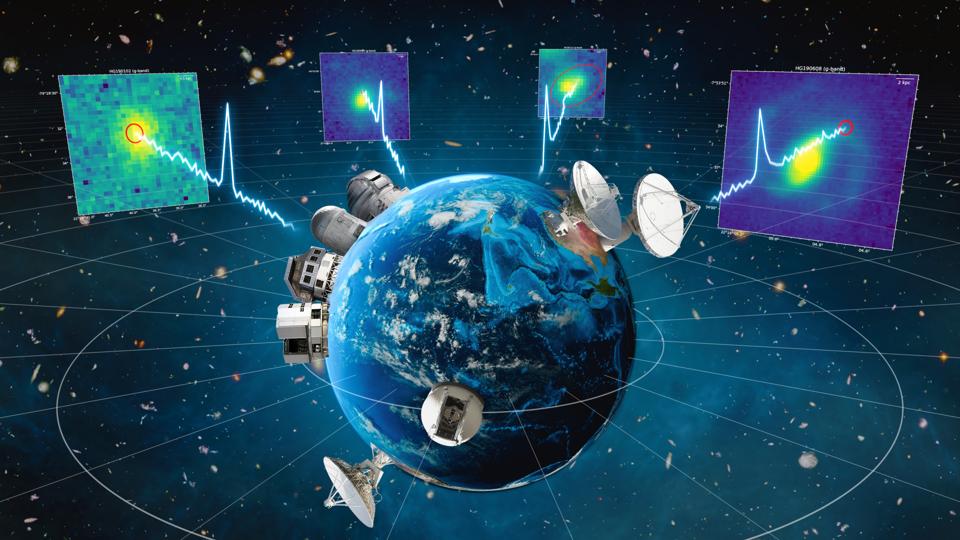

 Google Maps turns encyclopedia: Atlas charting everything...
 Stunning picture captures a moment in the life of a lonely...


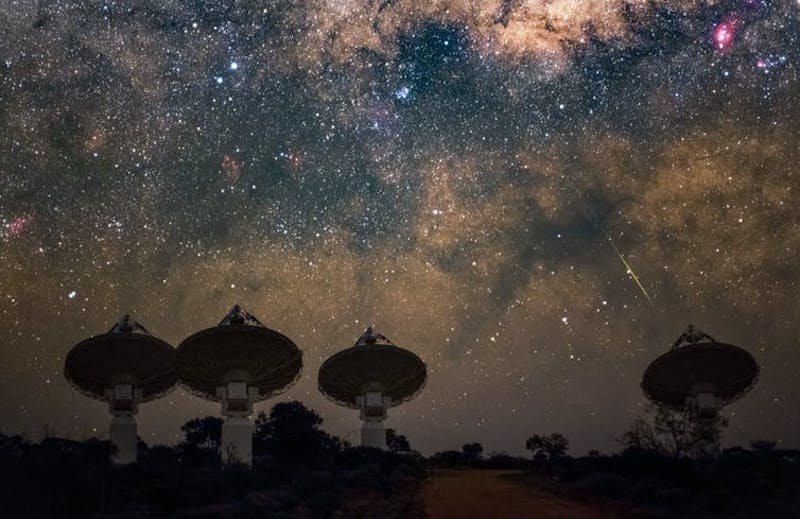


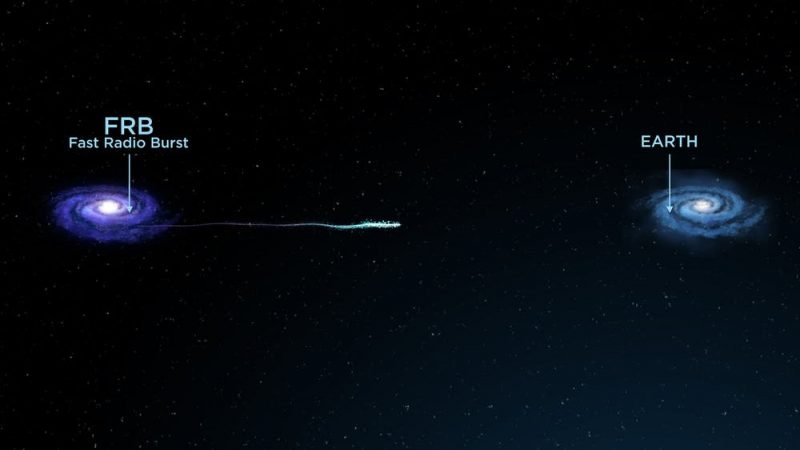
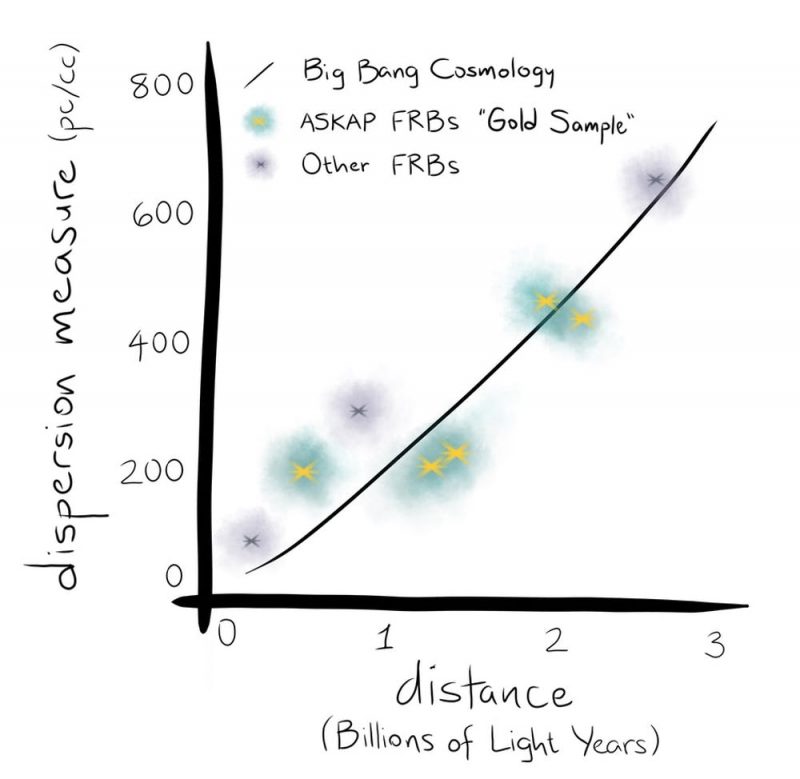
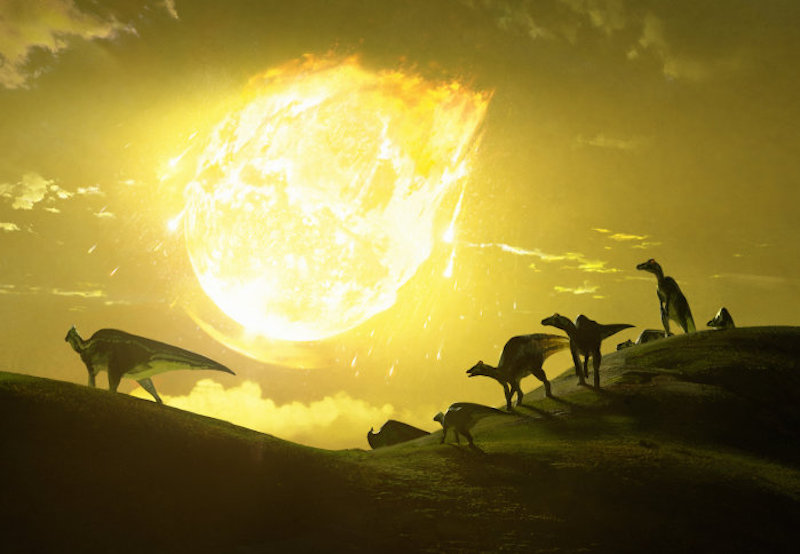
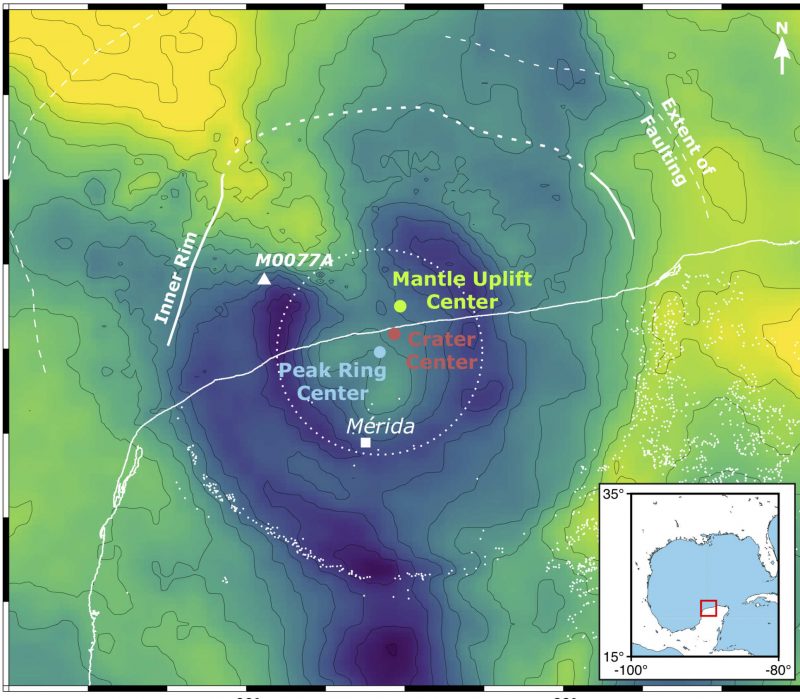

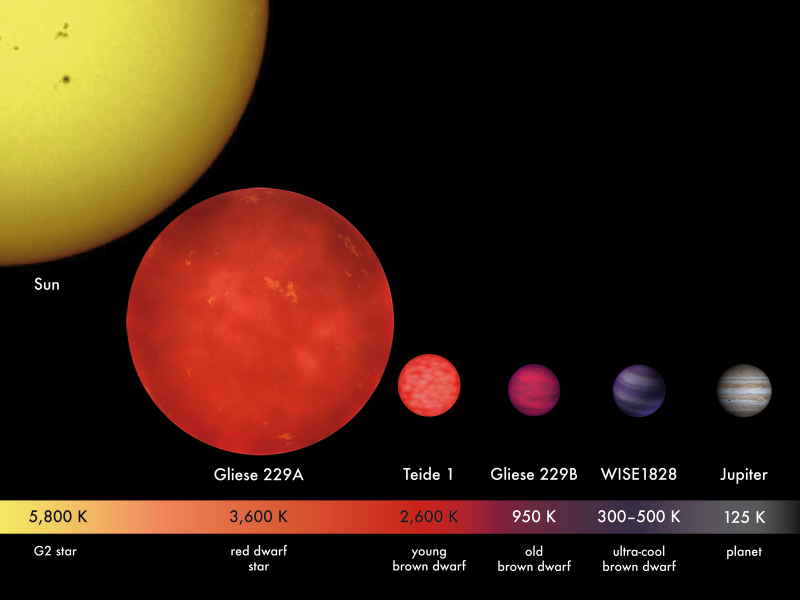









 Remains of a vast Mayan palace dating back more than 1,000...
 Teeth of world's largest prehistoric shark that lived over...
 Ancient Mayans created their own 'climate change' 1,800...
 Violent warfare which led to the demise of Maya culture may...


