Naar de inhoud

UFO'S of UAP'S, ASTRONOMIE, RUIMTEVAART, ARCHEOLOGIE, OUDHEIDKUNDE, SF-SNUFJES EN ANDERE ESOTERISCHE WETENSCHAPPEN - DE ALLERLAATSTE NIEUWTJES

UFO's of UAP'S in België en de rest van de wereld
akke.beakke.be
Ontdek de Fascinerende Wereld van UFO's en UAP's: Jouw Bron voor Onthullende Informatie! Ben jij ook gefascineerd door het onbekende? Wil je meer weten over UFO's en UAP's, niet alleen in België, maar over de hele wereld? Dan ben je op de juiste plek! België: Het Kloppend Hart van UFO-onderzoek In België is BUFON (Belgisch UFO-Netwerk) dé autoriteit op het gebied van UFO-onderzoek. Voor betrouwbare en objectieve informatie over deze intrigerende fenomenen, bezoek je zeker onze Facebook-pagina en deze blog. Maar dat is nog niet alles! Ontdek ook het Belgisch UFO-meldpunt en Caelestia, twee organisaties die diepgaand onderzoek verrichten, al zijn ze soms kritisch of sceptisch. Nederland: Een Schat aan Informatie Voor onze Nederlandse buren is er de schitterende website www.ufowijzer.nl, beheerd door Paul Harmans. Deze site biedt een schat aan informatie en artikelen die je niet wilt missen! Internationaal: MUFON - De Wereldwijde Autoriteit Neem ook een kijkje bij MUFON (Mutual UFO Network Inc.), een gerenommeerde Amerikaanse UFO-vereniging met afdelingen in de VS en wereldwijd. MUFON is toegewijd aan de wetenschappelijke en analytische studie van het UFO-fenomeen, en hun maandelijkse tijdschrift, The MUFON UFO-Journal, is een must-read voor elke UFO-enthousiasteling. Bezoek hun website op www.mufon.com voor meer informatie. Samenwerking en Toekomstvisie Sinds 1 februari 2020 is Pieter niet alleen ex-president van BUFON, maar ook de voormalige nationale directeur van MUFON in Vlaanderen en Nederland. Dit creëert een sterke samenwerking met de Franse MUFON Reseau MUFON/EUROP, wat ons in staat stelt om nog meer waardevolle inzichten te delen. Let op: Nepprofielen en Nieuwe Groeperingen Pas op voor een nieuwe groepering die zich ook BUFON noemt, maar geen enkele connectie heeft met onze gevestigde organisatie. Hoewel zij de naam geregistreerd hebben, kunnen ze het rijke verleden en de expertise van onze groep niet evenaren. We wensen hen veel succes, maar we blijven de autoriteit in UFO-onderzoek! Blijf Op De Hoogte! Wil jij de laatste nieuwtjes over UFO's, ruimtevaart, archeologie, en meer? Volg ons dan en duik samen met ons in de fascinerende wereld van het onbekende! Sluit je aan bij de gemeenschap van nieuwsgierige geesten die net als jij verlangen naar antwoorden en avonturen in de sterren! Heb je vragen of wil je meer weten? Aarzel dan niet om contact met ons op te nemen! Samen ontrafelen we het mysterie van de lucht en daarbuiten.

Berichten van 1 augustus 2020 tot 31 augustus 2020

Weird sound in the sky over Medellin, Colombia is coming from 'something that is invisible'?

Weird sound in the sky over Medellin, Colombia is coming from 'something that is invisible'?

Once again people have heard strange jet-like sounds in the sky, but in all cases there were no airplanes. According to the latest reports and published by Linda Moulton Howe, a weird loud noise came from the sky over Medellin, Colombia on August 24, 2020.
weird-sound-medellin-colombia.jpg

(Translated) - El Tiempo newspaper in Colombia, South America wrote: "What was the loud noise that caused terror in Medellin on August 24, 2020?"
A cell phone video of unexplained, strange, jet-like sky sounds recorded over Medellin by Eduardo de Grieff at 10:06 pm local time began circulating in twitter on Monday evening, August 24, 2020.  
The night sky was dark and cloudy. There were no aircraft visible while the strange and loud jet-like sound alarmed people and provoked social media comments about “ghosts to aliens from outer space” causing the scary night disturbance.
See full report on the loud noise in Medellin at Earthfiles:
And watch the video of Eduardo de Grieff uploaded by Earthfiles, Linda Moulton Howe.

  
Related videos, selected and posted by peter2011

{ http://ufosightingshotspot.blogspot.com/ }

Hoe vind je dit bericht?
Geschreven door peter om 22:41 Stuur door

Huge Asteroid will fly by Earth at 0.3 times the distance to the Moon on Sept 1, 2020

Huge Asteroid will fly by Earth at 0.3 times the distance to the Moon on Sept 1, 2020

On August 16, 2020, a car-sized asteroid flew within 2,000 miles over the Pacific Ocean and now another huge asteroid, which has a condition code of 7 at the time, with 0 being good and 9 being highly uncertain, will fly by Earth at 0.3 times the distance to the Moon on September 1, 2020. 
asteroid-earth-moon.jpg

Asteroid 2011 ES4, which measures approximately 150ft (50m) across, is expected to hurtle past the Earth at staggering speeds of 18,253mph (29,375kmh). 
However, despite Space Agencies giving this space rock a condition code of 7, they say as usual, it is of no threat to Earth because asteroid 2011 ES4 will pass safely, so let's just say it's a reminder that Earth has been vulnerable to cosmic impacts in the past, and will continue to be in the future.
Yet an asteroid called “2018 VP1“ will pass within about 300 miles of our planet on November 2, 2020 which is one day before the presidential election, but don't worry, according to NASA also this asteroid is of no treat to Earth.
  

{ http://ufosightingshotspot.blogspot.com/ }

Hoe vind je dit bericht?
Geschreven door peter om 22:22 Stuur door

Daytime Video: Fast UFO over Pennsylvania | 2020

Daytime Video: Fast UFO over Pennsylvania | 2020

PA-ufo-1.png

This UFO sighting was just submitted to me through our Facebook page. This was filmed over Plains, Pennsylvania on 23rd June 2020.

Don’t forget to follow us on Instagram for the latest UFO videos & photos.

Link: instagram.com/latestufos/

{ https://www.latest-ufo-sightings.net/ }

Hoe vind je dit bericht?
Geschreven door peter om 22:10 Stuur door

Daytime Video: Fast UFO over Pennsylvania | 2020

Daytime Video: Fast UFO over Pennsylvania | 2020

PA-ufo-1.png

This UFO sighting was just submitted to me through our Facebook page. This was filmed over Plains, Pennsylvania on 23rd June 2020.

Don’t forget to follow us on Instagram for the latest UFO videos & photos.

Link: instagram.com/latestufos/

{ https://www.latest-ufo-sightings.net/ }

Hoe vind je dit bericht?
Geschreven door peter om 22:10 Stuur door

Rusland geeft beelden vrij van grootste nucleaire explosie ooit: ‘Paddenstoelwolk 7 keer zo hoog als Mount Everest’ in Buitenland 26 augustus 2020 14:00 11 Reacties 5,160 Bekeken

rusland

Rusland geeft beelden vrij van grootste nucleaire explosie ooit: ‘Paddenstoelwolk 7 keer zo hoog als Mount Everest’

Het atoomagentschap van Rusland, Rosatom, heeft zeldzame beelden vrijgegeven van de ontploffing van de Tsar Bomba op 30 oktober 1961. Met een kracht van 50 megaton was dit de krachtigste door mensen veroorzaakte ontploffing ooit: 10 keer de kracht van alle explosieven samen die in de Tweede Wereldoorlog zijn gebruikt.

Ter vergelijking: de krachtigste bom die de Verenigde Staten ooit hebben getest, had een kracht van 22 megaton. En de bom die de Japanse stad Hiroshima in 1945 verwoestte, had een kracht van ‘slechts’ 16 kiloton. De Tsar Bomba was ongeveer 1325 keer krachtiger.

In een documentaire van Rosatom is te zien hoe de gigantische bom – 8 meter lang en 2 meter breed – op een treinwagon wordt geladen en naar een vliegbasis ten zuiden van Moermansk wordt verscheept.

Om de bemanning van de bommenwerper de kans te geven weg te vliegen, was de bom voorzien van een enorme parachute om de val te vertragen. De Tsar Bomba ontplofte boven Nova Zembla in het uiterste noorden van Rusland op een hoogte van 3000 meter, om ‘de straling te minimaliseren’.

7 keer zo hoog als de Mount Everest

De explosie is vanuit verschillende hoeken gefilmd. De seismische schok ging drie keer de aarde rond. De paddenstoelwolk die opsteeg, bereikte een hoogte van ruim 60 kilometer, 7 keer zo hoog als de Mount Everest.

In de film is ook te zien hoe wetenschappers per helikopter naar de plek van de inslag reizen. Sommigen van hen dragen niet eens een beschermende uitrusting. Ook is te zien dat de meeste sneeuw is gesmolten als gevolg van de extreme hitte. De hitte van de explosie was zo groot dat hij op een afstand van 100 kilometer derdegraads brandwonden had kunnen veroorzaken.

De explosie was zichtbaar tot in Finland en de drukgolf veroorzaakte daar zelfs glasschade. Tot op honderden kilometers van de ontploffing gingen ramen aan diggelen en werden houten gebouwen verwoest.

Bekijk de beelden van de ongekende explosie hieronder (vanaf 23:00):

[Zero Hedge]
© Copyright (c) NineForNews.nl
Hoe vind je dit bericht?
Geschreven door peter om 23:46 Stuur door

UFO Shoots Across Landing Passenger Jet At Yorkshire, England Airport, Aug 26, 2020, Video, UFO Sighting News.

UFO Shoots Across Landing Passenger Jet At Yorkshire, England Airport, Aug 26, 2020, Video, UFO Sighting News.

%2B%2BUFO%252C%2BUFOs%252C%2Bsighting%252C%2Bsightings%252C%2Balien%252C%2Baliens%252C%2BET%252C%2B%2Bancient%252C%2B%25D7%25A2%25D7%25A6%25D7%259D%2B%25D7%2591%25D7%259C%25D7%25AA%25D7%2599%2B%25D7%259E%25D7%2596%25D7%2595%25D7%2594%25D7%2594%252C%2Barchaeology%252C%2Bastrobiology%252C%2Bpaleontology%252C%2Bwaarneming%252C%2Bvreemdelinge%252C%2B%2B%2B.png

%25E0%25A4%25AF%25E0%25A5%2582%25E0%25A4%258F%25E0%25A4%25AB%25E0%25A4%2593%252C%2B%25C4%2591i%25CC%2583a%2Bbay%252C%2BNLO%252C%2BOZN%252C%2B%25D0%259D%25D0%259B%25D0%259E%252C%2Bovni%252C%2Bomni%252C%2B%2BMUFON%252C%2BDeagla%25CC%2581n%252C%2B%2BUFO%252C%2BUFOs%252C%2Bsighting%252C%2Bsightings%252C%2Balien%252C%2Baliens%252C%2BET%252C%2B%2B%2Bpaleontology%252C%2Bwaarneming%252C%2Bvreemdelinge%252C%2B%2B%2B.png

Date of sighting: August 26, 2020
Location of sighting: Yorkshire, Northern England

This footage was recorded in Yorkshire today and shows a dark grey disk shooting across the background of this short video. It was posted to Twitter today with the simplistic question..."What do you think?" 


Now I see when the UFO is on the right side of the video...the UFO shoots so fast it turns invisible even to the camera then comes back into focus. This object is huge, about the size of a car and yet the control tower and airport workers had no idea it was even there. It goes to show you how ancient our radar technology really is. On the right side of the screen the UFO is out of focus, but on the left side its focused. 


This UFO came so close I'm surprised it didn't collide with the jet. These things or so highly skilled they can make such mauves as this...its just insane! That UFO came with less than a meter of the jet with hundreds of passengers on it. Sounds like aliens care more about data they gather than human lives. 

Scott C. Waring - Taiwan


%25E0%25A4%25AF%25E0%25A5%2582%25E0%25A4%258F%25E0%25A4%25AB%25E0%25A4%2593%252C%2B%25C4%2591i%25CC%2583a%2Bbay%252C%2BNLO%252C%2BOZN%252C%2B%25D0%259D%25D0%259B%25D0%259E%252C%2B%2B%2BUFO%252C%2BUFOs%252C%2Bsighting%252C%2Bsightings%252C%2Balien%252C%2Baliens%252C%2BET%252C%2B%2Bwaarneming%252C%2Bvreemdelinge%252C%2B%2B%2B.png

%25E0%25A4%25AF%25E0%25A5%2582%25E0%25A4%258F%25E0%25A4%25AB%25E0%25A4%2593%252C%2B%25C4%2591i%25CC%2583a%2Bbay%252C%2Bovni%252C%2Bomni%252C%2B%2BMUFON%252C%2BDeagla%25CC%2581n%252C%2B%2BUFO%252C%2BUFOs%252C%2Bsighting%252C%2Bsightings%252C%2Balien%252C%2Baliens%252C%2BET%252C%2B%2Bancient%252C%2B%25D7%25A2%25D7%25A6%25D7%259D%2B%25D7%2591%25D7%259C%25D7%25AA%25D7%2599%2B%25D7%259E%25D7%2596%25D7%2595%25D7%2594%25D7%2594%252C%2Barchaeology%252C%2Bastrobiology%252C%2Bvreemdelinge%252C%2B%2B%2B.png

{ https://www.ufosightingsdaily.com/ }

Hoe vind je dit bericht?
Geschreven door peter om 23:22 Stuur door

Moon Size Alien Ship Recorded Entering Our Sun On Aug 23, 2020, Raw Footage! UFO Sighting News.

Moon Size Alien Ship Recorded Entering Our Sun On Aug 23, 2020, Raw Footage! UFO Sighting News.


Elliott%2BGunton%252C%2BAnon%252C%2B%2BUFO%252C%2BUFOs%252C%2Bsighting%252C%2Bsightings%252C%2Balien%252C%2Baliens%252C%2BET%252C%2B%2Bancient%252C%2B%25D7%25A2%25D7%25A6%25D7%259D%2B%25D7%2591%25D7%259C%25D7%25AA%25D7%2599%2B%25D7%259E%25D7%2596%25D7%2595%25D7%2594%25D7%2594%252C%2Barchaeology%252C%2Bastrobiology%252C%2Bpaleontology%252C%2Bwaarneming%252C%2Bvreemdelinge%252C%2B%2B%2B.png
Elliott%2BGunton%252C%2BAnon%252C%2B%2BUFO%252C%2BUFOs%252C%2Bsighting%252C%2Bsightings%252C%2Balien%252C%2Baliens%252C%2BET%252C%2B%2Bancient%252C%2B%25D7%25A2%25D7%25A6%25D7%259D%2B%25D7%2591%25D7%259C%25D7%25AA%25D7%2599%2B%25D7%259E%25D7%2596%25D7%2595%25D7%2594%25D7%2594%252C%2Barchaeology%252C%2Bastrobiology%252C%2Bpaleontology%252C%2Bwaarneming%252C%2Bvreemdelinge%252C%2B%2B%2B%2Bcopy.png
Elliott%2BGunton%252C%2BAnon%252C%25E0%25A4%25AF%25E0%25A5%2582%25E0%25A4%258F%25E0%25A4%25AB%25E0%25A4%2593%252C%2B%25C4%2591i%25CC%2583a%2Bbay%252C%2BNLO%252C%2BOZN%252C%2B%25D0%259D%25D0%259B%25D0%259E%252C%2Bovni%252C%2Bomni%252C%2B%2BMUFON%252C%2BDeagla%25CC%2581n%252C%2B%2BUFO%252C%2BUFOs%252C%2Bsighting%252C%2Bsightings%252C%2Balien%252C%2Baliens%252C%2BET%252C%2B%2Bancient%252C%2B%25D7%25A2%25D7%25A6%25D7%259D%2B%25D7%2591%25D7%259C%25D7%25AA%25D7%2599%2B%25D7%259E%25D7%2596%25D7%2595%25D7%2594%25D7%2594%252C%2Barchaeology%252C%2B.png
Date of sighting: August 23, 2020
Location of sighting: Sun
 
This UFO was recorded by Terry's Theories of Youtube. He said he used a sun filter on his Nikon P1000 and has been catching strange objects shooting in and out of our sun. In this video you can see a large rigid object heading into our sun. But when I took a screenshot and added focus, I see a spaceship. There is no doubt about it. Its an alien craft flying into our sun. For us to see it and for it to be that big...we are talking moon size or more. Yes its possible, when you are an alien who lives forever...time means little to you. You can accomplish so much more when you have endless time. 
Scott C. Waring - Taiwan 

{ https://www.ufosightingsdaily.com/ }

Hoe vind je dit bericht?
Geschreven door peter om 23:12 Stuur door

Mysterious radio burst from deep space just 'woke up' right on schedule again

Mysterious radio burst from deep space just 'woke up' right on schedule again

The so-called Fast Radio Burst 121102 (FRB) appears to follow a cyclical pattern of activity like clockwork. Arriving from deep space, the FRB blasts very frequent radio flares lasting a thousandth of a second toward our planet. 
fast-radio-burst-et-alien-dyson-sphere.jpg

Then, after 90 days of activity, the FRB falls silent for 67 days. This mysterious radio burst from a galaxy 3 billion light years away that appears to repeat every 157 days and it just 'woke up' right on schedule again.
Scientists have so far been unable to determine how these radio bursts are created or why they are so accurately repetitive.
The mystery has challenged the scientific community since 2007 when the very first FRB was accidentally discovered in a dataset, reports Dailymail. 
Some scientists have hinted at an extraterrestrial source, including Harvard astronomer Abraham Loeb who argued earlier this year all theories, including ETs, need to be on the table.
Related videos, selected and posted by peter2011

{http://ufosightingshotspot.blogspot.com/ }

Hoe vind je dit bericht?
Geschreven door peter om 23:00 Stuur door

Fast flashing object over Ontario, California 22-Aug-2020

Fast flashing object over Ontario, California 22-Aug-2020

fast-ufo.png

Fast UFO was caught on infra red camera over Ontario, California on 22nd August 2020.

Witness report: 

Panning the sky, suddenly shows up this ” flash thing” the palm trees blocked the view… !

{ https://www.latest-ufo-sightings.net/ }

Hoe vind je dit bericht?
Geschreven door peter om 22:35 Stuur door

Supernova iron isotopes are raining down on Earth

600px-Keplers_supernova-360x180.jpg

Supernova iron isotopes are raining down on Earth

The ancient products of star explosions have been found in deep sea sediments on Earth.

{ https://www.zmescience.com/ }

Hoe vind je dit bericht?
Geschreven door peter om 00:16 Stuur door

Scientists: Earth Moving Through Radioactive Debris of Exploded Stars

scientists-earth-moving-through-radioactive-debris-supernova-600x315.jpg

LL OUT BOY

Scientists: Earth Moving Through Radioactive Debris of Exploded Stars

Our planet is being showered with dust from ancient supernovae, according to new research.

Scientists have found new evidence that Earth has been moving through the remains of exploded stars for at least the last 33,000 years.

In a new study published in the journal Proceedings of the National Academy of Sciences, a team of Australian researchers describe how they extracted a special isotope of iron called iron-60 from five deep-sea sediment samples using mass spectrometry.

That’s illuminating, because as the researchers wrote in their paper, the isotope is “predominantly produced in massive stars and ejected in supernova explosions.” In other words, iron-60 is left over after a star explodes.

And because iron-60 is radioactive and decays in 15 million years, the theory is that our planet is continuously being dusted with the stuff as it’s moving through the “Local Interstellar Cloud,” a region of unclear origins made up of gas, dust, and plasma.

“These clouds could be remnants of previous supernova explosions, a powerful and super bright explosion of a star,” Anton Wallner, nuclear physicist at the Australian National University, and lead author of the paper, said in a statement.

The researchers were trying to validate other iron-60 findings in samples from the Antarctic by sampling deep-sea samples dating back to 33,000 years ago.

It’s far from the first time researchers have found traces of iron-60. Previous samples showed traces of the isotope dating back to as far back as 2.6 to six million years ago.

By looking at samples of a far more recent era in our planet’s history, Wallner and his team was attempting to find answers to the mysteries behind the cloud our planet is moving through: what it’s made of and where it came from.

But what they found is bringing up more questions than answers.  Traces of iron-60 seemed to appear consistent over a large span of time. In other words, if there was a supernova event in the past, we would’ve seen a spike or at least a change in the amount of the isotope — the older the samples, the lower the levels at least, as Science Alert points out.

“There are recent papers that suggest iron-60 trapped in dust particles might bounce around in the interstellar medium,” Wallner said in the statement. “So the iron-60 could originate from even older supernovae explosions, and what we measure is some kind of echo.”

{ https://futurism.com/ }

Hoe vind je dit bericht?
Geschreven door peter om 23:52 Stuur door

The Bizarre UFO Encounters of Terry Lovelace

ufo-flying-over-a-corn-field-at-sunset-545810752-999x540.jpg

The Bizarre UFO Encounters of Terry Lovelace

The UFO phenomenon has a habit of appearing all over the place, affecting the lives of countless people from all walks of life. Although the common image is that these things only happen to bumpkins living out in the sticks, this can’t be further from the truth. All manner of people have claimed to have seen UFOs, including those in high up positions. It is these stories from people from upstanding circumstances that really make people sit up and take notice, and one of these must surely be the time a doctor, former assistant attorney general, and member of the Board of Medical Practice of the U.S. state of Vermont came forward with a series of very strange UFO encounters that are hard to really write off.


As far as credentials go, those of Terry Lovelace are impeccable. He was assistant attorney general of the US Territory of American Samoa, general counsel for the LBJ Tropical Medical Center there, president of the American Samoa Bar Association, a member of the Board of Medical Practice of the U.S. state of Vermont, and Assistant Attorney General for Vermont up to his retirement. As far as reliable witnesses go, you can’t really ask for much better, and Lovelace has quite the bizarre tale to tell. The story begins back in 1973, when Lovelace joined the U.S. Air Force right after graduating high school and trained as a medic/EMT. His post was at Whiteman Air Force Base, in the state of Missouri, previously known as Sedalia Air Force Base, and serving variously as a B-2 bomber base and a missile base, home of the 351st Strategic Missile Wing and holding numerous Minuteman II nuclear-armed ICBM silos spread out all over the rural area. Here he was assigned as a base medic driving an ambulance, and at the time of his experience he worked the graveyard shift from 11 PM to 8 AM, along with a partner he calls “Toby.” In January of 1975 they were out on their usual shift, and it started like any other night, with the two of them sitting outside the ambulance looking at the stars and waiting for a call while Toby, an amateur astronomer, excitedly explained the constellations and planets. Their shifts were typically uneventful, with whole evenings going by without anything happening, but this night would turn out to be very eventful indeed, and would change their lives forever.

Terry Lovelace

At 2 AM they were roused out of their wistful daydreaming by a call that a missile technician had fallen into one of the missile silos, about 18 miles away across rows of endless soybean fields. They tore off in response to the call, and were surprised to arrive to find the place crawling with armed security police, who told them to go no further. As Lovelace looked over the scene wondering what all of the commotion was about he said that his attention was drawn to a “matt-black diamond shaped object” about the size of a van hovering over the missile silo. The strange object hung there for an estimated 15 minutes before it “just shot off to the east from a dead stop to the speed of a bullet without accelerating.” He claims that after that both he and Toby were debriefed and told in no uncertain terms that they were not to talk about or disclose anything of what they had just witnessed, and the explanation they were given was that it was a type of experimental helicopter. And that was that. Both of them knew that what they had seen was no helicopter, but there was no further information and they tried to put it out of their minds.

Fast forward 2 years and Lovelace and Toby were still working the same shift at Whiteman AFB, and one day they decided to use some of their vacation leave to go camping, something neither one of them had ever actually done before and wanted to try. Since Lovelace was an amateur photographer, Toby suggested that they take their trip to a place called “Devil’s Den,” which had a high plateau perfect for stargazing, as well as plentiful nature and wildlife to photograph. They drove out there and decided to go deep into an off limits nature preserve area away from the main camping area, where they would have more peace and quiet and better scenery. Lovelace was upset that he had forgotten his camera, but it was such a nice area that he soon didn’t mind too much, and they set up their tent planning to stay for two nights. That night, they would have the first of a series of odd encounters. Lovelace would say:

On our first night we were exhausted from a hike we took when we first arrived, a long drive and setting-up a campsite. About 9:00 PM Toby noticed three stars on the horizon. They made a perfect triangle. They were small at first and moved in perfect unison. It became obvious this was one solid object and not three independent lights orchestrated to move in perfect formation. We watched it ascend and grow closer and much larger until it was directly over top of our campsite. We noticed that as it passed through a star field, it blotted them until it had moved past. Then they would blink back on. So, it was one solid object. It was odd that at first this thing in the sky made us anxious but that soon dissipated. We noticed the whole forest was now dead silent when an hour earlier it had been alive with crickets and tree frogs. While this thing was over our heads we became abruptly disinterested. We were also suddenly drowsy. Not tired but almost sedated. At midnight we just decided to get in the tent and go to sleep. The apathy puzzles me to this day.

The weirdness would continue at 3 AM that same evening, when Lovelace claims to have woken to brilliant multicolor lights that lit up the entire tent and made night seem like day. Since they were out in the middle of nowhere, well away from other campers, the only source of the light they could think of was the strange object they had seen earlier. As the brilliant lights flickered and danced around them, the only thing protecting them the tent’s thin sheet of fabric, Lovelace says that he overcame his building sense of unease in order to take a peek outside. He says of what he saw:

I pushed Toby aside, so we could both look outside toward the meadow. There was an enormous UFO as large as a five-story office building. It was a triangle with each leg being about a city block in length. It was fifty feet tall and sat stationary, thirty feet over the meadow floor. There was a noise too. It was a low bass hum or drone.  Not so much loud as it was powerful. It was like standing nest to a running diesel train engine or a large industrial machine.

We saw what I first took to be children walking around the meadow underneath the triangle. There was a column of white light, about thirty feet in diameter shining down from the center of the triangle. We watched as these little people walked into the light and just dissolved, one by one until they were gone. The hum stopped and the corner lights all returned to brilliant white. The white cylinder from the middle stopped and the thing rose about like a hot air balloon. It made a one-third (clockwise?) rotation and continued its ascent, picking up speed until it was high in the sky and then gone. While we were apathetic earlier, now were scared out of our wits.  We abandoned our campsite and ran to the car and drove back to base.

Lovelace claims that the incident had left red, raw skin like a bad sunburn all over their bodies, including even the soles of their feet, and that they were hospitalized at the base for two days with severe dehydration. During their time there, Lovelace claims that they were separately interrogated on several occasions by men identifying themselves as being from the “Office of Special Investigations,” and that his home and car were searched for the camera they were certain he had been carrying, despite his insistence that he had forgotten it. He was also ordered to have no further contact with his partner Toby, who was reassigned to another base, and the whole incident would give him intense nightmares and have profound psychological effects on him for years. He explains of some of this:

Ever since 1977, I am uncomfortable being outside in open spaces especially after dark. I sleep with a light or the television on. I keep a loaded .380 by my bedside table and a high intensity flashlight. I am uncomfortable around elderly Asian women for some odd reason. I feel anxious at the mall when we walk past a window display with naked mannequins in the window. Something bad happened to us at Devils Den.

He also claims that he had physical effects as well, such as a spot on his leg that would often go numb and was found to have a metal object embedded within it, despite no scarring present. He has written a whole terrifying account of it in his book Incident at Devils Den, a true story by Terry Lovelace, and one is left to wonder what to think of all of this. Looking at his credentials and standing it is hard to argue with what he claims he saw, but was there perhaps some misunderstanding or even an effort at creating a mystery? If so, why would he do such a thing? Whatever the case may be, he has continued to maintain that it is all true, and considering his standing as a highly reliable witness it leaves us to wonder.

All related videos, selected and posted by peter2011

{ https://mysteriousuniverse.org/ }

Hoe vind je dit bericht?
Geschreven door peter om 23:06 Stuur door

Grand Canyon cliff collapse reveals clawed footprints made by egg-laying animals that traveled up sand dunes 313 MILLION years ago

Grand Canyon cliff collapse reveals clawed footprints made by egg-laying animals that traveled up sand dunes 313 MILLION years ago

  • A boulder fell from a mountain during a collapse at Grand Canyon National Park
  • Experts found there were footprints in the red rock dating back 313 million years
  • The tracks were made by two shelled-egg-laying animals at different times
  • One of the creatures appears to have been injured according to the prints 

Some 313 million years ago, two creatures trekked across sand dunes in what is now the Grand Canyon and now paleontologist have uncovered evidence of their journey.

A massive boulder fell from the Mankacha Formation during a collapse and imprinted in the red stone are two pairs of the oldest recorded vertebrate tracks.

Researchers say the footprints belonged to four-legged shelled-egg-laying animals and reveal such animals traveled up sand dunes eight million years earlier than previously believed.   

The newly discovered tracks record the passage of two separate creatures of the same species walking a few hours or days apart from each other. 

One pair of tracks consists of 28 imprints with claws in each impression while the other set suggests the animal may have had an injured right foot - as there were no claw marks present on that side. 

Scroll down for video 

Some 313 million years ago, two creatures trekked across sand dunes in what is now the Grand Canyon and now paleontologist have uncovered evidence of their journey. A massive boulder fell from the Mankacha Formation during a collapse and imprinted in the red stone are to pairs of the oldest record of vertebrate tracks

The 'surprising discovery' was made by Norwegian geology professor Allan Krill, who was hiking with his students through the canyon.

Krill noticed a boulder lying next to the trail with suspicious markings along one side.

He snapped a photo and sent it to his colleague Stephen Rowland, who is a paleontologist at the University of Nevada Las Vegas.

'These are by far the oldest vertebrate tracks in Grand Canyon, which is known for its abundant fossil tracks' Rowland said.

Researchers say the footprints belonged to four-legged shelled-egg-laying animals and reveal such animals traveled up sand dunes eight million years earlier than previously believed (artist's impression)

Researchers say the footprints belonged to four-legged shelled-egg-laying animals and reveal such animals traveled up sand dunes eight million years earlier than previously believed (artist's impression)

The newly discovered tracks record the passage of two separate creatures of the same species walking a few hours or days apart from each other

The newly discovered tracks record the passage of two separate creatures of the same species walking a few hours or days apart from each other

'More significantly,' he added, 'they are among the oldest tracks on Earth of shelled-egg-laying animals, such as reptiles, and the earliest evidence of vertebrate animals walking in sand dunes.'

The researchers' reconstruction of this animal's footfall sequence reveals a distinctive gait called a lateral-sequence walk, in which the legs on one side of the animal move in succession, the rear leg followed by the foreleg, alternating with the movement of the two legs on the opposite side.

Living species of tetrapods―dogs and cats, for example―routinely use a lateral-sequence gait when they walk slowly,' says Rowland.

'The Bright Angel Trail tracks document the use of this gait very early in the history of vertebrate animals. We previously had no information about that.'

The boulder fell from a collapse

The boulder fell from a collapse 

The team looked deeper into the tracks to learn more about these animals that trekked across the sand dunes millions of years ago.

Trackmaker 1 appeared to drift to the right as it walked and was moving slower than its counterpart.

Each row has four footprints that are about three inches apart and its feet had claws at the end that pointed forward.

The second set, from Trackmaker 2, appears to be of the same species and came after the other set, after more sand gathered on the surface.

Each row has four footprints that are about three inches apart and its feet had claws at the end that pointed forward
Pictured is a look at what is now the US is now millions of years ago

Each row has four footprints that are about three inches apart and its feet had claws at the end that pointed forward. Pictured is a look at what is now the US is now millions of years ago

'Two of the animal's claws on three of its feet apparently penetrated just deeply enough to leave small impressions preserved in the same bedding plane in which Trackway 1 had been preserved, perhaps a few hours or days before,' reads the study published in PLOS.

Researchers noticed something interesting about Trackmaker 2 – it may have had an injured foot.

The prints show a missing row of claw marks on the right foot and occasionally one of the left suggesting it may have been limping to ease the pain of wound.

Read more:

{ https://www.dailymail.co.uk/ }

Hoe vind je dit bericht?
Geschreven door peter om 22:36 Stuur door

Surprising Footprints In The Grand Canyon Date Back 313 Million Years

Footprints-999x540.jpg

Surprising Footprints In The Grand Canyon Date Back 313 Million Years

Footprints found in the Grand Canyon, Arizona, reveal the journey that two creatures took when they walked up the sand dunes approximately 313 million years ago. The footprints were discovered when a huge boulder fell down in the Pennsylvanian Manakacha Formation, revealing the imprinted tracks.

The footprints belonged to a couple of four-legged shelled-egg-laying creatures belonging to the same species but they didn’t go together as they traveled up the sand dunes a few hours or even days apart from each other. Researchers found 28 footprints (each row containing four footprints three inches apart) with claw marks pointing forward from one of the creatures while the other set of prints didn’t contain claw marks on the right side which may suggest that its right foot could have been injured, causing it to limp. More specifically, the first creature walked towards its right side and traveled slower than the second animal.

Grand Canyon

The footprints were found by a Norwegian geology professor named Allan Krill who was out for a hike with several of his students when they came across the fallen boulder. When they examined their “surprising discovery”, they noticed the footprints and immediately sent a picture to Krill’s colleague Stephen Rowland, who is a paleontologist at the University of Nevada Las Vegas.

Rowland explained how incredible this discovery was, “These are by far the oldest vertebrate tracks in Grand Canyon, which is known for its abundant fossil tracks.” He went on to say that “they are among the oldest tracks on Earth of shelled-egg-laying animals, such as reptiles, and the earliest evidence of vertebrate animals walking in sand dunes.” Several pictures of the footprints can be seen here.

Grand Canyon

The researchers found that the creatures that left the footprints walked in a specific gait pattern called a lateral-sequence walk which means that its legs on one side would move in sequence as its rear leg would move first, followed by its foreleg, and then the two legs on the opposite side of the animal would move forward. Basically, it would look similar to when cats and dogs walk slowly. “The Bright Angel Trail tracks document the use of this gait very early in the history of vertebrate animals. We previously had no information about that,” Rowland explained. Their study on the ancient footprints can be read in full here.

{ https://mysteriousuniverse.org/ }

Hoe vind je dit bericht?
Geschreven door peter om 22:12 Stuur door

Planet Nine Exists? Possible Twin for Our Sun May Prove It

Planet Nine Exists? Possible Twin for Our Sun May Prove It | Mysterious Universe

Planet Nine Exists? Possible Twin for Our Sun May Prove It

Which is harder to believe – that our Sun once had a twin or that it helped capture and hold Planet 9? They are obviously related and equally unbelievable – expect to a famous dynamic duo of astrophysicists who believe the twin sun idea is the only one that explains Planet 9. Should we believe either, both or none of the above?

According to a new paper published in The Astrophysical Journal Letters by Harvard astrophysicists Dr. Avi Loeb and Amir Siraj, the mysterious Oort cloud of space debris at the hairy edge of our solar system becomes easier to explain with the theory that our Sun had a twin born at the same time. Most theories about the Oort cloud have it forming after the birth of a single Sun and our planetary system as debris kept being flung father away from the solar mass. However, that theory never matched the density of the Oort cloud, which has too much stuff to be left over from a singe star birth. Enter the twin and the idea that the Oort cloud was captured, not formed. A press release from the Center for Astrophysics at Harvard explains:

“Binary systems are far more efficient at capturing objects than are single stars, If the Oort cloud formed as observed, it would imply that the Sun did in fact have a companion of similar mass that was lost before the Sun left its birth cluster.”

In illustration of binary stars.

Image credit: NASA/JPL-Caltech)

OK, let’s avoid asking the obvious question for a minute and consider the fact that this actually makes scientific sense. Also, if this binary system was powerful enough to capture enough passing object to make the Trans-Neptunian Oort cloud, if may have been possible to capture an actual Neptunian.

“The puzzle is not only regarding the Oort clouds, but also extreme trans-Neptunian objects, like the potential Planet Nine. It is unclear where they came from, and our new model predicts that there should be more objects with a similar orbital orientation to Planet Nine.”

Loeb and Siraj speculate that Planet Nine was captured by the binary stars as it passed close enough – possibly being pulled from another nearby solar system. If the twins could capture one, they could have captured more planets Ten through X orbiting even father from the Sun. Which brings us back to the obvious question. We have only one Sun today – what happened to its theoretical twin?

“Passing stars in the birth cluster would have removed the companion from the Sun through their gravitational influence. Before the loss of the binary, however, the solar system already would have captured its outer envelope of objects, namely the Oort cloud and the Planet Nine population. The Sun’s long-lost companion could now be anywhere in the Milky Way.”

It was a cosmic gift exchange – we take Planet Nine from a star and it takes our Sun’s young twin before they had a chance to become the inspiration for some other civilization’s movie Tatoo. While this theory is certainly plausible, it’s nearly impossible to prove with today’s technology. Siraj thinks the Vera C. Rubin Observatory might be able to find Planet Nine after it goes operational in 2021 – a daunting task when there is little consensus that it even exists. Then again, Loeb and Siraj are the same guys who keep trying to convince us that the ‘Oumuamua interstellar space object could be alien technology.

Have they ever thought about screenwriting?

{ https://mysteriousuniverse.org/ }

Hoe vind je dit bericht?
Geschreven door peter om 21:47 Stuur door

Just some miscellaneous discoveries on Earths moon I made this week, Photos, UFO Sighting News.

Just some miscellaneous discoveries on Earths moon I made this week, Photos, UFO Sighting News.

Screen%2BShot%2B2020-08-18%2Bat%2B3.37.29%2BPM.png
Date of discovery: Aug 2020
Location of discovery: Earths Moon
Source: 

https://quickmap.lroc.asu.edu/extent=-53.0968716,64.7005144,-52.0922846,64.8743259&p

roj=10&layers=NrBsFYBoAZIRnpEoAsjYIHYFcA2vIBvAXwF1SizSg

Here are a few of the discoveries that I made on Earths moon that I thought might not be significant enough to report. I decided not just say the truth, but show you the truth. I find a lot, and usually only post 1 out of 20 discoveries. But there are thousands of structures on Earths moon just waiting for someone to find. Here are some that I almost didn't post. Still have more on the other computer. All found in the last 7 days. A little effort and faith goes a long ways.
Scott C. Waring - Taiwan 
Screen%2BShot%2B2020-08-21%2Bat%2B8.55.32%2BPM.png

Screen%2BShot%2B2020-08-21%2Bat%2B8.57.11%2BPM.png

Screen%2BShot%2B2020-08-21%2Bat%2B9.03.16%2BPM.png

Screen%2BShot%2B2020-08-22%2Bat%2B11.55.20%2BAM.png

Screen%2BShot%2B2020-08-22%2Bat%2B11.58.42%2BAM.png

Screen%2BShot%2B2020-08-23%2Bat%2B10.15.12%2BAM.png

Screen%2BShot%2B2020-08-23%2Bat%2B10.23.46%2BAM.png

Screen%2BShot%2B2020-08-23%2Bat%2B10.25.43%2BAM.png

Screen%2BShot%2B2020-08-23%2Bat%2B10.34.18%2BAM.png

Screen%2BShot%2B2020-08-23%2Bat%2B10.38.51%2BAM.png

Screen%2BShot%2B2020-08-23%2Bat%2B10.41.06%2BAM.png

Screen%2BShot%2B2020-08-24%2Bat%2B7.41.10%2BPM.png

Screen%2BShot%2B2020-08-24%2Bat%2B7.45.23%2BPM.png

Screen%2BShot%2B2020-08-24%2Bat%2B7.48.36%2BPM.png

Screen%2BShot%2B2020-08-24%2Bat%2B7.55.31%2BPM.png

{  https://www.ufosightingsdaily.com/ }

Hoe vind je dit bericht?
Geschreven door peter om 17:52 Stuur door

Ancient Diseases Released By Rapid Permafrost Meltdown Threaten Europe

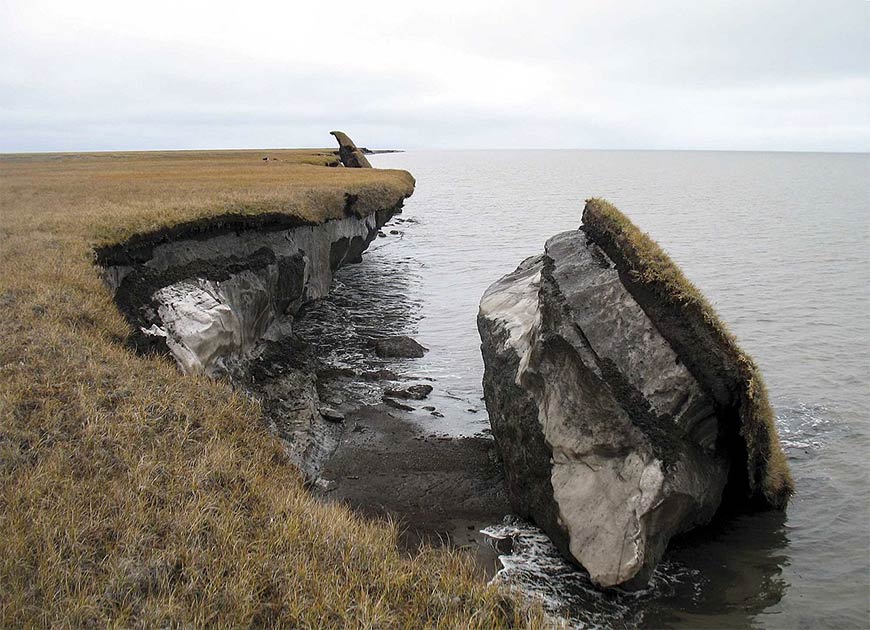
In this photo you can see a collapsed block of ice-rich permafrost along Drew Point, Alaska. Ancient diseases released from such rapid change pose a dire threat to 21st-century human populations.            Source: Benjamin Jones, U.S. Geological Survey / Public domain

Ancient Diseases Released By Rapid Permafrost Meltdown Threaten Europe

“Another” scientist has warned about ancient diseases released by melting permafrost in the Arctic Circle and the potential harm that could result. Adding to the list of scientists warning that climate change will spark a resurgence of ancient diseases, Dr Vladimir Romanovsky from the University of Alaska has now included smallpox, zika virus, and dengue, as conditions in the northern hemisphere become warmer and provide expanding livable habitats for the yellow fever mosquito that spreads all these diseases. Ancient diseases released by melting permafrost could cause new pandemics.

The Accelerating Arctic Permafrost Melt Is Well Documented

If you’ve been awake over the last decade you might already be sick of reading headlines about the threat of ancient diseases released by climate change in the planet’s Arctic region. For example, this BBC article explains how long-dormant bacteria and viruses, trapped in ice and permafrost for centuries are springing back to life as the Earth's climate warms. This BBC article came soon after Scientific American published a story in August 2016 about an incident in a remote corner of Siberian Yamal Peninsula where twenty people were hospitalized and a 12-year-old boy died after being infected by anthrax. According to the United Nations Intergovernmental Panel on Climate Change , permafrost in the northern hemisphere will have “a 25 percent decrease by 2100.”

Arctic tundra melting in late June in northern Russia and ever year the melting begins earlier and expands further.

(GRID-Arendal / CC SA-BY 2.0)

According to Birgitta Evengard, from Sweden's Umea University , “ignorance is a major concerning problem.” The doctor explained that in July 2020 a 30-square-mile (77-square-kilometer) section of ice broke off the Milne Ice Shelf , which she says was the “last remaining ice shelf in the Canadian Arctic that was fully intact.” As the permafrost thaws as a result of global warming, microorganisms trapped in soil particles begin to thrive again and are released into the environment.

Global Warming Is a One-way Street to More Diseases

Genomics professor Jean-Michel Claverie from Aix-Marseille University explained that scientists have now been able to revive “ancient Siberian viruses from over 30,000 years ago” and he also said these microorganisms had once attacked Neanderthals, mammoth and other ancient populations. Dr Claverie warns that there may be “a resurgence of anthrax, smallpox and influenza” that have been frozen in permafrost for hundreds of years, as was evident in the shocking 2016 anthrax death cited above.

Furthermore, global warming will also allow mosquito populations to thrive in northern parts of Europe. Jeanne Fair from the Los Alamos National Laboratory told Science Times that mosquitoes are now able to overwinter in some temperate regions and that the species, Aedes aegypti, carries “dengue, zika, malaria, and eastern equine encephalitis diseases.”

The yellow fever mosquito, Aedes aegypti, loves your blood and is expanding its year-round territory further and further north as global warming intensifies.

(James Gathany / Public domain )

Another threat from melting permafrost occurred in July 2014 when images circulated around the media of an enormous crater that appeared in the Siberian tundra that was suspected to have been an underground buildup of methane gas that had been released as the permafrost thawed. Climate scientist Sue Natali of the Woods Hole Research Center said “It's not something that any Arctic scientists talk about, to have land explode because of a build-up of methane below the ground, and it still surprises me now.”

Ignorance Is Not Bliss When Ancient Diseases Reappear

Two days after the Siberian methane crater appeared in 2014 my agent was contacted by History Channel . And two weeks later I was in a production meeting in Los Angeles assembling a new science show looking at the projected effects of climate change and how it might affect human populations through mass-migration and “the release of ancient diseases.” For this show I interviewed Dr Alan Robock a highly-respected climate scientist who studies the potential benefits and risks of geoengineering, and is a world-leading expert on the climatic effects of nuclear war, volcanic eruptions, and soil moisture. To add to his authority, he has been a member of scientific teams that have won Nobel Peace Prizes. I was privileged to have him inform me on certain aspects of climate change effects.

As part of the investigation, the production team and I set up a dangerous scientific experiment in the Californian desert at the Salton Sea that included 100 film crew members, two fire engines, an ambulance, and a movie stunt crew. Together, we set up a wooden box representing a section of permafrost and filled it with two tons (4,480 pounds) of soil, which we froze with liquid nitrogen before pumping 20 lbs (9 kg) of methane gas into the frozen soil. Then, “Action” and BOOM. That explosion sent shockwaves across the desert using only 20 lbs of methane. Climate scientists have estimated that thawing permafrost throughout the Arctic could be releasing an estimated 300-600 million tons of net carbon per year to the atmosphere, according to the NOAA.

Since 2014, when I personally witnessed ground-zero in a reconstructed climate change event, it has saddened me that so little is being done to prevent the escalation of such explosions. And today, I am equally as concerned that a death in 2014 from an ancient anthrax virus has had almost no effect on how we live, or what we are doing to combat the release of these once-frozen microbial killers.

With so little having been done, one day, very soon, these ancient spores might be ejected into the skies of the northern hemisphere. And when they drift southwards and settle in Europe the death toll will make Covid-19 seem like a bad cold. If we are struggling to create a vaccine for a two-year old virus, what chance do we have with a 30,000-year old strain of anthrax?

  • Top image: In this photo you can see a collapsed block of ice-rich permafrost along Drew Point, Alaska. Ancient diseases released from such rapid change pose a dire threat to 21st-century human populations.           
  • Source: Benjamin Jones, U.S. Geological Survey / Public domain
  • Editor’s Note. This article was edited on 20/8/2020 to remove incorrect reporting regarding Dr Alan Robock’s involvement in the Californian Desert experiment (he was not there) and and incorrect attribution of the estimated amount of green-house gases there are locked in permafrost.

By Ashley Cowie

{  https://www.ancient-origins.net/ }

Hoe vind je dit bericht?
Geschreven door peter om 17:51 Stuur door

City Found In Southern Pole Of Saturn Moon Rhea, Photos, UFO Sighting News.

City Found In Southern Pole Of Saturn Moon Rhea, Photos, UFO Sighting News.

%25E0%25A4%25AF%25E0%25A5%2582%25E0%25A4%258F%25E0%25A4%25AB%25E0%25A4%2593%252C%2B%25C4%2591i%25CC%2583a%2Bbay%252C%2BNLO%252C%2BOZN%252C%2B%25D0%259D%25D0%259B%25D0%259E%252C%2Bovni%252C%2Bomni%252C%2B%2BSaturn%252C%2BRhea%252C%2Bmoon%252C%2BUFO%252C%2BUFOs%252C%2Bsighting%252C%2Bsightings%252C%2Balien%252C%2Baliens%252C%2BET%252C%2B%2Bancient%252C%2B%25D7%25A2%25D7%25A6%25D7%259D%2B%25D7%2591%25D7%259C%25D7%25AA%25D7%2599%2B%25D7%259E%25D7%2596%25D7%2595%25D7%2594%25D7%2594%252C%2Barchaeology%252C%2Bastrobiology%252C%2Bpaleontology%252C%2Bwaarneming%252C%2Bvreemdelinge%252C%2B%2B%2B.png

Date of discovery: Aug 24, 2020
Location of discovery:  Saturn moon, Rhea
Source: URL map 

I was looking at a map of Rhea, a moon of Saturn when I came across some structures in its southern polar region. The structures are huge, about 2-4km across and each has a unique shape. One even is a head of the very alien species that created these structures.  The species looks more like an animal. It has ears of a bear, head of a bear like animal, but who knows what creature is fortuante enough to evolve to the dominate species on each planet out there. This one seemed smart enough to survive and explore, making a home in our solar system. 
Scott C. Waring - Taiwan

Screen%2BShot%2B2020-08-25%2Bat%2B1.46.15%2BPM.png

Screen%2BShot%2B2020-08-25%2Bat%2B1.46.44%2BPM.png

Screen%2BShot%2B2020-08-25%2Bat%2B1.44.55%2BPM%2Bcopy.png

Screen%2BShot%2B2020-08-25%2Bat%2B1.44.55%2BPM.png

Screen%2BShot%2B2020-08-25%2Bat%2B1.45.47%2BPM.png

{  https://www.ufosightingsdaily.com/ }

Hoe vind je dit bericht?
Geschreven door peter om 17:43 Stuur door

Triangle-shaped UFO over Orlando, Florida 1-Aug-2020 | Top secret military object?

Triangle-shaped UFO over Orlando, Florida 1-Aug-2020 | Top secret military object?

triangle-ufo.png

This UFO video was filmed in the sky above Orlando in Florida on 1st August 2020. The person who uploaded the footage, Ovni Vids, suggests that this could be some top secret military project.

What do you think about this?

Related videos, selected and posted by peter2011

{

Hoe vind je dit bericht?
Geschreven door peter om 12:32 Stuur door

Astonishingly old Antarctic space rock could explain mystery of life's weird asymmetry

Astonishingly old Antarctic space rock could explain mystery of life's weird asymmetry

An image of a piece of the Antarctic meteorite Asuka 12236 as seen through a microscope; the sample is about 0.3 inches (1 centimeter) across.
(Image: © Carnegie Institution for Science/Conel M. O'D. Alexander)

A time capsule of the earliest days of the solar system may be the first clue in explaining a long-standing puzzle for those who study life: It appears to be stubbornly asymmetrical.

The story begins in 2012, when scientists discovered a golf-ball-sized hunk of rock now known as Asuka 12236 on the icy expanses of Antarctica. Asuka 12236 wasn't just any rock, it was a space rock — and not just any space rock either. Researchers think it's a particularly old meteorite, perhaps containing material even older than our solar system, and that makes it the stuff of scientists' dreams.

"It's fun to think about how these things fall to Earth and happen to be full of all this different information about how the solar system formed, what it formed from, and how the elements built up in the galaxy," Conel M. O'D. Alexander, a meteorite scientist at the Carnegie Institution for Science in Washington, D.C., and co-author on the new research, said in a NASA statement.

And when scientists ground up a tiny chunk of Asuka 12236 and compared the results with other meteorite samples, they realized this particular space rock stood out. In fact, it could hold the key to a longstanding mystery about life. Life, it turns out, is asymmetrical at a very tiny level. Amino acids — the building blocks of proteins, the large molecules that run our bodies and everyone else's — each come in two mirror-image forms, which scientists have dubbed left- and right-handed. But all the life that scientists have studied uses exclusively left-handed amino acids; right-handed versions of these molecules exist but don't make it into proteins. No one knows why.

Asuka 12236, the scientists realized, was particularly rich in amino acids, and just like life, the amino acids in the meteorite favored left-handedness. But unless the sample was contaminated by terrestrial life — always a possibility scientists must consider — there must be some other reason for the imbalance in the meteorite

An artist's depiction of a meteorite entering Earth's atmosphere.

An artist's depiction of a meteorite entering Earth's atmosphere.  (Image credit: NASA's Goddard Space Flight Center/Declan McKenna)

"The meteorites are telling us that there was an inherent bias toward left-handed amino acids before life even started," Daniel Glavin, lead author on the new research and an astrobiologist at NASA's Goddard Space Flight Center in Maryland, said in the same statement. "The big mystery is why?"

Glavin and his colleagues suspect that the key may lie in what happened to the meteorite back when it was a part of an asteroid whizzing through space. Inside asteroids, forces like water and heat can affect the chemistry of the space rock, including producing — but also destroying — amino acids.

Some particular balance of such effects is likely responsible for the unusually high levels of amino acids in Asuka 12236 and may also explain the asymmetry between left- and right-handed varieties, as compared with other meteorites.

"It is pretty unusual to have these large left-handed excesses in primitive meteorites," Glavin said. "How they formed is a mystery. That's why it's good to look at a variety of meteorites, so we can build a timeline of how these organics evolve over time and the different alteration scenarios."

An artist's depiction of the processes an asteroid undergoes.

An artist's depiction of the processes an asteroid undergoes.  (Image credit: NASA's Goddard Space Flight Center/Declan McKenna)

And if the imbalance in the meteorite isn't the result of terrestrial contamination, the same process responsible may also address the mystery of life's asymmetry, the researchers hope. Glavin and his colleagues are going to keep looking at meteorites in hopes of better understanding how amino acids manifest in space rocks.

But the researchers have another tactic up their sleeve as well: sample-return missions, the spacecraft-enabled equivalent of meteorite deliveries. Unlike meteorites, spacecraft-carried samples can be protected from the harsh journey through Earth's atmosphere, keeping the rock more pristine than even the best-preserved meteorite.

Two asteroid missions are currently working on just such deliveries: NASA's OSIRIS-REx, which is preparing to grab a sample of an asteroid called Bennu, and Japan's Hayabusa2, which is trekking back to Earth with pieces of an asteroid called Ryugu to deliver home in December. Conducting similar analysis on these samples may help scientists better understand how amino acids form and change in space rocks, the researchers hope.

  • The research is described in a paper published on Aug. 20 in the journal Meteoritics & Planetary Science.

Email Meghan Bartels at mbartels@space.com or follow her on Twitter @meghanbartels. Follow us on Twitter @Spacedotcom and on Facebook.

{ https://www.space.com/ }

Hoe vind je dit bericht?
Geschreven door peter om 00:59 Stuur door

Magnetic rivers feed star birth

Magnetic rivers feed star birth

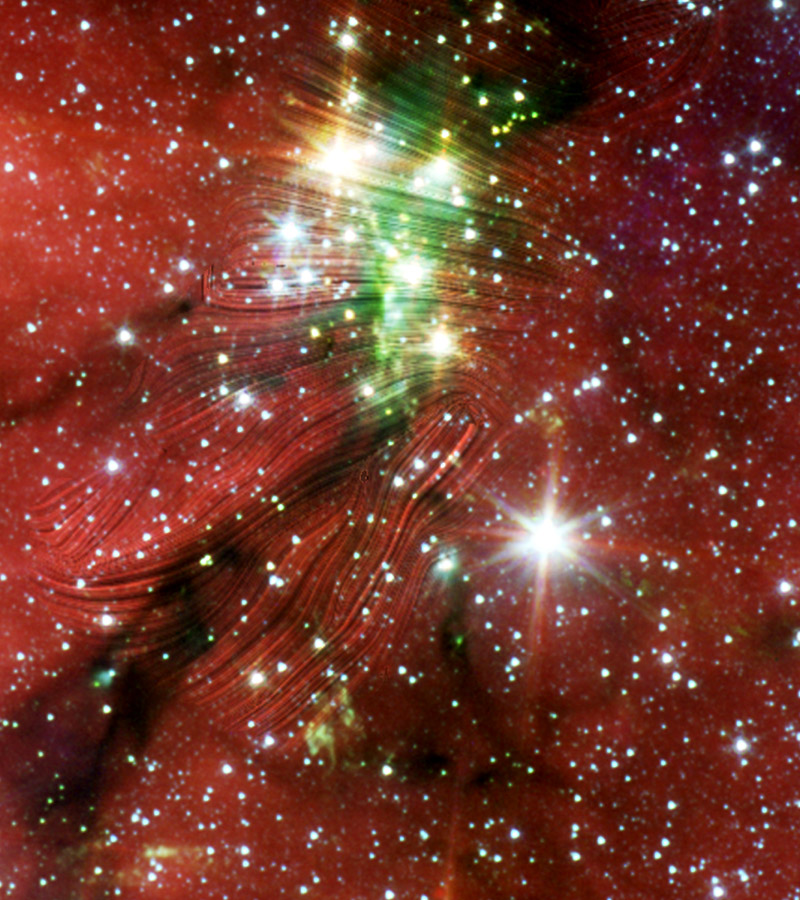
Astronomers have learned that the pull of gravity can sometimes overcome the strong magnetic fields found in great star-forming clouds in space. The resulting weakly magnetized gas flow can feed the growth of new stars.

Many striations (almost straight lines) across a star field with cloudy nebulae.

See the lines – called streamlines by scientists – in this composite image of the Serpens South star cluster? They’re from magnetic fields in this great star-forming cloud. Notice the lower left, where magnetic fields have been dragged into alignment with a narrow, dark filament. In that area, astronomers say, material from interstellar space is flowing into the star-forming cloud and fueling star formation.

Image via NASA/ SOFIA/ T. Pillai/ JPL-Caltech/ L. Allen/ USRA.

Astronomers have known for decades that stars like our sun form when giant clouds of gas and dust in space – sometimes called molecular clouds – collapse under their own gravity. But how does the material from interstellar space flow into these clouds, and what controls the collapse? The image above helps illustrate an answer to these questions. It’s a composite, made with data from SOFIA – an airborne telescope designed for infrared astronomy – overlaid on an image from the now-retired Spitzer Space Telescope. This composite shows that the pull of gravity can sometimes overcome the strong magnetic fields found in great star-forming clouds in space. And it shows that, when that happens, weakly magnetized gas can flow – as on a conveyor belt – to feed the growth of newly forming star clusters.

A statement from the Max Planck Institute in Bonn, Germany, explained:

A major finding in the last decade has been that extensive networks of filaments permeate every molecular cloud. A picture has emerged that stars like our own sun form preferentially in dense clusters at the intersection of filaments.

Now look back at the image above, which shows the Serpens South star cluster, a star-forming region located some 1,400 light-years from Earth. In that image, you see a dark filament in the lower left. Now notice the “stripes” on the image, which astronomers call streamlines. They represent magnetic structures, discovered by SOFIA. The astronomers said these magnetic structures act like rivers, channeling material into the great star-forming cloud.

As you can see in the image, these magnetic streamlines have been dragged by gravity to align with the narrow, dark filament on the lower left. Astronomers say this configuration helps material from interstellar space flow into the cloud.

This is different from the upper parts of the image, where the magnetic fields are perpendicular to the filaments; in those regions, the magnetic fields in the cloud are opposing gravity.

A beautiful and dignified young woman.

Astrophysicist Thushara Pillai led the study showing that magnetic rivers feed star birth in the Serpens South star-forming region.

The scientists said in a statement from Universities Space Research Association (USRA) that they are:

… studying the dense cloud to learn how magnetic fields, gravity and turbulent gas motions contribute to the creation of stars. Once thought to slow star birth by counteracting gravity, SOFIA’s data reveals magnetic fields may actually be working together with gravity as it pulls the fields into alignment with the filaments, nourishing the birth of stars.

The results were published in the peer-reviewed journal Nature Astronomy on August 17. The lead author of the new study is Thushara Pillai of Boston University and the Max Planck Institute for Radio Astronomy in Bonn, Germany.

In 1835, the French philosopher Auguste Comte wrote of the unknowable nature of stars:

On the subject of stars, all investigations which are not ultimately reducible to simple visual observations are … necessarily denied to us. While we can conceive of the possibility of determining their shapes, their sizes, and their motions, we shall never be able by any means to study their chemical composition or their mineralogical structure … Our knowledge concerning their gaseous envelopes is necessarily limited to their existence, size … and refractive power, we shall not at all be able to determine their chemical composition or even their density…

He was, famously, wrong.

He couldn’t have envisioned the range of tools available to modern astronomers. It’s a beautiful thing that, nowadays, astronomers can not only learn about the compositions of stars via their studies of their spectra, but also probe the deeper mysteries, going all the way to the births of these colossal, self-luminous balls in space.

The Stratospheric Observatory for Infrared Astronomy (SOFIA) is a Boeing 747SP jetliner modified to carry a 106-inch diameter telescope.

SOFIA, the Stratospheric Observatory for Infrared Astronomy. The HAWC+ polarimeter on board SOFIA was used for the observations of the magnetic field in the Serpens South star-forming region.

Image via NASA/ C. Thomas/ Max Planck Institute.

{https://earthsky.org/ }

Hoe vind je dit bericht?
Geschreven door peter om 00:42 Stuur door

Day-Before-Election Near-Earth Asteroid Has a Chance for Collision

asteroids-1017666-e1594322174319-999x540.jpg

Day-Before-Election Near-Earth Asteroid Has a Chance for Collision

Get your white flag and start waving it at the nearest calendar – especially if you live in the U.S. NASA is warning that a near-Earth asteroid will make a near Earth pass on November 2nd – one day before the country’s presidential election. Is this the universe letting us know we’re not as important as we think we are?

NASA Asteroid Watch
@AsteroidWatch
Asteroid 2018VP1 is very small, approx. 6.5 feet, and poses no threat to Earth! It currently has a 0.41% chance of entering our planet’s atmosphere, but if it did, it would disintegrate due to its extremely small size.

That tweet by NASA was made after the mainstream, space-watching and conspiracy media came out with blaring headlines warning that Asteroid 2018VP1 will be very close to Earth – with a non-zero chance of impact – on November 2nd, the day before an election that is dominating the news and the attention of most Americans. Of course, the impact could occur anywhere on Earth, but we self-important Americans always make these things about us, don’t we? While a “0.41% chance” sounds pretty small (except when discussing the upcoming election – there we go again!), it’s actually 1-in-240, which SOUNDS much more probable.

Are those better odds than Las Vegas?

Why haven’t we heard about this sooner? If you know anything about asteroids or you have an intuitive mind, you’ll either know or figure out that “2018VP1” means this asteroid was discovered in 2018 and has been tracked ever since. Ironically, 2018VP1 was discovered on November 3rd, 2018 by astronomers at the Zwicky Transient Facility at Palomar Observatory in Southern California. During the brief period it was visible (about 13 days), astronomers determined it had the potential to cross Earth’s orbit and potentially collide with the planet.

What if it did?

The answer to that is a good news/bad news response. The good news, as NASA points out, is that the chance is very low and it will probably pass no closer than 4,700 miles. Even if it did make a direct hit, at a diameter of 6.5 feet (2 meters), 2018VP1 will probably burn up in the atmosphere like almost all asteroids of that size do on a regular basis. The bad news is, ‘almost’ means it could survive the entry. If it’s made primarily of ice, 2018VP1 will put on a spectacular sky show to remind everyone to vote the following (there we go again). If it is primarily solid metal, 2018VP1 or pieces of it could impact the surface but their size – even if it landed whole – would make damage minimal. If you look at ‘minimal’ as ‘non-extinction-causing’ or ‘non- Chelyabinsk’, that’s good news. If you get hit by a piece (the odds are not zero), it could be fatal – but at least you’ll be famous and you probably won’t take anyone else with you.

Does that make you feel any better?

No, but what can you expect from 2020?

Related videos, selected and posted by peter2011

{ https://mysteriousuniverse.org/ }

Hoe vind je dit bericht?
Geschreven door peter om 23:50 Stuur door

Vreemd ruimteschip in Minnesota is terug

Vreemd ruimteschip in Minnesota is terug

ruimteschip minnesota
In september 2018 waren er verschillende mensen in de Amerikaanse staat Minnesota die een vreemd cirkelvormig object waarnamen in de lucht.

Later bleek dat een vergelijkbaar iets ook was gezien in andere landen, waaronder Nederland, en nu is het weer terug in Minnesota.


Misschien is er een heel logische verklaring voor en heeft het allemaal niets te maken met ruimteschepen van eventueel buitenaardse afkomst, maar feit is dat voor zover ons bekend niemand nog een verklaring heeft kunnen vinden voor dit vreemde verschijnsel.

Een object dat bij ons precies twee jaar geleden in beeld kwam toen het werd waargenomen boven de Amerikaanse staat Minnesota.

Het zag eruit als op de volgende afbeeldingen en werd door diverse mensen gezien.

ufo minnesota

ufo minnesota

Hier volgt een video opname van hetzelfde fenomeen:


Iemand die ergens op een weg reed in Minnesota en hetzelfde zag:

ufo minnesota auto


In april 2019 wordt eenzelfde soort object waargenomen in China:

ufo ringvormig china


En nu, meer dan een jaar later duikt het weer opnieuw op in Minnesota. De volgende opname is gemaakt door iemand uit Lakeville, Minnesota, vanaf de veranda van zijn huis.

Degene in kwestie heeft de opname vervolgens opgestuurd naar Mufon voor verder onderzoek.

cirkelvormige ufo minnesota


cirkelvormige ufo minnesota


Wat het ook mogen zijn, het lijkt duidelijk dat we hier wederom te maken hebben met hetzelfde object.

Om het verhaal compleet te maken hierna nog een getuigenverslag van iemand uit Nederland die jaren geleden (1996) eenzelfde object waarnam in het zuiden van ons land.

This evening while looking at your site I saw “Ruimteschip hangt vier minuten boven weg Update”

This gave me the goosebumps! This is exacly what my X wife and myself saw in 1996 From Oeffelt To Our House In Boekel, I didn’t have a camera with me so I didn’t take a picture but now I see it and thank you for that.

Back then I shared my experience with a few sites here is the article.

Op die website staat inderdaad het hele verhaal wat er die zomeravond in juni 1996 gebeurde tijdens een autorit van Oeffelt naar Boekel, een afstand van zo’n 26 kilometer.

De man in kwestie was samen met zijn toenmalige vriendin op bezoek geweest bij vrienden die in een vrij afgelegen boerderij in de buurt van Oeffelt woonden.

Hij kan zich die avond van 22 juni 1996 nog goed herinneren, want dat was de avond dat Nederland tegen Frankrijk speelde voor de wereldkampioenschappen.

Rond middernacht vertrekt het stel omdat de volgende dag een werkdag was en ze een beetje op tijd in bed moesten liggen. Het eerste wat de man ziet is een rond object met vele lichten dat rondcirkelt boven de boerderij waar ze op bezoek waren. Het was identiek aan die die nu wordt waargenomen in Minnesota.

Het was een kilometer of 7 richting snelweg vanaf de boerderij en de weg was verlaten en liep door een vrijwel onbebouwd gebied. De vriendin kon vanuit de auto zien dat het object hen volgde rechts van de auto en exact dezelfde snelheid aan hield. Toen de man gas gaf accelereerde de UFO ook en toen hij een bocht naar rechts maakte volgde de UFO.

De man werd een beetje overmoedig, stopte de auto en stapte uit om beter te kunnen kijken. Het object draaide rond tegen de richting van de wijzers van de klok in en stopte boven een huis aan de rechterkant van de weg. Toen begon het met de richting van de wijzers van een klok mee te draaien en bewoog zich richting auto en de man had het gevoel alsof het object met hem communiceerde. Hij schat de grootte ervan op enkele voetbalvelden, geen kleintje dus. Bovendien maakte het geen geluid. Het vloog enkele keren over de auto en tenslotte stapte de man weer in.

Omdat ze op een gegeven moment onder een bladerdak van bomen reden dachten ze het object kwijt te zijn, maar niets was minder waar. Een minuut later was het weer terug aan de passagierskant van de auto. De vrouw vroeg hem om sneller te gaan rijden en de auto zo snel mogelijk thuis de garage in te rijden, hetgeen geschiedde.

Thuis gekomen was de man toch weer nieuwsgierig geworden, liep naar buiten en zag het object hangen boven het huis van de buren. Omdat het object nu heel dichtbij was en onder een bepaalde hoek hing, had de man heel sterk het gevoel dat ze naar hem keken. De man riep naar zijn vriendin en de babysitter om snel naar buiten te komen en toen ze dat deden schoot het object weg met hoge snelheid. Het verdween van het ene op het andere moment, zonder enig geluid te maken.

De man was een voormalig sergeant bij de luchtmacht en is daardoor wel goed in staat om onderscheid te maken tussen bijvoorbeeld een helikopter en een onbekend object.

Even later kwam het object nogmaals terug en werd toen ook gezien door de babysitter en de buurman die net zelf terugkwam van een feestje. Uiteindelijk verdween het object opnieuw en ze hebben het daarna nooit meer gezien. Wel bleek later dat er die avond veel UFO meldingen waren geweest in dat gebied.

Tot zover dit verhaal.

Tips ter opheldering van dit fenomeen of eigen ervaringen zijn altijd welkom via redactie apenstaart niburu.co

{ https://www.niburu.co/ }

Hoe vind je dit bericht?
Geschreven door peter om 22:48 Stuur door

Pentagon is forming new task force to investigate UFO sightings over US military bases - defense officials say - after US senators demand answers

Pentagon is forming new task force to investigate UFO sightings over US military bases - defense officials say - after US senators demand answers

  • Two defense officials said a new task force that hunts and investigates UFOs seen by military aircraft will be unveiled in the next few days, reported CNN
  • It will be headed up by Deputy Secretary of Defense David Norquist, they said 
  • US senators are demanding more transparency from the Pentagon over mysterious encounters in the skies
  • In July, it emerged the Pentagon's once secret UFO hunting department was still in operation despite official claims it was disbanded in 2012 
  • The Pentagon released three videos in April showing US Navy pilots encountering UFOs flying over military bases
  • The need to investigate UFOs comes from concerns US adversaries such as China and Russia could have made technological leaps in espionage 

The Pentagon is forming a new task force to investigate UFO sightings over US military bases, according to defense officials.

Two defense officials told CNN the task force will hunt and investigate UFOs that have been seen by military aircraft and will be headed up by Deputy Secretary of Defense David Norquist.

The task force will be officially announced over the next few days, they added. 

This comes just weeks after it emerged the Pentagon's once secret UFO hunting department continued to operate over the past decade despite claims it was disbanded in 2012.

US senators have demand more transparency from the Pentagon over mysterious encounters in the skies.

The Pentagon (pictured) is forming a new task force to investigate UFO sightings over US military bases, according to defense officials

The Pentagon (pictured) is forming a new task force to investigate UFO sightings over US military bases, according to defense officials

Details of the new task force - including its name and whether its investigations will be made public - are not yet clear. 

It is also not clear whether the new task force will replace the Unidentified Aerial Phenomenon Task Force which the New York Times revealed last month was still in operation.

A secret multi-million dollar program named the Advanced Aerospace Threat Identification Program first began in 2007 under the Defense Intelligence Agency before moving to the Office of Naval Intelligence.

In 2017, the Pentagon acknowledged funding the program to investigate UFO sightings but defense chiefs claimed it ended in 2012 citing 'other, higher priority issues that merited funding'. 

In July, the Times reported that people who worked with the UFO program through to 2017 and beyond confirmed it continued to exist - but under a different name and office.

Members of the unit insisted some of the objects discovered were items humans 'couldn't make ourselves' and 'vehicles not made on this earth'.   

In April, the Pentagon released footage from three sightings of unidentified objects
One of the videos was captured off the coast of Jacksonville, Florida, in 2015 (pictured)

In April, the Pentagon released footage from three sightings of unidentified objects (pictured)

The grainy black and white footage had previously been leaked and the Navy acknowledged they were genuine videos

The grainy black and white footage had previously been leaked and the Navy acknowledged they were genuine videos

Donald Trump expressed skepticism over the validity of the footage calling it 'one hell of a video' and saying 'I just wonder if it's real'

Donald Trump expressed skepticism over the validity of the footage calling it 'one hell of a video' and saying 'I just wonder if it's real'

In June, US senators demanded to see the Pentagon's UFO files as they pushed for influence over the secretive Navy program. 

The Senate Intelligence Committee wanted defense chiefs to publish a report on the Pentagon's UFO program and any phenomena it observes.

The committee said it 'supports the efforts of the Unidentified Aerial Phenomenon Task Force' - appearing to also confirm such a program still existed - but said the public should be better informed of its activities.    

The Pentagon's UFO department could now be forced to give reports to the public every six months. 

The push for transparency from the Senate came after the Pentagon released three videos showing US Navy pilots encountering UFOs flying over military bases back in April.

The grainy black and white footage had previously been leaked and the Navy acknowledged they were genuine videos. 

One of the videos was shot in November 2004 and the other two in January 2015.

In one, a weapons sensor operator appears to lose lock on a rapidly moving object which seconds later suddenly accelerates away to the left and out of view.

The new UFO task force will be headed up by Deputy Secretary of Defense David Norquist (pictured), according to officials

The new UFO task force will be headed up by Deputy Secretary of Defense David Norquist (pictured), according to officials

In another video which is tracking an object above the clouds, one pilot wonders if it is a drone.  

The Department of Defense said it was 'releasing the videos in order to clear up any misconceptions by the public on whether or not the footage that has been circulating was real, or whether or not there is more to the videos.'

Donald Trump expressed skepticism over the validity of the footage calling it 'one hell of a video' and saying 'I just wonder if it's real'. 

'Hazard reports' about the unexplained encounters were then released the following month. 

'The unknown aircraft appeared to be small in size, approximately the size of a suitcase, and silver in color,' one report about an incident in 2014 read.   

The need to investigate the existence of UFOs stems less out of concern over extraterrestrials, however, and more from the threat posed by real-world US adversaries such as China.

The Pentagon admitted in June that a nuclear detonation in space by Russia or China was among the possible threats to US interests. 

The US is particularly worried about China's espionage capabilities, including use of drones and other aerial technology. 

Earlier in July, Florida Senator Marco Rubio, the acting chairman of the Senate Select Committee on Intelligence, told CBS that he was concerned about unidentified aircraft flying over US military bases. 

He claimed that China or Russia may have made 'some technological leap' that 'allows them to conduct this sort of activity'. 

'Maybe there is a completely, sort of, boring explanation for it. But we need to find out,' he added. 

Read more:

Related videos, selected and posted by peter2011

{ https://www.dailymail.co.uk/}

Hoe vind je dit bericht?
Geschreven door peter om 22:23 Stuur door

Mars Face Of Young Chubby Girl, Also Three Standing Figures! 100% Proof NASA Lies To The Public, UFO Sighting News.

Mars Face Of Young Chubby Girl, Also Three Standing Figures! 100% Proof NASA Lies To The Public, UFO Sighting News.

Screen%2BShot%2B2020-08-24%2Bat%2B8.54.10%2BPM.png

Date of discovery: Aug 23, 2020
Location of discovery: Mars, Sol 1087
Source photo: 
Honestly guys, I'm getting sensory overload on this whole photo. Just too many ancient artifacts, and only 1 in 20 I will show you. Mostly because the other 19 are less detailed, less understandable, less significant. 

I found a face of a young girl, looks to be a chubby young girl with curly hair. The face is highly detailed and facing outward from the hillside. It looks human-like, if the human were 7 years old. 


I found a few standing figures, a few words engraved deeply into the stone, a few doorways, a few oddities that just cannot be explained by anything except as an ancient city. But my estimates are that those that lived here were a mere 3-5 inches tall. Right now you doubt me, but honestly, why do you think intelligence is limited by size? Some of the smartest people I ever met...were some of the shortest too. 

Scott C. Waring 


Mars%2Bface%252C%2Bface%252C%2Bfigure%252C%2B%25E0%25A4%25AF%25E0%25A5%2582%25E0%25A4%258F%25E0%25A4%25AB%25E0%25A4%2593%252C%2BElliott%2BGunton%252C%2BAnon%252C%2B%25C4%2591i%25CC%2583a%2Bbay%252C%2BAPT28%252C%2BOZN%252CWild%2BNeutron%252C%2BMorpho%252C%2B%25D0%259D%25D0%259B%25D0%259E%252C%2Bovni%252C%2Bomni%252C%2B%2BUFO%252C%2BUFOs%252C%2Bsighting%252C%2Bsightings%252C%2Balien%252C%2Baliens%252Carchaeology%252C%2Bastrobiology%252C%2Bpaleontology%252C%2Bwaarneming%252C%2Bvreemdelinge%252C%2B%2B%2B.png

Screen%2BShot%2B2020-08-24%2Bat%2B8.54.33%2BPM.png


%25E0%25A4%25AF%25E0%25A5%2582%25E0%25A4%258F%25E0%25A4%25AB%25E0%25A4%2593%252C%2B%25C4%2591i%25CC%2583a%2Bbay%252C%2BNLO%252C%2BOZN%252C%2B%25D0%259D%25D0%259B%25D0%259E%252C%2Bovni%252C%2Bomni%252C%2B%2BMUFON%252C%2BDeagla%25CC%2581n%252C%2B%2BUFO%252C%2BUFOs%252C%2Bsighting%252C%2Bsightings%252C%2Balien%252C%2Baliens%252C%2BET%252C%2B%2Bastrobiology%252C%2Bpaleontology%252C%2Bwaarneming%252C%2B.png

%25E0%25A4%25AF%25E0%25A5%2582%25E0%25A4%258F%25E0%25A4%25AB%25E0%25A4%2593%252C%2B%25C4%2591i%25CC%2583a%2Bbay%252C%2BNLO%252C%2BOZN%252C%2B%25D0%259D%25D0%259B%25D0%259E%252C%2Bovni%252C%2Bomni%252C%2B%2BMUFON%252C%2BDeagla%25CC%2581n%252C%2B%2BUFO%252C%2BUFOs%252C%2Bsighting%252C%2Bsightings%252C%2Balien%252C%2Baliens%252C.png


Screen%2BShot%2B2020-08-24%2Bat%2B9.15.29%2BPM.png

%25E0%25A4%25AF%25E0%25A5%2582%25E0%25A4%258F%25E0%25A4%25AB%25E0%25A4%2593%252C%2B%25C4%2591i%25CC%2583a%2Bbay%252C%2BNLO%252C%2BOZN%252C%2B%25D0%259D%25D0%259B%25D0%259E%252C%2Bovni%252C%2Bomni%252C%2B%2BMUFON%252C%2BDeagla%25CC%2581n%252C%2B%2BUFO%252C%2BUFOs%252C%2Bsighting%252C%2Balien%252C%2Baliens%252C%2BET%252C%2B%2B%2B%25D7%259E%25D7%2596%25D7%2595%25D7%2594%25D7%2594%252C%2Barchaeology%252C%2Bastrobiology%252C%2Bwaarneming%252C%2B%2Bcopy%2B2.png
 Below is a (Side View) face looking up to the sky, only see the nose, chin cheeks, crown, neck. 
Screen%2BShot%2B2020-08-24%2Bat%2B9.26.22%2BPM.png
Screen%2BShot%2B2020-08-24%2Bat%2B9.33.03%2BPM.png

We%2Bare%2Bthe%2Bchampions%252C%2B%25E0%25A4%25AF%25E0%25A5%2582%25E0%25A4%258F%25E0%25A4%25AB%25E0%25A4%2593%252C%2BElliott%2BGunton%252C%2BAnon%252C%2B%25C4%2591i%25CC%2583a%2Bbay%252C%2BAPT28%252C%2BOZN%252CWild%2BNeutron%252C%2BMorpho%252C%2B%25D0%259D%25D0%259B%25D0%259E%252C%2Bovni%252C%2Bomni%252C%2B%2BUFO%252C%2BUFOs%252C%2Bsighting%252C%2Bsightings%252C%2Balien%252C%2Baliens%252C%2B%25D7%259E%25D7%2596%25D7%2595%25D7%2594%25D7%2594%252C%2Barchaeology%252C%2Bastrobiology%252C%2Bpaleontology%252C%2Bvreemdelinge%252C%2B%2B%2B.png
figure%2Bon%2Bmars%252C%2Bfigure%252C%2BElliott%2BGunton%252C%2BAnon%252C%2B%25C4%2591i%25CC%2583a%2Bbay%252C%2BAPT28%252C%2BOZN%252CWild%2BNeutron%252C%2BMorpho%252C%2B%25D0%259D%25D0%259B%25D0%259E%252C%2Bovni%252C%2Bomni%252C%2B%2BUFO%252C%2BUFOs%252C%2Bsighting%252C%2Bsightings%252C%2Bastrobiology%252C%2Bvreemdelinge%252C%2B%2B%2B.png
 
Standing figure is only about 3-6 inches tall. Wearing a suit, hoody off, naked bald head seen from back. 
Screen%2BShot%2B2020-08-24%2Bat%2B10.31.23%2BPM.png
Below is a male figure, wearing a pointy hood hat bending over the rock. I made him grey to make him stand out more easily for you. His face is very clear. 
%25E0%25A4%25AF%25E0%25A5%2582%25E0%25A4%258F%25E0%25A4%25AB%25E0%25A4%2593%252C%2B%25C4%2591i%25CC%2583a%2Bbay%252C%2BNLO%252C%2BOZN%252C%2B%25D0%259D%25D0%259B%25D0%259E%252C%2BMars%252C%2Bfigure%252C%2Bstatue%252C%2Bnobel%2Bprize%252C%2B%2BMUFON%252C%2BDeagla%25CC%2581n%252C%2B%2BUFO%252C%2BUFOs%252C%2Bsighting%252C%2Bsightings%252C%2Balien%252C%2Baliens%252C%2BET%252C%2B%2B%2B%25D7%259E%25D7%2596%25D7%2595%25D7%2594%25D7%2594%252C%2Barchaeology%252C%2Bastrobiology%252C%2Bpaleontology%252C%2Bwaarneming%252C%2B%2Bcopy%2B2.png
%2BMars%252C%2Bfigure%252C%2Bstatue%252C%2Bnobel%2Bprize%252C%2B%2BMUFON%252C%2BDeagla%25CC%2581n%252C%2B%2BUFO%252C%2BUFOs%252C%2Bsighting%252C%2Bsightings%252C%2Balien%252C%2Baliens%252C%2BET%252C%2B%2B%2B%25D7%259E%25D7%2596%25D7%2595%25D7%2594%25D7%2594%252C%2Barchaeology%252C%2Bastrobiology%252C%2Bpaleontology%252C%2Bwaarneming%252C%2B%2Bcopy%2B4.png

%25E0%25A4%25AF%25E0%25A5%2582%25E0%25A4%258F%25E0%25A4%25AB%25E0%25A4%2593%252C%2B%25C4%2591i%25CC%2583a%2Bbay%252C%2BNLO%252C%2BOZN%252C%2B%25D0%259D%25D0%259B%25D0%259E%252C%2BMars%252C%2Bfigure%252C%2Bstatue%252C%2Bnobel%2Bprize%252C%2B%2B%2B%2Bsighting%252C%2Bsightings%252C%2Balien%252C%2Baliens%252C%2BET%252C%2B%2B%2B%25D7%259E%25D7%2596%25D7%2595%25D7%2594%25D7%2594%252C%2Barchaeology%252C%2Bastrobiology%252C%2Bpaleontology%252C%2Bwaarneming%252C%2B%2Bcopy%2B3.png

{ https://www.ufosightingsdaily.com/ }

Hoe vind je dit bericht?
Geschreven door peter om 21:05 Stuur door

Alien Base Found On Earths Moon, 100% Proof Aliens Own Moon, Photos, UFO Sighting News.

Alien Base Found On Earths Moon, 100% Proof Aliens Own Moon, Photos, UFO Sighting News.

Moon%2Bbase%252C%2BElliott%2BGunton%252C%2BOZN%252CWild%2BNeutron%252C%2BMorpho%252C%2B%25D0%259D%25D0%259B%25D0%259E%252C%2Bovni%252C%2Bomni%252C%2B%2BUFO%252C%2BUFOs%252C%2Bsighting%252C%2Bsightings%252C%2Balien%252C%2Baliens%252C%2B%25D7%259E%25D7%2596%25D7%2595%25D7%2594%25D7%2594%252C%2Barchaeology%252C%2Bastrobiology%252C%2B%2Bwaarneming%252C%2Bvreemdelinge%252C%2B%2B%2B%2Bcopy.png
Date of discovery: Aug 23, 2020
Location of discovery: Earths moon
Source coordinates: 

https://quickmap.lroc.asu.edu/?extent=-0.4644931,62.8809585,-0.4063315,62.9125904&proj=10&layers=NrBsFYBoAZIRnpEoAsjYIHYFcA2vIBvAXwF1SizSg

This is a white structure...which I call the white ceramics. These structures are near impossible to photograph due the powerful reflection of light bouncing off of them. I added contrast and they came into focus. I added yellow to the building area so you can see exactly what I see. It does take years of practice and patience to allow your eyes to adjust to not only the black and white photos, but to search for similar signs of structures that I have found in the past ten years. This has to be one of the top ten. The map ruler is not accurate, its true size is close to 300 meters across. and 50 meters high. Don't just glance at the screenshots here...allow your eyes to get use to looking at it. Search for the defining shading and edges. Take a few minutes and search the screenshots...finding these structures takes practice. 
 
Kinds of structures I have found on the moon. 
1. Once found elongated 6 sided 24k gold ship, flat, huge cross-like vein covered its surface only. 
2. Found some transparent pyramids...very difficult to focus the pictures due to mass reflections. But experienced searcher could see it easily. 
3. Metallic grey metal structures, often smaller and near edges of larger non reflective black structures. 
3. White Ceramic structures, had to find some in focused due to light reflection, but if in a bit of shadows, can be focused. 
4. Non reflective (stealth fighter black) black structures. Massive in scale, largest of all structures on Earths moon. Usually mistaken for shadows by inexperienced searchers. 
 
Time, patience and practice...and you can accomplish the impossible. 
 
Scott C. Waring 

Moon%2Bbase%252C%2BElliott%2BGunton%252C%2BAnon%252C%2B%25C4%2591i%25CC%2583a%2Bbay%252C%2BAPT28%252C%2BOZN%252CWild%2BNeutron%252C%2BMorpho%252C%2B%25D0%259D%25D0%259B%25D0%259E%252C%2Bovni%252C%2Bomni%252C%2B%2BUFO%252C%2BUFOs%252C%2Bsighting%252C%2Bsightings%252C%2Balien%252C%2Baliens%252C%2B%25D7%259E%25D7%2596%25D7%2595%25D7%2594%25D7%2594%252C%2Barchaeology%252C%2Bastrobiology%252C%2B%2Bwaarneming%252C%2Bvreemdelinge%252C%2B%2B%2B.png

%25E0%25A4%25AF%25E0%25A5%2582%25E0%25A4%258F%25E0%25A4%25AB%25E0%25A4%2593%252C%2BElliott%2BGunton%252C%2BAnon%252C%2B%25C4%2591i%25CC%2583a%2Bbay%252C%2BAPT28%252C%2BOZN%252CWild%2BNeutron%252C%2BMorpho%252C%2B%25D0%259D%25D0%259B%25D0%259E%252C%2Bovni%252C%2Bomni%252C%2B%2BUFO%252C%2BUFOs%252C%2Bsighting%252C%2Bsightings%252C%2Balien%252C%2Baliens%252C%2B%25D7%259E%25D7%2596%25D7%2595%25D7%2594%25D7%2594%252C%2Barchaeology%252C%2Bastrobiology%252C%2BNobel%2Bpeace%2Bprize%252C%2B%2Bvreemdelinge%252C%2B%2B%2B.png

%25E0%25A4%25AF%25E0%25A5%2582%25E0%25A4%258F%25E0%25A4%25AB%25E0%25A4%2593%252C%2BElliott%2BGunton%252C%2BAnon%252C%2B%25C4%2591i%25CC%2583a%2Bbay%252C%2BAPT28%252C%2BOZN%252CWild%2BNeutron%252C%2BMorpho%252C%2B%25D0%259D%25D0%259B%25D0%259E%252C%2Bovni%252C%2Bomni%252C%2B%2BUFO%252C%2BUFOs%252C%2Bsighting%252C%2Bsightings%252C%2Balien%252C%2BNobel%2BPrize%252C%2Barchaeology%252C%2B%2Bwaarneming%252C%2Bvreemdelinge%252C%2B%2B%2B.png

{ https://www.ufosightingsdaily.com/ }

Hoe vind je dit bericht? 1 stem
Geschreven door peter om 20:42 Stuur door

Cloud Orb Discovered Crashed On Beach In Norway, Meteor Pitting Found, Photo, UFO Sighting News.

Cloud Orb Discovered Crashed On Beach In Norway, Meteor Pitting Found, Photo, UFO Sighting News.

%25E0%25A4%25AF%25E0%25A5%2582%25E0%25A4%258F%25E0%25A4%25AB%25E0%25A4%2593%252C%2B%25C4%2591i%25CC%2583a%2Bbay%252C%2BNLO%252C%2BOZN%252C%2B%25D0%259D%25D0%259B%25D0%259E%252C%2Bovni%252C%2Bomni%252C%2B%2BMUFON%252C%2BDeagla%25CC%2581n%252C%2B%2BUFO%252C%2BUFOs%252C%2Bsighting%252C%2Bsightings%252C%2Balien%252C%2Baliens%252C%2BET%252C%2B%2Bancient%252C%2B%25D7%25A2%25D7%25A6%25D7%259D%2B%25D7%2591%25D7%259C%25D7%25AA%25D7%2599%2B%25D7%259E%25D7%2596%25D7%2595%25D7%2594%25D7%2594%252C%2BNorway%252C%2Bbeach%252C%2Bwaarneming%252C%2Bvreemdelinge%252C%2B%2B%2B.jpg

Date of discovery: Aug 2020
Location of discovery: Oveson, Norway
Source: 

This is an interesting find on the beach of Oveson, Norway. The person states on Reddit that they found the object on the beach and are asking for help identifying it. Some comments believe it to be a sinker for fishing, but its huge size puts that in doubt since most sinkers are now plastic and styrofoam making a sinker out of zinc would be very impractical and expensive, especially one of this size. 

I  believe that this object fell from our atmosphere and while it did, it became damaged. Observe the molten uneven outer coating of the object. Observer the deep meteorite like craters on its surface. This is not caused by the salt water and rust, because we see no sign of decay or rust. It has be heated to extreme temperatures. I believe this object did not hit the ocean, but hit the beach itself. You can see that there is some non metal material that has been lodged inside the molten metal and burned. That material is from the beach. This is an alien probe, the kind that are often seen darting from cloud to cloud. Its value is immeasurable since it surly has keys to AI within its material itself. What I mean is, the systems...the computer, the AI, the propulsion are all built into micro scale into the metal itself. If there are sections left undamaged within it...then the micro technology found in it could change the world forever advancing humanity thousands of years ahead. 

Scott C. Waring - Taiwan


%25E0%25A4%25AF%25E0%25A5%2582%25E0%25A4%258F%25E0%25A4%25AB%25E0%25A4%2593%252C%2BNLO%252C%2BOZN%252C%2B%25D0%259D%25D0%259B%25D0%259E%252C%2Bovni%252C%2Bomni%252C%2B%2BMUFON%252C%2BDeagla%25CC%2581n%252C%2B%2BUFO%252C%2BUFOs%252C%2Bsighting%252C%2Bsightings%252C%2B%2B%2BNorway%252C%2Bbeach%252C%2Bwaarneming%252C%2B%2B.png

%25E0%25A4%25AF%25E0%25A5%2582%25E0%25A4%258F%25E0%25A4%25AB%25E0%25A4%2593%252C%2B%25C4%2591i%25CC%2583a%2Bbay%252C%2BNLO%252C%2BOZN%252C%2B%25D0%259D%25D0%259B%25D0%259E%252C%2B%2B%2BUFO%252C%2BUFOs%252C%2Bsighting%252C%2Bsightings%252C%2Balien%252C%2Baliens%252C%2BET%252C%2B%2Bancient%252C%2B%25D7%25A2%25D7%25A6%25D7%259D%2B%25D7%2591%25D7%259C%25D7%25AA%25D7%2599%2B%25D7%259E%25D7%2596%25D7%2595%25D7%2594%25D7%2594%252C%2BNorway%252C%2Bbeach%252C%2Bwaarneming%252C%2Bvreemdelinge%252C%2B%2B%2B.jpg

%25E0%25A4%25AF%25E0%25A5%2582%25E0%25A4%258F%25E0%25A4%25AB%25E0%25A4%2593%252C%2B%25C4%2591i%25CC%2583a%2Bbay%252C%2Bovni%252C%2Bomni%252C%2B%2BMUFON%252C%2BDeagla%25CC%2581n%252C%2B%2BUFO%252C%2BUFOs%252C%2Bsighting%252C%2Bsightings%252C%2Balien%252C%2Baliens%252C%2BET%252C%2B%2B%2B%25D7%259E%25D7%2596%25D7%2595%25D7%2594%25D7%2594%252C%2BNorway%252C%2Bbeach%252C%2Bvreemdelinge%252C%2B%2B%2B.png
hw0mvz5ijld51%2Bcopy%2B2.jpg

{ https://www.ufosightingsdaily.com/ }

Hoe vind je dit bericht?
Geschreven door peter om 20:37 Stuur door

High speed UFO stops midair and shoots straight up through the sky caught on Live Webcam

On August 17, 2020, witness lmx2001 tuned in to St Ives Hayle Beach Live Webcam UK to watch a sunset and noticed a strange bright light hovering above the sea so he used a desktop screen recorder to capture it. 
ufo-orb-sphere-uap-UK.jpg

The light then suddenly darts to the left over a distance at high speed then stops sharply where it just hovers again. 
Then towards the end of the video it shoots straight up through the sky very fast and is gone. 
The first video is the original recording of the UFO, while the second video shows a closer look at the UFO.


{ http://ufosightingshotspot.blogspot.com/ }

Hoe vind je dit bericht?
Geschreven door peter om 19:55 Stuur door

Daytime UFO footage: Westland, Michigan |2020

Daytime UFO footage: Westland, Michigan |2020

ufo-michigan.png

Daytime footage of a solid object flying in the sky above Westland in Michigan. This was taken on 30th June 2020.

Witness report: 

Son and I saw this thing in the sky and I took a video of it. My son and I were in front of our local metro PC’s store waiting to buy a new phone and I was looking around and saw what at first glance looked like a large balloon in the shape of a donut flying across the sky. But when it dawned on me as to the largeness of this thing and my poor distance eye sight without my glasses was amazing and new it couldn’t possible be a balloon, so I started filming and showed my son.

Don’t forget to follow us on Twitter for the latest UFO videos & photos.

Link: twitter.com/LatestUFOs

{ https://www.latest-ufo-sightings.net/ }

Hoe vind je dit bericht?
Geschreven door peter om 19:39 Stuur door

Sorry, believers: Skeptics say there are rational explanations for military pilots' UFO videos

Watch: The UFO captured on camera in 2004.

Pentagon formally releases 3 Navy videos showing "unidentified aerial phenomena" 

(US Pentagon)

Sorry, believers: Skeptics say there are rational explanations for military pilots' UFO videos

Paging Agent Mulder: The Pentagon's spectacular UFO videos all have plausible, non-extraterrestrial explanations

MATTHEW ROZSA

The Pentagon announced Thursday that it is creating a task force to investigate UFO sightings. Though the notion that the military is investigating UFOs sounds like a fringe conspiracy theorist's ultimate redemption, the military's actions are far from preposterous. That's because their own trusted soldiers have credibly encountered UFOs while piloting military aircraft.

The Pentagon's footage from these sightings, which has been made public, depicts objects zooming quickly through the sky, as recorded by military pilots. Though these objects fit the technical definition of a UFO — meaning an unidentified flying object — they may not adhere to the folk understanding of "UFO" as synonymous with an extraterrestrial spacecraft. That's because there isn't exactly any evidence that these objects are of extraterrestrial origin, or that they defy any existing laws of physics that might hint at their development by a more scientifically advanced species. 

"To understand the videos, all you need to do is ask any fighter pilot familiar with the FLIR camera system," Brian Dunning, a professional scientific skeptic and podcaster, told Salon by email. "What looks like great speed and wild maneuvers is just a common optical illusion combined with the effects of the FLIR's gimbal and glare filter." FLIR cameras, short for forward-looking infrared cameras, are capable of seeing slightly into the infrared spectrum, meaning that heat sources light up on FLIR camera footage.

Dunning zeroed in on a released video that appears to show a bat-winged shaped craft, noting that "the object you're seeing is a single point of heat from an unidentified plane, probably a distant commercial jet, flying away from the F-18. The camera is looking out the side of the F-18 which is speeding past nearby clouds, making the object appear to be moving relative to the clouds."

He added, "Its bat-wing shape is how the FLIR's glare filter always depicts single bright points (there are plenty of examples of this on YouTube), and whenever the object appears to turn, this is simply the FLIRs gimbal rotating to keep the target in view as the F-18 maneuvers. The other videos also have similarly prosaic explanations."

Timothy Caulfield, a law professor at the University of Alberta who also hosts a TV series that debunks pseudoscience (titled "A User's Guide to Cheating Death"), explained to Salon that there are a number of potentially innocuous explanations — many of them involving military or other highly secretive scientific experiments — that get ignored due to sensationalism.

"I get why people are fascinated by this topic. It's exciting, it's intriguing, it's mysterious," Caulfield said. "But the idea that these things are UFOs and alien sightings, and that there is alien material left on our planet, is scientifically implausible and highly unlikely. It's an Occam's Razor story. I think there is probably a more straightforward explanation, but we will just never know with the deep uncertainty. People want answers."

He drew particular attention to how the pilots that spotted these UFOs may have inadvertently fanned the flames of conspiracy theorists.

"When people look at those kinds of videos and the reaction of the pilots, for example, I think that's often also used to give them more credibility with these expert pilots, often military pilots, commenting on the behavior of the shifts," Caulfield explained. "I'm not a physicist, I'm not an engineer. I can understand what people are intrigued. They don't know what this object is and it's moving in a manner that seems impossible given our current technology."

Alexander Wendt, an international relations professor at Ohio State University who has become a prominent amateur ufologist, pointed to the reactions of the military pilots as a sign that these new UFOs should be taken seriously.

"I challenge anybody to do better than the Navy to explain what's in those videos. If the Navy couldn't do it..." Wendt told Salon, before adding that "they had every reason to want this off their plate."

As Wendt pointed out, "I think what's unique about these Navy videos is that the whole issue arose from the pilots... I think the upset pilots is really a key thing. These guys are the experts on what's in the sky. They have thousands of hours of experience flying up there. You see some of the interviews with these pilots and they think something is going on, and they were the ones that pushed this whole issue to the front."

Another Ohio State University professor, political scientist Thomas Wood, opened up to Salon about why people embrace UFO conspiracy theories.

"If you look at the data on public opinion on this, it is really sort of incredible," Wood explained. (A Gallup poll last year found that 33 percent of Americans believe that some UFO sightings were caused by alien visitation; a YouGov poll last month found that 56 percent of Americans believe that the government would hide UFO evidence from the public.) "The American public fascination with UFOs is one of the very durable conspiracy theories in the American public's imagination. Most conspiracy theories may become popular and then quiet quickly — for instance, the Barack Obama was born in Kenya theory, the American government planned the 9/11 terrorist attack theory. The UFO conspiracy theory is one of those that just sort of stuck around."

Dunning was quite cynical about the reasons for people believing in UFOs.

"Two words: Sensationalism sells," Dunning emailed Salon. "Nobody is excited about the artifacts of the FLIR glare filter; everyone is excited about the prospect of the Pentagon hiding the 'truth about aliens.'"

He added, "Humans are hardwired for anecdotal thinking. Our brains gravitate toward the simple and the desirable, and away from the complicated and the boring. The people in the business of selling TV programming are well aware of this, and that's why we see UFOs, ghosts, psychics, and miracle cures dominating pop culture."

Many famous people claim to have encountered either UFOs or aliens, from singers Elvis Presley and Blink-182's Tom DeLonge and President Jimmy Carter. They were able to have successful careers despite the stigma associated with such an alleged experience, though many other believers were not. 

Earlier this year, the TV series "Unsolved Mysteries" devoted an episode to a group of people from a small town in western Massachusetts who claim they encountered a UFO in 1969. They described being socially rejected, viciously bullied, and in one case even harassed to the point where they moved away. it makes sense why they wouldn't go to the police or the local press at the time with their story. Many other reports of UFO sightings and encounters follow the same pattern — those who come forward suffer for doing so. As one of the people in the episode puts it, the town devolved from "Norman Rockwell to Salvador Dali" as public opinion and un-visited citizens turned against the purported witnesses.

MATTHEW ROZSA

Matthew Rozsa is a staff writer for Salon. He holds an MA in History from Rutgers University-Newark and is ABD in his PhD program in History at Lehigh University. His work has appeared in Mic, Quartz and MSNBC.

{ https://www.salon.com/ }

Hoe vind je dit bericht?
Geschreven door peter om 00:39 Stuur door

Meteors or UFO? Russian Cosmonaut Shoots Mysterious Objects in Space – Video

Russian cosmonaut Ivan Vagner has shared a video of the aurora over Antarctica which showed several unknown objects flying through outer space

Meteors or UFO? Russian Cosmonaut Shoots Mysterious Objects in Space – Video

by Oleg Burunov

Ivan Vagner joined the ISS crew on 9 April, when a Soyuz MS-19 spacecraft sent him along with fellow cosmonaut Oleg Skripochka as well as NASA’s Andrew Morgan and Jessica Meir to the space oupost.

Russian cosmonaut Ivan Vagner, who is currently woking on board the International Space Station, has shared a video of the aurora over Antarctica which showed several unknown objects flying through outer space.

In the 60-second clip that Vagner posted on his Twitter page on Wednesday, at least five mysterious objects are seen emerging from the dark and slowly moving in space before completely disappearing.

"[…] In the video, you will see something else, not only the aurora. At 9-12 seconds, 5 objects appear flying alongside with the same distance. What do you think those are? Meteors, satellites, or…”, the cosmonaut tweeted.

He added that the footage was sent to the management of the Russian space agency Roscosmos as well as to the country’s leading rocket and spacecraft scientific centre TsNIIMash and the Space Research Institute of the Russian Academy of Sciences for "further analysis".

Several Twitter users have, meanwhile, suggested that the "breathtaking" video captured nothing but a new batch of Starlink satellites that were launched by Elon Musk's SpaceX on Tuesday.

Starlink is the next-generation satellite network capable of providing Earth's inhabitants with broadband internet access. The project's implementation began in February 2018 amid SpaceX’s plans to launch a total of about 12,000 such satellites into outer space.

{ https://sputniknews.com/ }

Hoe vind je dit bericht?
Geschreven door peter om 00:20 Stuur door

I want to believe the US is about to tell us the truth about UFOs

I want to believe the US is about to tell us the truth about UFOs

The truth is out there: Mulder and Scully in The X-Files

The truth is out there: Mulder and Scully in The X-Files

Ian O'Doherty 

Like most reasonably mature and secular people, I don't believe in ghosts.

I don't believe in an afterlife, God or the Devil or the Loch Ness monster. I'm a natural-born sceptic.

But aliens? Well, when it comes to that particular topic, I've always been open to persuasion.

{ https://www.independent.ie/ }

Hoe vind je dit bericht?
Geschreven door peter om 23:57 Stuur door

20 mysterious UFO sightings in Lincolnshire that still don't have an explanation

20 mysterious UFO sightings in Lincolnshire that still don't have an explanation

One woman even claims to have been abducted by aliens...

By Mark Page - Social Media Editor  Matty Hewitt

1_DMR_NEC_240616ufo_03.jpg

Have you seen a flying saucer? 

(Image: NEwcastle Chronicle)

There have been hundreds of sightings of unidentified flying objects (UFOs) around the world.

Lincolnshire is certainly no different - there have been all sorts of strange sightings in the skies of our county over the years.

Last year, Boston was named as one of the top ten places in the UK to spot a UFO.

The most recent sighting - showed flickering lights the sky over the A151 near Bourne.

This sighting is just one of a number of other, more mysterious sightings,that still can't be explained.

Here are our picks of the weirdest UFO sightings across Lincolnshire.

Amazing footage captures UFO sighting in sky above Lincolnshire - July 2020

A man has captured video footage of a possible UFO flying in the sky above Lincolnshire.

The footage, which was filmed over the A151 by Alex Platts, shows flickering lights in the sky overhead on Monday, July 27.

He posted online: "UFO I’ve just been watching over Bourne.

"Headed off North Easterly direction. Any ideas??"

The video caused a stir, with a lot of people commenting with ideas of what they thought it was.

One said: "Very odd. That’s not something easily explained.

(Image: Alex Platts)

"I do love a good UFO sighting."

Another suggested: "The light flashing pattern makes me think it's a helicopter."

Alex, however, says he believes it's not a helicopter - as there was no rotor noise and the way the lights "flowed from front to back" was not like that of a helicopter.

"It looks like several of whatever they are," another person commented.

Mysterious object over the Lincolnshire coast - October 2019

A man in Ingoldmells spotted this very strange image in the sky in October last year.

The man who took the photo, Gary Couldwell, said: "It was so weird. At first I thought it was a lantern, but the way it moved in the sky I don't think it could have been.

"It just stayed in that position for such a long time before shooting up so quickly.

"I don't believe in any of that, really. I'm a doubter. But after this, seeing it with my own eyes - I'd say I'm inbetween."

(Image: Gary Couldwell)

Shiny round object in the sky over Boston - May 2017

In May 2017, a video of a shiny round silver object in the sky which appeared and disappeared over Boston was posted on YouTube.

Five strange lights spotted over Lincoln Cathedral in broad daylight - April 2014

People in Lincoln spotted five lights in a pentagon shape April 2014.

The person who captured the footage claimed they were absolutely not Chinese lanterns and has labelled the phenomenon a UFO.

Hovering, flashing lights spotted over Heckington - August 2013

This example has seen plenty of exposure since it came to light seven years ago.

An eyewitness, Pete Willerton, from Heckington, said he saw the lights from his home.

Speaking in 2013 he said: "It looks a bit like a chinese lantern but it flashes and changes colour from orange to red to white. It moves around slightly then just disappears.

Strange object seen over Lincoln - May 2019

Simon Carrison photographed this object in the sky from his home in College Close, Lincoln just after 6.30pm on May 23 2019. He had no idea what the object could have been.

(Image: Simon Carrison)

Object burning in the night sky - September 2017

In 2017, Zoe Fletcher took to Facebook at about 9pm on Monday, September 4 and wrote that she'd seen something burning through the night sky.

She wrote: "Me and Nathan were in the garden and heard a strange whirring noise in the sky like an aircraft but ranging from low pitch to high pitch.

"It looks like something burning through the atmosphere," she added.

READ MORE

Mysterious lights floating over Skegness for seven hours - 1996

Mysterious lights were seen in the sky over Skegness for seven hours, and the object was spotted on a military radar.

But the RAF were told to ignore it after it was “overruled at the highest level” and files show that RAF Coningsby wanted to scramble aircraft to the scene.

A letter from an unidentified government official criticised the government's defence secretary at the time, writing: "I am very concerned about an incident that occurred off the Anglian Coast recently, involving a visual unidentified flying craft sighting which was correlated by various different military radar systems.”

It added that it was "incredible" that "no aircraft were scrambled when an uncorrelated target was picked up so close to the coast” and that “this raises serious issues about the way in which we police the UK’s Air Defence Region”.

Large, dark object hovering over Lincolnshire - 2016

This image was taken in 2016 and appears to show a mysterious dark object floating in the sky in Lincolnshire.

It is not known exactly where the video was filmed but it was uploaded to YouTube with the title 'UFO Sighting Over Lincolnshire, UK August 20, 2016'.

"Is it a plane or a UFO?" - May 2014

A Lincolnshire allotment keeper spotted this mysterious object in the skies above the county.

Hunting cameras installed to identify people breaking into sheds and stealing chickens showed a strange light in the sky.

Allotment holder Gary Ingham said: "Is it a plane or a UFO?"

Grimsby Live has also reported a number of strange sightings and events in North Lincolnshire.  One woman claimed to have been abducted by aliens from her home in Tetney the same day UFOs were spotted over Grimsby.

They report some of their strangest sightings below.

March 2000 - Woman claims to have been abducted by aliens

A woman claimed to have been abducted by aliens at her home in Tetney on the same day UFOs were sighted over Grimsby.

She said that at around 9.30am that morning she was transported from her bed to an alien space ship that was constructed entirely of a steel-like material.

She explained: “I was in bed and felt myself getting weaker and weaker, like I was collapsing. The next thing I knew, I was in this corridor.”

While on board the alien ship she opened a door and was shocked to find a human male “spread-eagled” on a table, while aliens “peeled back his skin to look at his insides”.

The woman added: “There was a female being, who was milky white and wearing some sort of wig, I think it was to try and make her look less frightening, and more human.

“She communicated to me, telling me not to worry about my cats and dog, that they would be looked after.

“She didn’t speak to me in words, just put these thoughts in my head. She didn’t scare me, I think she was trying to help."

She said she thought she was going to die, but the next thing she knew she was back in her bed and only 11-and-a-half minutes had passed.

“I was so shocked to be back, I thought I was gone for good,” she said.

The woman said she knew people would perceive her as “mad” but honestly believed it was a real abduction.

September 1970 - Fatal crash sparks strange theories

The downing of fighter jet XS894, piloted by American Captain William Shaffner on a September evening in 1970, has been officially documented as a tragic accident.

But reports of bizarre flying transparent spheres, unusual blips on the radar and the fact the aircraft was discovered with its cockpit empty and canopy shut fast has left the story open to discussion.

On the night of September 8 1970, Captain William Schaffner, an American pilot based at RAF Binbrook took off from the flight-line out into the skies over Grimsby and headed across the Humber, and out over the North Sea, heading to Flamborough. Shortly after 10.30pm his plane ditched into the North Sea, five miles south of Flamborough Head.

An air and sea search and rescue operation was launched but it would take a further four days for the joint American and British operation to cease their search.

The story has prompted much discussion and attracted conspiracy theories

On October 7, 1970, it was revealed that the plane had been found when navy divers sailed to Flamborough onboard the HMS Kedleston but their search still did not provide answers and they returned empty handed.

August 1999 - 'Disc' hovers over Scartho Fork

A UFO was spotted over Scartho Fork. A vast glowing disc hovered over the roundabout and then sped upwards, according a Springfield Road resident.

He added that he had seen the object a total of five times.

He said: "The first time I saw the UFO, I was frightened. The disc gave off a warm red glow and then turned green.

"The disc spun off in to the night sky, moving this way and that in an apparently random way. Who knows where it was going.''

April 2000 - Several sightings of strange phenomenons

Grimsby Telegraph readers flooded the telephone lines with sightings of strange phenomenons.

A Cleethorpes couple got the shock of their lives when an unidentified red ball hurtled towards their house and passed through one of their bodies.

A woman was on the telephone when her husband shouted to at her to look through the window.

A woman claimed to have been abducted by aliens

She said: ''I left the phone dangling as I saw a two-inch red ball of fire come through the window and pass through my husband's chest.

“We immediately lifted his shirt to see if it had left a mark, but there was nothing there – we daren’t tell anyone at first, it was very frightening. People will think we’re mad but there was nothing in the sky and not a soul around.”

The man involved said: “I’m too old to be scared, it didn’t hurt but we both saw it and my wife never drinks.”

Meanwhile, one Cleethorpes woman's husband thought she was “cuckoo” after she told him she had seen a “bright light travelling really slowly across the sky down the Humber” when she put her washing out.

She described the object as “round and big”.

Another reader saw a “really bright light” hovering above Blundell Park.

He said: “It was like a comet, it was so quick it couldn’t have been an aeroplane or a helicopter. It vanished in a split second. It was travelling at a height between 3,000 to 5,000 feet – I can’t describe it, I’ve never seen anything like it.”

October 2003 - UFO spotted near  Freeman Street

A couple spotted what they believe was a UFO "turning over and over in the sky" near Freeman Street in Grimsby.

The UFO was in the air above their Bodiam Way home for several minutes before Steve went inside and grabbed his video camera.

The footage showed an intriguing black object coming in and out of view and catching the light at regular intervals.

Footage of an apparent UFO in the sky over Freeman Street, Grimsby, in 2003

September 2005 - Mysterious animal and unidentified flash

Ashby-cum-Fenby was visited by both a UFO and a large black cat, according to a resident.

During one weekend, his CCTV camera caught images of a mysterious animal walking in a field near his house as well as an unidentified flash.

A couple in Ashby cum Fenby were checking through CCTV footage when they saw a large cat-like animal running through their field and also saw what looked like a UFO. This CCTV shows what they believe to be a UFO

March 2009 - 'Protractor-shaped' flashes

Two people saw “protractor-shaped” flashes in the sky at about 8pm on March 23. Three others spotted a multi- coloured flashing object hovering in the sky above Grimsby’s Grafton Street.

Strange lights were spotted in the skies above Grimsby town centre in September 2019

January 2009 - Witnesses say UFO damaged wind turbine

Witnesses in the Conisholme area claimed damage to a wind turbine was caused by a UFO.

One person described seeing a “massive ball of light” with “tentacles going right down to the ground”.

The story garnered international attention as was reported on the front page of The Sun.

It was later reported that "bolts securing the blade to the hub of the turbine failed due to material fatigue".

September 2010 - 'Strange red aircraft  lights' spotted near Tetney

A second appeal for sightings was printed in the Telegraph, following initial reports of “strange red aircraft lights” near Tetney earlier in the week. The story followed an e-mail from another reader who said they had “possibly just seen two UFOs travelling in an easterly direction over Fulstow village, heading towards the North Cotes area”.

September 2019 - Unusual lights over Grimsby

Several people got in touch to say they spotted unusual lights over Grimsby shortly before dawn one morning.

The unidentified objects were seen flying low over the town centre and are said to have disappeared mysteriously quite suddenly. Witnesses also said there was no sound accompanying the lights.

One picture sent to us appeared to show three distinct lights which did not seem to be connected by any visible object.

{ https://www.lincolnshirelive.co.uk/ }

Hoe vind je dit bericht?
Geschreven door peter om 23:44 Stuur door

Dwarf Planet Ceres is Water-Rich World, New Research Suggests

Dwarf Planet Ceres is Water-Rich World, New Research Suggests

High-resolution observations from NASA’s Dawn spacecraft of mysterious bright spots (faculae) in Occator crater on the dwarf planet Ceres suggest the existence of a brine reservoir — which is about 40 km (25 miles) deep and hundreds of km wide — that emerged to the surface through long-lived cryovolcanic activity as a consequence of the impact that created the crater.

This false-color image shows the dwarf planet Ceres. Image credit: NASA / JPL-Caltech / UCLA / MPS / DLR / IDA.

This false-color image shows the dwarf planet Ceres.

Image credit: NASA / JPL-Caltech / UCLA / MPS / DLR / IDA.

“Dawn accomplished far more than we hoped when it embarked on its extraordinary extraterrestrial expedition,” said Dawn’s mission director Dr. Marc Rayman, a researcher at NASA’s Jet Propulsion Laboratory.

“These exciting new discoveries from the end of its long and productive mission are a wonderful tribute to this remarkable interplanetary explorer.”

Long before Dawn arrived at Ceres in 2015, astronomers had noticed diffuse bright regions on the dwarf planet with telescopes, but their nature was unknown.

From its close orbit, Dawn captured images of two distinct, highly reflective areas within Occator crater, which were subsequently named Cerealia Facula and Vinalia Faculae.

Scientists knew that micrometeorites frequently pelt the surface of Ceres, roughing it up and leaving debris. Over time, that sort of action should darken these bright areas. So their brightness indicates that they likely are young.

Trying to understand the source of the areas, and how the material could be so new, was a main focus of Dawn’s final extended mission, from 2017 to 2018.

The research not only confirmed that the bright regions are young — some less than 2 million years old; it also found that the geologic activity driving these deposits could be ongoing.

This conclusion depended on scientists making a key discovery: salt compounds concentrated in Cerealia Facula.

On Ceres’ surface, salts bearing water quickly dehydrate, within hundreds of years. But Dawn’s measurements show they still have water, so the fluids must have reached the surface very recently.

This is evidence both for the presence of liquid below the region of Occator crater and ongoing transfer of material from the deep interior to the surface.

The researchers found two main pathways that allow liquids to reach the surface.

“For the large deposit at Cerealia Facula, the bulk of the salts were supplied from a slushy area just beneath the surface that was melted by the heat of the impact that formed the crater about 20 million years ago,” said Dawn principal investigator Dr. Carol Raymond.

“The impact heat subsided after a few million years; however, the impact also created large fractures that could reach the deep, long-lived reservoir, allowing brine to continue percolating to the surface.”

Dawn captured pictures in visible and infrared wavelengths, which were combined to create this false-color view of a region in 92-km- (57-mile-) wide Occator crater on the dwarf planet Ceres. Recently exposed brine in the center of the crater was pushed up from a deep reservoir below Ceres’ crust. In this view, it appears reddish. In the foreground, is Cerealia Facula, a 15-km- (9-mile-) wide region with a composition dominated by salts. The central dome, Cerealia Tholus, is about 3 km (1.9 miles) across at its base and 340 m (1,100 feet) tall. The dome is inside a central depression about 900 m (3,000 feet) deep. The area depicted in this scene is about 2.1 km (1.3 miles) wide in the foreground, about 11 km (7 miles) wide across the dome, and 56 km (35 miles) wide in the background, where the crater rim rises against the black sky. The distance from the near point (at the bottom) to the far point (at the top) is about 52 km (32 miles). Image credit: NASA / JPL-Caltech / UCLA / MPS / DLR / IDA.

Dawn captured pictures in visible and infrared wavelengths, which were combined to create this false-color view of a region in 92-km- (57-mile-) wide Occator crater on the dwarf planet Ceres. Recently exposed brine in the center of the crater was pushed up from a deep reservoir below Ceres’ crust. In this view, it appears reddish. In the foreground, is Cerealia Facula, a 15-km- (9-mile-) wide region with a composition dominated by salts. The central dome, Cerealia Tholus, is about 3 km (1.9 miles) across at its base and 340 m (1,100 feet) tall. The dome is inside a central depression about 900 m (3,000 feet) deep. The area depicted in this scene is about 2.1 km (1.3 miles) wide in the foreground, about 11 km (7 miles) wide across the dome, and 56 km (35 miles) wide in the background, where the crater rim rises against the black sky. The distance from the near point (at the bottom) to the far point (at the top) is about 52 km (32 miles).

Image credit: NASA / JPL-Caltech / UCLA / MPS / DLR / IDA.

A black and white image of a bright spot in an mountainous landscape.

Dawn got as close as 35 kilometres to Ceres' surface, enabling it to create image mosaics like this one of Cerealia Facula.

(NASA/JPL-Caltech/UCLA/MPS/DLR/IDA/PSI)

Artist's concept of Dawn spacecraft arriving at dwarf planet Ceres

This artist's concept shows NASA's Dawn spacecraft arriving at the dwarf planet Ceres.

(NASA: JPL)

Occator Crater on the dwarf planet Ceres

Scientists are confident there's a deep brine reservoir under Occator crater.(NASA: JPL)

In the Solar System, icy geologic activity happens mainly on icy moons, where it is driven by their gravitational interactions with their planets.

But that’s not the case with the movement of brines to the surface of Ceres, suggesting that other large ice-rich bodies that are not moons could also be active.

Some evidence of recent liquids in Occator crater comes from the bright deposits, but other clues come from an assortment of interesting conical hills reminiscent of Earth’s pingos — small ice mountains in polar regions formed by frozen pressurized groundwater.

Such features have been spotted on Mars, but the discovery of them on Ceres marks the first time they’ve been observed on a dwarf planet.

On a larger scale, the Dawn scientists were able to map the density of Ceres’ crust structure as a function of depth — a first for an ice-rich planetary body.

Using gravity measurements, they found Ceres’ crustal density increases significantly with depth, way beyond the simple effect of pressure.

The authors inferred that at the same time Ceres’ reservoir is freezing, salt and mud are incorporating into the lower part of the crust.

  • The findings were published in a series of papers in the journals Nature Astronomy, Nature Geoscience and Nature Communications.

All related videos, selected and posted by peter2011

_____

C.A. Raymond et al. 2020. Impact-driven mobilization of deep crustal brines on dwarf planet Ceres. Nat Astron 4, 741-747; doi: 10.1038/s41550-020-1168-2

M.C. De Sanctis et al. 2020. Fresh emplacement of hydrated sodium chloride on Ceres from ascending salty fluids. Nat Astron 4, 786-793; doi: 10.1038/s41550-020-1138-8

{ http://www.sci-news.com/ }

Hoe vind je dit bericht?
Geschreven door peter om 22:49 Stuur door

Heavy Rains Filled Lakes and Rivers on Early Mars, New Research Suggests

Heavy Rains Filled Lakes and Rivers on Early Mars, New Research Suggests

Planetary researchers from the University of Texas at Austin and NASA’s Marshall Space Flight Center have used dry paleolakes and riverbeds to determine how much precipitation was present on Mars 3.5-4 billion years ago.

Open and closed lakes on early Mars. Image credit: University of Texas at Austin.

Open and closed lakes on early Mars.

Image credit: University of Texas at Austin.

The climate of the ancient Mars is something of an enigma to scientists. To geologists, the existence of riverbeds and paleolakes paints a picture of a planet with significant rainfall or snowmelt.

But planetary scientists who specialize in computer climate models have been unable to reproduce an ancient climate with large amounts of liquid water present for long enough to account for the observed geology.

“This is extremely important because 3.5 to 4 billion years ago Mars was covered with water,” said study lead author Dr. Gaia Stucky de Quay, a postdoctoral researcher in the Jackson School of Geosciences and the Center for Planetary Systems Habitability at the University of Texas at Austin.

“It had lots of rain or snowmelt to fill those channels and lakes.”

“Now it’s completely dry. We’re trying to understand how much water was there and where did it all go.”

In the study, Dr. Stucky de Quay and colleagues found that precipitation must have been between 4 to 159 m (13-520 feet) in a single episode to fill the Martian lakes and, in some cases, provide enough water to overflow and breach the lake basins.

“Although the range is large, it can be used to help understand which climate models are accurate,” Dr. Stucky de Quay said.

“Climate models have trouble accounting for that amount of liquid water at that time. It’s like, liquid water is not possible, but it happened. This is the knowledge gap that our work is trying to fill in.”

The scientists looked at 96 open-basin and closed-basin lakes and their watersheds, all thought to have formed between 3.5 billion and 4 billion years ago.

Using satellite images and topography, they measured lake and watershed areas, and lake volumes, and accounted for potential evaporation to figure out how much water was needed to fill the lakes.

By looking at ancient closed and open lakes, and the river valleys that fed them, they were able to determine a minimum and maximum precipitation.

In 13 cases, the authors discovered coupled basins — containing one closed and one open basin that were fed by the same river valleys — which offered key evidence of both maximum and minimum precipitation in one single event.

“Our study takes previously identified closed and open lake basins, but applies a clever new approach to constrain how much precipitation these lakes experienced,” said study co-author Dr. Tim Goudge, also from the Jackson School of Geosciences and the Center for Planetary Systems Habitability at the University of Texas at Austin.

“Not only do these results help us to refine our understanding of the ancient Mars climate, but they also will be a great resource for putting results from NASA’s Mars 2020 Perseverance rover into a more global context.”

  • A paper on the findings was published online in the journal Geology.

_____

Gaia Stucky de Quay et al. Precipitation and aridity constraints from paleolakes on early Mars. Geology, published online August 13, 2020; doi: 10.1130/G47886.1

Hoe vind je dit bericht?
Geschreven door peter om 22:08 Stuur door

95 new cool brown dwarfs in the sun’s neighborhood

95 new cool brown dwarfs in the sun’s neighborhood

A group of citizen scientists working with a NASA citizen science project called Backyard Worlds: Planet 9 has discovered 95 new brown dwarfs in the sun’s nearby neighborhood.

Large dark reddish spherical world with bright white star and galaxy in distance.

Artist’s concept of one of the 95 new cool brown dwarfs in the neighborhood of our sun. A companion white dwarf star is in the distance. Brown dwarfs are sometimes said to be star-planet hybrids. They’re not massive enough to ignite thermonuclear fusion reactions in their interiors, and so shine as stars do. Yet they’re too massive to be considered planets.

Image via NOIRLab/ NSF/ AURA/ P. Marenfeld/ William Pendrill/ JPL.

Almost every week, astronomers announce new discoveries such as exoplanets found orbiting distant stars, asteroids whizzing past Earth, and faraway galaxies with their massive black holes blazing at the edge of the universe. On August 18, 2020, NASA announced yet another discovery – made by members of the public assisting with a citizen science project – in this case of another 95 new cosmic neighbors – brown dwarfs – many within just a few dozen light-years of our solar system.

  • The findings are currently pending publication in The Astrophysical Journal.

These citizen scientists helped to find the brown dwarfs through a NASA-funded project called Backyard Worlds: Planet 9. Like other such projects, this one is a collaboration between scientists and volunteers. It relies on data – lots of data – from various sources, including NASA’s Near-Earth Object Wide-Field Infrared Survey Explorer (NEOWISE) satellite, from NASA’s now-retired Spitzer Space Telescope and the National Science Foundation’s ground-based NOIRLab program, which involves five major obervatories. Sifting through the mountains of data collected by all these instruments is a huge task. That’s why citizen scientists are so helpful, said Aaron Meisner of NOIRLab. He co-founded Backyard Worlds, and he’s lead author of the new study:

Vast modern datasets can unlock landmark discoveries, and it’s exciting that these could be spotted first by citizen scientists. These Backyard Worlds discoveries show that members of the public can play an important role in reshaping our scientific understanding of our solar neighborhood.

Various colored spheres with white text annotations on black background.

Comparison of the typical masses of exoplanets, brown dwarfs and stars.

Image via NASA/ Caltech/ R. Hurt (IPAC).

Jackie Faherty of the American Museum of Natural History in New York said:

This paper is evidence that the solar neighborhood is still uncharted territory and citizen scientists are excellent astronomical cartographers. Mapping the coldest brown dwarfs down to the lowest masses gives us key insights into the low-mass star-formation process while providing a target list for detailed studies of the atmospheres of Jupiter analogs.

Brown dwarfs are fascinating objects that are too small and not massive enough to be stars, but too large and too massive to be considered planets. Some brown dwarfs can have temperatures in the thousands of degrees, but that’s not enough to fully “ignite” and become stars. Others are much colder, and many of the newly discovered ones are in this category. Some are colder than the boiling point of water, while others are actually have temperatures close to that of Earth. There is also evidence that, just like gas giant and ice giant planets, brown dwarfs can have very stormy atmospheres. The brown dwarf Luhman 16A may look a lot like Jupiter.

Man with curly hair with grayish background.

Astronomer Aaron Meisner of NOIRLab. He is lead author on a citizen-science effort that led to the discovery of 95 new brown dwarf neighbors.

If these brown dwarfs are so relatively close to us, why weren’t they discovered until now?

The answer is that, since they’re relatively cool objects, they shine only faintly in visible light. They can also be seen in infrared light, but because of their cool temperatures, they’re faint in infrared as well.

These new brown dwarfs are a missing link in the types of brown dwarfs known to exist, these scientists said. By learning more about them, they said they can learn more about how these objects form, and how they relate to other stars and planets in our sun’s neighborhood.

Some brown dwarfs are cold enough to have water vapor clouds, similar to earthly clouds. There is evidence for this on the coldest known brown dwarf, WISE 0855, which was discovered in 2014 and is only about seven light-years away. With a temperature of minus 10 degrees Fahrenheit, or minus 23 degrees Celsius, some scientists thought it might actually be a rogue planet, floating freely in space between stars. The new discoveries now help to put WISE 0855 in the context of other cool brown dwarfs. According to astrophysicist Marc Kuchner, principal investigator of Backyard Worlds: Planet 9:

Our new discoveries help connect the dots between 0855 and the other known brown dwarfs.

Lightning and rain in a turbulent reddish atmosphere above mottled red glowing landscape.

Artist’s concept of turbulent weather on a brown dwarf.

Image via NASA/ JPL-Caltech/ University of Western Ontario/ Stony Brook U.

And just how did the citizen scientists find the new brown dwarfs?

The volunteers – over 100,000 of them – were approached by Backyard Worlds: Planet 9 to examine telescopic images consisting of trillions of pixels. Ultimately, 20 different citizen scientists from 10 countries became coauthors of the new study. They used sky maps produced from observations by WISE and NEOWISE and scoured additional archival datasets, such as those from the Nicholas U. Mayall Telescope at Kitt Peak National Observatory and Víctor Blanco 4-m Telescope at Cerro Tololo Inter-American Observatory (CTIO), both programs of NOIRLab. As one citizen scientist, Les Hamlet in Springfield, Missouri, said:

Being that this will be the first scientific paper that I’m a coauthor on, its publication will definitely be the highlight of working with Backyard Worlds so far. Also, being connected in some way with the now-retired Spitzer Space Telescope through this paper is kind of special to me.

These new brown dwarfs are just the latest to be discovered; Backyard Worlds: Planet 9 has previously found over 1,500 such cool worlds.

So … what’s next?

The Vera C. Rubin Observatory in Chile will soon image the entire southern hemispheric sky over 10 years, which should be yield many more cool brown dwarfs, among other discoveries. The upcoming James Webb Space Telescope (JWST) will be able to study some of these brown dwarfs more closely to find more clues as to how they form as well as other planet and atmospheres.

Brown dwarfs are enigmatic worlds, and scientists are now starting to learn how they came to be, in their cosmic place between planets and stars.

Reddish globe with wide dark bands and stars in background.

Artist’s concept of the brown dwarf Luhman 16A (not one of the newly-discovered brown dwarfs), which may have Jupi

ter-like bands. Image via Caltech/ R. Hurt (IPAC).

  • Bottom line: A group of citizen scientists working with Backyard Worlds: Planet 9 has discovered 95 new brown dwarfs in the sun’s neighborhood.

{ https://earthsky.org/ }

Hoe vind je dit bericht?
Geschreven door peter om 21:13 Stuur door

Almost 100 Brown Dwarfs Near Our Sun Have Been Recently Discovered

Space3-999x540.jpg

Almost 100 Brown Dwarfs Near Our Sun Have Been Recently Discovered

According to a new study, citizen scientists have recently discovered nearly 100 brown dwarfs located fairly close to our sun. Several members of the public, which includes volunteers as well as professional scientists, were part of a citizen science project that was funded by NASA and called Backyard Worlds: Planet 9.

During the project, over 100,000 citizen scientists analyzed data from NASA’s Near-Earth Object Wide-Field Infrared Survey Explorer (or NEOWISE) satellite as well as other data that was gathered by WISE between 2010 and 2011 in addition to information collected from the Spitzer Space Telescope and the National Science Foundation’s NOIRLab.

They were able to locate 95 brown dwarfs which are space objects that are too small to be stars but too big to be planets. And they are relatively close to our sun with some of them being just a few dozen light-years away.

Even though they are called brown dwarfs, they are actually orange/red or magenta in color. While some brown dwarfs can reach temperatures as hot as thousands of degrees Fahrenheit, they can also be cooler than the degree at which water boils, and some have temperatures pretty close to Earth which would allow them to have water clouds.

The coldest brown dwarf ever found is called WISE 0855 and it was discovered in 2014. It has temperatures of around minus 10 degrees Fahrenheit (minus 23 degrees Celsius) which is by far the coldest brown dwarf that has been detected. In fact, it is so cold that some experts questioned whether it was instead a rogue exoplanet.

It’s quite exciting to think that citizen scientists made such a significant discovery. “These Backyard Worlds discoveries show that members of the public can play an important role in reshaping our scientific understanding of our solar neighborhood,” said Aaron Meisner, who is an assistant scientist at NSF’s NOIRLab and the lead author of the study.

Jackie Faherty from the American Museum of Natural History in New York and who is a co-author of the study, weighed in by stating, “This paper is evidence that the solar neighborhood is still uncharted territory and citizen scientists are excellent astronomical cartographers,” adding, “Mapping the coldest brown dwarfs down to the lowest masses gives us key insights into the low-mass star-formation process while providing a target list for detailed studies of the atmospheres of Jupiter analogs.”

In total, volunteers for Backyard Worlds have so far detected over 1,500 cold worlds pretty close to our sun and the newly discovered 95 brown dwarfs were the most ever found through a citizen science project. Many more are probably just waiting to be found and the James Webb Space Telescope will surely help with the findings when it is launched next year.

{ https://mysteriousuniverse.org/ }

Hoe vind je dit bericht?
Geschreven door peter om 20:34 Stuur door

MUFON Canada UFO Primer: Interview with Victor Viggiani

MUFON Canada UFO Primer: Interview with Victor Viggiani

mufon-canada-1024x643.png

Mufon Canada has launched a new Podcast feature on our YouTube channel. These will feature interviews with Ufologists from around the world, witness interviews from our cases files and other exciting news as we follow the US Navy Intelligence UAP Task Force.
Listen now to the first of many to come.

Victor Viggiani is currently the News Director of ZlandCommunications an international news service. His study of anomalous aerial phenomenon, research and analysis of Extraterrestrial issues spans over 30 years. His experience involves UFO sightings report investigation, academic and radio journalism with a primary focus on UFO/ET government Disclosure. Victor has addressed the media and audiences in Sydney and Brisbane Australia, Washington D.C., at the Washington D.C. National Press Club, Rochester NY, CBC and CTV Toronto television news programs and at Convocation Hall University of Toronto. Victor is a co-host on the Richard Syrett Show on AM 740 Radio in Toronto.

Don’t forget to follow us on Instagram for the latest UFO videos & photos.

Link: instagram.com/latestufos/

{ https://www.latest-ufo-sightings.net/ }

Hoe vind je dit bericht?
Geschreven door peter om 19:13 Stuur door

Unknown flashing object over Cleveland, Ohio 19-Aug-2020

Unknown flashing object over Cleveland, Ohio 19-Aug-2020

ufo.png

This bright UFO was seen and recorded in the sky above Cleveland, OH on August 19, 2020.

Witness report: 

On 08/19/20 at approximately 10:00 hours I was assigned to assist with traffic in downtown Cleveland. There were 4 other parties assigned to the intersection of E.9th & Bolivar to repair telephone lines. During our time at the intersection I was discussing the buildings surrounding area. We began discussing the cable that was stabilizing a communication tower and the insulator in the middle which we thought was odd. In the video you can see the insulator, which can be mistaken for a hovering object. At 10:23 hours I noticed an object fly out from behind one of the buildings. The crew I was working with had also noticed it. I took out my phone and attempted to capture video of the object. In the video, we can all be heard acknowledging the object. The object appeared to have an erratic flight path. It flew to my left and flashed a few times and then moved to my right and flashed a few times then shot off into the sky. I believe I found one view of it. As it was flashing and moving so quickly it was almost impossible to capture.

Don’t forget to install our Android App for the latest UFO news & videos!

Link: play.google.com/store/apps/details?id=com.latestufosightings.app

{ https://www.latest-ufo-sightings.net/ }

Hoe vind je dit bericht?
Geschreven door peter om 18:58 Stuur door

Back to Possible Alien Spaceship for ‘Oumuamua

oumuamua-999x540.jpg

Back to Possible Alien Spaceship for ‘Oumuamua

It was a strange interstellar comet, it was a stranger spaceship, it was an interstellar asteroid, it was something else, and the latest — it’s a frozen hydrogen-sicle. And now, the cigar-shaped unknown space object from another solar system is back to being a spaceship … or at least a piece of alien technology. That’s the latest from two leading astrophysicists who have been watching and commenting on ‘Oumuamua ever since it showed up unannounced in 2017 and has been inspiring debates, exploration suggestions and occasional concern ever since.


“The first interstellar object observed in our solar system, 1I/2017 U1 (‘Oumuamua), exhibited a number of peculiar properties, including extreme elongation and acceleration excess. Recently, Seligman & Laughlin proposed that the object was made out of molecular hydrogen (H2) ice. The question is whether H2 objects could survive their travel from the birth sites to the solar system.”

Like this, only hyrdrogen?

Avi Loeb, a Harvard astrophysicist, and Thiem Hoang, an astrophysicist at the Korea Astronomy and Space Science Institute, sprang into action as soon as astrophysicists Darryl Seligman, University of Chicago, and Greg Laughlin, Yale University, released their research paper in May 2020 proposing that ‘Oumuamua was formed in a giant molecular cloud (GMC) and is composed of molecular hydrogen ice – a giant cigar-shaped interstellar hydrogen iceberg. Seligman and Laughlin tied their theory to the idea that outgassing or evaporating hydrogen ice wouldn’t be visible from Earth — explaining the mystery of how ‘Oumuamua could be a comet if it didn’t have a tail, especially when it accelerated out of the solar system.

“Assuming that H2 objects could somehow form in the densest regions of GMCs, we found that sublimation by collisional heating inside the GMC would destroy the objects before their escape into the ISM [interstellar medium]. We also studied various destruction mechanisms of H2 ice in the ISM. In particular, we found that H2 objects are heated by the average interstellar radiation, so that they cannot survive beyond a sublimation time of tsub ~ 10 Myr for R = 300 m (see Figure 1). Only H2 objects larger than 5 km could survive.”

“Not so fast!” said Loeb and Hoang. In their response, published in The Astrophysical Journal Letters, they point out that the closest GMC is too far away for a hydrogen iceberg to survive the trip (due to the heat generated by cosmic collisions) and would probably not even survive an exit from a GNC. Loeb admits that, while this knocks ‘hydrogen iceberg’ off the “What’ is ‘Oumuamua?” list, we still don’t know for certain what it is. Fortunately, the Vera C. Rubin Observatory (VRO) is scheduled to become operational next year and he believes it will detect “one ‘Oumuamua-like object per month.” If they can’t figure out what it is with that kind of data, they need to turn in their astrophysicist club membership cards.

‘Oumuamua as alien technology disguised in a crust of space debris – proposed by Loeb in 2019 – was never disproved, just pushed down on the list of possibilities. With hydrogen iceberg joining the “Nope” list, it can move up again until the VRO collects more data or a human spaceship launched in time to catch ‘Oumuamua before it leaves the solar system.

Place your bets on your favorite now.

All related videos, selected and posted by peter2011

{ https://mysteriousuniverse.org/ }

Hoe vind je dit bericht?
Geschreven door peter om 11:54 Stuur door

Alien Fungus, Window, Structure And Aztec Face Found On Mars, Aug 22, 2020, Photos, UFO Sighting News

Alien Fungus, Window, Structure And Aztec Face Found On Mars, Aug 22, 2020, Photos, UFO Sighting News.

Mars%252C%2Bstructure%252C%2B%25E0%25A4%25AF%25E0%25A5%2582%25E0%25A4%258F%25E0%25A4%25AB%25E0%25A4%2593%252C%2B%25C4%2591i%25CC%2583a%2Bbay%252C%2BNLO%252C%2BOZN%252C%2B%25D0%259D%25D0%259B%25D0%259E%252C%2B%2B%2BUFO%252C%2BUFOs%252C%2Bsighting%252C%2Bsightings%252C%2Balien%252C%2Baliens%252C%2BET%252C%2B%2Bancient%252C%2B%25D7%25A2%25D7%25A6%25D7%259D%2B%25D7%2591%25D7%259C%25D7%25AA%25D7%2599%2B%25D7%259E%25D7%2596%25D7%2595%25D7%2594%25D7%2594%252C%2Barchaeology%252C%2Bastrobiology%252C%2Bpaleontology%252C%2Bwaarneming%252C%2Bvreemdelinge%252C%2B%2B%2B.png

Date of discovery: Aug 22, 2020
Location of sighting: Mars, SOL 796
Source photo: 
Hey guys, hope you all are having a great weekend. I'm just chilling at my computer and found a few things that seem significant to me and hopefully it will be significant to you too. 

I found a structure on Mars. There is a window in it, even a doorway if you add much more light, but the door is only about 15% visible. Near the structure is a face wearing a Aztec animal like mask. I've seen this before in faces on Mars, its nothing new. 


The thing that made me excited was the white fungus seen growing under the rock. Its round and tube-like...a plant stemming out to find more space to grow. 


People say its impossible to discover life or evidence of life on other planets...but its what I do on a daily basis. Everything seems impossible until you put forth a little effort into it. 

Scott C. Waring - Taiwan

fungus%2Bon%2Bmars%252C%2Bfungus%252C%2Bwhite%252C%2Bgrowth%252C%2Bplanet%252C%2Bnasa%252C%2Bsurface%252C%2Bbiology%252C%2B.png

statue%252C%2Bodd%252C%2Bstrange%252C%2Bmysterious%252C%2Bfungus%2Bon%2Bmars%252C%2Bfungus%252C%2Bwhite%252C%2Bgrowth%252C%2Bplanet%252C%2Bnasa%252C%2Bsurface%252C%2Bbiology%252C%2B.png
%25E0%25A4%25AF%25E0%25A5%2582%25E0%25A4%258F%25E0%25A4%25AB%25E0%25A4%2593%252C%2B%25C4%2591i%25CC%2583a%2Bbay%252C%2BNLO%252C%2BOZN%252C%2B%25D0%259D%25D0%259B%25D0%259E%252C%2Bovni%252C%2Bomni%252C%2B%2BMUFON%252C%2BDeagla%25CC%2581n%252C%2B%2BUFO%252C%2BUFOs%252C%2Bsighting%252C%2Bsightings%252C%2Balien%252C%2Baliens%252C%2BET%252C%2B%2Banimal%2Bstatue%252C%2Bmars%252C%2Barchaeology%252C%2Bastrobiology%252C%2Bpaleontology%252C%2Bwaarneming%252C%2Bvreemdelinge%252C%2B%2B%2B.png

%25E0%25A4%25AF%25E0%25A5%2582%25E0%25A4%258F%25E0%25A4%25AB%25E0%25A4%2593%252C%2B%25C4%2591i%25CC%2583a%2Bbay%252C%2BNLO%252C%2BOZN%252C%2B%25D0%259D%25D0%259B%25D0%259E%252C%2Bovni%252C%2Bomni%252C%2B%2BMUFON%252C%2BDeagla%25CC%2581n%252C%2B%2BUFO%252C%2BUFOs%252C%2Bsighting%252C%2Bsightings%252C%2Balien%252C%2Baliens%252C%2BET%252C%2B%2Bancient%252C%2B%25D7%25A2%25D7%25A6%25D7%259D%2B%25D7%2591%25D7%259C%25D7%25AA%25D7%2599%2B%25D7%259E%25D7%2596%25D7%2595%25D7%2594%25D7%2594%252C%2Barchaeology%252C%2BMars%252C%2Bsurface%252C%2Banomaly%252C%2Bwalls%252C%2B.png
%25E0%25A4%25AF%25E0%25A5%2582%25E0%25A4%258F%25E0%25A4%25AB%25E0%25A4%2593%252C%2B%25C4%2591i%25CC%2583a%2Bbay%252C%2BNLO%252C%2BOZN%252C%2B%25D0%259D%25D0%259B%25D0%259E%252C%2B%2B%2BUFO%252C%2BUFOs%252C%2Bsighting%252C%2Bsightings%252C%2Balien%252C%2Baliens%252C%2BET%252C%2B%2Bancient%252C%2B%25D7%25A2%25D7%25A6%25D7%259D%2B%25D7%2591%25D7%259C%25D7%25AA%25D7%2599%2B%25D7%259E%25D7%2596%25D7%2595%25D7%2594%25D7%2594%252C%2Barchaeology%252C%2Bastrobiology%252C%2Bpaleontology%252C%2BMars%252C%2Banomaly%252C%2Bwaarneming%252C%2Bvreemdelinge%252C%2B%2B%2B.png

UFO%252C%2Bsighting%252C%2Bnews%252C%2Bface%252C%2Bmars%252C%2Bplanet%252C%2Bsurface%252C%2Breptile%252C%2Breptillian%2B.png

{ https://www.ufosightingsdaily.com/ }

Hoe vind je dit bericht?
Geschreven door peter om 11:23 Stuur door

Drone caught Fastwalker speeding over Entre Ríos Province, Argentina

Drone caught Fastwalker speeding over Entre Ríos Province, Argentina

Anew drone footage shows one of the mysterious fastwalkers flying through our skies without we seeing them with the naked eye. The drone camera accidentally recorded the fastwalker moving at an incredible speed over Villa Valle María, Entre Ríos Province, Argentina on August 22, 2020.
ufo-fastwalker-drone-video.jpg

The drone at that time was 400 meters high.and the video has been shot by Alan Gerstner in 1080p (Full HD) at 50 frames per second.
“Fastwalker” is a term used by NORAD and branches of armed forces to describe unidentified aerial phenomena moving and/or changing directions at high speed far beyond what current aerospace technology is capable of.
The fastwalker is marked with a yellow circle, in slow motion and in the last part of the video with zoom. The right image above has been edited and shows specific details of the fastwalker.
  
Related video, selected and posted by peter2011

{ http://ufosightingshotspot.blogspot.com/ }

Hoe vind je dit bericht?
Geschreven door peter om 11:09 Stuur door

This Company Will Point Satellites at Earth and Use them to Look for UFOs

Company will Task Satellites to Hunt UFOs

This Company Will Point Satellites at Earth and Use them to Look for UFOs

Hypergiant Industries has clients like NASA, Shell, and Booz Allen. It says it can use machine learning from satellite imagery to detect anomalies.

Nearly 4,000 light-years away, there’s a star called VY Canis Majoris. It is, in a word, huge. It’s 270,000 times as bright as the Sun, and if you plunked it down in the middle of our solar system, it would burn Saturn.

VY Canis Majoris is a hypergiant star. And perhaps it is no surprise that there’s a tech startup humbly eponymizing it: Hypergiant Industries, a company that aims, its website explains, to be “the guiding light that solves humanity’s most challenging problems.”

The company uses AI in a few different industries: It’s developed the Disaster Mapping System, geospatial software that picks out the hardest-hit buildings after a natural disaster using satellite and drone images, available open-source through an AI platform called Modzy. It’s also created a prototype augmented reality helmet which can detect and classify objects, and offers night vision and thermal imaging in addition to regular seeing. And it’s built a fridge-sized bioreactor prototype that uses AI to regulate things like air flow, light, temperature, and pH so that algae can sequester carbon dioxide and turn it into materials for biofuel. Oh, and it’s built kinda boring workflow efficiency software for companies like GE and Shell, plus a “Virtual Bartender” for TGI Fridays.

Hypergiant was founded just two years ago, in 2018, but the company has already worked with the likes of Booz Allen Hamilton, Shell, NASA, the National Reconnaissance Office, and the Department of Homeland Security. The company spun up so quickly in part because it didn’t just build from scratch. It fused already-extant elements: buying image-analysis companies, investing in AI developers, and scooping up space technology, in the service of delivering on its slogan: “Tomorrowing today.”

That all sounds pretty legit: Serious government agencies, serious firms, serious fortune, and Fortune 500. And that clout is probably part of why Hypergiant’s R&D division can, without risking too much blowback, now take a risk on something farther-out: UFO research. This may actually be more grounded, and profitable, than it sounds.

*

Hypergiant was founded by CEO Ben Lamm, a serial entrepreneur who sold his previous companies to big names like Zynga and Accenture. This company, though, he intends to hang on to.

Once Lamm decided he wanted to start Hypergiant, he said in an interview, he and his team started brainstorming where AI could still make a big difference. They settled on three main areas: infrastructure, like supply chains and logistics; defense; and space.

On the list of those projects on the company’s website, though, the new UFO endeavor isn’t listed. The company’s website does list some projects as “redacted,” however.

But Lamm does talk about UFOs, though he calls them UAP: Unidentified Aerial Phenomena. It’s the term insiders and the government have introduced to ditch the baggage that the decades-old “UFO” has amassed. If you look at the intersections Hypergiant’s three main interests, says Lamm, “UAPs are the X at the cross center.”

He’s interested in finding out whether those UAP come from here, or out there. “The question of whether we’re alone in the universe is kind of like ‘Is the Earth flat?’” he says (“no” being the answer to both, in his mind).

The US government has recently vocalized its interest in UFOs: the Navy has crafted new guidelines for soldiers to report sightings; Congresspeople have gotten classified briefings; officials speak of strange stuff in the sky as an imposing national-security threat.

Notably, there’s no evidence that directly supports the interpretation that UFOs are of extraterrestrial origin. In fact, signs point in a different direction: the Navy has said that UAP sightings are on the rise “consistent with the wide proliferation and availability of inexpensive unmanned aerial systems,” which are just cheap drones. Military definitions of “UAP” include objects that are simply unauthorized, not necessarily unidentified.

Lamm accepts that the phenomena might just be earthly technology, and he wants Hypergiant to help find whatever truth is out there.

“If this is a brilliant lady and guy who build insane technology in a garage in Iowa, we should know about that,” he says. “Regardless of what the UAP is and whether it has a terrestrial origin or not, I think it’s important for people’s safety.”

Hypergiant’s research trajectory homes in on exactly what UAP investigators have never nabbed: hard data collected in a systematic way. In this case, data largely from Earth-watching satellites.

The company plans to scrutinize that data with software it’s developing called CONTACT: Contextually Organized Non Terrestrial Active Capture Tool. Although it’s still in early stages, it will, the company hopes, burrito together adapted versions of Hypergiant’s existing tools, like the Disaster Mapping System, and new ones, to parse orbital and aerial images in search of Anomalies.

In its future final form, CONTACT will analyze 3-dimensional satellite data. Or ”volumetric” information, that reveals not just where a craft is in terms of its latitude, longitude, and altitude. CONTACT will spot the differences between satellite images and throw up a flag if, say, a mothership flies into a field of view at noon when it wasn’t there yesterday, and then determine whether it’s actually just a jet at a weird angle.

For that task, the team is developing a neural network that can recognize known aircraft. “This is xyz helicopter,” says Lamm. “This is xyz Raptor. This is a Boeing 737.” Those go in the digital trash.

To help train these aircraft-spotting algorithms, Hypergiant is creating a siphon that sucks up public information about creepy sky sightings that people think are unidentified and tags them with locations and times. The software will then dive into satellite and drone archives, gather images of the right regions and hours, and use computer vision to find fliers. After comparing whatever it finds against known airline flight paths, and screening out all the Boeings, the researchers will use what’s left as training data, to help AI identify UAP in future observations.

Hypergiant positions CONTACT as a way to investigate cosmic mysteries: to toss out terrestrial knowns in search of possible extraterrestrial unknowns. But the tool would be equally adept at identifying terrestrial unknowns: experimental drones, and advanced military aircraft tests, for example. Because of this, Lamm believes that CONTACT would be of keen interest to officials with extremely earthly concerns. “It’s highly valuable to big defense contractors, the Air Force, radar operators,” says Lamm.

If things go well, which they often don’t in space, Hypergiant engineers will start gathering their own data. On a rocket scheduled to launch in March, Hypergiant will send up its first instrument that can take 3-D observations, in the form of a payload piggybacked on a larger satellite. Data should start to rain down in April or May.

Assuming that works, the first satellite of Lamm’s 30+ orbiter constellation will go up in the fall, on the Cygnus NG-14 and SpaceX SpX-21 missions. And then, presumably, the other 29 or so. And then, perhaps, the startup will data that will illuminate what we talk about when we talk about UAP, UFOs, or whatever acronyms someone comes up with later. To see whether or not all of that happens, we’ll have to wait till today becomes tomorrow.

{ https://www.vice.com/en_us }

Hoe vind je dit bericht? 1 stem
Geschreven door peter om 00:49 Stuur door

Rojas Report: Luis Elizondo on DoD, the UAP Task Force and more

Rojas Report: Luis Elizondo on DoD, the UAP Task Force and more

Luis Elizondo, former head head of the Advanced Aerospace Threat Identification Program (AATIP), will join us to talk about recent developments. We’ll discuss the Department Of Defense’s announcement of the creation of a UAP Task Force, his History channel show Unidentified, the history of inaccurate statements made about him by the DoD and more.

For more information about TTSA visit: ToTheStarsAcademy.com

{ http://www.openminds.tv/ }

Hoe vind je dit bericht?
Geschreven door peter om 00:21 Stuur door

Has the Biblical Moses Been Identified in Secular Egyptian Records? READ LATER

Moses crossing the Red Sea. Source: Davy Cheng / Adobe Stock.

Has the Biblical Moses Been Identified in Secular Egyptian Records?

Moses was a prophet and a leader according to Abrahamic religions, but many scholars view him as a legendary figure rather than a real historic person. They do concede that a Moses-like figure could have existed in history, so is it possible to track this person down through historic records? It is the view of this writer that this is very possible and that in fact the Moses figure can be traced as that of the primary confidant of none other than Egyptian pharaoh Hatshepsut. The trail begins with Th Exodus.

The Exodus and Moses Birth

What is the date of the Exodus ? To find Moses in the Egyptian records, the first requirement is to fix the date of the Exodus of the Hebrews from Egypt.

If we use the Bible as our primary source, we know that this occurred during the ‘ New Kingdom ’ period of Egypt, when the powerful Egyptian families of the south reasserted themselves and drove out the Hyksos invaders , who had been entrenched in the power centers of northern Egypt for over 100 years.

The Hyksos’ stay in Egypt is known in history as the ‘Second Intermediate Period’. However, there is a difference of opinion among biblical scholars as to when, during the New Kingdom, the Exodus occurred. So, can we find anything to help us pin it down?

If one accepts the biblical dating of Solomon’s time , we know that he started building his famous temple in 960 BC, and the text of 1 Kings 6 v1 states that this was 480 years since the Exodus .
Thus, we can fix a date for the Exodus of 1440 BC, when Moses was 80 years old. This would mean that he was born around 1520 BC and is an adult in the court between 1500 and 1480 BC.

Where Does the Name Moses Come From?

1500 – 1480 BC is the time of the pharaoh Queen Hatshepsut, and she had a close confidant, described by the well-known Egyptologist Joyce Tyldesley in her book on Hatshepsut, as the ‘Greatest of the Great’.

The father of Hatshepsut was Thutmose l , and his name means ‘son of Thoth’, the god of wisdom, ‘mose’ meaning ‘son’. This is a common use of the word ‘mose’ as in ‘Ra meeses’, son of the sun god Ra, etc.

The biblical text tells us that it was the pharaoh’s daughter who named Moses. Exodus 2 v 10 states that, “she called him Moses because she said, ‘I drew him out of the water’”.

The finding of Moses.

(Light snow / Public Domain )

But we will not find a Prince Moses in the court in Egypt because another bible reference, Hebrews 11 v 24, states that “ Moses, when he had grown up, refused to be known as the son of Pharaoh’s daughter”.

Instead, we find that the close confidant of the queen is a man called ‘ Senenmut’. This appears to be a unique name, and one of its meanings is ‘mother’s brother’. Hatshepsut was born in the early 1530s, so they were close in age, so such a name makes sense.

Why Would the Royal Heiress Adopt a Slave Child?

If Hatshepsut is the woman who rescued and adopted Moses, what would make a woman of such high standing adopt a slave child? After her mother, Hatshepsut was the highest woman in the land, and such a woman would not consider saving the life of a slave child, let alone adopt him as her son.
But when we look at the past, it is hard for us to remember that the people we are observing are just like us. They have thoughts and feelings like us, and Hatshepsut, at the time she found the abandoned baby in the basket, was a little girl, with the instincts to protect the helpless that we see so often in children. The text of Exodus 2 v 6 says “she saw the child, he was crying, and she took pity on him”.

Hatshepsut knew that he was a Hebrew child, as the rest of the verse tells us. But she was too young to look ahead and understand the enormity of her action. Almost immediately she must have formed an attachment to him, and as he grew the attachment grew, and her loyalty to him would alter the course of her life.

So, What Do We Know of Hatshepsut?

We know that Hatshepsut married her brother, Thutmose II, becoming his ‘Great Royal Wife’, his principal queen. She bears him two daughters but no sons and, following his death after a reign of only 13 years, his son by a harem woman is made the pharaoh, becoming Thutmose III .

This new pharaoh is an infant and Hatshepsut is made regent. She is effectively the ruler of the land, holding all the power already, and so it seems odd to Egyptologists that after just two years she makes herself pharaoh.

Did she have ambitions to put her adopted son on the throne? This she could do if she were pharaoh, but not if she were only regent. She reigns as the senior pharaoh, jointly with Thutmose III for 22 successful years, until her death.

She rules the country well. She sets up trading expeditions with the lands south of Egypt. She keeps a firm grip on Nubia, Egypt’s southern neighbor from which vast resources are acquired, including gold, cattle, slaves, and soldiers. She carries out extensive building works, both in Waset, the ancient name for Luxor, and around the country.

Life-sized statue of Hatshepsut. She is shown wearing the nemes-headcloth and shendyt-kilt, which are both traditional for an Egyptian king. The statue is more feminine, given the body structure.

(Pharos / Public Domain )

She extends the Temple of Amun in Waset, erecting 4 huge obelisks in his honor, two of which are still there, one still standing. It bears engravings as clear as they were when it was erected 3,500 years ago, reading – “Raised for the glory my father Amun that I may be given life”. She builds a magnificent mortuary temple for herself , where the gods are honored, known as the Temple of Deir el Bahri, which still stands and is visited by thousands of tourists every year.

What Happened to Hatshepsut’s Memory After Her Death?

Hatshepsut ruled her country well and was buried honorably, probably with her father Thutmose l in tomb KV 20, a tomb she had built for a double burial.

After the death of his stepmother, Thutmose III continued his long reign of over 50 years, spending much of that time campaigning in the Levant, defeating the power of the Hittites to the northwest and the Mittani to the northeast and bringing the wealthy city states of Canaan firmly under Egyptian control. He is known as the ‘Napoleon of Egypt’ for his success as a military man.

But 30 years after her death, all records of Hatshepsut came under attack. Her statues were removed from the temples, smashed and buried in a pit, and her reliefs were excised from the walls of the temples. In subsequent years, Hatshepsut’s name was omitted from the King Lists , a thing done to no other pharaoh except the great heretic pharaoh Akenaten but not to the one previous female pharaoh Sobekneferu who reigned briefly at the end of the 12th Dynasty.

On Left - A fallen obelisk of Hatshepsut. On Right - The image of Hatshepsut has been deliberately chipped away and removed.

( CC BY-SA 3.0 / CC BY-SA 3.0 )

Removing all record of Hatshepsut’s name was intended, by the Egyptians, as the ultimate punishment, known as ‘damnatio memoriae’. All records of a person removed from history as if they had never lived resulted in the death of their soul for eternity. This effectively removed Hatshepsut from Egyptian history until all memory of her and why she had been so hated was lost.

She was forgotten for over 1,000 years, until vague references to her were found by the priest Manetho in 300 BC when he was asked by the Greeks in power at that time to search out and list the pharaohs of Egyptian history. He found references to a female pharaoh called Amensis, who was identified by later Egyptologists as Hatshepsut, and recorded her as the fifth pharaoh of the New Kingdom Dynasty, but nothing more was known of her.

It was thought that Hatshepsut’s mummy had been lost, but it has recently been identified lying abandoned in the tomb of her royal nurse Sitre, tomb KV 60. It was identified by a tooth fragment known to belong to Hatshepsut, and the mummy appeared to have been left without ceremony, perhaps in haste to hide it from those who would have destroyed it. The Egyptians believed that the preservation of the body was essential to survival in the afterlife, hence the lengths they went to, to preserve them. It was the ultimate punishment to destroy a person’s body.

So, Who Would Have Tried to Remove Hatshepsut From History?

The action against Hatshepsut’s (and Senemut’s) memory occurs either late in the reign of Thutmose III, when his son Amenhotep II was sharing the throne, or after Thutmose’s death, when Amenhotep II was reigning alone. It seems therefore to be Amenhotep II who is responsible for this destruction.

Head of the Egyptian pharaoh Amenhotep II.

(Neuroforever / CC BY-SA 4.0 )

He would be at the correct time to see the return of Moses demanding the release of the Hebrew slaves. The story of the Exodus describes great hardship for Egypt, and one can understand Amenhotep’s fury against both Hatshepsut and Senenmut and wishing to destroy their memory. Being wiped out of history for the Egyptians was tantamount to eternal damnation.

When Were Hatshepsut’s Statues Discovered and What Did They Reveal?

During the 1800s, wealthy gentlemen such as James Breasted went to Egypt specifically with the hope of finding evidence to prove the biblical record . These men effectively established the science of Egyptology.

But at that time, the statues of Hatshepsut still lay buried in the pit where they were thrown 30 years after her death. They remained there undiscovered until found by Herbert Winlock an American Egyptologist employed by the Metropolitan Museum of Art in Boston, United States in 1927, by which time the world at large was no longer interested in trying to prove the Bible.
But not only was a hoard of statues of Hatshepsut discovered just east of the first court of her mortuary temple at Deir el Bahri. Another pit was found, containing over 20 hard stone statues of Senenmut, a huge number for a non-royal. In fact, to date, 26 hard stone statues of Senenmut have been identified which causes Egyptologists to wonder what was it about this man that he was given such status.

Kneeling statue of Senenmut, Chief Steward of Queen Hatshepsut.

(FA2010 / Public Domain )

What Do We Know About Senenmut?

The first thing to confront us when looking at the records of Senenmut are the many beautiful statues of him as a young lad holding Hatshepsut’s elder daughter, the Princess Neferure . She is there wrapped in his cloak as a baby as he sits on the ground.

He is holding her in his arms the way a woman would hold a child. In some examples he sits on a chair holding her on his lap. Some are of him standing holding Neferure as a toddler, but altogether they show a level of intimacy between the two of them, as we would have in photos taken of our children together.

Seated Senenmut – Moses – holding the princess Neferure in his arms.

(Captmondo / CC BY-SA 3.0 )

He is said to be the tutor to Neferure, but statues of a royal child being held like this had never been made before this date. And this is breaking protocol because a non-royal is not allowed to touch a royal child in this way.

And we know that Senenmut is not royal because he names his parents in one of his tombs, and they have no titles at all, showing that they are of humble origin. But the extraordinary thing about Senenmut is that he is treated as a royal.

He has two beautiful tombs built for himself, one, TT 353 has the oldest known star chart, a work of great expertise, on the ceiling. And this tomb is actually within the sacred precinct of Hatshepsut’s mortuary temple. This is a sacred space and to have Senenmut’s tomb in such a place, sacred in itself, but also the personal space of the pharaoh, shows a degree of closeness between them that is shocking, unless there is an explanation for it.

TT 353 Senenmut tomb.

(Edal / CC BY-SA 3.0 )

The other tomb TT 71 has decorations described by the Egyptologist Peter Dorman in the book ‘ Hatshepsut from Queen to Pharaoh’ , page 131 as being clearly done “by artists from the royal ateliers”. Dorman also dismisses the suggestion that Senenmut may have been Hatshepsut’s lover.
In this tomb TT 71, a sarcophagus belonging to Senenmut was found. It is made of quartzite, a material only allowed to be used by the royals.

We know that Moses neither dies nor is buried in Egypt. And Senenmut is not buried in either of his tombs but disappears from Egyptian records.

Besides the statues of Senenmut holding the infant princess, there are many statues made of him making offerings to the gods. These statues were made to stand in the presence of the gods, and again, it is not permitted for a non-royal to enter the presence of the gods; having your statue there was the equivalent of you being there in person.

Here again he is treated as a royal. And all these statues are of a very young man, so it must be Hatshepsut who ordered these statues to be made. To be in the presence of the gods was a very favored position, because you would receive the continual blessings of the gods.

We also find a number of reliefs carved in the most sacred space of all in the Deir el Bahri Temple, in the sanctuary of Amun itself. One is even carved in the back wall of the sanctuary, where the ceremonial boat which carried the idol of Amun was placed overnight before its return journey to Waset. For the images of a common citizen to be placed in such a sacred space, breaks every rule in the book, but Hatshepsut must have done this, and done it because Senenmut was the son she had adopted, and she was ambitious for him to rise high in Egypt.

During the course of his years at the court of Hatshepsut, Senenmut is acknowledged by experts in Egyptology, to have held many of the highest titles in the land, showing that he truly was the ‘Greatest of the Great’, in Hatshepsut’s court.

Senemut’s high standing in the court during the reign of Hatshepsut, coupled with him being wiped from the Egyptian historical narrative, and the correlation between the biblical and Egyptian dating, would suggest therefore that he was the person we know from the Bible as Moses.

Having discovered the story of Hatshepsut and Senenmut, I decided to present it as an historical novel. It was published in October 2018 by Mirador. It is called ‘ The King and her children’ and is available from Waterstones and Amazon.

  • Top image: Moses crossing the Red Sea. Source: Davy Cheng / Adobe Stock.

By A.R. Duckworth

{ https://www.ancient-origins.net/general }

Hoe vind je dit bericht?
Geschreven door peter om 23:57 Stuur door

Violent thunderstorms on Jupiter may form 'mushballs' that fall from the sky

Violent thunderstorms on Jupiter may form 'mushballs' that fall from the sky

Thunderstorms on Jupiter are so strong that ammonia-rich hail known as "mushballs" may fall from the sky.

New observations from NASA's Juno spacecraft at the gas giant planet could have implications for our understanding of giant planet atmospheres in general, which are largely made of gas and are subject to much higher pressures than what we are familiar with on Earth.

These observations also suggest that Jupiter has "shallow lightning", which happens in clouds containing ammonia and water. That's quite different than on Earth, where lightning originates in water clouds, according to a NASA statement.


This illustration uses data from NASA's Juno spacecraft to depict electrical storms on Jupiter.   (Image credit: NASA/JPL-Caltech/SwRI/MSSS/Gerald Eichstädt/Heidi N. Becker/Koji Kuramura)

"Juno's close flybys of the cloud tops allowed us to see something surprising – smaller, shallower flashes – originating at much higher altitudes in Jupiter's atmosphere than previously assumed possible," Heidi Becker, Juno's radiation monitoring investigation lead at NASA's Jet Propulsion Laboratory in California, said in the same statement. Becker is also lead author of a new paper in Nature, one of three new studies describing Juno's work.

Thunderstorms on Jupiter and Earth do have one thing in common: these natural phenomena move water about in the atmospheres of both planets. When NASA's Voyager spacecraft first spotted lightning at Jupiter in 1979, it was thought that both planets had similar kinds of lightning.

This infographic shows the evolutionary process of “shallow lightning” and "mushballs" on Jupiter.  (Image credit: NASA/JPL-Caltech/SwRI/CNRS)

 Voyager spotted lightning in Jupiter's cloud tops, which suggested the phenomenon originated in deep water clouds. Juno's new observations of nighttime flashes on Jupiter, however, reveal a more subtle story.

On Jupiter, the thunderstorms are thought to form about 31 miles (50 km) below the visible bands and storms on the planet, where temperatures are close to the freezing point of water. Some of these storms are so powerful that they whisk crystal water-ice into the planet's upper atmosphere.

"At these altitudes, the ammonia acts like an antifreeze, lowering the melting point of water ice and allowing the formation of a cloud with ammonia-water liquid," Becker added in the same statement. "In this new state, falling droplets of ammonia-water liquid can collide with the upgoing water-ice crystals and electrify the clouds. This was a big surprise, as ammonia-water clouds do not exist on Earth."

The shallow lightning may also show why ammonia appears to be missing (or depleted) from Jupiter's atmosphere, and why ammonia appears in different concentrations in Jupiter's atmosphere.

"Previously, scientists realized there were small pockets of missing ammonia, but no one realized how deep these pockets went or that they covered most of Jupiter," Scott Bolton, Juno's principal investigator at the Southwest Research Institute in San Antonio, said in the same statement.

"We were struggling to explain the ammonia depletion with ammonia-water rain alone," Bolton added, "but the rain couldn't go deep enough to match the observations. I realized a solid, like a hailstone, might go deeper and take up more ammonia. When Heidi discovered shallow lightning, we realized we had evidence that ammonia mixes with water high in the atmosphere, and thus the lightning was a key piece of the puzzle."

The "mushballs" and depleted ammonia are described further in work published in the Journal of Geophysical Research: Planets in two parts, available here and here. When ice crystals combine with ammonia (a plentiful substance in Jupiter's atmosphere), the ammonia creates an "antifreeze" effect and changes the ammonia from ice to liquid. 

When the mushballs fall into Jupiter's lower atmosphere, they drag down ammonia and water with them before eventually evaporating in the warmer temperatures. "That explains why we don't see much of it in these places with Juno's microwave radiometer," Tristan Guillot, a Juno co-investigator from the University of Côte d'Azur in Nice, France, and lead author of the two-part paper on ammonia and the mushballs, said in the NASA statement. 

"As it turned out, the ammonia isn't actually missing; it is just transported down while in disguise, having cloaked itself by mixing with water," Bolton added. "The solution is very simple and elegant with this theory: When the water and ammonia are in a liquid state, they are invisible to us until they reach a depth where they evaporate – and that is quite deep."

Juno arrived at Jupiter almost exactly four years ago, on July 4, 2016, to better understand the origin and evolution of the planet. Juno's findings not only inform our understanding of solar system planets but also gas giant exoplanets, especially those of a similar size and formation history to planets in our solar system. 

  • Editor's Note: This article was updated with new information, video and images from NASA. 

Follow Elizabeth Howell on Twitter @howellspace. Follow us on Twitter @Spacedotcom and on Facebook. 


{  https://www.space.com/ }

Hoe vind je dit bericht?
Geschreven door peter om 23:25 Stuur door

Space roar: NASA detected the loudest sound in the universe, but what is it?

Space roar: NASA detected the loudest sound in the universe, but what is it?

An artist's impression of the space roar
The space roar makes space six-times louder than expected
(Image: © Tobias Roetsch/Future)

In space, nobody can hear you scream, but with the right equipment, it is possible to detect a roar. That's what scientists discovered back in 2006 when they began to look for distant signals in the universe using a complex instrument fixed to a huge balloon that was sent to space. The instrument was able to pick up radio waves from the heat of distant stars, but what came through that year was nothing short of astounding.

As the instrument listened from a height of about 23 miles (37 kilometers), it picked up a signal that was six-times louder than expected by cosmologists. Because it was too loud to be early stars and far greater than the predicted combined radio emission from distant galaxies, the powerful signal caused great puzzlement. And scientists still don't know what is causing it, even today. What's more, it could hamper efforts to search for signals from the first stars that formed after the Big Bang.

The instrument that detected the mysterious roaring signal was the Absolute Radiometer for Cosmology, Astrophysics, and Diffuse Emission (ARCADE), which NASA built to extend the study of the cosmic microwave background spectrum at lower frequencies. 

The mission's science goals — as ARCADE floated high above Earth's atmosphere, free of interference from our planet — were to find heat from the first generation of stars, search for particle physics relics from the Big Bang and observe the formation of the first stars and galaxies. It accomplished these goals by scanning 7% of the night sky for radio signals, since distant light becomes radio waves as it loses energy over distance.

NASA's sound from space

ARCADE was able to make "absolutely calibrated zero-level" measurements, which means it was measuring the actual brightness of something in real physical terms rather than relative terms. This was different from typical radio telescopes, which observe and contrast two points in the sky. By looking at all of the "light" and comparing it to a blackbody source, ARCADE was able to see the combination of many dim sources. It was then that the intensity of one particular signal became apparent, albeit over many months.

"While it might make a good movie to see us surprised when we see the light meter pop over to a value six-times what was expected, we actually spent years getting ready for our balloon flight and a very busy night taking data," said NASA scientist Dale J. Fixsen. "It then took months of data analysis to first separate instrumental effects from the signal and then to separate galactic radiation from the signal. So the surprise was gradually revealed over months." That said, the impact was still huge.

Since then, scientists have looked to see where the radiation is coming from while looking to describe the properties of the signal. The latter became apparent rather quickly. 

"It's a diffuse signal coming from all directions, so it is not caused by any one single object," said Al Kogut, who headed the ARCADE team at NASA's Goddard Space Flight Center in Greenbelt, Maryland. "The signal also has a frequency spectrum, or 'color,' that is similar to radio emission from our own Milky Way galaxy."

Scientists call the signal "radio synchrotron background" — background being an emission from many individual sources and blending together into a diffuse glow. But because the "space roar" is caused by synchrotron radiation, a type of emission from high-energy charged particles in magnetic fields, and because every source has the same characteristic spectrum, pinpointing the origin of this intense signal is difficult.

"It has been known since the late 1960s that the combined radio emission from distant galaxies should form a diffuse radio background coming from all directions," Kogut told All About Space in an email. "The space roar is similar to this expected signal, but there doesn't seem to be six-times more galaxies in the distant universe to make up the difference, which could point to something new and exciting as the source."

The Absolute Radiometer for Cosmology, Astrophysics, and Diffuse Emission (ARCADE) mission's balloon is inflated prior to launch  (Image credit: NASA)

Is the space roar coming from the Milky Way?

Whether or not this source is inside or outside the Milky Way is under debate.

"There are good arguments why it cannot be coming from within the Milky Way, and good arguments for why it cannot be coming from outside the galaxy," Kogut said.

One reason it probably isn't coming from within our galaxy is because the roar doesn't seem to follow the spatial distribution of Milky Way radio emission. But nobody is saying for certain that the signal isn't from a source closer to home — only that the smart money is on it coming from elsewhere.

"I wouldn't quite say that scientists have largely ruled out the possibility of the radio synchrotron background originating from our galaxy," said Jack Singal, an assistant professor of physics at the University of Richmond in Virginia, who recently led a workshop on the matter. "However, I would say that this explanation does seem to be less likely.

"The primary reason is that it would make our galaxy completely unlike any similar spiral galaxy, which as far as we can tell do not exhibit the sort of giant, spherical, radio-emitting halo extending far beyond the galactic disk that would be required. There are other issues as well, such as that it would require a complete rethinking of our models of the galactic magnetic field."

Fixsen agrees wholeheartedly. "In other spiral galaxies there is a close relation between the infrared and radio emission, even in small sections of these others," he said. "So, if it is from a halo around our galaxy, it would make the Milky Way a weird galaxy, while in most other respects it seems like a 'normal' spiral galaxy."

For those reasons, experts think the signal is primarily extragalactic in origin. "It would make it the most interesting photon background in the sky at the moment because the source population is completely unknown," Singal said. But since the universe is so vast this doesn't exactly narrow things down that much, which is why scientists have been working hard to come up with multiple theories for the signal's source.

American physicist David Brown, for example, said the space roar could be "the first great empirical success of M-theory," a broad mathematical framework encompassing string theory. "There might be a Fredkin-Wolfram automaton spread across multitudes of alternate universes, yielding recurrent physical time with endless repetitions of all possible physical events," Brown wrote on the FQXi Community blog. What this supposes is that the early universe had much more real matter than today, accounting for the powerful radio signal.

The space roar could be "the first great empirical success of M-theory," a broad mathematical framework encompassing string theory.

- Physicist David Brown

But if that is too far out, there are other theories to get your teeth into. "Radio astronomers have looked at the sky and have identified a couple of types of synchrotron sources," Fixsen said. 

Synchrotron radiation is easy to make, he said. "All you need is energetic particles and a magnetic field, and there are energetic particles everywhere, produced by supernovas, stellar winds, black holes, even OB stars," which are hot, massive stars of spectral type O or early-type B. "Intergalactic space seems to be filled with very hot gas, so if intergalactic magnetic fields were strong enough [stronger than predicted], they could generate smooth synchrotron radiation," he said.

It is also known that synchrotron radiation is associated with star production. "This also generates infrared radiation, hence the close correlation," Fixsen said. "But perhaps the first stars generated synchrotron radiation yet, before metals were produced, they did not generate very much infrared radiation. Or perhaps there is some process that we haven't thought of yet."

So what does this leave us with? "Possible sources include either diffuse large-scale mechanisms such as turbulently merging clusters of galaxies, or an entirely new class of heretofore unknown incredibly numerous individual sources of radio emission in the universe," Singal said. "But anything in that regard is highly speculative at the moment, and some suggestions that have been raised include annihilating dark matter, supernovae of the first generations of stars and many others."

Some scientists have suggested gases in large clusters of galaxies could be the source, although it's unlikely ARCADE's instruments would have been able to detect radiation from any of them. Similarly, there is a chance that the signal was detected from the earliest stars or that it is originating from lots of otherwise dim radio galaxies, the accumulative effect of which is being picked up. But if this was the case then they'd have to be packed incredibly tightly, to the point that there is no gap between them, which appears unlikely.

Could gases from large clusters of galaxies be the source of the space roar?  (Image credit: ESA/Hubble & NASA, RELICS)

How the 13-year-old mystery will be solved 

"Of course, there is also the possibility that there has been a coincidence of errors among ARCADE and the other measurements to date that have mismeasured the level of the radio synchrotron background," Singal said. "This does seem unlikely, given that these are very different instruments measuring in quite different frequency bands."

Whatever the signal is, it's also causing issues when it comes to detecting other space objects. As NASA has pointed out in the past, the earliest stars are hidden behind the space roar, and that is making them more difficult to detect. It's as if the universe is giving with one hand and taking with another, but to have uncovered something so unusual is immensely exciting. When you're ruling out an origin from primordial stars and known radio sources such as gas in the outermost halo of our galaxy, it's a mystery any scientist would savour with relish.

"Beyond that, I think we may need some brilliant new origin hypothesis that nobody has thought of yet."

- Astrophysicist Jack Singal

In order for scientists to finally resolve this 13-year conundrum, more research and evidence is sorely needed. As it stands, there is a debate over sending ARCADE back up given the advent of new technology, and given its precise set of instruments, immersed in more than 500 gallons of ultra-cold liquid helium to make them even more sensitive, there would certainly be no harm in doing so.

But there are also new projects emerging which could help. "One of them will use the 300-foot [91 meter] radio telescope at Green Bank, West Virginia, to map the radio sky to higher precision than before," Kogut said. "Perhaps this will shed some light on the mystery."

Singal certainly hopes so. He is working on the Green Bank Telescope project, making use of the largest clear-aperture radio telescope in the world to measure the level of the background as a primary, rather than ancillary goal. It will do this using a definitive, purpose-built, absolutely calibrated zero-level measurement taken at the megahertz (MHz) frequencies where the radio sky is brightest. (A megahertz is equal to a million hertz.)

"This measurement is currently being developed by a team which I am on, utilizing custom instrumentation which will be mounted on the telescope," Singal explained. There is also going to be another measurement attempt, this one looking to measure or further limit the so-called "anisotropy," or variation of the radio synchrotron background, again at the MHz frequencies where it dominates.

"That is not its absolute level, but rather the small differences from place to place in the sky," Singal said. "With some collaborators, I am trying a first attempt at that using the Low-Frequency Array [LOFAR] in The Netherlands. Both of these measurements in concert can help nail down whether the radio synchrotron background is primarily galactic or extragalactic in origin. Beyond that, I think we may need some brilliant new origin hypothesis that nobody has thought of yet."

Additional resources: 

This article was adapted from a previous version published in All About Space magazine, a Future Ltd. publication.

All related videos, selected and posted by peter2011

{ https://www.space.com/ }

Hoe vind je dit bericht?
Geschreven door peter om 22:50 Stuur door

A deep, giant cloud disruption found on Venus

A deep, giant cloud disruption found on Venus

Researchers have discovered a giant atmospheric wave-like phenomenon in Venus’ lower atmosphere, unlike anything else seen in the solar system. Evidence shows it has existed since at least 1983, but went completely undetected until now.

Multi-colored wavy formations in small inset squares next to a large rectangle around waves.

Sequence of infrared images of the lower clouds on Venus, showing a consistent pattern of a planetary-scale cloud discontinuity. This type of giant atmospheric wave has never been before on any other planets in our solar system.

Image via Javier Peralta/ JAXA-Planet-C team/ Astrophysics and Space Sciences.

Scientists have announced something new and unexpected: a giant atmospheric “wave” or disruption in Venus’ lower atmosphere. It’s unlike anything else seen in the solar system. The researchers say it has been rapidly moving at about 30 miles (50 km) above the planet’s surface for at least 35 years. It went completely undetected until now.

  • The amazing discovery is reported in a new peer-reviewed study, published May 27, 2020, in Geophysical Research Letters.

Venus is the planet next-inward to the sun from Earth. It’s completely covered by thick clouds. These clouds are so dense that we can’t peer beneath them to view Venus’ surface. For this reason, the lower atmosphere and surface of Venus have remained largely mysterious. We know the clouds of Venus consist mostly of carbon dioxide, with droplets of sulphuric acid. Strong wind patterns have been observed before in the atmosphere of Venus in ultraviolet and infrared light.

The new atmospheric feature – a giant wall of acidic clouds – is different from previous observations in part because it’s the first huge atmospheric wave found at the lower cloud level in Venus’ atmosphere, at altitudes between 29.5 and 35 miles (47.5 and 56.5 km). This wall of clouds is massive, extending as far as 4,700 miles (7,500 km) across the equator of Venus, from 30 degrees north to 40 degrees south.

According to the researchers, it rotates around the planet in five days, at about 204 miles per hour (328 kph). It’s been doing that since at least 1983.

The Japanese space agency JAXA’s Venus orbiter Akatsuki made the discovery. The phenomenon looked like an atmospheric wave, only much larger than what’s typically seen. It was found by Akatsuki as the spacecraft acquired detailed infrared images of Venus’ nightside, studying the mid and lower layers of the planet’s atmosphere.

Rotating grayscale globe with large wavy formations, with text annotations on black background.

Animation showing Venus’s lower clouds (about 30 miles/ 50 km above the surface) in infrared light. Bright clouds are more transparent to thermal radiation emitted from the ground than darker clouds.

Image via Javier Peralta/ JAXA-Planet C team/ Astrophysics and Space Sciences.

Pedro Machado – of the Institute of Astrophysics and Space Sciences, part of the University of Lisbon in Portugal – said in a statement:

If this happened on Earth, this would be a frontal surface at the scale of the planet, and that’s incredible. Under the follow-up campaign, we went back to images I took in the infrared in 2012 with the Galileo National Telescope in the Canary Islands, and we found precisely the same disruption.

The Institute of Astrophysics and Space Sciences has had a long-running research program studying Venus’ winds. It also contributed follow-up observations with NASA’s Infrared Telescope Facility in Hawaii, coordinated with the new observations from Akatsuki.

Huge cloud patterns have been observed before in Venus’ atmosphere, such as the Y wave, a dark Y-shaped structure found in the upper atmosphere that covers nearly the whole planetary disk. It is only visible when observed in ultraviolet light. There is also a 6,200-mile-long (10,000-km-long) bow-shaped stationary wave, also in the upper clouds layers, thought to be caused by the planet’s huge mountain ranges.

Meanwhile, in visible light, Venus’ dense atmosphere looks very bland.

Grayish sphere with grayish rectangle inset showing wavy pattern on both, against black background.

Example of undulations behind the atmospheric discontinuity on the night side of Venus on April 15, 2016.

Image via Javier Peralta/ JAXA-Planet C team/ Astrophysics and Space Sciences.

Two mauve spheres with wavy patterns, one with a discontinuity in the pattern.

Pattern of cloud disruption seen in infrared images taken by the Japanese space agency JAXA Akatsuki Venus orbiter in 2016.

Image via Javier Peralta/ JAXA-Planet C team/ Astrophysics and Space Sciences.

Finding this phenomenon in the lower atmosphere is interesting, not only because it wasn’t noticed before, but also because this region in the atmosphere of Venus is thought to be responsible for the planet’s hellish greenhouse effect. This effect causes the heat of the sun to be retained near Venus’ surface. It keeps the surface at a sizzling temperature of 869 degrees Fahrenheit (465 degrees Celsius), hot enough to melt lead. The dynamics of Venus’ atmosphere are still not well understood overall, so planetary-scale waves such as this might help scientists better understand how the planet’s surface and atmosphere interact.

Javier Peralta, who led the new study, said:

Since the disruption cannot be observed in the ultraviolet images sensing the top of the clouds at about 43-mile (70-km) height, confirming its wave nature is of critical importance. We would have finally found a wave transporting momentum and energy from the deep atmosphere and dissipating before arriving at the top of the clouds. It would therefore be depositing momentum precisely at the level where we observe the fastest winds of the so-called atmospheric super-rotation of Venus, whose mechanisms have been a long-time mystery.

Brownish-colored clouds covering a planet, on black background.

Ultraviolet image of the Y wave in Venus’ upper atmosphere, from the Pioneer Venus Orbiter on February 26, 1979.

Image via NASA/ Astronomy Now.

Red and ywllow false-color Venus with bow-shaped wave feature running nearly from pole to pole, on black background.

The bow-shaped atmospheric wave in Venus’ upper atmosphere, as seen by Akatsuki in 2015. It is thought to be caused by Venus’ massive mountain ranges.

Image via JAXA/ Science Alert.

Boxy satellite with solar panel wings orbiting a cloudy planet.

Artist’s illustration of Akatsuki orbiting Venus.

Image via ISAS/ JAXA.

This newly discovered cloud front on Venus is essentially meteorological. Basically, we’re talking here about the weather on Venus. The feature appears to be unique; it’s never been seen before on any other planets in the solar system. It’s therefore difficult to know for certain what is happening, even though the researchers have devised computer simulations to try to mimic the cloud feature. The mechanisms that can create such a giant and long-lasting atmospheric wave are still unknown.

One possibility is that this atmospheric disruption may be a physical manifestation of a type of Kelvin wave, a class of atmospheric gravity wave that shares some important common features with this disruption. Kelvin waves can maintain their shape over long periods of time, and in this case, propagate in the same direction as Venus’ super-rotating winds. Kelvin waves can also interact with other types of atmospheric waves, such as Rossby waves, which naturally occur as a result of the rotation of the planet. Like Kelvin waves, they can be seen in both atmospheres and oceans. On Venus, they may transport energy from the super-rotation of the atmosphere – where the atmosphere rotates faster than the planet itself – to the equator.

The researchers looked at images of Venus going as far back as 1983. They were able to confirm the presence of the same features that were seen by Akatsuki. But how did this particular – and huge – wind formation go unnoticed for so long? According to Machado:

… we needed access to a large, growing and scattered collection of images of Venus gathered in the recent decades with different telescopes.

Smiling man with short hair, beard and eyeglasses.

Javier Peralta, a team member of the Akatsuki mission who led the new study.

Image via The Planetary Society.

Finding such a large atmospheric phenomenon on Venus, after its being undetected for so long, was a big surprise for scientists. The discovery will help them learn more about the planet’s complex atmosphere and how it interacts with the planet itself.

{ https://earthsky.org/ }

Hoe vind je dit bericht?
Geschreven door peter om 21:32 Stuur door

Astronaut reports possible UFO sighting

Astronaut reports possible UFO sighting

astronauts-ufo.png

An astronaut is reporting a possible UFO sighting from the International Space Station. Plus, Finnish researchers claim they’ve found the elusive cure for a hangover. Richard Southern reports.

Related videos, selected and posted by peter2011

{ https://www.latest-ufo-sightings.net/ }

Hoe vind je dit bericht?
Geschreven door peter om 20:56 Stuur door

Surprising number of exoplanets could host life

Surprising number of exoplanets could host life

A new study suggests that distant stars in our Milky Way galaxy might be orbited by as many as 7 Earth-like planets, in the absence of a gas giant planet like Jupiter.

Oblique views of suns with wide green stripes around them, with planets in the stripes.

Artist’s concept of habitable zones – zones in which liquid water can exist – in our solar system in contrast to the Trappist-1 system, about 40 light-years away. The Trappist-1 system has 3 planets in its habitable zone (the green area). Our solar system has just 1, our Earth.

Image via NASA/ JPL/ Caltech.

A new computer model developed by astrobiologists at University of California, Riverside suggests that – in the absence of a gas giant planet like Jupiter – some stars in our Milky Way galaxy could have as many as seven Earth-like planets. That’s in contrast to our solar system, which has a Jupiter and only one planet in its habitable zone, our own Earth.

So far, Earth is the only planet in the universe where we know for certain life exists. It’s only logical that life exists elsewhere, though. When astrobiologists talk about other worlds that might host life, they tend to focus on those in the habitable zone, the zone around a star where liquid water can exist. Astrobiologist Stephen Kane has been studying the nearby planetary system system Trappist-1, which caused a sensation when it was discovered this system has at least seven planets, including three Earth-like planets in its habitable zone. Kane said in a statement:

This made me wonder about the maximum number of habitable planets it’s possible for a star to have, and why our star only has one. It didn’t seem fair!

Kane’s team created a computer model simulating planets of various sizes orbiting their stars. An algorithm accounted for gravitational forces and helped test how the planets interacted with each other over millions of years. The researchers found that it’s possible for some stars to support as many as seven planets in the habitable zone. Kane commented:

More than seven, and the planets become too close to each other and destabilize each other’s orbits.

Colorful bands and swirls, including large red oval, in atmosphere of giant planet.

This is Jupiter as seen by the Juno spacecraft in April 2018. Does this giant world prevent our solar system from having more than one inhabited planet?

Image via NASA/ JPL-Caltech/ SwRI/ MSSS/ Gerald Eichstad/ Sean Doran.

What determines this abundance of planets in a star’s habitable zone? The answer doesn’t lie within the star itself. These scientists said a star like our sun could potentially support six planets with liquid water. But it doesn’t. Why?

One factor is the shape of the planets’ orbits. It helps, these scientists explained, if the planets’ movements in orbit around their star are more circular than, for example, Earth’s orbit. Our planet’s orbit is very nearly circular, but still somewhat elliptical, like a circle someone sat down on. Earth’s elliptical orbit explains why our planet is closest to the sun in early January (Northern Hemisphere winter) and farthest from the sun in early July (Northern Hemisphere summer). A more circular orbit – rather than a more eccentric or irregular orbit – minimizes close contacts between planets in the system and helps maintain stable orbits, these scientists explained. And it makes sense that a stable orbit – a constant distance from a star – would be beneficial to life as it’s evolving. It wouldn’t do to have ice ages coming and going on timescales of hundreds of years, for example – rather than thousands as on our own planet – as you would have on a planet with a highly elliptical 100+-year orbit.

There’s also another big factor in our solar system that has kept more planets from being in our sun’s habitable zone. And that is our solar system’s biggest planet, giant Jupiter. Jupiter has a mass 2 1/2 times that of all the other planets in the solar system combined. Kane explained:

It has a big effect on the habitability of our solar system because it’s massive and disturbs other orbits.

These scientists are the first to point out that the Trappist-1 system is a rarity for earthly astronomers thus far; only a handful of stars are known to have multiple planets in their habitable zones. Moving forward, Kane plans to search for more stars like Trappist-1, surrounded entirely by smaller planets with no big gas giants like Jupiter. He said these stars will be prime targets for direct imaging with NASA telescopes like the one at Jet Propulsion Laboratory’s Habitable Exoplanet Observatory.

Kane’s study identified one such star – Beta Canum Venaticorum, aka Beta CVn – which is relatively close by at 27 light-years. Because it doesn’t have a Jupiter-like planet, it will be included as one of the stars checked for multiple habitable zone planets, these scientists said.

Related videos, selected and posted by peter2011

{ https://earthsky.org/ }

Hoe vind je dit bericht?
Geschreven door peter om 18:43 Stuur door

Meer van UFO'S of UAP'S, ASTRONOMIE, RUIMTEVAART, ARCHEOLOGIE, OUDHEIDKUNDE, SF-SNUFJES EN ANDERE ESOTERISCHE WETENSCHAPPEN - DE ALLERLAATSTE NIEUWTJES

↑ Terug naar de berichten