Naar de inhoud

UFO'S of UAP'S, ASTRONOMIE, RUIMTEVAART, ARCHEOLOGIE, OUDHEIDKUNDE, SF-SNUFJES EN ANDERE ESOTERISCHE WETENSCHAPPEN - DE ALLERLAATSTE NIEUWTJES

UFO's of UAP'S in België en de rest van de wereld
akke.beakke.be
Ontdek de Fascinerende Wereld van UFO's en UAP's: Jouw Bron voor Onthullende Informatie! Ben jij ook gefascineerd door het onbekende? Wil je meer weten over UFO's en UAP's, niet alleen in België, maar over de hele wereld? Dan ben je op de juiste plek! België: Het Kloppend Hart van UFO-onderzoek In België is BUFON (Belgisch UFO-Netwerk) dé autoriteit op het gebied van UFO-onderzoek. Voor betrouwbare en objectieve informatie over deze intrigerende fenomenen, bezoek je zeker onze Facebook-pagina en deze blog. Maar dat is nog niet alles! Ontdek ook het Belgisch UFO-meldpunt en Caelestia, twee organisaties die diepgaand onderzoek verrichten, al zijn ze soms kritisch of sceptisch. Nederland: Een Schat aan Informatie Voor onze Nederlandse buren is er de schitterende website www.ufowijzer.nl, beheerd door Paul Harmans. Deze site biedt een schat aan informatie en artikelen die je niet wilt missen! Internationaal: MUFON - De Wereldwijde Autoriteit Neem ook een kijkje bij MUFON (Mutual UFO Network Inc.), een gerenommeerde Amerikaanse UFO-vereniging met afdelingen in de VS en wereldwijd. MUFON is toegewijd aan de wetenschappelijke en analytische studie van het UFO-fenomeen, en hun maandelijkse tijdschrift, The MUFON UFO-Journal, is een must-read voor elke UFO-enthousiasteling. Bezoek hun website op www.mufon.com voor meer informatie. Samenwerking en Toekomstvisie Sinds 1 februari 2020 is Pieter niet alleen ex-president van BUFON, maar ook de voormalige nationale directeur van MUFON in Vlaanderen en Nederland. Dit creëert een sterke samenwerking met de Franse MUFON Reseau MUFON/EUROP, wat ons in staat stelt om nog meer waardevolle inzichten te delen. Let op: Nepprofielen en Nieuwe Groeperingen Pas op voor een nieuwe groepering die zich ook BUFON noemt, maar geen enkele connectie heeft met onze gevestigde organisatie. Hoewel zij de naam geregistreerd hebben, kunnen ze het rijke verleden en de expertise van onze groep niet evenaren. We wensen hen veel succes, maar we blijven de autoriteit in UFO-onderzoek! Blijf Op De Hoogte! Wil jij de laatste nieuwtjes over UFO's, ruimtevaart, archeologie, en meer? Volg ons dan en duik samen met ons in de fascinerende wereld van het onbekende! Sluit je aan bij de gemeenschap van nieuwsgierige geesten die net als jij verlangen naar antwoorden en avonturen in de sterren! Heb je vragen of wil je meer weten? Aarzel dan niet om contact met ons op te nemen! Samen ontrafelen we het mysterie van de lucht en daarbuiten.

Berichten van 1 november 2020 tot 30 november 2020

UFO Light Bulb Shaped Craft & Blinking Companion Appear, Move & Hover | Rancho Cucamonga, California - 22nd November 2020.

UFO Light Bulb Shaped Craft & Blinking Companion Appear, Move & Hover | Rancho Cucamonga, California - 22nd November 2020.

Rancho-Cucamonga-UFO.png

This bright UFO was caught on tape during daytime over Rancho Cucamonga, California on 22nd November 2020.

Witness report: 

Light-Bulb Shaped Craft & Blinking Companion Appear, Move, & Hover. While sitting outside in my courtyard, I looked up into the sky and saw what looked like, to my naked eye, a white orb moving very slowly from northeast to northwest. I was on video chat with a friend and told her to wait while I got my partner from inside the house so he could also see and witness it, which he did. I tried taking photos of it with my cellphone (Samsung Galaxy S10), but it was too far away to see clearly. I took several videos of it, as well, zoomed in as much as I could. The quality isn’t great, but I have videos to share. At one point, a second white orb appeared directly below the first and they moved in tandem, very slowly, across the sky from east to west. The 2nd, lower orb flickered in and out. Eventually, it moved into some clouds and I either lost it or it disappeared. The original orb remained where it was, hovering, for at least 45 minutes. While I was getting video of this, I had my partner go back into the house and get my binoculars. With these, I was able to see that it had definite structure. Initially, it looked quite a bit like a lightbulb, with a larger, rounded top and then a bit rectangular-ish below. The entire time, the top of this craft shone brilliantly, perhaps reflecting the sun. Occasionally, however, a blue-green color could be observed (only with binoculars) in the middle of the craft. The bottom 1/3 of the craft was more or less a darker shade of silver; not as brilliantly bright as the top.

A few times, it seemed that the craft would change shape, becoming something that looked like a collection of bubbles or glass spheres. Once or twice it looked like it was a large, metallic, rectangular object. But most of the time, it appeared as more light-bulb shaped with the blue-green color appearing and disappearing in its middle section. This craft hovered for quite a while above my roofline. I tried to communicate with it emotionally/spiritually/psychically as instructed by CE5 protocols, but was unable to make substantial contact. I was highly distracted by wanting to capture it on video and see it through my binoculars. Eventually, the craft did move again, very slowly, in a northerly direction. In time, it moved out of my sight.

{ https://www.latest-ufo-sightings.net/ }

Hoe vind je dit bericht?
Geschreven door peter om 15:30 Stuur door

The Da Vinci Cold? High Levels of Living Bacteria Found on Leonardo’s Drawings

human-165960_1920-e1605881008848-999x540.jpg

The Da Vinci Cold? High Levels of Living Bacteria Found on Leonardo’s Drawings

While the rest of us look at the paintings and drawings of Leonardo da Vinci in awe, trying to figure out a smile or find a hidden message explaining everything, scientists are digging deeper and finding … bacteria? A new study reveals that researchers analyzing seven drawings by the master are covered with an unexpected amount of bacteria, fungus and human DNA. Human DNA! Does Dan Brown know about this?

“Seven emblematic Leonardo da Vinci’s drawings were investigated through third generation sequencing technology (Nanopore). In addition, SEM analyses were carried out to acquire photographic documentation and to infer the nature of the micro-objects removed from the surface of the drawings. The Nanopore generated microbiomes can be used as a “bio-archive” of the drawings, offering a kind of fingerprint for current and future biological comparisons.” 

“Results showed a relatively high contamination with human DNA and a surprising dominance of bacteria over fungi.”

The Man in Chalk

The study, published this week in the journal “Frontiers in Microbiology” and summarized in a press release, was conducted by researchers from the University of Natural Resources and Life Science and the University of Applied Science of Wien in Austria, and the Central Institute for the Pathology of Archives and Books (ICPAL) in Italy on seven 500-year-old sketches by Da Vinci, including ‘Portrait of a Man in Chalk’ and ‘Uomo della Bitta’ (Man of the Bitta). Dr. Guadalupe Pinar of the University of Natural Resources and Life Sciences led the analysis of the drawings using an innovative new genomic approach called Nanopore to reveal their complete microbiome composition. Oxford Nanopore Technologies, creators of the tool, call it “the only technology that offers direct sequencing of native DNA/RNA, or sequencing amplified samples.” So, what did it find?

“Here, a high proportion of these bacteria are either typical of the human microbiome, certainly introduced by intensive handling of the drawings during restoration works, or correspond to insects microbiomes, which could have been introduced, a long time ago, through flies and their excrements.”

Bug poop! Most ancient documents of this age and older are covered primarily in fungus, which grows readily in the dark, damp environments they’re either found in or stored in. On the other hand, these Da Vinci sketches, befitting of the genius who drew them, have been handled and studied by untold numbers of humans, resulting in bacteria overcoming fungus to be their number two content (after the actual image). The insect excrement is there because, well, it’s everywhere.

Leonardo Da Vinci

How about the DNA? Does it belong to Da Vinci? Jesus? Mary? Mona Lisa? Dan Brown?

“Unfortunately, we cannot assume that this DNA comes from the master himself but it might rather have been introduced by the restoration workers over the years.”

After the first revelation, that was expected. These documents have obviously been handled a lot – and by people not wearing protective gloves in non-sterile environments. Nevertheless, Nanopore offers one feature that is crucial in determining the place of origin of ancient documents, helping determine if they’re real or forgeries.

“However, some similarities were observed that could be influenced by the geographical location of the drawings. Some taxa were only detected in the drawings stored in the Royal Library of Turin, while other taxa were only detected in the drawings stored in the Corsinian Library in Rome.”

In this case, it’s been long verified that the drawings were made by da Vinci. Their microbiomes instead help draw a map of where the sketches have been since Leonardo lifted the chalk after the last flourish. In other words, the kind of data that used to get art history majors all hot and bothered before colleges dropped art history as a degree program. That itself is sad, because this discovery of the invisible bacteria, fungi and human DNA on these drawing illustrates that art history is human history and we never have enough of that.

Your move, Dan Brown.

{ https://mysteriousuniverse.org/ }

Hoe vind je dit bericht?
Geschreven door peter om 00:49 Stuur door

Second Record-Breaking Asteroid Zipped By Earth on Friday The 13th

Asteroid_passing_near_Earth

Second Record-Breaking Asteroid Zipped By Earth on Friday The 13th

A few months ago I wrote an article about the closest asteroid that ever passed by without hitting us. The record-breaking event involved an asteroid named ZTF0DxQ (or 2020 QG) and it flew by us at a close distance of 1,830 miles away. What’s even more eerie was that fact that nobody saw it coming until six hours after it flew by us. (The article can be read here.)


And now, three months later, a similar event just took place. On Friday, November 13th (coincidence…?), another asteroid narrowly missed us and scientists didn’t see this one coming either. The asteroid, that’s been named 2020 VT4, zipped by us at an incredibly close distance of just 240 miles which made it the second space rock of the year to break the record of the closest non-impact approach.

space-rock.jpg

To put this into better perspective, the International Space Station orbits Earth from a distance of a little more than 200 miles above us.

And if that isn’t scary enough, it wasn’t noticed by the Asteroid Terrestrial-impact Last Alert System (or ATLAS) on Mauna Loa, Hawaii until the following day – 15 hours after it passed by. Since the space rock was somewhere between 16 and 33 feet in width, it would have just burnt up in our atmosphere over the South Pacific. But it still doesn’t give us much comfort as astronomers had no warning that it was even coming.

Experts have said that in order for there to be damage to the surface of our planet, an asteroid would need to be at least 82 feet in width and for there to be global damage it would have to be between 0.6 and 1.2 miles wide. And for the human population as well as plants and animals to all become extinct, the space rock would have to be around 60 miles in width.

For example, the asteroid that killed the dinosaurs around 66 million years ago was approximately 7.5 miles across. Another comparison was that the Chelyabinsk meteor that broke up over Russia in February of 2013 that caused a decent amount of damage with shattered windows and more than 110 people being hospitalized was about 30 times bigger than the 2020 VT4 asteroid that zipped by us last week.

And 2020 VT4 won’t be the only asteroid to fly past us on a Friday the 13th as the much larger Apophis asteroid (around 984 feet wide) is suppose to do a close flyby on Friday, April 13, 2029. (A frame-by-frame image of 2020 VT4 traveling through space can be seen here.)

The asteroid- 2020 VT4 is estimated to be 5-10 meters (16-32 feet) across, about the size of a small house. Earth juuust missed occupying the same space as the perihelion point for the asteroid, which occurred just 20 hours prior to Earth passage.

The orbit (pre-Earth passage) of asteroid 2020 VT4. Credit: NASA/JPL

{ https://mysteriousuniverse.org/ }

Hoe vind je dit bericht?
Geschreven door peter om 00:38 Stuur door

David Sereda: UFO Extraterrestrial Shootdown of Columbia

David Sereda: UFO Extraterrestrial Shootdown of Columbia

web_top_secret1(4).jpg

Well known scientist, David Sereda has studied Meditation, Yoga, Vegetarian diet, world religions, ancient history, Physics, Math, Astronomy, Alternative Zero Point Energies for over 40 years. He took physics in school to the college level and continued his studies ever since. In school, he presented his Physics teacher a time dialation theory which his teacher admitted was way beyond anything he had seen since Einstein!

He has written self published books such as Evidence, the case for NASA UFOs, Singularity, Differentials, Face to Face with Jesus Christ, and jointly with his wife Mona Lisa’s Little Secret, and God’s Great Pyramid.

{ https://beforeitsnews.com/ }

Hoe vind je dit bericht?
Geschreven door peter om 22:26 Stuur door

Very Detailed Alien Craft Close Encounter In France

Very Detailed Alien Craft Close Encounter In France

De bronafbeelding bekijken

JANUARY 8, 1981…….TRANS-EN-PROVENCE FRANCE

The Trans-en-Provence UFO event occurred on January 8, 1981 and was observed by a single witness. Due to the French privacy laws, the case was originally published with the witness name replaced with the pseudonym Renato Collini; however the witness name is by now well known to the UFO community as Renato Nicolai.

The account provided by the witness to the police authorities is as follows:

I have lived in Trans-en-Province at my current address for nearly 14 years. My wife and I live alone. She is the cleaning lady at the social security office in Draguignan. I have not worked since November 1979. I was previously an employee of the SCNI company.

This firm went out of business and I was laid off. I recieve a disability pension because I suffered from a heart problem since 1973.

Yesterday, January 8. 1981, I was busy around the house as I am practically every day. I was behind the house, which is built over a restanque (raised level). I was building a concrete shelter for a water pump. Behind my house on the same level is an expanse of flat ground.

It is reached through a path along the base of the house.

It was about 5 PM. The weather was turning colder. My attention was attracted by a slight noise, a sort of faint whistling. I turned around and saw a device in the air at the height of a big pine tree at the edge of the property.

This device, which was not spinning, was coming lower toward the ground. I was only hearing a slight whistling sound. I was not seeing any flames, either below or around this device.

While it was continuing to come down, I went closer by walking towards the stone cabin above my house. When I placed myself against the wall of the cabin, I could see very well over the roof, since this cabin too is built over a raised level. I was on the higher level, about 1.2 m from the roof.

From that position, I clearly saw the device resting on the ground. Right away it lifted off, still emitting a slight whistling sound. Reaching a point above the trees, it left at high speed toward the forest of Trans, that is, towards the northeast.

When the device lifted off, I saw four openings below, through which neither flame nor smoke were escaping. The device kicked off a little dust when it left the ground.

At that instant, I was about 30 m away from the landing site. Later I went to the spot and I noticed a circle about 2 m in in diameter. At certain places along the circumference of the circle were traces like abrasions…

The device had the shape of two saucers, one inverted on top of the other. It must have measured about 1.5 m in height. It was the color of lead. This device had a ridge all the way around its circumference. Under the machine I saw two kinds of pieces as it was lifting off. They could be reactors or feet.

There were also two other circles which looked like trapdoors. The two reactors, or feet, extended about 20 cm below the body of the machine.

I have not felt any disturbance of the sense of vision or hearing.[2]

Parts of the account obtained by a civilian investigator are also relevant:

There [the witness] discovers a sort of ovoid vehicle, with the general shape of two half spheres of unequal volume, clearly separated by a flat ledge, extending at least 15 cm and forming a ring around the metallic mass which has a… height of between 2 and 2.5 m/…

The machine lifts off, making a slight amount of dust and with a soft whistling. Then it seems to tilt, exposing its underside, and it takes off at lightning speed, passing exactly between the two tall trees, at the exact spot from which it had seemed to fall.

The witness has noted that the landing trajectory is not identical to the takeoff trajectory.[3]

GEPAN (a department of the French Space Agency responsible for the investigation of UFO reports) also reconstructed the trajectory and duration.

Trajectory The witness states he began to perceive the phenomenon in the sky above the trees at the back end of the large platform, more precisely between the two tall conifers that tower above the wood.

Mr. Nicolai states that the motion was fast and continuous, without sudden changes in speed, and that there was no stop until the time when contact was established with the ground… The departure path is described by the witness as similar to the path of arrival…

Sound … He compares it to a wind blowing fairly strongly. He does not say[4] whether or not the sound stopped during the landing. The shock at the impact point was recalled like that of a stone falling to the ground[5]…

The Takeoff Phase… the object was resting on the ground for several seconds[6] before it suddenly rose vertically over several meters, tilted… continued to rise in this position and disappeared in the sky.[7]

Note that this object is engaging in the behavior I have termed “drop-in”, where the object arrives on a steep trajectory and departs on a steep trajectory, with only a short period in the landing or near landing location.

Detailed Sequence Of Events

Of importance to determining the point or range of events in the sequence which might correspond to the creation of the trace, is a detailed and measured sequence of events, which, based on the reference, seems to be as follows:

Elapsed Time Event Comments

0-3 secs Witness first sees the object which appears to be above two tall conifers approx 35 m from the impact point. Distance estimate is based on map and statement that the cabin is 35 m away from impact point; comparison of that distance on the map[8] with the distance to the tree suggests an additional 35 m to the tree.

3 secs Object strikes the ground with a sound like a stone falling. The motion from the trees to the impact point is fast and continuous. Assuming the distance from the impact point to be 35m for the top of the tree, and assuming the altitude to be above the tree (stated to be “dozens of meters high”[9],[10]); because of the error in translation, resolved to 10 m, we take 10 m as the altitude of the object; the distance traversed between first sight and impact is therefore 14 m.

The following assume a constant deceleration:

The deceleration based on a 3 second time to cross this distance is -0.32G from a speed of 34 kph.

According to Velasco, an upper limit to the weight based on the ground trace is 700 kg. To accomplish the noted deceleration at that weight would require a thrust of 7,171 kg.

4-25 secs Object is on the ground and the witness is continuing to move to a new location. Assuming 8 secs to walk 10m (a reasonably brisk walk), walking 30 m takes 24 secs, of which it is assumed 1-2 secs are used while object is descending, since the report refers to “while it was continuing to come down, I went closer by walking”.

25-28 secs Witness observes the object on the ground. According to the statement: “several seconds”; also, “From that position I clearly saw the device resting on the ground.”

28-35 secs Object lifts from the ground, tilts, and departs. Altitude appears to be that of the tops of the trees, here estimated to be 10 m (“it lifted off… reaching a point above the trees, it left at high speed”[11]).

It took from 1-3 secs to accomplish this.

The following assume a constant acceleration / deceleration:

If it took 3 sec, then it accelerated at approximately 0.45 G for 1.5 sec to 5 m and then decelerated at -0.45G to 10 m; the thrust required in the acceleration phase is 10,204 kg assuming a 700 kg weight.

If it took 1 sec, it accelerated at approximately 4G for 0.5 sec to 5 m and then decelerated at -4G for 0.5 sec to 10 m; the thrust required in the acceleration phase is 91,840 kg, assuming a 700 kg weight.

The GEPAN account differs somewhat, claiming “it rose vertically over several meters, tilted above the platform, continued to rise in this position and disappeared in the sky.” Hopefully “several” is 10 or so.

Description Of The Trace

The trace was found by the witness immediately after the departure of the object. The trace was circular, 2.4 m in diameter, and had the form of a ring, 0.2 m in width (it is claimed that there is a “crown” to the trace which is only 0.1 m in width[12],[13]).

Note that the witness reported the object surrounded by a shelf approximately 0.15 m in width[14].

Photographs[15] show the trace as lighter in color than the surrounding dirt. Vegetation remains (leaves and sticks) from the edges of the path where the object landed are seen to cross the trace (as of the next day). There does not appear to be any preferential orientation for this material, nor does it appear affected by pressure or heating. In combination, this indicates the possibility that either a) the force which produced the trace had no outward and no inward components, or b) the material was swept back over the trace either at or after the object departure.

Note that the witness mentioned the object’s departure as having raised some dust.

The soil of the trace is lighter than neighboring soil, appears to be slightly raised or crusty, and bears radial striations. These striations are not perfectly radial, but are slightly curved in a clockwise direction, and are slightly irregular.

The trace ring shows these formations most prominently on the directly east and west sides of the ring. The north side of the trace shows a slightly lower degree of the same effect.

The width of the ring as photographed and diagrammed shows no notable deviation, nor does the circularity of the ring show any notable deviation.

Hypothesis Concerning The Time When The Trace Was Formed

The following hypotheses are possible with regard to when the trace was formed:

  • The trace was formed at the time the object decelerated.
  • The trace was formed when the object impacted the ground.
  • The trace was formed when the object was resting on the ground.
  • The trace was formed when the object rose from the ground.
  • The trace was formed when the object hovered before accelerating away.

For the purpose of these hypothesis it is presumed that the trace is a side effect of a force exerted by the object.

Discriminators

There are discriminators which can help select the most likely of the hypotheses:

Geometric discriminators relate to expectations of the geometry of the trace based on the dynamic behavior of the object.

Energetic discriminators relate to whether a given hypothesis can, from the present or required kinetic energy, generate the temperature change expected based on the trace analysis.

Important Facts

The trace is circular, in the form of a ring. No notable deviation from circularity appears to be present. No other traces are visible.

Most prominent trace effects are E, W, and slightly less to the N on the ring.

The trace shows the effects of heating to below 600 degrees C. This heating was thought to be due to friction or impact[16],[17].

The trace is a ring either 0.2 or 0.1 m in width. The outer diameter is 2.4 m. If the inner diameter is 2.2 m, the area of the ring is 41.4 sq m. If the inner diameter is 2.3 m, the area of the ring is 21.15 sq m.

The trace shows effects to a depth of 1 cm in the thickest area of the trace.

The volume of the trace is thus 0.04 cu m.

Assumptions

The object mass is 700 kg. The acceleration due to gravity is 9.8 m / sec / sec, and the speed after falling 10 m is 14 m / sec or 50 kph. The kinetic energy of the 700 kg mass at the end of that fall is 6.86 x 10^11 ergs (6.86 x 10^6 joules).

The object engaged in forward motion during descent. It was first observed 35 m from the impact point. The forward speed is 34 kph, assuming a constant deceleration over 3 secs to a speed of 0. The forward kinetic energy is thus, at first appearance, 3.07 x 10^11 ergs (3.07 x 10^6 joules).

The total energy of the object (kinetic and potential) at its first appearance, is 9.93 x 10^11 ergs (9.93 x 10^6 joules).

This is, in essence, the energy budget of the object, which it is assumed must be dissipated prior to or at the time of intersection with the ground.

A force was emitted as a cylinder with a wall 0.1-0.2 m thick and that cylinder extended perpendicular from the rim of the object, and this force was the means by which the trace was formed.

This is supported by the correspondence between the width of the rim and the width of the circle.

The material of the object has a specific heat similar to magnesium (1.01 / g – degree C or 1001 / kg – degree C)[18]
The ground has a specific heat 1/5 that of water (838 joules / kg – degree C)[19].

Evaluation

1. The trace was formed at the time the object decelerated

This is not supported, since

Forward motion would smear the trace away from circularity, which is not observed.

Forward motion with the force cylinder pointed toward the trace would cause the force cylinder to have an oval intersection with the ground, which would approach circularity as the object approached the trace site. This is not observed.

There is no preferential effect on any part of the trace which is along the line of travel (WNW). Preferential effects do not show a correlation with the line of travel.

2. The trace was formed when the object impacted the ground

This is not supported, since:

If the object retained any forward motion, the objections raised to the previous hypothesis still hold.

If the object had dissipated all forward motion, the only remaining motion would be downward. If all of the vertical potential energy, now kinetic, were dissipated into the trace, a temperature increase of only 1.36 degrees C would be the result. This is insufficient to cause the observed effect. Addition of the forward motion only increases the temperature by 0.61 degrees C.

The imprint of an impact would show an the “feet” rather than the shape of the rim, unless the feet were not extended until departure. If the feet were not present, the imprint would take the form of the bottom of the object. In either case, the expected imprint is not observed.

3. The trace was formed when the object was resting on the ground

This is not supported, since:

The imprint of the object resting on the ground would show an imprint of the feet rather than the shape of the rim, unless the feet were not extended until departure. The expected imprint is not observed.

A weight of 700 kg undergoing gravitational acceleration cannot produce the levels of heat observed.

4. The trace was formed when the object rose from the ground.

This is supported by the shape of the trace, which indicates that the force was applied in a nearly circular pattern; if released from the rim of the object, which is suggested by the dimensions of the trace, there are no apparent variations in geometry which might be attributed to wobble or to a sweep of the force cylinder to one side or the other.

There are several possibilities as to how the trace might have been formed at this time:

The full force of the thrust was expressed as pressure on the ground within the area of the ring. If this is the only contributor to trace formation, this pressure must be sufficient to heat the ground to some affective temperature below 600 degrees C.

The thrust was expressed in the kinetic energy of particles which dissipated their energy as heat upon impact with the ground. These particles might be molecular, atomic or subatomic (i.e. electrons, protons, etc.)

Electromagnetic radiation was dissipated as heat within the area of the trace. This radiation might be a side effect of the thrust.

Subhypothesis 1 is not supported, since the maximum suggested thrust (91,840 kg in the 0.5 sec to 5 m scenario) creates a pressure of only 2 atm, or 23,000 kg / sq m. This is not sufficient to produce the indicated heating.

Assuming the kinetic energy of the particles of subhypothesis 2 to be the same as the kinetic energy of the object at the end of the acceleration phase, the highest degree of heating produced would be near 3 degrees C. Thus, subhypothesis 2 is not supported.

Insufficient information is available to assess subhypothesis 3. Since we do not know much about the spectrum of possible radiation, it is difficult to make any estimates as to how much energy might be needed to created the observed heating.

All of these hypotheses and figures should be examined, keeping in mind that the weight estimate is based on the weight effects on the trace, and if the weight of the object did not cause the trace, the trace forces may simply reflect the weight of the object combined with the force of the thrust.

Under these circumstances, thrust, energy and weight estimates used above would be much less meaningful, except insofar as they provide upper limits to the actual values.

5. The trace was formed when the object hovered before accelerating away
Given that the thrusts and energies of hypothesis 4 (except for subhypothesis 3) are insufficient to produce the trace, the forces in a hover at a higher altitude would also be insufficient.

Further evidence that this is the case comes from a geometric analysis, which shows that the subsequent tilt of the object would have produced an elongation of the trace, or a variety of parabolic or hyperbolic secondary traces, none of which were observed.

Findings

Geometric evidence indicates that the trace was not formed on approach, impact or during the tilt to final departure phase.

Kinetic energy to heat conversion evidence indicates that the trace was not formed on impact or by the object resting on the ground, or by the thrust of the object on departure expressed either as pressure or as the kinetic energy of particles ejected from the rim of the object.

These findings support the idea that the Trans-en-Provence trace represents an unconventional event.

These findings also place certain limiting conditions on the forces used by the Trans-en-Provence object. For instance, it seems that the object did not generate trace-producing force on the ground during the approach phase, despite the need to dissipate apparently considerable kinetic energy in the downward and forward direction.

Furthermore, it apparently did not generate trace-producing force on the ground during the tilt to depart phase. In both of these phases, the altitude appears to have been approximately 10 m.

This indicates an extremely localized force. A similarly sized helicopter, for instance, hovering at 10 m would create a large disturbance on the ground due to the downward flow of air from the rotors.

Suggestions For Future Trace Investigations

Weight measurements are critical. Even an upper or lower bound weight can be helpful in dynamic simulations. But no information about the weight of the object can be inferred without measurements of the resistance of the soil to penetration.

Depth of the trace or pressure resistance of the trace is meaningless without control measurements outside and at some distance from the trace.

Dimensional measurements need to be precise. The area around a trace must be checked for subsidiary traces. These geometric characteristics need to be able to be checked for the slightest irregularity or deformation.

If possible, core samples should be obtained across the trace and in control areas outside the trace.

Sample depths of up to 1 foot are preferred. These allow analysts to infer more about the nature of the cause of the trace, and also preserve information which can otherwise quickly decay.

If evidence of heating can be found, it can assist in dynamic modeling.

Conclusion

The Trans-en-Provence UFO observation lasted under a minute. However, in that minute, information was gained by an alert witness and extracted by focused and experienced investigators which allow an analyst to form and validate hypotheses about the nature of the object.

The Trans-en-Provence UFO was able to dissipate considerable kinetic energy without affecting the ground beneath it. This may have resulted in the observed “whistling” sound, which indicates a motion of air away from the object.

The object was then able to create close to 600 degrees C of ground heating on departure, despite the apparent insufficiency of mere thrust pressure to produce those temperatures. It then departed after tilting, and did not produce any further effects on the environment at that time.

Many previous observations have indicated that the UFO rim is a source of energetic phenomena. The Trans-en-Provence case continues to support that pattern. NOTE: The above mage is CGI.

KEN PFEIFER WORLD UFO PHOTOS AND NEWS

HTTP://WWW.WORLDUFOPHOTOS.ORG

HTTP://WWW.WORLDUFOPHOTOSANDNEWS.ORG

HTTP://WWW.NEWDISCOVERIES51.YOLASITE.COM

THANKS TO HTTP://WWW.UFOCASEBOOK.COM

GOGGLE…………….KEN PFEIFER UFO

Source: http://worldufophotosandnews.org/?p=28204

{ https://beforeitsnews.com/ }

Hoe vind je dit bericht?
Geschreven door peter om 22:13 Stuur door

Photos of Grey Alien, Los Alamos, David Sereda, Analysis

Photos of Grey Alien, Los Alamos, David Sereda, Analysis

2Q7cYJ_0Oi1lplD00.jpg

David Sereda’s first aspiration in life was to become an astronaut. In 1968, David and a friend witnessed a UFO along with hundreds of other witnesses. After this experience, David grew up as a UFO enthusiast never living in doubt of the phenomena that has swept the world since the Roswell incident in 1947. His interest in space, religion, philosophy, astronomy and science led him on his career in related fields.

He has worked deeply in high technology, on environmental and humanitarian issues and as a professional photographer for over 20 years. He has studied world religion, science, physics and paranormal psychology for over 25 years.

RELATED VIDEOS, selected and posted by peter2011

{ https://beforeitsnews.com/ }

Hoe vind je dit bericht?
Geschreven door peter om 21:49 Stuur door

Ancient Egyptian Pyramid Found On Moon, NASA Source! UFO Sighting News.

Ancient Egyptian Pyramid Found On Moon, NASA Source! UFO Sighting News.

%25E0%25A4%25AF%25E0%25A5%2582%25E0%25A4%258F%25E0%25A4%25AB%25E0%25A4%2593%252C%2B%25C4%2591i%25CC%2583a%2Bbay%252C%2BNLO%252C%2BOZN%252C%2B%25D0%259D%25D0%259B%25D0%259E%252C%2Bovni%252C%2Bomni%252C%2B%2BMUFON%252C%2BDeagla%25CC%2581n%252C%2B%2BUFO%252C%2BUFOs%252C%2Bsighting%252C%2Bsightings%252C%2Balien%252C%2Baliens%252C%2BET%252C%2B%2Bancient%252C%2B%25D7%25A2%25D7%25A6%25D7%259D%2B%25D7%2591%25D7%259C%25D7%25AA%25D7%2599%2B%25D7%259E%25D7%2596%25D7%2595%25D7%2594%25D7%2594%252C%2Barchaeology%252C%2Bastrobiology%252C%2Bvreemdelinge%252C%2B%2B%2Bcopy%2B3.png
Date of discovery: Nov 20, 2020
Location of discovery: Earths moon
Source URL: 
I found a pyramid on Earths moon today. Its really big, about 1km across. The pyramid is very similar to pyramids in Egypt seen from above using Google Earth. The site I got it from is an NASA endorsed site used by scientists. I also found many other interesting things...take a look at the video I made below and please subscribe to my channel because sometimes I make a video but wont make a post about it. This is 100% proof that ancient aliens moved from the moon to Earth thousands of years ago.  
Scott C. Waring - Taiwan
RELATED VIDEO, selected and posted by peter2011

{ https://www.ufosightingsdaily.com/ }

Hoe vind je dit bericht?
Geschreven door peter om 21:24 Stuur door

Tear Drop UFO Cloaked In Cloud Over California, Nov 2020, Video, UFO Sighting News.

Tear Drop UFO Cloaked In Cloud Over California, Nov 2020, Video, UFO Sighting News.

%25E0%25A4%25AF%25E0%25A5%2582%25E0%25A4%258F%25E0%25A4%25AB%25E0%25A4%2593%252C%2B%25C4%2591i%25CC%2583a%2Bbay%252C%2BNLO%252C%2BOZN%252C%2B%25D0%259D%25D0%259B%25D0%259E%252C%2Bovni%252C%2Bomni%252C%2B%2BMUFON%252C%2BDeagla%25CC%2581n%252C%2B%2BUFO%252C%2BUFOs%252C%2Bsighting%252C%2Bsightings%252C%2Balien%252C%2Baliens%252C%2BET%252C%2B%2Bancient%252C%2B%25D7%25A2%25D7%25A6%25D7%259D%2B%25D7%2591%25D7%259C%25D7%25AA%25D7%2599%2B%25D7%259E%25D7%2596%25D7%2595%25D7%2594%25D7%2594%252C%2Bcloud%252C%2Bpaleontology%252C%2Bwaarneming%252C%2Bvreemdelinge%252C%2B%2B%2B.png

%25E0%25A4%25AF%25E0%25A5%2582%25E0%25A4%258F%25E0%25A4%25AB%25E0%25A4%2593%252C%2B%25C4%2591i%25CC%2583a%2Bbay%252C%2B%252C%2Bovni%252C%2Bomni%252C%2B%2BMUFON%252C%2BDeagla%25CC%2581n%252C%2B%2BUFO%252C%2BUFOs%252C%2Bsighting%252C%2Bsightings%252C%2Balien%252C%2Baliens%252C%2BET%252C%2B%2Bancient%252C%2B%25D7%25A2%25D7%25A6%25D7%259D%2B%25D7%2591%25D7%259C%25D7%25AA%25D7%2599%2B%25D7%259E%25D7%2596%25D7%2595%25D7%2594%25D7%2594%252C%2Bwaarneming%252C%2B.png
Date of sighting: Nov 17, 2020
Location of sighting: California, USA
 
As you can see from the video below, the person was traveling on a freeway in California when they noticed a huge tear drop shaped UFO cloud in the distance. Many UFO researchers have been trying to educate the public about these clouds actually being created by alien craft that hide within them. The alien ship creates a invisible shield around it which holds in the clouds it creates, thus the disk shape matches the shape of the actual UFO. This is 100% proof of alien activity over California.
Scott C. Waring - Taiwan 

{ https://www.ufosightingsdaily.com/ }

Hoe vind je dit bericht?
Geschreven door peter om 20:56 Stuur door

UFOs Seen On Space Station Live Cam, Cut Off By NASA At End, Nov 15, 2020, Video, UFO Sighting News.

UFOs Seen On Space Station Live Cam, Cut Off By NASA At End, Nov 15, 2020, Video, UFO Sighting News.

ISS%252C%2Bspace%2Bstation%252C%2B%25E0%25A4%25AF%25E0%25A5%2582%25E0%25A4%258F%25E0%25A4%25AB%25E0%25A4%2593%252C%2B%25C4%2591i%25CC%2583a%2Bbay%252C%2BNLO%252C%2BOZN%252C%2B%25D0%259D%25D0%259B%25D0%259E%252C%2Bovni%252C%2Bomni%252C%2B%2BMUFON%252C%2BDeagla%25CC%2581n%252C%2B%2BUFO%252C%2BUFOs%252C%2Bsighting%252C%2Bsightings%252C%2Balien%252C%2Baliens%252C%2BET%252C%2B%2Bancient%252C%2B%25D7%25A2%25D7%25A6%25D7%259D%2B%25D7%2591%25D7%259C%25D7%25AA%25D7%2599%2B%25D7%259E%25D7%2596%25D7%2595%25D7%2594%25D7%2594%252C%2Barchaeology%252C%2Bastrobiology%252C%2Bpaleontology%252C%2Bwaarneming%252C%2Bvreemdelinge%252C%2B%2B%2B.png

ISS%252C%2Bspace%2Bstation%252C%2B%25E0%25A4%25AF%25E0%25A5%2582%25E0%25A4%258F%25E0%25A4%25AB%25E0%25A4%2593%252C%2B%25C4%2591i%25CC%2583a%2Bbay%252C%2BNLO%252C%2BOZN%252C%2B%25D0%259D%25D0%259B%25D0%259E%252C%2Bovni%252C%2Bomni%252C%2B%2BMUFON%252C%2BDeagla%25CC%2581n%252C%2B%2BUFO%252C%2BUFOs%252C%2Bsighting%252C%2Bsightings%252C%2Balien%252C%2Baliens%252C%2BET%252C%2B%2B.png
Date of sighting: Nov 15, 2020
Location of sighting: International Space Station 
 
A person caught sight of some unusual objects moving past the space station on live cam this week. The objects each appear to have a different and unique shape to them and are unlike anything I have ever seen before. These are not military secret craft and not space debris of forgotten satellites. There is only one thing they can be...alien  ships watching the space station. I actually saw the end screen yesterday and it seems to be the new cut off screen NASA is using now. I wasn't lucky enough to catch a UFO however. This video...is undeniable proof that aliens exist. 
Scott C. Waring - Taiwan

{ https://www.ufosightingsdaily.com/ }

Hoe vind je dit bericht?
Geschreven door peter om 20:41 Stuur door

City Lights or UFO Lightships seen on ISS Live Feed?

City Lights or UFO Lightships seen on ISS Live Feed?

With the on going UFO activity above earth, now a series of odd-shaped light objects have been captured on the ISS live feed, the last days. 
ufo-iss-nasa.jpg

What are these colorful anomalies seemly moving in our atmosphere? Are they UFO-lightships or some kind of space debris or does the ISS just fly over city lights on the dark side of the earth? 
You can find and watch these anomalies at the following video links of the ISS HD Earth Viewing Experiment. 

{http://ufosightingshotspot.blogspot.com/ }

Hoe vind je dit bericht?
Geschreven door peter om 20:26 Stuur door

UFC Legend Diego Sanchez Shares His UFO Experience

UFC Legend Diego Sanchez Shares His UFO Experience

UFC fighter Diego Sanchez claims a UFO visited him on November 11 2020. Yes, you did read that right. The New Mexico resident says a UFO flew over his house and believes it was watching him. Sanchez got his daughter to witness the bizarre moment too.

New Mexico is known among conspiracy theorists as a hotbed for UFO sightings. On Twitter, the welterweight wrote that he was doing energy work on his patio as a UFO flew right above him. Sanchez added that he called his daughter, who eventually witnessed the UFO hover hundreds of feet away.

While trip sightings are regular in Albuquerque, Sanchez said that the one they saw was watching him.

The MMA career record of Sanchez stands at 30-13 and holds a victory over Nick Diaz. Also, he’s in the UFC Hall of Fame for his fight with Clay Guida, regarded as one of the best contests of 2009. His last fight against Jake Matthews was a loss in September at Fight Island. After holding a 17-0 career record, Sanchez has had 19 fights since 2009 but never won more than two in a row.

Now in the twilight parts of his career at 38, he is connecting with aliens in his downtime. No schedule of return to the octagon yet for Sanchez. Conor McGregor has openly showed an interest in fighting Sanchez this year, though.

 { https://www.latest-ufo-sightings.net/ }

Hoe vind je dit bericht?
Geschreven door peter om 18:40 Stuur door

Fermi’s New Paradox: If AI Analysts Are So Obvious, Where is Everybody?

Fermi’s New Paradox: If AI Analysts Are So Obvious, Where is Everybody?

UBS AM’s Bryan Cross says the goal of embedding AI in the investment process has failed because the aim has been misguided.

Bryan Cross

Over the lunch-hour din of the cafeteria, there was a shimmer in the air—a sense that something great was being discovered. This was different than a normal lunchtime in 1950 at the Los Alamos National Laboratory, where the Cold War had mobilized the West’s brightest minds. Normally, one could expect breakthroughs in particle physics or in fusion power, but there was a buzz on this day that could not be attributed to the Chicken Kiev.  

Afbeeldingsresultaten voor Fermi’s New Paradox: If AI Analysts Are So Obvious, Where is Everybody?

Four great minds were at work solving one of life’s great existential questions: Are we alone in the universe? This question led to more questions, as the Manhattan Project alums scribbled calculations on napkins: How many stars are in the universe? How many are like the Earth’s sun? How many have planets? How many have planets that are old enough to transmit information as far as the Earth? 

It was a frenzy. A crowd began to gather, as many were aware of the recent reports of UFO sightings nearby. Finally, as the calculations poured forth and the empty Coca-Cola bottles piled up, the math became obvious: There must be intelligent extraterrestrial life somewhere in outer space; the vastness of the universe assured the outcome to be true.   

The hand of Enrico Fermi, an Italian-American physicist from the University of Chicago, slammed the table—BAM! The “architect of the nuclear age” was troubled, though, because the conclusion did not make sense. “But where is everybody?” he pondered.

The contradiction between the math and the lack of evidence—if the conclusion that intelligent extraterrestrial life exists is so obvious, then where is it?—has become known as the Fermi Paradox.

A Computerized Buffett on Every Team—An Investor’s

Dream Just as those scientists looked to the stars for signs of intelligent life, investing has for decades looked to computers and quantitative methods for signs of artificial intelligence that can help make smarter decisions. But after decades of experimentation and development, finance is now confronted with a similar paradox.

There is a persistent dream of putting an AI-driven version of Warren Buffet on every investment team—one with all the positive qualities but none of the negative biases and behavioral errors that come pre-installed in humans. The excitement of building such a revolutionary computer-based system to pick investments has driven billions of dollars of investment into developing systems and hiring big-brained PhDs. The share of job openings in finance that are computer or math driven has nearly quadrupled since the Great Financial Crisis.  

But despite all the investments made, decades of academic papers produced, computer systems developed, and fortunes made in quant investing, the vast majority of actively managed assets are still non-quantitative in nature.   

Traditional active managers will tell you that quantitative techniques are not long-term enough and they will question whether a diverse portfolio can really know anything about the “risk” of a company. Quantitative practitioners will fire back with a long-dated backtest or logic derived from (perhaps flawed) statistical techniques, and say, “Isn’t it obvious that quantitative techniques are superior to anecdotal and heuristic-driven investment?” 

The two schools of thought are seemingly opposed and have spent the better part of decades without reconciliation. Sure, some quantitative techniques have permeated into risk management or screening for stocks, but there is no AI analyst working side by side with humans to make investment decisions better. Why not? 

Combining human-driven investment research with assistance from a junior AI researcher would leverage the best of both worlds. A team like that would combine the long-term, complex thinking of a human with the unbiased, quantitative, evidence-based decision-making of AI. 

Combining humans with AI to perform investment research seems such an obvious goal, and the resources being thrown at the problem are vast. But that being so, where are the AI investment analysts? In order to resolve this version of the Fermi Paradox, we need to rethink how finance approaches the use of AI.

The Goal of Embedding AI Has Failed Because the Aim is Misguided

In a classic scene from the movie Jurassic Park, the mathematician Ian Malcolm muses that scientists “were so preoccupied with whether or not you could, you didn’t stop to think if you should.” 

This is emblematic of the state of AI research, particularly in its application to quantitative finance. Everyone is so eager to demonstrate they are “state of the art” that there is no thinking aimed at applying AI in the right way.  

The search trends in the graph below demonstrate the fashion for doing something “fancy”, rather than building something transformative in the right manner.  

In quantitative finance, this trend has manifested itself in the overuse (and potentially misuse) of alternative data combined with machine learning. Rather than thinking about the longer-term solutions to the problem, participants in the field are rushing to outperform each other using niche data to perform task-specific solutions. 

As a result, the alpha itself is fleeting and the applications don’t generalize across a broad spectrum of investment problems.  Additionally, the industry is laden with tales of good intentions that fail to get adopted into the traditional investment workflow. 

Aligning AI with How Investors Think is the Key to Progress

If one stops to think about what makes a great investor, it’s not typically a niche, task-specific process that differentiates the legends from the temporarily lucky. 

Because markets are complex systems whose dancing landscapes are constantly changing, the best investors are generalists by nature; they take mental models and are able to apply them over and over again. They don’t merely learn facts; rather, they learn models and systems so as to build a toolkit in order to pick the best tool for the job at hand. 

The computational complexity is low and the objective is to handicap all possible outcomes—to discount the implied market, not to forecast. They think about what investments present asymmetric payouts from a probabilistic perspective in a folksy back-of-the-envelope manner.

To build AI that can successfully be implemented in the investment process, we must align the design of the machine with the cognitive tasks of great investors. 

Our team at UBS Asset Management, called Quantitative Evidence & Data Science, or QED, has taken the approach of focusing on investor workflows as a guiding principle. Essentially, we want to understand what are the things that investors do, so we can better help them make better decisions. 

In the next several years, QED will be spending more and more time focusing on how to generalize these workflows and to combine them with heuristics to form investment conclusions. Our goal is to create a form of Artificial General Intelligence (AGI) that can apply reasoning to identify and apply mental models hidden in novel problems and then, ultimately, make an investment recommendation. In the next year, we will focus on aligning our machines with real investment workflows so that the AGI can make real investment recommendations.

  This may seem an audacious goal. But the process of getting there is the best way for us to help drive the application of science to the fundamental investment process. As we solve problems in the path towards AGI, we can directly apply the solutions to investment workflows. 

Finding AI: The Human Plus AGI Analyst Team of the Future

Does this mean that QED is trying to disintermediate human financial analysts? Not at all. In Philip K. Dick’s Do Androids Dream of Electric Sheep?—which is the basis for the classic film Bladerunner—humans apply the Voigt-Kampff test to potential replicants (AIs) to determine whether they are human or AI. 

The test presents disturbing images to the subject: If the subject shows empathy, he/she is human; if no empathy is witnessed, the test proves the subject is AI. Empathy is the secret weapon of human analysts, and because human goals—like saving for retirement, or investing in a climate-aware manner—are the raison d’etre for investing, we will always need real people in the loop.

While QED’s goal is to develop an AGI, it is doing so in the context of having an empathic human working alongside a machine agent to produce better client outcomes.

The benefits of an AI/human partnership to client outcomes are clear and should motivate us to pursue this opportunity. The effort to build a successful integration of AI into the investment process doesn’t need to yield inconclusive results like the Fermi Paradox. Finance must align the design of AI with how investors think, and as part of an empathic human partnership. Otherwise, the efforts are in danger of becoming just a fancy tool that operates at the periphery, and we’ll all be left to ponder that, if it was so obvious, then where are all the AI analysts?

Bryan Cross is the head of UBS Asset Management’s Quantitative Evidence and Data Science team (QED). To read more on how QED functions inside of UBS AM, click here. Bryan also joined the Waters Wavelength Podcast to talk about a range of topics in the field of quantitative finance.

FURTHER READING

Copyright Infopro Digital Limited. All rights reserved.

You may share this content using our article tools. Copying this content is for the sole use of the Authorised User (named subscriber), as outlined in our terms and conditions - https://www.infopro-insight.com/terms-conditions/insight-subscriptions/

If you would like to purchase additional rights please email info@waterstechnology.com

{ https://www.waterstechnology.com/ }

Hoe vind je dit bericht?
Geschreven door peter om 01:56 Stuur door

Mysterious black disc seen flying over Wrexham and Flintshire

Mysterious black disc seen flying over Wrexham and Flintshire

Did you see a black disc in the sky on Thursday?

Did you see a black disc in the sky on Thursday?

A BLACK disc flying was spotted in the sky above the former Brymbo steelworks.

Residents and dog walkers watched the strange object fly from the direction of Chirk towards Hawarden and Broughton.

Once 60-year-old witness was in his back garden when he saw the disc flying at an estimated height of 100m at 5.30pm on Thursday (September 24).

Although he has no idea what it was, he is certain it wasn't an aircraft, drone or balloon.

He said: "It came from Chirk towards Queensferry.

"It was a flat disc, it was very strange. The wind was going in another direction, so I don't think it was floating, so it wasn't a balloon or a bin liner, it went in a straight line.

"It seemed to be 100ft high at the most. It was about as big as a car."

"There was nobody attached to it and their wasn't a cabin, so it didn't appear to be a craft. It wasn't a drone, when I first saw if I thought someone has let a balloon go. But when I looked at it I could see it was flat.Then it turned over so the bottom was the top, and then it flew again. It wasn't going up or done, or side to side, it was going in a perfectly straight line.

"I could hear dogwalkers saying 'Look at that?' and 'What is that?'.

He believes others will have saw the object as it was at a time when people would be driving home from work, and it appeared to pass over Brymbo, Pentre Broughton, Tanyfron, Caergwrle, and possibly Queensferry, as it headed in the direction of Hawarden and Broughton.

He hopes someone can explain what it was.

The witness added: "I took a video of it on my tablet for about 12 seconds. But when I looked it hadn't worked. But I tried videoing something later and it was absolutely fine."

Delamere actor Nathan Head, who hosts the paranormal investigation series Apparitions on Amazon Prime, says Wrexham is a hotspot for UFO sightings.

He said: "Its not the first time. In 2019 there were lots of reports of sudden flashes of light in the sky above Wrexham.

Hoe vind je dit bericht?
Geschreven door peter om 01:24 Stuur door

Hear Mars rover Perseverance whir as it cruises toward the Red Planet

Hear Mars rover Perseverance whir as it cruises toward the Red Planet

NASA's next Mars rover isn't keeping quiet during its long trek to the Red Planet.

A microphone aboard the Mars 2020 rover Perseverance, which launched on July 30 and will touch down on Feb. 18, 2021, captured the whirring sound made by the car-sized robot's "heat-rejection fluid pump," a newly released NASA audio file reveals.

That microphone was installed to record the sounds of Perseverance's entry, descent and landing (EDL), the "seven minutes of terror" sequence that will end with a rocket-powered sky crane lowering the rover to the Martian surface on cables. The Mars 2020 team turned on the mic on Oct. 19 to determine if it and an associated camera system are functioning properly, capturing the whirring sound in the process.

That sound did not travel through the vacuum of space; sound waves need a medium through which to propagate. In this case, the waves traveled through Perseverance's body, causing mechanical vibrations that the microphone registered. 

"With apologies to the person who came up with the slogan for 'Alien,' I guess you could say that in space no one may be able to hear you scream, but they can hear your heat-rejection fluid pump," Dave Gruel, the lead engineer for Mars 2020's EDL camera and microphone subsystem, said in a statement on Wednesday (Nov. 18).

"As great as it is to pick up a little audio on spacecraft operations in flight, the sound file has a more important meaning," Gruel added. "It means that our system is working and ready to try to record some of the sound and fury of a Mars landing."

The heat-rejection fluid pump is part of Perseverance's thermal system, which will keep the rover and its instruments warm on Mars by circulating heat generated by the mission's nuclear battery, NASA officials said in the statement.

Perseverance will explore the floor of the 28-mile-wide (45 kilometers) Jezero Crater, which harbored a lake and a river delta in the ancient past. The rover will characterize the site's geology, hunt for signs of ancient Mars life and cache samples for future return to Earth, among other tasks.

Perseverance will also test technologies for future exploration of the Red Planet. For example, one of the rover's instruments, called MOXIE (short for "Mars Oxygen ISRU Experiment"), will generate oxygen from the thin, carbon dioxide-dominated Martian atmosphere. Such equipment, if scaled up, could help humanity establish a foothold on the Red Planet, NASA officials have said.

Also flying to Mars attached to Perseverance's belly is a tiny helicopter called Ingenuity. If all goes according to plan, the 4-lb. (1.8 kilograms) chopper will make a few short test flights on the Red Planet, becoming the first rotorcraft ever to ply alien skies.

The EDL mic, which was built by Danish company DPA Microphones, isn't Perseverance's only audio equipment. The rover carries a second microphone designed to record sounds made by its rock-zapping SuperCam instrument.

If these microphones work, they'll be the first ever to record true audio on Mars. (NASA's InSight lander captured the "sounds" of the Martian wind shortly after its 2018 touchdown, but that recording processed data gathered by an air pressure sensor and a seismometer.) 

But the new microphones aren't the first to fly on a Red Planet mission. NASA's Mars Polar Lander spacecraft, which crashed during its touchdown attempt in December 1999, sported a mic. And NASA's Phoenix lander, which aced its 2008 water-hunting mission, had a microphone built into its descent camera. But the Phoenix team never turned that instrument on, out of concern that its use could complicate the landing process.

Mike Wall is the author of "Out There" (Grand Central Publishing, 2018; illustrated by Karl Tate), a book about the search for alien life. Follow him on Twitter @michaeldwall. Follow us on Twitter @Spacedotcom or Facebook. 

{ https://www.space.com/ }

Hoe vind je dit bericht?
Geschreven door peter om 01:15 Stuur door

Researchers find a new hidden secret in the paintings of Leonardo Da Vinci

Researchers find a new hidden secret in the paintings of Leonardo Da Vinci

Hint: you can't see it with the naked eye.

Hoe vind je dit bericht?
Geschreven door peter om 23:57 Stuur door

China rolls out Long March 5 rocket for Chang'e 5 moon sample-return mission launch

China rolls out Long March 5 rocket for Chang'e 5 moon sample-return mission launch

A Chinese Long March 5 rocket carrying the Chang'e 5 moon sample-return spacecraft rolls out to the launch pad at the Wenchang Satellite Launch Site on Hainan Island on Nov. 17, 2020.
(Image: © China Aerospace Science and Technology Corporation)

China's most ambitious moon mission to date is on the pad ahead of its planned launch next week.

A heavy-lift Long March 5 rocket topped with the robotic Chang'e 5 lunar sample-return spacecraft rolled out to its pad at Wenchang Space Launch Center in Hainan province on Tuesday (Nov. 17). 

Chang'e 5 is scheduled to lift off on Nov. 24, according to a NASA description of the mission. (Official Chinese sources have said only that the launch will occur in "late November.") The 18,100-lb. (8,200 kilograms) spacecraft, which apparently consists of four modules, will then make its way to the moon. 

Two of the Chang'e 5 modules will remain in lunar orbit. The other two — a sample collector and an ascent vehicle — will touch down in the Mons Rumker area of the huge Oceanus Procellarum ("Ocean of Storms"), a vast volcanic plain that has been explored by a number of other moon missions, including NASA's Apollo 12 in 1969.

If all goes according to plan, Chang'e 5's sample collector will use a robotic arm and a drill to snag about 4.4 lbs. (2 kg) of moon dirt and rock, including material that will be sourced from up to 6.5 feet (2 meters) underground. The ascent vehicle will then loft this cache to lunar orbit, where it will dock with one of the orbiting modules and then be integrated into the other, which will haul the stuff back to Earth, according to the NASA description. The moon samples are scheduled to land in China in mid-December.

That touchdown will be historic: Humanity hasn't returned any material from the moon since the Soviet Union's robotic Luna 24 mission did so in 1976. (Comet and asteroid samples have come down to Earth since then, however. And yet more collected space-rock material will be delivered in the near future, by Japan's Hayabusa2 and NASA's OSIRIS-REx missions.)

Chang'e 5 is the sixth mission in China's Chang'e program of robotic lunar exploration, which takes its name from a moon goddess in Chinese mythology. The Chang'e 1 and Chang'e 2 orbiters launched in 2007 and 2010, and Chang'e 3 made the nation's first soft moon landing in December 2013, putting a lander-rover duo down on the lunar near side.

The Chang'e 5T1 mission, which launched in October 2014, sent a prototype return capsule on an eight-day trip around the moon to help prepare for the upcoming Chang'e 5 mission. 

A Chinese Long March 5 rocket topped by the nation's Chang'e 5 lunar sample-return mission rolls out to the pad at Wenchang Space Launch Center in Hainan province on Nov. 17, 2020. Launch is targeted for Nov. 24.

A Chinese Long March 5 rocket topped by the nation's Chang'e 5 lunar sample-return mission rolls out to the pad at Wenchang Space Launch Center in  Hainan province on Nov. 17, 2020. Launch is targeted for Nov. 24.  (Image credit: CNSA)

Chang'e 4 pulled off the first-ever soft landing on the moon's mysterious far side, delivering a lander and rover to this largely unexplored region in January 2019. Chang'e 4 is still going strong, as is the Chang'e 3 lander. (The Chang'e 3 rover died after 31 months of operation.)

Mike Wall is the author of "Out There" (Grand Central Publishing, 2018; illustrated by Karl Tate), a book about the search for alien life.

Follow him on Twitter @michaeldwall.

Follow us on Twitter @Spacedotcom or Facebook. 

{ https://www.space.com/ }

Hoe vind je dit bericht?
Geschreven door peter om 22:49 Stuur door

Watch a bright fireball explode over the Tasman Sea (video)

Watch a bright fireball explode over the Tasman Sea (video)

A bright green meteor streaked across the southern coast of Tasmania, Australia, and researchers caught the fireball on camera as it broke up over the ocean. 

The meteor lit up the night sky on Wednesday (Nov. 18) at 9:21 p.m. local Tasmanian time (5:21 a.m. EST and 1021 GMT). A livestream camera on the research vessel Investigator, which is operated by Australia’s national science agency, CSIRO, captured incredible views of the fireball as it descended from space and disintegrated above the Tasman Sea. 

"What we saw on reviewing the livestream footage astounded us; the size and brightness of the meteor was incredible," John Hooper, CSIRO voyage manager on board Investigator, said in a statement. "The meteor crosses the sky directly in front of the ship and then breaks up — it was amazing to watch the footage, and we were very fortunate that we captured it all on the ship livestream.”

On Nov. 18, 2020, a bright green meteor streaked across the night sky near CSIRO’s research vessel Investigator, which is currently stationed in the Tasman Sea, off the southern coast of Tasmania, Australia.

On Nov. 18, 2020, a bright green meteor streaked across the night sky near CSIRO’s research vessel Investigator, which is currently stationed in the Tasman Sea, off the southern coast of Tasmania, Australia.   (Image credit: CSIRO)

The livestream camera on board Investigator operates 24 hours a day, seven days a week. The meteor was captured when the ship was approximately 62 miles (100 kilometers) south of the Tasmanian coast, where it is stationed to map the seafloor of the Huon Marine Park, conduct oceanographic studies and run sea trials for a variety of marine equipment, according to CSIRO (which stands for "Commonwealth Scientific and Industrial Research Organisation"). 

Meteors are chunks of space rock that enter Earth’s atmosphere, and they often go unnoticed in unpopulated areas such as the Southern Ocean. 

"Many meteors were once asteroids, travelling through space on their own trajectory. This changes as they pass close to Earth, where they can be affected by its gravitational pull," Glen Nagle, a researcher from CSIRO Astronomy and Space Science, said in the statement. "As they enter our atmosphere, they become meteors — and their entry can be visually spectacular."

Footage of the meteor streaking across the night sky was captured in black and white, but observers said the bright flash of light appeared green to the naked eye. While there have been reports of additional sightings in the area, no other photos or videos have been shared of the meteor. 

"Cameras are everywhere, in our pockets and around our cities, but they have to be pointed in the right place at the right time — RV Investigator was in that place and time," Nagle said in the statement. 

Follow Samantha Mathewson @Sam_Ashley13.

Follow us on Twitter @Spacedotcom and on Facebook. 

Video: Moment a meteor enters Earth's atmosphere as a blazing ball of fire and breaks up over the ocean near Australia is captured by research ship's cameras 

Incredible moment meteor breaking up over the southern coast of Tasmania has been captured by researchers. The bright green debris shot over the research research vessel Investigator, which is operated by...

{ https://www.space.com/ }

Hoe vind je dit bericht?
Geschreven door peter om 22:32 Stuur door

Elon Musk says the first human colony on Mars will live in 'glass domes' and one million people will live there by 2050 after the poles are blasted by nuclear weapons to melt ice caps and induce warming

Elon Musk says the first human colony on Mars will live in 'glass domes' and one million people will live there by 2050 after the poles are blasted by nuclear weapons to melt ice caps and induce warming

  • Elon Musk has shared more details for his plan to build a city on Mars
  • He suggests the first city will involve ‘life in glass domes at first'
  • The planet will be terraformed, but it will not happen in our lifetime, he said
  • The domes will be ruins for future settlers to discover once Mars it habitable 
  • Musk proposed nuking Mars to make it habitable for one million people by 2050 

Elon Musk has not been shy about his strategy to build a colony on Mars – from sending three Starship rockets a day to constructing a Starlink constellation and now, the billionaire has shared a housing plan.

The SpaceX CEO explained on Twitter that the first Martian city would involve ‘life in glass domes at first,' but the planet would eventually be terraformed – just not in our lifetime.

‘We can establish a human base there in our lifetime. At least a future spacefaring civilization – discovering our ruins – will be impressed humans got that far,’ Musk shared in a tweet.

Musk has previously referred to Mars as a ‘fixer-upper of a planet’ and to terraform the distant world, the CEO has proposed we ‘nuke Mars.’

And after bombs are dropped and Mars is habitable, Musk plans to send one million people to live on Mars - which he says will happen by 2050.

Scroll down for video 

Musk explained on Twitter that the first Martian city would involve ‘life in glass domes at first,' but the planet would eventually be terraformed – just not in our lifetime

Musk explained on Twitter that the first Martian city would involve ‘life in glass domes at first,' but the planet would eventually be terraformed – just not in our lifetime

He first revealed the master plan back in 2015 on the Late Show with Stephen Colbert, stating that Mars could be made by Earth-like if it were warmer.

Musk explained this could be achieved slowly, as gradual release of greenhouse gases would fill the atmosphere with carbon dioxide - with the help of nuclear bombs. 

These weapons of mass destruction emit large amounts of thermal radiation as visible, infrared and ultraviolet light, known as 'flash' when detonated.

Heat accounts for between 35 and 45 percent of the energy released by the explosion, meaning a massive amount of heat is generated incredibly fast, which could potentially be harnessed to heat up the Martian atmosphere, according to Musk's fledgling theory.

Elon Musk has not been shy about his strategy to build a colony on Mars – from sending three Starship rockets a day to constructing a Starlink constellation and now, the billionaire has shared a housing plan - glass domes (pictured is artist's impression)

 Elon Musk has not been shy about his strategy to build a colony on Mars – from sending three Starship rockets a day to constructing a Starlink constellation and now, the billionaire has shared a housing plan - glass domes

(pictured is artist's impression)

Musk has previously referred to Mars as a ‘fixer-upper of a planet’

Musk has previously referred to Mars as a ‘fixer-upper of a planet’

To terraform the distant world, the CEO has proposed we ‘nuke Mars.’ And after bombs are dropped and Mars is habitable, Musk plans to send one million people to live on Mars - which he says will happen by 2050

To terraform the distant world, the CEO has proposed we ‘nuke Mars.’ And after bombs are dropped and Mars is habitable, Musk plans to send one million people to live on Mars - which he says will happen by 2050

However, his 2015 plan hit a road block when NASA released a study in 2018 that found ‘Mars terraforming is not possible using present-day technology’ – this includes nuclear bombs.

NASA’s statements have not deterred Musk from his path to the Red Planet, which he is now eyeing 2026 for when he plans to send the first crewed Starship rocket.

Once they land on the dusty world, the first settlers will get to work constructing a self-sustaining city.

SpaceX engineer Paul Wooster explained in September 2018 the initial focus of these individuals would be establishing life support systems, enabling surface power, developing habitats and building greenhouses – along with Musk’s glass domes. 

In the recent tweet thread, after discussing the glass domes, a user asked the billionaire: ‘What would you say about the Laws you will have on Mars that you don't have on Earth?’ Musk simply replied: ‘Let the Martians decide their own future'

In the recent tweet thread, after discussing the glass domes, a user asked the billionaire: ‘What would you say about the Laws you will have on Mars that you don't have on Earth?’ Musk simply replied: ‘Let the Martians decide their own future'

Not only does Musk have a plan for constructing the new world, but he also has an idea of how it should be governed.

In the recent tweet thread, after discussing the glass domes, a user asked the billionaire: ‘What would you say about the Laws you will have on Mars that you don't have on Earth?’

Musk simply replied: ‘Let the Martians decide their own future.’

This statement falls in line with wording in Starlink's beta consumer service term.

Buried in the text is a section titled ‘Governing Laws,’ which states SpaceX will not abide by international laws beyond Earth and the moon, but instead adopt self-governing principles 'established on good faith.’

Musk has taken it upon himself to declare Mars a ‘free planet.’

ALL RELATED VIDEOS, selected and posted by peter2011

{ https://www.dailymail.co.uk/ }

Hoe vind je dit bericht?
Geschreven door peter om 21:19 Stuur door

Elon Musk: First Mars City Will Start With Glass Domes

elon-musk-first-mars-city-will-start-with-glass-domes-600x315.jpg

MARS RUSH

Elon Musk: First Mars City Will Start With Glass Domes

"At least a future spacefaring civilization — discovering our ruins — will be impressed humans got that far."

SpaceX CEO Elon Musk has some ambitious plans to turn humanity into an multiplanetary species.

With the aid of a fleet of Starship spacecraft, the intrepid billionaire wants to establish a permanent foothold on Mars, one million people strong, by 2050.

Now, Musk is publicly fleshing out his vision further.

“Life in glass domes at first,” Musk wrote in a Thursday tweet, responding to a question about what life on Mars will look like early on. “Eventually, terraformed to support life, like Earth.”

Scientists and science fiction authors have long suggested that terraforming could allow humans to breathe on the open Martian surface. But that vision is still a distant dream — far beyond the first Martian bases, according to Musk.

“Terraforming will be too slow to be relevant in our lifetime,” Musk wrote in a follow-up tweet. “However, we can establish a human base there in our lifetime. At least a future spacefaring civilization — discovering our ruins — will be impressed humans got that far.”

Terraforming Mars is indeed a massive undertaking. An analysis last year concluded that it may require 3,500 nuclear warheads every single day to increase Mars’ atmospheric pressure to breathable levels and melt the planet’s ice caps in order to release carbon dioxide, which will then be trapped in the form of greenhouses gases.

But there’s one big snag with that plan. The ensuing radiation would also turn the surface completely inhabitable.

And a 2018 study also concluded that there simply isn’t enough trapped carbon dioxide on the Red Planet to sufficiently raise enough atmospheric pressure to sustain humans on the surface.

But those limitations aren’t going to stop Musk from going after his dream of establishing a permanent presence there.

Musk has previously claimed that with the help of “a thousand” Starship spacecraft, massive rockets he says will be capable of carrying to 100 tons of cargo or 100 passengers between planets, “a sustainable Mars city” could be established. About 100 vehicles would each have to carry 100 tons of cargo every two years, according to Musk’s calculations.

Early settlements might look a little rough around the edges.

“Getting to Mars, I think, is not the fundamental issue,” he said during a September virtual Humans to Mars summit. “The fundamental issue is building a base, building a city on Mars that is self-sustaining.”

“I want to emphasize, this is a very hard and dangerous and difficult thing,” he added at the time. “Not for the faint of heart. Good chance you’ll die. And it’s going to be tough, tough going, but it’ll be pretty glorious if it works out.”

The ambition lies very close to the entrepreneur’s heart — or at least his marketing strategy.

“If we don’t improve our pace of progress, I’m definitely going to be dead before we go to Mars,” Musk said during the Satellite 2020 conference in Washington back in March.

His space company has come a long way in turning Starship a reality. Several early prototypes have already taken to the skies, albeit only to a height of roughly 500 feet. In the following weeks, the first prototype will attempt fly to an altitude to nine miles.

If everything goes according to Musk’s ambitious plan, the first Starship will make its way to Mars as soon as 2024.

{ https://futurism.com/ }

Hoe vind je dit bericht?
Geschreven door peter om 21:04 Stuur door

the Nov. 21 launch of the U.S.-European Sentinel-6 Michael Freilich satellite

The Nov. 21 launch of the U.S.-European Sentinel-6 Michael Freilich satellite

NASA - National Aeronautics and Space Administration
NASA - National Aeronautics and Space Administration5.050.995 volgers1 d • 1 dag geleden
🛰 🌊 We’re getting closer to the Nov. 21 launch of the U.S.-European Sentinel-6 Michael Freilich satellite, that will monitor sea levels worldwide! Join the global virtual NASA Social event: https://fb.me/e/1B5BQg5sH

Find out all the ways to follow the journey of #SeeingTheSeas: go.nasa.gov/3feBY0g
Vertaling weergeven
Geen alternatieve tekst opgegeven voor deze afbeelding
Activeer de link voor een grotere afbeelding.

Sentinel-6 Michael Freilich Satellite Prepared for Launch

4577297b-0165-45fe-a286-2d9af943d143.jpg

Artist's illustration of Sentinel-6

This illustration shows the SpaceX Falcon 9 rocket's nose cone, with the Sentinel-6 Michael Freilich satellite inside, shortly before launch.
Credits: NASA/JPL-CaltechSpaceX

The newest satellite to monitor global sea level is ready for its journey into space. Here's what to expect.

Sentinel-6 Michael Freilich, the latest in a series of spacecraft designed to monitor our oceans, is scheduled to launch from Vandenberg Air Force Base in central California on Saturday, Nov. 21, 2020. The satellite will be followed in 2025 by its twin, Sentinel-6B. Together, the pair is tasked with extending our nearly 30-year-long record of global sea surface height measurements. Instruments aboard the satellites will also provide atmospheric data that will improve weather forecasts, climate models, and hurricane tracking.

Launch Timeline

Named after former NASA Earth Science Division Director Michael Freilich, the U.S.-European satellite will be carried into space on a SpaceX Falcon 9 rocket, with liftoff targeted for 9:17:08 a.m. PST (12:17:08 p.m. EST) from Space Launch Complex 4 East. If needed, backup launch opportunities are available on subsequent days, with the instantaneous launch window falling about 12 minutes earlier each day.

A little more than two minutes after the Falcon 9 rocket lifts off, the main engine will cut off. Shortly after, the rocket's first and second stages will separate, followed by second-stage engine start. The reusable Falcon 9 first stage will then begin its automated boost-back burn to the launch site for a propulsive landing.

The first cutoff of the second stage engine will take place approximately eight minutes after liftoff. It will fire a second time 45 minutes later, at which point the launch vehicle and the spacecraft will be in a temporary "parking" orbit. Several minutes later, the launch vehicle and the spacecraft will separate. The satellite will begin solar panel deployment about one hour and seven minutes post-launch and is expected to make first contact about 25 minutes after that.

Artist's illustration of Sentinel-6

Credits: NASA/JPL-Caltech

More About the Mission

Sentinel-6 Michael Freilich and Sentinel-6B make up the Sentinel-6/Jason-CS mission, which was developed by ESA (European Space Agency) in the context of the European Copernicus program led by the European Commission, the European Organisation for the Exploitation of Meteorological Satellites (EUMETSAT), NASA, and the National Oceanic and Atmospheric Administration (NOAA), with funding support from the European Commission and technical support from France's National Centre for Space Studies (CNES).

JPL, a division of Caltech in Pasadena, built three science instruments for each Sentinel-6 satellite: the Advanced Microwave Radiometer, the Global Navigation Satellite System - Radio Occultation, and the Laser Retroreflector Array. NASA is also contributing launch services, ground systems supporting operation of the NASA science instruments, the science data processors for two of these instruments, and support for the international Ocean Surface Topography Science Team. The launch is managed by NASA's Launch Services Program, based at the agency's Kennedy Space Center in Florida.

Where to Find Launch Coverage

On launch day, Nov. 21, 2020, NASA TV coverage will begin at 8:45 a.m. PST (11:45 a.m. EST).

For live NASA TV programming on NASA's public channel, visit:

For live programming on the NASA TV media channel, visit:

NASA TV programming will be archived and available soon after it airs here:

For more information on the mission, visit:

Last Updated: Nov. 19, 2020
Editor: Tony Greicius

{ https://www.nasa.gov/ }

Hoe vind je dit bericht?
Geschreven door peter om 20:56 Stuur door

NSF says Arecibo telescope will be dismantled

NSF says Arecibo telescope will be dismantled

Heartbreaking news. After 57 years as a world-class resource for astronomy, the iconic Arecibo telescope is to be decommissioned, or withdrawn from service, the NSF announced today. The dish-type radio telescope – built into a natural depression in the landscape in Puerto Rico – appears to be headed for a “controlled disassembly.”

Arecibo radio telescope, a large dish-type telescope built into a natural depression in the landscape in Puerto Rico.

View larger.

Arecibo Observatory’s 305-meter telescope in November of 2020.

Image via NSF.

The following is a statement from the U.S. National Science Foundation, issued November 19, 2020:

Following a review of engineering assessments that found damage to the Arecibo Observatory cannot be stabilized without risk to construction workers and staff at the facility, the U.S. National Science Foundation (NSF) will begin plans to decommission the 305-meter (1,000 foot) telescope, which for 57 years has served as a world-class resource for radio astronomy, planetary, solar system and geospace research.

The decision comes after NSF evaluated multiple assessments by independent engineering companies that found the telescope structure is in danger of a catastrophic failure and its cables may no longer be capable of carrying the loads they were designed to support. Furthermore, several assessments stated that any attempts at repairs could put workers in potentially life-threatening danger. Even in the event of repairs going forward, engineers found that the structure would likely present long-term stability issues.

‘NSF prioritizes the safety of workers, Arecibo Observatory’s staff and visitors, which makes this decision necessary, although unfortunate,’ said NSF Director Sethuraman Panchanathan. ‘For nearly six decades, the Arecibo Observatory has served as a beacon for breakthrough science and what a partnership with a community can look like. While this is a profound change, we will be looking for ways to assist the scientific community and maintain that strong relationship with the people of Puerto Rico.’

Engineers have been examining the Arecibo Observatory 305-meter telescope since August, when one of its support cables detached. NSF authorized the University of Central Florida, which manages Arecibo, to take all reasonable steps and use available funds to address the situation while ensuring safety remained the highest priority. UCF acted quickly, and the evaluation process was following its expected timeline, considering the age of the facility, the complexity of the design and the potential risk to workers.

The engineering teams had designed and were ready to implement emergency structural stabilization of the auxiliary cable system. While the observatory was arranging for delivery of two replacement auxiliary cables, as well as two temporary cables, a main cable broke on the same tower Nov. 6. Based on the stresses on the second broken cable – which should have been well within its ability to function without breaking – engineers concluded that the remaining cables are likely weaker than originally projected.

‘Leadership at Arecibo Observatory and UCF did a commendable job addressing this situation, acting quickly and pursuing every possible option to save this incredible instrument,’ said Ralph Gaume, director of NSF’s Division of Astronomical Sciences. ‘Until these assessments came in, our question was not if the observatory should be repaired but how. But in the end, a preponderance of data showed that we simply could not do this safely. And that is a line we cannot cross.’

The scope of NSF’s decommissioning plan would focus only on the 305-meter telescope and is intended to safely preserve other parts of the observatory that could be damaged or destroyed in the event of an unplanned, catastrophic collapse. The plan aims to retain as much as possible of the remaining infrastructure of Arecibo Observatory, so that it remains available for future research and educational missions.

The decommissioning process involves developing a technical execution plan and ensuring compliance with a series of legal, environmental, safety and cultural requirements over the coming weeks. NSF has authorized a high-resolution photographic survey using drones, and is considering options for forensic evaluation of the broken cable – if such action could be done safely – to see if any new evidence could inform the ongoing plans. This work has already begun and will continue throughout the decommissioning planning. Equipment and other materials will be temporarily moved to buildings outside the danger zone. When all necessary preparations have been made, the telescope would be subject to a controlled disassembly.

After the telescope decommissioning, NSF would intend to restore operations at assets such as theArecibo Observatory LIDAR facility– a valuable geospace research tool – as well as at the visitor center and offsite Culebra facility, which analyzes cloud cover and precipitation data. NSF would also seek to explore possibilities for expanding the educational capacities of the learning center. Safety precautions due to the COVID-19 pandemic will remain in place as appropriate.

Some Arecibo operations involving the analysis and cataloging of archived data collected by the telescope would continue. UCF secured enhanced cloud storage and analytics capabilities in 2019 through an agreement with Microsoft, and the observatory is working to migrate on-site data to servers outside of the affected area.

Areas of the observatory that could be affected by an uncontrolled collapse have been evacuated since the November cable break and will remain closed to unauthorized personnel during the decommissioning. NSF and UCF will work to minimize risk in the area in the event of an unexpected collapse. NSF has prioritized a swift, thorough process with the intent of avoiding such an event.

NSF recognizes the cultural and economic significance of Arecibo Observatory to Puerto Rico, and how the telescope serves as an inspiration for Puerto Ricans considering education and employment in STEM. NSF’s goal is to work with the Puerto Rican government and other stakeholders and partners to explore the possibility of applying resources from Arecibo Observatory for educational purposes.

‘Over its lifetime, Arecibo Observatory has helped transform our understanding of the ionosphere, showing us how density, composition and other factors interact to shape this critical region where Earth’s atmosphere meets space,’ said Michael Wiltberger, head of NSF’s Geospace Section. ‘While I am disappointed by the loss of investigative capabilities, I believe this process is a necessary step to preserve the research community’s ability to use Arecibo Observatory’s other assets and hopefully ensure that important work can continue at the facility.’

Engineering summary

Arecibo Observatory’s telescope consists of a radio dish 1,000 feet (305 meters) wide in diameter with a 900-ton instrument platform hanging 450 feet (137 meters) above. The platform is suspended by cables connected to three towers.

On August 10, 2020, an auxiliary cable failed, slipping from its socket in one of the towers and leaving a 100-foot (30 meter) gash in the dish below. NSF authorized Arecibo Observatory to take all reasonable steps and use available funds, which amounted to millions of dollars, to secure the analysis and equipment needed to address the situation. Engineers were working to determine how to repair the damage and determine the integrity of the structure when a main cable connected to the same tower broke Nov. 6.

The second broken cable was unexpected – engineering assessments following the auxiliary cable failure indicated the structure was stable and the planning process to restore the telescope to operation was underway. Engineers subsequently found this 3-inch (7.6 cm) main cable snapped at about 60% of what should have been its minimum breaking strength during a period of calm weather, raising the possibility of other cables being weaker than expected.

Inspections of the other cables revealed new wire breaks on some of the main cables, which were original to the structure, and evidence of significant slippage at several sockets holding the remaining auxiliary cables, which were added during a refit in the 1990s that added weight to the instrument platform.

Thornton Tomasetti, the engineering firm of record hired by UCF to assess the structure, found that given the likelihood of another cable failing, repair work on the telescope – including mitigation measures to stabilize it for additional work – would be unsafe. Stress tests to capture a more accurate measure of the remaining cables’ strength could collapse the structure, Thornton Tomasetti found. The firm recommended a controlled demolition to eliminate the danger of an unexpected collapse.

‘Although it saddens us to make this recommendation, we believe the structure should be demolished in a controlled way as soon as pragmatically possible,’ said the recommendation for action letter submitted by Thornton Tomasetti. ‘It is therefore our recommendation to expeditiously plan for decommissioning of the observatory and execute a controlled demolition of the telescope.’

UCF also hired two other engineering firms to provide assessments of the situation. One recommended immediate stabilization action. The other, after reviewing Thornton Tomasetti’s model, concurred that there is no course of action that could safely verify the structure’s stability and advised against allowing personnel on the telescope’s platforms or towers.

‘Critical work remains to be done in the area of atmospheric sciences, planetary sciences, radio astronomy and radar astronomy,’ UCF President Alexander N. Cartwright said. ‘UCF stands ready to utilize its experience with the observatory to join other stakeholders in pursuing the kind of commitment and funding needed to continue and build on Arecibo’s contributions to science.’

After receiving the contracted assessments, NSF brought in an independent engineering firm and the Army Corps of Engineers to review the findings. The firm NSF hired concurred with the recommendations of Thornton Tomasetti and expressed concern about significant danger from uncontrolled collapse. The Army Corps of Engineers recommended gathering additional photographic evidence of the facility and a complete forensic evaluation of the broken cable.

Given the fact that any stabilization or repair scenario would require workers to be on or near the telescope structure, the degree of uncertainty about the cables’ strength and the extreme forces at work, NSF accepted the recommendation to prepare for controlled decommissioning of the 305-meter telescope.

{ https://earthsky.org/ }

Hoe vind je dit bericht?
Geschreven door peter om 18:39 Stuur door

White UFO Filmed Over The United Arab Emirates Is ‘100% Alien’ Says Expert

White UFO Filmed Over The United Arab Emirates Is ‘100% Alien’ Says Expert

UFO Sighted And Filmed Over The United Arab Emirates Is 100 Alien

PIXABAY

Here we go again with another UFO sighting in which the aliens (or time travelers, perhaps human) involved are making little to no effort at concealment.

Abu%2BDhabi%252C%2Bunited%2Bemerates%252C%2BMUFON%252C%2B%25E7%259B%25AE%25E6%2592%2583%25E3%2580%2581%25E3%2582%25A8%25E3%2582%25A4%25E3%2583%25AA%25E3%2582%25A2%25E3%2583%25B3%252C%2B%2BUFO%252C%2BUFOs%252C%2Bsighting%252C%2Bsightings%252C%2Balien%252C%2Baliens%252C%2BET%252C%2Banomaly%252C%2Banomalies%252C%2Bancient%252C%2Barchaeology%252C%2Bastrobiology%252C%2Bnobel%2Bvreemdelinge%252C%2Bcopy.png

Abu%2BDhabi%252C%2BMUFON%252C%2B%25E7%259B%25AE%25E6%2592%2583%25E3%2580%2581%25E3%2582%25A8%25E3%2582%25A4%25E3%2583%25AA%25E3%2582%25A2%25E3%2583%25B3%252C%2B%2BUFO%252C%2BUFOs%252C%2Bsighting%252C%2Bsightings%252C%2Balien%252C%2Baliens%252C%2BET%252C%2Banomaly%252C%2Banomalies%252C%2Bancient%252C%2Bnobel%2Bvreemdelinge%252C%2B.png

While Abu Dhabi in the United Arab Emirates hasn’t been one of the more recent UFO hotspots, it definitely would have to be on these visitors’ must visit list as it is probably the most futuristic looking of all the nations on the the planet.

The eyewitness to this UFO sighting in the U.A.E. states, “I saw a white ball moving slowly across the horizon. It was moving in a straight line. I could hear no noise.

“It moved past a hotel, over a small island, and I believe eventually out over the water past the island. It moved in a straight line.

“We see many helicopters out there and this was nothing like a helicopter.

“It eventually disappeared from sight. I am guessing it turned to moved across the island, out towards the water where we could no longer see it.”

Prolific UFO and alien expert Scott Waring addressed the unique sighting on his website.

Guys check out this white object as its passing over the Abu Dhabi area.

The craft is following the land area. Its kind of big, about the size of a car.

This is very cool and flying very low. This alien craft has zero fear of being seen. 100% alien!

Love this raw footage so much. It shows us its movement, its actions of following the land, its speed, color and shape. Wow!

Wow, indeed.

“I see them at night. Looks like a star for awhile, then it’ll just fly away slowly,” wrote one viewer.

“Same thing in Vancouver BC,” commented another.

the truth is out there
Hoe vind je dit bericht?
Geschreven door peter om 17:46 Stuur door

Ancient Inscriptions on an Egyptian Temple Reveal Unknown Constellations

Ancient Inscriptions on an Egyptian Temple Reveal Unknown Constellations

Inscriptions found on an ancient Egyptian temple revealed constellations that were previously unknown. In addition to the inscriptions, the original colors that were painted onto the 2,000-year-old temple were still present.

The researchers were very careful in removing the dirt and soot from around the temple (occasionally with an alcohol and distilled water mixture) and that’s when they found several carvings and hieroglyphics that “looks like it was painted yesterday,” as described by Christian Leitz who is a professor of Egyptology at the University of Tübingen in Germany and the project leader. In an interview with Live Science, he made it clear that they were not going to repaint anything and that they were only removing the dirt and soot from around the temple.

As for the constellations, the researchers found inscriptions of those we are already familiar with, such as the Big Dipper (or Mesekhtiu) and Orion (or Sah). However, they did find other inscriptions of those that were previously unknown, like the “Apedu n Ra” constellation (also known as “the geese of Ra”) in reference to the ancient Egyptian sun god. Unfortunately, there were no pictures accompanying the inscriptions so it’s impossible to know for sure which stars they were referring to.

As for the temple itself, it is located in the town of Esna which is approximately 40 miles south of Luxor. The Temple of Esna was once a sanctuary that turned into a storage warehouse for cotton in the early part of the 19th century. But after many years of neglect, it is now covered with dirt and soot with only the vestibule remaining.

This large sandstone building measures 120 feet in length by 65 feet in width and 50 feet in height. It has 24 support columns and 18 free-standing columns that contained beautifully painted carvings of plants. Leitz estimated that it would have taken approximately 200 years for the ancient Egyptians to complete its construction and finish all the carvings and decorations.

The restoration project started in 2018 and it was only recently that they found the inscriptions of the previously unknown constellations. Leitz explained that when the temple was decorated, the ancient Egyptians would have drawn the images in black ink first, and then an artisan would have created the carvings before a painter colored them. Interestingly, several of the inscriptions on the ceiling were only drawn in black ink and they were never carved or even painted.

Pictures of the temple and some of the decorations can be seen here.

This 2019 photo shows the temple of Esna from the east.

This 2019 photo shows the temple of Esna from the east. 

(Image credit: Ahmed Amin)

Here is the ancient Egyptian depiction of the Big Dipper, seen here in the shape of a bull's leg. It includes seven stars and is tied to a stake by a goddess in hippo form (right). The Big Dipper is considered the manifestation of the evil god Seth, who murdered his brother Osiris. The goddess prevents Seth from reaching Osiris in the underworld — a myth made possible because the constellation never dips below the horizon.

Here is the ancient Egyptian depiction of the Big Dipper, seen here in the shape of a bull's leg. It includes seven stars and is tied to a stake by a goddess in hippo form (right). The Big Dipper is considered the manifestation of the evil god Seth, who murdered his brother Osiris. The goddess prevents Seth from reaching Osiris in the underworld — a myth made possible because the constellation never dips below the horizon.
(Image: © Ahmed Amin)

De bronafbeelding bekijken

A close up look at a frieze taken in autumn 2019. The cartouche has the name of Hadrian, framed by the local god Khnum (left) and the solar god Behedeti (right). (Image credit: Ahmed Amin)

A column before restoration

A column before restoration 

(Image credit: Ahmed Amin)

The same column, after restoration. The name of Trajan is written in the cartouche.

The same column, after restoration. The name of Trajan is written in the cartouche. 

(Image credit: Ahmed Amin)

Workers found vibrant colors under the soot and filth.

Workers found vibrant colors under the soot and filth. 

(Image credit: Ahmed Amin)

The constellation Orion as Osiris (left) and Sothis as Isis (right).

The constellation Orion as Osiris (left) and Sothis as Isis (right). 

(Image credit: Ahmed Amin)

Representation of a constellation in form of a mummy.

The representation of a constellation in form of a mummy. 

(Image credit: Ahmed Amin)

De bronafbeelding bekijken

A column with plant designs that has been fully restored. 

(Image credit: Ahmed Amin)

{ https://mysteriousuniverse.org/ }

Hoe vind je dit bericht?
Geschreven door peter om 15:52 Stuur door

The Day The Soviets Captured A UFO - USSR UFO Secrets

The Day The Soviets Captured A UFO - USSR UFO Secrets

thediplomat-11750484506_08ccd2cd8e_b(2).jpg

Russian documents leaked from the government claim to report a crashed UFO in the north-western region of Siberia sparking a military retrieval operation and scientific investigation of the strange craft. Details of its high performance and incredible advanced technology stunned scientists who had been investigating the craft from a secret military location.

The authenticity of such a report is still under investigation but the information within the pages of this document could be the most relevant release of data to date.

The border region between Kazakhstan and Russia has been a UFO hotspot for years and the nearby area of Arkaim is known as Russia’s Twilight Zone. The surrounding areas in both countries have shown up evidence of ancient settlements and some people attribute these to the strange activity that is reported in skies above. Secret Russian government programs were launched to investigate the strange aerial phenomena. The mysterious sightings of strange craft throughout the region continues to date with very little explanation as to what they could be.

RELATED VIDEOS, selected and posted by peter2011

{ https://beforeitsnews.com/ }

Hoe vind je dit bericht?
Geschreven door peter om 14:09 Stuur door

The Prophecy of Enoch You Have Never Heard Of - You Might Want to Watch This Right Away

The Prophecy of Enoch You Have Never Heard Of - You Might Want to Watch This Right Away

hqdefault%20(3)(3).jpg

The Prophecy of Enoch You Have Never Heard Of – You Might Want To Watch This Right Away

The text of the Book of Genesis says Enoch lived 365 years before he was taken by God. The text reads that Enoch ”walked with God: and he was no more; for God took him” (Gen 5:21–24), which is interpreted as Enoch’s entering Heaven alive in some Jewish and Christian traditions.

*This is an original narration recorded specifically for this video in the Lion of Judah studio* Footage licensed through: Filmpac/Videoblocks Music licensed through Audiojungle/ Artlist

RELATED VIDEOS, selected and posted by peter2011

{ https://beforeitsnews.com/ }

Hoe vind je dit bericht?
Geschreven door peter om 13:46 Stuur door

Drones: The worst thing to happen to UFOs since Orson Welles

Drones: The worst thing to happen to UFOs since Orson Welles

UFOs-are-Drones-1.jpg?quality=82&strip=all&w=1600

This month, mysterious lights startled some people looking to the skies in Milwaukee, Wisconsin. Readers of this website will already know there is no mystery; the UFO lights at Maier Festival Park were just drones practicing for a Christmas Pageant light show.

But there’s a long history of alarming lights in the sky and earthlings assuming it just can’t be good.

Actor/ Director Orson Welles frightened many listeners in 1938 with his Halloween prank radio broadcast of War of the Worlds. It’s controversial just how many people actually feared Martian invasion. But a lot of listeners felt silly once the hoax was revealed, and CBS fought at least one lawsuit. For years after that, the skies remained more or less clear of extraterrestrial menace.

Orson Welles; That is no drone

Orson Welles: Fake news before the term was coined

Until 1947. That’s when pilot Kenneth Arnold says he spotted flying objects skipping like saucers over the Cascade Range near Seattle. This time there was no Orson Welles to ‘fess up. UFOs were with us and became part of the cultural landscape. 

Kenneth Arnold; The man who may have started UFO culture

Kenneth Arnold: 9,000 hours of flying time and never seen anything like this.

Most turn out to be sightings of the planet Venus, aircraft, oddball reflections or swamp gas. (Really? Who’s fooled by swamp gas?)    

Still, there was always a tiny minority of reports that defied easy explanation.

UFO? It’s just a drone, dude

But now the skeptic has a likely and dismissive UFO explanation at hand: It’s just a drone ma’am.

 “A significant amount of UFOs that we investigate are hobby drones,” Ken Jordan told the Victoria Advocate.  He served as the Texas chief of investigations for Mutual UFO Network, an organization that investigates UFO sightings internationally. And this was last year. Since then, the factories of Shenzhen and Hong Kong have filled the skies with hundreds of thousands more identifiable flying objects. We reported on people reporting UFOs to New Jersey police — only to learn it was a police drone.

North Star Drone Shows look like UFOs on the march

Drone Light Show : Perfectly terrestrial explanation

A high-flying aircraft moving at impossible speeds can be mistaken for a low-flying drone puttering along at 20 k/h. Acrobatics that seem to defy the laws of physics are now on routine display at drone airshows, no extraterrestrial technology needed.

“Keep watching the skies”

When the New York Times published U.S. navy videos of strange objects flying off the east coast of the U.S., even the pilots had a familiar explanation.

Us Navy vdeo of something….something.. that defies easy explanation

“That’s an [expletive] drone, bro,” says one.

They don’t especially look like drones, but really what else could they be?

Perhaps the mothership is parked ominously just behind the Moon and is sending its vile horde of drone-shaped legions toward our unsuspecting planet. Perhaps we should be vigilant like the character Ned Scott in The Thing from Another World:  “Keep watching the skies”
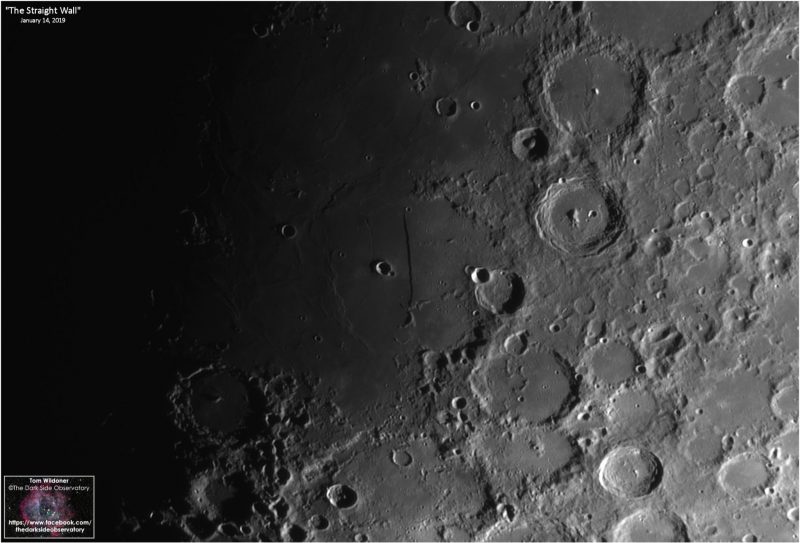
Perhaps. But it’s probably just a drone, dude.

{ https://dronedj.com/ }

Hoe vind je dit bericht?
Geschreven door peter om 01:53 Stuur door

End-Triassic Mass Extinction Occurred Slightly Later Than Previously Thought

End-Triassic Mass Extinction Occurred Slightly Later Than Previously Thought

An analysis of biomarkers and their stable isotopic compositions from the Bristol Channel Basin at St. Audrie’s Bay and Lilstock, United Kingdom, has shed new light on when one of the largest mass extinction events on Earth occurred.

De bronafbeelding bekijken

Schematic diagram showing the factors driving global ecological change in the modern day and at the end of the Triassic period.

Image credit: Victor Lesh.

Most of the major mass extinctions of the last 300 million years, as well as some of the lesser biotic turnover events, are associated with reorganizations or perturbations of the Earth’s natural carbon cycle.

The end-Triassic mass extinction began after a volcanic eruption spewed carbon dioxide into the atmosphere, disrupting the carbon cycle and sparking a chain reaction of environmental events.

That carbon disruption led to acidic ocean waters which then affected delicate marine ecosystems, and led to other unfavorable planetary changes.

The extinction event resulted in the demise of some 76% of all marine and land species.

In a new study, a research team led by Curtin University scientists analyzed biomarkers (molecular fossils) extracted from rocks collected in the United Kingdom’s Bristol Channel and found evidence of ancient microbial mats, which are complex communities of microorganisms.

“Through our analysis of the chemical signature of these microbial mats, in addition to seeing sea-level change and water column freshening, we discovered the end-Triassic mass extinction occurred later than previously thought,” said first author Calum Peter Fox, a Ph.D. student in the Western Australia Organic & Isotope Geochemistry Centre at Curtin University and the Department of Earth Sciences at Khalifa University of Science and Technology.

“Previous research suggests the extinction took place where we now know microbial mats flourished and the chemical signatures left by these ancient microbes complicated the rock record, leading others to believe this is where the extinction took place.”

“The microbial mats recorded in UK samples are comparable to extant microbial mats such as in Shark Bay of Western Australia,” he said.

“It’s amazing to consider that similar microbial communities that confounded the timing of one of Earth’s largest extinctions millions of years ago are on our shorelines and so easy to observe for ourselves.”

“The findings not only presented a new theory of what started the end-Triassic extinction, but also provided a type of warning for future potential mass extinction events on Earth,” said senior author Professor Kliti Grice, also from the Western Australia Organic & Isotope Geochemistry Centre at Curtin University.

“Our recent research shows that microbial mats played important functions in several mass extinction events as well as a role in preserving remains of life including soft tissue of dead organisms under exceptional circumstances.”

“Knowing more about the carbon dioxide levels present during the end-Triassic mass extinction event provides us with important details that could help protect our environment and health of our ecosystems for future generations.”

The findings were published in the Proceedings of the National Academy of Sciences.

_____

  • Calum P. Fox et al. Molecular and isotopic evidence reveals the end-Triassic carbon isotope excursion is not from massive exogenous light carbon. PNAS, published online November 16, 2020; doi: 10.1073/pnas.1917661117

{ http://www.sci-news.com/ }

Hoe vind je dit bericht?
Geschreven door peter om 01:42 Stuur door

The Colossi of Memnon: Why Did the Giant Statue Sing at Dawn?

One of the iconic Colossi of Memnon statues.

The Colossi of Memnon: Why Did the Giant Statue Sing at Dawn?

The Colossi of Memnon are a pair of giant statues made of stone that are located in the Theban Necropolis in Luxor, Upper Egypt. The statues were made during the 14th century BC, during the period in ancient Egyptian history known as the New Kingdom. The best-known legend about the Colossi of Memnon is that of the ‘ Vocal Memnon ,’ in which one of the statues was reputed to ‘sing’ every morning at dawn.

The Ancient Egyptian Pharaoh Who Created the Colossi of Memnon

The Colossi of Memnon were built during the reign of Amenhotep III , a pharaoh of the 18th Dynasty who ruled Egypt during the 14th century BC. The statues, which are each about 20 meters (65.62 ft.) in height, are made of quartzite sandstone. The stone is thought to have been quarried either from El-Gabal el-Ahmar (near Cairo) or from Gebel el-Silsileh (near Aswan), and then transported by land to Luxor. The statues depict Amenhotep III in a seated position, with their hands resting on their knees, and their faces facing the Nile in the east.

Amenhotep III's Sitting Colossi of Memnon, Theban Necropolis, Luxor, Egypt. 

(merydolla /Adobe Stock)

The Name and Purpose of the Egyptian Colossi of Memnon

The original function of the colossi was to serve as guardians at the entrance of the pharaoh’s mortuary temple. When it was completed, this temple complex was one of the largest and most luxurious in the land. Today, however, little is left of the mortuary temple, and its foundations were gradually damaged by the annual flooding of the Nile , which led to the temple being demolished, and its stone blocks re-used for other structures. The colossi were spared this fate, though they also suffered extensive damage over the millennia.

The Colossi of Memnon in front of the Egyptian pharaoh Amenhotep III's mortuary temple.

The Colossi of Memnon in front of the Egyptian pharaoh Amenhotep III's mortuary temple.

( Ancient Egypt )

The colossi were named ‘Memnon’ towards the end of the 1st century BC. Memnon was a hero who lived during the time of the Trojan War . As the King of Ethiopia, Memnon led his soldiers to Troy, where they fought against the Greeks on the side of the Trojans. He was eventually slain by Achilles.

According to legend, Memnon was the son of Eos, the goddess of dawn. On learning of her son’s death, Eos wept, which is said to form the morning dew.

‘Statues of Memnon at Thebes during the flood,’ David Roberts. (1848)

‘Statues of Memnon at Thebes during the flood,’ David Roberts. (1848) ( Public Domain ) The statues in Luxor, Egypt have been impacted by the annual flooding of the Nile.

The Ancient Egyptian Statue Sings at Dawn

Eos’ weeping was associated with the sound said to have been produced by one of the colossi at dawn. According to the Greek geographer Strabo, in 27 BC, a strong earthquake caused the top half of the northern colossus to collapse, and its lower portion to crack. As a consequence of this, the statue began to ‘sing,’ i.e. emitted a light moaning or whistling sound each morning as the Sun rose.

In order to explain this phenomenon, the ancient Greek and Roman travelers to the site began to associate the colossi with the legendary Memnon. The ‘singing’ of the colossus, therefore, was said to have been made by Eos mourning for her dead son. Alternatively, it was believed that the sounds were the cries of Memnon greeting his mother.

Ahmed Osman notes that “Whether associating the Colossi with his name was just whimsy or wishful thinking on the part of the Greeks – they generally referred to the entire Theban Necropolis as the “Memnonium” – the name has remained in common use for the past 2000 years.”

Antonio Beato, Colossi of Memnon, Egypt, 19th century. Brooklyn Museum.

Antonio Beato, Colossi of Memnon, Egypt, 19th century. Brooklyn Museum.

( Public Domain )

A natural explanation for the signing or wailing phenomenon has been put forward. It has been suggested that due to the increase in temperature at dawn, the dew inside the porous rock evaporates, thus causing the statue to ‘sing.’

Silencing ‘Memnon’

Some believed that it was good luck to hear the statue ‘sing,’ while others were of the opinion that the statue was an oracle. With this in mind, the Colossi of Memnon was a popular tourist attraction and many ancient travelers visited it, including several Roman emperors. One of these was Septimius Severus, who reigned between the end of the 2nd century AD and the beginning of the 3rd century AD.

Drawing of the ancient Egyptian Colossi of Memnon.

Drawing of the ancient Egyptian Colossi of Memnon.

(Wellcome images/ CC BY 4.0 )

According to local tradition, the emperor visited the Colossi of Memnon in 199 AD. During his visit, Septimius Severus decided to repair the broken statue by having the two halves re-connected. This caused the statue to stop ‘singing’ forever. Nevertheless, the Colossi of Memnon still remain a tourist attraction even today.

  • Top Image: One of the seated statues known as the Colossi of Memnon. Source: danheller /Adobe Stock

By Wu Mingren

{ https://www.ancient-origins.net/ }

Hoe vind je dit bericht?
Geschreven door peter om 01:13 Stuur door

The Walls of Jericho: How Accurate Was The Biblical Account?

Bible Old Testament: Joshua and the walls of Jericho.            Source: Archivist / Adobe Stock

The Walls of Jericho: How Accurate Was The Biblical Account?

Jericho is famous both to prehistorians and Biblical scholars. It is likely the oldest continuously inhabited permanent settlement in the world, known for ancient astronomical observatories, plastered skulls, and impressive walls, and it is these walls that the city is probably most famous for. The walls of Jericho are the subject of much discussion and research due to their importance for evaluating the historicity of the Biblical narrative of the ancient Israelite invasion of Canaan.

Before the Bible

Early archaeological work was done on Jericho in the late 1950s by investigators, such as Dame Kathleen Kenyon . Among many other things, they found evidence of walls and a city that had been attacked. This has made Jericho a place of great importance for those interested in Biblical studies.

The earliest evidence of settlement comes from 12,000 years ago when hunter-gatherers settled in the area. Although they were hunter-gatherers, the area seems to have been abundant enough that they were able to live a sedentary lifestyle. They lived in oval stone structures that were partially underground. By about 10,500 years ago, or around 8,500 BC, the people of Jericho had adopted agriculture and Jericho had become a major Neolithic settlement engaging in long distance trade. It was during this time that the famous tower of Jericho was built.

The tower of Jericho was originally discovered by Dame Kathleen Kenyon who suggested that it might have formed part of the original fortification of the town. Modern archaeologists have suggested that it is an ancient astronomical observatory . Within the tower is a staircase that leads to a position where, on what was the summer solstice at the time, the sun could be seen setting behind Mount Quruntul within the Judaean mountains.

The 8000 BC Tower of Jericho at the site of Tell es-Sultan, 2009. (Salamandra123 /CC BY-SA 3.0)

The 8000 BC Tower of Jericho at the site of Tell es-Sultan, 2009.

(Salamandra123 / CC BY-SA 3.0 )

In addition to the tower, mysterious plastered skulls have been found, where the skulls were taken out of their graves and given plastered facial features and shell eyes. They are believed to be related to ancestor worship.

Plastered Skull from Jericho from 7,000 BC discovered by Dame Kathleen Kenyon, 1957. (Merryjack, CC BY-NC-SA 2.0)

Plastered Skull from Jericho from 7,000 BC discovered by Dame Kathleen Kenyon, 1957.

(Merryjack, CC BY-NC-SA 2.0 )

By about 7,000 BC, there was a cultural shift where the population in Jericho was reduced and architectural styles changed from round to rectangular houses. Jericho continued to exist as a small village but did not become a large settlement again until around 3,000 BC. After 3,000 BC, extensive fortifications, consisting of walls and towers, were constructed around Jericho. Large cemeteries were also built. Around 2300 BC, Jericho became occupied by the Amorites. During the Amorite period, Jericho appears to have declined as an urban center. By about 1900 BC, the site was occupied by the Canaanites and once again became a major city. It is this Canaanite Jericho that was encountered by the ancient Israelites in the Book of Joshua.

The Walls of Jericho

The Biblical narrative describes the city as having nearly impregnable walls, which were intimidating to anyone who tried to take the city. There is archaeological evidence that the city was once fortified and that it was subsequently attacked and burned sometime in the middle or late Bronze Age between 1550 BC and 1400 BC.

Biblical depiction of the fall of Jericho. (Otto Semler, CC BY SA 2.0)

Biblical depiction of the fall of Jericho.

(Otto Semler, CC BY SA 2.0 )

The city of Jericho sat atop a mound or hill, which was surrounded by an embankment. The embankment was supported by an enormous stone retaining wall. Above the retaining wall was an 8-10 meter tall and 2 meter thick mudbrick wall. The wall was directly above the retaining wall and lined the edges of the embankment.

At the perimeter of the summit of the flat-topped hill on which the city was built was another mudbrick wall, which contained the upper city. There is evidence that houses were also built on the embankment and people lived on the lower part of the hill between the inner wall and the outer wall. Since this part of the city would have been less safe in times of war, it has been suggested that this was likely the poorer part of the city. The upper city may have been inhabited by the elites, while commoners lived in the lower city.

Although the inner and outer walls were only mudbrick, they would have been impressive for the time and would have made Jericho a mighty fortress to which people from surrounding towns and villages could flee in times of invasion.

Jericho and Bronze Age Fortifications

The city of Jericho appears to follow a Bronze Age tradition in which cities were built on top of artificial embankments or mounds surrounded by walls. This style of defense is found outside of Jericho at locations such Hazor, Megiddo, and Shechem. Typically, the site would consist of a mound with an artificial embankment surrounding it. Around the embankment would be a stone retaining wall. Settlements with this type of defense structure also had a mudbrick wall built atop the retaining wall as well as another wall surrounding the crest of the mound. This type of fortification is referred to as a glacis and is found all over Palestine and in large portions of the Middle East.

Citadel of Allepo, Syria, showing an example of a glacis fortification, 2007. (Brian Harrington Spier / CC BY-SA 2.0)

Citadel of Allepo, Syria, showing an example of a glacis fortification, 2007.

(Brian Harrington Spier / CC BY-SA 2.0 )

Scholars have speculated about the origin of the glacis. When research into these structures began in the early to mid-20 th century, these fortifications were originally associated with the Hyksos. Originally, the Hyksos were thought to be Indo-European chariot warriors . The fortification was postulated to represent the original fortifications that they used in their homeland.

Since the mid-20 th century, this theory has been abandoned and the glacis fortifications are no longer considered to be associated with chariot warfare. Today, the Hyksos are known to have spoken a Semitic language and were likely more closely related to the ancient Hebrews than they were to Indo-European steppe warriors.

Although archaeologists had abandoned the idea that the fortification design came from the steppes of the Indo-European homeland, they were still convinced that the fortification must have come from the north, such as from Anatolia or Syria. By 1968, archaeologists had begun to suggest that the glacis was a native design invented by the Palestinians themselves. This appears to be the predominant view currently.

Another point of contention has been the use of the fortifications. Archaeologists in the mid-20 th century, originally believed that the glacis-fortifications were primarily military forts. It is now known that they were simply fortified towns and that at their summits and on the embankments were houses, temples, and other civilian structures.

The glacis first came in to use in the late 18th century BC and was widespread through the middle Bronze Age. By the Iron Age, the glacis appears to have fallen out of use. The legacy of the glacis, however, is reflected in the mound or hill-shaped structure of many archaeological sites across the Levant.

 The Walls of Jericho and Biblical Archaeology

For a while, Jericho presented a problem in Biblical studies. On a broader level, there appears to be a discrepancy between the account of the Israelite settlement of Canaan in the Book of Joshua and what is known from archaeology. An initial reading of the Book of Joshua gives the impression that Canaan was taken in a sudden conquest. This is not what is reflected in the current archaeological record that suggests a more gradual settlement, which is more consistent with the account given in the Book of Judges.

However, a closer reading of the Book of Joshua shows that not all of Canaan was conquered by Joshua. Only three cities were specifically described as being burned and destroyed by the ancient Israelites, Ai, Hazor, and Jericho.

As can be seen, evidence of a swift invasion is not necessary to reconcile the Book of Joshua’s account with the archaeological record. Nonetheless, the story of the destruction of Jericho, Ai, and Hazor, around 1400 BC, is consistent with what is known from archaeological excavations.

When the Bible speaks of the walls of Jericho falling down, the original Hebrew wording carries the idea of the walls falling “below themselves.” This is consistent with the design of the glacis since the outer wall would probably be a mudbrick wall sitting atop the stone retaining wall. Thus, if the outer wall was toppled, it would fall below to the base of the retaining wall.

During early archaeological excavations by the British archaeologist Dame Kathleen Kenyon, a stone retaining wall was found at the base of the tell associated with Jericho, but a mudbrick wall wasn’t found. However, a deposit of collapsed mudbrick was found at the base of the retaining wall at certain locations around the tell. This is surprisingly consistent with the account in the Book of Joshua. This collapsed wall would have also created a ramp for the Israelite warriors to march up the embankment to take the city. In this way, the archaeological record makes the Biblical account surprisingly believable. It supports the idea that the walls tumbled “below themselves” as well as the statement that the Israelites went “up” to take the city.

Birdseye view of the unearthed foundations at Tell es-Sultan in Jericho and the surrounding area, 2008. (Public Domain)

Birdseye view of the unearthed foundations at Tell es-Sultan in Jericho and the surrounding area, 2008.

( Public Domain )

Another specific part of the narrative that is also made plausible by the archaeological record is the account of Rahab’s house being spared. In the Biblical narrative, two spies were sent into the city and they were harbored by a prostitute named Rahab. For helping the spies, Rahab was promised that she and her family would be spared when the city was destroyed. It is implied in the Biblical text, when the walls collapsed that her house was not destroyed even though it was connected to the wall.

During an early excavation in 1907-1909, German archaeologists found that, although most of the wall had collapsed, a portion of the wall had not entirely collapsed and appeared to have been preserved. They also found evidence that houses had been built along the wall. These houses typically had a thickness of only one brick, suggesting they were built for the poorer inhabitants of the city. Although this may not have been the location of Rahab’s house, it is consistent with the Biblical narrative.

Another detail that is also of interest in the archaeological site of Jericho is the presence of pots of charred grain that were burned from when the city was attacked and destroyed. What is unusual about these grain pots is that grain would probably have been eaten during a siege if it had been prolonged over a long period of time. The siege of Jericho by the ancient Israelites is said to have lasted only seven days. The fact that the grain pots were still full is consistent with a short siege. This also supports another part of the Biblical narrative, which mentions that the battle of Jericho happened in the spring, shortly after harvest time.

Biblical depiction of the battle of Jericho. (Public Domain

Biblical depiction of the battle of Jericho.

( Public Domain

Implications for the Biblical Narrative

These details do not prove that the Bible is true necessarily, but they do demonstrate that the Biblical narrative is plausible and makes sense. This is consistent with other archaeological finds that increase confidence in the Biblical narrative as being at least archaeologically and historically realistic.

Although there are still unanswered questions and discrepancies between the Biblical account and the archaeological record, the Bible can be thought of as a basically reliable document that does provide some useful details for archaeologists and historians interested in understanding the lifeways and societies of the ancient Levant, even if it turns out to not be true or accurate in its entirety.

An analogy is Homer’s Iliad. The archaeological site now considered to be the site of ancient Troy was first excavated by Heinrich Schliemann in the 1870s. Schliemann was in search of the Troy of Greek legend. During this excavation, Schliemann discovered artifacts, which he believed to be the treasures of King Priam, although this idea was later discredited. Nonetheless, in the century and a half since the initial excavations by Heinrich Schliemann, scholars have noted that the topographic descriptions of the land and city in the Iliad do seem to match what is known of the ancient city from archaeology. This is interesting in light of the fact that Hisarlik, the current Turkish name for the archaeological site, has been associated with the legendary city for thousands of years. Although it is far from clear how much of the Trojan war is history and how much is legend, it does appear plausible that there is truth to the narrative.

The Ramayana is another possible example. Although Rama, the main character, is not mentioned on any monuments or coinage, as would be expected of a historical monarch, most of the cities and places mentioned in the Ramayana are known to exist or have been discovered through archaeological investigation. This does not necessarily mean that the events in the Ramayana happened as described, but they do make the story of the Ramayana more plausible.

In the same way, these archaeological findings at Jericho do not necessarily prove that the Biblical narrative happened exactly as described, but they do lend credence to the story described on the pages of the Bible. Although sometimes archaeology casts doubt on traditional stories about the past, other times it confirms them in surprising ways.

  • Top Image: Bible Old Testament: Joshua and the walls of Jericho.           
  • Source: Archivist / Adobe Stock

By Caleb Strom

{ https://www.ancient-origins.net/ }

Hoe vind je dit bericht?
Geschreven door peter om 23:49 Stuur door

Stratolaunch starts building Talon hypersonic plane for Mach 6 flights

Stratolaunch starts building Talon hypersonic plane for Mach 6 flights

Hoe vind je dit bericht?
Geschreven door peter om 23:34 Stuur door

Earth is fighting a laser duel with the exploding Carina Nebula

Earth is fighting a laser duel with the exploding Carina Nebula

Hoe vind je dit bericht?
Geschreven door peter om 21:42 Stuur door

‘Blue ring nebula’ turns out to be two colliding stars caught in the act

‘Blue ring nebula’ turns out to be two colliding stars caught in the act

It lies 6,300 light-years away in the constellation Hercules. Now, we finally know its story.

{ https://www.zmescience.com/ }

Hoe vind je dit bericht?
Geschreven door peter om 21:25 Stuur door

Scientists solve 16-year-old mystery of the Blue Nebula, finding it formed after a sun-like star consumed a smaller stellar companion

Scientists solve 16-year-old mystery of the Blue Nebula, finding it formed after a sun-like star consumed a smaller stellar companion

  • The Blue Nebula was discovered in 2004 and has baffled scientists since
  • A new study reveals it is youngest known example of two stars merging into one
  • It formed when a dying sun-like star moved towards a smaller star
  • The larger star engulfed its companion and released a cloud of hot debris
  • The collision shot hot debris into space that was cut in half by the gas disc
  • The result formed two cones, but one is facing Earth that appears like a circle 

The Blue Nebula has puzzled scientists for more than a decade, but new findings suggest it may be the youngest known example of two stars merging into one.

Astronomers first discovered the mysterious object in 2004, leading them on a mission to uncover what caused a circle of blue light to form around the star, named TYC 2597-735-1.

In a new study, the team suggests that the ring is actually a cone and the glowing debris formed after a sun-like star engulfed a smaller stellar companion.

A massive cloud of hot debris shot into space when they merged that was sliced in two by the gas disc, and because only one of the cones is facing Earth, it appears as a central blue ring.

Astronomers first discovered the mysterious object in 2004, leading them on a mission to uncover what caused a circle of blue light to form around the star, named TYC 2597-735-1

Astronomers first discovered the mysterious object in 2004, leading them on a mission to uncover what caused a circle of blue light to form around the star, named TYC 2597-735-1

The Blue Nebula was discovered by scientists with NASA's space-based Galaxy Evolution Explorer (GALEX) 16 years ago who said it was 'unlike anything the'd seen before in our Milky Way galaxy.'

The images showed a large, faint blob of gas with a star shining brightly in the center.

And although it looks blue in images, it does not actually give off light visible to the human eye.

For more than a decade, the team worked tirelessly to unravel its mystery. 

A massive cloud of hot debris shot into space when they merged that was sliced in two by the gas disc, and because only one of the cones is facing Earth, it appears as a central blue ring

A massive cloud of hot debris shot into space when they merged that was sliced in two by the gas disc, and because only one of the cones is facing Earth, it appears as a central blue ring

Mark Seibert, an astrophysicist with the Carnegie Institution for Science and a member of the GALEX team, said: 'Every time we thought we had this thing figured out, something would tell us 'No, that's not right.'

'That's a scary thing as a scientist. But I also love how unique this object is, and the effort that so many people put in to figure it out.'

In a new study published online on November 18 in the journal Nature, the team suggests they have finally solved the puzzle.

The nebula was determined to be a relatively fresh stellar merger, just some thousand years old, of a star the size of our Sun and another that had about 100 times the mass as Jupiter.

When the sun-like star was dying, it began to swell, pushed its towards the smaller stellar object and eventually engulfed it.

Although the result of this violent event ended in two cones, there is an area where they overlap that appears as a circle when observed from Earth.

The light was produced after the collision, which excited the hydrogen molecules, causing them to radiate with ultraviolet light and overtime the glow became bright enough for GALEX to see (pictured is the star Mira, which went through the same process)

The light was produced after the collision, which excited the hydrogen molecules, causing them to radiate with ultraviolet light and overtime the glow became bright enough for GALEX to see (pictured is the star Mira, which went through the same process)

The light was produced after the collision, which excited the hydrogen molecules, causing them to radiate with ultraviolet light and overtime the glow became bright enough for GALEX to see.

Lead study author Keri Hoadley, from David and Ellen Lee Postdoctoral Scholar in Physics at Caltech, said 'The merging of two stars is fairly common, but they quickly become obscured by lots of dust as the ejecta from them expands and cools in space, which means we can't see what has actually happened.'

'We think this object represents a late stage of these transient events, when the dust finally clears and we have a good view.

'But we also caught the process before it was too far along; after time, the nebula will dissolve into the interstellar medium, and we would not be able to tell anything happened at all.' 

Hoe vind je dit bericht?
Geschreven door peter om 21:17 Stuur door

Scientists say the human brain resembles the cosmos

Scientists say the human brain resembles the cosmos

Both neural and galactic networks have the same structure, pointing to a fractal universe.

cosmos-1-750x350.jpg

Side by side pictures of brain cells and a cosmic web of galaxies make it difficult to tell the two apart. So it can seem that the universe is like one giant brain or vice-versa, there’s a tiny universe in each of our brains. That’s not merely some entertaining thought. In a new study, an astrophysicist and a neurosurgeon have documented the striking similarities between cosmic networks of galaxies and neural networks of brain cells.

The mini-cosmos inside the brain

Alberto Feletti, a neurosurgeon at the University of Verona, and Franco Vazza, astrophysicist at the University of Bologna, performed a quantitative analysis of neural and cosmic networks, showing that the natural physical processes lead to similar structures even when differences in scale can be greater than 27 orders of magnitude.

The human brain contains approximately 69 billion neurons, whereas the observable universe consists of a web of at least 100 billion galaxies. In both galactic and neural networks, just 30% of their masses are composed of ‘working’ masses, such as galaxies and neurons. The rest of the 70% of matter plays an apparently passive role: water in the brain and dark energy in the observable cosmos, the authors wrote in Frontiers in Physics.

The pair of Italian researchers also performed side by side comparisons between simulations of galactic and neural networks in order to see how matter fluctuations scatter over the two scales.

“We calculated the spectral density of both systems. This is a technique often employed in cosmology for studying the spatial distribution of galaxies,” Vazza said in a statement. “Our analysis showed that the distribution of the fluctuation within the cerebellum neuronal network on a scale from 1 micrometer to 0.1 millimeters follows the same progression of the distribution of matter in the cosmic web but, of course, on a larger scale that goes from 5 million to 500 million light-years.”

Next, the researchers computed the average number of connections in each node for both neural and cosmic networks, and analyzed their tendency to cluster together in relevant central nodes with the network.

“Once again, structural parameters have identified unexpected agreement levels. Probably, the connectivity within the two networks evolves following similar physical principles, despite the striking and obvious difference between the physical powers regulating galaxies and neurons,” adds Alberto Feletti. “These two complex networks show more similarities than those shared between the cosmic web and a galaxy or a neuronal network and the inside of a neuronal body”.

Left: section of cerebellum, with magnification factor 40x, obtained with electron microscopy. Right: section of a cosmological simulation, with an extension of 300 million light-years on each side.

Credit: Dr. E. Zunarelli, University Hospital of Modena / Vazza et al. 2019 A&A.

Fractals are everywhere

These similarities are truly striking, but what can explain them? The cosmos has been shaped by the laws of physics and the forces that govern it, such as gravity and dark matter. The brain is shaped by biological processes, most important of which is evolution. Over the course of many generations, the human brain has adapted to a certain structure that is most adapted to our environment. But the brain is ultimately made of atoms and molecules, just like the rest of the universe.

What ties the brain and the cosmos at large together are fractals, which are mathematical structures that look the same regardless of how close or far away you observe them. Besides the brain and galaxies, other naturally occurring fractal structures include the path taken by rivers down to the ocean or the delicate shape of a snowflake. Even our cities look a lot like fractals, showing that we inadvertently follow the laws of nature simply because that’s the efficient way to go about things.

Credit: NASA’s Marshall Space Flight Center/Flickr., CC BY-NC

RELATED VIDEOS, selected and posted by peter2011

{ https://www.zmescience.com/ }

Hoe vind je dit bericht?
Geschreven door peter om 20:41 Stuur door

Conspiracies, UFOs, and High Strangeness at a Secret Desert Military Base in Australia

maxresdefault-2-999x540.jpg

Conspiracies, UFOs, and High Strangeness at a Secret Desert Military Base in Australia

Lying practically in the center of Australia, sitting out among the dry and dusty forbidding landscape around 11 miles from the remote desert outpost town of Alice Springs, is the somewhat jarring sight of an installation of squat buildings and satellite dishes ensconced within odd-looking white balls dotting the area, called radomes. Sitting out in this remote, inhospitable land of sun scorched earth as it is, it is easy to conjure up the image that this is a mysterious base on some alien world, but it is in fact a top secret joint American-Australian run military installation officially called the Joint Defence Facility Pine Gap (JDFPG), or more commonly just Pine Gap, also known by its unclassified cover name RAINFALL. Although its official function is to track and monitor satellites, the isolated location out in the middle of nowhere and the complete secrecy surrounding it have made sure that this place has attracted plenty of conspiracies and tales of secret experiments, UFOs, and all manner of strangeness.

The base itself began operations in 1970, established by the U.S. Central Intelligence Agency (CIA), the National Security Agency (NSA), and the U.S. National Reconnaissance Office (NRO) in conjunction with the Australian government. Originally described as a facility for “space research,” its main purpose, or at least what they tell us, is satellite surveillance, its location and remote moonscape of an area perfect for watching vast expanses of the skies, as well as hiding from any spy ships passing in international waters that might try intercept the signals from its array of spherical tracking systems. Since the Cold War it has also been utilized as a missile detection and tracking station, as well as for intercepting and recording weapons and communications signals from hostile nations such as North Korea. The base employs around 1,000 people, sprawls out over at least 20,000 square meters of floor space, and houses a massive expanse of supercomputers and a spider web of tunnels beneath it all, however, its exact layout and the extent of its subterranean facilities are hidden behind a wall of classified top secrecy. Since it is a secret, reclusive desert base completely off limits to outsiders, patrolled by armed security and surrounded by fences generously festooned with “Keep Out” signs, it is perhaps no surprise that over the years strange tales have gravitated towards Pine Gap, ranging from the weird to the totally outlandish.

Pine Gap

Perhaps the most well-known, publicized, and plausible stories surrounding the facility are that it has been instrumental in coordinating and carrying out lethal drone strikes in warzones such as Afghanistan, rumors which angered many Australians who did not want to be complicit in illegal targeted strikes and objected to having that blood on their hands. The accusations of Pine Gap being used to coordinate these killer drone strikes have been categorically denied by military officials for years, even though declassified NSA documents have shown that similar facilities, such as Menwith Hill Station in the UK, have indeed been used for launching targeted drone strike missions, so these documents heavily suggest that Pine Gap, with its cutting edge technology, is also used for these purposes. There has been some confirmation in that the NSA has admitted to using Pine Gap for intelligence sharing and for missions concerning the war on terror, whatever that may entail.

Similarly nefarious and unethical are claims made by famed whistleblower Edward Snowden, who has said that Pine Gap is heavily used for intercepting communications not only from enemies of the state, but also from private communications over phone, emails and faxes, essentially allowing the military to eavesdrop and spy on anyone in the world at any time, monitoring everyone at all times. Making this more ominous still is that there have been claimed to be at least two areas of the base that are completely off-limits to Australian personnel. Of course both the governments of Australia and the United States dismiss all of these allegations, but still they persist. After all, that the government would be involved with this will probably be not that big a stretch of the imagination for many, yet this is just the tip of the iceberg when it comes to Pine Gap, and other claims start to veer off into the bizarre. Yes, I’m talking about UFOs and aliens.

Pine Gap has for years been ground zero for all sorts of claims of UFO activity in and around the base. It has gained a reputation as a hotspot of UFO sightings, and has even gained the reputation as “Australia’s Area 51,” furthering its cred as a decidedly oddball place. One strange type of report that has popped up frequently is that of all the hidden camouflaged doors in the surrounding area of the base that strange flying craft come and go through. In as early as 1980 there was a report from two police officers that were in the vicinity helping with a search for a missing child, combing through the desert scrub when right in front of them a door opened in the ground to disgorge several bizarre craft described as “flying bathtubs.” These mysterious objects then flew across the base to enter some sort of portal that appeared in the hills not far away, after which it and the craft vanished. A similar report occurred in 1989, when three hunters saw a hidden door open in the hillside they were on, from which emerged a large metallic gray disc. The door then closed to blend perfectly into the environment as if it never existed. This flying object then reportedly silently flew out across the base to hover right above it before shooting straight up in the sky at breathtaking speed.

Other strange UFO activity has been reported from the base as well. Back in 1975 the pilot and passengers of a private plane flying not far from Pine Gap witnessed a huge white light take off from the base and shoot off into the distance at speeds far exceeding a normal aircraft. Interestingly, when they tried to file a report of the sighting they were told in no uncertain terms to forget what they had seen. Perhaps even stranger than this was an incident that supposedly happened in 1984, when a group of five UFO watchers were staking out the area after apparently receiving an anonymous tip that something big was going to go down at the base, and it seems they would not be disappointed. They claim that there was a sudden flurry of activity by personnel at the base, after which a beam of light shot into the sky and formed some sort of cloud-like portal, from which flew five UFOs that flew around the base shooting down green pillars of light at the domed radomes for several minutes before entering the cloud again and vanishing into thin air. There have indeed been numerous other reports of UFOs hovering over the radomes, and these domed radar installations seem to be of particular interest to these mystery craft.

The mention of the portal in this case fits in very well with some of the other off-the-wall conspiracies about the Pine Gap base. It has long been rumored that among the many secret experiments allegedly carried out at the base are those concerned with opening up doorways to other planets and even other dimensions. Other experiments said to happen at the base are those involving time travel, teleportation, reverse engineering alien technology, controlling the weather, and creating super soldiers. You name it, there has probably been a conspiracy claiming that it is an experiment being carried out at Pine Gap. It is hard to know just how many of these rumors are true and how much of it is just conspiracy theory nonsense, but considering that it is such a top secret place that no one can get near, out in the middle of a forsaken wasteland, it is not hard to see why it has managed to attract so much weirdness. What is with this place? We will perhaps never know what really goes on there, but as long as something is going on there the stories will likely continue to swirl, and if you want tales of UFOs, weird experiments, and high strangeness, you can do worse than Pine Gap.

ALL RELATED VIDEOS, selected and posted by peter2011

{ https://mysteriousuniverse.org/ }

Hoe vind je dit bericht?
Geschreven door peter om 18:37 Stuur door

Area 51: Lesser-Known Informants Concerning UFO Conspiracies

area-51-3803598_1920-999x540.jpg

Area 51: Lesser-Known Informants Concerning UFO Conspiracies

Over the years (decades, in fact) a number of people have come forward claiming that alien technology, alien bodies, and even live ETs, are secretly held out at Area 51 – and maybe even deep underground the facility itself. The most well-known such figure is Bob Lazar. He scarcely needs an introduction. Also, there is Charles Hall. He claims knowledge of one particular type of alien at Area 51 that have become known as the “Tall Whites.” As their title makes clear, in appearance they are far removed from the dwarfish Greys. According to Hall, back in 1964 he was working at Nellis Air Force Base, a facility inextricably tied to Area 51 and its secret programs of numerous kinds. There is absolutely no doubt at all that Area 51 would not have attained the high degree of mystique and mystery that it has without the input of the aforementioned Bob Lazar. He, more than anyone else, thrust both the base and the name solidly into the public domain. It should be noted, though, there were others who knew something of the tales of aliens at Area 51, and that have added to the claims of Lazar.

One of those people, said George Knapp – a highly-respected, long-time journalist in Las Vegas, Nevada – was a man named Roy Byrum; he provided tax-based services to some of the employees at Area 51 from 1976 to 1979. Several of Byrum’s clients quietly told him what they knew of the alien craft held at Area 51, and of how massive funding for the UFO programs was being siphoned from other government programs, as a means to hide the paper-trail and the money. After sharing this information with journalist George Knapp, Byrum was leaned on by government agents who paid him a less than friendly visit.

Also in the 1970s, several employees of a company called Holmes & Narver Corporation revealed certain data on Area 51’s alien angle, said George Knapp. It’s a company that provides engineering and construction services. One of the sources – and a former employee of Holmes & Narver – was a woman who worked in the Clark County court system and who was ready to speak with journalist George Knapp. That was quickly nixed, though, when the woman’s life was threatened. As was that of her family. Also pre-Lazar, there is the story of Doug Schroeder, an electrical engineer who confided in Las Vegas TV producer Bob Patrick about what he was told was going on at Area 51. Namely, the reverse-engineering of alien craft and extraterrestrial technologies. Although, Schroeder stressed that, in terms of actually flying the craft, not a great deal at all had been achieved. George Knapp noted that in 1991 Schroeder “died in somewhat mysterious circumstances.”

You may buy into the stories of aliens (dead or alive) out at Area 51. Or, you just might suspect the stories could have been concocted by U.S. Intelligence to try and freak the Soviets – during the Cold War – into thinking that we really do have extraterrestrial technology, when we actually don’t. It’s interesting to note that the tales concerning Byrum and Schroeder both dated from the 1970s. That was the very same time-frame when the CIA – and other U.S. agencies, too – were concerned that certain American ufologists were being groomed for secret work by none other than the KGB. Let’s take a closer look at all of this. In the 1990s, Gerald K. Haines – in his position as the historian of the National Reconnaissance Office – wrote a paper titled “CIA’s Role in the Study of UFOs, 1947-90.” It’s now in the public domain, thanks to the provisions of the Freedom of Information Act. It can be read at the CIA’s website. Haines’ paper detailed the history of how, and why, the CIA became interested and involved in the phenomenon of UFOs. Although Haines’ study covered a period of more than forty years, I will bring your attention to one particular section of his paper. It’s focused on the 1970s.

Haines wrote that CIA officials “…looked at the UFO problem to determine what UFO sightings might tell them about Soviet progress in rockets and missiles and reviewed its counterintelligence aspects.”  The Soviets, then, in the 1970s, were camouflaging their secret rocket tests by spreading false and fantastic tales of UFOs. Haines also noted something that is absolutely key to this article: “Agency analysts from the Life Science Division of OSI [Office of Scientific Intelligence] and OSWR [Office of Scientific and Weapons Research] officially devoted a small amount of their time to issues relating to UFOs. These included counterintelligence concerns that the Soviets and the KGB were using U.S. citizens and UFO groups to obtain information on sensitive U.S. weapons development programs (such as the Stealth aircraft), the vulnerability of the U.S. air-defense network to penetration by foreign missiles mimicking UFOs, and evidence of Soviet advanced technology associated with UFO sightings [italics mine].”

What all of this tells us is that U.S. counterintelligence programs, Russian plots, and certain American Ufologists tied to KGB operations in the 1970s, were swirling around everywhere. Could it be that some (or all) of the 1970s-era stories concerning aliens at Area 51 – that I described above – were carefully seeded by U.S. Intelligence to (a) spread the “aliens at Area 51” scenario; (b) scare the Russians into thinking we have extraterrestrial technology; and (c) maybe, as a result, snare a couple of men from overseas named Ivan and Dimitri? ? Very possibly, yes.

Finally, if you want to learn more about the pre-Lazar accounts and cases that George Knapp secured, get a copy of George’s excellent paper, “Area 51, Bob Lazar, and Disinformation.” You can find it in the MUFON Symposium Proceedings of 1993.

{ https://mysteriousuniverse.org/ }

Hoe vind je dit bericht?
Geschreven door peter om 18:18 Stuur door

Man Claims He Met Robbie Williams on an Alien Spaceship

De bronafbeelding bekijken

Man Claims He Met Robbie Williams on an Alien Spaceship

If you’re going to get abducted by space aliens, it’s nice to have a fellow human there to keep you company. It’s even better if the fellow human is a celebrity – maybe you’ll get star treatment too. And if it’s a huge celebrity – at least in your country – well, that’s the tale that a UFO researcher in England has decided to come forward with in a new book. The celebrity? Robbie Williams, the British pop star who himself has talked about his interest in UFOs and has had at least one encounter that he swears happened when he was clean and sober. Does he remember being abducted with Russ Kellett?

De bronafbeelding bekijken

“I went through a tunnel and ended up in a room with tall, bald aliens. They had the looks of a human but were 10ft tall – that’s not the norm, is it? There were some smaller ones and they all looked the same.”

Kellett recently told Yorkshire Live about an abduction experience he had in 1999 – an experience he finally feels comfortable about revealing in interviews prior to the release of his book, “Through the Eye of an Alien.” Kellett claims he was riding his motorcycle near Druid’s Altar in Bingley, West Yorkshire, at about 10 pm when he entered a tunnel … and came out on a spaceship. He claims he remembered being in a chair, having a tube down his throat and getting some sort of injection in his neck. Then it gets worse.

“A helmet went over my head. That’s what I remember. Later on, I started remembering stuff.”

What he remembered happening next is being given weapons and sent out on some sort of military mission. Just as he started to panic, he claims he saw Robbie Williams behind him, also in uniform.

“I am in a military unit – on a mission. He (Williams) is behind me. We had helmets on. I was ready to go on a mission. I looked at him. He must have been ‘leader one’. I said ‘don’t I know you from somewhere?’ Robbie Will….?’. An alien then shouted ‘get back in line’. You do not mess with these dudes. This is serious stuff, it is not a joke. It is called abduction.”

Robbie Williams looking alien in wax

It’s also called ‘unbelievable’, as Kellett says he found out when attempting to retell his encounter at UFO conferences. That seems surprising since Kellett is known as “The UFO Guru and ET Motorcycle Rider” in the UK and has appeared on a number of paranormal shows. It’s also surprising that a publicity hound like Robbie Williams, especially one with a professed interest in UFOs, hasn’t told the story himself – unless he doesn’t remember it, is an alien himself or it didn’t happen. Williams claims he had a UFO hover over him while lounging outside at the swanky Beverly Hills Hotel in 2008. That one was 300 feet above him, but in 2018 he claimed to have seen another UFO that “if I got a tennis ball out I could have hit it with a tennis ball.”

Yorkshire Live doesn’t give any more information on Kellett’s abduction and alien/Robbie Williams encounter, so it looks like we’ll have to wait for his book to be finished and released. Or for Robbie to decide he wants some of that attention himself and comes forward with his own account. Either way, it’s a strange tale of abduction with a celebrity twist.

If abducted yourself, who would you want to see on the alien spaceship?

RELATED VIDEOS, selected and posted by peter2011

{ https://mysteriousuniverse.org/ }

Hoe vind je dit bericht?
Geschreven door peter om 18:10 Stuur door

The Mass Alien Agenda: ET Human Hybridization Program Operational Since 1990s… They Came at Night!

The Mass Alien Agenda: ET Human Hybridization Program Operational Since 1990s… They Came at Night!

TCAG75838(1).jpg

Certified hypnotherapist, regression therapist and crop circle researcher Barbara Lamb discusses the alien presence here on Earth and how many people are experiencing visitations and medical examinations. Barbara specialises in hypnotic regression therapy with people who experience encounters with extra-terrestrial beings.

Barbara looks at the intent of these beings and examines a number of theories in regard to their agenda. They are here to stay and are bent on conducting their work uninterrupted.

RELATED VIDEOS, selected and posted by peter2011

Bridget Nielsen explains the Alien Hybridization program that is responsible for her bearing 10 Alien Hybrid babies through dream-state on an Alien craft. It’s not uncommon for children and their fathers to live apart, in the next town sometimes even in another country, but a group of women are claiming that their baby daddies live far, far further away than that—in space and the dads are actually aliens who have used their DNA to create human alien hybrids. The women, some of whom claim to have more than ten alien-hybrid children, are adamant that their stories are true, and that their children now live with their fathers on alien spaceships. Two of the women, former marketing executive Bridget Nielson and video game designer, Aluna Verse, agreed to talk with us and share their experiences. Bridget, 27 and Aluna, 23 are part of a group that call themselves the ‘Hybrid Baby Community’. They believe that for years aliens have been harvesting their DNA to create children that combine the best of both human and alien. “It sounds crazy, says Aluna “And people have asked if I’m of my meds. But this is really happening” Bridget says she has been in contact with aliens since a child and says she now has more than 10 alien children—4 boys and 6 girls. “They are creating a hybrid race to better humanity. They are doing it this way because if they came and told us by landing in the front garden we would freak out” Aluna, who says she has three children by alien fathers, continues, “I was in a classroom setting with other humans. All of sudden I’m sat next to this green reptilian creature and immediately I’m so sexually turned on looking at this being. I was very surprised. We’re making love in this classroom in front of everyone.” Bridget’s sexual encounters aboard the alien ship echo Aluna’s. “It was a great” She says, “It was an incredible super primal, super raw, super primal sexual experience. There was a really freedom and we were really going for it. It was the best sex I ever had” Visits between mothers and children all have taken place aboard the alien ships. And neither Bridget nor Aluna have met their kids on Earth. “The biggest thing with me and the other moms” Says Bridget, “Is the longing to be with your children, there is a sadness because you can’t be with them” Hybrid mothers range across all ages, the youngest being 19 and the oldest in her sixties. “We believe there may be hundreds of thousands of women across the world who have hybrid babies, they just don’t know about them” The children themselves, according to pictures drawn by Bridget, Aluna and the other mothers display both human and alien characteristics. “They may have reptilian features, or big black eyes” Explains Aluna, “Though some of them look so human that you could not tell them apart. ” Bridget realises that if her story is to be believed, it would be frightening for the majority of people. She says we are not to worry, that the aliens are only here to help us. “They are not just taking our children. They are doing this for the good of humanity. They are very benevolent beings who are helping us” Believing that she has children living aboard an alien spaceship, has proved problematic in relationships for Bridget. “I don’t really have normal relationships any more. This has become my normal. I know people who are married or have boyfriends and when they tell them it goes down badly” Aluna, who is in a relationship with a human boyfriend, faces the same difficulties, “People have asked me if I’m off my meds. I’ve gotten a thick skin and don’t really care. I don’t mind if someone calls me crazy” But there have been moments of self doubt, moments when she has thought, “Of course I’ve thought that I am crazy and questioned myself” Bridget believes that the aliens are most interested in creating hybrid offspring with this generation. “My generation is a lot more positive and some of us are super-excited to be taken” There has also been a change, says Bridget, in the way the aliens treat their human donors. “The aliens back then didn’t have the emotional capacity as we humans do. They didn’t know how to treat us and a lot of people had terrifying or painful experience because the aliens didn’t know what they were doing wrong” Bridget and Aluna have future plans to open a home where all the Hybrid Mothers can live together, which will act as a safe place for their kid’s visits. Bridget explains, “It will be somewhere away from the cities, somewhere where the children can visit, run free and express themselves. People say we are crazy, but we are not, this is really happening to us”

{ https://beforeitsnews.com/ }

Hoe vind je dit bericht?
Geschreven door peter om 17:40 Stuur door

3km Tall Alien Enters 20km Ship Over Mexico City! Sept 2, 2020, UFO Sighting News.

3km Tall Alien Enters 20km Ship Over Mexico City! Sept 2, 2020, UFO Sighting News.

Mexico%252C%2BCity%252C%2Bradar%252C%2B%25E0%25A4%25AF%25E0%25A5%2582%25E0%25A4%258F%25E0%25A4%25AB%25E0%25A4%2593%252C%2B%25C4%2591i%25CC%2583a%2Bbay%252C%2BNLO%252C%2BOZN%252C%2B%25D0%259D%25D0%259B%25D0%259E%252C%2Bovni%252C%2Bomni%252C%2B%2BMUFON%252C%2BDeagla%25CC%2581n%252C%2B%2BUFO%252C%2BUFOs%252C%2Bsighting%252C%2Bsightings%252C%2Balien%252C%2Baliens%252C%2BET%252C%2B%2Bancient%252C%2B%25D7%25A2%25D7%25A6%25D7%259D%2B%25D7%2591%25D7%259C%25D7%25AA%25D7%2599%2B%25D7%259E%25D7%2596%25D7%2595%25D7%2594%25D7%2594%252C%2Bwaarneming%252C%2Bvreemdelinge%252C.png
%25E0%25A4%25AF%25E0%25A5%2582%25E0%25A4%258F%25E0%25A4%25AB%25E0%25A4%2593%252C%2B%25C4%2591i%25CC%2583a%2Bbay%252C%2BNLO%252C%2BOZN%252C%2B%25D0%259D%25D0%259B%25D0%259E%252C%2Bovni%252C%2Bomni%252C%2B%2BMUFON%252C%2BDeagla%25CC%2581n%252C%2B%2BUFO%252C%2BUFOs%252C%2Bsighting%252C%2Bsightings%252C%2Balien%252C%2Baliens%252C%2BET%252C%2B%2Bancient%252C%2B%25D7%25A2%25D7%25A6%25D7%259D%2B%25D7%2591%25D7%259C%25D7%25AA%25D7%2599%2B%25D7%259E%25D7%2596%25D7%2595%25D7%2594%25D7%2594%252C%2BMexico%252C%2Bradar%252C%2B%2Bwaarneming%252C%2Bvreemdelinge%252C%2B%2B%2B.png
Date of sighting: Sept 2, 2020
Location of sighting: Mexico City, Mexico
Source:
Hey check this out. A weather app I have been using on my phone had a user who saw a 20km disk over Mexico City in Sept 2020. However something they didn't notice was that there was a giant 2km tall figure also caught on radar...waiting, waving...and entering the ship. This all makes sense now. The ship is very similar to the design of the ancient Aztec round calendar, with the pilot in the center. Notice the center god in the calendar is huge...as is the alien seen on radar. This is no god...its an extremely advanced alien species with god-like abilities. Maybe even one of the Aztec gods themselves coming back to take a look at what he helped create 2,000 years ago. This is the only video in the world showing a moving alien being 3km tall entering a space ship. This is 100% proof of the existence of ancient Aztec god-like beings still walking around us. 
Scott C. Waring - Taiwan 
 

{ https://www.ufosightingsdaily.com/ }

Hoe vind je dit bericht?
Geschreven door peter om 17:05 Stuur door

Dark Hole In Sun Appears...Is 300X Size Of Earth, Photos, UFO Sighting News.

Dark Hole In Sun Appears...Is 300X Size Of Earth, Photos, UFO Sighting News.

Sun%252C%2Bhole%252C%2BOZN%252C%2B%25D0%259D%25D0%259B%25D0%259E%252C%2Bovni%252C%2Bomni%252C%2B%2BMUFON%252C%2BDeagla%25CC%2581n%252C%2B%2BUFO%252C%2BUFOs%252C%2Bsighting%252C%2Bsightings%252C%2Balien%252C%2Baliens%252C%2B%2B%25D7%25A2%25D7%25A6%25D7%259D%2B%25D7%2591%25D7%259C%25D7%25AA%25D7%2599%2B%25D7%259E%25D7%2596%25D7%2595%25D7%2594%25D7%2594%252C%2Barchaeology%252C%2Bvreemdelinge%252C%2B%2B%2B.jpg
Date of sighting: Nov 18, 2020 13:13
Location of sighting: Earths Sun
Source: SOHO EIT 195
 
Now NASA wont be talking about this today or any time soon. A giant  hole has appeared at the northern pole of our sun today. The hole is 300X the size of earth. Now this recent photo actually confirms my earlier theory called Hollow Sun Theory, where a mini solar system actually exists in a hollowed out center of our sun. Ships need a way to come and go on large scales and opening huge doorways like this allows them to not only allow ships in and out, but to also bring in mini moons and planets, which are actually space stations. Yes, the theory sounds odd, but stop thinking in human terms where our lifetime ends in 90-100 years...and start thinking like an aliens...who will never die of natural causes. Then time to make things means little to you, time itself means nothing to you. No pain, no loss, no hard labor since you delegate that to ai controlled robots. All things are easy to create no matter what those things are. Now...you are on the right path of thinking like an alien. 
Scott C. Waring - Taiwan
Sun%252C%2Bhole%252C%2B%25E0%25A4%25AF%25E0%25A5%2582%25E0%25A4%258F%25E0%25A4%25AB%25E0%25A4%2593%252C%2B%25C4%2591i%25CC%2583a%2Bbay%252C%2BNLO%252C%2BOZN%252C%2B%25D0%259D%25D0%259B%25D0%259E%252C%2Bovni%252C%2Bomni%252C%2B%2BMUFON%252C%2BDeagla%25CC%2581n%252C%2B%2BUFO%252C%2BUFOs%252C%2Bsighting%252C%2Bsightings%252C%2Balien%252C%2Baliens%252C%2B%2B%25D7%25A2%25D7%25A6%25D7%259D%2B%25D7%2591%25D7%259C%25D7%25AA%25D7%2599%2B%25D7%259E%25D7%2596%25D7%2595%25D7%2594%25D7%2594%252C%2Barchaeology%252C%2Bastrobiology%252C%2B%2Bwaarneming%252C%2Bvreemdelinge%252C%2B%2B%2B.jpg
science%252C%2Bscientist%252C%2Bdiscovery%252C%2BHollow%2Bsun%252C%2Bscott%2Bwaring%252C%2Bnobel%2Bprize%252C%2Btheory%252C%2Bnews%252C%2Bodd%2Bstrange%252C%2BUFO%252C%2BUFOs%2Bsighting%252C%2Bsightings%252C%2Balien%252C%2Baliens%252C%2BET%252C%2Bspace%252C%2Bastronomy%252C%2B%2B%2Bcopy.jpg

{ https://www.ufosightingsdaily.com/ }

Hoe vind je dit bericht?
Geschreven door peter om 16:58 Stuur door

Glowing Orb invisible to human eyes caught in Infrared

Glowing Orb invisible to human eyes caught in Infrared

Athermal/IR camera picked up a huge glowing orb while it hovered for short periods and then moved around as if inspected something.
orb-paranormal-spirituality.jpg

The homeowner has three security cameras on the front entrance, two regular HD IR and one that has a thermal/IR motion detector and only the thermal/IR camera picked up the image on April 20, 2020.  
The orb, which seems to change in size several times, was not visible in the other cameras or to the human eye. Even his wife went outside to see what it was but she was not able to see it. However when she went back to the monitors and played the video back of her going outside, the object was visible. 
The Orb phenomenon is still a mystery. Some people think that such an orb is a spirit or lingering energy from deceased entities and other people say it’s just a speck of dust reflecting light or a camera artifact. 
Orbs seem to be doorways but has yet to be proved that this is a spirit or an interdimensional being or intelligence, but it does seem that there is a conscious mind behind the orbs and it seems that these kind of energy balls travel via energy lines. 
About the mysterious appearance at the front entrance of the owner's house in St. Thomas, Virgin Islands, it remained there until just before dawn and then disappeared. 
Source: Mufon.

RELATED VIDEOS, selected and posted by peter2011

Invisible triangle

Invisible triangle "UFO" recorded with a night vision camera in South Texas.
(Image: © Laredo Paranormal Research Society)
 

{ http://ufosightingshotspot.blogspot.com/ }

Hoe vind je dit bericht?
Geschreven door peter om 16:14 Stuur door

Does Europa glow in the dark?

Does Europa glow in the dark?

The icy surface of Jupiter’s moon Europa may glow on its nightside, the side facing away from the sun.

Blue glowing globe with striated markings.

This artist’s concept of Jupiter’s moon Europa shows how the icy surface may glow on its nightside, the side facing away from the sun. Variations in the glow and the color of the glow itself could reveal information about the composition of ice on Europa’s surface.

Image via NASA/JPL-Caltech.

New lab experiments that re-created the environment of Jupiter’s large moon Europa suggest that the icy world shines, even on its nightside.

As icy, ocean-filled Europa – one of Jupiter’s 79 known moons – orbits the planet, Jupiter bombards Europa’s surface night and day with electrons and other particles, bathing it in high-energy radiation. As the electrons penetrate the moon’s surface, they energize the molecules underneath. According to the new study, published November 9, 2020, in the peer-reviewed journal Nature Astronomy, when those molecules relax, they release energy as visible light, making Europa glow in the dark.

Variations in the glow and the color of the glow itself could reveal information about the composition of ice on Europa’s surface, say the scientists. That’s because different salty compounds react differently to the radiation and emit their own unique glimmer, so color will vary based on the real composition of Europa’s surface.

The new analysis, from scientists at NASA’s Jet Propulsion Laboratory (JPL) in Southern California, details what the glow would look like, and what it could reveal about the composition of ice on Europa’s surface. According to a NASA statement:

Different salty compounds react differently to the radiation and emit their own unique glimmer. To the unaided eye, this glow would look sometimes slightly green, sometimes slightly blue or white and with varying degrees of brightness, depending on what material it is.

Scientists use a spectrometer to separate the light into wavelengths and connect the distinct “signatures,” or spectra, to different compositions of ice. Most observations using a spectrometer on a moon like Europa are taken using reflected sunlight on the moon’s dayside, but these new results illuminate what Europa would look like in the dark. JPL’s Murthy Gudipati, lead author of the study, said in a statement:

We were able to predict that this nightside ice glow could provide additional information on Europa’s surface composition. How that composition varies could give us clues about whether Europa harbors conditions suitable for life.

That’s because Europa holds a massive, global interior ocean that could percolate to the surface through the moon’s thick crust of ice. Scientists have inferred from prior observations that Europa’s surface could be made of a mix of ice and commonly known salts on Earth, such as magnesium sulfate (Epsom salt) and sodium chloride (table salt). The new research shows that incorporating those salts into water ice under Europa-like conditions and blasting it with radiation produces a glow.

That much was not a surprise, said the researchers, because it’s easy to imagine an irradiated surface glowing. Scientists know the shine is caused by energetic electrons penetrating the surface, energizing the molecules underneath. When those molecules relax, they release energy as visible light. But the study researchers didn’t expect to see variations in the glow itself tied to different ice compositions. JPL’s Bryana Henderson, a study co-author, said:

But we never imagined that we would see what we ended up seeing. When we tried new ice compositions, the glow looked different. And we all just stared at it for a while and then said, ‘This is new, right? This is definitely a different glow?’ So we pointed a spectrometer at it, and each type of ice had a different spectrum.

A moon that’s visible in a dark sky may not seem unusual; we see our own moon because it reflects sunlight. But Europa’s glow is caused by an entirely different mechanism, the scientists said. Imagine a moon that glows continuously, even on its nightside, the side facing away from the sun. Gudipati said:

If Europa weren’t under this radiation, it would look the way our moon looks to us, dark on the shadowed side. But because it’s bombarded by the radiation from Jupiter, it glows in the dark.

RELATED VIDEOS, selected and posted by peter2011

{ https://earthsky.org/ }

Hoe vind je dit bericht?
Geschreven door peter om 14:54 Stuur door

Does Jupiter’s moon Europa have geysers? If so, what’s their source?

Does Jupiter’s moon Europa have geysers? If so, what’s their source?

If watery plumes do burst from Europa’s surface, they might originate not in the moon’s underground ocean, but instead in pockets of brine trapped in the moon’s crust. If that’s so, it could be a source of frustration for those who want to probe Europa’s ocean for possible life.

Bright geyser-like vertical spray of water with planet and stars in background.

Artist’s concept of a water vapor plume on Europa, the smallest of Jupiter’s 4 large Galilean moons.

Image via ASA/ ESA/ K. Retherford/ SwRI/ Science.

Jupiter’s moon Europa is known as a water world in the outer solar system. Like Saturn’s moon Enceladus, icy Europa is thought to have an ocean beneath its surface. At the surface of Enceladus, water-vapor geysers are seen erupting into space. Likewise, there’s growing evidence for plumes of water vapor that erupt from Europa’s surface. They are one reason scientists are excited about a spacecraft mission to Europa – the Europa Clipper mission – due to launch in 2024. So here’s a question. If water plumes do burst from Europa’s surface, what is their source? Do they originate in this world’s subsurface ocean (as is the case with Enceladus), or from pockets of salty water trapped in Europa’s crust?

New research announced in November 2020 by scientists at Stanford University, the University of Texas Institute for Geophysics and NASA’s Jet Propulsion Laboratory indicates that the latter may be the case: unlike Enceladus’ plumes, the plumes on Europa appear to spring from pockets of water, or salty subsurface lakes, trapped within the icy moon’s crust.

The peer-reviewed results were published in the journal Geophysical Research Letters on November 5, 2020.

The results come from modeling of Europa’s crust, showing that salty water – brines – could move around within the icy crust and form pockets of water that would then erupt onto the surface.

Knowing where the plumes originate from is crucial to possibly being able to detect evidence of life in Europa’s ocean, if it exists. If Europa’s plumes come from the ocean, as the plumes on Enceladus do, scientists would be able to analyze the water from the ocean itself. As Gregor Steinbrügge at Stanford University commented:

Understanding where these water plumes are coming from is very important for knowing whether future Europa explorers could have a chance to actually detect life from space without probing Europa’s ocean.

Cutaway view of plume in large crater on a moon with large planet and stars in the background.

Another artist’s illustration of a cryrovolcanic eruption – or ice volcano eruption – this one showing salty water from inside the little moon’s crust, released into space at the site of an impact crater.

Image via Justice Wainwright/ NASA.

Evidence continues to build that Europa’s ocean is potentially habitable, perhaps even with hydrothermal vents around which life could cluster on Europa’s ocean floor, much as deep-sea hydrothermal vents on Earth’s ocean floor support unique ecosystems. On the other hand, it’s thought that pockets of water in the moon’s crust would be less habitable; they’d lack the rich energy sources of hydrothermal vents, for example. So – if Europa’s plumes do come from pockets of brine trapped in the moon’s crust – they might not be as rich a source for analysis by those searching for life on Europa.

Why did the researchers begin to believe Europa’s plumes might come from trapped brine in the crust, rather than from this moon’s subterranean ocean?

They examined images of Europa’s surface sent back by the Galileo probe in the late 1990s and early 2000s. They used that analysis to develop a model suggesting that a combination of freezing and pressurization – from meteorite or asteroid impacts – could cause cryovolcanic eruptions, that is, eruptions of water-ice.

Europa has relatively few impact craters on its icy surface, but the researchers took a close look at Manannán Crater, an 18-mile-wide (29-km-wide) impact crater created tens of millions of years ago. The modeling indicated that the melted ice resulting from the impact, and the refreezing of the water pocket below the surface, could have resulted in an eruption. These scientists’ paper explained:

Jupiter’s satellite Europa has a subsurface ocean covered by an icy shell. We show how small pockets of brine can migrate within the ice from colder areas to warmer areas. This can happen even at very low temperatures, below the point where pure water would freeze, because the water becomes saltier and saltier as it migrates. By looking at an impact crater on Europa, which was initially warm in the center and cooled inward from its colder surroundings, we can study how the water migrated toward the center and formed a central water reservoir. As the final water pocket at the center of the crater started to freeze, the increasing pressure lead to a cryovolcanic eruption that emplaced brine onto the surface to form a prominent ‘spider’ feature before the ice collapsed into the cavity below. Using a digital terrain model of the crater and collapse feature, we estimate how much water erupted and how salty Europa’s ice shell is.

Two globes with matching markings on dark blue mottled background each with a tiny white bulge on the edge labeled Plume.

Composite photos from the Hubble Space Telescope and the Galileo spacecraft, showing a suspected plume erupting in the same place on Europa in 2014 and 2016.

Image via NASA/ ESA/ W. Sparks (STScI)/ USGS Astrogeology Science Center/ JPL-Caltech.

Circular feature on fractured gray terrain.

Manannán Crater on Europa, the focus of the new study and where scientists think that plumes of water have erupted.

Image via E. P. Turtle/ E. Pierazzo et al./ Science.

Don Blankenship, senior research scientist at University of Texas Institute for Geophysics, added:

The comet or asteroid hitting the ice shell was basically a big experiment which we’re using to construct hypotheses to test. Our model makes specific predictions we can test using data from the radar and other instruments on Europa Clipper.

After the impact, the water partly froze into ice, but other pockets of water could have also been created in the moon’s crust. Those salty water pockets can theoretically move sideways through the crust. As they do so, they melt the adjacent ice and become even saltier in the process. Steinbrügge said:

We developed a way that a water pocket can move laterally, and that’s very important. It can move along thermal gradients, from cold to warm, and not only in the down direction as pulled by gravity.

In the case of Europa’s Manannán Crater, the scientists think that one of these briny water pockets reached the middle of the crater. After it became stuck there, it started to freeze, which created pressure resulting in a plume-like eruption. The eruption even left a spider-shaped marking on Europa’s surface, which was seen by Galileo.

So while plumes from brine pockets trapped in Europa’s crust wouldn’t provide much information about this little moon’s subsurface ocean, they would show how the outer ice crust is geologically active. Joana Voigt, a graduate research assistant at the University of Arizona, added:

Even though plumes generated by brine pocket migration would not provide direct insight into Europa’s ocean, our findings suggest that Europa’s ice shell itself is very dynamic.

Smiling man in eyeglasses with wood paneling behind him.

Gregor Steinbrügge at Stanford University, lead author of the new study.

Image via Stanford University.

As co-author Dustin Schroeder at Stanford also said:

This makes the shallow subsurface – the ice shell itself – a much more exciting place to think about. It opens up a whole new way of thinking about what’s happening with water near the surface.

The hypothesized plume at Manannán Crater would have been relatively small, smaller than other larger plumes for which there is growing evidence from Galileo data and the Hubble Space Telescope. This means, the researchers say, that larger plumes are probably not caused by impact events. As to how they occur, scientists don’t know yet, but if there is an ocean-related mechanism similar to that on Enceladus, that would be exciting. As Robert Pappalardo at NASA’s Jet Propulsion Laboratory noted:

The work is exciting, because it supports the growing body of research showing there could be multiple kinds of plumes on Europa. Understanding plumes and their possible sources strongly contributes to Europa Clipper’s goal to investigate Europa’s habitability.

Partial view of globe with bright streaks coming out of it, on black background.

While Europa’s water plumes haven’t quite been fully confirmed yet, the ones on Saturn’s moon Enceladus certainly have. They originate from the moon’s subsurface salty ocean.

Image via NASA Science.

The results also suggest that similar plumes could be created on other icy bodies as well. According to Voigt:

Brine pocket migration is not uniquely applicable to Europan craters. Instead the mechanism might provide explanations on other icy bodies where thermal gradients exist.

Determining with certainty the source or sources of Europa’s plumes will probably require in situ observations, and thankfully, NASA’s upcoming Europa Clipper mission, scheduled to launch in 2024, should be able to do that. Even now, there is still some debate as to whether the plumes even exist at all, but the accumulating evidence from Hubble has almost confirmed them now. Even if some of these plumes don’t originate from the ocean itself, it’s still possible that other ones do. Europa Clipper will study Europa in unprecedented detail, and hopefully answer this question as well as many others that scientists have about this fascinating little world.

RELATED VIDEOS, selected and posted by peter2011

Composite image of Europa superimposed on Hubble data

This composite image shows suspected plumes of water vapor erupting at the 7 o’clock position off the limb of Jupiter’s moon Europa. The plumes, photographed by NASA’s Hubble’s Space Telescope Imaging Spectrograph, were seen in silhouette as the moon passed in front of Jupiter. Hubble’s ultraviolet sensitivity allowed for the features -- rising over 100 miles (160 kilometers) above Europa’s icy surface -- to be discerned. The water is believed to come from a subsurface ocean on Europa. The Hubble data were taken on January 26, 2014. The image of Europa, superimposed on the Hubble data, is assembled from data from the Galileo and Voyager missions.
Credits: NASA/ESA/W. Sparks (STScI)/USGS Astrogeology Science Center

{ https://earthsky.org/ }

Hoe vind je dit bericht?
Geschreven door peter om 14:38 Stuur door

Upcoming Show: Philip Mantle

Upcoming Show: Philip Mantle

Simulcast on YouTube, Facebook & Twitch – Tuesday, November 18th, 1:00PM EDT (-5GMT)

Guest Philip Mantle discusses his latest book, INTRODUCING UFOS: A Young Person’s Guide that has been fully illustrated by UK author and illustrator Ronald Kinsella. The book is aimed at a young teenage audience. The next generation of UFO researchers and investigators you might say.

BIO: British author / co-author, publicist, lecturer, broadcaster and researcher of Unidentified Flying Objects. UFO research: Philip Mantle’s interest in UFO research began in l979 when he joined the British UFO Research Association (BUFORA), and Yorkshire UFO Society (YUFOS). 1985: Nominated ‘Investigator of the year’ by YUFOS. 1987: Appointed to Council of management of BUFORA. Subsequently acted as Press Officer, Conference Organiser, and Secretary to the National Investigations Committee l988: Appointed England’s representative for the Mutual UFO Network’s (MUFON) l992: Awarded honorary member of the Research Institute on Anomalous Phenomena (RIAP), a science based UFO-study group based in the Ukraine. l993: Appointed Director of Investigations for BUFORA. Although extremely active in the field of UFO research, Philip Mantle has relinquished his various appointed positions, due to professional commitments, with the exception of honorary membership of RIAP. Organisational publication credits include: YUFOS Journal, UFO TIMES, Enigma, California UFO, MUFON UFO JOURNAL, CENAP REPORT, OVNI PRESENCE, Awareness, The Wild Places, UFO Universe, UFO Brigantia and numerous others international publications Newspaper / Magazine publication credits include: Daily Star, The Independent, Today, Plus Magazine, The Guardian, The Mail on Sunday, The People, Daily Mirror, and numerous other local and regional newspapers and periodicals throughout the UK as well as international publications. Lectures and radio / TV broadcasts include: United Kingdom – BBC radio network and TV programmes such as Kilroy, Pebble Mill at One, TV-AM, GMTV, Central Weekend, Fantastic Facts, Wire TV, Schofield’s Quest, Motormouth, The Disney Club, Cool Cube, Good Morning with Anne and Nick, This Morning. International Radio / TV broadcasts – Norway, France, Germany, Austria, Italy, San Marino, Romania, Switzerland, Israel, Japan, and the USA. #introducingufos #youngpersonsguide

{ https://podcastufo.com/ }

Hoe vind je dit bericht?
Geschreven door peter om 01:48 Stuur door

What is the moon’s terminator line?

What is the moon’s terminator line?

The moon’s terminator is the dividing line between day and night on the moon. As we see it from Earth, it marks the line of lunar sunsets or sunrises. Earth and other worlds in our solar system have terminator lines, too.

The moon with the left half visible and the right half lost in darkness.

View at EarthSky Community Photos. 

Ioana Babau in Oradea, Romania, captured this photo of the moon’s terminator link – the line between light and dark on the moon – on November 8, 2020.

The moon’s terminator is the dividing line marking the edge between day and night on the moon. It’s sometimes called the twilight zone, because it marks where the sun is either rising or setting on the moon and so – along the terminator line – the moon’s landscape is in a twilight state. Want to see lunar features more clearly through binoculars or a small telescope? Look along the terminator line. That’s where the contrast between light and shadow reveals the moon’s topography in stark relief. Mountains tower over the lunar regolith – the loose dust, broken rocks, and other materials covering most of the moon’s surface – while craters sink away from their rocky ledges.

The terminator isn’t fixed on the moon, of course. It creeps across the moon’s surface, with the change in its location noticeable in just hours to those peering at the moon through telescopes. A day on the moon lasts 29.5 Earth-days. The moon’s terminator moves a bit slower than 10 miles per hour (16 kph) across the moon’s surface, a pace that seems almost glacial when you consider that, for those at the equator on Earth, our world’s terminator flashes across its surface at about 1,000 mph (1,600 kph). If you set your treadmill at a 10-mile-per-hour (16 kph) pace to reflect the speed of the moon’s terminator, you could jog (or, more likely, run) and see if you’d be able to keep up with the sweep of nightfall across the moon. You’d have to run at a pace that equals about a 6-minute and 15-second mile (for reference, the fastest runner’s record for 1 mile is 3 minutes, 43 seconds).

As we see it from Earth, the moon’s terminator marks the line of lunar sunsets or sunrises. As the moon orbits eastward around Earth, the sunrise terminator crosses our satellite, creating the familiar phases we recognize as crescent, first quarter, gibbous, and finally full. On a full moon, we see no terminator at all, because the side of the moon facing us is completely lit. After the full stage, the sunset terminator takes the moon through the phases in reverse: gibbous, last quarter, crescent, and finally new moon, when no light illuminates the surface.

Seasoned astronomers know that observing the moon during its full stage is a washout. The moon is super bright, its surface brilliant but bland, and your night vision is ruined by peering through a telescope at such a blazing light. On the other hand, the waning and waxing moon phases provide a detailed study of the moon’s surface one night at a time over the course of two weeks.

One popular feature that is seen in its “best light” by the terminator is the lunar Straight Wall. The Straight Wall, also known as Rupes Recta, is a fault line that lies inside Mare Nubium, a basin in the southern portion of the moon. The Straight Wall is one of those details on the moon that can all but disappear except for when the terminator highlights its striking shadow on the eighth day past new moon. If you hunted down Rupes Recta and it was a cinch to find, try for the smaller Rima Birt running parallel nearby.

Dark fading into light on moon's surface with many craters of all sizes.

View at EarthSky Community Photos. 

Tom Wildoner in Weatherly, Pennsylvania, captured this photo of Rupes Recta on the moon on January 14, 2019. He wrote: “Rupes Recta, a linear fault line, or rille, appears as a straight shadow during the 1st quarter phase of the moon giving it the nickname the Straight Wall. This fault has a length of about 68 miles (110 km). The small (11 miles or 18 km wide) crater Birt lies just to the west.”

Even the more obvious lunar features, from the craters Copernicus and Eratosthenes to Montes Apenninus, still benefit from timing your viewing to when the terminator will best put these changes in elevation in contrasting light.

Spiky-looking Montes Apenninus show exaggerated features when the moon's terminator crosses them.

View at EarthSky Community Photos. 

Vishal Sharma in Uttar Pradesh, India, captured this photo of Montes Apenninus on October 24, 2020.

But wait! The moon isn’t the only solar system object to display a terminator.

Any planet and satellite with an external source of light, such as sun, can display a terminator.

Inferior planets, those that are inside Earth’s orbit, more markedly show the terminator and phases. So, for example, on Earth we can see Venus and Mercury’s phases, while any Martians on Mars can see Earth’s phases and its terminator line.

Amateur astronomers are familiar with the phases of Venus, because they are readily visible through binoculars or a telescope. Venus’s disk looks larger and like a crescent when it is closer to Earth and smaller and like a gibbous phase when it is farther away.

Mercury’s nearness to the sun means that its atmosphere has been blown away by the solar wind, and therefore the terminator line’s separation between day and night causes a severe swing in temperature. When the sun beats down on the daytime side of Mercury, temperatures at the surface soar to over 400 degrees Celsius (800 degrees Fahrenheit). But just across the terminator’s border on the night side, temperatures plummet to -183 degrees Celsius (about -300 F).

  • Bottom line: The terminator line – on Earth’s moon and other planets and moons in space – is caused by sunlight falling on the surfaces of these worlds. It’s the line dividing night and day on the moon and other solar system objects.

RELATED VIDEOS, selected and posted by peter2011

{ https://earthsky.org/ }

Hoe vind je dit bericht?
Geschreven door peter om 01:37 Stuur door

Meer van UFO'S of UAP'S, ASTRONOMIE, RUIMTEVAART, ARCHEOLOGIE, OUDHEIDKUNDE, SF-SNUFJES EN ANDERE ESOTERISCHE WETENSCHAPPEN - DE ALLERLAATSTE NIEUWTJES

↑ Terug naar de berichten