Ontdek de Fascinerende Wereld van UFO's en UAP's: Jouw Bron voor Onthullende Informatie!
Ben jij ook gefascineerd door het onbekende? Wil je meer weten over UFO's en UAP's, niet alleen in België, maar over de hele wereld? Dan ben je op de juiste plek!
België: Het Kloppend Hart van UFO-onderzoek
In België is BUFON (Belgisch UFO-Netwerk) dé autoriteit op het gebied van UFO-onderzoek. Voor betrouwbare en objectieve informatie over deze intrigerende fenomenen, bezoek je zeker onze Facebook-pagina en deze blog. Maar dat is nog niet alles! Ontdek ook het Belgisch UFO-meldpunt en Caelestia, twee organisaties die diepgaand onderzoek verrichten, al zijn ze soms kritisch of sceptisch.
Nederland: Een Schat aan Informatie
Voor onze Nederlandse buren is er de schitterende website www.ufowijzer.nl, beheerd door Paul Harmans. Deze site biedt een schat aan informatie en artikelen die je niet wilt missen!
Internationaal: MUFON - De Wereldwijde Autoriteit
Neem ook een kijkje bij MUFON (Mutual UFO Network Inc.), een gerenommeerde Amerikaanse UFO-vereniging met afdelingen in de VS en wereldwijd. MUFON is toegewijd aan de wetenschappelijke en analytische studie van het UFO-fenomeen, en hun maandelijkse tijdschrift, The MUFON UFO-Journal, is een must-read voor elke UFO-enthousiasteling. Bezoek hun website op www.mufon.com voor meer informatie.
Samenwerking en Toekomstvisie
Sinds 1 februari 2020 is Pieter niet alleen ex-president van BUFON, maar ook de voormalige nationale directeur van MUFON in Vlaanderen en Nederland. Dit creëert een sterke samenwerking met de Franse MUFON Reseau MUFON/EUROP, wat ons in staat stelt om nog meer waardevolle inzichten te delen.
Let op: Nepprofielen en Nieuwe Groeperingen
Pas op voor een nieuwe groepering die zich ook BUFON noemt, maar geen enkele connectie heeft met onze gevestigde organisatie. Hoewel zij de naam geregistreerd hebben, kunnen ze het rijke verleden en de expertise van onze groep niet evenaren. We wensen hen veel succes, maar we blijven de autoriteit in UFO-onderzoek!
Blijf Op De Hoogte!
Wil jij de laatste nieuwtjes over UFO's, ruimtevaart, archeologie, en meer? Volg ons dan en duik samen met ons in de fascinerende wereld van het onbekende! Sluit je aan bij de gemeenschap van nieuwsgierige geesten die net als jij verlangen naar antwoorden en avonturen in de sterren!
Heb je vragen of wil je meer weten? Aarzel dan niet om contact met ons op te nemen! Samen ontrafelen we het mysterie van de lucht en daarbuiten.
A US Navy destroyer caught a bizarre night-vision video of mysterious flashing UFOs above it and another warship, the Pentagon admitted.
Unidentified Aerial Phenomena Task Force gathered the green-tinged video and leaked it to filmmaker Jeremy Corbell, the same person behind the documentary “Bob Lazar: Area 51 & Flying Saucers,” and TV news director George Knapp.
Corbell claimed he verified the authenticity of the eerie footage after getting details from an intelligence briefing of the Pentagon, where officials confirmed the Navy shot the startling video but didn’t describe the contents.
The personnel aboard the USS Russell recorded the short clip. In it, three faint orbs are hovering over the warship. A triangular object is also seen in the footage.
Corbell also disclosed three images taken by the USS Omaha of a mysterious spherical craft. He said that the spherical craft was thought to be a transmedium craft and was seen descending into the water without destruction. He added that the spherical craft could not be located after entry to the water and that the submarine was used in the search.
The incidents were discussed during a classified briefing about the unidentified craft by the Office of Naval Intelligence on May 1, 2020.
Corbell said that he and George Knapp verified the materials and confirmed their authenticity and the narrative supplied to him when they were presented.
He also received details on a third sighting on March 4, 2019, from an F/A-18 pilot and his weapons systems officer (WSO).
He said these are authentic videos and photos from actual military encounters with mysterious flying objects generate to educate high-level intelligence officers within the military on the nature and presentation of this phenomenon.
Corbell added he hopes that these materials will represent our modern history, a possible turning point for the rational and transparent approach of exploring and investigating the mystery of the UAP-UFO phenomenon.
Pentagon spokeswoman Susan Gough confirmed the referenced videos and photos were taken by Navy personnel, and the UAPTF has included these incidents in their ongoing investigations.
She added that DOD doesn’t publicly discuss the information of either the examinations or the observations of reported incursions into their training ranges or designated airspace, including the UAP incursions. She explained that this is to maintain operations security and prevent disclosing details that may be useful to potential adversaries.
What might look like a scene from a science fiction film is actually a real-life image of dunes speckling the surface of Mars.
The gorgeous photo from NASA's Odyssey orbiter released April 8 reveals the extreme and varying temperatures in a sea of dunes at Mars' northern polar cap, which are formed into long and weaving lines by winds over time. The Red Planet does not actually have blue patches; the blue regions in this false-color image represent colder areas, and warmer features are seen as a yellowish-orange color, NASA officials said.
The image depicts an area about 19 miles (30 kilometers) wide, but the total scope of dunes at Mars' northern polar cap stretches out much farther, covering an area the size of Texas.
Blue dunes on the surface of Mars as seen by NASA's Mars Odyssey orbiter. (Image credit: NASA/JPL-Caltech/ASU)
Sand dunes can be found in various locations around the Red Planet. From the polar region depicted in this image to the floors of craters and more, Mars' dunes are fascinating features on the planet's surface. Some of the dunes on the planet have even been spotted covered in frost, which comes and goes with the seasons.
While NASA released the new image April 8, it is composed of images captured from December 2002 to November 2004 by the THEMIS (Thermal Emission Imaging System) instrument on board NASA's Mars Odyssey orbiter. The image is part of a set of photos released recently to celebrate the 20th anniversary of Odyssey, which launched on April 7, 2001 and began observing Mars in October of that year.
Odyssey is stilly studying the Red Planet; it holds the record for the longest active spacecraft continuously orbiting another planet. The craft's primary mission has been to study Mars' environment and collect data to inform and protect future Mars missions. Aside from THEMIS, the craft carries instruments called GRS (Gamma Ray Spectrometer) and MARIE ( Mars Radiation Environment Experiment).
Email Chelsea Gohd at cgohd@space.com or follow her on Twitter @chelsea_gohd. Follow us on Twitter @Spacedotcom and on Facebook.
Plastic Is Falling From the Sky. But Where’s It Coming From?
At any given time, 1,100 tons of microplastic are floating over the western US. New modeling shows the surprising sources of the nefarious pollutant.
PHOTOGRAPH: MIKE KEMP/GETTY IMAGES
IF YOU FIND yourself in some secluded spot in the American West—maybe Yellowstone, or the deserts of Utah, or the forests of Oregon—take a deep breath and get some fresh air along with some microplastic. According to new modeling, 1,100 tons of it is currently floating above the western US. The stuff is falling out of the sky, tainting the most remote corners of North America—and the world. As I’ve said before, plastic rain is the new acid rain.
But where is it all coming from? You’d think it’d be arising from nearby cities—western metropolises like Denver and Salt Lake City. But new modeling published yesterday in the Proceedings of the National Academy of Sciences shows that 84 percent of airborne microplastics in the American West actually comes from the roads outside of major cities. Another 11 percent could be blowing all the way in from the ocean. (The researchers who built the model reckon that microplastic particles stay airborne for nearly a week, and that’s more than enough time for them to cross continents and oceans.)
Microplastics—particles smaller than 5 millimeters—come from a number of sources. Plastic bags and bottles released into the environment break down into smaller and smaller bits. Your washing machine is another major source: When you launder synthetic clothing, tiny microfibers slough off and get flushed to a wastewater treatment plant. That facility filters out some of the microfibers, trapping them in “sludge,” the treated human waste that’s then applied to agricultural fields as fertilizer. That loads the soil with microplastic. A wastewater plant will then flush the remaining microfibers out to sea in the treated water. This has been happening for decades, and because plastics disintegrate but don’t ever really disappear, the amount in the ocean has been skyrocketing.
COURTESY OF JANICE BRAHNEY
In fact, this new research shows there may now be more microplastic blowing out of the ocean at any given time than there is going into it. Put another way: So much has accumulated in the ocean that the land may now be a net importer of microplastic from the sea. “That's really highlighting the role of legacy pollution,” says Janice Brahney, an environmental scientist at Utah State University and co-lead author of the new PNAS paper. “The amount of plastics that are in our ocean is just overwhelming compared to anything that we produce in any given year in the terrestrial environment.”
These microplastics aren’t just washing ashore and accumulating on beaches. When waves crash and winds scour the ocean, they launch seawater droplets into the air. These obviously contain salt, but also organic matter and microplastics. “Then the water evaporates, and you're left just with the aerosols,” or tiny floating bits of particulate matter, says Cornell University researcher Natalie Mahowald, who co-led the work with Brahney. “Classically, we atmospheric scientists have always known that there are sea salts coming in this way,” she continues. But last year, another group of researchers demonstrated this phenomenon with microplastics, showing that they turn up in sea breezes.
This time, Mahowald and Brahney thought bigger, using atmospheric models to show how far marine microplastics might travel after they take to the air. They also looked at other sources of microplastic emissions, like roads, cities, and agricultural fields. They knew, for instance, how much dust is generated from fields and how much microplastic might be in that dust.
The researchers then combined this atmospheric modeling with real-world data. Brahney used air samplers scattered in remote locations throughout the American West, so at a given time she could say how many plastic particles had fallen out of the sky. Mahowald’s modeling could also say what the atmospheric and climate conditions were like at that time, allowing the researchers to trace where the particles had likely blown in from.
They found that agricultural dust only provided 5 percent of atmospheric microplastics in the West. And surprisingly, cities supplied only 0.4 percent. “If you were to ask anyone how plastics are getting into the atmosphere, they would say from urban centers,” says Brahney. “I like to think of it more as the roads that are leaving the cities that are the most important.”
COURTESY OF JANICE BRAHNEY
When a car rolls down a road, tiny flecks fly off its tires as part of normal wear and tear. This material isn’t pure rubber; it contains added synthetic rubbers and a slew of other chemicals. Tire particles, then, are technically microplastics, and they’re all over the place. One study in 2019 calculated that 7 trillion microplastics wash into San Francisco Bay each year, most of it from tires.
Cities actually do produce an astonishing amount of microplastic through road traffic and from litter breaking apart, but it doesn’t seem to get high into the atmosphere. That’s for two reasons, Brahney and Mahowald think: Buildings block the wind from scrubbing the surfaces of a city and propelling those bits away, and people drive cars slower in metro areas, so there’s less agitation of tire particles that end up on the roadway. But get out onto the interstate highways and there’s a lot more open space where winds can whip up debris. Plus, says Mahowald, “cars are moving at 60 miles an hour. That's a lot of energy. And little tiny particles can get in the atmosphere with that energy.”
But why did these scientists go through all the trouble of modeling the extreme complexities of the atmosphere, instead of just looking at the characteristics of the microplastics that landed in their traps to figure out where they originated? The sad reality is that these plastics have so thoroughly saturated the environment that, in a sense, they’ve homogenized. Particles from synthetic clothing and from degrading bottles and packaging seem to be moving between the air, land, and sea with such regularity—and enough intermixing—that it’s hard to pinpoint the source of a particular polymer.
“It's not quite hard—it's nearly impossible,” says University of Strathclyde microplastic researcher Deonie Allen, who wasn’t involved with this new research. (She coauthored last year’s study that documented microplastics in sea breezes.) “If you model it, you can figure out potentially where it might come from. But if you just look at the chemical signature of the types of plastics you've got in your bucket or in your filter, there's no way for you to tell where they may have come from.” Maybe if you can identify a piece of rubber, there's a good chance it came from a tire. “But the rest of them,” Allen adds, “they could come from anywhere.”
That’s why atmospheric modeling is critical to better understanding how microplastics are moving between environments. Researchers are just beginning to do this—there have been only a few dozen papers so far. Yet scientists need way more data on how much plastic is falling out of the sky, and where. This new research, for instance, concentrated on the American West, but the generation and distribution of particles might work differently elsewhere. The Western states are quite dry, so maybe it’s easier for cars to kick up microplastics there than it is in the soggy South. Also, in Europe, waste plastic is often incorporated into roads as a construction material, which is a noble idea, but it may mean that those roads shed even more plastics, mixing with the ones from tires.
But bit by bit, researchers are developing a clearer picture of how these particles are cycling all over the planet. A major driver appears to be the atmospheric transport detailed in this new research. “We live on a ball inside a bubble,” says University of Strathclyde microplastic researcher Steve Allen, who wasn’t involved in the research. (He and Deonie Allen are spouses.) “There's no borders, there's no edges. And this is clearly showing that microplastic is going into the sea and back out of the sea. It's raining on the land and then getting blown back up into the air again, to move somewhere else. There's no stopping it once it's out.”
“It could just be moving around the surface of the Earth endlessly,” agrees Brahney. “That's just really horrifying to think about.”
It’s not just the U.S. Navy that recorded UFOs over ships and military installations… a strange UFO was photographed recently over part of the Fort Tiuna Military Complex — one of Venezuela’s most important military installations. Is this a coincidence? A warning to the world’s militaries that someone is watching? Is it another foreign power … or aliens?
“On April 7, Agustín Prado was photographing the beautiful sunset of the city of Fuerte Tiuna, built within a military complex located in Libertador Municipality, Venezuela. When he reviewed the photos, the young man was surprised: he managed to identify a UFO (unidentified flying object) flying over the complex.”
Radio Mitre reports (with photos of the UFO – see them here) on the strange photo taken by Agustín Prado, a “young entrepreneur dedicated to the crypto-asset market” (who isn’t these days?), who says he snapped several photos in a few seconds but only one showed the UFO. Fuerte (Fort) Tiuna is a housing development contained within the Fort Tiuna Military Complex for military personnel stationed there.
The base, located in Caracas, is the headquarters of the Ministry of Popular Power for Defense, EFOFAC, The General Command of the Army, El Libertador Shooting Range, the Army Food Center, the Caracas Military Circle, Paseo Los Próceres, the Bolívar Battalion, La Viñeta Residence (Official Residence of the Vice President) and some units of the Venezuelan Military Academy (per Wikipedia).
Offices 1 and 2 of the Ministry of Defense of Venezuela in Fort Tiuna – Caracas
Before reporting his sighting to the military and submitting himself to whatever that might entail, Prado sent the photos to Héctor Escalante, an investigative journalist in the UFO field. Escalante posted his analysis and opinion on his blog and Instagram.
“When looking at the image, the first thing that comes to mind is a drone, but if so, why was its flight path not recorded in the rest of the images? Suppose it was a stain on the camera lens, that also usually happens a lot, although, in this case, the figure is quite obvious and defined, why does it not appear in the other photographs, if during the realization of the tomas, who handled the device never cleaned it? What if it was a bird? It can be seen that it is not so close, if we compare its size in proportion to that of the buildings and tower cranes that can be seen in the graph, in addition, it would have to have flown quite fast not to appear in the following photos.”
Escalante does a good job of eliminating the usual suspects – drone, lens problem, bird – with the logic that all would have appeared in all of the photos, not just one. So … what is it? Rather than speculating, he refers to a previous UFO sighting over Fort Tiuna in September 2020 which was also photographed – that one occurred at night and appeared to be a glowing ball, but the witness claimed it later it radiated flashes of “yellow and red” and after “moving all over the sky, it suddenly opened in two and took a triangular shape” before “disappeared into the distance” without leaving any trace.
No one else saw the UFO at Mission Housing in Fort Tiuna, Caracas?
It’s disappointing that Escalante does not reveal if he contacted anyone at Fort Tiuna or within the Venezuelan military about these sightings less than a year apart over one of the most important bases in the country. Both photos are blurred and beyond easy identification, but the most recent one has the crane in it to make the location easier to pinpoint. Since it doesn’t appear than there were any other witnesses in either case, it makes the usual suspects less suspect – even though the lack of its appearance in the other recent photos at least makes one go “Hmmm.”
Beyond that? We’ll have to wait and see if the Venezuelan military follows the U.S. Navy’s lead and admitting it doesn’t know either.
Months after my Roswell-themed-book, Body Snatchers in the Desert, was published in June 2005, I received an out-of-the-blue email from a well-respected Australian UFO researcher, Keith Basterfield. As Keith notes of himself: “I have been interested in the subject of unidentified aerial phenomena (UAP) since the 1960’s. Over the years I have held a variety of roles in numerous Australian state, national, and international organizations, studying the phenomena. My work has appeared in various state, national and international newsletters, magazine and journals. Between 2003 and 2008 I was involved in a search for Australian government documents relating to UAP with the Adelaide based AURA network.” Keith had a fascinating account to relate that dovetailed very closely with the data given to me by Al Barker, Bill Salter, the Black Widow, and the Colonel – four people who I interviewed for my 2005 book, Body Snatchers in the Desert. Notably, the information was provided to Keith well before Body Snatchers in the Desert was published and when the existence of the book – and the story it told – was still firmly under wraps in the offices of Simon & Schuster in New York. It was specifically after my book was published that Keith realized the data given to him some time earlier was eerily similar to that which I had uncovered. He wasted no time in getting in touch with me. I listened carefully to what Keith had to say.
Tuesday, January 11, 2005, Keith told me, was the date on which he received a story just about as shocking and controversial as the ones I had uncovered between 2001 and 2003. On the day in question, Keith was interviewed on Australia’s ABC 891AM radio station. The subject was the work of the Adelaide-based Australian UFO Research Association, specifically in relation to the issue of so-called “UFO disclosure.” Although Keith did not know it at the time, while he was taking part in the show, a caller phoned in, left his name and number, and asked for Keith to get in touch. He did precisely that. It was later in the day that Keith made the call, in which his source somewhat hesitantly revealed snippets of a dark and dirty secret concerning certain things that went down – as in quite literally down – in the New Mexico desert in the summer of 1947. We’re talking about Roswell. Such was the potential dangerous nature of the information, Keith felt it was much wiser for the pair to meet up in-person, rather than discuss such matters over the phone. Keith was wise to follow his instincts; after all, one never knows who might be listening in.
When Keith related the account to me, he preferred not to use the informant’s name and gave him an alias instead: Martin. Echoing this, Martin said to me that if I ever told his story, his name should never be revealed. It should be noted, however, that both Keith and I know Martin’s real name. As Keith told me, he met Martin at the latter’s home in Adelaide on January 15, 2005 – roughly six months before Body Snatchers in the Desert hit the bookshelves. The story went as follows: Martin’s father – a Brit – had worked for a certain arm of British intelligence decades before Keith got the story. I would later learn that the agency was specifically MI5, which is the U.K.’s equivalent of the United States’ FBI. Martin’s father was sitting upon a secret of epic and grim proportions – one which he had already been silently keeping under wraps for years. Such were Martin’s concerns and worries about sharing the story with Keith, he insisted that the information not be revealed to anyone – at all – without his, Martin’s, specific permission. Or, until after Martin’s death; whichever came first. Keith agreed to the terms and sat back and listened as the dark and shocking tale came tumbling out.
Keith revealed that at the time Martin chose to share the secrets of his father, Martin’s health was far from good. He was seriously ill – with a heart condition. It was possible that Martin was not long for this world, although he was not quite on his deathbed, yet. The upshot was that Martin wanted to reveal to someone the story that his father had told him, while there was still time. Keith agreed to listen and also agreed not to place Martin’s real, full name into the public domain. According to Martin, he was told by his father of the truth of Roswell way back in 1959 – when Martin was only twelve years old. Such were his father’s concerns about imparting what he knew, he asked young Martin never to reveal the story until he was either very old or on his deathbed. Given his serious heart problems that were in evidence in 2005, Martin thought it was a case of possibly now or never – hence his decision to share what he knew with Keith.
Martin’s father had gotten all of the information on Roswell from a source working in the U.S. Intelligence community – who, exactly, we still don’t know. Martin’s father explained that the events which occurred out on the wilds of the Foster Ranch, Lincoln County, New Mexico in July 1947 were born out of early, and highly secret, experiments that had a bearing on the formative years of what would ultimately become the U.S. space program. Keith, in a July 2011 online article, revealed what else Martin chose to share with him: “The Americans were working on getting into space. Their biggest concern was getting back to Earth and landing without killing the people inside the space vehicle. Landing in water was not considered, but a ground landing was the order of the day. The Americans were experimenting with craft they dropped from ‘aircraft’ flying in the stratosphere. Also, gigantic balloons were being flown in the stratosphere to drop craft fitted with retrorockets and a drogue chute. The retrorocket was fitted with an altimeter to fire them close to the ground. Lots of UFO sightings were of these craft. The U.S. released bogus flying saucer sightings and later discredited them.”
Martin recalled – to both Keith and I – how his father had informed him of a series of high-altitude experiments in the United States, in 1947, involving monkeys and pigs, specifically in connection with the prototype aircraft / balloon flights. On this particular occasion, however – the one that spawned the ever-enduring legend of Roswell’s crashed UFO – it was decided that a human crew was finally needed. Keith was told that “Prisoners could volunteer for dangerous missions in return for early release but were not used in these experiments.” This issue of prisoners used in experiments, specifically in relation to radical aircraft-based technology, is not a matter of doubt or a tale born out of folklore or conspiracy-theorizing. In 1948, staff of the Nuclear Energy for Propulsion of Aircraft (NEPA) program practically salivated at the idea of using prisoners in its aircraft-related trials. Official, now-declassified, records on this issue state: “The Committee is not in a position to make recommendations as to where these tests can be conducted other than that they should be carried out at some federal, state, or Armed Services prison, where life prisoners are incarcerated and where arrangements can be made with the prison authorities to cooperate in the experiment. The selection of the prison is a matter for top military consideration. Continued cooperation of the prison staff and prisoners for a matter of many years will be required [italics mine].”
That somewhat mirrored the words of my own informants in my 2005 book – namely, that prisoners were secretly offered reduced sentences if they were willing to engage in dicey and potentially missions for the military. On this occasion, however, it was not prisoners who were on-board the ultimately ill-fated craft, but physically and mentally handicapped people. As Keith recalled: “Two to three live people were needed. The government got people with hydrocephalus – water on the brain – from a facility.” From the interview with Martin, both Keith and I recalled much more too on the matter of the human guinea-pigs. Keith said that the people roped in had “big heads, tiny bodies, jaundiced color – one even had no eyes. They put these people in the craft – either the balloon ruptured early or blew off course and came down. Retrorockets went off and set fire to it. It landed and a farmer / rancher saw it and reported it.” That “farmer / rancher,” of course, was Mack Brazel; the man who let the Roswell cat out of the bag. Thus was born the legend of the “Roswell ‘UFO’ Crash” of 1947.
100-meter Asteroid Created a Strange Impact Event in Antarctica 430,000 Years Ago
The effects of ancient asteroid impacts on Earth are still evident from the variety of impact craters across our planet. And from the Chelyabinsk eventback in 2013, where an asteroid exploded in the air above a Russian town, we know how devastating an “airburst” event can be.
Now, researchers in Antarctica have discovered evidence of a strange intermediate-type event – a combination of an impact and an airburst. The event was so devastating, its effects are still apparent even though it took place 430,000 years ago.
Researchers found small black spherules in the Sør Rondane Mountains of East Antarctica, which indicate an unusual “touchdown” event, where a jet of melted and vaporized meteoritic material impacted the ground at high velocity. This impact came as a result of an atmospheric entry and airburst of an asteroid measuring between 100 to 150 meters (330 to 490 feet) wide.
Scanning electron backscattered images of the spherules found in Antarctica. Credit: Matthias van Ginneken et al.
The research, led by planetary scientist Matthias van Ginneken from University of Kent in the UK, described the event as larger than an airburst, but smaller than an impact cratering event. While the density of the vaporized material was too low to form an impact crater, the tiny spherules made from igneous rock signal a high-energy event.
The team’s paper, published in Science Advances, indicates the vaporization of the asteroid during atmospheric entry would have created a cloud of superheated gas from which the extra-terrestrial spherules would have pelted the ground at high speeds, perhaps several kilometers per second.
This image of a vapor trail was captured about 125 miles (200 kilometers) from the Chelyabinsk meteor event, about one minute after the house-sized asteroid entered Earth’s atmosphere. Credits: Alex Alishevskikh
The Chelyabinsk event, the largest witnessed airburst (except perhaps the Tunguska event in 1908, which flattened trees for miles), exploded with 20-30 times the force of the atomic bomb over Hiroshima at an altitude of just 14.5 miles (23 km). Before it detonated into thousands of mostly gravel-sized meteorites and dust, researchers estimate the incoming meteoroid was about 20-meters (66 feet) wide, about the size of five-story building. The shock wave from the explosion shattered windows and damaged buildings, injuring nearly 1,500 people.
The new findings in Antarctica indicate an impact much more hazardous than both the Tunguska and Chelyabinsk events. The researchers said this highlights the importance of reassessing the threat of medium-sized asteroids, as it is likely that similar touchdown events would produce similar particles and be destructive over a wide area. Between the hot gas and the hot jet of materials pummeling the ground, such an event could create a hellscape.
“While touchdown events may not threaten human activity if occurring over Antarctica,” van Ginneken said, “if it was to take place above a densely populated area, it would result in millions of casualties and severe damages over distances of up to hundreds of kilometers.”
Van Ginneken said their team recommends that future studies should focus on the identification of similar events on different targets across the planet – such as shallow ocean beds – because it would indicate how often events like this may have happened in the past.
UFOs Over Las Vegas, Nevada On March 5, 2021, UFO Sighting News.
Date of sighting: March 5, 2021
Location of sighting: Las Vegas, Nevada, USA
Source: MUFON
In this video we get to see two unidentified flying objects over Las Vegas, Nevada. This area is very close to Nellis Air Force Base. These UFOs could be new military technology being developed over at the military base in order to keep up with Chinas constant aggressive moves to its neighbors. They could also be alien craft watching the military base and scanning the latest human technology in order to assess where America is in the big scope of things in case the US and China have to fight each other.
Scott C. Waring - Taiwan
Eyewitness states:
Two objects were noticed and appeared to be over the Las Vegas airport ( could have been further ) two separate objects slowly changing shapes and lighting up in daylight with no cloud cover. one started much higher and to the west and eventually disappeared how ever the lower second one was a much better video if you zoom in like I saw in person (not on iPhone) you can see it seems to change shape and will intermittently reflect or light up . I believe this was over airport airspace and drones, airplanes or any other object should not have been in the area, I view this area from work 5 days a week and several times a day (while smoking at work outside).
UFO activity filmed over Aurora, Colorado on 20th January 2021.
Witness report:
Saw 3 lights that looked like stars but brighter and bigger. I was starring at what I thought were 3 stars. I realized they weren’t stars once 1 of them moved. I also realized I had been starring for awhile almost in a trance. The bright objects did not look like any of the planes ascending and descending nearby and they had no sound. The first bright object that moved, I didn’t actually see it move it just appeared at a different spot in like seconds. Imagine 3 dots lined horizontally and the furthest to the right all of a sudden fades away and reappears diagonally. Then the furthest left disappears. The middle remains hovering. Then the one diagonal appears to be dimming and fading in and out and eventually all disappeared. I didn’t see them move or zip away just poof gone. Later I looked up at the stars and constellations noticing how small the real stars actually looked. The lights I saw has to be 20x bigger looking than the stars.
Marcahuasi: Vestiges of a Forgotten Global Civilization, or Just Weird Rocks in Peru?
The world is full of difficult-to-explain wonders. In the last century, archaeologists have discovered many civilizations, such as the Hittites, which were previously not thought to exist. As a result, the discovery of a new civilization has become relatively commonplace today. One supposed example of this is the Marcahuasi rock forest.
Within the unusual rock formations, many visitors have claimed to have found what amounts to hundreds of carvings. But others say that these are just the result of natural erosion; meaning one possible explanation of this phenomenon is pareidolia.
One of the first modern explorers to visit Marcahuasi in Peru was the self-styled archaeologist and mystic Daniel Ruzo, who visited the site in 1952. He spent nine years exploring the region and claimed to have found hundreds of human sculptures, as well as figurines of animals such as camels, lions, seals, and frogs. He also claimed that some sculptures were made in such a way that they appeared to change their shape at different times of the day and year depending on how they were illuminated.
The ‘Monument to Humanity’ rock sculpture at Marcahuasi.
Ruzo also claimed that Marcahuasi had vortices of healing power, making it a deeply spiritual place. He believed that it was built by a civilization called the Masma, who, according to Ruzo, once maintained a globe-spanning civilization before they were destroyed in a cataclysm. He used this to explain why some of the figures appeared to imply an origin on different continents - such as animals not native to South America.
Ruzo’s tale of the Masma civilization has its origins in the beliefs of a Peruvian esotericist by the name of Pedro Astete, who had heard the name in a dream. Ruzo came to believe that the cataclysm that allegedly wiped out the Masma would one day happen again and that it was a part of a cycle spanning thousands of years.
Since Daniel Ruzo first made these observations in the 1950s, many people have gone to the Marcahuasi rock forest and have claimed to feel a spiritual presence there. Many have also said they experienced out-of-body experiences, visions of ghosts, and even encounters with UFOs. There are many stories of supernatural events involving these mysterious formations. One such tale is of a man who was paralyzed in a car accident being miraculously healed after meeting a mysterious man among the rock formations.
Although most archaeologists believe them to be natural formations, many fringe theorists and mystics have insisted that the rock formations are artificially modified. Among the more well-known sculptures are the ‘Monument to Humanity,’ two statues of queens (one of which is said to be African), and a feature that some believe resembles an Egyptian deity in the form of an anthropomorphic hippopotamus. There is also at least one statue that is said to resemble the face on Mars .
In addition to statues, explorers of the area say that they have found the remains of office buildings and residences, indicating that it was once a city. There is also a claim of a mummy having been found in the area.
Although this would be definitive proof of a sustained human presence in the area, it wouldn’t necessarily mean that the rock formations are indeed statues or that a city ever existed in the area. No serious archaeological surveys appear to have been done in the area, so it is hard to verify that a mummy was actually found at the site.
The man who is most often sourced in relation to Marcahuasi is Daniel Ruzo. His methods don’t appear to have been very rigorous. He was more of a mystic than scientific investigator. Most of the other studies of Marcahuasi suggest that there isn’t any evidence of a large human settlement having ever existed in the area.
If the location had been the site of a city, it is likely the tools, human remains, ornaments, figurines, middens, and other archaeological items would be found. From what can be gathered though, none of the hallmarks of a human settlement have been discovered, with the possible exception of a mummified body. If the rocks really are sculptures, then they are the only evidence of a complex society at Marcahuasi. In fact, this is probably why there hasn’t been much archaeological investigation at the site by mainstream archaeologists; they believe there isn’t much to be found.
Another problem with the alleged statues is that upon examination it is difficult to tell them apart from natural rock formations that have been eroded. Some people have claimed that the sculptures change their form in different light at different times of the year. At one time of the year a formation might appear to be a frog and at another part of the year it might be a bird.
Art is distinguished from nature by how clearly it represents something and is deliberately manufactured. If the form of a sculpture is so open to interpretation, it leaves one to wonder if there is anything there at all or if these statues are not simply the result of imagination.
This leads to another possible explanation for the apparent figures: pareidolia. Pareidolia is a tendency for humans to see patterns that are not really there. This is the reason why people have claimed to have seen things like a face on Mars or the face of Jesus Christ on toast. Our mind tries to make sense of all the sensory stimuli and puts together a pattern that is familiar to us, but it does not actually exist.
The reason that our brains are wired to see patterns even if they aren’t there is probably because there was no selective advantage against false positives. If a prehistoric human thought he saw a tiger in the grass and didn’t, he would run and still survive even though he was mistaken; whereas someone who wasn’t able to detect a pattern that actually was there, tiger stripes in this case, would be more likely to get eaten.
Because of pareidolia, we must be more careful to make sure that what we see is actually there. If we look long enough, our brain will discern a pattern whether or not one actually exists, especially if we want it to be there. As a result, it is important to be skeptical and discerning when it comes to encountering things in nature that look manmade. Is there a good reason to think it is? Is it likely? If not, it might just be pareidolia.
Top Image: Marcahuasi Stone Forest in Peru. Source: Adwo /Adobe Stock
Man Is Not The King – New Evidence Of More Advanced Earthly Civilizations
From time to time, scientists find strange artifacts that are attributed to the property of other civilizations. A lot of things tell us that even before us, developed people lived on Earth who were able to come up with what we have reached quite recently. But why such confidence that the finds are the property of other civilizations that lived before humans?
Whose artifacts?
During the period that people needed to achieve “civilization”, other civilizations could well develop and improve. Archaeologists have repeatedly found strange artifacts that cannot belong to people in any way, the finds were well ahead of their time – how did they even appear?
In finds that are considered “not ours” there are many differences that do not fit into the usual history. They are called ‘out of place’ artifacts.
Take, for example, the mysterious Antikythera mechanism, which is approximately 2000 years old. It was used to calculate the position of celestial bodies: the sun, moon and planets. How was it known that there were other planets? This means that the civilizations that lived in those days were very smart, since they were able to find out and come up with such a complex mechanism.
In the middle of the 20th century, archaeologists found a hammer in Texas. After analysis, it turned out that this object is in no way less than 100 million years old. It was made of a very ancient stone, once its handle was made of wood, but over time it turned into coal. No less strange was the 500,000-year-old spark plug.
Something from the realm of fantasy
Not all scientists and archaeologists are sure that there were no civilizations on Earth before humans. In the scientific world, everything is divided into two camps and the controversy does not subside. Even more fuel is added to the fire by new finds, for which no one has ever found an explanation.
One of the most mysterious, is the Ayud artifact discovered in Romania and although they found it back in 1974, there is still no clear explanation for the find. This piece of metal lay at a depth of 10 m among the bones of long-extinct mastodons. The artifact is very similar to an axe without a handle and weighs over 2 kg. It turned out to be a complex aluminium alloy.
The find is strange and does not fit with people in any way, because its age is more than respectable. Aluminum was first obtained only in the middle of the 19th century. Therefore, the only version categorizes it to a different, technically advanced civilization.
There is of course the assumption that the shifts of the earth’s crust were sudden and abrupt and as a result of such shifts, and ordinary hammer could be found at a kilometer depth or any other depth! Ordinary analysis would give the ‘millions of years’ result.
A sudden sagging of the earth’s crust (more than a kilometer) would give an extremely sharp minus temperature that could instantly freeze not only mammoths, but even the air! (which otherwise explain permafrost at depths below 800 meters!). This explains the presence of the mining and geological disturbances themselves, there are many ensuing consequences.
There are although many such finds, the vast majority of them, perhaps, are the keys to unraveling the existence of civilizations before man.
If we accept that man is the most perfect being in the world and the king of creation is a pseudo-fact, then everything will become clear. Modern man could well be a degenerated and degraded being, the end of the stage of evolution.
The SpaceX Starship prototype, flying high above the launch facility in Boca Chica, Texas
SpaceX
In 2023, will civilians fly around the moon for the first time? According to Japanese entrepreneur Yusaku Maezawa, the answer is yes. He is bankrolling the DearMoon mission, which is intended to take a group of eight people to the moon on SpaceX's still-in-development Starship and loop around Earth's natural satellite on a six-day mission.
The project, announced by Maezawa and SpaceX CEO Elon Musk in 2018, originally planned to invite artists from around the world to experience. The criteria for "artists" was never clearly defined, but on Tuesday, in a new promotional video for the mission, Maezawa announced that DearMoon would be opened up to practically everyone across the globe.
"I began to think that maybe every single person who is doing something creative could be called an artist," he says in the video, which you can view below.
Maezawa outlines "two key criteria" for the civilian passengers. These seem fairly flexible, too.
"Whatever activity you are into, by going to space, I hope that you can push its envelope, to help other people and greater society in some way."
"You have to be willing and able to support other crew members who share similar aspirations."
In total, Maezawa says 10 to 12 people will be on board for the first flight around the moon. The billionaire entrepreneur had also begun to develop a "matchmaking" TV show around finding a girlfriend he could take to the moon on the mission, but Maezawa canceled the project shortly after its announcement.
Musk makes an appearance in the video to explain the mission expects to take people "further than any human has ever gone from planet Earth" because it will fly past the moon and loop around it to head back home.
Musk says he's "highly confident" that the Starship will have reached orbit "many, many times" before 2023 and that it will be "safe enough for human transport" by the time the mission is scheduled to launch. Musk has been prone to making these kinds of claims before and missing a deadline or too, and the Starship prototypes are yet to make a successful landing. The next prototype is scheduled to fly and land this week -- but that's a long way from getting to the moon and back.
We've reached out to the DearMoon team to clarify the details.
Another SpaceX mission aims to send civilians to space very soon. Known as Inspiration4, it plans to send humans to orbit aboard a SpaceX Crew Dragon, lifting off on top of a Falcon 9. It too is being bankrolled by a billionaire, Jared Isaacman, and it could fly before the end of the year.
Follow CNET's 2021 Space Calendar to stay up to date with all the latest space news this year. You can even add it to your own Google Calendar.
Though the explosion itself was obscured by dense fog, a weather radar detected a plume of gas that signalled an explosion in mid-air
Credit: Twitter/NWS Brownsville
As in past tests, the SN11 showcased clean firing of three Raptor engines and autonomous control of the flaps that steer the craft back to land
Credit: AFP
The landing attempt followed a clean liftoff and a demonstration of the rocket’s autonomous in-flight maneuvers
Credit: AFP
A spectator holds a piece of debris which was blown 5 miles from the site where SpaceX test rocket SN11 exploded upon landing
Credit: Reuters
The finished Starship product will stand 165ft tall and boast six of SpaceX's powerful Raptor engines
Today, and for the last week, as you will have seen, I’ve been digging further into the angle of Roswell having nothing to do with aliens, but everything to do with shocking tests on people. And here’s a bit more of the story. The late Leonard Stringfield, who passed away in 1994, was a UFO researcher who firmly believed that, since the 1940s, the U.S. Government had secretly recovered a number of crashed UFOs and dead aliens, and which were stored and preserved a variety of military bases across the country – many at Wright-Patterson Air Force Base, Ohio. Stringfield, too, however, was given a number of accounts relative to the issue of secret and shocking human experimentation on handicapped people; experimentation that was tied in with the Roswell affair. One of those stories came to Stringfield from a highly controversial figure in Ufology. His name: Timothy Cooper, a resident of Big Bear Lake, California and someone who, it has often been said, exited the field of UFO research years ago. Not quite so. Far more than a few people in Ufology have very little time for Cooper, suspecting that many of the documents he supplied to the UFO community in the mid-1990s were bogus, rather than the highly classified papers that they were purported to be. They were bogus; there is no doubt about that. But, Cooper himself was not the forger. It’s the “pre-documents” era we have to take a look at. It paints a very different picture of Cooper to that which many ufologists have accepted.
Tim Cooper said to Stringfield in 1990 that he had numerous sources of the old-timer kind – some of who assured Cooper that, yes, aliens really did crash outside of Roswell in the summer of 1947. Others, however, quietly hinted to Cooper that the truth was far more controversial: a scenario involving human guinea-pigs – Japanese and handicapped individuals – and the creation of UFO-themed disinformation programs and faked, pro-UFO documents to hide the down-to-earth truth of the Roswell enigma. Also in 1990, Cooper supplied Stringfield one specific story which Stringfield decided to firmly keep under wraps until the following year, 1991, when he published it in a lengthy report on tales of crashed and secretly retrieved alien spacecraft. The story concerned a woman who Cooper first crossed paths with in 1989. He described her only as a nurse, and gave her the pseudonym of “Mary.” Decades ago, Cooper’s informant allegedly worked at what is, today, the New Mexico-based Los Alamos National Laboratory.
In Cooper’s own words of 1990, and which Stringfield published: “She casually mentioned to me over coffee that ‘bodies’ were being flown to Los Alamos periodically from late 1945 to sometime in 1947. I asked her if she had seen these ‘bodies’ and she said no, but others had. I asked her where these ‘bodies’ were coming from. She said she did not know but it was rumored that they were human experiments for biological and nuclear medicine research. She thought they may have come from Japan after the war [italics mine]. I asked her why she thought that. She said that they were small bodies with deformed heads and limbs. The eyes were abnormally big, she was told. She did have some view of them in the morgue very briefly for a few minutes at some distance. I asked her why she was allowed to be present at the autopsies. She told me that she was asked to assist in the preparation and cleanup. I asked her again about the bodies. She said they were being flown in on special transport planes equipped with refrigerator units to keep the bodies from decomposing. The flesh was badly burned and charred. There was no hair on the heads and had a grayish-yellow color. That’s all she knew.”
It has to be said this is the part of Ufology that so many people in the UFO scene prefer to ignore. The reason: because it threatens their belief systems when it comes to the issue of what did or did not happen outside of Roswell, New Mexico in 1947. Some may dismiss all of this (or choose to forget about it), but the fact is there are so many threads of this type that push things down a “secret experiments” angle. Don’t close your eyes and ignore it all. Instead, follow the story and dig into it even more – as I have done – and you may well find something that might shock you, but that deserves to be shared with us all. Before, that is, the whole thing is hidden from us to such a degree that we will never know the truth.
Both inside and outside of the U.K., the death of Prince Philip, the Duke of Edinburgh, at the age of 99 has provoked numerous news stories all around the world. That brings me to a UFO connection to Prince Philip, in a roundabout way. May 22 1955 was the date when an American journalist named Dorothy Kilgallen (who, some say, died under questionable circumstances) prepared an amazing story for the U.S. media, and specifically for International News Service (INS): “I can report today on a story which is positively spooky, not to mention chilling. British scientists and airmen, after examining the wreckage of one mysterious flying ship, are convinced these strange aerial objects are not optical illusions or Soviet inventions, but are flying saucers which originate on another planet. The source of my information is a British official of cabinet rank who prefers to remain unidentified.”
Kilgallen’s informant – evidently, someone powerful in the U.K. government – agreed to talk to her and reveal what he knew. The man didn’t say much, but it was still enough to turn heads and open eyes. His words went as follows: “We believe, on the basis of our inquiry thus far, that the saucers were staffed by small men – probably under four feet tall. It’s frightening, but there’s no denying the flying saucers come from another planet.” Kilgallen wasn’t done: “This official quoted scientists as saying a flying ship of this type could not have possibly been constructed on Earth. The British Government, I learned, is withholding an official report on the ‘flying saucer’ examination at this time, possibly because it does not wish to frighten the public. When my husband and I arrived here from a brief vacation, I had no premonition that I would be catapulting myself into the controversy over whether flying saucers are real or imaginary.”
England’s Queen Elizabeth II and her husband, Prince Philip, Duke of Edinburgh, disembark from a British Airways Concorde supersonic transport aircraft upon their arrival for a royal visit.
So, who was Kilgallen’s anonymous informant? To answer that question we have to turn our attentions to Timothy Good, a longtime, and well-respected, UFO investigator and author; and to a man named Gordon Creighton who, for years, was the editor of Flying Saucer Review magazine. Good, who followed the Kilgallen story, said that the conversation “was alleged to have taken place during a cocktail party given by Lord Mountbatten, but I have been unable to substantiate this with Mollie Travis, Mountbatten’s private secretary at the time.” The theory is that Mountbatten was not only the host of the party; but, that he was also the man who had something sensational to say, to Kilgallen, about Flying Saucers. So, who, exactly, was Mountbatten? Town & Country provide a background on the lord: “A great-grandson of Queen Victoria, he was a distant cousin of the Queen’s as well as Prince Philip’s uncle. Philip’s mother, Princess Alice of Battenberg, was Louis’s sister…In August of 1979, Lord Mountbatten was killed at age 79 in a terrorist attack by the Irish Republican Army.” There’s another piece of the story to address.
Journalist Dorothy Kilgallen
Decades ago, Prince Philip just happened to develop a deep interest in the UFO subject, as UFO writer-researcher David Clarke says. That the prince spent time living with the Mountbattens makes it very possible – maybe, even, extremely likely – that Lord Mountbatten confided in Prince Philip what he, Mountbatten, knew about UFOs and alien life. If Mountbatten was comfortable speaking with a journalist about all of this – Dorothy Kilgallen – then there’s a strong likelihood he would have told the prince of what he knew, too. As for Gordon Creighton, he, also, was a person who moved in high circles. When he passed away in 2003, the U.K.’s Times newspaper ran an obituary on the man himself. An extract from that same obituary reveals:
“Government service occupied most of the working life of Gordon Creighton, but he perhaps made his greatest mark as an authority on unidentified flying objects. His conviction that extraterrestrials were visiting Earth seemed oddly at variance with the more orthodox worlds of diplomacy and Whitehall. His expertise took him into government research on maps in oriental and other languages with the Permanent Committee on Geographical Names, and he spent eight years as an intelligence officer on Russian and Chinese affairs at the Ministry of Defense. It is said that in the intelligence post he worked directly below the secret Whitehall department where the Air Ministry and the RAF were studying information on UFOs.”
And there will be much more to all of this coming soon.
NASA's Ingenuity Mars helicopter is 'healthy' but its maiden flight has been delayed and it will now not launch until at least next week due to a software update.
Ingenuity's trip, which is to be the first-ever powered, controlled flight on another planet, was set for April 11, was delayed until April 14 and is now delayed again.
A high-speed test of the four-pound (1.8 kilogram) helicopter's rotors on Friday ended earlier than expected due to an alert of a potential issue.
The US space agency has now determined the craft is physically healthy, but requires a software update, which takes time to upload, before it can safely fly.
As the upload has to travel 147 million miles to the Red Planet, its expected the whole process will take up to a week, with a new flight date due to be set next week.
NASA's Ingenuity Mars helicopter is 'healthy' but its maiden flight has been delayed and will now not launch until at least next week due to a software update
Ingenuity's trip, which is to be the first-ever powered, controlled flight on another planet, was set for Sunday 11, was delayed until April 14 and is now delayed again.
MILESTONES TO REACH BEFORE INGENUITY CAN FLY
NASA says there are a number of milestones the development team have to meet before Ingenuity can fly.
These include:
Diagnose the issue and develop potential solutions
Develop and then validate the software solution
Upload the software solution to the helicopter on Mars
Load flight software onto flight controllers
Boot Ingenuity on the new flight software
Throughout the issues Ingenuity has continued to send information back to Earth, reporting in that it is 'healthy'.
When it does eventually fly, the plan is to have Ingenuity fly for 30 seconds to take a picture of the Perseverance rover, which touched down on Mars on February 18 with the helicopter attached to its underside.
A command sequence issue was identified on April 9 by the NASA JPL team during a planned high-speed spin-up test of the helicopter’s rotors.
The craft has gone through a number of tests before it can fly on Mars, to ensure each stage is operating as expected.
Over the weekend, the team considered and tested multiple potential solutions to this issue in simulations on Earth.
They discovered that minor modification and reinstallation of Ingenuity’s flight control software was 'the most robust path forward.'
This software update will modify the process by which the two flight controllers boot up, allowing the hardware and software to safely transition to the flight state.
Modifications to the flight software are being independently reviewed and validated by NASA engineers, and will be rolled out to Earth-based testbeds before eventually being sent the millions of miles to Mars to be uploaded to the small 4lb helicopter.
A high-speed test of the four-pound (1.8 kilogram) helicopter's rotors on Friday ended earlier than expected due to an alert of a potential issue
Ingenuity is expected to soar at some point in the next few weeks from a 33-by-33-foot piece of Martian real estate that is the first airfield on a another planet
While the development of the new software change is straightforward, the process of validating it and completing its uplink to Ingenuity will take some time.
A detailed timeline for rescheduling the high-speed spin-up test and first flight is still in process, with NASA saying the plan is to keep a new flight date 'fluid'.
The process of updating Ingenuity’s flight control software will follow established processes for validation with careful and deliberate steps to move the new software through the rover to the base station and then to the helicopter.
Marshelikopter Ingenuity moet software-update krijgen, datum van eerste vlucht nog onbekend
De eerste buitenaardse helikopter vliegt voorlopig nog niet rond op Mars. Bij een laatste test voordat het onbemande toestel zou opstijgen, kwam vorige week een computerprobleem aan het licht. Daarom moet de vluchtleiding van 280 miljoen kilometer afstand nieuwe software aan boord installeren. Die moet eerst op aarde worden getest.
Het kost tijd om de nieuwe code te maken, te controleren en dan naar Mars te sturen. Veel is nog onzeker, maar hopelijk kan volgende week een nieuwe datum voor de vlucht worden vastgesteld, laat de Amerikaanse ruimtevaartorganisatie NASA weten. De helikopter is in goede staat en alle onderdelen aan boord werken goed, benadrukt de organisatie.
De Marshelikopter heeft de naam ‘Ingenuity’ (Vindingrijkheid) gekregen. Ingenuity zou in de nacht van zondag op maandag (Belgische tijd) zijn eerste korte vlucht maken. Het was de bedoeling dat hij in drie seconden naar een hoogte van enkele meters zou gaan. Daar zou hij 30 seconden blijven hangen, om vervolgens gecontroleerd op dezelfde plek te landen.
Als voorbereiding op de eerste vlucht liet de vluchtleiding vrijdag de rotoren van de helikopter draaien. Tijdens die generale repetitie ging iets mis. Toen de software aan boord moest omschakelen van de fase voor het vliegen naar de zogenaamde vliegfase, en dus deed alsof de helikopter daadwerkelijk ging opstijgen, sloeg de computer aan boord alarm en werd de repetitie gestaakt.
Rondvliegen
Als de eerste vlucht slaagt, kan Ingenuity daarna een keer of vijf rondvliegen op Mars, telkens enkele honderden meters verder. De helikopter houdt het waarschijnlijk ongeveer een maand vol op de rode planeet. Gelijkaardige helikopters kunnen ooit misschien helpen om een buitenaardse bestemming veel sneller te verkennen.
Ingenuity werd in juli gelanceerd, als bagage in het laadruim van het Marskarretje Perseverance (Volharding). Samen landden ze half februari op Mars. Ruim een week geleden werd Ingenuity neergezet op het oppervlak. De helikopter is bijna een meter hoog en weegt ongeveer 2 kilo.
Huge non-human craft attempts to land at Iraqi base
In the next video, Linda Moulton Howe talks about recent and upcoming events and continues with the infamous case of a huge non-human craft that attempted to land at Iraqi base in 2009.
2:27 - Saturday, March 13 - “Macron rehearses Star Wars”, “France runs satellite war games”
France carried out first ever military exercise in space
US, France, Germany take part in codename “Asterix”
wargame exercise practicing orbital defence
5:01
Mystery boom, shaking reported around San Diego, March 10, 2021
noise and shaking felt around Southern California - no information about the cause, even from USGS - eyewitness in South Park… “I knew it wasn’t an earthquake”.. “sudden impact”
Strange metal sounds coming from the sky in PA on March 13
Phoenixville, PA witness: “we heard a metallic sound ..”this was not the sound of a sonic boom”
15:48 Interview with retired U.S. Any Chief Warrant Office 4
October, 2009 incident at USA forward operating base Sykes, outside Tal Afar, Iraq
saw huge craft above the runway
no fuselage, boomerang-shaped, floating above the runway
“this thing is like 1/8 mile wide”…”covered the whole runway”
“pale white, eggshell color”
“hovering at the end of the airstrip”
“it was so big”…”it came straight down the runway…made a very gentle turn to the right and started rising…and then it was gone” - “they covered it up”
UFO experts confirm the origins of strange objects captured on camera by NASA during a 1996 mission in Puerto Rico, in this clip from Season 16, “The Space Travelers.”
Perseverance took its first drive on Martian soil on 4 March.
Credit: NASA/JPL-Caltech
NASA’s Perseverance rover has had a busy first month on Mars’s surface. From Jezero Crater, where Perseverance landed on 18 February, it has been doing as much geology as it can — snapping pictures of its surroundings and analysing the rocks nearby. Already, team scientists have determined that several of the rocks are chemically similar to volcanic rocks on Earth, and that wind and water have eroded some of them.
“Everything is going great so far,” said Kenneth Farley, a geochemist at the California Institute of Technology in Pasadena and the mission’s project scientist. He and others described Perseverance’s progress on 16 March at a virtual meeting of the Lunar and Planetary Science Conference.
As planned, the rover’s main science experiments will have to wait a few more months, while engineers continue to test its scientific instruments and prepare for the first helicopter flight on another world. Eventually, Perseverance will deploy an arsenal of tools, including a drill bit, a close-up camera and multiple chemical sensors to hunt for signs of past life in Martian rocks.
In the meantime, team scientists are plotting how the rover might travel from its landing site — recently named after the late science-fiction writer Octavia Butler — to the 40-metre-high cliffs of the ancient river delta that was the reason for Jezero’s choice as landing site in the first place. The delta, deposited billions of years ago by a river flowing on Mars, would have been an ideal landscape for ancient microbial life, had such life existed. But a treacherous dune field, which the rover cannot cross, lies between Perseverance and the delta. Researchers are discussing whether to drive the rover clockwise or anticlockwise around the dune field; the latter would make for a shorter trip, but the former would take Perseverance past a greater variety of interesting rocks.
The rover has been snapping photos of the rocks surrounding it since it landed on 18 February.
Credit: NASA/JPL-Caltech
None of this is likely to happen, however, until June at the earliest. First, Perseverance must drive to a suitable spot for it to test Ingenuity, its helicopter. This place will probably be a rock-strewn area not too far from the rover’s current location. There, the rover will lower Ingenuity from its belly, drive off a safe distance and shoot a video as the helicopter takes to the Martian skies. “We’re looking forward to those historic, aviation-first movies,” said Jim Bell, a planetary scientist at Arizona State University in Tempe who leads one of the rover’s camera teams. The helicopter test comes first because Ingenuity will fly with the rover as it drives, helping Perseverance to navigate its way across the landscape.
Until that first flight test, which is expected no earlier than the first week in April, team scientists will continue to explore the rocks around the landing site. Immediately surrounding the rover are lighter-coloured rocks peeking out from dark soil. Perseverance has used a laser-based instrument to determine that several of these rocks, including two that team scientists named Máaz and Yeehgo, are chemically similar to basaltic rocks on Earth, which form from molten rock. The instrument zaps rocks with a laser to vaporize small portions and study their chemical make-up. Through this analysis, the scientists have seen that Yeehgo shows signs of having water locked up in its minerals, said Roger Wiens, a geochemist at Los Alamos National Laboratory in New Mexico who is head of the laser-instrument team. These discoveries fit with what scientists had expected from Jezero — that it might have volcanic rocks on the crater floor, which could have interacted with water over time.
Máaz is one of the rocks that Perseverance has so far studied with a laser-based instrument. The rover has determined it is chemically similar to basaltic rocks on Earth.
Credit: NASA/JPL-Caltech
Many of the rocks around the landing site seem to have been sculpted by strong winds; one of these rocks is a dark, odd-shaped object that scientists have dubbed the harbour seal, for its similarity to a seal perching on a rock. The winds seem to have scoured the rocks mainly from the northwest, a direction that matches the major wind patterns calculated by global circulation models for Mars, said Bell.
Another dark-coloured rock looks as if it has been weathered not by wind but by water, said Farley. That suggests it could have been tumbled around in running water — perhaps in the ancient river flowing into Jezero, or in its lake. “This is quite promising for our study,” he said.
Perseverance scientists have been giving informal names to rocks, craters and other objects around the landing site using the Navajo, or Diné, language, which is spoken by many Native Americans in the southwestern United States. Following a tradition from earlier Mars landings, the scientists are choosing themes for names based on geological maps of Jezero, which are divided into sections named after national parks on Earth. Perseverance happened to land in the section named after Canyon de Chelly National Monument, which is in Arizona on Navajo tribal lands. Aaron Yazzie, an engineer on the rover team, is a member of the Navajo Nation and has led the effort to coordinate the names. Máaz, for instance, means Mars, while Yeehgo is an alternative spelling of the word for ‘diligent’.
After the helicopter test, and before Perseverance sets off for the delta, the rover will probably drill its first rock sample into the dark, fractured rock that makes up much of the Jezero Crater floor. Scientists have not yet determined whether this rock is volcanic — but if it is, it could help to determine the age of the crater floor. That’s because molten rock traps radioactive elements that decay at a predictable rate and can be used as a clock to date when the material was originally molten.
During its mission, Perseverance will collect approximately 30 tubes full of Martian rock and soil, laying them down on the Martian surface for a future mission to retrieve and fly back to Earth for scientists to analyse. When this happens, no earlier than 2031, it will be the first time that a sample has ever been returned from Mars.
It seems like a Hollywood blockbuster but it’s actually a real and concerning story: catastrophic sea level rise could be on the way. Researchers analyzed ice core samples taken in the 1960s from a secret Arctic military base and found that the Greenland ice sheet – which has enough water to raise sea levelsby 20 feet worldwide – could melt much faster than previously thought.
Image credit: Flickr / Ting Chen
More than 60 years ago, US Army scientists dug up the ice core in northwestern Greenland as part of the Iceworm project – a mission to build a subsurface base to hide hundreds of nuclear warheads. The army created a research base called Camp Century as a cover story, but the base was eventually abandoned and the ice core lay forgotten in a freezer.
Researchers rediscovered the ice samples in 2017 and started investigating them in 2019. They found fragments of fossilized plants that could have bloomed a million years ago, which implies there was once vegetation in a spot now buried with ice. Greenland’s current ice cover was thought to be three million years old, but these fragments say otherwise.
Most of Greenland is now covered by the Greenland Ice Sheet, which spans 656,000 square miles (1.7 million square kilometers) – three times the size of Texas, according to the National Snow and Ice Data Center (NSIDC). If the new research is right and most of Greenland’s ice vanished relatively recently, this isn’t good news for the stability of the current ice sheet.
If all of Greenland’s ice were to melt, the seas would rise by about 24 feet (seven meters), according to a 2019 report by the National Oceanic and Atmospheric Administration. This would be enough to flood most coastal cities around the world. While this won’t happen tomorrow, Greenland’s ice sheet is already melting now six times faster than it was in the 1980s and if things don’t change soon, we could face a worst-case scenario.
“Before humans added hundreds of parts per million of fossil fuels to the atmosphere, our climate was able to melt away the ice sheet. In the future as we continue to warm the planet at an uncontrollable rate, we could force the Greenland ice sheet past some threshold and melt it and raise sea levels,” Drew Christ, the study’s lead author, told Gizmodo.
The US Army started building Camp Century in 1959, followed by the extraction of an ice core measuring 11 feet (3.4 meters) from a depth of 4,488 feet (1,368 m) below the ice. The core went to storage after the army finished the project, first in New York and then in Copenhagen. Following an inventory of materials in 2017, researchers were called on to examine the core.
Christ and the group of researchers noticed “little black things” floating in the water. They placed them under a microscope and discovered fossil twigs and leaves in the frozen sediment. Such plants, probably from a boreal forest, could have only grown if Greenland’s ice sheet was mostly gone. So now the next step will be to figure out how recently that happened.
To date the plants, the researchers looked at isotopes of aluminum and beryllium, which accumulate in minerals when exposed to radiation that filters through the atmosphere. They determined that the soil and the plants last saw sunlight between a few hundred thousand and about a million years ago. The traces of leaf waxes resembled those now found on tundra ecosystems.
The researchers estimated that the present ice sheet persisted at more or less the same size for about 2.6 million years, using geological records and ocean geochemistry. However, the findings showed that ice vanished almost entirely from Greenland during at least one period in the island’s most recent deep freeze – a previously unknown threshold for ice sheet stability.
“This is important as we move forward into a warmer future,” Christ told Gizmodo. “Our climate system has a delicate balance to it. If it changes enough, you can melt away large portions of these ice sheets and raise sea levels — and that would inundate and flood large portions of the most densely populated areas on Earth.”
The study used measurements gathered from Mars-orbiting spacecraft, rovers and meteorites.
Researchers then developed a computer simulation of how water was lost from the planet over time.
More than four billion years ago, Mars was warmer and wetter - possibly with a thicker atmosphere. Water coursed through rivers, cutting channels in the rock, and pooled in impact craters.
The Red Planet could have held enough water to cover its entire surface in a layer measuring between 100m and one kilometre deep.
Around a billion years later, Mars had made the transition to the colder, desolate planet we recognise today.
"We have known for a long time that Mars was much wetter in its early history. But, the exact fate of that water has been an ongoing problem," said planetary scientist Dr Peter Grindrod, who was not involved with the latest study.
Dr Grindrod, from London's Natural History Museum, told BBC News: "We already know from studies of the atmosphere of Mars that some of that water was lost to space, and ice deposits on and just below the surface tell us that some water became frozen."
Escape to space
Earth has a magnetic shield, or magnetosphere, that helps prevent the atmosphere from escaping. But Mars' magnetic shield is weak and could have allowed elemental components of water to escape from the planet.
But the rate at which hydrogen - one chemical constituent of water - escapes from that atmosphere today suggests this can't be the whole story.
If it's assumed that the current loss rate for hydrogen was the same in the past, "it's a pretty small amount of water that you would have lost through this escape process", said co-author Eva Linghan Scheller, from the California Institute of Technology (Caltech) in Pasadena.
In other words, most of the water must have gone elsewhere.
IMAGE COPYRIGHTNASA/JPL/JHUAPL/MSSS/BROWN UNIVERSITY
image captionNasa's latest rover will explore a geological feature called a delta, laid down in the presence of flowing water
The results of the team's computer modelling work show that between 30% and 99% of Mars' initial water was incorporated into minerals and buried in the planet's crust.
Co-author Prof Bethany Ehlmann, also from from Caltech, explained that, "by studying data from Mars missions, It became clear that it was common - and not rare - to find evidence of water alteration".
She continued: "When the crust becomes altered, it takes water - like liquid water - and sequesters it in a hydrated mineral that has water in its structure so that it is effectively trapped."
The authors suggest that most of the water was lost between about 4.1 and 3.7 billion years ago - during a stretch of Martian history known as the Noachian Period.
Martian climate change
Dr Michael Meyer, lead scientist for Nasa's Mars exploration program, said: "The original overarching role of Mars exploration has been to follow the water, since it plays such a central role in the geology, climate and life of the planet.
"This is a very important paper to understand how much water was on Mars, how it might have been lost and where it might be today."
Dr Grindrod added: "What this new study tells us is that a lot of that water, possibly the majority, could have actually been locked into the rocks on Mars. This process of hydration is capable of storing large volumes of water, up to an amount equivalent to a global layer a kilometre deep."
"Although most of the liquid water had probably disappeared after about one and a half billion years after Mars formed, we see evidence of hydrated minerals at the surface today, in areas like Jezero Crater, which is currently being explored by the Perseverance rover.
"The early climate of Mars remains one of the most important topics in planetary science, and this study will help our understanding of the processes responsible for water loss."
Some early-bird skywatchers got a surprise before dawn Sunday (March 14).
This photo by Eduardo R. shows the SpaceX Falcon 9 rocket launch on March 14, 2021 as seen from Chesapeake Beach, MD. (Image credit: Eduardo R. )
"Is it a fireball?" "Is it a space jellyfish?" Nope, it's a SpaceX rocket.
Some observers along the U.S. East Coast saw a strange sight in the dark, early morning sky on Sunday (March 14): a bright object streaking across the sky, leaving a ballooning, illuminated trail behind it. The pre-dawn sky made this spectacle even more striking and the American Meteor Society (AMS) received about 120 reports about "an observed object in the sky," the AMS tweeted. However, the sighting was actually of a SpaceX rocket, not a fireball, the AMS confirmed.
At 6:01 a.m. EDT (1101 GMT) Sunday morning, a SpaceX Falcon 9 rocket lifted off from NASA's Kennedy Space Center in Florida, carrying a fresh batch of 60 Starlink internet satellites into low Earth orbit. People all along the East Coast, from Florida up to Maine, saw the rocket's brilliant streak across the sky.
This photo by Warren L. shows the SpaceX Falcon 9 rocket launch on March 14, 2021, as seen from Front Royal, Virginia.
(Image credit: Warren L. )
This photo by Cory B. shows the SpaceX Falcon 9 rocket launch on March 14, 2021 as seen from Lebanon, PA.
(Image credit: Cory B. )
This image was taken by Monita S. of the SpaceX Falcon 9 launch on March 14, 2021, as seen from Pleasantville, NJ.
(Image credit: Monita S. )
This photo by Jonathan W. shows the SpaceX Falcon 9 rocket launch on March 14, 2021 as seen from Holly Springs, NC.
(Image credit: Jonathan W. )
This photo by Paul H. shows the SpaceX Falcon 9 rocket launch on March 14, 2021 as seen from Frederick County, MD.
(Image credit: Paul H. )
Skywatchers sent the AMS photos of the "fireball," showing the striking image of the rocket midflight. Florida launches like this one are often visible along the East Coast. But this time, because the launch happened in the predawn hours, the sun illuminated the rocket's plume and created a unique atmospheric effect that only happens at dawn and dusk, where the light looks like a "space jellyfish" in the sky.
This sighting isn't the first time that skywatchers have mistaken a rocket launch for something stranger in the sky. SpaceX launches have sparked claims of UFOs, as they sometimes create strange, squiggly "clouds" in the sky.
As during SpaceX's other Falcon 9 launches, the reusable rocket's first stage fell back to Earth shortly after launch; it landed on SpaceX's drone ship "Of Course I Still Love You," which was posted in the Atlantic Ocean, the ninth time for this booster.
A SpaceX Falcon 9 rocket launches 60 Starlink satellites into orbit in from NASA's Kennedy Space Center on March 14, 2021 in a brilliant pre-dawn liftoff.
(Image credit: SpaceX)
A SpaceX Falcon 9 rocket launches 60 Starlink satellites into orbit in from NASA's Kennedy Space Center on March 14, 2021 in a brilliant pre-dawn liftoff.
(Image credit: SpaceX)
A SpaceX Falcon 9 rocket launches 60 Starlink satellites into orbit in from NASA's Kennedy Space Center on March 14, 2021 in a brilliant pre-dawn liftoff.
(Image credit: SpaceX)
SpaceX is working to launch the massive constellation of Starlink internet satellites to create global internet coverage and provide internet connectivity for those in rural or remote areas that otherwise don't have access.
Email Chelsea Gohd at cgohd@space.com or follow her on Twitter @chelsea_gohd. Follow us on Twitter @Spacedotcom and on Facebook.
NASA’s Perseverance Mars rover took a selfie with the Ingenuity helicopter, seen here about 13 feet (3.9 meters) from the rover in this image taken April 6, 2021, the 46th Martian day, or sol, of the mission by the WATSON (Wide Angle Topographic Sensor for Operations and eNgineering) camera on the SHERLOC (Scanning Habitable Environments with Raman and Luminescence for Organics and Chemicals) instrument, located at the end of the rover's long robotic arm.
Perseverance’s selfie with Ingenuity is made up of 62 individual images stitched together once they are sent back to Earth; they were taken in sequence while the rover was looking at the helicopter, then again while it was looking at the WATSON camera. The Curiosity rover takes similar selfies using a camera on its robotic arm. Videos explaining how the rovers take their selfies can be found here.
NASA's Jet Propulsion Laboratory built and manages operations of Perseverance and Ingenuity for the agency. Caltech in Pasadena, California, manages JPL for NASA. WATSON was built by Malin Space Science Systems in San Diego, and is operated jointly by MSSS and JPL.
The Mars helicopter technology demonstration activity is supported by NASA's Science Mission Directorate, the NASA Aeronautics Research Mission Directorate, and the NASA Space Technology Mission Directorate.
A key objective for Perseverance's mission on Mars is astrobiology, including the search for signs of ancient microbial life. The rover will characterize the planet's geology and past climate, pave the way for human exploration of the Red Planet, and be the first mission to collect and cache Martian rock and regolith (broken rock and dust).
Subsequent NASA missions, in cooperation with ESA (European Space Agency), would send spacecraft to Mars to collect these sealed samples from the surface and return them to Earth for in-depth analysis.
The Mars 2020 Perseverance mission is part of NASA's Moon to Mars exploration approach, which includes Artemis missions to the Moon that will help prepare for human exploration of the Red Planet.
NASA’s Ingenuity helicopter does a slow spin test of its blades on April 8, 2021, the 48th Martian day, or sol, of the mission. This image was captured by the Mastcam-Z on NASA’s Perseverance Mars rover.
Since its founding in 1974, the National UFO Reporting Center (NUFORC) has served as a non-judgmental hub where you can share—via hotline or written report—any potentially otherworldly experience you’ve had. The online archive contains thousands of these stories, which range from UFO and alien sightings to other unexplained phenomena. The NUFORC doesn’t question the veracity of the reports, and it doesn’t always speculate about possible causes, either. In fact, the organization encourages a healthy skepticism about what you read on its site.
Decide for yourself whether each eerie tale below is the result of extraterrestrial intervention, military experimentation, a scientific anomaly, or just a misunderstanding—that is, if you believe them at all.
1. TOO MUCH HAIR, TOO LITTLE TIME // 1969
On a weekend trip to Boulder, Colorado, in 1969, a young member of the Air Force was in bed when his motel room suddenly darkened, “followed by a bright flash of light.” The next day, he realized his half-inch-long hair was now almost two inches long, a mystery that his roommate “totally freaked out” about when he returned to the base in Aurora, Colorado. “He wasn’t sure what to think of my story, but did realize there was glaring physical evidence,” the airman recalled. Though he didn’t remember anything else from that night, he speculated in his report that he had been abducted (and presumably taken to a place where time passes more quickly than it does on Earth). “I still have trouble remembering many things, as it has always been very ‘foggy’ since that time,” he said.
2. THE LONG-ARMED COLLECTOR // 1971
At about 10 p.m. one summer night in 1971, two teenage girls crept from their houses in Sunnyvale, California, and met up for a neighborhood stroll. All was still and silent for an hour or so, until they came upon a 20- to 30-foot flying ship hovering as low as the streetlights “probably a full five-minute walk ahead” of them. The friends watched it drift toward some nearby apartment buildings and appear to survey them, bobbing slightly up and down. “It had these great enormous arms on the sides that slowly swiveled around and they had lines on the ends, like ropes, but they weren’t ropes,” one of the friends explained in her report.
It didn’t make noise or light up, and it looked more like wood than metal. She got the impression it was “collecting things,” though she couldn’t see what was inside. The girls fled in terror when the aircraft abruptly turned its attention on them, and they tried in vain to convince the one friend’s father that they had seen something truly extraordinary. “He dismissed it and said it was probably just a weather balloon,” the witness wrote. “If I am sure of anything, it is that that thing was no weather balloon.”
3. COWS GONE WILD // 1975
Scared now, brown cow?KMATIJA/ISTOCK VIA GETTY IMAGES
Two friends were driving along the quiet country roads of La Fontaine, Indiana, after a fishing trip one evening in 1975. About a quarter mile away, a flying disc “with white lights revolving around it” appeared and lowered itself gradually until it was completely obscured by a nearby house. They followed it behind the house, but found only “cows running all over the road, frightened and mooing.” The cows had apparently torn right through the electric fence, and a neighbor soon showed up to see what all the fuss was about. “He asked if we knew what had happened because cows just don't break down an electric fence for nothing,” the witness said. “We didn’t say anything about what we had just seen.”
4. THE VANISHING SILVER SHIP // 1979
From his front step in Wenatchee, Washington, a man watched a silver triangular aircraft with “no discernible fuselage, no wings or other protruding control devices” coast slowly over the tops of 150-foot-tall poplar trees. “A jet liner could not have stayed airborne at such a sedate rate of speed,” he recalled, and this was significantly larger than a Boeing 747. There wasn’t much time to wonder about the physics that kept the craft in flight, because it was drifting straight toward Burch Mountain. “My immediate thought was that a monstrous crash was imminent,” the witness explained, but it never came to pass. Instead, the UFO just disappeared.
The NUFORC actually vouched for this particular onlooker. “One of two excellent reports from [the] same witness,” they wrote in a note below his report. “We know this witness, and have spoken with him on several occasions. He formerly served in the U.S. military, and held a high security clearance.”
5. THE GLOWING GRAY NIGHTTIME VISITOR // 1982
A man in Leicester, England, awoke one night in 1982 to find a soft light illuminating his room. It was coming from the face of a 4-foot-tall gray creature that resembled the classic aliens from 1977’s Close Encounters of the Third Kind. The witness, “overwhelmed with a feeling of calm and peace,” pinched himself several times to make sure he wasn’t simply dreaming and scanned the room in vain for some other explanation. Knowing he’d have a tough time convincing anyone he was telling the truth, he nudged his wife awake so she could bear witness, too. But as soon as she stirred, the room went completely black and the visitor vanished. “Did I imagine or dream the whole thing?” he wrote in his report. “Absolutely one million percent no.”
6. THE DISEMBODIED SEARCH BEAM // 1988
Three friends were on their way home from an INXS concert in Pittsburgh when they encountered a ball of light sweeping a “very bright beam of light” over the dark road and its surroundings. They promptly pulled over, and two of them exited the car so they could get a better look. (The third friend “remained in the car, screaming.”) Though the light resembled a helicopter’s search beam, “there was no hint of any craft or body emitting the beam, even when it faced away from us.” Furthermore, the whole scene was completely silent. They quickly returned to the car when the beam drew closer, and it suddenly darted away and disappeared into the night. When they resumed their journey, the radio played static before cutting out completely. “We heard a commentator say ‘…further evidence that there is life on Mars…’ and then it went back to static,” the witness reported.
7. A FIERY HOBERMAN SPHERE // 1991
A normal Hoberman sphere.MEMBIO/ISTOCK VIA GETTY IMAGES
Late one evening in 1991, a young man and his girlfriend parked the car in a peaceful spot overlooking the port of Olympia, Washington, and passed about half an hour “talking about life and random things.” Suddenly, what they thought was one abnormally bright star split into a sphere comprising roughly 20 points of light—much like a Hoberman sphere expands ("I found out many years later what a Hoberman Sphere is, and just about crapped myself the first time I saw one in motion its movement looked so similar," the witness noted)—and rotated rapidly before contracting back into a single bright light. That light then glowed red and spit out five identical red lights, one by one, which pulsated in a synchronized manner as they flew through the sky in a straight line and eventually vanished. The witness actually managed to capture video footage of the event, but the camera only showed “a blank screen with a few strange flickering whitish dots on it that seem to come and go.”
“I am (after seeing it) hard pressed to believe it to be anything of ‘known’ terrestrial technology,” he wrote. “I have resigned to the likelihood that I will never know what it was at all.”
8. THE IDES OF MARCH SIGHTINGS // 1995
On March 15, 1995, the NUFORC received an influx of calls across several states from witnesses who saw a bright object flying through the night sky. The first of these so-called “Ides of March sightings” was reported by two men in Florida, who described it as “luminous,” “white,” and “disc-shaped,” though subsequent descriptions from others varied. A Tennessee caller thought it was more of a “blue-green 'cloud of light'” that emitted sparks before vanishing, and a Missouri State Highway Patrol sergeant said it was a green light that turned yellow and suddenly snuffed out “like a light being switched off.” He also explained that many people called the patrol’s 911 dispatch line to report their own sightings, and one person claimed his cell phone and car radio both died when the UFO got close. Other reports came from Virginia, West Virginia, and Missouri.
“In summary, it appears that one or more egg-shaped objects, radiating intensely bright green, blue-green, and yellow light, and periodically spewing out a cloud of sparks, streaked over at least seven states, stopping from time to time, and the whole event occurred in a matter of minutes,” the NUFORC summarized in a case brief.
9. THE PHOENIX LIGHTS // 1997
In March 1997, Arizona played host to what the NUFORC dubbed “perhaps the most dramatic UFO sighting” reported in a few years. Dozens of people from all over the state phoned the hotline to report having seen a group of white or red lights in a V formation flying across the sky. One man with flight experience estimated that the lights were about 1000 feet from the ground, and multiple people claimed the display was totally silent—making it unlikely that airplanes were responsible. When that same observer phoned Luke Air Force Base about the event, the operator told him they had received calls from many other witnesses, too. But according to the NUFORC, the base later claimed that nobody had called them about it.
After these “Phoenix Lights” received national media attention several months later, the military finally offered an explanation: The lights were just leftover flares that the Maryland Air National Guard had dropped at the end of an operation in Arizona. But some people remain unconvinced.
10. ELK, ABDUCTED // 1999
Please do not beam up the elk.ERICFOLTZ/ISTOCK VIA GETTY IMAGES
Three foresters were planting seedlings in Washington’s mountains when a gently wobbly disc-shaped aircraft appeared and drifted toward a herd of elk. Nearly all the animals fled together, but one set off in a different direction. The UFO positioned itself over the lone elk and beamed it right off the ground, though the observers couldn’t discern any “visible means of support,” attached to it. The UFO wobbled more, seemingly struggling with the weight of its prey, and eventually rose so high that the witnesses couldn’t see it anymore. They assumed the elk had somehow ended up inside the aircraft.
When NUFORC director Peter Davenport traveled to Washington to conduct an investigation, he was shown the carcass of a pregnant elk that had been found dead just a few miles from the UFO sighting. As for whether that was the same sorry creature that the UFO had supposedly targeted, we’ll almost definitely never know.
11. HIGH-FLYING REAL ESTATE // 2000
Shortly after 4 a.m. one morning in January 2000, Ed Barton, a police officer in Lebanon, Illinois, heard a dispatch about a strange UFO sighting at a neighboring police station. He looked up and saw the object for himself: two extraordinarily bright lights that seemed to merge into one even brighter light. He sped off in the object’s direction until it was almost overhead, and ballparked its altitude somewhere between 1000 and 1500 feet. It was triangular, with a light on each corner and many more along one end. The object abruptly shot through the sky so fast that Barton concluded it couldn’t possibly have been created by humans.
Other Illinois residents witnessed it, too. A Millstadt police officer named Craig Stevens thought it was between one and two stories tall, and “perhaps three stories long.” Highland resident Melvern Noll also likened it to a house. “There were big windows, about two and a half feet wide and five or six feet high, two stories, one on top of each other,” he told the St. Louis Post-Dispatch in 2010. “I still believe it was something from another planet.”
Though a spokesman for the nearby Scott Air Force Base is said to have claimed that the base’s radar had been shut off at the time and nobody had seen the UFO, other reports allege that the government was involved. The NUFORC received one report from “a highly reliable source” who said the Air National Guard jets "may have been 'scrambled" to take a look at the object,'" and several other people even told the NUFORC that federal government employees visited police departments and citizen witnesses to ask that they “curtail all their statements to the press."
Space Mysteries: Before the cosmonaut orbited the Earth, rumors abounded that someone else already had.
Yuri Gagarin trains in the Vostok spacecraft in November 1960, five months before his historic flight.
(Image credit: Getty)
Everybody knows that Neil Armstrong was the first person to set foot on the moon. Most are also aware that he wasn't the first to go into space. After all, Alan Shepard paved the way for American astronauts on May 5, 1961, while Soviet cosmonaut Yuri Gagarin stole a march by rocketing into Earth orbit a few weeks earlier on April 12. Or did he?
Today Gagarin's name is cemented in the record books, and he instantly became a national hero across the Soviet Union. Presented as a triumph of the fiercely fought Space Race against the U.S., the 27 year old, who had been chosen just three days before the mission, spent 108 minutes in space, orbited the Earth and returned fit and well following a drama-filled flight.
And yet, before he even embarked on his journey skywards, doubt was seeded in many a person's mind. For rumors had surfaced that the Soviets had successfully launched a man into space before Gagarin set foot in Vostok 1, and the talk was that one cosmonaut had done so on April 7, just five days earlier.
Dennis Ogden, the Moscow-based correspondent for the British Communist Party newspaper, Daily Worker, reported as such, his story splashed across the publication's front page with the headline: "The First Man In Space". It informed readers that the spaceman — "the test-pilot son of a top-ranking aircraft designer" — was "back alive, but suffering from [the] effects of his flight".
Had another cosmonaut beaten Gagarin to the punch and journeyed into space to circle the Earth? (Image credit: NASA)
A lost cosmonaut conspiracy theory begins
Gagarin's feet hadn't even left the ground when the paper hit the newsstands, and it caused something of a stir, sparking the first whispers of a conspiracy theory which has continued to this day. The Soviet Union denied the reports and instead alerted the press to Gagarin's subsequent feat. Ogden also reported this, his article again making the splash as he wrote of a "hero's welcome" and a Soviet Union "wild with joy at [the] first trip outside this world".
Ogden's article could have been seen as something akin to a correction; confirmation that he was initially wrong about the flight on April 7. But then French journalist Eduard Bobrovsky followed up on Ogden's claims and pointed to the man in question as being an accomplished test pilot called Vladimir Ilyushin, while also stating the flight actually took place on March 25.
Trouble is, this mission had — according to the press sources — not gone quite as well as planned. That is why, it has long since been claimed, Ilyushin's feat was cast aside in favor of Gagarin's successful launch and landing.
Ilyushin was a Soviet general and a test pilot of high standing. He had broken many speed and altitude records and his father was influential, having designed and built Second World War fighters and bombers. Ilyushin senior had also earned himself a place in government. To that end, his son would have been seen as the perfect person to send into space, his penchant for risk-taking such that the then-34-year-old pilot would have surely relished the task.
And so the story went that his journey outwards on board his spaceship was fine but, after three supposed orbits, Ilyushin's return went awry. Apparently, his landing was off-course, causing him physical harm and mental anguish. There was even a suggestion that the accident had put him into a coma.
Test pilot Vladimir Ilyushin has been rumored to be the first man in space. (Image credit: Alamy)
"The space vessel reportedly was recovered where expected, but Ilyushin was mentally unbalanced and is unconscious in a Moscow hospital," said a report in The Spokesman Review about the journalist's claims on April 12, 1961. The article adds that Bobrovsky said his information came from reliable sources that he could not name and that Russian officers denied the report.
The Soviet Union claimed Ilyushin was in hospital being treated for injuries he had received in a car accident. The Soviets were not the only ones blinking with disbelief at this. Even the Americans did not believe the journalists' claims. Indeed, Pierre Salinger, the press secretary to the White House at the time, told reporters that there was no evidence of a flight on April 7 and, we have to assume, nothing to have raised suspicion in March either. North American Aerospace Defense Command (NORAD) space tracking stations, it transpired, had not picked up on anything, and the U.S. was not about to leap in and heap embarrassment on the Soviet Union without proof.
And yet, even this wasn't enough to completely quell suspicion. Some journalists believed the claims of a car crash were a mere cover story, and it certainly wasn't beyond the wildest of imaginations to believe the Soviets would seek to bury a mistake since it had been done so many times in the past.
What's more, in the framework of the Space Race, conspiracists could surmise there was a valid reason for trying to bury such a failure: the Soviets would constantly pull out all the stops to present communism as the superior ideology.
Yuri Gagarin was hailed a hero upon his return from space, pictured here in Warsaw, Poland. (Image credit: Getty)
But is that, together with unknown journalistic sources, reason enough to believe that Gagarin's place in history was not quite what it was? Ogden would later claim that he saw a photograph of Ilyushin wearing space gear at the time of the supposed flight, but it has never subsequently surfaced. Meanwhile, Ilyushin himself — who died in 2010, aged 82 — never confessed to having flown into space. He lived to tell the claimed tale, but notably did not.
What has been seen, however, are rumours continuing to swirl long after the event, and they've even been fleshed out. One of the most notable was a 52-minute documentary in 1999 called "The Cosmonaut Cover-Up", released by Global Science Productions and directed by Elliott Haimoff who, in the following year, also helmed "Vladimir Ilyushin: The Real First Man in Space".
Widely broadcast, it claimed Ilyushin had failed to eject from his capsule, crashed in China and, after being captured, was eventually handed back to the U.S.S.R. in 1962. The documentary makers said Ilyushin wouldn't talk about the alleged incidents on camera, according to an article published on Sun Community News, and preferred to maintain his secrecy.
But was Ilyushin so fearful that, in verifying such claims, he would open himself up to a world in which he did not wish to boldly go? Given that the documentary was being made a number of years after the collapse of the Soviet Union, when secrets were finally being divulged and historical events were being flung open, many would suspect not.
All About Space magazine takes you on an awe-inspiring journey through our solar system and beyond, from the amazing technology and spacecraft that enables humanity to venture into orbit, to the complexities of space science.
In fact, the Soviets began to open up well before the U.S.S.R. ceased to be. In 1980 the West finally learned of the death of Valentin Bondarenko, who according to The New York Times, died ten days into a 15-day low-pressure endurance experiment in Moscow in 1961 when fire broke out — even though they had removed his image from an official subsequent training photograph.
It took longer to tell the world of a major launchpad accident that took place on Oct. 24, 1960, and officially killed 78, as eventually revealed to the rest of the world in 1989. There's talk of Gagarin being used for propaganda, but of all the confessions and documents seen since the Soviet Union collapsed, Ilyushin has never featured.
And yet there have been some peculiar pieces of "evidence". Two Italian former amateur radio operators, Achille and Giovanni Judica-Cordiglia, claimed to have recorded audio from an orbiting capsule in the days before Gagarin made his flight, and it was actually the fourth slice of startling audio released by the pair.
The first was from May 1960 of a manned spacecraft reportedly going off-course; the second in November that year of an SOS Morse code from a troubled spacecraft leaving Earth's orbit and, most chillingly, a third in 1961 of a cosmonaut apparently suffocating to death. Should these be hard-and-fast evidence of spaceflights, then we would have to say that not only was Gagarin not the first person into space, Ilyushin was perhaps not first either. But given the supposition was that everyone involved in those three recordings had died, discovering the truth has been even more difficult. And yet theories still mount up.
Rumors circulated that Yuri Gagarin, pictured here being suited up for flight, died in a psychiatric ward in 1990. (Image credit: Alamy)
Who was the first man in space?
What could be made of claims by Mikhail Rudenko, a former Soviet senior engineer and experimenter with Experimental Design Office 456, formed in 1999 by members of the editorial staff of the oldest Soviet paper Pravda, that cosmonauts had been sent into space in 1957, 1958 and 1959?
"All three pilots died during the flights and their names were never officially published," he is quoted as saying in an article published on pravda.ru on April 12, 2001, having explained that the pilots involved were called Ledovskikh, Shaborin and Mitkov and took part in sub-orbital flights. "The cosmonauts were to reach space heights in the highest point of such an orbit and then return to the Earth," he added. But considering Pravda has also run with headlines such as "Aliens forced Americans out from the Moon'' and "Alien and human skulls found on Mars", it's a tough call.
Harder still to determine is Ilyushin's location in March and April 1961. The Soviets didn't help themselves in this regard either since they couldn't give a straight answer about the reason why he was seen to be injured — pinned down to that car crash — or when it actually took place. Neither could they offer up a suitable explanation for why he might have been in China. They also went as far as to say he was never actually a cosmonaut and, indeed, it would appear that he wasn't in the original cosmonaut team. No memoirs or declassified information put him there.
The Vostok-K (8K72K) rocket carried Gagarin and the Vostok 1 spacecraft to orbital altitude. (Image credit: Getty)
Yet it's also difficult to corroborate the Judica-Cordiglia recordings with any data from official sources. Listening stations did not pick up on what they claimed to have committed to tape, and radio astronomer Bernard Lovell, who established the Jodrell Bank Observatory in Cheshire, England, dismissed claims of earlier Russian manned space attempts in 1963.
Even that, however, isn't as clear cut as it sounds. Lovell paid visits to Russia around this time, and there have even been allegations that he was brainwashed. He fell ill that year following such a trip, and the U.K. Ministry of Defence said it might have been due to an attempt to remove his memory of a Soviet offer to build a telescope facility in the U.S.S.R. His son says he was merely ill from exhaustion, according to an article published in February’s edition of Physics World magazine. And that sounds more plausible.
This plaque was presented to the U.S.S.R. on Jan. 21, 1971, by NASA's acting administrator George M. Low in memory of Yuri Gagarin. (Image credit: NASA)
Besides, supposing Russia had suffered such terrible space attempts which resulted in deaths and crashes, would it really have announced Gagarin's flight in the way it did?
As James E. Oberg points out in a 1975 article he wrote in Space World magazine, the Russian news agency TASS — frequently used as a front organisation by the Soviet intelligence agency — released its first bulletin while Gagarin was still in-flight. If it was worried about the potential for bad news, wouldn't it have been better to wait until the mission was over and Gagarin's feet were firmly back on the ground, rather than risk Gagarin's spacecraft hitting the same problems as the one claimed to have taken place just days before?
Maybe we will never know. The two men who would have been directly involved are no longer alive — Gagarin was killed when the MiG-15 training jet he was piloting crashed on March 27, 1968, when he was 34. Given the evidence that has been made available, the smart money remains on Gagarin having been the first person on a manned spaceflight Russian space history can be murky and difficult to pick apart, but in truth there is no real reason to lie in instances such as this.
Leaked UFO video showing 'flying pyramids' buzzing US Navy ship is 'genuine'
A Pentagon spokesperson confirmed the video showing "unidentified aerial phenomena" hovering above the USS Russell is not fake and is being investigated by a Defence Department UFO task force
Video showing one or more unidentified "pyramid-shaped" objects flying above a US Navy ship is genuine, a spokesperson from the US Department of Defence has confirmed.
The incredible clip, which was captured in July 2019, shows a triangle or pyramid-shaped object hovering high above the missile-carrying destroyer USS Russell.
It was recently made public by documentary-maker Jeremy Corbell, who claims the mysterious objects were definitely not either a US militarysecret project or any known man-made technology.
The "unidentified aerial phenomena" (or UAPs) were initially described in the clip as "drones" but Corbell says their bizarre pyramidal shape didn’t conform to any known aerodynamic principles.
The video appears to show a triangular object hovering high above the warship(Image: @JeremyCorbell/US Navy)
"This was taken on deployment from the USS Russell," Corbell told UFO news site Mystery Wire.
"It shows what they described as vehicles. They made sure in this classified briefing.
"They made a great distinction that this is not something that we own either a black project, this is not something of a foreign military, that these were behaving in ways that we did not expect," he added.
"And that they were you know shaped non aerodynamically. Like pyramids, these are flying pyramids!"
The video was captured by US Navy personnel aboard the guided missile destroyer USS Russell(Image: US Navy)
Department of Defence (DOD) spokesperson Sue Gough told Futurism that whatever the video shows, it’s not a fake, and the video is currently being investigated by the Pentagon’s Unidentified Aerial Phenomena Task Force (UAPTF).
"The UAPTF has included these incidents in their ongoing examinations," she said.
"As we have said before, to maintain operations security and to avoid disclosing information that may be useful to potential adversaries, DOD does not discuss publicly the details of either the observations or the examinations of reported incursions into our training ranges or designated airspace, including those incursions initially designated as UAP."
The Pentagon has conformed that the footage is genuine(Image: @JeremyCorbell/US Navy)
Mick West, from the conspiracy-debunking website Contrail Science, believe that the flying pyramids are an optical illusion created by the night vision tech used to film them.
He says that the clip probably shows perfectly normal aircraft distorted by a photographic phenomenon called bokeh, which photographers often use to create dappled, out-of-focus backgrounds.
However the dappled bokeh effect usually creates circular or hexagonal blobs on film, and at present, there’s no commercially available lens that would create a "flying pyramid" bokeh background.
‘Mind-blowing’ Find in Egypt! Lost Golden City Discovered in Luxor
Thousands of years ago a fabulous settlement was buried under the sands. Now, an Egyptian mission led by Zahi Hawass has discovered the ruins of the so-called “Lost Golden City” that has been linked to such big names in ancient Egyptian history as Amenhotep III, Tutankhamun, Ay, and Akhenaton.
A post by the Ministry of Tourism and Antiquities on the discovery says that the “Lost Golden City,” as it’s been dubbed, was the ancient Egyptian civilization’s “largest administrative and industrial settlement” on the western bank of Luxor (Thebes). In the ancient past the city was an industrial and royal metropolis, however its exact location has been something of a mystery, until now. According to Hawass, “Many foreign missions searched for this city and never found it. We began our work searching for the mortuary temple of Tutankhamun because the temples of both Horemheb and Ay were found in this area.”
Why is this Discovery So Important?
Their search was effective and the Egyptian mission teams announced they have discovered “the largest city ever found in Egypt.” The city was founded by Pharaoh Amenhotep III (who reigned circa 1386/1391 - 1353 BC).
Seals found at the Lost Golden City confirm it was active during the reign of Amenhotep III.
Betsy Bryan, a professor of Egyptology at John Hopkins University in the USA, who did not participate in the dig, but has seen the site firsthand, has even declared, “the discovery of this lost city is the second most important archeological discovery since the tomb of Tutankhamun. ” Bryan also believes that the find will provide “a rare glimpse into the life of the Ancient Egyptians at the time when the empire was at its wealthiest” and “shed light on one of history’s greatest mysteries: why did Akhenaten & Nefertiti decide to move to Amarna?”
Archaeologist Salima Ikram, the leader of the American University in Cairo’s Egyptology unit, has also wandered through the site with its nine foot (2.7 meter) tall zigzagging mudbrick walls, and concurs on the immensity of this discovery, saying,
“It’s very much a snapshot in time—an Egyptian version of Pompeii […] It’s extraordinarily beautiful. I don’t think you can oversell it. It is mind-blowing.”
The site has nine foot (2.7 meter) tall zigzagging mudbrick walls.
Getting the Rare Glimpse into Ancient Egyptian Life
Finding the Lost Golden City was a surprise - originally the team was searching the area for Tutankhamun’s Mortuary Temple. The excavations, which have been ongoing since September 2020, are underway at a site located between Rameses III’s temple at Medinet Habu and Amenhotep III’s temple at Memnon. Hawass says “the city extends to the west, all the way to the famous Deir El-Medina.”
Soon after excavations began, the team were surprised to find mudbrick walls all around them. The rooms they found still contained ovens, tools for daily activities and crafts such as spinning and weaving, molds to produce amulets, clay seals, pottery, rings, and scarabs. Several of these artifacts bear hieroglyphic inscriptions which have enabled the archaeologists to date the site.
Many artifacts have been unearthed at the site since September.
One of the more unique finds is a vessel that contained two gallons of dried or boiled meat with an inscription saying it was made for the third Heb Sed festival in Year 37 by the butcher luwy and from the slaughterhouse of the stockyard of Kha. From an archaeological point of view, this a real treasure – it names two people who worked in the Lost Golden City and confirms that the city was active during the time of King Amenhotep III and Amenhotep IV/Akhenaten’s co-regency.
Clay pots bearing inscriptions have been uncovered in the newly discovered ‘Lost Golden City’ near Luxor in Egypt.
The team has also unearthed some strange burials – two contain cows or bulls and were made outside one of the rooms and another is the grave of a person with their arms at their sides and a rope wrapped around their knees. More analysis is underway to try to explain these graves.
Archaeologists are puzzled by strange burials at the Lost Golden City.
Overall, the Ministry of Tourism and Antiquities says the archaeological site is in such a good condition and contains so many remarkable finds that even though it’s been “untouched for thousands of years,” it was “left by the ancient residents as if it were yesterday.”
What’s Next at the Lost Golden City? Maybe Solving a Mystery and Finding Rich Tombs
The excavations have been underway for seven months and the team has uncovered several neighborhoods of the Lost Golden City. But it seems their work is far from done at the site. They’ve barely touched what they believe will be a large cemetery to the north of the city. According to the team, the rock cut tombs are likely “untouched tombs filled with treasures.”
Astounding discoveries have been made so far, but there is still more waiting to be unearthed at the Lost Golden City.
Plus, they still have a mystery that may be waiting to be solved within the Lost Golden City – the relocation of the capital to Amarna. They want to know if the stories are true, the reasons why, and if the settlement was inhabited again when Tutankhamun returned to Thebes.
These are big questions, which may or may not be answered at the site. Only time and the continued excavations will tell what secrets remain under the sands at the Lost Golden City now that it’s been found.
Is Bigfoot Real? Let’s Look at Emerging Scientific Evidence
In 1967, Roger Patterson and Robert Gimlin spotted, and filmed, or so they claimed, a Sasquatch next to Bluff Creek in California. Dubbed an elaborate hoax by many, this image has become the universal symbol for Bigfoot throughout the United States. But, is Bigfoot real? A better question would be to ask why mainstream science has failed to put the question to the test when it comes to not only Bigfoot, but to other cryptids as well. Science is duty-bound by definition to explain the unexplained, yet some people are still debating the existence of Bigfoot rather than examining emerging scientific evidence, some of which has come to light in unexpected places.
Iconic frame 352 from the Patterson-Gimlin film which gave a face to the now popular cryptid creature known as Bigfoot. Despite emerging evidence, people continue to ask: Is Bigfoot real?
New Bigfoot Evidence from Washington State: Tooth and Bite Marks
One of these places is Mount St. Helens in Washington State. In 2013 and 2014, along with one of my former college students, I located three different ungulate rib prey bone assemblages (elk and deer rib bones) that had seemingly inexplicable chewing marks left in them. We conducted a two year Zooarcheological field research project, which culminated at the 69th Annual Anthropological Research Conference on March 26, 2016.
At the conference I presented our conclusions to a room full of respected academic and governmental anthropologists and archeologists, in the form of incisor, molar and pre-molar dental signature evidence that we were able to very carefully link with current scientific literature describing historical and contemporary hominin chewing evidence. This published, peer-reviewed literature described a diagnostic framework for accurately separating and identifying hominin mastication evidence recovered from both pre-archaic sites and comparative contemporary chewing studies upon ungulate rib bones.
As part of Bigfoot-related evidence presented at the 2016 conference, Mitchel Townsend presented a new category of incisal dentition signature termed “a notch.”
(Author provided)
Hominin Mastication Activity Discovered on Bones
Furthermore, we proposed the evaluation of a new category of incisal dentition signature termed a “notch,” which consolidated the applicable literature and accurately described some of our field research evidence. The conference gave us a chance to demonstrate the links between the tooth marks that we recovered in the field, with current peer reviewed scientific research covering the same subject. This current research provided a framework by which we could compare our tooth mark descriptions. It also helped provide a very effective tool that enables scientists to re-examine other suspected human chewing evidence upon bones.
All three locations contained the same evidence profiles of ungulate (deer and elk) rib evidence with clear and measurable evidence of hominin mastication activity. The dentition of other known local ecosystem specific predators and scavengers was compared against Homo sapiens dentition. Of the 25 total hominin incisor measurements taken from all three sites, 92% are outside the average lateral incisors size range for modern Homo sapiens . In this same sample, 80% are outside the average measurement for central incisor. From this evidence, Upper Inter-Canine measurements can be accurately estimated. All of the comparative analysis demonstrated hominin dentition physio-morphology of at least two times the size of modern humans.
The evidence was clear and consistent across all three locations. The teeth marks and jaw shapes of bear, cougar, humans, porcupine, and wolverine along with every other potential species that might have been responsible was examined and eliminated or included. After identifying the teeth marks as Hominin, we measured the geometry of the individual marks and were able to determine that they were primarily outside the upper size range for current humans. From these measurements we were able to estimate mouth size, which again was over double the size of a modern human .
Fossil jaw of Neanderthal.
(P Sémal /Royal Belgian Institute of Natural Sciences)
Rib Peeling as Evidence of Hominin Mastication
The Pre-Molar and Molar dentition signature evidence analysis is perhaps the strongest indication of hominin mastication evidence that emerged from the field research. The current peer-reviewed scientific literature describes Rib Peeling as a clear hominin assigned bone surface modification diagnostic characteristic. The physical act of rib peeling entails putting a rib in a hominins mouth and using their hands as levers to move the rib in cooperation with using their pre-molars and molars to masticate the ends.
This specific force application procedure has been evaluated over several peer-reviewed studies both pre-archaic and contemporary as clearly diagnostic of hominin mastication activity. This process creates specific secondary dentition signatures in consistent hemispherical regions of masticated ungulate rib specimens. The pre-molar impressions were triangular in shape while the molar evidence is characterized by double arch shapes. The evidence recovered from all three sites demonstrated clear and consistent rib peeling evidence.
The physical act or process of Rib Peeling is very simple. It consists of using your hands to put a rib in your mouth and using those same hands to move the end of the rib around as you chew on the opposite end. This creates very specific damage and tooth marks in predictable locations on a rib. It also creates secondary tooth marks in expected locations. This predictable combination of damage and individual teeth mark impression evidence is clearly supported in current scientific research and is an accurate tool that enables the separation of hominin verses predator chewing evidence in bones.
Rib Peeling.
(Author provided)
Bone Stacking and Other Hominin Behavior
Behavioral evidence analyzed from each site supported the forensic evidence. A review of the applicable scientific literature also demonstrated that ungulate ribs were a central and connecting theme. We have proposed the addition of three behavioral manifestations or categories illuminated by the neoichnological analysis of the supplementary data. All three are fundamentally connected to ungulate rib mastication evidence.
The first is called Bone Stacking and has a very long history in hominin evolution. In the case of our data, bone stacking was present at all three locations. We propose and the literature supports the assertion that hands are required to accomplish this behavior. The second revolves around prey of choice. Ungulate ribs were statistically the most prevalent bone evidence preservation medium recorded in all of the literature examined. Contemporary chewing studies initiated to understand hominin mastication strategies have all produced ungulate rib evidence in alignment with pre-archaic studies. The overall prevalence of this type of bone evidence modification medium is a central theme throughout the literature and the field evidence recovered from Mount St. Helens.
The final behavioral expression that we illuminated centered upon the behaviors associated with Rib Peeling. Rib Peeling is a behavioral act that requires hands to accomplish. As previously described it requires putting a rib in a hominins mouth and using hands as levers to help apply additional forces during mastication activity. This association of hands and rib peeling is clearly supported in the literature and the analyzed field data. The central themes throughout that emerged were the statistically high incidence of ribs, the requirement of hands, and the assignment of associated dentition evidence coordinated with behavioral evidence as a reliable diagnostic framework for assessing potential hominin attributed mastication activity in bones.
Humans throughout time have behaved in certain predictable ways when selecting food and processing these foods. The accurate coordination of physical evidence with behavioral evidence is a well-developed field in criminal science. We were able to demonstrate a clear connection throughout our research with the physical evidence. This connection was clearly centered upon the use of hands, eating in a predictable manner, and selecting ungulate species as a primary food source.
Bone stacker evidence presented.
(Author provided)
What Does It All Mean? Is Bigfoot Real?
The conclusions generated by a careful analysis of the applicable peer reviewed literature and a cross comparison of the field data enable the construction of a currently unclassified hominin profile. The dentition evidence demonstrates hominin incisor measurements primarily outside the possibility of Homo sapiens. Evidence based reconstruction of inter-canine distances demonstrate a measurement that is over two times the size of a modern human’s mouth.
The statistically high presence of rib peeling and required associated supplementary regionally located evidence is perhaps the strongest indication of hominin dentition mastication evidence. The behavioral evidence mutually supported the forensic dentition evidence and is further confirmation of reliability across the applicable literature and field evidence profiles. When taken in totality both the Neoichnology and Taphonomy evidence is mutually supporting and grounded in applicable peer-reviewed literature. The data is mutually supporting and clearly illuminated in the current literature. The conclusions are accurate, well supported, repeatable, and construct physical and behavioral profiles of a currently unclassified hominin living ( Bigfoot) at Mount St. Helens.
The evidence and analysis that I presented at the 69th Annual Anthropological Research Conference represented an opportunity for mainstream anthropologists and archeologists to examine part of the credible evidence that is slowly emerging. The Zooarcheological field research project that we conducted used the most current scientific theories and analytical techniques to illuminate data that clearly constructs a profile of a hominin with associated dentition physio-morphology and definable behavioral characteristics. Our conclusions are based upon clear and repeatable data grounded in and supported by contemporary peer reviewed science. They refer too, build upon and expand currently accepted mainstream scientific theory.
The anthropological research conference gave those in attendance the opportunity to hear our conclusions and review the evidence we based them upon. They had a chance to analyze our process and framing theories. The audience’s reaction to our presentation was one of encouragement and astonishment. Attendees were very encouraged by our comprehensive efforts and broad based analysis. They were astonished by the results.
Conclusions image from Mills and Townsend 2016.
(Author provided)
Comprehensive Bigfoot Investigations Required
As we emerge full circle, once again we are faced with the central question of why mainstream science has failed to comprehensively examine the possible existence of what some people refer to as Bigfoot. Credible multi-disciplinary evidence continues to emerge from unlikely places, yet in general it has failed to attract the professional scientific attention it deserves. By conducting this type of transparent research, writing a paper, and presenting it at a prestigious academic conference we hope to encourage deeper analysis of our own conclusions as well as inspire further scientific attention into the questions that surround the possibility of a giant, unclassified hominin living and thriving in the Pacific Northwest .
Our research has provided a place to begin for those willing to take up the task and put credible evidence to the test. At the end of the day why are we still asking the same question: “is Bigfoot real”? We encourage the scientific community to move beyond their skepticism in order to conduct deep examination of our efforts as well as that of others in this emerging area of research. Science has an obligation by definition to explain the unexplained, whatever that may be. By presenting our conclusions at a prestigious anthropological research conference and authoring this article I hope to highlight a place where researchers can start.
Top image: Why is the scientific community still stuck on asking “is Bigfoot real” rather than conducting scientific analysis of the evidence.
Former CIA Director Believes In UFOs & His Friend’s Aircraft Stopped At 40,000 Feet In The Air
The Central Intelligence Agency (CIA) of the USA is one of the secretive agencies that has access to highly classified information that the world cannot even imagine. Whether it is about Russian spies, the assassination of John F. Kennedy, or UFOs, the CIA has control over everything. They are also very good at manipulating the facts and evidence, but sometimes the truth finds its way to show up.
Former CIA director R. James Woolsey
The former CIA director named R. James Woolsey, who ran the agency from 1993 to 1995, has recently spoken about the most classified cases in the history of the United States. In an interview with the Black Vault, Woosley said that a lot of examination is going on the UFOs over years. He also shared one incident that happened to one of his friends, when his aircraft paused at 40,000 feet and stopped operating as a normal machine.
“But there was one case in which a friend of mine was able to have his aircraft stop at 40,000 feet or so and not continue operating as a normal aircraft,” Woolsey said. He was invited by the host of Black Vault on his YouTube channel, where he discussed the instances from his newly released book “Operation Dragon: Inside the Kremlin’s Secret War on America.” He talked about the Russian involvement in the continuation of the cold war, then he was asked about the assassination of JFK and also discussed the UFOs.
“I’m not as skeptical as I was a few years ago, to put it mildly. But something is going on that is surprising to a series of intelligent aircraft, experienced pilots,” he said. “And we will just have to see what it is.”
When a civilian sees the UFO, nobody cares about it, but things get serious when a triangle-shaped UFO is flying above the army. The Pentagon again leaked shocking footage of pyramid-shaped UFO, hovering 700 feet above a Navy destroyer, taken by naval officers using a night vision device. According to the American documentary filmmaker Jeremy Corbell, the video was shot from the USS Russell.
Three pyramid-shaped objects hovering 700 feet above a Navy destroyer Image Credit: @JeremyCorbell
“They made sure in this classified briefing, they made a great distinction that this is not something that we own either a black project, this is not something of a foreign military, that these were behaving in ways that we did not expect. And that they were you know shaped non aerodynamically. Like pyramids, these are flying pyramids,” Corbell said.
Since the beginning of 2021, the Pentagon has been actively sharing the images and videos of UFOs, taken in the last two decades by naval and army officers after the Trump administration asked the Pentagon and spy agencies what they know about UFOs.
In the past, there were several officials who worked with the CIA and even held a high position in the agency talked about UFOs and alien encounters. One of the weird and shocking claims came from the ex-CIA pilot John Lear who said that Earth is a space prison and unlocked several moon mysteries. He also noted that in the universe, there are still a lot of inhabited planets of different levels of development. Besides, he said that NASA sent its astronauts to Mars in 1966.
Then comes Derrel Sims, a former CIA operative who investigated more than 2000 cases that involve alien abductions. He said that he knows seven types of humanoids, among which there are grays and other creatures that, according to their external data, are very similar to humans. Moreover, Derrel claims that some of the aliens were created on our planet with human DNA. He added that when he had been a CIA agent, he had access to highly classified information. He only investigated 2000 cases but thinks there are millions of people who are abducted every year.
There is no explanation for the rise of UFO sightings since the last year, but Woosley hopes that if humans ever make contact with extraterrestrials, it will be a friendly meeting.
Prince Philip was interested in ALIENS and spend decades building up library of books on UFOs
Paul Sims
PRINCE Philip was an avid reader of books about UFOs and aliens.
The Duke of Edinburgh, 99, who died at Windsor Castle on April 9, spent decades building up his collection.
Prince Philip had a library of books about UFOs and aliens
Credit: Getty Images - Getty
The Duke of Edinburgh was an avid reader of books about supernatural creatures like ET
Credit: Alamy
His interest was sparked by his uncle Lord Mountbatten, who wrote an official report about an alien in a silver spaceship landing on his estate.
Philip spent the summer of 2019 reading The Halt Perspective, revealing the inside story of Britain’s Rendlesham Forest incident.
Troops at two US airbases in Suffolk witnessed strange bright lights for three nights running from December 26, 1980.
Officers carried out sorties and one even claimed to have got close enough to touch a triangular spacecraft.
The book was co-written by retired US Air Force Col Charles Halt, who was the base deputy commander at the time, and retired West Midlands detective John Hanson.
Prince Philip's UFO and alien interest was sparked by his uncle Lord MountbattenCredit: Getty - Contributor
In a letter to Mr Hanson, the Duke’s former private secretary Brigadier Archie Miller-Bakewell wrote: "I am certain it will be read with close interest over the summer."
After receiving another book — Haunted Skies: The Encyclopedia of British UFOs — the Duke’s right-hand man replied: "His Royal Highness will add this copy to his collection.
"It will make a most welcome addition to his library."
Mr Hanson said: "Why shouldn’t any sensible person have an interest in a phenomena that has baffled mankind for millennia?"
The Duke spent decades building up his collectionCredit: News Group Newspapers Ltd
Lord Mountbatten kept his extraterrestrial interests a secret.
But after his death in 1979, a report he filed in 1955 was uncovered.
It told how his bricklayer Fred Briggs had a close encounter on his Broadlands estate in Romsey, Hants.
Lord Mountbatten kept his extraterrestrial interests a secretCredit: Hulton Archive - Getty
700 Years Of Ancient Alien Sightings: Medieval UFO Encounters
UFOs are not a new phenomenon at all. As soon as mankind began to describe the events, we can see that someone was visiting us.
1271
During a scheduled execution in Tasunokuchi, Kamakura, Japan, a UFO appeared and scared off the populace. According to reports, “There appeared in the sky an object like a full moon, shiny and bright.” The intended victim who was to be beheaded, a well-known priest named Nichiren, was spared.
1290
William of Newburgh’s Chronicle in Yorkshire, England contains this description: “The abbot and monks were at a meal, when a flat, round, shining, silvery object flew over the abbey and caused the utmost terror.”
1431
The entire population of the village of Angkor Wat mysteriously vanished. Large airships were seen in the area.
Angkor Temple
1453
Strange lights were seen circling over Constantinople the night before the Turks conquered it. Some of the lights flew straight up at high speed and then split into many smaller lights. 12
March 17, 1458
Five “stars” appeared over Japan. They circled the moon, changed colors three times, then disappeared. The citizens of Kyoto, Japan, were so distressed by this event that they ran and hid, expecting the arrival of horrible disasters.
November 1, 1461
The French Duke of Bourgogne wrote in his memoirs that “an object appeared in the sky over France on the night of November 1, 1461. It was as long and wide as a half moon; it hung stationary for about a quarter of an hour, clearly visible, then suddenly É spiraled, twisted and turned like a spring and rose into the heavens.” 13
1468
A large object making a “sound like a wheel” flies out of Mt. Kasuga. None of the citizens had seen anything like it before.
1479
A large “comet” is reported flying over Arabia. The comet is reported as having numerous windows on it.
1492
From the personal log of Christopher Columbus, during his famous voyage, comes this entry:
Saturday, 15 September, 1492
“And on this night, at the beginning of it, they saw fall from the sky a marvelous branch of fire into the sea at a distance of four to five leagues from them.” 39
August 7, 1566
In Basil, Switzerland, a large number of black spheres were flying all over the sky. They appeared to be fighting one another. This battle was witnessed by hundreds, if not thousands, of people.
In describing this activity, a newspaper article written by Samuel Coccius said, “Many became fiery and red, ending by being consumed and vanishing.”
Woodcut depicting alien battle over Switzerland in 1566
April 4, 1561
Over two hundred large cylinders, globes, and “spinning disks” flew over the skies of Nuremberg, Germany. People also reported seeing red, black, and orange globes, as well as “smoking spheres” coming out of the cylinders in the sky.
Woodcut by Hans Glaser in 1566 of alien air battle overNuremberg, Germany in 1561
October 24, 1593
In Manila, Philippines, a soldier completely vanishes. The next day he reappeared in Mexico City! The man was able to completely describe the previous day’s news from the Philippines. (Remember, there were no airplanes, no radio, no television).
1606
Large numbers of “spinning fireballs” are reported over Kyoto, Japan. A “whirling, red wheel” hovered over the Nijo Castle. The Samurai guards were put on alert.
August, 1666
A ball of light was seen by the citizens of Robozero, Russia, in the middle of a cloudless day. The ball was brighter than the sun. 19
July 9, 1686
A large ball flies across the sky in Leipzig, Germany and two smaller, glowing balls come out of it. 20
December 9, 1731
In Sheffield, England, Thomas Short described the following: “A dark red cloud, below which was a luminous body which emitted intense beams of light. The light beams moved slowly for awhile, then stopped.
Suddenly, it became so hot that I could take off my shirt even though I was out of doors.” Note: this event occurred in the middle of December.
A similar object appeared on the same day over Romania. Old manuscripts described it like this: “There appeared in the West, a great sign in the sky, blood-red and very large. It stayed in place for two hours, separated into two parts which then rejoined, and the object disappeared towards the west. 22
January 2, 1749
Three globes “like the moon” appeared over Japan. People were so frightened that riots broke out. To try and calm things down, the government ordered anybody rioting “because of the globes” to be executed. Later “three moons” appeared. Days after that, “two suns” appeared. 23
1766
In Sweden, three objects “like the moon” appeared in the sky and stayed for four days, then vanished never to be seen again.
In another incident that same year, a luminous globe appeared at night and projected beams of light out of it.
These seemingly minor incidents are quite remarkable because there was nothing in the skies in 1766 that could project a beam of light, except sunbeams coming through clouds.
TicTac UFO Over Germany On April 7, 2021, Video, UFO Sighting News.
Date of sighting: April 7, 2021
Location of sighting: Germany
Here we have another white UFO seen agains a cloudless blue sky. The object is meant to blend into the sky, but its invisibility cloak is causing it to appear white. If it were closer, it would appear semi transparent, although it is solid. These white UFOs are the most common and come in all shapes and sizes. Sadly this eyewitness panicked and lost sight of the UFO. This actually happens a lot. But the UFO can clearly be seen at the beginning of the video. This video is still important because it shows us its color, shape, speed. This is 100% an alien craft. Its color and tictac shape confirm it.
White Craft over San Benito, Texas On April 6, 2021, Video. UFO Sighting News.
Date of sighting: April 6, 2021 Location of sighting: San Benito, Texas, USA
This eyewitness was lucky enough to catch a diamond shaped craft. The UFOs surface is semi transparent and is reflecting the colors around it. That is why it appears white, but its not white. Its shields around it make it appear invisible but always takes on the colors of the object closest. The object is clearly trying to hide from the person by moving into the clouds. It really looks like UFOs are taking advantage of covid-19 lock downs and people just choosing to stay home rather than to travel. UFO sightings are increasing dramatically world wide.
Scott C. Waring - Taiwan
Eyewitness states:
A helicopter was seen flying extremely low in residential area 10 min before I caught this on my phone. To the naked eye it was a metallic cube spinning like a top. There was even a point where my phone started to glitch when trying to focus. I've never seen my phone do such a thing . What's really weird is that when the glitch occurred , I instantly felt weak and a sharp pain in my chest followed by a dizzy spell . ANYONE IS WELCOME TO LEAVE A THOUGHT OR TWO AND LET ME KNOW WHAT YOU THINK . ONE THING FORRR SUUURE .....IT WASN'T AN AIRPLANE
Drone caught UFO Fastwalkers flying over spinning light formation
On April 4, 2021, a real estate videographer in Fairfield, CT. was shooting a real estate video and when he got home to check out his footage, he found some hard to explain things.
Two objects fly through the air very fast, and in the background a pyramid shaped formation can be seen drifting by.
It is remarkable that these UFO-fastwalkers and the spinning light formation appeared at the same time. Could there be a connection between these objects? Mufon case 114685.
“Flying tapeworm” recorded UFO over South Bend, Indiana
This strange UFO video was filmed back in 2017 (July 23) but it was just today submitted to MUFON’s website. FIlmed over South Bend, a city in, and the county seat of, St. Joseph County, Indiana.
Witness report:
Strange shape changing object. It looked something like a flying tapeworm because it changed its shape. Spotted this in the sky after a round of golf with two of my sons. I have no idea what it was and am eager to hear what others think.
Life finds a way, the old saying goes. According to a new paper, that includes ‘living on a spaceship’.
Transmission electron micrograph of strain S2R03-9T Methylobacterium jeotgali, a relative of the new strains. Image via Wikimedia.
A team of researchers from India and the US working in collaboration with NASA report discovering four bacterial strains living on the International Space Station (ISS). Three of these were completely unknown to science until now. Three of these strains were isolated in 2015 and 2016 — one in an overhead panel in a research lab, the second in the station’s Cupola, and the third on the surface of the crew’s dining table. The fourth strain was isolated from an old HEPA filter that was brought back to Earth in 2011.
All of these strains belong to a ‘good’ family of bacteria found in soil and freshwater here on Earth. They’re involved in nitrogen fixation processes, plant growth, and in fighting plant pathogens.
Out of this world
These bacteria likely made their way onto the ISS when the crew first started growing a small number of plants aboard to supplement their diets. Plants don’t develop and live on their own, but generally rely on bacterial communities for several essential services; as such, finding plant-related microbes in their environment (the space station) isn’t very surprising.
However, only one of these was previously identified by researchers: the one from the used HEPA filter. This strain was identified as belonging to the species Methylorubrum rhodesianum. The other three were genetically sequenced and found to all belong to the same, new species. They were temporarily christened IF7SW-B2T, IIF1SW-B5, and IIF4SW-B5.
The team, led by University of Southern California geneticist Swati Bijlani, proposes the name Methylobacterium ajmalii for the species, after Indian biodiversity scientist Ajmal Khan. The new species is closely related to the already-known M. indicum bacteria. The genetic sequencing of these bacteria was meant to help us better determine how they relate to other bacteria, but also to help us determine the genetic elements that make them suited to life in the unusual conditions aboard the ISS.
“To grow plants in extreme places where resources are minimal, isolation of novel microbes that help to promote plant growth under stressful conditions is essential,” Kasthuri Venkateswaran and Nitin Kumar Singh from NASA’s JPL, two members of the team, explained in a press statement.
“The whole-genome sequence assembly of these three ISS strains reported here will enable the comparative genomic characterization of ISS isolates with Earth counterparts in future studies,” the team explains in their study. “This will further aid in the identification of genetic determinants that might potentially be responsible for promoting plant growth under microgravity conditions and contribute to the development of self-sustainable plant crops for long-term space missions in future.”
At least one of the strains, IF7SW-B2T, shows promise in our search for genes involved in plant growth, they add. Still, we’re only just beginning to understand the wealth of bacteria living aboard the ISS. Collecting samples isn’t hard, but taking them to Earth for proper examination is. The crew has taken over 1,000 samples so far, but they’re all still awaiting transport back to Earth.
The paper “Methylobacterium ajmalii sp. nov., Isolated From the International Space Station” has been published in Frontiers in Microbiology.
Has the City of Atlantis Been Discovered in the Eye of the Sahara?
By Paul Wagner
If you feel challenged by our relatively unconscious society, you may be one of the many dreamers who fantasizes about the lost city of Atlantis. Some believe the Eye of the Sahara in Mauritania holds the secrets we’ve long imagined to be true. Stretching 14.6 miles across, the Eye appears to be from another world. Considering Plato’s writings on the subject, it’s possible that this incredible structure is the final resting place of millions of Atlanteans.
While Plato’s descriptions of Atlantis are epic and mind-blowing, many believe he barely scratched the surface. He described Atlantis as a massive formation of concentric circles, alternating between land and water, similar to how the Eye is seen today. He emphasized that Atlantis was a wealthy, utopian civilization that created the basis for the Athenian democratic model. Plato went on to describe the land as rich in gold, silver, copper, other precious metals, and gemstones.
According to Plato, the story of Atlantis, first told by the ancient Egyptians, has all the elements you’d expect from a culture that was not only ahead of its time, but also wildly arrogant. Atlantis was a leader in academia, architecture, agriculture, technology, diversity, and spiritual empowerment, their navy and military were unmatched, and the Atlantean kings ruled with extreme authority. It’s no surprise that Atlantis fell in ways similar to Rome, and potentially in a similar way to how the United States could fall.
“This power came forth out of the Atlantic Ocean … an island larger than Libya and Asia put together … Now in this island of Atlantis, there was a great and wonderful empire which had rule over the whole island and several others, and over parts of the continent.”
― Plato, Timaeus/Critias
Soon after waging an aggressive, unprovoked war on parts of Asia, the Atlanteans were defeated by the only army willing to defend the continent: the Athenians. Amidst the battles, the Gods thrust violent tsunamis, earthquakes, tornados, hurricanes, and floods upon the Empire of Atlantis. As if admitting its sins, Atlantis burst apart, dissolved into the ocean and desert, and was never seen again.
The Eye of the Sahara, also known as the “Richat Structure” and “Eye of Africa” is located in the Sahara’s Adrar Plateau in Mauritania, the Islamic Republic in Northwest Africa. This massive geologic, inverse dome contains rocks and sediment dating back to a time before life on Earth.
Visible from space, the Eye of Sahara resembles a massive bullseye, which began to form when the supercontinent Pangaea broke apart. The igneous rocks embedded in the Eye include carbonates and black basalts akin to Hawaii’s Big Island.
This is only part of the story and visual evidence pertaining to UFO / UAP incursions by Unknown Advanced Transmedium Vehicles (UATVs) – engaging US Navy warships.
On May 1st, 2020 a classified briefing was generated about the UFO / UAP presence, via the Office of Naval Intelligence (ONI).
“Those familiar with the briefing articulated to me that the goal was to de-stigmatize the UAP problem and to promote more intelligence collection regarding UAP incursions and encounters with active military deployments”, wrote Jeremy Corbell.
“This UAP briefing was a build-on to a previous ONI briefing, generated October 18th, 2019. Both were distributed across a wide range of intelligence network platforms”, he added.
Jeremy Corbell was able to obtain information regarding these and other UAP related briefings – as well as – unclassified slides and some of the most intriguing military captured UAP footage he has ever seen.
The context surrounding this content is important to understand – as its evidentiary value is best demonstrated through the lens of provenance.
We want you to understand why this new evidence is worth your full attention and ask yourself whether these UAPs are made on earth and piloted and controlled by humans or not.
Corbell claimed that the mysterious UFO clip was received from an anonymous person, and added that he has access to some information on an alleged intelligence briefing conducted by the Pentagon into Unidentified Aerial Phenomena (UAP).
Earlier, Ben Rich – Lockheed’s Skunk Works said: “We already have the means to travel among the stars, but these technologies are locked up in black projects and it would take an act of God to ever get them out to benefit humanity… anything you can imagine, we already know how to do… we now have the technology to take ET home.”
A crucial test to spin Ingenuity's blades at full speed ended abruptly due to a "watchdog" timer.
It's not clear what the issue was but NASA will have to redo the test before flying.
NASA has delayed the first flight of its Ingenuity Mars helicopter after a crucial test-spin of the drone's rotor blades abruptly stopped.
This was the last major test to make sure the helicopter would be ready for its first flight, which was originally scheduled for early Monday. Now NASA has delayed the historic liftoff — which would mark the first powered, controlled flight on another planet — to Wednesday.
For the test on Friday, Ingenuity was supposed to spin its blades at full speed while on the ground. The two pairs of blades should have spun in opposite directions at more than 2,500 rotations per minute — about eight times faster than an Earth helicopter. On flight day, they'll need that speed to lift the 4-pound drone into the thin Martian atmosphere. That air has just 1% the density of Earth's atmosphere, making Ingenuity's task the equivalent of flying three times higher than the peak of Mount Everest.
An artist's concept of NASA's Ingenuity Mars Helicopter flying through the Martian skies. NASA/JPL-Caltech
But that test spin was abruptly halted when a "watchdog" timer expired, NASA announced on Saturday. This timer ended the command sequence that was instructing Ingenuity to conduct each step of the test. The stop happened as the command sequence was trying to transition the helicopter's flight computer from "pre-flight" to "flight" mode.
"The watchdog timer oversees the command sequence and alerts the system to any potential issues. It helps the system stay safe by not proceeding if an issue is observed and worked as planned," NASA's announcement said.
It's not yet clear what the issue was, but NASA said the helicopter is "safe and healthy" and fully communicating with mission controllers on Earth. The agency's helicopter team is reviewing data from the test to diagnose the issue. NASA will have to reattempt the full-speed spin before Ingenuity can fly.
Ingenuity could fly up to 5 times on Mars
NASA/JPL-Caltech/MSSS/Seán Doran
Ingenuity traveled nearly 300 million miles to Mars tucked inside the belly of the Perseverance rover. It has successfully unfolded itself from its underbelly hideaway, dropped to the ground, survived frigid Martian nights on its own, charged up with solar energy, and conducted a series of system checks.
All the checkouts and tests had gone well until Friday's full-speed spin.
"So far so good, knock on wood," MiMi Aung, the project manager for Ingenuity, said in a briefing before that final test on Friday.
For its first flight, Ingenuity is supposed to lift itself about 10 feet into the air, hover, then lower itself safely back to the ground. If that goes well, Ingenuity could attempt up to four more increasingly difficult flights.
"We're all kind of a little bit nervous and excited at the same time," Thomas Zurbuchen, the agency's associate administrator for science, told Insider on Friday. "We're all ready, but we'll all feel better when it's done — and successful."
This is a flight experiment, meant to prove that rotorcraft technology can work on Mars. If it succeeds, it could open the door for future space-helicopters to study regions that rovers can't reach — mountains, canyons, and rocky terrains — or even do reconnaissance for future Mars astronauts.
"Suppose that it does, in fact, work. What we will have proven is that we can add an aerial dimension to discovery and exploration on Mars," Zurbuchen said. "That aerial dimension, of course, opens up aspects of science and overall exploration that, frankly, at this moment in time, are only our dreams."
Linda Moulton Howe... Ancient Pyramid Power and Strange Discoveries in Alaska
Who built the ancient pyramid in Alaska and is it an energy source? Investigative journalist Linda Moulton Howe shared her findings in an interview with Regina Meredith. Linda Moulton Howe is an American investigative journalist and documentary producer-writer-director-editor who is currently based in Albuquerque, New Mexico. She reports her findings on earthfiles.com.
START YOUR FREE TRIAL NOW!!!
Follow this link - https://bit.ly/TheConsciousMediaNetwork to watch over 300 episodes of unparalleled transformational content, taking our viewers to the edges of consciousness and science.
This channel is managed by Zohar Entertainment Group UK, Zohar Entertainment Group International Inc, USA and AdRev, USA.
Reading the headline “World’s First Laser Developed to Shoot Space Junk Out of Orbit” probably makes many of you think that this is going to be about the military and this is just the ‘official’ version because they’ve undoubtedly been doing this – or at least testing it – for years. All of that may be true, but this recent announcement is actually about a non-military group in Australia and the laser isn’t blowing space junk to bits but pushing it out into deeper space where it can no longer fall to Earth. Let’s find out if it really works and if it’s indeed a good idea.
“More than 500,000 pieces of debris, or “space junk,” are tracked as they orbit the Earth. They all travel at speeds up to 17,500 mph, fast enough for a relatively small piece of orbital debris to damage a satellite or a spacecraft. The rising population of space debris increases the potential danger to all space vehicles, but especially to the International Space Station, space shuttles and other spacecraft with humans aboard.”
NASA has long been concerned about the junk it is leaving in space as it’s a danger not only to Earth but to other things NASA is putting in space. The US. Department of Defense is responsible for tracking space debris larger than 2 inches in diameter and has looked into various ways to remove objects that may pose a danger. Those methods generally involve moving junk to a lower altitude where it will burn up or blasting it into smaller pieces with another satellite. Electro Optic Systems Pty Ltd (EOS), which is already established as a leader in tracking space debris, has a different approach.
“Our expanding network of space sensors provides accurate, specialised catalogues for assessing collision risk in real time. Conjunction analysis is performed continuously, and the sensor network is re-tasked in real time to allow timely collision prediction using orbit errors smaller than 100m.
In some cases it is not possible to manoeuvre a satellite to avoid a near-certain collision. For these circumstances EOS is currently fielding a new type of laser tracker which can deliver sufficient laser power to move certain types of space debris to new orbits to avoid collision. This system cannot damage or fragment debris, but rather provides harmless radiation pressure to move the debris over many seconds of engagement.”
EOS Space Systems CEO Dr. Ben Greene described to 9News how the Guide Star Laser, a “real breakthrough for space technology,” will work. Installed on the top of Mount Stromlo at the EOS headquarters in Canberra, the Guide Star Laser’s first orange beam acts like a guidance light on a firearm to pinpoint the junk. Then a second, more powerful invisible laser is fired at the junk, slowly pushing it out of moving it out of its danger-causing orbit and deeper into space. This technology allows the removal of dangerous junk from much lower altitudes than satellites can, and with a much faster deployment time. The Guide Star Laser can also move much smaller debris at a fraction of the cost of other methods.
We still haven’t addressed the obvious – the Guide Star Laser ‘moves’ rather than ‘removes’ space junk. Unfortunately, neither does the EOS website not the9News interview. They do point out that it’s ready to go to protect satellites and ground infrastructure from pace junk – we assume that includes people too. Moving the junk deeper into space doesn’t seem to concern EOS nor its future customers – it’s expected to begin contracting out its services in 2022.
Will this just create a bigger area of junk farther out in space? Isn’t that like moving trash to more remote areas on Earth? How is that working out for us?
At the dawn of the atomic age, Truman became the first U.S. President to face widespread sightings, increased public interest in, and unrelenting press coverage of UFO’s following the 1947 Roswell crash incident.
Though he presented skepticism in public, Truman purportedly set into motion top secret investigations of the crash and related sightings and evidence.
Did Truman sign an executive order authorizing the formation of Majestic 12 (MJ-12) — an alleged secret committee of scientists, military leaders, and government officials to facilitate recovery and investigation of alien spacecraft?
Is there any connection between the rise in U.S. atomic activity, and sightings of UFO’s? Let us know what you think in the comments below…
My previous article on the Roswell controversy of early July 1947 – at the Foster Ranch in Lincoln County, New Mexico – focused on a portion of the Japanese part of the story. It’s a story that revolves around (A) Japanese documents captured at the end of the Second World War – on huge Japanese balloon arrays – and (B) Dr. Lincoln LaPaz, someone who was directly tied to both the Roswell event and Japanese balloons. I should stress (and I will in this article) that this is far from being the only Roswell-Japan connection. As you will see right now, a very curious UFO-themed story surfaced in the United States in May 1949. It caught the attention of the FBI, an agency that had been keeping a careful watch on the subject since the summer of 1947, when the flying saucer exploded on the world stage. On May 26, an FBI document – captioned “Flying Discs” – was written and revealed the facts concerning a strange saga. It stated: “Walter Winchell forwarded to the Director a Western Union telegram he had received from Robert Ripley [of ‘Ripley’s Believe It Or Not!’] which stated that he, Ripley, had the only authentic Japanese flying saucer ever recovered in this country. Mr. Winchell noted on the telegram, “To J. Edgar Hoover – True?” “This matter was discussed with Colonel [deleted], OSI-USAF, who advised on April 27, 1949 that he had interested himself in the flying saucers and related subjects and that in so far as could be determined by him through his sources in the Air Force, which are excellent, there is no authentic information available concerning the phenomenon of flying saucers. He advised he would check with the authorities at Wright Field to determine if any information is available concerning the recovery of a Japanese flying saucer.”
The document continued:
“Colonel [deleted] has now advised that there is no information available in any arm of the Air Force to the effect that any flying saucers of any kind have been recovered in the United States. Colonel [deleted] stated delay had been encountered in determining this fact inasmuch as inquiries had been directed through individuals known to him and trusted by him and not through the usual channels from which he possibly would receive a stock answer.” It turned out that this particular Japanese saucer was nothing of the sort. It was a good-natured hoax, mixed with a liberal degree of misidentification and exaggeration. Rather ironically, however, the Air Force’s Office of Special Investigations became very worried by this prank. The OSI’s concerns were that (A) the truth of the Japanese link to Roswell might come tumbling out; and that (B) members of the public who might stumble on the remains of Japanese Fugo balloons – which were still being occasionally found across the United States, for years after the war was over – could mistakenly interpret them as flying saucers. And, in a worst case scenario, blow themselves to pieces if the bombswere still in working order. It’s most intriguing, therefore, that the OSI suggested it would be very wise to take seriously any and all reports of debris “remains of Japanese balloons [which] might cause flying disk hysteria.”
Nick Redfern
The FBI drew parallels between Fugo balloons and flying saucers midway through 1947. Dr. Lincoln LaPaz was up to his neck in those same balloons during the Second World War. Roswell fixture, Bill Rickett, hung out with LaPaz in New Mexico, as the good doctor sought to secretly solve certain aspects of the Roswell crash. And, we know that the Air Force was also making a Fugo-UFO connection in 1949. From the very earliest days of Ufology, Japan’s balloons and flying saucers were regular bedfellows. Now, let’s take a look at two more Japan-Roswell connections. One of those who saw the Roswell bodies was Melvin E. Brown, a man who was stationed at the Roswell Army Air Field at the time of the mysterious crash in early July 1947. Tom Carey and Don Schmitt reported that Brown’s father, Beverly, described the dead crew as having “big heads with slanted eyes.” In her interview with ufologist Tim Good, Beverly made a very intriguing and revealing statement. She said that the bodies her father saw back in ‘47 “…looked Asian [italics mine],” but had larger than normal heads and lacked any hair. “They looked a yellowy color.” There is also this from Beverly to Tim: “…they could have passed for Chinese [italics also mine].” It is one thing to say that the bodies looked somewhat Asian; however, specifically stating that the bodies which Melvin Brown saw “could have passed for Chinese” strongly suggests they were extremely human-looking.
One final thing: the Foster Ranch – where all of the drama went down – is located in Lincoln County, New Mexico. It so happens that also in Lincoln County is Fort Stanton, In the Second World War it held Japanese people. Over the years physically handicapped people were held at Fort Stanton. Japanese people and handicapped people are the key to finding the truth surrounding the victims of the Roswell incident. Although all of the documentation on Roswell has vanished, I know I’m right.
Over the last few days I’ve written articles on how and why the Roswell affair of July 1947 had nothing to do with aliens, but everything to do with secret experiments that involved huge balloon arrays, some of which were created by the U.S. military and others that were based on Japanese documents captured at the end of the Second World War. At this stage in the story, I am going to draw your attention to the fact that J. Edgar Hoover’s FBI noted a parallel between the investigation of UFOs in the summer of 1947 and the Japanese balloon wave of a few years earlier, when the Second World War was still raging. The FBI document quoted from below – which surfaced thanks to Freedom of Information legislation – shows that in the summer 1947 there was a mindset that suggested “disk” sightings were not unlike the Japanese Fugo balloon sightings and investigations of a couple of years earlier – at least, in terms of how they should be investigated.
“It is felt that the situation regarding these flying saucers and flying disks is very similar to the situation which was previously encountered by the Bureau during the past war in handling complaints arising out of the sightings of Japanese balloons. You will recall that at the inception of these complaints the Bureau conducted considerable investigation and located numerous balloons as a cooperative measure for the Army then informed that these were military weapons and that they would take over the handling of these completely. This they did and in an extremely short time issued a big press release as to the splendid work of the Army in locating these Japanese balloons. From the information available thus far it does not appear that these disks should be treated other than as a military weapon. Certainly the Bureau has no way to determine what experiments the Army and Navy are conducting and whether such might be arising out of experiments being conducted by them, nor do we have any way of determining how far the Russians have progressed in certain experiments and whether such might be the results of experiments by the Russian Army.”
FBI director J. Edgar Hoover, the keeper of all secrets
As this memo reveals, the FBI was making certain investigative parallels between the Fugo balloons of the Second World War and the flying saucers of 1947. It is most eye-opening that the FBI also noted: “…the Bureau has no way to determine what experiments the Army and Navy are conducting and whether such might be arising out of experiments being conducted by them…” This strongly suggests there was a fair degree of belief, or suspicion, within the FBI that what was being seen was not from some faraway star-system, but from right here. On Earth. That the FBI also stated, “From the information available thus far it does not appear that these disks should be treated other than as a military weapon,” also speaks volumes about where the collective mind of the FBI was then-currently at. In view of what we have seen so far, we can make a good case that in the summer of 1947, the FBI knew – or at least strongly suspected – that UFOs were the product of Uncle Sam. Now, let’s take a look at a certain, central figure in the Roswell mystery who also had a link to…wartime Japanese balloons.
Master Sergeant Lewis “Bill” Rickett – of the Counter-Intelligence Corps (CIC) – was someone who many Roswell investigators believe knew exactly what happened on the Foster Ranch in July 1947. At the time of the mysterious event, Rickett was the Non-Commissioned Officer-in-Charge at the Roswell Army Air Field. Years after the event, Rickett admitted to UFO researchers his presence at the ranch site – along with Sheridan Cavitt, also of the CIC – on July 8. Rickett also shared a few other snippets of data, when the mood took him. For the most part, though, he remained very tight-lipped – even cagey at times – on exactly what took place. Rickett did, however, admit that approximately two months after the crash on the Foster Ranch took place, he liaised on the top secret matter with one Dr. Lincoln LaPaz. At the time, he was the Director of the University of New Mexico’s Institute of Meteoritics. He and LaPaz undertook a secret assignment to try and figure out “the speed and trajectory” of the craft that slammed into the heart of Lincoln County. Reportedly, the pair found a “touchdown” location just a few miles from the ranch, as well as a patch of ground that had been exposed to a significant amount of heat. According to Rickett, the object that hurtled to the ground on the ranch was somewhat bat-winged, but certainly not what anyone would call a flying saucer – which is an important point, given that all the talk at the time was of saucers and disks.
There are good indications that Rickett knew a great deal about the Roswell bodies, too. UFO investigator Stan Friedman had the opportunity to speak with Rickett back in the 1980s. It was an absolute cloak-and-dagger-like conversation that was noted not so much for what Rickett did say, but for what he didn’t say. Friedman recalled: “When I mentioned bodies, Rickett clearly reacted and indicated that this was an area he couldn’t talk about. He indicated there were different levels of security about this work; that a directive had come down placing this at a high level. He went on to say that certain subjects were discussed only in rooms that couldn’t be bugged.” Clearly, Rickett was a concerned man – as he certainly should have been. In other words, decades after the mystifying incident, Rickett was still fearful of saying too much to too many – and particularly so on the matter of the bodies. Nevertheless, it may have been a result of opening his mouth just one too many times that finally led Rickett to get what we might call a friendly warning. You know the sort: they are actually anything but friendly. From whom? From Sheridan Cavitt, formerly of the Counter-Intelligence Corps; the man who assured the U.S. Air Force in the 1990s that nothing stranger than a weather-balloon was the cause of all the sensational press-coverage way back when.
One particularly important fact that many Roswell researchers have either not realized or have carefully avoided highlighting, in case – shock, horror – it dares to support my conclusions, is Dr. Lincoln LaPaz’s connection to the issue of Japan’s Fugo balloons. In 1945, the University of New Mexico issued a press-release titled “New Mexican Had Lookout Job For ‘Japanese Germs.'” It revealed a certain, previously secret, aspect of LaPaz’s life, and it reads as follows: “Dr. Lincoln LaPaz of the University of New Mexico was in the thick of the fight against Japanese plans to send disease germs into America by balloon, said President J.P Wernette of the University today. Commenting on stories from the Navy in Washington revealing that use of germs and viruses in the Jap balloon-barrage was an enemy project as the war came to an end, Dr. Wernette said that Dr. LaPaz, head of the department of mathematics and the University’s Institute of Meteoritics, was with the government’s secret anti-balloon project during the war.”
University staff continued: “‘If the war had not ended when it did, in the opening stages of a full-scale balloon offensive which probably would have taken place between October 1945, and now, when the velocity of the west wind at high altitude is greatest, this country would have had unpleasant experiences,’ Dr. LaPaz said today. ‘People most concerned were trained scientists, and stockmen, too, he said. Anthrax spores could have been sent over in the paper balloons in great numbers, and Manchurian sheep pox could have easily struck the hooved animals of this country because the disease has not been found here and there would be no natural immunity, Dr. LaPaz went on.” LaPaz was quoted as saying: “But the Japanese, using radio devices to locate their balloons on the flight to this country, apparently did not realize that we could pick up the signals an find the balloons before they reached the mainland.”
A similar press release issued by the University of New Mexico – also in 1945 – details further information on LaPaz’s Fugo-themed work for the U.S. military: “Observers, watching for meteors, thought they had something when they saw some brilliant lights in the sky from February to May, 1945. And they did, said Dr. Lincoln LaPaz, mathematics department head at the University of New Mexico and director of its Institute of Meteoritics, today. The displays were actually made by Japanese balloons, Dr. LaPaz said, revealing the history of a scientific study of meteors which went on before and during the time that Dr. LaPaz was busy in secret government work of studying and combating the balloon offensive. Nevertheless, a few months later, on Nov. 29, 1945, a great meteorite fell slowly across northern California and Nevada, and observers mistook it for everything from a jet plane to a Hollywood publicity stunt. Members of the Society for Research on Meteorites and the American Meteor Society, thought at first that it was a new type [of] Japanese balloon bomb.”
If, as the interviewees in my The Roswell UFO Conspiracy book asserted, the key event that led to the legend of the UFO crash at Roswell involved a “next-generation of Fugo” balloon of huge proportions that was responsible for launching an experimental aircraft that catastrophically crashed, then who better to enlist into the study of how and why the experiment failed than an expert on those very same balloons? Namely, Dr. Lincoln LaPaz.
Egypt's 'lost golden city' is FOUND: Massive 3,500-year-old settlement founded by Tutankhamun's grandfather is unearthed in most significant discovery since the boy king's tomb
Archaeologists announced the discovery of a 3,500-year-old 'lost golden city' found in Luxor in, Egypt
The city was built by King Amenhotep III, who was the grandfather of the famous King Tutankhamun
The massive structure houses roads, neighborhoods, bakeries, workshops and even burials
Archaeologists dated the city using hieroglyphics found on pottery and King Amenhotep III's stamp on bricks
One area in the city is an administration area t surrounded by a zigzag wall with only one entrance
The design acted like a security system , allowing residents to to control entry and exit to enclosed areas
This may be most significant find since King Tutankhamun's lavish tomb was unearthed nearly a century ago
Archaeologists announced the discovery of a 3,500-year-old 'lost golden city' that was built by King Tutankhamun's grandfather and may be the most significant find since the boy-pharaoh's lavish tomb was unearthed nearly a century ago.
The ancient pharaonic city, known as Aten, was constructed by King Amenhotep III, who ruled around 1390 BC, and was later used by King Tutankhamun.
The settlement, discovered in Luxor, is the largest ancient city to be discovered in Egypt, and is complete with neighborhoods, streets and a security system.
Excavations uncovered bakeries, workshops and burials of animals and humans, along with jewelry, pots and mud bricks bearing seals of Amenhotep III.
The team initially set out to discover Tutankhamun's Mortuary Temple, where the young king was mummified and received status rites, but they stumbled upon something far greater.
Within just weeks of digging, they uncovered 'mud brick formations in every direction,' Egyptian mission directed Zahi Hawass said in a statement.
'Many foreign missions searched for this city and never found it,' Hawass continued.
Scroll down for video
Archaeologists announced the discovery of a 3,500-year-old 'lost golden city' that was built by King Tutankhamun's grandfather and may be the most significant find since the boy-pharaoh's lavish tomb was unearthed nearly a century ago
Luxor is famously known for its oldest and most ancient Egyptian sites, along with being home to the Valley of Kings. Pictured: tiny statuettes dating back around 3,000 years that were found in the 'Lost Golden City' of Luxor
Archaeologists unearthed the well-preserved city that had nearly complete walls and rooms filled with tools used in daily life along with rings, scarabs, colored pottery vessels (pictured) and mud bricks bearing seals of Amenhotep's cartouche
Archaeologists unearthed the well-preserved city that had nearly complete walls and rooms filled with tools used in daily life along with rings, scarabs, colored pottery vessels and mud bricks bearing seals of Amenhotep's cartouche, Luxor Times shared on Facebook.
'The city's streets are flanked by houses ... some of their walls are up to three meters high,' Hawass said.
Luxor is famously known for its oldest and most ancient Egyptian sites, along with being home to the Valley of Kings.
This area was once called the 'Great Necropolis of Millions of Years of Pharaoh,' as a number of mummies and massive structures have been discovered in Luxor since the 1800s.
Excavations uncovered bakeries, workshops and burials of animals and humans, along with jewelry, pots and mud bricks bearing seals of Amenhotep III
The ancient pharaonic city, known as Aten, was constructed by King Amenhotep III (left), who begin his rule around 1391 BC, and was later used by King Tutankhamun (right)
Luxor is famously known for its oldest and most ancient Egyptian sites, along with being home to the Valley of Kings. This area was once called the 'Great Necropolis of Millions of Years of Pharaoh,' as a number of mummies and massive structures have been discovered in Luxor
Some of the rooms inside the structure show stunning hieroglyphics that could hold clues about the early inhabitants
Betsy Brian, Professor of Egyptology at John Hopkins University in Baltimore USA, said 'The discovery of this lost city is the second most important archeological discovery since the tomb of Tutankhamun'.
'The discovery of the Lost City, not only will give us a rare glimpse into the life of the Ancient Egyptians at the time where the Empire was at his wealthiest but will help us shed light on one of history's greatest mystery: why did Akhenaten & Nefertiti decide to move to Amarna.'
The city sits between Rameses III's temple at Medinet Habu and Amenhotep III's temple at Memnon.
Excavations began September 2020 and within weeks, archaeologists uncovered formations made of mud bricks.
After more digging, archaeologists unearthed the site of the large, well-preserved city with almost complete walls, and rooms filled with tools once used by the city's inhabitants.
The first goal of the mission was to date the settlement, which was done using hieroglyphic inscriptions found on clay caps of wine vessels. 'Historical references tell us the settlement consisted of three royal palaces of King Amenhotep III, as well as the Empire's administrative and industrial center,' archaeologists shared in a statement
They unearthed the well-preserved city that had almost complete walls and rooms filled with tools of daily life along with rings, scarabs, colored pottery vessels and mud bricks bearing seals of Amenhotep's cartouche
WHAT IS EGYPT'S VALLEY OF THE KINGS?
The Valley of the Kings in upper Egypt is one of the country's main tourist attractions and is the famous burial ground of many deceased pharaohs.
It is located near the ancient city of Luxor on the banks of the river Nile in eastern Egypt - 300 miles (500km) away from the pyramids of Giza, near Cairo.
The majority of the pharaohs of the 18th to 20th dynasties, who ruled from 1550 to 1069 BC, rested in the tombs which were cut into the local rock.
The royal tombs are decorated with scenes from Egyptian mythology and give clues as to the beliefs and funerary rituals of the period.
The majority of the pharaohs of the 18th to 20th dynasties, who ruled from 1550 to 1069 BC, rested in the tombs which were cut into the local rock. Pictured are statues of goddesses at the site
Almost all of the tombs were opened and looted centuries ago, but the sites still give an idea of the opulence and power of the Pharaohs.
The most famous pharaoh at the site is Tutankhamun, whose tomb was discovered in 1922.
Preserved to this day, in the tomb are original decorations of sacred imagery from, among others, the Book of Gates or the Book of Caverns.
These are among the most important funeral texts found on the walls of ancient Egyptian tombs.
The Valley of the Kings in upper Egypt is one of the country's main tourist attractions. The most famous pharaoh at the site is Tutankhamun, whose tomb was discovered in 1922
The first goal of the mission was to date the settlement, which was done using hieroglyphic inscriptions found on clay caps of wine vessels.
'Historical references tell us the settlement consisted of three royal palaces of King Amenhotep III, as well as the Empire's administrative and industrial center,' archaeologists shared in a statement.
Most of the sandy landscape was cleared from the area in just seven months, which showed neighborhoods with different facilities.
There was a bakery in the southern part of the city, with a kitchen complete with ovens and storage pottery.
'From its size, we can state the kitchen was catering a very large number of workers and employees,' archaeologists explained.
The team is still working on a second part of Aten and although partially covered, they believe it is the administrative and residential district, with larger and well-arranged units.
This area is surrounded by a zigzag wall and has only a single access point that leads to internal corridors and residential areas.
'The single entrance makes us think it was some sort of security, with the ability to control entry and exit to enclosed areas, researchers shared.
The team is still working on a second part of Aten and although partially covered, they believe it is the administrative and residential district, with larger and well-arranged units
A number of bricks still litter the landscape that bear seals of King Amenhotep III
Along with structural elements, there were burials found inside the city's walls. Pictured is either a cow or bull that was found buried in a room of a buildin
The remains of a person found with their arms stretched to the side and tattered rope wrapped around their knees
'Zigzag walls are one of the rare architectural elements in ancient Egyptian architecture, mainly used towards the end of the 18th Dynasty.'
Bricks were found with the name of a built by King Akhenaten at Karnak (pictured), who was King Tutankhamun's father
The third area appears to be workshops were located that constructed the mud bricks used to build the massive city.
A number of bricks still litter the landscape that bear seals of King Amenhotep III and others with inscriptions that can be read: 'gm pa Aton' that can be translated as 'The domain of the dazzling Aten', this is the name of a temple built by King Akhenaten at Karnak, who was King Tutankhamun's father.
In this part of the site, experts also uncovered large casting molds for making amulets and delicate, decorative objects.
'This is further evidence of the extensive activity in the city to produce decorations for both temples and tombs,' archaeologists said.
'All over the excavated areas, the mission has found many tools used in some sort of industrial activity like spinning and weaving.
'Metal and glass-making slag has also been unearthed, but the main area of such activity has yet to be discovered.'
Along with structural elements, there are also burials found inside the city's walls.
Two animal burials were unearthed of either a cow or bull, along with remains of a person found with their arms stretched to the side and tattered rope wrapped around their knees.
'As history goes, one year after this pot was made, the city was abandoned and the capital relocated to Amarna. But was it? And why? And was the city repopulated again when Tutankhamun returned to Thebes,' said the team in a statement.
A number of artifacts have been discovered inside the city, including ancient pots, jewelry and other trinkets
There are also large casting molds for making amulets and delicate, decorative objects
'This is further evidence of the extensive activity in the city to produce decorations for both temples and tombs,' archaeologists said.
Most of the ancient pottery is still intact after being hidden under the sand for thousands of years
'Only further excavations of the area will reveal what truly happened 3500 years ago.
To the north of the settlement a large cemetery was uncovered, the extent of which has yet to be determined.'
Tutankhamun's successor, King Ay, built his temple on a site which was later adjoined on its southern side by Rameses III's temple at Medinet Habu.
Egyptologists believe Ay's temple may formerly have belonged to Tutankhamun as two colossal statues of the young king were found there. The northern part of the temple is still under the sands.
Aten is said to be more significant than King Tutankhamun's tomb. In 1907, Lord Carnarvon George Herbert asked English archaeologist and Egyptologist Howard Carter to supervise excavations in the Valley of the Kings. On 4 November 1922, Carter's group found steps that led to Tutankhamun's tomb and spent several months cataloguing the antechamber
King Tutankhamun's tomb is one of the most lavish to be discovered in history, filled with precious objects to aid the young Pharaoh on his voyage to the afterlife. The trove of grave goods included 5,000 items including solid gold funeral shoes, statues, games and strange animals
Amenhotep III inherited an empire that stretched from the Euphrates to Sudan, archaeologists say, and died around 1354 BC.
He ruled for nearly four decades, a reign known for its opulence and the grandeur of its monuments, including the Colossi of Memnon -- two massive stone statues near Luxor that represent him and his wife.
'The archaeological layers have laid untouched for thousands of years, left by the ancient residents as if it were yesterday,' the team's statement said.
Bryan said the city 'will give us a rare glimpse into the life of the Ancient Egyptians at the time where the Empire was at his wealthiest'.
The team said they were optimistic that further important finds would be revealed, noting they had discovered groups of tombs reached through 'stairs carved into the rock', a similar construction to those found in the Valley of the Kings.
'The mission expects to uncover untouched tombs filled with treasures,' the statement added.
'Discovering Tutankhamun', the story of the famous king
WHO WAS KING TUTANKHAMUN AND HOW WAS HIS TOMB DISCOVERED?
The face of Tutankhamun was an Egyptian pharaoh of the 18th dynasty, and ruled between 1332 BC and 1323 BC. Right, his famous gold funeral mask
Tutankhamun was an Egyptian pharaoh of the 18th dynasty, and ruled between 1332 BC and 1323 BC.
He was the son of Akhenaten and took to the throne at the age of nine or ten.
When he became king, he married his half-sister, Ankhesenpaaten.
He died at around the age of 18 and his cause of death is unknown.
In 1907, Lord Carnarvon George Herbert asked English archaeologist and Egyptologist Howard Carter to supervise excavations in the Valley of the Kings.
On 4 November 1922, Carter's group found steps that led to Tutankhamun's tomb.
He spent several months cataloguing the antechamber before opening the burial chamber and discovering the sarcophagus in February 1923.
When the tomb was discovered in 1922 by archaeologist Howard Carter, under the patronage of Lord Carnarvon, the media frenzy that followed was unprecedented.
Carter and his team took 10 years to clear the tomb of its treasure because of the multitude of objects found within it.
For many, Tut embodies ancient Egypt's glory because his tomb was packed with the glittering wealth of the rich 18th Dynasty from 1569 to 1315 BC.
Egypt's antiquities chief Zahi Hawass (3rd L) supervises the removal of the lid of the sarcophagus of King Tutankhamun in his underground tomb in the famed Valley of the Kings in 2007.
Deze onaangeroerde schatten hebben archeologen al ontdekt in 3.000 jaar oude verloren stad in Egypte
Archeologen hebben een tipje van de sluier gelicht over de schatten die ze al gevonden hebben in een pas ontdekte, 3.000 jaar oude stad in Egypte. Het zou gaan om de grootste stad uit de Egyptische oudheid die ooit gevonden werd. Hoewel nog maar een deel van het terrein is opgegraven, werd al een ongekende rijkdom aan spullen opgegraven.
Het gaat onder meer om stoffelijke resten van mensen en dieren, kleren, sandalen, prachtig gekleurde oude potten, beelden, juwelen en amuletten. Ze lagen in resten van gebouwen, onder meer een werkplaats waar vlees gedroogd werd en enkele winkels. Bij de meer opmerkelijke vondsten waren de fossiele resten van een vis, bedekt met goud, die mogelijk vereerd werd.
De werken begonnen in september tussen de tempels van Ramses III en Amenhotep III, vlakbij Luxor, op zo’n 500 kilometer ten zuiden van Caïro. Volgens de bekende Egyptoloog Zahi Hawass was de stad verbonden met de zonnegod Aton en farao Amenhotep III. Getuige daarvan zijn onder meer stenen met het zegel van die laatste. “We hebben drie grote districten blootgelegd”, klinkt het bij het Franse persbureau AFP. “Eén voor de administratie, één waar arbeiders verbleven en één voor het bedrijfsleven.”
Tombes
Er is nog maar een deel van de stad opgegraven. Hij zou zich nog verder naar het noorden en het westen uitstrekken. De archeologen hebben er vertrouwen in dat er nog meer schatten aan de oppervlakte zullen komen. Ze verwezen daarbij naar de ontdekking van een aantal tombes, die bereikt kunnen worden door een trap die uitgehouwen is in de rotsen. Een constructie die doet denken aan de Vallei der Koningen, waar enkele van de bekendste farao’s uit de geschiedenis begraven liggen.
Amenhotep III - waarmee de stad verbonden is - erfde een rijk dat zich uitstrekte van de rivier de Eufraat in het huidige Irak en Syrië tot Soedan, onder Egypte. Hij regeerde bijna vier decennia en stierf in 1354 voor Christus. De periode is vooral bekend om haar weelde en de grootsheid van haar monumenten.
Volgens de Amerikaanse archeologe en kenner van Egyptische kunst Betsy Bryan van de Johns Hopkins University is de archeologische vondst de belangrijkste sinds de ontdekking van het graf van Toetanchamon door Howard Carter, bijna een eeuw geleden. “De archeologische lagen zijn duizenden jaren onaangeroerd gebleven. Ze liggen erbij alsof de bewoners van de staf ze gisteren pas achtergelaten hebben”, reageert ze.
NASA ISS Captures Massive Triangular Craft! Can You Explain This? 2021
NASA ISS Captures Massive Triangular Craft! Can You Explain This? 2021
The “Screw” has no additional information about it what so ever. They haven’t given any indication as to what it is made out of nor any further information about/on it. SD
The New York “Tic Tac” looks like it’s moving alot faster than your typical jet liner would be .
Glowing UFO In Clouds Over Colorado On April 9, 2021, Photos, UFO Sighting News.
Date of sighting: April 9, 2021 Location of sighting: Blackhawk, Colorado, USA Source: MUFON 114659
Here is a new report just in. Colorado mountains are notorious for their glowing huge glowing orbs which police, mayors and citizens have all witnessed over the last decade.
Here an orb was seen coming out of the clouds along the Rocky mountains. I have often said that the Rocky Mountains have an alien base 6km below ground level within the Colorado boarder area.
This orb is clearly seen behind the clouds at the beginning, with only 25% of it visible behind the cloud. Then in another photo you can see 50% and then all. This is proof that its not a reflection as some would believe. This is undeniable proof that aliens not only frequent the Colorado mountains, but have an alien base below it too.
Scott C. Waring - Taiwan
Eyewitness state:
The orb was stationary for 20 minutes seen through my canon telescopic lens. The Orb was observed over Niwot Ridge from my 4th floor tower room looking north at North and South Arapahoe Peaks. Niwot Ridge runs East below the peaks. I snapped a few shots till it disappeared. It diminished slightly before it vanished completely. I am still looking for a repeat performance. I have also observed a different sunlike orb that moved over caribou Ridge twice: May and June 2014. This orb moved in an L shape down a mountain east of caribou ridge very very slowly. In fact, in the beginning when it breached the mountain treeline one could see the orb silhouetted behind the trees. When it finished its course it moved again over the mountain and blasted out into space. The first sighting in May was witnessed by myself and another person. There was no sound from this sighting or the one mentioned today. Today's sighting that I photographed would be about 25 miles from the glowing orb.
Ex-CIA Director is the Latest Government Official to Suggest UFOs are Real
CIA director under Bill Clinton is now the third former government official to suggest that UFOs are real, after saying an aircraft of a respected friend once paused at 40,000 feet. R. James Woolsey hinted at this possibility when he appeared on the YouTube channel ‘The Black Vault Originals’ to promote his upcoming book, ‘Operation Dragon.’
He claimed that President John F. Kennedy was assassinated by Lee Harvey Oswald at the direction of Soviet Russia.
The UFO subject eventually came into conversation with host John Greenwald Jr.
Woolsey claimed he had several stories of bizarre flying events run past him that left him open to the possibility of extraterrestrial life.
He also hinted at more details in the coming weeks.
He said there had been events over the years now of one kind of another, generally involving some sort of aircraft-like airframe.
He then said that an unnamed friend could have his aircraft stopped at 40,000 feet or so and stopped operating as a typical aircraft.
John Brennan, CIA director of Barack Obama, has also talked about this.
Brennan discussed this on the December episode of “Conversations with Tyler,” hosted by Tyler Cowan.
He believes it’s a bit arrogant and presumptuous for humanity to think that there are no other lifeforms anywhere in the entire universe.
On March 19, director of national intelligence during Donald Trump administration John Ratcliffe claimed on a Fox News show that the government had documented much more than the public knows regarding UFOs.
After three former government officials’ statements about UFOs and aliens, maybe we should be bracing for something.
Writer-director Neil Burger is well known for his provocative cinematic projects, most notably 2006's period-set magician movie "The Illusionist," 2011's psychological thriller "Limitless," and a trio of "Divergent" films adapted from author Veronica Roth's young adult sci-fi novels.
Now Burger has his eyes fixed on the stars with his new science fiction adventure flick, "Voyagers," which revolves around the perils inside a generation spaceship carrying 30 home-grown candidates on a one-way mission to settle an exoplanet 86 years from Earth.
Lionsgate will release "Voyagers'' nationwide on April 9. The film'syouthful cast includes Tye Sheridan, Lily-Rose Depp, Fionn Whitehead, Chanté Adams, Isaac Hempstead Wright, Viveik Kalra, Archie Madekwe, Quintessa Swindell, Madison Hu, and Colin Farrell. The premise finds the crew discovering that they're being drugged with an emotional suppressant called "The Blue," and centers on the heightened chaos that ensues when they stop drinking their medicine.
The long-haul spaceship of director Neil Burger's "Voyagers." (Image credit: Lionsgate)
Here's the official "Voyagers" synopsis:
"With the future of the human race at stake, a group of young men and women, bred for intelligence and obedience, embark on an expedition to colonize a distant planet. But when they uncover disturbing secrets about the mission, they defy their training and begin to explore their most primitive natures. As life on the ship descends into chaos, they're consumed by fear, lust, and the insatiable hunger for power."
Space.comspoke with Burger on the genesis of "Voyagers," what sort of mood and visual style he hoped to attain, the origins of the azure-hued cocktail known as "The Blue," his inspiration for the plot, and visiting SpaceX to create a realistic set environment for his actors.
"Voyagers" director Neil Burger and actor Lily Rose-Depp inside their giant spaceship's gym.
(Image credit: Lionsgate)
A look behind the scenes of "Voyagers."
(Image credit: Lionsgate)
A scene from the sci-fi-thriller "Voyagers."
(Image credit: Lionsgate)
A scene from the sci-fi-thriller "Voyagers."
(Image credit: Lionsgate)
Space.com: What was the creative seed for writing and directing "Voyagers?"
Neil Burger: I was interested in human nature in a vacuum. We've seen other space movies that are going to a distant planet, but I wanted to delve into the idea of what's it really like to be confined on one of these ships if we were really going to go someplace and how does that work. It's not a shopping mall in space, you need to conserve weight and conserve fuel and it's all the bare minimum. It's tight quarters so we designed this set with these long narrow hallways leading to confined compartments. So then it's how do people hold up under that kind of pressure for their entire lives. And if things do start to break down what’s that look like?
Space.com:You've explored elements of human potential and limitations in other movies. How does "The Blue" operate as a narrative device in the screenplay’s framework?
Burger:Basically, they put these young people on the ship who are going to just live their lives and procreate on the ship and have the next generation and then the next generation, and that's how they're going to get there. The mission planners have accounted for everything, so they have them on what we call "The Blue." It’s like a sedative. It's something making them docile and dulled down so that they don't act out and procreate at the right time to conserve food. They don't know that's what it’s doing to them, they think it's some vitamin supplement.
But they're super smart and one of them hacks into a computer and stumbles upon the truth of what this is. So he and his friend go off of it and they suddenly awaken to this emotion and human sensation that they've never felt before. In a way, going off the drug is like being on a drug for them. It's intoxicating. Slowly the whole crew goes off of it and all hell breaks loose.
A scene from the sci-fi-thriller "Voyagers." (Image credit: Lionsgate)
Space.com: What were some of your influences and inspirations in creating a mood and tone for "Voyagers?"
Burger: Because I wanted it to be about human nature in a vacuum, I wanted to strip everything down with the ship. Which sort of makes sense they'd have a minimal craft to take them there. So simple rooms and simple corridors all in white. I like that because it featured the human aspect of it. Certainly the ship is a character but it's just white ceilings and white floors. And I also saw it, because of the confinement and claustrophobia, as a little bit like a submarine movie. So I looked a lot at "Das Boot" to see how those sailors were dealing with the stressors of being confined underwater. This is different, but it's a similar thing.
The young astronauts of the space thriller "Voyagers." (Image credit: Lionsgate)
Space.com: In your research, what were some shocking or surprising facts you discovered about colony ships and space travel?
Burger:Once I came up with the idea, for me it always has to be based in reality. I wanted it to all ring true. The most wonderful thing we did is spend time at SpaceX in California. [SpaceX's headquarters and rocket factory are in Hawthorne, Calif.] We went there and went through the whole design process and hung out with their engineers and got to sit in a capsule and see how their controls were done. So that was very informative, what they were working on, and to see how they were simplifying everything. You look at these old spaceships or even old airplanes and there’s a million different switches and toggles. They brought it all down to basically an iPad's worth of touchscreens. It was just inspiring to be there.
The poster for "Voyagers." (Image credit: Lionsgate)
Space.com: Would you climb aboard a starship and blast into space if given the chance?
Burger: I would go up in space, yeah. I think it would be amazing. People don't realize the stresses it puts on you. I would love to do it.
You live your life on Earth and get into all your petty concerns and worries. To be up in the heavens looking down would put it all in perspective.
"Voyagers" launches into theaters Friday, April 9. The PG-13 movie runs 1 hour, 48 minutes.
Follow us on Twitter @Spacedotcom and on Facebook.
Meer van UFO'S of UAP'S, ASTRONOMIE, RUIMTEVAART, ARCHEOLOGIE, OUDHEIDKUNDE, SF-SNUFJES EN ANDERE ESOTERISCHE WETENSCHAPPEN - DE ALLERLAATSTE NIEUWTJES


 Navy Ships Record Footage of Pyramid-Shaped UFOs


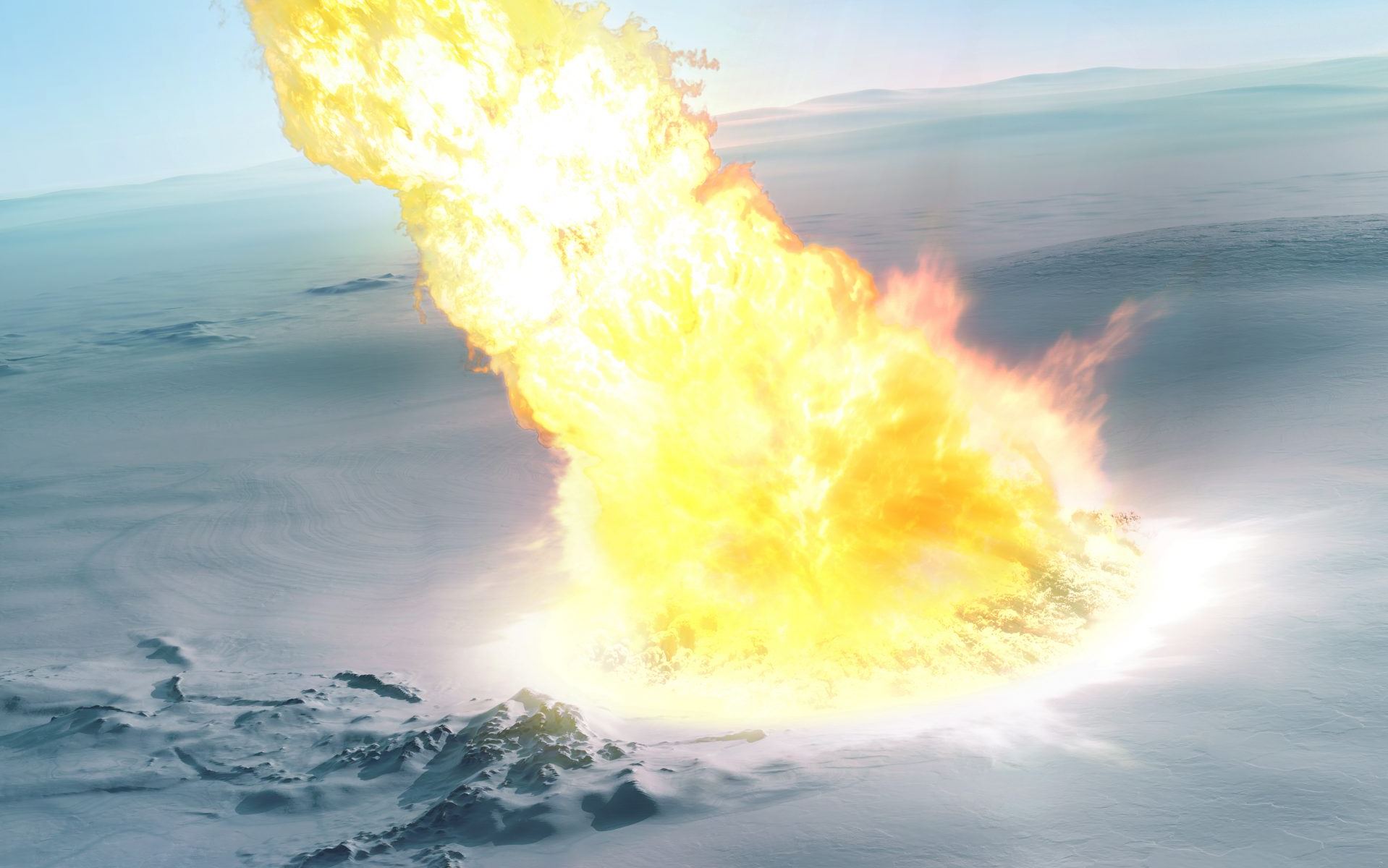


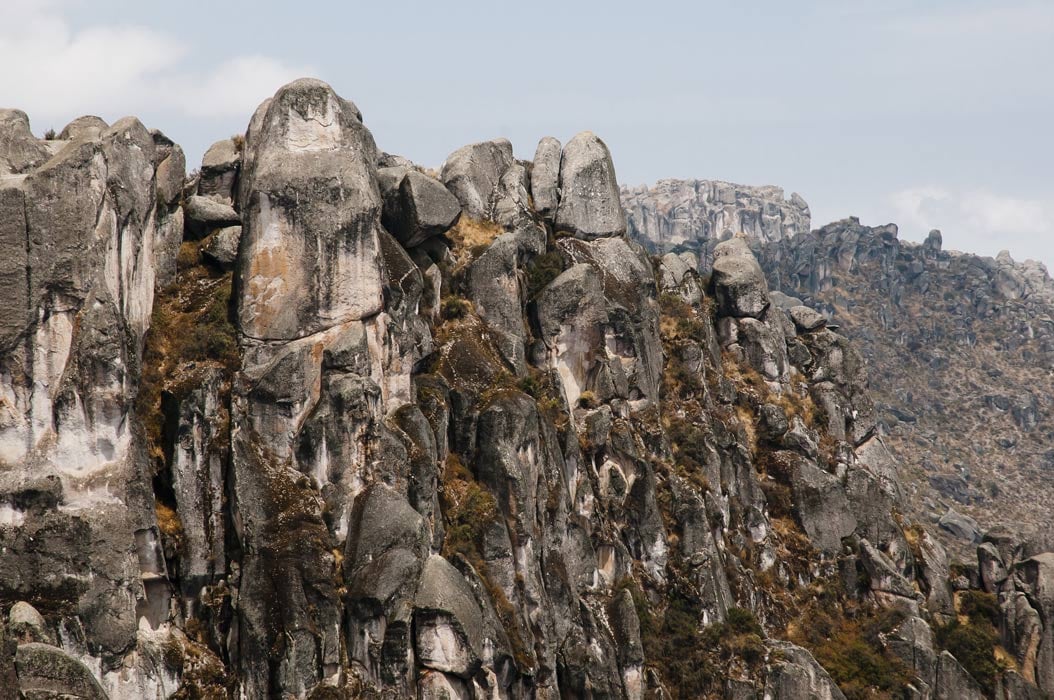
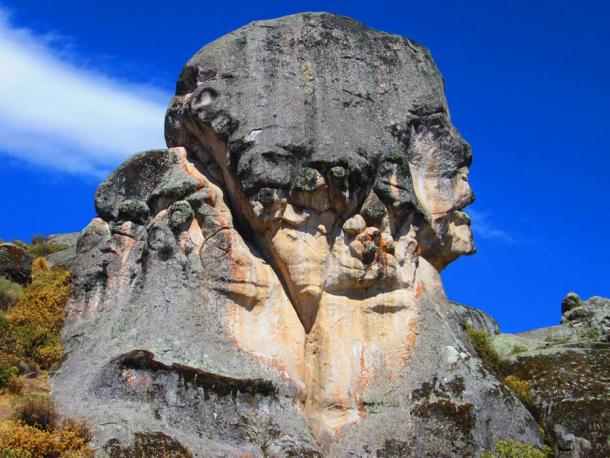
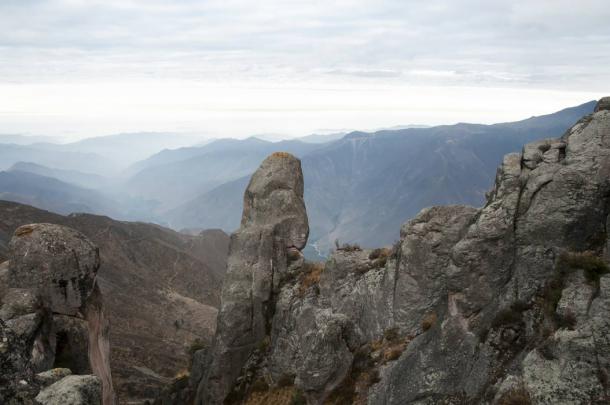
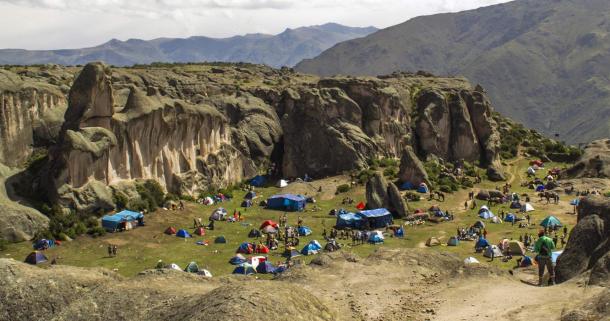
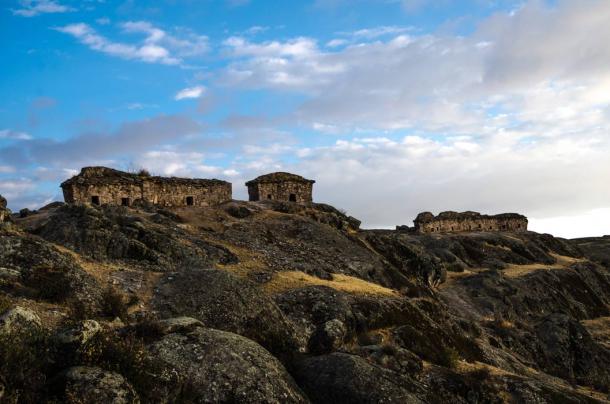
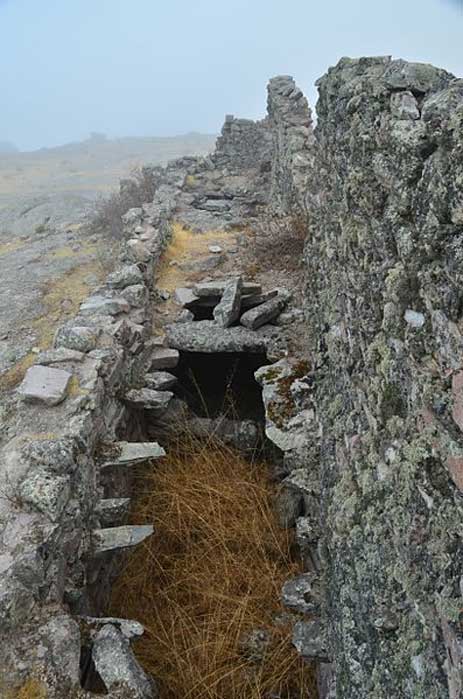
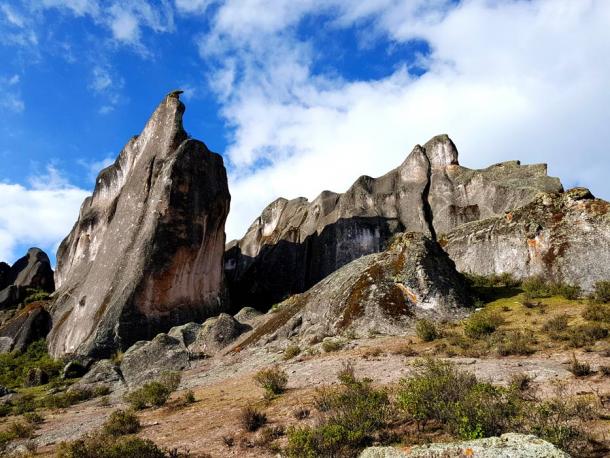

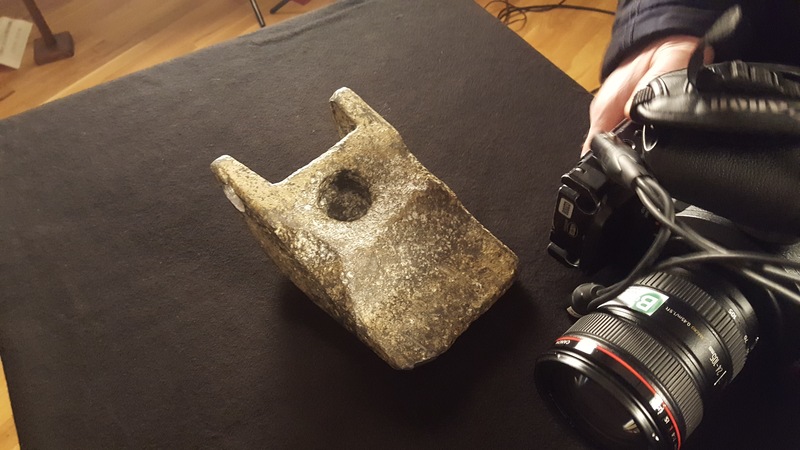


 NASA announces Ingenuity will attempt its 'Wright brothers...
 'Wiggle, wiggle, wiggle!' NASA's Ingenuity helicopter spins...
 'Until we meet again': The Perseverance rover and Ingenuity...


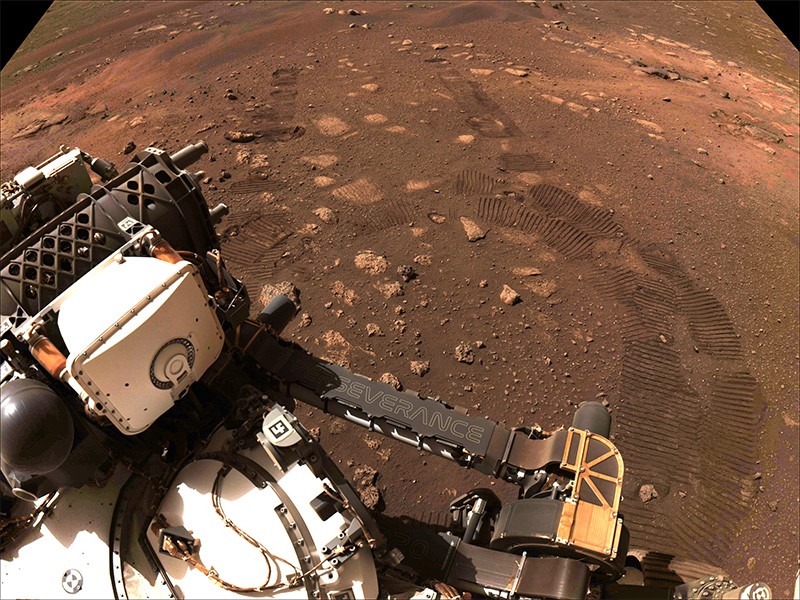


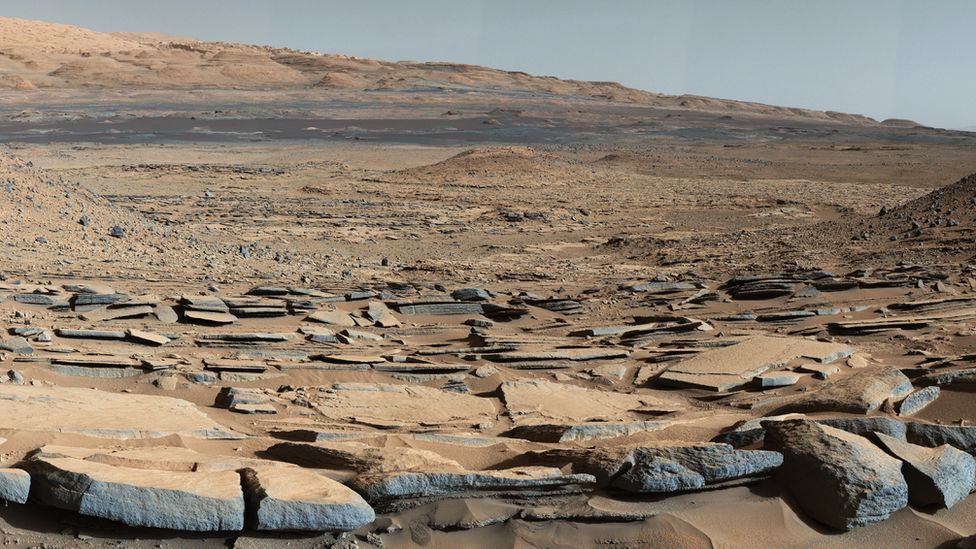
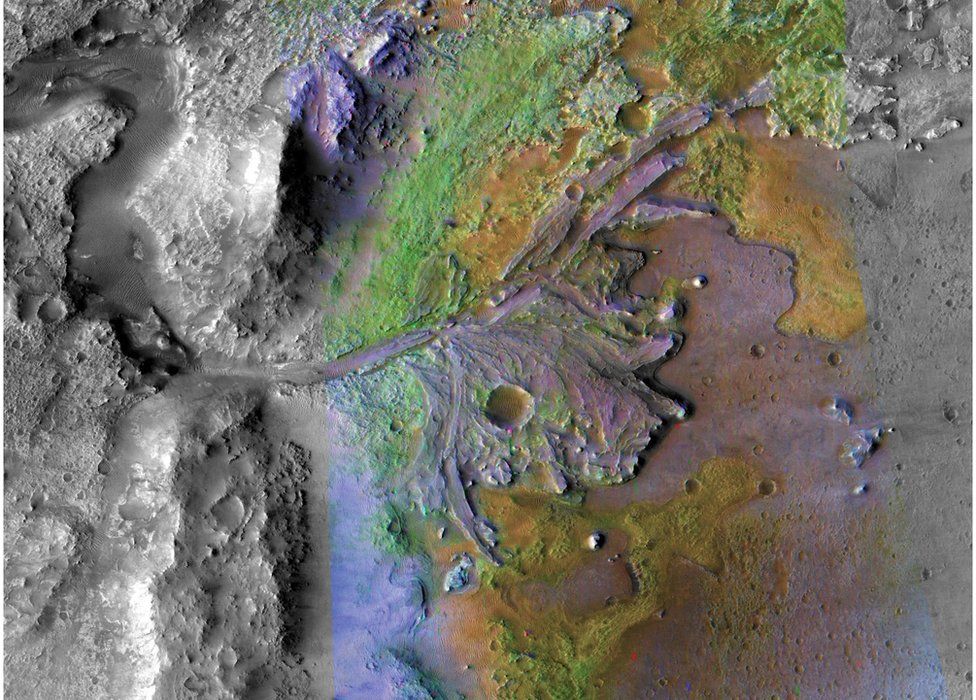

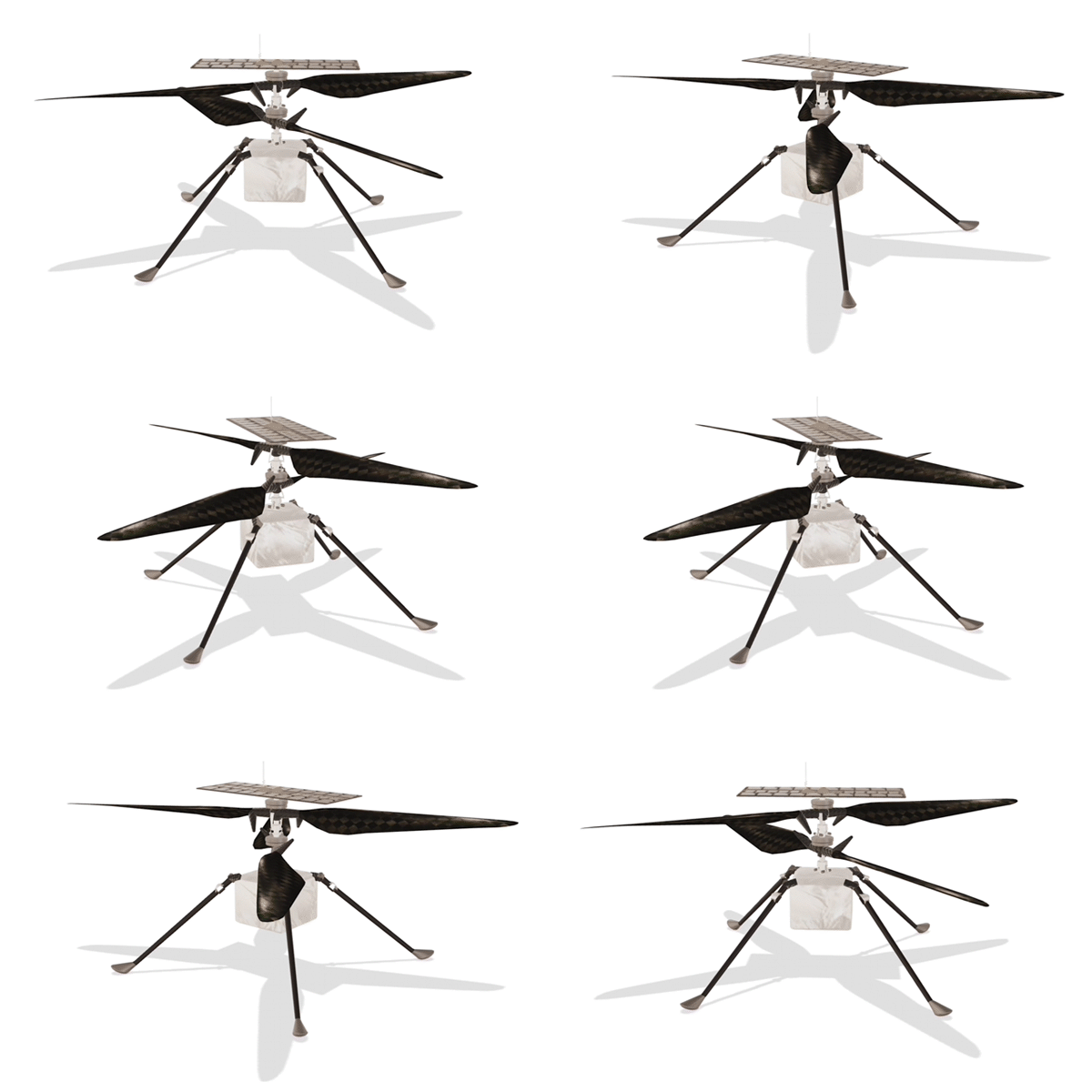


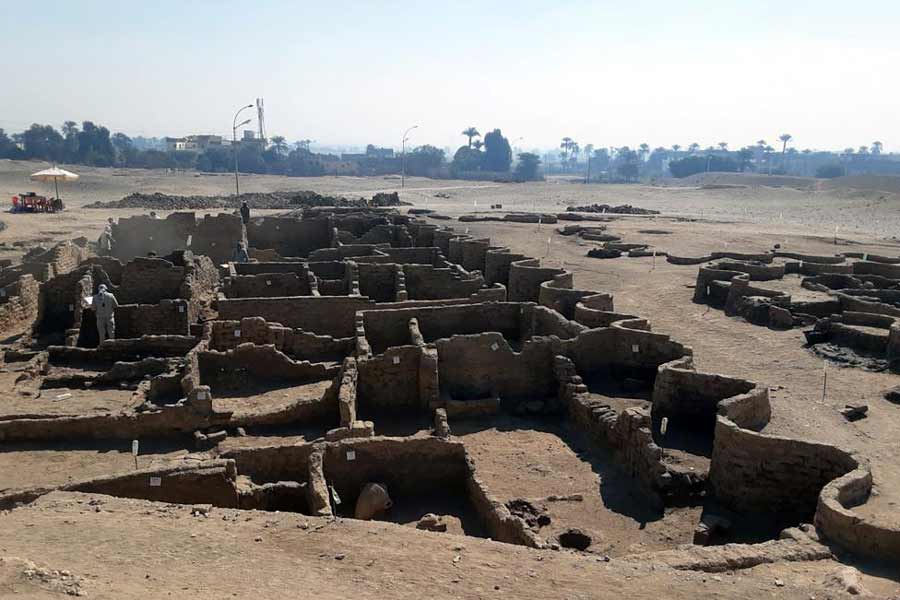
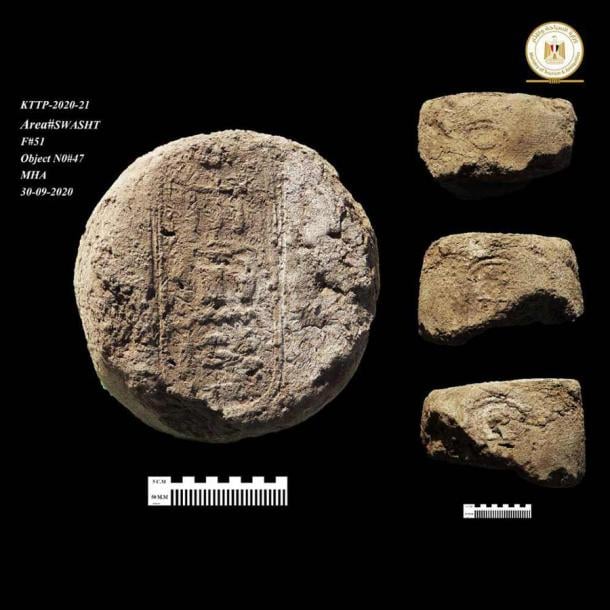
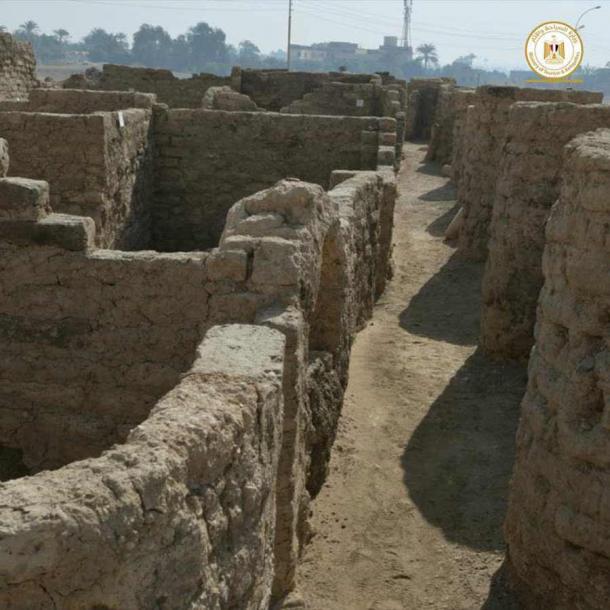
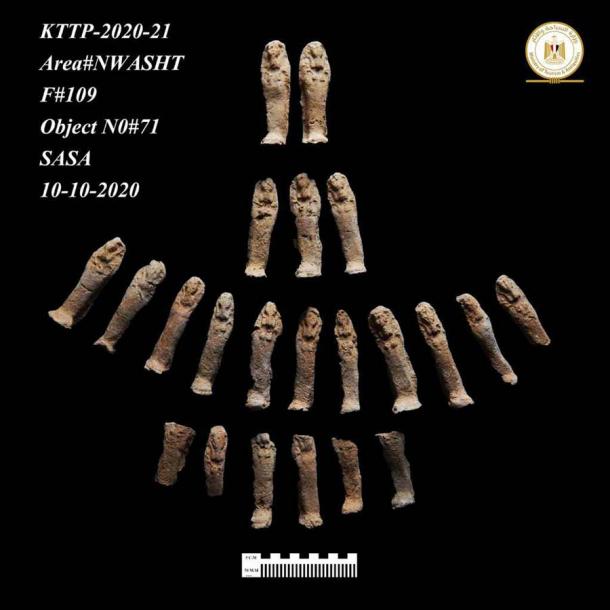
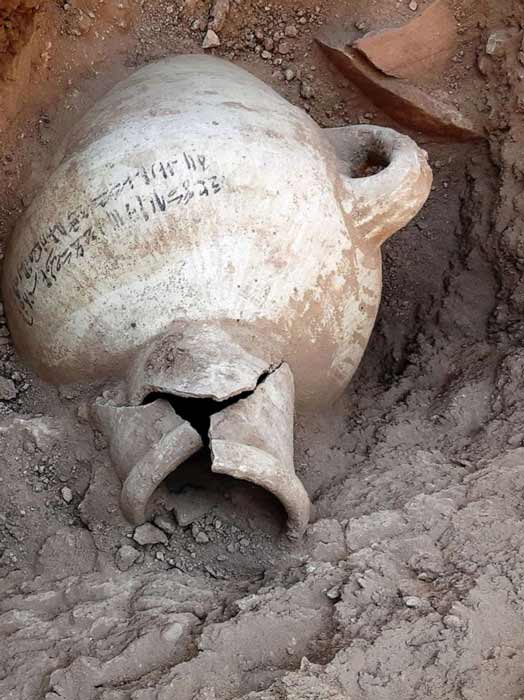
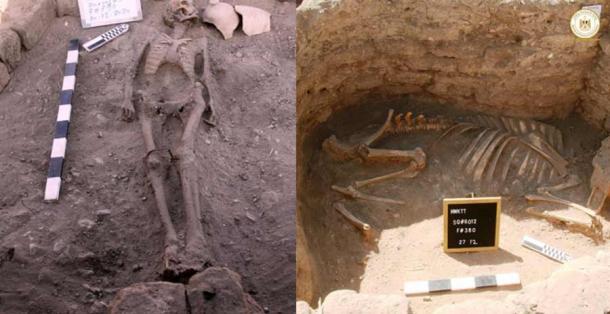
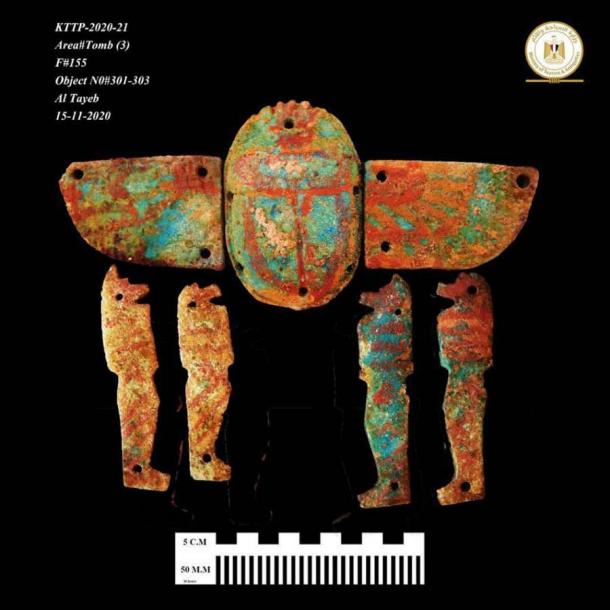



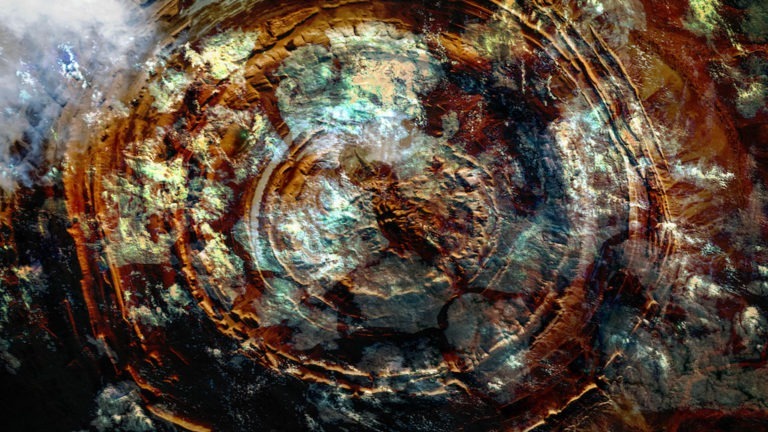


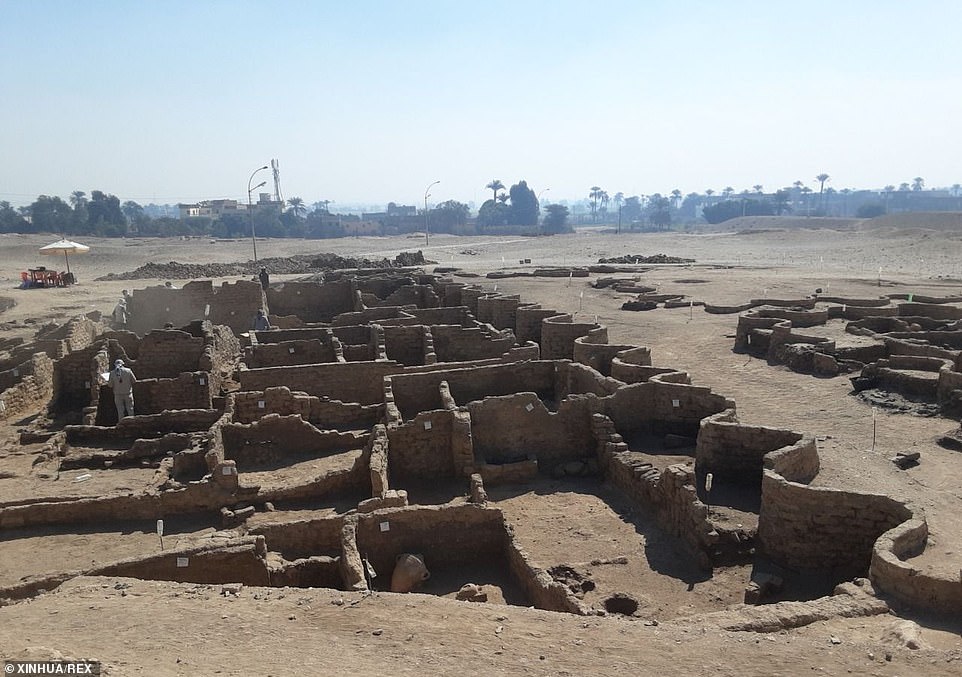
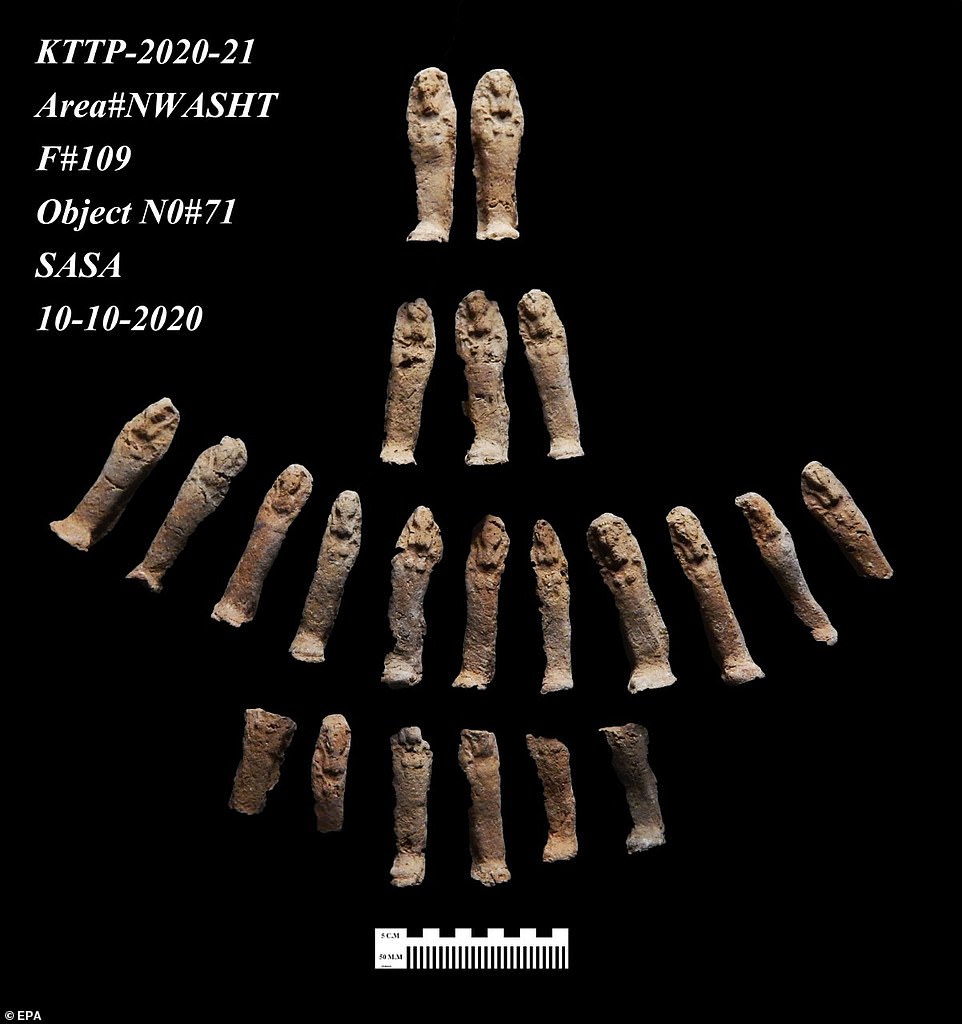
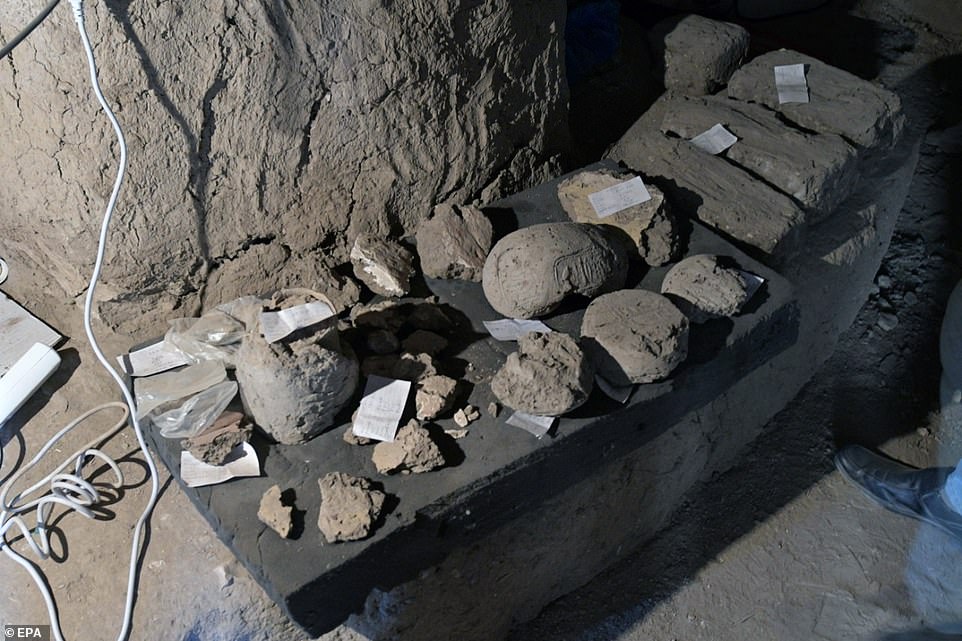
 Has the 2,600-year-old murder mystery of Takabuti finally...
 Chip off the old block! Facial reconstruction of King...
 Ancient Christian monastery is discovered in Egypt including...