Ontdek de Fascinerende Wereld van UFO's en UAP's: Jouw Bron voor Onthullende Informatie!
Ben jij ook gefascineerd door het onbekende? Wil je meer weten over UFO's en UAP's, niet alleen in België, maar over de hele wereld? Dan ben je op de juiste plek!
België: Het Kloppend Hart van UFO-onderzoek
In België is BUFON (Belgisch UFO-Netwerk) dé autoriteit op het gebied van UFO-onderzoek. Voor betrouwbare en objectieve informatie over deze intrigerende fenomenen, bezoek je zeker onze Facebook-pagina en deze blog. Maar dat is nog niet alles! Ontdek ook het Belgisch UFO-meldpunt en Caelestia, twee organisaties die diepgaand onderzoek verrichten, al zijn ze soms kritisch of sceptisch.
Nederland: Een Schat aan Informatie
Voor onze Nederlandse buren is er de schitterende website www.ufowijzer.nl, beheerd door Paul Harmans. Deze site biedt een schat aan informatie en artikelen die je niet wilt missen!
Internationaal: MUFON - De Wereldwijde Autoriteit
Neem ook een kijkje bij MUFON (Mutual UFO Network Inc.), een gerenommeerde Amerikaanse UFO-vereniging met afdelingen in de VS en wereldwijd. MUFON is toegewijd aan de wetenschappelijke en analytische studie van het UFO-fenomeen, en hun maandelijkse tijdschrift, The MUFON UFO-Journal, is een must-read voor elke UFO-enthousiasteling. Bezoek hun website op www.mufon.com voor meer informatie.
Samenwerking en Toekomstvisie
Sinds 1 februari 2020 is Pieter niet alleen ex-president van BUFON, maar ook de voormalige nationale directeur van MUFON in Vlaanderen en Nederland. Dit creëert een sterke samenwerking met de Franse MUFON Reseau MUFON/EUROP, wat ons in staat stelt om nog meer waardevolle inzichten te delen.
Let op: Nepprofielen en Nieuwe Groeperingen
Pas op voor een nieuwe groepering die zich ook BUFON noemt, maar geen enkele connectie heeft met onze gevestigde organisatie. Hoewel zij de naam geregistreerd hebben, kunnen ze het rijke verleden en de expertise van onze groep niet evenaren. We wensen hen veel succes, maar we blijven de autoriteit in UFO-onderzoek!
Blijf Op De Hoogte!
Wil jij de laatste nieuwtjes over UFO's, ruimtevaart, archeologie, en meer? Volg ons dan en duik samen met ons in de fascinerende wereld van het onbekende! Sluit je aan bij de gemeenschap van nieuwsgierige geesten die net als jij verlangen naar antwoorden en avonturen in de sterren!
Heb je vragen of wil je meer weten? Aarzel dan niet om contact met ons op te nemen! Samen ontrafelen we het mysterie van de lucht en daarbuiten.
L'hélicoptère martien de la Nasa, toujours accroché au rover Perseverance, est quasiment prêt à toucher Mars. Il est désormais suspendu sous l'astromobile, à quelques centimètres de la surface de la planète, ses quatre petits pieds dépliés.
Ingenuity n’est plus qu’à une dizaine de centimètres au-dessus de la surface de la planète rouge. Le déploiement de l’hélicoptère martien semble se passer comme prévu, comme en témoignent les clichés régulièrement envoyés par le rover Perseverance. Sur les images brutes, obtenues avec la caméra WATSON sur l’instrument SHERLOC, on peut voir Ingenuity suspendu sous l’astromobile, ses quatre pieds dépliés.
« L’hélicoptère martien a abaissé ses quatre pieds et est en mesure de se poser sur la surface martienne. Quand il sera prêt, Perseverance le posera doucement à la surface », a tweeté le Jet Propulsion Laboratory de la Nasa le 31 mars 2021. Sur l’image suivante, prise le 30 mars avec WATSON, on distingue à la fois l’hélicoptère suspendu à Perseverance, et l’une des roues du rover.
Tel qu’il apparaît sur ces images, Ingenuity n’est plus relié que par le haut à Perseverance, qu’il peut encore utiliser comme source d’énergie. Une fois que le rover l’aura posé, il devra reculer rapidement, pour exposer Ingenuity aux rayons du Soleil. L’hélicoptère va puiser son énergie de cette source, à l’aide d’un panneau solaire installé au-dessus de ses deux pales. Ingenuity ne pourra plus compter que sur sa propre autonomie après sa séparation définitive de l’astromobile.
Une fois Ingenuity en contact avec la surface de Mars, sa mission pourra commencer. Une fenêtre de 30 sols (le nom du jour sur Mars), soit 31 jours terrestres, va s’ouvrir : il faudra mener toutes les tentatives de vol et les vérifications dans ce laps de temps.
UN PREMIER VOL AU PLUS TÔT LE 11 AVRIL
Le tout premier vol d’Ingenuity doit avoir lieu au plus tôt le 11 avril. Le petit engin de 1,8 kilogramme doit s’élever dans les airs à une altitude de 3 mètres, planer pendant 20 secondes, puis redescendre. Cela peut sembler modeste, mais c’est pourtant déjà un grand défi de voler ainsi dans l’atmosphère ténue de Mars. Perseverance observera la scène à 100 mètres de distance, de façon à pouvoir prendre des photos de son compagnon, tout en évitant de se mettre en danger si Ingenuity venait à avoir un incident. L’hélicoptère vise avant tout à faire une démonstration technologique du vol propulsé sur une autre planète et n’embarque pas d’instruments scientifiques — il dispose juste de deux caméras.
Si Ingenuity réussit sa première tentative de vol et qu’il est encore fonctionnel, la Nasa pourra envisager un deuxième essai, en changeant probablement un peu les paramètres du vol. Ingenuity pourrait s’élever jusqu’à 5 mètres d’altitude et voler horizontalement, parcourant quelques mètres de distance, lors d’un vol un peu plus long. Jusqu’à 5 tentatives de vol pourront être envisagées, s’il reste assez de temps et sous réserve des résultats des vols précédents.
The underwater continent broke off from Gondwana 80 million years ago.
Zealandia is a submerged "lost continent" that hosts New Zealand and the territory of New Caledonia (part of which is shown here) in the South Pacific.
(Image credit: Arne Hodalic via Getty Images)
A new ocean-mapping expedition is drawing the boundaries of Zealandia, a submerged "lost continent" that hosts New Zealand and the territory of New Caledonia in the South Pacific.
Zealandia broke off from the supercontinent Gondwana between 79 million and 83 million years ago. Except for New Zealand and New Caledonia, this fragment of continental crust now sits on the ocean floor. It's not the only bit of continental crust that's detached from a larger continent, but it is the largest at 1.9 million square miles (4.9 million square kilometers). That's six times larger than the next-largest continental fragment, the microcontinent of Madagascar.
Zealandia, also known as Te Riu-a-Māui in Māori, was assigned continental status in 2017. Since then, researchers have been working to map the lost continent — no easy feat, as 94% of it is under water.
Now, Derya Gürer, an earth scientist at the University of Queensland in Australia, and her colleagues have collected new data on the northwestern edge of Zealandia, which is located offshore in Queensland's Coral Sea Marine Park. The researchers spent 28 days aboard the vessel Falkor exploring the region, mapping 14,285 square miles (37,000 square km).
"Our expedition collected seafloor topographic and magnetic data to gain a better understanding of how the narrow connection between the Tasman and Coral Seas in the Cato Trough region — the narrow corridor between Australia and Zealandia — was formed," Gürer said in a university statement.
The area between the Australia plate and the Zealandia plate is likely very complicated, Gürer said. There are probably several microcontinents submerged there, all of which splintered off the main continental masses when Australia broke free of Gondwana. (The supercontinent encompassed what is today South America, Africa, Antarctica, Australia, Zealandia, Arabia and the Indian subcontinent.) These fragments of continental crust are different from the surrounding oceanic crust of the seafloor, which is denser and thinner than continental crust.
Done in collaboration with the Schmidt Ocean Institute, the mapping was part of the Seafloor to Seabirds expedition. The mapping data will also feed into a larger project, the Seabed 2030 collaboration, which aims to make a publicly available, comprehensive map of the ocean floor by 2030. According to the National Oceanic and Atmospheric Administration (NOAA), less than 10% of the seafloor has been mapped by modern sonar methods, which use sound to reveal undersea topography. The Seafloor to Seabird expedition not only collected information about topography, but also data on the intensity of the magnetic field across the area. Because oceanic crust and continental crust are made of different mineral concentrations with different magnetic signatures, this data will enable researchers to reconstruct the broken fragments of Gondwana.
"The seafloor is full of clues for understanding the complex geologic history of both the Australian and Zealandian continental plates," Gürer said.
In the winter of 1850, a fierce storm hit the Orkney island archipelago of Scotland, causing massive amounts of devastation, particularly in the area of the Bay of Skaill on the west coast of Mainland Island, and when the storm passed it left behind swaths of damage and 200 people dead. Yet in addition to the tragedy and damage left in its wake, the ferocious storm had also uncovered a mystery that had been there under the earth for thousands of years. There, partially exposed by the raging storm atop a knoll called Skara Brae, was what appeared to be a previously unknown ancient Neolithic village, which would uncover more mysteries as it was further exposed, and unearth ancient enigmas that have never really been explained.
The first attempts to uncover more of the apparent buried village were amateurish affairs carried out by locals, which they conducted until 1868 before quitting after having unearthed four ancient houses. The site would then sit abandoned for decades, in the meantime being set upon by looters and hit with yet another storm, before it finally came to the attention of the University of Edinburgh’s Professor V. Gordon Childe and was properly investigated in 1917. When real archeologists got to work, it was found that the site was likely inhabited from between around 3180 BC to about 2500 BC, making it older than Stonehenge and the Great Pyramids, and was composed of a total of ten clustered houses tucked down in earthen dams and mounds, meant to help support the walls and provide insulation. These houses were constructed of flagstone and featured stone hearths, beds, and various stone-built pieces of furniture, including cupboards, dressers, seats, and storage boxes, and there was even an indoor sewer system or toilet in each home, with small antechambers equipped with drains that carried waste to the sea and would have been very advanced for the time. This was all incredibly well preserved and complete.
Skara Brae
This elaborate design was one of the first mysteries of Skara Brae, and another was that it seems that the settlement was suddenly and inexplicably abandoned at some point. Whatever had made them leave caused the inhabitants to apparently flee in great haste, as there have been found many items that would have been considered very valuable at the time and even the remains of what are thought to have been meals laid out. Theories as to why these people so suddenly and decisively abandoned the village range from some sort of catastrophe like a storm, to some other calamity like disease, but no one really knows. Whatever the reason for this sudden exodus, the people who once lived here sure did leave a lot of stuff behind. Throughout this tiny village, which was estimated to have held perhaps 50 inhabitants at any one time, there were found fragments of stone, bone, and antler thought to be from some tool-making process, as well as numerous objects made of animal, fish, bird, and whalebone, whale and walrus ivory, and killer whale teeth, including awls, needles, knives, beads, jewelry, adzes, shovels, small bowls and plates. In addition to this there were found countless pieces of pottery, thousands of strange beads made from bone and sheep’s teeth, lumps of red ochre thought to have been used for body painting, and even one of the only pieces of preserved rope from a Neolithic site ever found. Much of this would have been seen as incredibly valuable at the time, but it is all just sitting around, with no real attempts to stow it, hide it, or take it along. Yet for as amazing as all of this is, by far the most mysterious objects found at Skara Brae are its inexplicable carved stone balls.
Scattered around the site are stone balls, about the size of a baseball and adorned with elaborate carvings of intricate patterns of spirals, circles and straight lines, with each one typically sporting between three to ten small knobs or bosses on the surface. It has long been considered a complete mystery as to how these ancient people could have created such elaborate inscriptions and carvings with only stone tools to work with, but the bigger mystery is that no one really knows what they are for. When it comes to the mysterious stone balls of Skara Brae the theories are numerous. Ideas include that they were used as weights for fishing nets, or that they were primitive scales, standardized weights for Neolithic traders, tools for the use of making beads or a multi-tool of some sort, objects used for rituals, oracles or fortune telling devices, status symbols, rollers for the transport of the giant stones used in megalithic monuments, or even weapons. Hugo Anderson-Whymark, curator of National Museums Scotland, has said of this theory:
It is perhaps best to think of them as ceremonial or stylized weapons. Things that could inflict damage if you wanted to use them, and may in some circumstances have been used that way, but are more likely to be objects which represent the status or power of the individual that held them in that community. Many of the ideas you have to take with a pinch of salt, while there are others that may be plausible. What’s interesting is that people really get their imaginations captured by them — they still hold a lot of secrets.
Some of the mysterious stone balls
Another idea is that the balls could represent what are called “Platonic solids,” which were symmetrical polyhedrons first proposed by the ancient Greek mathematician and philosopher Plato to represent the classical elements of earth, water, air, fire and ether. If this theory is true it would be an amazing discovery, as it would mean that these Neolithic people understood these geometries and mathematics over a millennium before Plato first described it all. In an effort to come to some understanding of their mysterious purpose, scientists have created 3-D models of the balls and others like them found at other sites in Scotland, and while these have not provided any concrete answers one thing that was found is that the they seemed to have been worked and reworked or modified over several generations.
Similar balls have been found at other locations around Scotland, and indeed there have been around 500 of the objects found at various sites, with the Skara Brae examples being among the most famous, but all are equally enigmatic. No one really has a clue what they were for. They could have simply been left behind as a prank to mess with people in the future for all we know, and your guess is as good as anyone’s. The stone balls have baffled scientists for years, with no one any closer to a definitive answer. What happened to Skara Brae? What were these mysterious balls used for? Considering there is no written record for any of it we will probably never know, and your guess is as good as anyone else’s.
ALL RELATED VIDEOS, selected and posted by peter2011
If Astronomers see Isoprene in the Atmosphere of an Alien World, There’s a Good Chance There’s Life There
It is no exaggeration to say that the study of extrasolar planets has exploded in recent decades. To date, 4,375 exoplanets have been confirmed in 3,247 systems, with another 5,856 candidates awaiting confirmation. In recent years, exoplanet studies have started to transition from the process of discovery to one of characterization. This process is expected to accelerate once next-generation telescopes become operational.
As a result, astrobiologists are working to create comprehensive lists of potential “biosignatures,” which refers to chemical compounds and processes that are associated with life (oxygen, carbon dioxide, water, etc.) But according to new research by a team from the Massachusetts Institute of Technology (MIT), another potential biosignature we should be on the lookout for is a hydrocarbon called isoprene(C5H8).
The study that describes their findings, “Assessment of Isoprene as a Possible Biosignature Gas in Exoplanets with Anoxic Atmospheres,” recently appeared online and has been accepted for publication by the journal Astrobiology. For the sake of their study, the MIT team looked at the growing list of possible biosignatures that astronomers will be on the lookout for in the coming years.
An arrangement of 3 exoplanets to explore how the atmospheres can look different based on the chemistry present and incoming flux. Credit: Jack H. Madden
To date, the vast majority of exoplanets have been detected and confirmed using indirect methods. For the most part, astronomers have relied on the Transit Method (Transit Photometry) and the Radial Velocity Method (Doppler Spectroscopy), alone or in combination. Only a few have been detectable using Direct Imaging, which makes it very difficult to characterize exoplanet atmospheres and surfaces.
Only on rare occasions have astronomers been able to obtain spectra that allowed them to determine the chemical composition of that planet’s atmosphere. This was either the result of light passing through an exoplanet’s atmosphere as it transitted in front of its star or in the few cases where Direct Imaging occurred and light reflected from the exoplanet’s atmosphere could be studied.
Much of this has had to do with the limits of our current telescopes, which do not have the necessary resolution to observe smaller, rocky planets that orbit closer to their star. Astronomers and astrobiologists believe that it is these planets that are most likely to be potentially habitable, but any light reflected from their surfaces and atmospheres is overpowered by the light coming from their stars.
However, that will change soon as next-generation instruments like the James Webb Space Telescope (JWST) takes to space. Sara Seager, the Class of 1941 Professor of Physics and Planetary Sciences at MIT, leads the research group responsible (aka. the Seager Group) and was a co-author on the paper. As she told Universe Today via email:
“With the upcoming October 2021 launch of the James Webb Space Telescope we will have our first capability of searching for biosignature gases—but it will be tough because the atmospheric signals of small rocky planet are so weak to begin with. With the JWST on the horizon the number of people working in the field has grown tremendously. Studies such as this one coming up with new potential biosignature gases, and other work showing potential false positives even for gases such as oxygen.”
Artist’s impression shows the planet Proxima b orbiting the red dwarf star Proxima Centauri, the closest star to the Solar System.
Credit: ESO/M. Kornmesser
Once it is deployed and operational, the JWST will be able to observe our Universe at longer wavelengths (in the near- and mid-infrared range) and with greatly improved sensitivity. The telescope will also rely on a series of spectrographs to obtain composition data, as well as coronagraphs to block out the obscuring light of parent stars. This technology will enable astronomers to characterize the atmospheres of smaller rocky planets.
In turn, this data will allow scientists to place much tighter constraints on an exoplanet’s habitability and could even lead to the detection of known (and/or potential) biosignatures. As noted, these “biosignatures” include the chemical indications associated with life and biological process, not to mention the types of conditions that are favorable to it.
These include oxygen gas (O2), which is essential to most forms of life on Earth and is produced by photosynthetic organisms (plants, trees, cyanobacteria, etc.). These same organisms metabolize carbon dioxide (CO2), which oxygen-metabolizing life emits as a waste product. There’s also water (H2O), which is essential to all life as we know it, and methane (CH4), which is emitted by decaying organic matter.
Since volcanic activity is believed to play an important role in planetary habitability, the chemical byproducts associated with volcanism – hydrogen sulfide (H2S), sulfur dioxide (SO2), carbon monoxide (CO), hydrogen gas (H2), etc. – are also considered biosignatures. To this list, Zhan, Seager, and their colleagues wished to add another possible biosignature – isoprene. As Zhan explained to Universe Today via email:
“Our research group at MIT focuses on using a holistic approach to explore all possible gases as potential biosignature gas. Our prior work led to the creation of the all small molecules database. We proceed to filter the ASM database to identify the most plausible biosignature gas candidates, one of which is isoprene, using machine learning and data-driven approaches – Dr. Zhuchang Zhan.”
Image taken by a crew member of Expedition 13 from the ISS, showing the eruption of Cleveland Volcano, Aleutian Islands, Alaska. Credit: NASA
Like its cousin methane, isoprene is an organic hydrocarbon molecule that is produced as a secondary metabolite by various species here on Earth. In addition to deciduous trees, isoprene is also produced by a diverse array of evolutionary-distant organisms – such as bacteria, plants, and animals. As Seager explained, this makes it promising as a potential biosignature:
“Isoprene is promising because it is produced in vast qualities by life on Earth—as much as methane production! Furthermore, a huge variety of life forms (from bacteria to plants and animals), those that are evolutionary distant from each other, produce isoprene, suggesting it might be some kind of key building block that life elsewhere might also make.”
While isoprene is about as abundant as methane here on Earth, isoprene is destroyed by interaction with oxygen and oxygen-containing radicals. For this reason, Zhang, Seager, and their team chose to focus on anoxic atmospheres. These are environments that are predominantly composed of H2, CO2, and nitrogen gas (N2), which is similar to what Earth’s primordial atmosphere was composed of.
According to their findings, a primordial planet (where life is beginning to emerge) would have abundant isoprene in its atmosphere. This would have been the case on Earth between 4 and 2.5 billion years ago when single-celled organisms were the only life and photosynthetic cyanobacteria were slowly converting Earth’s atmosphere into one that was oxygen-rich.
By 2.5 billion years ago, this culminated in the “Great Oxygenation Event” (GOE), which proved toxic to many organisms (and metabolites like isoprene). It was also during this time that complex lifeforms (eukaryotes and multi-celled organisms) began to emerge. In this respect, isoprene could be used to characterize planets that are in the midst of a major evolutionary shift and laying the groundwork for future animal phyla.
But as Zhang noted, teasing out this potential biosignature will be a challenge, even for the JWST:
“The caveats with isoprene as a biomarker are that: 1. 10x-100x the Earth’s Isoprene production rate is needed for detection; 2. Detecting Near-Infrared isoprene spectral feature can be hindered by the presence of methane or other hydrocarbons. Unique detection of isoprene will be challenging with JWST, as many hydrocarbon molecules share similar spectra features in Near-Infrared wavelengths. But future telescopes that focus on the mid-IR wavelength will be able to detect isoprene spectral features uniquely.”
Beyond the JWST, the Nancy Grace Roman Space Telescope (successor to the Hubble mission) will also be taking to space by 2025. This observatory will have the power of “One-Hundred Hubbles” and its recently-upgraded infrared filters will allow it to characterize exoplanets on its own and through collaborations with the JWST and other “great observatories.”
There are also several ground-based telescopes currently being built here on Earth that will rely on sophisticated spectrometers, coronographs, and adaptive optics (AOs). These include the Extremely Large Telescope (ELT), the Giant Magellan Telescope (GMT), the Thirty Meter Telescope (TMT) These telescopes will also be able to conduct Direct Imaging studies of exoplanets, and the results are expected to be ground-breaking.
Relative sizes of Kepler habitable zone planets discovered as of 2013 April 18. Left to right: Kepler-22b, Kepler-69c, Kepler-62e, Kepler-62f, and Earth (except for Earth, these are artists’ renditions). Credit: NASA/Ames/JPL-Caltech.
Between improved instruments, rapidly improving data analysis and techniques, and improvements in our methodology, the study of exoplanets is only expected to accelerate further. In addition to having tens of thousands of more available for study (many of which will be rocky and “Earth-like”), the unprecedented views we will have of them will let us see just how many habitable worlds are out there.
Whether or not this will result in the discovery of extraterrestrial life within our lifetimes remains to be seen. But one thing is clear. In the coming years, when astronomers start combing through all the new data they will have on exoplanet atmospheres, they will have a comprehensive list of biosignatures to guide them.
The Lost Pacific Continent of Advanced Human Beings... Did It Really Exist?
According to Churchward, the lost Pacific continent of Mu “extended from somewhere north of Hawaii to the south as far as the Fijis and Easter Island.”
He claimed Mu was the site of the Garden of Eden and the home of 64,000,000 inhabitants known as the Naacals.
Its civilization, which flourished 50,000 years before Churchward’s day, was technologically more advanced than his own, and the ancient civilizations of India, Babylon, Persia, Egypt and the Mayas were merely the decayed remnants of its colonies.
Could this strange land and advanced human’s have really existed?
Robbie Williams Hires More Security Personnel to Guard Him Against UFOs and Aliens After Terrifying Experiences
During interviews, Robbie Williams has said many times that he believes that we’re not alone in the universe, but the thought that extraterrestrials can contact causes him, terror.
Because of this phobia, he strengthened his house security to the point of even hiring a bodyguard to watch over while he sleeps.
The famous singer previously confessed during an interview for the Alien Nation his meeting with what he believes to be a UFO when he was sober. He said that he might have a mental illness, but he wants to share his story with the skeptics.
He also shared that he always felt terrified, thinking that aliens could try to contact him. The artist is aware that statements like his will always be taken with skepticism.
For this reason, he didn’t rule out that he may have suffered hallucinations in the past, which could explain his alleged sightings of UFOs.
Five Legendary Lost Cities that have Never Been Found
The story of Atlantis is one of the most renowned and enduring tales of a lost city, said to have been swallowed up by the sea and lost forever. Yet, the story of Atlantis is not unique, as other cultures have similar legends of landmasses and cities that have disappeared under the waves, been lost beneath desert sands, or buried beneath centuries of vegetation. From the ancient homeland of the Aztecs, to jungle cities of gold and riches, we examine five legendary lost cities that have never been found.
Since Europeans first arrived in the New World, there have been stories of a legendary jungle city of gold, sometimes referred to as El Dorado. Spanish Conquistador, Francisco de Orellana was the first to venture along the Rio Negro in search of this fabled city. In 1925, at the age of 58, explorer Percy Fawcett headed into the jungles of Brazil to find a mysterious lost city he called “Z”. He and his team would vanish without a trace and the story would turn out be one of the biggest news stories of his day. Despite countless rescue missions, Fawcett was never found.
In 1906, the Royal Geographical Society, a British organization that sponsors scientific expeditions, invited Fawcett to survey part of the frontier between Brazil and Bolivia. He spent 18 months in the Mato Grosso area and it was during his various expeditions that Fawcett became obsessed with the idea of lost civilizations in this area. In 1920, Fawcett came across a document in the National Library of Rio De Janeiro called Manuscript 512. It was written by a Portuguese explorer in 1753, who claimed to have found a walled city deep in the Mato Grosso region of the Amazon rainforest, reminiscent of ancient Greece. The manuscript described a lost, silver laden city with multi-storied buildings, soaring stone arches, wide streets leading down towards a lake on which the explorer had seen two white Indians in a canoe. Fawcett called this the Lost City of Z.
In 1921, Fawcett set out on his first of many expeditions to find the Lost City of Z, but his team were frequently hindered by the hardships of the jungle, dangerous animals, and rampant diseases. Percy’s final search for Z culminated in his complete disappearance. In April 1925, he attempted one last time to find Z, this time better equipped and better financed by newspapers and societies including the Royal Geographic Society and the Rockefellers. In his final letter home, sent back via a team member, Fawcett sent a message to his wife Nina and proclaimed “We hope to get through this region in a few days.... You need have no fear of any failure.” It was to be the last anyone would ever hear from them again.
While Fawcett’s lost city of Z has never been found, numerous ancient cities and remains of religious sites have been uncovered in recent years in the jungles of Guatemala, Brazil, Bolivia and Honduras. With the advent of new scanning technology, it is possible that an ancient city that spurred the legends of Z, may one day be found.
The Aztec people of Mexico created one of the most powerful empires of the ancient Americas. While much is known about their empire located where today’s Mexico City can be found, less is known about the very start of the Aztec culture. Many consider the missing island of Aztlan to be the ancient homeland where the Aztec people began to form as a civilization prior to their migration to the Valley of Mexico. Some believe it is a mythical land, similar to Atlantis or Camelot, which will live on through legend but will never be found in physical existence. Others believe it to be a true, physical location that will someday be identified. Searches for the land of Aztlan have spanned from Western Mexico, all the way to the deserts of Utah, in hopes of finding the legendary island. However, these searches have been fruitless, as the location – and existence – of Aztlan remain a mystery.
The formation of civilization at Aztlan comes from legend. According to Nahuatl legend, there were seven tribes that once lived at Chicomoztoc – “the place of the seven caves.” These tribes represented the seven Nahua groups: Acolhua, Chalca, Mexica, Tepaneca, Tlahuica, Tlaxcalan, and Xochimilca (different sources provide variations on the names of the seven groups). The seven groups, being of similar linguistic groups, left their respective caves and settled as one group near Aztlan.
The word Aztlan means “the land to the north; the land from whence we, the Aztecs, came.” It is said that eventually, the people who inhabited Aztlan became known as the Aztecs, who then migrated from Aztlan to the Valley of Mexico. The Aztec migration from Aztlan to Tenochtitlán is a very important piece of Aztec history. It began on May 24, 1064, which was the first Aztec solar year.
To this day, the actual existence of an island known as Aztlan has not been confirmed. Many have searched for the land, in hopes of having a better understanding of where the Aztecs came from, and perhaps a better understanding of ancient Mexican history. However, like other lost cities, it is not clear whether Aztlan will ever be found.
In Arthurian legend, Lyonesse is the home country of Tristan, from the legendary story of Tristan and Iseult. The mythical land of Lyonesse is now referred to as the “Lost Land of Lyonesse,” as it is ultimately said to have sunk into the sea. However, the legendary tale of Tristan and Iseult shows that Lyonesse is known for more than sinking into the ocean, and that it had a legendary presence while it remained above ground. While Lyonesse is mostly referred to in stories of legend and myth, there is some belief that it represents a very real city that sunk into the sea many years ago. With such a legendary location, it can be difficult to ascertain where the legend ends and reality begins.
There are some variations in the legends that surround the sinking of the land. Prior to its sinking, Lyonesse would have been quite large, containing one hundred and forty villages and churches. Lyonesse is said to have disappeared on November 11, 1099 (although some tales use the year 1089, and some date back to the 6th century). Very suddenly the land was flooded by the sea. Entire villages were swallowed, and the people and animals of the area drowned. Once it was covered in water, the land never reemerged. While the Arthurian tales are legendary, there is some belief that Lyonesse was once a very real place attached to the Scilly Isles in Cornwall, England. Evidence shows that sea levels were considerably lower in the past, so it is very possible that an area that once contained a human settlement above-ground is now beneath the sea level. Indeed, fisherman near the Scilly Isles tell tales of retrieving pieces of buildings and other structures from their fishing nets. These stories have never been substantiated, and are viewed by some as tall tales.
From the legendary tales of Tristan and Iseult, to Arthur’s final battle with Mordred, to the stories of a city being swallowed by the sea, the tales of Lyonesse invoke a vast array of thoughts and emotions by those who wish to know more about this legendary city, and who like to believe that it’s legendary tales are founded upon a very real lost city.
For hundreds of years, treasure hunters and historians alike have searched for El Dorado, the lost city of gold. The idea of a city filled with gold and other riches has a natural appeal, drawing the attention of individuals from all over the world in hopes of discovering the ultimate treasure, and an ancient wonder. In spite of numerous expeditions around all of Latin America, the city of gold remains a legend, with no physical evidence to substantiate its existence.
The origins of El Dorado come from legendary tales of the Muisca tribe. Following two migrations – one in 1270 BC and one between 800 and 500 BC, the Muisca tribe occupied the Cundinamarca and Boyacá areas of Colombia. According to legend, as written in Juan Rodriguez Freyle’s “El Carnero,” the Muisca practiced a ritual for every newly appointed king that involved gold dust and other precious treasures.
When a new leader was appointed, many rituals would take place before he took his role as king. During one of these rituals, the new king would be brought to Lake Guatavita, where he would be stripped naked, and covered in gold dust. He would be placed upon a highly decorated raft, along with his attendants, and piles of gold and precious stones. The raft would be sent out to the center of the lake, where the king would wash the gold dust from his body, as his attendants would throw the pieces of gold and precious stones into the lake. This ritual was intended as a sacrifice to the Muisca's god. To the Muisca, “El Dorado” was not a city, but the king at the center of this ritual, also called “the Gilded One.” While El Dorado is meant to refer to the Gilded One, the name has now become synonymous with the lost city of gold, and any other place where one can quickly obtain wealth.
In 1545, Conquistadores Lázaro Fonte and Hernán Perez de Quesada attempted to drain Lake Guatavita. As they did so, they found gold along its shores, fueling their suspicion that the lake contained a treasure of riches. They worked for three months, with workers forming a bucket chain, but they were unable to drain the lake sufficiently to reach any treasures deep within the lake. In 1580, another attempt to drain the lake was made by business entrepreneur Antonio de Sepúlveda. Once again, various pieces of gold were found along the shores, but the treasure at the depths of the lake remained concealed. Other searches were conducted on Lake Guatavita, with estimates that the lake could contain up to $300 million in gold, with no luck in finding the treasures. All searches came to a halt when the Colombian government declared the lake a protected area in 1965. Nonetheless, the search for El Dorado continues, even without the ability to search Lake Guatavita. The legends of the Muisca tribe, the Gilded One and their ritualistic sacrifice of treasures have transformed over time into today’s tale of El Dorado, lost city of gold.
Dubai cultivates an ultra-modern image of dazzling architecture and effortless wealth. Yet its deserts conceal forgotten cities and a hidden history which reveal how its early inhabitants adapted and overcame dramatic past climate change.
One of the most famous lost cities of Arabia – tantalizingly so because historians have known it existed from written records but simply could not find it – is the medieval city of Julfar. Home to the legendary Arabian seafarer Ahmed ibn Majid, as well as allegedly to the fictional Sindbad the Sailor, Julfar thrived for a thousand years before falling into ruin and disappearing from human memory for almost two centuries. Unlike other desert cities, Julfar was a thriving port, in fact the hub of southern Gulf Arabic trade in the Middle Ages.
Julfar was known to be somewhere on the Persian Gulf coast north of Dubai, but the actual site was only found by archaeologists in the 1960s. The earliest signs of settlement found on the site date from the 6th century, by which time its inhabitants were already trading as far afield as India and the Far East on a routine basis.
The 10th to 14th centuries were a golden age for Julfar and for long-distance Arab trading and seafaring, with Arab navigators routinely traveling halfway around the world. Arabs had sailed into European waters long before Europeans succeeded in navigating through the Indian Ocean and into the Persian Gulf, for instance. As the main base for these voyages and trade, Julfar was the largest and most important city in the southern Gulf for over a thousand years. Arab merchants routinely made the mammoth eighteen-month sea voyage as far as China, and traded almost everything imaginable.
Such a valuable commercial centre attracted constant attention from rival powers though. The Portuguese took control in the 16th century, by which time Julfar was a substantial city of around 70,000 people. A century later the Persians seized it, only to lose it in 1750 to the Qawasim tribe from Sharjah who established themselves next-door at Ras al-Khaimah, which they continue to rule to this day, leaving the old Julfar to gradually decay until its ruins became forgotten amongst the coastal sand dunes. Today most of Julfar in all likelihood remains still hidden beneath the sprawling dunes north of Ras al-Khaimah.” – courtesy David Millar
A woman believes the strange lights she saw from her house could be a 'UFO'.
Romanie Smith, was standing in her garden in Great Suttonwhen she noticed the mysterious lights in the sky on Monday night (March 29) at around 9.20pm and which she said stayed for around 40 minutes.
She said the 'object' was a around a mile away in the Chester direction from where she was standing.
Romanie described the lights as flashing in a 'twinkly pattern' in multiple colours including orange, green, red and blue but was still 'quite a white light'.
The Great Sutton resident said every so often it 'tilted' to show a 'dark shadowy shape of the object', which she described as curved.
Romanie told CheshireLive: "It was flashing in a twinkly pattern, in a line that tilted every so often showing a dark shadowy shape of object and it was curved like a semi-circle, like it had tilted on its side.
"Then it would almost three-quarter tilt, showing how round it was and the lights would still be twinkling that’s when it almost showed a strip beam of light from it, then it would tilt back.
"I understand this could have just been a light flare dazzling me not a light beam as such.
"I realised it was moving slightly almost a shifting, shaky movement, but always hovering like almost stationary, but would jiggle to the left and then back to the right.
"Then up a bit and back down and then it would shift quite a lot and move across from the point I first saw it, but not a slow travel it was a jerky movement.
"At one point it tilted and that’s when I noticed a second light, not as big, much smaller and the lights from the big one almost outlined them both.
"I watched the shadows get closer and closer until the smaller one disappeared into the main one, and then it really lit up.
"That’s when I could see lights coming off it, showing almost lines or like it was absorbing light into it or off of it."
Romanie said at this point this was when she 'really started freaking out' and could feel herself shaking.
She said the mysterious 'object' stopped and formed the line again and was 'flashing and moving about slightly'.
Romanie added she kept 'willing it to move or just shoot off and vanish' just to 'prove' to her she wasn't seeing things.
She added: "I kept willing it to move or just shoot off and vanish just to prove to me I wasn’t seeing things, but it just stayed there.
"It had moved across the house line in front of me so clearly, it covered some ground as it was miles and miles away.
"I was using the roof of the house behind to work out how much it was moving, as it started central to their chimney pots and by the time I came it had moved above the house next door right of that one.
"Obviously I’m talking miles away not just above them, as I was using them as a guide to work out if it was moving at all.
"I also saw another slow moving, much dimmer light moving across the sky which at first I thought was a travelling star.
"But it moved right across the sky across the big flashing lights and the more I think about it, it moved from the right side to the left.
"The left is where the two smaller light objects came from when it intercepted the main flashing object."
Laurette Piani, Cosmochimiste, chargée de recherche CNRS au Centre de Recherches Pétrographiques et Géochimiques (CRPG) de Nancy, CNRS, Université de Lorraine
Guillaume Paris, Géochimiste, chargé de recherche CNRS au Centre de recherches pétrographiques et géochimiques de Nancy, Université de Lorraine
Water is essential to life as we know it and it seems completely normal to have water all around us. Yet Earth is the only known planet to be covered by oceans. Do we know exactly where its water came from?
This is not a simple question: it was long thought that Earth formed dry — without water, because of its proximity to the Sun and the high temperatures when the solar system formed. In this model, water could have been brought to Earth by comets or asteroids colliding with the Earth. Such a complex origin for water would likely mean that our planet is unique in the universe.
However, in a 2020 study, we showed that water — or at least its components, hydrogen and oxygen — may have been present in the rocks that initially formed the Earth. If that is so indeed, other "blue planets" with liquid water are more likely to exist elsewhere.
Water on Earth, water inside the Earth
(Image credit: Howard Perlman, USGS; Jack Cook, Woods Hole Oceanographic Institution; Adam Nieman, Author provided (No reuse))
Liquid water covers more than 70% of Earth's surface, with about about 95.6% of it in oceans and seas, and the remaining 4% in glaciers, ice caps, groundwater, lakes, rivers, soil humidity, and the atmosphere.
But most of Earth's water is deep underground: between one and ten times the volume of the oceans are contained in the mantle.
At the surface of the Earth, "water" means two hydrogens for each oxygen (H20), whereas what we call "water" in the mantle corresponds to hydrogen incorporated in minerals, magmas and fluids. This hydrogen can bond with surrounding oxygen to form water at the appropriate temperature and pressure conditions.
While water represents less than 0.5% of the mass of the Earth, it is key to the evolution of the planet itself and to life at its surface.
In the early solar system, there was a lot of hydrogen, mainly in the form of dihydrogen gas (H2), or bonded with oxygen atoms to form water (H2O). However, Earth and the other rocky planets (Mercury, Venus, and Mars) formed near the sun, where it was too hot for water to incorporate into rock as ice: it just would have evaporated. So why does the Earth now have so much water, both in its mantle and on its surface?
The solar system began as a cloud of gas and dust, from which the planets and planetary bodies formed by the agglomeration of dust. At the low pressures of the interplanetary medium, the incorporation of water into planetary bodies depends on the surrounding temperature: above minus 184 degrees Fahrenheit, water is in its vapor form and does not agglomerate with other solids. (Image credit: Laurette Piani)
The prevalent hypothesis: hydrogen delivered to Earth by hydrated asteroids
Some meteorites, called chondrites, come from small asteroids that, unlike the planets, have not geologically evolved since their formation. They are good witnesses of the first millions of years of the solar system.
The carbonaceous chondrites for instance formed far enough away from the Sun to initially contain water ice (all of which has since been incorporated in hydrated minerals through hydrothermal alteration). Contrastingly, ordinary and enstatite chondrites formed closer to the sun where water was gaseous and was incorporated in large amounts into rocks: like the rocky planets, ordinary and enstatite chondrites are considered to be "dry."
The Murchison meteorite, a carbonaceous chondrite containing hydrated minerals and organic components that formed in the outer part of the solar system (0.46 g). Right: the Sahara 97096 meteorite, an enstatite chondrite with no hydrated minerals that formed in the inner part of the solar system (70 g). (Image credit: on Taylor/Flickr, and Laurette Piani and Christine Fieni/MNHN, CC BY-SA)
Until now, the accepted hypothesis was that Earth formed from dry materials, and that its water was delivered by celestial bodies that formed further from the sun: hydrated meteorites, such as carbonaceous chondrites, or comets — although this last hypothesis was recently thwarted by the ESA space probe Rosetta.
Another origin for Earth’s water?
Our study tells a different story. We analyzed the hydrogen in enstatite chondrites. Remember that these are among our best analogues for the rocks that formed Earth, so the hydrogen concentrations in these "dry" rocks hint at the possible presence of water during Earth’s formation.
We compared the Earth composition and that of enstatite chondrites by looking at the amounts of various isotopes (atoms of the same element but containing different numbers of neutrons). We find that, although enstatite chondrites do not contain hydrated minerals, they do contain small amounts of hydrogen with an isotopic ratio consistent with the Earth's. Hydrogen is thought to have been present in trace amounts (<0.1%) in the minerals and organic compounds that agglomerated to form enstatite chondrites, explaining where most of the water contained in Earth's mantle and in part of the oceans comes from. The majority of Earth's water (more precisely its elements, hydrogen and oxygen) may thus have been present from the beginning.
What are the consequences of a local origin of water?
This does not tell us when the oceans appeared on Earth's surface, but we now know that Earth's water was not necessarily delivered by hydrated bodies that formed very far from the sun. However, we do not yet understand in what form(s) and by what process hydrogen was incorporated and stored in rocks of the inner solar system.
The presence of hydrogen in inner solar system rocks is particularly important because it could have been a water source for the other rocky planets (Mercury, Venus, and Mars). Similar rocks could then represent a source of water for planets orbiting other suns, a condition to develop life, at least life as we know it.
Follow all of the Expert Voices issues and debates — and become part of the discussion — on Facebook and Twitter. The views expressed are those of the author and do not necessarily reflect the views of the publisher.
Data from NASA's Juno spacecraft revealed faint aurora features likely triggered by charged particles coming from the edge of Jupiter's massive magnetosphere. (Image credit: NASA/SWRI/JPL-Caltech/SwRI/V. Hue/G. R. Gladstone/B. Bonfond)
NASA's Juno mission has detected new auroral emissions on Jupiter which appear to ripple over the planet's poles.
The Ultraviolet Spectrograph (UVS) on the Juno spacecraft captured this glowing phenomenon, which is characterized by faint ring-shaped emissions that expand rapidly over time at speeds between 2 and 4.8 miles per second (3.3 and 7.7 kilometers per second). Researchers from the Southwest Research Institute (SwRI), where Juno's UVS instrument was built, suggest these auroral emissions are triggered by charged particles coming from the edge of Jupiter's massive magnetosphere, according to a statement from the institute.
"We think these newly discovered faint ultraviolet features originate millions of miles away from Jupiter, near the Jovian magnetosphere's boundary with the solar wind," Vincent Hue, lead author of the study, said in the statement. "The solar wind is a supersonic stream of charged particles emitted by the sun. When they reach Jupiter, they interact with its magnetosphere in a way that is still not well understood."
Evolution of a dawn storm in Jupiter’s polar auroras. This animation was created from observations made by Juno’s UVS (Ultraviolet Spectrograph) instrument.
Much like on Earth, auroras on Jupiter are linked to charged particles within the planet's magnetosphere. However, Jupiter's magnetosphere is about 20,000 times stronger than Earth's, which means the gas giant can deflect incoming solar winds from up to 4 million miles (6 million km) away.
"The high-latitude location of the rings indicates that the particles causing the emissions are coming from the distant Jovian magnetosphere, near its boundary with the solar wind," Bertrand Bonfond, co-author of the study from Belgium's Liège University, said in the statement.
The charged particles recorded by Juno's UVS instrument appear to be emanating from the outer reaches of the magnetosphere, where plasma from the solar wind interacts with the Jovian plasma. In turn, this interaction may spur the ring-like features, known as Kelvin-Helmholtz instabilities, which could travel along Jupiter's magnetic field lines. Alternatively, the newly detected auroral feature may be the result of dayside magnetic reconnection events, during which interplanetary magnetic fields converge, rearrange and reconnect, according to the statement.
A false-color visualization of Jupiter's faint, ring-like aurora features expanding over time. (Image credit: NASA/SWRI/JPL-Caltech/SwRI/V. Hue/G. R. Gladstone)
"Despite decades of observations from Earth combined with numerous in-situ spacecraft measurements, scientists still do not fully understand the role the solar wind plays in moderating Jupiter's auroral emissions," Thomas Greathouse, co-author of the SwRI study, said in the statement. "Jupiter's magnetospheric dynamics, the motion of charged particles within its magnetosphere, is largely controlled by Jupiter's 10-hour rotation, the fastest in the solar system. The solar wind's role is still debated."
Therefore, the researchers argue that further research is required to fully understand the processes that produce these newly detected ring-like emissions. With NASA's Juno mission recently extended until 2025, the researchers hope to study Jupiter's auroral features in even greater detail.
Their findings were published March 9 in the Journal of Geophysical Research: Space Physics.
Follow Samantha Mathewson @Sam_Ashley13. Follow uson Twitter @Spacedotcom and on Facebook.
China's Tianwen-1 spacecraft has captured stunning images of Mars as a bright red sunlit crescent in deep space.
The photo captured by an image sensor on Tianwen 1.
Image: CGTN/Chinese National Space Administration
The photographs were separately taken over the northern and southern hemispheres of Mars with the medium resolution camera on Tianwen-1, China's first interplanetary mission.
The result is two glorious shots showing the illuminated eastern hemisphere of Mars, including surface features and the faint edge of the Martian atmosphere. The photographs were taken at a distance of around 6,850 miles (11,000 kilometers) away from Mars.
China's Tianwen-1 spacecraft orbiting Mars captured this stunning view of a crescent Red Planet on March 18, 2021. Shown here is the planet's northern hemisphere from a distance of 6,850 miles (11,000 kilometers). (Image credit: CNSA)
The image of Mars’ southern hemisphere, in which the lower portion of the image is illuminated, was taken on March 16 while the northern hemisphere shot was taken by the same camera on March 18.
The Tianwen-1 probe is currently in a polar orbit around Mars which takes it as close as 174 miles (280 kilometers) to the surface and as far away as 36,660 miles (59,000 km), according to the China National Space Administration (CNSA).
The orbit allows the spacecraft to pass over the primary candidate landing site for the mission's rover.
China's Tianwen-1 spacecraft orbiting Mars captured this stunning view of a crescent Red Planet on March 18, 2021. Shown here is the planet's northern hemisphere from a distance of 6,850 miles (11,000 kilometers). (Image credit: CNSA)
The spacecraft’s high resolution camera has been collecting detailed images of the target landing site in preparation for a rover landing attempt in May or June, according to CNSA.
Tianwen-1 arrived at Mars on Feb. 10, just a day after the United Arab Emirates’ Hope probe, and a week ahead of NASA’s Perseverance rover.
« L’excitation monte » à la Nasa avec la liste des premiers objets qui seront observés par son nouveau télescope spatial
Nathalie Mayer - Journaliste
Le lancement du télescope spatial James Webb est annoncé pour cet automne. Enfin ! Les préparatifs battent leur plein. Les responsables du projet viennent d'annoncer la liste des 286 projets auxquels ils ont souhaité attribuer du temps sur la première année d'observation de l'instrument.
Le lancement attendu depuis longtemps du télescope spatial James Webb est aujourd'hui prévu pour le 31 octobre 2021. Et outre les derniers ajustements techniques, du côté de la Nasa, la mission avance. Les responsables viennent de sélectionner les programmes qui pourront être menés au cours de la première année d'observation du télescope.
Rappelons que le grand miroir du télescope spatial James Webb permettra d'observer l'Univers dans le domaine de l’infrarouge -- proche à moyen --, le tout avec des capacités d'imagerie et de spectroscopie haute résolution. De quoi espérer découvrir des pans entiers de l'Univers qui nous étaient jusqu'alors inaccessibles. « Nous ouvrons le coffre au trésor et les surprises sont garanties », s'enthousiasme John C. Mather, scientifique principal du projet au Goddard Space Flight Center, dans un communiqué de la Nasa.
Une sélection rigoureuse et prometteuse
Le temps d'observation avec le télescope spatial James Webb étant extrêmement précieux, le processus de sélection a été drastique et mené par près de 200 membres de la communauté internationale des astronomes pendant plusieurs semaines sur plus de 1.000 projets volontairement anonymisés. Finalement, 286 propositions ont été sélectionnées (explorez-les par type). Elles ambitionnent de trouver les premières galaxies, d'étudier la formation des étoiles ou encore de mesurer les propriétés physiques et chimiques des systèmes planétaires, y compris du nôtre.
« Nous attendons avec impatience les belles images et spectres et les découvertes étonnantes que Webb fera au cours de cette première année d'observations », note Gunther Hasinger, directeur des sciences à l'Agence spatiale européenne (ESA), partenaire de la Nasa sur le projet. « L'excitation monte. Ces cibles sont des observations très attendues qui promettent d'élargir notre vision de l'Univers et notre place dans celui-ci », a souligné de son côté Sarah Gallagher, conseillère scientifique auprès du président de l'Agence spatiale canadienne, l'autre partenaire du projet de télescope spatial James Webb.
Dr. Steven Greer likes to suggest that he is in regular contact with extraterrestrials who are visiting Earth. Kindly, if for a price, Greer offers to train others in his "close encounters of the fifth kind" contact "protocols." But is Greer really in contact with unidentified flying objects or what the military refers to as unidentified aerial phenomena?
Well, like the U.S. military, I'm very confident that some UFOs are true unknowns not belonging to China, the United States, or Russia. That said, I'm not convinced these objects are what Greer is seeing or communicating with. A Jan. 27, 2015, Greer "contact" event in Florida offers a case in point.
That date saw Greer leading an expedition at Vero Beach on Florida's east coast. Greer's websitesaysthat his weeklong expeditions come with a "tuition fee" of "$2,500-$3,500 depending on facility costs." The website explains that "all of the Ambassador to the Universe trainings are similar. All participants are expected to complete and return liability release, confidentiality agreement and Ambassador Agreement, which will be sent after they have paid and registered."
Back to Jan. 27, 2015, when Greer's expedition claimed to have summoned two UFOs.
Video of the sighting was posted to Greer's YouTube channel, and the incident was the first case listed on the "photographic and video evidence" page of Greer's website. The video introduction says the "event" occurred between 9:10 and 9:15 p.m. and "was a result of an invitation initiated by the members using coherent thought and meditation practices, also known as, CE-5 protocols." The video description states, "There were NO boats or ships seen anywhere in the area of the objects and there were no jets or planes or other airborne objects anywhere near the objects before, during or after the event."
That's not true. But let's not jump the gun.
The video starts with one bright orange light appearing off the coast. Greer is heard directing a participant to "please turn off your night scope." Note that a night scope would assist in detecting low visibility aircraft in the vicinity. Shortly thereafter, a second light appears off the coast, to the left of the first light. Greer confirms that these are indeed UFOs.
"I'm looking with the night scopes. There's no smoke. There's no trails. These are not flares," he continues. "They were waiting for us to arrive." A few seconds later, Greer implores his group, "Let's welcome the beings on board to join us in meditation. That is such a beautiful color — see, you'll never forget that color," he says. "This is huge," one participant says. Greer agrees, "Yes, this is a major event." At the 3-minute, 32-second mark, the first light disappears. Ignoring the lights' slow but obvious altitude decline, Greer states that "they've stayed pretty much the same altitude, though. ... Let's invite them to come as close as they can." At the 4:11 mark, the second light dissipates. While the second light is quite obviously above the water as it fades out, Greer quickly states, "Oh, that's gone into the ocean. See what it did?" Greer concludes, "Now the way that you know that's not like something like a flare, first of all, it didn't shoot up and then come down." The video fades out. We then see a series of other photos and videos of the same event.
But were these UFOs? Or were they something more terrestrial?
Well, FlightAware flight tracking data attained by the Washington Examiner suggest the latter is true. At 9:11 p.m. on Jan. 27, 2015, a Beech 76 Duchess registered N110SU was recorded flying at 85 mph off Vero Beach. This is slower than the aircraft's normal cruising speed and would feasibly allow the aircrew to deploy parachute flares or some other illumination device. The aircraft took off and returned to the airport in Fort Pierce. The screenshot below shows the aircraft's location at the time of the "event."
(Screenshot via FlightAware)
The owner of the aircraft is listed by the Federal Aviation Administration as Ari Ben Aviator, Incorporated. The website of the Fort Pierce-based flight school, Aviator College of Aeronautical Science and Technology, lists Michael Cohen as its president and CEO, and "the Owner and only President of Air Ben Aviator, Inc. since its inception." The website explains that Cohen "has 33 years of experience with managing a successful flight training school in all areas including advertising and recruiting." The distinction between "Air Ben Aviator" and "Ari Ben Aviator" seems to be a spelling mistake. Florida state business records list Cohen as the owner of both the Aviator College and Ari Ben Aviator.
When I reached out to the Aviator College to ask about the Jan. 27, 2015, flight, Director of Maintenance Christopher Speer told me that the college never does things like dropping flares. After sending Speer a copy of the flight record, he did not respond to any further emails. Incidentally, another aircraft listed to Ari Ben Aviator was forced to land on a section of Interstate 95 in Florida on Jan. 30, 2017, after running out of fuel. CNN has alsoreported that Ari Ben Aviator received a loan between $350,000 and $1,000,000 under the federal government's coronavirus relief Paycheck Protection Program.
The top line, however, is that the flight was in the place and time that the witnesses saw the lights. I'd thus offer a pretty confident assessment that what was seen off Vero Beach that night were not UFOs but, in fact, flares of some kind. Watch the video recording of the Jan. 27, 2015, incident below.
Just In! Crazy Other-Worldly Craft Over Major Airport! Multiple Source Videos! 2021
Just In! Crazy Other-Worldly Craft Over Major Airport! Multiple Source Videos! 2021
Since 2008, THIRDPHASEOFMOON has changed the way people look up at the skies and wonder, “Are we Alone?” With over 773,000 subscribers and millions of views, our goal is simple! We speak with UFO EYE WITNESSES from around the globe, including ground reporting with Experts and Professionals, such as Astronauts, Scientists, Government Officials, ETC.
With permission granted, THIRDPHASEOFMOON, will share, discuss, enhance and analyze UFO videos. And along with our research and opinion of the evidence, THIRDPHASEOFMOON also produces 100% Original Documentaries in regards to the UFO PHENOMENON happening everyday! Our Aim is to bring Truth and Evidence in the field directly to the Public!
“The generated intraspecies chimaeras were viable and displayed normal histology, morphology and function. Human:pig chimaeras generated with TP53-null human induced pluripotent stem cells led to higher chimaerism efficiency, with embryos collected at embryonic days 20 and 27 containing humanized muscle, as confirmed by immunohistochemical and molecular analyses. Human:pig chimaeras may facilitate the production of exogenic organs for research and xenotransplantation.”
Science-speak is often so confusing that it makes seemingly horrific things less so, but one phrase in the opening abstract of a new study jumps out in a way that anyone can understand – “Human:pig chimaeras.” The chimera (or chimaera) of Greek mythology was a monstrous fire-breathing hybrid creature made from parts of a lion, goat and serpent. Modern-day chimeras are creatures, organisms or tissue that are one body with two sets of cells and two different sets of DNA. A whole-body chimera is created when two embryos merge at a very early stage and the two embryos develop as one being. This can occur in humans when a fetus absorbs a dead fraternal twin. For comparison, a hybrid is the offspring of two different species with each of their cells containing DNA from both species — mules (horse-donkey) and ligers (lion-tiger) are examples.
Classic chimera
Human-pig chimeras in the U.S. were first created in 2017 by placing human cells in pig embryos. In a few, the cells grew into muscle and organ cells before the embryos were destroyed. The goal was to eventually grow human organs in pigs for transplanting, and more experiments involving human-rodent and human-chimpanzee chimeras allegedly occurred in China and Japan. On the other hand, these experiments in the U.S. have been tightly regulated and are quite rare. Recently, researchers at the University of Minnesota focused on some less complex but just as needed tissue – muscles to replace those lost in accidents, combat or surgical procedures. That focus resulted in the creation of more human-pig chimeras with one new twist – the embryos were allowed to grow to full term!
“It is important to note that we demonstrate that the human donor cells are located only where the pig skeletal muscle [now genetically deleted] once was. The human donor cells do not migrate to the brain or to the reproductive cells of the pig.”
Mary Garry, associate professor of medicine at the University of Minnesota’s Cardiovascular Division and co-author of the study published in the journal Nature Biomedical Engineering, answers in Inverse the chimera-elephant-in-the-room question – the human stem cells were implanted in pig embryos that had the genes required to develop pig skeletal muscle tissue removed via CRISPR gene editing. Because of that, they never strayed to the pigs’ brains or reproductive organs. Also, these were adult-derived stem cells, not embryonic stem cells.
You know what this means?
That still left a lab full of human-pig chimeras running around. Transplanting their human muscles is not yet technologically feasible nor ethically approved — Garry estimates that both will happen in the next 3 to 5 years in the U.S. What about outside the U.S.? We’ve already seen that regulations don’t matter in some countries and money talks in just about all of them. Could human-pig chimeras be supplying organs already somewhere else? That needle is moving quickly on the probability meter. Organ transplants of all kinds are in short supply, even in countries with illegal or look-the-other-way harvesting. Do the benefits outweigh the risk of unethical development or an accidental escape into the normal population? Is there a twisted scientist with the goal of creating a real Orwellian “Animal Farm” or Seinfeldian Pig Man?
Stranger things have happened … and they’re not going to stop.
RELATED VIDEOS, selected and posted by peter2011
Scientists from the Salk Institute discuss the breakthrough.
There are countless supposed alien encounters out there. People have been reporting strange meetings with enigmatic entities for some time, and for the most part they have tended to lean towards the common “Grey Aliens” most known in popular culture, the more animalistic “Reptilians,” and the human-looking, blonde “Nordics,” but the creatures descried in such encounters have really run the range. On occasion there are some very far-out and completely outlandish reports mentioned, and one of these is certainly the tale of the guy who was abducted by alien monoliths.
It was the evening of January 26, 1977, and it had been a pretty good night so far for 19-year old Lee Parish. He went to his girlfriend’s house in the town of Prospect, Kentucky, and when he left at 1 AM he was in good spirits. He got into his car and started his short drive home through farmland and fields as far as the eye could see. As he stared out over the road, the lane lines hypnotically flashing by, he noticed up ahead a very strange object seemingly hovering over the road, emanating a yellowish orange glow. He would later recall getting the feeling that it had “appeared out of nowhere” because the surrounding landscape was totally flat and he hadn’t seen it actually approach. As he got closer, he could see that it appeared to be rectangular, perhaps 10 by 40 feet, but he could not make out much detail because it was so blindingly bright. As he drew nearer still, his car began to experience various electrical malfunctions, his headlights flickering and the radio suddenly going silent. His vision seemed to get hazy and then the object rose into the air and shot off into the night at great speed. He felt as if he were about to lose consciousness, but managed to make it home, where his night would get even weirder.
As soon as he got in the door he knew something was wrong. Although his girlfriend’s house was only a 7-minute drive away, almost an hour had inexplicably passed. Then when his mother saw him she wanted to know what had happened to his eyes, which caused him to look into a mirror to see that they were extremely bloodshot, and he also felt that they were very sore. That night he barely slept, remembering that strange rectangular craft, the missing time, and becoming more and more convinced they were related to the bloodshot eyes. He began to suspect that something very bizarre had happened out on that road, and that his memory of what had happened was perhaps not the whole story. The next morning, he told his mother what had happened, and she was very understanding, even contacting local hypnotist Lawrence Allison, as well as two UFO researchers by the names of Don Elkins and Carla Rueckert. They decided to try to put Parish under and see what sorts of memories they could dredge up, which would turn out to be perhaps odder than any of them had anticipated.
Parish would be hypnotically taken back to the road that evening, explaining what was happening in his head and seeing the bizarre rectangular craft ahead, but things would then take a sharp detour into the truly weird. He said that as he watched it the object had gone from reddish orange, to black, and then to white, so bright it hurt his eyes, and then his car had felt like it was hovering over the pavement. Then suddenly he was not in his car anymore, but rather sitting in a massive circular room with glowing walls. The dimensions of the room were so large that he estimated the room was anomalously larger than the actual object he had seen, and there was a strange movement to it all in the background, as if they were on a boat at sea. The room was completely empty except three extremely outlandish machines or creatures of some sort. One was around 20 feet high, all black and appearing as a monolith or tombstone, the only thing breaking its exterior being a single handless arm with one joint. Another was much smaller, about 6 feet tall, and looked like a pure luminous white cube with another cube on top as a “head” and two arms folded up against its body. The third entity was the smallest, and was a red rectangular square with a wedge-like head and a single arm with no joint. Parish had the distinct feeling that these were sentient beings and that the white one was their leader, although he wasn’t sure why he knew this.
As he sat there in a mix of wonder and fear, the black one and the little red one approached him, with the red one seemingly nervous and afraid of him. The giant black one reached out to touch Parish’s arm and back, sending a sensation of burning cold shooting through him, as well as a vibrating sensation that rocked his body. The small red one also reached out to touch his head, seemingly very wary and afraid, as one might be when reaching out to pet an angry dog, and its touch produced a sharp poking, stinging sensation like a needle. After this, the red one stepped behind the white one, possibly even merging with it, Parish couldn’t tell, and the white one began producing an unpleasant sound that sounded like “a rhythmic scraping sound.” When this sound started, the black one backed away from Parish, after which the white one stepped behind it and the giant monolith vanished, apparently along with the others, leaving the now terrified parish sitting there alone. He now felt almost uncomfortably warm, the cold gone to be replaced by heat, and his limbs were heavy like he was moving underwater. Then in an instant he was sitting back in his car again and the craft was rising into the air to speed off, his radio coming back on again. He likened his appearance in the vehicle to being teleported, one minute he had been in that alien room, and in the car the next.
When asked as to what he thought the aliens had been doing to him, the best he could come up with was that they had been examining him somehow. The UFO researchers were a little unsure what to think of this surreal account, but it was somewhat corroborated when they found a local farmer who claimed that he had seen a large bright light hovering out over the fields on the very same night Parish had had his experience. The researchers also felt that Parish was a simple young man who seemed sincere and not prone to making up stories, and they would conclude that the sighting was worth consideration and further study. We are left to wonder what happened to this guy and what exactly it was he saw. what were these entities and did they ever even really exist at all outside of his own head? It is hard to say, but it is one of the odder alien encounters on record.
The world of ufology revolves around some famous stories of sightings and abductions. One abduction account that has withstood the tests of time, skeptics, investigations and a movie depiction is that of Travis Walton. In 1975, six fellow loggers in Snowflake, Arizona, including one Mike Rogers, reported to local authorities that they encountered a flying saucer which Travis had jump from the truck and run towards, only to be knocked to the ground by a beam of light. Thinking he was dead, they left him and, when they returned with searchers, could not find him. Walton showed up five days later with a story of being abducted and taken to a space ship, encountering two species of aliens and being dropped off a few miles away. The witnesses, especially Walton’s friend and logging-crew-leader and truck driver Mike Rogers, stuck by their stories and passed polygraph tests. Walton wrote “The Walton Experience” which became the basis for the 1993 film “Fire in the Sky” and has continued to tell his story. (A Google search brings up many accounts of the story.) As for Mike Rogers …
“I, Michael H. Rogers, being of sound and rational mind, do hereby give notice that I am no longer to be considered a witness to Travis C. Walton’s supposed abduction of November 5, 1975.”
Travis Walton today.
That post appeared on Rogers’ Facebook page on March 19, 2021. After all these years, is he saying that the alien abduction of Travis Walton he said he saw in 1975 never happened and he, Mike Rogers, is a sound-minded liar? The comments on this post and others on subsequent days could make for another book – or better yet, a soap opera script – but don’t really answer the question. In one response to a similar query, Rogers says:
“No, it wasn’t a scam or hoax, as far as I know, ***. But you never know?”
As far as he knows? You never know? That’s pretty vague – like a remark made to get attention rather than release new information or make a confession. The comments and counter-comments on the posts – especially the back-and-forth between Rogers and Travis Walton himself – suggest some sort of personal vendetta is at the source … and that vendetta is, not surprisingly, about money. It appears there is talk of a remake of “Fire in the Sky” in the posts and they imply that this is the at the root of this big – at least in the ufology world – fight. Money has been a part of this story from the start, with The National Enquirer giving Walton and his co-workers a $5,000 prize for “best UFO case of the year” after they passed polygraph tests administered by the Enquirer.
“I have been waiting a very long time to say this… I am very tired of holding this in.”
Does that sound like someone looking for a bigger piece of the pie or someone dealing with covering up a lie for 45 years? Travis Walton sticks by his story, which has not changed in 45 years. That, plus the witnesses, is what gave his story such credibility and durability. As of this writing, there don’t appear to be any other witnesses coming forward to un-witness themselves. Subsequent posts on Rogers Facebook page indicate a lot more “He said … he said” comments and, it should be noted, promotions of a book of illustrations Rogers is working on.
Will a real-life soap opera bring down one of the most enduring UFO and alien abduction cases of all time? You never know. It’s safe to say this is far from over.
Mysterious Interstellar Visitor May Be the Most Pristine Comet Ever Found
New observations with the European Southern Observatory’s Very Large Telescope (ESO’s VLT) indicate that the rogue comet 2I/Borisov, which is only the second and most recently detected interstellar visitor to our Solar System, is one of the most pristine ever observed. Astronomers suspect that the comet most likely never passed close to a star, making it an undisturbed relic of the cloud of gas and dust it formed from.
2I/Borisov was discovered by amateur astronomer Gennady Borisov in August 2019 and was confirmed to have come from beyond the Solar System a few weeks later. “2I/Borisov could represent the first truly pristine comet ever observed,” says Stefano Bagnulo of the Armagh Observatory and Planetarium, Northern Ireland, UK, who led the new study published today in Nature Communications. The team believes that the comet had never passed close to any star before it flew by the Sun in 2019.
New observations with the European Southern Observatory’s Very Large Telescope (ESO’s VLT) indicate that the rogue comet 2I/Borisov, which is only the second and most recently detected interstellar visitor to our Solar System, is one of the most pristine ever observed. This video summarizes new findings on this mysterious alien visitor.
Credit: ESO
Bagnulo and his colleagues used the FORS2 instrument on ESO’s VLT, located in northern Chile, to study 2I/Borisov in detail using a technique called polarimetry.[1] Since this technique is regularly used to study comets and other small bodies of our Solar System, this allowed the team to compare the interstellar visitor with our local comets.
The team found that 2I/Borisov has polarimetric properties distinct from those of Solar System comets, with the exception of Hale–Bopp. Comet Hale–Bopp received much public interest in the late 1990s as a result of being easily visible to the naked eye, and also because it was one of the most pristine comets astronomers had ever seen. Prior to its most recent passage, Hale–Bopp is thought to have passed by our Sun only once and had therefore barely been affected by solar wind and radiation. This means it was pristine, having a composition very similar to that of the cloud of gas and dust it — and the rest of the Solar System — formed from some 4.5 billion years ago.
This image was taken with the FORS2 instrument on ESO’s Very Large Telescope in late 2019, when comet 2I/Borisov passed near the Sun. Since the comet was traveling at breakneck speed, around 175,000 kilometers per hour, the background stars appeared as streaks of light as the telescope followed the comet’s trajectory. The colors in these streaks give the image some disco flair and are the result of combining observations in different wavelength bands, highlighted by the various colors in this composite image.
Credit: ESO/O. Hainaut
By analyzing the polarisation together with the color of the comet to gather clues on its composition, the team concluded that 2I/Borisov is in fact even more pristine than Hale–Bopp. This means it carries untarnished signatures of the cloud of gas and dust it formed from.
“The fact that the two comets are remarkably similar suggests that the environment in which 2I/Borisov originated is not so different in composition from the environment in the early Solar System,” says Alberto Cellino, a co-author of the study, from the Astrophysical Observatory of Torino, National Institute for Astrophysics (INAF), Italy.
Olivier Hainaut, an astronomer at ESO in Germany who studies comets and other near-Earth objects but was not involved in this new study, agrees. “The main result — that 2I/Borisov is not like any other comet except Hale–Bopp — is very strong,” he says, adding that “it is very plausible they formed in very similar conditions.”
This image shows an artist’s impression of what the surface of the 2I/Borisov comet might look like. 2I/Borisov was a visitor from another planetary system that passed by our Sun in 2019, allowing astronomers a unique view of an interstellar comet. While telescopes on Earth and in space captured images of this comet, we don’t have any close-up observations of 2I/Borisov. It is therefore up to artists to create their own ideas of what the comet’s surface might look like, based on the scientific information we have about it.
Credit: ESO/M. Kormesser
“The arrival of 2I/Borisov from interstellar space represented the first opportunity to study the composition of a comet from another planetary system and check if the material that comes from this comet is somehow different from our native variety,” explains Ludmilla Kolokolova, of the University of Maryland in the US, who was involved in the Nature Communications research.
Bagnulo hopes astronomers will have another, even better, opportunity to study a rogue comet in detail before the end of the decade. “ESA is planning to launch Comet Interceptor in 2029, which will have the capability of reaching another visiting interstellar object, if one on a suitable trajectory is discovered,” he says, referring to an upcoming mission by the European Space Agency.
This image shows an artist’s close-up view of what the surface of the comet might look like.
Credit: ESO/M. Kormesser
An origin story hidden in the dust
Even without a space mission, astronomers can use Earth’s many telescopes to gain insight into the different properties of rogue comets like 2I/Borisov. “Imagine how lucky we were that a comet from a system light-years away simply took a trip to our doorstep by chance,” says Bin Yang, an astronomer at ESO in Chile, who also took advantage of 2I/Borisov’s passage through our Solar System to study this mysterious comet. Her team’s results are published in Nature Astronomy.
Yang and her team used data from the Atacama Large Millimeter/submillimeter Array (ALMA), in which ESO is a partner, as well as from ESO’s VLT, to study 2I/Borisov’s dust grains to gather clues about the comet’s birth and conditions in its home system.
This animation shows the orbit (in red) of the interstellar comet 2I/Borisov, which was the second and most recently detected interstellar object to visit our Solar System.
Credit: ESA/Space Engine (spaceengine.org)/L. Calçada. Music: Johan B. Monell
They discovered that 2I/Borisov’s coma — an envelope of dust surrounding the main body of the comet — contains compact pebbles, grains about one millimeter in size or larger. In addition, they found that the relative amounts of carbon monoxide and water in the comet changed drastically as it neared the Sun. The team, which also includes Olivier Hainaut, says this indicates that the comet is made up of materials that formed in different places in its planetary system.
The observations by Yang and her team suggest that matter in 2I/Borisov’s planetary home was mixed from near its star to further out, perhaps because of the existence of giant planets, whose strong gravity stirs material in the system. Astronomers believe that a similar process occurred early in the life of our Solar System.
While 2I/Borisov was the first rogue comet to pass by the Sun, it was not the first interstellar visitor. The first interstellar object to have been observed passing by our Solar System was ʻOumuamua, another object studied with ESO’s VLT back in 2017. Originally classified as a comet, ʻOumuamua was later reclassified as an asteroid as it lacked a coma.
This video shows an artist’s view of what the surface of the comet might look like. 2I/Borisov was a visitor from another planetary system that passed by our Sun in 2019, allowing astronomers a unique view of an interstellar comet. While telescopes on Earth and in space captured images of this comet, we don’t have any close-up observations of 2I/Borisov. It is therefore up to artists to create their own ideas of what the comet’s surface might look like, based on the scientific information we have about it.
Credit: ESO/M. Kormesser
Notes
Polarimetry is a technique to measure the polarisation of light. Light becomes polarized, for example, when it goes through certain filters, like the lenses of polarized sunglasses or cometary material. By studying the properties of sunlight polarized by a comet’s dust, researchers can gain insights into the physics and chemistry of comets.
More information
This research highlighted in the first part of this release was presented in the paper “Unusual polarimetric properties for interstellar comet 2I/Borisov” to appear in Nature Communications (doi: 10.1038/s41467-021-22000-x). The second part of the release highlights the study “Compact pebbles and the evolution of volatiles in the interstellar comet 2I/Borisov” to appear in Nature Astronomy (doi: 10.1038/s41550-021-01336-w).
The team who conducted the first study is composed of S. Bagnulo (Armagh Observatory & Planetarium, UK [Armagh]), A. Cellino (INAF – Osservatorio Astrofisico di Torino, Italy), L. Kolokolova (Department of Astronomy, University of Maryland, US), R. Ne¸ic (Armagh; Mullard Space Science Laboratory, University College London, UK; Centre for Planetary Science, University College London/Birkbeck, UK), T. Santana-Ros (Departamento de Fisica, Ingeniería de Sistemas y Teoría de la Señal, Universidad de Alicante, Spain; Institut de Ciencies del Cosmos, Universitat de Barcelona, Spain), G. Borisov (Armagh; Institute of Astronomy and National Astronomical Observatory, Bulgarian Academy of Sciences, Bulgaria), A. A. Christou (Armagh), Ph. Bendjoya (Université Côte d’Azur, Observatoire de la Côte d’Azur, CNRS, Laboratoire Lagrange, Nice, France), and M. Devogele (Arecibo Observatory, University of Central Florida, US).
The team who conducted the second study is composed of Bin Yang (European Southern Observatory, Santiago, Chile [ESO Chile]), Aigen Li (Department of Physics and Astronomy, University of Missouri, Columbia, USA), Martin A. Cordiner (Astrochemistry Laboratory, NASA Goddard Space Flight Centre, USA and Department of Physics, Catholic University of America, Washington, DC, USA), Chin-Shin Chang (Joint ALMA Observatory, Santiago, Chile [JAO]), Olivier R. Hainaut (European Southern Observatory, Garching, Germany), Jonathan P. Williams (Institute for Astronomy, University of Hawai‘i, Honolulu, USA [IfA Hawai‘i]), Karen J. Meech (IfA Hawai‘i), Jacqueline V. Keane (IfA Hawai‘i), and Eric Villard (JAO and ESO Chile).
Ever since 2I/Borisov was first discovered, astronomers have been fascinated with this interstellar comet. With new information being discovered about the comet, experts have confidentially called it the most “pristine” space object that’s ever been studied.
Astronomers don’t think that 2I/Borisov ever traveled close to any star (other than our sun) which means that its composition of gas and dust was completely pure and original. When comets travel close to stars, they can become altered or degraded by the sun’s radiation and heat. Stefano Bagnulo, who is from the Armagh Observatory and Planetarium, Northern Ireland, UK, and who led the new study, stated, “2I/Borisov could represent the first truly pristine comet ever observed.”
The researchers used the FORS2 instrument located on the European Southern Observatory’s (ESO) Very Large Telescope (VLT) to study the comet by a technique called polarimetry. They compared 2I/Borisov to comets that are found in our Solar System. They noticed that it was quite similar to Comet Hale-Bopp that made headlines back in the 1990s when it flew by Earth. Before its journey in the ‘90s, Hale-Bopp was believed to have only passed by our sun once before, meaning that the solar wind and radiation wouldn’t have had much affect on it from a single flyby; therefore it was also considered to be “pristine” but not as much as 2I/Borisov, according to the experts.
2I/Borisov
Alberto Cellino, who is from the Astrophysical Observatory of Torino, National Institute for Astrophysics (INAF), Italy, and a co-author of the study, explained, “The fact that the two comets are remarkably similar suggests that the environment in which 2I/Borisov originated is not so different in composition from the environment in the early Solar System.”
2I/Borisov provided experts with the unique opportunity of studying its composition and comparing it to comets that originated in our Solar System. Their study was published in Nature Communications where it can be read in full.
Bin Yang (an astronomer at ESO in Chile) and colleagues analyzed data collected from the Atacama Large Millimeter/submillimeter Array (ALMA) and the VLT to study the comet’s dust grains; to find out how it was formed; and to figure out the distant system’s conditions.
(Not 2I/Borisov)
The dust that’s present on the comet’s main body (also called coma) contained grains and pebbles that measured at least one millimeter. Furthermore, the water and carbon monoxide significantly changed when it traveled closer to our sun.
Additionally, they believe that the comet was formed from different locations in its system from close to its host star to areas much further away – possibly due to space debris being flung around by powerful gravitational forces from giant exoplanets. It’s possible that this also happened here when our Solar System was first forming. This other new study was published in Nature Astronomy.
This image was taken with the FORS2 instrument on ESO’s Very Large Telescope in late 2019, when comet 2I/Borisov passed near the Sun. Since the comet was traveling at breakneck speed, around 175,000 kilometers per hour, the background stars appeared as streaks of light as the telescope followed the comet’s trajectory. The colors in these streaks give the image some disco flair and are the result of combining observations in different wavelength bands, highlighted by the various colors in this composite image.
Credit: ESO/O. Hainaut
This image shows an artist’s impression of what the surface of the 2I/Borisov comet might look like. 2I/Borisov was a visitor from another planetary system that passed by our Sun in 2019, allowing astronomers a unique view of an interstellar comet. While telescopes on Earth and in space captured images of this comet, we don’t have any close-up observations of 2I/Borisov. It is therefore up to artists to create their own ideas of what the comet’s surface might look like, based on the scientific information we have about it.
Credit: ESO/M. Kormesser
This image shows an artist’s close-up view of what the surface of the comet might look like.
In special reports, this week’s files cover: Nazi Disc Craft, Teotihuacán an Ancient Spaceport or City of the Gods, Chinese Release Photos of Structures on the Moon by Chang’e-2 Orbiter, Tame the Tornadoes with Cloud Seeding, Mexico-President-Blames s Biden for Border Crisis, Shadows Book, and Carbon 60.
Unidentified Aerial Phenomena sightings were reported over California, Florida, Michigan, New Jersey, Ohio, Oregon, Pennsylvania, and Texas.
Unidentified Aerial Phenomena sightings were reported over Brazil, Canada, France, Mexico, Puerto Rico, and England in the United Kingdom.
The Filer Research Institute feels the scientific study of UFOs is for the benefit of humankind and is an important endeavor. The US Air Force investigated UFOs publicly for more than twenty years under Project Blue Book; and I continue this advanced research. I believe the God of the universe has spread life throughout the cosmos and UFO’s are visiting us in ever-increasing numbers.
Forward these files to your friends and neighbors.
Special Projects
Nazi Disc Craft
Engineer Bill Tomkins was briefed by Navy intelligence officer’s series of war documents, Hitler’s engineers even built flying saucers and strange aerial vehicles described as “light balls” that had the capacity to fly and follow allied fighters to deconcentrate them during the flight. Tomkins states, “So we would get up at 1:00 in the morning and I’d get tapped on the shoulder in my bunk and I knew who it was”. And all the Admiral Rico Botta aide said is, “He’s here, so I’d throw my clothes on. He escorts me over to the Admiral’s tower. And in that top tower is a conference room, and this is where these intelligence spies explained to us all the things that the Germans were doing”. They had lived in Germany before the war. Tompkins job was to carry the spies information to key government and aviation officials throughout the country. The Admiral was awarded the Legion of Merit for his service in the war.
It’s not a mystery that the Nazi’s searched even the most remote places on Earth for devices, ancient manuscripts describing paranormal energies, and places that would help them in their ultimate goal: World domination. Hitler was fascination with Occult Sciences, Esoteric philosophies and exotic technologies led him to exploiting whatever avenues he had in gaining access to and developing weapons technologies that would allow Nazi Germany to become a global power. As a student of occult sciences, Hitler was well aware of the possibility of communicating with extraterrestrial races through methods such as ‘psychic channeling’ whereby an individual could establish communication with distant life forms. the Occult societies scattered throughout Northern Europe who studied the work of mystics such as Helena Blavatsky, who wrote extensively of her esoteric communications with other ‘life forms’ and how to develop these communication abilities. [6]
Some declassified documents exist claiming that the Germans created airplanes shaped like a flying saucer and even incandescent flying spheres to disconcert allied pilots during the war. Their ultimate goal was to create flying saucers.
UFOs Pictures collage or various models of real Nazi Vril flying saucers
When speaking about the Nazis, their quest for paranormal technologies and Nazi UFO’s we encounter a lot of skepticism, so I want to be as though as possible when describing these mysterious crafts.
The Nazi UFO Fact or Fiction?
“Italian researcher Renato Vesco argued that Germans had developed antigravity. The disc-shaped and tubular craft were built and tested near the end of the Second World War, which, he argued, was the proper explanation of foo fighters.
“These concepts, he maintained, were developed by the Americans and Soviets and led directly to flying saucers.”
Richard Dolan
The Nazi UFOs also referred to in German as Haunebu, Hauneburg-Geräte, or Reichsflugscheiben) are supposed advanced aircraft or spacecraft that were allegedly developed by Nazi Germany during World War II.
Collage of actual Nazi flying saucers codenamed “Haunebu”
These technologies and super-crafts appear in a number of conspiracy theories. They usually appear in connection with esoteric Nazism, an ideology that involves Nazi recovery for supernatural or paranormal purposes.
Many authors have made a historic connection with Nazi Germany, their exploratory missions around the globe, and these fascinating UFOs. Several authors maintain that Nazi Germany explored the territory of New Swabia in Antarctica, where it sent an expedition in 1938, and planned further excursions, and even created a secret base, where many Nazi leaders fled to, after the second world war.
Nazi Germany investigated advanced propulsion technologies, including missile and powerful turbines developed by Viktor Schauberger.
Some UFO sightings during World War II, particularly those known as “foo fighters”, were considered enemy weapons. Allied forced though, on numerous occasions, that the so-called Foo Fighters were, in fact, Nazi secret weapons. Luckily there are several references of a few scientists who admitted working on UFOs. Another actual reference to Nazi UFO’s comes from a series of texts written by Italian turbine expert, Giuseppe Belluzzo.
Written on March 24-25, 1950, the text detailing secretive technologies was published on the Italian daily “Il Giornaled’Italia”:
“…types of flying discs were designed and studied in Germany and Italy as early as 1942”.
Belluzzo also expressed the opinion that “some great power is launching discs to study them”. Soon after Belluzzo wrote about advanced turbines, German scientist Rudolph Schriever admitted to having developed flying saucers during the Nazi period.
Man-Made UFOs, 1944-94: Fifty Years of Suppression
by Renato Vesco A comprehensive and in-depth look at the early ‘flying saucer technology’ of Nazi Germany and the genesis of early man-made UFOs. From captured German scientists, escaped battalions of German soldiers, secret communities in South America and Antarctica to today’s state-of-the-art ‘Dreamland’ flying machines, the astonishing book blows the lid off the ‘Government UFO Conspiracy’. Examined in detail are secret underground airfields and factories; German secret weapons; ‘suction’ aircraft; the origin of NASA; gyroscopic stabilizers and engines; the secret Marconi aircraft factory in South America, and other secret societies, both ancient and modern, that have kept this craft a secret, and much more
In an interview with German news magazine Der Spiegel, Schriever claimed that he had designed a craft powered by a circular plane of rotating turbine blades 49 ft (15 m) in diameter.
In 1953, Avro Canada announced that it was developing the VZ-9-AV Avrocar, a circular jet aircraft which could reach a speed of 1,500 mph (2,400 km/h) Soon after the announcement by Avro Canada, German engineer Georg Klein claimed that such designs had been developed during the Nazi era.
During the 1950’s, a lot of different countries were into the whole Flying saucer thing, and apparently many countries wanted to develop their very own flying saucer.
A non-rotating disk developed at Breslau by V-2 rocket engineer Richard Miethe, which was eventually captured by the Soviets, while Miethe fled to the US via France, and ended up working for Avro.
Klein even went on and identified two types of supposed German flying disks:
A disk developed by Rudolf Schriever and Klaus Habermohl at Prague, which consisted of a ring of moving turbine blades around a fixed cockpit. Klein claimed that he had witnessed this craft’s first manned flight on 14 February 1945, when it managed to climb to 12,400 m (40,700 ft) in 3 minutes and attained a speed of 2,200 km/h (1,400 mph) in level flight.
“The “flying saucer” reached an altitude of 12,400 meters within 3 minutes and a speed of 2,200 kilometers per hour. Klein emphasized that in accordance with German plans, the speed of these “saucers” would reach 4,000 kilometers per hour.
One difficulty, according to Klein, was the problem of obtaining the materials to be used for the construction of the “saucers,” but even this had been solved by German engineers toward the end of 1945, and construction on the objects was scheduled to begin, Klein added.
We cannot speak about flying saucers, mysterious spacecraft, and advanced technology without mentioning Hermann Oberth, the founding father of rocketry and astronautics.
Oberth said:
“It is my thesis that flying saucers are real and that they are space ships from another solar system. I think that they possibly are manned by intelligent observers who are members of a race that may have been investigating our Earth for centuries.
A German newspaper recently published an interview with George Klein, famous German engineer and aircraft expert, describing the experimental construction of ‘flying saucers’ carried out by him from 1941 to 1945.” (source, via the CIA’s electronic reading room.) There is no shortage of strange documents in the CIA’s Freedom In “Disclosure“
British Researcher Bill Rose was able to discover that Schriever was involved with other scientists Klaus Habermohl and Giuseppe Belluzzo (an Italian engineer) as well as one Dr. Walter Miethe. Rose’s research established that Miethe had been the Director of the saucer programme at two facilities located outside Prague ,Czechoslovakia. We know little more about Miethe’s activities at this time him but it does seem that he knew Wernher von Braun (of whom much more later) as there is a photograph of them together in 1933. Klein also stated that the stability of the craft had been achieved by using a gyroscope; the same method used by the V-2 rockets Von Braun-Dornberger team.
Viktor Schauberger in forests, alongside rivers, he studied what he considered life-enhancing energy, water and air vortices.
He argued that “Prevailing technology uses the wrong forms of motion. It is based on entropy – on motions which nature uses to break down and scatter materials. However, nature uses a different type of motion for creating order and new growth. The prevailing explosion-based technology – fuel burning and atom splitting – fills the world with expanding, heat-generating centrifugal motion.” Schauberger believed that energy production could instead use inward-moving cold-generating centripetal motion, the same as nature employs to build and enliven substances. Even hydroelectric power plants, Schauberger said, use a destructive motion – they pressure water and chop it through turbines. The result is ‘dead water’. He built suction turbines that he considered enlivened and invigorated, resulting in clean, life-giving water downstream. He met Adolph Hitler who was extremely excited about the new technology. Hitler wanted Schauberger to supervise the building of a new flying craft that could levitate without burning any fuel. This idea for this new craft was based upon a discovery made by Schauberger a few years before of how to develop a low-pressure zone at the atomic level. The scientist claimed to have achieved this in a laboratory setting when his prototype whirled air or water ‘radically and axially’ at a falling temperature. Schauberger named this resulting force as ‘diamagnetic levitation power’ and noted that nature already used this direct or ‘reactionary’ suction force in weather generation, solar fusion stability etc. Klein also stated that the stability of the craft had been achieved by using a gyroscope; the same method used by the Von Braun-Dornberger team. Thanks to EraOfLight Video at
Note. He left Los Angeles for Andrews Air Force Base, Md. in April 1959 as commander of He left Los Angeles for Andrews Air Force Base, Md. in April 1959 as commander of Air Force Systems Command (AFSC) April 1, 1961, and developed the Air Force Ballistic missiles. under a reorganization initiated by him. He was promoted to full general on July 1, 1961. I phoned General Shriver who thought he knew me as a general and I asked about the e discs in the salvage area
MacDill Air Force Base .
General Bernard Schriver father of USAF Missiles born in Germany At. General Schriver told me, “They would not park the discs there, they are being salvaged at other bases out west.
Teotihuacán an Ancient Spaceport or City of the Gods
Teotihuacan Pyramids of the Sun Teotihuacan is arranged in a grid layout that covers about 8 square miles (20 square kilometers). It contains around 2,000 single-story apartment compounds, as well as various pyramids, plazas, temples and palaces of nobles and priests. Teotihuacán, one of the largest Mayan cities. Its name means “City of the Gods,” Despite the ancient time period, the civilization was a bustling metropolis, housing sophisticated infrastructure, engineering, and technology. Suddenly, the residents of the great city disappeared in 7 A.D., leaving behind their once-thriving civilization. Where did they go, and why? No one is entirely sure of what happened, but a few key pieces of evidence tell us that the residents of Teotihuacán were more advanced than once thought.
Both mica and mercury — minerals that play an integral role in today’s aerospace industry have been discovered in Teotihuacán’s ruins. Is it possible that the city’s residents departed their beloved city to establish breakaway civilizations elsewhere?
Other questions arise concerning the ruins that were left behind. The Teotihuacán pyramids turn out to be very similar to those found in Egypt. How and why did that happen? The Mayans left behind mysteries that scientists, archeologists, historians, and interested people are still trying to unravel even after all these years. A crushing disease like the flu or virus may have essentially wiped out the population is one possibility, or defeat in a war.
Teotihuacán: Ancient History and Geography
The ruins of Teotihuacán, one of the largest cities in the ancient world, lie about 50 km (31 miles) Northeast of Mexico City. It’s believed that the city was established in 1 B.C. By the year 2 A.D., it was a thriving metropolis with a population of about 150,000 to 200,000 residents. It was given its name by the Aztecs who made pilgrimages to the ruins in later years.
The ruins reveal scores of apartment buildings, most with flat roofs that support the theory of rooftop gardens or terraces. Other structures that appear to be residences are small buildings clustered around a central courtyard. In the center of the courtyard is a kitchen where the community residents possibly gathered for their daily meals.
The city established an irrigation system to take advantage of its plentiful supply of spring water. Adequate water, good soil and a moderate climate contributed to its flourishing vegetables. There was ample wild game to round out their diet.
Teotihuacán citizens had a penchant for arts and crafts. In addition to ample water, Teotihuacán also had a river of mercury running underneath it used in some UFOs for propulsion. Testing shows the mica found in Teotihuacán originated from Brazil, more than 2,000 miles away. Today, there is still no explanation for why they needed it. Today, mica is used as a capacitor in construction, as well as for thermal and electric insulation. It is thermally stable up to 500 degrees Celsius.
The architectural layout of Teotihuacán indicates that it would have been perfect for an ancient spaceport. It is 20 square kilometers (12 sq. miles) and has a “precise grid layout.”
The dominant feature of the city is its wide Avenue of the Dead, which begins in the agricultural fields and runs through the entire length of the city, ending at the Pyramid of the Moon. The avenue today measures almost 3.2 kilometers long (2 miles) and 40 meters (131 feet) wide. Archeologists have discovered that the avenue was actually a lot longer and wider than it appears today.
Satellite photography strongly suggests the Mayans designed this to be an ancient airport or spaceport. The remains of some of the buildings along the possible runway indicate they were used to support aircraft. After examination, scientists discovered landmarks along the runway: these landmarks appear to have been designed for the pilots to see in order to inform them about any instrument changes they needed to make.
Pyramids of the Sun Teotihuacán
Giza, Egypt
Two great pyramids dominate the Teotihuacán landscape with a smaller one nearby:
The Pyramid of the Sun at one end of the Avenue of the Dea
The three Teotihuacán pyramids and the Giza pyramids are all “in the same layout as the stars in Orion’s belt.” Even more staggering is that the engineers who were in charge of building the pyramids at both locations demonstrated a “[fundamental understanding of the mathematical constants π, Φ, and e. Pyramid of the Sun. Thanks to Gaia
Chinese Release Photos of Structures on the Moon by Chang’e-2 Orbiter
China in the past as released photos of space ships or UFOs flying over the moon. The craft appear and disappear on the event horizon of the moon, often at the lower left outer edges of the moon. These UFOs are orbiting the moon and coming and going from bases there.
Huge Space Ship 30 km (18 miles) long 500 meters high at 17S 117.5 E
“Reports indicate China is releasing Hi Res images taken by the Chang’e-2 moon orbiter, which clearly show buildings and structures on the moon’s surface. A few images are on the Chinese Army web site.
China and the US are moving toward full disclosure of the Extraterrestrial reality. China will be releasing all the moon data and images from the Chang’e-2 in the coming months, let’s hope this is the beginning of a new era.”
It will be interesting to see if the news media picks up the news.
Appears to be a power station on the Moon
China has satellites over the Moon and in addition China has landed the Chang’e-3 Lander and launched the Yutu Rabbit Rover. The Chinese government is slowly releasing lunar images that confirm structures and tall towers on the Moon. The images are on the official Chinese Army website, and they will likely show the world the US has kept secret alien capabilities.
Euctemon is a lunar impact crater that is located in the northern part of the Moon near the very top. Euctemon Crater is 20 km (12.5 miles) wide; suggesting a monumental construction whatever it is that appears to span the crater. .The possible ramp on the right side is 15 km long and only about 7km on the left side. It is along the northwest rim of the crater Baillaud. To the southwest is the large walled plain. The Chinese have more detailed photos of the “Dark Track,” a bridge-like structure or perhaps a Space ship across Euctemon Crater, , The rim in the right side of above photo is 2.9 km high (9,500 feet) according to Lunar Impact 2009 data base.
The interior floor of this crater has been resurfaced some time following the original formation, leaving a nearly level, featureless plain surrounded by the worn outer rim. This floor is marked only by a number of tiny craterlets, and the small crater Euctemon K near the southwest inner wall. A small crater has cut through the western rim, and has joined with the main crater by a gap in its eastern rim. Euctemon H that now forms a wide cleft through the rim
Euctemon lunar impact crater Close Up Structure and Ramp
The rim on the left side is probably much lower in the photo above. The close up shows some circle like projection on the dark track. and some rounding at the edges. Photos of the crater taken in 2000 do not show the dark structure suggesting it is of recent
The object spans the crater from rim to rim and its design is questionable. What would be the purpose of such a giant bridge or highway?. A possibility is that this s a Spaceship carrying large amounts of minerals for a mining operation near the object is a white elongated ‘flattened S like ramp structure for bringing up ore to the ship of bridge.
Several NASA personnel report NASA has known for some time about an extraterrestrial presence on the Moon and Mars- and the ancient structures and artifacts they’ve left behind. Vast areas of the moon appear to have been kind of remodeled on the surface with a Type II ancient civilization likely far in advanced of ours.
It appears mining operations are being conducted and ships are carrying the minerals to other destinations. Large amounts Hydrogen 3 on the moon is likely being used to power the structures. Many of the structures appear to be ancient ruins.
Chinese Lunar Images of Building Complex Power Plant
Similar structures on Mars indicate an advanced civilization once existed throughout the solar system and even on Earth. The advanced civilization could have towed the moon into its present position and settled on Earth creating humans in their image just as we are told in the beginning God created the heavens and Earth. The moon is a miracle in itself in that it allows the seasons to occur.
The Chinese have probably been in contact with these aliens already. That would explain why so many radio telescopes are searching for signals from aliens, and more being built as we speak. Thanks to China National Space Administration (CNSA)
Tame the Tornadoes with Cloud Seeding
I send my condolences to the families of the 6 people who died in Alabama and 880injured in as tornadoes erupted on March 25, 2021. Bibb County airport a ‘total loss’ after tornado outbreak. Additionally billions of dollars damage occurred destroying hundreds of homes and businesses. One tornado track was 100 miles long. A tornado is a violently rotating column of air that extends from a thunderstorm and comes into contact with the ground, according to the National Oceanic and Atmospheric Administration (NOAA). The U.S. experiences more tornadoes than any other country in the world usually connected with the Jet Stream. This northward migration of tornadoes reflects the northward migration of the jet stream. Since the jet stream is tied to the southern edge of the cold air centered on the Pole, as the seasons change from late winter to late summer, the polar cold air retreats to the north dragging the jet stream, and the tornado season, with it. There is some evidence the jet stream is manipulated by five HAARP Facilities in China. The Chinese Communist Party broadcasts almost daily the people of China are at war with the United States and other democracies. The spread of the CVID-19 should convince you that this is true. China claims a total of 15,000 died in China from the decease and they had vaccines a year ahead of us.
I suggest tornados should be studied and a scientific advisory plan developed to stop them from forming. Our Air Force or Air National Guard should be fighting the tornadoes to save lives and homes. According to the University Corporation for Atmospheric Research, tornadoes form when the winds inside a thunderstorm begin blowing in different directions. Warm air from the South interacts with cold air causing a wind shear that causes the clouds to begin to rotate. If that rotation is then caught in the large updraft caused by a super cell storm, the spinning tightens and begins to form a funnel. Initially, the tornado has a good source of warm, moist inflow to power it. Once the funnel is formed, rain and hail causes the funnel cloud to extend towards the ground, causing a tornado. One tornado Thursday.
Tornado damage near Cookeville along Hensley Drive.
Traveled 100 miles with destruction almost a mile wide.
The deadly tornado that ripped through Moore, Oklahoma last year “completely destroyed” the homes of 140 airmen stationed at nearby Tinker Air Force Base and “at least partially damaged” the homes of 196 other airmen, said Chief of Staff General Mark Welsh. Further, two airmen lost family members in the violent windstorm, Several UFOs were spotted during the 17 minute time the Moore, Oklahoma tornado. When I was in Vietnam a few airplanes controlled the weather on the H Chi Min trail in 1968, I believe the Air Force can tame many of the tornadoes..
If the inflow bands have a spiraling nature to them, it suggests the presence of rotation.
This is the beginning of a tornado and the key hook is forming.
The most destructive and deadly tornadoes occur from super cells, which are rotating thunderstorms with a well-defined radar circulation called a mesocyclone. (Super cells can also produce damaging hail, severe non-tornado winds, unusually frequent lightning, and flash floods.) Tornado formation is believed to be dictated mainly by things which happen on the storm scale, in and around the mesocyclone.”
STAGE-1 STAGE-2
STAGE-1 –Before thunderstorms develop, a change in wind direction and an increase in wind speed with increasing height creates an invisible, horizontal spinning effect in the lower atmosphere. This called a mesocyclone.
STAGE-2 -Rising air within the thunderstorm updraft tilts the rotating air from horizontal to vertical. A low level moisture cloud “wall cloud” is usually present in rotation mode below the base level of super cell.
A Thunderstorm cloud is called cumulonimbus cloud. They can range in height from 30,000 feet to 70,000 feet into the atmosphere
Below is radar readout of the May 20, 2013, tornado. The actual tornado early in its track is located in the southern reddest hook near the bottom of the image.
This Bib Airport plane could have stopped the tornado
The beaver’s tail is a smooth, flat cloud band extending from the eastern edge of the rain-free base to the east or northeast. It usually skirts around the southern edge of the precipitation area. It also suggests the presence of rotation. (Possible attack point) We know this movement of air can be tracked by Doppler weather radar and is likely the key to defeating the formation of the Tornado. The radar hook echo is one of the classic hallmarks of tornado-producing super cell thunderstorms as seen on weather radar. The echo is produced by rain, hail, or even debris being wrapped around the super cell.
Notice Radar Red Hook Tornado at bottom of radar data that indicates tornado is forming.
The National Weather Service considers the presence of a hook echo as sufficient to justify issuing a tornado warning since it is recognized as a sign of tornado development.
NSSL is working to simulate storms that produce tornadoes in computer models to better understand how they form and behave. The Air Force could gain tremendous support from the American people if they could Evict Tornadoes. Thanks to NSSL.
Let’s Fight the Tornados
The basic plan would be to spread silver iodide agents or dry ice to form millions of microscopic ice crystals cooling the warmer air. Surplus T-s Harvard aircraft were fitted with racks under each wing containing 32 railroad fuses that were impregnated with silver iodide. These were ignited individually or all at once, depending upon the threat. Working with ground units, the aircraft would lay a plume of silver iodide in front of approaching cumulonimbus clouds (CBs) with noticeable effect. Even drones could be used.
Large, active CBs were reduced to nothing. Hail storms were greatly reduced.
Even small airplanes can reduce damage. T-6 Harvard. Cloud seeding aircraft
Mexican President Andrés Manuel López Obrador blamed President Joe Biden on Tuesday for the ongoing immigration crisis at the U.S.-Mexico border, suggesting that the new president and his administration provoked mass migration by broadcasting open-borders policies. And promising free medical care. Many left-wing politician appeared to agree with conservative Senators.
Thomas Homan, the former Director of Immigration and Customs Enforcement (ICE), there are many fresh graves and rapes, along the routes to the US and children carry phoned numbers of what they claim is their grandfather but the phone numbers belong to known Pedophiles. Hundreds of children have tested positive to CVID-19.
On Monday, Mexican Defense Secretary Luis Crescencio Sandoval said officials deployed almost 9,000 army Troops to the borders of Mexico. Instead of denouncing President Donald Trump’s approach as cruel and inhumane maybe Biden can learn something from it.
“What [the U.S. is] doing right now is releasing every single one of them including the sick as fast as we possibly can into the interior United States,” Morgan said. “That’s the goal of this [Biden] administration: Not to protect our borders, not to enforce our laws, but absolutely to exploit them, abuse them and let people illegally in the United States … And then prevent ICE from lawfully apprehending criminals and deporting them.
Tom Homan: Biden created border crisis with rush to ‘undo everything’ Trump did on border security
Biden ‘sold out this country and our national security,’ the former acting ICE director arguesIntelligence reports clearly show that the cartels coordinate the movements of large family groups in one area to overwhelm the Border Patrol so they can move drugs, gang members, criminals and others that don’t want to get caught into the U.S. through the unguarded section of the bord
Thousands are being housed in Hotels at $400.00 each per night. While American veterans who fought for the country sleep on the street. Thanks to www.theblaze.com › news
Shadows
No. 2 of The Seven trilogy
Shadows, Fred Ellis Brock’s second novel of The Seven trilogy, has been released. It is a cross-genre thriller involving kidnapping, murder, romance, and UFO conspiracies. It is published by Wyatt-MacKenzie Publishing. The third novel, Secrets, will be published in the summer of 2021. The first novel, The Seven, came out last June. Shadows and The Seven are available wherever books are sold, but if you’re looking online at places like Amazon, many books have “seven” and “shadows” in the title. Best to search for the author’s name. More information at www.fredellisbrock.com.
In Shadows, best-selling author Bill Sanders reluctantly returns to his hometown almost a year after an old Friend, Paul Watson, was murdered while the two were searching for Paul’s missing ten-year-old daughter.
Paul had sworn to Bill that the girl was abducted by a UFO. Only after Paul’s death did Bill come to know that his friend was telling the truth. Bill also learns of the existence of an ultra-secret group called The Seven and its shocking role in the UFO phenomenon.
Bill also makes an astonishing discovery about his and Paul’s pasts with UFOs and aliens. This, along with a letter from a dead man about the earlier death of Bill’s wife, sets him on a collision course with The Seven. www.fredellisbrock.com
In special reports, this week’s files cover: Nazi Disc Craft, Teotihuacán an Ancient Spaceport or City of the Gods, Chinese Release Photos of Structures on the Moon by Chang’e-2 Orbiter, Tame the Tornadoes with Cloud Seeding, Mexico-President-Blames s Biden for Border Crisis, Shadows Book, and Carbon 60.
Unidentified Aerial Phenomena sightings were reported over California, Florida, Michigan, New Jersey, Ohio, Oregon, Pennsylvania, and Texas.
Unidentified Aerial Phenomena sightings were reported over Brazil, Canada, France, Mexico, Puerto Rico, and England in the United Kingdom.
The Filer Research Institute feels the scientific study of UFOs is for the benefit of humankind and is an important endeavor. The US Air Force investigated UFOs publicly for more than twenty years under Project Blue Book; and I continue this advanced research. I believe the God of the universe has spread life throughout the cosmos and UFO’s are visiting us in ever-increasing numbers.
Forward these files to your friends and neighbors.
UFO Sightings in the United States
Sightings are from MUFON CMS
California Object
Thornton, California on March 24, 2021, never seen anything like this sorry about the language
Florida Lights
Orlando–on March 23, 2021, about 35 objects appeared in the sky while my wife and I were looking at the sky to the East. They looked similar to a constellation but it was a daytime sky. They were in a scattered pattern and moved to the West before disappearing.
West Palm Beach– on March 6, 2021, black upright egg hovering over sugar cane field. Opposite side of a 4 lane highway crystal clear sunny morning as I was moving west. It was just there as if I didn’t notice it at first. As I passed by at 60mph it never moved or bounced. No reflection from the morning sun. I wonder why I had zero inclination to stop and observe longer considering how odd it was.
Michigan Light
Lakeside– on March 19, 2021, driving to work towards Stevensville heading on I94 in Bridgman and saw this large Light hovering in the sky. My work mate also saw it. No flashing lights just all on and in a large triangle shape
New Jersey Light
Hackettstown – on March 14, 2021, my neighbor, my husband, and daughter were outside talking. When my daughter asked, “What is that thingthat big orange thing.” I said plane, So when we all looked it was a large glow like a fireball slowly gliding toward our direction. It was getting smaller as itwas gliding. It reached an area above the trees and turned direction, it was getting smaller and then it just disappeared. It was fascinating to watch.
Ohio Cigar
Bowling Green– on March 20, 2021, driving down a road on a clear day approximately 10am and saw this white object in the sky. Not in the shape of an airplane or any other familiar objects. It moved slowly & I watched it for about 10 minutes until we reached our destination.
Oregon Disks
Eugene – on February 14, 2021, I’ve seen the constellation Orion below the clouds as well as lots of flashing light in the past 6months it’s gotten a lot more frequent so much so that I may have found the worm hole there using not far from my house.
Pennsylvania Lights
Pottstown– on March 20, 2021, while driving I noticed a line of red lights in the sky I continued driving towards and saw them change shape. Some seemed to fall, some disappeared and I freaked out since I was driving I told my cousin to take pictures sand video. I decided to go closer to get a better look when I got there I got scared but watched some more and got a couple pastures.
Texas Light
San Antonio – March 14, 2021, I took this picture of the illuminated church at night. Upon reviewing photos, I realized the quality was crystal clear and I could see stars in photo so I zoomed in on the stars and noticed something strange. Look for yourselves upper left spire of in picture.
Worldwide UFO Sightings
Brazil Light
Niteroi– on March 22, 2021, a circle object like a globe, whit sparking lights changing colors continuously. It seemed to be keeping the same point getting far away slowly. The sighting last at about 50 minutes.
Canada Light
Kamloops – on March 11, 2021, weird lights observed above B.C.
France Lights
Valence– on January 5, 2021, at 6:19 p.m. red-orange light was at low altitude and slow speed which changes to a very bright white light heading north. I could see well-defined butterfly shape
with very strong brightness duration a 4-5 minutes.
Mexico Object
Mexico City– on March 7, 2021, this was the second time I saw this object. The first time, I thought it was a balloon. This time, however, it was going perpendicular to the wind and flying parallel with a plane headed to the Mexico City Airport. The UFO was changing shape or rotating. I snapped three pictures, and we see it has two sides- one which is silver or shiny and has a design or line. I also noticed, upon closer examination, that another object appears for one frame (0:18 seconds), flying in the same direction, faster than sound. I don’t think it was a bird. The pilots must have seen this off to their left side.
Puerto Rico Lights
Rio Piedras – on February 7, 2021, was doing meditation in my balcony during the evening and when I opened my eyes saw what appeared to be reflection of an object in the blue sky. Immediately, I took my HDR-CX440 video camera and started recording at the bright objects. One of them was a 3 yellow circles organized together and appeared as yellow when it was getting brighter. The other was appearing as two connected circles. I am not sure if it’s the same object materializing differently.
Spain Lights
Madrid– on March 22, 2021, looking northwest, seeing stars with binoculars, I saw a cluster of white lights appear in the shape of a vee from the north. When seen with the binoculars, an immense cluster with many points in the shape of a vee were orange at a fairly high speed. I want to think that they are satellites but in the way that I saw them trace the entire sky from north to northwest.
UK/England Lights
Coventry– on February 1, 2021, spotted helixical shape whilst in garden pruning trees hence it was in line of sight. Started filming after a minute another faster moving shape enters frame moving erratically. The second object disappeared while the first object tracked on a fairly straight trajectory ( ISS was shown by nasa as being over the uk at approximately at that time but not sure this would be visible in daylight) either way second object flight path was to erratic to be a satellite.
Dorchester – on March 25, 2021, seen flying across the sky at high speed in the night.
Support Earth Changing Research
Help us increase our reach
Our outreach relies on the generosity of our supporters. Join us today. I have put together a DVD or flash drive of the last twenty years of Filer’s Files for you with hundreds of great photographs and UFO sightings that will explain the phenomena and the importance to your life and your family. Additionally, I have included my book within the DVD that includes George Ritter’s exciting abduction story told by Linda Moulton Howe. Broadcaster David E. Twichell joined me to write the book. We are asking for a donation of only $50 that includes next year’s subscription and our book. Please include your e-mail address and mailing address.
Buy a Great DVD
I have put together a DVD of the last twenty years of Filer’s Files for you with hundreds of great photographs and UFO sightings that will explain the phenomena and the importance to your life and your family. Additionally, I have included my book within the DVD that includes George Ritter’s exciting abduction story told by Linda Moulton Howe. Broadcaster David E. Twichell joined me to write the book. We are asking for a donation of only $50 that includes next year’s subscription and our book. Please include your e-mail address and mailing address.
Our research is uncovering amazing truths by solving challenging projects deemed too difficult by other firms. We have had some success in finding missing persons. We could use your help in getting more results from our research. I have put together a DVD of the last seventeen years of Filer’s Files for you with hundreds of great photographs and UFO sightings. Additionally, I have decided to include my book within the DVD that includes George Ritter’s exciting abduction story told by Linda Moulton Howe. Broadcaster David E. Twichell joined me to write the book. We are asking for a donation of only $50 that includes next year’s subscription and our book. Please include your e-mail address and mailing address.
Have been digging through the giant DVD you sent recently. As a relatively recent joiner, I was unaware of the years’ worth of consistent reports of the same types of objects all over. This has been very educational. Just wanted to thank you for all you’ve done. Bruce W. Freeman Attorney at Law
Sign me up right now for Filer’s Files.
JOIN MUFON!
Become a MUFON member today! Benefits of membership include a subscription to the monthly UFO Journal that contains current investigations, sightings reports, articles by world-renowned researchers and more. To join now, click here JOIN NOW
Filer’s Files is copyrighted 2015 by George A. Filer, all rights reserved. Readers may post the COMPLETE files on their Web Sites if they credit the newsletter and its editor by name, and list the date of issue. These reports and comments are not necessarily the OFFICIAL MUFON viewpoint. Send your letters to Majorstar Sending mail automatically grants permission for us to publish and use your name. Please state if you wish to keep your name or e-mail confidential. CAUTION MOST OF THESE ARE INITIAL REPORTS AND REQUIRE FURTHER INVESTIGATION. If you wish to stop receiving these files, please send a message to Majorstar
Filer’s Files salutes our fighting men and women; God Bless Our Troops, and Georgie, Elizabeth, and Victoria Filer, and Eddie Pedrick. May the Angels be your guide and take you to paradise.
Put another way, a young person in the U.S. is nearly 11 times as likely to die in a swimming pool than in a school shooting. Few public officials would say pools are doing a poor job protecting swimmers, but the statistics suggest that we need “more lifeguards at pools, as opposed to guards at schools,” Fox said
The Filer Research Institute feels the scientific study of UFOs is for the benefit of humankind and is an important endeavor. The US Air Force investigated UFOs publicly for more than twenty years under Project Blue Book; and I continue this advanced research. I believe the God of the universe has spread life throughout the cosmos and UFO’s are visiting us in ever-increasing numbers.
CAUTION MOST OF THESE ARE INITIAL REPORTS AND REQUIRE FURTHER INVESTIGATION. If you wish to stop receiving these files, please send a message to Majorstar@verizon.net.
Filer’s Files salutes our fighting men and women Georgie Filer and Eddie Pedrick my grandsons who both drowned. We pray that God will bless those who read these files spiritually.
The Dulce Wars, Deep Underground Military Bases, Black Ops Programs, the Denver Airport
Welcome to another interesting episode of Tin Foil Hat With Sam Tripoli. This episode we welcome to the bunker the Machine, Bert Kreischer. This mepisode we discuss….
1) Bert’s new special 2) the Oscars 3)Weaponized Poliitical Correctiness 4) The World of F.F’s 5) National Reconnaissance Office, 6) Deep Black Programs 7) Casa Blanca” (White House) 8)Raven Rock Mountain Complex 9)Cheyenne Mountain 10) Dulce, New Mexico 11) Project Plowshare 12) The Denver International Airport (DIA) 13)Underwater base off the Coast of Malibu 14)Ryan Time Tavels to Van Nuys Blvd 1979
While most of us are just hanging around waiting for something big or worthwhile within the UFO frame, the Facebook UFOers are providing much detritus, that has little or nothing to do with the UFO pheneomenon.
Here’s part of the Travis Walton controversy mentioned by Bill Murphy for a recent Anomalist link:
A prevailing theme is that Mike Rogers, one of the guys with Travis when he went off into the woods and became a hostage (kidnapped) of ETs, may be disputing the alleged abduction. But I don’t think that’s what Mike is bitching about.
Mike Rogers is upset that he was not let in on a new film or docu about the Walton episode. This goes to the current turmoil in the UFO community between flying saucer stalwarts and long-timers, for reasons that are petty or trivial.
Another example arises from Philip Mantle’s vivid attempt to dethrone Nick Pope as a bright star in the UFO firmament. I won’t get into the argument that Mantle is pushing except to note that he, Mantle, is pushing, with all his might, that lousy “alien autopsy” film and the conglomeration around it, but still persists in claiming Nick Pope is not all that he (Pope) claims to be.
Nick Pope is, for me and many others, an above-board gentlemen well-versed in UFO historiography and a notable TV personality who worked with Britain’s MoD from which he culled much that is helpful in understanding the UFO phenomenon and government agencies that have information about it.
Mantle’s persistent attacks on Nick Pope’s credibility is rooted in direct and fetid fits of jealousy and envy on Mantle’s part, feelings that Mantle dismisses so aggressively, he opens the door to the reality of his covetous desire to be Nick.
That Mantle lauds the despicable alien autopsy film while slamming Nick Pope is a grand example of sociopathic behavior, which seems very prevalent in the UFO community nowadays.
Then there’s this:
A fellow I like, Ben Brannum, likes to provide photos that contain, he writes, UFOs, this one a clip from the recent Mars probe supposedly showing scads of UFOs all over the Martian skies.
Few can see anything resembling a UFO and a few even offering their photos, or non-photos of UFOs to augment Ben’s “observations.”
And here is a quant offering from my pal Curt Collins, offering a nostalgic yet informative bit of UFO related (or not-related) spaceship “news.”
Sometimes UFO postings are fraught with relevant information, but any relevance on Facebook lately is not finding its way to the forefront of the social network’s pages that I scour.
I was watching Helioviewer when I noticed an explosion. When I made a close up of this area, I saw a black object shoot out of the explosion and across an area in ten minutes. Although the video is fast, the time it too is long. Also in the explosion, there was three ripple waves opposite of the UFO...the UFO area was the only place without such waves. This is 100% proof that aliens do live in a hollow space within Earths sun. Hollow sun theory, remember? I created the theory, but its scientific fact!
Glowing Object Over McHenry, Illinois On 3-31-2021, UFO Sighting News.
Date of sighting: 3-31-2021 Location of sighting: McHenry, Illinois, USA Source: MUFON
Now here is a really interesting video report that just came in. A person was driving along in Illinois when they noticed a glowing yellow object moving around above them. When they pulled over to film it, it became more clear, but the city lights did cause some problems when he was recording. It looks like this UFO was actually following this person. The eyewitness was more relaxed and calm than many would normally be, so I think the alien craft picked up on that too. Alien contact was made in a field in McHenry, Illinois!
Scott C. Waring - Taiwan
Eyewitness states:
I was at the intersection of McCullom Lake Rd and Richmond Rd in McHenry when I saw the object above McCullom Lake moving at a speed a lower plane would probably move at. It consisted of a single fiery orange glow, mainly round in shape, but the bright area within the round shape was not consistent in its position or intensity. It flickered like a fireplace or lantern would. It was almost as if a plane had a very large lantern lit on or in it, but it looked nothing like a typical light you would see on a plane.
There were no other lights around it. I have seen meteorites before and it did not look anything like a meteorite. The light continued in an east-southeast direction for about 30-45 more seconds before it became more distant and disappeared; then the sky was completely dark in the place it one was. I captured it on my car's dash cam and also on my phone camera. In the dash cam, it is the light that approaches the upper left of the frame.
In the videos is difficult to see the color/consistency that I described above, but during the parts where my phone has trouble focusing, it does accurately show the orange color that I saw with my eyes.
Biker Falls Off His Motorcycle After the Sudden Appearance of a UFO
Not the actual UFO
Richman Myambo of Chipinge, Zimbabwe, says that he encountered what appeared to be a UFO on his way home from work last Friday.
Myambo, 47, claims that the unidentified flying object (UFO) suddenly appeared in his view and caused him to fall off his motorcycle. The incident gave him a trip to the hospital.
Richman Myambo
Myambo was traveling home when he saw a strange light in the sky, followed by a deafening noise, which he claimed was the cause of his fall.
Describing the scene, he said that he was traveling home on his motorbike at around 9 a.m. when he spotted an unusual light traveling in the sky. He tried to keep his composure on riding, but the sound that followed after the light made him fall due to panic. He thought he was dying.
He reported that the UFO looked like a rocket with a tail fire.
Myambo sustained a leg injury and was sent to the Chipinge District Hospital for treatment. In the meantime, he’s still trying to figure out the bizarre events he encountered. He admitted that he was 100% sober but was so confused he thought he had witnessed those unusual things people see in thick forests.
Myambo was reportedly not the only person who witnessed the UFO, as other residents of the area claimed they also saw the bright light followed by a loud, booming sound.
Huge spherical object spotted on the ISS live stream
On April 1, 2021, the ISS live stream captures a bright spherical anomaly that appears to rise from the horizon, then the anomaly is growing brighter until it slowly fades out again and disappears from view.
Although the anomaly seems to appear from behind the horizon it is actually the Earth's motion that causes the anomaly to appear, and even though it is possible that the ISS live stream captured a sunset, sunrise or the moon we cannot rule out that the object is man-made or of extraterrestrial origin.
In an interview with Fox News, recent former Director of National Intelligence, John Ratcliffe, confirmed the U.S.Government is aware of “a lot more” sightings of “Unidentified Aerial Phenomena,” or “UAP,” than has so far been made public.
Former Director of National Intelligence, John Ratcliffe, on UFOs
“There are a lot more sightings than have been made public,” Ratcliffe told Fox News host Maria Bartiromo. “Some of those have been declassified.And when we talk about sightings, we are talking about objects that have been seen by Navy or Air Force pilots, or have been picked up by satellite imagery that frankly engage in actions that are difficult to explain.Movements that are hard to replicate that we don’t have the technology for.Or traveling at speeds that exceed the sound barrier without a sonic boom.”
Without going into specifics, Ratcliffe, who served as head of the U.S.Intelligence Community under Donald Trump from May 2020 to January 2021, confirmed multiple accounts previously reported exclusively byThe Debrief.
Artist Rendition of triangular unknown aircraft claimed to have been photographed by the U.S.Navy.
(Image Source: Dave Beaty/The Debrief)
In December 2020,The Debriefrevealedthrough information obtained via the Freedom of Information Act that defense officials at the highest levels, including the Vice Chiefs of Staff for the Navy and Air Force and Secretary of the Navy, had received classified briefings on UAP in October 2019.
“Recommend you take the brief I just received from our Director of Naval Intelligence VADM Matt Kohler, on Unidentified Aerial Phenomena (UAP),” said then-Vice Chief of Naval Operations, Admiral Robert Burke in an email to Vice Chief of Staff for the Air Force, General Stephen “Seve” Wilson.
Copy of the email obtained by The Debrief via FOIA
Additionally, in December,The Debriefrevealed officials had disseminated at least two classified intelligence reports on UAP encounters by the military to the Intelligence Community in the last two years.
Confirmed by multiple Intelligence Community members and one Federal Law Enforcement Official, one of the intelligence reports released in the fall of 2020 contained what was described toThe Debriefas an “extremely clear” photograph of an unidentifiable triangular aircraft.
Officials who had seen it described the unidentified aircraft in question as a large equilateral triangle with rounded or “blunted” edges and large, perfectly spherical white “lights” in each corner.
BothThe Debriefand subsequently foreign policy journalistTom Rogan of the Washington Examinerconfirmed the triangular UAP photograph’s existence independently.
The Debrief alsopublished a leaked phototaken from the cockpit of a F/A-18 fighter jet that purportedly shows what the Department of Defense (DoD) has characterized as “Unidentified Aerial Phenomena.”
At the time of release,The Debriefexpressly stated the leaked photo wasnotthe same image of the supposed triangular object previously reported.
Nevertheless, confusion still emerged, as the leaked image shows an odd “bell-shaped” object with ridges or other protrusions along the lateral edges and extending toward its base, not a clear triangular aircraft.
A host of online pundits and avocation analysts have speculated the leaked photo depicts a 28″ mylar Batman balloon, commonlyavailableat party supply retailers.However,The Debriefhas become aware that the leaked image is one in a series of photographs captured over a period of 32 minutes by Naval aviators.The Debrief has also confirmed the photos were provided to and analyzed by the Pentagon’s UAP Task Force, being run by the Office of Naval Intelligence.
When reached for comment, Pentagon spokeswoman Susan Gough would not confirm nor deny the leaked photograph’s existence. “To maintain operations security and to avoid disclosing information that may be useful to potential adversaries, DOD does not discuss publicly the details of reports, observations or examinations of reported incursions into our training ranges or designated airspace, including those incursions initially designated as UAP,” Gough toldThe Debrief.
Photo Showing Navy Encounter with UAP leaked to The Debrief
While visions of crystal-clear high-definition images or videos of unknown aerial objects are undoubtedly enticing, another aspect of this bizarre phenomenon mentioned to Fox by Ratcliffe is far more compelling.
“When we talk about sightings, the other thing I will tell you is, it’s not just a pilot or just a satellite, or some intelligence collection,” said Ratcliffe. “Usually we have multiple sensors that are picking up these things.”
The former DNI’s comments on the DoD having collected multisensor data on UAP echo what has been previously reported toThe Debriefby individuals working within government and who hold requisite access to information regarding UAP encounters.
“Some of the best evidence acquired has come from measurement and signature intelligence (MASINT), rather than from videos or still images,” a source speaking under the condition of anonymitytoldThe Debriefin November.
In aJanuary articleco-authored byThe Debrief’sTim McMillan andTom Rogan of the Washington Examiner, authors revealed through multiple surveillance and reconnaissance platforms; intelligence assessments had found the objects being classified as UAP appeared to be intelligently controlled, mechanical devices, capable of performing feats beyond current technological capabilities.
Some of these extreme performances said to have been captured include:
“Transmedium” capabilities – Meaning capable of operating through the air and underwater.
The ability to anticipate the responses by those they encounter.
A propensity to appear with impunity near sites housing thermonuclear weapons.
Also revealed was the claim that amongst the “Five Eyes” intelligence networks – the United States, United Kingdom, Canada, Australia, and New Zealand – intelligence intercepts show foreign countries, such as Russia and China, are experiencing the same types of encounters.
“Weather can cause disturbances, visual disturbances.Sometimes we wonder whether or not our adversaries have technologies that are a little bit further down the road than we thought or than we realized,” said Ratcliffe. “But there are instances where we don’t have good explanations for some of the things that we have seen.”
John Ratcliffe, former Director of National Intelligence
Ratcliffe also told Fox he believed it would be “healthy” to make UAP information available to the public.The former DNI acknowledged he had wanted to get out UAP information before he left office.Ratcliffe, however, said, “We weren’t able to get it down into an unclassified format that we could talk about quickly enough.”
Citing federal law and numerous Supreme Court rulings that extend privilege to recognized news organizations for access to government records that are of “unusual circumstances” of great public interest and relating to “imminent action by Congress,”The Debriefhas filed formal requests with the Department of Defense for release of videos and still imagery associated with UAP.Our request includes the series of photographs that accompany the image previously leaked.
On December 7, 2020, the Staff Judge Advocate General Counsel for the Office of Naval Intelligence confirmedofficials had accepted the Debrief’s request.Officials said they werecurrently undergoing the classification review process to determine what materials could be released.
The Intel Committee’s directive states the UAP report is to be provided at the unclassified level, with the exception that some information could be withheld in a classified annex.Presently, the report is expected to be completed sometime in June.
What will be provided in DNI’s report on UAP remains to be seen.Yet, according to the former head of the U.S.Intelligence Community, John Ratcliffe, when it comes to UAP incidents, “there are actually quite a few more than have been made public.”
See John Ratcliffe’s Interview with Fox’s Maria Bartiromo:
There are some stories you tell because they describe amazing discoveries. There are others you tell because you love the double-entendre headline. Some are both. This is one of them. Is there intelligent life on Uranus – the cold planet whose name everyone except astronomers love to mispronounce? That’s just one of the possible explanations for the first X-rays ever seen emanating from Uranus. Get your giggles out of your system now because this is a baffling astronomy mystery from an already strange planet.
“In the new study, researchers used Chandra observations taken in Uranus in 2002 and then again in 2017. They saw a clear detection of X-rays from the first observation, just analyzed recently, and a possible flare of X-rays in those obtained fifteen years later. The main graphic shows a Chandra X-ray image of Uranus from 2002 (in pink) superimposed on an optical image from the Keck-I Telescope obtained in a separate study in 2004. The latter shows the planet at approximately the same orientation as it was during the 2002 Chandra observations.”
Of the planets in the solar system, only Uranus and Neptune have not shown X-rays. A team of astronomers decided to take a closer look at the closer one using archived data from NASA’s Chandra X-ray Observatory and previously unpublished data from NASA’s Nuclear Spectroscopic Telescope Array (NuSTAR). A press release on their study and analysis, published in the Journal of Geophysical Research, shows the earlier image in a composite photo.
Uranus
(credit: NASA)
The pink spot is the glow of X-rays from Uranus. For planets closer to the Sun, the main cause of X-rays like these are simple reflections of X-rays from the Sun with particles being scattered by the planet’s atmosphere. Saturn has this phenomena as well as rings, which are suspected of creating X-rays when electrons and protons in its nearby space environment collide with the rings. You can miss the rings in the above picture of Uranus. However, scientists also say X-ray glows can be caused by auroras which form when charged particles travel down magnetic field lines, like on Earth, or they fall on polar regions, as on Jupiter. Uranus has also show auroras, but their cause has not been determined. So, which is causing the X-rays emitting from Uranus? It could be because of its strange angle.
“Uranus is an especially interesting target for X-ray observations because of the unusual orientations of its spin axis and its magnetic field. While the rotation and magnetic field axes of the other planets of the solar system are almost perpendicular to the plane of their orbit, the rotation axis of Uranus is nearly parallel to its path around the Sun. Furthermore, while Uranus is tilted on its side, its magnetic field is tilted by a different amount, and offset from the planet’s center. This may cause its auroras to be unusually complex and variable.”
Animated GIF showing Uranus’ magnetic field. The yellow arrow points to the Sun, the light blue arrow marks Uranus’ magnetic axis, and the dark blue arrow marks Uranus’ rotation axis. Credits: NASA/Scientific Visualization Studio/Tom Bridgman
Is the orientation of Uranus the cause of its X-rays? If that’s not it, is it intelligent life sending a message to stop staring at Uranus? And to cool it with the jokes because that’s not what they call themselves?
The only way to find out is to continue to probe Uranus – the study points out that there’s more Chandra data to analyze — and a couple of future telescopes, the European Space Agency’s Advanced Telescope for High Energy Astrophysics (ATHENA) due to launch in 2031 and NASA’s Lynx X-ray Observatory mission still under consideration, will be better able to zoom in on Uranus.
Neptune doesn’t emit X-rays either but no one seems to be rushing to probe it or just stare at it for long periods. Perhaps a name change would help. Belly-Button?
There are numerous tales of people who have claimed to have been abducted by alien forces beyond out understanding. It is sometimes easy to write off some of them, but every so often there are those that seem to come from truly credible sources. As a seemingly reliable witness, Dr. Enrique Caretenuto Botta has impeccable credentials. A decorated ex-war pilot with a sterling educational history and research record in aeronautical engineering, he was highly sought after by many firms in his native land of Venezuela. In 1950, the then 40-year-old Botta was working at an architectural engineering firm based in Caracas, who had sent him on a business trip to Argentina to work on an ambitious construction project out in the countryside of Buenos Aires. To get to and from the project, he commuted through the sparse rural landscape outside of what at the time was the fairly small city of Bahía Blanca, and it was during one of these drives that he would have a bizarre experience that would change his life forever.
The drive was typically mundane, the area only sparsely inhabited and not much to see out past the windshield and the hypnotizing repetitive landscape making it easy to get lost in one’s thoughts. Yet on this evening his thoughts would be intruded upon by something very anomalous out on a field along the empty road ahead. It appeared to be some sort of metallic, disc-shaped object sitting right on the grass of the field, and it was such an unexpected enough site that Botta slowed down and then stopped his vehicle to get a closer look. His first thought was that it was somehow an aircraft that had come down to land out in that remote expanse, but as he drew closer he could see that it was no ordinary helicopter or plane. When curiosity compelled him to get out of the car and walk closer, he could see that the object was made of a very strange material that appeared metallic, but was somewhat spongey and “rubbery” to the touch. After circling the bizarre thing for a few minutes and gliding his hand along this weird surface, Botta claims that he then came to an opening. At this point he was more curious than scared, and decided to go inside.
Once within the mysterious craft, he allegedly saw just a plain metal corridor with a lone blinking red light at the top of the domed top above. As he continued, that flickering red light illuminated a room that had control panels adorned with various clinking lights, knobs, meters, buttons, and switches, the whole of it hovering over a transparent sphere, but this dancing light also outlined what appeared to be a curved divan with four seats. Botta warily approached until the blinking lights revealed to him the outlines of what appeared to be three small, almost child-sized figures only about four feet tall sitting there in the seats motionless. At this point Botta could not see them clearly because of the wavering lighting and the fact that he was behind them, so he crept closer to the figures, wondering who they could possibly be, and as he did he could see that whoever they were they were dressed in some sort of tight fitting grey coveralls. Botta called out to them, but got no response, so he gave into the overwhelming urge to reach out and touch the shoulder of one of them. When he did, he claims that he could feel that the body was rigid, and that their skin had a “charred texture.” It seemed that these individuals, whoever or whatever they were, were dead. This was enough to strike Botta with a jolt of fear that sent him scurrying back outside to get into his car and speed off.
When Botta got back to the hotel that he had been staying at, he excitedly told two of his associates about what had happened, and they decided to head back out there the next morning to check it out. When they arrived, the strange craft was gone, and in its place was a large pile of what appeared to be ash. When one of Botta’s companions touched this ash, his hand supposedly turned promptly purple much to the man’s alarm, and that’s when they saw a strange display in the sky above. According to Botta, there were three unidentified objects up there, two discs and a larger cigar-shaped object. These strange objects hovered above them for a few minutes, before suddenly seeming to merge into one, after which this single object emanated a red light and sped off at breathtaking speed to leave them standing there dumbfounded. Botta would claim that for several days after this bizarre incident his friend’s hand would remain purple where he had touched the pile of ash, and that he himself was plagued by a fever and unexplainable blisters and what was like a sunburn on his skin. Doctors were allegedly unable to find any rational cause for these physical symptoms. Dr. Botta would keep the bizarre incident to himself for years before telling it to a man named Horacio Gonzales G., who in turn passed it along to UFO researcher Leon Stringfield, and the report would feature in Stringfield’s book Situation Red.
It is frustrating that this is where the case stands. Only one witness, no matter how seemingly reliable, just doesn’t seem to cut it in this day and age. We are left to ask, just what happened to him out there? what were those creatures he saw, and were they really dead? Did their friends perhaps come to retrieve them, and perhaps that is what Botta and his friends saw? How did they end up dead to begin with? What was the pile of ash left behind? Did any of this happen in any sense at all? It is a rather eerie and spooky account, and as with many others like it there are no real answers.
June 21, 1947 was the date of one of the most mysterious and widely-debated incidents in UFO lore. A man named Harold Dahl, his young son, and several men were shocked and amazed by the sight of a veritable squadron of circular UFOs, with holes around the sides,flying over the waters of Maury Island, Puget Sound, Washington State. Five of the craft seemed to be moving in a smooth fashion at roughly 2,000-feet. That certainly couldn’t be said of one of them: it was clearly, and dangerously, out of control. That was made even more obvious when that particular craft suddenly plummeted to a height of around barely 700-feet. This was not a good sign. It was practically an omen. The rest of the mysterious aerial vehicles skillfully maneuvered out of the way, except for just one craft: it proceeded to “touch” the malfunctioning one, as things were described at the time. That didn’t seem to help. The craft then started to “spew forth” a huge amount of material – and showered down a mass of weird debris into the water. Some of it was an extremely thin, light metal. Other material, black in color, was boiling hot – something that was made clear when the wreckage hit the water and instantly caused a huge amount of steam to violently billow and bubble all around. Very unfortunately, the Dahl’s family dog was killed by some of the material as it slammed not just into the water, but onto the family’s boat, also.
A shocked Dahl quickly contacted his boss and friend, Fred Crisman; he was a man who had links to U.S. intelligence, and who wasted no time in gathering up as much of the material as possible. With Crisman and his son helping too, it wasn’t long before a sizeable amount of the material was on the boat and in their collective hands. Seeing the potential dollar-value in the story, Crisman contacted Ray Palmer. He was the publisher of Amazing Stories magazine. Crisman wondered if he, Palmer, might be interested in having an article written on what had happened – something that led a number of UFO researchers to wonder if Crisman had conjured up an elaborate hoax. Certain events that continued to grow quickly suggested it wasn’t a fabrication. First and foremost, the U.S. military was soon on the scene to scoop up the material. Specifically, the two involved were Captain William Lee Davidson and First Lieutenant Frank Mercer Brown. The pair was acting on the orders of General Nathan Twining, a key figure in the U.S. military’s early investigations into Flying Saucers. Those orders were never fulfilled. How can you fulfill orders when you’re dead?
The legendary Grassy Knoll, Dallas where JFK was shot and killed on November 22, 1963
(Nick Redfern)
Brown and Davidson flew into the area – from Hamilton Field, California – with not a problem in sight, at all. They collected as much of that weird debris as they could and took to the skies. On the way back, however, the absolute unthinkable happened. Their planned destination was Wright Field, Ohio (today, known as Wright-Patterson Air Force Base). A team was to be ready and waiting at the other end to take hold of that mass of curious material. The two hadn’t been in the skies for long, however, when malfunctions kicked in. Severe malfunctions. To the extent that the plane plummeted to the ground, killing them in a fiery nightmare. The wreckage mysteriously vanished. There is an afterword, I must stress. And what an afterword it is.
While Harold Dahl largely fell into obscurity afterwards, the same cannot be said for Fred Crisman. He became a prominent figure within the Kennedy assassination. Indeed, in 1968, when District Attorney Jim Garrison was at the height of his investigation of JFK’s death, Crisman was subpoenaed by Garrison himself. Garrison had it in his mind that Crisman wasn’t just a minor figure in the death of the president. For Garrison, Crisman was quite possibly one of the assassins at Dealey Plaza, Dallas on November 22, 1963. Garrison was sure Crisman was poised and ready to go on the fateful day, but in the guise of one of three “hoboes” – as they were described – seen lurking around the Grassy Knoll when JFK was shot. To be sure, the whole saga is one of high-strangeness. And that’s putting it mildly.
Fox News correspondent Ashley Strohmier joins 'The Story' to discuss the 'mysterious objects'
If 2019 was a big year for UFO coverage, 2020 may have been the best year ever.
No one can say for certain whether life exists outside of this planet, but the public's interest levels in the subject have likely never been higher.
FIRST QUARTER
In January, the U.S. Navy said the release of certain classified briefings and a classified video about a UFO incident held by the Department of Defense "would cause exceptionally grave damage to the national security" to the U.S., in response to a public records request from Vice.
A couple of weeks later, the U.K. announced that reported UFO sightings by the British public will be published online for the first time. The Royal Air Force ran a UFO unit for 50 years but shut it down in 2009 after coming to the conclusion that none of the reports offered evidence of a real threat.
In mid-February, after the U.K.'s decision to publish reported UFO sightings online, 61% of Americans surveyed said they want the U.S. government to declassify the country's so-called "X-files." Fifty-eight percent said they believe the U.S. government "actively investigates extraterrestrial life."
SECOND QUARTER
April was a blockbuster month as the Pentagon finally released unclassified footage showing "unidentified aerial phenomena" captured by Navy aircraft that had circulated in the public for years.
That same week, Tom DeLonge, the former Blink-182 singer and the head of To the Stars Academy of Arts & Sciences, the group that originally obtained the videos, said "UFOs are real" in a since-deleted tweet.
The videos, known as "FLIR1," "Gimbal" and "GoFast," were originally released to the New York Times and to TTSA.
The first video of the unidentified object was taken on Nov. 14, 2004, and shot by the F-18's gun camera. The second video was shot on Jan. 21, 2015, and shows another aerial vehicle with pilots commenting on how strange it is. The third video was also taken on Jan. 21, 2015, but it is unclear whether the third video was of the same object or a different one.
In June, the topic spurred national interest once again, after President Trump told his son, Donald Jr., that he had "interesting" details on Roswell, N.M.
"So many people ask me that question," the president said in response to whether aliens exist. "There are millions and millions of people that want to go there, that want to see it. I won't talk to you about what I know about it but it's very interesting. But Roswell is a very interesting place with a lot of people that would like to know what's going on."
When Trump Jr. further pressed his father on whether he would declassify details about Roswell, the president said, "I'll have to think about that one."
Later that month, Florida Sen. Marco Rubio, acting chairman of the Senate Intelligence Committee, asked the Pentagon for a detailed, unclassified report on unidentified aerial phenomena. Rubio cited concerns the issue has been given scant attention from the intelligence community while acknowledging the existence of an "Unidentified Aerial Phenomenon Task Force."
THIRD QUARTER
Late July saw the explosive release of a report that mentioned a long-hidden UFO investigative unit within the Pentagon making its findings public, as well as "off-world vehicles not made on this Earth."
In August, the Pentagon officially launched the Unidentified Aerial Phenomena Task Force, boosting an effort by the Office of Naval Intelligence, to investigate UFOs following several unexplained incidents that have been observed by the U.S. military.
This announcement came with its own controversies, Nick Pope, a former employee and UFO investigator for Britain's Ministry of Defense, told Fox News in August.
President Trump made news once again, this time telling Fox News in an October interview that he would take a "good, strong look" at whether there are UFOs.
In December, leaked reports from the Pentagon's UFO task force discussed "non-human technology," including an Oct. 2019 email exchange between high-ranking military officials.
Encelade, lune de Saturne, aurait des courants dans son océan comparables à ceux de la Terre
Laurent Sacco - Journaliste
[EN VIDÉO] NASA's Cassini probe is about to dive into Saturn - Le 15 septembre 2017, la sonde Cassini plongera dans l’atmosphère de Saturne. Elle aura permis de grandes découvertes, laissant derrière elle des centaines de milliers d’images du « seigneur des anneaux » et nous dévoilant en détail ses lunes. Revivez son inoubliable odyssée.
La détermination de certaines caractéristiques de la banquise de l'océan global d'Encelade, grâce aux mesures gravimétriques de la sonde Cassini, a permis de préciser un modèle de cet océan. Les calculs effectués avec ce modèle suggèrent alors l'existence de courants un peu analogues à ceux connus sur Terre dans le cadre de la circulation thermohaline océanique, ou plus largement dans ce que l'on appelle la circulation méridienne de retournement.
Avant la découverte de l'océan global d'Encelade, et si l'on excepte Mars, les meilleures chances de trouver des traces de formes de vie ailleurs que sur Terre se trouvaient certainement à la surface d'Europe, la lune glacée de Jupiter. Mais aujourd'hui, on peut se poser des questions car contrairement à Europe, Encelade se trouve dans une région de la magnétosphère de Saturne qui est nettement moins délétère pour l'électronique d'une sonde que dans le cas de Jupiter, si l'on prend en compte les particules chargées qui y circulent. C'est pour cette raison, d'ailleurs, que l'on n'a fait qu'un petit nombre de passages rapprochés d'Europe et qu'il serait une mauvaise idée, sans un durcissement de l'électronique pour résister aux radiations cosmiques, de se mettre en orbite autour d'Europe.
Certes, Europe semble bel et bien posséder des geysers qu'une sonde peut traverser pour en déterminer la composition. En outre, comme le proposait le regretté Freeman Dyson, il suffirait peut-être de partir à la chasse de blocs de la banquise d’Europe éjectés par de gros impacts de météorites, et en orbite rapprochée, pour espérer toucher le jackpot de l'exobiologie. Toutefois, Encelade possède aussi des geysers et comme son environnement est moins dangereux, la stratégie de recherche de Freeman Dyson serait sans aucun doute plus facile à mettre en œuvre aux alentours d'Encelade.
Une partie de la communauté scientifique se concentre donc sur Encelade (et une autre sur Europa Clipper, dont le lancement est prévu à l'horizon 2025, et qui devrait réaliser une quarantaine de survols d'Europe) et la modélisation de son océan. On sait que ce dernier est maintenu liquide en partie au moins à cause de forces de marée gravitationnelles de Saturne dissipant de la chaleur en malaxant le cœur rocheux de la lune, mais pas au point d'y produire le volcanisme observé pour la même raison sur Io.
Une présentation d'Encelade et son océan global. Pour obtenir une traduction en français assez fidèle, cliquez sur le rectangle blanc en bas à droite. Les sous-titres en anglais devraient alors apparaître. Cliquez ensuite sur l'écrou à droite du rectangle, puis sur « Sous-titres » et enfin sur « Traduire automatiquement ». Choisissez « Français ».
De la géophysique appliquée à la planétologie comparée
Encelade n'a que 500 kilomètres de diamètre mais son champ de gravité est assez fort pour permettre de l'utiliser pour résoudre ce que les géophysiciens terrestres appellent un problème inverse. En l'occurrence, pouvoir remonter aux distributions inhomogènes de masse à l'intérieur d'un corps céleste en analysant les caractéristiques de ce champ tout comme l'oreille humaine reconnaît un instrument, sa forme et sa composition, en écoutant la musique qu'il produit.
Les mouvements de rotation d'une planète donnent aussi des informations sur sa structure interne car ils sont déterminés en partie par son moment d'inertie. Bref, il est possible de contraindre des modèles physiquement crédibles de son intérieur. Les planétologues sont ainsi arrivés à la conclusion, grâce aux données de la sonde Cassini, que l'océan global d'Encelade devait probablement être profond de 30 kilomètres au moins. Ils sont également arrivés à faire des estimations concernant l'épaisseur de cette banquise, environ 20 kilomètres, et il semble bien qu'elle soit plus mince aux pôles qu'à l'équateur.
Des chercheurs sont allés un cran plus loin comme ils l'expliquent dans un article publié dans Nature Geoscience mais que l'on peut trouver en accès libre sur arXiv.
La vie existe-t-elle dans l'océan d'Encelade ? Pour obtenir une traduction en français assez fidèle, cliquez sur le rectangle blanc en bas à droite. Les sous-titres en anglais devraient alors apparaître. Cliquez ensuite sur l'écrou à droite du rectangle, puis sur « Sous-titres » et enfin sur « Traduire automatiquement ». Choisissez « Français ».
Un analogue de la circulation méridienne de retournement ?
Il est possible de transposer les modèles décrivant le comportement des océans salés sur Terre à Encelade. Il y a bien sûr des différences. Ainsi, il n'y a pas de vents et la chaleur est injectée non pas depuis la surface mais depuis le fond de l'océan sur Encelade. Mais les mêmes équations de la physique sont à l'œuvre comme celles de Navier-Stokes pour l'hydrodynamique et de Fourier pour la chaleur. Enfin, les planétologues ont à leur disposition le savoir des océanologues construit en étudiant l'océan Austral autour de l'Antarctique où la glace et l'eau salée sont en interaction, comme dans le cas d'Encelade. Une modélisation de cette interaction a donc été faite sur ordinateur pour la lune de Saturne.
Il apparaît alors qu'aux pôles la glace aurait tendance à fondre plus facilement, ce qui expliquerait qu'elle soit moins épaisse et inversement à l'équateur. Or, de l'eau salée qui gèle expulse le sel qu'elle contient de sorte que l'eau liquide devient plus lourde et qu'elle va donc plonger en profondeur dans de l'eau moins salée. La situation n'est pas sans rappeler un phénomène lié à une instabilité bien connue en océanologie sur Terre, un phénomène ressemblant à l'instabilité de Rayleigh-Taylor (ainsi nommée en hommage aux physiciens britanniques Lord John William Strutt Rayleigh et Geoffrey Ingram Taylor) par ses manifestations. Mais son origine est différente : c'est une instabilité de double diffusion. Il se forme alors les fameux « doigts de sel ». Cette instabilité survient dans un milieu comportant deux fluides de densité différente et stratifiés dans un champ de gravité où le plus dense est initialement au-dessus. Cette situation n'est pas stable, si bien que le fluide le plus lourd développe des sortes de panaches pénétrant le fluide le plus léger, tandis que celui-ci, à l'inverse, crée des panaches analogues qui s'élèvent. Sur Terre, cela intervient dans ce que l'on appelle la circulation thermohaline et plus généralement dans la circulation méridienne de retournement.
Au final, les simulations numériques conduites par les chercheurs nourris des données gravitationnelles de Cassini laissent donc penser que des analogues de cette circulation, avec des courants, se produisent dans l'océan d'Encelade avec de l'eau plongeant au niveau de l'équateur puis se dirigeant vers les pôles où elle monte en surface en devenant plus chaude, chauffée par le plancher océanique, avant de se diriger à nouveau vers l'équateur.
Cette information importante nous renseigne sur les régions de l'océan d'Encelade où l'eau serait plus chaude, également plus riche en nutriments et où la vie aurait donc plus de chance de prospérer.
En 2015, la sonde Cassini retournait voir Encelade, le satellite glacé sur lequel elle avait observé d'extraordinaires geysers, trahissant une activité à l'intérieur de cette petite lune de Saturne, de seulement 500 km de diamètre. Après une longue et patiente étude de plusieurs années, des chercheurs avaient conclu qu'ils ne sont pas produits par une petite mer régionale mais bien par un océan d'eau global, entre le noyau rocheux et sa surface. Là où les sources d'énergie n'ont toujours pas été clairement identifiées.
À l'aube des années 1980, au cours des visites historiques de Voyager 1 et 2 (novembre 1980 et août 1981) à Saturne, Encelade ne fut survolée que brièvement et à grande distance, ce qui ne délivra pas beaucoup d'informations sur sa surface gelée. Les découvertes et, avec elles, les surprises n'arrivèrent qu'en janvier 2005, lorsque quelques mois après l'arrivée de l'ambitieuse sonde Cassini dans l'environnement de la planète géante, des geysers furent observés en contre-jour, sur le limbe de ce satellite naturel. Tous jaillissent depuis de longues crevasses situées à proximité du pôle sud, baptisées « rayures du tigre ». Après de nombreux survols à des altitudes variables (entre plusieurs centaines et seulement quelques dizaines de kilomètres), les chercheurs découvrirent que les glaces aux points d'émissions étaient jusqu'à 110 °C plus chaudes que partout ailleurs et aussi que la vapeur d'eau expulsée est mêlée à de la matière organique et salée.
Cela fait dix ans que des équipes de chercheurs planchent sur le phénomène. Quelle est l'origine de ces évents ? Pour beaucoup, cette région du pôle sud relativement jeune (très peu de cratères d'impacts y sont visibles) et qui arbore des crevasses dont la profondeur peut atteindre 300 m, cacherait sous sa banquise de 30 à 40 km d'épaisseur, une vaste poche d'eau liquide. Une étude, publiée en 2014, fondée sur des mesures sensibles des changements infimes de gravité du satellite a étayé cette possibilité, supposant que cet océan ou cette mer régionale aurait 10 km de profondeur. Cette année, d'autres recherches ont avancé qu'il pourrait aussi exister une activité hydrothermale sur le plancher océanique. Cette mer intérieure serait en effet en contact avec le noyau rocheux (Encelade est composé à 60 % de roches).
Les geysers d’Encelade sont situés dans une région proche de son pôle sud baptisée « les rayures du tigre » (quatre crevasses longues d’environ 130 km nommées Alexandrie, Caire, Bagdad et Damas). Sur ce sondage réalisé en 2010, plus de 100 geysers ont été observés.
Ce réservoir pourrait être beaucoup plus vaste. Une étude qui vient d'être publiée dans la revue Icarus propose, sur la base d'arguments solides, que sous son épaisse coquille de glace, Encelade abrite en réalité un océan global. Pour arriver à cette conclusion, Peter Thomas, membre de l'équipe d'imagerie de Cassini, qui a dirigé ces recherches, concède que cela n'a pas été simple et a demandé « des années d'observations et de calculs impliquant une collection variée de disciplines mais, ajoute-t-il dans le communiqué de la Nasa, nous sommes confiants sur ce que nous avons trouvé ».
Avec son équipe, ils ont parcouru des centaines d'images de la surface du sphéroïde, acquises ces sept dernières années afin de traquer sur les cartes reconstruites le plus précisément possible, les moindres changements de position -- au fil de ses rotations --, de ses fractures, cratères, etc. Les chercheurs ont mesuré une libration (qui serait observable depuis Saturne, à l'instar de celle de la Lune vue de la Terre) provoquée et par la forme presque sphérique du petit satellite (504 km de diamètre, plus petit que la France) et par son orbite elliptique (synchronisée avec celle de Dioné) autour de Saturne. Les différents modèles élaborés de sa structure interne ont été confrontés aux observations. Le seul qui s'accorde avec suggère donc qu'Encelade possède une couche d'eau liquide entre son noyau et la surface glacée. Dans le cas où « la surface et le noyau seraient reliés de façon rigide, ce dernier constituerait un tel poids mort que l'oscillation serait beaucoup plus faible que ce que nous observons » explique Matthew Tiscareno, de l'institut Seti, qui cosigné l'article.
Outre la question de l'habitabilité d'un tel milieu qui, à certains égards, évoque nos abysses, les géophysiciens continuent de s'interroger sur ce qui peut maintenir durablement (probablement depuis plusieurs milliards d'années) l'activité interne de cette petite lune. Quelle est la source de toute cette énergie ? Le jeu des forces de marée avec la géante Saturne est évidemment une partie de la réponse. Toutefois, cela semble insuffisant. Idem pour la désintégration radioactive de certains isotopes dans le noyau rocheux : il n'en renferme pas assez pour expliquer le phénomène permanent des geysers. L'enquête se poursuit et les chercheurs bénéficient d'un atout avec la présence sur place de Cassini.
Illustration de la structure interne supposée d’Encelade. Un océan global serait pris en sandwich entre l’épais manteau de glace (ice crust) et le noyau rocheux (rocky core). La surface et le noyau ne seraient pas liés de façon rigide comme en témoigne la libration de cette petite lune de Saturne !
Les découvertes qui accompagnent l'exploration d'Encelade sont un des grands triomphes de Cassini, sonde spatiale développée par la Nasa et l'Esa, qui a quitté la Terre pour Saturne en 1997. Prolongée jusqu'en 2017, la mission fera hélas bientôt ses adieux à Encelade. Trois dernières visites sont programmées. La prochaine se déroulera le 28 octobre, à quelque 49 km de la surface, au-dessus de la région de ses geysers actifs.
On ne peut qu'être émerveillé et fasciné et par la beauté et par la diversité des mondes autour de Saturne. Et cela se retrouve partout dans notre Système solaire et au-delà : il n'est qu'à considérer les reliefs complexes de Pluton et Cérès, récemment révélés ou encore Europe, Io, Ganymède autour de Jupiter, etc.
Avec Europe, Titan, Ganymède et peut-être Cérès -- ainsi que Mars (du moins dans le passé) --, Encelade s'ajoute à la liste des astres qui possèdent de l'eau liquide dans leurs entrailles et sont potentiellement habitables. Aussi, il n'est pas un astronome et exobiologiste qui ne rêve pas d'y envoyer, dans un premier temps, un robot d'exploration.
Curiosity pose sur Mars devant le mont Mercou et signe l'un de ses plus beaux selfies - PART I
Xavier Demeersman - Journaliste
Où est en ce moment le rover Curiosity ? Devant le mont Mercou... sur Mars. Pas celui qui est sur Terre, dans le sud-ouest de la France. Le robot a passé beaucoup de temps sur ce site et en a profité pour prendre l'un de ses plus beaux autoportraits depuis son site d'exploration.
Curiosity, illustre prédécesseur de Perseverance, poursuit ses activités sur les pentes du mont Sharp (5.000 mètres d'altitude). Ces derniers jours, il a transmis au Le JPL est le principal centre américain pour l'exploration robotique du..." data-url="/sciences/definitions/univers-jet-propulsion-laboratory-2561/" data-more="Lire la suite">JPL, sa maison-mère (sur Terre), un bel assortiment d'images de son environnement prises les 16 et 26 mars derniers, au pied d'un monticule de six mètres de haut, qui a été surnommé le Mont Mercou. À la Nasa, on s'est empressé d'assembler les quelque 71 pièces du puzzle-mosaïque pour obtenir ce beau selfie du rover-explorateur devant ce site exceptionnel. Il se compose exactement de 60 images prises le 26 mars avec la caméra Mahli (Mars Hand Lens Imager), et de 11 autres, capturées 10 jours plus tôt, du haut de la Mastcam.
Cela fait plusieurs semaines que le robot tourne autour de ce relief. Il intéresse beaucoup les géologues sur Terre en effet pour tout ce qu'il a raconté sur le passé de Mars. Son aspect feuilleté est comme un livre que les scientifiques veulent ouvrir. Comme vous pouvez le voir, Curiosity a procédé à un forage sur le site. C'était le 30e de son expédition qui a débuté il y a bientôt neuf ans. L'endroit a été nommé « Nontron », en référence au village éponyme situé en Dordogne, où de la nontronite a été découverte en 1822.
Le mont Mercou vu sous deux angles différents. 32 images prises par la Mastcam de Curiosity composent ce paysage.
Tout indique que la région en contient comme l'ont montré les observations réalisées depuis l'orbite martienne. Et devinez ce que l'on trouve sur Terre, en France, à proximité de cette commune du sud-ouest ? Le mont Mercou. La colline de 316 mètres se retrouve donc désormais sur les cartes de deux planètes différentes.
Sur Mars, Curiosity se prend en selfie sur un site exceptionnel riche en argile
Cinquante-sept images composent ce superbe selfie de Curiosity et de son environnement martien réalisé il y a quelques jours. Le site de « Glen Etive », où le rover vient de faire deux forages, s'avère très précieux et retient toute l'attention des chercheurs de la Nasa.
Selfie de Curiosity capturé le 11 octobre 2019 sur le site de « Glen Etive ». Bariolé de poussière, le rover commence à prendre la couleur de Mars.
Seul sur Mars, en tout cas seul robot au sol en service actuellement, l'infatigable Curiosity poursuit ses activités de géochimiste sur les flancs du mont Sharp. Le 11 octobre dernier, lors de son 2.553e jour martien, le rover a profité d'une pause dans son travail pour réaliser un nouvel autoportrait.
Les 57 images individuelles prises patiemment avec la caméra Mahli (Mars Hand Lens Imager) qui équipe son bras robotique ont été « cousues » ensemble pour composer ce sublime tableau dans lequel on peut admirer l'astromobile d'une tonne - c'est l'occasion de voir dans quel état il est et d'ailleurs, on notera que Curiosity est barbouillé de poussière des pieds à la tête ; il se fond de plus en plus dans le paysage - et son environnement. Et quelle beauté tout autour de lui. Une beauté aride, certes, mais fascinante.
Ainsi, au loin, sur l'horizon, peut-on voir les remparts nord du cratère Gale (au passage, rappelons que le rover s'est posé au pied du mont Sharp, au centre de ce cratère de 155 kilomètres de diamètre, il y a déjà sept ans maintenant). En haut à droite de l'image, on aperçoit un morceau des niveaux supérieurs de l'édifice qu'arpente méticuleusement le rover. Dans le prolongement de cette pente, à l'arrière-plan, et à quelque 300 mètres de Curiosity, on distingue la masse sombre de la crête Vera Rubin qu'il explorait un an plus tôt. À ses pieds enfin, à gauche, à mi-chemin quasiment entre ses deux roues avant, deux petites piqûres dans le sol : les forages opérés par l'astromobile il y a un peu plus d'un mois.
Nommés « Glen Etive 1 » et « Glen Etive 2 », les deux trous, et surtout la matière récoltée, ont une saveur toute particulière pour les chercheurs de la mission. Il y a un mois en effet, le 24 septembre, c'était la deuxième fois seulement depuis le début de son séjour sur Mars que le petit laboratoire sur roues tout-terrain, de son vrai nom MSL (Mars Science Laboratory), se livre à une expérience de chimie par voie humide (en anglais, wet-chemistry). Sur les 74 gobelets disposés au sein de l'instrument SAM (Sample Analysis at Mars), neuf sont dotés de solvants qui offrent la possibilité de détecter la présence de matière organique.
Le site de « Glen Etive », au cœur de l'« unité d'argile » (identifiée depuis l'espace) lequel site n'a bien sûr pas été choisi au hasard, est tout indiqué pour ces recherches car, si ça se trouve, ces roches ont conservé des traces de vie passée. Que disent les résultats ? Rien, pour l'instant. Il va en effet falloir être patient : « les données de SAM sont extrêmement complexes et prennent du temps à interpréter » a rappelé Paul Mahaffy, en charge de l'instrument à la Nasa. Aussi, rendez-vous début 2020 pour découvrir les secrets que renferment ces échantillons réduits en poudre. Voilà qui aiguise notre curiosité.
Sur Mars, Curiosity explore un nouveau site riche en argile et nous offre un selfie
Article de Xavier Demeersman publié le 31 mai 2019
Quand il ne travaille pas, le rover Curiosity regarde les nuages défiler dans le ciel et se prend en photo. Voici son dernier autoportrait, réalisé dans une région riche en argile sur les pentes du mont Sharp.
Le 6 août prochain, cela fera sept ans déjà que Curiosity a débarqué sur Mars, dans le cratère Gale. Sa mission d'exploration, loin d'être achevée, se poursuit toujours sur les flancs du mont Sharp, point culminant (5.500 mètres) constitué d'un empilement de couches sédimentaires. L'astromobile, qui ne prend jamais de vacances, a récemment réalisé ses vingtième et vingt et unième forages : « Aberlady » et « Kilmarie », dans le sol d'une région qui était apparue très riche en argile aux yeux des sondes en orbite il y a plusieurs années, bien avant l'arrivée de Curiosity. C'est entre autres pour cette raison que ce site a été choisi. Et ça se confirme : l'argile abonde. Le scénario le plus probable pour l'expliquer est qu'il y avait bien un lac à cet endroit, il y a environ 3,7 milliards d'années, et que les argiles s'y sont formées au fond, en interaction avec l'eau.
Cinquante-sept images individuelles composent ce nouveau selfie de Curiosity créé le 12 mai. Téléchargez l'image en haute résolution ici.
Sur ce tout nouveau selfie de Curiosity, les deux trous « Aberlady » et « Kilmarie » sont visibles à ses pieds. L'image prise le 12 mai - lors de son 2.405e jour sur Mars - se compose de 57 photos individuelles capturées par Mahli (Mars Hand Lens Imager), la caméra qu'il tient au bout de son bras robotique.
Nuages de glace d’eau défilant à quelque 31 kilomètres au-dessus de Curiosity.
Bien que l'essentiel de son activité soit de regarder le sol de Mars pour le caractériser - et comprendre son évolution, son habitabilité -, il arrive aussi que le rover ait le nez en l'air, parfois sur un coucher de soleil à l'horizon et parfois pour deviser le temps qu'il fait. Et il y a quelques jours, le 17 mai, le rover a aperçu des nuages défiler au-dessus de lui. Des nuages noctulescents, haut perchés (à une altitude estimée de 31 kilomètres), qu'il a pu photographier avec sa caméra de navigation NavCam. Et d'ailleurs, histoire de mieux inférer leur altitude, la Nasa en a profité pour tourner les yeux du robot InSight (à 600 kilomètres de là) sur ces nuages de glace, au même moment.
Curiosity nous offre son dernier selfie et un superbe panorama de Mars
Article de Xavier Demeersman publié le 5 février 2019
Curiosity nous a envoyé un nouveau selfie. Il vient d'être réalisé sur le flanc nord de la montagne qu'il escalade. Depuis ces hauteurs, le rover en a profité aussi pour capturer un splendide panorama. C'est la première fois que le robot se retourne pour contempler ce paysage. Au loin, les remparts du cratère où il se trouve et, dans la plaine, on peut voir tous les sites qu'il a visités depuis son arrivée sur Mars, il y a cinq ans et demi.
Sur Mars, à une centaine de millions de kilomètres de la Terre, l'infatigable Opportunity a fêté, le 25 janvier dernier, son quatorzième anniversaire d'exploration dans la région de Terra Meridiani -- 45 kilomètres ont déjà été parcourus en 4.836 jours martiens. Une prouesse ! Presque à la même latitude, mais à 8.400 kilomètres de là, Curiosity poursuit de son côté l'ascension du mont Sharp, édifice de 5.500 mètres de haut qui campe au centre du cratère Gale (154 kilomètres de diamètre) où le rover d'une tonne a atterri voilà maintenant cinq ans et demi. Les deux astromobiles se portent bien et, chemin faisant, prolongent leurs missions d'investigations des roches martiennes.
Il y a quelques jours, Curiosity a transmis aux équipes qui le pilotent et prennent soin de lui, un nouvel autoportrait. Le tableau se compose de dizaines de photos indépendantes assemblées qui ont été prises durant la journée du 23 janvier avec la caméra Mahli (Mars Hand Lens Imager) sur son bras articulé. On peut admirer le rover poser sur la crête Vera Rubin où il séjourne depuis plusieurs semaines. Juste derrière lui, un terrain en pente riche en argile que les « scientifiques sont impatients de commencer à explorer », écrit la Nasa. Il est prévu qu'il s'y rende au cours des prochaines semaines. Tout au fond, derrière le rover, on reconnaît le sommet du mont Sharp qu'il atteindra, qui sait, peut-être un jour.
Curiosity sur le site Vera Rubin, le 23 janvier 2018 (sol 1943). Des dizaines d'images assemblées composent ce nouveau selfie. Juste derrière le rover, le site qu'il va bientôt explorer. Tout au fond : le sommet du mont Sharp. Téléchargez l'image en haute résolution ici.
Un fantastique panorama où l’on retrouve le parcours de Curiosity sur Mars
Depuis les hauteurs de la montagne qu'il arpente (sur le flanc nord), Curiosity jouit d'un point de vue unique sur les paysages qui l'entourent, sur des dizaines de kilomètres à la ronde. Les équipes du rover ont tenu à partager la vue saisissante qui s'étalait devant lui en octobre dernier. Le robot a pris quelques heures pour réaliser ce magnifique panorama avec l'œil gauche de la caméra de son mât (voir ci-dessus). C'était peu avant le solstice d'hiver dans l'hémisphère nord martien. Le temps était au beau fixe, offrant de beaux détails sur les collines lointaines, à plus de 80 kilomètres.
« Même si Curiosity grimpe régulièrement depuis cinq ans, c'est la première fois que nous regardons en arrière et voyons toute la mission en dessous de nous », a commenté Ashwin Vasavada, chercheur de la mission au JPL.
Tout au fond, à l'arrière-plan, on aperçoit dans des tons éthérés, les remparts nord de l'immense cratère d'impact formé il y a plus de 3,6 milliards d'années. Plus près, dans la plaine -- les recherches de Curiosity ont révélé qu'il s'agit d'un ancien lac --, on aperçoit les principaux sites que le rover a visités depuis son arrivée le 6 août 2012. 18 kilomètres ont été parcourus depuis le site d'atterrissage et l'astromobile s'est élevé de 327 mètres. Sur ces images, la balance des blancs a été travaillée de façon à obtenir un rendu des roches comme elles nous apparaîtraient de jour, sur Terre (ce qui facilite le travail des géologues).
Un panorama exquis que vous pouvez retrouver ici en haute résolution et avec un luxe de détails. On a littéralement l'impression d'y être, de sentir les rayons du Soleil d'hiver et une légère brise martienne... Des paysages transformés depuis des milliards d'années par les alizés et aussi, dans la jeunesse de la planète, par l'eau. Vous pouvez également télécharger une version avec tous les sites visités par le rover annotés ici.
Un an après son arrivée sur Mars, Curiosity a photographié une occultation de la petite lune Déimos (à 20.000 km de la surface de Mars) par sa grande sœur Phobos, plus massive et plus proche (6.000 km d’altitude) et tournant en sens inverse.
Curiosity : un étonnant selfie sur un sol très hydraté
Article de Xavier Demeersmanpublié le 26 août 2015
Curiosity s'est offert un nouvel autoportrait qui combine une mosaïque d'images prises la veille du troisième anniversaire de son arrivée sur Mars, dans le cratère Gale. Le site de Marias Pass, où il était ces dernières semaines, sur les flancs du mont Sharp, témoigne d'un taux d'hydrogène et de silice plus élevé que dans les autres endroits visités par le rover. Il s'agit de précieux indices de matériaux hydratés témoignant de l'histoire passée de Mars et que les planétologues espèrent bien déchiffrer.
Le 6 août 2015 marquait le premier anniversaire de la sonde européenne Rosetta autour du noyau de la comète Tchouri, une semaine tout juste avant son passage au périhélie. À quelques millions de kilomètres de là, Curiosity fêtait seul sur Mars le troisième anniversaire de son débarquement à l'intérieur du cratère Gale. La veille, lors du sol 1.065 (1.065e jour martien), le rover américain s'est livré à un méticuleux autoportrait ou selfie.
Le tableau final réunit pas moins de 92 images brutes individuelles capturées durant une heure avec la caméra Mahli (Mars Hand Lens Imager), installée au bout de son bras articulé. Elles sont visibles, séparément, au sein de la galerie dédiée du site de la Nasa. Par ailleurs, l'excellent blog d'Emily Lakdawa (journaliste à la Planetary Society) offre de les découvrir toutes ensemble, réunies en une seule image non traitée et non combinée. Une vidéo très intéressante, visible sur YouTube, illustre la méthode employée pour acquérir cette mosaïque d'images - une méthode également employée par le rover au début de son séjour sur Mars. Comme l'explique la Nasa dans son communiqué, avant d'envoyer les instructions, des essais furent réalisés au préalable dans un studio-laboratoire sur Terre, avec la doublure de Curiosity (à voir ici). Bien sûr, le bras robotisé n'apparaît pas mais on voit toutefois son ombre projetée sur le sol poussiéreux de la Planète rouge.
Image composite de 92 photos individuelles prises le 5 août 2015 avec la caméra Mahli, installée au bout du bras articulé. Le rover est juché sur une petite colline, où il a foré deux trous (les taches grises). Derrière lui, le mont Sharp, à gauche, et, à droite une partie des remparts ouest du cratère Gale. L’image en très haute résolution est téléchargeable ici (2,23 Mo).
Cet autoportrait du 5 août est le cinquième réalisé sur un site de collecte d'échantillons. Les trous que l'on distingue devant le rover ont été forés dans une roche baptisée « Buckskin ». L'image s'inscrit dans la lignée des selfies des sites « Rocknest », « John Klein », « Mojave » et « Windjana ». Pour celui-ci, le rover faisait face au nord-est. À l'arrière-plan, derrière lui, on aperçoit à gauche, au sud de sa position, la silhouette du mont Sharp (5,5 km d'altitude) - qu'il a commencé de gravir en septembre 2014 - et, à droite, en direction de l'ouest, une partie des parois rocheuses qui entourent ce vaste cratère d'impact de 155 km de diamètre.
Un taux élevé d'hydrogène et de silice
Curiosity a grimpé une petite colline d'environ 6 mètres de hauteur et effectué son septième forage à son sommet le 30 juillet dernier (sol 1.060). Le site nommé « Marias Pass » (« le col de Marias ») a particulièrement attiré l'attention des scientifiques de la mission. En effet, en passant dans les parages le 21 mai, l'instrument Dan (Dynamic Albedo of Neutrons) avait détecté en mode passif un taux plus élevé qu'ailleurs d'hydrogène dans le sol. Quant aux tirs laser réalisés avec ChemCam, ils ont révélé un niveau important de silice. En faisant un détour sur son chemin à travers les contreforts de cette montagne échafaudée d'empilements de couches sédimentaires, les chercheurs ont donc eu une nouvelle occasion d'étudier un environnement à la jonction de deux couches. Quelques mois auparavant, le rover avait observé, et même foré, dans cette formation sur le site Pahrump Hills. Pour les planétologues, il est important de comprendre quelles étaient les conditions qui régnaient alors dans cette région pour qu'une modification de la composition des sols ait pu être opérée, marquant ainsi une transition.
La silice contient du silicium et de l'oxygène que l'on retrouve abondamment sur Terre dans plusieurs minéraux, comme le quartz. L'abondance d'hydrogène est interprétée comme des ions hydroxyles (OH-) issus de l'eau et liés aux roches. Autant de marqueurs signalant la présence de matériaux hydratés comme l'ont confirmé les passages de Dan en mode actif. « Jusqu'à un mètre en dessous du rover, le sol présente dans cette région trois ou quatre fois plus d'eau que n'importe quel site sur lequel Curiosity a roulé durant ses trois années sur Mars », souligne à ce propos le responsable de l'instrument, Igor Mitrofanov de l'institut de Recherche spatiale de Moscou.
Enfin, on peut se réjouir que les forages aient pu être exécutés sans problèmes de courts-circuits, à l'inverse de ce qui s'était produit en février dernier, à l'occasion d'un transfert d'échantillons réduits en poudre à Pahrump Hills. Curiosity a repris la route le 12 août après plusieurs semaines passées dans cet environnement inédit et avec un échantillon en cours d'analyse. Le 18 août, il avait déjà parcouru 132 mètres.
Scientists Unearth Skull Of Dinosaur Called ‘one Who Causes Fear’ In Argentina: Study
Scientists in Argentina recently have discovered the well-preserved skull of a large meat-eating dinosaur named ‘one who causes fear’ in the Mapuche language.
Scientists in Argentina recently have discovered the well-preserved skull of a large meat-eating dinosaur named ‘one who causes fear’ in the local Mapuche language. According to thestudypublished in the Journal of Vertebrate Paleontology, the horned ‘Llukalkan aliocranianus’ was around 5 metres long and roamed South America 85 million years ago. Researchers discovered the remains nearby of another carnivorous dinosaur, something they said was highly unusual.
As per the study, similar to T-rex, the Llukalkan dinosaur was also two-legged with very short arms but was medium-sized compared to the giant T-rex. The dinosaur had short horns and tiny fingers. It was estimated to weigh between one and five tonnes, which is slightly lighter than an adult African elephant.
The researchers said that the dinosaur was probably a fearsome predator, with a large skull and a strong bite. The findings suggest that it had better hearing than other dinosaurs in the abelisaurids family which likely made it a better hunter. The fossilised remains of the beast were found at a famous fossil site near La Invernada in Argentina.
Lead author Dr Federico Gianechini, from the National University of San Luis, said, “This is a particularly important discovery because it suggests that the diversity and abundance of abelisaurids were remarkable, not only across Patagonia but also in more local areas during the dinosaurs' twilight period”.
"This discovery also suggests that there are likely more abelisaurid out there that we just haven't found yet, so we will be looking for other new species and a better understanding of the relationship among furilesaurs," says Dr Gianechini.
Gianechini further informed that abelisauridae were a family of theropod dinosaurs averaging five to nine meters long that prowled mainly in Patagonia and other areas of the ancient southern subcontinent Gondwana, which today has split into Africa, India, Antarctica, Australia, and South America. Co-author Dr Ariel Mendez from the Patagonian Institute of Geology and Palaeontology said that these dinosaurs were still trying out new evolutionary pathways and rapidly diversifying right before they died out completely. The fossilised remains of Llukalkan include a superbly preserved and uncrushed braincase and this new species is also similar in many respects to Viavenator, except that it is smaller, the holes in the skull through which the veins pass are larger and more widely separated from the supraoccipital crest, among other differences.
Schedel van “angst inboezemende” dinosaurus gevonden in Patagonië
Wetenschappers hebben in het zuiden van Argentinië de schedel van een enorme vleesetende dino gevonden. De Mapuche noemen de dinosaurus in hun eigen taal, het Mapudungun, “eentje die angst inboezemt”. Het uitgestorven dier liep 85 miljoen jaar geleden tijdens het late Krijt in Zuid-Amerika rond.
De gehoornde Llukalkan aliocranianus van vijf meter lang moet er angstaanjagend hebben uitgezien. De dinosaurus had, net als de bekende Tyrannosaurus rex, twee achterpoten en twee korte voorpoten. Hij was wel kleiner dan de reusachtige T. rex. De Llukalkan aliocranianus had ook smalle vingers en korte hoorns. Hij woog tussen 1 en 5 ton, iets lichter dan een volwassen Afrikaanse olifant. Een gevreesd roofdier was het, met een grote schedel en een stevige beet. Dat blijkt uit het onderzoek dat is verschenen in het vakblad Journal of Vertebrate Paleontology. Het is gebaseerd op overblijfselen van de Llukalkan aliocranianus, gevonden in Patagonië.
Volgens de onderzoekers had deze dinosaurus een beter gehoor dan de andere exemplaren in de familie van de Abelisauridae. Dat maakte van hem waarschijnlijk ook een betere jager, meent Federico Gianechini, paleontoloog aan de National University of San Luis Argentina. Opvallend is dat de schedel naast een andere, iets grotere vleesetende dinosaurus, de Viavenator exxoni, lag. Het is volgens Gianechini erg ongewoon dat twee Abelisauridae op hetzelfde moment en dicht bij elkaar leefden. De twee wedijverden ongetwijfeld met elkaar voor dezelfde prooien of ze aten elkaar misschien zelfs op, aldus Gianechini.
In Argentinië zijn de laatste decennia wel meer belangrijke restanten van dino’s opgegraven. In 2014 ging het om een exemplaar met een gewicht van ongeveer 14 olifanten, mogelijk de grootste ooit.
The Debris Cloud From a Supernova Shows an Imprint of the Actual Explosion
Computer models are continuing to play an increasing role in scientific discovery. Everything from the first moments after the Big Bang to potential for life to form on other planets has been the target of some sort of computer model. Now scientists from the RIKEN Astrophysical Big Bang Laboratory are turning this almost ubiquitous tool to a very violent event – Type Ia supernovae. Their work has now resulted in a more nuanced understanding of the effects of these important events.
Type Ia supernovae are a type of supernova that occur in binary star systems – specifically systems with a white dwarf star. Eventually the white dwarf will run out of fuel to power its nuclear reaction. However, in some cases, matter from the companion star can reignite the reactions of the white dwarf, which could then cause a runaway nuclear fusion event, resulting in a Type Ia supernova and creating all of the naturally occurring heavy elements with atomic weights larger than iron.
When the white dwarf explodes, it creates a shockwave known as a remnant. These remnants are known to vary along with the explosion that created them, but it has not really been clear how or why.
That is where the computer simulation comes in. The team at RIKEN, led by physicist Gilles Ferrand, actually developed two different models – one for modeling the supernova explosion itself and one modeling the remnant.
Spectacular example of a supernova remnant. Credit: NASA
There were two main variables that the RIKEN team wanted to control as part of the explosion model. The first was how exactly the runaway reaction that caused the supernova is ignited. The second was how that explosion propagates itself through the collapsing star.
Outputs from the various models created using this methodology were then fed into the simulation of the supernova remnant. Dr. Ferrand and his team noticed that there were four main categories the remnants could be categorized into, based on some variable details of the actual explosion that spawned them.
The first was the number of points at which the supernova explosion begins to take place. The two broad categories for this variable are that the explosion would either start in a few, distinct places, or multiple places simultaneously throughout the star.
The second variable deals with a concept know as deflagration, which is defined as “a turbulent fire that moves slower than the speed of sound.” Alternatively, these deflagrations can occasionally devolve into an extremely fast moving detonation. Deflagration fires are caused by the explosions that kick off the supernova, but the speed with which they move could have profound impacts on the remnant.
Supernova G292.0+1.8. Like most supernovae it detonated within a host galaxy – in fact ours. Credit: Chandra.
Combining all these variables into a full remnant model allows the researchers to define four distinct types of remnant that result from four different types of explosions. Since remnants are still visible hundreds of years after the supernova that created them takes place, understanding their form and then backtracking to the type of supernova that caused it in the first place could be particularly useful for understanding the frequency of different types of stellar explosions.
Someday there might even be a computer model that can accurately predict what kind of remnant would be created by a given supernova before it is even visible. Sounds like some good follow-up work for Dr. Ferrand and his team.
Artist depiction of a supernova remnant growing out of the original explosion while being shaped by it. Credit: Ferrand et all, permission from the American Astronomical Society
The Closest Star Cluster to Earth is Being Dismantled in Front of our Eyes
Star clusters are interesting inhabitants of the sky. They vary in sizes, distances, and number of stars, but almost all are spectacular to look at. And most of them are in the process of being torn apart. That is certainly the case for the Hyades star cluster – the closest one to Earth at only 153 light years away. The problem is, there is something causing a lot more destruction than would be expected given the mass and energy in the surrounding space. Now, a team of scientists from ESA have a theory as to what the cause of the destruction might be – a mysterious dark matter sub-halo.
This novel theory extends from findings gleaned from data collected by GAIA, ESA’s star mapping satellite. The GAIA team expected to see what are called “tidal tails” trailing and leading the star cluster as it moves throughout the galaxy. These tails are formed when some stars are forced to the outer edges of the cluster, and then pulled by the gravitational pull of the galaxy itself, pushing some stars forward in their journey through the galaxy, while other stars are pulled further behind.
ESA Video discussing the Hyades tidal tails. Credit: ESA Youtube Channel
The GAIA team did find tidal tails on either side of the Hyades cluster when they observed it. However, they were extraordinarily long – thousands of light years across the galaxy, each holding thousands of stars. Observing them in their entirety was only possible because of the GAIA data and a computer model that Dr. Tereza Jerabkova, an ESA research fellow, developed with her colleagues.
That model had several added advantages over previous efforts to map the tidal tail of the Hyades. Without the model, thousands of stars that had been left behind by the cluster hundreds of millions of years ago would not be included in the tail due to changes in their orbit during that time. But there was something even more interesting hiding in the data that the model failed to predict.
Another ESA video discussing how the Hyades star cluster has evolved over the last 600 million years. Credit: ESA YouTube Channel
There seemed to be huge holes in the tidal tail, where stars were completely missing. One of the nice things about well-written simulations is that it is possible to quickly adapt them to new data, and that is exactly what Dr. Jerabkova did. Changing parameters to try to account for the missing stars, she realized that the presence of an object weighing 10 million solar masses could have caused the disruption seen in the tidal tail pattern. Only there wasn’t any object of that size anywhere near the missing stars.
Realizing that they couldn’t see any object, the researchers turned to something that they couldn’t actually see – dark matter. Scientists have long theorized about dark matter sub-halos – invisible clusters of dark matter that exert gravitational forces throughout the galaxy. But so far, no one has ever seen them in action.
Here’s an image from Hubble of a “dark matter ring”. Credit: NASA, ESA, M.J. Jee (John Hopkins University)
If the ESA team’s models are correct, a sub-halo could be the cause of the disruption in the Hyades’ tidal tail. While this would be exciting new evidence for the presence of such understudied massive structures, it is far from certain that they are the sole cause of the Hyades’ disruption. As always, more data is needed, and GAIA is still patiently collecting data on more than a billion stars. Maybe the next round of data will hold some additional insight on what exactly is happening to this spectacular star cluster.
Light Over Lake Charles, Louisiana, USA 3-31-2021, UFO Sighting News.
Date of sighting: March 31, 2021
Location of sighting: Lake Charles, Louisiana, USA
Source: MUFON 114498
This report just came in. A person in Louisiana recorded a glowing light in the sky last night. The object is silent, but moves around erratically. The object seems to be very high up and almost looks like a drone, but I have never seen a drone with so powerful of a light before. So I honestly don't think it's a drone. Such glowing spheres have been seen around the world. For instance they are seen over Denver, Colorado and even at the famous Dome of Rock Temple in front of thousands of tourists. That must have been something to see in person. This glowing object is a UFO.
Scott C. Waring - Taiwan
Eyewitness states:
I was talking on the phone outside when I noticed a Light approaching me from the north. I Watched the light Do some pretty incredible acrobatics before I remembered my cell phone camera. The Night was partly cloudy and Pretty windy, with a wind from the north west about 10-25 mph and gusty. The light seemed not to react to the wind conditions at all. It seemed to be at about 3000 Ft. altitude when I first noticed it. It was descending rapidly directly toward my position. It appeared to descend just into the cloud deck and bob in and out eventually coming to a hover near the bottom of the clouds. ( Estimate 2500 ft.) The Light would dim periodically, and simultaneously appear to descend when it did so, usually after a sharp curving maneuver. The color was variable from a deep barely visible red, to a brilliant white, Tending toward yellowish most of the time. Most of the more startling color changes are not on the video. There was no noise and it seemed to move effortlessly in any direction. The speed seemed excessive for a drone at the altitude it appeared to be at. This is not the first time I have seen This Phenomena in this area, but it is the first time I have captured it on video.
On March 31, 2021, strange ball of lights have been observed over Louisiana and Illinois. Where do they come from?
Ball of light flying over Lake Charles, Louisiana.
Witness noticed a light doing some pretty incredible acrobatics before he remembered my cell phone camera. The night was partly cloudy and pretty windy but the light seemed not to react to the wind conditions at all.
The ball of light seemed to be at about 3000 Ft. altitude and appeared to descend just into the cloud deck and bob in and out eventually coming to a hover near the bottom of the clouds. ( Estimate 2500 ft.)
There was no noise and it seemed to move effortlessly in any direction. The speed seemed excessive for a drone at the altitude it appeared to be at. Mufon case 114498.
Ball of light moving in straight-line path above Mc Cullum Lake, Illinois.
Witness was at the intersection of McCullom Lake Rd and Richmond Rd in McHenry when I saw the ball of light above McCullom Lake moving at a speed a lower plane would probably move at.
It consisted of a single fiery orange glow, mainly round in shape, but the bright area within the round shape was not consistent in its position or intensity.
The light continued in an east-southeast direction for about 30-45 more seconds before it became more distant and disappeared; then the sky was completely dark in the place it one was. Mufon case 114499.
Two interesting UFO videos filmed over Quebec, Canada
I just found these two UFO videos filmed in Canada on Instagram. First one was filmed over the city of Montreal and the second one was filmed somewhere over Quebec. Both were taken a few days ago.
UFO maneuvering over Lake Charles, Louisiana 31-Mar-2021
This bright unidentified flying object was caught on tape in the sky above Lake Charles, a city in southwest Louisiana on 31st March 2021.
Witness report:
I was talking on the phone outside when I noticed a Light approaching me from the north. I Watched the light Do some pretty incredible acrobatics before I remembered my cell phone camera. The Night was partly cloudy and Pretty windy, with a wind from the north west about 10-25 mph and gusty. The light seemed not to react to the wind conditions at all. It seemed to be at about 3000 Ft. altitude when I first noticed it. It was descending rapidly directly toward my position. It appeared to descend just into the cloud deck and bob in and out eventually coming to a hover near the bottom of the clouds. ( Estimate 2500 ft.) The Light would dim periodically, and simultaneously appear to descend when it did so, usually after a sharp curving maneuver. The color was variable from a deep barely visible red, to a brilliant white, Tending toward yellowish most of the time. Most of the more startling color changes are not on the video. There was no noise and it seemed to move effortlessly in any direction. The speed seemed excessive for a drone at the altitude it appeared to be at. This is not the first time I have seen This Phenomena in this area, but it is the first time I have captured it on video.
A meteorite that stunned the world when it blazed through the sky and plummeted into a frozen lake in Michigan on January 16, 2018 contains some of the key ingredients for the creation of life, scientists have discovered.
The six-foot wide rock fragmented and illuminated the sky while travelling at 30,000mph, with footage of the event going viral around the world.
Fragments were rapidly tracked down and handed over to scientists who now know it contains some of the key ingredients for the creation of life.
So-called 'organic compounds' were found and these carbon-containing molecules are the backbone of amino acids, fats, DNA and other biological materials.
The discovery of these raw materials on a space rock means it is possible that billions of years ago a larger, but similar, meteorite landed on Earth and brought these organic compounds with it, eventually allowing life to flourish.
Security camera footage of the fireball in the sky over Toledo, Ohio. The six-foot wide rock fragmented and illuminated the sky while travelling at 30,000mph
The meteorite fragment that fell on Strawberry Lake which contains pristine extraterrestrial organic compounds
Philipp Heck, a curator at the Field Museum in Chicago, which led analysis on the rock says: 'These kinds of organic compounds were likely delivered to the early Earth by meteorites and might have contributed to the ingredients of life.'
While scientists know that carbon-based compounds were instrumental in the development of life on Earth, their origins remain a mystery.
Some theories say they were belched out from deep inside the Earth, while others contest they likely landed on our planet from another world via meteorites.
The rock is not thought to contain life itself, but materials which – given the right conditions – could create life.
Scientists benefited from the public furore following the event, as it meant the rock fragments were rapidly tracked down and retrieved.
This ensured they remained relatively clean and unsullied by Earth's microbe-rich dirt, allowing for a truer picture of the meteorite's contents.
'This meteorite is special because it fell onto a frozen lake and was recovered quickly. It was very pristine,' says Dr Heck.
'We could see the minerals weren't much altered and later found that it contained a rich inventory of extraterrestrial organic compounds.'
Meteor lights up the skies as it explodes over the Midwest
Meteorite hunter Robert Ward with the meteorite on Strawberry Lake near Hamburg, Michigan
A piece of the meteorite sits on a display during a press conference, Friday, Jan. 19, 2018, at the Longway Planetarium in Flint, Michigan. Scientists now know it contains organic compounds
Astronomer Todd Slisher unfolds tin-foil to reveal a piece of the meteorite during the 2018 press conference
WHAT WAS THE MASSIVE FIREBALL THAT SOARED OVER MICHIGAN?
The American Meteor Society says it received hundreds of reports of a fireball on the night of Tuesday January 16 over Michigan, including many in the Detroit area.
Footage of a meteorite falling from the sky was captured by a number of residents throughout Michigan and further afield that evening.
A bright light, understood to be the soaring fireball exploding above Michigan, was seen as far away as Chicago and even across the border in Canada.
The United States Geological Survey said the equivalent of a 2.0-magnitude earthquake struck the area at the same time..
This would suggest it came crashing down to earth, but there has been no official confirmation of this yet.
By the end of the week, meteorite hunters who flocked to Detroit from across the U.S. after a meteor exploded had begun to find the fragments.
The 6-foot-wide meteor broke apart Tuesday about 20 miles over Earth, NASA scientists said. Most of the fragments landed in Hamburg Township.
The rock blazed bright as it burned up in Earth's atmosphere and broke up, but it was large enough that many of its pieces remained intact when they landed.
Smaller meteors disintegrate completely until nothing is left by the time it approaches Earth's surface.
But the pieces of the 2018 rock were so large they could be tracked by weather systems normally used to predict and follow rain and hail.
'Weather radar helped show the position and velocity of the meteorite. That meant that we were able to find it very quickly,' Dr Heck says.
Within two days an eager meteorite hunter, Robert Ward, had tracked down the first piece on the frozen surface of Strawberry Lake, near Hamburg, Michigan and entrusted it to the Chicago Field Museum.
The short period of time it took for the rock to be found provides an invaluable research opportunity.
'Because there was so much excitement surrounding it, everybody wanted to apply their own technique to it, so we have an unusually comprehensive set of data for a single meteorite,' says Ms Jennika Greer, co-author of the research and a scientist at the University of Chicago.
The research found that, apart from the cacophony of organic compounds, the rock is a rare form of meteorite, called a H4 chondrite.
The findings are published in the journal Meteoritics & Planetary Science.
Explained: The difference between an asteroid, meteorite and other space rocks
An asteroid is a large chunk of rock left over from collisions or the early solar system. Most are located between Mars and Jupiter in the Main Belt.
A comet is a rock covered in ice, methane and other compounds. Their orbits take them much further out of the solar system.
A meteor is what astronomers call a flash of light in the atmosphere when debris burns up.
This debris itself is known as a meteoroid. Most are so small they are vapourised in the atmosphere.
If any of this meteoroid makes it to Earth, it is called a meteorite.
Meteors, meteoroids and meteorites normally originate from asteroids and comets.
For example, if Earth passes through the tail of a comet, much of the debris burns up in the atmosphere, forming a meteor shower.
Scientists found evidence that a meteor vaporized over Antarctica 430,000 years ago, burning up in a dramatic plume of hot gases.
(Image credit: Mark Garlick / markgarlick.com)
Roughly 430,000 years ago, an incandescent ball of hot gas came barreling out of the sky and slammed into Antarctica — and now, scientists have found tiny bits of debris formed by that impact.
The team scooped up the mineral particles from Walnumfjellet in the Sør Rondane Mountains of Queen Maud Land, Antarctica, which is located south of Africa on the eastern side of the continent. Antarctica offers the perfect environment to scout for meteorite remnants, due to its dry, frigid climate and minimal human presence, first author Matthias van Ginneken, a geoscientist who specializes in the study of micrometeorites, or extremely tiny meteorites the size of dust particles, told Live Science.
"It was my first Antarctic expedition … and we found this very ideal sampling area on top of a Sør Rondane mountain," said Van Ginneken, who now conducts research at the University of Kent in the United Kingdom, but during the study, held positions with the Free University of Brussels, Vrije Universiteit Brussel and Royal Belgian Institute of Natural Sciences. After gathering sediment from the summit, Van Ginneken scanned the samples with an electron microscope.
"To my great surprise, I found these very weird looking particles that did not look like terrestrial particles ... but they didn't look like micrometeorites either," he said. Unlike micrometeorites, which resemble fine dust, about half of the samples looked like several teeny stones fused together. Some carried tiny flecks of material on their surfaces, while others bore distinct, almost snowflake-like markings, he said.
This micrograph shows meteorite impact particles collected in the Sør Rondane Mountains, Queen Maud Land, Antarctica. (Image credit: Scott Peterson / micro-meteorites.com)
The chemical composition of the particles suggested that they formed hundreds of thousands of years ago during an airburst in the lower atmosphere, which occurs when a meteorite becomes vaporized before hitting the ground, according to the new study, published online March 31 in the journal Science Advances.
"If more of these unique touchdowns can be identified and then even older particles are investigated, maybe we can use them to understand the characteristics of early Earth's atmosphere," Maitrayee Bose, an isotope cosmochemist at Arizona State University (ASU) in Tempe, who was not involved in the study, told Live Science in an email.
Understanding the nature of these impacts could also help us prepare if such a meteor came zooming toward Earth again, but this time aimed at a bustling city instead of the Antarctic wilderness, Van Ginneken said.
Reconstructing the impact
Upon first discovering the unusual particles, "I said, 'Bingo! This is fantastic, fantastic stuff,'" Van Ginneken said. But the discovery was just the start of the story — to learn how these particles came to be, the team conducted thorough chemical analyses, searched the literature for reports of similar particles and created numerical models to visualize the original asteroid that created them.
"The paper does detailed analysis at each step ... and does an excellent job of convincing me that such an event may have occurred in Earth's recent past," Bose told Live Science.
The particles themselves measured about 0.004 to 0.01 inches across (100-300 micrometers) and mostly contained the minerals olivine and iron spinel, which formed the snowflake-like patterns on some of the particles. These minerals were fused together by a small amount of glass. This composition closely matched a class of meteorites known as CI chondrites, confirming that the particles contained material from an asteroid, Van Ginneken said.
The high quantity of nickel in the particles also pointed to an extraterrestrial origin, because nickel is not very abundant in the Earth's terrestrial crust, he added.
Knowing that these particles contain material from space, the authors then wanted to figure out where and how they formed once their parent meteoroid entered Earth's atmosphere. The oxygen isotopes in the particles — meaning forms of oxygen with different numbers of neutrons — revealed how much oxygen was present during the particles' formation, Van Ginneken said.
Compared with typical chondrite material, the samples were very rich in oxygen, overall, suggesting they formed in the atmosphere, but relatively close to the ground. That said, the particles contained very few heavy oxygen isotopes, and specifically lacked an isotope called oxygen-18, the team found. This mimics the chemical composition of Antarctic ice, which contains little oxygen-18; based on this, the team concluded that the particles interacted and mixed with the ice during their formation.
Next, to estimate when these particles formed, the team went hunting for reports of similar meteorite touchdowns. It turned out that similar particles had been captured in ice cores drawn from other regions of Antarctica, including two summits known as the EPICA Dome C and Dome Fuji. Studies suggest that these meteorites fell to Earth 430,000 and 480,000 years ago, respectively, and by comparing the newfound particles to these other ones, the authors estimated that the Walnumfjellet particles formed 430,000 years ago.
"The mineralogic and textural evidence used in the paper shows similarities between particles from the different regions in Antarctica," but despite these overlaps, the absolute age of the Walnumfjellet particles remains unknown, Bose said. Future analyses will be needed to nail down their precise age, more conclusively, she said.
Considering the size, shape and density of the particles, the team was also able to produce a "very rough calculation" as to the size of their parent asteroid, Van Ginneken said. The particles' fused appearance hints that the cloud of hot gas in which they formed was very large and very dense, which allowed the minerals to collide and melt into one another on their way to Earth. This hints that the original asteroid was likely between 328 feet and 492 feet (100 and 150 meters) in diameter.
Based on their numerical models, "it turns out that such an asteroid will not reach the ground … basically it would be vaporized into a cloud of superheated meteoritic gas," Van Ginneken said. The cloud of gas would then continue descending toward the ground at a similar rate to the original asteroid — "we are talking kilometers per second," he said.
"This very dense, incandescent plume that would reach the surface, this is extremely destructive. This could destroy a large city in a matter of seconds, and do severe damage over hundreds of kilometers," Van Ginneken said.
Airburst events occur much more frequently than asteroid impacts that create large craters in the crust, he added. For example, an airburst event took place in Chelyabinsk, Russia in 2013, and scientists also suspect that the massive explosion that leveled forests near Tunguska, Russia in 1908 was an airburst, the authors wrote in the Science Advances report.
Tunguska-like events are estimated to occur "once every 100 to 10,000 years, which is orders of magnitude more frequent than large crater-forming impacts," the authors wrote. Studying the newfound Walnumfjellet particles could help scientists better understand how often these impacts occur and how severely they damage the earth below, Van Ginneken said.
The study suggests "that we should worry more about smaller asteroids, between a few tens of meters and 200 meters [32-656 feet in diameter], than much larger asteroids resulting in impact-cratering events," because the smaller asteroids touch down on our planet more often, he said. Should such an asteroid start hurtling toward a small country, a mass evacuation would likely be required to spare people from the fiery plume, he said.
Meteoriet explodeerde boven zuidpool met kracht van 1.000 Hiroshima-kernbommen
WETENSCHAP & PLANEET - Onderzoek van VUB en ULB, in samenwerking met een internationaal team van onderzoekers uit verschillende universiteiten in Europa, Rusland en de Verenigde Staten heeft aangetoond dat 430.000 jaar geleden een grote meteoriet met een diameter van ongeveer 100 meter is ontploft boven Antarctica. De reusachtige meteoriet drong de dampkring binnen en explodeerde, nog voor hij het ijs van de zuidpool bereikte, met een kracht vergelijkbaar met die van 1.000 Hiroshima-kernbommen.
“De explosie moet voor een vernietigende schade hebben gezorgd in een straal van tientallen tot enkele honderden kilometers rond de plek van de explosie”, zegt VUB-prof Steven Goderis, die in 2018 de expeditie leidde die de ontdekkingen mogelijk maakte.
Goderis en zijn team trokken toen op zoek naar micrometeorieten in de Walnumfjellet, die deel uitmaakt van het Sør Rondanegebergte in het oosten van Antarctica. “De microscopisch kleine brokstukken van de ingeslagen meteoriet hebben een speciale samenstelling, waardoor ze goed te onderscheiden zijn van de gewone meteorieten en micrometeorieten die we op Antarctica vinden. Ze hebben een samenstelling die overeenkomt met die van meteorieten, maar reflecteren ook de zuurstofisotopische samenstelling van het Antarctische ijs.”
De explosie kon gedateerd worden aan de hand van verschillende boorkernen die in de loop van de voorbije decennia in het poolijs zijn verzameld. In een aantal van die boorkernen vonden de onderzoekers ook sporen van de kosmische explosie.
“Waarschijnlijk komen dergelijke ‘airburst-achtige’ fenomenen geregeld voor, maar we vinden er meestal geen enkel spoor van terug”, zegt Goderis. “In 2013 was er in het Siberische Chelyabinsk een gelijkaardige maar veel kleinere bijna-inslag, die toen veel schade veroorzaakte en waarbij wonderbaarlijk genoeg bijna uitsluitend materiële schade werd aangericht. Nog in Rusland, in Tunguska, werd in 1908 een gelijkaardige impact van een 100 meter grote meteoroïde beschreven. Waarschijnlijk moeten we rekening houden met een frequentie voor een inslag van die omvang van één keer om de duizend tot vijfduizend jaar.”
Er blijft een kleine kans bestaan dat de meteoriet effectief het aardoppervlak heeft geraakt en dat de sporen daarvan in de loop van de voorbije vierhonderdduizend jaar letterlijk zijn ondergesneeuwd. In dat geval bevindt de impactkrater zich wellicht onder een flinke laag ijs. Toekomstig onderzoek kan daar eventueel uitsluitsel over geven. “De kans is redelijk klein”, denkt Goderis. “Maar niet helemaal onbestaand. Waar we wel zeker van zijn, is dat we de sporen van de thermische impact die zo’n explosie heeft veroorzaakt beter in kaart zullen kunnen brengen. Ook de schokgolf die na de explosie volgde, zal waarschijnlijk ergens sporen zal hebben nagelaten.”
Het onderzoek werd gepubliceerd in Science Advances onder de titel ‘A large meteoritic event over Antarctica ca. 430 ka ago inferred from chondritic spherules from the Sør Rondane Mountains’. Hoofdauteur is Matthias van Ginneken, nu aan de Universiteit van Kent maar destijds voor het onderzoek verbonden aan de VUB. Het onderzoek werd mede mogelijk gemaakt door de logistieke ondersteuning vanuit het Belgische Prinses Elisabethstation op Antarctica, en de financiële ondersteuning door het federaal wetenschapsbeleid (Belspo).
Meer van UFO'S of UAP'S, ASTRONOMIE, RUIMTEVAART, ARCHEOLOGIE, OUDHEIDKUNDE, SF-SNUFJES EN ANDERE ESOTERISCHE WETENSCHAPPEN - DE ALLERLAATSTE NIEUWTJES


 Les petits pieds de l’hélico Ingenuity ne sont plus qu’à quelques centimètres de Mars










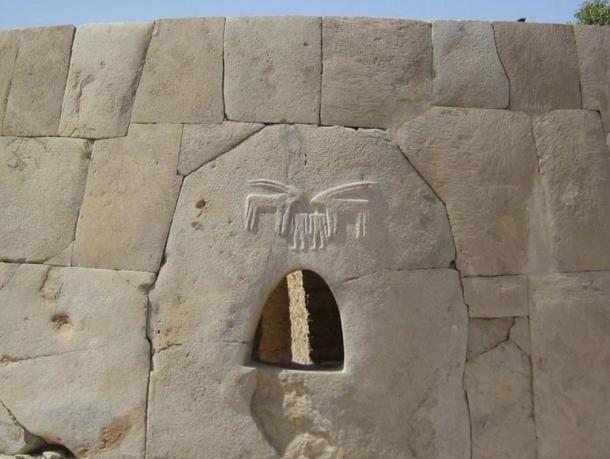


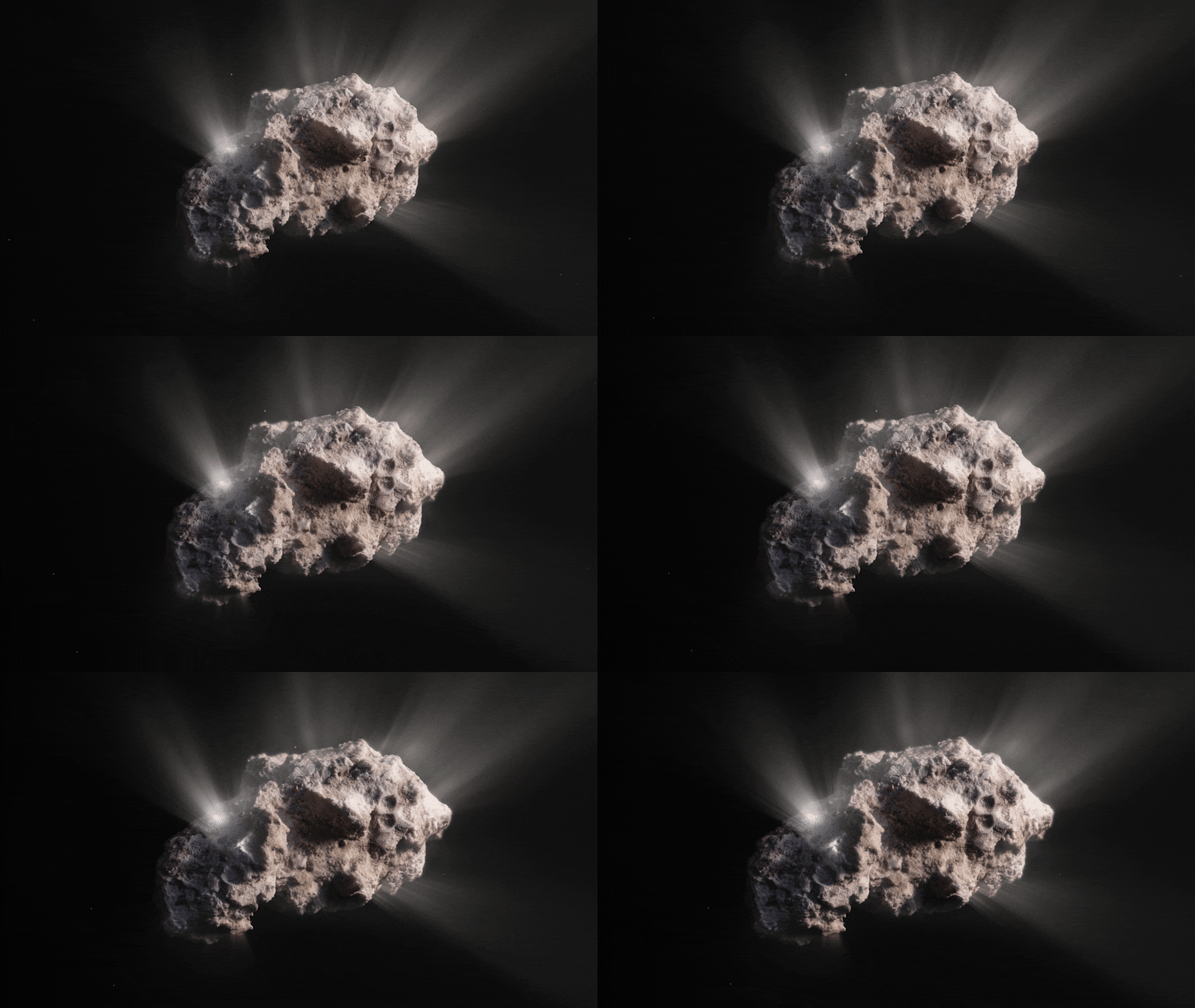
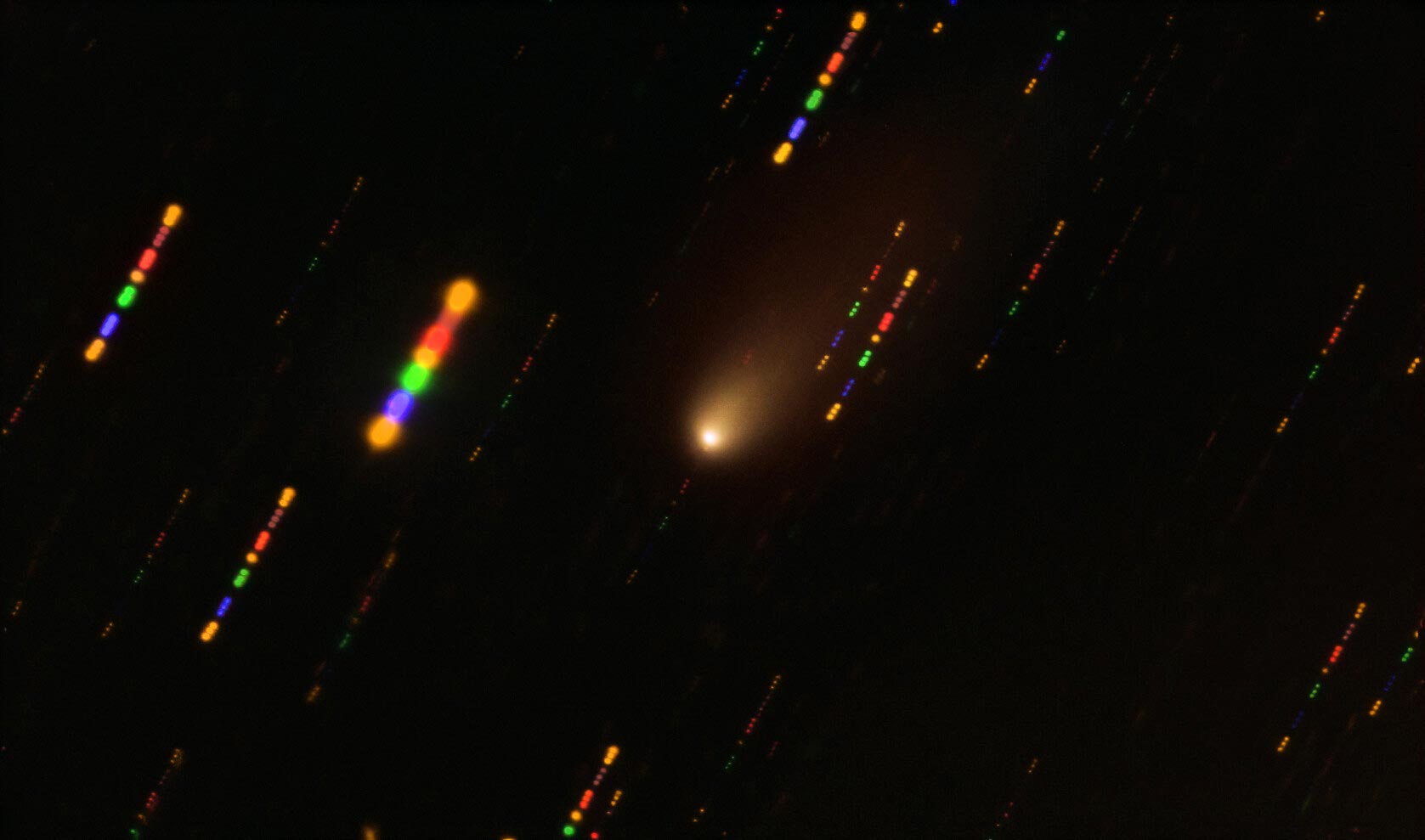
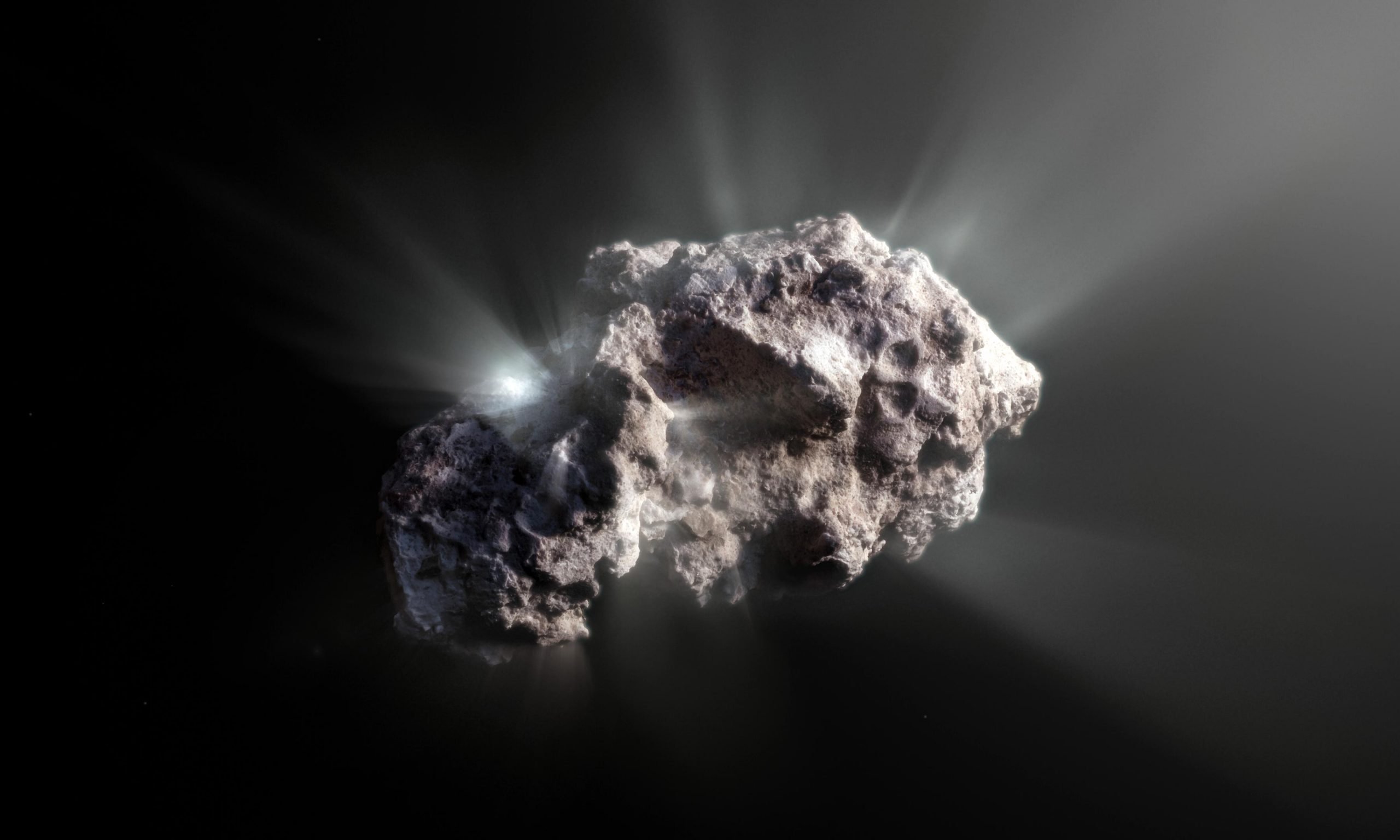
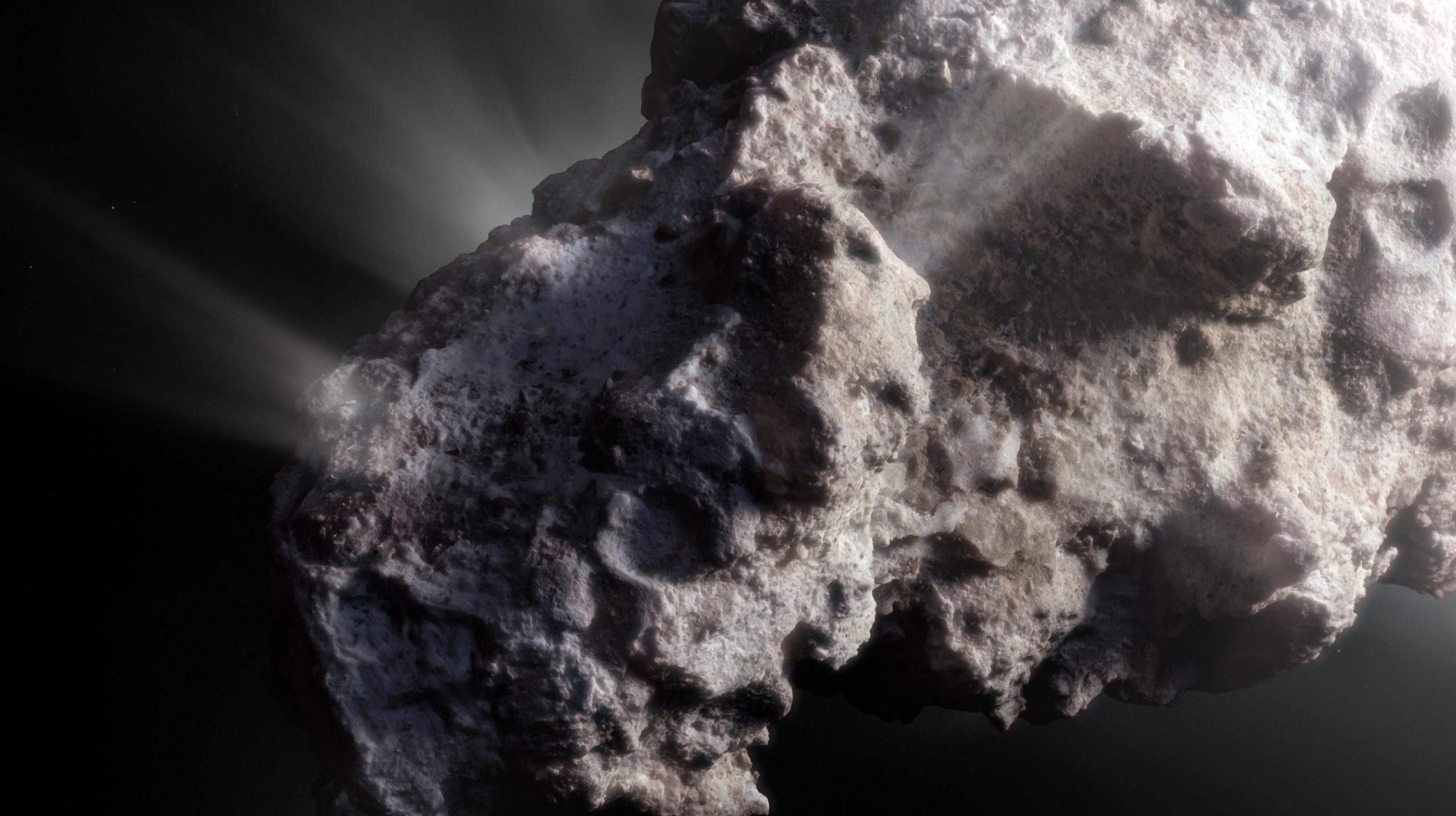





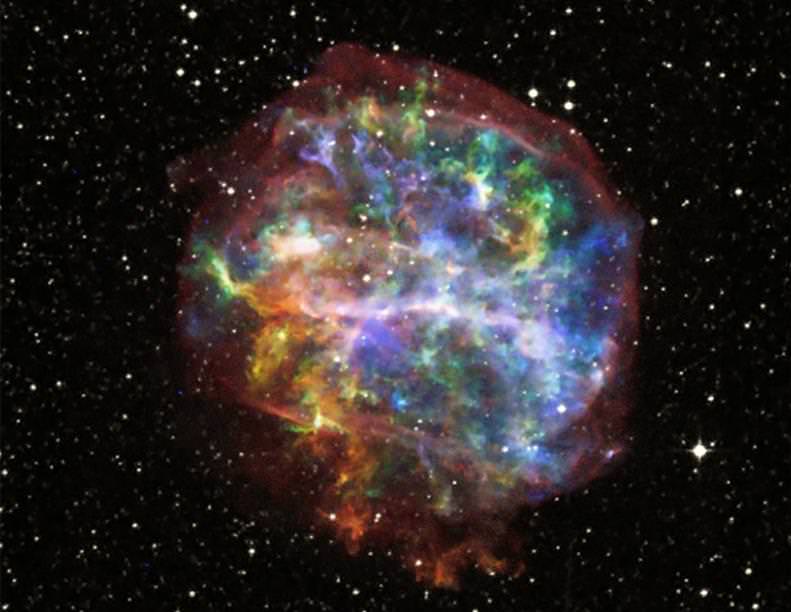



 Earth-skimming meteoroid dipped 56 miles into the atmosphere...
 Massive three mile wide meteorite crater that formed some...
 Water was NOT brought to Earth by asteroids or comets but...
 Rainbow colored meteorite found in Costa Rica is a remnant...


