Ontdek de Fascinerende Wereld van UFO's en UAP's: Jouw Bron voor Onthullende Informatie!
Ben jij ook gefascineerd door het onbekende? Wil je meer weten over UFO's en UAP's, niet alleen in België, maar over de hele wereld? Dan ben je op de juiste plek!
België: Het Kloppend Hart van UFO-onderzoek
In België is BUFON (Belgisch UFO-Netwerk) dé autoriteit op het gebied van UFO-onderzoek. Voor betrouwbare en objectieve informatie over deze intrigerende fenomenen, bezoek je zeker onze Facebook-pagina en deze blog. Maar dat is nog niet alles! Ontdek ook het Belgisch UFO-meldpunt en Caelestia, twee organisaties die diepgaand onderzoek verrichten, al zijn ze soms kritisch of sceptisch.
Nederland: Een Schat aan Informatie
Voor onze Nederlandse buren is er de schitterende website www.ufowijzer.nl, beheerd door Paul Harmans. Deze site biedt een schat aan informatie en artikelen die je niet wilt missen!
Internationaal: MUFON - De Wereldwijde Autoriteit
Neem ook een kijkje bij MUFON (Mutual UFO Network Inc.), een gerenommeerde Amerikaanse UFO-vereniging met afdelingen in de VS en wereldwijd. MUFON is toegewijd aan de wetenschappelijke en analytische studie van het UFO-fenomeen, en hun maandelijkse tijdschrift, The MUFON UFO-Journal, is een must-read voor elke UFO-enthousiasteling. Bezoek hun website op www.mufon.com voor meer informatie.
Samenwerking en Toekomstvisie
Sinds 1 februari 2020 is Pieter niet alleen ex-president van BUFON, maar ook de voormalige nationale directeur van MUFON in Vlaanderen en Nederland. Dit creëert een sterke samenwerking met de Franse MUFON Reseau MUFON/EUROP, wat ons in staat stelt om nog meer waardevolle inzichten te delen.
Let op: Nepprofielen en Nieuwe Groeperingen
Pas op voor een nieuwe groepering die zich ook BUFON noemt, maar geen enkele connectie heeft met onze gevestigde organisatie. Hoewel zij de naam geregistreerd hebben, kunnen ze het rijke verleden en de expertise van onze groep niet evenaren. We wensen hen veel succes, maar we blijven de autoriteit in UFO-onderzoek!
Blijf Op De Hoogte!
Wil jij de laatste nieuwtjes over UFO's, ruimtevaart, archeologie, en meer? Volg ons dan en duik samen met ons in de fascinerende wereld van het onbekende! Sluit je aan bij de gemeenschap van nieuwsgierige geesten die net als jij verlangen naar antwoorden en avonturen in de sterren!
Heb je vragen of wil je meer weten? Aarzel dan niet om contact met ons op te nemen! Samen ontrafelen we het mysterie van de lucht en daarbuiten.
The truth is out there, but for now, it doesn’t involve extraterrestrial visitors. It could, however, be a foreign power’s technology.
So concludes a forthcoming US government report, whose broad findings leaked earlier this month, on unidentified aerial phenomena (UAP), the current, less X-Files–sounding term for UFOs. The investigation followed sightings and videos recorded in recent years, by fighter aircraft instruments and pilots’ naked eyes, of objects flying at seemingly impossible speed and doing seemingly impossible maneuvers.
UFOs aren’t just the playpen of conspiracy theorists and sci-fi fans: NASA awards grants to reputable scientists seeking real-life ETs, and we’ve been scanning the heavens for signs of artificial signals for decades, says Thomas Bania, a College of Arts & Sciencesprofessor of astronomy. He researches the possibility of life elsewhere, along with many in his field. (“Carl Sagan…owes me money,” he says, a debt he knows he won’t collect, as his celebrity colleague died in 1996.)
Bania and Jack Weinstein, a Pardee School of Global Studies professor of the practice of international security and a retired Air Force lieutenant general, offered their takes on the government’s conclusions for BU Today.
Q&A WITH THOMAS BANIA AND JACK WEINSTEIN
BU Today:Any doubts about the government’s reported conclusion that the recent sightings aren’t extraterrestrials?
Jack Weinstein: I have no expertise in UFOs except for watching Men in Black. I never flew for the Air Force—I was a nuclear and space guy. [Never] did we track something that we thought was a UFO.
My concern with the report is that [it] stated it could be a foreign power’s technology.The UFO sightings dating back into the ’50s and ’60s were never technology that we were able to see later on from a foreign power. That never materialized later into a foreign nation having a capability like that. I can’t comment on whether they’re UFOs or not, because I don’t want to look like a kook, to be blunt. All I’m saying is that if a foreign power developed technology, then later on we’d see technology like that from them, either in operation or testing.
Thomas Bania: Do any of us believe these are actual flying saucers from outer space? No. [But] there really isn’t enough information to evaluate what is going on.
[The government] shows images of these objects, and they have ruled out extraterrestrial technology. Yet they then say these things have enormous speeds and do maneuvers that are impossible to replicate by our technology. All of those claims require that we know the distance to the target. Think of an airplane—if you look at a 747 in the sky, it doesn’t appear to be moving very fast. It’s going 600 miles an hour, but the rate at which a film of that plane would look[like it’s going] depends on the distance. And [the government’s] not telling us whether they know the distance. These are not [reliable] measurements of speed and acceleration unless they know the distance to the object, and they’re not telling us.
Media coverage cited experts who doubt foreign technology could have been invented without our knowing it and that it could have been kept secret.
Weinstein: I won’t go that far. China has developed some good technology much faster than we thought they were going to. To go back: if we think a foreign power has developed a technology, we would have then seen that technology later on in use or in testing.
Bania: I agree with Professor Weinstein that until these recent reports, there has never been any evidence to invoke foreign technology [as UFOs]; 90 percent of UFO reports have always had prosaic, natural explanations.
The point is, how do you interpret what these experts are responding to—the enormous speeds and maneuvers? If that’s the case, I agree we would know if somebody had developed some device that could do those maneuvers. I am questioning that interpretation of the data; without knowing the distance, there would be no evidence for enormous accelerations and avionic capabilities in terms of maneuverability.
No new technology is required here [to explain recent sightings]. We know how to build things, drones, complex electronics. So do our adversaries. You’re talking to someone who’s responsible for more than half of the UFO reports in Bergen County, N. J., in the late 1960s—my Explorers Boy Scouts specialized in creating UFOs.
Vladimir Putin claimed to have developed a super cruise missile. Is it possible he wasn’t blustering?
Weinstein: I don’t trust anything Vladimir Putin says. I put everything in the “bluster” category. If a country has developed a technology that they can use militarily that they don’t want anyone to know anything about, no one is going to ever say anything. We want to surprise the adversary on the battlefield.
Bania: I don’t think you can stealth a cruise missile to radar to the extent that you could a small drone, things the size you could buy at Micro Center in Boston.
What’s your best guess as to what these pilots saw?
Weinstein: It could be truly a UFO. I never want to say something could never be. It could be a phenomenon caused by nature—just a weather phenomenon. We learn something new every day, we’re flying at higher altitude than we’ve ever flown before, so maybe we’re seeing things that would look differently at a lower altitude.
My bottom line is: I think everyone who believes in UFOs will see a conspiracy if the government doesn’t say they are UFOs. I can’t believe we’re the most intelligent life-form in the entire universe, ’cause that means the universe is pretty dumb. If I’m an extraterrestrial and I can travel from other planets, I would think they would be smart enough to evade radar.
Bania: It’s just a pure guess, but I would think these things would be electronic warfare. They’re trying to get intelligence of exactly what our weapons systems are capable of doing, the frequencies they use, the encoding of radar transmissions, things they could use to develop countermeasures to render themselves invisible to radar. It would be either Russia or China. I’m more worried about China.
What it isn’t is little green men. If these were extraterrestrials, and they had the technology to traverse the stars and get to Earth, they would play these games? To what end?Land on the goddamn White House lawn and say hello.
NASA Continues to Try to Rescue Failing Hubble Space Telescope
ByMATT WILLIAMS
This illustration shows the NASA/ESA Hubble Space Telescope in its high orbit 600 kilometers above Earth.
Credit: European Space Agency
Things are not looking very good for the Hubble Space Telescope right now. On Sunday, June 13th, the telescope’s payload computer suddenly stopped working, prompting the main computer to put the telescope into safe mode. While the telescope itself and its science instruments remain in working order, science operations have been suspended until the operations team can figure out how to get the payload computer back online.
While attempting to restart the computer, the operations team has also tried to trace the issue to specific components in the payload computer and switch to their backup modules. As of June 30th, the team began looking into the Command Unit/Science Data Formatter (CU/SDF) and the Power Control Unit (PCU). Meanwhile, NASA is busy preparing and testing procedures to switch to backup hardware if either of these components are the culprit.
The payload computer is part of the Science Instrument Command and Data Handling (SI C&DH) unit, where it is responsible for controlling and coordinating the scientific instruments aboard the spacecraft. The current issues began when the main computer stopped receiving the “keep-alive” signal from the payload computer – which lets the main computer know that everything is working.
That’s when the operations team began investigating different pieces of hardware on the SI C&DH as the possible source. Based on the available data, the team initially thought that the problem was due to a degrading memory module and tried to switch to one of the module’s multiple backups – but met with failure. On the evening of Thursday, June 17th, another attempt was made to bring both modules back online, but these attempts also led to failure.
At that point, they began looking into other possibles sources of the shutdown, like the Standard Interface (STINT) hardware. This component is responsible for bridging communications between the computer’s Central Processing Module (CPM), which they began investigating as well. Now, the team is investigating the Command Unit/Science Data Formatter (CU/SDF) and a power regulator within the Power Control Unit (PCU).
Whereas the CU/SDF sends and formats commands and data while the PCU is designed to ensure a steady voltage supply to the payload computer’s hardware. If either of these systems is responsible for the shutdown, then the team must once again go through an operations procedure to switch to the backup units. This time, however, the procedure is more complex and risky than the ones the team executed last time.
Mainly, switching to the backup CU/SDF or backup power regulator requires that several other hardware boxes need to be switched to their backups because of the way they are connected to the SI C&DH unit. The last time the operations team performed this task was back in 2008, which was the last time the CU/SDF module failed. This is what prompted the final servicing mission in 2009, which replaced the entire SI C&DH unit.
Given the complexity of switching multiple systems over to their backups, the operations team is currently reviewing and updating all of Hubble‘s operations procedures, commands, and all other items relating to switching to backup hardware. When they are finished (expected for next week) the team will run a high-fidelity simulator to test their plan of execution and see if they can pull it off.
Since Hubble first launched in 1990, it has taken over 1.5 million images, and more than 600,000 of those were taken since its last servicing mission in 2009. These images are some of the most breathtaking views of the Universe ever taken and have led to substantial discoveries about the nature of our Universe. Here at home, it has deepened our understanding of the Kuiper Belt and Trans-Neptunian Objects (TNOs) like Pluto and Eris.
In 2014, it also observed the farthest object to ever be visited by a spacecraft – the Kuiper Belt Object (KBO) Arrokoth, which the New Horizons mission made a close pass with on Jan. 1st, 2019. It also observed aurora in the atmospheres of Jupiter, and Saturn, as well as Jupiter’s moon Ganymede. Hubble is also responsible for providing the data that led astronomers to conclude that Ganymede likely contains a large saltwater ocean in its interior.
Beyond the Solar System, Hubble has aided in the first atmospheric studies of exoplanets, helped constrain the size and mass of the Milky Way, the evolution of galaxies over time, revealed the accelerating expansion of the Universe (leading to the theory of Dark Energy), and aided in the study of Dark Matter. These and other accomplishments are all part of Hubble‘s legacy as it celebrates being in space for 31 years, 2 months, and either days.
I think I speak for everyone when I wish Hubble a speedy recovery and hope it has a few more years left in her!
A multi-day test of procedures that would be used to turn on backup hardware on the Hubble Space Telescope began today. Meanwhile, NASA continues to investigate the cause of the payload computer issue that began on June 13.
For previous updates:
Operations Underway to Restore Payload Computer on NASA's Hubble
NASA is working to resolve an issue with the payload computer on the Hubble Space Telescope.
The US government's release of a report on unidentified aerial sightings has been met with much interest in Germany. Enthusiasts believe UFOs have been sighted here, too.
The occasional sighting of saucer-like objects in the sky regularly give rise to speculation
"We're just a small blue planet in the middle of an infinite universe," UFO researcher Robert Fleischer told DW. "Anything is possible out there."
"We'll see that these aircraft fly around with astounding properties — which we can't explain and are superior to ours," he said.
For Fleischer, Germany is a "valley of cluelessness" when it comes to UFO research. Other countries commit far more resources to researching and reporting unexplained events, he said.
"This only got big in Germany after Barack Obama talked about it," he added.
That is a reference to a May New York Times interview with the former US president, during which he referred to "footage and records of objects in the skies that we don't exactly know what they are. We can't explain how they move, their trajectory. They did not have an easily explainable pattern."
The pentagon has published images of unknown flying objects
Satellites and hotlines
Obama's comments piqued others' curiosity in UFOs, Hansjürgen Köhler told DW. After decades of running the Central Research Network for Extraordinary Aerospace Phenomena (CENAP) outside Frankfurt, the hobby astronomer has gone from believer to skeptic.
"Our hotline gets hundreds of tips every year. Most have natural causes," Köhler said. "We can explain 97% of them. The other 3% are open because we don't have enough data."
Köhler's phone has been ringing even more since the end of 2019, which he attributes to Elon Musk's Starlink satellite network. More than 600 of the nearly 900 reports have been linked to Starlink, he said.
A country of clubs — including for UFOs
In Germany, there seems to be an endless list of hobby clubs and nonprofit associations. The Association for UFO Research (GEP) is one of them. Their databank includes 140,000 entries, and 95% of them can be explained. Aside from satellites, strangely shaped balloons is one common answer, as well as weather phenomena and insects that zoom across photos.
The remaining 5% "perhaps also have natural causes, which we just can't explain yet," Hans-Werner Peiniger, GEP's head, told DW.
Members of Germany's UFO clubs — there are at least three — are not blind alien believers, Leipzig-based Fleischer said. They are rational, engineer types who use limited resources to analyze what curious sky watchers send them. The result, however, can be a great deal of information about what is happening above us.
The really interesting cases "are a matter for the military," Fleischer said. "They control the skies and have instruments and radar."
Do aliens exist?
Suddenly not so secret
No military or intelligence service is known for its transparency, however. That US agencies appear to be more forthcoming recently has taken Fleischer by surprise.
"The Americans have spent decades trying to laugh off these phenomena," he said. "Their reporting now is quite the surprise."
For him, the issue is not about convincing people that aliens are visiting earth, but "giving more space to discuss this topic publicly so it gains the importance that it deserves," Fleischer said. "We want it to be investigated in a scientific way."
Andean Gods Emerge From the Rock in Peru’s Mythological Sculpture Park!
A sculptor in Peru has assured the future for a range of ancient Andean gods, spirits and myths, by carving them into the face of a mountain just north of the famous ancient tourist city of Cusco.
Cusco near the Urubamba Valley of the Andes mountain range in southeastern Peru, is the ancient capital of the “ Tahuantinsuyo,” or ancient Inca Empire. While this legendary high altitude stone city attracts hundreds of thousands of tourists from all over the world to see its magnificent buildings and streets, it now has a new attraction in the making: Apukunaq Tianan or the "Abode of the Andean Gods .”
Located in Senk, a community of the Poroy district, about 40 minutes by car from Cusco, Apukunaq Tianan features sculptures of Andean gods and figures from various Inca creation myths. While the new attraction is still under construction the public are already flocking to what The Vale Magazine call “a fun and fascinating outdoor recreation space.”
Created by Cusco sculptor Michael de Titan the new artworks are similar to the Mt. Rushmore monument in the United States, just much smaller in scale, with each sculpture work ranging from between 49 and 56 feet (15 and 17 meters) in height.
Two of the sculptures in the process of being created on the mountainside at Senk, near Cusco, Peru.
Apukunaq Tianan: A Modern Home For Andean Gods and Myths
Michael de Titan’s celebration of Andean culture merges art and nature “just like the ancient Inca did.” Therefore, Apukunaq Tianan is like a royal palace of Andean deities and spirits with its own private library of creation stories.
Pachamama or “Mother Earth” is represented at the new site, who was/is the deity who presides over agriculture, controlled earthquakes, and rain. This god was associated with feminine principals relating to the spirit of the Earth.
While Pachamama was associated with the fertile field and rivers on the sides of mountains, the mountains god, or “ Apu Guardian ” governed mountain tops and consorted with the sky gods. A stunning Apu cliffside sculpture is naturally featured in the new sculpture park.
Also represented at the majestic new tourist attraction is Puma, one of the sacred animals of the Andean trilogy of the condor, the puma and the snake or serpent. Puma represented Earth while the serpent represented the underworld, and the condor was associated with the heavens.
The Andean creator god Viracocha is also immortalized in stone at Apakunaq Tianan. This chief deity of Inca mythology is believed to have emerged from Lake Titicaca where he created the entire universe, and everything in it, before vanishing to the east.
Also chiseled in stone in Apakunaq Tianan’s hall of Inca mythological fame, is the last Sapa Inca, " Tupac Amaru ," and mixed in with these massive sculptures are smaller carvings made of wood and stone.
Another of the fantastical Andean god sculptures at Apakunaq Tianan with a log house gallery on top.
It is hoped that Apukunaq Tianan will be completed later this year to coincide with the bicentennial year of Peru ’s independence. While each of the sculptures described so far are exceptionally esoteric in nature, there is one that penetrates the veil more so that all the others.
This work represents the myth of the Ayar Brothers . Inca legends in Cusco say that at the end of the great flood which devastated the land of the mountain “Tampu Tocco, ” four young brothers with their wives, and ten “ayllus” (Inca family groups) ventured in search of fertile lands where they could settle.
After a series of tribulations, the only survivor of the Ayar brothers was Ayar Manco who managed to reach the aforementioned fertile land. There, he took the golden rod that the sun god Inti had given him, and sank it into the moist earth, where it immediately vanished. Such an occurrence could only mean that the sun god had chosen a special spot and it was there that the city of Cusco was founded.
From this ancient Andean center of agriculture, the “Tahuantinsuyo,” would later expand and become the Inca Empire .
Top image: One of the Andean gods at the Apukunaq Tianan sculpture park, featured on a publicity poster from the site.
Sacrifice and Destruction: The Apocalyptic Aztec Creation Myths
Many ancient cultures around the world have their own creation myth to explain their origins, and how the universe came into being. But few are as vivid, or as apocalyptic as the creation myth of the Aztecs. This myth has been referred to as the “Five Suns” wherein the world is created and destroyed again and again.
As the name given to this myth suggests, the current world is the fifth one, preceded by four cycles of creation and destruction. Whilst the Aztecs believed that we are now living in the fifth cycle of creation, they also believed that destruction would ensue if they neglected their duty of nourishing the sun god.
Different Accounts
Before going into the details of the Aztec creation myth itself, it should be mentioned that there are various versions of the story. In some instances, these different versions even contradict one another. One of the reasons behind the multiple versions of the myth is the way it was transmitted. Since the creation myth was originally passed down orally, different versions emerged. Another reason for this is that the Aztecs incorporated the gods and myths of the peoples they encountered and conquered, thereby modifying the myth.
Interestingly, the Aztec creation myth shares similarities with that of the Maya, which is found in the Popol Vuh , their foundational sacred narrative. For instance, both creation myths are cyclical in nature, though the Maya version has four, instead of five, cycles. It may be added that although both myths are cyclical, each cycle is not a mere repetition of the previous one, but rather, an improvement.
The Mayan “Hero Twins” of the Popol Vuh show clear parallels with Aztec mythology
It is believed that the Aztec and Maya creation myths share a common source, and the former has been used to shed light on the latter. A key reason for this is that the Aztec creation myth is much more complete, whereas the Maya one has survived only in fragments.
The Aztec Pantheon
The Aztec creation myth begins with a pair of creator gods known collectively as Ometecuhtl (meaning ‘Two Lords’ in the Aztec language of Nahuatl). Ometecuhtl consisted of Ometecuhtli, the male deity, and Omecihuatl, his female counterpart. The pair of gods are known also as Tonacatecuhtli and Tonacacihuatl.
The Aztecs believed that Ometecuhtl resided in Omeyocan (meaning ‘Two Place’ or ‘Double Heaven’), the 13th and highest heaven in the belief system of the Aztecs. Incidentally, Ometecuhtl was the only Aztec deity with neither a temple dedicated to him, nor any formal cult in his name. Apparently, the Aztecs reasoned that since the deity lived so far away from them, he would never interact with them directly. In spite of Ometecuhtl’s remoteness, the Aztecs believed that he was omnipresent, being in every act of ritual, and in every rhythm of nature.
According to the Aztec creation myth, Ometecuhtl created themself, after which, being both male and female, the god produced four children – Huizilopochtli, Quetzalcoatl, Tezcatlipoca, and Xipe Totec. These four gods represented, amongst other things, the four cardinal directions – south, east, west, and north, respectively.
Gods and Monsters
These four gods existed for some time, 600 years, according to one version of the myth, before they began to create the universe. They created cosmic time, the world, and all the other deities.
In one version of the myth, the four gods created a giant sea monster called Cipactli, which was part crocodile and part fish. As the children of Ometecuhtl continued to create the universe, this great monster became a source of trouble. Cipactli lived in the water, and had an insatiable appetite. For one reason or another, the creations of the gods would fall into the water, and they inevitably ended up being devoured by Cipactli.
Eventually, the four gods decided that enough was enough, and went to war with the sea monster. Cipactli was pulled in four directions, but fought back violently. In the end, however, the ferocious monster was defeated, and destroyed.
Subsequently, the gods used Cipactli’s corpse to create the universe. The 13 heavens were created on the monster’s head, the earth on its body, and the nine underworlds along its tail. Incidentally, this story resembles the Mesopotamian myth of Marduk and Tiamat, in which the latter was slain by the former, and her corpse used to create the universe.
The creation of the universe from the corpse of Cipactli is not only part of the Aztec creation story, but also illustrated the Aztec world view, which the Aztecs depicted in their art. The Aztecs believed that the Templo Mayor at Tenochtitlan occupied the centre of the universe. The Cipactli myth indicates that the earth is sandwiched in between the heavens and the underworld. On the earthly level, the Aztecs believed that universe spread out in four directions from the Temple Mayor.
Reconstruction of the Templo Mayor at Tenochtitlan, Mexico City
The Aztec creation myth, however, does not end with the slaying of Cipactli. Although the universe was created from the sea monster’s corpse, it was still incomplete, and required a source of energy. For the Aztecs, this was the sun.
The sun, however, was such a powerful entity could not simply be created by the gods. Instead, a sacrifice had to be made in order for the sun to be created. Therefore, Tezcatlipoca sacrificed himself by jumping into a fire, thus creating the First Sun, also called “4 Jaguar”. For one reason or another, Tezcatlipoca was only able to produce half a sun, resulting in an incomplete creation.
Tezcatlipoca and Quetzalcoatl
Tezcatlipoca was a major Aztec deity, whose name translates to mean “Smoking Mirror”. He was regarded as the god of magic and night, as well as the patron deity of kings and young warriors. Tezcatlipoca’s arch-rival was Quetzalcoatl, and a quarrel between these two gods ultimately led to the end of the age of the First Sun.
Carving of Quetzalcoatl at the Temple of Quetzalcoatl, Teotihuacan
During this first cycle of creation, the gods made the first humans out of ash. These people, however, were giants, and the Aztecs believed that they ate only acorns.
According to the myth, the first cycle of creation lasted a total of 676 years, and came to an end when a fight broke out between Tezcatlipoca and Quetzalcoatl. It seems that the latter wanted to replace the former as the sun. As a result of the fight, the sun was knocked out from the sky, which infuriated Tezcatlipoca. Therefore, the god sent jaguars, the animal most associated with Tezcatlipoca, to devour the giants.
After the destruction of the giants, Quetzalcoatl sacrificed himself by leaping into a fire, and becoming the Second Sun, also called “4 Wind”. Quetzalcoatl, whose name means “Feathered / Plumed Serpent”, is arguably one of the best-known deities of the Aztec pantheon. Quetzalcoatl was a pan-Mesoamerican deity, and he was worshipped (though under different names) by other Mesoamerican cultures, such as the Maya, and the Toltecs.
Quetzalcoatl was most associated with the wind, and worshipped as the patron god of the arts and knowledge. The Aztecs also believed that Quetzalcoatl was the deity who loved humans the most, and there are numerous myths about how he helped humanity.
The Creation of Man
During the age of the Second Sun, regular-sized humans were created. The people of this age subsisted on pine nuts, and according to one version of the myth, the age of the Second Sun was initially peaceful. In time, however, the humans became corrupt, and were turned into monkeys by Tezcatlipoca, perhaps as revenge for what Quetzalcoatl had done to him. This angered Quetzalcoatl, who sent a hurricane to destroy the monkeys.
According to another version of the myth, Tezcatlipoca longed to become the sun again. Therefore, he transformed himself into a jaguar, and cast Quetzalcoatl off his throne. In retaliation, Quetzalcoatl sent floods and hurricanes to destroy the world. Some humans were able to escape from this destruction by climbing to the top of trees, and these survivors were then turned into monkeys. Like the First Sun, this age also lasted 676 years.
Tlaloc and the Third Sun
The god who became the next sun was Tlaloc, the Aztec god of the rains and fertility. This god was not one of the four sons of Ometecuhtl, but a very important deity, nonetheless. Like Quetzalcoatl, Tlaloc was a god worshipped throughout Mesoamerica, as rain gods are found in many cultures of this region.
Additionally, it is thought that Tlaloc is one of the most ancient Mesoamerican gods, as his origins can be traced all the way back to the Olmecs, the earliest known major Mesoamerican civilisation. Amongst the Maya, Tlaloc was known as Chaac, whilst the Zapotecs called this god Cocijo.
The Third Sun was known also as “4 Rain”, and this age was dominated by rain. The people of this age ate seeds that grew in the water. According to one version of the myth, this world ended when Quetzalcoatl caused fire and ash to rain from the sky. Like the preceding age, there were some who managed to escape from the destruction of the world, and these survivors were transformed into turkeys, butterflies, or dogs.
Another version of the myth blames Tezcatlipoca for the destruction of the third age. This version states that Tezcatlipoca abducted Xochiquetzal, Tlaloc’s wife. The god was grief-stricken, and decided to withhold the rains. Consequently, a drought ensued, causing much suffering.
Despite the pleas of the people, Tlaloc refused to allow the rains to fall. Finally, the furious Tlaloc caused fire, instead of rain, to fall, which engulfed the earth in flames, and brought this age to an end. The age of the Third Sun only lasted for 364 years.
Chalchiuhtlicue and the Fourth Sun
The Fourth Sun, known also as “4 Water”, was created by Chalchiuhtlicue, the sister of Tlaloc, and his second wife. Chalchiuhtlicue, whose name means ‘She of the Jade Skirt’, was worshipped as the goddess of the waters that collect on the earth, i.e. rivers, lakes, oceans, etc. In addition, she was the protectress of childbirths and newborns. The age of the Fourth Sun was one dominated by water, and its people ate maize.
The age of the Fourth Sun lasted 676 years, and ended with a great flood. According to the Aztec creation myth, both Tezcatlipoca and Quetzalcoatl were jealous of Chalchiuhtlicue, and struck her down. As the goddess fell from her throne, the sky opened, and the earth was flooded. All things were destroyed once again, and the people were transformed into fishes.
The Fifth Cycle and the Two Suns
The Aztecs believed that after the fourth destruction of the world, the gods met at Teotihuacan to decide who amongst them would become the next sun. Curiously, none of the gods wanted to sacrifice themselves this time round. Finally, the proud Tecuciztecatl volunteered to jump into the fire. At the last moment, however, the god hesitated, and did not sacrifice himself.
In that moment of hesitation, another god, the humble Nanahuatzin, jumped into the flames, and became the sun. Tecuciztecatl felt ashamed of his cowardice, and jumped in after Nanahuatzin, thereby becoming a second sun.
The existence of two suns simultaneously, however, presented a dilemma to the other gods, as their combined energy would overwhelm the world. They solved this problem by throwing a rabbit at Tecuciztecatl’s face to dim the light, which turned the god into the Moon. According to the Aztecs, this is the reason why there is a rabbit in the moon today.
Another problem that the gods faced was the fact that Nanahuatzin was weak, and so the sun was motionless. Therefore, the rest of the gods gave him their blood to set him in motion. In another version of the myth, the sun was set in motion by Ehecatl, the god of the wind, who blew fiercely at it.
The Age We Live In Today
The Fifth Sun is known also as “4 Movement”, and is the age that we are living in today. The Aztecs believed that this age will be destroyed by a massive earthquake, and its people will be eaten by sky monsters. According to Aztec belief, the sun will disappear if it is not nourished by blood offerings and sacrifices, thereby leading to the end of the present age. Therefore, they believed that it was their duty to ensure the sun was nourished.
The Aztec “Stone of the Five Suns,” clockwise from bottom right: 4 Jaguar, 4 Wind, 4 Rain, 4 Water; 4 Movement in the center
The Aztec creation myth provides some profound insights into the beliefs that this civilization had about the origins of the universe, embedded in the world they saw around them. Additionally, the myth shows us the key pressures on their civilization, as deified in the Aztec pantheon. And finally, the dangers the Aztecs felt in their environment, and their concerns about survival, help to explain what drove them to their more extreme rituals, for example, human sacrifice.
Eleven New Neolithic Hill Sites Discovered Near Göbeklitepe, Turkey
The Turkish government has just announced a major archaeological discovery that could have a serious impact on the study of Neolithic Era culture in the region. On June 27, Turkey’s Culture and Tourism Minister Mehmet Ersoy told reporters gathered in the southeastern Turkish city of Sanliurfa that several new sites had been found in the vicinity of Göbeklitepe, the world’s oldest prehistoric stone monument site. Also written as Gobekli Tepe, the site name translates into "belly hill" in Turkish.
"We have [discovered] 11 more major hills on a 100-kilometer line around Göbeklitepe,” Ersoy declared. “Here, we will give the details for the first time, and now call it 12 hills.”
In fact, Ersoy offered few details about what had been found at these new sites. He explained that a “major study” was on the verge of being completed and said the results of that study would be released in September 2021.
Engaging in what may or may not have been hyperbole, Ersoy said that people may soon be describing the monuments found in the Sanliurfa region as “the pyramids of southeast Turkey.”
If these new sites are on a par with the spectacular remains uncovered at Göbeklitepe, their discovery would represent a significant milestone in prehistoric archaeology in the Mesopotamian region.
An example of one of the many circular stone monolith formations unearthed at Göbeklitepe, Turkey.
The Meaning of Göbeklitepe: What We Know So Far . . .
First unearthed in 1995 by German archaeologist Klaus Schmidt, the Neolithic excavation site at Göbeklitepe has produced the most stunning and impressive collection of standing stone pillar monoliths ever found on Earth.
The biggest monoliths at Göbeklitepe are as tall as 20 feet (six meters) and are estimated to weigh between seven and ten tons (7.7-11 US tons). They were arranged in large circles, with a pair of heavy T-shaped pillars placed in the center of each arrangement. Some were decorated with carved images of animals, and others with obscure shapes and images that have no clear real-world references.
Neolithic hunter-gatherers working in teams built and inscribed these stone circles, over a period of perhaps 1,000 years. The oldest construction work at Göbeklitepe has been dated to about 9,000 BC, meaning that some of the monoliths found there were carved and erected 6,000 years before the rock pillars at Stonehenge.
It is important to realize this feat was accomplished by individuals who had no access to metal tools or wheeled transport carts. They used stone / flint hand tools to carve out and shape huge slabs of limestone from nearby quarries. The massive pillars would then be levered out of their places in the quarry rock walls, and somehow hauled, dragged, or lifted to the Göbeklitepe construction site.
In some instances, the builders placed the circles alongside each other. In other instances, they put them one on top of the other, after the circle on the bottom had been buried. Sometime after construction stopped the entire complex was buried, creating a low-topped artificial mound or hill that was 50 feet (15 meters) high and 1,000 feet (300 meters) in diameter.
The seemingly forgotten landscape around the Göbeklitepe site and likely where the latest 11 hills or artificial mounds have recently been discovered. So far photographs of the newest discovery area have not been released.
Culture and Tourism Minister Mehmet Ersoy’s statement about the “12 hills” implies that new monolithic sites have been found buried beneath similar artificial mounds. If stone pillar circles have been unearthed at these locations, it remains to be seen if they were built to the same specifications and in the same style as the circles at Göbeklitepe, or if they are as old (or even older).
Archaeologists have already found other sites in the region where stone pillars have been carved out of quarries and arranged in standing circles. None of the other sites are as ancient as Göbeklitepe, however, which was apparently in use 11,000 years ago. They do all feature the distinctive T-shaped central pillars found at Göbeklitepe, a type of monolith that has only been discovered in ancient sites built close to the city and province of Sanliurfa.
This suggests they all were created by the same stone-monument-building culture, which presumably would also be responsible for making whatever has been found during excavations at the 11 newly discovered hills.
A Neolithic totem pole from Göbeklitepe from Layer II, dated to 8800-8000 BC.
Uncovering the Many Remaining Secrets of Göbeklitepe
Unsurprisingly, Ersoy’s primary interest in the new discoveries is how they might affect tourism in the region.
"When you look at Mesopotamia, this region has a unique culture,” the Minister said at his press announcement. “It has its own registered gastronomy. It has many products. And when you combine that with its unique archaeological value, it's a wonderful thing.”
The Turkish government’s priorities are understandable. But the interests of the archaeological community are quite different.
With respect to the incredible monuments at Göbeklitepe, perhaps the biggest question left unanswered is, why were they built?
The general consensus is that Göbeklitepe was a religious or spiritual mecca, sought out by ancient worshippers looking to commune with their gods or with the spirits of their ancestors. The site has often been referred to as the world’s oldest temple. Schmidt, the site’s original discoverer, believed that one day graves would be found beneath the monolithic circles, proving they were built as monuments to the dead.
This monolithic pillar at Göbeklitepe is decorated with pictograms of animals. Surprisingly, the meaning of these pictograms is still a mystery that archaeologists and anthropologists are hoping to solve.
Pictograms were carved into many of the pillars. But unfortunately, scholars have been unable to interpret them, as either pictures or as symbols. Many of the pillars are decorated with images of animals, of dozens of different species including gazelles, lions, bears, foxes, bulls, snakes, birds, spiders, and a variety of insects. While arid now, during the Neolithic era Turkey was part of the Fertile Crescent , a region blessed with abundant rainfall, fertile soil, dense grasslands, and wildlife of all types.
The imagery on the pillars may relate to worshipping practices or religious rituals in some way. The same can be said about the shapes of the stone circles, which may have been arranged to reflect astronomical alignments . But since Göbeklitepe was constructed by prehistorical peoples, there is no written record to guide archaeologists and historians in a useful direction, as they attempt to comprehend what they’ve found.
Assuming they were built by the same ancient people, the remains at the newly discovered sites will likely be similar to those found at Göbeklitepe. If so, their ultimate purpose may be just as mysterious.
But if the stone pillars in these new locations contain different imagery than those at Göbeklitepe, or if they feature clearer pictograms that can be successfully interpreted, their discovery may be a game-changer. Having more remains to examine may increase understanding about the motivations of the builders. It could reveal whether they were inspired by religious sentiments, or by some other type of ancient or universal motivation.
Top image: Göbeklitepe is so important that it has been completely covered to protect it from rain. To date, it is the oldest place of worship ever found on Earth, dating to 12000 BC. Archaeologists are expecting more amazing finds and insights from the recently discovered 11 new hills (or artificial mounds) near the site for which details will be released in September 2021.
The supposed alien technology that the Russian army found in the arctic
Normally, the few scientists who tell themselves to give information about the extraterrestrials, they assure that they are out of our reach. However, the Russian military “recently claimed” that alien technology would exist under the Arctic.
Russian military found alleged alien technology under the Arctic.
The search for intelligent life and alien technology has been, for the most part, in vain. Or at least, scientists say that we are not able to locate it .
However, how to know if what they tell us is true? We know that there is a brutal smear and censorship campaign on this issue. Therefore, the alleged discovery of UFOs under the Arctic by Russia has surprised locals and strangers.
Alien technology hidden under the arctic?
Russia, and especially its leader Vladimir Putin , have for many years shown an interest in UFOs and the alien technology they may contain.
However, there had never been news of real interest from the Eurasian nation. Every time there is a manifestation of intelligent life superior to the human one, authorities are in charge of minimizing the fact.
In recent years, the United States has also been heavily involved in this issue, as has China.
But the first nation to begin the “real” search was Russia, after several of its military experienced strange situations at the poles of the Arctic .
While conducting secret explorations for the Putin government, various military personnel picked up different signals that could solve several of the arctic mysteries.
China has also allegedly tried to cover up the presence of UFOs in the Arctic.
Statements of a Russian captain
Captain Prikhodko, who was in command of a Russian mission in the Arctic, related a surprising fact.
During the reconnaissance of the terrain, the Captain detected several unidentified objects “sailing” at speeds never seen before. These objects moved under the Arctic ice without any hindrance. As if they were submarines with advanced technology.
According to his experience, no land submarine , regardless of having the most advanced technology, could reach such speeds.
Prikhodko assumed that it was alien technology , since it was necessary to have an intelligence far superior to the human to create such vehicles.
He claims that this was not only seen by him, but by the entire platoon under his command, and that he accompanied him at all times.
Is it possible to confirm or deny the Captain’s words? It is not, in fact, no one knows exactly what it is that is hidden under the Arctic ice .
Obviously, it is impossible to know the origin of these objects. But they are not the only ones who have claimed to have seen alien technology in the Arctic; China has also tried to hide the existence of UFOs.
SpaceX’s Starship, which won a NASA award in April, is the biggest example of NASA’s use of services for the Artemis program but not the only one. Credit: SpaceX
NASA’s Human Landing System (HLS) program is the biggest bet the agency has made on the commercial space industry since the commercial crew program a decade ago. NASA decided to procure landing services rather than the landers themselves, awarding a $2.9 billion contract to SpaceX April 16 to fund development of a lunar lander based on the company’s Starship vehicle and fly one demonstration mission with astronauts.
That approach has attracted plenty of scrutiny and criticism. The award to SpaceX is on hold as the Government Accountability Office evaluates protests filed by two losing bidders, Blue Origin and Dynetics. A bill passed by the Senate June 8 would require NASA to select a second company, although with no guarantee that the funding will be there to support both companies.
HLS may be the biggest example of NASA buying services to support the Artemis program, but it is not the only one. Even as some cornerstones of Artemis — Orion, the Space Launch System and the Gateway — move forward under conventional contracts where NASA owns and operates the hardware, it’s making greater use of service contracts to acquire the other things it needs to explore the moon, from landers and communications to even the spacesuits the astronauts will wear on their moonwalks.
CLPS AS A SERVICES PATHFINDER
HLS is not NASA’s first lunar lander services program. In 2018, NASA unveiled the Commercial Lunar Payload Services (CLPS) program, where the agency would buy payload space on commercially developed robotic lunar landers.
The idea was to provide frequent and inexpensive access to the moon for experiments and technology demonstrations, particularly those with a higher tolerance of risk. Agency officials often talked about taking “shots on goal” with CLPS, with the expectation that not every shot would make it in.
Fourteen companies have received NASA contracts through CLPS, making them eligible to bid on task orders for delivery missions. Four companies have won the six task orders NASA has issued to date: Astrobotic and Intuitive Machines each won two, along with Firefly Aerospace and Masten Space Systems. Their missions range from transporting scientific instruments that had been sitting on the shelf waiting for a ride to VIPER, a NASA rover the size of a golf cart that will search for ice deposits at the lunar south pole.
Astrobotic’s Peregrine lander will be one of the first missions in NASA’s CLPS program. Credit: Astrobotic
CLPS is also a pathfinder for buying services for lunar exploration. “The big thing here is that we’re starting to work more closely with the commercial community,” said Jake Bleacher, chief exploration scientist at NASA. “CLPS is our first step on that front.”
That has become a learning experience for both NASA and the companies as they get used to different ways of doing business. Some scientists who have experiments flying on CLPS missions have privately complained that NASA’s approach of buying payload space on commercial landers shifts the technical burden, and costs, onto researchers. They now have to come up with their own solutions to engineering issues like thermal control that would, in a traditional approach, be handled in a more integrated fashion.
A services approach also doesn’t prevent delays. When NASA made the first CLPS awards in May 2019, the three winners — Astrobotic, Intuitive Machines and Orbit Beyond — promised to launch their missions by the middle of 2021. But Orbit Beyond, whose lander was going to be the first to launch in September 2020, returned its award two months later because of what NASA called “internal corporate challenges.”
Intuitive Machines saw its first Nova-C lander mission slip slightly from July to October 2021. However, in a Federal Communication Commission license application filed in April, the company revealed its launch had been delayed to no earlier than the first quarter of 2022. The company blamed the delay on its launch provider, SpaceX, who said that “unique mission requirements” forced the delay.
Astrobotic, which originally was going to launch its Peregrine lander in June 2021, is still hoping to launch before the end of the year. It will fly on the inaugural Vulcan Centaur rocket from United Launch Alliance, whose development has been delayed by issues with its BE-4 main engine. ULA has suggested that customer payload delays, and not Vulcan issues, would delay its first launch with the Peregrine lander into 2022.
John Thornton, chief executive of Astrobotic, said at a June 9 event that the Peregrine launch is coming “very soon” but wasn’t more specific.
LUNANET AND MOONLIGHT
There have been proposals to expand the CLPS program to include orbiters or even sample return missions. However, the next frontier for commercial services at the moon may involve infrastructure.
NASA is studying a concept it calls LunaNet: a network of satellites that would relay communications and provide navigation information for spacecraft on or around the moon. Current and proposed missions can communicate directly to Earth, but increasing lunar traffic will strain existing ground networks, and won’t work for missions on the lunar farside, where Earth is out of view.
“Our philosophy is that each mission should not have to create its own communications and navigation infrastructure. That’s not efficient,” said Andy Petro, lunar communications and navigation implementation lead at NASA Headquarters. “We see having an infrastructure to provide those services lowers the barrier to entry for new missions and capabilities.”
Exactly what LunaNet will look like is unclear, as the project is still in its earliest phases of development. “The idea of having relays this early was not anticipated,” he said at a meeting of a Space Studies Board committee in April. Interest in doing missions on the far side of the moon, as well as exploration of the polar regions where direct-to-Earth communications can be difficult, accelerated planning for a communications network.
However, it’s unlikely that LunaNet would be a conventional NASA program. “We’re looking at doing something that NASA would not necessarily build and operate, but through either commercial public private partnerships or service contract arrangements, quite possibly from multiple providers,” he said.
In a request for information (RFI) last October, NASA asked for details from potential commercial service providers for lunar communications and navigation. That included not just technical capabilities but also cost estimates and the “potential for partnerships and options for financing” the system.
Petro said at the April meeting that NASA is still working on an acquisition strategy for LunaNet. “I don’t expect it to be the traditional development and procurement that we’ve done in other cases.”
NASA is not the only agency looking at commercial approaches to lunar communications and navigation. On May 20, the European Space Agency announced it issued study contracts to two consortia, one led by Surrey Satellite Technology Ltd. (SSTL) and the other by Telespazio, for an initiative called Moonlight. The two groups will spend the next 12 to 18 months studying concepts for satellite networks around the moon for communications and navigation.
“Moonlight could be a flagship European project to create the first operational comms and navigation system around the moon,” David Parker, ESA’s director of human and robotic exploration, said at a briefing about the contracts.
The goal, he emphasized, is to create a commercial system, one developed in partnership with ESA but offering services to others. That will be part of the initial Moonlight studies: “the feasibility of the system but also the business case,” Parker said. The studies will be done in time for ESA to decide whether to seek support for the program at its next ministerial meeting in late 2022.
SSTL has a head start. It is developing a spacecraft called Lunar Pathfinder scheduled for launch in 2024 that will provide commercial communications relay services. It will operate in an elliptical orbit providing coverage over the south polar regions of the moon, using UHF and S-band links with spacecraft on the lunar surface and X-band for communications with Earth.
“We’re creating this shared communications and navigation network for the moon that we believe will undoubtedly act as a catalyst to inspire more exploration missions,” said Phil Brownett, managing director of SSTL.
ESA officials said NASA was aware of Moonlight but added that having multiple networks of communications and navigation satellites at the moon could have benefits provided there was some degree of interoperability, like that between the GPS and Galileo satellite navigation systems.
Petro said NASA also supported interoperability. “We’re promoting this idea of mutually agreed-upon standards among a set of cooperating networks,” he said, which could go beyond communications and navigation to other services, like solar storm warnings. “We think this could be introduced as part of the earliest missions.”
NASA may rent, rather than buy, its next lunar spacesuits. Credit: NASA
RENT THE (LUNAR) RUNWAY
NASA is also examining how it can use services, rather than conventional contracts, for the spacesuits it will need for future Artemis missions. NASA previously announced plans to develop a new spacesuit, called the exploration extravehicular mobility unit or xEMU, that astronauts will wear on the lunar surface.
However, in an April 14 RFI, NASA said it was considering moving to a services model for those suits. One or more companies would produce, own and maintain the suits, with NASA effectively renting them as needed for missions. The same approach could also be used for spacesuits needed for International Space Station spacewalks.
“We are always looking at ways to lower costs for the taxpayer and focus our efforts and resources on future technology and our bold missions in deep space,” said Mark Kirasich, head of NASA’s Advanced Exploration Systems division. “We hope to receive industry input on the feasibility of shifting our exploration spacewalk acquisition activities to a service-based model like our procurement for commercial cargo and crew services.”
NASA will continue its own design work on the xEMU suit and share that information with industry, but companies would be able to develop their own designs that meet NASA requirements.
Responses to the spacesuit RFI were due to NASA at the end of April. A draft request for proposals could be released in mid-June, according to a tentative schedule included in the RFI, with a contract award as soon as the end of the calendar year.
All these efforts by NASA and other agencies to procure services, rather than spacecraft and other hardware, are driven by the belief that doing so can save time and money for governments and give companies the flexibility to offer similar services to other customers.
In a June 9 talk in Pittsburgh, after visiting the headquarters of Astrobotic, Thomas Zurbuchen, NASA associate administrator for science, explained that Artemis was pairing science and exploration with the “entrepreneurial spirit” exemplified by Astrobotic and others in the CLPS program.
“Combining those would create a lunar program that we’ve never seen before and open the path for Americans to go back to the surface of the moon later this decade,” he said.
This article originally appeared in the June 2021 issue of SpaceNews magazine.
The largest comet that’s ever been found in modern times has been discovered by Pedro Bernardinelli (a graduate student at the University of Pennsylvania) and astronomer Gary Bernstein. It was discovered in images taken by the Dark Energy Survey in 2014.
Named Comet C/2014 UN271 (or Bernardinelli-Bernstein after the two men who discovered it), it could be up to a thousand times larger than a typical comet. Its diameter has been estimated as being between 62 and 124 miles (between 100 and 200 kilometers) which is about ten times wider than a typical comet. Astronomers made this estimation based on how much sunlight reflects off the icy body.
In a statement, Bernstein discussed their discovery, “We have the privilege of having discovered perhaps the largest comet ever seen — or at least larger than any well-studied one — and caught it early enough for people to watch it evolve as it approaches and warms up.”
(Not Comet C/2014 UN271)
After Comet C/2014 UN271 was detected, it didn’t show any evidence of a tail between the years 2014 and 2018; however, recent observations conducted this year by an independent observation from the Las Cumbres Observatory network found that the comet now has a distinct coma of gas and dust that is surrounding it.
It is currently at a distance of about 20 astronomical units (AU) from the sun – basically, the equivalent of where Uranus is located. It is extremely difficult to see as it has a current magnitude of 20. To put this into better perspective, with the naked eye, people can see stars with a magnitude of 5 or 6. It will make its closest approach to the sun in the year 2031 but it will still be quite far from us with a magnitude of 11 so it won’t be any easier to spot (this is a bit further out than Saturn’s orbit around our sun). (An image from the Dark Energy Survey of the comet located at a distance of 25 AU in 2017 can be seen here.)
What’s even more interesting is that the comet hasn’t traveled through the inner part of our Solar System in approximately 3 million years. It comes from a very long distance away – about 40,000 AU in the Oort Cloud where scientists have estimated trillions of comets are located.
Oort Cloud
The National Science Foundation (NSF) noted, “Astronomers suspect that there may be many more undiscovered comets of this size waiting in the Oort Cloud far beyond Pluto and the Kuiper Belt,” adding, “These giant comets are thought to have been scattered to the far reaches of the solar system by the migration of Jupiter, Saturn, Uranus and Neptune early in their history.”
An artist’s illustration of what Comet C/2014 UN271 would look like can be seen here.
This artist's illustration shows the distant Comet Bernardinelli-Bernstein as it might look in the outer Solar System. Comet Bernardinelli-Bernstein is estimated to be about 1000 times more massive than a typical comet, making it arguably the largest comet discovered in modern times. It has an extremely elongated orbit, journeying inward from the distant Oort Cloud over millions of years. It is the most distant comet to be discovered on its incoming path.
(Image credit: NOIRLab/NSF/AURA/J. da Silva)
This image from the Dark Energy Survey (DES) is composed of some of the discovery exposures showing Comet Bernardinelli-Bernstein collected by the 570-megapixel Dark Energy Camera (DECam) mounted on the Víctor M. Blanco 4-meter Telescope at Cerro Tololo Inter-American Observatory (CTIO) in Chile. These images show the comet in October 2017, when it was 25 au away, 83% of the distance to Neptune.
(Image credit: Dark Energy Survey/DOE/FNAL/DECam/CTIO/NOIRLab/NSF/AURA/P. Bernardinelli & G. Bernstein (UPenn)/DESI Legacy Imaging Surveys)
Planes crash every now and then. Although uncommon, this is a fact. What’s strange, though, is when a plane seems to completely vanish into thin air. Especially in the modern era, this is extraordinary, considering the incredible technology we have available to us. This is a list containing planes that left behind no wreckage, debris, clues, or answers from across history.
On October 21, 1978, 20-year-old Frederick Valentich disappeared during a flight in his Cessna 182L. Frederick was widely described by friends and family as a “flying saucer enthusiast,” and during the doomed flight, he reported being accompanied by an unidentified aircraft.
As Frederick flew over the Bass Strait between Tasmania and mainland Australia, he radioed air traffic control just after 7:00 PM to report that he was being followed by an aircraft. Air traffic control responded, saying there was no known traffic nearby. Valentich described the aircraft as large and illuminated by four bright landing lights. It purportedly passed about 300 meters (1,000 ft) overhead and was moving at very high speed.
Finally, Frederick stated that the UFO was orbiting above him and had a shiny metal surface and a green light. Air traffic control asked him to identify the craft, to which Frederick responded, “It isn’t an aircraft,” before his transmission was interrupted by unidentified noise described as “metallic, scraping sounds.” Contact was lost at this point, and neither Valentich nor his plane were ever seen again.[1]
This is a strange one. On the late afternoon of March 23, 1951, a US Air Force Douglas C-124 Globemaster II on its way to England ditched into the ocean. An explosion in the cargo hold and the ensuing fire forced the pilots to put the plane down in the Atlantic, a few hundred miles from Ireland. The exact location was radioed by the pilots, and the ditching itself was successful.
The 53 passengers and crew aboard the flight donned life preservers and climbed aboard well-equipped emergency rafts. A B-29 had already been en route with the intention of aiding the plane in its navigation to the nearest airfield. When it arrived at the location transmitted by the pilots, the crew of the B-29 observed the passengers and crew in their rafts. It seemed everyone was okay.
The B-29 then had to return to base, as it was running low on fuel. However, when rescue crews arrived, the plane and the stricken passengers had all disappeared without a trace. All that was left was a piece of charred plywood and a briefcase. Nobody knows what happened in those hours while help was on the way.[2]
Amelia Earhart was an American aviation pioneer. She held many early records, including being the first woman to fly solo across the Atlantic Ocean. On July 2, 1937, she disappeared over the Pacific Ocean, near the island of Howland.
Her final transmissions to the nearby ship, Itasca, indicated that she believed she had reached Howland Island. However, this was incorrect: She was at least 8 kilometers (5 mi) away. Fearing the worst, the Itasca used its oil-fired boilers to generate large clouds of smoke to signal the fliers, but to no avail.
Many theories surround Earhart’s disappearance, including a failed crash landing into the ocean, a surprisingly complete theory of Japanese capture, and an explanation that assumes Earhart instead decided to land—successfully or not—on Gardner Island, 560 kilometers (350 mi) away.[3]
On March 16, 1962, Flying Tiger Flight 739 disappeared from radar screens over the ocean. The Lockheed Super Constellation aircraft was carrying 93 US and three South Vietnamese soldiers from California to Saigon. All 107 aboard the plane are presumed to have died in the incident.
No traces of wreckage or debris have ever been found. The only lead investigators have is an eyewitness account from a nearby civilian tanker, which reported seeing “an extremely bright flash of light, immediately followed by two red dots plummeting to the ocean at different speeds.” It is believed that the tanker witnessed the missing aircraft explode mid-flight, during which it split in two and fell to the ocean in separate fireballs.
The most reasonable assumption, given the evidence, is sabotage. However, since 518,000 square kilometers (200,000 mi2) of searching has turned up nothing, it is likely we will never get the true answers.[4]
Flight 19 was the designation of five Avenger torpedo bombers that disappeared without a trace over the Bermuda Triangle on December 5, 1945. A Martin PBM Mariner flying boat also disappeared while searching for the lost bombers and their pilots. Overall, 14 crew members aboard the Avenger bombers were lost, as were the 13 aboard the rescue plane.
The bombers were experiencing serious navigation issues in and around the Bermuda Triangle. Their compasses were nonfunctional, and they were running out of fuel by their last transmission: “All planes close up tight. We’ll have to ditch unless landfall . . . when the first plane drops below ten gallons, we all go down together.”
By this point, the Sun had set, and the weather was deteriorating. At 7:27 PM, the PBM-5 Mariner took off and was never heard from again. A nearby tanker reported sighting an apparent explosion, whose flames leapt 30 meters (100 ft) high and burned for at least ten minutes. The wreckage of the bombers was never found.[5]
Star Ariel was lost on January 17, 1949. Very little is known about what caused the loss of the British South American Airways (BSAA) aircraft and its 20 crew and passengers. Weather was excellent, visibility was good, and the pilots were experienced. The captain chose a high-altitude flight path to best take advantage of the excellent conditions. The flight was between Bermuda and Kingston, Jamaica.
Last contact with Star Ariel was made at 9:42 AM. Despite a large search operation headed by a US Navy task force, no traces of wreckage, fuel, debris, or bodies was ever found. As stated by the head of the inquiry tasked with finding a cause for the loss of the aircraft: “Through lack of evidence due to no wreckage having been found, the cause of the accident is unknown.”[6]
4. Star Tiger
In the early hours of January 30, 1948, another BSAA craft, Star Tiger, disappeared between Santa Maria and Bermuda. All 31 passengers and crew aboard are believed to have perished, and the cause remains unsolved to this day. The Star Tiger was flown by two experienced pilots in strong winds and rain at an unusually low cruising altitude.
Flying at 600 meters (2,000 ft) during strong winds is inherently dangerous, but the pilots were highly experienced and likely very aware of their surroundings. It is suggested that a sudden, strong gust of wind could have forced the plane into the ocean or that altimeter failure could have made the pilots gently pitch the plane into the water. No distress call was made, and no wreckage or debris has ever been found.[7]
On July 22, 2016, an Antonov An-32 twin-engine transport aircraft belonging to the Indian Air Force disappeared while flying over the Bay of Bengal. There were 29 people on board at the time: 23 passengers and six crew members.
Radar contact was lost at 9:12 AM, and the ensuing search and rescue operation would become the largest in Indian history. Sixteen ships, a submarine, and six aircraft were deployed to aid in the search in and around the Bay of Bengal. On September 15, 2016, the mission was called off, and all aboard were presumed dead.[8]
On May 25, 2003, a Boeing 727, registered as N844AA, was stolen from Quatro de Fevereiro Airport in Angola. Shortly before sunset, two men boarded the aircraft: American pilot Ben Padilla and mechanic John Mutantu. Neither were certified to fly the 727, which normally flies with a flight crew of three. It is believed that Padilla was the one at the controls. The aircraft made its way onto the runway without clearance and without communicating with the control tower. With its lights switched off and a few erratic maneuvers, the plane thundered down the runway and took off, heading southwest over the ocean.
Since then, neither the two men nor the aircraft have been seen. The disappearance of N844AA prompted a worldwide search by the FBI and the CIA. Despite this, no trace of the aircraft has ever been found.[9]
Malaysian Airlines flight 370 disappeared on March 8, 2014, while flying from Kuala Lumpur, Malaysia, to Beijing, China. A total of 227 passengers and 12 crew members were aboard the Boeing 777, and the most expensive search operation in aviation history ($130–160 million) failed to turn up any evidence of the large aircraft. Some small pieces of the wings have washed up on various islands since the crash as well as a damaged briefcase believed to be related to the incident. At present, however, the plane has not been found, and the cause of the crash is unknown.
Verbal communication with the aircraft’s two experienced pilots was lost at 1:19 AM. At 1:21 AM, the aircraft’s transponder ceased to function. The transponder allows the plane to be tracked on radar by air traffic control. Despite the lack of a functioning transponder, the plane was still tracked by military radar, turning right and then left at an erratic altitude. Once it had left the airspace trackable by Malaysian military radar, the aircraft automatically responded to hourly status update requests from a satellite communication system. Two phone calls to the cockpit at 2:39 AM and 7:13 AM went unanswered. The final status update, which took place at 8:10 AM (almost two hours after MH370 was meant to land in Beijing) was initiated by the aircraft, as opposed to the ground station.
There are only a few reasons the plane would initiate this communication itself: power failure, critical component failure, loss of altitude, or fuel exhaustion. (The latter is the most likely scenario.) The status update would be the last communication from MH370, before it is presumed to have crashed at high speed into the Indian Ocean.[10]
In July 1952, a very weird event began in Racine, Wisconsin. It’s a story that went down on the morning of the 22nd of the month. Karl Hunrath had complained to his local police department about something very weird indeed; something that had occurred just a few hours earlier, in the dead of night. Who knows what the cops thought of it all, but it basically went as follows: In the early hours of the morning, Hunrath’s bedroom was flooded with a blinding, white light. He immediately sat upright and, as his eyes finally adjusted to the light, he could see in the corner of the room a floating ball of light that had a diameter of about four feet. Hunrath could only stare in shock and awe. Then, something amazing and terrifying happened: the glowing ball transformed into a well-dressed man in black, and Hunrath found himself temporarily paralyzed. The “man” then proceeded to pump Hunrath’s right arm full of chemicals – which rendered him into a distinctly altered state of mind – and proceeded to tell him that he had been chosen to play a significant role in the alien mission on Earth. A very groggy Hunrath could only look on from his bed as the somewhat foreign-sounding – but now perfectly human-appearing – alien told him: “I am Bosco. You have been chosen to enter our brotherhood of galaxies.”
The suit-and-tie-wearing Bosco advised Hunrath that the brothers from beyond were deeply worried by our warlike ways, and so action had to be taken against those dastardly elements of the Human Race that wanted to spoil everyone else’s fun. There was not to be any The Day the Earth Stood Still-style ultimatum for one and all, however. Nope. The aliens wished to recruit sympathetic humans to aid their righteous cause. Or, more correctly, get someone else to do all of their dirty work while they lurked safely in the shadows. And as Hunrath came to quickly realize, he was now one of the chosen few. But there was more. Bosco, via what Hunrath said were “occult techniques,” downloaded into his mind countless amounts of data on how to build a terrible weapon that had the ability to destroy aircraft; specifically, the aircraft of the U.S. military, who the Space-Brothers viewed as being just about as dangerous to world peace as the dastardly commies.
“I am Bosco and that will be its name, too,”” boomed the alleged alien, in reference to the device that he wanted Hunrath to not just build, but also deploy. Far too stunned and drugged to move, Hunrath could only watch in a mixture of befuddlement and shock as Bosco then turned on his heels and left for his – one might be inclined to assume after an experience like that – flying saucer. There was no amazing “Beam me up, Scotty”-type exit for Bosco, however. For a ball of light that shapeshifted into a human-like extraterrestrial, Bosco had a very down to earth means of making good his departure: he pulled back the curtains of Hunrath’s bedroom-window, clambered out, and vanished into the depths of the early morning blackness of Hunrath’s front-yard!
Hunrath had assured the police there was no way he would even consider building Bosco and letting it loose on the world. The neighbors were soon complaining of strange noises coming from Hunrath’s garage day and night, and at least three or four times per week he had a visitor who stayed for hours on end. He was a local: Wilbur J. Wilkinson – a subservient, Igor-like lackey to Hunrath’s escalating Dr. Frankenstein. On a morning in early August, FBI agents made an unannounced visit to Hunrath’s place of residence, demanding to be shown what it was that he and Wilkinson were working on in the garage. Weapon or not, to the FBI it appeared to be nothing more than “a collection of radios, and speakers and cables strung together.”” The somewhat bemused agents said their farewells and left. Had they been born into today’s world, they might just as well have texted their boss: “Hunrath/Bosco: WTF?”
Whether or not Hunrath may have anticipated getting such a visit is unknown. But what we can be sure of is that Hunrath was now a man on a mission. And with the Bureau boys snooping around, Hunrath had no choice but to head for pastures new. There was only one way he was going to achieve his goal of fame and fortune and do the right thing by brother Bosco. It was time to say “adios” to both Wisconsin and the FBI and head to where all the alien action was then taking place: California. Hunrath and Wilkinson soon hooked up with the major players in West Coast Ufology at the time. That included such Contactees as George Adamski and George Hunt Williamson, as well as a number of UFO researchers and investigative groups.
All was going well until November 1953. That was when things came to a mysterious and ominous end. It was early on the morning of the 10th that Hunrath and Wilkinson rented a compact aircraft from a local airstrip. They headed off for what they claimed to several colleagues, just forty-eight hours earlier, was to be a face to face meeting with a group of extraterrestrials connected to Mr. Bosco. Although the pair was seen taking off from the airstrip, and headed in a direction that would have set them on a course for Palm Springs and Joshua Tree, they were never seen again. Despite extensive searches by the emergency services, Hunrath and Wilkinson were not found. No wreckage of the aircraft was ever found, either. And, Wilkinson’s wife never heard from her husband again. They were gone. As in forever. Overseas? Into a mountain? Taken by ETs? There’s not a solid answer anywhere in sight.
Ingenuity Mars Helicopter Smashes Records on Ninth Flight
NASA deemed this the chopper's 'most challenging' trip yet.
By Stephanie Mlot
(Photo: NASA/JPL-Caltech/ASU)
NASA broke more records this week as the Ingenuity Mars helicopter completed its ninth and "most challenging" flight across the planet's surface. In so doing it set new records for distance, time aloft, and groundspeed. The rotorcraft, according to the Jet Propulsion Laboratory (JPL), traveled for 166.4 seconds (nearly three minutes) at a speed of 5 meters per second (11 mph).
An image of Ingenuity’s shadow taken by the helicopter on July 5, 2021.
This "max effort," NASA explained, challenged more than the machine's physical strength. It tested an onboard navigation algorithm, which helps Ingenuity determine where it is along the flight path, as well as the helicopter's telecom system, designed for line-of-sight communications over distances of a few hundred meters.
"All of this amounts to a significantly elevated risk, and it is safe to say that it will be the most nerve-wracking flight since Flight 1," JPL's chief pilot Håvard Grip and chief engineer Bob Balaram wrote in a pre-flight blog post. Spoiler alert: Ingenuity made the harrowing trip this week without a hitch, collecting close-up images of the nearby Séítah terrain for scientists to study.
Since its deployment in early April, Ingenuity has been smashing flight goals left and right. It has flown at altitudes up to 33 feet and ground speeds up to 13 feet a second, covered a distance of 873 feet on flight four, and stayed in the air for 139.9 seconds on flight six. It even survived an in-flight anomaly while still landing within about 16 feet of its intended target.
"In doing all of those things, Ingenuity has already exceeded our expectations," NASA's blog said. Flight nine, however, upped the ante in terms of speed, landscape, and distance from the Perseverance rover. There is no word on when the next impressive ascent will take place.
NASA's Mars Perseverance rover acquired this image using its Left Mastcam-Z Camera. Mastcam-Z is a pair of cameras located high on the rover's mast. This image was acquired on Jun. 15, 2021 (Sol 114).
Marshelikopter rondt moeilijkste en langste vlucht tot nu toe af
NASA’s Marshelikopter ‘Ingenuity’ heeft zijn negende vlucht succesvol afgerond. Het was de langste en meest risicovolle vlucht tot nu toe, omdat de helikopter over onherbergzaam terrein vloog, wat de navigatie bemoeilijkte.
De vlucht duurde in totaal 166,4 seconden en daarbij haalde Ingenuity een snelheid van 5 meter per seconde, meldt NASA. Tijdens de vlucht is een afstand van 625 meter afgelegd. De langste vlucht daarvóór duurde 139,9 seconden en de hoogste snelheid was tot nu toe 4 meter per seconde.
Vorige week schreef NASA uitgebreid over de plannen van de negende vlucht van Ingenuity. Het kleine helikoptertje navigeert aan de hand van een camera aan de onderkant. De algoritmes voor het herkennen van het terrein zijn niet in staat om hellingen te zien en interpreteren alles als vlak terrein.
De negende vlucht vond plaats in het gebied Séítah, waar juist veel relatief steile hellingen zijn. Daardoor zouden er bij het navigeren afwijkingen van meters kunnen ontstaan en ook bij het landen zou dat problemen kunnen opleveren. Door langzaam te vliegen over bepaalde gebieden wilde NASA die risico’s beperken.
Experiment
NASA koos een vlak landingsgebied uit met een radius van 50 meter, maar door de mogelijke afwijkingen bestond er volgens de ruimtevaartorganisatie een kans dat Ingenuity daarbuiten terecht zou komen. Dat zou ook de communicatie tussen Marsrover Perseverence en de helikopter in gevaar brengen, omdat die uitgaat van een line-of-sight-verbinding.
Volgens NASA paste het hoge risico van de vlucht bij het doel van Ingenuity. De kleine helikopter is meegenomen naar Mars als een experiment en heeft met deze vlucht gedemonstreerd dat een dergelijk luchtvoertuig op plekken kan komen die voor een Marsrover onbegaanbaar zijn. De vlucht levert ook close-upfoto’s op van het Séítah-terrein die anders niet bemachtigd hadden kunnen worden.
Whether called a UAC (Unidentified Air Condition) or a UFO (Unidentified Flying Object) or a UAP (Unidentified Aerial Phenomena) – sightings are on the increase. A Mothership barely hidden in the clouds was allowed to be seen and photographed on May 13 in Alberta, and one of the ZetaTalk Follower photographers was inspired by his own personal Mothership sighting a year ago, which he captured on film.
ZetaTalk Confirmation 6/30/2021: Motherships are disguised in clouds, or by bending light rays to go around the ship so that it is not seen from the ground. Recently there was an instance in Edmonton, Canada on May 13 where the Mothership was visible within the clouds. Decades ago Nancy and her neighbors observed a Mothership within a cloud, identified only by the traffic of smaller craft zipping into and out of the cloud. These photos provided by an Idaho photographer were indeed a deliberate Mothership sighting, to encourage the photographer to take photos of Nibiru, which he then did in a fury. The Mothership was coated in ice as a disguise, to appear more cloudlike.
The Defense Department has confirmed that leaked photos and video of ”unidentified aerial phenomena” taken in 2019 are indeed legitimate images of unexplained objects.
An F-18 weapons systems officer (WSO) seated behind the pilot used his iPhone to capture images of three different objects he encountered in the same airspace. The object the Navy calls the “Sphere” was photographed. The second one to be photographed was dubbed the “Acorn.” The WSO spotted a third object, described as the “Metallic Blimp.” It appears to have various appendages.
In recent years a series of government videos showing unidentified aerial phenomena, or UAPs – the ufology community’s preferred term – have been released, including footage from a navy F-18 fighter jet which showed an oblong object flying through the sky near San Diego in 2004.
ZetaTalk Confirmation 5/31/2021: We have confirmed in the past that Motherships can be cloaked in clouds, by several means. Light can be bent around the Mothership so that it simply disappears from view. When assisted in this cloaking by clouds, a punch hole in the clouds can appear when the Mothership leaves, and the Mothership may be temporarily visible when the process of bending light around the sides of the ship is stopped. The clue that this is what the Edmonton photo captured is the uneven outline standing behind the clouds. The edges of the ship are visible when the cloud is absent, but hidden when the cloud is thick.
The People’s Liberation Army (PLA) uses a three-tiered system to investigate instances of “unidentified air conditions” – a euphemism reminiscent of the US military’s term for UFOs, “unidentified aerial phenomena.” The PLA relies on reports from military radar stations, air force pilots, police stations, weather stations, and Chinese Academy of Sciences observatories to gather as much data as possible about mysterious flying objects. The information is then processed by the military and undergoes preliminary analysis, before being submitted to a national database.
China’s only officially confirmed UFO sighting occurred over a military airbase in Cangzhou, Hebei province, on October 19, 1998. According to a report in Hebei Daily – official newspaper of the province which neighbours Beijing – two military jets were ordered to intercept a low-flying object that appeared suddenly above the airbase.
mRNA Demise
Since the experimental mRNA vaccine is in many respects an unknown, with the side effects just becoming known and the future effects still an unknown, would the Zetas like to comment? The Zetas of ZetaTalk and I, Nancy, have been careful not to speculate about the results of the mRNA vaccines, only reporting the documented and published results. The reason is simple. If the Zetas told you then, what they are saying now, it would only have encouraged the public to rush to be vaccinated. Now that Herd Immunity has been established, this worry is past. There is good news, per the Zetas.
June 3, the United States reported the lowest daily coronavirus case rate since the beginning of the pandemic, including a 30% drop from the previous week.
Former President Donald Trump on Tuesday recommended that all eligible Americans get the coronavirus vaccine when their opportunity comes, though he added a caveat that he also respects people’s decisions not to get one. Trump and former first lady, Melania, who both dealt with a bout of COVID-19 last year, received the vaccine in private sometime before leaving office, but had not publicly encouraged people to get it.
ZetaTalk Announcement 6/30/2021: President Trump boasted that he had produced a Covid-19 vaccine, as promised, in record time. Then all the side effects from the various vaccines were reported. The mRNA seemed to be the worst, with allergy reactions due to the polyethylene glycol used by Pfizer and then the horror of the effect on placentas and mother’s milk due to the syncytin-1 protein being attacked by the Pfizer vaccine. Shedding of the Spike Protein has been proven and will likely affect everyone eventually. Where is this heading?
Early in the vaccine production process, President Trump urged everyone to get the vaccine, and even late in the game just recently President Trump continued to urge the public to get vaccinated. On the one hand, the draconian lockdowns the Democrats want to continue are destroying the economy and increasing suicides and drug and alcohol abuse. The vaccine will allow society to return to normal in this regard. Does President Trump not know of the worrisome side effects from the mRNA vaccine? He does, and also knows something not yet in the public view.
The mRNA vaccine is not permanent. Thus the insistence by the Biden Administration that the public go back for repeated booster shots. Are these booster shots required for the Sputnik or the J&J vaccine? This is not normal for a flu vaccine. The mRNA utilizes the bodies messenger system, so the Spike Protein mimicking the Covid-19 virus inspires the immune system to develop antibodies. Since the mRNA system is not 100% effective, boosters are needed to install full immunity to Covid-19.
What will occur over time, as the mRNA vaccines are no longer used? Attacks against the syncytin-1 protein will stop when the vaccines are no longer given. This is not a permanent change to women of child bearing age. Covid-19 mutations, caused in the main by the mRNA incomplete destruction of the Covid-19 virus (allowing Antibody Dependent Enhancements to occur) will cease. President Trump was aware of this, early in the vaccine production process, and thus considered the effect of the lockdowns on society to be the greater danger.
At the start of the Covid-19 pandemic, the Zetas stated that Covid-19 emerged from the drains in the wet markets of Wuhan, saying “because nature mutates and mixes virus material faster and more adroitly than man. Reports emerge that it seems the Wuhan virus took a trip through a snake, or shares 99% of the virus found on the mammalian pangolin but that 96% of its RNA is shared with China’s bat population. What about the presence of HIV-1 genetic code in the Wuhan virus? Are there HIV infected individuals in China? Of course there are.”
A new study by Oxford University has discovered there were no bats or pangolins sold in the Wuhan wet market. In fact, the study reported no bats or pangolins were found anywhere around Wuhan at the beginning of the Coronavirus outbreak. Through their investigations, the scientists are believed to have effectively debunked the natural origin argument. The Oxford study also reported that Chinese people rarely consume bats and the nearest natural habitat of bats is 1,500 miles away from Wuhan.
ZetaTalk Argument 6/30/2021: Why would a wet market in Wuhan be the source for Covid-19? The market is frequented by produce vendors or butchers who can pick up the virus or its components elsewhere. An infected human can infect the produce. The produce likewise travels on dirty trucks filled with various types of wildlife and can pick up the virus or its components from each other. Then there is the mixing of various virus components in the drains of the wet markets – a supremely efficient mixing pot. Most of the world’s new flu virus emerges from China for these reasons.
The argument that Covid-19 was a bioweapon cannot be proved or disproved. Were Gates and others plotting to release a pandemic, and working on the best candidate? Yes, but not at the Wuhan labs. Samples and test results can travel and be taken elsewhere. Most of the specialized labs that do Corona virus tests are in China or the US, and Europe has its share of these labs too. Gates was working with the Pirbright Institute in the UK. The natural emergence of Covid-19 in the wet markets of Wuhan beat them in the race to the next pandemic.
Schumann Resonance Blackout
Why have the Schumann Resonance charts gone black lately? This trend started a year ago in June of 2020, but this June the blackness encompassed 4 full days. Per the Zetas, the blackness on the charts indicates an inability of the monitoring equipment to record the data, as it is too strong! Despite excuses by the establishment, power outages world wide were caused by this Electro-Magnetic Pulse – in St. Louis, Texas, and Puerto Rico. The outages coincide with the Schumann Resonance blackouts.
Schumann Resonance and Amplitude monitoring data from Tomsk has returned to service 10 TLVD June 16, 2021. We had a massive internet outage in Turkey starting the 14th, it was three days before they were able to return my service.
The outages started late Thursday afternoon near the Princeton Heights neighborhood, with more than 4,000 customers being in the dark at one point. The power came back on for many around 10 p.m. and then it popped back off.
Officials with Texas’ power grid operator pleaded with residents to limit their electrical usage amid soaring temperatures and a series of mechanical problems at power plants.
A sudden power failure left more than 330,000 clients in the dark across Puerto Rico. Luma Energy, a private company that took over the island’s power transmission and distribution system on June 1, said three units were knocked offline for reasons not immediately known.
ZetaTalk Comment 6/30/2021: The Schumann Resonance charts have turned black for 4 days in a row, showing that the spikes in the magnetic blast from Nibiru have returned again. As we explained when this phenomenon first appeared a year ago, the magnetic blasts turn black when they are too strong for the equipment. The Schumann Resonance charts began showing white hot bands in 2016, and the blackout gaps began appearing in June of 2020. These magnetic blasts from Nibiru do indeed cause blackouts in mankind’s power grids, with equipment shutting down in response to the pulse.
Where is this leading? President Trump recognized what the future held when he issued an Executive Order on March 26, 2019, directing the US Government to harden their infrastructure against Electromagnetic Pulse. Other than critical infrastructure, such efforts will not keep mankind’s grid in operation. There is simply too much equipment in use in human society. Outages will become a fact of life. To lessen damage, equipment should be turned off when not in use, as the flow of electrons is an attractant. After the passage, life will return to normal.
Council’s Plan
The Zetas revealed that the Council of Worlds intends to force Nibiru awareness past the coverup enforced by the media, utilizing a temporary severe wobble and increased visibility of Nibiru. Selective blackouts affecting the worst media offenders will also be used. Shortly after this statement was posted, Indonesia recorded an episode of the Sun in the North just after sunrise. This would have been a severe lean to the East. Burning Petrol descending from the sky as in this photo from Manila on June 17 continues to be obvious, and close up photos show Nibiru and its Double Helix cracking with burning Petrol too.
ZetaTalk Reveal 6/15/2021: The Council of Worlds has approved increasingly severe wobble, to increase gradually so as not to panic the people. This wobble will proceed to the extent that the Sun may rise in the North, or the globe turn upside down temporarily, with rotation seeming to move from East to West during that time. Meanwhile, those media outlets suppressing the truth and spewing lies, such as CNN and MSNBC, will be silenced. They will have no voice. Nibiru visibility is already present but will be increased during this time.
The sun has appeared from the NORTH seen from the area of Jeneponto, Sulawesi, Indonesia. “We and our friends in Jeneponto witnessed firsthand something strange happened. I have never seen before, where the habit of the morning sun rising in the east. It turns out that the sun is already in the north position, it doesn’t usually happen like that,” says one witness. “Reporting from the location of MAN Binamu. Something very strange had happened. Where the sun is at a position in the north this morning on Thursday, June 17. Now it’s just before 8 o’clock the sun is already in the north position,” said the teacher in the video.
SHOCKING UFO SIGHTING! | The Secret of Skinwalker Ranch
Rabbi Ariel Tzadok reveals a possible indigenous earth spirit that’s been visiting the property through disappearing portals, in this clip from Season 2, “There’s No Place Like Homestead Two.”
Images from the orbiter are the most detailed yet of the planet’s discrete auroras, ultraviolet emissions that follow the patterns of a decaying magnetic field.
Images taken by Hope’s onboard spectrometer (left-hand panel) and an artist’s impression (right) show discrete auroras on Mars’s night side.
Credit: Emirates Mars Mission
The United Arab Emirates’ Hope spacecraft has taken the most detailed pictures yet of the ‘discrete auroras’ of Mars. The ultraviolet emissions — seen by the orbiter’s onboard spectrometer — arise when solar wind runs into magnetic fields that emanate from Mars’s crust. Charged particles then collide with oxygen in the upper atmosphere, causing it to glow.
Hope, formally known as the Emirates Mars Mission (EMM), arrived at Mars in February and started its official science run on 23 May. The primary science goals of the 1.35-tonne, US$200-million mission focus on the planet’s atmosphere, not on its magnetism, so the aurora images came as a bonus. “Seeing it has been just a gift,” says Hessa Al Matroushi, the EMM’s science lead at the Mohammed Bin Rashid Space Centre in Dubai.
Mars researchers had previously detected ‘diffuse’ auroras during solar storms, as well as ‘proton’ auroras emanating from high altitudes when solar-wind protons rip electrons off atoms to form hydrogen1. The discrete auroras seem to follow the patterns of Mars’s crustal magnetism, which suggests that the planet once had a global magnetic field similar to Earth’s. Those patterns are thought to have frozen in place billions of years ago, when lava solidified in the presence of such a field.
The emissions seen by Hope were first detected by the European Space Agency’s Mars Express satellite in 2004, and have been previously imaged by NASA’s MAVEN probe. But the EMM took “spectacular images”, says Nick Schneider, a planetary scientist at the University of Colorado Boulder who is part of the MAVEN team. “From my work on the topic, I immediately recognized the way the aurorae draw an outline around the last vestiges of Mars’ decaying magnetic field. These images really capture the fact that Mars has lost its global field, the suspected cause of the disappearance of its earlier thick atmosphere.”
Al Matroushi says that her team plans to publish a study based on the observations.
Star Maps: “40,000-Year-Old Paintings Reveal Advanced Knowledge in Astronomy”
Some 40,000-year-old rock paintings with star maps reveal a superb use of advanced astronomy in ancient times, according to a scientific study.
The ancient rock art are the advanced astronomical representations.
What was originally believed to be symbols of prehistoric animals turned out to be an ancient star map.
New research has revealed that in early rock art , our ancestors are shown to have advanced knowledge in astronomy. This indicates that the knowledge between the ancient ice age and today was not that different.
Ancient star maps
Scientists revealed that ancient humans had superb control over the passage of time , observing how the stars changed their position in the sky.
This has been shown through the art found in many places in Europe , which are not simple representations of animals, as previously believed.
And it is that these figures are actually the representation of constellations of stars in the night sky. They were used to represent, date and mark important events .
Scientists at the University of Edinburgh suggest that ancient peoples fully understood the effect of gradual change in the Earth’s axis of rotation .
This phenomenon called precession of the equinoxes was previously attributed to the ancient Greeks .
Researcher Martin Sweatman stated that these findings support the theory of multiple comet impacts during human development. So it is likely that they revolutionize the way of seeing prehistoric civilizations.
The study was based on the investigation of caves in Turkey, Spain, France and Germany and the dating of the art was achieved by chemically dating them.
What was believed was the representation of wild animals, it was actually a representation of constellations.
Sophisticated knowledge of constellations
Thanks to the application of computer software, the scientists predicted the position of the stars at the time the paintings were made.
This revealed that it is about the interpretation of constellations, as they appeared in the distant past.
It was concluded that these cave paintings are, in fact, clear evidence that ancient humans practiced a sophisticated method of timekeeping , based on astronomical calculations.
All this was possible, even though the cave paintings were separated in time by tens of thousands of years .
For example, scientists concluded that the oldest sculpture in the world, the Lion-Man from the Hohlenstein-Stadel Cave, is from 38,000 BC. C. This is compatible with the old timing system.
The statuette is a commemoration of the catastrophic impact of an asteroid that occurred 11,000 years ago , initiating the Younger Dryas Event . A period of sudden cooling of the weather.
How is it possible that early humans have developed such advanced knowledge of constellations? It remains a mystery. Without current technology and instruments, it would seem illogical.
Strange light or portal maybe a time portal, or spacetime portal, gateway to another time and dimension. Sighted on July 3, 2021
STATEMENT : Portal ?
video : submitted
RELATED VIDEO
UFO Sighted Over Carolina Beach, North Carolina ( July 3, 2021 )
STATEMENT :July 3, 2021 Carolina Beach, NC Pretty busy night.... I lost count of how many different flying crafts, satellites, UAPs, and more... were out there ...
credit : F Boo
UFO Sighted Over Mexico ( June 3, 2021 )
Fast moving UFO was sighted over Mexico on June 3, 2021 : UFO emerges from mountain and accelerates away
STATEMENT : México!
credit : g almeida
RELATED VIDEOS
UFO Sighted From Commerical Plane ( June 16, 2021 )
This amazing UFO sighting was filmed by a passenger from a commercial plane on June 16, 2021.
UFO's strange appearance in zoom approach allows you to see lines, which seem to configure the structure of the UFO.
MUFON CASE : 116703 Davie, Cooper City, Florida ( July 5, 2021 )
Mutual UFO Network : MUFON SUBMISSIONS : I have video Long Description of Sighting Report
July 4th, 2021, Davie Florida, 10:15 PM, I observed a very strange object hovering silently in the sky. It was white at first with at least two separate sections of 6 large tubes connected together appearing vertically, roughly 5-10 feet apart from one another. Appeared to be a single object. Each connected tube (6, at least 12 total) stepped down in size like a Native American flute. Suddenly it disappeared but then reappeared a second later strobing red and blue colors.
Date Submitted : 2021-07-05 Date of Event : 2021-07-04 / 10:15PM MUFON SUBMITTER FILES :
Sun ray reflects on strange cylindrical shaped object on Mars
June 24, 2021 NASA's Perseverance rover (SOL 122) - Possible sun ray reflects on cylindrical shaped object, who left it behind?
Furthermore, June 30, 2021 NASA's Curiosity rover (SOL 3163) - Something shooting off the Martian surface? The Curiosity Rear Hazcam captured two images at almost the same time. First image shows the white object but the second image doesn’t show the object.
July 1, 2021 NASA's Perseverance rover (SOL 129) - Three possible figures standing between rocks. Pareidolia or real human-like creatures?
In recent days, long-standing questions about the existence of unidentified aerial phenomena, more commonly known as UFOs, have had all eyes on the United States government. This, following the release of an unclassified summary of the Navy’s UAP Task Force report on its findings about 144 incidents that it says cannot be explained.
In addition to the release of the nine-page report, the Pentagon weighed in on the matter shortly afterward, stating that the Department of Defense would continue the efforts of the UAP Task Force, in addition to expanding the scope of its operations.
“Analyzing UAP is a collaborative effort involving many departments and agencies,” read a DoD statement attributed to Pentagon Press Secretary John Kirby, who added that “To that end, Deputy Secretary of Defense Kathleen Hicks today directed the Office of the Under Secretary of Defense for Intelligence and Security to develop a plan to formalize the mission currently performed by the UAPTF.”
Kirby stated that the DoD’s plan “will establish procedures for synchronizing collection, reporting and analysis of UAP,” in addition to advising on security measures related to UAP and a host of other things.
While the DoD’s encore performance following the issuance of the UAPTF report had been surprising enough, almost directly coinciding with the Pentagon’s statement had been one from NASA, which detailed some of the space agency’s own new policies on the search for UAP, or the lack thereof.
“NASA does not actively search for UAPs,” the FAQ page reads, though adding that “through our Earth-observing satellites, NASA collects extensive data about Earth’s atmosphere, often in collaboration with the other space agencies of the world. While these data are not specifically collected to identify UAPs or alien technosignatures, they are publicly available and anyone may use them to search the atmosphere.”
The NASA statement did concede that if it ever did uncover evidence of UAPs, “it would open up the door to new science questions to explore” involving experts from a wide range of disciplines. The FAQ page also followed a recent statement by NASA Administrator Bill Nelson, who has stated that the agency will, in fact, be conducting investigations into the subject, whether or not its own FAQ page says so.
Although the agency says it does not currently engage in active search for UAPs, this does not necessarily mean that it has never collected any data on them at all.
As an independent agency of the United States Federal Government, since 1958 the National Aeronautics and Space Administration has overseen a variety of space-related objectives that include science and aeronautics research, as well as overseeing the civilian space program. Since their primary focus has to do with outer space, it seems fair to ask what NASA’s general attitude toward the UFO subject is, a topic that various agency employees have addressed on a few occasions in the past. One example involved a 2007 statement from David Morrison, past NASA Lunar Science Institute Interim Director, who said that “As far as we know, no astronaut has seen a ‘ufo’ in space. Not everything they saw was immediately identified, but on the other hand, there is no evidence whatsoever of anyone seeing an alien spacecraft.”
While this may be true, there are other slightly more obscure NASA resources available online where some additional information on UAP can be found. The Aviation Safety Reporting Program and its Aviation Safety Reporting System (ASRS), according to Federal Aviation Administration Advisory Circular number 00-46E states that “the Federal Aviation Administration (FAA) Aviation Safety Reporting Program (ASRP)… utilizes the National Aeronautics and Space Administration (NASA) as a third party to receive and process Aviation Safety Reports.”
In essence, NASA collects information on possible aviation hazards on behalf of the FAA and once an incident report is filed, aviation safety analysts within the ASRS, ranging from experienced pilots to air traffic controllers, and with knowledge of both commercial and military flight operations, will analyze each case. In every instance, at least two of these analysts will review the case, aiming to identify any potential aviation hazards the report may entail. If an incident elicits concern, appropriate officials within the FAA or aviation authority are notified, and any causes for the incident are determined. Finally, these observations, along with the original report, are added to the ASRS database. Such reports have been filed since 1988 and continue to be updated regularly up to the present day.
A search through the ASRS database will occasionally turn up more than just the average sort of potential aviation hazards; the following report, dated June 2015, occurred near Dulles International Airport, involving a pilot observation of an unusual object:
“Approaching DOMSE on visual approach to [Runway] 19L at IAD, descending through 1,800 MSL an object was spotted at 12:30 position tracking straight on slightly below our altitude. As it passed by the right side of the aircraft approximately 100 FT and below our altitude by 100 FT it became apparent that it was a drone of some sort approximately 4 FT in diameter, saucer shaped, and gold or bronze in color. I made a comment to the other two pilots in the flight deck that it appeared to be a drone. The Captain reported our sighting to the Tower and the rest of the approach was continued without incident.”
Not every day that you have pilots reporting an unidentified flying object, let alone one that is saucer-shaped! As the pilots noted, this could have been a drone or some other object (a balloon might also qualify here). However, if the object was a drone, it certainly was unlike any that were known to exist in 2015, and no drone—civilian or military—should have been operating over an airport like the object in this report had been doing, which constitutes a violation of FAA regulations.
Another very unusual incident report occurred over Greene County, New York. The principal witness in this case had been the pilot of a small aircraft, who was accompanied at the time by a passenger on his first flight. At approximately five miles northeast of Windham High Peak, the observers encountered some kind of unmanned aerial vehicle, of which they could discern no “wings, rotors, or form of propulsion.”
According to the pilot’s incident report:
“It was about 6 feet tall, 2-3 feet wide. Top of UAV was extremely radiant, with black half sphere under the radiant top and what appeared to be an antenna under the half sphere, we watched it skimming over the tree tops below and to the right of our flight path. It was moving at a fast speed southwest toward Windham High Peak. It had a very sparkling appearance like sun shining on a mirror with rainbow colors. I was flying northeast from Windham High Peak at about 3500 feet.”
After watching the unusual craft for several moments, the pilot began to execute a left turn, at which time the unidentified craft appeared to take notice, and quickly began moving in their direction.
“As we watched the UAV I banked to the left and half way through the turn and now pointing at Windham High Peak, the UAV turned around and came toward us at a high rate of speed. As I got 3/4 of the way through the turn was within 50 yards of my right wing, quickly got in front of me and followed me around the turn getting closer until it was off my left wing, probably no more than 25-30 yards away. It covered about 5 miles in just a few seconds. We had a really good view of it. As it got off my left wing, my passenger looked up and saw two more UAVs come out of the cloud directly over us. At that point I told my passenger we were returning immediately to the airport, I pushed the nose down and picked up speed. The UAVs then headed to the west at a fast speed.”
These are just a small sampling of the kinds of reports that occasionally turn up in the ASRS database, although there are others and, following the release of the recent UAPTF report, perhaps there will be others added in the years ahead, if efforts to remove the stigmas against UAP are successful. However, one thing is certainly clear: whether or not NASA is actively engaged in the search for unidentified aerial phenomena, it certainly has managed to collect data on unusual aerial objects that would appear to qualify in that regard.
A surprising discovery in clay samples from Mars hints at the possibility that the planet may have been habitable for thousands of years and perhaps even as long as a million years. The clay was collected in Mars’ Gale Crater back in 2016 by NASA’s Curiosity Rover.
Since then, equipment on the rover has been taking X-rays of the clay samples and found that they contain a mineral called glauconite which is also found here on Earth (it is a green-colored iron potassium phyllosilicate). This is incredibly surprising and exciting as it could possibly mean that there was once life in the Gale Crater during a time in which scientists believe an ancient lake was once located approximately 3.5 billion years ago and that lasted as long as 10 million years.
The Gale Crater was believed to have once held water.
The Gale Crater was created when a meteor slammed into Mars between 3.8 and 3.5 billion years ago. The large crater measures 96 miles in diameter (154 kilometers) and contains a mountain in the middle of it – this mountain is called “Mount Sharp” as a tribute to geologist Robert P. Sharp who passed away in 2004.
The discovery of glauconitic clays indicates that there may have been stable conditions on the Red Planet that could have supported life – specifically in the Gale Crater – which includes temperatures between -3 and +15 degrees Celsius (between 27 and 59 degrees Fahrenheit) as well as a neutral pH level in the water. Furthermore, these suitable conditions may have lasted as long as a million years.
Lead author Elisabeth Losa-Adams from the University of Vigo, Spain, explained, “Glauconitic clays can be used as ‘a proxy’ for stable conditions.” “The conditions under which these minerals form are friendly for the presence of life.”
Gale Crater
She went on to say, “The existence of glauconitic clays indicates the presence of liquid water remaining long-term under steady-state conditions,” adding, “In addition, the geochemical parameters required for their formation (that is, neutral pH and low temperature) would have also created supportive habitable conditions for potential organisms.” The study was published in Nature Astronomy where it can be read in full.
It’s important to note that even though the discovery of glauconitic clays is very exciting news in regards to the possibility of Mars once containing some type of life, there still isn’t any solid proof that there is or ever was life on the Red Planet. We’ll have to wait and see what more information the rovers will discover while exploring the planet.
Ryan Gordon had been in talks with Mike Rogers and Travis Walton beginning in June 2020. Ryan was driving when Mike called him out of the blue. This was not uncommon for Mike to do.
When Mike started to tell Ryan that the event was hoaxed, Ryan pulled his truck over and put his phone on speaker and recorded the call with his Apple Watch pursuant to Ariz. Rev. Stat. Ann. § 13-3001. The date of the call is April 30, 2021.
UFO Hoax Confession by Mike Rogers.
Partial transcript:
“All I can remember….like…is that…uhh….we were…we were talking in the woods one day….Travis and I….and uhh…..I….I remember…..leaving a chainsaw on a stump…..okay….he had a saw but he took his with him…because we were talking about creating….uhh…uhh….a UFO hoax….okay?”
“I remember that uhh…..uhh….when I drove….when I was driving the truck and he jumped out….it was….it was all deliberate….it was all uhh….staged thing….okay?”
“And he ran up there and uhh….and there was something….there was something about the UFO uhh….not being real…..although it looked real….”
Ryan Gordon:
What you’re saying is…uhh…you and Travis..together…hoaxed this?
Mike Rogers:
“Yeah….I mean Travis’ brother Duane helped him.”
“Phillip Klass uhh…….actually suspected that uhh…..uhh Duane was…..was part of it.”
“I mean, he was his protector and uhh…..he was saying weird things on that Fred Sylvanus interview – – ‘I have nothing. I don’t fear for at all for his life. I know where he’s at’..blah blah….you know?”
“And I thought all along that he was just trying to….uhh….how would you say it?….make himself belief that his brother was okay…”
On March 19, 2021, Mike Rogers posted the following to his personal Facebook page:
“The reason why the crew all passed the lie detector test was because the question on the lie detector was not about UFOs. Here is a good comment from Orion: “This was a question I had asked, well UNTIL I looked at what the polygraph consisted of. The questions they were asked had to do with a missing person and/or murder investigation – NOT a UFO abduction. We must remember that law enforcement is not in the business of conducting polygraphs to prove or disprove UFO abductions. Of course they passed the polygraph – they didn’t kill Travis nor did they have anything to do with his disappearance.”
P.S.
Comment from Victor Coleiro:
“I interviewed Mike around that time (March of 2021). He had been posting on Facebook that Travis was a UFO Hoaxer.
The interview was basically Mike complaining that Travis had owed him money and that Travis did not tell him of another movie he was lining up.
But they came to terms and they were all good again.”
The TR-3A Black Manta is the name of a reconnaissance airplane of the United States Air Force speculated to be developed under a black project. The only real “evidence” for such an aircraft is based on speculations about several “Reported” sightings of mysterious flying wing aircraft in a track of the California desert known as Antelope Valley.
This stretch of desert draws black project fanatics because it is close to several known military research and testing areas, such as Edwards Air Force Base in California, United States Air Force Plant 42, and Groom Lake in Nevada. Northrop Corporation
Rare X-Flare Causes High Latitude Radio Blackouts as Earth Reacted Nearly Instantly!
Rare X-Flare Causes High Latitude Radio Blackouts as Earth Reacted Nearly Instantly!
The biggest flares are known as ”X-class flares” based on a classification system that divides solar flares according to their strength. The smallest ones are A-class (near background levels), followed by B, C, M and X. Similar to the Richter scale for earthquakes, each letter represents a 10-fold increase in energy output. Nasa
Do You Believe In Aliens? | Conspiracy Road Trip (UFO Documentary) | Real Stories
Andrew Maxwell, a comedian, takes five UFO believers on a cross-country road trip to meet experts, eyewitnesses, and journalists in order to debunk the theories surrounding UFO sightings.
A new deep-sea exploration technology that could one day search for life in subsurface oceans on the moons of Jupiter and Saturn will be put to test during a two-week demonstration expedition aboard a National Oceanic and Atmospheric Administration (NOAA) ship.
The new underwater vehicle, called Orpheus, relies on autonomous navigation software developed by NASA's Jet Propulsion Laboratory (JPL) in California for the Mars Perseverance rover and the Ingenuity helicopter. The primary task for the mini-submarine, which was built by the Woods Hole Oceanographic Institution (WHOI) in Massachusetts, will be to advance humanity's understanding of the deepest regions of the oceans, the so-called hadal zone.
With trenches and troughs as deep as 20,000 to 36,000 feet (6,000 to 11,000 meters), the hadal zone presents similar challenges to those experienced by exploration vehicles on other planets, Russel Smith, a roboticist at JPL, said during an online news conference on May 5.
"There are quite a few similarities between Earth's deep ocean and space exploration," Smith said, citing "data-constrained communication, requiring a lot of autonomy, but also challenging environmental conditions that require a lot of engineering work to deal with."
To navigate in the dark, unexplored depths, Orpheus will rely on Terrain Relative Navigation (TRN) technology that NASA developed for the Mars 2020 mission. TRN helped Perseverance land safely in Jezero Crater on Feb. 18, and has guided the Ingenuity helicopter during its pioneering flights.
"Terrain Relative Navigation uses cameras that look around and identify significant features in the surroundings," Smith, who worked on software for Perseverance and Ingenuity, as well as for Orpheus, explained. "The vehicle then uses those features to navigate. It's like you walking into a living room and recognizing a couch and a TV. Robots do exactly the same thing."
NASA JPL engineer Russel Smith and WHOI engineer Molly Curran calibrate Orpheus’s cameras prior to its first-ever dive in 2018. (Credit: Woods Hole Oceanographic institution/Ken Kostel) (Image credit: Woods Hole Oceanographic Institution)
Searching for life in the depths
Orpheus will be put through its paces, albeit not yet reaching the ultimate depths, during a two-week expedition on the NOAA ship Okeanos from May 14 to 27. The uncrewed mini-submarine will operate 24/7, mapping the seafloor as the ship travels from Cape Canaveral, Florida, to Norfolk, Virginia. The autonomous submarine will also test novel environmental DNA (eDNA) technology that can retrieve DNA samples of organisms from the water and soil they live in.
WHOI deep-sea biologist Tim Shank, the mission's lead scientist, expects Orpheus to kick off a new chapter in deep-sea exploration and shed light on the mysterious world where pressure exceeds a thousand times that at sea level.
"We know that there is a tremendous amount of organic material in the hadal zone and a lot of biodiversity, organisms that have developed very unique adaptations to survive in the high pressure environment," Shank said in the briefing. "But until now we didn't have a vehicle to go there."
The fate of Orhpeus' predecessor Nereus testifies to the challenges of deep-sea exploration. In 2014, the vehicle imploded 6.2 miles (9,990 m) below the sea surface in the Kermadec Trench near New Zealand, likely because of the extreme pressure of about 16,000 pounds per square inch (2,860 kilograms per square centimeter).
Cubesat philosophy
The loss of Nereus made Shank and his colleagues rethink their approach to hadal zone exploration. They designed Orpheus to be smaller and cheaper than WHOI's earlier deep-sea exploration vehicles.
At about 550 lbs. (250 kilograms), Orpheus is only about a tenth of the mass of Nereus. The six-foot-long (2 m) mini-submarine cost about $2 million to develop and build, about a fourth of the cost of Nereus. Employing what WHOI describes as a cubesat philosophy, developing new technology fast and at lower cost, will allow the scientists to replace the vehicle in case of a failure, but also to create an entire exploration fleet.
"Our grand vision is to have a whole network of these vehicles, like a dozen or so, with base stations," Shank said. "They would communicate with each other about their position, about what they're doing and what they're sampling."
The autonomous submarines would roam above the ocean floor, taking high-resolution images that will be combined into a 3D map of the seafloor, looking for traces of life in the process.
A submarine below the thick icy crust of Jupiter's Moon Europa would experience about the same pressure as a vehicle in the hadal zone. (Credit: NASA//JPL-Caltech/SETI Institute) (Image credit: NASA)
Next destination: Europa
But Shank already has his eyes set on other oceans in the solar system, such as Jupiter's moon Europa and Saturn's Enceladus. In fact, Shank pointed out during the briefing, the pressure below the 7-mile-thick (12 kilometers) ice crust of Europa will be about the same as that in the deepest trenches of the hadal zone. Moreover, the environmental DNA sensors that Orpheus tests would be an asset for a mission searching for microbial life on an ocean-covered moon.
"The hadal ocean on Earth represents a nice analogy of what we will experience on Europa," Shank said. "Orpheus is working in the same depths, so it makes sense that we use Orpheus as a testbed for instruments and sensors. We will learn how to navigate, we will learn how to operate autonomously."
Smith added that by partnering with the ocean exploration community, NASA can tap into a pool of knowledge and experience that would otherwise take too long to build up from scratch.
The discovery of abundant ecosystems around deep-sea hydrothermal vents in the 1970s changed biologists' beliefs about the requirements for life. Could similar ecosystems exist on the ocean-covered moons? (Credit: NOAA) (Image credit: NOAA)
Space ready
"NOAA and WHOI have a ton of experience exploring Earth's oceans, which are a great test bed for exploration of other ocean worlds," Smith said. "Our experience is very complementary and by cooperating, we can build vehicles that would require a lot of trial and error to build alone. We are speeding up the development of both: Earth submersibles but also these future ocean-world explorers."
Thanks to its small size, Orpheus is a convenient starting point for iterations that could lead to a mini-submarine exploring other ocean worlds, according to Smith. However, to make the technology fit for an interplanetary voyage, engineers will have to shrink it by at least a factor of 10. "Things would have to get a lot smaller because launching vehicles to space is super expensive when they are heavy and big," said Smith. "We would also have to make sure that the electronics can withstand being bombarded by radiation in space but also on those moons because there is no atmosphere to shield them."
The promises of hydrothermal vents
Shank said that finding life on Europa or Enceladus wouldn't surprise him. Biologists' beliefs about life on Earth changed fundamentally in 1977 with the discovery of hydrothermal vents. These cracks in the sea floor, miles below the ocean surface, release hot, mineral-rich water that gives rise to thriving ecosystems with unique types of microbes, molluscs or fish. These ecosystems survive without the presence of light. Instead of photosynthesis, microorganisms around these vents process carbon-containing molecules that seep from the seafloor to create organic material that other creatures feed on.
"I see no reason why these types of habitats wouldn't exist on Europa," Shank said. "All you need is a warm core, and you get that from gravitational pull. The stretching and contracting cracks the seafloor, fluid goes into it and gets heated by the movements of the seafloor. Once you have rock, a heat source and hot water, you can have microbial life."
Follow Tereza Pultarova on Twitter @TerezaPultarova Follow uson Twitter @Spacedotcom and on Facebook.
NASA'S MARS ROVER SHARES NEW 2.4 BILLION-PIXEL, 360-DEGREE PANORAMIC IMAGE FROM JEZERO
Since gently dropping down onto the Red Planet's surface on Feb. 18, NASA's amazing Perseverance Mars rover has been quite busy, trundling around Jezero Crater, deploying a little drone helicopter, making microphone recordings, and capturing more than 75,000 images of the surrounding terrain.
Now NASA has released the rover's latest photographic impressions of our neighboring planet in the form of an impressive 360-degree panorama pieced together using 992 separate images snapped by its Mastcam-Z stereo imaging system.
Perseverance Mars rover obtained these photos as it sat idle out at the “Van Zyl Overlook” inside the Jezero Crater while its accompanying Ingenuity Mars helicopter finished up its initial flights between April 15 and 26.
Hold your breath and have a look around...
Stitched together into a single mosaic, these images represent 2.4 billion pixels of Mars' barren world. The rover shot in this panorama was taken on Mar. 20, 2021 and added to deliver a more accurate sense of scale and perspective.
Imaging coverage of the sky has been digitally smoothed over based on the true observed sky color. The video's accompanying audio recording was created on Feb. 22, 2021 and contributes an eerie mood while you explore the landscape.
Per NASA, Perseverance is about to kick off its new science phase this month as it exits the “Octavia E. Butler” landing site.
““We are putting the rover’s commissioning phase as well as the landing site in our rearview mirror and hitting the road. Over the next several months, Perseverance will be exploring a 1.5-square-mile patch of crater floor,” said Jennifer Trosper, Perseverance project manager at NASA’s Jet Propulsion Laboratory, in a statement. “It is from this location that the first samples from another planet will be collected for return to Earth by a future mission.”
Astronaut before dying: “aliens came to prevent a war”
Have you heard of Edgar Mitchell? A NASA astronaut, who was also the sixth man to step on the Moon on the Apollo 14 mission in 1971.
It was he who piloted the lunar module Antares that brought 40 kilos of lunar rocks to analyze on Earth.
After retiring he founded the Institute of Noetic Sciences for the study of unconventional scientific phenomena such as aliens.
Michael died at the age of 85 in Florida, United States.
Before dying, Mitchell gave an interview that left the entire world speechless, as, according to him, aliens visited Earth during the Cold War era and helped prevent a nuclear war.
“The aliens were trying to prevent war by helping to create peace on Earth,” astronaut Edgar Mitchell told the British newspaper Mirror.
Astronaut talked about aliens
According to Mitchell, UFOs were sighted near military bases of the time: “I spoke with several Air Force officers who worked at these bases during the Cold War.”
“They told me that UFOs were seen frequently and that they were capable of deactivating their missiles.”
“Other officers on the Pacific coast reported that their missiles were frequently shot down by alien ships,” said the sixth man to set foot on the moon .
But why did this story never come to light? Mitchell explained that the matter was covered up by the United States government.
Mitchell pointed out that he spoke with several former military members of the North American Intelligence Agency, better known as the CIA, and they revealed that Harry Truman, then president of the United States, convened a committee to study this ufological phenomenon, which concluded that it was really about aliens.
Despite the conclusions, it was decided to hide the events. For this they created a National Security Act in 1974 to hide the case and the existence of the investigation committee.
Mitchell says that out of fear of losing control and power over knowledge and technology, the government discouraged other people from conducting similar investigations.
You can watch the video below with the full interview with astronaut Edgar Mitchell.
NASA Mars orbiter grabs dramatic first view of China's elusive rover
China's historic Tianwen-1 mission lander and rover star in a fresh Mars Reconnaissance Orbiter view.
Amanda KooserChina's Tianwen-1 lander and Zhurong rover (lower dot) are visible in this NASA Mars Reconnaissance Orbiter image from June 6.NASA/JPL/UArizona
It's a rover-fest on Mars. Curiosity and Perseverance are sharing the planet with China's Zhurong rover, which a NASA spacecraft in orbit around the red planet spotted down on the Martian surface on June 6.
NASA's Mars Reconnaissance Orbiter (MRO) has already captured remarkable views of Curiosity and Perseverance, but this is its first look at Zhurong, part of the the China National Space Administration (CNSA) Tianwen-1 mission. Tianwen-1 consists of an orbiter, a lander and the rover.
"Clearly visible are what we interpret as the lander surrounded by a blast pattern, and the rover itself a bit to the south after it descended from the lander," said the MRO HiRise camera team at the University of Arizona in a statement on Thursday.
The rover is in a plains region of Mars. "This image shows the surrounding terrain to be very typical of southern Utopia Planitia, with a smooth and mostly boulder-free region," the HiRise team said. "The bright curving features are aeolian (windblown) landforms."
China has released few images from the Tianwen-1 mission overall, in contrast to NASA's constant feed of Mars images available to the public. We have seen a few snaps from the surface, however, including a look at Zhurong's wheel tracks after if descended from the lander in May.
The lack of images can be frustrating for space fans, so NASA's view of Zhurong's adventures on the red planet is a welcome addition to the sparse Tianwen-1 photo collection.
HERE’S HOW QUICKLY ALIENS COULD CONQUER THE GALAXY
NO WARP DRIVES ALLOWED — THAT WOULD BE CHEATING.
Risk: Galaxy Edition
Colonizing the Milky Way is an unfathomable task for us mere Earthlings, but for an extraterrestrial civilization capable of hopping from one star system to the next, it’s shockingly doable.
Based on reasonable technological constraints, the researchers suggest it would take an ambitious alien race about one billion years to conquer and colonize the entire inner portion of the galaxy, according to research published in the journal Research Notes of the American Astronomical Society. That may seem comically long, but the researchers told Gizmodo that it’s not that bad compared to how long the galaxy has been sitting around, just waiting to be conquered.
Why would aliens want to? Well that’s a separate question, but it’s not that far-fetched of an idea — just think about how many Earthlings talk about colonizing the Moon, Mars, and beyond.
Ground Rules
In the realm of far-out science fiction, a super-advanced extraterrestrial civilization could lay waste to Earth and claim the galaxy in the blink of an eye. But the scientists wanted their model of galactic conquest to be somewhat grounded in reality, so they imposed technological constraints that reflect a more believable scenario. That means warp drives are out, planetary civilizations die off over time, and spacecraft travel at the fastest speeds that we can achieve today with our own tech.
“This means we’re not talking about a rapidly or aggressively expanding species, and there’s no warp drive or anything,” study coauthor and Penn State astrophysicist Jason Wright told Gizmodo. “There’s just ships that do things we could actually manage to do with something like technology we can design today, perhaps fast ships using solar sails powered by giant lasers, or just very long-lived ships that can make journeys of 100,000 years running on ordinary rockets and gravitational slingshots from giant planets.”
But they would still get some help — even if the aliens are limited by boring old rules like the speed of light, the movement of the galaxy itself would give them a little boost in their journey.
Extra Boost
In an accompanying animation of the scientists’ model, you can watch as the aliens hop among the stars as they rapidly spiral around the galaxy’s center, claiming greater and greater swaths of the galaxy at a time.
“Stars themselves are moving around, so once you settle a nearby system, the star moves you to another part of the galaxy where more new stars will wander by and give you another nearby star to settle,” Wright told Gizmodo.
A clip of the new visualization. White dots are unsettled stars, magenta spheres are settled stars, and white cubes are starships in transit.
Gif: J. T. Wright et al., 2021/The American Astronomical Society/Gizmodo
Of course, this all just raises an even more crucial question: If these theoretical aliens are so capable of galactic conquest, what the hell are they waiting for?
Siberia: Meet the strange “metallic spheres” of unknown origin
Siberia is a frozen land, full of mysteries and enigmas that have dazzled the scientific world. One of these questions is metal spheres that baffle experts.
Aerial image of Yakutia, Siberia.
Located in Russia, Siberia is a region endowed with mysteries ; the area has been linked to multiple UFO sightings, habitat of lost civilizations, strange phenomena or rare explosions.
An example is the strange case of Tunguska ; mystery that little by little has become more related to an unidentified flying object.
Siberian Metal Spheres
North of Russia is Yakutia, a region of 3,083,523 square kilometers. This area has been explored very little since, being surrounded by swamps, it is practically impassable.
The natives know it as ” The Valley of Death ” and avoid approaching the area at all costs. Local stories assure that whoever enters, never returns .
It is in this frozen valley, where there are testimonies of the existence of some strange metallic spheres that nobody knows how they appeared or what function they fulfill there.
The locals assure that the origin of the spheres is not terrestrial , although there is no type of scientific research to corroborate it.
Obviously this whole area of Siberia seems to be a magnet for mysterious and strange phenomena ; A small list of unfortunate events in the area are the Tunguska, in 1908, Chulum in 1984, and Vitim, in 2002.
People who live in the vicinity say that the fear they feel is due to the number of diseases and deaths of people who went through it or were in the vicinity of the metal.
Hence, the legend of the “Ancient Taiga Demons” is born, quite popular among the natives.
Testimonials of people who went to the place
The renowned explorer R. Maak, was one of the first people to explore the region in 1853 . His story tells of Algy timirbit, a river that flows through the upper part of the Viliuy mountain . In that place there is a kind of “copper cauldron” that he could not measure , since only the edges were visible sticking out of the ground.
A geologist, in 1936 he ignored the legends of the area and entered the vicinity of the Olguidakh river , guided by native elders. There he found a sphere buried in the ground, reddish in color and extremely smooth . He said the edges were sharper than any material he has ever known and the outer walls were barely 2 centimeters thick.
All this information was sent to the Yakutia regional center.
In 1979 , an expedition of native archaeologists tried to locate the spheres mentioned in different legends.
The person who guided them claimed to have seen them in his youth, but the topography of the place was totally different compared to those days.
ND Arkhipov, a researcher who studied Yakutia culture, had this to say:
«Among the population of the Viliuy basin there is an ancient legend about the existence in the upper parts of this river of bronze cauldrons or olgis.
This legend deserves attention since the areas that are the supposed location of the mythical calderas contain several streams with the name Olguidakh ».
Other testimonies with less documentation come from hunters who claimed to have seen them. Some protruded from the ground and others covered by vegetation or under water.
What can be deduced is that these strange spheres are made of an unknown metal, very similar to copper. It is believed that its strength and toughness is far superior to what is known.
The curse of the spheres
The little vegetation that grows in the area is totally irregular.
The few tests that have been done have not been taken into account by the laboratories, since they do not know their origin or composition .
Local explorers assure that as time passes the spheres sink deeper into the ground until they disappear.
A strange fact is that in their surroundings, strange blackish spots appear on the ground and the vegetation does not grow . Reason why the elders of the area curse them.
Related to this is the testimony of Mikhail Koretsky from Vladivostok, who claimed to have been in the place where the spheres are found.
He said that up to 3 times he visited the place; the first time with his father at the age of 10 in 1933. Then he returned in 1947 with a group of young people.
His interest in visiting the place was the possibility of finding gold in the valleys. On the spheres, he managed to make out up to 7 spheres or cauldrons .
The size and the metal were powerfully conspicuous. They tried to scratch them with a fine, sharp chisel on several occasions, without success. The metal they are made of is not damaged .
The little vegetation that existed around the spheres was totally strange , of disproportionate sizes or peculiar colors.
They spent the night in the area and did not immediately feel any strange effects. However, 3 months later, one of the 6 young men lost all his hair and 3 strange sore spots appeared on the left side of Vladivostok’s head . Coincidentally, that side was the one that rested on the ground to sleep.
So far there is no scientific study on the spheres, beyond testimonies made by adventurers. But the spheres of Siberia continue to generate intrigue. Where do they come from or what is their origin? Nobody seems to know.
NASA uncovered: “They find Excel sheets with Alien Pilots” (Video)
Anyone who knows the history of NASA knows that it has been uncovered on more than one occasion. His biggest misstep was when hacker Gary McKinnon hacked into a host of secrets, including aliens.
Gary McKinnon was the hacker who could see the EXCEL list.
For years, NASA has withheld vital information about space from the general public. That is why it is not surprising that hackers have tried to obtain that information by force.
That is exactly what Gary McKinnon did at the beginning of this millennium. He infiltrated the space agency database to find out what they were hiding.
However, he never imagined that he could come across so much information related to UFOs and aliens.
What NASA hides
McKinnon discovered several files containing photographs of UFOs , documents with EXCEL files , where lists of pilots and soldiers were found .
These were numbered with different ranks, from Sergeant to Major and leader of different spaceships . Among these soldiers, there were some who were not of this world .
McKinnon spent more than a decade in prison and his life is slipping between courts and tribunals. NASA, to date, has managed to keep it quiet .
However, in different press conferences or interviews, the hacker assured that the EXCEL file exists . Or at least it was in the files when he signed in.
If this were to be confirmed, the United States government would have no other way to continue hiding . Not only the contact, but the relationship that exists with said power and alien beings.
For having released information, the hacker spent more than a decade behind bars.
What are they hiding from us?
However, the same question that we have been repeating ourselves for decades comes back to haunt us. Why hide from the world that we have maintained constant contact with beings from other worlds?
The only possible reason is that they are doing something that only benefits a small number of people and, on the contrary, harms the majority.
This matter has not been reported by Gary McKinnon. In fact, if we talk about “credibility”, despite his feat, the hacker could be one of the least.
Unlike high officials of the government itself, active and retired military and even former workers of the space agency.
All of them have denounced that both the US government, along with other world powers, already maintain highly advanced contact with intelligent entities from other worlds.
So can we be sure that NASA has, or had, a list of alien pilots on file? Why is this list? What ships operate and what is their mission?
Many questions remain unsolved. But the hope is the large number of weighty people within different governments who have denounced the alien presence among us.
One of many unanswered questions in the eyewitness accounts and testimonies of military personnel encountering UAPs near their aircrafts or the warships they’re in place to protect is why none of them took any sort of aggressive action and fired upon those UFOs. This question looms even larger after the recent release of the Pentagon’s UAP report, which goes out of its way to emphasize that the government deems this unidentified but seemingly sophisticated objects risks to national security. We may finally have an answer … and it comes from a pilot who himself encountered these UAPs and claims to have first coined the name ‘Tic Tac’. His answer may shock you.
“Once I got the target of interest on my radar I took a lock and that’s when all the kinda funky things started happening. “The erratic nature of the tic-tac. The air speed was very telling to me. Then we started seeing what we call jam strobe lines. Strobe lines are vertical lines that show up on your radar that are indications that you are being jammed.”
Still image from the footage of the “tic-tac” UFO
The tic-tac UFO was jamming the radar of Lieutenant Commander Chad Underwood, the pilot who filmed the now famous encounter in 2004 between his F/A-18 Super Hornet and the USS Nimitz carrier group that was in exercises off the coast of southern California. For the first time since then, he revealed to Jeremy Corbell, the filmmaker responsible for making so many of these videos public, that his jet, and most likely the rest, had its radar jammed by a “target of interest.” If you haven’t figured it out by now, Corbell explains on his Twitter feed how serious this action was.
“P.S. Active Jamming a weapons system – it’s an act of war.”
Corbell promises the release of his entire interview with Underwood is “imminent.” This appears to be his first interview since he talked to New York magazine in December 2019. Until then, David Fravor, commanding officer of the Black Aces group which Underwood was part of, was the media spokesperson for the encounter. Fravor also mentioned the radar-jamming in another interview but did not refer to it as “an act of war.” That 2019 interview was where Underwood made his own big reveal.
“The term “Tic Tac,” I actually coined that. So, any time you heard the term, “It looked like a ‘Tic Tac’ out there in the sky,” I was the one that kind of coined that.”
While the look of the UAP was candy-like, it’s performance was anything but sweet to the eyes of a trained fighter pilot.
“The thing that stood out to me the most was how erratic it was behaving. And what I mean by “erratic” is that its changes in altitude, air speed, and aspect were just unlike things that I’ve ever encountered before flying against other air targets. It was just behaving in ways that aren’t physically normal. That’s what caught my eye. Because, aircraft, whether they’re manned or unmanned, still have to obey the laws of physics. They have to have some source of lift, some source of propulsion. The Tic Tac was not doing that. It was going from like 50,000 feet to, you know, a hundred feet in like seconds, which is not possible.”
At that time, Underwood said he didn’t want to call the craft anything but a tic-tac – he had no opinion on “alien beings” and “alien aircraft.” Has he changed his mind since the Pentagon report came out? That seems to be what Jeremy Corbell is implying as he teases with his pre-release of the interview, where disabling weapons is the starting point. What more will Underwood reveal? We’ll be waiting.
European Space Agency detects a unique exoplanet with 'no known equivalent' in the constellation Lupus after the world unexpectedly photobombs its star
New exoplanet holds more water than Earth and has a mass nine times greater
Found by accident when it 'photobombed' star 48 light-years away from Earth
First time exoplanet with 100+ day orbit seen transiting star visible to naked eye
Not habitable but scientists keen to study more because 'no known equivalent'
A unique exoplanet with a mass almost nine times that of Earth has been discovered after it unexpectedly 'photobombed' its star 48 light-years away.
The world was found in the constellation of Lupus, also known as Wolf, and is 'sure to be a golden target for future study' because there is 'no known equivalent', scientists have said.
It is the first time an exoplanet with an orbit of more than 100 days has been spotted transiting a star bright enough to be visible to the naked eye.
Scroll down for video
Discovery: A unique exoplanet has been found after it unexpectedly 'photobombed' its star 48 light-years away. An artist's impression of the Sun-like Nu2 Lupi and its three planets is shown
Orbit comparisons: This graphic shows how long it takes planets B, C and D to circle Nu2 Lupi 48 light-years away, compared to the planets of Venus and Mercury in our solar system
WHAT DO WE KNOW ABOUT PLANET 'D' IN THE NU2 LUPI SYSTEM?
The newly-discovered planet 'd' is one of three exoplanets orbiting a Sun-like star called Nu2 Lupi.
Nu2 Lupi is about 48 light-years away from Earth and one of only three stars visible to the naked eye that are known to host multiple transiting planets.
Planets 'b', 'c' and 'd' have masses between those of Earth and Neptune with orbits lasting 11.6, 27.6 and 107.6 days, respectively.
Planet d's orbit would put it between Mercury and Venus in our solar system.
It isn't habitable but contains far more water than Earth, with 25% of its mass made up of water compared to less than 0.1 per cent on our world.
However, it is not liquid water but instead takes the form of high-pressure ice or high-temperature steam.
Planet d has a mass 8.8 times that of Earth and is 'sure to be a golden target for future study' because there is 'no known equivalent', scientists say.
The 'hugely exciting' discovery was made by accident while researchers were exploring two other planets in a bright nearby star system.
All three orbit a Sun-like star called Nu2 Lupi, which is one of only three naked-eye stars known to host multiple transiting planets.
Planets 'b', 'c' and the newly-discovered 'd' have masses between those of Earth and Neptune with orbits lasting 11.6, 27.6 and 107.6 days, respectively.
None are habitable, the European Space Agency (ESA) has said, but planet 'd' will be a particularly attractive target for both the Hubble Space Telescope and the James Webb Space Telescope, when it launches at the end of this year.
'Combined with its bright parent star, long orbital period, and suitability for follow-up characterisation, this makes planet d hugely exciting – it is an exceptional object with no known equivalent, and sure to be a golden target for future study,' said study co-author David Ehrenreich, of the University of Geneva in Switzerland.
Planet d's orbit would put it between Mercury and Venus in our solar system, he added, while b and c would be inside the orbit of Mercury, which takes 88 days to circle the sun.
Researchers say planet b is mainly rocky but c and d contain far more water than Earth – a quarter of each planet's mass is made up of water, compared to less than 0.1 per cent for Earth.
This water, however, is not liquid but instead takes the form of high-pressure ice or high-temperature steam.
The discovery of planet d, found to have a mass 8.8 times that of Earth, is one of the first results from ESA's Cheops (CHaracterising ExOPlanet Satellite).
'Exciting': The world was found in the constellation of Lupus, also known as Wolf, and is 'sure to be a golden target for future study' because there is 'no known equivalent', scientists said
CHEOPS: A MISSION TO CHARACTERISE KNOWN EXOPLANETS
Cheops is the shortened name for ESA's CHaracterising ExOPlanet Satellite mission.
It is the first mission dedicated to studying bright, nearby stars that are already known to host exoplanets.
It will make high-precision observations of the planet's size as it passes in front of its host star.
It will focus on planets in the super-Earth to Neptune size range, with its data enabling the bulk density of the planets to be derived.
Cheops is the first small, or S-class, mission in ESA’s science programme.
It is a partnership between ESA and Switzerland, with a dedicated Consortium led by the University of Bern, and with important contributions from 10 other ESA Member States.
The first planet studied by Cheops was WASP-189b - an ultra hot Jupiter planet orbiting its star every three days.
'While none of these planets would be habitable, their diversity makes the system even more exciting, and a great future prospect for testing how these bodies form and change over time,' said Cheops project scientist Kate Isaak.
'There is also the potential to search for rings or moons in the Nu2 Lupi system, as the exquisite precision and stability of Cheops could allow detection of bodies down to roughly the size of Mars.'
Most long-period transiting exoplanets have so far been discovered around stars that are too faint to allow detailed follow-up observations, meaning little is known about their planets' properties.
However, Nu2 Lupi is bright enough to be seen by powerful telescopes in space and large observatories on the ground.
Planetary transits – when one celestial object crosses in front of a larger body in space – give researchers an opportunity to study a planet's atmosphere, orbit, size and interior.
A transiting planet blocks a tiny but detectable proportion of its star's light as it crosses in front of its star – and it was this drop in light that led Cheops researchers to their discovery.
It is very rare to see long-period exoplanets during transit because they orbit so far from their stars.
'Transiting systems such as Nu2 Lupi are of paramount importance in our understanding of how planets form and evolve, as we can compare several planets around the same bright star in detail,' said lead author Laetitia Delrez, of the University of Liège in Belgium.
'We set out to build on previous studies of Nu2 Lupi and observe planets b and c crossing the face of Nu2 Lupi with Cheops, but during a transit of planet c we spotted something amazing: an unexpected transit by planet 'd', which lies further out in the system.
'Given its overall properties and orbit, this makes planet d a uniquely favourable target for studying an exoplanet with a mild-temperature atmosphere around a star similar to the Sun.'
The aim of Cheops, an ESA mission developed in partnership with Switzerland, is to help better understand known exoplanets and discover new ones.
KEY DISCOVERIES IN HUMANITY'S SEARCH FOR ALIEN LIFE
Discovery of pulsars
British astronomer Dame Jocelyn Bell Burnell was the first person to discover a pulsar in 1967 when she spotted a radio pulsar.
Since then other types of pulsars that emit X-rays and gamma rays have also been spotted.
Pulsars are essentially rotating, highly magnetised neutron stars but when they were first discovered it was believed they could have come from aliens.
'Wow!' radio signal
In 1977, an astronomer looking for alien life in the night sky above Ohio spotted a radio signal so powerful that he excitedly wrote 'Wow!' next to his data.
In 1977, an astronomer looking for alien life in the night sky above Ohio spotted a radio signal so powerful that he excitedly wrote 'Wow!' next to his data
The 72-second blast, spotted by Dr Jerry Ehman through a radio telescope, came from Sagittarius but matched no known celestial object.
Conspiracy theorists have since claimed that the 'Wow! signal', which was 30 times stronger than background radiation, was a message from intelligent extraterrestrials.
Fossilised Martian microbes
In 1996 Nasa and the White House made the explosive announcement that the rock contained traces of Martian bugs.
The meteorite, catalogued as Allen Hills (ALH) 84001, crashed onto the frozen wastes of Antarctica 13,000 years ago and was recovered in 1984.
Photographs were released showing elongated segmented objects that appeared strikingly lifelike.
Photographs were released showing elongated segmented objects that appeared strikingly lifelike
(pictured)
However, the excitement did not last long. Other scientists questioned whether the meteorite samples were contaminated.
They also argued that heat generated when the rock was blasted into space may have created mineral structures that could be mistaken for microfossils.
Behaviour of Tabby's Star in 2005
The star, otherwise known as KIC 8462852, is located 1,400 light years away and has baffled astronomers since being discovered in 2015.
It dims at a much faster rate than other stars, which some experts have suggested is a sign of aliens harnessing the energy of a star.
The star, otherwise known as KIC 8462852, is located 1,400 light years away and has baffled astonomers since being discovered in 2015 (artist's impression)
Recent studies have 'eliminated the possibility of an alien megastructure', and instead, suggests that a ring of dust could be causing the strange signals.
Exoplanets in the Goldilocks zone in 2017
In February 2017 astronomers announced they had spotted a star system with planets that could support life just 39 light years away.
Seven Earth-like planets were discovered orbiting nearby dwarf star 'Trappist-1', and all of them could have water at their surface, one of the key components of life.
Three of the planets have such good conditions, that scientists say life may have already evolved on them.
Researchers claim that they will know whether or not there is life on any of the planets within a decade, and said: 'This is just the beginning.'
A newfound planet was unexpectedly discovered by the European Space Agency’s exoplanet-hunting CHEOPS satellite and it is quite unique with “no known equivalent”. This newfound planet was found when it “photobombed” its star which is located 50 light-years away from Earth in the constellation Lupus.
This was the first time that an exoplanet with an orbital period of more than a hundred days has been witnessed transiting a star that is so bright it can be seen with the naked eye. But what’s even more astonishing is that the newly discovered planet has a mass that is 8.8 times greater than Earth’s and contains more water than our planet. Unfortunately, experts have stated that it is not habitable.
This discovery came as a huge surprise when researchers were studying the two other planets that are part of the star system. This new information means that the sun-like star called Nu2 Lupi is actually orbited by three planets (they are referred to as “b”, “c”, and the newly detected “d”). All three of these planets have masses that measure between those of Earth and Neptune. Another interesting fact is that Nu2 Lupi is one of just three stars bright enough to be seen with the naked eye that have more than one transiting exoplanet.
(Not any of the planets in the Nu2 Lupi system.)
Planets “b”, “c” and “d” have orbits that last 11.6, 27.6 and 107.6 days, respectively. To put this into better perspective, planet d’s orbit would be between where Mercury and Venus orbit our sun, while planets b and c would be located inside of Mercury’s orbit.
While planet b is mostly a rocky planet, the c and d worlds have much more water than what we have here on Earth. However, it isn’t liquid water but high-pressure ice or high-temperature steam that is on those two planets.
While the European Space Agency has stated that none of those worlds are habitable, planet d is a very interesting and significant place to study as explained by David Ehrenreich from the University of Geneva in Switzerland, “Combined with its bright parent star, long orbital period, and suitability for follow-up characterization, this makes planet d hugely exciting – it is an exceptional object with no known equivalent, and sure to be a golden target for future study.”
Two of the three exoplanets have more water than Earth.
Further analysis of the Nu2 Lupi system may reveal moons, possible rings, or even extra planets, but much more research needs to be conducted in order to know for sure. An artist’s impression of the system can be seen here.
The research was published in the journal Nature Astronomy where it can be read in full.
Do you believe in intelligent extraterrestrial life? Your answer may reveal whether you are American or British, according to two new polls taken in the U.S. and the U.K. coinciding with the release of the Pentagon UAP report and the celebration of World UFO Day. Write down your answer and let’s see if you need to move.
“As an unprecedented U.S. intelligence report brings new attention to the phenomenon of unidentified flying objects, about two-thirds of Americans (65%) say their best guess is that intelligent life exists on other planets.”
A Pew Research Center survey conducted just before the release of Pentagon mini-report revealed that two-thirds of Americans believe in intelligent ETs, and 51% say the UFOs reported by military personnel are evidence of intelligent life outside Earth. While that report and comments both before and after its release by government officials emphasize the concern that these UFOs are a security issue and possible national threat, the Pew survey found that half of Americans (51%) think they’re no threat at all while a third (36%) consider them just a minor threat. However, the ETs in the UFOs are not necessarily the candy-sharing kind – 74% say they’re neither friendly nor hostile while only 17% think they’re friendly. Not surprisingly, people who followed the release of the report (12%) were more inclined to believe in intelligent ET life (80%) and that the military-reported UFOs are evidence of such life (65%). Does this sound like you?
We’re ready for you.
Moving on to the U.K. …
According to a new poll of 2,000 U.K. adults commissioned by Beavertown Beer and conducted by OnePoll in honor of World UFO Day on July 2, 60% believe it’s only a matter of time before Earth becomes the target of an alien invasion, but 80% say they have a plan on how to deal with these ET invaders. Part of the plan seems to involve extending a hand to shake or a fist to bump – 63% say they’d welcome an alien spaceship if they saw one land nearby. While they didn’t get specific on how they greeted them, 5% claimed they’ve already had an ET encounter. The best part of the Beavertown Beer poll is the British plans for an alien invasion. The list includes:
• Rely on experts to sort it out • Panic! • Run to the supermarket for essentials • Barricade all doors and windows • Turn off all the lights at home and hope the aliens think they’re not in • Put the kettle on • Stock up on toilet paper • Fashion a weapon using household objects
Which one of you has a kettle on?
Put the kettle on? Sounds like a good idea, especially to an ET who has just traveled light years drinking instant beverages and longs for a nice hot cuppa. Do you agree? Then you’re probably British. An American would make coffee and most likely already own a weapon.
To say that there has been an incredible amount of diversity in the forms of life on our planet during the course of its existence would be more than an understatement. Scientists estimate that the species extant on our planet today represent less than 1% of the incredible range of organisms that once thrived here, and which have now faded into extinction.
Because of this, the evolution of life here on Earth is arguably among the most remarkable phenomena known to exist in all of nature, and one which continues to surprise us and our understanding of biology. Within the complex maze of constant changes and adaptations that Earth species have undergone, a number of mysteries have endured over the years which still evade conclusive understanding. Among these are questions about the earliest fossil insects, and the peculiar origins of their wings.
From within Devonian cherts unearthed in Scotland, some of the earliest known fossil insects represent a wingless variety of collembolans, which are essentially ancient predecessors to modern springtails. These primitive insects are named for their springlike tail which allows them to leap out of the way of potential harm when they are disturbed, and varieties of them have been recovered from such chert deposits dated to around 402 million years ago.
Sample of Rhynie chert from Scotland, the likes of which contains some of the oldest ancestors of living insects
(Public Domain).
These ancient springtails stand as both a testament to this simple, yet obviously successful evolutionary form, as varieties of springtails still exist today. However, biologists stop short of calling these creatures insects, since they lack both wings and the proper mouthparts for such designation, instead classifying them as hexapods. Nonetheless, it appears that modern varieties of springtails and their insect cousins share common ancestry with the hundreds of million-year-old bugs that turn up fossilized in chert deposits today.
Herein lies the true mystery, since there remains a surprising gap in the fossil record between these early springtails, and the first winged insects that only begin to appear in the Upper Carboniferous period some 100 million years later. At some point during this lengthy period, insects began to evolve the ability to fly, but why is there so little evidence of it in the fossil record?
Some scientists have theorized that the earliest forms insect wings might have taken hadn’t actually been designed for flight, but instead growths that aided in cooling the bodies of ancient bugs. From here, random mutations over time would have led to the musculature required to move these portions of early insect bodies, after which they eventually became adapted for flight as is commonly observed with insects today, a feature useful not only in locomotion, but allowing the similar protection mechanism of the springtail’s unique leaping activities.
Modern springtail (collembolans) as seen under a microscope
(Wikimedia Commons 3.0).
While the controversy over the origins of insects remains, a step toward discovering one of the long-sought representatives from the “missing” 100-million-year period did finally turn up in 2012, as detailed in a paper that appeared in the journal Nature.
“Although it can hardly be described as well preserved, the fossil shows a six-legged thorax, long single-branched antennae, triangular jaws and a 10-segmented abdomen,” wrote William Shear of the fossil discovery. Insects are, as Shear noted, the only known arthropods to have ever existed with this combination of traits, and therefore it would seem that the specimen in question had been just that. While the creature differed enough from insects known to us since around 250-million-years ago that there had been a few questions, the authors of the Nature paper nonetheless concluded that they were probably looking at one of the earliest ancestors of modern insects.
Dubbed Strudiella devonica, this specimen was recovered from samples extracted from a quarry in Belgium, and dated to approximately 370 million years ago. While perhaps one of the most significant discoveries of its kind, it only further emphasizes how strange the absence of anything definitively attributable to insects remains during their “missing” period in Earth’s ancient history.
There have been some promising discoveries found in Scottish chert deposits that resemble jaws of a possible insect, as well as in fossils recovered from New York that appear to represent portions of creatures that resemble modern insect eyes. As Shear noted in 2012, “these fragments more or less complete the picture of all that is known of insects at this crucial time in Earth’s history.”
To be recognized as one of the oldest and most successful forms life has ever taken on Earth, it is indeed mysterious that so little is known of the origins of insects. This, along with their early absence in the fossil record, endures as one of the most perplexing mysteries that nature and evolution presently keep from us.
Astronauten Chinees ruimtestation maken eerste ruimtewandeling
Astronauten op het nieuwe ruimtestation van China hebben hun eerste ruimtewandeling uitgevoerd, meldden de staatsmedia. Het was pas de tweede keer dat Chinese ruimtevaarders uit hun ruimteschip stapten tijdens een ruimtemissie.
Drie astronauten vertrokken op 17 juni en hebben het Tiangong-station bereikt, waar ze drie maanden zullen blijven tijdens China's langste bemande missie tot nu toe. Zondagmorgen verlieten twee van hen het ruimtestation, aldus de staatszender CCTV. De eerste, Liu Boming, werd via een mechanische arm naar een werkplek gebracht en de andere, Tang Hongbo, klom zelf naar buiten. Hun missie omvat het omhoog brengen van de panoramische camera buiten de kernmodule van Tianhe, evenals het controleren van de overdrachtscapaciteit van de robotarm, zeiden de staatsmedia.
Op televisiebeelden was te zien hoe de astronauten zich voorbereidden op de ruimtewandeling door hun uitrusting aan te trekken en hun gezondheid te controleren terwijl ze oefenden in de cabine. Het is de eerste van twee geplande ruimtewandelingen voor de missie. Beide zullen naar verwachting zes tot zeven uur duren.
Het ambitieuze China werkt in de ruimtevaart niet of nauwelijks samen met andere landen. Als het ruimtestation rond 2023 klaar is, kan daar wel wat verandering in komen. "In de nabije toekomst zullen we zowel Chinese als buitenlandse astronauten samen in het Chinese ruimtestation zien", liet een bestuurder van het Chinese ruimtevaartprogramma weten.
Bekijk ook:Richard Branson to Beat Jeff Bezos as First Billionaire in Space by 9 Days
UFO / TR4B ? Sighted Over Carmarthen, Wales ( July 2, 2021 )
UFO / TR4B Anti-Gravity Spacecraft Sighted Over Carmarthen, Wales on July 2, 2021. It doesn't exist officially. It uses highly pressured mercury accelerated by nuclear energy to produce a plasma that creates a field of anti-gravity
STATEMENT : Outside the bedroom window last night it was 4.30 in the morning and they were a couple of miles from the house Carmarthen South Wales : had to go to work mate no time
credit : Nicholas Parsons
UFO Sighted Close to ISS ( May 2, 2021 )
A mysterious object was captured on video soaring close to the ISS : NASA was streaming footage of the ISS ( International Space Station ) and captured this UFO.
UFO Sighting Caught Over Montello WIsconsin.
YouTube Channel HomeSteadHow catches brightly lit UFO fairly close to the ground during night time video for his channel.
In 2015 zoefde NASA's ruimtesonde "New Horizons" langs Pluto. Nu heeft het alle gegevens teruggestuurd, wat is er gezien en ontdekt? https://brilliant.org/astrum/
In deze video laat ik de reis zien die New Horizons heeft gemaakt om Pluto, de manen, de geologische kenmerken en de atmosfeer te kunnen zien.
Curiosity’s “Duluth” Selfie: NASA's Curiosity rover took this selfie on June 15, 2018, which was the 2082nd Martian day, or sol, of the rover’s mission. A dust storm had reduced sunlight and visibility at the rover's location, which was at the “Duluth” drill site. Credit: NASA/JPL-Caltech/MSSS.
The topic: ‘Methane on mars’ has gathered scientists’ interest, as its presence may indicate the presence of . Although methane has nothing to do with microbes, it is produced by the geological processes that involve the interaction of rocks, water, and heat.
Methane on Earth is special. Of the 1,750 parts per billion by volume (ppbv) of methane in Earth’s atmosphere, 90 to 95 percent is biological in origin
On Mars, instruments like NASA’s Curiosity rover have detected the methane gas right above the surface of Gale Crater. However, another instrument like ESA’s (the European Space Agency) ExoMars Trace Gas Orbiter hasn’t detected any methane higher in the Martian atmosphere.
Why does this happen? Why some instruments detect the gas while others don’t?
In 2016, Tunable Laser Spectrometer (TLS) on NASA’s Curiosity Mars Rover was expected to report about the presence of a small amount of methane everywhere on Mars. The TLS has estimated less than a one-half part per billion in the volume of methane on average in Gale Crater. These estimations have been accentuated by baffling spikes of up to 20 sections for every billion in volume.
On the other hand, ExoMars Trace Gas Orbiter was designed to measure methane and other gases over the whole planet. At the same time, Curiosity’s TLS is so precise, but it was quite surprising to know that ExoMars Trace Gas Orbiter detects no methane.
Jolted by European orbiter findings, scientists immediately decided to study the TLS measurements on Mars.
According to some experts, the Mars rover itself was releasing the gas. Hence, scientists detected the correlations with the pointing of the rover, the ground, the crushing of rocks, the wheel degradation – you name it.
Planetary scientist John E. Moores from York University in Toronto published an intriguing prediction in 2019. “I took what some of my colleagues are calling a very Canadian view of this, in the sense that I asked the question: ‘What if Curiosity and the Trace Gas Orbiter are both right?'”
Along with Moores, other Curiosity team members studying wind patterns in Gale Crater suggested that the difference between methane measurements arose due to the time of day they’re taken.
TLS needs a lot of power to operate, especially at night, when no other Curiosity instruments work.
Moores noted, “The Martian atmosphere is calm at night, so the methane seeping from the ground builds up near the surface where Curiosity can detect it.”
“The Trace Gas Orbiter requires sunlight to pinpoint methane about 3 miles, or 5 kilometers, above the surface. Any atmospherenear a planet’s surface goes through a cycle during the day. The heat from the Sun churns the atmosphere as warm air rises and cool air sinks. Thus, the methane that is confined near the surface at night is mixed into the broader atmosphere during the day, which dilutes it to undetectable levels.”
“So I realized no instrument, especially an orbiting one, would see anything.”
Immediately, the Curiosity team decided to test Moores’ prediction by collecting the first high-precision daytime measurements. TLS measured methane consecutively over one Martian day, bracketing one nighttime measurement with two daytime ones.
With each experiment, SAM sucked in Martian air for two hours, continuously removing the carbon dioxide, which makes up 95% of the planet’s atmosphere. This left a concentrated sample of methane that TLS could easily measure by passing an infrared laser beam through it many times, one that’s tuned to use a precise wavelength of light that is absorbed by methane.
Paul Mahaffy, the principal investigator of SAM, who’s based at NASA’s Goddard Space Flight Center in Greenbelt, Maryland, said, “John predicted that methane should effectively go down to zero during the day, and our two daytime measurements confirmed that. TLS’s nighttime measurement fit neatly within the average the team had already established. “So that’s one way of putting to bed this big discrepancy.”
While this study suggests that methane concentrations rise and fall throughout the day at the surface of Gale Crater, scientists have yet to solve the global methane mystery on Mars.
Experiments are underway to test whether very low-level electric discharges induced by dust in the Martian atmosphere could destroy methane or whether abundant oxygen at the Martian surface quickly destroys methane before it can reach the upper atmosphere.
Journal Reference:
Christopher R. Webster et al. Day-night differences in Mars methane suggest nighttime containment at Gale crater. DOI: 10.1051/0004-6361/202040030
Small Town Monsters' latest paranormal project focuses on the connection between unidentified objects and energy sources.
America is currently in the throes of UFO mania these days, especially with the Pentagon's recent inconclusive report to Congress on Unidentified Aerial Phenomena (UAP) recently emerging after Navy footage showed strange objects buzzing over the ocean at hypersonic speeds.
Not since the 1970s when author Erich von Daniken's "Chariots of the Gods" topped book sales charts and Steven Spielberg's "Close Encounters of the Third Kind" mined box office gold has there been such interest in ufology and getting to the scientific realities of uncanny sightings.
Now a new documentary by the award-winning filmmakers at Small Town Monsters is shining further light on the subject matter with "On the Trail of UFOs: Dark Sky" and Space.com has an exclusive first look at the official full trailer.
This latest project is a sequel to "On the Trail of UFOs" from 2020, their acclaimed series that took an intimate look at the current state of unidentified flying objects and our country's constantly-shifting relationship with the culture. It became one of the most-viewed independent UFO documentary titles in history, pulling in nearly 10 million views on Amazon Prime alone.
(Image credit: Small Town Monsters)
Here, cryptid documentarian Seth Breedlove ("On the Trail of Bigfoot: The Journey") and paranormal researcher Shannon LeGro ("Into The Fray") continue their hunt for the truth behind the enigma of unidentified flying objects in this newest Small Town Monsters release.
"Dark Sky" explores the UFO and UAP topic from the point-of-view of LeGro, a well-known podcast host and bestselling author, and leans more heavily on actual eyewitness accounts than typical alien fare by focusing on connections between Unidentified Objects and energy sources.
The new documentary "On The Trail of UFOS: Dark Sky" examines the UFO phenomenon and the U.S. military's Unidentified Aerial Phenomena reports. It will launch on streaming platforms Aug. 3, 2021. (Image credit: Small Town Monsters)
"This project excited us because we were able to look into reports from real people in real places that still connect what they’re seeing to what is being talked about in the mainstream media today," Breedlove said. "Particularly, this idea of why these objects or lights in the sky might actually be here on earth and how they might be closer connected to us than we think."
"On the Trail of UFOs: Dark Sky" from 1091 Pictures will be available to purchase or rent starting Aug. 3 on streaming platforms like iTunes, Amazon Prime Video, Vudu, and FandangoNOW.
Follow us on Twitter @Spacedotcom and on Facebook.
The UFO phenomena and its alien abduction cases go way back. In the late 1800s, a strange series of events would begin to play out across the skies of the United States, in such far-flung places as of Texas, Oklahoma, Nebraska, Missouri, California and Arizona. People were seeing bizarre airships of some sort, usually described as massive, anywhere between 30 to 200 feet long and moving at speeds of roughly 135 to 150 mph, far beyond the dimensions and capabilities of anything at the time. One of the first sightings of these mysterious ships had been a mass sighting in November of 1896 at Sacramento, California, with hundreds of witnesses describing a giant cigar-shaped body with wheels at the sides, some calling it an “electric arc lamp propelled by some mysterious force,” with two human-looking figures seated upon an apparatus. Sightings would pour in after this, moving steadily eastward as far as Chicago, and it would reach peak weirdness with an alleged attempted alien abduction by the pilots of these mysterious vessels.
From between November 1896 and April 1897 there were thousands of reports from across a vast area of 18 states of these strange, cigar-shaped airships that resembled a flying dirigible of some sort, in some cases described as having revolving wheels, rudders, motors, sails, and a powerful beam they could project in front of them or towards the ground. In some cases, the pilots of the vessels were seen and even heard talking, although it could never be made out what they were actually saying. Some were described as having wings, others with propellers, some with no noticeable form of propulsion at all. Strange intricate machinery and contraptions were often mentioned, and all of them were completely bizarre things that no one had ever seen before, which served to sow fear in the regions where they appeared. People were truly baffled because this was an era when airships and blimps were still very rudimentary and primitive, and the Wright Brothers were years away from their flight of the Kitty Hawk. One report printed in the Quincy Morning Whig of April 1897 described a sighting at Quincy Illinois as follows:
At times it did not appear to be more than 400 or 500 feet above the ground. Men who saw the thing describe it as a long, slender body shaped like a cigar, and made of some bright metal. On either side of the hull extending outwards and upwards were what appeared to be wings. At the front end of the thing was a headlight similar to the searchlights used on steamboats.
As all of this was going on there was plenty of speculation on what was going on, ranging from the rational to the outlandish. Meteorites, Venus or other planets, stars, kites, floating Chinese lanterns, birds, and atmospheric phenomena were all mentioned, as was as pranksters and the idea that there may have been some mad inventor at work designing advanced flying machines. It got to the point that even the famous inventor Thomas Edison was questioned on his possible involvement, to which he laughed and said “I prefer to devote my time to objects which have some commercial value. At best, airships would only be toys.” Another idea was that they were aliens, “Martians” as people liked to call them at the time, and there would be at least one bizarre report that would suggest this was the case.
The very strange account was given in 1896, when a Colonel H.G. Shaw was travelling with a companion by the name of Camille Spooner in a horse and carriage in Lodi, California when the horse stopped in abject terror and refused to continue on. In a report on the incident in the Stockton Evening Mail of November 25th, 1896, Shaw would say of what happened next:
Looking up we beheld three strange beings. They resembled humans in many respects, but still they were not like anything I had ever seen. They were nearly or quite seven feet high and very slender. We were both somewhat startled, as you may readily imagine, and the first impulse was to drive on. The horse, however, refused to budge, and when we saw that we were being regarded more with an air of curiosity than anything else, we concluded to get out and investigate. I walked up to where the strange looking persons were and addressed them. I asked where they were from. They seemed not to understand me, but began – well, “warbling” expresses it better than talking. Their remarks, if such you would call them, were addressed to each other, and sounded like a monotonous chant, inclined to be guttural. I saw it was no use to attempt a conversation, so I satisfied myself with watching and examining them. They seemed to take great interest in ourselves, the horse and buggy, and scrutinized everything very carefully.
While they were thus engaged, I was enabled to inspect them as well. As I have already stated, they were seven feet in height and very slender. I noticed, further, that their hands were quite small and delicate, and that their fingers were without nails. Their feet, however, were nearly twice as long as those of an ordinary man, though they were narrow, and the toes were also long and slender. I noticed, too, that they were able to use their feet and toes much the same as a monkey; in fact, they appeared to have much better use of their feet than their hands. I presently discovered that this was probably a provision of nature. As one of then came close to me I reached out to touch him, and placing my hand under his elbow pressed gently upward, and lo and behold I lifted him from the ground with scarcely an effort. I should judge that the specific gravity of the creature was less than an ounce. It was then that I observed him try to grasp the earth with his toes to prevent my lifting him. You can readily understand that their slight weight made such a provision necessary, or they might be blown away.
They were without any sort of clothing, but were covered with a natural growth hard to describe; it was not hair, neither was it like feathers, but it was as soft as silk to the touch, and their skin was like velvet. Their faces and heads were without hair, the ears were very small, and the nose had the appearance of polished ivory, while the eyes were large and lustrous. The mouth, however, was small, and it seemed to me that they were without teeth. That and other things led me to believe that they neither ate nor drank, and that life was sustained by some sort of gas. Each of them had swung under the left arm a bag to which was attached a nozzle, and every little while one or the other would place the nozzle on his mouth, at which time I heard a sound of escaping gas. It was much the same sound as is produced by a person blowing up a football. From the description I give I do not want you to get the idea that these creatures were hideous. In appearance they were markedly the contrary. They were possessed of a strange and indescribable beauty. I can express myself in no other way. They were graceful to a degree, and more divinely beautiful than anything I ever beheld.
Shaw also made mention of very strange tools the creatures held, the size of a “hen’s egg,” and which could project “the most remarkable, intense and penetrating light one can imagine.” The mysterious beings apparently examined the horse and buggy with great interest, but this was apparently only the beginning of the weirdness, and it would soon escalate into what sems to have been a very early account of alien abduction. Shaw would say in the newspaper account of this:
Finally, they became tired of examining us and our horse and buggy, and then one of them, at a signal from one who appeared to be the leader, attempted to lift me, probably with the intention of carrying me away. Although I made not the slightest resistance, he could not move me, and finally the three of them tried it without the slightest success. They appeared to have no muscular power outside of being able to move their own limbs. Well, after trying in vain to move either of us they turned in the direction of the Woodbridge canal, near which we were, and as they flashed their lights towards the bridge we beheld a startling sight.
There, resting in the air about twenty feet above the water, was an immense airship. It was 150 feet in length at least, though probably not over twenty feet in diameter at the widest part. It was pointed at both ends, and outside of a large rudder there was no visible machinery. The three walked rapidly toward the ship, not as you or I walk, but with a swaying motion, their feet only touching the ground at intervals of about fifteen feet. We followed them as rapidly as possible, and reached the bridge as they were about to embark. With a little spring they rose to the machine, opened a door in the side, and disappeared within. I do not know of what the affair was built, but just before it started, I struck it with a rock and it gave no sound. It went through the air very rapidly and expanded and contracted with a muscular motion, and was soon out of sight. I have a theory, which, of course, is only a theory, that those we beheld were inhabitants of Mars, who have been sent to the earth for the purpose of securing one of its inhabitants.
What had gone on to be called the “Great Airship Mystery of 1896-97” would continue on after this, generating thousands of sightings of these aircraft but no further attempted abduction accounts, not even any detailed descriptions of the shadowy figures often reportedly standing atop them. It has all been written off as the product of some sort of collective delusion or mass hysteria, but does this really explain the myriad sightings made across many states? What are we to think of Shaw’s bizarre account, and how does it fit in to the larger mystery that was going on at the time? There is no way to know, and it remains a curious and very odd historical oddity.
A section of a panorama produced by Zhurong, released June 27, showing comms and solar arrays, roving tracks and the distant landing platform. Credit: CNSA/PEC
HELSINKI — China has released landing process footage from its Zhurong rover as well as video and sounds of the vehicle roving on Mars.
Footage of the entry, descent and landing shows deployment of a supersonic disk-gap-band parachute, separation of the backshell, followed by powered descent, a hazard-avoidance hover phase, and landing.
The China National Space Administration (CNSA) published the footage in a Zhurong mission update early Sunday Beijing time. Video of the descent of the Zhurong rover from its landing platform, including sounds made by the vehicle’s egress, was included in the release.
The sounds were created by the metal on metal interaction of a rack and pinion system and recorded by Zhurong’s climate station, which intends to capture sounds of Martian winds.
“With the files we released this time, including those sounds recorded when our Mars rover left the lander, we are able to conduct in-depth analysis to the environment and condition of Mars, for example, the density of the atmosphere on the Mars,” Liu Jizhong, deputy commander of China’s first Mars exploration program, told Chinese media.
NASA’s Perseverance captured similar sounds of driving on Mars in March.
The 240-kilogram Zhurong rover successfully landed in Utopia Planitia on May 14. The deployment took place late May 21 Eastern, following a week-long series of checks and analysis of the environment.
The six-wheeled, solar-powered Zhurong has since covered 236 meters on the Martian surface. An undated panorama shows Zhurong and tracks leading back to the landing platform, along with surface and horizon features.
Zhurong had earlier dropped a remote Wifi camera when still close to the landing platform. The rover then returned to pose for a joint selfie with the lander. The new update this time featured footage of Zhurong’s drive back to the landing platform and later making a turn.
“Zhurong Rover is more independent in its driving on Mars [compared with China’s Yutu lunar rovers]. It can judge by itself whether there is a path ahead based on its own image analysis. It will make a judgment about every one meter in its driving, and move towards the target set by the ground,” Jia Yang, deputy chief designer of Tianwen-1 Mars probe, told CCTV.
The rover is part of the Tianwen-1 mission, China’s first independent interplanetary mission. Consisting of an orbiter, a lander, and a rover, Tianwen-1 launched in July 2020. It entered Mars orbit Feb. 10.
Zhurong is equipped with six science payloads, including a laser-induced breakdown spectroscopy instrument for analysing surface elements and minerals, panoramic and multispectral imagers, a climate station, magnetometer and a ground-penetrating radar.
It aims to return data on potential water-ice deposits, weather, topography and geology, complementing science carried out by missions from other space agencies.
The Tianwen-1 orbiter is currently in an 8.2-hour orbit, allowing a pass over Utopia Planitia once per sol to perform a data relay role. Zhurong has a primary mission and design lifetime of 90 sols (92 Earth days). It is currently unknown if Zhurong’s mission will be extended beyond this.
Tianwen-1 carries seven science payloads. It is expected to change to its dedicated science orbit with a period of 7.8 hours after supporting Zhurong.
The Tianwen-1 mission builds on technologies and capabilities developed through the Chang’e lunar program orbiters, lander and rovers. It also draws on head shielding and parachute expertise from Shenzhou human spaceflight endeavors.
Meanwhile NASA’s Mars Reconnaissance Orbiter revealed Zhurong’s progress with images captured with the HiRise camera June 6 and June 11. The images provided evidence of Zhruong’s driving activity in absence of regular updates from CNSA.
China’s Zhurong rover (bottom) and landing platform (top) imaged by the Mars Reconnaissance Orbiter. Credit: NASA/JPL/UArizona
Was President Roosevelt In Possession Of Extraterrestrial Technology?
Investigators reveal the secret history of several U.S. Presidents and their connection to the UFO phenomenon. Starting with FDR, researchers examine the startling discoveries of unidentified flying craft facing a president preoccupied by WWII.
WASHINGTON — Stephen Bassett and Mick West don’t agree on much. Bassett has devoted much of his adult life to provingUFOs are helmed by aliens, and West has devoted much of his to proving they are not.
But they both agree on one thing: It’s good that, after nearly 75 years of taboo and ridicule going back to Roswell, New Mexico, serious people are finally talking seriously about the unidentified flying objects people see in the skies.
“If you look at the level of public interest, then I think it becomes important to actually look into these things,” said West, a former video game programmer turned UFO debunker. “Right now, there is a lot of suspicion that the government is hiding evidence of UFOs, which is quite understandable because there's this wall of secrecy. It leads to suspicion and distrust of the government, which, as we’ve seen, can be quite dangerous.”
Later this month, the Pentagon is expected to deliver a report to Congress from a task force it established last year to collect information about what officials now call "unexplained aerial phenomena," or UAPs, from across the government after pilots came forward with captivating videos that appear to show objects moving in ways that defy known laws of physics.
While those who dabble in the unknowns of outer space are hoping for alien evidence, many others in government hope the report will settle whether the objects might be spy operations from neighbors on Earth, like the Chinese or Russians.
The highly anticipated report is expected to settle little, finding no evidence of extraterrestrial activity while not ruling it out either, according to officials, but it will jumpstart a long-suppressed conversation and open new possibilities for research and discovery and perhaps defense contracts.
“If you step back and look at the larger context of how we've learned stuff about the larger nature of reality, some of it does come from studying things that might seem ridiculous or unbelievable,” Caleb Scharf, an astronomer who runs the Astrobiology Center at Columbia University.
The omertà has been broken thanks to a new generation of more professional activists with more compelling evidence, a few key allies in government and the lack of compelling national security justification for maintaining the official silence, which has failed to tamp down interest in UFOs.
Interest in UFOs waxes and wanes in American culture, but millions have questions and about one-third of Americans think we have been visited by alien spacecraft, according to Gallup.
But those questions have been met with silence or laughter from authorities and the academy, leaving a vacuum that has been filled by conspiracy theorists, hoaxsters and amateur investigators.
West, the skeptic, thinks the recent videos that kicked off the latest UFO craze, including three published by the New York Times and CBS’ “60 Minutes,” can be explained by optical camera effects. But he would like to see the U.S. government thoroughly investigate and explain UFOs.
The government has examined UFOs in the past but often in secret or narrow ways, and the current Pentagon task force is thought to be relatively limited in its mission and resources.
In a new, leaked video, an unidentified object flies around a Navy ship off the coast of San Diego.U.S. Navy via Jeremy Corbell
West pointed to models from other countries like Argentina, where an official government agency investigates sightings and publishes its findings, the overwhelming majority of which are traced to unusual weather, human objects like planes or optical effects.
“This is something that we could do here,” West said. “But right now we're left with people like me, who are just enthusiasts.”
John Podesta, a Democratic poobah who has held top jobs in several White Houses, has called on President Joe Biden’s White House to establish a new dedicated office in the White House’s Office of Science and Technology Policy, which would help get the issue out of the shadows of the military and intelligence community.
Podesta, who has harbored an interest in UFOs since at least his days as Bill Clinton’s chief of staff, recently told Politico, “It was kind of career-ending to basically talk about this subject. That has clearly switched, and that's a good thing.”
Believers are unsurprisingly thrilled by the culture shift.
“The ‘truth embargo’ is coming to an end now,” said Bassett, the executive director of Paradigm Research Group and the only registered lobbyist in Washington dedicated to UFO disclosure. “I am elated to finally see this movement achieving its moment.”
Bassett is convinced the government is covering up proof of extraterrestrial life and that everything happening now is elaborate political theater to make that information public in the least disruptive way possible — a view, of course, not supported by evidence or most experts.
“This is the most profound event in human history that's about to be taking place,” he said.
But you don’t have to be a believer to believe that poorly understood things should be investigated, not ignored.
"We don't know if it's extraterrestrial. We don't know if it's an enemy. We don't know if it's an optical phenomenon," said new NASA Administrator Bill Nelson, a former astronaut and Florida senator, in a recent CNN interview. “And so the bottom line is, we want to know."
Two former CIA directors — John Brennan, who served under Obama, and James Woolsey, who served under Clinton — recently said in separate podcast interviews that they’ve seen evidence of aerial phenomena they can’t explain. John Ratcliffe, who was the director of national intelligence under then-President Donald Trump, told Fox News in March there were “a lot more sightings than have been made public.”
Cold War and fish farts
Florida Sen. Marco Rubio, the top Republican on the Senate Intelligence Committee, pushed the government to conduct the UFO report. For him, it’s a question of national security and understanding whether rivals like China or Russia have developed advanced technology we don’t know about.
“I want us to take it seriously and have a process to take it seriously,” Rubio told “60 Minutes.”
For others, like Ravi Kopparapu, a planetary scientist at NASA’s Goddard Space Flight Center, and Jacob Haqq-Misra, a research scientist with the Blue Marble Space Institute of Science, it’s about discovery.
"For too long, the scientific study of unidentified flying objects and aerial phenomena — UFOs and UAPs, in the shorthand — has been taboo," they wrote in a Washington Post op-ed. "If we want to understand what UAP are, then we need to engage the mainstream scientific community in a concerted effort to study them."
Scharf looks for life on other planets and is a bit tired of people asking him if alien life has visited us on ours, but he said looking more at the skies could yield information about how our own world works.
A mysterious object hovers over a Navy ship in night vision video.U.S. Navy via @JeremyCorbell
“Stuff like this has a scientific interest not because we're necessarily thinking we're going to find aliens, but maybe there's an unknown phenomenon or a collection of phenomena that are giving rise to some of these sightings,” he said. “There's never been a systematic effort to categorize and catalog stuff that people see, and from the past, we know that some of this stuff sometimes turns out to be interesting.”
The history of science is filled with accidental discoveries and incidents where the hubris of religious or scientific authorities dismissed something as ridiculous that later proved true. Scientists didn’t believe meteorites really came from space until the early 1800s, for instance.
Government secrecy can lead to confusion and misunderstanding that might be cleared up with the help of a wider circle of experts and investigators.
Sweden spent years futilely chasing what it thought were Russian submarines off its coast. But when the navy let civilian researchers listen to a recording of the alleged submarine, they figured out it was actually the sound of schools of fish farting.
Important people have had an interest in UFOs for a long time; they just didn’t really talk about it.
Former President Jimmy Carter claimed to have seen a UFO while he was governor of Georgia and even filed two formal reports of his observations. Former President Ronald Reagan allegedly told people he saw one too while riding in a small plane, according to the pilot, who was quoted in a book by John Alexander, the former Army colonel whose paranormal investigations were featured in the book and movie “The Men Who Stare at Goats.”
As the Cold War intensified in the 1950s, U.S. officials worried the Soviet Union would use a UFO hoax to drum up fear in the American public. Civilians started seeing what they believed were UFOs but were actually secret spy planes, like the U-2, so the government settled on a policy of silence and denial.
''Over half of all U.F.O. reports from the late 1950s through the 1960s were accounted for by manned reconnaissance flights,” according to a secret CIA study that was declassified in the late 1990s, The New York Times reported then. ''This led the Air Force to make misleading and deceptive statements to the public in order to allay public fears and to protect an extraordinarily sensitive national security project.''
The very real government stonewalling fed bogus conspiracy theories, which came to dominate the study of UFOs and made the topic even more off-putting to serious scholars.
A new generation
In recent years, though, a newer generation of activists has been at center of recent high-profile disclosures thanks to a more professional, careful and credible approach. They include people with serious national security credentials like Christopher Mellon, the former deputy assistant secretary of defense for intelligence, and Luis Elizondo, the former Army counterintelligence special agent who led an earlier Pentagon team to investigate UFOs.
The budget for Elizondo’s team — a modest $22 million in the scheme of defense spending — was secured by former Senate Majority Leader Harry Reid of Nevada, a powerful ally who has helped drive the resurgence of interest in UFOs.
An unidentified aerial phenomenon in a U.S. military video.
DoD via To The Stars Academy of Arts & Science
The newer activists have worked with mainstream news outlets to deliver evidence and eye witnesses that meet their high editorial standards and are careful when speaking to general audiences to avoid talking about aliens — though Mellon and Elizondo have appeared on controversial podcaster Joe Rogan’s show as well as "Coast to Coast A.M.," a long-running radio program devoted to conspiracies and the paranormal.
Both the skeptics and the believers don’t expect the Pentagon report to settle anything. Instead, they hope it will start something new.
“The idea of some super powerful aliens coming to visit us is a very compelling story,” West said. “So if you get even a tiny little taste of something like that, it really spices up the story.”
Meer van UFO'S of UAP'S, ASTRONOMIE, RUIMTEVAART, ARCHEOLOGIE, OUDHEIDKUNDE, SF-SNUFJES EN ANDERE ESOTERISCHE WETENSCHAPPEN - DE ALLERLAATSTE NIEUWTJES


 Are UFOs Visitors from Space? Government Report Won’t Rule It Out
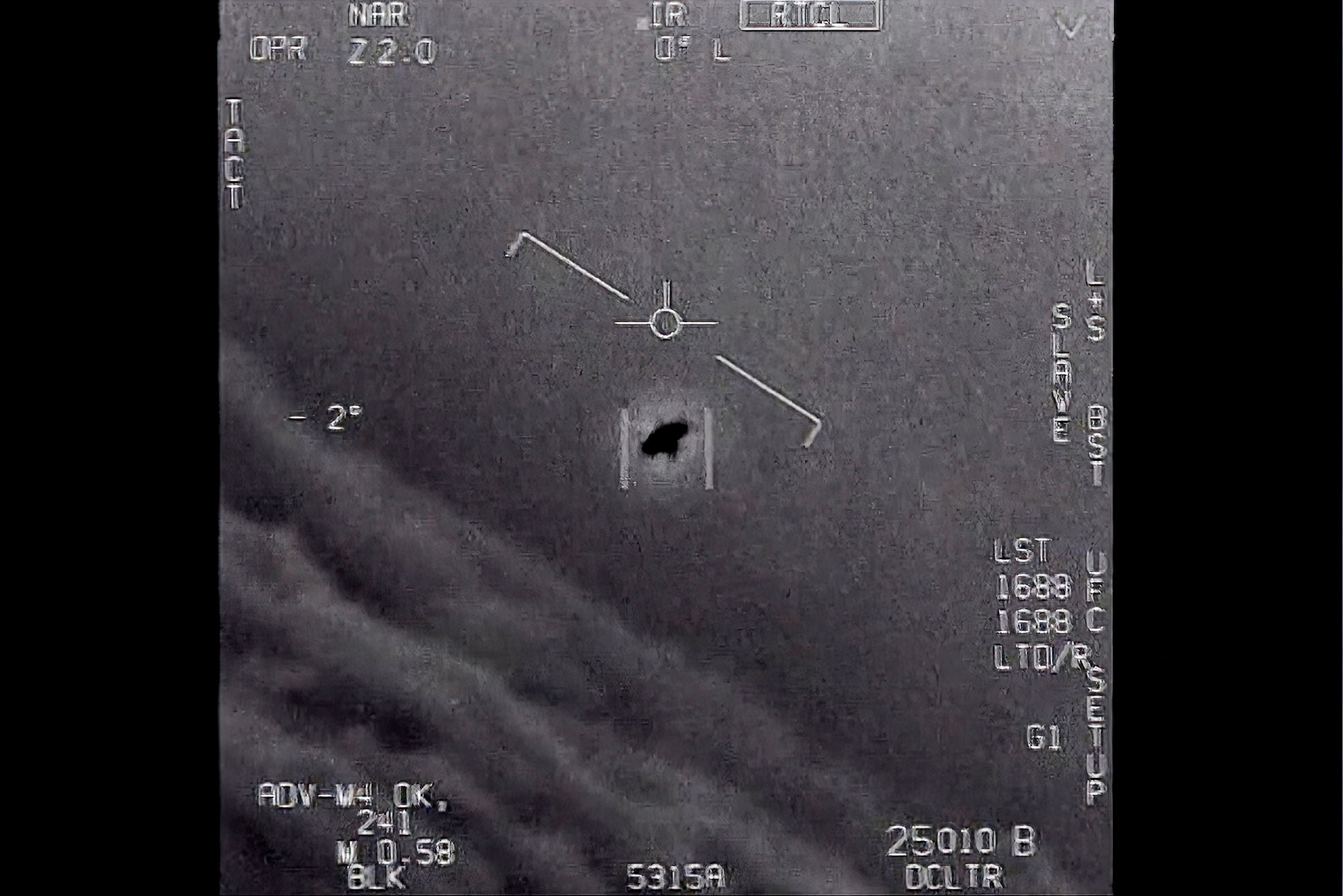



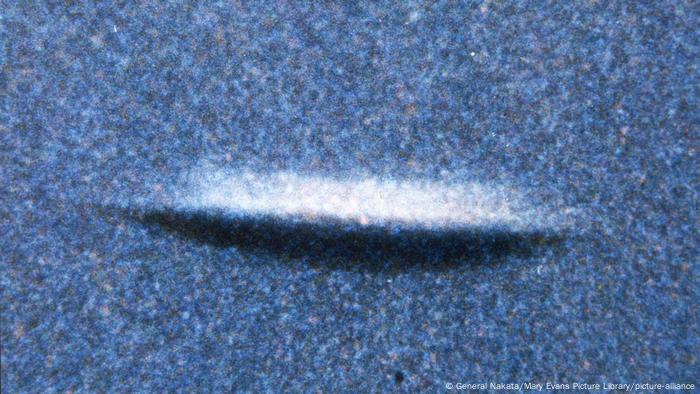
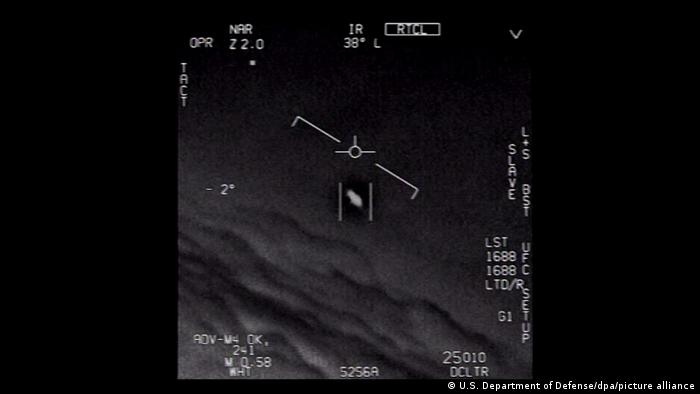












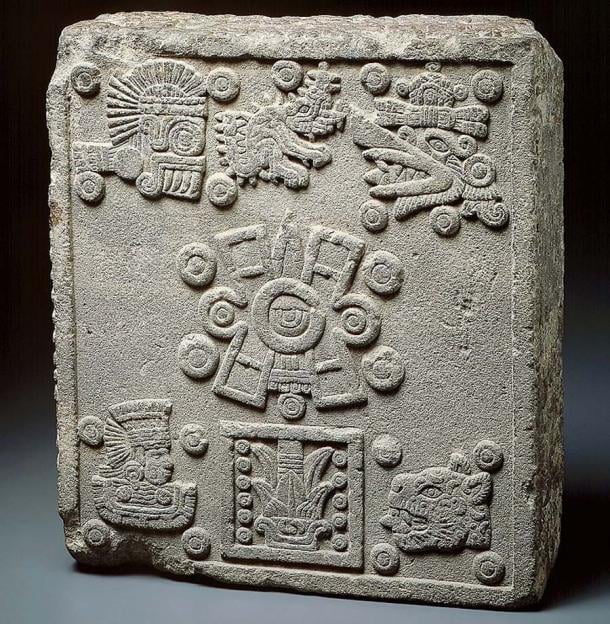


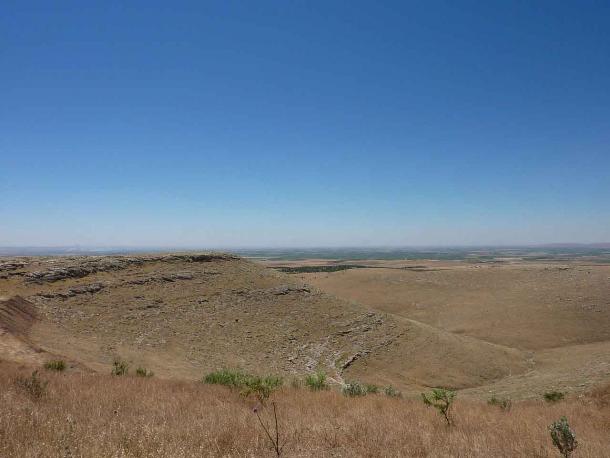




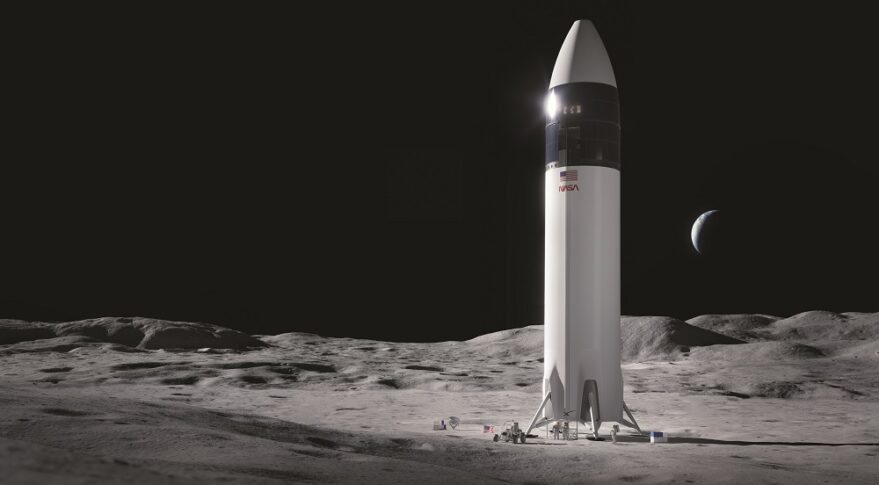
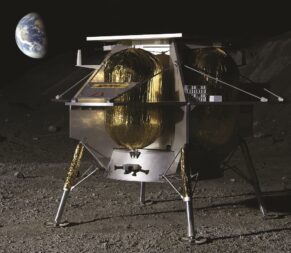







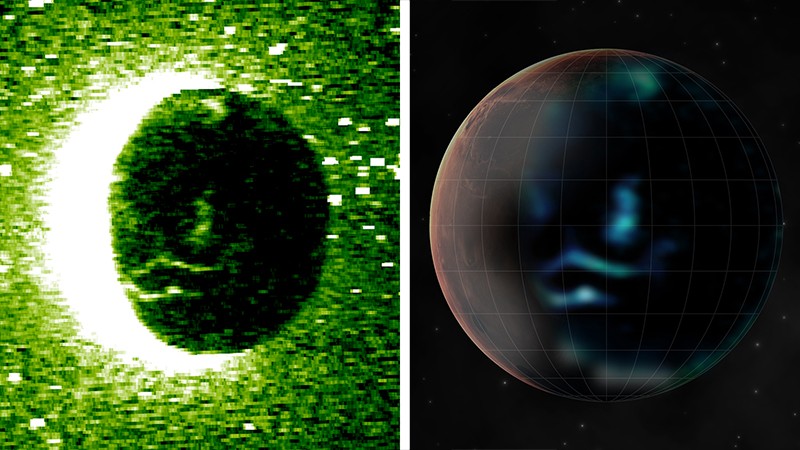


 Earth-like conditions on exoplanets in the Milky Way could...
 Are aliens watching us? Astronomers identify 29 potentially...
 Father and son, 7, join volunteer team and help discover two...