Ontdek de Fascinerende Wereld van UFO's en UAP's: Jouw Bron voor Onthullende Informatie!
Ben jij ook gefascineerd door het onbekende? Wil je meer weten over UFO's en UAP's, niet alleen in België, maar over de hele wereld? Dan ben je op de juiste plek!
België: Het Kloppend Hart van UFO-onderzoek
In België is BUFON (Belgisch UFO-Netwerk) dé autoriteit op het gebied van UFO-onderzoek. Voor betrouwbare en objectieve informatie over deze intrigerende fenomenen, bezoek je zeker onze Facebook-pagina en deze blog. Maar dat is nog niet alles! Ontdek ook het Belgisch UFO-meldpunt en Caelestia, twee organisaties die diepgaand onderzoek verrichten, al zijn ze soms kritisch of sceptisch.
Nederland: Een Schat aan Informatie
Voor onze Nederlandse buren is er de schitterende website www.ufowijzer.nl, beheerd door Paul Harmans. Deze site biedt een schat aan informatie en artikelen die je niet wilt missen!
Internationaal: MUFON - De Wereldwijde Autoriteit
Neem ook een kijkje bij MUFON (Mutual UFO Network Inc.), een gerenommeerde Amerikaanse UFO-vereniging met afdelingen in de VS en wereldwijd. MUFON is toegewijd aan de wetenschappelijke en analytische studie van het UFO-fenomeen, en hun maandelijkse tijdschrift, The MUFON UFO-Journal, is een must-read voor elke UFO-enthousiasteling. Bezoek hun website op www.mufon.com voor meer informatie.
Samenwerking en Toekomstvisie
Sinds 1 februari 2020 is Pieter niet alleen ex-president van BUFON, maar ook de voormalige nationale directeur van MUFON in Vlaanderen en Nederland. Dit creëert een sterke samenwerking met de Franse MUFON Reseau MUFON/EUROP, wat ons in staat stelt om nog meer waardevolle inzichten te delen.
Let op: Nepprofielen en Nieuwe Groeperingen
Pas op voor een nieuwe groepering die zich ook BUFON noemt, maar geen enkele connectie heeft met onze gevestigde organisatie. Hoewel zij de naam geregistreerd hebben, kunnen ze het rijke verleden en de expertise van onze groep niet evenaren. We wensen hen veel succes, maar we blijven de autoriteit in UFO-onderzoek!
Blijf Op De Hoogte!
Wil jij de laatste nieuwtjes over UFO's, ruimtevaart, archeologie, en meer? Volg ons dan en duik samen met ons in de fascinerende wereld van het onbekende! Sluit je aan bij de gemeenschap van nieuwsgierige geesten die net als jij verlangen naar antwoorden en avonturen in de sterren!
Heb je vragen of wil je meer weten? Aarzel dan niet om contact met ons op te nemen! Samen ontrafelen we het mysterie van de lucht en daarbuiten.
"It's difficult to explain why we have this many more sightings in the West."
(Image credit: David Wall/Getty Images)
Those of us in the western U.S. who enjoy vast open spaces may also be more likely to report UFO sightings, a new study suggests.
-An analysis of unidentified aerial phenomena (UAP) reports (UAP is a new umbrella term that includes UFOs not just in the sky but also in space and underwater) suggests local environmental factors play a role in the number of UAP sightings reported.
The study, based on about 98,000 reports over 20 years as cataloged in an open-source, online dataset maintained by the National UFO Research Center (NUFORC), modeled how reported UAP sightings coincide with environmental variables such as light pollution and cloud cover, as well as things like proximity to airports and military installations. The results reveal the majority of reported sightings originate in the western U.S., along with a smaller hotspot in the northeastern U.S.
"It was completely unexpected," Richard Medina, a geographer at the University of Utah who led the study, told Space.com. "It's difficult to explain why we have this many more sightings in the West."
Caption: Hotspot analysis of reported UAP sightings from 2001 to 2020. (Image credit: Medina, Brewer & Kirkpatrick. Sci Rep (2023))
Pinning down the environmental context of these sightings is important when considering explanations for presumed UAP occurrences; it can also help scientists differentiate between non-results and truly anomalous sightings that may be a legitimate threat, said Medina.
He and his colleagues posit that the large number of sightings in the western U.S. can partly be explained by its wide-open spaces and all-year temperate weather, which draw people outside for recreational activities. "People are out and looking skyward," Medina said in a statement
It’s not like any other over before it NASA is always striving to push the boundaries of space exploration and that has led its engineers to develop a new type of robot rover that could completely change how space exploration missions are undertaken according to the agenc
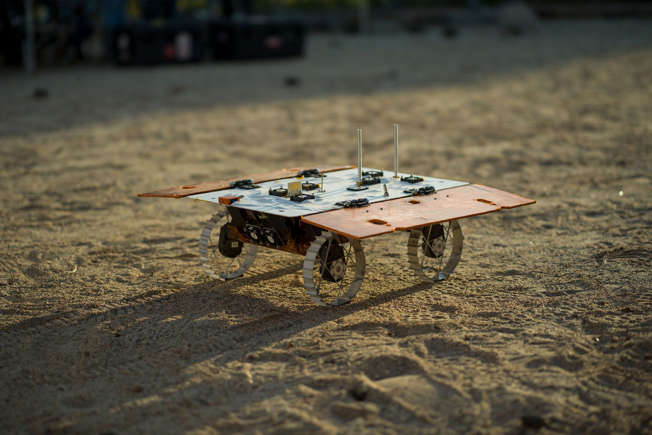
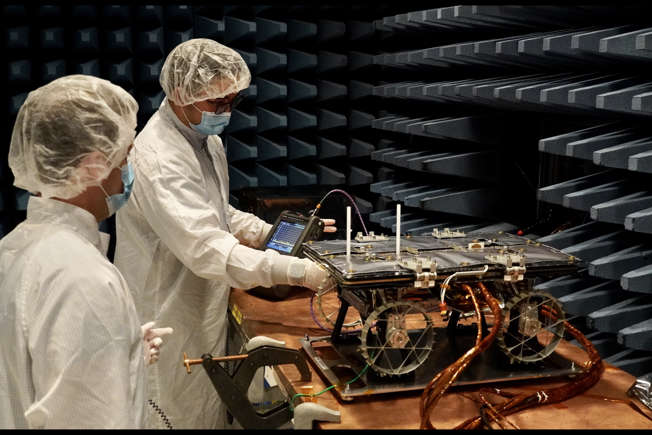
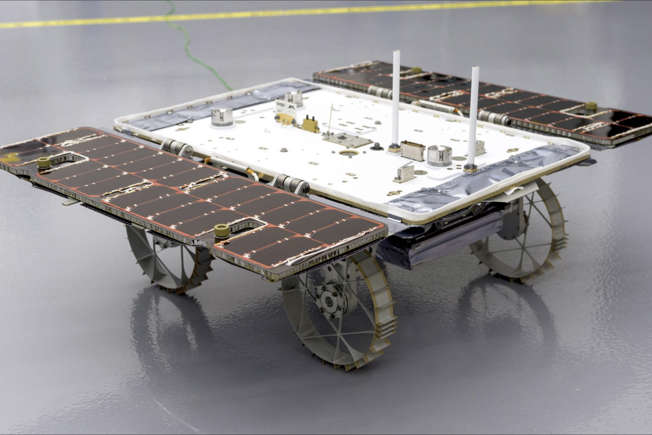
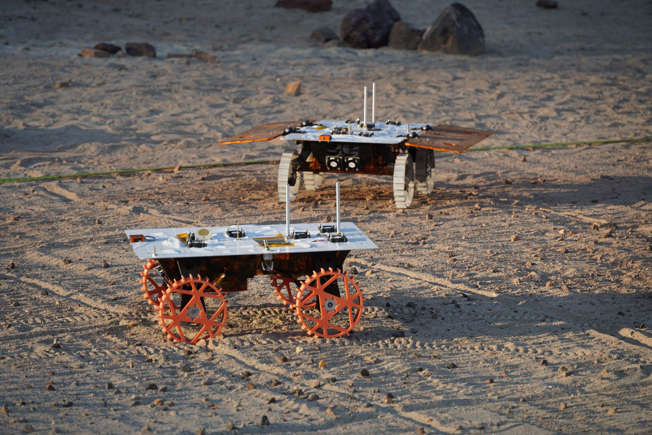
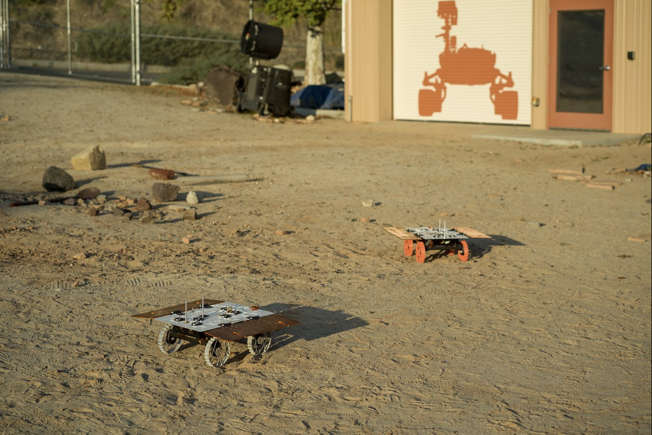
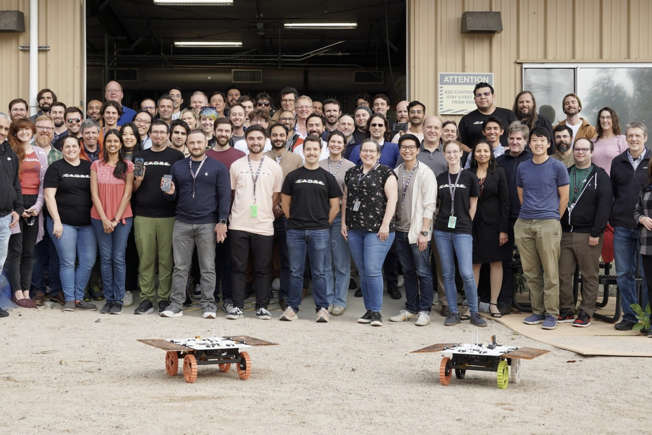
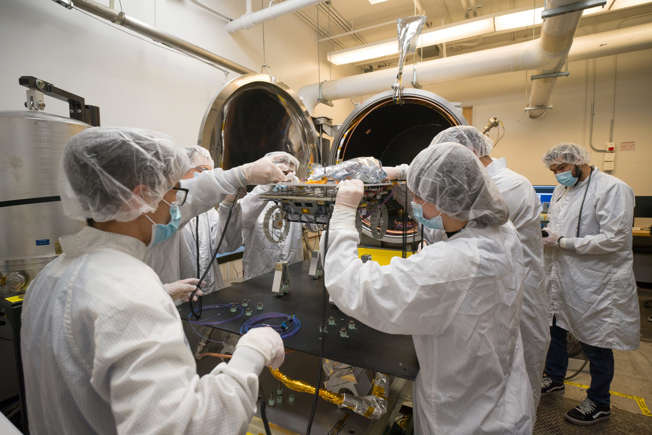
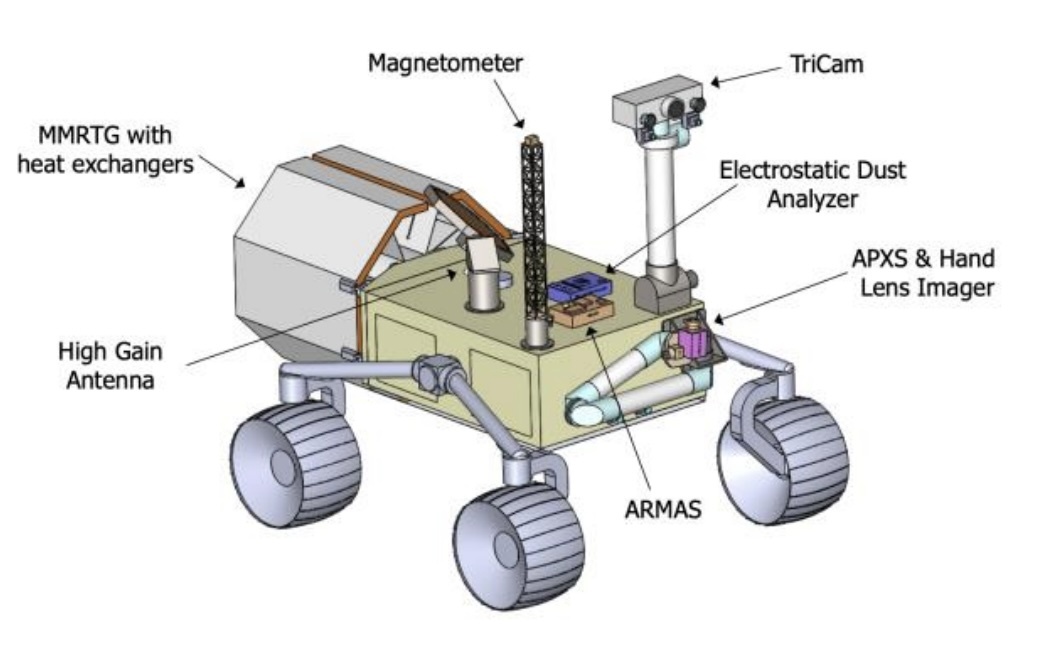
The CADRE Rover The Cooperative Autonomous Distributed Robotic Exploration—more commonly known by the acronym CADRE—project has developed a rover that operates without the input of humans with the aim of supporting future exploratory missions.
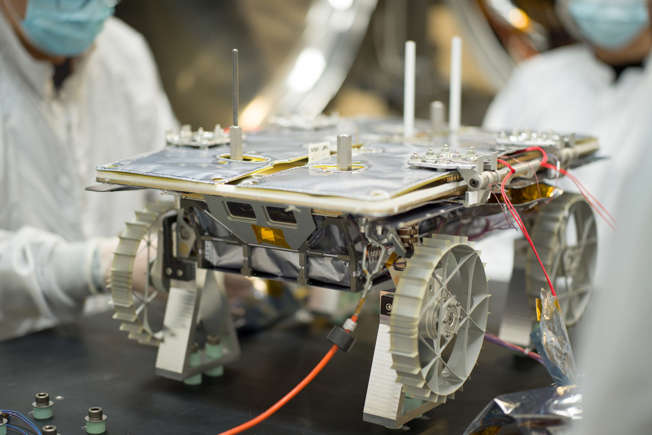
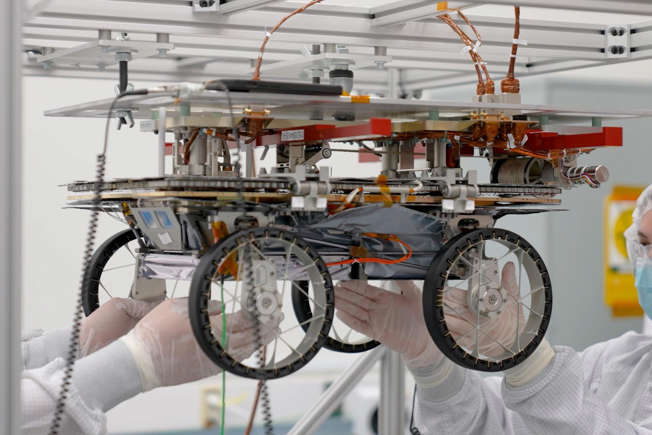
Smaller than your average rover NASA’s CADRE rovers are a lot smaller than something like Curiosity of Perseverance, two of the space agency’s more modern rovers exploring the surface of Mars. CADRE’s rovers are only about the size of the average carry-on luggage.
Packed with new technologies However, engineers have packed the tiny new rover with a lot of technology that will be very useful for mapping the surface of a planet. The rover is equipped with an array of sensors and cameras as well as other advanced technologies.
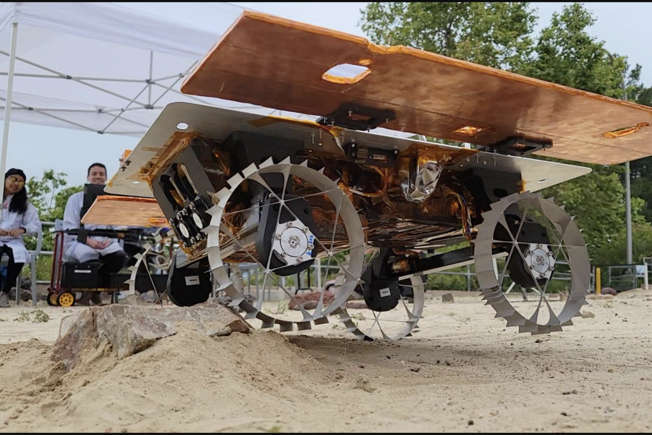
Fitted with powerful mapping tools Powered by solar panels and four wheels, the CADRE rover also has been fitted with a powerful ground-penetrating radar that its designers developed so that it could map the lunar surface during the new technology's first mission to the moon.
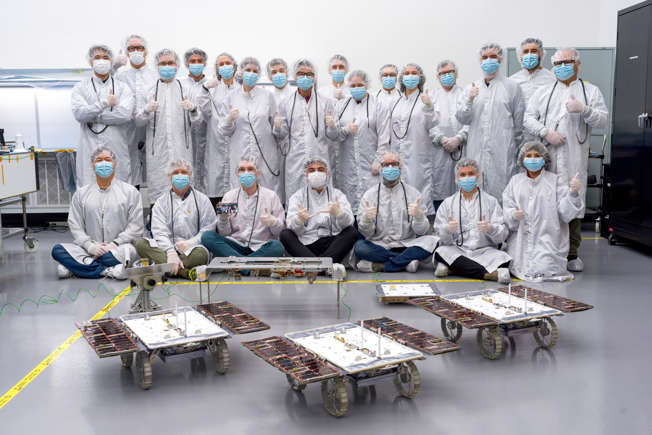
Three will head to the moon in 2024 A trio of new rovers from NASA will be heading to the moon in 2024 aboard Intuitive Machines’ third lunar lander the IM-3 as part of the space agency’s Commercial Lunar Payload Services (CLPS) initiative according to Space.com.
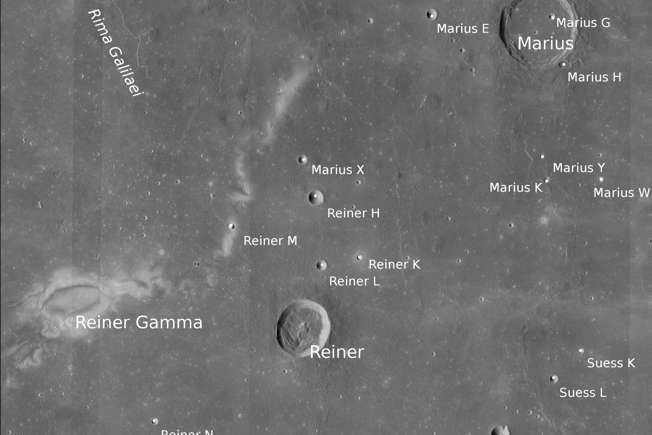
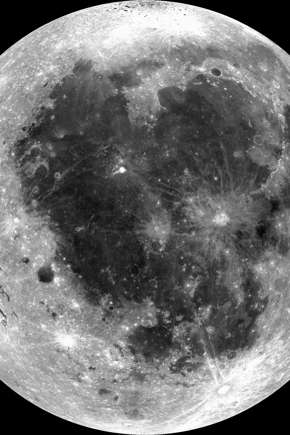
Exploring a mysterious region of the moon NASA is tasking its tiny autonomous rovers with exploring a very mysterious region on the moon known as Reiner Gamma. The area is just one of several fascinating places on the lunar surface that have their own local magnetic field.
The Ocean of Storms Reiner Gamma is located inside an area on the moon’s surface referred to as Oceanus Procellarum, which translates to Ocean of Storms. The region is on the western edge of the moon north of the equator and temperatures are volatile.
The perfect area for robotic exploration During the middle of the day, surface temperatures in Reiner Gamma can reach as high as 237° Fahrenheit or 114° Celsius, which makes the area perfect for exploration using autonomous robots like the ones developed by the CADRE project.
A simple mission The mission NASA’s new robots are being sent on is very simple. The aim is to see how the three rovers interact with each other without direct input from the mission controllers back on Earth according to a press release from the space agency.
Measurements and mapping The rovers will take measurements from several locations so that NASA can provide the proof of concept. If the mission is successful, it could dramatically transform how NASA explores other planetary and celestial surfaces in the near future.
Exploring without human input “Our mission is to demonstrate that a network of mobile robots can cooperate to accomplish a task without human intervention – autonomously,” explained Subha Comandur, the CADRE project manager at NASA’s Jet Propulsion Laboratory.
They could change space exploration “It could change how we do exploration in the future,” Comandur continued, adding that the “question for future missions will become: ‘How many rovers do we send, and what will they do together?’” But what do we know about the mission?
Examining the moon for a full lunar day The Cadre rovers will explore Reiner Gamma for a full lunar day, which is equivalent to about 14 Earth days, and will conduct a number of experiments throughout the area that will test the capabilities of the new recovers and how they work together.
Minimal orders will be given Mission control will send the rovers a broad directive as to what they should do once on the moon. The robots will select a leader and then get to work on reasoning out the best way to complete the tasks that they have been given.
One instruction only “The only instruction is, for example, ‘Go explore this region,’ and the rovers figure out everything else: when they’ll do the driving, what path they’ll take, how they’ll maneuver around local hazards,” said CADRE’s principal investigator Jean-Pierre de la Croix.
Will the rovers pass the test? “You only tell them the high-level goal, and they have to determine how to accomplish it,” Jean-Pierre de la Croix added. It’s a very interesting way to increase our capabilities that could revolutionize the future of space exploration.
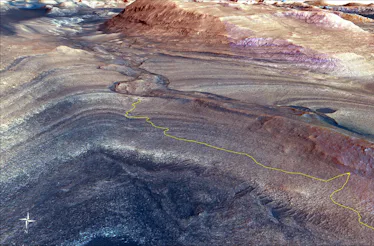
NASA’s Curiosity Mars rover just made it to a channel called Gediz Vallis. This spot is the perfect place for taking a dramatic alien panorama. But, it might also contain hidden clues of ancient water on the Red Planet.
Rocks have long suggested that Mars was wetter and warmer billions of years ago. Current evidence suggests that water on the Red Planet came and went in phases. NASA is searching for hints of a critical turning point: when these phases ended and liquid water permanently disappeared from Mars’s surface and forever transformed the once-wet planet into the barren world of today. Gediz Vallis might contain clues of this point of no return.
As it drives along the serpentine-shaped land feature, the six-wheeled rover will get a novel look at this “Earth-like past,” NASA officials announced on Friday.
Curiosity has now reached Gediz Vallis, the channel that runs through the center of this NASA image, created from orbital data.
Previous satellite data suggested that water flow may have helped form the channel. The debris pile inside the channel also hints that water once ran there. Geological structures within the channel suggest that the region may have dried up only to flood again, which aligns with similar evidence in other areas of Mars that NASA has explored. Scientists currently surmise that Gediz Vallis probably formed after a dry period, preceded by another wet period.
The rover team wants to confirm what carved the bedrock to create Gediz Vallis. “The formation’s sides are steep enough that the team doesn’t think the channel was made by wind. However, debris flows (rapid, wet landslides) or a river carrying rocks and sediment could have had enough energy to chisel into the bedrock,” according to NASA.
Curiosity has been exploring Mars for more than a decade to understand whether inhospitable modern Mars was once hospitable to life.
This image shows a slice of the 3D map of galaxies collected in the first year of the Dark Energy Spectroscopic Instrument (DESI) Survey. Earth is at the tip, with the furthest galaxies plotted at distances of 11 billion light-years. Each point represents one galaxy. This version of the DESI map includes 600,000 galaxies — less than 0.1% of the survey's full volume. Image Credit: DESI Collaboration/NOIRLab/NSF/AURA/R. Proctor
A New Map Shows the Universe’s Dark Energy May Be Evolving
At the Kitt Peak National Observatory in Arizona, an instrument with 5,000 tiny robotic eyes scans the night sky. Every 20 minutes, the instrument and the telescope it’s attached to observe a new set of 5,000 galaxies. The instrument is called DESI—Dark Energy Survey Instrument—and once it’s completed its five-year mission, it’ll create the largest 3D map of the Universe ever created.
But scientists are getting access to DESI’s first data release and it suggests that dark energy may be evolving.
DESI is the most powerful multi-object survey spectrograph in the world, according to their website. It’s gathering the spectra for tens of millions of galaxies and quasars. The goal is a 3D map of the Universe that extends out to 11 billion light-years. That map will help explain how dark energy has driven the Universe’s expansion.
DESI began in 2021 and is a five-year mission. The first year of data has been released, and scientists with the project say that DESI has successfully measured the expansion of the Universe over the last 11 billion years with extreme precision.
“The DESI team has set a new standard for studies of large-scale structure in the Universe.”
Pat McCarthy, NOIRLab Director
DESI collects light from 5,000 objects at once with its 5,000 robotic eyes. It observes a new set of 5,000 objects every 20 minutes, which means it observes 100,000 objects—galaxies and quasars—each night, given the right observing conditions.
This image shows Stu Harris working on assembling the focal plane for the Dark Energy Spectroscopic Instrument (DESI) at Lawrence Berkeley National Laboratory in 2017 in Berkeley, Calif. Ten petals, each containing 500 robotic positioners that are used to gather light from targeted galaxies, form the complete focal plane. DESI is attached to the 4-meter Mayall Telescope at Kitt Peak National Observatory. Image Credit: DESI/NSF NOIRlab
DESI’s data creates a map of the large-scale structure of the Universe. The map will help scientists unravel the history of the Universe’s expansion and the role dark energy plays. We don’t know what dark energy is, but we know some force is causing the Universe’s expansion to accelerate.
“The DESI instrument has transformed the Mayall Telescope into the world’s premier cosmic cartography machine,” said Pat McCarthy, Director of NOIRLab, the organization behind DESI. “The DESI team has set a new standard for studies of large-scale structure in the Universe. These first-year data are only the beginning of DESI’s quest to unravel the expansion history of the Universe, and they hint at the extraordinary science to come.”
DESI measures dark energy by relying on baryonic acoustic oscillations (BAO.) Baryonic matter is “normal” matter: atoms and everything made of atoms. The acoustic oscillations are density fluctuations in normal matter that date back to the Universe’s beginnings. BAO are the imprint of those fluctuations, or pressure waves, that moved through the Universe when it was all hot, dense plasma.
As the Universe cooled and expanded, the density waves froze their ripples in place, and where density was high, galaxies eventually formed. The ripple pattern of the BAO is visible in the DESI leading image. It shows strands of galaxies, or galaxy filaments, clustered together. They’re separated by voids where density is much lower.
The deeper DESI looks, the fainter the galaxies are. They don’t provide enough light to detect the BAO. That’s where quasars come in. Quasars are extremely bright galaxy cores, and the light from distant quasars creates a shadow of the BAO pattern. As the light travels through space, it interacts with and gets absorbed by clouds of matter. That lets astronomers map dense pockets of matter, but it took over 450,000 quasars. That’s the most quasars ever observed in a survey like this.
Because the BAO pattern is gathered in such detail and across such vast distances, it can act as a cosmic ruler. By combining the measurements of nearby galaxies and distant quasars, astronomers can measure the ripples across different periods of the Universe’s history. That allows them to see how dark energy has stretched the scale over time.
It’s all aimed at understanding the expansion of the Universe.
In the Universe’s first three billion years, radiation dominated it. The Cosmic Microwave Background is evidence of that. For the next several billion years, matter dominated the Universe. It was still expanding, but the expansion was slowing because of the gravitational force from matter. But since then, the expansion has accelerated again, and we give the name dark energy to the force behind that acceleration.
So far, DESI’s data supports cosmologists’ best model of the Universe. But there are some twists.
“We’re incredibly proud of the data, which have produced world-leading cosmology results,” said DESI director and LBNL scientist Michael Levi. “So far, we’re seeing basic agreement with our best model of the Universe, but we’re also seeing some potentially interesting differences that could indicate dark energy is evolving with time.”
Levi is referring to Lambda Cold Dark Matter (Lambda CDM), also known as the standard model of Big Bang Cosmology. Lambda CDM includes cold dark matter—a weakly interacting type of matter—and dark energy. They both shape how the Universe expands but in opposite ways. Dark energy accelerates the expansion, and regular matter and dark matter slow it down. The Universe evolves based on the contributions from all three. The Lambda CDM does a good job of describing what other experiments and observations find. It also assumes that dark energy is constant and spread evenly throughout the Universe.
This data is just the first release, so confirmation of dark energy evolution must wait. By the time DESI has completed its five-year run, it will have mapped over three million quasars and 37 million galaxies. That massive trove of data should help scientists understand if dark energy is changing.
Whatever the eventual answer, the question is vital to understanding the Universe.
“This project is addressing some of the biggest questions in astronomy, like the nature of the mysterious dark energy that drives the expansion of the Universe,” says Chris Davis, NSF program director for NOIRLab. “The exceptional and continuing results yielded by the NSF Mayall telescope with DOE DESI will undoubtedly drive cosmology research for many years to come.”
DESI isn’t the only effort to understand dark energy. The ESA’s Euclid spacecraft is already taking its own measurements to help cosmologists answer their dark energy questions.
In a few years, DESI will have some more powerful allies in the quest to understand dark energy. The Vera Rubin Observatory and Nancy Grace Roman Space Telescope will both contribute to our understanding of the elusive dark energy. They’ll perform surveys of their own, and by combining data from all three, cosmologists are poised to generate some long-sought answers.
But for now, scientists are celebrating DESI’s first data release.
“We are delighted to see cosmology results from DESI’s first year of operations,” said Gina Rameika, associate director for High Energy Physics at the Department of Energy. “DESI continues to amaze us with its stellar performance and how it is shaping our understanding of dark energy in the Universe.”
Want to Start a Farm on Mars? This Rover Will Find Out if it’s Possible
Travelling to Mars has its own challenges. The distance alone makes the journey something of a mission in itself. Arrive though, and the handwork has only just begun. Living and surviving on Mars will be perhaps humans biggest challenge yet. It would be impossible to take everything along with you to survive so instead, it would be imperative to ‘live off the land’ and produce as much locally as possible. A new rover called AgroMars will be equipped with a number of agriculture related experiments to study the make up of the soil to assess its suitability for growing food.
Growing food on Mars poses a number of challenges, chiefly due to the harsh environmental conditions. Not least of which is the low atmospheric pressure, temperature extremes and high radiation levels. To try and address these, new techniques have been developed in the fields of hydroponics and aeroponics. The key to these new techniques involves using nutrient rich solutions instead of soils.
Special structures are build analogous to greenhouses on Earth with artificial lighting, temperature and humidity control. Genetic engineering too has played a part in developing plants that are more hardy and capably of surviving in harsh Martian environments. As we continue to explore the Solar System and in particular Mars, we are going to have to find ways to grow food in alien environments.
The space station’s Veggie Facility, tended here by NASA astronaut Scott Tingle, during the VEG-03 plant growth investigation, which cultivated Extra Dwarf Pak Choi, Red Russian Kale, Wasabi mustard, and Red Lettuce and harvested on-orbit samples for testing back on Earth. Credits: NASA
Enter AgroMars. A space mission taking a rover to Mars to hunt for, and explore the possibility of establishing agriculture on Mars! The rover will be launched with similar capabilities to the likes of Perseverance or Curiosity. The rover will be launched to Mars by a Falcon 9 launch vehicle operated by Space X but this is some years off yet. The development phase has yet to start. In a paper by lead author M. Duarte dos San- tos the mission has been shaped, reality is a little way off.
On arrival, AgroMars will use an X-ray and infrared spectrometer, high resolution cameras, pH sensors, mass spectrometers and drilling tools to collect and analyse soil samples. The samples will be assessed for mineralogical composition, soil texture, soil pH, presence of organic compounds and water retention capacity.
To be able to assess the Martian soil the rover must possess advanced capabilities for collecting and analysing soil samples, more than before. The data will then be sent on to laboratories on Earth and it is their responsibility to interpret the information. The multitude of groups involved is a wonderful reminder how science transcends geographical borders. Working together will yield far better results and help to advance our knowledge of astrobiology and agriculture on Mars.
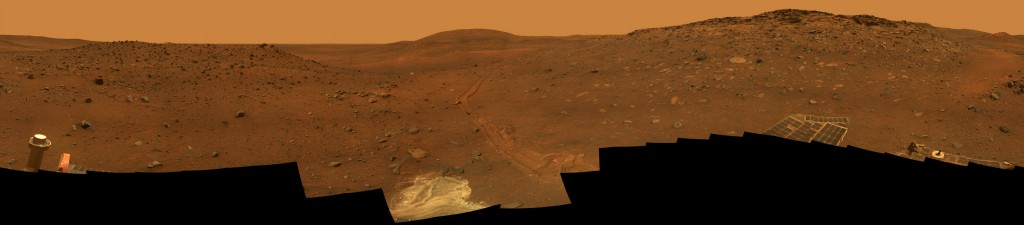
‘Calypso’ Panorama of Spirit’s View from ‘Troy’. This full-circle view from the panoramic camera (Pancam) on NASA’s Mars Exploration Rover Spirit shows the terrain surrounding the location called “Troy,” where Spirit became embedded in soft soil during the spring of 2009. The hundreds of images combined into this view were taken beginning on the 1,906th Martian day (or sol) of Spirit’s mission on Mars (May 14, 2009) and ending on Sol 1943 (June 20, 2009). Credit: NASA/JPL-Caltech/Cornell University
This doesn’t come cheap though. The estimated cost of the mission is in the region of $2.7 billion which includes development, launch and exploration for the entire mission.
The total cost of the mission is estimated to be around $2.7 billion, which includes $2.2 billion for the development and launch of the rover and $500 million for its exploitation during the entirety of the mission. Whether it – pardon the pun – gets off the ground is yet to be seen but if we are to explore and even establish a permanent base on Mars then we will have to gain a better understanding of the environment to feed and sustain future explorers.
The Impact of UFO Encounters on Military Personnel
In a groundbreaking disclosure, a former CIA-affiliated doctor has brought to light the alarming consequences of unidentified flying object (UFO) encounters on American military personnel. This revelation, stemming from a Freedom of Information Act request and a series of comprehensive studies, paints a disturbing picture of the hidden casualties and injuries within the military ranks due to these enigmatic phenomena.
Dr. Christopher Green, a neuroimaging specialist with extensive experience within the CIA, has spearheaded research into the interactions between military personnel and unidentified anomalous phenomena (UAPs). His work, detailed in the study “Clinical Medical Acute And Subacute Field Effects on Human Dermal And Neurological Tissues,” outlines a range of injuries sustained during encounters classified on the Hynek scale, a system used to categorize UFO sightings.
The scale, which classifies encounters from mere nocturnal lights to close and direct interactions, provides a framework for understanding the varying degrees of contact and their potential impact on human observers. Dr. Green’s research specifically focuses on the latter categories, where physical effects and injuries are reported. These include radiation burns, paralysis, and even brain damage, drawing unsettling parallels to the symptoms of Havana Syndrome, a condition associated with microwave and high-energy weapon exposure among U.S. embassy staff.
This syndrome, believed to be caused by foreign actors using electromagnetic radiation as a weapon, shares similarities with the injuries reported by military personnel exposed to UAPs. However, Dr. Green’s findings suggest these incidents precede the Havana Syndrome cases, indicating a longstanding and unaddressed threat.
The collective research efforts underscore a pressing need for a more profound understanding and investigation of UAPs, not only to unveil their origins and intentions but also to safeguard against their potentially harmful impacts on human health and safety. This call to action is not only a matter of scientific inquiry but a paramount concern for national defense and the welfare of those who serve.
In the face of growing evidence and public interest, it’s imperative that the phenomena associated with UAP encounters are no longer relegated to the fringes of scientific and military investigation. The consequences, as revealed by these studies, warrant a coordinated and comprehensive response to address the risks posed to military personnel and, potentially, the broader public.
As the veil of secrecy begins to lift, the path forward demands collaboration between government agencies, scientific communities, and the defense sector to confront the challenges posed by these unidentified entities. Only through rigorous investigation, transparency, and an unwavering commitment to understanding the unknown can we hope to protect those who risk their lives for national security and potentially uncover the true nature of the enigmatic phenomena known as UFOs.
NASA Announces Starliner’s Next Launch Attempt: May 6
Starliner, the new crewed capsule from Boeing, has been in the works for a long time. Originally unveiled in 2010, the capsule has been under development for the last 14 years, primarily utilizing NASA grants and contracts. However, Boeing itself has taken upwards of 1 billion dollars in hits to earnings as part of the craft’s development. After all that time in the prototype stages, Starliner is finally ready for its first crewed flight – which has now officially been scheduled for May 6th.
The launch will utilize a ULA Atlas V, which was also partly developed by Boeing. Like most Atlas V launches, it will take off from Cape Canaveral in Florida and take two astronauts – Suni Williams and Butch Wilmore – to the International Space Station.
To make room for the capsule, the crew already stationed on the ISS has to do some additional work, including moving a Dragon capsule out of the docking port on the ISS’s Harmony module to which the Starliner will have to attach. To move the capsule, they will also have to complete some additional “science and cargo logistics,” according to a NASA Press release.
Fraser covers Starliner’s successful test flight.
Those logistics seem to be the primary cause of a final five-day delay (from May 1st to 5th) that the Starliner will have to endure. Once at the ISS, Williams and Wilmore will spend a week helping out on the ISS before using the Starliner capsule to return to Earth.
That is assuming all goes well with their flight. Starliner has had at least one spectacular failure as part of its development, though it successfully completed an uncrewed flight in May of 2022. If any astronauts are ready to ride on a new crewed capsule, it’s Williams and Wilmore. Both have been astronauts for over 20 years, and each was a trained Navy Test Pilot before joining NASA.
The capsule they will be using, known as Calypso, has already been to orbit, though not as many times as the astronauts themselves. It was used in the first orbital test flight, and while it didn’t manage to dock up with the ISS, it did land successfully and wouldn’t pose a risk to any astronauts on board.
Video from Boeing showcasing Starliner mounted atop an Atlas V. Credit – Boeing YouTube Channel
Upon completing this test flight, NASA hopes to rely on the Starliner to provide regular crewed missions to the ISS. This would be supplemental to the SpaceX Dragon capsule the agency already uses and mark the definitive end to the drought of American crewed spaceflight.
Future missions include a four-person flight planned for 2025, assuming all goes well with this first one. Boeing also has a contract with NASA for five additional flights between 2026 and 2030. But first, if all goes well, on May 6th, after decades of work, the world will hopefully gain another crewed vehicle to help facilitate our path to the stars.
The Boeing CST-100 Starliner spacecraft is lifted at the Vertical Integration Facility at Space Launch Complex-41 at Florida’s Cape Canaveral Space Force Station on May 4, 2022. Photo credit: NASA/Frank Michaux
This Martian rock, named Bunsen Peak, contains minerals that formed in thepresence of water. On Earth, these water-deposited carbonate minerals are good at preserving ancient organic material. Image Credit: NASA/JPL-Caltech
If there’s a Holy Grail on Mars, it’s probably a specific type of rock: A rock so important that it holds convincing clues to Mars’ ancient habitability.
Perseverance might have just found it.
If scientists could design the perfect rock for Perseverance to find, it would be one that displayed evidence of ancient water and was the type that preserves ancient organic material. The rover may have found it as it explores the Margin Unit, a geologic region on the inner edge of Jezero Crater’s rim. The Margin Unit was one of the reasons Jezero Crater was selected for Perseverance’s mission.
“To put it simply, this is the kind of rock we had hoped to find when we decided to investigate Jezero Crater.”
Ken Farley, Perseverance project scientist, Caltech.
The Margin Unit is in a narrow band along the crater’s western rim. Orbital observations showed that it’s one of the most carbonate-rich regions on the planet. “Its presence, along with the adjacent fluvial delta, made Jezero crater the most compelling landing site for the Mars 2020 <Perseverance> mission,” presenters at the 2024 Lunar and Planetary Science Conference wrote.
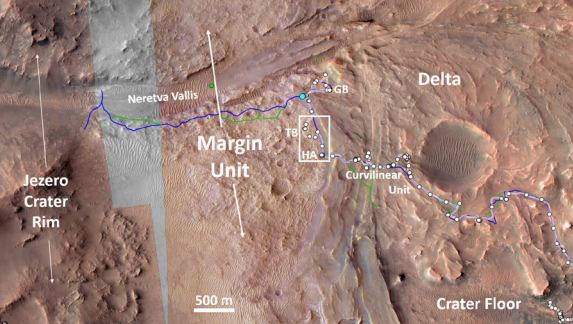
The Margin Unit lies near the western rim of Jezero Crater. White dots show Perseverance’s stopping points, and the blue line shows the rover’s future route. Image Credit: R.C. Wiens et al. 2024
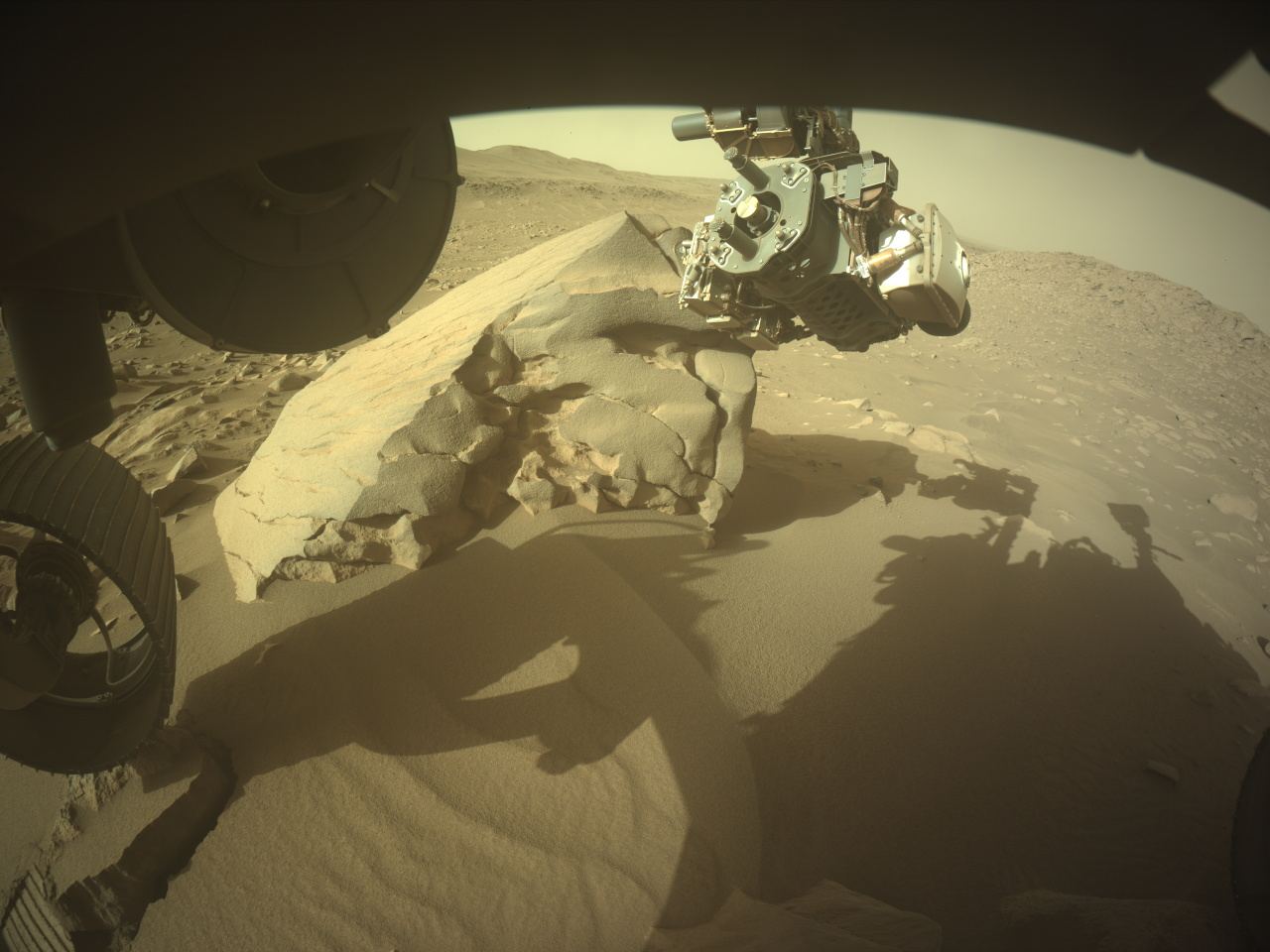
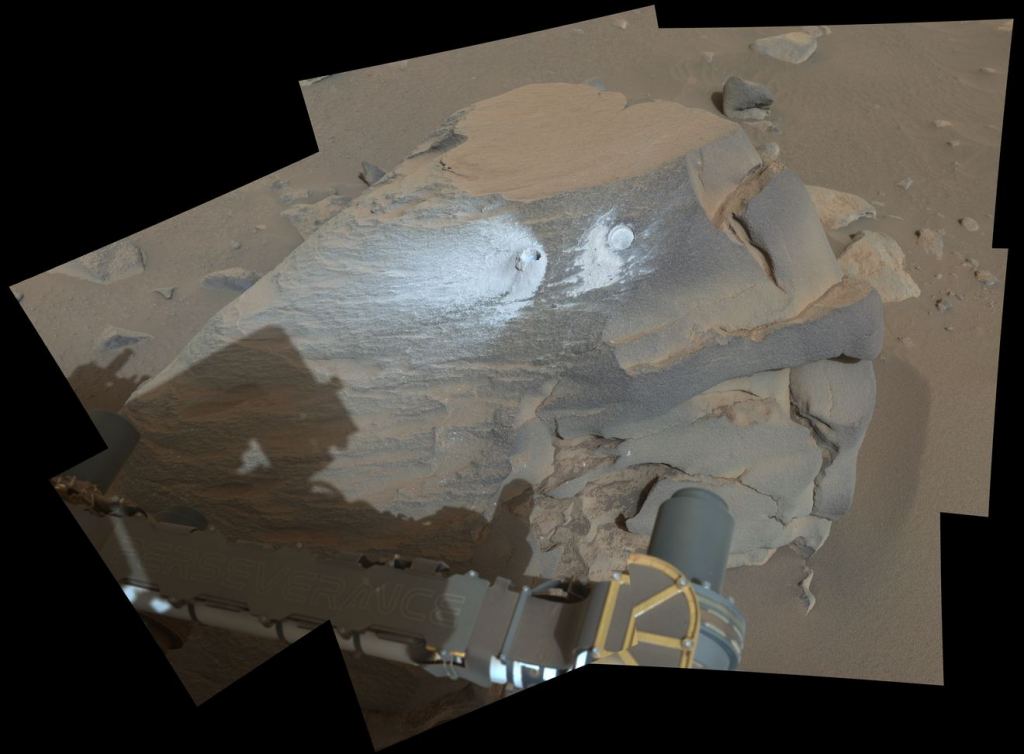
The decision to send Perseverance to the Jezero Crater and the Margin Unit seems to be paying off. Bunsen Peak caught scientists’ attention because it stands tall compared to its surroundings. One of the rock’s faces also has an interesting texture. Scientists thought the rock would allow for nice cross-sections, and since it stood vertically, there’d be less dust when working on it. Surface dust is a problem for Perseverance because it can obscure the rock’s chemistry.
The Perseverance team decided to sample it and cache the sample along with the rest of its cores for eventual return to Earth. But first, they scanned the rock’s surface with SuperCam and PIXL, the rover’s spectrometers. Then, they abraded the rock’s surface and scanned it again. The results show that Bunsen Peak is 75% carbonate grains cemented together by nearly pure silica.
This image mosaic shows the Bunsen Peak rock that has ignited scientists’ excitement. The rover abraded a circular patch to test its composition and extracted a core sample for return to Earth. The lighter surfaces are dust-covered, so Perseverance avoided those areas as the dust can obscure the rock’s chemistry from the rover’s instruments. Image Credit: NASA/JPL-Caltech/ASU/MSSS
“To put it simply, this is the kind of rock we had hoped to find when we decided to investigate Jezero Crater,” said Ken Farley, project scientist for Perseverance at Caltech in Pasadena, California. “Nearly all the minerals in the rock we just sampled were made in water; on Earth, water-deposited minerals are often good at trapping and preserving ancient organic material and biosignatures. The rock can even tell us about Mars’s climate conditions that were present when it was formed.”
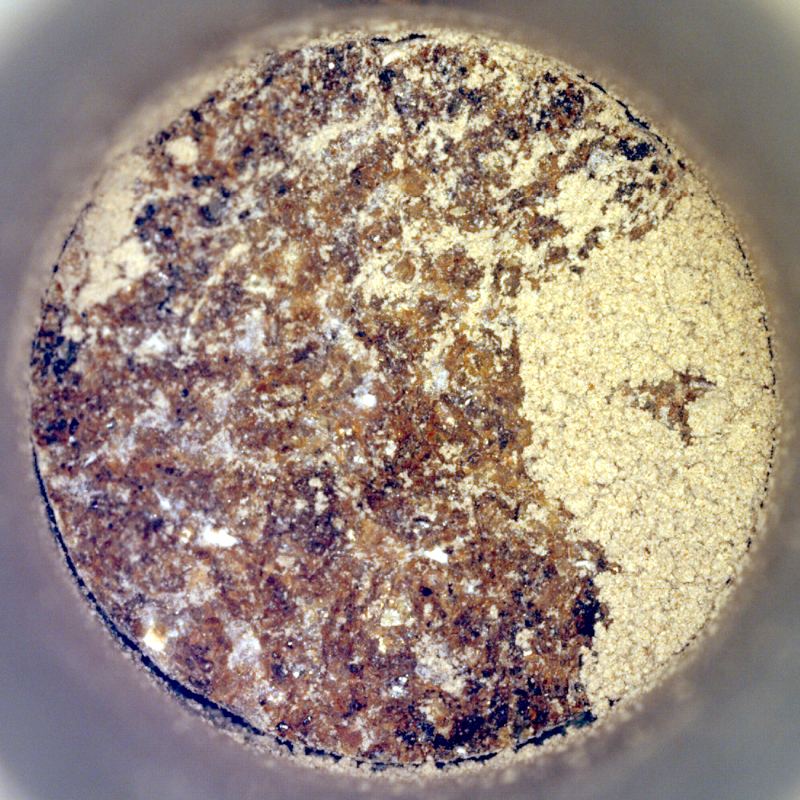
This image shows the bottom of the Bunsen Peak sample core. The sample contains about 75% carbonate minerals cemented by almost pure silica. Image Credit: NASA/JPL-Caltech
Here on our planet, carbonate minerals can form directly around microbe cells. Once encapsulated, the cells can quickly become fossils, and are preserved for a long time. This is what happened to stromatolites here on Earth, and they now constitute some of the earliest evidence of life on our planet.
These minerals are a high priority for return to Earth. This sample is number 24, named Comet Geyser, because everything gets a name when you intend to transport it to Earth from another planet.
There’s something specific that makes this sample even more intriguing. They’re microcrystalline rocks, meaning they’re made of crystals so small that only microscopes can see them. On Earth, microcrystalline rocks like Precambrian chert hold fossilized cyanobacteria. Could the same be true of Bunsen Peak?
“The silica and parts of the carbonate appear microcrystalline, which makes them extremely good at trapping and preserving signs of microbial life that might have once lived in this environment,” said Sandra Siljeström, a Perseverance scientist from the Research Institutes of Sweden (RISE) in Stockholm. “That makes this sample great for biosignature studies if returned to Earth. Additionally, the sample might be one of the older cores collected so far by Perseverance, and that is important because Mars was at its most habitable early in its history.”
Comet Geyser is Perseverance’s third sample from the Margin Unit. There’s still more work to do, but the samples support what scientists thought about Jezero Crater before Perseverance landed there: it was once a paleolake.
“We’re still exploring the margin and gathering data, but results so far may support our hypothesis that the rocks here formed along the shores of an ancient lake,” said Briony Horgan, a Perseverance scientist from Purdue University. “The science team is also considering other ideas for the origin of the Margin Unit, as there are other ways to form carbonate and silica. But no matter how this rock formed, it is really exciting to get a sample.”
It wasn’t that long ago that we knew very little about Mars. In the absence of knowledge, imagination took over. American astronomer Percival Lowell wrote three books about canals on Mars, popularizing the idea that intelligent life was extant on Mars and engineering the planet’s surface.
Astronomers didn’t buy the idea, which turned out to be untrue. But now we know that Lowell was at least partially, though inadvertently, correct. There are no canals, but there may have been lakes.
There was no intelligent life, but there may have been simple life in those lakes. Once we get Comet Geyser and the other samples back to Earth, we may find out for sure.
Arrokoth and Other Kuiper Belt Objects Contain Pristine Ices, Study Suggests
A duo of planetary scientists from Brown University and the SETI Institute has found that the Kuiper Belt object (486958) Arrokoth, which was the target of the January 1, 2019 flybyby NASA’s New Horizons mission, may have ancient ices stored deep within it from when the object first formed billions of years ago. Using a new model they developed to study how comets evolve, the researchers suggest this feat of perseverance isn’t unique to Arrokoth but that many objects from the Kuiper Belt may also contain the ancient ices they formed with.
This composite image of Ultima Thule was compiled from data obtained by NASA’s New Horizons spacecraft as it flew by the object on January 1, 2019. The image combines enhanced color data (close to what the human eye would see) with detailed high-resolution panchromatic pictures. Image credit: NASA / Johns Hopkins University Applied Physics Laboratory / Southwest Research Institute / Roman Tkachenko.
“We’ve shown here in our work, with a rather simple mathematical model, that you can keep these primitive ices locked deep within the interiors of these objects for really long times,” said Dr. Sam Birch, a planetary scientist at Brown University.
“Most of our community had thought that these ices should be long lost, but we think now that may not be the case.”
Until now, planetary scientists had a hard time figuring out what happens to ices on these space rocks over time.
The new study challenges widely used thermal evolutionary models that have failed to account for the longevity of ices that are as temperature sensitive as carbon monoxide.
The model Dr. Birch and SETI Institute researcher Orkan Umurhan created for the study accounts for this change and suggests that the highly volatile ices in these objects stick around much longer than was previously thought.
“We are basically saying that Arrokoth is so super cold that for more ice to sublimate — or go directly from solid to a gas, skipping the liquid phase within it — that the gas it sublimates into first has to have travel outwards through its porous, sponge-like interior,” Dr. Birch said.
“The trick is that to move the gas, you also have to sublimate the ice, so what you get is a domino effect: it gets colder within Arrokoth, less ice sublimates, less gas moves, it gets even colder, and so on.”
“Eventually, everything just effectively shuts off, and you’re left with an object full of gas that is just slowly trickling out.”
The study suggests that Kuiper Belt objects can act as dormant ‘ice bombs,’ preserving volatile gases within their interiors for billions of years until orbital shifts bring them closer to the Sun and the heat makes them unstable.
This new idea could help explain why these icy objects from the Kuiper Belt erupt so violently when they first get closer to the Sun.
All of a sudden, the cold gas inside them rapidly gets pressurized and these objects evolve into comets.
“The key thing is that we corrected a deep error in the physical model people had been assuming for decades for these very cold and old objects,” Dr. Umurhan said.
“This study could be the initial mover for reevaluating the comet interior evolution and activity theory.”
Altogether, the study challenges existing predictions and opens up new avenues for understanding the nature of comets and their origins.
The results from this study could help guide CAESAR’s exploration and sampling strategies, helping to deepen our understanding of cometary evolution and activity.
“There may well be massive reservoirs of these primitive materials locked away in small bodies all across the outer Solar System — materials that are just waiting to erupt for us to observe them or sit in deep freeze until we can retrieve them and bring them home to Earth,” Dr. Birch said.
Unveiling the Cosmos: Rep. Tim Burchett’s Quest for UFO Answers and Faith
In the vast expanse of the universe, the intersection of faith and the unknown often prompts profound questions. Rep. Tim Burchett, a Tennessee Republican, is at the forefront of a movement within Congress seeking transparency and answers about Unidentified Flying Objects (UFOs). His unique stance intertwines his Christian faith with a belief in extraterrestrial life, a topic he delves into on an upcoming episode of NewsNation’s “Reality Check” podcast.
Rep. Burchett’s inquiry into UFOs is not just a quest for knowledge but a journey that harmonizes with his spiritual beliefs. The congressman argues that the existence of aliens and their mention in biblical texts do not contradict Christian faith but rather enrich it. According to Burchett, such references expand the understanding of the universe and God’s creation, moving beyond the confines of Earth.
The congressman points to passages in the Bible, like those in the Book of Ezekiel, which he interprets as possible encounters with extraterrestrial beings or spacecraft. He suggests that these descriptions of “wheels within wheels” and “living creatures” could hint at otherworldly visitors. Burchett’s openness to these interpretations challenges conventional readings of the scriptures and invites a broader contemplation of divine creation.
This exploration of the unknown is timely, as public interest in UFOs and what the government may know about them has surged. Burchett’s leadership in calling for more congressional hearings and whistleblower testimonies reflects a growing demand for transparency. These efforts seek to bridge the gap between unexplained aerial phenomena and public understanding, potentially reshaping perceptions of our place in the cosmos.
Moreover, Burchett’s perspective finds resonance beyond political or religious boundaries. The Vatican’s acknowledgment of the possibility of non-human intelligent life exemplifies a wider acceptance of these discussions within religious communities. This openness suggests a readiness to welcome the idea of extraterrestrial intelligence within the framework of faith.
As Rep. Burchett continues to advocate for more investigations and disclosures regarding UFOs, his approach underscores a pivotal moment where faith, politics, and the quest for cosmic truths converge. The congressman’s work not only propels a national conversation about extraterrestrial life but also prompts a reevaluation of humanity’s understanding of the universe through the lens of faith.
In anticipation of new hearings and revelations, the public’s interest remains keenly focused on what the future may hold. Rep. Burchett’s endeavors exemplify a courageous willingness to question, explore, and integrate the unknown with the spiritual, charting a course for a more inclusive and expansive view of the universe and our place within it.
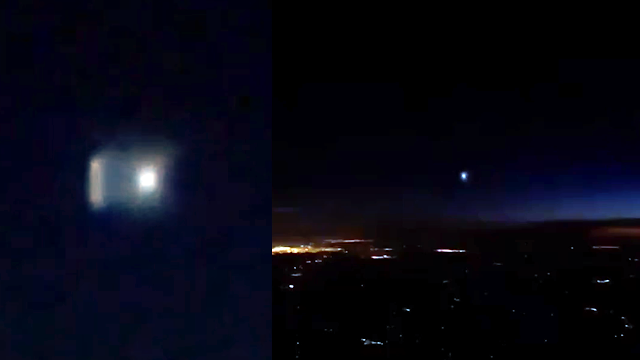
A passenger on a commercial flight from from Florida to New York City captured a mysterious metallic-looking UFO through the window of the plane.
“Watch It fly by over the top of the clip first few seconds… video was taken from a friend flying back from Florida to NYC. By far the clearest video I’ve ever seen,” the person who shared the footage on Reddit wrote.
When viewed at normal speed it is somewhat difficult to pick out the UFO in the sky with all of the background noise.
However, when slowed down, the object looks a lot like the classic flying saucer type of UFO.
“Here’s what I know about the footage,” The Hidden Underbelly 2.0said about the video. “This was captured on March the 25th, 2024 from a flight leaving from Florida to New York City and this was what was caught at the New York City end of the flight.
“Now when we look at this object we can see that it’s tapered in and I don’t see the propellers where we would expect to see.
“If this was a drone and flying this close to a commercial airliner somebody would be in trouble if this was a drone. As for another plane, well, where’s the wings?”
Earlier this month a fleet of UFOs was spotted and recorded in the night sky over Lowville, New York.
According to the eyewitness, “You’ll see in the video, the lights that appeared, and just as they came slowly in the frame, the lights went out I have seen star link and this was not that.
“I have also seen in person military exercises using flares at night and this was also not that.
“I am big into looking at stars and very aware of the world around me and I slammed on my brakes.
“The first time I saw it didn’t get my phone out in time. I waited a minute or two and then it appeared once more and got the video just after it started, I waited around another 10 minutes and did not appear again, it seemed like it lit up pretty much in the same spot as the first time.”
Before settling down at BroBible, Douglas Charles, a graduate of the University of Iowa (Go Hawks), owned and operated a wide assortment of websites. He is also one of the few White Sox fans out there and thinks Michael Jordan is, hands down, the GOAT.
A map published Monday details the locations of thousands of UFO encounters across the British Isles.
An enormous steel monolith appeared in Hay-on-Wye, Wales, (arguably the greatest town in the world) in March, prompting many locals to suggest the object is some type of alien technology, according to CBS News. In reality, the monoliths are 10- to 12-foot-tall pieces of metal artwork that have shown up in Utah, California, Romania and New Mexico, according to Vox, and now it is hanging out in Wales — a nation known for its ancient cultures that predate what the Romans never did for us.
Even though the monolith is probably just a poorly executed art prank, there are still countless reports across the British Isles of visitors from other worlds. Analysis by InYourArea revealed thousands of UFO sightings and other types of strange phenomena throughout the tiny nation since 2020.
In 2023 there were 395 UFO sightings, according to data collated from the research team at UFO Identified, social media, newspaper reports, 50 Freedom of Information Act requests and reports made directly to the group. This is a 20% drop compared to 2022, when almost 500 reports were made.
In 2021 and 2020, there were 413 and 484 UFO reports respectively. Some of these sightings included the traditional “glowing orbs” we’ve seen in multiple videos shared online. A flying saucer was also spotted over Worksop, Nottinghamshire.
Another report included 15 bright lights being chased through the sky by an Apache helicopter and two fighter jets.
More recent reports suggest thatStansted Airportin London is a “UFO hotspot” as mystery objects seemingly hurl themselves all over the skies above the runways. Pilots for thecheap and unhinged(like me) airline RyanAir said he saw a “black”objectabout 65 feet from his aircraft in November 2023 as he made his way out of Stansted.
Extraordinary tape of Calvin Parker, who features in Netflix's Files of the Unexplained, reveals man abducted by an 'alien' in Pascagoula fought the creature off by grabbing it 'by her skinny-a** little neck'
Files Of The Unexplained is a new edition to Netflix and is available to watch now
A new Netflix series covering an alien abduction that saw a man claim that he strangled a female 'alien' after she poked her finger up his nose has aired on the streaming platform.
Files Of The Unexplained explores 'eight haunting encounters that may make you start second-guessing everything you have ever known.'
The first episode of the series focuses on the experiences of Calvin Parker when he was aged 19, after he maintained that he fought off an 'alien' by '[getting] her round her skinny-a** neck'.
According to Mr Parker, the alleged incident occurred when he was fishing on the banks of the Pascagoula River in Mississippi with his friend Charles Hickson.
The pair claimed that a UFO landed nearby and they were grabbed by strange creatures with lobster-like claws.
Files Of The Unexplained explores 'eight haunting encounters that may make you start second-guessing everything you have ever known.'
Calvin Parker and Charles Hickson claimed they were abducted by aliens while fishing in 1973
After undergoing regressive hypnosis with alien abduction researcher Budd Hopkins, Calvin says he was able to unlock memories of the supposed occurrence.
Recordings obtained by The Sun in 2019 asks him a series of questions about the Pascagoula incident in October 1973.
In the audio clip, Calvin says that he can remember seeing strange orange and blue lights coming towards him before a UFO lands next to his car parked near the pier.
He continued his version of events by saying that four odd-looking creatures 'built like football players' emerged.
Elaborating on the incident, he said that the strange creature stuck her finger in his nose and had 'a bad attitude'.
Calvin adds: 'I've seen her before, I really hate her, I hate her.
'She has something in her hand, she's takes the thing down my nose, around my nose and she's reaching for my lip.
He then alleged that he was undressed by a female alien, and subsequently felt as though he was being injected with a dangerously hot unknown substance, continuing: 'I feel like she changed all my blood out of my veins, I've never felt anything that hot in all my life.'
Calvin then told an astonishing tale of how he was seemingly able to escape from the creature's grasp after she had come back into an unidentified room.
He says: 'She's coming back in the room, the door opens and I can leave. She walked in and I grabbed her.
'I got her round her skinny-a** little neck and I'm choking her right now and she's fixing to go with me.
'And I'm beating her head against this mirror and there's some kind of black stuff coming out. And then through the door the thing that brought me in and I felt a stinging again.'
Calvin finished by his astonishing version of the alleged events by saying that he was released by the creature, leaving him free to return to the pier where he reunites with Charlie, who also publicly claimed to have been abducted by aliens.
Ufologists have long been fascinated by an alleged close encounter on Pascagoula River, Mississippi, in 1973
Mr Hickson died aged 80 in 2011, but maintained that the alien abduction story was true despite heavy scepticism from many quarters.
British UFO investigator Philip Mantle, who has published Calvin's book, Pascagoula - The Closest Encounter - said: 'To my surprise the hypnosis session produced quite a lot of information that had not previously been available.
'Calvin goes on to describe his encounter with a 'female alien' on board the UFO who he believed was going to kill him.
'Calvin at one point attacked this female alien in an attempt to kill her first and allow him to escape. Calvin also claims that this female alien hurt him.
Files Of The Unexplained is available to watch on Netflix now.
UFOs over Italy and Florida and they want you to believe it's alien
The first video shows an unknown cylindrical object with rings hovering in the sky over Lucca, Italy. The sighting captured on February 18 2024 raises many questions as to what the object might have been.
The second video showcases yet another unidentified object in motion, captured during a flight from Florida to New York City on March 25, 2024. Resembling a classic flying saucer, this entity, akin to its counterpart over Lucca, Italy, lacks discernible propellers characteristic of drones or wings typical of aircraft, as well as visible propulsion systems.
While the allure of extraterrestrial origins persists, it's almost certain that most of the UFO sightings we seen in the sky nowadays is not alien but actually ours, covert, highly advanced technologies concealed within classified projects.
Organizations involved in these classified projects want to believe you that these objects are alien because allegations of an alien presence could provide cover for their clandestine operations employing advanced technologies.
Consequently, should governments and mainstream media begin espousing narratives of an alien threat, it's prudent to maintain a critical perspective. Much of the alleged information may be fabricated or distorted to serve motives such as a false flag operation by using these highly advanced technologies.
And if that happened they can blame it on the aliens.
In the vast and often uncharted territories of UFOlogy and extraterrestrial research, a groundbreaking case emerges that challenges our understanding of the unknown. Among the myriad of stories about encounters with otherworldly beings, one narrative stands out due to its tangible, albeit mysterious, evidence: radioactive implants discovered inside a woman, pointing to a possible extraterrestrial intervention.
The Discovery of Radioactive Implants
The case revolves around an individual who, after experiencing a UFO encounter, was found to have peculiar implants inside her body. These implants are not just unusual in their presence but are distinguished by their radioactive nature. Such a characteristic is not typically associated with earthly materials used in medical implants, suggesting a possible origin that is not of this world.
The implants were described as being of a bio-organic composition, unlike any known substances on Earth. This discovery raises intriguing questions about their purpose and origin. Are these devices a form of biological surveillance? Or could they be tools for monitoring and potentially manipulating their human hosts?
Investigative Insights
The investigation into these mysterious implants has been spearheaded by experts in the field of alien abductions, who have dedicated decades to unraveling the phenomena of UFO encounters and abductions. One expert, with over 40 years of research under his belt, has accumulated evidence of various alien implants extracted from individuals claiming to have been part of extraterrestrial hybridization programs.
These programs, as alleged by those who have experienced them, involve the collection of human genetic material by alien species. The end goal appears to be the creation of hybrid entities, combining human and extraterrestrial DNA. The implants found in victims are thought to play a crucial role in this grand scheme, serving purposes that range from genetic manipulation to tracking and control of the human subjects.
A Galactic Conspiracy?
The existence of radioactive alien implants supports the theory that Earth is the stage for a cosmic agenda, orchestrated by advanced beings from the far reaches of the galaxy. This agenda, as some researchers suggest, could be focused on genetic experiments that blur the lines between species, creating hybrids that serve purposes unknown to us.
Speculations abound regarding the intentions behind these interventions. Some view them as part of a benevolent effort to elevate human consciousness and evolution, integrating humanity into a broader galactic community. Others, however, perceive these actions as malevolent, aimed at controlling or even replacing the human race.
The Bigger Picture
The implications of such discoveries are profound, opening up a Pandora’s box of ethical, philosophical, and existential questions. What does it mean for humanity if we are indeed not alone, and more so, if we are under the surveillance and manipulation of alien species? The evidence of radioactive implants is a piece of the larger puzzle, suggesting that our understanding of the universe and our place within it may be on the cusp of a paradigm shift.
VIDEO:
Evidence Of Radioactive Alien Implants Found Inside Woman | UFO Witness
While the evidence of radioactive alien implants offers a tantalizing glimpse into the unknown, it also underscores the need for rigorous scientific investigation and an open-minded approach to the mysteries of the cosmos. As we stand on the brink of potentially groundbreaking discoveries, it is crucial to navigate these uncharted waters with both skepticism and curiosity, ever mindful of the vast, unexplored frontiers that lie beyond our current understanding.
In an era where the unexplained often takes a backseat to the concrete evidence of science, the existence of a secret Pentagon program dedicated to investigating Unidentified Aerial Phenomena (UAPs) or Unidentified Flying Objects (UFOs) sounds like the plot of a sci-fi thriller. Yet, it’s not the fabric of fiction but a reality that was once shrouded in the highest levels of secrecy within the U.S. government. This initiative, known as the Advanced Aerospace Threat Identification Program (AATIP), represents a fascinating chapter in the ongoing quest to understand phenomena that defy conventional explanation.
The AATIP emerged from the shadows into public awareness primarily through a groundbreaking exposé, bringing to light the U.S. Government’s clandestine efforts to study UAPs. This program was not the concoction of conspiracy theorists but a well-funded, serious endeavor backed by the Department of Defense, tasked with the systematic study of unidentified flying objects. The initiative was spearheaded by Luis Elizondo, a career intelligence officer, who led the program until his resignation in 2017. Elizondo’s leadership and subsequent decision to come forward played a pivotal role in unveiling the program’s existence and its findings to the world.
What makes the AATIP notably significant is the high caliber of its investigations and the credibility of the sources involved. Fighter pilots, radar operators, and military personnel provided firsthand accounts of encounters with objects demonstrating capabilities far beyond existing technology. These accounts are not mere anecdotes but are supported by radar data and, in some cases, video footage, adding a compelling layer of veracity to the UFO sightings.
One of the most famous incidents investigated by the AATIP occurred in 2004, involving Navy Commander David Fravor’s encounter with an object described as a “Tic Tac” due to its shape. This object exhibited extraordinary flight characteristics, including instantaneous acceleration and abrupt stops, capabilities that remain unexplained by modern aerodynamics.
VIDEO:
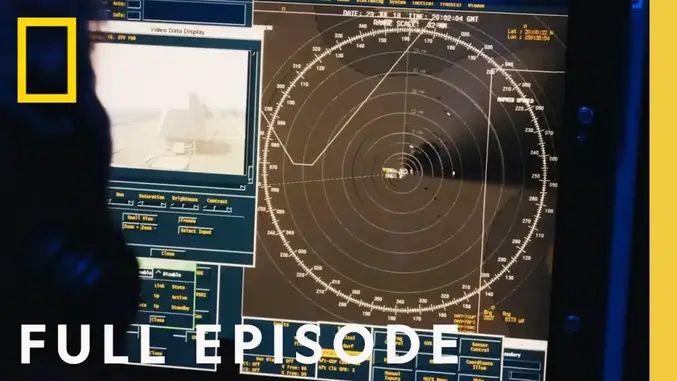
Secret Pentagon Program (Full Episode) | UFOs: Investigating the Unknown
Despite the groundbreaking nature of its investigations, the AATIP faced internal challenges, particularly regarding the dissemination of its findings within the Pentagon and to the public. Elizondo’s frustration with the bureaucratic hurdles and the stigma associated with UAP research led to his resignation. His departure was not an act of defiance but a strategic move to bring the program’s discoveries to the public eye, catalyzing a broader conversation about the phenomenon.
The revelation of the AATIP has significantly impacted the public and scientific discourse surrounding UAPs. No longer relegated to the fringes of serious study, the acknowledgment of these phenomena by the Pentagon has paved the way for a more open and rigorous examination. It raises fundamental questions about our understanding of technology, physics, and perhaps most intriguingly, the possibility of otherworldly visitors.
The AATIP’s legacy is not just in its pursuit of the unknown but in its contribution to destigmatizing the study of UAPs. By bringing the conversation into the mainstream, it challenges us to confront the limits of our knowledge and the vastness of the unknown with an open mind. The program serves as a reminder that the pursuit of understanding is an endless journey, one that requires curiosity, courage, and, above all, an unwavering commitment to the truth.
Waarom de wereld in 2026 zou kunnen vergaan, aldus deze wetenschapper Volgens natuurkundige Heinz von Foerster wordt 2026 een heel slecht jaar voor de mensheid. Terwijl de wereldbevolking blijft toenemen, samen met de voedselonzekerheid, verstedelijking, ontbossing en klimaatverandering, voorspelt Van Foerster dat 2026 het jaar zal zijn waarin deze factoren een kookpunt zullen bereiken. Het interessante is, zoals je in deze galerij zult zien, hoe hij tot die voorspelling kwam, en wat we kunnen doen om dit vreselijke lot te voorkomen.
LEES dus VERDER door deze galerij om te zien wat er kan gebeuren en hoe je mogelijk kunt bijdragen aan het redden van de wereld!
Inleiding tot de voorspelling van Heinz von Foerster Natuurkundige Heinz von Foerster, geboren in 1911, voorspelde dat er in 2026 catastrofale bevolkingsniveaus zouden kunnen optreden, waarbij hij wiskunde gebruikte om een 'Doomsday'-scenario te voorspellen waarin hulpbronnen de menselijke groei niet kunnen ondersteunen.
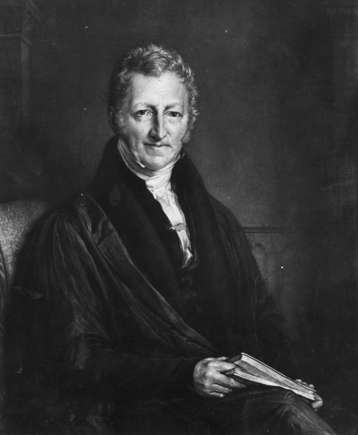
Historische perspectieven op bevolkingsgroei De Engelse econoom Thomas Robert Malthus, geboren in 1766, theoretiseerde dat de bevolkingsgroei altijd groter zal zijn dan de voedselvoorziening. Hij beweerde dat de verbetering van de mensheid onmogelijk is zonder strikte beperkingen op de voortplanting. Technologische vooruitgang op het gebied van landbouw en voedselproductie heeft de situatie sinds Malthus' tijd verbeterd, maar overbevolking is nog steeds een groot probleem.
De wiskunde achter de doemdagtheorie van 2026 De voorspelling van Von Foerster is geworteld in complexe vergelijkingen, die voorspellen dat de exponentiële bevolkingsgroei in 2026 een onhoudbaar niveau zal bereiken.
Technologische vooruitgang in de voedselproductie Technologische innovatie heeft de voedselproductie aanzienlijk vergroot, waardoor de Malthusiaanse crisis is afgewend, maar ook vragen rijzen over de duurzaamheid op de lange termijn en de impact op het milieu.
Het debat over geboortebeperking en bevolkingsbeheer De theorie van Von Foerster wakkert de discussies over geboortebeperking en ethisch bevolkingsbeheer opnieuw aan als instrumenten om potentiële overbevolkingscrises te voorkomen.
Het concept van een 'Peoplo-stat' De 'peoplo-stat' stelt een regelgevend mechanisme voor om de bevolking op een duurzaam niveau te houden, waarbij de nadruk wordt gelegd op proactieve maatregelen boven reactieve oplossingen.
Ethische overwegingen bij bevolkingscontrole Bevolkingscontrolemaatregelen, waaronder geboortebeperking, leiden tot ethische debatten, waarbij individuele rechten in evenwicht worden gebracht met collectief welzijn en ecologische duurzaamheid.
Mondiale implicaties van een ongecontroleerde bevolkingsgroei Als er geen systemen worden ingevoerd om de rijkdommen en hulpbronnen van de wereld gelijkmatiger te verdelen, zou een ongecontroleerde bevolkingsgroei een risico voor het milieu kunnen vormen en tot nog ernstiger sociaal-economische verschillen kunnen leiden, waardoor een mondiale reactie noodzakelijk is.
Scepsis en kritiek op de voorspelling van de dag des oordeels Critici van Von Foersters voorspelling beweren dat menselijk vernuft en toekomstige technologische vooruitgang de risico's van overbevolking kunnen verkleinen.
Milieu-impact van overbevolking Overbevolking versnelt de milieuproblemen, van de vernietiging van habitats tot klimaatverandering, wat de noodzaak van duurzame strategieën voor bevolkings- en hulpbronnenbeheer onderstreept.
Sociale en economische gevolgen van de bevolkingsgroei De snelle bevolkingsgroei zet de economieën onder druk en vergroot de sociale ongelijkheid, waardoor beleid nodig is dat een rechtvaardige groei en een verdeling van de hulpbronnen bevordert.
Technologische oplossingen en duurzame ontwikkeling Het omarmen van duurzame technologieën is van cruciaal belang om de bevolkingsgroei in evenwicht te brengen met het behoud van het milieu, waardoor de behoefte aan groene innovaties wordt gestimuleerd.
De rol van internationale samenwerking bij bevolkingscontrole Mondiale uitdagingen vereisen uniforme antwoorden; internationale samenwerking op het gebied van bevolkingsbeheer kan leiden tot gedeelde oplossingen voor duurzaamheid.
Culturele houding ten opzichte van gezinsgrootte Culturele normen hebben een aanzienlijke invloed op beslissingen over gezinsplanning, wat het belang van cultureel gevoelige benaderingen van bevolkingscontrole benadrukt.
Historische nauwkeurigheid van doemscenario-voorspellingen Eerdere voorspellingen van bevolkingscrises zijn vaak onjuist gebleken, wat de complexiteit van het voorspellen van de menselijke ontwikkeling en het gebruik van hulpbronnen aantoont.
De psychologische impact van bevolkingsangst Bezorgdheid over de bevolkingsgroei kan het maatschappelijk welzijn beïnvloeden, wat de noodzaak van een geïnformeerd discours en proactieve beleidsvorming onderstreept.
Verstedelijking en de effecten ervan op de bevolkingsdynamiek De snelle verstedelijkingstrend verandert de bevolkingsverdeling en vereist innovatieve benaderingen van stadsplanning en hulpbronnenbeheer. Dit gebeurt zo snel dat veel gebieden het helemaal niet meer kunnen bijhouden.
Landbouwinnovaties om de groeiende bevolking te ondersteunen Vooruitgang in de landbouw, inclusief genetisch gemodificeerde gewassen en duurzame landbouwpraktijken, is van cruciaal belang voor het voeden van de groeiende wereldbevolking.
Het garanderen van de voedselzekerheid voor een groeiende wereldbevolking vereist innovatieve strategieën die de productie verhogen en de verspilling verminderen.
Onderwijs en zijn rol in bevolkingsbeheer Onderwijs, vooral op het gebied van reproductieve gezondheid en gezinsplanning, speelt een cruciale rol bij het beheersen van de bevolkingsgroei en het in staat stellen van individuen om weloverwogen beslissingen te nemen.
Vooruitgang in de gezondheidszorg en hun impact op de bevolkingsgroep Verbeteringen in de gezondheidszorg dragen bij aan lagere sterftecijfers en een langere levensduur, waardoor samenlevingen worden uitgedaagd zich aan te passen aan de daaruit voortvloeiende demografische veranderingen.
Het belang van biodiversiteit bij het in stand houden van de menselijke bevolking Biodiversiteit ondersteunt vitale ecosysteemdiensten waarvan mensen afhankelijk zijn om te overleven, en benadrukt de noodzaak van natuurbehoud te midden van de toenemende bevolkingsdruk.
Waterschaarste en bevolkingsdruk Naarmate de bevolking groeit, groeit ook de vraag naar water, wat leidt tot schaarsteproblemen die innovatieve beheer- en instandhoudingsstrategieën vereisen.
Hernieuwbare energieoplossingen voor duurzaam leven De transitie naar hernieuwbare energiebronnen is essentieel voor het duurzaam ondersteunen van grote bevolkingsgroepen en het verminderen van de afhankelijkheid van eindige hulpbronnen.
De impact van klimaatverandering op de duurzaamheid van de bevolking Klimaatverandering vormt een aanzienlijke bedreiging voor de duurzaamheid van de bevolking, waardoor dringend actie moet worden ondernomen om de gevolgen ervan te verzachten en zich aan te passen aan de nieuwe realiteit.
Economische modellen voor het beheersen van de bevolkingsgroei Het ontwikkelen van economische modellen die rekening houden met de bevolkingsgroei en de beperkingen van de hulpbronnen kan de duurzame ontwikkeling sturen en een eerlijke verdeling van de hulpbronnen garanderen.
Sociale rechtvaardigheid en gelijke toegang tot hulpbronnen Het aanpakken van de bevolkingsgroei vereist een focus op sociale rechtvaardigheid, waarbij gelijke toegang tot hulpbronnen en kansen voor alle geledingen van de samenleving wordt gewaarborgd.
De erfenis van Malthus in hedendaagse bevolkingsdebatten De theorieën van Malthus blijven de huidige discussies over bevolkingsgroei beïnvloeden en benadrukken de aanhoudende bezorgdheid over de menselijke duurzaamheid.
Verder kijken dan 2026: langetermijnvisies voor de mensheid Hoewel 2026 in Von Foersters theorie een cruciaal jaar is, moet de langetermijnvisie voor de mensheid strategieën voor duurzame groei en hulpbronnenbeheer omvatten.
Black UFO over ocean in Tampa, Florida, March 5, 2024, UAP Sighting News.
Here is a water UFO, a craft seen hovering over the ocean area off Florida coast. All UFOs can fly underwater, but for some odd reason the US gov labels them USO instead of UFO. However any alien craft capable of flight through space is also capable of moving underwater, just slower. This particular UFO is very similar to the ones seen in some of the US gov released UFO video. Also, the distortion field around the Black UFO is proof that it's real. Alien propulsion systems create this field around them. This is 100% real alien tech here.
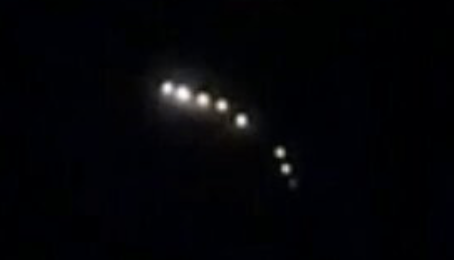
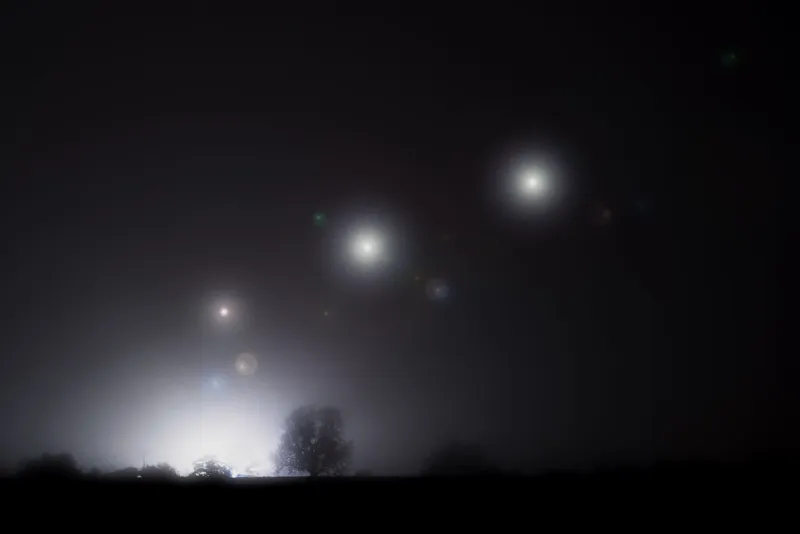
String of UFOs over Lowville, New York, USA on March 7, 2024, UAP Sighting News.
Watch this amazing fleet of UFOs over New York States last week as almost a dozen glowing orbs come out of a single UFO sphere. This is absolute proof that aliens are over New York and zero fear of being seen in public places. It looks like we can expect big things coming from NY in the coming weeks.
It flew in a large oval over an area of about 2 miles, it was the size of a car, flying about 12,000 ft high at about 40 mph. So very bright, fluctuating red to orange, turned blue before disappearing, flew steady not erratic. It made no sound. Video is only half because I lost time retrieving my phone. Close up pic is edited for clearest photo.
Giant UFO over China on doppler radar weather map, March 29, 2024, UAP sighting news.
Hey all, I found this using a world weather map and it looks to be a giant UFO thats hundreds of miles across over the coast of China. This massive craft was seen there for over 30 minutes and its absolute proof that aliens are in our skies and watching over the world as we speak.
Verbijsterende oude uitvindingen die de wetenschap nog steeds niet kan verklaren Het is makkelijk om de evolutie van technologie te zien als een lineair proces. Beginnend bij de meest primitieve eenvoudige machines tot de zelfrijdende auto's en kunstmatige intelligentie die we vandaag hebben. Maar dat klopt niet helemaal. Sommige oude culturen slaagden erin om verbijsterend complexe en geavanceerde uitvindingen te ontwikkelen met behulp van technieken en kennis die uit het niets leken te komen. En sommigen daarvan hebben we met onze huidige middelen en kennis nooit weten te repliceren. Voor wetenschappers en historici blijft het dan ook een mysterie hoe ze er vroeger ooit in slaagden tot deze uitvindingen te komen.
Gefascineerd? LEES verder en ontdek enkele onverklaarbare uitvinden uit de geschiedenis.
Grieks vuur Tijdens de zevende eeuw werd het Byzantijnse rijk aangevallen door indringers uit het oosten van de Middellandse Zee. Gelukkig hadden ze een geheim wapen, bekend als Grieks vuur, dat vanaf Byzantijnse schepen op vijandelijke schepen werd gespoten. Dit werd gedaan met een apparaat dat nooit is nagemaakt, maar in de oude literatuur een 'sifon' wordt genoemd.
Grieks vuur Het meest verbijsterende aspect is dat Grieks vuur kan blijven branden, zelfs op water. Wetenschappers weten nog steeds niet waar het van gemaakt is. Na de val van het Byzantijnse rijk verdween het oude vuurwapen om nooit meer te worden gebruikt.
Damascus-staal Tijdens de kruistochten verschenen er rapporten die een superieur staal uit de Levant documenteerden dat ongelooflijk scherp en flexibel was en maar onbreekbaar scheen te zijn.
Damascus-staal Het werd ooit beschreven als een legering die 'door een zwevende zakdoek kon snijden, 90 graden kon buigen en terug kon buigen zonder schade op te lopen.' Tot op de dag van vandaag heeft niemand het originele recept kunnen repliceren.
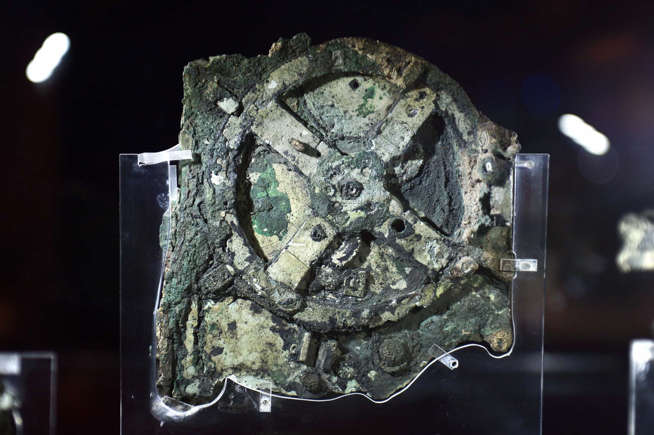
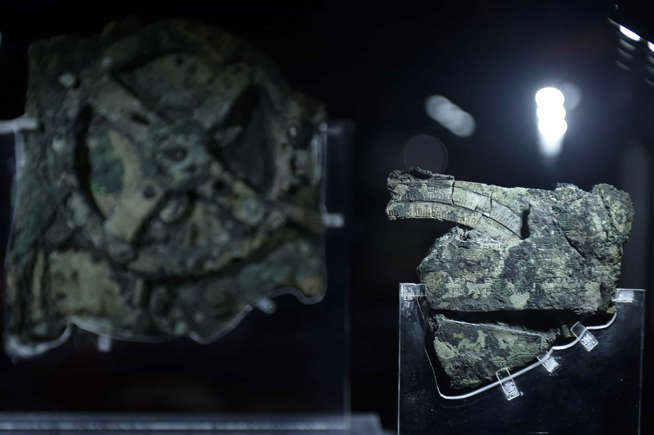
Antikythera mechanisme In 1901 werd een vreemd mechanisch apparaat gevonden op de bodem van de Middellandse Zee. Dit item staat nu bekend als het Antikythera-mechanisme en dateert uit het Griekenland van de tweede eeuw.
Antikythera mechanisme Hoewel wordt aangenomen dat het een soort astronomisch rekenapparaat is, weet niemand wie het heeft gebouwd of hoe ze het hebben gebouwd, aangezien technologie van een vergelijkbare complexiteit bijna duizend jaar niet meer is gezien.
De eerste seismoscoop De seismoscoop van Zhang Heng werd rond 132 in China gemaakt. Men denkt dat het de eerste machine in zijn soort was en aardbevingen met een verrassende nauwkeurigheid kon detecteren. De gebruikte technologie was zijn tijd ver vooruit en historici weten nog steeds niet hoe deze sprong mogelijk was.
De eerste seismoscoop Elke draak vertegenwoordigt een hoofdkompasrichting, en een bal zou uit een van de monden van de draak in de mond van de bijbehorende kikker vallen, wat aangeeft in welke richting de seismische activiteit plaatsvond.
De ijzeren pilaar van Delhi In Delhi, India, staat een massieve ijzeren pilaar van 7,21 meter hoog. Hij staat er al sinds de vierde eeuw. Wat deze specifieke pilaar interessant maakt, is dat hij volledig vrij is van roest, zelfs na meer dan een millennium blootgesteld te zijn aan de natuurlijke elementen.
De ijzeren pilaar van Delhi Tot op de dag van vandaag staan wetenschappers versteld van de onberispelijke staat van de ijzeren pilaar. Sommigen geloven dat het gebrek aan roest te wijten is aan het droge klimaat van Delhi, terwijl anderen denken dat het komt door de unieke minerale samenstelling van het ijzer dat voor de constructie is gebruikt.
De aeolipil Hoewel het tijdperk van stoom pas in 1776 door Thomas Newcomen en zijn stoommachine werd afgetrapt, vond een oude Griekse uitvinder met de naam Reiger Alexandrinus zijn eigen pneumatische stoommachine uit in de eerste eeuw n.Chr.
De aeolipil De technologie was baanbrekend, maar werd zwaar ondergewaardeerd en werd destijds niet praktisch gebruikt. Deze eerste stoommachine was erg zwak en produceerde slechts een minimale hoeveelheid koppel. Desalniettemin was het toch bijzonder!
Het Voynich-manuscript Het Voynich-manuscript is een van de meest mysterieuze boeken in de geschiedenis en heeft sinds de ontdekking in 1912 zelfs de beste cryptologen in de ban gedaan. Het dateert uit de 15e eeuw, maar dat is dan ook alles wat zeker is over het boek.
Het Voynich-manuscript Hoewel niemand het met zekerheid kan zeggen, geloven de meeste experts dat het manuscript tijdens de Renaissance in Italië is ontstaan. Het is geschreven in een taal waarvan is bewezen dat het onmogelijk te decoderen is, en het staat vol met schijnbaar wetenschappelijke tekeningen van flora waarvan niet bekend is dat ze in de natuurlijke wereld voorkomen.
De Indiase vliegmachines Er zijn een aantal meldingen van vliegmachines die dateren van lang voor de historische succesvolle vlucht van de gebroeders Wright. Misschien is de oudste die tot nu toe is gevonden de 'Rukma Vimana', een oude Vedische tekst die teruggaat tot 400 v.Chr. in India.
De Indiase vliegmachines De Rukma Vimana, toegeschreven aan Maharshi Bhardwaj (foto), bevat schetsen van deze vliegmachines, evenals gedetailleerde instructies over hoe ermee te vliegen en zelfs hoe ze in tijden van nood op zonne-energie kunnen worden overgeschakeld.
De Lycurgus-beker De Lycurgus-beker zou in de vierde eeuw zijn gemaakt, ergens in het Romeinse rijk. Toen de beker naar het British Museum of London werd gebracht, waren de curatoren daar verbaasd over het vermogen om van kleur en transparantie te veranderen, afhankelijk van uit welke richting het licht erop viel.
De Lycurgus-beker Wanneer het van voren wordt verlicht, is de beker donkerrood van kleur, maar wanneer het van de achterkant wordt verlicht, gloeit het groen. Onderzoekers hebben sindsdien geconcludeerd dat het is gemaakt met behulp van een primitieve vorm van nanotechnologie, maar hoe de oude Romeinen deze technologie hebben ontwikkeld, blijft een mysterie.
Oude atoomoorlogvoering De Mahabharata wordt beschouwd als een niet-fictief verslag van een lange en oude oorlog tussen twee Indiase stamfamilies. Sommige momenten van geweld en verwoesting in het boek lijken griezelig veel op de nasleep van een atoomexplosie, waarbij miljoenen levens worden geëist binnen enkele dagen na het gebruik van wapens. Die wapens werden in het oorspronkelijke Sanskriet 'astra' worden genoemd, oftewel 'lanceerders'.
Oude atoomoorlogvoering Dit lijkt natuurlijk onmogelijk, maar toen er studies werden gedaan in de regio van India waar deze veldslagen plaatsvonden, vonden ze een onverklaarbaar hoog aantal kankers en geboorteafwijkingen onder de oude bewoners. Noch wetenschappers noch historici hebben enig licht kunnen werpen op dit mysterie.
Dokter Sushruta Sushruta was een Indiase arts uit de negende eeuw die regelmatig operaties en medische prestaties uitvoerde die in zijn tijd waarschijnlijk wonderen leken. Veel van deze prestaties zijn vastgelegd in zijn boek Sushruta Samhita.
Dokter Sushruta Sushruta documenteert hoe hij operaties uitvoert die zelfs volgens de huidige normen moeilijk zijn, waaronder succesvolle cataractverwijderingen, neusreconstructie en schijnbaar zelfs succesvolle prothetische operaties.
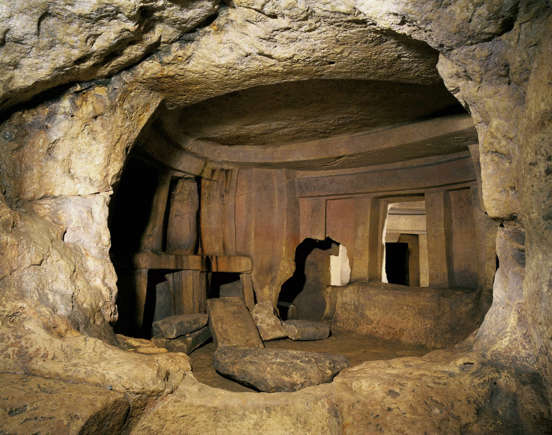
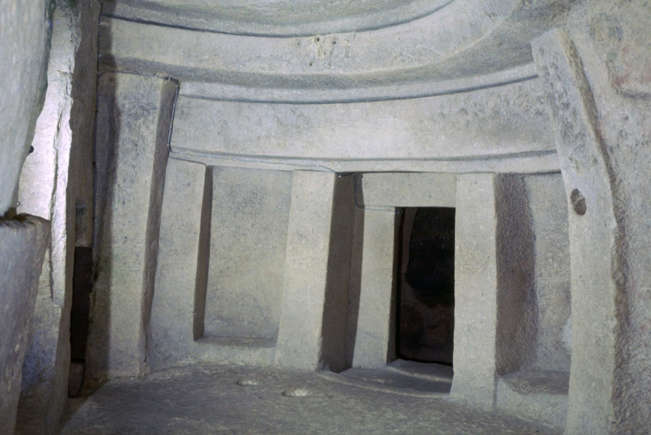
Het hypogeum van Hal Saflieni Onder het eiland Malta ligt een uitgestrekte ondergrondse necropolis die bekend staat als het Hypogeum van Hal Saflieni. Oorspronkelijk ontdekt in 1902, geloven experts dat het rond 2500 v.Chr. uit kalksteen is gehouwen.
Het hypogeum van Hal Saflieni Een bepaalde kamer, nu bekend als de orakelkamer, verbijstert wetenschappers tot op de dag van vandaag. Elk geluid dat in deze kamer wordt gemaakt, wordt bijna 100 keer versterkt. Een verbluffend staaltje oude akoestiek. Wetenschappers weten niet zeker of dit opzettelijk is gedaan vanwege onverklaarbare geavanceerde technieken, of gewoon toeval was.
Romeins beton Beton staat al lang bekend als een van de eenvoudigste en meest betrouwbare bouwmaterialen die we hebben. Hoewel je redelijkerwijs zou kunnen aannemen dat het proces van het mengen van beton in de loop van de tijd alleen maar is verbeterd, blijkt dat de oude Romeinen veel betere betonmakers waren dan wij.
Romeins beton Sommige Romeinse betonconstructies hebben meer dan 2000 jaar standgehouden, soms zelfs onder water. Hoewel wetenschappers de samenstelling van het oude beton nauwkeurig hebben bestudeerd en sporen hebben gevonden van vulkanische as en het mineraal leuciet, waarvan ze vermoeden dat het de geheime ingrediënten zijn, zijn ze er nog steeds niet in geslaagd het materiaal te recreëren.
Zonnestenen van de Vikingen Oud-Noorse verhalen vertellen over een magische steen die onmisbaar was voor Vikingen die de verraderlijke zeeën overstaken. Van deze steen werd gezegd dat hij met onverklaarbare nauwkeurigheid de positie van de zon aanduidde, zelfs als het bewolkt was.
Zonnestenen van de Vikingen Wetenschappers geloven tegenwoordig dat deze stenen brokken IJslandse spar of calciet zijn, waarvan bekend is dat ze polariserende effecten hebben. Maar experts hebben het proces van het gebruik van deze stenen om de zon te lokaliseren niet kunnen repliceren.
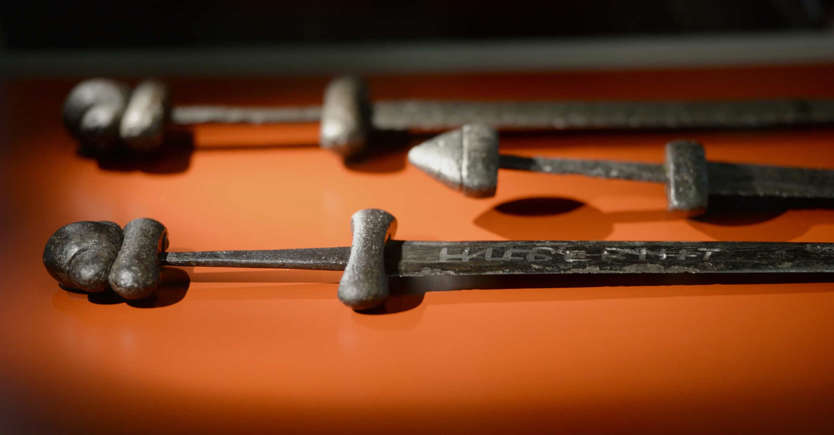
Ulfberht-zwaarden Net als bij de Damascus-zwaarden uit het Midden-Oosten, zijn onderzoekers stomverbaasd als het gaat om de samenstelling van de oude Ulfberht-zwaarden van Noord-Europa. Deze zwaarden werden veel gebruikt tijdens het Vikingtijdperk en waren gemaakt van staal dat zo sterk en zo puur is dat het niet lijkt te passen bij de smelt- en metallurgietechnieken waarvan bekend is dat ze destijds werden gebruikt.
Ulfberht-zwaarden Een specifiek Ulfberht-zwaard (niet afgebeeld), ontdekt in 2014, was gegraveerd met Arabische letters, waardoor sommigen geloofden dat de vroege handel tussen de twee culturen het mogelijk maakte dat sommige van de Damascus-technieken door de Noord-Europeanen werden overgenomen.
Romeinse dodecaëder Een van de meest blijvende mysteries van het oude Europa is die van de Romeinse dodecaëder. Ze zijn overal in Europa ontdekt, variëren in grootte en dateren allemaal uit de tweede tot de vierde eeuw na Christus.
Romeinse dodecaëder Hoewel hun complexe vormen en onheilspellende knoppen die aan elk punt uitsteken, lijken aan te geven dat ze een functie moeten hebben gehad, is nooit ontdekt waar ze voor werden gebruikt. Sommige deskundigen zijn van mening dat binnen de wetenschap wordt gezocht naar betekenis, terwijl die niet bestaat. Ze denken dat het simpelweg speelgoed was voor Romeinse kinderen.
There’s a reason why The X-Filesnever continued beyond its 2016 revival. Long-term fans didn’t take well to the reboot of the ‘90s classic, but producers at Fox knew what they had. The X-Files in its prime was the rare left-of-field procedural, one that would go on to inspire everything from Supernatural and True Detective to Breaking Bad and Homeland. It would also make the studio exorbitantly rich, so Fox was prepared to greenlight the series for another season, ratings be damned. It was Chris Carter, the creator and longtime steward of The X-Files, who put his foot down.
“I needed some time off,” Carter tells Inverse. “I wanted to go surfing.”
Carter’s been a surfer much longer than he’s been in television. Apart from writing, Carter is also a multimedia artist, creating pottery, prints, and photo collages that stand almost in defiance to his legacy with The X-Files.
Chief among his works, which he recently exhibited at Legacy West Media in Los Angeles, is a piece called “My Crowning Achievement.” Its design doesn’t feature Fox Mulder or Dana Scully, the FBI agents he helped bring to life in The X-Files, but a gold leaf-dusted motif of Hello Kitty. The true purpose of this artwork remains a mystery, and the same could be said for the bulk of the work in the Chris Carter Collection.
Carter’s flagship piece, the cheekily-named “My Crowning Achievement.”
“Every piece in here is personal,” Carter says. “Showing them to people, it’s exposing yourself a little bit.” That’s why Carter never outright explains the story behind any one composition. He’d rather let it speak for itself — or rather, field guesses from his audience. “Everyone is always like, What’s ‘My Crowning Achievement’? And why are there Hello Kittys on it? I’ll tell you that it all works for me in my mind.”
At 67, Carter has more than earned the right to a little introspection. The X-Files was an improbable phenomenon, one enjoyed by millions all over the world — but it was also a piece of Carter’s soul. For over 30 years he’s shared it with the world, and its legacy has followed him everywhere, even bleeding into some of his art.
Standing amongst his personal, once-private projects, you get the sense that Carter has well and truly moved on from The X-Files. The show, of course, is never far from his mind — and he’s happy to share anecdotes about his tenure. With its 30th anniversary finally in the rear view, however, Carter seems ready to move into the next chapter. Even if it doesn’t make sense to Hollywood, there’s likely no better time to forge ahead.
“INTENSE” NOSTALGIA
Carter had to fight hard for the core cast of The X-Files. “They didn’t understand what I was trying to do with the show,” he admits of Fox.
It’s a sunny, windy day in Downtown LA — perfect surf weather — when Carter and I meet at Legacy West. His exhibition concluded the night before, and the bulk of his pieces are about to be scattered to the winds. Though I’ve caught the tail end of the showcase, select prints are available to purchase through the gallery’s website.
By all accounts, the show was a success, but Carter is still surprised by its reception. “I hope it’s a hit,” he says quietly. “And I hope I get to make more art. That’s really what I do.”
Carter majored in art at California State University, Long Beach, and put himself through school making pottery. Being a craftsman, he says, is not unlike the act of making a TV show. “You’re doing the same thing every day, the same 10 things every day. You’re coming up with an idea. You’re plotting the idea that you just came up with. You’re writing the idea you just plotted.” And on and on, from pre-production to post and editing to special effects.
“You’re doing all those things every day,” Carter says, a real fire in his eyes. “Every day. The clock is ticking and the pressure is on.”
From the outside looking in, it sounds like hell. But Carter was clearly forged in that fire, and though he’s content without it, he does seem to miss it on occasion.
“My wife and I, we were just on the road driving for nine hours,” Carter says. “She says, ‘Don't you get tired of this?’ I said, ‘No, I love the intensity of it. It reminds me of producing television.’”
The Chris Carter Collection featured a few pieces of memorabilia from The X-Files.
There aren’t many reminders of The X-Files in his exhibition, but there were a few small tokens for fans of the series. In one corner of the studio, almost as a consolation prize, rests a case full of coveted memorabilia: an alien prop mask, a director’s slate from the revival, and the original casting sheet from the ‘90s.
The latter comes complete with Carter’s handwritten notes from auditions. Alongside David Duchovny’s name, who auditioned against hundreds for the role of Mulder: a simple “Yes.” Carter had similar feelings for Gillian Anderson, who went on to play Scully, but casting the actor wouldn’t be so easy.
“For Gillian I wrote ‘Test,’ which means I wanted to take her before the studio and the network,” Carter says.
“They didn’t understand what I was trying to do with the show.”
Fox famously wanted a bombshell type for Scully, ideally someone like Pamela Anderson. “Where’s the sex appeal?” Carter recalls executives saying. “Even though Gillian's beautiful, she wasn't their idea of sexy. First, because they didn’t understand what I was trying to do with the show. And she was an unknown, so that never helps.”
Duchovny, too, was a relative unknown, which made both castings more of a gamble than most realize now. But as the story goes, Carter fought hard for the actors, Fox conceded, and the rest is history.
“Ancient history,” Carter says wryly.
THE TRUTH IS (STILL) OUT THERE
Carter has officially moved on from The X-Files: “I’m looking forward to seeing what somebody else does with it.”
FOX/FOX IMAGE COLLECTION/GETTY IMAGES
With or without Carter, The X-Files is too big a property to abandon outright. Fox is still keen to continue the series by any means necessary — but with Carter focusing on other projects, the studio has put its faith in a new director.
The fate of The X-Files now rests in the hands of Black Panther and Creed director Ryan Coogler. Carter isn’t involved in any capacity, but he’s content to cheer from the sidelines. “It’s interesting, people say, ‘Aren't you possessive of it?’ And I say, ‘No, I’m looking forward to seeing what somebody else does with it,’” Carter says.
The pair had “a really nice conversation” when Coogler first pitched the reboot to Fox: “I just asked him what his ideas were, and he told me, and I said, ‘Those sound like good ideas.’”
So the blessing is secured, but that’s really only half the battle as far as Carter’s concerned. “No matter what, he's got a hard job,” he says. “Casting is a hard job. Mounting it is a hard job. All the problems that I dealt with are going to be his problems.
The world of The X-Files is getting a diverse reboot from Black Panther’s Ryan Coogler.
Equally tricky will be tackling new ideas of “conspiracy” in such a cynical, post-modern age. The term doesn’t mean the same thing as it did when Carter first built a show around it — now, it’s taken on a more dangerous connotation. The X-Files effectively predicted QAnon, #PizzaGate, and anti-vax conspiracies. Those fringe superstitions have since been co-opted by a vocal, and dangerous, minority.
“Everything's a conspiracy,” Carter sighs. “No one knows what the truth is. It’s completely subjective and relative now.”
He’s thinking specifically of Kate Middleton, Princess of Wales, who became the subject of endless conspiracy theories after a prolonged public absence. Just hours before Carter and I met at Legacy West, Princess Kate broke her silence by sharing a cancer diagnosis. The dubious online reaction to that very personal news has been weighing heavily with Carter.
“No one knows what the truth is. It’s completely subjective and relative now.”
“Can you imagine, first of all, being sick — but then everyone’s got a take on it? The most private thing becomes the most public thing, and then the most misunderstood thing.”
It’s hard not to think about The X-Files, and the skepticism it might have encouraged, in the face of all that. “You do a show like this, [and] there’s media done on you and it’s like, what does that spawn? What does that produce? What is the result of that thing? It’s not always good.”
To paraphrase the series’ most iconic adage, the truth is still out there, but what does the search for that look like in an era of such harsh political divides, perpetual surveillance, and a rampant distrust in our government? Carter isn’t entirely sure, but he trusts Coogler to figure it out.
CARTER’S SECOND ACT
Carter is developing a new project with his wife, but it won’t be another sci-fi series.
DREW BLY 'POCKETS'/SHUTTERSTOCK
Nowadays, Carter prefers to speak through his art, a pursuit that’s evident from his politically-charged “Hate Plates.” He remains coy as ever as he shows me a large ceramic plate, one of a series inspired by dinner conversations about a public figure who shan’t be named. Labels like “orange,” “petulant,” “vain” and “friendless” trace a hypnotic sphere around the dish.
The work speaks for itself, and it’s probably the most overt of Carter’s art on display. Most are clever, ironic plays on words superimposed over excerpts from novels and faded scripts. There’s also a UFO triptych consisting of three black-and-white photos that could have been taken either underwater or among the stars.
“I walk outside every night and stare up at the sky,” Carter says, offering a partial explanation. He does it to ground himself and regain some of that childlike wonder that gets “beaten out of” us all. “Just walking outside at night, it's the simplest thing to do,” he says wistfully.
Carter strikes you as a filmmaker with a deep love of nature — even when it’s not convenient.
He directs us to two towering collages of photographs, positioned back-to-back instead of side-to-side. Each features hundreds of images of the same tree, potentially taken over years.
“I lived in a house for a decade, and this was my view for that decade,” he explains. “I’ll call it a perfect ocean view, except for that tree.” The tree stood on the boundary between his property and his neighbor’s, and she refused to cut it down. Carter exhumed his frustration by photographing it daily. Now those photographs live on in “Xanax,” a straightforward side-by-side collage, and “Manic,” which ups the saturation of each image to lend a psychotropic, Andy Warhol feel.
“You’ve gotta be ready for anything.”
There’s no denying the sense of humor in any of Carter’s pieces. His work is the real deal, and he’s clearly well-suited to it. That said, he’s not giving up on television, even if he’s left The X-Files behind. He's currently developing a project with his wife, one decidedly outside of the genre he’s best known for. He’ll also coach film students through TV production on occasion.
“Right now, I’m going to talk to a class of college students about producing the show,” Carter says just before we part ways. “And everybody asks, ‘What’s it like? Can you give us any hints?’”
He recounts another story about a bleary-eyed commute, this time as he’s driving from his home in Santa Barbara to work in Hollywood. “I was still half-asleep, but I see something up ahead on the freeway.” It was a pig — “a giant sow” — creeping from the median to the shoulder. He called 911 to alert them about this massive pig, of course, but they already knew. “Now I’ll say to my students: ‘Whatever you do, be ready for the pig on the freeway. You’ve gotta be ready for anything.’”
ALH84001, which is one of the most famous meteorites ever recovered, helped catapult the field of astrobiology to new heights when scientists uncovered what initially appeared to be microscopic bacteria fossils within this meteorite, though those findings remain inconclusive to this day. (Credit: NASA)
Meteorites: Why study them? What can they teach us about finding life beyond Earth?
Universe Today has explored the importance of studying impact craters, planetary surfaces, exoplanets, astrobiology, solar physics, comets, planetary atmospheres, planetary geophysics, and cosmochemistry, and how this myriad of intricately linked scientific disciplines can assist us in better understanding our place in the cosmos and searching for life beyond Earth. Here, we will discuss the incredible research field of meteorites and how they help researchers better understand the history of both our solar system and the cosmos, including the benefits and challenges, finding life beyond Earth, and potential routes for upcoming students who wish to pursue studying meteorites. So, why is it so important to study meteorites?
Dr. Alex Ruzicka, who is a Professor in the Department of Geology at Portland State University, tells Universe Today, “They provide our best information about how the solar system formed and evolved. This includes planet formation. We also obtain information on astrophysics (stellar processes) through studies of pre-solar grains.”
There is often confusion regarding the differences between an asteroid, meteor, and meteorite, so it’s important to explain their respective differences to help better understand why scientists study meteorites and how they study them. An asteroid is a physical, orbiting planetary body that is primarily comprised of rock, but can sometimes be comprised of additional water ice, with most asteroids orbiting in the Main Asteroid Belt between Mars and Jupiter and the remaining orbiting as Trojan Asteroids in the orbit of Jupiter or in the Kuiper Belt with Pluto. A meteor is the visual phenomena that an asteroid produces as it burns up in a planet’s atmosphere, often seen as varying colors from the minerals within the asteroid when heated up. The pieces of the asteroid that survive the fiery entry and hit the ground are called meteorites, which scientists’ study to try and learn about the larger asteroid body it came from, and where that asteroid could have come from, as well. But what are some of the benefits and challenges of studying meteorites?
Dr. Ruzicka tells Universe Today, “Benefits: scientific knowledge, information on potential resources (e.g., metals, water) for humans to utilize, information on how to link meteorites and asteroids, which can provide information on space collision hazards for Earth. Challenges: compared to Earth rocks, we lack field evidence for their source bodies and parent bodies (how they relate to other rocks), we have to factor in the element of time that is longer for space rocks than for Earth rocks, and sometimes we are dealing with formation environments completely unlikely what we have on Earth. So, the challenges are big and many.”
According to NASA, more than 50,000 meteorites have been retrieved from all over the world, ranging from the deserts of Africa to the snowy plains of Antarctica. In terms of their origins, it is estimated that 99.8 percent of these meteorites have come from asteroids, with 0.1 percent coming from the Moon and 0.1 percent coming from Mars. The reason why we’ve found meteorites from the Moon and Mars is due to pieces of these planetary bodies being catapulted off their surfaces (or sub-surfaces) after experiencing large impacts of their own, and these pieces then travel through the Solar System for thousands, if not millions, of years before being caught in Earth’s gravity and the rest is history. Therefore, with meteorites originating from multiple locations throughout the Solar System, what can meteorites teach us about finding life beyond Earth?
Morgan Nunn Martinez, who was a PhD student at UC San Diego, and Dr. Alex Meshik seen photographing and measuring a meteorite specimen in Antarctica’s Miller Range during the 2013-2014 Antarctic Search for Meteorites (ANSMET) program field season. (Credit: NASA/JSC/ANSMET)
“That the ingredients for making life formed in space and were delivered to Earth,” Dr. Ruzicka tells Universe Today. “We know organic molecules formed in gas clouds, were incorporated in our solar system, and processed in asteroidal and cometary bodies under higher temperatures in the presence of water. These were then delivered to Earth which wouldn’t have been very hospitable in early times due to sterilizing impacts. We also know that there must have been a lot of planetary rock swapping early when impact rates were high. Life itself may have been transplanted to Earth from Mars.”
As it turns out, one of the most fascinating meteorites ever recovered did come from Mars, which was identified as ALH84001, as it was found in Allan Hills of Antarctica on December 27, 1984, during the 1984-85 field season where researchers from all over the world gather in Antarctica to search for meteorites using snowmobiles. Despite being collected in 1984, it wasn’t until 1996 that a team of scientists discovered what initially appeared to be evidence of microscopic bacteria fossils within the 1.93-kilogram (4.25-pound) meteorite.
ALH84001, which is one of the most famous meteorites ever recovered, helped catapult the field of astrobiology to new heights when scientists uncovered what initially appeared to be microscopic bacteria fossils within this meteorite, though those findings remain inconclusive to this day. (Credit: NASA)
This immediately made headlines across the globe, resulting in countless non-scientific claims that these microfossils were clear evidence of life on Mars. However, both the researchers of the initial study and the scientific community were quick to point out the unlikelihood that these features resulted from life based on other observations made about ALH84001. For example, while ALH84001 is estimated to be 4.5 billion years old, which is when Mars is hypothesized to have possessed liquid water on its surface, radiometric dating techniques revealed that ALH84001 was catapulted off Mars approximately 17 million years ago and landed on Earth approximately 13,000 years ago.
Microscopic image of ALH84001, which initially made headlines for potentially possessing microscopic bacteria fossils, though these finding remain inconclusive to this day. (Credit: NASA)
To this day, there has been no clear evidence that ALH84001 ever contained traces of life. Despite this, ALH84001 has nonetheless helped launch the field of astrobiology into new heights, with present-day scientists claiming this one meteorite was the reason they pursued their career path to find life beyond Earth. But what have been the most exciting aspects about meteorites that Dr. Ruzicka has studied throughout his career?
Dr. Ruzicka tells Universe Today, “A lot is interesting, what’s most exciting? That’s hard to say. I get satisfaction from taking clues left by the rocks to figure out or constrain the processes that formed them. I am engaged in a meteoritic version of CSI, we can call it MSI (for meteoritic scene investigation).”
Like many scientific fields, this “meteoritic version of CSI” requires individuals from a myriad of backgrounds and disciplines, including geology, physics, geochemistry, cosmochemistry, mineralogy, and artificial intelligence, just to name a few, with the aforementioned radiometric dating frequently used to estimate the ages of meteorites by measuring the radioactive isotopes within the sample. It is through this constant collaboration and innovation that scientists continue to unlock the secrets of meteorites with the goal of understanding their origins and compositions, along with how our Solar System, and life on Earth (and possibly elsewhere), came to be. Therefore, what advice can Dr. Ruzicka offer upcoming students who wish to pursue studying meteorites?
Dr. Ruzicka tells Universe Today, “Work hard and pursue your dreams. Find a rigorous program of study because it will come in handy.”
While meteorites are space rocks that crash land on Earth after traveling through the heavens for millions, and possibly billions, of years, these incredible geologic specimens are slowly helping scientists’ piece together the origins of the Solar System and beyond, and even how life might have come to be on our small, blue world, and possibly elsewhere. With a myriad of tools and instruments at their disposal, scientists from all over the world will continue to study meteorites in hopes of answering the universe’s toughest questions.
Dr. Ruzicka concludes by telling Universe Today, “Rocks from space are the best kinds of rocks to study. Way more cool than most rocks on Earth because they are in some ways more puzzling.”
How will meteorites help us better understand our place in the cosmos in the coming years and decades? Only time will tell, and this is why we science!
On March 20th, China’s Queqiao-2(“Magpie Bridge-2”) satellite launched from the Wenchang Space Launch Site LC-2 on the island of Hainan (in southern China) atop aLong March-8 Y3 carrier rocket. This mission is the second in a series of communications relay and radio astronomy satellites designed to support the fourth phase of the Chinese Lunar Exploration Program (Chang’e). On March 24th, after 119 hours in transit, the satellite reached the Moon and began a perilune braking maneuver at a distance of 440 km (~270 mi) from the lunar surface.
The maneuver lasted 19 minutes, after which the satellite entered lunar orbit, where it will soon relay communications from missions on the far side of the Moon around the South Pole region. This includes the Chang’e-4 lander and rover and will extend to the Chang’e-6 sample-return mission, which is scheduled to launch in May. It will also assist Chang’e-7 and -8 (scheduled for 2026 and 2028, respectively), consisting of an orbiter, rover, and lander mission, and a platform that will test technologies necessary for the construction of the International Lunar Research Station (ILRS).
A perilune braking maneuver is vital to establishing a lunar orbit and consists of a thruster firing as the spacecraft approaches the Moon. This reduces the spacecraft’s relative velocity to less than the lunar escape velocity (2.38 km/s; 1.74 mps) so that it can be captured by the Moon’s gravity. Two experimental satellites that will test navigation and communication technology (Tiandu-1 and -2), which accompanied the Queqiao-2 satellite to the Moon, also performed a perilune braking maneuver and entered lunar orbit on Monday.
These two satellites will remain in formation in an elliptical lunar orbit and will conduct communication and navigation tests, including laser ranging with the Moon and microwave ranging between satellites. According to the CNSA, Queqiao-2 will enter a 24-hour elliptical orbit around the Moon at a distance of 200 km (125 mi) at its closest point (perigee) and 100,000 km (62,000 mi) at its farthest point (apogee). Mission controllers will further alter Queqiao-2’s orbit and inclination to bring it into a “200 by 16,000-km, highly-elliptical ‘frozen’ orbit.”
Within this highly stable orbit, Queqiao-2 will have a direct line of sight with ground stations on Earth and the far side of the Moon and will conduct communication tests with Chang’e-4 and Chang’e-6 using its 4.2-m (13.8-ft) parabolic antenna. The mission could also support other countries in their lunar exploration efforts, many of whom are also interested in scouting the Moon’s far side and southern polar region. The satellite also carries scientific instruments, including extreme ultraviolet cameras, array-neutral atom imagers, and lunar orbit Very Long Baseline Interferometry (VLBI) test subsystems.
“Experts told me that this is an ideal location on the Moon to observe the separation of the Queqiao-2 star arrow, and it also has a deep connection with China’s lunar exploration project. This is the Moon’s rich maria region… Fifteen years ago, on March 1, 2009, it was here that the Chang’e-1 probe of China’s lunar exploration project completed a controlled collision with the Moon… The location of the Sea of Abundance on the moon is also very eye-catching. The next time the moon is full, you look up at the moon and find this dark black patch in the southeast of the moon. This is the Sea of Abundance!”
Visualization of the ILRS from the CNSA Guide to Partnership (June 2021). Credit: CNSA
The satellite will support China’s upcoming Chang’e-6 mission, China’s second attempt to return lunar samples to Earth. Mission controllers will adjust its orbit into a 12-hour period to support the Chang’e-7 and -8 missions. These missions aim to map the terrain and scout resources (particularly water ice) around the South Pole-Aitken Basin. These missions will ultimately support the creation of the ILRS, a joint project between CNSA and Roscomos to create a lunar base that will enable research and development on the Moon.
This program is intended to rival NASA’s Artemis Program, which will send astronauts on a circumlunar flight next year – the Artemis II mission. The program will culminate in 2026 with the first crewed mission to the lunar surface (Artemis III) in over 50 years. NASA also plans to deploy the core elements of the Lunar Gateway next year, an orbital habitat that will facilitate the deployment of the Artemis Base Camp. Along with its international and commercial partners, these elements will support the creation of “a sustained program of lunar exploration and development.”
Image of a tardigrade, which is a microscopic species and one of the most well-known extremophiles, having been observed to survive some of the most extreme environments, including outer space. (Credit: Katexic Publications, unaltered, CC2.0)
Extremophiles: Why study them? What can they teach us about finding life beyond Earth?
Universe Today has conducted some incredible examinations regarding a plethora of scientific fields, including impact craters, planetary surfaces, exoplanets, astrobiology, solar physics, comets, planetary atmospheres, planetary geophysics, cosmochemistry, meteorites, and radio astronomy, and how these disciplines can help scientists and the public gain greater insight into searching for life beyond Earth. Here, we will discuss the immersive field of extremophiles with Dr. Ivan Paulino-Lima, who is a Senior Research Investigator at Blue Marble Space Institute of Science and the Co-Founder and Chief Science Officer for Infinite Elements Inc., including why scientists study extremophiles, the benefits and challenges, finding life beyond Earth, and proposed routes for upcoming students. So, why is it so important to study extremophiles?
“The study of extremophiles represents the edge of the human knowledge in terms of the environmental limits where life forms can live, withstand, or preserve their integrity and living potential,” Dr. Paulino-Lima tells Universe Today. “For example, the exploration of the hot springs at Yellowstone led to the discovery of the Taq DNA polymerase from Thermus aquaticus, which was subsequently used to develop the polymerase chain reaction (PCR) technique. Just like the thermophiles, represented by organisms that thrive in hot temperatures, a growing diversity of microorganisms and ecosystems have been found in cold temperatures, extremes of pH, pressure, salinity, radiation, desiccation, and toxic substances.”
The study of extremophiles can be summed up as “life in extreme environments”, or environments that are inhospitable for most of life on Earth, including humans, plants, and animals. Extremophiles have been found to not only survive, but thrive, in the unlikeliest of environments on Earth, including hydrothermal vents, alkaline lakes, acid mine drainage, cosmic rays, sunlight, Mariana Trench, dry environments such as the McMurdo Dry Valley and Atacama Desert, gold mines, and even underneath ice shelves in Antarctica.
Along with the environments noted by Dr. Paulino-Lima, other types of extremophiles include those that can survive without oxygen, high amounts of carbon dioxide, dissolved heavy metals, and sulfur. Therefore, with their wide array of locations, what are some of the benefits and challenges of studying extremophiles?
“The study of extremophiles is often challenging because of their very nature that defies our traditional concepts,” Dr. Paulino-Lima tells Universe Today. “Some anaerobic microorganisms are extremely sensitive to oxygen and require anaerobic chambers and special techniques for their cultivation and routine maintenance. In terms of benefits, some types of extremophiles are very resistant to desiccation and can be preserved in a dry state for many years. Similarly, thermophiles can be preserved at room temperature for a long time since their normal metabolic activity happens at a much higher temperature.”
Finding life in such extreme environments on Earth has helped change the conversation regarding where scientists might find life beyond Earth, including Venus, Mars, Europa, Titan, Enceladus, and even exoplanets. Of these worlds, Europa and Enceladus have gained a lot of attention over the last few decades due to the existence of internal liquid water oceans within these small moons. It is currently hypothesized that hydrothermal vents could exist at the bottoms of these oceans, potentially providing nutrients for life, just like here on Earth. Currently, the NASA Europa Clipper mission is scheduled to be launched to Europa this October and arrive at Jupiter in 2030, with the goal of ascertaining the habitability potential for Europa and its internal ocean. Therefore, what can extremophiles teach us about finding life beyond Earth?
“The study of extremophiles allows us to establish empirical and theoretical limits to life on Earth, Dr. Paulino-Lima tells Universe Today. “With these limits, we can narrow down the search for life beyond Earth and constrain the habitats that Earth-like life could currently inhabit or could have inhabited at some point in the past. During our search for extraterrestrial life, it is very possible that we will come across even more exotic possibilities, known collectively as ‘alternative biochemistries’. For example, a different type of metabolism for carbon-based life has been proposed for Titan, one of Saturn’s moons. However, these possibilities remain theoretical or speculative, and have yet to be demonstrated in a laboratory. The search for life beyond Earth is necessarily guided by established knowledge, but with an open mind. Extremophiles represent the state of the art in terms of our established knowledge for the limits of Earth-like life.”
Aside from their astrobiological implications, extremophiles also present opportunities for use in a myriad of industries, including biotechnology, medical science, food processing, and clothing. For biotechnology, extremophiles that live in extreme heat, cold, salinity, and methane can be used for copying DNA, biofuel production, and biomining. For medical science, extremophiles that live in extreme dryness, radiation, acid, and vacuum can be used for DNA transfer, which is a crucial practice in repairing DNA damage resulting from a myriad of reasons. Therefore, with their myriad of astrobiological and industrial applications, what are some of the most exciting aspects about extremophiles that Dr. Paulino-Lima has studied during his career?
“One of the most exciting aspects of extremophiles that I have studied in my career is the fact that they can withstand the ultimate frontier of tolerance – outer space,” Dr. Paulino-Lima tells Universe Today. “This includes vacuum, extremes of temperature, blasts of radiation coming from the solar wind, cosmic rays, supernovas, all of that combined, and for an extended period. To me it is impossible to be aware of these facts and not to ask whether we are alone in the universe. The detection of a single spore anywhere in the solar system that excludes an Earth origin, or the detection of biosignatures from exoplanets, or even elaborate radio signals with sophisticated patterns coming from other solar systems, will take us to a new era of self-awareness and exploration, which will have a profound impact on the culture and future of our society.”
One of the most well-known extremophiles are tardigrades, also known as water bears, which are known for their extreme resilience in almost any environment, including outer space. These microscopic creatures can suspend their metabolism when under extreme environmental stressors, only to later reanimate without detrimental health effects. They have been observed to survive under any type of conditions, including starvation, freezing, boiling, extreme heat, and vacuum.
Image of a tardigrade, which is a microscopic species and one of the most well-known extremophiles, having been observed to survive some of the most extreme environments, including outer space. (Credit: Katexic Publications, unaltered, CC2.0)
Along with the myriad of extremophile types and the locations where they are found, studying extremophiles are equally accomplished by a myriad of scientific disciplines, including microbiologists and astrobiologists, who conduct field studies and collect samples to be examined and analyzed back in homebase laboratories. Through this, scientists learn the complex processes that enable extremophiles to survive in such harsh environments, all the way down to the organisms’ genetic material. Along with laboratory experiments and tests, scientists who study extremophiles collaborate with other disciplines, including organic geochemistry, biochemistry, geology, and stratigraphy, just to name a few. Therefore, what advice does Dr. Paulino-Lima have for upcoming students who wish to pursue studying extremophiles?
“Our society is based on all kinds of information,” Dr. Paulino-Lima tells Universe Today. “The trick is to select what can be turned into knowledge, what can lead to a path. Be wise to separate knowledge from mere information. Attend conferences, organize meetings, organize your time, and make connections. The best opportunities may be the ones you are not thinking of or have never imagined. My career would never be the same without all the answers and feedback that turned into the stepstones of my professional development. I would never have known if I had not asked. I will be forever grateful to everyone who played a role and helped shape my trajectory.”
As noted, the study of extremophiles comes from collaboration with other researchers and scientific disciplines. For example, Dr. Paulino-Lima and a member of his PhD committee, Dr. Lynn Rothschild (who was previously one of his primary publication references), have worked together on a myriad of projects at NASA Ames Research Center, including a satellite with biological experiments and a database designed to conduct a method to remotely identify extraterrestrial life. Additionally, he has worked with Dr. Jesica Urbina, who is currently the CEO at Infinite Elements Inc., on an innovative research project, as well.
The study of extremophiles is a multidisciplinary and collaborative effort, encompassing field work and laboratory experiments in hopes of further identifying where and how we can find life, both on Earth and beyond. It is through these efforts that scientists work to answer some of the most difficult questions throughout human history, including how did we get here and are we alone? As the study of extremophiles continues to grow and evolve with new methods and discoveries, the number of individuals involved in this incredible and unique field of study will undoubtedly grow and evolve along with it.
“Many people may feel discouraged to pursue a career in biological sciences because they feel unattracted by the tedious routine of laboratory experiments,” Dr. Paulino-Lima tells Universe Today. “I imagine this is especially true for the study of extremophiles. However, this is only one aspect of the scientific method. A large part comes from reading and staying up to date with the newest developments in a particular field. In a time where all biological information is digitized, the development of coding skills is fundamental for everyone who wants to study extremophiles from a bioinformatics perspective. For those who have an entrepreneur spirit, this is a vast area filled with exciting opportunities. Let your knowledge guide your imagination towards a better and more sustainable future.”
How will extremophiles help us better understand our place in the universe in the coming years and decades? Only time will tell, and this is why we science!
The Stephenville Sighting: Unveiling the Texas UFO Phenomenon
In the early dusk of January 8, 2008, the small town of Stephenville, Texas, became the epicenter of one of the most compelling UFO sightings in modern American history. This event not only captivated the local community but also garnered international attention, challenging the skepticism surrounding unidentified flying objects and urging a reevaluation of our skies’ mysteries.
The Sighting Unfolds
As the sun set over Stephenville, a group of friends gathered to enjoy the evening’s tranquility, unaware that their night would turn into an unparalleled experience. It started with a call to Steve Allen, a local pilot, from his friend, inviting him over for a casual outdoor gathering. The serenity of the evening was abruptly disrupted when Allen, stepping out of his vehicle, noticed a series of bright lights hurtling toward them at an unprecedented speed. The object, described as having lights as blinding as magnesium flares, was moving at a velocity beyond any known aircraft in the vicinity. To the witnesses’ astonishment, the object was pursued by two F-16 jets, a detail that lent a chilling realism to the encounter.
The Community’s Response
The event swiftly transcended the boundaries of a mere anecdotal encounter, as numerous residents across Stephenville reported witnessing the same or similar anomalies. The local reporter, Angela Joyner, took it upon herself to chronicle these sightings, embarking on a journalistic journey that would later consume her life. Joyner’s investigation revealed a pattern of credibility among the witnesses, ranging from business owners to law enforcement officers, all adamant about what they had seen yet unable to explain it.
Government Denials and Confirmations
Initially, military officials denied any aircraft, specifically F-16s, were in the area at the time of the sightings. However, this statement was later retracted, with officials conceding that military jets were indeed present, albeit on unrelated training missions. This admission did little to clarify the nature of the sighting and instead fueled further speculation and demands for transparency.
The Investigation Deepens
The Mutual UFO Network (MUFON), a civilian organization dedicated to the study of UFO phenomena, took a keen interest in the Stephenville sighting. Their investigation was comprehensive, involving interviews with witnesses and an analysis of radar data, which intriguingly revealed unidentified objects moving at speeds and with capabilities unattribated to conventional technology. This analysis suggested the presence of an object or objects that defied easy explanation, either hovering motionless or accelerating beyond the known capabilities of human-engineered aircraft.
The Legacy of Stephenville
The Stephenville UFO sighting remains a pivotal moment in the study of unidentified aerial phenomena (UAP). It challenges the stigmas associated with UFO sightings and calls into question the adequacy of our understanding of the phenomena. The incident underscores the necessity for a more open, scientific investigation into UAPs, free from the constraints of skepticism and government secrecy.
VIDEO:
Giant UFO in Texas (Full Episode) | UFOs: Investigating the Unknown
The events of that evening in Stephenville have not only left an indelible mark on the witnesses and the town but have also reignited a global conversation about our place in the universe and the possibility of life beyond Earth. It is a reminder that, sometimes, the truth is not only out there but is also more complex and astonishing than we could have ever imagined.
Why do people believe in aliens and UFOs? We asked a psychologist his views on the paranormal
Iain Todd
UFOs and the idea that aliens in spacecraft have visited Earth.
Yet the notion that there could be life beyond Earth is not so hard to believe.
Astronomers estimate there are 100 - 400 billion stars in our Milky Way galaxy alone, and exoplanet researchers calculate there is at least one planet orbiting every star we see in the night sky.
This makes the chances of alien life existing elsewhere in the Universe seem very likely.
But what about ufology, flying saucers and alien abductions? What makes people believe in UFOs and other unexplained phenomena?
Psychologist Chris French's latest book is called The Science of Weird S*t and explores these very questions.
We got the chance to speak to Chris about his research into strange phenomena to get a psychologist's view on what makes people believe in UFOs and alien contact.
As someone who deals in science, why devote so much time to the paranormal?
I suppose I'd have to go back to my childhood, into early adulthood. I believed in a lot of paranormal stuff.
I was always fascinated by it as a kid and even as a teenager, even when I went to university and did my first psychology degree.
My PhD was not on any of the weird stuff at all. It was all about differences between the cerebral hemispheres and using EEG. It was all very scientific.
And somebody recommended a particular book that I thought I'd like.
It was Parapsychology: Science or Magic? by a guy called James Alcock, a Canadian social psychologist.
It was the first sceptical treatment of any of this stuff that I'd ever come across, and it opened my eyes to this whole new way of thinking about things.
I started at Goldsmiths in 1985 and by that point I counted myself as being a card-carrying skeptic.
I did a couple of lectures on one of the courses on parapsychology from a skeptical perspective, and the students seemed to enjoy it, whether they were believers or skeptics.
It's one of those topics that people get engaged with. And then about 10 years later, I realised I could put on a whole course on this stuff.
So I had a course originally called, I think it was Psychology, Parapsychology, and Pseudoscience, and was occasionally just doing little studies here and there, but still carrying on with the more 'respectable' research.
It was made very clear to me that my interest in the weird stuff was tolerated, but not encouraged!
It got to a point where I thought, well, that's the stuff that really interests me.
There are very good arguments for taking it seriously, because most people statistically believe in at least one paranormal concept.
And a lot of people claim they've had direct experience with the paranormal. So there's something from a psychological point of view that needs to be explained there.
And it can tell us a lot about how the mind works.
So in the end, I ditched all the other stuff and devoted myself entirely to the weird stuff.
Zener cards can be used to test phenomena such as telepathy. Credit: Aida Servi / Getty Images
Is belief in the paranormal a problem that needs to be addressed, do you think?
When I first discovered the joys of scepticism, I became what I would now see as a fairly extreme sceptic.
I held a lot of views like all kinds of paranormal belief are a bad thing to have, that all people who claim to have psychic powers are either crazy or deliberate frauds, that all parapsychology experiments were flawed, that parapsychologists didn't know how to do science.
I don't believe any of those things anymore.
The the deeper I've got into it, the more I've modified and come back towards the central ground.
Paranormal beliefs can be dangerous insofar as it depends on people's reasons for believing this stuff.
If it's because they lack critical thinking skills, then that opens the door to a lot of other kinds of beliefs that can be potentially dangerous.
For one thing, I'm a sceptic when it comes to complementary and alternative medicine.
And I think that people who practice that, even if they're totally 100% sincere, can sometimes do damage because people might fail to get treated for conditions if they're encouraged to abandon conventional medicine.
That's dangerous. And there are all kinds of other examples you can think of.
People are more likely to be ripped off by con artists pretending to be psychics.
But again, I don't think that most people who claim psychic powers are deliberate con artists, but some of them are.
So there's all kinds of potential dangers there.
On the other hand, there are psychological benefits from believing in the paranormal.
People do take psychological comfort from those kind of beliefs, particularly at times of stress and crisis and so on.
So I think we need to separate the questions of whether or not these paranormal claims are ever true - other things that defy explanation in terms of conventional scientific concepts - from the questions about whether paranormal beliefs and paranormal practices are actually dangerous.
Sometimes they can be, most of the time they probably aren't.
The feeling that you've had a paranormal experience could be similar to getting engrossed in a TV programme. Credit: Mikael Vaisanen / Getty Images
Is there a specific type of person that believes in the paranormal?
There are lots of different factors that come into play.
Personality is one of them, and there are certain personality dimensions that pretty reliably correlate with paranormal belief.
Things like fantasy proneness, a personality dimension called absorption, the kind of tendency that you might have if you're watching a film or reading a book to get totally engrossed in it.
Those things are involved in being very creative and having a good imagination.
Those kind of people are more likely to believe in the paranormal and they're more likely to report paranormal experiences.
But it's not a perfect correlation: far from it.
You might lack all of those quite desirable qualities and still believe in the paranormal, or you might have all of them and not believe in the paranormal.
But if you compare in groups, believers with sceptics, yes, you would find personality variables that correlate with it. But there are all kinds of other factors as well.
Personal experience is an obvious one. There are lots of reasons why people might have genuinely weird experiences that maybe initially they can't explain.
One of the things we're really interested in is the phenomenon of sleep paralysis.
If you have an episode of sleep paralysis, which can involve hallucinations and things like that, if you can't think of any other explanation, well maybe ghosts or aliens seem to be the most logical explanation for it.
It might be that you've been brought up in a family where everybody's a strong believer, and most of us tend to adopt the kind of beliefs of our parents to some extent.
All kinds of factors come into play.
Are you a creative, imaginative person? You may be more likely to have a paranomal 'experience'. Credit: We Are / Getty Images
Is there a set psychological approach to addressing beliefs in the paranormal?
Most of the research we did was focused on seeing if we could come up with non paranormal explanations for ostensibly paranormal experiences, and also looking at the factors that correlate with paranormal belief and so on.
And wherever possible, seeing if we could actually put those kinds of skeptical explanations to the experimental tests, the kinds of things that were raised as possible alternative explanations, be it hallucinatory experiences, false memories, reasoning errors or others.
Could we actually produce empirical evidence to support those kinds of explanations?
Most of what we did was in that strand.
But for me, a very important part of skepticism is to always be open to the possibility that you might be wrong.
New evidence might come along that makes you change your mind.
So there was a lesser strand of research where we would directly test paranormal claims.
And in those cases, for those kinds of studies, the way that you test it depends very much on what the claim is.
You design the test around the claim and you make sure that the claimant is happy with the way you intend to test it.
We would go to the lengths of getting them to sign something in advance to say "this is a fair test of my claim" and then when we tested them and they failed the test, they'd decide that it wasn't actually a fair test after all.
That just happened again and again and again, but I think it was also important to show that there is a degree of open mindedness there.
I'm putting my skepticism on the line and putting it to the test, and we'll just see what the data comes out as.
Ever seen something strange in the sky and didn't know what it was? You're not alone. Credit: David Wall / Getty Images
Is belief in UFOs and flying saucers common?
It varies from survey to survey, but you will typically find about a third of people say they believe that aliens have visited the Earth.
And again it varies, but certainly 10%, 15% say they have actually seen a UFO.
Now that raises the question: "what do you mean by UFO?"
Do you literally mean an unidentified object in the sky? Well, fine, I don't have a problem with that.
We can all look up into the sky and not know what we're looking at.
But of course, it's kind of quite interesting that we automatically these days equate UFO with ET, and that's a huge inferential leap.
When you look back historically, 1947 was a golden year. That was the year that the phrase 'flying saucer' entered the English language.
And there was a series of what they called UFO flaps at the time, where lots of people were reporting seeing things up in the sky.
But the surveys that were carried out, when they were asking the general public what they thought this phenomenon was, often didn't even include ET as an option.
It wasn't part of consciousness then: it was things like Soviet military technology, a meteorological phenomenon, a celestial phenomenon, whatever else it may be.
And yet now, it would be the automatic go-to explanation for many people.
If they see a light up in the sky and they don't know what it is, it's an ET, it's an alien.
Well of course that's a huge inferential leap.
And ufologists themselves acknowledge that well over 95% of sightings have a mundane explanation.
If you put the time in, you can figure out, well, it was in that part of the sky and it was at that time we know there was a meteorite, or there was a satellite re entry, it's on a flight path for aeroplanes, et cetera.
It's that very small percentage that don't have an obvious explanation that gets people very excited.
But why should we assume we'll be able to come up with a definitive explanation for all possible sightings?
Police can't solve all crimes that they investigate. Sometimes the evidence just isn't good enough for us to be able to decide what it was.
A Geminid meteor photographed by Gaurav Singh, Panuke Lake, Nova Scotia, Canada, 14 December 2023
Do you think we would rather believe the more exciting explanation?
Well, I think that's right. Certainly that's why, as a kid and as a teenager, I was into the paranormal.
It wasn't particularly of any great personal experiences I'd had. It's just that it's exciting. It's fun.
And again, people sometimes say, well how arrogant to assume we're the only intelligent species in the universe.
It's a very big place! I'm just not convinced that it's been visiting Earth on a regular basis.
Things from a psychological point of view get really interesting when you go beyond just the sightings, but onto alien abduction claims.
I've met, spoken to a lot of alien abductees, people who in my opinion sincerely believe they have had contact with aliens.
And there's only two possibilities: either they really have, or they haven't and there's something really interesting going on from a psychological point of view.
My favoured explanation tends to be in terms of false memories. But I'm open to the possibility I might be wrong.
It'd be really, really exciting if we do ever make direct contact, but I'm not convinced that we have yet.
Concluding there must be life beyond Earth isn't too much of a stretch. What what about alien beings having visited Earth? Credit: NASA, ESA, CSA, STScI
Do you find when people claim to have seen a ghost or alien, it's when they were alone at night and rarely in a crowded place during the day?
I'm sure if you were talking to somebody on the other side of the argument here now, they'd be saying, oh, but there are cases where the phenomenon has been witnessed by other people.
And again, you have to look at each case on its individual merits.
Even in those cases where it's claimed there were multiple witnesses, there are often reasons to be rather dubious about the claim that's being made.
By and large, a lot of cases occur when people report they were in bed, and suddenly they felt paralysed, they couldn't move, they felt a strong presence.
And often they don't actually directly see any aliens during this experience.
If they've had that kind of experience, I would put it down to sleep paralysis, which we know all about and there's medical and scientific literature on.
But if they come across some article by a ufologist saying, "if you've ever had this experience, you've been abducted by aliens, and they have wiped your memory for the rest of the experience."
Then they might go to see a hypnotherapist for hypnotic regression under the mistaken belief that going through that will help them to recover hidden or repressed memories.
It doesn't. It just provides the perfect context for the creation of false memories. So you end up with these apparent memories in your head that feel very real.
What about case where multiple witnesses have all seen a UFO?
Even with those multiple witness cases, you have to look at each one individually.
But when you get cases like that, one of the phenomena that's relevant here is something called memory conformity.
And that's a situation where if a group of people all witness something unexpected and unusual, then before there's any kind of formal interview of them, they're likely to discuss it together.
And sometimes you get situations where one person's account can influence another person's memory.
We've done studies on this, not in the context of UFOs particularly, but in the context of spoon bending, where if you suggest to somebody that a spoon is bending right before their very eyes when nobody's even touching it, some people will kind of be affected by that suggestion.
The chances are that, when you get those multiple witness cases in a UFO context, there was something up in the sky.
So, yes, they did all see something, whether it was a metallic craft with little windows and aliens beaming, smiling back at them, or whether it was actually Chinese lanterns or a weather balloon or whatever else it may be.
People can influence each other in those kind of contexts.
So you have to look at each case individually. But then after having done that, you then have to stand back and say well, okay, overall do I think any of these cases are likely to be genuine ET contact?
I wouldn't claim that I can explain away every single case you could put before me, I wouldn't do that.
But given that we know people sometimes make mistakes, we know people sometimes just make stuff up, then on balance I'm going to need stronger evidence.
Another point in this context is the fact there are so many CCTV cameras, particularly in this country, and everybody carries a good quality camera around with them in their pocket these days.
Why aren't there loads of really high quality videos showing UFOs hovering over cities from different angles?
It just doesn't happen. It tends to be the same blurry, not-quite-sure-what-it-is photos.
So there's the potential there to prove that, yes, these things really are flying around up there.
So far the evidence, I'd say, is far from convincing.
If a group of people all see the same unknown object in the night sky, chances are they will influence each other's testimony. Credit: AerialPerspective Images/Getty Images
Is it a psychologist's job to convince someone they haven't seen what they think they've seen?
Not necessarily. When I've got my scientist hat on, if you ask me for my view on a particular topic, I'll give you my honest opinion and my reasons for believing what I believe.
I'm not necessarily out to convince you that you're wrong and I'm right.
And that applies even more in other paranormal contexts.
Anything that relates to, say, life after death. If you've got a situation where somebody is taking great comfort from feeling the spirit of a dearly departed loved one is still around and they're getting comfort from that, I wouldn't want to take that away from them. Why would I?
As far as I'm concerned, anybody can believe anything they like as long as it doesn't have negative impact on other people.
If you then ask for my opinion on what they're talking about, well I'll give it to you, because that's what science is all about.
Science is all about what's true, not necessarily what makes us feel good.
Whether or not we believe UFOs are visiting Earth, science will continue to look for life elsewhere in the Universe. Credit: SETI Institute
Is belief in spacecraft visiting Earth more credible than other phenomena, because it's likely there could be life beyond Earth?
To my way of thinking, yes, because I have kind of considerable respect for the laws of physics and the idea there's life out there that might conceivably make contact with Earth.
There'd be all kinds of problems to surmount, vast distances for example, but you can imagine a scenario with suspended animation or advanced technology of some sort.
It doesn't actually require us to say the laws of physics as we currently understand them are completely wrong.
They may be incomplete, but I don't think they're wrong.
But other kinds of concepts within the paranormal would require a complete turning upside down of our current scientific view in major aspects.
As Carl Sagan was very fond of saying, extraordinary claims require extraordinary evidence.
The evidence has to be so much stronger for those kind of paranormal claims, for us to take them seriously, because we've got a vast amount of evidence that generally supports the conventional scientific worldview.
Where will your research take you next?
There are a lot of topics that I either barely touch on or even don't touch on at all in the book.
One possibility I've been thinking about is that of false memories.
Looking at false memories as they relate to things like alien abduction claims and past life memory claims and so on, has implications for legal cases in the real world.
Another possibility for a follow up would be a look at false memory from different angles, as it relates to the weird stuff, as it relates to real life legal cases and just what it tells us about the way memory works in general.
It's a fascinating topic. So that's another idea I'm toying with, but I haven't decided yet. I'll see how well this book does first.
The Science of Weird S**t is published by MIT Press. Find out more about Chris's work by following him on Twitter @chriscfrench.
In recent years, the discussion surrounding UAPs has gained new momentum due to groundbreaking revelations and insights from researchers like Leslie Kean. She says that there is a bundle of evidence that posits that the UFO phenomenaare linked with an “Alternate dimension.” She believes UFOs could be connected to “the afterlife” and “near-death experiences” and could come from another “dimension.”
Leslie Kean, a respected journalist known for her extensive research on UFOs, has shed light on the multifaceted nature of these encounters in a podcast with Chris Letho. According to Leslie, there are two distinct aspects of the UFO phenomenon. The first one is the physical aspect, involving UFOs being detected on radar and approached by the military in a traditional, empirical manner. However, Kean also highlights the second, more enigmatic layer of UFO experiences.
Leslie told Lehto that she is increasingly sure there is a connection between the supernatural, near-death experiences, and unexplained sightings. She said, “Certainly, the more paranormal elements of the UFO phenomenon seem to have some relationship to what people describe in near-death experiences and other types of activities that take place in terms of just consciousness-related anomalous experiences that people have, which are very varied. There just is some kind of crossover air, and I don’t know what it is. I mean, there is the whole component of UFOs, which is just purely physical.”
Leslie speculates that there might be a connection between UFOs and some form of alternate dimension that exists beyond the boundaries of our five senses. This dimension, she suggests, may overlap with our own, providing a possible explanation for the mysterious and often inexplicable aspects of UFO phenomena.
The connection between the paranormal and UFOs takes us to Skinwalker Ranch. In 2007, James Lacatski, a scientist at the Defense Intelligence Agency (DIA) became interested in Skinwalker Ranch. His visit to the ranch led him to believe in the existence of paranormal phenomena, including UFOs, ghosts, and monsters. He shared his experience with Nevada Senator Harry Reid, leading to the creation of AAWSAP, a program aimed at studying aerospace technology trends.
In 2017, Leslie pitched a story to the New York Times about a Pentagon UFO program called “AATIP,” without mentioning AAWSAP or its paranormal investigations. This led to public interest in UFOs, but according to former AAWSAP contractor Colm Kelleher, the true story was largely hidden.
Despite the controversy and skepticism surrounding AAWSAP/AATIP, some former members continued to pursue their interest in UFOs and the paranormal. Some even briefed Congress on UFO-related matters, causing a stir among elected officials and the media. Jay Stratton, an AAWSAP/Skinwalker Ranch alum, provided UFO information to a Pentagon press office and headed a Pentagon UFO Task Force during the Trump administration. (Source)
However, it is suggested that the task force was more focused on unconventional UFOs than addressing other national security concerns. Some former DOD officials criticized Stratton’s leadership, alleging that he was preoccupied with paranormal stories related to Skinwalker Ranch.
Dailystar writes, “Leslie says it’s a shame that the entire area of the paranormal got a bad reputation because so many fraudsters got involved in it. And similarly, the number of hoax UFO sightings has led to scientists not taking reports as seriously as they should. She say more investigation of both phenomena is needed to understand exactly what’s going on. She added that there are major UFO reports such as the sighting in Stephenville, Texas, in 2008 that urgently need to be re-examined.”
Leslie says that at the moment, UFO research is being taken more seriously than it has been in decades, but scientific inquiry into life after death is being almost ignored. “I think people should know that the Bigelow Institute for Consciousness studies [BICS], which was founded by Robert Bigelow, is doing investigations into all of these questions,” she said.
The institute launched an essay competition for the best accounts of near-death experiences. “Robert Bigelow was offering huge cash prizes for the winners of this contest, so there was a lot of motivation and there were some amazing essays that were submitted which provided fascinating evidence,” she said.
The ranch gained notoriety in the 1990s when it was purchased by Mr. Bigelow, who funded a number of studies of the phenomena reported at the ranch. However, the specifics of what has been reported at the ranch and the credibility of those reports have been the subject of much debate and skepticism. Some people believe that the ranch is a hotspot for extraterrestrial activity, while others claim that the reports of strange occurrences at the ranch are the result of hoaxes or misidentifications of natural phenomena
In an interview with award-winning journalist George Knapp, Mr. Bigelow shared his personal experiences and losses that prompted his interest in life after death, as well as UFOs. He talked about possible links between consciousness research and UFOs. He also talked about the risks of trying to establish communications with the unknown.
“That’s been mainly what I’ve been doing except for the skinwalker ranch thing for 20 years as the space world has been huge in my life to pursue the legitimate parochial kind of you know using fire engines rockets to get you there. We didn’t expect anything like this to happen and so there this is different. This is the holy grail and is different than the second holy grail. If the second one is ‘Beings’ (E.T.), then the first one: Is there any part of your consciousness that survives your bodily death? That’s a big deal. That’s a huge story. That’s gigantic.”
“Be a little careful about what you wish for. So on the face of it, communication sounds great and that by the way has been tried forever ever since the oracle of Delphi. I mean you can go back thousands of years and that’s been attempted. So It’s not now you know the last 100 years through electronics and using some kind of electrical apparatus to try to have some kind of communications. And you know communication can be at all different kinds of levels. There might be communication that just causes you an awareness.”
Mr. Bigelow’s investigative team, headed by Colm Kelleher, the institute’s scientific administrator and biochemist, documented their own paranormal events, according to a 2005 book “Hunt for the Skinwalker,” by Dr. Kelleher and Mr. Knapp.
Mr. Bigelow said he saw “interdimensional” forces at play through portals at certain paranormal hot spots like Skinwalker. But he also said he had frequently visited the ranch without experiencing the kind of chilling events others reported, as if some intelligence were selecting the people to act upon. “I slept like a log every single night,” he said. And no human was physically harmed, but he said he and other visitors often carried strange things home, like a sulfurous stink in a certain part of his house. His wife felt the presence of a faceless creature pressing down on her side of bed.
Brandon Fugal, the current owner of Skinwalker Ranch says one of the most unexpected intersections of UFO phenomena and religious belief comes from Mormon theology. Mormonism teaches that the universe is inhabited by countless worlds and dimensions, a concept referred to as “worlds without number.” This belief is rooted in the idea that there is a divine plan for existence, and the universe is teeming with diverse life forms. (Source)
Within the framework of Mormonism, the notion of multiple dimensions of reality separated by a spiritual fabric known as “the veil” is essential. In these dimensions, there are worlds populated by people who are aliens to Earth. Travel between these dimensions is considered possible through the power of God or, interestingly, through the power of Satan.
One notable figure who recognized the potential connection between Mormon beliefs and UFO phenomena was the late U.S. Senator Harry Reid. When asked about reconciling his Mormon faith with his interest in the paranormal, Reid emphasized that Mormonism’s teachings align with the idea of otherworldly existence. He believed that there is ample evidence to suggest that there are indeed other dimensions and realms of reality, paralleling the quest to understand UFOs and the unexplained phenomena at Skinwalker Ranch.
David Grusch, a popular UFO whistleblower claimed that in 1945, the United States intercepted a mysterious craft that was initially recovered by Mussolini’s forces in Italy back in 1933. As evidence of this extraordinary event, Grusch presented a handwritten Italian memo containing small drawings at the bottom. What made this revelation even more intriguing was the implication of the Vatican’s involvement, suggesting the religious institution was not only aware of the existence of NHI but also actively participated in suppressing this information. (Click here to read the full article)
Grusch made significant assertions regarding the NHI, stating that these entities might be extraterrestrial or interdimensional, or possibly both. Astronomer and UFO researcher Jacques Vallée states that UFOs and related events of a paranormal nature involve visitations from other “realities” or “dimensions.” The idea proposes that these alternate realities exist separately yet parallel to our own. In 1975 book “The Edge of Reality,” Vallée and Hynek considered the possibility of what they call “interlocking universes.”
The U.S. Navy is reportedly preparing to test a hypersonic weapon as part of a joint developmental program with the U.S. Army, which aims to unleash the military’s Long-Range Hypersonic Weapon (LRHW) capabilities.
“The Army is working closely with the Navy in the development of the LRHW,” according to a recent Congressional Research Service (CRS) report. “LRHW is comprised of the Common Hypersonic Glide Body (C-HGB), and the Navy 34.5-inch booster.”
The forthcoming test will involve the C-HGB, which relies on the Navy’s booster rocket motor to propel the weapon to hypersonic speeds. Once the rocket is ejected, the C-HGB can glide at speeds of Mach 5 or greater. The missile is designed to be highly maneuverable, which helps ensure it remains difficult to detect and intercept before reaching its destination.
The news of the forthcoming test follows plans the Navy revealed late last year to upgrade several of its warships with a series of 87-inch missile tubes, each capable of housing three C-HGB hypersonic missiles, for a total of 12 per ship. The missile tubes will replace the twin 155 mm Advanced Gun Systems that are currently equipped for each of the Navy vessels.
THE COMMON HYPERSONIC GLIDE BODY (C-HGB)
The C-HGB is the outgrowth of technologies that are more than a decade in the making, originally part of the Alternate Re-Entry System developed by the Army and designed by Sandia National Laboratories in the early 2010s.
Production of the C-HGB for the Army and the Navy has been underway for several years in cooperation with Dynetics, a subsidiary of Leidos, who was contracted to develop the prototypes. Dynetics’ development of the C-HGB prototypes marks the first time that a domestic private sector entity has been tasked with building hypersonic weapons.
“The LRHW system provides the Army a strategic attack weapon system to defeat Anti-Access/Area Denial (A2/AD) capabilities, suppress adversary long-range fires, and engage other high payoff/time critical targets,” the recent CRS report read.
Earlier this week at the recent Association of the U.S. Army’s Global Force Symposium, Lt. Gen. Robert Rasch told Defense News that the test would not involve the Army’s ground support equipment but would instead be “a stool launch” that would provide the military “another look at the missile.”
DARK EAGLE: A CLOSER LOOK
Known as Dark Eagle, the Army says its LRHW will be capable of reaching targets within a range of 1,725 miles and reportedly traveling at speeds exceeding 3,800 miles per hour.
After being fired from the Army’s portable ground-based launch units, Dark Eagle can climb high into Earth’s atmosphere, where it remains beyond the reach of air and missile defense systems until it nears its target.
Following the Navy’s initial C-HGB test this spring, the Army plans to conduct a test later this summer from its ground-based truck-launched system, with weapon system integration performed by Lockheed Martin. The Army has organized the LRHW launch systems into batteries consisting of four Transporter Erector Launchers, which are fitted to modified M870A4 trailers.
The U.S. Army’s ground-based truck-launched system, which it will use to launch its Dark Eagle Long-Range Hypersonic Weapon
(Credit: US Army/ Spc. Chandler Coats).
“The M870A4 SEMITRAILER is a 40-ton payload, mechanical folding gooseneck, level-deck trailer with rear ramps capable of handling payloads on primary, secondary, and trail profile roads,” states an unclassified 2019 U.S. Army Budget Line Item Justification. Although originally designed for the transport of large construction equipment, the modified trailers are equipped to house the Army’s Transporter Erector Launchers.
Each trailer features two AUR+Cs with a single Battery Operations Center (BOC) for command and control and a BOC support vehicle. According to the December CRS report, the first battery of eight LRHW missiles is to be operated by a Strategic Long-Range Fires battalion under the 5th Battalion, 3rd Field Artillery Regiment at Joint Base Lewis-McChord, Washington.
In the future, additional LRHW batteries will be assigned to other Strategic Long-Range Fires battalions within the Army’s 1st Multi Domain Task Force (MDTF).
Presently, the U.S. is racing against similar hypersonic developments being undertaken by Russia and China, who have been actively testing similar weapons capabilities for years.
Earlier this month, it was revealed that the U.S. Air Force conducted a test with a prototype hypersonic missile in the Marshall Islands. Formally known as the AGM-183, the missile is an air-launched rapid response weapon (ARRW), a type of hypersonic air-to-ground missile that was the result of a $480 million contract granted to Lockheed Martin in 2018.
Although initial tests began in June 2019, the program was officially canceled last spring following a series of setbacks. However, additional testing that was initially undisclosed to the public continued, and late last year, the first official launch of a full prototype operational AGM-183 occurred at a test range off the Southern California coast.
The initial delivery of prototype launch systems hardware arrived at Joint Base Lewis-McChord, Washington, last October(Credit: U.S. Army/Spc. Karleshia Gater).
Last year, the Army and the Navy were met with setbacks of their own, which resulted in the postponement of tests originally scheduled for last March, as well as subsequent Navy and Army tests planned for October and November.
Despite last year’s test cancellations, Lt. Gen. Rasch said that if the Navy’s tests this spring meet their anticipated objectives, the Army will proceed with assembling its own capabilities, which he says are “ready to go” and in varying stages of completion.
Following the Army’s tests later this year, the new LRHW systems will be delivered to the initial Strategic Long-Range Fires battalion at Joint Base Lewis-McChord and thereafter to additional units as they become equipped with the required ground-based launch systems.
What Is The Viral Jellyfish UAP? The UFO Video And The Internet's Weird Reaction Explained
The past year has been a wild one for the UFO and alien community. Hearings about supposed UAP evidence have found their way into mainstream news, and it seems people are talking more and more about the UFO phenomenon.
Now, there's a new viral video going around that supposedly shows a UFO. But no one has any good guesses as to what it actually is, whether it's "alien" or not, because it's just that weird. Here's everything you should know about the so-called "Jellyfish UAP."
What Is the Jellyfish UAP?
The "Jellyfish UAP" video supposedly was shot by a PTDS surveillance balloon at a military base in Iraq in 2018. The video focuses on an unusual object as it moves across the landscape for about two minutes. The UFO is clearer at first, but the visual looks like a bizarre clump of snakes, leaving lots of people confused. The object was most widely compared to a jellyfish.
While a lot of alleged UFO videos make the rounds online, often being dubbed hoaxes or appearing only in niche UFO-obsessed forums, the main reason this one hit the mainstream and became popular is due to the sheer weirdness of it. No one knows what it is, even big believers in UFO phenomena. Naturally, the internet came up with a lot of jokes about the jellyfish UAP discourse.
How Is The Jellyfish UAP Being Discussed Online?
Naturally, these UAP videos are subjected to lots of scrutiny and discourse online. But this one's special. In this case, it doesn't really matter if you care about UFOs, or if you believe aliens are real and have been visiting Earth. The jellyfish UAP is gaining tons of attention online, and not just for conspiracy theorists or alien fans.
For the most part, it's people trying to picture exactly what the UAP looks like up close, or what it could be. Then, people redraw it, with varying degrees of detail or humor. There are the typical alien interpretations:
And then, because the other half of the internet would never take something like this too seriously, there are the more … creative interpretations or some good old-fashioned memes:
Meer van UFO'S of UAP'S, ASTRONOMIE, RUIMTEVAART, ARCHEOLOGIE, OUDHEIDKUNDE, SF-SNUFJES EN ANDERE ESOTERISCHE WETENSCHAPPEN - DE ALLERLAATSTE NIEUWTJES


 Western US residents report the most UFO sightings — what are they actually seeing?