Naar de inhoud

UFO'S of UAP'S, ASTRONOMIE, RUIMTEVAART, ARCHEOLOGIE, OUDHEIDKUNDE, SF-SNUFJES EN ANDERE ESOTERISCHE WETENSCHAPPEN - DE ALLERLAATSTE NIEUWTJES

UFO's of UAP'S in België en de rest van de wereld
akke.beakke.be
Ontdek de Fascinerende Wereld van UFO's en UAP's: Jouw Bron voor Onthullende Informatie! Ben jij ook gefascineerd door het onbekende? Wil je meer weten over UFO's en UAP's, niet alleen in België, maar over de hele wereld? Dan ben je op de juiste plek! België: Het Kloppend Hart van UFO-onderzoek In België is BUFON (Belgisch UFO-Netwerk) dé autoriteit op het gebied van UFO-onderzoek. Voor betrouwbare en objectieve informatie over deze intrigerende fenomenen, bezoek je zeker onze Facebook-pagina en deze blog. Maar dat is nog niet alles! Ontdek ook het Belgisch UFO-meldpunt en Caelestia, twee organisaties die diepgaand onderzoek verrichten, al zijn ze soms kritisch of sceptisch. Nederland: Een Schat aan Informatie Voor onze Nederlandse buren is er de schitterende website www.ufowijzer.nl, beheerd door Paul Harmans. Deze site biedt een schat aan informatie en artikelen die je niet wilt missen! Internationaal: MUFON - De Wereldwijde Autoriteit Neem ook een kijkje bij MUFON (Mutual UFO Network Inc.), een gerenommeerde Amerikaanse UFO-vereniging met afdelingen in de VS en wereldwijd. MUFON is toegewijd aan de wetenschappelijke en analytische studie van het UFO-fenomeen, en hun maandelijkse tijdschrift, The MUFON UFO-Journal, is een must-read voor elke UFO-enthousiasteling. Bezoek hun website op www.mufon.com voor meer informatie. Samenwerking en Toekomstvisie Sinds 1 februari 2020 is Pieter niet alleen ex-president van BUFON, maar ook de voormalige nationale directeur van MUFON in Vlaanderen en Nederland. Dit creëert een sterke samenwerking met de Franse MUFON Reseau MUFON/EUROP, wat ons in staat stelt om nog meer waardevolle inzichten te delen. Let op: Nepprofielen en Nieuwe Groeperingen Pas op voor een nieuwe groepering die zich ook BUFON noemt, maar geen enkele connectie heeft met onze gevestigde organisatie. Hoewel zij de naam geregistreerd hebben, kunnen ze het rijke verleden en de expertise van onze groep niet evenaren. We wensen hen veel succes, maar we blijven de autoriteit in UFO-onderzoek! Blijf Op De Hoogte! Wil jij de laatste nieuwtjes over UFO's, ruimtevaart, archeologie, en meer? Volg ons dan en duik samen met ons in de fascinerende wereld van het onbekende! Sluit je aan bij de gemeenschap van nieuwsgierige geesten die net als jij verlangen naar antwoorden en avonturen in de sterren! Heb je vragen of wil je meer weten? Aarzel dan niet om contact met ons op te nemen! Samen ontrafelen we het mysterie van de lucht en daarbuiten.

Berichten van 1 juli 2024 tot 31 juli 2024

AI Focuses Photo of Jupiter moon Amalthea, Looks Like Deathstar, UFO Sighting News. 4K video.

AI Focuses Photo of Jupiter moon Amalthea, Looks Like Deathstar, UFO Sighting News. 4K video.

UAP,%20%E0%A4%89%E0%A4%AB%E0%A5%8C%20,%20%E0%A6%87%E0%A6%89%E0%A6%8F%E0%A6%AB%E0%A6%93,%20%C4%91i%CC%83a%20bay,%20MUFON,%20%E7%9B%AE%E6%92%83%E3%80%81%E3%82%A8%E3%82%A4%E3%83%AA%E3%82%A2%E3%83%B3,%20%20UFO,%20UFOs,%20%D0%9D%D0%9B%D0%9E%20,%20NLO,%20sighting,%20sightings,%20alien,%20aliens,%20ET,%20anomaly,%20anomalies,%20ancient,%20astrobiology,%20vreemdelinge,%20%203%20copy%205.png

Please hit subscribe friends. Guys I found this years ago and I used my original photo, the NASA link is going 404 error and was moved or deleted. However here is a similar photo of two different moons taken by Voyager 1 probe so maybe you can help me by finding this original photo on the NASA site if it still exists. This moon is a an alien space-station, thats why NASA took it down. Jupiter has 95 moons and some are artificially made. 100% proof that aliens exist in our solar system. 

Thanks, Scott C. Waring Similar 
 
NASA photo of different moons: 

{ https://www.ufosightingsdaily.com/ }

Hoe vind je dit bericht?
Geschreven door peter om 20:50 Stuur door

Massive Triangular UFO Over Puerto Rico: Eyewitness Accounts & Stunning Photos

Massive Triangular UFO Over Puerto Rico: Eyewitness Accounts & Stunning Photos

Massive Triangular UFO Over City Eyewitnesses & Photographic Proof!

On May 15, 2005, a remarkable UFO sighting over Carolina, Puerto Rico, captured the attention of both locals and the broader UFO research community. Witnesses reported seeing an immense triangular object in the sky, an event that included unusual electromagnetic effects and has since sparked considerable discussion and analysis. This article delves into the details of that night, examining eyewitness accounts, photographic evidence, and the potential implications of this mysterious encounter.

The Sighting

The primary witness, Alfredo, provided a detailed account of his experience near the Los Angeles development in Carolina. Around midnight, Alfredo noticed a strange glow emanating from behind a hill, accompanied by the unsettling sounds of dogs barking and birds singing. When he stepped out of his van to investigate, he saw an enormous triangular object silently passing overhead.

Description of the UFO

Alfredo described the UFO as being as large as one or two ballparks. It moved very slowly and emitted a bright white light from its center, with no observable lights on its edges. Despite its size and proximity, the object made no noise, a characteristic often reported in other UFO sightings. The intense light from the UFO also emitted heat, which Alfredo could feel as it passed over him.

Electromagnetic Interference

One of the most striking aspects of the sighting was the electromagnetic interference caused by the UFO. As it passed over Alfredo’s van, the vehicle’s engine and lights abruptly failed, as did nearby streetlights. Despite this, Alfredo’s camera phone remained functional, allowing him to capture photographs of the object. This selective failure of electronic devices raises intriguing questions about the nature of the UFO’s electromagnetic effects.

Photographic Evidence

Alfredo managed to photograph the UFO by adjusting his camera phone’s light settings to compensate for the brightness. The images, taken in 2005, provide compelling visual evidence of the sighting, capturing the immense triangular shape and central light source. These photos have since been analyzed and remain a critical piece of evidence in this case.

Physical and Health Effects

Following the sighting, Alfredo’s van developed unusual red and mud-colored spots on its paint, which he was unable to remove. This type of physical effect on vehicles has been reported in other UFO cases, suggesting a potential interaction between the UFO and the vehicle’s surface. Additionally, Alfredo experienced health issues two weeks after the sighting, becoming bedridden with symptoms similar to a severe cold. Despite medical tests showing normal results, Alfredo felt watched and experienced disturbed sleep, adding a psychological dimension to his experience.

Wider Witness Testimony

Although Alfredo was the primary witness, other individuals, including administrative personnel at Luis Muñoz Marín International Airport, also observed the UFO. The sighting’s proximity to the airport raises the possibility that more people saw the object, especially given its size and the effects on local streetlights.

Analysis and Implications

The sighting in Puerto Rico shares common elements with other UFO encounters, including the silent, slow movement of the object, its immense size, and the electromagnetic interference it caused. The physical and health effects reported by Alfredo add another layer of complexity to the case. The selective failure of electronics, while the camera phone remained operational, is particularly intriguing and warrants further investigation.

VIDEO:

  • Chris Lehto – Massive Triangular UFO Over City: Eyewitnesses & Photographic Proof!

The May 15, 2005, UFO sighting over Carolina, Puerto Rico, remains a significant case in the study of unidentified aerial phenomena. The combination of eyewitness testimony, photographic evidence, and reported physical and health effects provides a rich source of data for researchers. As more witnesses come forward and additional analysis is conducted, this case continues to contribute valuable insights into the nature of UFOs and their potential impact on both technology and human health.

{ https://www.latest-ufo-sightings.net/ }

Hoe vind je dit bericht?
Geschreven door peter om 18:35 Stuur door

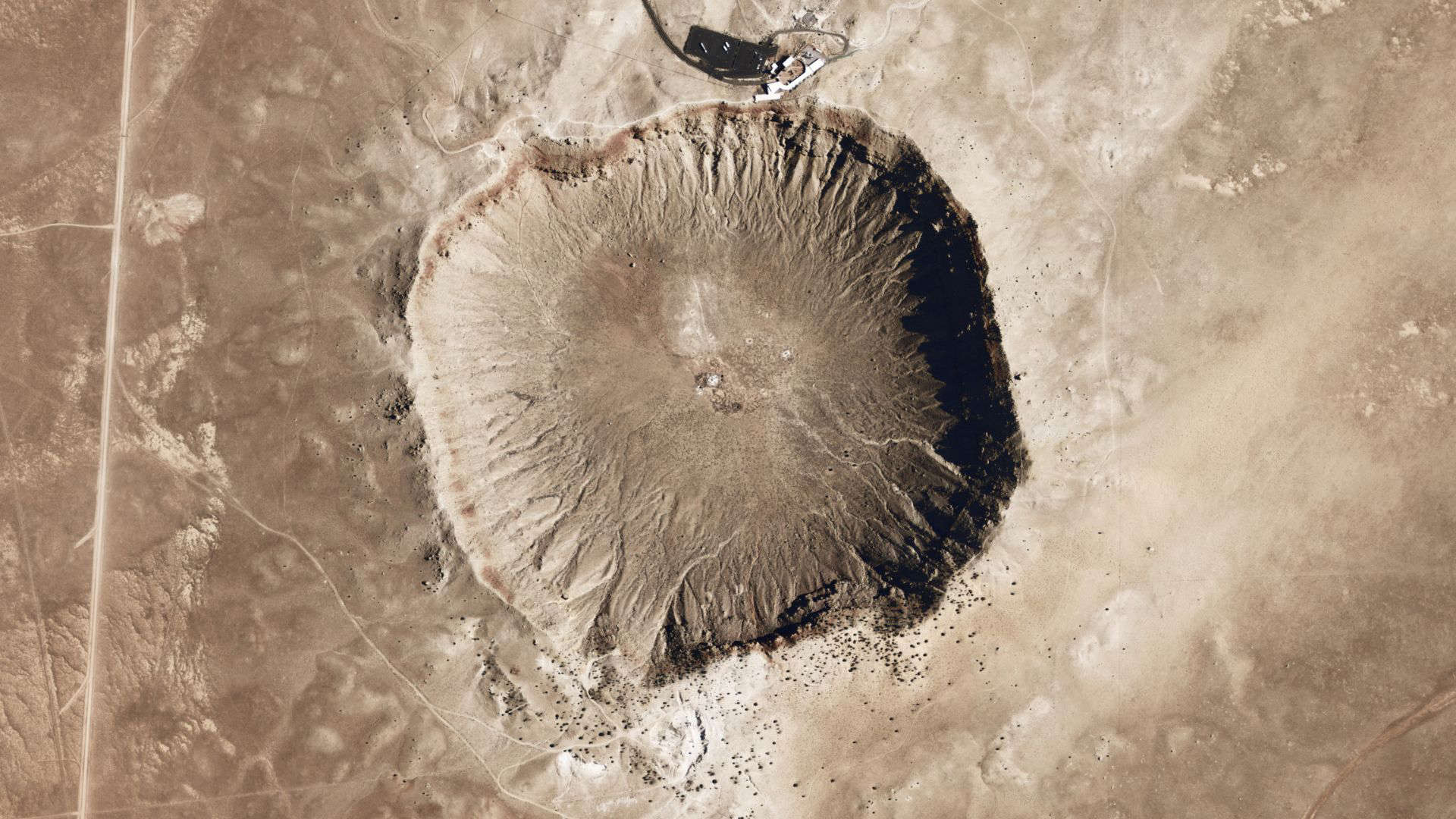
Enormous Crater 3x the Size of the Grand Canyon Discovered in U.S.

Enormous Crater 3x the Size of the Grand Canyon Discovered in U.S.

Story by Julia Mehalko

Enormous Crater 3x the Size of the Grand Canyon Discovered in U.S.

©NASA Earth Observatory/Wikimedia Commons

Enormous Crater 3x the Size of the Grand Canyon Discovered in U.S.
There are various craters that have been discovered around the United States, thanks to giant asteroids and meteors from outer space crashing into Earth millions of years ago.

These craters can come in all shapes and sizes. Often, average Americans don’t even realize some of these enormous craters even exist — and can be found in their local areas. In fact, the largest crater ever discovered in the U.S. is about three times larger than the Grand Canyon.

What Are Impact Craters?

©DiscoA340/Wikimedia Commons

What Are Impact Craters?
Impact craters occur on the Earth’s surface after large space rocks, such as meteors or asteroids, hit the planet forcefully, leaving behind a changed landscape.

These so-called impact events occur over millions of years. As there can be different types of sizes of these space rocks, the types of craters they leave behind can vary.

Discovering Craters

©Public Domain/Wikimedia Commons

Discovering Craters
While you may think that it’s easy to spot a crater — after all, they can often appear to be giant holes in the ground — scientists have long explained that discovering craters can be quite difficult.

Scientists conduct many tests to fully understand if an impression on the Earth is from a meteor or asteroid — or if it’s from something else.

Uncovering Hidden Impact Craters

©Westwind Air Service/Unsplash

Uncovering Hidden Impact Craters
There are many crater sites around the world that likely haven’t been discovered yet, as weathering and erosion can keep these sites from view.

In some cases, scientists have even stumbled upon impact craters without even realizing it, only learning the truth after some studies have been conducted on the region.

Understanding the Planet’s Age

©NASA/Wikimedia Commons

Understanding the Planet’s Age
There are a variety of reasons why studying impact crater sites is so important. Scientists explain that these craters can help us better understand how old a planet is.

For example, Earth is a relatively newer planet than the Moon and Mercury, which have many noticeable craters. The Moon even has about 9,137 craters on its surface that scientists have recognized. More could be found in the future.

Craters in the U.S.

©Chase O/Unsplash

Craters in the U.S.
Meanwhile, in the United States, at least 28 different impact crater sites have been found and uncovered by scientists.

These crater sites vary greatly in size and range. Diameters can be as small as 0.1 kilometers to as large as 90 kilometers.

The Largest Crater Sites in the U.S.

©Steve Adams/Unsplash

The Largest Crater Sites in the U.S.
The largest crater site in the country can be found in none other than the Chesapeake Bay. The Chesapeake Bay Crater was first discovered in the 1990s by C. Wylie Poag, quite by accident.

Poag was in the region for an offshore drilling project when this stunning discovery was made. The crater site was hidden beneath the Chesapeake Bay’s floor for centuries before Poag finally realized the truth of the Bay.

Larger Than the Grand Canyon

©Tim Hart/Unsplash

Larger Than the Grand Canyon
Scientists have deemed the Chesapeake Bay Crater to be the most significant impact crater throughout the entire United States, as it’s enormous.

This crater site has a diameter of 53 miles. This makes it larger than the Grand Canyon, which has a widest point of about 18 miles.

How This Crater Site Formed

©Max Shein/Unsplash

How This Crater Site Formed
According to scientists, this crater likely formed about 35 million years ago when a bolide — a very large crater-forming body — crashed into what is now known as Virginia’s Hampton Beach.

This 3 km long bolide traveled at 144,000 miles per hour before colliding with the planet, leaving a 1.3 km deep impact crater behind.

A Changed Region

©Sara Cottle/Unsplash

A Changed Region
This collision left behind a completely different region, as scientists believe that the crater impact excavated coastal aquifers.

In our present day, a large reservoir filled with water 1.5 times saltier than seawater lies in the impact spot. Because this water is incredibly salty, it cannot be used for many purposes, such as for drinking water.

Changing the Rivers

©Carol M. Highsmith/Wikimedia Commons

Changing the Rivers
This crater also changed how the rivers flow in the area. For example, rivers like the Rappahannock flow to the Atlantic in a southeast direction.

Researchers believe that, after this collision, the York and James rivers changed their flow to head northeast to the crater.

{ https://www.msn.com/en-us/  }

Hoe vind je dit bericht?
Geschreven door peter om 17:17 Stuur door

Remnants of Mars’s Violent Past Are Hidden In this New ESA Express Orbiter Image

Remnants of Mars’s Violent Past Are Hidden In this New ESA Express Orbiter Image

Picture something like an abandoned Mordor, but with glaciers.


Mars Express captured this view of the flank of an enormous volcano, shaped by millions of years of fire and ice.

Images of the Martian landscape often seem to show a dead planet, no longer teeming with life (if it ever was) and no longer animated by plate tectonics. But this one reveals what was once a landscape in constant motion — sometimes sudden and violent, sometimes slow and inexorable. The northwest flank of the giant Martian volcano Arsia Mons bears the remnants of ancient lava flows, the tracks of long-vanished glaciers, and a long, deep scar left by magma straining to escape the confines of its chamber beneath the mountain.

image of terrain in shades of brown, with rough topography on the left and smooth on the right, cut ...

This image shows the northwestern slope of Arsia Mons. North is on the right-hand side of the image, for reasons known only to the European Space Agency. The huge crack in the surface is Aganippe Fossa, a crack formed when the ground stretched under pressure from upwelling magma millions of years ago.

WELCOME TO ARSIA MONS

The Martian volcano Arsia Mons looms nearly 6 miles above the surrounding landscape, but its peak lies off-camera in this image from the European Space Agency’s Mars Express Orbiter. Instead, the image focuses on the volcano’s northwestern flank, which rises from the plain in a wide slope up toward the southeast (the lower left corner of the image).

To the southwest (the upper left of the image), the terrain is rough, with clusters of strangely-shaped mounds split by networks of valleys. As you move north, though, that rough terrain smooths out, giving way to a wide swath of gentle slopes and lobe-like cliffs. Ancient glaciers probably carved this terrain and wore it smooth — and left behind rocky debris in their wake. Farther east lie the remains of ancient, long-cooled lava flows, partially covered in zebra stripes of windblown sand and dust.

topographical map of part of Mars, with red in the lower left fading toward blue in the upper right.

Off-screen to the lower left is the peak of Arsia Mons, home to a wide caldera. North is still on the right.

And curving northeast across the mountain’s lower slope is a 375-mile-long scar in the Martian ground known as Aganippe Fossa. This steep-walled trench is what geologists call a graben: an area where a planet’s crust is being stretched, creating cracks called faults. When the rock between the faults drops downward and creates the floor of a rift valley like Aganippe Fossa, it’s called a graben; the higher rocks on either side of the rift are called horsts.

Planetary scientists at ESA say Aganippe Fossa probably formed because a huge mass of magma beneath the feet of Arsia Mons was welling upward, stretching the planet’s rocky crust to its breaking point.

Aganippe Fossa is just part of a fascinating landscape once shaped by flowing lava and ice. Around Arsia Mons, satellite images show that the ceilings of some lava tubes (underground tunnels once filled with flowing magma) have collapsed inward, leaving these volcanic caves open to the Martian sky. And during the Martian autumn, an icy cloud wraps the top of Arsia Mons in a glittering shroud of ice droplets which can stretch hundreds of miles across the sky.

{ https://www.inverse.com/ }

Hoe vind je dit bericht?
Geschreven door peter om 16:47 Stuur door

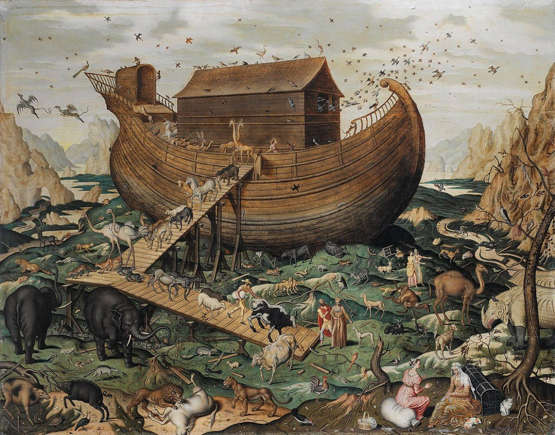
Archeologists Believe They've Located the Remains of Noah's Ark

Archeologists Believe They've Located the Remains of Noah's Ark

Story by James Dorman
Archeologists Believe They've Located the Remains of Noah's Ark
©Noah's Ark Discovered Project / Facebook
Archeologists Believe They've Located the Remains of Noah's Ark
The story of Noah’s Ark is perhaps one of the most universally known Bible tales. The biblical patriarch used his enormous eponymous vessel to allow his family and a menagerie of animals to survive a great flood and repopulate the earth in its aftermath.

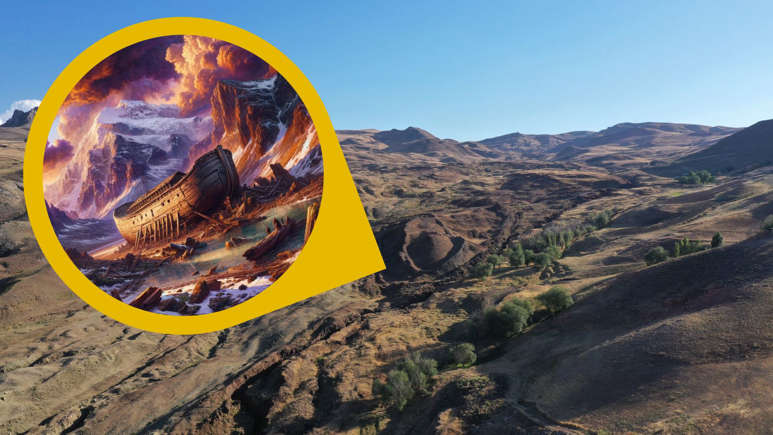
Researchers examining a peculiar geological formation in modern Turkey believe they may have in fact found the remains of Noah’s Ark, which would shine a whole new light on our understanding of the ancient world.

Biblical Flood

©Grant Whitty/Unsplash

Biblical Flood
The story of Noah’s Ark is one of the more memorable tales from the Bible. Ahead of a great flood, God chooses a man and instructs him to build an enormous boat and populate it with two of every animal, alongside his family.

The story goes that God observed man’s corruption, violence and weakness. Abhorred by the actions of his creation, God looked to wipe the slate clean with a cleansing flood and restore man’s goodness.
Hunt for the Ark
©Elias Null/Unsplash
Hunt for the Ark
The story is known all around the world. Many view it, along with other stories in the bible, as simple metaphor and myth, perhaps inspired by some natural calamity like a devastating flood of some kind.

Others believe the event occurred exactly as described in the Bible, and finding the remains of the Ark would prove their stance correct. Scholars, archaeologists and even amateur adventurers have tried, and failed, to locate the Ark over the years.
The Ark’s Location
©Daniel Born/Unsplash
The Ark’s Location
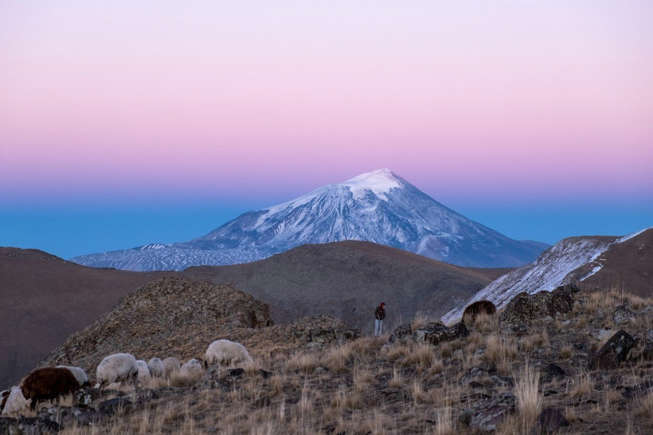
The Bible states that the Ark arrived on Turkey’s “mountains of Ararat” after the 150-day flood sent by God. Since 2021, archaeologists have been working at a geological formation in the Doğubayazıt district of Ağrı in eastern Turkey, which aligns well with the description in the Bible.

The Durofeiner formation looks, from above, to have a boat-like outline. Some suggest this could in fact be the fossilized remains of the Ark.
Noah’s Ark Research Team
©Wikimedia Commons
Noah’s Ark Research Team
Many have believed Mount Ararat to be the Ark’s final resting place for some time now. Recent work at the Durofeiner site has been carried out by a collaboration between Turkish and American universities, the “Mount Ararat and Noah’s Ark Research Team.”

Researchers have taken samples from the rock formation, and tests revealed seafood, clay and marine materials. Some claim this as evidence of human activity in the region.
Age of the Site
©Rod Long/Unsplash
Age of the Site
The 500-foot-high rock formation sits just 3 miles from the Turkey/Iran border. It’s composed primarily of limonite.

Researchers have determined that test samples from the site are around 3,500 to 5,000 years old. Biblical archaeologists and scholars put the time of the 150-day flood from the Noah’s Ark tale at around 3,000 BC, meaning the samples align well with this time frame.
Human Activity in the Region at the Time of the Flood
©Julia Koblitz/Unsplash
Human Activity in the Region at the Time of the Flood
Dr. Faruk Kaya of the Agri Ibrahim Chechen University claims the data gathered from the samples is proof of human activity in the area during the period following the biblical flood.

In her words: “According to the preliminary findings of our research, we believe that human activity occurred in this region during the Chalcolithic period (Stone and Copper Age), specifically between 5,500 and 3,000 BC.”
Too Early to Draw Conclusions
©Scott Graham/Unsplash
Too Early to Draw Conclusions
Dr. Kaya was careful to stress that while these findings are promising for Ark hunters, they are far from conclusive, and it’s too early to tell whether they could lead to the discovery of Noah’s Ark.

In the same study, Dr. Kaya says: “Noah’s flood is believed to have taken place 5,000 years ago, and our findings indicate the presence of life in this region during that time. However, it is too early to draw definitive conclusions.”
Dispute of the Findings
©Trust “Tru” Katsande/Unsplash
Dispute of the Findings
Not everyone supports the suppositions of the Mount Ararat team, and many geologists in particular have pushed back against their claims. Far from being evidence of human activity, they believe the formation at the Durofeiner site is simply ancient rocks.

It would take something far more substantial than the current findings to convince many in the geological community that researchers have found the fossilized remains of Noah’s Ark.
Flood Myths and Actual History
©Lukas Hron/Unsplash
Flood Myths and Actual History
Many ancient cultures share narratives of massive, cataclysmic floods. They likely represent a shared symbolic representation in mythical narratives of survival, rebirth and intervention of the divine.

These stories may indicate how ancient cultures responded to natural disasters. If we examine flood myths alongside geological evidence, we can start to get an idea of what actually happened and what is mythical embellishment.
Future Research
©Dan Dimmock/Unsplash
Future Research
Through multidisciplinary research of things like the Durofeiner site by archaeologists, Bible scholars and geologists working in tandem, we may be able to start to recontextualize the myth of Noah’s Ark into an established, historical narrative.

Researchers are far from done with the Durofeiner site and are planning excavations to conduct detailed analysis and hopefully uncover new artifacts. They hope to get greater insight into the history of the region, particularly ancient civilizations in the area, and hopefully firmly establish the existence of Noah’s Ark.
Transparency Is Key in Future Research
©Ben White/Unsplash
Transparency Is Key in Future Research
Whatever the findings at the Durofeiner site ultimately mean, future research is probably warranted. It will be crucial to keep this research transparent, though, so that it’s properly framed.

Things can sometimes get contentious when science meets faith. Having a multidisciplinary team can help to give findings proper context without a skewed narrative one way or the other. If findings don’t completely support the myth of the great flood and Noah’s Ark, there is still meaningful significance to finding proof of human activity in an area of biblical importance.

Hoe vind je dit bericht?
Geschreven door peter om 16:32 Stuur door

Missie die leven op Mars simuleerde na meer dan jaar beëindigd

De Mars Dune Alpha zou op basis van simulatiebeelden van augustus 2021 er ongeveer zo moeten uitzien.  © @YAPI MAGAZINE

Missie die leven op Mars simuleerde na meer dan jaar beëindigd

Een experiment waarbij vier vrijwilligers het leven op Mars hebben gesimuleerd, is na iets meer dan een jaar afgerond. De vier deelnemers hebben de simulator Mars Dune Alpha kunnen verlaten, zo heeft het Amerikaanse ruimtevaartagentschap Nasa zaterdag meegedeeld.

KIJK. Zo ziet de simulator Mars Dune Alpha eruit

{ https://www.hln.be/ }

Hoe vind je dit bericht?
Geschreven door peter om 15:56 Stuur door

UFOs target nuclear warheads and planes for alarming reason, experts warn

UFOs target nuclear warheads and planes for alarming reason, experts warn

Boffins have come up with a theory as to why UFOs are regularly seen near high-speed planes and nuclear warheads - and why they might be becoming more intrusive at US bases

Experts say aliens might be worried about us destroying ourselves with nuclear weapons

Experts say aliens might be worried about us destroying ourselves with nuclear weapons (stock) (Image: Getty Images/iStockphoto)
0_World-war-3-nuclear-background-set.jpg
UFOs target nuclear warheads, apparently (stock) (Image: Getty Images/iStockphoto)

The unconfirmed UFO appearance near Concorde - which has resurfaced on Reddit's UFOs subchannel , appears in a 1976 British Airways advert where an orb-like UFO can be seen darting toward the aircraft in an inquisitive way before accelerating away.

After the Fukushima lab disaster in Japan, witnesses told Netflix docuseries Encounters that UFOs saved them by lowering radioactivity levels.

Several glimmering white orbs could be seen above the plant after the nuclear disaster in 2011, and appeared to drop into the lab before emerging again.

Planes could also be a target of aliens  (Image: Getty Images)

At the Queen's Platinum Jubilee in June 2022, the monarch was honoured with a presentation by nine fighter jets letting off streams of smoke in the Union Jack's red, white and blue colours.

Reddit users were quick to point out that an unidentified disc could be seen near the jets - but no clear answer has ever been given to explain what it was.

There have also been reports of UFOs being seen after rocket test-fires.

New research from retired US Air Force staff sergeant Larry Hancock, and Ian Porritt, a data analyst affiliated with Harvard's UFO-hunting Galileo Project, shows the unusual activity around nuclear weapons and facilities has shifted over the years.

A UFO can be seen in a British Airways advert for Concorde in the 70s
A UFO can be seen in a British Airways advert for Concorde in the 70s  smiley-money-mouth.gif(Image: Getty Images)
READ MORE

The studies suggest that at first the UFOs seemed interested in the production of nuclear weapons, but now pop up around silos and bomber bases.

When a new arsenal of ICMBs was built in the 1960s, UFOs became “much more intrusive” in their approach of ICBM bases, Porritt previously said, adding: “They're very low altitude, they penetrate the security perimeters of the base.”

There is also a theory that UFOs are actually “turning off” nuclear weapons - with several reports of this happening by the US military since the 60s.

There is a theory that UFOs are 'turning off' nuclear weapons  (Image: Getty Images/iStockphoto)

In the pair’s latest study, the research concludes: “Notable unidentified aerial phenomena loitering, military intrusions and weapons facility interference were documented in a series of incidents in 1967 (Malmstrom AFB) and 1975 (Loring AFB and Malstrom AFB), where at least one flight of 10 Intercontinental Ballistic Missiles (ICBMs) was officially recorded as having unexplainably gone off alert status.”

The study discusses how former US Air Force ICBM launch officer Robert Salas said he was asked by the AARO to gather information after he said an orange flying disc shut off 10 warheads at Malmstrom Air Force Base in Montana in 1967.

Fukushima disaster witnesses told a Netflix docuseries that UFOs saved them by lowering radioactivity levels
Fukushima disaster witnesses told a Netflix docuseries that UFOs saved them by lowering radioactivity levels  (Image: Zuma Press/PA Images)
READ MORE

He was later forced to sign an NDA on the matter by the Air Force Office of Special Investigations.

Mr Salas is not the only one to have made such a claim. In 2000, US Air Force First lieutenant Robert Jacobs also said he witnessed this in 1964, but was told not to speak about the alleged encounter again.

And in June 2023, two Air Force veterans told DailyMail.com they had testified to the All-domain Anomaly Resolution Office (AARO) that UFOs turned off their nuclear warheads.

The former head of the Advanced Aerospace Threat Identification Program, Lue Elizondo, has previously said there “seems to be a lot of correlation” between UFO appearances and nuclear sites.

And independent researcher Robert Hastings said in 2010: “Declassified US government documents and witness testimony from former or retired US military personnel confirm beyond any doubt the reality of ongoing UFO incursions at nuclear weapons sites.'”

{ https://www.dailystar.co.uk/ }

Hoe vind je dit bericht?
Geschreven door peter om 23:52 Stuur door

Het mysterie van de “oudste computer ter wereld” na 2000 jaar ontrafeld, dankzij zwaartekrachtgolven

Het mysterie van de “oudste computer ter wereld” na 2000 jaar ontrafeld, dankzij zwaartekrachtgolven

Door JanineJanine image
Computerreconstructie van het mechanisme van Antikythera in zijn oorspronkelijke vorm

Freeth et al./Scientific Reports - 2021

Als we een computer beschouwen als een mechanische rekenmachine, dan is de oudste tot nu toe gevonden computer het Mechanisme van Antikythera. Dit oude technologische wonder dateert van meer dan 2000 jaar geleden en is al lange tijd een mysterie dat moet worden opgelost. Terwijl sommige onderzoeken het in verband brachten met de Egyptische zonnekalender, heeft een recente studie aangetoond dat het mechanisme de Griekse maankalender volgt, en dat niet alleen. Aan de basis van de nieuwe ontdekking liggen in feite zwaartekrachtgolven: laten we eens kijken hoe dit mogelijk is!

Het Mechanisme van Antikythera

Als je hem vandaag de dag ziet, in zijn 82 fragmenten die zijn ondergebracht in het Nationaal Archeologisch Museum in Athene, in Griekenland, lijkt hij niet meer dan een vrijwel verwoeste vondst. In werkelijkheid wordt het Mechanisme van Antikythera beschouwd als 's werelds oudste computer, een machine die de astronomische bewegingen van de maan, zonsverduisteringen en de positie van de zon kon voorspellen, evenals die van de vijf destijds bekende planeten.

Het was in feite een geavanceerd astronomisch instrument, gebouwd tussen de derde en eerste eeuw voor Christus en samengesteld uit een complex systeem van tandwielen en tandraderen. In de loop der jaren hebben verschillende studies het Mechanisme van Antikythera diepgaander geanalyseerd en de interne tandwielen en gemechaniseerde werking van de structuur onthuld. Kortom, 's werelds oudste computer werd ontworpen om Babylonische astronomische cycli, Platonische wiskunde en Griekse astronomische theorieën te combineren. Het doel: de beweging van hemellichamen voorspellen op basis van de Egyptische zonnekalender. Of misschien niet?

Mechanisme van Antikythera en zwaartekrachtgolven: de nieuwe studie

Freeth et al./Scientific Reports - 2021

Een recent onderzoek door onderzoekers van de Universiteit van Glasgow heeft de heersende interpretatie over het gebruik van de Antikythera in twijfel getrokken. Met behulp van geavanceerde methoden die zijn ontwikkeld op het gebied van onderzoek naar zwaartekrachtgolven was het feitelijk mogelijk om te onthullen dat de component die verantwoordelijk was voor de kalender 354 of 355 gaten had, één voor elke dag van het jaar. Dus geen 365, zoals in de Egyptische zonnekalender, maar 354 of 355, zoals in de Griekse maankalender. Dit zijn de woorden van Graham Woan, een van de auteurs van het onderzoek:

De precisie van de plaatsing van de gaten zou extreem nauwkeurige meettechnieken en een ongelooflijk vaste hand vereisen om ze te maken. Het is een prachtige symmetrie dat we de technieken die we vandaag de dag gebruiken om het universum te bestuderen, hebben aangepast om een ​​mechanisme beter te begrijpen dat mensen bijna twee millennia geleden hielp de hemel te volgen.

De oudste computer ter wereld, van meer dan 2000 jaar geleden tot nu

Het belangrijkste fragment van het Mechanisme van Antikythera, tegenwoordig bewaard in Athene, in Griekenland

Marsyas/Wikimedia Commons - CC BY-SA 3.0

De technieken die zijn ontwikkeld op het gebied van onderzoek naar zwaartekrachtgolven zijn, zoals we hebben gezien, gebruikt om het mysterie van het Mechanisme van Antikythera te ontrafelen. Wat echter opvalt is, afgezien van de feitelijke kalender die dit instrument meer dan 2000 jaar geleden moest meten, de realisatie ervan. Want om de 354 of 355 gaten te maken en de Griekse maankalender te meten was een vaardigheid nodig die de komende duizend jaar niet meer zou worden gezien. Voor een even nauwkeurige astronomische klok had men moeten wachten op het Astrarium van Giovanni Dondi, dat rond 1300 werd gebouwd.

Kortom, het Mechanisme van Antikythera blijft een buitengewone getuigenis van het vernuft van het oude Griekenland en het vermogen om kunst, wetenschap en vakmanschap te combineren in een uniek artefact. Wat voor velen de oudste computer ooit gevonden is, is daarom veel meer: het bewijs van een wereld die inmiddels ruim 2000 jaar verdwenen is, maar vandaag de dag levendiger is dan ooit.

Source:

{ https://www.curioctopus.nl/ }

Hoe vind je dit bericht?
Geschreven door peter om 22:12 Stuur door

Unlocking the Roswell Mystery: Science’s Next Frontier

Unlocking the Roswell Mystery: Science’s Next Frontier

ngcb1

The mystery surrounding the 1947 Roswell incident continues to captivate the imagination of UFO enthusiasts and researchers alike. Nick Pope, a former investigator of UFO sightings for the British government, asserts that modern forensic technology should be utilized to revisit the site near Roswell, New Mexico. His stance is that the location, which the military initially claimed to have recovered a flying disc from before retracting the statement a day later, still holds significant scientific potential.

The Epicenter of UFO Mysteries

Nick Pope describes Roswell as the ground zero of modern UFO mysteries. Contrary to the common belief that the media or public first broke the story, it was actually the U.S. military that announced the recovery of a “flying disc.” This statement was quickly retracted and replaced with an explanation involving a weather balloon. Despite the retraction, the incident’s enduring power is evident as people continue to discuss and speculate about it nearly eight decades later.

The Call for Forensic Investigation

Pope advocates for the application of contemporary forensic methods to investigate the Roswell site thoroughly. He suggests that technologies like DNA analysis and other modern forensic tools could uncover new evidence about what truly happened in 1947. According to Pope, this isn’t just about anecdotal accounts of lights in the sky; there were credible reports of something crashing, which means there could be physical evidence to analyze. Conducting a forensic investigation could potentially yield new insights and perhaps even debris from the crash site.

Contemporary Theories on Extraterrestrial Presence

In addition to discussing Roswell, Pope also comments on a recent research paper exploring the hypothesis that aliens may already be present on Earth. This 42-page paper, authored by three researchers including two from Harvard University, proposes that these beings could be living underground or might even be time travelers. While the paper does not present these ideas as facts, it encourages the scientific community to consider them seriously and investigate rigorously.

The Shift in Scientific Discourse

Pope finds it refreshing that the scientific community is now more open to discussing unconventional theories about extraterrestrial life. He notes that a few years ago, such discussions would have been inconceivable. Now, with public hearings in Congress and academic papers on the subject, there is a growing willingness to ask “what if” questions. This shift represents a significant vindication for those who have long been marginalized for entertaining these ideas.

Military Sightings and Compelling Evidence

Reflecting on his time investigating UFO phenomena for the British government, Pope points to sightings by military pilots as some of the most compelling evidence. These sightings are often corroborated by radar data, infrared camera footage, and sometimes satellite data. Although much of this information remains classified, Pope is hopeful that more of it will be declassified and made available to the public in the near future.

The Public’s Right to Know

One of the central issues Pope addresses is the balance between national security and the public’s right to information. While there are valid concerns about causing public panic or giving adversaries an advantage, Pope believes that ultimately, people have the right to know the truth. He advocates for greater transparency and hopes that more classified information will be released to the public.

VIDEO:

Nick Pope’s insights highlight the enduring intrigue of the Roswell incident and the potential for modern science to shed new light on this historical mystery. His call for a renewed forensic investigation into the Roswell site underscores the importance of utilizing contemporary technology to explore unexplained phenomena. As scientific discourse evolves to include more open-minded investigations into extraterrestrial theories, the possibility of uncovering new truths about UFOs becomes ever more exciting.

{ https://www.latest-ufo-sightings.net/ }

Hoe vind je dit bericht?
Geschreven door peter om 22:01 Stuur door

Seven depressing – and terrifying – reasons aliens haven't made contact

Seven depressing – and terrifying – reasons aliens haven't made contact

Story by Katherine Fidler
 

We’re looking, but where are they? (Picture: Getty/Metro.co.uk)

We’re looking, but where are they? (Picture: Getty/Metro.co.uk)
© Provided by Metro

To be honest, we’re tired of waiting. Where are they? Where on Earth are all the aliens?

Well, not on Earth, or anywhere near, that’s very much the point. 

At a conservative estimate, there are 200 billion galaxies in the universe. Let’s say there are 100 billion stars in each. Even if only 1% of those stars had a single planet orbiting around them, that’s still 200 quintillion possible new Earths.

Then let’s assume a planet has a one in a trillion chance of having the magic combination of water, temperature and chemicals for that magic spark to happen.

That still means there should be life on a few hundred thousand planets.

Surely one of those should have said hello by now?

Who knows what form alien life could take? (Picture: Getty/Science Photo Libra)

Who knows what form alien life could take?

(Picture: Getty/Science Photo Libra)© Provided by Metro

Of course, not all of those will be home to intelligent life. We don’t know what they’ll be home to. Microbes. Crustaceans. Alien birds that fly using their ears, Dumbo-style. Jellyfish that look like VHS tapes. Space dinosaurs. 

But among all those planets, around all those stars, in all those galaxies, there absolutely has to be some other form of intelligent life.

1. The Drake equation

The outrageously basic maths above is a very simplified version of the Drake equation – the second-most famous formula in science after E=MC2.

Proposed by radio astronomer Frank Drake in 1961, it calculates the likelihood of intelligent, communicating civilisations based on the a range of factors, including number of planets, chances of life arising, and how likely that life is to be advanced.

It looks like this:

N = R x fp x ne x fl x fi x fc x L

So you can see why we did our own.

It isn’t a new conundrum. In fact, it has long had a name – the Fermi paradox.

Apparently, in 1950, Nobel Prize-winning physicist Enrico Fermi and his colleagues at the Los Alamos National Laboratory in New Mexico were enjoying a lively discussion about flying saucers over lunch when he blurted out ‘Where is everybody?’.

Well, we feel the same, and decided to ask a few experts why we haven’t found anyone – or been found – yet.

Alien life and intelligent alien life are two very different things (Picture: Getty/Science Photo Libra)

Alien life and intelligent alien life are two very different things
(Picture: Getty/Science Photo Libra)© Provided by Metro

2. The Great Filter theory

There are, sadly, many reasons why we may not have yet discovered alien life out there.

One of these, the Great Filter theory, proposes that there are simply so many hurdles to get over for intelligent life to reach a point we could see it, it is highly improbable they will be able to clear each of them and reach the same point us, or even further. 

Related video: 

‘Just because a planet is capable of supporting life, doesn’t necessarily mean that it will form there,’ says Dr Greg Brown, an astronomer at the Royal Observatory Greenwich.

‘It certainly doesn’t mean that that life will overcome the myriad barriers between simple single-celled lifeforms and intelligent life capable of communicating with other civilisations across space, or that those changes will happen in such a way that they are active at the same time as us.’

Mars was once a rich, watery world (Picture: Getty/iStockphoto)

Mars was once a rich, watery world
(Picture: Getty/iStockphoto)© Provided by Metro

3. The ‘Gaian bottleneck’ hypothesis

This similar hypothesis considers how hard it is even to create the right conditions for even most basic forms of life, never mind getting to the point we are now.

‘This is an idea I happen to agree with,’ says Dr Paul Byrne, associate professor of Earth, Environmental, and Planetary Sciences at Washington University in St Louis. ‘That it’s perhaps not difficult for life to emerge, but it’s extremely difficult for life to be sustained.

‘For example, we know that Earth has had liquid water on its surface for virtually all of its lifetime. That’s a crazy long time for conditions on the surface to remain pretty much between 0C and 100C. 

4. Maybe we're not worth bothering with?

We could be a disappointment to other civilisations (Picture: Getty)

We could be a disappointment to other civilisations
(Picture: Getty)© Provided by Metro

Astrophysicist Amri Wande suggested maybe there actually is loads of life out there, so advanced extraterrestrials capable of searching around the universe can take their pick – and won’t deem Earth worthy of a visit because we’re not intelligent enough ourselves.

Savage.

‘We also know that life emerged at least as far back as 3.4 billion years, and possibly longer. But we also know that it’s at least possible that Venus had oceans for a time, and so it, too, might have had truly Earth-like habitable conditions – and perhaps even life. 

‘But if it did have oceans, something went wrong at some point in the past to push the planet into a runaway greenhouse, and those oceans boiled off into space. Today, Venus is sterile, at least at the surface.’

Likewise, Mars once had liquid water flowing across its surface, and both the Moon and Mercury had thick, moist atmospheres for a very short time.

‘So getting a habitable environment might not be all that difficult, and maybe so is making life from non-life – known as abiogenesis,’ says Dr Byrne.

‘But keeping things nice and amenable to life could be really, really hard. Perhaps Earth is the only place in the solar system that has successfully managed it.’

5. They’re only microscopic, and living in oceans

The search for extraterrestrial intelligence, or SETI, is one thing, but trying to confirm, 100%, that a planet has some microscopic wrigglies wriggling around is even more difficult.

But that doesn’t mean we’re not trying.

Bioluminescent jellyfish or microorganisms, abstract fractal art background.
These gals would be pretty hard to spot from trillions of miles away (Picture: Getty)

Warwick University PhD researcher Faith Hawthorn says: ‘There is some potential precedent for this in our own solar system, as we think that some moons of Jupiter and Saturn – Europa and Enceladus in particular – have liquid water oceans underneath thick crusts of ice on their surfaces.

‘Given the right sources of energy and the water providing a medium for chemical reactions, it may be a suitable environment for microbial life to form. 

‘However, this would be extremely difficult – if not impossible – to detect on exoplanets.’

Detecting the presence of non-intelligent life, in the sense that they won’t be sending out signals, is generally focused on biosignatures in the atmosphere, offering chemicals and clues to what is living within it.

This would still be unlikely in the case of, say, microscopic life at the bottom of an ocean.

An artist's impression of the planet K2-18 b orbiting its star
An artist’s impression of the planet K2-18 b, one potential home of alien life (Picture: Nasa/CSA/ESA/J Olmsted/N Madhusudhan)

But in September last year, Nasa discovered the strongest evidence for life yet when detecting the presence of dimethyl sulphide (DMS) in the atmosphere of K2-18 b, an exoplanet 120 light-years away.

DMS is produced by life, primarily phytoplankton in oceans, rivers and lakes. 

6. We’re missing their signals, either because of the wrong frequency or timing

This is a big one. Yes, the universe is vast, so you’d imagine there should be other life out there. But it’s also really, really old – more than 13 billion years (or double that, according to one recent study), so what are the chances of us all being around at the same time?

‘If we compress Earth’s evolutionary timeline into a 24-hour period, life emerges at 4am,’ says Dr Minjae Kim, an astrophysicist at the University of Warwick.

‘The extinction of dinosaurs occurs at 11:41pm. The history of human-like creatures, exemplified by species like Australopithecus afarensis, begins at 11:58:43pm. 

‘Essentially, human-like life has existed for a mere 77 seconds in this analogy. Remarkably, the timeframe in which humans have developed technology capable of interacting with potential extraterrestrial life is significantly shorter – less than a single second. This possibly implies remarkably brief technological lifespans compared to the overall age of planetary systems.’

The Milky Way over a radio telescope at the Karl G. Jansky Very Large Array National Radio Astronomy Observatory in New Mexico
We’re looking… (Picture: Getty)

Dr Byrne agrees.

‘The most likely explanation in my opinion is that space is ****ing huge and time is really long,’ he says. ‘Even if a sentient species emerged on a planet close enough for us to detect their signals, a difference of only a few ten thousand years would mean we’d miss them if their civilisation only lasted for a few millennia. 

We need to give it more time

We humans are famously impatient, and have only been able to properly search the vastness of space for a few decades. 

And while we know for sure there aren’t Martian-built canals on the Red Planet or a man on the Moon, there is still much more to explore.

‘We’re still continuing to develop higher-resolution spectrographs and instruments,’ says Ms Hawthorn. ‘These include those on the James Webb Space Telescope that would be able to sensitively detect biomarkers in the atmospheres of planets, so the next few years could start to be a game-changer for this.’

We’re also discovering new exoplanets – planets beyond our solar system – all the time.

7. The dark forest hypothesis

This is by far the scariest reason we haven’t found aliens yet.

The basis for the theory is that aliens are out there, but they are both silent and hostile. They keep quiet working on the assumption that other civilisations will be hostile too, and they don’t want to get wiped out in a massive interstellar war.

Fun.

Dr Paul Strøm, assistant professor at the University of Warwick, adds: ‘One natural step forward is to try to estimate the number of life-bearing planets and look for good candidates of favourable life hosting environments.

‘There are several examples of how this is being done currently – looking for life on the moons of Jupiter, listening out for radio signals and looking for other planets which may have the right conditions for life to emerge to mention only a few. 

‘Just 25 years ago, the idea of detecting the composition of atmospheres of planets outside of our own solar system domain was only found in [theoretical] science. Today it is a reality. We can detect the composition of these exoplanets, and even monitor their weather patterns. How exciting!’

alien sitting in street with balloons
We’re waiting… (Picture: Getty)

The big question

‘So where is everybody?’ asks Dr Byrne.

‘They’re dead, or they haven’t come to be yet, or they’re too far away.

‘This, to me, is by far the most likely explanation for the seeming contradiction between there being loads of planets and zero evidence for alien civilisations. It’s a space and time numbers game.

‘Which doesn’t make it any less depressing, mind.’  

MORE : 

MORE :

MORE : 

{ https://metro.co.uk/news/ }

Hoe vind je dit bericht?
Geschreven door peter om 21:48 Stuur door

Huge Asteroid Incoming

Huge Asteroid Incoming

Story by Sarah Frideswide
Huge Asteroid Incoming
©LinkedIn
Huge Asteroid Incoming
It's no secret that asteroids pass close to Earth from time to time.
There are currently around 1,000 asteroids that cross Earth's orbit on a regular basis.
Range of Sizes
©Pintrest
Range of Sizes
Asteroids range in size from 329 miles across to just 33 feet.
329 miles is the distance from New York to Augusta, while 33 feet is the length of a roll of wallpaper or two giraffes stacked on top of one another.
How Much Damage Can They Do?
©LinkedIn
How Much Damage Can They Do?
Most rocks that hit earth's atmosphere burn up on impact, which is how we get shooting stars and meteor showers.
For a rock to hit the ground, it would have to be huge to begin with because so much would be lost in the atmosphere. Even a meteor the size of a tennis court failed to make it to the ground in 2013. Although it still caused damage because it exploded in the air and released more energy than a nuclear bomb.
Depends on the Location
©Freepik
Depends on the Location
How much damage an asteroid could do would depend on the location where it hit.
If it were in an isolated place, the damage would be less significant. But if one were to explode over a city such as London or New York, the damage could be widespread even if it didn't hit the ground. There would be heat damage and blast damage to buildings and people.
Asteroid 2024 MT1 8th July
©Wikipedia
Asteroid 2024 MT1 8th July
The asteroid which is passing Earth on the 8th July 2024 is 260 feet long.
That's as big as the Statue of Liberty. It was detected and tracked by NASA's Near-Earth Object Observations Program which keeps an eye on anything that might be a threat.
Unlikely to do Damage
©Quora
Unlikely to do Damage
2024 MT1 is unlikely to hit Earth or cause any damage.
It will pass us around 933,000 miles away which is about four times the distance from us to the moon. It is travelling at a staggering 40,600 miles per hour - hence the need for it to be monitored.
NASA's Observations Program
©Wikipedia
NASA's Observations Program
NASA's Near-Earth Object Observations Program observes and tracks objects that approach the Earth from space.
It uses telescopes and radar to detect objects from the ground. Although the tracking of 2024 MT1 has now passed over to NASA's Jet Propulsion Laboratory in Pasadena. This provides data such as the asteroid's position, speed and distance from Earth.
Ground-Based Strategies

©LinkedIn

Ground-Based Strategies
NASA has a Planetary Defense Coordination Office which works on strategies to combat any potential damage from asteroids hitting Earth.
Although no impact or damage is expected from 2024 MT1, there are still strategies in place just in case. One of the possible actions could be to try and deflect the asteroid by crashing a space craft into it.
An End to Civilisation?
©Wikipedia
An End to Civilisation?
We know that the dinosaurs were wiped out by an asteroid. Could that happen to us?
Thankfully not at any time in the next century thanks to early warning systems that can track the orbits of larger asteroids decades ahead of time. Smaller asteroids that can cause catastrophic regional damage are harder to track and these are the ones to watch out for.
Exciting for Some
©LinkedIn
Exciting for Some
The close approach of 2024 MT1 isn't a scary prospect for everyone.
Many astronomers and space enthusiasts are excited at the chance to catch a glimpse of the asteroid and it is hoped that much can be learnt from its composition and structure.
Hoe vind je dit bericht?
Geschreven door peter om 21:06 Stuur door

Geologist unearths mystery metal at Roswell UFO crash site in new doc

Geologist unearths mystery metal at Roswell UFO crash site in new doc

Geologist unearths mystery metal at Roswell UFO crash site in new doc

©Provided by Daily Mail

Geologist unearths mystery metal at Roswell UFO crash site in new doc
America's most famous UFO case is still producing more evidence as scientists and civilians are on a mission to prove that the Roswell crash was not of this world. The 1947 incident made headlines when the U.S. Army Air Force issued a press release stating that it had recovered debris from a 'flying disc' — only later to reverse course, claiming that the material had really just belonged to a downed weather balloon.

Geologist unearths mystery metal at Roswell UFO crash site in new doc

©Provided by Daily Mail

Geologist unearths mystery metal at Roswell UFO crash site in new doc
Geologist Frank Kimbler (pictured) is among the many experts who have challenged the military's official version of what crashed on the outskirts of this New Mexico town, where he has scoured the alleged UFO's crash site with a metal detector since 2010. Kimbler has since uncovered over 20 unusual scraps of metal material, most no bigger than a fingernail, and has now submitted one uniquely odd metal for testing to the Discovery Channel's new series 'Alien Encounters: Fact or Fiction.'

Geologist unearths mystery metal at Roswell UFO crash site in new doc

©Provided by Daily Mail

Geologist unearths mystery metal at Roswell UFO crash site in new doc
Testing revealed that the metal was '100-percent pure aluminum,' which experts said was 'compelling evidence' that could prove aliens crashed in the area decades ago. 'I was really trying to champion truth throughout,' the new series' cohost, Chrissy Newton, told DailyMail.com, adding that she was not afraid to debunk a few celebrated UFO cases, if that's where the facts led. 'I want to prove that it's identifiable,' Newton said, 'not everyone's gonna like that.' Nevertheless, Newton found the tests on the pure aluminum mystery metal to be compelling, she said, in part because a former Pentagon UFO investigator has told her that 'pure aluminum has been connected to multiple other UFO crash sites.

Geologist unearths mystery metal at Roswell UFO crash site in new doc

©Provided by Daily Mail

Geologist unearths mystery metal at Roswell UFO crash site in new doc
While Newton did not name her Pentagon source, she described them as 'a source formerly from AATIP,' the U.S. military's Advanced Aerospace Threat Identification Program , which from 2007 to 2012 had been tasked (in part) with studying UFOs. Kimbler, who teaches earth sciences and geology at the New Mexico Military Institute, told Newton and her cohost that he had pulled this particular metal fragment, roughly a quarter-inch long, from an ant hill within the Roswell debris field. Testing ant hills for ant-harvested metals, the geologist noted, has been a common tactic for gold prospectors, mining geologists, and metal detector hobbyists alike.

Geologist unearths mystery metal at Roswell UFO crash site in new doc

©AP

Geologist unearths mystery metal at Roswell UFO crash site in new doc

The insect colonies are known for collecting sturdy and sometimes buried materials for to build their tunnel systems, according to Jim Davis of Utah's geology survey. 'Thanks to the ant's undertakings, prospectors have discovered rich lodes of gold, copper, nickel, turquoise, diamonds, and many other minerals,' Davis said. Over the years, Kimbler has been open that many of the metal fragments he's recovered from the infamous crash site might have a more earthbound explanation. 'Some of it could be trash, camper trash,' he told KRQE in 2018 after the Bureau of Land Management caught wind of his hobby, 'but some of it could be interesting.'

Geologist unearths mystery metal at Roswell UFO crash site in new doc

©Digital Art/CORBIS

Geologist unearths mystery metal at Roswell UFO crash site in new doc
To confirm what Kimbler actually found, the new Discovery Channel series sent the metal sample for chemical testing via mass spectrometry to independent experts at the Texas-based firm Cerium Labs , which specializes is aluminum metallurgy. Dr Tom Hossain, chief scientist at Cerium Labs, reported that the aluminum metal fragment was not only unusual for its purity, but it also differed from the typical industrial-grade aluminum used in manufacturing. 'Most Al [aluminum] in use are anodized Al,' Dr Hossain said. Anodizing is an electrochemical process that converts the metal surface into a decorative, durable and corrosion-resistant finish known as an anodic oxide. It protects the metal underneath that finish from corroding in reactions with the oxygen molecules present in both air and water. 'This is not an alloy,' Dr Hossain wrote. 'This is pure aluminum.'

Geologist unearths mystery metal at Roswell UFO crash site in new doc

©Provided by Daily Mail

Geologist unearths mystery metal at Roswell UFO crash site in new doc
Kimbler's find joins a growing body of eyewitness testimony, and even declassified government records, that appear to indicate that the Roswell crash included some form of exotic metal materials. More than 40 witnesses to the Roswell crash mentioned that a metal-like material from the site could 'remember itself' when folded or physically altered, according to UFO researcher Anthony Bragalia. Bragalia obtained over 150 pages from the U.S. Defense Intelligence Agency (DIA) in 2021 via a Freedom of Information Act (FOIA) request, which he said included telling new evidence about where this 'memory metal' may have ended up.

Geologist unearths mystery metal at Roswell UFO crash site in new doc

©Provided by Daily Mail

Geologist unearths mystery metal at Roswell UFO crash site in new doc
The records included pages that repeatedly mention 'advanced technology reports' surrounding Nitinol, described as a shape recovery alloy. Nitinol had similar properties to the 'memory metal' found near the Roswell crash site, according to Bragalia. Pages from the FOIA reply indicate that the Pentagon was exploring whether Nitinol could be integrated into the human body for the improvement of health, the researcher wrote at his blog, UFO Explorations . 'Although much of the reports' details are redacted, what can be gleaned is that these technologies represent a literal quantum leap beyond the properties of all existing material known to man,' Bragalia said. 'Based on the documentation received,' he added, 'it appears that the retrieved debris exhibits other extraordinary capabilities.' 'In addition to 'remembering' their original form when bent or crushed, some of these futuristic materials have the potential to make things invisible, 'compress' electromagnetic energy, and even slow down the speed of light,' Bragalia said.

Geologist unearths mystery metal at Roswell UFO crash site in new doc

©Provided by Daily Mail

Geologist unearths mystery metal at Roswell UFO crash site in new doc
Today, even the lead author of the Air Force's official 1994 report, Colonel Richard Weaver, that revisited the Roswell case has come forward to caution that the military's current official explanation is by no means conclusive. 'Did we say it was 100-percent? Col. Weaver said on a 2020 podcast . 'No way. We didn't say that.' Col Weaver also alluded ominously to 'politics and a lot of manipulation going on behind the scenes' of his 1994 inquiry, but added he is still confident in his report's explanation - that a secret military spy balloon was what crashed at Roswell. Not every case to come to the hosts of Discovery's new 'Alien Encounters' reaches this level of fascinating physical evidence and documentation, however, as the show examines each submitted 'alien encounter' to the same high investigative standards.

Geologist unearths mystery metal at Roswell UFO crash site in new doc

©Provided by Daily Mail

Geologist unearths mystery metal at Roswell UFO crash site in new doc
The show's premiere included two other cases: one proved to be explainable and the other appeared to remain a genuine mystery. Posting up at The Variety, a long-standing local watering hole in Roswell, New Mexico, Newton interviewed multiple self-described UFO and alien 'experiencers' on camera to more thoroughly vet their stories. Her cohost in this process, occult scholar and author Mitch Horowitz, called Kimbler an 'inspiration' for the local geologist's willingness to ask 'pure questions' and for taking a proactive approach to investigating these unexplained events. 'Along with Mitch, we both state our opinion, if we think it is a UFO or not,' Newton told DailyMail.com. 'But looking at the facts, [sometimes] there's not strong enough data to even make a conclusion.' 'Alien Encounters: Fact or Fiction' premieres tWednesday, June 19 at 10PM ET/PT on the Discovery Channel. Soon after, the series will be streaming on Max.

Geologist unearths mystery metal at Roswell UFO crash site in new doc

©Provided by Daily Mail

Geologist unearths mystery metal at Roswell UFO crash site in new doc
Want more stories like this from the Daily Mail? Hit the follow button above for more of the news you need.

{ https://www.msn.com/en-us/ }

Hoe vind je dit bericht?
Geschreven door peter om 20:31 Stuur door

Ufo's in Brazilië: een onopgelost mysterie uit de jaren 90

Ufo's in Brazilië: een onopgelost mysterie uit de jaren 90

Artikel door Zeleb.es 

De stad Varginha werd beroemd

©Aangeboden door The Daily Digest

De stad Varginha werd beroemd
In januari 1996 vond in de gemeente Varginha, in de Braziliaanse deelstaat Minas Gerais, een ufo-gerelateerd voorval plaats. Er zouden naar verluid buitenaardse wezens in de stad zijn geweest.

Ufologie in Varginha

©Aangeboden door The Daily Digest

Ufologie in Varginha
Het vredige stadje werd wereldberoemd door meldingen van waarnemingen van buitenaardse wezens en trok de aandacht van ufologen uit de hele wereld.

In een documentaire

©Aangeboden door The Daily Digest

In een documentaire
In 2022 kwam de zaak weer tot leven door de Amerikaanse documentaire 'Moment of Contact', geregisseerd door James Fox, met daarin getuigenissen van getuigen uit die tijd en van andere betrokkenen.

Hoe het allemaal begon

©Aangeboden door The Daily Digest

Hoe het allemaal begon
De feiten begonnen bekendheid te krijgen toen sommige mensen beweerden dat ze vreemde wezens in de regio hadden gezien. In een interview vertelde één van deze getuigen alles tot in de kleinste details.

(Op de foto één van de getuigen, Valquíria Silva, 14, TV Alterosa).

Getuigenis over de buitenaardse wezens van Varginha

©Aangeboden door The Daily Digest

Getuigenis over de buitenaardse wezens van Varginha
"Het was bruin. Het hurkte, maar was kort. Ik had de indruk dat het iets heel zachts was, het zag eruit alsof het ging barsten, met een gladde huid en rode ogen. Het keek naar ons", zei Kátia Xavier in een interview met EPTV Sul de Minas, in 2006.

Andere getuigen

©Aangeboden door The Daily Digest

Andere getuigen
De vermeende waarneming vond plaats op 20 januari 1996. Kátia was 22 jaar oud en werd vergezeld door twee vriendinnen, Valquíria en Liliane. Door hun getuigenissen werden er ook 

Ufo-waarneming

©Aangeboden door The Daily Digest

Ufo-waarneming
Een zakenman beweerde op 13 januari een ufo boven Varginha te hebben zien vliegen, die hij vervolgens langzaam naar beneden zag gaan.

Nog een getuigenis van een ufo-waarneming

©Aangeboden door The Daily Digest

Afbeelding: Alterosa TV

Nog een getuigenis van een ufo-waarneming
Op dezelfde dag beweerde het echtpaar Eurico (foto) en Oralina een object te hebben gezien dat over het terrein van hun huis vloog, met dezelfde kenmerken als die de zakenman had gemeld. Volgens hen gaf het rook af, maar maakte het geen geluid.

Verklaringen van de dierenarts van de dierentuin

©Aangeboden door The Daily Digest

Afbeelding: Jeffrey Eisen / Unsplash

Verklaringen van de dierenarts van de dierentuin
Volgens een verslag van G1 zei dierenarts Marcos Mina, nu directeur van de dierentuin, dat er donker slijm werd aangetroffen in de maag en darmen van de dode dieren, hoewel ze allemaal ander voedsel hadden gekregen.

De vreemde dood van een politieagent

©Aangeboden door The Daily Digest

Afbeelding: Alterosa TV

De vreemde dood van een politieagent
Een andere opzienbarende gebeurtenis was de dood van de militaire politieagent Marco Eli Cherese (foto) uit Varginha. Destijds werd zijn dood toegeschreven aan een virus dat zou zijn overgedragen door de vermeende buitenaardse wezens.

Wat was de echte doodsoorzaak?

©Aangeboden door The Daily Digest

Wat was de echte doodsoorzaak?
De toenmalige commandant van het 24e Militaire Politiebataljon van Varginha, Maurício Antonio Santos, verklaarde volgens het tijdschrift IstoÉ echter: "De doodsoorzaak was een ernstige ziekenhuisinfectie, die het gevolg was van een operatie".

En de Braziliaanse overheid?

©Aangeboden door The Daily Digest

En de Braziliaanse overheid?
Hetzelfde tijdschrift wees erop dat de ufolologische gemeenschap destijds het idee koesterde dat het Braziliaanse leger, de militaire politie en de brandweer twee buitenaardse wezens hadden gevangen en naar ziekenhuizen in Campinas, in de staat São Paulo, hadden gebracht om daar een necropsie op hen uit te voeren.

De versie van ufologen

©Aangeboden door The Daily Digest

De versie van ufologen
Volgens ufologen verborgen Braziliaanse instellingen deze buitenaardse wezens, om te voorkomen dat informatie de bevolking bereikte.

De overheid ontkent betrokkenheid

©Aangeboden door The Daily Digest

De overheid ontkent betrokkenheid
Bovendien ontkende de Braziliaanse overheid elke betrokkenheid bij de gebeurtenissen en de officiële versie is dat er geen bewijs is voor buitenaards leven.

De resultaten van het onderzoek van de militaire politie

©Aangeboden door The Daily Digest

De resultaten van het onderzoek van de militaire politie
Volgens luitenant-kolonel Lúcio Carlos Pereira, hoofd van de militaire politie, was wat Kátia Xavier en haar vrienden zagen in werkelijkheid een man die in de volksmond 'Mudinho' werd genoemd. Hij hurkte voorover, in een houding die leek op wat ze in hun verslagen beschreven, en had waarschijnlijk een mentaal probleem, aldus IstoÉ.

Het buitenaardse ervaring van Varginha

©Aangeboden door The Daily Digest

Afbeelding: TV Alterosa

Het buitenaardse ervaring van Varginha
De zaak werd een cultureel fenomeen en genereerde veel speculaties en samenzweringstheorieën. Er werden zelfs monumenten in de stad geplaatst ter ere van de buitenaardse ervaring van Varginha.

De ufo-vormige watertoren in Varginha

Varginha UFO Water Tower

©Aangeboden door The Daily Digest

Afbeelding: TV Alterosa

De ufo-vormige watertoren in Varginha
In Brazilië nam de belangstelling voor ufologie hierdoor aanzienlijk toe. Varginha kwam bekend te staan als 'ufo-stad' en het voorval trok de aandacht van de internationale media en het toerisme.

BIJKOMENDE INFO DOOR PETER2011

Varginha UFO Incident

An artist’s rendition of the alien life form allegedly spotted in Varginha, Brazil.

ET Sketches

Sketches drawn of the Varginha alien.

Brazilian Newspaper About The Varginha Ufo

Newspaper reports about the alleged Varginha alien encounters.

{ https://www.msn.com/nl-be/}

Hoe vind je dit bericht?
Geschreven door peter om 18:06 Stuur door

ONE OF HUMANITY’S GREATEST ARCHITECTURAL FEATS WILL BE DISMANTLED SOON — WHAT HAPPENS NEXT?

ONE OF HUMANITY’S GREATEST ARCHITECTURAL FEATS WILL BE DISMANTLED SOON — WHAT HAPPENS NEXT?

While the ISS was never meant to last forever, what comes next is far less certain.

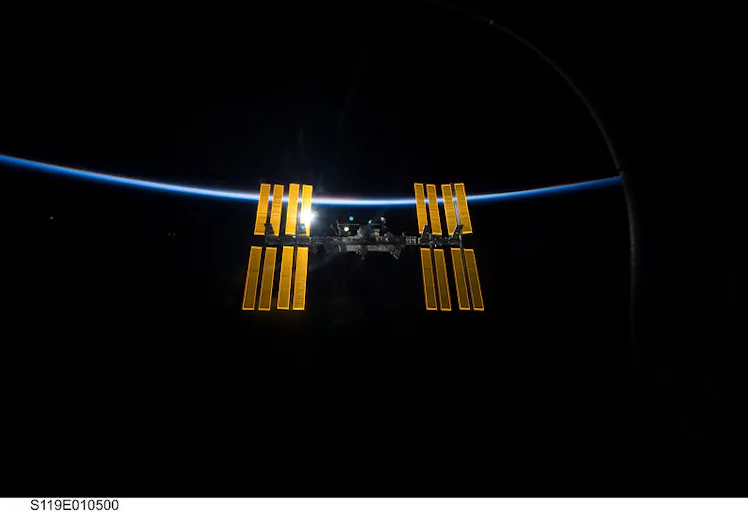
Against the Earth's backdrop, the space station orbits gracefully, creating a captivating contrast b...
Ignatiev/E+/Getty Images

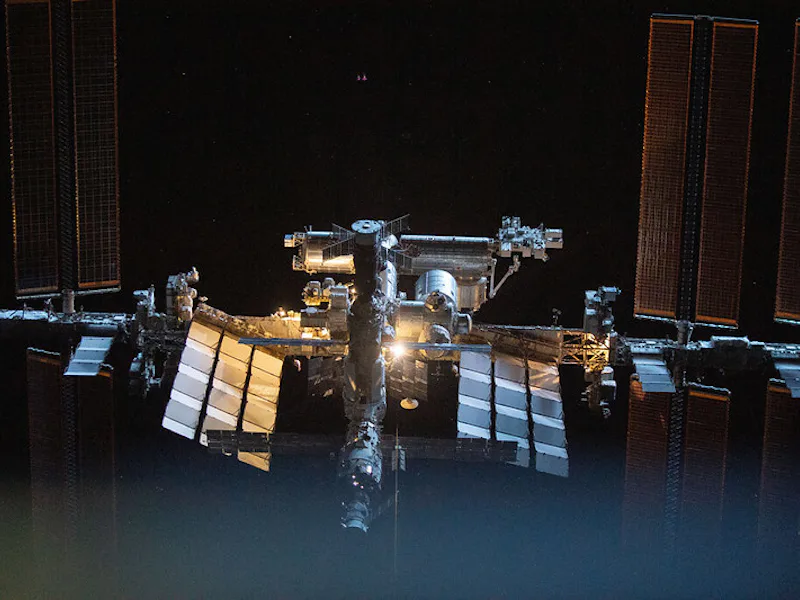
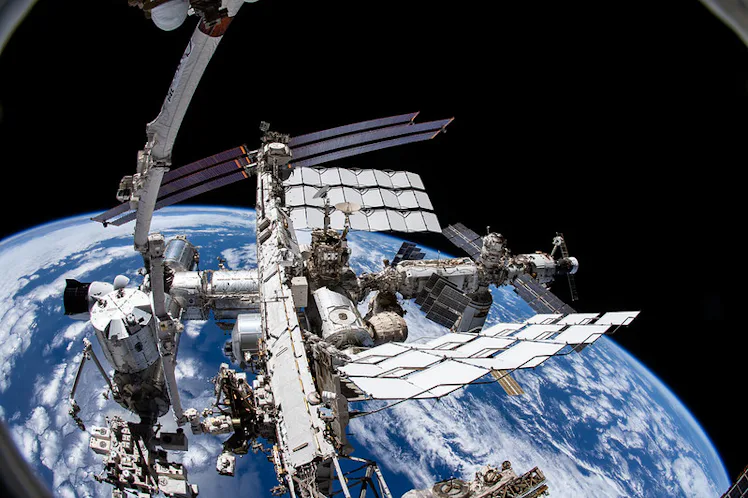
The International Space Station (ISS) has long been a place that has inspired some of the best of humanity. Over the past 23 years, the football field-sized space structure has represented a beacon of peace as well as the epitome of human exploration. But the ISS cannot last forever. Last year, NASA announced that the space laboratory would be decommissioned by the end of 2030, at which point the floating lab will crash into the ocean.

While the ISS was never meant to last forever — many a space exploration professional, and NASA, argue — what comes next is far less certain. What is certain is that there will be no next gen ISS. The next era of space stations will be owned by private companies, many of which are currently vying for contracts with NASA. But with these budding new stations, the space agency itself won’t be calling all the shots. They’ll be an anchor client, for sure, but a customer nonetheless. Finally, the crowning achievement of the ISS — it’s the largest peacetime international project ever, NASA astronaut Garrett Reisman tells Inverse — will fall to the wayside.

“It’s the most complex and largest engineering exercise we’ve ever accomplished as human beings. It’s also the largest international project, according to a variety of metrics, that’s been done in peace time,” Reisman says.

As we look to the future of space travel, what will be lost when the ISS is gone? A lot, many experts argue. The ISS is home to the longest-inhabited platform in space of all time. Continuous, non-stop occupation in space will be essential to getting humans to loftier destinations, like Mars. Astronauts like Frank Rubio and the Kelly twins have demonstrated the brink of human endurance in microgravity, and that’s barely scratching the surface about what we need to learn to venture farther away, Don Platt, associate professor of aerospace at the Florida Institute of Technology, tells Inverse.

The wings of the International Space Station are backdropped by the blackness of space and the thin ...

The International Space Station, as seen from Space Shuttle Discovery, in March 2009. 

NASA JOHNSON

WHAT FOLLOWS THE ISS?

For NASA to split the costs of human space exploration in space, they’ll pay for access to these private space stations. Axiom, Blue Origin, Long Beach-based Vast Space, Nanoracks and Voyager Space are some of the companies striving to get the coveted NASA low-Earth orbit contracts through the agency’s Commercial Low Earth Orbit Destinations (CLD) program. NASA astronauts will then have to share the stations with other customers, either private citizens with a lot of disposable income to buy seats into space, or projects like Inspiration4 that sent an all-civilian crew to space, or astronauts from other space agencies or nationalities seeking to place one of their own some 250 miles high above Earth.

But to share the space practically, future stations must be much more automated. And smaller. They’ll need to be easier to maintain and use. All of this reduces their size.

The ISS is a massive collaboration of many space agencies around the world. NASA and Roscosmos lead the pack. But Japan, Europe, Canada and others have greatly contributed by way of modules, robotic arms, experiments and astronauts. The ISS is possible because there are control centers across the world, employing hundreds of people, to keep tabs on the gigantic craft. There’s no company that could hope to match this scale, Reisman says.

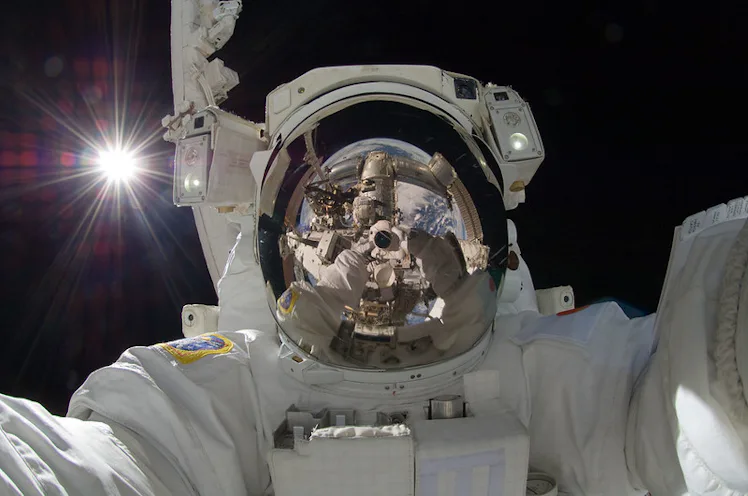
An astronaut in space takes a selfie. The Japanese astronaut wears a spacewalking astronaut suit, an...

Japan Aerospace Exploration Agency (JAXA) astronaut Aki Hoshide of the ISS Expedition 32 flight took this picture during an extravehicular activity, or spacewalk, in September 2012. 

NASA JOHNSON

BRINGING DOWN THE ISS

When it comes time to say goodbye, the ISS may require two years to fully be brought down.

The Space Shuttle, now retired, and its massive cargo space was essential to carrying segments of the ISS up to space. It’s unclear if the SpaceX Starship, currently in testing, will be ready in time for the ISS retirement procedures.

Reisman is thrilled by the progress and pace of development. Reisman is currently on the advisory board with Vast Space, and worked with SpaceX for seven years as its Falcon 9 rocket and Crew Dragon capsule were getting ready to carry their first humans to space. Reisman was too young to be a part of Apollo, but thinks perhaps the pace of current low-Earth orbit technological development offers a taste of what that iconic chapter in history must have been like.

Three astronauts share a tight space filled with hardware. Russian cosmonauts Yuri Malenchenko and O...

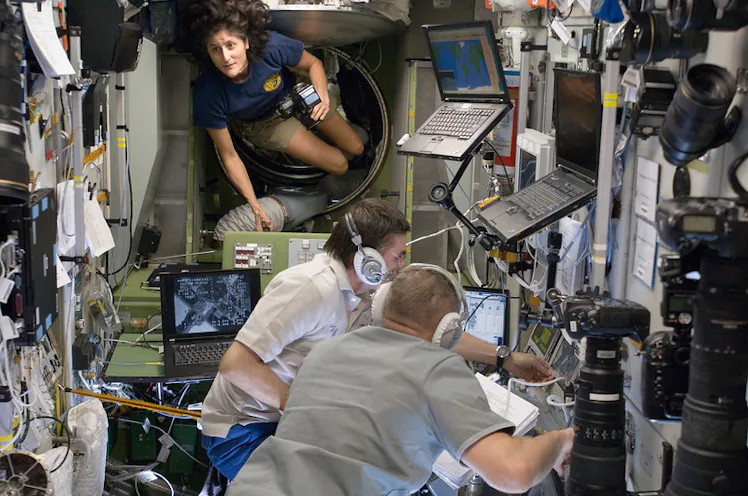
Russian cosmonauts Yuri Malenchenko and Oleg Novitskiy, of ISS Expedition 33, monitor data at the manual docking system controls in the Zvezda Service Module of the ISS during approach and docking operations of the unpiloted ISS Progress 49 resupply vehicle. NASA astronaut Suni Williams appears at the top. 

NASA JOHNSON

But the ISS, Reisman’s home for a little more than three months over the course of two Space Shuttle missions in 2008 and 2010, embodies something unique. He says it was a more peaceful time, and its cultural role and its place in history as an incredible logistical accomplishment, may never happen again. He says we’ve moved away from that charmed period.

“There won’t be a government to government partnership. It won’t be the head of Roscosmos meeting regularly with the head of NASA, and the head of ESA and JAXA. That element won’t exist. I think that’s a shame. The ISS in its peak was really this beacon of hope. This Star Trek future, where we all get along,” Reisman says.

Editor’s Note:

  • This story has been updated to reflect the fact that Garrett Reisman is an ongoing advisor for Vast Space. A previous version of the story stated that he had left that position.

{ https://www.inverse.com/ }

Hoe vind je dit bericht?
Geschreven door peter om 01:43 Stuur door

Scientists investigate Grand Canyon's ancient past to predict future climate impacts

Scientists investigate Grand Canyon's ancient past to predict future climate impacts

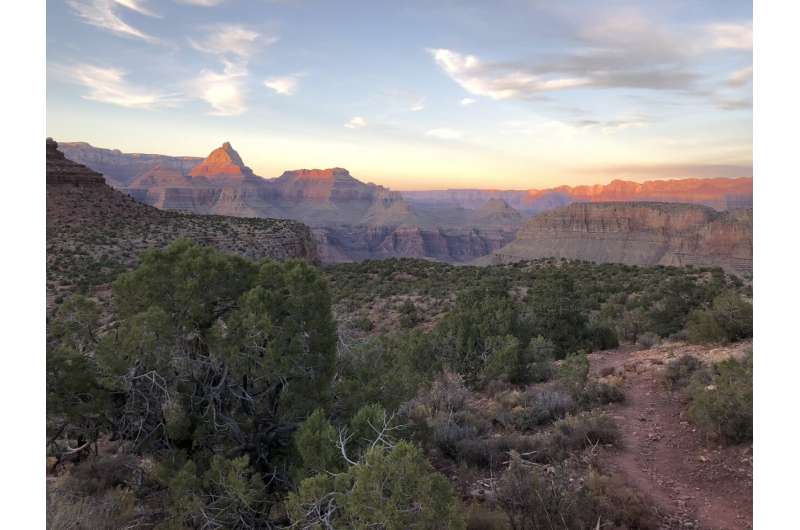
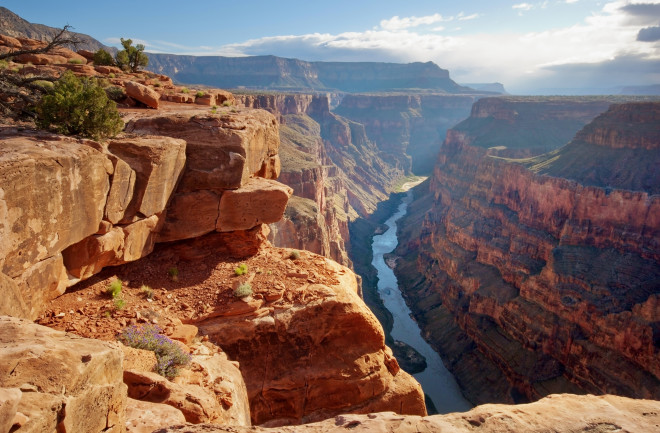
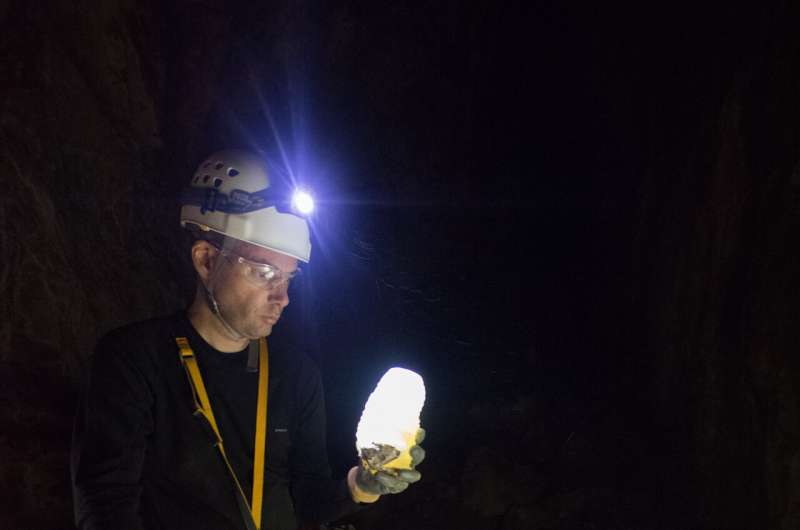
Study: Scientists investigate grand canyon's ancient past to predict future climate impacts The Grand Canyon is known as one of the Seven Natural Wonders of the World. Credit: Matthew Lachniet

The Grand Canyon's valleys and millions of years of rock layers spanning Earth's history have earned it a designation as one of the Seven Natural Wonders of the World. But, according to a new UNLV study, its marvels extend to vast cave systems that lie beneath the surface, which just might hold clues to better understand the future of climate change—by studying nature's past.

(Credit: sumikophoto/Shutterstock)

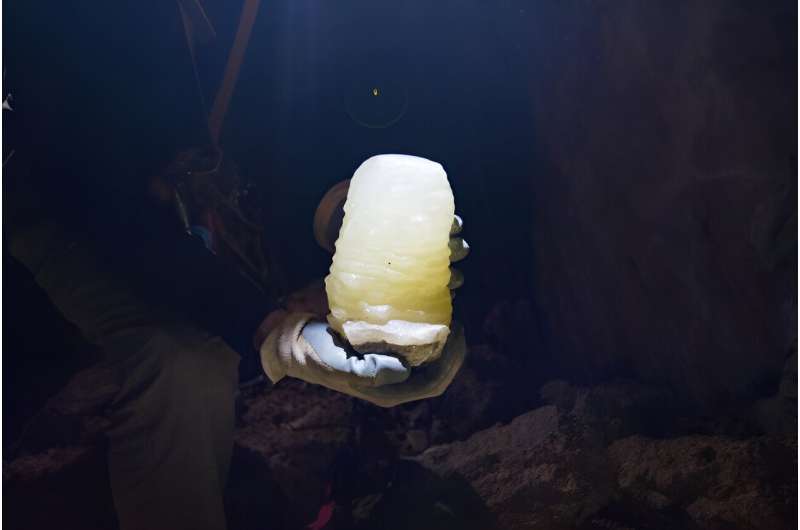
A research team—led by UNLV paleoclimatologist and professor Matthew Lachniet—pulled an ancient stalagmite from the floor of an undisturbed Grand Canyon cave. By studying the mineral deposits' geochemistry, they were able to analyze precipitation patterns during the rapidly warming period following the last Ice Age to improve understanding about the potential impact of future climate change on summer monsoon rains in the U.S. Southwest and northwestern Mexico.

Their findings, published Oct. 2 in Nature Geoscience, revealed that increasing levels of water seeped into the cave between 8,500 and 14,000 years ago, during a period known as the early Holocene when temperatures rose throughout the region. Using a paleoclimate model, the researchers determined that this was likely caused by intensified and expanded summer rainfall stemming from atmospheric impacts on air circulation patterns that more quickly melted the winter snowpacks and sped up the evaporation process that fuels monsoon rains.

Recent photograph of Grand Canyon from Walhalla Plateau, with the red line showing the Great Unconformity between the metamorphic Proterozoic basement complex and the Paleozoic sediment strata.

ANNIE SCOTT/USGS

This is significant, authors say, because most of the water currently infiltrating through the bedrock and into caves and aquifers—and contributing to groundwater recharge—comes from winter snowmelt. During the early Holocene, however, when peak temperatures were only slightly warmer than today, both summer and winter moisture contributed to groundwater recharge in the region.

The authors suggest that future warming, which could cause temperatures to rise above those of the early Holocene, may also lead to greater rates of summer rainfall on the high-elevation Colorado Plateau and an intensifying North American monsoon, the pattern of pronounced and increased thunderstorms and precipitation that typically occur between June and mid-September.

Study: Scientists investigate grand canyon's ancient past to predict future climate impactsUNLV professor Matthew Lachniet holds a stalagmite retrieved from a Grand Canyon cave. Credit: Laura Sangaila

"What was surprising about our results is that during this past warm period, both the summer monsoon and infiltration into the cave increased, which suggests that summer was important for Grand Canyon groundwater recharge, even though today it is not an important season for recharge," said Lachniet, who personally retrieved the stalagmite from a cave in the Redwall Formation on the South Rim of eastern Grand Canyon in 2017. "While we still expect the region to dry in the future, more intense summer rainfall may actually infiltrate into the subsurface more than it does today."

Stalagmites are common cave formations that act as ancient rain gauges that record historic climate change. They grow as mineral-rich waters seep through the ground above and drop from the tips of stalactites on cave ceilings. Calcite minerals from tiny drops of water accumulate over thousands of years, and much like tree rings, accurately record the rainfall history of an area. Three natural forms of oxygen are found in water, and the quantity of one form decreases as rainfall increases. This information is locked into the stalagmites over time.

Because of the distinct difference in the oxygen isotope composition between summer and winter precipitation, it is possible to estimate the relative contributions from each season. Variation in uranium-234 isotope and changes in the growth thickness of stalagmite give indication of the change in the amount of precipitation.

"We were able to validate the oxygen record with the growth data, with the uranium isotope data to confirm that in fact, we see significant increases in summer moisture during this warm period, which we attribute to the monsoon," said the University of New Mexico professor Yemane Asmerom. "Unfortunately, effective moisture is the balance between precipitation and evaporation. Unlike the more temperate Grand Canyon climate, the dry southern part is likely to be drier, as a result of the increased temperatures."

The research team used stalagmite samples to reconstruct groundwater recharge rates—or, the amount of water that penetrates the aquifers—in the Grand Canyon area during the early years of the Holocene period. High groundwater recharge rates likely occurred on other high-elevation plateaus in the region, too, they said, though it's unclear how the activity applies to hotter, low-elevation deserts.

Scientists investigate Grand Canyon's ancient past to predict future climate impacts UNLV paleoclimatologist Matthew Lachniet retrieved the stalagmite from an undisturbed Grand Canyon cave in 2017. Credit: Laura Sangaila

What is clear is that ongoing human-caused climate change is leading to hotter temperatures throughout southwestern North America, including the Grand Canyon region. Alongside population growth and agricultural pressures, this warming can reduce the infiltration of surface water into groundwater aquifers. Groundwater recharge rates also depend on the frequency and intensity of summer rains associated with monsoon season.

Though summer infiltration isn't a significant contributor to groundwater recharge in the region today, these latest findings suggest that could change in the future as the climate warms and monsoonal moisture increases. What's unknown is how a projected decrease in winter precipitation and snowpack could impact overall groundwater reserves.

In addition to Lachniet and Asmerom, the following researchers collaborated on the report: Xiaojing Du and Sylvia G. Dee of Rice University; Victor Polyak of the University of New Mexico; and Benjamin W. Tobin of the University of Kentucky.

Hoe vind je dit bericht?
Geschreven door peter om 01:30 Stuur door

UFOs | Are we closer than ever to an answer?

UFOs | Are we closer than ever to an answer?


An alleged UFO sighting at a farm near McMinnville, Oregon, 1950. Picture: SCIENCE HISTORY IMAGES/ALAMY

As the new series of the BBC’s Paranormal looks into alleged UFO sightings, one aerospace expert says accessible, modern technology puts us in a stronger position than ever to work out what’s going on in the skies above us.

It was a rainy day in Pembrokeshire (Wales) in February 1977 when a group of pupils from Broad Haven Primary School claimed to see an unidentified flying object (UFO) outside.

David Davies, who was just 10 at the time, remembers his fellow students coming inside throughout the day “trying to alert the headmaster that there was something strange going on”.

The schoolboy was sure there was a logical explanation for what they had seen. “My intention was to go out there and completely prove them wrong,” David says.

But when he went to investigate, he says he saw a “silver, cigar-shaped object” about the size of a bus, with a domed upper section and a “red pulsating glow” on top.

“I had this overwhelming urge to run away,” David says of the sighting that lasted about 10 seconds.

This event in south-west Wales is explored in the latest series of the BBC’s Paranormal. Across four episodes, host Sian Eleri investigates alleged UFO sightings in the late 1970s and early 1980s.

It comes as claims about extraterrestrial life have captured the public imagination yet again. Last year, the US Congress convened a landmark panel on the topic, mysterious monoliths continue to appear in the UK and around the world, and social media is home to viral trends about “alien bodies”.

On TikTok, for example, there are more than a million posts with the hashtag “UFO”.

And one aerospace expert tells the BBC that in 2024, thanks to everyone having a phone in their pocket and many people using apps to follow air traffic, we are in “a much stronger position to be able to track what’s known and what’s unknown”.

So is there a simple explanation for why we see UFOs? And should they be investigated?

‘A lot of UFO hunting’

UFOs have held our attention for decades, ever since reports of alleged extraterrestrial debris in Roswell, New Mexico in 1947, the movie The Flying Saucer being released three years later and the Space Race between the United States and the Soviet Union gaining steam throughout 1950s.

And stories about alien life would go on to influence popular culture in the years to come, from Steven Spielberg’s Oscar-winning E.T. in 1982, to The X Files first airing in 1993 and even recent additions like Jordan Peele’s 2022 film Nope feeding into the cultural obsession.

Dr Ciaran O’Keeffe – the head of the school of human and social sciences at Buckinghamshire New University — says there was also a “huge peak of interest” in UFO sightings around the 1980s that resulted in “a lot of UFO hunting”.

Reported sightings were covered by media around the world – and the alleged sighting at Broad Haven Primary School was picked up by publications as far as New Zealand.

The Broad Haven incident was one of a wave of sightings in the area in 1977 – dubbed the Dyfed Triangle. In the past, a number of theories have been put forward to explain them, including the work of a “local prankster”.

While sightings like the one in Broad Haven captured mass attention, Dr O’Keeffe says there may be plausible explanations.

“The key fundamental psychological explanation for what’s going on is around eyewitness testimony,” says Dr O’Keeffe, who also consults on the BBC’s Uncanny, adding that eyewitness testimony can be prone to errors.

“The nature of the interviewing of an eyewitness can distort the memory of the event significantly,” he adds, especially if the questioning of a witness is poor. For example, leading questions and exposure to media coverage of an event can be distorting factors.

However, the UFO sighting at Broad Haven Primary School was not just one eyewitness, it was a group of pupils. Here, Dr O’Keeffe explains the idea of “contagion” and group conformity could be behind a mass UFO sighting.

“Contagion is this idea that thoughts, feelings and behaviours can spread amongst a group of people,” Dr O’Keeffe says.

However, David feels he can “rule out” these psychological explanations for the 1977 sighting after the children reportedly drew near identical images of the UFO they had seen.

Before the incident, David adds, he did not have a “big interest in Sci-Fi”. But in the years that followed, he would spend thousands of pounds on books and research materials to understand what happened.

‘Not always publicised’

Dr Ryan Marks, an aerospace engineer who appears in Paranormal, says air traffic in the sky could also offer plausible explanations for UFO sightings, particularly around built-up areas where there are airfields.

According to the RAF Museum, between 1970 and 1990 there were five airfields in south Wales, with one being used as a missile testing range.

“There’s a huge amount of air traffic at any one time and that’s obviously increased over the last 40 years,” Dr Marks explains, adding that there is “always a level of military activity” in the sky and that “not all of this is always publicised”.

In March this year, for example, a US government report concluded that UFO sightings in the US in the 1950s and 1960s were caused by tests of advanced spy planes and space technology.

Around the mid-1970s to early 1980s, Dr Marks says developments were taking place in the UK exploring hot air balloons and airships – and some “would resemble traditional UFOs”.

He notes, however, these were “small-scale” experiments that did not get outside of the air hangar.

Today, Dr Marks says, “a lot of air traffic movements are recorded,” with free-to-download apps able to identify a plane, where it has come from and its destination. This “digital fingerprint” makes it a lot easier to track what is going on in the sky, he explains.

For his part, David remains confident in his UFO sighting.

“Unless somebody can explain to me what type of aircraft was flying at that time, that was 45-feet long, cigar-shaped and silver – I have no explanation for it,” he says, adding that believing in UFOs can sometimes be “like you’re banging your head against a brick wall, against society”.

“It’s still being dismissed as nonsense,” he says.

The Ministry of Defence (MOD) closed their UFO desk in 2009 after saying it served no defence purpose and was taking staff away from more valuable defence-related activities.

In a statement, an MOD spokesperson added: “In over 50 years, no sightings of extraterrestrial intelligence, Unidentified Flying Objects and Unidentified Aerial Phenomena reported to us indicated the existence of any military threat to the United Kingdom.”

  • Shola Lee is a journalist based in Tenterden, United Kingdom, with a focus on local news. She writes for BBC News, BBC Mundo, and Cigalah Group, and her work has also been featured in Yahoo News, 65twenty, Tyla, and UNILAD. Shola covers a wide range of topics, including community events, environmental issues, crime, and human interest stories.

{ https://www.fijitimes.com.fj/ }

Hoe vind je dit bericht?
Geschreven door peter om 00:54 Stuur door

AI Focused Image! Woman On Mars Link Below, UFO Sighting News.

AI Focused Image! Woman On Mars Link Below, UFO Sighting News.

Screenshot%202024-07-07%20at%2011.46.39%E2%80%AFAM.png
Guys please hit the like and subscribe button, helps me out so much! Thanks SCW 
 
NASA photo with my red circles 20MB size: 

{ https://www.ufosightingsdaily.com/ }

Hoe vind je dit bericht?
Geschreven door peter om 00:46 Stuur door

Huge UFO shoots away on house cam, Margate, Florida Jan 22, 2024, UAP Sighting News.👽👽👽

Huge UFO shoots away on house cam, Margate, Florida Jan 22, 2024, UAP Sighting News.

Screenshot%202024-07-07%20at%209.55.23%E2%80%AFAM.png

Date of sighting: January 22, 2024, 19:25 
Location of sighting: Margate, Florida USA
Source: X account @isaiasroldan009
 
Hey all, check this out. A follower of mine on X tweeted to me to show me this video he captured at home in Florida a few months ago. He stated that he and his wife noticed a dark shadow over their home in the back yard so he checked his front cam because he didnt have a cam in the back yard and he focused it upward, just as he did, the huge dark shadow shot away...as if it knew it was being recorded. The shadow appears to be that of a disk, notice the dark round front area, and the flat back is due to the propulsion system causing a disturbance. Awesome and rare footage from Florida. 100% proof that aliens not only watch but notice if we are recording them or not too. 
Scott C. Waring - Utah
 
Eyewitness Isaias Roldan on X platform, https://x.com/isaiasroldan009 please visit him and support him by following him. 
Thanks all, 
Scott C. Waring

{ https://www.ufosightingsdaily.com/ }

Hoe vind je dit bericht?
Geschreven door peter om 00:43 Stuur door

NASA deleted original link again: Alien Base On Mars THAT LOOKS NEW! FOUND IT LAST NIGHT July 2, 2011, UFO Sighting News.

NASA deleted original link again: Alien Base On Mars THAT LOOKS NEW! FOUND IT LAST NIGHT July 2, 2011, UFO Sighting News.

UFO,%20UFOs,%20sighting,%20sightings,%20alien,%20aliens,%20base,%20building,%20buildings,%20NASA,%20ESA,%20W56,%20uredda,%20CTR,%20Akrij,%20W56,%20biology,%20science,%20lifebaac5bab-730e-4981-a682-7c3426178a75172.jpg
UFO,%20sighting,%20,%20Mars,%20building,%20base,%20aliens,.png

Mars,%20building,%20base,%20aliens,.png

 Updated links July 6, 2024: 

https://planetarydata.jpl.nasa.gov/w10n/mer2-m-pancam-5-xyz-ops-v1.0/mer2po_0xxx/browse/sol1353/edr/2p246479365effavpbp2408l7m1.img.jpg

+++++
Date of discovery: July 2, 2011 
Location of discovery: Mars 
Discovered By: Scott C. Waring 
 
Original post states:  
Yeah I found another structure on Mars. You know the old saying, where theres smoke theres fire, well I found a few so I keep looking in hopes of finding more. Tonight I found these two unusual photos. I know, the last thing you want to see is another Mars building, but aren't you curious a little bit what alien buildings looks like? The first has the framework of what looks like an ancient wooden ship whose ribs are the only thing left, but this could also be the frame of an ancient building or the rib bones of an animal that died.
+++++
Updated July 6, 2024:
Guys this is getting ridiculous. NASA literally has change most my links. So often you will see reposts with new URLs here. Thats so other researchers can make videos, tiktoks, ect and help spread the world. 
SCW
Screenshot%202024-07-06%20at%203.17.15%E2%80%AFPM.png

{ https://www.ufosightingsdaily.com/ }

Hoe vind je dit bericht?
Geschreven door peter om 23:55 Stuur door

NASA deleted original link, but I found it today again. Alien Face Discovered Near Mars Rover Feb 2014, UFO Sighting News.

NASA deleted original link, but I found it today again. Alien Face Discovered Near Mars Rover Feb 2014, UFO Sighting News.

UAP,%20%E0%A4%89%E0%A4%AB%E0%A5%8C%20,%20%E0%A6%87%E0%A6%89%E0%A6%8F%E0%A6%AB%E0%A6%93,%20%C4%91i%CC%83a%20bay,%20MUFON,%20%E7%9B%AE%E6%92%83%E3%80%81%E3%82%A8%E3%82%A4%E3%83%AA%E3%82%A2%E3%83%B3,%20%20UFO,%20UFOs,%20%D0%9D%D0%9B%D0%9E%20,%20NLO,%20sighting,%20sightings,%20alien,%20aliens,%20ET,%20anomaly,%20anomalies,%20ancient,%20astrobiology,%20vreemdelinge,%20%203%20copy%205.png


Old link 404 error: 
New working link:
 
Now I just wanted to share this with you all. NASA deleted the original link which now gets a 404 error, click it above to see old link vs new. And I wanted to put this new link up so that other researchers could make videos, posts and so on about it. NASA tries to change the links in order to prevent such amazing and important discoveries from staying. It's a sneaky trick and something that the NSA or CIA must have taught them. I do this for everyone, so it's available for you all and exists for future generations. 

Scott C. Waring - Utah

{ https://www.ufosightingsdaily.com/ }

Hoe vind je dit bericht?
Geschreven door peter om 23:47 Stuur door

Nieuw wezen ontdekt in de Golf van Alaska: het heeft meer dan 200 poten en een zeer belangrijke rol

Nieuw wezen ontdekt in de Golf van Alaska: het heeft meer dan 200 poten en een zeer belangrijke rol

Janine image Door Janine

Freepik

Er is een nieuw wezen ontdekt in de diepten van de oceaan in de Golf van Alaska, voor de westkust van Canada. Laten we samen zijn merkwaardige eigenschappen en de sleutelrol die het in de diepten speelt ontdekken.

Nieuwe soort zeekomkommer ontdekt

Een nieuw waterdier, dat leeft op de bodem van de Stille Oceaan in de Golf van Alaska, is ontdekt door een team mariene biologen. Het is een soort met merkwaardige eigenaardigheden: het heeft tweehonderd poten en zijn kleur is roze. Het team, bestaande uit onderzoekers Francisco Solís Marín, Andrea Caballero Ochoa en Carlos Conejeros-Vargas, professoren aan het Instituut voor Oceaanwetenschappen en Limnologie in Mexico, presenteerde de ontdekking en beschreef het als een nieuw wezen dat over de zeebodem kruipt.

Maar wat is de naam van dit wezen wat nog nooit gezien was? Het is een onbekende variant van de zeekomkommer, paarsroze en bleek van kleur, met een lang, slijmerig lichaam uitgerust met 214 poten die in een zigzagpatroon zijn geplaatst en op kleine buisjes lijken. De wetenschappelijke naam in de studie gepubliceerd in Biodiversity Data Journal is Synallactes, maar de eenvoudigere bijnaam is McDaniel zeekomkommer.

De McDaniel zeekomkommer speelt een belangrijke rol voor de oceaan

De nieuwe soort zeekomkommer

Biodiversity Data Journal

De meer onofficiële naam werd geïnspireerd op Neil McDaniel, een deskundige natuuronderzoeker uit Canada die zich toelegt op de studie van zeedieren zoals koralen, anemonen, sponzen en zeekomkommers. Net als de andere exemplaren van zijn soort brengt de McDaniel zijn bestaan kruipend door op zoek naar voedsel. Deze wezens zijn te vinden op dieptes variërend van ongeveer 21 tot 426 meter. Om zich te voeden gebruiken ze hun talrijke tentakels, waarmee ze sedimenten van de zanderige zeebodem verzamelen, waaronder algen en verschillende soorten afval.

Hun activiteit, zo ontdekten de onderzoekers, blijkt zeer nuttig te zijn: zeekomkommers dragen over het algemeen aanzienlijk bij aan het mariene ecosysteem, omdat ze de onbetwiste "schoonmakers" zijn van afval dat in de diepte aanwezig is. Wat ze binnenkrijgen, wordt gefilterd en uitgestoten in de vorm van schoner zand: juist hun dieet zorgt er dus voor dat de zeebodem minder vervuild en vrij is van residuen. De vertering van zeekomkommers zorgt bijvoorbeeld voor een toename van calciumcarbonaat, wat nuttig is voor het gedijen en gezond blijven van koralen.

Kenmerken van de McDaniel zeekomkommer

De nieuwe soort McDaniel, met zijn zachte maar over het algemeen stevige en ruwe lichaam, is tussen de 22 en 30 cm lang, waarbij het onderste deel van het lichaam iets lichter van kleur is. Wat hem onderscheidt van andere zeekomkommers is het aantal papillen op zijn rug. Twee zigzaggende rijen van elk 62 buisvoeten en twee andere van elk 45 poten bevinden zich op het onderste deel van het lichaam en helpen hem om zich te verplaatsen over zanderige en rotsachtige oppervlakken in het noordoosten van de Stille Oceaan.

Het totale aantal zeekomkommers, die ook voorkomen in de Marianentrog, neemt af, maar biologen hopen dit tegen te gaan door meer bekendheid te geven aan het belang van deze wezens in oceaanecosystemen. Hun werk is weliswaar belangrijk, maar niet genoeg om het probleem van de onderwateromgeving op te lossen, maar een grote gemeenschap kan zeker een sleutelrol spelen in het welzijn van dit leefgebied.

oo_1011878.jpg

Synallactes mcdanieli sp. nov. Holotype RBCM 995-00131-001. Ossicles of dorsal papillae A tri-, quadri- and pentaradiate tables; B spiny rods, with the lateral spines (sometimes branched); C long, thin, smooth, straight or curved rods with perforated ends.

  Part of: Solís Marín F, Caballero Ochoa A, Conejeros-Vargas C (2024) Synallactes mcdanieli sp. nov., a new species of sea cucumber from British Columbia, Canada and the Gulf of Alaska, USA (Holothuroidea, Synallactida). Biodiversity Data Journal 12: e124603. https://doi.org/10.3897/BDJ.12.e124603 

{ https://www.curioctopus.nl/ }

Hoe vind je dit bericht?
Geschreven door peter om 18:45 Stuur door

JACQUES VALLÉE: PURSUING UNIDENTIFIED AERIAL PHENOMENA AND ‘IMPOSSIBLE FUTURES’

A6sJazjU?format=jpg&name=900x900

JACQUES VALLÉE: PURSUING UNIDENTIFIED AERIAL PHENOMENA AND ‘IMPOSSIBLE FUTURES’

ON APRIL 17, 2013, attendees at an independently organized TEDx event in Geneva, Switzerland, were offered a glimpse at a seemingly impossible future.

Presented under the theme of “eCulture 360° and Wikinomics”, the event offered something unique even to a gathering of some of the most renowned international speakers on science and technology: the organizers billed it as a “TEDx with the opportunity to meet Jacques Vallée, one of the founder[s] of ARPANET, the first version of the Internet.”

Vallée’s lecture at the event, titled “The Age of Impossible: Anticipating Discontinuous Futures,” dealt with how the speed at which modern technology accelerates has resulted in events that would have seemed impossible to many people only years before they transpired. With examples ranging from the collapse of General Motors in 2009 to Bernie Madoff’s role in the financial crisis of 2007-2008, Vallee presented what he called a “Typology of the Impossible” that hinged on four main kinds of scenarios: events that escalated too quickly, convergences of “low-p scenarios,” events that appear to violate current cultural norms, and finally, scenarios that involve the appearance of a “completely alien concept within a particular culture.”

“There are many things in our culture today that fit that model,” Vallée said at one point during the talk, as he described historical instances where things that seemed unimaginable at one time later became technological norms. Such things, Vallee said, “are possible, but we cannot imagine them. The public is not aware that they can be done. History provides many examples, and the internet itself is an example of something that was unimaginable.”

After discussing his own part in helping create ARPANET, Vallée went on to share several more examples from recent history where unforeseen scientific advancements occurred, seemingly out of the blue.

“And finally,” the scientist said, never evincing a change in his measured tone and demeanor, “the Pentagon could not imagine that fast, erratic, mobile, oval objects in the sky were anything other than mental illusions, and they…” After a brief pause, Vallée cryptically added, “and you can fill out the answers in the next few years.”

Despite his success as a venture capitalist and “co-creator of the Internet”, most of the attendees at the 2013 TEDx event in Geneva were likely aware of what Vallée is best known for: his decades of involvement with the study of unidentified aerial phenomena. As a young computer scientist and astronomer in the 1960s, Vallee not only worked alongside Northwestern University astronomer J. Allen Hynek, the official scientific advisor to the U.S. Air Force’s Project Blue Book but also authored Anatomy of a Phenomenon, one of the earliest popular books written on the UFO subject by a professional scientist. Though he never uttered any of the popular names or abbreviations for the phenomenon, it was obvious what Vallee had been alluding to during this brief, passing reference to “oval objects” during his talk.

At least at that time, what had not been so obvious had been why Vallée specifically referenced the Pentagon’s relationship to UAP, nor why a series of seemingly impossible future events might come to pass involving this subject “in the next few years.”

THE CALL FROM DR. VALLÉE came through earlier than I expected.

The scientist’s voice, softened by age yet still resonant with the French he learned as a youth in Pontoise before emigrating to America many decades ago, was unmistakable to me, having heard it in many interviews and documentaries over the years. Vallée, now 83, is a man whose work in the study of unidentified aerial phenomena is only one finger on the glove of his impressive resume, spanning decades of work in astronomy, physics, computer science, and venture capitalism.

As evidenced by his billing at the TEDx event in 2013, one could indeed argue that Vallée is partly responsible for the creation of the Internet, although the affable Frenchman is modest on this point, nearly to a fault. This much was evident almost immediately as we began our discussion, and I wasted no time in bringing up the talk in Geneva and some of the intriguing hints he had dropped at that time.

“I’ve seen the development and the unfolding of a number of technologies,” Vallée told me during our call. “Very often what happens is that a discovery is made, and everyone agrees that it is important, and people write papers, and so on. And then it disappears.” 

Vallée Vallée with collaborator and fellow author Chris Aubeck (Credit: Chris Aubeck).

“You know, the Arpanet was essentially dead for a while,” Vallée recalls from his years working on the project decades ago. “Until [the] National Science Foundation picked up the funding, thinking that there would be several internets.” Initially a simple matter of accounting, the NSF initially believed it would be easier to fund three separate projects that looked at using networks through which computers could connect for purposes of communication.

“And then they picked it up from the DOD, and it became the Internet, as we know it now.”

Vallée offered several similar examples of predecessors to the Internet—not all of them American innovations—a point which Vallée emphasized as he shifted back to our subject of greater mutual interest: UAP.

“When I watched the meetings in Congress recently, all they talk about is American cases,” Vallee said. “And among American cases, all they talk about is military cases.”

“I can tell you, having developed a lot of databases over the years, the U.S. is less than 2% of the habitable surface of the Earth,” Vallée said.

“So, if this is extraterrestrial, what about the other 98%?

THE PATH THAT BROUGHT Vallée into the tempest that is the study of unidentified aerial phenomena is a long one, which stems back to his early years in Pontoise at an age when the world was still at war.

“There are things you don’t forget,” Vallée said during our call, describing his memories of seeing American aircraft being shot down over his town when he was five years old.

“I remember seeing the crew dropping out in parachutes and the Germans shooting at them.”

By 1945, the war had ended, although fears of a return to conflict lingered throughout parts of Europe. To the north, reports of ghostly “rockets” over countries like Sweden in the summer of 1946 kept many guessing whether the Soviets were conducting tests, perhaps with a form of secret new aerial weapon they had captured from the Germans. The following year, an all-new kind of paranoia would erupt across the Atlantic, as American newspapers were flooded with stories of “flying saucers” seen careening through the skies, especially in airspace around sites of importance to U.S. national security.

By the Autumn of 1954, as the wave of sightings of strange objects was cresting over North America, France was having its own torrent of reports of similar phenomena. Major newspapers like L’Aurore and France-Soir were carrying stories about unidentified flying objects almost daily, and Vallée began collecting clippings of stories like those of Marius Dewilde, a railroad worker who described his observation of a pair of diminutive “robots” next to a dark machine resting on the train tracks.

The reports seemed incredible, and very well might have remained so had it not been for what occurred the following year in May 1955, when Vallée had his own sighting.

“My mother saw it first,” he would later recall of the incident. She had been working in the garden when Vallée, sixteen at the time, heard her screaming for him and his father. Vallée made his way from the attic where his father’s woodworking shop was located, and down three flights of stairs just in time to observe a metallic disc-shaped object “with a clear bubble on top” as it hovered over the nearby church of Saint-Maclou.

Pontoise A modern view of Pontoise with the Cathédrale Saint-Maclou visible in the distance (Credit: Rozinante/CC BY-SA 4.0).

The object reminded them of the parachutists the family had watched descending from the skies during the war. His mother, who continued watching it, recalled how it sped away, leaving only a few wisps of white vapor where the object had been. Vallée would later learn that a schoolmate nearby had also noticed the object, observing it through binoculars.

Despite his father’s disapproval, Vallée maintained his interest in these unusual aerial objects. “I realized,” he would later write in his journal, “that I would forever be ashamed of the human race if we simply ignored ‘their’ presence.” The young Frenchman began to educate himself on the topic by reading the works of Aimé Michel, one of the earliest serious French researchers to undertake the study of unusual aerial phenomena. It was an interest he maintained through his college years, completing his degree in mathematics at the University of Paris in 1959 and going on to receive his M.S. from the University of Lille Nord de France two years later. By 1961, Vallée was employed at the Paris Observatory as an astronomer with its artificial satellite service, tracking space objects through theodolites by night.

“Naively, I started work here with great enthusiasm, assuming that we would be engaged in genuine research,” Vallée would recall of his years at the observatory. “That is not what I found.” In July of 1961, he and the other astronomers recalled a few instances where they observed objects passing overhead that they could not identify. “The next morning,” he recalled of one incident, his superior “simply confiscated the tape and destroyed it.” Vallée inquired as to why they hadn’t sent this seemingly important information along with their normal Telex tape dispatches to U.S. Navy officials in Paris.

“The Americans would laugh at us,” his superior scoffed.

Having his fill of the prevailing attitudes in Paris, by 1962, Vallée had emigrated to the United States, first working at the University of Texas, Austin, as a research associate in astronomy, and thereafter for a short stint at the McDonald Observatory, where he helped to compile the first informational map of the planet Mars with fellow French astronomer Gérard de Vaucouleurs. However, by the summer of 1963, Vallée was looking ahead at new opportunities, one of which arrived following a meeting in September with astronomer J. Allen Hynek, chair of Northwestern University’s astronomy department, who helped the young scientist find work as a systems analyst on campus. Hynek, at the time the scientific advisor to the U.S. Air Force’s Project Blue Book UFO investigation, was a natural ally; not only would he serve as a mentor to Vallée, who went on to receive his Ph.D. from the institution in 1967, but for years thereafter the two would remain close colleagues in the pursuit of their mutual interest.

Hynek-and-Vallee.jpeg
An undated photo of astronomer J. Allen Hynek and Jacques Vallée
(public domain).

However, by the late 1960s, it seemed evident that scientific opinions on the UFO subject in the United States had finally begun to sour, despite the efforts of Hynek, Vallée, and a close network of like-minded scientists looking into the problem. By the end of 1968, the University of Colorado UFO Project, a U.S. Air Force-funded study headed by physicist Edward U. Condon, had delivered its findings; in an introductory summary to the lengthy report, Condon wrote that “nothing has come from the study of UFOs in the past 21 years that has added to scientific knowledge,” adding that “further extensive study of UFOs probably cannot be justified in the expectation that science will be advanced thereby.”

Vallée, musing over the Condon study during our call, remembered his incredulity at the time he first heard about its conclusions.

“That’s an interesting chapter in science,” he said. “Or the failure of science.”

By then, Vallee had already returned to France. As he, his wife Janine, and their son, Oliver, were acclimating to life in Europe again, Vallée was quietly readjusting his approach to the UFO question.

“Once I was back in France, in a way, it served to give me the space to rethink what we had done,” Vallée told me. “I mean, I knew the Condon Committee was a joke… and that science was somewhere else. So it forced me to ask some fundamental questions that I would not have asked if I had stayed at Northwestern.”

“So I thought, where does all this come from, anyway?”

Vallée began haunting the old Paris bookshops, acquiring rare historical texts and early treatises on the sciences. An interesting question had begun to form in his mind, as he recorded in a journal entry on October 29, 1967: What about the forgotten accounts of Little People, of Elementals, of Leprechauns? If these beings are part of the same phenomenon we see now, what does that mean for their nature? Are we necessarily dealing with extraterrestrials?

“I found that the phenomenon has always been there,” Vallée says of his years spent mining observations of unusual aerial phenomena from texts that date back to classical antiquity. “Of course, they are describing it in the language of the time,” he notes, “but they are describing something that’s very, very much like what I get from witnesses today.”

The fruits of such musings culminated in Vallée’s seminal 1969 effort, Passport to Magonia, widely regarded as one of his most influential early works and, paradoxically, the effort that cast him as a pariah in the eyes of many of his ufological peers.

Magonia

Mass market paperback edition of Passport to Magonia

(Credit: Archives for the Unexplained).

“At first, it was completely rejected.” he says, recalling one UFO magazine that featured his likeness shortly after Magonia was published, accompanied by the headline, “Vallée has gone off the deep end.” Today, Vallée laughs about the chiding he received from his peers, and I note a hint of nostalgia about those early works behind the dry chuckle that emerges.

“Maybe the truth was in the deep end.”

OVER THE COURSE OF the ensuing decades, Vallée would continue to challenge the extraterrestrial hypothesis favored particularly among American UFO researchers. Parallel to this effort, his professional career brought him into work with the Institute for the Future in the mid-1970s, where he worked as principal investigator on the National Science Foundation computer networking project that gave rise to one of the earliest iterations of the ARPANET conferencing system. In the following decade, Vallée would become involved in venture capitalism, first as a partner at Sofinnova, then moving on to become a general partner in multiple different Silicon Valley funds, including his involvement in private investments today.

As his professional career flourished, Vallée never lost sight of his fascination with strange aerial phenomena. He authored a string of follow-ups to Magonia on the topic of UFOs throughout the 1970s and 80s, each continuing to build on the premise that the phenomenon could be far more complex than conventional opinions on UFOs would offer. His pioneering work continued to garner attention along the way, even serving as the inspiration for Claude Lacombe, a French scientist portrayed by actor François Truffaut in Stephen Spielberg’s classic film Close Encounters of the Third Kind. 

Lacombe Actor François Truffaut in Stephen Spielberg’s Close Encounters of the Third Kind  (fair use).

In the 1990s, Vallée authored a trilogy of books that focused on the prospects of alien contact. However, he always maintained a healthy distance from drawing conclusions about what any exotic technologies behind UFOs might represent. It was also during this period that Vallée began working with real estate developer Robert Bigelow’s National Institute for Discovery Science (NIDS), a privately funded scientific research effort that looked at UFOs and related phenomena.

In July 2014, Vallée presented a paper at the GEIPAN International Workshop in Paris, France, titled “Unidentified Aerial Phenomena: A Strategy for Research,” offering both a snapshot of what he had learned about the complexities of the phenomenon over several decades of study, as well as what he believed might be a path toward more fruitful future research.

“After years of ideological arguments based on anecdotal data the field of UAP research appears ready to emerge into a more mature phase of reliable study,” Vallée wrote in the paper’s abstract. Citing the mounting scientific interest in UAP around the world, based in part on documents conveying an official military interest in these phenomena, the scientist argued that the path forward would require the analysis of hard data, paired with intelligently informed theoretical studies.

“Without pre-judging the origin and nature of the phenomena, a range of opportunities arise for investigation,” Vallée wrote, warning that “such projects need to generate new hypotheses and test them in a rigorous way against the accumulated reports of thousands of observers.”

The problem was that in 2014, despite the existence of several notable independent catalogs containing information on historical incidents, there was no single collection of reliable UAP reports—a centralized database, in other words—upon which such studies could rely. This had been part of what prompted Vallée to assemble such a database for NIDS, work that would later carry over as Bigelow’s efforts moved out of the private sector and into the official world as part of the Defense Intelligence Agency’s Advanced Aerospace Weapons Systems Application Program (AAWSAP).

Vallée

(Credit: Jacques Vallée/fair use)

“In the United States the National Institute for Discovery Science (“NIDS”) and the Bigelow Aerospace Corporation have initiated a series of special catalogues to safeguard their own reports from public sources and from their staff,” Vallée wrote in his 2014 paper, adding that he had been asked to develop a UAP data warehouse containing 11 individual databases.

“The project is known as ‘Capella,’” it stated.

According to slides accompanying Vallée’s 2014 presentation, the Capella project focused on several areas that ranged from patterns emerging from UAP data to possible physics underlying the phenomenon and its impact on humans.

During our call, Vallée spoke candidly about the project and what he hopes it might still be used to achieve.

“There is such a database. It is the one we built as part of the AATIP/BAASS project in Las Vegas,” Vallée told me. Comprising roughly 260,000 cases from countries around the world, the scientist said during our call that the Capella database had been one of the major focal points of the program.

“Contrary to what people believe, [Capella] is the largest part of the budget that was spent on the classified project,” Vallée said. This included paying for translations of incident reports from Russian, Spanish, Portuguese, and several other languages into English, and providing funding for teams that conducted additional research on-site.

“It was a large effort for two years, Vallée said, though he added that in reality, “probably close to fifty or sixty years of work went into the database.” Although Capella constitutes what is arguably the most extensive database containing information on UAP ever built, don’t expect to see it any time soon; it remains classified as a part of the data developed under the DIA’s AAWSAP program managed by James Lackatski between 2008 and 2010.

“The database is still classified, to my knowledge,” Vallée said during our call, prompting me to ask whether such a vast amount of historical information on the UAP subject shouldn’t be made publicly available.

Speaking with The Debrief in December 2021, Mark Rodeghier, Ph.D., director of the J. Allen Hynek Center for UFO Studies and a longtime colleague of Vallée, expressed frustration over previous statements made by Colm Kelleher, Ph.D., another of the scientists who worked on the AAWSAP program, who noted that much of the AAWSAP data will likely remain classified.

“I mean, isn’t that discouraging, disappointing, [and] ridiculous,” Rodeghier told The Debrief. “It’s not work on how we can get a hypersonic missile. It’s UFO investigations. How can that be classified at this point? And the answer, of course, is that it shouldn’t be classified now.”

During our call, Vallée expressed similar sentiments to Rodeghier’s, although he also defended Capella’s current classified status on account of some of the information it protects.

“You make a good point,” Vallée told me. “That’s the kind of thing that should be accessible to science,” although adding that “it will be accessible to very highly competent people who can continue to look at it under the proper classification.”

“I think it’s properly classified,” Vallée added, “because it contains a lot of medical data that should be private.” However, he said that he thinks that over time, perhaps portions can be “sanitized” for release to the public, “so that we don’t invade the privacy of individuals who have reported those things, especially their medical data.”

“It’s not classified for any military or intelligence reason as far as I know,” Vallée said. “But I’m not part of the project anymore.” Vallée noted that even he no longer has access to Capella, although several longtime colleagues of his who still work in government do.

“I’m very proud to have worked on that,” Vallée said. “It’s probably the high water mark in the computer study of UFOs so far.”

“But as we know, the high water mark is going to go even higher after this.”

DESPITE HIS OWN LEVEL of involvement with government UAP studies, as well as the level of interest generated by videos of unidentified objects collected by the U.S. military—the existence of which Vallée himself hinted at in Geneva as early as 2013—the 83-year-old scientist still doesn’t necessarily hold military UAP data in higher regard than that collected by civilians.

“The military cases in the databases I know of are less than ten percent in every country,” Vallee said during our call. “They are really good because the military has radar. They have, of course, planes that can chase the objects… pilots who are very well trained and very well positioned to give a description.”

“Those are excellent reports,” Vallée concedes. “But what about the farmer in the field, who sees [an object] close to him, and has traces, and has materials? Who has felt physiological reactions?”

“What about those cases?” he asks. “They are full of information.”

Vallée’s appreciation for UAP information collected from non-governmental sources is particularly evident in his latest book, Trinity: The Best-Kept Secret, coauthored with Italian journalist Paola Leopizzi Harris. In it, they unravel the story of two men, Jose Padilla and Reme Baca, who claim to have witnessed the crash of an unusual aircraft near San Antonito, New Mexico, in August 1945. Padilla, who went on to become a State Trooper in Rowland Heights, California, maintained that as children, he and Baca had seen a large, dull-gray avocado-shaped object—along with its frantic occupants—where it had apparently crashed near his family’s ranch. The object, they say, was later recovered by the military.

Vallée Vallée while conducting field research in New Mexico in advance of the publication of Trinity: The Best-Kept Secret  (Credit: Jacques Vallée).

In a newly updated second edition of the book, Vallée and Harris present additional witness testimony they have gathered about the alleged incident, which includes an observation of the crash remembered by the family of Lt. Colonel William J. Brothy, who at the time had been piloting a B-25 on a training mission. According to Brothy, he and his crew had flown over the site and recalled, “There were a lot of pieces.”

In Trinity, Vallée emphasizes what he believes are undeniable similarities between descriptions of the 1945 incident and a UAP landing in New Mexico observed by police officer Lonnie Zamora in 1964. Then, the following year another strikingly similar incident occurred near Valensole, France, involving the close observation of a landed craft and its apparent pilot or occupant.

“There is a case in Valensole, in France, and the case in Socorro. The object is identical to the Trinity object,” Vallée said. “And the [occupants] are identical to the creatures that Mr. Padilla is describing to me at Trinity, that he saw.”

“I was involved in Socorro, and I was involved in Valensole. Those are cases I know very well,” Vallée said, adding that Trinity contains new information on the Socorro case, once referred to by Hector Quintanilla, director of the U.S. Air Force’s Project Blue Book at the time of the incident, as being “the best documented case on record.”

Today, much of Vallée’s research is focused on the collection and study of material samples believed to have been collected from UAP. Compared with his earlier work, which challenged popular notions about extraterrestrials being associated with UAP, this might surprise longtime followers of the scientist’s work. For Vallée, however, it is only the next phase in the many decades he has spent working toward resolving the mystery.

“It’s all one thing,” Vallée said during our call. “The first book I wrote was Anatomy of a Phenomenon, which… I took as a study of extraterrestrial intelligence in general, and how it was I thought UFOs illustrated the idea of life elsewhere and intelligence elsewhere… that’s definitely the place from which we started.”

“Then, when I started working with Dr. Hynek, and I started working with—in those days, it was just called ‘computer catalogs,’ it wasn’t dignified as databases or data warehouses—but those catalogs held thousands of cases. My first complete catalog was donated to the Condon Committee at the University of Colorado, when they did the study funded by the Air Force.”

“Which,” Vallée notes, “to my surprise, concluded the problem didn’t exist. So, we’ve come a long way from that.”

Given his level of involvement in working to resolve the UAP question—an effort now spanning more than six decades, including his involvement in official government UAP investigations in several countries and having authored some of the most popular books ever written on the subject—perhaps the most surprising thing expressed by Vallée during our discussion had been his predictions about how he thinks his own work will be remembered by future generations.

“I think everything I’ve done, and everything my contemporaries have done, is going to be forgotten,” he said, mirroring his observations of the invention, and subsequent reinvention, of so many other innovations in science over time, not least among them the World Wide Web.

“And then in a few years, it’s going to be reinvented by, you know, great people at Stanford and Harvard in a new way,” he tells me, accompanied by the distinctive chuckle I had by now come to expect after one of his witty responses.

“That’s always the way science works.”

  • Micah Hanks is Editor-in-Chief and Co-Founder of The Debrief. Follow his work at micahhanks.com and on Twitter: @MicahHanks. 

{https://thedebrief.org/category/science/ }

Hoe vind je dit bericht?
Geschreven door peter om 18:29 Stuur door

Speeding Towards a Crucial Tipping Point

Speeding Towards a Crucial Tipping Point

Here's why the old models got it so wrong.

The Mendenhall Glacier near Juneau, Alaska, has been retreating due to climate change.
Moelyn Photos/Moment/Getty Images

Human-caused climate change is transforming the world at a lightning pace. New research reveals exactly what that means for Alaska’s glaciers and icefields. These critical bodies of frozen water are shrinking much faster than current models predict, and the rate of ice loss is accelerating rapidly, according to a study published July 2 in the journal Nature Communications. The science suggests icefields in Alaska and similar regions could soon reach a tipping point past which no amount of climate mitigation or greenhouse gas emissions could stop their decline, with unsettling implications for sea level rise.

“It’s incredibly worrying,” said Bethan Davies, lead study author and a glaciologist at Newcastle University in England in a statement. “The feedback processes this sets in motion [are] likely to prevent future glacier regrowth, potentially pushing glaciers beyond a tipping point into irreversible recession.”

More than 20 percent of global sea level rise results from mountain glaciers and ice cap melt and Alaska’s glaciers are already the largest single contributor among that portion. The new findings indicate that the state’s future contributions to rising tides may soon be baked-in, and impossible to prevent.

Davies and her co-authors combined historical aerial photographs, geologic data on the most recent glacial maxima, and satellite images to specifically quantify volume and area loss at one site, which likely carries implications for others. They focused their analysis on Juneau Icefield, a sprawling expanse composed of about 1,000 glaciers covering about 1,500 square miles on the Alaska/British Columbia border, and assessed how the formation changed between 1770 and 2020.

The scientists found some alarming trends. Following the end of the “Little Ice Age” that spanned from about 1300 to 1750, ice loss was relatively consistent between 1770 and 1979. During that period, Juneau Icefield lost between .65 and 1.01 cubic kilometers (0.16 to 0.24 cubic miles) of ice each year. Between 1979 and 2010, that rate increased to 3.08 to 3.72 cubic kilometers of ice loss annually. From 2010 to 2020, the rate of ice loss doubled in just a decade, rising to about 5.91 cubic kilometers per year. Zooming in on a narrower and more recent time period, losses accelerated even further between 2015 and 2020.

All of this has unfolded against the backdrop of increasing atmospheric greenhouse gas concentrations and rising average temperatures. Summer temperatures at Juneau Icefield were about 1 degree Celsus warmer, on average, from 2001 to 2020 than they were from 1941 to 1970. The mean winter temperature for the same time period is up more than 2 degrees C, lengthening the annual period of melt.

Mendenhall Glacier during an overcast day with reflection on the lake

More than 20 percent of global sea level rise results from mountain glaciers and ice cap melt and Alaska’s glaciers are already the largest single contributor among that portion.

DAVID MARANO PHOTOGRAPHY/MOMENT/GETTY IMAGES

As of 2019, 100 percent of the glaciers mapped at Juneau Icefield were receding and 108 had disappeared completely. The total ice loss since the Little Ice Age maximum is estimated to be about 24.25 percent of the icefield’s volume. In addition to the loss of ice volume and area, the remaining ice field is becoming increasingly fragmented and vulnerable.

As the melt eats away at the ice field and its glaciers, several knock-on processes are triggered which can lead to feedback loops that, in turn, produce more melting. For one, Juneau Icefield (as with many Alaskan icefields) is relatively flat, so it’s losing volume all over. As this happens, it becomes less thick and, over time, the surface of the ice gets closer to sea level. At lower elevations, the air is warmer, and melting increases.

Another feedback loop occurs when fresh snow accumulation is reduced at lower altitudes, as the icefield surface gets farther away from the snowline. With less fresh snow, the icefield surface becomes dirtier and less reflective. These darker surfaces absorb more heat and additional melting ensues. Fragmentation that exposes rocks and gravel also reduces the reflectivity (or “albedo”) of the icefield, and enables hotter air to penetrate deeper into glaciers.

Each of these processes individually is “destabilizing”, write the study authors, and together they are even worse news. Scientists rely on mathematical and computer models to try to predict how ice losses are set to unfold under climate change. However, existing icefield models often don’t consider these sorts of feedback loops and fail to capture the depth, breadth, and speed of planetary modification underway.

Currently, models suggest that Juneau Icefield should be losing ice linearly through 2040, with losses only accelerating after 2070, but the new study indicates those models are flawed. “Current glacier projections may be too small and underestimate glacier melt in the future,” Davies said. If we want to understand what the coming decades hold, we’ll have to pay closer attention to the past.

{ https://www.inverse.com/ }

Hoe vind je dit bericht?
Geschreven door peter om 16:14 Stuur door

UFO Sighting Alert! 🚨 Unexplained Lights Over Roswell, NM Captured on Video!

UFO Sighting Alert! 🚨 Unexplained Lights Over Roswell, NM Captured on Video!

On the evening of May 14, 2024, the skies over Roswell, New Mexico, once again played host to a bewildering spectacle that has left both skeptics and believers scratching their heads. A recent UFO sighting, documented by an everyday traveler, has reignited the ever-intriguing debate on unidentified flying objects.

The Sighting

A recent road trip took a couple through the iconic UFO hotspot of Roswell. They decided to camp out at an OHV area approximately 20 miles northeast of the city, on one of the region’s distinctive plateaus. As they set up camp and began preparing their evening meal, something unusual caught their eye.

The witness described seeing flares of light appearing in the valley below, seemingly at eye level with their elevated position. Despite being 20 miles away from the main city and situated in rough ranchland, these lights did not align with any known sources or activities.

Witness Account

According to the witness, the lights appeared to break through the clouds on the horizon, but closer examination revealed they were well below the clouds and away from the horizon. These flares, looking somewhat like fireworks, had no visible source. The video, recorded at 9:25 PM, captures these sporadic lights appearing and fading out, adding to the mystery.

The lights were observed in an area without major industrial buildings or populated zones, making their origin even more perplexing. Despite the video quality being low due to the zoom and lighting conditions, the mysterious nature of the lights is evident.

What Did They See?

In the video accompanying this report, you can observe sporadic bursts of light, seemingly emerging from nowhere and disappearing just as quickly. These lights, reminiscent of fireworks, had no discernible origin, a detail that further deepens the mystery. The witness has confirmed that the lights were far from the horizon and not within the clouds, adding another layer of intrigue to this enigmatic event.

Seeking Answers

The witness has reached out to various communities, including Reddit, in hopes of finding a natural explanation or encountering others who have experienced similar phenomena. The video quality, though not perfect, captures the eerie beauty of these unexplained lights. As this sighting gains traction, it poses the age-old question: Are we truly alone, or is there something more to these mysterious lights in the sky?

VIDEO:

This UFO sighting in Roswell, New Mexico, adds to the long list of unexplained phenomena that have captivated human curiosity for decades. As we continue to seek answers, the skies over Roswell remain a canvas of mystery, urging us to look up and wonder.

Stay tuned for more updates on UFO sightings and other unexplained phenomena. Don’t forget to watch the video and share your thoughts in the comments below!

{ https://www.latest-ufo-sightings.net/ }

Hoe vind je dit bericht?
Geschreven door peter om 16:04 Stuur door

Unveiling the Hidden Kingdom: Secrets Beneath Antarctica’s Icy Surface

Unveiling the Hidden Kingdom: Secrets Beneath Antarctica’s Icy Surface

ALIEN CHRONICLES

The documentary “ALIEN CHRONICLES – ANTARCTIC WORLDS BELOW | The Hidden Kingdom” offers a compelling exploration into the mysteries surrounding Antarctica, particularly focusing on the theory of a hidden kingdom beneath its icy surface. This sci-fi documentary presents a series of intriguing claims, historical anecdotes, and modern-day scientific findings that invite viewers to reconsider conventional understandings of Earth’s structure and the possibility of hidden realms within our planet.

The Hollow Earth Theory

At the heart of the documentary is the Hollow Earth theory, which posits that Earth might not be a solid mass but could instead have vast, habitable cavities within. This idea, although not widely accepted by the mainstream scientific community, has persisted throughout history. The documentary traces this theory back to prominent figures such as Edmund Halley and Leonhard Euler. Halley, famous for Halley’s Comet, proposed in the 17th century that Earth consists of a hollow shell with multiple inner layers, each capable of supporting life. Euler, in the 18th century, suggested that the center of Earth houses a small sun, providing light and warmth to inner civilizations.

Historical and Mythological References

The documentary delves into various historical texts and mythologies that seem to support the Hollow Earth theory. Ancient Buddhist texts speak of a race of superhumans living in subterranean realms, accessible through tunnels guarded by monks. Similarly, Hindu texts describe the legendary kingdom of Shambala, located deep within the Earth. These stories, while mythical, resonate with the idea of hidden, advanced civilizations beneath our feet.

Admiral Richard Byrd’s Expeditions

One of the most captivating segments of the documentary focuses on Admiral Richard Byrd’s Antarctic expeditions. In 1947, Byrd led Operation Highjump, a major military expedition to Antarctica. According to his reported accounts, during a flight over the South Pole, Byrd encountered lush green landscapes and prehistoric creatures, including mammoths, suggesting the existence of a verdant, hidden world. Byrd claimed that he was taken into this subterranean realm by advanced beings concerned about humanity’s use of nuclear weapons.

Modern Scientific Insights

The documentary also incorporates modern scientific findings to bolster its claims. For instance, recent satellite data and 3D maps have revealed complex geological formations beneath Antarctica’s ice, including ancient cratons and orogens that resemble the structures of other continents. These discoveries have reignited interest in Antarctica’s potential hidden features and the possibility of ancient civilizations.

Controversies and Conspiracies

Despite the fascinating narrative, the documentary does not shy away from the controversies surrounding its claims. It touches on conspiracy theories about secret Nazi bases in Antarctica and alleged UFO sightings near the continent. While these theories lack substantial evidence, they add to the mystique and allure of the hidden kingdom hypothesis.

The Scientific Community’s Stance

Mainstream science largely dismisses the Hollow Earth theory due to lack of empirical evidence. Studies involving seismic data and Earth’s gravitational field support the current understanding of Earth’s interior as consisting of a solid core, a molten outer core, and a solid mantle. However, the documentary suggests that not all scientific mysteries have been solved, and Antarctica remains a largely unexplored frontier.

VIDEO:

“ALIEN CHRONICLES – ANTARCTIC WORLDS BELOW | The Hidden Kingdom” presents a thought-provoking blend of historical myths, scientific anomalies, and speculative theories. While the idea of a hidden kingdom beneath Antarctica may seem far-fetched, it captures the imagination and underscores the enduring human fascination with the unknown. As scientific exploration of Antarctica continues, who knows what secrets this frozen continent might yet reveal? Whether fact or fiction, the documentary invites viewers to keep an open mind and explore the possibilities that lie beneath the surface of our world.

{ https://www.latest-ufo-sightings.net/ }

Hoe vind je dit bericht?
Geschreven door peter om 15:51 Stuur door

Het vreemde verhaal van de 'fake' NASA-missie naar Mars: astronauten na 1 jaar 'terug'

Het vreemde verhaal van de 'fake' NASA-missie naar Mars: astronauten na 1 jaar 'terug'

Het vreemde verhaal van de 'fake' NASA-missie naar Mars: astronauten na 1 jaar 'terug'

Het vreemde verhaal van de 'fake' NASA-missie naar Mars: astronauten na 1 jaar 'terug'
© Pixabay

Vier vrijwilligers hebben in opdracht van de Amerikaanse ruimtevaartorganisatie NASA een jaar lang het leven op mars gesimuleerd, volledig afgesloten van de buitenwereld. 

Twaalf maanden lang verbleven Kelly Haston, Anca Selariu, Ross Brockwell en Nathan Jones in de simulator Mars Dune Alpha. Deze hebben ze nu eindelijk kunnen verlaten.

Het viertal zat omgeven door rood zand en een koepel die hen afschermde van de wereld. Ze leefden gedurende liefst 378 dagen op zo’n 160 vierkante meter. Sinds zaterdagavond mogen ze eindelijk gaan en staan waar ze willen.

NASA voerde dit experiment uit om een missie naar de rode planeet te simuleren om zo kostbare informatie te verwerven om de echte missie uiteindelijk beter te kunnen laten verlopen. De 'fake' astronauten deden “Marswandelingen”, kweekten en oogsten verschillende groenten, onderhielden de apparatuur en opereerden onder stress, zoals op Mars kan gebeuren. Zelfs de communicatie met de aarde werd vertraagd, net zoals bij een echte missie. 

De NASA plant nog twee gelijkaardige studies in 2025 en 2027. Het wil in totaal twaalf personen testen.

  • (FVDV by Tagtik/Illustration picture: Pixabay)

{ https://www.msn.com/nl-be/ }

Hoe vind je dit bericht?
Geschreven door peter om 15:30 Stuur door

Luis Elizondo: There Are UFO Photos With Entities Inside & Otherworldly Biological Samples

Luis Elizondo UFO occupancy and otherworldly biological samples

Luis Elizondo: There Are UFO Photos With Entities Inside & Otherworldly Biological Samples

The UFO community has never been more active than it is now. The phenomenon has always been around us but due to the lack of transparency, it never became so open to discussion. Since the last decade, the number of UFO sightings has increased. And now, we are shooting these objects in the air, leaving the whole world to watch them.

Even after thousands of UFO cases including photos and videos, we have no clue who is behind it. China, Russia, the United States have their experts to investigate the UAPs but surprisingly, they do not blame each other. Perhaps, it is non-human technology and no one has any idea from where it came as filmmaker Jeremy Corbell claims.

It is really shocking and weird that nobody paid attention to former AATIP head Luis Elizondo’s statement about “UFO Occupancy and biological samples.” With Curt Jaimungal on his Theories of Everything (TOE) podcast in 2021, Elizondo carefully hinted that “potentially” the U.S. government has acquired otherworldly biological samples. He also suggested that the government has images of UAPs that appear to show beings inside them.

Elizondo spent 20 years as a military intelligence officer in the Pentagon and during his career, he ran the most secretive UFO program Advanced Aerospace Threat Identification Program (AATIP). In 2017, after the expose of this secret program, Elizondo whistleblew many things he had learned about UFOs and possible non-human intelligence.

“Have there potentially been biological samples recovered?” Curt asked. ELizondo replied: “Yes. I’m not going to expound on that… and be careful when I say that. I’m being purposely very open and vague at the same time, right? What does that mean? Well, it means what it means.”

Besides, when asked if there are photos that show occupants inside “craft,” Elizondo said: “There are some very compelling photos out there that seem to show something inside, some sort of occupancy, And I’ll leave it at that, because it gets really murky, much beyond that.

And there’s a lot that can be speculated. And so I try to avoid speculation as much as possible. But yes, I’ve spoken to enough people with firsthand knowledge that not only report the crafts that we know exists, but potentially some sort of intelligence inside these vehicles.”

Why isn’t this topic being discussed by everyone on the planet? Is it feasible that the majority of people are disregarding this news, even if they are aware of it? At what point does the truth and its mind-boggling consequences become too conspicuous to overlook?

UFO Occupancy Case

Keeping Elizondo’s words in mind, there is a UFO crash incident outside of Edwards Air Force Base involving a contactee survivor with at least one other witness. It happened to a young woman named Lorraine Dvorak Cordini in 1971. This case is mentioned in different books with minor changes.

According to the eyewitnesses, one summer evening in 1971, the calm Californian night was suddenly broken by a sharp unearthly roar, which ended with an equally frightening rumble. When people ran out of their houses, a large cloud and signs of flames were visible near Edwards Air Force Base in California. Several people stated that they had allegedly seen “three gray humanoids,” as well as a human woman in a strange, tight-fitting pink suit, among the ruins of some wrecked vehicle.

Read also:

However, before anyone knew what had happened, a lot of military trucks and other vehicles arrived and quickly isolated the area. In addition, they removed the debris and any signs of the incident and took the humanoids and the woman with them. Some residents assumed they were taken to Edwards Military Base.

A witness named Debbie Clayton reported that she had heard a loud crashing noise. There was a cloud of dust outside her home. Ufologist Albert Rosales tracked down that mysterious woman in a pink bodysuit, and she agreed to undergo a hypnotherapy session to remember the events of that night.

UFO occupancy

Here Lorraine is in a local 1996 newspaper article: “Group prepares for first contact as UFO’s gain more credibility”. In light of current events, these were prophetic words.

Lorraine claimed that she had been abducted from her home, dressed in pink clothes, and taken to a large ship in Earth orbit for an inspection.

She was then put in a smaller ship – the one that crashed – and sent back to Earth with several strange creatures. She woke up already in the military hangar. Even stranger, at least according to the hypnosis sessions, while being there, she saw not only military personnel but also strange creatures with large heads, different from those that took her out of her room.

Needless to say, this whole story seems very strange and raises doubts about its veracity. Clayton was baffled when she found no newspaper written about the story and there was no news about it on TV as well.

It was the first case of the only human survivor found at a Crash Retrieval. Researcher Richard Geldreich Jr. has written details on this case and found the identity of the witness and contactee. Lorraine or Lori was working on her autobiography in 2009 but it never came out, perhaps she passed away before bringing it to the world.

Elizondo is certain about UFO occupancy and recovered alien biological samples. He even gave his candid take on the 1947 Roswell crash in New Mexico and more in an interview with the Roswell Daily Record.

He said he had conversations with so-called “graybeards” at the Pentagon who had been involved with UAPs since Project Blue Book. It was from these individuals that Elizondo learned what probably occurred at Roswell in 1947.

Elizondo said: ”These individuals were convinced that the events in New Mexico were not fiction. In fact that it was a, very much a real event and that some very exotic material was recovered… And then there was a subsequent effort to try to be very dismissive about what occurred in New Mexico.”

On UAP Phenomenon, Elizondo noted: “This is something we’ve been dealing with for a long time. Imagine the first person to get on a boat and sail over the horizon. There’s stories of sea monsters and Krakens that will devour you and destroy your boat. Yet, we did it anyways. We did sail, and we explored the world. It turns out, 500 years later, there really are sea monsters. We call them the Great Squid of the Pacific, and great white sharks and whales.

Now they’re just part of nature and have a  scientific name, but those sea monsters still exist. They’re there, we just learned to understand them. Maybe this is the same thing. Maybe this is just another expedition over the horizon where we’re going to realize what we thought were monsters are really just neighbors.”

{ https://www.howandwhys.com/ }

Hoe vind je dit bericht?
Geschreven door peter om 01:18 Stuur door

NASA's Juno probe reveals lava lakes across Jupiter's volcanic moon Io (image)

NASA's Juno probe reveals lava lakes across Jupiter's volcanic moon Io (image)

A view of the top of Io, a slight haze protrudes from the surface in one isolated location.
NASA's Juno spacecraft imaged volcanic plumes on the surface of Jovian moon Io. 
Image credit: NASA/JPL-Caltech/SwRI/MSSS
Image processing by Andrea Luck)

NASA's Juno mission might have originally been all about Jupiter, but its extended mission has the spacecraft observing the gas giant's moons — and it's making some pretty interesting discoveries. Its latest find? The Jovian moon Io is covered in "fire-breathing" lava lakes.

Using its Jovian Infrared Auroral Mapper (JIRAM) instrument, a project by the Italian Space Agency originally used to peer beneath Jupiter's thick clouds, Juno has captured infrared images of these lakes peppered across Io's surface, which show hot rings of lava surrounding a cooler crust. In the images, the rings are bright white with a thermal signature between 450 and 1,350 degrees Fahrenheit (232 and 732 degrees Celsius). The rest of the lake is much cooler, measuring at some minus 45 degrees Fahrenheit (minus 43 degrees Celsius). 

"We now have an idea of what is the most frequent type of volcanism on Io: enormous lakes of lava where magma goes up and down," Alessandro Mura, a Juno co-investigator from the National Institute for Astrophysics in Rome, said in a statement. "The lava crust is forced to break against the walls of the lake, forming the typical lava ring seen in Hawaiian lava lakes."

The leading hypothesis is that magma undergoes upwelling in these lava lakes, causing the lakes to rise and fall. When the crust touches the lake's walls — which can be hundreds of meters tall — the friction causes it to break, exposing the lava along the edge of the lake.

Related: 

A secondary hypothesis suggests that magma wells up in the middle of the lake, pushing the crust outward until it sinks along the edge of the lake, again exposing the lava and forming those lava rings.

An infrared image of Chors Patera, a lava lake on Io.   (Image credit: NASA/JPL-Caltech/SwRI/ASI/INAF/JIRAM/MSSS)

Researchers still have much to study on Io, particularly when it comes to Juno's infrared imagery. "We are just starting to wade into the JIRAM results from the close flybys of Io in December 2023 and February 2024," Scott Bolton, principal investigator for Juno at the Southwest Research Institute in San Antonio, said in the statement. "Combining these new results with Juno’s longer-term campaign to monitor and map the volcanoes on Io’s never-before-seen north and south poles, JIRAM is turning out to be one of the most valuable tools to learn how this tortured world works."

{ https://www.space.com/ }

Hoe vind je dit bericht?
Geschreven door peter om 00:59 Stuur door

RETURN OF THE MONOLITHS: I VISITED ONE OF THE RECENT MONOLITH SITES. IT WASN’T WHAT I EXPECTED

6BbtaDcN?format=jpg&name=900x900

The monolith located in Bellvue, Colorado, sits on top of a hill
(Credit: Kenna Hughes-Castleberry/The Debrief).

RETURN OF THE MONOLITHS: I VISITED ONE OF THE RECENT MONOLITH SITES. IT WASN’T WHAT I EXPECTED

Mysterious monoliths are once again springing up in odd and remote locations around the world, particularly in North America. Among the latest appearances of these unusual mirrored structures, one recently appeared in the Nevada desert in mid-June, followed closely by another monolith appearing ten days later in Bellvue, Northern Colorado.

Given that Bellvue is about an hour away from where I live, I couldn’t resist the opportunity to see one of these mysterious objects for myself.

There doesn’t seem to be an overall pattern to their appearance, but whoever is behind the monoliths (possibly the work of copycats, or maybe even a collective belonging to a larger organization), they do know how to get everyone’s attention with their unique construction and placement, resulting in waves of media attention following each appearance.

Monoliths also have fairly deep roots in science fiction, particularly as methods of communication from other (usually alien) societies, which further amplifies their intrigue. Given their cultural significance, before diving into the history of these mysterious monoliths, let me quickly clarify that I approach this topic with skeptical curiosity. I’m curious to know why someone would go to all the trouble to erect one of these structures, which appear to be made with everyday items like poured concrete and possibly sheet metal (sorry to burst anyone’s bubble that hoped this could be signs of alien contact, and yes, I’m an X-Files fan, too).

I pondered questions like these as I began to make my way north toward Bellvue.

A BRIEF HISTORY OF THE MONOLITH APPEARANCES

In 2020, multiple different types of monoliths appeared across the globe. The structure seemed to be the same for the first three monoliths: a long, tall tower made of mirrored glass with all four vertical sides the same size.

In the case of the first three appearances, the monolith disappeared and then seemed to “reappear” somewhere else (though whether it was the same structure or something that looked similar is unknown).

It should also be mentioned that in several cases, the monoliths have seemingly “disappeared,” although in several instances it is known that they were dismantled and removed by authorities or landowners (as was the case with the monolith in Bellvue shortly after I visited it).

On November 18, 2020, the first monolith appeared in Utah’s Red Rocks County, creating a media circus of fascination mixed with speculation. This monolith quickly disappeared (with a YouTuber claiming to have removed the structure). The second monolith appeared nine days later, on November 27, 2020, in the Romanian city of Piatra Neamt. This second monolith also disappeared on December 1, leaving a large hole in the ground.

The third monolith quickly followed the first two, popping up in Pine Mountain in Atascadero, California, on December 2, 2020. According to a Vox article, the third monolith was disassembled and reappeared elsewhere on December 4, though I haven’t seen other articles mention the reappearance of the California monolith.

It’s important to note that each of the three appearances differed slightly. According to one article, the Romanian Monolith was covered with circles, while the Utah monolith had a smooth surface. They all generally seemed to be the same shape and size, which is why they are often grouped. I should note here that this does not mean they’re connected, though the structures are more similar than the ones that follow these three appearances.

After December 2020, the world seemed to go a bit monolith-crazy as copycat structures popped up around the globe, from Pennsylvania to the Netherlands to Joshua Tree and beyond. One headline after another showcased new monolith “appearances,” even if later they seemed to be proven as mimics or faked entirely. A Business Insider article claimed that December 2020 had over 87 monolith sitings.

Suddenly, all monolith sightings stopped, creating more of an aura of mystique around them as they faded from headlines.

Then, in March 2024, a monolith was spotted on the Welsh landscape. In mid-June 2024, another mysterious monolith appeared in the desert outside Las Vegas. Comparing photo images with the original three monoliths, it seems more similar to those structures than others, as it is a tall, uniformly shaped tower. Las Vegas authorities later took down this monolith. Less than two weeks later, the Colorado Monolith appeared.

Now, with more structures reappearing, the media and the general public are beginning to lean into monolith mania again, connecting these structures with science fiction references, perhaps to understand better why these monoliths are reappearing.

THE SCIENCE FICTION ROOTS OF MONOLITHS

With each monolith appearance, the media usually references extraterrestrials in some fashion. This is mainly due to the popular culture connotations of monoliths, such as Stanley Kubrick’s 2001: A Space Odyssey.

Still from '2001: A Space Odyssey'

Still from '2001: A Space Odyssey'

MGM

As a science journalist and science communicator, I am fascinated by the connections between science fiction and science fact, especially when we can utilize science fiction techniques to make science more digestible and accessible to all audiences.

However, in the case of the monoliths, little factual science is being communicated. Instead, awe, curiosity, and speculation swirl in an almost impenetrable fog as people wonder if aliens could have made these structures.

It’s easy to see why people may ask this, as 2001: A Space Odyssey is probably the most popular reference to monoliths and uses a monolith in the film as a way for aliens to communicate with humans. In a later interview, Kubrick stated that, “From the very outset of work on the film, we all discussed means of photographically depicting an extraterrestrial creature in a manner that would be as mind-boggling as the being itself.”

However, 2001: A Space Odyssey isn’t the only science fiction work that references or uses monoliths as plot devices. My personal favorite is science fiction writer Robert Charles Wilson’s use of the monolith in his 2001 book Chronoliths, where strange monoliths appear across the globe, made of an indestructible unknown material. The monoliths in Wilson’s book also bear an inscription to a mysterious warlord named Kuin, who had a military victory 20 years into the future. When I heard about the Nevada monolith,  I actually texted a single word to my husband, who introduced me to Wilson’s writings: “chronoliths.”

  • UAP
  • Kenna Hughes-Castleberry is the Science Communicator at JILA (a world-leading physics research institute) and a science writer at The Debrief. Follow and connect with her on X or contact her via email at kenna@thedebrief.org

{ https://thedebrief.org/category/science/ }

Hoe vind je dit bericht?
Geschreven door peter om 23:30 Stuur door

Asteroid Samples Were Once Part of a Wetter World

This is a microscope image of a dark Bennu particle, about a millimeter long, with a crust of bright phosphate. To the right is a smaller fragment that broke off. The presence of phosphate hints that Bennu may have once been part of an ocean world. Image Credit: Lauretta & Connolly et al. (2024) Meteoritics & Planetary Science

Asteroid Samples Were Once Part of a Wetter World

Nine months have passed since NASA’s OSIRIS-REx returned its samples of asteroid Bennu to Earth. The samples are some of the Solar System’s primordial, pristine materials. They’ve made their way into scientists’ hands, and their work is uncovering some surprises.

Some of the material in the samples indicates that Bennu had a watery past.

NASA chose Bennu for the OSIRIS-REx sampling mission for several reasons. First, it’s a near-Earth asteroid (NEA), so it’s relatively close to Earth. It’s also not very large at about 500 meters in diameter and rotates slowly enough to allow for a safe sampling procedure.

But the overarching reason was probably its composition. It’s a B-type asteroid, a subtype of carbonaceous asteroids, which means it contains organic molecules. Finding organic molecules throughout the Solar System is one way of tracing its origin and formation.

Returning samples to Earth is the best and most complete way to study asteroids. Asteroid fragments that fall to Earth are scientifically valuable. But much of their lighter material simply burns up when entering Earth’s atmosphere, leaving a huge crater in our understanding.

Space missions always seem to surprise us somehow. If they didn’t, there’d be less impetus to send them. In this case, the sample contains chemicals that OSIRIS-REx didn’t spot when it was studying Bennu.

"Bennu potentially could have once been part of a wetter world.”

Dante Lauretta, Principal Investigator, OSIRIS-REx mission

New research in the journal Meteoritics and Planetary Science presents these findings. It’s titled “Asteroid (101955) Bennu in the laboratory: Properties of the sample collected by OSIRIS-REx.” The co-lead author is Dante S. Lauretta, the principal investigator for the OSIRIS-REx mission and the Regents Professor of Planetary Sciences at the University of Arizona Lunar and Planetary Laboratory. The paper is an overview of the sample and serves as a catalogue from which researchers can request sample material for their research.

“Finally having the opportunity to delve into the OSIRIS-REx sample from Bennu after all these years is incredibly exciting,” Lauretta said in a press release. “This breakthrough not only answers longstanding questions about the early solar system but also opens new avenues of inquiry into the formation of Earth as a habitable planet. The insights outlined in our overview paper have sparked further curiosity, driving our eagerness to explore deeper.”

This image shows OSIRIS-REx's Bennu sample poured from the TAGSAM into eight trays. Image Credit: NASA/UoA/LPL This image shows OSIRIS-REx’s Bennu sample poured from the TAGSAM into eight trays. Image Credit: NASA/UoA/LPL

“We describe the delivery and initial allocation of this asteroid sample and introduce its bulk physical, chemical, and mineralogical properties from early analyses,” the authors write in their paper. The 120-gram sample dates back billions of years. It’s pristine, meaning it hasn’t melted and resolidified since it was formed.

The astromaterials curation team at NASA’s Johnson Space Center used the Advanced Imaging and Visualization of Astromaterials (AIVA) procedure to document the condition of the sample and the sampling equipment. This was done while the sample was still inside its glovebox, which is highly reflective for this purpose. This is a meticulous process involving hundreds of images stacked together.

Overall, the sample is dark. But there are brighter materials interspersed in it. “Some stones appear mottled by brighter material that occurs as veins and crusts,” the authors write. The largest piece is about 3.5 cm long, but much of it is dust. Stones with hummocky morphologies have the lowest densities, and mottled stones have the highest densities.

“Some of the high-reflectance phases have a hexagonal crystal habit, whereas others appear as clusters of small spheres, platelets, and dodecahedral forms,” the authors write. The collection also contains some individual pieces that are highly reflective.

Overall, the material is grouped into three categories:

  • Hummocky material with uneven surfaces. Their surfaces feature rounded mounds and depressions reminiscent of cauliflower. This material is generally dark but has some microscopic, brighter material.
  • Angular particles that have been fractured and have sharper edges. They have hexagonal and polygonal shapes and have some layering. They’re generally dark, but some faces have a metallic lustre and specular reflections. They also have some highly reflective inclusions like the hummocky material.
  • Mottled particles that are mostly darker but have layers of reflective material. The reflective material fills in small cracks in the darker material and also occurs as bright, individual flakes.
The three sub-types of material in the Bennu sample are hummocky, angular, and mottled. Image Credit: Lauretta et al. 2024. The three sub-types of material in the Bennu sample are hummocky, angular, and mottled. Image Credit: Lauretta et al. 2024.

Representative samples were also analyzed at other institutions in the US using different instruments including a plasma mass spectrometer, an infrared spectrometer, and an X-ray computer tomographer. These examinations revealed other information, like particle densities and elemental abundances. In particular, it contains isotopic information for hydrogen, carbon, nitrogen, and oxygen. It also compares these abundances to those of other asteroids.

But what jumps out from this initial analysis is the sample’s serpentine and other clay minerals. Their presence is similar to what’s found on Earth’s mid-ocean ridges, where Earth’s mantle encounters water.

Earth's mid-ocean ridges are where seafloor spreading takes place. Rising hot rock meets the oceans, driving the serpentinization process. Image Credit: By 37ophiuchi BrucePL - Based on diagram File: Mittelozeanischer Ruecken - Schema.png. I translated it from German to English and revised the outlines of rock units. CC BY-SA 4.0, https://commons.wikimedia.org/w/index.php?curid=79658206 Earth’s mid-ocean ridges are where seafloor spreading takes place. Rising hot rock meets the oceans, driving the serpentinization process. Image Credit: By 37ophiuchi BrucePL – Based on diagram File: Mittelozeanischer Ruecken – Schema.png. I translated it from German to English and revised the outlines of rock units. CC BY-SA 4.0, https://commons.wikimedia.org/w/index.php?curid=79658206

On Earth, contact between mantle material and ocean water also creates clays and other minerals like carbonates, iron oxides, and iron sulphides. These were also found in the Bennu sample.

But one finding stands out among the rest: water-soluble phosphates. These compounds are found throughout Earth’s biosphere and are an important component of biochemistry.

JAXA’s Hayabusa 2 mission found a similar phosphate in its sample from asteroid Ryugu. But the phosphate from Bennu is different. Unlike any other asteroid sample, it has no inclusions and different-sized grains. The magnesium sodium phosphate in the Bennu sample suggests a watery past.

This image shows reflective phosphate in one of the rocks in the Bennu sample. The presence of phosphates suggests a watery past. Image Credit: Lauretta et al. 2024.

This image shows reflective phosphate in one of the rocks in the Bennu sample. The presence of phosphates suggests a watery past. Image Credit: Lauretta et al. 2024.

“The presence and state of phosphates, along with other elements and compounds on Bennu, suggest a watery past for the asteroid,” Lauretta said. “Bennu potentially could have once been part of a wetter world. Although, this hypothesis requires further investigation.”

In their paper, the authors outline several hypotheses for Bennu’s past. One of them states that “… the dominant lithologies on Bennu’s surface have mineralogical, petrological, and compositional properties closely resembling those of the most aqueously altered carbonaceous chondrites.”

The Bennu sample also shows that the asteroid is chemically primitive, meaning it has remained largely unchanged since its formation. The rocks have not melted and resolidified since their initial creation. The asteroid’s elemental properties also mirror that of the Sun.

“The sample we returned is the largest reservoir of unaltered asteroid material on Earth right now,” Lauretta said.

This figure from the research shows a reflected light image (a) and a UV fluorescence image (b) of a part of the Bennu sample. The UV fluorescence microscopy image shows the distribution of carbonates and phosphates (blue fluorescence) and organic nanoglobules (yellow fluorescence). Image Credit: Lauretta et al. 2024. This figure from the research shows a reflected light image (a) and a UV fluorescence image (b) of a part of the Bennu sample. The UV fluorescence microscopy image shows the distribution of carbonates and phosphates (blue fluorescence) and organic nanoglobules (yellow fluorescence). Image Credit: Lauretta et al. 2024.

The initial research also shows that Bennu is rich in carbon and nitrogen, critical clues to the asteroid’s origins. These chemicals also play a role in the appearance of life, adding to the intrigue.

“These findings underscore the importance of collecting and studying material from asteroids like Bennu – especially low-density material that would typically burn up upon entering Earth’s atmosphere,” said Lauretta. “This material holds the key to unraveling the intricate processes of solar system formation and the prebiotic chemistry that could have contributed to life emerging on Earth.”

Harold Connolly is a co-author of the study and the mission sample scientist who leads the Sample Analysis Team. He’s also a professor at Rowan University in Glassboro, New Jersey, and a visiting research scientist at UArizona. “The Bennu samples are tantalizingly beautiful extraterrestrial rocks,” Connolly said. “Each week, analysis by the OSIRIS-REx Sample Analysis Team provides new and sometimes surprising findings that are helping place important constraints on the origin and evolution of Earthlike planets.”

And this is really just the beginning. With these evaluations in hand and the sample catalogued, research scientists around the world will request samples for their own research.

Further secrets will be revealed.

{ https://www.universetoday.com/ }

Hoe vind je dit bericht?
Geschreven door peter om 22:49 Stuur door

ON THE TRAIL OF A UNSEEN KILLER: QUESTIONS LINGER OVER UNEXPLAINED CATTLE DEATHS IN COLORADO

1yUHs4PE?format=jpg&name=900x900

Colorado Parks and Wildlife

ON THE TRAIL OF A UNSEEN KILLER: QUESTIONS LINGER OVER UNEXPLAINED CATTLE DEATHS IN COLORADO

Whatever caused the sudden deaths of dozens of cattle in northwestern Colorado late last year remains elusive, according to officials who ended their investigation into the matter last month.

The unexplained incidents received widespread media attention, giving rise to speculations involving everything from wolf depredation and soil based pathogens, to stirring—but unfounded—claims of a mysterious “creature” that “left no tracks” responsible for the killings.

However, an investigation by The Debrief based on documents obtained through Colorado Open Records Act (CORA) requests, as well as interviews with investigators who probed the mysterious deaths, have revealed new details about the incidents that perplexed state officials and local cattle farmers on Colorado’s Western Slope last year.

AN UNSETTLING DISCOVERY

THE ORDEAL BEGAN in early October 2022, with the discovery of several calf carcasses strewn about the 13,000 contiguous deeded acres that comprise the family-owned and operated LK Ranch, located eight miles southeast of Meeker, Colorado.

Bordering Colorado’s scenic White River National Forest, one of the country’s most-visited national parks, the ranch is operated by the Klinglesmith family, a well-known and respected mainstay of the Meeker community and past recipients of a Wildlife Landowners of the Year recognition by Colorado Parks and Wildlife.

“The Klinglesmiths are the epitome of the rural, hard-working cattle rancher,” said Baily Franklin, Meeker District Wildlife Manager at the time of the family’s recognition, “and they serve as tremendous role models in northwestern Colorado.”

On October 4, 2022, the family discovered a total of 19 calf carcasses on their property, along with the remains of one adult cow. Eighteen of the calves were all located within just 1.5 miles of one another, and Colorado Parks and Wildlife (CPW) and U.S. Department of Agriculture (USDA) Wildlife Services were quickly notified.
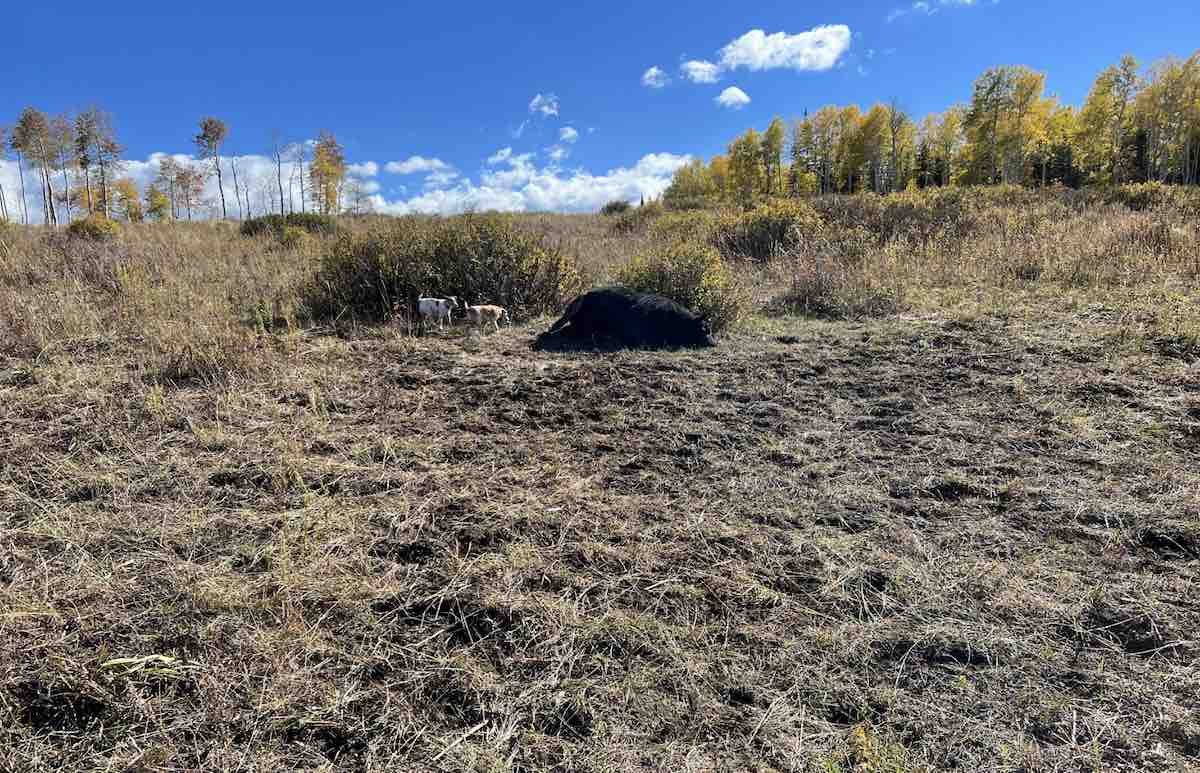
cattle deaths One of several instances involving mysterious cattle deaths discovered near Meeker, Colorado, last Autumn (Credit: Colorado Parks and Wildlife).

“We were first notified about October 4 of a livestock producer that had found some dead cattle,” said CPW Northwest Region Manager Travis Black in an interview with The Debrief. Black said a local CPW District Wildlife Manager and the USDA Wildlife Services control specialist were accompanied by another local officer from a neighboring region during an initial visit to the location where the remains were located.

“Several carcasses had tails missing and marks consistent with canine teeth,” the Klinglesmith family would later report in an update on the investigation that appeared on November 28, 2022. While the carcasses appeared to display hemorrhaging in locations where CPW investigators are trained to look for signs of depredation by canines, the possibility that wolves might have been involved presented unique challenges for investigators trying to determine whether an animal was responsible for some of the killings.

“Our district wildlife officers are trained in identifying depredation primarily from bears and [mountain] lions,” Black told The Debrief.

“Wolves [are] a new one for us,” Black said, although emphasizing that the neighboring CPW officer who assisted in the early investigations had recently undergone training specifically focused on recognizing wolf depredation.

“The local district wildlife officer had twenty-plus years doing this job,” Black said. “It’s not like this was a new guy that didn’t know what he was doing.”

Necropsies were carried out on several of the earliest calf discoveries to aid in determining their cause of death. On October 7, an additional calf carcass was discovered, this time in the Wilson Pasture area along the east fork of Flag Creek, according to a partially redacted document providing a timeline of the discoveries obtained by The Debrief through an Open Records Act request.

Two days later, on October 9, another carcass was discovered at West Miller Creek, and over the course of the next two weeks, the total number of dead calves would climb to 42, excluding two additional deaths resulting from sick calves found by the Klinglesmith family on October 9 believed to have been suffering from Brisket disease, a condition found in cattle residing at high altitudes that sometimes results in heart failure.
cattle deaths

A map indicating locations of calf remains discovered near Meeker, Colorado, in October 2022

(Credit: Colorado Parks and Wildlife).

However, as the investigation continued and additional cattle remains were discovered, one perplexing common trait began to emerge: only a handful seemed to show what CPW officials believed to be signs of wolf depredation.

“The three individuals involved, along with the landowner, decided that there were some injuries on a handful of these calves,” Black told The Debrief. “And I’m talking about four or five of them, not all eighteen.”

“A lot of those dead calves didn’t show any physical marks on the outside, but there were a handful of them that they determined were consistent with wolf depredation,” Black said.

“That does not mean that we said wolves did it.”

However, as investigators worked to understand what factors—or combinations of them—were behind the cattle deaths, the question over wolf involvement only promised to further aggravate a brewing storm that Colorado officials had long been dreading; one with roots that extend all the way back to the early 19th century, and the era of government-sanctioned wolf hunting in America.

OF WOLF AND MAN

DURING THE MIDDLE of the nineteenth century, beavers and other animal populations were in acute decline due to a demand for their pelts. As a result, many professional hunters turned their attention toward a new quarry that was capable of demanding comparable prices in the burgeoning fur trade.

Employing poison traps baited with elk, bison, or other natural prey of the canine predators to help ensure their pelts could be retrieved intact, between the years of 1870 and 1877 as many as 100,000 wolves were killed annually.

The era of the “Wolfers” had begun.
Wolfer in 1904

A Wolfer with his hounds, pictured near Amidon, North Dakota, in 1904

(public domain).

More than two centuries earlier, the first bounty systems on wolves were instituted in European settlements in America. A cash reward of a penny for each of the animals killed was instituted in Massachusetts Bay Colony as early as 1630, and by 1818 with the declaration of the “War of Extermination” against wolves and bears in Ohio, several more states began adopting bounty systems against wolves.

Shortly before its establishment as a state on August 1, 1876, a bounty system was established in what would become the State of Colorado in 1869. Similar bounty systems were established in Wyoming, Montana, and other states during the ensuing decades. By the turn of the century, wolf populations had declined significantly in many parts of America. In 1915, the first official government wolf hunters were hired, remaining in action until June 30, 1942. During this period, more than 24,132 wolves were killed under the direction of the United States government.
wolf hunt

Artist’s depiction of former Presdient Theodore Roosevelt engaging in a wolf hunt in 1907

(public domain).

By the 1960s, wolf populations in the contiguous 48 states had reached record-low numbers, with scattered pockets of the remaining 350 to 750 animals existing in parts of extreme northeastern Minnesota. With the passing of the Endangered Species Preservation Act in 1966, the timber wolf became the first species of American wolf that officially became recognized as endangered under federal law.

The protection of this single wolf species didn’t stop the animals from being killed, however. Between 1969 and 1974, in response to ongoing depredation of livestock, a Directed Predator Control Program conducted by the Minnesota Department of Natural Resources still resulted in the killing of an average of 64 wolves each year, with $50 incentives offered to designated trappers in various parts of the state who harvested wolves. It wasn’t until the Endangered Species Act of 1973 was enacted by Congress and implemented under the direction of the United States Fish and Wildlife Service (USFWS) that gray wolves and subspecies like the eastern timber wolf and Rocky Mountain wolf finally saw federal protection.

Recovery plans to help re-establish the decimated American wolf populations began in the late 1970s in various states, mostly undertaken by the USFWS, although the reinstatement of trapping resulting from the depredation of livestock continued for short periods in several states.

By the end of the century, work to manage wolf populations in various states continued. Throughout the early 2000s, the reclassification of gray wolf populations into three distinct population segments, as well as the proposed delisting of wolf species and other developments related to wolves in America, resulted in several legal controversies (an entire timeline of events detailing these events can be found at the website of the International Wolf Center).
wolf

Photo 1084F, taken in North Park, Colorado, depicts a wolf spotted in the wild in July 2019. The photo was later submitted anonymously to CPW

(Credit: Colorado Parks and Wildlife).

In October 2020, the gray wolf was removed from the Endangered Species Act list of endangered animals in the contiguous 48 United States. In November of that same year, Proposition 114, a ballot initiative that sought to reintroduce wolves west of the continental divide in Colorado, went to vote and was passed. Now recognized as state statute 33-2-105.8, it directs the Colorado Parks and Wildlife Commission to develop a gray wolf reintroduction and management plan no later than December 31, 2023. It also allocates state funding to aid livestock owners “in preventing conflicts with gray wolves and pay fair compensation for livestock losses.”

Then, in October 2022 as dozens of dead calves were being found on the LK Ranch southeast of Meeker, Colorado, CPW officials realized they had a real problem on their hands.

That would especially be the case if wolves were found to be responsible.

CATTLE DEATHS AND CONSPIRACY CLAIMS

AS THE INVESTIGATIONS continued, Colorado officials remained baffled by the strange cattle deaths. Despite the questions that remained, a handful of the incidents did appear to present indications of canine activity. On October 7, 2022, CPW issued a news release revealing to the public that investigations into possible wolf depredations on U.S. Forest Service Land in the Meeker area were underway.

“This is an active investigation and CPW is working closely with the livestock producer to collect additional evidence, including looking for scat and tracks in the area,” the release stated. “If the depredations are confirmed as being caused by wolves, CPW will work in partnership with the livestock producer to implement approved hazing methods and respond to any damage claims submitted.”

“It is important to note,” the release added, “that no wolf reintroductions have taken place yet in Colorado and recent depredation incidents are not related to or a result of wolf reintroduction efforts in Colorado.”

Despite its careful wording, pushback following the CPW’s October news release came almost immediately.

“I received emails, mostly from wolf advocates, that were concerned that misinformation was being provided to the public and to ranchers,” Black told The Debrief, who said he became an easy target for parties who believed CPW was siding with local livestock producers worried about how the reintroduction of wolves could potentially impact their business.

“I was accused of collusion,” Black said, “and cooperation with livestock producers to try and stir up, you know, fear of wolves.”

“And it couldn’t be further from the truth,” Black said of the allegations. “We were just trying to follow an investigative process and figure out exactly what happened in a very unusual case.”

According to a copy of a livestock depredation guide produced for internal use by CPW officials that The Debrief obtained, wolf depredation is usually indicated by wounds inflicted to the hindquarters, flanks, throat, and front legs of large animals like cattle. Wolves also prefer most often to feed on the viscera and hindquarters of large livestock first, although large bones “may be chewed or broken while smaller bones may be consumed,” and such feeding patterns “are not always obvious on prey killed by packs.”
depredation guide Screenshot from a depredation guide detailing signs commonly associated with wolf depredation (Credit: Colorado Parks and Wildlife).

The guide also provides details on the spacing of puncture wounds left by canine teeth, noting the difference between those of wolves and coyotes generally involves a wider width when wolf depredation is involved. The spoor left by wolves is also larger than that of coyotes, with adult wolf tracks generally around 4.75 to 5 inches in length and 4 inches wide.

A Colorado Parks and Wildlife wolf support work summary dated October 24, 2022, states that biologists from the White River National Forest set up ten wildlife cameras in the area on October 11, 2022, just days after the initial group of dead calves were found.

“Reconyx cameras were used and placed on trees 7-9 meters across from another tree scented with a lure attractant,” read a copy of the document obtained by The Debrief. Additionally, a pair of howling stations were established along Forest Road 217 on the same day the cameras were installed.

“We removed all cameras on October 21st,” the document states. “No wolves were photographed on our cameras during the deployment window of October 11-21.”

Additionally, howling surveys conducted during the same period the cameras remained in use produced no audio recordings of wolves, and investigations along muddy areas near where one recently deceased calf body had been discovered “showed no canine tracks,” and “no scat was noted.”

At least a few scat samples collected and analyzed at other locations by CPW investigators “did not provide any DNA amplification,” according to emails reviewed by The Debrief, although a total of 14 hair samples were also collected during this period. One of the hair samples provided no amplification, and 12 were identified as bovine. Intriguingly, the final sample was determined to belong to a “wild canid,” although the research molecular biologist who performed the analysis said it had “a messy analysis and indicated coyote,” but added that “not much should be read into that as the sample was very degraded.”

The Debrief reached out to the biologist who provided these results, although the individual declined to comment further based on their limited involvement with the CPW’s investigation.

The question remained, then, as to what had been responsible for the deaths of more than 40 cattle around Meeker, Colorado, within a few short weeks. By now, with little evidence to support the presence of wolves in the area, some investigators were leaning toward the possibility that a very different kind of killer might have been involved.

A killer of the unseen kind.

ON THE TRACK OF AN INVISIBLE KILLER

AS THE DAYS wore on and more dead calves continued to be found, investigators were becoming convinced that the evidence in hand simply did not support the conclusion that wolves could have had any significant involvement. Eventually, a new possible explanation came to their attention: a soil-based pathogen called clostridium chauvoei associated with a condition called black leg, known to sometimes occur in both cattle and sheep.

“As we researched this clostridial disease and outbreaks in other regions of the world with large casualties, some similarities to this situation were recognized,” the Klinglesmith family wrote in their November 2022 update. Still, one of the prevailing questions involved what circumstances might have caused a large number of cattle to suddenly fall victim to this unseen pathogen.

myocardium Microscopic image of bovine heart tissue showing evidence of clostridium bacteria (Credit: Abreu, et al/Journal of Veterinary Diagnostic Investigation).

According to one study cited in the family’s November update, “when the oxygen tension drops in areas of muscle in which spores are present, usually as a consequence of blunt trauma and associated tissue hemorrhage, degeneration, and necrosis, the spores germinate, proliferate, and produce toxins that are responsible for most clinical signs and lesions of black leg.” Such conditions would also seem to be consistent with the small number of initial cattle deaths around Meeker that displayed evidence of canine depredation.

Another possible factor involved a management decision among producers in the area to change the normal vaccination schedule, which usually entailed a spring and fall dose of 8-way vaccine, and instead administer a pair of fall doses. “The 8-way vaccine contains and protects against eight clostridial strains,” the Klinglesmith family wrote in their November update. “This change in vaccine protocol allowed us to focus spring immune responses on the four main respiratory viruses, and Pasteurella.”

“Our goal in changing vaccine protocol was to administer fewer antibiotics throughout the summer months for respiratory sicknesses,” the family wrote, “and we were successful in this aspect.”

However, the change in vaccine protocol may have also left several cattle that season susceptible to any forms of clostridium that might be present. In their update, the Klinglesmiths noted that “if in fact a clostridial was triggered by an attack, with a return to our original vaccine protocol we should be able to avoid the heavy casualties,” thereby reducing “our losses to a few depredation casualties,” and maintaining a strategy that “fits the research and experience consistently reported in the Northern Rockies.”

Ultimately, the results from pathology tests for the presence of clostridium chauvoei would be the final say in the matter. But before those tests could be completed, the sobering number of unexplained cattle deaths occurring around Meeker had already become the subject of significant attention from the media, which only further complicated an already uneasy situation for CPW officials.

It certainly didn’t help that among the speculations now in circulation were new claims of a “mysterious creature” that could have been responsible for the killings.

MYSTERIOUS MUTILATIONS AND KILLER CREATURES

THROUGHOUT THE EARLY 1970s, a wave of unsettling livestock deaths and mutilations captured the attention of people across the nation, deaths the likes of which Colorado had its fair share.

“Given the rate of human slaughter in any large American city, it might not seem too important that between April and September of this year 129 cattle were mutilated in the state of Colorado,” read an article by Alexander Cockburn in the December 1975 issue of Esquire. Similar stories appearing around the time drew attention from politicians like U.S. Senator from New Mexico Harrison Schmitt, as well as U.S. Senator Floyd Haskell of Colorado, who began to appeal to then-Attorney General Griffin B. Bell and the Federal Bureau of Investigation for help in the matter.
FBI

One of several FBI documents detailing cattle mutilation incidents reported in the U.S. during the 1970s

(Credit: FBI).

“If the FBI will not enter the investigation of mysterious livestock deaths in Colorado and some adjacent states, then Sen. Floyd Haskell, D-Colo., should take the matter to Congress for resolution,” read a Denver Post article on September 3, 1975. The FBI, citing the absence of “interstate transportation” that would warrant attention from federal authorities, advised that “Our jurisdiction was explained to Senator Haskell and he said that he understood our statutory limitations,” according to a September 12, 1975 memorandum (the FBI’s entire collection of files related to animal mutilations can be read online here).

Quite unlike the cattle deaths that occurred near Meeker, Colorado, last Autumn, the cattle mutilation incidents that peaked during the mid-1970s reportedly involved animals found dead with selected organs and other body parts removed, and often blood drained from their carcasses. Between 1973 and 1976 alone, more than 1500 alleged cattle mutilations in 22 U.S. states were reported, prompting speculations about everything from satanic cults and secretive government research efforts to UFOs.

Although many of the cattle mutilation incidents from throughout the decades remain unsolved, nothing that conclusively links them to cultists, government agencies, or aliens with a flavor for filet mignon has ever surfaced. However, the persistence of such stories throughout the decades—tales now legendary among many Colorado cattle producers—did little to help the situation when dead calves started appearing around Meeker last October.

Black recalled one phone call he received from a family member who “asked if we had aliens or something.”

“There were a lot of kinda wild theories thrown out there,” Black told The Debrief.

By the end of November 2022, characterizations of the Meeker cattle deaths as having involved an “elusive predator” or a “mystery killer” began appearing after the publication of an article in the New York Post which, although correct in most of the details about what was known at the time about the evolving investigations by CPW and other Colorado officials, built intrigue by attributed dozens of the cattle deaths to an unknown predator “that has left no tracks.”
cattle deaths

The remains of another calf found during investigations into cattle deaths near Meeker, Colorado, last fall

(Credit: Colorado Parks and Wildlife).

Based on emails from officials obtained by The Debrief through Colorado Open Records Act requests, the sensational media coverage of the situation did not go unnoticed by CPW investigators, who were growing increasingly frustrated by the elusive source behind the cattle deaths.

“I’m sure you’re aware of the consternation about the deaths of Lenny Klinglesmith’s cattle, and it seems to be getting worse,” read one email reviewed by The Debrief, where an official referred to an article by one news outlet as “not very good in multiple ways.”

“I’m sure you can appreciate that the press will write a story (both good and bad), and that is out of our control,” another email message read.

“If some want to jump to conclusions, that is their prerogative,” it continued. “Yes, the speculation isn’t helping,” the official wrote. “Neither will pushing for a final answer without due diligence.”

Another email exchange on November 30, 2022, noted that “The media continues to twist this story how they see fit,” adding that “One side wants to downplay wolf involvement. The other wants to blame wolves.”

Speaking with The Debrief, Black recalled his own frustrations over the media coverage the CPW’s investigation generated.

“We can’t control what the media says,” Black told The Debrief. “We tried to provide as detailed information as we could during this event, and they tend to pick and choose pieces of that or take some of it out of context and develop their own story.”

However, the details of that story would only become more complicated once the results of pathology tests for possible clostridium infection finally returned.

INCONCLUSIVE ANALYSIS  

ON OCTOBER 20, 2022, results from the Colorado State University Diagnostic Laboratory returned with pathology results from samples collected at the scene of several of the Meeker cattle deaths. While noting the presence of “significant autolysis in the skeletal muscle sections which makes interpretation difficult,” the results of the analysis nonetheless concluded that “there is no evidence of necrosis or active inflammation to suggest Black Leg,” the infectious bacterial disease associated with clostridium chauvoei.

Another series of samples tested by the Texas A&M Veterinary Medical Diagnostic Laboratory yielded similar results on October 21, 2022, indicating “no microscopic lesions in the tissues examined that explain the cause of death in this animal.”

“This is frustrating,” Black wrote in an email to another CPW official dated Wednesday, November 30, 2022. “Initial assessments made by [District Wildlife Managers] and Wildlife Services staff said there were multiple injuries consistent with wolf depredation. I’ve seen some of the photos… I understand why they made that assumption. However, there is no other supporting evidence.”
cattle deaths

Partially redacted theodolite image of cattle remains photographed during investigations in October, 2022, obtained by The Debrief through a Colorado Open Records Act Request

(Credit: Colorado Parks and Wildlife)

“Then the possibility of Clostridium bacteria came up,” Black’s email continued. “This seemed to answer a lot of questions. Then samples and lab analysis failed to positively point to this as [the] cause of death.”

“It also creates a lot of room for conjecture,” Black wrote. “Did wolves chase the cattle or attack them initially and cause a low oxygen environment within tissue that exacerbated the bacteria and created a toxin? Or is this natural progression of the disease?”

“Nobody can seem to give us a definitive answer.”

THE INVESTIGATION ENDS, AND QUESTIONS REMAIN

ON FEBRUARY 7, 2023, four months after the first dead calves were discovered near Meeker, CPW announced that it was closing its investigation, despite there being no conclusive explanation that could account for all the cattle deaths.

“CPW investigators could not determine the exact cause of death for a few calves with hide damage and trauma consistent with a canine attack,” the news release stated

According to the CPW release, the discovery of a pack of nine dogs seven miles from where the cattle deaths occurred that were blamed for harassing wildlife, “cast doubt on whether wolves were in the area.”

“CPW is working with the Rio Blanco County Sheriff’s office on a call-by-call basis and will deal with any domestic dog issues according to legal processes,” the release added.

Black was quoted in the release saying that while some cattle displayed wounds that were “consistent with injuries from large canines,” there had been “no confirmation of wolves in the area,” adding that “we do not have specific evidence to determine what species of canid caused the depredations.”

In Colorado, a 90-day window is allotted for producers to present proof of loss when deaths suspected to be the result of animal depredation occur. Following last October’s cattle deaths, the investigation by CPW was officially closed after the expiration of this window period.

“The Klinglesmith family would like to thank the local DWMs and veterinary staff for the many hours spent in the field and in the office investigating this incident,” Lenny Klinglesmith was quoted saying in the release, which added that his family did not plan to pursue compensation for the losses “Due to lack of evidence of wolves in the area.”

One week later on February 14, The Humane Society of the United States reported that wolves had been ruled out as a cause behind the Meeker cattle deaths, admonishing CPW officials for assessments they said “led to anti-wolf hysteria” among residents and certain stakeholders on the Colorado Western Slope.

“A wildlife expert who examined photos of dead cows obtained by the Humane Society of the United States (HSUS) in an open records request has concluded that wolves are not to blame for the deaths of 41 cattle whose bodies were found near Meeker, Colorado in 2022,” the press release read.

According to a report based on a review of CPW documents provided by the HSUS, Carter Niemeyer, a former U.S. Department of Agriculture District Supervisor and Wolf Management Specialist wrote that there wasn’t any evidence that supported wolf involvement in the cattle deaths in Colorado last year.

“Based on the evidence in these photos,” Niemeyer wrote in his report, “it [is] my opinion that wolves had nothing to do with the death of Meeker cattle. I don’t really see any evidence of dog bites either. Although they can be less damaging, dogs can inflict serious injuries to the legs of cattle or even the faces/nose.”

“I believe the cattle died fairly quickly where they were standing,” Niemeyer continued, “and the cause had nothing to do with predation of any sort.” Niemeyer also raised the question of whether Brisket disease might have played a more significant role in the deaths, based on communications that referenced a pair of cattle deaths that were believed to have been caused by this condition.

“My question would be – If a couple of cattle died this way, it is reasonable to assume others did too,” Niemeyer wrote. “Brisket disease is a well-known and recognized condition in cattle that graze at high elevations in Colorado.”

“In conclusion, I did NOT see any evidence of wolf predation in any of the images provided,” Niemeyer wrote.

LINGERING QUESTIONS

FOR TRAVIS BLACK, what began as an investigation into how more than 40 cattle died in his home state last year blossomed into a controversy that eventually made its way into headlines around the world. At the heart of the investigation had been the concerns of a respected ranch family in Meeker, who felt an obligation to communicate with their neighbors in the region about the unsettling situation that had invaded their lives.

It is a situation that, even today, remains unresolved.

“It was Mr. Klinglesmith that first reached out to the media about this,” Black told The Debrief. “And I understand where he was coming from. I’d probably have made the same decision if I’d been that producer.”

However, those initial efforts to provide clear and reliable information to the public about the investigation also drew media attention, which eventually gave rise to misperceptions about the investigation that would further hamper efforts to get to the bottom of the deaths.

“That certainly caused the media to start inquiring,” Black said. “It put CPW in a position where we had to put something out, right? To let them know, yes, something happened. We’re investigating it.”

Yet those investigations seemed to have only left people like Black and his coworkers with more questions than answers about what factors might have caused the bizarre deaths.

“I go back to the drum I keep beating,” Black maintains. “We saw injuries consistent with wolf depredations.”

“But never once did we say it was wolves.”

Black says the headlines that played up the mysterious aspects of the deaths, characterizing them as “slayings” by some unidentified “creature” had likely only fed into the misperception that wolves, or perhaps some other animal, were to blame.

“It did make managing the situation difficult,” Black said, noting that the media coverage and resulting rumor mill prompted CPW to hold a commission meeting on November 17, 2022, where Black attempted to update the public and “put to rest some of the rumors that were flying out there.”

However, as the end of the three-month period allotted to producers like the Klinglesmith family to provide evidence of loss steadily approached, it became evident to all parties that a resolution was unlikely to be found before the deadline arrived.

“We coordinated with the landowner, and he agreed,” Black told The Debrief. “In consultation with Klinglesmith, we agreed to close the investigation.”

Throughout the duration of CPW’s inquiry, Black says that there was no clear evidence of wolves uncovered during the 90-day investigation period. However, equally frustrating to investigators had been that in addition to the scant evidence of canine depredation, there had also been no clear evidence that any of the other potential causes CPW had explored were to blame.

“We couldn’t say [definitively] that it was clostridium. We couldn’t say for certain that it was dogs [or] other canines that harassed the cattle.”

“There just wasn’t enough evidence to support any of the above,” Black said.

The question remains as to what the actual cause behind the deaths of so many cattle around Meeker last year had been, although several possibilities exist. Perhaps some yet-to-be-determined pathogen had been to blame, which might explain why tests for any of the suspected strains of clostridium turned up empty-handed. It also seems plausible—if not likely—that the changes to the vaccination schedules that occurred earlier in 2022 had been related to the deaths in some way.

Another alternative is Brisket disease, a condition that is recognized for affecting mostly high-altitude cattle populations like those in northwestern Colorado but can sometimes manifest in cattle dwelling as low as 3000 feet. Brisket disease was also confirmed in at least two of the incidents reported by the Klinglesmiths last year early in the investigation and perhaps should not be ruled out as having been a potential factor in more of the cattle deaths.

Still another possibility might involve a form of toxin present in the environment, which calves could have been exposed to either through ingestion of vegetation or other food sources or through contaminated water. Presently, although there is no evidence of contaminants in the environment known to have been detected by CPW investigators, examples of bovine deaths resulting from toxicity have occurred elsewhere in recent years. These include cattle deaths in Ontario in 2007 that were later attributed to the consumption of Senecio jacobaea, a plant more commonly known as Tansy ragwort.

In the aftermath of the strange ordeal, there is at least one thing that seems very clear to Travis Black, although it offers little consolation in light of the mysterious incidents that pushed his community into the international spotlight last year.

“The only thing I could say,” Black told The Debrief, “is that there was zero evidence of wolves.”

{ https://thedebrief.org/category/science/ }

Hoe vind je dit bericht?
Geschreven door peter om 22:31 Stuur door

Could We Replace Ingenuity With a Swarm of Robotic Bees?

Could We Replace Ingenuity With a Swarm of Robotic Bees?

Humans finally achieved controlled flight on another planet for the first time just a few years ago. Ingenuity, the helicopter NASA sent to Mars, performed that difficult task admirably. It is now taking a well-deserved rest until some intrepid human explorer someday comes by to pick it up and hopefully put it in a museum somewhere. But what if, instead of a quadcopter, NASA used a series of flexible-wing robots akin to bees to explore the Martian terrain? That was the idea behind the Marsbee proposal by Chang-Kwon Kang and his colleagues at the University of Alabama at Huntsville. The project was supported by a NASA Institute for Advanced Concepts (NIAC) grant back in 2018 – let’s see what they did with it.

The concept was initially inspired by work at the University of Tokyo on a dragonfly-like micro aerial vehicle (MAV). It is one of the few drones able to fly in Earth’s gravity using flexible wings that flap. But would it be useful on Mars?

Mars has both advantages and disadvantages compared to Earth when considering whether flexible wing flight is possible. In the advantage column, it has about ? of the gravity of our home planet, so less force is necessary for an aircraft to lift off. However, there is only about 1% of the atmosphere on Mars compared to Earth, so a flexible-wing aircraft would have significantly less atmosphere to push off to create that force.

Fraser explains Ingenuity’s final fate.

Ultimately, part of the Phase I project for the Marsbee grant was to determine whether the approach was feasible. But why do so in the first place? Ingenuity, known at the time as the Mars 2020 Helicopter, was already on the path to conducting the first powered flight on another planet. While it was successful at its stated mission, it had several downsides, including a relatively large size, which is at a premium on interplanetary trips, and a flight time limited to only about 3 minutes. 

Neither of those limitations was a show-stopper, obviously, but a flexible-wing aircraft that is smaller and lighter could solve both of those problems. Engineers could potentially even store multiple craft in the same space as what Ingenuity needed in its ride-along with Perseverance. But would they work?

The short answer appears to be “not without additional technical development.” Modeling of the design showed weaknesses in a few areas that must be addressed before launching any successful Marsbee mission. The biggest hurdle appeared to be how flexible structures, like those that would make up the system’s wings, interacted with the uncertain aerodynamic environment of the Red Planet. 

Video describing the Marsbee concept.
Credit – NASA 360 YouTube Channel

Other challenges include the weight of the battery pack and the development of a guidance and control system that could deal with the randomly windy Martian atmosphere while remaining small and light enough to fit on a flexible wing flyer. Also, it would be challenging to direct the flyers without a GPS, which doesn’t yet exist on Mars.

For now, efforts to develop Marsbees seem to have been put on hold, at least for the last several years. With the success of Ingenuity, many questions about the feasibility of flight on the Red Planet have already been answered. But with a little more technical development and derisking, it might be possible that someday we’ll see flights of robotic bees buzzing around the Red Planet.

Learn More:

Lead Image:

  • Artist’s depiction of the M

{ https://www.universetoday.com/ }

Hoe vind je dit bericht?
Geschreven door peter om 21:13 Stuur door

Alpha Centauri Could Have a Super Jupiter in Orbit

This image of the sky around the bright star Alpha Centauri AB also shows the much fainter red dwarf star, Proxima Centauri, the closest star to the Solar System. The picture was created from pictures forming part of the Digitized Sky Survey 2. The blue halo around Alpha Centauri AB is an artifact of the photographic process, the star is really pale yellow in colour like the Sun. Image Credit: Digitized Sky Survey 2 Acknowledgement: Davide De Martin/Mahdi Zamani

Alpha Centauri Could Have a Super Jupiter in Orbit

The three-body problem is one of Nature’s thorniest problems. The gravitational interactions and resulting movements of three bodies are notoriously difficult to predict because of instability. A planet orbiting two stars is an example of the three-body problem, but it’s sometimes called a “restricted three-body problem.” In that case, there are some potential stable orbits for a planet.

A new study shows that the nearby Alpha Centauri AB pair could host a Super Jupiter in a stable orbit.

The research is “Stability of the Potential Super Jupiter in Alpha Centauri System.” It’s available on the preprint site arxiv.org. The sole author is Tinglong Feng, an undergraduate at Xi’an Jiaotong University in China.

“The three-body problem, which seeks stable orbit configurations among gravitating bodies, is a longstanding challenge in celestial mechanics,” Feng writes. Feng examines ? Centauri AB, our nearest binary neighbour, to understand if the system could host a super Jupiter and what orbit the giant planet could follow.

Feng isn’t the first astronomer to tackle the problem. “As the closest triple stellar system to Earth, Alpha Centauri system has attracted diverse studies in astronomy, including exoplanet stability,” Feng writes. Though the entire Alpha Centauri system is a triple star system, ? Centauri AB are far enough from the third star that they comprise a binary system.

Size comparisons for the Alpha Centauri A and B, Proxima Centauri, and the Sun. Image Credit: Planetary Habitability Lab/UPR Arecibo Size comparisons for the Alpha Centauri A and B, Proxima Centauri, and the Sun. Image Credit: Planetary Habitability Lab/UPR Arecibo

There are some solutions to the three-body problem if one of the bodies has a negligible mass compared to the other two. ? Centauri AB is a pair of Sun-like stars. ? Centauri A is a class G star a little more massive than the Sun, and ? Centauri B is a class K star a little less massive than the Sun.

The study compares the ? Centauri AB system with a similar star system named GJ65AB (Gliese 65). It’s a binary pair known to host a Neptune-mass exoplanet. Though Gliese 65 is a pair of M-dwarfs, the comparison is still valuable because it “shares similar mass ratios and orbital eccentricities,” Feng writes. Gliese 65 is also close at only about 8.8 light-years from Earth. Feng also performed simulations of the ? Centauri AB system to test the idea of it hosting an exoplanet.

“The similarities between GJ65AB and Alpha Centauri AB, together with the newly detected stable super Neptune in the GJ65 system, suggest the stability of the corresponding potential super Jupiter in Alpha Centauri AB,” Feng writes. The Gliese 65 and the Alpha Centauri AB systems have nearly identical mass ratios and eccentricities. If GJ65 can host a planet in a stable orbit, can ? Centauri AB also host one?

Feng used the Mean Exponential Growth factor of Nearby Orbits (MEGNO) method to test the potential stability of a super Jupiter at ? Centauri AB. First, he used it to simulate the GJ65AB system and the newly discovered planet to verify the planet’s orbital stability. Then, he did the same with ? Centauri AB. “For this simulation, we restricted the semimajor axis of the planet to range from 0.1 to 5.0 au, and eccentricities less than 0.5,” Feng writes.

The MEGNO simulations for Gliese 65 showed that the newly discovered Neptune mass planet should be stable.

This figure from the research shows MEGNO results for Gliese 65. Dynamically stable regions of e (orbital eccentricity) and a (astronomical units) are shown in green, and the results show that the planet discovered around GJ65 should be stable. We identified the stable zone spanning from 0.1 to ~ 0.35 au, which contains all the stable orbits for ? ranging from 0 to 0.5 to ~0.35 au, which contains all the stable orbits for ? ranging from 0 to 0.5," Feng explains. Image Credit: Feng 2024. This figure from the research shows MEGNO results for Gliese 65. Dynamically stable regions of e (orbital eccentricity) and a (astronomical units) are shown in green, and the results show that the planet discovered around GJ65 should be stable. We identified the stable zone spanning from 0.1 to ~ 0.35 au, which contains all the stable orbits for ? ranging from 0 to 0.5 to ~0.35 au, which contains all the stable orbits for ? ranging from 0 to 0.5,” Feng explains. Image Credit: Feng 2024.

The next step was to find stable orbits for a planet orbiting ? Centauri AB. To do that, Feng used ? Centauri A as the primary star and injected a 350 Earth-mass planet at a distance of 23.336 AU. All of the other parameters were similar to GJ65 but scaled to ? Centauri AB. “We figured out the stable zone with ?
spanning from 0.1 to ~ 2.2 au, and ? ranges from 0 to 0.5,” Feng writes.

Feng says that the “potentially stable planet” should have ? about equal to 1.189 and ? about equal to 0.33. Those numbers place the planet in the stable zone in MEGNO results.

This figure from the study is a stability map based on MEGNO values for a Jupiter-mass planet in Alpha Centauri AB. Dynamically stable regions are coloured in green. For a stable planet around ? Centauri AB to "mimic" the stability of the newly discovered Neptune planet around GJ65, the planet would have ? about equal to 1.189 and ? about equal to 0.33, which places it right in the green stability zone. Image Credit: Feng 2024.

This figure from the study is a stability map based on MEGNO values for a Jupiter-mass planet in Alpha Centauri AB. Dynamically stable regions are coloured in green. For a stable planet around ? Centauri AB to “mimic” the stability of the newly discovered Neptune planet around GJ65, the planet would have ? about equal to 1.189 and ? about equal to 0.33, which places it right in the green stability zone. Image Credit: Feng 2024.

Of course, none of this means there is a planet there. It just shows that a potential stable orbit is available.

Feng’s work proposes that exoplanets in binary systems with nearly identical mass ratios and eccentricities can exhibit similar stability properties. “From this hypothesis, together with the newly detected Neptune-mass planet in the GJ65 system, which is similar to Alpha Centauri AB, we assume the existence of a potential Jupiter-mass planet with corresponding orbital parameters in Alpha Centauri AB should also be possible,” Feng writes.

No planets have been detected around ? Centauri AB, but that doesn’t mean there isn’t one there. Our planet-hunting methods are far from absolute, and there are bound to be many planets in nearby systems that we haven’t been able to detect yet.

There are many proposals for missions to the region or for telescopes designed to probe the system more deeply. Their neighbour, Proxima Centauri, has two confirmed exoplanets. And there’ve been tantalizing hints that Alpha Centauri A hosts a planet, but it remains only a candidate.

A true detection or emphatic non-detection may be years or decades away. Who knows? But at least Feng’s work shows that there could be a stable orbital home for a super Jupiter in the system.

{ https://www.universetoday.com/ }

Hoe vind je dit bericht?
Geschreven door peter om 21:04 Stuur door

Astronomers Have Counted Over 800 Stars That Have Disappeared Without A Trace. Now They Think They Know What Happened.

Astronomers Have Counted Over 800 Stars That Have Disappeared Without A Trace. Now They Think They Know What Happened.

Story by Michael Levanduski
 
Source: NASA
SOURCE : NASA

Source: NASA

SOURCE : NASA

When looking up into the night sky, you can see millions of stars with the naked eye. When using high-powered telescopes, that number jumps up into the billions.

While most people cannot point out too many specific stars, they know they are always there. Throughout human history, people have even used the consistency of the stars to aid in navigation, planning, and much more.

Of course, today we know that stars do eventually die, often in brilliant explosions known as supernovae. Smaller stars can also simply fade out over time as they exhaust their fuel sources.

Over the past 70 years, however, scientists have documented another phenomenon with stars. They simply disappear without a trace. Astronomers look at the star at one point, then when they return (even just an hour later), and it is gone.

What makes this even more unusual is that the star never returns.

Source: Nasa/James Webb Space Telescope

Source: Nasa/James Webb Space Telescope
© Provided by Twisted Sifter

There have been over 800 cases of this documented so far, and they have largely left astronomers baffled.

New research from astronomers at the University of Copenhagen, however, has published a paper that may offer an explanation.

The study’s co-author, Alejandro Vigna-Gomez said in a statement:

“Were one to stand gazing up at a visible star going through a total collapse, it might, just at the right time, be like watching a star suddenly extinguish and disappear from the heavens. The collapse is so complete that no explosion occurs, nothing escapes and one wouldn’t see any bright supernova in the night sky.”

This can happen, they theorize, when massive stars collapse under their own gravity and become black holes, or extremely dense neutron star, immediately.

All detectable evidence that this occurred would be captured by the gravity and sucked back in, leaving nothing for us to see. From our perspective, it would look like the star simply disappeared.

Source: NASA/James Webb Space Telescope

Source: NASA/James Webb Space Telescope
© Provided by Twisted Sifter

The evidence that they used is from observing a binary star system that is called VFTS 243. In it, a star that is about ten times more massive than our sun is orbiting with a black hole. Vigna-Gomes says of this situation:

“The orbit of the system has barely changed since the collapse of the star into a black hole.”

One obvious problem with this type of theory is that it is difficult to gather any type of hard evidence for it.

All the energy, partials, and even light would be sucked back down into the black hole. in this type of case, scientists can theorize what would happen and compare it to the data that is available.

Related video: 
  • Spiralling Stars Captured By The Hubble Space Telescope (Dailymotion)

So far, it seems that things fit well.

Of course, more research is needed before the theory can be widely adopted.

Who knew that stars could disappear?

If you thought that was interesting, you might like to read about a second giant hole has opened up on the sun’s surface. Here’s what it means.

{ https://www.msn.com/en-us/ }

Hoe vind je dit bericht?
Geschreven door peter om 20:50 Stuur door

Close encounters of the nerd kind: Smiling troopers in 2 states pull over 'out of this world' vehicle heading to UFO Festival

Close encounters of the nerd kind: Smiling troopers in 2 states pull over 'out of this world' vehicle heading to UFO Festival

Close encounters of the nerd kind: Smiling troopers in 2 states pull over 'out of this world' vehicle heading to UFO Festival

mage source: Oklahoma Highway Patrol

Law enforcement couldn't help noticing the 'friendly humanoids, who have come in peace' and their spaceship-like vehicle

Smiling troopers in two states performed traffic stops in recent days on a spaceship-like vehicle heading to the UFO Festival in — of course — Roswell, New Mexico, Fox News reported.

A couple of close encounters of the nerd kind, one might say, to borrow from a sitcom episode from the last century.

The first took place in Missouri, as the Crawford County Sheriff's Office wrote in a Facebook post last Friday about a pair of "friendly humanoids, who have come in peace."

'He was also warned about our strict enforcement of warp speed on the interstate and to keep his phasers on stun only while traveling.'

{ https://www.theblaze.com/ }

Hoe vind je dit bericht?
Geschreven door peter om 18:35 Stuur door

Denisovans Survived on Tibetan Plateau until 48,000-32,000 Years Ago

Denisovans Survived on Tibetan Plateau until 48,000-32,000 Years Ago

Archaeologists have found a new hominin rib specimen in Baishiya Karst Cave, one of the only two places where Denisovans are known to have lived. Dated to 48,000-32,000 years old, the specimen also belongs to the Denisovan lineage, extending their presence at the cave well into the Late Pleistocene.

A portrait of a juvenile female Denisovan based on a skeletal profile reconstructed from ancient DNA methylation maps. Image credit: Maayan Harel.

A portrait of a juvenile female Denisovan based on a skeletal profile reconstructed from ancient DNA methylation maps.

Image credit: Maayan Harel.

Denisovans are an extinct hominin group initially identified from a genome sequence determined from a fragment of a finger bone found in Denisova Cave in the Altai Mountains in southern Siberia.

Subsequent analyses of the genome have shown that Denisovans diverged from Neanderthals 400,000 years ago and that at least two distinct Denisovan populations mixed with ancestors of present-day Asians.

In 2019, a 160,000-year-old jawbone from Baishiya Karst Cave, a limestone cave at the northeast margin of the Tibetan Plateau, was identified to be of Denisovan origin.

In 2020, archaeologists found Denisovan mtDNA in the sediments of this cave d indicating their presence at about 100,000 years ago, 60,000 years ago, and possibly 45,000 years ago.

The new rib bone of a Denisovan from Baishiya Karst Cave dates to approximately 48,000-32,000 years ago.

“Together, the fossil and molecular evidence indicates that Ganjia Basin, where Baishiya Karst Cave is located, provided a relatively stable environment for Denisovans, despite its high-altitude,” said Dr. Frido Welker, an archaeologist at the University of Copenhagen.

“The question now arises when and why these Denisovans on the Tibetan Plateau went extinct.”

In their research, Dr. Welker and colleagues studied more than 2,500 bones from Baishiya Karst Cave.

“We were able to identify that Denisovans hunted, butchered and ate a range of animal species,” said Dr. Geoff Smith, a zooarchaeologist at the University of Reading.

“Our study reveals new information about the behavior and adaptation of Denisovans both to high altitude conditions and shifting climates.”

“We are only just beginning to understand the behavior of this extraordinary human species.”

article image

Today Baishiya Karst cave is a place of pilgrimage for Buddhists, but it's just as highly valued by paleontologists as our only evidence for Denisovans on the Tibetan Plateau.

Image Credit: Dongju Zhang via Wikimedia Commons (CC BY-SA 4.0)

A distant view of the Baishiya Karst Cave in the side of a rocky and steep mountain.

The Baishiya Karst Cave is revealing the resilience of the Denisovans who endured a harsh climate.

Credit...Dongju Zhang’s group/Lanzhou University

Analysis of bone fragments unearthed during excavations at Baishiya Karst Cave have revealed what animals Denisovans butchered, ate and processed. - Dongju Zhang’s group/Lanzhou University

Analysis of bone fragments unearthed during excavations at Baishiya Karst Cave have revealed what animals Denisovans butchered, ate and processed. -
Dongju Zhang’s group/Lanzhou University© Provided by CNN

An artist's impression of the Stone Age landscape of Ganjia Basin where Baishiya Karst Cave is located, depicting some of the animals which were identified by archaeologists via bone analysis. - Xia Li

An artist's impression of the Stone Age landscape of Ganjia Basin where Baishiya Karst Cave is located, depicting some of the animals which were identified by archaeologists via bone analysis. 

Xia Li© Provided by CNN

Many of the bones recovered from Baishiya Karst Cave, like this spotted hyena vertebra, contain traces of human activities such as cut marks. - Dongju Zhang’s group/Lanzhou University

Many of the bones recovered from Baishiya Karst Cave, like this spotted hyena vertebra, contain traces of human activities such as cut marks. 

Dongju Zhang’s group/Lanzhou University© Provided by CNN

The Denisovan rib bone, broken during excavation. So far it's owner is not known to have been nicknamed Adam.

The Denisovan rib bone, broken during excavation. So far its owner is not known to have been nicknamed Adam.
Image Credit: Dongju Zhang’s group (Lanzhou University).

Two views of a hyena vertebra, with the entire bone at left with a small yellow square, magnified at inset at right, showing a cut mark made with an instrument.

Many of the bones recovered from the Baishiya Karst Cave, such as this hyena vertebra, have cut marks most likely made by Denisovans using stone tools.

Credit...Dongju Zhang’s group/Lanzhou University

Bone remains from Baishya Karst Cave were broken into numerous fragments preventing identification.

The researchers used a novel scientific method that exploits differences in bone collagen between animals to determine which species the bone remains came from.

“Zooarchaeology by Mass Spectrometry (ZooMS) allows us to extract valuable information from often overlooked bone fragments, providing deeper insight into human activities,” said Dr. Huan Xia, a researcher at Lanzhou University.

The scientists determined that most of the bones were from blue sheep, known as the bharal, as well as wild yaks, equids, the extinct woolly rhino, and the spotted hyena.

They also identified bone fragments from small mammals, such as marmots, and birds.

“Current evidence suggests that it was Denisovans, not any other human groups, who occupied the cave and made efficient use of all the animal resources available to them throughout their occupation,” said Dr. Jian Wang, also from Lanzhou University.

“Detailed analysis of the fragmented bone surfaces shows Denisovans removed meat and bone marrow from the bones, but also indicates the humans used them as raw material to produce tools.”

  • This research is described in a paper in the journal Nature.
  • H. Xia et al. Middle and Late Pleistocene Denisovan subsistence at Baishiya Karst Cave. Nature, published online July 3, 2024; doi: 10.1038/s41586-024-07612-9

{ https://www.sci.news/ }

Hoe vind je dit bericht?
Geschreven door peter om 18:20 Stuur door

UFO Near Apollo 10...Focused With AI, NASA link, UAP Sighting News.

UFO Near Apollo 10...Focused With AI, NASA link, UAP Sighting News.

UAP,%20%E0%A4%89%E0%A4%AB%E0%A5%8C%20,%20%E0%A6%87%E0%A6%89%E0%A6%8F%E0%A6%AB%E0%A6%93,%20%C4%91i%CC%83a%20bay,%20MUFON,%20%E7%9B%AE%E6%92%83%E3%80%81%E3%82%A8%E3%82%A4%E3%83%AA%E3%82%A2%E3%83%B3,%20%20UFO,%20UFOs,%20%D0%9D%D0%9B%D0%9E%20,%20NLO,%20sighting,%20sightings,%20alien,%20aliens,%20ET,%20anomaly,%20vreemdelinge.png
Below is a close up of an alien inside, chest, two arms head all visible. 
Screenshot%202024-07-06%20at%209.29.55%E2%80%AFAM.png

Source photo:

Caught in orbit around Earth during an Apollo 10 mission, this UFO looks awfully close to the Apollo module. The photo was taken in July of 1969 and shows a solid craft in high orbit. Notice the bulging center of the craft...much like we hear about in classic UFO reports. AI is the new UFOlogist tool that everyone needs to start using. Did you also notice that the alien occupant of the UAP is visible in the dark dome cockpit of the UFO? It's true, check out the close up above and see. 

Scott C. Waring, please hit subscribe on my Youtube channel.

{ https://www.ufosightingsdaily.com/ }

Hoe vind je dit bericht?
Geschreven door peter om 18:00 Stuur door

Tibetaanse grot vertelt over oude uitgestorven mensen: Denisoviërs leefden hier 100.000 jaar

Tibetaanse grot vertelt over oude uitgestorven mensen: Denisoviërs leefden hier 100.000 jaar

Janine image
Door Janine
Een foto van de ingang van de karstgrot Baishiya

Dongju Zhang/Wikimedia commons -

CC BY-SA 4.0

De Denisoviërs zijn oude, uitgestorven mensen die voor het eerst werden geïdentificeerd in 2010: een nieuw onderzoek heeft meer ontdekt op de plek waar ze meer dan honderdduizend jaar leefden.

De Denisoviërs zijn recenter dan gedacht

De wetenschap weet nog steeds niet veel over de oude Denisoviërs, mensen die duizenden jaren geleden uitstierven, maar een nieuwe studie heeft iets meer ontdekt: deze groep leefde meer dan 100.000 jaar op het Tibetaans Plateau. Archeologen onderzochten 2500 fossiele botfragmenten van verschillende diersoorten, die werden ontdekt in de karstgrot van Baishiya, in Tibet, op een hoogte van 3.280 meter. De grot ligt nabij Xiahe, in de Chinese provincie Gansu. Het is een van de slechts drie plaatsen ter wereld waar bewijs is gevonden van hun bestaan op aarde.

Uit het nieuwe onderzoek is gebleken dat de Denisoviërs in staat waren om te jagen en een grote groep dieren van verschillende grootte te verwerken voor consumptie en het maken van gereedschappen, waaronder vogels, wolharige neushoorns, marmotten en blauwe schapen. De onderzoekers vonden ook een menselijk fossiel overblijfsel van tussen 48.000 en 32.000 jaar geleden, het meest recente van de fossielen van Denisoviërs die tot nu toe zijn ontdekt. Dit betekent dat deze soort later uitstierf dan eerder werd gedacht.

De Denisoviërs van Tibet waren veerkrachtige mensen

Fossiel van een gevlekte hyena gevonden in de karstgrot Baishiya in Tibet

Nature

De beperkte hoeveelheid fossiel bewijs heeft het moeilijk gemaakt om informatie te verkrijgen over deze mensen, maar dankzij het nieuwe onderzoek weten we nu dat de Denisoviërs die de karstgrot Baishiya bewoonden een grote veerkracht hadden en zich aanpasten aan een van de meest barre omgevingen op aarde. Dongju Zhang, hoofdauteur van het onderzoek, archeoloog en professor aan de Universiteit van Lanzhou, zei: "Ze gebruikten alle dieren die ze tot hun beschikking hadden, wat betekent dat hun gedrag flexibel was."

Het gevonden fossiel was hoogstwaarschijnlijk een tijdgenoot van de moderne mens en de Neanderthalers die destijds in Eurazië leefden, volgens Frido Welker, professor aan de Biomolecular Paleoanthropology Group van het Globe Institute aan de Universiteit van Kopenhagen en co-auteur van het onderzoek.

Denisoviërs: de ontmoeting met Neanderthalers en moderne mensen

Fossiel van een Tibetaanse vos

Nature

Zoals we al zeiden, werden Denisoviërs voor het eerst geïdentificeerd in 2010 door DNA-sequenties te onderzoeken die in het laboratorium werden verkregen uit het eerste fossiele fragment dat werd gevonden. Sindsdien zijn er slechts een dozijn overblijfselen gevonden op de hele planeet, waarvan de meeste in de Denisova-grot in het Altaigebergte in Siberië, waar deze uitgestorven soort zijn naam aan te danken heeft.

Op basis van genetische analyse hebben wetenschappers ontdekt dat zij zich, net als de Neanderthalers, bij de moderne mens hebben gevoegd: zelfs vandaag de dag overleven sporen van Denisovan-DNA in de mens en dit duidt op hun geconcentreerde aanwezigheid in Azië. Het eerste fossiel buiten de grot werd in 2019 door een monnik ontdekt in de aartsgrot Baishiya, die door Tibetaanse boeddhisten als heilig wordt beschouwd en meer dan 160.000 jaar oud is. De duizenden fragmenten van dierlijke botten werden onderzocht met behulp van de meest recent uitgevonden techniek genaamd Archeozoölogie die erin slaagde individuele dieren te identificeren. Tegenwoordig herbergt dit gebied voornamelijk blauwe schapen, geiten en jakken.

Naast de Denisoviërs leefden er verschillende groepen mensen in de Denisova grot, waaronder de Neanderthalers en de eerste moderne mensen: in de karstgrot Baishiya  leefden echter alleen de eersten en hier zijn alle “geheimen” over hun uiterlijk, gedrag en de redenen voor hun uitsterven verborgen.

{ https://www.curioctopus.nl/ }

Hoe vind je dit bericht?
Geschreven door peter om 17:55 Stuur door

Vier 'astronauten' na fictieve marsmissie van 378 dagen terug in de echte wereld: wat doet 1 jaar isolatie met een mens?

Vier 'astronauten' na fictieve marsmissie van 378 dagen terug in de echte wereld: wat doet 1 jaar isolatie met een mens?

Artikel door Heleen Vander Beken

Rood zand, een koepel die je van de rest van de wereld afzondert, en 160 vierkante meter om met z'n vieren in te wonen en werken. Dat is de wereld waarin Anca Selariu, Nathan Jones, Ross Brockwell en Kelly Haston het afgelopen jaar leefden.

De 4 'valse' astronauten leefden om precies te zijn 378 dagen samen in isolatie. En die koepel mogen ze vanavond om 23 uur onze tijd verlaten. Voor het eerst in een jaar zullen ze terug kunnen gaan en staan waar ze willen, hun familie en vrienden vastpakken, en echt alleen zijn wanneer ze dat willen. 

De

De© Foto: NASA

Met het experiment wil het Amerikaanse ruimteagentschap NASA missies naar Mars voorbereiden, met een focus op de voedselvoorziening tijdens zo'n missie. En ook de gevolgen van die isolatie voor de crew kunnen ze zo onderzoeken, want eerder onderzoek toont aan dat mensen wel degelijk veranderen door een ruimtemissie.

De proefpersonen leefden in omstandigheden die lijken op die van een mogelijke missie naar Mars. Ze hebben geen vers voedsel, behalve de groenten die ze zelf telen, er werden geen nieuwe voorraden geleverd, ze hadden een beperkte hoeveelheid water...

Tomaten die de crew in isolatie gekweekt heeft

Tomaten die de crew in isolatie gekweekt heeft

© Foto: NASA

Ook de communicatie met het thuisfront was gesimuleerd met een vertraging van 6 tot 22 minuten - zo traag zou het namelijk ook gaan naar Mars - en 2 keer met een black-out (radiostilte) van 2 weken. Ze zagen geen daglicht en werden blootgesteld aan stresssituaties, bijvoorbeeld technische problemen. Ze oefenden er ook op ruimtewandelingen.

Groepsdynamiek als grootste uitdaging

Eerder was er namelijk al een kortere versie van dit soort experiment. 6 mensen verbleven 4 maanden lang onder een plastic koepel op de flank van een berg: de Mauna Loa-vulkaan op Hawaï. In dat verlaten, rotsige landschap moesten ze onder meer ontdekken hoe je kan koken tijdens een marsmissie.

De Belg Angelo Vermeulen, een bioloog gespecialiseerd in ruimtevaart, was er toen bij als gezagvoerder.

Dat brengt ons meteen bij het allermoeilijkste van de missie: de groepsdynamiek. "Ik moest als gezagvoerder de groep bij elkaar houden. Die samenhang is de grootste uitdaging, maar ze is essentieel, niet alleen voor het welzijn van iedereen, maar ook om samen de uitdagingen te kunnen aanpakken die zich voordoen." Denk dan aan problemen met apparatuur, de barre omstandigheden, noem maar op.

Niet evident als je een jaar lang samen opgesloten zit. "Vaak zie je dat één iemand zich in zulke experimenten, of ook tijdens ruimtemissies, wat afzondert van de groep. Logisch, want je hebt behoefte aan wat privacy. Ook tussen de crew in het station en de crew in het controlecentrum ontstond er spanning, wat ook wel vaker gebeurt in ruimtemissies. Je kijkt anders naar de dingen als je daar zit." 

Vier 'astronauten' na fictieve marsmissie van 378 dagen terug in de echte wereld: wat doet 1 jaar isolatie met een mens?
© VRTNWS

Wat staat de 'valse' astronauten te wachten?

Hoe ze zullen reageren als de deur vanavond opengaat, is af te wachten. Maar Vermeulen herinnert zich wel nog wat het met hem deed. "Je kijkt er enorm naar uit, om terug te kunnen buitenstappen, zonder afspraken te maken en een ruimtepak te moeten aandoen. Ik dacht vaak aan het moment dat het voorbij zou zijn."

"Ik herinner me ook nog het uitgebreide ontbijt dat we kregen. We hebben ons allemaal op het verse fruit gestort. Dat trok ons het meeste aan, omdat we dat gemist hadden." Al hebben ze in de simulatie die nu beëindigd wordt een kleine plaats om verse groenten te telen, waarschijnlijk zal ook dit team naar vers voedsel snakken.

Maar de ervaring na de 'bevrijding' ging veel dieper voor Vermeulen, die zich echt had ingeleefd in de idee dat hij op een andere planeet leefde. "We stapten in een busje en zigzagden naar beneden. Het eerste wat je ziet, is de oceaan, nadat je lang in een dor lavalandschap hebt geleefd. Dat water terugzien, dat beroerde me enorm: het feit dat dat water is meegebracht door meteorieten in de geschiedenis van de aarde."

"Ik denk dat het wat lijkt op wat astronauten ervaren als ze de aarde zien vanuit de ruimte: je wordt je zo bewust van de kwetsbaarheid van onze aarde. En hoe uniek die groene planten hier zijn."

Geen daglicht en slapeloze nachten

Los van die emotionele ervaringen, heeft de isolatie ook effect op je lichaam. Vermeulen herinnert zich bijvoorbeeld dat iedereen in het team wel een of andere vorm van slaapproblemen had.

"Dat is zeker ook zo in de ruimte", zegt Angelique Vanomberen, wetenschapscoördinator bij het Europese ruimteagentschap ESA. "Je hebt geen normale blootstelling aan daglicht. In het internationaal ruimtestation ISS zie je bijvoorbeeld 16 keer per dag de zon opkomen, in een simulatie als deze zie je gewoon geen daglicht, terwijl dat de aanmaak van melatonine regelt, een slaaphormoon." 

"En dan heb je nog de psychologische stress van die isolatie. Als ik niet lekker in m'n vel zit, kan ik ook moeilijker slapen", legt Van Ombergen uit.

Verandering in hersenen en bloed

Of je je tijdens die lange maanden samen ook verveelt? "Het is niet zo saai als je zou denken. Je hebt heel veel onderzoek te doen, je moet 1 uur per dag fysieke oefeningen doen om gezond te blijven, en je organiseert samen ontspanningsmomenten zoals een filmavond", blikt Vermeulen terug. 

Maar je lichaam verandert wel door die eentonige isolatie. "We weten van eerder onderzoek, zowel bij dieren als bij mensen dat, wanneer je ze gaat isoleren in een monotone omgeving, dat dat impact heeft op hun brein", zegt Van Ombergen. Bij muizen en ratten veranderde de hippocampus in de hersenen, specifiek een stuk ervan dat belangrijk is voor het vormen van herinneringen en het verkennen van nieuwe omgevingen. 

Dat bleek ook al het geval te zijn bij mensen. Duitse wetenschappers hebben onderzocht wat een verblijf van 14 maanden deed met poolreizigers in het Neumayer-Station III op Antarctica, één van de meest afgelegen, geïsoleerde plekken op aarde. Ook bij hen was dat stukje gekrompen. En dat was ook te zien in hun bloed.

Neumayer-Station III is een afgelegen poolbasis op Antarctica.

Neumayer-Station III is een afgelegen poolbasis op Antarctica.
© VRTNWS

"Toen ze anderhalve maand uit isolatie waren, was die bloedwaarde wel weer verbeterd, maar nog niet op het oorspronkelijke niveau", vertelt Van Ombergen. "Hoe die op lange termijn evolueert, moet nog blijken uit onderzoek."

Dat kan deze studie misschien prijsgeven, net als nog veel andere effecten van het samenleven in isolement. Maar het zegt niet alles over hoe een Marsmissie zal uitdraaien, want je hersenen veranderen ook door de extreme omstandigheden in de ruimte.

"Het interessante aan dit experiment is dat we nu kunnen zien welke veranderingen de isolatie en psychosociale stress precies geven in je brein. Bij astronauten die uit de ruimte komen, weten we niet wat er een specifieke verandering veroorzaakt."

En je kan in dit soort simulaties ook kritieke situaties nabootsen die op Mars zouden kunnen gebeuren. "Dat geeft al een eerste indruk van hoe mensen ermee omgaan. Al weten ze natuurlijk ergens in hun achterhoofd altijd wel dat het een simulatie is", besluit Van Ombergen.

De NASA plant nog 2 gelijkaardige studies de komende jaren, om in totaal 12 personen te testen, en ook de ESA doet vergelijkbaar onderzoek.

 
Hoe vind je dit bericht?
Geschreven door peter om 17:18 Stuur door

The First Space War Is Here: Find Out How the Next One May Play Out

An artist's conception shows satellites that are part of the Geosynchronous Space Situational Awareness Program. (Space Force Illustration)

The First Space War Is Here: Find Out How the Next One May Play Out

Wars in space are no longer just science fiction. In fact, Space War I has been raging for more than two years, with no quick end in sight. This isn’t the kind of conflict that involves X-wing fighters or Space Marines. Instead, it’s a battle over how satellites are being used to collect imagery, identify military targets and facilitate communications in the war between Ukraine and Russia.

“As I looked at Ukraine in the early months, it was obvious to me: This is the first space war,” says David Ignatius, a journalist who lives a double life as a foreign-affairs columnist for The Washington Post and a spy-thriller novelist.

In the latest episode of the Fiction Science podcast, Ignatius delves into the potential national-security threats posed by satellite-based warfare — and how he wove those threats into the plot threads of a new novel titled “Phantom Orbit.” The tale lays out a scenario in which Space War I tips toward a potentially catastrophic Space War II.


Ignatius shies away from calling the novel “science fiction.”

“All of my books really are drawn from my reporting,” he says. “I begin with the real world — the subjects that interest me — and if they seem bigger and more important than I can express in a newspaper column of 800 or 1,200 words, then I think maybe that might be a novel.”

The real-world reporting behind “Phantom Orbit” began in 2017, when Ignatius became intrigued by calls for the creation of the U.S. Space Force. Over the years that followed, he mapped out a spy-novel plot with a Russian satellite researcher as one of the main characters — and made plans for a research trip to Russia’s industrial heartland.

But before he could take that trip, the war in Ukraine broke out in February 2022 — and Russia put Ignatius on its list of banned travelers. “My journalist friends were envious,” he recalls.

David Ignatius is a Washington Post columnist as well as a novelist. (Credit: Stephen Voss)

Ignatius ended up stealing an assortment of plot points from real-life developments in the war in Ukraine — for example, how Russia jammed Viasat’s satellite internet network at the start of its offensive, how SpaceX’s Starlink network stepped into the breach to help Ukraine fight back, and how commercial satellite imagery contributed to Ukraine’s battlefield awareness.

In response, the Russians have escalated the space-based battle — by interfering with Starlink, scrambling satellite navigation systems and  camouflaging its military assets to hide them from satellite sensors.

If Space War I gets hotter, Ignatius worries that Russia may resort to measures that bring down entire satellite constellations. “We should be very scared about the vulnerability of space systems,” he says.

For more than two decades, policymakers have warned about the potential for a “space Pearl Harbor” — a sneak attack on America’s orbital assets. Ignatius points to U.S. Rep. Mike Turner’s recent warning about the potential for Russia to use nuclear weapons in space. Such weapons might destroy enough satellites to create a crippling debris field in orbit, or shut down electronics with an electromagnetic pulse.

“The Russians understand their vulnerability in space. They understand that the United States and its commercial companies would suffer asymmetric damage. We’d suffer a lot more than Russia or China,” Ignatius says. “So, they’re willing to go forward with this planning, and it ought to scare the heck out of people.”

What is to be done? “What I would say, first, is that our existing systems in space need to be hardened,” Ignatius says. “They need to be less vulnerable to all of the mischief that an adversary could attempt.”

The U.S. Space Force is already well into its effort to make satellite networks more resilient — and more replaceable in the event of an attack. That’s what its “Tactically Responsive Space” initiative is all about. Millions of dollars are being paid out to commercial ventures to demonstrate how they could help the U.S. military send up fresh assets to support existing networks in a matter of days, if not hours.

“Phantom Orbit” by David Ignatius. (Jacket Design: Pete Garceau for W.W. Norton & Co.)

One rapid-response demonstration mission, known as Victus Nox, was conducted successfully last year with Firefly Aerospace and Millennium Space Systems serving as the Space Force’s commercial partners. Another demonstration, Victus Haze, is currently being readied by Rocket Lab and True Anomaly. In all, a dozen commercial launch providers are on the Space Force’s list for future rapid-response satellite missions.

The Space Force is even supporting the development of new space station architectures — such as the orbital system being built by Gravitics, a Seattle-area startup.

Keeping track of what’s going on in orbit — also known as space domain awareness — is another must-have for ensuring America’s space security. With Pentagon support, True Anomaly, Starfish Space and Northrop Grumman’s SpaceLogistics subsidiary are working on spacecraft that could approach other satellites in orbit to inspect them, refuel them, boost them into different orbits or deorbit them safely.

In the Fiction Science podcast, Ignatius hints that there may be bigger things to come. “I was just hearing about a company that’s going to radically change the way space and other big weapons systems are built,” he says. “It will revolutionize how weapons are built. The Russians and Chinese just don’t have anything remotely like that kind of creativity. So, there are a lot of reasons that I think people should be worried, but that’s a reason people should be reassured.”

Which begs the question: Which company is Ignatius talking about? If I had to guess, I’d put a bet down on a defense-tech startup called Anduril. But Ignatius isn’t telling. At least, not yet.

“It’s coming to a Washington Post near you,” he says with a laugh.

{ https://www.universetoday.com/ }

Hoe vind je dit bericht?
Geschreven door peter om 01:43 Stuur door

Basketball-Sized Meteorites Strike the Surface of Mars Every Day

This is an image of the first meteoroid impact detected by NASA’s InSight mission; the image was taken by NASA’s Mars Reconnaissance Orbiter using its High-Resolution Imaging Science Experiment (HiRISE) camera. Image Credit: NASA/JPL-Caltech/University of Arizona

Basketball-Sized Meteorites Strike the Surface of Mars Every Day

NASA’s InSight Mars Lander faced some challenges during its time on the red planet’s surface. Its mole instrument struggled to penetrate the compacted Martian soil, and the mission eventually ended when its solar panels were covered in dust. But some of its instruments performed well, including SEIS, the Seismic Experiment for Interior Structure.

SEIS gathered Mars seismic data for more than four years, and researchers working with all of that data have determined a new meteorite impact rate for Mars.

SEIS was designed to probe Mars’ interior structure by measuring seismic waves from Marsquakes and impacts. It measured over 1300 seismic events. There’s no way to absolutely measure how many of them were from impacts, but scientists working with the data have narrowed it down.

PIA22956.jpg

NASA’s InSight lander placed its seismometer onto Mars on Dec. 19, 2018. SEIS was later covered with a protective shell to shield it from wind. Image Credit: NASA/JPL-Caltech

Their results are in new research published in Nature Astronomy titled “An estimate of the impact rate on Mars from statistics of very-high-frequency marsquakes.” The lead authors are Géraldine Zenhäusern and Natalia Wójcicka, from the Institute of Geophysics, ETH Zurich, and the Department of Earth Science and Engineering, Imperial College, London, respectively.

“This is the first paper of its kind to determine how often meteorites impact the surface of Mars from seismological data.”

Domenico Giardini, Professor of Seismology and Geodynamics at ETH Zurich and co-Principal Investigator for the NASA Mars InSight Mission.

Though SEIS was an effective instrument, it couldn’t always tell what each seismic event was. Only a handful of the events it detected were powerful enough to determine their location. However, six events in close proximity to the InSight lander were confirmed as meteorite impacts because they were correlated with acoustic atmospheric signals that meteors make when they enter Mars’ atmosphere. The six events belong to a larger group called very high-frequency (VF) events.

While the source process for a typical marsquake measuring magnitude 3 takes several seconds, an impact-generated quake takes much less time because of the collision’s hypervelocity. These are the VF events.

During about three years of recording time, InSight and SEIS detected 70 VF events. 59 of them had good distance estimates, and according to the researchers, a handful of them were “higher quality B VF events,” meaning their signal-to-noise ratios are strong. “Although a non-impact origin cannot be definitively excluded for each VF event, we show that the VF class as a whole is plausibly caused by meteorite impacts,” the authors explain in their paper.

This figure from the research shows envelopes of recorded VF quality B events sorted by distance, plotted from 120?seconds before to 1,100?seconds after the event. They're aligned by their first signal (Pg) arrival. The blue lines are the second signal arrival (Sg.) The red events are the confirmed impact events, and for those, the black lines show where the "chirp" signal arrives. The chirp signal is a signature of impact events. Image Credit: Zenhäusern, Wójcicka et al. 2024. This figure from the research shows envelopes of recorded VF quality B events sorted by distance, plotted from 120?seconds before to 1,100?seconds after the event. They’re aligned by their first signal (Pg) arrival. The blue lines are the second signal arrival (Sg.) The six red events are the confirmed impact events, and for those, the black lines show where the “chirp” signal arrives. The chirp signal is a signature of impact events. Image Credit: Zenhäusern, Wójcicka et al. 2024.

This led to a new estimate of Mars’s impact frequencies. The researchers say that between 280 and 360 meteoroids about the size of basketballs strike Mars each year and excavate craters greater than 8 meters (26 ft) in diameter. That’s almost one every day at the upper end. “This rate was about five times higher than the number estimated from orbital imagery alone. Aligned with orbital imagery, our findings demonstrate that seismology is an excellent tool for measuring impact rates,” Zenhäusern said in a press release.

Impact rates on different bodies in the Solar System are one way of understanding the age of their surfaces. Earth’s surface is young because the planet is so geologically active. Earth is also much easier to study in greater detail, for obvious reasons. But for bodies like the Moon and Mars, impact rates can tell us the ages of various surfaces, leading to a more thorough understanding of their history.

Orbital images and models based on preserved lunar craters have been the main tools used by planetary scientists to infer impact rates. The data from the Moon was used to extrapolate Mars’ impact rate. But there are problems with that method. Mars has more powerful gravity and is closer to the source of most meteors, the asteroid belt.

That means more meteoroids strike Mars than the Moon, and that had to be calculated somehow. Conversely, Mars has widespread dust storms that can obscure craters in orbital images, while the lunar surface is largely static. Mars also has different types of surface regions. In some regions, craters stand out; in others, they don’t. Trying to accurately account for that many differences when extrapolating impact rates from the Moon to Mars is challenging.

This work shows that seismometers can be a more reliable way to understand impact rates.

“We estimated crater diameters from the magnitude of all the VF-marsquakes and their distances, then used it to calculate how many craters formed around the InSight lander over the course of a year. We then extrapolated this data to estimate the number of impacts that happen annually on the whole surface of Mars,” Wójcicka explained.

This figure from the research shows crater size and seismic moment for the six confirmed impacts near the InSight lander. Circles show single craters, and triangles show the effective diameter of crater clusters. The vertical error bars reflect the uncertainty in seismic moment magnitude derived using standard error propagation techniques. The horizontal error bars are given by the resolution of HiRISE images used to determine the crater sizes. Image Credit: Zenhäusern, Wójcicka et al. 2024. This figure from the research shows crater size and seismic moment for the six confirmed impacts near the InSight lander. Circles show single craters, and triangles show the effective diameter of crater clusters. The vertical error bars reflect the uncertainty in seismic moment magnitude derived using standard error propagation techniques. The horizontal error bars are given by the resolution of HiRISE images used to determine the crater sizes. Image Credit: Zenhäusern, Wójcicka et al. 2024.

“While new craters can best be seen on flat and dusty terrain where they really stand out, this type of terrain covers less than half of the surface of Mars. The sensitive InSight seismometer, however, could hear every single impact within the landers’ range,” said Zenhäusern.

These results extend beyond Mars. Understanding Mars also helps us understand the wider Solar System. “The current meteoroid impact rate on Mars is vital for determining accurate absolute ages of surfaces throughout the Solar System,” the authors write in their paper. Without accurate surface ages, we don’t have an accurate understanding of the Solar System’s history.

Now we know that an 8-metre (26-feet) crater is excavated somewhere on Mars’ surface almost daily, and a 30-metre (98-feet) crater is a monthly occurrence. But it’s about more than just crater size. These hypervelocity impacts create blast zones that dwarf the crater itself. The blast zones can easily be 100 times larger than the crater. So, a better understanding of impact rates can make robotic missions and future human missions safer.

“The higher overall number of impacts and the higher relative number of small ones found in our study show that meteoritic impacts might be a substantial hazard for future explorations of Mars and other planets without a thick atmosphere,” the authors write in their conclusion.

This study is a win for InSight and SEIS and for the researchers who pieced this together.

“This is the first paper of its kind to determine how often meteorites impact the surface of Mars from seismological data – which was a level one mission goal of the Mars InSight Mission,” says Domenico Giardini, Professor of Seismology and Geodynamics at ETH Zurich and co-Principal Investigator for the NASA Mars InSight Mission. “Such data factors into the planning for future missions to Mars.”

{ https://www.universetoday.com/ }

Hoe vind je dit bericht?
Geschreven door peter om 01:32 Stuur door

Eeuwenlang dachten wetenschappers te weten waar de mythologische griffioen zijn oorsprong vond – en nu blijken ze er al die tijd toch naast te hebben gezeten

Eeuwenlang dachten wetenschappers te weten waar de mythologische griffioen zijn oorsprong vond – en nu blijken ze er al die tijd toch naast te hebben gezeten

3ac50954-f293-6ab1-084e-2b6ccb5ba704.jpg

Men veronderstelde dat dinosaurusskeletten de basis vormden voor de legende van de griffioen. Maar een nieuwe studie daagt die aanname nu uit.

Een griffioen is een mythisch wezen dat voorkomt in de mythologieën van verschillende culturen, waaronder de oude Griekse, Egyptische en Perzische. Het is een machtig wezen, afgebeeld met het lichaam van een leeuw en de kop en vleugels van een adelaar. Eeuwenlang dachten wetenschappers te weten waar de legende van de griffioen vandaan kwam. Zo zou het wezen zijn afgeleid van dinosaurusskeletten, zoals die van de Protoceratops. Maar een recente studie maakt nu korte metten met deze veronderstelling.

Verband
Meer dan dertig jaar geleden opperde de folklorist Adrienne Mayor voor het eerst dat dinosaurusskeletten, zoals die van de Protoceratops, de inspiratie waren achter de mythologische griffioen. Sindsdien is deze hypothese een integraal onderdeel geworden van boeken, documentaires en museumtentoonstellingen. De hypothese suggereert dat oude nomaden die goud zochten in Centraal-Azië de resten van Protoceratops ontdekten. Verhalen over de botten van Protoceratops verspreidden zich vervolgens naar het zuidwesten via handelsroutes. En dit zou mogelijk hebben bijgedragen aan de inspiratie voor verhalen over de griffioen.

Meer over de Protoceratops
Protoceratops was een kleine dinosaurus van ongeveer twee meter lang, die leefde in Mongolië en Noord-China tijdens het Krijt, ongeveer 75-71 miljoen jaar geleden. Ze behoorden tot de groep van gehoornde dinosaurussen, waardoor ze verwant waren aan Triceratops, hoewel ze zelf geen gezichtshoorns hadden. Net als griffioenen stonden Protoceratops op vier poten, hadden ze snavels en hadden ze franje-achtige uitsteeksels aan hun schedels die als vleugels kunnen worden geïnterpreteerd.

Om te onderzoeken of de bewering inderdaad waar is, hebben onderzoekers de verspreiding en eigenschappen van Protoceratops-fossielen opnieuw bekeken. Ze raadpleegden ook klassieke bronnen die de griffioen linken aan Protoceratops en werkten samen met historici en archeologen om het traditionele beeld van de oorsprong van de griffioen te begrijpen. En uiteindelijk concludeerden ze dat geen van de argumenten stand hield.

Goud
Het idee dat nomaden die goud zochten fossiele resten van de Protoceratops zouden hebben ontdekt, lijkt bijvoorbeeld onwaarschijnlijk. Dat komt omdat Protoceratops-fossielen honderden kilometers verwijderd zijn van oude goudvindplaatsen. Het is ook twijfelachtig of nomaden überhaupt de Protoceratops-skeletten zouden hebben zien liggen, zelfs als ze op zoek waren naar goud op de plekken waar deze fossielen lagen. “Men denkt vaak dat dinosaurusskeletten half begraven worden ontdekt, alsof ze daar liggen als de resten van recent overleden dieren,” zegt onderzoeker Mark Witton. “In werkelijkheid is echter maar een klein deel van een verwerend dinosaurus-skelet zichtbaar voor het blote oog. Ze vallen echt niet op, behalve dan voor ervaren fossielenjagers. Als de nomaden meer van de fossielen hadden willen zien, wat nodig zou zijn als ze mythen wilden vormen over deze dieren, moesten ze het fossiel uit het omringende gesteente halen. Dat is echter geen eenvoudige taak, zelfs niet met moderne gereedschappen. Het lijkt waarschijnlijker dat Protoceratops-resten over het algemeen onopgemerkt bleven.”

Vergelijkingen tussen het skelet van Protoceratops en oude afbeeldingen van griffioenen laten zien dat griffioenen duidelijk zijn geïnspireerd op grote katachtigen en vogels. Dit blijkt uit hun spierstructuur, lange, flexibele staarten en manen, terwijl ze in vrijwel alle proporties en vormen verschillen van Protoceratops. Afbeelding: Mark P. Witton

De verspreiding van mythen over de griffioen door de geschiedenis heen strookt evenmin met de hypothese dat deze legende begon met fossielen uit Centraal-Azië en zich van daaruit naar het westen verspreidde. Bovendien zijn er geen duidelijke verwijzingen naar Protoceratops-fossielen in oude literaire werken. Daarnaast vertoont Protoceratops enkel gelijkenissen met een griffioen omdat het een dier is met vier poten en een snavel. Maar daar houdt het wel een beetje op. Veel griffioenen zijn duidelijk samengesteld uit kenmerken van levende katten en vogels, niet van fossiele dinosaurussen zoals Protoceratops.

Kortom, hoewel wetenschappers lange tijd dachten te weten waar de griffioen zijn oorsprong vond, wordt deze heersende veronderstelling nu weerlegd. “Het is essentieel om het onderscheid te maken tussen fossiele folklore die op feiten berust – dus verbindingen tussen fossielen en mythen gesteund door archeologische ontdekkingen of sterke referenties in literatuur en kunst – en speculatieve theorieën gebaseerd op intuïtie,” meent onderzoeker Richard Hing. “Het idee dat mensen dinosaurusbotten vonden en in hun mythologie integreerden, is op zichzelf niet verkeerd. Het is echter wel noodzakelijk om dergelijke voorstellen zijn gestoeld op historisch, geografisch en paleontologisch bewijs. Zonder deze basis blijft het slechts bij speculatie.” 

Bronmateriaal

{ https://scientias.nl/ }

Hoe vind je dit bericht?
Geschreven door peter om 23:41 Stuur door

De Fermiparadox: waar zijn alle aliens?

De Fermiparadox: waar zijn alle aliens?

Als je alles wat we over het universum (denken te) weten op een rijtje zet, ligt het voor de hand dat we niet alleen zijn en in het heelal ook talloze andere levensvormen op ontdekking wachten. En toch kunnen we ze tot op heden maar niet vinden. Hoe is dat mogelijk?

Al millennia lang vragen mensen zich af of wij alleen zijn. Of dat er elders in het universum toch ook leven te vinden is. Heel lang kon de mensheid alleen maar gissen naar het antwoord op die vraag. De afgelopen decennia zijn we echter – mede dankzij krachtige telescopen en satellieten – veel meer over het universum te weten gekomen en wijst eigenlijk alles erop dat er ook elders wel leven te vinden moet zijn. Zo hebben telescopen bijvoorbeeld aangetoond dat er buiten ons zonnestelsel niet alleen talloze sterren te vinden zijn, maar dat die sterren veelal ook één of zelfs meerdere planeten herbergen. Ook heeft onderzoek aangetoond dat ingrediënten voor leven (zoals wij dat kennen) – of in ieder geval de voorlopers daarvan – volop in de ruimte beschikbaar zijn. Kortom: het lijkt allesbehalve vergezocht dat er elders ook leven te vinden is. En dat niet alleen: met het oog op de leeftijd van het universum zou dat leven ook prima intelligent kunnen zijn of zelfs technologisch superieur aan ons (zie kader).

We zijn late levensvormen
Het universum is naar schatting ongeveer 13,7 miljard jaar oud. Ons zonnestelsel – met daarin onze thuisplaneet – is ‘slechts’ 4,5 miljard jaar oud. Het betekent dat er buiten ons zonnestelsel planeten te vinden zijn die veel ouder zijn en waarop leven – in theorie – dus ook veel meer tijd heeft gehad om zich te ontwikkelen en inmiddels zowel qua intelligentie als technologische ontwikkeling een stuk verder is dan wij zijn.

Met dat in gedachten zou je dan weer verwachten dat die superslimme, technisch superieure aliens er toch op uittrekken en zich – hetzij bedoeld of onbedoeld – aan ons kenbaar maken. Maar dat is tot op heden niet gebeurd.

Een paradox
En zo is er dus sprake van een schril contrast tussen de (grote) statistische waarschijnlijkheid dat aliens bestaan en de harde werkelijkheid dat we die aliens – of (restanten van) hun ruimtevaartuigen – maar niet kunnen vinden of tegenkomen. Die paradox staat ook wel bekend als de Fermiparadox.

Mogelijke oplossingen
Een klinkklare oplossing is er nog altijd niet voor die paradox. Maar onderzoekers hebben de afgelopen decennia wel mogelijke oplossingen – oftewel redenen voor het feit dat we nog altijd geen aliens hebben ontdekt – voorgedragen. We lichten er hieronder een paar uit.

1. We zitten in een dierentuin…
Ja, aliens bestaan. En ze hebben ons zelfs al ontdekt. Maar ze vinden ons zo interessant (of vermakelijk), dat ze besloten hebben ons niet van hun bestaan op de hoogte te stellen. En ons in plaats daarvan – met de buitenaardse tegenhanger van popcorn in de hand – van een afstandje te observeren, ondertussen alles in het werk stellend om zelf niet te worden opgemerkt. Dat is in een notendop de ‘kosmische dierentuin’-hypothese. En het kan inderdaad helpen verklaren waarom we in een heelal dat logischerwijs toch ook andere levensvormen moet herbergen, die levensvormen maar niet kunnen vinden.

2. …of in een boerengehucht
Andere optie: het heelal wemelt inderdaad van de aliens en die reizen volop rond. Maar wij bevinden ons toevallig in de kosmische equivalent van een boerengehucht, waar nooit iemand komt.

3. Aliens zitten met een ultieme crisis
Dat we nog geen aliens zijn tegengekomen, kan ook komen doordat die aliens – voor ze ons bereikten of wij hen konden detecteren – aan hun eigen expansiedrift ten onder zijn gegaan. In dit scenario ontwikkelt een buitenaardse beschaving zich sneller dan goed voor haar is en loopt deze op een gegeven moment tegen haar eigen grenzen aan. Komt het je bekend voor? Dat kan kloppen; deze hypothese is namelijk losjes gebaseerd op wat we hier op aarde, in steden zien gebeuren, zo legde onderzoeker Michael Wong een aantal jaren geleden aan Scientias.nl uit. “Andere wetenschappers hebben al vastgesteld dat steden groeien op een manier die op de lange termijn onhoudbaar is, omdat de consumptie van hulpbronnen terwijl de steden groeien, onevenredig toeneemt.” En dat is problematisch. Want het betekent dat er een moment komt dat steden bijvoorbeeld meer energie nodig hebben dan voorhanden is. “Het resulteert in crises die we ‘singulariteiten’ noemen en waarbij de populatie en energievraag in een eindige tijdsperiode eindeloos toeneemt.” In zo’n scenario is de beschaving gedoemd om tegen tekorten aan te lopen, waardoor – zonder innoverende maatregelen – het complete systeem ineenstort. “Wij hypothetiseren dat planetaire beschavingen zich net zo gedragen als steden,” stelt Wong. “En als dat het geval is, lopen ze vroeg of laat tegen een grens aan die hun groei beperkt. Die grens noemen wij ‘asymptotische burnout’: een ultieme crisis waarin de tijd die tussen singulariteiten (oftewel crises, red.) verstrijkt, korter is dan de tijd tussen innovaties.” In het geval van zo’n asymptomatische crisis innoveren de buitenaardse wezens dus eigenlijk te langzaam om aan hun eigenhandig gecreëerde ondergang te ontsnappen. Als zo’n asymptotische burnout dreigt, hebben aliens twee opties, zo stellen onderzoekers. Of ze doen niets en hun beschaving stort volledig in. Of ze verleggen hun focus. Wong: “Ze geven prioriteit aan homeostasis: een staat waarin kosmische expansie niet langer een doel is.” In beide scenario’s gaan wij de aliens niet vinden. Want in het eerste scenario zijn zij er niet meer. En in het tweede zijn ze niet (langer) gericht op het verkennen van de ruimte of het vergroten en verkondigen van hun aanwezigheid, maar ligt de focus op het redden van het vege buitenaardse lijf.

4. Aliens roeien zichzelf uit
Een beetje een variant op de buitenaardse crisis van hierboven: aliens roeien zichzelf altijd uit voor ze goed en wel op interstellaire ontdekkingsreis gaan. Deze hypothese veronderstelt dat een hoge mate van intelligentie – nodig voor interstellair reizen – eigenlijk altijd gepaard gaat met zelfdestructie. Zeer intelligente beschavingen gaan hierbij aan hun eigen intelligentie ten onder, bijvoorbeeld doordat ze hun klimaat veranderen of massavernietigingswapens ontwikkelen (en inzetten). Of doordat andere technologieën die de zeer intelligente beschavingen ontwikkeld hebben zich op een andere manier uiteindelijk tegen hun makers keren.

5. Wij zijn zeldzaam
Een andere intrigerende oplossing voor de Fermiparadox: we zijn tamelijk zeldzaam. Deze oplossing sluit zeker niet uit dat er elders in het heelal planeten zijn waar leven kan ontstaan, maar veronderstelt dat die levensvormen veelal uitsterven alvorens ze zich tot zeer intelligente levensvormen kunnen ontwikkelen. Intelligente levensvormen hebben veel tijd nodig om zich te ontwikkelen en in die lange periode kan er van alles misgaan. Het klimaat kan flink veranderen, er kan een planetoïde inslaan, een nabije ster kan exploderen, etc. Kortom: het kan verkeren, en dat is niet altijd in het voordeel van de ontwikkeling van leven. Ook de lange geschiedenis van het leven op aarde wordt gekenmerkt door perioden waarin het leven het uitermate moeilijk had of zelfs grotendeels ten onder ging. En van planeten als Mars en Venus weten we bijvoorbeeld ook dat ze in de afgelopen miljarden jaren flink zijn veranderd. Zo moet Mars ooit warm, vochtig en potentieel leefbaar zijn geweest, maar is deze nu koud en droog. En waar Venus ooit op de aarde moet hebben geleken, is het nu een kokende planeet met een giftige atmosfeer. Het moge duidelijk zijn: als ergens levensvormen ontstaan, is het allesbehalve vanzelfsprekend dat deze zich ook ontwikkelen tot complexe, intelligente levensvormen. En ervan uitgaande dat de ontwikkeling van leven op veel planeten stokt, is het ook niet gek dat we nog geen intelligente aliens hebben gevonden. Zelfs als ze – net als wij – op sommige planeten herhaaldelijk door het oog van de naald hebben weten te kruipen en zich tot intelligente wezens hebben weten te ontwikkelen, is de kans dat we ze tegenkomen of detecteren – doordat ze net als ons zo zeldzaam zijn – vrij klein.

6. Het ligt aan ons
Misschien moeten we de hand in eigen boezem steken en concluderen dat we geen aliens kunnen vinden, omdat we nog niet goed hebben gezocht. We zijn natuurlijk nog maar relatief kort op jacht naar sporen van buitenaards leven; radiotelescopen speuren in dat immense heelal nog maar enkele decennia naar buitenaardse radiosignalen. En ook de zoektocht naar (potentieel leefbare) planeten buiten ons zonnestelsel staat welbeschouwd nog in de kinderschoenen; van de miljarden planeten die in onze Melkweg te vinden zijn, hebben we er nog maar iets meer dan 5000 ontdekt. En slechts een klein deel daarvan is inmiddels wat uitgebreider bestudeerd en gekarakteriseerd. Maar we zoeken niet alleen nog maar kort; de vraag is ook of we wel goed zoeken. Want je oor te luister leggen om buitenaardse radiosignalen op te vangen, klinkt misschien als een waterdicht plan. Maar wie zegt dat aliens middels radiosignalen communiceren? En zoeken naar potentieel leefbare planeten is ook heel tof, maar wie zegt dat wat wij ‘leefbaar’ vinden, ook leefbaar is voor aliens?

7. Aliens willen geen contact
Mensen zoeken dus reeds op verschillende manieren naar aliens. En in de meeste gevallen is die zoektocht passief: we kijken of we een signaal van aliens kunnen opvangen. Maar 50 jaar geleden werd besloten eens over te gaan tot actieve communicatie; in 1974 stuurde onderzoeker Frank Drake opzettelijk een radioboodschap naar Messier 13. Niet iedereen was daar enthousiast over; sommige mensen – waaronder de bekende wetenschapper Stephen Hawking – vonden het onverstandig om onze aanwezigheid zo te etaleren en waren bang dat het kwaadaardige aliens aan kon trekken. Geen gekke gedachte. Stel je nu voor dat buitenaardse beschavingen er ook zo over denken. Dan zullen ze er alles aan doen om detectie te voorkomen. En ook dat kan verklaren waarom we ze nog niet gevonden of ontmoet hebben.

Het is slechts een kleine greep uit de vele hypothesen die zijn bedacht om te verklaren waarom we tot op heden geen aliens hebben ontdekt. Of ze hout snijden? Dat weet niemand. Ondertussen gaat de zoektocht naar aliens onverminderd hard door. “Hoe meer we leren over het universum, hoe sterker ook het verlangen wordt om vast te stellen wat onze plaats daarin is,” merkt Wong, die eerder het vermoeden opperde dat aliens door een opeenstapeling van crises er maar niet toe komen ons te bezoeken of berichten. “Zijn we alleen en uniek? Zijn we de enige levensvormen en enige vorm van bewustzijn? Of zijn we slechts het zoveelste voorbeeld van een veelvoorkomend planetair fenomeen?” Het zijn vragen die de mensheid al millennia bezighouden en daar lijkt vooralsnog geen verandering in te komen.

Bronmateriaal

  • "The Fermi Paradox" - SETI
  • Afbeelding bovenaan dit artikel: Pawel86 from Pixabay (via Canva Pro)

{ https://scientias.nl/ }

Hoe vind je dit bericht?
Geschreven door peter om 23:26 Stuur door

NASA Finally Revealed Who Will Help Intentionally Destroy The International Space Station

NASA Finally Revealed Who Will Help Intentionally Destroy The International Space Station

The space agency picked SpaceX to be the space station's grim reaper.


NASA announced who will execute its plan to destroy the football-field-wide International Space Station (ISS).

The orbiting laboratory went up piece by piece, flight after flight via the Space Shuttles. But the currently plan for the proposed U.S. Deorbit Vehicle, as its being called, would be to bring humanity’s farthest outpost down all at once. On Wednesday, the space agency said it selected SpaceX to develop and deliver this spacecraft to allow for a “safe and responsible” end to the station’s space tenure after 2030.

Both the vehicle and its cargo would burn up in Earth’s atmosphere. “While the company will develop the deorbit spacecraft, NASA will take ownership after development and operate it throughout its mission. Along with the space station, it is expected to destructively break up as part of the re-entry process,” NASA officials wrote in the announcement.

The majestic colors of planet Earth shine vividly behind the illuminated body of the International S...

In December 2021, during a six-hour and 32 minute spacewalk to replace a failed antenna system on the International Space Station’s Port-1 truss structure, NASA astronaut Thomas Marshburn snapped this picture with his camera. 

NASA JOHNSON

The mission’s main goal is to ensure there’s no risk of harm to populated areas. The first step is to dock the vehicle to the ISS. Then teams would gradually lower their altitude until they’re ready to perform the deorbit burn. The vehicle would execute that burn, NASA officials told reporters on Friday afternoon.

WHY DESTROY THE SPACE STATION?

The ISS is subject to numerous forces as it orbits 270 miles above the planet’s surface. Year after year, these take their toll. The station currently requires regular maintenance by the astronauts who swap in and out, keeping the station permanently occupied and functional.

What’s more, NASA also seeks to open up its budget for loftier goals. Retiring the ISS may free up resources to develop the Artemis program, which could see the first humans on the Moon since Apollo.

WHAT’S NEXT?

NASA officials said they will be working with SpaceX to execute the design and construction of the U.S. Deorbit Vehicle. The mission’s final price tag also isn’t set. “The single-award contract has a total potential value of $843 million,” according to the announcement.

{ https://www.inverse.com/ }

Hoe vind je dit bericht?
Geschreven door peter om 23:01 Stuur door

Mars orbiter captures Red Planet scar that's longer than the Grand Canyon (image)

Mars orbiter captures Red Planet scar that's longer than the Grand Canyon (image)

Image

A snaking scar on Mars. 
(Image credit: ESA/DLR/FU Berlin)

New images published by the European Space Agency have captured a 600-kilometer-long (373-mile-long) snaking scar on Mars' surface in greater detail than ever before. The Red Planet is full of scratches and scars, and this one, named Aganippe Fossa, is another of these ditch-like grooves with steep walls — more specifically, however, Aganippe Fossa is what's called a "graben." 

"We're still unsure of how and when Aganippe Fossa came to be, but it seems likely that it was formed as magma rising underneath the colossal mass of the Tharsis volcanoes caused Mars’s crust to stretch and crack," ESA officials wrote in a recent press release.

As is common in planetary nomenclature, the name "Aganippe Fossa" has its roots in classical mythology. Aganippe, daughter of the river Termessos, was a nymph associated with a spring found at the base of Mount Helicon in Greece. In homage to its naming origins, Aganippe Fossa appears at the base of one of Mars' largest volcanoes, Arsia Mons. "Fossa" is then derived from the Latin term for ditch or trench, and refers to a long, narrow depression on the surface of a planet or moon. 

The recently published images owe themselves to ESA's Mars Express, Europe's first mission to the Red Planet, which has been orbiting Mars since 2003. Although its lander, Beagle 2, was lost, the orbiter remains conducting a global investigation of Mars. It maps minerals, studies the atmosphere, probes beneath the crust and investigates the planet's blob-shaped moons, Phobos and Deimos.

Related: 

Mars Express captured the new images of Aganippe Fossa with its high resolution stereo camera and revealed the varied surface features of Mars in great detail, showing both clustered, uneven hills and smooth, gently sloping cliffs covered in debris — referred to as hummocky and lobate terrains, respectively.

Topography of Aganippe Fossa.  (Image credit: ESA/DLR/FU Berlin)

These terrains are characteristic of Arsia Mons's ring-shaped "aureole," the ESA press release states, in reference to a 100,000-square-kilometer (38,610-square-mile) disk around the base of the volcano, possibly associated with ancient glaciers.. "Intriguingly," the statement continues, "this aureole has only built up on the northwestern flank of the volcano, likely due to prevailing winds from the opposite direction controlling where ice settled over time.

The team also describes windblown dust and sand dynamics of this region of Mars, which create "zebra-like" patterns on the planet's surface as a result of darker material getting deposited on lighter ground. "The surface here also shows evidence of lava flows, dating from when the volcano was active." the scientists wrote.

Aganippe Fossa is one of many classical albedo features on Mars, which refers to the light and dark features that can be seen on the planet through even an Earth-based telescope. With space-based orbiters, astronomers have been given unprecedented views of the planet's surface and its intriguing topography.

"The mission has been immensely productive over its lifetime, creating a far fuller and more accurate understanding of our planetary neighbor than ever before," ESA scientists said. 

{ https://www.space.com/ }

Hoe vind je dit bericht?
Geschreven door peter om 22:50 Stuur door

WILL CONTACT WITH NON-HUMAN INTELLIGENCE INVOLVE ALIENS OR AI?

eBgoGvjm?format=jpg&name=900x900

WILL CONTACT WITH NON-HUMAN INTELLIGENCE INVOLVE ALIENS OR AI?

Large Language Models with Artificial Intelligence (AI) are neural networks whose hardware is very different from the human brain. They consume giga-watts of power instead of tens of watts, they are made of silicon instead of spongy flesh and blood, and their artificial neurons transmit signals at the speed of light. Such signals would have traveled 150 kilometers during the half-millisecond it takes neurotransmitter molecules to travel between synapses in the million-times smaller brain.

These material differences suggest that AI systems represent what we might characterize as an “alien” intelligence. Sure, we can do our best to align AI with humans through extensive training and supervision, but in the long run, this attempt might end up being comparable to putting lipstick on a pig.

Indeed, the fundamental distinction between AI and human intelligence might offer us a first taste of what we may one day encounter through the eventual discovery of extraterrestrial technologies manufactured under unimaginable circumstances on some distant exoplanet.

The Drake equation does little to shed any light on the chances of having such an encounter. Within billions of years, it takes just a single advanced civilization in the entire Milky Way galaxy to fill all of interstellar space with self-replicating probes that are equipped with AI and 3D printers so as to produce copies of themselves out of the raw materials they can find in remote locations. This trick of self-replication is familiar to terrestrial microbes, which regularly reproduce and multiply.

Interestingly, the computational abilities of both AI and the human brain are limited by the power available to them. The human brain grew to consume a fifth of the body’s metabolic energy, a requirement barely satisfied by hunting and gathering natural resources. The exponential growth of AI systems will likely saturate within a decade or two because of limitations on the electric power supply.

It is natural to assume, by extension, that the level of intelligence exhibited by extraterrestrial probes will be limited by their power supply. The energy flux supplied by a star scales inversely with distance squared, whereas the time to cross that distance scales in proportion to its value. As a result, the amount of available stellar energy scales inversely with the distance of the closest approach to a star. By reaching the Earth-Sun separation, an interstellar probe can harvest 100,000 more energy than attainable at the midpoint between the Sun and its nearest star. This provides a good incentive for interstellar probes to visit the habitable region around stars. Diving ten times closer to the star could lead to the melting of the probe, as its surface temperature would exceed a thousand degrees.

Aside from providing power at tolerable surface temperatures, the habitable region around a star also offers the opportunity for finding liquid water, which could be converted to hydrogen or oxygen fuel through the breakup of water molecules by electrolysis. For these reasons, habitable planets could be viewed by interstellar probes as fueling stations.

Functional interstellar probes might arrive near Earth for these reasons. Imagining that they do it because of us is pretentious. We might not be the main attraction on Earth, as science fiction movies often lead us to believe, given our self-centered mindset.

In a big city, we often find strangers on our street who do not care about us. Similarly, extraterrestrial probes might not view our nuclear arsenals as a threat or as an asset. But we might use them to benefit from their insights or align our interests with theirs. These are the same motivations that guide our interaction with AI systems. Given these similarities, the abbreviation AI could stand for alien intelligence as much as it stands for artificial intelligence of our own making.

Our biggest telescopes are unable to detect the flux of sunlight reflected from meter-size probes unless they arrive within a distance comparable to the Earth’s diameter. Based on the impact rate of interstellar meteors, like IM1 or IM2, there should be millions of meter-scale objects from interstellar space within the orbit of the Earth around the Sun at any given time. The key question is whether any of these interstellar objects is artificial in origin. And most importantly, are there any functional devices among the rocks and space trash that most objects represent?

I write this with hopes that the three observatories of the Galileo Project in the U.S. will join forces with the Rubin Observatory in Chile, to find new interstellar objects starting in 2025.  Even if only one in a million of these objects happens to be a functional device, its discovery will change the way we behave, similar to the realization that someone is reading our emails or listening to our phone calls.

After identifying the nutrients an interstellar probe feeds on, we can attract it to our backyard by generously providing these nutrients. A closer encounter would allow us to learn more about the nature of its alien intelligence. The limited power supply might limit an alien probe’s intelligence level, but the critical unknown is whether that level exceeds ours.  When dealing with alien intelligence, the ultimate challenge is the `unknown unknowns,’ not the `known unknowns.’

We might be part of a large population of intelligence that emerged since the Big Bang 13.8 billion years ago. The fundamental question is how many of them have more parameters than the human brain. For now, our limited knowledge allows us to imagine the benefits of large numbers. We know that there are about 100 billion neurons in the human brain, similar to the number of stars in the Milky Way galaxy or the number of Milky Way galaxies in the observable volume of the universe.

AI systems might augment our bodies in the future, like alien lifeforms. This will not be unprecedented, as there are 100 trillion bacteria in the human gut, similar to the number of stars in a rich cluster of galaxies.

  • Avi Loeb is the head of the Galileo Project, founding director of Harvard University’s – Black Hole Initiative, director of the Institute for Theory and Computation at the Harvard-Smithsonian Center for Astrophysics, and the former chair of the astronomy department at Harvard University (2011-2020). He is a former member of the President’s Council of Advisors on Science and Technology and a former chair of the Board on Physics and Astronomy of the National Academies. He is the bestselling author of “Extraterrestrial: The First Sign of Intelligent Life Beyond Earth” and a co-author of the textbook “Life in the Cosmos,” both published in 2021. His new book, titled “Interstellar,” was published in August 2023.

{ https://thedebrief.org/category/space/ }

Hoe vind je dit bericht?
Geschreven door peter om 22:32 Stuur door

Bizarre moment police pull over ‘UFO’ for traffic offence in ‘out of this world’ encounter

Bizarre moment police pull over ‘UFO’ for traffic offence in ‘out of this world’ encounter

Crawford County Sheriff’s Office said the 'humanoids' had 'come in peace'.

Crawford County Sheriff’s Office said the 'humanoids' had 'come in peace'. 

Picture: Crawford County Sheriff’s Office

By Jenny Medlicott - 

Police in Missouri had an ‘out of this world’ experience after they had to pull over a ‘UFO’ for a minor traffic offence.

UFO-Like Vehicle on Oklahoma Highway

UFO-Like Vehicle on Oklahoma Highway

Crawford County Sheriff’s Office in Missouri shared the unexpected encounter on social media with photos of the vehicle.

Posting on Facebook, the Sheriff’s office shared photos of the vehicle resembling an alien spacecraft with two people seated inside.

They also shared a photo of one of their officers posing next to the vehicle with his thumbs up.

The driver of the vehicle was reportedly travelling in the ‘spacecraft’ vehicle for a festival in Roswell, New Mexico - a city known for its alien-inspired conspiracy theories.

They were pulled over for a minor traffic offence.

They were pulled over for a minor traffic offence. 

Picture: Crawford County Sheriff’s Office

Crawford County Sheriff’s Office shared the post online.

Crawford County Sheriff’s Office shared the post online.  Picture: Crawford County Sheriff’s Office

The post read: “Well, you never know what will be traveling through Crawford County but this one was a little out of this world.

“These friendly humanoids, who have come in peace, are heading west to Roswell, NM for a festival.

“There was a brief conversation about his out of space, correction, out of state registration, but he assured us that he would take care of that issue when he returned to Krypton. He was also warned about our strict enforcement of warp speed on the interstate and to keep his phasers on stun only while traveling.”

{ https://www.lbc.co.uk/ }

Hoe vind je dit bericht?
Geschreven door peter om 22:20 Stuur door

'Best ever UFO footage' caught on camera had it's authenticity '100%' confirmed

'Best ever UFO footage' caught on camera had it's authenticity '100%' confirmed

'Best ever UFO footage' caught on camera had it's authenticity '100%' confirmed

Could this be the closest we've come to proving the existence of aliens?

Brenna Cooper Brenna Cooper

Aliens and UFOs are surely one of the longest running fascinations of modern times.

Ever since reports of an alien spaceship crashing at Roswell way back in the 1940s hit the press; mankind has been hooked on UFO hysteria.

We all know someone who's spotted a rogue birthday balloon or glow lantern in the sky and whipped their phone camera out to declare that an alien invasion is imminent - but every now and again footage emerges and rattles even the biggest alien skeptics.

One person who managed to capture pretty eerie footage is pilot Jorge A. Arteaga, whose video recorded during a flight has been called the 'best UFO footage ever' - and has also been found to be 100 per cent authentic.

Check out the footage for yourself:

Arteaga was travelling through the skies above Antioquia, Colombia, when he spotted a strange object hurtling through the sky.

Captured in brought daylight, the mysterious, square-like object shoots out of the clouds and past Arteaga's cockpit in a matter of seconds.

He was able to quickly grab his camera and record the object - which appeared to be light in colour and pointed at one end - as it flew towards him before quickly speeding off.

Arteaga would later claim that he and his co-pilot had spotted the item floating in the air between the cities of Medellín and Santa Fe, before it drastically picked up speed and beelined towards them.

The pair had originally wanted to follow the UFO, but later abandoned the search after it suddenly began to hurtle towards them.

A birthday balloon? A rogue Wii Fit board? Or aliens? (X/Jorge Arteaga)
A birthday balloon? A rogue Wii Fit board? Or aliens?
(X/Jorge Arteaga)

Now I know what you're thinking, surely it's just another runaway balloon or random piece of debris?

Not according to Arteaga, who claimed that it would have been too cold or turbulent for a balloon to survive, adding that they were flying 12,500 feet in the air at the time.

And it seems that Arteaga has the backing of controversial ufologist Jaime Maussan, who later authenticated.

As for what happens during a 'UFO authentication' process we're not sure, but the pair would later sit down for an interview about the video, which Maussan later shared on his social media account.

"We are facing one of the greatest UAP (UFO) evidences of all time; captured by the Captain Pilot Aviator @JorgeArteagaG," he wrote on X, alongside a clip from their chat.

UFO or flying supermarket carrier bag? (X/Jorge Arteaga)
UFO or flying supermarket carrier bag?
(X/Jorge Arteaga)

Maussan went on to add that Arteaga had told him the object moved with 'something totally unknown without means of propulsion with movements that he considers intelligent.'

He also added that he'd cross-referenced the footage with Pilot Lieutenant Ryan Graves, who had agreed the clip showed a UFO, also known as a UAP (unidentified aerial phenomena).

Whether or not you believe the clip is a UFO or a floating piece of rubbish depends on what your stance on aliens is.

Eerie footage of UFO 'splitting in two' before mysteriously vanishing resurfaces

A video has resurfaced of mysterious lights in the sky, which many believe to have been extraterrestrial visitors to Earth.

Way back in the late 1990s, or 1997 to be precise, there were a series of strange sightings in the night sky. This was stretched between Tucson, Arizona, and just past Phoenix, close to the border with Nevada some 300 miles south.

All manner of strange things were reported at the time, including claims of strange formations of lights in the sky. There were even claims of a v-shaped UFO passing overhead. Scary stuff.

A video has resurfaced from a later round of the so-called 'Phoenix Lights', not to be confused with the much-loved Peter Kay comedy set in Bolton.

Many lights were seen in the sky.
KTSDESIGN/SCIENCE PHOTO LIBRARY / Getty

The clip appears to show a UFO splitting into two, with the light dividing and going off in separate directions. The image, of course, is extremely hazy as these videos always seem to be.

The footage was uploaded to YouTube, and explained by YouTuber ChaosMoogle.

He said: "This is not an infrared video — it is just a regular video, so we're seeing it how it would be seen with the naked eye."

An official explanation was in fact given for the sightings of lights in the sky around Phoenix. Local air force bases announced that they had been conducting routine training operations, and that the lights seen in the sky belonged to their aircraft.

But, of course, some people did not buy this explanation and firmly believed that there was something being covered up, and that something was an alien presence in the sky over Nevada.

And then there were two!
Youtube/ ChaosMoogle

The suspicion around aliens became more pronounced following a congressional hearing this year, which once again opened up the question of whether there have been aliens visiting Earth.

One question which always provokes questions is looking at a map that shows reports of sightings of aliens, the vast majority - nearly all of them in fact - are in the USA.

Aliens must love the USA.

Former intelligence officer Major David Grusch made a surprising testimony in front of Congress where he claimed that U.S. officials had discovered crashed alien spacecraft. Moreover, he claimed that the craft had indeed contained 'non-human' remains.

The Pentagon has, of course, denied the claim.

Meanwhile, the reaction to the apparent announcement from many Americans was one of indiffernece. Many videos being posted showing off a collective shrug as many Americans struggle to get by amid rising fuel prices, health insurance, and living costs.

So much so it's become a joke online, that aliens arrive and say that they have taken over our government and done away with our rulers.

And humanity's reaction? 'Oh thank god'.

Featured Image Credit:
  • Youtube/ ChaosMoogle

{ https://www.ladbible.com/ }

Hoe vind je dit bericht?
Geschreven door peter om 21:37 Stuur door

MRO HiRISE image reveals remnants of an ancient city on Mars destroyed by thermonuclear attack

MRO HiRISE image reveals remnants of an ancient city on Mars destroyed by thermonuclear attack

Years ago, physicist Dr. John Brandenburg stated that there is evidence of two nuclear explosions on Mars. These explosions could have been caused by thermonuclear bombs. 
ancient%20city%20Mars%20nuclear%20explosion%20(1).jpg
Remnants of an ancient city on Mars destroyed by thermonuclear attack.

Evidence supporting this theory includes the presence of nuclear isotopes in the Martian atmosphere and the detection of a thin layer of substances such as uranium, thorium, and radioactive potassium on the surface of Mars. 
The absence of craters at the sites indicates that the bombs were likely detonated above ground in an air blast, which worsens the global fallout but dampens the immediate ground impact. Conversely, if detonated on the ground, the local devastation is immense but the global impact is minimized. Regardless, these explosions were powerful enough to cause a global catastrophe and significantly alter Mars' climate. According to Brandenburg, the nuclear attack apparently wiped out two races: the Cydonians and Utopians. 
nuclear%20explosions%20mars.png

The MRO HiRISE image ESP_019103_1460 shows the "Atlantic Chaos," and a closer examination reveals a city that was almost destroyed by the thermonuclear explosions. Amid the ruins of destroyed buildings and towering structures, a largely intact dome-shaped structure is visible (See image below.) 
ancient%20city%20Mars%20nuclear%20explosion%20(2).jpg

The remnants of this city suggest that Mars was once inhabited by intelligent species like the Cydonians and Utopians, who lived there under conditions similar to those on Earth. This also serves as evidence that far more advanced civilizations may have existed for millions of years and possessed the capability to annihilate all life on a planet using thermonuclear bombs, among other means. 
See also:
Gigapan images (zoom) of the destroyed city on Mars: 

{ https://ufosightingshotspot.blogspot.com/ }

Hoe vind je dit bericht?
Geschreven door peter om 21:13 Stuur door

Meer van UFO'S of UAP'S, ASTRONOMIE, RUIMTEVAART, ARCHEOLOGIE, OUDHEIDKUNDE, SF-SNUFJES EN ANDERE ESOTERISCHE WETENSCHAPPEN - DE ALLERLAATSTE NIEUWTJES

↑ Terug naar de berichten