Ontdek de Fascinerende Wereld van UFO's en UAP's: Jouw Bron voor Onthullende Informatie!
Ben jij ook gefascineerd door het onbekende? Wil je meer weten over UFO's en UAP's, niet alleen in België, maar over de hele wereld? Dan ben je op de juiste plek!
België: Het Kloppend Hart van UFO-onderzoek
In België is BUFON (Belgisch UFO-Netwerk) dé autoriteit op het gebied van UFO-onderzoek. Voor betrouwbare en objectieve informatie over deze intrigerende fenomenen, bezoek je zeker onze Facebook-pagina en deze blog. Maar dat is nog niet alles! Ontdek ook het Belgisch UFO-meldpunt en Caelestia, twee organisaties die diepgaand onderzoek verrichten, al zijn ze soms kritisch of sceptisch.
Nederland: Een Schat aan Informatie
Voor onze Nederlandse buren is er de schitterende website www.ufowijzer.nl, beheerd door Paul Harmans. Deze site biedt een schat aan informatie en artikelen die je niet wilt missen!
Internationaal: MUFON - De Wereldwijde Autoriteit
Neem ook een kijkje bij MUFON (Mutual UFO Network Inc.), een gerenommeerde Amerikaanse UFO-vereniging met afdelingen in de VS en wereldwijd. MUFON is toegewijd aan de wetenschappelijke en analytische studie van het UFO-fenomeen, en hun maandelijkse tijdschrift, The MUFON UFO-Journal, is een must-read voor elke UFO-enthousiasteling. Bezoek hun website op www.mufon.com voor meer informatie.
Samenwerking en Toekomstvisie
Sinds 1 februari 2020 is Pieter niet alleen ex-president van BUFON, maar ook de voormalige nationale directeur van MUFON in Vlaanderen en Nederland. Dit creëert een sterke samenwerking met de Franse MUFON Reseau MUFON/EUROP, wat ons in staat stelt om nog meer waardevolle inzichten te delen.
Let op: Nepprofielen en Nieuwe Groeperingen
Pas op voor een nieuwe groepering die zich ook BUFON noemt, maar geen enkele connectie heeft met onze gevestigde organisatie. Hoewel zij de naam geregistreerd hebben, kunnen ze het rijke verleden en de expertise van onze groep niet evenaren. We wensen hen veel succes, maar we blijven de autoriteit in UFO-onderzoek!
Blijf Op De Hoogte!
Wil jij de laatste nieuwtjes over UFO's, ruimtevaart, archeologie, en meer? Volg ons dan en duik samen met ons in de fascinerende wereld van het onbekende! Sluit je aan bij de gemeenschap van nieuwsgierige geesten die net als jij verlangen naar antwoorden en avonturen in de sterren!
Heb je vragen of wil je meer weten? Aarzel dan niet om contact met ons op te nemen! Samen ontrafelen we het mysterie van de lucht en daarbuiten.
Berichten van 1 november 2024 tot 30 november 2024
Paleontologists have described a new genus and species of trogonophid amphisbaenian (worm lizard) from fossilized specimens found in Tunisia.
Life reconstruction of Terastiodontosaurus marcelosanchezi ready to prey on a large snail of the family Bulimulidae.
Image credit: Jaime Chirinos.
Terastiodontosaurus marcelosanchezi lived in what is now Africa during the Eocene epoch, some 47 million years ago.
The new species belongs to Trogonophidae, a small family of limbless, carnivorous, lizard-like reptiles within the clade Amphisbaenia.
“Amphisbaenians are a charismatic group of fossorial squamates, with bizarre morphological features and extreme anatomical modifications,” said lead author Dr. Georgios Georgalis from the Institute of Systematics and Evolution of Animals at the Polish Academy of Sciences and his colleagues.
“In particular, their unique skeletal anatomy has attracted and puzzled researchers since the 19th century.”
“Before the advent and broad acceptance of phylogenetic systematics, amphisbaenians were considered to be the third major group of Squamata, together with Serpentes and the paraphyletic ‘Lacertilia’.”
“Recent phylogenetic analyses, however, have placed them as the sister group of lacertid lizards, a topology that has been supported by both molecular and combined morphological and molecular evidence: a name, Lacertibaenia, was even proposed for the clade Amphisbaenia + Lacertidae.”
“Amphisbaenians have a relatively rich fossil record across the Cenozoic of Europe and North America, coupled with a few Neogene and Quaternary occurrences from South America, a few Palaeogene, Neogene, and Quaternary occurrences from Africa, a very few Neogene occurrences from the Arabian Peninsula, and a very few occurrences from the Neogene of southwestern Asia.”
“Trogonophidae are a rather distinctive group of amphisbaenians that are today distributed in northern and north-central Africa (including Socotra Island, Yemen) and the Middle East,” they added.
“Four living genera are currently recognized, i.e. Agamodon, Diplometopon, Pachycalamus, and the type genus, Trogonophis.”
The most distinctive feature of trogonophids is their acrodont dentition, a feature that, within squamates, is otherwise present solely in the iguanian group Acrodonta.”
“Trogonophids also possess other unique features among amphisbaenians, including locomotion and burrowing patterns, shoulder girdle or hemipenial morphology, chromosomes, vertebral arrangement, the absence of caudal autotomy, and a triangular body in cross-section.”
Several specimens of Terastiodontosaurus marcelosanchezi were found at a fossil-bearing locality in the Natural Park of Djebel Chambi in Tunisia.
“The Djebel Chambi National Park is situated in the Kasserine area, in the Central Western part of Tunisia,” the paleontologists said.
“The material of this study comes from a fossil-bearing site (Chambi locus 1), which consists of fluvio-lacustrine deposits situated at the base of the continental sequence of Chambi.”
“These localities have yielded a diverse assemblage of aquatic and terrestrial vertebrates, including fishes, amphibians, turtles, crocodiles, squamates, birds, and mammals, such as bats, primates, eulipotyphlans, hyaenodonts, hyracoids, an elephant shrew, a marsupial, a rodent, and a sirenian.”
Terastiodontosaurus marcelosanchezi was over 90 cm (35 inches) in length, making it the largest known amphisbaenian to ever live.
“Amongst extant amphisbaenians, Amphisbaena alba is the largest species, reaching a maximum total length of 81 cm (32 inches) and a skull length of over 3.1 cm (1.2 inches),” the researchers said.
Practically all living amphisbaenians represent burrowing animals, which appear only rarely on the surface, outside their subsurface environments.
Nevertheless, certain features in Terastiodontosaurus marcelosanchezi seem to contradict this natural history pattern and suggest instead that the ancient species was likely to be a surface dweller.
This is further supported by the extreme size of Terastiodontosaurus marcelosanchezi, which would render subsurface habits as less likely.
“Terastiodontosaurus marcelosanchezi represents a substantial contribution to the so far poorly known African fossil record of Amphisbaenia, representing only the fifth named extinct species from the continent,” the scientists concluded.
“Moreover, the new material from Chambi adds further to the extremely poor fossil record of Trogonophidae.”
The new species is described in a paper published this week in the Zoological Journal of the Linnean Society.
Georgios L. Georgalis et al. 2024. The world’s largest worm lizard: a new giant trogonophid (Squamata: Amphisbaenia) with extreme dental adaptations from the Eocene of Chambi, Tunisia. Zoological Journal of the Linnean Society 202 (3): zlae133; doi: 10.1093/zoolinnean/zlae133
Four tunnel-dwelling cryptids following the same electromagnetic pattern
Cryptids are mysterious creatures often tied to folklore, mythology, and urban legends. While their existence remains scientifically unverified, the lack of concrete evidence does not necessarily rule out the possibility that they might be real.
Take the Nightcrawler, for instance. According to Native American folklore, these eerie, thin, upright creatures with no arms have been part of legend for centuries. In 2011, several CCTV recordings captured footage of similar beings, walking silently through the night.
Nightcrawlers - screenshots taken from the 2011 videos.
Another example involves a strange, unidentified creature seen climbing the edge of a cliff near Iceland’s Dettifoss waterfall. Such sightings fuel the belief that cryptids may exist.
Images creature photographed climbing cliff near Iceland’s Dettifoss waterfall.
Now, new evidence points to something even more unsettling. Beneath New Jersey's Pine Barrens lies a vast network of caves emitting electrical energy—a phenomenon impossible to explain in sedimentary rock. Scientists discovered similar formations in West Virginia, Oklahoma, and the Congo Basin. Intriguingly, each site is associated with its own legendary cryptid:
The Jersey Devil(New Jersey)
The Jersey Devil - The History Behind New Jersey's Most Famous Cryptid
The Flatwoods Monster (West Virginia)
The Story of The Flatwoods Monster
The Adair Beast(Oklahoma)
Mokele-mbembe(Congo Basin)
Mokele mbembe Documentary
Even more bizarre, these underground grids align perfectly, forming a growing mathematical pattern. The tunnels seem to converge toward a central point, as though following an ancient design.
Government researchers uncovered one last, chilling detail: the electrical patterns aren’t random. They form precise, repeating sequences—far too organized to occur naturally.
Could these tunnels be evidence of a cryptid connection? Or is something even more mysterious lurking beneath the surface?
Astronomen zijn er voor de eerste keer in geslaagd gedetailleerde beelden te maken van een verre ster die zich in de laatste fasen van zijn leven bevindt.
“Voor het eerst is het gelukt om een ingezoomd beeld te maken van een ster die sterft in een sterrenstelsel buiten onze Melkweg.” Aan het woord is hoofdauteur Keiichi Ohnaka, een astrofysicus van de Universidad Andrés Bello in Chili. De foto markeert een belangrijke mijlpaal. Want hoewel astronomen al zo’n twee dozijn close-upbeelden van sterren in ons eigen sterrenstelsel hebben gemaakt, zien we nu pas voor het eerst een ster die verder weg ligt, van heel dichtbij.
Ster WOH G64 Dankzij de eerdere foto’s van sterren in onze Melkweg hebben we al veel geleerd over hun eigenschappen. Maar er bevinden zich ook talloze andere sterren in verre sterrenstelsels die zo ver weg zijn, dat het tot nu toe bijna onmogelijk was om zelfs maar één van hen in detail te observeren. Maar daar hebben onderzoekers nu verandering in gebracht. Op een verbluffende afstand van 160.000 lichtjaar van ons vandaan werd de ster WOH G64 vastgelegd, mogelijk gemaakt door de indrukwekkende scherpte van de Very Large Telescope Interferometer (VLTI) van de Europese Zuidelijke Sterrenwacht (ESO).
The New Largest Star in the Universe 2024! WOH G64
De foto De foto is hieronder te bewonderen. De betreffende ster ligt in de Grote Magelhaanse Wolk, een van de kleine sterrenstelsels die de Melkweg omcirkelen. Astronomen kennen deze ster al decennialang en hebben haar de toepasselijke bijnaam ‘behemoth ster’ gegeven. Met een omvang die zo’n 2000 keer die van onze zon is, wordt WOH G64 geclassificeerd als een rode superreus.
De betreffende close-upfoto van de ster WOH G64, gemaakt met het GRAVITY-instrument op de VLTI van de ESO. Het is de eerste close-upfoto van een ster buiten onze eigen Melkweg. De ster bevindt zich in de Grote Magelhaanse Wolk, op meer dan 160.000 lichtjaar afstand. Het heldere ovaal in het midden van de afbeelding is een stoffige cocon die de ster omhult. Een zwakker ellipsvormig ring rondom de cocon zou de binnenrand van een stoffige torus (een ringvormige structuur van stof en gas die de ster omringt) kunnen zijn. Afbeelding: ESO/K. Ohnaka et al.
Het team was al jaren gefascineerd door deze behemoth ster. In 2005 en 2007 gebruikten ze de VLTI om meer te leren over haar eigenschappen en sindsdien hebben ze haar continu bestudeerd. Toch bleef een echte afbeelding van de ster tot nu toe buiten bereik. Voor de gewenste foto moest het team namelijk geduldig wachten op de ontwikkeling van een belangrijk tweede-generatie-instrument van de VLTI: GRAVITY.
Supernova De nieuwe waarnemingen onthullen een ster die gas en stof uitblaast, vlak voor het moment dat het een supernova wordt, zo beschrijven de onderzoekers in het vakblad Astronomy & Astrophysics. “We ontdekten een ei-vormige cocon die de ster strak omhult”, vertelt Ohnaka. “We zijn enthousiast, omdat dit mogelijk verband houdt met de enorme uitstoot van materiaal door de ster voordat hij explodeert als een supernova.”
Verandering Toen ze hun nieuwe bevindingen vervolgens vergeleken met eerdere waarnemingen van WOH G64, waren ze verrast te ontdekken dat de ster de afgelopen tien jaar ingrijpende veranderingen heeft doorgemaakt. “Dit biedt ons een zeldzame kans om het leven van een ster in real-time te volgen”, zegt Gerd Weigelt, mede-auteur van de studie. In hun laatste levensfasen verliezen rode superreuzen zoals WOH G64 hun buitenste lagen van gas en stof, een proces dat duizenden jaren kan duren. “Deze ster is een van de meest extreme in zijn soort”, stelt mede-auteur Jacco van Loon, die de ster al sinds de jaren 1990 observeert. “Elke drastische verandering kan hem dichter bij een explosief einde brengen.”
Links: de allereerste close-upfoto van een ster buiten ons sterrenstelsel. Op de afbeelding is een grote ei-vormige stofwolk te zien. Rechts is een artistieke impressie die de geometrie van de structuren rondom de ster reconstrueert, inclusief het heldere ovale omhulsel en een zwakkere, stoffige torus. Het bevestigen van de aanwezigheid en vorm van deze torus zal aanvullende waarnemingen vereisen. Afbeelding: ESO/K. Ohnaka et al., L. Calçada
Zwakker Eén van de veranderingen die WOH G64 heeft doorgemaakt, is dat de ster de afgelopen tien jaar veel zwakker is geworden. Het team vermoedt dat het uitgeblazen materiaal zowel de verduistering als de onverwachte vorm van de stofwolk rond de ster veroorzaakt. De nieuwe afbeelding toont zoals gezegd een uitgestrekte cocon, wat de wetenschappers verraste, omdat ze op basis van eerdere waarnemingen en computermodellen een andere vorm hadden verwacht. Het team denkt dat de ei-vormige structuur van de cocon verklaard kan worden door de uitstoot van de ster zelf, of mogelijk door de invloed van een nog onontdekte metgezelster.
Hoewel het maken van de nieuwe beelden een uitdaging was, opent het nieuwe mogelijkheden voor het bestuderen van verre sterrenstelsels. Bovendien levert het waardevolle inzichten op in de ingewikkelde processen die plaatsvinden tijdens de laatste levensfasen van een ster. Naarmate WOH G64 verder vervaagt, wordt het overigens wel steeds moeilijker om nieuwe close-upfoto’s te maken, zelfs met de VLTI. Toch zullen de geplande updates van de telescoop, zoals de toekomstige GRAVITY+, daar binnenkort verandering in kunnen brengen. “Vervolgwaarnemingen met ESO-instrumenten zullen cruciaal zijn om te begrijpen wat er met de ster gebeurt,” besluit Ohnaka.
New Supercomputer Simulation Explains How Mars Got Its Moons
Earth and Mars are the only two rocky planets in the solar system to have moons. Based on lunar rock samples and computer simulations, we are fairly certain that our Moon is the result of an early collision between Earth and a Mars-sized protoplanet called Theia. Since we don’t have rock samples from either Martian moon, the origins of Deimos and Phobos are less clear. There are two popular models, but new computer simulations point to a compromise solution.
Observations of Deimos and Phobos show that they resemble small asteroids. This is consistent with the idea that the Martian moons were asteroids captured by Mars in its early history. The problem with this idea is that Mars is a small planet with less gravitational pull than Earth or Venus, which have no captured moons. It would be difficult for Mars to capture even one small asteroid, much less two. And captured moons would tend to have more elliptical orbits, not the circular ones of Deimos and Phobos.
An alternative model argues that the Martian moons are the result of an early collision similar to that of Earth and Theia. In this model, an asteroid or comet with about 3% of the mass of Mars impacted the planet. It would not be large enough to have fragmented Mars, but it would have created a large debris ring out of which the two moons could have formed. This would explain the more circular orbits, but the difficulty is that debris rings would tend to form close to the planet. While Phobos, the larger Martian moon, orbits close to Mars, Deimos does not.
This new model proposes an interesting middle way. Rather than an impact or direct capture, the authors propose a near miss by a large asteroid. If an asteroid passed close enough to Mars, the tidal forces of the planet would rip the asteroid apart to create a string of fragments. Many of those fragments would be captured in elliptical orbits around Mars. As computer simulations show, the orbits would shift over time due to the small gravitational tugs of the Sun and other solar system bodies, eventually causing some of the fragments to collide. This would produce a debris ring similar to that of an impact event, but with a greater distance range, better able to account for both Phobos and Deimos.
While this new model appears to be better than the capture and impact models, the only way to resolve this mystery will be to study samples from the Martian moons themselves. Fortunately, in 2026 the Mars Moons eXploration mission (MMX) will launch. It will explore both moons and gather samples from Phobos. So we should finally understand the origin of these enigmatic companions of the Red Planet.
The Solar Orbiter has captured the highest resolution images of the Sun ever during a recent close encounter. The detail is extraordinary. Image Credit: ESA - European Space Agency
Gaze at New Pictures of the Sun from Solar Orbiter
74 million kilometres is a huge distance from which to observe something. But 74 million km isn’t such a big deal when the object is the Sun.
That’s how far away from the Sun the ESA/NASA Solar Orbiter was when it captured these new images.
The Solar Orbiter was launched in 2020 to investigate the Sun. It’s studying the mechanism behind the Sun’s solar wind, the complex dynamics of its magnetic field, and eruptions like solar flares and coronal mass ejections. That’s just a sampling of its science goals.
One item on the mission’s long list of objectives is high-resolution images of the Sun’s surface. For that, the spacecraft carries different imagers that operate in different wavelengths. This allows the spacecraft to almost peel back the Sun’s layers and uncover relationships between them.
The ESA has released four new images of the Sun, each one giving us a different look at our star: visible light, magnetic, plasma, and UV. These images were captured with the Polarimetric and Helioseismic Imager (PHI-German contribution) and Extreme Ultraviolet Imager (EUI-Belgian contribution) instruments in March 2023. Each image is a composite of 25 images, all captured on the same day. They’re the highest resolution images of the Sun ever taken.
The images are remarkable for their detail. This image shows sunspots, regions that are darker and cooler than their surroundings. They appear where magnetic field lines are concentrated. The magnetic flux inhibits convection. Image Credit: ESA
According to Daniel Müller, Solar Orbiter’s Project Scientist, the Sun’s magnetic field is key to understanding the star.
“The Sun’s magnetic field is key to understanding the dynamic nature of our home star from the smallest to the largest scales. These new high-resolution maps from Solar Orbiter’s PHI instrument show the beauty of the Sun’s surface magnetic field and flows in great detail. At the same time, they are crucial for inferring the magnetic field in the Sun’s hot corona, which our EUI instrument is imaging,” Müller said.
This magnetic map of the Sun from the Solar Orbiter shows how magnetic field lines and sunspots are correlated. Image Credit: ESA.
The Solar Orbiter’s PHI instrument also gives us a map of how plasma is moving around on the Sun’s surface. Blue regions are moving toward the Orbiter, while red regions are moving away.
The map of plasma movement clearly reflects the rotation of the Sun, with blue regions moving toward the orbiter and red regions moving away. However, it also shows how material is disoriented around the sunspots. Image Credit: ESA
The ultraviolet image of the Sun from the Solar Orbiter’s EUI instrument is probably the most visually stunning. It shows what’s happening above the photosphere, where glowing plasma extends out from sunspots. The plasma is superheated and follows the same magnetic lines that encourage the sunspots.
The Sun’s superheated plasma follow magnetic field lines and extends beyond the photosphere in the same regions the sunspots occur. Image Credit: ESA
The Solar Orbiter’s images are truly extraordinary. It’s easy to lose yourself in them, and to wonder about Life, the Universe, Nature, Evolution, How Everything Came to Be, and your own mortality in the face of it all.
Go ahead and lose yourself in these images for a while. The economy won’t grind to halt if you take a few moments. Image Credit: ESA
Now, back to your cubicle.
OTHER VIDEOS
2023 November 19 - Space Station, Solar Prominences, Sun
Sun's corona seen in 'exquisite detail' in new Solar Orbiter view
The Deepest We Have Ever Seen Into the Sun | SDO 4K
This magnetar is a highly magnetized neutron star. This artist's illustration shows an outburst from a magnetar. Neutron stars that spin rapidly and give out radiation are called pulsars, and specific pulsars are rare in the core of the Milky Way. Credit: NASA/JPL-CalTech
Are Fast Radio Bursts Caused by Interstellar Objects Crashing Into Neutron Stars?
Every now and then, astronomers will detect an odd kind of radio signal. So powerful it can outshine a galaxy, but lasting only milliseconds. They are known as fast radio bursts (FRBs). When they were first discovered a couple of decades ago, we had no idea what might cause them. We weren’t even sure if they were astronomical in origin. FRB’s were so localized and so short-lived, it was difficult to gather data on them. But with wide-field radio telescopes such as CHIME we can now observe FRBs regularly and have a pretty good idea of their source: magnetars.
Magnetars are neutron stars with immensely powerful magnetic fields. Now that we can localize FRBs, we have been able to match a few of them to the region of a neutron star. While most FRBs occur in distant galaxies, in 2020 we observed one within the Milky Way. The magnetar source also happened to be a pulsar, and astronomers were able to show that the FRB [correlated with a glitch in the pulsar’s rotation,](https://briankoberlein.com/blog/power-of-magnetism/) thus confirming the source. So we are fairly certain that FRBs are caused by neutron stars, but we are still uncertain about the exact mechanism.
One popular idea is that fast radio bursts are caused by magnetic realignments. This is what drives flares on the Sun. Over time, the Sun’s magnetic field lines can get twisted up until they snap into realignment, releasing energy. If a similar effect occurs on magnetars, the resulting snap would be much faster and more powerful. One difficulty with this idea is that FRBs are so short-lived that they are almost too fast for magnetic field lines to realign. So astronomers keep looking for new ideas, and one recently proposed argues that they are caused by impact events.
Distribution of FRB duration and ISB sizes compared. Credit: Pham, et al
Collisions have long been known as the source of high-energy events. For example, some supernovae are caused by the collisions of neutron stars. We also know that comets and asteroids occasionally impact the Sun, so we would expect similar impacts to occur on neutron stars. In this new work, the authors propose that FRBs are caused when an interstellar body collides with a neutron star. The impact would trigger a powerful electromagnetic burst. To support their argument, the authors looked at the distribution of FRBs arranged by duration. The timing of FRBs follows a distribution similar to the distribution of solar system bodies. Not only that, the duration of an FRB seems to match the hypothetical duration of an impact event based on an object’s size.
While the data does seem to support the idea of impact-based FRBs, the study doesn’t solve all the mysteries surrounding these powerful bursts. We know, for example, that some FRBs are repeaters, meaning they occur multiple times from the same source. Some studies have shown that repeating FRBs are quasi-periodic, which would be difficult to explain through random collisions. It’s possible that repeating and non-repeating FRBs are caused by different mechanisms, though the data is still inconclusive on that point.
What Are Fast Radio Bursts? With Dr. Duncan Lorimer
Is the Government Hiding Alien Technology? Unveiling the UFO Mystery
The question of whether the government is hiding alien technology has fueled countless debates, conspiracy theories, and investigations for decades. From the Roswell incident to recent Congressional hearings on Unidentified Aerial Phenomena (UAP), the topic remains shrouded in mystery and intrigue. This article explores the history, evidence, and implications of these allegations.
The modern fascination with UFOs began in 1947 with the infamous Roswell Incident. Initial reports claimed that a flying saucer had crashed in New Mexico, sparking global speculation about extraterrestrial visitors. Although the U.S. military later attributed the wreckage to a weather balloon, conspiracy theories persisted, especially after they revised their explanation to a downed nuclear surveillance balloon decades later.
Roswell set the stage for an influx of UFO sightings. In response, the U.S. Air Force launched Project Blue Book in the 1950s. This program investigated thousands of cases, dismissing most as natural phenomena or misidentifications. However, 701 cases remained officially unexplained, fueling speculation that the government was withholding crucial information.
Majestic 12: Fact or Fiction?
One of the most contentious claims surrounding government secrecy is the existence of Majestic 12, an alleged covert group established in the late 1940s to recover and study alien technology. Documents reportedly revealing its existence emerged in the 1980s but were dismissed by many as hoaxes. Despite skepticism, believers argue that this secrecy aligns with broader governmental efforts to conceal evidence of extraterrestrial contact.
The Mystery of Area 51
Area 51, a highly classified U.S. Air Force facility in Nevada, is synonymous with UFO lore. Officially, it is a testing site for advanced aviation technologies. However, whistleblower Bob Lazar claimed in 1989 that he worked at a secretive lab within Area 51, reverse-engineering alien technology. According to Lazar, the recovered materials featured advanced anti-gravity propulsion systems, suggesting technology far beyond human capabilities.
Zeta Reticuli and Alien Origins
Speculation about the origin of alleged alien visitors often points to Zeta Reticuli, a binary star system 39 light-years from Earth. The system gained attention during the 1961 Barney and Betty Hill abduction case, where the Hills described being taken aboard a spacecraft and shown a star map resembling Zeta Reticuli. These claims, while unverified, add a layer of cosmic intrigue to the discussion.
Modern UFO Revelations
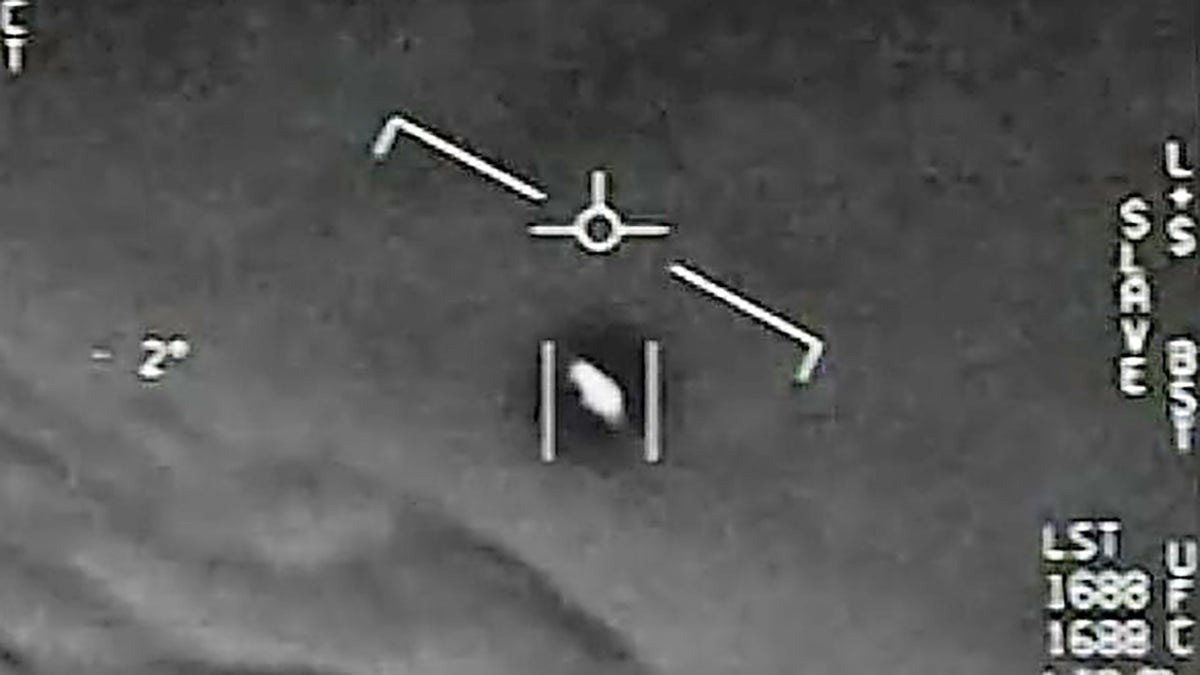
In recent years, the U.S. government has shifted its terminology from UFOs to UAPs (Unidentified Aerial Phenomena), perhaps signaling a more serious approach to the subject. In 2017, the Pentagon confirmed the authenticity of leaked military videos showing UAPs performing seemingly impossible maneuvers. These incidents, dubbed “Gimbal,” “GoFast,” and “Tic Tac,” reignited public interest and led to further revelations.
Whistleblowers like David Grusch, a U.S. Air Force veteran, have alleged the existence of a multi-decade program aimed at recovering and reverse-engineering alien technology. Grusch also claimed knowledge of “non-human biologics” linked to UAP crashes. His testimony during Congressional hearings in 2023 underscored the gravity of these allegations.
Immaculate Constellation: A Secret Database?
In 2024, journalist Michael Shellenberger reported on an alleged ultra-classified program known as Immaculate Constellation, described as a hidden repository of UAP sightings and evidence. Whistleblowers suggested that this database contains records of alien technology and encounters. If true, it indicates that knowledge of extraterrestrial technology is accessible to only a select few, raising concerns about government transparency and accountability.
The Debate Over Disclosure
Congressional hearings in 2024 and 2025 highlighted increasing demands for transparency regarding UAPs. Witnesses, including experts like former NASA contractor Michael Gold, emphasized the need for scientific investigation into these phenomena. However, allegations of a disinformation campaign to suppress whistleblowers and stigmatize UAP reports suggest systemic resistance to disclosure.
What Lies Ahead?
The evidence remains inconclusive. While some whistleblowers and experts present compelling claims, others argue that much of the speculation is fueled by misunderstanding, misinformation, or deliberate hoaxes. However, the recurring theme of secrecy suggests there is more to the story than meets the eye.
As the conversation around UAPs evolves, one question persists: if the government truly possesses alien technology, what could it mean for humanity? Would such revelations revolutionize science and technology, or would they only deepen societal divisions? Until the government provides definitive answers, the truth remains elusive, buried beneath layers of redacted documents and classified files.
What do you think? Is the government hiding alien technology, or are these stories just elaborate myths? The debate continues, leaving us to wonder: is the truth really out there?
VIDEOS
Ancient Aliens: UFO Secrets Hidden by the Government?! (Special)
Is The Government Hiding Proof Of UFOs And God? | Unveiled XL Documentary
UFO whistleblower tells Congress the US government is hiding evidence of 'non-human intelligence'
Is The Government Secretly Hiding Alien Contact?
Alien Tech? Government Coverups? | What's Hiding Along the 37th Parallel?
In the perplexing counterculture of UFO beliefs, individuals with cult-like followings and frequent claims associated with dubious “whistleblowers” aren’t uncommon. But how can you separate genuine voices from those leveraging UFO lore for personal or financial gain?
In a new documentary, Dark Alliance: The Inside Story of the Cosmic Con, filmmaker Darcy Weir dives into one section of the UFO counterculture, narrowing in on two well-known figures: David Wilcock and Corey Goode, presenting them as case studies in manipulation and the spread of misinformation within the UFO community and its associated areas of belief.
In Dark Alliance, Weir takes his viewers on a journey of exploration into how these two controversial figures came to fool not only the community they serve, but also some of the people who brought them to the top.
However, the cautionary tale Weir presents is far from new: the events he chronicles echo the actions of cults and similar groups from over the years, many of which bear a resemblance to some of today’s alleged UFO whistleblowers, self-proclaimed insiders, and cult leaders.
UFO Cults Through the Years
According to psychologist Dr. Steve Eichel, there may be up to 10,000 cults currently operating in America, ranging from those focused on religion, to political groups, and even doomsday cults.
UFO-themed cults, while fewer in number, have nonetheless also been a prevalent fixture in American culture since the years after World War II. Among these, William A. Ferguson founded a religious cult called the Cosmic Circle of Fellowship, elements of which were detailed in his 1947 book My Trip to Mars. In it, Ferguson states that he teleported to Mars and was greeted by “celestial beings who indicated the Martians are ready to help mankind pass through a great crisis.” Ferguson also claimed he could instruct others on how to achieve interdimensional travel through deep relaxation. With time, Ferguson’s claims would become even more wild as he began manufacturing a device he called the Zerret Applicator, which he professed could cure various ailments or diseases through what he called “z-rays,” a concept created by Ferguson and later disproven by the FDA.
In 1954, fresh out of prison after a two-year sentence for selling his “Martian-inspired” medical devices, Ferguson turned his life around in a way that was truly out of this world: he released a quirky, 13-page pamphlet detailing his journey to Mars, sharing several of his curious insights and the teachings he claimed to have received from his Martian associates.
Although similar cults have cropped up throughout the years, few that involved unfounded belief in visitors from beyond Earth have managed to capture so much public attention as Heaven’s Gate, a new religious movement in the United States whose members committed mass suicide in a San Diego suburb called Rancho Santa Fe in 1997. There, a group of 39 dedicated followers of the cult, led by mastermind Marshall Applewhite, died believing that Comet Hale–Bopp was being followed by an alien spacecraft, and only through their death by ritual suicide could they could eventually join it.
More recently, an online subculture referred to as The Alien Cult has emerged on TikTok, centered around themes involving aliens and UFOs. Originating from a popular meme, the group has rapidly grown, showing up en masse in comment sections and sharing mostly humorous content, though some members have been known to spread misinformation at times, while at others debunk outlandish claims.
Another group, the “Starseeds,” believes they are beings from other dimensions meant to guide humanity. While these groups largely seem harmless, their structure—especially when leaders are idolized—can lead to risks of manipulation and echo chambers that discourage critical thinking and individual growth.
The “Whistleblower” Claims of David Wilcock and Cory Goode
In recent years, former Gaia television hosts and on-camera personalities David Wilcock and Corey Goode have created a veritable tidal wave of misinformation within various sections of the UFO counterculture. Among the claims made by Wilcock, in the past he has asserted that a mass ascension would happen on Earth after 2012, and suggested in his book, The Ascension Mysteries, that Earth’s role is to be a battleground in a 500,000-year conflict between positive and negative extraterrestrial forces. For Wilcock’s followers, of course, ascension could be obtained for the low price of $333.
In one YouTube livestream with over 1 million views, Wilcock told his audience that the “Illuminati Deep State” was responsible for the COVID-19 pandemic. A week later, Wilcock’s associate Corey Goode joined in with claims that a government insider told him COVID-19 was engineered as a “biological weapon from an American university” and smuggled into China by a student to act as a population control tool.
Wilcock, over time, became a best-selling author telling such fantastical tales, while Goode first appeared onscreen in 2015 during his initial interview on Gaia TV’s popular show Cosmic Disclosure, hosted by Wilcock. Goode has since claimed to possess knowledge of a “Secret Space Program” involving hidden technologies and collaborations between humans and non-humans.
Amid a Racketeer Influenced and Corrupt Organizations Act (RICO) lawsuit between Gaia and Goode, Goode has recently claimed that his extravagant assertions were based on his creative intellectual property (IP) and has expressed a desire for Hollywood to one day adopt these ideas. This claim was made in a legal deposition video leaked by Leon Isaac Kennedy, Goode’s former lawyer, who had his case dismissed after Goode failed to substantiate his allegations.
Seeking to clarify matters, Jay Weidner, former head of content at Gaia TV, decided to share his perspectives on-camera during an appearance in Weir’s documentary. Weidner recounts his first encounter with Wilcock, explaining that he was initially drawn to Wilcock’s essays on 2001: A Space Odyssey.
“He was a very charming guy, very articulate,” Weidner told Weir, adding that Wilcock “is good at taking ideas from alternative science and explaining them well” although noting that Wilcock possessed “an ego the size of the Empire State Building.”
Jay Weidner (left) meets Darcy Weir while filming Dark Alliance (Credit: Darcy Weir).
While working at Gaia and developing Cosmic Disclosure with Goode and Wilcock, Weidner shares that Wilcock introduced Goode as a prospective co-host, advocating for the show’s focus on Goode’s claims. “This was strictly David and Corey coming up with the content. I’m not paid to vet people,” he explains. “I was just trying to make it look good and credible,” adding that the content being put forward by Goode and Wilcock was nothing he “hadn’t seen on the internet already.”
With time, Weidner says a darker reality beyond just the pair’s extraordinary claims began to become apparent.
“When you’ve been conned, you don’t want to admit it,” Weidner tells Weir. “That’s the truth of the matter. I mean, I’m admitting that I got conned. But that is really painful to admit. I was totally taken by this guy, and a lot of other people were too.”
Weir, who has spent the last four years creating this documentary, explained to The Debrief what inspired him to tell this story.
“I’ve been chasing down tales from the UFO community since 2009, and let me tell you, it’s been a wild ride,” Weir recounts. “When I first heard about blue alien bird people and David Wilcock’s ‘new star’ Corey Goode, they were lighting up the screen on Gaia TV, dishing out a story that was, well, beyond this world.”
“Back then, I was friends with Kerry Cassidy (I still am), who runs Project Camelot—a site where conspiracy theories are born and go to thrive. The idea of a secret space program with child recruits? People living a life in space fighting aliens and then coming back to live a regular life? My mind was blown.”
“Over the last decade, I kept an eye on David and Corey, and in 2021, I knew it was time to dive in and document the whole story,” Weir told The Debrief. “To get the full picture for audiences to understand, I had to start at the beginning with David Wilcock at Gaia, where he worked under Jay Weidner, then head of production. David’s rise, Gaia’s role in making him a household name in, you know, certain UFO and New Age spiritual households, and the introduction of Corey Goode.”
“That narrative seemed like a natural flow of how things progressed. Essential to understanding the wild twists of this story,” Weir says.
In a recent podcast interview with The Debrief, Weidner claims Goode and Wilcock both exhibited “cult leader” behavior. “I learned a lot about cults through this. If you watch the last 20 minutes of Cosmic Secret, their last movie, they’re [Goode and Wilcock] laying out how to make their cult,” Weidner says.
Weidner further describes working on Cosmic Disclosure, saying that team members were “naive and hopeful,” likening it to “almost like a cult.”
“After the three-hour talk, we were chosen by the Secret Space Program to present all of this information to the world. We were chosen. We were the ones,” Weidner recounts of how Goode convinced him and the team that they were the “chosen” insiders.
Jay Weidner (left) appears on camera speaking with Darcy Weir while filming Dark Alliance (Credit: Darcy Weir).
Weidner also shared with The Debrief that Goode at times displayed violent tendencies behind the scenes. “Corey was consistently talking about violence, constantly talking about how to hurt people. Gave me a whole exposition on how to kill someone with our iPhone.”
“No one would listen to me,” Weidner said when asked if these behaviors were ever reported. “I did go to Gaia and said that Corey Goode is radioactive, and I got laughed at.”
Real Whistleblowers vs Questionable Claims
Weir’s documentary presents a cautionary tale detailing how Wilcock and Goode promoted baseless claims that, for most viewers, would seem nonsensical, and yet gained significant traction among their audiences. Despite such concerns, Weir nonetheless cautions against lumping all alleged whistleblowers into the same category.
“Whistleblowers are real, and they’re out there,” Weir told The Debrief. “We’ve got real-deal cases like those of Chelsea Manning, Edward Snowden, Lue Elizondo, and David Grusch, who had access to high-security clearance info during their time with high-level U.S. defense or intelligence agencies.”
However, not everyone who makes sensational claims should be taken seriously simply because they claim to be a whistleblower, Weir concedes.
“Some of these, let’s call them creative storytellers, have ended up with quite a megaphone. And in the right hands, like the extensive subscriber base reach of Gaia’s UFO-friendly streaming network, even the most out-there claims have caught fire,” says Weir.
“Now, I do believe the Defense and Intelligence communities have some big secrets on UFOs stashed away. Whether it’s non-human interaction or something equally mind-bending, the truth seems to not be fully disclosed to mainstream media. But sometimes, when a story gets hot, certain folks decide they just have to be part of the action, blue alien bird people and all,” Weir says.
Weir told The Debrief that one of the challenges revealed to him while creating the new documentary had been that even when information seems obviously outlandish, it can still be difficult to distinguish simple lies and bad information from genuine cult activities.
“Recognizing cult-like behavior is tough, especially for those caught up in it,” Weir told The Debrief.“Cult leaders often keep followers hooked using a blend of fear and love. They introduce fears of doomsday scenarios like catastrophic solar events, then ease these anxieties by offering salvation—of course, with a catch: true transcendence requires financial commitment through classes, workshops, or other paid programs.”
Cults and certain whistleblower communities often share similar characteristics that foster dependency and obedience among followers, frequently using manipulative tactics to control beliefs and behavior. Leaders within these groups often project themselves as charismatic figures with “exclusive” knowledge, claiming insights only they possess. They discourage trust in mainstream information and promote isolation, suggesting that science, media, and government cannot be trusted. Members are discouraged from questioning group beliefs under threat of punishment or exclusion, while the leader’s authority is portrayed as absolute, often invoking apocalyptic or fear-based messaging that intensifies loyalty by positioning the group as the only path to safety.
These leaders may also create a sense of urgency and dependency by portraying themselves as “chosen” or uniquely connected to higher intelligence, often introducing extreme or even violent rhetoric to maintain control. This environment fosters extreme beliefs, restricts followers’ access to outside information, and manipulates members into donating significant portions of their income, all under the guise of supporting the group’s mission. In many cases, these strategies culminate in a closed ecosystem where followers are expected to support the leader’s vision without question, creating an echo chamber that hinders critical thinking and facilitates emotional or even physical abuse.
“Historically, this pattern seems all too common,” Weir told The Debrief.
In contrast to the assurances of “truth,” secret insider knowledge, and freedom that such individuals often promise their followers, for Weir advocates for asking questions, critically thinking, and not following those who appear to display a desire to exploit others for their own personal gain.
“You know what they say about truth,” Weir adds. “It sets you free.”
Chrissy Newton is a PR professional and founder of VOCAB Communications. She currently appears on The Discovery Channel and Max and hosts the Rebelliously Curious podcast, which can be found on The Debrief’s YouTube Channel on all audio podcast streaming platforms.
The new director of the Pentagon’s All-domain Anomaly Resolution Office(AARO) confirmed to lawmakers on Tuesday that the U.S. is investigating what he characterized as “some very anomalous objects,” while providing an update on the Defense Department’s ongoing investigations into unidentified anomalous phenomena (UAP).
In his opening statements, Kosloski pledged that his office would continue to share information about AARO’s findings at the unclassified level, discussing several UAP cases his office has investigated, including a series of incidents which AARO says have now been resolved.
One of these, referred to as “The Puerto Rico Object,” involved a video of a purported UAP filmed in April 2013 from a U.S. Customs and Border Protection aircraft near Aguadilla, Puerto Rico. The video has been been a subject of independent public investigation and debate now for many years.
A still from a video captured by a U.S.-operated drone in 2018 while flying above Mt. Etna appears to show an anomalous object, but the Pentagon's UFO chief says his office was able to solve the case.
(Image credit: AARO/DOD)
Kosloski told lawmakers the object in the video was assessed with high confidence by his office not to display any evidence of anomalous speeds or flight characteristics, and was “likely a pair of balloons or sky lanterns,” which Kosloski said had been “floating at about seven knots over the airport.”
Examples of AARO’s resolved reports also included a now-famous U.S. Navy video commonly known as “Go Fast” that first came to public knowledge in 2017, which Kosloski says represents an example of parallax.
“Through a very careful geospatial and intelligence analysis using trigonometry, we assess with high confidence that the object is not actually close to the water, but is rather closer to 13,000 feet,” Kosloski said.
“A trick of the eye called parallax makes it look like the object is moving much faster,” Kosloski added, referencing a report on parallax previously uploaded to AARO’s official website.
Another resolved UAP case, filmed in the Mediterranean from a drone observing the eruption of Mount Etna in 2018, appears to show a small object passing through the plume of superheated gas and ash produced by the volcano.
“This was a rather difficult case to resolve,” Kosloski said. “Through very detailed 3D modeling and pixel by pixel analysis of the object as it’s traversing across the clouds, the assess that the object was actually 170 meters away from the plume, and not flying through it.”
However, while many cases have been resolved by AARO, Dr. Kosloski cautioned against any perception that his office does not find at least some of the reports it receives genuinely anomalous.
A still from a video reportedly showing a "transmedium" UAP that appears to travel between air and water and split in half. During testimony on Nov. 19, the head of the Pentagon's UFO office says it actually shows an infrared camera's inability to tell two objects' temperature apart from the ocean behind them.
(Image credit: AARO/DOD)
“To be clear, AARO does not believe that every object is a bird, a balloon, or a UAV,” Kosloski said, adding that “we do have some very anomalous objects.”
Kosloski also said that his office has worked to ensure that U.S. personnel with information related to UAP or alleged U.S. government programs associated with such phenomena feel comfortable coming forward and speaking to AARO.
“We take that responsibility and those authorities very seriously,” Kosloski said, adding that he and his staff “have been reaching out to the broader community, encouraging folks who had talked to AARO personnel in the past, and maybe felt uncomfortable to come back to us.”
Prior to Kosloski’s appointment as AARO Director, the office’s investigations were led by Dr. Sean Kirkpatrick, who is currently the Chief Technology Officer for Defense and Intelligence Programs within the National Security Sciences Directorate (NSSD) at Oak Ridge National Laboratory.
It was unclear during Tuesday’s hearing whether Kosloski’s references to past instances where U.S. personnel may have felt uncomfortable speaking with AARO investigators had occurred during Kirkpatrick’s tenure. However, Kosloski told lawmakers that AARO has recently been “making great progress,” adding that several firsthand witnesses his office had spoken to about their UAP sightings “do feel comfortable coming back to us.”
Asked by Senator Gillibrand about UAP cases that merit further investigation, Kosloski explained that while some cases with insufficient data are placed into an active archive, there are others involving reportedly anomalous objects that AARO deems to be worthy of additional analysis.
One particularly intriguing unresolved case that Kosloski described involved a large orange orb or sphere observed floating several hundred feet above the ground by a law enforcement officer in the Western United States. As the officer approached the location believed to be directly beneath the object, he observed another object described as “blacker than black” and roughly the size of an automobile.
“As he got 40 to 60 meters away from the object, it tilted up about 45 degrees and then it shot up vertically,” Kosloski said, “and then it shot up vertically, he says 10 to 100 times faster than any drone he’s ever seen before.
“And it did that without making a sound, as far as he could tell from inside his vehicle,” Kosloski said. The object reportedly emitted very bright red and blue lights as it departed the scene, which illuminated the inside of the officer’s vehicle.
Another unresolved case involved a stationary cylinder that was observed for a short period hovering over a U.S. facility in the American southwest before abruptly disappearing. The object, observed by U.S. government contractors who were leaving the facility at that time, was described as being comparable in size to a commercial airplane, and was accompanied by a very bright white light.
“Obviously, an object that large [and] stationary—unless it’s a blimp—is unusual,” Kosloski said. “But then disappearing, we can’t explain how that would happen.”
In another instance, an aircraft flying parallel to another aircraft while filming it captured imagery of a much smaller object that appears to have passed between them at high speed.
Kosloski said AARO may be nearing a resolution with one of these three cases, but added that there are several others that are still currently under analysis by his office.
Asked by U.S. Senator Joni Ernst (R-IA) what the U.S. needs to be doing about UAP and what precautions should be taken by U.S. officials, Kosloski warned about stigmas that have long prevailed against the subject, which he said “opens the opportunity for an adversary… to come in and conduct some activity.”
“We need to do that, and we need to have more persistent monitoring,” Kosloski also told lawmakers of the challenges AARO faces with regard to collecting information about UAP, adding that in particular, monitoring at high security facilities should be a main priority.
“Whether it is a UAP, or it is a counter-UAS issue, that we need to have that complete domain awareness around our national security facilities,” Kosloski said.
Next year, Kosloski said AARO plans to roll out a public reporting mechanism at AARO’s website where members of the general public can download a reporting form and submit details about possible UAP sightings, along with attachments such as imagery. This simple reporting interface, Kosloski said, was chosen due to its cost effectiveness, in addition to being a system that he said could ensure the privacy of those members of the public who file reports.
“I think that the authorities that we have are remarkable,” Kosloski said at the conclusion of the short public session, thanking Gillibrand and other lawmakers, and adding that he believes AARO to be “well-resourced as an office.”
“The only ask that I would have is that you continue to champion us, particularly with witnesses,” Kosloski said. “Encourage them to come forward and report to us so we that we can have a more fulsome investigation of the potential historic or ongoing legacy programs,” Kosloski said.
Speaking with members of the media on a call last week following the release of AARO’s new report, Kosloski said that his office currently has “several particularly interesting cases.”
“We’re working on within the office, working with our partners to downgrade several of those cases, so we can talk about them publicly,” Kosloski said during the call.
“But there are interesting cases that I, with my physics and engineering background and time in the IC, I do not understand.”
“And I don’t know anybody else who understands them either,” Kosloski added.
VIDEOS
'I do not have an explanation': Pentagon official shows video of unidentified object
UFO hearing: Eyewitnesses describe encounters with "non human" entities to Congress | FULL
Luis Elizondo discusses new book "Imminent" and the Pentagon's UAP investigations
The latest congressional UFO hearing featured testimony from former military personnel who said that government secrecy hides the fact that we are not alone in the cosmos.
UFO whistleblower tells Congress the US government is hiding evidence of 'non-human intelligence'
UFOs came to Washington again last week.
The U.S. House of Representatives' Committee on Oversight and Accountability held a hearing titled "Unidentified Anomalous Phenomena: Exposing the Truth" at the Rayburn House Office Building in Washington, D.C. at 11:30 a.m. EST (1530 GMT) on Wednesday, Nov. 13. Unidentified anomalous phenomena (UAP) is a relatively new catch-all term that includes sightings of unexplained objects or events that take place in the air, underwater, in space, or that travel between those domains.
Like previous congressional UFO hearings, the event featured testimony from current U.S. military personnel who claim the American government has for decades hidden evidence of advanced technologies and otherworldly visitors from the public. A multitude of anecdotes were presented about flying orbs coming out of the ocean, disc-shaped objects, and craft "exhibiting flight and structural characteristics unlike anything in our arsenal." While such claims are nothing new, what is noteworthy about the hearing are the pedigrees of some of the whistleblowers who testified, including a former U.S. counterintelligence officer, a retired U.S. Navy rear admiral and a former NASA associate administrator. All of them stressed the need for more government transparency, less stigma about the UFO topic and new policies to bring UAP data out of the "black" classified world and into the public domain.
A still from a video titled "Go Fast" recorded by a U.S. Navy aircraft reportedly showing a UAP that was discussed in the U.S. House of Representatives' Committee on Oversight and Accountability hearing titled "Unidentified Anomalous Phenomena: Exposing the Truth" on Wednesday (Nov. 13). (Image credit: U.S. Dept. of Defense)
This isn't the U.S. government's first attempt to investigate the recent wave of UFO claims that began in 2017. A similar hearing was held last year, in which a whistleblower told Congress the U.S. government is hiding evidence of 'non-human intelligence.'
The Pentagon also created the All-Doman Anomaly Resolution Office (AARO) in 2022 to investigate UAP reports and government data about UFOs, but critics, including some government officials, are skeptical of the office's aims and methods.
"AARO is unable, or perhaps unwilling, to bring forward the truth about the government's activities concerning UAPs," Representative Nancy Mace (R-South Carolina) said during the hearing's opening remarks. "I'm disturbed that AARO itself lacks transparency; even its budget is kept from the public. So if there is no 'there' there, then why are we spending money on it? And by how much? Why the secrecy?"
Other representatives stressed the need for transparency and data analysis, a common theme of other recent UAP studies. "We have evidence that what we are detecting things, and we know that we don't understand them, and this is worth investigating," Rep. Robert Garcia (D-CA) said. "I believe we can always be more transparent. To me, this hearing and others are simply about the truth and getting to the facts of what these UAPs actually are."
Luis Elizondo, a former U.S. counterintelligence officer who has been vocal about such claims in recent years, told the assembled representatives at the hearing that "excessive secrecy has led to grave misdeeds against loyal civil servants, military personnel and the public — all to hide the fact that we are not alone in the cosmos."
We are "in the midst of a multi-decade, secretive arms race — one funded by misallocated taxpayer dollars and hidden from our elected representatives and oversight bodies," Elizondo stated during his testimony.
Elizondo, who claims to have previously investigated UFOs as part of a secret Pentagon program, suggested that the U.S. government create a "whole-of-government" approach to studying UAP, create a national UAP strategy and offer protections so that whistleblowers who are "desperate to do the right thing can come forward without fear."
During questioning, Elizondo was asked if some of the "advanced technologies" that have been seen monitoring sensitive military installations around the globe could be operated by aliens or private companies. "Maybe both," Elizondo replied.
Elizondo also stated point-blank to Rep. Mace's questioning that the U.S. government has programs to retrieve crashed UAP and reverse-engineer them, but avoided giving any specifics in an unclassified public setting such as the hearing.
Rep. Jared Moskowitz (D-FL) then questioned Elizondo, asking the former counterintelligence agent about a document he signed that limits him from speaking publicly about crash retrieval programs. "The document said you can't talk about crash retrieval. Well, you know, you can't talk about Fight Club if there's no Fight Club, correct?"
Like other witnesses, Elizondo stated that the alleged excessive government secrecy around UFOs harms national security. In response to questioning from Rep. Tim Burchett (R-TN), Elizondo stated that, if UAP sightings turned out to be technologies operated by adversarial nations, it would be "an intelligence failure eclipsing 9/11 in order of magnitude."
A still from footage shot by an MQ-9 reaper drone showing an unidentified spherical object soaring through the air shown to the United States Senate Committee on Armed Services during an April 2023 hearing. (Image credit: U.S. Dept. of Defense)
Retired U.S. Navy rear admiral Tim Gallaudet offered similar testimony as Elizondo. "We know from last year's UAP hearing and recent statements and publications by credible whistleblowers that UAP, NHI [non-human intelligence], and their technology of unknown origin (TUO) represent a new realization that we are not the only advanced intelligence in the universe," Gallaudet said on Wednesday, according to his published remarks.
"Unelected officials in the U.S. government do not have an exclusive right to this knowledge about the nature of reality. The American people have a right to that knowledge," Gallaudet said. The retired rear admiral also stressed the national security and airspace safety concerns related with UAP sightings, calling them "extensive."
When Rep. Garcia asked Gallaudet and other witnesses what UAP might represent, the retired rear admiral said he believes they are evidence of a "non-human higher intelligence."
Former NASA Associate Administrator for Space Policy and Partnerships Michael Gold also testified at the hearing, and previously served on NASA's UAP study team. Gold's testimony was more grounded; for example, he stressed the need for NASA to contribute its authority and expertise toward analyzing what UAP data it might already possess and helping dispel the stigma associated with the UFO topic.
"Our best tool for unlocking the mystery of UAP is science, but we cannot conduct a proper inquiry if the stigma is so overwhelming that just daring to be part of a NASA search team elicits such a vitriolic response," Gold said during the hearing. "Therefore, one of the most important actions that can be taken, relative to exposing the truth of UAP, is to combat the stigma, and this is where I believe that NASA can be eminently helpful."
Gold added that NASA has a massive archive of data that could possibly contain evidence of UAP, and suggested that artificial intelligence/machine learning algorithms could help sort through the agency's trove of data to help shine light on the UFO phenomenon. In addition, the former NASA associate administrator said the agency should develop specialized instruments that might be able to gather useful data about UAP.
UFO whistleblower says U.S. recovered nonhuman "biologics" from crash sites
Journalist Michael Shellenberger also testified, telling the representatives that there's a "growing body of evidence that the government is not being transparent about what it knows about unidentified anomalous phenomena (UAP), formerly called UFOs, and that elements within the military and IC [intelligence community] are in violation of their Constitutional duty to notify Congress of their operations."
Shellenberger stated that there is a secret program within the U.S. government known as "Immaculate Constellation" whose sole purpose is to collect UFO and UAP reports from military personnel and sensor data and quarantine them away from the rest of the government and military. While he noted that a Pentagon spokesperson has stated no such program exists, Shellenberger recounted prior examples in which the Department of Defense has initially denied knowledge of UAP-related information only to later change its stance and either admit the information exists or release it to the public.
"The U.S. government appears to know significantly more about UAPs than it is revealing," Shellenberger said at the hearing. "But even those who believe the U.S. government has revealed all that it knows should have no objection to Congressional demands for greater transparency."
To conclude the meeting, Rep. Mace asked each of the witnesses to define what non-human biologics or non-human intelligence mean to each of them.
"I don't think it's a stretch, when you look at the diversity of life on this planet and the size of this universe, to think that there will be more diverse, higher-order, non-human intelligence throughout the universe, and that's probably what's visiting us," Gallaudet said.
Elizondo stated he would take a scientific approach: "The definition would be the ability to react to a stimulus in a manner that requires an intellectual thought process."
Gold, meanwhile, questioned whether non-human intelligence necessarily implies life, suggesting sophisticated artificial intelligence might be responsible for some UAP encounters. Shellenberger simply stated he did not know what they might be.
In the hearing, as in other UFO hearings, there was a lot of telling and not a lot of showing. One of the core tenets of these whistleblower testimonies is that much of the credible UFO data is classified and can't be revealed to the public based on the military capabilities that some of that data could reveal.
Whistleblowers have attested for years that, because advanced or classified sensors and satellites sometimes capture footage or photos of unexplained phenomena or advanced craft, those photos or videos are likewise classified by the U.S. government in order to not reveal America's full surveillance or sensing capabilities.
Such was the case in 2023 when U.S. military aircraft shot down a mysterious object off the coast of Alaska. The American government has yet to release any imagery from the event, but a Canadian freedom of information request unveiled a photograph earlier this year of a balloon-like object.
Those incidents and others like it, such as a weeks-long drone incursion above Langley Air Force Base in Washington, D.C., were discussed in the hearing. "The origin of these drones and their operators remains a mystery," Rep. Glenn Grothman (R-Wis.) said. "This incident and other sightings near sensitive military installations highlights the complexity of the UAP challenge facing our intelligence, defense and homeland security committees."
Starship’s Booster (and Donald Trump) Make a Splash With Sixth Flight Test
SpaceX’s Starship launch system went through its sixth flight test today, and although the Super Heavy booster missed out on being caught back at its launch pad, the mission checked off a key test objective with President-elect Donald Trump in the audience.
Trump attended the launch at SpaceX’s Starbase complex in the company of SpaceX CEO Elon Musk, who has been serving as a close adviser to the once and future president over the past few months. In a pre-launch posting to his Truth Social media platform, Trump wished good luck to “Elon Musk and the Great Patriots involved in this incredible project.”
Starship is the world’s most powerful rocket, with 33 methane-fueled Raptor engines providing more than 16 million pounds of thrust at liftoff. That’s twice the power of the Saturn V rocket that sent Americans to the moon in the 1960s and early ’70s. The two-stage rocket stands 121 meters (397 feet) tall, with a 9-meter-wide (30-foot-wide) fairing.
Super Heavy had an on-time launch at 4 p.m. CT (22:00 UTC) and was set up to fly itself back to the launch tower to be caught by the giant “Mechazilla” arms that were successfully used during last month’s flight test. But four minutes after liftoff, mission controllers said the booster had to be diverted instead to make a soft splashdown in the Gulf of Mexico.
In a recap of the flight, SpaceX said that “automated health checks of critical hardware on the launch and catch tower triggered an abort of the catch attempt.”
“It was not guaranteed that we would be able to make a tower catch today,” launch commentator Kate Tice said during today’s webcast. “So, while we were hoping for it … the safety of the teams and the public and the pad itself are paramount. We are accepting no compromises in any of those areas.”
While the booster settled majestically into the Gulf, the Starship second stage — known as Ship for short — continued on a track that sent it as high as 190 kilometers (120 miles). A plush banana was placed in Ship’s cargo bay as a zero-gravity indicator, and Tice wore a T-shirt bearing the words “It’s Bananas!” to play off the lighthearted theme.
Ship successfully relit one of its methane-fueled Merlin engines while in space, which was a key objective for today’s suborbital test. Relighting the engines under such conditions will be required in the future for Ship’s orbital maneuvers.
A little more than an hour after launch, Ship’s engines fired for a final time to make a controlled splashdown in the Indian Ocean. The daylight visuals, plus other data collected during the flight, will help SpaceX’s team fine-tune Starship’s design for future tests.
SpaceX plans to use Starship to accelerate deployment of its Starlink broadband satellites, as well as to fly missions beyond Earth orbit. The company has a $2.9 billion contract from NASA to provide a version of Starship that’s customized for lunar landings, starting as early 2026. And Musk has said Starship could take on uncrewed missions starting that same year — with the first crewed mission set for launch in 2028 if everything goes right.
NASA Administrator Bill Nelson referred to those future flights in a message on Musk’s X social-media platform:
Check out these other postings tracking the progress of the flight test:
The Lafayette Meteorite was chipped off the surface of Mars and then sped through space for roughly 11 million years. It eventually found its way into a drawer at Purdue University in 1931 and has since been teaching scientists about Mars. (Photo provided by Purdue Brand Studio.)
11 million years ago, Mars was a frigid, dry, dead world, just like it is now. Something slammed into the unfortunate planet, sending debris into space. A piece of that debris made it to Earth, found its way into a drawer at Purdue University, and then was subsequently forgotten about.
Until 1931, when scientists studied and realized it came directly from Mars. What has it told them about the red planet?
11 million years ago, the Himalayas were rising on a warmer, more humid Earth. Early ape species made their home in an Africa covered by tropical forests. Diverse mammal species roamed the continents.
At the same time, on Mars, the frigid wind blew across a desiccated, forlorn world. The planet’s thin atmosphere is a weak barrier to meteorites, and the planet’s cratered surface bears witness to its nakedness. Some impacts were powerful enough to launch debris into space beyond the planet’s gravitational pull. The meteorite in the drawer is one such piece of debris.
“Many meteoroids are produced by impacts on Mars and other planetary bodies, but only a handful will eventually fall to Earth.”
Marissa Tremblay, Purdue University
The meteorite was long forgotten in its storage place until 1931. Scientists identified it as a piece of Mars, and now new research is uncovering clues about Mars’ past hidden in the 800-gram piece of rock.
This image shows a page from an article published in Popular Astronomy in 1935. Image Credit: Popular Astronomy.
11 million years ago is not a long time in geological and planetary terms, and the number fits neatly into most people’s imaginations. But rock has deep temporal roots, and the meteorite that reached Earth is an igneous rock that dates back 1.4 billion years. That much time is more difficult to understand, but science is at its best when it opens human minds to a more fulsome understanding of nature.
The meteorite, named “Lafayette” after the city in Indiana that’s home to Purdue University, is the subject of new research published in Geochemical Perspectives Letters. It’s titled “Dating recent aqueous activity on Mars,” and the lead author is Marissa Tremblay. Tremblay is an assistant professor with the Department of Earth, Atmospheric, and Planetary Sciences (EAPS) at Purdue University.
There’s ample evidence that some minerals on Mars formed in the presence of water. Though Lafayette itself is an igneous rock 1.4 billion years old, some of the minerals it contains are younger.
“Dating these minerals can therefore tell us when there was liquid water at or near the surface of Mars in the planet’s geologic past,” Tremblay said. “We dated these minerals in the Martian meteorite Lafayette and found that they formed 742 million years ago. We do not think there was abundant liquid water on the surface of Mars at this time. Instead, we think the water came from the melting of nearby subsurface ice called permafrost, and that the permafrost melting was caused by magmatic activity that still occurs periodically on Mars to the present day.”
Lafayette is one of the Nakhlite meteorites, an igneous rock that formed from basaltic lava around 1.4 billion years ago. Scientists think these rocks formed in one of Mars’ large volcanic regions: Elysium, Syrtis Major Planum, or the largest one, Tharsis, which is home to the three shield volcanoes, Tharsis Montes.
A colourized image of the surface of Mars taken by the Mars Reconnaissance Orbiter. The line of three volcanoes is the Tharsis Montes, with Olympus Mons to the northwest. Valles Marineris is to the east. The researchers think that the Lafayette meteorite came from the Tharsis volcanic region, or one of Mars’ other, smaller volcanic regions. Image: NASA/JPL-Caltech/ Arizona State University
Ancient rocks and their embedded minerals contain information about Mars’ ancient past. The history of Mars’ hydrological cycle is a key objective in our ongoing study of Mars. This research is focused on a particular mineral in Lafayette called iddingsite. It forms when basalt is weathered in the presence of water.
The difficulty with meteorites and the clues they contain about ancient Mars is that they’ve been exposed to and potentially altered by the heat of the initial impact and the heat of entry into Earth’s atmosphere. The chemical signals inherent in rock can become muddied. But Lafayette is different. It’s clear that it was blasted off of Mars 11 million years ago.
“We know this because once it was ejected from Mars, the meteorite experienced bombardment by cosmic ray particles in outer space that caused certain isotopes to be produced in Lafayette,” Tremblay says. “Many meteoroids are produced by impacts on Mars and other planetary bodies, but only a handful will eventually fall to Earth.”
“The age could have been affected by the impact that ejected the Lafayette Meteorite from Mars, the heating Lafayette experienced during the 11 million years it was floating out in space, or the heating Lafayette experienced when it fell to Earth and burned up a little bit in Earth’s atmosphere,” Tremblay said. “But we were able to demonstrate that none of these things affected the age of aqueous alteration in Lafayette.”
Study co-author Ryan Ickert is a senior research scientist in Purdue’s EAPS. Ickert uses heavy radioactive and stable isotopes to study geological processes over time. He showed how isotope data used to date water-rock interactions on Mars were problematic and that the data had likely been polluted by other processes. According to Ickert, he and his colleagues got it right this time.
“This meteorite uniquely has evidence that it has reacted with water. The exact date of this was controversial, and our publication dates when water was present,” he says.
This figure from the research shows a cross-section of the Lafayette meteorite. Ol is an olivine grain surrounded by augite crystals (Px). Iddingsite (Id) is present in veins that travel through the rock. Though Lafayette formed over 1.3 billion years ago, the Iddingsite veins formed later, about 742 million years ago, when water seeped through the cracks. Image Credit: Tremblay et al. 2024.
The researchers used a novel technique involving the isotopes Argon 40 and Argon 39 to date Lafayette’s exposure to water and its formation of Iddingsite. That showed them that the exposure occurred 742 million years ago. Their explanation is that magmatic activity melted subsurface ice, and the water subsequently found its way into cracks in the igneous rock, altering some of the olivine into Iddingsite.
All this from a meteorite that was lost in a drawer.
The Solar System is a puzzle. It’s an artifact of Nature’s ordered complexity, but at the same time, it’s shaped by Nature’s steadfast chaos. Each molecule, each tiny piece of rock, including the Lafayette meteorite, is a part of it. Each piece holds a clue to the puzzle.
“We can identify meteorites by studying what minerals are present in them and the relationships between these minerals inside the meteorite,” said Tremblay. “Meteorites are often denser than Earth rocks, contain metal, and are magnetic. We can also look for things like a fusion crust that forms during entry into Earth’s atmosphere. Finally, we can use the chemistry of meteorites (specifically their oxygen isotope composition) to fingerprint which planetary body they came from or which type of meteorite it belongs to.”
Dating these rocks, these pieces of the puzzle, is difficult. However, this research has made progress by developing a novel way to date minerals in the Lafayette meteorite.
“We have demonstrated a robust way to date alteration minerals in meteorites that can be applied to other meteorites and planetary bodies to understand when liquid water might have been present,” Tremblay concluded.
Mysterious and rare meteorite from Mars at the Smithsonian
Mighty Martian meteorite lands at the Museum | Natural History Museum
EXCLUSIVE - NASA claims it has FINALLY debunked one of the most famous UFO videos that was captured by Navy fighter jets off the coast of Florida - but not all scientists are convinced
NASA estimated that GOFAST UFO coasted at 40 mph 'consistent' with wind
But critics point out that Navy UFO witnesses recorded a 120-knot wind speed
A simulation of the GOFAST event, created by UFO skeptics, contradicts NASA
NASA report admits it 'neglected wind effects' ignoring publicly available data
NASA expert now tells DailyMail.com '100-knot' 115mph UFO speed is 'plausible'
It was one of the pivotal UFO videos captured by the US military that helped thrust the once-fringe topic into the mainstream — the so-called 'GOFAST' infrared video filmed by US Navy fighter pilots off the coast of the Atlantic in January 2015.
But NASA claims it has debunked any exotic or extraterrestrial theories for GOFAST, boasting new analysis that 'reveals a less extraordinary interpretation.'
In a landmark advisory report released Thursday, the US space agency said — among other findings — that the GOFAST UFO was 'most likely' nothing more than a conventional object 'drifting with the wind.'
But meteorological records, climate scientists, US Navy witnesses, and even computer simulations developed and tested by diehard UFO skeptics have cast doubt on the likelihood that NASA's GOFAST explanation will hold fast much longer.
At the heart of the issue: NASA's experts, by their own admission, failed to check their math on the UFO's possible 'wind drift' against the global climate science community's public wind-speed data from the likely time of the GOFAST sighting.
Public interest in UFOs heightened in 2017 with the leak of three Navy pilot infrared videos that captured 'unidentified anomalous phenomena' (UAP). Above, a still from one of these videos, GOFAST, which NASA's expert UAP advisory panel attempted to explain as terrestrial this week
NASA UAP panelist Josh Semeter, director of Boston University's Center for Space Physics, used technical details from the military infrared video's user interface to calculate the altitude and speed of the 'GOFAST' UFO. But Semeter's analysis 'neglected' wind data from the event
To be sure, despite their own skepticism, NASA's UFO advisory panel did otherwise leave plenty of room for UFO true believers, noting in their final report that 'alien technology operating in Earth's atmosphere' was 'at least plausible.'
But, while the panel expressed hope that their efforts would help reduce the stigma around the reporting and scientific analysis of UAP, NASA's experts put forth a theory in their final report apparently intended to bring GOFAST back down to Earth.
In doing so, the space agency ignored voices from the squadron of Navy pilots that filmed GOFAST and the no-less-famous GIMBAL infrared UFO video, recorded that same evening in January 2015.
At the NASA group's open meeting last May, one of its UAP advisory panel members Josh Semeter — an engineering professor and director of Boston University's Center for Space Physics — presented his preliminary analysis of the GOFAST video.
Semeter made his case that the GOFAST was likely an object coasting in a strong breeze primarily by working with data present on the infrared video's display: the same intel a Navy weapons systems officer would use in the backseat of a fighter jet.
'Fortunately the information needed to determine the altitude and velocity of this object is contained on the display,' Semeter explained.
NASA's study group of 16 experts ranging from physicists to astronauts was formed in June 2020 to study unclassified UFO sightings from civilian, government and commercial sectors
Based on his trigonometric calculations of the fighter jet's flight path as the jet filmed the 'GOFAST' UAP, itself a moving target, Semeter estimated that the mystery object was cruising at just about 40 miles per hour (mph).
'That's a velocity that is consistent with wind speeds at 13,000 feet,' Semeter told his fellow NASA-appointed advisors this May. And, in fact, the calculated altitude for the GOFAST UAP, according to Semeter and others, was indeed about 13,000 feet.
Semeter's calculations emerged largely unchallenged in the NASA panel's final UFO report published this past Thursday — except for one significant caveat.
'Our calculation has neglected wind effects on the aircraft,' NASA's UFO report stated, 'and thus there is uncertainty in this result.'
But this dry note of caution might drastically understate the importance of these wind effects, to judge from both Semeter's critics and his allies.
Crucially, the Navy pilot witnesses heard in the GIMBAL video, which was filmed in the same area within approximately 15 minutes of the GOFAST video, state that the wind at their altitude of about 25,000 feet was then blowing '120 knots to the west.'
The skeptic's most conservative run of the simulation would have the GOFAST UFO traveling at 100 knots or 115 mph.
'This suggests that the object could not be a balloon,' as one Metabunk poster noted, 'because it needs intrinsic speed in addition [to] wind speed at 13,000 ft.'
As the US National Weather Service notes, 'wind speed generally increases with increasing height,' and the Metabunk simulation estimates that 120 knots of wind at 25,000 feet could correspond in this case to 50-to-80 knots of wind at 13,000 feet.
But even with this 50-to-80 knots of wind helping the GOFAST sail along, the UFO would still be going too fast: twice as fast as the air pushing at its back.
While Mick West praised Semeter's work for NASA last May, calling it a rare example of 'peer review' in UFO research, the prominent UFO skeptic also felt compelled to note that the wind issue left the GOFAST case still far from identified.
'There are some open questions (and unknowns) re wind,' West posted to X, the platform formerly known as Twitter, 'but I think this basic analysis is correct.'
While the prominent UFO skeptic Mick West praised NASA UFO advisor Josh Semeter's work last May, calling it a rare example of 'peer review' in UFO research, West also felt compelled to note that the wind speed issue left the Navy's GOFAST UFO case far from resolved
Other observers, however, were less forgiving of the gaps in this NASA analysis.
One, a former Obama-era appointee to the US Department of Defense named Marik von Rennenkampff, called Semeter's omission of the reported wind conditions a 'significant error.'
'The 'GOFAST' video shows a small, sphere-like object with no wings, engines or thermal signature demonstrating 'very interesting apparent maneuvers.'' von Rennenkampff wrote in an opinion piece for The Hill.
But accurate wind speed data for the time of the GOFAST sighting need not be investigated solely via computer models and the recorded statements of the pilots present themselves that day.
Meteorologists and climate science researchers use ERA5 to obtain reliable, global, hour-by-hour weather information for academic research, commercial aviation and government policy making purposes.
It was exactly this kind of data that NASA's UAP advisory panel leader, astrophysicist David Spergel, referenced when introducing the panel's final report this Thursday.
'We looked at NASA's assets,' Spergel said. 'While they provide a comprehensive picture of the ocean, the Earth's surface and atmosphere for studying our evolving planet, they typically do not have the resolution needed for UAP events.'
'However,' he added, 'by providing data on environmental conditions, they can complement other data on UAP.'
In this case, such data would have complimented the infrared video data taken by the Navy and the Navy pilots' witness testimony.
It is not clear from NASA's UFO report whether or not they even tasked the agency's military liaison Mark McInerney, now NASA's first director of UAP research, with requesting more detailed information on the time or place of the GOFAST event.
Such efforts might have assisted the panel in obtaining ERA5 data proximate to the date, region and elevations of the GOFAST UFO episode — like those obtained by the DailyMail.com from a PhD climate researcher who wishes to remain anonymous.
Data from the ERA5 reanalyzed climate dataset, for both January 21st (left) and January 24th (right), show that only the later date had wind speeds approaching 120 knots near the region or cruising elevation of 25,000 feet reported by the Navy pilots
The ERA5 maps are marked with a red dot off the lower Eastern seaboard near Naval Station Mayport in Jacksonville, Florida — in an effort to approximate where the Navy fighter pilots reported witnessing the GIMBAL and GOFAST UAP in January 2015
Two likely dates have emerged as the most probable candidates for the Navy's GIMBAL and GOFAST UFO events, which occurred in late January 2015.
In a 2019 statement to Freedom of Information Act researcher John Greenewald, an official spokesperson for the Deputy Chief of Naval Operations for Information Warfare, Joseph Gradisher, stated that both sightings occurred on January 21, 2015.
But metadata embedded within the original GIMBAL video, as well as an unclassified Department of Defense email, reviewed for a conference paper presented to the American Institute of Aeronautics and Astronautics place both sightings on the evening of January 24th, 2015.
The DailyMail.com can confirm the likelihood of these two dates from previous interviews with retired Navy fighter pilot Lt. Ryan Graves, whose squadron reported the GIMBAL and GOFAST events.
Data from the ERA5 reanalyzed climate dataset, for both the 21st and 24th of January, show that only the later date had wind speeds approaching 120 knots near the region or cruising elevation of 25,000 feet reported by the Navy pilots.
The ERA5 maps are marked with a red dot off the lower Eastern seaboard near Naval Station Mayport in Jacksonville, Florida — in an effort to approximate where the Navy fighter pilots reported witnessing the GIMBAL and GOFAST UAP in January 2015.
These ERA5 maps, alongside the DoD email and the infrared video metadata, help to corroborate the Navy witness heard in the GIMBAL video who describes the wind speed at 25,000 feet as '120 knots to the west.'
The period for high winds at high altitude persisted from, at least, 4:00 PM ET (21:00 UTC) to 8:00 PM ET (01:00 UTC).
The ERA5 data helps confirm pilot testimony to the Senate Armed Services Committee that the sightings occurred 'toward the end of one of the night flights.' These records were obtained by Freedom of Information Act researcher John Greenewald, owner of theblackvault.com
When the agency first announced its UAP advisory panel in June 2022, NASA's Assistant Deputy Associate Administrator for Research Daniel Evans told CNBC that the budget would be 'certainly no more than $100,000.'
Evans said that NASA's budget for the UAP study would be 'very consistent' with standard grant review panels.
It's unclear how much of the 16-person team's modest six-figure budget went toward Semeter's analysis of the GOFAST UAP video.
Perhaps significantly, Semeter's trigonometric analysis (right) largely echoed work that had already been previously posted to the skeptics' forum Metabunk in 2018 (left)
Josh Semeter of NASA's UAP advisory panel told the DailyMail.com via email (above), 'Yes, a 100-knot object ground speed is within the range of plausible solutions.' Semeter noted that NASA's report was meant to 'highlight challenges and limitations in current UAP investigations'
Christophe Spitzer Isbert — a French UFO researcher whose work on a UAP event near Hessdalen in Norway was cited by the French government's UFO research body Geipan — told the DailyMail.com that he believes NASA should have not rushed its GOFAST opinions into publication
'A small set of assumptions replaced hypothesis testing,' Isbert said.
'Assuming the object was lighter than air because it was slow and did not radiate heat does not constitute evidence to support the balloon hypothesis,' he added.
Isbert expressed his opinion that the US space agency should have attempted to collect a wider set of undisputed evidence on the GOFAST case, perhaps in the form of an official Navy report, before leveraging its stature with these public comments.
As an example, he recommended one possible method to help confirm NASA's wind-blown hypothesis, a method that also used only data available in the video itself.
'Tumbling on any axis would be visible as aspect ratio changes (length vs height),' Isbert noted. 'This would also be predicted by the balloon hypothesis since the object is not [perfectly] spherical.'
When reached for comment Monday morning, Josh Semeter of NASA's UAP advisory panel told the DailyMail.com via email, 'Yes, a 100-knot object ground speed is within the range of plausible solutions.'
'But based on uncertainties in wind vectors and trajectory model,' Semeter noted, 'a speed below 40 knots cannot be ruled out.'
The NASA panelist emphasized that the advisory group's intention by including this top-down or overhead 2-dimensional analysis of the GOFAST video, 'with wind effects left as an uncertainty, range data assumed reliable, etc.' was intended to 'highlight challenges and limitations in current UAP investigations.'
In the GOFAST, as in many other tantalizing and vexing UAP cases, Semeter said, 'critical data and confidence intervals are lacking.'
'This is, in fact, a central theme of the report.'
The unknown object was captured in the grainy, black and white 'Go Fast' video taken by a fighter pilot's head-up display, with him saying: 'Ohhh, go it!'
Dr Jon Kosloski, director of the Defense Department's All-Domain Anomaly Resolution Office (AARO), testified under oath in a hearing held by the Armed Service Committee, saying the infrared UFO video showed nothing more than 'a trick of the eye.'
He attributed the UFO's apparent high-speed skimming over the ocean to an optical illusion, called 'parallax,' but the office did not identify the object otherwise.
Kosloski only discussed the UFO's apparent speed, citing unspecified information contradicting public meteorological data.
'The Go Fast,' Dr Kosloski testified under oath, 'looks like an object flying very fast over the water, very close to the water.'
However, climate scientists, meteorological data, veteran Navy witnesses and even a computer simulation continue to cast doubt on the validity of the government's 'parallax' theory.
'I don't think everything is being taken into account,' former US Navy lieutenant and F/A-18F fighter pilot Ryan Graves said of AARO's new explanation.
'If the AARO office actually spoke with the pilots that were involved in that incident, they would know the objects were part of a larger formation of objects, and thus very anomalous to be operating 300 miles off the coast and within 50 miles of a US aircraft carrier.'
Public interest in UFOs heightened in 2017 with the leak of three Navy pilot infrared videos that captured 'unidentified anomalous phenomena' (UAP). Above, a still from one of these videos, 'Go Fast,' which the Pentagon tried to explain this week as a prosaic object blowing in the wind
Dr Jon Kosloski (above) - the new director of the Defense Department's All-Domain Anomaly Resolution Office (AARO) - told lawmakers that the US Navy's famous 'Go Fast' infrared UFO video shows nothing more than 'a trick of the eye called 'parallax''
The 'Go Fast' footage was made public two years after pilots captured it from the USS Theodore Roosevelt off the east coast of Florida.
Lt Graves told NBC News after the AARO hearing that the 'Go Fast' UFO was just one of multiple swarms of UFOs cited by aircrew with the USS Roosevelt as a flight safety risk, including the equally famous 'Gimbal' UFO video.
But Kosloski assured the court that there was a reasonable explanation for what the pilots saw that day.
The Pentagon official said a geospatial intelligence analysis, using trigonometry, what 'very carefully done.
'We assess with high confidence that the object is not actually close to the water, but is rather closer to 13,000 feet,' he continued.
The speed of the F/A-18 Navy fighter jet that recorded the 'Go Fast' video, Kosloski argued, created the illusion that the object was traveling at an inexplicably high speed.
Dr Kosloski - a former scientist with the National Security Agency (NSA) - is the second person to serve as director of the Pentagon's UFO hunting All-Domain Anomaly Resolution Office (AARO). Above, the new AARO boss shows the Senate a slide of 'trigonometry' analysis
Above, the key slide on the 'Go Fast' UFO from AARO's presentation before the US Senate
Data from the ERA5 reanalyzed climate dataset, for both January 21st (left) and January 24th (right), show that only the later date had wind speeds approaching 120 knots near the region or cruising elevation of 25,000 feet reported by the Navy pilots
'As the platform is flying and capturing the object, if it is closer to the platform at a higher altitude,' Dr Kosloski told the Senate, 'a trick of the eye called 'parallax' makes it look like the object is moving much faster.'
'Analysis of contemporaneous weather patterns in the area at the time of the event,' according to one of the AARO director's slides, which were presented under oath, 'indicate winds were approximately 60 knots at 13,000 feet.'
Crucially, however, Navy pilot witnesses heard in the GIMBAL video, filmed in the same area roughly 15 minutes after the 'Go Fast' video, stated that the wind at their altitude of about 25,000 feet was then blowing '120 knots to the west.'
The skeptic's most conservative run of the simulation would have the UFO traveling at 100 knots or 115 mph.
Public wind speed data from the time and place of the 'Go Fast' sighting confirms this analysis collated from multiple systems by the European Centre for Medium-Range Weather Forecasts.
The data is publicly available through the organization's ERA5 reanalyzed climate dataset, which is used by researchers to obtain reliable, global, hour-by-hour weather information.
The ERA5 maps are marked with a red dot off the lower Eastern seaboard near Naval Station Mayport in Jacksonville, Florida - in an effort to approximate where the Navy fighter pilots reported witnessing the GIMBAL and GOFAST UAP in January 2015
ERA5 data proximate to the date, region and elevations of the 'Go fast' UFO episode were obtained by the DailyMail.com in September of 2023 by a PhD climate researcher who wished to remain anonymous.
When this ERA5 data pointing toward a 100-knot 'Go Fast' UFO was shown to Josh Semeter of NASA's UAP advisory panel, the Boston University professor told the DailyMail.com via email: 'Yes, a 100-knot object ground speed is within the range of plausible solutions.'
'But based on uncertainties in wind vectors and trajectory model,' Semeter added, 'a speed below 40 knots cannot be ruled out.'
Regardless of the object's speed, Lt Graves noted that the object was not only still a UFO but that its presence with 'a whole fleet' of other UFOs in restricted US airspace remains not only a mystery but a serious flight safety concern.
'I would argue that [...] specifically the 'Go Fast' video itself was never really interesting because it was 'going fast,'' Lt Graves said.
'The pilot certainly didn't say that, nor did they name the video,' the veteran Navy fighter pilot added. 'If anything, the Pentagon simply debunked their own naming for that video.'
Planetary Scientists Create Geological Map of Moon’s Oriental Basin
Researchers at the Planetary Science Institute have compiled a 1:200,000-scale geological map of the lunar Orientale basin, focusing on identifying the most widespread and accessible occurrences of impact melt deposits from the basin-forming impact to help guide sample-return missions.
1:3M mapping (originally mapped at 1:200,000) of a portion of the Orientale basin. The small craters near ‘Pa’ (red and yellow stars) excavate Orientale melt from beneath the mare and serve as a useful type example for similar small craters in similar basins. Maunder, the large crater in the NW part of the map, is Eratosthenian in age.
Image credit: Runyon et al., doi: 10.3847/PSJ/ad862f.
Billions of years ago, a giant asteroid struck the Moon with so much energy that it melted rock until it was super-heated and white-hot, or what scientists call impact melt.
This eventually cooled and hardened, creating a multi-ringed impact crater that is known today as Orientale basin.
Having samples of impact melt is valuable because scientists can use laboratory techniques to determine the exact time of the melt’s solidification, and therefore the age of the impact.
The problem is, geologic processes after impact — such as lava flows and smaller impacts — have buried and mixed up much of the original impact melt.
But parsing out the impact crater from which a rock originated is worth the effort because that knowledge can help scientists understand how the impact rate changed throughout the Solar System’s history, as well as how impacts shaped the Moon, the Earth and early life on our planet.
To identify original basin impact melt, Planetary Science Institute researcher Kirby Runyon and colleagues created a new high-resolution geologic map of the Orientale basin.
“We chose to map Oriental basin because it’s simultaneously old and young,” Dr. Runyon said.
“We think it’s about 3.8 billion years old, which is young enough to still have its impact melt freshly exposed at the surface, yet old enough to have accumulated large impact craters on top of it as well, complicating the picture.”
The Moon’s Orientale basin is a massive lunar crater that looks like a bullseye and is about the size of Texas. Credit: NASA Goddard Space Flight Center.
“We chose to map Orientale to test melt-identification strategies for older, more degraded impact basins whose ages we’d like to know.”
The scientists used BFsc — shorthand for smooth, cracked basin floor material — to map original, unpolluted impact melt from the Orientale basin’s formation.
Those rocks record the age of the basin, and parts of this melt deposit would have been buried beneath other geologic units, such as the lava flows mapped in red.
Stars mark rims and debris from smaller impact craters that have unearthed previously buried Orientale melt.
So, if rocks from starred locations turn out to be the same age as rocks from the BFsc areas, geologists know they can rely on rocks from similar small craters on other, more degraded basins to record the ages of those basins’ formation.
“We hope that our mapping method can be used in other impact basins across the Moon so that future sample return missions could test this approach by sampling rocks from areas similar to those highlighted on the map,” the authors said.
“If samples collected from any of the starred areas on our map are the same age as samples collected from the BFsc areas that denote original impact melt, then we have confidence that we can apply the impact melt sampling technique to other basins.”
The Moon: Mare Orientale
The team’s map appears in a paper published in the Planetary Science Journal.
Kirby Runyon et al. 2024. Orientale Basin as a Guide for Identifying Lunar Basin Datable Impact Melt and Assessing Impact Melt Differentiation. Planet. Sci. J 5 (11): 249; doi: 10.3847/PSJ/ad862f
This article is a version of a press-release provided by the Planetary Science Institute.
Mystery in Arkansas: Alien Lights, Bigfoot, and Underground Bases Revealed!
The Ozark region of Arkansas is no stranger to peculiar tales, but the events surrounding the Broad Camp Crystal Mine take the concept of strangeness to a new level. From glowing orbs to claims of underground alien bases, the mine has become a hotspot for paranormal enthusiasts. The story doesn’t end there—it intertwines with near-death experiences, Bigfoot sightings, and unexplainable phenomena, painting a surreal tapestry of mystery and intrigue. Let’s dive deeper into the unfolding enigma.
The Mysterious Broad Camp Crystal Mine
Located in the heart of Arkansas, the Broad Camp Crystal Mine was initially purchased by Cheryl and Orville Murphy with the intention of developing a campground and music venue. However, plans shifted when they discovered that their property was rich in quartz crystals. Along with the crystals, the couple began experiencing unexplained phenomena that led them to reimagine their venture as a crystal tourism destination.
Their experiences began in 2017 when beams of light inexplicably appeared on the hilltop. These lights defied conventional physics, emitting no shadows and displaying unusual magnetism, which left fence posts and other metallic objects magnetized.
Levitating Rocks and Magnetic Mysteries
Adding to the intrigue, levitating rocks have been reported at the mine. These aren’t mere optical illusions; videos have captured objects inexplicably moving or hovering. The phenomenon has led some to speculate about an energy source beneath the ground, potentially linked to the region’s quartz-rich geology.
Researchers and witnesses have also noted the absence of shadows around these mysterious beams of light. Additionally, metallic objects in the vicinity have shown evidence of magnetization, further fueling theories about advanced, unearthly technology or natural geological forces at play.
A Link to the Paranormal
The events at the Broad Camp Crystal Mine are not isolated. Witnesses have reported glowing orbs and strange occurrences, phenomena often associated with other paranormal hotspots. Josh White, the son of the Murphys, described seeing orbs appearing and disappearing among the trees—a common feature in areas linked to high strangeness.
Furthermore, the phenomenon extends beyond Arkansas. In Bailey, Colorado, another site tied to paranormal activity features a “portal tree” linked to alleged interdimensional gateways. Researchers suggest that these sites may be connected through a vast underground network of energy points, adding another layer of mystery to the puzzle.
The Role of Bigfoot
Bigfoot has also made its presence felt in the Arkansas saga. Visitors to the mine have reported sightings of Sasquatch-like creatures. One notable account described a creature peering into a truck before disappearing up a hill with ease. Others have claimed encounters with entities resembling Bigfoot that exhibit red eyes and appear to guide or interact with humans.
The connection between Bigfoot and orbs has been noted in other paranormal research, suggesting a possible link between these enigmatic beings and the unexplained energy phenomena observed at the mine.
Underground Bases and Alien Connections
A recurring theory among investigators and witnesses is the presence of an underground base beneath the Broad Camp Crystal Mine. Some, like Navajo medicine man Garrett Fowler, claim the site houses an ancient “star base” powered by crystal technology. According to Fowler, this base utilizes the energy of the quartz crystals to support advanced systems, including anti-gravitational technology.
Orville Murphy himself described an otherworldly experience when he encountered a mysterious beam of light. He claimed the light transported him through a tunnel-like structure filled with vibrant colors and dropped him off at a different location. Both he and a companion reported disorientation and described being “tagged” by human-like beings during the event.
The Worldwide Meditation Event
One of the most recent and dramatic incidents occurred during a worldwide meditation event in 2023. Participants, including Orville, lit bonfires as part of the collective ritual. During the event, a massive column of light appeared, captured on trail cameras. Witnesses described the light as otherworldly, emitting an intense glow that failed to illuminate its surroundings—a stark contrast to normal light sources.
Science, Speculation, and Skepticism
While the stories are undeniably compelling, skeptics question the validity of the claims. Some suggest the lights and magnetism could be natural phenomena, such as piezoelectric effects from the quartz crystals. Others remain unconvinced, pointing to the possibility of hoaxes or elaborate marketing tactics.
However, the recurring themes of portals, underground bases, and interdimensional beings are consistent with accounts from other global hotspots of high strangeness. The consistency of these reports adds weight to the idea that something extraordinary may indeed be happening in Arkansas.
The Broad Camp Crystal Mine stands as a beacon of mystery, drawing those intrigued by the paranormal and the unexplained. Whether the events are the result of geological anomalies, advanced extraterrestrial activity, or interdimensional phenomena, the mine continues to captivate and mystify.
For now, the Broad Camp Crystal Mine remains a place of questions rather than answers. Its beams of light, magnetized objects, and alleged underground base challenge our understanding of reality and invite further exploration into the unknown.
Underground Bases and Alien Lights – What’s Really Happening in Arkansas? - 32.19 - MU Podcast
The Bigfoot Alien Connection Revealed - Full Movie
The topic of unidentified aerial phenomena (UAP) and the possibility that some form of alien or non-human intelligence is visiting Earth has captured immense public interest in recent years.
However, in a thought-provoking paper accepted for publication in the Proceedings of the International Astronomical Union, Scottish philosopher, and professor at King’s College London, Dr. Tony Milligan, argues that this increased belief in alien visitation is fast becoming a widespread societal issue, posing challenges to science communication, government policy, and even cultural integrity.
In his forthcoming paper, Equivocal Encounters: Alien Visitation Claims as a Societal Problem, Dr. Milligan suggests the rise of social media and the increasing influence of UAP claims in public and political discourse demands a more robust response than the periodic debunking efforts traditionally employed by the scientific community.
“This belief is slightly paradoxical as we have zero evidence that aliens even exist,” Dr. Milligan wrote in an article published by The Conversation. “If beliefs of this sort, in conspiracy, concealment, and collaboration, have made it into the mainstream, then periodic debunking has simply not worked.”
Dr. Milligan contends that the alien visitation narrative, once confined to countercultural fringes and conspiracy theorists, is now making serious inroads into the political mainstream.
In the past year, the belief in alien visitation has only intensified, largely fueled by several former government officials who have claimed that the U.S. government has secretly recovered crashed vehicles of non-human origin.
In 2023, The Debrief was the first media outlet to report that David Grusch, a former Air Force officer and intelligence specialist with the National Geospatial-Intelligence Agency (NGA) and the National Reconnaissance Office (NRO), had filed an official complaint with the Intelligence Community Inspector General (ICIG).
Grusch alleges that the U.S. government has recovered several vehicles “of exotic origin—attributed to non-human intelligence, whether extraterrestrial or otherwise unknown—based on their unique vehicle morphologies, material science analyses, and distinctive atomic arrangements and radiological signatures.”
In July 2023, Grusch reiterated his claims under oath before the Congressional Subcommittee on National Security, the Border, and Foreign Affairs. In response, the Pentagon has denied that the Department of Defense (DoD) has recovered any “exotic technologies” or operates secret alien reverse engineering programs.
Because Grusch’s assertions of recovered alien craft are closely tied to classified information and national security programs, it remains virtually impossible for journalists, scientists, or the general public to verify or refute his statements.
While much of the fascination with aliens is harmless or confined to bickering on social media, Dr. Milligan argues that its expansion into mainstream belief systems can also have troubling consequences.
The persistence of these beliefs—and the increasing pressure on governments and scientific institutions to address them—has stretched beyond simple curiosity into a problem that touches various societal sectors.
Dr. Milligan suggests that the traditional approach to handling alien visitation claims—periodic public debunking—is no longer sufficient. He further argues that dismissing alien visitation narratives without engaging in deeper discourse may even be counterproductive.
“If we hold that the practice of science in a democratic society requires the answerability of the science community to sustained public concerns, then something more robust may be due,” Dr. Milligan asserts. “This will be the case even if the end story that is told (‘no aliens, no cover-up, no conspiracy’) is likely to be the same.”
The exponential rise in social media platforms has amplified the potential for unsubstantiated claims, making it harder for scientific facts to break through the “background noise” that detracts from serious scientific discourse. The focus often shifts to debunking sensational claims rather than fostering meaningful scientific dialogue.
Dr. Milligan acknowledged that social media or news outlets, like The Debrief, have played a particular role in shaping the conversation surrounding alien visitation beliefs. However, he says that science, as a whole, could do a better job addressing unscientific populism.
“There are responsibilities that all of us have. I don’t think that we could police social media even if we wanted to. It’s too big, too varied and too entrenched,” Dr. Milligan explained to The Debrief in an email. “But people from the sciences could do much more outreach and aim for a stronger ongoing presence so that people can start to see the difference between real science and plausible imitations.”
“I also think that analytic skills (especially argument building and recognition of the difference between good and bad arguments) could be taken more seriously across academia,” he added. “In recent years, it has been watered down. Pseudoscience thrives upon bad argumentation, weak analogies, fallacies, and grudge argumentation. But without a solid analytic background, it is hard for younger academics to recognize the box of tricks that get used, and so rather than being easily recognized as bad reasoning, pseudoscience can sound a lot like fearless thinking.”
In fields like biology and astronomy, where public understanding is already limited, the intrusion of alien visitation narratives can further complicate the communication of scientific findings.
“Particular difficulties get in the way of astrobiology outreach,” Dr. Milligan notes. “We are making progress towards understanding the origins, emergence, distribution, and survival of rudimentary life forms. However, discussions about ‘life’ and ‘space’ can easily be confused with storytelling about aliens crashing into hillsides.”
For Dr. Milligan, this is particularly concerning in the context of cultural astronomy—where astronomy intersects with indigenous cultures. He points out that Indigenous storytelling, which is deeply respected by many astronomers, is increasingly being muddled with alien visitation narratives. This fusion of indigenous origin stories with modern UFO claims can distort traditional narratives, making it difficult to separate fact from fiction.
“Astronomy faces a specialized problem because it requires ground infrastructure in indigenous areas where local people may have been worked over pretty badly by the ‘ancient aliens’ people and convinced that ‘the scientific establishment’ is concealing the truth about ancient indigenous technologies,” Dr. Milligan said. “Responsible siting of astronomy infrastructure draws upon a sense of the importance of cultural astronomy, but that becomes really tough when authentic cultural astronomy gets intermingled with new age tales and suspicions.”
Despite his criticisms, Dr. Milligan does not call for an immediate dismissal of the legitimate study and investigation of unidentified aerial phenomena or possible near-Earth evidence of alien life.
Instead, he advocates for a more measured yet engaged response. He suggests that while current responses may not be sufficient for much longer, it is not yet time for a full-scale paradigm shift in how science tackles the issue.
In his paper, Dr. Milligan points to scientists like Harvard’s Dr. Avi Loeb, and his establishment of the Galileo Project, or Dr. Martin Elvis, who have advocated for scientific research programs exploring alien visitation claims in a more structured manner.
In his paper, Dr. Milligan notes about the Galileo Project and Dr. Loeb, “Rather than targeting the wilder horizons of dubious testimony about abduction, they have focused upon equivocal material evidence in forms such as possible derelict craft and possible physical residues.”
Critics have suggested that Dr. Loeb’s scientific approach to hunting for alien visitors is “shaped too much by wanting to believe” and “too entangled in the kinds of populist narratives.”
However, Dr. Milligan points out that based on current attitudes towards topics like UAP or alien visitation, “it may simply be difficult to build any robust SRP program dedicated to [the] evaluation of artifact claims without involving a disproportionate number of people who also want to believe, and who have a certain attitude towards the conservatism of more mainstream lines of scientific research.”
Belief in alien visits to Earth is spiraling out of control – here's why that's so dangerous
While Dr. Milligan does not necessarily endorse scientific research programs focused solely on hunting for near-Earth alien life, he acknowledged that such programs could have merit, provided they maintain scientific rigor.
“If someone comes to me and says, ‘I have a research group of properly trained people, none of us are here because we believe in a range of weird stuff. Everyone has been screened, and nobody believes in parapsychology, Bigfoot, or a conspiracy at Roswell. What we are going to do is to look at objects like ‘Oumuamua and ask ‘is this an artifact or natural object?’ Well, that sounds ok, and they might turn out decent conference papers,” Dr. Mulligan told The Debrief. “Research programs of this sort are fundable, they add to a sense within the science community that we really have looked at what should be looked at. Really, it is just an extension of SETI, with a broadly similar set of limited expectations.”
“But this sort of program does not need massive or questionable levels of funding. The research does not need a big consortium, or the colossal effort required to image black holes,” Dr. Milligan adds. “I wouldn’t recommend that anyone devote their career to this sort of monitoring, but it would be scientific monitoring rather than pseudoscience, and even when it keeps saying ‘we looked and there is still nothing to see,’ it would still contribute to our wider understanding of why some celestial objects move in odd ways.”
Although Dr. Milligan expresses skepticism about the likelihood of alien contact, he stresses that societal beliefs around these matters are social phenomena worthy of serious attention. Even in the absence of actual visitation, the fact that so many people believe in the possibility creates ripple effects in science, government policy, and public discourse.
The philosopher cautions that any scientific programs dedicated to investigating alien visitation claims should remain firmly within the boundaries of natural science.
He proposes that future scientific inquiries meet specific minimal requirements. First, any such endeavor must hold independent value and contribute to scientific knowledge, even if no alien artifacts are found.
Second, efforts must minimize the noise surrounding these claims, maintaining a clear and objective communication strategy to prevent further sensationalism. Finally, evidential standards must be high, ensuring that any scientific claim of alien visitation adheres to the rigorous standards typically demanded by scientific inquiry.
In other words, any scientific inquiry into alien visitation should be rigorous and grounded in the same evidentiary standards applied to any other area of research. With this rigor, such programs avoid becoming entangled in pseudoscience and speculation, which would only exacerbate the societal problem he believes needs to be addressed.
Still, Dr. Milligan warns that any scientific effort to seriously examine alien visitation claims must tread carefully to avoid fueling further sensationalism. He highlights the risk that initial phases of research could inadvertently give credence to unfounded claims, leading to more noise and misinformation.
“Legitimizing pseudoscientific beliefs is a real risk. Anything that we can do might go bad. But it may be easier now, rather than later, to separate out legitimate scientific inquiry from everything else,” Dr. Milligan told The Debrief. “One way to do this is to take the most likely option for a human-alien encounter and then investigate it in line with proper scientific norms.”
Dr. Milligan concludes that while we may not need a full-scale paradigm shift just yet, scientists and policymakers must start thinking seriously about how to respond to the growing influence of alien visitation claims. The challenge, it seems, will be to address these societal beliefs without lending them undue credibility.
In an age where misinformation spreads faster than facts, Dr. Milligan’s call for a more thoughtful, robust response to alien visitation claims is more relevant than ever.
Dr. Milligan’s paper is expected to attract criticism from steadfast believers who assert that alien visitations to Earth have already occurred or are currently taking place. Recent data indicates that this group of “believers” may comprise as much as 34% of the U.S. population.
However, his core argument emphasizes the need for more verifiable scientific evidence and a reduction in unsubstantiated beliefs surrounding alien visitations. He advocates for a disciplined, evidence-based approach that prioritizes empirical data over anecdotal accounts and speculative theories.
Dr. Milligan asserts that this focus on rigorous scientific inquiry is essential not only for skeptics and debunkers who seek factual accuracy but also for devoted alien “believers” who desire credible proof to support their convictions.
By calling for a shift away from belief-driven narratives and toward systematic research, Dr. Milligan advocates for a more informed and rational discourse that benefits all parties interested in the truth behind alien visitation claims.
“I think that the first thing we do is to address the spread of these ideas within the scientific and broader academic communities by separating out what we can do real research around from all the other stuff,” Dr. Milligan explained. “We probably need a couple of working groups with interdisciplinary skills (expertise in populism and its spread, some people from the space sciences, and so on) looking at the spread of this stuff.”
“Beyond that, we can certainly have worthwhile programs looking at novel interstellar objects like ‘Oumuamua, or considering how we might remotely detect an advanced technological civilization across the immense distances of space. Work of this sort has value even when it turns out that all objects are naturally occurring objects and no known star system is showing known signs of intelligent life.”
“That’s all Carl Sagan stuff rather than Mulder stuff.”
Tim McMillan is a retired law enforcement executive, investigative reporter and co-founder of The Debrief. His writing typically focuses on defense, national security, the Intelligence Community and topics related to psychology. You can follow Tim on Twitter:@LtTimMcMillan. Tim can be reached by email: tim@thedebrief.org or through encrypted email:LtTimMcMillan@protonmail.com
Space is not what we see at night or what NASA has shown us for years. Amid stars, planets, and other celestial bodies, there are much more vivid, bizarre, and strange things hidden from our eyes. Several astronauts strongly believe in the existence of extraterrestrial civilizations including Gordon Cooper, Buzz Aldrin, and Story Musgrave.
Many conspiracy theorists believe that NASA knew that Buzz Aldrin and Neil Armstrong had an encounter with aliens, which is why they erased 40 rolls of film from the Apollo 11 mission. It was claimed by Bob Dean, a United States Army Command Sergeant Major.
The crew Of Sts-80, Seated (From Left-to-right) Kent V. Rominger, Pilot; Kenneth D. Cockrell, Commander. Standing (Left To Right) Mission Specialists Tamara E. Jernigan, F. Story Musgrave, And Thomas D. Jones. Photo Credit: Nasa
According to a report shared by Gaia, there is a transcript between Aldrin and Armstrong where the two had witnessed extraterrestrial activities on the Moon during the Apollo 11 mission.
Apollo 11: “Those are giant things. No, no, no, this is not an optical illusion. No one is going to believe this.”
NASA: “What… what…. what? What the hell is happening What’s wrong with you?”
Apollo 11: “They’re here, under the surface.”
Apart from this, what former NASA astronaut Franklin Story Musgrave said about his experience in space would shock anyone. He claimed to have seen an 8-foot-long snake, white in color, floating through space. It is hard to explain how a snake could reach space, but Musgrave has never denied it.
Here is Musgrave’s quote from the TV series “Sightings, ” Sunday, April 9, 1995:
“On two of my missions, and I still don’t have an answer, um, I have seen, a snake out there, six seven eight feet long. It is rubbery because it has internal waves in it and it follows you for a rather long period of time. The more you fly in space the more you see an incredible amount of things out there and THAT sorta brings to you, really a certainty, that other living creatures are out there. Some incredibly primitive, more primitive, some just ah just proteins coming together, amino acids and some just single-cell organisms and other civilizations that have been around for a million years that are doing unimaginable kinds of things.”
Fig 1: Alleged Photograph of snake-like UFO captured during NASA STS-61 mission
Fig 2: Alleged Photograph of snake-like UFO captured during NASA STS-61 mission
There is even a video (see below) where a snake-like creature is floating in the Earth’s stratosphere. Musgrave said: “Some are incredibly primitive – some just proteins coming together, amino acids, and some just single-celled organisms. And other civilizations have been around for millions of years that are doing unimaginable kinds of things.”
Musgrave (85) is also a retired colonel of the United States Marine Corps, physician, and mathematician, holds six academic degrees, and is simply a legendary figure in US history. He spent a total of 1,281 hours, 59 minutes, and 22 seconds during his six space shuttle missions in space including 27 hours of spacewalk. Besides, he developed a spacesuit for space shuttle astronauts.
This is not the end of strange anomalies watched by the astronauts in space. Retired astronaut Leroy Chiao, a commander of Expedition 10, along with his crew members witnessed a set of bright lights in the formation of an upside-down tick mark in space.
The description of an unknown snake-like creature or craft given by Musgrave was also spotted in March 2019, when one of the passengers on a commercial airline flight from Phoenix to Portland captured two long dark objects, having long tails or tentacles. Some viewers compared it with the squid lime sentinels from the Matrix series, while others believe that it was possibly something from another dimension that slipped through momentarily.
Similarly, the New York Post shared a video of a UFO in 2018, shot by a passenger while cruising over the Aegean Sea that also shows a creature with a long tail. The opinions were divided into two groups, where people from one group believed it was just a hoax while others also witnessed the same encounter while flying in the plane.
Listen to the 'scariest sound in the world': Ancient Aztec Death Whistle that sounds like the 'scream of 1,000 corpses' STILL terrifies people to this day, study reveals
The wail of the Aztec Death Whistle was the last thing many human sacrifices ever heard before they met their untimely end.
The chilling noise is described as the 'scariest sound in the world', and is somewhere between a spooky gust of whistling wind and 'the scream of a thousand corpses'.
Now, a study has found that this instrument is just as terrifying for people today as it was 500 years ago.
Scientists from the University of Zurich played the sound of the Aztec Death Whistle to a group of volunteers and recorded how their brains responded.
Participants who heard it reported feeling frightened, while the brain scans showed that the sound puts the listener on high alert, activating neural regions associated with core emotions like rage, fear, and grief.
Researchers believe the whistles could have been used to frighten victims and onlookers during human sacrifice rituals.
Lead author Professor Sascha Frühholz told MailOnline: 'The sound is rough and high-pitched, and as listeners, you usually do not like such sounds.'
So, are you brave enough to listen to it?
Aztec Death Whistles are clay instruments typically shaped like skulls which have been found in grave sites of ritual sacrifice victims dated from 1250 to 1521 AD
Aztec Death Whistles, or Skull Whistles, are a type of unusual musical instrument found in grave sites dating from 1250 to 1521 AD.
Their unusual skull-like shape baffled archaeologists for years until one plucky researcher decided to blow into the opening at the top of one artefact.
When played with force, the resulting sound was a cacophonous, piercing wail reminiscent of human screams.
Archaeologists aren't yet sure what these unusual instruments were used for but some suggest they could have either been used to terrify the enemy during battle or as part of human sacrifice rituals.
To learn more, the researchers decided to test how modern listeners who weren't familiar with the Aztec Death Whistle would respond to the sound.
Professor Frühholz said: 'Since the Aztec skull whistle sounds close to a human scream, we wanted to investigate if humans have the same negative and aversive response to Aztec death whistle sounds.'
A group of European participants were played recordings of genuine Aztec Death Whistles, replicas, and whistles of the researcher's own creation alongside a set of other recorded sounds.
The participants were then asked to describe what they heard and how it made them feel while their brain activation was recorded by functional magnetic resonance imaging (fMRI).
Why is the Aztec Death Whistle so scary?
The Aztec Death Whistle produces a rough and piercing sound with a high-pitched frequency.
Researchers say these sounds are typically registered as 'alarm signals' which cause a strong reaction in our brains.
Since we have evolved to respond quickly to alarms the whistle triggers a strong desire to make the sound stop.
The sound also appears to temporarily confuse the brain, leaving the hearer momentarily reeling in shock.
This combines to create a strong sense of fear which might have been used during human sacrifice rituals.
Almost universally, the sound produced a strong negative emotional response as well as a sense of urgency and arousal.
In terms of the effect on the listener, the Death Whistle was found to be most similar to firearms, sirens, angry voices, and shouts of pain or fear.
The researchers suggest that the Aztec Death Whistle might have been built to mimic some natural sounds like screams and reproduce the effect that this has on the listener.
Previous studies have shown that the death whistle works by producing multiple tones at once as air collides within its different chambers.
By analysing the acoustic profile of different whistles, the researchers found that the resulting 'noisy and rough' sound profile contains effects usually found in primate screams and 'terrifying music'.
The fear factor is made more intense by including tones typically found in human speech and shouts.
However, the researchers also noticed another interesting detail in the listeners' responses.
In addition to reporting how the sound made them feel, each participant was also asked to come up with a description for the sound.
Participants who heard the Aztez Death Whistle (labelled in red as SW) reported experiencing high levels of negative emotions (valence), strong emotional arousal, and an intense feeling of urgency
A human scream was the most common comparison.
However, participants also referred to a number of artificial sounds like kettles, chainsaws, trains, or machines.
In their paper, published in Communications Psychology, the researchers suggest that this unusual mix of natural and unnatural could be part of why the Aztec Death Whistle is so scary.
Professor Frühholz says: 'With fMRI we found that the sounds have both an affective [emotional] nature and they have a more abstract and symbolic nature, which triggers associative mechanisms in the brain.'
When a listener heard the Death Whistle, this set off a flurry of activity in the brain's auditory processing regions as it tried to determine the origins of the sound.
This sudden activation tended to confuse the brain, leaving it momentarily stunned and confused.
The Aztecs may have exploited this shocking impact as a way of creating fear in an audience.
However, archaeologists are still unsure whether that audience was intended to be an approaching enemy army or a congregation of worshipers in a human sacrifice cult.
Researchers have found that the terrifying sound of the Aztec Death Whistle (pictured) is just as terrifying to modern listeners as it would have been to the Aztecs more than 500 years ago
Since the sound is so scary it could be the the case that the Death Whistle was used in warfare but Professor Frühholz and his co-authors believe that the ritual explanation is more likely.
Aztec Death Whistles have been found in the hands of victims of ritual sacrifice in temples such as the Ehecatl-Quetzalcoatl temple in Mexico City.
Likewise, the skull imagery synonymous with the Aztec Death Whistle could portray Mictlantecuhtli, the Aztec Lord of the Underworld.
In their paper, Professor Frühholz and his co-authors write: 'Given both the aversive/scary and associative/symbolic sound nature as well as currently known excavation locations at ritual burial sites with human sacrifices, usage in ritual contexts seems very likely, especially in sacrificial rites and ceremonies related to the dead.
'Skull whistles might have been used to scare the human sacrifice or the ceremonial audience, but further cross-documentation is needed here.'
The Mexica, later known as the Aztecs, were a migrant people from the desert north who arrived in Mesoamerica in the 1300s.
This previously nomadic tribe was not welcomed by the local inhabitants who viewed them as inferior and undeveloped.
Legend says that, as a result the Aztecs, wandered waiting for a sign to indicate where they should settle.
In 1325 AD this sign, an eagle and serpent fighting on a cactus, was seen at Lake Texcoco - prompting the Aztecs to found their capital city, Tenochtitlan.
By 1430 AD the Aztecs had assimilated aspects of the surrounding tribes and developed into a structured society.
Their military became powerful and campaigns were fought and won.
The Triple Alliance was created with the lords of Texcoco - situated on the eastern shores of Lake Texococo - and Tlacopan - sometimes referred to as Tacuba, situated on the western shores of Lake Texococo - further strengthening Aztec power.
The Aztecs went to war for two main reasons; to exact tribute and to capture prisoners.
They needed prisoners because they believed that the gods must be appeased with human blood and hearts to ensure the sun rose each day.
Conquering new regions brought the opportunity to capture slaves who were an important part of Aztec society.
Prosperity and unity within the Aztec peoples brought confidence. Under a succession of rulers armies were sent further across Mexico.
By the start of the 1500s the Aztec empire stretched from the Atlantic to the Pacific and into Guatemala and Nicaragua.
The arrival in 1521 AD of Hernan Cortés with Spanish soldiers brought about the end of the empire.
Source: The British Museum
Hear the Aztec 'Death Whistle' That Mystified Scientists | Sound Mysteries
Aztec Death Whistle Day of the Dead scariest ancient instrument discovered
The Bible details how Jesus brought a man back from the dead using the sound of his voice, but ancient artwork may show that Christ used a little bit of magic.
A fourth-century painting of the story discovered in Rome shows Jesus holding what some archaeologists claimed is a magician's wand.
Other paintings dating around the same time also depicts Christ holding a wand-like object while performing famous miracles like multiplying loaves of bread and healing the sick.
Ancient paintings of Jesus holding what appears to be a wand has led some researchers to believe early Christians thought of him as a magician. This image was painted in the fourth century, although the exact date is unknown, and was found at the Via Anapo catacomb in Rome
However, some researchers have suggested that these masterpieces actually depict Jesus holding a staff, which was likely portrayed as a way to connect him to the prophet Moses who was more well known at the time.
Regardless, historians believe early Christians saw their Lord and Savior as a magician.
According to the Bible, Jesus performed miracles through the power of God and his ability to heal people and bring them back from the dead while also producing food and drink elevated him above Roman gods in the eyes of Christians.
The fantastical feats may have caused some people to turn to the superstitious belief that Jesus was a magician to explain his actions.
'I mean, here's this group that gets together in the morning and drinks wine and says it's blood and eats bread and says it's flesh,' Lee Jefferson, the chair of the religion program at Centre College in Danville, Kentucky told Live Science in 2020.
'You can probably understand why people thought it was superstitious.'
The belief that Jesus was a magician may have translated into paintings dating back to the early third century that depict Christ holding a wand, experts explained.
One of the earliest records of wands being used was in the 9th Century BC when people who practiced the ancient religion Zoroastrianism used wand-like objects made from small rods or sticks during sacred rituals.
One of the most referenced artworks was a fourth-century AD painting found in the Via Anapo catacomb in Rome, showing Jesus multiplying seven loaves of bread.
In one painting, Jesus holds a wand over the cadaver of Lazarus before he performs the miracle of raising him from the dead. This image was painted in the fourth century, although the exact date is unknown, and was found at the Catacomb of Via Latina in Rome
A carving is displayed on the door of the Santa Sabina Church in Rome showing Jesus using a wand to raise Lazarus from the dead and turning water into wine. The carving was created on a wooden door in 432 AD which is displayed in the Santa Sabina Church in Rome
In the painting which was discovered in 1578, he appears to be waving a wand over the bread, pointing it down toward the objects.
Another fourth-century painting was found in the Via Latina catacomb showing Jesus holding a thin wand in front of a shrine that contained the cadaver of Lazarus.
This is one of the most popular scenes depicted in early Christian funerary art, according to Biblical Archaeology.
In John 11:4, the story says that Lazarus became sick and died, but when his sister Mary called on Jesus to come heal his friend, he told his disciples: 'This sickness is not to end in death, but for the glory of God, so that the Son of God may be glorified by it.'
Jesus chose not to heal Lazarus but to let him die so he could later raise him from the grave and the miracle would force his disciples to believe he was the son of God.
A similar carving was also displayed on a wooden door on the Santa Sabina Church in Rome that depicts 18 scenes from the Old and New Testament.
The door was created in 432 AD, showing Jesus using a long object to perform miracles, including raising Lazarus from the dead and turning water into wine.
Despite the images, evidence suggests that most of Jesus' followers didn't perceive his actions as magic, but rather as miracles performed through God.
'You would not want your demigod to be called a magician because it makes them seem less powerful,' Jefferson told Live Science.
Christian figures, like the third-century scholar Origen, who was the head of a Christian university in Alexandria, defended Jesus against the philosopher Celsus' who was a vocal critic of Christianity and spread accusations that he was a magician.
Origen 'spilled a lot of ink talking about how Jesus' wondrous deeds weren't magic because they were aimed at things like moral reformation and salvation instead of the sorts of parlor trickery displayed by marketplace sorcerers,' Dr Shaily Patel, a professor of early Christianity at Virginia Tech told the Daily Beast.
It is likely, however, that the artwork doesn't portray a wand at all but is a staff recognizant of other notable figures, according to experts.
Moses was one such person portrayed for using a staff to part the Red Sea and later used it to provide drinking water to Israelites during their escape from Egypt.
At the time, people would have been familiar with Moses but wouldn't necessarily have known who Jesus was, experts have explained.
To combat this, paintings may have been created of him performing miracles with a type of staff to connect him to the prophet.
'He's kind of like a new Moses,' Jefferson told Live Science.
A staff was recognized as a symbol of power, similar to how a scroll would have been associated with someone wise or well-read.
'They see that person holding the object and they can understand,' Felicity Harley-McGowan, an art historian at Yale Divinity School told the outlet.
'The staff is a sign of [Jesus'] authority.'
OTHER VIDEOS
Mysterious object that appears in religious art that show Jesus really was magic
Was Jesus a Magician?
Mysterious object that appears in religious art that show Jesus really was magic
The earliest inscription declaring Jesus as God - deemed 'the greatest discovery since the Dead Sea Scrolls' - was uncovered beneath the floor of an Israeli prison and is now on display in America.
The 1,800-year-old mosaic, discovered by an inmate of the Megiddo prison, features the ancient Greek writing: 'The god-loving Akeptous has offered the table to God Jesus Christ as a memorial.'
The 581-square-foot mosaic decorated the world's first prayer hall in 230 AD, confirming Christians believed Jesus was the son of God from the very beginning.
The Megiddo Mosaic also included some of the earliest images of fish, which experts believe reference the story in Luke 9:16 when Jesus multiplied two fish to feed a crowd of 5,000 people.
The floor has been hidden under the prison since it was discovered in 2005, but has now been lent to a museum in Washington, DC, until July 2025.
Carlos Campo, CEO of the museum, hailed the mosaic as ' the greatest discovery since the Dead Sea Scrolls,' while his colleagues noted it was 'the most important archaeological discovery for understanding the early Christian church.'
'We truly are among the first people to ever see this, to experience what almost 2,000 years ago was put together by a man named Brutius, the incredible craftsman who laid the flooring here,' Campo said at the opening of the exhibition.
The Megiddo Mosaic (pictured) was unearthed during the expansion of a high-security prison in Israel. The mosaic had an inscription at the top (pictured) that said: 'The god-loving Akeptous has offered the table to God Jesus Christ as a memorial'
The Megiddo Mosaic is currently on display at the Museum of the Bible in Washington, DC (pictured until July 2025
Alegre Savariego, curator of the exhibition, said: 'The mosaic presents groundbreaking physical evidence of the practices and beliefs of early Christians, including the first archaeological instance of the phrase, 'God Jesus Christ.''
The Megiddo Mosaic was found in the Jezreel Valley where Christians believe the final battle of the Biblical Armageddon in the Book of Revelations will occur.
The excavation, conducted by archaeologists from the Israel Antiquities Authority (IAA), took four years to recover the 581-square-foot mosaic floor.
The mosaic included the name of the Roman officer who commissioned the tile during the Roman occupation of Judea.
Researchers suggested that could prove Romans coexisted with Christians to some degree, despite the numerous stories of war and slaughter at the time.
An inscription on the mosaic read: 'Gaianus, a Roman officer, having sought honor, from his own money, has made the mosaic.'
The team also found a nearby Roman camp, providing more support of the peace between the two groups.
The prayer hall, or church, was likely abandoned and covered up because the Roman Empire's Sixth Legion was transferred to Transjordan - a region located to the east of the Jordan River.
The mosaic also contained the names of five women, highlighting the important role women played in the church.
Aside from Akeptous, who was mentioned for her donation of a table to the prayer hall, the mosaic's inscription also says to 'remember Primilla and Cyriaca and Dorothea, and lastly, Chreste.'
Bobby Duke, director of the Scholars Initiative at the Museum of the Bible, said: 'This is arguably one of the most important archaeological discoveries for understanding the early Christian church.'
The mosaic was discovered while expanding a maximum-security prison located near the ancient city of Megiddo in the Jezreel Valley in 2005
The mosaic featured some of the earliest images of fish being used to represent Christianity, mirroring the story told in Luke 9:16 when Jesus multiplied two fish to feed a crowd of 5,000 people
'For example, the mosaic underscores the crucial role of women in the early church by the fact that five women are mentioned in it by name,' he continued.
'Truly, the mosaic presents a wealth of new data for church historians, like the Dead Sea Scrolls did for Bible scholars.'
The IAA said there isn't any information that explains why these women were mentioned, but it is highly unusual because God wasn't typically asked to remember individuals.
'While they were clearly important to the community, the inscription does not tell us whether they were patrons of the community (like Akeptous), or martyrs, or honored for some other reason,' the Museum of the Bible said.
After the major archaeological find, the conservation department of the IAA cleaned and stabilized the mosaic, grouted and re-laid any loose tesserae and filled in the empty spaces with mortar and reburied the mosaic while they carried out their research.
IAA had to separate the floor, placing pieces in 11 crates that were shipped to the US earlier this year for the exhibit titled: 'The Megiddo Mosaic: Foundations of Faith.'
'You couldn't just lift the whole floor up,' Duke said.
'So ... they very intricately cut different pieces of the mosaic so that they didn't destroy any of the artwork. So, not all the pieces were the same size.
'So, even one of the crates that came into this gallery was about a thousand pounds.'
The Megiddo mosaic will return to Israel after the exhibit concludes and put on a permanent display at the exact site where it was discovered.
The Megiddo inmates will be relocated to another prison upon the mosaic's return.
The mosaic contained Greek inscriptions that include the names of five women, highlighting the importance of women in the church
In the year leading up to the mosaic's move to the Museum of the Bible, the IAA received criticism for allowing the a major piece of Christian history to be displayed at the museum.
Since it's doors opened in 2017, the museum has been forced to return thousands of artifacts including an ancient Mesopotamian tablet and thousands of clay scrolls that were looted from Iraq.
It was also forced to admit that several of the Dead Sea Scroll fragments displayed in its collection were modern forgeries.
'While some of the founders and actions of the museum are questionable, and the museum clearly has a very ideological agenda, I don't think a 'purist' agenda is very helpful here,' Prof. Aren Maeir, an archaeologist at Bar-Ilan University told Haaretz.com.
'As long as everything is done by the letter of the law, I see no problem.'
OTHER VIDEOS
2200 Year Old Scroll Found In Israel Reveals Jesus Is God!
This 2200 Year Old Scroll Proves Jesus Is God!
2200 Year Old Scroll Found In Israel Reveals Shocking Truth About Jesus!
Divine Prophecy: Do the Dead Sea Scrolls Prove Jesus is God?
Commercial pilots have captured 'multiple UFOs' in the night sky as the passenger jet flew above Egypt
A video taken from inside the cabin showed several glowing orbs that the crew of the Boeing 747 said were 'dancing' around the plane.
Captain Van Pangemanan shared the clip on his YouTube channel, saying the UFOs flashed, 'as if they wanted to give a message.'
'We thought the light was a plane, but it wasn't on our radar,' the pilot said. 'Then we thought maybe it was a star, but the stars twinkled quickly and the stars didn't move.'
In his video, captured around 5am local time after the plane departed from Jeddah in Saudi Arabia, the UFOs can be seen swaying or wobbling in midair before appearing to go dark or duck into the cloud cover below.
Some have suggested that meteors from the Perseid meteor shower produced the lights, but Capt Van Pangemanan believes the UFOs' movements were too 'various' to be explained by a falling star.
'The light of the UFO in front of us moves freely,' he said. 'The UFO light shone for a long time and moved.'
Captain Ruud Van Pangemanan, who vlogs about his life flying Boeing 747 passenger jets, emphasized that he and his crewmates scrutinized the odd light hoping to find some kind of explanation for the unusual movements they were seeing: 'What is it, in the sky and dancing?'
According to Capt Van Pangemanan, the orb-like UFO lights showed up around 30 minutes into the flight after a 'normal take-off and cruising' — and after he had enjoyed an early breakfast in the jet's cockpit.
Typically, the Perseid meteor shower begins in mid-July, according to astronomer and Old Farmer's Almanac editor Bob Berman, intensifying deeper into the summer until the storm of shooting stars peaks between August 11-13.
The apparent origin or radiant point for Perseid meteors is roughly northeasterly near the constellation Perseus, from which the annual event gets its name.
However, the celestial events actual origins are in debris left behind by the comet 109P/Swift-Tuttle, whose path intersects with Earth every summer.
Given that Capt Van Pangemanan and his Max Air Ltd flight were traveling roughly southwest in their Boeing 747 from Jeddah to Abuja, Nigeria, the UFO outside the starboard side of their cockpit would be pointing in the general direction of the meteor shower.
'We also thought [about] the possibility the light was a satellite,' Capt Van Pangemanan continued, 'because right now there are a lot of Starlink satellites that have just been launched by Elon Musk.'
In the post to his YouTube channel, Capt Van Pangemanan opened the floor to his fans to help solve the mystery, asking: 'Please figure it out yourself, maybe you can Identify this Flying Object.'
'Guys, this is not a joke, or a 'picture' that was made,' witness and pilot Captain Ruud Van Pangemanan said in his video. 'This is my experience of seeing something strange'
Commercial pilots with a Nigerian airline recorded what one described as 'a UFO anomaly... in the sky and dancing' during an overnight flight above north Africa (pictured)
The pilot and vlogger also gave some additional details on timing of the sighting, stating that it occurred 30 minutes after takeoff.
Unexplained Mysteries: Ancient Alien Theories Debunked or Proven?
Is there life beyond the stars? This is one of those questions that have existed for centuries, and intrigued societies and great thinkers from the dawn of civilization. “Surely there is someone else out there in the distance,” they thought, and spoke in hushed tones about the mysteries that they could not explain. And so, generation by generation, century by century, the myths of the aliens remained, until a quite peculiar theory was born - the theory of the ancient aliens. Its adherents claim that extraterrestrial beingsdo exist, and that they visited our planet at the dawn of mankind, influencing its development and creating many ancient relics whose provenance cannot be explained today. These enduring mysteries are a dividing wedge between the scientific world and those who believe in something beyond the stars. But at the end of the day, is there truth to these beliefs?
The theory of ancient aliens remains quite popular, even in our modern age when we think we have answers for many things around us. Ancient alien theorists claim that there is ample evidence of extraterrestrial visitations, scattered throughout human history. They point out mysterious artifacts, stunning architectural wonders, and traditional myths that - in their view - cannot be explained by the capabilities of ancient societies and civilizations.
But there are many who oppose these ideas, always siding with mainstream society, urging people to observe things from an empirical point of view - if there isn’t sufficient evidence to support it, the theory should be disregarded.
And then there are those who go to the extremes, claiming that we are a freak of nature, and are the only living beings in the universe, and that the places beyond the stars are simply barren.
And so the war of views continues. It has been going on for many decades now. The ancient aliens theory and the concept of extraterrestrials visiting ancient peoples gained major popularity in the 1960s and 1970s. Controversial authors such as Erich von Däniken popularized the idea during this decade. Däniken’s best-selling book, “Chariots of the Gods?”, published in 1968, became a major hit and the theory quickly gained many adherents. The author proposed that many of the world’s best-known wonders are linked to extraterrestrial visitations, such as the enormous Naza Lines in Peru, the Great Pyramids in Egypt, the Stonehenge in England, and many others. Without direct proof that they were built by humans - and without an explanation how they would do it in the first place - Däniken quickly pinned them on the aliens.
Following the release of this book, the ancient alien theory gained momentum. Further books, such as “Gods from Outer Space” and “The Gods Were Astronauts”, as well as a number of documentaries, movies, and popular series all gave their own distinct views on these theories. In time, the theory incorporated claims that not only great structures were alien-made, but also religions, mythologies, and many innovations in history. And most of all, the theory posits that the Gods of ancient civilizations were actually alien beings, misinterpreted as deities by the primitive humans. And so came to be the theory of ancient aliens.
But can it be proven?
Is There Evidence of Ancient Aliens?
Those who staunchly believe that our distant ancestors came face-to-face with beings from outer space often point to what they consider compelling evidence that this is, in fact, true. However, this evidence is often based on the interpretation of texts, ancient artifacts, and major architectural feats. One evidence that they offer is the collection of Nazca Lines in Peru. These enormous geoglyphs, situated in the deserts of southern Peru, can only be seen from a great height. Those believing in ancient aliens claim that these lines were created as “landing strips” or messages for extraterrestrial visitors, exactly because they can only be seen from the air. Could the ancient Nazca people have observed spacecraft high above them, leaving these drawings as a message?
And, of course, the unexplained architectural marvels are always offered as clear evidence of alien visitation. For example, the site of Puma Punku in Bolivia is always mentioned. It is made of enormous stone blocks, some of which weigh well over 100 tons, all of which were carved with incredible precision and fitted precisely without the use of mortar. How was such precision achieved? These theorists say that the stones could not be carved like that, not without the use of very advanced machinery and technology, which could have only arrived from beyond the stars.
Without a doubt, the myths of the Anunnaki are the most frequently offered evidence of extraterrestrial ancients. These ancient Sumerian texts speak of the so-called Anunnaki, a group of deities described as arriving on Earth to create humanity. Ancient alien theorists propose that this is the unopposable evidence that extraterrestrials genetically engineered humans for their own purposes and pushed forward the formation of the world’s first civilizations.
Akkadian cylinder seal dating to circa 2300 BC depicting the deities Inanna, Utu, and Enki, three members of the Anunnaki.
The same goes for the Great Pyramids of Giza, which are usually the first to pop-up in talks of ancient aliens. The sheer size, perfect alignment with the cardinal directions, and incredible precision with which it was made and aligned with the celestial bodies, could have only been achieved with extraterrestrial assistance.
Science v. Belief: Who Wins?
The ancient alien theory became a proper trend in the recent years, but even so modern science continues to adamantly discredit it, unconvinced. Most scholars simply dismiss these claims, pointing out that they were built upon misinterpretation of evidence, misunderstanding, and underestimating our ancestors. A key counter argument to these theories is simply human ingenuity and ability. Archaeologists have long pointed out that our ancestors were not as primitive or clueless as we might think, and when presented with ample time and workforce, they could have achieved some truly stunning achievements. Are we simply underestimating them?
Many engineers and archaeologists stepped forward and demonstrated the construction techniques that were used to build many ancient structures, such as Stonehenge or megaliths. They all agree that such structures were well within the capabilities of ancient societies. Even though they used rudimentary materials and tools, they were still capable of organizing a massive workforce for their projects and coming up with innovative methods that would make their work easier and feasible.
Sunrise at Stonehenge on the summer solstice, 21 June 2005.
Scholars also try to provide a logical interpretation and explanation of the texts and myths that are commonly seen as connected to aliens. For example, they argue that many of the ancient religious and mythical texts are symbolic or metaphorical, and not literal descriptions of events. And many of the similarities that are shared amongst ancient cultures, such as their ideas, myths, beliefs, gods, and art, are not necessarily explained by extraterrestrial meddling. Instead, we can safely conclude that they were spread through cultural diffusion, through migration, trade, and conquest. There is also the independent invention of the same thing - in completely different cultures. This explains the appearance of pyramids in many ancient civilizations: this is a common architectural form that advanced cultures could have “invented” without anyone’s intervention.
Skepticism and Inquiry
To those who teeter at the edge, not knowing what to believe at the end of the day, it is crucial to offer advice. Sure, the idea of ancient alien visitors and superior high-tech innovations in the neolithic is definitely captivating. But it should still be taken with a healthy dose of skepticism. After all, such extraordinary claims require equally extraordinary evidence. However, much of the evidence that ancient alien theorists provide is rooted in speculation, conjecture, assumption, or free interpretation. And it always ends on the note that our ancestors were simply incapable of achieving any great feats, even when presented with ample time and many laborers.
But it is important to note that science bases everything on evidence - and truth is its only driving force. Repeatedly it has proven many things from our history and given explanations for many things that we previously had no knowledge on. From the secrets of the universe to the relics of our past, science seemingly pierced every mystery. But some evidence simply does not exist, even in the scientific world. And that is the evidence that extraterrestrials exist, and that they visited planet Earth in the past.
In the ongoing clash between the scientific world and the adherents of the ancient alien theory, the former always urges the latter to view our ancestors in a different light. To give credit where credit is due, and to understand that ancient humans were great thinkers, and observed the nature around them in a logical and innovative way, which allowed them to come up with many great inventions and creations. The Baghdad battery, the Antikythera mechanism, the hydraulics, navigation, sailing - the list of ancient achievements is never-ending, and the idea of extraterrestrial involvement is completely unnecessary in any of them. That is simply because those that came before us were not so feeble after all.
“If we want to set out on the arduous search for the truth, we must all summon up the courage to leave the lines along which we have thought until now and as the first step begin to doubt everything that we previously accepted as correct and true. Can we still afford to close our eyes and stop up our ears because new ideas are supposed to be heretical and absurd?”
― Erich von Däniken, Chariots of The Gods
When there is something which we cannot explain, we cannot understand, or cannot comprehend at all, we often reach for the stars to find the answers, as if all the truth of the world lies in that distant space. And yet, the answers never come - only speculation, only daydreams, and only imagination. The scientific world fires back with its factual data, the sheer evidence, and the unearthed, tangible history. In it, there are never extraterrestrials. There are only the achievements of mankind, fueled by natural knowledge gathered for hundreds of thousands of years before the emergence of the first civilizations.
Yet even so, there are those things from history that not even science can confirm or explain. There are those creations that defy all sense of reason and logic, leaving us neither amongst the stars nor on the hard ground - but somewhere in between. Where, then, do we search for answers, if not in the great beyond?
Top image:AI image of a flying saucer coming out from clouds on pyramids. Source: JackBoiler/Adobe Stock
U.S. Experts Testify Before Congress on Secret UFO Programs
In a rare joint hearing titled "Unidentified Anomalous Phenomena: Exposing the Truth," members of the U.S. Congress recently convened to explore whether the government is hiding information about Unidentified Anomalous Phenomena (UAPs), also known as UFOs.
The hearing, led by the House Oversight Committee’s cybersecurity, IT, and innovation subcommittees, came as public and political pressure mounts for the government to address the increasing reports of unexplained aerial objects. While the Pentagon has consistently found no evidence of alien technology in UAPs, new witness testimonies point to a deeply classified and potentially wide-ranging investigation into these phenomena, reports NPR.
Explosive Testimonies from Four Key Experts
Four experts provided written and oral testimonies at Wednesday’s hearing, each stressing the need for greater transparency. Journalist Michael Shellenberger, author Luis Elizondo, former NASA administrator Michael Gold, and retired Rear Admiral Tim Gallaudet offered distinct insights and called for an end to secrecy around the U.S. government’s UAP investigations.
Michael Shellenberger presented a 214-page document chronicling UAP incidents from 1947 to 2023 and cited sources alleging that the Department of Defense operates a covert project, code-named “Immaculate Constellation,” dedicated to tracking and studying UAPs. Shellenberger argued that secretive programs like this could erode public trust and demanded transparency legislation from Congress to provide clarity on UAPs.
Luis Elizondo, former head of the Pentagon’s Advanced Aerospace Threat Identification Program, asserted that some UAPs are not of human origin and that governments worldwide are engaged in a high-stakes arms race to reverse-engineer these technologies. In his written testimony he writes:
"Let me be clear: UAP are real. … Advanced technologies not made by our Government — or any other government — are monitoring sensitive military installations around the globe. Furthermore, the U.S. is in possession of UAP technologies, as are some of our adversaries."
When asked directly by Rep. Nancy Mace (R-SC) if the U.S. is running secret crash retrieval programs designed to reverse-engineer alien craft, Elizondo responded, "Yes."
Retired Admiral Tim Gallaudet recounted his personal experience with UAPs, referencing the “Go Fast” video, a 2015 Navy recording showing a fast-moving, unidentified object that displayed "flight characteristics unlike anything in our arsenal." He further alleged that the video file mysteriously vanished from Navy accounts soon after it was shared.
Michael Gold, a former associate administrator at NASA, emphasized the need to normalize scientific inquiry around UAPs, lamenting the stigma attached to discussing such phenomena. He called for NASA to receive dedicated funding to develop new tools for examining UAPs, which could lead to groundbreaking discoveries.
“It's hard to imagine four people this different passionately agreeing on something as controversial and career-jeopardizing as a massive, government cover-up on UFOs — and yet they do.”
“Immaculate Constellation”: A Secret Program with Far-Reaching Implications?
Shellenberger’s testimony revealed that “Immaculate Constellation” allegedly utilizes advanced tools to capture high-quality imagery of UAPs and even coordinates with fighter jets like the F-22 to intercept these objects.
According to Shellenberger, a whistleblower report alleges that an F-22 was once surrounded by a group of UAPs that boxed in the jet, suggesting an organized response from the unidentified objects.
The entire report on 'Immaculate Constellation' - the allegedly illegal 'Unacknowledged Special Access Program' (USAP) about UFOs that was leaked to Shellenberger — has now been posted online. Shellenberger told his followers on X that the hearing's co-lead, Rep Nancy Mace, was responsible for the decision to release this eleven-page document [PDF], reports the Daily Mail.
Shellenberger underscored the dangers of secrecy surrounding such incidents and argued that UAP transparency aligns with both national security interests and bipartisan values.
Congressional Pressure and the Push for UAP Transparency
Lawmakers, led by Rep. Nancy Mace, pressed for answers on secret UAP programs and crash retrieval efforts. Mace and other committee members questioned witnesses on the origins of these objects, asking if private companies, adversarial nations, or nonhuman intelligences were responsible. Elizondo hinted at a multifaceted answer, suggesting that some technologies might originate from private entities, while others could stem from extraterrestrial sources.
Rep. Jared Moskowitz (D-FL) also questioned Elizondo about the Defense Department’s handling of UAP data, underscoring concerns about a possible cover-up. Moskowitz drew a parallel to “Fight Club,” referencing its code of silence and secrecy, saying, "You can’t talk about Fight Club if there’s no Fight Club.” quotes NRP.
Elizondo affirmed that a substantial portion of UAP information remains classified and argued for controlled declassification to allow more robust scientific inquiry and public awareness.
Shifting Public and Institutional Attitudes Towards UAPs
The recent hearing reflects a growing shift within U.S. agencies and public institutions towards serious consideration of UAPs. In 2022, the Pentagon established the All-domain Anomaly Resolution Office (AARO) to centralize UAP reporting from the military and FAA. The creation of AARO follows historical efforts to study UAPs, including Project Blue Book, a 1947–1969 Air Force project that collected over 12,000 reports, many of which were later explained by conventional means, though 701 incidents remained unexplained.
With agencies such as NASA now directly addressing UAPs, the stigma surrounding the study of unexplained phenomena is slowly diminishing. Gold argued that government agencies require dedicated tools to properly study UAPs, moving beyond the limited use of cellphone videos and fighter jet gun cameras. He and other witnesses emphasized that more funding and open scientific research would help establish whether UAPs have terrestrial or extraterrestrial origins.
A Call for Greater Accountability
The hearing concluded with an appeal for accountability from the witnesses, who reiterated that the secrecy surrounding UAPs could be detrimental to national security, public trust, and scientific progress. Elizondo warned that if UAPs represent foreign adversarial technology, it would mark an intelligence oversight “eclipsing that of 9/11 by an order of magnitude.”
Public pressure and bipartisan support for transparency legislation on UAPs continue to grow. As Congress seeks answers, the recent testimonies have raised new questions about the nature of UAPs, whether they stem from human or extraterrestrial origins, and the true scope of the U.S. government’s investigations into these mysterious phenomena.
Top image: Mr Shellenberger holds up the whistleblower report at the UAP Congressional Hearing. Source: YouTube Screenshot
Who are the Nephilim and what do they represent? Are they biblical giants? What does the term literally translate to, and why does the brief mention of them in the Book of Genesis show resemblance to other mythologies? The Nephilim have been a topic of great controversy. Many scholars, both independent and accredited, have dedicated much of their lives to answer these questions. It wasn’t until the discovery and translation of the Book of 1Enoch that we were finally given a better understanding of these Nephilim, but is it a proper understanding?
This detailed analysis will incorporate the theology during the proposed time of writing for the verses, grammatical study in Hebrew and Aramaic word forms, and even external influences that would have played a role in the region.
In the past century, many independent scholars have taken the opportunity to exploit the Nephilim to their advantage. Zecharia Sitchin was one of those individuals, who proposed that the Nephilim were nothing more than a god-like race with the knowledge and technology to navigate the heavens, who came to earth and created mankind as slave labor mining rare materials. Sitchin had jumped on the chance to translate the Nephilim as: (1) those who came down from above, (2) those who were cast down, and (3) people of the fiery rockets. These made-up epithets are clearly ridiculous and groundless. The Hebrew verb for ‘to go’ or ‘to come down, descend’ is yarad which shows no relation to the term in question. He then goes on to identify the Nephilim with the Sumerian deities, claiming that the Sumerians knew of their existence and that they came from a planet called Nibiru. According to Sitchin, Nibiru completed its rotation around our sun every 3600 or so earth years. The sources cited came from his mistranslated Mesopotamian inscriptions and cylinder seal impressions. Many others have tried to follow in Zecharia Sitchin’s footsteps, such as Alan Alford, but have quickly repealed their theories, claiming it was too outlandish of an idea. It was in his second book, The Phoenix Solution, that Alan Alford retracted his ancient astronaut theories. Apparently, this made such a powerful impact that Zecharia Sitchin threatened Alan Alford with a 50 million dollar lawsuit on the grounds that Alford’s comments discredited Sitchin’s theories and destroyed his reputation.
Figure 1 - Stela depicting image of Baal Haddad in a smiting position.
Then there was Andrew Collins, using the sons of God and the Nephilim to hint at a forgotten race. This race allegedly knew and shared all the forbidden arts and sciences with humanity, thus leading them to their corruption and the Flood of Noah. Much of what Collins proposes, it seems, may be based on earlier works, such as that belonging to Sitchin. For example, Collins uses translations similar to Sitchin’s for the noun Nephilim.
In his book, From the Ashes of Angels, Collin’s clearly displays his lack of knowledge in biblical Hebrew; confusing the Nephilim with the sons of God, when it was the sons of God who supposedly had fallen (unto the daughters of men) and not the Nephilim. It would seem that most of these authors attempt to link the root word for the plural Nephilim with the Hebrew singular word of naphal. naphal means ‘to fall’ or ‘to fall in battle, by the sword’, ‘to be killed’, ‘to be fallen’ and also ‘to fall unto/ upon.’ All of these definitions display characteristics not held by the Nephilim or, as I will point out later in this article, the sons of God.
We first read of the Nephilim in Genesis 6:4. This is one of two verses to mention the Nephilim three times throughout the entire Pentateuch. Genesis 6:4 reads:
The Nephilim were in the earth in those days, and also after that, when the sons of God came in unto the daughters of men, and they bore children to them; the same were the mighty men that were of old, the men of renown.
The biggest clues to the identification of the Nephilim will come from Numbers 13:33:
And there we saw the Nephilim, the sons of Anak, who come of the Nephilim; and we were in our own sight as grasshoppers, and so we were in their sight.
Taking an interpretation of the Nephilim as the ‘people of the fiery rockets’ again holds no credibility when examining the term itself and the surrounding grammar of Genesis 6:4 and Numbers 13:33. The word was left untranslated by the Revisers, the name of one of the Canaanite tribes. The Revisors have, in fact, translated the Hebrew gibborim, in Genesis 6:4, as ‘mighty men,’ which will be a key point in the coming conclusions. When the Old Testament was first translated to the Greek language, the word for Nephilim read gigantes, the Greek word for giants. This is confirmed in Numbers 13:33 with the description of the Israelites when compared to the race of giants.
It is extremely important for the reader to understand that in Hebrew grammar, the singular naphal cannot form the plural Nephilim. If we were to follow grammatical rules within the language, we would end up with the plural nophelim. Clearly this is not the same as Nephilim, and we can now see that it is impossible for naphal to be the root word used. A detailed analysis of the characteristics held by the Nephilim will further prove this in the section below. One other area of concern is that nophelim is not in the plural passive (perfect) form, but instead a plural active (imperfect), indicating that these beings are ‘falling’ and have not ‘fallen’. Now what have the Nephilim fallen from? The answer is nothing. If a link were to be established for someone(s) falling from God’s grace it would have to go to the sons of God as is apparent in the post-Exilic and not in the pre-Exilic literature. The biggest clue to the identification of the word’s root can be found in Numbers 13:33. The word Nephilim is used twice in this verse, but oddly enough, is spelled differently. Many have wondered what this could mean. In the first occurrence we find:
Top image: The Fall of the Rebel Angels by Pieter Bruegel the Elder (Public Domain)
A sample of the Moon’s far side retrieved by Chang’e-6 contains 2.83-billion-year-old basalt
Abstract
Remote sensing observations have shown that the far side of the Moon (lunar farside) has different geology and rock composition to the near side, including the abundances of potassium, rare earth elements, and phosphorus (collectively known as KREEP). The Chang’e-6 (CE-6) spacecraft collected samples from the South Pole-Aitken (SPA) basin on the farside and brought them to Earth. We use lead-lead and rubidium-strontium isotope systems to date low-titanium basalt in a CE-6 sample, finding a consistent age of 2830 ± 5 million years. We interpret this as the date of volcanism in SPA and incorporate it into lunar crater chronology. Strontium, neodymium and lead isotopes indicate the volcanic magma was from a lunar mantle source depleted in incompatible elements and containing almost no KREEP component.
The Moon has a global dichotomy, with its near and far sides having different geomorphology, topography, chemical composition, crustal thickness, and evidence of volcanism (1–3). Volcanic eruptions flooded parts of the surface with lava, producing rocks known as mare basalts, which are more common on the nearside (4), where they cover ~30% of the surface compared to 2% of the farside (5). Analysis of samples retrieved by the Apollo and Luna missions has indicated most mare volcanism on both sides ceased before ~3.0 billion years ago (Ga) (6). Samples returned by the Chang’e-5 (CE-5) mission demonstrate that mare volcanism continued to at least 2.0 Ga in the Procellarum KREEP Terrane (PKT) region of the near side (7, 8) and other forms of volcanism potentially to ~120 million years ago (Ma) (9, 10). It is unclear when mare volcanism ceased on the farside, due to lack of samples. The SPA basin, located on the lunar farside, is the largest and oldest known lunar impact basin. Its formation is thought to have had a global effect on the Moon (11, 12). Samples from the SPA basin could potentially provide information on the Moon’s global dichotomy (13).
The CE-6 mission collected a total of 1935.3 g of lunar soil from the lunar farside and brought it to Earth for laboratory analysis. The CE-6 landing site (at lunar coordinates 41.625°S, 153.978°W) (Fig. 1) was in the southern part of the Apollo impact basin, located northeast of the SPA basin (14). The Apollo basin has a diameter of 492 km, making it the largest impact structure within the SPA basin, and formed earlier than 3.9 Ga (15–17). Remote sensing observations show that at least two episodes of mare basalt eruptions occurred in the region (Fig. 1A) (14, 18–20). The earlier episode occurred during the Imbrian geologic period (3.3 to 3.4 Ga) and erupted low-titanium (Ti) basalts, likely covering the entire southern Apollo basin, which has low topography (19). It was followed by younger (2.4 to 3.1 Ga) eruptions of intermediate-Ti mare basalt from the west of the previous eruption (19). The CE-6 samples were collected from the intermediate-Ti mare unit, close to its eastern boundary, ~5 km from the low-Ti basalt flows (Fig. 1A). We therefore expect the CE-6 samples to be dominated by the younger mare eruption.
Fig. 1. Geological settings of the CE-6 landing site.
(A) Location of the CE-6 landing site (red dot) in the south of Apollo basin. The background image is an orthographic albedo map from Chang’e-2 (36). (B) Zoom out to the entire farside hemisphere. The yellow dot indicates the CE-6 landing site and the white dashed circle outlines the SPA basin. (C) TiO2 abundance map (color bar in percentage by weight, wt%) of the same region as panel A, derived from Kaguya Multiband Image data (37). In panels A and C, the younger basalts are labeled intermediate-Ti and the older are labeled low-Ti. The white lines indicate the boundary of mare units.
We analyzed basalt clasts (rock fragments formed on the Moon’s surface by space weathering) (Fig. 2, A and B, and fig. S1) from a CE-6 sample using radiometric dating, to determine the age of the farside mare basalts. We also conducted a geochemical analysis to characterize the magma source of the eruptions.
Fig. 2. Two types of basaltic clasts in CE-6 lunar soil. Back-scattered electron (BSE) images of two clasts, with mineral phases labeled. The brightness and contrast vary between images. (A) Low-Ti basalt clast with moderate content of ilmenite. (B) Very low-Ti basalt clast with much less ilmenite. (C-D) Zoomed regions of two other low-Ti basalt clasts. Fine apatite, baddeleyite and potassium-rich phases are labeled. Each panel is labeled with the resin mount number (S3551 in panel A) and the particle number (001 in panel A). Mineral abbreviations: Pl, plagioclase; Cpx, clinopyroxene; Ilm, ilmenite; Ap, apatite; Tro, troilite; Bdy, baddeleyite; Kfs, K-feldspar; Si, silica.Open in viewer
Sample description
Thirty-five basalt clasts with sizes from 0.2 to 5 mm were identified from a 2 g aliquot of CE-6 lunar soil (scooped sample CE6C0100YJFM003) and analyzed with a scanning electron microscope (SEM) (21). We identified grains of pyroxene in these basaltic clasts using electron probe microanalysis (EPMA (21)), which follow two compositional trends (fig. S2A). The pyroxene compositions are expressed as the molar ratios Ti# ≡ 100 × Ti/(Ti + Cr) and Fe# ≡ 100 × Fe/(Fe + Mg). Thirty-three of the thirty-five basaltic clasts follow a monotonic trend beginning from a low-Ti composition (which we interpret as the parent magma) and extending to higher Ti# and Fe#. The other two clasts have much lower Ti content, so we infer they formed from a very low-Ti (VLT) parental magma. Pyroxene in all 35 clasts has similar Fe/Mn ratios to previous measurements of nearside mare basalts (fig. S2B). The mineral assemblages in both groups are similar; we identified minerals including plagioclase, pyroxene, ilmenite and troilite. The low-Ti basalt contains more ilmenite (~50%) than the VLT basalt (< 1%) (Fig. 2, A and B). This provides petrographic support for our interpretation that there are two types of mare basalts in the sample. The predominance of low-Ti basalts in our clasts most likely represents the local basalts (19) which formed during the Eratosthenian period [3.2 to 0.8 Ga; (22, 23)].
Fractures are common in these basaltic clasts, while shock veins and melt pockets are absent. Some datable minerals are present, mostly in the mesostasis (the last minerals to crystallize in lunar basalts) area of the low-Ti group, including apatite (size, 10 to 50 μm), baddeleyite (3 to 20 μm) and tranquillityite (4 to 15 μm) (Fig. 2, C and D; fig. S1; data S2). No phosphates or zirconium (Zr)-bearing minerals are found in the two VLT basaltic clasts. We therefore performed isotopic dating on the low-Ti basaltic clasts only.
Radioisotope dating
The thirty-three low-Ti basaltic clasts were used for Pb isotope measurements (data S3). Zr-bearing minerals (number of analyses n = 44), apatite (n = 78), potassium (K)-rich phases (K-feldspar, K-glass, n = 54) and troilite (n = 11) were analyzed in a secondary ion mass spectrometer using a primary beam of O- ions with ~3 μm, ~5 μm, ~15 μm and ~15 μm spot sizes, respectively (fig. S3). From the 187 individual measurements, 60 were discarded due to having elevated 204Pb/206Pb ratios, which indicates terrestrial contamination (21). The remaining 127 measurements were used to construct a Pb-Pb isochron (line of constant age) (Fig. 3A). Fitting a linear model to the data indicates a mean age of 2830 ± 5 Ma [mean squared weighted deviation (MSWD) = 0.53, 95% confidence level].
Fig. 3. Radioisotope dating of the CE-6 low-Ti basaltic clasts.
Plotting symbols indicate measurements from different mineral phases (see legends). Error bars are 2σ. (A) Pb-Pb istopes in 33 low-Ti basaltic clasts. Measurements discarded due to terrestrial Pb contamination are omitted here but are shown in fig. S3A. (B) Rb-Sr isotopes for 17 low-Ti basaltic clasts.
In seventeen of the low-Ti basaltic clasts, we identified clean grains of plagioclase - those that are free of mineral inclusions, mesostasis pockets, or mesostasis domains - making them suitable for analysis of RbSr isotopes (fig. S4). A total of thirty-two clean plagioclase grains and twenty-seven plagioclase grains with various amount of late-stage mesostasis (data S4) were measured using multiple-collector inductively coupled plasma mass spectrometry (21). The Rb-Sr measurements of grains with mesostasis domains and clean plagioclase follow a single isochron, with the clean plagioclase close to the initial ratio (Fig. 3B). The Rb-Sr isochron has a fitted model age of 2839 ± 95 Ma (MSWD = 2.3, 95% confidence level) and initial 87Sr/86Sr ratio of 0.69927 ± 0.00004 (2σ). This Rb-Sr age is consistent with (but less precise than) that derived from the Pb-Pb measurements.
The consistent ages and pyroxene composition (fig. S2B) indicate that the measured low-Ti basaltic clasts probably have a common origin. We adopt the higher precision Pb-Pb age of 2830 ± 5 Ma and interpret it as the crystallization age of the low-Ti basalt unit. This is older than the 2.0 Ga basalt sampled by CE-5 (7, 8), but demonstrates that volcanism occurred more recently than 3.0 Ga on both the near- and far-sides of the Moon.
Origin of the parent magma
We consider the intermediate-Ti and low-Ti basalt units identified by remote sensing as likely corresponding to the low-Ti and VLT basalts in our sample, respectively, on the basis of their pyroxene compositional trends (fig. S2). Those trends indicate that extensive evolution of the parent magmas increased the TiO2 contents of the erupted lava to the low-Ti and intermediate-Ti categories (19). The Ti abundances we measured in the pyroxene grains are lower (data S1 and fig. S2A) than we expected from the remote sensing data (Fig. 1C). We regard this discrepancy as likely due to the very different sampling scales. The remote sensing TiO2 measurement is an average value of a large area (20 m pixel−1 in Fig. 1B), whereas the scooped soil sample collected by CE-6 was from an area of less than 1 m2. Although we conclude that the low-Ti basaltic clasts are representative of the mare basalts local to the sampling site (21), we are unable to determine the provenance of the VLT clasts. They could be derived from the older mare unit to the east of the CE-6 landing site (Fig. 1A), or be fragments of underlying mare units that were excavated to the surface by impacts, or were transported to the sample site from more distant locations (19).
It has been suggested that lunar magmatism was sustained by radiogenic heating from KREEP components in the mantle sources of the magmas (24). However, studies of CE-5 basalt (25) and some ~3.0 Ga lunar meteorites (26) have found that these younger basalts do not contain a KREEP component. Because the CE-6 low-Ti basalt records similarly young basaltic volcanic activity on the farside, we investigate whether the mantle source contained a KREEP component by examining the initial Sr-Nd isotopic compositions and initial 238U/204Pb ratio (μ value).
We select the five analyses of troilites in the CE-6 basaltic clasts that have the highest measured 207Pb/206Pb ratios (data S2), 1.090 ± 0.007 (2σ), which we assume represents the initial 207Pb/206Pb composition. The initial 204Pb/206Pb ratio is more difficult to determine due to the low current abundance of 204Pb. We therefore constrain the initial 204Pb/206Pb ratio using the estimated initial 207Pb/206Pb and the best-fitting Pb-Pb isochron (Fig. 3A), which yields an initial 204Pb/206Pb of 0.00563 ± 0.00013 (2σ). We then use a two-stage lunar Pb isotopic evolution model (27) to estimate the μ value of the CE-6 low-Ti basalt mantle source. The model assumes the Moon formed at 4500 Ma and evolved as a single body, with initial Pb isotopes equal to the isotopic standard Canyon Diablo Troilite (28) and had a μ value of 460. Beginning at 4376 Ma in the model, the Moon differentiated to produce different mantle sources (27). Our application of this model indicates a μ value of 355 ± 8 for the CE-6 low-Ti basalt mantle source (Fig. 4A). This is much lower than the μ values of KREEP-rich basalts [> 2000 (27)] and the PKT basalt from CE-5 [~680 (7, 8)].
Fig. 4. Initial Sr-Nd-Pb isotopes of lunar basalts.
(A) Initial 206Pb/204Pb as a function of crystallization age for lunar basalts from Apollo and Chang’e samples and lunar meteorites (see legend). The dashed lines show calculated evolution trajectories from a two-stage Pb isotope evolution model (27) of different lunar mantle sources at varying μ values. Our CE-6 measurement (red star) is compared to CE-5, Apollo and meteorite data (8, 27, 38). (B) Initial εNd as a function of initial 87Sr/86Sr for lunar basalts and meteorites. The dashed lines indicate evolutionary models calculated as described in the text. Data sources: CE-5 basalt (25); Apollo basalts (39, 40); Lunar meteorites (26, 38, 41–44).
The 32 clean plagioclase measurements yield an average initial 87Sr/86Sr ratio of 0.69922 ± 0.00013 (2σ), which is consistent with the initial ratio determined from the fitted Rb-Sr isochron (0.69927 ± 0.00004, 2σ), and lower than those of CE-5 basalts and most Apollo mare basalts (fig. S5A). We measured Sm-Nd isotopic compositions of domains containing late-stage mesostasis with high proportions of apatite in the CE-6 low-Ti basalt (fig. S4 and data S5). We find the 147Sm/144Nd ratios vary from 0.2049 to 0.2384, and 143Nd/144Nd from 0.51370 ± 0.00007 (2σ) to 0.51424 ± 0.00013 (2σ). The averaged initial εNd (defined in equation S1) is 17.2 ± 2.4 (2σ, n = 8), which is higher than other lunar samples (fig. S5B).
We calculate the expected evolution of the depleted mantle and urKREEP (primordial KREEP from the lunar magma ocean) using an initial 87Sr/86Sr of 0.69903 and a chondrite-like initial 143Nd/144Nd. For the depleted mantle, 87Rb/86Sr and 147Sm/144Nd were set to 0.005 and 0.286, respectively. For urKREEP, they were set to 0.206 and 0.158, respectively, fitted to the plotted lunar samples in Fig. 4B, which shows the initial Sr-Nd isotopes of the CE-6 low-Ti basalt are compatible with our calculated Sr-Nd isotopic evolution trajectory for depleted lunar mantle with 87Rb/86Sr = 0.005 and 147Sm/144Nd = 0.286. The initial Sr-Nd -Pb isotopes of the CE-6 low-Ti basalt indicate a mantle source depleted in incompatible elements (elements that tend to remain in melts during partial melting or crystallization), containing no measurable KREEP component. The farside CE-6 low-Ti basalts, and nearside CE-5 basalts, indicate that heat-producing KREEP components were probably not responsible for the generation of their parent magmas.
It has been suggested that the asymmetry of lunar nearside and farside volcanic activity is due to differences in the thickness of the Moon’s crust (4, 29). The farside has a thicker crust [mean ~50 km compared to ~30 km on the nearside (30)], which could explain the lower level of volcanism. However, the SPA basin on the farside has a thinner crust (20-30 km (30)) than the mean, but still does not contain abundant mare basalts. The giant impact basins on the nearside, such as Imbrium, Serenitatis and Tranquillitatis, are all flooded by mare basalts, whereas the SPA basin, the largest lunar impact basin, contains few volcanic deposits (18).
The Sr-Nd-Pb isotopic signature of the CE-6 low-Ti basalt indicates it was sourced from a non-KREEP mantle source, whereas KREEP is widespread on the nearside. The very depleted mantle source could be related to the impact that formed the SPA basin, which had an excavation depth of 100 km (31). The SPA impact might have redistributed any sub-crustal KREEP material to the nearside of the Moon (11, 12), and induced partial melting of the mantle beneath the SPA basin, leaving a depleted mantle below SPA with low U/Pb and Rb/Sr ratios, and a high Sm/Nd ratio (fig. S6). Over time, Sr, Nd and Pb isotopic ratios evolved due to radioactive decay until they matched the isotopic compositions we measured for the CE-6 low-Ti basalts. Depleted mantle material would have a higher melting point temperature than mantle material that did contain a KREEP component (32). KREEP contains elements that generate heat through radioactivity (including K, Th and U), so the absence of KREEP in the CE-6 mantle source would correspond to a low heat flow in the SPA basin. We suggest a combination of these factors could explain the rarity of mare volcanism in the SPA basin.
Implications for lunar crater chronology
Isotopic dating provides absolute ages for locations on the Moon from which samples have been retrieved. The ages of other locations are indirectly estimated from the number and size of impact craters, calibrated to the locations with measured absolute ages. Models of this lunar crater chronology have shown that the impact rate on the Moon has varied over time (33). The lunar impact flux was high at early times, then rapidly declined to a nearly constant rate, but timing of that transition is poorly constrained. The canonical chronology model predicts that the transition occurred at ~3.0 Ga (33). However, the only absolute age available between ~3.0 to 0.8 Ga was the CE-5 basalts (7, 8). Our isotopic dating of the CE-6 mare basalt provides an additional calibration point at ~2.8 Ga.
Adding the CE-6 data point to a crater chronology model requires a determination of N(1), the spatial density of impact craters with diameter D ≥1 km, at the landing site. Prior to the launch of CE-6, predictions for the age of the landing site ranged from 2.42 to 3.33 Ga (5, 14, 19, 34) due to differences in the determinations of N(1). We adopt N(1) = (2.01 ± 0.90) × 10−3 km−2 from a study (35) of craters with diameters ~200 m to 2 km in multiple areas of the mare beneath the CE-6 landing site. We discuss this choice of N(1) in Supplementary Text.
Using the measured date and N(1) value for the CE-6 landing site, we re-calibrate the lunar crater chronology model using least square fitting (Fig. 5A). We find
Fig. 5. Incorporating the Chang’E-6 landing site into a lunar crater chronology model. (A) N(1), the density of craters larger than 1 km, as a function of age. Blue circles are calibration points from Apollo (A11, A12, A14, A15, A16 and A17) and Luna (L24) samples, using crater densities (15, 45), and radiometric ages (22), and from CE-5 using the radiometric age (8) and crater density (46). The red star shows the constraint from CE-6, using the radiometric age (this work) and adopted crater density (47). Error bars indicate 1σ uncertainties. The black curve is the canonical crater chronology (33) and the red curve is our recalibrated model (Eq. 1). The inset shows the same models on a linear scale. (B) The impact flux, determined by integrating the chronology models in panel A. The recalibrated model has a slightly faster decline of impact flux between 4.0 and 3.0 Ga, and a slightly lower constant flux thereafter. The inset in (B) shows the residual between the two models.Open in viewer
N= 1.94 × 10⁻¹⁴(e7.196t – 1) + 7.652 × 10⁻⁴t (1)
(1)
where t is time in Ga. This chronology model implies a constant impact flux after 2.83 Ga, slightly earlier than the canonical model (Fig. 5B).
Acknowledgments
We thank Yi-Ge Zhang and Feifei Zhang for advice and comments on a draft manuscript. We thank the China National Space Administration (CNSA) for providing the CE6 samples. We appreciate Katherine Joy, Anthony Lagain and an anonymous reviewer for their thoughtful reviews which helped to improve the manuscript. Editor Keith Smith is also thanked for the comments and efficient editorial handling. The lunar working group at GIGCAS is thanked for inspiring discussions.
Funding:
Y.G.X. was financially supported by the Chinese Academy of Sciences (grant ZDBS-SSW-JSC007-11). L.Z. was supported by the lunar research program of GIGCAS (grant 2022SZJJZD-03).
Author contributions:
Y.G.X. and L.Z. designed the project. Y.Q.Z. and J.Y. Chen prepared the sample mounts. Z.X.C. and Q.Y. collected SIMS data; L.Z., Z.M.C., H.Y.X., C.Y.W., J.Y.C., P.L.H., Y.H.C., Q.Z., F.F.H., L.L.C., B.W., J.T.W., Y.N.Y., L. S., Y.P.Y., X.J.L. and J.X.Z. collected SEM data; L.Z., C.Y.W. and J.Y.C. collected LA-MC-ICP-MS data. C.Z.X., L.Z., Z.M.C., J.Y.C., Y.Q.Q., Z.Y.X., J.T.W. and F.L.L. produced data tables, produced figures and performed calculations. L.Z., Y.G.X., Z.X.C., Q.Y., J.Y.C., Z.Y.X., Y.Q.Q., L.X., J.W.H., and C.R.N. drafted the manuscript. All authors revised the manuscript.
Competing interests:
We declare no competing interests.
Data and materials availability:
The lunar soil investigated in this study (CE6C0100YJFM003) was provided by the CNSA under a materials transfer agreement (47). The prepared sample mounts are currently held at Guangzhou Institute of Geochemistry, Chinese Academy of Science, on a 1-year loan, after which they will be returned to CNSA. Readers may request Chang’e-6 samples from CNSA through a standard procedure (47). The crater chronology data and our fitting code are available at Zenodo (48). Our measured compositions of pyroxene and Pb-Pb dating minerals are provided in data S1 and S2, and our measured Pb-Sr-Nd isotopes are in data S3 to S5.
Astronomers at the Complutense University of Madrid first spotted this intriguing event using a powerful telescope in Sutherland, South Africa. The tiny asteroid, measuring just 37 feet wide, has been temporarily ensnared by Earth’s gravitational pull, transforming it into a mini-moon.
Richard Binzel, an astronomer at the Massachusetts Institute of Technology (MIT), explains, “These happen with some frequency, but we rarely see them because they’re very small and very hard to detect. Only recently has our survey capability reached the point of spotting them routinely.”
While Earth’s primary moon boasts a diameter of 2,159 miles, 2024 PT5 is comparatively minuscule. To put it in perspective :
Earth’s moon : 2,159 miles wide
Asteroid 2024 PT5 : 37 feet wide$
Size difference : Earth’s moon is over 300,000 times wider
Despite its small size, this temporary satellite provides valuable insights into our cosmic neighborhood and the dynamics of near-Earth objects.
The journey of Earth’s new mini-moon
Asteroid 2024 PT5 belongs to theArjuna asteroid belt, a group of space rocks that follow orbits similar to Earth’s, approximately 93 million miles from the sun. Some Arjuna asteroids can approach our planet at a close range of around 2.8 million miles, traveling at relatively low velocities of less than 2,200 miles per hour.
Wow! See Artemis 1 spacecraft's Earth-moon transit view in amazing time-lapse
According to data from NASA’s Jet Propulsion Laboratory Horizons system, 2024 PT5’s stay in Earth’s orbit will be brief. The capture began at 3 :54 p.m. EDT on September 29, 2024, and is expected to end at 11 :43 a.m. EDT on November 25, 2024.
Carlos de la Fuente Marcos, a professor and mini-moon expert from the Complutense University, likens the asteroid’s behavior to that of a window shopper. He states, “Asteroid 2024 PT5 will not describe a full orbit around Earth. You may say that if a true satellite is like a customer buying goods inside a store, objects like 2024 PT5 are window shoppers.”
This celestial visitor’s journey serves as a reminder of the dynamic nature of our solar system. While it won’t remain in Earth’s orbit for billions of years like our primary moon, its fleeting presence offers a unique opportunity for scientific study.
The significance of mini-moons in astronomical research
Mini-moons like 2024 PT5 provide scientists with valuable opportunities to study near-Earth objects up close. These temporary captures act as natural cosmic laboratories, offering insights into the composition of asteroids and the intricate workings of our solar system.
Binzel emphasizes the importance of these events, stating, “These temporary captures are natural cosmic laboratories. They help us understand the small bodies that come close to Earth and could be important for future space missions.”
While mini-moons are too small and dim for most amateur astronomers to observe, they fall within the detection range of professional-grade telescopes. To spot 2024 PT5, one would need :
The study of mini-moons contributes to our understanding of near-Earth asteroids and their potential impact on our planet. By analyzing these temporary satellites, scientists can refine their models of asteroid behavior and improve our ability to predict and mitigate potential collisions.
Future implications and ongoing research
As technology advances, researchers hope to study these fleeting visitors more closely. Future missions may even attempt to gather samples or test new spacecraft designs using mini-moons as targets.
The discovery of 2024 PT5 and other mini-moons highlights the ever-changing nature of our cosmic environment. It serves as a reminder that our solar system is a dynamic place, full of surprises and opportunities for scientific exploration.
While Earth’s second moon may be temporary, its presence opens up new avenues for research and discovery. As we continue to scan the skies, who knows what other celestial wonders we might uncover ? The universe never ceases to amaze, and each new finding brings us one step closer to unraveling its mysteries.
Earth’s second moon confirmed : Scientists discover new natural satellite orbiting our planet
The New Mars Landing Approach: How We’ll Land Large Payloads on the Red Planet
Back in 2007, I talked with Rob Manning, engineer extraordinaire at the Jet Propulsion Laboratory, and he told me something shocking. Even though he had successfully led the entry, descent, and landing (EDL) teams for three Mars rover missions, he said the prospect of landing a human mission on the Red Planet might be impossible.
But now, after nearly 20 years of work and research — as well as more successful Mars rover landings — Manning says the outlook has vastly improved.
“We’ve made huge progress since 2007,” Manning told me when we chatted a few weeks ago in 2024. “It’s interesting how its evolved, but the fundamental challenges we had in 2007 haven’t gone away, they’ve just morphed.”
Image of the Martian atmosphere and surface obtained by the Viking 1 orbiter in June 1976. (Credit: NASA/Viking 1)
The problems arise from the combination of Mars’ ultra-thin atmosphere—which is over 100 times thinner than Earth’s — and the ultra-large size of spacecraft needed for human missions, likely between 20 – 100 metric tons.
“Many people immediately conclude that landing humans on Mars should be easy,” Manning said back in 2007, “since we’ve landed successfully on the Moon and we routinely land human-carrying vehicles from space to Earth. And since Mars falls between the Earth and the Moon in size and in the amount of atmosphere, then the middle ground of Mars should be easy.”
But Mars’ atmosphere provides challenges not found on Earth or the Moon. A large, heavy spacecraft streaking through Mars’ thin, volatile atmosphere only has just a few minutes to slow from incoming interplanetary speeds (for example, the Perseverance rover was traveling 12,100 mph [19,500 kph] when it reached Mars) to under Mach 1, and then quickly transition to a lander to slow to be able to touch down gently.
Universe Today publisher Fraser Cain’s video about the challenges of landing Mars, with more details in this article.
In 2007, the prevailing notion among EDL engineers was that there’s too little atmosphere to land like we do on Earth, but there is actually too much atmosphere on Mars to land heavy vehicles like we do on the Moon by using propulsive technology alone.
“We call it the Supersonic Transition Problem,” said Manning, again in 2007. “Unique to Mars, there is a velocity-altitude gap below Mach 5. The gap is between the delivery capability of large entry systems at Mars and the capability of super-and sub-sonic decelerator technologies to get below the speed of sound.”
The largest payload to land on Mars so far is the Perseverance rover, which has a mass of about 1 metric ton. Successfully landing Perseverance and its predecessor Curiosity required a complicated, Rube Goldberg-like series of maneuvers and devices such as the Sky Crane. Larger, human-rated vehicles will be coming in even faster and heavier, making them incredibly difficult to slow down.
Rob Manning, Chief Engineer for NASA’s Jet Propulsion Laboratory, and the Sky Crane for landing rovers on Mars. Credit: NASA/JPL-Caltech/Keck Institute
“So, how do you slow down to subsonic speeds,” Manning said now in 2024 as the chief engineer at JPL, “to get to speeds where traditionally we know how to fire our engines to enable touchdown? We thought bigger parachutes or supersonic decelerators like LOFTID (Low-Earth Orbit Flight Test of an Inflatable Decelerator) tested by NASA) would allow us to maybe slow down better, but there were still issues with both those devices.”
“But there was one trick we didn’t know anything about it,” Manning continued. “How about using your propulsion system and firing the engines backwards —retro propulsion — while you are flying at supersonic speeds to shed velocity? Back in 2007, we didn’t know the answer to that. We didn’t even think it was possible.”
Why not? What could go wrong?
“When you fire engines backwards as you are moving through an atmosphere, there’s a shock front that forms and it would be moving around,” Manning explained, “so it could come along and whack the vehicle and cause it to go unstable or cause damage. You’re also flying right into the plume of the rocket engine exhaust, so there could be extra friction and heating possibilities on the vehicle.”
All of this is very hard to model and there was virtually no experience doing it, as in 2007, no one had ever used propulsive technology alone to slow and then land a spacecraft back on Earth. This is mostly because our planet’s beautiful, luxuriously thick atmosphere slows a spacecraft down easily, especially with a parachute or creative flying as the space shuttle did.
“People did study it a bit, and we came to the conclusion it would be great to try it and find out whether we could fire engines backwards and see what happens,” Manning mused, adding that there wasn’t any extra funding laying around to launch a rocket just to watch it come down again to see what happened.
A SpaceX Falcon-9 rocket poised to launch Dragon from Cape Canaveral. Credit: NASA
But then, SpaceX started doing tests in attempt to land their Falcon 9’s first stage booster back on Earth to re-use them.
“SpaceX said they were going to try it,” Manning said, “And to do that they needed to slow the booster down in the supersonic phase while in Earth’s upper atmosphere. So, there’s a portion of the flight where they fire their engines backwards at supersonic speeds through a rarified atmosphere which is very much what’s like at Mars.”
As you can imagine, this was incredibly intriguing to EDL engineers thinking about future Mars missions.
After a few years of trial, error, and failures, on September 29, 2013, SpaceX performed the first supersonic retropropulsion (SRP) maneuver to decelerate the reentry of the first stage of their Falcon 9 rocket. While it ultimately hit the ocean and was destroyed, the SRP actually worked to slow down the booster.
NASA asked if their EDL engineers could watch and study SpaceX’s data, and SpaceX readily agreed. Beginning in 2014, NASA and SpaceX formed a three-year public-private partnership centered on SRP data analysis called the NASA Propulsive Descent Technology (PDT) project. The F9 boosters were outfitted with special instruments to collect data specifically on portions of the entry burn which fell within the range of Mach numbers and dynamic pressures expected at Mars. Additionally, there were visual and infrared imagery campaigns, flight reconstruction, and fluid dynamics analysis – all of which helped both NASA and SpaceX.
To everyone’s surprise and delight, it worked. On December 21, 2015, an F9 first stage returned and successfully landed on Landing Zone 1 at Cape Canaveral, the first-ever orbital class rocket landing. This was a game changing demonstration of SRP, which advanced the knowledge and tested the technology of using SRP on Mars.
View of SpaceX Falcon 9 first stage approaching Landing Zone 1 on Dec. 21, 2015. Credit: SpaceX
“Based on the analyses completed, the remaining SRP challenge is characterized as one of prudent flight systems engineering dependent on maturation of specific Mars flight systems, not technology advancement,” wrote an EDL team, detailing the results of the PDT project in a paper. In short, SpaceX’s success meant it wouldn’t require any fancy new technology or breaking the laws of physics to land large payloads on Mars.
“It turns out, we learned some new physics,” Manning said. They found that the shock front ‘bubble’ created around the vehicle by firing the engines somehow insulates the spacecraft from any buffeting, as well as from some of the heating.
EDL engineers now believe that SRP is the only Mars entry, descent and landing technology that is intrinsically scalable across a wide range and size of missions to shed enough velocity during atmospheric flight to enable safe landings. Alongside aerobraking, this is one of the leading means of landing heavy equipment, habitats and even humans on Mars.
But still, numerous issues remain unsolved when it comes to landing a human mission on Mars. Manning mentioned there are multiple unknowns, including how a big ship such as SpaceX’s Starship would be steered and flown through Mars’ atmosphere; can fins be used hypersonically or will the plasma thermal environment melt them? The amount of debris kicked up by large engines on human-sized ship could be fatal, especially for the engines you’d like to reuse for returning to orbit or to Earth, so how do you protect the engines and the ship? Mars can be quite windy, so what happens if you encounter wind shears or a dust storm during landing? What kind of landing legs will work for a large ship on Mars’ rocky surface? Then there are logistics problems such as how will all the infrastructure get established? How will ships be refueled to return home?
“This is all going to take a lot of time, more time than people realize,” Manning said. “One of the downsides of going to Mars is that it is hard to do trial and error unless you are very patient. The next time you can try again is 26 months later because of the timing of the launch windows between our two planets. Holy buckets, what a pain that is going to be! But I think we’re going to learn a lot whenever we can try it for the first time.”
And at least the supersonic retropropulsion question has been answered.
“We’re basically doing what Buck Rogers told us to do back in the 1930s: fire your engines backwards while you’re going really fast.”
At first glance at this creature, you'd be forgiven for mistaking it for a sparkly pair of fake eyelashes.
But the creature is very much real and was discovered at the junction of three tectonic plates in the Pacific Ocean.
Researchers from the Schmidt Ocean Institute spotted the animal while using an underwater robot to scour the seabed.
The animal is a polychaete - a class of marine worms, more widely known as bristle worms.
'To describe this polychaete, one simply must use jazz hands — it is the only way to capture this deep-sea worm's dazzle!' the experts said in an Instagram post about the polychaete.
Footage of the creature has garnered huge interest on Instagram, with thousands of viewers flocking to the comments to discuss it.
One viewer described it as a 'forbidden toilet scrubber', while another called it a 'deep sea Xmas tree'.
And one joked: 'It looks like two eyelashes put together.'
At first glance at this creature, you'd be forgiven for mistaking it as a sparkly pair of fake eyelashes. But the creature is very much real and was discovered at the junction of three tectonic plates in the Pacific Ocean
One viewer described it as a 'forbidden toilet scrubber', while another called it a 'deep sea Xmas tree'
The polychaete was spotted while ROV (remotely operated vehicle) pilots were exploring the Chile Margin.
'The international science team is exploring along the margin, a nearshore deep-sea feature where a submerged continental shelf extends from the country's west coast and drops steeply and suddenly into the Pacific Ocean,' the Schmidt Ocean Institute explained on Instagram.
'It runs the entire length of South America due to the subduction of the Pacific plate under the South American plate.
'The confluence of tectonic forces and terrestrial influences makes this margin a natural laboratory for investigating chemosynthetic and deep-sea environments that host animals like this [queue jazz hands] shimmering deep-sea worm.'
In a video posted to Schmidt Ocean Institute's Instagram account, the animal can be seen inching along the sea bed, with its iridescent bristles glimmering in the light.
Polychaete means 'many bristles', the experts explained.
'Each body segment has a pair of fleshy protrusions called parapodia covered in bristles called chaetae,' they wrote.
'Some worms are bioluminescent, but this sassy sparkler has protein structures in the bristles that make them iridescent.
In a video posted to Schmidt Ocean Institute's Instagram account, the animal can be seen inching along the sea bed, with its iridescent bristles glimmering in the light
Expedition uncovers more than 50 deep sea species off Chile coast
'Polychaetes play a vital role throughout our global Ocean, from heat-tolerant extremophiles at hydrothermal vents to the bone-eating Osedax worms that cycle nutrients.'
Several viewers took to the comments to discuss the creature.
The Chile Margin has been dubbed a 'natural laboratory', and has an intermediate water depth of about 2,652 to 3,281 feet.
During a 55-day expedition, which will end on 5 December, researchers have set out to map, sample, and characterise the deep-sea exosystems along the central-south Chile Margin.
'Their research will advance our understanding of an essential area in the Ocean while strengthening efforts to manage and protect Chile's waters,' the Schmidt Ocean Institute explains on its website.
VIDEOS
New Species Discovered Underwater By NOAA's Deep-Sea Robot
A robot traveled to the deep sea. See what it found
A robot traveled to the deep sea. See what it found | YT News
This is the hilarious moment that an octopus smacked a fish in the face while both animals were hunting together underwater.
Video footage shows the tentacled creature appearing to be solely focused on finding food at the seabed with a nearby fish doing the same.
With the pair appearing to forage in relative tranquility, the octopus comes out with a hugely unexpected move, swiping the fish away in anger as it got too close.
The octopus then continues to moodily look for sustenance while the shocked fish is seen hurriedly swimming away to avoid further punishment from the irate mollusc.
Stating its claim as an animal not to be crossed at the depths of the ocean, the octopus can then be seen prowling around for more food - but without challenging any further fish to a fight.
Video footage shows the tentacled creature appearing to be solely focused on finding food at the seabed with a nearby fish doing the same
With the pair appearing to forage in peace next to one another, the octopus comes out with a hugely unexpected move, swiping the fish away in anger as it got too close
New research shows that there may be an explanation for the octopuses' behaviour, as it suggests that octopuses - previously thought to be solitary creatures - might sometimes socialise with fish in order to share the responsibility of hunting.
The findings broaden our understanding of the shared social life of octopuses and fish, scientists say.
In the past, the animals have been seen to hunt together for shared prey such as molluscs and crustaceans.
The new study sheds more light on this, revealing that when hunting prey together, some octopus and fish species appear to share leadership.
However, it is not always a harmonious group hunt, with the scientists observing aggression among group members, including fish displacing others by darting towards them, and octopuses punching some fish to the outer areas of the group.
After analysing data from 120 hours of dives, scientists found that leadership is shared for different types of decisions.
For example, goatfish specialised in deciding where the hunting pack moves - while the octopus decided whether and when the move would be made.
The authors note that although other types of mixed-species hunting is known - such as badger-coyote, mixed birds, and moray eel-grouper groups - they appear to be less flexible in using social information to change strategy compared to octopus-fish hunting groups.
Octopuses and fish hunt together, taking it in turns to lead according to a new study
Writing in the Nature Ecology and Evolution journal, the authors say: 'These findings expand our current understanding of what leadership is and what sociality is.'
Eduardo Sampaio, from the Max Planck Institute of Animal Behaviour in Germany, and colleagues tracked octopus–fish hunting packs during scuba diving expeditions in the Red Sea.
They saw 13 hunting groups consisting of one day octopus and different species of fish, including gold-saddle goatfish and blacktip groupers.
The researchers suggest that this joint effort leads to better success compared to the octopus or fish acting alone.
Octopus Punches Fish While Hunting! 👊🤕 #Octopus
Squids & Octopuses - Mysterious Hunters of the Deep Sea | Free Documentary Nature
Tucker Carlson believes that the U.S. government has entered into some agreement with entities thought to be aliens, who are not extraterrestrial but have always been present on Earth and maybe spiritual.
On Timcast IRL podcast, Carlson discusses the idea that there are non-human forces influencing human behavior, suggesting that these forces might exist in a spiritual realm. He mentions that many people refer to these beings as “dimensional beings” but expresses uncertainty about labeling them as angels or demons.
Carlson reflects on how people are influenced by good and evil forces beyond themselves, and he asserts that everyone, if introspective, can recognize these external influences. He also touches on the idea that creativity, particularly in art, might be driven by forces outside the individual, which artists often describe as “channeling.” Carlson implies that both positive and destructive acts are likely the result of these external spiritual forces acting upon people.
“So there are forces. That are not human, that do exist in a spiritual realm of some kind that we cannot see and that when you think about it, sort of make you think we live in an ant farm.”
Recently, Tucker Carlson said he was “physically mauled” by a demon a year and a half ago, in an assault that he says left him bleeding and with scars from “claw marks”.
“That’s what happened to me. I had a direct experience with it,” said Carlson. Asked if he was referring to journalism, Carlson responded: “No, in my bed at night. I got attacked while I was asleep with my wife and four dogs and mauled, physically mauled.”
Carlson, who said he still bears the scars, said his assailant was a “demon”. He added: “Or by something unseen that left claw marks on my sides.” He said at the time of the attack, he was asleep in bed. I was “totally confused, I woke up, and I couldn’t breathe, and I thought I was going to suffocate”, he said.
“I walked around outside and then I walked in and my wife and dogs had not woken up. And they’re very light sleepers. And then I had these terrible pains on my rib cage and on my shoulder, and I was just in my boxer shorts and I went and flipped on the light in the bathroom, and I had four claw marks on either side underneath my arms and on my left shoulder. And they’re bleeding.”
He added that he explained the encounter to an assistant, an evangelical Christian, who told him: “That happens, people are attacked in their bed by demons.” Carlson, who lives in the woods of Maine, did not say where the attack occurred, but called it a “transformative experience” that left him “seized with this very intense desire to read the Bible”.
In his 1969 book “Passport to Magonia: On UFOS, Folklore and Parallel Worlds,” Astronomer and UFO researcher Jacques Vallée argues for a “parallel universe co-existing with our own.” The idea was reiterated in Vallée’s subsequent writings. He summarized his objection in his 1990 paper “Five Arguments Against the Extraterrestrial Origin of Unidentified Flying Objects”:
Unexplained close encounters are far more numerous than required for any physical survey of the earth;
The humanoid body structure of the alleged “aliens” is not likely to have originated on another planet and is not biologically adapted to space travel;
The reported behavior in thousands of abduction reports contradicts the hypothesis of genetic or scientific experimentation on humans by an advanced race;
The extension of the phenomenon throughout recorded human history demonstrates that UFOs are not a contemporary phenomenon;
The apparent ability of UFOs to manipulate space and time suggests radically different and richer alternatives.
They are Jinn
In an interview with Whitley Strieber, former CIA officer Jim Semivan says he refers to the UFO, UAP, and Alien Phenomena as Jinn. He does not mean that in a religious way – credibility to the inter-dimensional hypothesis. (Source)
“This phenomenon does lie to you and it is very very deceitful at times. It will tell you things that sound wonderful but also make no sense and is it toying with us or is it using some kind of you know symbols that we don’t understand?“
I refer to them as a ‘Jinn’ because you know in Arab culture they’re sort of like us or they’re made out of quote-unquote fire or ether or whatever. But they also have the same kind of emotions but there’s good Jinn and there’s bad Jinn.”
Dr. Karla Turner claimed There Are Entities who can take our consciousness – out of our physical bodies, disable our control of our bodies, install one of their own entities, and use our bodies as vehicles for their own activities before returning our consciousness to our bodies. She died of Cancer within a year after her work was published.
Karla Turner was one of the few America’s alien abductees who found a respectable position in UFOlogy after she had made some strong claims about alien abductions.
Her extensive research into the subject revealed that aliens manipulate perception, control consciousness, cause unexplained illnesses and mental decline, and engage in gruesome activities in underground facilities.
Her findings highlight the alarming physical, psychological, and spiritual consequences faced by abductees, raising questions about the true nature and intentions of these extraterrestrial encounters.
In her book “Taken,” Karla Turner discussed the idea that some prominent abduction theorists state should be avoided — do not think of aliens as good and evil.
Dr. Turner claimed that “this cannot be done, nor should it be.” She continued that those who had been abducted have the right to know how their “participation” would be used by their abductors, under what circumstances and what reason would the abducted be “made a part of this agenda” since they have been “implanted, trained, and programmed to participate in some future scenario.” Don’t abductees have the right to know for what purpose “our minds, bodies, and souls will be used?”
Dr. Turner’s main concerns regarding alien abductions were the aliens’ cruelty towards abductees, both physically and mentally. Victims experienced traumatic events such as forced impregnation, painful miscarriages, and severe injuries.
She believed that the aliens had complete control over the minds of humans, using psychic technology to manipulate their perceptions and memories.
Ex-US Navy Officer Saw ‘Non-human Entities’ In His Bedroom
Matthew Roberts, a former cryptologist in the US Navy with 16 years of service, shared his experience and encounters with non-human entity during a Netflix series “Encounters.” He was present on the USS Theodore Roosevelt in 2015 during an event involving the now-famous “Gimbal footage.” (Click here to read the full article)
During his AMA on Reddit, Roberts described the non-human entities: “I saw ones that had blue skin and were tall. I saw very tall white ones that resembled Jack Skellington. I saw one that looked like a yard gnome. I saw some that appeared to radiate white light. I don’t know where they were from they never revealed that.”
Matthew Roberts explains that he never tried to film any of the encounters with non-human entities in his bedroom. When asked if he considered setting up a recording device, he mentions that these encounters often happen when individuals are in an altered state or when the entities appear in the sky with a craft, conveniently when the person does not have his cell phone.
He considered recording the experiences but decided against it. He reasons that it would not convince everyone, as some might think he faked it. Roberts believes the argument over the authenticity of any images would overshadow the main point, which is encouraging people to seek and have their own experiences with consciousness. He emphasizes that he does not need people to believe him; instead, he wants others to explore consciousness firsthand.
Roberts asserts that the truth of these experiences has been documented for thousands of years by various individuals, citing such authors as William Walker Atkinson, Mabel Collins, Joseph Campbell, Dr. John Mack, and Dr. Robert Moore. He challenges the notion that he could have orchestrated the biggest hoax in human history, suggesting that there may be something genuinely significant in these experiences.
He points to the wealth of evidence available for those willing to examine it, citing a podcast by Mark Gober called “Where is My Mind,” where accomplished scientists discuss their work on consciousness. Roberts believes that understanding consciousness surviving death is a crucial aspect of our existence, mentioning the Bigelow Institute for Consciousness Studies (BICS) and the substantial prizes offered for evidence of consciousness after death.
He suggested that these entities seem to have a significant level of control over the experiences people have, which contributes to why some individuals perceive these encounters as malevolent or evil. He acknowledged that many people who invest time and money into gathering evidence of these phenomena often end up without conclusive results.
VIDEOS
Tucker Carlson Goes On Bizzare UFO Rant
Tucker Carlson On UFOs: TOO DARK TO SHARE; Grusch: Gov't Has KILLED PEOPLE For Trying To Go Public
JUST IN: Tucker Carlson Warns Of 'Unseen Forces' And Details What He's Learned Studying The Bible
Dr. Steven Greer: Unveiling the Mysteries of Aliens, UFOs, and Government Secrets
Dr. Steven Greer, a globally renowned expert in ufology, has dedicated his life to uncovering the truths behind extraterrestrial encounters and UFO phenomena. As a former medical doctor turned full-time researcher, Dr. Greer’s insights and experiences provide a unique perspective on the intersection of extraterrestrial life, government secrecy, and advanced technology.
The Journey of Discovery: From Childhood to Ufology Pioneer
Dr. Greer’s fascination with extraterrestrial life began early. As an 8-year-old, he witnessed an unidentified flying object (UFO) in broad daylight. Despite his parents dismissing the sighting, the experience ignited a lifelong passion. Years later, as a teenager, he had another close encounter following a near-death experience that deepened his understanding of consciousness and the universe.
These early events laid the groundwork for his later work in ufology, where he combined scientific inquiry with a quest for understanding the nature of consciousness and extraterrestrial intelligence. His family background also played a role—his uncle worked on the lunar module for the Apollo mission, sparking young Greer’s interest in aerospace and technology.
Government Secrets and Rogue Operations
A pivotal moment in Dr. Greer’s career came in the 1990s when he was invited to brief high-ranking officials, including CIA directors and President Bill Clinton’s administration, on UFOs. He discovered that even top government officials were often denied access to classified UFO programs. This revelation highlighted the existence of rogue operations managing extraterrestrial technology beyond governmental oversight.
Dr. Greer uncovered a network of covert programs conducting advanced research on downed UFOs and extraterrestrial technology. He asserts that some of these operations involve man-made UFOs, crafted using reverse-engineered alien technology. According to Dr. Greer, these advanced vehicles, which defy gravity and conventional propulsion, have been in development since the mid-20th century.
Close Encounters of the Fifth Kind: Human-Initiated Contact
Dr. Greer pioneered the concept of Close Encounters of the Fifth Kind (CE-5), which involves human-initiated contact with extraterrestrial civilizations. Unlike traditional encounters, CE-5 protocols involve meditation and focused intention to establish communication. Dr. Greer believes this approach fosters peaceful interactions and demonstrates humanity’s readiness for interstellar communication.
One notable CE-5 event occurred in Florida, where Dr. Greer and a team observed multiple UFOs appearing in response to their protocols. This and similar experiences reinforced his belief that contact with extraterrestrial beings could be achieved outside governmental frameworks.
The Threat Narrative: Disinformation and Control
Dr. Greer has consistently challenged the mainstream narrative framing extraterrestrials as a threat. He argues that much of this portrayal is a result of disinformation campaigns designed to manipulate public perception. He asserts that covert organizations exploit fear of the unknown to justify military spending and maintain control.
One example is the so-called “alien abduction” phenomena, which Dr. Greer claims are staged by rogue human factions using advanced technology to mimic extraterrestrial encounters. He also cites animal mutilations, often attributed to aliens, as orchestrated psychological warfare tactics.
The Lost Century: Suppressed Technology and a Brighter Future
Dr. Greer’s latest documentary, The Lost Century and How to Reclaim It, explores a century’s worth of suppressed technologies derived from extraterrestrial research. These technologies, he argues, have the potential to revolutionize energy, transportation, and global development. For instance, zero-point energy systems could eliminate dependence on fossil fuels, while advanced propulsion technologies could redefine space exploration.
However, Dr. Greer warns that these advancements remain hidden due to vested interests in maintaining the status quo. He emphasizes the need for transparency and global collaboration to unlock humanity’s full potential and address pressing challenges like poverty and environmental degradation.
Extraterrestrial Motives: Observing Humanity
According to Dr. Greer, extraterrestrial civilizations have been observing Earth for millennia, with modern activity intensifying after the advent of nuclear weapons. He believes their primary concern is the potential threat posed by humanity’s destructive capabilities, both to Earth and beyond. Despite their advanced technology, Dr. Greer maintains that these civilizations are fundamentally peaceful, seeking to guide humanity toward a more sustainable and enlightened path.
A Call for Disclosure and Action
Dr. Greer’s work highlights the urgent need for disclosure and accountability. He advocates for governments and private organizations to release classified information about UFOs and extraterrestrial technologies. Public awareness, he argues, is key to addressing the challenges posed by secrecy and fostering a global dialogue on the implications of extraterrestrial contact.
Through initiatives like the Disclosure Project and CE-5 protocols, Dr. Greer inspires individuals to take action, challenging them to approach the unknown with curiosity and hope rather than fear.
Dr. Steven Greer on Seeing & Studying Aliens, Man-Made v. Alien UFOs, Govt. Secrets (Full Interview)
Dr. Steven Greer’s groundbreaking work has shed light on the complexities of extraterrestrial encounters, government secrecy, and advanced technology. His vision of a transparent and collaborative future offers a compelling roadmap for humanity to embrace its place in the cosmos. As interest in UFOs continues to grow, Dr. Greer’s message serves as both a wake-up call and an invitation to explore the infinite possibilities of the universe.
Dr. Steven Greer on 'Man-Made' UFOs Being Used for Drug & Human Trafficking (Part 11)
After more than three years of planning, hardware assembly, data collection, and analysis, the Galileo Project, under my leadership, released the commissioning data from its first Observatory at Harvard University in a new paper (posted here and currently under peer review), with my Galileo Project postdoc Dr. Laura Domine as first author.
The Galileo Project Observatory is the first of its kind. Standard astronomical observatories focus on a small portion of the sky at any given time, seeking sources at great distances and ignoring objects flying overhead. The Galileo Project research team developed an original design of an array of sensors that monitor the entire sky at all times and collect infrared, optical, radio, magnetic, and audio data.
Altogether, the Galileo Project Observatory is recording a continuous movie of the sky. The data is uploaded to a computer system and subsequently analyzed by machine-learning algorithms. The computer software is optimized to identify outliers among familiar insects, birds, leaves, clouds, balloons, drones, airplanes, and satellites that appear in the data stream.
The Galileo Project was inaugurated on July 26, 2021. Our exceptional research team took two years to design and assemble the hardware components, another half a year to calibrate the instruments, and a full year to analyze the preliminary commissioning data collected from January through May 2024. This data contains half a million objects observed during these five months. The Galileo Project team is currently in the process of establishing two additional observatories in other locations, with the goal of tripling its data collection rate within the next six months.
Left: Mechanical design drawing of the infrared camera array (Dalek). Right: A photograph of the real Dalek array at the Observatory.
(Image credit: Galileo Project)
The workhorse of the uniquely designed GP Observatories is called Dalek, an array of eight uncooled infrared cameras placed on half a sphere. Despite its name being inspired by the famous villains of Doctor Who, Dalek more closely resembles the head of the fictional robot character R2-D2 in the film Star Wars.
U.S. government officials have publicly admitted the puzzling appearance of unfamiliar objects near Earth. Reports on Unidentified Aerial Phenomena (UAP) from the Office of the Director of National Intelligence (DNI), Avril Haines, led in 2022 to the establishment of a new office under DNI and the Department of Defense called the All-Domain Anomaly Resolution Office (AARO).
“To date, AARO has not discovered any verifiable information to substantiate claims that any programs regarding the possession or reverse-engineering of extraterrestrial materials have existed in the past or exist currently,” the office has previously conveyed as its official position on claims that extraterrestrial technologies might have been recovered and studied by the United States in the past.
As of now, there is little publicly available scientific data on UAPs with flight properties that lie outside the performance envelope of known phenomena. The Galileo Project Observatories offer an array of multimodal, multispectral sensors that continuously monitor the sky and acquire UAP data via a rigorous long-term census of all aerial phenomena to check for any object that may not be of terrestrial origin.
In addition to performing intrinsic and thermal calibrations, Dalek was commissioned through a novel extrinsic calibration method. The Galileo Project radio sensor collected airplane positions from Automatic Dependent Surveillance-Broadcast (ADS-B) data. Using machine learning software, such as the You Only Look Once (YOLO) model for object detection and the Simple Online and Realtime Tracking (SORT) algorithm for trajectory reconstruction, the GP team established a baseline for assessing the performance of the GP Observatory over five months of field operation.
A collection of sensors in the Galileo Project Observatory at Harvard University monitors the entire sky in infrared, optical, radio, and audio
(Credit: The Galileo Project).
Using an automatically generated data set derived from ADS-B-data, a dataset of synthetic three-dimensional trajectories, and a hand-labeled real-world dataset, the GP team found an acceptance rate (fraction of airplanes passing in the effective field of view of at least one camera that is recorded) of 41% for ADS-B equipped aircraft and a mean frame-by-frame aircraft detection efficiency (fraction of recorded airplanes in individual frames which are successfully detected) of 36%. The detection efficiency depends on weather conditions, distance, and object size.
Left: Examples of reconstructed trajectory data points. Right: The GP research team overlayed three snapshots of the frame-by-frame object YOLO detections inside green outlines and annotated with red text for each corresponding reconstructed object. The snapshots are taken and located at each trajectory’s start, middle, and end
(Credit: Galileo Project).
Approximately half a million trajectories of aerial objects were reconstructed during the five-month observation period. These trajectories were analyzed with an outlier search algorithm. About 16% of the monitored trajectories were flagged as outliers and manually examined. From these 80,000 outliers, 144 trajectories remained ambiguous.
These are likely mundane objects but cannot be further identified without distance information. The observed count of ambiguous outliers combined with systematic uncertainties yields an upper limit of 18,271 outliers for the five-month observing period at a 95% confidence level.
Fraction of aircraft in range which are detected for each Dalek camera and spatial location in the camera image frame. Each bin represents an area of size 80×64 pixels in the original camera image.
(Image credit: Galileo Project).
The main limitation of this commissioning data analysis stems from not knowing the distances to the objects that were monitored. In the coming months, the GP team plans to use multiple Dalek units separated by a few miles, to measure the distance of aerial objects by observing them from different directions. Similarly, humans have two eyes because natural selection favored stereoscopic vision in allowing them to assess the distance of predators.
Following these commissioning results, as reported in the exciting paper available here, the GP research team is now working around the clock on a series of additional papers, including a better analysis of outliers identified by our Observatory.
A public hearing in the U.S. Congress titled “UAP: Exposing the Truth” will be broadcast live (available online here) at 11:30 AM ET on Wednesday, November 13, 2024. When watching it, we must remember that politicians’ expertise is in government and national security rather than interstellar matters.
What lies outside the Solar system happens to be my day job and the research focus of the Galileo Project. Rather than relying solely on testimonies that often pertain to classified information, the Galileo Project research team aims to follow the evidence from its sensors wherever it leads and share the data openly with the public. This standard scientific practice is far more informative than political maneuvers to disclose classified information from stubborn government agencies.
A more robust answer to Fermi’s old question, “Where is everybody?” will likely come from scientists, rather than politicians or journalists.
Additional related Galileo Project papers can be found here.
Avi Loeb is the head of the Galileo Project, founding director of Harvard University’s – Black Hole Initiative, director of the Institute for Theory and Computation at the Harvard-Smithsonian Center for Astrophysics, and the former chair of the astronomy department at Harvard University (2011-2020). He is a former member of the President’s Council of Advisors on Science and Technology and a former chair of the Board on Physics and Astronomy of the National Academies. He is the bestselling author of “Extraterrestrial:The First Sign of Intelligent Life Beyond Earth” and a co-author of the textbook “Life in the Cosmos”, both published in 2021. The paperback edition of his new book, titled “Interstellar”, was published in August 2024.
The Galileo Project
How Galileo Unlocked The Doors To The Universe | Galileo Galilei
A group of former government officials and disclosure advocates told lawmakers on Wednesday that the United States government is not being transparent enough on what it knows about UFOs.
The latestin a series of congressional hearings to address what the Pentagon now calls unidentified anomalous phenomena, or UAP, the joint session was held by the Subcommittee on Cybersecurity, Information Technology, and Government Innovation, chaired by Representative Nancy Mace (R-SC), and the Subcommittee on National Security, the Border, and Foreign Affairs, chaired by Representative Glenn Grothman (R-WI.).
House Oversight Committee / Screenshot by NPR
Journalist Michael Shellenberger, founder of the Public news outlet, displays redacted reports during a hearing on Capitol Hill Wednesday as he stresses the need for more transparency over UAP investigations.
Testifying during the hearing were Dr. Tim Gallaudet, a retired Rear Admiral of the U.S. Navy and current CEO of Ocean STL Consulting, LLC; Luis Elizondo, a former Department of Defense official and well-known advocate for UAP disclosure; Michael Gold, former NASA Associate Administrator of Space Policy and Partnerships and a member of NASA’s UAP Independent Study Team, and Michael Shellenberger, founder of the website Public, where he published a recent article alleging the existence of a secretive UAP-related special access program (SAP) based on statements he says were provided to him by a U.S. government employee who remained on background.
During opening remarks provided at the outset of the session, Rep. Mace alluded to pushback she reportedly received in advance of holding the hearing, adding that congressional efforts to understand the full scope of the U.S. government’s involvement with UAP investigations have had only limited success.
“Congress has tried in recent years to lift the veil and find out if information about UAPs is being withheld,” Mace said, noting significant criticisms she and other lawmakers were aware of regarding a historical report produced by the Pentagon’s All-domain Anomaly Resolution Office (AARO), one of several factors she said has undermined confidence in the office’s investigations.
“We know there are advanced technology programs,” Rep. Moskowitz said during opening remarks, referencing past programs developed at the high-security facility in the Nevada desert known as Area 51, which has long been associated with experimental aircraft development and UFO conspiracy theories. “Americans have questions about whistleblowers that have come forward to talk about retribution,” Moskowitz added.
Mace also referenced a 12-page document (a copy of which subsequently appeared online) relating to “Immaculate Constellation,” the alleged program revealed in Mr. Shellenberger’s reporting. This document, provided by Shellenberger before the hearing, was formally entered into the congressional record prior to the conclusion of opening remarks during the hearing.
“Representative Luna just told me that if I say ‘Immaculate Constellation,’ I’ll be on some list,” Mace joked as she referred to the document. “Maybe a FISA warrant, so uh, come at me, bro.”
During his opening remarks, Rear Admiral Gallaudet referred to his personal experience coming to learn of a now-famous U.S. Navy video, popularly known as “Go Fast,” and how an email he and others received from another U.S. Navy official disappeared following the incident.
“I concluded that the UAP information must have been classified within a special access program managed by an intelligence agency — a compartmented program that even senior officials, including myself, were not read into,” Gallaudet said.
“Last year’s UAP hearing before this oversight committee confirmed that UAP-related information is being withheld from senior officials and members of Congress,” Gallaudet said, adding that as recently as this week, he had “learned from former DoD official Chris Mellon that satellite imagery of UAP from a few years ago still has not been shared with Congress.”
“Equally concerning, last year’s UAP hearing also revealed that elements of the government are engaged in a disinformation campaign to include personal attacks designed to discredit UAP whistleblowers,” Gallaudet added.
“Let me be clear,” Mr. Elizondo said following Gallaudet’s remarks. “UAP are real. Advanced technologies not made by our government—or any other government—are monitoring sensitive military installations around the globe.”
“I believe that America’s greatness depends on three elements,” Elizondo added. “A watchful Congress, a responsive Executive Branch, and an informed public.
“Over the last decade and a half, I learned that certain UAP programs were, and are, operating without any of these elements,” Elizondo said, seemingly in acknowledgment of special access programs long suspected of being related to UAP that have remained hidden from Congress and the American public.
Elizondo also alluded to threats he and other officials have received for coming forward and discussing UAP from groups within the government who have in the past subjected him and others to “unwarranted criminal investigations, harassment, and efforts to destroy one’s credibility.”
“Many of my former colleagues and I have provided classified testimony to both the Department of Defense and the Intelligence Community Inspector General,” Elizondo said. “Many of us have subsequently been targeted by this cabal with threats to our careers, our security clearances, and even our lives.”
“This is not hyperbole, but a genuine fact,” Elizondo said, “and this is wrong.”
In his opening statements, Mr. Shellenberger discussed UAP whistleblower claims he learned of from sources who spoke with him on background, some of whom have asserted the U.S. Executive Branch has managed UAP programs and related issues for decades without Congressional oversight.
The claims primarily involve an alleged secret Department of Defense program called “Immaculate Constellation,” said to be a strategic intelligence initiative consolidating data from classified military sensors to capture high-quality imagery and atmospheric effects associated with UAPs.
Shellenberger argued that U.S. intelligence officials are stonewalling the release of such information on UAP—even some that may not be damaging to U.S. national security.
“The intelligence community is treating us like children,” Shellenberger said. “It’s time for us to know the truth about this. I think that we can handle it.”
During his opening statement, Mr. Gold acknowledged the stigmas that have long surrounded the topic, emphasizing that such attitudes even complicated his colleagues’ efforts with NASA’s UAP Independent Study Team, some of whom said they were mocked or threatened over their participation.
“Our best tool for unlocking the mystery of UAP is science, but we cannot conduct a proper inquiry if the stigma is so overwhelming that just daring to be part of a NASA research team elicits such a vitriolic response,” Gold said.
“Therefore, one of the most important actions that can be taken relative to exposing the truth of UAP is to combat the stigma,” Mr. Gold added, “and this is where I think NASA can be imminently helpful.”
Responding to a question from Rep. Jared Moskowitz, former counterintelligence agent Lue Elizondo said that he signed a document that limits his ability to discuss certain details involving alleged UAP crash retrievals that he learned of during his time in government.
After Moskowitz pressed Elizondo about the document, which Elizondo said he signed within a sensitive compartmented information facility (SCIF), the former counterintelligence officer clarified that “there are certain documents that we have in the U.S. government that allow people to have access to certain programs.” When asked how many individuals are required to sign similar documents, Elizondo told Moskowitz, “It depends [on] how many people are going to get access to the information, sir.”
Later in the hearing, Rear Admiral Gallaudet, in addition to discussing his knowledge of a UAP that resembled a “button” or disc-shaped object captured in satellite imagery, also likened a meeting he had with AARO officials earlier this year to an “influence campaign” against him.
“Earlier this year, I met with the DoD’s All-domain Anomaly Resolution Office, and what I thought would be a 90-minute meeting just to meet with leadership turned out to be an hours-long influence operation on me,” Gallaudet told Rep. Grothman.
According to Gallaudet, AARO officials “attempted to convince me of the validity of the very flawed and error-ridden historical records report.”
“In addition,” Gallaudet continued, “they tried to have me question very valid UAP reports like the Tic Tac incident,” even urging him to consider the possibility “that the Tic Tac was American technology.” Gallaudet said AARO officials also attempted to discredit various UAP whistleblowers during the meeting.
During the hearing, when asked if there are programs involving UAP operating outside of proper congressional oversight, Elizondo told Rep. Tim Burchett (R-TN) that he believed this was accurate.
Asked by Burchett about why the Pentagon’s Public Affairs office “employs a psychological operations officer as a singular point of contact for UAP related inquiries,” Elizondo said there is a “long history” of the DoD “providing misleading and false information to the public through various news outlets and media outlets in order to discredit this topic.”
“I have personally been victim to it,” Elizondo said. “We have the documentation to substantiate where this information has been absolutely inaccurate,” further asserting that some of these efforts had been in coordination “with former leadership of AARO at the time as well.”
When Rep. Garcia asked what the witnesses thought UAP might represent, Gallaudet and Elizondo suggested it may represent evidence of non-human intelligence, while Shellenberger and Gold said they were uncertain.
Regarding purported biological samples associated with past alleged UAP crashes, Elizondo told Rep. Laturner (R-KS) that “anecdotally it was discussed quite a bit when I was at the Pentagon.” However, he could not speculate on the specifics of these incidents, which he said occurred before he was born.
Later in the hearing, Gallaudet also pushed back on skeptical explanations for at least one of several known U.S. Navy videos that have become associated with UAP in recent years.
“There are debunkers out there who have said the ‘Go Fast’ video was just a balloon,” Gallaudet said. “That only one video that was released.”
“There were dozens of these encounters,” Gallaudet added.
Near the conclusion of the hearing, Rep. Mace’s question regarding what these phenomena could represent and how the witnesses would define non-human biologics or intelligence elicited varied responses.
“I don’t think it’s a stretch when you look at the diversity of life on this planet and the size of this universe to think that there’d be more diverse, higher order non-human intelligences throughout the universe, and that’s probably what’s visiting us,” Rear Admiral Gallaudet said.
“I would take the scientific approach,” Elizondo said, “The definition would be the ability to react to a stimulus in a manner that requires an intellectual thought process.”
Following Elizondo, Shellenberger’s response was to the point, offering one of the most concise summaries of the current level of conclusive information available about UAP.
“I just don’t know,” Shellenberger stated.
Gold added that he feels “we must be modest in our assumptions that we’re looking for intelligence that could be biological. It might not.”
“Artificial intelligence. ML. Machines. We assume that all intelligence would be like us,” Gold added. “And every time we look out into the universe, we are humbled relative to what we don’t know, in terms of the forms of intelligence; of what it may take.”
“I can assure you, I probably can’t answer your question,” Gold added, “but I think the ultimate answer is going to surprise us all.”
A swarm of UFOs that were completely unaffected after being hit by missiles outside of an Afghanistan military base was caught on a jaw-dropping video.
On Friday, 'The UFOs subeddit' - a forum for UFO discussions where people can talk about sightings, experiences, news and investigations - shared the full 10-minute version of the infamous video.
The video begins with the camera scanning the flat land outside of the military base before zooming up on the distant mountains, where four black dots hovering in the sky can be seen.
A few moments later, the camera captured the mysterious orbs more closely - and it appeared as though they were dripping fuel beneath them.
A short-range missile could then be seen entering the frame from the top right before striking through two of the levitating orbs - seemingly ripping right through them.
The dots appeared to explode after being struck, but the debris seemed to quickly dissipate into the air revealing the orbs were actually unharmed.
Many viewers of the footage initially believed that the peculiar dots were either training targets or flares.
But just as the video time stamp neared the six-minute mark, the camera switched from FLIR - a type of camera that uses thermal imaging to create an infrared image of a scene - to normal vision.
A swarm of UFOs were seen completely unaffected after being hit by a missile outside of an Afghanistan military base - and the 10-minute was shared on Reddit
The video showed some sort of artillery or missile striking right through two of the levitating orbs before the debris quickly dissipated into the air and left the mysterious orbs back to their original state
The quick camera switch revealed the orbs as glowing multi-colored dots that rigidly moved in a spatial relationship with each other.
Bright pink, orange, purple and yellow colors pulsated from the orbs as they slowly moved in unison around the sky.
Hundreds of Reddit users took to the comments to share their reactions - many admitting they had seen something similar.
'Myself and one other saw exactly this in Afghanistan,' one user wrote. 'The difference was they shot up into the sky in sequence one after another. We both acknowledged what we saw and agreed we wouldn't tell anyone else because we'd get laughed at.'
The user then singled out the commenters who believed the dots were flares, noting that when he experienced something similar he initially thought the same thing himself.
'Four illuminated dots appeared in the sky and moved down in unison, descended slowly,' he added. 'They then stopped around 100-150 meters altitude and hovered for a couple minutes, looking like they were moving in small circles.'
'They then gained elevation faster than anything I've ever seen move (literally it was like a streak of light). They disappeared either through cloud cover or the lights were put out.'
'My eyes were opened to a few things that night and I became a more open minded person,' he wrote.
Many Reddit users initially thought the dots were flares, but the camera later switches from FLIR mode to normal vision - revealing that the orbs were glowing multi-colored dots that rigidly moved in a spatial relationship with each other
Hundreds of Reddit users took to the comments to share their reactions - many being that they had seen something similar in their life
Another user seemed to agree and responded: 'I saw something similar as a child in the Midwest. When it shot up it looked like a meteorite in reverse and literally winked out of existence.'
But this isn't the first account of a possible UFO sighting over Afghanistan.
He noted how his observation looked similar to the video that was displayed during a Senate hearing just last year.
However, due to security agreements and the fear of legal consequences, he is unable to come forward with more detailed information.
'I'm going to be honest with you. I'd love to tell everything in detail, but I'm not willing to go to jail to do it,' the retired Navy senior chief told Fox News. 'I'm constrained because of security agreements, so they need a way for submissions to be made.'
He also noted how there needs to be a secure and safe method for individuals to come forward about potential UFO sightings - something that was also argued for by Senators Mark Warner of Virginia and Marco Rubio of Florida following the senate hearing.
'To date, we have seen no efforts to communicate the existence of the secure process to the public,' the senators wrote in a letter to the DoD.
A retired Navy senior chief officer revealed how he witnessed a metallic orb also over Afghanistan in the early 2000s which looked similar to a video displayed by the Senate last April - but he never came forward with more detailed information due to security agreements and fear of legal troubles
This past Friday, a bombshell whistleblower report regarding the US government's top-secret UFO data retrieval program dropped - revealing new evidence of Non-Human Intelligence on Earth
'We request that you provide us an update on the plan to publicize the secure process for witnesses to come forward.'
'What's worse, our government spent too many years ignoring or downplaying the threat,' Rubio said. 'Thankfully, that is beginning to change, but as we saw earlier this year, the defense and intelligence communities are still struggling.'
The report detailed the findings of 'Immaculate Constellation,' an Unacknowledged Special Access Program (USAP) established to 'detect' and 'quarantine' the military's best UFO imagery, videos, eyewitness testimonies and electronic sensor evidence.
The public-version of the report also discussed how infrared satellites captured footage of a massive 400-foot-wide saucer-shaped UFO soaring out of a dense cloud.
'This behavior was evasive in nature and implied that the saucer-shaped UAP had become aware that it was under observation by a space-based collection platform,' read the report.
The whistleblower report was posted online the same night as a Congressional UFO hearing during which lawmakers heard testimony from four sworn witnesses on America's weird and troubling experiences with potential UFOs
The program was discussed at a Congressional hearing about UAPs on Wednesday and shortly after, Representative Nancy Mace (R-S.C.) made the 11-page document available to the public.
Michael Shellenberger, a sworn witness of the hearing, told the court that Immaculate Conception has captured thousands of 'high-resolution imagery' of UAPs.
These accounts and others detailed in the report showed that UFOs are 'operating around the globe, often in close proximity to sensitive foreign assets and locations,' the report stated.
UFO sightings and alien abductions are often reported by folks in the boondocks without any witnesses around to back up their stories.
Not for Linda Napolitano, who was in 1989 taken from her New York City apartment and beamed onto a spaceship by extraterrestrials, as 23 onlookers bore witness, it is claimed.
Napolitano's story has gripped UFO enthusiasts for decades. Now, the incident has exploded onto the small screen — and into the courtroom.
A Netflix show presents the abduction as an 'elaborate hoax,' and Napolitano has fought back with a lawsuit accusing the streamer of defamation.
Her complaint reopens a rift between a husband-and-wife duo of alien researchers and raises tough questions about those who say they've encountered visitors from space.
As millions of viewers stream The Manhattan Alien Abduction, and lawyers duke it out in court, concerns about who is being honest will doubtless intensify.
While the US government is increasingly open to discussing aliens, it's unclear whether those with abduction stories are telling the truth, or suffering from false memories, mental health issues or just making it up.
Napolitano, a stay-at-home mom, stands by her story that on the night of 30 November 1989, three aliens kidnapped her outside her 12th-floor Lower Manhattan apartment.
Linda Napolitano, 77, has stuck by her story of being abducted by aliens from her Manhattan apartment in 1989
They made her levitate out her window and into a spacecraft hovering above the city, where they carried out experiments on her, before returning her to her bedroom, she says.
But this astonishing event wasn't her first brush with aliens, she claims.
Thirteen years prior, upstate in the Catskills, she recalls finding a strange bump on the side of her nose.
This was later identified as a mystery foreign object.
Several months before the 1989 incident, Napolitano says she wrote to UFO researcher Budd Hopkins about that incident in the Catskills, and joined his support group for abductees.
She's in part backed up by her son Johnny, who appears in the documentary, though his likeness is obscured.
'There’s no way I believe she would want to make anything like this up,' he says.
He recalls seeing three 'beings' in the family living room, in what he calls a 'terrifying' experience that left him feeling 'hopeless.'
'I just try to erase it from my life,' he says.
According to Napolitano, the aliens were not done with her family after that night in 1989. She says they came back years later and targeted her family, giving them nosebleeds.
Napolitano, Hopkins' estate, and others filed the lawsuit against Netflix, Rainey's estate, and others at New York Supreme Court, two days before the show started streaming on October 30.
The complaint seeks an undetermined amount of monetary damages for six claims, from fraud to defamation, and breach of covenant of good faith and fair dealing.
Another request to stop the show from screening was not granted in time.
The complaint says Napolitano 'was not remotely close to be like or appear as the person that is on screen' and that she 'never had any bone to pick' with Rainey.
Napolitano 'was set up as such a villain for purposes of controversy and conflict, all of which was a patently and deliberately false portrayal to support the false narrative of the truth,' it adds.
Netflix did not answer our request for comment.
Napolitano told DailyMail.com that she could not 'take any risks' by discussing her abduction amid the lawsuit.
'I don't talk about the case at all,' she said.
The Real Reason Why Linda Sues Netflix Over Alien Encounter Docuseries
The Controversial Story Behind Netflix’s New Docuseries The Manhattan Alien Abduction
23 WITNESSES Saw Her Taken by Aliens? The Truth About the Manhattan Abduction - 32.17 - MU Podcast
Footage from a new docuseries that seeks to prove the existence of aliens appears to show an unidentified aircraft descending into the English Channel.
Netflix's InvestigationAlien follows journalist and ufologist George Knapp as he assembles a crack-teamto prove their existence - and it has yielded evidence such as this.
An expedition commissioned for the Knapp docuseries captured the clip - their second sighting that night.
First, as they operated an ROV off the French coast of Normandy, they saw an illuminated object roughly 200 yards in the distance, first stationary, then speeding away.
It returned hours later, however, when everyone except the night crew was asleep - before plummeting into the waters below. An eagle-eyed mariner was able to capture it on film - seemingly leaving the minds behind the new series at a loss.
Footage filmed by an expedition commissioned by Netflix's Investigation Alien appears to show an unidentified flying aircraft descending into the English Channel
The strange green orb that the team captured on camera
(Image: Netflix)
The brief clip appears to show an unidentified 'flying' object transforming into an unidentified 'submerged' object in real-time, experts said
'[This was] with everybody sleeping, with the exception of our night watch guy,' underwater archaeologist Rory Kremer tells Knapp of the clip, which appears to an unidentified 'flying' object transforming into an unidentified 'submerged' object in real-time
'Don't tell me it's going to go in the water,' Knapp says in response, as the orb descends.
'I'll be damned,' he adds after it happens, showing real confusion.
The series' main investigator and narrator, Knapp proceeds to ask for Kremer's professional opinion.
The archaeologist with over 20 years of experience admits he is equally stumped, despite his crew being the ones to capture the clip,
'So this is what it does when it thinks that nobody is watching?' Knapp asks before turning to Kremer. 'Have you ever seen anything like this?'
'A willy peter flare is the only thing I know like that that will hang up in the air, but that's not a flare, because there's no smoke going off of it,' the archaeologist says, admitting he has no real answers - at least ones that involve human technology.
'Look at that. It's under the water,' he goes on to exclaim, conceding to Knapp he does not know the craft's nature.
Underwater archaeologist Rory Kremer is seen speaking about the footage his crew caught off the Channel Islands with journalist and ufologist George Knapp, the series' main investigator
'I don't got any answers - do you?' he asks - leaving Knapp to posit that it could be evidence of a subterranean base.
'You think it's got a base down there?' Knapp asks his friend.
'It could be. It could be.'
The two begin to speak about previous sightings in the region, which stretch back hundreds of years.
'Archaeology is your thing,' Knapp asks Kremer at this point. 'What do you think?'
Kremer responds by pointing to the native tribes that once inhabited the region - and their tales of unknown objects flying.
'All have oral histories of lights they cannot explain,' the expert said, telling Knapp how these sightings off the Channel Islands were 'usually attributed it to gods.'
'It has gone on a long time,' he continued, before touting the clip's importance.
'Archaeology is your thing,' Knapp asks Kremer at this point. 'What do you think?' Kremer responds by pointing to the native tribes that once inhabited the region - and their tales of unknown objects flying.
'I think we really scratched the surface here. There could very well be something underwater.'
Knapp, in a narration provided after the exchanged, agreed.
Pointing to previous reports of undersea anomalies seen skirting the skies as well, he accused the government of keeping similar evidence under wraps, despite them likely being extraterrestrial in natured.
'I'm going to share this with some insiders I know [to] hopefully get more videos like this released to the public, to get to the bottom of what non human intelligence might be doing in our oceans,' Knapp said of the footage, which has yet to be released to the public.
'This is not us. It's from somewhere else,' he maintained.
The video, meanwhile, does not show the unidentified craft exiting the water after seemingly lowering in.
Investigation Alien - a 'paranormal docuseries [where] renowned UFO reporter [Knapp] investigates new evidence, interviews an array of experts and meets with emerging witnesses who are finally willing to go on the record' - released Friday.
A spherical UFOhas been spotted hovering over New Jersey in new jaw-dropping footage.
An unidentified Reddit user took to the site to share a video of a shiny object flying over a construction site in Florence, New Jersey, on Monday.
The small circular object was captured on camera at around 2pm flying quickly across the sky and appeared to be rotating.
The user, who is known as Chesapeakefitness1 on the platform, said they noticed the object moments after hearing a 'loud jet sound,' which caused them to look up.
While other users suspected it was a Mylar balloon - commonly used at birthday parties - caught up in a gust of wind, the Redditor pushed back against the theory.
Others said it was moving too fast to be a Mylar balloon and appeared to be 'mechanically controlled'.
An unidentified Reddit user took to the site to share a video of a shiny object flying to apply over what appears to be a construction site in Florence, New Jersey, roughly 15 miles outside of Trenton, on Monday
'The object is hard to see being small, but it is too unusual to be a balloon. Mylar usually reflects sunlight, but this might have its own light?' one questioned.
Another simply observed: 'Awesome footage. seems like a spinning sphere in a hurry.'
As for what the object actually was is yet to be determined.
They claimed they had witnessed strange aerial lights in the area 'over 100 times' since June 2020, adding that these craft 'always seem to head toward Nellis Air Force base.'
New Jersey ranked third for UFO related searches. The small circular object was spotted around 2 pm flying quickly across the sky and appeared to be rotating (pictured: Florence, New Jersey)
Vegas natives have posted videos confirming they too have seen more than one red, green or white UFO that 'wasn't flashing like a regular aircraft [or] like a satellite.'
Another witness, who documented one September 4, 2024, case from their own 60-night experience with the odd lights, hoped coming forward might help get answers.
'I live approximately 7 miles from Nellis,' they said. 'Past two months, every single night, I've seen numerous different things going on. Just wondering what it all is.'
General Glen VanHerck of North American Aerospace Defense Command (NORAD), has pled with the US Secretary of Defense to authorize electronic eavesdropping tools to get to the bottom of the Langley swarm.
The general, who led the mission to take down the infamous Chinese spy balloon in February 2023, described Langley's 'drone swarm' wave as unlike any other reported.
And speaking to the Senate Armed Services Committee this past March, General VanHerck's successor as the head of NORAD, Air Force General Gregory Guillot, told lawmakers that still more baffling UFO cases over US bases continue to mount.
'I wasn't prepared for the number of incursions that I see,' General Guillot confessed.
One Las Vegas witness, who documented their own months-long experience with the odd lights near Area 51 on Sept. 4, 2024, hoped coming forward might end their own confusion. Above, a still from that witness's video, dubbed Enigma #298748
'I lived under a commercial flight pattern near the airport, so I'm very familiar with what airplanes and conventional aircraft look and behave like,' one observer to a September 13, 2022 case (above) stated. 'This was not conventional,' they said of the 'very bright light'
While the new witnesses to the UFO sightings near Nellis were all civilians — working with consumer phone cameras and not the military-grade radar, infrared and NASA imaging tech deployed at Langley — their reports echo the Air Force's own experiences.
'They were flashing weirdly not [like] the normal navigation lights,' one witness reported in their submission to a UFO-spotting app run by start-up Enigma Labs.
'Typically sightings near bases such as Nellis and Area 51 where there are a lot of experimental aircraft being tested are assumed to be advanced technology under development,' Enigma Labs consultant Alejandro Rojas told DailyMail.com.
'However, given the admission that UAV are flying in secured airspace over other Air Force bases,' he noted, 'we need to take a closer look at these.'
Rojas, a seasoned UFO expert and cofounder of the nonprofit, told DailyMail.com that Enigma has received 'a lot of reports near Nellis Air Force Base.'
For those looking to witness 'unidentified anomalous phenomena' (UAP) for themselves, a new report listed the best spots to see a UFO as Phoenix, Arizona and New York City.
Phoeniz was famously home to one of the biggest UFO events in U.S. history, which occurred on March 13, 1997.
That night, hundreds of people reported seeing 'The Phoenix Lights'.
Phoenix has long been a hotbed of paranormal activity - with its most major, and widespread, account of UFO sightings happening on March 13, 1997
According to the recent study, July is best time of year to spot a UFO in New York, Ohio, Colorado and Oregon - with the most common time between 9 and 10 pm.
For states such as California and Arizona, November is reportedly the best month to watch the skies.
Scientists exploring the Arctic were in for a surprise after discovering a perfectly preserved saber-toothed kitten.
The kitten has been mummified in the permafrost for 37,000 years ago, according to researchers from the Russian Academy of Sciences.
In their new study, published in Scientific Reports, the team has revealed unprecedented details of this long-extinct animal.
Despite having died during the last ice age, the three-year-old kitten's head, forelimbs, torso, and paws were kept in near-pristine condition by the cold.
The team found that its neck was twice as thick as a modern-day lion cub's.
Meanwhile, its jaw was specially adapted to hold its iconic cone-shaped incisors.
The scientists even discovered how the kittens 'bean shaped' toes would have helped it walk through the snow of the last ice age.
In their study, the researchers write: 'For the first time in the history of palaeontology, the appearance of an extinct mammal that has no analogues in the modern fauna has been studied.'
Scientists have discovered a perfectly preserved saber-toothed kitten (pictured) buried in the Siberian permafrost 37,000 years after it died
The researchers say that the saber-toothed tiger's paws (pictured) were much wider than those of a lion (bottom right) in order for it to spread its weight as it walked over deep snow
During a 2022 expedition, scientists found the remains of the mummified kitten frozen into a block of ice in the Badyarikhskoe region in the Russian republic of Yakutia.
For unknown reasons, only the upper half of the body was found in one piece.
However, the kitten's incomplete femur and shin bone were also found relatively intact nearby.
Although it isn't clear how the kitten died, the researchers believe that it would have lived during a period called the Late Piocene during which Earth was covered in vast ice sheets.
Previous studies have found 'numerous' woolly mammoth bones in the soil of this area but this is the first time such a completely frozen specimen of any species has been found.
Lead author Dr Alexey Lopatin and his colleagues write: 'Findings of frozen mummified remains of the Late Pleistocene mammals are very rare.'
Normally, the bones from animals from this period are scattered by scavengers and the elements, long before they can be found by scientists.
This means that we still don't know much about the animals which walked the Earth during the last ice age.
Compared to a lion cub of the same age (bottom) the saber-toothed kitten (top) had a wider jaw, a flatter muzzle, and a muscular neck that was twice as thick as a lion's
Scientists found the perfectly preserved specimen in 2022 while digging in the permafrost of the Badyarikhskoe region in the Russian republic of Yakutia (pictured)
However, thanks to this discovery, researchers now have a unique window into the development of this iconic species.
The saber-toothed kitten is covered with a coat of dark brown fur which the scientists describe as 'short, thick, soft' and is longer over its neck and back.
The kitten also has a short whispy beard growing around its chin and two rows of fine whiskers.
Comparing the mummified sabre-toothed tiger to a modern lion cub of a similar age, the researchers noted several obvious differences.
Most noticeably, the mummified kitten was significantly more muscular and had a 'very massive neck' and an unusual muzzle shape which is significantly wider than that of a modern lion.
This, and other key adaptations, are believed to have allowed the saber-toothed tiger to grow its massive fangs.
Dr Lopatin and his co-authors write: 'One of the striking features of the morphology of Homotherium, both in adults and in the studied cub, is the presence of an enlarged premaxillary bone.'
This bone, which sits in the front part of the upper jaw, would have allowed the kitten to grow a row of large cone-shaped incisors.
The saber-toothed tiger hunted large mammals like aurochs and deer which lived in modern-day Siberia during the last ice age. The researchers discovered several adaptations which would have allowed these hunters to survive the cold and grow such large teeth
Unlike in 'The Lion King', this Siberian Simba had to wait tens of thousands of years for their time in the spotlight
However, this particular kitten was too young to have grown its impressive fangs as scans showed that it still had some of its baby teeth.
Additionally, the incredible preservation of this specimen reveals the interesting ways in which the big cat adapted to its frozen environment.
As well as a thick coat and small ears which help reduce heat loss, the sabre-toothed mummy had wide paws to spread its weight over the snow.
Likewise, the baby cat lacked carpal pads, pads of thick skin found at the back of the wrist joint, which scientists believe help to walk in deep snow.
This big cat, homotherium latidens, is the only species in its genus known to live in Eurasia during this time period.
Comparisons to species found in Spain suggest that it probably hunted big prey animals like aurochs and deer.
But finding this specimen so deep in Siberia suggests that they may have ranged much further north than previously expected.
For now, the researchers have only identified the most obvious and unusual features of the mummified cat but they are already planning more research to discuss the cub's anatomy in much greater detail.
SABRE-TOOTH TIGERS DIDN'T GET THEIR FANGS UNTIL THEY WERE THREE
The sabre-tooth tiger may have been capable of slaying mammoths and rhinos, but it only had relatively small teeth until the age of three.
Research suggests that the animal's impressively long, dagger-shaped teeth developed later in life than modern cats do.
But once they emerged, they grew twice as quickly as the lion's, for example.
The sabre-tooth tiger, now more accurately known as the sabre-toothed cat, Smilodon fatalis, lived in North and South America until it became extinct 10,000 years ago.
The big cats are famous for their protruding canines, which could grow up to seven inches (18 cm) long.
Although well-preserved fossils are available to researchers, very little is known about the ages at which the animals reached key developmental stages and grew teeth, for example.
Researchers from Clemson University in South Carolina examined specimens recovered from the La Brea Tar Pits in Los Angeles
They used data from stable oxygen isotope analyses with X-rays and information from previous studies to calculate when the prehistoric cats' permanent upper canines came through, as well as other growth events.
They believe that the cats got most of their teeth by 14 to 22 months, with the exception of their famous 'fangs'.
The experts say the long teeth didn't develop until the cats were around three years' old, which is delayed in comparison to similar-sized living members of the cat family.
A partially fossilized jaw from an adult Smilodon fatalis saber-toothed cat showing a fully erupted canine - which didn't appear until later in life
A Giant Meteorite Impact 3.26 Billion Years Ago Helped Push Life Forward
The Earth has always been bombarded with rocks from space. It’s true to say though that there were more rocks flying around the Solar System during earlier periods of its history. A team of researchers have been studying a meteorite impact from 3.26 billion years ago. They have calculated this rock was 200 times bigger than the one that wiped out the dinosaurs. The event would have triggered tsunamis mixing up the oceans and flushing debris from the land. The newly available organic material allowed organisms to thrive.
Meteorite impacts are a common event and its not unusual to see these rocks from space whizzing through the atmosphere. Giant meteorite impacts have become an important part of Earth’s geological history. The impacts release colossal amounts of energy that can destroy life, create wildfires, tsunamis and eject dust into the atmosphere. The Chicxulub impact around 66 million years ago is perhaps one of the most well known impacts and wiped out the dinosaurs. The study of these interplanetary wanderers is imperative as we strive to protect ourselves from potential impactors that pose a threat to human life.
A bright meteor caught by one of the Global Fireball Network’s cameras from the Rancho Mirage Observatory (Eric McLaughlin) on April 7, 2019. Credit: NASA Meteorite Tracking and Recovery Network.
Impacts like these have had a massive affect on the development of Earth and its suitability for life. Geological studies of rocks from the Archean Eon have revealed 16 major impacts with impactors measuring at least 10km in diameter. At the time of impact the effects can be devastating but over time, their can be benefits to life although it’s not well understood. In a paper published in Earth, Atmospheric and Planetary Sciences the team led by Nadja Drabon from Harvard University explore rocks from an event 3.26 billion years ago.
Known as the S2 event, the impactor is believed to be a carbonaceous chondrite between 37 to 58 km in diameter. It is thought to have exploded over South Africa with debris landing in the ocean causing giant tsunamis. The impact mixed up iron(II) rich deep waters with the iron(II) poor shallower waters. It will have also caused the waters to heat leading to partial evaporation of surface water with a temporary increase in erosion around coastal areas.
A three-dimensional cross-section of the hydrothermal system in the Chicxulub impact crater and its seafloor vents. The system has the potential for harboring microbial life. Illustration by Victor O. Leshyk for the Lunar and Planetary Institute.
Perhaps one of the most valuable effects of the impact was the injection of phosphorus into the atmosphere with a positive impact on the Earth’s habitability for life. Study of the layers of rock above the layer caused by the S2 event reveals an increased amount of nutrients and iron which helped microbial life to thrive.
The study has helped to build a clearer understanding of how giant impacts can aid the development of life. It does of course depend on the size and type, material and the conditions of the atmosphere before the event. The S2 event seems to have quite a mixed effect on early life, in particular marine life. Overall some forms of life were positively impacted while others seemed to have experienced challenges. Marine life that relies upon sunlight to survive (the phototrophs) were effected by the darkness while those living at lower depths were less influenced. The detrimental effects of the atmosphere would likely only have been short lived lasting perhaps just a few years before recovering quickly causing only a temporary impact to marine life. But the injection of phosphorous in the atmosphere would have had far more long term beneficial effects to life.
Only 1 type of alien life-form could make it to Earth's doorstep: Harvard expert
A renowned astrophysicist is calling foul on reports of alien sightings in Earth's atmosphere, arguing that biological creatures would be unable to survive a journey to our planet.
"It would take about a billion years to cross from one side of the Milky Way galaxy to the other," Avi Loeb, a Harvard astrophysicist, said during an appearance on GB News this week. "Given that, I don’t think any spacecraft that would arrive to us from another star would carry biological creatures."
Loeb's comments come amid increased reports of UFO sightings in recent years, with videos and pictures of supposed alien craft going viral across the internet.
It also comes after NASA created a new position aimed at overseeing research on UFOs after a 2022 study by the agency determined that such sightings were unlikely to be caused by extraterrestrial life.
A new office dedicated to studying UAP (UFO) sightings has secured full funding in the upcoming 2024 defense budget.
(Department of Defense)
"The NASA independent study team did not find any evidence that UAP have an extraterrestrial origin, but we don't know what these UAP are," NASA Administrator Bill Nelson said of the results of the study.
Loeb said such a result makes sense, noting that an extraterrestrial being would have to survive the extremely harsh conditions of space to make it to Earth. Instead, Loeb said that any craft of alien origin would more likely be the result of artificial intelligence.
"They wouldn’t survive the journey being bombarded by very energetic particles in interstellar space for so long," Loeb said of biological creatures. "It’s more likely, if they are autonomous, they have an artificial brain, artificial intelligence. … We have already developed that on Earth, we haven’t launched it to space, but that would be the next step."
Ziven Havens, the policy director of the Bull Moose Project, told Fox News Digital that AI would open up new ideas about potential space travel that originates from our own planet.
The NASA logo is seen at Kennedy Space Center in Cape Canaveral, Florida, on April 16, 2021.
"There is a possibility that AI will open up space travel both for manned and unmanned vehicles by reducing costs and increasing safety," Havens said. "The possibilities are truly endless, and that makes the future of AI more exciting."
Samuel Mangold-Lenett, a staff editor at The Federalist, said AI could be used to help spacecraft survive the harsh conditions of space.
"AI can be used to [run] complex complications in short periods of time. So, on the surface, AI could be used to chart courses, figure out ideal weight loads and anything else related to space travel that requires complex math," Mangold-Lenett told Fox News Digital. "It could also be used, as we're seeing with medical science and agriculture, to install and operate systems that preserve and maintain life in harsh or even unnatural environments."
Meanwhile, Loeb said the U.S. government should be more transparent about what it knows about UFOs in order to help scientists.
A UFO is seen over a Marine base in 2021.
(@Jeremycorbell/WeaponizedPodcast.com)
"The government monitors the sky for national security purposes," Loeb said, "whereas scientists [and] astronomers, for example, look at small regions of the sky at very distant sources of light. … If something flies overhead, astronomers ignore it. If there is something over there, it’s the government that would be the first to notice it."
Because they're the first to notice it, Loeb said the government should disclose such evidence to researchers who can help make more sense of oftentimes unexplained phenomena.
"As a scientist, I respond to evidence," Loeb said. "That’s what we are waiting for: the government to disclose what it knows. … It’s really important for me because I’m trying to find the evidence myself, but the government can save me a lot of time."
"Why should I spend decades of my life looking for something when the government already has it?"
Michael Lee is a writer for Fox News. Prior to joining Fox News, Michael worked for the Washington Examiner, Bongino.com, and Unbiased America. He has covered politics for more than eight years.
VIDEOS
The Different Types Of Alien You Should Know About | Unveiled
6 Types of Alien Life Forms Thriving in the Universe Have Terrified Scientists.
The ASKAP radio telescope in Australia first detected this extraordinary signal, officially designated as ASKAP J1935+2148. What sets this signal apart is its clockwork-like precision, repeating every 53.8 minutes. However, the true mystery lies in its three distinct emission states :
Bright flashes lasting 10 to 50 seconds with linear polarization
Weak pulses with circular polarization, lasting a mere 370 milliseconds
Periods of complete silence
Dr. Manisha Caleb, the lead author of the study, emphasizes the uniqueness of this discovery : “What is intriguing is how this object displays three distinct emission states, each with properties entirely dissimilar from the others.” The MeerKAT radio telescope in South Africa played a crucial role in confirming that these varied signals originated from the same celestial source.
As scientists grapple with explaining this phenomenon, they’ve narrowed down the potential sources to two prime suspects : neutron stars and white dwarfs. Both are remnants of deceased stars, but their properties differ significantly. Here’s a comparison of these celestial objects :
While neutron stars are known for emitting radio waves, their typical rotation speeds are much faster than the observed 54-minute cycle. On the other hand, white dwarfs could potentially rotate this slowly, but scientists are unaware of any mechanism that would allow them to produce such complex radio signals.
Exploring potential explanations and implications
The scientific community is abuzz with theories attempting to explain this celestial oddity. Some researchers speculate that the signal could be produced by interactions between a neutron star’s strong magnetic field and complex plasma flows. However, this explanation falls short when considering the unusually slow rotation rate.
Another intriguing possibility is the existence of an elusive “white dwarf pulsar,” a hypothetical object that combines properties of both white dwarfs and pulsars. This concept, while theoretically possible, has yet to be confirmed observationally.
The implications of this discovery extend far beyond this single celestial object. Dr. Caleb suggests that it might prompt a reconsideration of our long-held understanding of neutron stars and white dwarfs, including :
The mechanisms behind their radio wave emissions
The diversity of their populations within the Milky Way galaxy
Potential new subclasses of these stellar remnants
This isn’t the first time a repeating radio signal has baffled scientists. A previous discovery of an 18-minute looping signal also defied explanation, but this new 54-minute cycle adds another layer of complexity to the cosmic puzzle.
Future research and the quest for answers
As astronomers continue to probe the depths of space, the hunt for answers intensifies. The ASKAP and MeerKAT radio telescopes will undoubtedly play crucial roles in future observations of this mysterious object. Additionally, other advanced instruments like the Square Kilometre Array (SKA) and the Very Large Array (VLA) may be enlisted to gather more data and potentially unravel this cosmic enigma.
While the possibility of extraterrestrial intelligence is always a tantalizing thought, scientists emphasize that natural astrophysical phenomena are far more likely explanations. Nevertheless, this discovery underscores the vast unknowns that still exist in our universe and the exciting potential for groundbreaking discoveries that challenge our understanding of cosmic physics.
As we continue to push the boundaries of astronomical research, one thing remains clear : the universe never fails to surprise us with its complexity and wonder. This hourly repeating radio signal serves as a reminder of the countless mysteries that await discovery in the depths of space, inspiring future generations of scientists to explore the cosmos and unravel its secrets.
As Congress is striving to “pull back the curtain” on their research into UFOs and unsealing documents, experts have created maps revealing the US locations most likely to receive extraterrestrial visitors.
The hearing, dubbed "Unidentified Anomalous Phenomena: Exposing the Truth," featured expert testimonies and witness accounts. The panel of experts included government employees and a NASA’s UAP Independent Study Team member.
Though the experts have recently revealed that most' UAPs' are drones, plenty of objects can be considered extraterrestrial. The National UFO Reporting Center has a map anyone can use to track sightings in their area.
This comes a day after House lawmakers called for greater government transparency during a hearing on unidentified anomalous phenomena, or UAPs — the government’s term for UFOs.
Michael Gold, an ex-NASA associate administrator of space policy and partnerships and a member of the UAP study team, informed the hearing that "the vast majority of UAPs are drones."
However, he acknowledged some anomalies require further investigation and conceded that some of the observed UAPs "can move faster" than US submarines and "are being intelligently controlled.
3 UFOs That Science Still Can't Explain
Luis Elizondo, an author and former Department of Defence official, asserted that "advanced technologies not made by our government - or any other government - are monitoring sensitive military installations around the globe." He emphasized: "Let me be clear. UAP are real."
The inquiry, co-chaired by Nancy Mace and Glenn Grothman, was the second to examine the UAP phenomenon. "Americans deserve to understand what the government has learned about UAP sightings and the nature of any potential threats these phenomena pose," the co-chairs declared in a statement.
The hearing followed a long-awaited report release. NASA conducted a study last year that examined previous UFO (or UAP) sightings. The study did not find any definitive evidence of extraterrestrial life, but the possibility was not entirely ruled out.
According to the British spotter group UFO Identified, there were 395 documented sightings in the UK in 2023, a 20% decrease from the 497 sightings in 2022 and lower than the numbers recorded in 2021 (413) and 2020 (484). The North West region had the highest number of sightings last year, with 41, followed by the South East (40) and then the South West (39).
The review includes hundreds of cases of misidentified balloons, birds and satellites as well as some that defy easy explanation, such as a near-miss between a commercial airliner and a mysterious object off the coast of New York. While it isn’t likely to settle any debates over the existence of alien life, the report reflects heightened public interest in the topic and the government's efforts to provide some answers.
Stunning expert witness testimonies that UFOs exist were heard on Capitol Hill at a public Congressional hearing of the Committee on Oversight and Accountability.
Dr. Tim Gallaudet, a retired Rear Admiral U.S. Navy, was the first of four witnesses making the extraordinary statements Wednesday at the hearing called Unidentified Anomalous Phenomena (UAP): Exposing the Truth.
The Admiral said that information from whistleblowers about UAPs (formerly known as UFOs) indicated that their technology represents a "new realization that we are not the only advanced intelligence in the universe."
"As a former science agency leader, I have always sought the truth in human knowledge and thought. Now that we know UAP are interacting with humanity, and these include unidentified submerged objects (USOs) in the ocean, we should not keep our heads stuck in the sand but boldly face this new reality and learn from it."
What was the USS Theodore Roosevelt incident?
"Confirmation that UAPs are interacting with humanity came for me in January 2015 when I was serving as the Commander of the Naval Meteorology and Oceanography Command," the Admiral said.
"At the time, my personnel were participating in a pre-deployment naval exercise off the U.S. East Coast that included the USS Theodore Roosevelt Carrier Strike Group. This exercise was overseen by the United States Fleet Forces Command, led by a four-star admiral who also served as my superior officer."
"During this exercise, I received an email on the Navy's secure network from the operations officer of Fleet Forces Command. The email was addressed to all subordinate commanders, and the subject line read in all capital letters: URGENT SAFETY OF FLIGHT ISSUE."
"The text of the email was brief but alarming, with words to the effect: "If any of you know what these are, tell me ASAP. We are having multiple near-midair collisions, and if we do not resolve it soon, we will have to shut down the exercise.""
"Attached to the email was what is now known as the "Go Fast" video, captured on the forward-looking infrared sensor onboard one of the Navy F/A-18 aircraft participating in the exercise. The now declassified video showed an unidentified object exhibiting flight and structural characteristics unlike anything in our arsenal."
Luis Elizondo, an author and a former Department of Defense Official, was the second witness to make a statement before the committee.
"Let me be clear: UAP are real. Advanced technologies not made by our government—or any other government—are monitoring sensitive military installations around the globe," said Elizondo.
"Furthermore, the U.S. is in possession of UAP technologies, as are some of our adversaries. I believe we are in the midst of a multi-decade; secretive arms race—one funded by misallocated taxpayer dollars and hidden from our elected representatives and oversight bodies."
Newsweek has emailed the Defense Department for comment
People should be encouraged to come forward with information about UAPs, said Michael Gold, the third witness, a former NASA Associate Administrator of Space Policy and Partnerships; a member of the NASA UAP Independent Study Team.
"Instead of vilifying or ridiculing those who dare to study the phenomena, NASA and the scientific community as a whole should seize this singular opportunity to engage the public in a high-profile demonstration of the scientific method," said Gold.
"Information should be gathered, results should be studied, hypotheses made, and conclusions tested."
An illustration of triangular shaped (UAP) Unidentified Anomalous Phenomena similar to the kind reported by many eyewitnesses who saw the Phoenix Lights over Arizona and Nevada on March 13, 1997. ktsimage
Michael Shellenberger, an investigative journalist presented a 12-page document to the Committee—before the hearing—which detailed a classified UAP crash-retrieval program known as Immaculate Constellation, given to him by a whistleblower he said was a current or former U.S. government official.
"The executive branch has been managing UAP issues without congressional knowledge, oversight, or authorization for some time, possibly decades," said Shellenberger who was asked, but refused to divulge the source of his information.
"While UAPs remain mysterious, it's clear that the U.S. government is not being straight with the American people. This is all the more alarming following a series of incursions by unknown objects around sensitive military assets, including nuclear missile silos, in recent years."
"Beyond exhibiting seemingly advanced technology, the objects appeared to put on a display of impunity by flying with bright flashing lights and flying in formation."
President-Elect Donald Trump and former President Barack Obama have said that the government has information about UAPs that it has not released, said Shellenberger.
"In 2020, during a podcast with his son, Donald Trump, Jr, Trump said, 'I won't talk to you about what I know about it, but it's very interesting'."
"In 2021, former CIA Director John Brennan said, 'I think some of the phenomena we may be seeing continue to be unexplained and might be some type of phenomenon that results from something that we don't yet understand and could involve some type of activity that some might say constitutes a different form of life'," said Shellenberger.
Officials at the space agency's Jet Propulsion Laboratory (JPL) and and Center for Near-Earth Object Studies (CNEOS) estimated that the space rock is between 28 and 62 feet wide, and will shoot past our planet at a speed of roughly 29,300 mph.
It will come within 273,000 miles of Earth. By comparison, the average distance between our planet and the moon is roughly 238,900 miles.
The close encounter is expected to take place in the early morning hours, but the asteroid poses no threat to Earth.
The space rock, called 2024 VK3, is just one of five asteroids that will fly by our planet this weekend.
Three are as roughly big as commercial airplanes and one is about the size of a house, according to NASA JPL.
The next-closest encounter will be made by the airplane-sized asteroid 2024 VZ2, which will come within 790,000 miles of our planet.
The others will maintain distances of over a million miles away with house-sized asteroid 2024 UC5 being 2,580,000 miles away at its closest point to Earth.
NASA is keeping a close eye on a bus-sized asteroid that is expected to skim past Earth tomorrow morning at a distance only slightly father away than the moon
All of these asteroids are considered Near Earth Objects (NEOs) because they are within approximately 30 million miles of our planet.
NASA has observed, documented and classified around 36,000 objects in the solar system as NEOs.
The space agency tracks NEOs primarily to identify asteroids that could potentially collide with Earth, and assess the threat they pose.
NASA uses a variety of methods to survey nearby space rocks, including both ground-based and space-based telescopes.
One key tool is the Near-Earth Object Surveyor, an infrared space telescope used to discover and characterize Potentially Hazardous Asteroids (PHAs).
PHAs are asteroids that have a high probability of making a close approach to Earth and are large enough to cause significant damage if they made impact.
Technically, that means any space rock that comes within 0.05 astronomical units - or roughly 4,647,790 miles - of Earth's orbit, and has an absolute brightness of 22.0 or less.
Absolute brightness is an indirect measurement of an asteroid's size. Lower values of magnitude indicate greater brightness, and thus larger objects.
In 2021, NASA's Planetary Defense Office launched the DART mission, which slammed a spacecraft into the asteroid Dimorphos and changed the space rock's trajectory (STOCK)
None of the asteroids that will fly by Earth this weekend are considered PHAs.
But NASA is preparing for the unlikely event that a PHA hurtles towards our planet in the future.
The agency's Planetary Defense Coordination Office (PDCO) is developing technologies and strategies that could safe Earth from a catastrophic asteroid impact.
Established in 2016, PDCO is tasked with the mission of finding, tracking and better understanding asteroids and comets that could pose an impact hazard to Earth.
In 2021, the office launched the Double Asteroid Redirection Test (DART), which slammed a spacecraft into the asteroid Dimorphos and successfully changed the space rock's orbital trajectory.
This mission was a test of the 'kinetic impact' asteroid deflection strategy, which could one day be used to redirect a PHA on a collision course with Earth.
In October, the European Space Agency launched the second phase of this mission, called Hera.
The Hera spacecraft is currently on its way to Dimorphos to perform a detailed post-impact survey of Dimorphos. This will help experts solidify kinetic impact into a well-understood and repeatable planetary defense technique.
Police in Canada collected debris after an unidentified object was shot down over Lake Huron in February 2023.
According to documents obtained through a freedom of information request to Canada's Department of National Defence, "wreckage" was found on "the shoreline of Lake Huron" just weeks after search efforts were officially suspended by the Royal Canadian Mounted Police (RCMP). The new discovery was never made public.
"Following reports of unidentified aerial objects observed in the Great Lakes area and elsewhere in North America, multiple searches were conducted by the RCMP with the support of the Canadian Armed Forces," an RCMP spokesperson said in a brief statement to CTVNews.ca. "Debris has been recovered from the shores of Lake Huron but after careful analysis, it was determined not to be of national security concern."
The RCMP oversaw a brief winter search that also involved both the American and Canadian coast guards. In a Feb. 16, 2023, statement, the RCMP announced search efforts were being suspended "due to several factors including deteriorating weather and the low probability of recovery."
According to partially redacted emails obtained by CTVNews.ca through the information request, the RCMP collected "both material and a module" when debris was discovered "along the shores of Lake Huron" in early March 2023, approximately three weeks after the object was shot down.
"The module is from a company who sells weather monitoring equipment," a senior RCMP member told a Canadian military brigadier-general in a March 13, 2023, email. "It will be analyzed to determine if there is anything unusual with it but I suspect not given the size. Whether or not it is from the shoot down is uncertain."
The RCMP would not answer specific questions from CTVNews.ca, including if the wreckage was ever positively linked to the Lake Huron object. Canada's Department of National Defence declined to comment. The U.S. Department of Defense did not respond to emailed questions.
"The RCMP confirms that debris was recovered from the shores of Lake Huron; and we continue to work in close collaboration with our domestic and international partners in furthering the investigation," an RCMP spokesperson said in a new statement Friday afternoon. "As the investigation is ongoing, additional details cannot be provided at this time."
Newly released documents show the Royal Canadian Mounted Police collected wreckage after an unidentified object was shot down over Lake Huron in February 2023.
(Department of National Defence via access to information request)
What was the Lake Huron object?
The three unidentified objects shot down over Alaska, Yukon and Lake Huron in February 2023 were reportedly much smaller than the towering Chinese balloon.
"We don't yet know exactly what these three objects were, but nothing right now suggests they were related to China's spy balloon program, or they were surveillance vehicles from any other country," U.S. President Joe Biden said following the incidents. "The intelligence community's current assessment is that these three objects were most likely balloons tied to private companies, recreation or research institutions, studying weather or conducting other scientific research."
A "secret" Royal Canadian Air Force document obtained by CTVNews.ca suggests the Lake Huron object could have been a "weather balloon" launched from a U.S. National Weather Service radar station in Michigan.
Iain Boyd is a professor of aerospace engineering and director of the Center for National Security Initiatives at the University of Colorado Boulder. Boyd speculates that the continued lack of information on these cases could be because the U.S. and Canadian governments were embarrassed after shooting down objects that weren't really national security threats.
"To have expended significant military time and resources to shoot down benign objects does not look good, even though there may have been many factors we are still unaware of," Boyd told CTVNews.ca. "I am not surprised that the Canadian government did not share more information about the Lake Huron debris."
CTVNews.ca previously published the first confirmed image of the object shot down over the Yukon on Feb. 11, 2023, which was obtained through an access to information request. The RCMP also oversaw Yukon search efforts, which were called off without success on Feb. 18, 2023. The RCMP is Canada's federal police force.
In documents reviewed by CTVNews.ca, the three objects shot down over North America are frequently referred to as "UAP," which typically stands for "unidentified aerial phenomena." The term "UAP" has largely replaced "UFO" and "unidentified flying object" in official circles.
Newly released documentshave revealed that Canadian police collected debris of a UFO that was shot down over Lake Huron last year.
The object was taken down on February 12, 2023 by a US F-16 fighter jet, marking the third such incident over North America that month.
Witnesses described the object as 'octagonal' with strings hanging off it before the jet fired two missiles, striking the UFO that then slowly descended into Canadian waters.
Documents obtained by CTVNews.ca stated that 'wreckage' was found on 'the shoreline of Lake Huron' weeks after search efforts were suspended.
The Royal Canadian Mounted Police (RCMP) partnered with the American and Canadian Coast Guard to conduct a brief search following the incident.
By February 16, it was called off due to 'deteriorating weather and the low probability of recovery, according to an RCMP statement.
But the partially redacted emails acquired by CTVNews.ca revealed that the RCMP collected 'both material and a module' from the site of the incident roughly three weeks after the object was shot down.
National security officials have criticized the effort for a 'lack of transparency.'
Newly released documents have revealed that Canadian police collected debris after an unidentified object was shot down over Lake Huron on February 12 2023
'The module is from a company who sells weather monitoring equipment,' a senior RCMP member told a Canadian military brigadier-general in an email sent on March 13, 2023, according to CTVNews.ca.
'It will be analyzed to determine if there is anything unusual with it but I suspect not given the size. Whether or not it is from the shoot down is uncertain,' the email continued.
An RCMP spokesperson further confirmed the debris collection in a statement to CTVNews.ca.
'The RCMP confirms that debris was recovered from the shores of Lake Huron, and we continue to work in close collaboration with our domestic and international partners in furthering the investigation,' the spokesperson said Friday.
'As the investigation is ongoing, additional details cannot be provided at this time.'
The RCMP would not confirm whether the debris was ever definitively linked to the Lake Huron object, and Canada's Department of National Defense also declined to comment, CTVNews.ca reported.
Iain Boyd, director of the Center for National Security Initiatives at the University of Colorado Boulder, said that the lack of transparency could be because the US and Canadian governments were embarrassed of shooting down objects that did not pose national security threats.
The object was taken down by a US F-16 fighter jet, and was the third unidentified object to be shot out of the sky over North American that month
The incident occurred just days after the downing of a Chinese surveillance balloon on February 4, which garnered widespread media attention.
'To have expended significant military time and resources to shoot down benign objects does not look good, even though there may have been many factors we are still unaware of,' he speculated to CTVNews.ca.
'I am not surprised that the Canadian government did not share more information about the Lake Huron debris.'
The incident, and three others that month, occurred just days after the downing of a Chinese surveillance balloon on February 4, which garnered widespread media attention.
The other two were downed in Alaska and Yukon, Canada.
All three were reported to be smaller than the Chinese balloon, which measured 200 feet tall, according to US General Glen D. VanHerck.
The balloon carried an underslung payload described as a 'technology bay' that was roughly the size of two to three school buses.
It flew across North America from January 28 to February 4, 2023, passing over Alaska, western Canada and the contiguous US before it was shot down by the US Air Force off the coast of South Carolina.
Analysis of the debris determined that the balloon carried intelligence-gathering equipment, but it did not appear to have sent information back to China.
The three UFO incidents that followed did not appear to be related to the Chinese balloon, and there was no evidence to suggest that they were surveillance vehicles from any other country, President Joe Biden stated on February 16.
OTHER VIDEOS
'Octagonal' object shot down by military aircraft over Lake Huron, US officials confirm
US on high alert after military shoots down another UFO
Shot down UFOs: What we know and what Canadians are waiting to learn
The whistleblower report on the US government's top-secret UFO data retrieval program has revealed shocking evidence of Non-Human Intelligence (NHI) on Earth.
The report details the findings of 'Immaculate Constellation,' an Unacknowledged Special Access Program (USAP) established to 'detect' and 'quarantine' the military's best UFO imagery, videos, eyewitness testimonies and electronic sensor evidence.
The public-version of the report also discusses how infrared satellites captured footage of a massive 400-foot-wide saucer-shaped UFO soaring out of a dense cloud.
'This behavior was evasive in nature and implied that the saucer-shaped UAP had become aware that it was under observation by a space-based collection platform,' reads the report.
The program was discussed at a Congressional hearing about UAPs on Wednesday and shortly after, Representative Nancy Mace (R-S.C.) made the 11-page document available to the public.
Michael Shellenberger, a sworn witness of the hearing, told the court that Immaculate Conception has captured thousands of 'high-resolution imagery' of UAPs.
'The American people need to know that the US military is sitting on a huge amount of visual and other information, still photos, video photos or sensor information, and have for a very long time,' he said.
The whistleblowers claimed that the investigation 'was in response to urgent and credible threats to the good and safety of the United States of America,' while claiming that the Executive Branch has been managing UAP and NHI issues without Congressional knowledge.
A bombshell report on the US government's top-secret UFO data retrieval program has revealed shocking evidence of Non-Human Intelligence (NHI) on Earth. Above, a still from a previously released unclassified US government video appears to show a UAP.
UFO encounter puts personnel in a 'trance'
An active flight deck personnel working night duty on a CVN - or a nuclear-powered aircraft carrier - in the Pacific experienced a close encounter with a spherical UAP of medium-large size, the report states.
The personnel described the UFO as a 'small, orange-red sphere' that emitted a soft light that 'bizarrely, did not illuminate the ocean or the flight deck of the CVN despite the visual appearance of intense luminosity.'
They observed the surface of the UFO to be 'dynamic,' saying that it was 'roiling like the surface of the sun.'
The strange object maneuvered at high altitude above the CVN, then rapidly dropped to a position directly above the flight deck shortly after the witnesses spotted it.
The UFO maintained altitude and kept pace with the CVN for 'an uncertain period,' and 'observing personnel reported altered perceptions of time during the close encounter,' the report states.
After some time, the UFO 'suddenly shot into the air, disappearing at a point high above the CVN.'
'Observing personnel felt as if they ‘snapped out of a trance’ and a sense of profound unease.'
'Eyestrain, headaches and dread' induced by UFO
Ground personnel at a military airfield located on the Eastern Seaboard reported a 'lengthy, low-altitude intrusion' by a small spherical UFO late at night, according to the report.
The witnesses described the object as a 'blurry sphere around which light was distorted or ‘bent,' which gave the appearance of a heat-haze or misty volume of distorted light.'
Personnel first spotted the UFO as it was slowly crossing the runway and moving in the direction of a 'sensitive area.'
Once across, it 'hovered above a grouping of ground equipment, before floating further towards a building within the sensitive area.'
The UFO then suddenly disappeared.
While observing this 'dark sphere,' personnel reported 'eyestrain, headaches, and a feeling of unease or dread.' They estimated that the encounter lasted between 10 and 15 minutes, though they weren't certain.
12 metallic orbs perform 'rapid and agile maneuvering'
Orbs are among the most common UFO morphologies. Above, a metallic-looking orb flies over an Iraqi city, caught on video by a US spy plane (pictured). The image was captured in 2016
The report details video and infrared footage of a formation of roughly 12 metallic orbs 'skimming the ocean surface at high-speed before dispersing in multiple directions.'
'The rapid and agile maneuvering of the metallic orbs were incompatible with known aerospace vehicles,' the report reads. The objects and were 10-20 feet in diameter.
In the infrared footage, the orbs registered 'white-hot' against the 'black-cold' ocean surface, and each one created a faint 'atmospheric distortion both around itself and as a heat-shimmer ‘contrail.''
At the start of the video, the orbs flew in a 'tight 'cuboid' formation,' having assembled into 'three vertical-square formations of ~4 orbs each, arranged in a three-pronged configuration, creating the illusion of a cube shape at distance.'
'The metallic orbs moved in this cube formation over the ocean for some time before rapidly breaking formation as pairs,' the report reads.
As most of the orbs gained speed and altitude, the sensor platform lost track of them. But it maintained observation of one pair that 'continued the original trajectory of the larger formation.'
400-foot-wide flying saucer emerges from cloud
Infrared satellites captured footage of a massive saucer-shaped UFO emerging from within a dense cloud formation.
The saucer's circumference was estimated to be between 650 and 1,300 feet, which would place its diameter between roughly 200 and 400 feet.
It also 'displayed symmetrical concavities on the upper surface,' the report reads.
The saucer registered hot in the infrared footage, and created visible 'atmospheric disturbances.'
The object emerged from the cloud formation at a shallow angle and travelled upwards toward the outer atmosphere.
After breaking above the cloud cover, the saucer suddenly reversed its direction and descended partially back into the cloud cover.
It then accelerated rapidly out of frame, remaining partly obscured by the cloud tops, according to the report.
'Jellyfish' UFO crosses US-Mexico border
In January, leaked infrared footage showed a 'jellyfish' shaped UFO that was not visible to the naked eye flying over a US military base
The report also described infrared footage of a 'jellyfish' or 'floating-brain' shaped UFO with 'hanging appendages' that flew across the southern border.
In the footage, the surface of the UFO appeared 'mottled' with both hot and cold spots, and it 'flew against the wind with no visible means of propulsion,' the report reads.
As it moved, it 'maintained an unnatural ‘rigidity’ in its movements and flight path,' and kept a low altitude relative to geographic features.
'In appearance and behavior, footage of this UAP violating the airspace of the southern border resembled the same class of UAPs observed near DoD facilities in Iraq and Afghanistan,' the report states.
Whistleblower alleges 'decades' of conspiracy
These accounts and others detailed in the report show that UFOs are 'operating around the globe, often in close proximity to sensitive foreign assets and locations,' the report states.
If proven to be legitimate, Immaculate Constellation and the information that this program allegedly contains would show that the US government is sitting on a mountain of UFO data and intelligence.
What's more, the report alleges that 'the Executive Branch has been managing UAP/NHI issues without Congressional knowledge, oversight, or authorization for some time, quite possibly decades.'
'This criminal conspiracy keeps the elected government of the United States and its citizens ignorant to profound discoveries and dire threats,' the report reads, 'originating from the existence of UAP, NHI, and their technologies,' the report adds.
Reporting in defense publication Jane's Defense first revealed the existence of USAPs decades ago, showing that government officials were authorized to lie publicly to deny their existence.
While the full report was only released this week, details from it were published by Public after the document was leaked to journalist Michael Shellenberger in October.
The report was posted online the same night as a Congressional UFO hearing during which lawmakers heard testimony from four sworn witnesses on America's weird and troubling UFO phenomena
In response, a Pentagon spokesperson denied the existence of the program, telling reporters: 'The Department of Defense has no record, present or historical, of any type of SAP [Special Access Program] called 'IMMACULATE CONSTELLATION.''
The full document was posted online the same night as a Congressional UFO hearing during which lawmakers heard testimony from four sworn witnesses on America's weird and troubling UFO phenomena.
The expert witnesses included two former military officers.
Discussion raised questions about alien intelligence and military research using alien technology, as well as concerns that foreign powers may be using secret aircraft to spy on US military installations.
During the hearing, Government Cybersecurity and Innovation Chairwoman Nancy Mace (R-S.C.) - who released the eleven-page report - asked: 'How would you define non-human intelligence, non-human biologics? What are we actually talking about.'
House Oversight Panelist Mike Gold, a NASA legal and policy specialist who now works in the private aerospace sector, asserted that we must re-examine the idea with modest assumptions, but noted that an advanced visiting intelligence may not actually be biological.
When pressed about what 'non-biological intelligence' means,' Gold replied: 'Artificial intelligence, ML, machines.'
The public's interest in this topic was apparent from the sheer volume of private citizen attendance at the hearing, DailyMail.com's Matthew Phelan reported live from the event.
Lawmakers said the many questions about UAPs show the need for the government to closely study the issue and share their findings with the American public.
'There is something out there,' said Republican Rep. Andy Ogles of Tennessee. 'The question is: Is it ours, is it someone else's, or is it otherworldly?'
Minerals in Lafayette Meteorite Were Exposed to Martian Liquid Water 742 Million Years Ago: Study
An asteroid struck Mars 11 million years ago and sent pieces of the planet hurtling through space; one of these chunks eventually crashed into the Earth. During early investigations of this object, named Lafayette meteorite, scientists discovered that it had interacted with liquid water while on Mars. Now, researchers from the United States and the United Kingdom have determined the age of the minerals in the meteorite that formed when there was liquid water.
The Lafayette meteorite was chipped off the surface of Mars and then sped through space for roughly 11 million years. It eventually found its way into a drawer at Purdue University in 1931 and has since been teaching scientists about Mars.
Image credit: Purdue Brand Studio.
Meteorites are solid time capsules from planets and celestial bodies from our Universe.
They carry with them bits of data that can be unlocked by geochronologists.
They set themselves apart from rocks that may be found on Earth by a crust that forms from its descent through our atmosphere and often form a fiery entrance visible in the night’s sky.
“We can identify meteorites by studying what minerals are present in them and the relationships between these minerals inside the meteorite,” said Dr. Marissa Tremblay, a researcher at Purdue University.
“Meteorites are often denser than Earth rocks, contain metal, and are magnetic.”
“We can also look for things like a fusion crust that forms during entry into Earth’s atmosphere.”
“Finally, we can use the chemistry of meteorites (specifically their oxygen isotope composition) to fingerprint which planetary body they came from or which type of meteorite it belongs to.”
According to the authors, some Martian meteorites, such as a 0.8-kg nakhlite meteorite called the Lafayette meteorite, contain minerals that formed through interaction with liquid water while still on Mars.
“Dating these minerals can therefore tell us when there was liquid water at or near the surface of Mars in the planet’s geologic past,” Dr. Tremblay said.
“We dated these minerals in the Martian meteorite Lafayette and found that they formed 742 million years ago.”
“We do not think there was abundant liquid water on the surface of Mars at this time.”
“Instead, we think the water came from the melting of nearby subsurface ice called permafrost, and that the permafrost melting was caused by magmatic activity that still occurs periodically on Mars to the present day.”
The researchers demonstrated that the age obtained for the timing of water-rock interaction on Mars was robust and that the chronometer used was not affected by things that happened to the Lafayette meteorite after it was altered in the presence of water.
“The age could have been affected by the impact that ejected the Lafayette meteorite from Mars, the heating Lafayette experienced during the 11 million years it was floating out in space, or the heating Lafayette experienced when it fell to Earth and burned up a little bit in Earth’s atmosphere,” Dr. Tremblay said.
“But we were able to demonstrate that none of these things affected the age of aqueous alteration in Lafayette.”
“This meteorite uniquely has evidence that it has reacted with water,” said Dr. Ryan Ickert, also from Purdue University.
“The exact date of this was controversial, and our publication dates when water was present.”
“We know this because once it was ejected from Mars, the meteorite experienced bombardment by cosmic ray particles in outer space, that caused certain isotopes to be produced in Lafayette,” Dr. Tremblay said.
“Many meteoroids are produced by impacts on Mars and other planetary bodies, but only a handful will eventually fall to Earth.”
The findings were published this month in the journal Geochemical Perspective Letters.
M.M. Tremblay et al. 2024. Dating recent aqueous activity on Mars. Geochemical Perspectives Letters 32; doi: 10.7185/geochemlet.2443
Mysterious and rare meteorite from Mars at the Smithsonian
50 Meteorites in 17mins! ☄️ (50 Shades of Space Rocks Compilation #4) Meteorite Examples Identified
A binary star system called R Aquarii undergoes violent eruptions that blast out huge filaments of glowing gas in this Hubble Space Telescope image. Image Credit: NASA, ESA, Matthias Stute , Margarita Karovska , Davide De Martin (ESA/Hubble), Mahdi Zamani (ESA/Hubble)
It Takes Very Special Conditions to Create This Bizarre Stellar Spectacle
A stellar odd couple 700 light-years away is creating a chaotically beautiful display of colourful, gaseous filaments. The Hubble captured the pair, named R Aquarii, and their symbiotic interactions. Every 44 years the system’s violent eruptions blast out filaments of gas at over 1.6 million kilometers per hour.
R Aquarii consists of two dramatically different types of stars: a white dwarf and a particular type of variable star.
The white dwarf is a stellar remnant. It’s what remains of a main sequence star that’s reached the end of its life of fusion. It shines only because of its remnant heat. White dwarfs are extremely dense, so even though they’re about the same size as Earth, they have a mass similar to the Sun. That means for such a small volume object, they exert a powerful gravitational pull.
The variable star is a type of red giant called a Mira-type variable. It’s a complete opposite to its companion star. Rather than extremely compact and dense, the red giant is bloated and red. It’s more than 400 times larger than the Sun. It’s a pulsating giant star that’s more at home atop Sauron’s Dark Tower than it is in a catalogue of stars. As it pulses, it changes temperature and luminosity. Over an approximately 390-day period, its brightness changes by a factor of 750.
That means that when the star is at its peak brightness, it’s more than 5,000 times as bright as our Sun.
This image of R Aquarii is from the SPHERE planet-hunting instrument on the ESO’s Very Large telescope in 2018. It was captured while the instrument was being tested, and astronomers were able to capture dramatic details of the turbulent stellar relationship with unprecedented clarity. This image is from the SPHERE/ZIMPOL observations of R Aquarii, and shows the binary star itself, as well as the jets of material spewing from the stellar couple. Image Credit: By ESO/Schmid et al. – https://www.eso.org/public/images/eso1840a/, CC BY 4.0, https://commons.wikimedia.org/w/index.php?curid=75014181
The powerful pulsing of this massive red star is enough to be a spectacle in itself. But it’s relationship with its binary partner creates an even more spectacular display. As the two orbit, the dense white dwarf draws hydrogen gas away from the red giant. The hydrogen accumulates on the white dwarf until the star can’t take it anymore. Then the hydrogen explodes in nuclear fusion on the surface of the small, dense star.
The nova explosion ejects the material into space in gaseous filaments. But the region around white dwarfs is dominated by the star’s powerful magnetic fields, which can be millions of times stronger than Earth’s. The force of the nuclear explosion and the magnetic fields twist the gaseous hydrogen filaments into trails and streamers, and eventually, they loop back on themselves and form spiral patterns.
We can only see this nebula of gaseous filaments because the radiation from both stars strips electrons from the hydrogen, turning it into ionized gas. The ionized hydrogen glows brightly and creates a beautiful natural display.
The central binary star’s brightness changes over time because of the pulsing of the red giant. The gas appears red to us, but not because of the red giant. R Aquarii is in a dusty region, and the dust absorbs all the blue light, with only red reaching us.
A Hubble timelapse consisting of five images of R Aquarii from 2014 to 2023 helps bring the dynamic interplay to life.
Looking at these images, it’s easy to misunderstand the scale of the stars, the nebula, and the brightly-lit, filaments of ionized hydrogen. However, the material blasted into space reaches as far as 400 billion kilometers (248 billion miles). For comparison, that’s about 24 times greater than our Solar System’s diameter.
R Aquarii was first observed by German astronomer Karl Ludwig Harding in 1810, when he was a colleague of Carl Friedrich Gauss at Gottingen Observatory. It’s one of the nearest symbiotic stars, and is an object that astronomers are very interested in observing. In the 20th century, Edwin Hubble and others studied it and recognized its complex interactions and the resulting nebula. R Aquarii and its brethren can teach astronomers a lot about stellar winds, accretion, and ionized nebula.
Meer van UFO'S of UAP'S, ASTRONOMIE, RUIMTEVAART, ARCHEOLOGIE, OUDHEIDKUNDE, SF-SNUFJES EN ANDERE ESOTERISCHE WETENSCHAPPEN - DE ALLERLAATSTE NIEUWTJES


 World’s Largest Worm Lizard Lived 47 Million Years Ago