Naar de inhoud

UFO'S of UAP'S, ASTRONOMIE, RUIMTEVAART, ARCHEOLOGIE, OUDHEIDKUNDE, SF-SNUFJES EN ANDERE ESOTERISCHE WETENSCHAPPEN - DE ALLERLAATSTE NIEUWTJES

UFO's of UAP'S in België en de rest van de wereld
akke.beakke.be
Ontdek de Fascinerende Wereld van UFO's en UAP's: Jouw Bron voor Onthullende Informatie! Ben jij ook gefascineerd door het onbekende? Wil je meer weten over UFO's en UAP's, niet alleen in België, maar over de hele wereld? Dan ben je op de juiste plek! België: Het Kloppend Hart van UFO-onderzoek In België is BUFON (Belgisch UFO-Netwerk) dé autoriteit op het gebied van UFO-onderzoek. Voor betrouwbare en objectieve informatie over deze intrigerende fenomenen, bezoek je zeker onze Facebook-pagina en deze blog. Maar dat is nog niet alles! Ontdek ook het Belgisch UFO-meldpunt en Caelestia, twee organisaties die diepgaand onderzoek verrichten, al zijn ze soms kritisch of sceptisch. Nederland: Een Schat aan Informatie Voor onze Nederlandse buren is er de schitterende website www.ufowijzer.nl, beheerd door Paul Harmans. Deze site biedt een schat aan informatie en artikelen die je niet wilt missen! Internationaal: MUFON - De Wereldwijde Autoriteit Neem ook een kijkje bij MUFON (Mutual UFO Network Inc.), een gerenommeerde Amerikaanse UFO-vereniging met afdelingen in de VS en wereldwijd. MUFON is toegewijd aan de wetenschappelijke en analytische studie van het UFO-fenomeen, en hun maandelijkse tijdschrift, The MUFON UFO-Journal, is een must-read voor elke UFO-enthousiasteling. Bezoek hun website op www.mufon.com voor meer informatie. Samenwerking en Toekomstvisie Sinds 1 februari 2020 is Pieter niet alleen ex-president van BUFON, maar ook de voormalige nationale directeur van MUFON in Vlaanderen en Nederland. Dit creëert een sterke samenwerking met de Franse MUFON Reseau MUFON/EUROP, wat ons in staat stelt om nog meer waardevolle inzichten te delen. Let op: Nepprofielen en Nieuwe Groeperingen Pas op voor een nieuwe groepering die zich ook BUFON noemt, maar geen enkele connectie heeft met onze gevestigde organisatie. Hoewel zij de naam geregistreerd hebben, kunnen ze het rijke verleden en de expertise van onze groep niet evenaren. We wensen hen veel succes, maar we blijven de autoriteit in UFO-onderzoek! Blijf Op De Hoogte! Wil jij de laatste nieuwtjes over UFO's, ruimtevaart, archeologie, en meer? Volg ons dan en duik samen met ons in de fascinerende wereld van het onbekende! Sluit je aan bij de gemeenschap van nieuwsgierige geesten die net als jij verlangen naar antwoorden en avonturen in de sterren! Heb je vragen of wil je meer weten? Aarzel dan niet om contact met ons op te nemen! Samen ontrafelen we het mysterie van de lucht en daarbuiten.

Berichten van 1 april 2026 tot 30 april 2026

Mystery of 'second Sphinx' deepens as new footage reveals shafts that could lead to hidden structure

The possibility of a second sphinx in Egypt has sparked renewed debate after new footage revealed dozens of deep shafts surrounding a mysterious mound at Giza.

The video documented more than 100 shafts clustered around the site in the northwest corner of the plateau, near the western cemetery of Giza, a region historically filled with burial shafts and ancient tomb complexes.

The renewed interest follows claims by researcher Filippo Biondi last week that scans detected a large anomaly deep beneath the mound, which he believes may be a long-lost sphinx.

The footage, released by independent researcher Trevor Grassi of the Archaeological Rescue Foundation, captured dozens of square shafts carved into bedrock, many reportedly extending deep underground but filled primarily with sand.

Grassi, who has spent nearly two decades researching Giza, said the video shows him physically walking along the perimeter of the mound, passing shaft after shaft cut directly into the limestone, some only about three feet across, while others measure roughly eight feet wide.

He said the unusually dense concentration of shafts surrounding the mound raises new questions about what may lie beneath the surface.

The footage is among the first to document the full perimeter of the site, offering what supporters of a second sphinx described as critical context for the ongoing debate.

While no definitive proof of a second sphinx has been discovered, researchers say the location warrants further investigation, given the number of openings and the underground anomaly previously detected at the site.

The video documented more than 100 shafts clustered around the site, which supporters believe could conceal underground structures

The video documented more than 100 shafts clustered around the site, which supporters believe could conceal underground structures

The video documented more than 100 shafts clustered around the site, which supporters believe could conceal underground structures

The video documented more than 100 shafts clustered around the site, which supporters believe could conceal underground structures


In the video, the camera follows a walking path along the northern edge of the mound, revealing what Grassi described as 'endless shafts all over the place going straight down, all blocked with sand.'

Grassi emphasized that many of the shafts seen in the footage appear to extend more than 100 feet underground, noting that he had personally lowered equipment into several openings to measure their depth.

Biondi took the world by storm last week during his appearance on the Matt Beall Limitless podcast, where he claimed to have scanned a mound of solidified sand on the surface, which he believes sits above the proposed second sphinx.

Using satellite radar technology capable of detecting subtle ground vibrations, Biondi said the data points to a massive structure concealed beneath a 180-foot-high mound of hardened sand, which he described as composed of solidified sand rather than natural bedrock.

Preliminary scans show vertical shafts and passageways strikingly similar to those already found beneath the original Sphinx, with dense vertical lines believed to represent the solid walls of underground shafts rather than empty voids.

'We are very confident to announce this… we have a confidence of about 80 percent,' said Biondi.

However, Zahi Hawass, Egypt’s former minister of antiquities, has dismissed similar claims in the past, saying the areas around the pyramids and the Sphinx have been extensively studied and excavated over decades without uncovering evidence of a second monument. 

Grassi spent 12 years studying under independent researcher John Anthony West, who helped popularize the controversial theory that erosion patterns on the Great Sphinx were caused by ancient rainfall, suggesting the monument could be thousands of years older than traditionally believed.

Biondi took the world by storm last week during his appearance on the Matt Beall Limitless podcast, where he claimed to have scanned a mound of solidified sand on the surface, which he believes is above the second sphinx

Biondi took the world by storm last week during his appearance on the Matt Beall Limitless podcast, where he claimed to have scanned a mound of solidified sand on the surface, which he believes is above the second sphinx

Grassi emphasized that many of the shafts (bottom right) seen in the footage appear to extend more than 100 feet underground, noting that he had personally lowered equipment into several openings to measure their depth

Grassi emphasized that many of the shafts (bottom right) seen in the footage appear to extend more than 100 feet underground, noting that he had personally lowered equipment into several openings to measure their depth

Grassi was able to look past the gated opens in some of the shafts

Grassi was able to look past the gated opens in some of the shafts

He first traveled to Egypt in 2018, joining geologist Robert Schoch, who worked alongside West on the erosion theory, and he is now investigating Biondi's claims.

'You've got a hundred of them within 100 meters [328 feet] right there,' Grassi said in the footage, arguing that such a concentration makes it unlikely they are isolated burial chambers. 

Zahi Hawass, Egypt's former minister of antiquities, has dismissed similar claims, saying the areas around the pyramids and the Sphinx have been extensively studied for decades without revealing evidence of a second monument. 

The theory of a second Sphinx at Giza is not new, as Egyptologist Bassam El Shammaa first proposed the idea in 2007, based on ancient pyramid texts, including the Dream Stele that Biondi also used to state his case.

The Dream Stele, positioned between the paws of the Great Sphinx, appears to depict two sphinx figures.

'If you look at all the temples, if you look at all the architecture and the way that everything in Egypt is set up, there are always two obelisks,' said Grassi in a YouTube video.

'There are always two statues. There are always two sphinxes. There's always a perfect balance. 

Biondi claimed that the red line labeled 'A' leads to a possible second sphinx

Biondi claimed that the red line labeled 'A' leads to a possible second sphinx

Archival photographs from the 1900s appeared to show the area without the sand pile, indicating that it may have formed as a spoil heap, sand removed from nearby excavations and deposited in a central location

Archival photographs from the 1900s appeared to show the area without the sand pile, indicating that it may have formed as a spoil heap, sand removed from nearby excavations and deposited in a central location

'There are always the two brain hemispheres, the two rising sun and setting sun. Everything is balanced in Egypt, and this is central as a tenet of the Egyptian religion.' 

The mound itself is positioned along what researchers describe as a mirrored alignment across the plateau, extending from the known Sphinx through a central axis between the two largest pyramids. 

The footage focuses heavily on the large number of shafts surrounding the mound. 

Many of the openings appear only a few feet across, while others are significantly wider and cut deep into the limestone bedrock. 

According to Grassi, many of the shafts are currently filled with sand deposited during earlier excavations. 

He argued that the sheer number of shafts packed tightly together suggests they may function as ventilation or access points for a larger underground network rather than isolated tombs.

Biondi is part of the team that claimed to have uncovered enormous shafts below the Great Sphinx

Biondi is part of the team that claimed to have uncovered enormous shafts below the Great Sphinx 

'When you have this many shafts concentrated like this, it's really got to be light and ventilation shafts for a massive tunnel system,' he said.

Historical images referenced in the footage suggested the mound itself may not have existed before the early 20th century. 

Archival photographs from the 1900s appeared to show the area without the sand pile, indicating that it may have formed as a spoil heap, sand removed from nearby excavations and deposited in a central location.

Grassi argued that this detail strengthens the possibility that buried features could exist beneath the mound, since spoil piles sometimes accumulate above previously excavated areas. 

'All we have to do is pull some sand out of there, and we'll know if they connect straight into this,' he said, adding that clearing sand from existing shafts would be non-invasive and would not require drilling into the site. 

Filippo Biondi | BREAKING NEWS: Second SPHINX found under Giza Plateau

Breaking News: Second Sphinx Discovered

{ https://www.dailymail.co.uk/sciencetech/index.html }

Hoe vind je dit bericht?
Geschreven door peter om 21:20 Stuur door

The shocking things 10 days in space does to the human body: As NASA's Artemis II astronauts prepare to blast off to the moon, experts reveal how they'll be ravaged by the void

The shocking things 10 days in space does to the human body: As NASA's Artemis II astronauts prepare to blast off to the moon, experts reveal how they'll be ravaged by the void

Four astronauts are about to embark on a 10–day voyage to the moon and back – but what will spending 240 hours in space do to their bodies?

An expert has revealed the shocking health hazards they will face on their 685,000–mile (1.1 million km) journey, from motion sickness to 'chicken legs'.

While Artemis II is considered a short–term mission, astronauts Reid Wiseman, Victor Glover, Jeremy Hansen and Christina Koch can still expect to contend with a series of issues.

Dr Irene Di Giulio, from the Centre for Human and Applied Physiological Sciences at King's College London, said the duration of the mission means the long–term health risks are 'significantly reduced' compared to those who spend months on the International Space Station (ISS).

However, these astronauts will still be exposed to high levels of radiation that can trigger nausea.

'Space motion sickness could also be experienced as the body needs a few days to adapt. Meanwhile acute fluid shift from the lower part of the body to the head may cause discomfort and swelling,' she said. 

'Sleep disturbances due to a sudden change in the light–darkness cycle and the use of artificial lighting may be experienced.

'And mental stress and isolation, especially given the mission demands and living in an enclosed environment, may affect performance.'

Astronauts who spend significant amounts of time in space can expect to experience a raft of health issues

Astronauts who spend significant amounts of time in space can expect to experience a raft of health issues

Last year, shocking before–and–after images showed the damage that nine gruelling months in space had on astronauts Butch Wilmore and Suni Williams.

Both experienced weight loss and muscle atrophy and appeared significantly older when they finally returned to Earth.

However, it's unlikely the Artemis II astronauts will experience such a major decline in their muscle and bone health.

'The impact on muscles and bones seen in longer missions may be less apparent, because they typically require a longer exposure to altered gravity,' Dr Di Giulio explained.

'However, bone loss and muscle deconditioning can begin within just a few days, as demonstrated during NASA Space Shuttle missions, which were often seven to 14 days in duration.

'These effects therefore remain relevant for Artemis II and highlight the importance of performing in–flight exercise to counter the loss in bone and muscle.'

She said activities the astronauts perform before, during and after the mission can help mitigate the effects.

While space motion sickness can be reduced through training and the use of medication, muscle deconditioning can be counteracted with on–board exercise and sleep disturbances can be reduced by maintaining a structured schedule and controlled lighting.

BEFORE: Suni Williams left Earth on a trip that was supposed to last eight daysAFTER: After her extended stay in space, health experts warn that Suni Williams may have serious health complications

After nine gruelling months in space, Suni Williams (pictured) and Butch Wilmore finally returned to Earth. But shocking before–and–after images show the damage that their unintended stay in space has caused 

BEFORE: Butch Wilmore talks with his family after completing launch preparationsAFTER: Wilmore gives a press conference from the ISS in March, nine months after launch

Although low–gravity, stress and lack of sleep lead to cognitive decline while astronauts are in space, research has shown that these symptoms abate back on Earth 

What 10 days in space could do to the human body

Radiation: Could cause nausea and sickness.

Microgravity: May trigger motion sickness for the first few days, as well as muscle deterioration.

Fluid shifts: Could cause 'chicken legs' and 'baby feet' as fluid moves upwards to the head. This can also lead to swelling and headaches.

Sleep disturbances: Bright lights could mean sleep quality declines, leading to slower cognitive processing.

Mental stress: Triggered by isolation and the nature of the mission.

During the mission, the crew will test every system on the Orion spacecraft and collect biological data to understand the health effects of deep–space travel on the body.

This will help inform future missions, including long–distance travel to Mars.

'The Artemis II mission is the first step towards moon landing and then establishing a long–term presence on the moon,' Dr Di Giulio said.

'There are a number of challenges that need to be addressed to minimise and mitigate the effect of the space environment on the human body.

'While Artemis II is short, it provides critical data that feeds directly into planning for longer–duration cis–lunar missions and sustained lunar presence.'

NASA has previously identified five main hazards for human spaceflight – space radiation, isolation and confinement, distance from Earth, gravity and closed or hostile environments.

In addition, the Apollo missions highlighted additional issues on the moon – dust and locomotion stability.

If humans are ever successful in setting up a base on the lunar surface, inhabitants would face levels of radiation exposure that would increase the risk of cancer, organ damage and nervous system impairment.

NASA astronauts Reid Wiseman (left), Victor Glover (second left), Christina Koch (second right) and Canadian Space Agency astronaut Jeremy Hansen (right)

NASA astronauts Reid Wiseman (left), Victor Glover (second left), Christina Koch (second right) and Canadian Space Agency astronaut Jeremy Hansen (right)

Gravity on the moon is just one–sixth of that on Earth, which could trigger extensive muscle deconditioning, bone loss and changes in cardiovascular function that affects the brain and the eye.

article image

Meanwhile lunar dust is sharp, fine and abrasive, which could potentially cause breathing difficulties as well as skin and eye irritation.

'To establish a long–term presence on the moon, medical autonomy will be crucial,' Dr Di Giulio said.

'Habitats must include diagnostic tools, medical supplies and crew training to treat injuries or illnesses independently.'

As part of their training for the Artemis II mission, the astronauts will have prepared for medical emergencies in space and learned first aid, CPR, wound care and how to use medical kits.

They will have trained to perform these procedures in simulated microgravity environments, such as underwater.

Artemis II: Key facts 

Launch date: NASA initially identified three possible launch windows for Artemis II: From February 6 to February 11, from March 6 to March 11, and from April 1 to April 6. The space agency is now targeting the April window. 

Mission objective: To complete a lunar flyby, passing the 'dark side' of the moon and test systems for a future lunar landing.

Total distance to travel: 685,000 miles (1.1 million km)

Mission duration: 10 days 

Estimated total cost: $44billion (£32.5billion)

NASA Space Launch System rocket: $23.8billion (£17.6billion)

Orion deep–space spacecraft: $20.4billion (£15billion)

Crew:

* Commander Reid Wiseman

* Pilot Victor Glover

* Mission Specialist Christina Koch

* Mission Specialist Jeremy Hansen

Mission Stages:

1. Launch from Kennedy Space Centre Launch Pad 39B

 . Manoeuvre in orbit to raise the perigee using the Cryogenic Propulsion Stage

3. Burn to raise apogee using the Cryogenic Propulsion Stage

4. Detach from Cryogenic Propulsion Stage and perform translunar injection

5. Fly to the moon over four days

6. Complete lunar flyby at a maximum altitude of 5,523 miles (8,889 km) above the moon's surface

7. Return to Earth over four days

8. Separate the crew module from the European Service Module and the crew module adapter

9. Splashdown in the Pacific Ocean  

{ https://www.dailymail.co.uk/sciencetech/index.html }

Hoe vind je dit bericht?
Geschreven door peter om 20:46 Stuur door

Tracking the footsteps of West Africa's prehistoric metalworkers

Tracking the footsteps of West Africa's prehistoric metalworkers

Aerial view of the Didé Ouest 1 iron reduction site following the 2018 excavation, showing an unusual deposit of used tuyères arranged in two semicircles. Credit: Camille Ollier

The discovery of a 2,400-year-old metalworking workshop in Senegal provides new insights into the history of iron production in Africa. Despite decades of archaeological research, the origins of iron metallurgy in sub-Saharan Africa remain largely unclear. Yet this technological revolution—crucial for producing efficient agricultural tools—emerged there at least 3,000 years ago.

While investigating an archaeological site in eastern Senegal, an international team led by the University of Geneva (UNIGE) uncovered exceptionally well-preserved remains of an ironworking workshop dating back to the 4th century BCE and used for nearly eight centuries. The discovery, published in African Archaeological Review, provides new insights into late prehistoric metallurgical practices in Africa.

In Europe, the Iron Age is generally dated from around 800 BCE to the end of the 1st century CE. However, these chronological frameworks vary widely across different regions of the world. The earliest evidence for iron production is thought to date to the 2nd millennium BCE in Anatolia—modern-day Turkey—and the Caucasus. This technique spread from there to Europe, but did it develop independently in Africa? The question remains open.

Excavations carried out by a team coordinated by UNIGE, in partnership with the Institut Fondamental d'Afrique Noire (IFAN) in Dakar, shed new light on the emergence of iron metallurgy in West Africa. At the site of Didé West 1 (DDW1), near the Falémé River valley in eastern Senegal, archaeologists uncovered an exceptionally well-preserved iron-smelting workshop in 2018 that was in use from the 4th century BCE to the 4th century CE. Its longevity is particularly striking, as such sites are typically used for only a few generations.

Well-preserved 'tuyères' and bloomery furnaces

The workshop consists of a large heap containing around a hundred tons of slag, a semicircular arrangement of about thirty used "tuyères"—clay pipes that channel air into the furnace—and 35 circular furnace bases, each approximately 30 cm deep. This iron and steel production was likely carried out on a small scale to meet local needs, particularly for the manufacture of agricultural tools.

"Thanks to its exceptional state of preservation, its age, the length of time it remained in use, and its distinctive technical features, this site is truly unique. It offers a rare opportunity to study the continuity and adaptation of an iron smelting technique over the long term," says Mélissa Morel, postdoctoral researcher at the Laboratory of Archaeology of Africa & Anthropology (ARCAN) within the Biology Section of the Faculty of Science at UNIGE, and lead author of the article.

Documenting practices

Since 2012, the team has been studying both past and present techniques used by potters and blacksmiths in the Falémé Valley. The work of its members has identified several distinct ancient traditions of iron‑ore smelting. At DDW1, the spatial organization, furnace morphology and associated waste products point to the tradition known as FAL02. It is characterized by small circular furnaces topped with a removable chimney, as well as large clay "tuyères."

A key feature is that these "tuyères" do not have a single air outlet but multiple small openings connected to the main channel by perpendicular side ducts. This design allows air to be distributed to the bottom of the furnace. Another distinctive characteristic is the use of palm nut seeds as packing material at the base of the furnace—a practice not previously documented.

"Despite the very long period during which this workshop operated, this tradition remained remarkably stable, undergoing only minor technical adjustments. This continuity contrasts with other African metallurgical contexts and highlights the importance of understanding the technical and cultural choices made by early metallurgists in iron production," explains Anne Mayor, director of the ARCAN laboratory in the Biology Section of the Faculty of Science at UNIGE and senior lecturer and researcher at the Global Studies Institute, who led the project.

The team's research is continuing at other sites in Senegal to compare smelting practices and gain a better understanding of how ironworking techniques developed and spread. To date, only around a dozen sites dating to the first millennium BCE have been well documented and reliably dated across West Africa.


Ancient African Ironworking The Birthplace of Metallurgy

The Untold History of Ancient African Metallurgy
Hoe vind je dit bericht?
Geschreven door peter om 20:11 Stuur door

UAP Plasma Entities Evidence the Military Won't Release

UAP Plasma Entities Evidence the Military Won't Release

Overview

On May 23, 2024, researcher Rhawn Gabriel Joseph, Ph.D., released a video titled “UFO‑UAP Plasmas in the Thermosphere: A Fourth Domain of Life.” In the presentation Joseph argues that a subset of Unidentified Aerial Phenomena (UAP) observed by NASA’s space‑shuttle missions are not conventional debris or experimental hardware but living plasma‑based entities that occupy the Earth’s thermosphere. He frames these objects as a “fourth domain of life,” analogous to extremophiles that thrive in deep‑sea vents, but powered by electromagnetic energy rather than chemical metabolism.

Central Claims

Joseph’s thesis rests on three main observations. First, he describes intelligent‑like behavior—coordinated flight patterns, rapid acceleration, and what he interprets as predatory or mating displays. Second, he asserts that the objects are drawn to high‑energy events such as hurricanes and electromagnetic storms, allegedly feeding on the released energy. Third, he points to physical anomalies—trajectory changes, near‑light‑speed bursts, and abrupt decelerations near storms—that, in his view, cannot be explained by known space debris, ice crystals, or conventional aerodynamics. Joseph summarizes his position: “What we are seeing are self‑illuminating organisms that have evolved to exist where the atmosphere becomes a plasma sea.”

Evidence Cited

The video relies heavily on archival footage from several shuttle missions, most notably STS‑48, STS‑75 (the tether experiment), STS‑80, STS‑96, STS‑106, and STS‑115. Joseph highlights moments where bright, pulsating objects appear to interact with the shuttle or its tether, interpreting the behavior as “swarming” to harvest electrical currents. He references two articles he authored in the Journal of Modern Physics—“Extraterrestrial Life in the Thermosphere” and “Extraterrestrial Life: Plasmas”—and notes that flight‑path analysis was performed by Cary Martynuik. The presentation also classifies the observed shapes into three categories (sperm‑shaped “hunters,” donut‑shaped, and cone‑shaped) and speculates that they are non‑carbon‑based plasma structures lacking DNA.

NASA Transparency Allegations

Joseph alleges that NASA deliberately obscures these phenomena by inserting visual “noise” or “snow” into night‑time recordings and by shutting down camera feeds when objects approach the shuttle. He claims the agency’s actions are intended to hide evidence of a previously unknown biological ecosystem. NASA has not responded to these specific accusations, and no official documentation corroborates the existence of systematic footage manipulation. The agency’s public statements on UAPs emphasize ongoing data collection and analysis rather than concealment.

Scientific and Policy Context

While the video has generated discussion in fringe scientific circles, mainstream experts caution that the claims lack independent verification and have not undergone peer‑review beyond Joseph’s own publications. Astrobiologists note that plasma, by definition, consists of ionized gas rather than organized cellular structures, making the notion of a plasma‑based life form highly speculative. The U.S. Department of Defense’s recent UAP report and the establishment of the All‑Domain Anomaly Resolution Office underscore a broader governmental effort to assess aerial anomalies, but they stop short of endorsing biological interpretations. As one atmospheric physicist remarked, “Extraordinary observations require extraordinary evidence; without reproducible data, the plasma‑organism hypothesis remains an intriguing hypothesis, not a confirmed discovery.”

The discussion highlights a growing intersection between UAP investigations and astrobiology, prompting calls for rigorous, transparent research protocols that can separate genuine anomalous phenomena from misinterpretations of sensor artifacts

{ https://usubjects.com/  }

Hoe vind je dit bericht?
Geschreven door peter om 00:43 Stuur door

Avi Loeb reacts to JD Vance’s belief aliens are ‘demons’

Avi Loeb reacts to JD Vance’s belief aliens are ‘demons’

Patrick Djordjevic
3987832c27cc61f8de41935ffc5c63d2
Avi Loeb reacts to JD Vance’s belief aliens are ‘demons’

(NewsNation) — Avi Loeb, a theoretical physicist and the Frank B. Baird Jr. Professor of Science at Harvard University, says he has “no issue” with Vice President JD Vance’s perspective on who aliens are.

In a recent interview with Benny Johnson, Vance was asked about the possibility of releasing more government files on UFOs and aliens.

The vice president, who is Catholic, said he does not believe they are beings from another planet; instead, he says, they are demons.

Vance noted many world religions have long acknowledged the existence of what he described as “weird things out there” that are difficult to explain.

Loeb told “Jesse Weber Live” Vance’s theory is not new based upon scientific findings and Judeo-Christian beliefs.

Loeb told “Jesse Weber Live” Vance’s theory is not new based upon scientific findings and Judeo-Christian beliefs.

“I don’t see necessarily a conflict between religious beliefs and science as long as everyone agrees that we should attend to the evidence that should guide us,” Loeb said.

“If the U.S. government cannot figure out what these objects are, then of course, people have their own speculations or theories, or they connect them to some past traditional thoughts.”

Vance’s comments came as the Trump administration has signaled interest in releasing more information on UFOs and unidentified aerial phenomena.

Loeb suggested that labeling aliens as evil entities may be too far for his taste.

“All I’m saying is we should be open-minded to the possibility that we’re not at the top of the food chain within the Milky Way galaxy,” he said.

Hoe vind je dit bericht?
Geschreven door peter om 00:31 Stuur door

Safety concerns regarding the heat shield complicate the situation surrounding NASA’s Artemis-2 mission to the Moon

Safety concerns regarding the heat shield complicate the situation surrounding NASA’s Artemis-2 mission to the Moon

Ahead of the launch of the Artemis-2 mission, experts have once again raised concerns about issues with the Orion spacecraft’s heat shield. It is designed to protect the astronauts as they re-enter Earth’s atmosphere upon returning from their journey around the Moon. 

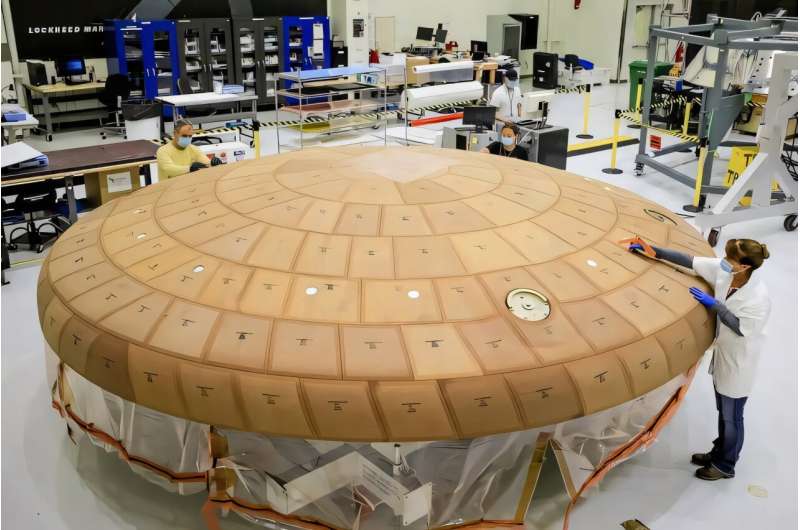
Heat shield of the Orion spacecraft. Source: phys.org

Problems with the heat shield in past missions

The Artemis-2 mission covers a distance of a quarter of a million miles, but the last five minutes of it are likely to cause the greatest concern regarding the astronauts’ safety. 

During the uncrewed test of the Orion spacecraft in 2022, problems with the heat shield were identified for the first time. This is the part of Orion that bears the brunt of the intense heat the capsule is exposed to as it enters Earth’s atmosphere. 

When engineers inspected the Orion heat shield from the 2022 Artemis-1 mission, they discovered that large pieces of material had fallen off. The concern was that if this were to happen again during the Artemis-2 crewed mission, it could expose the interior of the capsule to dangerously high temperatures. From the very beginning of manned spaceflight, engineers have protected capsules from extreme heat during atmospheric reentry using so-called “abrasive” heat shields made of a material that burns away uniformly as the capsule penetrates the atmosphere. 

To meet the requirements for a reusable spacecraft, NASA developed an incredible heat shield system made from ultra-light tiles of glass-coated silica fibers. Although this heat shield possessed exceptional thermal properties, it was also very fragile and required careful maintenance after every flight. Damage to this fragile and unprotected heat shield was the cause of the tragic loss of the space shuttle Columbia in 2003. For the Artemis program, NASA has returned to the concept of an abrasive heat shield.

New heat shield design for the Orion spacecraft

The Orion capsule’s heat shield is made of a material called Avcoat, which is based on a material originally developed for the Apollo program. Although NASA considered other, newer materials for the Orion heat shield, the material ultimately chosen was one that had already proven its reliability during the Apollo missions. 

However, the structure of the Orion heat shield differs from those used during the Apollo program. The Apollo heat shield consisted of a single honeycomb-structured matrix containing approximately 320,000 individually filled hexagonal segments. To make the Orion heat shield more effective and easier to reproduce in production, NASA chose a configuration consisting of approximately 180 individual segments.

This heat shield was first tested in 2014, when the Orion uncrewed capsule was launched by a Delta IV rocket to an apogee of 3,600 miles. On reentry, the capsule passed through the atmosphere at a temperature of about 2,200 °C (4,000 °F), but the heat shield proved capable of withstanding such extreme heat.

The next test for the Orion capsule was the Artemis-1 mission in 2022. This was the first flight of the powerful Space Launch System rocket and an uncrewed demonstration of the mission planned for Artemis II. As it flew through Earth’s atmosphere at a much greater distance than during the first test, the spacecraft reached a temperature of about 2,800 °C (5,000 °F). The first concerns regarding the Avcoat heat shield arose at this point.

Instead of burning away evenly across the entire surface, sections of the Artemis-1 heat shield unexpectedly fell off in irregular pieces. Such uneven ablation makes it difficult to predict thermal loads during atmospheric reentry and increases the probability that the Orion capsule could heat up to dangerous levels. 

Causes of uneven burning of heat shields

The investigation determined that the cause of the uneven ablation was the irregular release of gases trapped within the heat shield material, which was exacerbated by the “skip re-entry” profile adopted for this mission. 

Following the “skip” profile, Orion first lightly touches the edge of the atmosphere to slow down. It then uses the capsule’s aerodynamic lift to skip back out of the atmosphere, before re-entering it for its final descent to Earth. The “skip” profile got its name because it somewhat resembles a stone skipping across the surface of a pond.

NASA researchers found that as the heating rate decreased between atmospheric re-entries, thermal energy accumulated within the Avcoat material. This led to the accumulation of gases and, in turn, to an increase in internal pressure, which resulted in the formation of cracks and uneven delamination of the material.

Necessary improvements

Based on the experience gained during the Artemis-1 mission, NASA has taken a number of measures to protect the Artemis-2 crew. For the first crewed flight under the program, NASA retained the Avcoat heat shield material but updated the tile design to facilitate gas venting during atmospheric reentry. 

In addition, NASA has now chosen a more direct re-entry profile for the Orion capsule instead of the “skip” profile. This reduces uncertainty in the heating profile and means that the trapped gases will be exposed to peak temperatures for a shorter period of time, thereby reducing the risk of damage to the heat shield; however, it also means that the crew will experience greater deceleration upon re-entry.

Safety first

At the most dramatic moment in the film Apollo 13, Mission Control Director Gene Kranz says his famous line to the Mission Control team: “Failure is not an option.” Although this phrase was actually coined by the film’s screenwriters, it has become not only the second most popular quote from the movie, but also a kind of motto for NASA.

Nowhere is this truer than in the case of the Artemis-2 heat shield. In the final phase of the Artemis-2 mission, there is no backup plan, no contingency plan, and no chance of escape. The four astronauts on board will rely on a few centimeters of resin-coated silica to protect themselves from temperatures approaching half that of the Sun’s surface. 

Human spaceflight has always involved calculated risks, but at the same time it has given us a unique human perspective on our place in the Universe. The Artemis-2 mission will make its crew the first people in over half a century to see the blue globe of Earth in all its glory with their own eyes.

The crew will carry the hopes and aspirations of an entire new generation of explorers. Their safe return will depend on the meticulous work of thousands of scientists and engineers, and they will bring back with them a new human perspective not only on the Moon, but also on the planet we call home.

RELATED VIDEOS

{https://universemagazine.com/en/articles-en/ }

Hoe vind je dit bericht?
Geschreven door peter om 00:18 Stuur door

Meer van UFO'S of UAP'S, ASTRONOMIE, RUIMTEVAART, ARCHEOLOGIE, OUDHEIDKUNDE, SF-SNUFJES EN ANDERE ESOTERISCHE WETENSCHAPPEN - DE ALLERLAATSTE NIEUWTJES

↑ Terug naar de berichten