Naar de inhoud

UFO'S of UAP'S, ASTRONOMIE, RUIMTEVAART, ARCHEOLOGIE, OUDHEIDKUNDE, SF-SNUFJES EN ANDERE ESOTERISCHE WETENSCHAPPEN - DE ALLERLAATSTE NIEUWTJES

UFO's of UAP'S in België en de rest van de wereld
akke.beakke.be
Ontdek de Fascinerende Wereld van UFO's en UAP's: Jouw Bron voor Onthullende Informatie! Ben jij ook gefascineerd door het onbekende? Wil je meer weten over UFO's en UAP's, niet alleen in België, maar over de hele wereld? Dan ben je op de juiste plek! België: Het Kloppend Hart van UFO-onderzoek In België is BUFON (Belgisch UFO-Netwerk) dé autoriteit op het gebied van UFO-onderzoek. Voor betrouwbare en objectieve informatie over deze intrigerende fenomenen, bezoek je zeker onze Facebook-pagina en deze blog. Maar dat is nog niet alles! Ontdek ook het Belgisch UFO-meldpunt en Caelestia, twee organisaties die diepgaand onderzoek verrichten, al zijn ze soms kritisch of sceptisch. Nederland: Een Schat aan Informatie Voor onze Nederlandse buren is er de schitterende website www.ufowijzer.nl, beheerd door Paul Harmans. Deze site biedt een schat aan informatie en artikelen die je niet wilt missen! Internationaal: MUFON - De Wereldwijde Autoriteit Neem ook een kijkje bij MUFON (Mutual UFO Network Inc.), een gerenommeerde Amerikaanse UFO-vereniging met afdelingen in de VS en wereldwijd. MUFON is toegewijd aan de wetenschappelijke en analytische studie van het UFO-fenomeen, en hun maandelijkse tijdschrift, The MUFON UFO-Journal, is een must-read voor elke UFO-enthousiasteling. Bezoek hun website op www.mufon.com voor meer informatie. Samenwerking en Toekomstvisie Sinds 1 februari 2020 is Pieter niet alleen ex-president van BUFON, maar ook de voormalige nationale directeur van MUFON in Vlaanderen en Nederland. Dit creëert een sterke samenwerking met de Franse MUFON Reseau MUFON/EUROP, wat ons in staat stelt om nog meer waardevolle inzichten te delen. Let op: Nepprofielen en Nieuwe Groeperingen Pas op voor een nieuwe groepering die zich ook BUFON noemt, maar geen enkele connectie heeft met onze gevestigde organisatie. Hoewel zij de naam geregistreerd hebben, kunnen ze het rijke verleden en de expertise van onze groep niet evenaren. We wensen hen veel succes, maar we blijven de autoriteit in UFO-onderzoek! Blijf Op De Hoogte! Wil jij de laatste nieuwtjes over UFO's, ruimtevaart, archeologie, en meer? Volg ons dan en duik samen met ons in de fascinerende wereld van het onbekende! Sluit je aan bij de gemeenschap van nieuwsgierige geesten die net als jij verlangen naar antwoorden en avonturen in de sterren! Heb je vragen of wil je meer weten? Aarzel dan niet om contact met ons op te nemen! Samen ontrafelen we het mysterie van de lucht en daarbuiten.

Archief

Cloaked UFO Passes Over Girls Soccer Team In Buderim, Australia On July 1, 2026, UAP Sighting News.

Cloaked UFO Passes Over Girls Soccer Team In Buderim, Australia On July 1, 2026, UAP Sighting News.

UFO_Cloud.jpg
Date of sighting: July 1, 2026
Location of sighting: Buderim, Australia
Source: 
Its a well known fact that UFOs make holes in clouds. Remember the O'hare Airport UFO seen in 2006? Well it was seen flying up so fast that it left a hole in the clouds for over 15 minutes after it passed through it. Here is a similar instance, but instead of passing through, the UFO disk instead tried to hide within a cloud ceiling area, but its shields pushed the clouds away, however the center bottom area of the UFO always gets a line of cloud due to the configuration of the UFO shields pushing it there. The shields for the bottom are two piece...meaning one shield originates on the left, the other on the right, but the clouds are pushed in between making a straight line appear. The UFO itself looks to be about 50 meters across and was still there (just cloaked) when these photos were taken. 
100% proof that aliens not only know about the human race, but they fly over neighborhoods like they were Uber's passing through. 
Scott C. Waring - UFO Sightings Daily
UAP_News_UFO.jpg
UFO_UAP_cloaked.jpg

{ https://www.ufosightingsdaily.com/ }

Hoe vind je dit bericht?
Geschreven door peter om 21:27 Stuur door

Ark of the Covenant mystery blown wide open as 'biblical relic' is discovered

Ark of the Covenant mystery blown wide open as 'biblical relic' is discovered

Archaeologists have uncovered ruins in Israel that they believe may be the original home of the Ark of the Covenant, a sacred, gold-covered chest described in the Bible.

According to scripture, Moses placed the Ten Commandments inside the Ark, which was kept in the Tabernacle, a sanctuary built shortly after the Israelites' Exodus from Egypt, traditionally dated by some scholars to around 1445 BC.

The fate of the Ark remains a mystery, as it vanishes from the biblical record before the Babylonian sack of Jerusalem in 586 BC.

Now, archaeologists with the Associates for Biblical Research (ABR) working at biblical Shiloh, the ancient city in the West Bank where scripture says the Tabernacle stood for more than 300 years, have made new discoveries that they say strengthen their theory.

The team uncovered additional walls belonging to a massive structure that may have formed part of the Tabernacle, along with worship-related artifacts and newly identified fortifications.

Dr Scott Stripling, director of the Tel Shiloh excavation, said the latest discoveries are helping researchers reconstruct the full dimensions of the monumental building and better understand its purpose.

The most significant breakthrough came with the discovery of the structure's southern wall.

The building is oriented east to west and has proportions similar to those described for the biblical Tabernacle, the portable sanctuary built by the Israelites after the Exodus from Egypt.

A new theory has suggested that the Ark was built using ancient Egyptian religious symbols as a theological rebuke, a statement that the Israelite God was superior to Egyptian gods because he required no idol, and because his presence was not confined to a statue

A new theory has suggested that the Ark was built using ancient Egyptian religious symbols as a theological rebuke, a statement that the Israelite God was superior to Egyptian gods because he required no idol, and because his presence was not confined to a statue

article image

Last year, Stripling's team announced they had uncovered a monumental building from the Iron I period whose dimensions appeared to align with the biblical description of the Tabernacle.

The latest findings do not prove that identification, but archaeologists said they strengthen the case.

'The discovery of the southern wall now enables our researchers to reconstruct the full dimensions of the building and better evaluate its function and significance,' Stripling said in a blog post on the Bible Archaeology Report.

Adding to the mystery, excavators have also unearthed numerous objects associated with worship activities in and around the structure, including altar horns, ceramic pomegranates and murex shells.

The shells are particularly intriguing because they were used to produce the blue dye associated with priestly garments described in the Bible.

The discoveries build on previous finds at Shiloh, where researchers uncovered more than 100,000 animal bones, predominantly from sheep, goats and cattle. 

Many of the bones came from the right side of the animals, a detail that mirrors Leviticus 7, which states that portions from the right side were reserved for priestly offerings.

Shiloh occupies a central place in biblical history. Located about 19 miles north of Jerusalem, the city is described in the Book of Joshua as the place where the Israelites established the Tabernacle after conquering the Promised Land.

The team uncovered additional walls belonging to a massive structure that may have formed part of the Tabernacle

The team uncovered additional walls belonging to a massive structure that may have formed part of the Tabernacle

The team uncovered three large Canaanite storage jars dating to the period before the arrival of the Israelites. The jars contained charred remains of common food staples, including olives, wheat and lentils

The team uncovered three large Canaanite storage jars dating to the period before the arrival of the Israelites. The jars contained charred remains of common food staples, including olives, wheat and lentils

It was there that Joshua divided the land among the tribes of Israel. It was also the home of Eli, the high priest, and the place where the prophet Samuel was raised.

The Bible portrays Shiloh as Israel's first religious and political capital.

In 1 Samuel 4, the Israelites bring the Ark of the Covenant from Shiloh to the battlefield during a war with the Philistines, hoping it will guarantee victory.

Instead, the Ark is captured, and Eli's sons, Hophni and Phinehas, are killed.

When a messenger returns to Shiloh and tells the elderly priest that the Ark has been taken, Eli falls backward from his seat near the city gate, breaks his neck and dies.

This year, excavators also uncovered additional walls belonging to Shiloh's northern fortification system.

The findings indicated the complex was built as a bent-axis gate and contained multiple rooms, providing new insight into the city's defenses and urban planning.

The discoveries add weight to earlier suggestions by Stripling that his team may have identified the gate complex mentioned in the biblical account of Eli's death.

The most significant breakthrough came with the discovery of the structure's southern wall

The most significant breakthrough came with the discovery of the structure's southern wall

Meanwhile, excavators working in another area of the site made a separate discovery that sheds light on Shiloh's earliest history.

The team uncovered three large Canaanite storage jars dating to the period before the arrival of the Israelites.

The jars contained charred remains of common food staples, including olives, wheat and lentils.

Archaeologists plan to conduct radiocarbon testing on the contents to establish a more precise date for the destruction layer associated with the finds.

'These discoveries provide an important window into the earliest occupational phases of Shiloh and help us better understand the site's history before the Israelite settlement,' Stripling said.

Despite the excitement surrounding the discoveries, archaeologists cautioned that they have not found the Ark of the Covenant itself, nor have they definitively proven that the monumental structure is the Tabernacle.

Instead, the latest excavation season has provided new evidence that appears to align with the biblical narrative.


What Was the Ark of the Covenant? What the Evidence Actually Shows | Bible Documentary

What Happened to the Ark of the Covenant? The Greatest Biblical Mystery

{https://www.dailymail.com/sciencetech/index.html }

Hoe vind je dit bericht?
Geschreven door peter om 23:34 Stuur door

Archeologists Just Found an Underwater Graveyard Packed with Punic, Roman, Medieval, and World War II Shipwrecks

Archeologists Just Found an Underwater Graveyard Packed with Punic, Roman, Medieval, and World War II Shipwrecks

One bay. Twenty-five centuries. More than 100 lost ships. What archaeologists just pulled from the water near Gibraltar rewrites Mediterranean history.

This Shipwreck Site Preserved Centuries Of History Beneath The Waves

This Shipwreck Site Preserved Centuries Of History Beneath The Waves.

Image credit: Ludovic MADELAINE

The bottom of the Bay of Algeciras is a museum no one built on purpose. For thousands of years, ships that anchored there waiting for safe passage through the Strait of Gibraltar never left. They went down in storms, in battle, or because the sea simply decided otherwise. Now archaeologists have catalogued what remains.

A three-year survey called Project Herakles logged 151 archaeological sites across a 29-square-mile stretch of water between the Spanish city of Algeciras and the British territory of Gibraltar. More than 100 of those sites are shipwrecks. The oldest dates to the fifth century B.C., when Carthage controlled the western Mediterranean. The most recent is a weapon from World War II.

Archaeologists Examine The Wreck Of The Puente Mayorga Ii

Archaeologists examine the wreck of the Puente Mayorga II, a 17th-century Spanish vessel logged by the Herakles Project.  Image credit: Alejandro Mañas

The finds compress Punic trade, Roman expansion, medieval seafaring, and 20th-century naval warfare onto a single patch of seabed. “There are really few places in the Mediterranean that have this kind of concentration and such a significant variety of archaeological remains,” Felipe Cerezo Andreo, an underwater archaeologist at the University of Cádiz who led the study, told the Guardian.

The Trap at the Mouth of the Mediterranean

The Strait of Gibraltar is the only seam between the Mediterranean Sea and the Atlantic Ocean. Every vessel making that transit contended with hard currents, sudden weather shifts, and the politics of a chokepoint. The Bay of Algeciras, tucked against the strait’s eastern entrance, served as the holding pen. Captains anchored there to wait out bad conditions, sometimes for days.

“All vessels that want to go from the Mediterranean to the Atlantic have to pass through the Strait of Gibraltar, and probably most of them have to anchor and wait for better weather conditions in the Bay of Algeciras,” Cerezo Andreo told CNN.

A Pair Of Team Members Uses A Suction Hose To Clean Sediment From A Wreck In The Bay Of Algeciras

A pair of team members uses a suction hose to clean sediment from a wreck in the Bay of Algeciras. 

Image credit: Alejandro Mañas

That waiting turned lethal with enough frequency to seed the seafloor with wrecks. The bay recorded two major naval battles: the Battle of Gibraltar in 1607 and the First Battle of Algeciras in 1801. In that second engagement, British Rear Admiral James Saumarez, his squadron badly damaged on July 6, retreated to Gibraltar, repaired his ships, and sailed back out six days later to defeat a larger combined French and Spanish force, as documented by the Society for Nautical Research. Outside of wartime, ordinary transit failures stacked hulls atop hulls for centuries.

Carthaginians, Romans, and Ships Nobody Expected

The Roman period accounts for 25 of the documented wrecks, a number that tracks with the empire’s centuries-long grip on both shores of the strait. The oldest vessel belongs to the Punic era, a remnant of Carthaginian maritime power around the fifth century B.C., well before Rome erased Carthage from the map. A University of Cádiz research portal entry notes that geophysical surveys and visual inspections confirmed two Punic shipwrecks, recovered materials from two anchorage zones, and flagged two more potential wrecks awaiting confirmation.

Three medieval wrecks caught the team off guard. Ship timbers from that period are scarce across the Mediterranean. Cerezo Andreo told the Guardian that studying those hulls could illuminate seafaring during the late centuries of Islamic rule in southern Spain, an era with a thin material record.

An Outlined Wreck Is Seen From Above A Few Metres Offshore In The Bay Of Algeciras

An outlined wreck is seen from above a few metres offshore in the Bay of Algeciras. 

Image credit: Alejandro Mañas

By the early modern period, the bay had become international in a way few harbors were. The team documented Dutch, Venetian, Spanish, and English ships. “We have ships of practically every nationality, because they all passed through the strait,” Cerezo Andreo told the Guardian. Popular Mechanics reported that 134 shipwrecks were catalogued overall, with 34 documented in full.

A Gunboat That Hid Beneath Fishing Nets

The wreck of Puente Mayorga IV stands out because of the strategy it was built to execute. Spain designed this small gunboat in the 18th century to harass British shipping near the Rock of Gibraltar, the territory Britain secured in 1713 through the Treaty of Utrecht.

The vessels dressed as fishing boats, netting concealing cannons until the crew dropped the disguise and opened fire at close range. Historians knew the tactic from written records. A physical example had never been studied until now.

The Archaeological Sites Explored So Far Were Found At Depths Of Up To About 10 Meters

The archaeological sites explored so far were found at depths of up to about 10 meters. Image credit: Alejandro Mañas

The team also identified a Maiale, Italian for “pig,” a World War II human torpedo. Italian Navy divers straddled these slow-moving weapons, steered toward anchored enemy ships, clamped explosive charges to the hull, and withdrew before detonation. Italy relied on the devices when its surface fleet could not match Allied numbers in the Mediterranean.

A Seabed Blanketed by an Invader

Documenting the wrecks means racing against industry and biology. The Bay of Algeciras remains one of Europe’s most heavily used maritime zones. Shipyards, oil refineries, and dredging operations grind at the seabed. Sediment patterns have shifted under pressure from climate change and port construction, exposing some material and burying the rest deeper with little predictability.

Then there is the algae. Rugulopteryx okamurae, a brown seaweed native to the Northwest Pacific, turned up in the region several years ago and spread fast. It forms dense mats that smother native species and block visual surveys. In five years, it has swallowed wrecks that sat exposed for centuries.

1777254967717

An archaeologist marks the naval architecture in the Bay of Algeciras.

Image credit: Alejandro Mañas

According to El País, the research team used underwater photographs from the 1970s and 1980s to relocate several known sites and measure how much the marine environment has changed under the weight of this invasive species.

Anchors, Archives, and What Comes Next

The survey covered just 23 percent of the bay’s surface, mostly nearshore zones. Deeper water introduces a different threat. Large cargo vessels drop anchors weighing more than twenty tons, and when they hit, the damage is immediate.

The team’s assessment classifies 56 percent of the documented sites as stable. The other 44 percent require urgent study and protection. Researchers are pushing for formal underwater cultural heritage designations that would restrict anchoring and development in the most sensitive areas.

While that legal effort proceeds, the data gets a second life. The team is building a public digital archive of 360-degree dive videos and three-dimensional virtual models, allowing researchers and the public to examine the wrecks without disturbing them. The long task of interpreting those hulls, and deciding what can be saved, has only started.


The Underwater Death Trap: Discovery of an Ancient Ship Graveyard

130 Shipwrecks Found in One Place😳#shorts #viralvideo #history #archaeology #facts #shortsfeed #yt

{ https://dailygalaxy.com/ }

Hoe vind je dit bericht?
Geschreven door peter om 22:43 Stuur door

Look What NASA’s Mars Reconnaissance Orbiter Just Spotted Lurking in the Red Planet’s Arbot Hills

Mars Reconnaissance Orbiter

(Image Credit: Credits: NASA/JPL-Caltech/University of Arizona)

Look What NASA’s Mars Reconnaissance Orbiter Just Spotted Lurking in the Red Planet’s Arbot Hills

A tiny green dot appearing in an image taken by NASA’s Mars Reconnaissance Orbiter (MRO) captures a historic tale of Red Planet exploration by one of its first Earthling visitors.

That visitor—a robotic rover named Perseverance—has been conducting investigations on Mars since February 18, 2021, and the new aerial images reveal its current location in an area that mission specialists have dubbed “Arbot.”

While Perseverance’s latest appearance reveals little more than a greenish spec on the planet’s rust-colored surface, also visible in the new images are the long path its formidable tires have left in the Martian soil as the robotic explorer has trekked west of its initial landing site.

The new images, captured on June 13, 2026, were taken just one day before Perseverance broke the previous distance record held by a robotic explorer on Mars: NASA’s Opportunity rover.

However, Perseverance completed this phase of its journey in record time compared to its predecessor, which took more than 11 years to traverse a similar distance. Perseverance, by contrast, covered the same distance in less than half that time, with just five years and four months of travel now behind it.

Perseverance Mars Reconnaissance Orbiter

In the image above, NASA’s Perseverance Rover appears in the center of the image as a small, greyish-green reflective spot. Also visible are the impressions left by its all-terrain tires, revealing the robotic rover’s long path over the last several years of Martian exploration

(Image Credit: Credits: NASA/JPL-Caltech/University of Arizona)

The images were made possible by the MROs’ High-Resolution Imaging Science Experiment (HiRISE) camera, which also captured surface features in the Arbot area that include ridges and windswept areas along Mars’ rugged exterior.

Built and operated by the University of Arizona, HiRISE captures images with resolutions as fine as about 25 centimeters (10 inches) per pixel, allowing researchers to distinguish features roughly the size of a kitchen table from orbit. The camera has returned hundreds of thousands of detailed images since the MRO arrived at Mars two decades ago, contributing to a growing data set that has transformed scientists’ understanding of the Red Planet.

Documenting everything from active dust avalanches and shifting dunes to fresh impact craters, the unprecedented resolution its imagery provides has made HiRISE one of the most powerful planetary imaging instruments ever deployed.

Last year, the MRO’s HiRISE camera also successfully captured images of the interstellar comet 3I/ATLAS as it made its way past Mars during its trip through our Solar System. Although the HiRISE images weren’t the clearest images of the interstellar visitor obtained during its visit, they did help demonstrate just how formidable NASA’s MRO and its suite of instruments are.

Additional details about Perseverance and its mission can be found at NASA’s official web page, and information about the MRO can be found here.

  • Micah Hanks is the Editor-in-Chief and Co-Founder of The Debrief. A longtime reporter on science, defense, and technology with a focus on space and astronomy, he can be reached at micah@thedebrief.org. Follow him on X @MicahHanks, and at micahhanks.com.

{ https://thedebrief.org/category/space/ }

Hoe vind je dit bericht?
Geschreven door peter om 23:59 Stuur door

Archaeologists stumble upon ancient Mexican ruins unlike anything seen before

Archaeologists stumble upon ancient Mexican ruins anything seen before

Mexican archaeologist Mireya Moreno extracts artifacts at an archaeological site in Coatepec, Veracruz, June 18, 2026. — AFP pic

Mexican archaeologist Mireya Moreno extracts artifacts at an archaeological site in Coatepec, Veracruz, June 18, 2026.
AFP pic

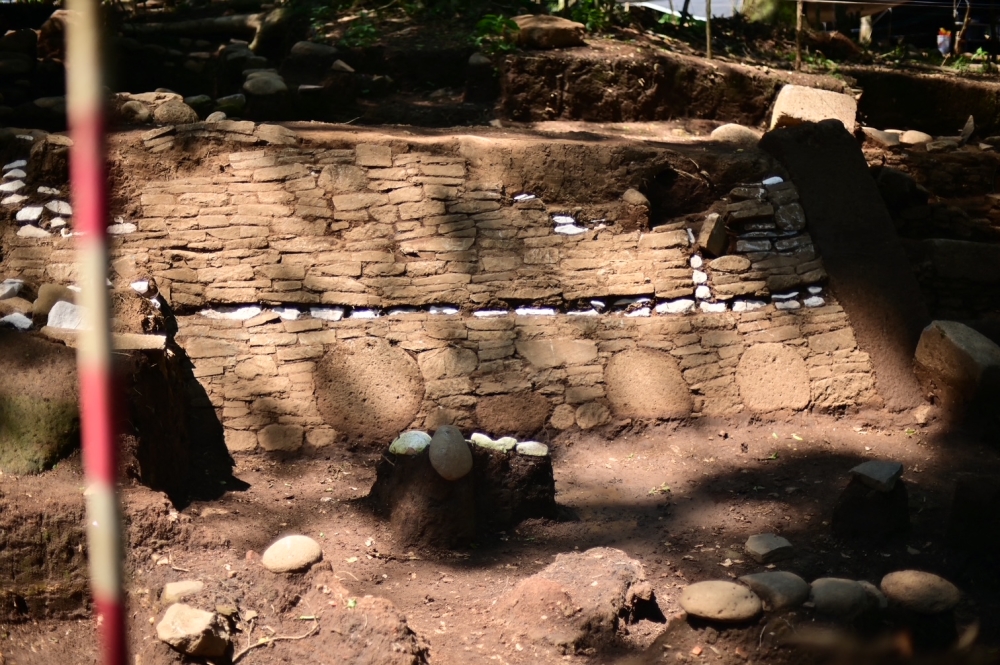
COATEPEC, June 20 — Mexican archaeologists unearthed ancient ruins with signs of Mayan culture as well as “never before seen” characteristics in the eastern state of Veracruz.

President Claudia Sheinbaum called the discovery “very relevant” during her morning press conference yesterday, saying her government would allocate resources for the investigation and restoration of the site.

The site includes a circular stone platform unlike any other unearthed in that part of Mexico.

Researchers also discovered a monolith depicting a figure with potential Mayan features, the National Institute of Archaeology and History (INAH) said.

View of an archaeological site in Coatepec, Veracruz, June 18, 2026. — AFP pic

View of an archaeological site in Coatepec, Veracruz, June 18, 2026. 
AFP pic

“It’s a unique, unprecedented finding,” said Lino Espinoza Garcia, an archaeologist for the INAH and one of the coordinators for the Campo Viejo site near the town of Coatepec.

Dating back to the Early Classic period between 200 and 600 AD, the pre-Hispanic ruins include a flagstone and limestone platform adorned with almost squared lines or figures as well as the circular stones.

These attributes have never been recorded in this region of Mexico, the INAH said in a statement.

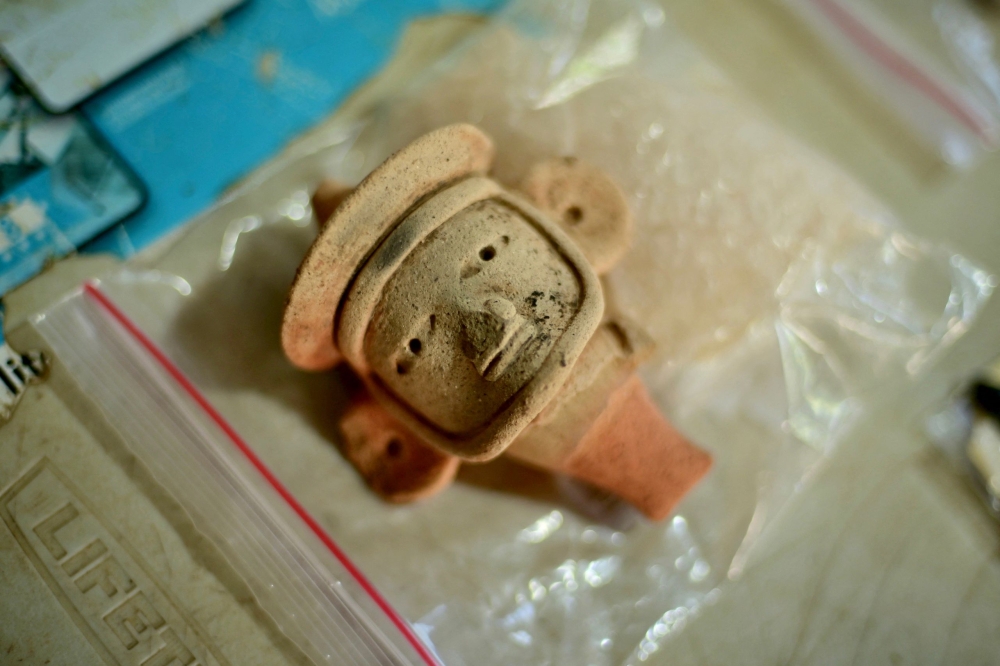
A view shows an anthropomorphic whistle face handled by archaeologists working at an archaeological site in Coatepec, Veracruz, June 18, 2026. — AFP pic
A view shows an anthropomorphic whistle face handled by archaeologists working at an archaeological site in Coatepec, Veracruz, June 18, 2026. 
AFP pic

It’s “a very particular structure,” said Alberto Vazquez, the other archaeologist responsible for the site.

“We don’t have any records so far of a correlation with other (ancient) sites.”

The monolith stands 1.88m (6.16 feet) high, 1.47m (4.82 feet) wide at its broadest point and 68cm (2.23 feet) at the narrowest.

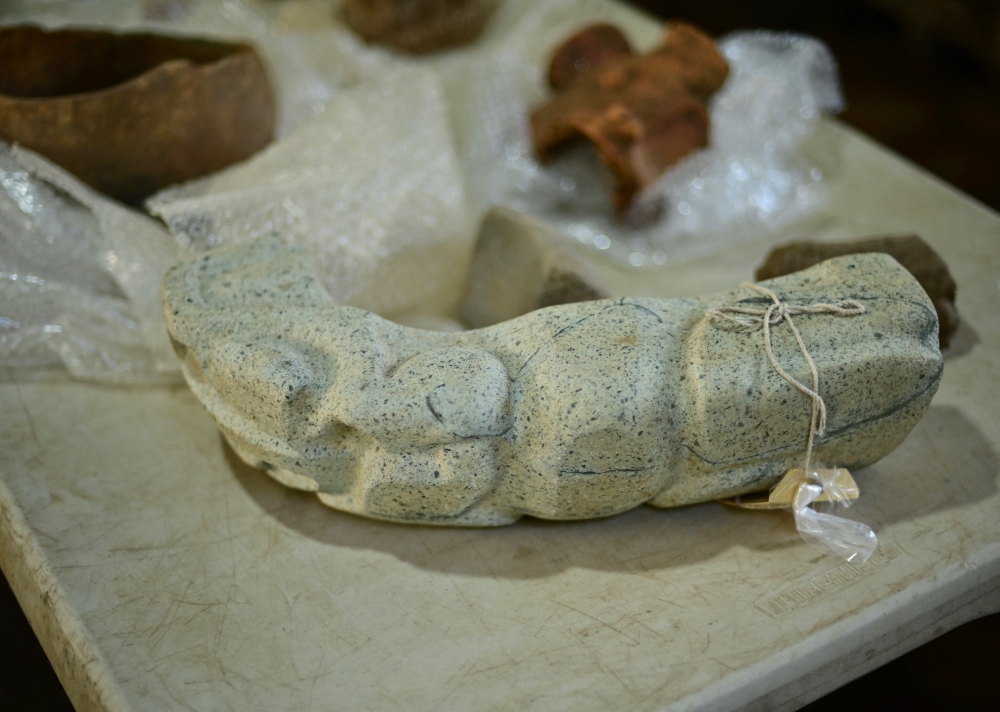
A green stone ‘yoke’ depicting a batrachian is seen among objects found at an archaeological site and undergoing classification and documentation in Coatepec, Veracruz, June 18, 2026. — AFP pic
A green stone ‘yoke’ depicting a batrachian is seen among objects found at an archaeological site and undergoing classification and documentation in Coatepec, Veracruz, June 18, 2026. 
AFP pic

The stone depicts a scene of a symbolic character, according to experts.

“They are two characters who are requesting something, they have a bowl and are receiving something, we think it’s a liquid. Obviously, in that context, it’s a divine liquid, we think it would be water,” Espinoza detailed.

The archaeologist believes the image could reflect the era of a great drought in the region, which could explain why two members of the elite, one of them with Mayan traits, are depicted receiving the fluid from a divine entity. — AFP

FURTHER QUESTIONS?

{ https://www.malaymail.com/news/life }

Hoe vind je dit bericht?
Geschreven door peter om 23:23 Stuur door

“We Don’t Have Any Records So Far”: Archaeologists Discover Ancient ‘Monolith’ in Mexico Unlike Anything Previously Seen

(Image Credit: INAH)

“We Don’t Have Any Records So Far”: Archaeologists Discover Ancient ‘Monolith’ in Mexico Unlike Anything Previously Seen

Archaeologists in Mexico report “a unique, unprecedented” discovery in the country’s state of Veracruz, including a monolith bearing unique features and pre-Hispanic ruins unlike others found in the region.

The ancient ruins are believed to display motifs that archaeologists have linked to early Maya culture, according to recent reporting by Agence France-Presse.

The monolithic sculpture, which stands taller than six feet and features an engraving that depicts a pair of individuals engaged in what may be a ritual activity, was accompanied by a large stone platform positioned nearby, and is believed to date to between A.D. 200 and 600. This falls within the Maya Early Classic period, a foundational era of the ancient civilization during which the proliferation of its hieroglyphic writing and calendar systems occurred, as well as the onset of massive stone pyramid construction.

Alberto Vazquez, one of the principal archaeologists at the site, called the discovery “a very particular structure,” adding that archaeologists in Mexico presently “don’t have any records so far of a correlation with other sites.”

Veracruz monolith The site layout during recent excavations, which shows the position of the monolith in-situ (Image Credit: INAH)

The Maya Early Classic Period

Monumental construction was a hallmark of the Maya Early Classic period, an era that was also partially defined by the widespread use of sculpted stone stelae and altars that often bore historical significance related to political events.

These stelae and altars preserved a record of events from the period using the Maya Long Count calendar, as rulership governed by hereditary dynasties was believed to leverage religious ceremonies to help legitimize their positions in power.

Several aspects of the recent discovery align with such known components of Early Classic period structures, although some elements about the site remain outliers, such as the circular stone platform, which bears little resemblance to others found throughout Mexico.

A Monolithic Mystery

The most intriguing component of the site is its monolith, which stands slightly taller than six feet and is under five feet across at its broadest point. The sculpture also features a pair of individuals that researchers say is likely related to symbolism associated with the period in question.

Veracruz monolith An artistic rendering of the imagery depicted on the monolith, which features two individuals receiving what archaeologists interpret as a “divine liquid” (Image Credit: Lino Espinoza)

Lino Espinoza Garcia, an archaeologist with Mexico’s National Institute of Archaeology and History (INAH), described the imagery on the monolith as depicting “two characters who are requesting something,” adding that the individuals “have a bowl and are receiving something.”

“[W]e think it’s a liquid,” said Garcia, who also serves as a coordinator at the nearby Campo Viejo site near Coatepec, Mexico. “Obviously, in that context, it’s a divine liquid, we think it would be water.”

A “Very Relevant” Discovery

Additional discoveries at the site include a flagstone and a large platform made of limestone, which features a series of square-lined patterns, which INAH archaeologists say are unlike those found at nearby sites.

One possible interpretation of the discovery is that the figures depicted with a possible “divine liquid” may document a period of drought that struck the region, which could account for the depiction of two individuals receiving water from a God or other divine figure. Garcia and his colleagues also suggest the two recipients of the liquid may have been members of the ruling class from the period.

During a press conference last week, Mexican President Claudia Sheinbaum called the discovery “very relevant” and added that investigations would continue with support from her administration.

For Garcia and others, the monolith and its surrounding features offer a unique look at features unlike those they have worked with in the past and may help to deepen our understanding of ancient cultural and political dynamics in Mexico’s pre-Hispanic past.

“It’s a unique, unprecedented finding,” Garcia said.

  • Micah Hanks is the Editor-in-Chief and Co-Founder of The Debrief. A longtime reporter on science, defense, and technology with a focus on space and astronomy, he can be reached at micah@thedebrief.org. Follow him on X @MicahHanks, and at micahhanks.com.

{ https://thedebrief.org/category/science/ }

Hoe vind je dit bericht?
Geschreven door peter om 22:50 Stuur door

Nun warns that aliens are 'fallen angels' invading Earth to cast doubt on the existence of God

Nun warns that aliens are 'fallen angels' invading Earth to cast doubt on the existence of God

A Catholic nun has warned that UFO sightings are actually a 'diabolical' invasion by 'demonic' fallen angels trying to distract humanity from God in a cosmic war

by Liam Randall /  News Reporter

A Catholic nun has warned that alleged alien encounters are actually demons

A Catholic nun has warned that alleged alien encounters are actually demons

(Image: Getty Images/Science Photo Library RF)

A Catholic nun has dropped a bombshell claim about UFOs, warning that alleged alien encounters are actually a sinister invasion by "fallen angels." Mother Miriam claims that the spooky phenomena people see in the skies are rooted in a dark spiritual realm, rather than coming from distant planets.

Speaking out on her podcast after a listener asked if ETs were real or spiritual, she didn't hold back. Mother Miriam said: "I think sooner look at the demonic side than the extraterrestrial."

While the Catholic Church doesn't have an official stance on aliens, the holy woman believes the truth is far more terrifying.

Mother Miriam claims that the spooky phenomena people see in the skies are rooted in a dark spiritual realm.

Mother Miriam claims that the spooky phenomena people see in the skies are rooted in a dark spiritual realm(

Image: @MotherMiriamHighlights/Youtube)

Channelling the teachings of medieval theologian St Thomas Aquinas, she argued that angels are the original extraterrestrials because they come from another world.

She said: "The Catholic position, there is such a thing as extraterrestrial intelligence. These creatures really are from another world, the spiritual world. They're what we call angels."

But she warned that not all of these cosmic beings come in peace. "Some of these angels are ministers of light. Others are ministers of deception and destruction," she said in a YouTube video.

Mother Miriam argued that angels are the original extraterrestrials because they come from another world

Mother Miriam argued that angels are the original extraterrestrials because they come from another world

(Image: Getty Images)

Mother Miriam, who was born Rosalind Moss in Brooklyn before converting and leading a monastery in Oklahoma, believes these entities are playing a dangerous game with humanity.

She claims their ultimate goal is to steer people away from God, using UFO obsession as the perfect smoke screen.

She said: "They do all they can to deceive human beings and draw them into a belief system without God, without faith, and without the necessary graces for their salvation."

She added that if these forces "can get people wrapped up in theories of alien visitations and extraterrestrial visitors to Earth, if they can get them absorbed and fascinated by any number of paranormal phenomena and distracted from God, they will have succeeded in their diabolical mission to deceive and to destroy."

The nun claims we are right in the thick of a supernatural battle for the universe.

She said: "These extraterrestrial forces are involved in a great cosmic war. And human beings are a part of a conflict. Once that is understood, all that remains is for you to decide on which side you plan to do battle."

Mother Miriam isn't alone in her wild theories. US Vice President JD Vance previously made headlines on a podcast by suggesting UFOs are actually "demons."

TV host Tucker Carlson has also pushed the theory that celestial phenomena are demonic entities. Even movie legend Steven Spielberg previously admitted that finding real aliens could rock humanity to its core.

Speaking ahead of the release of his film Disclosure Day, he said: "What does this do to the fundamental beliefs that many of us have? Is God our God only on this planet? Or is God a god for every system where there's civilisation and intelligent life, and even developing life?"

Despite her terrifying warnings, Mother Miriam hasn't completely ruled out the idea of actual aliens existing.

She said: "It's possible there are other planets. The church is not definitive on that. If we find out one day that there is truly life on other planets, well, we'll know then. But so far, our Lord hasn't shown us that."


This Nun Saw the Future (And Nobody Believed Her)

As in the Days of Noah: The Coming Invasion of Fallen Angels | Biblical Wisdom

{ https://www.dailystar.co.uk/news/weird-news/ }

Hoe vind je dit bericht?
Geschreven door peter om 22:16 Stuur door

Strange formation in NASA's Mars photo fuels claims of extraterrestrial life on the Red Planet

Strange formation in NASA's Mars photo fuels claims of extraterrestrial life on the Red Planet

A strangely shaped object photographed on the Martian surface has reignited bizarre theories about extraterrestrial life on the Red Planet.

The picture, captured by NASA's Opportunity rover in 2014, recently resurfaced online after social media users claimed the object resembles an 'alien gun.'

Scott C Waring, a Martian researcher from 'UFO Sighting Daily,' suggested the 'gun' is evidence of why NASA sent a rover to Mars to retrieve alien technology. 

'Alien gun on Mars photos, only one still exists, others deleted by NASA,' Waring shared on X on Tuesday.

The image was first circulated by Waring in 2016, writing in a blog post that the supposed weapon was 'about one foot long.' 

'I have to admit... It's incredible,' he shared. 'The exact location of the gun is at SOL 3773, which is between Mt Edgecumbe and Wdowiak Ridge.'

NASA's Opportunity rover landed on Mars on January 25, 2004, touching down in a small impact crater known as Eagle Crater on the Meridiani Planum. 

However, the robot fell silent in June 2018 during a severe, planet-wide dust storm that blocked sunlight from reaching its panels. After spending months attempting to re-establish contact, NASA officially declared the mission complete in February 2019.

The picture, captured by NASA's Opportunity rover in 2014, recently resurfaced online after social media users claimed the object resembles an ' alien gun.'

The picture, captured by NASA's Opportunity rover in 2014, recently resurfaced online after social media users claimed the object resembles an ' alien gun.'

article image

However, it seems the UFO researchers' claims are nothing more than a case of pareidolia, a psychological response to seeing faces and other significant and everyday items.

While Waring is sure Opportunity spotted a gun on the Martian landscape, others believe otherwise.

One X user commented: 'I'm not an expert, but I believe this is a rock....'

While another joked: 'Why would aliens have guns designed for human hands and fingers? lol.' 

Waring has been sharing bizarrely shaped rocks on the Red Planet for about a decade now, with one in 2016 that he claimed was a shoe.

'While looking through some Mars rover photos, I found a lone shoe on the edge of the crater,' he wrote on his website.

‘This is probably a shoe of a species that was at war long ago, the shoe being the lone evidence that the person had ever existed.’

The discovery was spotted on August 24, 2016, however, the original photo from the Opportunity was taken in 2013.

The image was first circulated by Warning in 2016, writing in a blog post that the supposed weapon was 'about one foot long'

The image was first circulated by Warning in 2016, writing in a blog post that the supposed weapon was 'about one foot long'

Waring has been sharing bizarrely shaped rocks on the Red Planet for about a decade now, with one in 2016 that he claimed was a shoe

Waring has been sharing bizarrely shaped rocks on the Red Planet for about a decade now, with one in 2016 that he claimed was a shoe

The NASA image shows a cluster of rocks spread out on the dusty planet, and the lone shoe can be seen to the right among the rubble, which may also just be another rock.

However, Waring is sure this ‘shoe’ is all that is left of a soldier who lost their life on the battlefield.

‘How many times on a battlefield or at a catastrophic event have we seen photos in the newspaper of the shoes of victims…alone…evidence of how hard they were hit, how fast they were taken from us? Well, this is such evidence,’ he wrote.


These Strange Formations on Mars Shocked Scientists 😳 #shorts #shortvideo #mars #marsexploration

NASA Found the Strongest Evidence Yet of Ancient Life on Mars

{ https://www.dailymail.com/sciencetech/index.html }

Hoe vind je dit bericht?
Geschreven door peter om 21:30 Stuur door

The chilling visions of hell that a doctor says reveal we're living in God's simulation

The chilling visions of hell that a doctor says reveal we're living in God's simulation

A doctor who studies near-death experiences says that there is now a strange overlap between the Christian vision of hell and the theory that the world is a giant simulation. 

Dr Orson Wedgwood is a New Zealand-based scientist and author who works in healthcare research. He told the Daily Mail that dark experiences involving visions of the afterlife often have many things in common, such as a stench, dark figures described as demons and violence.

According to Wedgwood, these similarities point to hell-like near-death experiences being more than just hallucinations: they could be real experiences that occur within a God-created 'simulation,' serving as warnings for those who have rejected God.

In Wedgwood's view, as a scientist and devout Christian, NDEs are directly connected to the controversial simulation theory because the simulation’s purpose is to sort out souls based on their life choices.

The doctor said: 'We are in a created environment, or a “simulation” in which we are being tested. Our consciousness, how we behave, and the experiences we have are real, but the rest is not.'

'The simulation is designed to sort us into those who will be with God after the simulation is over versus those who won’t, all in a safe environment where we can’t do any damage.'

The simulation theory suggests that what humans perceive as reality is actually a computer-generated 'video game' of some sort - a premise which was depicted in the blockbuster film series The Matrix.

Believers have claimed that humans are unknowingly being fed this simulated consciousness either for their own good or for nefarious means, with the world's first trillionaire, Elon Musk, suggesting a creator being of the universe runs the simulation.

Pictured: A common depiction of hell, inhabited by demons and fiery landscapes (Stock Image)

Pictured: A common depiction of hell, inhabited by demons and fiery landscapes (Stock Image

In December, Musk appeared on The Katie Miller Podcast and speculated that our world could be an 'alien Netflix series,' saying that the purpose of life would therefore be to keep humanity excited to increase our 'ratings' and prevent our creator from turning the computer off.

As for the link between this theory and the claims of many who said they saw a vision of hell instead of heaven, Wedgwood claimed that those who do not show interest in God either lose the eternal part of themselves and die or find themselves in a dark place.

RELATED VIDEOS

I Went Hell Two times And What I Saw will Shock You - Dr David Yonggi Cho

Mortician Dies & Sees Hell. Returns with Message for Humanity…

{ https://www.dailymail.com/sciencetech/index.html }

Hoe vind je dit bericht?
Geschreven door peter om 23:30 Stuur door

Catch me if you can! Inside NASA's daring plan to save a space telescope from plunging back to Earth

3 is preparing to launch a daring mission to save a precious space telescope from plunging back to Earth.

The Swift Observatory - NASA's 'multitool' for studying the cosmos - was launched in 2004 but has been falling rapidly due to intense solar weather.

To save it, the space agency has hired startup Katalyst Space Technologies to boost the tumbling telescope back into a stable orbit.

And the ambitious 'high-risk, high-reward mission' could blast off as soon as tomorrow.

The $30 million (£22.7 million) salvage operation will launch a fridge-sized robot into orbit, docking with Swift and gently carrying it out into space.

The rescue robot, dubbed Link, sports three arms just over three feet (one metre) in length that end in two finger-like pinchers resembling the hands of a Lego minifigure.

Once these arms grab hold of Swift, Link will spend several months raising its altitude from a dangerously low 224 miles (360 km) to a more stable 373 miles (600 km) above Earth.

If all goes according to plan, this could extend Swift's lifetime by at least a year and pave the way for a mission to save the Hubble Space Telescope in the future.

NASA is preparing to launch a daring mission to push a doomed space telescope back out into space using a three-armed robot (artist's impression)
NASA is preparing to launch a daring mission to push a doomed space telescope back out into space using a three-armed robot (artist's impression) 

The Swift Observatory is a critical instrument because, as its name suggests, it is able to turn quickly and catch fleeting events like supernova explosions.

However, in 2024, the sun reached the peak of its 11-year solar cycle, triggering a period of intense space weather that was far more severe than expected.

This space weather caused Earth's atmosphere to slightly expand, increasing the drag on satellites and pulling them back down to Earth.

Soon it became clear that, unless something was done almost immediately, Swift could burn up in the atmosphere by the end of 2026.

Nicky Fox, NASA's science mission chief, told The Associated Press: 'If we let Swift re-enter, we would lose that telescope. We would lose a lot of capability.

'We don't currently have the budget to build another one to replace that.'

In September last year, NASA hired Katalyst Space Technologies to find a way to preserve Swift into the future.

But to save the observatory, they needed to start boosting its orbit before it hit the point of no return at 185 miles (300 km) above Earth.

The $30 million (£22.7 million) salvage operation will launch a fridge-sized robot (pictured) into orbit, docking with Swift and gently carrying it out into space

The $30 million (£22.7 million) salvage operation will launch a fridge-sized robot (pictured) into orbit, docking with Swift and gently carrying it out into space

The Swift Observatory was launched in 2004, but intense space weather has degraded its orbit and it could crash back to Earth by the end of this year unless action is taken

The Swift Observatory was launched in 2004, but intense space weather has degraded its orbit and it could crash back to Earth by the end of this year unless action is taken 

NASA hired the US-based startup Katalyst Space Technologies to design a spacecraft (pictured) that could push Swift back into a stable orbit before it passed a point of no return

NASA hired the US-based startup Katalyst Space Technologies to design a spacecraft (pictured) that could push Swift back into a stable orbit before it passed a point of no return

The Swift Observatory: Key facts

Cost: $250 million (£189.2 million)

Launch date: November 4, 2004

Mass: 1,470 kg 

Equipment: Three multiwavelength telescopes, collecting data in visible, ultraviolet, X-ray, and gamma-ray light

Notable discoveries: Gamma-ray bursts from the Early universe

With Swift expected to pass that critical altitude in November, there was less than a year to design, build, and launch the new robot.

However, against all odds, Link is now ready to launch and attempt to save NASA's precious space telescope.

Shawn Domagal-Goldman, NASA's astrophysics director, says: 'I have to be honest. No one thought it was going to be possible. No one thought we would get as far as we've already gotten today.'

The robot will be launched from an atoll in the Pacific Ocean's Marshall Islands aboard a Northrop Grumman Pegasus rocket strapped to the belly of a plane.

Once the plane reaches around 40,000 feet (12,190 metres), the rocket will detach and free-fall for a few seconds before firing its three-stage motors and taking Link into orbit within 10 minutes.

The spacecraft will need to travel for about a month to rendezvous with Swift and catch it, and a few more months to gently push it back into orbit.

That means Swift could be back at full operational capacity by September, extending the observatory's lifetime by years.

While the mission is not without its risks and success is not guaranteed, the potential savings for NASA make this risky task worth the danger.

The robot, dubbed Link (pictured), is now ready to launch and will soon be on its way to rendezvous with Swift

The robot, dubbed Link (pictured), is now ready to launch and will soon be on its way to rendezvous with Swift

Link will be launched on a Northrop Grumman Pegasus rocket that will be taken to 40,000 feet strapped to the belly of a plane (pictured)

Link will be launched on a Northrop Grumman Pegasus rocket that will be taken to 40,000 feet strapped to the belly of a plane (pictured)

Swift originally cost $250 million (£189.2 million), and with NASA's science mission budget having been slashed by 47 per cent, there simply isn't the money to replace it.

Mr Domagal-Goldman says: 'This is a high-risk, high-reward mission. We have much to gain by attempting this boost, which is more affordable than trying to replace Swift’s capabilities.'

This will also be an important test for Katalyst Space Technologies' ability to salvage and preserve doomed spacecraft.

Those are capabilities that may soon be needed to save the Hubble Space Telescope, which has also been affected by the intense solar weather.

article image

The 36-year-old telescope was serviced five times during the shuttle era, with spacewalking astronauts making repairs and fixing a critical optical issue in the main mirror.

However, the ageing observatory is now slipping out of its stable orbit and could need to be boosted in 2028 to remain operational.

Any lessons learned while moving Swift this year could be key to ensuring that this critical piece of technology isn't damaged in the process.

Ghonhee Lee, CEO of Katalyst, says: 'Swift wasn't designed to be serviced. By demonstrating we can quickly and cost-effectively extend its lifetime, we're creating a blueprint for servicing spacecraft that were never designed for on-orbit maintenance.

NASA's Hubble Space Telescope is still working and has made more than 1.5 million observations since its mission began in 1990

The Hubble telescope was launched on April 24, 1990, via the space shuttle Discovery from Kennedy Space Centre in Florida.

It is named after famed astronomer Edwin Hubble who was born in Missouri in 1889.

He is arguably most famous for discovering that the universe is expanding and the rate at which is does so - now coined the Hubble constant. 

The Hubble telescope is named after famed astronomer Edwin Hubble who was born in Missouri in 1889 (pictured)

The Hubble telescope is named after famed astronomer Edwin Hubble who was born in Missouri in 1889 (pictured)

Hubble has made more than 1.5 million observations since its mission began in 1990 and helped publish some 18,000 scientific papers.

It circles the Earth at a speed of about 17,000mph (27,300kph) in low Earth orbit at about 340 miles in altitude.

Hubble has the pointing accuracy of .007 arc seconds, which is like being able to shine a laser beam focused on Franklin D. Roosevelt's head on a dime roughly 200 miles (320km) away.

The Hubble telescope is named after Edwin Hubble who was responsible for coming up with the Hubble constant and is one of the greatest astronomers of all-time

The Hubble telescope is named after Edwin Hubble who was responsible for coming up with the Hubble constant and is one of the greatest astronomers of all-time

Hubble's primary mirror is 2.4 meters (7 feet, 10.5 inches) across and in total is 13.3 meters (43.5 feet) long - the length of a large school bus.

Hubble's launch and deployment in April 1990 marked the most significant advance in astronomy since Galileo's telescope. 

Thanks to five servicing missions and more than 25 years of operation, our view of the universe and our place within it has never been the same. 

RELATED VIDEOS

NASA's Insane Rescue Mission With A Crazy Budget

NASA Is About To Save A Falling Spacecraft

NASA Races to Rescue Falling Space Telescope

{ https://www.dailymail.com/sciencetech/index.htmlv }

Hoe vind je dit bericht?
Geschreven door peter om 22:56 Stuur door

Meer van UFO'S of UAP'S, ASTRONOMIE, RUIMTEVAART, ARCHEOLOGIE, OUDHEIDKUNDE, SF-SNUFJES EN ANDERE ESOTERISCHE WETENSCHAPPEN - DE ALLERLAATSTE NIEUWTJES

↑ Terug naar de berichten